Home Posts tagged Employment (Page 34)
Sections Supplements
The Jobs Outlook for the Year Ahead
L.S. Starrett Co

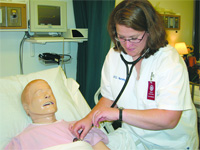
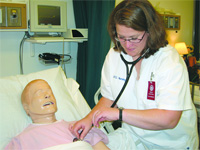
Potential applicants for jobs at the L.S. Starrett Co. learn about modern machining on a bus that had been converted into a mobile training center.

The L.S. Starrett Co. in Athol, a maker of precision tools, needed an influx of talented workers. Plenty of folks living in or near the town on the border of Franklin and Worcester counties needed a job — but lacked the necessary skills.

So they hopped a bus to a better future.

Michael Truckey, director of the Franklin Hampshire Career Center in Greenfield, said his agency worked with the Mass. Manufacturing Enterprise Program to set up a training center on wheels — a converted bus, actually — and boarded nine people at a time for two-week training cycles to bring them up to speed on necessary manufacturing skills. The result? After two months, Starrett was able to hire 27 new workers.

“It was about showing people what the opportunities are right there on ground level,” Truckey said. “A lot of machine shops have an aging workforce, so they’re trying to figure out creative ways to meet their employee needs.”

It’s a story being told over and over across the Pioneer Valley: good jobs are available, but job seekers remain plentiful, in part because they lack the skills necessary to take on the work. It explains why many fret over the region’s employment outlook at the same time that others report positive signs.

Consider Manpower Inc., for instance, which recently reported that Springfield-area businesses expect to hire at a bullish rate early in 2008, with 53% of the companies surveyed planning to hire more employees and only 7% looking to reduce payroll. But even those projections come with a caveat.

“It seems positive, but when you dig into the results, it does show that most of these intentions are slight,” said Cathy Paige, a local spokesperson for Manpower. “So I don’t want to put an overly optimistic spin on this, like companies are planning to hire hundreds of people at a time. Some of this is replacement of attrition, not necessarily additional hiring.”

Still, she said, the survey results show a more-positive outlook, particularly in the manufacturing sector, which, while not booming, is showing signs of life.

“Even if it’s one head, I’ll take it, because it’s not a decrease,” Paige told BusinessWest. “Those [in manufacturing] are the best kind of jobs for an economy, because they spin off other jobs, like taking orders, shipping, and receiving. Studies have shown that 100 manufacturing jobs lead to 25 to 40 support jobs, in most cases.”

Mixed Signals

Still, on the ground in Springfield, reports remain mixed. “At the beginning of the year, we started off gangbusters, but it’s not ending the year that way,” said Mary Ellen Scott, president of United Personnel in Springfield, which works with employers to find administrative, warehouse/light industrial, and medical office support workers. “And I would say it’s like that across the board.”

Scott attributed that trend to some anxiety among employers about a possible recession looming. “What I’ve heard is people predicting that 2008 will not be a booming year, and I think the more we hear the ‘r-word,’ the more we talk ourselves into it,” she said. “And any time there’s talk about a business outlook that’s not positive, people get very nervous about what they’re spending, and hiring is one of those things they look at.”

Even strong pockets of hiring aren’t necessarily good news, Paige noted. “Most of the hiring activity has been in the service sector, which is typically not a great sign because service jobs don’t pay as much as, say, durable and non-durable goods.”

But obscured in these trends is the fact that many employers, particularly in manufacturing, want to hire new workers, but continue to grapple with a skills gap in the Pioneer Valley — one that the region’s career centers are trying to close through training and awareness programs.

“After the downsizing that happened in the 1980s and 1990s, when a lot of mass production moved elsewhere, you still have a hub of niche companies that survived — but you don’t just walk in without skills,” Truckey said. “Those companies don’t employ hundreds anymore; they might hire 15 or 50, so their margins are tighter. Their machines do more than they used to, and they need people with technical skills, a background in math, computers, or programming … it’s a specialty thing.”

Truckey said his agency still has “eight or nine pages” of job postings — heavily weighted toward hospitality, service, and health care, but including some solid manufacturing jobs as well — and is working with employers on training programs.

“We want to upgrade the skills of people presently employed, and we’re also looking at ways to train unemployed people for these types of jobs,” he said. “When you had larger machining companies, they used to bring trainers in and had their own apprentice programs. But that doesn’t happen as much now.”

Part of the problem is simply attracting job seekers to the manufacturing field, because many of them hold outdated perceptions of what such jobs are like.

“Machining is a clean industry now, and I don’t think the public knows how clean it is — and you can make some pretty good money working for these companies,” Truckey told BusinessWest. “At a recent legislative breakfast, we talked about trends over the past 25 years like green products and recycling. One owner of a machine company talked about how they used to use oils, and the toxicity of those products, and how it’s totally different today; his oils are of a non-toxic nature now. People don’t know that.”

Rexene Picard, executive director of FutureWorks Career Center in Springfield, said manufacturers are taking the problem seriously.

“Local employers are coming together and forming partnerships, saying, ‘we just can’t keep stealing people from each other; we’ve got to have a pipeline.’ So they’re partnering with trade and vocational schools, as well as offering training for their own incumbent workers to bring them up to the next level.”

Picard noted that 26,000 new jobs were created in Massachusetts over the past year, but at the same time a similar number of job vacancies persist.

“That’s a sign of a chronic skills gap,” she said, noting that FutureWorks plans multiple job fairs to raise awareness of the opportunities available in Western Mass., as well as launching some cross-border initiatives in Northern Conn.

“These jobs have been out there for awhile, and the job seekers are out there too, but they don’t have the necessary skills to close the gap. Still, I’d say there’s more good news than bad.”

Labor Daze

The skills gap isn’t just a regional problem. Gov. Deval Patrick’s administration has made it a focus of its economic development efforts, attempting to get people trained for the most in-demand professions. Of particular interest in Boston is health care, which continues to be the state’s top-employing industry, encompassing 450,000 workers, or 15% of the state’s workforce — a trend not expected to let up in the coming years.

“Closing the skills gap in Massachusetts is our top priority,” asserted Suzanne Bump, secretary of Labor and Workforce Development, in a statement last month. “It is important that we pursue sector training through programs such as the Workforce Competitiveness Trust Fund to bridge that gap. Additionally, we are working with the Board of Higher Education and regional workforce boards to increase post-secondary educational opportunities.”

“Long-term investments in training and education go a long way toward easing the skills gap,” agreed Nancy Snyder, president of the Commonwealth Corp., a statewide workforce-development agency. “A strong economy requires a competitive business community and well-paying jobs for residents; upgrading workers’ skills in coordination with our employers serves both.”

Picard said those goals can’t be met soon enough, with area employers reporting fewer hires at the moment than they did late in 2006, although health care, warehousing, education, government jobs, and — to some extent — manufacturing all show positive signs. FutureWorks has begun working with some larger employers, such as Big Y and the Sisters of Providence Health System, to assess their needs and help them meet their hiring and growth goals.

Meanwhile, by using grant money for education and training programs, “we’re trying to get people to consider skilled manufacturing as a career path,” she said. “But things don’t turn around quickly; they take a little bit of time.”
And sometimes a bus.

Joseph Bednar can be reached at[email protected]

Features
Report Urges Action on Job Creation in the Commonwealth

Dana Ansel says Massachusetts simply can’t be expected to be one of the leading states when it comes to job creation — and for several reasons.

First, the Commonwealth has an older economy, and most of its square mileage has been developed, especially in the Eastern part of the state, thus limiting commercial and residential development. Meanwhile, businesses across many sectors, but especially manufacturing, are discovering how to do more with fewer or the same number of people — leading to strong gains in productivity, but not employment — and many other parts of this country and other nations are becoming more competitive in several of the fields that have generated job growth in the Bay State.

“So it would be unrealistic to think that Massachusetts would be at or near the top of the chart,” said Ansel, research director for the Mass. Institute for a New Commonwealth, or MassINC, who added a quick ‘but…’
“We can do better than 49th.”

That’s exactly where the state sits, behind only Michigan, which has been devastated by ongoing cutbacks within the auto industry, in terms of jobs gained since the peak of the last economic boom in early 2001.

The Bay State’s relatively poor showing in this statistical category is at the heart of a new MassINC report, undertaken in concert with the Center for Labor Market Studies at Northeastern University, titled “Mass. Jobs: Meeting the Challenges of a Shifting Economy.”

This shift is toward something those at MassINC are calling a “boutique economy,” one that, according to MassINC President Gregory Torres, “rewards well-educated and skilled workers in knowledge-based sectors, but offers fewer options for everyone else.”

Michael Meeropol, an Economics professor at Western New England College, calls it something else — the ‘winner-take-all economy.’

“Instead of a solid middle class, we have a sliver of a very wealthy group driving the economy,” he said. “There has been an unbelievable skewing of income distribution and wealth.”

Regardless of what it’s called, this shift has played a big part in the state’s sluggish job-growth performance, and MassINC officials are imploring civic and business leaders to recognize that the landscape has changed and make needed adjustments — and soon. That’s because, if the state stays on this track, revenues will be constrained, and out-migration will likely increase as residents seek opportunities elsewhere.

Ansel told BusinessWest that MassINC issued the 110-page ‘Mass. Jobs’ report with the goals of drawing attention to the Commonwealth’s job-creation problem, prompting dialogue and then action to generate some improvement in that realm, and also providing a mix of opportunities for all workers.

“There are two levels of jobs — there are quality jobs, and then there are just ‘jobs,’ and they’re both important, here and in any state,” she said. “We’ve done well, for the most part, on the quality side, but we still need plain old jobs; such jobs are a key piece of driving revenue for the state.”

The report suggests several steps, including everything from growing the number of so-called export-based jobs, which bring dollars into Massachusetts, to filling the estimated 90,000 existing job vacancies in the state, which cross several sectors, to improving the business climate in the Bay State.

In this issue, BusinessWest takes an indepth look at the report and what its findings mean for the long-term health of the Commonwealth.

Work in Progress

For the record, the top five states in the nation for job growth over the past six years, or since the peak before the last recession, are Nevada (a 27% gain), Arizona (17.9%), Wyoming (15.1%), Idaho (14%), and Florida (12.6%). Massachusetts (-3.7%), behind only Michigan (-6.3%), shouldn’t really be compared to most of those at the top, which are seeing huge growth in development and spikes in population, said Ansel.

But it can be compared to other New England states and 10 so-called ‘competitor states’ — these include New York, New Jersey, Virginia, North Carolina, California, Texas, Colorado, Minnesota, and Florida — and it doesn’t compare well.

Four New England states have added jobs over the past six years, while New Jersey has seen 2.3% growth, and New York has “just about broken even,” said Ansel, noting that the Bay State is one of only six states that have not recovered all those jobs lost during the last recession, when employment plunged more than 6%. In fact, Massachusetts remains 100,000 jobs below its peak employment level of 3.3 million in early 2001.

There are several reasons for this, said Ansel, noting that when the recession hit, Massachusetts had a large number of jobs in the technology sector, which was extremely hard-hit by that downturn and has yet to fully recover.

“At the peak of the boom in 2001, the Massachusetts economy was more dependent on high-tech jobs than most other states,” she said. “The recession wiped out high tech jobs here and everywhere; we had built a lot of our economic success on an industry that suffered some of the greatest losses.”

But there were other factors as well, including a nationwide decline in manufacturing jobs, as well as mounting competition for jobs in the knowledge industries. Indeed, the Bay State’s share of high-tech jobs nationwide has declined, from 4.2% in 2000 to 3.9% in 2005, showing clearly that other states are becoming more competitive. Also, the high cost of doing business in the Commonwealth — when compared with other states and other nations — no doubt has played a role in the low rate of job growth, she said.

Despite a net job loss, some sectors have added new positions, said Ansel, thus changing the composition of the state’s economy toward that ‘boutique’ characterization, manifested by a shift toward knowledge-based sectors, such as health care and biotech, that often require highly specialized employees who hold at least a bachelor’s degree.

While suffering losses in manufacturing and high-tech, Massachusetts doubled the national rate in adding biotech jobs (15% vs. 7%) between 2000 and 2005. In that period, Massachusetts added 10,000 new biotech jobs, bringing the sector to about 75,000 jobs in Massachusetts, or 2.4% of the state’s payroll jobs. By comparison, manufacturing, despite large job losses, still accounts for about 9% of Massachusetts jobs, including some biotech manufacturing positions.

And while Massachusetts trailed the nation in job creation, it was among the leaders in productivity, an important measure of economic health. The state’s level of labor productivity ranks seventh-highest, and since 2001, it has grown faster than the nation’s (11.5% versus 10.6%). In 2005, the productivity level of an employee in Massachusetts was $94,150 in real output per worker, compared with $83,920 nationally.

These statistics and others point to a shift toward a ‘boutique economy,’ said Ansel, noting that this term was contrived by the report’s authors to describe what’s happening within the Commonwealth’s borders.

“It captures a significant shift in the economy toward knowledge industries,” she explained. “While we do have an overall record of job loss, we are still creating jobs in some sectors; where we’re creating jobs and where we’re losing them is not the same place, and as a consequence, the economy is shifting.”

Laboring State

The MassINC report lays out four principles that could form an economic vision and agenda to be shared by the administration, Legislature, business community, and labor community, said Ansel, adding that the report recommends a long-term strategy that includes creation of export jobs, better workforce training to fill current vacancies, improvements to the business climate, and a regional approach to meet varying needs across the state.

The report’s four main recommendations are:

  • Setting a target goal for the number of new export-based jobs created. “Because export jobs — those linked to selling goods and services out-of-state — bring revenue into the state and generally offer higher pay to workers, they embody the characteristics of ‘good jobs’ in the economy, said the report’s authors. “Export-based jobs and not specific sectors should be the emphasis of a long-term strategy.”
  • Filling the existing vacancies. A Massachusetts job vacancy survey in late 2006 revealed more than 90,000 openings. The vacancies indicate a willingness of employers to hire more workers, said Ansel, but may also show the need to better educate and train a workforce that has the required skills to fill the slots.
  • Creating a more favorable business climate that streamlines permitting for business expansion across Massachusetts and addresses expenses, such as energy costs and unemployment benefits and policies. “Economic policy should encourage and assist Massachusetts companies looking to grow here,” said the report’s authors.
  • Taking a regional approach. “Because economic conditions and needs vary across the state, efforts to develop strategies must focus on regional strengths,” the report concluded. “The specific strengths will determine what growth opportunities are best suited for a region. State leaders should also develop an urban strategy for cities outside Greater Boston that are lagging the rest of the state in job creation.”

Ansel called the 90,000 job openings in the state “low-hanging fruit,” comparatively, because it is generally considered easier to fill positions that companies have open and desire to fill than to create new jobs.

But the fact that the jobs remain open at a time when unemployment is relatively high indicates a mismatch between the skills needed for those positions and what the available labor market possesses. Thus, closing that gap is a priority for the state, said Ansel.

“That number (90,000) is the highest since the state started doing the job-vacancy survey in 2002,” she said, adding that there were 75,000 openings reported in the previous survey, undertaken in 2006. “It’s significant, and it sends a mixed message in the sense that there is some appetite on the part of employers to hire people, which is good. But at the same time, if they’re not able to fill those positions, that’s a real problem; vacancies are increasing across the country, but the implications are greater here because of how slow our job creation has been.”

Many of the openings are in health care and related sectors, said Ansel, and perhaps half of them could be handled with a year of college education. The challenge ahead, she said, is to create the right programs and motivate people to enter them.

Ira Rubenzahl, president of Springfield Technical Community College, agreed. He said his school doing its part by focusing on health and technology programs, designed to assist area employers with vacancies they’re struggling to fill — and also on improving access to higher education.

“This report clearly indicates that education is the key to the new economy,” he said, adding that he considers the findings sobering, but not at all surprising. “Our economy has shifted, it is knowledge-based, and we have to properly prepare people if they’re going to succeed in that economy.”

Meerepol, while acknowledging that Massachusetts is struggling with job creation, said the problem exists nationwide, and it needs to be addressed. He said the trend toward greater productivity brings benefits to individual companies, but not to the country or individual states.

“Over time, even in good times, really efficient companies are shedding workers like crazy, and when things pick up, they learn to produce more with the same number of people,” he said, noting reports showing that nationwide, there are fewer job losses and fewer gains. “One of the reasons why job growth is so slow in Massachusetts is because of this surge in productivity, and that’s also why we’re seeing the loss of so many manufacturing jobs across the country.

“You want that growth in productivity, but you want it to benefit many people in terms of income; when that happens, you get the mass-market increases that lead to job growth,” he continued. “The reason why the economy experienced some significant job growth in the late 1990s was that, for the first time in 20 years, lower-income people were enjoying rather significant gains in income.”

Solutions to the job-growth problem won’t come easily, said Meeropol, especially if elected officials resist what he fully understands is political kryptonite — raising taxes and putting the proceeds to work creating jobs, a strategy that has worked during several periods in the nation’s history, including World War II, the late ’60s, and the Reagan years.

“There have been several times when we’ve seen a rise in total government revenue, a rise in taxes, and the percentage of total government spending rose, which is a rise in spending, and the economy boomed like crazy,” he said.

It’s an obvious thing, but no one is willing to go that route; it’s good economics, but terrible politics.”

Bust with No Boom

Compounding matters for the Bay State is the national economy, and the very real possibility of another recession, said Ansel, noting that the state simply won’t recover all the jobs it lost during the last downturn before entering another one.

This scenario puts even more emphasis on forging new and better job-creation strategies, she continued, because jobs are critical, and the competition for them is mounting.

And this is just a part of life in a boutique economy.

George O’Brien can be reached at[email protected]

Departments

Present and Accounted For

Michael Niziolek of Hasbro Games applauds after Jacob Colson, a student at the Montessori School of West Springfield, hangs his ‘Act of Kindness’ slip on the Hasbro Children’s Giving Tree at the Eastfield Mall, and then shares his ‘act’ with audience members and bystanders by talking about it over the microphone. In the foreground are some of the toys and games that will be donated by Hasbro to underprivileged children in the Springfield area through the Giving Tree program.


In Good Company

Human Resources Unlimited recently recognized several area businesses and one outstanding volunteer during its third annual Stakeholders Meeting. HRU awarded its prestigious Sheldon B. Brooks Award, given to a company that has a track record of employing individuals with disabilities for at least 10 years, to Papa Gino’s on Boston Road in Springfield. At below, Papa Gino’s District Manager Ted David accepts the award.

Above, a baseball bat, symbolizing the HRU Rookie of the Year Award, is accepted by Judy C’Mero, manager of Borrowers Services at the Springfield Public Library, in recognition of her organization’s support of employment for individuals with disabilities.


Steps in the Right Direction

Crew members from Kurtz Construction in Westfield pause briefly during recent work rebuilding stairs at Holyoke Community College: front row, from left, Tito Cruz, Joe Stryker, Gene Kurtz, Mikhail Mokan, and Max Fletcher; back row, from left, Vitaly Denisyuk, Pat Martin, Ralph Mastello, and Ivan Biley.


Pychon Winners Celebrated

The Advertising Club of Western Mass. recently staged its annual Pynchon Awards dinner at Chez Josef in Agawam. At right are this year’s recipients: from left, Dan Roulier, president of Dan Roulier & Associates; Carol Leary, president of Bay Path College; and Al Zippin, of the Springfield School Department. At left, Leary accepts her award from Ad Club President Alta Stark and Joel Morse, a member of this year’s selection committee.


The $250 Martini

Hannoush Jewelers and Max’s Tavern are partnering with the YMCA of Greater Springfield in a unique fund-raising venture for the Y. It’s called the Pandora Martini, which was unveiled on Nov. 21. This martini sells for $250, but it comes with a Pandora charm bracelet (retail value $170), that features three sterling-silver charms and two Murano beads. Hannoush is donating the Y charm, and Max’s is donating the martini, enabling the YMCA to receive $100 from each martini sold. These donations will be used to help the Y in its efforts to provide financial assistance to hundreds of children and families in need of affordable before- and after-school programs, summer camp, youth and teen drop-in centers, and youth fitness centers. At the Nov. 21 event are, from left, Mary Gancarz, district manager for Hannoush; James Morton, president and CEO of the Y; AnnMarie Harding, director of Public Relations for Max’s; and John Thomas, general manager of Max’s.

Departments

State Gives Go-ahead for Massive Baystate Expansion

SPRINGFIELD — The state’s Public Health Council has given Baystate Health the green light to proceed on a $239.3 million expansion project. After hearing testimony from hospital administrators and civic and business leaders, the board voted unanimously to approve Baystate’s application for the project, which will add 48 beds to the 653-bed facility. Baystate President and CEO Mark Tolosky said he expects construction to begin in the summer of 2009, and that the facility will be open in 2012. Mercy Medical Center had initially opposed the expansion plans, but later dropped that opposition when state analysts clarified themselves and said the space will not be used for additional beds, but to supplant existing beds.

Center Untangling Wireless Communication Challenges

AMHERST — A new research center that will address far-reaching problems in wireless communication will be established at UMass Amherst, thanks to a $200,000 start-up grant from the UMass President’s Science and Technology Initiatives Fund and the President’s Creative Economy Fund. The Center of Excellence in Wireless Communications should lead to broad new capabilities in areas from emergency preparedness and homeland security to health care, education, and entertainment. Led by Dennis Goeckel, the new center will bring together more than 15 researchers from the fields of networking, communication systems, electromagnetics, and circuits to tackle the challenges that arise in an increasingly interconnected world. The UMass Amherst campus is providing an additional $40,000 in funding.

Study: Health Insurance Mandates Hurt Low-income Employees

WASHINGTON, D.C. — A new study presented as part of a Cornell University symposium finds that ‘Pay or Play’ laws, which require employers to provide health insurance to their employees or pay a fine, will reduce employment for the least-skilled members of the workforce. The study, sponsored by the Employment Policies Institute and authored by Cornell University economists Richard Burkhauser and Kosali Simon, uses federal Current Population Survey data to calculate that for every 100 newly insured employees resulting from a Pay or Play law, 10 low-wage employees will lose their jobs. For a copy of the study, titled “Who Gets What From Employer ‘Pay or Play’ Mandates,” visit epionline.org. The Employment Policies Institute is a noprofit research organization dedicated to studying public-policy issues surrounding entry-level employment.

AIM Applauds Introduction of Comprehensive Energy Bill

BOSTON — The Green Communities Act of 2007, previewed at a press conference recently by Speaker of the House Salvatore DiMasi, will, when enacted, place an improved focus on cost-saving energy-efficiency programs and renewable energy for both citizens and business owners throughout the Commonwealth, according to Richard Lord, president and CEO of Associated Industries of Mass. (AIM). AIM is a nonpartisan, nonprofit employer association of more than 7,000 state businesses and institutes. AIM applauds those representatives from business, energy, and environmental groups for coming together to develop an energy-reform package designed to control costs by enhancing existing energy efficiency programs in Massachusetts and encouraging the development of additional cost-effective sources of alternative energy. Last summer, AIM issued a statement that called for the reinvigorating of state energy programs, in light of the fact that Massachusetts consumers face some of the nation’s highest costs for electricity. Most recently, AIM conducted several briefings across the state outlining the results of a member survey detailing the impact of high costs of electricity on businesses. While nothing in the short term can lower the cost of electricity to the level in some other states, the Green Communities Act should serve to ensure a more efficient use of current resources as a first step to more stable rates for electricity in the future, according to Lord.

Family Businesses Face Future Risks

SPRINGFIELD — Family businesses are optimistic about growth but not immune to future challenges, according to a survey sponsored by MassMutual, the Family Firm Institute, and the Cox Family Enterprise Center at the Kennesaw State University Coles College of Business. Increasingly led by women and driven by strong ethical and family-oriented values, family businesses are most at risk for financial troubles centered on the lack of formal succession planning and preparation, and the personal financial issues of family business owners, according to the study.

2008 Woman of the Year Nominees Sought

SPRINGFIELD — The Women’s Partnership, a division of the Affiliated Chambers of Commerce of Greater Springfield Inc., is once again seeking nominees for its Woman of the Year Award. This is one of the highest regarded awards by citizens and is recognized as the top citation earned locally. Women in the Pioneer Valley are eligible for nomination and a Chamber affiliation is not required. The nominee should best exemplify ideals of outstanding leadership, accomplishments, and service to the community. Services can be rendered over a lifetime or for more recent achievements. Nomination forms can be requested by calling (413) 543-8000, via E-mail to [email protected], or at the Affiliated Chamber of Commerce of Greater Springfield office, 1441 Main St., Springfield. The deadline for nominations is Jan. 9.

Survey: Firms Pursuing Technology Upgrades

MENLO PARK, Calif. — When asked what initiatives were top of mind for their firms over the next two years, chief financial officers (CFOs) surveyed most often cited technology upgrades (53%) and business process improvement measures (50%). Companies are focused on shoring up their infrastructures to create greater efficiencies and control costs, according to Paul McDonald, executive director of Robert Half Management Resources. McDonald added that technology upgrades allow firms to boost critical network security, facilitate global collaboration and enable easier interaction with customers. The survey was developed by Robert Half Management Resources and includes responses from 1,400 CFOs from a stratified random sample of U.S. companies with 20 or more employees.

Sections Supplements
Bell & Hudson Builds a Legacy on History, Philanthropy, and Forward Thinking
Jim Phaneuf

Jim Phaneuf, owner and president of Bell and Hudson insurance, says streamlined management and philanthropy are two key aspects of the agency’s business model.

The sign on the front of the building says Bell and Hudson Insurance was founded in Belchertown in 1890. But the agency’s president and owner, Jim Phaneuf, estimates that it was a bit earlier.

A history buff and active member of Belchertown’s Historic Society, Phaneuf found a yellowed copy of the Belchertown Sentinel, the town’s local paper, not long after taking ownership of the agency.

In the issue, dated Sept. 1, 1950, George F. Bell spoke with reporters on the occasion of his retirement, and said that in actuality, the agency was formed during the Civil War by Frederick Taylor, a Granby businessman who owned a textile mill and created an insurance arm to protect his own holdings.

The business stayed part of the Taylor family until 1913, when Bell purchased it, taking Byron Hudson on as a partner in the 1930s.

Bell & Hudson, in its current permutation, was officially incorporated in 1940, serving Belchertown and its surrounding communities ever since.

The business was sold in 1950 to the Fuller family, which maintained ownership until 1992, when Phaneuf took the helm after five years of employment with the agency.

He said that as the business continues to grow and change with the times, honoring both history and community remain high on its list of priorities.

“I’ve been the steward of this business for some time now, and I’ve watched the town grow — and along with it, the business,” said Phaneuf. “It’s a great community.”

Blizzards and Benchmarks

Bell & Hudson has a strong philanthropic presence in Belchertown, said Phaneuf, adding that the agency is ‘there’ for the community in myriad ways, from fund-raisers for cancer to disaster preparedness.

“We’re ready to serve our customers in a blizzard,” he said, “because it’s during those times that people need their insurance companies. We’ve made great strides to be ready, with electric generators and other things, and we started that before it was on more people’s minds after Katrina.”

The agency has received high marks for its efforts to streamline various insurance processes and to make them more accessible, including claims-handling and customer service. It has twice received the Mass. Assoc. of Insurance Agents’ Five-star Award of Distinction, given to agencies across the state that, through an extensive, on-site examination performed by the MAIA every three years, prove exemplary performance in a number of key areas, such as customer focus and human resources practices.

Bell & Hudson is currently one of 32 agencies in the state to receive the five-star rating, but Phaneuf said even without the prize, the process of identifying best practices is a valuable one, which the agency uses to continuously improve.

“Agencies must go through a three-day audit. Auditors meet with employees, and look at performance in critical areas,” he said. “They look to see if an agency has a clear mission, and that staff members are well aware of that mission. They look at decision-making, corporate values, technical issues … even if we don’t get the five-star rating, at the end we have a great white paper that shows us what things we need to work on.”

Making the Upgrade

But there’s also a record of what the agency is doing right. Bell & Hudson, which specializes in various types of insurance for both families and businesses — most of its corporate clients are medium- to large-sized outfits with up to 125 employees — excels in technology-based systems that automate standard inquiries, claims, and other communication between the agency and the insurance companies with which it works. Phaneuf said keeping up to date with these systems has allowed the business to grow without necessitating more staff; there are currently 12 employees, a number that has not changed much in the past decade.

“Because we started earlier than most with our computer system upgrades, our number of employees has stayed level,” he said. “The upgrades never end; they are an expense, but it’s something we have to do to maintain a competitive edge and stay ahead of the curve.”

At this point, Phaneuf added, Bell & Hudson’s offices are also close to being paperless, and the systems also help navigate the many different filing practices of the 10 companies with which the agency works.

“Sometimes it’s difficult to support many different companies, but as an independent agency, it’s good for us in the long run because we’re satisfying the needs of our customers, whatever those needs may be,” he said. “Essentially, we sell promises, and a core part of our business is making sure those promises have been fulfilled. Working with insurance carriers can be sticky, and that’s exactly why there’s a need for independent agents. We speak their language.”

To ensure that nothing gets lost in the translation, employees are required to complete mandatory continuing-education courses each year to stay equally current with new trends and practices.

“I keep the staff on a course of continuous improvement,” said Phaneuf, noting that this has also helped him retain qualified personnel over the years. “It’s a challenge finding good people, and our staff members are mostly local people who take pride in their work. We have very low turnover; the average tenure is 10 years.”

This course includes certification and licensing programs that lead to a number of professional designations within the insurance industry, such as C.P.C.U. (Chartered Property & Casualty Underwriter), C.I.C. (Certified Insurance Counselor), and C.I.S.R. (Certified Insurance Service Representative).

A Putt Above

Beyond their career obligations, though, Bell & Hudson employees are also actively involved with the community, often planning large-scale events on their own time.

The agency’s largest philanthropic endeavor is its annual Putt-a-thon, or mini-golf tournament, which raises thousands of dollars each year for the Jimmy Fund and the Dana Farber Cancer Institute. Fighting cancer is a cause that’s dear to many at Bell & Hudson; several employees have been closely affected by the disease.

Dana Farber currently benefits from 150 individual golf tournaments, and Phaneuf said early on, he and his staff wanted to break from tradition and try something different. They devised a mini-golf tournament that the institute at first regarded with some skepticism. But those doubts were quickly erased when residents in the greater Belchertown area flocked to Evergreen Golf three years ago to putt 100 holes, and gather pledge donations for each hole. Local businesses also serve as sponsors. That first year, Bell & Hudson presented a check for $17,000 to Dana Farber, and this year, it raised close to $40,000.

The event, combined with other community assistance initiatives the agency has launched, as well as its strong track record in implementing current technology and processes to augment service, prompted the Quaboag Valley Chamber of Commerce to name Bell & Hudson its business of the year.

“It’s an amazing thing,” said Phaneuf of the putt-a-thon. “The event is still evolving — we’re still working out a kink here and there, and it has rained all three years we’ve had it. But if there’s a need, the people of this community come together. We have welcomed children from age 6 to an 86-year-old woman who came out to support us — and finished all 100 holes.”

Company Policy

What’s more, the event has spurred other communities to begin holding similar putt-a-thons, and Phaneuf said Dana Farber credits Bell & Hudson with devising the model.

“It’s not just about golf,” he said. “Actually, it’s not about golf at all. It’s about people — we might have put it together, but the customers make it happen.”

The agency’s philanthropic work also helps Bell & Hudson foster a level of comfort among clients and in the community that began in the 1800s, when Frederick Taylor sought his own peace of mind by forming what would become one of Belchertown’s longest-held and most successful small businesses.

“People like doing business locally,” Phaneuf said, “and honoring that is what helps us succeed more than anything.”

Jaclyn Stevenson can be reached at[email protected]

Sections Supplements
Eight Strategies to Hold onto Valued Accounting and Finance Professionals

Competition for the most skilled accounting, finance, and audit professionals is growing at a time when the pool of candidates in many areas is shrinking.

A shortage of talented, experienced workers combined with the retirement of the first wave of Baby Boom-age professionals has business owners and hiring managers worried — and for good reason.

More than half (52%) of hiring managers surveyed by Robert Half International and CareerBuilder.com cited the shortage of qualified workers as the primary recruiting obstacle they face.

But the challenge doesn’t end once companies find and hire good employees. Retaining top performers is also difficult. One-quarter (26%) of employees polled in the same survey said they are looking for new positions, and 44% plan on leaving their current employers within the next three years.

To gather the thoughts of some of the brightest minds in the field, our company recently formed the Robert Half International Financial Leadership Council — a distinguished group assembled to address issues facing the accounting and finance fields, including recruiting, retention, and globalization. The council consists of executives from business and private industry, public accounting, academia, and professional associations. Members discussed issues and offered potential solutions in a number of key areas.

Here are some of their observations and recommendations regarding the retention of peak performers:

‘Re-recruit’ Top Performers

You can bet that if you employ a number of talented and experienced professionals, there are plenty of other companies out there that have taken notice. Before your competitors have a chance to woo those workers away, you must ‘re-recruit’ them yourself. This means ‘selling’ them all over again on the advantages of working for your company, highlighting what’s unique and special about it.

Provide Well-defined Career Paths

While you should avoid making pie-in-the-sky promises, you should be able to help them envision tangible rewards on the horizon — including promotions, raises, performance bonuses, training opportunities, and profit sharing. This applies to both junior staff members as well as to those employees who already have considerable tenure.

While the old-style corporate hierarchies are a relic of the past, you can still create tiers of advancement within your business. In the context of performance reviews, talk to your employees about their aspirations and goals. Using their input as a point of departure, brainstorm ways you might structure job descriptions and positions to accommodate and advance those goals.

Foster Skill Building Through Cross-training

If your company is a small one with limited upward mobility, you may want to offer cross-training as a way to help staff develop new skills and stay motivated and interested in their work. Your employees will value opportunities to gain exposure to roles and projects not necessarily in their job descriptions or current competency areas.

The benefit for your company is that you will have a more versatile group of employees with a better understanding of how all the separate parts come together to make the whole.

Institute Comprehensive Mentoring Programs

In addition to traditional one-on-one mentoring relationships, consider setting up groups of mentors from various areas of the company who will focus on high-potential employees. Each group will meet regularly to brainstorm ways to help a specific top performer build on key strengths and achieve professional goals. To provide employees incentive to serve as a mentor, you might tie compensation and advancement to their success in developing the careers of their mentees.

Offer Alternatives to Full Retirement

Although approaching traditional retirement age, some of your older workers may not be ready to leave altogether, and you may not be ready to lose them. Instead, give them the option of alternative work arrangements, such as project-based roles, phased retirement, or cyclical work periods.

Your company will retain the knowledge and expertise of your most experienced workers, while enabling them to extend their careers and engage in meaningful work.

Explore Flexible Work Arrangements

A strategy best reserved for top performers, flexible work options can help you hold on to valued employees who might otherwise be tempted to leave. While some employers are wary of non-traditional arrangements, it is possible to set up mutually beneficial situations. The key is to tailor the alternative arrangement — whether telecommuting, flex time, or compressed schedule — to the individual employee. It’s also more likely to work if you hold employees accountable for integrating their arrangements into the overall schedule of the company.

Improve and Adjust Compensation

Money isn’t everything, but it still holds considerable importance for most employees. Periodically review your compensation and benefits structure to ensure that you are offering competitive wages and the types of benefits that are most valued by today’s workers. To ensure that all workers are fairly compensated, you may have to make adjustments in the salaries and benefits of your most experienced staff members before you modify starting or junior-level salaries.

Keep in Touch with ‘Alumni’

As you adopt new retention strategies and programs, you may find yourself wishing you’d done it sooner, so that you could have held onto valued former employees. But remember that in today’s job market, ‘good-bye’ doesn’t mean forever. These days, workers may transition in and out of employment over the course of their careers. Why not broaden the idea of retention to include them? Instead of forgetting about workers who have left your company, maintain contact and call these alumni when you have suitable openings.

Employee retention has become one of the critical staffing challenges of our time. Stable employment and lucrative compensation no longer have the influence they once did to keep workers with a company for the long term. When creating or refining your retention program, strive to select a combination of strategies that is affordable, sustainable, and compatible with your broader business goals. Effective retention tactics will enhance your company’s reputation as a desirable place to work — which not only helps you keep valued staff, but also serves as part of your recruitment strategy to attract more high-quality candidates in the future.

William N. Driscoll, New England District president, is based in Robert Half International’s Boston office. He oversees operations for RHI’s 17 offices throughout Massachusetts, New Hampshire, Maine, Connecticut, and Rhode Island.

Features
Explaining the Link Between Education and Economic Development
Sally Fuller and Bill Ward

Sally Fuller and Bill Ward hope the Nov. 19 conference will energize business owners and managers, and drive home the connection between education and workforce development.

While there is some general understanding within the business community of a recognized link between education, especially early-childhood education, and workforce development, many are still missing that message. A Nov. 19 conference will attempt to drive that point home and, in the process, mobilize area business owners and managers for what will be an ongoing fight to ensure that companies have qualified workers for the short and long term.

Bill Ward calls it “an economic imperative.” That’s how he chose to describe this region’s need to focus on workforce development for the long term and, even more specifically, to drive home the connection between education, at all levels, and economic development.

Some business owners and managers understand this relationship, said Ward, director of the Regional Employment Board of Hampden County, but too many do not. Changing that equation is the unofficial mission of a group of area business and civic leaders who will punctuate their efforts with a conference titled ‘Building a Better Workforce: Investments in Education and Early Development.’

It will feature, among other speakers, Dr. James Heckman, the Nobel laureate in Economics from the University of Chicago, who will present the economic case for investing in young children.

In an op-ed piece that appeared last year in the Wall Street Journal, Heckman said there are many reasons why investing in disadvantaged young children has a high economic return. “Early interventions for disadvantaged children promote schooling, raise the quality of the workforce, enhance the productivity of schools, and reduce crime, teenage pregnancy, and welfare dependency,” he wrote. “They raise earnings and promote social attachment. Focusing solely on earnings gains, returns to dollars invested are as high as 15% to 17%.”

Sally Fuller hopes these and other numbers resonate with conference attendees. Fuller is project director of the Cherish Every Child Initiative launched by the Irene E. and George A. Davis Foundation. Cherish Every Child has a number of focus points, she said, but has made universal early-childhood education one of the biggest planks in its platform.

Fuller and others involved with planning the Nov. 19 conference hope to energize those in attendance for what will be a lengthy and challenging battle to improve education at all levels and, eventually, build a bigger, stronger workforce for the region.

“I have a Chinese menu full of options for business people who want to get involved,” said Fuller, using the word interventions for the first of many times to describe what individuals and companies can do. Menu items include everything from tutoring programs to mentoring junior high school students; from initiating literacy programs to lobbying state legislators to fund universal early education.

Some businesses are already doing such things, and some view it as a “good thing they can do,” said Fuller, adding quickly that such thought patterns need to be altered, because such interventions go well beyond good deeds — they are part of a larger economic-development strategy.

“The research clearly shows that if we can intervene with children at a very early age, that will have a significant economic impact,” she said. “Granted, it’s way down the road, but it’s there, and it’s real.”

Carol Baribeau agreed. As regional director of Public Affairs for Verizon, she’s been involved in a number of programs to promote literacy and early childhood education — and she’s heard Heckman’s message about reaching children at an early age.

“I’ve seen a huge amount of research and science that’s telling us we need to begin the quality education at the youngest, youngest levels,” she said. “We need everyone — educators, families, policy makers — to understand that education is truly a life-long process, and it has to begin at the earliest ages.”

In this issue, BusinessWest turns a spotlight on the workforce-development conference, the motivation behind it, and most importantly, what organizers say needs to happen when it’s over.

Schools of Thought

They’re called “dropout factories.”

That’s the term used by the authors of a nationwide study on graduation rates to classify high schools where no more than 60% of a freshman class will graduate from that institution. Springfield has four of these factories — Central, Commerce, Putnam, and the High School of Science and Technology — while Holyoke has two, and Greenfield and Ware also find their high schools on the list.

These dropout numbers comprise just part of the qualitative and quantitative evidence that points to a mounting problem in the Pioneer Valley, said Ward, one that will have serious consequences for the economy if it is not addressed, and soon.

“These dynamics, on some scale or another, exist in all urban areas,” he noted, referring to dropout rates, poverty, crime, homelessness, and others that can be traced back to disadvantaged youths. “But once the problem reaches a certain scale or proportion — with more and more children dropping out of school and more people going into poverty — it begins to have a more significant impact on the economy.”

And this is the point that Springfield and Holyoke have reached, he told BusinessWest, adding that there are other demographic trends that will impact the future workforce.

Indeed, as he talked about the region, its workforce, and the future, Ward said population growth in the region has been flat, and that it is unrealistic to expect large numbers of people to move into the area down the road. Thus, the Valley’s workforce will be mostly homegrown, which is not an appealing situation when there are eight dropout factories in the 413 area code.

“There are changes in how work is being done … it’s more complex and requiring more and more skills,” said Ward, who said he hears from business owners on an almost daily basis about how difficult it is to find qualified help.

Couple that with the fact that our population is flat, and one can see that we face a real problem.

“These dynamics are forcing us to take a look at finding ways to do better with the people that we have, to grow our own,” he continued. “There’s now an economic imperative, not just a social imperative, to find new and better ways to link economic development and education.”

Many in the business community tend to think that the job of preparing people for the workforce is to be handled by the school systems, he told BusinessWest, “but we can’t afford to think that way anymore; we need to see business people come to the table with an open mind, and use their leadership and problem-solving skills to work on some of these very tough issues.”

Changing the outlook for the Pioneer Valley, workforce development-wise, will require a broad focus on education at all levels, said Ward, noting that the business community must play a major role in this effort.

Some businesses are already involved, primarily out of a strong need for qualified workers for the short and long term, but also out of recognition that this is a regional issue impacting all businesses.

“We take the philosophy that the only way out of poverty is to have a job, and the only way to have a job is to have an education and speak English,” said Bob Schwarz, executive vice president of Communica-tions for Peter Pan Bus Lines, a company that has invested significant time, energy, and resources on literacy programs like the REB’s Literacy Works campaign, and adult basic education, or ABE.

In fact, the company will create a learning center in an intermodal transportation center it is building in conjunction with the Pioneer Valley Transit Authority in downtown Holyoke. Construction is set to begin soon, with ABE classes due to begin at the center next September.

Like others we spoke with, Schwarz said organizers of the workforce development conference face a stern challenge in enlightening the business community about the link between education and workforce development, and then mobilizing it for the work that will have to be done in the years ahead.

“One of the biggest challenges we faced with Literacy Works was to persuade the community at large that there was a literacy problem that we faced, and that there is a connection between employment and one’s ability to speak and read English,” he said. “A lot of human resources directors knew how important it was, but not many small business owners — and even our legislators had to be educated about the importance of ABE to workforce development.”

Driving Forces

This broad message is what will be driven home at the Nov. 19 conference, he said, adding that he hopes and expects that what will result is the necessary commitment to what will be an ongoing campaign.

“We need to get people committed to putting their shoulder behind this,” he explained. “This isn’t something you can start and then walk away from … this is a long-term commitment.”

To get this commitment, conference organizers are leaning heavily on Heckman. The Davis Foundation has been working to bring him to the Pioneer Valley for about two years now, said Fuller, adding that she expects his remarks to be well worth the time and expense.

Heckman’s basic message is that investing in disadvantaged youths is good for the economy, and that such investments yield far better results than adolescent and young-adult remediation programs when it comes to lifting people out of poverty.

“It is a rare public policy initiative that promotes fairness and social justice and, at the same time, promotes productivity in the economy and in society at large,” he wrote in the Journal. “Investing in disadvantaged young children is such a policy.”

There will be several other speakers at the conference, said Fuller, including Paul Harrington from the Northeastern University Center for Labor Studies, who will address the status of the region’s workforce, and Dana Mohler-Faria, Gov. Deval Patrick’s education advisor, who will provide insight into the governor’s “Cradle to Careers” initiative and its planned impact on the development of the state’s workforce.

And while the morning-long event is expected to inform attendees, its primary focus is to inspire, said Fuller, who told BusinessWest that involvement from business owners is needed for a number of initiatives — from lobbying for early-childhood education to helping current and future preschool teachers earn college degrees .

Combined, these efforts can work effectively to close what she called the “achievement gap” among children in the region.

“We know how much we’re spending on special-education diagnoses in Springfield, we know how many kids will be involved in the criminal justice system, and we know how many children are going to drop out of high school,” she said. “But we now also know, thanks to research, that we can level the playing field for children, especially disadvantaged children.

“In Holyoke, 47% of the children in the public school system have not experienced early-childhood education,” she continued. “It is very, very difficult to get those kids to the point where they can read at grade level in the third grade. We have an opportunity to close that gap.”

Part of the challenge facing those who have developed the conference and are stressing the link between education and economic development is to convince business owners to invest in something that probably won’t bear fruit for a decade and a half, said Ward, who admitted that this is no small hurdle.

“The mindset in corporate America today has been accused of being too short-sighted … they’re focused on short-term gains, how their stock is doing, and how they’re looking for the next quarter,” he said. “If you say ‘early-childhood education’ to them, they do the math and say, ‘I won’t see any impact out of this for 14 years … I may not even be here in 14 years.’

“This is the kind of knee-jerk reaction that we have to change,” he continued. “Because there are some direct benefits that can be seen. When you reach out to young children today, you’re also reaching out to their parents, many of whom see their children reading and want to be able to read with them.”

Baribeau concurred, and noted that those preaching the importance of education to the future workforce have to be diligent about spreading awareness and gain the commitment needed to turn the tide.

“Everybody, not just the major employers we have in this region, but everybody needs to make this a priority if Massachusetts and the Springfield area are to be successful,” she said.

Class Dismissed

Fuller told BusinessWest that when she talks with business owners and managers about the many ways they can intervene with the education of people of all ages, but especially children, their eyes tend to glaze over, in large part because they don’t see or fully understand the connection between such steps and regional economic development.

“They still tend to look at these as good things they can do, being good corporate citizens,” she explained. “They need to understand that it’s much more than that — we’re talking about the future workforce here. It’s not just doing good.”

Indeed, as Ward said, it’s an economic imperative.

George O’Brien can be reached at[email protected]

Features
As Confusion Mounts, Cautious Optimism Surrounds Health Insurance Reform
Christine Phillips and Carole Parlengas

Christine Phillips (left) and Carole Parlengas of United Personnel say health insurance reform could have some rocky times ahead, but they view the changes as necessary and important.

‘One calendar month is the calendar month, commencing with the first calendar month following the first day of employment, unless the first day of employment is the first day of a calendar month, in which case the calendar month commences with the first day of employment.’

That’s how one sentence, regarding employee start dates and how they affect a company’s calculation of full-time equivalent (FTE) employees, reads on the Mass. Office of Labor and Workforce Development Web site.

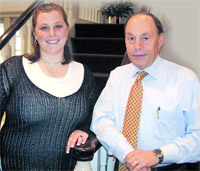
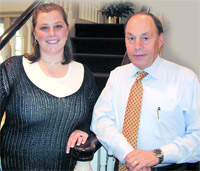
Carole Parlengas, vice president and CFO, and Christine Phillips, executive vice president with United Personnel, a staffing agency based in Springfield, said it’s also a good example of the verbiage surrounding the Commonwealth’s health insurance reform legislation that has their heads spinning.

“If just one sentence is overwhelming, think of all the other things we haven’t even seen yet,” said Parlengas, to which Phillips added that, while in many respects United Personnel has stayed ahead of the game in terms of implementing new requirements, there’s still an anxiety level surrounding what needs to be done, and how.

“From the beginning, we’ve said that we will work with whatever the state gives us in order to stay legally compliant and in step with the legislation,” said Phillips, “but we’re still nervous, because we’re not always sure what the state is doing. And from what I’m hearing, we’re actually ahead of some other companies who’ve gotten lost in the quagmire and are waiting for more direction.”

United Personnel represents the business sector that could be experiencing the most problems with the Commonwealth’s implementation of health insurance reform, signed into law by former Gov. Mitt Romney in April 2006. It requires all Massachusetts residents to have health insurance — the deadline was this past July — and through mandates and new filing requirements, places this responsibility not only on individuals, but state agencies, health plans, and employers as well.

Devil in the Details

While the plan has received little public criticism of late on administrative or legislative levels, employers are beginning to feel the weight of the new paperwork required by the law.

Staffing agencies are particularly stymied, trying to understand how to efficiently file new forms when employees are temps, often starting a new position multiple times throughout the year. This makes it difficult to pinpoint how many FTEs an agency actually has, not to mention those employees are scattered throughout various businesses, not contained in one office.

“I don’t think the administration ever thought about transient employees,” said Parlengas, who, over the course of the last month, has attended several meetings with legislators, health insurance companies, and other staffing agencies across the state as they scramble to find their place in the puzzle. “They thought of seasonal and part-timers, but not the temps.”

This concern has moved closer to the forefront in recent weeks due to the arrival of the first round of new annual filings for employers that are part of the legislation.

Employers were notified the week of Sept. 24 that beginning on the first of October, they would receive their first Fair Share Contribution report (FSC), which can be completed online and details whether or not an employer with 11 or more FTE employees has made a ‘fair and reasonable contribution’ to their employees’ health insurance, and if not, to what extent a per-employee Fair Share Contribution (of up to $295 per employee annually) must be paid.

Employers have also received a second form, the Employer Health Insurance Responsibility Disclosure report (HIRD), which confirms whether or not an employee has been offered a Section 125 plan, a pre-tax payment system for health coverage and the minimum requirement for employers. Forms must be signed by each employee regardless of their decision to accept or decline the plan, and must be kept on file for three years.

Further, they must be filed with the state by Nov. 15, and that quick turn-around has many people reeling. Staffing agencies have arguably felt the pressure first, but Phillips said she wonders if similar worries will surface in other industries, such as health care, which employs a large number of per diem employees, and in restaurants, in which servers rarely work ‘normal’ hours.

“The data is the scariest thing; it’s going to be a few rocky years for some companies,” she said. “It’s the biggest piece of this right now — record-keeping, and producing the data the state needs.”

In some ways, the problems brought on by the new filing requirements start at a very basic level, Phillips noted. For one, the computer systems currently used at United Personnel have no way of ‘answering’ the questions posed by the state: questions such as ‘what is the percentage of the premium cost for individual coverage your business offered to contribute for all full-time employees?’

“We need certain tools in order to report the data correctly that we don’t have; our databases weren’t built to deal with such sophisticated queries,” she said, adding that for now, the process has become a very human one — and therefore very time- and resource-consuming. “It’s daunting that record-keeping has become so important … especially when we don’t even understand what constitutes a calendar month.

“I think that when this was being planned out, the administration was thinking in terms of standard jobs, and standard hours,” she continued. “When I think of people in restaurant and hospitality jobs, or the medical field, I think they must have some of the same challenges as we do. I don’t think the administration thought long on logistics.”

Painting with a Broad Brush

Still, some with a bird’s-eye view of the reform say that while some roadblocks are bound to crop up, the plan has moved ahead as smoothly as they could have hoped.

Mike Widmer, president of the Mass. Taxpayers Assoc. (MTA), spoke with BusinessWest a year before the health coverage deadline, and at that time cautioned employers against leaping to any conclusions when the legislation’s reporting components began to fall into place.

“The classic, Massachusetts response at the first sign of trouble is ‘man the torpedoes,’” he said in May 2006. “We have to keep working, to progress into new territory.”

Today, his sentiments have not changed much.

“Massachusetts gets very high marks for how well the implementation has gone, and I include the Connector in that,” said Widmer, referring to the Commonwealth Health Insurance Connector Authority, an independent public authority created to implement significant portions of the health care reform legislation, including assisting qualified Massachusetts adult residents with the purchase of affordable health care coverage.

“The administration in general deserves high marks for implementing health care reform. It could have been a problem with a Democratic governor taking over after a Republican governor, but they’ve been sensitive to this and have not tried to reinvent solutions to the issues.

“It took a broad and unusual coalition to pull this off, and a group of constituencies sought to achieve compromises that have held together,” Widmer continued. “We’ve enrolled 200,000 people to date, and moreover, the Connector Authority votes on tough issues, like affordability. Those votes have been largely unanimous, and that reflects the compromise and proves that the board is not going to the mat on every issue.”

Widmer said he, too, has some looming concerns despite his confidence in the system, including the possibility of losing key federal funds.

“We are negotiating with the federal government to maintain funding in 2008 that is critical,” he said. “Once the reform was in place, they approved it, and we didn’t lose the money, but now, we must re-evaluate, and that’s going to determine how much funding we’ll get.”

The Finer Points

Jeff Ciuffreda, vice president of Government Affairs with the Affiliated Chambers of Commerce of Greater Springfield, agreed that while much remains to be seen, the current climate in the region seems to be one of acceptance of the law, and of respect for its objective. But like Widmer, he also guards his optimism.

“The roll-out of the products is being seen as fairly good,” he said, “and overall, we haven’t heard a lot of negative feedback. I do hope, though, that there aren’t too many people adopting a ‘let’s-wait-and-see’ attitude.”

Ciuffreda said he fears some employers may be unclear on some of the details of the legislation, in particular the role of the Fair Share Contribution, and that this could create a backlash later in the year as tax time approaches.

“I hope this lack of feedback isn’t a sign that employers are not understanding some of the fine complexities of the law,” he said. “When they file their taxes, they could face the first phase of penalty, and we could hear more complaints.

“The biggest misconception is that the Fair Share Contribution of $295 is a good deal, but that’s just the first part,” he added. “It could get exceedingly worse for those employers.”

That’s because if employees at a given company (of 11 employees or more) accrue more than $50,000 in health care costs drawn from the free care pool the legislation is aimed at eliminating, the employer is responsible for at least a portion of the bill, and possibly the whole amount.

“If the legislation hasn’t gotten people’s attention, those penalties will,” said Ciuffreda. “They’re not meant to fine; they’re meant to make health care ultimately more accessible for everyone, and by the end of this year, we’ll have a clearer picture as far as how that is progressing.”

Agents for Change

Despite the challenges they’re currently facing, Phillips and Parlengas also agreed that with any new legislation, especially one with such broad implications, there are bound to be some stumbling blocks.

Overall, though, they’re optimistic that the Commonwealth’s health insurance reform will achieve its goal — to make health care universally accessible to Massachusetts residents.

“We’re patient, and we’re positive,” said Phillips. “We have a commitment to making sure we’re compliant and we take doing business in this state very seriously.”

“Something needed to be done,” added Parlengas. “Even though it’s confusing now, and the employer bears the brunt — it’s important.”

Jaclyn Stevenson can be reached at[email protected]

Sections Supplements
Misclassifying Construction Employees as Independents Can Lead to Serious Problems

Over the course of the past several years, there has been an upward trend in the misclassification of employees as independent contractors. While such a classification may have benefits to an employer, such as reduced insurance costs and certain tax benefits, it often has adverse affects on the individual that is misclassified, such as the inability to seek unemployment compensation when needed.

Construction companies are especially vulnerable to misclassifying their employees as independent contractors, and this can lead to very serious legal and financial penalties down the road.

To determine whether or not an individual is an employee, Massachusetts General Law states that an individual performing a service shall be considered an employee unless:

  • The individual is free from control and direction in connection with performance of the service, both under his contract for the performance of a service and in fact;
  • The service performed is outside the usual course of business of the employer; and
  • The individual is customarily engaged in an independently established trade, occupation, profession, or business of the same nature as that involved in the service performed.

The presumption that an individual is an employee may be rebutted only if the presumed employer established that it has met each of the above three tests. The employer bears the burden of proving all three conditions.

The Massachusetts Supreme Court has held that an employer’s direction and control of an employee versus an independent contractor follows the common-law analysis of a master-and-servant relationship. If the employer dictates stipulations such as mandatory work hours, place at which work is performed, and job oversight, with threat of discharge as penalty for lack of compliance and employer displeasure, the individual should be classified as an employee.

Although this three-part test seems straightforward, there are some instances where the line between employee and independent contractor becomes blurred. This is commonplace in the construction industry. Most construction projects have a general contractor and several subcontractors or independent contractors. But under what circumstances should these people actually be classified as employees of the general contractor?

By way of example, consider a home remodeling company that installs residential siding. It may be tempting to classify the company’s salesmen as independent contractors to avoid paying workers compensation and taxes. However, if these individuals’ sales appointments are generated and arranged by the remodeler, and the salesmen are required to show up at a predetermined time arranged by the remodeler, it would be a difficult legal argument to prove that the employer doesn’t have control over them. Therefore, the employer would fail the first requirement of the above, control over an employee.

The salesman is selling siding specifically for the remodeler, which would also cause his classification as an independent contractor to fail the second requirement that his business must fall outside the normal course of business of the employer, since selling siding is core to the remodeler’s business. By means of comparison, the marketing and accounting of the remodeling business may be subbed out to independent contractors, as these are completely outside the business of selling and installing siding on peoples’ homes.

In addition, the employer would have to prove in court that the salesman was customarily engaged in an independently established business of the same nature in order to pass part three of the above test. To be classified as an independent contractor, the siding salesman would have to be wearing the hat of his own independent enterprise or also selling products for other companies as well as those of the remodeler.

Continuing with our residential siding example, consider also the classification of siding installers. Those who work only on projects for a particular remodeler, with materials and tools supplied by that remodeler, at a rate set by the remodeler, and in a manner under which the remodeler determines when and how the subcontractor performs, would likely fail all three of the above stipulations classifying an independent contractor. Such conditions transform an independent contractor relationship into an employer/employee relationship.

A good example of the discrepancy between the employee/independent contractor designation centers on a case involving an insurance salesperson. The employer laid down many requirements, but when the salesperson visited clients or perspective clients, no one followed him to direct him as to details. He exercised his own skills and judgment, choosing among a number of allowable ways to present his products, and he closed sales as he judged best for each particular customer. Nonetheless, the court found him to be an employee.

In holding that he was in fact an employee, the court stated that his employer held a significant amount of discretion as to how he performed. For example, he sold only products of the employer, and he did not perform services of the same manner for any other employers. This finding proves that just because one performs services outside of an employer’s office, that does not always make him an independent contractor. The employer can still have a significant amount of control as to how the employee performs.

When a general contractor classifies his workers as independent contractors as opposed to employees, he usually does not provide for worker’s compensation insurance. Should one of those workers become injured, and it is later determined he should have been classified as an employee, the general contractor can be held liable for the worker’s pain and suffering, which is not permitted in a worker’s compensation claim. Similarly, if the general contractor’s workers’ compensation insurer conducts an audit and determines that workers should have been classified as employees and included on the workers’ compensation policy, they can back-charge the employer for the premium he should have paid. This can result in a large amount of money owed immediately.

Any employer, and in particular construction companies, should seriously consider the classification of their workers. Failure to do so correctly can lead to a multitude of problems in the future.

Adam J. Basch, Esq., is an associate with Bacon & Wilson, P.C. He is a member of the Litigation Department with expertise in the areas of construction, employment, and general litigation, as well as personal injury and creditor representation; (413) 781-0560;[email protected].

Departments

CHICOPEE DISTRICT COURT

Titan Roofing Company v. Klewin Building Company
Allegation: Breach of contract – unpaid services: $21,674.50

Steven Moran & Noreen Nowak-Moran v. Dan’s Quality Roofing
Allegation: Breach of contract – services not rendered: $6,500

Joe R. Perez, Delia Perez, Edwin O. Graciani, Elba L. Ruiz v. The Commerce Insurance Company
Allegation: Breach of contract-non-payment of personal injury benefits: $3,367

FRANKLIN SUPERIOR COURT

Action Air Inc. v. DJB Building and Construction & Greenfield Hotel, Inc.
Allegation: Breach of construction contract: $18,000

Kirk D. Ovitt Builders v. Robert Deeley Builders
Allegation: Breach of contract-failure to pay for services: $37,111

Mohammed Malekniaz v. Rodney Hunt Company, Inc.
Allegation: Employment discrimination based on race, color, ancestry, national origin, and retaliation: $25,000

Orange Oil Company, Inc. v. Eastern Services Inc.
Allegation: Failure to pay for goods: $65,598.37

GREENFIELD DISTRICT COURT

Blake Equipment Company v. Michael D. O’Dell d/b/a Mike’s Pump
Allegation: Nonpayment of goods and services: $6,672.02

HAMPDEN SUPERIOR COURT

Mirta Figueroa v. City of Springfield
Allegation: Action against the Commonwealth: $3,274

Shemy Lynch v. Comcast Cable Communication Inc.
Allegation: Employment discrimination: $25,000

HAMPSHIRE SUPERIOR COURT

General Casualty Insurance Company v. Hebert Plumbing Company
Allegation: Negligence causing destruction of property: $177,837.70

Biolase Technolog, Inc. v. Martin A. Wolh, D.D.S.
Allegation: Failure to pay for merchandise: $80,639

NORTHAMPTON DISTRICT COURT

Brent Delano v. Buderus Hydronic Systems
Allegation: Breach of contract: $22,500

Broadcast Music Inc. v. La Casuela Restaurant
Allegation: Breach of contract: $1,209.99

Vistar Corporation v. Todd Denis d/b/a Wings & Things
Allegation: Breach of contract: $6,564

SPRINGFIELD DISTRICT COURT

Joseph & Katherine Gonyea v. Metropolitan Property & Casualty Insurance Company
Allegation: Breach of contract: $22,999

Saga Communications v. Salty Dog Saloon
Allegation: Nonpayment of services rendered: $5,770.81

WESTFIELD DISTRICT COURT

B & M Electric v. Four Plus LLC
Allegation: Breach of contract: $1,630

New England Custom Countertops Inc. v. Regal Homes & Development
Allegation: Breach of contract-recovery for unpaid services: $1,129.28

Patricia Pezzillo v. Halsted Communications, LTD
Allegation: Property damage due to negligence: $1,500

Plymouth Rock Assurance Corporation v. F.L. Roberts & Company d/b/a Golden Nozzle Car Wash
Allegation: Recovery for damages to car: $1,538.78

Sections Supplements
STCC at 40: A Case of Institutional Advancement
Springfield Technical Community College

Springfield Technical Community College

Much has changed on the campus of Springfield Technical Community College since the school opened on the grounds of the Springfield Armory in 1967. But the school’s basic mission — preparing students for the workplace and thus improving the health and vitality of the region’s economy — hasn’t. As the school turns 40, it looks back on a proud track record of blending imagination and perseverance to meet that mission, but, as always, the focus is on the future.

Faye-Marie Bartlett remembers that first semester.

It was the fall of 1967, and the Springfield Technical Institute, to be known a year later as Springfield Technical Community College, was open for business — with open being the operative word.

The school had assumed several of the buildings that comprised the Springfield Armory, the closing of which had been announced in 1964, but decommissioning was still in progress when classes started that September. Bartlett, who would go on to teach Nursing and other health programs at STCC for 22 years, remembers that classrooms were created “wherever they could put them,” which meant, in most cases, large, open spaces once used for gun manufacturing.

“They put in new floors,” she recalled, “but there were no walls.”

School staff, faculty, and administrators pitched in to erect partitions, she continued, but they certainly didn’t reach the 20-foot ceilings. Baffles were hung in an attempt to contain noise, but there was a sizable gap between the top of the partitions and the bottom of the baffles. All this made for some colorful anecdotes that live on 40 years later.

“I was teaching Growth and Development,” Bartlett recalled. “The person next door was teaching Anatomy and Physiology. Across the hall, which wasn’t really a hall, just part of the room, someone was teaching Biology. You could hear it all; I like to say that you could get three classes for the price of one.”

In Growth and Development, said Bartlett, students learn about the birth and early development of humans. Her tales from 1967 provide some first-hand insight into how this unique institution was born and how it developed. Then, and throughout its 40-year history, Bartlett and others told BusinessWest, the school has used imagination and determination to overcome challenges and meet its mission.

Along the way, it has forged a reputation as one of the leaders among the state’s 15 community colleges in career programs. In recent years, the school has won national and even international acclaim for a technology park it created across the street from the main campus in former Armory buildings later used by General Electric and then Digital. The park, which has won national awards in the realm of economic development, is now home to more than a dozen businesses which together employ nearly 1,000 people.

While there are many individuals who played key roles in the creation, growth, and evolution of the college, much of the credit is given to two visionaries: Edmond Garvey and Andrew Scibelli.

It was Garvey, a former Naval officer who, as principal of the former Trade (now Putnam) High School, saw a need for a post-graduate program that would become STI, worked with local and state officials to relocate the program into the Armory, and led the college through its formative years.

And it was Scibelli, who started at the school as a Biology teacher, who would eventually take it to the next level in terms of programs, facilities, reputation, visibility, and community involvement. “He opened up those gates,” said Brian Corridan, who served the school as trustee for 10 years (seven as chairman) and has led the organization administering the technology park for the past 11, referring to the massive iron fencing, crafted from melted-down cannons that surround the campus.

Scibelli is credited not only with putting the college on the map, but also for fostering leadership and sense of entrepreneurship among those who worked beside him: four of his former vice presidents are now leading their own community colleges.

That entrepreneurial spirit remains today, said current President Ira Rubenzahl, who told BusinessWest that the school remains diligent in its work to determine and then meet the needs of its students, the region, and the local business community, which is its true mission.

Moving forward, the college — which has launched a major gifts campaign to mark its 40th anniversary and will celebrate the milestone with a gala for past and present trustees, faculty, and staff — is also taking part in national, multi-year initiative called Achieving the Dream. In simple terms, the program is focused on helping community college students meet their goals — whatever they may be, meaning specific courses, certificate programs, degrees, transfer, or job opportunities.

“We want more people to finish what they start,” said Rubenzahl, noting that, nationally, too many students leave community colleges without meeting their goals, and in doing so, risk losing out on employment opportunities and also add to the challenges facing business sectors struggling to find qualified workers.

“This isn’t a feel-good thing,” he said. “The foundations funding this believe that the American workforce is not going to be competitive if we don’t educate more individuals, because the jobs require education, and they see the community colleges as the place where that needs to happen.”

In this issue, BusinessWest looks back at STCC’s first 40 years, and ahead, to what might come next for the college that is making history at an already historic site.

Taking Their Best Shot

Scibelli has his own stories from the college’s early years.

He remembers teaching Microbiology in 1969 in the facility known then and now as Building 20. His classroom was carved out of space that was formerly a machine shop. There was plenty of room, but only 12 outlets for 33 microscopes. “So we shared — people worked in teams,” he recalled. “We just did whatever we had to do.”

Like Bartlett, Scibelli said the exercises in overcoming adversity provided some good lessons for those first students in imagination and perseverance. They also created a sense of family among faculty and staff, one strong enough to compel many individuals, including Scibelli, to stay with the school for the balance of their professional careers.

“There was a strong sense of unity that came from doing everything together,” he remembers. “There were many days when you would teach a class and then go help put up a wall someplace. We all felt we were building something special.”

Tracing the history of the college, its creation was prompted by a blend of need and circumstance, specifically the decommissioning of the Armory, the location of which was chosen by George Washington. It was the Armory, which employed more than 13,000 people during World War II, that gave the region not only jobs, but the foundation upon which much of the precision manufacturing base that gave the region its industrial identity was built.

Springfield Mayor Charles Ryan, who, remarkably, was also in the corner office when Secretary of Defense Robert McNamara announced that the Armory would close, told BusinessWest that he and others fought a spirited year-and-a-half-long fight to reverse that decision — and at one point thought they had the battle won.

“But then, they changed the ground rules on us,” he said, noting that even after city leaders effectively stated a solid case for continued need for the Armory, McNamara stuck to his guns, figuratively speaking, and by early 1966 city and state leaders conceded that the closing was inevitable.

It was then — or, by some accounts, years if not decades earlier — that people started thinking about creating a college at the site, especially the west side of Federal Street, with its long brick buildings and large courtyard, used for drilling and parades when the Armory was open.

Among those doing such thinking were Ryan and Garvey, who both saw a need to expand STI — which was launched in 1964 and was soon being flooded with more applications than it could handle — and considered the Armory a natural fit.

But that proposal didn’t appeal to everyone. Some thought the Armory buildings should be used for industry and to yield much-needed tax revenue — and the buildings on the east side of Federal Street would serve both purposes, first as home to General Electric facilities, then Milton Bradley operations, and later a manufacturing center for Digital Equipment Corp. Meanwhile, others believed there wasn’t need for another two-year college, what with Holyoke Community College only 10 miles away.

Those advocating for the college eventually prevailed, and, from Ryan’s perspective, largely because of the strong case Garvey built for what would become the state’s first (and still only) technical community college.

“Ed Garvey was a genius,” Ryan recalled. “He believed that if he could keep students for an extra year, he could guarantee that they’d get a job when they graduated. That’s how the post-graduate program that would become STI got started.”

It was initially funded mostly by the city, the mayor continued, but it became clear that the community didn’t have the resources needed to take STI where Garvey wanted it to go. Working with state Rep. Anthony Scibelli, Gov. John Volpe, and industrialist Joseph Deliso Sr., Garvey and Ryan made STI a state institution, one with an historic street address.

Both Bartlett and Scibelli credited Garvey with possessing the vision and leadership skills needed to guide the school through those early years and put it on a solid foundation.

“He was a true visionary, and he was my mentor,” said Scibelli, who served Garvey as faculty member and registrar.

Said Bartlett, “he (Garvey) was very visible and very much involved in what was happening. Some presidents rarely get out of their offices, but he was always out, talking with students and faculty, and listening to what they were saying.”

Down to a Science

Garvey retired in 1974, to be succeeded by Robert Geitz, an Engineering professor at the school who served until 1981. Leonard Collamore, a History professor at the college, served as interim during a prolonged search for a president that ended with Scibelli getting the nod.

And it is Scibelli who is credited with making STCC a more respected name within academia, and especially the community it serves, and, in the process, increasing enrollment.

“Some people called it the ‘high school on the hill,’ and I bristled whenever I heard that,” Scibelli recalled. “I was determined to make the school’s reputation worthy of what I knew was going on inside those gates.”

He was able to do so, said Corridan, thanks to a combination of his own leadership skills, a strong board of trustees, and administrative teams that believed in the school and its role within the community, and wanted to expand that role.

“We explored various relationships, not only with the community immediately around us as to how we could fill voids, but also with those in certain industries,” he explained. “We asked them to tell us what they needed, and we would devise programs around that.”

He cited programs involving IBM, Ford Motor Co., and other major corporations to train potential employees as examples of how the school progressed during what he called its “transformative years.” Locally, the college worked (and continues to work) with health care providers to meet their needs in terms of both a pipeline of workers for several fields and making sure those workers have the requisite skills needed to succeed.

“We made sure that the college was going in the direction it was intended to go,” Corridan explained, “but to continue to raise the bar constantly, both locally and nationally, to meet a mission and not just be a glorified technical high school.”

Ray Di Pasquale, who served the college in a variety of positions, the last being vice president of Enrollment Management and Student Affairs, is one of the four who worked with and for Scibelli to move on to become a school’s president — in his case, the Community College of Rhode Island. He credited Scibelli with giving administrators opportunities to excel, thus enabling them to grow professionally while also taking the college to a higher plane.

“He allowed all of us to do our jobs … he made us part of a team,” said Di Pasquale. “We all did our jobs well, whether it was getting enrollment up or getting the message out about the school. We did a lot of neat stuff, and we got very involved in the city, which is very important.”

Elaborating, Di Pasquale said Scibelli opened the school’s gates and doors to the community, making it a resource, while also involving elected officials and business leaders on advisory boards and with decision-making.

“Andy saw the wisdom of expanding our horizons and getting outsiders involved,” he continued. “That brought additional dollars to the school, and by opening those gates to others and welcoming new ideas, he made the college stronger.”

This is a management style Di Pasquale said he is trying to emulate at CCRI, where he is building partnerships with business leaders and becoming heavily involved with economic development initiatives.

Technically Speaking

During Scibelli’s tenure, imagination was needed not to shape classrooms out of factory space, but to often continue programs and initiatives — and cultivate new ones — at a time of frequent budget turmoil and inconsistent support from the Commonwealth.

There was one period of severe cutbacks and even budget remissions — when money is allocated and then actually pulled back — in the late ’80s, another in the early ’90s, and other, less severe episodes in the early ’80s and again this decade, said Scibelli, adding that the college responded by becoming, in his mind, entrepreneurial.

“We started thinking like a business,” he said, adding that the school’s administrators began looking at new and different ways to find money, or generate revenue, rather than merely reduce expenses.

One of these methods was a heightened focus on grant-writing, an initiative that would yield some high-profile awards from the National Science Foundation and other groups and, ultimately, less reliance on state funding for the college’s health and well-being.

Among those grants is one from Verizon, now beyond $16 million, for the so-called Next Step Program, a New England-wide initiative to train the company’s workers through a curriculum of telecommunications technology. STCC serves as the lead school in a network of community colleges for five New England states to offer the training. Another is an NSF grant, now totaling more than $10 million, for the National Center for Telecommunications Technology (NCTT), which, as the name suggests, is an advanced technological education center to develop and pilot telecommunications and related science and math courses in high schools, community colleges, and baccalaureate-degree colleges.

The entrepreneurial thinking took on an even more literal bent in the early ’90s, when, after Digital announced it would close its Springfield plant, the college let known its intention to purchase the property and create a business park. No community college had ever embarked on such an effort, and there were many in Springfield who didn’t want STCC to take that route.

“It had never been done before, and it hasn’t been done since, at least by a community college,” said Corridan, who leads the assistance corporation that operates the park. “It was a bold step, and there was a lot of risk involved. The college didn’t have to take that step; it was already doing well and filling its role in the community, but it wanted to take that role to a much higher level.”

The park, which would later include incubator space and entrepreneurial programming housed in a building to become known as the Andrew M. Scibelli Enterprise Center, opened in 1996. This was when the technology sector was witnessing
rapid and profound expansion, and soon the facility was filled with regional and national technology-based companies.

The bursting of the dot-com bubble earlier this decade and ongoing consolidation of many aspects of the tech sector have created some vacancies and a new set of challenges for park administrators, said Corridan, who told BusinessWest that the team is already exploring some imaginative options.

Keeping the technology park filled — and vibrant — is one of the priorities for the school and the assistance corporation moving forward, said Rubenzahl, adding that a long-term strategic plan calls for ongoing partnerships with community and business leaders to ensure that students are graduating with the skills necessary to succeed in an increasingly technology-based economy.

He cited an agreement signed just last month by the college, the local chapter of the National Tooling and Machining Assoc., and the Regional Employment Board of Hampden County as just one example. The memorandum of understanding includes new courses and a new certificate program, among other things, that are designed to draw more people into the field and increase the skill levels of those already in it.

“It’s an important initiative,” said Rubenzahl, adding that there are hundreds of vacancies in the precision machining sector that are going unfilled, resulting in millions of dollars in work that must be turned down by area shops. Work to close that gap is just one of the steps the college is taking to help bolster the local economy.

Involvement with Achieving the Dream, from a long-term perspective, is another.

A privately funded initiative launched in 2004 that involves several local and national foundations, Achieving the Dream is the centerpiece of the school’s current strategic plan, he explained, and it has important implications for the college and the community.

“We want to make sure that all of our students are successful in meeting their goals,” he said. “Their goal may not be to graduate; it may be to take some courses, or get a certificate, or to transfer. We know that, across the country, community colleges, because they’re open-admission, often see students struggle to be successful; this a long-term, in-depth program to improve community college success.”

Elaborating, he said that in this, the first year of STCC’s involvement, there will be close examination of data concerning course-completion rates, retention, graduation rates, and other indices, with close attention paid to how various sub-groups — defined by gender, income, and ethnicity, for example — fare when compared to the whole.

From there, the school will work to identify gaps and close them.

“The key is to take a look at the data we’ve gathered and say, ‘where is there room for improvement, and how do we attack this issue?’” he explained, adding that, broadly speaking, this is what the school has been doing since the doors opened in 1967.

A Class Act

Bartlett remembers when the Nursing program got off the ground in 1969. There were 45 students enrolled in that first class, and they couldn’t all fit in a classroom created in a building, more like a house, that once served as officers’ quarters at the Armory.

So program administrators improvised, and used space in another, nearby building, formerly the officers club. Bartlett remembers wheeling a blackboard back and forth between the two facilities countless times in those early days. Like other, often extraordinary steps taken to get the job done, she says the blackboard-rolling exploits helped build camaraderie and steel administrators and faculty members for the many challenges still to come.

“We made a game out of it,” she recalled. “Any obstacle we faced we just took it on and found a way to overcome; we knew that someday, things would be better. It’s the same today, and everyone can see that things have gotten better.

Much better.

George O’Brien can be reached at[email protected]

Opinion
The Arts Mean Business

Every day, the nearly 100,000 nonprofit arts and culture organizations that populate the nation’s cities and towns are making their communities more desirable places to live and work. They provide inspiration and enjoyment to residents, beautify shared public places, and strengthen the social fabric. New research by Americans for the Arts provides further evidence that the nonprofit arts and culture industry is an economic driver in those communities — a growth industry that supports jobs, generates government revenue, and is a cornerstone of tourism.

Arts & Economic Prosperity III, the largest study of its kind ever conducted, shows that, nationally, the nonprofit arts and culture industry generates $166.2 billion in economic activity annually, a 24% increase over just the past five years. The economic benefits of this spending are significant. It supports 5.7 million full-time U.S. jobs, an increase of 850,000 jobs since the 2002 study. Furthermore, because arts and culture organizations are locally based, employing locally, purchasing locally, and generating local spending, these are jobs that necessarily remain local and are unlikely to be outsourced.

The industry also generates nearly $30 billion in revenue to local, state, and federal governments every year. By comparison, the three levels of government collectively spend less than $4 billion annually to support arts and culture — a remarkable 7:1 return on investment.

Arts & Economic Prosperity III features findings from 156 study regions (116 cities and counties, 35 multicounty regions, and 5 statewide studies). Data was collected from 6,080 nonprofit arts and culture organizations and 94,478 of their attendees across all 50 states and the District of Columbia. The study uses four economic measures to define economic impact: employment, resident household income, and revenue generated to state and local governments. The study focuses solely on nonprofit organizations and their audiences. It does not include individual artists for the for-profit and entertainment sector. As a result, it is extremely conservative in how it measures the economic impact of the arts.

Nonprofit arts and culture organizations are active contributors to their business community. They are employers, producers, consumers, and members of the chamber of commerce as well as key partners in the marketing and promotion of their cities and regions. In 2005, their estimated total spending was $63.1 billion. This output supports 2.6 million U.S. jobs, provides $57.3 billion in household income, and generates $13.2 billion in total government revenue.

Arts and culture, unlike most industries, leverages a significant amount of event-related spending by its audiences. For example, when patrons attend an arts event, they may pay to park their car in a garage, purchase dinner at a restaurant, eat dessert after the show, and return home to pay the babysitter. This generates related commerce for local businesses such as restaurants, parking garages, hotels, and retail stores. Total event-related spending by nonprofit arts and culture audiences was $103.1 billion in 2005. This spending supports 3.1 million full-time jobs in the U.S., provides $46.9 billion in household income, and generates $16.4 billion in government revenue.

In addition to spending data, researchers asked each of the 94,478 survey respondents to provide their home zip codes. This enabled an analysis of event-related spending by local and nonlocal attendees. Previous economic and tourism research has shown that non-local attendees spend more than their local counterparts do. This study reflects those findings. Nationally, 39% of the respondents were non-local — evidence that arts and culture is a magnet that will draw people to your community.

Arts & Economic Prosperity III is great news for those whose daily task is to strengthen the economy and enrich quality of life. It lays to rest a common misconception: that communities support arts and culture at the expense of local economic development. In fact, they are investing in an industry that supports jobs, generates government revenue, and is a cornerstone of tourism, and our local and national economies. This report shows what most of those in the know already understood — that the arts mean business.

Randy Cohen is vice president of Policy and Research for Americans for the Arts.

Sections Supplements
That’s What Springfield Wire Waged Before Finally Conceding Defeat
Bill Bradford

Bill Bradford says Springfield Wire waged an unwinnable fight longer than most companies would have — and probably longer than it should have.

Bill Bradford says impossible is a strong word — at least when it’s placed in the phrase ‘impossible to compete,’ and used to describe reality for an operation that’s been an integral part of the 85-year-old family business he’s managed for the past decade.

“But it’s an absolutely accurate word,” said Bradford, who announced three months ago that he was shutting down Springfield Wire’s plant on Cottage Street in Springfield (probably by the end of 2008) and moving the manufacturing once done there to Mexico and China, where the company opened plants over the past few decades.

This was a difficult decision for Brandford, whose great-grandfather was one of a small group of entrepreneurs who started the company in 1921 and eventually became sole owner, but a decision made fractionally easier by the knowledge that he had fought an unwinnable fight longer than most in his position would — and longer than he should have, by his estimation.

“We would say to some customers, ‘no, we’re not going to make that part in Mexico,’” he told BusinessWest, adding that such requests (and sometimes they weren’t really requests) came with increasing frequency in recent years.

And they would say, ‘fine, we’ll find someone who will.’ And they did.

“This isn’t the most efficient manufacturing operation in the world,” he continued, referring to the 110,000-square-foot Springfield plant. “But even if it was the most efficient manufacturing operation in the world, that wouldn’t be enough.”

Such is the disparity in the cost of manufacturing products such as heating elements and assemblies in Springfield and making them in China, Mexico, or other “low-cost countries,” said Bradford, who did some quick math and concluded that his company can hire perhaps as many as six people in China for the same cost ($10,000 to $12,000) that the company and an employee in Springfield would split to cover health insurance for a family.

And that number would be closer to eight employees were it not for recent salary inflation in China prompted by industrialization that has made jobs plentiful and given workers more options.

This is not a recent phenomenon, but rather an old story, said Bradford, who recently talked with BusinessWest about how he came to his decision and what lies ahead for the company. And it’s a recurring story, as businesses in his sector and many others are shutting down plants in this country because of an inability compete.

Springfield Wire will continue to have a presence in Springfield and the Pioneer Valley — 20 to 25 employees handling duties ranging from sales to process engineering will continue to work here. But it isn’t the presence Bradford wants, and it pales in comparison to the company’s high-water mark for employment (about 500 people) in the early ’80s.

But it is reality, and in this issue BusinessWest recounts the Springfield Wire saga to illustrate the extreme challenges — sometimes, as in this case, insurmountable — that face manufacturers in the Northeast today.

Taking the Heat

As he led BusinessWest on a tour of the Springfield plant at the start of a day’s second shift, Bradford pointed to several areas with little or no activity that would have been bustling years ago.

The relative quiet spoke loudly to the trends in manufacturing today, and about how the decision Bradford reached a few months ago could — and probably should — have been made many years ago.

“Over the past six months, I came to the conclusion that failing to do this [shut down the plant and move the operations elsewhere] really was failing to do my job,” he said, “and that I would put the entire business in jeopardy if I continued to be adamant about fighting global competition from a cost position that couldn’t be won.

“We don’t have a viable competitor based in the United States anymore,” he continued, “and a publicly held company would have shut down operations here a long time ago.”

The competitive landscape was much different in 1921, when Edward Bradford and several other partners started the venture. Bill Bradford said documented history of the company’s early days is scarce, and he isn’t exactly sure when his great-grandfather assumed ownership, nor is he really sure just what the company produced back then.

He does know that it eventually became one of the leading manufacturers of heating elements and assemblies for the appliance, process heating, commercial refrigeration, food service, automotive, and air conditioning industries. Management of the venture passed to his grandfather, who died in 1957, thus commencing 28 years during which the company was owned by the Bradford family but not managed by it.

That all changed in 1985, when family members sitting on the Board of Directors, including Bradford’s father, concluded that it was time for someone with that last name to get involved with day-to-day operations. That someone turned out to the Bill Bradford, who was teaching history in Delaware at the time, and admitted to be a somewhat reluctant recruit. “I got sucked in.”

He said he spent his first few years, during which he took several different titles, getting up to speed on the company — and business in general. He earned an MBA, an experience he credited with enabling him to “think like a business person, not a teacher.”

He became president in 1997, by which time he and others with the company and on its board could start to see the handwriting on the wall for the Springfield plant. It would be a few more years before it would become clear and, perhaps more importantly, undeniable.

“We had to move our highest-volume product out of here,” he said, referring to a series of events that started in the mid-’90s. “We did it incrementally … we didn’t have to do it lock, stock, and barrel because the global pressures were not that great.”

And the company could fairly easily backfill the product lines that were moved to Mexico, he said, adding, however, that before too long those global pressures, fueled by customers looking to take cost of their products, would increase, and it would become much more difficult to backfill.

“The cycle just continued to accelerate,” he continued, meaning that more product lines were being moved out of Springfield and there were fewer replacements, which added up to less profitability and, eventually, the point at which the Springfield division was losing money for the business.

And the cycle continued to accelerate.

But despite the mounting evidence that the company may not be able to meet customer demands through ongoing production in Springfield, Bradford continued to fight the good fight.

“I really believed that if we would become lean in terms of the Toyota production system, we could become world-class and take on anyone with the right product line, a limited product line,” he said. “But then, I realized that all anyone in a low-cost country would have to do is become lean themselves.

“We would not have done this as the first in our industry,” he said of the decision to halt the fight. “Our competitors got to China long before we did, and we had new competitors coming out of China that we didn’t even know existed five years ago that are knocking on the doors of our customers.”

It was over the course of several trips to China over the past few years that Bradford came to realize that the fate of the Springfield plant was essentially sealed, and that he was asking his employees here to do the impossible. “It had become a fight they didn’t have a chance to win.”

Down to the Wire

While Bradford was willing to recount the events of the past several years and especially the past few months for BusinessWest, his focus is clearly on the present and the future. There are perhaps eight to 10 major projects ongoing at the moment, he said, adding that much is involved with moving operations to China or Mexico, training individuals in those countries, finalizing the operations that will remain in Springfield, and disposing of the Cottage Street plant.

When asked about what will likely happen to that facility and where the 20-25 employees who will continue to work in this area will be based, Bradford said there are several possible scenarios, but one he believes is likely.

“In a perfect world, we would sell this building and lease back space for our operations,” he said, adding quickly, “but we all know the world isn’t perfect.”

Certainly not. In a perfect world, operations like Springfield Wire would never find it impossible to compete.v

George O’Brien can be reached at[email protected]

Sections Supplements
Groups Collaborate to Put More Machinists in the Pipeline
Gary Masciadrelli and Mark DiLorenzo

Gary Masciadrelli, left, and Mark DiLorenzo, say the new initiatives involving Springfield Technical Community College will put more machinists in the pipeline.

Mark DiLorenzo calls it a “perfect storm.”

By that, he was referring to a number of factors that have converged to create, by his estimate, 400 openings at machine shops across the region that cannot be filled.

One of those factors is the aging of the current workforce and an historically high number of retirements, said DiLorenzo, president of Tell Tool Inc. in Westfield, a shop that is among those that can’t fill openings and has turned aside work, and thus revenue, as a result. Another is the large volume of work coming to shops like his, a phenomenon fueled by a spike in orders to airplane manufacturers like Boeing and Airbus, as well as instability in several corners of the world that has spawned a steady stream of defense work.

There are other issues, too. Large manufacturers, including Hamilton Standard and Pratt & Whitney, that once had comprehensive apprenticeship programs that created a steady of flow of machinists have halted those initiatives or scaled them back. Meanwhile, the machining business still suffers from a public relations problem, stemming from lingering perceptions of dark, noisy, sometimes dangerous shops and hard memories of plants shutting down, impacting people, families, and entire communities.

All that and more has whipped up the storm system currently settled over this sector, said DeLorenzo, and there is certainly no magic bullet that will quickly clear the skies. There are, however, many small steps that could add up to something big — steps like the memorandum of understanding recently inked by Springfield Technical Community College, the Regional Employment Board of Hampden County (REB), and the Western Mass. chapter of the National Tooling and Machining Assoc. (WMNTMA).

The partnership culminates months of discussions between the three parties about the dilemma facing machine shops and ways to mitigate it, and is manifested in several new initiatives involving the college and NTMA members. They include:

  • A new one-year certificate program in mechanical engineering technology called CNC Operations and Control, which will include a two-credit internship program to be conducted in conjunction with selected NTMA members;
  • A similar internship program to be incorporated into the college’s associate’s degree program in Mechanical Engineering Technology; and
  • The re-offering of a course first offered in January of this year called ‘Metrology and Geometric Dimensioning and Tolerancing’ (the science of measuring), which is designed for incumbent machinists and will likely be attended by 20 or more individuals.

These changes and additions, identified as industry-wide needs during a series of discussions between those at the college, REB, and WMNTMA, are designed to draw more people into the field and improve the skill sets of those already in it. These are the primary goals of a program called Regional Networks, or RENEW, said David Cruise, who is spearheading that effort.

He told BusinessWest that RENEW, funded largely by the John Adams Innovation Institute, is a multi-faceted effort to essentially increase capacity with regard to machinists — meaning everything from the number of them to the facilities used to train them.

The memorandum of understanding is just one cog in that effort, he said, but one with vast potential to generate momentum in what is now a global fight to produce more talented labor.

Lathe of the Land

When asked to calculate how much business is not coming to Western Mass. machine shops because of vacancies that can’t be filled, DiLorenzo and others gathered at a press conference to announce the partnership said there can be only intelligent guesses as to what that number would be.

At shops that handle high-end precision work, each machinist can account for anywhere from $100,000 to $300,000 in annual revenues, said shop owners, meaning that the current labor shortage is costing the region perhaps $80 million or more each year. At Tell Tool, the number is at least $1 million, which DiLorenzo would obviously like on his books instead of someone else’s.

He’s had to turn down business on several occasions — because of shortages across the board, meaning machinists, process engineers, programmers, quality assurance people, inspectors … “in every facet of the company” — and he’s getting frustrated by that pattern.

Which is why he’s enthusiastic about the partnership, which is another in a series of initiatives designed to spark interest in the precision manufacturing sector, which knows that its future health and well-being rests with its ability to get young people interested in the field — and then get them trained.

The new initiatives involving the college, WMNTMA, and REB are designed to help do just that, said Gary Masciadrelli, chair of the college’s Department of Mechanical Engineering Technology. He told BusinessWest that the new certificate program may help steer more recent high school graduates and also some of those not happy with their employment status and prospects to look at precision engineering. The internship program, meanwhile, will expose individuals to area companies and the job opportunities available at them.

“It is hard to get kids interested in this field for some reason; we have more jobs than we have people to fill them, which means that we have to somehow change perceptions about this sector,” he said, adding that one way to do that is to get more people exposed to it.

Once they get this exposure, the goal is to guide individuals through the process required to make them a qualified machinist. And Masciadrelli believes the internship program will play a key role in achieving that end.

“We’re hoping that after one semester, we’re going to be able to introduce some of these students to area companies, have them interview at these places, and then possibly be taken on as an intern,” he said. “These shops can fill in some of the areas that we can’t get to, and create different learning experiences.”

Overall, the academic program and internship component will serve as a form of apprenticeship, but one where the teaching process is shared by the college and a specific machine shop — a model that holds some intriguing possibilities. “We think this will be a great partnership.”

DiLorenzo agreed, telling BusinessWest that the new course offerings and internships could help offset the loss of apprenticeship programs that existed in years past, and create another conduit, as he called it, for skilled machinists, complementing area vocational high schools.

“We’re not going to close that gap of 400 people through a few new courses at STCC,” he explained. “But it is going to alleviate some of the strain, and it’s just one of many avenues that NTMA is working with REB on to fill the void.”

Those in attendance to announce the memorandum of understanding spoke with one voice about how the shortage of machinists is not a local, regional, or even a national problem.

“It’s international,” said William Ward, executive director of the REB, who referenced a recent published report indicating that shops in Europe are facing the same storm system as their American counterparts, meaning they are severely challenged to find adequate supplies of machinists.

“Whoever solves the problem will take control of the global economy in that field,” he said, laying in simple yet powerful terms exactly what’s at stake here.

He called the memorandum of understanding a “co-investment” among the three parties in what will be a comprehensive effort to find a solution locally. “This memorandum has some built-in accountability,” he said, “and because it does, we can build a better pipeline of machinists.”

The Die Is Cast

DiLorenzo told BusinessWest that, like any business owner in any sector, he simply hates to say ‘no’ to a customer trying to offer him business.

“That’s because if you do, they will go somewhere else and you’ll probably never get another chance.”

There are dozens of machine shop owners and managers in this region with an equal disdain for ‘no’ who are nonetheless forced to say it. But there is hope that through initiatives like the partnership between the college, REB, and WMNTMA, maybe someday soon they won’t have to.

George O’Brien can be reached at[email protected]

Features
New Control Board Chair Chris Gabrieli Assesses the Work Remaining
Chris Gabrieli

Chris Gabrieli says Springfield should be helped by the attention being paid nationally to the plight of struggling urban centers.

Chris Gabrieli wouldn’t use the words ‘easy’ and ‘hard’ to describe the work already completed by the Finance Control Board in Springfield, and that which still remains to be done.

“It’s all hard … very hard,” said Gabrieli, who was recently appointed chairman of the board by Gov. Deval Patrick. “But it’s hard in different ways.”

Elaborating, he said the progress made to stabilize the city financially and gain new contractual agreements with most city unions was hard because the steps taken to achieve it were politically unpopular and impacted the lives of city workers and residents alike.

“It’s hard to drive change when there is real sacrifice involved; there are people who have paid a real price for those changes,” he said.

“It’s almost a zero-sum game. For the city to balance its budget means in large part it is spending less money on some things it was spending more money on before. And that ‘more money’ predominantly went to people.”

As for the work ahead, “turning the tide,” as he put it, from a social and economic development standpoint, is politically easier — “we’re all for it” — but hard because the problems come with no simple, controllable solutions.

“The next set of levers — deeply improving schools or trying to figure out an economic strategy that will lead to a healthy boom in high-paying jobs — those aren’t directly under the control of any government, especially local government,” he explained. “So that’s hard in a different way.”

But these are issues and challenges being faced by dozens of cities across the country that, like Springfield, thrived in an industrial economy but have struggled to make the adjustment to a knowledge-based economy, he said, adding that the collective attention being paid to such intertwining issues as crime, education, housing, and finding new sources of jobs could help Springfield achieve real progress in those areas and others.

“The 19th and 20th century economies built around factories were very decentralized; many, many cities boomed in that setting — there were mostly winners,” said Gabrieli, a successful businessman but unsuccessful gubernatorial candidate in 2006. “But the 21st-century economy tends to have winners and losers geographically.

Putting Springfield in the latter category, where it has lots of company in the form of many Northeast urban centers, Gabrieli said the next (and probably last) two years of control board duties will be focused on advancing efforts to put Springfield in the ‘winners’ category.

In this issue, BusinessWest talked with Gabrieli about his new role in Springfield and his current work to craft a business plan for the control board moving forward.

City Limits

Gabrieli said he has a personal attachment to Springfield and its plight — sort of.

He was born and raised in Buffalo, N.Y., a city of some half a million people and not one but two control boards, one county and one city.

Like Springfield, Buffalo thrived in the 19th and 20th centuries (or most of them) with jobs in steel, auto parts manufacturing, grain processing, and other sectors. “Now, they’re gone, or only tiny fractions of them remain,” he said, adding that he monitors progress, or a lack of it, in his hometown from afar. “The city is still struggling; these are hard problems it’s facing.”

The same can certainly be said of the City of Homes, he said, adding that many city residents and officials mistakenly believe that the problems they face are ‘Springfield-specific,’ as he put it.

“That’s a huge misunderstanding for people to think that way,” he said. “This is a national problem … there are dozens of cities struggling with the same issues.”

This fact should help in that ‘tide-turning’ process he described, because many think tanks are now focusing on the plight of large urban centers in the 21st century. “The Brookings Institute has been on this for a while, and there are a number of groups studying what’s happening in our cities.”

It was the opportunity to be part of what will certainly be a regional and national effort to revitalize struggling municipalities — and take a lead role in a community he came to know and understand during the ’06 campaign — that prompted Gabrieli to accept Patrick’s offer to chair the control board.

“It’s important for Springfield and important for the state,” he said of the board’s assignment and the obvious need to succeed. “Before I said ‘yes,’ though, I had to take a look at Springfield’s situation and the control board’s situation to make sure that I could be useful.”

Gabrieli brings to his assignment a resume replete with triumphs in business and considerable work with nonprofits and public policy, particularly in education and lengthening the school day. A co-founder of the health care software company GMIS, he later joined Bessemer Venture Partners, where he remains active as a senior partner focused on the biotech sector.

From 1996 to 2002, Gabrieli served as chairman of MassINC, a non-partisan, independent policy think tank, and he currently serves as chairman of Massachusetts 2020, which leads the state’s first-in-the-nation initiative to redesign and expand learning time in public schools.

Gabrieli admitted to being somewhat embarrassed that he couldn’t clearly recall his stance on the control board during the gubernatorial campaign — specifically whether it was still needed and for how long. But he is solid in his belief now that, while many, especially those within the business community, feel more secure with the control board in place, soon the city needs to take control of its own fortunes.

“I think it’s important when you have a control board like this that there be a very clear path to restoring self-government,” he said. “It is efficient to have a control board, and there are some important things you can get done with the advantage of both the autonomy and amount of power invested in it.

“But ultimately, messy though it can be,” he continued, “democracy and self-rule are the best things for local government.”

Issues and Answers

Before such self-rule can be restored, however, the Patrick administration has deemed more direction from the control board is necessary, and in areas that go well beyond restoring fiscal order.

“I think the board has played a powerful role in re-setting Springfield’s financial system, its budget drivers, and other things, to the point where the city can be reasonably healthy from a financial standpoint on its current basis,” said Gabrieli. “That was difficult, and it took an autonomous, outside force to get it done. But the harder problem is to fundamentally turn the tide; what can be started in conjunction with the state and other, private forces beyond city government in Springfield to move Springfield forward?

“Very little of what the control board did in its first three years was aimed at that, nor should it have been,” he continued. “They had to deal with a serious fiscal crisis, and that demanded all of the board’s attention.”

Elaborating on the work still remaining for the control board, Gabrieli said it comes down to what he called “four streams that run together into a negative cycle that reinforces itself”:

  • The economy and the as-yet-unsuccessful quest for new sources of jobs;
  • Public safety, meaning crime and the perception of same;
  • Education, and, more specifically, high dropout rates and low percentages of college graduates within the city;
  • Springfield’s “demographic challenge,” meaning the flight of the middle class to the suburbs and the resulting preponderance of lower-income families in many neighborhoods.

There is no clear ranking of these issues in terms of priority, he said, nor any need to do such an exercise, because they all need to be addressed simultaneously and with equal vigor.

To tackle the remaining challenges, the control board will be developing a business plan, he said, and hiring a new CEO to carry it out. That individual is Stephen Lisauskas, who succeeds Phillip Puccia after serving as his primary assistant for the past two years, and was considered a logical choice by the board.

Moving forward, Lisauskas, a soon-to-be-hired deputy director, and others will continue to focus on ways to restructure and institutionalize financial processes and policies, said Gabrieli, while also working on those societal and economic development-related issues that will ultimately determine the city’s ability to fully recover.

“If you were to go forward 20 years from now, the things that the control board has done and will continue to do to provide strong fiscal systems now won’t make much of a difference in 20 years either way,” he said. “They will help a lot to make sure that, over the next five to 10 years, Springfield isn’t fighting fires on the fundamental fiscal issues, but if you were to ask, will the city be any healthier and stronger in 20 years, the answer is probably not.

“I think long-term health rests on those other issues, like education and jobs,” he continued, “which are way beyond budgeting.”

While he has focused much of his civic energy on education, with Mass. 2020 and other initiatives, Gabrieli has also been involved in job creation through Bessemer, and understands that tapping into new sources of employment is critical to the city’s chances for achieving a real turnaround.

“The jobs that made Springfield great in the 19th and 20th centuries are vanishing; we’re still seeing significant job loss in manufacturing,” he explained. “We should do everything we can, obviously, to preserve what’s left, but manufacturing is not going to be the base for healthy growth in Springfield in the future.

“Cities need an economic driver,” he continued. “What will Springfield’s be? That’s a question that still hasn’t been answered, and we need to answer it.”

For some Bay State cities, answers have been found, but they center largely around geography, meaning they’re within commuting distance to Boston and other communities inside Route 128 that have thrived in the knowledge economy, he said. Lowell is perhaps the best and most noted success story, he told BusinessWest, but Worcester and other former manufacturing centers have also benefited.

“Those cities have an edge that Springfield just doesn’t have and won’t ever have,” he explained. “That’s going to make it that much harder to find an economic driver.”

On the Clock

When asked how much the control board can accomplish over the next two years, Gabrieli said there are a number of variables that could impact that equation — from the level of state assistance to work nationally on the myriad issues impacting urban centers.

One thing that is known is that progress won’t be achieved quickly or easily, in Springfield, Buffalo, or any of the other former industrial hubs now looking for the proverbial ‘next big thing.’

That’s because, as Gabrieli said, all of this work is hard.

George O’Brien can be reached at[email protected]

Sections Supplements
Attorneys Honor the Past, Consider the Future at Doherty Wallace Pillsbury & Murphy
Gary Shannon, Michele Rooke, Deborah Basile, and Rebecca Bouchard

Attorneys at DWP&M (left to right): Gary Shannon, Michele Rooke, Deborah Basile, and Rebecca Bouchard

Doherty Wallace Pillsbury & Murphy has cultivated a strong niche in the Commonwealth’s legal community over the past four decades, and has earned its place as one of the most respected firms in Western Mass. Currently, however, DWP&M is working toward growing its numbers, its presence, and its knowledge base in a diverse set of fields, in response to growing demand for specialty legal services and a client base that needs answers to their questions faster than ever before.

“Twenty years ago, I was much more of a generalist than I am today,” says Paul Doherty, a founding partner of the Springfield-based law firm Doherty Wallace Pillsbury & Murphy, P.C.

Doherty, who specializes in business law and works with a diverse set of clients, explained that the legal profession has shifted greatly since his career began. He said that acceptance of change on myriad levels has become doubly important to law firms, especially those like DWP&M, as it’s called, due to a general shift in the American culture toward speed and convenience.

“There have been huge changes in the peripheral things,” he explained. “Everything is faster. We used to receive a request from a client, and then have two days of breathing room. Clients are more sophisticated today, more knowledgeable, and more mobile, and we need to be that much more on our toes.”

That has led to another shift in the legal profession, a movement away from ‘general practice’ and toward an environment defined by a number of niche specialties, in response to those same cultural and technological changes.

In recent years, Doherty, Wallace has added new specialty areas to its suite of services, while at the same time remaining rooted in the traditions that enabled the firm to excel — a respect for this high-stress profession, for one, and a strong knowledge base in several key areas of law including litigation, corporate, real estate, and estate and probate practices.

Now celebrating its 40th year in business, Doherty Wallace is moving forward in some new, promising directions. The firm, which includes 23 attorneys, has already cultivated a strong presence in the region’s legal landscape, but continues to evolve with national trends and those within the region.

’Hamping it Up

One recent change, for example, has been the addition of a Northampton office to to better serve clients in Hampshire County. Gary Shannon, an attorney at DWP&M specializing in estate law and probate litigation, said the new location was added in November of last year, through the acquisition of Tom Growhoski’s law practice.

“We’ve long served Hampshire County,” said Shannon, “and through mutual clients we got together with Tom. We’ve seen business growing in particular in the Route 5 corridor, but when we first started seriously looking at Hampshire County as a growing area, we were surprised at how many clients we already had.”

Shannon, who joined DWP&M in 1973, said Growhoski will maintain a full-time presence in the office, and work toward cultivating the office and the firm’s Northampton presence is currently underway.

“We’re in the process of building that up now,” he said. “The goal is to better serve our clients, as well as add exposure of the firm.”

But physical expansion isn’t the only way the firm is evolving; new areas of practice are also being pursued, such as intellectual property law and education law, the former a rapidly expanding field and the latter not a new specialty, but one that is experiencing great demand of late.

Deborah Basile, an attorney and shareholder with DWP&M’s intellectual property practice area, said the firm has built a booming business in patent and intellectual property law.

“People, ideas, and concepts are all fertile in the Valley, so clearly, it’s an opportunity for us,” she said. “We always tend to look at the future in terms of emerging practice areas, in order to get ahead of the curve.”

Basile’s own areas of practice, intellectual property and patent law, illustrate that goal, which is not so simple as adding a line to a firm’s list of services and waiting for the phone to ring. Many areas of practice, including Basile’s, are complicated and require a deep understanding of current laws and standards in the marketplace.

Patent law, for instance, is the practice of counseling individuals and businesses on the protection afforded by patents, trademarks, and copyrights and on the protection of business trade secrets from misappropriation (see related story, page 30). DWP&M works with larger businesses in protecting and licensing technology, as well as with inventors at all levels, drafting and prosecuting utility and design patents on their behalf.

It’s also a discipline that differs from many in the field of law; in order to take the patent bar exam, a degree in the sciences is required, whereas the majority of attorneys have educational backgrounds in English or another liberal art, said Basile, who has a bachelor’s degree in biology.

Basile said she saw the area of law as one that could benefit Doherty Wallace, but also one in which she discovered a particular passion.

“I really love it,” she said. “I love to see an inventor spread his creation out on the table after months of tinkering in the basement, or to enter a large corporation that has something new to introduce to the marketplace.”

What’s more, Basile said patent law is a field that has no shortage of work, especially in the Pioneer Valley.

“The phones keep ringing,” she noted. “Of late, people are really interested in maintaining brands and creating new ones — it has been a good growth area.”

Similarly, Basile’s burgeoning work in intellectual property law and Internet law, which can include negotiating hosting agreements, licensing content on the Internet, and online privacy concerns, has also been brisk, and as one of few large firms handling the specialty in the area, she said she’s becoming well-acquainted with the many facets of this still-new, and fast-changing, specialty.

“I think intellectual property litigation is one area in which we’d like to see growth,” she said.

Another area that is growing is that of education law, which includes working with school officials in responding to parents who seek special education programs for their children, for example, as well as defending special education complaints before the Mass. Bureau of Special Education Appeals.

There’s also a school consultation aspect of the practice, which includes advising school administrators in student disciplinary matters, among other types of work. It’s not a new field, but one that is seeing a greater need in area municipalities, as school-related issues become more far-reaching and complex.

Rebecca Bouchard, an attorney who once served as a high school teacher, coach, and administrator, said one reason she sought out Doherty Wallace as a potential employer (she joined in 2006) was because it handled education law before many other firms did; attorney Claire Thompson has long served as the firm’s leader in this area. Bouchard added that while it’s not a specialty that is growing at the same pace as intellectual property and patent law, it’s a field in which few attorneys practice, thus creating a valuable niche for Doherty Wallace.

“The reason I came to the firm, one reason, anyway, was that it was well-established in the areas of education and employment law,” Bouchard said, referring to her two main specialties. “Claire Thompson had built that established education law practice, and adding another lawyer who brings a background, skills, and interest in this field has allowed us to serve more clients well.”

Bouchard added that education law is not as far removed from business law, one of Doherty Wallace’s core strengths, as some might suspect.

“A school is essentially a small business,” she said. “There are real estate concerns, employment concerns, and often disputes. It requires a strong understanding of federal and state laws, and those laws are in constant flux.

“In terms of performance, there is a lot of pressure in education law,” she added. “We are serving the needs of students, and doing so is harder all the time.”

Bouchard and Basile, among others, represent the changing face of DWP&M in many ways. In addition to representing growth specialties, they are both relatively new to the firm, joining some attorneys who have built their practices with the firm over three or four decades. They’re also part of the firm’s cadre of female attorneys — two are partners, four are associates, and one is of-counsel.

Bouchard said that’s one example of Doherty Wallace’s progressive approach to law, which honors tradition while not turning a blind eye to changing trends and needs among its client base.

“This is a well-rooted law firm that isn’t afraid of change,” she said, echoing Doherty’s sentiments about the new face of law practice and Doherty Wallace’s adherence to the shift.

Past, Present, and Future

Doherty said change can be invigorating, and while he’s seen it at his own firm and within his profession, the understanding that change is constant within the legal community has stabilized DWP&M as it moves ahead, faster all the time.

“One of the reasons I like what I do are those three or four phone calls I wasn’t expecting that day,” he said. “There are a lot of challenges, but there are also plenty of good things happening.”

Jaclyn Stevenson can be reached at[email protected]

Departments

New Director Chosen for Control Board

SPRINGFIELD — The Springfield Finance Control Board voted last month to appoint Stephen Lisauskas as its executive director, succeeding Philip Puccia, who resigned, effective July 19, to take a job with JP Morgan Securities. Lisauskas had previously served as deputy director under Puccia.

Gov. Patrick Eyes Workforce Priorities for Springfield

SPRINGFIELD — The Patrick Administration recently announced its partnership with the City of Springfield and the Hampden County Regional Employment Board to assess the workforce needs of the city to bring about greater economic opportunity. The workforce assessment will bring together employers as well as local community and business organizations to prepare an inventory of existing workforce development programs and activities to assess what skill sets are needed to fill the jobs of today and in the future. The Patrick administration will also work with city officials to secure funding as part of this assessment process. End goals include addressing the basic literacy of the city’s workforce by increasing public and private resources; establishing growth areas in key sectors, and better aligning economic and workforce development strategies. Administration officials also recently announced that the state’s 16 workforce boards, including the Hampden County Regional Employment Board, will play a stronger role in the approval process of state Workforce Training Fund grant applications.

Investors Hoping for Steady Interest Rate

WASHINGTON — Both food and energy costs nationally retreated in June, which boosted wholesale inflation to better than expected readings, while homebuilders’ confidence dropped to the lowest level in 15 years as the housing slump continued, according to several national reports. All of the positive findings — including industrial production being on the upswing — is good news at the Federal Reserve, since it indicates the recent acceleration in inflation appears to be abating. Investors hope that the economy’s current performance will result in the Federal Reserve staying the course on unchanged interest rates, thus giving borrowers a break until 2008.

Adjustable-rate Mortgages, Predatory Lending Attributing to Foreclosures

SPRINGFIELD — A staggering number of foreclosures across the region are being attributed to a slumping real estate market, adjustable-rate mortgages, and predatory lenders, according to officials from the Hampshire County and Hampden County Registries of Deeds. In Hampden County, foreclosures have doubled, from 278 in fiscal 2006 to 529 in fiscal 2007, while in Hampshire County, foreclosures rose by 78.8% to 59 in the fiscal year that just ended June 30. In Franklin County, officials note that foreclosures have also doubled, from 26 in 2006 to 60 in fiscal 2007. Foreclosure filings noted at the registries of deeds are actual foreclosures in which a lender has repossessed a property.

GSCVB Awarded Grant for Web Site Enhancements

SPRINGFIELD — The Greater Springfield Convention & Visitors Bureau (GSCVB) was recently awarded a $11,000 grant from the Massachusetts Cultural Council to enhance its Web site with additional information about cultural attractions in the region. The funds have been used to create a highly graphic landing page and add an electronic postcard component to the site. The site address is www.valleyvisitor.com.

First Five Floors of One Financial Plaza Sold

SPRINGFIELD — Eastco Realty Co. LCC recently purchased the bottom five floors of 1350 Main St., also known as One Financial Plaza, for $2.4 million, according to documents filed at the Hampden County Registry of Deeds. Daniel M. Eastman of Somers, Conn., is president of Enfield Enterprises, a construction firm based in the city, and is manager of Eastco Realty. The first five floors consist of approximately 103,000 square feet, and half is currently occupied by Sovereign Bank and offices. The top 12 floors were purchased earlier in the year by a group of local investors. The remaining floors comprise approximately 220,000 square feet. Both groups of investors expect to work together to bring in quality tenants.

Sections Supplements
As Recent Cases Show, Non-compliance Penalties Are Severe

As home improvement construction begins to slow, contractors may turn to public works projects or state-funded contracts in order to keep working. But contractors must maintain strict compliance with the Mass. Prevailing Wage Program because offenses are extremely costly and offenders are likely to be caught.

In fact, each incident of employee wage underpayment or submission of false certification or employee classification is a separate and distinct violation of the law. For example, if a state project took 50 weeks to complete, and the employer submitted false certifications for each week, that would constitute a minimum of 50 violations that the attorney general could prosecute.

The Mass. Prevailing Wage Program is run by the Mass. Division of Occupational Safety, which in turn issues prevailing wage schedules to cities, towns, counties, districts, authorities, and agencies of the Commonwealth for construction projects and several other types of public work. The Office of the Attorney General is empowered with the authority to enforce the prevailing wage program and compliance with its rules and regulations.

While the notion of working on state contracts is enticing because a contractor will surely be paid, the prevailing wage program can be a perilous journey if a contractor or employer does not comply with the state law. When awarded a public works project, a contractor must keep a record of each individual employed on the project, including their name, address, and occupational classification.

In addition, a contractor must keep records of the hours worked by, and the wages paid to, each employee. A contractor, subcontractor, or public body is required to preserve its payroll records for a period of three years from the date of completion of the public works contract. In addition, the contractor is required to make available to the attorney general or his representative, upon his request, a copy of that record, signed by the employer or his authorized agent under the threat of penalties of perjury.

In addition, the contractor must properly classify each employee under prevailing wage. Numerous cases and appeals have been filed regarding the classification of workers. For example, the classification of carpenter draws images of an individual working with wood, installing and constructing cabinets or framing walls. However, the classification can also include workers who install and bolt freestanding wardrobes and athletic lockers onto concrete bases and also those who bolt heavy-duty corridor lockers to wood bases.

Employers may classify certain individuals as laborers instead of carpenters because they are simply hauling debris, cleaning the site, or hauling material to the site. If an employee/laborer picks up a hammer or wrench and begins bolting free-standing wardrobes, the employee’s classification changes from laborer to carpenter. In so doing, the labor has also changed in accordance with the prevailing wage schedule, and the employer may have violated the prevailing wage program by paying that employee the laborer’s rate instead of the carpenter’s rate.

Rate fixing and shaving is a very tempting proposition for employers in light of growing costs and expenses associated with materials, and this is a way for contractors to increase profits on a prevailing wage job. For example, a contractor may classify all of its workers at a laborer’s rate of $28 per hour when the employees are actually performing carpentry work and should be paid at the prevailing wage rate of $35 per hour. During the course of the job, the $7 difference between the two rates will certainly add up and increase the employer’s profit margin. Since the attorney general keeps a watchful eye on the conduct of contractors working on state and municipal contracts, this activity will surely lead to an inquiry by the Office of the Attorney General.

Depending on the nature of the violation, a contractor may face a civil citation, criminal penalties, or a requirement that restitution be paid to the aggrieved parties. Typically, the prevailing-wage violation would first be analyzed in terms of a willful or non-willful violation. Massachusetts law provides that any employer, contractor, or subcontractor who willfully violates the prevailing wage program will be punished by a fine of not more than $25,000 and/or imprisonment for not more than one year for a first offense. A subsequent willful offense is subject to a fine of not more than $50,000 and/or imprisonment for not more than two years.

For a non-willful violation, the penalty includes a fine of not more than $10,000 and/or imprisonment for up to six months for the first offense and a fine of up to $25,000 and/or imprisonment of not more than one year. The penalty may also include a requirement that the employer pay restitution to employees for underpayment or misclassification, and the attorney general may issue enough citations to preclude the contractor from submitting bids for or otherwise doing public works projects again.

While state or municipal contract work may be lucrative and rewarding, the prevailing-wage law does not make exceptions for violators. It is advisable for contractors to seek the advice of counsel in the event that the attorney general commences an investigation or the contractor believes he may be in violation.

Kevin V. Maltby, Esq., is an associate with Bacon & Wilson, P.C. He is a former prosecutor for the Northwestern District Attorney’s Office with extensive jury trial and courtroom experience. His practice concentrates on litigation, employment, and family matters. He also handles personal injury and product liability; (413) 781-0560;kmbacon-wilson.com.

Sections Supplements
Employers’ Healthcare Reform Compliance Deadline Looms

Starting July 1, 2007, the Massachusetts Health Care Reform Law takes full effect, and all businesses will have to comply with it.

The law affects various-sized businesses in different ways and will have a significant impact upon the health care benefits employers must offer their employees. The goal of the legislation is to create an opportunity for access to health care coverage for a larger range of employees. While some elements of the Mass. Health Care Reform Law took effect in 2006, there are certain aspects of the law slated to take effect this summer.

The Mass. Health Care Reform Law is far reaching, and there are numerous requirements for employers of different sizes. For example, the law will require an employer with 11 or more full-time employees to ensure that least 25% of those full-time employees are covered by an employer-sponsored plan or some other qualified plan (such as a spouse’s), or pay at least 33% of employees’ premiums for health coverage. The law requires employers to offer a Section 125 plan that uses pre-tax dollars for health insurance premiums and also permits employees with dependents up to age 26, or for two years after the dependent loses IRS dependent status (whichever comes first), to access employer-sponsored plans, regardless of their “student status.” Finally, the law mandates that employer contributions to the health insurance premiums do not discriminate in favor of highly compensated employees.

The law imposes three new employer responsibilities. The first requires employers to permit employees to pay for health care coverage with pre-tax dollars. Known as a Section 125 plan, or cafeteria plan, this responsibility does not require employers to provide health care coverage to employees, but it does require employers to disclose their Section 125 plan with the Commonwealth Health Insurance Connector. The cafeteria plan requirement takes effect July 1, and applies to employers with more than 11 employees.

The second responsibility requires employers to distribute information statements with health care coverage information. Also known as a ‘coverage statement,’ this is similar to tax form 1099 because employers are required to distribute it when necessary, and employees are required to file the form with their income tax returns. The coverage statement requirement takes effect July 1, and it is suggested that employers prepare to distribute the forms in early January 2008 for tax year 2007.

Finally, employers are also responsible for distributing a health insurance responsibility disclosure form to employees who refuse their company’s health coverage. This third responsibility applies to employers with 10 or more employees, and employers will be required to keep the forms for three years.

The law also provides for an employer surcharge for state-funded health care costs. The ‘employer surcharge’ or ‘free rider surcharge’ requires employers with more then 10 employees to pay a portion of the costs incurred by employees who receive health care benefits from the Commonwealth’s Free Health Care Pool. The surcharge will be imposed if all employees seek free health care five times in one year or one employee seeks health care three times in one year.

The cost of the surcharge will vary between 10% or 100% depending upon the extent of free care. Additionally, it is worth noting that employers are also exempt up to $50,000 before the surcharge is imposed. They may be exempt from the surcharge if they participate in a partnership insurance plan, if they comply with Section 125, or if there is a collectively bargained contract that covers an employee who sought free coverage.

The Mass. Health Care Reform Law also creates greater opportunity for employees to gain access to health care benefits. Under a program called the Commonwealth Health Insurance Connector Authority, businesses with fewer than 50 employees will be able to purchase health insurance from the Authority for their employees. Employees will also be able to purchase affordable health care coverage through the Authority using pre-tax dollars.

In addition, employers will be able to take advantage of the expanded Insurance Partnership Program under the reform law. As in the past, the Insurance Partnership Program provides incentives to small businesses with less then fifty employees that pay at least 50% of the cost of employer-sponsored health care coverage. The Insurance Partnership provides subsidies to employers and employees depending on the type of plan the employer is sponsoring. Under the reform law, the eligibility requirement has been increased to 300% of the federal poverty level for a household of three.

The law also added several new restrictions, including double-dipping the subsidies from the employer and employee side. The measure essentially closed a loophole that in some cases permitted sole proprietors to receive subsidies as the employee and the employer.

Finally, it is worth noting that there are subtle differences in the language of the Mass. Health Care Reform Law. Do not confuse ‘providing’ and ‘non-providing’ with ‘contributing’ and ‘non-contributing’ when referring to an employer’s role in health care coverage. ‘Non-providing’ employers may be subject to a free rider surcharge whereas ‘non-contributing’ employers are not exempt from the fair share requirement.

The new health care law’s goal is to ensure that each and every resident in Massachusetts has health insurance. The burden of accounting for this goal falls on the shoulders of employers who are now required to keep track of whether their employees are covered by health insurance. Unfortunately, this social goal has fiscal consequences that may result in penalties and surcharges if the law is not properly followed.

Since the last provisions of the Mass. Health Care Law are about to become required on July 1, it is advisable that employers consult with an attorney regarding their obligations.

Kevin V. Maltby, Esq., is an associate with Bacon & Wilson, P.C. He is a former prosecutor for the Northwestern District Attorney’s Office with extensive jury trial and courtroom experience. His practice concentrates on litigation, employment, and family matters. He also handles personal injury and product liability; (413) 781-0560;[email protected].

Sections Supplements
Clerkships Give Students a Taste for How the Law Works
Kendra Berardi and Paul Rothschild

Law Clerk Kendra Berardi and Paul Rothschild, who directs the clerking program for the Springfield firm Bacon & Wilson.

“Flattering and terrifying at the same time, but mostly terrifying.” That’s how one clerk now working at an area law firm described what it’s like to be handed a case file and told to file a motion. This is the essence of clerking for a firm — a year-long experience, in most cases, which provides an invaluable line on a resume, but, more importantly, forms a bridge between the classroom and the courtroom.

Beth Lux had no idea just how “messy” life can get.

“It’s been really eye-opening and interesting to see how people treat each other and to see how business is actually conducted in the real world,” she told BusinessWest. “It’s amazing; you’ll be reading, and say to yourself, ‘wow … she said what?’ and ‘he did what?’ It’s really messy out there.”

Gaining an appreciation for this dark side of society has been just one of many learning experiences Lux has taken home — and will soon take to her profession — from her work as a law clerk at the Springfield firm Bacon & Wilson and involvement with litigation involving everything from business disputes to property borderline squabbles.

Beyond the large dose of reality, she’s also acquired a real taste of what it’s like to be a lawyer, something she said a textbook, as well-written as it may be, simply can’t provide.

“It’s definitely different than being in the classroom; I learned how to formulate a strategy and attack a problem,” she said, adding that she’s learned by doing, and also watching and listening. “I spent a lot of time sitting in attorneys’ offices listening to them talk to the clients on the phone. It gave me a chance to observe how to talk to clients, handle certain situations, and learn which questions to ask. It was … incredible.”

That’s a word you hear often from those who have clerked on their way to entering the legal profession, a step described by most as an effective bridge between the classroom and the courtroom, a much-needed conveyance from the theoretical world to the real one.

“It’s interesting and fun to see how the law is applied,” said Spencer Stone, who is three months into a clerkship at the Springfield-based firm Hendel & Collins, which specializes in bankruptcy work. “It’s great to go to court and see how the attorneys argue a case. In law school, you essentially sit there and stare at a textbook, reading the end result of a case; you never see how it actually gets to that point.”

Clerkships are essentially part-time jobs (full-time in many cases during the summer months) that bring practical benefits to both the employee and the employer.

The former, as already described, gets some real-world experience and an important — and valuable — line on a resume. And sometimes he or she gets a job with the firm they clerked with. As for the latter, they get some talented, energetic, and fairly low-cost ($13 to $20 per hour is the range locally) help that can make a dent in a workload and perhaps offer some insight into the latest developments in some aspects of the law. And sometimes, they get an associate out of the deal.

“One of my partners, George Roumeliotis, started as a clerk here,” said Joe Collins, one of the founding partners of Hendel & Collins, who said the firm has had a law student in its office on an almost constant basis since it opened 25 years ago.

“We talk to a lot of really good candidates, but they have no practical experience whatsoever,” he told BusinessWest, referring to interviews conducted prior to hiring clerks for a summer or school year. “The practice of law isn’t really knowing the law; it’s knowing how to make things work, knowing how to draft a pleading, and knowing how to persuade someone to do what your clients wants done. And that’s the part they learn here.”

Layla Taylor has been through two clerkships. The first was at Springfield-based Sullivan, Hayes & Quinn, and it eventually led to a job at the firm, which specializes in employment law. The second was a short stint at the Brattleboro-based Kramer Law Offices, a required step toward becoming licensed in Vermont.

She described both as valuable learning experiences that have given her a more in-depth understanding of the law and specific aspects of it.

“When you go into a clerkship situation, you learn very fast the difference between a theoretical understanding of the law and the practice of law,” she said. “This is your first experience in a legal setting; it enables you to get your foot in the door and test the waters.”

A Case of Extreme Enthusiasm

Kendra Berardi called it a “problem,” but then quickly retracted that comment, realizing instantly that this wasn’t the right word.

Through two years of law school at Western New England College, she has been expecting to encounter some subject matter, some area of the law that simply didn’t appeal to her so she could draw an imaginary line through it and thus narrow her focus to those things she does like.

But those expectations haven’t been met. “I haven’t met a part of the law that I can’t see myself doing someday.”

Which is most definitely not a problem, because Berardi wants to be a litigator, and such individuals need to be well-versed — and fairly proficient — in most all aspects of the law. “Litigators don’t have to pick what areas to get into,” she said, adding that this is one of many reasons she expects to thoroughly enjoy the next step — a clerkship with Bacon & Wilson — in the process of realizing a career ambition she first set down at age 8.

Berardi started her clerkship only two weeks before she spoke with BusinessWest, but already she was gauging the thoroughness of the experience, and using many of the same words Lux used weeks after her tour of duty ended.

“An attorney will ask you a question because they don’t know the answer, and they’ll send you off to do the research and report back — which is at all times flattering but also terrifying, because they’re going to rely on your research,” she said. “So you’d better do it right.

“Sometimes, you get a case file, and some of them are pretty big, and an attorney will say, ‘go write this motion,’ which is also flattering and terrifying, but mostly terrifying,” she continued. “But it’s great, because that’s the closest any of us will come to being a lawyer until we pass the bar and become a lawyer. And it’s far less scary to do it now, when there are so many people to make sure that if you have a question, it gets answered, and if you’re confused, they’ll make sure you’re not.”

This is the essence of clerking, a tradition-laden step in the process of becoming a licensed practitioner of the law. Clerkships come in many varieties — some are with judges, non-profit agencies, or district attorneys — and differ in their lengths, pay scales, and workload. All have the same basic mission, though: to provide practical experience for the student and, as Lux said, some insight that can’t be gained in the lecture hall.

Paul Rothschild, a partner with Bacon & Wilson and chair of its litigation department, has been leading the firm’s clerkship program, for lack of a better word, for more than 20 years. He told BusinessWest that the clerks are an integral part of the team at the firm, and that he enjoys the work with what he called “newly minted people.”

The firm generally has three or four clerks on duty in the cramped lower level of the State Street offices at any given time, and these individuals will work with most of the firm’s 38 lawyers during their tenure.

Traditionally, the firm has recruited heavily from Western New England College, but has had clerks from other institutions, including UConn, that are within commuting distance. As at most firms, the clerkships start with full-time work in the summer between the second and third year of law school, and continue on a part-time basis (10 or 12 hours is the norm) for the following school year.

Rothschild said the clerkship program is, among other things, a recruiting tool. The firm rarely hires individuals directly out of law school, he explained, but five lawyers now with the firm, three partners and two associates, first clerked there.

He said the key to making the experience worthwhile for the student and the firm is to give the clerk “meaningful work, not busy work.”

Case in Point

Collins agreed, and said that his firm, like most, is looking for certain abilities, tangibles, and intangibles when screening and interviewing candidates for clerkships. Above all else, the firm wants individuals who can write and, overall, communicate effectively.

That’s because much of their work involves pleadings, motions, and other documents. But Collins wants his clerks to get what he called a full experience, and not just “sit in a closet and write.”

“We want to give them a sense for how to practice law,” he explained, adding that there are many things that go into this equation. For example, he and other lawyers at the firm take clerks with them to Bankruptcy Court, and he took Stone to a recent program staged by the Boston Bar Assoc. after Stone helped prepare material for it.

“That doesn’t really benefit the firm directly,” he said of his decision to have the clerk attend the event. “But I feel it’s important when a law student comes on board to give him a feel for everything. We want them to sit in on client meetings and participate in forming a strategy.”

By doing so, he said, the firm can get a real feel for whether the clerk in question may be a good candidate for full employment later. “We really need know how individuals think and how they’d respond to certain circumstances, and that’s why we expose them to a lot of different activities.”

Taylor told BusinessWest she was exposed to a full range of employment law matters and legal processes — and in very short order — at Sullivan, Hayes & Quinn. The firm wasn’t advertising for a clerk when she sent in her resume in 2003, but it did have a need for someone who could help with some ongoing litigation.

After working on that initial project, the firm gave her a number of other assignments, and it was in the course of handling them that Taylor gained an appreciation for the specialty of employment law and a desire to make it a career.

“This is one of the benefits of clerking. Employment and labor law is very diverse; there’s litigation, collective bargaining, a lot of negotiating, and quite a bit of administrative law work,” she explained. “And there’s also a lot of counseling of employers to help them comply with the law.

“From very early on, I was able to get a broad range of assignments, and I was able to see projects through to completion, which is important,” she continued. “I didn’t come in here with the expectation of getting a job; I just wanted to get my foot in the door, get some legal experience, and find out if it was something I was interested in — or something I wouldn’t be interested in, because then I would look to other areas of the law.”

Stone started working at Hendel & Collins in March on a part-time basis, and is now in the office full-time for the summer. He said that he learned very quickly that there’s a big difference between writing within an academic setting and the legal community.

“I learned an entirely new way to write, and learned it fast,” he said, adding that he’s spent much of his time to date drafting motions, complaints, answers, and other court documents, while also analyzing specific cases. “You get a little bit of everything here, and I think it’s really going to help me be a better lawyer.”

Lux was on her way to a job interview with a Brattleboro law firm when she spoke with BusinessWest via cell phone. She said her clerkship will make her better-prepared for her first job — wherever it is — because of the wide range of work she has handled and the number of lawyers she has learned from.

“I learned a lot from observing the lawyers, everything from how they asked questions to how they took notes,” she explained. “And I can pick and choose the things that might work for me in my practice.”

Meanwhile, through her involvement with many different kinds of litigation, she has gained an appreciation for how to do research, or what she called “detective work,” to determine what is important in a legal matter and what isn’t, and get at the issues and evidence that will decide a case.

“Sometimes things will turn on a word,” she explained. “There’s this moment where you go, ‘aha, that’s what happened,” she said. “Sometimes a client will say, ‘this is what happened, this is what’s important,’ and it’s not — it’s something else.

“I learned how important it is to be part detective,” she said, “and find out what really went down.”

Final Remarks

“Scary and empowering.”

Those are two of the adjectives that Lux summoned to capsulize her experiences at Bacon & Wilson, adding, again, that these are not emotions one experiences while reading about cases in a textbook.

“Life is not a classroom,” she said, adding that, like others who have clerked, she believes the experience has helped prepare her for both the rigors of a legal career and a real world that is … well, messy.

George O’Brien can be reached at[email protected]

Opinion

Transparency is the new watchword in government, but we continue to have a public pension system that puts obfuscation first.

Personally, I think we should pay the Commonwealth’s public servants more, not less. However, this payment should come in the form of current salary, not post-retirement benefits. Skewing compensation toward post-retirement benefits is bad for workers and bad for taxpayers, but it is inevitable as long as those benefits are less transparent than wages. By putting compensation into pensions and health benefits that are not transparent, local governments can look like they hold the line on salaries but still reward their workers.

The most natural way to fix this problem is for governments to follow the private sector out of defined-benefit plans and into defined-contribution plans akin to 401(k)s. The transparent nature of defined-contribution plans, in which employers pay regularly into workers’ retirement funds, reduces the incentive for governments and unions to skew compensation toward hard-to-measure post-retirement benefits.

Today, public employees have been promised almost $13 billion more in pension benefits than Massachusetts has set aside money to pay for. We owe another $13 billion for other post-retirement benefits to public workers. The average U.S. state funds 83% of its pension liability. The Commonwealth has funded only 73% of its debt, and a lot of cities of towns are in much worse shape. Quincy has funded only 58% of its pension liability; Springfield has funded less than half.

In any employment relationship, workers receive compensation in the form of salaries, pensions, and health benefits. Ideally, the tradeoff between these different forms of compensation reflects employer costs and employee desires. However, when firms are spending someone else’s money, then there is a strong tendency to load compensation toward non-transparent forms of payment.

In their heyday, Detroit’s Big Three automakers paid extraordinary benefits rather than salaries, so management could satisfy the shareholders by being tough on wages and still avoid being whipsawed by Walter Reuther and the United Auto Workers. Today, these firms are suffering from these debts. Our local governments have pensions that are too high and salaries that are too low, because everyone screams at the prospect of a public servant getting paid a decent wage, but no one who isn’t a CPA can figure out how much a benefits package is worth.

Why is this a problem? From the workers’ perspective, overloading pensions relative to salaries means that they are essentially lending money to municipal governments. That just makes no sense. Because much of their compensation comes only after decades of service, municipal workers have too little today to spend on housing, schooling, and food.

From the taxpayers’ perspective, the pension system’s unpredictability and lack of transparency means that cities and towns will continue to have regular fiscal crises when health and pension costs exceed expectations. Plus, the current system creates enormous incentives for people to game the system by pushing up their wages in their final years of service.

Moving to defined-contribution plans for new public employees would be a step in the right direction. In the private sector, defined-contribution plans are ubiquitous. They allow workers to move more readily across firms. They make payment more transparent and reduce the risks posed by unfunded liabilities. Defined-contribution plans for public employees would have the same benefits.

Contract negotiations would be restricted to the size of the employer’s contributions, and those payments would be transparent. This transparency would eliminate the artificial incentive to backload payment into pensions — a system that does no good for either taxpayers or our public servants.

Edward L. Glaeser, a professor of Economics at Harvard, is director of the Rappaport Institute for Greater Boston. He is a guest columnist for the Boston Globe, where this article first appeared.

Departments

Patrick Proposes $1 Billion Biotech Program

BOSTON — Gov. Deval Patrick, in the most sweeping policy announcement of his new administration, has proposed that the state spend $1 billion on embryonic stem-cell research and biotechnology development. His 10-year initiative, which has won the endorsement of legislative leaders, would fund academic research and start-up companies, as well as create a stem cell bank at UMass-Amherst. “We want Massachusetts to provide the global platform for bringing your innovations from the drawing board to the market,” Patrick told attendees at an international biotech conference in Boston. “Researchers all over the world will be using stem cells that are truly made in Massachusetts.”

Business Confidence Index Down in April

BOSTON — The Associated Industries of Mass. (AIM) Business Confidence Index lost eight-tenths of a point in April to 53.9, confirming the sharp drop (-4.5) recorded in March. After five declines in six months, the Index is now at its lowest level since October 2003 — also the last time the sub-index for conditions within the state was in negative ground (below 50) for two consecutive months. The decline in the April Index indicates that the March result was neither an artifact of timing nor a statistical outlier, according to Raymond Torto, co-chair of AIM’s Board of Economic Advisors, and principal, CBRE Torto Wheaton. Employers from across the state expressed serious concerns about the direction of the Commonwealth’s business climate and did not foresee improvement in the general business climate of the state or the nation in the six months ahead, according to Torto. By type of employer, confidence was up slightly among manufacturers (+0.7 to 55.2, following a large drop in March) but down among other employers (-2.7 to 52.2) for a fifth consecutive month. Both groups were more confident than in February 2006. Large companies were more positive than medium or small employers on nearly all questions. The monthly Business Confidence Index is based on a survey of AIM member companies across the state, asking questions about current and prospective business conditions in the state and nation, as well as for their respective organizations.

Business Activity Nationwide at 56%

TEMPE, Ariz. — Business activity in the non-manufacturing sector went up at a faster rate in April, according to the nation’s purchasing and supply executives at the Institute for Supply Management. Business activity, new orders, and employment increased at a faster rate in April than in March. The Prices Index increased slightly in April to 63.5%. Thirteen non-manufacturing industries reported increased activity in April, including arts, entertainment, and recreation; accommodation and food services; transportation and warehousing; utilities; information; public administration; other services; retail trade; real estate, rental, and leasing; finance and insurance; construction; educational services; and health care and social assistance. The two industries reporting decreased activity from March to April were wholesale trade and professional, scientific, and technical services.

Jobless Claims on Decline

In the week ending April 28, the advance figure for seasonally adjusted initial jobless claims was 305,000, a decrease of 21,000 from the previous week’s revised figure of 326,000, according to the U.S. Dept. of Labor. The four-week moving average was 328,750, a decrease of 4,500 from the previous week’s revised average of 333,250. The advance seasonally adjusted insured unemployment rate was 1.9% for the week ending April 21, a decrease of 0.1 percentage point from the prior week’s unrevised rate of 2.0%. The highest insured unemployment rates in the week ending April 14 were in Alaska (4.6), Michigan (3.9), Pennsylvania (3.2), Wisconsin (3.1), New Jersey (3.0), Puerto Rico (3.0), Vermont (2.9), Rhode Island (2.8), California (2.6), Massachusetts (2.6), Minnesota (2.6), and Oregon (2.6). The largest increases in initial claims for the week ending April 21 were in Massachusetts (+5,564), Michigan (+3,451), Connecticut (+2,783), North Carolina (+2,675), and Louisiana (+1,448), while the largest decreases were in New York (-13,569), New Jersey (-3,225), Wisconsin (-3,153), Ohio (-2,359), and Indiana (-1,805).

Uninsured Individuals Now Have More Health Plan Choices

BOSTON — The Commonwealth Health Connector recently launched its Commonwealth Choice health insurance plans, offering individuals unprecedented choice and affordability. The health plans, designed to help uninsured individuals get the health coverage they need, are now available for purchase by calling (877) MA-ENROLL. Information is also available at www.mass.gov/connector. The new Commonwealth Choice program offers health insurance plans from six carriers: Blue Cross Blue Shield of Massachusetts, Fallon Community Health Plan, Harvard Pilgrim Health Care, Health New England, Neighborhood Health Plan, and Tufts Health Plan. Each of the carriers offers three levels of benefits: Gold, Silver, and Bronze, as well as Young Adult plans for individuals ages 19 to 26. Later this month, the Connector will unveil its advertising and marketing campaign. Postcards will soon be going out to almost 3 million Massachusetts taxpayers, informing them of the requirements of the new law and of new opportunities available through the Connector. A letter detailing requirements for employers will also be mailed to the state’s 193,000 businesses.

Survey: Internships Play Key Role in Hiring Decisions

MENLO PARK, Calif. — Most college graduates know that internships provide an advantage when pursuing their first post-college job. What they may not realize is just how beneficial this experience can be. Half of the chief financial officers (CFOs) polled recently said that, aside from functional knowledge, internships influence their hiring decision most when evaluating entry-level accounting and finance candidates. This response was cited more frequently than referrals (24%), college alma mater (8%), or grade point average (5%). One of the biggest challenges new graduates face is a lack of professional experience, according to Max Messmer, chairman of Accountemps. Students who complete internships appeal to prospective employers because they often require less training and can begin contributing immediately in their roles, said Messmer, adding that, in addition to the experience and knowledge gained by exposure to real-world business scenarios, internships showcase a student’s level of initiative and engagement in his or her chosen career. The survey was developed by Accountemps and includes responses from more than 1,400 CFOs from a stratified random sample of U.S. companies with more than 20 employees.

Cleanup Underway at Former Uniroyal Complex

CHICOPEE — A phased, $2 million cleanup at the former Uniroyal plant on Grove Street is now underway by Gannett Fleming Inc. of Princeton, N.J. Michelin North America Inc. hired the firm to oversee the cleanup of polychlorinated biphenyls (PCBs) from the soil, concrete, and sediment on the 17-acre site, as well as treat any groundwater contamination. The cleanup is scheduled for completion by December 2008. Following the completion of cleanup efforts, the city plans to take the property and raze several buildings, which will allow for redevelopment. Facemate Corp. purchased the property in 1981 from Uniroyal and filed for bankruptcy in 2003. The city is still owed close to $2 million in back taxes and has filed suit to recover the funds.

New Members Planned for Control Board

BOSTON — Three state appointees to the Springfield Finance Control Board will soon be replaced by Gov. Deval L. Patrick. Thomas F. Gloster III, Michael J. Jacobson, and board Chairman Alan L. LeBovidge, who is commissioner of the state Department of Revenue, will soon be replaced by Patrick appointees. The five-member board was created in 2004 by former Gov. W. Mitt Romney and the state Legislature to improve Springfield’s finances. Springfield Mayor Charles V. Ryan and City Council President Kateri B. Walsh also serve on the board because of their positions.

Survey: Employers Form Opinions of Job Interviewees within 10 Minutes

MENLO PARK, Calif. — Hiring managers often know whether they might hire someone soon after the opening handshake and small talk, a new survey suggests. Executives recently polled said it takes them just 10 minutes to form an opinion of job seekers, despite meeting with staff-level applicants for 55 minutes and management-level candidates for 86 minutes, on average. The interview begins the moment job seekers arrive, so applicants need to project enthusiasm and confidence from the start, according to Max Messmer, chairman and CEO of Robert Half International. The opening minutes of the conversation often set the tone for the rest of the discussion, making it wise to prepare especially well for the first few interview questions, added Messmer. Frequently asked questions include what you know about the firm, why you want to work for the firm, and why are you looking to leave your current position. The survey was developed by Robert Half Finance & Accounting, and includes responses from 150 senior executives with the nation’s 1,000 largest companies.

Sections Supplements

10-10:45 a.m.

Creating a Work-life Balance = Healthier Business
Led by Anne-Marie Szmyt, director of WorkLife Strategies at Baystate Health
Room 1

Golf and Learn: Leadership and Team Building on the Green
Led by Lynn Turner and Ravi Kulkarni of Clear Vision Alliance
Room 2

Effective E-commerce
Led by Justin Friend and Fred Bliss, Stevens Design Studio
Room 3

Think Like an Entrepreneur: Any Time, Any Place, Any One
Led by Dr. Jan Ruder, Dr. Sandi Coyne-Westerkamp, Professor Lauren Way, and Dr. James Wilson III, the Graduate School at Bay Path College
Room 4

11-11:45 a.m.

New Ways to Meet Your Workforce Hiring and Training Needs
Led by Kevin Lynn, manager of Business Services at FutureWorks Career Center, and Charles Bodhi, director of Employer Services at the Regional Employment Board of Hampden County
Room 1

The Secret Life of Your Information
Led by Elizabeth A. Rivet, Ph.D., director of Graduate Studies in Communications and Information Management and assistant professor of Information Technology at Bay Path College
Room 2

Taking the Lead: Manage with Style
Led by Carol Bevan-Bogart, Cambridge College
Room 3

Multichannel Marketing
Led by Tina Stevens, Stevens Design Studio
Room 4

2-2:45 p.m.

Effectively Reaching the Hispanic Market
Led by Hector Bauza, president, Bauza & Associates
Room 1

The Implications of Aging Parents: How to Help Your Employees
Led by Joanne Peterson, program development manager, Baystate Visiting Nurse Assoc. & Hospice
Room 2

Seven Steps to Improve Your Web Site’s Performance
Led by Dave Flaherty, president, Ashton Services
Room 3

Departments

Chamber After 5

May 9: The Affiliated Chambers of Commerce of Greater Springfield Inc. will host its “After 5” from 5 to 7 p.m. at Balise Toyota Scion, 1399 Riverdale St., West Springfield. The After 5 is an opportunity to meet business professionals in a casual setting. Participants are encouraged to bring business cards. Reservations can be made by signing up at www.myonlinechamber.com. Tickets are $10 for chamber members and $15 for non-members. For more information, call (413) 755-1313.

‘Not Just Business as Usual’

May 10: As part of ongoing celebrations marking its 40th anniversary, Springfield Technical Community College, in collaboration with Berkshire Bank, will host “Not Just Business as Usual,” a program highlighted by a presentation from business leader Larry Bossidy, at the Naismith Memorial Basketball Hall of Fame from 5:30 to 9 p.m. The program will include a networking cocktail hour followed by a dinner catered by Max’s Tavern. Highlights of STCC’s first 40 years will be followed by the address from Bossidy, who will bring a wide range of experience to his presentation. Named CEO of the Year in 1994 by Financial World, and Chief Executive of the Year in 1998 by CEO magazine, Bossidy is a retired chairman and CEO of Honeywell International Inc., former chairman of Allied Signal, and is on the board of directors of Merck & Co., as well as an incorporated member of the Business Council and Business Roundtable. He is also a best-selling author whose book, Execution: The Discipline of Getting Things Done, details how business leaders can turn strategy into results. Sponsorships for the evening will benefit the STCC Foundation. For more information, call (413) 755-4477.

‘In the Driver’s Seat’

May 10: Study after study recognizes that women-led businesses outpace state and national averages in growth rate, and are becoming key drivers of the state’s revenue and employment. This is not coincidental. There are very specific strategies and management styles adopted by women business owners and executives that promote exceptional business growth. At this workshop, organized by the Mass. Small Business Development Center Network, attendees can hear women business owners and leaders share their knowledge, experiences, and keys to success. The program, slated for 9 a.m. to noon (with an optional lunch), will be staged at the Country Club of Pittsfield, 639 South St. The speakers will include Allison Berglund, from the Mass. Office of Small Business and Entrepreneurship; and Kathy Selvia, president of New England Promotional Marketing. For more information, call (413) 737-6712.

Don’t Fogettaboutit!

May 17: You watch The Sopranos. You talk about the show. Sometimes you even find yourself humming the theme song. What you probably don’t do is think about what The Sopranos can teach you about improving your business. It’s time to start. Robinson Donovan’s speaking event series, That’s Your Business, will put the focus on how a concept that got turned down by every broadcast network ended up generating revenue in the hundreds of millions and helped turn HBO into a $1.5 billion cable TV juggernaut. Author, professor, business expert, and Sopranos expert Al Gini will explain how The Sopranos became a cultural phenomenon and discuss how taking risks, investing in quality, and generating buzz can pay off for you. And bring an appetite for Italian-American specialties, including Sopranos family favorites such as veal parm, baked ziti and, of course, capicola (gabagool). The event will be at the Log Cabin Banquet and Meeting house, starting at 5:30 p.m. For more information, call (413) 732-2301, ext. 403, or E-mail: [email protected] by May 10.

World’s Largest Pancake Breakfast

May 19: The 2007 World’s Largest Pancake Breakfast will return to Main Street, Springfield, from 8 to 11 a.m. in celebration of the city’s 371stbirthday. For the past two years, Springfield celebrated its birthday with the annual flapjack feast on the grounds of the Eastfield Mall. Tickets will be $3 for adults and $1 for children. For more information, visit www.spiritofspringfield.org or call the Spirit of Springfield office at (413) 733-3800.

eWomen Network

May 22: Ginny Wilmerding, business consultant and author of “Smart Women and Small Business: How to Make the Leap from Corporate Careers to the Right Small Enterprise,” will be the guest speaker at the eWomen Network accelerated networking dinner event from 6 to 9 p.m. at the Log Cabin in Holyoke. The evening’s theme is “Be Your Own Boss and Thrive.” Area women in all areas of business are encouraged to attend to exchange ideas, resources and make connections with other women in the region. The cost is $45 for guests, $35 for members. For more information, visit www.ewomennetwork.com or contact Shana Ferrigan Bourcier at (413) 566-8443.

Sections Supplements
Deb Boronski

Deb Boronski said the Business Market Show received a needed boost of energy from its move last year to the MassMutual Center.

Business Market Event Has a (New) Date with Destiny

Organizers of the Business Market Show moved the event to the MassMutual Center last year, one of several steps taken to give the show a shot of adrenaline. The various strategies have succeeded in creating a new look and feel for Market, which should get another boost with an early May date and a number of new features.

Deb Boronski says the decision to move the date for this year’s Business Market Show from its traditional early April to May 2 was strictly a matter of dollars and cents — specifically, those recorded on the tax forms filled out by CPAs.

Area accounting firms have struggled the past several years to do clients’ taxes and the trade show at the same time, explained Boronski, vice president of the Affiliated Chambers of Commerce of Greater Springfield and long-time organizer of the annual trade show.

Many stopped trying, leaving some well-known names from the accounting sector as no-shows for the Market event.

“Something had to give,” said Boronski, joking that, since the Internal Revenue Service wasn’t going to change the filing deadline, the ACCGS would have to make some adjustments. And it did.

Actually, there are several good reasons for moving the date of the show back several weeks — from warmer weather that provides incentives for people to leave their offices for part of the day, to giving people more time to prepare their companies for the show. But the desire to accommodate CPAs was the initial motivation, and a quick glance at the exhibitor list shows it was a wise move.

“We have a lot of accounting firms coming,” Boronski said, “including some that haven’t been here for some time.”

These additions provide more evidence that the trade show remains relevant for the Western Mass. business community and that it has a real future, said Boronski, adding that, in recent years, there were questions about whether it did. Participation had been declining — and not just because of the conflict for accounting firms — and organizers needed to gauge whether that trend could be reversed.

“Last year’s show was the big test,” said Boronski, noting that the event had been moved to the MassMutual Center after more than a decade at the Big E, and many new features were added in an attempt to breathe some new life into the show. “And it passed that test with flying colors.”

In other words, the show stopped losing ground in terms of exhibitor participation, and the needle has started moving in the other direction. And judging by early response this year — only a few booths remained unsold at press time — the show is clearly headed in the right direction.

“Had we not done as well as we did last year, we would have been having a discussion about the future of the show,” she said. “Now, the future looks secure.”

Market Forces

“Back by popular demand.”

That’s a phrase Boronski used a number of times as she talked about what’s in store for the 2007 show. She borrowed it in reference to the venue, many of the breakout sessions staged during the day (although there are some new additions to that list), the so-called ‘Taste of the Market Show’ conducted late in the afternoon, and many other aspects of this event, now in its 19th year.

“We didn’t fix anything that wasn’t broken,” she said, starting with the location.

Indeed, while parking was an issue for some, the MassMutual Center gave the event a new look and new feel, said Boronski, adding that its facilities led to some improvements and refinements with regard to many aspects of the show.

They start with the general atmosphere, she said, adding that the room at the MassMutual Center offers a more intimate environment, in many ways more conducive to effective business-to-business networking than the cavernous Better Living Center at the Big E.

Also, the many smaller, well-appointed meeting rooms provided better accommodations — and acoustics — for the breakout sessions, most of which were well-attended, she said.

While many elements of the 2007 show are back — again, by popular demand — there are many new twists, which show organizers say are necessary to keep the event fresh.

They start with the breakfast speaker, Wes Moss, a certified financial planner, author, and entrepreneur who gained more than his 15 minutes of fame in the fall 2004 season of The Apprentice. He was the 12th person to hear those infamous, often parodied words ‘you’re fired,’ but his experiences with the show — and in business — should provide for an entertaining morning keynote address, said Boronski.

Other additions for this year include a microbrew tasting — participants can sample three craft beers distributed by Chicopee-based Williams Distributing — and a luncheon staged by the Better Business Bureau’s regional office, which will use the occasion to present its Torch Awards for marketplace ethics. The luncheon speaker will be Dr. Steve Sobel, a noted motivational speaker and humorist.

As for the seminars, Boronski said there is a good mix of return engagements from last year and several new offerings, registration for which can be done online at www.businessmarketshow.cm/seminars. The schedule looks this way:

10-10:45 a.m.

  • Creating a Work-life Balance = Healthier Business, led by Anne-Marie Szmyt, director of WorkLife Strategies at Baystate Health;
  • Golf and Learn: Leadership and Team Building on the Green, Lynn Turner and Ravi Kulkarni of Clear Vision Alliance;
  • Effective E-Commerce, Justin Friend and Fred Bliss, Stevens Design Studio; and
  • Think Like an Entrepreneur: Any Time, Any Place, Any One, Dr. Jan Ruder, Dr. Sandi Coyne-Westerkamp, Professor Lauren Way, and Dr. James Wilson III, the Graduate School at Bay Path College.

11-11:45 a.m.

  • New Ways to Meet Your Workforce Hiring and Training Needs, Kevin Lynn, manager of Business Services at FutureWorks Career Center, and Charles Bodhi, director of Employer Services at the Regional Employment Board of Hampden County;
  • The Secret Life of Your Information, Elizabeth A. Rivet, Ph.D., director of Graduate Studies in Communications and Information Management and assistant professor of Information Technology at Bay Path College;
  • Taking the Lead: Manage with Style, Carol Bevan-Bogart, Cambridge College; and
  • Multichannel Marketing, Tina Stevens, Stevens Design Studio.

2-2:45 p.m.

  • Effectively Reaching the Hispanic Market, Hector Bauza, president, Bauza & Associates;
  • The Implications of Aging Parents: How to Help Your Employees, Joanne Peterson, program development manager, Baystate Visiting Nurse Assoc. & Hospice; and
  • Seven Steps to Improve Your Web Site’s Performance, Dave Flaherty, president, Ashton Services.

While packing the schedule with interesting programs, show organizers have taken several steps to ensure an attractive quantity and quality of visitors to the show, thus fueling better opportunities for exhibitors. One such step involves parking; the vendors will be instructed to park under I-91, said Boronski, noting that the walk is only a few minutes, thus leaving more spaces in downtown lots for attendees.

Booth Presents

There will many smaller new twists and turns for the show, said Boronski, listing everything from an appearance by the Fred Astaire Dancers at lunch to a DiGrigoli Salons booth that will be cutting and shaping hair during the day.

Such additions are part of the process of making the show stronger for today — and for tomorrow, she said, adding, again, that the future of the Market show certainly looks bright.

Fast Facts

What:The Business Market Show 2007
When:Wednesday, May 2
Hours:Breakfast starts at 7:15 a.m., with the show floor opening at 9; the event runs until 5 p.m.
Highlights:Several breakout sessions, the Taste of the Market Show (3 to 5 p.m.), a lunch sponsored by the Better Business Bureau, a microbrew tasting.
For More Info:Call (413) 787-1555, or visitwww.myonlinechamber.com

Departments

Marketing Research Workshop

April 17: The Western New England College Law and Business Center for Advancing Entrepreneurship has rescheduled a free workshop on marketing research for noon at the Scibelli Enterprise Center, One Federal St., Springfield. Originally scheduled for Feb. 14, the session was postponed due to snow. Workshop discussion will include how to make better business decisions by learning how to plan a market study, collect data, and interpret the results. For more information about the workshop, call (413) 736-8462 or visit www.law.wnec.edu/lawandbusiness.

Creating Healthy Conversations

April 18: Guillermo Cuellar, Ed.D., MBA faculty member, and MBA students discuss why it is so difficult to create and sustain genuine, collaborative, healthy conversations, even among people who have similar goals, as part of the Kaleidoscope series at Bay Path College in Longmeadow. The lecture is planned for 7 p.m. in Blake Student Commons and is free. The audience and facilitators will discuss opportunities to create a culture of collaboration, beginning with how mental models or strategies for behavior determine the process of our conversations. For more information, call (413) 565-1293 or visit www.baypath.edu.

Selecting a Legal Entity

April 18: The Mass. Small Business Development Center Network will host a workshop, “Selecting the Right Legal Entity,” which will offer an overview of legal entities available when one is forming a new business. Discussion will focus on the benefits and drawbacks that must be considered when deciding to operate your business as a sole proprietorship, corporation, or limited liability company. The workshop will be conducted at the Florence Savings Bank Community Room, on Russell Street in Hadley, from 9 to 11 a.m. For more information, call (413) 737-6712.

Beacon Hill Summit

April 25: The Affiliated Chambers of Commerce of Greater Springfield Inc., the Chicopee Chamber of Commerce, and the Greater Holyoke Chamber of Commerce have planned a full day of learning and experiencing government firsthand at the State House for local business executives. Gov. Deval Patrick, Lt. Gov. Timothy Murray, Speaker of the House Salvatore DiMasi, and Senate President Robert Travaglini have all been invited to participate in the day’s events. A luncheon and reception with area legislators is also included in the package. The cost is $165 per person, and advance registration is required. For more information, contact Diane Swanson at [email protected].

Marketing to Multiple Generations

April 25: The Ad Club will present a half-day seminar titled “The Generational Imperative: Because It’s No Longer an Option” at the Log Cabin in Holyoke. Chuck Underwood, founder and president of the Cincinnati-based consulting firm the Generational Imperative, will be the guest speaker. Underwood has been studying America’s generations for 20 years and will share his knowledge of how to market to multiple generations that can benefit small and large corporations. He provides consulting, research, and seminars to some of America’s largest corporations and organizations, including Procter & Gamble, Time Warner, Sony, Disney, and Coca-Cola. Registration begins at 8 a.m. with a continental breakfast. The program starts at 8:30 and wraps up with a luncheon at noon. The cost is $85 for Ad Club members and $100 for nonmembers. For more information or to register for the event, visit www.adclubwm.org.

2007 Business Market Show

May 2: The Affiliated Chambers of Commerce of Greater Springfield Inc. (ACCGS) will host its 2007 Business Market Show from 7:15 a.m. to 5 p.m. at the MassMutual Center in downtown Springfield. The show will feature more than 225 booths offering products and services to help, enhance, and grow one’s business. Admission is free with a business card, and no registration is required. Special events include the ACCGS Breakfast Club meeting featuring guest speaker Wes Moss from The Apprentice, the Better Business Bureau luncheon, and 12 business seminars. In addition, a “Taste the Market” event is planned from 3 to 5 p.m. with local restaurants offering free samples from their menus, and a microbrew tasting rounds out the day’s highlights. For more information, visit www.businessmarketshow.com.

Go FIT Breakfast

May 3: Go FIT of Springfield will present Dr. Charles Steinberg, executive vice president of public affairs for the Boston Red Sox, as its keynote speaker at a 7:30 a.m. breakfast at Bay Path College in Longmeadow. Steinberg will focus his talk on how loyalty, creativity, and the love of the game are major themes that have driven him throughout his career. He will also explain how the organization engenders good will — and how that translates into good business — even through the smallest gestures. Go FIT will also present the Go FIT Champion Award to William A. Burke III, global president of Lenox/American Saw. Since the organization’s inception, Burke has been both a supporter and a resource who has made a tremendous impact for Go FIT. The breakfast is planned from 7:30 to 8:45 at the Blake Student Commons. Tickets can be ordered by calling Go FIT at (413) 796-9007. Pre-registration is required. Tickets are $25 per person. Go FIT is a non-profit organization that provides health and fitness opportunities to economically underprivileged and underserved youth and women in inner-city and rural settings.

The After 5

May 9: The Affiliated Chambers of Commerce of Greater Springfield, Inc. will host its “After 5” from 5 to 7 p.m. at Balise Toyota Scion, 1399 Riverdale St., West Springfield. The After 5 is an opportunity to meet business professionals in a casual setting. Participants are encouraged to bring business cards. Reservations can be made by signing up online at www.myonlinechamber.com. Tickets are $10 for Chamber members and $15 for non-members. For more information, call (413) 755-1313.

‘Not Just Business as Usual’

May 10: As part of ongoing celebrations marking its 40th anniversary, Springfield Technical Community College, in collaboration with Berkshire Bank, will host “Not Just Business as Usual,” a program highlighted by a presentation from business leader Larry Bossidy, at the Naismith Memorial Basketball Hall of Fame from 5:30 to 9 p.m. The program will include a networking cocktail hour followed by a dinner catered by Max’s Tavern. Highlights of STCC’s first 40 years will be followed by the address from Bossidy, who will bring a wide range of experience to his presentation. Named CEO of the Year in 1994 by Financial World, and Chief Executive of the Year in 1998 by CEO magazine, Bossidy is a retired chairman and CEO of Honeywell International Inc., former chairman of Allied Signal, and is on the board of directors of Merck & Co., as well as an incorporated member of the Business Council and Business Roundtable. He is also a best-selling author whose book, Execution: The Discipline of Getting Things Done, details how business leaders can turn strategy into results. Sponsorships for the evening will benefit the STCC Foundation. For more information, call (413) 755-4477.

‘In the Driver’s Seat’

May 10: Study after study recognizes that women-led businesses outpace state and national averages in growth rate, and are becoming key drivers of the state’s revenue and employment. This is not coincidental. There are very specific strategies and management styles adopted by women business owners and executives that promote exceptional business growth. At this workshop, organized by the Mass. Small Business Development Center Network, attendees can hear women business owners and leaders share their knowledge, experiences, and keys to success. The program, slated for 9 a.m. to noon (with an optional lunch), will be staged at the Country Club of Pittsfield, 639 South St. Speakers will include Allison Berglund of the Mass. Office of Small Business & Entrepreneurship, and Kathy Selvia, president of New England Promotional Marketing. For more information, call (413) 737-6712.

The Voice of Fenway Park

April 19: The Valley Press Club will host a luncheon featuring Carl Beane, the so-called “voice of the Red Sox,” in Western New England College’s River Memorial Hall at noon. Beane, an Agawam native, has been uttering those famous words “Ladies and gentleman, boys and girls, welcome to Fenway Park’ since 2003, when he became the club;s public address announcer. Tickets are $20 in advance, $25 at the door. For more information, call (413) 335-8551

Sections Supplements
Meet J. Sheldon Snodgrass — He Can Help with Your Delivery

J. Sheldon Snodgrass worked in sales and marketing for many years and was, by all accounts, quite good at it. He took that expertise, and some long-undeveloped entrepreneurial drive, and created the Steady Sales Group, a venture that helps clients of all types and sizes effectively market and sell what they do well. There are many aspects to this all-important business function, he says, but it all boils down to finding a good fit between what one is selling and what the potential client needs.

It was early fall 2001. J. Sheldon Snodgrass was an account executive for the local satellite office of a technology consulting company — and stressing about his quarterly numbers. Again.

So much so that, this time, a friend got in his face and prompted a reality check that would change the course of his career track in a seismic way.

“He asked me, ‘do you own this company?’” Snodgrass recalled. “I said, ‘no.’” He then asked if I was going to own the company soon, or if there was any chance that I would ever own it. And I kept saying ‘no.’

“Then he said, ‘Sheldon, why are you carrying so much anxiety when you have so little stake in the company?’” he continued, adding that his friend made it clear that if one is to get so worked up about sales numbers, they might as well do so for a company they own.

And that, to make a long story somewhat short, is how the Steady Sales Group was started. It’s a venture Snodgrass launched out of his Williamsburg home that focuses on how people and companies can improve their sales. Actually, there are several facets to this entrepreneurial gambit; Snodgrass is a sales coach, guerilla marketing expert, and sales consultant.

He has appeared at a number of seminars and networking events locally, telling people how to improve their bottom line, while making impressions that will hopefully boost his own.

His client list has been growing slowly but surely, and now includes everything from a financial services company to a sporting goods distributor to the local nonprofit Human Resources Unlimited. In most, but not all, cases, including that of HRU, which places clients with physical and mental disabilities in employment situations, the product or service being sold is somewhat non-traditional and often quite challenging, said Snodgrass.

“That’s a hard sell,” he said of HRU’s service, but added quickly that, to some, all sales are difficult. His work, in a nutshell, is to simplify the process and help people get a message across.

His own message? That selling isn’t an art and it isn’t a science. It’s a skill that, like all other skills, must be learned and continually honed. This thought process is reflected in a quote from Aristotle that Snodgrass includes in all of his own marketing materials: “We are what we repeatedly do. Excellence is not an act, but a habit.”

Beyond habits, there are nuances in sales, many of them small but all of them important, he said before offering a small sampling of what he imparts.

“When I teach phone-scripting, I say that some the first words out of your mouth should be, ‘if I’ve caught you at an opportune time, can we take a moment now or perhaps schedule a phone appointment to explore a fit between what I do and what you need,” he explained. “But most salespeople will ask, ‘have I caught you at a good time?’ What’s the inevitable answer to that? ‘No.’

“So now, you’re either forced to hang up or essentially ignore what you’ve just heard and proceed anyway,” he continued, “which isn’t a good way to start toward a successful conclusion.”

In a wide-ranging interview, Snodgrass talks about nuances, sales and how to improve them, and why he believes he’s found a unique, potentially lucrative business niche.

A Quick Hook

When asked about his own sales goals and whether he was meeting them, Snodgrass was direct, honest, and said, simply, “no.”

He then clarified and expanded upon that statement, noting that there can in fact be good reasons for being slightly behind (three months or so, in his case) on one’s projections. And he thinks he has one — specifically devotion of time and energy to other aspects of the business, including those that should eventually drive better sales numbers.

That’s how Snodgrass described his efforts to ramp up his Web site, www.steadysales.com, a time-consuming initiative that is starting to yield some real results. Those who visit that site will find a breakdown of his products and services, a quick rundown of his credentials, and some testimonials for obviously satisfied clients. And these success stories are arguably his best sales pitch, because they get right to the heart of the matter — the bottom line.

“I don’t want or need people saying, ‘Sheldon Snodgrass was a pleasure to work with,’” he explained. “I want them to say I got results.”

Helping clients identify their best method of approach is at the heart of the Steady Sales Group, a venture that has evolved since Snodgrass’s friend held up a mirror and compelled the entrepreneur-in-waiting to take a good look at himself.

The path to that moment was certainly a circuitous one, said Snodgrass, noting that before taking a succession of jobs in sales, sales training, or both, he spent three years in the Army Transportation Corps, worked for several non-profit groups, and did a stint at a resort in Mexico.

His introduction to the world of sales came after he answered a small want ad for a commission-only sales job at a Boston-area-based corporate travel company called Uniglobe.

“It was a job knocking on doors or, as they say, dialing for dollars, and I was so naïve about what it took,” he recalled. “The ad said, ‘love travel? … $100,000 commission potential … come to this seminar.’

“So I went and listened to this spiel to recruit people to sell for the agencies that are part of this regional franchise,” he continued. “And I raised my hand and said, ‘does this involve cold-calling?’ She just chuckled and said, ‘yes.’”

Despite that awkward start, he did well with the company, and was eventually promoted to sales trainer. After relocating to Western Mass., he took a job as marketing coordinator for Northeast Utilities’ Corporate Challenge Program, where he developed and spearheaded a sales and marketing strategy to provide leadership development and team-training programs to corporate clients, among other assignments. Later, he was a marketing and sales associate with REMI (Regional Economic Models Inc.) in Amherst, and then an account executive with Convansys, where, after two years of selling, he got his wake-up call.

Since launching the Steady Sales Group only two months after 9/11, Snodgrass has assembled a lengthy and somewhat eclectic client list. It includes Epstein Financial Services and Camfour, the Westfield-based distributor of sporting arms and other products, but also a molecular biologist who approached him recently about helping her sell one of her services — three-dimensional renderings of molecules.

The list also includes several non-profits, a neurosurgeon who wants to gain work as a consultant to health care providers, and several technology companies created by and staffed with individuals who may know how to design software but probably don’t know how to sell or market it.

Getting the Calls

Each case, and each assignment, is different, said Snodgrass, noting that for some clients he works to develop sales techniques and specific pitches for banks of telemarketers, while for others, including the many sole proprietors he’s helped, the mission is simply to get them on whatever radar screen they want to get on.

There are some common denominators with each project, he said, adding that these include identification of clearly defined markets, crafting a message and devising strategies to deliver it, and, in broad terms, finding ways to “flush the game,” as he called it, borrowing a hunting metaphor, and then, more importantly, plucking that game.

Helping clients do so is a fairly unique niche, said Snodgrass, adding that, while there are a number of ventures focused on helping clients market themselves effectively, there are few that specialize in sales. This adds up to what could be a lucrative market, because every company, regardless of what it makes or does, has to sell those products and services.

And there is another constant in the business world: no matter how good sales are, business owners want them to be better.

This simple fact has brought many people to Snodgrass’ door, his Web site, or the seminars he delivers. The messages differ, but there are some basic thoughts that he imparts.

First and foremost, he says sales are all about creating a good fit. If there isn’t one, he continued, there can’t be, or shouldn’t be, a sale.

“I have a very clear methodology for teaching sales, but it’s about finding a fit with someone and then finding good, concise, precise questions to ask in order to explore that fit,” he explained. “And when you ask for that fit, you ask for a close, and here’s a big mistake people make.

“When you close, you’re not always closing for the check, or the transaction,” he continued. “You’re agreeing to some next step in the process.”

Other, more specific forms of instruction include everything from tips on crafting an effective voice mail message to leave with prospective customers to steps to take when that person doesn’t call back — which is most of the time.

“It starts with the message; that’s marketing 101,” he explained. “It tells people why you’re different, what makes you special, and why people should give you money.

“But after you’ve left that perfect message, whose job is it call back?” he continued. “The client’s? No, it’s your job.”

Returning, again, to his own business and its sales volume, Snodgrass said many people are calling him back, or not waiting for him to call, because of the obvious importance of sales.

“It’s almost easier to write an ad campaign or come up with some clever marketing scheme than it is to think about how to have a sales conversation and follow up, follow up, follow up until it comes to some conclusion,” he said. “And that conclusion may be only an agreement to a phone appointment or permission to continue the conversation.”

Closing the Deal

When asked how he was enjoying life as an entrepreneur, Snodgrass said, in not so many words, that he wonders why he waited so long.

“I only experienced anxiety when I was trying to meet quotas for other people,” he explained, adding quickly that he is still driven to succeed, but doesn’t lose sleep at night worrying about numbers.

That’s because, generally speaking, he practices what he preaches — about identifying a specific audience, shaping a message to deliver to that constituency, and then delivering for those clients. In short, making a good fit. When anyone, or any business, can do that, he told BusinessWest, the numbers should take care of themselves.

But they can always be better, so Snodgrass should see his own sales numbers continue to climb.

George O’Brien can be reached at[email protected]

Departments

PVTA Ends Van Contract

SPRINGFIELD — In the wake of mounting complaints from users and the recent death of a passenger, an East Longmeadow man, the Pioneer Valley Transit Authority recently announced plans to cancel its contract with a California-based van contractor and have a replacement provider by the end of May. At an emergency meeting of the PVTA’s 24-member advisory board, Administrator Mary MacInnes announced that the three-year contract with MV Transportation would be ended. A spokesperson for the company said the decision was reached mutually. First Transit Inc., a Cincinnati-based chain now operating the PVTA’s bus fleet, will take over van service for elderly and disabled passengers by Memorial Day. Under the transition, First Transit will hire several smaller local companies to help run the van service, and will try to retain MV’s local drivers if possible.

Howdy Awards Finalists Chosen

SPRINGFIELD — The Greater Springfield Convention and Visitors Bureau has chosen 31 people from across the Pioneer Valley’s hospitality industry as finalists for the 12th annual Howdy Awards. The finalists will be feted at a reception April 19 at the Delaney House in Holyoke. Winners will be announced at a dinner May 15 at the Log Cabin Banquet & Meeting House in Holyoke. The program recognizes hospitality industry employees who provide exceptional service and raises the community’s awareness of the industry’s contributions to the regional economy.

Businesses Nationwide Cautiously Optimistic

TEMPE, Ariz. — Business activity in the non-manufacturing sector increased at a slower rate in March, according to the nation’s purchasing and supply executives at the Institute for Supply Management. Non-manufacturing business activity increased for the 48th consecutive month in March, but business activity, orders, and employment increased at a slower rate in March than in February. Members’ comments in March indicate a concern with fuel costs, the economy, and the impact on business conditions. The overall indication in March is continued economic growth in the non-manufacturing sector, but at a slower pace than in February. Industries reporting growth in March included utilities, educational services, retail trade, finance and insurance, transportation and warehousing, health care and social assistance, public administration, and construction.

City To Hire Capital Staff

SPRINGFIELD — The Springfield Finance Control Board has recommended hiring a capital project director and two capital project analysts to oversee a myriad of city projects including the demolition of the former York Street jail and a new, $120 million school to replace the Roger L. Putnam Vocational Technical High School. Capital projects that are also deemed a priority include demolition of the Chapman Valve factory in Indian Orchard and renovations to fire stations, the police station, and libraries. The new staff would be responsible for managing the financial aspects of the projects and ensuring contract compliance requirements are met. During a recent meeting of the Finance Control Board and Springfield city councilors, councilors were split on their feelings for the new positions. Control Board Executive Director Philip Puccia warned that mistakes in planning and managing capital projects can be costly to the city if they are not handled correctly. Puccia also noted that the financially strapped city is still on target for a balanced budget this year.

Survey: Longer Resumes Now More Acceptable

MENLO PARK, Calif. — The ‘keep your resume to one page’ rule may be on its way out, a new survey of executives suggests. While more than half (52%) of executives polled believe a single page is the ideal length for a staff-level resume, 44% said they prefer two pages. That compares to 25% polled a decade earlier who cited two pages as the optimal resume length; 73% of respondents preferred a single page at that time. Respondents also seemed more receptive to three-page resumes for executive roles, with nearly one-third (31%) citing this as the ideal length, compared to only 7% 10 years ago. Both national polls include responses from 150 senior executives with the nation’s 1,000 largest companies, and were developed by Accountemps. Many employers are willing to spend a little more time reviewing application materials so they can more easily determine who is most qualified and act quickly to secure interviews with these candidates, according to Max Messmer, chairman of Accountemps. Although employers may be willing to review longer resumes, job seekers shouldn’t go overboard, he added. Employers want to see that applicants can prioritize information and concisely convey the depth of their experience, said Messmer.

Departments

Twenty-three business professionals recently graduated from the Affiliated Chambers of Commerce of Greater Springfield’s Leadership Institute 2007. The program, sponsored by the MassMutual Financial Group, is presented in partnership with Western New England College to prepare participants to be effective leaders in service to the community and their workplaces. Participants are now encouraged to bring their expanded knowledge and skill base back to their place of employment, as well as to the non-profit sector through a variety of volunteer opportunities. The Leadership Institute Class of 2007 includes:

• Brent Bean, Westfield State College;
• Paul Beturne, Verizon;
• Carole Bolduc, the Bank of Western Massachusetts;
• Kellie J. Brown, Westfield Boys & Girls Club;
• Elizabeth Cardona, Springfield Public Schools;
• Janice Carmichael, Westfield State College;
• Elaine Charest, Shriners Hospital;
• Lori Ann Chaves, Holyoke/Chicopee/ Springfield Head Start;
• Danielle Cochran, United Bank;
• Edda Daniele-Johnson, Regional Employment Board;
• Nancy Fagan, Baystate Health;
• Jeffrey Fialky, Bacon & Wilson, PC;
• Christopher Gingras, Baystate Health;
• Meghan Hibner, Westfield Bank;
• Michelle Lindenmuth, the Bank of Western Massachusetts;
• Karen Martin, Greater Springfield Senior Services;
• Terry Powe, Springfield Public Schools;
• Todd Ratner, Bacon & Wilson, P.C.;
• Janet Ryan-Roman, Holyoke/ Chicopee/Springfield Head Start;
• David Stawasz, Western New England College;
• Angela Vatter, Hampden Bank;
• Cynthia Wage, J.M. O’Brien Company, and
• Tricia Walker, MassMutual Financial Group.

•••••

The Springfield Falcons recently announced that left wing Mitch Fritz has been named the team’s winner of the American Specialty/AHL Man of the Year award for his contributions to the Springfield community during the 2006-07 season. Fritz helped organize the Falcons Family program and hosted his second annual blood drive, which tripled the quantity of blood the Red Cross normally collects on a regular day. Fritz was also an active participant in the Falcons visits to local hospitals, local youth hockey practices, and sled hockey appearances. Fritz is now one of 27 finalists for the AHL’s 2006-07 Yanick Dupre Memorial Award, honoring the overall American Specialty/AHL Man of the Year.

•••••


John M. Lilly

John M. Lilly has been elected by the alumni of Springfield Technical Community College to the college’s Board of Trustees. He will serve a five-year term. Lilly recently retired from Westbank Corporation in West Springfield, where he held the positions of executive vice president, treasurer, and chief financial officer. He is active in community service, serving as the chairman of the St. Thomas Church finance committee, and as trustee and past president of the West Springfield Boys and Girls Club, director for the Sisters of Saint Joseph, and committee member for the NCAA Division II national basketball championship. He also volunteers for the American Cancer Society, United Way, and area youth sport organizations.

•••••

Matthew Kullberg has joined Century 21 Pioneer Valley Associates in Northampton. He will concentrate on the Amherst, Belchertown, and Granby areas.

•••••

Kevin McNamara has been named Senior Director for Organization and Management Development at Friendly Ice Cream Corp. in Wilbraham. He will be responsible for management assessment and development, performance measurement, career development, human resource planning and management succession, and human resource-related services for franchisees.

•••••


John Klimas

John Klimas has been named Vice President of Lending for the STCU Credit Union in Springfield.

•••••

Heatbath/Park Metallurgical in Springfield has appointed Bob Barach as its Regional Sales Manager, covering Michigan, Ohio, Western Pennsylvania, Western Virginia, Alabama, Mississippi, Georgia, and Florida.

•••••

Steven Richter, founder, president, and CEO of Microtest Laboratories Inc. of Agawam, was recently named to serve on the Robert H. Goddard Council on STEM Education, a 27-member council which will advise the Mass. Board of Higher Education on STEM (Science, Technology, Engineering, and Math) Pipeline Fund workforce development programs.

•••••

United Personnel Services has announced the following:
• Carole Parlengas has been promoted to Vice President and Chief Financial Officer;
• Helio M. Duarte has been named Administrative Coordinator, and
• Tammy H. Chimi has been named Staffing Consultant.

•••••

Park Square Realty in Westfield has announced that Jodi L. Nylund and Marie T. Budreau have joined the Feeding Hills office as Sales Associates.

•••••

Allison DeLong is the latest Newsletter Director of the Board of the International Association of Business Communicators, Connecticut chapter.

•••••

Carlson GMAC Real Estate has announced the following:
• Marianne Dubois and Doreen Cunningham have joined the Wilbraham office;
• Craig M. Spooner has joined the Westfield office, and
• Suzanne Bleakley, Leslie O. Rodriguez, and Yaroslav Burkovsky have joined the Chicopee office.

•••••

Beth Brogle and Marcia Petri of Carlson GMAC Real Estate’s Holyoke office have received the GMAC Home Services’ Premier Service Diamond Award.

•••••

Bryan Fortier, an Associate in the Health Care Services Division of Meyers Brothers Kalicka, P.C. in Holyoke, recently met with Vermont Sen. Patrick Leahy and Sen. Bernard Sanders in Washington, D.C., on the importance of Upward Bound, a federal program that helps students from low- to moderate-income families prepare for and succeed at becoming the first generation in their families to get a college education. Fortier, who benefited from Upward Bound while growing up in Montpelier, Vt., joined an effort to persuade lawmakers to leave the program unaltered.

•••••

Margaret “Maggie” Rauh, CPA, of Moriarty & Primack, Certified Public Accountants, of Springfield, recently appeared as one of six witnesses to describe the personal effect of the Alternative Minimum Tax (AMT) on her family. Prior to the hearing in Washington, D.C., Rauh and Managing Partner Jay Primack, CPA, met with Congressman Richard E. Neal on Capitol Hill to discuss the issues related to this tax. The primary focus of the public hearing before the House Ways and Means Subcommittee on Select Revenue, chaired by Neal, focuses on the growing impact of the AMT on middle-class taxpayers.

Sections Supplements
Second-generation Members Become Part of Bacon & Wilson’s Growth Pattern
Mike and Todd Ratner, and Gary and Jeffrey Fialky

There are now two father-son teams at Bacon & Wilson: Mike and Todd Ratner, at left, and Gary and Jeffrey Fialky.

Jeff Fialky didn’t plan to work a few doors down from his father when he set out on a career in law a dozen years ago.

Neither did Todd Ratner when he started work in the marketing field, starting at Anheuser Busch, before later shifting gears and entering law school.

But through a blend of fate and geography — specifically a mutual desire to return to the Pioneer Valley — they are practicing law at the Springfield offices of Bacon & Wilson, where their fathers, Mike Ratner and Gary Fialky, have logged more 50 years between them.

Both members of the second generation applied for openings at the company — there have been several due to an aggressive expansion effort — and prevailed in a hiring process that, by all accounts, granted them no favors because of their last names.

The younger Fialky, who joined the firm last year, is now a member of the firm’s Commercial/Business, Municipal, and Real Estate Groups, handling a wide array of work, while the younger Ratner, who came on in 2003, is now a member of the firm’s Estate Planning & Elder, Real Estate and Business & Corporate departments, spending much of his time in the burgeoning specialty of estate planning.

Their fathers say they neither encouraged their sons to enter law, nor to seek employment at the firm where they’ve been partners for many years, but welcomed the developments as they unfolded.

“They’re both great additions to the firm,” said the elder Fialky, noting, especially in his son’s case, that the timing of the recent openings coincided nicely with the experience he had gained working for large telecommunications companies. “There was a good fit between our needs and his career intentions.”

Said the elder Ratner, “the firm has been in a real growth pattern; the volume of work has increased steadily, and so has the number of attorneys working here. It just so happens that talented people named Fialky and Ratner wanted to be a part of that growth.”

The two members of the second generation, who grew up together in Longmeadow, said essentially the same thing when asked about how they arrived at the same work address as their fathers. They said they chose Bacon & Wilson because the assignments they took made good career sense, and they like the quality of life available here.

Overall, the two new associates’ stories speak to the growth of the firm, but also offer some evidence of a trend that area economic development leaders would like to see more of — young people who leave this region to start their careers but later return for the quality of life in the Pioneer Valley and, while doing so, givie back to the community.

Jeff Fialky, who described his path to Bacon & Wilson — and his focus on corporate law — as a circuitous route, majored in English Literature at the University of New Hampshire but always knew that he would make law his eventual career.

He graduated from Western New England College in 1994 (he clerked at Bacon & Wilson while attending school), and, several months later, became an assistant in the Hampden County District Attorney’s office. After two years there, he shifted gears and started what would be a 10-year stretch with the cable television industry at several Boston-area firms. He worked first at AT&T Broadband, where he eventually became senior operations counsel, before moving on to AT&T Corp. and a position as senior attorney, focusing on regulatory matters and litigation.

In 2004, he went to work for Andover-based Adelphia Communications as senior operations counsel, thus handling most commercial legal matters for the cable television provider.

The work was rewarding on several levels, but the younger Fialky desired a shift into private practice, a stated goal that coincided with a posting in Mass Lawyers Weekly for a position at Bacon & Wilson, one to which he thought he could easily transfer the skills he had acquired in regulatory work and business transactions.

“When I decided to leave the telecommunications industry, I was looking for an opportunity to be in private practice, and started talking to a number of Boston firms,” he said. “But when talking to them and meeting with various personalities and looking at the quality of life that type of situation would afford, and comparing it to this firm and the quality of people and the quality of life here, it was essentially no contest.

“My return to the firm, and my return to the Pioneer Valley, has been much more than I expected,” he continued, adding that he eventually had two solid offers, one in Boston and the other with Bacon & Wilson, and chose the latter. “It’s met, actually, it’s exceeded, every expectation.”

Ratner’s arrival at Bacon & Wilson has some different story lines, but many similarities, especially the part about wanting to return the Springfield area.

He took a bachelor’s degree in Marketing and Entrepreneurial Studies at Babson College and went to work for Anheuser Busch, first as part of something called the Contemporary Marketing Team, which coordinated creative brand promotions of both new and existing projects. He then served as marketing supervisor, working in Chicago, and later as market manager (the company’s youngest) in Bloomington, Ind.

The work was intriguing and rewarding, but Ratner soon had concerns about many aspects of the ladder-climbing nature of the corporate world he was now part of.

“When I spoke with senior vice presidents and talked about their family life and children, they had mentioned that their 15-year-old sons and daughters had been in four or five different school systems,” he explained, adding that he had already moved four times in six years. “And I realized that, while I loved the company, this wasn’t the way in which I wanted to raise a family.”

After earning an MBA at Boston University, he enrolled at the Penn State Dickinson School of Law and eventually transferred to the University of Connecticut School of Law. While in law school, and after graduation, he clerked at Bacon & Wilson, and while in that role he gained an appreciation for the company and its team of lawyers.

He was weighing a possible return to corporate marketing work when a position became available at Bacon & Wilson, he said, adding that he believes his years of experience as a clerk there helped him in his quest to join as an associate.

Both of the new associates say their return to Bacon & Wilson affords opportunities to develop friendships and become involved in the community in ways that likely would not have been possible in either Boston or Hartford.

“My wife is a transplant; she came here from Newton,” said the younger Fialky, who recently joined the board of directors of the American Red Cross. “She’s already feels a sense of attachment to the community that is something which she didn’t experience to the same extent while growing up in Boston. And I feel that same sense of attachment.

“One of the things I really like about being in this area is that you have the ability to immediately effectuate change to the extent that you can become part of the community, join groups, and do things,” he continued. “That’s because organizations in this area are looking for people to raise their hands and get involved. That was really attractive to me.”

The younger Ratner concurred, noting that he and his wife are actively involved with Baystate Childrens Hospital, the American Cancer Society, and other institutions. “I’m just proud to continue the tradition of giving back that was started by those who came before me.”

Sections Supplements
Memorial Drive Remains Poised for New Development Opportunities
The Chicopee Marketplace

The Chicopee Marketplace, adjacent to a Wal-Mart that will soon be expanded, are two signs of new life on Memorial Drive.

Chicopee’s planners are learning some new verbiage as development continues on Memorial Drive, a.k.a Route 33, the city’s main retail corridor.

Terms like ‘linger zone,’ ‘redemising,’ and ‘alternative hospitality options’ are being tossed around more often as the thoroughfare evolves — proof of some new, innovative changes both in the works and on the horizon.

That said, change is not coming at an explosive pace along Memorial Drive: ‘gradual’ is a better description of the additions to its growing legion of businesses.

However, it’s an area that Mayor Mike Bissonnette said is currently garnering some real interest in Western Mass., and with that interest comes a new focus on further diversifying the roadway to include a greater mix of retail and restaurant establishments. The end goal, he said, is to make Memorial Drive a destination, and not a throughway.

“This is one of the hottest areas for commercial real estate in Western Mass. right now,” said Bissonette, who attributes that to a number of inherent traits that have existed in the area for some time, including the thousands of employees working out of Westover Air Reserve Base and the Chicopee Industrial Park, as well as Memorial Drive’s close proximity to the Mass Pike.

But there are new variables that are adding to the surge of activity on Route 33, including a $110 million construction project at Westover that will add new buildings and, subsequently, new jobs. The revival of some key parcels on Memorial Drive, such as the former Fairfield Mall site (now called Chicopee Marketplace) has also created new interest and confidence in the strip among developers.

“The Fairfield Mall project really seemed to spur what I call the second generation of Route 33,” said Bissonnette. “The first generation was the housing, commercial, and retail real estate boom we saw in the 1960s following the construction of Westover.

“I also think we have a quick permitting process,” he continued. “We can get things moving usually within two months, and overall, I think developers like working with us.”

Follow the Franchises

Today, the mix on Memorial Drive is primarily casual dining franchises like Applebee’s and the 99 Restaurant; fast-food chain locations such as Arby’s, Subway, Quiznos, KFC, and McDonald’s; discount retail stores including Marshall’s and Payless Shoes; a smattering of auto dealers and local businesses including the landmark Hu Ke Lau; and big boxes like Wal-Mart and Home Depot. Two hotels — a Days Inn and Hampton Inn — round out the mix.

Moving forward, Bissonnette said he’d like to see a greater mix of retail and restaurant choices, and a greater percentage of higher-end establishments, those he says carry “a little cache.”

Some success has already been observed in the higher-end stratum, including the addition of a Starbucks across from Chicopee Marketplace. In addition, the McDonald’s on the roadway was recently one of 30,000 franchises across the country to get a facelift and image redesign, now including wi-fi access, premium coffee, and that aforementioned ‘linger zone,’ complete with plasma televisions and sofas, designed to keep people in the restaurant longer.

Bissonnette said he’ll keep a close watch for any other opportunities to make Memorial Drive more diverse, especially within the retail and hospitality sectors. “We’re still getting a lot of inquiries from chains, which is fine, but there is a need, for instance, for an additional hotel,” he said.

Still, while new opportunities are being mulled constantly for Memorial Drive, Bissonnette said he doesn’t discount the importance current retailers, franchises, and other businesses have had on the street’s overall health.

“It’s important to point out the jobs these places create,” he said. “They aren’t the kinds of jobs that you can necessarily build a future on, but they fill a vacuum in this area’s economy, and also keep dollars in Chicopee.”

Bissonnette cited one example as proof of the need for such jobs in retail and the food and hospitality sectors. When one of Memorial Drive’s more popular spots, Applebee’s, opened in 2006, the mayor said 1,200 applications were received for employment.

“We tend to talk about ‘meds and eds’ a lot,” he added, “but 1,200 applications — 600 of them completed online — shows that people are looking for these jobs, and moreover that they’re very important.”

On the Drawing Board

Kate Brown, Chicopee’s city planner, agreed, noting that there is already some interest among developers that suggests a new hotel might not be far off for Route 33.

“There’s been some interest from various types of outfits,” she said. “We’re still in the early days of that, but I think people are recognizing that this is a great location for spill-over from the Springfield market, for Six Flags visitors, or for travelers going east or west to other destinations.”

Brown said that while she, too, worried at one time that Memorial Drive would become a sea of fast-food restaurants, bank branches, and discount retailers, that trend is slowly changing. Further, she said existing businesses on the roadway have created a base from which to grow that, before 1996, was non-existent.

“Today, it’s very competitive,” she said. “The boom started in 1996, with an auto parts store and a Taco Bell, and it mushroomed from there. For a while all I saw were auto parts stores and banks, and I started to bite my fingernails a little.

“We’d still like to be able to orchestrate things a little better,” she added, “but I’m seeing a move toward businesses that better fill the needs of the community.”
Brown also agreed that the redevelopment of the former Fairfield Mall parcel that created what is now the Chicopee Marketplace has been one of the driving forces for growth on Memorial Drive, and that trend continues.

“Wal-Mart will soon be expanding, and the Ocean State Job Lot property is redemising, which is a new word I’ve been introduced to of late.”

In short, this is a 50-cent term for restructuring; the site will soon be home to seven different stores of varying sizes, creating what Brown calls a ‘plaza environment’ with the possibility of outdoor dining space.

“Buildout of the Chicopee Marketplace has made other undeveloped properties along Route 33 more attractive,” said Brown, noting that in particular, activity directly surrounding the parcel, which is also near the on-ramp to the Mass Pike, has been brisk. “Everyone wants to be near the Pike, which actually creates an interesting problem — there’s limited land available in that particular area of Memorial Drive, and it will be interesting to see who wins that race.”

Adding to that area’s draw is a $750,000 renovation of the Days Inn at 450 Memorial Drive now underway, spearheaded by the property’s owner, Dinesh Patel, who also owns the Hampton Inn on the other side of the Turnpike off-ramp.

To capitalize further on those positive developments, Brown said she’d like to see the area augmented by stores that could elevate the city’s shifting retail identity.

“Chicopee has never really been on the front line in terms of retailer choice,” she said. “I think that has a lot to do with base income in the city, and I think that has shaped what Memorial Drive looks like.

“But with the existing mix of discounters on the drive, having upper-scale goods at lower prices would be a great addition; I also wouldn’t mind seeing a bookstore,” she said.

Outlet for Greatness?

Bissonnette offered another option for growth, proposing that the area could be suitable for outlet shopping.

The model has already seen success in Lee and in the eastern part of the state in Wrentham; however, Bissonnette concedes that making it work in Chicopee may be problematic. Most retailers require that their discounted stores be placed a certain geographical distance away from existing stores, and with the Holyoke and Eastfield malls bookending Chicopee, that’s a high hurdle to clear. But Bissonnette said with existing discount clothing stores such as Marshall’s, Fashion Bug, and Payless Shoes already in operation, as well as a strong mix of casual dining establishments, the infrastructure is there for further development of destination shopping, rather than the ‘passing-through’ variety that is now more common to Route 33.

And Brown said that, while large parcels of land are becoming more scarce on the strip, there are many smaller development opportunities remaining, as well as a few sites that city officials are keeping a close eye on.

One such parcel is about 60 acres owned by the Springfield Diocese, located across the street from the Arbors assisted living facility at 929 Memorial Drive. The plot of land has yet to go up for sale, but Brown said it’s being watched closely.

“That’s the last big piece of real estate left on Memorial Drive,” she said.

Whether it will be redemised for an alternative hospitality venue or a hip, new eatery outfitted with a linger zone remains to be seen. Those are, after all, just some of the trends on a street that is definitely in the fast lane of progress.

Jaclyn Stevenson can be reached at[email protected]

Departments

Friendly’s May Be Put Up for Sale

WILBRAHAM — Amid cries from some stockholders for a shakeup, executives with Friendly Ice Cream Corp. said recently that they are considering putting the company up for sale. Meanwhile, the company’s new chief executive, George Condos, formerly with Dunkin Donuts, also laid out plans to help revive the beleaguered brand, including possible changes to the menu to include more contemporary sandwiches, cold beverages, and healthy options. Plans may also include modernizing the restaurants and putting a premium on quick service. “We need to reposition and energize the brand,” said Condos. Friendly’s directors said in a statement that they have hired investment bank Goldman Sachs & Co., to assist the board in “exploring strategic alternatives to enhance shareholder value, including a possible sale.” The announcement brought an immediate 17% jump in the company’s stock price. The Friendly’s board has not set a timetable for when it intends to decide on the company’s future. Condos said he is focusing on turning around the brand.

Bullish Job Market Expected for Springfield

SPRINGFIELD — Springfield area employers expect to hire at a vigorous pace during the second quarter of 2007, according to the latest Manpower Employment Outlook Survey. From April to June, 45% of companies interviewed plan to hire more employees, while 3% expect to reduce their payrolls, according to Manpower spokesperson Kevin Paulson. Another 52% expect to maintain their current staff levels. “Springfield area employers expect significantly more favorable hiring conditions than in the first quarter, when 30% of the companies interviewed intended to add staff, and 15% planned to reduce headcount,” said Paulson. “By comparison, employer hiring intentions are also much more positive than they were a year ago, when 27% of companies surveyed thought job gains were likely, and 10% intended to cut back.” For the coming quarter, job prospects appear best in construction, durable and non-durable goods manufacturing, finance, insurance, real estate, education, services, and public administration. Hiring in transportation/public utilities is expected to remain unchanged, while employers in wholesale/retail trade voice mixed intentions. At the national level, U.S. employers anticipate that job prospects will ease slightly during the second quarter of 2007, according to the seasonally adjusted survey results. Looking back at the last four quarters of data, a clear softening trend emerges, indicating that employers are growing somewhat hesitant about adding staff. Of the 14,000 U.S. employers surveyed, 28% expect to increase payrolls during the second quarter of 2007, while 7% expect to trim staff levels. Nearly 60% expect no change in the hiring pace, and 6% are undecided about their hiring plans.

AIM’s Confidence Index Jumps

BOSTON — The Associated Industries of Mass. (AIM) reported that its statewide index of business confidence rose 2.6 points in February to 59.2. That number is also 1.7 points above where the index level stood in February of last year. The index is based on a survey of AIM member companies. Readings above 50 indicate optimism, while those below that number reflect a negative assessment of business conditions. The index has been fluctuating in recent months; in December, it was 59.2, while in January, it was 56.6. Its highest mark over the past 12 months was last October’s 59.9. The sub-index with the most significant gain was the Massachusetts index of business conditions, which rose 5.3 points to 56.5, which is its best reading since February 2005. “Massachusetts employers, especially manufacturers, were more positive about business conditions within the Commonwealth, including both future conditions and employment trends,” said Ratmond Torto, co-chairman of the association’s board of economic advisors and a principal with CBRE Torto Wheaton.

Ad Club’s first ADDY Awards Slated for March 29

The entries have been judged, and soon the Ad Club of Western Mass. will unveil the winners of the region’s first ADDY Awards Competition. Three judges, part of the network of the American Advertising Federation (AAF) that sponsors the ADDYs, judged the area’s entries earlier this month. Bob Clancy, Senior Creative Consultant and Copywriter for Brulant in Cleveland, Ohio, Woody Hinkle, Creative Director and Partner with Nasuti & Hinkle Creative Thinking in Silver Spring, Md., and Vincent Vernet, Associate Creative Director of Mullen Advertising in Pittsburgh, Pa., chose 49 winners from nearly 200 entries. The AAF is the country’s leading trade association for the advertising industry headquartered in Washington, D.C. The Ad Club joined late last year, and the ADDY Awards competition has replaced the Ad Club’s former annual competition, the Creative Merit Awards. Gary Czelusniak, a member of the Ad Club’s board of directors and director of Marketing and Business Development for the Insurance Center of New England, said a strong pool of entries were received from area companies and advertising firms, and were judged using a stringent process. “This year, 197 entries were judged in 76 categories, yielding 49 awards: 11 Gold, 20 Silver and 187 Bronze,” said Czelusniak, noting that the ADDY judges called the pool of entries “refreshing and strong work from very talented people.” ADDY Awards recognize creative excellence in advertising on a three-tier basis; the first competition is conducted at the local level, and at the second-tier winners of the local competition compete against other winners in one of 14 district competitions. District winners are then forwarded to the third tier, the national ADDY Awards competition, where they compete for gold and silver awards. The AAF, in cooperation with National Ad 2, also sponsors Student ADDY Awards, a three-tier competition that awards creative excellence by students. Awards will be presented during a ceremony and reception at CityStage in downtown Springfield on March 29. The national ADDYs will be awarded in June.

Area’s Jobless Rate Climbs to 6.7%

SPRINGFIELD — Unemployment in the Pioneer Valley climbed to 6.7% in January, an increase of nearly a percentage point over January 2006. The region’s jobless rate — up from 5.2% in December — was well above the state’s average of 6.0%, and considerably higher than the national average of 4.6%. However, the rising jobless rate is juxtaposed against figures from the state Division of Unemployment Assistance showing continued growth in jobs in Greater Springfield, with 3,800 more jobs in January (for a total of 294,300) than in the same month a year ago. Sectors adding jobs over the year ending in January included government, which grew by 1,100 jobs to 49,800; educational and health services, up 900 jobs to 54,300; and leisure and hospitality, up 800 jobs to 24,900. Sectors losing jobs were manufacturing, down 800 jobs to 34,400, and information services, including publishing, broadcasting, Internet service providers, and telecommunications, down 100 jobs to 4,400.

World Affairs Council Wins Award for Education

SPRINGFIELD — The World Affairs Council of Western Mass. was singled out out for an award recently at the national conference of the World Affairs Councils of America in Washington, D.C. Of 86 councils that make up the national coalition, the Western Mass. council was chosen to receive the 2006 Carol Marquis Award for School Excellence. The award was given for outstanding growth and development of the council’s education system over the past year. Board President Ken Furst and administrator Cynthia Melcher accepted the award on the council’s behalf. Established in 1926, the Western Mass. council offers two programs of note to students and educators. ‘Classroom Conversations’ provides students with speakers in school and at council events. More than 500 local students met with diplomats, military personnel, and academics over the past semester to discuss current affairs in Iran, Europe, Latin America, and other parts of the world. The council also hosts ‘Academic WorldQuest,’ an annual competitive quiz open to Springfield public high school students.

Departments

Commission to Study Gambling Avenues

BOSTON — In the coming weeks, a casino study commission will be created by Gov. Deval Patrick to study the feasibility of casinos in the state and whether that initiative would help boost the economy. The commission is expected to study the pros and cons of gambling and its social and economic effects over the course of six months. The commission has been charged with framing the issue for Patrick rather than making concrete recommendations. Commission membership will include individuals from across the state, as well as someone who understands Western Massachusetts’ interests. The state Legislature would need to approve any proposal that would legalize casinos.

AIM’s Confidence Index Declines in January

BOSTON — The Associated Industries of Massachusetts (AIM) Business Confidence Index lost 2.6 points in January to 56.6, reflecting state employers’ weakening in sales and concerns about business conditions within the state. Despite closing 2006 with its best quarter since 2004, the index has now returned to the lackluster, moderately positive range where it spent most of 2005-2006, according to Raymond Torto, co-chair of AIM’s Board of Economic Advisors and principal, CBRE Torto Wheaton. Torto added that January’s reading was, however, 1.9 points above its level from last January. By type of employer, confidence was off sharply in January among manufacturers, and fractionally among other employers. Manufacturing sector respondents were largely responsible for the considerably lower ratings for current conditions, state business climate, and sales. On a regional basis, confidence levels held up better in Greater Boston than in the rest of the state, according to Torto. Large employers were more positive than smaller ones on most questions, with small employers on balance negative about conditions in the state. The monthly index is based on a survey of AIM member companies across the state, asking questions about current and prospective business conditions in the state and nation, as well as for their respective organizations.

National Jobless Rate Inches Up

WASHINGTON — Employers across the country slowed hiring in January, pushing the unemployment rate to a four-month high of 4.6%. In contracts, the Labor Department’s employment report suggests that the jobs market remains solid. The country saw an increase of 111,000 positions created in January, compared with 206,000 in December. Analysts predict that the economy’s growth as a whole will remain moderate which, in turn, means the unemployment rate may slowly climb during the year. Job eliminations in January were seen in automotive companies, factories, furniture makers and homebuilders, all attributed to the housing slump and the ailing auto industry. Job gains included hospitals and nursing homes, restaurants and bars, engineering and architectural firms and bookkeeping companies.

Kittredge Property Goes on the Market

SPRINGFIELD — The East Columbus Avenue building of Kittredge Equipment Co. is on the market for $1.75 million since its lease has expired and the company is seeking a more modern warehouse for its bustling business. The one-acre site includes a two-story building at the corner of East Columbus and Liberty streets, a one-story showroom, and a four-story office building at East Columbus Avenue and Emery Street. William H. Low Jr. of Samuel D. Plotkin and Associates is handling the property for George and Sid Kittredge, the former owners of the kitchen supply company.

Sotirion Given 9-Year Prison Term

SPRINGFIELD — Arthur Sotirion, 58, the former assistant director of the Springfield Housing Authority, was recently given a prison term of nine years and one month for his role in the decade-long corruption scheme of the agency. Following his 109 months in federal prison, Sotirion will also be subjected to three years of supervised release and will pay a $150,000 fine. Both Sotirion and Raymond B. Asselin, Sotirion’s boss at the authority for 30 years, pleaded guilty last summer and were facing up to 14 years in prison. Both men resigned under pressure in 2003 and pleaded guilty to conspiracy, tax evasion, and racketeering charges as part of a 12-defendant plea deal last summer.

MTF Forecast: Slowdown in Tax Revenues

BOSTON — The growth in state tax revenues will slow markedly in 2007 and 2008 — to less than half the rate of 2006, according to a recent forecast by the Mass. Taxpayers Foundation. The MTF estimates that fiscal 2007 tax revenues will total $19.27 billion, an increase of 4.2% over 2006 and $135 million higher than the forecast released by the Romney administration in October. In fiscal 2006, tax revenues increased by 8.2%. According to the foundation’s forecast, the growth in tax revenues will slow further — to 3.0% in fiscal 2008. Tax revenues will rise to $19.85 billion, an increase of only $580 million over 2007.

Opinion

The juxtaposition of the comments wasn’t the best.

Gov. Deval Patrick was addressing the Mass. Municipal Assoc. and discussing the state’s fiscal health and ways to improve it, when he offered that he would keep an open mind on legalized slot machines and casinos, and that they may eventually help the state keep its budget in the black, or at least out of the red — a stern challenge given projections for a billion-dollar shortfall to result from slowing tax revenues.

We’ve never preferred to view casino gambling as a budget-balancing option. Instead, we’ve looked at it as a form of economic development, one that has the potential to raise the profile of a city or region, bringing new jobs and the potential for tourism dollars and hospitality-related businesses. And we’ve long taken the view that casinos either make sense or they don’t, and that their practicality for the Commonwealth shouldn’t be a function of the state’s fiscal well-being.

But the reality of the situation is that casinos and slot machines at race tracks have always been viewed as a vehicle for revenue for the state’s cities and towns, many of which, especially older urban areas like Springfield and Holyoke, are struggling and looking to the state for some form of help. The phrase Patrick used when referring to legalized gambling was “money left on the table,” and by that, he was referring to the tens, if not hundreds, of millions of dollars that stream out of the Bay State each year and into Connecticut, New York, and other states that permit casino gambling.

His point is well taken, and we hope that Patrick and the Legislature give casino gambling another hard, thoughtful look.

Why? Because while it’s easy to say that there are better ways to raise revenue and create jobs, it’s harder to back up those statements. Tax hikes are always possible, but they are never popular, and few on Beacon Hill have the stomach for them. Nor do they have a fondness for cuts to existing programs.

Meanwhile, no one really knows from where the next load of jobs will come. As economists told BusinessWest recently, there are real doubts here and elsewhere about whether bioscience, biotechnology manufacturing, alternative energy ventures, or other sectors will ever become large or steady sources of employment, and traditional manufacturing jobs continue to decline as companies leave for states with a lower cost of doing business.

These realities may be enough to prompt Patrick, who opposed legalizing slot machines during last year’s campaign, to at least initiate some new dialogue on the subject.

While casinos are not the answer for every community or region — we are skeptical about placing them in large urban centers like Springfield, for example — there are scenarios in which they could work. Locally, the Quaboag area is a good example. This is a region that has lost a number of manufacturing jobs in recent years and is obviously struggling to replace them, with tourism and service-sector positions being the best hopes at the moment.

Meanwhile, although progress has been made in a broad effort to give the region an identity and to lure tourists from Boston and other areas, many people still consider Quaboag to be at least one turnpike exit too far. A casino at or near the Palmer interchange would certainly change that equation, and quickly.

Franklin County, Mount Tom in Holyoke, and perhaps some areas of Berkshire County are other places where a casino could, if it was done right, complement existing attractions and businesses and bring progress in the form of jobs and commerce to the area.

There are social costs that go along with casinos — gambling impacts all groups, but especially poorer constituencies, and many become addicted. These costs, many of which are already being felt with casinos only an hour or two away in other states, must be weighed, along with the potential benefits.

Patrick says he’s willing to keep an open mind. We hope the state’s Legislature can do the same.

Departments

Economy Withstanding Slumping Housing Market

WASHINGTON — Despite some economic slumps in the market, most industries are withstanding the sharp drop in housing activity. Analysts report that the economy is going through a slow period in response to a serious housing slump, but has not shown strains that could bring on a recession. Economic data released this month included big retail chains reporting sales in December below expectations, and orders to factories for manufactured goods rising by 0.9% in November, a smaller-than-expected gain. Also, demand declined for home appliances and furniture, two industries connected to the slumping housing market, and orders dropped for new cars. Additionally, the service sector, where most people in the country work, grew at a slower rate in December than in November. On a positive note, there was a gain in orders in November for military aircraft, and orders for commercial airplanes rose by 0.8%.

City Sees Junk Bond Status Evaporate

SPRINGFIELD — Standard & Poor’s has upgraded the city’s bond rating from BB to BBB, which means the city has an adequate capacity to pay interest and repay principal. Standard & Poor’s credits the Finance Control Board with its remarkable turnaround from just two years ago. Mayor Charles V. Ryan termed the rating as a “major step forward for the city.” In related news, Moody’s Investor Services has reported a stable financial outlook for the city for the first time since 1990.

Six Flags Selling Off Seven Parks

NEW YORK — Six Flags Inc. plans to sell seven of its theme parks as part of a strategy to reduce debt and enhance its operational and financial flexibility. Six Flags New England in Agawam is not one of the parks up for sale. Six Flags currently owns 30 North American parks and expects to garner $312 million from the sale of the seven parks. At press time, the parks were being purchased by Jacksonville, Fla.-based park operator PARC 7F-Operations Corp., but PARC will simultaneously sell them to Orlando-based real estate investment trust CNL Income Properties Inc. CNL will then lease the parks back to PARC. The parks include Six Flags Darien Lake near Buffalo, N.Y.; Six Flags Elitch Gardens in Denver; both Frontier City and the White Water Bay water park in Oklahoma City; SplashTown in Houston; Waterworld USA in Concord, Calif.; and Wild Waves and Enchanted Village in Seattle. The sale is expected to close in March.

Mortgage Rates on the Rise

WASHINGTON — Rates on 30-year mortgages rose during mid-January to the highest level since mid-November after a better-than-anticipated employment report renewed inflation worries in financial markets. Freddie Mac, the mortgage giant, reported that 30-year, fixed-rate mortgages were averaging 6.21% during the week of Jan. 8, up from 6.18% the previous week. Analysts noted that financial markets were reacting to a stronger reading on employment, with 167,000 jobs created in December — the best showing in three months. Analysts also are optimistic that mortgage rates would not rise far this year, predicting that 30-year rates would not top 6.5%.

Office Building to Get Upgrade

HOLYOKE — Suffolk Realty Associates LLC, with offices in Holyoke and New York City, has purchased the former Hadley Falls Trust Co. building at Maple and Suffolk streets, as well as an adjoining one-story structure on Suffolk Street and two parking lot areas on Maple Street. The firm purchased the parcels in December for a reported $675,000. The new owners have notified tenants of the properties that improvements would be made and that their input would be considered. Additionally, the new owners hope that the upgrades will entice new renters to its available building space.

Survey: Executives Expect Moderate M&A Activity

MENLO PARK, Calif. — Corporate marriages may be on the rise through the end of the decade, according to a new survey by Robert Half Management Resources. Twenty-seven percent of chief financial officers (CFOs) polled recently said they expect the number of corporate mergers and acquisitions (M&As) overall to increase in the next 12 months. In a follow-up survey, 48% of CFOs polled said they anticipate greater M&A activity in the next two to three years. The survey was conducted by an independent research firm and includes responses from 1,400 CFOs from a stratified random sample of U.S. companies with 20 or more employees. Among industries, the greatest amount of merger activity is expected to take place in the transportation and finance sectors in the next two to three years, according to executives polled. Relatively low interest rates and deep cash reserves within many companies are prompting firms to make strategic acquisitions, according to Paul McDonald, executive director of Robert Half Management Resources. McDonald added that the complex nature of the merger and acquisition process is driving the need for financial executives with specialized M&A experience to support them in conducting due diligence, analyzing financial data, developing competitive forecasts, and assisting with tax compliance issues.

Features
HRU Partners with Businesses to Help Make Dreams Reality
Schley Warren, left, general manager of Berkshire Service Experts

Schley Warren, left, general manager of Berkshire Service Experts, says Ed Collins, who came to the company via Human Resources Unlimited, has been a tremendous asset.

Schley Warren remembers his introduction to Human Resources Unlimited and its facility called Lighthouse.

He was at that Springfield location several months ago overseeing some work to its HVAC system as part of his work as general manager of Berkshire Service Experts. “I asked the people, ‘so . . . what do you do here?’”

The answer intrigued him enough to eventually become both a vendor and a client, although the preferred term is ‘business partner.’

Lighthouse is one of HRU’s four so-called clubhouses, facilities that provide a variety of rehabilitation services to adults with mental illnesses ranging from depression to schizophrenia. One of those services involves transitioning individuals into the workforce through skill building and then matching people with positions at area companies.

After watching and learning about Lighthouse, Warren, who had long been looking to add a receptionist to cover lunch hours, decided to make Berkshire one of those companies.

Today, Ed Collins works at the front desk of Berkshire’s offices on Capital Drive in West Springfield. There, he handles the phones, greets visitors, and even works on spread sheets. Warren describes him as a real asset to the company, someone he’ll certainly miss when Collins moves on in a few months.

His assignment is temporary in nature (six to nine months is the norm) and while there is more than a touch of regret on Warren’s part about this fact, there is also a realization that moving on is better for Collins — “he’s underutilized here … there’s bigger and better things waiting for him out there” — and for HRU. That’s because the position at Berkshire isn’t really given to an individual; it’s given, in essence, to the agency, which will hopefully assign a succession of individuals to it, giving them additional skills and work experience that will enable them to land permanent jobs.

“Meaningful work is an integral aspect of an individual’s sense of purpose and well-being,” said Margaret Jordan, HRU’s director of Mental Health Services, who told BusinessWest that for individuals helped by HRU, joining the workforce is an important part of their recovery.

“Individuals with mental illness have been told that they shouldn’t be working, and should instead just collect services,” she continued. “We don’t believe that.”
Those involved with HRU, called ‘members,’ now occupy a number of positions, ranging from receptionist to software support, and for companies ranging from what are (or were) one-person shows to large corporations like Big Y and CVS.

Business partners can earn $2,400 Work Opportunity tax credits for each position they designate for HRU, Jordan explained, but this is rarely, if ever, the motivation. Instead, it’s a simple desire to bring on skilled, dependable workers (something that is becoming increasingly difficult in this labor market), while also giving those individuals a much-needed opportunity to be productive, earn wages, and, most importantly, gain confidence in themselves.

“They’re not just doing good,” Jordan said of the companies that have become partners. “They’re doing well. In many ways, they’re helping their businesses.”

Looking forward, Jordan said HRU would like to add more business partners, an expansion effort that would help more individuals with mental disorders, while helping to address the challenge of finding good help. Such growth for the program will come through awareness, she continued, adding that business owners should consider HRU’s ability to solve their workforce problems.

Seeing the Light

Jeff Lander is another of those business owners who discovered HRU largely by accident.

His relationship started in 1999, when he bought a home on Broad Street in Westfield — in which he set up his software development business called Appilistic — located next door to another HRU facility known as Forum House. Curiosity prompted him to learn about the work being done at that facility, while intrigue compelled him to first volunteer, then become a member of the group’s board of advisers, and then lead that board.

And it was common sense that made him a business partner.

An administrator at Forum House approached him about an individual she thought would be a good support person for Appilistic. Talk eventually led to the hiring of Mike Santner, who now handles a variety of tasks, including HTML coding, thus allowing Lander more time for initiatives that will help grow his business.

“His skills complement mine nicely,” said Lander, who said his experience with Santner has worked out so well that he has created another position, largely along the lines of an administrative assistant, that is also staffed through HRU. “He’s a great addition; he’s very good at what he does.”

For his commitment to HRU and its programs, Lander was recently named the organization’s employer of the year, one of several awards given annually to recognize the companies that help HRU carry out its mission of community integration. This partnership with the business community began in 1970, said Jordan, when now Springfield-based HRU was founded.

Originally, the agency was affiliated with Belchertown State School and its vocational program, she explained, adding that it broke away from the school and relocated to Springfield in 1985. HRU, with a $7 million annual budget funded by the State Dept. of Mental Health, has a number of component parts. They include ETS Career Services, a Springfield-based facility that places developmentally disabled individuals for contract and assembly work, and the Pyramid Program, which conducts skill-building for individuals with severe developmental disabilities and, more commonly, physical disabilities. There are other programs to help those on transitional assistance enter the workforce and offer services that enable homeless individuals get back on their feet.

The Mental Health Services Division now operates four clubhouses — Lighthouse, Forum House, the Star Light Center in Florence, and Tradewinds in Southbridge — that function to provide individuals with work skills and then match them with transitional and, hopefully, permanent employment opportunities.

The basic mission for the clubhouses is to challenge program members to rise to their full potential through skill-building and work, Jordan explained. “The program was founded on the belief that members have the right to be connected to their community, to make their own choices, pursue personal goals, and have the opportunity to work.”

The clubhouses assist individuals with an array of mental illnesses, she continued, including severe depression, bi-polar disorder, schizophrenia, and personality disorders.

For employers, the clubhouses act in many ways like staffing agencies. The work begins with assessing specific employment needs and continues with efforts to match job requirements with members, said Jordan. Clubhouse administrators actually take on a position initially, to understand its nuances and properly train members to assume it. The clubhouse provides what it calls an absence-coverage guarantee, meaning that if, for any reason, the employee cannot show up for work, another, already trained, clubhouse member or administrator will fill in.

Getting Down to Business

Over the years, the roster of business partners has steadily grown, said Jordan. It now includes A.J. Wright, Aquadro & Cerruti, Burger King, Friendly’s, O’Connell Oil, T.J. Maxx, WGBY, and dozens more. Assignments within these companies vary, ranging from administrative assistant to assembler; groundskeeper to hotel bellman; stock clerk to tutor.

But while the job titles vary, the opportunities are largely the same, said Jordan, adding that individuals are given a chance to build a track record as a responsible, dependable, and efficient employee, which could lead to permanent employment within the area.

The process starts with transitional employment assignments, like the one Ed Collins is on at Berkshire. In two months, he will move onto another transitional position, gaining more skills and confidence as he does so. In some cases, transitional work will lead to permanent jobs at a company, although this means that HRU loses the position in question — unless it convinces the employer to create another job for the agency, which often happens.

Such was the case at Appilistic, where Lander thought Santner was such a good addition he asked him to stay on with the company.

Transitional jobs have also led to a number of permanent positions at Big Y stores, including the one on East Silver Street in Westfield, which has a long-standing relationship with Forum House.

John Mountain, the store’s manager, told BusinessWest that the facility now has six employees, all “service clerks” who handle duties ranging from bagging groceries to corralling shopping carts, who came to the company from Forum House. Many have been with the store for years, he said, adding that a few that he hired before a four-year assignment with another store before returning to Westfield to become manager are still there.

“This has worked out very well for us; all the employees are very dependable,” he said, adding that when the store has openings, Forum House members are always an option to be considered just like other candidates.

Like other business partners, Warren said there are many advantages to awarding a position to HRU. The post is consistently staffed with reliable individuals who don’t have to be trained by Berkshire, he explained, adding that the alternative — trying to find someone who will stay in such an entry-level, part-time position for any length of time — is not very attractive. He’s now mulling other positions, such as sheet metal fabrication, that could be given to HRU and Lighthouse.

Warren’s not looking forward to seeing Collins leave Berkshire early next year, but he is excited about the prospects of helping other individuals gain work experience.

“It really is a win-win,” he explained. “We win because our company’s is better because we have people like Ed here, and Ed wins because he’s learning and growing.”

Labor of Love

As he talked about HRU and Forum House, Lander stressed repeatedly that his involvement is not simply doing good deeds.

“This is a resource that helps me run my business more efficiently,” he said, referring to Forum House as his HR department. “It helps in unexpected ways — they want to help my business succeed.

Similarly, the programs help members to succeed — in whatever ways they define that word.

“We help people set their own goals and help them dream,” Jordan explained. “Sometimes, mental illness interferes with dreams; it shouldn’t keep them from coming true.”

George O’Brien can be reached at[email protected]

Sections Supplements
Seeking to Break Out of Ongoing Stagnation

The Pioneer Valley in Western Mass. has gone through the kinds of cycles that are typical of evolving economies in both the state and nation. But what has been occurring over the past 20 years presents a curious mismatch between appearance and hard data.

By appearance, the region would seem to be in a difficult position; companies, especially ones that once offered high-wage manufacturing jobs, have been closing their doors, victims of the forces of globalization and creative destruction. Poverty rates are high and increasing. And the region continues to see a net out-migration of residents. But at the same time, data nonetheless shows that jobs and income are still growing, albeit slowly. The region has not experienced the rapid economic growth seen elsewhere during the mid- to late-1990s, but neither has it suffered the sharp drop-off seen in other regions in recent years.

In short, the region continues to economically hold its own, especially in the past few years and especially in its level of employment. But progress is slow — indeed, some have described the Pioneer Valley’s economic condition as one of ongoing stagnation. More than anything else, this study of the last 20 years of economic and demographic development in the Pioneer Valley reveals an economic landscape that is missing a dynamic growth sector that can provide a growing number of high-paying jobs — and a sense of economic identity for the region.

During the 19th century, the Pioneer Valley was America’s first Silicon Valley, where innovation led to a thriving manufacturing sector. The use of interchangeable parts in manufacturing, which saw its origins in the production of armaments for the military at the Springfield Armory, revolutionized production processes. As a consequence of this advance, a thriving machine tooling and precision metal working sector developed in the region.

But throughout the 20th century, both major and small employers have gone out of business, a process that continues as manufacturing plants close. The manufacturing economy void has been partly filled by the ‘Ed-Med’ sector — ‘Ed’ stands for education or more generally ‘knowledge creation’ and ‘Med’ stands for the medical, or, more broadly health care. Ed-Med is by far the most important current employer in the Pioneer Valley. But this positive development cannot mask a significant area of alarm: the incidence of poverty in the region, which exceeds that of the state (and, in the case of Hampden County, that of the nation).

While the region has not experienced the same dire fate as other American cities that have lost their economic base, the Pioneer Valley has suffered from comparison with the eastern part of Massachusetts, especially the metropolitan Boston area. This has been especially true when looking at the secular pattern of real (price adjusted) per capita income. While per capita income has been growing in the region, its rate of growth has fallen significantly behind that of the state as a whole, and especially that of metropolitan Boston.

Employment – the “Ed-Med” Influence

From the business cycle peak in the late 1980s and early 1990s to the peak in the most recent business cycle, employment in the Pioneer Valley grew by 2.5%, from 319,739 in 1989 to 328,000 in 2004. National employment growth was a considerably more robust 14.8% during the same period, and statewide growth was 3.8%. The Boston metropolitan/northeastern part of the state experienced employment growth of 4.7% over the same period. The Pioneer Valley has, however, seen somewhat stronger employment growth recently. From the trough in employment in 1995 until 2004, employment grew by a bit more than 7%, from about 306,000 to about 328,000.

In the Boston/Northeastern part of the state, employment peaked in 2002 and then began to decline. The Pioneer Valley, however, did not see a drop in employment through 2004. Nor did it experience a drop in employment during the recent recession, unlike Eastern Massachusetts, where the sharp loss of jobs followed a period of relatively robust job growth. The knowledge creation segment of the economy is broad, and the Pioneer Valley encompasses many of its activities, including information (media production and distribution, telecommunications), professional and technical services provision, management services, and educational services. Combined, such knowledge creation sectors accounted for nearly 60,000 employees, or 21% of all Pioneer Valley employment in 2004.

One of the more prominent employers in this sector is the flagship Amherst campus of the University of Massachusetts system, which is the largest piece of a regional higher education cluster. Surrounding UMass are four well-known small liberal arts colleges: Amherst College, Hampshire College, Mount Holyoke College, and Smith College. These five institutions form the Five College System, which allows students in any of the colleges to enroll in classes in all of them. The five colleges employ a total of nearly 9,000 people, not counting a large number of student employees on all the campuses, especially that of the University of Massachusetts. But while this concentration of employment is important to the Pioneer Valley economy and identity, it has not been a growth area, or even a particularly dependable sector. In particular, UMass has suffered from severe budget cuts in recent years, and only now is beginning to replace some of the jobs that were lost.

After education, the next most important employment sector is health care, which accounts for 16% of regional employment, nearly 44,000 people. This sector consists not only of health care, as traditionally defined, but also “social and community services,” such as homeless shelters and community kitchens. Despite its steep decline, traditional manufacturing remains an important employer, accounting for 11% of the region’s total employment in 2004, or more than 32,000 people.

Considerable economic development efforts, as well as investment dollars from the state, have resulted in the Pioneer Valley Life Sciences Institute, a collaboration between Baystate Medical Center and UMass. While its primary stated goals are clinical, the collaboration is designed to create the environment from which to launch commercially successful development and manufacture of biomedical and other health-related products. This type of activity is broadly defined as ‘advanced technology manufacturing.’ While this activity now accounts for only 1% of Pioneer Valley employment, its potential is important.

Population Trends Reflect the Economy

Recent population patterns in the Pioneer Valley closely mirror the path of the economy. Population growth in the region over the past 20 years has been very slow, growing from 646,000 in 1980 to 680,000 in 2000, for an increase of just 5.2%. Over the same period, population grew in Massachusetts by more than twice as much (10.7%) and in the United States by nearly 23%.

Perhaps the most troubling pattern in population change in the region is its continuing net out-migration. Since 1990, the region has lost a net of nearly 35,000 people to out- migration. This number is the result of considerable ‘churning’ – in other words, it is the outcome of the interaction between flows of in-migration and out-migration. During this period, more than 130,000 people moved into the region while more than 165,000 people moved out. There was been a sharp increase in the volume of net out-migration in the last year for which data is available, 2004.

Much of the migration into and out of the Pioneer Valley involves short-distance moves. Many of these gross flows cancel out, leaving small net (though slightly negative) changes due to migration. By far the largest in- and out-flows have been to and from the border state of Connecticut.

There are also significant flows probably associated with retirement from the labor force. The largest net out-flow of migrants from the Pioneer Valley — nearly 13,000 net out-migrants over the period — was to Florida. This represents one-third of all net out-migrants from the Pioneer Valley since 1990.

Most other destinations/origins of Pioneer Valley migrants are close by, either in New England or New York state (with which the Pioneer Valley had a positive net migration flow). California and Arizona also received relatively large net flows of migrants.

Within the state, the Pioneer Valley has a net negative migration balance with most other regions. The Berkshire and Central regions are the only of the state’s regions with which the Pioneer Valley has a positive net migration. Two regions in the state, metropolitan Boston and the Cape and Islands, have the largest magnitude of negative net migration balance with the Pioneer Valley. Much of the migration to the Cape and Islands may, again, be associated with labor force retirement.

It is encouraging that for all this net out-migration, a good deal of in-migration to the region is also occurring. Typically, when a region is truly stagnating, migration is uniformly in the ‘out’ direction, with very little in-migration. The Pioneer Valley has certainly not experienced that pattern. And a significant portion of the negative net migration may well be due less to economic forces than to retirement.

Nonetheless, the reality remains that net migration has been consistently negative for over a decade. Migration tends to be highly selective of the very members of a population upon which the future is based: Younger, better-educated, and with better income/occupational prospects.

There has been considerable migration within the Pioneer Valley, the net result of which has been a drain on the population of Hampden County, where the cities of Springfield and Holyoke are located. Since 1990, Hampden County has gained more than 29,000 migrants from within the Pioneer Valley, nearly 30,000 of them from Hampshire County. Over the same period, Hampden County lost over 34,000 residents to Hampshire and Franklin Counties. The net effect of this in- and out-migration has been a drain on the population of Hampden County. Nearly 5,000 net migrants have left Hampden County for Hampshire and Franklin Counties, most of them to Hampshire County.

Income and Poverty

The pattern of per-capita income in the region, especially relative to the state, is instructive of the pattern of the regional economy over time. The region’s per capita income has been consistently lower than that of the state as a whole, though that fact is at least partly compensated by a lower cost of living, especially in housing. Still troubling, however, is the pattern of change over time. In 1970, per capita income in the Pioneer Valley was nearly 90% that of the state and more than 80% that of metropolitan Boston. Since then, the region’s per capita income has deteriorated. In 2003, Pioneer Valley per capita income was 75% of the state’s and 66% t of metropolitan Boston’s.

The relative deterioration of regional incomes is a secular, rather than a cyclical, phenomenon. Over the course of the business cycle, whether increasing or decreasing, the changes the region experiences in per-capita income are always more muted than the change experienced in the state. The Pioneer Valley does not rise as high or fall as far as the state. The economic dynamism of the eastern part of the state has never translated well to the Pioneer Valley.

This region did not fully share in either of the two most recent sustained state economic expansions of the 1980s and the 1990s. The other side of the picture is that the Pioneer Valley also did not suffer as badly as Eastern Mass. when recession replaced expansion. Because it is a hotbed of technology, Massachusetts experiences economic cycles that are at times excessive. The bad news is that the Pioneer Valley has long since lost its high technology sectors; the offsetting news is that its economic cycles have been less extreme.

The incidence of poverty provides another measure of the region’s income circumstances. In 2004, the U.S. Bureau of the Census defined the poverty threshold for a family of four as a total household income of $19,157. The poverty rate in the Pioneer Valley has consistently been higher than that for the state. This is especially so in Hampden County, where the poverty rate also exceeds that of the nation. Of the three counties in the region, only Hampshire County has a poverty rate that is less than that of the state.

Perhaps an even more telling measure of regional poverty is the share of students eligible for the free and reduced school lunch program. A study recently completed by the UMass contained the following analysis of this data:

“The federal poverty level is too low to properly assess the number or proportion of children from low-income families. Federal school lunch subsidies cover children from families with incomes up to 165% of the poverty level…

“The percentage of public school students eligible to receive reduced-price or free school lunches in the Pioneer Valley is alarming,” the report continues. “In the 2003-04 and 2004-05 school years, 40% of public school students in the region resided in households with incomes no higher than 165% of the poverty level. No region in the state has a higher percentage of low-income students. Public school systems in cities such as Boston or Worcester have comparable percentages of low-income students, but the regional concentration of low-income students in the Pioneer Valley is approximately one-third higher than any other region in the state. The Pioneer Valley’s low-income students are concentrated in the region’s cities, Springfield, Holyoke, and Chicopee; however, many of the region’s rural school districts are also home to high concentrations of low income students.”

The Cost of Housing

The Pioneer Valley has less expensive housing than the eastern part of the state, a cost advantage that many in the region hope will help promote increased economic growth. A Boston Globe report late last year explained:

“Housing prices in Western Mass. have risen much faster this year than in the Boston area, fueled by Bostonians moving farther from the city in search of lower prices, according to a report released yesterday…

“Between January and November, the median price of a single-family home rose 13.3% from a year earlier in Hampden County, where Springfield is located; 10.9% in Hampshire; and 10.3% in Franklin. Depending on traffic and the time of day, these counties are around a 90-minute commute each way from Boston, though they’re much closer to employers along Interstate 495 or in the Worcester and Framingham metropolitan areas.

“The condo market in Western Mass., while smaller than Boston’s, is sizzling. The number of condo sales surged nearly 28% this year in Hampden, Hampshire, and Franklin. The median condo price rose 28.9% in Franklin County in 2005; 18.9% in Hampden; and 18.2% in Hampshire, according to Warren Group. Condo prices were up 1.8% in Suffolk, and 8.5% statewide. Despite the price increases, the gaps between east and west remain huge. For example, the median price of a Hampden County condo was $124,900 this year, up from $105,000 last year. The median condo price in Suffolk County was $340,000, up from $333,850 last year.”

This may mark the beginning of a significant development for the region. Though it is too early to determine if this trend of housing price-driven movement to the region will continue and grow, especially with home prices flat or falling across the state. But this is at least an indication that the Pioneer Valley has some natural advantages — and these may again be grounds for hope.

Conclusion

In 1999 Benchmarks published a profile of the Pioneer Valley economy. In the conclusion of that study was the following assessment:

“There is a considerable effort under way to revive and remake the economy of the Pioneer Valley … at the moment, those forces have resulted in a flat or slightly growing regional economy. The difficult task of spawning genuine economic development lies ahead.”

< >Seven years later there seems little reason to modify this statement. The Pioneer Valley, despite its illustrious economic history and reputation for offering a high quality of life, remains stagnant and without direction.

Robert Nakosteen is on the faculty of the Isenberg School of Management at the UMass Amherst and is executive editor of Benchmarks, the university’s quarterly report on the state economy. This story originally appeared in Benchmarks.

Sections Supplements
Jobs Market Sees Little Pain, but Not Much Gain

Steady.

That’s the one and only word apparently needed to describe the local jobs scene. It represents the good news — “at least we’re not declining,” said Rexene Picard, executive director of the FutureWorks one-stop career center in Springfield, as well as the bad news, meaning that there is little if any growth to speak of. Steady is, in many respects, the only news.

The term applies, generally speaking, to the employment rate, which, for Hampden County, at 5.1%, is down one-tenth of a percentage point from this time last year. As for overall employment in the county over the past five years, the line on the bar chart is practically straight; the number was 204,800 in 2001, the start of the last recession, and it was 198,300 for mid- 2006, the latest data available. Conversely, the same line for the state looks more like an abbreviated ‘U,’ with 3.4 million people working at the start of ’01, 3.16 million at the low point in December of ’03, and 3.23 million by July of this year.

Steady also defines the broad picture in terms of job losses and gains. There have been a few hundred losses, most in manufacturing, over the past 12-15 months, and some gains, but mostly in the hospitality and distribution sectors, said Picard, meaning comparatively lower-wage jobs. This has been the trend for the past several years.

“In Western Mass., we don’t see the peaks and valleys that other regions of the country, and this state, do,” she said. “We tend to stay level, with no big drops.”

Steady, as defined in Webster’s Collegiate as ‘showing little variation or fluctuation,’ would also describe the state of the so-called skills gap in the region, a phrase used to depict scenarios when and where companies have the ability to grow but have difficulty finding individuals with the skill sets needed for the jobs in question.

This phenomenon is seen in precision manufacturing, and also in health care and especially nursing, said Bill Ward, director of the Hampden County Regional Employment Board (REB), noting quickly that grant-funded programs are underway to address the comparatively high job-vacancy rates in both sectors.

In the precision manufacturing arena, a $150,000 grant from the John Adams Innovation Institute is being used to fund a broad-ranging effort to improve the image of the that sector among both young people and their parents, and to put more individuals in a pipeline that will yield skilled workers who will provide long-term security for that industry. Similarly, a $250,000 grant is being utilized to address an ongoing nursing shortage in the region. Called CAN DO (Collaborating for the Advancement of Nursing: Developing Opportunities), the program will develop a structural framework for nurse advancement, from LPN through to a doctoral degree, and raise the bar for cultural proficiency within the profession.

Hampden County is one of 10 regions from across the country selected for the program from among nearly 200 applications, said Ward, adding that, if successful, CAN DO will put more individuals in nursing positions at the entry level and incentivise people to earn advanced degrees in nursing, enabling them to teach the subject at area colleges, thus allowing schools to accept more people into their programs.

The REB-orchestrated programs are among many short- and long-term efforts to help the region move beyond ‘steady,’ with regard to its employment picture and register real gains across several sectors.

For that to occur, many things will have to go right, said Joe Ascioti, owner of Agawam-based Reliable Temps, a company that handles staffing assignments across the board but is perhaps best known for its work in the manufacturing realm. He listed everything from the policies of the Deval Patrick administration, especially with regard to the cost of doing business in the Commonwealth, to efforts to improve local schools.

“We have a simple math test that we give to people when they come in the door,” he said of applicants for temp and temp-to-hire positions. “When I say simple, I mean basic multiplication, addition, and maybe some long division. And many people can’t pass it. We’re not going to lure jobs to this region if people can’t pass a math test.”

Work Study Job

Ascioti is also a frequent user of the word steady, and one can detect a general sense of frustration when he does.

Indeed, like others, he doesn’t mean it necessarily as a synonym for ‘good,’ although he acknowledges that things could be worse, and have been in years past.

Recently, he’s seen an ongoing trend among area companies, especially area manufacturers, to utilize staffing agencies as extensions of their own HR departments.

Elaborating, he said firms like his are used by businesses looking to outsource many of the steps in the hiring process, especially advertising for and the screening of candidates.

Individuals who pass muster (and the math test) are then subjected to a trial period lasting several weeks or months, after which, if they show enough ability and promise, they are added to the workforce. This ‘temp-to-hire’ process is certainly nothing new, said Ascioti, but what is relatively new, and disturbing, is the greater degree of difficulty for Reliable and other firms when it comes to filling orders.

They are almost always filled, he said, but sometimes it takes awhile, because the pool of qualified candidates is shrinking, and everyone is fishing from the same pond.

Creating a bigger pool is the broad goal for the region, he said, adding that there are several components to this assignment, including an improvement to the overall business climate in Massachusetts, and steps to reduce the number of individuals flunking Reliable’s math and reading tests.

“The climate in Massachusetts isn’t very good, and it could get worse,” said Ascioti, noting that several companies have left the region in recent years, and more will if other steps, such as mandated health insurance, are taken. “I think a lot of companies are waiting for one more straw, and that will be the one that prompts them to leave.

“If you’re a CEO looking to expand, you want to be in a state that has a favorable climate for business,” he continued. “Massachusetts is at the point where it needs to be careful.”

In many respects, Western Mass. has performed better than the state overall, from an employment perspective, over the past five years, said Ward, noting a slower rate of out-migration, actual growth in the labor force, and a less-pronounced decline in overall employment.

Statistics provided by the REB show there were 6,500 fewer jobs in Hampden County in 2005 than there were in 2001, the employment peak for this region and the state. The biggest gains came in health care (nearly 1,500 new jobs); education (almost 800), and the broad category called ‘other services,’ meaning those not in hospitality and retail, for example (2,100). The losses, meanwhile, came in manufacturing, a decline of 4,700; retail (1,470); finance (1,199), transportation and warehousing (1,019); ‘information’ (1,200); and government (723).

Projecting what will happen for these sectors in the months and years ahead is difficult, said Picard, who again summoned steady to describe what is likely.
In October, job postings were down roughly 16% from September and 16% from October of ’05 at FutureWorks, she said, noting many factors could be contributing to a general state of cautiousness when it comes to hiring.

These include the state of the housing market (better than in Eastern Mass., but still slower than a year ago), energy prices and their instability, and even uncertainty about the future of the war in Iraq — a concern to many companies that supply defense contractors.

“Some area firms are hiring,” she said, listing Smith & Wesson, which has added some new product lines, Performance Food Group, Big Y, and others. But overall, the region is seeing individuals move within the market, as companies compete for skilled workers, rather than real gains in employment.

As for the long term, Ward projects that real job growth can and probably will occur in health care and education, and perhaps precision manufacturing, including the development of a medical instruments cluster — there are a few companies now specializing in such manufacturing, and there is potential to expand that base, he said.

Much will depend on efforts to reduce the region’s vacancy rates, which are, in several fields, higher than the state’s.

The precision machining initiative, a two-year program, is already producing some results, some Ward, noting that enrollment is inching up at area technical high schools, and work continues to develop an interactive Web site that will inform young people and their parents about the many benefits of careers in machining.
Meanwhile, Ward is optimistic about CAN DO and its potential to eventually increase the number of nursing graduates at area schools.

“UMass had to turn away a large number of applicants because it just didn’t have the space for them, because they didn’t have enough faculty,” he said. “This program will streamline and facilitate the process of people working toward their master’s and doctorate degrees.”

Employing Logic

When asked for a prediction on the job market for 2007, Picard didn’t venture very far out on the limb.

She said some companies and sectors will likely register some small gains, but the factors she listed earlier — the housing market, energy prices, even uncertainty over the Patrick administration — will probably trigger only tepid growth.

In other words — or in another word — the region can expect more (you guessed) of that term steady.

George O’Brien can be reached at[email protected]
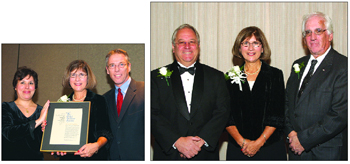
Cover Story
What’s Next for the Pioneer Valley Economy
Cover

Cover

As the calendar turns to 2007, economists see some growth for the Commonwealth, but mostly a continuation of the pattern of unspectacular progress that has defined the past few years. In other words, look for a continuation of the jobless, or nearly jobless, recovery. As for the Pioneer Valley, “it just keeps plugging away,” said one observer, noting that its relative stagnancy is better than some regions have experienced.

It’s been 16 years since a Democrat has been governor of the Bay State, and anyone in business who can clearly remember 1990 and the years that followed … would rather not.

Which is why some apprehension on the part of the business community at the dawn of the Deval Patrick era would be understandable. But there has been little of that to date, according to most observers, who say that, for now at least, Patrick is being given the benefit of the doubt when it comes to business, keeping the costs of conducting it in this state under control, and a host of issues that impact the Commonwealth’s ability to attract and retain jobs.

There are several reasons for this, said Andre Mayer, senior vice president of Communications and Research for the Associated Industries of Mass. (AIM), starting with the fact that the outgoing governor, Republican Mitt Romney, would receive only a mixed report card from many in the business community about containing business costs. There is also the rhetoric Patrick issued during the campaign, especially about education and creating a better-trained workforce — and the promise that it will translate into positive action in the months and years ahead.

“Thus far, I haven’t seen any real alarm about Patrick or a one-party government,” he said, referring to the Democrats’ stranglehold on Beacon Hill. “In fact, the business confidence index rose while Patrick was pulling away in October.

“I think part of the reason he was elected is the feeling that the emphasis will shift from taxes to other issues,” he continued, “and so far, Patrick has been saying all the right things; he doesn’t act like a tax-and-spend Democrat.”

But while Patrick is apparently not a cause of real concern as the calendar turns to 2007 (things may change later), there are some other matters that do warrant apprehension. At the top of the list is the condition of the housing market, especially in the Eastern part of the state. Prices have declined between 10% and 15% over the past year or so, and some analysts say they could fall another 10% before bottom is officially hit.

The falling prices are making the state marginally more affordable for workers, which is good news, said Bob Nakosteen, faculty member of the Isenberg School of Management at UMass and executive editor of Benchmarks, the university’s quarterly report on the state’s economy. But that downturn has certainly impacted consumer spending, while also hurting both the construction sector and the legion of Realtors operating across the Commonwealth.

The broad result is an overall decline in confidence, which is another of the matters to watch closely as the new year unfolds, said Nakosteen, adding that the slow start to the holiday shopping season, a few rough days for the stock market after that first shopping weekend, and talk nationally of inflation and possible interest rate increases to ward it off won’t help boost confidence.

There are other factors to consider, including energy prices — lower for the time being, but always volatile — that have most analysts projecting modest (2.5% to 3%) growth for the year ahead, said Nakosteen.

That would represent a modest decline from recent events, he said, noting that the Massachusetts economy performed better over the past six months (3.6% growth in gross state product) than at any time since the current expansion began in 2003. This growth was prompted by a resurgence in technology markets, especially demand for microchips, he explained, noting quickly that there are signs that things are already slowing down again.

For the longer term, analysts are wondering, as they have for the past several years, where the next surge in jobs for the Bay State and the Pioneer Valley will come from. In a recent article written for Benchmarks (see page 37), Nakosteen chronicled 20 years of relative stagnancy for Western Mass., with questions about if, when, and how it might end.

“The region just keeps plugging along,” he said, noting that, while ‘stagnant’ is generally not a positive economic term, in this case it’s better than some areas of the state, which have witnessed dramatic surges, but equally dramatic declines.

Through the Looking Glass

When asked about what to expect from the Deval Patrick administration, Jeff Ciuffreda, vice president of Government Affairs for the Affiliated Chambers of Commerce of Greater Springfield, said he’s not hearing a lot of negative talk.

Like Mayer, he said Patrick’s campaign and its theme, Together We Can, created generally positive vibes, and the business community is, by and large, withholding judgment until the picture is colored in.

“He seems to at least speak the language of business,” said Ciuffreda, noting that Patrick has served on several corporate boards and would seem to appreciate the needs and concerns of business owners. “How that will translate … we don’t know yet.”

To date, Patrick has been short on specifics with many issues ranging from the the fate of the Finance Control Board — the ACCGS would like it to remain in business — to his first budget. He has been outspoken on public higher education, and recently told an audience at UMass that he would push to increase spending on state schools by $400 million over five to seven years.

As for Western Mass., Patrick, like previous candidates and governors, has pledged support for the region. However, some are already alarmed by how few members of his transition team (7%) are from the Pioneer Valley.

“We may need to keep his feet to the fire on Western Mass.,” said Ciuffreda. “We’ll know a lot more in a year or so.”

That statement applies to many issues and concerns, he said, noting that while waiting to see what Patrick and his team members do in their first year, economy watchers will also be monitoring the housing market, energy prices, the war in Iraq, and the strength of the dollar — or lack thereof.

The softening of the housing market is still largely an Eastern Mass. phenomenon, although sales volume has fallen in the Pioneer Valley and prices has remained steady, said Nakosteen. But the impact is felt statewide because of the broad ripple effect. Consumer spending will continue to decline if the trend does not reverse itself, due to a phenomenon known as the ‘wealth factor.’

As Nakosteen explained, many individuals now view their homes as their principle vehicle for investing (savings rates remain low), and when homeowners see the value of their property diminish, they feel less wealthy and are thus less apt to spend.

“That’s why the housing market is the biggest concern for the year ahead,” he said, adding that economic projections for the next several quarters are muddled because of general uncertainty about housing prices and sales. Debate continues on whether bottom has been hit and, if it hasn’t, when that might occur — the consensus is the second or third quarter of next year.

The Big Picture

The sum of the many factors influencing the economy will determine how much of a surge will be seen — in the overall economy and in jobs.

While current conditions wouldn’t be described as a truly ‘jobless economy,’ the phrase that became popular in ’03 and ’04, there haven’t been significant gains in employment statewide or regionally.

“We set a record for merchandise exports this year,” said Mayer. “We’re making the stuff the world wants, but we’re just not employing a lot of people to make it.

“Hiring is still regarded almost as a last resort for some employers,” he continued, “and the availability of good people is one big reason why. Some companies just can’t find people.”

Overall, the state has seen roughly 1% growth in the number of payroll jobs over the past year, said Nakosteen, noting that the state was registering 2% to 2.5% increases during the early years of the decade. Most recent gains have come in professional and business services (7,100 jobs), education and health services (6,800), and financial services (4,200). In addition, 3,900 jobs were added in construction.

This relative stagnancy on the jobs market has contributed to an ongoing out-migration of state residents, the extent of which is still being debated, said Mayer, noting that the exodus, however large it may be, has some economists worried.

And the trend will continue, he said, until the state creates large numbers of new jobs. When and how that will happen are both $64,000 questions.

There are many theories about where the next large wave of jobs will emerge — from renewable energy to biotechnology to medical instruments manufacturing — but no clear indicators, said Mayer, who doubts that any of those sectors will blossom into large-scale jobs centers.

“I’ve heard that renewable energy could be the next big growth area, but I don’t see it,” he told BusinessWest. “How many people does it take to run a windmill?”

Nakosteen agreed, saying that the next big source of jobs probably hasn’t identified itself yet.

“Massachusetts has a long history of reinventing its economy, and it will do so again,” he explained. “But if there’s a new engine out there that’s going to drive us, it’s not at this point identifiable. And one of the reasons we’re going to see very, very minimal, almost stagnant employment growth over the next few years is because we don’t have this new engine out there.”

That same statement can be applied to Western Mass., which has seen some job growth in biotechnology and medical instruments, but, overall, hasn’t found anything to replace the manufacturing jobs that have given the region its identity. This fact, coupled with the region’s minimal but consistent growth, adds up to remarkable resiliency, he said.

“Over the past century, the Pioneer Valley has lost most of its important employers, especially in manufacturing,” he explained. “If you look at other areas of the country, when they lose their major employers and enter a recession, they go into a death spiral; we just keep plugging away.”

Nakosteen attributes this phenomenon to the region’s employment anchors — UMass, MassMutual, Baystate Health, and others, who have maintained their core strength over the years — and also to new small-business development. “This region is much better off than other areas that have lost their manufacturing bases,” he said, “and I think it’s because of those core businesses.”

Identity Crisis

Can the region break free of the stagnancy that has defined it for the past few decades? Possibly, said Nokosteen, but it probably won’t come from companies leaving Boston for the Valley and its lower cost of doing business.

“The prevailing theory is that if business owners are going to leave the Boston area, they’ll go all the way to the Research Triangle,” he explained. “They won’t stop along the way in Springfield.”

Thus, growth will likely be organic, and Nakosteen isn’t sure where it will come from.

“We don’t have an economic identity, and we don’t have an engine of growth; I don’t see anything coming to the fore,” he told BusinessWest. “But it’s not obvious that anything has to come to the fore; we could be like this forever more.”

George O’Brien can be reached at[email protected]

Sections Supplements
STCC’s Patient Simulators Open New Doors to Learning
Nursing student Tracy Stanlewicz

Nursing student Tracy Stanlewicz checks the vital signs of one of STCC’s 14 patient simulators.

When Springfield Technical Community College bought its first patient simulator several years ago, it was a fresh idea in medical education. Now many more colleges are getting on board. They increasingly realize what students and professors at STCC have known for years: that real-world experiences in medical training lead to real-world successes later on.

Michael Foss remembers the day, during his medical training, when lightning struck — a moment both terrifying and valuable.

“I was transporting a patient down an elevator, and lightning struck outside,” said Foss, now dean of the School of Health at Springfield Technical Community College. He recalled that the elevator suddenly stopped, the lights switched off, and the patient, who was hooked up to a respirator, stopped breathing.

“It scared the hell out of me,” he said. “In a matter of seconds, I was completely alone with the patient. All of a sudden, the lights came back on, the elevator jumped, and the patient started to breathe again.”

As Foss related this tale, he leaned forward with a sneaky grin. “We can do that kind of cool stuff here, any time we feel like it,” he said — thanks to a growing collection of state-of-the-art patient-simulation mannequins that can replicate virtually any situation a nurse or other medical professional might encounter in real life.

Say a couple of students are transporting a ‘sim’ patient, thinking they have done everything properly to stabilize him. “If they start to get complacent, thinking everything is cool, we can make everything not OK,” Foss said. “We can have that patient take a dive in the hallway or the elevator or anywhere else we feel like.”

These sim patients — which simulate movement, breathing, and a host of vital signs — are given the human touch by a professor, who monitors students’ interaction with the patient from another room using a camera. The professor not only serves as the patient’s voice, but uses a computer to direct responses and vital signs.

Patricia Hanrahan, director of Clinical Education at STCC’s School of Health, used the example of a blood draw to compare patient simulators to ‘task trainers’ like a realistic — but unmoving — arm.

“When they put the needle in the patient’s arm and the patient passes out, they not only have to figure out what to do with the patient, but what to do with the needle,” she said. “There are two sets of expectations that are simultaneous.”

But then, there’s a payoff. “A student came to me with a great big smile on her face and said, ‘I did it.’ The same thing happened to her in a clinical setting, and she knew exactly what to do. The people at the agency were so impressed that they hired her on the spot for an externship.”

In this issue, BusinessWest looks into the history of patient simulation at STCC — and why it is proving beneficial not just to students, but to real patients everywhere.

Starting Small

The college’s first attempt at patient simulation was in its sonography program, and was a computer-based simulator that looks and acts like a real ultrasound scanner. When a student moves a probe across the patient’s body on the table, the screen brings up actual ultrasound images on the screen.

“That’s how we got started in simulation,” Foss said. “Then we decided to go to full-size human patient simulators, so we made a large investment in an adult male and a pediatric male that could be plugged into the same piece of computer equipment. We opened our patient simulation center and used it for respiratory care, mostly.”

Meanwhile, other faculty members were intrigued by the possibilities of this pair of talking, breathing simulators. Soon after, a nursing graduate who was working for a simulation company approached the college about lending another full-size sim in exchange for the chance to conduct some research on campus.

As time went on, the roster of sims in the department continued to grow to its current total of 14, with a mix of different ages, genders, and ethnicities.

“For a long time, the airline industry has demanded that pilots go through cockpit training in simulators,” Foss said. “We thought, if it’s good enough for pilots to keep people alive, it would probably work for students going into the health care field.”

Each year brings further advances, so that the sims can be updated completely through software. The newer models are also mobile and not confined to a bed setting.

Mobility has opened the use of sim patients to many more departments than the original models did. For instance, the first patients couldn’t be moved into the chair for Dental Assisting students to work on, as is possible today.

“We put a portable patient in street clothes, put him in the chair, and one of the faculty acted like the doctor and gave him a shot of anesthesia,” Foss said. “As the patient was conversing with the dental assistant student, he started to have slurred speech and wasn’t very responsive. We were watching this on a camera and changing all the vital signs, just like what might happen in a real patient situation.”

Confidence and Competence

It’s important, he explained, for students to experience these bumps in the road during seemingly routine procedures now, when no one’s health or safety is actually at stake.

“We’re making sure that the context and environment students learn in is as close as possible to the environment they’re going to work in after graduation,” he told BusinessWest. It’s an effort that goes beyond the sims; the college has been renovating its health education facilities to make the rooms look more like real medical settings as well.

That realism today will build some essential skills that aren’t learned in a textbook, Hanrahan said.

“In clinical education, confidence and competence are very important,” she explained. “When students feel more confident about their skills, they tend to act more competently in the clinical area, and that gives them even more confidence to make clinical decisions.”

The hands-on training is not to be understated, Hanrahan said, recalling one student who aced a written exam, yet flunked the accompanying simulation test. Better to fail in class, of course, than with real patients.

“Before they go to their clinical training, they can walk through that environment here. Then, when a similar thing happens, they feel like they know what to do.” It helps that all simulations are taped so students may review their decision-making and responses with professors afterward.

“We’ve had task trainers for years — parts of the body,” Foss said. “So they can stick the needle into the plastic arm, but the arm does not react. Our patients will react. We can have them refuse — and that brings up an entirely different set of skills. Then, when they’re in a stressful situation with a patient down the road, they can draw on this and say, ‘I’ve done this before.’ It helps them to relax.”

He compared the experience, again, to flight simulators that train pilots — technology so advanced that it’s indistinguishable from performing actual maneuvers thousands of feet above the earth.

“We’re almost to that point, where we’re suspending the users’ disbelief,” Foss said, noting that the hospital-like settings of the rooms are crucial to the illusion.

When we put the simulator on a hospital bed near the normal things you’d find in a hospital, it becomes more real and meaningful to them. I feel strongly that we’ve often taken hands-on experiences in medical training out of context; with the patient simulators, we’re putting it back into context.”

Scary Moments

That context, of course, can be decidedly unnerving.

“I can assure you,” Foss said, measuring his words, “that we can make this one of the scariest moments of your career. We can throw things at you at a very high level that will make you sweat.”

That’s partly because few students ever get everything exactly right, he explained. “You may think you’ve given the right dose for this patient, but you didn’t because you forgot to check his weight. Or perhaps you left the room, and when you came back, you didn’t check his name appropriately. Or you didn’t do chest compressions properly. You thought you did, but the computer knows better.”

But the sims don’t only develop proficiency. They also help students understand that even their best efforts aren’t always enough. “We do, sadly, kill patients,” Foss said. “There are times when you do everything right, and the patient still dies.”

That’s a useful lesson, Hanrahan said. “Students are able to problem-solve not only what they did, but how they feel about it, how to make sense of it, how to communicate with family members. This is not about merely technical or psychomotor skills; it’s about taking care of patients. We give them an environment where they can reflect and faculty who help them reflect.”

Some pick up the concept sooner than others. Foss recalled a tour of visitors to the classrooms during which he voiced one of the patients as a man with Alzheimer’s disease. As the group discussed the patient simulators, Foss, as the sim, kept asking for his long-dead wife, and one of the visitors became intrigued.

“She interrupted the conversation and said, ‘Let’s listen to him. He sounds like he has Alzheimer’s.’ And she had it, dead-on,” Foss said. “You can’t do that with a task trainer.”

Then there was the time a student successfully helped his sim through a critical moment and had him stabilized. Another student took over at that point, and instead of taking it easy or asking for help on what to do next, he started talking to the patient, noting on his records that he smoked two packs a day, and that wasn’t good for him.

“He basically went through a very personal health education moment. We were not expecting that, and it blew us away,” Foss said. “Both students did an exceptional job, and because of that, they have the confidence and competence to handle such a situation.”

Expanding Upon an Idea

Meanwhile, STCC has achieved the competence with patient simulation to become a model for the other 14 community colleges in Massachusetts. Three years ago, hardly any of the other campuses had patient simulators, and now about half own at least one, with more coming on board all the time. And that’s important, Foss said, because although community colleges aren’t turning out doctors, they do supply the bulk of new nurses and other medical personnel across the state.

“If we can help introduce patient simulation to other schools, we’re actually improving the quality of health care across the entire Commonwealth, so that’s our goal,” he said, noting also that simulation also carries some intriguing workforce-development possibilities, such as hospitals sending employees to a local college campus to train on a new procedure.

“It has even been suggested to us as a pre-hire evaluation,” Foss said. “If you want to know for a fact that an employee can do a whole set of skills, you send them to a patient simulator and let them prove it.”

Hanrahan said such efforts would not be out of line with the patient-safety goals so prominent in the modern hospital setting. “All health care institutions are very focused on patient safety as a quality issue,” she said. “We can create and recreate situations that help people evaluate their ability to practice safely.”

They’re doing so by teaching students how to focus on the patient, Foss said. Instead of asking the professor what to do next, students are gradually trained to direct questions to the patient. And technology is continually improving to help suspend students’ disbelief, including baby sims who are “delivered” from adult-size sims; the babies come out with a blue tint and eventually turn pink — as long as the student makes the right decisions.

“It’s powerful to see students acquire mastery,” Hanrahan said. “These students are providing the employment pool in the local and not-so-local health care arena, and we want them to feel that they’ve mastered what they came here to accomplish.”

It’s a sudden rush of knowledge that can hit a student like — well, like a bolt out of the sky.

Joe Bednar can be reached at[email protected]