Home Posts tagged Events (Page 43)
Sections Supplements

Karen Mills has some thoughts on growing regional economies. For the past several years, she’s advocated for the economic benefit of regional industry and innovation clusters.

Mills helped get a $15 million U.S. Department of Labor WIRED grant for the Maine boat-building industry and worked with Maine’s Gov. John Baldacci to implement recommendations from an economic-development study (“Charting Maine’s Future”) related to industry clusters — geographically concentrated groups of interconnected companies, universities, and related institutions that arise out of linkages or externalities across industries.

While in Maine, she co-authored in April 2008 a Brookings report titled “Clusters and Competitiveness: A New Federal Role for Stimulating Regional Economies.” Mills also worked with an SBA-sponsored fund I manage (CEI Community Ventures) to develop a cluster event designed to catalyze a specialty food industry in Maine.

In December, President Obama nominated Mills as director of the U.S. Small Business Administration, a position some (including Maine’s U.S. Sen. Olympia Snowe) would like added to the cabinet. So, given Mills’s background and what she’s been up to in Maine, what might have we to look forward to in a Mills SBA should her nomination be confirmed?

New Strategy

As backdrop, the stimulus package and the government’s economic policy involve a renewed focus on urban markets, industry, and innovation clusters — and underserved people like women and minorities. And with the Obama administration clearly listening to the folks at Washington D.C.’s Brooking Institute, we may see a federal economic-development plan like that outlined by Brookings’s Metropolitan Policy Director Bruce Katz and Harvard Business School’s Michael Porter, who has written extensively on competitive strategy and cluster development.

That strategy would likely be implemented across agencies and would stress financing and resources that support growth in select urban and rural regions and in select sectors. Katz and Porter assert that, as urban economies go, so goes the nation. They say, in fact, that 75% of our GDP comes from urban city markets, or “the engine of our prosperity,” as Katz calls it.

Mills seems likely to focus on urban markets and industry clusters, too. Urban markets — which would include cities like Springfield — enable the administration to meet its stated objectives with respect to underserved people located in underserved regions. Through SBA (and other agencies), urban markets might see greater access to capital (whether loans, equity, or grants) and business resources like education and consulting. According to Mills’s own research, clusters should be funded by grants and supported by information centers. These activities ought to be coordinated across agencies, according to Mills and others, so government can implement policy in a unified manner.

Prior to Mills’s arrival, SBA’s toolkit has been a mix of financing (loans and equity) and business resources (such as its Small Business Development Centers and Service Core of Retired Executives. During the past eight years, SBA’s budget has been dramatically reduced. Given the challenges of creating new programs during the recession, it seems Mills should look to simply reinstate SBA’s program funding with a strategic urban and cluster emphasis. SBA-sponsored equity funds might be reinstituted with a focus on urban-market funds and growth clusters.

Indeed, the SBA has a rich history supporting specialty funds such as the New Markets Venture Capital program I’ve been managing for the past five years. SBA grant funds might support industry associations, cluster events, and educational endeavors. Cluster information centers would be the repository of all things cluster — i.e. research and reports, company databases, cluster maps, and economic development research.

Why It’s Important

Why should this matter to those interested in venture capital and small business growth issues? Here are a few reasons:

Equity: The early-stage venture ‘capital gap’ has not gotten any better over the past two quarters. If Mills can revive SBA’s equity programs, new liquidity can support growth ventures. For my part, I’m game to pursue — as part of Clear Venture Partners, my new fund-in-formation — such funds if the SBA is game to provide the capital and program. That could mean additional capital and resources for growth companies located in underserved regions like Western Mass.

Grants: Technical and operational assistance funds are low-cost or free services to small-growth business and to the entities (for-profit, non-profit, and government) that serve them. In short, if you’re in a target cluster or region, you’re likely to see resources headed your way if Mills is confirmed.

Cluster and sector support: If you’re starting a business or are in a business that is one of a given region’s target clusters, you’ll not only find local but likely federal resources (equity, grants, and tax credits) to help you on your way.

Focus on growth sectors, and you’re likely to maximize your success in the current and future economy.

Michael Gurau is managing general partner of Clear Venture Partners in Portland, Maine;[email protected]

Sections Supplements

We have all seen the Olympic gymnasts, American Idol contestants, or other competitors anxiously wait for the scores from the judges. We watch our parents’ faces when we stand on elementary school stages or at recitals. We look for information returned from customer satisfaction surveys.

Feedback — we watch for it, we want it. Whether it is good or bad, we always want information about how we are doing. We use this information to determine how to respond or what to do next. Feedback is one of the most powerful tools a manager has to influence performance.

Employees now have a greater role in developing strong customer relationships that inspire loyalty and performance. Therefore, employees need to have the best skills, use sound judgment, and feel competent in their job.

To do this, they must always be learning, thinking, and improving. They need information about the quality of their decision, and to know if they are making good decisions.

That means managers must be watching to catch employees doing great things and then provide positive feedback to sustain the performance. They also must watch to catch problems as they occur, to use the teachable moment to help the employee improve and develop stronger skills in order to respond better next time. Feedback is the way to guide, coach, and educate employees to improve or sustain performance.

Effective performance feedback has rules to ensure its effectiveness because, done poorly, it can do damage to the manager/employee relationship.

Employees don’t want to be told what to do or to be scolded. They want meaningful information to help them improve. Following the feedback process below guarantees all feedback (for both great and problem events) will focus on behaviors and performance. Review the following five steps:

Step 1:Start with a ‘cookie’ (a positive comment). No one likes to hear about something that needs improving with a strong statement. Feedback is about people, behaviors, and emotions. So start each performance feedback with a positive comment, something that shows respect and understanding of who the person is and brings the employee into the discussion.

Step 2:Describe the current behaviors and situations (give great details). Describe what is currently happening, the behavior that you want to reinforce or redirect, and the specific situations where you observed the behavior needing feedback. Be specific, brief, and direct. Remember, the goal is to change behavior that needs changing or encourage good behavior to continue.

Step 3:Describe impact and consequences (find the ‘hook’ or attention-getter for the feedback recipient). Describe the impact and consequences of the current behavior, noting the effect the behavior had on results, customers, or employees. Be specific, and quantify details. The more detailed and accurate the information, the more meaningful the feedback will be. Realize that no adult changes his behavior unless he sees a personal reason to change. The impact in this case should not only deal with the organization, but should also be a personal hook for the employee (or feedback recipient).

Step 4:Create a plan to continue great behaviors or change negative behaviors (let them have a voice in the response). Work with the employee to suggest options that would improve a negative event or keep a good event going. Be sure that the employee has a voice in the process; the more the employee invents their responses, the more they own the results.

Step 5:End with a cookie (another positive comment). Regardless of the nature of the performance feedback (positive or negative), employees will process the message better when the performance feedback event both starts and ends on a positive and personal tone. Be sure to reassure the employee of the value of the discussion in the feedback. It sets the stage for an open and honest relationship and dialogue about performance.

The best way to see the impact of this process is to use an example. Let’s say your employee, Jean, was not very helpful to a customer on the phone. You heard the event and now must provide feedback for Jean to improve her understanding, confidence, and performance:

Step 1:Cookie. “Jean, you have some of the best customer-service skills in the industry. Our customers are always very impressed with our service levels when they deal with you.”

Step 2:Describe the current behaviors and situations. “Jean, I heard you on the phone with Stanton Company. You were short with them, told them to call back when they knew the numbers they wanted and hung up without saying thank you. Did I hear this correctly?” (Give Jean an opportunity to respond.)

Step 3:Describe the impact and consequences. “Jean, Stanton is one of our largest and best customers. They continually send other customers to us, and if we do not treat them with our best and most supportive service, they will not refer others to us. They were critical in helping us achieve our profit targets, which resulted in bonuses for everyone on the team — including yours. Our relationship with them is critical to our success.”

Step 4:Identify alternative behaviors. “Jean, what do you think you should do with Stanton right now?” (Allow Jean to offer ideas and to own the solution). “Great, Jean, I like that idea. Please get right on it. Mostly remember how important the relationship is with each of our customers. They call us because we know what we are doing and we treat them better than anyone else … it’s how we do business.”

Step 5:Cookie. “Jean, you are an important part of the great service this team gives our customers. Thanks for making the difference that you do; please keep doing your best to help us be the best in the industry. Thanks.”

Feedback is not a process for the manager to vent. Feedback is a learning event that focuses on particular behaviors that need to be sustained or improved. Though this approach is more ‘human,’ it does not coddle employees. It defines expectations and holds employees accountable. This process insures that the employee is treated fairly, learns, and is responsible for his or her actions.

Feedback is one of the most significant tools that managers have to help guide, coach, and instruct employees to continually grow, make extra effort, and improve performance. Managers catch employees doing great things and applaud them. Managers catch employee performance problems and use them to improve performance and win employees back.

Employees want feedback; be sure to provide the right kind of feedback that builds their skills, confidence, and commitment to perform at their best.

Jay Forte is a speaker, consultant, and nationally ranked thought leader; (401) 338-3505.

Departments

Third Thursday

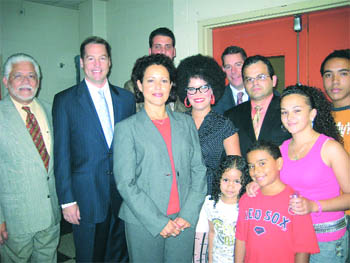
The Young Professionals Society of Greater Springfield staged its most recent Third Thursday event at Champions in Springfield. Featured guests included Springfield mayor Domenic Sarno and Lt. Gov. Tim Murray. Below (from left), YPS members Demare Flynn and Lauren Mendoza, Sarno, YPS members Jen Vaschak and Peter Zurlino, and Thomas Walsh, communications director for the city of Springfield. At right (from left) YPS members Dan Bessette and Nawana Holloway, Murray, and YPS members Amanda Huston, Michelle Sade, and Sarah Tsitso.


LEEF of Faith

The Hampden Bank Charitable Foundation recently donated $10,000 to the Longmeadow Educational Excellence Foundation (LEEF), a private, volunteer, nonprofit organization established in 2001 to enrich, enhance, and support the quality of education in the Longmeadow public schools. The funds from this grant will go towards the Destiny Library Online Access system. This system will support the school district’s technology capability by providing staff and students at all of the Longmeadow schools with online access to the entire school system’s library card catalog. Here, Christine Halista, President of LEEF, accepts a check from the Hampden Bank Charitable Foundation at the recent grand opening of Hampden Bank’s newest office on Shaker Road in Longmeadow. From left are Thomas R. Burton, president of Hampden Bank; Halista; Maureen Wilson, assistant superintendent of Longmeadow Schools; Moira Murphy, clerk of the LEEF executive board; and Joe Aberdale, LEEF board member and director of Public Relations.


Hackman World Tour

Lee “Hackman” Breton is heading out on a world tour to show off the extreme cutting ability of the new LENOX T2 reciprocating saw blade. The tour kicked off last week at the LENOX plant in East Longmeadow, where Hackman, seen here, cut a police car in half in just over two minutes.


Children’s Miracle Network

The 94.7 FM WMAS Children’s Miracle Network Radiothon was broadcast live from the CMN Playdeck at Baystate Children’s Hospital on March 5-7 to benefit Baystate Children’s Hospital. The on-air personalities from WMAS, including Rob Anthony and members of the Kellogg Krew, asked listeners to pledge their support by calling in donations to the phone banks at the Baystate Medical Center’s Chestnut Conference Center. Regular radio programming was intertwined with live and taped interviews of patients and their families. When the Radiothon ended on Saturday afternoon, $175,000 had been raised, with additional pledges expected to increase the total in the coming weeks. From left are Rob Anthony, program director, WMAS Radio; Jill MacDonald of Springfield; Michelle Graci, manager of Special Events Fundraising for the Baystate Health Foundation; patient Jillianne MacDonald; and Kellogg Krew member Dina McMahon. Seven-year-old Jillianne was born premature, weighing a little over one pound and measuring 10 inches long at birth. She was dependent on medical technology for the first few years of her life. She was in and out of the hospital and was treated by almost every clinician at Baystate Children’s Hospital. ‘Jilly’ is homeschooled and still limited in what she can do outside. She goes to dance class every Saturday, and her mother says that she hates to miss a class. The physicians at Baystate Children’s Hospital say that the progress Jilly has made over the years is remarkable.

Departments

Breakfast Club

March 4: The Springfield Marriott at Two Boland Way will be the setting for the Breakfast Club meeting of the Affiliated Chambers of Commerce of Greater Springfield (ACCGS), starting at 7:15 a.m. The breakfast will salute Convergent Solutions Inc. for winning BusinessWest’s Top Entrepreneurs award for 2008, and Roberts & Sons Printing Inc. for a new generation of ownership. The March of Dimes is the nonprofit salute for the month. William F. Dowling, Esq., president and managing partner of the New Britain Rock Cats Baseball Club, will speak on “From the Paper City to the Hardware City: A Baseball Odyssey.” Reservations must be made in writing and in advance. Tickets are $20 for ACCGS members and $25 for non-members. Reservations may be made through Diane Swanson, events manager, ACCGS, 1441 Main St., Suite 136, Springfield, MA 01103-1449, by fax to (413) 755-1322, or via E-mail to [email protected] or by visiting www.myonlinechamber.com.

Brown Bag Luncheon

March 4: Nate Winstanley of Winstanley Associates will present “Branding Your Business: Be Brave or Be Gone” from noon to 1 p.m. as part of the Berkshire Chamber of Commerce’s Brown Bag Series. The lunchtime workshop is designed to help area business owners and managers with marketing strategies during tough economic times. The workshop is free to all Berkshire chamber members, and attendees are invited to bring a brown-bag lunch. The chamber office is located at 75 North St., Suite 360, in Pittsfield. To register, visit www.berkshirechamber.com, or call (413) 499-4000, ext. 26.

Ann Hood Lecture

March 5: Bestselling, New England-based author Ann Hood will present a free lecture at 7 p.m. in Empsall Hall at Bay Path College in Longmeadow as part of its Kaleidoscope series. Winner of the Best American Spiritual Writing Award, her last two novels (Comfort and The Knitting Circle) have received wide acclaim. For more information, call (413) 565-1066 or visit www.baypath.edu.

Innovative Voices Conference

March 10: The MassMutual Center in downtown Springfield will be the setting for a capacity-building conference, co-presented by the Women’s Fund of Western Mass. and Bay Path College. Titled “Innovative Voices: Crafting a New Agenda for Leadership,” the daylong conference will feature guest speakers Sara Laschever and comedienne René Hicks. Workshop topics offered throughout the day will include: “New Faces in Leadership I: Generations & Cultures,” “New Faces in Leadership II: Strategies for Change,” “Wikis, Twitter, and Blogs – Oh My!” “Learning to Ask: Negotiation Basics,” “The Art of Politics: Navigating the Political Waters,” and “Making Yourself Memorable: Personal Branding from the First Handshake.” Workshops will also include “Expanding our Capacity: Energizing Our Spirit,” “Balancing Mission and Money: How Nonprofits Can Do Both,” and “Finding Your Voice and Changing the World: Passion, Emotion, and Leadership.” Registration is $70 for the first organizational attendee and $60 for each additional organizational attendee. The deadline to register is March 2. For more information, visit www.womensfund.net.

Brown Bag Luncheon

March 11: “Recession-proof Stress Management” will be presented by Richard Fabozzi of Richard Fabozzi Presents from noon to 1 p.m. as part of the Berkshire Chamber of Commerce’s Brown Bag Series. The lunchtime workshop is designed to help area business owners and managers with stress-management strategies during tough economic times. The workshop is free to all Berkshire chamber members, and attendees are invited to bring a brown-bag lunch. The chamber office is located at 75 North St., Suite 360, in Pittsfield. To register for the workshop, visit www.berkshirechamber.com, or call (413) 499-4000, ext. 26.

Casino Royale Fundraiser

March 14: Anyone who enjoys gambling for a great cause is invited to check out Casino Royale, CityStage’s annual fund-raiser, at the Sheraton Hotel in Springfield. Highlights of the affair include hors d’oeuvres, a cash bar, live entertainment, prizes, a live auction, a 50/50 raffle, and a mystery raffle. Single tickets are $100, which includes $400 in gaming money. There are also special groups of 10 rates available, as well as VIP tickets for $150 each. Casino Royale begins at 7:30 p.m. For more information, call (413) 788-7646. Pit Boss sponsors are Berkshire Bank, Hampden Bank, MassMutual Financial Group, Mercy Medical Center, and United Bank.

Get Beyond ‘Hello’

March 18: Steven Valenti of Steven Valenti Clothing for Men will present “Get Beyond ‘Hello’ — Delivering Exceptional Customer Service” from noon to 1 p.m. as part of the Berkshire Chamber of Commerce’s Brown Bag Series. The lunchtime workshop is designed to help area business owners and managers with customer-service strategies during tough economic times. The workshop is free to all Berkshire chamber members, and attendees are invited to bring a brown-bag lunch. The chamber office is located at 75 North St., Suite 360, in Pittsfield. To register for the workshop, visit www.berkshirechamber.com, or call (413) 499-4000, ext. 26.

Employer Outreach Breakfast

March 27: The Regional Employment Board of Hampden County Inc. (REB) is gearing up to place young people in summer jobs, and encourages businesses to attend an employer-outreach breakfast to learn more about the program. The breakfast is planned from 7:30 to 9 a.m. at Big Y Foods Inc.’s corporate headquarters at 2145 Roosevelt Ave., Springfield. There are three ways that businesses can help the REB: hire a youth, donate money, or become a worksite. All aspects of the program will be reviewed by REB representatives. Anyone planning on attending the event should RSVP to Kathryn Kirby at [email protected] or call (413) 755-1359.

Rock ‘n’ Roll & Management Styles

April 15: “Everything I Learned About Management, I Learned From Rock ‘n’ Roll” will be presented by James M. Wilson III, Ph.D., assistant professor of Business at Bay Path College; and Gregory Jones, director of Cannes Associates Production Management. Wilson and Jones have been conducting research for three years on the production of live concerts featuring Metallica, Green Day, Red Hot Chili Peppers, Bob Dylan, and Willie Nelson, among others, with a focus on how event management contributes to organizational theory. The free lecture at 7 p.m. will take place in Breck Suite in Wright Hall at Bay Path College in Longmeadow. The event is part of the Kaleidoscope lecture series. For more information, call (413) 565-1066 or visit www.baypath.edu.

Women’s Professional Development Conference

April 30: Bay Path College in Longmeadow will host the 14th annual Women’s Professional Development Conference from 7:30 a.m. to 4:30 p.m. at the MassMutual Center in downtown Springfield. For more information, call (413) 565-1293 or visit www.baypath.edu.

Features
Marketing Campaign Promotes the City and Its Convention Facilities as Second to None
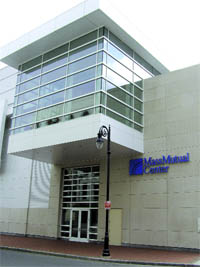
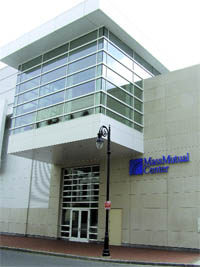
The Springfield First campaign is designed to specifically spotlight the MassMutual Center and its many amenities.

The Springfield First campaign is designed to specifically spotlight the MassMutual Center and its many amenities.

‘Think Springfield, Massachusetts.’ That’s the gist of a bold, new marketing campaign recently rolled out by a group of tourism-focused agencies called Team Springfield. The multi-faceted campaign, called ‘Springfield First,’ is designed to introduce, or re-introduce, meeting and convention planners to the city and its MassMutual Center, and get across the message that there’s much that’s new and much to like about the City of Homes and the surrounding region.

As the old adage goes, seeing is believing.

Mary Kay Wydra remembers a tour she helped provide just over a year ago to some prospective clients kicking the tires on the MassMutual Center as the possible site for a convention. One of the visitors hailed from the Worcester area and, prior to the visit, had tried to dissuade his colleagues from booking the Springfield venue, saying, in essence, ‘Why would we want to go there?’

“He never really gave his reasons,” said Wydra, president of the Greater Springfield Convention and Visitors Bureau (GSCVB). “But during the site inspection, the man said, ‘you know what, I haven’t been to this city in years. What a difference 10 years makes!’”

This, in a nutshell, is the essence of the message that a group of tourism-focused groups, brought together in a collaborative effort known as ‘Team Springfield,’ is working to get across in an ambitious, multi-faceted, $500,000 ad campaign designed to show just how big a difference a decade or so makes.

Targeted toward convention and meeting planners, the campaign, launched last month, will introduce, or reintroduce, this constituency to the MassMutual Center — created through a $71 million expansion and renovation of the old Springfield Civic Center — and, in the process, answer that question about why a group should want to come to Springfield.

There are plenty of reasons, said Wydra, listing everything from affordable rates to a considerable inventory of hotel rooms; from attractions both inside the city and a few miles from it to a facility, in the MassMutual Center, that can handle events of all sizes and types. This broad message will be delivered through a host of media, including ads in trade publications, direct mail, a new Web site (www.springfield-first.com), and other Web-based forms of marketing, such as electronic newsletters.

‘Think Springfield, Massachusetts’ is the tagline to a series of ads developed by Team Springfield, which is comprised of the GSCVB, the Mass. Convention Center Authority (MCCA), and Philadelphia-based Global Spectrum, the private facility management firm that handles day-to-day operations for the MassMutual Center. That line is the Jeopardy-like answer to questions such as: ‘Looking for a Convention Center Beyond Expectations?’ and ‘Looking for a Creative Solution for Your Next Convention?’

The broad goal of the campaign, said Wydra, is to get more people to see Springfield and the MMC, and thus become believers. And she herself believes the timing is ultimately right for such a campaign.

“We’re stronger than ever now,” said Wydra of the MMC. “We have a great marketing team in place. In the past, we never had this aggressive marketing plan. We haven’t been out in front of the meeting planners the way we’re going to be out there now. I’m confident that we’re going to start seeing a building that will be utilized far more than it has been in the past.”

Recently, Wydra sat down with BusinessWest to talk about Springfield First, and to detail just how the MMC is going to be competitive in bringing those convention dollars to the city.

First Things First

As she talked about the new marketing campaign, Wydra said that, while it will place heavy emphasis on the word ‘Springfield,’ it will do likewise with the word ‘first.’

“We want Springfield to be first in the minds of the meeting planners when they are thinking about a venue of this size,” she explained. “But Springfield is also known as the city of firsts, and we thought that name has a lot of legs in terms of future promotions. Basketball, the Duryea automobile, Dr. Seuss, the Granville Brothers airplane, Springfield Rifles, things like that … the campaign was created to get the word out there about what gives this city a rich history.”

The focus of Springfield First is on three types of business for the region: leisure, or people on vacation in the area, group tours, and especially the conventions and meetings at the MMC.

“Conventions and meetings are the best type of business,” said Wydra, “in that they tend to be the most lucrative. You convince one person to bring a meeting here, and they bring with them hundreds if not thousands of people.

“But we can also convert those visitors into leisure travelers,” she continued. “That’s always our goal, so that when people come here for business, we want to expose them to enough of the region outside of their program — their business for being here — where they say ‘wow, Six Flags is there, Yankee Candle is there, and I’m coming back and bringing the kids next time.’”

The three organizations behind ‘Springfield First’ — MCCA, Global Spectrum, and GSCVB — recognize that, in terms of attracting conventions, the infrastructure and everything else needed to make successful meetings happen in Springfield is now in place — and the mission at hand is to get that message out.

“For years we had the Marriott and Sheraton hotels, but this building was offline,” Wydra explained, referring to the minimal professional organization space at the Civic Center, which was shut down during renovations. “But now we have a mix of the first-class meeting space, really nice downtown hotels, and spill-over hotels in surrounding communities that can be offered at a lower price point. Adding to all the attractions is the ease of travel to Springfield.

“We knew that we needed to get this building back in the minds of meeting planners,” she continued. “And we wanted them to understand that it’s been transformed. People who had been here six, seven, or eight years ago knew it as the Civic Center, when it was an arena with a tiny, 9,000-square-foot exhibition room. It’s completely different.”

Indeed, what reopened in September 2005 was a contemporary structure bearing little resemblance to its former self, with nearly 150,000 square feet of new meeting and convention space on two levels.

Global Spectrum is Philadelphia-based, yet has an international presence, and at the MMC it will focus on short-term bookings, while the GSCVB focuses on long-term business, or meetings for well down the road. Wydra called this the “bulls-eye” type of client: one who would be planning an event 15 months or more out.

Conventional Thinking

In discussing why now is the time for the Springfield First campaign, Wydra spoke to the amount of planning, organizing, and marketing put into gear for the MMC. “We were very focused on putting a process in place,” she said, “with the Team Springfield advisory committee and with our sales team, and going through our pipeline of businesses.

“This is a very competitive industry,” she continued. “We have Worcester, Hartford, Albany, and Providence nearby. We knew we needed to have a presence out there, but we knew we needed to be organized and ready also.”

To set the MMC apart from its many competitors, Wydra explained the additional personalized level of treatment from the administration of the MMC, the GSCVB, and the city of Springfield. “We really sell the concept of big-city services and small-town hospitality,” she said.

“We work with the convention planners,” Wydra continued. “When they come to the city, we’ll put the ‘welcome’ signs up downtown, we’ll get them the mayor to come greet the group, we’ll do welcome tables in their hotels, get their name across the marquee at the Sheraton, or even talk to the press about covering their meeting or convention. There’s a staffed ‘ambassador’ booth here in the building. So if you need help registering people for your convention, we’ll help you do that.”

Wydra explained that many of the groups she encounters tend to be volunteer organizations. In addition to their groups’ organizational needs, they probably have full-time jobs. “These people have to make a huge convention happen,” she said. “There are people in the workforce who do that as their full-time job. We’re able to say to that type of client, ‘let us help you with the details; that’s what we’re here for.’ That really goes a long way for them. To my knowledge, a lot of our competition doesn’t offer such programs.”

While targeted customers tend to be regional, with the Northeast as a focus, there are those outside groups for whom the Springfield’s size is an asset. Wydra mentioned an international organization, the Daughters of the Nile, that visited a few years ago. “Prior to Springfield,” she said, “they had gone to Orlando, where they were meeting in a hotel. Here in Springfield, they are in the convention center. For a larger city, they were just a drop in the bucket. Here, they were on the front page of the local newspaper for three days.”

Equally important to the Springfield First campaign is the business community outside of the convention center. “Team Springfield is all about economic impact,” said Wydra, “and so is the MCCA. They know that the bang for the buck is when there’s hotel revenue, when these people are dining out, and maybe they’re going out in the evenings after their events.”

In order to open up the city and region, Team Springfield has tie-ins with locations outside of the MMC to give local flavor, said Wydra. “We tie in some unique meeting venues,” she said. “One of the things we’re able to say to meeting planners is, ‘you’ve got an opening-night reception? Have you thought about having it at center court in the Basketball Hall of Fame? Or maybe up at one of the museums in the Quadrangle? We’re talking with a group right now who always has a golf component to their convention, so we’re working with the Ranch Golf Club in Southwick to make that part of our proposal.”

And while the publicity and the planning for Springfield First is new this year, Wydra makes it clear that organizers aren’t selling a ‘new’ Springfield. “The city has everything a convention group would need, and that’s what we’re selling, Springfield as it is now, with all the amenities and attractions that goes with it.”

With direct-mail initiatives and marketing in industry publications, Wydra said that the red carpet is rolled out, Team Springfield is ready to go online, and there are “robust candidates in our tentative schedule.”

All this proves, as was said once before, “if you build it, they will come.”

Departments

Boston Wine Festival

Thru April 3: Hosted by the Boston Harbor Hotel on Rowes Wharf, the Boston Wine Festival offers more than 50 wine and food pairing events. The schedule of events includes a variety of evening receptions, wine seminars, dinners and themed Sunday brunches. For details on the festival, visit www.bostonwinefesival.net.

Managing Customer Satisfaction

Feb. 24: The New England Performance Excellence Initiative will present “Managing Customer Satisfaction Performance” from 11:45 a.m. to 1:15 p.m. at the Scibelli Enterprise Center, 1 Federal St., Springfield. The lunchtime workshop will acquaint participants with Enterprise Performance Management, a unifying management approach that drives one’s business to the next level. In addition, the workshop will provide focus and context to all customer-satisfaction initiatives across one’s organization. The event is co-sponsored by the Springfield Business Incubator at Springfield Technical Community College. Participants will also be able to take the Performance Self Analysis Scorecard free of cost and find out the score in less than five minutes. A registration fee of $5 includes a bag lunch. To register, call (413) 737-6712.

Women and Retirement

Feb. 26: Shelly Colville, a registered representative of the National Planning Corp., will present a lecture titled “Women and Retirement: Are You Saving Wisely?” as part of the Kaleidoscope lecture series at Bay Path College in Longmeadow. Colville will lead women and men of all ages in an Oppenheimer Funds workshop to guide them to a better understanding of planning for the future. The free event is open to the public and will be conducted in Breck Suite in Wright Hall. For more information, call (413) 565-1066 or visit www.baypath.edu.

Ann Hood Lecture

March 5: Bestselling, New England-based author Ann Hood will present a free lecture at 7 p.m. in Empsall Hall at Bay Path College in Longmeadow as part of its Kaleidoscope series. Winner of the Best American Spiritual Writing Award, her last two novels (Comfort and The Knitting Circle) have received wide acclaim. For more information, call (413) 565-1066 or visit www.baypath.edu.

Innovative Voices

March 10: The MassMutual Center in downtown Springfield will be the setting for a capacity-building conference, co-presented by the Women’s Fund of Western Mass. and Bay Path College. Titled “Innovative Voices: Crafting a New Agenda for Leadership,” the daylong conference will feature guest speakers Sara Laschever and comedienne René Hicks. Workshop topics offered throughout the day will include: “New Faces in Leadership I: Generations & Cultures,” “New Faces in Leadership II: Strategies for Change,” “Wikis, Twitter, and Blogs – Oh My!,” “Learning to Ask: Negotiation Basics,” “The Art of Politics: Navigating the Political Waters,” and “Making Yourself Memorable: Personal Branding from the First Handshake.” Workshops will also include “Expanding Our Capacity: Energizing Our Spirit,” “Balancing Mission and Money: How Nonprofits Can Do Both,” and “Finding Your Voice and Changing the World: Passion, Emotion, and Leadership.” Registration is $70 for the first organizational attendee, and $60 for each additional organizational attendee. The deadline to register is March 2, with early bird registration closing on Feb. 13. For more information, visit www.womensfund.net.

Casino Royale Fundraiser

March 14: For persons who enjoy gambling for a great cause, consider CityStage’s annual fundraiser, Casino Royale, at the Sheraton Hotel in Springfield. Highlights of the affair include hors d’oeuvres, a cash bar, live entertainment, prizes, a live auction, a 50/50 raffle, and a mystery raffle. Single tickets are $100, which includes $400 in gaming money. There are also special rates for groups of 10 or more, as well as VIP tickets for $150 each. Casino Royale begins at 7:30 p.m. For more information, call (413) 788-7646. Pit Boss sponsors are Berkshire Bank, Hampden Bank, MassMutual Financial Group, Mercy Medical Center, and United Bank.

Rock ‘n’ Roll & Management Styles

April 15: “Everything I Learned About Management, I Learned From Rock ‘n’ Roll” will be presented by James M. Wilson, III, Ph.D., assistant professor of Business at Bay Path College; and Gregory Jones, director of Cannes Associates Production Management. Wilson and Jones have been conducting research for three years on the production of live rock ‘n’ roll concerts featuring Metallica, Green Day, Red Hot Chili Peppers, Bob Dylan and Willie Nelson, among others, with a focus on how event management contributes to organizational theory. The free lecture at 7 p.m. will take place in the Breck Suite in Wright Hall at Bay Path College in Longmeadow. The event is part of the Kaleidoscope lecture series. For more information, call (413) 565-1066 or visit www.baypath.edu.

Women’s Professional Development

April 30: Bay Path College in Longmeadow will host the 14th annual Women’s Professional Development Conference from 7:30 a.m. to 4:30 p.m. at the MassMutual Center in downtown Springfield. For more information, call (413) 565-1293 or visit www.baypath.edu.

Features
BusinessWest Will Celebrate the Difference Makers at March 26 Gala

Mark your calendar!

BusinessWest recently chose its first class of Difference Makers — four individuals and one group of young people who are all improving the quality of life in Western Mass. — and will celebrate their accomplishments at a gala set for March 26 at the Log Cabin Banquet and Meeting House in Holyoke.

Details of the event are falling into place, and the gala is shaping up as a not-to-be-missed gathering that will blend networking with some well-deserved recognition for people who are making a difference in the community.

“Our first Difference Makers have different roles, different backgrounds, and different ways to channel their generous donations of time, energy, and imagination to the community,” said Kate Campiti, associate publisher of BusinessWest. “But there are many common denominators, starting with a desire to connect people and businesses with resources.

“These resources vary,” she continued, “and include everything from library books to outfits women can wear to a job interview; from capital for sustainable energy projects to programs designed to help make individuals workforce-ready. In each case, these connections make the region a better place in which to live, work, and play, and they create a ripple effect that can be felt across the Valley.”

And this focus on the Western Mass. region has generated a theme, if you will, for the March 26 gala. Indeed, this will be a celebration of not only the Difference Makers, but the Pioneer Valley itself, with food and beverages produced locally and entertainment music provided by area artists.

“There is going to be an incredible amount of energy in the room that night,” said Campiti. “BusinessWest wants to invite all its readers to attend, celebrate excellence, and recognize all that is special about this region.”

Tickets for the inaugural Difference Makers Gala are $50 per person, and may be ordered by calling (413) 781-8600, ext. 10, or via E-mail at[email protected].

The Difference Makers for 2009, as profiled in the Feb. 2 edition of BusinessWest, are:

  • Doug Bowen, president and CEO of PeoplesBank, emphasizes a strong philanthropic platform — the bank ranks among the leading charitable contributors among Massachusetts businesses, giving well over $3 million over the past five years — as well as a solid leadership position in lending to ‘green’ businesses and sustainable-energy-related ventures. He has also steered the bank to strong profitability, while balancing his own time with service to a number of civic and charitable organizations.
  • Kate Kane, managing director of the Springfield office of the Northwestern Mutual Financial Network, has used her platform in a variety of service roles, from mentoring young entrepreneurs to helping steer the Sisters of Providence Health System through a time of uncertainty for health care providers, to serving on the board of Friends for the Homeless. She co-wrote the original business plan for the Western Mass. chapter of Dress for Success, an organization that has become an international phenomenon.
  • Susan Jaye Kaplan founded GoFIT, which introduces young people to the importance of fitness and provides them with not only running shoes but a game plan to stay in shape. Later, she co-founded Linked to Libraries, which collects new books and donates them to elementary schools across the region that serve children of low-income families. In both roles, she has started kids on the path to good habits, both physical and intellectual, that will hopefully last a lifetime.
  • Bill Ward, as executive director of the Regional Employment Board of Hampden County, has worked to create access to employment, especially for minorities, young people, and underskilled individuals. The REB’s latest project, Building a Better Workforce — Closing the Skills Gap on the Road to Economic Resurgence, brings together businesses and colleges in an effort to establish universal kindergarten, improve young education proficiency and career awareness, increase adult literacy, and boost technical training in high-growth industry sectors.
  • The Young Professionals Society of Greater Springfield, in just two years, has grown to include more than 200 members. YPS creates professional-development programs, educates members on economic and other issues of the day, and provides reasons for young professionals to plant roots in the Pioneer Valley and become valuable contributors to its long-term progress. It also conducts events intended to connect young people with the arts, promote mentoring, and facilitate efforts to give back to the community.
  • Sections Supplements
    What Are They, and How Can They Help You Bring in More Business?

    Simply put, social media, or Web 2.0, is a communications tool. Wikipedia, the Internet’s most popular encyclopedia, describes Web 2.0 as a means to “…enhance creativity [and] communications, secure information-sharing, [and augment] collaboration and functionality of the web.” It encompasses several online tools that help you develop relationships that may facilitate new business opportunities.

    These tools include LinkedIn, Facebook, Twitter, blogs, podcasts, YouTube, and a host of others. They are the online version of working the room, and can potentially spread your brand message to many people for free.

    Social media provides tools that can introduce you to people who may become valuable resources. These people can be tapped for advice, assistance, or collaboration. It also helps professionals build relationships that can evolve into business opportunities that may not have presented themselves otherwise.

    Let’s be clear right from the start: social media does not replace face-to-face interaction. It augments and creates new opportunities to meet people and demonstrate your expertise, and it may position you as the solution to your prospects’ problems by raising awareness. It can open new doors and put you in front of a whole new potential client base.

    But social media marketing may seem a bit too new and foreign, and some professionals may be uncomfortable about experimenting. They may fear that their reputations could be compromised. Perhaps it would help to review the most popular social media tools.

    LinkedIn

    LinkedIn is an environment where people display online resumes that detail what they can offer to employers and people in need of someone with their skills. The basic premise behind LinkedIn is to connect with a diverse group of professionals with varying skill sets, so when someone searches for an individual who does what you do, they will find you. In-network results (those of your connections) display first, so it is to your advantage to have as large a network as possible.

    Your LinkedIn profile provides an opportunity to display the best resume you could possibly draft. It is much more powerful than any traditional paper resume because it is readily available for anyone in the world to view 24/7. In fact, the more progressive job applicants are now providing a PDF of their LinkedIn profile instead of a traditional resume because it contains much more information and includes recommendations from people familiar with their capabilities.

    The strongest LinkedIn profiles thoroughly detail your skill sets, employment history, educational background, recommendations, interests, and activities. They present this information in a way that makes you appealing to a potential employer or business prospect. The best LinkedIn profiles use words that are chosen carefully to convey not only what you do, but what potential customers can get when they hire or engage you.

    LinkedIn also provides an opportunity to demonstrate your expertise by answering questions in your field and contributing to group discussions. The possibilities are virtually without limit and can really set you apart when a potential employer compares you to a competitor.

    Facebook

    Facebook is a more socially oriented environment than LinkedIn. While LinkedIn presents an opportunity to establish professional connections, Facebook presents a platform to reconnect and interact with friends. It helps to re-establish relationships. According to iStrategyLabs, “Facebook’s 35- to 54-year-old demographic segment not only continued to grow the fastest, but it [accelerated] to a 276% growth rate over the past 6 months, [from June 18, 2008 to Jan. 4, 2009.] That demo is doubling roughly every two months.” Currently there are about 7 million Facebook users in that demographic.

    Facebook is very personal. It has a communications component that allows instant messaging, space to write public messages, and an opportunity to post photos. It also includes many silly applications, such as the ability to pass virtual drinks to your friends. Facebook makes it easy to search for long-lost friends by your specific high school and college, sorted by year, and it is not uncommon to reconnect with people whose names you haven’t uttered since graduation.

    A word of caution, though — think very carefully before meshing your professional network with your personal life on Facebook. You may regret having professional connections read something from your college roommate about, “Remember that time when we…?” It is possible to segment groups and hide information from particular group members, but that may be more work than you are willing to undertake.

    Twitter

    Twitter is a micro-blogging application that allows 140 characters to get your entire message across. It teaches you how to condense your thoughts and compress your words to economize precious space. Most of all, Twitter provides an incredible opportunity to build relationships with people who you would probably never meet in any other circumstance. But how can that happen in 140 characters?

    On Twitter, you follow and are followed by fellow Tweeters. That makes Twitter unique in the fact that it is a 100% permission-based marketing tool. People make personal decisions to follow you based on the quality and variety of your Tweets (messages), and they can ‘unfollow’ you with a click of a button.

    People use Twitter to share news and ideas, collaborate, ask advice, and build professional and personal relationships. However, it is not acceptable on Twitter to soapbox about your own company, product, or service. In fact, that is the quickest way to be unfollowed. Generally, people publicly Tweet a mix of information from their industry, current events, and breaking news, re-Tweets of other people’s information, and personal information. They also Tweet messages directed to specific individuals on the public timeline for all to see, as well as private messages when discretion is needed.

    An additional benefit is that many companies are on Twitter. This is rapidly becoming one of the most efficient means to monitor chatter about your brand. Comcast has done this very successfully. When someone Tweets a complaint, @ComcastCares knows about it and takes appropriate action. Ford, Dell, and Lands’ End are additional examples of companies that have recognized the incredible potential to build, repair, and maintain their brands by monitoring and responding to Twitter chatter. Twitter is becoming a powerful customer-service tool.

    At first glance Twitter may appear confusing, but when you jump in and start engaging in conversations with people, you will probably find it to be a fun way to build relationships with people you wouldn’t have an opportunity to meet in any other way.

    Blogs

    A blog is an online publishing tool. It provides an opportunity to communicate ideas, passions, or interests. Search engines love blogs because, in contrast to static Web sites, blog content is constantly updated and continually fresh. Blogs allow a platform for people to demonstrate professional expertise, share information about their interests, collaborate, and report about their own lives.

    It is possible to have a Web developer design a custom blog that is integrated right into your Web site, but there are several alternatives that make it easy for do-it-yourselfers to get going. Blogger.com is a free, Google-owned blogging platform, and TypePad is a popular paid blogging platform. WordPress is a very popular open source platform, and there are plenty of people who specialize in developing custom blogs in this format.

    There is no best solution that suits everyone’s needs, so it is advisable to do a little research and/or tap into your LinkedIn or Twitter network for advice.

    One of the really great things about blogs is that, like Twitter, their readership is permission-based. Unlike E-mail marketing, of which much is considered spam by the receiver, blogs can be subscribed to and syndicated, so readers can regularly receive updates that they may read at their leisure. This can be done through an E-mail feed or an online tool that keeps blog posts separate from E-mail.

    Podcasting

    Podcasting is simply adding audio or video files to your Web site, blog, or other electronic distribution method. It gives people the opportunity to hear your voice and experience your expressions and eloquence rather than just read your words. A podcast can be subscription-based, syndicated, and downloaded automatically when new content is added, so it is a convenient means of distributing information. Podcasts can then be played on iPods and other MP3 players, making it very convenient for listeners and viewers to hear your message on the go.

    YouTube

    YouTube’s tagline is “Broadcast Yourself,” and that is an accurate description of what it is. YouTube has taken the world by storm and created instant cyber-celebrities out of ordinary people. It is an online space where anybody can upload any video for the entire world to see.

    An interesting, evolving use of YouTube in this challenging economy is for uploading video resumes. People are creating mini-documentaries of themselves that highlight their skills and expertise. These range from simple homemade versions to elaborate, professional productions. It is becoming increasingly common for job seekers to link to their YouTube video resumes from their LinkedIn profiles. This offers potential employers additional insight into the creativity, eloquence, and skills offered by candidates.

    One of the most significant advantages of social media is the viral potential. People tend to share information that they find appealing, helpful, amusing, or educational, so social media offers many free branding opportunities for yourself and/or your business. People communicate daily through various social-media tools with others that they perceive to be valuable members of the professional community. They build relationships and share resources. They regularly hire from within their social-media networks because they feel a confidence and trust.

    Social media can be perceived to be a brave new frontier or intimidating and confusing. There are many advantages to sampling the above tools as a means of expanding your professional circle. It is possible to develop relationships virtually, and millions of dollars of business is initiated daily through these tactics.

    How much longer can you afford to let your competitors use these tools while you sit on the sidelines?

    Christine Pilch is a partner with Grow My Company and a social-media marketing strategist. She trains clients to utilize LinkedIn, Twitter, and other social-media tools to grow their businesses, and she collaborates with professional service firms to get results through innovative brand strategies; (413) 537-2474;

    linkedin.com/in/christinepilch;twitter.com/christinepilch;growmyco.com; “Miracle Growth for Your Company.”

    Departments

    Boston Wine Festival

    Through April 3: Hosted by the Boston Harbor Hotel on Rowes Wharf, the Boston Wine Festival offers more than 50 wine and food pairing events. The schedule of events includes a variety of evening receptions, wine seminars, dinners, and themed Sunday brunches. For details on the festival, visit www.bostonwinefesival.net.

    ACCGS Breakfast Club

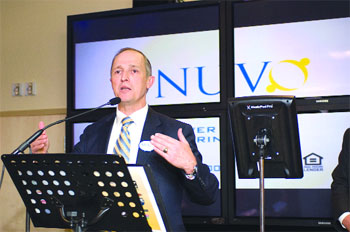
    February 4: Stephen Sanzone, vice president, GRC Solutions, Crafty Systems Inc., will be the guest speaker for the 7:15 a.m. Affiliated Chambers of Commerce of Greater Springfield’s Breakfast Club at the Sheraton Springfield Hotel at One Monarch Place in Springfield. Sanzone’s lecture topic is “Identity Theft and Its Impact on Business.” James Morton, president and CEO of the YMCA of Greater Springfield, will serve as chief greeter. Businesses scheduled to be saluted include Fran Johnson’s Golf & Tennis for its new location, Health New England for achieving the highest rating in customer service, and Nuvo Bank as a new bank. HAP Inc., is the nonprofit salute, celebrating its 35th anniversary. Tickets are $20 for ACCGS members and $25 for nonmembers, and reservations must be made in writing and in advance. Reservations may be made through Diane Swanson, events manager, Affiliated Chambers of Commerce of Greater Springfield Inc., 1441 Main St., Suite 136, Springfield, MA 01103-1449, or via E-mail to [email protected] or at the ACCGS Web site, www.myonlinechamber.com.

    The Aging Brain

    Feb. 5: A lecture titled “The Aging Brain: The Agile Mind” will be presented by Posit Science of San Francisco, Calif., as part of the Kaleidoscope lecture series at Bay Path College in Longmeadow. The lecture, beginning at 7 p.m., includes a post-discussion demonstration of a ‘brain exercise’ to learn how to make the aging brain more agile. The free event is open to the public and will be conducted in Breck Suite in Wright Hall. For more information, call (413) 565-1066 or visit www.baypath.edu.

    Rick’s Place Benefit

    Feb. 7: “Heart to Heart,” the first fund-raising event to benefit Rick’s Place Inc., is planned from 5 to 7 p.m. at the Kids’ Village at 35 Post Office Park in Wilbraham. Rick’s Place Inc. provides support groups for children ages 5 to 18, including a suicide survivor group, support groups for parents, and community outreach. Established in memory of Rick Thorpe, who died in the World Trade Center in 2001, Rick’s Place Inc. was created to provide a supportive, secure environment where families can remember their loved ones and avoid the sense of isolation that loss can produce. The event is open to the public. Tickets are $40 per person and include appetizers, spirits, and chocolate. Door-prize tickets are $50 each. For more information about tickets, donations, or becoming a sponsor, contact Shelly Bathe Lenn at (413) 348-3120, or visit www.ricksplacema.org.

    Biological Illustration

    Feb. 9: Biological and medical illustration is back in vogue as electronic graphic information is critical to the health and science fields. Colleen Champ, BS, CLSp, a local scientific artist and owner of Concise Image Studios and MicroscopicClassics.com, will share her current portfolio and discuss her international award-winning art, at 7 p.m. in Breck Suite in Wright Hall at Bay Path College in Longmeadow. The free lecture is open to the public and is part of the college’s Kaleidoscope lecture series. For more information, call (413) 565-1066 or visit www.baypath.edu.

    Women and Retirement

    Feb. 26: Shelly Colville, a registered representative of the National Planning Corp., will present a lecture titled “Women and Retirement: Are You Saving Wisely?” as part of the Kaleidoscope lecture series at Bay Path College in Longmeadow. Colville will lead women and men of all ages in an Oppenheimer Funds workshop to guide them to a better understanding of planning for the future. The free event is open to the public and will be conducted in Breck Suite in Wright Hall. For more information, call (413) 565-1066 or visit www.baypath.edu.

    Innovative Voices Conference

    March 10: The MassMutual Center in downtown Springfield will be the setting for a capacity-building conference, co-presented by the Women’s Fund of Western Mass. and Bay Path College. Titled “Innovative Voices: Crafting a New Agenda for Leadership,” the daylong conference will feature guest speakers Sara Laschever and comedienne René Hicks. Workshop topics offered throughout the day will include: “New Faces in Leadership I: Generations & Cultures,” “New Faces in Leadership II: Strategies for Change,” “Wikis, Twitter and Blogs — Oh My!,” “Learning to Ask: Negotiation Basics,” “The Art of Politics: Navigating the Political Waters,” and “Making Yourself Memorable: Personal Branding from the First Handshake.” Workshops will also include “Expanding Our Capacity: Energizing Our Spirit,” “Balancing Mission and Money: How Nonprofits Can Do Both,” and “Finding Your Voice and Changing the World: Passion, Emotion and Leadership.” Registration is $70 for the first organizational attendee, and $60 for each additional organizational attendee. The deadline to register is March 2, with early-bird registration closing on Feb. 13. For more information, visit www.womensfund.net.

    Rock ‘n’ Roll & Management Styles

    April 15: “Everything I Learned About Management, I Learned From Rock ‘n’ Roll” will be presented by James M. Wilson III, Ph.D., assistant professor of Business at Bay Path College; and Gregory Jones, director of Cannes Associates Production Management. Wilson and Jones have been conducting research for three years on the production of live concerts featuring Metallica, Green Day, Red Hot Chili Peppers, Bob Dylan, and Willie Nelson, among others, with a focus on how event management contributes to organizational theory. The free lecture at 7 p.m. will take place in Breck Suite in Wright Hall at Bay Path College in Longmeadow. The event is part of the Kaleidoscope lecture series. For more information, call (413) 565-1066 or visit www.baypath.edu.

    Women’s Professional Development Conference

    April 30: Bay Path College in Longmeadow will host the 14th annual Women’s Professional Development Conference from 7:30 a.m. to 4:30 p.m. at the MassMutual Center in downtown Springfield. For more information, call (413) 565-1293 or visit www.baypath.edu.

    Class of 2009 Difference Makers
    The Young Professionals Society of Greater Springfield

    Alyssa Carvalho described it as a “good problem to have.”

    She was talking about April 14, and a scheduled ‘CEO Luncheon’ to be hosted by MassMutual Chairman and CEO Stuart Reese. The Young Professionals Society of Greater Springfield (YPS) started the luncheon series last year as another way to carry out its broad mission to “engage, involve, and educate” its members.

    The problem? Well, seats to the monthly luncheons are limited in number, said Carvalho, the group’s current president and, during the day, membership manager for the Greater Springfield Conventon & Visitors Bureau. The typical count is 20 to 30, to ensure intimacy and the opportunity for one-on-one dioalogue, but Reese and MassMutual will likely find a way to accommodate many more than that. Still, not everyone will be able to go.

    “And everyone will want to go,” she told BusinessWest, adding that she and other officers will have to contrive some method of determining which members will be able to circle that date on their calendars. As she said, that’s a good problem to have, and it’s a scenario that shows just how far this organization has come in two years.

    From quasi-humble beginnings, YPS has grown to more than 200 members, expanded and diversified its program offerings, and garnered enough respect to prompt Reese to donate a few hours of his precious time to impart some “words of wisdom,” as Carvalho called them, to this young, diverse audience.

    “We worked very hard to get him, and we’re thrilled that he would take the time to speak to our group and open it up to more people than we would normally have,” she said. “Our members are excited about the chance to be sitting in the same room with that caliber of speaker; the fact that he’s willing to do so speaks to the importance of our work — these are the emerging leaders in the community.”

    This higher profile has earned YPS a place in this first class of Difference Makers, along with some sky-high expectations for the future — which Carvalho and other officers are determined to meet in what might be considered another good problem to have.

    “We’ve done very well so far,” she said, “but we know we have to keep building, doing more in the community, and providing more value for our members.”

    YPS got its start in Springfield in late 2006, when a small group of younger professionals — all graduates of the Leadership Institute, a partnership between the ACCGS and Western New England College to teach mid- and upper-level managers the skills needed to become effective leaders — conceptualized a group that could handle a number of assignments. They would range from giving people something to do to providing programs on professional development; from helping to educate members on the issues of the day to providing some reasons for young professionals to stay in the Pioneer Valley and become valuable contributors to its progress and livelihood.

    The overriding goal, said Carvalho, is to help members “plant roots,” and develop lasting connections to the region and its business community.

    While the group’s founders were ambitious and had lofty expectations, even they might be surprised by how quickly and profoundly the group has become a real force in the community. In addition to the 200 members, there are 900 ‘subscribers,’ those who have a connection to the group and attend some of its events.

    Since its start, the organization — which takes a name similar to other groups in the region, including young-professional societies in Northampton, the Berkshires, and Hartford, but is different from these groups because it is independent — has been consistently adding programs, forming collaborative partnerships with other groups, and, in general, making its presence and influence felt.

    It’s making a difference.

    In addition to the CEO lunches, which have featured leaders and business owners ranging from ACCGS President Russell Denver to Springfield Falcons General Manager and co-owner Bruce Landon, the group has staged monthly networking events called Third Thursdays. It has become involved with the Division II college basketball tournament staged in Springfield each March, and last fall it partnered with Rock the Vote and other groups to encourage young people to register to vote and understand the issues involved with the presidential election.

    YPS also conducted a number of events and programs to connect young people with the arts, promote mentoring, and facilitate efforts to give back to the community. It even created an award — the Young Professionals Society of Greater Springfield’s Excellence in Leadership Award — which is given to a graduate of the Leadership Institute who has distinguished him or herself through community involvement, civic leadership, and professional excellence. The first winner was Elizabeth Cordona, director of Gov. Patrick’s office in Springfield.

    For 2009, the goal is simply to build on the momentum created over the past two years by continually looking for new ways to meet and expand the group’s mission, as expressed in one of its slogans: ‘live, work, play, and stay,’ said Carvalho, who told BusinessWest that her work as president has become what she called “a second full-time job.”

    “I’m putting in maybe 30 or 40 hours a week toward this,” she said, adding quickly that other officers are logging similar time handling YPS affairs. “And I need to, because there’s so much happening and so much to do.”

    Sounds like another one of those good problems to have.

    — George O’Brien

    Departments

    Tabletop Business Expo

    Jan. 21: The Women’s Partnership, a division of the Affiliated Chambers of Commerce of Greater Springfield Inc., is still accepting reservations for its annual Tabletop Business Expo, slated from 11:30 a.m. to 1:30 p.m. at the Clarion Hotel on Riverdale Street, West Springfield. Now in its 11th year, the expo offers an affordable opportunity to network and to showcase one’s business to hundreds of professionals. Highlights of the affair include interactive exhibits and a presentation by personal chef Bill Collins. Reservations are required and may be made by calling Diane Swanson at the ACCGS office, 1441 Main St., Springfield, (413) 787-1555, or via E-mail to [email protected].  Booth reservations include one lunch ticket at a cost of $75; lunch/event tickets are $25.

    Chamber Nite

    January 21: The Berkshire Chamber of Commerce will host Chamber Nite at the Greylock Federal Credit Union, 150 West St., Pittsfield, from 5 to 7 p.m. Hors d’oeuvres will be served during the networking event, which includes an update on the Berkshire United Way campaign. In addition, a name from all those who donated to the United Way campaign will be drawn and will win their choice of a 2009 Nissan Sentra or $10,000 in cash, donated by Johnson Ford-Lincoln-Mercury-Nissan and Greylock Federal Credit Union. Chamber Nite events are open to Berkshire Chamber members and their employees. For more information, call (413) 499-4000, ext. 26.

    State of the State

    Jan. 22: Mass. Lt. Gov. Tim Murray will visit Whalley Computer Associates in Southwick to participate in a seminar for mayors, town leaders, and school superintendents, beginning at 8:30 a.m. Paul Whalley, vice president of Whalley Computer Associates, will follow Murray’s presentation with a discussion titled “Saving Jobs and Money by Reducing IT Costs.” The presentation is intended to empower mayors, town business managers, and school superintendents to intelligently reduce their IT expenses while improving the end users’ experience. City, town, and school executives are encouraged to invite their IT directors to the meeting. Seating is limited for the breakfast and tour of Whalley Computer Associates. To register, contact Justin Newman prior to Jan. 16 at (413) 569-4245. Persons unable to attend the meeting but who would like more information on ways to significantly reduce IT costs may contact Mark Duarte at (413) 569-4231.

    Jimmy Fund Benefit

    Jan. 23: More than 30 of the area’s finest restaurants and caterers will present “Around the World with Chefs for Jimmy” from 6:30 to 9:30 p.m. at Chez Josef in Agawam. The 19th annual Jimmy Fund and Dana-Farber Cancer Institute fund-raiser will feature culinary delights, as well as a silent auction. Door-prize drawings are also planned. Tickets are $75 and are available in advance only. For more information, call the regional Jimmy Fund office in West Springfield at (413) 546-6938, or visit www.jimmyfund.org/chefs-for-jimmy .  The Jimmy Fund supports the fight against cancer at Boston’s Dana-Farber Cancer Institute.

    WorldQuest Competition

    Jan. 24: The World Affairs Council of Western Mass. will host its fourth annual Academic WorldQuest competition at Western New England College in Springfield, beginning at 2 p.m. Academic WorldQuest is an international affairs quiz featuring 10 rounds of 10 questions on a variety of topics, including current events, globalization, transnational crime, alternative fuels, and population in developing countries. The event is open to student teams representing Springfield public high schools. The public is welcome to attend the free affair. For more information, call the World Affairs Council office at (413) 733-0110.

    CLIO Awards

    Jan. 28: The Ad Club of Western Mass. will showcase the 2008 CLIO Awards for television from 11:30 a.m. to 1:30 p.m. in Rivers Memorial at Western New England College in Springfield. The CLIO Awards honor creative excellence and innovation in the advertising, design, and interactive industries. Tickets are $25 for Ad Club members, $35 for future members, and $15 for students. Registration is necessary by Jan. 23 and may be made by visiting www.adclubwm.org  or by calling (413) 736-CLUB.

    The Aging Brain

    Feb. 5: A lecture titled “The Aging Brain: The Agile Mind” will be presented by Posit Science of San Francisco, Calif., as part of the Kaleidoscope lecture series at Bay Path College in Longmeadow. The lecture, beginning at 7 p.m., includes a post-discussion demonstration of a brain exercise to learn how to make the aging brain more agile. The free event is open to the public and will be conducted in Breck Suite in Wright Hall. For more information, call (413) 565-1066 or visit www.baypath.edu .

    Outlook 2009

    Feb. 9:  U.S. Congressman John Tanner will provide the keynote address at the Affiliated Chambers’ annual Outlook program to be staged at Chez Josef in Agawam, beginning at 11:45 a.m. The Outlook program, made possible through the sponsorship of presenting sponsor Health New England; platinum sponsors Eastern States Exposition, MassMutual Financial Group, PeoplesBank, Western Massachusetts Electric Co., and sound sponsor Zasco Productions, LLC, offers business professionals a first-hand opportunity to gain regional, state, and federal perspectives on legislative issues, politics, and economies. Tanner has represented Tennessee’s 8th District for the past 20 years and is a cofounder of a growing alliance of moderate-to-conservative Democrats known as the Blue Dog Coalition. Founded in 1995, the Blue Dog Coalition was so named because its members felt they had been “squeezed from the left and the right until they turned blue in the face.” Tanner is a leader in the fight for fiscal responsibility, supports pro-growth economic policies, and is in the forefront in the fight to eliminate the federal debt. U.S. Congressman Richard E. Neal will introduce Tanner during the Outlook program. Massachusetts Senate President Therese Murray has been invited to present the state outlook, and Springfield Mayor Domenic Sarno will provide the regional outlook. Outlook 2009 will begin with an invitation-only social hour at 11:15 a.m., and the program will begin at 11:45 a.m. Tickets are $45 per ticket for members of the Affiliated Chambers of Commerce of Greater Springfield and $65 per ticket for non-members. Tables of 10 and 12 are available. Reservations must be made in writing and in advance. Sign up online at www.myonlinechamber.com, or mail, E-mail, or fax to Diane Swanson, Events Manager, 1441 Main St., Suite 133, Springfield, MA 01103-1449. E-mail: [email protected] ; fax: (413) 755-1322. Reservation deadline is Feb. 6.

    Winter Weekend

    Feb. 14-16: Hancock Shaker Village in Hancock will stage its annual Winter Weekend, which will feature ice harvesting at the Shaker Reservoir, horse-drawn sleigh rides, and nature walks. Visitors will also have an opportunity to participate in craft projects, cooking demonstrations, and tours of historic Shaker buildings. The ice-harvesting demonstrations will be led by Dennis Picard, who appeared last year in Absolure Zero, The Conquest of Cold, a PBS Nova program. For more information, call (800) 817-1137, or visit www.hancockshakervillage.org .

    Women and Retirement

    Feb. 26: Shelly Colville, a registered representative of the National Planning Corporation, will present a lecture titled “Women and Retirement: Are You Saving Wisely?” as part of the Kaleidoscope lecture series at Bay Path College in Longmeadow. Colville will lead women and men of all ages in an Oppenheimer Funds workshop to guide them to a better understanding of planning for the future. The free event is open to the public and will be conducted in Breck Suite in Wright Hall. For more information, call (413) 565-1066 or visit www.baypath.edu .

    Departments

    Outlook 2009

    Feb. 9: U.S. Congressman John Tanner will provide the keynote address at the Affiliated Chambers’ annual Outlook program to be staged at Chez Josef in Agawam, beginning at 11:45 a.m. The Outlook program, made possible through the sponsorship of presenting sponsor Health New England; platinum sponsors Eastern States Exposition, MassMutual Financial Group, PeoplesBank, Western Massachusetts Electric Co., and sound sponsor Zasco Productions, LLC, offers business professionals a first-hand opportunity to gain regional, state, and federal perspectives on legislative issues, politics, and economies. Tanner has represented Tennessee’s 8th District for the past 20 years and is a cofounder of a growing alliance of moderate-to-conservative Democrats known as the Blue Dog Coalition. Founded in 1995, the Blue Dog Coalition was so named because its members felt they had been “squeezed from the left and the right until they turned blue in the face.” Tanner is a leader in the fight for fiscal responsibility, supports pro-growth economic policies, and is in the forefront in the fight to eliminate the federal debt. U.S. Congressman Richard E. Neal will introduce Tanner during the Outlook program. Massachusetts Senate President Therese Murray has been invited to present the state outlook, and Springfield Mayor Domenic Sarno will provide the regional outlook. Outlook 2009 will begin with an invitation-only social hour at 11:15 a.m., and the program will begin at 11:45 a.m. Tickets are $45 per ticket for members of the Affiliated Chambers of Commerce of Greater Springfield and $65 per ticket for non-members. Tables of 10 and 12 are available. Reservations must be made in writing and in advance. Sign up online at www.myonlinechamber.com, or mail, E-mail, or fax to Diane Swanson, Events Manager, 1441 Main St., Suite 133, Springfield, MA 01103-1449. E-mail: [email protected]; fax: (413) 755-1322. Reservation deadline is Feb. 6.

    Sections Supplements
    A Dose of Daily Motivation Builds Momentum

    As a leader, it does not matter what product or service your company offers or what specific responsibility your team has; your job is to motivate and develop your employees. While most leaders believe motivation is the key to any organization’s success, many struggle to keep their people motivated on a daily basis.

    So if keeping your teams motivated is a struggle in good times, is it even harder in a weak economy? Yes, absolutely. The focus shifts to the tough economy, so it becomes even easier to ignore the day-to-day obstacles. Here’s an idea — instead of ignoring the real issues, challenge your team to recognize, overcome, and be successful. Of course, it may be tough when research shows two important factors are prohibiting leaders from doing their jobs effectively: they fear losing their jobs due to downsizing, or they lack knowledge of how to actually motivate their teams. If leaders are afraid of losing their jobs, imagine how the employees feel.

    So, as leaders, how can you motivate someone — or even yourself — when there is fear of being laid off? The fact is, the best way to keep your job during reorganization is to stay focused on your job and ignore the ‘noise,’ and do your job better than anyone else. Corporate leaders will, at some point in their careers, experience company restructures and downsizing. During these times it is important not to ignore the option of losing your job; however, don’t focus on it. Focus on what you can control — you, your team’s actions, and ultimately the performance of your division.

    There is no doubt that the market and economy will rebound and will be bigger and better than ever. The only question is, when? While this is an optimistic view, what choice do you have? You can be motivated and believe you will achieve your goals, or you can focus on the negatives and feel miserable and hopeless. It’s vital you choose to be excited and motivated with an optimistic outlook for a better end result. Here’s the best part: By making this choice as a leader, your team will follow your example.

    So, this being said, how can you keep your team motivated every day? Again, while motivation is the key part of any leader’s job, it is one of the most difficult. People are made up of energy, and when people communicate with each other, it is merely a transfer of energy. To keep your team motivated on a long-term, consistent basis, a leader must have a plan that involves that energy. A leader needs to focus on what he or she can do daily, weekly, monthly, and quarterly to achieve the goal: to maximize their team’s motivation.

    Knowledge creates confidence, and when a person is confident, he or she is more motivated to take action: knowledge + confidence = motivation.

    A leader must turn the energy thermostat to high. Everyone has to understand that the right energy will empower everybody to achieve more. Remember, most people spend more time at work than at home, so it should be fun and motivating.

    To maximize your team’s motivation, here are some things you can do daily, weekly, and quarterly in your office:

    • Something to do daily: As a leader, when you get to the office, walk around and talk to every person. Leaders usually have a thousand things they need to complete every day, as soon as possible, so many walk straight to their offices and get to work right away. WRONG! The most important task is to get the team ready for the day. Walk the office every morning pump up your employees as they walk in the door. Remember, it is not only what you say, but how you say it. Give positive energy, and be genuine as you spend time with each person.
    • Something to do weekly: Everybody complains about sales meetings and staff meetings except the person holding the meeting. Because communication is so important to any company’s success, not having a meeting is NOT going to work; instead, ensure the meeting is effective and a good use of time. Use the meeting to teach your team how to do their jobs better. This doesn’t mean teaching your staff more about the product or service you make or sell, but rather focusing on the soft skills. Soft skills are leadership, customer service, sales, and communication. Every week, choose a different topic. For example, next week, try to make your customers feel special every time you talk to them.
    • Something to do quarterly: Conduct an all-team practice day; an offsite meeting that encourages employee growth and motivation is the best option for this. Make this event an extreme learning experience that involves everybody and allows each employee to learn and have fun. Many companies don’t think they have the budget for these activities, but that is a huge mistake. When you compare the cost of these offsite events — whether they are quarterly or semiannually — to the cost of having complacent and unmotivated employees, it is a small price to pay. Remember your employees are one of your largest expenses, and also the single largest contributor to your revenue. Don’t look at these events as an expense, but rather as an investment in the company’s success.
    • Remember to play to win day in and day out. You should never be in the defensive position, either waiting for the corporate ax to come down or hoping your teams will motivate themselves. Get in the trenches, talk with your teams, and be energetic, positive, and focused, and your team will do the same with your customers, ultimately ensuring your success.

      Nathan Jamail, president of the Jamail Development Group and author of “The Sales Leaders Playbook,” is a motivational speaker, entrepreneur, and corporate coach. As a former executive director for Sprint and owner of several small businesses, Jamail travels the country helping individuals and organizations achieve maximum success. His clients include Radio Shack, Nationwide Insurance, Metro PCS, and Century 21;www.nathanjamail.com

      Sections Supplements
      Steps Taken Now Can Lighten Your Tax Burden Later

      While year-end tax planning is always and in all ways important, it is especially crucial in 2008. The time is now to apply new tax rules to secure your best tax advantages for this year and beyond.

      This is a very challenging time for individuals and businesses, a climate that demands that each of us takes a look at year-end tax planning, regardless of the level of our income, with an eye toward reducing our tax burden down the road. One or more of the following unprecedented events likely had an impact on you during 2008 and potentially for a number of years going forward: the stock-market collapse, the credit crisis, the recession, the bursting of the real-estate bubble, and/or the rise and fall of energy prices.

      What follows is a primer that will identify some of the ways in which you can take the lemons that may have been hurled at you and turn as many of them as possible into lemonade.

      Income and Deductions Shifting

      Usually the most efficient planning opportunities will grow out of the time-tested strategy of maneuvering your income and/or expenses between tax years. The two primary benefits that grow out of the opportunities for doing this are the ability to control the tax rate at which you will be assessed and the ability to control when those taxes will be paid.

      If you are in a position to control the timing and flow of income into your possession, it presents an opportunity for you to contemplate whether you are going to be in a higher marginal income tax bracket in the current tax year or the one to come. When you compare these tax brackets, you will then have the opportunity to determine in which year that income might generate the lower tax.

      The corollary to the moving of income is the timing of the payment of your deductible expenses. Combining the two presents an opportunity to generate a larger tax benefit by making those swings of taxable dollars more substantial. For example, if you are able to put off $10,000 of income into the next tax year and can accelerate $5,000 of deductible expenses into the current tax year, you will effect a $15,000 swing in your reportable income, impacting your applicable tax bracket and potentially postponing the due date for those taxes by up to 15 months.

      This particular strategy can be even more valuable in light of changes in the tax laws that have been made and those that experts anticipate coming down the pike. The importance of contemplating this strategy is significant for the tax years 2008 through 2010, inclusive, when you consider that those taxpayers who are in — or can put themselves in — the 10% or 15% tax brackets will potentially be able to take advantage of the 0% tax rate currently applicable to qualified dividend income and/or capital gains during those years.

      A more challenging situation presents itself to those whose income is above the $200,000 to $250,000 threshold identified by President-elect Obama. Although it remains unclear when the tax increase on those taxpayers will actually go into effect, the question here, for those who can anticipate remaining at those income levels during the next few years, is whether to accelerate income into 2008 in order to potentially have it taxed at the lower brackets. This same group of taxpayers should also contemplate this issue while bearing in mind the president-elect’s proposal to restore the limitations on the amount that can be claimed for either personal exemptions and/or itemized deductions.

      Bunching Deductions

      The next concept impacted by the timing of payments is for those that qualify as itemized deductions, and is generally referred to as ‘bunching.’ The strategy of bunching deductions involves consideration of the timing of your various expenditures and/or deductions, including real-estate and excise taxes, state income taxes, charitable contributions, certain interest payments, medical expenses, and the like. The underlying concept of this strategy is that your itemized deductions are typically compared against a standard deduction that varies depending on your marital status and your age.

      In some instances your itemized deductions may only be exceeding the otherwise available standard deduction by a small amount. In this case, a beneficial strategy might be to postpone some of those deductions until the next tax year and accelerate similar expenses from the following year. This will bunch all of your deductions into the middle of three years and create an amount that will substantially exceed the otherwise available standard deduction, potentially giving you better tax results over all three years.

      This calculation needs to be considered in the context of the new tax provision enacted as part of the Housing Assistance Tax Act of 2008, which allows homeowners to claim an additional standard deduction for real property tax if the taxpayer does not itemize. The additional amount is limited to $500, or $1,000 for joint filers.

      This bunching strategy also has applications in the context of higher earners who will have a reduction in their otherwise-available itemized deductions simply by virtue of their income level. Specific examples of this application include the fact that medical expenses are deductible only to the extent that they exceed 7.5% of one’s adjusted gross income; and miscellaneous itemized deductions, including the fee that you pay to your tax professional, employee business expenses, and the like, are subject to a 2% threshold.

      It is possible that some taxpayers will find that they are able to benefit from higher amounts of itemized deductions by applying this strategy of bunching.

      Loss Harvesting

      Historically, the end of the year has been the time to take a look at your investments and see where you stand relative to capital gains realized during the course of the year. It was always prudent to look at your portfolio to determine which positions you held that might generate a loss, so that you could either match your gains to your losses and/or exceed your gains by an amount of up to $3,000. That is the amount that would be available as a deduction on your income-tax return to offset other ordinary income.

      While there are sound tax reasons for considering this strategy, it is also important to remember that you need to consider the underlying investment wisdom and considerations associated with your having purchased the investment in the first place.

      However, beyond that historical strategy, there is a very important planning opportunity that this year’s stock-market collapse has presented relative to what is known as ‘loss harvesting.’ The application of the loss-harvesting concept this year extends more to the concept of stockpiling losses to be used in subsequent years, for several reasons, including the possibility of more short-term transactions or the prospect for capital-gains tax rates being increased.

      The application of this strategy would be to sell those mutual funds, stocks, and/or bonds that are now in loss situations in order to realize the capital losses.

      Assuming further that you do not wish to be out of the market altogether and would prefer not to be out of the market for any period of time during which a rebound might occur, the critical component of this strategy is to move the proceeds into comparable funds or investments in a way that will avoid the application of the ‘wash sale rule.’ Here, the IRS does not allow you to sell a stock or investment simply to generate a tax loss. For that reason you are not allowed to take a tax loss on an investment if you sell and repurchase the same within 30 days, before or after the sale.

      If this strategy is being implemented with mutual funds, you could find a comparable fund within the same mutual-fund family — and thereby avoid sales charges. For example, if you had invested in the Vanguard fund based on the S&P 500 and you sold it and moved the proceeds into the Fidelity S&P 500 fund, the underlying investments would be substantially identical, and the wash sale rule would apply. But if you are able to select mutual funds that are comparable but not substantially identical, then you should be able to recognize the capital losses.

      If the underlying investments are stocks or bonds, you must bear the wash sale rule in mind and avoid its application by not investing in ‘substantially identical’ securities. There are, however, strategies beyond the scope of this article that are available to allow you to get back into the identical security without being adversely affected by the rule. Another important component of this loss-harvesting strategy is the fact that the capital losses may be carried forward indefinitely.

      The concepts and theories set forth here represent only a few of the tax-planning opportunities that are available. It is imperative for you to remember that, in all but a very few instances, those opportunities for the calendar year 2008 will expire at the stroke of midnight, New Year’s Eve. It is important that you contact your tax professional in order to see which of these and the others might be applicable to helping you be the most efficient taxpayer you can be.v

      Bruce M. Fogel is a partner with Bacon Wilson, P.C. / Morse & Sacks in Northampton. He is a member of the firm’s estate-planning, elder, real estate, and business departments. He has extensive experience in matters relating to income, gift, and estate taxes, and he focuses on the tax implications of all legal transactions. He can also be heard on the radio show,“Taxes and Assets,” which he co-hosts Saturday mornings at 8:30 a.m. on WHMP; (413) 584-1287;[email protected];bwlaw.blogs.com/estate_planning_bits

      Features
      Surveillance System Brings Crime, Safety Concerns into Focus
      Chris Castellano

      Chris Castellano keeps on eye on Springfield from the monitoring room.

      They’ve been in place only a few months now, but the cameras positioned in downtown Springfield are already showing enormous promise as a vehicle for making the area safer and more attractive. The surveillance system currently boasts more than 15 cameras, and there will be 25 within a few weeks and 40 by the end of the next year. They’re capable of picking up license plates from a few hundred yards away, and they’re giving Springfield officials and police some much-needed eyes in the sky.

      Chris Castellano zoomed in on a stretch of Harrison Avenue near the Civic Center Parking Garage.

      There had been a rather high incidence of motor vehicle break-ins of the so-called ‘smash-and-grab’ variety in that area, and Castellano, operations manager of the Springfield Business Improvement District (BID), wanted to show BusinessWest exactly where all this was happening.

      He did so by manipulating a camera — installed atop the back of the TD Banknorth Building that sits on the corner of Main and Harrison — now sending images to a command post of sorts at the Springfield Guides offices within that office tower. This is one of about 15 cameras that have been installed in the downtown area, with another 10 to be put in place over the next few months, and a total of 40 by the end of 2009.

      With his Nintendo-like joystick, Castellano, staring at a bank of computer screens in the so-called ‘monitoring room,’ could zero in on that aforementioned area along Harrison Avenue, pan across to other sections of that busy quadrant, and even get in tight enough to read license-plate numbers and identify features on passersby, such as their style of dress and the color of their pants.

      And with all that capability, he and others involved in a broad surveillance program involving the downtown and other areas of Springfield hope — and expect — to be able to use the past tense much more often when it comes to describing crime and patterns of it in the City of Homes.

      This was the overall motivation behind a $175,000 state earmark for cameras and monitoring equipment, the first several of which were installed a few months ago, with new additions coming regularly since.

      Indeed, as he talked with BusinessWest, Castellano discovered that another camera had been activated since the last time he was in his chair — this one a few hundred yards down Harrison Avenue. Perched on a light pole, it provides great views of the corner of Chestnut and Mattoon streets, which has been identified as a trouble spot in some ways.

      “This is going to be interesting,” said Castellano as he maneuvered the camera and developed a feel for its range of motion, noting, as he did so, that the street corner in question and the surrounding area have seen larger-than-desired volumes of loitering and panhandling, much of it in front of a liquor store at the intersection. The new camera should help the Springfield Guides, a small group of individuals who patrol the 26-block area under the auspices of the BID and assist the police with keeping order, to reduce such activities and thus better protect visitors, workers, and residents in the downtown.

      “A lot of the complaints we get — and the reason we put this camera here and put cameras in the positions they’re in — involve loitering and people who make others feel unsafe,” he explained. “With this camera, we can zoom in, and if we see anybody, we send out one of our patrols and ask them to move along. If they refuse to move, we contact the police, and they tell them to move along.”

      This isn’t exactly what would be called serious crime, said Castellano, but it falls under the categories of quality of life and perception of safety, and the surveillance program should improve both.

      “And when we cut down on those types of things, people will see that downtown is not a bad place to live or work in,” he continued, adding that the surveillance program is as much an economic-development tool as it is a public-safety initiative.

      If the bad guys don’t yet know there are cameras on them — “it’s been all over the news, and if they read the press release we sent out, they’d know where the cameras are located,” said Castellano — they may well find out the hard way.

      “It’s amazing what we’ve been able to see and do in just a few weeks — we’ve caught some people doing things they wouldn’t do if they knew there was a camera on them,” he continued, adding that he believes the cameras have helped police identify some wrongdoers, and will undoubtedly contribute to taking many such individuals off the streets, while giving law-abiding individuals more peace of mind.

      For this issue, BusinessWest spent some time in the monitoring room to gain an understanding of the new surveillance system and how it should impact some of the big-picture issues in the region’s largest city.

      Zoom Service

      As he clicked through the menu of cameras currently installed, Castellano stopped at the one aimed down Worthington Street by what’s called Duryea Park.

      “This is a fun one,” he explained. “With this camera we can see all the club action — we can see all the petty things kids do when they’re drunk and heading in and out of all the clubs.”

      ‘Fun’ was a word Castellano used more than a few times, but this surveillance program is serious business with a hard purpose — making a large dent in the twin issues of crime and the perception of same, which have been identified as some of the keys to revitalization of the city.

      Such programs have been instituted in several other metropolitan areas, and even some much smaller communities — all as part of a broad program funded mostly by the U.S. Department of Homeland Security in the aftermath of the 9/11 attacks. While officials in the Boston suburb of Brookline recently made headlines for threatening to reject cameras amid concern from residents about a “surveillance society,” hundreds of cities and towns have embraced them.

      That list includes New York, which has cameras in several areas of the city, Chicago, Atlanta, and Wilmington, Del. Business-improvement districts have been involved with the surveillance efforts, Castellano explained, and Springfield BID officials checked out several other cities’ systems to gain insight into their capabilities — and performance.

      In downtown Atlanta, cameras were installed roughly a year ago, said BID Director Jeff Keck, adding that, according to one account, development officials in that city noted a significant drop in crime over the past six months — and the surveillance system has been given some of the credit.

      A comprehensive surveillance system has been talked about in Springfield for the better part of a decade, said Castellano, adding that, while cameras had been approved and money earmarked, the cameras were not actually funded by the Legislature until very recently. In fact, lawmakers had to override Gov. Patrick’s budget veto to bring the first cameras to the downtown in early October.

      There are now cameras spread across the 26-block section handled by the BID — an area that stretches from East Columbus Avenue to Edward Street, from Frank B. Murray Way to Bliss Street — and some locations outside that zone, including two in Mason Square.

      The surveillance system is still a work in progress, said Castellano, with some kinks being worked out, new cameras being added regularly, and software upgrades pending that will significantly improve overall performance. In addition, the BID is exploring opportunities with Springfield Technical Community College to create classes that would train individuals to use the technology.

      As an example of what this technology can — or soon will — do, Castellano paused to watch a pedestrian moving past the MassMutual Center. Soon, a software upgrade will enable individuals monitoring images sent from the cameras to essentially click on such an individual and follow their movements — all hands-free.

      There is a certain Big Brother-like nature to this kind of surveillance that concerns some, Castellano acknowledged, but polls show that a majority of Americans support such activity as a way to reduce crime and keep streets safer.

      Frame Work

      Running through the scope and capabilities of the system, Castellano said the cameras are perched on buildings and streetlights, and have been strategically placed (with significant input from city police) to help reduce the incidence of crime. Images are monitored from 4 p.m. to 4 a.m. each day.

      The cameras have a 360-degree range of motion, are equipped with night-vision technology, and can bring license plates into focus from several hundred feet away. The accompanying software, meanwhile, enables those monitoring the images to zoom in and out, play back any incidents, break them down frame by frame, and review them using slow-motion and freeze-frame technology.

      “We can see things much better than we could with the naked eye,” said Castellano, noting, for example, that a frame-by-frame review of some images from one camera revealed how an individual was able to determine which cars to break into.

      “He had a scout working ahead of him, checking out the cars,” he explained. “That’s how he could tell one car was unlocked. We used the tape to see that a guy was using a torch to break into cars; it turned out to be the same guy.”

      As he focused in on another pedestrian seen in a recording of events captured by a camera at 1648 Main St, near the federal building, Castellano showed how the system could detect such details as a red hooded sweatshirt, brown pants, and sneakers. Sometimes, this is all police need to further an investigation.

      Indeed, while most of the cameras have only been in place a few weeks or even a few days, Castellano said it’s certainly not too early to state conclusively that the surveillance system should help reduce the incidence of crime in Springfield.

      “The cameras are proving themselves extremely effective in showing us all that’s going on and helping to make the streets safer,” he explained. “We’re still working the kinks out; once we’re at 100%, this system is going to be able to catch everything. It’s amazing what it has caught already — and sometimes we don’t even realize what we’ve caught.”

      Castellano was careful not to reveal information that could hinder ongoing police investigations, he did say the cameras have helped achieve what he would term “progress” in some trouble spots.

      These include Stockbridge Street, and specifically the area behind the Community Music School — site of several motor-vehicle break-ins — and the area by Gridiron Street and the Hippodrome.

      Meanwhile, Castellano said he and others who monitor the images are finding their work intriguing — and ultimately quite rewarding.

      “It’s work, but I have some fun with it, and my guys have some fun with it, too,” he explained. “They get really pumped up trying to catch someone committing a crime, and they love working with police; it’s exciting to them. We’re the eyes and ears for the police.”

      Eyes in the Sky

      Returning to the images provided by the camera positioned on Worthington Street, Castellano said that, in addition to the antics of club-goers, those monitoring the images have witnessed a few minor fights, all of which were broken up by police or bouncers.

      Overall, he said the cameras have revealed something he pretty much knew already as a BID official and downtown resident — that Springfield has crime, but nothing more than most cities its size.

      The surveillance system will make this known, he said, and also let residents, workers, and visitors understand that the city is focused on public safety, quality-of-life concerns, and, in general, making downtown a place to be, not a place to avoid.

      In other words, big-picture issues.

      George O’Brien can be reached at[email protected]

      Sections Supplements
      Fire Tests Country Bank’s Response Systems and Its Mettle
      Paul Scully and Patti Mitchell

      Paul Scully and Patti Mitchell both say that companies in all sectors can take some practical lessons from Country Bank’s disaster-preparation and recovery efforts.

      It was big news, if not exactly a big fire. Indeed, the blaze that broke out in the Country Bank headquarters building in downtown Ware last month was extinguished quickly, with only significant smoke damage. But the fire provided a stern test of the bank’s emergency preparedness and response systems — a test that was passed with high scores and also some important lessons for companies in all sectors

      Paul Scully grabbed his desk calendar, flipped it back a page, and tapped his finger on one of the appointment-filled boxes.

      “November 19th, two days before the fire, we had a fire drill,” said Scully, president and CEO of Ware-based Country Bank. “I remember … it was really cold and quite windy; everyone was miserable standing out there. They were saying, ‘whose idea was this?’”

      A few minutes later, he flipped the calendar back another page, scanned it, and quickly found the notation he was looking for. “October 26th … that’s when we had our annual mock disaster drill,” he noted. “I’d say that if we were going to have a serious emergency, our timing was pretty good.”

      Indeed, but this nearly 160-year-old institution had much more going for it than timing as it responded to what would have to be considered a minor, albeit quite smoky fire late in the afternoon on Nov. 21 at the bank’s headquarters in downtown Ware. It had procedures, preparation, redundancy, excess capacity, and, ultimately, nearly flawless execution that kept the bank open and running, and without the loss of any data stored in its system — or any momentum.

      All these are things that banks plan for and pay a high price for — a byproduct of the Y2K-9/11 double-whammy — but most have never used them for anything approaching a real emergency. And crossing over that line is eye-opening, and also a little bizarre.

      “The surreal part of all this is that, with all the planning and the significant sums of money that are put into disaster-recovery efforts, you just think you’re never going to really need them,” Scully said. “That was the part where you say, ‘wow — not only are we prepared for it, but this really can happen.’”

      The bank also had some extremely high standards set by its so-called Disaster Recovery Team, which had every facility but the main office (due to be closed for several more weeks as the building is cleaned and renovated) handling business as usual at 9 a.m. on the Saturday after the fire, “and wouldn’t have been content with anything less,” said Scully.

      “To say that we could have a fire on Friday night and that it will be OK if we don’t open until Monday morning simply wasn’t — and isn’t — acceptable to this group,” he said. “They’re the ones who said, ‘we don’t want to cause any disruption in services to anyone.’”

      And the institution had what just a few weeks ago would have been considered “luxuries” for most companies, said Scully, who used that term to describe the roughly 44,000 square feet of space in an old ice-skate-manufacturing facility just a few hundred yards from the main office that the bank began leasing a few years ago, as well as dozens of spare computers it happened to have on hand as part of its disaster-recovery plan.

      There are important lessons to be taken from all this, not only for banks, but all companies, said Scully, noting that preparation, planning, and redundancy — to the extent possible — and not good timing were the real keys to successfully handling this incident.

      “This provided a really good lesson for a lot of businesses who probably don’t do this,” said Patti Mitchell, the bank’s longtime director of Marketing. “Things went like clockwork here, and that wasn’t by accident; people knew exactly what to do and when to do it. If we hadn’t planned for something like this, people would have been going in every direction, not knowing what to do.”

      In this issue, BusinessWest recounts the events of Nov. 21, but also explains why what came long before that afternoon is the real story of the fire at Country Bank.

      Taking the Heat

      Scully was just leaving the bank’s East Brookfield office after a meeting with staff there when he got the call.

      “My first response was, ‘define fire,’” he said when recalling his reply to the human-resources administrator who reached him on his cell phone with the news. “I was asking her, ‘is it a big fire, a little fire? What?’”

      The person at the other end didn’t know — she wasn’t on-site, either — but would endeavor to find out. By the time Scully reached downtown Ware, only to be trapped in a massive traffic jam that resulted when the police shut down Main Street, he knew that this wasn’t a fiery blaze — caused, he would learn later, by a malfunction in a small stove in the facility’s basement-level break room — but did produce vast amounts of thick black smoke.

      “The cinderblock walls produced an oven-like effect,” he explained, adding that there was a good amount of heat and smoke that caused damage estimated at anywhere from $500,000 to $1 million.

      When he finally arrived at the landmark building at the corner of Main and Bank streets, Scully could only stand outside, watch, and wait for reports — the most important of which came more than an hour later, when fire officials would confirm that everyone who could have been in the building — employees, contractors, vendors, and anyone else — when the fire broke out was accounted for and uninjured. (The blaze broke out after the bank had closed, so there were no customers inside at the time.)

      The fire was big news in Ware — the local weekly, The Ware River News, devoted its entire front page to the incident — due primarily to the size of the company involved (the bank is one of the largest employers left in the community), the historical nature of the building (it’s been a bank for more than a century), and the commotion it caused. However, the damage was fairly minor, and most customers who don’t live in Ware or read its local paper didn’t even know there was a fire.

      And this, said Scully, is how things should be, and how one can measure just how effective all the planning and response systems ultimately were.

      Elaborating, he returned to the fire scene and his first thoughts after verifying that no one was injured. “I was thinking, “we have to open in 14 hours!” But by the time these thoughts were being processed, people working behind the scenes had already made sure the doors at the institution’s 13 other locations would open as scheduled.

      This feat requires that all computer-operated systems remain functional via a back-up system at a remote location — in this case the leased space in the former American Athletic Shoe complex along the Ware River — and also having the physical space for people to perform their work.

      “You need to have the capacity to accommodate a significant number of additional people,” he explained, “so that not only could we operate all of our satellite operations, but if a facility like the main office was involved, all of those people, all of whom have important work to do, can be doing that work somewhere else.”

      The bank’s disaster-response plan sets down a series of steps to ensure the continuance of operations, said Scully, and there is continual practice carrying out these steps, especially at the annual disaster drill.

      “We identify all the critical tasks,” he explained, “meaning answers to the questions, ‘what has to be in this amount of time?’ ‘What needs to be in 12 hours, or 24 hours?’ And we rehearse all this.”

      Burning Issues

      Such practice pays off, he continued, as evidenced by how coolly and calmly the disaster-recovery team went about its work.

      “Had someone been in the room when we set up the command site, they wouldn’t have had a sense, based on the emotional level in the room, that we were in the middle of a fire — other than the fact that we all smelled of smoke,” Scully explained. “A few of our board members showed up and said that it was obvious that people were in total control, that they knew what their assignments were and they were executing them.”

      As he replayed the events in the hours and days after the fire, Scully said there were a number of factors that contributed to a quick, effective recovery and a tally sheet that the bank’s president described this way: “customer impact: none; staffing impact: none; concerns about any lost business: none, because you were able to accommodate all that.”

      He said the bank’s decision to lease significant space in the former mill and create what it calls an ‘operations center’ was certainly one such factor. That square footage provides the institution with far more space than it needs — or needed until a few weeks ago.

      “We’re using every bit of that space now,” he said, noting that roughly 90% of those who were working in the main office when the fire broke out were behind desks and computers at the operations center on Monday morning — and working.

      And everything is functioning so normally that there is absolutely no rush to reopen the doors of the headquarters building. “We’re looking forward to getting back in,” said Scully, “but the interesting part is that, when we moved into this building, we built it out to accommodate future growth; we just didn’t know the future growth was going to happen overnight.”

      Timing was also a factor, he said, noting those aforementioned drills, and even evolution played a part — as in the evolution of banking and technology. There is far less paper being used in all banks today, he explained, and there’s even less cash in the vault because of the widespread use of debit cards.

      But effective planning was the real key, he continued.

      Scully said he has a number of qualitative and quantitative measures for how well his bank handled its adversity. The number of people who didn’t know about the fire is one he likes to cite. Another is the fact that 25 bank employees were scheduled to show up the Sunday after the fire and help decorate Main Street for the holidays — and all of them made it.

      “That’s an indication of just how much it was back to business as usual,” he explained. “Everyone was there.”

      Not every business can lease 44,000 square feet of mostly extra space sitting in case it’s needed, he said, and not every business can have closets full of spare computers handy in case a smoky blaze prompts the relocation of dozens of workers.

      But there are steps that each and every business can and should take to prepare for an unexpected incident. If one actually occurs, the experience may be surreal, as Scully described, but it won’t be, well, a disaster.

      Banking on It

      When asked what lessons the bank took from its ‘disaster,’ Scully joked that the renovated break room will likely be outfitted with simply a microwave.

      Beyond that, he said, the company can take a good dose of reassurance that the money it has spent on redundancy, disaster preparation, and disaster response — much of it now legislated — is certainly money well-spent.

      Businesses not as tightly regulated can learn from this as well. And the ultimate lesson is that they shouldn’t wait for a disaster to prepare for one.

      George O’Brien can be reached at[email protected]

      Departments

      Boston Wine Festival

      January 10-April 3: Hosted by the Boston Harbor Hotel on Rowes Wharf, the Boston Wine Festival offers more than 50 wine and food pairing events. The schedule of events includes a variety of evening receptions, wine seminars, dinners, and themed Sunday brunches. For details on the festival, visit www.bostonwinefesival.net.

      Long-term Planning Seminar

      January 13: As part of a joint effort to educate the public about the importance of long-term care planning and insurance and the role it can play in helping to finance assisted living, Rockridge Retirement Community on Coles Meadow Road in Northampton will host an informational seminar to increase long-term care insurance awareness. Richard A. Eisenberg of Eisenberg Associates Insurance Agency Inc. will present the 4 p.m. seminar, which will discuss the long-term care planning process, long-term care insurance, and assisted living. The seminar is free and open to the public; however, reservations are required by calling (413) 586-2902, ext. 23.

      New Year’s Gala

      Dec. 31: The inaugural Young Professional Society (YPS) of Greater Springfield New Year’s Eve Gala on Dec. 31 at the Sheraton Springfield is nearly sold out. Interested parties, of any age, are invited to grab the last spots as YPS celebrates New Year — New Time: Springfield Shines In ’09. The theme of the YPS New Year’s Eve event is a celebration of not only the new year, but pride in the city of Springfield. Presented by NUVO Bank and supported by Williams Distributing and BusinessWest, the event is offering only 300 tickets; prices are $59 for one ticket, $109 for two tickets, and $209 per couple with overnight accommodations (plus additional room tax and fees) at the Sheraton Springfield. Final tickets are on sale at www.springfieldyps.com. The evening includes three different party rooms with a live band, Decades by Dezyne, and a DJ, with all guests receiving a ‘goodie bag’ with a number of offerings from sponsors. The night will also offer gourmet dinner stations, a dessert station, and a champagne toast after the ball has dropped at midnight. In addition, a continental breakfast will be served after midnight. Interested parties may go directly to www.springfieldyps.com to purchase tickets. Guests do not have to be YPS members to attend. Opportunities to sponsor this event are available on a first-come, first-served basis. Any company interested in reaching young professionals, call Jill Monson at (413) 219-9692 or E-mail [email protected].

      Departments

      ‘The Creative Economy’

      Dec. 9: The Studio Arts Building at UMass Amherst will be the setting for an informative program on how the ‘creative economy’ plays an increasingly important role in Western Mass., in job creation, revenue growth, and quality of life. Speakers will be artists Josh Simpson and Scott Prior, who will speak about their work and their marketing efforts, beginning at 6 p.m. The cost is $25. For more information, call (413) 737-6712 or visit www.msbdc.org.

      Boston Wine Festival

      Jan. 10-April 3: Hosted by the Boston Harbor Hotel on Rowes Wharf, the Boston Wine Festival offers more than 50 wine and food pairing events. The schedule of events includes a variety of evening receptions, wine seminars, dinners, and themed Sunday brunches. For details on the festival, visit www.bostonwinefestival.net.

      Long-term Planning Seminar

      Jan. 13: As part of a joint effort to educate the public about the importance of long-term care planning and insurance, and the role it can play in helping to finance assisted living, Rockridge Retirement Community on Coles Meadow Road in Northampton will host an informational seminar to increase long-term care insurance awareness. Richard Eisenberg of Eisenberg Associates Insurance Agency Inc. will present the 4 p.m. seminar, which will discuss the long-term care planning process, long-term care insurance, and assisted living. The seminar is free and open to the public; however, reservations are required by calling (413) 586-2902, ext. 23.

      Departments

      ‘Race and Entrepreneurial Success’

      Nov. 25: Dr. Robert W. Fairlie will discuss “Race and Entrepreneurial Success” at noon as Western New England College’s Law & Business Center for Advancing Entrepreneurship as part of its ongoing lecture series. The gathering is planned in the S. Prestley Blake Law Center on Wilbraham Road in Springfield. Fairlie’s main research interests include ethnic and racial patterns of business ownership and performance, entrepreneurship, access to technology and the ‘Digital Divide,’ immigration, and education. He holds a Ph.D. and M.A. in Economics from Northwestern University and a B.A. from Stanford University. The lecture is free and open to the public. For more information, call (413) 796-2030 or visit www.law.wnec.edu/ lawandbusiness.

      Moonlight Magic in Shelburne Falls

      Nov. 28: A family event titled “Moonlight Magic” takes over Shelburne Falls to start the holiday shopping season from 4:30 to 10 p.m. The event coincides with the annual “Holiday Lighting of the Village.” Highlights include sidewalk carolers, sidewalk sales, arts events, and craft demonstrations. There will also be vendor tables along the sidewalks with local nonprofit groups selling holiday wreaths, baked goods, and crafts, and the Shelburne Falls Trolley Museum will be open. Live music and roving performers will round out the evening’s festivities, as well as a visit from Santa who will set up shop in the Shelburne Senior Center. For more information, visit www.sftm.org.

      ‘Internet for the Other 5 Billion’

      Dec. 2: Andrew McLaughlin, head of Global Public Policy and Government Affairs for Google Inc., and Ethan Zuckerman, researcher at Harvard’s Berkman Center for Internet and Society, will present a lecture titled “Internet for the Other 5 Billion” at 7:30 p.m. in Hooker Auditorium at Mount Holyoke College in South Hadley. For more information, call (413) 538-2209. The event is free and open to the public.

      ‘Nutcracker and Sweets’

      Dec. 5: Wistariahurst Museum in Holyoke will host the Mass. Academy of Ballet and members of the Ballet Educational Training Association in its production of “Nutcracker and Sweets” at 6 p.m. Through narration and dance, the story of the Nutcracker will come alive in the historic setting of Wistariahurst on Cabot Street. The production will be staged as it may have taken place in Holyoke in the 1890s. A dessert reception of sweets will follow the performance. Tickets are $10; children 12 and younger will be admitted free. Space is limited, and early registration is advised. For more information, call (413) 322-5660 or visit www.wistariahurst.org.

      Holiday Pops

      Dec. 6 and 7: The Springfield Symphony Orchestra will take audiences back to a traditional Christmas season in New England at 8 p.m. on Dec. 6 and 3 p.m. on Dec. 7 in Symphony Hall. Guest conductor Matthew Savery will lead the orchestra and chorus, and Morton Shames, cantor emeritus of Temple Beth El, will bring greetings of Chanukah. Concert highlights also include a singalong. For ticket information, call (413) 733-2291 or visit www.springfieldsymphony.org.

      The Creative Economy

      Dec. 9: The Studio Arts Building at UMass Amherst will be the setting for an informative program on how the ‘creative economy’ plays an increasingly important role in Western Mass., in job creation, revenue growth, and quality of life. Speakers will be artists Josh Simpson and Scott Prior, who will speak about their work and their marketing efforts, beginning at 6 p.m. The cost is $25. For more information, call (413) 737-6712 or visit www.msbdc.org.

      RTC Meeting

      Dec. 11: The Regional Technology Corp. (RTC) will stage is 1st Annual “All Networks” Convergent Meeting at the Log Cabin Banquet & Meeting House starting at 7:30 a.m. The event with feature a keynote address and follow-up Q&A called “A Conversation with Scott Kirsner, The Innovative Economy.” Kirsner is the nationally known Boston Globe columnist who will discuss the challenges to be faced by the innovative economy in 2009. The half-day event will also feature a panel discussion with venture investors and entrepreneurs. The program is free to RTC members, and $75 for non-members. For more information, call (413) 755-1301; [email protected].

      Departments

      Hampden Bank Opens Second Longmeadow Branch

      SPRINGFIELD — Hampden Bank will soon open its ninth full-service branch office at 916 Shaker Road, and officials are planning a grand-opening celebration in early 2009. The branch office is the bank’s second office in Longmeadow. The 2,400-square-foot facility will have a modern look and will offer customers several state-of-the-art conveniences, including drive-thru banking services, a drive-up ATM, and two teller stations with cash recyclers for speed, accuracy, and security. In addition, the facility will have an after-hours conference room available for local community organizations to use for meetings and events. For information, visit www.hampdenbank.com. Hampden Bank has office locations in Springfield, Agawam, Longmeadow, West Springfield, Wilbraham, Indian Orchard, and Tower Square in downtown Springfield.

      MassMutual Pledges Fuel-assistance Grants to Salvation Army

      SPRINGFIELD — Local families will be getting some much-needed help in paying their heating bills this winter since the Salvation Army of Greater Springfield and Enfield, Conn. will each be receiving a $15,000 fuel-assistance grant from MassMutual Financial Group of Springfield. MassMutual’s contribution will enable the Salvation Army to help nearly 400 area residents keep the heat on in their homes. The Good Neighbor Energy Fund provides energy assistance to residents in temporary crisis who are struggling to pay their energy bills and do not qualify for federal or state energy funds. Trish Robinson, senior vice president of strategic communications and community responsibility, and deputy head of government relations for MassMutual, noted during a press conference that MassMutual was pleased to assist the Salvation Army to help families who are in need. She added that, since some area residents have never had to ask for assistance before, MassMutual was honored that it could help with this cause.

      Silvana.Net Designs Web Site for Holyoke

      HOLYOKE — The City of Holyoke recently unveiled a comprehensive municipal Web site that makes it easy for residents, visitors, and businesses to access information about the city and its services. The new site was designed by Silvana.Net, a Northampton Web-design firm. Located at www.holyoke.org, the site has been completely revamped to keep pace with Holyoke’s expected growth, according to Mayor Michael Sullivan. The new site is part of a three-year commitment by Sullivan and the City Council to significantly upgrade the city’s information-technology infrastructure. Additionally, a customized content-management system allows city departments to easily update pages. Silvana.Net trained approximately 60 city employees on how to update information about their departments on the Web site. The site also features sections on every municipal department, along with information about tourism attractions for visitors. Among other useful features is one that allows snow days, changes in trash collection, and parking bans to be easily and quickly posted on the home page.

      Bank Gives Hospital $40,000

      WARE — A $40,000 gift from Country Bank for Savings has enabled Baystate Mary Lane Hospital to purchase a sterilizer for the Surgical Services Department, allowing staff to use the sterile processing area more efficiently. The Steris washer/disinfector has made the cleaning and processing of surgical instruments more cost-efficient by allowing staff to process larger amounts of instruments at one time, which in turn decreases one’s exposure to contaminants, according to Norma Berthiaume, manager of Surgical Services. Donations from Country Bank for Savings over the years have assisted the hospital in purchasing state-of-the-art mammography and X-ray technology and orthopedic equipment, as well as renovating the hospital’s Surgical Services Suite.

      Sovereign Consulting Opens Office in Open Square

      HOLYOKE — Sovereign Consulting Inc., a growing environmental consulting and remediation company, announced recently that it has relocated its Amherst office to space in Holyoke’s Open Square. Sovereign will lease 3,500 square feet of space at suite 307 in the redeveloped former mill complex. Sovereign, which was recently ranked by ZweigWhite as No. 35 among the top 200 fastest-growing environmental businesses, provides environmental assessment, investigation, design, and construction services throughout the Northeast.

      Departments

      NUVOFest

      On Nov. 13, NUVO Bank, the region’s newest financial institution, staged a day-long party — NUVOFest — to celebrate its arrival in Western Mass. A host of events were held in and around the bank’s headquarters in Tower Square, including a ‘money drop,’ below, featuring ‘NUVO dollars’ exchanged for prizes up to $1,000 for one lucky winner. There was a traditional ribbon-cutting featuring the bank’s principals, at right, Jeff Sadler (left) and Jim Gardner. Below right, Gardner addresses those gathered for a reception and champagne toast in the evening, while two of the ‘Silver Women’ strike a pose — in this case the NUVO logo.


      Entrepreneurship Summit

      On Nov. 12, Bay Path College held its annual Innovative Thinking & Entrepreneurship Summit. The event featured a number of speakers and breakout sessions. At left, Paul DiGrigoli, founder and president of DiGrigoli Salons, leads the breakout session called “Conquer Today’s Challenges.” At right, Susan Soloman, assistant professor of Business at Pay Path, addresses the audience.

      Departments

      Bay Path Receives NSF Awards

      LONGMEADOW — The National Science Foundation (NSF) recently awarded a grant of $505,920 to Bay Path College to support scholarships and activities to attract and retain undergraduate women, in particular minority students, in biology, biotechnology, and forensic science. A primary goal of the grant will be to ensure that academically talented but financially challenged students who wish to pursue a career in the sciences will receive a scholarship and other financial assistance. Scholarship grants of up to $10,000 per year for four years will be available to academically qualified students. Additionally, work-study and research internships in a student’s given field of interest will be funded, allowing her to develop valuable career experience while earning money. Also, a book fund will be established to aid students in purchasing increasingly expensive science textbooks. The college will make its first awards for spring 2009. Bay Path President Carol A. Leary noted that, as part of the college’s five-year plan, focusing on significant investments in science education also coincides with Massachusetts Gov. Deval Patrick taking steps to secure the state a global position in the life sciences and biotechnology industry with a $1 billion, 10-year Life Sciences Bill that has been signed by the state Senate and House. With this grant, Bay Path students will be well-positioned to take advantage of job opportunities as a result of this important initiative for Massachusetts, added Leary.

      Hampden Bancorp Declares Dividend

      SPRINGFIELD — Officials at Hampden Bancorp Inc., the holding company for Hampden Bank, recently announced that net income for the three months ended Sept. 30 was $47,000, as compared to $521,000 for the same period in 2007. The decrease in net income was primarily the result of an increase in the provision for loan losses of $422,000 for the three months ended Sept. 30, compared to the same period in 2007. The increase in the provision for loan losses is due to increases in loan delinquencies, growth in the loan portfolio, and general economic conditions, according to bank officials. The company’s total assets increased by $7.7 million, or 1.4%, from $543.8 million at June 30 to $551.5 million at Sept. 30. Deposits increased $12.1 million, or 3.6%, to $343.5 million at Sept. 30, from $331.4 million at June 30. In other news, the board of directors declared a quarterly cash dividend of $0.03 per common share, payable on Nov. 26 to shareholders of record at the close of business on Nov. 12.

      Seahorse Labware Expands

      CHICOPEE — Seahorse Labware recently leased 3,750 square feet of additional space at its 300 Griffith Road site to accommodate growth, according to company officials. Initially, the additional space will be for warehouse use; however, officials note that the space may be converted for lab or manufacturing processes over time. Seahorse now occupies 30,000 square feet in the multi-tenant facility in Westover Airpark North, managed by Development Associates of Agawam. Seahorse services the life-sciences industry with instruments and consumable labware products for biological research and drug discovery.

      MassMutual Approves $1.35B Dividend

      SPRINGFIELD — Massachusetts Mutual Life Insurance Company recently approved the payment of approximately $1.35 billion in dividends to eligible participating policyholders in 2009. The payout reflects a dividend interest rate of 7.6% on new eligible participating life-insurance policies. MassMutual, as a mutual company, is owned by its policyholders, meaning they share in the ownership of the company. Customers who purchase participating products from MassMutual receive an equitable share of a portion of the company’s divisible surplus in the form of dividends as approved by MassMutual’s Board of Directors each year. Company officials note that MassMutual has consistently paid dividends since the 1860s.

      Peter Pan Celebrates 75th; Driver Saluted

      SPRINGFIELD — Peter Pan Bus Lines driver Everett Anderson, who recently completed his 38th year of accident-free driving, was honored Nov. 5 for his accomplishment at the Affiliated Chambers of Commerce of Greater Springfield breakfast. Peter Pan’s 75th anniversary was also saluted at the morning affair. As a surprise for Anderson, a new model Peter Pan coach was unveiled with a wrap reading “Three Million Miles of Accident-Free Driving — Everett Anderson.” Anderson is one of a handful of motorcoach or commercial truck drivers nationwide to become a 3 million-mile safe driver, according to the National Safety Council. He is the second Peter Pan motorcoach operator to reach this milestone. A city resident, Anderson began driving for Peter Pan in 1970. During his tenture, he has received its highest honor, the Peter C. Picknelly Founder’s Award for excellence and the Mrs. Picknelly Sr. Award – Driver of the Year. Peter Pan serves more than 100 communities throughout the northeast corridor with daily express scheduled service, including Boston, Philadelphia, Baltimore, New York, and Washington, D.C.

      Business Assists Local Families

      HOLYOKE — Employees of Ace Fire and Water Restoration Inc. recently donated toys and books to the local Women, Infants and Children (WIC) program in the city. A wooden activity center, blocks, and Sesame Street books were among the donated items. Ace co-owner Gary Brunelle noted that his company was “very pleased” to present the toys and books to an important resource for local families. “Suffering property damage is especially stressful when young children are involved — this was a no-brainer,” he added.

      Pacesetter Award Winners Named

      HOLYOKE — Winners of the 2008 Pacesetter Awards were recently spotlighted at an awards breakfast, sponsored by the Greater Holyoke Chamber of Commerce. The honorees were CRA Inc. as Small Business of the Year; Conklin Office Furniture, Inc., Pacesetter Award; Square One, Non-Profit Operational Excellence Award; and Western Mass. Enterprise Fund Inc., Business Advocate of the Year. Pacesetter Committee Chair Kathleen Buckley of Holyoke Medical Center noted that Holyoke has an abundance of small companies and nonprofit organizations that are highly successful and meeting challenges daily through ingenuity and outstanding management practices.

      Sunshine Village Relocates

      WESTFIELD — Sunshine Village, a nonprofit organization that cares for individuals with developmental disabilities, recently relocated its day-habilitation program to 74 Franklin St. Donna Erickson, program manager for the satellite location, noted that the new space offers more room for training and activities and is a more convenient location for most of its participants. In addition to its headquarters and worksite in Chicopee as well as the Westfield site, the organization maintains day-hab programs in West Springfield, Holyoke and Three Rivers. As part of its program, participants learn fundamental life skills, participate in self-help activities, and work to build a greater sense of self-worth. An open house is planned during the holiday season to introduce the program to the public.

      Student Prince Is ‘Legendary Restaurant’

      SPRINGFIELD — Each fall for the past 13 years, Gourmet has published a special restaurant issue that explores the newest trends in restaurants. This fall, Gourmet editor-in-chief Ruth Reichl wanted the October edition to be “different.” She noted on the Gourmet Web site that her staff went looking for a few grand American restaurants that have stood the test of time. Of the 20 ‘legendary’ American restaurants that met that criteria — and still serve great food — was the Student Prince. For information on the restaurant, visit www.studentprince.com.

      New Owner at Danco/Danish Inspirations

      WEST HATFIELD — A wide selection of clearance and discontinued items at Danco/Danish Inspirations may be purchased at further reductions in price this holiday season when making a donation to the United Way of Hampshire County, according to new owner Peter Knapp. Knapp noted that, during the holidays, various suppliers of Danish Inspirations will participate with incentives on their items if donations are made. Knapp added that he feels this is a “wonderful opportunity” to make good on his commitment to offer new designs and events to benefit the community. Since 1983, Danish Inspirations at Danco Modern has specialized in contemporary furniture and accessories. For more information, visit www.dancomodern.com.

      ESB Sponsors Town Celebration

      EASTHAMPTON — Easthampton Savings Bank recently contributed $15,000 to the Town of Hadley 350th Committee to help celebrate the town’s 1659 founding. The celebration will kick off in January with a dinner dance and continue with events and programs throughout 2009, including a lecture series, workshops, a picnic, a parade, a block party, a town history day, a fair, and a road race. David Martula, co-chair of the Hadley 350th Committee, noted that without the generosity of businesses and donors, it would have been impossible to plan such a varied and comprehensive list of activities. “Thanks to our donors, our celebration will go down as one of the most memorable in our history,” he said.

      Departments

      HNE Achieves High Rating on Customer Service

      SPRINGFIELD — Health New England (HNE) recently achieved the highest rating in customer service among 160 commercial HMO/POS health plans surveyed in the U.S., according to a report released by the National Committee for Quality Assurance (NCQA). In the Quality Compass 2008 report, HNE achieved the highest ratings in the country in the ‘customer service’ composite measure. HNE scored 93.46, acknowledging that 93.46% of the respondents answered ‘always’ or ‘usually’ to questions including, “in the past 12 months, how often did your health plan’s customer service give you the information or help you needed?” HNE is a managed-care organization with a service area covering Franklin, Berkshire, Hampden, Hampshire, and parts of Worcester counties. NCQA is a private, nonprofit organization dedicated to improving health care quality, and publicly reports comparative results of health plans regionally and nationally in its annual Quality Compass report.

      United Bank Opens Express Branch in Northampton

      NORTHAMPTON — United Financial Bancorp Inc., the holding company for United Bank, has opened its Express Branch, its second Northampton location and the 16th banking office in the network. Located near Interstate 91, the Express Branch offers both walk-in and drive-up banking with a drive-up ATM, drive-up teller window, and a night depository, as well as lobby teller service for account opening and routine banking transactions. The downtown office opened in June 2006.

      Aucella & Associates Wins National Award

      WESTFIELD — Aucella & Associates has won an American Graphic Design Award for its 2008 Pilgrim Candle catalog from Graphic Design USA. The catalog was recognized for meeting a difficult design challenge, according to Phil Aucella, president. Aucella noted that he found a “visually interesting way” to differentiate Pilgrim from its competition. Overall design elements encourage the reader to learn more about the products while featuring each item in a manner that highlights the entire line, he added. For more information on the catalog, visit www.aucellainc.com.

      Renz Marks 30 Years in Region

      AGAWAM — On the heels of Renz’s 100th anniversary in Germany, Renz America celebrated its 30th anniversary locally on Sept. 26 with a tour of its facility in the Industrial Park. Company President Peter Renz opened the 48,000-square-foot facility for tours to local dignitaries, customers, and vendors. Renz America, which employs 27 in town and more than 200 worldwide, manufactures punching and binding equipment for Ring-Wire wire-comb binding, plastic-spiral or ‘coil’ binding, and plastic-comb binding. The company also produces Ring-Wire and plastic-spiral-binding supplies. Additionally, covers are made in a variety of styles, materials, and textures. For more information on the company, visit www.renz.com.

      BMC’s Cardiac Care Work Recognized

      SPRINGFIELD — Masspro has recognized Baystate Medical Center for leadership in the areas of acute myocardial infarction, heart failure, pneumonia, and surgical care. Masspro monitors and promotes health care quality in Massachusetts on behalf of the federal government. The award acknowledges Baystate’s work as part of a federal Centers for Medicare and Medicaid Services project to set benchmarks for high-quality health care in hospitals. In participating in the project and sharing best practices, Baystate has helped establish applicable standards for excellence in patient safety and the overall quality of care in the state and around the country. Baystate was also cited by Masspro for its frequent mentorship of Massachusetts hospitals in caring for heart attacks and heart failure, and for surgical care. Baystate is one of only two hospitals in the state to be recognized in that area.

      Cartelli Named President of Fathers & Sons

      WEST SPRINGFIELD — Damon S. Cartelli, son of former Fathers & Sons Inc. president and founder Robert T. Cartelli, assumed full ownership of the dealership last month. Since 1974, Fathers & Sons has grown into a multi-franchise dealership representing six car manufacturers at three locations in town — Porsche, Audi, Volvo, and Saab at Fathers & Sons Collection, 989 Memorial Ave.; Volkswagen at Fathers & Sons Volkswagen, 434 Memorial Ave.; and Kia at Kia of West Springfield, 468 Memorial Ave. Cartelli began working for his father when he was 14, performing a variety of duties ranging from managing the lot to washing cars and working in the service department. After graduating from Boston College in 1994, he joined his father selling cars and honing his skills to be the successor in the family business. He received a diploma from the National Automobile Dealers Assoc. (NADA) Dealer Candidate Academy in 1998, and was named general manager in 2001, overseeing 120 employees. Cartelli is a member of several business and trade organizations including NADA.

      Big Y Supports Breast Cancer Awareness

      SPRINGFIELD — Big Y Supermarkets are raising awareness and funds for breast cancer in October by donating proceeds from its produce department as well as select products to the Susan G. Komen for the Cure foundations in Massachusetts and Connecticut. Last year, the chain raised more than $85,000 and hopes to top that amount with this fall’s campaign. The program is called “Partners of Hope” to reflect the partnership, commitment, and support of breast-cancer awareness and research. In addition to partnering with many manufacturers to procure pink-labeled products with funding toward breast-cancer research and awareness, Big Y will be selling pink T-shirts, pink-frosted cupcakes, pink travel mugs, water bottles, and more. Pink paper ribbons will also be available for a $1 donation and will be posted in each supermarket. For information on additional programs, visit www.bigy.com.

      River Valley Market Celebrates in Style

      NORTHAMPTON — More than 10 years of effort to build a green grocery in the Valley was marked by a grand opening party on Oct. 1 which was attended by more than 750 member-owners and staff of the River Valley Market on North King Street. The community-based market specializes in fresh, local, and organically grown foods with an emphasis on supporting regional farmers in their quest to care for the land and supply foods that the community can trust. Throughout October, there will be a host of free activities, cooking tests, specials, door prizes, and food demonstrations to celebrate the grand opening. River Valley Market is open daily from 9 a.m. to 9 p.m. For events and specials, visit www.rivervalleymarket.com.

      Coldwell Banker Employees Donate $25,000

      SPRINGFIELD — Through the efforts of sales associates and employees of the Coldwell Banker Residential Brokerage offices, the fund-raising arm of the firm recently donated $25,000 to benefit the Greater Springfield Habitat for Humanity. The funds raised will enable the organization to complete the 171 Cabot St. project this fall. Offices participating in the efforts included those in Belchertown, Chicopee, East Longmeadow, Longmeadow, and Westfield. Additionally, employees have been supporting the local Habitat for Humanity through a variety of fund-raising initiatives and volunteering, according to Mary Leahey, regional vice president of Coldwell Banker Residential Brokerage. Leahey noted that the foundation of the business is providing homes, so the partnership with Habitat for Humanity “emphasizes our sincere dedication to all families and achieving their homeownership dreams.”

      Cooley Dickinson to Join New Alliance

      NORTHAMPTON — Cooley Dickinson Health Care Corp. recently announced it will join New England Alliance for Health (NEAH), a health care alliance that will be formed to include hospitals in Massachusetts, New Hampshire, and Vermont on Jan. 1, 2009. This change is coming as the Dartmouth-Hitchcock Alliance (DHA) plans a restructuring that includes dissolving the current DHA on Dec. 31, 2008. Craig Melin, president and CEO of Cooley Dickinson, noted that ,through membership in DHA, the hospital realized savings through the coordination of equipment, supplies, pharmaceuticals, and insurance-coverage purchases. Melin added that the alliance also provided for improved productivity and efficiencies in contract management and information systems. Melin noted that he expects Cooley Dickinson to achieve similar benefits through NEAH.

      SPHS Capital Campaign Gets $400,000 Boost

      SPRINGFIELD — The Sisters of Providence Health System’s capital campaign has received contributions totaling $400,000 from two prominent businesses — Big Y World Class Markets and the MassMutual Financial Group. The Hope and Healing Capital Campaign supports Mercy Medical Center’s construction of the new Mary E. Davis Intensive Care Unit and renovation of the Ambulatory Surgical Center. Big Y World Class Markets contributed $250,000 to the campaign, and MassMutual Financial Group has donated $150,000 to the campaign. Officials from both businesses were recognized at a special reception at Mercy Medical Center on Sept. 16. Additionally, health system employee donors have contributed almost $500,000 to the fund-raising effort over the past two years. The capital campaign is on track to raise $6 million by the end of the year, according to Mercy officials..

      Sections Supplements
      Bequeath Your Values Along With Your Valuables

      ‘To my daughter, I leave my love of laughter.’ ‘And to my son, I leave my passion for knowledge.’

      As a responsible provider, you want to ensure the future financial stability of your loved ones. As such, you may have already drafted a last will and created an estate plan that transfers your worldly possessions; however, your estate plan should not end there.

      What steps have you taken to ensure that you also pass on your values, ideas, and beliefs? What wisdom and life lessons do you want to share with those you care about? Do you want to be remembered for your values rather than for the possessions you have left behind? If so, you may want to consider drafting an ethical will.

      As the name suggests, ethical wills are the spiritual counterparts to traditional wills that distribute wealth. Ethical wills pass on intangible assets such as blessings, life lessons, dreams, and hopes, as opposed to tangible possessions. While ethical wills are not binding legal documents, they can be an invaluable gift to friends, family members, and other loved ones.

      Although ethical wills have recently gained in popularity, the concept is not new. Medieval models of ethical wills have been found in Jewish, Christian, and Islamic cultures. In the days of illiteracy, last wills were read aloud so that all concerned could hear. Thus, it became common practice to attach one last communication to a captive audience.

      Today, ethical wills are increasingly being created alongside traditional wills as part of the estate-planning process. Like traditional wills, they are often revised to reflect turning points and transitions in the writer’s life, i.e. the birth of a child, a marriage, or end-of-life planning. Additionally, while traditional wills are filed in probate court and become public documents, ethical wills become privately treasured family heirlooms. Indeed, rather than wonder what you might have done in response to a specific situation, loved ones may continuously glean nuggets of advice as they read your ethical will many times throughout various stages of their lives.

      Preparing to draft an ethical will often involves serious consideration of your values and morals, important lessons learned, hopes and dreams for the future, advice to loved ones, invaluable memories, and important events in your life. You may also contemplate themes, such as regrets and forgiveness, personal love, mentors and teachers, cultural beliefs, ancestry, or how you would like to be remembered by others.

      Creating an ethical will does not need to be an individual endeavor. You may choose to review your ethical will with your loved ones. Indeed, by encouraging input from family members, an ethical will may serve as a tool to give those family members insight regarding your wishes and intentions. Thus, the joint process of creating an ethical will serves to promote a cohesiveness that can last well beyond your lifetime.

      Although writing an ethical will is a serious endeavor, it need not be a complicated process. Unlike traditional wills that are bound by statutory constraints, there is no set form or procedure for creating an ethical will. Each ethical will is as unique as the individual that creates it. An ethical will can be a letter to loved ones or to grandchildren not yet born. It may also be a set of instructions regarding the family business or a detailed account of a life journey. It may choose to develop and impart a family mission statement or provide blessings for future generations. Additionally, an ethical will does not need to be limited to writing. It may incorporate multimedia messages, such as photos, drawings, music or videos. Your personal preferences are the only constraints.

      There are various resources available to assist with creating an ethical will, and professionals that specialize in this area will assist you. They may provide individual consultation or writing workshops. They will help you to ascertain what is most important for you to express and then guide you along in the process so that you will be certain to create an ethical will that is a true reflection of you. If you are inclined to work alone, an Internet search will provide a variety of free resources and examples that you may use as you write your ethical will.

      Creating an ethical will forces you to contemplate end-of-life issues, which can admittedly be very difficult; however, this should not be a deterrent, because the benefits of completing an ethical will far outweigh the detriments.

      It will help you gain a great deal of insight into what you really value and, in turn, pass that on to your friends, family members, and loved ones. Bequeath more than your valuables. Create an ethical will and bequeath your values, too.

      Gina M. Barry is a partner with Bacon Wilson, P.C. She is a member of the National Assoc. of Elder Law Attorneys, the Estate Planning Council, and the Western Mass. Elder Care Professionals Assoc. She concentrates her practice in the areas of estate and asset protection planning, probate administration and litigation, guardianships, conservatorships, and residential real estate; (413) 781-0560;[email protected]

      Sections Supplements
      Memory Care Poses Specific Challenges for Assisted-living Residences
      Lois White (center), with Wendy Murakami (left) and Laurie Kenney

      Lois White (center), with Wendy Murakami (left) and Laurie Kenney, says the Garden at Ruth’s House offers its residents more help than the general assisted-living population — and their own slate of activities.

      It’s more than free groundskeeping.

      Laurie Kenney, director of residential care at Ruth’s House, recalled a man who had loved working in his garden when he lived independently. So an area was cleared for him outside the assisted-living home to tend a garden. For someone with Alzheimer’s disease, she said, that kind of connection to one’s past can help keep the mind as sharp as possible.

      “With Alzheimer’s or dementia, it’s important to keep the mind active,” added Lois White, executive director of the East Longmeadow facility, one of several assisted-living complexes in Western Mass. to offer a specialized program for residents with memory diseases.

      The program at Ruth’s House is called the Garden — appropriately enough for the man with the green thumb — and it’s a separate level of care than normal assisted living. It’s not nursing care, because assisted-living facilities are barred by state regulations from providing that, but reflects the additional struggles people with dementia or Alzheimer’s face with daily tasks.

      “The residents in the Garden neighborhood need more support, directions, reminders, more one-on-one help,” said White. “They definitely require more care than our other residents do.”

      Ruth’s House isn’t alone; the model of a memory-care program within a general assisted-living setting is one that’s gaining momentum throughout the region and nationwide.

      “We’re assisted living, and everyone receives a certain level of care, but there’s another level of care, a higher level,” said Mary Phaneuf, director of marketing for the Arbors, a chain of four assisted-living homes, all with a distinct memory-care unit called Reflections.

      “Someone might assume that higher level of care is nursing care, but it absolutely is not,” she continued. “The difference is, it’s a structured, no-fail environment. What that means is that folks with memory impairment have difficulty initiating activities, always feeling, ‘what do I do next? What’s happening?’ We try to prevent those feelings of anxiety by structuring the day for them.”

      And it’s not a one-size-fits-all approach, Phaneuf added. “We have a program director whose job it is to get to know each individual personally and design a program around their needs and their hobbies, what they would enjoy doing. They basically get them in a program from morning to early evening that’s structured with their needs in mind, and try to eliminate feelings of loneliness, confusion, and fear.”

      In this issue, BusinessWest examines the benefits and challenges of memory care in assisted living, and why it has many residents and families a lot less anxious.

      Peace of Mind

      Staying involved in different forms of activity in order to keep the mind sharp has been a hot topic in Alzheimer’s circles for the past few years, and Kenney said she has seen the benefits first-hand.

      “When residents move in, we do a mini-mental test that measures their cognitive abilities and impairments,” she said. “After six months, they generally improve on it. That’s because they don’t have the structure at home; they don’t do enough. Here, they’re stimulated and have that structure they need to keep their minds going.”

      White agreed. “If you take someone with Alzheimer’s or dementia and keep their mind active and keep them engaged socially, they will in many cases have a slower decline; it does kind of stave off the progression for awhile,” she said. “If you’re an older person and you’re closeted in your home or apartment, just watching TV and not engaging in life, your mental status will deteriorate faster.”

      That goes for all seniors, she noted, but it does pose a greater challenge to those with memory diseases, and it’s why assisted-living facilities tend to create a separate, intensive activity program for their memory-care residents. “You have to keep their minds engaged, keep them learning.”

      Still, programs like the Garden and Reflections, while keeping their own activity regimen, do encourage residents to mix with the general population for many occasions, such as birthday parties, entertainment events, and even some day trips.

      Wendy Murakami, wellness coordinator for the Garden at Ruth’s House, said the ‘use it or lose it’ maxim applies strongly to the dementia population. “I think the goal for them is to maintain their function,” she said — “not necessarily to make gains, but at least to keep their quality of life.”

      These goals are much easier to reach within such a structured environment, White said, noting that the most well-intentioned families can’t possibly keep their loved ones occupied in meaningful activities throughout the day.

      “Family caregivers are kind of the unsung and often unpaid heroes in this because they give up careers, they spend their own finances and resources, they often don’t have a lot of support and help,” she said. “So assisted living is intended to be a partnership between the resident, the family, the doctor, and the facility. It takes a lot off the family caregiver and allows them to be a son, daughter, or grandchild, because they know we’re taking care of safety and meals, and checking in on Mom to make sure she’s OK.”

      That’s true of any resident in assisted-living care, but moreso for Alzheimer’s and dementia patients, who need more attention at a level that’s usually extremely difficult to provide if they live in their own home.

      “It’s hard to find someone to be with your parent 24 hours a day,” White added. “It’s even hard to find a private-duty nurse to make that commitment. That’s where we come in.”

      Asking the Right Questions

      Hyman Darling, an attorney with Bacon Wilson, P.C. in Springfield who specializes in elder care issues, told BusinessWest that no two assisted-living facilities are the same.

      “You want to find a place that meets the needs of the client,” he said — and those needs are highly individualized from resident to resident.

      “Some places assist with feeding,” he continued. “Some have higher levels of client care. Some let you pay additional caregivers to come in, while some only allow you to use their own. Some facilities don’t like people taken our overnight or on vacations and make a rule against it, while some allow a client to leave the premises if they’re signed out properly.”

      According to the Fisher Center for Alzheimer’s Research Foundation, an advocacy group, families interviewing assisted-living facilities should look for specific elements in a memory-care program, including:

      • A structured routine for residents in comfortable, familiar, and safe surroundings;
      • A compassionate staff that takes time to gather specific lifestyle information about residents in order to individually cater to their needs;
      • Activities that reflect the routines that each individual resident has established over a lifetime, and that help people succeed at familiar tasks, whether it is making their bed or baking cookies, giving them a feeling of satisfaction and productivity;
      • A slate of outdoor activities, such as secured walking paths and waist-high gardening boxes for people to do their own gardening without bending over;
      • A proven ability to deal with difficult situations and behaviors, and stated examples of how the staff deals with them; and
      • An emphasis on preventing wandering.
      • That last point is an important one, Phaneuf said, because people with dementia often become confused as to their surroundings, and that confusion can be exacerbated at night when fewer people are around. Therefore, the memory community is secured to prevent wandering.

        “Some people use the word ‘lockdown,’ but I don’t like that,” Phaneuf said. “They’re not locked in; they can come and go as they please, with an escort. I like to use the term ‘secure.’ They’re living in an environment where they won’t wander out the door in February at 2 in the morning.”

        Meeting a Need

        Assisted living has been around only 25 years or so, said White, and has transformed the way older people are cared for — particularly those who struggle somewhat to live independently, but don’t yet need nursing-home care. Models like Ruth’s House and the Arbors — and other facilities in the region, such as Landmark at Monastery Heights in West Springfield and Reed’s Landing in Springfield — that add memory care to the mix are becoming attractive options.

        Part of the reason is the ability to provide a continuum of care, White said. While some residents are immediately placed in the Garden, others move there from the general assisted-living population at Ruth’s House, meaning families don’t have to find another home for their parent or grandparent when their dementia progresses.

        “Nursing homes serve their purpose, and they do a good job for people who need skilled nursing,” Phaneuf said. And, of course, many residents eventually do need specialized nursing care, and have to leave assisted living.

        “But many people in the early stages of dementia don’t need skilled-nursing care — not yet, anyway,” she continued. “They just need someone to help them, and provide them with a comforting environment, give them opportunities to develop friendships and enjoy life. And that’s what we do.”

        Joseph Bednar can be reached at[email protected]

        Sections Supplements
        Some Scale Back, yet Holiday Gatherings Remain a Popular Workplace Tradition

        The holiday banquet business has been up and down over the past decade, but despite some clients scaling back their requests, most venues report healthy bookings for 2008, with plenty of repeat business and few openings left for the season’s prime dates. That’s because, even in a slow economy, employers realize that holiday parties build camaraderie and lift morale at what is often the most stressful time of the year — and that’s just good business.

        Relaxation, laughter, and food, food, food.

        For most people, that’s not a typical day in the work world, but it does describe a night that has become ingrained as a tradition in corporate America: the holiday party.

        As Thanksgiving, Christmas, and Hanukkah approach, parties are an essential element of the season for most Americans, and employers have long gotten into the act, treating workers to sit-down dinners, cocktail parties, and upscale luncheons, with the intent of marking another year, showing appreciation, and just building camaraderie and morale.

        On any given year, around 90% of companies treat their employees to some sort of holiday party, and while a slowing economy might have some area businesses scaling back their plans, few are dropping them altogether.

        “As far as holiday parties, we’re pretty much right on schedule with where we were last year,” said Ralph Santaniello, co-owner of the Federal in Agawam. “The prime dates have really filled up as quickly as they did last year.”

        Those choice dates are typically the first two Fridays and Saturdays in December, and often the last Friday and Saturday in November as well. Other dates are being booked at a brisk rate as well, Santaniello said, but with a difference.

        “The restaurant’s filling up as quickly as it did last year, but people are spending less. So we’ve tweaked our menu and added some less-expensive items. It’s more-casual food, but we’re still doing it our way.”

        Peter Rosskothen, co-owner of the Log Cabin Banquet and Meeting House and the Delaney House, both in Holyoke, sees a similar trend — perhaps a little caution on the part of party planners over how much money to spend, but still a desire to have fun.

        “I think people are cautious — ‘Oh, God, I don’t want to spend so much money’ — so if we can offer a price within their budget, it makes the sale easier,” Rosskothen said. “We’ve structured our products at very tight, competitive levels. It’s about giving people a fair deal and quality for a good price. That’s where the market is going to be.

        “Personally,” he continued, “I’m cautious because of the economy, but I haven’t seen anything that gives me a sign one way or another. I don’t expect an incredible season this year, but I don’t really foresee a bad season, either.”

        In this issue of BusinessWest, we take our annual look into holiday party planning — and why these get-togethers remain an important part of the work culture.

        On the Rebound

        Jamie Przypek is curious.

        Overall, the economic alarm bells seem louder this fall than last, yet holiday banquet business dipped at the Basketball Hall of Fame in 2007 — and is back up this year, said Przypek, the Hall’s general sales manager.

        “Looking back, we’re actually doing more business this year — and there are still a few months to go,” he said, noting that the venue hosts a wide variety of parties and other social events, with food catered by neighboring Max’s Tavern.

        “We started promoting the season early this year — way back in the spring, actually,” he continued. “We’ve done E-mail blasts and phone calls to businesses, direct-mail pieces, advertising on our Web site, and the electronic highway sign is great, too.”

        The dip in 2007 actually reflected a wider trend, according to the survey of corporate holiday celebrations conducted annually by Battalia Winston, an international search firm that tracks business trends and has been surveying U.S. businesses on their party plans for two decades.

        Last year, the survey showed that 85% of businesses were planning parties — which may seem like a high number, except that the 2006 figure was 94%. In fact, only 2001 (83%) and 1991 (82%) showed lower participation, and those years were marred by 9/11 and a deep recession, respectively.

        The post-9/11 days were rough for the banquet business, and not just that one holiday season; it took several years for venues to return to pre-2001 levels. The 2008 survey results aren’t available yet, but if business in Western Mass. is representative, party planning could see an uptick.

        Even in good years, however, the landscape for banquet facilities in Western Mass. is competitive, so any edge helps. Kim Clayton-McGrath, sales manager at Yankee Pedlar in Holyoke, said that, because the facility can host parties from 20 to more than 200 people, it doesn’t have to require a minimum number of guests for a party, or place several parties together at one event, as other halls have done.

        She told BusinessWest that bookings are solid so far for the upcoming holiday season, and that repeat business is one major reason why.

        “We’ve had clients book the day after their party for next year,” she said. “We’re pretty booked for Friday and Saturday nights, but some of the smaller rooms are still available.”

        Like virtually every other banquet facility in the region, the Pedlar has in recent years put an emphasis on January parties in addition to the traditional, pre-Christmas events, to cater to companies too busy before the holidays to take a break, or who just want to celebrate at a calmer time; many facilities offer discounts for those who choose the post-New Year’s option.

        “That seems to be a trend people are moving toward now, because it’s less stressful,” Clayton-McGrath said, noting that people have so many other festivities to attend to in November and December.

        Many venues offer discounts not only for January parties but for weeknight events during the holiday season, which can be more of a challenge to book. The Hall of Fame, for example, is sending an E-mail blast offering 50% off the weekend price for anyone booking a holiday party from Sunday to Wednesday.

        Offering something unique helps; Przypek said the Hall of Fame offers attractive amenities to businesses that choose to celebrate the season there, from access to the basketball exhibits themselves to the placement of a company’s logo on the highway sign or its message on the scrolling marquee at center court. “There’s a lot of added value there,” he said.

        Chow Down

        Santaniello said it helps for a banquet facility to be flexible with the divergent needs of its clients.

        “We do food stations, and we also do sit-down, plated dinners. It runs the gamut,” Santaniello said. “We make everything in-house, and we change our menus so often that we can really adjust to anything.”

        Judging by last year, he said, most companies are eschewing sit-down, three- and four-course dinners for stations and butler-passed hors d’oeuvres, where mingling is the rule.

        Trends can change, of course, and certainly do — but it seems the company holiday party isn’t going away anytime soon.

        “Businesses are dealing with a lot of pressures right now, and in these tough economic times, when people are worried about their jobs, what better way to boost the morale of your employees than with a holiday party?” Przypek said. “It’s a way to reinvest in your employees.”

        Clayton-McGrath agreed.

        “The economy’s not great now, but it’s not like after 9/11, when everyone had a very poor holiday season,” she said. “We’ll be busy, pretty much the same as we were last year. We have some great clients, and they don’t seem to be scaling down. We’re happy with where we are.”

        Joseph Bednar can be reached at[email protected]

        Departments

        Green Buildings Open House

        October 4: The Northeast Sustainable Energy Assoc. (NESEA) invites the public to visit local sustainable buildings across the state and to talk with energy-saving experts during the 2008 Green Buildings Open House. NESEA’s open house, part of the American Solar Energy Society’s National Solar Tour, offers area residents a first-hand look at how to incorporate green elements to help reduce heating costs, increase energy conservation, and generate surplus clean energy. A complete list of open-house sites and events is available at www.nesea.org/buildings/openhouse. NESEA also recommends that individuals visit www.dsireusa.org for information on tax credits, grants, rebates and discount utility rates, and www.energystar.gov for federal tax-credit information on qualified appliances and products.

        Business Owners Initiative

        Oct. 9: “Seven Things CEOs of Breakthrough Companies Know That You Don’t” will be presented from 8 to 10:30 a.m. at the Clarion Hotel & Conference Center in West Springfield, sponsored by the Affiliated Chambers of Commerce of Greater Springfield and Hampden Bank. During the session, attendees will be introduced to the Breakthrough Executive Board, which is comprised of local business owners who have joined together to promote the growth and management of their companies. Prior registration for the program is required due to limited seating. For more information, call (413) 583-3653 or E-mail [email protected].

        Dinner Lecture

        Oct. 14: Author Joel Barker will present “You Can and Should Shape Your Own Future, Because If You Don’t, Someone Else Surely Will” from 5 to 9 p.m. at the Log Cabin Banquet & Meeting House in Holyoke. The dinner forum is hosted by the UMass Amherst Family Business Center. Barker will explain how to create extreme partnerships to transform your company and product; how your senior leaders can continuously explore trends, innovations, and paradigm shifts; and how to better anticipate and deal with the effects of change. In addition to Barker’s presentation, an educational talk on how to be a savvier user of expert advisors will be presented by the law firm of Bulkley, Richardson and Gelinas LLP. For more information, call Ira Bryck, director of the Family Business Center, at (413) 545-1537, or E-mail [email protected].

        Women’s Movement Discussion

        Oct. 23: L. Kay Wilson, attorney, coach, and motivational speaker, will moderate a discussion titled “Women, Power & Influence: Do We Still Need a Women’s Movement?” at 2 p.m. in Mills Theatre, Carr Hall, Bay Path College, Longmeadow. The program is part of the Kaleidoscope series at Bay Path. Panel members will discuss the roots of the women’s movement, the perspective of young women today, and next steps for expanding the influence of women in communities, companies, and government. Panelists are: Dr. Regina R. Barreca, professor of English at UConn, bestselling author, and nationally recognized feminist comedienne; Dr. Carol Leary, president, Bay Path College; Laurie Rosner, senior vice president, Rockville Bank of Connecticut; and Ann Young-Jaffe, program manager, Aetna’s consumer segment. The program is free and open to the public.

        Departments

        Blast from the Past

        A series of events were staged Sept. 12 and 13 to launch the Web site ‘Shays’ Rebellion and the Making of a Nation’ at Springfield Technical Community College. The Web site project was funded by the National Endowment for the Humanities for STCC in partnership with the Pocumtuck Valley Memorial Assoc. and the Springfield Armory National Historic Site. Clockwise, from above, Shays’ Rebellion project manager Dr. Lynne Spichiger and Web site designer Juliet Jacobson demonstrate the Web site; artist Bryant White at the gallery reception for his paintings for the Shays’ Rebellion Web site; answering questions following the symposium on Shays’ Rebellion, from left, Dr. Kevin Sweeney of Amherst College, Dr. Leonard Richards of UMass Amherst, and Dr. Robert Gross of UConn.


        ‘Latinos in Schools’ Initiative

        Comcast was on hand to show its support and sponsorship of the ‘Latinos in Schools’ initiative at a recent sponsorship event staged at Springfield Central High School. Comcast contributed funds that will be utilized to help provide school uniforms for children who are unable to afford them in the Springfield school system. Pictured are: back row, left to right, Juan Gerena of the Puerto Rican Cultural Center Inc., Comcast’s Dan Glanville, Brad Palazzo, and Steve Fitzgibbons; middle row, left to right, Dr. Denise L. Pagan-Vega of Springfield Public Schools, Univision character la Profesora Anacleta, Jesus Arce from Mayor Domenic Sarno’s office with (front row) Springfield schoolchildren.

        Departments

        The Big E Gets Under Way

        Through Sept. 28: The 2008 edition of The Big E in West Springfield will present more than $1.7 million in free entertainment, ticketed concerts featuring Natasha Bedingfield, Sugarland, and Fergie, as well as new exhibits, the Mardi Gras Parade, rides, crafts, food, animals, and the best of the old and new that fairgoers have come to expect and enjoy. Notable highlights throughout the fair will include: the Big E Super Circus, the Circus Museum, Sea Lion Splash, and the Harvest New England Kitchen Theater. The Big E’s roots are in agriculture, and that tradition continues by hosting competitions for prize-winning animals from across the country in the largest livestock show in the East. The Big E also offers a wide variety of outdoor and farm exhibits. Whether in Farm-A-Rama or along the Avenue of Agriculture, animal lovers will observe cows, pigs, sheep, llamas, a chick-hatching exhibit, and a rabbit exhibit, among many other animals. Another Big E tradition is the Avenue of States, where each New England state capitol is represented by a replica of the original. Each building contains the native foods, products, crafts, and tourist information of each state. Big E hours are 8 a.m. to 10 p.m. Storrowton Village Gift Shop and the Yankee Candle Shop are open 10 a.m. to 9 p.m. The Village Craft Area is open until 10 p.m. The North American Midway is open weekdays from 11 a.m. to 10 p.m., weekends from 10 a.m. to 11 p.m., and Sept. 28 from 10 a.m. to 9 p.m. The Avenue of States hours are 10 a.m. to 9 p.m. For tickets, show times and other detailed information, visit www.thebige.com.

        Dinner Forum on Love, Work, and Boundaries

        September 16: The UMass Amherst Family Business Center will host a dinner forum titled “Boundary Issues in Love and Work” from 5 to 8:30 p.m. at the Clarion Hotel & Conference Center in Northampton. Author Jane Adams will offer techniques and tools that can enable business owners to regulate their personal and professional relationships to get more of what they want and less of what they don’t in all their dealings with other family members, partners, friends, and colleagues. The evening will also feature a talk by Rick Giombetti and Paul Alves of Giombetti Associates titled “What It Takes To Be A Good Follower.” Their presentation will discuss how to recognize someone who can take your lead, pick up the ball and run, understand your vision, and make it real. For more information, call Ira Bryck, director of the Family Business Center, at (413) 545-1537, or E-mail [email protected].

        Bridge of Flowers Is 100

        Sept. 20: A Centennial Birthday Party is planned from 11 a.m. to 5 p.m. for the 1908 Trolley Bridge, best known as the Bridge of Flowers, in Shelburne Falls. The concrete arch bridge was constructed for the Shelburne Falls and Colrain Street Railway as a means for the electric street railway to cross the Deerfield River and connect with major steam railroads. The railway was used for almost 20 years before car and truck competition made electric operations unprofitable. After the last trolley crossed the bridge in November 1927, the rails were lifted, and a town decision was made to plant flowers on the bridge as a way to improve its aesthetics. During the birthday party, visitors may visit the site, as well as ride on Car Number Ten, the restored trolley that once ran across the Bridge of Flowers. For complete details on events throughout the day, visit www.sftm.org.

        Instinctive Leadership Series

        Sept. 23, Oct. 7, 28, Nov. 11, Dec. 9: Clear Vision Alliance presents an Instinctive Leadership Workshop Series beginning Sept. 23 at the Baystate Reference Labs Conference Center, 361 Whitney Ave., Holyoke. The topics for the series are: Sept. 23, “Instinctive Leadership Overview”; Oct. 7, “Relate”; Oct. 28, “Connect”; Nov. 11, “Inspire”; and Dec. 9, “Empower.” Throughout the series, participants will share their own childhood and parenting experiences and will discuss the skills and knowledge of good parenting and relate them to leadership skills that are needed at one’s workplace and in life in general. The cost for one workshop is $65 or $250 for the series. For more information on the series, call (413) 283-7091, or E-mail [email protected]. Space is limited, and early registration is advised.

        Ad Club Luncheon

        Sept. 24: New York City designer, editor and publisher Josh Rubin will present a lecture titled “Triad of Technology” during the 11:30 a.m. to 1:30 p.m. luncheon of the Ad Club of Western Mass. in Scibelli Hall at Springfield Technical Community College. Believing there are no new ideas, just great executions, Rubin will discuss “cool high-tech” information that anyone can act on in their everyday life. The cost is $25 for Ad Club members, $35 for non-members, and $15 for students. The deadline to register is Sept. 19. For more information, visit www.adclubwm.org.

        Dinner Lecture

        October 14: Author Joel Barker will present “You Can and Should Shape Your Own Future, Because If You Don’t, Someone Else Surely Will” from 5 to 9 p.m. at the Log Cabin Banquet & Meeting House in Holyoke. The dinner forum is hosted by the UMass Amherst Family Business Center. Barker will explain how to create ‘extreme’ partnerships to transform your company and product; how your senior leaders can continuously explore trends, innovations, and paradigm shifts; and how to better anticipate and deal with the effects of change. In addition to Barker’s presentation, an educational talk on how to be a savvier user of expert advisors will be presented by the law firm of Bulkley, Richardson and Gelinas LLP. For more information, call Ira Bryck, director of the Family Business Center, at (413) 545-1537, or E-mail [email protected].

        Departments

        Robert A. Plasse has been named Assistant to the President for Communications at Westfield State College. Plasse is the founding member, president, and director of programs for Westfield on Weekends, and most recently served as Assistant Professor in the Human Services Department at Holyoke Community College.

        •••••

        Chuck Breidenbach has joined Mountain Development Corp., owner and manager of the Eastfield Mall in Springfield, as Managing Director of the MDC Retail Properties Group. He will oversee the retail business operations incorporating his wide variety of experience including development, leasing, management, marketing, and construction of both enclosed and open-air retail facilities. His background in new development, turnarounds, and expansions will help facilitate Mountain Development’s continued growth.

        •••••

        Carolyne Hannan has been named Vice President of Sales and Marketing for Comcast in Western Mass., Connecticut, and New York. In this role, Hannan will oversee all marketing and sales initiatives in the 128 communities that comprise the region. Hannan has 15 years of experience in the communications industry, including four years with Comcast.

        •••••

        Witalisz & Associates Inc. of Westfield announced the following:
        • Bernadette Bain joins the firm as a Realtor/ Consultant;
        • Grace Sullivan joins the firm as a Broker/Realtor, and
        • Barbara Petrucelli joins the firm as a Broker/Realtor.

        •••••

        Mark Grumoli has been named Senior Vice President and Commercial Loan Officer at Greenfield Savings Bank. He brings more than 17 years of sales, commercial-banking, and management experience to his new position.

        •••••

        Maryann Lombardi, who for the past year has served as acting Director of Creative Economy for the UMass Amherst division of University Outreach, has been named to become the first full-time director for that office. In this role she also serves as Managing Director of the Sankofa Dance Project, which celebrates African roots in American dance through intensive summer study, choreographic residencies, performances, and events. She brings extensive directing and production experience to the new Outreach position, having served almost 10 years as producer, general manager, and resident director for boulevard arts, inc., and as artistic producer and resident director for the Leopold Project.

        •••••

        Edward J. Garbacik has been elected Vice President, Investment Executive of Financial Services of Florence Savings Bank. He has more than 20 years of financial services experience, having worked previously for UBS Financial Service Inc.

        •••••

        William E. Templeton has joined Berkshire Bank as AVP/Mortgage Loan Manager for the Pioneer Valley. He will concentrate his efforts on developing mortgage business in the Greater Springfield area.

        •••••

        Hogan Communications in Easthampton announced the following:
        • Jenna Gable has joined the firm in the Accounting Department. She is creating policies and procedures that will further enhance the company’s customer service.
        • Krystal Ayala has joined the firm as a Customer Advocate, specializing in increasing customer satisfaction.

        •••••

        UMass Amherst faculty and staff members have received recognition for their work in recent weeks:
        • Fergus M. Clydesdale, Distinguished Professor and head of the Food Science Department, presented the 2008 Sterling B. Hendricks Memorial Lecture on Aug. 19 at the national meeting of the American Chemical Society in Philadelphia;
        • Ashoke Ganguli, Director of Auxiliary Services, received the Pinnacle Award from the (OS1) Users Group Aug. 18 in recognition of his “outstanding contributions to the cleaning industry and the (OS1) program”;
        • Eliot Moss, Professor of Computer Science, shared an award for the most influential paper at the International Symposium on Computer Architecture June 21-25 in Beijing; and
        • Brian D. Bunk, visiting Assistant Professor of History, co-edited Nation and Conflict in Modern Spain: Essays in Honor of Stanley G. Payne, published in August by the Parallel Press of the University of Wisconsin-Madison. Co-edited by Sasha Pack and Carl Gustaf-Scott, the book is a collection of original scholarship and reflective essays written by students and colleagues of the distinguished Hispanist.

        •••••

        Pat French has been named SCORE Community Outreach Coordinator for the Western Mass, division at H&R Block.

        •••••

        FieldEddy has appointed Wendy L. Fitzgerald and Dina N. Rehbein as Personal Line Account Managers. Both are licensed property and casualty insurance agents in Massachusetts.

        •••••

        Andrew Ross has been promoted at Scottrade’s Springfield branch office at 1441 Main St. Ross is responsible for branch operations, managing personnel, and providing customer service.

        •••••

        Kristina Lavigne has been promoted to Personal Insurance Manager for Insurance Center of New England in West Springfield.

        •••••

        GCB Financial Services division in Greenfield announces the addition of Sharon A. Connery as a Financial Services Representative.

        •••••

        UMass Five College Federal Credit Union announced that Craig Layman, a registered representative affiliated with broker-dealer and registered investment adviser CUSO Financial Services, was a recent recipient of the CFS 2007 Bronze Pacesetter Award at the annual conference in San Diego. The award honors the top-producing registered representatives among 100-plus credit union programs. UMass Five serves UMass as well as the Five College System and other select employee groups.

        •••••

        Realtor Association of Pioneer Valley President-Elect Mark Abramson and Executive Vice President Edward M. Moore recently attended the 2008 National Association of Realtors Leadership Summit in Chicago.

        •••••

        Donna Huff, Minimum Data Set Coordinator for Jewish Geriatric Services, was recently awarded Minimum Data Set (MDS) certification granted by the National Assoc. of Subacute/Post Acute Care. MDS, a uniform set of elements for assessing the functional capacity of residents of long-term care facilities, is required for communication with designated state agencies as a condition of Medicare and Medicaid programs.

        •••••

        Bill Blair recently joined ERA Laplante Realty of South Hadley.

        •••••

        Peter Spedero, a Senior Analyst for Unemployment Tax Control Associates in Springfield, recently celebrated his five-year anniversary with the firm. Spedero services the multi-state accounts division, including the US Air-America West and Sovereign Bank accounts.

        •••••

        Terrie Edson recently joined Franklin County Home Care as Program Director of the Men’s Health Partnership and Women’s Health Network.

        Departments

        ACCGS Breakfast Club

        Sept. 3: The Affiliated Chambers of Commerce of Greater Springfield will conduct its first Breakfast Club for the 2008-09 season at 7:15 a.m. at the Log Cabin Banquet and Meeting House, 500 Easthampton Road, Holyoke. William M. Pepin, vice president and general manager of WWLP TV22, will present “Digital Television Transition and How It Will Affect You and Your Business.” Additionally, Allan W. Blair, president and CEO of the Economic Development Council of Western Mass., will present an “Economic Snapshot Look at the Regional Economy.” For reservations and more information, call Diane Swanson, events manager, at (413) 755-1313, or via E-mail at [email protected].

        WP Program

        Sept. 10: Speaker Sasha ZeBryk will present “3 Wicked Ways to Win Over an Audience” from 11:30 a.m. to 1:15 p.m. at the Clarion Hotel in West Springfield, sponsored by the Women’s Partnership, an affiliate of the Greater Springfield Chamber of Commerce. The event is open to the public with advance registration required. The cost is $25. For reservations and more information, call Diane Swanson, events manager, at (413) 755-1313, or via E-mail at [email protected].

        Book Signing, Free Power-coaching Sessions

        Sept. 10: Certified Guerrilla Marketing Coach J. Sheldon Snodgrass, MBA, one of the featured authors in the new book, Guerrilla Marketing on the Front Lines: 35 World Class Strategies to Send Your Profits Soaring, will be signing books and explaining how local business owners can apply the same low-cost methods presented in the book to overcome their most vexing marketing challenges. Sheldon will lead free, 45-minute power-coaching sessions at the Northampton Chamber of Commerce office for eight businesses at a time, from 9 to 11 a.m., and again from 3 to 5 p.m. For more information, call Snodgrass at (413) 244-2294.

        Big E

        Sept. 12-28: The 2008 edition of The Big E in West Springfield will present more than $1.7 million in free entertainment; ticketed concerts featuring Natasha Bedingfield, Sugarland, and Fergie; as well as new exhibits, the Mardi Gras Parade, rides, crafts, tantalizing treats, animals, and the best of the old and new that fairgoers have come to expect and enjoy. The Fair opens Sept. 12, honoring the men and women of the armed services with Military Appreciation Day. All military personnel, immediate families, and veterans with ID will be admitted free on opening day. Notable highlights throughout the fair will include: the Big E Super Circus, the Circus Museum, Sea Lion Splash, and the Harvest New England Kitchen Theater. Also, Cultura 2008, planned on Sept. 14, is a day dedicated to celebrating the many aspects of Hispanic culture, from food and art to music and dance. Musical performances by Latin artists will take place throughout the day at the Food Court. Salsa lessons and dance demonstrations will also be presented. Of course, the Big E’s roots are in agriculture, and that tradition continues by hosting competitions for prize-winning animals from across the country in the largest livestock show in the East. From milking cows to picking pumpkins, the Big E offers a wide variety of farm and outdoor exhibits. Whether in Farm-A-Rama or along the Avenue of Agriculture, animal lovers will observe cows, pigs, sheep, llamas, a chick-hatching exhibit, and a rabbit exhibit, among many other animals. Another Big E tradition is the Avenue of States, where each New England state capitol is represented by a replica of the original. Each building contains the native foods, products, crafts, and tourist information of each state. Big E hours are 8 a.m. to 10 p.m. Storrowton Village Gift Shop and the Yankee Candle Shop are open 10 a.m. to 9 p.m. The Village Craft Area is open until 10 p.m. The North American Midway is open weekdays from 11 a.m. to 10 p.m., weekends from 10 a.m. to 11 p.m., and Sept. 28 from 10 a.m. to 9 p.m. The Avenue of States hours are 10 a.m. to 9 p.m. For tickets, show times, and other information, visit www.thebige.com.

        Dinner Forum

        Sept. 16: The UMass Amherst Family Business Center will host a dinner forum titled “Boundary Issues in Love and Work” from 5 to 8:30 p.m. at the Clarion Hotel & Conference Center in Northampton. Author Jane Adams will offer techniques and tools that can enable business owners to regulate their personal and professional relationships to get more of what they want and less of what they don’t in all their dealings with other family members, partners, friends, and colleagues. The evening will also feature a talk by Rick Giombetti and Paul Alves of Giombetti Associates titled “What It Takes to Be a Good Follower.” Their presentation will discuss how to recognize someone who can take your lead, pick up the ball and run, understand your vision, and make it real. For more information, call Ira Bryck, director of the Family Business Center, at (413) 545-1537, or E-mail [email protected].

        Instinctive Leadership Series

        Sept. 23, Oct. 7, 28, Nov. 11, Dec. 9: Clear Vision Alliance presents an Instinctive Leadership Workshop Series beginning Sept. 23 at the Baystate Reference Labs Conference Center, 361 Whitney Ave., Holyoke. The topics for the series are: Sept. 23, “Instinctive Leadership Overview”; Oct. 7, “Relate”; Oct. 28, “Connect”; Nov. 11, “Inspire”; and Dec. 9, “Empower.” Throughout the series, participants will share their own childhood and parenting experiences and will discuss the skills and knowledge of good parenting and relate them to leadership skills that are needed at one’s workplace and in life in general. The cost for one workshop is $65 or $250 for the entire series. For more information, call (413) 283-7091, or E-mail [email protected]. Space is limited and early registration is advised.

        Step-Up-for-Kids Day

        Sept. 16: Every Child Matters Education Fund (ECMEF), a nonprofit, non-partisan organization based in Washington, D.C, whose mission is to make children a national political priority, is working to organize a Step-Up-For-Kids event on the capitol steps of all 50 states on Sept. 16. HCS Head Start Inc. will coordinate a Greater Springfield Step-Up-For-Kids event scheduled for that date on the steps of Springfield City Hall. This event will bring people together in the Greater Springfield area to show widespread public support for new investments in children and families. The desired outcomes of Step-Up-for-Kids Day are to raise public awareness of the needs of children in the Greater Springfield area and across the country and to make children a priority. For more information, call (413) 788-6522; [email protected].

        Dinner Lecture

        October 14: Author Joel Barker will present “You Can and Should Shape Your Own Future, Because If You Don’t, Someone Else Surely Will” from 5 to 9 p.m. at the Log Cabin Banquet & Meeting House in Holyoke. The dinner forum is hosted by the UMass Amherst Family Business Center. Barker will explain how to create extreme partnerships to transform your company and product; how senior leaders can continuously explore trends, innovations, and paradigm shifts; and how to better anticipate and deal with the effects of change. In addition to Barker’s presentation, the law firm of Bulkley, Richardson and Gelinas LLP will present an educational talk on how to be a savvier user of expert advisers. For more information, call Ira Bryck, director of the Family Business Center, at (413) 545-1537, or E-mail [email protected].

        Uncategorized

        Employing teens has always come with challenges, and that’s more true today than ever.

        Raised while multitasking on life’s super technology highway, they can confuse, complicate, and, at times, consternate and at times contribute.

        The truth is, every generation thinks higher of their own performance when recalling their teen years. How soon we all forget. Still, the reality for many businesses is that that teens are the employees closest to the customer, the face of their company. To remain competitive and maximize profits, it’s essential that employers capture, leverage, and contribute to the skills that teens can bring to the workplace. But that requires change on the employers’ part.

        This is an age group, most born since 1990, whose entire lives have been enveloped in a world of technology, information, and communication change, as well as major shifts in cultural and societal norms. Less attention has been given to personal responsibility, and and basic work ethics are not taught in school or at home. They simply have never heard about the importance of being on time and in uniform, giving respect to a manager/supervisor, communicating clearly, making eye contact, or job commitment significance.

        So what’s an employer to do?

        Plenty. The following are are some guidelines to an effective strategy to working with teens. I call it catching “WAVES.”

        • Way of Life: This is about improving the workplace environment. Appreciate the fact that young staff members are the way they are. It’s not wrong, it’s not right, it just is. Meet them where they are. Allow some failure. Don’t focus on what they’ve done wrong. Build your relationship by encouraging them on what they are doing right. They can become fiercely loyal if they are taken seriously and treated with respect.
        • First impressions mean everything. Be welcoming, provide social events, and emphasize fun. Celebrate their successes, and not those just from the workplace; learn where they excel away from work. Make a connection to with their parents/, families, and friends.
        • Attitude: They come with an attitude of independence and ‘what’s in it for me?’ If you learn how to feed this, you’ll find highly motivated teens. Provide flexible scheduling and incentives for performance … and don’t make them wait. Instant prize programs are best. Recognize positive behaviors and catch them doing something right. Promote strong performers quickly and give them more responsibility. Patience is not a virtue with teens, so provide variety in job duties. Establish goals and empower them to come up with the answers. You’ll be surprised.
        • Since we are talking about attitude, what about yours? A condescending and inconsistent attitude from anyone with influence at work will send your teen employee out the door and working down the street.
        • Verbal, Video, and Visual Communication: This age group has watched 20,000 hours of TV by the time they are 18. More than six hours per day are spent in front of a video screen. You need to use this technology to your advantage. For example, create a training video for your staff to watch, or use computer programs to train new hires.
        • Names are important, so use their nickname. Applications should be online and your work schedules posted on your Web site. Don’t print mounds of paper and expect the information to be read and retained. Make handbooks and memos less complicated and smaller, while focusing on the most important items for your business success. Enhance communication by using E-mail and text messaging. When available, use computers and DVD training. Create a vibrant workplace through the use of photos and/or videos of your employees at work and away from work.

          • Education, Not Just Training: If training is the ‘how,’ then education is the ‘why.’ This age group requires to know the purpose, the why, behind tasks. Never assume anything, confirm their knowledge, and explain the purpose behind every task.

            Parents and teachers used to prepare teens for the workplace. That does not occur at the same level as it once did. Build education into your training process, and you will find a longer-term, more-committed young workforce. This is the new calling for today’s teen employers. If not businesses, then who?

            • Style Matters: Style is how employees look, the image of your company, and how they are treated at work. Teens care about how they look and how they’re treated. Uniforms shouldn’t embarrass your staff, and your grooming policy should be relevant. Be prepared to justify both to your employees.
            • Be knowledgeable of current teen trends in fashion, music, and entertainment, and pay attention to the techniques and strategies utilized by retailers to get teens to spend their hard-earned money they make working for you. Today’s retailers are very good at motivating teens.

              Teens don’t quit companies; they quit people. As a supervisor of teens, how you carry yourself has a huge impact on performance and retention. Every manager or supervisor needs to be on board with the commitment of getting the most from teens.

              These five principles can be used as overview that will help you determine what would work best for your operation. A fresh approach in working with your teens does not mean that you need to compromise the values and principles of your business. Instead, it should provide the opportunity for you to sharpen your focus.

              Teens can be inspired, motivated, and productive. Today’s teens are the most knowledgeable and adaptive group ever. Don’t judge them through the eyes of when you were a teen … look through theirs. You have nothing to lose, everything to gain, and you’ll have a positive impact on the lives of the teenagers you employ.v

              Ken Whiting is an industry expert on providing solutions for entry-level workforce challenges. His WAVES for Success program teaches companies what inspires young adults and teens to participate, contribute, and excel at work. His new book, ‘WAVES for Teenage Workforce Success,’ provides insights on recruiting, motivating, and retaining;[email protected]

              Opinion
              Creating a State of Diversity in Massachusetts

              ‘Inclusion Incorporated’ is an excellent phrase for the new world of hiring and workforce development being faced by corporations and other organizations throughout New England every day.

              The cover story with that title in the July 21 edition of BusinessWest focuses tellingly on the many factors that make diversity an economic imperative — a subject that is now urgently discussed in business schools and boardrooms, and would be even if it weren’t so prominent on the political pages.

              As Lorie Valle-Yanez of MassMutual pointed out in that story, with Baby Boomers beginning to retire, organizations will need to find large numbers of new employees in the next few years, and they will be recruiting from a pool that is much more diverse than the group checking out. Workplaces that give a cold shoulder to employees of color will soon find themselves short of talent.

              One big problem for Massachusetts is its reputation as a place that doesn’t welcome diversity. College recruiters, corporate human-resources directors, and others repeatedly find that talented people of color from other parts of the country are reluctant to locate here. The problem reached its peak during the bitter court-ordered busing conflicts in Boston in the 1970s, but it was simmering for decades before that. And it persists.

              Commonwealth Compact, a statewide program, was launched earlier this year to face the problem squarely and turn it around. The stated goal is to make Massachusetts a location of choice for people of color. This is no small ambition, we know. But the response has been so positive, so broad, and so fast that we are encouraged to hope real progress can be made.

              Driving our project is the belief that diversity is more than a moral or social issue. Real inclusion of all kinds of people, at all levels of organizations, is absolutely crucial if they hope to thrive in our shrinking world.

              Together with a group of more than 50 advisors from all segments of the community, and with the support of Gov. Patrick, the group’s creators agreed to confront honestly the question of how much of the state’s poor reputation is a leftover from busing and how much is still deserved; build on the work of other groups in the field, collaborating to expand their efforts and not competing; and rally a statewide community response.

              One first step was a survey by the McCormack School last year of more than 300 boards of directors. It found that 95% of members were white and 87 male in corporations, with numbers only slightly better for non-profit organizations. Other indicators were also discouraging: for instance, in paired tests of couples seeking housing, nearly half of those of color received fewer options or inferior financing.

              Commonwealth Compact’s Bench-marks Initiative seeks to encourage organizations of all kinds to respond with individual actions that could be very powerful collectively.

              Specifically, organizations are asked to measure annually their own diversity on a detailed list of 25 benchmarks, ranging from board membership through the workforce — including retention and promotion rates vs. white males — to policies relating to customers and suppliers. Individual information is confidential, but the data will be aggregated and reports issued. The object is improvement over time. To date, 125 organizations have signed on, including Staples, Raytheon, John Hancock, Harvard, MIT, UMass, Partners Health, Blue Cross Blue Shield and the Federal Reserve Bank of Boston.

              This strong response shows an enormous and heartening appetite to make real progress. To build further, Commonwealth Compact is preparing an online talent database of people of color, and a clearinghouse to connect people with ongoing agencies, programs, and events.

              We encourage organizations from all over the state to join the effort, so that inclusion really can be incorporated.-

              Robert Turner is the director of the Commonwealth Compact; (617) 287-5579.

              Features
              Caterer Peg Boxold Has Persevered Through Determination, Diversification
              Peg Boxold

              Peg Boxold says her recipe for success has always had creativity as the main ingredient.

              Peg Boxold knows what it’s like to maneuver one’s way through a recession.

              She and partner Mike Martel, both veterans of the Marriott Hotel in downtown Springfield, started their catering business, Elegant Affairs, in early 1989, about the same time as the start of a severe economic downturn that would last, by some estimates, for four years.

              The company was launched almost exclusively on corporate functions, and many of the companies that headed up the early client list — Monarch Capital, Bank of New England West, and Heritage Bancorp — would soon disappear from the landscape. Meanwhile, most all of those left were thinking about survival, not lavishing clients and employees with smoked salmon and shrimp cocktail.

              Boxold told BusinessWest that she and Martel survived those lean years by being, in a word, creative. As an example, she said the company would work with businesses of all shapes and sizes to stage events that were fun and cost-effective, if not exactly elaborate.

              “We were creative … we did whatever we had to do to make it through those times,” she explained. “We picked up a lot of business with people who couldn’t afford a big hurrah, but still wanted to do something.”

              Today, entrepreneurial creativity is still the watchword, but Boxold, who would become sole proprietor of this venture after Martel left to pursue other business opportunities in 2001, is being challenged by much more than the economy these days.

              Indeed, the landscape for caterers, especially in this market, has changed dramatically over the years, she said, so much so that many of the traditional caterers doing business in the Pioneer Valley years ago are no longer doing so. There are many more banquet halls now vying for corporate and personal events such as weddings and showers, and many of these establishments, as well as a number of area restaurants, are catering events off their own sites, she said, citing a few of the additional challenges facing her nearly two decades after she started out.

              Meanwhile, downtown Springfield, where she has always based her business, is far less vibrant than it was years ago, with many banks and other corporate clients and potential clients now gone or relocated to the suburbs. Very recently, the soaring prices of food and gasoline have brought additional burdens in the form of expenses she can’t easily pass on to clients.

              And then, there’s the Basketball Hall of Fame and the exclusive catering contract awarded to Max’s Tavern, located in the Hall complex, for all events staged at the shrine.

              Boxold handled hundreds of events at the old Hall, and a few at the new one, before Max’s arrived, and she’s still quite bitter about that deal and how it went down.

              “No one told us anything,” she explained, adding quickly that, amid swirling rumors, she sought and was granted a meeting with Hall officials, who gave her the news. “We did a number of events for free or at cost to help them raise the money to build the new Hall, and then they turn around and give the contract to a Connecticut-based restaurant chain…”

              She didn’t actually finish that thought before moving on to another one — the fact that the loss of the Hall of Fame business nearly doomed her venture.

              But she has persevered, through determination and diversification, which, in this case, means everything from handling the food service at Springfield’s Franconia Golf Course to successfully managing a vegan wedding a few years ago.

              “That’s tougher than kosher catering — you have to read a lot of labels,” she said with a laugh, adding that every additional event or contract helps with the all-important task of keeping the calendar full, which is the ultimate recipe for success for any catering venture.

              In this issue, BusinessWest looks at how Boxold has managed to find the right ingredients for continued success in a field where entrepreneurs have to think outside the box lunch.

              Food for Thought

              As she talked about the very early days of Elegant Affairs and the years that preceded them, Boxold eased back in her chair, smiled, and shook her head slightly, as if to indicate a degree of disbelief as to just how good things were, at least when compared to today.

              “The money was flowing in those days,” she recalled of the mid-’80s, when the economy, downtown Springfield, and most of the major corporations doing business there were booming. Monarch Capital, then based in the office tower that bears its name, hosted a number of lavish affairs, she said, and the 28th floor of Baystate West (later renamed Tower Square), home to Baybank, was also hopping with events that kept several catering companies busy. “Downtown Springfield was the place to be,” she said.

              It all came to a crashing halt not long after Elegant Affairs was launched, she recalled, adding that it was a weekly, or seemingly daily, struggle to keep the fledgling operation going, an experience that steeled her for subsequent downturns in the economy and a host of other challenges.

              Boxold says she gained the necessary experience — and intestinal fortitude — for her chosen entrepreneurial venture through years of hard, disciplined work at the Springfield Marriott.

              She started there in 1976 as housekeeping manager, later moved on to human-resources functions, and eventually shifted gears and went into the catering side of the operation — working her way up to director of on-site operations at the downtown hotel. Martel, meanwhile, ascended to supervisor of outside catering. In early 1989, the two decided to go into business for themselves, and set up shop in the Marketplace building, where they operated an on-site deli (mostly to provide cash flow) and an off-site catering business that soon became the main focus, especially as the recession took its toll on the deli.

              Success with the catering venture, both before and especially after the recession hit, came through relationships and thus cultivation of a client list that included a number of major corporations, such as MassMutual and Baystate Health, but also business and civic groups ranging from chambers of commerce to the Spirit of Springfield to the Springfield Civic Center. And the Basketball Hall of Fame.

              In 1991, the business was moved across the road, to 1380 Main St. and space that includes what has come to be known as the Glass House — there are windows on three sides — that seats about 80 and has hosted everything from bridal and baby showers to events for a host of Springfield mayors.

              Over the years, there have been some memorable events, on-site but especially off-site — such as a small dinner arranged for relatives of a coma patient who came out of that coma as the meal was being consumed — as well as some catering for celebrities; that list includes Tony Bennett, Mikhail Baryshnikov, Pearl Jam, and several past NBA greats.

              As the landscape in the region has changed, literally and figuratively, Boxold and her venture have had to adjust accordingly. There are fewer major corporate players than there were 20 years ago, she explained, and as for those that remain, the extravagance of the past has been replaced by a general cost-consciousness that places a premium on value, but also the necessary elegance and, increasingly, creativity.

              Meanwhile, there are a number of new players in the field, making it that much more difficult to fill the slate, which Boxold says she still manages to do through imagination and cultivating opportunities when and where she can.

              Just Desserts

              As she talked with BusinessWest, Boxold stopped for a minute to get some water for Sophie, her cairn terrier, who was rather loud in her requests for something to drink, and then louder still as she sought — and was granted — a game of ‘fetch the empty water bottle.’

              “She’s here (at work) a lot,” said Boxold. “When mommy’s working 15-hour days, there’s no one at home to be with her, so she comes here.”

              Long hours are part of the equation in this business, and have been since the beginning, said Boxold, noting that she, like others in this field, must rely on volume — in whatever ways it can be amassed.

              Indeed, on a recent Thursday, Boxold was prepping for a busy but typical weekend, one that would feature several events, including a wedding, on Friday evening, two more weddings and several smaller get-togethers on Saturday, and another 14 or 15 hours worth of catering jobs on Sunday, including two bridal showers.

              Pulling off such weekends requires logistical skills as well as some imagination, especially when it comes to staffing, she explained, adding that she has a cell phone full of numbers for employees past and present, as well as family members — and she isn’t shy about using it.

              “Sometimes, you wind up calling people you haven’t seen in two years,” she said of staffing demands. “You just do what’s necessary — you have to be creative, and you’ve got to make it happen; these days, there are some times when you can’t really say ‘no’ to someone — you’ve got to stay alive.

              “On Monday mornings, I’m dead,” she continued. “It takes me until nearly noon to clear my head and get on with planning out another week.”

              But packed calendars in June, July, August, September, and especially December are needed to get the company through what have become painfully slow winters and early springs, said Boxold, who shook her head as she talked about the many challenges involved with keeping a staff of 60 working and her company in the black.

              A big part of that challenge has come in the form of increased competition, she said, noting that the field still has traditional caterers, although fewer of them, and a host of restaurants and banquet facilities now doing work on- and off-site. Couple this with a weakened economy, a desire among many business owners to cut back on entertainment, fuel surcharges that come with every delivery, and $4-per-gallon gasoline for her own fleet, and it makes for some rough going.

              In this environment, players in the catering field have to be flexible and imaginative, she said, adding that the addition of the work at Franconia provides a steady, helpful addition to the cash flow.

              A few years ago, Boxold formed a relationship with the owners of Wyckoff Country Club in Holyoke, giving her a steady supply of weddings that put her volume well above what it was before that arrangement. Wyckoff has since been sold, and that relationship has ended, but she still handles dozens of weddings a year at venues such as the Carriage House at the Barney Estate, Look Park in Northampton, Stanley Park in Westfield, Worthington Pond Farm & Gardens in Somers, Conn., and many others.

              The best source of business remains word-of-mouth referrals, she said, and they are amassed by doing more than putting together a good menu, said Boxold, adding that her company has to go a step, or many steps, beyond what might be expected.

              With regard to weddings, this means being more like a wedding coordinator than a company that simply handles the food and the bar, she explained.

              “You have to take the bride and the groom and make them think about the details and how their day is going to unfold,” she explained.

              “And the timing is key. At most venues, people have five hours for a wedding, and that goes by like that,” she said, snapping her fingers. “It’s a blur, and that’s why I tell people I have to give them great food, great service, and also help them maximize their time.”

              Success also comes from being able to handle just about anything a potential client might throw at you, she said, adding that this means everything from an exotic venue for a wedding — like the New England Air Museum in Windsor Locks, in one case — to different or exotic menu offerings, such as that vegan wedding.

              “You have to keep your food items updated and trendy — and healthy,” she explained, adding that she must stay atop everything from the latest attitudes on carbs to the growing problem with peanut allergies to finding gluten-free ingredients. “It’s all part of paying attention to details, which clients want and appreciate.”

              Taste of Success

              Boxold’s office, one of the unique workspaces carved out of the old Haynes Hotel, which was once one of Springfield’s finest, is cluttered with some items reflecting her fondness for the Red Sox — a framed photo of Ted Williams and Babe Ruth, a calendar with photos of players, and one of those pink hats, among others. There are also a few gifts from clients (bottles of wine and rum, for example), and a sampling of the small tokens given to guests at weddings.

              And on the far wall is a framed copy of a Republican article from Oct. 10, 1993. The newspaper did a series of stories on recession survivors under the banner “Beating the Odds,” and Elegant Affairs was that Sunday’s profile.

              Boxold actually has the piece framed in a few places in her headquarters space downtown. She told BusinessWest that it reminds her of the hardships she’s overcome and how business is a persistent struggle.

              And given the many new challenges facing her today, she’s still beating the odds.

              George O’Brien can be reached at[email protected]

              Sections Supplements
              The Sky’s the Limit at the New England Air Museum
              Michael Speciale

              The more interactive the New England Air Museum becomes, says Michael Speciale, the more interest it’s able to generate.

              Like other museums devoted to aviation and its history, the New England Air Museum has the ‘wow factor’ covered, with displays that excite and inspire people of all ages. But like other facilities of this type, the air museum understands that it must go beyond static displays of balloons, WWII-vintage bombers and ’60s-era spacesuits. There is a growing education element being developed at the Windsor Locks landmark, designed to augment math and science classes — and perhaps prompt young people to enter the still-vibrant field of aviation.

              It takes about two hours to take in everything the New England Air Museum has to offer, from the Army-green war planes of WWII to the luxury of the Excambian, the last of the so-called ‘flying boats,’ to the NASA moon-man, waving at passersby in the lobby.

              Michael Speciale, the museum’s executive director, says the facility does indeed offer a snapshot of aviation history in the U.S., with particular emphasis on the role played by the state of Connecticut, long known for its strength in aviation-focused manufacturing, at firms such as Sikorsky Aircraft, Pratt & Whitney, Hamilton Sunstrand, and others. Still, he said that times are changing; the world is a busy, fast-paced place, and museums with staid collections available for viewing only are no longer taking off as they once did.

              “In the past, it was enough to hand out tickets and let people discover things on their own, but today our visitors, especially kids, need new, exciting things going on,” said Speciale. “It’s our goal to be a vibrant, active museum.”

              In this issue, BusinessWest takes a look at how Speciale and his staff go about that assignment, through a host of recently developed programs designed to educate people of all ages, while also prompting young students to consider careers in aviation-related fields. These programs are aimed at creating a more-interactive attraction that honors the past, but uses the tools of today to teach and inspire.

              Plane Speaking

              About to enter its 50th year in existence, the New England Air Museum got its start in 1959 as the Connecticut Aeronautics Historic Assoc., an organization focused on preserving the Nutmeg State’s aviation legacy.

              Speciale said it didn’t take long before Connecticut residents, veterans, aviation enthusiasts, and others caught wind of the agency and its mission, and thus began making donations of artifacts of all types and sizes.

              “People started bringing things in as early as 1960, and after just a few years, the association knew it needed to find a place to store them,” he said. Around this time, the Conn. Department of Transportation (DOT), which oversees operations at Bradley International Airport, offered the group two WWII-era buildings on the airport grounds to create the beginnings of an aviation museum. “That’s when the artifacts started to come in a big way.”

              From that day on, the New England Air Museum has grown and relocated a few times, but has never left Bradley. In 1979, a tornado that tore through the state damaged airplanes and hangars at the airport, including the two that housed the museum. That prompted a move in 1981 to where the attraction now stands — on Perimeter Road off Route 75 in Windsor Locks. Speciale said the DOT was again instrumental in erecting the museum, offering 58 acres of land and a no-charge lease.

              Today, the museum operates as a private, non-profit business with a $1.3 million annual operating budget, overseen by a 24-person board of directors. The museum employs a staff of 16 (four are full-time), and works with a large cadre of volunteers numbering more than 200.

              Over the past 30 years, the museum has grown from one exhibition hangar to three, packed with historic artifacts including the oldest surviving U.S. aircraft, the Silas M. Brooks Balloon; a vast collection of WWII-vintage planes and memorabilia, the crown jewel being a Boeing B-29 Superfortress, still being restored by volunteers; and an F-14 Tomcat fighter jet like that used in the 1986 blockbuster Top Gun.

              “We have some outstanding gems,” said Speciale, “but one thing we didn’t want is to be the kind of museum where people walk in, say ‘that’s cool,’ and that’s it.”

              Thus, there are new developments underway at the museum, and many of these initiatives are aimed at boosting attendance and diversifying the business model to ensure the facility’s longevity as a tourist destination. Speciale said this is a challenge for many cultural attractions across the country, which must compete with one another for visitors who have a multitude of options, but less time and money to spend than ever before.

              “We’re very much like other museums,” he said. “As part of a natural evolution, general interest has declined. It’s a very challenging time for museums; people are busy, their kids are busy, and yet there are more opportunities for leisure-time activities.”

              Last year, the museum welcomed about 61,000 visitors, a figure that’s down about 4% from previous years, said Speciale. To combat that drop in attendance, the facility has been making gradual changes to its repertoire. Some of those have been devised to partner more closely with Northern Connecticut’s robust business sectors, such as space rentals for unique banquets or parties among the massive planes, or for smaller business gatherings in the museum’s meeting rooms. But Speciale said the major focus is on education, and the role the museum can play in preparing today’s young people for the jobs of tomorrow.

              “Our core mission is still to protect and preserve the history of aviation in Connecticut,” he noted. “But we’ve also added several programs centered on education, and I believe these will define our present and our future.”

              Flight Plan

              Most of these new, educational programs have been unrolled at the museum over the past five years. The first, and perhaps most intriguing, is ‘Soar for Science,’ which partners the museum with schools and school districts to provide curriculum-based lessons for students at the middle-school level throughout the year.

              Speciale said the initiative was developed in response to two issues: first, a drop in the number of field trips made by schools in Massachusetts and Connecticut, which, in addition to being increasingly cash-strapped, must now adhere to strict, educational frameworks, and thus only schedule trips that fit into this predetermined model and assist students facing standardized tests.

              The second issue, he added, is an overall lag in interest in math- and science-based career paths — including those in aviation — among the country’s middle-school-aged students.

              “Using the collection, we’ve devised a number of science lessons that teach the laws of motion, and also utilize the collection,” said Speciale, noting, however, that this doesn’t amount to just a souped-up field trip.

              In fact, Soar for Science begins as a relationship between a school and the air museum’s education department, which travels to various school districts and works with teachers and administrators to prepare cohesive lesson plans. The capstone of the partnership becomes the students’ visit to the museum, an all-day affair that includes a tour, lesson, lunch, and finally a hands-on experiment to put theories to the test.

              “Kids spend all day here examining the artifacts, collaborating with each other, and comparing notes,” said Speciale. “Then, there’s follow-up in the classroom.”

              Last year, about 150 classrooms, including some from Springfield and Westfield, benefited from Soar for Science. What’s more, the program is offered free of charge to school systems through a unique sponsorship plan. The cost to accommodate one class is $1,250, and the museum works to secure corporate and foundation sponsors for each.

              Entities such as MassMutual, the Davis Foundation, Newman’s Own Foundation, and Northeast Utilities have picked up the cost of multiple local classrooms, and Speciale said demand is rising.

              Another program unveiled recently at the museum, a ‘scientific literacy’ endeavor, has been funded for three years by the Hartford Foundation of Public Giving. The initiative is less formal than Soar for Science, providing for a team of staff members who are not unlike docents, providing impromptu information and activities to children and families throughout the course of their visit. The grant from the Hartford Foundation provides for staffing and publicity of the program, which Speciale said has been added to an already-robust set of special events held throughout the year.

              These include ‘open-cockpit days’ on one of several large aircraft in the exhibition hangars, the LEGO engineering challenge, often held on the museum grounds, and educational workshops for children and adults, ranging from space science to women in aviation.

              Soon, a third initiative will be added to the list of activities: a new career-education attraction for young people that is now under construction.

              Dubbed KidsPort, the new area will be geared toward students in kindergarten through fifth grade, and teach the ins and outs of various aviation-related careers, from customer-service representatives to cargo handlers to engineers, through a set of child-oriented, touch-screen portals. The area is being constructed in partnership with software-development company Catabia, and is slated for completion this fall.

              Wheels Off the Ground

              Speciale said all of these projects have been developed to create a strong, interactive bond between visitors and the museum’s exhibits.

              “Everything is planned to train and inspire people,” he said as he strolled through the collection, pausing now and again to touch a propeller or wipe a speck of dust away with his thumb. “Overall, I think we’re doing very well.”

              Jaclyn Stevenson can be reached at[email protected]
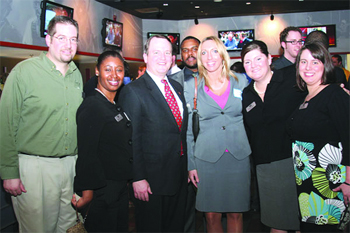
              Sections Supplements
              A Gift to Northampton 80 Years Ago Continues to Hone Its Presence
              The Pines Theater, one of Look Park’s many attractions, has become a popular site for outdoor concerts.

              The Pines Theater, one of Look Park’s many attractions, has become a popular site for outdoor concerts.

              There’s a portrait of Fannie Burr Look hanging in the Look Park Garden House that seems to cast a watchful eye on the sprawling property.

              Are the flower gardens pruned? Are there people enjoying the pedal boats in the pond? Did the steam train go by already, sounding its whistle? If portraits could talk, it’s likely that Fannie Burr Look’s would have plenty to say.

              In 1928, she became the impetus behind creating what is now one of the region’s largest and most diverse parks in the name of her late husband, Frank Newhall Look, a prominent businessman in the late 1800s and early 1900s, by gifting a 157-acre parcel of land to the city of Northampton (the park is in Florence).

              Even today, signs of her influence remain, and help to move plans at Look Park forward.

              Though city-owned, taxes are not used to finance any aspect of Look Park’s operation; it functions as a self-sustaining attraction governed by a six-person volunteer board of trustees. Ray Ellerbrook, Look Park’s executive director, said this was a stipulation that Fannie Burr Look set out for the park before its inception.

              “Mrs. Look wanted no connection with the city,” he explained. “Making the mayor of Northampton a member ex-officio on the board of trustees was as far as she would go, and that’s the way it still is today.”

              While that separation may have stemmed from a distrust of government on Look’s part, Ellerbrook said it has made for a self-contained business model at the park that has long allowed its staff to tap varied funding sources and make incremental improvements. Look provided the land, development funds, and a trust fund for ongoing maintenance, and today these funds are augmented by visitor fees, grants, and gifts.

              “Mrs. Look was a woman ahead of her time,” he said. “Before her involvement, this was only farmland that the city thought was too far away to be of any use publicly.”

              A New Destination

              Over the years, as both Northampton and Florence have grown, however, the public has found several uses for Look Park, including as a concert venue (the open-air Pines Theater is on the grounds), a banquet facility, and a place for celebrations, in addition to serving as a family-oriented park offering children’s programs, a small zoo, paddleboats, day-camp sites, walking trails, a splash park, and a well-known train that chugs its way through the park on a regular basis.

              Jillian Larkin, facilities manager at Look Park, said improvements are currently planned throughout the facility, in terms of both infrastructure and programming.

              “We’re in a nice spot right now because we already offer so much, but we have room to grow as well,” she said, listing a few of the park’s popular features: the Sanctuary at Willow Lake, which can accommodate 150 people for weddings or other functions; a Victorian gazebo, suitable for smaller weddings; and the Dow Pavilion, the largest gathering space at the park, able to hold 200 people. In addition to these facilities, Look Park also has a ballfield, multiple playgrounds, and a ‘Picnic Store’ that offers light lunches and novelties.

              Adding to this landscape of late is one of the most important developments already completed at the park, Larkin noted — the renovated Look Park Garden House, where Fannie Burr Look peers out over the grounds.

              Completed in 2002, the renovation project converted the park’s former pool house into banquet and event space. The building can accommodate functions for up to 170 people, including weddings, receptions, and business meetings, with that last category being one that Larkin is looking to expand in the coming months.

              “We have wi-fi, a built-in P.A. system, and I think this is a great place for corporate retreats,” she said. “Instead of having a coffee break, people can come here for a little bit of a nature break.”

              Pooling Resources

              Ellerbrook agreed that the Garden House has become a particular focus at the park of late.

              It’s not the first time that corner of the park has been the center of the action; the former pool house once sat adjacent to a large pool that earned some local fame during its heyday; in fact, many Northampton and Florence residents were sad to see it go.

              “The pool was a tremendous feature,” said Ellerbrook. “It was huge, and had multiple waterslides before safety concerns changed. When the trustees decided to close it, it was actually a controversial decision — people did not want to see that happen.

              “But it was old,” he added. “It was cracked and in need of repairs that would have cost $500,000. It was time for it to go.”

              The area the pool once occupied is now a small bumper-boat park and a playground, and the Garden House is gaining more recognition as a unique event space each year. Larkin said every weekend is generally booked, and she hopes to increase that pace to include mid-week functions.

              “We’re getting there,” she said. “As we host more events, we’re able to show our different strengths as both a park and a venue. That helps us call attention to the role we can play in events for the whole family.”

              Ellerbrook said that same goal is prompting renovations throughout the park, which are largely aimed at beautifying the space and making it more accessible to various groups of visitors.

              The large fountain at the entrance of the park, for one, is being refurbished as part of a focus on ‘curb appeal,’ and the Look Park train station, a popular fixture for several years, is also being renovated and updated.

              Outside of the park’s parameters, state and local projects now underway are also having an impact. A bike path is being extended to run through the park, and on Bridge Road where Look Park sits, a roundabout is being constructed that Ellerbrook hopes will ease traffic concerns.

              The Eyes Have It

              All the while, he said that family-oriented flavor Look Park has cultivated over the last 80 years is always in the forefront of his mind as improvements continue.

              If for no other reason, he pays close attention to that mission to honor the wishes of Fannie Burr Look, whose picture keeps a discerning watch over the parcel of land that has become a fixture in Hampshire County.

              Jaclyn Stevenson can be reached at[email protected]
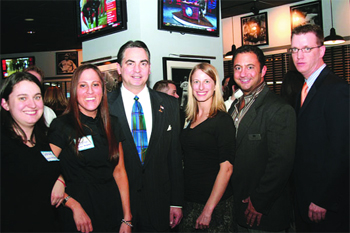
              Sections Supplements
              Those Are the Themes Behind an Expanding Northampton Enterprise
              Liz Cole

              Liz Cole

              Ten years ago, Liz Cole had two ideas: one for a health club, and one for a daycare. The two businesses launched independently of one another, but as both continue to prosper along with two more of Cole’s ventures, they’re blending together as they focus on a dominant theme: healthy families.

              Liz Cole calls it “organized chaos” — the delicate balance of managing four independent businesses under one roof, three of which call children their primary clients.

              At 33 Hawley St. in Northampton, the former home of the Rugg Lumber Company, Cole has created a unique mix of family- and fitness-oriented endeavors, including a health club, a daycare, a kids’ fun and fitness center, and an entertainment venue that provides everything from pizza parties for kids to club dances for the older set.

              In fact, the notion of ‘fitness and family’ is one that Cole returns to often; she noted that each service she’s devised was designed to provide a comfortable space for both adults and children, and to teach a little something to all parties along the way. It can be a complicated business model to explain, but as the level of activity on Hawley Street continues to rise, it’s proving to be a successful one.

              “Is every day utopia? No,” said Cole with a laugh. “But our bills are paid, there’s a little left over, and we have fun.”

              Training Days

              Cole has a background in social work and early-childhood education, including an eight-year stint in Seattle, Wash. with Head Start, the longest-running national school-readiness program in the U.S. This professional background, paired with the belief that physical fitness is a cornerstone for any healthy individual, was the driving force behind Cole’s idea to open fitness- and child-related businesses concurrently under one roof. She bought the 25,000-square-foot building that now houses her four individual businesses and a fifth, a pilates studio, in 1997. A year of renovations followed, and in January 1998 Cole’s inaugural venture, Universal Health and Fitness, opened its doors.

              “The gym has an emphasis on overall fitness, and has an atmosphere where we hope everyone feels welcome — young, old, the very physically fit, and beginners,” Cole explained, noting that everything from the layout of the gym to the equipment reflects that mission. “The lines of equipment we use are sized for both men and women, and therefore are a little more gender-neutral than some other lines, for example, and the free weights aren’t hidden in the back so someone who wants to use them has to walk past everyone else in the gym to get there. That’s a big deterrent for some people, so ours are the first thing you see when you walk in. We tried to look at the gym from a new perspective, aimed at making the trip not-so-scary for people.”

              A month after Universal Health and Fitness opened, Dolphin Daycare was launched on the bottom floor of the building, offering care and early education for infants to pre-kindergarten-aged children. Cole said her mantra about the two anchor businesses is, “my head is in the gym, but my heart is in the daycare,” and this helps explain the two divergent ventures.

              “My background is in social work, so even though I’m not spending all day putting out fires for families in crisis, I can still help with parenting issues, behavioral issues, and other things,” she said. “We are a resource for families, and that adds something nice to the work I do every day.

              “Plus, the gym doesn’t create as many referrals for the daycare as some people might think,” she added. “They’re definitely two different businesses. But that is good for word-of-mouth, and often, children who are part of the daycare move on to our before- and after-school programs that are used by parents who are also gym members. So gradually, all of the businesses are starting to mesh.”

              The hardest evidence of this meshing quality came last spring, when Cole built another service into her existing ‘families and fitness’ objective.

              Fitting It All In

              With Universal Health and Fitness occupying the top floor and Dolphin Daycare using only half of the ground floor, a variety of tenants occupied the remainder of the building until last year, when Cole launched a third business, Universal Kids. This addition is a blend of activities, education, and entertainment, inviting children and their parents to visit for a dive into the ball pit, a kids’ yoga class, a birthday party, or just some play time in the free-play and snack-bar area.

              “It’s all about fitness, families, and kids having fun,” Cole said. “The gym and the daycare have always coexisted, but this felt like the missing link — it made sense to combine the two ideas.”

              As it turned out, Cole thought Universal Kids was a good idea on which to build, as well. Just last month, she added a fourth business to her repertoire, Club K, which operates in the same space as Universal Kids during evening and weekend hours.

              Club K is an entertainment venue for children, teens, and adults, and events are scheduled on alternating nights to accommodate each age set. Thursdays, for example, are family fun night, at which parents and their children can learn a craft as they socialize over pizza and apple juice. Fridays are either teen nights, providing dancing and karaoke for 13- to 17-year-olds, or 18-plus open mic nights; and Saturdays are adult nights, welcoming anyone 21 or over to attend themed, DJ-led dance parties that begin earlier than most clubs (8 p.m.) and close at midnight. Club K has also secured a limited beer-and-wine liquor license for adult nights, which Cole is hoping to expand on further in the coming months.

              “We launched Club K deliberately in the early summer because it’s a slower time for the other businesses, and we could get a feel for what people wanted and tweak the model from there,” she said. “It’s been a little hard to explain that we have events with beer and wine and also a daycare, but while the idea to provide all sorts of activities for families is part of everything we do, Club K has been designed to keep things very separate.”

              As Universal Kids and Club K continue to grow in terms of programming — parenting classes and ‘speed dating’ nights complete with child care for parents are among the ideas being mulled — the building itself is also undergoing some changes. Cole said work is now underway to expand the upstairs pilates studio, which is rented to Nadya Kostek for her business, Personal Touch Pilates. Downstairs, the daycare is also getting a facelift, expanding to include six classrooms.

              Working It Out

              On the longer-range side of things, Cole said she’s also completed plans for a possible water park on the property, and is now in the process of securing a final location and financing. It is, indeed, the latest addition to a diverse model that requires a little bit of explanation, but everything is tied together, Cole repeated, with that pervasive theme of family.

              “Every member of a family has needs, and we’re working to meet them,” she said. “When someone leaves after a great workout, they feel good. When a child comes home and can sing a whole song through for the first time, the child feels good, and the parents feel great. And when a parent leaves their six-week-old here with us, and leaves feeling good about it, we feel good.

              “This is important work,” Cole concluded. “It’s fun and also exhausting, but above all else, it’s important.”

              Jaclyn Stevenson can be reached at[email protected]
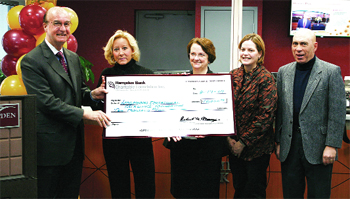
              Uncategorized

              It’s a networking and sales event that comes complete with a rain date.

              This quick fact, in and of itself, is enough to convey the message that ‘Speed Sales’ is, as the voice used to say on Monty Python’s Flying Circus, “something completely different.”

              At least a temporary replacement for the Holyoke and Chicopee Chambers’ annual Commerce trade show, Speed Sales will be staged on the outdoor running track at Holyoke Community College on Sept. 25 — if it’s not raining, of course. If it is, then organizers will try again a week later. Along that 400-yard-long track will be placed small tents — maybe 80 or 100 of them. Inside each one will be a company’s decision-maker, said Gail Sherman, president of the Chicopee chamber.

              Participants in Speed Sales will have the opportunity to visit with 24 of these decision-makers for five minutes each, she said, adding that organizers of the event intend to smash about eight or nine hours of traditional trade-show networking and lead-gathering into about a quarter of that time, but with plenty of opportunities for additional networking after those initial encounters.

              And they want people to have some fun in the process.

              “If you’re going to get people out to events like this, and in this economy, then there has to be some fun involved,” said Darby O’Brien, one half of the organization, known as LeftRight Events, that worked with the two chambers to blueprint Speed Sales.

              O’Brien told BusinessWest that this new concept in sales and networking was conceived with several goals — especially the desire to gain some quality leads, and do it quickly. As for fun, there’ll be a hot dog eating contest, giant tricycle races, and more, he explained.

              “People can meet 24 decision-makers in two hours,” said O’Brien, president of the advertising and marketing company that bears his name. “That’s fast and efficient, and that’s what business owners want today.”

              Here’s how Speed Sales will work:

              Participating companies will send two representatives to the event, more if they are so inclined. One of these individuals will staff the tent and field questions and pitches from the 24 businesses and organizations for whom the company in question would be a good fit. The second representative will be making those five-minute pitches at 24 tents along the track.

              The concept is a somewhat radical departure from the traditional trade show, and it has — in theory, at least — several advantages over that type of event, said Doris Ransford, president of the Holyoke Chamber.

              For starters, companies need to commit only a few people to Speed Sales, and for only a few hours of the day, she noted, adding that many traditional trade shows require companies to staff a booth in shifts, covering an entire workday.

              Perhaps more importantly, Speed Sales takes large doses of the hit-or-miss nature of traditional trade shows out of the equation, said Sherman, adding that the 24 people who will visit a company’s booth are decision-makers themselves, and they’ve been matched to the business, making them qualified leads with strong potential.

              This ‘matching’ process will involve both organizers and participating businesses and organizations, said Sherman, adding that the goal is to maximize all parties’ time and generate quality leads.

              And because the pitches are only five minutes in length, business owners and managers will have to make the very best of that time, said O’Brien.

              To help them with that assignment, event organizers have scheduled a ‘sales coaching seminar,’ to be staged Sept. 16 and led by Sheldon Snodgrass, guerilla marketing expert and president of the Steady Sales Group.

              Ransford, who told BusinessWest that the Commerce event isn’t being officially retired, just put on the shelf for at least a year, said the trade show was launched in 1991, in the midst of a serious economic downturn, with the goal of giving area businesses an opportunity to network and gather some leads that might help them weather the storm.

              In many respects, Speed Sales has the same mission.

              “We’re in another tough stretch for the economy,” she said. “Companies are looking for a boost, and this new event could be one way to get a spark.”

              Peter Rosskothen, co-owner of the Log Cabin Banquet and Meeting House and the Delaney House restaurant, and partner with O’Brien in LeftRight Events, acknowledged that Speed Sales is certainly an unknown quantity, and probably an event that will evolve and improve over time as organizers work out kinks and refine the product.

              But there is already enormous potential for an effective, fun get-together.

              “This has never been done before in this market,” he said. “It is a new concept, so it’s difficult to quantify how successful it will be for companies. We’re taking serious business and combining it with a little fun. That should be an effective combination for a successful, productive event.”

              For more information on Speed Sales, or to register, call the Holyoke chamber at (413) 594-2101, or the Chicopee chamber at (413) 594-2101.

              —George O’Brien

              Sections Supplements
              The Rules Are Changing, So Beware of Costly Non-compliance Penalties

              As spring draws to a close and attention turns toward picnics, barbeques, and ballgames, the clock continues to tick down — to Dec. 31, 2008.

              While many people associate New Year’s Eve with parties and revelry, 2009 will not be a happy year for employees or employers if the non-qualified deferred compensation arrangements and/or plans to which they are a party do not comply with section 409A of the Internal Revenue Code. All businesses — big and small, public and private, non-profit and for-profit — as well as the workers they employ, may be affected by the requirements of and penalties imposed by 409A.

              Section 409A was added to the Internal Revenue code as a result of the enactment of the American Jobs Creation Act of 2004. The impact of this addition is far-reaching and not yet fully appreciated. In fact, if you or your employees participate in a deferred compensation agreement or are a party to an employment or severance agreement that provides for deferred payments, you may be subject to the consequences of non-compliance.

              What, you may ask, are the consequences of non-compliance? The penalties are as straightforward as they are harsh. If a plan, arrangement, or agreement does not meet the exacting standards of 409A, the amount deferred will be included in the employee’s income immediately, even if the employee is not currently eligible to receive that amount. In addition, a penalty tax of 20% will be levied on the amount included in the employee’s income.

              Finally, an interest payment equal to the IRS underpayment rate plus 1% will be applied from the date when the amount was first deferred to the date when it is includable as income to the employee. Taken together with the income taxes you currently pay, these penalties and interest may equal a 50% tax on your income.

              Perhaps the best way to explain the application of 409A is to discuss the plans it does not apply to. For instance, the provision does not apply to qualified retirement plans, such as plans promulgated under Internal Revenue Code sections 401(k), 457(b), and 403(b), nor does it apply to defined benefit pension plans, employee stock option plans, vacation pay, sick pay, death and disability plans, or compensatory time off, and other similar plans. While this may seem like an exhaustive list of retirement plans and benefits, it does not include supplemental employee retirement plans, employment agreements, severance agreements, some split dollar arrangements, stock option plans, and other similar plans.

              To further complicate matters, non-qualified deferred compensation that was vested prior to 2005 is not subject to 409A because of its ‘grandfathering’ provisions. Employers with plans that contain compensation deferred prior to 2005 can choose one of a number of options to preserve the grandfathered status of these deferrals. These options include:

              • Freezing the existing plan;
              • Grandfathering past deferrals while ensuring compliance of new deferrals; and
              • Amending the plan in its entirety so as to ensure compliance.
              • Generally, in order to comply with 409A, a plan and/or arrangement must:
              • Place limitations on when an employee may choose whether or not to defer compensation, if applicable;
              • Clearly identify when an employee may receive deferred compensation; and
              • Place limitations on when a change may be made to the payment date.
              • Elections to defer compensation for services performed during a taxable year must be made by the end of the year immediately preceding that taxable year. This election must include the time and form of payment to which the employee is eligible.

                The limits imposed by 409A on when deferred payments can be received dictate that, in order for a plan or arrangement to comply, it must provide that payments under the plan or arrangement be paid (1) on a date certain; (2) pursuant to a set schedule; and (3) upon the occurrence of a ‘triggering event.’ These triggering events include separation from service, death, disability, change of ownership, or unforeseeable emergency. If your plan is subject to 409A and doesn’t contain the aforementioned conditions, it is now time to begin your 409A compliance program.

                The best way to avoid running afoul of the rules set forth under 409A is to put a comprehensive plan in place as follows:

                • Identify those plans, agreements and/or arrangements that are subject to 409A;
                • Determine who within your organization is responsible for 409A compliance. If your organization does not have an in-house compliance coordinator, you should contact your accountant, attorney, tax advisor, or human resources professional;
                • Evaluate those plans, arrangements, and/or agreements subject to 409A in order to determine whether they are compliant as currently written; and
                • Formulate a plan of action to ensure compliance. Steps may include amending, terminating, or adopting new non-qualified deferred-compensation plans.
                • Section 409A compliance is a complicated and far-reaching endeavor. In order to avoid running afoul of the regulations set forth by 409A, employers should consult with professionals. Several IRS guidance notices have already been written, and more are sure to follow as the effects of 409A are further understood.

                  The issues addressed here are merely a sampling of the plans affected by 409A and the options available to employers in order to ensure compliance with its rules. As such, do not wait until summer turns to fall before evaluating the deferred compensation plans to which you are a party. Dec. 31 is the deadline to comply with 409A, and non-compliance is going to result in costly fees and penalties in 2009.

                  Dennis G. Egan Jr. is an associate with the regional law firm of Bacon Wilson, P.C., specializing in business and corporate law;[email protected]; (413) 781-0560.

                  Sections Supplements
                  Clean-water Outreach Initiative Follows the Current to Western Mass.

                  His name is Stormy. He’s a cheeky, bright yellow duck that serves as the mascot of Think Blue Massachusetts, a burgeoning environmental campaign in the Commonwealth aimed at fostering and maintaining clean water.

                  Stormy is more than just a pretty face. He pens his own Think Blue newsletter called the Stormy Report, operates a Stormy Store, offers ‘Stormy Tips’ on the Think Blue Web site, and often visits community events to raise awareness of Think Blue’s message, resplendent in all of his 15-foot, inflatable glory.
                  Anne Capra, senior planner with the Pioneer Valley Planning Commission and an administrator of Think Blue’s local component, Connecticut River Think Blue, is a fan.

                  “Stormy’s quite a draw,” she said. “Kids love him, of course, but I think anyone who sees a giant yellow duck wants to come by and see what he’s all about.”

                  Still, Stormy is just one aspect of a much larger initiative that’s making some important inroads in Western Mass. Think Blue, an environmental campaign aimed at clean water, is a brand that originated in San Diego, Calif. in the early years of this decade, as part of efforts undertaken by that city and its suburbs to battle pollution issues in their coastal water bodies. In 2006, officials from Boston caught wind of the initiative and decided to create their own Massachusetts-based version in conjunction with the Massachusetts Bay Estuary Assoc. (MBEA), with hopes of gradually extending the program’s reach across New England.

                  Stormy is a part of the mission. To separate Think Blue Massachusetts from its California counterpart, MBEA charged Dwell Creative, an advertising and public relations firm in Portland, Maine that specializes in promoting environmental and cultural change, with creating a touchstone that could float easily within all types of water bodies in the northeast, including its inland rivers.

                  Capra said the Connecticut River Think Blue campaign, which operates as part of the Pioneer Valley Planning Commission and is focused on communities in the Connecticut River Valley (particularly in Hampshire and Hampden counties), is the first version of Think Blue Massachusetts to be launched outside of the Greater Boston area.

                  “All of our communities are connected to the Connecticut River in some way,” she said. “We see it as a common thread that ties many different towns and cities together. It’s the longest river in the U.S. east of the Mississippi, so it’s important to keep it clean, but also to understand what types of things contribute to its pollution.”

                  Take Me to the River

                  Capra told BusinessWest that the majority of pollutants reach rivers, lakes, ponds, and coastal areas through storm-water runoff, leaving behind deposits of a variety of substances, ranging from chemical fertilizers to automotive oil to pet waste. She said the federal Clean Water Act of 1972, which set in motion a number of regulatory and remedial mechanisms to improve the nation’s overall water quality, addressed many additional issues over time, but storm-water pollution remains a problem for many communities.

                  “The EPA passed the Clean Water Act to better regulate discharge of pollutants in our waters,” said Capra, “but the waters that are still polluted are so because of storm-water drainage. Massachusetts in particular has a big problem with this.”

                  Think Blue has become a good fit for the environmental issues of the Commonwealth in general for this reason, but it’s also well-suited for the PVPC, which added Think Blue to an existing suite of clean-water programs by joining the Massachusetts coalition in 2007.

                  The Connecticut River Cleanup Committee (CRCC), for instance, was founded in 1993 to address combined sewer overflows into the river.

                  Representatives from five local communities — Springfield, Ludlow, Holyoke, Chicopee, and South Hadley — work in tandem with the PVPC to identify funding sources for all of the municipalities, as well as to plan cooperative cleanup activities. These efforts are mandated in all five communities by the EPA, which monitors negative water impacts along the Connecticut River in addition to other rivers across the country.

                  Similarly, the CRCC’s Stormwater Subcommittee has been in place since 2003, formed in response to the National Pollutant Discharge Elimination System’s (NPDES) requirements. At this time, membership in the program, which is currently in ‘Phase II’ and centers on public education and outreach, was opened to cities and towns in Hampden and Hampshire counties to assist them in fulfilling federal mandates.

                  Capra explained that Think Blue has become a perfect umbrella for these existing initiatives, creating an even more cooperative environment for participating cities and towns, as well as an effective marketing tool to add other communities to the fold.

                  “Communities need to regulate and manage storm water, and they need to implement different things, including community education and awareness programs to reduce pollutants,” she said.

                  While not all cities and towns are bound by these regulations, there are more than 20 in Hampden and Hampshire counties that are — those that abut the Connecticut River or larger-sized ‘hub’ communities, such as Springfield or Northampton. “Many communities in our region were already doing things, but we wanted to pool our resources and make a more regional campaign that could have a greater impact.”

                  To date, 11 municipalities are involved with Connecticut River Think Blue. All five of the CRCC communities have signed on, and have been joined by Easthampton, Granby, Agawam, Longmeadow, West Springfield, and Westfield.

                  Within these cities and towns, Connecticut River Think Blue is focused on three specific audiences with which it works to raise awareness about how daily activities affect water resources. Working with homeowners, school-aged children, and municipal offices and public officials, the campaign has a strong educational component that is meant to instruct people in how to better manage potential pollutants such as landscaping fertilizers, pet waste, and general litter — especially cigarette butts, the most littered item in the U.S., creating 176 million pounds of waste each year.

                  Blue Is the New Green

                  Capra said habits such as failing to remove a pet’s waste while on a walk or even washing the car in the driveway using synthetic cleaners may seem like a drop in the bucket when it comes to water pollution. But when thousands of people engage in the same activities, the problem becomes sizeable, and this, essentially, is why Think Blue exists.

                  “Changing behaviors is a very difficult, complicated thing to do,” she said. “We had to think long and hard about what we were going to target — what groups of people, and which behaviors. We want to break things down and get the message across that people can take steps to improve their habits; it doesn’t need to be hard, and it doesn’t need to happen all at once. Think Blue is one way we can hold people’s hands, so to speak.”

                  Capra said that, over the past year, Connecticut River Think Blue has launched a series of programs within the 11 participating communities, often as pilot programs in just one city or town that can be replicated in other areas once they’ve been tested and finalized.

                  The first of these efforts is called ‘Greenscapes,’ designed to address the impact landscaping can have on surrounding bodies of water. The program is underway now in Ludlow, Agawam, and Easthampton, and is geared toward several different sectors, including single-family households and various types of businesses, such as landscapers and farms. Each municipality contributes $2,000 each year to the initiative to fund these programs, and the PVPC also works to secure grant funding from state and federal sources.

                  As part of this new program in the region (it’s sponsored in part by the EPA and operates in other parts of the country in various ways), 19,000 homes received the ‘Greenscapes Guide’ this year. It offers landscaping tips to help protect water sources, composting tutorials, information on how to secure irrigation system audits, and how-tos for planting low-maintenances blooms and ‘rain gardens,’ which require little watering beyond what Mother Nature provides.

                  In addition, Capra said the PVPC has also entered into a partnership with NOFA, the Northeast Organic Farming Assoc., which includes 10 participating farms in the Connecticut River Valley, to host workshops looking at similar topics throughout the spring and summer.

                  Think Blue has also called upon the area’s garden centers to participate as well, both externally as a community resource (informational kiosks are now being devised) and internally, working to make their own green houses even greener, or, in this case, a little bluer.

                  One such center, Randall’s Farm and Greenhouse in Ludlow, has become Greenscapes’ premier participant.

                  “We’re hoping to get several garden centers involved, because it points people in the right direction when they’re trying to curb pollution in their own yards,” Capra said. “Once they learn what methods to use, they need to know which products to buy, and garden centers are where they’re going to go.”

                  Bring Back That Sunny Day

                  With Stormy at the helm, all of these endeavors are coupled with marketing efforts that spread the Think Blue message. Capra said the PVPC uses print, radio, television, direct mail, and point-of-sale media to get the word out, but this year, the primary thrust of Think Blue’s outreach will be community- and event-based.

                  “We’re working on getting out into the communities and talking to various groups at least once a week,” Capra said, noting that these include chambers of commerce and libraries, where children are reached through games, books, and other activities. “We’re also getting out into the community at events — we’re setting up at farmer’s markets across the region, and soon, we’re going to be featured at the Big E.”

                  Stormy is slated to attend the Big E along with Capra and her staff, and it’s likely that he’ll attract some new audiences. There’s just something about a bright yellow duck that makes people stop and pay attention.