Home Posts tagged Franklin County Chamber of Commerce
Daily News

FRANKLIN COUNTY — A $10,000 investment from Gagne Wealth Management Group is expected to generate more than $20,000 in local spending as the firm and the Franklin County Chamber of Commerce prepare to launch the second annual ‘buy-$25-get-$50’ Gagne Wealth Gift Card on Wednesday, June 10.

Starting at 9 a.m., the Gagne Wealth Management Group will match every $25 Franklin County Gift Card purchase, giving customers $50 in local spending power and supporting Franklin County small businesses with every swipe. Every dollar generated through the promotion can be spent only at participating Franklin County businesses, creating a direct and measurable investment in the local economy.

“Our goal here is to make spending locally the easiest and most rewarding choice people can make,” Franklin County Chamber of Commerce Executive Director Jessye Deane said. “You don’t need a code or a coupon — you just buy a $25 Franklin County Gift Card on June 10, and it instantly becomes $50 you can gift or spend at dozens of participating businesses across the county.”

Gift cards can be purchased online through a dedicated Gagne Wealth Management Group checkout page on the chamber’s website, where a $25 bonus is automatically added to a single $25 e-gift card at checkout. Gift cards can also be purchased in person at the chamber office at 393 Main St., Greenfield, or by calling the chamber at (413) 773-5463. A limit of five gift cards per person applies while supplies last.

Last year’s promotion generated overwhelming excitement as all 400 available gift cards sold out in under three hours. Since then, the chamber has received regular inquiries from community members eager for the promotion’s return.

“We’re thrilled to bring this promotion back for a second year,” said Merrill Gagne, founder of Gagne Wealth Management Group. “The response from the community has been incredible, and the results demonstrated just how powerful local spending can be.”

In its first year, the Gagne Wealth gift card match injected more than $20,000 in Franklin County spending power guaranteed to benefit local businesses, 70% of which has already hit Franklin County cash registers. Deane noted that, because many recipients spend beyond the value of their gift cards, the program’s total economic impact is likely significantly higher.

Data from the program’s first year signals that cardholders typically visit businesses multiple times rather than spending the entire balance in a single purchase. Recipients use their cards for everyday purchases, explore multiple merchants, and return to spend remaining balances over time, creating repeated opportunities for local businesses to generate sales beyond the value of the gift card itself.

“While online shopping is often transactional, shopping local is experiential,” Deane said. “The Franklin County Gift Card encourages residents to step out their front door, explore their downtowns, try a new restaurant, browse a local shop, and discover businesses they may never have visited otherwise. In doing so, it helps create the kind of authentic community connections that can’t be shipped in a cardboard box.”

Unlike traditional gift cards tied to a single retailer, the Franklin County Gift Card can be redeemed at a diverse mix of restaurants, retailers, attractions, and service providers throughout the county. Because gift cards can be redeemed at dozens of participating businesses, they encourage recipients to discover new businesses, helping distribute economic impact across Franklin County rather than concentrating it in just a few locations. For a full list of participating businesses, visit franklincc.org.

Daily News

GREENFIELDThe Greenfield Business Association (GBA) is stepping into a new phase of growth, building on years of steady momentum with a renewed focus on hands-on economic development, business connectivity, and community-rooted investment.

This next chapter is taking shape with the support of local business owner Merrill Gagne, whose early investment of a $25,000 challenge gift in early 2025 helped catalyze a broader wave of support for the organization’s vision for a more vibrant and thriving Greenfield.

The challenge was met by area philanthropists and business owners, and inspired a highly successful fundraising event at JaDuke Theater in February, where business owners, community members, and local leaders came together to dance, sing, and raise funds to support the next phase of the business association’s organizational growth. The event, which raised $31,477, helped crystallize what many have been feeling: Greenfield is ready to grow in new ways, and the GBA is well positioned to help lead that effort.

Merrill Gagne stepped up as the GBA’s first lead investor in this phase, co-sponsoring the JaDuke fundraiser and challenging the GBA to advance their message and match his initial investment.

“I believe deeply in Greenfield and in the people working to strengthen its future,” said Gagne. “The GBA is a powerful vehicle for bringing that energy together, supporting local businesses, improving our downtown, and helping shape the kind of community we all want to be part of.”

Since its transition away from the Franklin County Chamber of Commerce in 2018, the GBA has evolved into a central connector across Greenfield’s business and civic landscape. Its work has included downtown beautification efforts like flower barrels and public art, business-focused events and promotions, ongoing collaboration with the city’s Economic Development Office, regional partners, and local organizations, and most recently, a leadership role with Greenfield’s signature Bee Fest event — returning for its16th year on Saturday, May 16.

Over the past two years, the GBA has also taken on a more active role in coordinating efforts across sectors — bringing together arts organizations, community groups, and business leaders to align efforts and build momentum around a shared vision. Initiatives such as storefront improvement planning, creative activation for vacant spaces, and expanded downtown programming have all contributed to a growing sense of energy and possibility.

Increasingly, the GBA is stepping into a more proactive role as a driver of local economic development — helping shape how and where growth happens across Greenfield, from downtown to commercial corridors throughout the city. The organization has focused efforts on raising the profile of Greenfield beyond borders — championing the little city around the Valley and throughout the region.

Looking ahead, the organization aims to deepen partnerships with local and regional entities, support new and existing businesses, reduce storefront vacancies, and strengthen Greenfield’s visibility as a place to invest, open a business, and build community. The vision is both practical and ambitious: a city where storefronts are filled, streets are active, and collaboration across sectors leads to shared prosperity – restoring Greenfield as the beating heart of Franklin County.

Reaching that vision will require expanded capacity. The GBA has been operating with part-time plus staffing, Greenfield Community College interns, and a dedicated Board of Directors — and is working toward a phased growth plan that includes full-time leadership and additional team support to meet the scale of the opportunities ahead.

“Over the past few years, we’ve seen what’s possible when people come together around a shared vision for Greenfield,” said Mik Muller, former GBA Board President. “This next phase is about building on that momentum and inviting more people to be part of shaping what comes next.”

With this announcement, the GBA is inviting others to step forward and take part – whether as business owners, residents, or community partners. Early support has created momentum and continued investment will directly shape the scale and impact of the work ahead.

“Merrill’s unprecedented investment in our work, coupled with the JaDuke event in February, has really catalyzed this next phase,” said Hannah Rechtschaffen, executive director of the GBA. “It was inspiring to see sponsors and community members show up with such energy and generosity. Greenfield has the ideas, the people, and the momentum — this next chapter is about bringing it all together.”

Daily News

GREENFIELD — From creating jobs and supporting the workforce to purchasing locally and strengthening community stability, nonprofits generate ripple effects that benefit the entire regional economy.

On Friday, Jan. 23 from 7:30 to 9 a.m. at Greenfield Community College, the Franklin County Chamber of Commerce will host a breakfast panel that reframes nonprofits as economic engines. Attendees will leave with a broader understanding of how nonprofits help power Franklin County as local leaders highlight how good deeds lead to big dividends for local communities.

Everyone is welcome, and registration is required by Jan. 20. Click here to register.

Daily News

GREENFIELD — After nearly four years in Historic Deerfield, the Franklin County Chamber of Commerce and Regional Tourism Council is returning its offices to the county seat with a move to 393 Main St. in Greenfield, where it has owned space since 1985.

The chamber relocated to Deerfield’s Old Main Street in 2022 under then-Executive Director Diana Szynal as a strategic decision to align its dual role as both the Franklin County Chamber of Commerce and the Regional Tourism Council with an established tourism destination. At the time, co-locating within Historic Deerfield’s Museum Store was seen as an effective way to engage weekday visitors following the end of state funding for staffed visitor centers.

“From the outset, Diana was very clear that the move to Historic Deerfield was intended to be temporary,” said Jessye Deane, who became executive director later in 2022. “We’re grateful to her leadership and to Historic Deerfield for the hospitality we’ve received during this chapter.”

Since that move, however, the way travelers plan trips and engage with destinations has changed dramatically. Rather than prioritizing its role as a physical stop for brochures, the chamber has shifted to a proactive, data-driven marketing strategy that delivers Franklin County content directly to potential visitors before they arrive.

“Instead of waiting for people to find us once they’re already here, we’re pushing that front door straight to your smartphone,” Deane said. “You can still stop by and grab a brochure, but now we’re also executing paid year-round, multi-channel marketing campaigns that increase Franklin County visitation and spending.”

That approach has stimulated a notable increase in tourism. In FY 2019, visitors spent $67.5 million in Franklin County. In FY 2024, direct tourist spending had risen to $106 million, generating $1.9 million in local tax receipts and $22.8 million in local earnings. In FY 2025, Franklin County recorded 175,400 overnight trips, a 13.2% increase over FY 2024, and 447,800 visit nights, up 16.6%. This year, the Massachusetts Office of Travel and Tourism awarded the Franklin County Chamber’s FY 2026 marketing plan and presentation the highest score in the state.

“That strategy is driving results for our local businesses, attractions, and events,” Deane added.

Operational needs also drove the decision to return to Greenfield. While the Chamber has operated as a team of two for 70% of Deane’s tenure, its team has expanded in recent months, with staff currently split across multiple floors. The Greenfield offices allow the team to work together on a single floor, with room for meetings and collaboration, while also addressing accessibility and safety considerations that were increasingly challenging in a multi-floor historic building.

Although the chamber is relocating its offices, Deane emphasized that much of the organization’s work happens across the county, not inside an office. Chamber staff serve on more than 36 committees and boards and regularly visit businesses, farms, factories, and events throughout all Franklin County communities.

Deane noted that one benefit of the chamber’s years in Deerfield was a reminder that it represents all 26 towns in Franklin County, not just Greenfield.

“Our small business owners are already stretched thin, and we make it a point to meet them where they are, both figuratively and physically,” she said. “In order to serve our members and Franklin County most effectively, we need to tour the factory, walk the farm, experience the event, and stop by the store. I actually see the inside of my office the most on nights and weekends.”
While the team handled the move themselves, the chamber exclusively contracted with local businesses for minor office renovations before its return. The relocation was partially funded through support from Gilmore and Farrell Insurance, longtime chamber members and community partners.

“Returning to Greenfield anchors us in the county seat and reconnects us to our history,” Deane said. “But no matter where our offices are located, our mission remains the same: to support every corner of Franklin County.”

Commercial Real Estate

Designs on Growth

The Franklin County Chamber of Commerce & Regional Tourism Council recently announced that it has been awarded the contract to spearhead the Rural Downtown Redevelopment Project, an initiative aimed at revitalizing the downtowns of Northfield, Turners Falls, and Shelburne Falls/Buckland.

The project, administered by the Franklin Regional Council of Governments (FRCOG) and funded by the Massachusetts Executive Office of Economic Development, aims to bolster economic growth and develop a sustainable regional model for rural downtown management. 

The year-long pilot project builds upon a 2023-24 study conducted by the BSC Group, which identified the need for enhanced coordination and administrative capacity to support rural downtowns. The Rural Downtown District Project aims to strengthen economic growth and improve collaboration between business owners, municipal leaders, and community stakeholders to boost local economies and improve overall downtown vibrancy, and pilot a regional downtown coordination model that, if successful, may be replicated throughout Franklin County and other rural areas. 

Project organizers say the Franklin County Chamber of Commerce, serving as the county’s only regional chamber and state-designated regional tourism council, is well-positioned to lead the effort. With more than a century of experience supporting local businesses, promoting economic development, and marketing Franklin County locally and regionally, the chamber looks to improve collaboration and leverage existing resources to maximize the pilot’s success. 

“This project is an exciting opportunity to plug in additional administrative capacity to enhance regional collaboration and downtown vibrancy and test a replicable regional model for economic growth.”

“After a robust planning process, we are excited about the opportunity to work with the chamber on this pilot phase of the Rural Downtown Redevelopment Project,” said Ted Harvey, senior economic development planner at FRCOG. “At its core, this project is about building capacity and supporting our communities to grow their local economies sustainably. Given the chamber’s strong local partnerships and its success as a regional dot connector, the chamber is well-positioned to bring this program to life in the three downtown districts.” 

Harvey explained that each of the three pilot communities prioritized enhanced coordination in their local rapid recovery plans, making them ideal starter locations to pilot this new approach. 

He said the Franklin County Chamber will collaborate closely with the Franklin County Community Development Corp. (FCCDC), FRCOG, municipal officials, and local leaders to launch the pilot. A key part of the project will include hiring a downtown district coordinator to convene working groups in each community. These downtown working groups (DWGs) — comprised of business owners, residents, nonprofit leaders, arts and culture representatives, property owners, and town officials — will identify two or three priority projects in each district, help guide the downtown district coordinator, and inform long-term planning. 

“This project is an exciting opportunity to plug in additional administrative capacity to enhance regional collaboration and downtown vibrancy and test a replicable regional model for economic growth,” said Jessye Deane, executive director of the Franklin County Chamber of Commerce & Regional Tourism Council. “This is a great, low-risk opportunity to pilot a regional coordination model and give our downtowns a measurable boost.”

Deane said the downtown district coordinator’s work will be guided by input from local stakeholders to ensure that projects reflect each community’s unique vision and needs. The DWGs will also help determine how to best leverage available resources and identify new opportunities for funding downtown projects. 

“The Franklin County CDC is excited to work with the chamber and FRCOG on this project. We work one-on-one with many businesses in the area to strengthen their business plans and work with them on marketing, operations, and finances. We provide capital when appropriate,” said John Waite, executive director of the FCCDC. “We also know that each individual business is stronger when the other neighboring businesses are stronger. This project will help businesses and vested stakeholders work together and use their various strengths to make each downtown greater than the sum of its parts.”

Daily News

DEERFIELD — On Friday, June 21 from 7:30 to 9:30 a.m., the Franklin County Chamber of Commerce will host a legislative breakfast in the Dining Commons at Eaglebrook School in Deerfield.

Attendees will hear updates from Franklin County’s legislative delegation. Presenting elected officials include state Sens. Paul Mark and Jo Comerford; state Reps. Natalie Blais, Susannah Whipps, and Aaron Saunders; and Kobe Gardner-Levine from U.S. Rep. Jim McGovern’s office.

As always, everyone is welcome, but registration is required by clicking here. The cost is $25 for chamber members if prepaid or paid at the door, or $26 if billed; general admission is $27. Reservations must be honored if not canceled by June 14.

The breakfast sponsor is Greenfield Savings Bank, and the ‘support local’ nonprofit sponsor is Pocumtuck Valley Memorial Assoc.

Business Talk Podcast Special Coverage

We are excited to announce that BusinessWest has launched a new podcast series, BusinessTalk. Each episode will feature in-depth interviews and discussions with local industry leaders, providing thoughtful perspectives on the Western Massachuetts economy and the many business ventures that keep it running during these challenging times.

Go HERE to view all episodes

Episode 166: June 12, 2023

Joe Bednar interviews Jessye Deane, executive director of the Franklin County Chamber of Commerce and Regional Tourism Council

Jessye Deane calls it “the fun county.” But a robust slate of cultural and recreational opportunities isn’t all Franklin County has going for it these days, with businesses constantly launching and growing. Yet challenges remain — from housing to transportation — for this county with a small population spread over more than two dozen communities. On the next installment of BusinessTalk, Deane, executive director of the Franklin County Chamber of Commerce and Regional Tourism Council, sits down with BusinessWest Editor Joe Bednar to talk about the county’s progress and promise. It’s must listening, so tune in to BusinessTalk, a podcast presented by BusinessWest and sponsored by PeoplesBank.

Sponsored by:

Also Available On

Franklin County Special Coverage

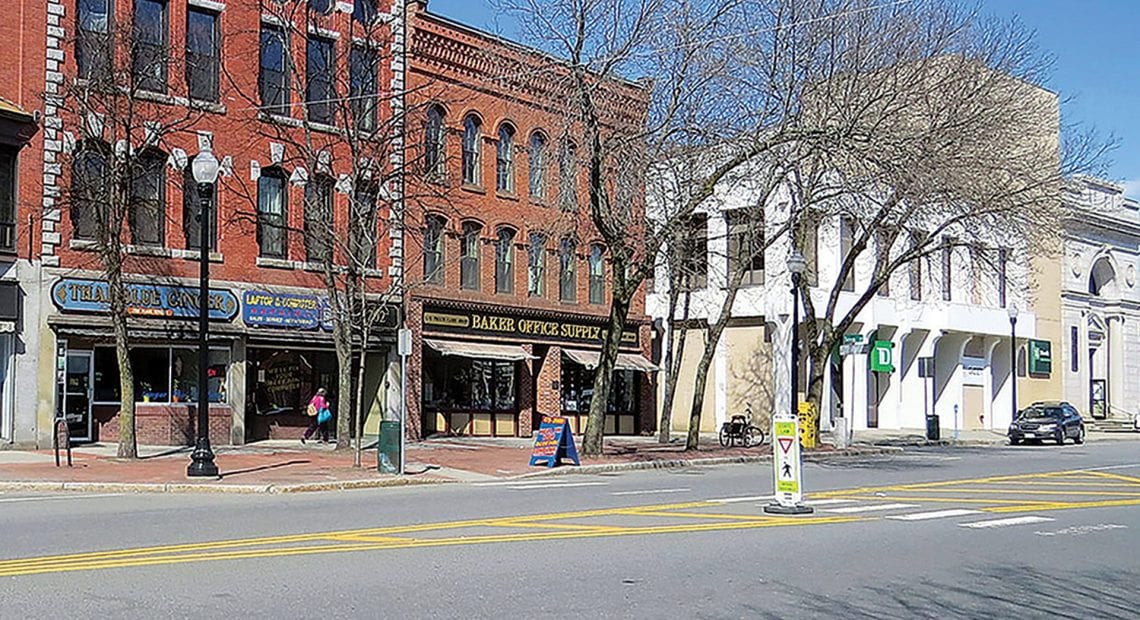
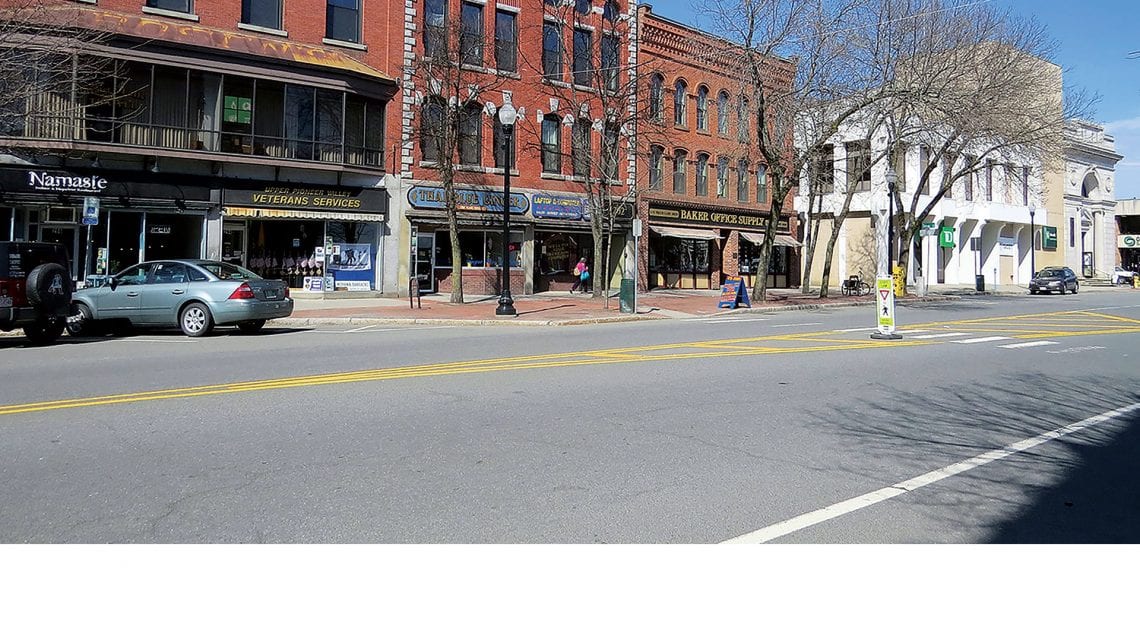
View from Main Street
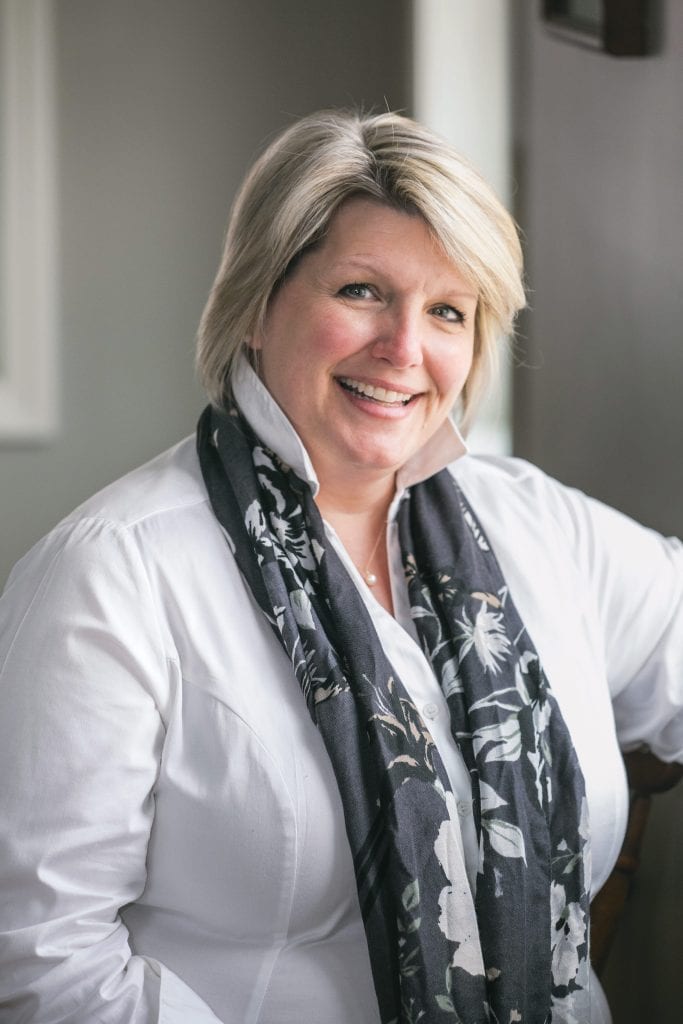
Diana Szynal

While economic activity is still slow, Diana Szynal says, she senses a resilient spirit in Franklin County.

Diana Szynal is encouraged by what she sees on Main Street in Greenfield as restaurants and retail continue to emerge from months of closed doors.

“I certainly see people making the changes they need to make,” she said, referring to Gov. Charlie Baker’s guidance for how — and at what capacity — to open businesses safely. “We’ve seen these business making the effort to reopen and get their staffs back to work and welcome back their customers.”

But no one is fooling themselves into believing everyone is ready to go out again, said Szynal, executive director of the Franklin County Chamber of Commerce.

“Certainly it seems like businesses are open — like restaurants with outdoor seating or limited indoor seating — and I think there are people really wanting to get out there, but some people aren’t ready yet,” she told BusinessWest.

“Realistically, things have slowed down, but I feel a very resilient spirit here,” she continued. “People in Franklin County are tough. And you see that not only in Greenfield’s downtown, but the area as a whole — downtown Deerfield, downtown Shelburne … I think you’re going to see them bounce back for sure.”

What will make the difference, she and other economic leaders increasingly say, is consumer confidence, which is being driven right now almost exclusively by health concerns — and that’s a good thing, considering that Massachusetts is one of the few states in the U.S. consistently reducing instances of COVID-19.

“For the typical consumer, making decisions about going out for the day or just going to a restaurant or retail shop, creating confidence is the key,” Szynal said. “And focusing on those [infection] numbers is really critical. That’s really how we’ll build confidence. Some people will take a little longer than others because they have different health concerns. But I think, if we can stay the course, we’ll be heading in the right direction economically as well as from a public-health standpoint.”

Associated Industries of Massachusetts (AIM) polls its 3,500 members each month to produce a Business Confidence Index that was firmly entrenched in positive territory for years — until it suffered the largest one-time decline in its history a couple months ago. However, it began to rebound slightly last month as Baker announced the four-phase process for re-opening the state economy under strict workplace-safety guidelines, and in the report due this week, it’s expected to creep up again amid positive news regarding infection rates.

“What makes this whole situation unique — and a little bit mystifying for employers — is that the economic situation is still being driven by a public-health situation,” said Chris Geehern, AIM’s executive vice president of Public Affairs and Communications. “Typically in an economic downturn, business people know exactly what to do. Now, it’s wholly dependent on what the daily numbers are from the state and nationally. I think that’s been a big challenge.”

“Certainly it seems like businesses are open — like restaurants with outdoor seating or limited indoor seating — and I think there are people really wanting to get out there, but some people aren’t ready yet.”

That said, he told BusinessWest, “our members have been satisfied with the state process. It has certainly been a challenge to meet all the requirements, but for most employers, the big issue isn’t what the government tells you to do, but what you know you have to do to ensure that employees, vendors, and customers feel comfortable coming in. It’s going to be a slow recovery whether the government requires these steps or not because people won’t come to your restaurant if you haven’t taken the appropriate safety steps.”

Growing Optimism

Employers hope a timely return to business will allow them to re-hire some of the 1.2 million Massachusetts residents who have filed for unemployment since the onset of the pandemic.

“From a broad perspective, I’m not getting a super pessimistic view from anyone I’ve spoken to,” Szynal said. “Certain people are concerned — they’ve had to make some changes, and they’ve had some struggles. People don’t expect those struggles to end instantly. But people are pretty optimistic for the long term.”

Again, that likely depends in part on the public-health data remaining on a positive track.

“Employers are encouraged that Massachusetts has been able to moderate the number of new COVID-19 cases. We have said all along that the current economic crisis is being driven by the public-health crisis, and that’s what we see here,” Raymond Torto, chair of AIM’s Board of Economic Advisors, noted in the latest business-confidence report.

Chris Geehern

Chris Geehern

“Typically in an economic downturn, business people know exactly what to do. Now, it’s wholly dependent on what the daily numbers are from the state and nationally. I think that’s been a big challenge.”

AIM President and CEO John Regan added that Baker’s deliberate, four-phase plan has so far been an effective way to reopen the state economy in a safe and efficient manner.

“We realize that every employer in Massachusetts would love to hear that they can reopen immediately. But we also acknowledge that a phased reopening balances the need to restart the economy with the need to manage a public-health crisis that continues to claim many lives a day in Massachusetts,” Regan said, adding that employers, “will in many cases need to reconfigure workplaces for social distancing and determine how to implement other safety measures, such as the wearing of protective equipment, continuing work-from-home policies, and ensuring the health of workers and customers.”

While AIM employers have been satisfied with the pace of the rollout, Geehern told BusinessWest, there was some frustration early on, particularly in the retail, restaurant, leisure, and hospitality sectors, which weren’t included in phase 1. “Some thought we should be moving faster. To be honest, I think the events going on down south persuaded most people that slow and safe is still the best way to do all this.”

He conceded that many AIM members are manufacturers, and they were able to return to work in phase 1 — and many were deemed essential workers from the start and never shut down operations. That partly explains why their business confidence has been slightly higher than non-manufacturers.

“They were, in fact, dealing with issues of workplace safety right along — processes like how to create six-feet separation, sanitize common areas, and monitor the health of people coming in,” he said. “This is something they’ve had a lot of experience with. For our group of manufacturers, it’s been a fairly smooth process.”

All Eyes on the Numbers

That said, Geehern noted that if COVID-19 cases began spiking and the governor paused or slowed the reopening, business confidence would clearly suffer.

“It’s still volatile and changeable, but I think it’s fair to say companies in general are satisfied with the pace of the rollout. Believe me, every employer in Massachusetts wishes Governor Baker could wave a magic wand and everything would go back to the way it was, but everyone knows that’s not the case.”

“The numbers are fairly optimistic, and I think the most important thing right now is confidence. That’s what’s going to help those businesses bounce back.”

How schools handle students’ return this fall — and what that does to the child-care picture — is a factor as well, he said. “There are a bunch of different elements to the whole picture. They’ll all eventually become clear.”

Part of that clarity is the sad reality that some businesses will be left behind. According to one AIM survey, slightly more than half of companies that furloughed employees will want them all to return when they’re able to bring them back, but some said they won’t be taking any of them back, because they’re planning on going out of business or running a skeleton staff for a while.

“It’s going to be a slow recovery, but our members still think the fundamentals of the economy that existed in February still exist, and I think that’s going to help us,” he noted, adding, however, that leisure and hospitality, as well as mom-and-pop shops of all kinds — two types of businesses that are important to the Franklin County economy — are especially vulnerable right now.

Knowing all of this — the tentatively good health news and the more uncertain economic outlook — Szynal chooses to take the glass-half-full view.

“The numbers are fairly optimistic, and I think the most important thing right now is confidence,” she said. “That’s what’s going to help those businesses bounce back.”

Joseph Bednar can be reached at [email protected]