Home Posts tagged Health Care (Page 11)
Uncategorized
Nominations Sought for the Class of 2010

After three successful years of its 40 Under Forty recognition program, one might think BusinessWest is running out of stories to tell of young professionals making a difference in the Pioneer Valley.

But that would be wrong. And we’re asking you, the readers, to prove us correct by nominating a new batch of fresh faces for the class of 2010.

Since 2007, BusinessWest’s 40 Under Forty has captured the attention and respect of the region’s business community, bringing into focus what most already know: that Western Mass. is home to a creative, motivated, and successful group of young business leaders, entrepreneurs, and innovators — people who, even in tough economic times, are redefining what it means to grow successful businesses and serve their communities with whatever spare time they have left over.

Michelle Sade, operations manager for United Personnel in Springfield, said she was honored to be part of last year’s 40 Under Forty class. As a founding member of the Young Professional Society of Greater Springfield — which placed several of its members in the class of 2009 — she has expressed a passion for cultivating young talent in the region, and said BusinessWest’s annual program bolsters that effort.

“It definitely highlights the amount of talent throughout the Pioneer Valley,” Sade said. “The Young Professional Society has worked to allow those talented young professionals to come together and network, and what BusinessWest has done is to put the spotlight on some of the rising stars of that group.”

That sort of sentiment is gratifying to hear, said Kate Campiti, associate publisher of the magazine, noting that the program was created to draw attention to not only the depth of young talent in the region, but also its diversity, both demographically and in the types of work they do.

“We’re telling the story of young people doing some incredible things,” said Campiti, “but we’re also telling the stories of the ventures they’ve started, the established companies they work for, and the nonprofits they lead. Add it all up, and it paints a bright picture of the region and its future.”

The 120 previous honorees have emerged from law, education, retail, health care, social services, finance, and many other fields — some forging completely new paths in computer technology, renewable energy, and ‘green’ business. In all cases, they have been successful in business and active in civic volunteerism, the latter being a critical consideration when judging applicants.

As in the past three installments of Forty Under 40, the winners will be profiled in an upcoming issue of BusinessWest — always a must-read issue — and toasted at a gala reception in the spring.

Without fail, the 40 Under Forty honorees say they’re impressed with the quality of the people they meet at this event, and consider it a springboard for long-term networking.

“It was wonderful, and the exposure to such quality people was amazing,” said Renee Stolar, president of J. Stolar Insurance Co. in Palmer, another member of the class of 2009. “I’ve been able to keep in touch with many of them, so this opened the door to a whole realm of people I probably never would have met otherwise. I was very happy with the whole experience.”

The nomination form can be found on page 22 of this issue. It will be reprinted in upcoming issues as well, and may also be printed from businesswest.com. The deadline for entry is Feb. 19.

After the deadline passes, the nominations will be scored by an independent group of judges comprised of area business leaders and previous 40 Under Forty honorees. They will be tasked with carefully weighing the achievements and community commitment of those who are nominated by their peers over the next two months.

“I don’t know how you can choose when so many people are doing such good things, and have such talents and passions and things they feel are important to the revitalization of the area,” Sade said. “Everyone has a different idea what that means; if you look at the 40 Under Forty, every one of them is trying to make a positive impact on their business, their community, a nonprofit — and in some ways that are quite remarkable.”

She cited the example of Kathy LeMay, who received the highest scores in last year’s judging. LeMay’s Florence-based company, Raising Change, cultivates connections between philanthropists and nonprofit agencies, and she’s made a difference to the tune of hundreds of millions of dollars raised.

“She’s amazing,” Sade said. “These are people doing some amazing things.” She added that the 40 Under Forty annually makes an example of young people who are not leaving the Valley, but are trying to make it a better place to live and work. “They’re just inspiring.”

If you’ve been similarly inspired by a young professional making that kind of difference, don’t hesitate to fill out a nomination form. – Joseph Bednar

Class of 2007

Departments

BMC Touted by Leapfrog Group

SPRINGFIELD — Baystate Medical Center is one of the top 45 hospitals in the U.S. for quality and efficiency, according to the Leapfrog Group’s 2009 survey of 1,206 hospitals across the country. Baystate is one of 34 urban hospitals to achieve this recognition, along with eight children’s hospitals and three rural hospitals, according to Dr. Evan Benjamin, vice president of Healthcare Quality for Baystate Health. Benjamin noted that the Leapfrog recognition is an affirmation of the hospital’s efforts to bring results to the best-practice level. Top hospitals in urban settings fulfilled criteria including meeting stringent performance standards for complex, high-risk procedures; meeting standards for staffing the ICU, shown to reduce mortality by 40% or more; meeting Leapfrog standards for implementing computer physician order-entry systems; and passing Leapfrog’s test of their system. The Leapfrog Hospital Recognition Program incorporates quality outcomes, length of stay, readmission rates, and incidence of hospital-acquired conditions and infections. The efficiency standard applies to heart-bypass surgery, heart angioplasty, heart attack, and pneumonia patients. The Leapfrog Group is a voluntary program aimed at mobilizing employer purchasing power to alert America’s health industry that big leaps in health care safety, quality, and customer value will be recognized and rewarded. In other news, Baystate Medical Center was recently honored in the Thomson Reuters Top 100 Cardiovascular Hospitals rankings.

MassMutual Attracts, Retains Call Center Employees

SPRINGFIELD — The MassMutual Retirement Services Division’s Call Center recently earned the ‘Gold Award’ for the Best Recruitment Campaign in the World by the North American arm of ContactCenterWorld.com. MassMutual’s call-center employee-recruiting campaign was selected from a global field of organizations from the Americas, Asia/Africa/Australia, and Europe. MassMutual’s program was distinguished for its partnership with local colleges near its headquarters in Springfield and its second site in Memphis, Tenn. MassMutual’s overall recruiting campaign also provides scholarship opportunities to local students and has co-developed a special college curriculum to help prepare students for new positions in all MassMutual call centers. The specially designed curriculum includes training on the topics of customer service and financial services as well as FINRA Series 6 test preparation. MassMutual’s call centers are staffed with professionals who are trained to assist individuals in managing a vast array of retirement planning and saving needs, from questions about investment options to taking full advantage of matching contributions. Call center associates also offer roll-in service so customers can consolidate savings from other qualifying retirement accounts to achieve a more holistic picture of their overall retirement savings.

DiGrigoli School Honored by Vets Council

WEST SPRINGFIELD — DiGrigoli School of Cosmetology was recently awarded the 2009 Business of the Year award by the West Springfield Veterans’ Council for its ongoing free hair services to area veterans. Since 2007, cosmetology students, under the supervision of licensed instructors, have provided more than 500 free haircuts to veterans at DiGrigoli School of Cosmetology on Riverdale Street. The school originally offered the free services on Veterans’ Day, but, because of an overwhelming response, increased the frequency to every eight weeks, according to Paul J. DiGrigoli, owner and president of DiGrigoli Salon and DiGrigoli School of Cosmetology. Six times per year, veterans visit the school by the busload and enjoy a morning or afternoon of pampering and conversation with students, added DiGrigoli. The DiGrigoli School of Cosmetology, offering hair, nail, and skin services to the public Tuesday through Saturday, is nationally accredited by the National Accrediting Commission of Cosmetology Arts & Sciences.

Baystate Rug and Flooring Recognized

CHICOPEE — Mohawk Floorscapes has named Baystate Rug and Flooring its Northeast Flooring Store of the Year. Mohawk awarded the local firm with the prestigious honor based on criteria including sales, growth, marketing techniques, and best practices. Baystate Rug and Flooring, a family-owned company, conducts both retail and commercial operations in the Western New England region.

Springfield Armor Launches Coaches Show, Partners With YMCA

SPRINGFIELD — The Springfield Armor recently launched a weekly coaches show with partner CBS 3 Springfield, called The Dee League, featuring head coach Dee Brown and NESN host John Chandler. Chandler is also the play-by-play announcer for all Armor home games, which are broadcast on ESPN Radio 1450 AM WHLL. The Dee League airs Sundays through April 4 at 11 a.m. Each week’s show includes highlights of the previous week’s games, as well as conversation about the upcoming games. Throughout the show, fans will meet members of the team and get to know the coaching staff. The Springfield Armor has a 50-game schedule through April 2, including 24 home dates at the MassMutual Center. In other Armor news, the organization teamed up with the YMCA of Greater Springfield and Playing It Forward on Dec. 10 to collect new and used sports equipment for disadvantaged children in Greater Springfield. The primary benefactor of all of the equipment donated that evening was the YMCA’s Youth & Teen Drop-In Centers, used by nearly 600 youth.

Windsor Federal Savings Named Box-office Sponsor

WINDSOR, CT — The SS&C SummerWind Performing Arts Center (SSCSPAC) has selected Windsor Federal Savings as the 2010 season box-office sponsor. The SSCSPAC is a 10-acre campus featuring a signature tent covering the stage and 1,500 luxury seats. A sloping lawn seats an additional 2,500 to 3,500 guests. SSCSPAC Board President Peter R. DeMallie thanked the staff of Windsor Federal Savings for their “outstanding commitment” to the rebirth of this cultural institution. DeMallie added that the nonprofit is embarking on a $1.3 million capital campaign in advance of its 2010 summer season, and recently received a $500,000 leadership grant from William and Mary Stone. William Stone is the CEO of SS&C Technologies.

Quality Printing Co. Wins Awards

PITTSFIELD — The Printing Industries of New England (PINE) recently announced that Quality Printing Co. won a Pinnacle Award for its 25th annual full-color calendar, “A Closer Look at the Berkshires.” The firm also won an Award of Recognition for a full-color brochure it printed for Bard College of New York. PINE’s annual Awards of Excellence competition attracted more than 200 entries from 34 printing and imaging companies in New England. PINE is the largest trade association to serve printing and graphic communications companies throughout New England.

Opinion

What a difference a year makes.

Twelve months ago, people in business — and the media — were talking about how bad things were, and how much worse they could get. Today, as we get set to turn the calendar again, people are talking about how things are better (for the most part) and how much better they can get in 2010.

Unfortunately, the consensus among most economists and bankers is that, while we should expect a recovery, it will be of the slow and steady variety. Making matters worse is that the expectation that this looks to be a ‘jobless recovery,’ where perhaps some, but probably not many, of the jobs lost over the past 12 to 18 months are regained through expansion.

It is our hope, of course, that the experts are wrong. But, realistically, we believe that employers who have learned to make do with fewer people will be cautious and slow to bring people back on the payroll.

So, while waiting and hoping for things to improve, we would encourage area economic-development leaders and elected officials to pursue strategies and policies that will help create new avenues for jobs in our region beyond our existing base. Here are three key areas of focus.

• Continue to pursue green pastures. We’re starting to see the emergence of a ‘green sector’ in the Pioneer Valley. It’s small in comparison to what’s happening in other areas of the country and in comparison to other other industries in this region. But it’s something to build on.

With the arrival of Qteros, a firm striving to revolutionize ethanol production through the use of something called the Q microbe, near Westover in Chicopee; continued research into other green-energy breakthroughs at UMass; and the beginnings of a green-energy cluster in Greenfield, this region has the potential to become a base for a host of industries that will meet what is becoming a national desire to ‘go green.’

The planned high-performance computing center in Holyoke, heading there largely because of the city’s green and inexpensive hydro power, could also draw attention — and perhaps more jobs — to this region.

• Keep young people here — somehow. If this region is ever to develop new sources of jobs, it must have a workforce that is large and attractive enough to entice businesses and emerging sectors to come here. And a big part of this equation is young people.

Many in this constituency will be tempted to leave if there are few job opportunities, equally few chances to move up the ladder, and the perception that there will be no jobs down the road. Thus, companies have to work to engage their existing young employees in the community and make them part of the fabric of this region. They should also support the various young professionals’ groups in Western Mass. that are thus far having great success with helping individuals grow roots in the region.

In the meantime, they should endeavor to create internship and co-op opportunities that will expose young people to the many fine businesses in this area and, in the process, perhaps find their workers of tomorrow. Such internships come with a price tag for the employer in terms of both money and time, but they should be seen as investments, not expenses.

• Continue to grow the ‘eds and meds’ sectors. While this region must continue to look imaginatively toward new and different sources of jobs, it must also strive to support and grow those that already exist, especially health care and education.

These are strong, somewhat healthy sources of employment that must become healthier. Many health-care providers continue to be strapped by insufficient reimbursement. Meanwhile, public colleges and universities, which are becoming more popular as the economy continues to struggle and people seek out the skills to re-enter the workforce, are facing crippling state budget cuts. At a time when many could and should be adding to their faculty and staffs to serve more people, they are instead laying off or implementing hiring freezes.

Elected officials and economic-development leaders alike must understand that the health and well-being of our region is tied largely to the health of these sectors, and respond accordingly.

Departments

Six Hospitals File Lawsuit Against Massachusetts

BOSTON — Holyoke Medical Center (HMC), Berkshire Medical Center in Pittsfield, and four other community hospitals are suing the Commonwealth for millions of dollars in unreimbursed payment for health care services delivered to residents. The hospitals are known as ‘disproportionate share hospitals’ (DSH) because at least 63% of their patients are covered by public insurance. While health care reform has brought the state closer to universal coverage, the unintended consequence of that success is that many DSH hospitals are experiencing significant shortfalls in payments as they treat additional patients whose public insurance doesn’t cover the full cost of care. The other four plaintiffs in the lawsuit are Signature Healthcare Brockton Hospital in Brockton, Cape Cod Hospital in Hyannis, Merrimack Valley Hospital in Haverhill, and Quincy Medical Center. The lawsuit was filed on Dec. 1. The hospitals claim that the state has violated a law requiring financial reimbursement equal to the costs of providing care to Medicaid recipients. They say that the state has set Medicare, Medicaid,and other reimbursement rates so low that many of them are facing severe financial distress as they fulfill their state mandate to care for more and more individuals covered by public insurance. Talk of a lawsuit heated up earlier this year when Boston Medical Center, the Commonwealth’s largest disproportionate-share hospital, sued the state, accusing it of reneging on promised Medicaid reimbursement rates. However, other hospitals argue that BMC already soaks up too much available funding and, by angling for more through the legal system, could harm other hospitals. As HMC President and CEO Hank Porten recently told BusinessWest, “the concern we had is that, if this proceeded through the litigation or settlement process, Boston Medical Center could end up with a large amount of what’s available for disproportionate-share hospitals.” The community DSH hospitals that are party to the lawsuit handle nearly four times as many patients covered by government insurance, as measured in patient days, than Boston Medical Center and Cambridge Health Alliance combined. The hospitals provide care for more than 1.5 million patients and handle more than 300,000 emergency care visits annually. Some of them are the only hospital within 25 miles in their communities. “We might not be smart enough to know what amount is fair,” Porten said, “but we’re smart enough to know that there are at least two definitions of fair now, and we want the legal system to define for us what is fair. We should be paid at Boston Medical Center’s rate, or, if we’re all being paid at our rate, then Boston Medical Center shouldn’t get additional money. We don’t begrudge Boston Medical what they’ve received; we all need the funding. But there has to be some parity. There shouldn’t be any difference between the poor of Holyoke and the poor of Boston.” The six hospitals in the lawsuit maintain that unfunded mandates have resulted in significant financial losses as well as prevented or delayed investment in capital projects, equipment, and other updated health care resources for their communities.

Survey: Black Friday Retail Results Mixed

WASHINGTON, D.C. — A National Retail Federation (NRF) survey conducted over the weekend of Black Friday confirms experts expected: more people shopped, but spent less, than a year ago. According to NRF’s Black Friday shopping survey, conducted by BIGresearch, 195 million shoppers visited stores and Web sites over Black Friday weekend, up from 172 million last year. However, the average spending over the weekend dropped to $343.31 per person from $372.57 a year ago. Total spending reached an estimated $41.2 billion. “Shoppers proved that they were willing to open their wallets for a bargain, heading out to take advantage of great deals on less-expensive items like toys, small appliances, and winter clothes,” said Tracy Mullin, NRF president and CEO. “While retailers are encouraged by the number of Americans who shopped over Black Friday weekend, they know they have their work cut out for them to keep people coming back through Christmas. Shoppers can continue to expect retailers to focus on low prices and bargains through the end of December.” Shoppers’ destination of choice over the weekend following Thanksgiving seemed to be department stores, with nearly half (49.4%) of holiday shoppers visiting at least one, a 12.9% increase from last year. Discount retailers took an uncharacteristic back seat, with 43.2% of holiday shoppers heading to discount stores over the weekend and another 7.8% heading to outlet stores. Shoppers also visited electronics stores (29%), clothing stores (22.9%), and grocery stores (19.6%). More than one-fourth of Americans shopping over the weekend (28.5%) were shopping online. “In an economy like this one, every retailer wants to be a discounter,” Mullin said. “Department stores have done an admirable job touting both low prices and good quality, which are important requirements for holiday shoppers on a budget.” According to the survey, nearly one-third (32.2%) of shoppers purchased toys, an increase of 12.9% from last year. Additionally, more people purchased sporting goods (12.6% vs. 11.4% last year), personal care or beauty items (22.4% vs. 19%), and gift cards (21.2% vs. 18.7%). The most popular purchases were of clothing (40.9%) and books (40.3%), which remained nearly unchanged over last year.

Unemployment Claims Down Nationally, Locally

The Massachusetts unemployment rate dropped in October for the first time in two years, and job losses slowed, signs the state’s struggling job market may be stabilizing. The jobless rate in Massachusetts fell to 8.9% in October, down from 9.3% in September, the state Executive Office of Labor and Workforce Development reported. Unemployment in Massachusetts had not fallen since June 2007. The October employment report, with 900 job losses statewide, represents a sharp improvement from September, when employers slashed 9,300 jobs. Still, many sectors continue to struggle. Manufacturing shed another 2,300 jobs in October, bringing job losses over the past year to nearly 18,000, or 6% of employment. Real-estate employment, down 15% over the year, fell by another 800 jobs last month. Retailers shed 700 jobs, and state and local governments cut 800. On the plus side, three key sectors in the Bay State — education, health services, and professional, scientific, and technical services — each added about 1,500 jobs last month. Massachusetts has lost 125,000 jobs, or just under 4% of employment, during this recession, slightly better than the nation as a whole, which has lost more than 5% of employment. Nationally, the number of first-time filers for unemployment insurance fell to 466,000 in the week ended Nov. 14, the lowest level in 14 months, according to a government report. However, “it seems to be a statistical pop,” Tim Quinlan, an economist at Wells Fargo, told CNN. “As much as I’d like it to continue, I don’t see claims continuing to fall at this pace.” Still, Quinlan said he expects a gradual decline in initial claims throughout the coming months.

Departments

Marcus Printing Goes Green

HOLYOKE — Marcus Printing has recently earned several environmental certifications that will enable its clients to create ‘greener’ printed materials. In addition to being granted Forest Stewardship Council Chain of Custody Certification by Scientific Certification Systems, the company is the first printer in New England to offset 100% of its carbon-dioxide emissions to achieve Certification of Carbon Neutral Status by Verus Carbon Neutral. Marcus Printing is a Holyoke-based, third-generation, family-owned commercial printing business.

Hannoush Jewelers Opens Flagship Store

SPRINGFIELD — Hannoush Jewelers, a privately owned jewelry manufacturer, retailer, and diamond importer, recently opened an innovative flagship store at Eastfield Mall. Hannoush Jewelers Vice President Camile Hannoush noted that her family was “looking forward to coming back home to the Eastfield Mall,” since their jewelry career began at Eastfield in 1980. The Hannoush family touts its flagship business as the “first-of-its-kind jewelry-manufacturing retail store.” The nearly 22,000-square-foot store includes a 3,300-square-foot jewelry showroom and a 700-square-foot Pandora boutique. The store also houses a manufacturing area with a glass wall that invites shoppers into the world of jewelry craftsmanship where they can view jewelry being repaired and manufactured.

MassMutual Achieves 76% YTD Increase in Sales

SPRINGFIELD — MassMutual’s Retirement Services Division has recorded a 76% increase in nonprofit retirement-plan sales through Oct. 31, 2009 vs. the same period last year. MassMutual’s nonprofit expertise and financial stability are attractive to advisors and their clients, according to Hugh O’Toole, senior vice president and head of sales and client management for MassMutual’s Retirement Services Division. O’Toole added that MassMutual’s strength in consolidating multiple plans under a single provider is “highly valued” in this market. In addition to tremendous growth in the health care market, MassMutual has achieved sales success in several nonprofit sub-niches, including charitable 501©(3) organizations, private education, and religious organizations, added O’Toole. For more information, visit www.massmutual.com/retire.

Bed Bath & Beyond Opens Hadley Store

HADLEY — Bed Bath & Beyond recently opened a 27,000-square-foot store at 337 Russell St., featuring domestic merchandise and home furnishings. The Hadley store is the 26th store in Massachusetts. Store hours are Monday through Saturday, 9 a.m. to 9 p.m., and Sunday from 10 a.m. to 6 p.m. A Bed Bath & Beyond is also located in Holyoke.

Lenovo Awards WCA for Customer Service

SOUTHWICK — Whalley Computer Associates (WCA) was recently recognized by Lenovo as a ‘premier servicer’ based on its record customer-satisfaction rating of 98.2%. WCA earned premier-servicer status based on its full-prior-year warranty performance of more than 800 warranty transactions. Lenovo noted in its recognition that “WCA excelled at repairing machines correctly the first time with a first-time fix rate of 94.1%, excellent parts efficiency, and an average parts per machine of 1.09. This placed WCA in the top 5% nationally of all of our Lenovo servicers.” In other company news, WCA was one of 18 members of the top 500 Solution Providers in North America to receive additional recognition as a best-practice leader by VarBusiness magazine. Also, WCA has received the IBM Chairman’s Award for Customer Service, recognizing the company’s outstanding commitment to service over a five-year period. WCA was the only New England-based company and one of six companies in North and South America to receive the prestigious industry award.

Best of Boston Road Winners Honored

WILBRAHAM — The Boston Road Business Assoc. recently honored the Best of Boston Road winners at the Wilbraham Country Club during its sixth annual gala awards dinner. A dozen winners were chosen based on approximately 200 votes received from local businesses and the customers who shop on Boston Road. The 2009 winners in their respective categories are: Lia Toyota, auto dealership; Countryside Auto Body, auto/gas service; Scantic Valley YMCA, recreational/fitness service; Boulder Brooke Dental, health/dental service; the Gaudreau Group, professional service; Wilbraham Animal Hospital, general service; Big Y in Wilbraham, food and beverage service; Horizons, restaurant; Quinn’s Fine Jewelry, retail store; Monson Savings Bank, banks/credit unions; Red Robin, Best New Boston Road Business; and Valley Stone Credit Union, Boston Road Business of the Year. The winners received award certificates and citations. Proceeds from the evening’s ticket sales and silent auction, exceeding $5,000, will help fund the Light Up Boston Road holiday spectacular. The awards dinner was sponsored by the Gaudreau Group, Country Bank for Savings, and the Eastfield Mall. The Boston Road Business Assoc. is a Massachusetts not-for-profit organization whose purpose is to unite the businesses along the Boston Road corridor in Springfield and Wilbraham to share resources and stimulate and promote growth and development of the business community.

Salvation Army Teams Up with Armor

SPRINGFIELD — The Greater Springfield Salvation Army has partnered with Springfield’s NBA-D League team, the Springfield Armor, in its main fund-raiser of the holiday season. The Springfield Armor is the official sponsor of the Red Kettle Campaign. As part of the sponsorship, the red kettles will be present at various Springfield Armor games at the MassMutual Center. The Salvation Army’s goal this season is to reach $62,000, which will help assist thousands of people in the Springfield area.

Roadhouse Café Featured on WGBY

BELCHERTOWN — Joan Dahl-Lussier, owner of the Roadhouse Café, participated in a cooking segment on Dec. 3 on the WGBY program, On the Menu. WGBY chooses restaurants based on geography, the chef’s unique cooking style, and use of locally grown produce and farm-raised products. The Roadhouse Café was chosen for a breakfast segment featuring Dahl-Lussier’s award-winning organic blueberry pancakes, along with other specialty breakfast dishes. The Roadhouse Café is now open for lunch on weekdays, and fare includes homemade organic soups, salads, and hot panini sandwiches. Café hours are weekdays from 6 a.m. to 1 p.m., and Saturday and Sunday from 7 a.m. to 2 p.m.

AETNA and Pets Best Insurance Reach Agreement

HARTFORD, Conn. — Aetna and Pets Best Insurance recently announced an agreement with the Chamber Insurance Program to provide 50,000 local businesses and chambers of commerce in Massachusetts access to discounted rates on pet-insurance plans. Pets Best Insurance is the administrator for plans underwritten by Aetna Insurance Co. of Connecticut. These plans have earned the exclusive recommendation of the American Veterinary Medical Assoc. Group Health and Life Insurance Trust. The plans reimburse 80% of veterinary bills after payment of the deductible. Monthly premium rates are based on breed, the pet’s age, and the typical veterinary costs within a policyholder’s area. Plans are subject to limitations and exclusions, but there are no benefit schedules or fee restrictions. Plans do not include maximum age restrictions, and allow pet owners to choose any licensed veterinarian. For more information on the pet insurance offering, visit www.chamberpets.com.

Departments

Giving Back

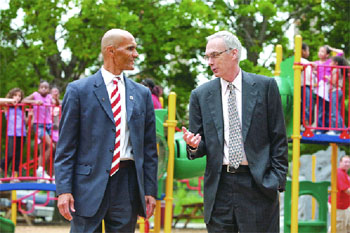
The Boston Business Journal recently named PeoplesBank a top charitable contributor and number 2 in the category of ‘Companies with the Highest Volunteer Hours.’ The bank has contributed approximately $700,000 to charitable and civic causes and employees donated 6,700 volunteer hours over the past year. Here, James Morton, left, president and CEO of the YMCA of Greater Springfield, and Douglas Bowen, president and CEO of PeoplesBank, discuss the bank’s recent support of Camp Weber and Camp Fun City.


Victory Celebration

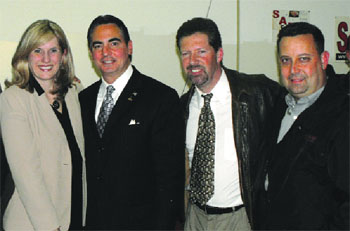
Springfield Mayor Domenic Sarno (second from left) was re-elected to a second term on Nov. 3. Seen with him on election night is the marketing team that coordinated his campaign: from left, Janet Casey, president of West Springfield-based Marketing Doctor; David Horgan, president of Horgan Associates; and Ed Brown, a videographer with New York Sound and Motion.


Human Center

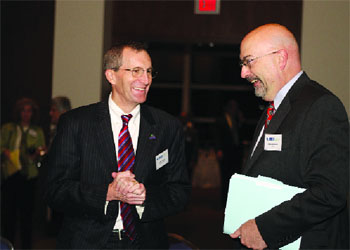
The Center for Human Development staged its annual meeting on Nov. 10 at the MassMutual Center. Attendees heard updates on CHD programs, watched the presentation of several awards, and heard addresses from Health New England CEO Peter Straley and Republican gubernatorial candidate Charles Baker, former CEO of Harvard Pilgrim Health Care, on the subject of national health care reform. At left, Straley (left) chats with Hank Drapalski, CHD’s vice president of Development. Above, the Rick Moriarty Volunteer of the Year Award is presented to Gene Sullivan, right, a CASA (Court Appointed Special Advocates) volunteer. With him is Keith Hedlund (left), director of the CASA program, and Alex Medina, Sullivan’s CASA child.


Having a Ball

More than 400 people gathered at the Sheraton in downtown Springfield on Nov. 14 for the annual Brights Night Ball, staged to support the Bright Nights holiday lighting display in Forest Park and other events staged by the Spirit of Springfield. The ball featured a social hour, several speeches by area elected officials, dinner, dancing, and an auction with prizes ranging from commercial time on local TV stations to a guitar signed by Bruce Springsteen and members of the E Street Band. Clockwise from left, Judy Matt, president of the Spirit of Springfield, with David Cuoco, left, and Joseph Tobin, longtime Springfield Parks Department employees who have led work to install the Bright Nights displays for 15 years; Roger Crandall, COO of MassMutual and chairman of the Bright Nights Ball, addresses the crowd; from the PeoplesBank table are, from left, President Doug Bowen, his wife, Anna, Susan Wilson, vice president of Marketing and Communications for the bank, and her husband, Craig; Health New England President Peter Straley with his wife, Donna Ross, an executive with Baystate Health; and Mark Tolosky, president and CEO of Baystate Health.

Uncategorized

BusinessWest Associate Publisher Kate Campiti says that when the publication launched its Difference Makers initiative roughly a year ago, there were high expectations that the new recognition program would capture the business community’s imagination and inspire more landscape-changing thought and action.

“To say that those expectations were exceeded would be a real understatement,” said Campiti, adding that the first year of the program was successful on a number of levels.

First, the inaugural class of four individuals — Doug Bowen, president and CEO of PeoplesBank; Kate Kane, managing director of the Springfield office of the Northwestern Mutual Financial Group; Susan Jaye-Kaplan, founder of GoFIT and co-founder of Link to Libraries; and Bill Ward, executive director of the Regional Employment Board of Hampden County — and one group, the Young Professionals Society of Greater Springfield, set a very positive tone for the program, said Campiti. Collectively, the Class of 2009 provided a number of poignant examples about how individuals and groups can, indeed, make a difference within the Western Mass. community.

Their stories were highlighted at the Difference Makers gala, which drew nearly 500 people to the Log Cabin Banquet & Meeting House and generated still more excitement for the program and its future.

But then, things got even better, said Campiti, noting that, with inspiration and motivation from Ward and others at the REB, the first class of Difference Makers was put to work addressing one of the most critical issues facing the community: Literacy. The group launched a book-collection project called “Creating a Culture of Literacy — One Book at a Time,” with the specific beneficiary being the Hasbro Summer Learning Initiative. What’s more, the group agreed that literacy wouldn’t be a one-year push, but rather an ongoing concern for future classes of Difference Makers.

All of this will make the inaugural year of this initiative a hard act to follow, said Campiti, adding quickly that she is confident that the program will only grow in popularity and relevance as more individuals and groups are recognized for their efforts and their stories are told.

Which brings us the Class of 2010 and the nomination form on the opposite page. This is where it all begins, and readers are strongly encouraged to let their ‘voices’ be heard.

It’s rather simple, really. If you know an individual or group that is truly making a difference in this region — making it a better place in which to live, work, play, and learn — then nominate them for this honor.

For examples of who can be a Difference Maker, look no further than last year’s class. Bowen and Kane were nominated for their success in leading their respective institiutions, but also for their tireless work within the community on a host of causes and nonprofit boards — and encouraging employees and associates to do the same. Kaplan, meanwhile, was nominated for her work to both introduce young people to the concept of fitness (GoFIT) and put books in their hands (Link to Libraries).

Ward was nominated for his three decades of work with the REB to generate employment opportunities and help individuals overcome barriers to earning a paycheck. Finally, YPS was nominated as a group for its efforts to help young professionals plant roots in the Pioneer Valley, contribute to quality of life here, and hopefully stay in this region rather than look elsewhere for personal and professional satisfaction.

Those are just examples of how people can make a difference. There are countless others. The work can be done in education, government, health care, the nonprofit community, business, or any combination of the above.

Overall, Difference Makers has two real goals, said Campiti: to recognize people whose efforts often go unnoticed or uncelebrated, and to inspire others to want to do the same.

“Our inaugural year was simply an unqualified success,” she noted. “And among the many other things we accomplished, we built some real momentum for 2010 and beyond.”

As stated on the nomination form, entries are due by Dec. 31. Winners will be chosen by the staff at BusinessWest by mid-January, and the Class of 2010 will be announced in February, with the second Difference Makers gala scheduled for March.

—George O’Brien

Opinion
It’s Time for the State to Fund All Hospitals Equitably

There has been a great deal of national debate about health care lately. Here in Massachusetts, many of our hospitals are facing a crisis that is every bit as critical.

Holyoke Medical Center is one of the hospitals that is most affected.

Though Holyoke Medical Center, formerly Holyoke Hospital, has been a vital component in taking care of the region’s most needy patients ever since it opened in 1893, we are witnessing an unparalleled crisis in state funding. For many years millions of dollars in state funding have flowed to facilities such as Boston Medical Center because, like us, they take care of the poor. There is no doubt that they do. And there is also no doubt that, thanks to state funding, Boston Medical Center, a fellow nonprofit facility, finished fiscal year 2008 with a profit of nearly $55 million. During the same period, Holyoke Medical Center, which also treats tens of thousands of poor people each year, lost $951,000. Something is not right with the system.

There are 14 community hospitals in Massachusetts designated as ‘disproportionate-share hospitals,’ each of which serves a large population of the poor and medically needy. A hospital is designated as a disproportionate-share hospital if more than 63% of the care it provides is reimbursable by public payers — Medicaid, Medicare, and Commonwealth Care. It is not just the poor who are served by such hospitals, but also people at risk of being underserved due to age, culture, or disability, or who lack the resources, insurance, education, or ability to travel for care. These hospitals — including Holyoke Medical Center — serve the most needy and vulnerable populations in cities that are struggling to provide services. Others are located in rural areas with challenged economies like the Berkshires and Cape Cod.

Each year, Holyoke Medical Center treats more than 40,000 patients in its Emergency Department alone. Additional services extend its reach to hundreds of thousands of patients. But many of the patients who come to the ER seeking care cannot afford to pay. We’ve never turned anyone away based on their income level, nor would we. The fact that we take care of this population is just one reason we are essential to this community and to this state.

And all we ask is that we are compensated fairly for this invaluable service, on par with hospitals in the Boston area.

It’s quite likely you know someone, a friend or a family member, who works at Holyoke Medical Center. HMC and its affiliates employ more than 1,800 people, and as the largest non-public employer in Holyoke,we pump more than $300 million in direct and indirect spending back into the local economy each year.

Our nurses and other professionals deserve to be compensated on par with those in Boston. Our patients deserve access to the same state-of-the-art medical equipment that Boston patients can access because their hospitals are adequately reimbursed for caring for the poor. The issues facing our hospital are no less pressing than the issues facing Boston Medical Center or Cambridge.

Western Mass. patients deserve better. You deserve better.

There is a growing gap between critical health care dollars being spent in Boston and elsewhere in Massachusetts. Hospitals such as Holyoke Medical Center are severely underfunded, and if the budget shortfalls continue, then the caring that has gone on at this facility and others for generations will be in severe jeopardy.

Supporting our community safety-net hospitals is critical to the health and strength of the towns and cities that depend on them for jobs, to stimulate the economy, and to care for the residents of our communities, including those most in need. In the end, what we ask for is fair and equitable support to fulfill this mission.

Please express your concerns on this issue to the Commonwealth’s administration and legislators.

Hank Porten is president of Holyoke Medical Center.

Sections Supplements
Depth and Diversity of the 2009 Winners Offer Some Things to Celebrate

The Affiliated Chambers’ Super 60 lists have consistently reflected the strength and diversity of the region’s economy, and the Class of 2009 is no exception. The ‘Total Revenue’ and ‘Revenue Growth’ compilations both display well-performing companies in sectors ranging from health care to manufacturing; service to education; retail to technology.

COMPANIES BY TOTAL REVENUE OMPANIES BY REVENUE GROWTH
Whalley Computer Associates Inc. R & R Industries Inc.
Savage Sports Corporation Western New England College
Springfield College Spectrum Analytical Inc.
Associated Electro-Mechanics Inc. American Pest Solutions Inc.
Braman Termite & Pest Elimination Axia Insurance Services Inc.
Center for Human Development Bern Optics Inc.
City Tire Co. Inc. Communication Solutions Partners Inc.
Court Square Group Inc. Custom Carbide Corp.
The Dennis Group, LLC The Delaney House
Disability Management Services Inc. Dimauro Carpet & Tile Inc.
Environmental Compliance Services Inc. Edizen
Insurance Center of New England Inc. Emergency Medicine Solutions LLC
Joseph Freedman Co. Inc. FieldEddy Insurance
Kittredge Equipment Company Footit Surgical Supplies Inc.
Kleer Lumber, LLC Gandara Center
The Log Cabin Banquet & Meeting House The Gaudreau Group
Marcotte Ford Sales Inc. Haluch Water Contracting Inc.
Maybury Material Handling Innovative Business Systems Inc.
Mental Health Association Inc. Jet Industries Inc.
Parts Tool & Die Inc. McGill Hose & Coupling Inc.
Rediker Software Inc. Millrite Machine Inc.
Rocky’s Hardware Inc. Moriarty & Primack P.C.
Tighe & Bond Inc. Proshred Security International Inc.
United Personnel Robert F. Scott Co. Inc.
University Products Inc. Savage Sports Corporation
Valley Communications Systems Inc. Sullivan & Associates Inc.
W.F. Young Inc. Tech Roofing Service Inc.
West Springfield Auto Parts Wegrzyn Dental Group
YMCA of Greater Springfield Whalley Computer Associates Inc.

YWCA of Western Massachusetts

Whalley Precision Inc.

Russ Denver says the Super 60 recognition program has never been about five dozen companies celebrating their individual success in a given year.

OK, it’s not just about that, said Denver, president of the Affiliated Chambers of Commerce of Greater Springfield, which oversees the program. He noted that some firms — or the accounting firms that nominate them — want to tout their accomplishments and solid growth rates. From a big-picture perspective, the program, now 20 years old and expanded from what used to be called the Fabulous 50, is a celebration of what the 60 firms collectively represent.

Specifically, they connote strength and diversity, said Denver, and plenty of that will be on display at the annual Super 60 luncheon and Recognition Program on Oct. 23 at Chez Josef in Agawam.

Virtually every sector of the economy is represented on this year’s list, from manufacturing to service; financial services to health care; technology to education. A quick look at the list shows companies and institutions ranging from Springfield College to the Rocky’s Hardware Chain; from McGill Hose & Coupling Co. to the YWCA of Western Massachusetts.

“There’s an old saying about there being strength in numbers,” said Denver. “There’s certainly strength in these numbers — from the list of business sectors represented to the totals for revenue to the average growth rates for the winners in that category.”

That revenue figure exceeds $1 billion again this year, said Teddy Woeppel, communications director for the AGGCS, noting that average revenues for all applicants was $19 million, while for the top 30, they exceeded $32 million. As for growth, the numbers were again solid, especially given the economic conditions, she said, adding that the average for all participants was 25%, while for the winners, it was more than 40%.

Breaking down the lists further, Woeppel said two companies, Whalley Computer Associates Inc. in Southwick and Savage Sports Corp. in Westfield, qualified in both categories. Meanwhile, 65% of the winners were ACCGS members, with 22 belonging to the Springfield Chamber, nine to the West of the River Chamber, and eight to the East of the River 5 Town Chamber.

The top three finishers in the ‘Total Revenue’ category were Whalley Computer Associates, Savage Sports, and Springfield College. On the ‘Growth’ side of the ledger, the top three finishers were R & R Industries, Western New England College, and Spectrum Analytical. Beginning on page 16, BusinessWest offers brief snapshots of each of the 60 companies on this year’s lists.

The Oct. 23 luncheon will begin at 11:30 a.m. It is being sponsored by Health New England, Hampden Bank, Sullivan Hayes & Quinn, Nuvo Bank & Trust Company, and Zasco Productions. The keynote speaker will be author and customer-service expert Dennis Snow, who spent more than 20 years working for the Walt Disney Company in customer service and is now a full-time motivational speaker, trainer, and consultant.

Departments

Health Insurers Expect to Raise Rates by 10%

WASHINGTON, D.C. — Premiums for employer-sponsored health insurance rose to $13,375 annually for family coverage this year — with employees on average paying $3,515 and employers paying $9,860, according to the benchmark 2009 Employer Health Benefits Survey recently released by the Kaiser Family Foundation and the Health Research & Educational Trust (HRET). Family premiums rose about 5% this year, which is much more than general inflation (which fell 0.7% during the same period, mostly due to falling energy prices). Workers’ wages went up 3.1% during the same period.  Since 1999, premiums have gone up a total of 131%, far more rapidly than workers’ wages (up 38% since 1999) or inflation (up 28% since 1999). For the past few years, the annual rise in premiums has been more moderate than the double-digit growth experienced earlier this decade. As Congress considers health reforms building on the existing employment-based system, the annual Kaiser/HRET survey provides a detailed picture of private health insurance coverage and costs. The survey found that 60% of firms offer health benefits to any of their workers this year. As in the past, the smaller the firm, the less likely it is to offer health benefits — with fewer than half (46%) of the smallest employers (three to nine workers) offering health benefits. Among those firms offering benefits, 21% report they reduced the scope of health benefits or increased cost sharing due to the economic downturn, and 15% report they increased the worker share of the premium. The survey also reveals that a growing number of workers who are covered by their employer are facing high deductibles in their plans in addition to contributing to the premiums for their coverage. In 2009, 22% of covered workers must pay at least $1,000 out of pocket annually for single coverage before their plan generally will start to pay a share of their health care bills, up from 18% last year and 10% in 2006.

Retail Sales Top Expectations

WASHINGTON — The Commerce Department’s U.S. Census Bureau recently reported that retail sales rose 2.7% in August, well above the increase of 2.0% private analysts had expected. Motor vehicle sales jumped 10.6%, while sales excluding motor vehicles increased 1.1%, and sales excluding motor vehicles and gasoline rose 0.6%. Also, the Census Bureau announced that advance estimates of U.S. retail and food services sales for August, adjusted for seasonal variation and holiday and trading-day differences, but not for price changes, were $351.4 billion, an increase of 2.7% from the previous month, but 5.3% below August 2008. Total sales for the June-through-August 2009 period were down 7.6% from the same period a year ago.

Initial Unemployment Claims Decrease

NEW YORK — In the week ending Sept. 12, the advance figure for seasonally adjusted initial unemployment claims was 545,000, a decrease of 12,000 from the previous week’s revised figure of 557,000. The four-week moving average was 563,000, a decrease of 8,750 from the previous week’s revised average of 571,750. The advance seasonally adjusted insured unemployment rate was 4.7% for the week ending Sept. 5, an increase of 0.1 percentage point from the prior week’s unrevised rate of 4.6%. The advance number for seasonally adjusted insured unemployment during the week ending Sept. 5 was 6,230,000, an increase of 129,000 from the preceding week’s revised level of 6,101,000. The four-week moving average was 6,180,250, a decrease of 5,500 from the preceding week’s revised average of 6,185,750. The fiscal year-to-date average for seasonally adjusted insured unemployment for all programs is 5.636 million. Extended benefits were available in several states, including Massachusetts. The highest insured unemployment rates in the week ending Aug. 29 were in Puerto Rico (6.8%), Oregon (5.7%), Pennsylvania (5.7%), Nevada (5.5%), Michigan (5.2%), Connecticut (5.1%), New Jersey (5.1%), California (5.0%), Wisconsin (5.0%), North Carolina (4.8%), and Rhode Island (4.8%). The largest increases in initial claims for the week ending Sept. 5 were in Washington (+2,620), Pennsylvania (+2,573), Massachusetts (+1,565), North Carolina (+1,332), and Illinois (+1,218), while the largest decreases were in California (-2,751), New York (-2,479), Wisconsin (-1,149), Texas (-809), and New Jersey (-700).

Holyoke Establishes Energy Committee

HOLYOKE — As the city pursues its goal of reduced reliance on fossil fuels, a new Holyoke Energy Committee will work together with Mayor Michael J. Sullivan to further the efforts being done to capitalize on Holyoke’s green assets. A primary goal will be to reduce the energy consumption of the municipality as well as improve the overall level of sustainability of Holyoke through programs to encourage residents and businesses to be more green on a day-to-day basis. Committee members serving on the new board are William Fuqua, superintendent of public works; James Lavelle, director, Holyoke Gas & Electric; Kathleen Anderson, Office of Planning & Development; Fire Chief David Lafond; Melinda Lane, Police Department; and Whitney Anderson, maintenance administrator, Holyoke School Department. The first task of the committee will be to satisfy the requirements of the state’s Green Communities Act to be considered a Green Community. The city was recently awarded a Green Communities Technical Assistance Grant from the Mass. Department of Energy Resources, Green Communities Division, to assist in the completion of these requirements. Once considered a Green Community, Holyoke will qualify for portions of a $10 million grant and have higher priority in some grant rounds in the state.

Output Figures Give Economists Bright Outlook

WASHINGTON — Industrial output rose 0.8% in August, following an upwardly revised increase of 1.0% in July. Production in manufacturing expanded 0.6% in August, and the index excluding motor vehicles and parts increased 0.4%. The gain in July for manufacturing was revised up 0.4 percentage point, to 1.4%; in addition, factory output for April through June is now somewhat less weak than reported previously. Production at mines moved up 0.5% in August. The output of utilities gained 1.9%, as temperatures swung from an unseasonably mild July to a slightly warmer-than-usual August. At 97.4% of its 2002 average, total industrial production was 10.7% below its level of a year earlier. In August, the capacity utilization rate for total industry advanced to 69.6%, a level 11.3 percentage points below its average for the period 1972 through 2008.

Bernanke Sees Difficult Challenges Ahead

WASHINGTON — A year ago, the expression “systemic risk” became the new clarion call for policy-makers and regulators as they took unprecedented steps to avoid a collapse of the global financial system. On Sept. 15, one year after the Lehman Brothers collapse, the Brookings Institution hosted a forum to explore the tumultuous events of last September, where financial markets stand today and the status of regulatory reforms to prevent the next financial crisis. Federal Reserve Chairman Ben Bernanke gave the keynote address, noting that during the past year the world has “been through the most severe financial crisis since the Great Depression.” Bernanke added that the crisis in turn sparked a deep global recession from which we are now only beginning to emerge. He noted that although the country has avoided the worst, “difficult challenges” still lie ahead. Bernanke said we must work together to build on the gains already made to secure a sustained economic recovery, as well as to build a new financial regulatory framework that will reflect the lessons of the crisis and prevent an occurrence of the events in the past two years. He concluded that he “hopes and expects” after reviewing developments a year from now, the country will be able to claim substantial progress toward both objectives.

Opinion

It’s encouraging to see the state and this region taking such a keen interest in young people these days. Among the many other pressing matters at hand, elected officials and economic-development leaders have made the younger populations — and the challenge of keeping them within the confines of the Bay State — a top priority.

Which is good, because as we’ve said many times, they are one of the keys to the relative health and well-being of both Western Mass. and the state as a whole.

The focus on young people has manifested itself in a numbers of ways — from a video produced earlier this year to promote this region (it touts everything from the low cost of living to a high quality of life), to a new Web site— www.massitsallhere — that trumpets the Commonwealth and all it offers, to a series of forums designed to pick the brains of young people to find out what they like and don’t like about this state.

The first of these forums was staged in Springfield last week, and a small group of area young people turned out to listen and offer some feedback.

All this, as we said, is well and good, but the efforts to date seem to be focusing almost exclusively on marketing — putting a good face on both this region and state and reminding everyone of all the good things we have in Massachusetts, from fine colleges and culture to mountains and the seashore, separated by only a few hours.

Marketing is important, but from our perspective, the way to plug or at least control the brain drain in this state comes down to one simple thing: jobs.

It’s a fact that people don’t stay where they grew up like they did a generation or two ago, but the reason for this isn’t necessarily the cost of living or the quality of life (although those certainly play a role), Rather, it comes down mostly to job opportunities.

People don’t flock to North Carolina for the weather or the school systems or the golf courses or the beaches or the health care facilities. They go there because that’s currently where the jobs are. People aren’t leaving places like Boston or Buffalo, or many other older industrial cities (yes, like Springfield and Holyoke) because they don’t like it there. They’re leaving because there are fewer opportunities.

This is the message that people in government and economic development need to hear, and they’re not going to hear it from people who have decided to stay. That’s why they need to talk to the people who are leaving, as well.

And they need to borrow a page or two from the script followed by North Carolina and other states that are seeing their populations increase, not decrease. They need to find ways to make this state and this region more business-friendly and create more opportunities.

There are some opportunities in several fields, from health care to the biosciences, from education to sustainable energy, but simply not enough of them, and not across the broad spectrum of education and training levels.

The proposed high-performance computer center, a decision on which is due from state and Holyoke officials in a few weeks, is an example of the type of job-creation work that the state needs to see more of in the years to come if it is keep more of its vital resource — young talent — within the Commonwealth.

In the final analysis, marketing is good, and it’s no doubt a necessary part of this equation, but marketing won’t keep young people here or attract them to the Bay State from other regions.

Only good, solid job opportunities can do that.

Opinion
A Step to Manage Health Costs

Massachusetts’ managed care organizations lead the nation in quality of care and consumer satisfaction. So it is no surprise that the percentage of people in the Commonwealth’s private health insurance market who use managed care is the highest in the nation.

But 325,000 of the 750,000 Massachusetts residents receiving full benefits under the federal Medicaid program are not enrolled in managed care plans. These individuals are enrolled in a fee-for-service plan, called the Primary Care Clinician plan. Moving enrollees from the Primary Care Clinician plan into managed care plans would achieve two important outcomes: improve their care and, according to three recent studies, save the Commonwealth anywhere from $600 million to $1 billion over five years, easing the fiscal pressures of paying for health care reform.

Medicaid will cost the Commonwealth $8.6 billion this year, and the costs are increasing much faster than either economic or overall budget growth. Between 2001 and 2006, costs grew at an average of 8 percent annually. The result was that 35 cents of every new tax dollar went to pay for Medicaid. Clearly, the status quo is unsustainable.

With a deep recession making new revenue a pipe dream, Massachusetts faces a clear choice. We must either find a way to make Medicaid more efficient, or choose from among a slate of unappealing options like eliminating coverage for some, limiting services or cutting provider reimbursements.

Under the Commonwealth’s landmark 2006 health care reform law, almost 240,000 formerly uninsured residents have signed up for state-subsidized health insurance, either through Medicaid or the Commonwealth Care program. Finding a way to pay for that coverage makes the need to improve the efficiency of Medicaid service delivery even more urgent.

Managed care provides efficient, high-quality care by aligning financial incentives with clinical outcomes. It combines prevention and wellness services with programs to help individuals address specific conditions like obesity, diabetes, asthma and smoking that drive up health care costs. Patient outcomes are carefully tracked.

Massachusetts organizations have proven adept at combining access to quality care and cost control. Their quality outcomes are among the best in the nation as measured by prevention data, patient satisfaction and outcomes. In 2007 and 2008, Fallon Community Health Plan was rated the country’s top Medicaid health plan by the National Committee for Quality Assurance.

Despite high quality and the overall acceptance of managed care, Massachusetts has lower managed care penetration among Medicaid recipients than most other states do.

Eliminating the Medicaid PCC plan would yield an additional $40 million in savings over two years by foregoing the cost of infrastructure and program enhancements needed to bring the plan up to par with existing managed care programs. It suffers from limited accountability and lacks a reliable mechanism for ensuring coordination among various providers. It also would appear to support the efforts of the Commonwealth’s Payment Reform Commission to move away from fee-for-service reimbursement arrangements.

Savings wouldn’t come at the cost of patient care, as the Commonwealth’s Medicaid Managed Care providers consistently outperform the fee for service plan on many quality of care measures.

Massachusetts’ goal of universal coverage requires that we maximize the efficiency of services offered under Medicaid. Dismantling the Commonwealth’s fee-for-service Primary Care Clinician plan and moving all recipients of full Medicaid benefits to a managed care model would do just that. Even more importantly, it would improve the quality of care for some of our most vulnerable citizens.

Eric Schultz is president and chief executive officer of Fallon Community Health Plan. Jim Stergios is executive director of Pioneer Institute.

Sections Supplements

If you are one of the many millions of Americans who are responsible for your own personal financial needs, as well as supporting and caring for your own children, in addition to your elderly family members, you are part of the Sandwich Generation (SandGen).

Approximately 44% of Americans between ages 45 and 55 are stuck right there in the middle of two generations who are both financially and emotionally dependent for their well-being. According to a recent AARP report, there are nearly 20 million Baby Boomers in this situation. This SandGen must look at planning from many different angles in order to ensure that they can secure their own financial future as well as provide for those they care about.

Common expenses and responsibilities that you may face if you’re a part of the SandGen are college tuition, wedding expenses, helping with housing for your children, caretaker responsibilities, health care costs and cost-of-living expenses for your adult parents, all the while still trying to save for your own retirement. Despite the fact that advanced planning is usually best, attacking the issues at any time will bring more success than a do-nothing approach.

The SandGen parents in this situation must first have an open conversation about the importance of financial planning and solid money-management skills with their children — the younger the better, as this conversation can jump-start planning for future education expenses as well as other major lifetime expenses. Although many parents crack into their retirement nest egg in order to finance college education, children should be encouraged to look into other financial resources that may be available. They may be able to access education savings plans, scholarships, grants, money earned from part-time employment, and student loans in order to offset the financial strain on their parents.

A low-interest loan for a college education seems a better choice than the invasion of principal and the associated taxes and penalties that may result from using retirement savings. If the SandGen continues to deplete assets on college as well as the other caring responsibilities, they will likely extend their working years on average an additional 10 years.

There are also luxury expenses — for example, helping with weddings or assisting with the purchase of homes for their children. Here, the SandGen needs to take into consideration that these financial outlays are going to dramatically affect their retirement and lifestyle. Children need to understand the implications that these requests may have on their parents as well, so the SandGen must find a way to discuss with their children what is necessary and what is luxurious. Those who give in and offset major purchases and expenses for their children may need to adjust their estate plans to account for disproportionate distributions during their lifetime between their children.

An aging parent, grandparent, or other elderly relative who is dependent upon this generation comes with major potential financial needs. Assisted-living facilities that help a relative with the activities of daily living such as bathing, eating, and personal care can cost on an average $48,000 yearly. Nursing-home care costs over $100,000 annually.

The average household is not in a position to absorb these types of extraordinary expenses, and the average household is not equipped to take in an elderly family member or provide at-home care in the family member’s home. The decision to bring an elder family member into one’s home often results in a major home renovation. This can be funded by the elder’s money, but although it is often much less expensive than what an elder would spend on nursing-home or assisted-living care, it still may become cost-prohibitive if the elder requires a level of care greater than family members can provide, as in-home care costs can be daunting. Also, down the road, the elder may require a level of skilled care that cannot accomplished at home.

One way to prevent these types of expenses is through the ownership of a long-term care insurance policy that begins to pay when a policy holder suffers from a chronic condition and needs constant care. The policy can pay for in-home assistance, assisted-living facilities, as well as nursing-home care, depending upon the level of need. The most affordable premiums are quoted to people in their early 50s who are in good health. Although the premiums are often expensive, especially for older applicants, it still is less expensive than the annual costs of privately paying for the care.

Families should discuss sharing these premiums if an elderly person can’t afford the expense alone. Siblings sharing in the cost can dramatically reduce the financial burden to a single household.

In the event that a parent cannot qualify for long-term care insurance, Medicaid, a state’s health care system for individuals who meet a predetermined poverty level, can be accessed. Bear in mind however, that in order to qualify, the applicant must be devoid of nearly all assets and the family will be spending assets on the private-pay costs of care.

Families should consult with an elder law attorney who can advise on the development of an asset-preservation plan that may reduce the cost to the family or benefit them by determining what can be protected from Medicaid recovery and prevented from being spent on care.

A reverse mortgage is another option for individuals who desire to remain in their own home. For many elderly people, this is of paramount concern; however, they may not have the day-to-day resources to afford to remain there. In the absence of assistance from their children to pay the monthly carrying costs of real-estate taxes, hazard insurance, water, sewer, utilities, maintenance, and any debt service, there would be no feasible way for the parent to remain in the home. A reverse mortgage allows the elder to access the equity in their home for expenses for as long as they continue to live in their home. This loan is then paid back upon the death of the elder, or the sale or refinance of the property. A reverse mortgage may deplete the potential inheritance to be received from a elderly family member; however, balanced against the financial security of not having to invade one’s retirement and savings, as well as giving the elder the peace of mind of remaining at home, it seems a win-win option.

During this time of determining housing options, it is a good idea to speak with the elder about the need for a proper estate plan, creating one if no plan exists or updating an outdated existing plan. What may often be a touchy subject among children and parents or elderly relatives may be broached more easily when working together to reach health care, housing, and lifestyle decisions. In any event, a SandGener who is taking on the financial obligations and/or personal care responsibilities of an elderly relative must ensure that the relative has at least a health care proxy, durable power of attorney, and last will and testament in place in order to stave off problems in future decision-making.

All in all, the SandGen is one that still needs to save for themselves in addition to saving for their children’s education and paying to support the expenses of their elder family members. They can’t ignore their own needs while succumbing to the pressure of meeting everyone else’s needs. Proper planning for this generation includes not only their own individual retirement and financial and estate planning, but that for their children and elder relatives as well. This can include, but not be limited to, the use of traditional savings vehicles, life insurance, long-term care insurance, qualified retirement funds, 529(c) plans and other available college savings plans, as well as a good old-fashioned budget and proper estate planning to ensure that everyone’s needs are met. With proper planning, there should be plenty of eggs left in the nest to go around. n

Julie A. Dialessi-Lafley, Esq. is a partner with the law firm Bacon Wilson, P.C. She focuses her practice in business, real estate, estate planning and administration, elder law, and family law; (413) 781-0560;bwlaw.blogs.com/familylawbits;[email protected]

Opinion
Casino Jobs Aren’t Enough

Last year, House opposition stopped Gov. Patrick’s proposal to build three resort casinos in Massachusetts. With a worsening fiscal crisis and Speaker Robert DeLeo taking a more casino-friendly stance than his predecessor, the issue is sure to reemerge this fall.

Proponents argue that casinos will add new tax revenue and much-needed jobs — a Greater Boston Chamber of Commerce study estimates that three resort casinos would add between 10,000 and 11,500 temporary construction jobs and 17,000 to 21,000 permanent jobs. Opponents cite the societal costs associated with gambling.

Our organizations haven’t taken a position on casinos. But we believe the much bigger issue is that, while the country added about 25 million jobs over the last two decades, the number of jobs in Massachusetts stayed the same.

Flat job growth is not a strategy for long-term success. Skilled workers have made Massachusetts a leading destination for high-paying jobs. But focusing only on high-end employment is a recipe for disaster, creating a society of haves and have-nots. Broader job growth creates social mobility, encourages affordability, and enhances the region’s ability to attract the best talent.

Creating a level playing field should be the foundation of an overall vision for long-term job growth. It begins with streamlining the process for starting a business. Massachusetts must be a destination that holds opportunity for new immigrants and other start-up entrepreneurs, not just the established and affluent. And while Massachusetts will never be inexpensive, costs matter, and there is much that can be done to reduce them.

A 2006 study prepared by Global Insight for Pioneer Institute found that the cost of land was the source of the state’s high residential and commercial rents, wages, and overall cost of living. The problem often stems from rigid local zoning ordinances that discourage development. In the midst of a deep recession, it’s easy to lose sight of problems such as the supply of affordable commercial space not keeping up with demand. But over time, this has been a main driver of rising costs, making each new job more expensive to create.

The cost of employer-provided health insurance continues to rise much faster than inflation. The Commonwealth’s 2006 health care reform law was a first step toward addressing the problem. It has successfully expanded access to health insurance, but a laser-like focus on cost containment will be necessary if it is ultimately to succeed.

Massachusetts’ cost of electricity, one of the highest in the nation, is also hindering economic growth. With the state’s reliance on expensive fuels to generate power, escalating costs to replace an aging infrastructure, and the willingness to constantly add surcharges to customer bills to fund unproven renewable technologies and other costly experimental programs, further double-digit rate increases are certain.

Massachusetts employers also pay more than $1.5 billion annually in unemployment insurance taxes — double the national average on a per-employee basis. The taxes support a system that offers the richest benefits in the country, and one in which it’s easier to qualify for benefits and recipients can collect for longer than in other states.

With people hurting across the state, this isn’t the time to cut unemployment benefits. But a set of reforms proposed last year by Associated Industries of Massachusetts would have saved $366 million without slashing benefits.

Today, businesses in seasonal industries like construction and tourism routinely lay off the same employees every year, using unemployment benefits as kind of a payroll subsidy. Some small-business owners take advantage of this loophole by laying themselves off and collecting for part of each year. Charging those companies much higher unemployment insurance tax rates would provide a disincentive for bad behavior and lighten the load for companies that aren’t abusing the system.

Whether to build casinos in Massachusetts is an issue that merits spirited debate. But casinos alone aren’t nearly enough to make up for the Commonwealth’s failure to grow jobs. Regardless of how the casino debate turns out, state policymakers should spend far more time and effort on reforms that will spur substantial long-term job growth.

Rick Lord is president and CEO of Associated Industries of Massachusetts. Jim Stergios is executive director of Pioneer Institute.

Sections Supplements
Employee Free Choice Act Opens Fresh Dialogue on the Future of Labor Unions
Meredith Wise

Meredith Wise says employers are making a mistake if they underestimate unions.

As Congress gets set to re-open debate on a bill that will streamline the process by which employees unionize — a measure opposed by many businesses but supported by elected leaders in this time of economic turmoil — there is new discussion about organized labor and the role it will play in the years to come.

Later this year, a bill to be voted on in Congress will have a significant effect upon the American workforce.

The Employee Free Choice Act (EFCA) was originally introduced in February 2007 and gained momentum, but a Republican filibuster kept the bill effectively squashed. In March of this year, Sen. Edward Kennedy and Rep. George Miller of California re-introduced the provision to the 111th Congress.

EFCA’s role in the workplace is to streamline the process by which employees unionize their workplace. Key proponents of the bill see this as necessary for workers in a time of financial turmoil. However, businesses from Home Depot to FedEx have reacted strongly against the pending legislation.

While supporters lobby to get some form of the bill passed through Congress, larger questions arise. With such powerful federal assistance to organized labor in America, is it time to re-evaluate the role unions play in the contemporary workforce?

“Basically union membership has been declining overall for the past 10 to 15 years,” said Meredith Wise, president of the Employers Assoc. of the NorthEast, a membership organization that strives to improve employer-employee relations. “One of the reasons why the unions have declined is because their agenda has been legislated.”

But Tom Juravich, a professor of Labor Studies at UMass Amherst and former director of the school’s Labor Center, disagrees with that basic premise. “I think it’s important to draw the distinction between how unions operate, and the role unions play in this country, with the workforce of Western Europe,” he explained.

In contrast with that workforce, which is largely granted much of its benefits and social stability through citizenship, said Juravich, “in many ways, the only opportunity an American worker has is through a union card.”

With historic change possibly on the docket in Congress, BusinessWest opens a dialogue on what role unions have for the nation’s workforce, what EFCA will mean, and what the future might hold for organized labor.

The Times They Are a-Changing

Wise said that with all the attention placed on EFCA these days, “companies, as well as unions, are focusing more on what role unions play in the workplace and whether they’re going to grow or continue to diminish in membership.”

What seems to be happening, she said, is that both companies and unions are in a holding pattern, basically seeing how the legislation fares. “The sense had been that, until the EFCA passed or was totally shot down, that the unions wouldn’t get active. They wouldn’t do more than they typically do, as far as outreach or trying to unionize workplaces, and a lot of employers I think kind of put the urgency to look at their employee relations on the back burner.

“The economy being what it is,” she continued, “business might be saying, ‘my plate’s full; I just can’t worry about the possibility of unionization unless something happens with EFCA. Unions can’t come after me anyway, because there’s just no money to give increases, people are being laid off … unions don’t have a platform.’”

However, quite the opposite of that logic is what appears to be underway. Wise said that over the past several weeks, she sees unions in Western Mass. and Northern Conn. not pulling back, but getting much more active in reaching out to workers. “They don’t appear to be saying, ‘the economy’s not good; we shouldn’t push,’” she said.

Rather, unions are reaching out to increasing numbers of workers, but aren’t filing petition cards with the National Labor Relations Board, said Wise, adding that she is left with questions concerning their intent. “Part of what we as an employers association, and what businesses are wondering, is whether the unions are getting active to gather signature cards, and then sit on them for a while with the thought that EFCA is going to pass, or some version of it passes, and then they can present these cards and be recognized? Or are they gathering them and they just haven’t gotten to enough of a point yet to get an election?”

While speculation swirls about EFCA and its fate, there is broader discussion about just how much power unions still possess and what it can or should do with that influence.

While manufacturing has been the traditional base for organized labor, Wise noted that unions have branched out into many different sectors. The public sector, from the federal government on down to town municipalities, represents fully one-third of the organized workforce in the nation, she noted, adding that growth is significant in both human services such as health care and also finance.

The big difference for unions these days, she told BusinessWest, is that goals have changed with the times. “I think that one of the main reasons is that, 10 to 15 years ago, unions did a really great job of pushing their agenda into the political arena,” said Wise. “So there had been a lot of laws and regulations that used to be part of union contracts, but now they are regulated.

“These include things like family and medical leave,” she continued. “At one point in time, something that would have been a big part of the union platform is that you can go out on leave and have your job protected. Well, now that is federally legislated. That’s going to happen regardless if you are union or not.”

The Americans with Disabilities Act of 1990 is another example of union success for the workplace at large. “I think that the unions have done a pretty good job over time of getting their agendas politicized and put across for all employers to have to do without being unionized.”

Juravich agreed that union’s message has successfully become part of the American worker’s rights, union or not. However, he noted that there is still work for unions to do. “I still think that what we’re given by law is minimal when contrasted with other industrial societies,” he explained. “For example, there is no federally or state mandated right to a lunch hour. So I think that unions still can provide a lot.”

EFCA Marks the Spot

Votes for unionization currently take place when 30% of the workers for a given employer agree to sign authorization cards. Those cards are then filed with the NLRB, which then organizes an election for them.

Generally within 60 to 90 days there is a secret-ballot election, where the employees that have been identified as a unit have an opportunity to vote ‘yes’ or ‘no.’ Those who originally signed those authorization cards may stick with their original vote of pro-union, or they can decide against it.

If EFCA passes as currently written, there would be no secret-ballot election. If the union voices could get 50% plus one of the workforce originally, the potential bargaining unit that gathered these election cards would present them to both the employer and the NLRB and then they’re in — no further election.

EFCA, essentially, seeks to safeguard the jobs of employees seeking to organize their workplace. Juravich explained some of the clear and present dangers with the current process and why the legislation has been filed.

“The problem is that, during the days leading up to the election process, what we know is that they are not very democratic,” he explained. “Employers can do a variety of things to impede the elections. For example, they can bring workers in and meet with them individually for five minutes to three hours to try to dissuade them from voting positively in the election.

“There is a statistic that in one out of every three union elections, workers are fired illegally for trying to organize,” he continued. “That has an incredibly chilling impact, even though those employees might later be hired back.”

The possibility for compromise with the EFCA as currently written seems likely, said Wise and Juravich. One of the key revisions already discussed is that the secret-ballot election wouldn’t be abolished; it would just take place with an expedited timeline. Instead of the current waiting period of 60 to 90 days, balloting would have to happen within 10 days. Or, if the election were to take place within 10 to 15 days, there are certain things management can or cannot do regarding campaigning against the union.

Labor Daze

While helping employers understand EFCA and potential ramifications, Wise also has some advice for business owners about organized labor in general: Don’t underestimate it.

She said the card unions are playing today involves respect, or, more to the point, the lack of it being shown to workers during this economic downturn.

“Businesses are very involved right now in keeping themselves afloat, making it through another payday, making it through the year, and they are neglecting to a large extent those employee-relations pieces,” she continued. “It’s an important thing not to say to an employee, ‘you’re lucky to have a job,’ or, ‘no I don’t have time to listen to your complaint today, and remember, you have a paycheck. You’re not like the other 10% of the workforce that is unemployed.’”

Wise noted that unions are a business, and are utilizing sound business models these days. “Over the last five to 10 years, the unions have been working so hard at restructuring themselves and re-educating themselves because the workforce that they were accustomed to organizing is no longer the workforce that’s out there,” she said.

“Now, unions are poised to kind of come back,” she continued, “because they have more technology. They’ve worked really hard at rebuilding their Web sites, updating their methods of communication, and frankly probably done a better job of that than their employers as far as recognizing how tech-savvy a lot of the younger people are, and working that into their campaigns and their outreach.”

For Juravich, his contrast with the industrialized societies of Western Europe highlights the discrepancies between the two workforces. “As part of the rights one receives there with citizenship, one has the right to earn a living wage, to have health care and pension benefits. Those are their citizenship rights.

“In this country,” he continued, “the laws provide us with minimum wage, no access to health care, no access to pension programs, with the exception of Social Security. Unions are in many ways for American workers to be a part of a society, to have what workers around the world are offered by law.”

Speculation on Capitol Hill is that health care is presently on the front burner of Congressional voting, and that EFCA cannot realistically be addressed until at least later this month. Passage of the bill would prove to be a significant victory for organized labor in the U.S., and Wise wants employers to understand the consequences of current actions.

“My message is that companies need to open their eyes,” she said, “and if they don’t want that union intervention, they need to stop and look at what their employee relations are.

“That’s what’s going to help them achieve their corporate goals and expectations,” she continued. “Unions have played a role in the economy and environment, but I think that businesses can do a better job of achieving their goals of working with their employees without third-party intervention.”

Juravich thinks this is a pivotal time for unions. “This is without a doubt the most difficult time that workers will face in over three generations, because of the economy. But also this is the most challenging time for unions to be facing in that same time period.

“In the industrial sector,” he continued, “unions have not been able to hold onto their workers. In the auto industry, they are struggling and saying to themselves, ‘how can we still make a difference?’ Unions have always been about wages, pensions, and health care. But they have also always been about more than just that. In these difficult times it’s important to remember that unions are also preserving the larger issues of justice and dignity in the workplace.”

Opinion
Retooling the Medicare/Medicaid Model

National health reform is on a fast track. And most proposals draw heavily on the experiment in Massachusetts, which has led to a phenomenal coverage success. But there is a lesser-known innovation in Massachusetts that may offer greater lessons to our nation in improving health and lowering cost. It is called Senior Care Options, and it targets a population largely ignored by health reform — seniors. To understand its novelty, a quick review of Medicare and Medicaid is instructive.

Both public programs are overseen through one federal agency, the Centers for Medicare and Medicaid Services (CMS). Medicare is administered by the federal government and provides health insurance to seniors 65 and older. Medicaid is funded by the states and the federal government, but administered by individual states. It provides insurance to low-income families, disabled individuals, and seniors. Families represent three-quarters of Medicaid’s enrollment, but only 30% of the costs. Seniors account for much of the rest.

A child on Medicaid costs $1,700 per year. A senior in a nursing home costs $70,000. Herein lies an irony. Medicare was created to provide care for seniors. But that care is putting the greatest pressure on state Medicaid budgets. Why? Medicare does not pay for most long-term care services — the most expensive care for this population. And since most seniors cannot afford long-term care, once they become frail they ‘spend down’ their assets (or previously transferred them to their children) to qualify for Medicaid.

In order to deal with this growing burden, states are investing in innovative community supports and services — like home health and personal-care services — to keep seniors out of nursing homes. To do this well, a state must effectively manage the entire care for this population. But for the 9 million nationally who are on both Medicaid and Medicare, it is almost impossible to do so. This is because each program operates in its own silo with different rules, providers, and services, resulting in enormous fragmentation and added cost. And this cost is significant. Seniors in this circumstance — so-called ‘dual-eligibles’ — account for more than $200 billion in spending per year.

Enter Senior Care Options. Massa-chusetts and CMS entered into a novel experiment in 2004. For dual-eligible seniors, Medicare and Medicaid both provide funding to Senior Care Options organizations, which are responsible for managing all care. The organizations provide care that best meets the needs of individuals without separate funding sources and rules to fragment care. Care is fully coordinated, and patients and their families are actively involved in decisions about their health.

The program has had impressive results. Enrollment in this state now tops 11,000 and has increased each year. (Senior Care Options is not available in all regions of the state, and as a voluntary program does not cover all those eligible.) One recent survey found that customer satisfaction was generally very high. Another showed that those in these organizations entered nursing homes at a rate that was 25% lower than those not in the program.

Senior Care Options teaches that seamless coordination of care is critical to success. Yet, the arcane design of Medicaid and Medicare presents major obstacles. As a result, very few other states have successfully replicated this model, and the care for most dual-eligibles remains largely unintegrated.

As Congress considers a new public plan, shouldn’t we better align the public plans that already exist? The Obama administration can reorganize CMS so that it focuses as much on the unique needs of populations as it does on the rules of payment. CMS should create a program integration unit devoted exclusively to breaking down silos between the two programs and working with states to eliminate barriers to seamless care for dual-eligibles. Doing so will go a long way to reducing costs — and free up resources for more far-reaching reform.

Douglas S. Brown is senior vice president and general counsel of UMass Memorial Health Care in Worcester and a former state Medicaid director.

Features
Westfield Charts Progress Downtown and in Its Industrial Parks
Lisa McMahon

Lisa McMahon, seen at Westfield’s Farmers Market, says there is a great deal of interest in downtown real estate.

Moving like a freight train.

That’s the speedy-sounding metaphor Westfield Mayor Michael Boulanger used to describe the forces transforming both his city’s downtown and overall immediate future. As he delved into the details, the description doesn’t seem far off.

A city with a long history evident in three centuries of architecture along its city green, Westfield dates to the 1660s as the westernmost outpost of the Massachusetts Colony. In its heyday, it was a manufacturing center for bricks, cigars, and the buggy whips that give the city its nickname. Today, more than 40,000 people inhabit its 47 square miles, with a median income of around $45,500.

Westfield has long been free from many of the social ills plaguing its regional peers. It boasts steady home prices, a low crime rate, and a solid middle-class population have made the Whip City something of an anomaly in the Pioneer Valley.

While other former mill cities strive to shore up their communities from decades of urban blight, Westfield has its eyes on a larger prize, nothing short of transformation into a destination city, not unlike nearby Northampton. In this latest community profile, BusinessWest talks to some of those people with the lofty, yet very real, goals of making that happen.

Home Court Advantage

Nationwide, economic development has been as stagnant as the summer’s heat. But Westfield boasts new-business planning that most communities can only dream of. Boulanger sat at the head of his conference table recently to outline the details of that “freight train” he described.

“Contrary to what the Massachusetts economy, or that of the nation, has shown in terms of a lack of growth, well, there’s a lot of stuff happening here now,” he said. Indeed, there is.

The undeveloped areas of land around Barnes Airport on the north side of the city are proving to be fertile grounds for significant growth. Home Depot had already operated a regional facility in that section of town, but plans are underway for a $25 million rapid-deployment center in Campanelli Industrial Park.

“That facility will be the regional distribution facility for all the Home Depots in Eastern New York State, as well as New England,” said Boulanger. “That’s a 675,000-square foot facility, and that to us is huge.”

Not only did Westfield successfully keep the facility within city limits after sites in Connecticut were considered as potential hosts, but officials estimate that 150 new jobs will be added to the city’s workforce.

Also scheduled for construction in Campanelli Industrial Park is a $400 million power plant owned by the Pioneer Valley Energy Corp. Boulanger noted that all permitting is in place; phase two of the project, involving gas lines from Southwick, is underway; and the site promises a substantial contribution for the city’s tax coffers. “We’re expecting annual revenues for Westfield to be around $3.2 million,” Boulanger said.

Why Westfield? Boulanger was happy to expound on the relative strengths of his community. “We had the space available, first and foremost, and not many other places did, really, for facilities of that size,” he explained. “We’ve got the airport right there for corporate needs, we’re at the axis of highways going north-south and east-west, we’re close to a major city, Springfield, as well as a commercial airport. In the case of Home Depot, Westfield is centralized for all the facilities for the stores they need to service.”

Boulanger noted that new growth is not limited to the industrial park. Barnes & Noble plans to open a 10,000-square-foot facility incorporating a Starbucks café in the city common, with a target date for business beginning in summer 2010. “That will be a huge anchor point for other establishments to build off that brand and its presence,” he said. The retailer’s college-bookstore division also signed an agreement in principle with Westfield State College, with business to begin in October of this year at the campus.

In a statement, WSC President Evan Dobelle noted that Barnes & Noble was unanimously recommended to be the school’s managing bookseller, adding that “they have been highly successful in communities of all sizes.”

But the bookstore isn’t all that the city and college will be sharing.

Head of the Class

When BusinessWest recently turned its focus on Westfield, the big news was Boulanger and Dobelle agreeing to join forces in using downtown student housing to spur revitalization in the city’s center. The two understand that a college community is dependent on both town and gown for reciprocal strength and vitality. Boulanger said that the plan is moving along, and that he “couldn’t be more pleased.”

“The college had put out requests for proposals for student quarters in the downtown area a few months ago,” he said; that process has closed and is being reviewed by the state’s Division of Capital Asset Management (DCAM). “That office will come out with some decisions on those housing locations in a few weeks, so we can use that as a springboard for other projects in downtown.

“Revitalization of downtown is really college-dependent at this point,” Boulanger continued, adding that “the close partnership with the college is very strong, and I do know that they want to do this as much as we do. This really will serve as the catalyst for commercial and economic growth.”

Dobelle is no stranger to town-and-gown collaborations, nor, for that matter, the corner office itself. For two terms back in the early 1970s, he served as mayor of Pittsfield. Since then, he has been president at four different colleges; he became the 19th president of WSC in December 2007. While at Trinity College in Hartford, he successfully led efforts to utilize the school’s strengths to strengthen the poor neighborhoods surrounding the school.

“Westfield has an affluence that you don’t find in a lot of cities,” Dobelle told BusinessWest. “But the reality is that the dollars spent in Westfield are drawn out of the city because there aren’t places for that money to be spent here, be it retail or entertainment.”

The plan to house students downtown has a definite target date for move-in day for the fall 2010 semester, but Dobelle said it could realistically happen as early as the beginning of next year.

He sees WSC as an “anchor tenant” for downtown Westfield, and belives that, once people with disposable income start moving into those locations, business can be viable and successful, with a chain reaction taking place whereby the public sector wants to be a part of that vibrant culture. Locally, the turnaround of Northamp-ton’s downtown in the 1980s and ’90s is often cited as an example.

When the Great River Bridge (Elm Street) construction project is completed, the village green is redone, and the infrastructure of the city is repaired in a couple of years, Dobelle hopes that WSC will have proved to be the catalyst for a bustling city center like that of other college towns across the nation. He sees his role as president of a public college having even more of a place in that collaboration.

“When a public college is subsidized by the taxpayers, then there is a responsibility,” he said. “I could build dormitories on the campus and then not pay any taxes. But doing this is a more-responsible way to be respectful of the local property owners and the taxpayers subsidizing our institution.”

Home Improvements

When WSC successfully integrates into the city’s downtown, it won’t be the first agent of change in the historic center.

In the summer of 2006, the wheels were set in motion for the third Business Improvement District in the Commonwealth, located in Westfield. Lisa McMahon is executive director of the WBID, noted that, like other small to mid-size American cities, “strip malls took their toll on downtown’s economy. The Chamber of Commerce, the business community, and also City Hall agreed that our downtown was not well-represented.”

Like most people in the city, McMahon said that the collaboration with WSC puts some planning into a holding pattern. Once DCAM knows where those student-housing units will be, the private sector will follow. More than just director of the BID, McMahon has become a liaison to interested developers.

“I’ve become a bit of a connector,” she said, adding that “I’m familiar with the real-estate stock in the city, so I’ll get calls from people both here and out of the area, saying, ‘I’m looking for x square feet,’ or ‘I need a storefront or a second floor.’

“I’ve walked around downtown with developers from all over,” she continued, “from Eastern Mass., from New York, who are all interested in downtown; they’re interested in the potential and the possibilities here.”

Students’ feet on the streets translates into consumers with money to spend, and the business community knows that. McMahon said that some of the calls she has been fielding reflect that demographic. “We have someone who is interested in opening a fish market, another a clothing store, a chocolatier, all these different people who are really interested and who want to get in on the ground floor here,” she said.

In fact, McMahon said the response has been so overwhelming that the WBID has pulled back on its advertising of commercial properties due to the sheer volume of calls.

But the WBID isn’t limited in scope to attracting new blood to the city center. During a well-attended ‘Farmers Market,’ one of the agency’s initiatives, McMahon told of what the BID means for the city. Like others of its kind, the agency strives to make the city, in its words, “a clean, attractive, safe, well-programmed, and aggressively promoted location in which to live, conduct business, shop, and visit.”

From the Farmers Market to concerts on the Green; from holiday lights and decorating vacant storefronts downtown to programs for youths, seniors, free health care, and adult literacy, the WBID has become a one-stop “New Deal” for Westfield, she said, adding that assistance from the city has been vital to her own successes.

“All of these things — Summer Sounds, the Farmers Market, and more, we wouldn’t be able to do any of them if we didn’t have the cooperation of the Parks and Recreation commission, the licensing commission, the City Council, the restaurateurs,” she said. “Even here, right now, the church across the street gives us their parking lot.

“People want to see downtown succeed,” she continued. “From the Gas & Electric linesmen who help us with lights on the common to the Police Department, everyone pitches in. It would never be able to happen if we didn’t have collaborations from everyone in the city. People are community-minded, and they want to see change.”

As a benchmark of the WBID’s success, McMahon said a number of properties originally opted out of the BID, “but many have since contacted us to say, ‘how do we get in? We want to be part of the BID, we want to be on the Web site, we want to be on the flyers that come out.’”

Overall, she said the city is responding positively to all that the WBID has done. “People stop you on the street and say, ‘we appreciate what you are doing here.’”

Summing things up, McMahon said the city is in a holding pattern for further development now, but not for long.

In just a few weeks, the first wave of college students will find out their new potential addresses in the city center for next year. From students to the new development that follows, it seems clear that Westfield is cracking the whip anew, and is charting a new course for success.

Sections Supplements
Some Recent Developments in the Law Bear Watching

Congress continues to pass a variety of new laws, many of which have significant implications for individuals and businesses. What follows is a summary of some key developments enacted during the second quarter of 2009.

Guidance on the Limited Subsidy for COBRA

The American Recovery and Reinvestment Act of 2009 provides a 65% subsidy for COBRA continuation premiums for up to nine months for workers who have been involuntarily terminated, and for their families. This subsidy also applies to health care continuation coverage for small employers if required by states (including Massachusetts, other than employers with fewer than 11 employees).

In most instances, the federal subsidy works as follows: the employer advances the 65% subsidy to the health plan and is reimbursed through a payroll tax credit. To qualify for premium assistance, a worker must be involuntarily terminated between Sept. 1, 2008 and Dec. 31, 2009. The subsidy is not taxable when received, but higher-income recipients — those with modified adjusted gross income above $125,000 ($250,000 for joint filers) — will have to pay back part or all of it at tax return time. This subsidy has been the subject of much guidance from the IRS, posted at www.irs.gov. This guidance includes the following posts:

  • In early May, the IRS posted Q & As on its Web site providing additional guidance on recovery of the COBRA premium subsidy by way of a payroll credit claimed on Form 941, and clarifying when the subsidy begins and ends.

  • In late May, the Department of Labor released a form that terminated workers (or their qualifying family members) can use to request expedited review of their being denied the COBRA premium subsidy.
  • In early June, the IRS added 19 new Q & As confirming that the premium subsidy will not be reported to the IRS or the recipients on either Form W-2 or Form 1099. The IRS also clarified a number of other topics, including events that will be treated as involuntary termination for COBRA subsidy purposes, determination of who is entitled to claim the payroll tax credit for the premium subsidy, and certain record-keeping requirements.
  • Business Cell-phone Substantiation Requirements

    An employee may exclude from gross income the business use of an employer-provided cell phone as a working-condition fringe benefit. However, because cell phones are so-called listed property, strict substantiation requirements must be satisfied for business cell-phone usage to qualify for the exclusion. Additionally, any personal usage of an employer-provided cell phone is a taxable fringe benefit. Thus, the current rules require documentation of the business and personal use of the cell phone. The IRS is currently considering three alternative methods to simplify the substantiation requirements applicable to employee usage of employer-provided cell phones: a minimal personal-use method, a safe-harbor substantiation method, and a statistical sampling method (or some combination of the three).

    Cash for Clunkers Law

    President Obama recently signed legislation into law that gives a cash incentive for individuals and businesses to trade in older gas-guzzling vehicles for new and more fuel-efficient ones. The incentive takes the form of a voucher of $3,500 or $4,500 depending on the type of vehicle traded in and the fuel efficiency of the vehicle purchased. The new vehicle must be purchased between July 1 and Nov. 1, 2009. The vouchers are not treated as gross income for purposes of the Internal Revenue Code (or for federal or state assistance programs).

    IRA Rollover Pitfall to Avoid

    Subject to certain limited exceptions, withdrawing funds from an IRA before reaching age 59 1/2 triggers a 10% penalty. One way to avoid the penalty is to take a series of substantially equal periodic payments (SOSE or SOSEPP), not less frequently than annually, for the life (or life expectancy) of the IRA owner or the joint lives (or joint life expectancies) of the IRA owner and his designated beneficiary.

    The IRS has been fairly unforgiving on inadvertent, good-faith errors with respect to SOSEPPS. In one case, an owner took advantage of this exception, but later moved her IRA funds out of equities and into safer certificates of deposit at another institution after the market soured. In a private ruling, the IRS said that this move triggered the 10% penalty for all years going back to when she started taking the periodic payments. The IRS said that the rollover of the IRA to the new institution was a modification of the periodic payments that triggered imposition of the back penalties under a so-called recapture rule. It was irrelevant that the move was inspired by safety concerns, and that the individual was willing to take the payments out of the new IRA.

    The IRS also refused to allow her to correct the situation by placing the funds back into the original IRA. Note, however, that a new private ruling issued on July 17 indirectly calls that conclusion into question. The ruling provides relief where an amount was erroneously rolled over into the IRA from which periodic payments were being taken following a rollover from the original IRA from which the payments commenced. The ruling did not affirmatively address whether the original rollover constituted a modification, but assumed that it did not.

    Note also an education exception to this somewhat harsh rule. Another litigated matter involved a taxpayer who took advantage of the SOSEPP exception. She subsequently varied the amount to access additional funds for her son’s education. The IRS maintained that this was a modification, triggering the penalty. However, the Tax Court overruled the IRS, holding that there is no penalty because of the exception for IRA funds withdrawn before age 59 1/2 for education, and that the rules allow an individual to qualify for more than one exception at the same time.

    Claiming Motor-vehicle Sale-tax Deduction

    For 2009, there is a new deduction for state and local sales and excise taxes paid on the purchase of new cars, light trucks, motor homes, and motorcycles after Feb. 16, 2009 and before Jan. 1, 2010. The deduction generally is available regardless of whether you itemize deductions on Schedule A or claim the standard deduction. The deduction is limited to the tax on up to $49,500 of the purchase price of an eligible motor vehicle.

    This dollar limitation is imposed on a per-vehicle basis, so taxpayers can deduct taxes on one or more purchases of qualifying motor vehicles, up to the limit on each one.

    New Guidance on Life Settlements

    The IRS recently lifted some of the uncertainty surrounding life settlements by explaining their tax consequences. Until recently, individuals who no longer needed a life-insurance policy had few options: they could surrender the policy to the issuing insurance company for its cash-surrender value, or they could stop paying the premiums and let the policy lapse. For a term insurance or other policy without cash-surrender value, the only choice was to let the policy lapse.

    Now, for some individuals, there is a secondary insurance market in which they may be able to sell a policy for more than its cash-surrender value or even sell a policy without cash-surrender value, such as a term policy. These transactions are called life settlements.

    This is an important development for anyone contemplating a life settlement because they will now be in a position to gauge how much they will be left with after tax once they reach an agreement on the settlement amount and fees.

    Brenda Doherty is a partner with the Springfield-based firm Doherty, Wallace, Pillsbury, & Murphy P.C. She practices in the areas of corporate law, estate planning, and taxation; (413) 733-3111.

    Sections Supplements
    Athletic Training Profession Grows in Popularity — and Responsibilities
    Susan Guyer, left, and Tracey Dexter Matthews

    Susan Guyer, left, and Tracey Dexter Matthews have seen interest in their profession steadily increase.

    Susan Guyer says that many of those who enroll in Springfield College’s four-year Athletic Training program do so with visions of working for the Boston Red Sox some day.

    That’s why she gives her students — and those thinking about becoming her students — what she calls a reality check. It comes in the form of hard statistics, and specifically the one about how fewer than 1% of the athletic trainers currently employed across the country are on the payrolls of top-level professional sports teams.

    This doesn’t seem to faze many of these individuals, nor should it, said Guyer, assistant professor of Athletic Training at SC. For starters, some of those who enroll in this program may very well become part of that small percentage; several of its graduates are now with major league teams, including Jim Rowe, head trainer with the Red Sox, and Barry Weinberg, head athletic trainer with the St. Louis Cardinals, among others. But more to the point, those who choose this program are drawn by an intriguing mix of medicine and sports, she explained, and most of them of them would be content no matter where they landed.

    And there are many possible destinations, from those aforementioned pro sports teams to colleges and high schools; from clinical settings such as physical therapy centers to military units. There are now more than 32,000 people making a living as athletic trainers, and that number grows every year, said Tracey Dexter Matthews, associate professor of Research & Statis-tics at SC.

    That’s because the need is escalating, she said, continuing a pattern that started more than 50 years ago. Indeed, there were only a few hundred athletic trainers in the late ’50s, and just a few thousand when Springfield College created its program — one of the first in the country and still one of the largest — in 1975.

    The profession, and programs to train those who want to enter it, have come a long way over the past 34 years, said Guyer, but progress has been slow to come in some areas, starting with the matter of identity.

    “Sometimes our name doesn’t clearly depict what we do; I was on a plane the other day, and when I told the person sitting next me I was an athletic trainer, she said, ‘can you help me get fit?’” said Guyer, citing the confusion between this profession and that of fitness, or personal, trainer. “It’s been a problem for a long time, but whenever we discuss a possible new name, no one can come up with one that works.”

    Meanwhile, salaries remain at levels below what those inside and outside the profession think they are or should be, although some improvement has been recorded. Those working at high schools usually earn in the mid-40s, said Dexter Matthews, while those with small, private colleges actually make considerably less, and the average salary for those working in professional baseball (all levels included) is still in the low 30s.

    At the top rung, however, the salary, benefits, perks, and other rewards can be substantial, Guyer continued, noting that trainers can earn bonuses, royalties, and even World Series and league championship shares and rings, as Rowe and Weinberg have.

    “Salary has been a battle — they’re not where we want them yet,” said Guyer. “But the numbers are improving; every time I look at the statistics, I get a little more encouraged.”

    And there remain some glass ceilings, Guyer continued, noting that there are hardly any women working at the top rung of professional sports — the NFL boasts one female assistant athletic trainer, with the Pittsburgh Steelers, for example — although she believes there will be a breakthrough, and soon.

    “Someone’s going to bust through the barrier; things are improving on many different levels,” she said, adding that interest in the program and the profession has remained steady and strong over the years. As for the salaries … “it’s not about money for these individuals; it’s a passion for being involved with athletes.”

    Field of Dreams

    When asked if there was a standard profile for students who enroll in SC’s program, Guyer said there’s nothing, really, beyond that aforementioned attraction to both sports and medicine, although the number of women getting involved is climbing. Indeed, for the first time last year, more than half of those enrolled in programs nationwide — 51%, to be specific — were women.

    But there are some personality traits shared by most students, she added quickly, noting that anyone who doesn’t like the sight of blood should look in another direction, career-wise. And, overall, a strong stomach is a prerequisite.

    “These are people who will look at the YouTube video of [former Washington Redskins quarterback] Joe Theismann getting his leg broken [the gruesome injury suffered in a 1985 game against the New York Giants] and watch it over and over and over again,” she said. “They’ll look at the tape, watch and learn, and say, ‘that’s a good knee injury,’ if you should be calling it that.”

    Dissecting such video is a small part of the process of learning the athletic trainer’s main duties — to “treat, rehabilitate, and diagnose injuries and illnesses,” Guyer continued, adding that, while the place of employment may vary from a local high school to a pro hockey team, the basic job description is essentially the same.

    But it’s a role that has evolved over the years, she said, adding that new responsibilities have been added as medicine, society, and attitudes about fitness and exercise have changed.

    To help explain it, Guyer used her own work as a trainer for SC’s women’s basketball team, and a season in that life, as an example. She said her work starts long before the first jump ball of the season, with thorough evaluations of each player.

    “I will check each one of them in a preventative strategy before the season starts, so we play a huge role in prevention,” she told BusinessWest. “We do height, weight, blood pressure, pulse; we do orthopedic screening, and we do overhead-squat screenings to see if they have any weaknesses or any limitations in motion. We do a full health history screeing and go through it to see if there are any red flags — do they have a history of concussion? do they have diabetes? Are they an individual that’s asthmatic? What medications are they on?

    “So we know a lot about this individual before they even step onto the court,” she continued, adding that, once the practice or a game begins, she’s also the first one on the scene if there’s an injury, such as a sprained ankle.

    In such a scenario, the athletic trainer will check out said ankle, diagnose the problem, treat it, and monitor the situation. “I’m going to choose whatever modality I want,” she explained, “whether it’s ice and ultrasound progressing to heat and laser-light therapy. I’m going to be doing all the rehabilitation, so I’m going to get the range of motion back, and the strength back, and the balance back.”

    And he or she also makes the decision about if and when the player is ready to return to the court (except in matters involving head injuries).

    “It’s the trainer’s decision,” she said, noting quickly that this responsibility will sometimes, and perhaps often, lead to disagreements with coaches and the injured players in question. This explains another of the skill sets expected, if not required, of graduates — the ability to effectively communicate with a host of constituencies, even the parents of players.

    And there’s more, Guyer continued, noting what she called a “psychosocial” element of the equation. Indeed, the athletic trainer is expected to help individuals cope with personal problems, common colds, and even eating disorders.

    The breadth and depth of the job description can be gathered from the list of foundational and professional courses students must take over their four years. The subject matter includes human anatomy, kinesiology and biomechanics, nutrition, ‘acute care of injury and illness,’ ‘risk management and injury/illness prevention,’ health care administration, therapeutic modalities, and ‘psychosocial intervention and referral.’

    In addition to work in the classroom, students must also complete field work TO gain hands-on experience. These are undertaken at area high schools, including Central in Springfield, Agawam, South-wick, and many others, and several colleges, including SC and UMass Amherst.

    This combination of classroom and field work has the graduate ready for many of the possible destinations for athletic trainers, said Dexter Matthews, noting that most all seniors who want to enter the field have jobs long before commencement, but many choose to go on to master’s degrees that could open more doors.

    That’s a Wrap

    Summing up the realm of the athletic trainer and its popularity, Guyer said simply, “we deal with healthy people who have had an injury.”

    This helps explain why this profession is more popular than some in the broad spectrum of health care, and why there has been a steady stream of interest in programs like that at Springfield College, even though the odds are very long that graduates will ever trot of the Red Sox dugout to check on Jacoby Ellsbury’s status after he’s had an encounter with the center-field wall.

    “If you have a student who’s looking at a college, and they like sport, and they like medicine, this is a perfect combination,” she explained. “If you go into another profession, you’re not guaranteed to work with a physically active population that has few, if any, outside problems, like stroke.”

    In other words, it’s enjoyable, rewarding work, even if you never get to take home a World Series ring.

    George O’Brien can be reached at

    [email protected]

    Sections Supplements
    How Mary Lane’s Chad Mullin Went from Spinning News to Making It
    Chad Mullin

    Chad Mullin says he long desired his current job, and prepared for the day when he would compete for it.

    When Charles (Chad) Mullin was manager of public relations and marketing for Baystate Mary Lane Hospital in Ware, he would often “hang out” (his words) in departments such as radiology, cardiology, the lab, the sleep program, and others.

    “I was the ‘PR guy who just wouldn’t leave them alone,’” said Mullin, adding that he was fascinated with the new technologies and procedures put to use in those departments.

    Outwardly, he was looking for story angles for the internal publications for which he would write and edit, and also for ways to generate external press for the small, 31-bed hospital he joined in 1997.

    But there was much more going on.

    He was watching, learning, and appreciating the work being done, while also setting an ambitious career goal — to one day be the one leading those departments in the position known as director of Diagnostic Services.

    The position was occupied when he set that goal, of course, but he knew that someday it would be available. And he went about making himself job-ready — by taking the knowledge he had amassed and coupling it with an MBA he earned from the Isenberg School of Management at UMass Amherst in the spring of 2008.

    The day before commencement, his father passed away unexpectedly.

    “I still walked down the aisle to get my diploma,” said Mullin, adding that he did so more out of respect for his father than anything else. And a few months later, when the director of Diagnostic Services position did in fact come open, he showed that respect again.

    “My father was always saying that, if you want something in life, just do it,” said Mullin. “When I went back to school, I just wanted to get my education and to get this job.”

    And roughly a year ago, he was given the title he long coveted. The work, as he expected, is challenging and rewarding, and he enjoys just about everything about it.

    In this issue, BusinessWest looks at how Mullen made the unusual leap from PR to hospital administration, and how he’s settled into this important role.

    Hot Off the Press

    Not long after he arrived at Baystate Mary Lane, Mullin concluded that, despite its small size, this was a hospital he wanted to stay with — although not necessarily in that position.

    “For me, it’s the people, and the fact that you’re involved in a lot of decision-making,” said Mullin, adding that, soon after arriving, he got a real feel for the sense of what he called “family” that exists at the hospital. “Patients know employees, mothers bring their daughters, and eventually those daughters bring their daughters; there’s a real community connection here.”

    Mullin got to know every corner, every aspect of the hospital in his role as manager of public relations and marketing, a job he ascended to after serving for two years as a public-relations assistant at Baystate Medical Center. He actually started as an intern at Baystate, worked briefly in public relations for the Big E, and then returned to the medical center.

    At Mary Lane, Mullin was responsible for public-relations functions; internal employee, management, and medical staff communication; and marketing activities. He also coordinated special events. In the course of doing all that, he developed a keen understanding of how the hospital and its various departments, especially the diagnostic areas, worked — and how they could work more efficiently.

    All this contributed to Mullin’s goal of someday leading the diagnostics department, a progression he admitted was somewhat unusual, and perhaps only doable at a smaller hospital like Mary Lane.

    When now-former Diagnostics Director Bill Patten announced his plans to leave for another opportunity in the summer of ’08, Mullin had a lengthy talk with Mary Lane President and CEO Christine Shirtcliff about the position and his desire to hold it. Actually, he said he had spoken to her often about his desire to be in hospital administration at some point.

    What he told her — and BusinessWest — is that, while he lacked direct experience in administration, he had a thorough understanding of the hospital, its component parts, and how to remain competitive in the local health care market.

    “I think the 12 years of working here prior to seeking this role helped prepare me for it,” he explained, “because when you work in a small community hospital, you have exposure to a lot of clinical and non-clinical work. I had a good understanding of the operations arena.”

    This level of understanding was obviously communicated to those interviewing candidates, and the message resonated with them.

    As director of Diagnostic Services, Mullin supervises roughly 65 employees working in several different departments. They include Diagnostic Radiology, Mammography, Nuclear Medicine, Ultrasound, CT, Cardiology, Laboratory, the Sleep Program, Respiratory, and Outpatient Specialty Services.

    He knows all the numbers — 29,000 radiology exams a year, 165,000 lab tests, and 280 sleep studies — but, more importantly, he knows the people behind the numbers

    There was still a learning curve for Mullin, but he said he had — and still has — a good support network to help him in what is still a career in transition.

    “I knew going into the position that I wasn’t going to be out there on an island,” he explained. “That’s because Mary Lane is so integrated with Baystate Health that I knew I had people in Springfield — in radiology, in laboratory, and in the sleep program — that I could call at a moment’s notice to help me through any challenges that came up.”

    He describes his work as purely administrative, with the clinical link being the supervisors, or the “wheels on the ground,” as he called them, running each specific department. “They’re the ones managing most of the day-to-day clinical issues.”

    When asked about what a day in his new life is like, Mullin said this is much more of a 24/7 position than his previous work; now, as then, he carries a beeper. There are more meetings, obviously, both within the Mary Lane operation, and the Baystate system. Mullin appreciates the latter, because there is a sharing of ideas that can benefit his facility and all others under the Baystate umbrella.

    “You can share information about what works at your place, and they share information about what works at theirs,” he explained. “We’re always refining the way we deliver services here at Mary Lane.”

    And Mullin says the learning process never ends.

    “I’m still learning every day,” he said. “There are many facets to this position, and there is a lot involved with each of those patient-care areas. You’ll learn different ways of doing your job and how you can help your techs do their job every day.”

    The Bottom Line

    When asked if he had to write the press release for his own promotion a year ago, Mullin laughed and said that responsibility fell elsewhere.

    Clearly, he already had new responsibilities and a new job to learn and do.

    His father had told him that, if he wanted something in life, then he should just do it. This was something he wanted, and he did it.

    George O’Brien can be reached at[email protected]

    Sections Supplements
    Why Asthmatics Struggle in the Pioneer Valley — and What Can Be Done

    Dr. Matthew Sadof emphasizes something he calls the ‘rule of twos’ to determine when to seek professional help for asthma.

    “If you wake up at night due to asthma more than twice a month, if you need to use your rescue inhaler more than twice a week, or if you need to refill your inhaler more than twice a year, then your asthma is out of control, and you need to get some help,” said Sadof, a pediatrician who runs the asthma intervention program at Baystate Children’s Hospital and chairs the Pioneer Valley Asthma Coalition (PVAC).

    “If you’re having trouble breathing, call somebody,” he added. “Asthma deaths are preventable for the most part.”

    Deaths?

    It’s true: according to the American Academy of Allergy Asthma & Immunology (AAAAI), some 3,500 Americans die from asthma-related causes every year, and up to 250,000 annual deaths worldwide may be attributable to asthma. More than 34 million Americans are living with a diagnosis of asthma at some point in their lives. On an average day, about 30,000 Americans suffer an asthma attack, and 5,000 wind up in the hospital.

    It’s even worse in Western Mass., said Sadof, noting that the incidence of asthma is about 18% — much higher than the state average.

    “It has a lot to do with the geography of the area,” he explained. “We’re in a valley, which is kind of a bowl, and the air coming up from New York and Hartford pools in the area, giving us poor air quality. Plus we have a highway, coal-fired power plants, and a lot of manufacturing in the valley.”

    Those elements are magnified by issues with indoor air quality that are also common to Western Mass. — specifically, a multitude of old houses that don’t feature modern ventilation, allowing mold and other allergens to take hold.

    Considering all these factors, the asthma coalition has launched a series of educational and advocacy programs aimed at improving asthma conditions in homes, schools, and other places in the Pioneer Valley. In this issue, BusinessWest examines this ongoing health problem and why Sadof believes those goals are within reach.

    Gasping for Air

    Asthma is a breathing condition triggered by any number of things, from exercise and cold air to illness and allergies to plants, pets, or dust mites. And it’s on the rise; the prevalence of asthma has roughly doubled over the past quarter-century, according to the AAAAI.

    In technical terms, asthma is a chronic respiratory condition in which the airway occasionally constricts and becomes inflamed. This airway narrowing can cause a number of symptoms, from wheezing and coughing to chest tightness and shortness of breath. It affects all ages, but young children and senior citizens have the highest incidence.

    The Mass. Department of Public Health released a report recently that found that the incidence of adult asthma rose by 29.4% in the Commonwealth between 2000 and 2007. Moreover, total hospital costs related to asthma jumped by 77% over roughly the same period, from $50 million to $89 million annually — and, again, Western Mass. has borne the worst of the increase.

    While noting that homeowners can reduce their own asthma triggers with certain home improvements, such as better ventilation systems, Sadof conceded that this is a bad time economically for people to make those sorts of changes.

    With that in mind, the PVAC continues to partner with organizations that have the resources to make a difference. “We want to increase the capacity of statewide and local partnerships, and address these issues at a community level,” Sadof said. Among the organization’s efforts are:

    • The Springfield Healthy Schools Initiative, a partnership with Springfield’s Department of Parks, Buildings and Recreation Management, which aims to improve indoor air quality in city schools and educate students about asthma;

    • Asthma Education for Kids Like You!, a general asthma-education outreach targeted at grades 3-5, which trains Nursing students from Elms College to deliver the program;
    • A project that educates school nurses in Springfield and Holyoke about asthma management, and provides asthma-related resources and materials, as well as putting together a School Nurse Asthma Conference in collaboration with the American Lung Assoc.; and

    • A project in conjunction with Square One to educate its staff about asthma, improve indoor air quality in its early-education facilities, and implement best practices to manage asthma.
    • Such programs are critical to improving the health of the region’s young people, Sadof said.

      “One school a few years back reported that more than 40% of the students had asthma,” he recalled. “Like other chronic illnesses, asthma requires ongoing medical assessment and self-care, and that happens not only in a medical setting, but in the home, in the community, and at school.”

      Better Living

      PVAC also focuses on healthy housing, with forums teaching people about asthma triggers in their homes, development of community resources to help homeowners minimize these triggers, and public advocacy aimed at reducing asthma triggers in public, subsidized, and private housing. The group also distributes educational material for parents of asthmatic children and pushes for legislation to improve access to medical care for individuals with asthma.

      Educating asthma sufferers about how to properly administer medicine is also important, Sadof said.

      “Many people I see in practice, when they have an asthma attack, are often taking their medicine improperly,” he told BusinessWest. “And it’s not that people don’t listen; it can be extremely complicated. People need to be reminded on a regular basis how to use their medicine properly.”

      Sadof is passionate about each of these points — and the programs the PVAC has set up to address them — because he knows that asthma doesn’t have to kill.

      “The sad thing is, here in 2009, you can live a completely normal life with asthma, but for many people in our community, it’s out of reach,” Sadof said. “For economic reasons, they don’t have access to health care, and they can’t make the changes in their environment that can decrease the triggers for asthma. It’s a crime.

      “Kids with asthma should be able to move around and play without coughing, but too often, that doesn’t happen.”

      So he continues to spread the word, understanding that it’s possible, with a little knowledge and effort, for asthma sufferers — even in the Pioneer Valley — to breathe a little easier.

      Joseph Bednar can be reached at

      [email protected]

      Sections Supplements
      Mercy’s New Intermediate Care Unit Sheds Some Light on the Subject

      To officials at Mercy Medical Center who recently cut the ribbon on the hospital’s new intermediate care unit, the space is an ideal blend of state-of-the-art technology and natural healing.

      The 22-bed IMCU features private rooms for each patient with direct access to large windows and plenty of natural light. Both, it turns out, are more than mere design choices.

      “On one hand, it’s a unit designed to respect a patient’s privacy, and to have a place for family and friends to visit,” said Vincent McCorkle, president and CEO of the Sisters of Providence Health System, which oversees the Springfield-based hospital.

      “But when it comes to privacy and things like the use of natural light,” he continued, “clinical studies have demonstrated that they help in the healing process and help patients do better. There’s less disorientation, and patients leave the hospital faster.”

      Of course, privacy has become a major concern for hospitals in the era of the Health Insurance Portability and Accountability Act (HIPAA). But Stan Rogalski, vice president of System Support Services, also cited a string of industry studies demonstrating that a patient’s hospital environment — elements like natural light, noise reduction, even the colors used in room décor — can have a measurable impact on healing time and the quality of that healing.

      Private rooms are a big part of that equation, and even insurance companies are coming around on the issue, he added, noting that payers that have historically been reluctant to cover private rooms now understand that, when patients recover faster, there are lower costs in the long run.

      That’s partly why McCorkle sees the new IMCU as an investment, in more ways than one.

      “We look at the demographics of our community and what the community can afford, and at the same time what the community needs in terms of exceptional health care,” he told BusinessWest. “This is part of a strategy to offer value — a combination of lower cost and excellent clinical quality — improving the overall experience of hospital care for the patient and the family when they come to the intermediate care unit.”

      Comforts of Home

      Family members and others who visit patients in the new unit will find more space inside patient rooms and in common areas than in the old IMCU. Additional amenities include flat-screen televisions and wi-fi service provided free of charge, as well as adjustable lighting, ceramic-tiled bathrooms, and glass-panel doors for noise reduction.

      Such elements, particularly those related to privacy and noise reduction, aren’t new concepts, but they are receiving more attention in hospital design as new data becomes available and is touted by organizations like the California-based Center for Health Design Research (CHDR).

      Take, for example, the benefits of private rooms in relation to noise levels. “Hospitals are extremely noisy, and noise levels in most hospitals far exceed recommended guidelines,” writes Dr. Anjali Joseph on the CHDR Web site. “The high ambient noise levels, as well as peak noise levels in hospitals, have serious impacts on patient and staff outcomes ranging from sleep loss and elevated blood pressure among patients to emotional exhaustion and burnout among staff.

      “Poorly designed acoustical environments can pose a serious threat to patient confidentiality if private conversations between patients and staff or between staff members can be overheard by unintended listeners,” he adds. “At the same time, a poor acoustical environment impedes effective communication between patients and staff and between staff members by rendering speech and auditory signals less intelligible or detectable.”

      Natural light has measurable benefits as well, Joseph notes. “Adequate and appropriate exposure to light is critical for health and well-being of patients as well as staff in health care settings. Natural light should be incorporated into lighting design in health care settings, not only because it is beneficial to patients and staff, but also because it is light delivered at no cost, and in a form that most people prefer.”

      The opening of Mercy’s new IMCU — one floor below the hospital’s modern intensive care unit, which opened in 2007 — marks the completion of the first phase of an initiative to create more private rooms and improve the patient experience.

      “These improvements are the direct result of input from our patients, many of whom have expressed a desire for more privacy as they recover from illness or injury,” McCorkle said, adding that, increasingly, hospitals need to consider both technological advances and structural design elements when trying to improve patient satisfaction and care.

      Phase two of the project will involve the conversion of double rooms to private rooms on other patient care floors at Mercy, significantly increasing the number of single or private rooms available for both medical and surgical patients. One of the areas to see this renovation will be the old intermediate care unit, he said.

      Elbow Room

      As for the new IMCU rooms, he said patients and their families will be pleased with the space. Even elements unrelated to square footage — like a bank of outlets to hook up monitoring equipment attached to the wall of each room — will save space and reduce chaos.

      “The rooms aren’t quite as large as in the ICU, where they have to be bringing in crash carts and teams of people,” McCorkle said. “But there are more rooms here than in the ICU, and they all have very spacious private bathrooms.”

      All of which, he said, speaks to an overall goal of patient satisfaction.

      “As we tell people these days, if you haven’t seen Mercy lately, you haven’t seen Mercy.”

      Joseph Bednar can be reached at

      [email protected]

      Departments

      Hannoush Jewelers to Open Flagship Store at Eastfield Mall

      SPRINGFIELD — Hannoush Jewelers will open an innovative flagship store at Eastfield Mall this fall, according to Arlene Putnam, the mall’s general manager. The privately owned company is operated by eight Hannoush brothers who opened their first store in 1980 and have grown to more than 70 company-owned and franchised locations throughout the country. Prior to opening their first store, the Hannoush family offered jewelry repairs out of Eastfield Mall. This fall, the 22,000-square-foot flagship store will include a 3,300-square-foot jewelry showroom and a 700-square-foot Pandora store. The location will also house a manufacturing area with a glass wall that will invite shoppers into the world of jewelry craftsmanship where they can view jewelry being repaired and manufactured. The Pandora boutique, which will be located within the store, will offer customers the most extensive selection and variety of 14K gold and silver charms, rings, necklaces, earrings, and more. Additionally, the Hannoush Jewelers corporate offices will move from their current location in West Springfield and be housed within the new flagship store. Hannoush employs more than 600 people across the country, and the new store will bring 60 of those jobs to Springfield. In other mall news, Putnam noted the recent openings of two new merchants, BurgerBaby in the food court and Joli Hair Studio, a full-service salon.

      United Bank Opens Chicopee Branch

      WEST SPRINGFIELD — United Bank’s 16th full-service location recently opened at 445 Montgomery St. in Chicopee. Located next to Exit 5 off the Massachusetts Turnpike, the new Chicopee office will be staffed by personal banker Maureen Buxton, along with an experienced customer-service team. Several grand-opening specials will be offered to celebrate the newest branch, including a free prize drawing for a Red Sox experience. United Bank is headquartered in West Springfield and has been a fixture in the Pioneer Valley since 1826.

      Hall of Fame Site Management Transferred

      SPRINGFIELD — Appleton Corp., a division of the O’Connell Companies, transferred management of the Naismith Memorial Basketball Hall of Fame complex and adjacent riverfront properties to Colebrook Realty Services in early July. Andrew Crystal, vice president at the O’Connell Companies, noted that representatives of Appleton and O’Connell played a key role in advising the board of trustees of the Springfield Riverfront Development Corp., which owns and operates the site, in soliciting and selecting a property management company to succeed Appleton. Crystal added his firm was “pleased” that the property-management will be transferred from one local company to another, and that it has agreed to stay on in a consulting role through September’s Basketball Hall of Fame enshrinement. Jack Dill, president of Colebrook, added that O’Connell set a “very high standard” for the property development and management of the Hall of Fame complex, and Colebrook intends to honor that standard going forward. O’Connell began planning for the new hall in 1995, and the new facility opened in 2002, with Appleton providing property-management services.

      WCA Recognized as Leader, Awards School with Makeover

      SOUTHWICK — Whalley Computer Associates (WCA) was recently ranked by VARBusiness magazine as the 250th-largest computer reseller in North America. The ranking places WCA in the top one-third of 1% of the more than 120,000 solution providers throughout North America, according to Paul Whalley, vice president. WCA was one of 18 members of the top 500 solution providers in North America to also receive additional recognition as a best-practice leader. Whalley noted that the firm was presented with the Top Technology Practices Award for Excellence in Storage. In other company news, WCA chose the Clarke School in Northampton as the winner of its Virtual Technology Makeover Contest. The new computer equipment awarded to Clarke will help to increase its capabilities, refine programs to serve more families, and enhance and expand collaboration among its schools and programs in its mission to help deaf and hard-of-hearing children learn to listen and speak. In addition to the grand-prize winner, computer equipment and services were also awarded to the Worcester County Sheriff’s Department, Town of Easton, IPT, Town of Weymouth, Noble Hospital, Westborough Public Schools, Dudley-Charlton Regional School District, VNA Care Network, Spencer East Brookfield Schools, and CareerPoint. Winners described in 100 words or less why they deserved to be awarded free computer equipment and services.

      UMass Grant to Create Life Science Masters Programs

      BOSTON — UMass has been awarded a $124,200 grant from the Alfred P. Sloan Foundation to develop or adapt existing programs to create up to 10 Life Sciences Professional Science Masters (PSM) degree programs. The programs would span all five of the university’s campuses and combine academic concentrations, industry experience, and practical skills in business and communications. The private funds will be matched by $150,000 from the university and significant in-kind work. The initiative is being developed by a system-wide steering committee led by UMass Lowell Provost Ahmed Abdelal. Under plans being developed by the committee, the UMass PSM degree programs would include traditional face-to-face courses taught by faculty with expertise in the life sciences, and business and communications courses taught by UMass faculty and offered primarily through the internationally recognized UMassOnline, with internships providing a strong connection to the life-sciences industry. As the initiative advances, UMass intends to develop PSM degrees in other areas critical to Massachusetts’ innovation economy.

      Pride Opens Market in Springfield’s North End

      SPRINGFIELD — Pride recently opened its largest facility — 15,000 square feet — on Route 20 at the intersection of Avocado Street. The state-of-the-art facility can fuel 21 cars or trucks simultaneously. Fresh produce, a deli, specialty products, and sandwiches prepared to order are all part of the new market experience, complemented by a large seating area. A full line of Spanish foods and items that cater to the local area are also offered. Rounding out the offerings is a full Subway and Dunkin Donuts, as well as a large traditional convenience store. In addition, the four-acre lot includes a large diesel fueling facility and a large, full-service, discount package store. With this latest endeavor, Pride hired 60 people to fill newly created hourly and management positions. Founded in 1972, Pride has 23 locations throughout Western Mass.

      WNEC Named ‘Great College to Work For’

      SPRINGFIELD — Western New England College (WNEC) has received top marks in three categories in the Chronicle of Higher Education’s 2009 ‘Great Colleges to Work For’ program. The recognition is based on the results of a survey of nearly 41,000 administrators, faculty members, and staff members at colleges and universities nationwide. The program recognizes colleges for specific best practices and policies. WNEC was recognized as a leader among medium-sized institutions in three categories dealing with pay and benefits: vacation and paid time off, disability insurance, and 403(b) or 401(k) policies. For the purposes of the survey, medium-sized institutions are those enrolling between 3,000 and 9,999 students. Results are available at chronicle. com/indepth/academicworkplace.

      WSC Offers New Master’s Degree in Social Work

      WESTFIELD — The Mass. Department of Higher Education has approved a new master’s degree program at Westfield State College (WSC). Beginning in the fall of 2010, WSC will offer a master of Social Work degree with a concentration in Clinical Practice with Children and Families. The program will prepare students to work in clinical settings with adults, children, and families; for advanced positions in child protective services; for clinical case-management positions in health care and residential settings; and as a school social worker. The college will be hiring faculty and recruiting students over the next year. The degree program is designed to be completed in two years full-time or four years part-time. For more information, call the Division of Graduate and Continuing Education office at (413) 572-8020.

      Andrew Associates Wins Two Awards

      ENFIELD, Conn. — Andrew Associates was recently presented two awards, the Henry Hoke Sr. Award and the John Howie Wright Cup Award, by the Mailing & Fulfillment Service Assoc. (MFSA) at its annual meeting in Chicago. The Henry Hoke Sr. Award, given for the best single direct-mail piece for a client, recognized the firm’s Brightside for Families and Children’s appeal campaign. Brightside challenged Andrews to create a piece that would stand out in crowded mailboxes and test online giving. The John Howie Wright Cup Award, given for the best campaign of two or more mailings for self-promotion, was awarded to Andrew Associates’ Fresh Genius Campaign. The two-part invitation invited recipients to attend a seminar which showcased Andrew’s technology and marketing services. Andrews Associates is a communication and direct-marketing company, founded in 1985 by Judith Knapp, president.

      Hospice Life Care Receives Grant

      HOLYOKE — The Hospice Life Care Program of the Holyoke Visiting Nurse Assoc. Inc. has received a Reaching Out grant from the National Hospice and Palliative Care Organization to improve end-of-life care for rural and homeless veterans. Funding will be provided by the Department of Veterans Affairs. Hospice Life Care and the Soldiers Home of Holyoke will work collaboratively on the project, which will focus on methods to develop a coordinated network of resources that may identify and assist rural and homeless veterans in need of end-of-life care.

      Tortus Technologies Launches Oxygen 1.0

      WEST SPRINGFIELD — Tortus Technologies recently released Oxygen 1.0, a workflow-management system. Oxygen is the third component of Tortus’ 92Elements Enterprise Resource Planning business solution, a Web-based system used to manage and coordinate all of the resources, information, and functions of a business from one unified database. Other products in Tortus’ 92Elements suite are Hydrogen, a customer relationship management tool; and Mercury, a custom broadcast E-mail marketing solution. Oxygen is a solution for small-to-mid-sized companies and nonprofits, and is designed to be implemented in stages, which allows organizations to purchase and implement technology at a pace and price they can afford.

      Imaging Solutions Earns ISO 9001 Certification

      LONGMEADOW — All of the laser toner cartridges now remanufactured by Imaging Solutions are in compliance with ISO 9001 standards. Those standards include specific requirements for a quality-management system as well as a demonstrated ability to employ production standards that meet customer and applicable statutory and regulatory requirements. All cartridges are post-tested 100% before they are boxed and labeled with the ISO 9001 seal.

      NBA Developmental League Team Unveils Name, Logo, Affiliations

      SPRINGFIELD — The NBA Development League’s team in the city is known as the Armor, which pays tribute to the historic Springfield Armory, which has served as a symbol of strength and stability for Western Mass. and the U.S. since George Washington authorized its creation in 1777. Depicting a strong, armored figure holding a basketball, the logo was developed by Springfield-based Six-Point Creative Works. The five colors featured in the primary logo are red, blue, black, silver, and orange. Both the alternate and extracted logos include four of those colors. The team’s identity was determined following the results of a Name the Team poll, which enabled fans to cast a vote for options including Armor, Colonials, Founders, Spirit, or a write-in candidate. With an emphasis on providing affordable family entertainment and NBA-caliber basketball, the Springfield Armor offers season tickets beginning at $91. For more information, call (413) 746-3263 or visit www.armorhoops.com. In other news, the National Basketball Association recently announced that NBA Springfield will be affiliated with the New York Knicks, the Philadelphia 76ers, and the New Jersey Nets during its inaugural season. NBA Springfield will be one of two NBA Development League teams to have three NBA affiliates during the 2009-10 campaign, increasing the chances for NBA players to be assigned to Springfield and take court at the MassMutual Center. NBA teams are allowed to assign players in their first or second NBA season to their NBA D-League affiliate.

      Uncategorized

      Now more than ever, American businesses are trying to get the tools to make informed health care purchasing decisions in order to compete, both locally and globally.

      Recently, the Business Roundtable, an association of chief executives whose businesses provide health care for more than 35 million Americans, released its first annual Healthcare Value Comparability study, which shows that the performance of the American health care system has placed U.S. companies at a significant disadvantage compared to their global competitors.

      The report shows that American employers and workers receive 23% less health care value than that of the average of Japan, Canada, France, Britain, and Germany; and 46% less value than the average of emerging countries India, China, and Brazil. Verizon CEO Ivan Seidenberg concluded from the study that what is needed is to put consumers in control and use market forces to lower cost, improve quality, and expand access.

      Whether or not one is of the mind that market forces alone will bring about these changes, it is undeniable that, in order for consumers to have control, they need access to good health care information.

      Value, defined as quality divided by cost, is steadily gaining ground as a driver of health care purchasing decisions. But it is a bumpy road, and a long one at that. One of the biggest barriers to value-based purchasing is the problem of limited access to good information. This is changing in part thanks to a few notable, if imperfect, Web sites reporting cost and quality information.

      Let’s look at cost first. In 2008, health care spending accounted for 17% of the U.S. gross domestic product, compared to about 10% of the GDPs of Canada, France, Germany, and Switzerland. Hospital care, which accounts for roughly one-third of all health care costs, is a major consideration for anyone looking at overall cost, and is a main focus of currently available information. Because actual costs are nearly impossible for most hospitals to track, payments made by insurers are used as a surrogate for costs.

      On the federally sponsored Hospital Compare Web site (hospitalcompare.hhs.gov), average Medicare payments to hospitals for certain major conditions are reported. For example, one can find payments for heart failure, pneumonia, or heart attack on the site. Another site, mass.gov/myhealthcareoptions, rates Massachusetts’ hospitals on a cost scale using a one- to four-star rating. Both of these sites are designed for consumers, and, while both are somewhat clunky to use, they are improving.

      What about health care quality? Typically, quality means either how care is delivered (for example, was the right antibiotic given for a patient with pneumonia? Did a patient receive medications to prevent blood clots after surgery?) or the outcome of the care (for example, did the patient with pneumonia return to work within two weeks?). A separate but related issue is that of patient satisfaction (did doctors treat you with courtesy and respect? Was the room quiet at night?).

      Both sites provide information on quality of care, both the how and the what, including in-hospital mortality rates. Both sites also provide patient-satisfaction results. (The mass.gov site derives its information from Hospital Compare and a survey conducted by the Leapfrog Group, a coalition of major U.S. employers seeking better health care quality.)

      The sites are limited in that the information is one to two years old (necessary to the vetting process), and, while spanning several major conditions, less-common ones are omitted. A new Web site, the Commonwealth Fund’s whynotthebest.org, takes Hospital Compare data and presents it using some of the Web’s latest technology to make it more accessible, but otherwise provides nothing new.

      Are consumers — employers and patients — accessing these sites and making health care decisions based on them? Studies show that only a small number — well below 10% — use information from the Web to make health care decisions. Will this increase in time? Will the data they access improve over time? Yes and yes. But this will not happen overnight. Data must be scrutinized by those using them, just like car or appliance data are scrutinized by Consumer Reports.

      Looking ahead, how should employers position themselves in the search for the health care provider with the highest quality, best patient satisfaction, and lowest cost? First, they should be attuned to the information available, and insist that it be meaningful and rigorously derived (much health information on the Web is not).

      Second, they must have a seat at the policy-making table, so they can be engaged in how the information is generated and disseminated. Finally, employers should exercise their collective clout with health plans and providers to drive high-value health care for all. v

      Dr. Winthrop F. Whitcomb is vice president of Quality Improvement for the Sisters of Providence Health System, and assistant professor of Medicine at UMass Medical School.

      Departments

      MassMutual Honored with Green Enterprise IT Award

      SPRINGFIELD — The MassMutual Financial Group was recently recognized as a 2009 Green Enterprise IT Award winner by the Uptime Institute. MassMutual won in the category of ‘Data Center Energy Efficiency Improvement: Joint IT and Facilities.’ The award notes MassMutual’s work in creating a green, energy-efficient, and cutting-edge data center through collaboration between the company’s IT and Facilities departments. Through the project, MassMutual has realized a savings of more than $3.1 million and roughly 8.1 million kilowatt hours of energy. The Uptime Institute’s Symposium 2009 drew applicants from more than 40 companies in 10 industrial categories to present their innovations in lean, clean, and green enterprise computing. For more information on all of the winners, visit www.uptimeinstitute.org.

      Easthampton Savings Supports Library

      EASTHAMPTON — Easthampton Savings Bank has made its first donation of $8,000 to Friends of the Westhampton Memorial Library. Friends of the Westhampton Memorial Library has raised sufficient funding to begin the Town Center Project, which will convert the Parsonage, a historic building in the center of Westhampton, into a library. The project is expected to be completed next year. The bank has pledged to donate a total of $25,000 to the Westhampton Town Center Library Project over three years.

      Quality Printing Receives Award

      PITTSFIELD — Quality Printing Co. Inc. has won a Silver Award in the 2009 National Calendar Awards for its 2009 A Closer Look at the Berkshires calendar, printed on a Komori six-color press. The award was given in the wall-calendar promotional division, with judging centered on the quality of artwork, photography, and graphics. The calendar is a 25th-anniversary edition and features a four-color process with silver metallic ink and an overall satin coat. Full-color images depicted for each month are from the company’s annual photography and art contest. The Calendar Marketing Assoc. of Wheaton, Ill., sponsors the awards contest each year.

      Goodwill Moving to Page Boulevard

      SPRINGFIELD — The Goodwill Industries facility on Dorset Street will soon become the future site of the Martin Luther King Charter School of Excellence as Goodwill moves its operations to 1125 Page Boulevard. For more than 40 years, Goodwill has used the Dorset Street site as a training and employment center for the disabled and disadvantaged and as a donation collection site.

      Chamber of Commerce Fills Backpacks

      SOUTH HADLEY and GRANBY — The Helping Hand Committee of the South Hadley & Granby Chamber of Commerce concluded its Spring Fill a Backpack Drive by recently delivering 20 cartons of school supplies to the Plains School in South Hadley and the West Street School in Granby. In the fall, youngsters will hopefully have enough school supplies so that teachers and parents should not have to be asked to provide them out of pocket, according to Mary Sudyka, chair of the Helping Hand Committee. The success of the drive was made possible by donors including Chicopee Savings Bank, Easthampton Savings Bank, Florence Savings Bank, Paul Boudreau, Gary Smith, Ira Brezinsky, The Egg & I, Bruce Pratt, Avery Dennison, Family Cuts, and Old Towne Garage. The South Hadley School administration staff, and Michael Quesnel and Debbie Buckley of the Granby School Committee also made donations to the cause.

      SPHS Launches MercyPlus.Com

      SPRINGFIELD — The Internet has become an important tool for consumers in recent years, as they research products and price before making a purchase. This new way of shopping, called ‘E-commerce,’ has experienced rapid growth in all sectors of the retail industry, including the purchase of health care-related items. To best position for this trend, the Sisters of Providence Health System (SPHS) has launched MercyPlus, a new online store that offers a wide range of health care and wellness products including specialized medical equipment and supplies, nutrition supplements, health-related books and videos, and fitness training devices. “When consumers shop for health care-related items, they want high-quality products from a trusted source,” said Mark Fulco, senior vice president of Strategy and Marketing for SPHS. “The products available through MercyPlus meet those needs, with the added benefit of shopping in the comfort and convenience of their own home. As an online hospital store, MercyPlus extends the SPHS continuum of care while furthering our ongoing relationships with patients and the community at large.” Visitors to the mercyplus.com Web site are able to browse through categories to find available products. These categories include ‘Aids for Daily Living,’ ‘Heart Health,’ ‘Mom and Baby,’ ‘Cancer Care,’ ‘Orthopedics and Therapy,’ and ‘Wellness.’ Visitors are also able to ‘Shop by Condition’ for books that provide information and products to ease the symptoms of specific medical conditions like allergies, diabetes, and sleep disorders. The Web store features special sections with products for employees, such as uniform scrubs, lab coats, protective eyewear, caps, and masks. MercyPlus shoppers may also take advantage of a loyalty program, with ‘reward’ points based on the individual’s retail purchases. These points accrue with each purchase and can be redeemed for merchandise discounts and special offers. SPHS employees are also encouraged to use their flexible spending accounts when shopping on the MercyPlus Web site.

      Sections Supplements
      State Program Will Plant the Seeds for Green Energy Jobs — and Careers
      Larry Martin

      Larry Martin says the Gateway project is expected to lead to careers, not simply jobs.

      It’s called the Springfield-Holyoke ‘Gateway to Green Jobs’ initiative, a state-financed project that has a number of goals — from job creation to helping make the Commonwealth’s homes and business more energy-efficient. The program will fund training that will enable individuals to enter a number of relatively new occupations, from ‘energy auditor’ to ‘solar hot water heating system installer.’ But ultimately, the Gateway initiative wants to place people into careers, not merely jobs.

      Bill Ward calls it “low-hanging fruit.”

      That was his way of describing a Bay State initiative, funded by the Department of Energy and Environmental Affairs, that covers considerable ground in the areas of clean energy and workforce development, and holds great promise for creating some needed momentum in both realms.

      It’s called ‘Springfield-Holyoke Gateway to Green Jobs,” a name that doesn’t say it all, but comes very close, said Ward, executive director of the Regional Employment Board of Hampden County. ‘Gateway,’ in this case, has multiple connotations — it refers to the term ‘gateway cities,’ now being used by several state agencies to refer to older manufacturing centers in the Commonwealth that are struggling to find new economic identities; there are 11 of them, including Springfield and Holyoke. Meanwhile, the program provides an entry, or gateway, to employment for unemployed or underemployed individuals.

      And ‘green jobs,’ in this case, refers to a growing list of occupations that have arisen out of regional, national, and even international efforts to make homes and commercial buildings more energy-efficient, thus reducing society’s overall carbon footprint. These include ‘weatherization technician,’ ‘energy auditor,’ ‘window insulation customer service/sales representative,’ and even ‘solar hot water heating system installer.’ These would be considered mostly entry-level positions with fairly modest salaries, but they could lead to work higher up the ladder, said Ward.

      The Springfield-Holyoke endeavor is part of a $1 million statewide initiative that encompasses five separate projects, all involving Gateway cities. The local piece is the only one that involves a regional employment board, said Ward, and it will create 51 jobs in those areas described earlier, positions that area companies attempting to capitalize on the clean-energy movement report difficulty in filling.

      But there are possibly more and greater opportunities for the long term, said Ward, noting that the program may help spark interest in this emerging sector, one that would appear to have strong growth potential. In the meantime, Springfield Technical Community College is bidding to become a regional center for programs to train individuals to enter clean-energy occupations, a distinction that would provide more opportunities for the region.

      “There is a lot of talk about whether green energy is going to be an economic driver in this region,” said Ward. “There are a number of factors that will go into determining whether it will, especially the level of private investment in new products and technology. But government investment will also be critical. The potential is definitely there for this to be an important part of the local economy.”

      The term ‘low-hanging fruit’ refers to the relatively simple way in which this program will go about addressing need for qualified workers, said Ward, and also help in the broad efforts to make buildings more energy-efficient in the state’s older urban centers, where the need for such work is great. But the components of the project have the potential to bear more fruit down the road.

      In this issue, BusinessWest looks at the Gateway to Green Jobs program and how it addresses two of the state’s primary economic-development issues at the same time.

      Windows of Opportunity

      Larry Martin, Planning and Employer Services manager for the REB, said the training to be spawned by the Gateway program is employer-driven, and the need is apparently acute.

      This was revealed at a recent focus group, or roundtable discussion, staged in Hatfield that involved 20 area businesses already in or looking to break into the emerging clean-energy sector. The session, similar to others conducted for other industry groups, including health care and precision manufacturing, was designed to gain a consensus on workforce needs and how to address them, he told BusinessWest.

      “That consensus is that there is definitely going to be a need to expand the workforce in this clean-energy field for 2009, 2010, and moving forward from there,” said Martin. “Areas identified included weatherization, insulation, energy auditing, customer sales and service of products, some manufacturing — generally across the board.”

      The Gateway program emerged in part to meet the need for skilled workers, said Ward, and in some respects the Bay State is taking the lead in such endeavors. Other cities or regions have programs — Chicago, New York, and some areas of Texas have launched initiatives, for example — but the Springfield-Holyoke project has the potential to become an effective model.

      “This was a policy decision made by Gov. Patrick, and it arose out of the need to begin to address green-energy initiatives,” said Ward. “It was determined that one of the easiest, low-hanging-fruit ways of getting out of the blocks was to create jobs in the urban areas for low-income people to do entry-level jobs with some level of training.”

      Such jobs would involve work with energy audits, conducted to identify ways to become more energy-efficient, he continued, but also in the manufacturing and installation of new products and technologies.

      “So many of the older houses and apartments, as well as the Section 8 [subsidized] housing buildings, are not up to maximum efficiency by any stretch,” said Ward. “These are properties that can, and should, be modernized and upgraded.”

      And there would be significant return on investment from such initiatives, he continued, noting lower energy bills for individuals and businesses, and, overall, less reliance on fossil fuels.

      Elected officials have recognized the importance of such efforts, said Ward, and stimulus money should put more work in the pipeline. The challenge at hand is creation of a workforce that can handle such projects, and the Gateway initiative, described as a pilot program, addresses that concern, while also creating new career opportunities for several challenged constituencies.

      Powerful Arguments

      Indeed, Martin said the program will provide a pathway out of poverty for many individuals, and will do so by providing high-quality training in the occupations of solar-boiler installation, energy auditing, manufacturing of a new proprietary window-sealing product, and weatherization technician.

      This will be accomplished by creating career ladders and so-called “lattice-training structures,” said Martin, adding that the ultimate goal is to elevate the work of the occupation from a simple job to a career, one with multiple points of entry and that holds opportunities for several constituencies, including women, youths, minorities, non-English-speaking individuals, and economically disadvantaged candidates.

      Both Springfield and Holyoke have large populations of such individuals, said Ward, and the REB put both cities together its response to the state’s request for proposals regarding the grant money, a bid that was ultimately chosen.

      As with most REB initiatives, there were will be a number of players, or partners, in this initiative, said Martin.

      They include Holyoke Community College, which will handle project coordination; other educational institutions and training providers, in this case, HolyokeWorks, Springfield Technical Community College, and the Mass. Career Development Institute; Career Point and FutureWorks, the region’s two one-stop career centers, which will recruit potential candidates for the training; Nuestras Raices, a Holyoke-based community organization that will work to recruit young people for the youth component of the project, solar hot-water heating systems; and other groups such as as the Springfield and Holyoke housing authorities and YouthBuild programs in those two cities.

      Another set of partners will be the employers that will hire the individuals to be trained. These include the Alliance to Develop Power, Alteris Renewables, the Center for Ecological Technology, Co-op Power, Greendustry Park (a green-business incubator), Environmental Compliance Services Inc., and others.

      The Gateway project is expected to create more than 50 jobs over the next 16 months, including 12 weatherization technicians, 16 solar-boiler installers, eight window-treatment installers, five window-treatment assemblers, and one machinist. These positions will carry salaries averaging $12 or $13 per hour to start, but there will be opportunities to move up the ladder to better-paying jobs, such as energy auditor.

      “People can establish their own businesses or become engineers, for example,” said Martin. “There are places to go within this industry.”

      Clean Starts

      Summing up the Gateway program, Ward described it as a common-sense initiative that could address several important needs simultaneously — especially the desire to make the state more energy-efficient and creation of a workforce that can handle that assignment.

      If all goes as planned, the individuals who will eventually take part won’t have jobs, they’ll have careers, he told BusinessWest, meaning that this ambitious project will truly provide windows of opportunity — on a number of levels.

      George O’Brien can be reached at

      [email protected]

      Departments

      Wireless Internet Access Coming to Peter Pan Fleet

      SPRINGFIELD — Peter Pan Bus Lines is becoming one of the first inter-city bus lines to have wireless Internet available to passengers through the installation of WiFi technology on its fleet. Peter Pan is in the process of installing the WiFi technology on 150 buses in its motorcoach fleet at a cost of around $75,000, not including Peter Pan’s labor to install the technology. WiFi allows local area networks (LANs) to be deployed without wires for electronic devices such as laptop computers. Wireless network adapters are now built into most laptops. WiFi has become widespread, and the addition of this technology into Peter Pan’s fleet will allow passengers to easily access the Internet while traveling. “We’re proud or our reputation for being on the leading edge of technology in the inter-city bus industry,” said Peter A. Picknelly, president of Peter Pan. “We were among the first in the bus industry to include video monitors on our motor coaches. Other technological advances such as a real-time monitoring system that records the speed and the operation of the vehicle by our operator and a GPS tracking system are routinely retrofitted into all of our coaches. Our goal is to continue to improve the traveling experience on Peter Pan and respond to customer needs and preferences. Passengers want to use laptop computers, accessing the Internet to do work or to check E-mail, and the installation of the WiFi wireless compatibility on our coaches gives Peter Pan an advantage over air travel or travel by auto. Our passengers have indicated they want Internet access, and we always move aggressively when it comes to adding technological advances ”

      Plotkin & Associates Launches New Web Site

      SPRINGFIELD — NAI Samuel D. Plotkin & Associates Inc. recently launched a new Web site. The site was redesigned with a new look and feel for increased ease of navigation. In addition to an enhanced design, the Web site offers detailed information on services, current company news, client testimonials, a blog, and several regional and local commercial real-estate resources. The site also displays its footprint of managing more than 1 million square feet of commercial real estate in downtown Springfield alone.

      Big Y Awards More Than $250,000 in Local Scholarships

      SPRINGFIELD — Big Y World Class Markets has selected more than 325 academically outstanding students from communities surrounding its stores to receive a total of over $250,000 in college scholarships for the 2009-10 academic year. Unlike most area scholarships, these awards are based on academic merit, regardless of financial need. With Big Y’s assistance, students from all over Massachusetts and Connecticut will be attending schools such as Columbia University, Elms College, Yale University, Brown University, Smith College, Mount Holyoke College, Princeton University, and Worcester Polytechnic Institute this fall. Top recipients were honored at a Scholarship Awards Ceremony held at the Big Y Store Support Center in Springfield in May. Big Y’s Scholarship Program reflects its longstanding commitment to education and is considered to be one of the most competitive in New England, with thousands of students applying each year. Since this program was founded in 1984, more than $2.2 million has been awarded to more than 3,000 students. “We are grateful to be in a position to fill a real need in the communities we serve by recognizing the hard work, dedication to excellence, and outstanding academic achievement of so many fine young men and women who are our neighbors in our marketing area,” said Donald H. D’Amour, Big Y chairman and CEO. “This exercise also serves as a humbling reminder to us all to continue to strive for excellence. My personal congratulations go out to all of our winners.” What also sets Big Y’s Scholarship program apart from others is that it is open to all customers and customers’ dependents as well as employees, and employees’ dependents. Awards are given to students in the categories of high school graduate, undergraduate, community college, graduate, and non-traditional. There is also a special category within the Big Y Scholarship program that honors dependents of the law-enforcement officers and firefighters who risk their lives every day to protect and serve local communities. This year, 17 scholarships have been awarded to dependents of police officers and firefighters.

      Florence Savings Bank Continues Strong Growth

      NORTHAMPTON — Florence Savings Bank recently released first-quarter results that indicate a continuation of the bank’s strong growth trend. FSB’s total assets on March 31 were $1.1 billion, up $46 million, or 4.3%, from the corresponding period last year. The asset growth was the result of continued growth in the bank’s loan portfolio. Total loans ended the quarter at $688 million, up $35.9 million, or 5.5%, from March 2008 levels. The loan growth was spurred by residential mortgage loans, which increased $24.8 million, or 5.8%, allowing FSB to remain the number-one mortgage lender in Hampshire County, and commercial loans that grew $14.6 million, or 10.4%, in the year-to-year comparison. Total deposits were $761.2 million at the end of March, up $41.3 million, or 5.7%, from March 2008 levels. This deposit growth was the result of the success of FSB’s Rewards Checking program, which accounted for $31.1 million of the deposit growth.

      Tighe & Bond Moves Up on List of Top Design Firms

      WESTFIELD — Tighe & Bond was recently ranked among the top 500 design firms in the nation, according to Engineering News-Record. The company ranked 335, up from 392 in 2008. Companies were ranked based on gross revenue reported in 2008 for providing services and products to domestic and international markets. Tighe & Bond provides engineering and environmental services to public and private clients in government, industry, health care, education, real estate, and power-utility markets.

      Hampden Bank Charitable Foundation Donates $5,000 to Gray House

      SPRINGFIELD — The Hampden Bank Charitable Foundation recently donated $5,000 to the Gray House. The Gray House is a small, neighborhood human-service agency located on Sheldon Street in the North End of Springfield. In 1984, the Gray House Agency opened to provide for the civic, social, and educational needs of the people in the neighborhood. The mandate of the original founders is that “the Gray House is a place where peace is lived and learned and hope is shared.” Dena Calvanese, executive director of the Gray House, said that “the support from the Hampden Bank Charitable Foundation means so much to us, especially the children we serve. We appreciate their generosity and belief in our work.” Hector F. Toledo, vice president of Hampden Bank, added, “when I visited the Gray House, I saw first-hand all the good work they do for the community, specifically the attention they give the children in the after-school program. Agencies like the Gray House need the support desperately, and we are proud to continue supporting them.”

      Bidwell ID Shares Success at CASE Awards

      NORTHAMPTON — Marketing agency Bidwell ID, working with Emma Willard School, won five gold circles of excellence for the school’s magazine, Emma, at the recent CASE awards. CASE, the Council for Advancement and Support of Education is a nonprofit education association and awards the circle of excellence annually to recognize accomplishments that have lasting impact and deliver exceptional results. Emma magazine won five gold awards in the following categories: excellence in design, magazine publishing improvement; best articles of the year; independent schools; independent-school magazines; and a grand gold for independent-school periodicals. The judges who presided over the overall excellence category called it “a magazine I could settle in with and spend a great deal of time” and said the magazine has “great concept and execution, and inspiring writing and design.” Out of all the awards Emma garnered the most notable is the grand gold for independent-school periodicals. This award is considered the equivalent to ‘best in show.’ Award-winning editor Rachel Morton of Morton Associates, along with Bidwell ID art director Lily Pereira, are responsible for the successful redesign of Emma.

      JMP Forges Partnership with Design Professionals

      WARE — JMP Environmental Consulting Inc. announced a new partnership with South Windsor, Conn.-based Design Professionals Inc. Together, the two companies offer land-development services to meet a wide range of client needs, including civil engineering, land surveying, GIS analysis, landscape architecture, due diligence/permitting, wetland science, aquatic-wildlife and fisheries science, stream restorations, and invasive-species control.

      Departments

      200 for Tea

      On May 20, more than 200 women representing business, community, local government, health care, interfaith ministry, social welfare, and education gathered at the Colony Club in Springfield to sip fine teas in support of Square One and its early-education and intervention programming for children and families. This was the third year Square One has organized the event as a fund-raising effort to support the early education and care, parenting, school-age and family support services provided daily to 1,100 children and families throughout Hampden County. The event is critical to the organization’s ability to provide tuition assistance to families who are without the financial means to access early education and care for their children. Nearly 90% of Square One’s families, while employed, are earning just $15,000 a year or less. Clockwise, from above: from left, Carol Leary, president of Bay Path College, Judy Matt, director of the Spirit of Springfield, and Carla Sarno, first lady of Springfield; Kathy Cardinale, owner of Cardinale Design; some of the 200, most sporting festive hats, gather in the courtyard; from left, Kate Kane, managing director of Northwestern Mutual Financial Network’s Springfield office, Kim Lee, vice president of Advancement for Square One, and Donna Safford Fleury, with Vinson Associates.


      Learning Experience

      BusinessWest Editor George O’Brien goes over material with Melissa Ciolek, a 2009 graduate of Holyoke Catholic High School who recently ‘shadowed’ O’Brien and others at the magazine. Ciolek, who will be attending the University of Delaware this fall and has designs on a career in communications, spent several days with BusinessWest staff members, learning about everything from interviewing, writing, and editing to sales and marketing. She also spent several days shadowing managers and staff at ABC40.


      The Only Way to Travel

      Peter Pan Bus Lines is becoming one of the first inter-city bus lines to have wireless Internet available to passengers through the installation of WiFi technology on its fleet. The company is in the process of installing the WiFi technology on 150 buses in its motorcoach fleet at a cost of around $75,000, not including Peter Pan’s labor to install the technology. Seen here promoting the WiFi service is Bob Guistimbelli, Peter Pan’s most recent ‘3-million-mile, accident-free’ driver.


      Steps in the Right Direction

      Matt D’Amour of Big Y Foods cuts the ribbon at the start of the 2009 Pioneer Valley Start! Heart Walk. More than 700 walkers stepped up for the American Heart Assoc. by participating and raising more than $200,000 to fund research for heart disease and stroke. Pictured with D’Amour are members of the 2009 Executive Walk Committee: Evan Robinson, left, a stroke survivor and Dean of Pharmacy at Western New England College, and Carlos Martins, vice president of RiverBend Medical Group.

      Opinion
      Why Manufacturing Still Matters

      On May 13, ‘Manufacturing Day in Holyoke,’ the Greater Holyoke Chamber of Commerce, the mayor’s Industrial Advisory Committee, and Associated Industries of Massachusetts recognized nine local manufacturers, each more than 100 years old. This celebration is a reminder that manufacturing remains a pillar of our economy and a vital step on the ladder of social mobility.

      Manufacturing does matter — for Holyoke, for Massachusetts, and for the nation. Manufacturing is evolving, and despite fierce competition both domestically and abroad (and often a lack of appreciation by government at all levels), the state’s manufacturing sector is competitive, and in some sectors growing.

      The Mass. Manufacturing Extension Partnership (MassMEP) notes that Census Bureau figures reveal a startling change: for the first time in the state’s history, small manufacturing enterprises (SMEs) are employing more people than the larger firms of more than 500 employees. In 2002, manufacturing establishments operated by companies employing 500 or more had 167,433 employees in Massachusetts, while SMEs employed 162,917; by 2006, employment by larger manufacturers declined 24% to 127,364, while employment by SMEs declined by less than 10% to 147,816.

      The numbers of establishments tell the same story: large employers declined from 738 in 2002 to 624 in 2006, but SMEs remained steady at just under 7,000. As a recent report from Northeastern University, Staying Power: The Future of Manufacturing in Massachusetts, notes, “it is remarkable, given the situation facing manufacturing across the U.S., that Massachusetts still sustains a manufacturing base that employs nearly 300,000 people.”

      So much has public opinion lost sight of the contributions made by manufacturers, however, that few in government, education, or the population at large are aware that the manufacturing sector is the largest contributor to the Massachusetts Gross State Product (GSP). As the financial-services bubble deflates, we should understand that making products produces real wealth, and recognize that we still manufacture many things in the Bay State.

      In 2007, the manufacturing sector in Massachusetts contributed $42 billion to the GSP (13.7%), as compared to real estate, rental, leasing ($40 billion), professional and technical services ($35 billion), finance and insurance ($34 billion), and health care and services ($25 billion).

      Manufacturing, moreover, has a large multiplier effect, creating economic activity and jobs in other segments of the economy. Without manufacturing, the Massachusetts economy would be about 40% smaller, we would all be poorer, and many of us would be out of jobs — or out of the state.

      We all know about the problems of the automobile industry, and the current economic downturn has hit most industries hard, but some manufacturing sectors are actually growing in Massachusetts, including pharmaceuticals with 2008 gross sales of $5.9 billion, navigation measuring and control instruments at $8.8 billion, and medical equipment and supplies at $3.6 billion. And since 2001, there has been growth in several other sectors, including food manufacturing, beverages, plastics, and machinery.

      Massachusetts SMEs have remained vibrant and competitive although our state ranks in the bottom 10 in perceived economic climate, according to the Gallup Poll, and fourth-worst in cost of doing business, in the Milken Institute’s index.

      Some of our economic disadvantages are natural; many are self-imposed. To put Massachusetts in a position to generate new jobs when the current recession abates, lawmakers should review every single Massachusetts-only cost of doing business, law, or regulation. They should focus on advancing not only new industries and emerging technologies, but established ones as well. And they should shape policy to encourage graduation from research and development to full-scale manufacturing here in our state. Such an agenda will help ensure the Commonwealth’s economic future for all of our residents.

      Meanwhile, let’s tip our hats and congratulate the nine Holyoke manufacturers who have made it in Massachusetts for more than 100 years! v

      John Regan is executive vice president of government affairs at Associated Industries of Massachusetts, an employer association of 6,500 Bay State employers. Doris Ransford is president of the Greater Holyoke Chamber of Commerce.

      Departments

      Estate Planning Workshops for Parents

      May 27, June 3: Attorney David K. Webber of Shatz, Schwartz and Fentin, P.C., with offices in Springfield and Northampton, will present two free workshops titled “Estate Planning Workshops for Parents of Young Children” at the Sunderland Library Community Room, 20 School St. Workshops are planned from 5:30 to 7:30 p.m., and are open to the public. Pre-registered participants will be offered the opportunity to complete a will, health care proxy, and durable power of attorney at a reduced rate. For more information and to register, call (413) 737-1131.

      Economic Illusions Lecture

      May 28: Edward Guay, principal of Wintonbury Risk Management in Bloomfield, Conn., will present a lecture titled “Recovering from Economic Illusions and Global Credit Shocks” at noon at One Financial Plaza, Community Room, third floor, 1350 Main St., Springfield. The lecture, part of the Instant Issues Brown Bag Lunch Series, is sponsored by the World Affairs Council of Western Mass. Guay is a global macro strategist. He has a long history of accurately predicting major shifts in business, financial, and political conditions. Guay specializes in the identification of those forces for change that will shape future events, either gradually or in climactic fashion, causing consensus business, investment, political, or geopolitical strategies to go awry. The cost of the lecture is $8 (bring a lunch) or $15 (tuna, turkey, or vegetarian sandwich). Reservations must be made by calling (413) 733-0110.

      Extreme Business Makeover

      June 5: The Western New England College Law and Business Center for Advancing Entrepreneurship will host an “Extreme Business Makeover” from noon to 1:30 p.m. in the TD Banknorth conference center at 1441 Main St., Springfield. The event features experts in the fields of law, accounting, marketing, and finance, offering advice on a range of issues to a pre-selected business or nonprofit group. This year’s makeover recipient is JELUPA Productions Inc. The event is free and open to the public and will be of particular interest to entrepreneurs, small-business advisors, and anyone interested in nonprofit management.

      New Energy Landscape Seminar

      June 9: The Pioneer Valley Planning Commission and Western Mass. Electric will sponsor a seminar titled “The New Energy Landscape: An Overview for Economic Development Professionals” from 8 a.m. to noon at the Kittredge Center at Holyoke Community College. The seminar is free; however, registration is required by June 1. For more information, contact Lori Tanner at (413) 781-6045 or visit www.pvpc.org.

      Wine & Microbrew Tasting

      June 12: Members of the Greater Easthampton Chamber of Commerce will host a Wine & Microbrew Tasting from 6 to 8 p.m. at One Cottage St., Easthampton. Proceeds raised from the event will benefit the chamber’s community programs. Organizers expect more than 50 wines and microbrews to be available for tasting, as well as fine food and a raffle. Tickets are $25 per person or $30 at the door. To purchase tickets, call the chamber office at (413) 527-9414 or visit www.easthamptonchamber.org.

      Leadership Development & Teambuilding

      June 15: SkillPath Seminars will present a daylong conference titled “Leadership Development & Teambuilding” at the Holiday Inn, 711 Dwight St., Springfield. Workshops include: “Developing the Leader within You,” “30 Tips for Becoming an Inspired Leader,” “It All Starts with You … Discover Your Team Player Style,” and “Building a Team That’s a Reflection of You.” Also, “Leadership Mistakes You Don’t Have to Make,” “Light the Fire of Excellence in Your Team,” “Speak So Others Know How to Follow,” “Positive Feedback … the Fuel of High Performance,” “A Team Approach to Dealing with Unacceptable Behavior,” and “What Teams Really Need from Their Leaders.’ The conference is targeted for managers, supervisors, team leaders, and team members who would like to learn skills to motivate, inspire, lead, and succeed. Enrollment fee is $199 per person. or $189 each with four or more. For more information, call (800) 873-7545 or visit www.skillpath.com.

      Departments

      C. Gene Kirby has been named President of NewAlliance Bank, based in New Haven, Conn. In his new position, Kirby will oversee each of NewAlliance Bank’s primary lines of business — retail banking, business banking, trust services, and investments.

      •••••

      Attorney Carol Cioe Klyman of Shatz, Schwartz and Fentin, P.C. recently presented a training session titled “Drafting Effective Durable Powers of Attorney and Health Care Proxies” for the Mass. Bar Assoc. In her presentation, Klyman covered the practical intricacies of health care proxies and durable powers of attorney, such as choosing the right person to serve, tailoring documents that work and meet a client’s needs, and avoidance of common pitfalls. The event was part of the six critical-skills sessions, “Expanding Your Practice in a Shrinking Economy — Is It Time to Rethink Your Practice,” sponsored by the Mass. Bar Assoc.

      •••••

      Douglas A. Price has been hired by the Boston general office of New York Life Insurance Co. as an agent. Price has been in the financial-services business for more than 25 years.

      •••••

      Peter P. Fenton has joined Royal & Munnings to practice in the area of labor relations. He brings more than 26 years of experience in management-side labor relations to the firm.

      •••••

      The Board of Trustees of Springfield Technical Community College announced the following elected officers for April 2009 through March 2010:
      • Ronald A. Copes, retired Vice President for Community Relations at MassMutual, was re-elected Chairman;
      • Hector F. Toledo, Vice President and Director of Retail Sales at Hampden Bank, was elected Vice Chair; and
      • David P. Fontaine, President of Fontaine Brothers Inc., was re-elected Secretary.

      •••••

      Communication Solutions Partners announced the following:
      • Mike Lata has been name to the Account Executive Team; and
      • Melissa Derouin has been promoted to manage the back-office operations.

      •••••

      Dr. Ian L. Goldsmith has joined Baystate Neurology at Baystate Medical Center’s outpatient care facility in Springfield. Goldsmith specializes in the treatment of epilepsy and other neurological disorders.

      •••••

      The Baystate Health Foundation in Springfield announced the following:
      • David J. Obedzinski has been appointed Director of Major Gifts and Planned Giving. He has worked in fund-raising for over 23 years, was previously chief development officer and executive director of Institutional Advancement for the Hospital of Central Connecticut. He successfully directed two capital campaigns for the hospital and supervised mergers of operations. He has also served as director of Development and director of Alumni Affairs at Southern Connecticut State University in New Haven, Conn.; and
      • Carol L. Baribeau has been appointed Director of Annual Fundraising and Events. Baribeau, who began working with New England Telephone and Telegraph while in high school, most recently was regional director of public affairs for Verizon’s Western and Central Mass. districts before retiring after 38 years with the company. Since leaving Verizon, Baribeau started her own consulting business, which specializes in business management and marketing and public-relations strategies.

      •••••

      Sandra J. Marsian has been promoted to Vice President of Membership, Marketing, and Public Relations for AAA Pioneer Valley.

      •••••

      Ken K. Toong, Executive Director of Dining and Retail Services at UMass Amherst, has been named Food Service Director magazine’s Food Service Director of the Year for 2008.

      •••••

      Denise M. Dowd has been named Program Director of the Eastern Connecticut Health Network Center for Wound Healing at Manchester Memorial Hospital. The center is slated to open this month in Manchester, Conn.

      •••••

      The Spirit of Springfield announced two new officers elected for two-year terms:
      • Dan Walsh, Vice President for Columbus Hotels, was voted to serve as Vice Chair; and
      • John Hesslein, Station Manager of CBS3-Springfield, was elected Treasurer.

      •••••

      Judy Rickson of Shannon Donohue Real Estate in Palmer has completed the loss-mitigation certification course of the Massachusetts Assoc. of Realtors. The course covered foreclosures, properties at auction, short sales, and properties owned by banks.

      •••••

      Jeffrey E. Pilgrim, Associate Director of Admissions at Williston Northampton School in Easthampton, has been appointed Director of Admissions at Emma Willard School in Troy, N.Y.

      •••••

      Samuel E. Johnston II has joined Environmental Compliance Services in Agawam as an Energy Services Program Manager.

      •••••

      Zack Colson has joined the Feeding Hills office of Park Square Realty in Westfield as a Sales Associate. Colson specializes in residential listings and sales.

      •••••

      Michael Petro has been named Director of Business Development at Erland Construction., working in the company’s East Windsor, Conn. office.

      Departments

      Workplace Preparedness in the Face of a Pandemic

       By AMY ROYAL

      1. Begin by planning a course of action designed to minimize disruption to your operations; however, be sure to prepare and plan to operate with a reduced workforce.

      2. Determine your emergency coverage needs. Identify key positions within your company, such as employees who maintain business-necessary functions. Ask yourself: when these key employees or managers are out, how will that impact your operations? Is there someone else who can step in for them? Are your managers and employees cross-trained?
      3. Consider different scenarios. Varying scenarios may call for different measures of preparedness and action. For instance, your business might devise one course of action if several employees are sick and another if an entire department or the whole company is sick.
      4. Establish clear guidelines for your business regarding whether or not employees who are sick or exhibiting symptoms should report to work. Review your existing sick-leave policies for consistency.

      5. Classify employees’ risks to occupational exposure. For instance, employees working within the health care field have a much greater on-the-job exposure than employees who have minimal occupational contact with the general public.

      6. Identify a point person. Select an individual in management to be designated as the pandemic coordinator. This individual should be responsible for implementing the company’s response plan and fielding employee questions or concerns.
      7. Create and distribute an emergency communication plan to all employees. Include name and contact information for the pandemic coordinator and any other relevant information, such as a Web site or phone number for employees to utilize for the latest information.
      8. Make a list of customers, vendors, suppliers, or clients who may need to be contacted in the event that your business must close or modify its operations due to the outbreak of illness within your business or community.
      9. Review all of the above on an annual basis and revise as needed.

      10. Contact your attorney before implementing any plan to ensure its compliance with applicable laws.

      Amy B. Royal, Esq. is a partner in the law firm Royal & Munnings, LLC. She focuses her practice in management-side labor and employment law; (413) 586-2288; [email protected].
      Departments

      Business Market Show

      May 13: The Affiliated Chambers of Commerce of Greater Springfield Inc. will showcase the products and services of some 200 regional businesses at the 2009 Business Market Show Conference and Exhibition at the MassMutual Center in Springfield. The seventh annual Taste the Market will also be conducted during the show, featuring food prepared by restaurants and caterers chosen and sponsored by participating exhibitors. The day begins at 7:15 a.m. with the May Breakfast Club, featuring speaker Gov. Deval Patrick, who will share his insights on the state’s upcoming fiscal year as well as some of the current initiatives of his administration. Doors to the show will open following the breakfast at 9 a.m. In addition, there will be a host of free business seminars offered throughout the day. A complete schedule of seminars and exhibitors can be found at www.businessmarketshow.com. A microbrew tasting given by Azon Liquors is planned from noon to 2 p.m., and the Taste the Market will be conducted from 3 to 5 p.m. The conference and exhibition ends at 5 p.m.

      World’s Largest Pancake Breakfast

      May 16: Springfield’s annual breakfast of hot, hearty pancakes will be served by hundreds of volunteers from 8 to 11 a.m. on Main Street to celebrate the city’s 373rd birthday. The family-friendly event includes breakfast, entertainment and interactive activities. Tickets cost $1 for children, $3 for adults, and are free to area students with a complimentary ticket distributed through area school systems. For more information, visit www.spiritofspringfield.org.

      Brown Bag Lunch Series

      May 21: Amherst-based Marigold Fund founder Gary Moorehead will present a lecture titled “Afghanistan Lives and Labor” at noon at One Financial Plaza Community Room, third floor, 1350 Main St., Springfield. The lecture, part of the Instant Issues Brown Bag Lunch Series, is sponsored by the World Affairs Council of Western Mass. Moorehead has lived in Afghanistan since 2003, founding Marigold Fund in 2004. Until 2008, he worked as a program manager on projects funded by the U.S. State Department and others, building schools and homes for returning refugees. The cost of the lecture is $8 (bring a lunch) or $15 (tuna, turkey, or vegetarian sandwich). Reservations must be made by calling (413) 733-0110.

      Estate Planning Workshops for Parents

      May 27, June 3: Attorney David K. Webber of Shatz, Schwartz and Fentin, P.C., with offices in Springfield and Northampton, will present two free workshops titled “Estate Planning Workshops for Parents of Young Children” at the Sunderland Library Community Room, 20 School St. Workshops are planned from 5:30 to 7:30 p.m., and are open to the public. Pre-registered participants will be offered the opportunity to complete a will, health care proxy, and durable power of attorney at a reduced rate. For more information and to register, call (413) 737-1131.

      Economic Illusions Lecture

      May 28: Edward Guay, principal of Wintonbury Risk Management in Bloomfield, Conn., will present a lecture titled “Recovering from Economic Illusions and Global Credit Shocks” at noon at One Financial Plaza Community Room, third floor, 1350 Main St., Springfield. The lecture, part of the Instant Issues Brown Bag Lunch Series, is sponsored by the World Affairs Council of Western Mass. Guay is a global macro strategist. He has a long history of accurately predicting major shifts in business, financial, and political conditions. Guay specializes in the identification of those forces for change that will shape future events, either gradually or in climactic fashion, causing consensus business, investment, political, or geopolitical strategies to go awry. The cost of the lecture is $8 (bring a lunch) or $15 (tuna, turkey, or vegetarian sandwich). Reservations must be made by calling (413) 733-0110.

      Leadership Development & Teambuilding

      June 15: SkillPath Seminars will present a daylong conference titled “Leadership Development & Teambuilding” at the Holiday Inn, 711 Dwight St., Springfield. Workshops include: “Developing the Leader within You,” “30 Tips for Becoming an Inspired Leader,” “It All Starts with You … Discover Your Team Player Style,” and “Building a Team That’s a Reflection of You.” Also, “Leadership Mistakes You Don’t Have to Make,” “Light the Fire of Excellence in Your Team,” “Speak So Others Know How to Follow,” “Positive Feedback … the Fuel of High Performance,” “A Team Approach to Dealing with Unacceptable Behavior,” and “What Teams Really Need from Their Leaders.” The conference is targeted for managers, supervisors, team leaders, and team members who would like to learn skills to motivate, inspire, lead, and succeed. The enrollment fee is $199 per person, or $189 each with four or more. For more information, call (800) 873-7545 or visit www.skillpath.com.

      Departments

      The following business incorporations were recorded in Hampden, Hampshire, and Franklin counties and are the latest available. They are listed by community.

      AGAWAM

      The DHL Group Inc., 387 Springfield St., Agawam, MA 010010. David Ceron, Same. Installation of doors, hardware, and locksmith services.

      BELCHERTOWN

      Dharma Properties Inc., 21 Evertett Ave., Belchertown, MA 01007. James Moran, 20 Short Road, Hardwick, MA 01037. Real Estate.

      FLORENCE

      Garbaryan Violins Inc., 121 Sandy Hill Road, Florence, MA 01062. Andranik Gaybaryan, same. Stringed music instrument-making and restoration.

      GRANBY

      Linda Robinson Dental P.C., 231 Amherst St., Granby, MA 01033. Linda M. Robinson DMD, Same. Dental services.

      HOLYOKE

      20089 Inc., 50 Holyoke St., Holyoke, MA 01040. Harry C. Chen, same. Retail fast food service.

      IMS Realty Corp., 663 High St., Holyoke, MA 01040. Ilya M. Shnayder, same. All business relating to the development, management, and investing in real estate.

      Riverside Logistics Inc., 20 Hadley Mills Road, Holyoke, MA 01040. Michael J.
      ‘Sullivan, same. Sale of graphics arts supplies.

      PALMER

      K.E.Y. Property Services Inc., 53 Fuller Road, Palmer, MA 01069. Robert A Young, same. Landscaping and construction services.

      SPRINGFIELD

      Blitzin Bears Inc., 187 King St., Springfield, MA 01109. Eric M. Brown, same. To promote and carry out athletic exercises, including a football club and special organization in order to promote civic, educational, charitable, and benevolent purposes.


      Concerned Citizens of Mason Square Inc., 153 Princeton St., Springfield, MA 01109. Synthia Scott-Mitchell, same. To increase the availability of nutritious, locally-grown competitively priced produce, and to participate in collaborations aimed at increasing food security in the Mason Square neighborhood of Springfield.

      Fortune Infinite Enterprises Inc., 132 Fort Pleasant Ave., Springfield, MA 01108. Anthony Gibbs, 356 Newton St., South Hadley, MA 02075. Retail and entertainment.

      MMY Convenience Inc., 295 Allen St., Springfield, MA 01108. Yasir Osman, 197 Florida St., Springfield, MA 01109. To operate a convenience store and gas station.

      RICKAA Inc., 685 Sumner Ave., Springfield, MA 02208. Rizk G. Abiassaf, 15 Bryant St. Springfield, MA 01108. Auto repair, gas station, and convenience store.

      WESTFIELD

      Massachusetts Women in Public Higher Education Inc., 577 Western Ave., Westfield, MA 01085. Tracy Charbonnier, 184 Summer St., Abington, MA 02351. To strengthen the status of women as professionals and to advance the role of women in public higher education.

      McCoubrey Enterprises Inc., 231 Union St., Westfield, MA 01085. John A. McCoubrey, 344 Valley View Dr., Westfield, MA 01085. Auto repair shop and sale of auto parts/used cars.

      WEST SPRINGFIELD

      JI Cleaning Services Inc., 117 Ashley Ave., West Springfield, MA 01089 John Silva, Same. To operate a general cleaning service.

      WILBRAHAM

      Bonavita Health Care Services P.C., 28 Shady Lane, Wilbraham, MA 01095. William E Bonavita, Same. To provide health care.

      IAPP Richard Fowler Foundation Inc., 568 Main St., Wilbraham, MA 01095. Francis Stetina, 13108 Idlewild Dr., Bowie, MD 20715. To raise funds for the education of photographers about panoramic photography.

      Sections Supplements
      Dental Health Clinic’s Creation Is a Story of Determination, Perseverance
      Mike Foss

      Mike Foss says there were several points when he thought the new dental clinic wouldn’t become reality, but a host of players persevered.

      Mike Foss says he felt “almost dizzy” at the ribbon-cutting ceremonies for the new dental clinic at Springfield Technical Community College a few weeks back, and this wasn’t because of the seemingly endless array of one-liners from speakers about how he had to give up his office in order for the facility to be built.

      Rather, it was because he, probably more than anyone in the room, knew what it took to make that occasion possible. And also because he could recall several times over the past few years when he thought this ambitious vision — a conveniently located clinic that could serve 10,000 families living within a mile of the campus — just wasn’t going to become reality.

      “It’s been a very, very frustrating project, and on a number of levels,” Foss, dean of the School of Health and Patient Simulation at STCC, told BusinessWest several days after the ribbon was cut. “It was frustrating for me personally because it took us so long to get here and there were three or four times when I thought this project was dead, and I knew how important this was to the community and how it needed to happen.”

      The fact that it is happening — the clinic is slated to open its doors sometime in May — is a testimony to the patience and determination of the many players involved, said Foss, listing, for starters, the college (specifically its president, Ira Rubenzahl, who was instrumental in finding money for the project), and also Western Mass. Hospital, which has long operated a dental clinic for its patients and those in the community, and saw a need to place such a facility in downtown Springfield.

      There were other prominent players as well, he said, including Partners for a Healthier Community, the Springfield-based agency that, among other things, was strongly supporting a broad, region-wide oral health initiative. There was also help from the Preschool Oral Health Task Force and a number of area elected officials, especially state Rep. John Scibak, D-South Hadley, who chairs the state House Oral Health Caucus.

      “There was all kinds of juggling being done,” said Foss, “all kinds of work being done by individuals and groups to pull this off. In the end, it all came together.”

      This story begins roughly four years ago — none of the parties involved recalls exactly when — or soon after then-Western Mass. Hospital President Blake Molleur, knowing that needed renovations at the hospital would require finding a temporary new home for the facility’s dental clinic, set out on a search. When he and others, including Partners for a Healthier Community Executive Director Frank Robinson, found such a site — in Building 20 on the STCC campus in space that was once a dental clinic and then home to Foss and other administrators’ offices — they quickly decided to remove the ‘temporary’ designation and replace it with ‘permanent.’

      “As Frank, Blake, and I were looking the site over and I walked them through it, we just sort of turned to one another and said, ‘this isn’t something that should happen; it has to happen.”

      The reason why can be found in some old photographs, kept by Dental Assistant staff members at the college and viewed by Foss whenever the project appeared headed for a serious impasse — and there were many such occasions.

      “Every time I got discouraged, I pulled those pictures, taken years ago when the Dental Assistant faculty were doing screenings in the school district,” Foss said as he recalled when the photos were taken. “They called me in and said, ‘Mike, you need to see this first-hand; they opened this kid’s mouth, and it was simply bombed out. Her face was disfigured from infection, and permanent teeth were completely rotted away.

      “It was so horrifying to me,” he continued, “that it kept me going when things weren’t looking so good. I kept thinking that if the parents of that kid could have brought her to a clinic like the one we wanted to build, she would have been taken care of.”

      In this issue, BusinessWest takes an indepth look at how the new dental clinic came to be, and what it means for the constituency it will soon serve.

      Sound Bites

      Derrick Tallman, Molleur’s successor at Western Mass. Hospital, said records he’s seen indicate that there has been a dental clinic at WMH since just after World War I. Created originally to serve patients of the hospital, the clinic has seen this clientele change, from tuberculosis patients in the early years to, in recent times, those on ventilators, with neuromuscular disorders, Alzheimer’s sufferers, those needing end-of-life care, and others.

      In the mid-’80s, the clinic expanded its scope and began serving people on an outpatient basis. Clients included those diagnosed with HIV, said Tallman, adding that eventually there was a much broader constituency that he described as “underserved and underprivileged.”

      Many of the individuals being served by the clinic would board mass-transit buses in Springfield for the ride to Westfield, said Foss, noting that, when WMH went looking for what was going to be a temporary site to which to relocate the clinic, downtown Springfield was deemed the ideal location.

      And soon, the focus turned to STCC, which was accessible and had — or could assemble — the physical space for a clinic. In fact, as Foss said, his office at that time was once a dental clinic. “We had most of the infrastructure right here — there was a waiting room, office space, a storage area … it was all here.”

      STCC also had students in a Dental Assistant program who could do the clinical-component portion of their studies at a facility right down from the hall from their lab.

      It was an intriguing picture that made sense on a number of levels, said Foss, who told BusinessWest, tongue-in-cheek, that there was “one little setback” standing in the way of the plan becoming reality.

      “No one had any money,” he said, adding quickly that there were, in fact, several pockets of money — WMH had some annually budgeted for its outpatient clinic work, for example — but not enough to meet the projected $600,000 price tag (a number that kept climbing) to get the venture off the ground.

      So, while the vision started to come clearly into focus, many of those aforementioned players set about finding some funding.

      Robinson, for example, approached the Oral Health Foundation, funded by Delta Dental of Massachusetts, and helped secure a $200,000 grant for the new clinic. Meanwhile, Rubenzahl, who arrived at STCC just a few months before the search for a new clinic site commenced, helped in the effort to successfully lobby the state Department of Capital Asset Management (DCAM) for funding to renovate in Building 20. Meanwhile, Partners for a Healthier Community contributed $50,000 in seed money to get things started, said Foss, who recalled some of the early meetings with Oral Health Foundation officials.

      “They wanted to interview all of us, all the players, to see how serious we were and to see if we actually had a plan of action,” he said. “Of course we had a plan of action, and we shared it with them. They were very excited about the possibility of funding us, at least to some point. They went back to their board and sold the project.”

      Teething Troubles

      That plan of action, as Foss called it, was to create a clinic with five chairs that would provide full dentistry to uninsured and underinsured individuals and families, and serve as a clinical site for STCC students. The clinic would make dental care more accessible to people in Greater Springfield — there are a few clinics already in existence, but continuity of care has always been a challenge — and thus create progress with one of the region’s most pressing, and vexing, health care concerns.

      As good as that picture looked, there were a number of hurdles to clear before anyone could think of cutting a ceremonial ribbon.

      “There was the time when we discovered from the architect that the cost was going to be several hundred thousand dollars more than what we had in the bank,” Foss recalled. “Then I think we had a little hope of money, and then we didn’t, and then we did again, and then we didn’t again. But then the state came through.

      “We had even decided at one point that we were going to have to a do a phased project until we could raise additional funding,” he continued, adding that this project was defined by fits and starts that made the process frustrating but the end result more enjoyable.

      “Every time we talked to the architects, the price went up — they’d bring up something else that I couldn’t see how we could pay for,” said Foss, noting that there were other challenges, including changes in leadership at both WMH (the president’s office) and STCC (director of facilities) to contend with.

      “All this was sometimes frustrating to me personally, because I had already made the commitment — that it was going to happen,” he continued. “Part of my job was to get a hold of anyone’s ear that I could and explain to them just how necessary this clinic was.”

      In the end, Foss, Robinson, Molleur, Tallman, and others succeeded in getting their points across.

      Something to Chew On

      Springfield Mayor Domenic Sarno had probably the best line about Foss having to abandon his space for the new clinic. He said that people usually didn’t leave an office until the voters decided it was time — or words to that effect.

      Foss laughed at all the jokes, and eventually went to the podium to accept a plaque — one that will hang in his now-former office — that acknowledges all the hard work and perseverance that it took to get the clinic open.

      The greater reward for all those involved will be the work going on in the chairs behind the plaque. It will hopefully help transform those pictures Foss used to gain additional inspiration for this project into distant memories.

      George O’Brien can be reached at[email protected]

      Departments

      Brown Bag Lunch Series

      April 15: Dr. Linda K. Fuller, Senior Fellow, Northeastern University, will present a lecture titled “Communication is Key to AIDS in Africa” at noon at One Financial Plaza Community Room, third floor, 1350 Main St., Springfield. The lecture, part of the Instant Issues Brown Bag Lunch Series, is sponsored by the World Affairs Council of Western Mass. Fuller, who has lived and worked in Africa, has determined that communication holds the key to our understanding of and dealing with AIDS in Africa and beyond. The cost of the lecture is $8 (bring a lunch) or $15 (tuna, turkey or vegetarian sandwich included). Reservations must be made by April 13 to (413) 733-0110.

      Home Builders Course

      April 15: The Home Builders Assoc. of Western Mass. will sponsor a six-session course beginning April 15 to help individuals prepare for the Massachusetts Construction Supervisor’s Licensing Exam. Sessions will be conducted at the Home Builders Assoc. headquarters, 240 Cadwell Dr., Springfield, for six Wednesdays from 6 to 8:30 p.m. The license exam is authorized by the State Board of Building Regulations and Standards and administered by Thomson Prometric. Registration forms to enroll for the state exam will be distributed at the first session of the program. The course fee is $250 for a member of the Home Builders Association of Western Mass. and $350 for nonmembers. Participants must bring the 7th Edition One & Two Family Dwelling Building Code book and the 7th Edition Basic Building Code book to each class and to the open-book examination. There is an additional charge to order the code books through the Home Builders Assoc. For more information or to register, contact Sandra Doucette at (413) 733-3126. Enrollment is limited.

      Rock ‘n’ Roll & Management Styles

      April 15: “Everything I Learned About Management, I Learned From Rock ‘n’ Roll” will be presented by James M. Wilson III, Ph.D., assistant professor of Business at Bay Path College, and Gregory Jones, director of Cannes Associates Production Management. Wilson and Jones have been conducting research for three years on the production of live rock ‘n’ roll concerts featuring Metallica, Green Day, Red Hot Chili Peppers, Bob Dylan, and Willie Nelson, among others, with a focus on how event management contributes to organizational theory. The free lecture at 7 p.m. will take place in Breck Suite in Wright Hall at Bay Path College in Longmeadow. The event is part of the Kaleidoscope lecture series. For more information, call (413) 565-1066 or visit www.baypath.edu.

      Health Care Reform Law Discussion

      April 16: Sandra Reynolds of Associated Industries of Mass. will lead an interactive discussion on the Massachusetts Health Care Reform Law from 9 to 11 a.m. at the Scibelli Enterprise Center, 1 Federal St., Springfield. Discussion will focus on the individual mandate — what it means, how it works, and the impact on employers of every size. The workshop is sponsored by the Massachusetts Small Business Development Center Network. The cost is $40. For more information, call (413) 737-6712.

      Events for Kids

      April 17, 21-24: What’s Cooking, Kids? will host several events throughout April for children, ranging from candy-making sessions and Easter-egg decorating to a Food Network Camp and an American Idol for Kids evening. For complete details on all events, call (413) 224-1208 or log on to www.whatscookingkids.com. What’s Cooking, Kids? is located at 41 Maple St., East Longmeadow.

      Cryotherapy Lecture

      April 22: Dr. Mohammad Mostafavi of the Urology Group of Western New England, P.C. will lead a lecture on the latest treatment options for prostate and kidney cancer using cryotherapy at 6 p.m. at 3640 Main St., Suite 103, Springfield. Cryotherapy provides a minimally invasive method of destroying cancer. While the lecture is free and open to the public, seating is limited. To pre-register, call (413) 748-9749. For more information on the Urology Group of Western New England, visit www.ugwne.com.

      ‘Your First Business Plan’

      April 23: The Mass. Small Business Development Center Network, in conjunction with the Franklin County Chamber of Commerce, will offer a workshop titled “Your First Business Plan” from 9 to 11 a.m. at the chamber office, 395 Main St., Greenfield. The workshop will focus on management fundamentals from start-up considerations through business-plan development. Topics will include financing, marketing and business planning. The cost is $40. For more information, call (413) 737-6712.

      World Affairs Council

      April 27: Marco Werman, senior producer and anchor of The World, a daily news radio program produced by the BBC, Public Radio International and WGBH/Boston, will discuss “Tintin and Movietone Made Me Do It” as part of a World Affairs Council of Western Mass. gathering at Western New England College. Werman’s talk is planned at 7 p.m. in Sleith Hall, 1215 Wilbraham Road, Springfield. The event is free and open to the public. Springfield public high-school teams who participated in the council’s fourth annual Academic WorldQuest competition in January will also be recognized at the event. For more information, call the World Affairs Council office at (413) 733-0110.

      Women’s Professional Development Conference

      April 30: Bay Path College in Longmeadow will stage the 14th annual Women’s Professional Development Conference from 7:30 a.m. to 4:30 p.m. at the MassMutual Center in downtown Springfield. For more information, call (413) 565-1293 or visit www.baypath.edu.

      Fourth Annual Walk of Champions

      May 3: Baystate Mary Lane Hospital will host its fourth annual Walk of Champions at Quabbin Reservoir to benefit its Baystate Regional Cancer Program. Registration starts at 8:30 a.m., and the program opens at 9:30 a.m.. Walkers will step off at 10 a.m. from the Quabbin Reservoir tower parking area and will proceed along the Windsor Dam. Both two-mile and five-mile routes will be available. Refreshments will be provided along the routes, and the event will conclude with more food and entertainment at the Quabbin Reservoir tower. For more information, call Deb Gagnon at (413) 967-2458.

      Leadership Development & Teambuilding

      June 15: SkillPath Seminars will present a conference titled “Leadership Development & Teambuilding” at the Holiday Inn, 711 Dwight St., Springfield. Workshops include: “Developing the Leader Within You,” “30 Tips for Becoming an Inspired Leader,” “It All Starts with You … Discover Your Team Player Style,” and “Building a Team That’s a Reflection of You.” Other workshops in the daylong event include “Leadership Mistakes You Don’t Have To Make,” “Light the Fire of Excellence in Your Team,” “Speak So Others Know How to Follow,” “Positive Feedback … the Fuel of High Performance,” “A Team Approach to Dealing with Unacceptable Behavior,” and “What Teams Really Need from Their Leaders.” The conference is targeted to managers, supervisors, team leaders, and team members who would like to learn skills to motivate, inspire, lead, and succeed. Enrollment fee is $199 per person or $189 each with four or more. For more information, call (800) 873-7545 or visit www.skillpath.com.

      Opinion

      It’s no space-age fantasy: today’s doctors and other medical professionals know they’re living in exciting times. Anxious times, too.

      When we asked some of the area’s foremost medical experts for their thoughts on what the next 15 or so years will bring to the health care landscape, they had no shortage of ideas.

      They spoke about the promise of stem cells, and the possibility that scientists might hone their potential to replace tissue and even grow new organs for patients in need — an idea that would have seemed like science fiction not too long ago.

      They talked about how robotics, laparoscopy, and other surgical advances are helping doctors operate with a minimum of trauma or scarring, and turning what used to be week-long hospital stays into outpatient visits.

      The breakthroughs keep piling up — research on gene therapy to reverse the effects of heart disease and prevent it from recurring. Imaging technology that is giving doctors quicker, more accurate pictures of health problems. Computer advances that are starting to help doctors diagnose and treat homebound patients remotely.

      The list goes on, and it speaks not only to the boundless ingenuity of medicine and science, but also to the impressive quality of health care in Western Mass., where many of the latest technologies are being put into practice every day.

      So, there’s clearly no shortage of optimism when it comes to innovation. But there’s also a nagging worry that’s beginning to loom ever-larger for those who are paying attention.

      It’s simply this: how are we going to pay for it all?

      Let’s face it — Americans are accustomed to expecting the best, and our attitude toward health care is no exception. If there’s a breakthough in treatment, people want to partake of it, and they want it now. That’s our culture.

      But doctors and policy experts are starting to ask some sobering questions. With health care already costing about $2 trillion per year, with each new high-tech medical solution arriving with a hefty price tag, and with the plentiful Baby Boomers expected to live longer — often managing serious, chronic health issues — than past generations, many are starting to wonder whether our current health care infrastructure is even sustainable.

      In some cases, they’re flatly saying that it’s not.

      Although debate will rage over the details, many expect that some sort of universal health care in the U.S. is inevitable, which will strain the system further. Long waits for non-essential treatment might become commonplace. Federal regulators might have to decide which products make it to market and which are deemed, well, not cost-effective.

      Some would gasp at the very thought. But, again, we’re Americans, and we’re used to having options. The idea of our health care choices being severely reduced is a scary thought — but it’s one that many are openly talking about.

      There’s a clear dichotomy in play; science is performing miracles on a daily basis, but will we reach a point where even those efforts must be slowed due to financial restraints?

      “We’re developing all this great stuff,” Dr. Jeffrey Leppo told us when he was interviewed for the “Vision 2025” story (see page 34). “We can maybe cure diseases, but we’re still decades away in some cases, and in the meantime we’re pouring tons of money into it without any control.”

      It’s not clear right now that anyone has the answer for a cost problem that, by the direst estimates, could crash the system within 10 years. Efforts to streamline health care through electronic record-keeping and other efficiencies play around the edges, but don’t tackle the core of the problem, which is simply a growing lack of money to pay for everything we want.

      And we want everything. Which, in the end, may turn out to be the biggest fantasy of all.

      Sections Supplements
      Enhanced Protection Available for Those Needing Guardianship

      A new law will take effect in Massachusetts on July 1 relative to guardianships. This issue has been debated and discussed for more than 20 years, and this law is intended to create uniformity among all states across the country; 13 states enacted the law in 2008.

      Until now, in Massachusetts, most issues regarding the administration and legal requirements of guardianships were decided on a case-by-case basis. The new law is more than 100 pages long, and one article applies primarily to the protection of disabled people and their property.

      Most provisions of the Uniform Probate Code relating to the settlement of deceased people’s estates do not become effective until July 1, 2011. In Massachusetts, however, over the past year, changes have been made to both the ‘petition for guardianship of a person’ and the medical certificate required to be filed with the court for a finding of incapacitation. These forms were implemented in order to reflect society’s changing view of incapacitated individuals and preserve those people’s rights.

      The court has redefined the requirements to determine that a person is incapacitated when they are unable to attend to their own affairs and are in need of a guardian. In addition, some of the terminology that was utilized for many years is now going to be changed. As an example, in the past, a person who was determined by the court to be incapacitated was referred to as a ‘ward.’ This term is now reserved solely for the guardianship of a minor. Any other person who needs a guardian is determined as an ‘incapacitated person,’ a ‘person in need of services,’ or a ‘protective person.’ Court personnel, attorneys, and the public will have to learn the new terminology as well as, potentially, new forms, procedures, and standards.

      Here are some of the highlights of the measure:

      • Any petition over a protective person must be served on that person, and that individual has a right to appear at a hearing. In addition, if that person so requests, they may, but do not have to be given, a right to a closed hearing. It is uncertain how this will be conducted, but presumably, the courtroom will be closed to all parties not having an interest in that particular proceeding.
      • A person has a right to counsel. This was not always the rule in the courts regarding a civil proceeding. This right to counsel has been expanded to apply to the person in need of protection. In addition, the statute also provides that consideration should be given to that person if he or she is 14 or more years of age as to the selection of a guardian.
      • To the extent that the person has assets, then their counsel should be compensated from those until the court determines otherwise. If the person to be protected is indigent, then their counsel may be paid by the Commonwealth, but it is uncertain as to where that money will come from and at what rate or by what standard their counsel should be compensated.
      • At the current time, a person may always select their counsel, but in some cases, a person who is not competent, but thought they were, may or may not have the right to select counsel of their own choosing. As a further safeguard for the person, in the event that the court finds it necessary or beneficial, the court may appoint a guardian ad-litem who may be a lawyer, public social worker, or charitable agency to investigate the condition of the person, their affairs, living arrangements, etc., and report to the court to allow the court to make a better decision. Note that a guardian ad-litem does not advocate for the incapacitated person, but reports to the court as the ‘eyes and ears’ of an independent investigator that provides additional information.
      • A new provision provides that there is a prohibition against a person being appointed as a guardian when that person is being investigated or has charges pending for committing an assault and battery that resulted in a serious bodily injury to a minor or incapacitated person. There will presumably be a CORI investigation done to determine each petitioner’s status and ensure that they are not a prohibited party.
      • The terminology of ‘guardians’ and ‘conservators’ has been relatively interchanged for years in the probate courts. Under the new law, a guardian is charged with making decisions regarding the incapacitated person’s support, care, education, health, and welfare. A person’s financial matters are to be managed by a person who is now going to be called a conservator. Therefore, if a person is seeking to be designated as responsible for a protected person’s personal care and financial matters, this person will have to request that the court appoint them as both a guardian and conservator. Of course, these matters may be consolidated into one, but separate documentation may be required by the court.
      • While each competent person has always been encouraged to establish a health care proxy and durable power of attorney during their lifetime, it is increasingly more important to do so. The health care proxy will attend to one’s medical decisions in the event of incapacitation, while the durable power of attorney will attend to financial decisions, and thus allow either the same or different people to make decisions relative to the principal’s affairs.
      • With proper execution while competent, these two very important documents allow a person to make decisions for himself or herself and avoid the need for guardianship. Naturally, if there is disagreement within the family over decisions made by the agent under the health proxy or power of attorney, the family would be able to bring a petition with the probate court and seek to either have the agent removed or have a guardian or conservator appointed.

        However, information in prior documents must be disclosed on the petition for guardianship filed with the court so the judge will have information as to whom the protected person nominated while he was still competent.

        Under the new act, the guardian may have to request specific authority to have a protected person institutionalized in a long-term care facility. Hopefully, this special request can be made within the original petition for guardianship. If not, then after a guardianship is allowed, the guardian may need to file a separate or supplemental petition for additional authority to require the permanent institutionalization of the protected person. Naturally, this will cause additional emotion, time, publicity, and cost.

        Within the framework of the new law, there is additional language that encourages the courts to review guardianships and possibly allow one on a limited basis, rather than making a full determination that the person is incapacitated and has no rights to make any decisions regarding his or her own care and finances.

        In the past, it was the duty of a guardian to file an account with the probate court. As a condition of their bond, the new law mandates that the guardian/conservator report all assets that may be coming under their control within 60 days following their appointment and file an account on an annual basis. With the advent of new, sophisticated software, it is likely that the court will be proactive in requiring fiduciaries to file accounts.

        In the event that the guardian/conservator does not provide an account in a timely fashion, or in the event that the judge is not satisfied with the decisions that the guardian/conservator is making, then the fiduciary could be removed and a successor fiduciary be appointed by the court.

        All in all, these changes are intended to further protect the rights of anyone needing guardianship. Hopefully, the provisions of the new law will be carried out as intended and enacted.

        Attorney Hyman G. Darling is chairman of Bacon Wilson, P.C.’s Estate Planning and Elder Law departments. His areas of expertise include all areas of estate-planning, probate, and elder law. Darling hosts an estate-planning blog atbwlaw.blogs.com/estate_planning_bits; (413) 781-0560;[email protected]

        Sections Supplements
        Grant Program Helps Entry-level Workers Transition into Patient Care
        Sylkia Paine

        Sylkia Paine, now a former unit secretary at Mercy Medical Center and seen here in the SIMS Medical Center, has taken the first big step toward becoming a nurse.

        Dan Boze was already quite familiar with the orthopedic unit on the sixth floor at Baystate Medical Center when he started his first overnight shift there as a patient-care technician, or PCT, as they’re called, on March 14.

        That’s because he used to push a broom down its hallways.

        Indeed, only a few months ago, Boze was working as a custodian at Baystate, a job he says he took to get his foot in the door and maybe someday make a career shift into patient care. His work in custodial services covered three floors in the Daly Building, 4-6, and when he graduated a few weeks ago from a program designed to put more patient-care workers in the pipeline, Boze had the opportunity to choose either the orthopedics unit or the pediatrics wing on Daly 4, another place where he used to clean restrooms.

        Making the transition from janitor to a PCT, where he is checking patients’ vitals, inserting catheters, checking blood sugar, and assisting nurses in myriad other ways, and on floors he used to clean, has been “a little weird,” said Boze. He noted quickly, however, that such feelings have been supplanted by thoughts about how his familiarity with those units is to his advantage, and also focus on the mental and physical challenges of transitioning from the day shift and five eight-hour days to the night shift and three 12-hour days.

        These days, Boze is more than a proud PCT with thoughts already turning to the next stage of his career in health care — probably as a nurse or surgical technician; he’s also the perfect spokesperson for the workforce-development program, which is designed to help entry-level workers get the training they need to transition into patient care.

        “This is a like a dream come true,” he told BusinessWest. “I always wanted to work with people, and this program gave me the push I needed to pursue my goals and my dreams.”

        There are nine other individuals, all saying the same kinds of things, if perhaps not as eloquently, now working as PCTs, or certified nursing assistants, as they’re also called. These 10 — seven from Baystate and three from Mercy Medical Center — are the first to ‘graduate’ from the program, which is funded by the Workforce Competitiveness Trust Fund. The next stage in this initiative is to take 45 external candidates — those who are unemployed or underemployed — and enroll them in the same training regimen, said Dan Bates, a human-resources generalist at Mercy and one of those administering the grant.

        Training these external candidates to be PCTs is step one, said Bates, adding that the ultimate goal is for these workers to make their way up the career ladder to positions ranging from registered nurse to physical therapist to laboratory technician. In so doing, they will help alleviate projected shortages that will stem from increased demand for health care services due to an aging population and the retirement of the Baby Boomers now dominating the workforce.

        Climbing more rungs will take education and perseverance, he continued, adding that the program is designed to build confidence and show individuals that they have what it takes to advance their careers.

        “This is just the starting point,” he said, noting that participants from Mercy are already thinking about the next steps.

        Sylkia Paine is one of them. A now-former secretary in the Med-Surg unit at Mercy, she, too started work as a PCT in mid-March, and is already eyeing enrollment in Elms College’s Nursing program in the fall of 2010.

        “This program is going to make it easier for me to get accepted,” said Paine, who spoke to BusinessWest while wrapping up her PCT training with work on simulators at the SIMS Medical Center at Springfield Technical Community College. “I’m now getting hands-on work with patients that is invaluable.”

        Registering Results

        Ashley Lapointe has a story similar, in many ways, to Boze’s.

        Only a few months ago, she was toiling in the gift shop at Baystate Medical Center. It wasn’t bad work, especially given the economic conditions, whereby any job is a good job, but it certainly was not what Lapointe wanted to be doing for a living.

        Instead, she preferred to be on or much nearer to the front lines in patient care. But she lacked most all of the requisite experience when she applied for such jobs several months ago (one college course in Phlebotomy to that point) so when Baystate offered her a job behind the counter at the gift shop, she took it.

        But last Sunday, she probably walked past that facility on the way to her new job as a PCT on the Neurology Unit on what’s known as Wesson 4.

        There were many similar scenarios being played out over the third weekend in March, as the chosen 10 moved on and up to new positions in health care. Their former assignments varied — from dietary aide to grill cook; from secretary to patient registration representative; from counter person at Friendly’s to orderly. The common denominators, from a career perspective, were a desire to be working with patients, challenges from everyday life with regard to finding the time and resources to get the training required for such a career leap, and the need for a push, as Boze described.

        Employees at Baystate and Mercy had to apply for the right to be chosen to take part in the first stage of the program, and as part of that process, they had to write a quick essay explaining their desires and motivations.

        Amy Rist, project coordinator at Baystate and one of those administering the grant program, provided BusinessWest with some of those essays, while keeping the writers’ names confidential. They speak directly to what the ambitious program is all about.

        “I feel that this is an important opportunity to gain a higher level of a health care experience,” wrote one of those eventually chosen, “and a chance for better income. Becoming a patient-care technician plants me firmly on the path to my career goals and provides an excellent opportunity to help those in need.”

        Wrote another of the chosen seven: “I would like to participate in this program because it would give me the satisfaction of being able to change the quality of life of different people. I know this is a great opportunity for me to better myself as a person and be able to render my services to those people less fortunate. I have always been a people person, and this would allow me to continue helping and making people’s lives better.”

        And there was this from a third chosen to participate: “I would like to participate in this program because I’m a married, separated mom with two older children. I was interested in getting into the medical field when I was younger, but I had my children and had to attend to them, so my thoughts were put on hold. Now, my children are older … and this program came along, and I figured it was an opportunity to do something I was interested in doing.”

        Rist said these offerings and others like them explain why the grant was sought and what it will do.

        “It’s often difficult for entry-level workers to get the training they need because of family responsibilities or working a second job,” she explained. “Overcoming this barrier is one of the goals of the program — to make training easily accessible.”

        Bates agreed. He said many of those chosen for the program have thought about making the transition to patient care but have not been able to until now because of life constraints and challenges.

        The program enables participants to effectively take leaves from their jobs, with their employers continuing to pay them their salaries, and the grant paying for their tuition and other expenses such as day care. Those chosen attended classes for 10 weeks at either Holyoke Community College or the Mass. Career Development Institute, with acute-care training at the SIMS Medical Center capping the experience.

        Employment as PCTs gives program participants a significant increase in wages (10% to 20% by most estimates), but also, and perhaps more importantly, a real boost in confidence, said Rist, adding that it will also provide exposure to patient-care work and the kind of hands-on experience that can propel people into other careers in health care.

        Paine, now working the second shift in Mercy’s so-called Ortho-Neural unit, agreed.

        “I had made up my mind to be a nurse long before this opportunity came about,” she explained, adding that the workforce program should accelerate the process of reaching that goal. “But this program will definitely help by giving me hands-on experience and the ability to interact with patients. I’ll be able to experience direct patient-care work, rather than being in the back seat like I was, just looking around and not having anything to do with care delivery.”

        Lapointe also has ambitions to become a nurse, and told BusinessWest that work as a PCT will help her determine if this is really what she wants to do — while also bettering her chances to win a seat in a Nursing program, if that’s the route she opts to take.

        And she probably wouldn’t have been able to take the first step in the process without some help.

        “I could have done this on my own, if I had wanted to pay for it, but it would have been more difficult,” she said, “because I would have had to work and go to school at the same time. This program made it a lot easier — it was a great opportunity for me to get ahead.”

        Mop-up Work

        As he talked with BusinessWest, Boze had just wrapped up his first three-day workweek as a PCT. He was tired, but didn’t have to go back to work on Daly 6 for three days, so he had some time to talk.

        He said the leap from custodian to patient-care provider is one he probably wouldn’t have made without a push, and he’s happy to have been provided with one. And, as program administrators would hope, he’s already thinking about that next rung.

        “From here, I’d like to get into nursing or maybe work as a surg tech,” he explained. “I know I want to work with people and in patient care; I just need to decide which way I want to go.”

        He’s already made one big decision, and it’s led to some sweeping changes in his life — literally and figuratively — with more apparently to come.

        George O’Brien can be reached at[email protected]

        Departments

        ‘Riding Out the Perfect Storm’

        March 19: A panel of experts from various business segments will share their ideas and expertise on how to cope in a challenging business environment from 9 to 11 a.m. at the Scibelli Enterprise Center, 1 Federal St. in Springfield. The workshop is sponsored by the Mass. Small Business Development Center Network and the Regional Technology Corp. The cost is $40. For more information, call (413) 737-6712.

        Rock ‘n’ Roll and Management Styles

        April 15: “Everything I Learned About Management, I Learned From Rock ‘n’ Roll” will be presented by James M. Wilson, III, Ph.D., assistant professor of Business at Bay Path College; and Gregory Jones, director of Cannes Associates Production Management. Wilson and Jones have been conducting research for three years on the production of live concerts featuring Metallica, Green Day, Red Hot Chili Peppers, Bob Dylan, and Willie Nelson, among others, with a focus on how event management contributes to organizational theory. The free lecture at 7 p.m. will take place in Breck Suite in Wright Hall at Bay Path College in Longmeadow. The event is part of the Kaleidoscope lecture series. For more information, call (413) 565-1066 or visit www.baypath.edu.

        Marketing Basics

        April 1: The Mass. Small Business Development Center Network will sponsor a workshop from 3 to 5 p.m. at the Greater Northampton Chamber of Commerce, 99 Pleasant St., on the basic disciplines of marketing, beginning with research — secondary, primary, qualitative, and quantitative. The core focus will be on developing and keeping a customer. Topics will include public relations, advertising, understanding concepts in marketing, and developing a marketing plan. The cost is $40. For more information, call (413) 737-6712.

        Health Care Reform Law Discussion

        April 16: Sandra Reynolds of Associated Industries of Mass. will lead an interactive discussion on the Massachusetts Health Care Reform Law from 9 to 11 a.m. at the Scibelli Enterprise Center, 1 Federal St., Springfield. Discussion will focus on the individual mandate — what it means, how it works, and the impact on employers of every size. The workshop is sponsored by the Massachusetts Small Business Development Center Network. The cost is $40. For more information, call (413) 737-6712.

        ‘Your First Business Plan’

        April 23: The Massachusetts Small Business Development Center Network, in conjunction with the Franklin County Chamber of Commerce, will offer a workshop titled ‘Your First Business Plan’ from 9 to 11 a.m. at the chamber office, 395 Main St., Greenfield. The workshop will focus on management fundamentals from start-up considerations through business-plan development. Topics will include financing, marketing, and business planning. The cost is $40. For more information, call (413) 737-6712.

        World Affairs Council

        April 27: Marco Werman, senior producer and anchor of The World, a daily news radio program produced by the BBC, Public Radio International, and WGBH/Boston, will discuss “Tintin and Movietone Made Me Do It” as part of a World Affairs Council of Western Massachusetts gathering at Western New England College. Werman’s talk is planned at 7 p.m. in Sleith Hall, 1215 Wilbraham Road, Springfield. The event is free and open to the public. Springfield public high-school teams who participated in the council’s fourth annual Academic WorldQuest competition in January will also be recognized at the event. For more information, call the World Affairs Council office at (413) 733-0110.

        Women’s Professional Development Conference

        April 30: Bay Path College in Longmeadow will host the 14th annual Women’s Professional Development Conference from 7:30 a.m. to 4:30 p.m. at the MassMutual Center in downtown Springfield. For more information, call (413) 565-1293 or visit www.baypath.edu.