Home Posts tagged Health Care (Page 10)
Sections Supplements
Bay Path Students Learn by Doing
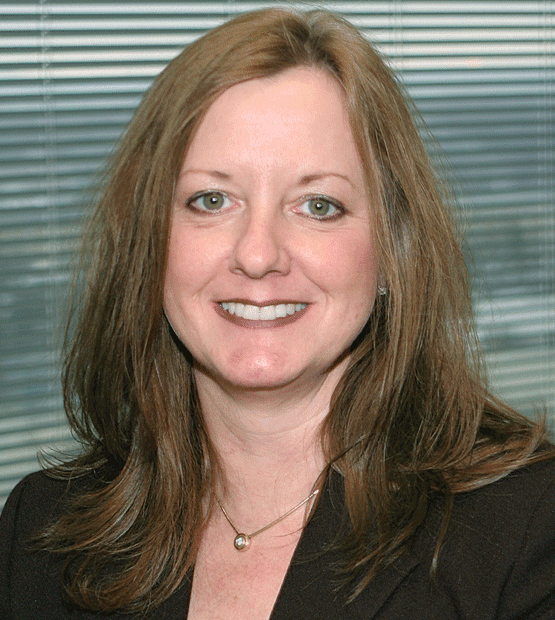
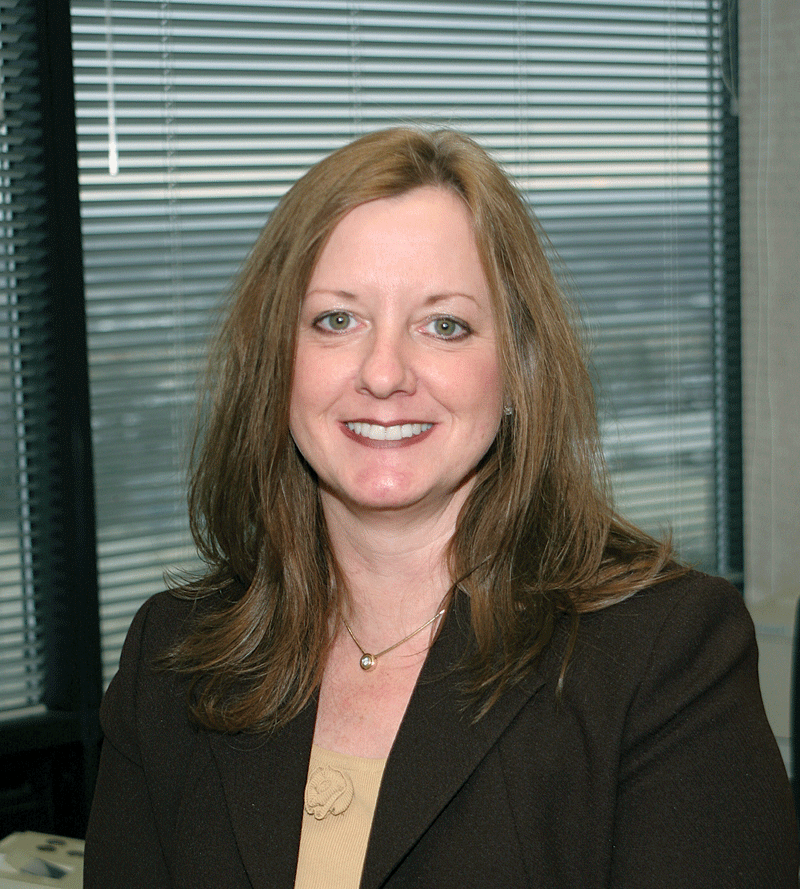
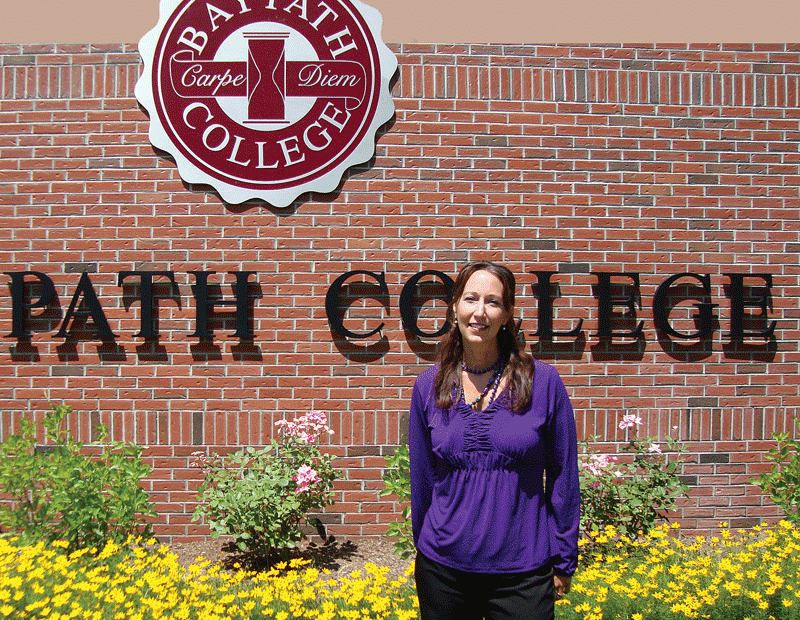
Lauren Way, Bay Path College’s director of Entrepreneurial Programs and Cooperative Education.

Lauren Way, Bay Path College’s director of Entrepreneurial Programs and Cooperative Education.

Lauren Way, director of Entrepreneurial Programs and Cooperative Education at Bay Path College, likes to say that the school’s programs in entrepreneurship do more than prepare students to start and manage their own business. In short, they promote entrepreneurial thinking, something that can help people in all fields, employers and employees alike. The school has even created its own term to describe the mindset it promotes: ‘entre-vation,’ which blends entrepreneurship and innovation.
Before a conversation began about the nature of entrepreneurial education, Lauren Way posed the hypothetical question, ‘what exactly is an entrepreneur?’
“Some would say it’s a person who takes the risk to start and run a business,” she continued. “Others would say that an entrepreneur is not a social or financial category at all, but rather it is a philosophy, a state of mind that focuses on seeking out opportunities, taking action, and finding ways to solve other people’s problems in a profitable way.”
Way is Bay Path College’s director of Entrepreneurial Programs and Cooperative Education, and she told BusinessWest that teaching college students the tools for starting one’s own business has a practical application that is more important than ever.
“About 50% of the current crop of undergraduates will own their own business one day,” she said, referring to the nationwide population of students. “They don’t realize it yet, but that is a statistic that is cited more and more often. And that’s all students, not just business students.”
Sure, she continued, there is also the statistic that says somewhere in the neighborhood of 90% of new businesses will fail in their first five years, but, she countered, “what that number doesn’t tell you is that the majority of those people go on to found another business.”
As part of Bay Path’s commitment to providing students with a career-focused education, the college has been fine-tuning its entrepreneurial academics on all levels, with offerings from graduate programs all the way to summer sessions for area high-school girls.
“At Bay Path, what we think is that employers want entrepreneurial thinking in need-finders and problem-solvers,” Way explained of the college’s mission. “That’s what our curriculum focuses on … not specifically that you’re going to start your own business, but asking what entrepreneurial thinking is all about.”
With that summer program gearing up, Way met with BusinessWest at her desk surrounded by the supplies for her upcoming week-long session. She explained how Bay Path is the leading entrepreneurial spirit on campus, and how the school hopes to be more widely known nationwide for its ongoing commitment to making entrepreneurial education not just a necessary discipline in higher education, but also a cultural mindset.

The Gifts That Keep on Giving
Way gives much credit for the beginnings of the entrepreneurial programs at Bay Path to the contributions of two charitable organizations.
She credits the Springfield-based Harold Grinspoon Foundation with “doing the impossible.”
“They were an early catalyst in getting 12 local colleges together for an Entrepreneurial Initiative [EI],” she explained, describing that organization’s mission. “Not an easy task to get such a number of schools all on board.”
Those colleges meet once every year for a conference at the MassMutual Center, and as testament to the growing popularity of entrepreneurship at the schools, the number that started out at 50 students this past year numbered close to 500.
In addition, Grinspoon’s EI endows an annual elevator-pitch contest between the colleges, with the winner taking home $2,000. Bay Path has had, in Way’s words, “unusual success” at the competition, taking top prize in five of the seven years, and placing in six.
The Coleman Foundation, based in Illinois, funds educational entrepreneurial programs across the country. Way said that its goal is to instill entrepreneurship on campuses, to make it interdisciplinary, and to embed it into a business department’s curriculum. Through a grant from that organization, she came to Bay Path.
But she said that much credit needs to go to the college’s president, Dr. Carol Leary, for her visionary approach to making Bay Path a fertile ground for all of these initiatives.
“One of the reasons I came here from Hampshire College,” Way said, “is that we are such an entrepreneurial college. In the four years that I’ve been here, we have started 10 new master’s programs. Talk about need-finding — we’re finding the needs of our students, and our region.”

Pitch Perfect
Way said that one of the biggest advantages to teaching entrepreneurship at Bay Path is the size of the college. “We’re small enough that we can focus on reaching all the students from all the different disciplines,” she explained.
In addition to the undergraduate program that is a focus of the business department, there is a certificate program that Way launched last spring for students in all majors. Psychology and Education draw a great deal of students to the program, she said. “Many of them want to start their own child-care centers,” she said, “or they want to invent their own game or learning tool.”
A capstone course for juniors and seniors is ‘Entre-vation’ (a word copyrighted by the college), which is described as a hands-on approach to entrepreneurship and innovation.
While business courses are typically taught by the Harvard Case Study method, Way explained that much of that dates to the 1980s. Entre-vation takes a different approach.
“During the summer, I choose five local entrepreneurs,” she continued, “and do a case study on them. We spend the first five weeks interviewing those businesspeople, learning what makes them tick, how they got started, what their background was.”
The students team up to offer innovative solutions to real-life cases entailing problems or challenges for these businesses. By the end of the course, the student teams present their findings to the business owners, often with surprisingly acute and helpful suggestions.
The next step up is a master’s program in Entrepreneurial Thinking and Innovative Practices, which is open to both men and women, and much of the course work can be completed online. There are students from across the U.S., and even one from Afghanistan, she said.
“We had a student at our last commencement, graduating with his master’s,” she said, “and he had never been to the campus before!” But, she added, there is a high level of interaction with professors in the online classes.
It is the MBA program that sets Bay Path apart from its contemporaries, Way said, describing the non-traditional student body for that degree.
“On the one end of the spectrum you’ve got the Millennial generation, then Gen-Xers, to Baby Boomers, even beyond, in their 60s,” she said. “I’d say that the average MBA student is in their mid-40s or 50s. I love those students … they know what they want to get out of their education, they have been in the world long enough to see links between the classroom and the world. They have hooks to hang the theories on. They have a wealth of material to bring to other students in the classroom.”
In addition, there is a Saturday Program, or the One-day Program, which Way describes as targeted to older women who never got their undergraduate degrees. “They don’t have to fit their schedules around classwork,” she explained.
But as she motioned around her office crowded with supplies for her upcoming one-week summer session, she spoke of the next generation of entrepreneurial education.
Going into its fourth year, the week-long training session is called “It’s My Business,” and is targeted at underserved area high-school girls. For a total of 40 hours in one week, the girls will have readings by high-school and college-aged entrepreneurs who hit the million-dollar mark, seminars with similarly-aged local business owners, and during this time the students will devise a plan for a startup company of their own.
The week ends with an elevator pitch before an assembly of faculty and peers. “Talk about stage fright,” Way laughed.
“Most of these girls say that there’s absolutely no way they can do that, but we have a great speech coach from Connecticut who helps them through it. And they all do it. It blows me away.”

Success Stories
Bay Path students have excelled in peer challenges, and Way is quick to point out how her students have exceeded her expectations more often than not. A sophomore Biology student won the campus elevator-pitch competition, sending her to the Grinspoon challenge with other local colleges, and Way said that “this was a student who was so shy that she couldn’t even make eye contact when I first met her.”
However, her idea for “popper stoppers,” a porous ear plug designed to help with fluctuating atmospheric pressure — no more ears popping on flights — won her campus renown as well as the top prize in the area challenge.
“The fact that our students win against all these other colleges,” Way said, “with older graduate students, and in some cases people who already have owned their own business, is incredible.”
But the successes from Bay Path alumni aren’t isolated to the collegiate arena. Way proudly told the story of Stacey Bilodeau, a woman yet to finish her bachelor’s degree, whose three-year-old company, Independent Solutions, saw $70,000 in revenues in its first year, with a spike to $500,000 dollars the second year, and 13 additional employees.
Bilodeau started full-time work at the age of 13, and quickly realized a vocational passion — working in home health care. “She started working for someone else,” Way said, “and saw the problems inherent in that industry. She realized she could do better than this.”
Providing home care for patients with traumatic brain injuries, Bilodeau is presently looking to hire new staff to help her meet great demand. And that’s where Bay Path’s education helps her keep the wheels on the ground, learning how to make the passion for her field grow in a measured and successful manner, while maintaining the high level of service and care that brought her to this role. Approaching the end of her third year, Bilodeau plans to double the size of her staff and expects to make $1 million.

Learn By Doing
Bay Path takes a philosophical approach to teaching entrepreneurial initiatives, but Way said that she doesn’t frown upon encouraging students to begin a business, even if there’s a better-than-average chance that it will fail.
Learning from mistakes is a growing theme in entrepreneurship, she explained, and added that people tend not to learn from their successes, but rather from their failures.
“Starting a business right away allows them at least to get in there,” she said of current students entering the business world, “and it makes them realize those pieces of their education that they do need to work on. Maybe they find they need more math skills, or customer service. Doing it helps you figure out what else you need to learn.
“It’s important for students to be exposed to failure to see how they react and to see what messages they will take away,” she continued, adding, “You can’t learn to dance by reading about it.”
Way sees Bay Path’s model of entrepreneurial training eventually having important ramifications not just in the workforce, but in society at large. Her hopes are for the college to become more widely known as the premier college for undergraduate and graduate students in entrepreneurial thinking.
“I would love the phrase ‘academic entrepreneurs’ to describe the way we do things here at Bay Path,” she said.
“We can all be more entrepreneurial,” she added. “We can take a more entrepreneurial approach with our jobs, with our relationships, in our communities and our churches. This method of thinking is really for everyone. It’s not just about starting a business. It’s about finding needs and meeting them — finding solutions for problems in a profitable way.”


Sections Supplements
What Every Small Business Should Know about Immigration

Joseph Curran

Joseph Curran


Every small business should understand the basic rules about its responsibilities under the immigration laws, and also the growth opportunities available under immigration laws.
Employer responsibilities are the first concern of a small business. The 1986 Immigration Reform and Control Act (IRCA) requires every employer to verify that all employees have proper work authorization — every single employee. The centerpiece of this system is the I-9 form, which employers must complete within three days of the start of work for each employee. Typically, each new employee must present photo identification and proof of employment authorization, with original, unexpired documents. Employers are not required to keep copies of the documents on file. A properly completed I-9 is all that is required.
It is not your job to make an actual determination whether the documents are legitimate. You are not an authorized Department of Homeland Security investigator. If you check the papers and fill out the form, and it turns out that the worker is illegal, you face no liability. The standard for reviewing the documents is “…reasonably appears on its face to be genuine.” Do not request more or different documents than the minimum required. The employee, not the employer, chooses which documents to present.
The employment verification regulations (the so-called ‘I-9 rules’) cover only true employees, not independent contractors. As in the area of workers’ comp, whether an individual or entity is an independent contractor is determined on a case-by-case basis — there are no bright line rules. The term ‘independent contractor’ includes those who “carry on independent business, contract to do a piece of work according to their own means and methods, and are subject to control only as to results.” In most cases, a company would have no obligation to check the immigration documents its subcontractors’ employees.
Violations of the employment-verification rules through a contract situation must be ‘knowing.’ This includes constructive knowledge and failure to exercise reasonable care in learning about and implementing immigration rules.
Beware of employment discrimination. An employer cannot selectively hire, or refuse to hire, nationals from certain countries. That practice is called ‘national origin discrimination’ under both federal employment-discrimination law and immigration law. Various federal statutes intersect on this issue; 8 U.S.C. § 1981 and Title VII apply to non-citizens, and prohibit discrimination on the basis of national origin.
IRCA adds another layer by prohibiting discrimination on the basis of national origin and citizenship in hiring and firing employees. IRCA violations are known by the legal acronym UIREP (unfair immigration-related employment practices). Employers may require only the minimum identity and employment documents outlined in the I-9 handbook. Employers may not require any specific or additional documentation. The UIREP provisions were added to temper the effect of IRCA on aliens who have proper work authorization. Congress did not want employers to stop hiring foreigners or people with accents out of fear of accidentally hiring an illegal alien.
Civil penalties for failure to fill out and maintain I-9s correctly can range from $110 to $1,100 for each I-9. Civil penalties for employment of unauthorized aliens can range from $275 to $2,200 per alien for the first offense, $2,200 to $5,500 for the second offense, and up to $3,300 to $11,000 per alien for the third or higher offense. Criminal penalties may be imposed in cases involving pattern or practice violations.
The Immigration Service (USCIS) has also implemented E-Verify, a Web-based verification tool that employers can use to check the visa status of potential employees, using information from USCIS and the Social Security Administration databases. E-Verify began as a voluntary program, but now government employers and government contractors, as well as some private employers, are required to use the program as part of their I-9 verification system.
IRCA enforcement is not consistent. Unless there is a pattern of violations, or you are unlucky enough to be targeted for a politically motivated ‘raid,’ you are not likely to be audited, and the penalties for IRCA violations are relatively mild. In fact, current INS policy favors a warning letter before fines are assessed. The goal of this policy is to educate employers and encourage them to correct problems without litigation. There are simply too many employers hiring foreign nationals for USCIS to keep track of them.
But keep in mind that this is all about politics, and the prevailing sentiment is strongly anti-immigrant. Any comprehensive immigration legislation that passes Congress will almost certainly include provisions to increase enforcement of the IRCA/I-9 rules.
In addition to the ‘defensive’ immigration concerns with I-9 compliance, employers should also consider the potential benefits available under the immigration laws.
If you have identified a skilled international professional who can help your business grow, there are employment visas available that will allow this worker to lawfully join your company. Because of the recent economic downturn, the numerical restrictions on these visas have disappeared, and the visa petition process is relatively straightforward. Keep in mind that the employer is the visa petitioner, not the foreign national. It is a process based on promises by the organization, not by the worker. Clearly, the worker gains a benefit from the visa petition, but the procedure must be initiated by, and controlled by, the employer.
The most common employment visa is the H-1B visa, but there are employment opportunities under a variety of visa classifications, including L-1, E-1/2, J-1, O-1, and other visas.

Joseph Curran, a partner with Northampton-based Curran & Berger LLP, has been exclusively involved in the practice of immigration and nationality law since 1985. He provides legal advice to individuals, corporations, and universities, specializing in immigration issues impacting business and health care in the New England area. He currently serves on the AILA Healthcare Committee and the Mass. Bar Assoc. Immigration Law Section, chairing the MBA’s Immigration Essentials Program.

Opinion
Another Tax That Hits the Middle Class

With the agreement at the Toronto G-20 summit of major nations to cut public deficits at least in half by the year 2013, we will start hearing a lot more about a value-added tax (VAT). We should keep our hands on our wallets.
The goal of cutting the deficit by a set amount by 2013 is arbitrary and premature. Whether that formula makes sense depends on whether the recession is really over. Until we get a stronger economic recovery, too much deficit reduction reduces purchasing power and slows job creation.
A VAT, which is a kind of national sales tax, is especially perverse because it is a tax directly on consumers, who have already been hit hard by the recession.
But it does raise a lot of money. A VAT of 5%, the number usually proposed, would bring in about $250 billion a year.
In the fiscal year that begins tomorrow, the deficit will be $996 billion, according to the bipartisan Congressional Budget Office. The CBO projects that, by fiscal year 2013, it will still be $525 billion. If you do the math, that means a normal recovery plus the expiration of the Bush tax cuts will cut the deficit nearly in half by 2013 with no massive new tax increases. But that hasn’t stopped the budget hawks, who want new taxes to cut the deficit even more.
VAT supporters include many members of President Obama’s own fiscal commission; the billion-dollar Peter G. Peterson Foundation (which bankrolls a lot of deficit hawkery); former Democratic Treasury Secretary Robert Rubin; and the outgoing director of the Office of Management and Budget, Peter Orszag.
Sen. Kent Conrad, chairman of the Senate Budget Committee, likes a VAT. Ezekiel Emanuel, brother of President Obama’s chief of staff and a White House adviser on health care, has called for a VAT as a way to finance expanded health coverage.
Supporters also believe that a VAT offers a bipartisan grand bargain. Because it taxes consumption, it touches only income that is spent. So wealthy people, who invest rather than spend most of their income, would not pay much VAT. As a sweetener for Wall Street, some enthusiasts would include a cut in the corporate income tax as well. That presumably makes it a tax that even Republicans might like.
Advocates trying to sell Democrats on a VAT point to Europe, where value-added taxes as high as 25% in Scandinavia raise prodigious sums that in turn support generous social services. And because a VAT typically exempts products that are exported, it would be good for American manufacturing and our trade balance.
But American budget hawks don’t want VAT revenues to go for more and better preschool or health care or job training or other favorites of liberals. They want the proceeds to go for deficit reduction. And most of the Republican leadership in Congress is dead set against new taxes. So a VAT remains a political stretch.
As the European experience shows, a VAT can indeed be an effective revenue raiser. But unless the proceeds go to support valued public services, it is just another tax on the middle class.
It is possible to make a VAT less regressive by using some of the new revenue to reduce income taxes or payroll taxes paid by working families. Some countries with VATs exempt necessities such as food. We can also offset its regressive nature by coupling it with new surtaxes on very high incomes.
So when the president’s fiscal commission raises the idea of a VAT, as is likely, we need to ask three questions:
• Are basic necessities like food and housing to be exempted?
• Is it part of a package that makes the tax system fairer and less onerous to the middle class overall?
• Do some of the proceeds go to finance public services that have been shortchanged for decades and that got further reduced in the current recession?
If not, the VAT should be considered dead on arrival. The last thing we need in a deep slump with persistent unemployment is higher taxes on the middle class.

Robert Kuttner is co-editor of The American Prospect and a senior fellow at Demos. His new book is titled A Presidency in Peril.

Departments Incorporations

The following business incorporations were recorded in Hampden, Hampshire, and Franklin counties and are the latest available. They are listed by community.

ADAMS

Greylock Realty Group Inc., 233 Columbia St., Adams, MA 01220. Erik Pizani, same. Real estate services

AMHERST

Amherst Area Publications Inc., 232 Amity St., Amherst, MA 01002. Carlton Brose, 36 Triangle St., Amherst, MA 01002. Non-profit charitable organization.

Fonhoh-USA Inc., 990 North Pleasant St., Amherst, MA 01002. Marky Jean-Pierre, same. Non-profit charitable organization designed to address the problems and provide educational resources for the people of Haiti.

CHICOPEE

Charles Kennedy Unit No. 275 American Legion Auxiliary Inc., 41 Robbins Road, Chicopee, MA 01020. Carolyn Baranowski, 6 Gardens Dr., Springfield, MA 01119. American Legion Auxiliary.

EAST LONGMEADOW

Arbors Home Health Associates Inc., 200 North Main St., Suite 204, East Longmeadow, MA 01028. Ernst Gralia III, same. Home health care.

G & A Verdile Landscaping Inc., 81 Millbrook Dr., East Longmeadow, MA 01028. Alberto Verdile, same. Landscaping services.

GREENFIELD

Amenita Ventures Inc., 33 Shattuck St., Greenfield, MA 01301. Linda Koonz, same. E-Commerce.

HADLEY

Atlaua Inc., 83 Rocky Hill Road, Hadley, MA 01035. Eric Lyons, Apt. 2, Pomeroy Ter., Northampton, MA 01060. Build, manufacture, fabricate, construct, assemble, design, and develop hydroelectric power generation.

HOLYOKE

AMSC Corp., 589 High St., Holyoke, MA 01040. Marek Wieczorek, same.

LUDLOW

The Boston New Music Initiative Inc., 193 Chapin St., Ludlow, MA 01056. Timothy Davis, same. A network of individuals and groups comprised of composers, performers, conductors, directors, and champions of new music designed to generate new music concerts, compositions, and collaboration.

NORTHAMPTON

Every Pet’s Dream Inc., 94 Pleasant St., Northampton, MA 01060. Jessie Byrnes, 552 Old West Brookfield, P.O. Box, 368, Warren, MA 01083. Retail sale of pet foods and pet related products and services.

PITTSFIELD

Berkshire Capital Resources, 65 Bartlett Ave., Pittsfield, MA 01201. Thomas Hamel, same. Provides resources, capital and borrowing capabilities to small closely held businesses.

Green River Farms Inc., 57 Wendell Ave., Pittsfield, MA 01201. Franklin Lewis, 12630 NE 243rd Ave., Salt Springs, FL 32134. Farming and sale of farm related products.

SOUTH HADLEY

Architectural Roof Management Inc., 17 Canal St., South Hadley, MA 01075. Linda Boisselle, same. Consulting and project management.

SPRINGFIELD

Amarantus MA Inc., 3601 Main St., Springfield, MA 01107. Gerald Commissioning, 6200 Stoneridge Mall Road, #300, Pleasanton, CA 94588. Biotechnology company developing treatments for ALS, Diabetes, and Alzheimer’s.

Borinquen Apartments Manager Corporation, 2460 Main St., Suite 112, Springfield, MA 01107. John Motto, same. Acting as a general partner and property manager.

Brotherhood on the Move Inc., 1500 Main St., Tower Square, Springfield, MA 01115. Andrew Keaton, 176 Garland St., Springfield, MA 01115. Organized exclusively for charitable, religious, educational, and scientific purposes.

Eden Investments Inc., 154 Chapel St., Pittsfield, MA 01202. Mathew Bishop, same. Investment firm.

WEST SPRINGFIELD

The B.A.B.B.I.T.T. Syndicate, 98 Ashley St., West Springfield, MA 01089-3168. Dave Babbitt, same. Web development.

Elephant for Dollar Inc., 935 Riverdale St., West Springfield, MA 01089. Liselo Walker, same. Discount retail store.

Departments

The following business incorporations were recorded in Hampden, Hampshire, and Franklin counties and are the latest available. They are listed by community.

ADAMS

Greylock Realty Group Inc., 233 Columbia St., Adams, MA 01220. Erik Pizani, same. Real estate services

AMHERST

Amherst Area Publications Inc., 232 Amity St., Amherst, MA 01002. Carlton Brose, 36 Triangle St., Amherst, MA 01002. Non-profit charitable organization.

Fonhoh-USA Inc., 990 North Pleasant St., Amherst, MA 01002. Marky Jean-Pierre, same. Non-profit charitable organization designed to address the problems and provide educational resources for the people of Haiti.

CHICOPEE

Charles Kennedy Unit No. 275 American Legion Auxiliary Inc., 41 Robbins Road, Chicopee, MA 01020. Carolyn Baranowski, 6 Gardens Dr., Springfield, MA 01119. American Legion Auxiliary.

EAST LONGMEADOW

Arbors Home Health Associates Inc., 200 North Main St., Suite 204, East Longmeadow, MA 01028. Ernst Gralia III, same. Home health care.

G & A Verdile Landscaping Inc., 81 Millbrook Dr., East Longmeadow, MA 01028. Alberto Verdile, same. Landscaping services.

GREENFIELD

Amenita Ventures Inc., 33 Shattuck St., Greenfield, MA 01301. Linda Koonz, same. E-Commerce.

HADLEY

Atlaua Inc., 83 Rocky Hill Road, Hadley, MA 01035. Eric Lyons, Apt. 2, Pomeroy Ter., Northampton, MA 01060. Build, manufacture, fabricate, construct, assemble, design, and develop hydroelectric power generation.

HOLYOKE

AMSC Corp., 589 High St., Holyoke, MA 01040. Marek Wieczorek, same.

LUDLOW

The Boston New Music Initiative Inc., 193 Chapin St., Ludlow, MA 01056. Timothy Davis, same. A network of individuals and groups comprised of composers, performers, conductors, directors, and champions of new music designed to generate new music concerts, compositions, and collaboration.


NORTHAMPTON

Every Pet’s Dream Inc., 94 Pleasant St., Northampton, MA 01060. Jessie Byrnes, 552 Old West Brookfield, P.O. Box, 368, Warren, MA 01083. Retail sale of pet foods and pet related products and services.

PITTSFIELD

Berkshire Capital Resources, 65 Bartlett Ave., Pittsfield, MA 01201. Thomas Hamel, same. Provides resources, capital and borrowing capabilities to small closely held businesses.

Green River Farms Inc., 57 Wendell Ave., Pittsfield, MA 01201. Franklin Lewis, 12630 NE 243rd Ave., Salt Springs, FL 32134. Farming and sale of farm related products.

SOUTH HADLEY

Architectural Roof Management Inc., 17 Canal St., South Hadley, MA 01075. Linda Boisselle, same. Consulting and project management.

SPRINGFIELD

Amarantus MA Inc., 3601 Main St., Springfield, MA 01107. Gerald Commissioning, 6200 Stoneridge Mall Road, #300, Pleasanton, CA 94588. Biotechnology company developing treatments for ALS, Diabetes, and Alzheimer’s.

Borinquen Apartments Manager Corporation, 2460 Main St., Suite 112, Springfield, MA 01107. John Motto, same. Acting as a general partner and property manager.

Brotherhood on the Move Inc., 1500 Main St., Tower Square, Springfield, MA 01115. Andrew Keaton, 176 Garland St., Springfield, MA 01115. Organized exclusively for charitable, religious, educational, and scientific purposes.

Eden Investments Inc., 154 Chapel St., Pittsfield, MA 01202. Mathew Bishop, same. Investment firm.

WEST SPRINGFIELD

The B.A.B.B.I.T.T. Syndicate, 98 Ashley St., West Springfield, MA 01089-3168. Dave Babbitt, same. Web development.

Elephant for Dollar Inc., 935 Riverdale St., West Springfield, MA 01089. Liselo Walker, same. Discount retail store.

Departments

Michael Seward has joined Prudential Sawicki Real Estate in Amherst. He has been a Real Estate Agent since 2003 and a Real Estate Broker since 2005.

•••••

Emily Bryant has been promoted to Director of Sales at the Hampton Inn Springfield-South in Enfield, Conn.

•••••

Margaret A. Wheeler has joined the Law Practice of Attorneys Joseph P. Curran and Dan H. Berger. Wheeler has been an Immigration Attorney since 1997.

•••••

Alice E. Pizzi has joined the management employment law firm of Sullivan, Hayes & Quinn in Springfield.

•••••

David G. Ahearn has joined Greenfield Cooperative Bank as Vice President for Commercial Loans.

•••••

Paul Nicolai has been named to the Executive Committee of the Western Mass. Economic Development Council Board of Directors. He is President of the Nicolai Law Group in Springfield.

•••••

The WFCR Foundation announced the following:
• Marc Berman has been named President of the Board;
• Paul Friedmann has joined the board as a Director;
• Michael Miller has joined the board as a Director;
• James V. Staros has joined the board as a Director;
• Eva Thompson has joined the board as a Director; and
• Sarah Tanner has joined the board as an Adviser.

•••••

The Landmark Companies announced the following:
• Christopher Woods has joined the Wilbraham office;
• Nancy Hunt has joined the Wilbraham office;
• Ela Gomes has joined the Ludlow office;
• Elizabeth DeGray has joined the Ludlow office; and
• Gina Gelineau has joined the Dot Lortie-Springfield office.

•••••

W. F. Young Inc. of East Longmeadow announced the following
• Molly H. O’Brien has been named Advertising Supervisor, Equine Health Care Products. She will be responsible for the creation, execution, and media placement for Absorbine horse-care products, as well as the Equine America brand. She will also collaborate with the company’s advertising agency and creative team to implement strategic branding and creative execution to promote the company’s equine products throughout the world; and
• Vicki Evans has been promoted to Vice President, Controller.

•••••

Michael J. Roy, Esq. has joined Easthampton Savings Bank as the Compliance Officer. He will be responsible for overseeing the bank’s compliance program. His responsibilities will include implementing, amending, or creating compliance policies and assisting with federal and state regulator compliance exams. Roy will also function as the in-house expert for all applicable federal and state banking laws and regulations.

•••••

Chicopee Savings Bank announced the following:
• Cidalia Inacio has joined the organization as the Senior Vice President of Retail Banking;
• Alyse Ramalho has joined the organization as the Senior Vice President of Retail Lending; and
• Henry Downey has joined the organization as an Assistant Vice President of Commercial Lending.

•••••

Susan Dixon, M.D. has been appointed to the medical staff at the Brattleboro Retreat in Brattleboro, Vt. Dixon is board-certified in child and adolescent psychiatry and will spend the majority of her clinical time working with adolescent inpatients.

•••••

Bertram W. Gardner IV, AIA, of Caolo & Bieniek Associates Inc. in Chicopee, recently was granted reciprocity as an Architect by the Commonwealth of Massachusetts. Gardner is also a licensed Architect in New Jersey.

•••••

The Home Builders Assoc. of Mass. announced the following:
• Walter Tomala Jr. will serve as President of the organization from now through 2011;
• John DeShazo will serve as President-Elect of the organization;
• Michael McDowell will serve as Senior Vice President of the organization;
• Christopher Lund will serve as Vice President of the organization;
• Dwight Thompson will serve as Treasurer of the organization; and
• Robin Ward will serve as Secretary of the organization.

Opinion
‘C’ on Kids’ Dental Care Doesn’t Pass

Oral health is a little like Rodney Dangerfield — it doesn’t get the respect it deserves.
Ten years ago, the U.S. surgeon general declared dental disease to be a “silent epidemic.” A decade later we’ve made some progress, but clearly not enough. The recently released Pew Report “Cost of Delay: State Dental Policies Fail 1 in 5 Children,” which the DentaQuest Foundation and the W.K. Kellogg Foundation helped fund, paints a stark picture.
In America today, 17 million low-income children still go without dental care. The consequences of that are serious. In Massachusetts, one in 10 minority children goes to school with pain caused by completely preventable dental disease. That means lost school time, challenged learning, and impaired nutrition and health, and sometimes, if left untreated, it can result in serious illness or even death. That was the case with 12-year-old Deamonte Driver, who died of a brain infection caused by a tooth abscess in Maryland in 2007.
Unlike other health care problems which seem intractable and enormously expensive to fix, providing children with the dental care they need is doable at relatively low cost. In fact, if most low-income children got the preventive dental care they deserve, they could eliminate much of the higher-cost procedures down the road.
In grading the states, Pew used eight measures, including providing sealants, fluoridating water supplies, increasing Medicaid coverage for children, expanding the role of dental hygienists in schools, and maintaining an accurate database.
Only six states got an ‘A,’ meaning they met or exceeded six of the eight measures. Massachusetts got a ‘C,’ although if the study had used more recent data, we would have received a ‘B’ because we passed legislation that allows dental hygienists to apply protective sealants (coatings on molars) without a prior dentist exam in community settings.
We’ve come a long way in the Commonwealth. Ten years ago, Massachusetts would have received a failing grade. In fact, in 2005, a federal judge ruled in a lawsuit against the Commonwealth that there was insufficient access to dental care for children with MassHealth. Delta Dental of Mass., together with advocacy partners like Health Care for All, the Mass. Dental Society, key legislators, and others, have dedicated themselves to improving oral health for low-income children and adults.
Today, we should be proud that many more children with MassHealth in Massachusetts have access to dental care and that we are one of only nine states in the nation to have met the goal of having fewer than a quarter of our children at school with untreated tooth decay. In addition, Massachusetts currently reimburses dentists who serve Medicaid-enrolled children more than the national benchmark of the Pew Report, making it more likely that more dentists will accept Medicaid patients. Still, there is room for improvement.
What will it take for Massachusetts to continue our move from a ‘C’ to ‘B’ to ‘A’? The first and most important step is to make sure that more children in high-risk schools have access to school-based dental preventive programs. Those programs provide dental sealants, clear plastic coatings on chewing surfaces of molar teeth that have been shown to significantly reduce tooth decay.
Fluoridation is another important measure. Fluoride prevents tooth decay and strengthens teeth. To pass the Pew benchmark, at least 75% of Massachusetts residents should have access to community water fluoridation. Currently only 59% of residents have this access. This is easier said than done, as the decision to fluoridate is often a controversial local decision. Moving that needle will not be easy.
We have already done much of the heavy lifting. If we commit ourselves to improve the percentage of children who have access to oral health prevention and increase the number of communities that fluoridate their water, we can ensure that the next report will put Massachusetts in the ‘A’ column. A statewide coalition will soon release an oral-health plan that will provide a road map to achieve that goal.

Fay Donohue is the president and CEO of Delta Dental of Mass.

Features
Holyoke, and His School, Are Hitting Their Stride

Bill Messner President, Holyoke Community College

Bill Messner President, Holyoke Community College

As part of the school’s 60th birthday party three years ago, Holyoke Community College officials commissioned an artist to create caricatures of the three men who have served as president of the institution.
In his, Bill Messner, who arrived in 2004 after the retirement of long-time corner-office-holder David Bartley, can be seen in his running clothes, high-stepping his way across campus, with students, faculty, and staff cheering him on. And it’s a fairly accurate portrayal of daily life for the rangy 65-year-old campus leader, who has competed in a number of marathons and half-marathons over the years in locales ranging from New York to Washington, D.C. to Cape Cod.
While at HCC, he runs on an almost-daily basis, sometimes with students and/or faculty and staff members joining him. “Although I seem to have run out of faculty and staff over the past year or so,” joked Messner, adding that, more often than not, he runs alone.
The routes and distances vary — “it all depends on what I have time for,” he said. Sometimes he’ll run on campus, while other times he’ll motor around the nearby McClean Reservoir or Mount Tom. He’ll do at least a few miles every time out, and sometimes logs six or more, as he did on the day he spoke with BusinessWest.
The runs are good stress-relievers, he said, and give him time to think and maybe solve some problems. And most often, he’s thinking about connections, and how the school, the oldest community college in the Commonwealth, can make more of them in the Greater Holyoke area.
Such connections include the school’s involvement in a learning center that will be a big part of a new intermodal transportation center to be created in an old fire station downtown, its participation in plans to create a high-performance computing center along the city’s famous canals, and work with Cisco on that company’s decision to choose Holyoke to host a pilot program called Smart + Connected Communities, which will experiment with ways to use data-networking technology to improve delivery of government services, health care, and education.
“You get some interesting thoughts out there around mile three or mile four,” he explained. “And usually, I’m thinking about where I want the college to go and what’s the next connection we can make.”
As president, Messner says it is his role to be the “door opener” for the institution, and by that he meant that he believes a big part of job description comes down to “creating pathways into and out of this place.” In other words, he and his team are working to make it easier to get to HCC, and then to take the big step from there to wherever the student wants to go, be it a four-year college or a job in the region.
Overall, Messner believes these are exciting, yet also challenging, times for both HCC and especially the city of Holyoke, which he sees emerging from a long period of dormancy as a reinvented manufacturing center on the cutting edge of technological advancements and economic-development policy.
“I recently gave a talk at the [Holyoke] chamber’s annual meeting, and I told the audience that they’re better off being in the city of Holyoke, given what I perceive to be its future, than any other community in the state,” he said. “Holyoke is the right size, it’s got the resources, it has the right people in place to make things happen. This is Holyoke’s time.”
For this, the latest installment of its Profiles in Business series, Messner talked about Holyoke, its community college, and his own career, all of which are stories with legs, in one way or another.

Jogging His Memory
From his office in Frost Hall, named after the school’s first president, George Frost, Messner has a panoramic view of the HCC campus, which was carved out of farmland off Homestead Avenue in the late 1960s. He referred to that view, in both a literal and figurative sense, a number of times as he discussed changes in higher education, technology, and society in general.
“If you were to look out that window once school begins in September, and look right down there, you’d see a dramatically different picture than what you would have seen 10 years ago — and 10 years from now, it’s going to be changed even more,” he said, that the numbers of Hispanic and African-American students, and even those with physical and mental disabilities, have risen dramatically, and will continue growing.
“We’ve been in business for more than 60 years, and we’ve got a really wonderful history of providing a solid general education and, for many of our students, transfer opportunities,” he continued. “Our challenge is to continue that tradition with a population that is dramatically changing.”
Messner has seen a good deal of change during a career in public higher education that spans more than 30 years. HCC is his third stop as a president, with his first coming at Orange County (N.Y.) Community College, where he served for 10 years, and his second at the University of Wisconsin Colleges, where he served as chancellor and was responsible for the management of a 13-campus institution that served as the transfer arm of the university system.
Desiring a return to a campus setting, as well as the Northeast, which both he and his wife, Eleanor, consider home, Messner accepted the challenge of succeeding a local institution in Bartley. And, while this might be his last career stop, Messner wouldn’t be at all surprised if it isn’t. “I have no notion of retiring any time soon,” he said.
He’s brought with him to Holyoke many lessons from his previous experiences — about everything from using technology to create learning opportunities to making connections within a community — as well as that passion for running, which he says started 30 years ago, when the activity was just coming into its own.
“I don’t go fast … I’m not a good runner, but I enjoy it,” he said while proudly displaying a picture of himself running in the Marine Corps Marathon in Washington 15 years ago. “I got started at Harvard, of all places. I went to a summer program there at the business school. In the afternoon, after classes, they ran a recreation program that had a lot of things they tried to introduce you to, and one of them was running.
“I started there and haven’t stopped,” he said, adding that, despite his height — he’s 6’ 7” — he has not had any knee problems or other physical ailments, and his running helps keep him healthy. “It keeps me away from lunches, for the most part, which is good, because they’re deadly for the waistline.”
Since arriving at HCC, Messner’s primary accomplishments include opening the Kittredge Business Center, a 55,000-square-foot facility that that houses workforce-development programs, several business-related agencies, and conference and meeting space; partnering with Peter Pan and the city of Holyoke on the learning center; and, in general, making more of those connections he spoke of.
He sees his primary role as that of facilitator.
“The president’s job, in some sense, is to make the contacts and rub shoulders with folks,” he explained, “and let people know we have programming and services available, and then to hand those folks off to the people who do the scut work of developing programs that meet needs. I’m the entry point for the institution.”

Running Theme
Returning to his thoughts on his role as door opener, Messner said he spends much of his time and energy creating and widening those pathways into and out of the HCC campus.
“In terms of getting into the place, we have a lot more students coming to us right out of high school — the student body gets younger all the time,” he said. “But beyond the traditional high-school student, we have students coming out of GED programs, home-schooled environments, jail, halfway houses … and we have international students coming to us from all sorts of backgrounds, as well as the whole array of adults returning after five, 10, 15, or 20 years.
“And they have such an array of backgrounds,” he continued. “We have an ESL (English as a Second Language) program here … you think you’re walking into the United Nations when you walk into a classroom.”
Easing the way into college for all these constituencies is one of the major challenges facing all community colleges and especially HCC, said Messner, adding that the learning center at the old downtown station, due to open late this summer, will play a key role in these efforts.
The center will have ESL programs, GED, and something called ‘transitions programming,’ which is designed to help prospective students who fall into that broad category of ‘non-traditional’ make the transition to college. “We’ll look at what kind of programming, support, and skills these people will need,” said Messner, adding that many are coming out of adult basic-education programs.
As for pathways out to four-year colleges, Messner said he and his team are working on those as well. Meetings have been staged between area community-college officials and administrators at UMass Amherst, for example, with the goal of developing strategies for making the transition from community college to the university easier, more comfortable, and more transparent for students.
“They’re considering an array of things to do at UMass,” he said, “some of it in the way of programming, some of it in support services, and some of it simply in the way of giving us better information about how our students fare.”
Meanwhile, HCC is working to strengthen already-solid transfer programs involving Mount Holyoke College and Smith College — several dozen women move on to those institutions annually — and an emerging initiative with Amherst College. “Transfer has always been our bread and butter,” he said, “and it will be going forward.”
As for Holyoke and its prospects, Messner believes the city is well on its way to reinventing itself, and he credits leadership in City Hall, from the City Council to the mayor’s office to Planning Director Kathy Anderson, for putting politics aside and pulling in the same direction on initiatives such as the computing center.
“I think the city’s been down for so long that its leaders learned that, if they’re going to get ahead, they’re going to have to work together,” he said. “And they are.”
The college has a stake, or role, in this reinvention process, he continued. When asked what it was, he said, “to simply do a good job living up to the mission of community colleges.”
By this, Messner meant providing needed programs and services to serve students, but also helping the business community by preparing a workforce that can thrive in the modern, technology-driven economy.
“Even though we’re a regional community college and only 15% of our students come from Holyoke, if we’re not doing our job in Holyoke in terms of meeting community needs, we’re not going to be doing it in Chicopee, West Springfield, Springfield, or anywhere else,” he said. “It starts right here, and we’ve made every effort to connect with the School Department, the city, the police, the Parks Department, and the nonprofit agencies in terms of collaborating and meeting needs.”

Miles to Go
When he isn’t working, Messner is often traveling with Eleanor. Destinations include places where their children now live — Washington D.C. and Wisconsin, for example — but also Europe and even China; they visited Beijing as it was ramping up for the 2008 Olympics.
Most of Messner’s traveling, however, is done on campus or along the reservoir, where he’s putting in a few miles and thinking — about all kinds of things.
But usually, it’s about connections, what the next one will be, and how it can move a college, a city, and a community forward.

George O’Brien can be reached at [email protected]

Sections Supplements
Hurley & David Has Its Ducts in a Row
Ward Woodruff (center), with service manager Walter Thayer (left) and Mark Kent

Ward Woodruff (center), with service manager Walter Thayer (left) and Mark Kent, says Hurley & David has changed with the times, but kept its emphasis on quality.

Ward Woodruff enjoyed going to work for his uncle 37 years ago — so much, in fact, that he never left.
That was 1973, the year Woodruff came on board Hurley & David Inc., the Springfield-based HVAC company, as a sheet-metal apprentice, during his summer break from college. His uncle, Donald Tucker, had recently purchased the company from its original owners, Frank Hurley and Peter David.
A year later, Woodruff decided to stay on full-time, deciding that was his best option for a first career.
“I had no other real, driving force to go somewhere else,” he told BusinessWest, “so that seemed like a reasonable choice, a place I felt I could advance in.”
Once Woodruff started working full-time at Hurley & David in 1974, he began taking classes in the evening to become a refrigerator technician, and worked in the field as a service technician starting in 1975. Two years later, he moved inside, working in materials management and some sales, with occasional forays into the field.
That was the beginning of his education in the HVAC industry. Over the years, Woodruff has obtained Massachusetts trade licenses as a refrigeration technician, refrigerator contractor, journeyman gasfitter, master gasfitter, oil-burner technician, construction supervisor, and sheet-metal worker. He holds various licenses in Connecticut as well.
In 2005, having mastered the ropes for more than 30 years, Woodruff bought out his uncle’s remaining interest and is now president of the company, which is celebrating its 50th anniversary this year.
The company repairs and installs heating and air-conditioning systems, air-purification equipment, air cleaners, filtration systems, humidifiers, and ventilation systems for homes and businesses, Woodruff said. In fact, environmental concerns about air quality — and the occasional legislation associated with those concerns — has presented a fast-growing host of opportunities for HVAC contractors.
“People are concerned about mold, bacteria, and viruses in the air system and duct work where they can be breathed. With the products available today, we can mitigate the growth of these things,” Woodruff said, adding that the company focuses on ridding homes and businesses of all three types of air-quality dangers: particles, microbes, and toxic gases and chemicals.
In this issue, BusinessWest sits down with Woodruff to talk about how the HVAC industry has changed over the years — even as many of the key players at Hurley & David have not.
No Revolving Door
In fact, Woodruff credits much of the company’s success to a core group of employees, many of whom have been with Hurley & David for many years, even decades.
For instance, construction manager Gary Lubas started in 1976 in a co-op program while a student in the sheet-metal program at Putnam High School. Joe Sherry, senior sheet metal worker, has been with the company since 1973. And service manager Walter Thayer tracks his experience back to 1968, when he started with the former Westside Air Conditioning Co., of which he later became a partner.
Mark Kent also came to Hurley & David from his own company, MEK Engineering, in 1994. A registered professional engineer in Massachusetts with 30 years of experience in the field, he recently earned a key certification that will benefit one of the company’s critical customer bases — health care.
Specifically, he was designated a health care facility design professional by the American Society of Heating, Refrigeration and Air Conditioning Engineers (ASHRAE).
The ASHRAE certification program identifies individuals who have mastered a body of knowledge covering the successful design and operation of health care facilities, said Kent, who is one of only 15 engineers in Massachusetts — and the only one in Western Mass. — to currently hold the certification.
“Health care facilities need to be accredited by JCAHO,” he said, referring to the Joint Commission on the Accreditation of Healthcare Organizations. That accreditation process includes environmental issues such as air exchange and how it relates to infection prevention — not just in the final product, but in the construction process itself, since it generally occurs not far from a sick, vulnerable population.
“Also, patients can be infectious,” Kent noted. “So you have to protect your employees and the public, too, from patients who might have a contagious condition.”
Because Hurley & David has performed HVAC work for many health care facilities in Western Mass. — the medical industry, indeed, is a key driver of the regional economy — having someone with that designation on board is a plus for organizations looking to hire a contractor to design and install HVAC systems, Woodruff said.
“The certification benefits building owners, employers, and individuals,” added ASHRAE President Gordon Holness in a press statement. “Firms who employ ASHRAE-certified engineers are better able to promote their services, and individuals who are certified approach their design responsibilities with greater confidence.”

Hot and Cold
The years have brought many new developments to the HVAC field, such as the use of ultraviolet light to kill contaminants. Woodruff pointed out how the shady side of a building builds up more mold than the sunny side, where “it gets a sunburn and dies. Ultraviolet light acts like the sun to kill those things.”
Then there’s the ‘Talking Thermostat,’ a user-friendly, programmable thermostat that guides the user through set-up and temperature options — ideal for elderly or visually impaired people.
But these days, the most significant development is one that affects all industries — a recession that has increased competition and whittled profit margins down. “It’s gotten soft. Prices are low,” Woodruff said — so low, in fact, that they often don’t cover the cost of labor, materials, and subcontractors, so Hurley & David actually finds itself passing up work.
But overall, he said, the field is a stable one, and the company that once installed HVAC systems in some 300 Friendly’s restaurants is confident of keeping its employees — including, these days, Woodruff’s son and daughter — busy as the next 50 years begin.
The flow of new talent into the field is strong as well, Woodruff said, noting healthy programs at local schools (like Putnam Vocational Tech High School in Springfield) and institutions like Porter & Chester.
“Right now you can find people,” he said. “But they have to be quality people who are trainable.”
Just like a college kid who took a flyer on a summer job 37 years ago.

Joseph Bednar can be reached
at [email protected]

Departments People on the Move

Michael Seward has joined Prudential Sawicki Real Estate in Amherst. He has been a Real Estate Agent since 2003 and a Real Estate Broker since 2005.
•••••
Emily Bryant has been promoted to Director of Sales at the Hampton Inn Springfield-South in Enfield, Conn.
•••••
Margaret A. Wheeler has joined the Law Practice of Attorneys Joseph P. Curran and Dan H. Berger. Wheeler has been an Immigration Attorney since 1997.
•••••
Alice E. Pizzi has joined the management employment law firm of Sullivan, Hayes & Quinn in Springfield.
•••••
David G. Ahearn has joined Greenfield Cooperative Bank as Vice President for Commercial Loans.
•••••
Paul Nicolai has been named to the Executive Committee of the Western Mass. Economic Development Council Board of Directors. He is President of the Nicolai Law Group in Springfield.
•••••
The WFCR Foundation announced the following:
• Marc Berman has been named President of the Board;
• Paul Friedmann has joined the board as a Director;
• Michael Miller has joined the board as a Director;
• James V. Staros has joined the board as a Director;
• Eva Thompson has joined the board as a Director; and
• Sarah Tanner has joined the board as an Adviser.
•••••
The Landmark Companies announced the following:
• Christopher Woods has joined the Wilbraham office;
• Nancy Hunt has joined the Wilbraham office;
• Ela Gomes has joined the Ludlow office;
• Elizabeth DeGray has joined the Ludlow office; and
• Gina Gelineau has joined the Dot Lortie-Springfield office.
•••••
W. F. Young Inc. of East Longmeadow announced the following
• Molly H. O’Brien has been named Advertising Supervisor, Equine Health Care Products. She will be responsible for the creation, execution, and media placement for Absorbine horse-care products, as well as the Equine America brand. She will also collaborate with the company’s advertising agency and creative team to implement strategic branding and creative execution to promote the company’s equine products throughout the world; and
• Vicki Evans has been promoted to Vice President, Controller.
•••••
Michael J. Roy, Esq. has joined Easthampton Savings Bank as the Compliance Officer. He will be responsible for overseeing the bank’s compliance program. His responsibilities will include implementing, amending, or creating compliance policies and assisting with federal and state regulator compliance exams. Roy will also function as the in-house expert for all applicable federal and state banking laws and regulations.

•••••
Chicopee Savings Bank announced the following:
• Cidalia Inacio has joined the organization as the Senior Vice President of Retail Banking;
• Alyse Ramalho has joined the organization as the Senior Vice President of Retail Lending; and
• Henry Downey has joined the organization as an Assistant Vice President of Commercial Lending.
•••••
Susan Dixon, M.D. has been appointed to the medical staff at the Brattleboro Retreat in Brattleboro, Vt. Dixon is board-certified in child and adolescent psychiatry and will spend the majority of her clinical time working with adolescent inpatients.
•••••
Bertram W. Gardner IV, AIA, of Caolo & Bieniek Associates Inc. in Chicopee, recently was granted reciprocity as an Architect by the Commonwealth of Massachusetts. Gardner is also a licensed Architect in New Jersey.
•••••
The Home Builders Assoc. of Mass. announced the following:
• Walter Tomala Jr. will serve as President of the organization from now through 2011;
• John DeShazo will serve as President-Elect of the organization;
• Michael McDowell will serve as Senior Vice President of the organization;
• Christopher Lund will serve as Vice President of the organization;
• Dwight Thompson will serve as Treasurer of the organization; and
• Robin Ward will serve as Secretary of the organization.

Sections Supplements
As He Prepares to Leave the SPHS, Vince McCorkle Looks Back, and Ahead

Vince McCorkle

Vince McCorkle

After 17 years with the Sisters of Providence Health System, the last several as president and CEO, Vince McCorkle is leaving to run the Akron (Ohio) General Health System. Much has changed since McCorkle arrived in Springfield, both within the system and in the health care industry, and he reflected on both in a wide-ranging interview, during which he said the SPHS is well-positioned to succeed in what will be a challenging future.

Looking back on his 17-year career with the Sisters of Providence Health System, Vincent McCorkle said his time has been notable for several of what most people — and he is in this category himself — would call “bad business decisions.”
And he’s quite proud of all of them.
That’s because, while these might have become losing propositions as far as the bottom line is concerned, they are directly in keeping with the mission of the Sisters of Providence, and therefore they meet critical, and almost always unmet, needs within the community.
And so, McCorkle’s office, which he has been cleaning out in preparation for his departure and next career challenge — president and CEO of the Akron (Ohio) General Health System — is decorated in part with gifts from people essentially thanking him for making those bad business decisions.
There’s the drawing, a self-portrait, crafted by a homeless man and given to McCorkle for the system’s continuation of its Health Care for the Homeless program, that hangs on one wall. Meanwhile, on his credenza is a bamboo model of a boat given to McCorkle in thanks for the system’s willingness to continue something called the Vietnamese Health Project after state funding for the initiative was discontinued.
There are other bits of memorabilia, if that’s the proper word, in McCorkle’s office that speak to his time here, including one very recent addition. It’s a card fitted inside a glass plaque that sits on his desk. The wording amounts to what McCorkle calls a pledge, or commitment, to perpetuate the legacy of the founding Sisters of Providence, who are now few in number and getting on in years; only a few are under the age of 70.
“Everyone is committed to look at it at least once a day; it reminds us of why we’re here and what we’re called to do,” said McCorkle, noting that a leadership group of 100, now named the ‘Legacy Leaders,’ agreed to make that commitment.
In short, he continued, SPHS administrators are called upon to honor the mission of the Sisters of Providence, which, in some cases, requires making decisions that are not bottom-line-friendly, such as the transitioning of Providence Hospital to a behavioral-health facility, and the closing of the residential component at Brightside for Families and Children.
“Sometimes we’ve been criticized for making bad decisions, as in the case of Providence Hospital, which has never had a positive operating margin,” he explained. “So one could say, ‘that’s a bad business decision.’ We say it’s a ‘different decision’ because I can’t imagine what this community would be like if we weren’t finding ways to provide those services.
“This morning, before 9 o’clock, we dosed 993 people on methadone,” he continued. “If we stopped doing that, within 24 hours, 95% would have an insatiable appetite for a fix, and within 48 hours, they all would, so you can imagine the impact on Springfield, Holyoke, and the surrounding communities if we didn’t sustain those services. It would be devastating.”
While meeting those needs within the community, the SPHS, under McCorkle’s leadership, is effectively positioning itself for the future of health care with steps that include the recent formation of what the system calls a ‘micro accountable care organization’ (ACO) that is designed to enhance care management to improve care and reduce cost, improve the management of chronic disease, reduce hospital admission and readmissions, and, essentially, make health care providers more accountable (more on that later).
For this issue, BusinessWest conducts what amounts to an exit interview with McCorkle, a wide-ranging look back at his tenure with the SPHS and also a look ahead to the future of the system and health care in general.

Career Track
McCorkle told BusinessWest that, over the course of his long career with the SPHS, he’d been approached by headhunters on numerous occasions, perhaps quarterly by his estimates, with career opportunities.
And by his recollection, there were only two times when was interested enough in the position in question to pursue it with any degree of intensity. The first was a position within the Catholic Health East system, of which the SPHS is a part, which intrigued him enough to make inquiries, but not enough to leave the system, in large part because he didn’t think the SPHS had the requisite leadership in place to move forward in his absence. The second was the job in Akron, which he will assume in July because he believes it will make an intriguing capstone to his career and because, this time, he does believe the system is well-positioned for the future and has that leadership in place.
“I certainly did not see myself as indispensable to the system,” he explained, referring to his belief that the time is right for a move now, for both himself and the system. “I thought it was at a place where it could transition very smoothly. We have a very engaged and committed board, which is very important. And, sometimes when you say ‘medical staff,’ it connotes a cohesive group and it’s not, but our medical staff is in its evolution, and it’s well-positioned for the future.”
McCorkle was just 41 when he joined the SPHS, and while he didn’t at that time think it would be his last job, over the years, that mindset began to prevail. “I’ve never been one to spend a lot of time managing my career, and I try not to take myself too seriously,” he said. “But I take the role and responsibility I have seriously, and I like to say to people that I’ve had a love affair with the Sisters of Providence; they are just an incredibly remarkable group of women.
“I believe there’s no other health organization in the country like SPHS because of the range of services we provide,” he continued, “and we really are responsive to the needs of the community. The people who serve in our organization wake up every day knowing they can make a difference, and there’s great pride in that.”
Looking back on his time with the SPHS, McCorkle said there were many difficult decisions to be made over the years. The move in 1996 to transition Providence Hospital from acute care to a behavioral-health facility certainly fits that description because, while the move was deemed necessary, hundreds of employees were laid off. So does the decision made earlier this year to discontinue the residential component of the Brightside program.
The failed attempt to merge with Holyoke Hospital in the mid-’90s was another key moment in McCorkle’s tenure, as was the successful fight — one taken to the state attorney general’s office — to get Health New England (HNE), created and operated by Baystate Health, to include SPHS facilities in many of its coverage packages.
The common denominator in these and other initiatives, including the ones to continue programs such as Health Care for the Homeless and the Vietnamese Health Project, is that, ultimately, these were the right decisions for the community and, in most cases, involved access to needed services, said McCorkle.
Elaborating, he said the system is very deliberate with such actions, gets input from all stakeholders, and eventually makes what he calls “value-based decisions” arrived at after thorough community-needs assessments.
“If you look at the demographics of Springfield and Holyoke, the population has plateaued, and going into the future, there isn’t the expectation of dramatic increases in population,” he said. “But the population is aging in place, so one of the challenges is determining how our organization strategically positions itself to be able to meet those changing needs in the community.
“And it’s not something where you can say it’s cause-and-effect — this happened, so we’re going to do this,” he continued. “You’re looking for trends that are below the surface, but they really affect the lifeblood of the community; you look at those things, and you try to reposition the organization.”
Such was the case with HNE.
“There was a time when we felt that access to the Health New England commercial product was incredibly important for our organization,” he explained. “It was a very difficult decision for us. To engage the parent, Baystate, another community, not-for-profit organization, in a way that could adversarial was difficult, but we thought it was in the best interests of the community to have a strong Mercy, and that means viable.”

A Matter of Accountability
As for the transition of Providence Hospital, McCorkle, then president of that facility as well as Mercy, said it was another difficult decision that has, by and large, been validated by what the system has been able to accomplish there.
“I really don’t believe there’s any family that hasn’t been touched by addictive disease or mental illness; to this day there are waiting lists for Providence — the demand is great for those services,” he said. “It’s not infrequent that I get gut-wrenching calls from people who are crying, saying, ‘I don’t know where to turn, but I just found out about my husband or my daughter … what do I do? This will destroy our family.’
“I can direct them to the appropriate caregivers at Providence,” he continued. “I tell them that’s not because I don’t care, but because I want to respect their privacy and the privacy of their loved one. I tell them they’re not going to hear from me again, but if they need me, just call.”
When asked about his management, or leadership, style, McCorkle said he has always viewed himself as a coach or mentor, whose primary role is to get everyone within the system to share in its values, while also pursuing their own professional goals. And for some, this is difficult, so the system takes great pains to recruit carefully.
“We look at the initials after the name,” he said, “but we spend a lot of time trying to get to know the whole person, what motivates them, and what gives them satisfaction. People who join our operation … they either opt out in the first 90 days, or they become incredibly long-term members of our organization.”
McCorkle said he leads regular Monday meetings with senior managers to gather input, create dialogue, and solve problems collaboratively. The same methodology applies to a process he calls “strategic management.”
“Each month, we get key stakeholders together in the same room,” he explained. “We don’t talk about data, really, but we try to take data points and say, ‘what are the implications?’ It’s not to make a diagnosis, but to generate discussion. A lot of times ‘a-has’ come out of that discussion because, many times, we’ll look at data points and say, ‘I know what that means.’ Then, we’ll talk some more and go, ‘whoa, whoa, maybe that’s not what it means.’”
McCorkle said the SPHS has undergone a great deal of change over his tenure, all of it aimed at making the system more efficient and better-positioned for the future of health care. He said that, when he first joined the system, it operated from what he called a ‘holding-company model,’ whereby each organization behaved independently, with its own CEO and board of trustees.
All that has changed, said McCorkle, creating the word “systemness” to describe the new mindset. “If we had five CEOs then, we have one now; if we had five boards of trustees then, we have one strong board now,” he explained. “We have studied what can be consolidated, what can be centralized, and where we can collaborate. We have one strategic plan, one marketing plan, and one finance department. We think we’ve become very effective — when you look at the SPHS of today, it is very integrated, it has done very innovative things when it comes to partnering with physicians, and I strongly believe that we’re now well-positioned for the future.”
Which brought him back to the discussion of accountable care organizations, which, he believes, represent the future of health care in the nation, and especially Massachusetts, and the SPHS would appear to be on the cutting edge.
Mercy Medical Center and Hampden County Physician Associates have, as an alternative to Medicare fee-for-service provider arrangements, entered into a risk arrangement with a managed Medicare plan, and assumed care coordination and financial responsibility for 5,100 members, McCorkle explained. A structural framework has been developed to closely manage care, deliver disease-management services to high-risk patients, provide quality oversight and medical direction, and tightly manage budget and costs.
Performance incentives have been aligned so that health cost savings are shared by participating HCPA physicians and Mercy if quality and cost effectiveness benchmarks are achieved, placing an emphasis on efficiency and quality, rather than volume and intensity.
“As I sit on the board of the Mass. Hospital Assoc., I hear of only one organization that’s ready to do that (accountable care), and that would be us,” said McCorkle. “That’s because we’ve essentially been doing this for 10 years. We’ve volunteered to be the pilot for Massachusetts, and we’re very excited about that opportunity.”
As for the position in Akron, McCorkle said it will give him the opportunity to lead a much larger facility (650 beds compared to 355 at Mercy) and take on a new and different kind of challenge.
“Although I never expected to leave the Sisters of Providence Health System — I thought I’d finish my career here — from a professional standpoint, there are some challenges and opportunities for me there [Akron] because it’s a free-standing health system. I viewed it as a opportunity to be a capstone to my career and take the things I’ve learned along the way and hopefully add some exceptional value to that organization.
“At the same time, I thought I had positioned SPHS for the future, both strategically and from a leadership-succession perspective,” he continued.
When asked what was left for him to do at the SPHS, McCorkle said it mostly comes down to continuing in the roles of coach and mentor, and thus help make the transition as smooth as possible.
Meanwhile, he’s still cleaning out his office and finding everything from old magazine articles to more expressions of appreciation from people he and the system have helped have helped over the years.
Most people wouldn’t want to be reminded of bad business decisions, but McCorkle doesn’t mind at all. If that’s what he’s most remembered for, then he will consider his time with the SPHS an unqualified success.

George O’Brien can be reached at [email protected]

Sections Supplements
It’s Real, and Its Impact Can Be Severe; How to Avoid the Epidemic

Gina Barry

Gina Barry

‘I’m so stressed out!’ ‘I just can’t take it anymore!’
Certainly, almost all of us have made one, or both, of these proclamations in response to any number of events that have occurred in our lives. Take a moment now to think of how you felt during those moments, and you will get a glimpse into the daily lives of our nation’s family caregivers.
Approximately 44 million Americans (21% of the adult population) provide unpaid care to someone in need. While most people think that nursing homes provide the majority of long-term care, the U.S. Department of Health and Human Services estimates that informal caregivers actually provide 80% of the long-term care in the U.S. As our population continues to age, demands for care will steadily increase, and caregiver stress, unless recognized and remedied, will become even more pervasive.
A caregiver is anyone who helps another person in need with daily tasks, such as bathing, cooking, eating, taking medications, dressing, using the bathroom, shopping, housecleaning, and the like. Typically, the person receiving care has a medical condition that makes them unable to perform these tasks for themselves, or at least without some assistance. According to the U.S. Department of Health and Human Services, 61% of our nation’s caregivers are women. Our nation’s caregivers are mostly middle-aged, with 13% of caregivers being 65 years old or older.
Caregiver stress is real, and its impact can be severe. A spousal caregiver over the age of 65, who is experiencing ongoing mental or emotional stress as a result of providing care, has a greatly increased risk of dying over those people in the same age group who are not caring for a spouse. Providing care is physically and emotionally demanding, especially when the care recipient requires 24-hour care. Very often, the caregiving spouse neglects his or her own health issues, which are usually compounded by stress, because he or she is too busy addressing the care needs of the spouse. When an adult child is the caregiver, the caregiver generally experiences additional stress, as they have other responsibilities outside of caregiving, such as providing care for young children, running their own household, managing their professional life, and maintaining a busy social life.
Many caregivers provide care without realizing the impact of caregiver stress. Obvious physical signs of stress include, but certainly are not limited to, fatigue; high blood pressure; irregular heartbeat or palpitations; chest pain; back, shoulder, or neck pain; frequent headaches; digestive problems; and hair loss. Caregivers experiencing sustained stress may also exhibit a weakened immune system, which means they will be more susceptible to colds, flu, and other infections. As the majority of these signs are not open and obvious, it is important for a caregiver to be self-aware. It is also important that the caregiver be asked whether they are experiencing any of these signs.
Emotional signs of stress are usually not easily observed. These signs include a gamut of feelings, including but not limited to anxiety, depression, irritability, frustration, lack of control, and isolation. A stressed caregiver may also report or exhibit mood swings, memory problems, and/or general unhappiness with their position as a caregiver, including resentment toward the care recipient and family members who do not contribute in any meaningful way.
Additional signs of caregiver stress may be observed. The caregiver may be missing meals or eating an unhealthy diet for a period of time, such that their weight either increases or decreases dramatically. An overwhelmed caregiver will often miss or delay their appointments, whether medical or social, as they often give up their ‘me’ time. They will stop engaging in their usual activities and often lose connections with friends and family. Further, they may stifle feelings of anger and frustration, which then surface as angry outbursts directed at family, friends, co-workers, or even strangers. Overall, they may seem sad, depressed, or hopeless, and show a loss of energy.
Most often, caregivers have difficulty asking for help. Either they do not recognize the stress they are under, or they are so stressed that they feel hopeless as to help being available. Caregivers will also often express feelings of extreme guilt associated with asking someone else to provide care in their stead, even if only for a short period of time. In this regard, it is very important for the family and friends of caregivers to encourage regular respite for the caregiver and to ensure that the caregiver takes these regular breaks from caregiving. Respite can be provided in home or at a facility and may take the form of day care or involve a short stay at the facility.
In addition to regular respite, there are many ways that caregivers can reduce their stress. First and foremost, it is important for caregivers to learn about programs that are available to assist with caregiving and how to qualify for such assistance. There are a variety of programs available, including meal delivery, home health care, day care, transportation, and the like. When assistance is available through these programs, clearly it is important to accept the help offered. When a family member or friend offers to help, the caregiver should offer a list of ways to help, while allowing the friend or family member to choose what they would be most comfortable doing.
A caregiver should objectively look at the care they are providing and determine whether it may be done more efficiently. For example, it would likely be preferable to purchase a new washing machine and dryer than to continue to use a public laundromat. It may be worthwhile to obtain an emergency-response system that would allow the person being cared for to summon help if needed. Likewise, an intercom system or even a Web camera can allow for remote monitoring of the person requiring care. Finally, for dementia patients who wander, a mobility monitor may be employed that will sound an alert if the person being cared for wanders outside of a previously set range. In addition, the caregiver should prioritize tasks, use lists, and establish a daily routine with realistic goals. A caregiver should also be careful not to take on additional projects, such as hosting a holiday meal or agreeing to help with a remodeling project.
Actively taking care of their own emotional health is a must for caregivers. Some caregivers find individual counseling to be helpful for dealing with the variety of emotions that caregiving evokes. Many different support groups also exist, some of which are specific to the illness being suffered by the person in need of care.
Support groups are great for developing friendships with other caregivers and also for caregivers to learn improved ways to provide care or to cope with the difficulties they experience when providing care. It is also vital for a caregiver to remain in touch with family and friends — or for family and friends of the caregiver to make sure that they stay in touch.
Moreover, a caregiver should be sure to include some fun in their weekly schedule. Taking in a movie, going for a walk, or meeting a friend for coffee and conversation can be delightful distractions from caregiving stresses. Although some may not consider this fun, a caregiver should be sure to get regular exercise. Exercise provides stress relief and has a positive effect on mood. In addition, the caregiver should plan healthy meals and adhere to a sleep schedule that ensures they will receive adequate, ongoing rest.
When a caregiver is cognizant of the signs of caregiver stress and actively works to combat this stress, he or she will be much better able to provide care and for a much longer period of time. Whenever possible, the caregiver should not be alone in this endeavor. Family and friends should also be sure to support the caregiver and to be on the lookout for any signs of stress.
With the continued graying of our nation and the anticipated increase in caregiving by family members, if we do not adhere to these practices, our nation’s next disabling epidemic will likely be caregiver stress.

Gina M. Barry is a partner with the law firm Bacon Wilson, P.C. She is a member of the National Assoc. of Elder Law Attorneys, the Estate Planning Council, and the Western Mass. Elder Care Professionals Assoc. She concentrates her practice in the areas of estate and asset-protection planning, probate administration and litigation, guardianships, conservatorships, and
residential real estate; (413) 781-0560; [email protected]

Features
When Experience Counts, This Firm Is a Lock

Stanley Bierowka

Stanley Bierowka says that, despite the sluggish economic climate, there are still plenty of opportunities for a security company to grow.

Stanley Bierowka can tell you firsthand that security companies are not created equal.
“Even though we all draw from the same pool of security professionals,” said the co-owner and general manager of MJ Norton Security in Chicopee, “the main thing is how you manage them and how you manage your accounts.”
After a lifetime of working in the industry, Bierowka said that he’s seen some shops out there throw uniforms on their staff and send them out into the field. “That,” he said with a smile, “is not how it’s done.”
He said that MJ Norton “steps it up a notch,” and offers specialized training to ready the staffers who wear his company’s name. The company has only been in business since January, but between Bierowka and his partner, Rob Allen, they have a lifetime’s worth of experience. “I started out at the bottom,” Bierowka said, “and worked my way to the top, from guard to supervisor to director of operations.”
At his last post, he was forced to take time off for a life-redefining moment. Major surgery put him off the roster for four months, and in that time, he knew that some changes were in order. Little did he know that the sick leave would turn into a silver lining.
“Allen sold his share in that company a few months earlier,” Bierowka said, “and while I was out, he asked me if I’d ever think about going into business with him.
“So I thought about it,” he continued, “and, really, I wasn’t going to go back to the other company anyway after so much time away. I was going to be out of a job and have to look for something else, and at my age, that’s not so easy. But I’m not ready to retire just yet!”
With an enviable rolodex filled with people who had admired their work in the past, the two found that one of the biggest challenges was to decide what this enterprise would be called.
“You can’t believe what we had to go through for a name,” he explained. “We must have proposed about 10 different names to the state, but were turned down for a variety of reasons. Someone either had the name, or there were patents on names.”
‘M.J.’ is the initials of Allen’s mother, and the two added that to a secure-sounding surname. “We felt it was a powerful name,” he said.
With some 15 different area outfits offering similar services, Bierowka said that his business sets itself apart in more ways than one. In addition to offering its guards specific training for their posts, he said without hesitation that their superior management is what puts this outfit ahead of the rest.
“We’re very on top of that here,” he said unequivocally.
“It might not look good for the owner to be at the job site in uniform on the first day,” he added, “but I’m not the type to sit back at the desk all the time. Until our guards are set in their schedules and shifts, we have supervisors on site, and sometimes that will be me.
“I’m out there every night checking on my people,” he continued. “And if you want to be the best, that’s what you have to do.”
By paying a rate higher than the prevailing wage for security, Bierowka said that his business hopes to maintain strong retention, not an easy feat in this industry. “We’re sacrificing our profit to make sure that the level of security guards we have is the absolute best that’s out there,” he said.
His industry gets a “bad rap,” as he calls it, stemming from poor performance to bad hires, and his business sets out to right that misperception. Because of historic problems in contract security, Bierowka said that many larger companies have decided to “go internal.”
“Your larger concerns just don’t hire out as much,” he said. “In the end that costs them a lot more, but really, it hurts our industry big time.”
And when businesses look to the bottom line, security is often one of the first line items to get cut. “It’s not directly adding to their profits,” he explained. “It’s pretty scary, because the crime hasn’t stopped.”
With Bierowka and Allen’s combined reputations, the firm is secure in its present scope, and handles assignments in a wide range of business sectors, including health care, manufacturing, retail, residential — “all commercial property,” Bierowka said. But as the company looks to the second half of its first year, he said that it is still possible to grow in the present economic climate.
“Car dealerships, condo complexes, elderly housing,” he said, listing possible avenues of growth for his venture. “There seem to be increases in those areas, and of course hospitals and clinics will always be hiring.”
Word of mouth continues to be the company’s best asset, and he said that is what drives successful operations in his field. “You’re not selling a commodity,” he said. “The person that’s interviewing you for a job is interviewing you as a person. It’s a tough sell.”
But as Bierowka got ready to head out to a new job that night, it was clear that, after a lifetime in the industry, he had the situation locked down.

—Dan Chase

Briefcase Departments

Home Sales Rise in April
SPRINGFIELD — Home sales in the Pioneer Valley increased 23.4% in April, from 299 to 369, over the same month in 2009. The median price brought by those homes, however, fell slightly by 1.1%, from $182,000 in April 2009 to $180,000 last month. In Hampden County, sales were up 20.1%, from 214 in April 2009 to 257 in April 2010, while in Hampshire County, sales were up 17.5%, from 63 homes in April 2009 to 74 last month. And in Franklin County, sales were up 72.7%, from 22 to 38.

Business Confidence Index Rises Slightly
BOSTON — The Associated Industries of Mass. Business Confidence Index rose seven-tenths of a point in April to 47.5, 12.1 above its level in April 2009. “Progress continues to be slow, with setbacks along the way, but there’s no doubt that 12 gains in 14 months represents a trend toward recovery,” said Raymond G. Torto, global chief economist at CB Richard Ellis Group Inc. and chair of AIM’s board of economic advisors (BEA). “Respondents to our survey remain notably more positive about business conditions for their own operations than about the general business climate in Massachusetts and the nation.” Torto noted that AIM members rate business conditions within the Commonwealth slightly better than those prevailing nationally. “This has been true consistently throughout the recession and now as we head into recovery,” he said. “The Massachusetts economy has by no means escaped the full impact of the downturn, but some other states have fared much worse, and we have significant assets, such as our education system and research base, that provide a strong foundation for recovery.” The AIM Index was 2.6 points below its level in April 2008, when it was last above 50 (neutral), and off 6.4 over three years. The highest reading in its 18-year-plus history was 68.5, attained on two occasions in 1997-98; its all-time low was 33.3 in February 2009. The Massachusetts Index of conditions within the Commonwealth added 3.6 points in April to 44.2, as the U.S. Index of national conditions gained 1.7 points to 40.6. “A plurality of survey respondents [52%] put in-state conditions in the ‘average’ range, but only 9% called them ‘good,’” said Fred Breimyer, regional economist for the Federal Deposit Insurance Corporation and a BEA member. “Even for six months out [October], only 24% foresaw positive general business conditions in Massachusetts, and the national number [21%] was lower — so this shapes up as a slow recovery from a long recession.”

Lighthouse Celebrates Silver Anniversary
SPRINGFIELD — Members of the Lighthouse community, supporters, mental-health advocates, and community leaders gathered to celebrate the organization’s silver anniversary on May 12 at the Springfield Sheraton Monarch Place Hotel. The anniversary celebration featured remarks from Springfield Mayor Domenic Sarno, city of Springfield Equal Opportunity Officer Daniel Hall, and Lighthouse members who highlighted the significant impact that the organization has made on the city and region. In fiscal year 2010 alone, Lighthouse members earned $13.2 million in wages and contributed significantly to the local and statewide economies. Established in 1985 by Human Resources Unlimited, Lighthouse is an internationally accredited and certified rehabilitation organization. Lighthouse supports men and women who are recovering from mental illness by helping them return to work, school, and their community.

SHA and Partners Open New Health Care Center for Forest Park Seniors
SPRINGFIELD – The Springfield Housing Authority (SHA) has joined forces with area health care, civic, and nonprofit organizations to start a new health care center for seniors living in the Forest Park neighborhood. The Forest Park Manor Activity Center, which held a grand opening on April 23, provides medical and health services such as blood-pressure screenings, nutritional programs, and physical-fitness instruction, including low-impact exercise classes. “This center provides an array of much-needed health care services and benefits to seniors, both in the Springfield Housing Authority and the surrounding community,” said SHA Executive Director William Abrashkin. “This is tangible evidence of the success of collaborative efforts. Several organizations pooled ideas and resources to make the Forest Park Manor Activity Center a reality. We all feel that this is just the beginning, and we look forward to joining together again in the future for the benefit of our community.”

Opinion
Health Care Fails Small Businesses

Not long after President Nixon took the unprecedented step of imposing peacetime wage and price controls, the American people learned a basic economic lesson: artificial controls don’t work unless underlying costs are controlled.
Four decades later, the Patrick administration is imposing controls on small-business health-insurance rates. The move will prove to be little more than an election-year reprise of Nixon’s failed effort.
The Commonwealth’s 2006 health care reform was supposed to address rising health-insurance costs for small businesses. It hasn’t — and small businesses are paying the price.
The Commonwealth Connector, an independent authority acting as an insurance-plan clearinghouse, was established to provide real choices and information needed to evaluate options. In theory, an informed and robust marketplace would bend the cost curve and get more of the working poor and lower middle class insured. The theory is right, but the implementation has failed in two key ways.
First, the Connector focused all its energy on providing nearly free products to the indigent. Its board seemed uninterested in market-rate products for small-business employees.
The Connector revenues come from selling plans, and selling nearly free products was the path of least resistance. Unsurprisingly, 90% of the Connector’s operating revenue has come from the fee it earns for state-subsidized plans.
The lack of focus on small businesses is evident. The Connector took three years to make information about provider networks and participating primary-care providers for small businesses available on its Web site. It took over two years to launch a small-employer pilot program; in more than a year, it attracted just 65 businesses and has now been replaced by a new program that offers only seven plans.
Implementation also fell short when the Connector chose to build a top-down bureaucracy rather than leverage the broker and private-market community. The quasi-governmental Connector has a $40 million annual budget and 45 employees earning annual salaries that average $100,000. Its board is heavily weighted toward government officials and unions.
Paternalistic fears about confusing people have led the Connector to overregulate and minimize consumer choice. Instead of engaging the private market by providing unique products, it has rejected or failed to renew products, resulting in offerings that simply duplicate ones already privately available.
This bureaucratic setup cannot provide choices that contain costs to employees and owners of small businesses — nor help address double-digit increases in small-business rates.
There is another path forward. Utah’s Health Insurance Exchange was started with a $600,000 appropriation and has no board and just two employees. It provides a technology backbone that enables brokers and businesses to take advantage of consumer-based options.
As its mission is to promote small-business growth, the Exchange is part of the Governor’s Office of Economic Development. Private-sector partners provide unpaid policy advice on what businesses and employees need.
Fewer than 1,500 small business employees receive coverage through the Connector. In Utah, with a far smaller population, about 55,000 small-business employees have purchased health insurance through the Exchange. It offers 66 plans from a number of carriers, including the largest ones in the state.
The focus on business growth and input from the private market has helped promote other reforms. In its first year, the Exchange developed a database that compares the cost of care across all providers; four years after its creation, the Connector hasn’t developed a similar tool. Unlike Massachusetts, Utah has also passed tort and medical-malpractice reform.
We applaud the Connector’s success in insuring the indigent. But it has failed to give small businesses affordable, diverse choices.
Small-business owners cannot afford 25% annual hikes to already-astronomical health-insurance premiums, especially in this economic climate. Price controls will do nothing to control the underlying forces that drive health-insurance premium increases. And unless Massachusetts does the hard work of getting costs under control, Patrick could be remembered as the guy who tried to prop up the levy as the floodwaters surged in.

Jim Stergios is executive director, and Amy Lischko is senior fellow on health care, at Pioneer Institute.

Departments

Home Sales Rise in April

SPRINGFIELD — Home sales in the Pioneer Valley increased 23.4% in April, from 299 to 369, over the same month in 2009. The median price brought by those homes, however, fell slightly by 1.1%, from $182,000 in April 2009 to $180,000 last month. In Hampden County, sales were up 20.1%, from 214 in April 2009 to 257 in April 2010, while in Hampshire County, sales were up 17.5%, from 63 homes in April 2009 to 74 last month. And in Franklin County, sales were up 72.7%, from 22 to 38.

Business Confidence Index Rises Slightly

BOSTON — The Associated Industries of Mass. Business Confidence Index rose seven-tenths of a point in April to 47.5, 12.1 above its level in April 2009. “Progress continues to be slow, with setbacks along the way, but there’s no doubt that 12 gains in 14 months represents a trend toward recovery,” said Raymond G. Torto, global chief economist at CB Richard Ellis Group Inc. and chair of AIM’s board of economic advisors (BEA). “Respondents to our survey remain notably more positive about business conditions for their own operations than about the general business climate in Massachusetts and the nation.” Torto noted that AIM members rate business conditions within the Commonwealth slightly better than those prevailing nationally. “This has been true consistently throughout the recession and now as we head into recovery,” he said. “The Massachusetts economy has by no means escaped the full impact of the downturn, but some other states have fared much worse, and we have significant assets, such as our education system and research base, that provide a strong foundation for recovery.” The AIM Index was 2.6 points below its level in April 2008, when it was last above 50 (neutral), and off 6.4 over three years. The highest reading in its 18-year-plus history was 68.5, attained on two occasions in 1997-98; its all-time low was 33.3 in February 2009. The Massachusetts Index of conditions within the Commonwealth added 3.6 points in April to 44.2, as the U.S. Index of national conditions gained 1.7 points to 40.6. “A plurality of survey respondents [52%] put in-state conditions in the ‘average’ range, but only 9% called them ‘good,’” said Fred Breimyer, regional economist for the Federal Deposit Insurance Corporation and a BEA member. “Even for six months out [October], only 24% foresaw positive general business conditions in Massachusetts, and the national number [21%] was lower — so this shapes up as a slow recovery from a long recession.”

Lighthouse Celebrates Silver Anniversary

SPRINGFIELD — Members of the Lighthouse community, supporters, mental-health advocates, and community leaders gathered to celebrate the organization’s silver anniversary on May 12 at the Springfield Sheraton Monarch Place Hotel. The anniversary celebration featured remarks from Springfield Mayor Domenic Sarno, city of Springfield Equal Opportunity Officer Daniel Hall, and Lighthouse members who highlighted the significant impact that the organization has made on the city and region. In fiscal year 2010 alone, Lighthouse members earned $13.2 million in wages and contributed significantly to the local and statewide economies. Established in 1985 by Human Resources Unlimited, Lighthouse is an internationally accredited and certified rehabilitation organization. Lighthouse supports men and women who are recovering from mental illness by helping them return to work, school, and their community.

SHA and Partners Open New Health Care Center for Forest Park Seniors

SPRINGFIELD – The Springfield Housing Authority (SHA) has joined forces with area health care, civic, and nonprofit organizations to start a new health care center for seniors living in the Forest Park neighborhood. The Forest Park Manor Activity Center, which held a grand opening on April 23, provides medical and health services such as blood-pressure screenings, nutritional programs, and physical-fitness instruction, including low-impact exercise classes. “This center provides an array of much-needed health care services and benefits to seniors, both in the Springfield Housing Authority and the surrounding community,” said SHA Executive Director William Abrashkin. “This is tangible evidence of the success of collaborative efforts. Several organizations pooled ideas and resources to make the Forest Park Manor Activity Center a reality. We all feel that this is just the beginning, and we look forward to joining together again in the future for the benefit of our community.”

Uncategorized
Health Care Fails Small Businesses

Not long after President Nixon took the unprecedented step of imposing peacetime wage and price controls, the American people learned a basic economic lesson: artificial controls don’t work unless underlying costs are controlled.

Four decades later, the Patrick administration is imposing controls on small-business health-insurance rates. The move will prove to be little more than an election-year reprise of Nixon’s failed effort.

The Commonwealth’s 2006 health care reform was supposed to address rising health-insurance costs for small businesses. It hasn’t — and small businesses are paying the price.

The Commonwealth Connector, an independent authority acting as an insurance-plan clearinghouse, was established to provide real choices and information needed to evaluate options. In theory, an informed and robust marketplace would bend the cost curve and get more of the working poor and lower middle class insured. The theory is right, but the implementation has failed in two key ways.

First, the Connector focused all its energy on providing nearly free products to the indigent. Its board seemed uninterested in market-rate products for small-business employees.

The Connector revenues come from selling plans, and selling nearly free products was the path of least resistance. Unsurprisingly, 90% of the Connector’s operating revenue has come from the fee it earns for state-subsidized plans.

The lack of focus on small businesses is evident. The Connector took three years to make information about provider networks and participating primary-care providers for small businesses available on its Web site. It took over two years to launch a small-employer pilot program; in more than a year, it attracted just 65 businesses and has now been replaced by a new program that offers only seven plans.

Implementation also fell short when the Connector chose to build a top-down bureaucracy rather than leverage the broker and private-market community. The quasi-governmental Connector has a $40 million annual budget and 45 employees earning annual salaries that average $100,000. Its board is heavily weighted toward government officials and unions.

Paternalistic fears about confusing people have led the Connector to overregulate and minimize consumer choice. Instead of engaging the private market by providing unique products, it has rejected or failed to renew products, resulting in offerings that simply duplicate ones already privately available.

This bureaucratic setup cannot provide choices that contain costs to employees and owners of small businesses — nor help address double-digit increases in small-business rates.

There is another path forward. Utah’s Health Insurance Exchange was started with a $600,000 appropriation and has no board and just two employees. It provides a technology backbone that enables brokers and businesses to take advantage of consumer-based options.

As its mission is to promote small-business growth, the Exchange is part of the Governor’s Office of Economic Development. Private-sector partners provide unpaid policy advice on what businesses and employees need.

Fewer than 1,500 small business employees receive coverage through the Connector. In Utah, with a far smaller population, about 55,000 small-business employees have purchased health insurance through the Exchange. It offers 66 plans from a number of carriers, including the largest ones in the state.

The focus on business growth and input from the private market has helped promote other reforms. In its first year, the Exchange developed a database that compares the cost of care across all providers; four years after its creation, the Connector hasn’t developed a similar tool. Unlike Massachusetts, Utah has also passed tort and medical-malpractice reform.

We applaud the Connector’s success in insuring the indigent. But it has failed to give small businesses affordable, diverse choices.

Small-business owners cannot afford 25% annual hikes to already-astronomical health-insurance premiums, especially in this economic climate. Price controls will do nothing to control the underlying forces that drive health-insurance premium increases. And unless Massachusetts does the hard work of getting costs under control, Patrick could be remembered as the guy who tried to prop up the levy as the floodwaters surged in.

Jim Stergios is executive director, and Amy Lischko is senior fellow on health care, at Pioneer Institute.

Sections Supplements
Recently Enacted Legislation Has Provisions That Impact the Bottom Line

Kristina Drzal Houghton

Kristina Drzal Houghton

For owners of small businesses and their workers, the recently enacted health-reform legislation has some key provisions to pay attention to. The major ones include tax credits, excise taxes, and penalties.
But whether a business will be affected by them depends on a variety of factors, such as the number of employees the business has. This article explains how the health care legislation impacts a small business in each of these areas.

Tax credits to certain small employers that provide insurance. The new law provides small employers with a tax credit (i.e., a dollar-for-dollar reduction in tax) for non-elective contributions to purchase health insurance for their employees. The credit can offset an employer’s regular tax or its alternative minimum tax (AMT) liability.

Small-business employers eligible for the credit. To qualify, a business must offer health insurance to its employees as part of its compensation and contribute at least half the total premium cost. The business must have no more than 25 full-time-equivalent employees (FTEs), and the employees must have annual full-time equivalent wages that average no more than $50,000. However, the full amount of the credit is available only to an employer with 10 or fewer FTEs and whose employees have average annual full-time equivalent wages from the employer of less than $25,000.

Years the credit is available. The credit is initially available for any tax year beginning in 2010, 2011, 2012, or 2013. Qualifying health insurance for claiming the credit for this first phase of the credit is health-insurance coverage purchased from an insurance company licensed under state law. For tax years beginning after 2013, the credit is available only to an eligible small employer that purchases health-insurance coverage for its employees through a state exchange, and is only available for two years. The maximum two-year coverage period does not take into account any tax years beginning in years before 2014. Thus, an eligible small employer could potentially qualify for this credit for six tax years, four years under the first phase and two years under the second phase.

Calculating the amount of the credit. For tax years beginning in 2010, 2011, 2012, or 2013, the credit is generally 35% (50% for tax years beginning after 2013) of the employer’s non-elective contributions toward the employees’ health-insurance premiums. The credit phases out as firm size and average wages increase.

Special rules. The employer is entitled to an ordinary and necessary business-expense deduction equal to the amount of the employer contribution minus the dollar amount of the credit. For example, if an eligible small employer pays 100% of the cost of its employees’ health insurance coverage and the amount of the tax credit is 50% of that cost (i.e., in tax years beginning after 2013), the employer can claim a deduction for the other 50% of the premium cost.

Self-employed individuals, including partners and sole proprietors, 2% shareholders of an S corporation, and 5% owners of the employer are not treated as employees for purposes of this credit. There is also a special rule to prevent sole proprietorships from receiving the credit for the owner and their family members. Thus, no credit is available for any contribution to the purchase of health insurance for these individuals, and the individual is not taken into account in determining the number of full-time equivalent employees or average full-time equivalent wages.

Most small businesses are exempted from penalties for not offering coverage to their employees. Although the new law imposes penalties on certain businesses for not providing coverage to their employees (so-called ‘pay or play’), most small businesses won’t have to worry about this provision because employers with fewer than 50 employees aren’t subject to the pay-or-play penalty. For businesses with at least 50 employees, the possible penalties vary depending on whether or not the employer offers health insurance to its employees. If it does not offer coverage and it has at least one full-time employee who receives a premium tax credit, the business will be assessed a fee of $2,000 per full-time employee, excluding the first 30 employees from the assessment.
So, for example, an employer with 51 employees who doesn’t offer health insurance to his employees will be subject to a penalty of $42,000 ($2,000 multiplied by 21). Employers with at least 50 employees that offer coverage but have at least one full-time employee receiving a premium tax credit will pay $3,000 for each employee receiving a premium credit (capped at the amount of the penalty that the employer would have been assessed for a failure to provide coverage, or $2,000 multiplied by the number of its full-time employees in excess of 30). These provisions take effect Jan. 1, 2014.

The ‘Cadillac tax’ on high-cost health plans. The new law places an excise tax on high-cost, employer-sponsored health coverage (often referred to as ‘Cadillac health plans’). This is a 40% excise tax on insurance companies, based on premiums that exceed certain amounts. The tax is not on employers themselves unless they are self-funded (this typically occurs at larger firms). However, it is expected that employers and workers will ultimately bear this tax in the form of higher premiums passed on by insurers.
Here are the specifics. The new tax, which applies for tax years beginning after Dec. 31, 2017, places a 40% non-deductible excise tax on insurance companies and plan administrators for any health coverage plan to the extent that the annual premium exceeds $10,200 for single coverage and $27,500 for family coverage. An additional threshold amount of $1,650 for single coverage and $3,450 for family coverage will apply for retired individuals age 55 and older and for plans that cover employees engaged in high-risk professions.
The tax will apply to self-insured plans and plans sold in the group market, but not to plans sold in the individual market (except for coverage eligible for the deduction for self-employed individuals). Standalone dental and vision plans will be disregarded in applying the tax. The dollar-amount thresholds will be automatically increased if the inflation rate for group medical premiums between 2010 and 2018 is higher than projected. Employers with age and gender demographics that result in higher premiums could value the coverage provided to employees using the rates that would apply using a national risk pool.
The excise tax will be levied at the insurer level. Employers will be required to aggregate the coverage subject to the limit and issue information returns for insurers indicating the amount subject to the excise tax.

Kristina Drzal Houghton, CPA, MST, is partner-in-charge of Taxation at Meyers Brothers Kalicka, P.C. in Holyoke; (413) 536-8510.

Uncategorized
Recently Enacted Legislation Has Provisions That Impact the Bottom Line

For owners of small businesses and their workers, the recently enacted health-reform legislation has some key provisions to pay attention to. The major ones include tax credits, excise taxes, and penalties.

But whether a business will be affected by them depends on a variety of factors, such as the number of employees the business has. This article explains how the health care legislation impacts a small business in each of these areas.

Tax credits to certain small employers that provide insurance. The new law provides small employers with a tax credit (i.e., a dollar-for-dollar reduction in tax) for non-elective contributions to purchase health insurance for their employees. The credit can offset an employer’s regular tax or its alternative minimum tax (AMT) liability.

Small-business employers eligible for the credit. To qualify, a business must offer health insurance to its employees as part of its compensation and contribute at least half the total premium cost. The business must have no more than 25 full-time-equivalent employees (FTEs), and the employees must have annual full-time equivalent wages that average no more than $50,000. However, the full amount of the credit is available only to an employer with 10 or fewer FTEs and whose employees have average annual full-time equivalent wages from the employer of less than $25,000.

Years the credit is available. The credit is initially available for any tax year beginning in 2010, 2011, 2012, or 2013. Qualifying health insurance for claiming the credit for this first phase of the credit is health-insurance coverage purchased from an insurance company licensed under state law. For tax years beginning after 2013, the credit is available only to an eligible small employer that purchases health-insurance coverage for its employees through a state exchange, and is only available for two years. The maximum two-year coverage period does not take into account any tax years beginning in years before 2014. Thus, an eligible small employer could potentially qualify for this credit for six tax years, four years under the first phase and two years under the second phase.

Calculating the amount of the credit. For tax years beginning in 2010, 2011, 2012, or 2013, the credit is generally 35% (50% for tax years beginning after 2013) of the employer’s non-elective contributions toward the employees’ health-insurance premiums. The credit phases out as firm size and average wages increase.

Special rules. The employer is entitled to an ordinary and necessary business-expense deduction equal to the amount of the employer contribution minus the dollar amount of the credit. For example, if an eligible small employer pays 100% of the cost of its employees’ health insurance coverage and the amount of the tax credit is 50% of that cost (i.e., in tax years beginning after 2013), the employer can claim a deduction for the other 50% of the premium cost.

Self-employed individuals, including partners and sole proprietors, 2% shareholders of an S corporation, and 5% owners of the employer are not treated as employees for purposes of this credit. There is also a special rule to prevent sole proprietorships from receiving the credit for the owner and their family members. Thus, no credit is available for any contribution to the purchase of health insurance for these individuals, and the individual is not taken into account in determining the number of full-time equivalent employees or average full-time equivalent wages.

Most small businesses are exempted from penalties for not offering coverage to their employees. Although the new law imposes penalties on certain businesses for not providing coverage to their employees (so-called ‘pay or play’), most small businesses won’t have to worry about this provision because employers with fewer than 50 employees aren’t subject to the pay-or-play penalty. For businesses with at least 50 employees, the possible penalties vary depending on whether or not the employer offers health insurance to its employees. If it does not offer coverage and it has at least one full-time employee who receives a premium tax credit, the business will be assessed a fee of $2,000 per full-time employee, excluding the first 30 employees from the assessment.

So, for example, an employer with 51 employees who doesn’t offer health insurance to his employees will be subject to a penalty of $42,000 ($2,000 multiplied by 21). Employers with at least 50 employees that offer coverage but have at least one full-time employee receiving a premium tax credit will pay $3,000 for each employee receiving a premium credit (capped at the amount of the penalty that the employer would have been assessed for a failure to provide coverage, or $2,000 multiplied by the number of its full-time employees in excess of 30). These provisions take effect Jan. 1, 2014.

The ‘Cadillac tax’ on high-cost health plans. The new law places an excise tax on high-cost, employer-sponsored health coverage (often referred to as ‘Cadillac health plans’). This is a 40% excise tax on insurance companies, based on premiums that exceed certain amounts. The tax is not on employers themselves unless they are self-funded (this typically occurs at larger firms). However, it is expected that employers and workers will ultimately bear this tax in the form of higher premiums passed on by insurers.

Here are the specifics. The new tax, which applies for tax years beginning after Dec. 31, 2017, places a 40% non-deductible excise tax on insurance companies and plan administrators for any health coverage plan to the extent that the annual premium exceeds $10,200 for single coverage and $27,500 for family coverage. An additional threshold amount of $1,650 for single coverage and $3,450 for family coverage will apply for retired individuals age 55 and older and for plans that cover employees engaged in high-risk professions.

The tax will apply to self-insured plans and plans sold in the group market, but not to plans sold in the individual market (except for coverage eligible for the deduction for self-employed individuals). Standalone dental and vision plans will be disregarded in applying the tax. The dollar-amount thresholds will be automatically increased if the inflation rate for group medical premiums between 2010 and 2018 is higher than projected. Employers with age and gender demographics that result in higher premiums could value the coverage provided to employees using the rates that would apply using a national risk pool.

The excise tax will be levied at the insurer level. Employers will be required to aggregate the coverage subject to the limit and issue information returns for insurers indicating the amount subject to the excise tax.

Kristina Drzal Houghton, CPA, MST, is partner-in-charge of Taxation at Meyers Brothers Kalicka, P.C. in Holyoke; (413) 536-8510 begin_of_the_skype_highlighting              (413) 536-8510      end_of_the_skype_highlighting.

Briefcase Departments

Advanced Manufacturing Conference, Continuum Coming to the Region

SPRINGFIELD — The first highly concentrated, cluster-centric, regional manufacturing conference of its kind will be held Sept. 23 at the MassMutual Center in Springfield. The event, called the Advanced Manufacturing and Innovation Competition & Conference (AMICCON), is being staged in response to growing recognition among area manufacturers and supply-chain members that there is an urgent need to find and meet one another. “AMICCON was formed to identify who’s here in manufacturing, expose them to OEMs [original equipment manufacturers] and procurement, and to make these introductions,” said co-founder Ellen Bemben. “The ultimate goal is to be the advanced manufacturing region in the U.S., where exotic manufacturing, such as micro, nano, and precision meet higher specifications and tighter tolerances, and short runs are the norm.” Industry sectors to be represented at the event will include plastics and advanced materials, precision machining, paper and packaging, electronics, ‘green’/clean technology, and medical devices. Business opportunities in defense and aerospace will also be highlighted at the event. OEMs and their supply chains are being invited personally to participate. “AMICCON is also a new consortium on innovation that also delivers manufacturers to innovators and new markets in order to cause new business,” said Gary Gasperack, vice president and general manager (retired) of the Spalding Division of Russell Corp. “We are very excited about introducing it to our region.” The Mass. Export Center has already produced two programs for AMICCON: an Export Experts Panel, and a seminar, “International Traffic in Arms Regulations for Defense and Aerospace Export.” Planning of the event has been ongoing since last fall among founding members that include Stan Kowolski, president of FloDesign Wind Turbine Corp.; Eric Hagopian, president of Hoppe Tool; Anne Paradis, president of MicroTek; Joe Peters, president of Universal Plastics; Ann Pieroway, president of the Mass. Export Center; and Jeff Sattler, president of NUVO Bank. More details on AMICCON and registration information will be announced in the coming weeks, said Bemben.

SPHS Announces Departure of President, CEO McCorkle

SPRINGFIELD — The Sisters of Providence Health System (SPHS) announced recently that Vincent McCorkle, president and CEO, will be leaving the organization to become president and CEO of Akron General Health System in Akron, Ohio, and will begin his new position on July 1. McCorkle has served as president and CEO for the SPHS since October 1997. Prior to being named to those positions, he served from 1996 to 1997 as executive vice resident of SPHS. He joined SPHS in September 1993 as president and CEO of the Acute and Ambulatory Care Network, the position he held until 1996. McCorkle has been an active community leader since moving to Springfield in 1993. He has served on the boards of numerous community agencies, such as the Economic Development Council, Business Friends of the Arts, the Springfield YMCA, United Way of the Pioneer Valley, the Springfield Urban League, and many others. In 2006, he was recognized with the Pynchon Award, the region’s most distinguished service award. “The decision to leave the Sisters of Providence Health System was incredibly difficult,” said McCorkle in a prepared statement. “It has been a privilege and an honor to have served the community through the healing ministry of the Sisters of Providence Health System. It has also been my privilege to serve with a team of the most talented and dedicated physicians, nurses, other professionals, and support staff that you will find anywhere in health care. Although my professional journey leads me to new challenges at Akron General, I am grateful for the time with SPHS and the Greater Springfield community. I will truly miss my SPHS colleagues and the many Western Mass. community and business leaders I have had the pleasure of working with.” Dr. David Chadbourne, chairman of the SPHS board of trustees, praised McCorkle for his work with the system and in the community. “Vince has provided the Sisters of Providence Health System with 17 years of dedicated and committed service and visionary leadership,” he said “He guided SPHS through some challenging financial times and led several innovative initiatives that have resulted in the expansion of SPHS’ programs and services. He has left an indelible mark on an organization that, thanks in large part to his hard work, is well-poised to continue the healing legacy of the Sisters of Providence well into the future.” The Board of Trustees has named Dr. William Bithoney, chief medical officer of the SPHS and chief operating officer of Mercy Medical Center, as the interim CEO. Bithoney will serve in this role until the conclusion of a national search for McCorkle’s permanent successor.

Poll Shows Casino Support, with Limitations

BOSTON — A recent survey conducted by Western New England College shows that most adults support casinos in the Bay State, but many don’t want one in their own community. The telephone poll of more than 500 adults conducted in mid-April, and partly during a floor debate on casinos on Beacon Hill, found that 58% support the approval of casinos for the state, while 35% are opposed. The poll also found that 53% in the state are opposed to a casino in their community, while 41% would support it.

UMass Entrepreneurship Initiative Stages Contest

AMHERST — The UMass Amherst Entrepreneurship Initiative (UMass EI) recently awarded seed capital to aspiring student entrepreneurs through its seventh Executive Summary Competition, which is sponsored by the National Collegiate Inventors and Innovators Alliance. The competition consisted of businesses ranging from ladies’ shoes to investment consulting in Haiti. A notable feature of this year’s competition was the very strong performance by students from Mount Holyoke College. This year’s top place was a tie between two teams. Filmix was awarded $750. The company enables independent filmmakers to post their work online, where customers may sample and download the films. The team consisted of Vladislav Yazhbin, a triple major at UMass (Mathematics, Computer Science, and individualized major in Human Computer Interaction) and Vennie Encheva, a triple major at Mount Holyoke College (Mathematics, Economics, and Politics). Also awarded $750 was Rocky Mountain Field Hockey, the company of UMass student Sarah Williams, a major in Landscape Architecture, a company dedicated to promoting advanced field-hockey training for high-school players in Colorado aspiring to play in college. Participating in the competition were three other teams. Foodcycle coordinates the collection and removal of food waste from commercial kitchens. The team consisted of two UMass students, Rose Weiss and Mauricio Abascal. The team received $500 from the judges and an additional $250 as the audience’s favorite. DisaporConex offered an investment platform through which Haitian immigrants can connect effectively to businesses and schools in Haiti. The company is led by UMass students Jean Arnaud and Adrien Tofighi. Three Mount Holyoke students — Alex Ivanova, Gergana Kostadinova, and Divisha Chumun — with a company called Vedette pitched their concept of an innovative ladies’ shoe with detachable high heels. Noting the prominence of Mount Holyoke students in the competition, EI co-organizer Dan Gordon, a professor of History, said, “these young ladies are each fluent in many academic disciplines and brought tremendous entrepreneurial spirit to the class. There were 75 applicants for the competition, and all the Mount Holyoke students made it to the finals.” The competition’s judges included nine distinguished bankers, investors, grant issuers, and entrepreneurs. The mission of the UMass EI is to help students turn ideas into businesses. The organization inspires students to explore the entrepreneurial career path, trains them in how to evaluate their ideas, and then connects them to the resources needed to take the first steps in starting their own business. Students participating in EI’s program have opportunities to earn academic credit, win prize money, and connect with experienced mentors.

Company Notebook Departments

Here’s the Scoop: Rondeau’s Marks 70 Years

PALMER — Alvin Rondeau’s Dairy Bar, a Quaboag region institution, is this month celebrating its 70th birthday. It was on May 18, 1940 that Alvin “Mike” Rondeau opened his ice-cream shop, which has endured and now has fourth and fifth-generation members of the family carrying on the tradition. Indeed, Dick Rondeau, Alvin’s grandson, now works alongside his son, Dick, and grandson, Michael. The establishment, located on Route 32, specializes in hot dogs, hamburgers, fresh seafood, and, of course, ice cream. As in past years, Rondeau’s will mark its birthday celebration with a special. From May 18 to May 20, ice-cream cones, hot dogs, fries, and soda will all be 70 cents each.

Hampden Bank Turns 158, Is Named Sponsor of Jazz & Art Festival

SPRINGFIELD — Hampden Bank recently celebrated its 158th anniversary, an occasion the institution’s president, Tom Burton, marked by looking forward, not back. “Reaching this milestone on my watch is indeed a privilege. I couldn’t be more proud of our people, who we are, and what we’ve accomplished on behalf of those we serve,” he said. “As we move toward the end of the first decade of the 21st century, we will not rest on our laurels; we will continue to vigorously support our communities, and we will work tirelessly to brighten the days of our customers.” In other news, the bank announced that it is the named sponsor of the fourth annual Hoop City Jazz & Art Festival, partnering with presenting sponsor MassMutual and a host of other businesses and organizations. The event, to be staged July 9-11, is being moved to downtown Springfield at Court Square and the City Hall Esplanade.

Tiger Press Adds New Color Production System

NORTHAMPTON — Tiger Press announced that it has installed a new Ricoh C900 color production system at its manufacturing facility in Northampton. The system can produce more than 5,000 color impressions per hour on a variety of coated and uncoated stocks. Digital files are handled using the newest Fiery controller with built-in color calibration and imposition. “This new digital press enables us to offer color reproduction of short-run orders for a fraction of what our competitors are charging,” said Reza Shafii, president of Tiger Press. The C900 has a unique square-saddle-stitch capability that allows a spine for larger books, a special feature for customers in need of high-quality, short-run booklets with limited budget, he continued. In addition, Tiger Press has developed an advanced proofing technique for projects that will be produced on uncoated stock. Printing on recycled, uncoated paper is becoming more popular as companies strive to become more eco-friendly.

Curran & Berger Adds Location in Springfield

SPRINGFIELD — Curran & Berger, LLP, the Northampton-based immigration-law firm, has opened a satellite office at 1145 Main St. in Springfield. The new location will provide a convenient meeting space for legal staff to meet with its clients, said partners Joseph Curran and Dan Berger.

Friendly’s Restaurants Introduce New Salads

WILBRAHAM — In response to a desire among many adult Americans to eat healthier, Friendly’s has introduced a new selection of freshly made salads. Beginning in late March, more than 500 Friendly’s restaurants began offering seven new salads, including Southwest Chipotle Chicken Salad, Bleu Moon Sirloin Salad, and Apple Harvest Chicken Salad. In addition, Friendly’s has partnered with Healthy Dining, an organization that recommends dietician-approved menu items at restaurants. As part of the partnership, healthydiningfinder.com will highlight several the healthier options that are available at Friendly’s restaurants. These choices will be highlighted in Friendly’s menus. For more information on the new offerings, visit www.friendlys.com.

Mercy Medical’s EEG Lab Achieves Accreditation

SPRINGFIELD —- The Electroencephalographic (EEG) Lab at Mercy Medical Center has been awarded accreditation by the EEG Laboratory Accreditation Board of the American Board of Registration of Electroencephalographic and Evoked Potential Technologists (ABRET), making it one of only two EEG labs in Massachusetts to achieve that distinction. The ABRET lab-accreditation process involves evaluation of technical standards, the quality of the laboratory’s output, and lab-management issues. According to ABRET, successful accreditation indicates that the EEG lab has met strict standards and is recognized for providing quality diagnostics. “The ABRET accreditation is another example of Mercy Medical Center’s success in providing outstanding patient care throughout our facility, and delivered daily by highly trained professionals using quality diagnostic tools,” said Sharon Adams, RN, vice president of Patient Care Services at Mercy Medical Center. “This independent, objective verification of quality management and policies also allows physicians and patients to choose the EEG Lab at Mercy with the confidence of knowing that they will receive quality diagnostics.” The EEG Lab at Mercy Medical Center provides testing for 540 patients each year, and the ABRET lab accreditation is effective through 2015. EEGs are used diagnostically for many neurological problems, including stroke, seizures, migraine headaches, tumors, headaches, and dizziness. With this accreditation, Mercy joins Children’s Hospital of Boston as one of only two facilities in Massachusetts with EEG labs that meet ABRET standards.

Mont Marie Scores Highest in Region in Survey

HOLYOKE — Family members rated the care that their loved ones receive at the Mont Marie Health Care Center as the best in Western Mass., according to a survey just released by the State Department of Public Health. The Mont Marie Health Care Center, a not-for-profit skilled-nursing facility owned and operated by the Sisters of St. Joseph of Springfield, was among 430 nursing homes surveyed by the state last fall. The center scored 4.79 in overall satisfaction, well above both the statewide average of 4.22 and the Western Mass average of 4.20 (on a scale of 1-5). When asked if they would recommend the Mont Marie Health Care Center to a friend or family member, 98% of the respondents said ‘yes.’ Commenting on the high score, center Administrator Sr. Elizabeth Sullivan said, “the numbers indicate the trust level and credibility that family members have in our staff, who respond to the needs of residents on a daily basis with compassion, respect, and diligence.” The survey collected detailed information about nursing-home staff, physical environment, activities, personal-care services, food and meals, and residents’ personal rights. It also asked respondents to rate overall satisfaction and ability to meet residents’ needs. Surveys were mailed to approximately 34,600 family members of nursing home residents across the state.

Sections Supplements
Commercial-loan Market Remains Sluggish
Commercial Loan Market

Commercial Loan Market

The financial meltdown of 2008 and the recession that followed in its wake were a double punch to commercial lending nationally, as banks tightened up credit and businesses of all types retreated from capital investments. In Western Mass., banks say they still have plenty of money to lend, but demand is still stubbornly low as companies remain uncertain about their own growth. Overall, the picture is improving … but slowly.

Almost two years ago, the worldwide financial-services industry was rocked by a credit crisis that left many large, national banks reeling and awash in toxic assets.

The repercussions of that meltdown hit a faltering economy hard and contributed to what’s become known as the Great Recession — and also to a tightening of credit across the board, as banks that had facilitated reckless loans over the past decade focused on digging out from the wreckage. Meanwhile, the recession caused businesses in all industries to back off from further borrowing and capital investment.

Almost two years later, by many accounts, the economy may have hit bottom and started to rebound (see related story, page 6). But are banks still willing to open the commercial-loan window? And are businesses actively seeking those loans?

“Yes and no,” said Paul Scully, CEO of Country Bank. “We are totally prepared to lend money. This belief that money is not available for small businesses is just not true. In this region, there’s plenty of money to do that.

“However,” he added, “businesses are definitely being cautious. They’re not 100% comfortable because they don’t know where the economy is going. We are finding some real caution in terms of whether people want to leverage their organizations more.”

David Glidden, regional president of TD Bank, sees the same skittishness.

“There has clearly been a drop in demand from borrowers,” he told BusinessWest. “A lot of companies we’re dealing with are rightfully nervous about the economy and have been paying down debt instead of building up cash. They’re nervous about when they’re going to see the light at the end of the tunnel economically.”

These two trends — the repercussions of the credit crunch and a reluctance to borrow — could be starting to give way to more activity as businesses gain more confidence. But bankers say that, while they want to lend, they need to see healthy revenue streams and an ability to repay. And so far, the uptick in commercial loans has been sluggish at best.

Emerging from the Storm

According to Plunkett Research, a provider of financial-industry trend analysis and market research, greatly increased regulatory oversight has already begun to restrict lenders, and an era of much lower risk-taking by bankers has begun.

Yet, the executives we spoke with stressed that regional banks — and, in TD Bank’s case, a larger institution with a strong presence in Western Mass. — remained healthy throughout the crisis because they weren’t prone to taking unwise risks in the first place.

“Last year, from a market standpoint, statistics would certainly back up a contraction in commercial lending in the U.S.,” Glidden said. “But you have to understand that a lot of the larger, money-center banks were having financial issues with their own balance sheets.”

Regionally, however, “many of the banks, ourselves included, remained triple-A-rated institutions, and our lending outpaced the market,” he said. “There was a huge constriction just because the volume of lending capacity represented by the large players dropped.”

“Our health is fantastic,” Scully said, noting that Country Bank made close to $7 million last year and is well-capitalized to lend. “None of that is an issue. The marketplace has contracted, and businesses aren’t ready to take that next step and say, ‘I want to expand my organization.’

“That’s the way of the world right now,” he added. “I think caution is a good thing for a business, but I don’t expect any change for awhile; I think this caution will continue right through 2010. We may not start to see any pickup until businesses are at the point of increasing their employment base.”

Banks want to write loans, said Jeffrey Sattler, president of NUVO Bank, a recently established player in the regional lending market. “But there’s not enough incentive out there in the economy for businesses to take on undue risk. They’re not borrowing; there’s also too much uncertainty with issues like taxes and health insurance.”

The landscape is better than it was a year ago, he conceded. “I do think there’s a sense of optimism; on the other hand, we’re not out of the woods. We’re seeing very low appraisal values.”

M. Dale Janes, NUVO’s CEO, said New England-based banks “were good, sound lenders, for the most part, on commercial real-estate and residential mortgages. But the subprime market crashed so hard and had such a ripple effect; people lost jobs, businesses lost revenues.”

Many businesses are struggling with profits right now, with lease rates on property down and revenue streams curtailed. Sattler cited one loan applicant whose business brought in $1.5 million in sales one recent year, and $600,000 the next, with a net loss of about $125,000.

For such cases, Plunkett Research said alternative lending sources are on the rise, from peer-to-peer loans to angel investors. Janes said family-and-friends lending can fill the gap, as can agencies like MassDevelopment, “but we need more of these kinds of programs.”

Janes suggested that the real-estate market might be near the bottom, “because there are bottom fishers out there now, looking to purchase distressed real estate at rock-bottom prices. When the bottom fishers are coming in and starting to get active, that’s followed by more activity from people who are not necessarily looking for the lowest price.

“The problem is, some go get big buildings that are 15 or 20 years old, well-constructed, for an unbelievable price, but they may not have any tenants, or enough to provide the bank with cash-flow coverage to support the loan,” he said. “So there may be great real-estate deals, but they need to make sure they have their own money or lease it up first, then come to the bank. I don’t think any bank, with the way the regulatory environment is, can finance distressed real-estate properties that are not fully leased.”

On the Way Up?

In Western Mass., Glidden said, “there are a number of major industries that drive the regional economy. The state economy has obviously seen a transformation to much more of a service economy, but when you look at Western Mass., the areas that have stayed robust have been good areas to lend in — health care, higher education, even the manufacturing sector in Western Mass. and the Greater Connecticut River Valley has done surprisingly well throughout this economic recession.”

Still, the nervousness many feel about the economy has caused even thriving businesses to shy away from investing in their companies, choosing instead to pay down existing debt on an accelerated basis and build up cash reserves, he explained, adding that the pace of loans will pick up once it’s clear that the economy has indeed hit bottom and is on its way back — and employers are increasingly feeling that way.

“I’m starting to get the sense from business owners that their level of confidence is coming back, which is the first and most important thing,” Glidden said. “Many businesses have been doing well, but if they don’t have a lot of confidence in the economy, they’re not going to reinvest.”

Meanwhile, banks continue to say they’re ready to loan to companies that do get back in the market — and are financially stable enough to do so.

“We’re all at the mercy of where the markets are going,” Sattler said. “There aren’t many cranes in the air. Look at Springfield; there aren’t many buildings being created, while there’s a glut of buildings in industrial parks waiting for someone to fill them.

“We’re looking for those who want to reinvest, but we’ve got to find where the bottom is,” he added. “After that, we’ll see more people coming back to reinvest in their buildings.”

Janes said there will always be a bad real-estate deal or two, or an overly aggressive bank facilitating it, but that situation is the exception right now, not the rule, and banks will continue to be cautious.

“If a company has a decent track record over the past few years and a reputation for good management, banks will be lined up at their door. Everyone wants loan volume, but it’s got to be quality loans,” he said. “Banks are aggressive to get new business, but not aggressive like they were years ago, cutting rates and reducing collateral requirements. We’re all trying to sell our services, but we’re trying to bank responsibly, too.”

It’s a philosophy that kept regional banks afloat while national institutions were rocked by their own poor lending decisions — and has kept them prepared to do business as the economic picture improves.

“People feel, knock on wood, that the worst is behind us,” Glidden said, stressing, however, that no one thinks the economy will come racing back, only that it might have hit bottom. “Even though it’s not necessarily a robust environment, businesses are starting to feel better about looking at expansions and acquisitions and seeking capital. When they don’t have that level of confidence, they kind of hunker in.

“So we’re optimistic that we’ve turned a corner,” he continued. “But caution will continue to be the operative word for the next 12 to 18 months.

“It’s still very slow and very cautious, and there are still a lot of fragile pinnings to this economy that can go the wrong way. But as the businesses we deal with get more confidence, we’re hopeful that the worst is behind us, and we can start cautiously moving ahead again.”

Joseph Bednar can be reached at

[email protected]

Sections Supplements
Dynamic Keynoters, Networking Event on Tap for Market Show 2010

ACCGS President Russell Denver says a down economy is not a reason to stay on the sidelines for a big trade show like the Market event slated for May 5 at the MassMutual Center.

In fact, these are the times when companies should be front and center, he told BusinessWest, adding that a show like Market gives businesses a chance to differentiate themselves from the competition and put their products and services — not to mention their perseverance in the face of tough conditions — on display.

“The show will provide an opportunity for companies to show they’re not only surviving, they’re thriving,” he said. “And it can give them an edge that companies not exhibiting won’t have; when others are pulling back, they’ll be standing out and differentiating themselves.

“Trade shows remain a comparatively low-cost way to effectively market a company,” he continued, adding that participating companies can put their name and services in front of hundreds of other exhibitors and visitors.

Despite this reasoning, Denver knows that some business owners will need some additional incentives to invest the time, energy, and money needed to participate in the 2010 Business Market Show. So he and others at the Affiliated Chambers are providing them.

“We’re upping the ante,” said Denver, who used that phrase to characterize everything from the speakers at breakfast and lunch to the Cinco de Mayo Networking After Hours Event.

Concerning the former, the lineup consists of breakfast keynote speaker Jeff Taylor, founder of Monster.com, while at lunch (which will have a separate fee), Charlie Baker, Republican candidate for governor and former CEO of Harvard Pilgrim Health Care, will take to the podium.

“We’ve always had dynamic, informative speakers, but we’re very excited about this year’s keynoters,” said Denver. “Jeff Taylor has an incredible story to tell, one that inspires all small-business owners, and with the passage of health care reform legislation, there should be a lot of interest in what Charlie Baker has to say, and many questions as well.”

As for the networking event, it will be a blend of the long-running Taste of the Market event that has wrapped up the last several market shows and the Affiliated Chambers’ monthly After 5 networking programs, said Diane Swanson, events manager for the ACCGS.

Area restaurants and caterers are still being lined up for the day-capping event, said Swanson, which will have a festive, Cinco de Mayo flavor to it, and should keep many attendees at the Market show through the afternoon, while spurring some later arrivals as well.

Overall, sales for the show have been solid, said Swanson, noting that they are down slightly from previous years, an obvious result of the still-sluggish economy, but should approach the 200-booth level, which is the traditional goal for the Market show.

Attendees will find a number of value-added elements to the show, Swanson continued, adding that, for the fourth consective year, DiGrigoli Salons will be offering free haircuts, and there will be several giveaways. Meanwhile, there are two morning seminars:

• From 10 to 10:45 a.m. in Room 1 will be a program titled “2010 and the Roth IRA Conversion Opportunity.” Speakers will be David Veale, senior vice president, AXA Equitable; John L. Carty, CRPS, vice president and financial advisor, Morgan Stanley Smith Barney; and Patrick Willcutts, CFP, CIMA, vice president and financial advisor, Morgan Stanley Smith Barney.

• And from 11 to 11:45 a.m. in Room 2 will be a program titled “Social Networking and the Workplace: a Discussion of the Business and Legal Issues Arising Out of Employees’ Use of Facebook, Linkedln, Twitter, and Other Social Networking Applications.” The speaker will be Kimberly A. Klimczuk, Esq., a partner with Northampton-based Royal & Klimczuk, LLC.

There is still plenty of time to become part of the trade show, said Swanson. To register, or for more information, call (413) 755-1313 begin_of_the_skype_highlighting              (413) 755-1313      end_of_the_skype_highlighting, or e-mail[email protected].

40 Under 40 The Class of 2010

James Krupienski: 31

CPA Manager, Health Care and Pension Audit Divisions,
Meyers Brothers Kalicka, P.C.

James Krupienski wears multiple hats at Meyers Brothers Kalicka, serving as CPA manager for two divisions, Health Care and Pension Audits — an uncommon combination.


“Not too many people are in two very diverse areas like that,” he said. “I was hired for an opening in the Health Care Division, and I’ve grown into that role, but before I came here I had quite a bit of experience in retirement plans, so I moved into that area as well. The two have very different reporting periods, so I’m able to work in both throughout the year.”

When Krupienski enrolled in Stonehill College, he said he had no idea what he wanted to do professionally. At the start of his freshman year, he switched from psychology to business management. During that first year, he started working with some accounting professionals on different class projects and eventually chose that as his field.

“I like the variety,” he said of his work. “Even if it’s the same client year after year, there’s always something different for me — different questions, different hot topics, always something new that you need to learn.”

Krupienski also volunteers for the Westfield State College Accountancy Mentor Program, helping to cultivate the next generation of talented accountants.

“A lot of people think I sit behind a desk crunching numbers all day, but it’s not that,” he added. “Sure, the numbers have to be right, but helping clients get there through the course of the year is where the variety comes into play.”

Those challenges pale, of course, compared to the one Krupienski’s family (he and his wife, Megan, have two children, James and Hayley) faced when Megan was diagnosed with breast cancer three years ago at age 28. But they turned that difficult situation into a chance to help others, gathering a large team of walkers and raising significant funds for Rays of Hope, while sharing Megan’s survival story at the event’s kickoff rally.

That’s someone who understands that life adds up to much more than numbers. —Joseph Bednar

<<Back

Uncategorized

Spring. Baseball returns, the golf pros head to Augusta, the days start getting longer … and another casino bill is taken up on Beacon Hill.

It’s becoming a Bay State tradition, these gaming measures and the discussions that precede them. For the past several years, the talk has started in the dead of winter: ‘is this the year that casinos finally get over the hump?’ ‘Is this the year the stars align for passage of a gaming bill?’

Usually, there is talk of pieces coming together and key players, such as Gov. Deval Patrick and House Speaker Robert DeLeo, forming alliances to get the job done. And in recent years, there’s has been some early momentum, such as last week’s 12-2 vote of the Joint Committee on Economic Development and Emerging Technologies to support a bill to establish two casino resorts and provide 750 slot machines for each of the state’s four racetracks.

But in the end, casinos have always come up short, often well short, of the votes needed. This year, once again, like the return of baseball to Fenway, the talk is of how things will be different this time around.

Let’s hope so.

Casinos are not a panacea, and they are not going to magically take a near-10% unemployment rate in the Commonwealth and bring it down several points. And they’re not going to spur large volumes of economic development, no matter where they are put.

But they will help Massachusetts gain a bit of economic stability at a time when the state’s struggles are really beginning to take their toll — on cities and towns, on sectors like health care, and on the public colleges and universities tasked with training future workers for businesses.

We’ve said it many times before, but it bears repeating: a healthy state financially is crucial to the well-being of this and other regions in the Commonwealth. Two resort casinos and some slot machines are not going to solve the state’s fiscal woes, but it’s better to have that revenue here than see it go to Connecticut. Meanwhile, our state Legislature can’t seem to find ways to help the state’s bottom line that don’t include punishing consumers and small-business owners. Casinos wouldn’t do either, if they were placed properly.

And a proposed location in Palmer is just such a location.

Indeed, we wouldn’t want to see a casino in downtown Springfield or downtown Holyoke, where the negative impact on residents and surrounding businesses would be considerable, and where other types of economic development are possible and perhaps probable, even though both communities are still struggling to reinvent themselves.

But a casino in the Quaboag region, which has been devastated by the loss of manufacturing jobs, and where is little hope for other types of job growth (that area is simply one or a few turnpike exits too far away from both Springfield and Boston), makes a good deal of sense.

A resort facility would create jobs, bring people who previously couldn’t find Quaboag with a good map to that area, and perhaps spur other forms of tourist-related jobs.

We’ve said all this before — seems like every spring for the past several years — but the common-sense arguments for resort casinos, one in Palmer and the other in the eastern part of the state, haven’t changed. What just might change this time is the opinion of many state legislators.

This could be the year. Let’s hope it is.

Uncategorized
Tighe & Bond Has Engineered a Century of Progress

Tighe & Bond has thrived in the fast-moving world of civil engineering for almost 100 years, and has done so by providing an impressive breadth of services and a commitment to staying atop industry trends. That has been even more important over the past decade, a time of ever-more-complex environmental rules and a flood of intriguing new growth areas, including alternative energy. In short, the next century seems promising indeed.

Any company preparing to mark 100 years in business has seen its share of industry changes.

But for Tighe & Bond, the Westfield-based civil-engineering firm that first put up a shingle in 1911, those changes have arrived more rapidly over the past decade, thanks to advancing technology, the rise of alternative energy as a growth market, and the ever-growing complexity of environmental regulations.

“Maybe 10 years ago,” said Francis Hoey III, senior vice president, “designing an access road to a remote location was really an engineering exercise, overcoming physical obstacles. Now it’s determining how the road’s going to snake around to have the least environmental impact. I didn’t know what a vernal pool was 10 years ago.”

According to President David Pinsky, a wide breadth of expertise on issues related to engineering has long been one of Tighe & Bond’s strengths, and has been evident in the way the firm has stayed current with changing environmental requirements.

“That’s one of our challenges, to stay out in front in recognizing where the demand for our services is coming from,” Pinsky said. “We’ve been around for a long time, and the same basic needs exist now that have always existed. But the way our skills are applied to projects is different every year, so we try to stay in front of the curve.”

“We need to stay abreast of all these regulations and show our clients how to navigate the various hurdles that exist for projects,” Hoey added. “That’s why the beginning of a project is so important; that’s when challenges and potential roadblocks are staring at you. Our staff is particularly well-skilled in all the permitting challenges we see in projects.”

Tighe & Bond has been out front in many high-profile projects recently, from tackling combined sewer overflow problems in Holyoke and Chicopee to designing a significant extension of Belchertown’s sewer system, to evaluating structures at the former Northampton State Hospital and designing new roads, water supplies, and a sewer system for a proposed new living community there.

“We’ve provided services to literally hundreds of clients in the public and private markets,” Pinsky said. “We’ve been around 99 years, so this is a pretty exciting time for us, and hopefully for our clients as well.”

For this issue, BusinessWest takes a look at the rapidly changing world of civil engineering and why Tighe & Bond’s excitement is justified.

Setting Their Sites

Tighe & Bond has grown from about 170 employees to 200 over the past four years, which Pinsky calls “a comfortable growth rate for us” — and evidence that the firm’s diversity of service has benefited it even during a deep recession. “The economy has certainly affected us, but I think we’ve seen it affect many competitors more than it has affected us,” he said.

Part of that resilience is due to the sheer diversity of the firm’s services. Tighe & Bond was founded in 1911 to consult on broad-based civil engineering projects. Over the years, it came to specialize in environmental engineering, focusing on water, wastewater, solid waste, and hazardous waste issues, and now boasts seven offices in Massachusetts, Connecticut, and New Hampshire.

Traditionally, about two-thirds of the company’s work has arisen from municipal needs, from engineering sewer lines and treatment plants to resolving issues involving drainage and landfills. In the past dozen years alone, the firm has:

  • Completed a multi-phase upgrade of Holyoke’s water system, including a six-mile, gravity-fed transmission main, treatment facility, storage tanks; and pumping stations;

  • Designed a cost-effective water-treatment plant for Chester that was selected by the American Public Works Assoc. as 1997’s national public works project of the year;
  • Oversaw brownfield remediation and demolition of 29 buildings on the six-acre site of the former H.B. Smith foundry in Westfield, including appropriate disposal of hazardous waste and 100-year-old underground storage tanks;
  • Completed a $15.5 million wastewater improvement project in Winchendon, including a treatment-plant upgrade designed to reduce ammonia and phosphorus, and an increase in capacity to eliminate combined sewer overflows and accommodate planned sewer extension projects;
  • Provided site planning, wetlands approvals, storm-water management, traffic studies, permitting, and design of wastewater-treatment-plant expansion to enable redevelopment by Georgetown Land Development Co. of the former Gilbert & Bennett wire-mill site in Redding, Conn., recipient of the 2005 EPA Award for Smart Growth Achievement; and
  • Won an Engineering Excellence Award, along with Yale-New Haven Hospital, from the American Council of Engineering Companies of Conn. for a roadway improvement project to Route 34. Tighe & Bond developed the improvement plans to support traffic generated by the new Smilow Cancer Center at the hospital, as well as addressing operational and safety deficiencies along the road.

    That diversity of expertise, Pinsky said, has been a buffer against downturns in any one area. Tighe & Bond has worked for municipalities and state government agencies throughout New England and New York, as well as private work for a diverse group of industries, including hospitals and other health care institutions, venture-capital investors, and utility companies.

    As municipalities and private developers have slowed down the volume of available work during the recession, however, another growth area — alternative energy — has helped the firm pick up the slack.

    The two major growth areas have been in solar (or photovoltaic) and wind power, due partly to government rebate programs and renewable-energy tax credits available to developers, Hoey said. “There’s a lot of financial incentive to develop renewable-energy sources that, in and of themselves, wouldn’t be financially viable.”

    Due to those incentives, he said, many communities are looking at large-scale solar projects, and landfills, being large, flat areas, are ideal spots for such projects. “They’re not going to develop that land going forward anyway, so why not make a buck generating power on it? So that’s a hotbed of activity right now — and early implementers are the ones who are going to make money.”

    Tighe & Bond has taken advantage of that growth by performing site assessment and remediation, among other services, for such projects. It has similarly put its skills to use in wind-power projects.

    “We can do all the civil site work, and we have to design access roads over generally rugged terrain,” he explained, in addition to tackling the challenges of geotechnology for the turbine foundations and the environmental permitting required on such sites.

    Engineering the Future

    To survive and thrive for 100 years, Pinsky said, an engineering firm has to stay vigilant in seeking new opportunities such as those in alternative energy — especially at such a fragile time for many industries struggling with an uncertain economy.

    “We do a lot of work for developers and architects, and not only have our competitors been hurt by this economy, but our clients in that sector have been killed,” Hoey said. “They’ve probably been hit the worst. There are a lot of developers out there with the wherewithal to do work, but they’re taking a wait-and-see approach. So we need to go where there’s more activity.”

    The speed with which all industries seem to be ‘going green’ makes for another rewarding challenge. Senior Vice President Thomas Couture noted one of the firm’s clients, which makes sales receipts for Wal-Mart.

    As part of going-green efforts, that chain is phasing out a carcinogenic chemical called bisphenol that had been used in its receipt paper, so the paper maker must look for substitute chemicals. “That’s all part of sustainability,” Couture said, “part of Wal-Mart’s determination to use ecologically friendly materials in its business.”

    “There’s such a great emphasis and importance placed on sustainability and high efficiency these days,” Pinsky said, noting that 10 of the firm’s engineers are accredited in Leadership in Energy and Environmental Design (LEED), the system that rates ‘green buildings’ for energy efficiency and environmental impact.

    Meanwhile, computer technology marches on. When BusinessWest spoke to Tighe & Bond four years ago, geographical information systems (GIS) — which take data (such as water quality or water and sewer rates) and relate it spacially to a physical map — was still fairly new to the industry, and now it’s standard equipment. Even videoconferencing, Pinsky said, has played an ever-larger role in connecting the engineers at the seven field offices.

    “That fits in with the sustainability mantra as well,” Hoey said, noting that different offices can share documents as well as face time across the distance. “You’re saving a lot of mileage not having to drive to headquarters for every meeting.”

    In general, the principals at Tighe & Bond are enthusiastic about the future of their field, and they’re doing what they can to make sure the flow of talent remains sufficient in Western Mass.

    “There have been so many more opportunities for students to get into this area, and there has been a general shortage of talent in engineering compared to 10, 15, 20 years ago,” Pinsky said. “So it’s important to continue to educate and encourage people to get into the profession.”

    To that end, “we have a very strong internship program that has paid huge dividends for students as well as the firm. We have an opportunity to give some people jobs over the summer; we try them out, and they try us out. In numerous cases, we have been able to hire those people when they graduated from school, and they’ve become great employees.”

    At the same time, Pinsky and his staff have strived to make Tighe & Bond a well-regarded employer. He cited the firm’s recent recognition by industry source CE News as one of the top 50 civil-engineering firms to work for, ranking 29th overall.

    “We put a lot of emphasis in the workplace and make sure Tighe & Bond is a great place to work,” Pinsky said. Meanwhile, the company received top marks in the ‘quality’ category of the first annual Premier Award for Client Satisfaction, sponsored by management-consulting firm PSMJ Resources Inc. Tighe & Bond outscored 42 other firms competing in that category.

    “It’s important for us to hear from independent groups and clients about how we’re doing,” Pinsky said, “and we’re trying to focus on continual improvement, striving to become better, stronger, and more efficient than we are today.”

    That’s a good attitude to begin another 100 years.

    Joseph Bednar can be reached

    at[email protected]

    Departments

    ADDY Awards

    The Advertising Club of Western Mass. staged its annual ADDY Awards on March 18 at CityStage. A total of 141 entries were received from 31 agencies, companies, and individuals in Western Mass., and 32% of the entrants received awards. Above, Rob and Damia Stewart of Rob & Damia Design receive their award for Best in Show (for ‘Transit Authority Figures Poster Campaign’) from Barbara Perry, Ad Club president. At left, Amy Scribner, assistant vice president and senior marketing administrator for Hampden Bank, accepts an ADDY from Perry for one of the bank’s 2009 ad campaigns.


    Safety First

    Jewish Geriatric Services (JGS) was recently recognized with the 2009 Leadership in Safety Award by CNA HealthPro, a leading health care insurer. The award honors an organization with a commitment to patient/resident safety and a leadership team that consistently demonstrates efforts to improve the quality and safety of care services. It was presented by Bruce Dmytrow, vice president of CNA Global Specialty Lines, to JGS leadership and senior staff. Representatives of FieldEddy Insurance, partners in this effort, also attended. Pictured are, from left, FieldEddy representatives Kevin Munsell, Teresa Petit de Mange, and Executive Vice President Timothy Marini; Alan Rosenfeld, JGS president and CEO; Linda Donoghue, JGS COO and CNO; Dmytrow; Martha Finkel-Ceppetelli, vice chairman of the JGS board of directors; Mary Ryan, CNA risk introduction consultant; and Michael Hurwitz, chairman of the JGS board of directors.

    Uncategorized

    The recession is over — in Massachusetts, anyway.

    That was the word from Pennsylvania-based Moody’s Economy.com, which has analyzed employment, production, and housing data, and concluded that the Bay State began a recovery in January, thus becoming one of the 22 states with growing economies.

    “The data has been strong enough to move Massachusetts out of a moderating recession and into a recovery,” Gus Faucher, director of macroeconomics at Moody’s Economy.com, told the Boston Globe. “Massachusetts will be seeing job gains pretty consistently from here on out.”

    Let’s hope so, because despite what the numbers might say to those crunching them at Moody’s, this recession won’t be over, officially or unofficially, until businesses start hiring again. And there is some very real concern that companies won’t hire again — or at least to the extent that they were before the Great Recession began — thus raising the specter of a true jobless recovery.

    And that wouldn’t be a real recovery at all.

    There have been many recessions over the past several decades, but nothing quite like this one. What separates it from the others is the number of jobs lost and the quality of those jobs. When so many people are unemployed and thus quite uncertain about their futures, spending drops precipitously. And when that happens, more people become unemployed and spending is curtailed further, and this leads to more layoffs … well, everyone knows how this cycle works and why it contributed to the long length of the Great Depression.

    Locally, hesitancy on the part of individuals and businesses to spend has impacted every industry, from construction to auto sales; from the media to retailers at all levels, including stalwarts such as Fran Johnson’s Golf & Tennis, now fighting to stay afloat.

    Unemployment in the Bay State was at 9.5% in February, the highest level in three decades, and the job losses over the past 18 months or so have come in every sector, including two pillars of the local economy, health care and education.

    There are some signs of brightening skies, however. The latest Manpower Employment Outlook Survey reveals that more companies in the Greater Springfield area plan to hire in the second quarter than plan to reduce staff. Specifically, 19% fall in the first category, and 10% in the second (the rest plan to maintain current levels or don’t know what they’re going to do), and that 9% net employment outlook, as it’s called, is the best spread this region has seen in some time.

    Still, the number that matters in that survey is 71%. That’s the percentage of companies that aren’t planning on hiring or aren’t sure if they will. It shows that a lot of business owners clearly need more evidence that things are better before they add staff. Meanwhile, many experts contend that companies weren’t downsizing over the past 18 months as much as they were rightsizing, a prudent strategy for employers but not a trend that bodes well for the region.

    The news that the recession is officially over, at least according to Moody’s Economy.com, is welcome. Headlines like that can actually help inspire confidence in business owners at a time when it is truly needed.

    But as every business owner knows, the recession isn’t over when some economic analysts say it is. Instead, it’s over when they can see it out their window or in their quarterly sales numbers. It’s over when companies large and small gain the confidence they need to expand, introduce new products, and hire people in large numbers.

    When we see those things happen, then we can actually let the celebration begin.

    Features
    Wing’s Center for Geriatric Psychiatry Fills a Critical Role
    Acute Needs

    Dr. Ricardo Mujica said Wing’s geriatric psychiatry unit has the advantage of being on a hospital campus, with the full resources of the institution available to meet whatever medical needs might arise.

    It’s retirement time for the Baby Boomers.

    Specifically, by 2030, more than 75 million Boomers will be age 65 or older, and the population considered elderly in the U.S. will be double what it is today — partly because this demographic is healthier and more active than past generations of senior citizens, and cutting-edge medical breakthroughs are helping them to live longer.

    But as that population increases, so do the specific needs of the elderly, including behavioral-health services targeted for that age group.

    That’s where Wing Memorial Hospital saw an opportunity. The Palmer-based hospital opened its Center for Geriatric Psychiatry (CGP) last September, offering 15 beds to care for older people with behavioral-health needs too acute to be managed in an outpatient setting.

    “We take a comprehensive approach that includes a medical evaluation to determine whether a medical problem may be causing the psychological symptoms,” said Dr. Ricardo Mujica, a geriatric psychiatrist and director of the center. “The idea is to stabilize the acute problem and send them back to their previous environment.”

    The center is designed to treat people age 55 and older, but the typical patient is at least 75, Mujica said, and most are female, since women tend to live longer. Their conditions range from mood disturbances and anxiety disorders to cognitive impairment and dementia, and they’re generally referred by long-term care facilities, primary-care physicians, family members, even the emergency room at Wing or another hospital.

    “The reason we wanted a unit that focuses on the elderly population is that the demand for this treatment is growing, and as the Baby Boomer population gets older, we expect that to continue to be the case.”

    Safe and Sound

    To operate the center, Wing has partnered with New England Geriatrics, a Massachusetts-based organization specializing in mental-health services to residents and their families in long-term care facilities.

    With its 15 beds, the center increases the number of acute-care beds at Wing from 59 to 74, an increase of 25%. To create space for the unit, Wing moved its medical/surgical unit into the hospital’s new Country Bank Pavilion in 2008.

    That move was followed by eight months of work to renovate the vacated space. The $1.5 million, 11,000-square-foot project includes 11 private rooms, two semi-private rooms, an activity room, a dining room, and various other areas designed for treatment and rehabilitation purposes.

    On a tour of the facility, Mujica showed off a series of security features designed to keep patients safe. For example, each entrance to the CGP is electronically monitored and access-controlled. All patients wear wrist bracelets that ensure they remain within the safety of the unit and alert staff of any patients’ attempts to wander. In addition, the center is equipped with 10 security cameras monitored by staff, who conduct safety rounds every 15 minutes.

    In patient rooms, Wing also follows the safety standards set by the Mass. Departments of Public Health and Mental Health. These include secure ceiling tiles, drawerless shelving for clothes, tamper-resistant bathroom fixtures, electrical cords run with as little slack as possible, and blinds embedded between the windows — all measures to prevent patients from hurting themselves.

    The medical team in the Center for Geriatric Psychiatry includes nurses, social workers who specialize in procuring follow-up care, therapists, a psychiatrist board-certified in geriatric psychiatry, and physicians who specialize in the geriatric population. But the center also has the advantage of being located within a full-service, acute-care hospital in case a patient’s medical needs change.

    The unit is one of only two geri-psych programs in Western Mass. (the other is at Providence Behavioral Hospital in Holyoke), and is the only one to have on-site access to acute hospital-level medical treatment, Mujica said.

    “We have our own medical team working on the floor, but all of the hospital is a medical backup,” Mujica said. “If there’s an acute problem, if we need to increase the level of medical care, we can provide other services.”

    Mujica touted the unit’s dual emphasis on physical and psychological care as critical to its success in transitioning patients safely back into the community.

    “Many people assume that people with mental illness don’t have other medical issues, but if you don’t look for medical reasons in mental illness, you can do a lot of harm to that individual,” he said.

    The CGP also provides psychological education to family members and caregivers regarding each patient’s illness, including medication management.

    “Even though, with certain conditions, we don’t have a cure — let’s say for dementia — medication can still improve the quality of a patient’s life and reduce the stress that is secondary to assorted psychiatric symptoms,” he said.

    Mujica told BusinessWest that it’s difficult to express why he chose the niche of geriatric psychiatry when he selected a career path, but it was likely a variety of reasons.

    “I have a good deal of respect for the elderly, and the challenges of treating frail individuals with multiple medical problems is interesting to me,” he said. “It’s also gratifying to give back to this ‘greatest generation’ that served this country and all of us.”

    Still, he worries about the ability of the health care system in general to provide this type of care at a time when the need is growing, especially considering the current atmosphere of uncertainty surrounding Medicare and health reform in general. “I hope the elderly don’t get left out as they shift their focus to something else.”

    Picking Up the Pieces

    That concern applies to all mental-health services, said Maria Russo-Appel, Wing’s chief of Behavioral Health Services, who called the need for such resources “enormous.”

    Wing’s program includes inpatient services through its 13-bed Parker North unit and outpatient mental-health and substance-abuse services through the Griswold Behavioral Health Center. Both are being strained right now, she said.

    “There were two significant layoffs by the Department of Mental Health last year, and that left many patients stranded without an advocate,” she said. “The role of the DMH worker is to coordinate care for people who are disenfranchised.”

    At the same time, she said, many group homes and other behavioral-health programs have been closing or changing hands (as in the case of Baystate Health’s substance-abuse programs being taken over by Behavioral Health Network). The reduction in program capacity statewide, and a general sense of uncertainty over the status of services, has programs like those at Wing feeling the pinch.

    “We receive, at the Griswold Center, up to 75 calls a day for services. That far outstrips our resources,” Russo-Appel said. “We’re doing everything we can to meet the needs of the community.”

    And those needs tend to grow when the economy sours, she added.

    “We’re seeing more situational depression, situational anxiety syndromes, more addictions, including gambling,” she said. Meanwhile, more people are being hospitalized with behavioral-health issues, including many who can’t access outpatient services and are relying on emergency-room care instead. “The emergency rooms have become deluged with mental-health patients who can’t find resources.”

    To meet these growing needs, Wing is adding two or three more psychiatrists within the next few months and is looking at programmatic changes, like new support groups targeted to specific disorders, but before it can make more wholesale changes to grow the behavioral-health program, it needs to make sure the programs it does offer are stabilized, she explained.

    That’s partly why the Geriatric Psychiatry Center is so important, Mujica said. It takes pressure off the entire system and helps allows patients to access a continuum of care in the Wing system.

    “The challenge with mental-health patients is that different facilities maintain their own histories, and patients tend to have a very fragmented history,” Russo-Appel said. “The advantage of Wing is that we’re able to maintain a continuity of behavioral-health care that many hospitals cannot.”

    No matter how old a patient might be.

    Uncategorized
    How to Protect Your Nest Egg and Provide for Your Care

    Americans are largely independent folks who could not imagine a future where their independence is compromised because they require long-term care as a result of prolonged illness or disability. Long-term care refers to the wide range of medical, personal, and social services a person may receive as a result of a prolonged illness or disability. It can include help with activities of daily living, home health care, adult day care, nursing-home care, and care in a group-living facility.

    On average, you will have worked more than 30 years before you retire and will have accumulated a nest egg to support yourself during retirement and to hopefully pass on to your children and family as an inheritance. The thought of losing the independence you value or the funds you have worked so hard to put aside, as a result of needing long-term care, is a major concern. Sound financial and estate planning can address these issues.

    Part of the planning process can include the purchase of a long-term care insurance policy that can protect your nest egg and provide a means to pay for necessary long-term care expenses. This is the best way to protect yourself from spending your resources on nursing-home expenses and medical services. Long-term care insurance is designed to cover all or some of the services provided by long-term care and create options regarding where you will receive services and the type of services you will be able to access. After satisfaction of an elimination period, a number of days you must need the nursing-home or home-health care before the policy will pay benefits, the insurance will kick in.

    A long-term care policy typically pays a daily benefit ranging from $50 to $250, which can be paid for a specific number of days, months, or years. The maximum benefit period can range from a year to a lifetime depending upon the policy you purchase. Additionally, policies can include an inflation rider that will provide for coverage increases over time. Of course, a higher daily benefit or longer term of coverage will increase the premium paid for the insurance.

    Other factors such as age and life expectancy, gender, family situation, health status, income, and assets should be considered when determining whether or not to purchase long-term care insurance. Naturally, the longer you live, the more likely it is that you will need long-term care, and younger and/or healthier people will pay lower premiums. Women are more likely to need long-term care due to their longer life expectancies, and people with families or children are more likely to obtain in-home care from those family members. Of course, if family care is not available and you can’t care for yourself, insurance can pay for care outside of your home, which may be your only alternative.

    People with family history of chronic illness or poor health histories may be also at greater risk for needing long-term care. Perhaps most significantly, however; if you have accumulated assets during your lifetime, long-term care insurance can protect those assets from being spent on your long-term care. But if you have low income or minimal assets, long-term care insurance is not a wise investment.

    Another major consideration is whether or not your long-term care insurance will meet the Medicaid eligibility standards in effect at the time the insurance is purchased. Medicaid is the federally funded, state-administered health program that pays for your long-term care bills if you meet certain poverty levels. If you have assets in excess of the minimum allowances, you will be required to spend down those assets to qualify for Medicaid. You will also need to have income at or below the federal poverty level before Medicaid will pay for your long-term care. This can deplete your nest egg very quickly, as the average annual cost of nursing-home care is upward of $95,000 per year.

    Some states, Massachusetts included, have programs designed to minimize the financial impact of spending down assets to meet Medicaid eligibility standards. By purchasing a qualifying policy, you will receive partial protection against the normal Medicaid requirement to spend down your assets to become eligible.

    For Massachusetts residents, the policy must provide certain benefits in order to qualify for the Medicaid-eligibility and asset-recovery exemptions. Specifically, when you enter a nursing home, your policy must:

    • Cover nursing home care for at least 730 days;

    • Pay at least $125 per day for nursing-home care; and
    • Not require an elimination period (days that services must be provided before your policy will begin to pay) of more than 365 days, or, in lieu of a waiting period, a deductible of more than $54,750.
    • A visit to your state’s division of insurance will provide you with the current requirements necessary for a policy to be qualifying. It is of paramount importance to ensure that your policy meets the qualifying requirements necessary for your state to accept it.

      When purchasing a policy, it is important to work with a knowledgeable agent and reputable insurance company, as you want to ensure compliance with the requirements set forth by Massachusetts regulation and also remain confident that the insurance company will be solvent at the time you need to make a claim.

      While most folks do not think they need this insurance coverage at first glance, it should be noted that 58% of people making claims under long-term care policies are under the age of 65. Of those making claims, the majority of long-term care utilized, approximately 66%, is for care in one’s own home, compared to only 17% being provided in a nursing home.

      Interestingly, age-related ailments such as dementia and Alzheimer’s disease are not the major claim. In fact, the leading cause for needing long-term care is cancer. Given these facts, long-term care is likely necessary for most people, and finding a way to pay for it by means other than depleting your savings makes sense.

      Like all insurance policies, you pay for long-term care coverage hoping you will never need to use it. However, accepting the fact that it is likely you will need long-term care at some point in your life will make the payments more palatable. Giving yourself options for where you will receive your care is invaluable.

      Julie A. Dialessi-Lafley, Esq. is a partner with the law firm Bacon Wilson, P.C. She focuses her practice in business, real estate, estate planning and administration, elder law, and family law; (413) 781-0560 begin_of_the_skype_highlighting              (413) 781-0560      end_of_the_skype_highlighting;[email protected];

      facebook.com/baconwilson

      Departments

      Business Group Formed to Advance Springfield School Reform

      SPRINGFIELD — Representatives of the business community have come together to launch Springfield Business Leaders for Education (SBLE) to advocate for public policy and school reforms that aims to raise student achievement in Springfield. In the fall of 2009, Nick Fyntrilakis of Massachusetts Mutual Life Insurance Co. (MassMutual) and John Davis, trustee of the Irene E. and George A. Davis Foundation, convened the first of several meetings among a broad cross-section of business people to discuss a possible role for the Springfield business community in advancing meaningful educational policy reform in Springfield. The Mass. Business Alliance for Education, a business organization leading similar efforts statewide, provided technical and policy expertise to the group. These meetings have led to the recent formation of Springfield Business Leaders for Education. According to a joint statement by Fyntrilakis and Davis, “the business community should play a crucial role in supporting the education of Springfield’s children. Springfield Business Leaders for Education can help engage the business community in addressing education issues and challenges in Springfield. This diverse group of business leaders understands the critical role education plays in workforce development and the economic vitality of our region. The goal of our advocacy is to support local, state, and federal education policy and reform that leads to academic and life success for Springfield’s children.” As part of the group’s effort to improve educational outcomes, member organizations of SBLE are underwriting a leadership program developed specifically for members of the Springfield School Committee by the nationally known Center for Reform of School Systems (CRSS). School Committee members have been invited to participate in the two-year leadership program designed and facilitated by CRSS and highlighted by a kickoff retreat to be held in Lee on March 19-21. Mayor Domenic Sarno, School Committee chairman, has agreed to participate in the leadership training and retreat, and SBLE is urging all members of the School Committee to attend the initial March weekend session and follow-up program. CRSS will continue to host leadership-development sessions with members of the Springfield School Committee over a two-year period. As part of the CRSS school-leadership program, Springfield School Committee members will also have an opportunity over the course of the two-year program to meet and work with representatives of other high-performing districts from around the country. SBLE is open to all within the business community committed to engaging on critical education policy initiatives and reforms that will improve education in Springfield, making the city a model urban school system.

      Business Confidence Declines for First Time in Seven Months

      BOSTON — The Associated Industries of Massachusetts (AIM) Business Confidence Index lost 1.7 points in February to 44.1, breaking a string of seven consecutive monthly increases. The drop reinforces the point that the state has to expect a protracted and halting recovery process, according to Raymond G. Torto, global chief economist at CB Richard Ellis Group Inc. and chair of AIM’s Board of Economic Advisors. The general trend is upward, but progress has been slow over the past five months, and recent news of unemployment claims increasing indicates the state is still some distance from robust growth, added Torto. The February AIM Index was up 10.8 points from February 2009, its all-time low (33.3), but off 6.1 points over two years and 15.1 over three years. The highest reading in its 18-year history was 68.5, attained on two occasions in 1997-98. The Current Index, assessing overall conditions at the time of the survey, was off 1.6 points in February to 40.0, while the Future Index of prospects for six months ahead shed 1.5 points to 48.4 — its first setback since June. The Massachusetts Index of conditions within the state lost three points in February to 37.7, as the U.S. Index of national conditions fell 3.8 points to 36.7. Confidence was off sharply in February among manufacturers (down 4.9 to 43.8) but rose among other employers (up 2.5 to 44.4), leaving the two groups at rough parity. Confidence levels remained slightly higher in Greater Boston (45.0, -2.3) than in the rest of the state (42.8, -1.0); small employers were less positive than larger firms about their own situations and prospects. The monthly Business Confidence Index is based on a survey of AIM member-companies across Massachusetts, asking questions about current and prospective business conditions in the state and nation, as well as for respondents’ own operations. On the Index’s 100-point scale, a reading above 50 indicates that the state’s employer community is predominantly optimistic, while a reading below 50 points to a negative assessment of business conditions.

      Wilson to End UMass Presidency in 2011

      BOSTON — UMass President Jack M. Wilson will conclude his presidency when his current term expires on June 30, 2011. Under his contract, Wilson was asked to make a declaration about his future plans by June 30, 2010. Given that his term runs through June 30, 2011, the University is now positioned to assemble a search and have a successor selected as Wilson’s term expires. Wilson, 64, has led the five-campus UMass system since September 2003. During that time, he has emphasized access and affordability for students, focused on research and innovation, and championed a capital program aimed at providing new facilities and much-needed renovations on all five campuses. Wilson noted he was “particularly proud” that UMass has been able to build enrollment and increase its own spending on financial aid by more than $100 million to ensure that qualified students who want to attend the university will be able to do so. Over the course of the next year, Wilson will consider future opportunities inside and outside of the university. He added that he is looking forward to working with students and working on the technology, innovation, and economic-development issues that have interested him throughout his career as a physicist and educator. “At my core, I am an educator, and I look forward to being able to focus on teaching and to advancing research,” he said.

      Manufacturing Seeing Steady Growth

      TEMPE, Ariz. — Economic activity in the manufacturing sector expanded in February for the seventh consecutive month, and the overall economy grew for the 10th consecutive month, according to the latest “Manufacturing ISM Report on Business” from the Institute for Supply Management. The 11 manufacturing industries reporting growth in February were machinery; paper products; apparel, leather, and allied products; computer and electronic products; miscellaneous manufacturing; transportation equipment; textile mills; plastics and rubber products; electrical equipment, appliances, and components; fabricated metal products; and food, beverage, and tobacco products. The five industries reporting contraction in February were wood products, furniture and related products, primary metals, printing and related support activities, and chemical products. Manufacturing continued to grow in February, but the rate of growth decelerated as the Purchasing Managers Index (PMI) registered 56.5%, a decrease of 1.9 percentage points when compared to January’s seasonally adjusted reading of 58.4%. A reading above 50% indicates that the manufacturing economy is generally expanding; below 50% indicates that it is generally contracting. A PMI in excess of 42% over a period of time generally indicates an expansion of the overall economy. Therefore, the PMI indicates growth for the 10th consecutive month in the overall economy, as well as expansion in the manufacturing sector for the seventh consecutive month. The 10 industries reporting growth in new orders in February were plastics and rubber products; machinery; paper products; computer and electronic products; miscellaneous manufacturing; printing and related support activities; transportation equipment; fabricated metal products; electrical equipment, appliances, and components; and food, beverage, and tobacco products. The three industries reporting decreases in new orders in February were wood products, furniture and related products, and chemical products. In related news, the latest “Non-Manufacturing ISM Report on Business” reports that economic activity in the non-manufacturing sector grew in February for the second consecutive month. The nine industries reporting growth in February based on the NMI composite index were information; arts, entertainment, and recreation; transportation and warehousing; public administration; professional, scientific, and technical services; other services; retail trade; whole trade; and finance and insurance. Also, employment activity in the non-manufacturing sector contracted in February for the 26th consecutive month.

      Non-residential and Public Construction Declines

      WASHINGTON, D.C. — Construction spending in January fell by $5.5 billion to $884 billion, its lowest level since June 2003, according to an analysis of new federal figures by the Associated General Contractors of America. Declining investments in private-sector non-residential construction and public construction at all levels of government drove the 0.6% decline, according to the association’s chief economist Ken Simonson. Simonson noted that private non-residential construction spending declined by 2.1% between December and January, and by 20% over the past year. Power construction was the only private non-residential construction category to increase over the past year, by 16%, while most other categories declined by double digits, according to Simonson. Simonson noted that two major categories of federally driven transportation spending — public highway street construction and other transportation construction — increased by 6% and 18%, respectively. In addition, direct federal construction spending increased 1.9% in January and 13% over the past 12 months to a record $31 billion. Federal funding has been giving contractors “the lifeline they need to stay in business,” he added. Many construction jobs are now at risk, noted Simonson, since the federal transportation program expired Feb. 28. Association officials urged Congress to act quickly to renew the program so that construction layoffs and closures do not accelerate.

      Retirement in Limbo for Many

      NEW YORK — More people say they just don’t have the money to retire these days. According to a recent survey by Careerbuilder.com, a career-resources Web site, 72% of workers over the age of 60 who are putting off retirement are doing so because they can’t afford it. The results from the survey indicate more pessimism than in 2008, when about 60% of retirement-aged workers blamed the economy for delaying retirement, according to Michael Erwin, a senior career advisor at Careerbuilder.com. Fear of retirement is highest among women, added Erwin. According to the survey, some 76% of women said they were not financially secure enough to stop working, compared to 68% of men. Women have good reason to worry because they outlive men, according to Tom Warschauer, a finance professor and director of financial-planning programs at San Diego State University. Women live four to five years longer than men on average, so if men and women save the same amount, women would be less prepared, noted Warschauer. Health care was another major reason for staying employed. About half of those surveyed said they need health insurance and other benefits, especially as the health care debate rages in Washington. Still, a majority of workers said they were “just plain happy” with their jobs. The survey found that 71% of workers said they were postponing retirement because they enjoyed working and didn’t want to leave.

      ADP Reports Jobs Recovery on Horizon

      NEW YORK — Businesses across the country shed another 18,000 jobs in February, bringing the tally of jobs lost from America’s small businesses to nearly 3 million since February 2008, according to a recently released report by payroll processor ADP. According to ADP, small businesses — those with fewer than 50 workers — were hit hardest last month. Medium-sized businesses, with 50 to 500 employees, added 8,000 net new positions to their ranks. Joel Prakken, chairman of ADP researcher Macroeconomic Advisers, sees a turnaround on the horizon. If the recent trend continues, and given first-quarter GDP growth of 5.9%, private employment could rise next month for the first time in two years, he noted. In related news, a separate employment survey recently released concluded that the nation’s tiniest businesses are already adding workers. Intuit’s first installment of its new, monthly Small Business Employment Index reported that firms with less than 20 employees added nearly 40,000 net new jobs in February — a sharp contrast to the continued job losses ADP reported. Intuit provides payroll services to small businesses, and based its estimate on online data from 50,000 small-business employers. Tiny companies tend to be the first to cut staff when the economy weakens and the first to hire again when it improves.

      Jobs Proposal Launched for Construction Industry

      WASHINGTON, D.C. — Associated Builders and Contractors (ABC) recently unveiled its 2010 Job Creation Proposal, a wide-ranging package of recommendations that will help to stimulate the construction industry and put Americans back to work. In order to kick-start the lagging economy and put the construction industry back to work, ABC recommends eliminating uncertainty in the business environment by calling on Congress and the administration to focus on free-enterprise initiatives and open competition instead of anti-business legislative and regulatory proposals. Additionally, ABC recommends increasing access to capital for new construction projects and viable, low-risk projects and contracts that need funding in order for work to commence, and promotes enacting a national, comprehensive energy plan that includes new construction and upgrades to the nation’s infrastructure. For more details on the proposal, visit www.abc.org.

      State Foreclosure Petitions Drop in January

      BOSTON — The number of foreclosures started by lenders in Massachusetts during January dropped to the lowest level in more than a year, according to a new report by the Warren Group. Lenders filed 1,874 petitions to foreclose — which mark the first step in the foreclosure process in Massachusetts — in January, a 9% decrease from 2,060 in December and 4.4% drop from a year earlier. Foreclosure petitions exceeded 2,000 for most months in 2009, falling below that number only in January and November. In January, 1,061 foreclosure deeds were recorded, up from 978 in January 2009 and 857 in December. This was the highest number of foreclosures for January since the Warren Group started tracking statewide foreclosure activity in 2006. The number of auction announcements tracked by the Warren Group also surged in January. Auction announcements shot up 81.5% to 2,385 from 1,314 in January 2009 and were also 23% higher than the 1,931 auction announcements tracked in December.

      Statewide Dropout Rate Falls Below 3%

      MALDEN — Fewer than 3% of the state’s high-school students dropped out of school during the 2008-09 school year, marking the first time the statewide dropout rate has dipped below 3% in the past decade. According to a new state report, the dropout rate for Hispanic students statewide showed the biggest improvement among the five largest racial/ethnic groups since last year, improving from 8.3% in 2007-08 to 7.5% in 2008-09. In all, 8,585 students (2.9%) out of 292,372 high school students in grades 9-12 statewide dropped out of school during the 2008-09 school year, a 0.5% improvement from the 2007-08 school year, and a 0.9% improvement from the 2006-07 school year. Several urban school districts made gains by reducing the number of dropouts between 2007-08 and 2008-09, in
      luding Holyoke. The Holyoke school system had 39 fewer students drop out (1.8% improvement, from 11.6% to 9.8%). Annual dropout rates improved for African-American, Asian, Hispanic, and white students since last year. During the 2008-09 school year, 5.6% of African-American high-school students dropped out of high school (down from 5.8% in 2007-08), as did 1.7% of Asian students (down from 2%), 7.5% of Hispanic students (down from 8.3%), and 1.8% of white students (down from 2.2%). Similar improvements were made by students with disabilities (dropout rate of 5% in 2008-09, down from 5.5% in 2007-08), limited-English-proficiency students (8.5%, down from 8.8%), and low-income students (5%, down from 5.5%).

      MassMutual Survey: Surprising Trends in 401(k) Participant Attitudes

      SPRINGFIELD — A recent survey of defined-contribution-plan participants conducted by MassMutual’s Retirement Services Division reveals some surprising findings about participant attitudes and approaches toward investing — and some striking differences based on gender. MassMutual conducted the online survey of more than 1,000 of its retirement-plan participants between Nov. 15, 2009 and Jan. 15, 2010. Surprisingly, overall, 75.8% of participants surveyed were optimistic about the stock market, believing that performance will improve in the next 12 months, compared to only 7.6% who think it will decline. However, while women were just as optimistic as men relative to the market outlook, women were significantly less confident in making their own investment decisions (32.5%) compared to men (47.8%). Likewise, more men enjoy managing their investments (61.5%) than do women (48.1%). More women also prefer to spend as little time as possible on investment decisions (39.3%) compared to men (28%). While overall 70.9% of participants enjoy learning about investments compared to 8.2% who don’t, a higher percentage of men (75.4%) enjoy learning vs. women (63.1%). In terms of approach to retirement planning in the current economy, overall 40.3% reported becoming more conservative, 32.9% became more aggressive, and 26.8% have not changed their approach.

      Average account balances of female participants showed far less volatility than those of men, reflecting their more conservative investment selections and indicating their actual behavior lined up with their survey responses. Also, only 10.2% of surveyed participants currently work with a personal financial adviser. MassMutual’s Retirement Services Division serves approximately 1 million participants across more than 6,000 plans.

      Departments

      Helping Hand

      Employees of the Springfield office of the Department of Workforce Development were moved by the needs of the people of Haiti following the Jan. 12 earthquake. Over a period of one week, staff volunteered their time to host a ‘goodie sale’ in the workplace, raising $730 for the Haiti Relief and Development Efforts with the American Red Cross. Here, Department of Workforce Development employees Marion Smreck (left) and Linda Luckey (right) present the donation to Paige Thayer, deputy director of Chapter Support for the American Red Cross Pioneer Valley Chapter.


      Safety First

      Jewish Geriatric Services (JGS) was recently recognized with the 2009 Leadership in Safety Award by CNA HealthPro, a leading health care insurer. It was presented by Bruce Dmytrow, vice president of CNA Global Specialty Lines, to JGS leadership and senior staff. Representatives of FieldEddy Insurance, partners in this effort, also attended. Pictured are, from left, FieldEddy representatives Kevin Munsell, Teresa Petit de Mange, and Executive Vice President Timothy Marini; Alan Rosenfeld, JGS president and CEO; Linda Donoghue, JGS COO and CNO; Dmytrow; Martha Finkel-Ceppetelli, vice chairman of the JGS board of directors; Mary Ryan, CNA risk introduction consultant; and Michael Hurwitz, chairman of the JGS board of directors.


      The Big Picture

      Members of the Geitz family gather around the portrait of Dr. Robert C. Geitz, second president of Springfield Technical Community College. The portrait, unveiled at a reception on Feb. 21, will be hung in Garvey Hall alongside the portraits of other presidents and school founders.


      Healthcare Workforce Partnership

      The Healthcare Workforce Partnership of Western Mass., a collaborative of area employers, workforce-development leaders, and education providers, staged a legislative gathering on March 5 to provide a progress report on the partnership’s efforts to address projected workforce shortages in many health care fields. The highlight of the gathering was an address by Robert Calaf (above, center), who overcame long odds to become a patient care technician at Baystate Health. He’s seen with representatives of many of the groups that helped him transition into a career in health care. From left are Rexene Picard of FutureWorks; Ann Peterson of the Mass. Career Development Institute (MCDI); Amy Rist of Baystate Health; Chanel Azito, Calaf’s girlfriend and also a participant in the patient care technician program; Calaf; Ivette Cruz of the Puerto Rican Cultural Council; Jean Jackson of Baystate Health; and Tim Sneed of MCDI. Below, left, are three of the featured speakers at the event: from left, Mary Walachy, executive director of the Irene E. & George A. Davis Foundation; Jean Jackson, vice president of Workforce Planning at Baystate Health; and Kelly Aiken, director at Health Care Initiatives for the Regional Employment Board of Hampden County. Below, right, audience members listen to Aiken’s update on job opportunities in health care.

      Departments

      Comcast Offers Online Storage Solutions

      SPRINGFIELD — Comcast Corp. recently launched Secure Backup & Share to help its high-speed Internet customers reduce their risk of losing important files that are saved on their computers. As physical belongings once stored in shoeboxes and manila file folders are now in the form of digital files spread across various computers and smart phones, there is a need for online backup that will protect one’s valuable files and ensure they will be available from just about anywhere at any time, according to Doug Guthrie, senior vice president of Comcast’s Western New England Region. Guthrie noted that Secure Backup & Share is embedded into the high-speed Internet service so customers can retrieve and share personal digital media from any Web-enabled or wireless device. Features of Secure Backup & Share include files being stored remotely, which can be restored in the event of human error, fire, or natural disaster; and convenient sharing, allowing customers to share their photos, videos, music, and documents with family and friends. Guthrie also noted that Comcast high-speed Internet customers automatically receive 2 GB of storage included with their subscription. Comcast packages also include a 50 GB storage plan and a 200 GB storage plan. For more information, visit www.comcast.net/backup.

      PeoplesBank Branching Out to Seniors

      HOLYOKE — PeoplesBank hopes to open two branches at local complexes for senior citizens in the coming months. Bank officials recently applied to the Federal Deposit Insurance Corp. and the state Division of Banks for permission to open branches at Reeds Landing, 807 Wilbraham Road, Springfield; and at Glenmeadow, 56 Burns Meadow Road, Longmeadow.

      Baystate MRI Opens New Facility

      SPRINGFIELD — The Baystate MRI and Imaging Center recently opened its doors at 80 Wason Ave. with 3 Tesla technology (3T), enabling physicians to see and interpret scans at a level of detail never seen before. The new location will house three open-bore MRI units, including a Siemens Open Bore 3 Tesla MRI device, which Dr. Richard Hicks, director of MRI for Baystate MRI and Imaging Center, says delivers an unprecedented level of detail in its images while also enabling patients to receive their scans in greater comfort. Hicks also serves as chief of Neuroradiology at Baystate Medical Center. Hicks added that, from neurology to orthopedic imaging, he expects to be able to detect and diagnose a range of health issues faster and more effectively. Magnetic-resonance imaging uses a magnetic field and radio waves to obtain images of the internal structure of a patient’s body. MRI is useful in helping physicians detect tumors, infection, vascular disease, and internal bleeding, among other problems. The digital images from an MRI can be easily relayed between doctors and other providers, helping to ensure every caregiver treating a patient has access to the most up-to-date and detailed assessment of that patient’s circumstances, according to Hicks. With a sizable opening, the open-bore devices can accommodate patients who might have struggled getting MRIs in the past, noted Hicks, adding that the new technology provides comfort for people who are claustrophobic, pediatric patients, and people of size. Baystate MRI and Imaging will also offer the newest PET/CT (positron-emission tomography/computed tomography) technology available at the site. PET/CT is used primarily in oncology and brain-imaging applications and is useful in identifying abnormalities, while also offering faster scans and an open design for patient comfort. Baystate MRI is a partnership between Baystate Radiology and Imaging Inc. and Shields Health Care Group, which provides MRI services across Central and Southern New England.

      Paratemps Inc. Celebrates 20 Years

      SPRINGFIELD — Marge Fauteux, president and founder of Paratemps, Inc., celebrated 20 years in business in February. The legal and corporate staffing service specializes in offering temporary, temp-to-hire, and direct-hire placement throughout Western Mass. and Northern Conn. Fauteux is a member of the Professional Legal Advisory Board at BayPath College, Longmeadow, and a member of Wilbraham BNI (Business Network International). She also serves as a director for BNI Western MA.

      WNEC Students Excel in Tax Challenge

      SPRINGFIELD — Western New England College (WNEC) School of Law students swept the top awards in a National American Bar Assoc. contest designed to give students an opportunity to research, write about, and present their analyses of “real life” tax-planning problems. Brendan Sponheimer of Orange, Conn., and James Murtha of Manchester, Conn., were awarded first place overall at the American Bar Assoc. Section of Taxation’s 2009 Law Student Tax Challenge in San Antonio. A second WNEC team, Neill O’Brien of East Longmeadow and Casey Nunez of Princeton, were honored for the best written submission. Professor of Law Frederick Royal served as coach of both teams, which competed in the competition’s juris doctor division. This is the second time in the competition’s nine-year history that WNEC School of Law students have been named overall champions. The tax challenge was developed to reflect everyday tax issues that might arise for practitioners. Forty-three teams from 34 law schools across the country competed in the J.D. division, tackling a complex tax planning problem that involved individual and business entity issues.

      Bay State Gas Receives OK for Energy Plan

      WESTBOROUGH — The Mass. Department of Public Utilities (DPU) recently approved a three-year energy-efficiency plan by Bay State Gas. The 2010-12 approved plan is a new initiative in response to the Mass. Green Communities Act (GCA), and follows months of rigorous discussion, participation, and negotiations with the Energy Efficiency Advisory Council (established by the GCA) and other interested stakeholders. The DPU order commences a new era of prudent energy management and consumption, addresses the challenges of climate change, and fosters growth in jobs and economic output within the state. Bay State’s plan includes participation in a comprehensive framework comprised of all utilities and energy-service providers in the state to deliver enhanced energy-efficiency services, and acquisition of all available energy-efficiency and demand-reduction resources that are cost-effective. Derek Buchler, manager of the company’s energy-efficiency department, noted that never before has there been such a coordinated effort among the state’s gas and electric distribution companies, all focused on achieving accelerated levels of energy savings in a three-year period. Buchler added that Bay State’s energy-efficiency programs will dramatically increase from a $7.9 million annual budget to more than $56 million over the next three years. The new programs will install energy improvements that will achieve savings for years to come, enabling Bay State customers to realize savings of more than 181 million therms of gas over the life of measures installed. This is the equivalent of heating approximately 178,797 homes for one year and equates to net benefits of more than $135 million, according to Buchler. Steve Bryant, president of Bay State Gas, added that the company is “extremely proud” to be part of this important and ground-breaking energy-efficiency initiative. Bryant noted that the new plan will provide customers with easy, affordable ways to control and reduce energy consumption.

      Pittsfield Chosen for WMECO Solar-energy Site

      SPRINGFIELD — Western Mass. Electric Company (WMECO) recently announced its plan to develop the first of several large-scale solar energy facilities. The selected site on Silver Lake Boulevard combines two parcels of land owned by WMECO and the Pittsfield Economic Development Authority (PEDA) at the William Stanley Business Park. The eight-acre site will accommodate up to 1.8 megawatts (MW) of solar capacity. WMECO officials joined local officials and PEDA representatives in announcing the agreement to combine these brownfield properties into one of the largest solar facilities in New England. The Commonwealth has a goal to install 250 megawatts of solar by 2017. Under the landmark Green Communities Act, each Massachusetts electric utility may own up to 50 MW of solar generation, subject to approval by the Department of Public Utilities (DPU). WMECO is currently authorized to install 6 MW of solar. The company’s solar program reflects a close collaboration with the attorney general’s office and other key Massachusetts and industry stakeholders. WMECO’s Silver Lake Boulevard project combines a six-acre parcel owned by the utility and a two-acre parcel in the William Stanley Business Park. A WMECO substation is situated between the two parcels, providing an efficient connection to the utility’s local distribution system. Large-scale solar-energy facilities are still relatively new to Massachusetts and New England. Approximately 10 MW of solar generation is currently on-line in the Commonwealth. Comprised of approximately 1,100 individual photovoltaic systems, the largest one is approximately 500 kilowatts (0.5 MW). WMECO’s first solar project can be as large as 1.8 MW, and the company expects it to cost considerably less than existing photovoltaic systems. The project will bring $10 to $12 million of construction to the region and is expected to contribute more than $200,000 of annual property-tax revenue to the city of Pittsfield. Pittsfield is one of the two Gateway Communities in WMECO’s service territory and is home to some 24,000 WMECO customers. Local permitting for the project is underway, and WMECO expects to begin construction in the second quarter of this year. The company continues to evaluate other sites for the remaining scope of its 6 MW solar program. WMECO’s solar program focuses on larger-scale facilities (1 MW or greater), emphasizing landfill, brownfield, and utility-owned properties as ideal locations. Such properties typically have few alternative uses and are compatible with the construction of solar-energy facilities. WMECO also seeks to develop the market for larger-scale solar facilities; the company’s program makes extensive use of competitive bidding and relies heavily on the expertise of the solar industry. WMECO has currently qualified 16 solar firms to bid on its projects. The company is also evaluating 25 sites owned by municipalities and private developers located in WMECO’s service territory. The company expects to draw upon these prospective sites as it develops additional projects during 2010. WMECO will complete the remainder of its 6 MW program by 2012. WMECO is part of the Northeast Utilities System.

      Features
      Taking Entrepreneurship to Another Dimension
      Companies to Watch: Accu-Vista

      Ed Wood says 3D scanning has caught on in Europe, but it is very much an unknown commodity in this country.

      Ed Wood has an advantage that most entrepreneurs can only dream about. When he says he has no competition, he means it. There is none. Zero.

      “At least on the East Coast, anyway,” he explained. “To the best of my knowledge, there’s no one else doing this.”

      But he has quite a disadvantage as well. Indeed, very few people know what this is and how they might be able to take advantage of it.

      The product is three-dimensional scanning technology. It’s been prevalent in Europe for many years now, but in this country it is a giant unknown, what Wood, a serial entrepreneur of sorts, calls a “solution looking for a problem — or, in this case, problems.”

      He says 3D scanning can be used for everything from helping candidates for plastic surgery find the right look — be it a new nose, chin, or their previous look following a mastectomy — to creating likenesses of a newborn’s face, or his or her entire body.

      And he’s confident enough that the general population will eventually grasp the concept that he’s made a substantial investment in new equipment and opened Accu-Vista 3D Scanning in a fourth-floor suite in the so-called Maplegate Building in downtown Springfield. Few customers have made it to that address thus far, but Wood is optimistic that his current awareness-building activities will eventually pay off.

      “I think there’s a great deal of potential in this technology,” he said. “People just have to understand all that it can do.”

      Wood brings a very diverse background to his current venture. He started out teaching art to high-school students in Wisconsin, and later coordinated all continuing education activities for a large medical center in that state. He later relocated to Beverly, Mass., and became a game designer for Parker Brothers (which was eventually acquired by Hasbro, requiring a move to Western Mass.), and led the group that successfully licensed the characters from the three most recent Star Wars movies.

      “Unfortunately, they weren’t as popular as the ones from the other three movies,” said Wood, noting that, when East Longmeadow-based Hasbro decided to transfer many designers to the Beverly facility, he opted not to go, and instead start his own company.

      He and two partners developed several concepts for game makers like Mattel and Hasbro, including the Yomega Yo Yo. This company eventually did work for Disney, and developed something called the Pal Mickey, an interactive plush toy that, through communication with hundreds of infrared transmitters in the Disney parks, could tell guests where they were and what they were going to experience next.

      The partners in that venture eventually went in different directions, and Wood found himself looking for a new challenge. He eventually found one in 3D scanning, a technology — and potential business opportunity — that he researched for nearly two years before deciding it had enough potential to warrant his investment.

      Explaining how the technology works, Wood took a picture of himself (his head, to be more specific) as he sat in a specially designed chair roughly three feet away from the scanning equipment.

      A projector essentially projects black-and-white lines, hundreds of thousands of them, that capture the contours of one’s face and comprise what’s known as a ‘point cloud.’ The image is much like a plaster cast, he explained, adding that it sometimes intimidates people because it captures every wrinkle and flaw.

      The technology has myriad uses, said Wood, most all of them still well outside anything that would be considered mainstream. The clothing industry, for example, has explored the use of 3D scanning to obtain images that could be used to create perfect-fitting items that account for every curve and bulge. And he expects this use to someday overcome current logistical challenges and become reality.

      As for his own business, Wood says a scan can be used to create jewelry featuring three-dimensional images of a newborn’s face. Using high-tech printers, such images can be placed on metal, plastic, and porcelain-like materials. Scans can also be used to make complete dolls that look like a newborn, a product called ‘reborn baby.’ Explaining the concept, Wood said his scans of an infant would be sent to a so-called ‘newborn artist’ — their work is considered a budding cottage industry — who would create a life-like doll.

      “Some people think this is a little creepy,” said Wood, “but others are giving it great reviews. I guess it’s up to the individual.”

      But the more lucrative uses for 3D scanning invariably lie in health care, said Wood, noting that he is hoping to work with plastic surgeons to better serve clients. He noted that the scanning technology can, for example, help those individuals considering rhinoplasty to find a new shape that appeals to them. A scan can be altered with a few mouse clicks, he explained, giving clients a chance to see a potential new nose, chin, or pair of breasts from every angle.

      For those facing a mastectomy, a pre-scan can help recreate a woman’s shape, he continued.

      “Many women facing a double mastectomy want to look as much like they did before as possible, because they’ve found that the psychological healing is as important as the physical healing,” he explained. “What I can do is scan them and even have a physical model printed for them, and it will be right there for the plastic surgeon to see.”

      Other uses include scans of burn victims to help create well-fitting protective masks that must be worn while new skin grows, said Wood, adding that those in high-risk professions, such as firefighters, police officers, and soliders, should be pre-scanned in case they are badly injured and require reconstructive surgery.

      For now, Wood spends most of his time talking about the potential of the technology that he has chosen for his next entrepreneurial venture. He ultimately believes that this potential will be realized, but he is realistic and knows that awareness — and acceptance — won’t happen overnight.

      When it does happen, he’ll be fully ready to capitalize on his huge competitive advantage. – George O’Brien

      Features
      Marox Corp. Brings Surgical Precision to Medical Manufacturing
      Instruments of Progress

      Brad Rosenkranz says innovation in spinal surgical components has increased at a rapid pace — as has competition among designers and manufacturers.

      Brad Rosenkranz keeps a model of the human spine in a corner of his office at Marox Corp. in Holyoke. If nothing else, it’s the best way to demonstrate exactly what the manufacturer’s products do.

      At one point, he held a cervical plate, formed from titanium, to the front of the spine, showing how it provides stability in the neck area when it’s used by surgeons in the treatment of traumas or degenerative spine conditions.

      He also produced a few titanium pedicle screws, which hold in place the rods used to repair and connect the vertebrae; and talked about an organic polymer thermoplastic called PEEK, a lightweight, biocompatible substance used as a spacer between vertebrae. It’s radiolucent, meaning X-rays can pass through it, which is a benefit to doctors.

      “Surgeons like it because they can see,” said Rosenkranz, Marox’s vice president of sales and marketing. “There are usually three titanium markers we assemble into PEEK, and on an X-ray they show up as three dots, showing surgeons how the implant is positioned.”

      Other Marox products include spinal hooks, components for the hip and knee joints, and even some dental products and small parts for endoscopes, all of which contribute to the 59-year-old company’s reputation among the region’s leading manufacturers of medical implants.

      Marox’s customers are OEMs, or original equipment manufacturers, which supply medical practitioners with surgical and other types of devices. “We work with large OEMs, medium-size OEMs, we even work with startups — the whole spectrum,” said Rosenkranz.

      “With spines, the industry has come out with more and more products that are vastly improved,” he noted. “The spine was a grossly underserved market, but now a lot of companies are entering the field, trying to take on the big spine companies, and now I think the industry has become saturated with OEMs.”

      Meanwhile, he said, the U.S. Food and Drug Administration has become more stringent about approving new medical devices, particularly for technology that is similar to anything already on the market. “It’s difficult,” he said of the increased competition to design products. “But it’s pretty good for patients now.”

      Testing Their Metal

      When Manfred Rosenkranz and his three sons acquired Marox in 1988, it manufactured a variety of items, ranging from small-arms components for Colt and Smith & Wesson to commercial hardware products.

      Soon thereafter, Marox started becoming heavily involved in the aerospace industry. Meanwhile, its production of an angioplasty product became its entry into medical manufacturing. One of those niches would not survive.

      “After years of seeing volatility taking place in aerospace,” Brad Rosenkranz said, “and having more and more opportunities presented with medical implants, we realized that, in order to capitalize on the opportunities in medical, we had to phase out all other industries, including aerospace. And the growth in the spinal-implant market worked out very well for us; we rode that wave.”

      He stressed that Marox isn’t a design firm, but does contribute in some ways to the design process — specifically, taking the design a customer has developed and providing input on manufacturability.

      “We might say, ‘if you change this component here, it will make it a lot easier to produce.’ They’ll say, ‘yes, we can make that change,’ or ‘no, we can’t; that’s a critical dimension.’ Ultimately, with our feedback and theirs, we agree on a design that works for them, that meets their needs and also meets our production needs.”

      Rosenkranz explained that the medical-machining industry is in many ways beholden to regulatory decisions. For example, a technology known as motion preservation, which allows joints to fully articulate instead of being fused together, wasn’t being covered by public payers, and the momentum of development in that area slowed down as a result. It’s now being overtaken by something known as dynamic stabilization.

      “It looks like the industry is moving more toward dynamic stabilization,” he said, explaining that the technique connects two sections of the spine and reduces the prevalence of adjacent level disease, which is a pathology that develops in a vertebra adjacent to a fused bone.

      “Dynamic stabilization allows some movement — not a lot, but a little bit,” he explained. “Kind of like a shock absorber, it allows the rod to bend and move, and allows adjacent bones a little movement. It’s better for bones to have that flexibility and movement because, if you don’t have that, you tend to have some negative effects. This dynamic stabilization creates the movement the bone needs and helps a lot with adjacent level disease.”

      Rosenkranz said it’s tough to predict where the next breakthroughs will come, a forecast partly clouded by uncertainty surrounding health care reform and how any change in the health care system will impact peripheral industries, like medical manufacturing.

      “Nobody really knows, with the current administration, where this is all going to end up,” he said, adding that he expects innovation to continue whatever the structure of health care. “This is a very progressive industry, and they’ve come a long way in terms of technology.”

      However, while components and tools for spinal surgery have consistently become more sophisticated over the years, he added, some products have stayed relatively unchanged over the past decade — notably certain components for major joint replacements — simply because they do their job so effectively.

      “The designs on hips and knees haven’t changed too much over the years,” he noted. “They work really well, so it’s the ‘if it ain’t broke, don’t fix it’ type of thing.”

      Room to Grow

      Marox — with its emphasis on lean, efficient manufacturing and its pristine facility — is, like many modern plants, a far cry from the old stereotype of the dirty, chaotic factory floor.

      But not everyone knows that, Rosenkranz said, and it’s a challenge to make sure people understand what today’s manufacturing floor is like, and to raise the prestige of what are often very high-tech jobs — which is why he conducts tours of the facility for trade-school students.

      “We want to show kids that, hey, there is something to manufacturing,” he said. “I think it may have gotten a bad rap, that it’s not glamorous, and people have jumped to computers, software, and IT because they’re the glamour jobs, and manufacturing got left in the dust.

      “But we’re showing kids that this is high-tech, precision work, making really sophisticated components — and, on top of that, for a good cause,” he continued. “Some people hear ‘manufacturing’ and think of a dirty foundry, a dark, gloomy, grungy place. But it is very clean and high-tech. We’ve been told our facility is reminiscent of a European facility, with lab coats, where everything is clean and neat.”

      Rosenkranz is excited not only about the work that Marox performs, but for the whole umbrella of burgeoning bioscience applications, from synthetic bones and stem-cell products to bone-growth stimulators and other technologies that fall outside Marox’s metal-machining specialty.

      Economic-development experts have long pegged Massachusetts as a hotbed for such cutting-edge industries, and Rosenkranz doesn’t doubt that this region could be a growth sector, at least for high-tech precision machining.

      “I think there’s good talent here in Western Mass.,” he said. “Finding skilled workers is a problem that everyone faces nationally, but here in Western Mass., I think we’re just as well-off if not better-off than anyone else in terms of a skilled workforce. Around here we have a lot of manufacturing, and a lot of colleges having more awareness in terms of what’s available in manufacturing.

      “We’ve seen a lot of growth over the past several years,” he added, “and it looks to be so in the future as well. It’s a great industry to be in.”

      For anyone, that is, with the spine to take on some high-tech challenges.

      Joseph Bednar can be reached at[email protected]

      Departments

      UMass Gets OK for Law School

      BRIDGEWATER — The Mass. Board of Higher Education voted unanimously on Feb. 2 to approve the application by UMass Dartmouth to award the Juris Doctor, the first professional degree in the study of law. The approval comes one week after discussion of the application at the Board’s Assessment and Accountability Committee meeting in Worcester, including public testimony from approximately 30 individuals, most of whom spoke in favor of the application, and after a positive recommendation from staff at the Department of Higher Education. Gov. Deval L. Patrick praised the board’s decision, noting in a release, “this is another historic moment in education for the Commonwealth. Yesterday’s unanimous vote to approve the law program at the University of Massachusetts is a victory for our students and their families. I’m thankful to the Board of Higher Education, the University of Massachusetts system, and the Southern New England School of Law for all of their thoughtful work and effort to make an affordable public opportunity to aspiring young people in the Commonwealth.” Following last week’s committee meeting, the Department completed its analysis of the university’s proposal and recommended approval of the application. Staff found that the proposed UMass Dartmouth Juris Doctor met review criteria, and that the university will be able to start and operate a law school that will achieve American Bar Assoc. accreditation in a reasonable time frame, presuming it will attain its enrollment goals and prudently utilize associated financial resources. The university’s proposal was made possible in part by an offer from the neighboring Southern New England School of Law to donate its buildings and assets to facilitate UMass Dartmouth being able to offer a Juris Doctor. The Southern New England School of Law will file for institutional closure with the Department of Higher Education within 90 days following the spring 2010 student graduation. UMass Dartmouth intends to invite current SNESL students, faculty, and staff to study and work at the new UMass Dartmouth law program. With this program approval, the university is authorized to enroll its first class in the fall 2010 semester. In spring 2013, upon graduating the first class of first-year students in the Juris Doctor program, the university will submit to the Board a status report addressing its success in reaching program goals and in the areas of enrollment, curriculum, faculty resources, program effectiveness, and accreditation status.

      Brightside Closing Some Programs

      WEST SPRINGFIELD — The residential and school programs of Brightside for Families and Children will cease operations by April 2. Since its founding in 1881, Brightside has repeatedly evolved to meet the changing needs of the community, and for the past few years, supported the residential treatment and school program at a census level that was significantly less than half of its capacity. Despite extensive efforts by the Brightside management team to increase referrals, there was no expectation that census levels could improve to viable levels. Additionally, company officials note that funding sources are not available to place children in residential programs like Brightside. More than 130 positions will be eliminated due to the closure of these programs, and affected employees can apply for any open position within the Sisters of Providence Health System for which they may qualify. Brightside’s Family Stabilization Team (FST) will continue to provide outpatient services as they work to integrate Providence Behavioral Health Hospital’s Child and Adolescent inpatient (CHAD) and Acute Residential Treatment (ART) programs with the FST program.

      Girls Inc. Joins National Investment Challenge

      HOLYOKE — Girls Incorporated of Holyoke is one of two Girls Inc. organizations to join the ING-Girls Inc. Investment Challenge, an innovative nationwide program launched last year that gives girls practical, hands-on investing experience while allowing them to keep their gains in the form of college scholarships. With the help and guidance of trained Girls Inc. staff and ING employee volunteers, teams of girls build and manage diversified, real-time portfolios as part of an integrative investment and economic-literacy curriculum. All portfolios are managed and tracked using a state-of-the-art online-trading platform that allows the ING-Girls Inc. Investment Challenge participants to track their performance, absolutely and relative to the other challenge teams. After three years, two-thirds of any gains in the portfolio will be paid by the ING Foundation to the girls in the form of Girls Inc. scholarships for post-secondary education; one-third of the gains will be given to the local Girls Inc. affiliate to support local programming. The original $50,000 principal will then be reassigned to the incoming team. Girls in the ninth grade in the Greater Holyoke area are welcome to participate in the program. For more information, contact Sarah Dunton, director of youth development programs at Girls Inc. of Holyoke, at (413) 539-4505.

      Slight Growth Seen in Services Sector

      TEMPE, Az. — Economic activity in the non-manufacturing sector grew in January, according to the nation’s purchasing and supply executives in the latest Non-Manufacturing ISM Report on Business. The NMI (Non-Manufacturing Index) registered 50.5% in January, 0.7 percentage point higher than the seasonally adjusted 49.8% registered in December, indicating growth in the non-manufacturing sector. The Non-Manufacturing Business Activity Index decreased 1 percentage point to 52.2%, reflecting growth for the second consecutive month. The New Orders Index increased 2.7 percentage points to 54.7%, and the Employment Index increased 1 percentage point to 44.6%. The Prices Index increased 1.6 percentage points to 61.2% in January, indicating an increase in prices paid from December. According to the NMI, four non-manufacturing industries reported growth in January. The four industries reporting growth are other services, utilities, information, and wholesale trade. The 11 industries reporting contraction in January — listed in order — are arts, entertainment, and recreation; mining; retail trade; transportation and warehousing; management of companies and support services; professional, scientific, and technical services; health care and social assistance; finance and insurance; educational services; public administration and accommodation; and food services. The report is based on data compiled from purchasing and supply executives nationwide.

      Documentary Explores Holyoke’s Roots

      HOLYOKE — Interviews with local leaders, business owners, entrepreneurs, artists, and young people bring the past and the present of the City of Holyoke to life in a new documentary, Creating Holyoke: Voices of a Community. The documentary will premiere on March 22 on WGBY, and copies are available at the Wistariahurst Museum Gift Shop for $17.95. Written by Priscilla Kane Hellweg and Rachel Kuhn of Enchanted Circle Theater and Kate Navarra Thibodeau, former city historian for Holyoke, the documentary tells the story of Holyoke’s rich history. The documentary was funded by the National Endowment for the Humanities, the Nan and Matilda Heydt Fund, and WGBY, and was produced by Navarra Thibodeau. For more information, visit www.creatingholyoke.org.

      UMass Endowment Ranks in Top Quartile of Investment Returns

      BOSTON — Despite a challenging environment, UMass turned in an endowment performance in fiscal year 2009 that ranked in the top quartile of American colleges and universities reporting performance for one-, three-, and five-year returns, according to the National Assoc. of College and University Business Officers (NACUBO). The data came from in-depth surveys of 842 U.S. institutions of higher learning, including public and private colleges and universities, their supporting foundations, and community colleges that participated in the 2009 NACUBO-Commonfund Study of Endowments. Based on change in market value, UMass placed seventh among universities with endowments of $100 to $500 million and 53rd overall, losing only 4.6% of its overall market value. The UMass endowment, which stood at $367 million at the close of FY09, turned in investment performance of -15% last year against an average of
      -18.7%, and returned three- and five-year returns of 3% and 4.7%, placing it in the top quartile for performance for those periods.

      Study: Struggles Remain For Those Seeking Emergency Food Aid

      HATFIELD — A landmark study recently released by the Food Bank of Western Mass. and Feeding America, the nation’s largest domestic hunger-relief organization, reports that more than 91,000 people, including 32,000 children, receive emergency food each year through the Food Bank and its network of food pantries, meal sites, and shelters. In Western Mass., this represents a 22% increase in the number of residents seeking emergency food assistance since 2006, the last time the study was conducted. Hunger in America 2010 is the first research study to capture the significant connection between the recent economic downturn and an increased need for emergency food assistance on a local and national level. In this region, more than 65,000 residents are experiencing food insecurity, not knowing where they will find their next meal, according to Andrew Morehouse, executive director of The Food Bank of Western Massachusetts. An estimated 15,000 people receive emergency food assistance each week from a food pantry, meal site, or shelter served by the Food Bank of Western Mass. Morehouse noted that the Food Bank is seeing more people struggling to make choices between food and other basic necessities like rent, utilities, or health care. “We know that nearly three-quarters of all those who seek emergency food assistance are living in poverty and simply cannot make ends meet, so they turn to their local food pantry or meal site for help,” he said in a release. Morehouse added that donors and volunteers have stepped up to help the Food Bank respond to the growing food crisis in Western Mass., including boosting distribution capacity of local partner agencies around the region. The report was based on independent research conducted on behalf of Feeding America by Mathematica Policy Research, a non-partisan social-policy research firm based in Princeton, N.J. A summary of the Western Mass. findings is available at www.foodbankwma.org. The full national report is available at www.feedingamerica.org/hungerstudy.

      Unemployment Filings Still Rising

      NEW YORK — In the week ending Jan. 30, the advance figure for seasonally adjusted initial claims was 480,000, an increase of 8,000 from the previous week’s revised figure of 472,000. The four-week moving average was 468,750, an increase of 11,750 from the previous week’s revised average of 457,000. The advance seasonally adjusted insured unemployment rate was 3.5% for the week ending Jan. 23, unchanged from the prior week’s unrevised rate of 3.5%. The advance number for seasonally adjusted insured unemployment during the week ending Jan. 23 was 4,602,000, an increase of 2,000 from the preceding week’s revised level of 4,600,000. The four-week moving average was 4,617,500, a decrease of 51,250 from the preceding week’s revised average of 4,668,750. The fiscal year-to-date average for seasonally adjusted insured unemployment for all programs is 5.362 million. The advance number of actual initial claims under state programs, unadjusted, totaled 530,405 in the week ending Jan. 30, an increase of 28,234 from the previous week. There were 682,176 initial claims in the comparable week in 2009. The advance unadjusted insured unemployment rate was 4.4% during the week ending Jan. 23, an increase of 0.1 percentage point from the prior week. The advance unadjusted number for persons claiming UI benefits in state programs totaled 5,665,141, an increase of 62,784 from the preceding week. A year earlier, the rate was 4.3% and the volume was 5,806,901. Extended benefits were available in Alabama, Alaska, Arizona, California, Colorado, Connecticut, Delaware, the District of Columbia, Georgia, Idaho, Illinois, Indiana, Kansas, Kentucky, Maine, Massachusetts, Michigan, Minnesota, Nevada, New Hampshire, New Jersey, New Mexico, New York, North Carolina, Ohio, Oregon, Pennsylvania, Puerto Rico, Rhode Island, South Carolina, Tennessee, Texas, Vermont, Virginia, Washington, West Virginia, and Wisconsin during the week ending Jan. 16. Initial claims for UI benefits by former Federal civilian employees totaled 1,451 in the week ending Jan. 23, a decrease of 499 from the prior week. There were 1,858 initial claims by newly discharged veterans, a decrease of 554 from the preceding week. There were 26,167 former Federal civilian employees claiming UI benefits for the week ending Jan. 16, a decrease of 59 from the previous week. Newly discharged veterans claiming benefits totaled 35,777, a decrease of 2,059 from the prior week. States reported 5,632,219 persons claiming EUC (Emergency Unemployment Compensation) benefits for the week ending Jan. 16, an increase of 281,442 from the prior week. There were 1,839,758 claimants in the comparable week in 2009. EUC weekly claims include first, second, third, and fourth tier activity. The highest insured unemployment rates in the week ending Jan. 16 were in Alaska (7.3%), Oregon (6.6), Pennsylvania (6.5), Idaho (6.4), Wisconsin (6.3), Montana (6.2), Michigan (6.0), Nevada (5.7), Connecticut (5.3), North Carolina (5.3), and Washington (5.3). The largest increases in initial claims for the week ending Jan. 23 were in Oregon (+4,336), Puerto Rico (+2,439), and Hawaii (+18), while the largest decreases were in California (-22,674), Michigan (-11,757), North Carolina (-9,546), Georgia (-7,588), and Missouri (-7,577).

      Departments

      Hampden Bancorp Declares Dividend

      SPRINGFIELD — Hampden Bancorp Inc. recently announced a net loss for the three months ended Dec. 31 of $670,000 as compared to a net profit of $190,000 for the same period in 2008. The decrease in net income was primarily due to an increase in the provision for loan losses of $1.5 million for three months ended Dec. 31, compared to the three months ended Dec. 31, 2008. The increase in the provision for loan losses is due to increases in loan delinquencies, increases in non-accrual loans, increases in impaired loans, growth in the loan portfolio, and general economic conditions. The company’s total assets increased $7.2 million, or 1.3%, from $567.7 million on June 30, 2009 to $574.9 million on Dec. 31, 2009. Net loans, including loans held for sale, increased $21.7 million, or 5.6%, to $409.3 million on Dec. 31, 2009, and securities decreased 6.7% or $7.7 million, from $116.1 million to $108.4 million as of Dec. 31, 2009. Deposits increased $22.9 million, or 6.0%, to $404.4 million on Dec. 31, 2009 from $381.5 million on June 30, 2009. Thomas R. Burton, president and CEO, noted he was disappointed to be reporting a loss; however, he added that the bank’s strong capital position leaves it “well-postured” to weather the difficult economic storm and to capitalize on opportunities as they arise. In other news, the board of directors declared a quarterly cash dividend of $0.03 per common share, payable on Feb. 26, 2010, to shareholders of record at the close of business on Feb. 12.

      Mercy Offers Latest GE MRI Technology

      SPRINGFIELD — Mercy Medical Center now offers the Signa HDx 3.0T MR system, by GE Healthcare, delivering the most advanced detailed images of the human body with increased speed, better resolution, and unique applications. The 3.0T MR scanner is noted for delivering high field strength that provides higher-resolution imaging, according to Dr. Gregory E. Blackman of the Diagnostic Imaging Department. Blackman added that the scanner features allow for more-distinct margins in patients who present with breast tumors, provide more detailed and accurate images of the spine, and greatly facilitate liver and vascular exams. Dr. William Bithoney, chief medical officer for the Sisters of Providence Health System and chief operating officer of Mercy Medical Center, noted that the acquisition of the 3.0T MR scanner is another example of Mercy’s ongoing commitment to delivering outstanding health care through the use of state-of-the-art technology. The MR system provides MRI exams through a joint venture with Alliance Imaging Inc.

      Tighe & Bond Receives Award

      WESTFIELD — Tighe & Bond recently received an Engineering Excellence Award from the American Council of Engineering Companies of Connecticut (ACEC) for the Route 34 Roadway Improvement Project in New Haven, Conn. The award was presented Jan. 21 at ACEC’s annual awards banquet following a competition open to firms engaged in the practice of consulting engineering in Connecticut. Tighe & Bond developed roadway-improvement concept plans to support the traffic generated by the $467 million Smilow Cancer Hospital at Yale-New Haven, as well as to address existing operational and safety deficiencies along the Route 34 expressway and the frontage roads. The firm completed a comprehensive transportation engineering study required by the City of New Haven and the State Traffic Commission. Improvements to the adjacent roadway network were deemed necessary to mitigate the identified traffic issues. The centerpiece of Tighe & Bond’s design is a modern roundabout, unique in that it is located at the end of the Route 34 Expressway and provides access to a parking garage. Tighe & Bond also prepared the design for other roadway improvements, including highway ramp widening, geometric modifications along the Route 34 Expressway, widening North Frontage Road to provide additional turning lanes, and the design of a new, state-of-the-art traffic-control signal system involving 12 traffic signals operated and monitored by the City Traffic Management Center. Following the completion of the design and issuance of all permits, Tighe & Bond worked collaboratively with Yale-New Haven Hospital and Turner Construction Co. to administer the construction phase of the project. Construction of the $5 million project started in May 2008 and was substantially complete by October 2008, meeting an aggressive five-month construction schedule. Tighe & Bond shared the ACEC award with Yale-New Haven Hospital. In related news, the Route 34 Roadway Improvement Project also received a 2009 Achievement in Civil Engineering Award from the Connecticut Society of Civil Engineers.

      GCB Opens Branch in Shelburne Falls

      SHELBURNE FALLS — Greenfield Co-operative Bank (GCB) recently observed the grand opening of its newest office at 33 Bridge St. The new full-service office offers a full array of savings and checking services, safe-deposit boxes, residential mortgage loans and home-equity lines of credit, consumer loans, a coin-counting machine, a 24-hour ATM, and a night depository. Through its Web site at www.bestlocalbank.com, GCB also offers customers free 24-hour ‘E-Access,’ providing online banking and bill-paying services. The bank also offers free, 24-hour E-Z Access telephone banking. Additionally, through its GCB Financial Services division, the bank makes available a full line of non-deposit investments such as annuities and life-insurance products through its arrangement with MML Investor Services and Massachusetts Mutual Life Insurance Co. Registered representatives Michael Johnson, assistant vice president; and Sharon Connery, financial services professional, will be available to meet with customers by appointment at the Shelburne Falls office. The new office will also have a community room that the bank will make available at no charge on a reservation basis to nonprofit, civic, and educational groups in the community. GCB is a mutual, cooperative bank with five offices and more than $280 million in assets.

      Students Pass Photovoltaics Program

      SPRINGFIELD — All of the students who recently completed the Photovoltaic Practitioner Certificate Program at Springfield Technical Community College (STCC) passed the entry-level knowledge exam administered by the North American Board of Certified Energy Practitioners, according to Mary Breeding, assistant vice president at STCC. Breeding added that the program has also been awarded program accreditation by the Interstate Renewable Energy Council. Due to the popularity of this program, Mike Kocsmiersky of SolarWrights Inc. has begun teaching another course through the Center for Business and Technology this month. The Photovoltaic Practitioner Certificate Program is designed for architects, engineers, electricians, general contractors, and those interested in developing a career in photovoltaics. The course provides comprehensive coverage of stand-alone, utility-interactive, and dedicated-load applications for solar electricity. Curriculum development and acquisition of lab equipment is being supported by a $150,000 grant from the Massachusetts Clean Energy Center.

      Baystate Rug Receives Award

      CHICOPEE — Baystate Rug and Flooring was recently named Mohawk Floorscapes Northeast Flooring Store of the Year. Mohawk chose Baystate Rug based on sales, growth, marketing principles, and best practices. Baystate Rug is a family-owned business that has served both business and residential customers for more than 30 years.

      Chicopee Company Updates Its Name

      CHICOPEE — Time Plus Payroll Services has changed its name to Pioneer Payroll Services to better reflect the ever-growing list of services it provides to companies. The Time Plus name and brand is the payroll-software and corporate group that Pioneer Payroll Services uses to perform its various payroll and timekeeping services. Pioneer Payroll Services also provides workers’ compensation, an HR Support Center, Pay Card, and electronic timekeeping. The company is located at 21 Old Chicopee St., and early in 2010, it will update its Web site to www.pioneerpayroll.com. E-mail may be sent to [email protected].

      Life Laboratories Achieves Accreditation

      SPRINGFIELD — Life Laboratories has been awarded accreditation by the College of American Pathologists (CAP), based on a recent on-site inspection. The CAP Laboratory Accreditation Program is recognized by the federal government as being equal to or more stringent than the government’s own inspection program. During the CAP accreditation process, inspectors examine the laboratory’s records and quality control of procedures for the previous two years. Inspectors also examine the staff’s qualifications, lab equipment, facilities, safety program and record, as well as the overall management of the laboratory. The inspection program is designed to specifically ensure the highest standard of care for the laboratory patients.

      Life Laboratories employs 230 people and conducted over 2.7 million test results in the past year. In addition to the main laboratory, located at Mercy Medical Center at 299 Carew St., there are 16 patient service centers located throughout Western Massachusetts and Connecticut. An outreach program also services more than 50 long-term care facilities. CAP is a medical society serving nearly 17,000 physician members and the laboratory community throughout the world.

      Uncategorized

      Two months ago, hardly anyone cared what Scott Brown had to say — about anything. Now, people across the country want to know what he thinks about everything.

      Two months ago, Brown was just one of five Republicans in the state Senate, meaning that he had virtually no clout. Now, he’s Mr. Clout, or simply ‘41,’ as he’s known in some circles, because he provides U.S. Senate Republicans with that critical number of potential votes, giving them filibuster power.

      Two months ago, Brown was arguably (maybe definitely) the third-most-famous and recognizable member of his family of four, well behind his daughter, Ayla, American Idol semi-finalist and basketball player at Boston College, and his wife, Gail Huff, a Boston-area television reporter. Now he’s the family rock star.

      How did all this happen?

      That question will be debated in civics classes for years or decades to come. And there are plenty of talking points that now double as valuable lessons from this special election.

      First and foremost on this list is to never, ever take voters for granted. Martha Coakley did just that, and as a result, her lazy campaign will be used as an example of what not to do for perhaps the next century or so. Armed with what she thought was a referendum coming out of the Democratic primary, Coakley assumed she would ride the political machine’s coattails and win. She failed to realize the people of Massachusetts were watching — and waiting for a chance to be heard.

      She did nothing to discourage the use of the phrase “Ted Kennedy’s seat,” while Brown stated loudly, early and quite often, that the seat belonged to the people of Massachusetts. And voters listened.

      But the bigger reason why Brown is now the talk of Washington is that voters came to believe that a victory for him would be a victory for them, the business community, this state, and this country.

      Why? Because a Brown win sends a clear message that one year of the Obama administration has not produced anything approaching the progress most people who elected him expected. The economy has shown some improvements, but unemployment is still near depression levels. Meanwhile, the deficit is soaring out of sight, and the stimulus package that produced those deficits hasn’t stimulated much of anything yet.

      But the biggest victory for those who voted for Brown will be in the form of a health care reform that won’t happen — at least not in its currently proposed package. It was a bad plan to begin with, one that would have forced residents of Massachusetts, who already have a progressive health care system, to subsidize reform in the other 49 states.

      Coakley and Obama essentially told the people of Massachusetts that the fate of the health care reform was in their hands, and this was a responsibility that they simply didn’t want. Meanwhile, the voters wanted change. And hope. Not more politicking. America wanted transparency. Not closed-door meetings on nights and weekends. America wanted to take part in the dialogue, to have a say in the future of their country. Not to be bulldozed by forces intent on passing a health care reform, regardless of its costs.

      Brown will bring some semblance of checks and balance to Washington, which are definitely needed. Indeed, history is replete with lessons that clearly show how dangerous it is for one party to have too much power.

      Time will tell just how effective Scott Brown is in the Senate. If he is as conservative as some fear he is, or if he uses that 41st vote to create gridlock instead of progress, his may be a two-year stay in the ‘club.’

      But for now, Brown has succeeded in energizing people and rallying them to send clear messages that they’re not happy with the status quo and politics as usual. And that, in itself, is a victory.

      A few months ago, Scott Brown was running ads touting the fact that he drove a pickup truck, a ‘regular-guy’ message. Now, there are published reports that sales of that model have actually increased at some Boston-area dealerships. They’re calling it the ‘Scott Brown effect.’

      Who would have thought that such a thing could happen two months ago? Anyone who recognized a need among the voters to speak — loudly — and be heard.

      Uncategorized
      Blueprint for Success

      When Kerry Dietz was a high-school student in Sylvania, Ohio in the late ’60s, she said, there was nothing even approaching a support network for a young woman looking to become an architect.

      “They had no idea how to counsel me, and they had no idea what to tell me to study,” she said of teachers and administrators at her school. “I got no support for wanting to be an architect, because I was a girl — at least I assume that’s why; it was considered not something that girls did.

      “When I tried to take a drafting class instead of my German III class, my German teacher was horrified,” she continued. “She insisted that I take the German class because drafting class was where the shop boys were.”

      But Dietz persevered. With no clear career-track blueprint to follow, she essentially drafted her own — a public-school education (specifically a bachelor’s in Architecture), followed by a master’s in that subject, or what’s known as an M-Arch, and then a relocation to where she thought the jobs would be.

      “If you grow up in Ohio, for the most part, you end up wanting to leave,” she explained. “I looked at both coasts, and, at the time, Seattle was not the Seattle that it is today. Boeing had just done a huge layoff, there was no Microsoft, so the job prospects weren’t all that great.”

      As it turned out, Western Mass. didn’t provide anything resembling a smooth, easy ride, but four recessions after entering this challenging, highly competitive field, Dietz is not only still surviving, she’s thriving, with one of the larger firms in the region, a solid niche in affordable-housing design, and a positive outlook on the future.

      Dietz doesn’t get to spend much time actually designing these days — not that architects actually devote many hours to the computer and drafting table anyway (more on that later) — but she likes the blend of business management, teaching others how to run a business through a course she teaches at UMass Amherst, and giving back to the community, especially the city of Springfield through her work on the Planning Board and elsewhere.

      In this, the latest installment of its Profiles in Business series, BusinessWest looks at how Dietz has achieved success on several levels — by design.

      Dietz told BusinessWest that, before she started confounding guidance counselors at Sylvania High School with questions about architecture and how to prepare for life in that field, her main interests in high school were German and biology.

      All that changed when her parents starting building a new house, commissioning a close friend of the family (“or what in Ohio we called an ‘uncle,’” said Dietz) to handle the design work. “I got to see the process and became intrigued by it; I would come home from high school and work on the house,” she said, adding that architecture combined many elements she was interested in, including math, science, design, and its problem-solving nature. “And besides, I had come to the conclusion that biology or German probably wasn’t going to get me anywhere.”

      Upon graduating from high school, Dietz went to Kent State University (just a few months after the infamous Vietnam War protest there that left four dead), and later earned her M-Arch at the University of Michigan. After choosing the East Coast and, specifically, Western Mass. — “I don’t like cities” — she worked first at Architects Inc. in Northampton and then Studio One in downtown Springfield.

      In 1985, she started her own firm, Dietz & Company Architects, now specializing in affordable housing, secondary and higher educational institutions, health care, commercial projects, and historic renovations, with a focus on sustainable, or ‘green,’ practices.

      Over the years, affordable housing has become the core of the practice. Over the past 25 years, the firm has produced or renovated thousands of units of family, elderly, and special-needs housing representing more than $100 million worth of construction. Among the company’s signature projects is the award-winning Hope VI affordable housing in Holyoke’s Churchill neighborhood, completed in the late ’90s, and new facilities for the Greater Springfield YWCA, including a state-of-the-art battered-women’s shelter that has become a model for communities across the country.

      The firm has grown steadily over the past quarter-century, with Dietz moving increasingly from design work to practice management, an evolution that comes with a few minor regrets, she says, but is part of life in this business.

      “I miss some of the client contact because I don’t get to work one-on-one as much as I did in the beginning,” she said. “But one of the things I’ve learned how to do is hire good design talent. I don’t consider myself to be a world-class designer — my interest in the business is a little more technical, and my skills lie more in the problem solving, big-picture thinking, and strategic thinking. So I’m not a traditional architect in the public view of what an architect is.”

      Overall, she said architecture is not as glamorous as many in the general public might perceive it to be. In other words, there’s far more paperwork, bureaucracy, and meetings with municipal officials than time spent actually designing.

      “If you followed one of us around, you’d find it pretty boring,” she explained. “Mostly, we’re doing phone calls and paperwork, following things up, checking codes, coordinating our consultants. The actual time one spends sitting at a computer drawing a building and doing design is minimal, and that’s unfortunate.”

      While building her firm and surviving recessions that always take a heavy toll on all construction-related businesses, Dietz has become heavily involved in the community — in particular, Springfield, where she lives and works.

      “That’s part of what makes me tick,” she said, adding that she has been a long-time member of the Planning Board and is currently helping to rewrite the city’s zoning codes, a time-consuming initiative. In the past, she was involved with drafting a new master plan for downtown, and was a founding member of the ‘X’ Main Street Corp., a local effort to preserve and enhance that section of the city.

      She also enjoys teaching her course within the Architecture program at UMass, which underscores her belief in the importance of public higher education, especially in this field, and provides her the opportunity to impart lessons in business management that she never received 35 years ago.

      Overall, it’s been a fulfilling career for someone who couldn’t get any support for her choice of vocation back in high school.

      Then, as now, she’s created a blueprint for success.

      —George O’Brien

      Uncategorized
      How To Tell Your Loved One That It?s Time to Hand Over the Keys

      Do you remember the day when you received your driver’s license? Most people experienced a rush of excitement and a sense of freedom that they could clearly recall many years later. Now imagine losing this mobility and freedom … or, even worse, being the one who has to inform an elderly driver that their driver’s license should be limited or even taken away.

      The thought of having this often-awkward and painful conversation tempts loved ones to procrastinate; however, adequately preparing for this conversation with an elderly driver who poses a danger to himself and others, and understanding the resources available to both you and your loved one, can facilitate what otherwise can be an extremely traumatic experience.

      First, it is important to recognize that everyone ages differently. As such, age alone should never be a dispositive factor in determining whether or not an elder has the requisite capability to drive. However, there is no denying that a person’s physical and cognitive abilities often deteriorate with age. As we age, there is a greater likelihood of becoming inflicted with chronic diseases such as arthritis, dementia, and hearing impairment. In addition, elderly people are more likely to be injured than younger people in similar automobile accidents.

      Because the Commonwealth of Massachusetts has no special licensing requirements for elderly drivers, family members should continually look for signs of diminished capacity. However, both Massachusetts and Connecticut require drivers to inform the Registry of Motor Vehicles and Department of Transportation if they have a medical condition that they believe may affect their ability to operate a motor vehicle.

      Physicians suggest that family members of elderly drivers should search for signs that a loved one has diminished capacity to drive. Specifically, family members should ascertain whether or not the driver gets lost, has an increasing number of accidents, becomes forgetful, or has problems understanding simple instructions.

      In the event that you believe an elderly driver should reduce or stop driving, it is important to plan prior to commencing a dialogue with this individual. Driving is often the last means of independence because it provides the elderly with the opportunity to visit friends, go shopping, or manage other tasks of daily life. Elderly drivers may get defensive and angry upon hearing that someone is attempting to take away this freedom. Thus, approaching this subject with realistic expectations is critical.

      It is important to introduce this subject at a quiet time of day when both you and the elderly driver are relaxed and no external commitments are pending. It is also preferable to include the elderly person in the decision-making process if possible instead of dictating a decision to them.

      You may wish to discuss this matter together with other family members, doctors, and other people that the elderly person respects. You might try having them write down both pros and cons, in the hope that they will realize that there are benefits to not driving. The initial conversation does not need to yield permanent decisions. Often it is preferable to put the discussion on temporary hold for a few days to have the opportunity to reflect on various options.

      Caregivers and family members should elicit the assistance of resources that can facilitate the determination of whether or not the elder should be driving. One is the Weldon Rehabilitation Hospital, at 233 Carew St. in Springfield, which has developed a coordinated program to assess an individual’s ability to drive safely.

      The Driving Assessment Program will take approximately 90 minutes to complete. It commences with a licensed and registered occupational therapist providing a clinical evaluation. If warranted, an on-road evaluation and on-road training with a licensed driving instructor may also occur.

      Upon the completion of the evaluation, the results and appropriate recommendations will be discussed with the driver and their physician. The program evaluates vision and perception, physical status, mobility, upper- and lower-extremity reaction time, traffic sign/situation identification and interpretation, cognition, and adaptive equipment. A family member may accompany the elder to the evaluation.

      To schedule an evaluation, contact the Outpatient Admitting Office, Weldon Rehabilitation Hospital, at (413) 748-6880 begin_of_the_skype_highlighting              (413) 748-6880      end_of_the_skype_highlighting.

      Other resources to consider are the Berkshire Medical Center Driver Evaluation Program in Pittsfield, (413) 447-2200; the Fairlawn Rehabilitation Program in Worcester, (508) 791-6351; the AARP’s 55 Alive/Mature Driving Course, (800) 424-3410; the AARP Driver Safety Program, (888) 227-7669; the Assoc. for Driver Rehabilitation, which offers referrals to professionals trained to help people with disabilities, including those associated with aging, (608) 884-8833; and the AAA Safe Driving for Mature Operations program, (800) 622-9211.

      If the elderly driver cannot operate a vehicle safely and refuses to stop driving, be prepared to take action. There are several options available:

      Stage an intervention. This involves family members, health care workers, and anyone respected by the elderly driver confronting him or her, firmly but compassionately, in an effort to offset the senior’s denial of the issue.

      Contact the local Department of Motor Vehicles and register a complaint. You may wish to do this anonymously.

      Disable the car. This may include hiding the keys, disconnecting the battery, or moving it to a location beyond the elderly person’s control.

      Many families are inquiring as to whether, in the face of advancing age, functional disability, and/or cognitive disability, a loved one’s driver’s license should be limited or simply taken away. Denying an elderly person a driver’s license can be an extremely traumatic event. Restricting or removing an elderly person’s driver’s license should be done with careful planning and by taking advantage of the community resources available.

      Todd C. Ratner is an estate-planning, business, and real-estate attorney with the Springfield-based law firm Bacon Wilson, P.C. He is a member of the National Academy of Elder Law Attorneys and recipient of Boston Magazine’s 2007 and 2008 Massachusetts Super Lawyers Rising Stars award; (413) 781-0560;[email protected];bwlaw.blogs.com