Home Posts tagged Holyoke MA
Cover Story Healthcare News

View to the Future

The new Veterans’ Home at Holyoke is slated to welcome its first residents next September.

The new Veterans’ Home at Holyoke is slated to welcome its first residents next September.

An architect’s rendering of the new facility shows its compelling design and ornate gardens.

An architect’s rendering of the new facility shows its compelling design and ornate gardens.

The new Veterans’ Home at Holyoke won’t be welcoming its first residents for another nine months or so, but the gleaming, $500 million structure on a hill overlooking the Paper City has already captured the imagination of the region.

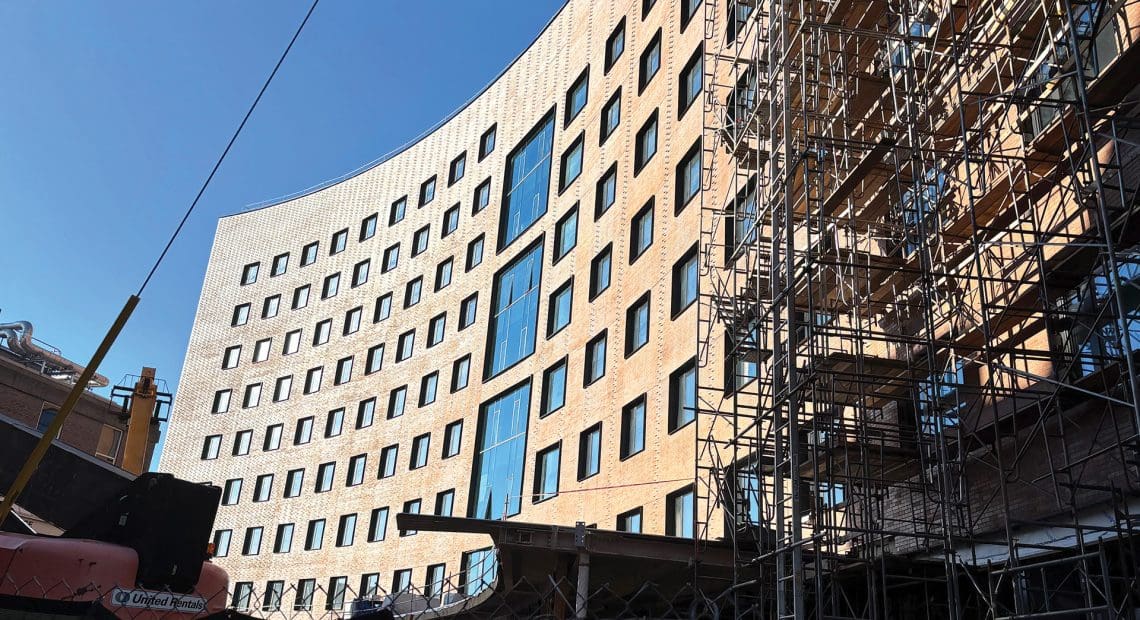
Highly visible to motorists on I-91 and to residents of Holyoke as well, the nine-story, Y-shaped building — a design one of those on the construction team said was inspired by the tricorn hats worn by Revolutionary War soldiers — serves as both a reminder of the tragedy that occurred during the early days of COVID at the structure it will replace, as well as a symbol of the state’s commitment to modernize the facility in the wake of that calamity.

Michael Lazo, executive director of the home, was a member of the National Guard unit that was dispatched to what was then called the Soldiers’ Home in late March 2020 amid a deepening crisis that would eventually take the lives of 76 residents in one of the nation’s worst COVID-19 outbreaks in a long-term care facility.

“I remember first walking in and not knowing what the heck we were walking into,” he recalled, noting that he arrived at the site on March 30, three days after the facility’s leadership made the fateful decision to combine two locked dementia units into a single undersized unit, precipitating the rapid spread of COVID. “Everything looked completely normal; you wouldn’t think anything was going on.”

Lazo would later be offered a full-time COO position at the home and eventually would be named interim director by the board of trustees and then the state. Today, he oversees all operations at the home while also preparing for the opening of the new facility, which will be called the Veterans’ Home, rather than the Soldiers’ Home, in deference to the veterans who served in other branches of the military.

“I think it just came down to money; other priorities probably stepped in and took precedence, so some of the funding this building should have received went elsewhere.”

“Especially the Marines — they’ve never liked Soldiers’ Home,” he joked, adding that he’s also finding time these days to offer tours of the building in progress — to staff, a few elected officials (more of those are scheduled to go through in the days and weeks to come), and a few media members.

BusinessWest was afforded such a tour late last month. As noted, the facility is several months from welcoming its first residents, and only a few floors are even approaching completion. But even at this early stage, it’s apparent that the complex itself is a work of art — one that will integrate the building with the surrounding landscape — and the structure will be state-of-the-art.

Indeed, building systems, designed to LEED Gold certification, include geothermal heating and cooling and facilities that are net-zero energy ready, a high-efficiency exterior envelope with triple-glazed windows, and natural ventilation. The foundation and outdoor retaining wall are made up of Goshen stone. Amenities include a great room, chapel, memory care floor, 40-person adult day health program, dental suite, salon, hobby room, four gardens, and a central kitchen.

Michael Lazo says the new Veterans’ Home at Holyoke emphasizes the privacy and dignity of residents.

Michael Lazo says the new Veterans’ Home at Holyoke emphasizes the privacy and dignity of residents.

Overall, said Lazo, the facility, complete with its curved brick walls, takes the form of three shells that overlap to define three inpatient neighborhoods, each of which benefits from light and views. A typical resident floor will be comprised of three ‘houses’ with 12 beds per house, nursing support, and community spaces, including dining, living, and den. A large garden anchors the complex, and in between wings are smaller, dedicated gardens.

For this issue, BusinessWest takes an early look at what will be one of the biggest stories of 2026, the long-awaited opening of the Veterans’ Home and the start of a new era of service to those who have served their country.


Learning Curves

Lazo said he wasn’t around, so he can only speculate and reflect on what he’s been told over the years.

But he believes that, in the years preceding the COVID tragedy, the state “simply forgot about” the Soldiers’ Home in Holyoke.

One of his predecessors in the director’s role resigned over what amounted to indifference on the state’s part concerning the facility, he said, adding that, in the decades preceding the COVID tragedy, there was little investment in the facility, and little oversight as well — and it showed, especially in the broad realm of preventive maintenance, or the lack thereof.

“I think it just came down to money; other priorities probably stepped in and took precedence, so some of the funding this building should have received went elsewhere,” he said, adding, again, that he was just speculating.

The tragic events in the early days of COVID and the investigations that followed certainly put the facility front of mind, triggering significant reforms to the state’s oversight of its veterans’ homes, he said, adding that what emerged were plans for a new long-term care facility that would serve more veterans and provide them with state-of-the-art amenities.

An architect’s rendering of the new Veterans’ Home at Holyoke.

An architect’s rendering of the new Veterans’ Home at Holyoke.

There was some talk of expanding and modernizing the current facility, he noted, but building new emerged as the more practical option. And while another site may have been considered, the state became committed to keeping the facility at its prominent hilltop location, a popular decision, but one that has presented challenges to the builders of the new facility as they squeezed it onto the site — and will present more to those that will tear down the current home.

Indeed, when finished, one corner of the new home will be just 10 feet from the current facility, which will eventually be used for parking and a garden area.

The new facility will house 234 residents, almost double the current population of 128. There will be 212 single-occupancy bedrooms and 11 double-occupancy bedrooms in those three neighborhoods mentioned earlier: North House, East House, and West House.

These neighborhoods, which will house veterans of several different conflicts (including World War II) and peacetime periods as well, represent substantial improvements over current facilities, said Lazo, especially in the realms of privacy and dignity of residents — each unit has a private bath and showers, while the current facility features common baths — as well as activities and things to do.

“Each veteran has a good-sized room, and there’s plenty of activity space, both on the first floor as well as in each individual unit.”

“The space for veterans is great,” Lazo said. “Each veteran has a good-sized room, and there’s plenty of activity space, both on the first floor as well as in each individual unit. Each floor will have a different activity; we’ll have an exercise bike or some small weights on one floor and arts supplies on the next floor, so veterans will be able to move about the building to do whatever activity they’re interested in at that time.”

And then, there will be the so-called great room, which will host large gatherings such as holiday activities and Super Bowl watch parties, he said, noting that it will be equipped with a 90-inch television.


Tour de Force

As BusinessWest toured the second floor of the new facility and a 30-unit memory care unit under construction there, we were directed to one of the 12- by 16-foot resident rooms, complete with a large window, spacious bath and shower area, space where a 55-inch television will go, built-in storage and shelving units, a desk, and other accommodations.

As the tour continued, Tim Senecal, general supervisor with Commodore Walsh Holyoke, a joint venture comprised of Commodore Builders LLC and Walsh Brothers Inc., referenced common den areas with huge windows and sweeping views of the surrounding area, the facility’s chapel, administrative space, and the location that will become the great room.

A rendering of the planned great room.

A rendering of the planned great room.

“The higher you go, the better the views get, obviously,” said Senecal, who talked as he walked — about everything from those views to the many challenges involved with construction, from excavating for the foundation to the brickwork, made more difficult by the curved nature of the structure, to the Goshen stone retaining wall.

Some of the building’s design elements were borrowed from the new Veterans’ Home at Chelsea, a smaller facility (154 beds) that opened last year, said Lazo, adding that the overall design is distinct, with input from the staff at the current home.

As noted earlier, the first residents will not move into the new home until next September; the first group of 24 will be moved from the fourth floor of the current facility to the third floor of the new one. After that, if all goes well, veterans will move in roughly 20 at a time, with the memory care residents being the last to move. Lazo said his goal is to have all residents moved by February 2027.

That 16-month period will be the most challenging for the staff members at the facility because they will be managing two facilities at the same time, he added, noting that final project completion, including the demolition of the current home, is slated for mid-2028.

As he talked about that teardown and the logistical challenges it will present, Lazo joked that it’s likely that several staff members wouldn’t mind helping with that effort and send the tired, tragedy-scarred property into history.

But that will also be a sad time, he said, noting that several generations from the same families, including his own, lived and died in that home.

The new home, born in many ways from that tragedy of nearly six years ago, will no doubt create its own memories and its own history.

But right now, it’s creating excitement for the next chapter in the story of this fabled property — and with good reason.

Autos

Progress Report

By Nicole Sherwood and Rich Sherwood

Clean Queen Car Wash owners Nicole and Rich Sherwood.

Clean Queen Car Wash owners Nicole and Rich Sherwood.

When we took over Clean Queen Car Wash in Holyoke a year ago, we knew we were in for an adventure. We had the skills — Rich, with his deep experience in automotive repair, and me, with my background in customer success and business operations. But no amount of preparation fully equips you for the real experience of running a business together as a couple.

Reflecting on our first year, we’ve seen incredible growth, faced unexpected challenges, and learned more than we could have imagined. Here are five things we did well — and five things we wish we had done better.


Five Things We Did Well

Customer Experience First. From day one, we prioritized a high-quality wash and detailing service. We listened to customer feedback and made adjustments to improve efficiency and satisfaction. The result? A growing base of loyal customers. We also introduced additional services, like family pricing and express interior detailing, to create long-term value and repeat business.

Investing in the Right Equipment. We quickly realized that outdated or poorly maintained equipment leads to inefficiencies and downtime. Investing in high-quality tools, staying on top of repairs, and proactively maintaining the machinery have minimized disruptions. A single breakdown can cost us hundreds in lost revenue, so preventive maintenance has been a key factor in keeping things running smoothly.

“A single breakdown can cost us hundreds in lost revenue, so preventive maintenance has been a key factor in keeping things running smoothly.”

Marketing and Social Media Presence. We made a strong push on social media with promotions, giveaways, and engaging content. This helped us gain traction in the community and bring in new customers, especially through targeted Facebook ads and seasonal campaigns. Our fall-themed ads and winter promotions helped drive membership sales and increase awareness of the dangers of salt buildup on vehicles.

Building Community Relationships. Hosting fundraisers, supporting local organizations, and engaging with the community has strengthened our brand and built goodwill. One of our proudest moments was raising $500 for Holyoke Youth Football. We’ve also worked with local businesses for cross-promotions, helping expand our reach while supporting others in the area.

Learning Every Aspect of the Business. Rich made it his mission to understand the ins and outs of the car wash. From mechanical repairs to customer service, knowing every aspect has allowed us to be hands-on owners and troubleshoot problems quickly. I focused on streamlining operations, improving customer retention strategies, and refining our service offerings. This hands-on approach has allowed us to stay lean and maximize profitability.


Five Things We Wish We Did Better

Work-life Balance. Running a business as a couple means work follows you home. We often found ourselves discussing operations at dinner or on weekends, which led to burnout at times. Setting clear work-life boundaries earlier — such as designated ‘no-business’ hours — would have helped us recharge and avoid unnecessary stress.

Financial Planning for Unexpected Costs. While we had a budget, unexpected repairs and maintenance issues caught us off guard. For example, when a major piece of equipment broke down unexpectedly, we had to scramble to cover the repair costs. A larger emergency fund from the start would have reduced financial stress and allowed us to handle surprises more smoothly.

Hiring and Delegation. We took on too much ourselves in the beginning. Trying to manage every detail left us stretched thin. Learning to delegate and trust employees sooner would have helped us focus on growth rather than just daily operations. We now understand the importance of hiring the right people and providing clear training to ensure the business runs smoothly without us having to be there 24/7.

“We took on too much ourselves in the beginning. Trying to manage every detail left us stretched thin. Learning to delegate and trust employees sooner would have helped us focus on growth rather than just daily operations.”

Better Systems for Membership and Promotions. Our unlimited membership program is a great value, but in the early months, we struggled with managing renewals, tracking customer accounts, and efficiently promoting it. Implementing a more robust system from the start would have saved us headaches and provided a better experience for our customers.

Clearer Communication as Business Partners. Running a business together is different from a personal relationship. We had to learn to separate emotions from business decisions and communicate more effectively about expectations and responsibilities. Early on, miscommunications sometimes led to frustration, but over time, we developed a clearer structure for dividing tasks and making decisions together.


Looking Ahead

Our first year was full of lessons, and while we’ve made mistakes, we’ve also built something we’re incredibly proud of. We’ve increased our customer base, established a strong local presence, and created a business that continues to grow. As we move into our second year, we’re focusing on scaling, refining our processes, and continuing to provide top-notch service to our customers in Holyoke and beyond.

To fellow entrepreneurs — especially couples diving into business together — our advice is simple: plan for the unexpected, communicate openly, and celebrate the wins (big and small) along the way.

Here’s to another year of growth, learning, and cleaner cars!


Nicole and Rich Sherwood are the owners of Clean Queen Car Wash in Holyoke.

Commercial Real Estate Special Coverage

A Matter of Speculation

‘What happens now?’

That’s the question that was on the minds of many as Hampshire Mall was sold at a foreclosure auction last month — to the company that holds the mortgage on the property, and for far less than half its assessed value.

Actually, people have been asking that question for a while now, as the fate of the mall becomes less clear after years of struggle, even after its former owner, Pyramid Management Group (which also owns Holyoke Mall), started doing the things malls are supposed to do in these changing times, especially shifting gears and devoting far more square footage to entertainment-related venues — everything from a large gym to escape rooms to taekwondo.

Apparently, all that simply wasn’t enough, said John Benoit, a principal (with his two brothers) of Vantage Point Retail in Longmeadow, which leases and sells retail properties and finds locations for a few national chains, such as Five Guys, Advance Auto Parts, and 99 Restaurant.

“Zoning is complicated, to say the least, and sometimes, when people hear about an effort and there’s a lack of specificity surrounding it, they can draw conclusions that are not appropriate.”

He noted that Hampshire Mall, located near the Amherst line in Hadley on busy Route 9, is just one of many malls across the U.S. that are suffering and destined for new life; others in this region include Eastfield Mall, which has already been demolished, to be replaced by a large power center, and Enfield Square, which is also awaiting its fate. Meanwhile, the retail sector itself is a state of flux.

John Benoit

John Benoit says Route 9 is a retail destination, but he wonders how much more retail can come to that busy thoroughfare.

“Retail has been undergoing change for a long time, and I don’t know if it’s settled,” Benoit told BusinessWest. “There was a time when online was a new world in retail and the discussion in the trade journals and at the trade association meetings going back 10 to 15 years was about whether brick-and-mortar locations would go away — would people just do business online?”

What has emerged, he went on, is the concept of multi-channel retail that includes online as well as bricks-and-mortar elements, with some consumers using one or the other for research, buying, returns, or some combination of the above.

“It changes every year,” he added. “Some of the statements I just made … I don’t even know if they’re current.”

Nothing is expected to happen at Hampshire Mall for a while, as the new owner, Deutsche Bank Trust Co. Americas and Wells Fargo Commercial Mortgage Securities Inc., which, as noted, held the mortgage on the property, figures out what it wants to do. The bank foreclosed on the mall after Pyramid defaulted on its mortgage.

Shardool Parmar, a more-than-interested observer at the auction — that’s because the Pioneer Valley Hotel Group, which he serves as president, owns three hotels on Route 9 in Hadley and is building a fourth — said it will likely be years before the fate of the property is known.

“It’s a big unknown what will happen to the mall property,” he said. “That’s because it’s difficult to say what the future market will be when it comes to whether this will remain retail or become residential. There are a lot of unknowns.”

The most obvious future uses are more (and perhaps different) retail — because of the emergence of the Route 9 retail corridor as one of the strongest, if not the strongest, in the region, rivaled perhaps only by Memorial Drive in Chicopee, said Benoit — and housing, mostly because of the size of the parcel and the huge need for more housing in that region.

But both of those options come with question marks. Indeed, while Route 9 is a retail hub, there are vacancies — actually, several of them — along that corridor, Parmar said. Meanwhile, Benoit added, while successful retail and especially grocery stores (and there are lot of them on this corridor) attract more retail, most of the major players, from Walmart to Home Depot, are already there.

“They did what people said what malls could do and should do, and they did it early — and that’s entertainment, as compared to shopping. They had the shopping, but they also had an entertainment component.”

As for housing, a zone change would be required, said Hadley Select Board member Molly Keegan, noting that the town will likely pursue creation of what’s known as a 40R, otherwise known as a smart growth zoning overlay district, which, according to the state’s website, “seeks to substantially increase the supply of housing, and decrease its cost, by increasing the amount of land zoned for dense housing.”

“The Planning Board has been working with the Pioneer Valley Planning Commission on researching and potentially bringing a zoning change to town meeting in either the spring or fall of 2025 that would allow for additional types of development, specifically using Chapter 40R,” Keegan explained, noting that the intent of 40R is to encourage municipalities to create dense housing or mixed-use zoning districts.

Such a proposal would require educating town residents about just what such a zone is for and what could happen if one becomes reality on that corridor, she noted, adding that, if a vote comes to fruition, it will Hadley’s first attempt at creating a 40R.

Molly Keegan

Molly Keegan says information and education will be the keys to passing a needed zone change to permit dense housing at the Hampshire Mall site.

“There’s an awful lot of education that needs to go along with this,” Keegan said. “Zoning is complicated, to say the least, and sometimes, when people hear about an effort and there’s a lack of specificity surrounding it, they can draw conclusions that are not appropriate. So the most important thing the town can do right now is educate.”

For this issue and its focus on commercial real estate, we take an in-depth look at Hampshire Mall and what might come next for this retail and cultural landmark.


Landmark Decisions

Hampshire Mall is one of the several area spots that gets some exposure in the recently released Janet Planet, a coming-of-age movie set in Western Mass. in the early ’90s.

In a recent Boston Globe article intended to help readers understand just what ‘Western Mass.’ is — and how the movie helps explain that geography — it is noted that the mall became a solid locale for the movie because … well, with a JCPenney and a rollerskating rink, it looks the part of an early-’90s mall.

In the larger scheme of things, that’s probably not a good look, even though, as noted earlier, the mall has made some significant changes in recent years to make it more viable, especially that shift to more entertainment-related venues. Indeed, in most respects, it doesn’t look like an early-’90s mall, with tenants that include FunHub Action Park, All In Adventures, LaserBlast Ancient Adventure, Planet Fitness, and PiNZ, a bowling alley.

“They did what people said what malls could do and should do, and they did it early — and that’s entertainment, as compared to shopping,” he explained. “They had the shopping, but they also had an entertainment component.”

This shift helped, but it certainly hasn’t stemmed the mall’s decline, said Benoit, theorizing that habits changed during the pandemic — people didn’t want to be indoors around a lot of other people — and they haven’t really changed back.

This reality, coupled with the many changes in retail — and the proliferation of other retail on Route 9 — conspired to all but seal the fate of Hampshire Mall, he noted, adding that similar stories have been written at malls around the country. The ones changing the narrative for the better have embraced reinvention.

“Malls are really struggling, and that struggle didn’t just start — it’s been going on a long time,” Benoit said, emphasizing that word ‘long.’ “Malls are big, complicated financial and physical arrangements.”

Using Eastfield as an example, he said talks about converting it to a large power center with a housing component have been going on for at least 15 years, by his count. Advancing those plans have been complicated by everything from the Great Recession to the pandemic; from ownership of some footprints by the anchors themselves, which slows and adds more layers of complexity to the equation, to the fate of existing tenants.

“The more information people have, and the earlier they have it and have time to ask questions and digest it, the better they’ll understand what they’re voting on what they get to town meeting.”

That question of what might come next at Hampshire became an assignment — “Reimagining the Hampshire Mall: Exploring Opportunities for Intergenerational Housing and Community Development” — for 40 juniors in the architecture and landscape architecture programs at UMass Amherst.

Teams of five students presented different concepts for the mall property. Each one included 350 to 700 new housing units, designed for young professionals, working families, and seniors; site amenities for residents and visitors; parking for tenants and shoppers alike; and some portions of the existing mall. Many of those elements are likely to be included in whatever the mall becomes next, said those we spoke with.

Getting back to a possible 40R zone at the Hampshire Mall site, Keegan said the Planning Board has formed a smart-growth subcommitee that is specifically working on the next steps in the process of creating such a zone. Informational sessions will be scheduled to help inform the public of what is involved and what it means for the community moving forward.

“The more information people have, and the earlier they have it and have time to ask questions and digest it, the better they’ll understand what they’re voting on what they get to town meeting,” she added, noting that, while there is a recognized need for more housing in the community, 40R and its emphasis on dense housing is a new concept for Hadley.

What certainly isn’t a new concept is retail on Route 9. With five colleges only a few miles away and several smaller communities without their own retail centers, the stretch between the Coolidge Bridge and the center of Amherst has been a retail destination for more than 50 years now, one that has consistently added new regional and national brands to the portfolio, becoming what Benoit called a ‘super-regional trade area.’

As a measuring stick, he pointed to all those aforementioned supermarkets. As he commenced counting them, he started with Big Y and Stop & Shop and ended with Maple Farms, a smaller, independent outlet, and listed eight in all. And he was quite sure there was a ninth that he couldn’t recall.

In any case, all those supermarkets attract other retail, he said, adding that there may still be room for more on Route 9, including at a reshaped Hampshire Mall property, where a power center, at which “every store has a front door,” as he put it, could — that’s could — be part of the equation.


History Repeats?

That’s what happened at Mountain Farms Mall, which opened in 1973 and, ironically enough, became known as the ‘dead mall’ after its precipitous decline and the closing of all but a few of its 35 stores.

Converted to an open-air mall and anchored by Whole Foods Market and Walmart, it is now thriving — so much so that Benoit wondered out loud if there is, in fact, room for more retail on that stretch.

“I’m not sure retail is that strong anymore,” he said. “And with the Mountain Farms Mall thriving, a lot of tenants that are in business are already in that market. Between there and the Stop & Shop center, there’s already a lot of retail. The anchors are there — Home Depot, Lowe’s … there’s no one left.”

Parmar concurred, noting that, whatever comes of the site, it will be costly and probably complex.

“There are a lot of variables, including the cost of construction,” he told BusinessWest. “To bring something to light there is not going to be cheap, and will there be a return on investment? There is a lot to investigate before someone can say ‘this will work’ or ‘that will work.’”

Features Special Coverage

Holyoke Conceptualizes Olympic-style Sports Complex

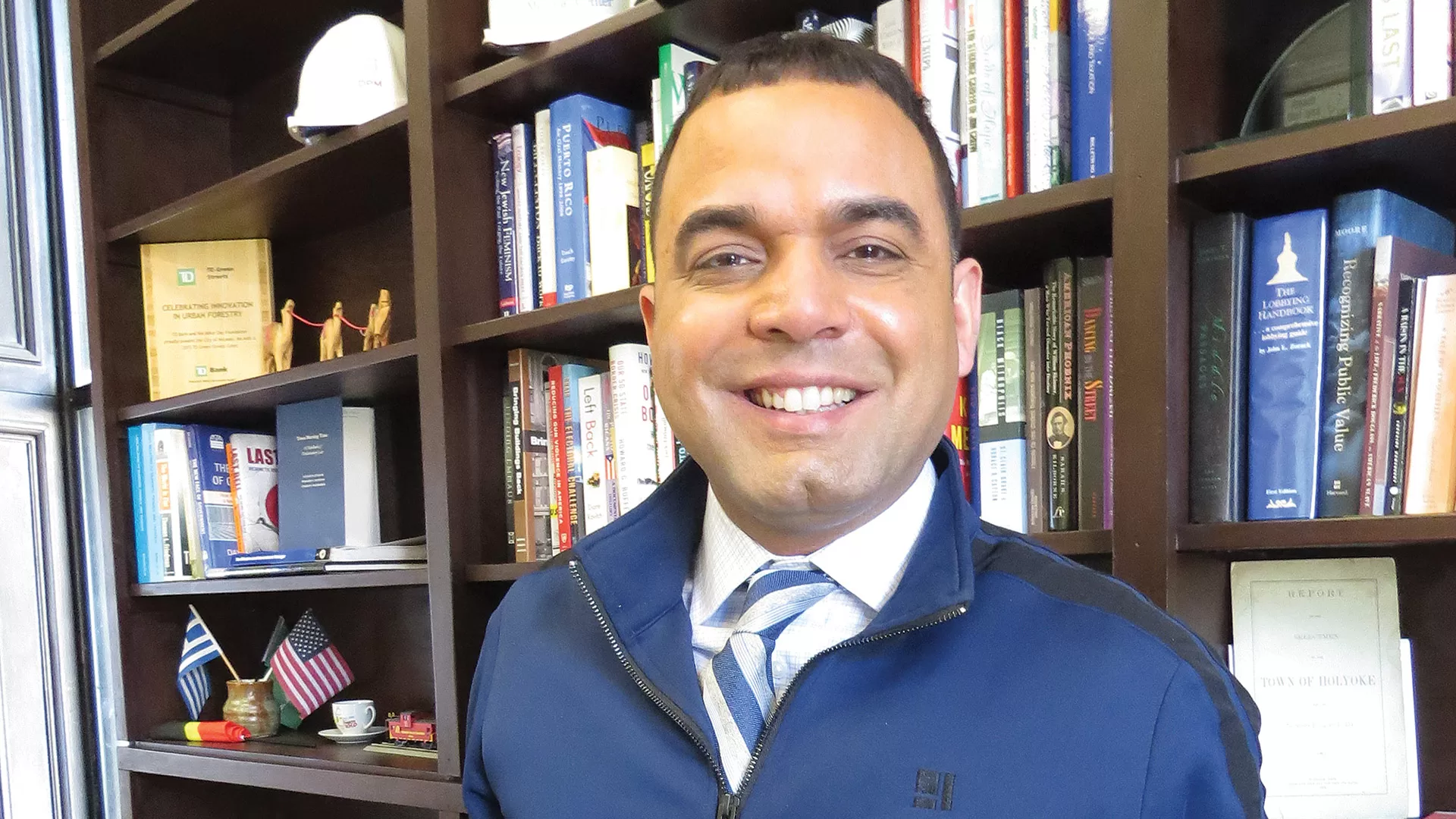
Cesar Ruiz says the planned facility could make Holyoke the “sports capital of New England.”

Cesar Ruiz says the planned facility could make Holyoke the “sports capital of New England.”


Cesar Ruiz admits that the first time he and Holyoke Mayor Joshua Garcia discussed the notion of bringing a sports complex to the Paper City, one that could potentially become the new home to the Volleyball Hall of Fame, the talk “pretty much went in one ear and out the other.”

That was roughly two years ago, and Ruiz said his lack of enthusiasm had less to do with the concept, which he has long championed, and far more to do with the many other things he had going on his life, especially the East Longmeadow-based home-care and healthcare staffing agency called Golden Years, the venture he started with a few partners and has led to rapid and dramatic growth, so much that he was named BusinessWest’s Top Entrepreneur for 2020.

“The feasibility study indicates that we can draw from multiple areas and bring people to Holyoke. We’re not approaching this as a regular sports facility, but a venue that can draw regionally and from several different states.”

With that company on firmer ground and, increasingly, being managed by his children, Ruiz was more responsive when the subject of a sports complex came up again at the beginning of 2023.

“Timing is important,” he told BusinessWest. “When I was asked to take a look at it again and see what it might look like … I had a completely different reaction to it.”

In fact, you could say that he took the ball and ran with it, undertaking feasibility studies; engaging Florida-based Sports Facilities Co. (SFC), which has built what Ruiz has in mind for Holyoke in several municipalities around the globe, for an initial concept; and then putting together a team, called the USA International Sports Complex Group, to advance this initiative.

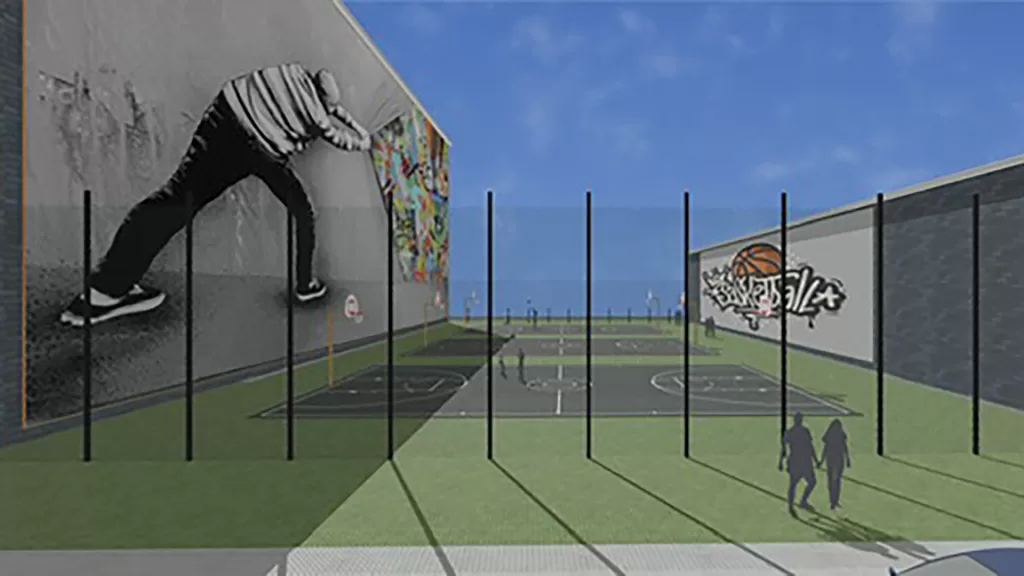
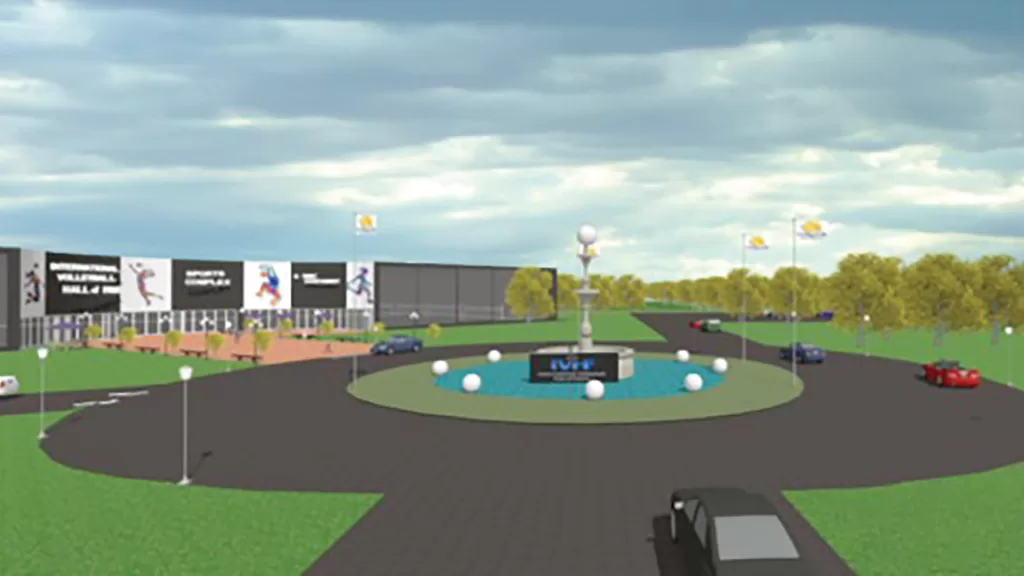
Conceptual renderings of the sports complex planned for Holyoke, one that will include everything from athletic fields and indoor courts to a hotel and a new home for the Volleyball Hall of Fame.

The concept has progressed to the point where Ruiz, Garcia, other city officials, representatives of the Volleyball Hall of Fame, and other officers with USA International Sports Complex Group felt ready to announce the plans to the public.

Which they did, at a well-attended press conference at the Volleyball Hall of Fame on Feb. 6.

They announced plans for what they called “an Olympic-style sports complex,” one featuring a main indoor athletic facility that would boast everything from basketball and volleyball courts to an arcade area, laser tag, ‘boutique bowling,’ batting cages, pickleball, and more, as well as outdoor athletic facilities to include a synthetic turf field and baseball and softball fields.

These facilities come with a total price tag estimated at between $50 million and $90 million, said Ruiz, adding that, while this will be a privately funded facility, MassDevelopment and other state agencies have been approached about potential involvement.

Holyoke Mayor Joshua Garcia

Holyoke Mayor Joshua Garcia says talk of a sports complex has been ongoing in Holyoke for many years.

In an interview prior to that news conference, Ruiz told BusinessWest that he wants to make Holyoke the sports capital of New England, and this project will become the vehicle for doing so and, in the process, bring in an estimated $41 million in new economic activity to the city.

‘We want to put Holyoke on the map, starting with volleyball — this will be the new home of the Volleyball Hall of Fame,” he said. “But it will be much more than that; this facility will have several sites and include many different sports venues for people of all ages — young and old — and will also include a hotel.

“It’s a very ambitious initiative,” he went on, adding that it will be built in phases, with the first of them hopefully to be completed by the end of 2026. “The feasibility study indicates that we can draw from multiple areas and bring people to Holyoke. We’re not approaching this as a regular sports facility, but a venue that can draw regionally and from several different states.”

Garcia agreed, adding that that talk of a sports complex has been ongoing in Holyoke for many years, and it became a priority of his administration to turn the talk into action. Doing that will require leadership and partnerships on several levels, he told BusinessWest, noting that Ruiz and his administration are providing the former, while the latter will involve several stakeholders, many of them still to be determined.

“I’m excited about what this sports complex could mean for the trajectory of our city,” the mayor said. “This would be a huge part of the resurgence of Holyoke.”


Court of Opinion

In that interview with BusinessWest, Garcia said Holyoke likes to “punch above its weight class.”

That’s a boxing term, obviously, now used in many different contexts, to describe underdogs taking on heavy favorites, for example, or, in this case, a smaller community trying to take on initiatives perhaps more suited to larger municipalities.

Renovation of the historic Victory Theatre, an ongoing, 30-year initiative in this city, might fall into that category. And this sports complex certainly would as well, said Garcia, adding that it’s an ambitious undertaking, but a poignant next step for a community that has, indeed, been surging in recent years, and on many levels.

These include entrepreneurship — especially within the minority population, with dozens of new businesses opening in recent years, many of them in a rebounding downtown — but also housing; education; new clean-energy businesses, such as Clean Crop Technology, which uses electricity to “revolutionize food safety”; and especially a burgeoning cannabis cluster, which has made effective use of the city’s huge inventory of old mill space for dispensaries and growing facilities alike.

The next frontier, if one chooses to call it that, could — and should — be sports, said the mayor, adding that the city has a strong tradition in this realm, which crosses many sports and several decades and includes everything from volleyball to Golden Gloves boxing to the Holyoke Blue Sox baseball team.

“Holyoke is a sports city; it always has been — we have very robust youth programs, baseball, basketball, football, and more, and the pipeline goes into our high schools,” Garcia said. “And that extends to recreational softball — we have people from across this region and into Connecticut that come to Holyoke to play in two softball leagues.

“One of the things we struggle with in Holyoke is adequate space for people to play, recreationally, but also tournaments; we don’t have the kind of capacity to host large-scale tournaments,” he went on, adding that the sports complex now on the drawing board would address this need and, while doing so, bring people to the city, providing a boost to existing businesses and perhaps fueling new ones.

“Couple this need for such a facility with the fact that Holyoke is the birthplace of volleyball and home to the Volleyball Hall of Fame, and we thought that this has to happen here — it has to happen in Holyoke,” he said.

As noted, the project must clear several hurdles, starting with the securing of what is expected to be several different sites, finalization of a design, and, especially, putting the funding in place.

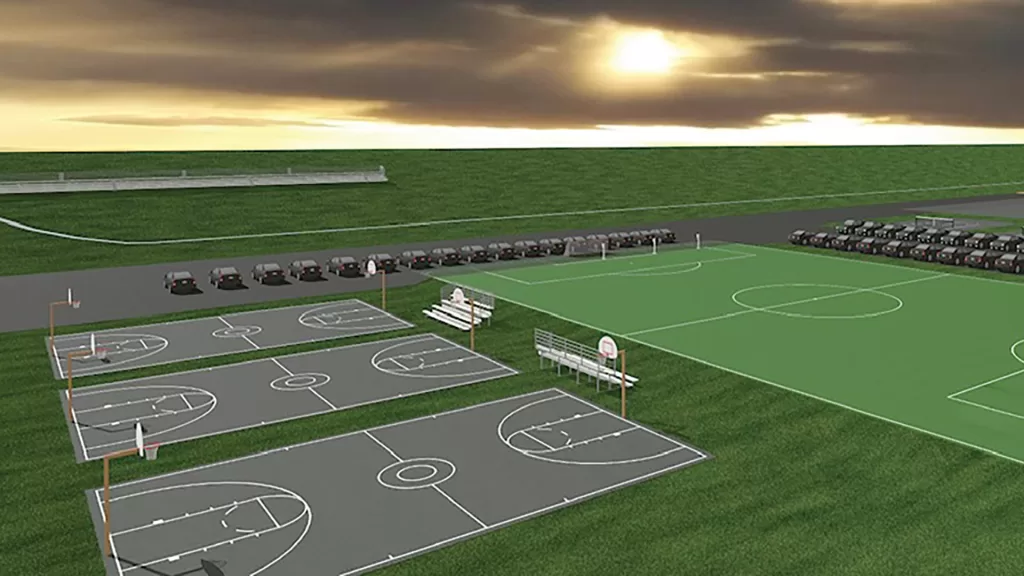
The outdoor component of the complex promises to feature several fields and courts.

The outdoor component of the complex promises to feature several fields and courts.

Garcia said one of the next steps in the process is to assemble a funding strategy, one that will involve bringing more investors, like Ruiz, to the table, and also likely involve public support, from MassDevelopment and other state agencies.

But several significant steps have already been taken, especially the hiring of SFC, which has a deep portfolio of sports-complex projects, including the Rhythm & Rally Sports & Events complex in Macon, Ga., touted as the world’s largest pickleball facility; Allison Sports Town, an indoor/outdoor venue in Springfield, Mo. that spans 82 acres; Emerald Acres Sports Connection in Mattoon, Ill., which features an indoor field house, outdoor fields, and a walkable retail development space; the Fort Bend Epicenter in Rosenberg, Texas, a 230,000-square-foot, multi-purpose area that houses six basketball courts and 12 volleyball courts, with a capacity of 10,000 seats; and many others.

Ruiz called SFC the “best in the industry,” and noted that one of the next steps in the process of adding a Holyoke facility to that portfolio is visiting several projects of similar size and scope and understanding all that it took to make them reality.

“They handle the feasibility part of this, from design and development to operations,” he said of SFC, adding that the company can obviously help guide the initiative from start to finish.


Fields of Dreams

The sports complex, its importance to Holyoke and the region, and its potential as an economic driver are neatly summed up in a letter to a committee reviewing submissions to a request for proposals for a parcel on Whiting Farms Road owned by Holyoke Gas & Electric.

“This is not a dream, but a vision already being put in place by our partnership with the SFC team,” it reads. “We will build a sports facility that the city of Holyoke will be proud of … together with SFC, we will develop one of the top sports and event destinations in Massachusetts.”

Those behind those words believe this team has the drive, the confidence, and, eventually, the means to get the project over the finish line, or the goal line — whichever sports term one chooses — and make this vision reality.


Construction

A Long-awaited Transformation

Holyoke Mayor Joshua Garcia

Holyoke Mayor Joshua Garcia says the mill-conversion project will impact the city for many years to come.


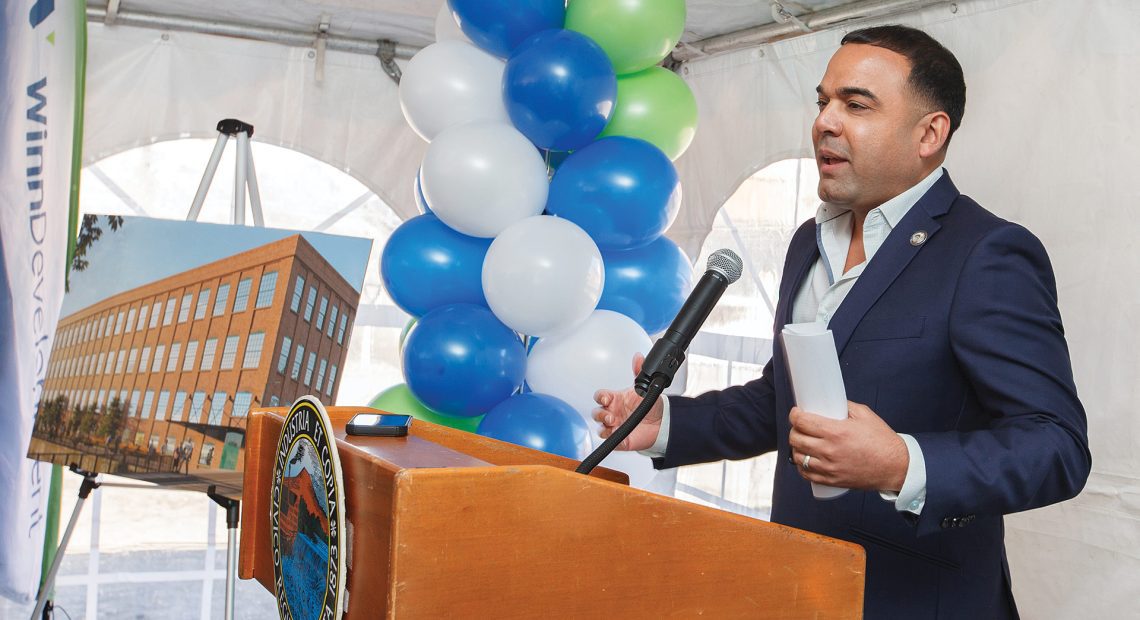
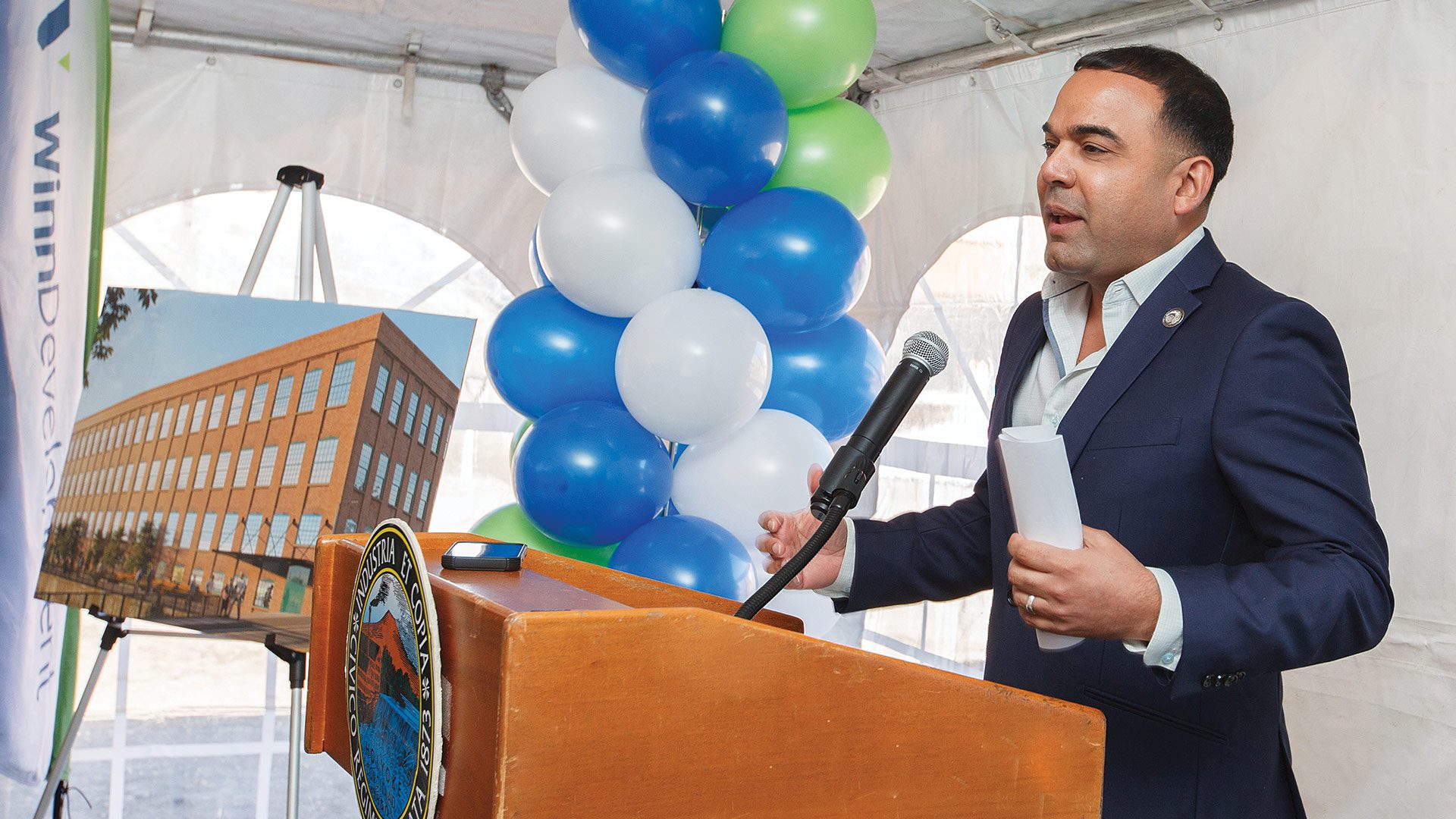
On Nov. 20, Holyoke city officials and legislative leaders joined WinnDevelopment executives and Massachusetts housing lenders to break ground on a $55.3 million adaptive-reuse project at a long-vacant, historic mill complex that will be transformed into 88 affordable apartment homes for seniors ages 55 and older.

The redevelopment at the Appleton Mill property in downtown Holyoke will create new, loft-style apartments in three interconnected, 111-year-old industrial buildings that were once home to Farr Alpaca Co. and have been vacant for decades. In addition, WinnDevelopment will construct a new community building and connect it to the residential space via a closed skybridge spanning nearby railroad tracks.

“We’re excited to get to work on preserving this important feature of Holyoke’s proud industrial legacy and transform it into much-need housing for seniors who want to stay in the community they love,” WinnDevelopment President and Managing Partner Larry Curtis said. “This project is the first part of a two-phase redevelopment effort that will revitalize this historic mill complex and provide an economic boost to Holyoke’s downtown.”

All 88 apartments will be reserved for low- and moderate-income seniors, with 12 units reserved for households below 30% of area median income (AMI), 63 for those below 60% of AMI, and 13 for households below 80% of AMI. Eight of the units will be available to eligible households through the U.S. Department of Housing and Urban Development’s project-based voucher program, and five units will be set aside for Massachusetts Department of Mental Health clients through the Facilities Consolidation Fund.

“This project represents our commitment to history, preservation, and housing. It also represents our commitment to senior living, affordability, compassion, and care,” Holyoke Mayor Joshua Garcia said. “The renovation of the former 111-year-old Alpaca Mill building to achieve these commitments is another Holyoke thing we do. I am excited to witness this unfold at this time in our city’s history and even more excited to see the impact it will have for many years to come.”

The project was made possible with significant federal, state, local, and private financing. Bank of America is serving as the project construction lender and as the investor in the project’s state and federal Low Income Housing Tax Credits, authorized by the Massachusetts Executive Office of Housing and Livable Communities (EOHLC), and state and federal Historic Tax Credits, awarded by the Massachusetts Historic Commission and the U.S. National Park Service.

“We’re pleased to help finance much-needed affordable housing for seniors in Holyoke,” said Mary Thompson, senior vice president of Community Development Banking at Bank of America. “We applaud Winn for their sustainable design that incorporates modern, energy-efficient heating, cooling, and appliances, while preserving the historic character of the Farr Alpaca Company complex.”

MassHousing provided tax-exempt bonds for the project financing, while the EOHLC provided soft financing, along with its partners, the Community Economic Development Assistance Corp. and the MassHousing Affordable Housing Trust.

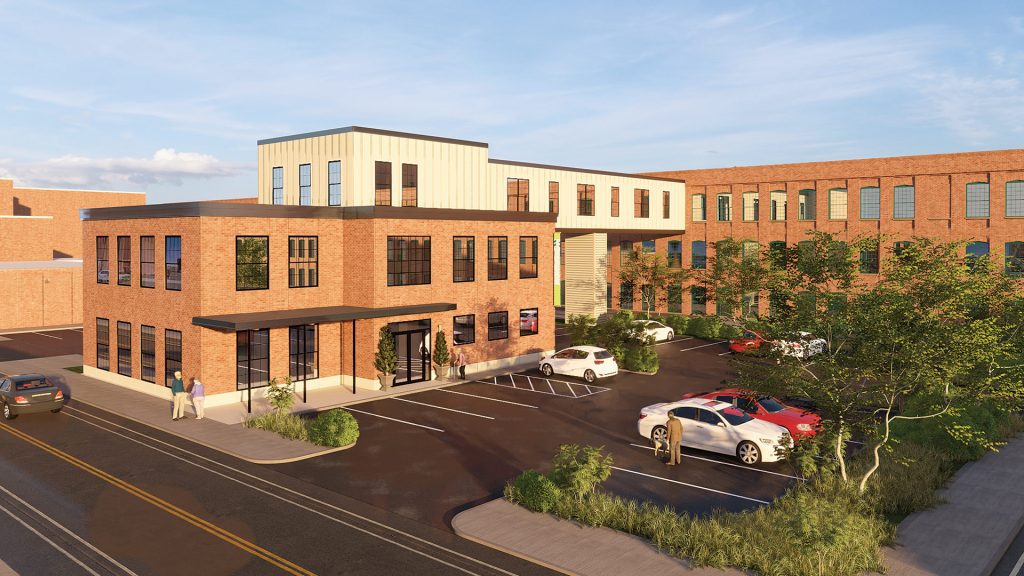
The property’s current condition is a stark contrast to what it will look like in the future, according to this rendering.

The property’s current condition is a stark contrast to what it will look like in the future, according to this rendering.

“This decades-long-vacant and blighted mill property in the heart of Holyoke will be transformed into new, vibrant housing for older residents who will be able to live affordably and comfortably in downtown Holyoke,” MassHousing CEO Chrystal Kornegay said. “WinnCompanies has the experience and expertise to make this abandoned eyesore into a new affordable-housing community that will serve city residents for many years to come. The city of Holyoke has provided strong support, and MassHousing is pleased to be among the many public and private partners working closely together to complete this important project.”

Enterprise Bank, a locally owned and managed full-service commercial bank based in Lowell, played a key role in the redevelopment through the direct purchase of the bonds and the provision of bridge financing.

“We are pleased to have been able to partner with WinnDevelopment, a respected, award-winning property manager and creator of high-quality and exceptionally managed affordable housing, on this transformative project,” Enterprise Bank CEO Jack Clancy said. “We continue to remain committed to supporting affordable-housing initiatives throughout our footprint.”

The Holyoke Redevelopment Authority (HRA) provided a ground lease for the mill structure for a discounted value and provided additional funds for structural stabilization of the mill complex. Additional local partners include the city of Holyoke and local nonprofit OneHolyoke, which provided critical gap financing through local ARPA and CDBG funds. BlueHub Capital served as lender on the state credit loans.

“The HRA is proud of the partnership with WinnDevelopment and excited to see this project come to fruition,” said Aaron Vega, Holyoke’s director of Planning and Economic Development. “The whole team in our office worked on this project, and we believe in its transformative impact for our downtown and in addressing the housing needs of our community.”

Once the largest alpaca wool mill in the world, the 168,000-square-foot, brick mill complex features nine buildings on six acres and is one of Holyoke’s most prominent historic properties. After the Farr Alpaca Co. ceased production in the early 1940s, the complex declined and has been largely vacant since the 1970s, with deteriorating conditions hindering efforts to revitalize the area.

Located across the street from a state park dedicated to showcasing Holyoke’s industrial and cultural heritage, the site has been a priority for redevelopment since the city took title to the property a decade ago.

WinnDevelopment’s work is focused on an 86,000-square-foot section of the complex that includes three structures: Building 4, erected in 1880 and the oldest on the site; Building 5, a storage, washing, and sorting facility erected in 1905; and Building 6, also built in 1905 and the largest structure on the property.

Designed to meet the sustainability criteria of Enterprise Green Communities, the new apartment community will be completely fossil-fuel-free and will feature LED lighting; Energy Star appliances; low-flow, water-conserving plumbing fixtures; and premium roof insulation.

Resident amenity spaces will include on-site management offices, a fitness center, a resident lounge, an outdoor recreation area along the adjacent canal, laundry facilities, and 109 parking spaces.

Scheduled for completion in the spring of 2025, the project is being led by WinnDevelopment Senior Project Director Matt Robayna, with support from Senior Project Director Lauren Canepari and Assistant Project Director Hagop Toghramadjian.

Keith Construction of Canton is serving as general contractor for the construction effort, with the Architectural Team of Chelsea serving as architect. VHB is providing civil engineering and permitting services through its office in Springfield. Robinson+Cole of Boston served as transaction counsel.

Features Special Coverage

Fried and True

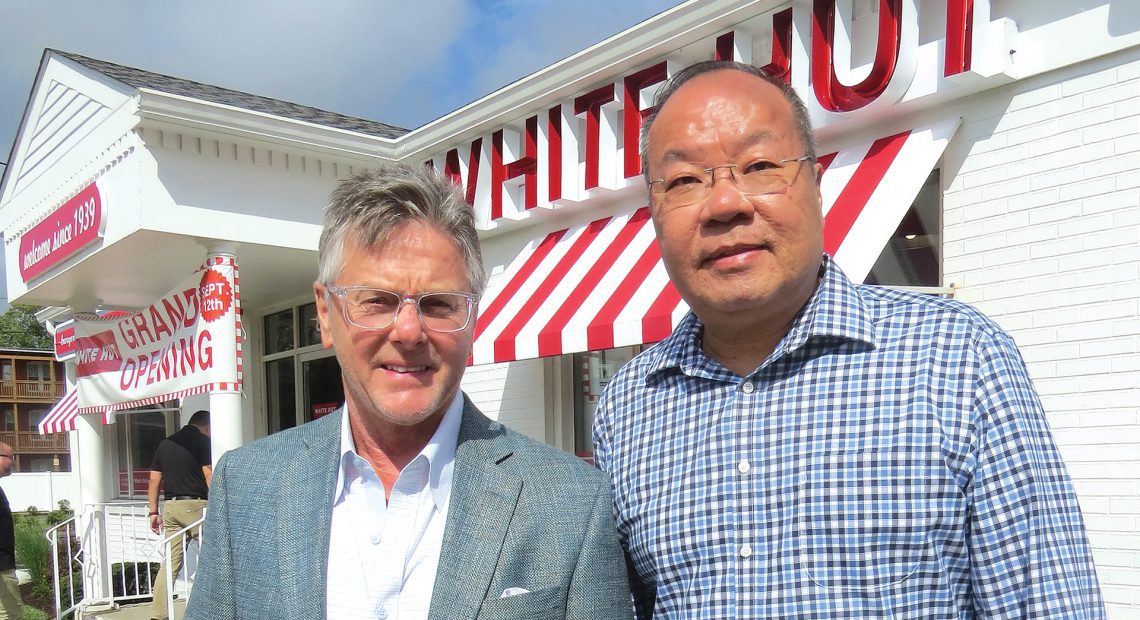
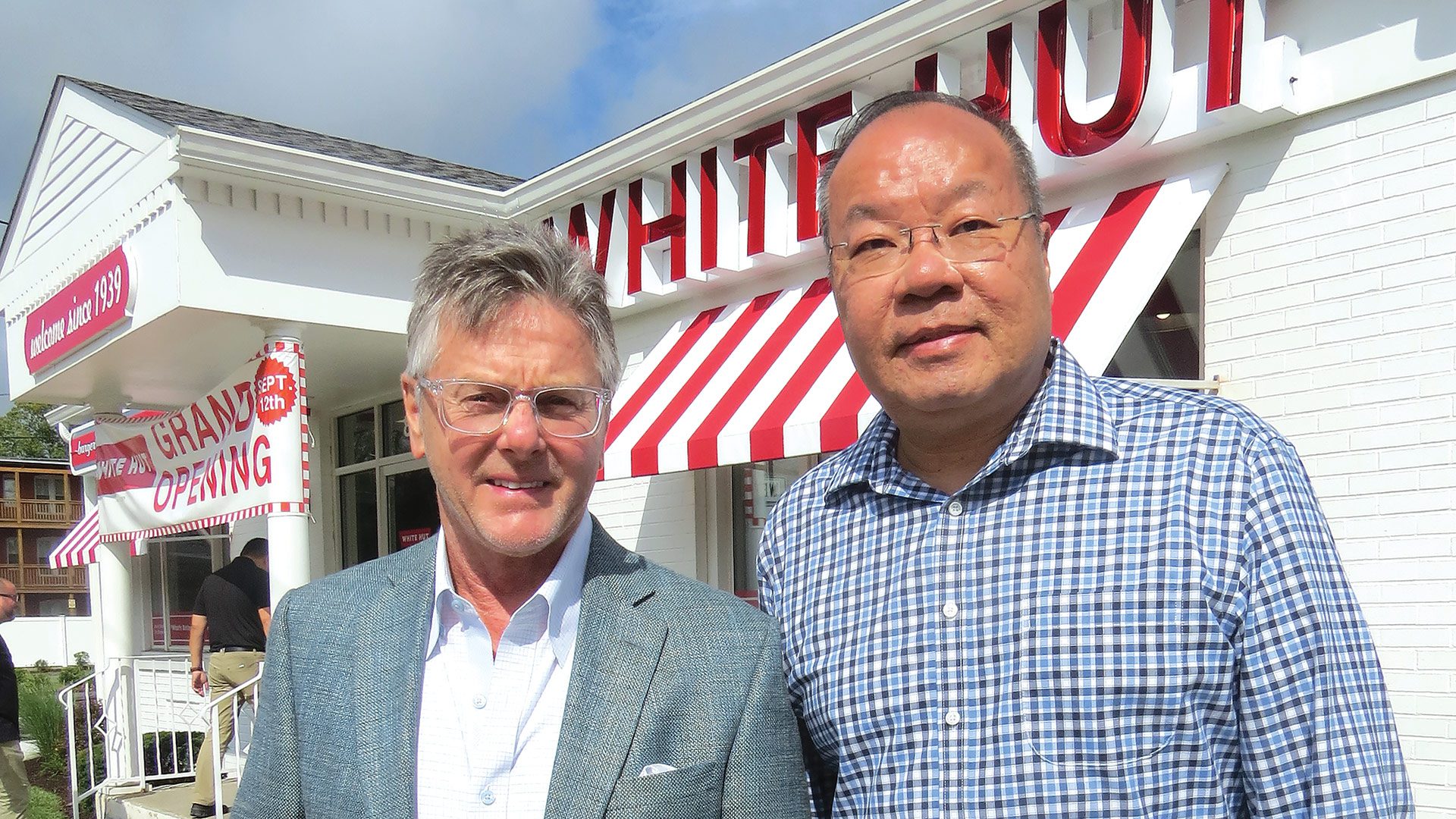
Peter Picknelly, left, and Edison Yee

Peter Picknelly, left, and Edison Yee, two of the many partners involved with the White Hut location in Holyoke.

When asked about where they might take the White Hut brand — and when, both Edison Yee and Peter Picknelly took long pauses and then looked at each other as if to say, ‘you first.’

They did so to indicate a few things — first, that they’ve obviously been thinking long and hard about that question, and second … they don’t really know the answer yet.

What they do know is that they will bring the concept beyond Memorial Avenue in West Springfield, the location that was rescued in 2020 by Picknelly, chairman of Peter Pan Bus Lines; Andy Yee, Edison’s brother; and others within the Bean Restaurant Group after founding owners the Barkett family announced it would close. And also beyond 825 Hampden St. in Holyoke, the location — a renovated former PeoplesBank branch — that opened last month.

“Our goal is to build a microbrand from this White Hut concept,” he said, using that term to describe brands with up to 10 locations, adding that locations are being scouted in Westfield and other communities, and if all goes well in Holyoke, there could easily be another location within a year.

Picknelly concurred. “We believe the White Hut is a brand that’s scalable; we’ve had overwhelming success in West Springfield — our customer count continues to grow there — and we think Holyoke is a great location,” he said. “This a solid brand, and we want to expand it out strategically.”

But both said that, at the moment, they and several co-owners in the Paper City venture, including Holyoke natives Jack Ferriter and Mark Cutting, are hard-focused on that location, the success of which might go a long way toward determining where and when this iconic (yes, that word fits here) brand and its red-and-white color scheme might next be seen.

Nathan Yee, director of Hospitality for the Bean Restaurant Group and part of the proverbial next generation of leadership at the company, believes it will do quite well.

“Our goal is to build a microbrand from this White Hut concept.”

Those involved spent considerable time scouting locations, he said, and eventually zeroed in on the Hampden Street location, which lies on a well-traveled road just a few hundred yards from an I-91 exit.

Beyond location, this site offers … well, everything that has made the White Hut brand iconic — its famous hamburgers, hot dogs, fried onions, shakes, and more — as well as new additions, including a salute to Holyoke: a breakfast sandwich called the Paper City Special, containing a scrambled egg with sausage, hash brown, American cheese, and fried onions on a Venetian water roll.

There are other new wrinkles as well, including a self-ordering kiosk for those who prefer that option, as well as a pickup option by which employees bring the customer’s order directly to their car.

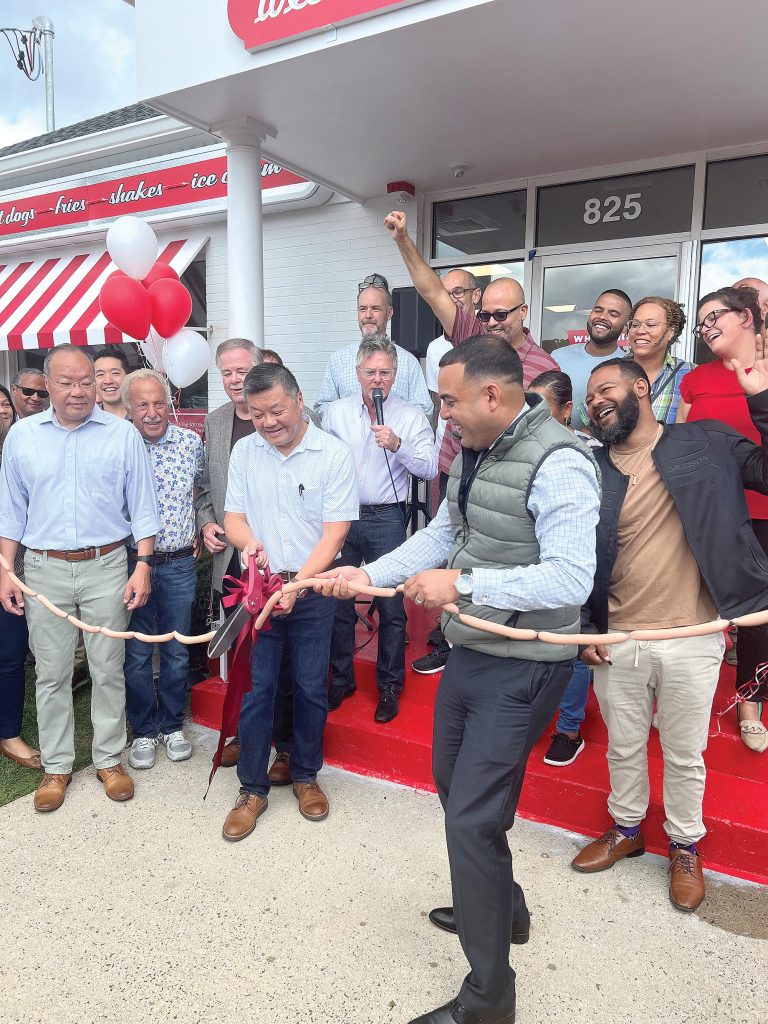
Nick Yee cuts a ceremonial ribbon

Nick Yee cuts a ceremonial ribbon of hot dogs at the grand opening of the Holyoke White Hut last month.

In short, the ownership group is taking a brand that has a storied past and a rich history and bringing it into the future — changing what should be changed, and not changing anything that shouldn’t be changed, like those fried onions.

For this issue, BusinessWest takes an in-depth look at the institution that is the White Hut, the long-planned move into Holyoke, and those still-evolving plans to bring the brand elsewhere within the 413 — and likely beyond.


Relishing the Possibilities

As he talked with BusinessWest in mid-September, Edison Yee had a lot on his plate — and yes, that’s an industry term, sort of.

The Big E was going to start in a few days, and Yee and many others at the Bean Restaurant Group had considerable prep work to do get ready; the group has several locations at the fair, including the White Hut, the Wurst House, and a new addition to the portfolio, a ‘Harpoon Beer hut.’

“We sell a lot of food and lot of beer,” he said, adding that the company probably has 100 or more seasonal employees working at the fair, which has been an ever-increasing part of the business plan for the group since it first started taking part eight years ago.

Meanwhile, Oktoberfest, a huge, nearly month-long celebration at the Student Prince, is coming up fast (Oct. 8 is the official start date), and Yee was deep into the planning stages for that annual happening. And then, there’s ongoing planning and the start of work at the restaurant that will become a linchpin of the redevelopment of the Court Square Hotel on Elm Street in Springfield, another collaboration between Picknelly and the Bean Group.

But on this day, and the days before, the main focus was on the Holyoke White Hut location and making sure everything was in order for the grand opening coming up the next morning. This was an event that was maybe two years in the making, said Yee and Picknelly, noting that, not long after the West Springfield location had been saved and was successfully navigating its way through COVID, talk began to turn to where this iconic brand might go next.

And it wasn’t long at all before the focus turned to the Paper City.

But before we explore this move to Holyoke, we need some background, and some perspective on both the brand and the location in West Springfield, which, to many, has achieved landmark status, figuratively if not literally.

Our story begins in 1939, when Edward Barkett opened a small restaurant on Memorial Avenue and decided to call it the White Hut because that was the principal color.

Suceeding generations of the Barkett family owned and operated the restaurant and eventually took the brand beyond West Springfield — to Amherst, in a venture that met with only limited success, in part, Picknelly believes, because the location was not highly visible.

And while the brand is famous for the loyalty exhibited by its regulars, location and visibility are keys to the success of any restaurant, he went on.

Fast-forwarding a little, E.J. Barkett (Edward’s grandson) announced rather abruptly in 2020 that White Hut would close its doors. Picknelly and Andy Yee, both to be counted as Hut regulars, as well as serial entrepreneurs and part of the group that rescued the Student Prince restaurant in 2015 when its closure seemed imminent, stepped into the breach and saved the White Hut.

And they did so under extreme circumstances. Indeed, that rescue came at the height of COVID, when that restaurant, like all others, had to find ways to do business while also keeping people safe. It already had effective takeout service, said Picknelly, adding that this quality was one of many that enabled it to persevere during those trying times.

Another quality, obviously, was the food itself, he said, adding that another ingredient in the recipe for success was simply not to change much of anything that had made the Hut such a fan favorite.

Such diligence has been rewarded with rankings on a number of ‘best burger’ lists. In 2021, for example, White Hut’s cheeseburger with grilled onions was named the best burger in Massachusetts by Thrillist, and it has been ranked among the best burgers in the country. The Hut was profiled in USA Today in 2019, which said everything about the brand is “frozen in time,” and it’s been included by the Wall Street Journal in its “Essential Guide to America’s Best Burgers.”

That success begs the obvious question — where can this brand go? That query refers to everything from geography to the size of what would have to be called an emerging chain.


A Side of Entrepreneurship

The answer to that question begins in the Paper City and the opening of the Hampden Street location, which provides evidence that everything is no longer entirely frozen in time, as we’ll see.

“Holyoke has been on the radar for our group for a long time now,” Edison Yee said, adding that several potential sites were considered before the Hampden Street location, one strongly favored by his brother, Nick Yee, the group’s principal managing partner, became the focus of attention.

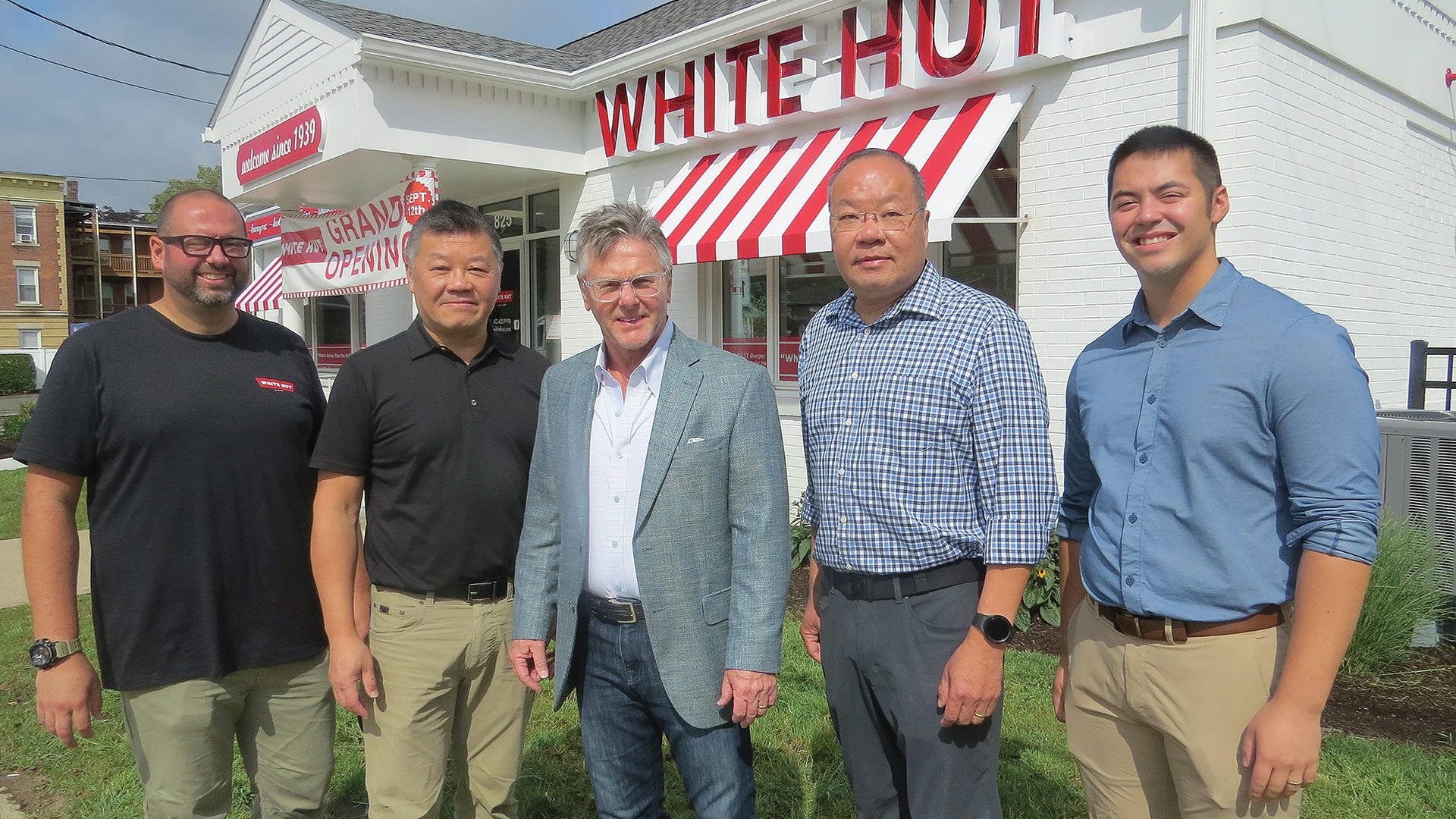
the latest White Hut location in Holyoke

From left, Bryan Graham (culinary director and partner), Nick Yee, Peter Picknelly, Edison Yee, and Nate Yee stand in front of the latest White Hut location in Holyoke.

“The traffic counts are great,” he said. “And, growing up in South Hadley, we knew that this was the main street to get onto I-91; you have all the traffic that comes from South Hadley, Granby, parts of Chicopee, and, of course, Holyoke, that are filtering through this road.”

Picknelly agreed, and noted that the traffic count is actually higher on Hampden Street than it is on Memorial Avenue in West Springfield.

Beyond steady traffic, the location provides more convenience to those who travel down I-91, Route 5, or other roads to get to the West Springfield location (and there are many in that category) while also introducing the brand to new audiences.

“We think Holyoke is a great location,” Picknelly said. “Our brand is still strong here, yet it’s far enough away that we won’t be competing against ourselves, and our customers from Holyoke, Northampton, and Granby won’t have to travel as far — that’s the essence of it.”

And while the location is expected to draw people from several area communities and, its owners presume, travelers on I-91, it is a neighborhood restaurant, one that will in some respects replace another iconic eatery, Mel’s Restaurant, which closed recently, just a few hundred feet away.

The location will offer the same menu as the one in West Springfield — and essentially the same food the Hut has offered since 1939 — but with some of those new amenities, such as the self-ordering kiosk, said Nathan Yee, which will bring another layer of convenience to customers.

“With each unit, we’ve identified some of the operational areas that we can improve on, and that’s what we’ve done with this location,” he said. “We’ve added a few new features to make it more customer-friendly.”

Renovation of the former bank branch took more than a year, he noted, and an investment, beyond the purchase of the property, of more than $1 million.

And this may the first of several initiatives to bring the White Hut brand to different cities, towns, and markets, said Picknelly and Edison Yee, noting, again, that Holyoke will be a barometer of sorts for how well the brand may ultimately travel.

“Our ultimate goal is to expand the brand,” Yee said. “This is a great test for us, being in Holyoke, and we feel strongly that, if we can get this unit to operate similarly to West Springfield in terms of metrics, we’re eager to look for another spot.”

Picknelly agreed, noting that expansion, either through owner-operated locations, such as those in Holyoke and West Springfield, or perhaps franchising, is likely if not inevitable.

“There are restaurant groups in Connecticut that have contacted us and want to franchise,” he said. “We want to expand this on our own first; we think it’s really scalable — this is our first venture to do that. Once this gets up and running, I think you’ll see the White Hut brand all over the Northeast.”

“Our ultimate goal is to expand the brand. This is a great test for us, being in Holyoke, and we feel strongly that, if we can get this unit to operate similarly to West Springfield in terms of metrics, we’re eager to look for another spot.”

Elaborating, he said could envision scenarios where there are both owner-operated locations and franchises, and there are plenty of successful models of such operations, including national brands such as KFC, Burger King, and others.


Food for Thought

Summing up the current state of this brand, Picknelly said it’s “one that the Barkett family built and the Yee family made better.”

Where can it go beyond West Springfield and Holyoke? Only time will tell, but it’s safe to assume that expansion will continue across Western Mass. and perhaps beyond. A brand that’s been called ‘simple,’ ‘tried and true,’ and, yes, ‘frozen in time’ will continue to be all those things.

But time certainly won’t stand still for the White Hut and its owners.

Business Talk Podcast Special Coverage

We are excited to announce that BusinessWest has launched a new podcast series, BusinessTalk. Each episode will feature in-depth interviews and discussions with local industry leaders, providing thoughtful perspectives on the Western Massachuetts economy and the many business ventures that keep it running during these challenging times.



Go HERE to view all episodes

Episode 153: March 13, 2023

George interviews Holyoke St. Patrick’s Day Parade Committee Member and Sponsor, PeoplesBank

Kelly McGiverin

The Holyoke St. Patrick’s Parade and road race are regional events steeped in history and tradition. On this next installment of BusinessTalk, BusinessWest Editor George O’Brien talks with Kelly McGiverin, Co-Marketing Director of Fundraising and Sponsorships for the Holyoke St. Patrick’s Day Parade Committee, and Matt Bannister, Senior Vice President Marketing and Corporate Responsibility for parade sponsor PeoplesBank, about parade week and what these events mean to the city and the region. It’s all must listening, so tune in to BusinessTalk, a podcast presented by BusinessWest and sponsored by PeoplesBank.


Sponsored by:

Also Available On