Home Posts tagged Rick Sullivan
Features Special Coverage

Taking the Lead

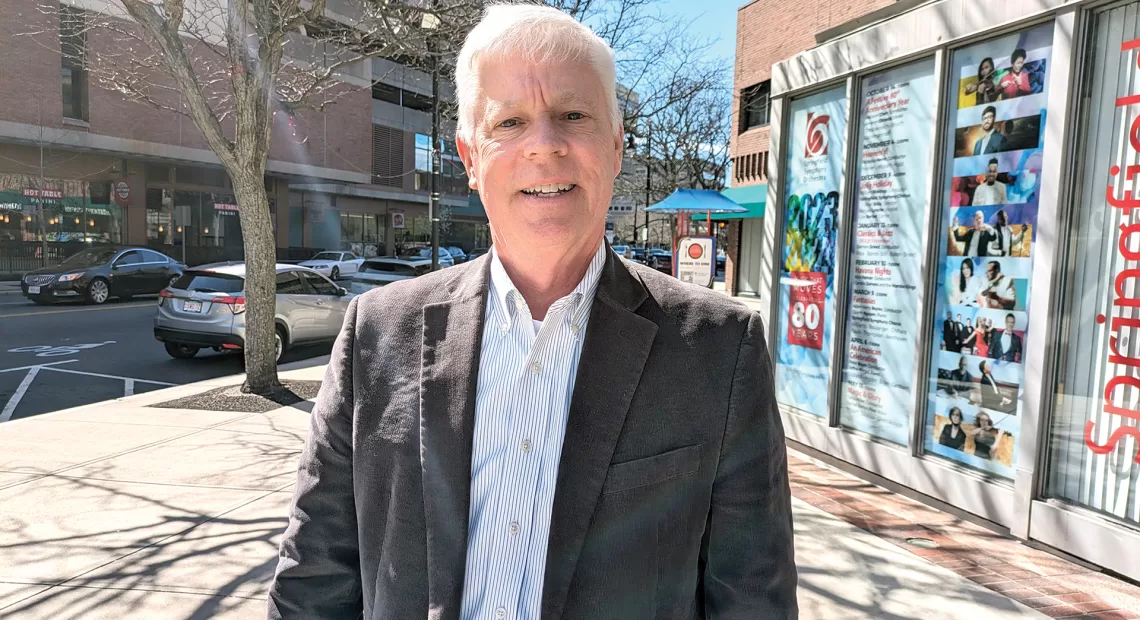
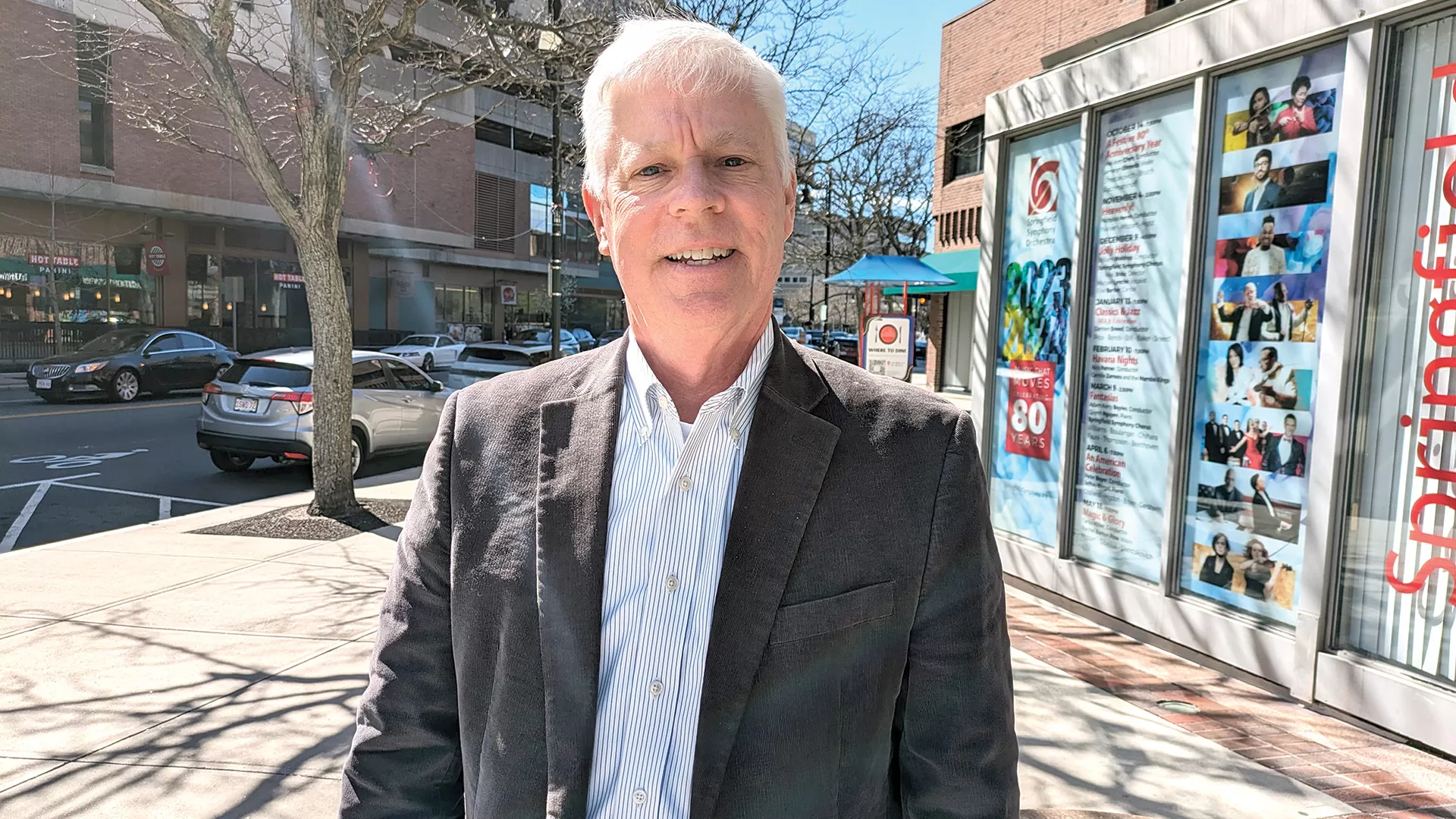
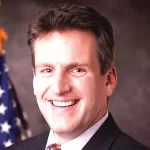
Aaron Vega

Aaron Vega

As Aaron Vega was reading last spring’s announcement that Rick Sullivan would be leaving his post as president of the Western Massachusetts Economic Development Council (EDC) at the end of this year, he was already thinking that his various skill sets and this high-profile job were a good match — and that this was his next logical career challenge.

“The path that I’m on in economic development and municipal work … there are only a few higher-level jobs in this area — if you want to stay in Western Mass. and care about Western Mass. — and this one of them,” he explained. “And they don’t come along very often, so I decided early on that I should throw my hat in the ring.”

And he wasn’t alone in that thinking.

“I saw Mayor [Joshua] Garcia not long after, and he said, ‘you’re applying for this job, right?’” recalled Vega, referring to Holyoke’s chief executive, beside whom he’s been working for the past several years as director of Planning and Economic Development for the city. “He knew that this was a good fit.”

“The EDC is a connector and a convener.”

Vega did go for it, and, eventually, several teams of interviewers agreed that there was indeed a good match between this job’s demands and Vega’s diverse résumé, which also includes everything from entrepreneurship — he was a freelance film editor and then a yoga studio owner — to two terms as a Holyoke city councilor and then four terms as a state representative.

Thus, he ultimately prevailed in a lengthy, national search, and will take the helm on Jan. 2. Before then, and even moreso after, he said he’ll doing a lot of listening — to EDC board members, mayors, business owners, property owners, developers, and area economic development leaders.

The plan is to take what he’s heard and use his vast experience to blueprint what will be the next chapter for the EDC, a membership-based organization formed roughly 30 years ago with a broad charge of making the 413 more competitive, taking a more regional approach to economic development, and creating a stronger voice for this area statewide.

While Vega will develop a more formal set of goals and priorities in the months and years to come, he told BusinessWest he has some initial thoughts.

“We have not done a good job of marketing Western Mass.”

They include everything from creating regular, industry-based roundtables — similar to the ones he staged in Holyoke and that many attendees, including Sullivan, thought should be regional in nature — to more aggressive efforts to tell the region’s story and market the 413.

Not with newspaper and television ads, necessarily, he said, although that might be part of the equation, but through a multi-dimensional strategy that includes having a stronger presence in regional and even national gatherings, such as the Reclaiming Vacant Properties Conference, which he attended several times as a Holyoke official.

“The last one was in St. Louis, and the one before that was in Chicago,” he said, adding that communities across the country gather to hear strategies about addressing vacant, abandoned, and deteriorated properties. “You hear these presentations from Chicago, Detroit, big cities and small towns, on how to reactivate these spaces. I’ve been to these conferences on vacant buildings and transportation — there’s so much networking going on at these events, and we need to be out there.”

Aaron Vega (right), seen here with Holyoke Mayor Joshua Garcia, says the region needs to do a better job of promoting itself and its many assets.

Aaron Vega (right), seen here with Holyoke Mayor Joshua Garcia, says the region needs to do a better job of promoting itself and its many assets.

Meanwhile, he said another priority is to work with area cities and towns to create more of the shovel-ready land that developers are increasingly demanding.

Still another priority is to increase awareness within the local business community of what the EDC is, how it functions, and what role it can play, if any, with the many pressing issues in this region.

“The EDC is a connector and a convener,” he said, settling on those two words to describe the agency, adding that he wants to put even more emphasis on regional collaboration on issues such as housing and east-west rail.


Pulling on the Same Rope

As noted near the top, Vega spent several years doing freelance film editing work for creators that included Ken Burns and his eight-part series on the history of jazz.

One project Vega worked on was “Race to the Moon,” an American Experience episode that told the story of Apollo 8, the first manned mission to the moon, in late 1968. He referenced it as he talked about his approach to his new job, problem solving in general, and one question during one of his final interviews (concerning policies relating to airports) that he didn’t have an answer to.

“Every single challenge they had putting together those Apollo missions … when they would encounter a new obstacle or challenge, they would bring in a person who could fix it — they kept expanding their team,” he explained. “If I don’t know how to do something, let’s bring in the person who does.

“If we do our job in Western Mass. of bringing in these companies that are coming out of UMass and elsewhere and they grow here and we create new housing opportunities … people are going to take the train to come out here to work.”

“If a group of people can come together and put us on the moon, a group of people in Western Mass. who are smart and have all these abilities can come together and figure out what we need to get done,” he went on, adding that this will be the organization’s mindset moving forward.

Overall, Vega has a broad, diverse background working in many different settings to call on as he approaches his next challenge.

Indeed, while editing films, he also opened his own small business, Vega Yoga & Movement Arts, operating it for more than 15 years. And in 2010 (the year he became one of BusinessWest’s 40 Under Forty honorees), the Holyoke native won an at-large seat on the Holyoke City Council, eventually serving two terms.

He then moved from City Hall to the State House, capturing the first of four two-year terms in 2013, before returning to Holyoke to become director of the Planning and Economic Development Office.

Vega told BusinessWest that, while each career stop provided invaluable experience that will help him with his latest career challenge, that is especially true of his time in Holyoke.

Indeed, over the past five years, he’s been part of several key initiatives, from the growth, and subsequent decline, of a cannabis cluster in the city to the emergence of new clean energy and food-tech companies, such as Sublime Systems and Clean Crop Technologies; from the designation of the Massachusetts Green High Performance Computing Center as state’s hub for artificial intelligence and quantum computing to the years-long effort to convert the long-vacant Farr Alpaca complex into 88 units of mixed-income housing for adults 55 and over.

“I understand how these things happen — how do businesses locate? How do housing developments happen? How do you put together a $40 million financial stack to make 88 units of housing together?” he said, adding that his experience on the ground, and the relationships he’s forged — with those in the State House, regionally, and locally — will also be assets in his new role with the EDC.

Returning to those thoughts about the EDC being a connector and convener, Vega said issues such as the housing crisis and the 413’s declining population require a regional approach and a high level of collaboration among area cities and towns. And that’s one example of how the EDC might be able to help identify key issues for the region, set goals, and develop strategies to meet them.

“If we want to think about Western Mass. as a hub, we need a population goal for Western Mass. because this region is bleeding population, especially among younger people, ages 24 to 45,” he said. “If we say we have a population goal for the region — 20,000, 30,000, whatever the number is — over the next 10 to 15 years, then every municipality is going to have a role in that.

“Our small towns are going to have to bring on four to 10 units of housing, while our Holyokes and Westfields are going to have to bring on hundreds of units of housing,” he continued. “How do we work together to make sure we’re pulling on the same rope? A lot of people say, ‘pull in the same direction.’ I’m saying that we need to pull on the same rope together.”


Selling the Region

And while getting communities to pull on that same rope, the EDC should also be continuing to stress a regional approach to economic development, Vega said, while spearheading better efforts to promote the region and its assets.

“We have not done a good job of marketing Western Mass.” he said. “We should be talking about the health systems we have and the education systems we have, and the idea that you can live in a farmhouse if you want and be in downtown Springfield or downtown Holyoke in 20 minutes, even without public transportation. I think we should talk about the fact that Western Mass. believes in science, believes in education, believes in opportunities.

“Maybe that story isn’t being told, but we need to make sure that, if the EDC is out there telling the story, the chambers are telling the story, the mayors are telling the story — everyone is telling the same story,” he said, citing the example of Lowell, which he acknowledged is a city and not a region, where there was a solid, consistent message about the ‘Lowell plan.’ “The message in Lowell was so strong that the barbershops were talking about it, as well as the mayor.”

He noted that, under Sullivan, the EDC has done a solid job of creating a strong voice for the region on a statewide level and making sure Western Mass. is part of statewide initiatives, and these efforts must continue as part of those broader efforts to promote the area and prompt businesses to look this way when considering expansion or additional locations.

“When those Boston-based firms are looking for R&D or prototyping, they don’t need to look any further than Western Mass.,” he said. “If they need a second location or warehouse space or their manufacturing done, it’s way too costly to manufacture inside the 495 belt. These firms should be creating partnerships and doing that manufacturing out here; we have great manufacturers and companies that can help with research and development. These connections need to be made stronger.

“People in Boston don’t know what we make out here,” he continued. “So when they look for service or they look for something, they look at the West Virginias; they look out of state before they look in-state. We need to change that.”

Summing up the challenge — and opportunity — for the EDC and the region, as well as perhaps his own job description, to some extent, Vega returned to the subject of east-west rail and what would be the best-case scenario.

“A lot of people talk about east-west rail coming and how that will be a benefit for people in Western Mass. to get on the train and go to Boston or Worcester and go to work,” he said. “But if we do our job in Western Mass. of bringing in these companies that are coming out of UMass and elsewhere and they grow here and we create new housing opportunities … people are going to take the train to come out here to work.

“That’s a shift in mindset that needs to happen,” he went on, adding that this just one of his goals as he takes on his next career challenge.


Features

Exit Interview

By George O’Brien and Joseph Bednar

[email protected]; [email protected]


Throughout his lengthy career in public service and, most recently, within the business community, Rick Sullivan said his broad goal has always been to leave things better than he found them.

That was the case when he was mayor of Westfield for a dozen years, and also when he left that post to work for Gov. Deval Patrick in the Department of Conservation and Recreation, the Executive Office of Energy and Environmental Affairs, and then as chief of staff in the governor’s office.

And he had the same goal when he left Boston to return to the 413 and succeed Allan Blair as president and CEO of the Western Massachusetts Economic Development Council (EDC) in 2014. And he believes he’s succeeded in that mission.

Indeed, Sullivan, who will step down from that role at the end of this year, said he believes the EDC is in a better place today, with more members, more programs, and what most would say is a broader approach to its mission, one focused less on filling industrial park space (although that remains an important goal) and more on developing new business sectors, tackling workforce issues, making the region more competitive in the ongoing quest for employers and jobs, and, perhaps most importantly, growing the agency’s influence with statewide leaders and policy makers.

Elaborating, he said one of the goals he and the EDC’s membership set was for the agency to become a louder, stronger, more definitive voice for this region and its business community — and it has become that.

“The membership, at the time, was really looking for the EDC to become the lead organization in Western Massachusetts with regard to issues of business and business development and the economy — with the state, with the business leaders (mostly in Boston), with the policy centers, and the regulators,” he explained. “Because it was really felt — and I do think it’s true, and having spent some time in Boston, I really know it to be true — that when the regulators and the policy makers sit around the table down in Boston and make the rules and the policy and the laws, they don’t have a Western Mass. perspective … they don’t have a perspective of what happens on the ground in Western Massachusetts and how that’s going to impact things.

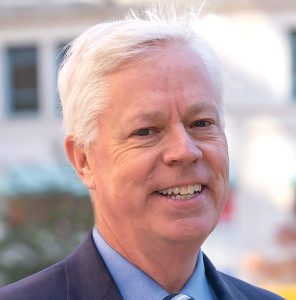
Rick Sullivan

Rick Sullivan

“If the economy is doing better and people have more disposable income, then they’re buying more groceries or they’re going to the Big E … whatever they will spend their money on. And that’s going to help all of the companies that sit around my table.”

“So the membership was really looking to be the place, the clearinghouse, if you will, the go-to place, where governors, lieutenant governors, cabinet secretaries, those regulators would come and have those conversations,” he went on. “And I think we’ve been highly successful in that.”

Beyond progress on this important front, Sullivan said the EDC has made strides in other areas as well, especially when it comes to what he calls “catalyzing” new business sectors putting down roots here and that he hopes will be headquartered here, another goal for his board when he arrived.

That list includes quantum manufacturing, quantum computing, cybersecurity, and the broad realm of food science, sectors that are already making their mark here and should only grow in size and impact in the years and decades to come.

“These are sectors that are going be more important tomorrow and 10 years down the road than they even are today,” he said of these evolving industries. “AI is booming, and quantum is booming, and the issues of food science and food scarcity, water delivery systems and water scarcity … those problems are only going to grow and be more important in 10 years.

“And again, that’s kind of who we are in Western Mass.,” he went on. “So I think I’m actually leaving a couple of really exciting opportunities behind for the next CEO and, quite honestly, for the EDC moving forward.”

For this issue, BusinessWest talked at length with Sullivan about his tenure with the EDC, the progress that’s been made on several fronts, and the work still to be done.


Progress Report

When asked why he was stepping down now, Sullivan summoned some thinking he attributed to former NFL head coach Bill Parcells.

“He said you shouldn’t coach a team more than 10 years — and I think there’s some truth to that,” Sullivan noted. “You get to a point where you’ve done some of the same things that you’ve done for a long period of time, and it’s just time for the organization to change it up. So I think, for the organization and myself, it was just a really good time to have this happen.”

Looking back on his 11-year tenure, he said it’s been an interesting and challenging time for the region and the EDC, one marked by a global pandemic that changed everything, but especially where and how people work; the emergence of a new generation of leadership at many businesses across the region; shifting, but nearly constant, workforce challenges; ongoing efforts to create more jobs; work to leverage the region’s assets, especially its precision manufacturing sector, but also its cadre of colleges and universities; and a broad effort to lift the region’s economy and the prospects of its residents.

That last one is the underlying mission of the EDC, he noted, one that is not totally understood by some in the region’s business community.

“I think we need to do a better job as an EDC and as a region, not only celebrating but really marketing the advantages that we have here and the high quality of higher education that we have.”

“The simplest way to look at it is that our membership is really committed to growing the economy of Western Massachusetts,” Sullivan explained. “Growing the vitality economically, growing jobs, growing the ability for all residents of Western Massachusetts to enter the workplace and have a better quality of life — it’s pretty simple, and it’s a little bit of the ‘rising tide raises all boats’ theory.

“If the economy is doing better and people have more disposable income, then they’re buying more groceries or they’re going to the Big E … whatever they will spend their money on,” he went on. “And that’s going to help all of the companies that sit around my table.”

As for that table, it’s much larger now than it was 11 years ago, at least in terms of the number of people sitting at it, he went on, adding that membership has nearly doubled since he started, growing from 50 to roughly 90, and it has become more diverse as well, meaning companies of all sizes and across nearly all sectors.

More voices, and more diverse voices, make the EDC even more representative of the region and its business community, said Sullivan, adding that the strength and overall impact of the organization lie not in its president and CEO, but in its membership.

And growth of this membership, comprised of the leaders of area businesses and nonprofits, is among the most significant accomplishments recorded during his tenure.

Others include the maturation, if you will, of those emerging sectors listed earlier, sectors that were already here and now offer strong potential for continued growth.

Quantum computing is certainly on that list, he said, adding that the Massachusetts Green High Performance Computing Center has been designated by the Healey administration as the state’s hub for artificial intelligence and quantum computing, and $16 million in state and private investments have been made toward building a new quantum computer there.

“And I think it’s a significant investment … I think you will see the state come in with additional resources to really move this forward,” Sullivan said. “Part of the argument has been that the state did a great job investing in biotech and clean energy and IT. And that was great, and they’ve been wonderful for the state economy, but those benefits really didn’t come back out here toward Western Massachusetts. So this investment in quantum really identifies strengths that we already have here.”

Another of these strengths is the broad food science sector.

“This relates back to everything from agriculture to water delivery and water filtration and water scarcity issues but also can go as far as alternative proteins and innovation and entrepreneurship within the space of food science,” Sullivan explained. “And little did we know that probably the leading institute in the country, and one of the international leaders, is UMass Amherst; they do great work out there already. And then, when you combine that with companies that are already here, like Big Y or Friendly’s or Hood, and then smaller companies and some new ones starting something, like Clean Crop out of Holyoke, those are all under that food science umbrella.”


Looking Ahead

As he talked about the work still to be done in the region and the challenges facing the 413, Sullivan said there are many items in both categories.

As for challenges, he put workforce and housing at the top of the list, while noting that they’re obviously related.

Indeed, one of the state’s weaknesses, from a competitiveness standpoint, is the sky-high cost of housing across most of the state. And while conditions are better in many Western Mass. cities and towns, there are several where potential workers are simply priced out, creating hardships for employers and shrinking the size of the populations, and workforces, in area communities.

“In terms of population growth, I think this is a good opportunity, in terms of a moment in time, to be able to have a growth strategy,” he said. “The state, under Governor Healey, is making significant investments in housing, and I really encourage every single city and town to take advantage of the incentives that are out there for development across the housing spectrum.

“From the higher end to market rate to workforce housing, it needs to be everything,” he went on. “Because right now, many parts of the region have no growth — in some cases, even declining growth. If it wasn’t for immigration, there would probably be no growth. Having no growth means that it makes it harder to fill those jobs. It’s harder to make that case as to why somebody should move here.

“I know there’s an old saying — and I don’t think it was Bill Parcells who said it this time — that if you’re not growing, you’re dying,” he went on. “And I think the growth strategy needs to be in every single community, and now is the time to be able to do that because, if you create a housing stock, people will move in.”

More housing, and more affordable options, are key now, he said, because people have more options when it comes to where and how they work, creating some real opportunities for this region.

“They can go, and they can live in a less costly community,” Sullivan said. “And when you stack things up in terms of energy costs and taxes and food costs and transportation costs, Western Massachusetts can make a very compelling case as to why we’re a very good place to live. Our quality of life is excellent. Going back to our commitment to recreation and outdoor activities and the environment, those are all things that are important when people are deciding where they can live, and today they have more choices than ever.”

Another challenge for the region moving forward is to more effectively leverage its considerable assets, especially higher ed.

“One of the other things that I think we can do a better job at is recognizing that we’re fortunate here in Western Massachusetts to have a really strong higher ed sector,” he noted, from UMass Amherst and the community colleges to a host of nationally regarded private colleges and universities.

“I don’t think we’ve done a good enough job leveraging that sector, because when companies look to come here, the first question they ask is ‘can I find the workforce?’” he went on. “When they’re looking for that talent, that talent is sitting in the classrooms of our higher ed institutions. So I think we need to do a better job as an EDC and as a region, not only celebrating but really marketing the advantages that we have here and the high quality of higher education that we have.”

When asked if he had any words of his advice for his successor, due to be named later this month, Sullivan said simply, “stay close to the membership.”

“The quality of individuals that sit around that table, the companies they represent, really are the companies that drive success here in Western Massachusetts,” he continued. “And while the CEO of the EDC is important because he or she will be the implementer, it’s really the agenda of the membership. They’re all really smart, and they’re all really committed to this region, and they want to see the best for the region. And not in a parochial sense — they’d really like to see everybody doing better; they would like to see the economy grow.”

If Sullivan’s successor does that, as he did, he or she will be in a position to ultimately follow his lead and leave the organization — and the region’s business landscape — in a better place.


Business Talk Podcast Special Coverage


We are excited to announce that BusinessWest has launched a new podcast series, BusinessTalk. Each episode will feature in-depth interviews and discussions with local industry leaders, providing thoughtful perspectives on the Western Massachuetts economy and the many business ventures that keep it running during these challenging times.



Go HERE to view all episodes

Episode 243: September 29, 2025

Joe Bednar talks with Rick Sullivan, President and CEO, Western Massachusetts Economic Development Council

Rick Sullivan

Rick Sullivan’s 11-year tenure leading the Western Massachusetts Economic Development Council has been one of both challenge — the region has dealt with everything from shifting economic tides to a pandemic — and opportunity; indeed, during that time, the EDC has grown, programming has expanded, and membership has doubled. On the next episode of BusinessTalk, Rick talks with BusinessWest Editor Joe Bednar about all that and more, including his advice for the next president and CEO; the organization’s continuing importance in growing the business landscape in the 413; and what he values most from his time serving this region as a mayor, in the governor’s office, and with the EDC. It’s must listening, so tune into BusinessTalk, a podcast presented by BusinessWest.

Also Available On

Daily News

Rick Sullivan

SPRINGFIELD — Rick Sullivan, president and CEO of the Western Massachusetts Economic Development Council, announced he will retire on Dec. 31.

Sullivan came to the EDC as an already-seasoned leader in Massachusetts, and in his 11-year tenure, he focused on growing the organization and its influence with statewide leaders and policy makers. Programming has greatly expanded, and membership has doubled.

Most recently, Sullivan led the EDC in publishing a white paper early in 2024, outlining where to make multi-million-dollar investments in the region, which led to a recent $70 million award through the state’s Economic Development Bond Bill. The region is now investing in food science, quantum computing, and clean tech. The award was the largest in the region’s history.

“I’m proud of the work that we’ve done,” Sullivan said. “I’m always very mindful of the fact that we’re a team. I’ve been fortunate to have supportive staff here and a board that is really committed to growing the economy of the region. The strength of the EDC is about the people who sit around the table.”

A partner in a law firm early on in his career, Sullivan was mayor of Westfield from 1994 to 2007, and served as president of the Massachusetts Mayors Assoc. in 1998.

Before coming on board as president and CEO of the EDC, he was chief of staff in the Massachusetts Governor’s Office in 2014 and 2015 and held leadership roles with the Executive Office of Energy and Environmental Affairs and the Department of Conservation and Recreation.

After learning the news of Sullivan’s retirement, leaders in a broad spectrum of industries across the EDC’s core region — Hampden, Hampshire, and Franklin counties — and in Boston called Sullivan a strong leader, master convener, and collaborator who is dedicated to Western Mass.

Christina Royal, chair of the EDC’s board of directors, said Sullivan was a gift to the EDC and the community. ck SullivanHe came on board in January 2015, “when the EDC was a much smaller version of itself,” Royal said. “It is a testament to Rick’s leadership, political acumen, and commitment to this region that it is so hard to think about how we begin to find a successor.”

She said Sullivan has contributed in significant ways — expanding the vision of the EDC to strengthen businesses, enhance workforce and economic development, and prioritize equity in the initiatives of the EDC; actively partnering in the creation of the Richard E. Neal Cybersecurity Center of Excellence in Springfield; supporting the development of a new, three-year strategic plan that launched in January 2025; and engaging stakeholders, supporting regional initiatives, and promoting legislation that positively impacts Western Mass. in countless areas.

“This is just a small part of a long list of accomplishments for which Rick has led or was involved in in recent years,” Royal stressed. “His career spanning a decade has elevated our region, created more financial stability, and enhanced partnerships with Boston and Worcester that have put Western Mass. on the map.”

Charles D’Amour, executive chairman of the board of directors of Big Y Foods Inc. and a member of the EDC board, said Sullivan’s dedication to the region has been evident since he was mayor of Westfield. “His ability to collaborate, to convene business leaders and state leaders and municipal leaders, has really proven out to be very effective and to really benefit the region. A culmination of Rick’s work came about a year ago with the publication of the white paper that focused the region on key areas for growth and development. Rick understands the region’s challenges and its assets. We’re going to miss Rick.

“Rick has done a great job of pushing the EDC forward in such a way that we are recognized not only locally, but on the state level and nationally,” D’Amour added. “Rick’s also done a great job of bringing more members onto the EDC board. That speaks volumes. People believe in his leadership.”

Gov. Maura Healey said Sullivan has dedicated his career to advancing economic growth in cities and towns across Massachusetts, especially in Western Mass. “He has been a great partner in our work to support local businesses, create jobs, and grow Massachusetts’s leadership in cutting-edge industries. We wish him the absolute best in his well-deserved retirement, and we look forward to working with the next leader of the EDC to continue to build on his legacy.”

Springfield Mayor Domenic Sarno said the news of Sullivan’s retirement is bittersweet. “Only mayors know that you have to get things done yesterday, and it was a pleasure to work with Rick. I appreciate his dedicated economic-development efforts for Western Massachusetts, and I wish my friend and his family good health and continued success in all his future endeavors.”

Dominick Ianno, head of State Government Relations at MassMutual, congratulated Sullivan on his impressive career and his dedication to the region. “Rick has always been a strong voice in advocating for Western Massachusetts. Whether as mayor, a senior state government official, or the head of the EDC, he has always been a champion for a vibrant and prosperous region. We will miss his leadership and wish him well in his retirement.”

Javier Reyes, chancellor of UMass Amherst, said Sullivan is leaving a profound legacy of collaboration and advocacy for the Western Mass. region. “UMass is proud to be a partner in the work of the Western Massachusetts EDC, and we are grateful for Rick’s leadership over the past 10-plus years.”

Mary-Beth Cooper, president of Springfield College, said Sullivan has been a strong partner with higher education. “Rick Sullivan’s leadership has played a vital role in strengthening our region’s economy and fostering community growth. His dedication, vision, and ability to unite people have made a lasting impact. I want to express my sincere gratitude for his years of service and wish him all the best in this next chapter.”

Royal said D’Amour has been asked to chair the search committee that will seek a new leader for the EDC. The EDC executive committee has hired Lindauer, an executive search firm with experience in Western Mass., to lead a nationwide search for the next CEO.

Features Special Coverage

Seed Money

Rick Sullivan

Rick Sullivan says the new report calls for admittedly significant financial investments — but that other regions have met such challenges with positive results.

The surprise was food science.

At least, that industry’s prominent place on a recent report outlining economic potential in Western Mass. was a mild surprise to some, Rick Sullivan said, but maybe it shouldn’t have been.

The report in question — commissioned and funded by the Western Massachusetts Economic Development Council (EDC) and produced by MassINC and Cambridge Econometrics — is called “Accelerating Inclusive Growth in the Pioneer Valley: A Prospectus for Transformative Investment.”

At its heart, it determines that the Pioneer Valley has considerable strength in certain industries and technologies poised to grow with the transition to a low-carbon future, specifically detailing competitive advantages — and, hence, major economic opportunity — in the realms of food science, advanced materials, and clean energy.

Sullivan, EDC president and CEO, noted that Big Y Executive Chairman Charlie D’Amour, who sat on the project’s advisory group, knows his way around matters of food science, food security, and food-delivery systems. “And I think he didn’t even have any idea about how deep the work being done at UMass was and their leadership position in this field, and how we could tie it all in together. I mean, UMass has the number-one food-science program in the country. Who knew?”

When the report was released last month, D’Amour noted that Western Mass. should capitalize on disruptive changes in the food industry. “From biotechnologies under development at UMass to innovative efforts to support local food entrepreneurs, the Pioneer Valley is situated to generate broadly shared wealth, positioning itself as a leading producer of sustainable food products.”

The report makes a broad case for transformative investment, pointing out data showing that:

• The Pioneer Valley retains manufacturing strength, but lacks growing industry clusters;

• The Valley is underperforming relative to its potential to conduct research and development and commercialize new technology;

• GDP per capita in the Pioneer Valley is half that of Greater Boston and below the metro-area average for the U.S., heightening the need for new, high-growth clusters;

• Inflation-adjusted median household income in the Pioneer Valley grew by less than 5% over the past decade, compared to nearly 9% nationally and 12% for Massachusetts statewide; and

• High concentrations of poverty undermine the potential of the region’s future workforce.

The report also details success stories of transformative investment to the east and west, with high returns on investment: the Albany, N.Y. nanotech cluster, which drew on hundreds of millions in state funding and tax incentives; and the Worcester health research and biomanufacturing cluster, which is similar to the Albany model but achieved over a longer time period and with more modest state investment.

Javier Reyes

“As the Commonwealth’s land-grant university, our researchers make new discoveries and develop technologies that support local industry and prepare the workforce required for the Commonwealth to flourish in the decades ahead.”

“The Pioneer Valley certainly has the preconditions to compete globally in knowledge industries — it is home to the University of Massachusetts flagship campus at Amherst, along with 10 four-year colleges and three community colleges. Together, these institutions develop an enormous amount of talent, as well as a significant volume of basic and applied research,” the report notes, also highlighting the region’s abundant outdoor recreation opportunities, strong healthcare and hospital systems, an international airport, advanced manufacturers, and a rich food ecosystem, from farmers and specialty food producers to larger-scale food manufacturing.

Hence, the region is ripe for dramatic investment and growth in general, and in the three sectors the report focuses on — food science, advanced materials, and clean energy — specifically.

“With these indisputable economic assets, it is striking how little proactive economic-development investment the region has seen in the past several decades,” it continues. “Blinded by Boston’s enormous output, it is difficult for many to appreciate the true potential of the Pioneer Valley.”

UMass Amherst Chancellor Javier Reyes agrees. “UMass Amherst is committed to working closely with our partners in Western Massachusetts to play a central role in fostering economic development and growth for the benefit of our region,” he said. “As the Commonwealth’s land-grant university, our researchers make new discoveries and develop technologies that support local industry and prepare the workforce required for the Commonwealth to flourish in the decades ahead.”

But, as we will see, investment means money — lots of it.


Not a Small Ask

Specifically, the report calls for establishing what it calls a Fund for the Pioneer Valley — a dedicated pool of resources for transformative investment in advanced industries that positions the region for growth while supporting the state’s overall economic-development strategy as it relates to the clean-energy transition.

Charlie D’Amour

Charlie D’Amour

“From biotechnologies under development at UMass to innovative efforts to support local food entrepreneurs, the Pioneer Valley is situated to generate broadly shared wealth, positioning itself as a leading producer of sustainable food products.”

Based on similar efforts, the report calls for committing at least $50 million per year in state resources to targeted economic investments in the Pioneer Valley over a 10-year period: $400 million for a strategic portfolio of innovation investments, $90 million for site development, and $10 million for economic-development implementation capacity.

To help ensure that the fund makes worthy investments and that it fully leverages the state’s capital, the report continues, each allocation should leverage additional federal and private investment at a ratio of at least one-to-one, resulting in at least $1 billion in total investment in the Pioneer Valley economy over the next 10 years.

“I’ll be the first one to sit here and say that’s a big number,” Sullivan told BusinessWest, but the results of similar efforts in places like New York and Georgia have borne fruit, and investments in IT, life sciences, and even offshore wind in the eastern part of the Commonwealth haven’t generated much spillover for the Pioneer Valley economy — meaning this region needs its own targeted strategy.

“Is there a component where we will seek state investment? Yes. Will it involve federal investment? We hope so. But at the end of the day, if it’s going to truly be successful, there has to be the private investment on the other side,” Sullivan added, pointing to the example of Clean Crop Technologies, which BusinessWest profiled in its March 18 issue, and which hopes to revolutionize food safety and production in the green-tech sector.

“Other companies are, if not outright investing in Clean Crop, they’re working with or contracting with them. Those are dollars that are coming into the region from well outside the region, and from companies that have typically not played in this region,” Sullivan explained.
“So for this to be successful for the long term, there absolutely has to also be that private investment. This cannot just be a government initiative. It can start as a government initiative, but it clearly must have private investment.”

While the federal government has been discussing ways to transition to a low-carbon future — and, in so doing, spur new forms of economic activity in metropolitan areas across the U.S. — Gov. Maura Healey has called for the development of a clean-energy corridor across all of Massachusetts, and the investments suggested in the report could dovetail with that effort.

Jay Ash

“This research illuminates promising opportunities unique to the Pioneer Valley as we develop low-carbon technologies. We must work together to help the region tap these opportunities to generate strong and equitable growth.”

“This research illuminates promising opportunities unique to the Pioneer Valley as we develop low-carbon technologies,” said Jay Ash, president and CEO of the Massachusetts Competitive Partnership. “We must work together to help the region tap these opportunities to generate strong and equitable growth.”

In the clean-energy realm, the report notes that the Valley has been a regional leader in clean energy, with ISO New England headquartered in Holyoke, extensive hydroelectric power (Holyoke Gas & Electric and FirstLight), early adoption of solar generation (conversion of the Mount Tom coal-fired power plant), and an effort to promote equitable business ownership and workforce training in the sector in partnership with the Emerald Cities Collaborative.

“Despite these advances, the region has struggled to define its economic role in the clean-energy transition,” it adds. “A robust strategy is critical because the clean-energy transition is the largest market opportunity by several orders of magnitude. Efforts to decarbonize the economy are drawing $2.8 trillion in investment globally each year, and estimates suggest spending must increase to $4.5 trillion annually to reach net zero by 2050. The Healey-Driscoll state economic-development plan seeks to position the entire Commonwealth to complete for this investment.”

Clean tech is a broad umbrella, Sullivan said, and includes the region’s broad research involving water — security, delivery systems, purification, and more — much of it from UMass, but also from a host of small companies.

“There’s a real opportunity to grow that. We’re looking at sectors that are only going to be more important in five and 10 years, not less,” he added. “The issues around water — water purity, water scarcity, water delivery — those aren’t going to go away. And they’re international problems. So that market is always going to be there. It’s an area that will grow.

“It’s the same thing with food,” he went on. “With climate change and global warming, the issue of how we raise, grow, deliver, and manufacture food isn’t going away. These are transformative in the sense that they’re sectors that are not totally built out — and they fit into the fabric of who we are as a community. They are environmentally based for the most part, particularly food science and clean tech. And they’re not going to go away.”


Drawing on Strengths

The report, which also drew financial support from the Community Foundation of Western Massachusetts, the Davis Foundation, MassDevelopment, and the Massachusetts Competitive Partnership, is available online at www.westernmassedc.com/wp-content/uploads/2024/03/white-paper-FINAL.pdf, and includes exponentially more detail than this article can convey, including specific ventures (along with specific dollar figures) by which the sectors of food science, advanced-materials, and clean energy may be cultivated.

The vision is to create clusters that become nationally recognized, drawing more companies and more investment, and make Western Mass. a dynamic and attractive place to launch businesses of all kinds, raising all boats, so to speak.

That was the goal of the Georgia Research Alliance (GRA), established in 1990. That nonprofit, public-private partnership was created to help industry, research universities, and state government agencies collaborate to build a technology-driven economy fueled by advanced research.

The state of Georgia provides the alliance with about $23 million annually to support its operations, from recruiting top research talent to building state-of-the-art labs. GRA also provides seed funding, legal assistance, and other services to support the researchers as they work to move their discoveries to the marketplace.

The result? Since its founding, GRA estimates it has produced a return on investment approaching $12 billion.

“We didn’t invent that model. That’s what’s happened in biotech, and that’s what’s happened in Upstate New York and in Georgia,” Sullivan said. “We’re looking to be the catalyst to get this thing to move, to show that it can work. Somebody has to tell the story of why this makes sense for Western Mass., and that’s an important part of this report. That, and we had to pick sectors that made sense.”

Ben Forman, MassINC research director and co-author of the study, is eager to see the state act with urgency.

“We have overlooked the Pioneer Valley for decades, jeopardizing its economic base,” he said. “It’s time to recognize and build on the region’s considerable economic assets.”

Business Talk Podcast Special Coverage

We are excited to announce that BusinessWest has launched a new podcast series, BusinessTalk. Each episode will feature in-depth interviews and discussions with local industry leaders, providing thoughtful perspectives on the Western Massachuetts economy and the many business ventures that keep it running during these challenging times.

Go HERE to view all episodes

Episode 196: January 15, 2024

Joe Bednar Talks with president and CEO of the Western Massachusetts Economic Development Council, Rick Sullivan

Rick Sullivan

These are unusual economic times for businesses, with some healthy indicators but also hurdles like persistent inflation, high interest rates, and workforce challenges. As president and CEO of the Western Massachusetts Economic Development Council, Rick Sullivan recognizes those issues but also sees plenty of potential for the region to attract new business, grow promising industries, and continue to build on its strengths in education, innovation, and collaboration. On the next episode of BusinessTalk, Rick talks to BusinessWest Editor Joe Bednar about the current economic tides, what’s happening in the development community, and why there’s plenty of optimism out there, even amid the uncertainty. It’s must listening, so tune in to BusinessTalk, a podcast presented by BusinessWest and sponsored by PeoplesBank.

Sponsored by:

Also Available On

Business Talk Podcast Special Coverage

We are excited to announce that BusinessWest has launched a new podcast series, BusinessTalk. Each episode will feature in-depth interviews and discussions with local industry leaders, providing thoughtful perspectives on the Western Massachuetts economy and the many business ventures that keep it running during these challenging times.

Go HERE to view all episodes

Episode 144: January 9, 2023

George talks to  Rick Sullivan, president and CEO of the Western Mass Economic Development Council

Rick Sullivan

As 2023 begins, there are many question marks —as well as an abundance of cautious optimism — concerning the region and it’s economy. On the next installment of BusinessTalk, BusinessWest Editor George O’Brien and his guest, Rick Sullivan, president and CEO of the Western Mass Economic Development Council, sort through it all, touching on everything from workforce issues to the prospects for needed growth and new jobs. It’s all must listening, so tune in to BusinessTalk, a podcast presented by BusinessWest in partnership with Living Local 413 and sponsored by PeoplesBank.


Sponsored by:

Also Available On

Business Talk Podcast Special Coverage

We are excited to announce that BusinessWest, in partnership with Living Local, has launched a new podcast series, BusinessTalk. Each episode will feature in-depth interviews and discussions with local industry leaders, providing thoughtful perspectives on the Western Massachuetts economy and the many business ventures that keep it running during these challenging times.

Episode 94: December 27, 2021

George Interviews Rick Sullivan, President and CEO of the Western Mass. Economic Development Council

Rick Sullivan

BusinessWest Editor George O’Brien has a lively, wide-ranging discussion with Rick Sullivan, president and CEO of the Western Mass. Economic Development Council. The two talk about the year that was … and what the region might expect in 2022 when it comes to everything from the workforce crisis to supply chain issues to attracting individuals and businesses to Western Mass.  It’s a compelling discussion and must listening, so join us on BusinessTalk, a podcast presented by BusinessWest in partnership with Living Local.


Sponsored by:

Also Available On

Business Talk Podcast Special Coverage

We are excited to announce that BusinessWest, in partnership with Living Local, has launched a new podcast series, BusinessTalk. Each episode will feature in-depth interviews and discussions with local industry leaders, providing thoughtful perspectives on the Western Massachuetts economy and the many business ventures that keep it running during these challenging times.
Episode 81: Sept. 27, 2021

George Interviews Rick Sullivan, president and CEO of the Western Mass. Economic Development Council

Rick Sullivan

BusinessWest Editor George O’Brien has a lively, wide-ranging discussion with Rick Sullivan, president and CEO of the Western Mass. Economic Development Council. The two discuss everything from the ongoing workforce crisis, to the proposed data center project in Westfield, to the region’s prospects for gaining population — and business opportunities — as a result of the pandemic and the accompanying changes in how people work. It’s must listening so join us on BusinessTalk, a podcast presented by BusinessWest in partnership with Living Local.


Sponsored by:

Also Available On

Business Talk Podcast Special Coverage

We are excited to announce that BusinessWest, in partnership with Living Local, has launched a new podcast series, BusinessTalk. Each episode will feature in-depth interviews and discussions with local industry leaders, providing thoughtful perspectives on the Western Massachuetts economy and the many business ventures that keep it running during these challenging times.
Episode 48: Jan. 18, 2021

George O’Brien talks with Rick Sullivan, president and CEO of the Western Mass. Economic Development Council

Rick Sullivan

BusinessWest Editor George O’Brien talks with Rick Sullivan, president and CEO of the Western Mass. Economic Development Council. The two discuss the state of the economy and the outlook for the balance of 2021. The two also discuss the pandemic, its impact on the local business community, and the possibility that it might provide some opportunities for the region in terms of attracting new businesses — and new residents — who might view Western Mass. as a viable option to higher-cost urban centers like Boston and New York. It’s must listening, so join us on BusinessTalk, a podcast presented by BusinessWest in partnership with Living Local.


Also Available On