Community Spotlight

Community Spotlight

By Mark Morris
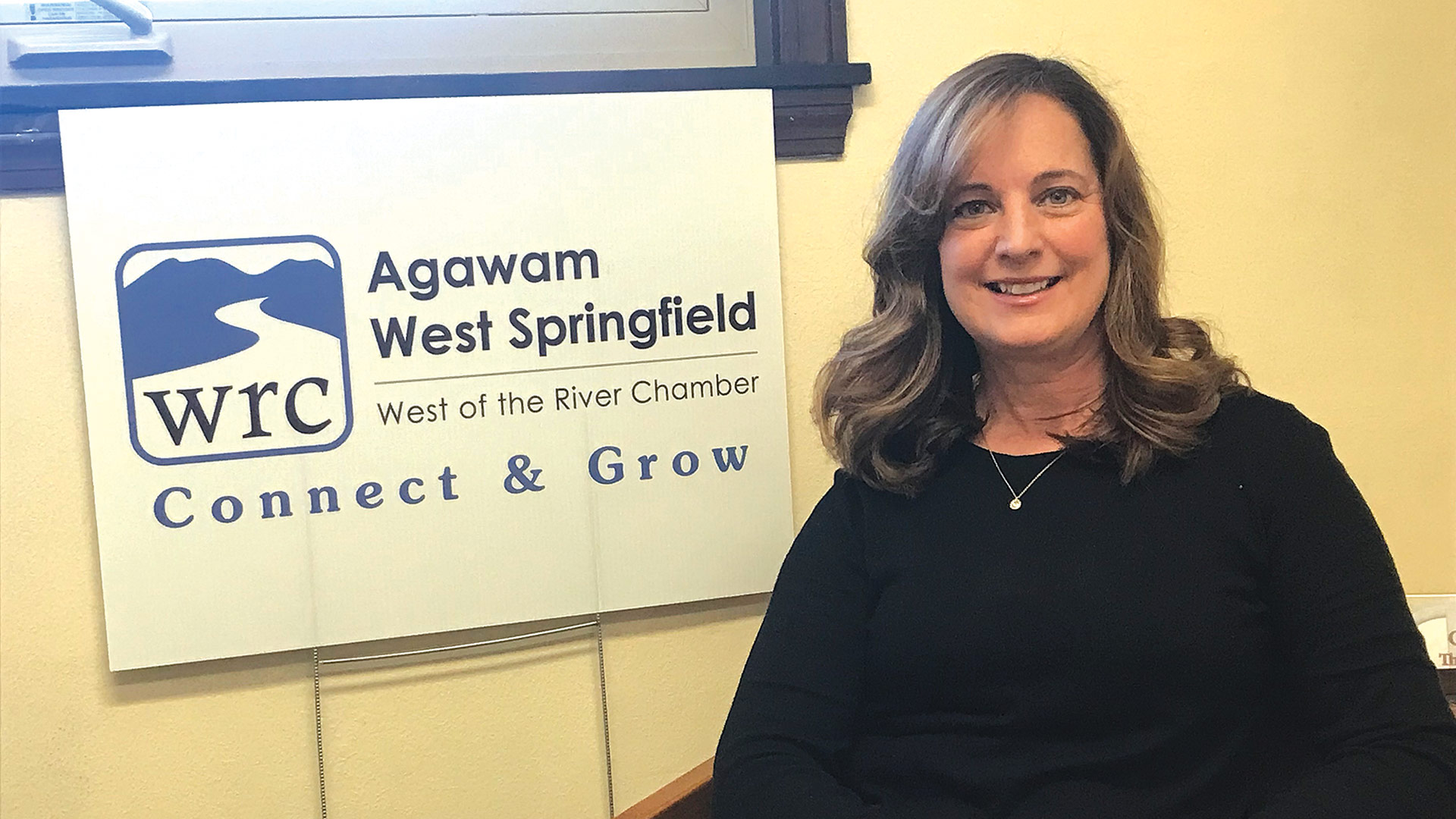
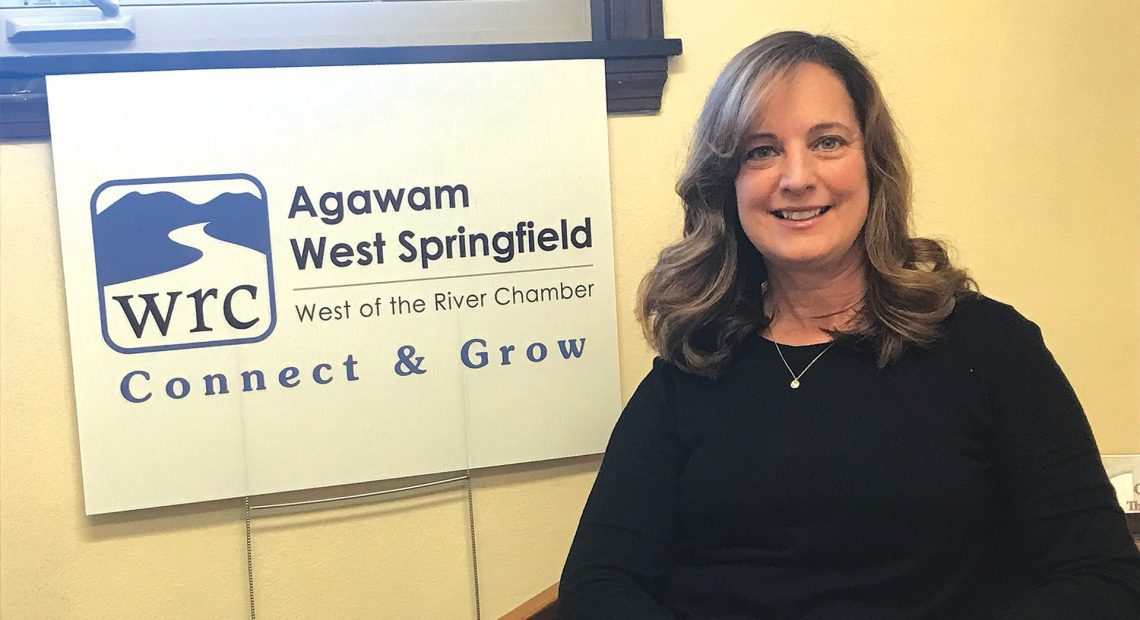
Robin Wozniak says the chamber’s grant program is part of a broader effort

Robin Wozniak says the chamber’s grant program is part of a broader effort to expand and diversify its support programs for businesses.

Like most area communities, Agawam continues to cope with the COVID-19 pandemic, while also making plans for the day when it is history.

That sentiment applies to the business community, the school system, infrastructure projects, and the local chamber.

“As we find our way back to a normal life, we are also trying to help people find new opportunities for success going forward,” said Robin Wozniak, executive director of the West of the River Chamber of Commerce (WRC), as she talked about the present and the matter of preparing for the future. “These are times when we are all learning and growing together.”

With that statement, she summed up the sentiments of many in this community of roughly 29,000, which, like most area cities and towns, has suffered greatly through the pandemic, but has also seen COVID yield some opportunities, which have come in many forms.

These include American Rescue Plan Act (ARPA) funds, which the city plans to use mostly on infrastructure projects (more on that later), some new businesses, and even an acceleration of the timetable for reconstructing the Morgan-Sullivan Bridge, which connects Agawam with West Springfield. The bridge work was to be completed later this year, but wrapped up more than six months ago, due in large part to a $1.5 million bonus from the state to incentivize the general contractor, Northern Builders, to get the work done sooner.

But gaining the roughly four weeks on what would have been shutdown time if the 2020 Big E had not been canceled certainly helped in those efforts.

The bridge project was undertaken to improve traffic flow in and out of the city and, ultimately, spawn new business opportunities in that section of the community, Mayor William Sapelli said. Time will tell what ultimately transpires, but already there are plans to develop a large vacant lot just over the bridge and a block from City Hall.

Colvest Group purchased the property several years ago, used it to park cars during the Big E, and leased it to the contractors as a staging area for the bridge-reconstruction work. Soon, it will advance plans to develop the property into three business parcels, including an office building and a Starbucks location.

“We could get a new roof and a good boiler and better windows, but the facility will still not be appropriate to meet our education needs for the 21st century.”

As for the chamber, it plans to step up its support of small businesses impacted by the pandemic through a grant program, Wozniak noted, adding that the WRC plans to begin awarding business grants starting in June and extend them through the end of the year.

“We’re planning to announce five $1,000 grants at our annual meeting in June and continue awarding grants into the summer and fall,” she said. “We’re excited to start the application process.”


Getting Down to Business

Before he became mayor in 2018, Sapelli was the long-time school superintendent in Agawam. And while his list of responsibilities is now much broader, the schools remain a primary focus.

And among the many issues to be addressed is the city’s high school.

A recent assessment of Agawam High School recommended $26 million in repairs to the building. Since 2002, the town has applied to the Massachuetts School Building Authority (MSBA) for consideration of a new high school. The MSBA looks at building conditions, as well as demographics and population trends, as part of its approval process.

While Sapelli has seen West Springfield, Chicopee, and Longmeadow all build new high schools, he’s encouraged because those projects actually help move Agawam up the list.

Mayor William Sapelli

Mayor William Sapelli says Agawam is putting federal money to good use on everything from infrastructure to small-business support.

“One reason we’ve been overlooked was all the investments we’ve made over the years to maintain the building,” he said. Rather than continue to spend on the current high school — built in 1955 — he favors new construction.

“We could get a new roof and a good boiler and better windows, but the facility will still not be appropriate to meet our education needs for the 21st century,” he went on. If approved, the new school would be built on the practice fields adjacent to the current building.

A few years back, a new high-school building was proposed for the former Tuckahoe Turf Farm located near Route 187 and South Westfield Street. Now owned by the city, the 300-acre parcel will be developed into a passive recreation park for Agawam. Construction will begin in the spring to provide roads, parking areas, and access to a pond that will accommodate fishing, kayaks, and canoes.

A solar-energy installation is part of the parcel and will occupy nearly 50 acres of the land near South Westfield Street.

“The city will receive income from the solar array, which will help mitigate the costs to develop and maintain the property,” said Marc Strange, director of Planning and Community Development for Agawam. “The solar panels will occupy one small area of the parcel, leaving more than 200 acres for recreation and trails.”

While developing this long-vacant site, city leaders will continue to take steps to make the community more attractive for new business development.

As part of these efforts, infrastructure work is planned at the intersection of Springfield Street, North Street, and Maple Street, an area known as O’Brien’s Corner. This project, scheduled to start in the spring, will involve paving, adding curbs, and upgrading the traffic signals in the area.

Agawam received just over $8 million in funding from the American Rescue Plan Act (ARPA), which Sapelli plans to use on several stormwater infrastructure projects in town. Culverts on North Street and North Westfield Street have been temporarily repaired, but the state has made it clear both areas need a permanent solution. In addition, heavy rains are causing flooding problems on Meadow Street and Leland Avenue.

“Some of the puddles are so bad, people sent us photos of their neighbors going out in kayaks,” Sapelli said, adding that the photos helped emphasize the need for fixing these storm drains. “We are using the ARPA funds for what they are intended. These are projects that need to be addressed where we did not have the funding to do so.”

Agawam at a Glance

Year Incorporated: 1636
Population: 28,692
Area: 24.2 square miles
County: Hampden
Residential Tax Rate: $16.11
Commercial Tax Rate: $30.58
Median Household Income: $49,390
Family Household Income: $59,088
Type of government: Mayor; City Council
Largest Employers: OMG Inc., Agawam Public Schools, Six Flags New England, Whalley Computer Associates
* Latest information available

Beyond infrastructure, the city is using funds from various COVID-relief efforts to help the business community. Indeed, it secured a $200,000 Coronavirus Aid, Relief and Economic Security (CARES) grant designed to help micro-enterprises — five or fewer employees — in Agawam.

“These grants are designed to help these small-business owners with some relief until they can open their doors again,” Strange explained. “The grants help businesses that didn’t have access to other funds to help them.”

Meanwhile, the community is looking to support its beleaguered restaurants with an ordinance that will allow outdoor dining on a permanent basis.

“In the early days of the pandemic, outdoor dining was a lifesaver,” Sapelli said. “Now, going into the third year, it’s so popular, we are proposing an ordinance to make it permanent in Agawam.”


Giving Back

As for the chamber, its grant program is part of a broader effort to expand and diversify its support programs for businesses. For the past two years, the chamber has put its focus on keeping members up to date on health regulations, helping them identify grants they might qualify for, and any other information to keep them going.

“The last couple years have been all uphill for many of our members,” Wozniak said. “The chamber board feels the need to start giving back to our small businesses.”

Staying connected through events has been a long-time business model for chambers of commerce. Wozniak said she has reintroduced networking events with a hybrid twist where people can attend in person or take part remotely.

“We welcome those who feel comfortable going in person, and for those not yet ready, we offer a remote option so they can log on and enjoy the whole event from the safety of their home, remote office, or wherever.”

Wozniak reported the hybrid meetings have been successful because they help bring people face-to-face.

As she mentioned earlier, these have been times when business owners have been “learning and growing together.”

These efforts will hopefully yield dividends for the day when ‘normal’ is not a goal, but a reality.
Construction

Historic Renovation

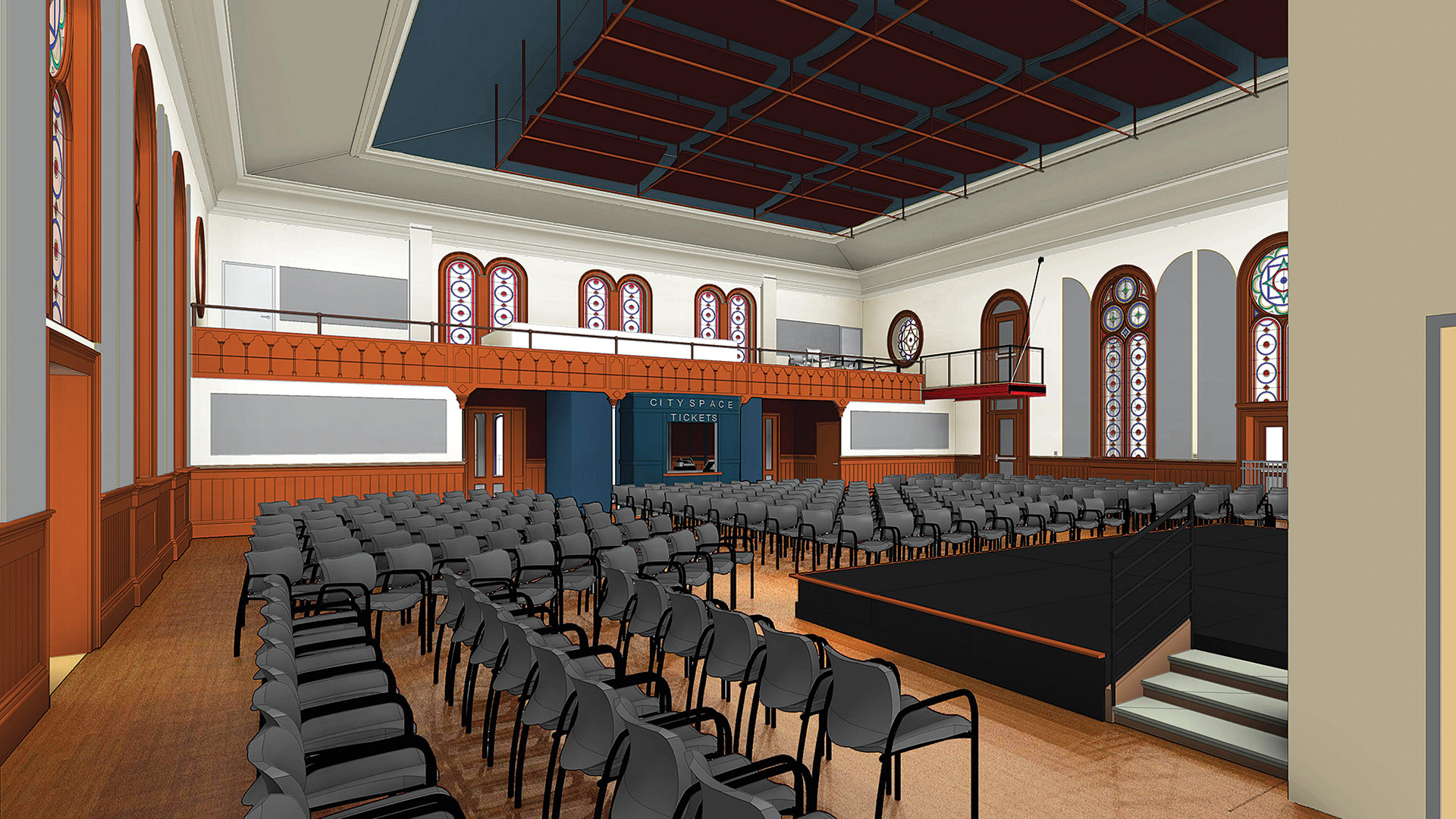
An architectural rendering from Kuhn Riddle Architects

An architectural rendering from Kuhn Riddle Architects of the second-floor performing-arts and community space at Old Town Hall.

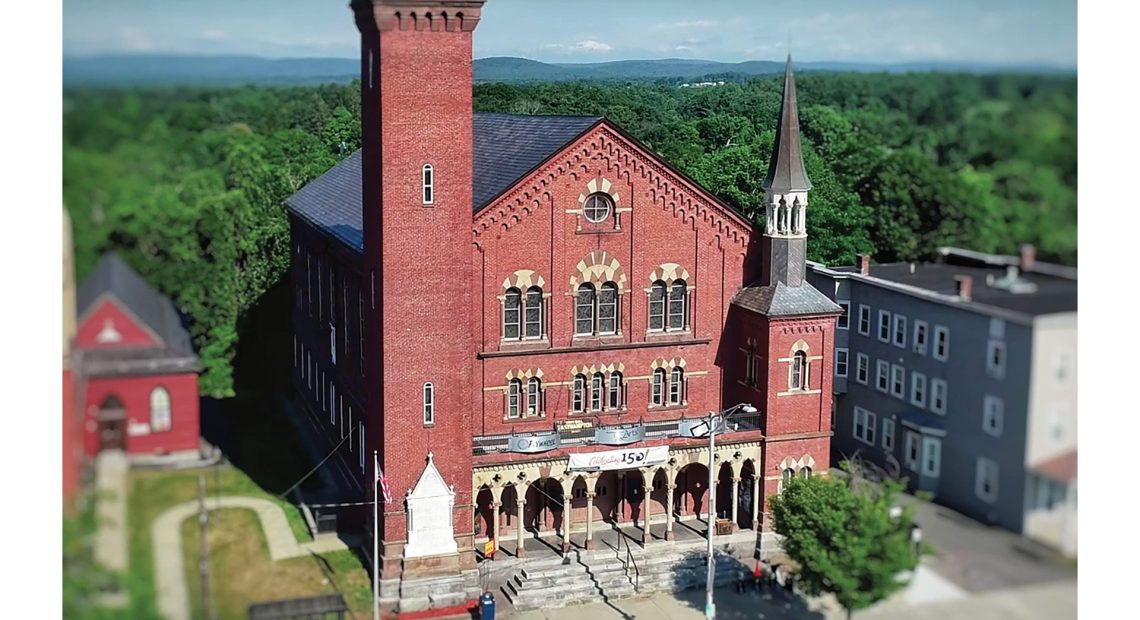
With the financial support from the Massachusetts Cultural Council Cultural Facilities Fund and the Easthampton Community Preservation Act, CitySpace is beginning the first phase of a multi-million-dollar project to restore Easthampton Old Town Hall, the majestic brick building centrally located in the city’s downtown, as a center for the arts.

The $511,000 first phase, a portion of the total $6.9 million restoration, will prepare the building’s air systems for energy-efficient use, add new HVAC systems, and upgrade the historic building’s electrical system. Phasing the project will provide system upgrades and prepare the building for its next phase: completing the renovation of a 3500-square-foot, 350-seat arts and entertainment venue equipped with theatrical lighting, sound and projection systems, flexible staging and seating, and full accessibility.

“This is not a new project; it’s something we’ve been talking about for a long time. I consider it the single most important, impactful project this city has going forward for economic development … I’m excited that we are starting it,” Easthampton City Councilor Dan Rist said at a Community Preservation Act Committee meeting in November. The committee and Easthampton’s City Council unanimously voted to push forward $255,576 of reserved funding.

“This is not a new project; it’s something we’ve been talking about for a long time. I consider it the single most important, impactful project this city has going forward for economic development … I’m excited that we are starting it.”

CitySpace originally intended to build the $6.9 million project in one stage. However, this past summer, the organization explored the option of phasing the building project with the help of Kuhn Riddle Architects of Amherst, and found that dividing the scope of work was feasible. Other than the addition of an energy-recovery ventilator, the infrastructure improvements entirely reflect the established 2018 architectural plans created for the rehabilitation project.

In 2019, CitySpace was awarded $200,000 from the Massachusetts Cultural Council through its Cultural Facilities Fund in support of the restoration of the Old Town Hall. In collaboration with MassDevelopment, the Cultural Facilities Fund provides important funding for capital projects of creative spaces, “in recognition of their profound economic impact on communities across Massachusetts,” according to the council’s website. These funds will go toward this project located in Easthampton’s Main Street corridor, with an expected ripple effect to the region’s businesses.

“The incomparable support of the Massachusetts Cultural Council, MassDevelopment, the Easthampton Community Preservation Act Committee, and the generosity of our Western Massachusetts friends, neighbors, and businesses is why we are able to make these infrastructure improvements,” said Burns Maxey, president of the board of CitySpace. “This project will have extraordinary impacts on our economy while providing affordability and access to space for the arts and people in our region. I am so thrilled to see this project begin.”

The infrastructure improvements are expected to be completed by the end of 2022. Subsequently, with funding secured by the end of 2022 for phase 2, construction is planned to begin in 2023.

To date, more than $4 million in grants and contributions have been received for the $6.9 million project. Most recently, the Mabel Louise Riley Foundation awarded CitySpace $100,000 in support of the project’s second phase, creating the 350-seat space for performances, concerts, and community events. Besides seating, lighting, and sound, renovations also will include a new box office, elevator, and entryway. CitySpace is seeking further support for the project and has naming opportunities available.

“As we embark on this year, momentum is building to complete this campaign,” Maxey said. “The incredible support from the Mabel Louise Riley Foundation is a windfall for CitySpace and our upcoming plans for Old Town Hall. We are so very thankful.”

CitySpace is a nonprofit that serves to restore, preserve, and manage Easthampton Old Town Hall as a center for the arts. Old Town Hall was built in 1869.

Construction

In Search of Workers


Construction employment dipped by 5,000 jobs between December and January even though hourly pay rose at a record pace in the past year, according to an analysis by Associated General Contractors of America of government data released last week. Association officials said future job gains are at risk from several factors that are slowing projects.

“Contractors are struggling to fill positions as potential workers opt out of the labor market or choose other industries,” said Ken Simonson, the association’s chief economist. “In addition, soaring materials costs and unpredictable delivery times are delaying projects and holding back employment gains.”

Simonson noted that average hourly earnings in the construction industry increased 5.1% from January 2021 to last month, the steepest 12-month increase in the 15-year history of the series. The industry average of $33.80 per hour exceeded the private-sector average by nearly 7%. However, competition for workers has intensified as other industries have hiked starting pay and offered working conditions that are not possible in construction, such as flexible hours or work from home.

Since January 2021, the industry has added 163,000 employees despite the decline last month. But the number of unemployed job seekers among former construction workers shrank by 229,000 over that time, indicating workers are leaving the workforce altogether or taking jobs in other sectors, Simonson added.

Ken Simonson

Ken Simonson

“Contractors are struggling to fill positions as potential workers opt out of the labor market or choose other industries.”

Construction employment totaled 7,523,000 last month, which was 101,000 (1.3%) fewer jobs than in the pre-pandemic peak month of February 2020. However, he noted, the totals mask large differences between residential and non-residential segments of the industry.

Non-residential construction firms — general building contractors, specialty trade contractors, and heavy and civil engineering construction firms — lost 9,000 employees in January. Non-residential employment remains 213,000 below the pre-pandemic peak set in February 2020. In contrast, employment in residential construction — comprising home-building and remodeling firms — edged up by 4,400 jobs in January and topped the February 2020 level by 112,000.

Association officials said the Construction Hiring and Business Outlook survey it released in January showed most contractors expect to add employees in 2022 but overwhelmingly find it difficult to find qualified workers.

“Construction firms are struggling to find workers to hire even as they are being forced to cope with rising materials prices and ongoing supply-chain disruptions,” said Stephen Sandherr, the association’s CEO.

Speaking of which, construction materials jumped nearly 20% in 2021 despite moderating in December, according to an an association analysis released last month. An association survey shows that contractors rate material costs as a top concern for 2022.

“Costs may not rise as steeply in 2022 as they did last year, but they are likely to remain volatile, with unpredictable prices and delivery dates for key materials.”

“Costs may not rise as steeply in 2022 as they did last year, but they are likely to remain volatile, with unpredictable prices and delivery dates for key materials,” Simonson said. “That volatility can be as hard to cope with as steadily rising prices and lead times.”

In the association’s 2022 Construction Hiring and Business Outlook Survey, material costs were listed as a top concern by 86% of contractors, more than any concern. Availability of materials and supply-chain disruptions were the second-most-frequent concern, listed by 77% of the more than 1,000 respondents.

The producer price index for inputs to new, non-residential construction — the prices charged by goods producers and service providers such as distributors and transportation firms — increased by 0.5% in December and 19.6% in 2021 as a whole. Those gains topped the rise in the index for new, non-residential construction — a measure of what contractors say they would charge to erect five types of non-residential buildings, Simonson noted. That index climbed by 0.3% for the month and 12.5% from a year earlier.

Prices moderated for some construction materials in December but still ended the year with large gains, Simonson observed. The price index for steel-mill products rose 0.2% in December, its smallest rise in 15 months, but soared 127.2% over 12 months. The index for diesel fuel declined 5.3% for the month but increased 54.9% for the year. The index for aluminum mill shapes slid 4.9% in December but rose 29.8% over 12 months, while the index for copper and brass mill shapes fell 3.3% in December but rose 23.4% over the year.

Some prices accelerated in December. The index for plastic construction products climbed 1.3% for the month and 34.0% over 12 months. The index for lumber and plywood rose 12.7% for the month and 17.6% for the year.

Association officials said rising materials prices threaten to undermine what is otherwise a strong outlook for the construction industry in 2022. They urged the Biden administration to reconsider its plans to double tariffs on Canadian lumber and leave other trade barriers in place that artificially inflate the costs of key construction materials.

“Making lumber and other materials even more expensive will not tame inflation, boost supplies of affordable housing, or help the economy grow,” Sandherr said. “Instead, the administration should be removing tariffs and beating inflation.”

Daily News

SPRINGFIELD — Since 2009, BusinessWest has been recognizing the work of individuals, groups, businesses, and institutions through a program called Difference Makers. The 14th annual Difference Makers celebration will be held at the Log Cabin in Holyoke on Thursday, March 24 from 5 to 8:30 p.m. Tickets cost $75 and can be ordered online by clicking here.

The 2022 Difference Makers include Tara Brewster, vice president of Business Development at Greenfield Savings Bank; the Community Foundation of Western Massachusetts; Heriberto Flores, president of the New England Farm Workers’ Council; John Greaney, retired State Supreme Court justice and senior counsel at Bulkley Richardson; Ruth Griggs, president of the Northampton Jazz Festival and principal at RC Communications; Ted Hebert, owner of Teddy Bear Pools and Spas; I Found Light Against All Odds and Its Founder and CEO, Stefan Davis; and Roca Holyoke and Springfield. Their stories are told in the Feb. 16 issue of BusinessWest and at businesswest.com.

The sponsors for this year’s program are Burkhart Pizzanelli, the New England Farm Workers’ Council, the Royal Law Firm, TommyCar Auto Group, and Westfield Bank.

Daily News

GREENFIELD — Upright Education and Greenfield Community College (GCC) are partnering to provide award-winning career-enhancement programs in technology in Western Mass. and beyond.

The new partnership is being provided through GCC’s Workforce Development Office and will give learners a unique chance to participate in boot camps that help them quickly learn marketable skills in technology, including software development and user interface (UI) and user experience (UX) design. Participants will be able to attend the programs virtually and can complete them in as few as 10 weeks.

With Upright’s national partner network and suite of curriculum offerings and GCC’s access to the area’s working population and robust higher-education system, this partnership aims to significantly augment efforts to develop the technology workforce in the region.

“We’re very excited to have GCC partner with Upright to provide top-rate, intensive software-development training and UI/UX design,” GCC interim President Richard Hopper said. “Such skills and industry-recognized certifications are in high demand and are an ideal path for self-employment right at home. Together we are working to ensure the people in our region are career-ready, helping to make Greenfield and surrounding areas a hub for technology-career training.”

All courses are fully accessible to online participants and offered with a variety of pricing models. For more information on available Upright offerings, visit bootcamp.gcc.mass.edu, or attend an upcoming information session on Wednesday, March 9.

In the past decade, the technology sector in the Pioneer Valley has grown steadily, with new startups and nonprofits working to accelerate the technology workforce emerging or moving into the market on a consistent basis. Upright has a proven track record of developing growing tech workforces in emerging markets like Western Mass.

“We are thrilled to partner with GCC to support their workforce-development program with our bootcamps in software development and UX/UI design,” Upright CEO Benny Boas said. “Massachusetts has seen record job growth in the tech industry. Through our partnership, we will be able to help GCC continue to turn out highly skilled workers in a fast-changing higher-education landscape, with new demands for workforce-development training.”

Daily News

PITTSFIELD — Berkshire Bank was recently presented the Gold Community Champion Award from Banking Northeast magazine in the economic-development category. This award recognized the bank’s comprehensive efforts to foster economic resilience in its communities.

Banking Northeast established the Community Champion Awards to honor the banks and credit unions who went beyond the call to aid their community in a special time of need or whose cumulative effort has made a substantial, positive impact. Winners were presented at the magazine’s Gala Awards last month at Mohegan Sun.

Berkshire Bank’s Gold Community Champion Award recognized its efforts to harness its core business activities, pandemic response, community involvement, philanthropic programs, and innovative financial solutions such as MyFreedom Checking and the Futures Fund to strengthen its neighborhoods. Berkshire helped deploy nearly $1 billion in PPP funding to assist small businesses during the pandemic and helped more than 180,000 individuals with financial-wellness programming. According to an independent third party, Berkshire reinvests at a rate nearly 70% higher than the industry average.

“Berkshire has been an engine for positive change in our communities for more than 175 years, and this honor is a reflection of the collective efforts of our employees and community partners,” said Gary Levante, senior vice president of Corporate Responsibility. “We always have our customers’ and communities’ backs on their worst days and help make the best ones possible. Stronger, more economically resilient communities require a better approach to banking, and we’ve accelerated that work with the launch of our BEST Community Comeback this past September.”

Through its BEST Community Comeback, the company expects to lend and invest $5 billion over the next three years to lift up its communities across four key areas: fueling small businesses, community financing and philanthropy, financial access and empowerment, and funding environmental sustainability. The plan is expected to result in more businesses and jobs being created, more families achieving the dream of owning a home, more quality housing in neighborhoods, and investments in activities that reduce greenhouse-gas emissions.

Daily News

AGAWAM — OMG Inc. has added to its Technical Services department with the addition of a technical-support specialist in its OMG Roofing Products division.

In his new role, Curtis Haines will provide the roofing sales team with expanded technical product training and technical support in the field. Additionally, he will work with the new-product-development team to assist in expanding the company’s product lines. He reports to Stephen Childs, Technical Services manager.

Haines comes to OMG Roofing Products with eight years of technical and product management experience from ITW/Permatex in Hartford, Conn. Most recently, he was involved in inside technical sales. Earlier, he had been a technical services manager and an associate innovations manager for the company. He holds a bachelor’s degree from Southern Connecticut State University.