Daily News

SPRINGFIELD — Chase Bank plans to open its first Springfield branch next year at 1391 Main St. in downtown Springfield. There are plans to add at least three more locations in the Greater Springfield area over the next few years.

The expansion is part of the bank’s recently announced plans to more than double its presence in Massachusetts by 2025. The firm opened its first Massachusetts branch in Boston in 2018 and now has 36 statewide. Beyond Springfield, Chase will open its first branch in Worcester next month.

“Springfield is a great city with a rich economic, cultural, and educational environment, which makes it an ideal place for Chase to grow,” said Ali Zaidi, Chase’s market director for Springfield and Worcester. “Our goal is to help the community and support our customers during their most important moments.”

Roxann Cooke, regional director for Chase in New England, added that, “when Chase enters a community, we bring the resources of a global institution with a focus on local solutions. In addition to going above and beyond to serve our customers, we are going to engage and collaborate with our neighbors to create more equitable economic growth here in Springfield.”

This first branch will be about 3,000 square feet in size and feature modern, bright designs with comfortable meeting areas and state-of-the-art banking technology. A dedicated Chase Private Client team will provide premium banking services, personalized attention, and access to the expertise and investment capabilities of J.P. Morgan to help families reach their goals. Customers may also meet with financial and home-lending advisors and business-banking relationship managers.

“Branches are critically important to our customers, but our mission goes beyond service and convenience,” said Jennifer Piepszak, co-CEO of Chase Consumer & Community Banking for JPMorgan Chase. “We’re hiring locally, investing in the community, and bringing all the benefits our firm has to offer to drive economic growth.”

Daily News

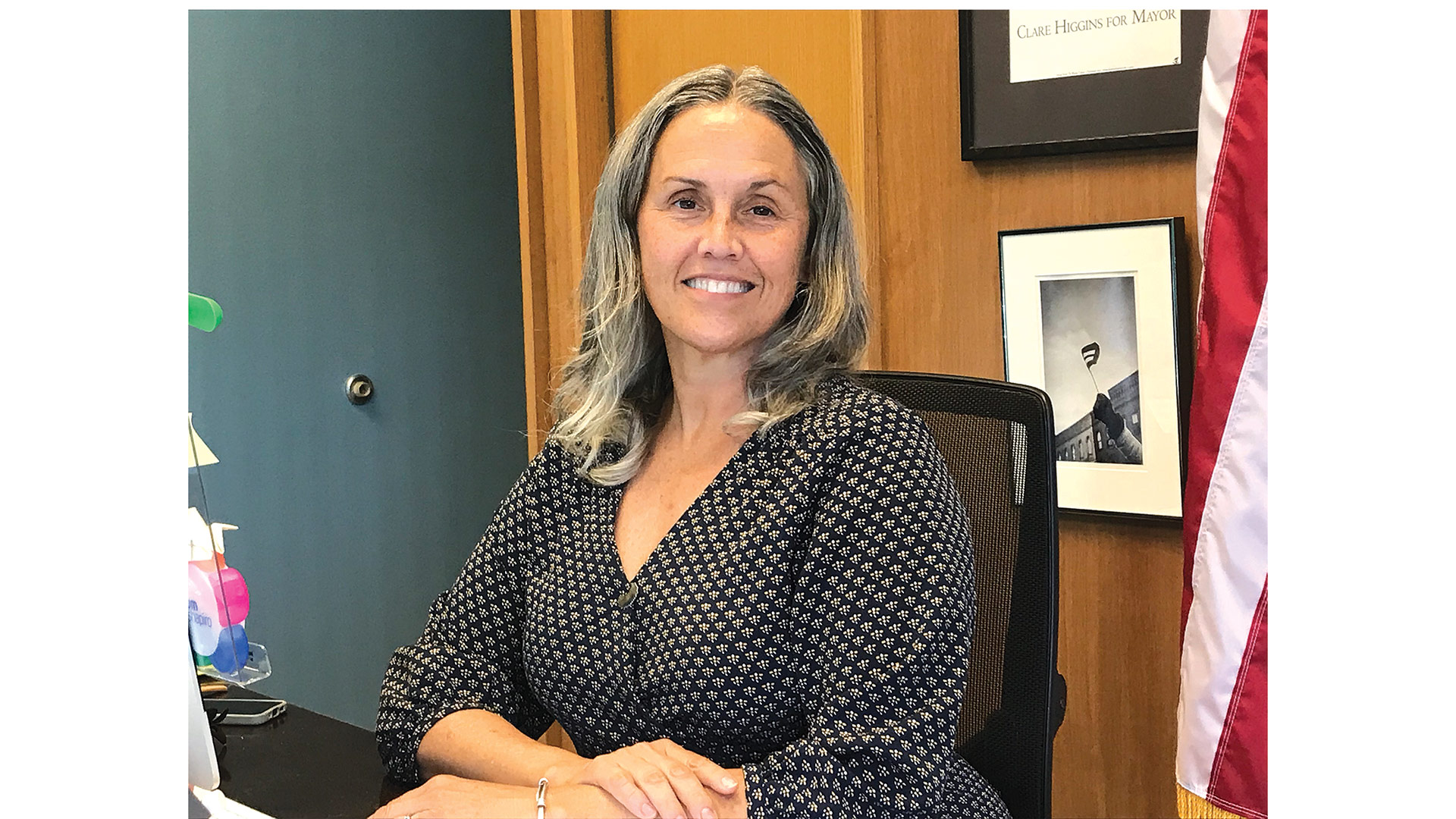
EASTHAMPTON — bankESB recently promoted Karen DeMaio to assistant vice president, IRA and Operations Risk Management.

DeMaio joined bankESB in 2006 as an IRA specialist and was promoted to IRA and Deposit Services officer in 2014. She is responsible for IRA services, vendor management, business-continuity planning, and insurance for the Hometown Financial Group family of banks, which includes bankESB, bankHometown, and Abington Bank.

Prior to bankESB, DeMaio served as senior Marketing analyst at Friendly Ice Cream Corp. and as senior auditor at KPMG Peat Marwick. She earned her bachelor’s degree in accounting from Western New England College, completed the certified public accounting exam, and earned her Certified IRA Services Professional designation. She currently serves as vice chairperson for the town of Southwick Finance Committee and is a board member of Westfield Credit for Life.

Daily News

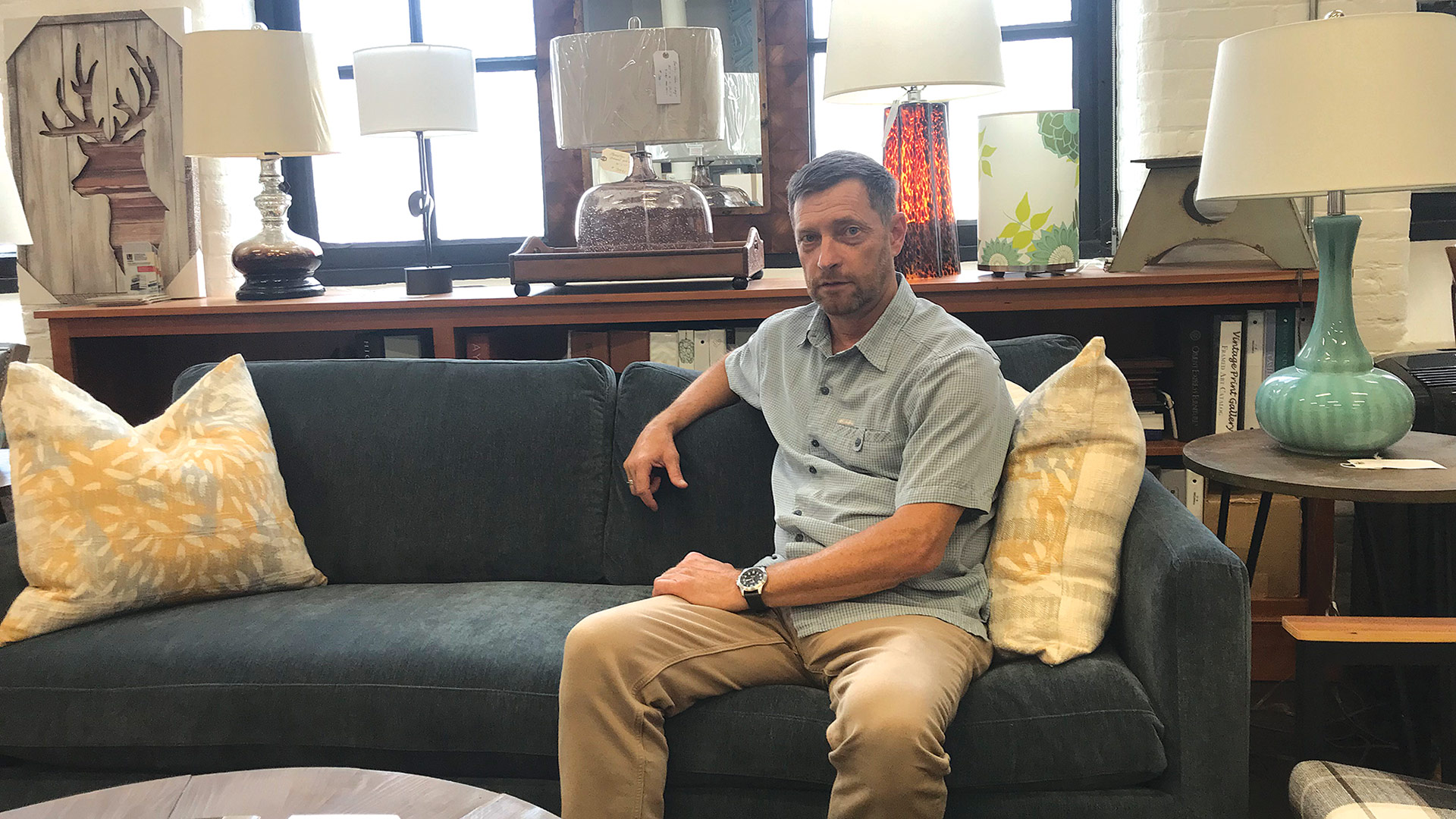
EAST HARTFORD, Conn. — American Eagle Financial Credit Union (AEFCU) announced the appointment of Ashley Rollins as vice president of Consumer Lending. In her new role, Rollins will focus on all aspects of lending, including consumer and real-estate originations, collections, process improvement, automation, and loan reporting.

“We are very pleased to welcome Ashley to American Eagle and our leadership team,” said Howard Brady, president and CEO of AEFCU. “We believe she brings tremendous value to our organization and possesses the right qualities to advance our credit union in the marketplace.”

Dianna Wilson, senior vice president and chief lending officer of American Eagle, added that “Ashley possesses in-depth knowledge of the financial-services market, substantial experience in lending, and a passion for serving people. She will be integral in servicing American Eagle’s members and communities — and I am confident her addition strengthens our lending operations.”

Rollins assumes her new role at AEFCU with more than 11 years of experience in financial-services operations, quality control, and consumer loan products. She most recently served as Loan Administration officer for Justice Federal Credit Union in Washington, D.C.

She earned certificates from the National Assoc. of Federally Insured Credit Unions Management and Leadership Institute and the Harvard Business School Leadership Academy, as well as a Yellow Belt certification from Lean Six Sigma. During her time in the D.C. region, she volunteered at the Central Virginia Food Bank and taught financial-literacy classes at Richmond, Va. elementary schools.

Daily News

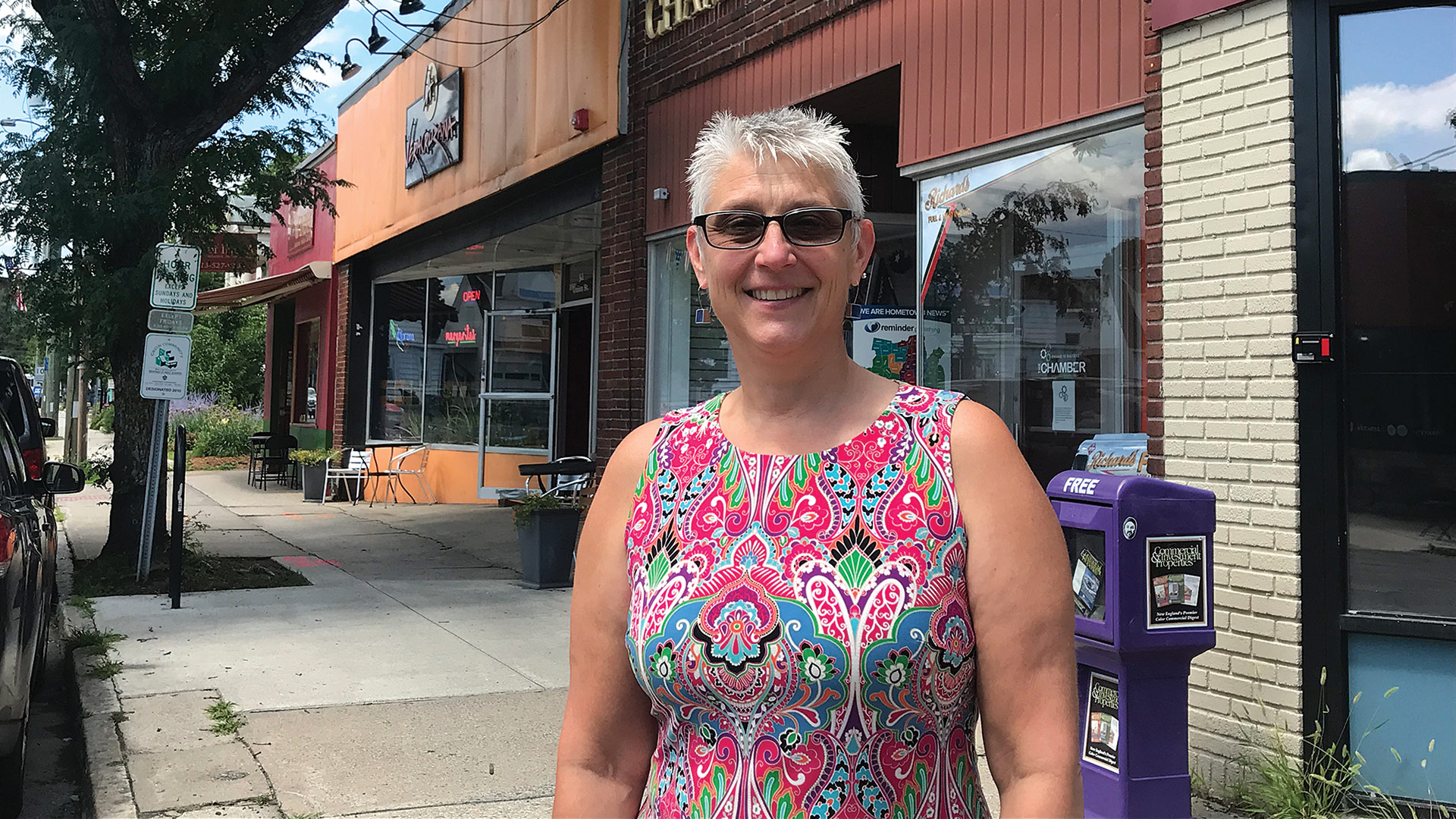
SPRINGFIELD — United Way of Pioneer Valley announced the return of the Fiat at 1441 Main St., Springfield, in the interior rotunda. This time, anyone interested can stop by and make donations of school supplies to fill the Fiat as part of United Way’s Stuff the Bus initiative. Stuff the Bus provides backpacks filled with school supplies for students who are homeless throughout Hampden County, Granby, and South Hadley.

United Way works with McKinney-Vento representatives in each school district to gather the number of students K-12 who are homeless. This year, more than 2,000 students are in need. United Way relies on donations of school supplies from the community, and volunteers assist with the packing.

“We are fortunate to have generous donors who want to ensure that every student begins the school year with the supplies they need. And we are grateful to Peter Pan Bus Lines, who lend a bus and driver each year to deliver the backpacks to the school districts,” said Paul Mina, president and CEO of United Way of Pioneer Valley.

Items needed most include notebooks, composition books, filler paper, crayons, index cards, pencil sharpeners, erasers, highlighters, and rulers. Supplies may be dropped off at 1441 Main St. by the Fiat through Aug. 16. Other drop-off sites include Target and Macy’s at the Holyoke Mall and Balise dealerships.

For more information on our Stuff the Bus initiative and needed items, visit www.uwpv.org/stuff-the-bus.

Daily News

SPRINGFIELD — Rocky’s Ace Hardware, one of the country’s largest family-owned Ace Hardware dealers with 47 locations in nine states, will host a Children’s Miracle Network (CMN) bucket-sale fundraising campaign in eight Western Mass. stores and two Connecticut stores, with 100% of all money raised going to benefit CMN hospitals.

Customers can purchase a bucket for $5 and receive 20% off all regularly priced items they fit in the bucket from Friday, Aug. 5 through Sunday, Aug. 7 at the Island Pond Road and Liberty Street stores in Springfield; the Agawam, East Longmeadow, Westfield, Ludlow, Palmer, and South Hadley stores in Massachusetts; and the Vernon and Stamford locations in Connecticut.

“This is such a great way to give back to sick children in our area as well as provide our customers with a great discount at the same time,” Rocky’s Ace Hardware President Rocco Falcone said. “CMN helps more than 10 million kids each year who rely on care from a children’s hospital. We are proud to give back to the communities we serve in such a meaningful way and know this is important to our customers as well.”

To provide the best care for kids, Children’s Miracle Network hospitals rely on donations and community support, as Medicaid and insurance programs do not fully cover the cost of care. Since 1983, CMN hospitals have helped fill funding gaps by raising more than $7 billion. Its various fundraising partners and programs support the nonprofit’s mission to save and improve the lives of as many children as possible.

Cover Story

High Flight

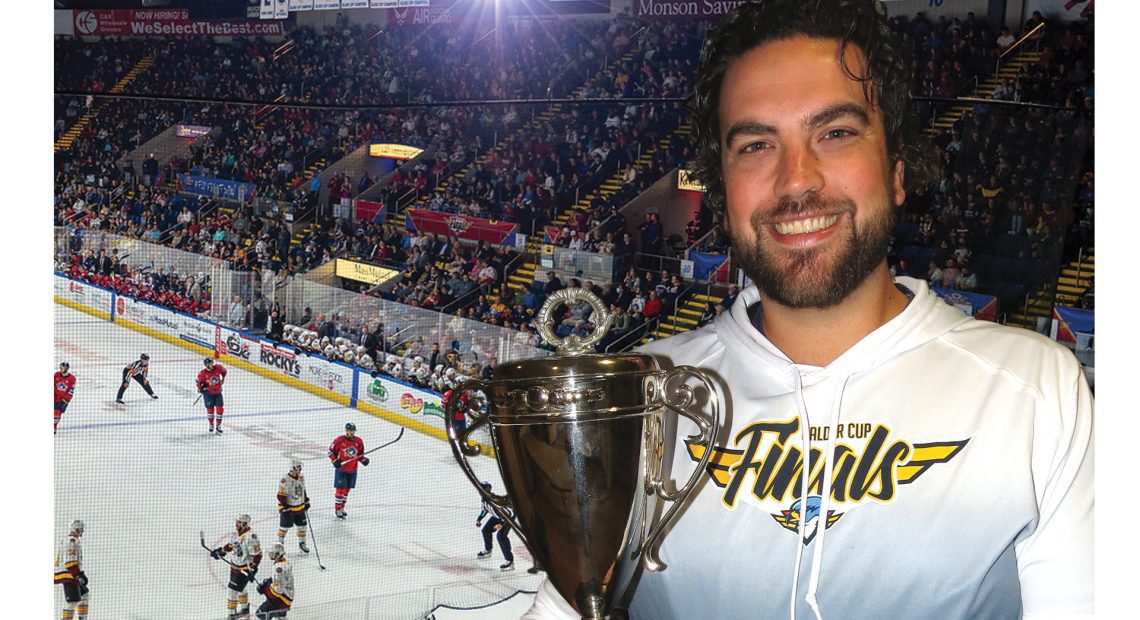
Nate Costa with the AHL’s Eastern Conference Championship trophy

Nate Costa with the AHL’s Eastern Conference Championship trophy and his AHL Finals jersey.

The Springfield Thunderbirds soared to new heights during the 2021-22 season, making the playoffs for the first time in their existence and taking Springfield to the championship round of the playoffs for the first time in three decades. As the franchise enters what will be an abbreviated offseason, it does so with momentum and a championship-caliber team to sell to a more engaged fan base, and management is laser-focused on taking full advantage of this opportunity.

Within the pantheon of ‘good problems to have,’ specifically in the world of professional sports, it doesn’t get much better than this. Although, yes, it does get a little better.

Indeed, after a lengthy playoff run that took the team to within a few wins of a Calder Cup, the Springfield Thunderbirds are looking at a short offseason — as in two full months shorter than the norm.

That’s a problem, said team President Nate Costa, because there’s a lot to do before the 2022-23 season starts, from season-ticket sales to scheduling promotions to lining up special guests and programs. But it’s a good problem, obviously, because of everything that happened during those aforementioned two months and what they mean to this franchise, and this brand, moving forward.

What happened, said Costa, is that the Thunderbirds, the franchise that brought pro hockey back to Springfield in 2016 after a brief time without a team, became “the talk of the town” during that playoff run. Elaborating, he told BusinessWest that the team took a huge leap forward in terms of visibility, prominence, and, yes, relevance. It always had a core of solid fans, but it hadn’t truly arrived. Until this spring.

“It all came to fruition when the playoff run happened,” he told BusinessWest. “All the stuff we thought could happen — that we would be the talk of the town, that we could be the focal point of downtown Springfield … it all came together. And now, it’s about trying to capture some of that momentum and keep things moving.”

The team took this huge step forward in large part because the team seized a huge opportunity during the playoffs to capitalize on the 11 extra games and the excitement generated with each passing round by promoting the brand in every way imaginable, from ceremonial posters and rally towels handed out at the home games to extensive social-media coverage of the team’s run to the Eastern Conference title and the brink of a Calder Cup.

The challenge — and huge opportunity — moving forward, as Costa said, is to build off this hard-earned momentum, and this is what management will be doing in this abbreviated offseason.

Thunderbirds

The extended playoff run gives the Thunderbirds a short offseason, but in the larger scheme of things, that’s a good problem to have.

“All the positives around the business now, and all the stuff that comes from having a nice run like this is … huge, and it’s something we’ve never had before — we’ve never even made the playoffs before in my time with the Thunderbirds,” he noted. “We’re in a good position to take advantage because we’ve laid a really solid foundation that we can build on.”

Looking back on a memorable season, one that earned the T-Birds Team of the Year honors (the President’s Award) from the AHL, Costa said it happened because many pieces fell in place and because all the various players — from the local ownership group that provided the needed resources to a parent team, the St. Louis Blues, that “understands the value of winning at this level,” as he put it, to the players and management — did their respective jobs.

Overall, he said the deep playoff run was and is validation of everything that management and ownership have done to not only bring hockey back to Springfield but to generate interest in hockey and build a successful brand.

“It all came to fruition when the playoff run happened. All the stuff we thought could happen — that we would be the talk of the town, that we could be the focal point of downtown Springfield … it all came together. And now, it’s about trying to capture some of that momentum and keep things moving.”

“It’s been a huge validation, not only for me personally, but for the owners, who stepped up for the city, made a big investment, and did it the right way,” he said. “To be able to get the Eastern Conference championship and do something that hadn’t been done in 30 years … that’s pretty special.

“Getting to the playoffs is really important to the development of these players; these guys are getting extra games, they’re getting extra high-pressure games … that all means a lot to development,” he added. “The really cool thing is that there is lot of continuity between last year’s team and this year’s team, which is a testament to the Blues — they’re bringing back a lot of guys.”

For this issue, BusinessWest talked with Costa about the season — and postseason — that was, how the team made the most of that unique opportunity, and how it intends to build on all that was gained during the 2022-23 season and beyond.


Banner Year

One of the many items on the to-do list for Costa and his team this offseason is to order a ‘2022 Eastern Conference Champions’ banner to hang in the rafters at the soon-to-be-renamed MassMutual Center.

Costa said research revealed the name of a company in Waltham that makes such banners for a number of professional sports teams, and preliminary talks with that outfit will commence soon.

Thunderbirds fared well

While the playoffs are not a ticket to guaranteed financial success, the Thunderbirds fared well, selling out each of its three games in the Finals.

“We want to do it right — to go the company that does this for everyone,” he said. “I want to get their input — I want to get some direction on how to design this the right way, because it’s going to live in our rafters for a long time.”

Finding a company to make a banner for the rafters was about the last thing on anyone’s mind during a very challenging start to the 2021-22 season, said Costa, adding that this past year was a stern test on many different levels.

For starters, the team was starting up again after deciding not to play during the 2020-21 season, when COVID was at its height and the AHL was playing a shorter schedule with a host of restrictions and, for the most part, no fans. This meant assembling a team of employees (with many returnees from before COVID) and re-engaging with a fan base.

But mostly, it meant dealing with a pandemic that kept coming in waves and was still very much a disruptive force, especially for businesses dependent on bringing large numbers of people together in closed spaces.

“All the positives around the business now, and all the stuff that comes from having a nice run like this is … huge, and it’s something we’ve never had before — we’ve never even made the playoffs before in my time with the Thunderbirds.”

“It’s been a long year,” said Costa, putting heavy emphasis on that word ‘long.’ “We dealt with a lot of ups and downs; there were a lot of challenges. Groups were essentially non-existent because schools weren’t doing anything, and we were living in a real COVID world for half the year. January and February were some dark months where we still wearing masks and there were potential capacity limitations … we were dealing with that all year, and it was a really taxing and challenging environment to work through. It was exhausting.”

While dealing with these challenges, the Thunderbirds, thanks to a solid mix of established veterans and emerging prospects, established themselves as not only a playoff contender (23 of the league’s 31 teams would qualify for postseason play for the 2021-22 season following some changes to the format), but as a frontrunner. Indeed, the team forged its way near the top of the Atlantic Division of the Eastern Conference and stayed there for the bulk of the season.

By the spring, the team’s consistently solid play made a playoff birth likely, and then inevitable, giving Costa and his team a chance to start planning — as much as any organization can plan a playoff run, even with a bye in the first round, which the T-Birds earned by finishing second overall in the Atlantic Division.

Indeed, the playoffs are to be taken one series — and, in many respects, one game — at a time, he said, adding that, while a playoff run can benefit a team’s bottom line, there are many additional expenses, especially travel and logistics, and some challenges when it comes to ticket sales, including the loss of all-important group sales.
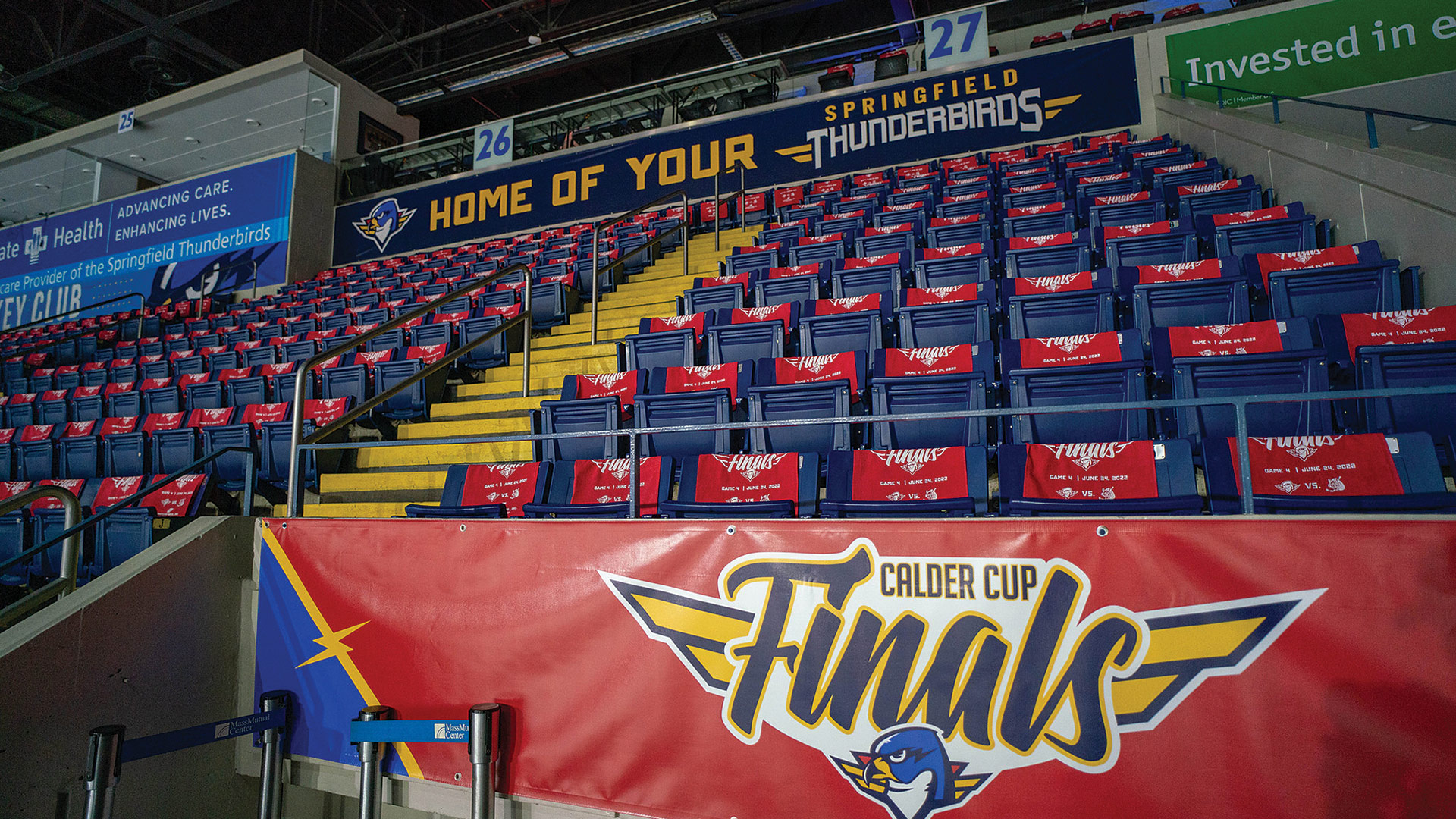
playoff experience different

Nate Costa says one of the team’s goals was to make the playoff experience different for the fans and the players, with rally towels and banners like this one.

“Every series is like a mini-season, the way we market it and the way you go through the process, because you don’t know what’s going to happen; it’s all dependent on your performance on the ice. At the beginning of the run, we wanted it to make it feel different and feel separate from the regular season, and so, from a marketing perspective, we put together an entire campaign around the playoffs,” Costa explained, including a hashtag slogan — Fly, Fight, Win! — that was a nod to the Air Force. “It was completely different from what our regular-season marketing campaign was.”


Winning Formula

Such marketing efforts included everything from lawn signs to new signage around the arena to stickers placed in the windows of downtown businesses, as well as that hashtag. They were a necessary expense, but ones with a very uncertain ROI.

“You can do all that planning and do all those things, and then get knocked out in the first round,” Costa explained. “We were really fortunate that we got to go all the way to the end, but every round you have to redo the schedule, get tickets up on sale, set the pricing on tickets, get the tickets sold, getting marketing in place and buying the advertising — and it all happens within a week.”

“The other blessing about going so late into the playoffs is that it’s only three months from the end of our year to the start of the new year. I think there’s still going to be a lot of pent-up excitement, especially with the number of guys we have coming back and the continuity with raising the banner and all that.”

And there are no guarantees that a playoff run will be a financial success, he said, noting that some teams in the playoffs — including the Chicago Wolves, who triumphed over the T-Birds in the Calder Cup Finals in five games — played before crowds that were far from sellouts, and one of the playoff teams from the Western Conference, Stockton, was averaging just over 1,000 per game.

“At this level, though tickets were in demand, you still have to grind, and you still have to have relationships with people in the region to try to move tickets,” Costa said. “And if you’re not prepared to do that at this level, you’re not going to succeed.

“The first two rounds are really challenging, and teams traditionally break even or lose,” he explained. “But you maximize those opportunities to build momentum for future rounds, if you can get there, and that’s what we did.”

Overall, the Thunderbirds did well with playoff ticket sales, he went on, noting that each of the three Finals games hosted in Springfield was a sellout (6,793 seats), and the earlier rounds averaged more than 5,000, with some games coming on weekdays and even Mondays.
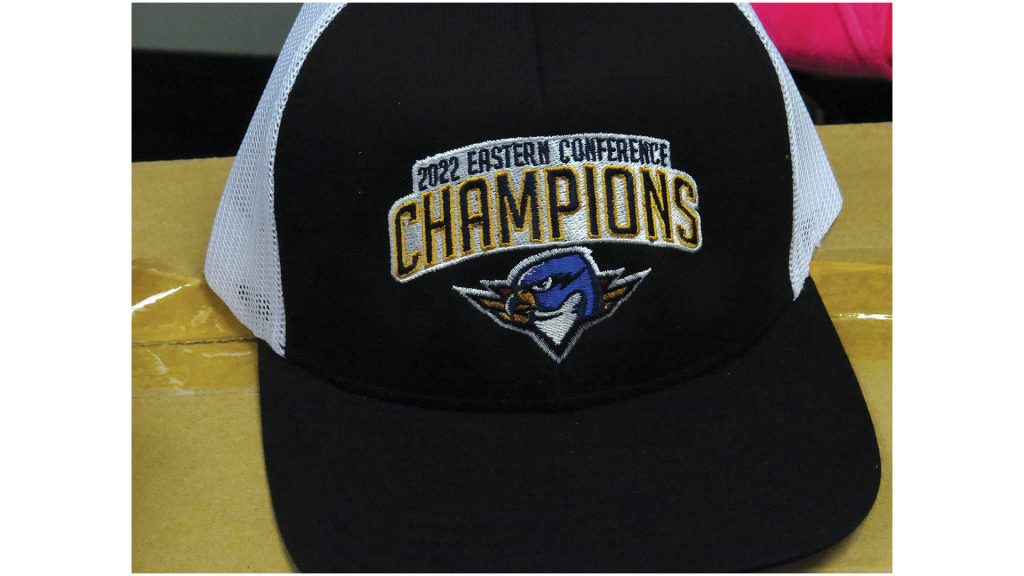
Eastern Conference Champions’ hat.

There are many benefits to an extended playoff run, including merchandise, such as this ‘Eastern Conference Champions’ hat.

But beyond ticket sales, Costa said he saw the playoffs as an opportunity to build the Thunderbirds brand, and he invested heavily in many different initiatives.

For starters, he made sure all three of the team’s media members went to every playoff series to cover the Thunderbirds for social media.

“From the beginning, I wanted to feel like a pro hockey team, and that means getting photography, video, and social media on the road,” he said. “That’s what separates us from a lot of AHL teams; not many teams in this league are willing to invest in this stuff. But I think it’s important for perception of the brand.

“If you can do the little things like that, if you can let the players feel like real pros, then the fans, by extension, the people who are following your brand, can also feel that, and that gives you a lot to sell,” he went on. “The playoffs, to me, was all about maximizing the opportunity.”


Setting Sale

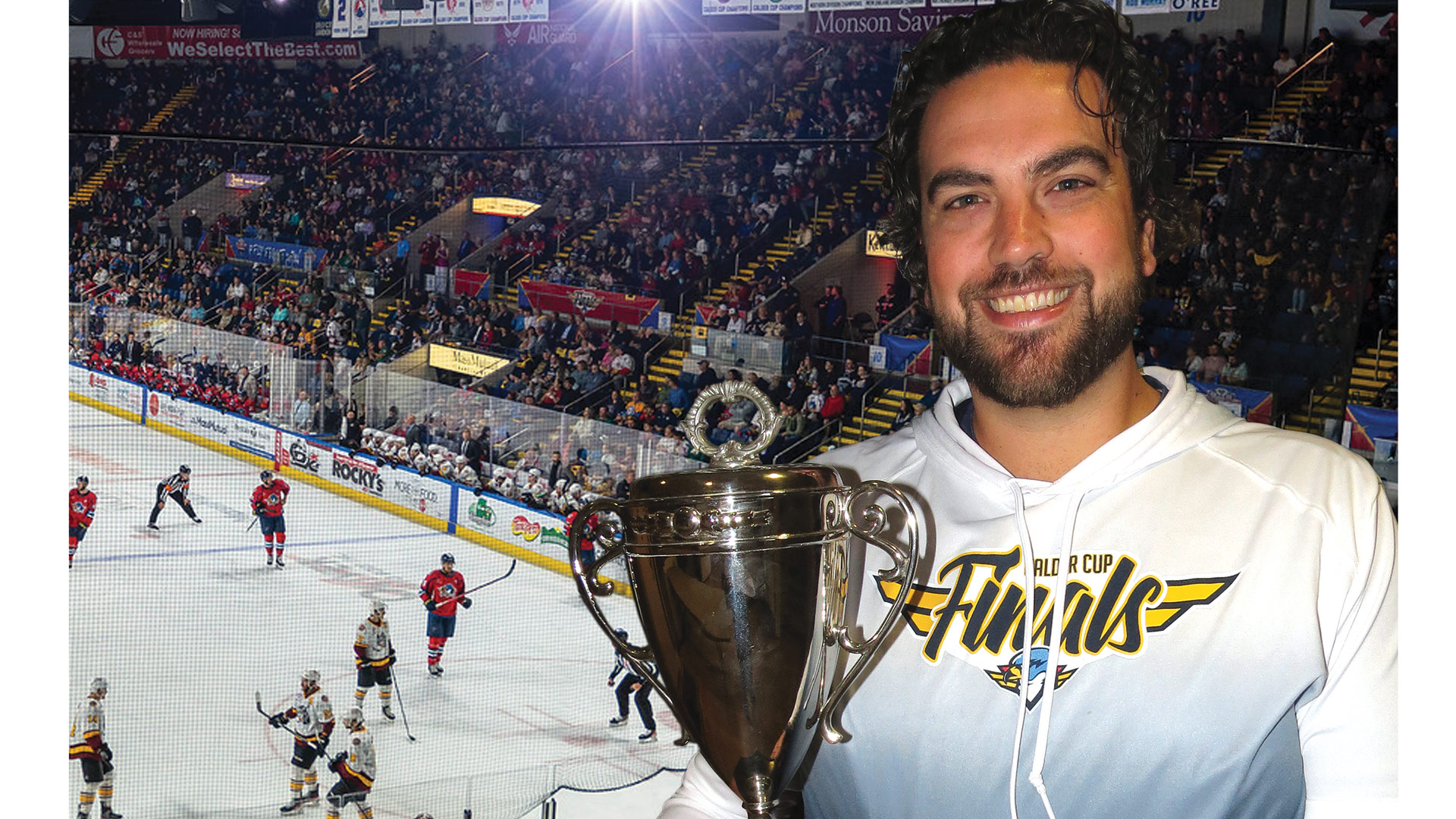
As he talked with BusinessWest, Costa was wearing a ‘Calder Cup Finals’ pullover. At one point in the proceedings, he paused to show off the AHL’s Eastern Conference Championship trophy, named for former AHL President Richard Canning.

These are just a few of the symbolic ways in which he and his team are still living in the moment, if you will.

But in most other ways, the team is putting its deep playoff run behind it and moving onto next season. Indeed, Costa made a point of referring to the 2021-22 campaign as ‘last season,’ and to 2022-23 as ‘this season.’

Which brought him back to the ‘good problem to have’ he mentioned at the top.

“It’s a blessing and a curse,” he said of the shortened offseason, noting that it’s too short for everyone involved — players, many of whom will be back with the team, as well as coaches and administrators.

But from a business perspective, and most all other perspectives, it certainly beats the alternative — another season with no playoffs.

“I’m going to take the playoff run and everything that came with it over a longer offseason,” he said, adding quickly that some, but not all, of the page-turning work that comes after a year’s final game is over had to wait until the playoff run ended.

The mission now is to make up for that lost time, and Costa and his team are now forging ahead with the plans for 2022-23. The schedule has been officially released, which means the team can now start slotting in everything from annual events to who will sing the national anthem at each game.

And, as he mentioned, there is momentum to build on, and it is already showing up in season-ticket sales; by mid-July, the team had more than 1,150 season tickets sold for the coming season, a jump of nearly 100 from last year, with more than 200 still to renew and a projected 80% of those coming back. That means the team is looking at perhaps a 30% increase in season-ticket volume.

And that should be just one area of growth, he said, adding that, overall, a short offseason isn’t beneficial only because of what it means about last season.

“The other blessing about going so late into the playoffs is that it’s only three months from the end of our year to the start of the new year,” Costa explained. “I think there’s still going to be a lot of pent-up excitement, especially with the number of guys we have coming back and the continuity with raising the banner and all that.

“Early on in the year is typically really hard for us,” he went on, adding that the team is competing with pro and college football and other sports as well. “But coming out of this, I think we’re going to have a lot of momentum. We don’t really hit our stride typically on the business side with big crowds until December, when people really start to turn the page and think hockey. This will help us early in the season; we’re going to come out of the gates strong.”

As the team continues its budgeting for the coming year, it will be aggressive as it sets goals for ticket sales and revenue because of last year’s success, Costa said, but it will also look for new areas in which to grow and improve, on both the revenue and expense sides.

“It’s just the maturation of the business,” he explained. “We’re in a healthy place now, and it’s all about how we take advantage of our momentum. When we took this over, it was obviously exciting, but there wasn’t a ton of value built up in the brand, and now we’ve gotten to the point where we have some value built into the brand, and we have to take advantage of that.

“Now, we have a winning team to talk about and a championship-caliber team,” he went on. “And that just adds to everything that we’re doing, and it makes our job easier.”


Soar Subject

Summing up the playoff run that was, from both a personal and professional perspective, Costa said it was, in a word, “special.”

“It was one of the coolest experiences I’ve had in my career,” he said, noting that the team won the Eastern Conference title exactly six years from the day the new franchise was announced. “I’ve been in pro sports for more than 15 years now and had never gotten to that point — it was fulfilling on many levels.

“And that’s one of the things I hammered home with our staff. I said, ‘I know it’s exhausting, and I know we’re working extra games, but this doesn’t happen every year,’” he went on, adding that, when it does happen, a team has to take full advantage of the moment — and the momentum created by that moment.

And he and his team are fully committed to doing just that.


George O’Brien can be reached at [email protected]

Banking and Financial Services Special Coverage

Pedal to the Mettle

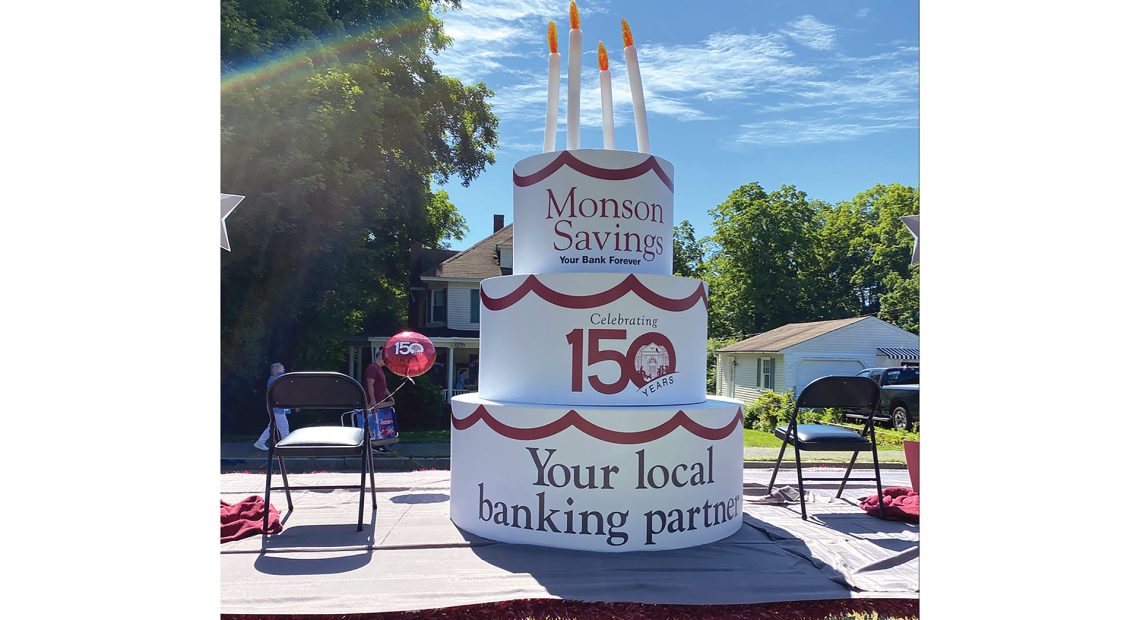
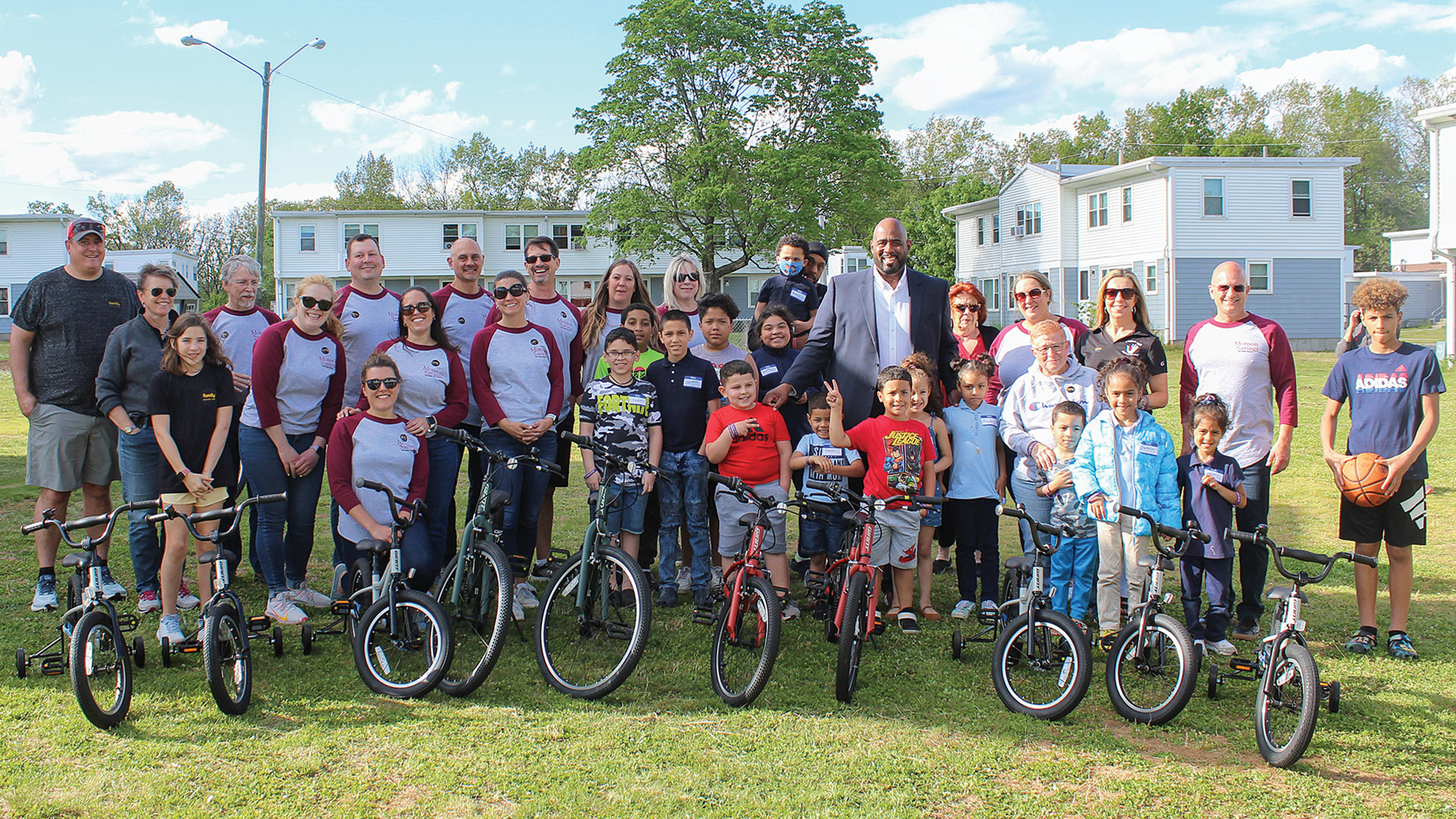
Monson Savings Bank’s birthday celebration

Monson Savings Bank’s birthday celebration

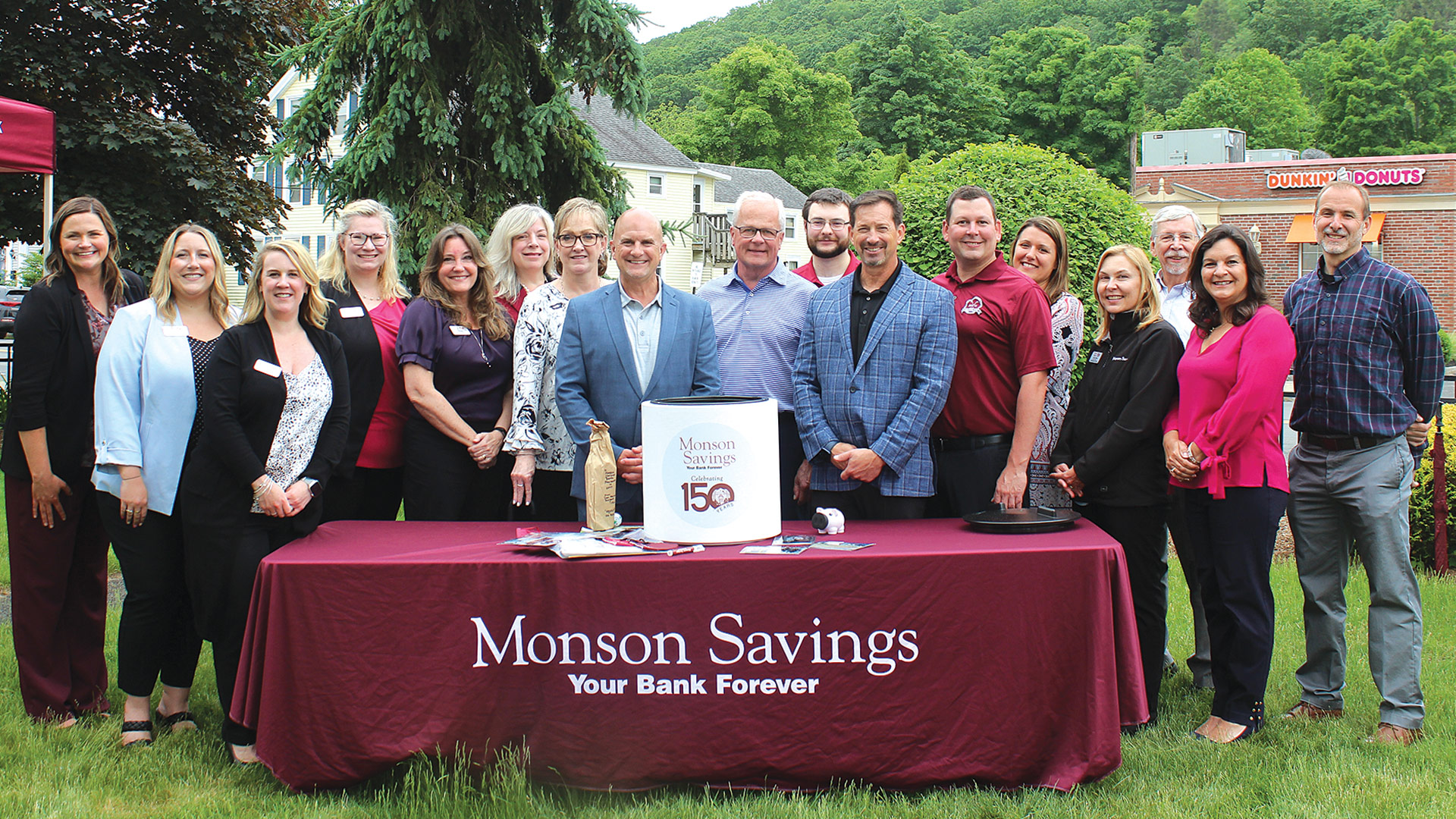
Monson Savings Bank has been commemorating its 150th birthday in many different ways, from a time capsule to assembling and donating $15,000 worth of bicycles to several area charities. Through all these efforts, the bank is celebrating its continuity and its commitment to a community that is now much larger then when it took its first deposit back in 1872.

Dan Moriarty called it a ‘trial run.’

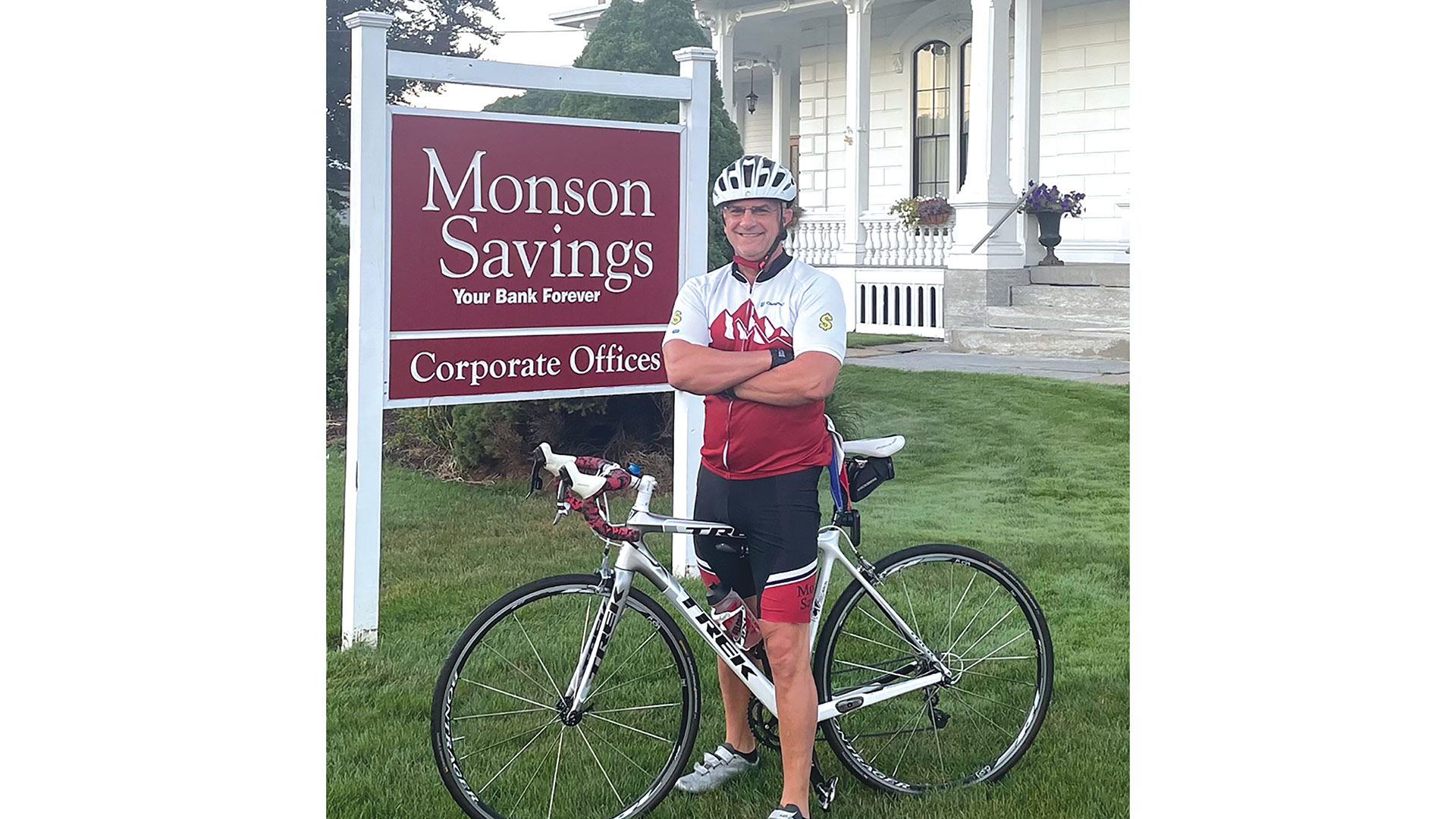
That’s how he referred to his 60-mile bike ride, which he also called the ‘Tour de Branches,’ on July 17, during which he visited all seven Monson Savings Bank (MSB) locations — five branches, the headquarters, and a loan center — on a trek that took him from Monson to East Longmeadow, with stops along the way in Ware, Wilbraham, and Hampden.

Moriarty, the bank’s president and CEO, said this was a tuneup for a ride two and a half times that length, a number that is significant because 150 is also the number of years the bank is celebrating this year, and the ride, still very much in the planning stages, has now become a poignant part of the celebration.

Dan Moriarty’s ‘Tour de Branches’

Dan Moriarty’s ‘Tour de Branches’ helped him prep for a 150-mile ride as part of Monson Savings Bank’s birthday celebration

“My goal is to raise money to give to a local charity … I’m thinking I could ask for per-mile pledges from friends, family, customers, and businesses,” Moriarty told BusinessWest, adding that the charity is still to be determined. “I’m guessing no other bank president belonging to a bank older than 100 years has done this.”

He’s probably on very safe ground with that statement. Not many bank presidents pedal such distances, although he’s certainly comfortable doing so having competed in several Ironman triathlons, where participants cycle 120 miles while also swimming 2.4 miles and running a full 26.2-mile marathon. And, more to his point, there simply aren’t many banks that can boast about being around for 100 years, let alone 150.

And that, more than anything else, is what MSB is celebrating this year, said Mike Rouette, executive vice president and chief operating officer, noting that this longevity, this stability — not only the same bank, but the same name since Ulysses S. Grant was patrolling the White House — is rare in this era of ongoing mergers and acquisitions.

bank employees buried a time capsule

As part of the 150th birthday celebration, bank employees buried a time capsule filled with a number of items reflective of 2022.

It is reflected, he said, in a borrowed slogan that the bank has adopted: ‘Never forget who you are and where you came from; it’s an important part of you that you will find strength and peace from.’

“It’s short, and it’s sweet, and it says a lot about us,” Rouette noted, adding that, while the bank has grown and expanded its presence within the region, it remains loyal to the principles on which it was founded in 1872.

Moriarty agreed.

“I think it takes a strong sense of loyalty to the legacy of the organization to hang on for that long,” he said. “As we know, in this area, some long-lasting institutions decided to go a different route and either merge or combine. It starts with the organization and how it feels the future can be laid out for a bank that’s been around a long time; if they feel they’re not going to make it, they look to a different situation or combination. So far, we’re not committed to looking in a different direction.”

Moving forward, he said the bank “has a lot to talk about” at its upcoming annual meeting and strategic planning sessions in September, from where, when, and how to expand geographically to anticipating where technology is going and how to maximize it to better serve customers.

“We had very big ideas, and I’m happy to say that we made most of them happen — and very successfully.”

“It’s all about delivery systems, customer service, where we’re physically going next, which means market analysis and possible branch expansion,” he explained. “We’re going to do it in a controlled and managed method.”


To a Higher Gear

While Moriarty is, indeed, a veteran of Ironman triathlons, it had been a while, seven years by his estimation, since he had taken part in one of those competitions. Thus, he admits to being a little sore after that 60-mile trial run.

“It was a reality check when I came off the bike that day,” he explained. “I said, ‘whoa … that was 60 miles; I have to do that twice plus another 30 miles.’ This will be a good challenge for me; there was about 3,500 feet of climbing for one loop — that’s like going up half of Mount Washington.”

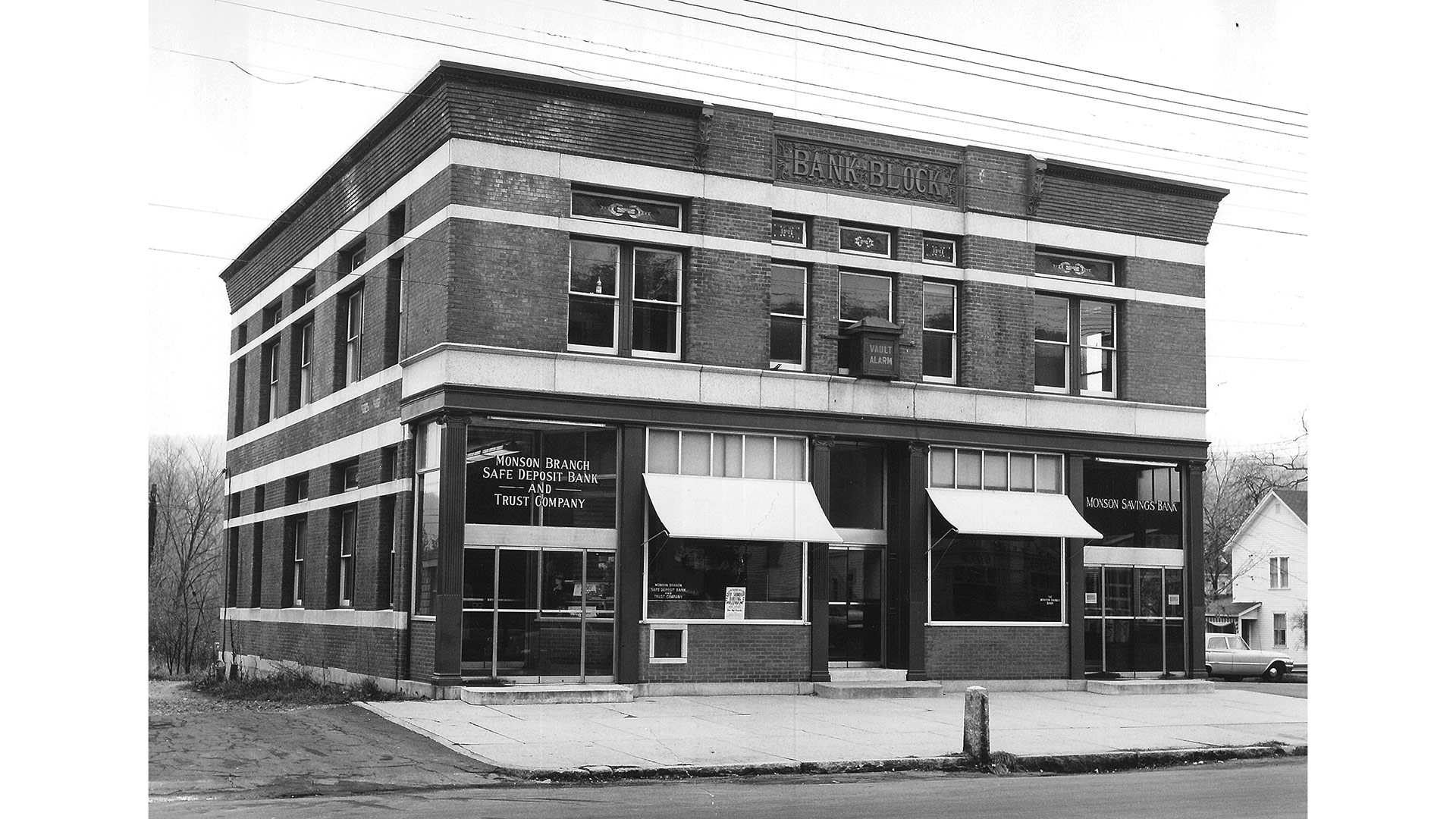
Monson Savings Ba

Monson Savings Bank has retained its original name and home city for 150 years, a rarity in the banking world.

He’s presently training with long-time friend and Ironman coach Kevin Moloney, who took the 60-mile ride with him. He’s also mapping out a course, one that will essentially take him on the 60-mile loop twice, with an additional loop, totaling 30 miles, tacked on.

As he said, it’s a work in progress when it comes to planning the ride, choosing a beneficiary, and filling in other details. And this ride will, as noted, will be a capstone — along with a formal gala in September to be attended by employees, board members, and plus-ones (total guest list of … you guessed it, 150) — to what has been a full year of activities marking the bank’s milestone.

Recapping them, Caitlin O’Connor, vice president and Marketing officer, said there has been a wide variety of events and programs, from the burying of a time capsule to the commissioning of a painting of the bank’s first president, Charles Merrick; from a traveling historical display featuring antique currency to monthly $150 cash prizes; from the placing of a marker where the original bank building stood at the corner of Main and State streets in Monson to several build-a-bike initiatives, whereby bank employees have assembled and donated $15,000 worth of bicycles to several nonprofits in the area, including I Found Light Against All Odds, Educare Springfield, and the South End Community Center.

“We had a ‘Cheers to 150 Years’ event starting on March 19 to really kick things off; that’s was an employee event and the starting point,” O’Connor told BusinessWest. “And from then on, it just grew and took on a life of its own. We had very big ideas, and I’m happy to say that we made most of them happen — and very successfully.”

Collectively, these events and programs have punctuated the bank’s place in the community — literally, as with the marker placed at the original bank location, but also figuratively, as a community bank that is very much involved in the cities and towns where it has locations, and the region as a whole, Rouette noted, adding that the 150th anniversary has been a great vehicle for making introductions, forging new relationships, and reinforcing existing ones.

“What a great way to walk into a nonprofit that you’re hoping to bring into the bank or a commercial or residential customer,” he said of the celebration and everything that it conveys about the bank, its history, its stability, and a future that will look very much like the present and the past.

“It’s an opportunity to give them your story — who you are, what you’re about, and your overall legacy,” he went on. “People want to do business with people that have been around, that are part of the community — not just here today and gone tomorrow, but institutions that are truly the cornerstone, the bedrock of the area.”


The Ride Stuff

That word ‘area’ has taken on new meaning for MSB since its last major anniversary — its 100th, in 1972 — and especially since 1998.

It was during that year that the bank opened its first location outside of Monson, a branch in Hampden. Five years later, a third branch was opened in Wilbraham, and new locations were added in Ware in 2103 and East Longmeadow in 2020. During that same memorable year, MSB’s Loan and Operations Center moved to a state-of-the-art facility in Wilbraham.

‘Build a Bike,’ where employees assemble bikes and donate them to area charities

The 150th celebration has featured a number of programs and events, including ‘Build a Bike,’ where employees assemble bikes and donate them to area charities, in this case, I Found Light Against All Odds.

With these moves, the bank is now serving a much broader area and becoming more involved in the region’s unofficial capital, Springfield, and serving a broader demographic mix of commercial and residential customers, said Dina Merwin, senior vice president and chief risk and senior compliance officer for the bank.

“We’ve well beyond the towns in which we have branches, and so we recognize that we want to reach all potential customers in our market,” she explained. “We recognize also our desire to include financial inclusion in reaching all potential customers in our market, whether that cuts across lines of income levels, race, ethnicity, and any other basis.

“Many of our recent events were focused in the Springfield area,” she went on, “while we continue to support and celebrate all the communities in which we are committed. We also recognize that there have been some demographic shifts in our market area in age and different types of population, so it’s important for us to recognize that and make sure we’re inclusive in all our efforts.”

While the area being served by the bank has changed, the name over the growing number of doors hasn’t, said Moriarty, noting that his institution, unlike many others, has chosen to keep the name of the community where it began as part of the brand, as well as that word ‘Savings.’

“I think the recession will be short and challenging, but I think Monson Savings and other banks are positioned well to weather, manage, and help customers through this period.”

“We’re going against the grain on that in some respects,” he noted. “Mike and I met with the board of directors during a strategic planning session, and we feel that the reputation that the bank has built the past 150 years does mean something, and we believe it’s recognizable in the community. We want to leverage that from a standpoint of legacy — Monson itself, where it all began — and then ‘Savings’ connoting security and trust, even though we feel we are a commercial player in the market.”

Indeed, while celebrating its 150th anniversary in all those ways mentioned above, MSB has also been carrying on with business, said Moriarty, noting that it has been a solid year in many respects, despite a sagging economy, with continued growth in commercial lending and, overall, a $30 million increase in total assets, bringing the bank near the $650 million mark.

“We’re working to strengthen existing relationships while also fostering new ones across the board, from individuals to businesses,” he said. “We’re trying to help them navigate where this challenging environment is going.”

On the commercial-lending side of the ledger, an already competitive landscape has become even more so as rates start to edge up, said Rouette, adding that many businesses are being more cautious amid general uncertainty about where the economy is headed and, overall, a decline in confidence.

“You’re seeing a bit of a slowdown, especially as people hear of the inflationary environment we’re in,” he went on. “People are pushing back potential projects that they have; maybe they were going to start in the third quarter or fourth quarter of this year, and now they’re saying, ‘let’s pump the brakes a little bit and possibly look at next year and see where we land from a rate standpoint and with the economic environment.’

“We had a great first and second quarter,” he went on. “But when you’re out talking to customers, you can hear the apprehension and cautious tone of voice that business owners are using right now.”

Moriarty concurred, and noted that a recession is now more likely than not, in his opinion, and this will add to the many challenges business owners and managers are currently facing.

“I think the recession will be short and challenging,” he said, “but I think Monson Savings and other banks are positioned well to weather, manage, and help customers through this period. And once the Fed gets control of inflation and the employment market evolves a little bit, we’ll see some improvement.”

Looking ahead, and toward creation of a new strategic three-year plan for the bank, Moriarty said a number of topics will be considered, including the need to be more “customer-centric versus product-centric,” as he put it.

“That means that we have to make sure we’re creating frictionless opportunities and delivery systems that make it easy for customers to manage their banking,” he explained. “That includes digital banking; we know we have cutting-edge products now, but we know things are going to change drastically in the next three to five years, so we have to make sure we’re positioned to give those offerings to our customers.

“Artificial intelligence will come more into play in the next three to five years,” he went on. “The usefulness or the quickness with which we can do data analysis of what our customers have and what they need will be important. Customers want to have things at their fingertips; they want to maximize and analyze their financial situation and be able to look forward and make good decisions.”

As for possible geographic expansion, Moriarty said there are many possibilities, and he’s not ready to talk about any of them.

He did say that the consensus among experts in the industry is that the recent pattern of consolidation within the sector will continue, leaving opportunities for smaller, community banks like Monson Savings.

“We feel that we benefit from other mergers and acquisitions because we’ve been around for so long, and we know that where there’s shakeup, there’s also opportunity,” he said. “We’re going to keep an open mind to that.”


Going the Last Mile

Returning to the subject of his planned bike ride, Moriarty joked that now that he’s started to talk about it, he’s pretty much committed to doing it.

He’s training two or three times a week with Moloney and looking at a number of options for which charity or charities (probably the latter) he will be fundraising for.

It’s been a while since he’s taken part in an Ironman competition or even a marathon — he’s run in several of those as well, including Boston a number of times. But he said it’s like … well, riding a bike. Not really, but close.

In any case, like the institution he now leads, he’s proven that he’s in it for the long haul — as in the very long haul: 150 miles for him, 150 years for the bank.

They’ve both put the pedal to the mettle.


George O’Brien can be reached at [email protected]

Education Special Coverage

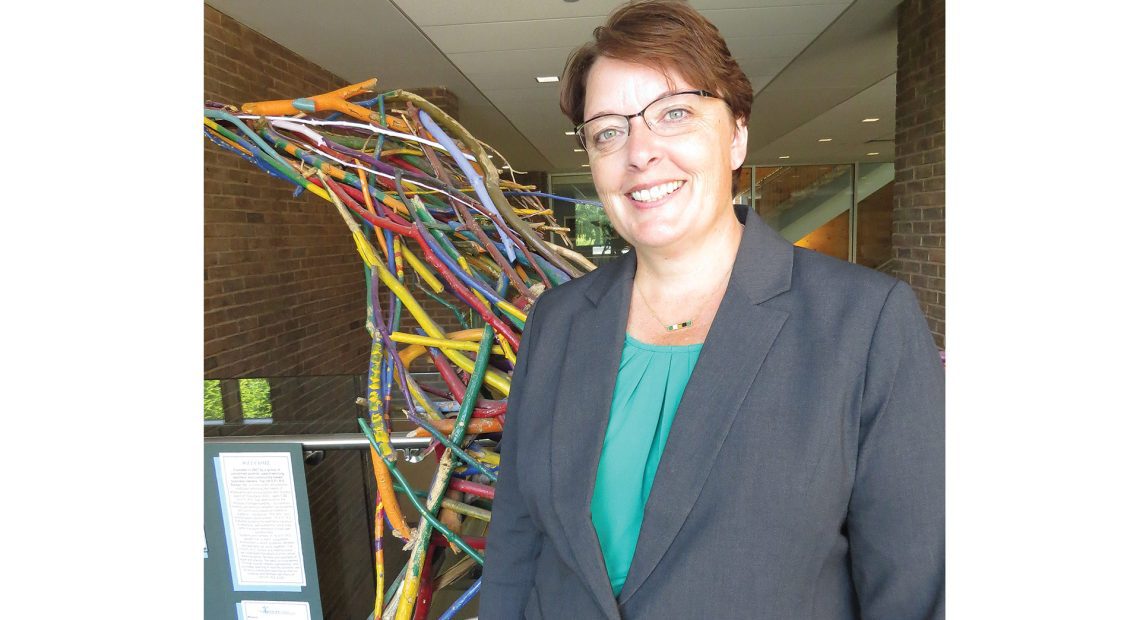
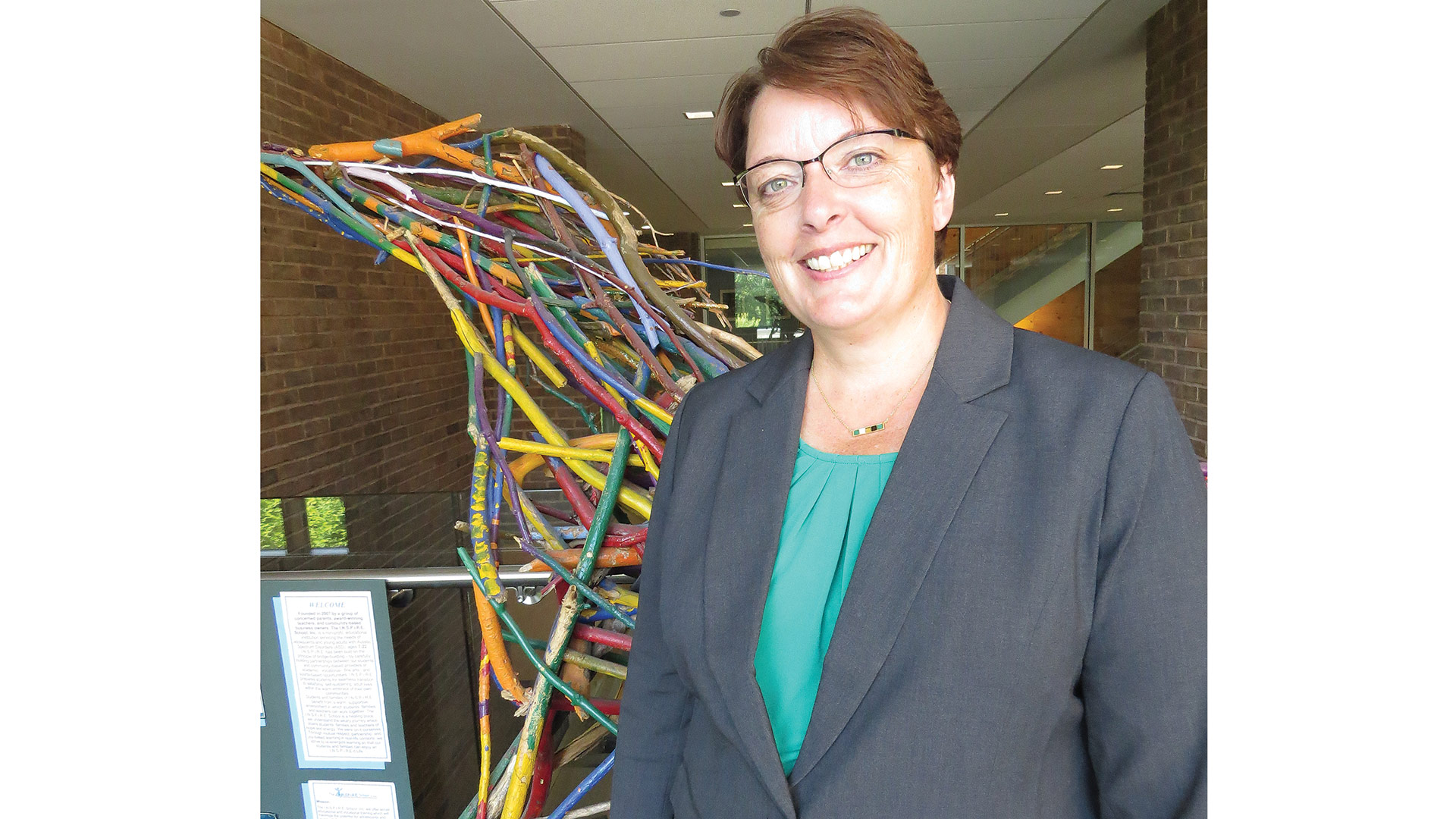
Grade Expectations

Michelle Schutt says that, while it may seem like Greenfield, Mass. is a long way from Twin Falls, Idaho (3,160 miles, to be exact), it’s really not.

At least when it comes to the issues and challenges facing the institutions that now comprise the top lines on her résumé — College of Southern Idaho (CSI), where she was vice president of Community and Learner Services, and Greenfield Community College (GCC), where she started just a few weeks ago as the school’s 11th president — and their overall missions.

“There are many similarities between these communities,” she explained. “There’s a high number of first-generation college students, people who are hungry for educational opportunities, definite need within the community … they are very much alike, which lends itself to the applicability of what I’ve done in the past and what I hope to do the future. I’m a big believer that education opens doors and changes family trees, and that we can all be educated.”

Schutt comes to GCC with a résumé that includes considerable work in the broad realms of student services and diversity, equity, and inclusion, and she said this will be one of the main focal points at GCC.

“If we’re going to recruit and retain students,” she told BusinessWest, “we’ve got to take into account their entire experience because often, it’s not the academic rigor or even the finances that keep them from succeeding; it’s the social-capital issues of how they’re maneuvering through life.

“COVID definitely exasperated the social needs of our students,” she went on. “But they were always there.”

Regarding diversity, she said this issue is often looked at through the lens of ethnic diversity — and that is certainly part of it. But there are many aspects to this matter, some more visible than others, and they must all be considered at institutions like GCC.

“If we’re going to recruit and retain students, we’ve got to take into account their entire experience because often, it’s not the academic rigor or even the finances that keep them from succeeding; it’s the social-capital issues of how they’re maneuvering through life.”

“It’s a little cliché, but this is a bit of an iceberg topic,” she explained. “There are the physical things that we notice about each other, and then there’s the 90% of the iceberg that’s below the water line; you really need to get to know someone before you can fully understand how they, too, are diverse.”

Schutt told BusinessWest that, after more than 20 years of work in higher-education administration — work that had taken her from St. Cloud, Minn. to Hanover, Ind., Laramie, Wyo., and then Idaho, she considered herself ready to be a college president, and began looking to apply for such positions.

This recognition didn’t come overnight, she said, and it was actually several years after the then-president of CSI asked her to consider that position before she considered herself truly qualified and ready to take the helm at a campus.

She said she looked at a few opportunities that presented themselves — there have been a number of retirements and shifts in leadership in higher education (as in other sectors) over the past few years — but soon focused her attention on GCC.

Schutt said the school — which this year celebrates its 60th anniversary — and its mission, the area it serves, the team in place, and the institution’s prospects for future growth and evolution all appealed to her.

Her immediate goals are to become acquainted with the school, its staff and faculty, as well as Greenfield and the broader area served by the college.

Looking longer-term, she said she wants to properly position GCC for a future where enrollment will be even more of a challenge than it is today, and where students’ ‘needs,’ a broad term to be sure, will only grow.

“Nationally, we’re heading for an enrollment cliff,” she said, adding that 2025 is the year when already-declining numbers are expected to reach a new and more ominous level. “We have to ensure that we’re offering what people need and what people are looking for; we have to take a look at what we’re doing in workforce and in community education and what we’re doing with credit-based courses, and align those with good outcomes.”


Course of Action

As noted, Schutt brings to GCC a résumé dominated by work in student services, with a focus on diversity and inclusion.

At the College of Southern Idaho, where she started in 2015, she held several positions, starting with associate vice president of Student Services, then vice president of that same department, and, starting just last year, vice president of Community and Learner Services.

“If they’re stressed about some sort of insecurity or some issue related to childcare or transportation, it’s really difficult to focus on calculus. That’s where student affairs and student services come in — to educate the entire student.”

She lists a number of accomplishments, including a sharp rise in enrollment for the 2020-21 school year; steady increases in Hispanic student enrollment, from 17.8% in 2015-16 to 26.3% in 2109-20; and improvement in the graduation rate from 20% in 2016 to 34% in 2020.

But she believes many of her most significant gains came in the realm of diversity, equity, and inclusion.

Indeed, Schutt noted that, in helping CSI become a Hispanic Serving Institution (HIS), she recruited and hired bilingual staff members for each area of Student Services, spearheaded CSI’s first HIS Week, lobbied the board of trustees for gender-neutral bathrooms on campus, developed and offered a program called Parent College in both English and Spanish, established the Gay-Straight Alliance student group, and advocated for and hired the school’s first full-time veterans’ coordinator.

Prior to CSI, she served as director of Student Affairs at Penn State University’s campus in Scranton. As a member of the school’s senior administrative leadership team, she was engaged in strategic planning, policy development, and problem solving.

She said that she gravitated toward work in student services (she also teaches) because of its importance to the success of not only students but the institution in question. Summing it up, she said such work falls into the realm of student success and making sure they can get on — and stay on — a path to achieving their goals, whatever they may be.

“It’s about ensuring that their housing and food and social integration and mental health and physical health are all taken into account as it relates to their journey,” she explained, “because all of those things play a factor in their academic success.

“If they’re stressed about some sort of insecurity or some issue related to childcare or transportation, it’s really difficult to focus on calculus,” she went on. “That’s where student affairs and student services come in — to educate the entire student.”

When asked what she liked about this aspect of higher education, she said there are many rewards that come with it, especially those derived from helping students clear some of the many hurdles to success.

“I love that we’re able to help each and every student achieve their goals, and that we are looking at them as individuals, as humans, and not another person in a seat, and that we’re educating the whole person.”

“I love that we’re able to help each and every student achieve their goals, and that we are looking at them as individuals, as humans, and not another person in a seat, and that we’re educating the whole person.”

Looking to take her career in higher education to a higher plane, Schutt looked at several job opportunities, but eventually focused on the presidency at GCC because of what she considered a very solid match.

Compatibility was revealed the initial interview, conducted via Zoom, and then reinforced at a day-long, in-person session, during which she met and took questions from several constituencies, including faculty, staff, students, and other stakeholders.

“There is a shared set of values that focuses on students and recognizes the importance of community integration for a community college,” she said when asked what she came away with from that day’s experiences.

“When I came to campus, it was validating to meet people who truly care about students,” she went on. “And that was conveyed in every group that I met with; that was conveyed by the students — that they felt they were cared for. And those things are really important to me; you can’t make that up. And the end of the day, if you don’t care about students, the students know that.”


School of Thought

As noted, Schutt will bring a deep focus on the importance of equity, diversity, and inclusion to her new role, noting that, while she has always had an appreciation for these matters, it reached a new and much higher level through her experiences teaching English and social justice.

“I was teaching in the evening, when we had the greatest diversity of students,” she explained. “And to understand the general college-student experience was really eye-opening to me and made me a better administrator.

“That’s because, as a vice president, you see the highly successful students, or the students who were in great despair, who may not persist no matter how we helped them,” she went on. “To see the 40-year-old mom coming back to school, the 16-year-old dual-credit student, the student with limited English acquisition, the working dad … all those people coming together in one class really opened my eyes to the immense diversity in who we educate in community college.”

At CSI, Schutt said, it became a priority for the school to become a Hispanic Serving Institution, and the many steps taken to achieve that status became learning experiences on many levels. And, ultimately, they helped enable the school to better serve all its students.

“We worked really hard to make sure we were understanding the Hispanic student experience and that we were ensuring equitable outcomes and inclusionary practices,” she explained. “There were always critics who would say, ‘you’re focused on Hispanic students only.’ Well … no, we were making all our practices and policies better for all of our students.

“We worked very hard to get designation, but along the way, we also worked on broadening our understanding and awareness of all students,” she went on. “I lobbied in front of the board of trustees for more gender-neutral bathrooms and started a food bank and made sure we had a full-time veterans’ coordinator. Those are things that improve opportunities for all our students.

“When we’re taking about equity, we’re making sure that everyone has the same opportunity,” she continued. “But how they get there may look very different, and the inclusion component of it is celebrating those differences, and there’s a lot of work to be done — in the field, in society — and Greenfield isn’t any different.”

Elaborating, she said it’s one of her goals to soon have an administrator focused specifically on diversity, equity, and inclusion, a broad realm that, as she said, goes beyond ethnic diversity and to those matters below the tip of the iceberg.

“DEI here might look at educational attainment, it might look at poverty and wealth inequities, it may include LGBTQ identities — there’s diversity everywhere,” she said. “We can’t say, ‘we all look the same here in Greenfield or in the Pioneer Valley, so there is no diversity.’ Diversity is everywhere; it just may not be as obvious.”


Class Act

Looking ahead, Schutt said she’s looking forward to filling her calendar with meetings with local officials and members of the business community as she works to gain a broader understanding of the community served by the college.

She’s also looking forward to the fall, and a projected increase in enrollment as the school looks to fully recover from the pandemic and its many side effects, as well as the coming year, an important milestone for GCC as it celebrates 60 years of growth and change.

Mostly, though, she’s looking forward to continuing what has become, in many respects, her life’s work in student services and diversity, equity, and inclusion.

As she said, if schools like GCC are to successfully recruit and retain students, they must take into account their entire experience. And this will be the focus of her efforts.


George O’Brien can be reached at [email protected]

Innovation and Startups Special Coverage

Going with the Flow

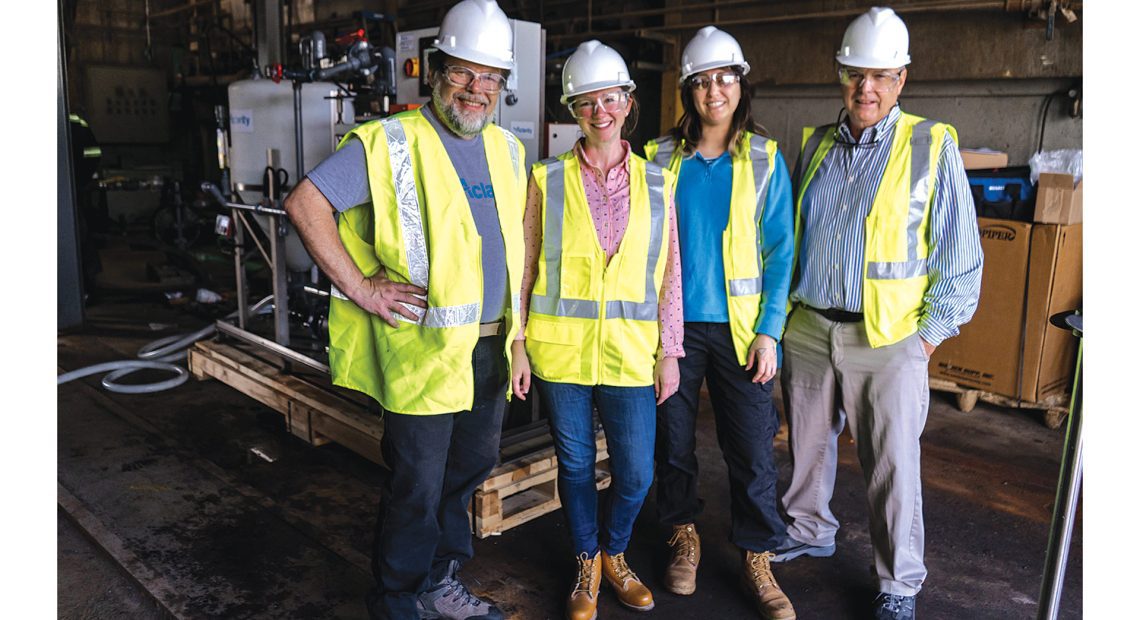
customer site in Detroit

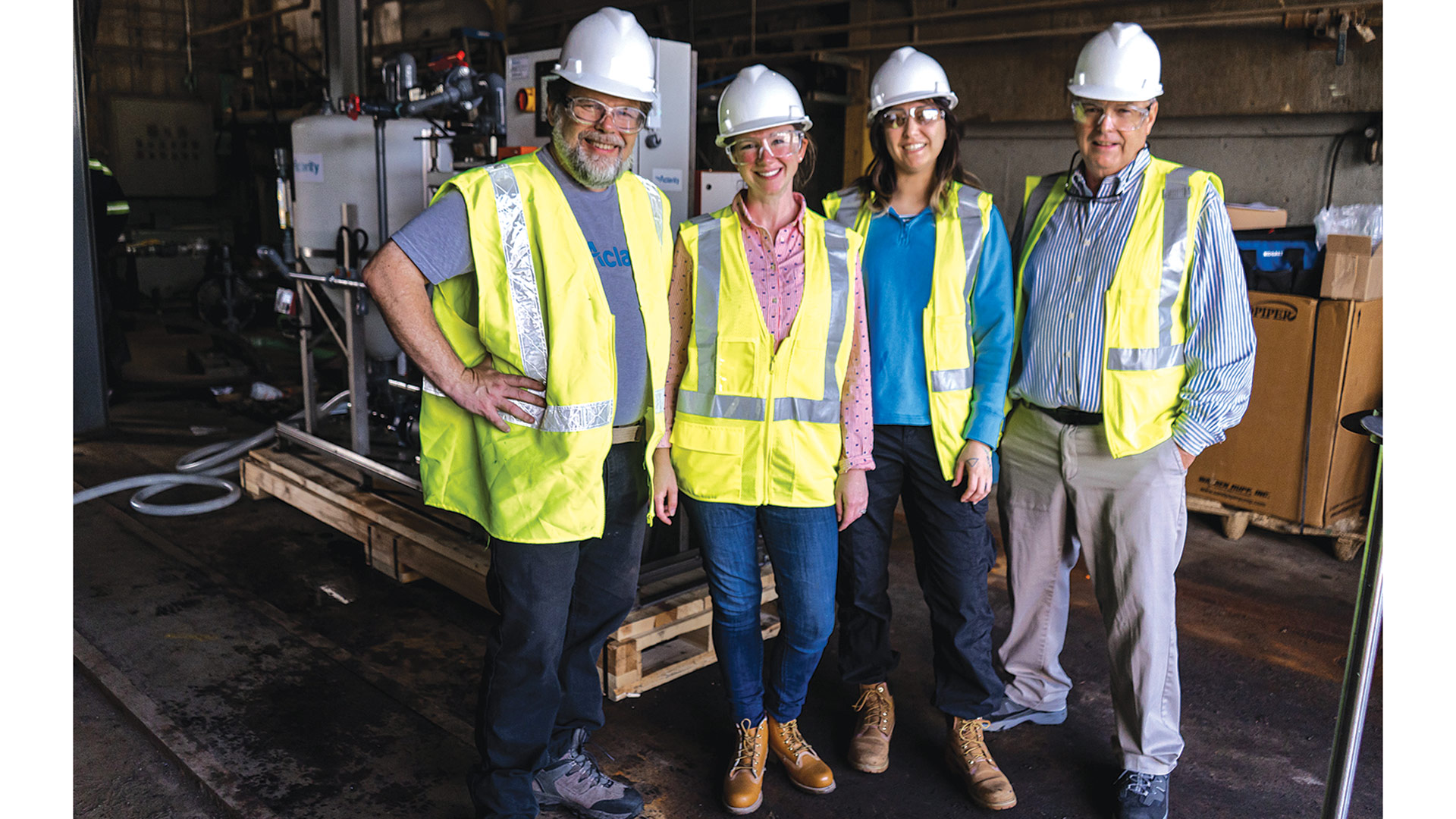
From left, Aclarity’s Chief Science Officer Orren Schneider, CEO Julie Bliss Mullen, Application Engineer Liz Christ, and Senior Operations Engineer Chris Hull at a customer site in Detroit.

They’re called per- and polyfluoroalkyl substances. But they’re known by a much simpler, and more troubling, moniker.

“They’re nicknamed the ‘forever chemicals’ because they don’t break down in nature,” said Orren Schneider, chief science officer at the Hadley-based startup known as Aclarity. “The bonds in them are so strong that essentially nothing natural breaks them down. Maybe if you hit them with lightning, they’ll break down.”

Lightning isn’t exactly a feasible solution. But Aclarity — which has made waves (no pun intended) in the water industry with a its novel electrochemical approach to combating pollutants — offers a better one.

“We can actually destroy these compounds and break them into their component parts,” Schneider told BusinessWest. “There’s a big focus at the state level — and also starting at the federal level — on how to get these compounds out of the environment.

“The reason they’re there is they’re incredibly useful in a lot of different consumer and industrial products,” he explained. “Scotchgard, for instance. They’re also used in firefighting foam to help put out fires. They’re used on pizza boxes and Chinese food containers. So they’re very useful, and those same properties that make them useful make them difficult to break down. Right now, our main focus is, how do we break these down?”

Several years ago, BusinessWest told the early part of the Aclarity story, of how CEO Julie Bliss Mullen, as part of her PhD research, discovered an electrochemical technology that could treat water by passing a small electric current through it to destroy contaminants.

“They’re nicknamed the ‘forever chemicals’ because they don’t break down in nature. The bonds in them are so strong that essentially nothing natural breaks them down.”


It immediately stood out from other solutions on the market due to both the lack of resulting waste products and its versatility. So in 2017, she co-founded Aclarity, which won the top award at the UMass Innovation Challenge, claiming $26,000 in seed money to help jump-start the company.

Julie Bliss Mullen co-founded Aclarity to sustainably and cost-effectively clean the world’s most challenging waters.

Julie Bliss Mullen co-founded Aclarity to sustainably and cost-effectively clean the world’s most challenging waters.

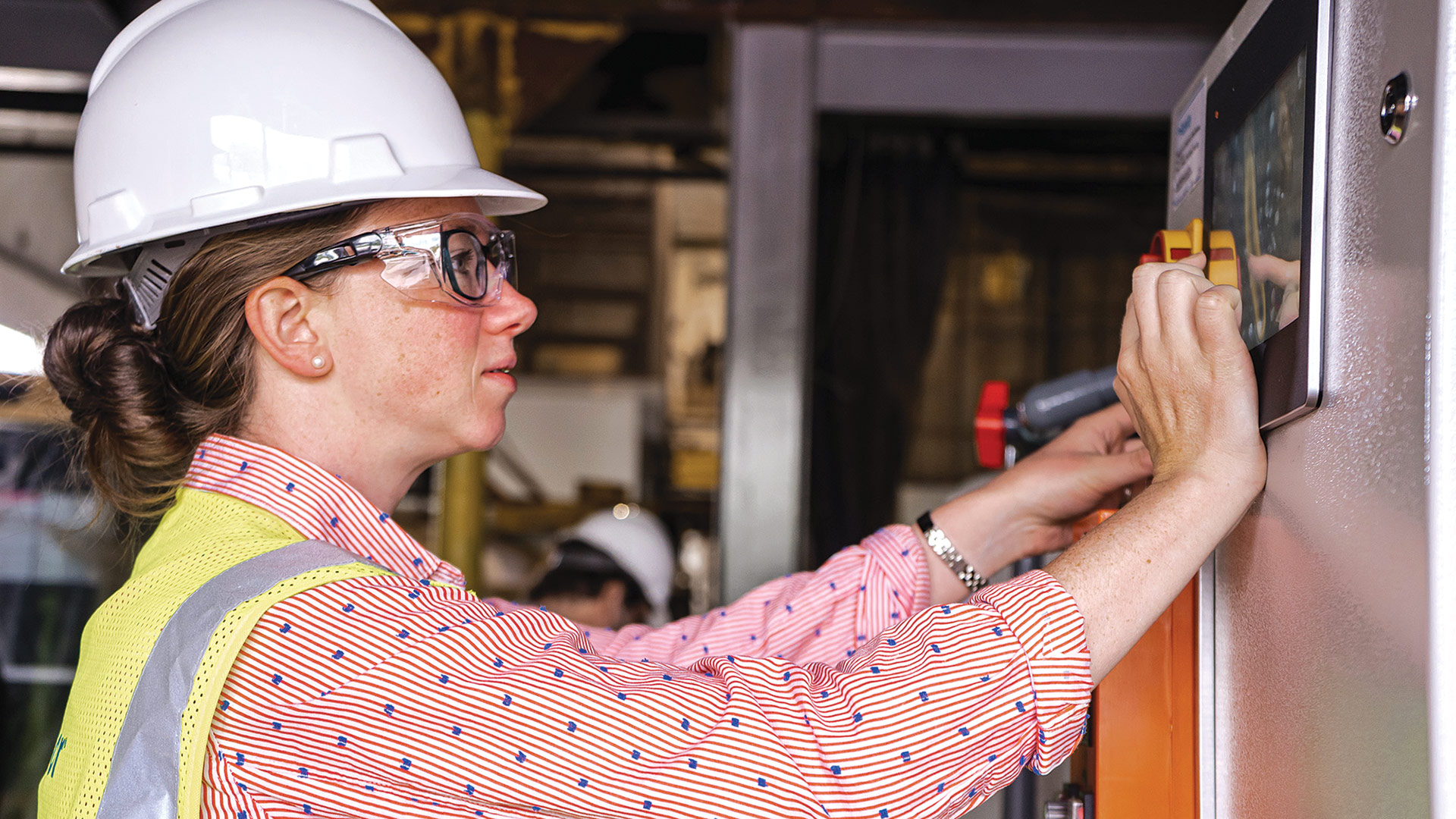
Essentially, she explains, electricity is applied to an anode and cathode, water flows through the reactor, and contaminants are destroyed by strong oxidants such as free electrons (which break the PFAS bonds), hydroxyl radicals, ozone, and chlorine that are generated inside of the Aclarity reactor. The result is harmless byproducts — essentially water that is free of PFAS and other harmful contaminants.

“Think about a battery,” Schneider said. “You have electrodes in there, and it takes chemical energy and turns it into electrical energy. We do the opposite. We put electrical current into the electrodes, and chemistry occurs. What we’re trying to do is break down a lot of different chemicals that are found in water. And most of the ones we’re focused on right now are PFAS.”

Aclarity isn’t the only company trying to develop a workable and scalable solution for this type of water pollution, he added. “The first company that can commercialize a product that can destroy these compounds is going to be a big winner. And we think we are in the lead there. We know the technology works, and now we’re just figuring out how to make a product that we can sell to do it.”


Water, Water Everywhere

Schneider said the original product was just a small reactor that could handle a couple of gallons a minute, which proved out the technology.

“We used that with potential customers to run samples, run water through it, to show them what we can do,” he said, adding that Aclarity has recently built the next stage, scaling up from a single electrode to 10 electrodes in a reactor, and that is being used to further show potential customers that the system works.

“We’re working right now with landfills; we’re going to be starting a project in Warren at the end of August with one of these pilot units,” he noted. “Landfill leachate looks like Guinness beer when it comes out — dirty, dark brown. We turn it into something that looks a little more like Coors Light. And we destroy a lot of the stuff that’s in there, organic compounds, things like ammonia and PFAS. Landfill leachate is an ideal application for us because it’s really high concentration and relatively low volumes. That really favors our economics.”

Aclarity is also starting a pilot system in North Carolina at a water-treatment plant, working with an engineering firm there. “The levels of PFAS found in drinking water are generally pretty low, and the existing technologies work well to remove them,” Schneider explained, but not destroy them. So after small volumes of PFAS are separated from the water using membranes and a technology called foam fractionation, Aclarity will be on site trying to destroy those compounds.

“The first company that can commercialize a product that can destroy these compounds is going to be a big winner. And we think we are in the lead there.”

“You probably won’t see us bolted onto the end of a water treatment plant,” Schneider said. “In New York City, their small system treats 290 million gallons a day. Their large system, over a billion gallons. We just can’t treat that much. But this particular plant treats about 20 million gallons of water a day, and when you concentrate it all the way through foam fractionation, you might be down to 20,000 gallons, and at that level, that’s something we can treat. So it’s a combination of concentration technologies followed by destructive technologies.”

Meanwhile, in Northern Italy, Aclarity is working with a textile plant, treating PFAS at the factory rather than letting it get out to the enviroment and having to worry about treating it there, Schneider explained.

“One other area we’re looking at is Department of Defense bases and firefighting academies. A lot of these compounds are found in firefighting foam. They’ll spray it down, and it keeps oxygen away and stands up to high heat, but then you have this lagoon of water that’s highly contaminated. So we’re discussing building a mobile treatment system where we can come in, treat the lagoon for whatever amount of time is needed, then move on to the next site.”

Orren Schneider (left) brought decades of experience

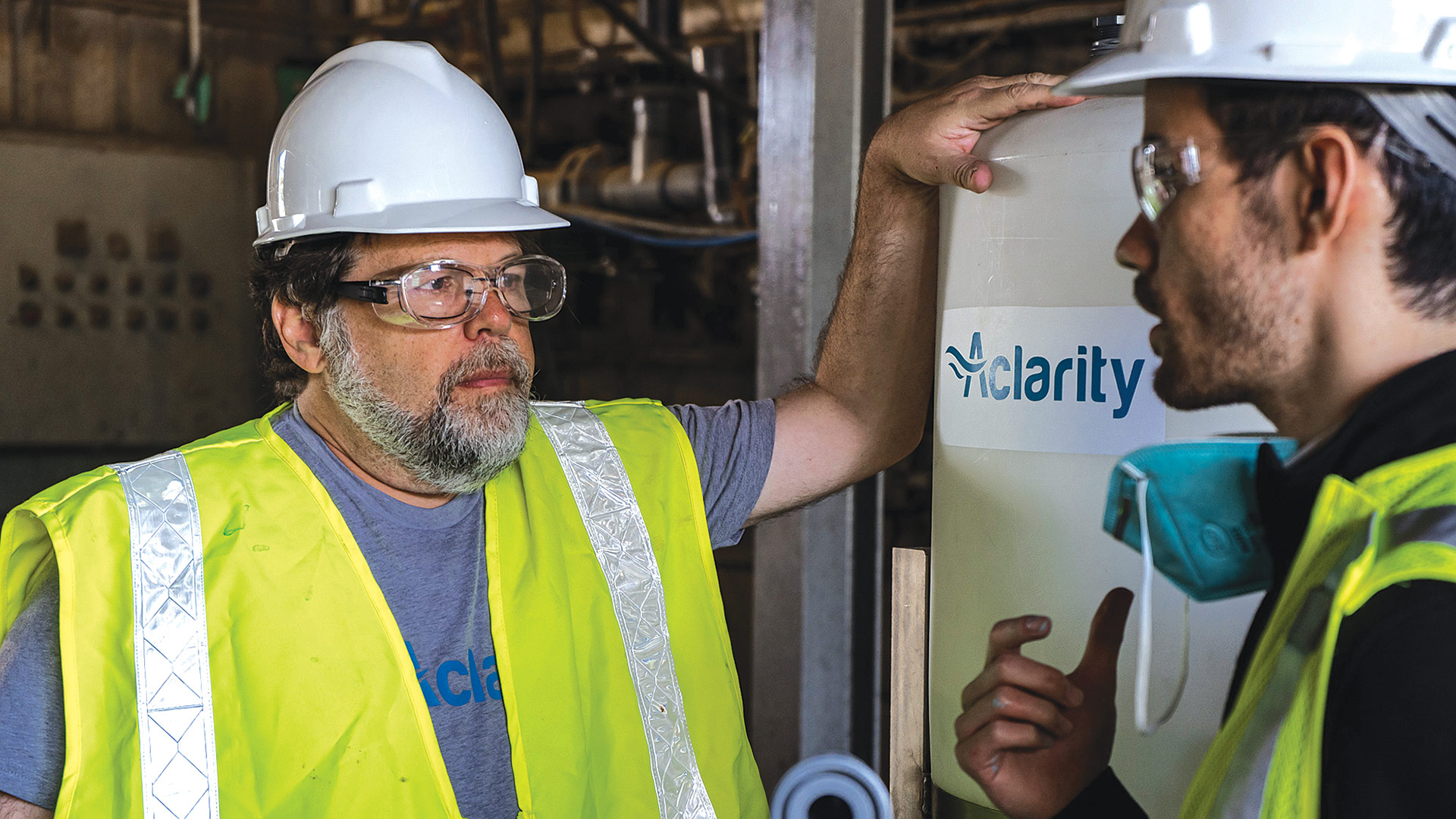
Intrigued by the company’s promise, Orren Schneider (left) brought decades of experience in the water industry to Aclarity.

Schneider said Aclarity was looking for someone like him who knows the water industry — he’s been working in it for 35 years — and understands these technologies. And he was intrigued by the potential of Bliss Mullen’s startup.

“There are other emerging destructive technologies out there, but, putting on my scientific hat, my engineer’s hat, I have doubts about some of them, how well they’ll scale up or how much energy they’ll use or the materials that are required. I follow trends of new technologies that come out, and I think electrochemical is the next one that’s really going to make a change and emerge from the lab into something that becomes commercially viable.

“That’s one of the reasons why I joined Aclarity. None of our existing technologies really deal with PFAS well,” he went on. “We can get it out of the water, but we just transfer it to something else, whether it’s a more concentrated water stream or granular activated carbon or ion exchange, but then, what do we do with it? It’s still there. Electrochemistry has promise; we’re showing that we can actually destroy these compounds and render them harmless.”


Listen Up

That result, on a broad scale, would be life-changing for many, Schneider said. And it starts with an increasingly fine ability to detect pollution in water.

“I use this line a lot: one of the best things I learned in high school was that the number-one cause of pollution is analytical equipment. What that means is, if we can’t measure something, we don’t know it’s there. Our measurement technologies are equivalent to a blade of grass in Central Park. It’s that fine; we can find so many things, and we’re finding adverse health outcomes from these compounds.

“The goal is not just removing them, but being able to destroy them to very low levels,” he went on. “We can destroy things down to the limits of detection that we have now, and there’s no scientific reason to think that we can’t go even lower. It’s just a matter of how much money it’s going to cost and how much electricity it’s going to use. But the science is there.”

He’s excited about the flexibility and adaptability of Aclarity’s process.

“While we are focused on PFAS now, there’s a whole market out there that we can potentially deal with. Also, in things like landfills, because we can treat multiple contaminants at the same time, that just makes us more cost-effective. So rather than have technology A for this compound, technology B for that, we can treat both of those at the same time. So, hopefully, we can be not just a solution, but a cost-effective and the go-to solution.”

After all, Schneider said, until PFAS are out of the manufacturing stream and the environment — and that day seems a ways off, to say the least — there’s going to be a need for technologies like Aclarity. “But there’s always going to be something else. The beauty our technology is that it works for so many different things.”

The key to advancing ideas like this and making them marketable is cooperation between government and the private sector, he added.

“We’re a small company. We want to be the industry leader, but it’s going to take a lot of different people, different technologies, different ideas to figure our way out of this problem. We need government support to help drive this; if there aren’t regulations, people aren’t going to pay to treat things they don’t have to.”

His advice to leaders everywhere?

“Listen to the public. This is one of the few environmental issues where it’s not just caught up in the science; the public is aware and want things done. So it’s going to take cooperation between the public, private industry, and government, all coming together to help solve this big issue.

“We’re not a solution looking for a problem,” Schneider added. “We want to be part of solving that problem. I’m a big believer in the public-health part of this as well as the environmental part. I wouldn’t be doing it otherwise.” u


Joseph Bednar can be reached at

[email protected]
 

Community Spotlight Special Coverage

Community Spotlight

By Mark Morris

Mayor Nicole LaChapelle

Mayor Nicole LaChapelle’s priorities have included housing, business development, infrastructure, schools, and the emerging cannabis sector.


When people ask Easthampton Mayor Nicole LaChapelle to list her priorities for the city, her answer is always, “housing, housing, housing, and housing.”

And there’s a reason for that — actually, several of them, which LaChapelle summed up in this poignant way: “Easthampton is the cool-kid city.”

By that, she meant that this former mill town has become a destination for businesses, but also a very desirable place to live because of its arts, culture, attractive neighborhoods, and recreational spaces. That mix has created a need for housing — a major need.

“If we don’t put a huge focus on housing, and if we don’t get housing units done by 2025, our city will be in trouble,” said the mayor, adding that her administration has, indeed, focused significantly on this issue, and it has yielded results, such as the One Ferry project, an initiative that is creating not only new housing but retail and office space as well.

Several old mill buildings on Ferry Street are undergoing a massive effort converting the former factories there to condominiums and rental housing, as well as some retail and office space.

So far, the renovation work has focused on three buildings: 3 Ferry St. was finished in 2020, and it is now fully occupied with residents and several businesses. Meanwhile, 5 Ferry St. consists mainly of apartments with condominiums on the top floor; it is expected to open later this year.

“All but two condos are sold at 5 Ferry St., and the developer reported a 65% lease rate,” LaChapelle said, adding that “70% occupancy is usually the goal for a new development, so they are right there.”

Work has also begun on Building 7, scheduled to open in 2024. When complete, the three buildings will add nearly 150 units of housing to Easthampton.

“The Ferry Street project is what we hoped it would be, a spark for community development and neighborhood pride,” the mayor said. “Watching the progress at the site has been a real confidence booster for the city.”

While housing is indeed a priority, it is just one of many priorities in a community that has seen a great deal of change, evolution, and growth over the past quarter-century, and is poised for more of all the above.

“COVID was a huge challenge for businesses. This site allows them to respond to those challenges and to build more resiliency for changes in the future.”

Other focal points for LaChapelle and her administration include new business development, business-sector recovery from COVID, infrastructure, schools, growth of the city’s emerging cannabis sector, and more, and the mayor reports progress on all these fronts, especially those involving assistance and mentoring to small businesses.

Many are included in a broad initiative called Blueprint Easthampton. Designed to promote entrepreneurial innovation, the initiative also emphasizes partnerships with key constituents in the community such as nonprofit organizations and educational institutions.

Keith Woodruff

Keith Woodruff was one of the first local business owners to open an online store on the Shop Where I Live site.

LaChapelle said Blueprint Easthampton is like an octopus in the way it keeps reaching out to different areas. One notable partnership is with the Coalition for Community Empowerment, a collaboration with the Massachusetts LGBT Chamber of Commerce, the Black Economic Council of Massachusetts, and Lawyers for Civil Rights. They have embarked on a statewide program to provide small-business technical assistance and open paths to entrepreneurs from at-risk populations. LaChapelle said at least a dozen businesses in Easthampton have benefited in some way from this effort.

“At a deeper level, three businesses have received grants, and two others have signed up for extensive business coaching,” LaChapelle said, explaining that startup businesses often have to realign their ideas to serve the market that exists.

“In one case, a baker had a business plan based on a delivery and storefront model,” she noted. “After coaching from the coalition, she realized her idea would work better without the storefront.”

For this, the latest installment of its Community Spotlight series, BusinessWest takes an in-depth look at Easthampton, the many forms of progress being seen there, and what’s next for the ‘cool-kid city.’


‘Shop Where I Live’

In January, LaChapelle began her third term as mayor. Unlike her previous terms, which each lasted two years, the mayor’s term now runs four years. It’s a change that makes long-term planning easier on many fronts.

“With a four-year term, the mayor isn’t distracted with campaigning after only 18 months,” she said. “The longer term also makes it easier to manage the timing of grant cycles.”

The longer term is beneficial when coping with pressing issues, said LaChapelle, adding, again, that there are many of them, especially in a community that has become home to small businesses across many sectors, from technology to the arts to hospitality, that were negatively impacted by the pandemic.

In partnership with the Greater Easthampton Chamber of Commerce, the city secured a grant from the state’s Rapid Recovery Plan, which was set up to address the economic impact COVID-19 had on cities and towns. The grant resulted in an online retail effort run by the chamber known as easthampton.shopwhereilive.com.

Moe Belliveau, executive director of the chamber, explained that the Shop Where I Live program is an Amazon-type experience involving local businesses.

“Many businesses don’t have the resources or the time to set up online shopping, so this site makes that possible,” she said.

Consumers can choose offerings from several local businesses, put them all into an online shopping cart, and make one payment. Because the site is supported by a state grant, it’s open to all Easthampton businesses whether they belong to the chamber or not.

Moe Belliveau

Moe Belliveau said Shop Where I Live will help businesses respond to economic challenges both now and in the future.

“For members, this will be an ongoing benefit,” Belliveau said. “For non-members, the first year is free, then they can choose to join the chamber or pay a service fee to remain on the site.”

Each merchant can offer up to 100 products in their online store, said Belliveau, adding that Shop Where I Live is not restricted to retail operations. Services such as health clubs, web developers, and insurance agents can be found there, too.

“COVID was a huge challenge for businesses,” Belliveau said. “This site allows them to respond to those challenges and to build more resiliency for changes in the future.”

KW Home, an interior-design firm and retail showroom, was one of the first businesses to open an online store on Shop Where I Live. Owner Keith Woodruff expects the site to benefit his business going forward.

“For the last two years I’ve had to operate by appointment only with limited hours,” he explained. “Many consumers are still concerned about shopping in person, so having the online store will be a big help.”

KW Home is an example of a business that provides a service and sells products. Most of Woodruff’s work is driven by working with clients to present design plans specific to their homes and then providing the furniture, lighting fixtures, and other items to execute the plan.

He said 80% of what he sells are special orders for clients. Most items run the gamut from a specific type of fabric for a chair or couch to custom window treatments. He also carries items in limited fabric offerings that are more easily available and work well with the online store.

“In order to make the launch date of June 30, I put only a few items on the site,” Woodruff said. “As this rolls out, I plan to add smaller accessories on there to give people more choices.”


Work in Progress

One of the many disruptions COVID caused was the nature of where people work. Even now, some people have returned to their worksites, some continue to work from home, while others have left their jobs to pursue the business idea they’d always wanted to try.

Amid these changing dynamics, Belliveau conducted research on how best to use the space at the chamber office on Union Street. The result is a new co-work space called Work Hub on Union.

“We’re looking to address folks who still work from home but need a temporary space, as well as entrepreneurs who are just starting out but are not yet ready for a permanent space,” said Belliveau, adding that the chamber will remain on site, so those in Work Hub can benefit from its support.

“We are designing this so the furniture can be moved around to create educational space,” she explained. “We’ll be able to run things like development programs and entrepreneurial support programs. In short, it’s a much more productive use of the space.”

While inclusivity is a big part of Blueprint Easthampton, so is accessibility. Working with two land trusts, the city recently bought 22 acres of land near Mount Tom that connect to state-owned property. The purchase was intended to save the land from development. Instead, that area will soon have an ADA-accessible trailhead that goes up to the summit of the mountain.

“I ran on improving accessibility for everyone, so this project makes me very proud,” LaChapelle said.

Riverside Industries was a partner in the trail project. Located in the center of Easthampton, Riverside’s mission is “empowering people of all abilities to help them achieve their highest potential and live their best lives.” It is best-known for placing people with intellectual and developmental disabilities into employment throughout Hampshire, Hampden, and Franklin counties.

Lynn Ostrowski Ireland, president and CEO of Riverside, said anyone can use the new trail because it can accommodate manual or electric wheelchairs, and the ascent along the trail is no greater than the inclines in Riverside’s Cottage Street headquarters.

As someone who has previewed the trail, Ostrowski Ireland reported the summit view is “beyond spectacular.”

“There are plenty of places along the trail to pull off and take a break or just to stop and enjoy the view along the way,” she said. “We will definitely bring clients there and let their families know about it, too. It’s really something everyone can enjoy.”

Natural surroundings like Mount Tom are part of the attraction for new students at Williston Northampton School. The private college-prep school approaches the fall with a full enrollment. Ann Hallock, director of communications at Williston, said 495 students will be on campus, hailing from all over the U.S. as well as 30 different countries.

“We consider our location in Easthampton to be a unique selling point of the school,” Hallock said. “Students love the location, especially being able to walk into town for restaurants or visit shops or go for hikes on Mount Tom. Parents like all that too when they come to visit their kids.”

Williston students also get involved with several local organizations, such as the Easthampton Community Center and the Emily Williston Library.

When classes begin in the fall, the new Mountain View School, housing students in grades K-8, will be fully open to all its students. As the finishing touches were added this year, middle-school students moved in during the spring. Now that construction is complete, the elementary students will begin their classes at Mountain View in the fall.

With the new school project done, LaChapelle has shifted her attention to finding a reuse for the Maple Street, Center, and Pepin schools, the three buildings replaced by Mountain View. Later this summer, the mayor will issue a request for proposals that she hopes will attract the attention of developers who are planning their next construction season.

Naturally, the mayor would like to see the buildings turn into housing.

“Depending on how they are developed, the three buildings could add as many as 150 rental housing units,” she said. “Realistically, we’re hoping to see 70 to 80 units get added to the housing rolls, with 20% to 25% of those designated affordable.”

The search for a developer comes after 18 months of residents working with a consultant to determine the needs and wishes of each neighborhood where the schools are located.

“It’s exciting because every step of the way, we have been talking with residents about the buildings,” the mayor said. “The residents have done an amazing job, and after all their input, it’s safe to say the people have spoken.”

When the people spoke and voted to allow cannabis sales in Easthampton, no one knew what the impact might be on the city. In the beginning, there were fears of higher crime, underage use of cannabis, and fire-suppression issues in the shops. Now, with five dispensaries operating in the city, LaChapelle said none of those concerns came to pass.

Instead, the biggest effect was increased wear and tear on their roads.

“The revenue we’ve received from cannabis has largely been spent on our roads because they have been heavily impacted with the additional traffic,” she told BusinessWest.

The mayor added that it’s actually good news that the impact was on roads because many of them weren’t in good shape before cannabis came to town.

“We had to reprioritize which roads get paved because suddenly there are thousands more people driving on these roads,” she said.


Bottom Line

Now that the city is in a good place with its budget and has improved its bond rating since COVID, LaChapelle is reflective on how far Easthampton has come.

“I’m super proud of the people in our city departments and their leaders in how they’ve taken all our projects head on,” she said. “I feel we haven’t dropped any of the balls we were juggling before COVID.”

She quickly added that, because Easthampton is such a desirable place to live, there’s plenty of work to be done going forward.

That’s the reality when you’re the ‘cool-kid city.’