Daily News

NORTHAMPTON — Marcella, a mission-driven, ethically made direct-to-consumer designer fashion brand committed to advancing women and girls globally, experienced a 909% jump in revenue from 2018 to 2021 and has been listed on the annual Inc. 5000 list as the fastest-growing company in the retail sector in New England, 35th in retail nationally, and 689th overall.

The Inc. 5000 is a ranking of the fastest-growing private companies in America. In addition to impressive growth, the companies on the 2022 Inc. 5000 have also demonstrated resilience amid supply-chain woes, labor shortages, and the ongoing impact of COVID-19.

Headquartered in Northampton and founded by husband and wife duo Siyana and Andy Huszar, Marcella’s edgy, affordable women’s minimalist basics are designed in New York and handcrafted in Europe. Core to the brand’s DNA is a commitment to benefiting women and girls around the world: for every design Marcella sells, the company supports three days of school for a marginalized girl around the world, with the goal of supporting 8.5 million school days by the end of 2024. In pursuit of this mission, Marcella partners with CAMFED, the global NGO revolutionizing how girls’ education is delivered. Since April 2021, Marcella has already supported more than 600,000 school days for girls in need.

“At a time when women’s rights are under attack in much of the U.S. and around the world, we’re proud to be highlighted by Inc. as a brand that’s committed to lifting up women and girls globally,” said Siyana Huszar, co-founder and creative director of Marcella.

Marcella takes a holistic approach to sustainability that respects both people and the planet. Its original designer apparel and accessories are priced accessibly. Every individual involved in the production of any Marcella product enjoys a truly living wage, generous benefits, and free healthcare. Additionally, the brand’s innovative ‘just in time’ production cycle minimizes the global fashion industry’s typical inventory overproduction and waste, enabling Marcella to sell more than 99% of what it makes and dramatically reducing its ecological footprint.

“Marcella began as an Etsy shop and quickly transformed into a successful global e-commerce business fueled by our ‘design that matters’ philosophy of accessible prices, ethical production, sustainability, and social impact,” added Andy Huszar, co-founder and CEO of Marcella. “We moved Marcella’s headquarters from New York City to Western Massachusetts in 2017 because we saw unlimited potential in the region for supporting the growth of a global e-commerce brand. We’re honored to be recognized by Inc. and excited to continue to deliver on our mission to create sustainable fashion that reflects our brand values.”

Daily News

SPRINGFIELD — Bulkley Richardson announced that 16 lawyers from the firm were recently selected by their peers for inclusion in 2023 edition of Best Lawyers in America. These lawyers were recognized in 24 unique areas of practice. They include:

• Peter Barry (in the practice areas of construction, education, healthcare);

• Kathleen Bernardo (real estate);

• Michael Burke (medical malpractice law: defendants, personal injury litigation: defendants);

• Mark Cress (banking and finance, bankruptcy and creditor debtor rights/insolvency and reorganization law, corporate);

• Francis Dibble Jr. (bet-the-company litigation, commercial litigation, criminal defense: white-collar, litigation: labor and employment, litigation: securities);

• Daniel Finnegan (administrative/regulatory law, construction, litigation: construction);

• Scott Foster (business organizations, including LLCs and partnerships);

• Mary Jo Kennedy (employment);

• Kevin Maynard (commercial litigation, litigation: banking and finance, litigation: construction);

• David Parke (corporate, mergers and acquisitions);

• Jeffrey Poindexter (commercial litigation, litigation: construction);

• John Pucci (bet-the-company litigation, criminal defense: general practice, criminal defense: white-collar);

• Jeffrey Roberts (corporate, trusts and estates);

• Michael Roundy (commercial litigation);

• Elizabeth Sillin (nonprofit/charities law, trusts and estates); and

• Ronald Weiss (corporate, mergers and acquisitions, tax).

Daily News

HADLEY — UMassFive College Federal Credit Union recently introduced Emi Lee as the newest member of its expanding UMassFive Retirement Planning and Investments team available through CUSO Financial Services, LP.

Lee supports two of the credit union’s CFS financial advisors, Aimee Marden and Dana Graham. She schedules appointments, sends appointment reminders, and helps with advisor administrative duties and service work. As an advisor assistant, she is also now the primary contact for current and prospective clients looking to work with Marden and Graham.

After joining UMassFive as a part-time member service representative in November 2019, Lee quickly transitioned into a full-time position as a member service specialist at the Hadley branch in March 2020. In that role, she excelled at educating members financially and connecting them to the financial services most relevant to their needs. Her background includes a bachelor’s degree in anthropology from Smith College, and she applies her knowledge from that field to help others improve their financial well-being.

Daily News

WESTFIELD — The Greater Westfield Chamber of Commerce announced that its annual September Breakfast will be held on Thursday, Sept. 22 from 7 to 9 a.m. at the 104th Fighter Wing Air National Guard Base, 175 Falcon Dr., Westfield. The chief greeter will be Chris Thompson of the Westfield Starfires. Immediately following the breakfast, guests can take a tour of the 104th Air National Guard Base.

Tickets for the breakfast cost $35 for members and $40 for general admission. For more information or registration, call (413) 568-1618 or email [email protected].

The platinum event sponsor is Baystate Noble Hospital; silver sponsors are A Plus HVAC Inc. and ProAmpac; bronze sponsors are Westfield Public Schools, Armbrook Village, Fly Lugu Flight Training, BHN – the Carson Center, and Northeast Paving; and the coffee bar sponsor is the Westfield Starfires.

Chamber events are held throughout the year to foster connections with member businesses, local government leaders, and the chamber’s communities. For more information, visit www.westfieldbiz.org.

Community Spotlight Cover Story

Community Spotlight

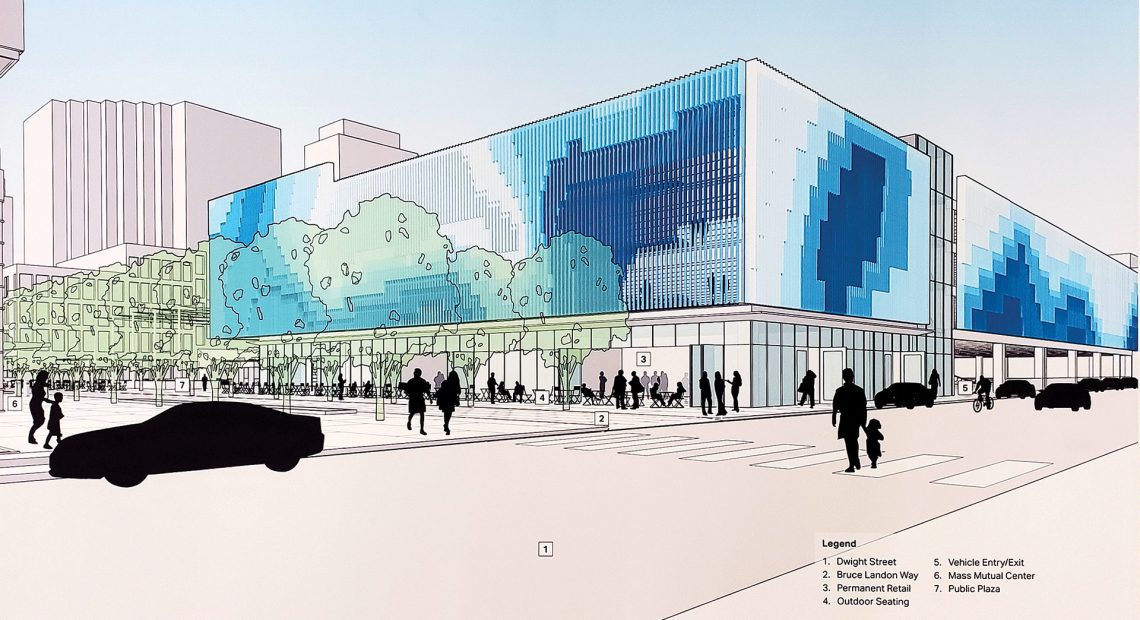
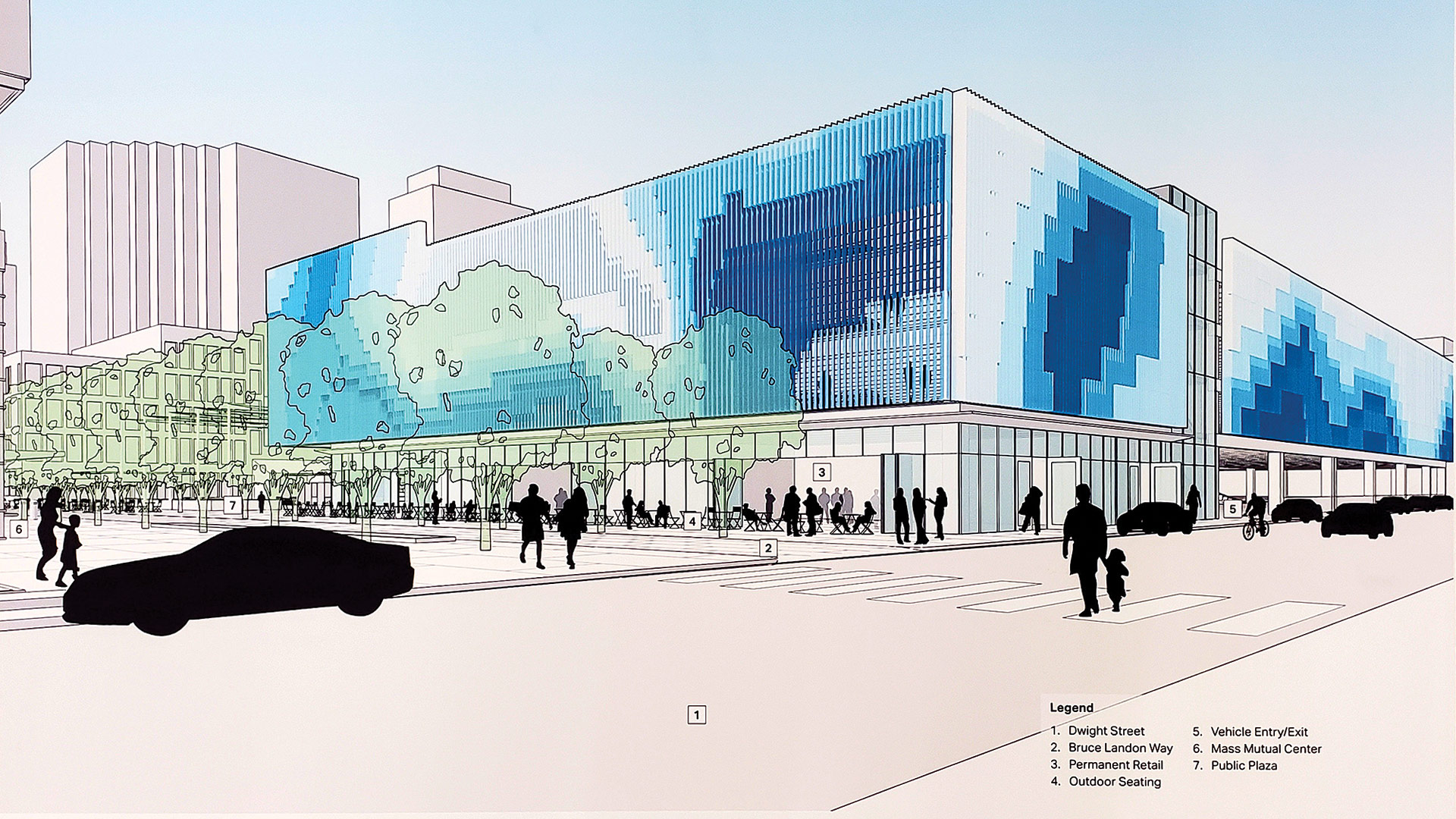
Architect’s rendering of the new parking garage

Architect’s rendering of the new parking garage soon to take shape in the city’s downtown.

‘Good traffic.’

That’s the phrase used by Springfield Mayor Domenic Sarno — who acknowledged that it is somewhat of an oxymoron — to describe traffic that is, well, positive in nature.

This would be traffic generated by vibrancy, by people coming into a city from somewhere else; traffic indicative of progress, as opposed to insufficient infrastructure, poor planning, or both.

Springfield saw quite a bit of this ‘good traffic’ prior to the pandemic, said Sarno, noting that it was generated by concerts at MGM Springfield’s venues, Thunderbirds games, conventions and college graduations at the MassMutual Center, special gatherings like the Winter Weekend staged by the Red Sox in early 2020, or any combination of the above. Sometimes, a random Friday night would be enough to generate such traffic.

And after two years of relative quiet in the wake of the pandemic, the ‘good traffic’ is starting to make a comeback, as is the city as a whole, said Sarno, Springfield’s longest-serving mayor, with 14 years in the corner office, adding that there is promise for a whole lot more in the months and years to come, as pieces to a puzzle come together — or back together, as the case may be.

“Before COVID hit, we had a tremendous amount of momentum going on in Springfield, not just in the downtown, but in all our neighborhoods,” he told BusinessWest. “I think we’re starting to get our mojo back.”

These pieces include everything from a resurgent Thunderbirds squad, which made it all the way the AHL finals after taking a full year off due to COVID, to new housing, including the long-delayed renovation of the former Court Square hotel; from a casino in comeback mode, buoyed by the promise of sports gambling, to the return of the Marriott brand downtown after more than $40 million in renovations to the property in Tower Square; from new restaurants and clubs on Worthington Street to a new parking garage soon to rise where an existing structure is being razed.

“Before COVID hit, we had a tremendous amount of momentum going on in Springfield, not just in the downtown, but in all our neighborhoods. I think we’re starting to get our mojo back.”

The “state-of-the-art and environmentally friendly parking garage,” as Sarno described it, will be part of a larger development in the area around the MassMutual Center, an initiative aimed at bringing people to that site before, during, and perhaps after events (more on that later).

The city still faces a number of stern challenges, many of them COVID-related, said Tim Sheehan, the city’s chief Development officer, citing such matters as the impact of remote work and hybrid schedules on downtown office buildings, an ongoing workforce crisis that has impacted in businesses in all sectors, and the pressing need to redevelop vacant or underutilized properties across Main Street from MGM Springfield.
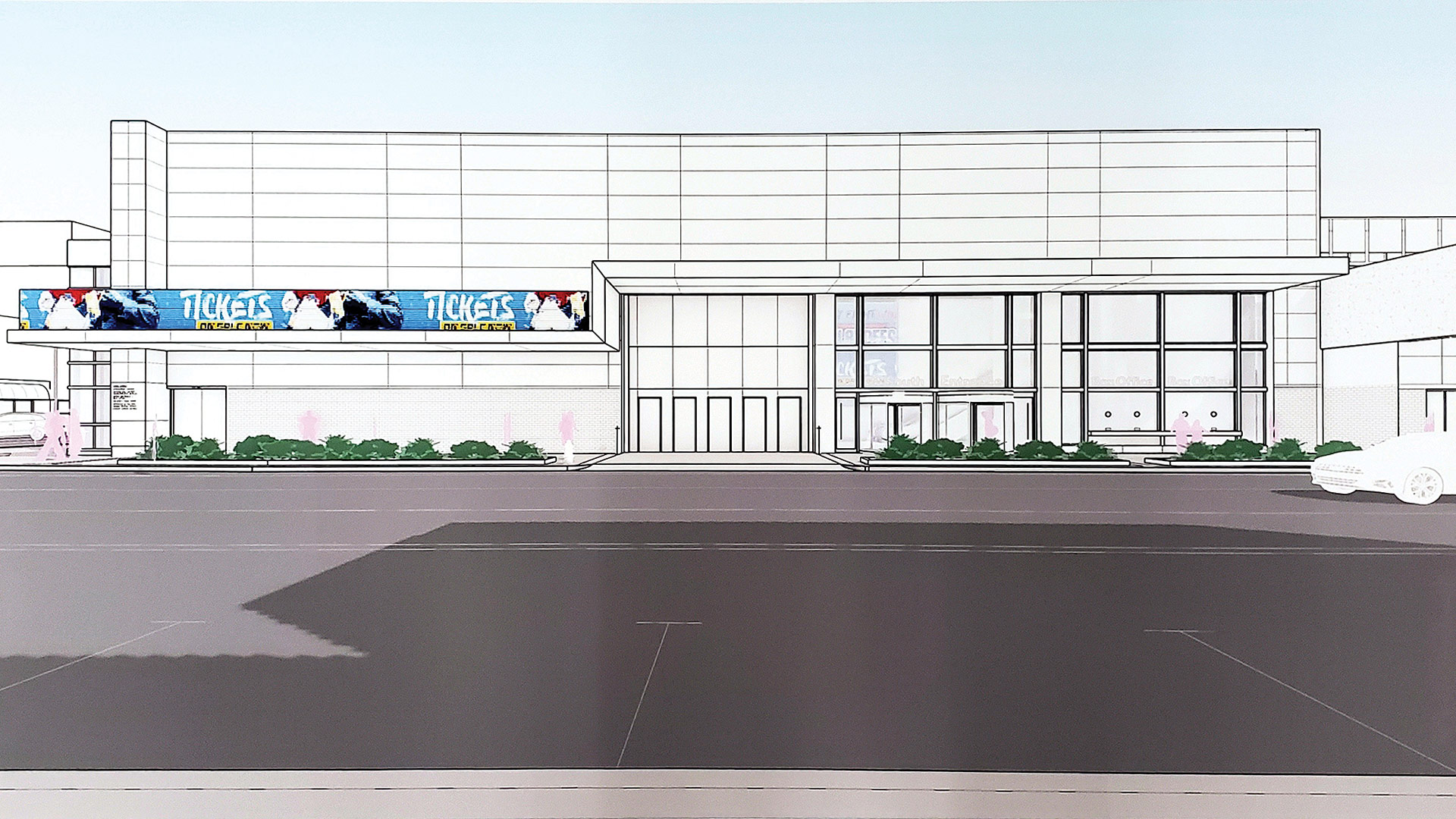
An architect’s rendering of the planned new entrance at the southwest corner of the MassMutual Center.

An architect’s rendering of the planned new entrance at the southwest corner of the MassMutual Center.

But he, like the mayor, sees progress on many fronts and, overall, a pronounced recovery from a pandemic that hit the city very hard.

“We’re seeing many positive signs that Springfield is making its way back from the pandemic and the many challenges it created,” said Sheehan, who cited, among many yardsticks of momentum, a long line to get a table at Wahlburgers during a recent visit. “And we’re seeing these signs not only in the downtown, but the neighborhoods as well.”

Sarno agreed. He said that, over his lengthy tenure as mayor, the city has coped with a number of challenges and crises, from the June 2011 tornado to the November 2012 natural-gas explosion. But COVID has been different, and it has tested the city and its business community in many different ways.

“It’s been a difficult two years; the pandemic threw everyone a huge curveball,” he explained, adding that city leaders were trying to respond to an unprecedented health crisis while also making good use of state and especially federal money to help small businesses keep the lights on.

“My team has been tested, and, true, it’s been through a lot of disasters before,” he went on. “But this was like shadowboxing — it was surreal.”

COVID isn’t over, and challenges for small businesses remain, but in many respects, the city can get back to business, and it is doing just that.

For this, the latest installment of its Community Spotlight series, BusinessWest takes an in-depth look at Springfield, its ongoing bounce-back from COVID, and, yes, the return of that ‘good traffic.’

State of the City

It was affectionately known as the ‘dog and pony show.’

That’s what some called an annual gathering, orchestrated by the city in conjunction with the Springfield Regional Chamber, at which officials gave what amounted to a progress report on the city, with a large dollar amount attached to all the various economic-development and infrastructure projects — from MGM Springfield to the renovation of Union Station to the reconstruction of the I-91 viaduct — that were in progress or on the drawing board.

The city hasn’t staged one of these sessions in several years, mostly due to COVID, said Sarno, but one is being planned, probably for early next year. And there will be quite a bit to talk about, he went on, hinting at new developments at sites ranging from Union Station to the former Municipal Hospital on State Street, while offering what amounts to a preview of that gathering.
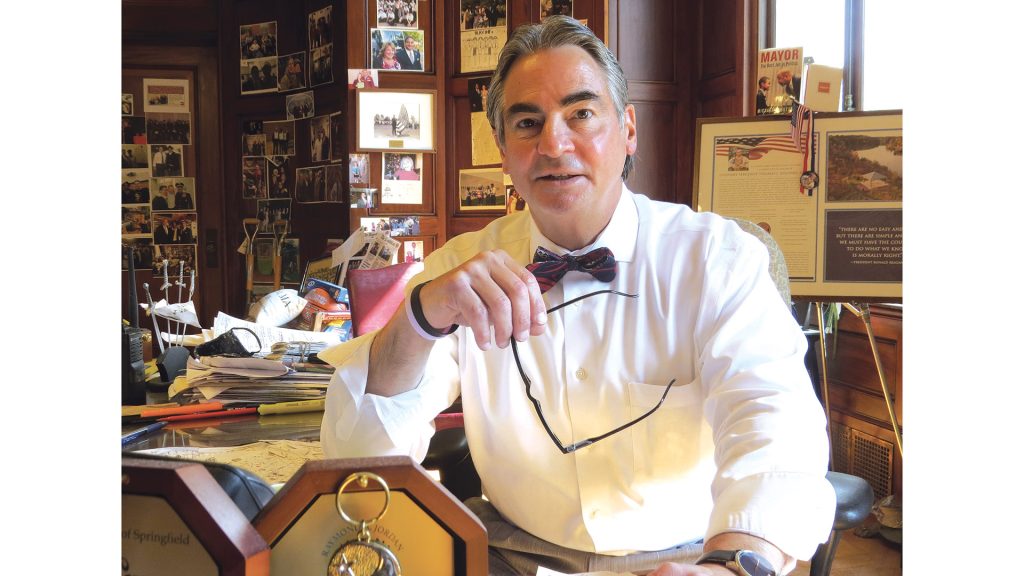
Mayor Domenic Sarno sees progress on many fronts in Springfield after a tumultuous past couple of years.

Mayor Domenic Sarno sees progress on many fronts in Springfield after a tumultuous past couple of years.

And he started with the new, 1,000-space parking garage, which he and Sheehan anticipate will be much more than that.

Indeed, plans for the site include ‘activation’ — that’s a word you hear often when it comes to properties in the downtown — of a surface parking lot next to the present (and future) garage, and, overall, creation of an atmosphere similar, said the mayor, to what is seen at Fenway Park in Boston on game nights.

“Bruce Landon Way will be activated, and many times, it will be shut down,” said Sheehan, adding that the current surface lot, and Bruce Landon Way itself, will become extensions of the MassMutual Center.

“They can have their events literally flowing out to Bruce Landon Way, creating much more activation within the downtown,” he explained. “And it will be utilized for pre- and post-event programming.”

Elaborating, he said the current surface lot will be public space that the Convention Center Authority will lease out for various kinds of functions, bringing more people downtown.

Meanwhile, a new entrance to the MassMutual Center will be added at the corner of State and Main streets, providing the facility with two points of entry and, with this new addition, what the mayor likened to a “Broadway marquee,” a much stronger bridge to MGM Springfield and other businesses south of the arena.

“One of the critical elements of our master plan involves finding ways to activate both of our anchors downtown — MGM Springfield and the convention center itself,” said Sheehan. “And one critical missing piece to that was always the southern entrance to the MassMutual Center, and now, that’s being addressed.”

That new entrance may help spur development of several vacant or underutilized properties across Main Street from the MGM casino, said Sarno, adding that requests for proposals to redevelop these properties, now under city control, will be issued soon.
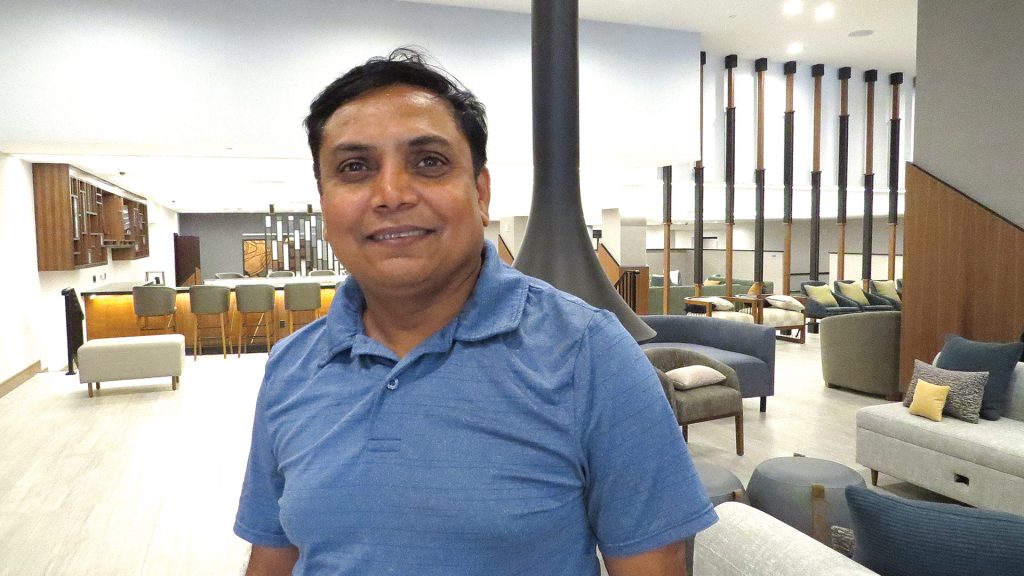
Dinesh Patel, seen here in the lobby of the soon-to-open Marriott

Dinesh Patel, seen here in the lobby of the soon-to-open Marriott in downtown Springfield, says the facility was designed to reflect the history and culture of the city.

These developments, coupled with the ongoing renovation of 31 Elm St., the former Court Square Hotel, into market-rate apartments due to be ready for occupancy in roughly a year, are expected to create more interest in Springfield and its downtown within the development community, said the mayor, noting, again, that needed pieces are coming together.

These pieces include housing, which will create a larger population of people living in the downtown; restaurants and other hospitality-related businesses, a broad category that includes MGM Springfield, restaurants, and the Thunderbirds; and a vibrant business community.

“One of the critical elements of our master plan involves finding ways to activate both of our anchors downtown — MGM Springfield and the convention center itself. And one critical missing piece to that was always the southern entrance to the MassMutual Center, and now, that’s being addressed.”

Individual pieces coming into place include not only 31 Elm, but the recently opened housing in the former Willys-Overland building on Chestnut Street; some new restaurants and clubs on and around Worthington Street, including Dewey’s Lounge, the Del Raye, and Jackalope; and the planned new Big Y supermarket, which will address a recognized need in what has long been recognized as a food desert.

Staying Power

Then, there’s Tower Square and the Marriott flag that has been returned to the hotel several years after it was lost.

As he talked with BusinessWest about the two years worth of renovations to that hotel and planned reopening of the facility, Dinesh Patel showed off finishing-touch work in several areas, including the lobby, the fitness center, the pool room, and some of the meeting rooms.

He also opened the door the large ballroom, revealing a training session for dozens of the more than 180 people expected to be hired before the facility opens its doors. Like most of the renovation work itself, conducted at the height of the pandemic and its aftermath amid supply-chain issues and soaring prices for many products and materials, the hiring process has been a stern challenge as qualified help remains in short supply.

But for Patel and partner Mid Vitta, whose work to reclaim the Marriott flag — and reinvent Tower Square — earned them BusinessWest’s Top Entrepreneur award for 2022, it has been what amounts to a labor of love. The two saw an opportunity in the once-thriving but then-challenged retail and office complex in the heart of downtown, and have made the most of it, finding some imaginative reuse of many spaces. These include the recruitment of the YMCA, which has brought its childcare and fitness-center operations, as well as its administrative offices, to Tower Square. It also includes that new and decidedly different kind of Big Y store in space formerly occupied by CVS.

As for the hotel, which will open in time for the induction ceremonies for the Basketball Hall of Fame and the Big E, Patel said the timing is good for the property to come back online.

“Gas prices are coming down, and people are traveling again,” he said. “They want to get out and go places; we see a lot of pent-up demand.”

As he offered a tour of the nearly-ready facility, Patel noted the many nods to Springfield, its history, and its culture, from the basketball-themed art in the fitness center to the wall coverings depicting blueprints of noted inventions that happened in Springfield (from the monkey wrench to rail cars) to the many photographs of ‘old Springfield’ found on the walls of the stairs leading to the meeting facilities on the sixth floor.

“We wanted to tell the story of Springfield,” Patel said. “And we tell that story all through the hotel.”

Increasingly, that story is one of progress and recovery from COVID, not only in the downtown, where much of the interest is focused, but in many other neighborhoods as well, said both Sarno and Sheehan, noting that neighborhood plans have been developed for many different sections of the city that address everything from sidewalks to lighting to beautification, with gathered suggestions then forwarded to an ARPA advisory committee.

Overall, new schools and libraries are being built, infrastructure improvements are being undertaken, and businesses continue to be supported as they face the lingering effects of COVID through initiatives such as the Prime the Pump program, which provided grants of various sizes to businesses in need.

The city has received nearly $124 million in ARPA (American Rescue Plan Act) money to date, and it has distributed more than $50 million, including $4 million dispensed in the seventh round to date, earlier this month. Those funds went to small businesses, new businesses, nonprofits, neighborhoods, housing, capital projects, and direct financial assistance to households and seniors, said Sarno, adding that that the basic strategy has been put that money to use in ways where the impact can be dramatic and immediate.
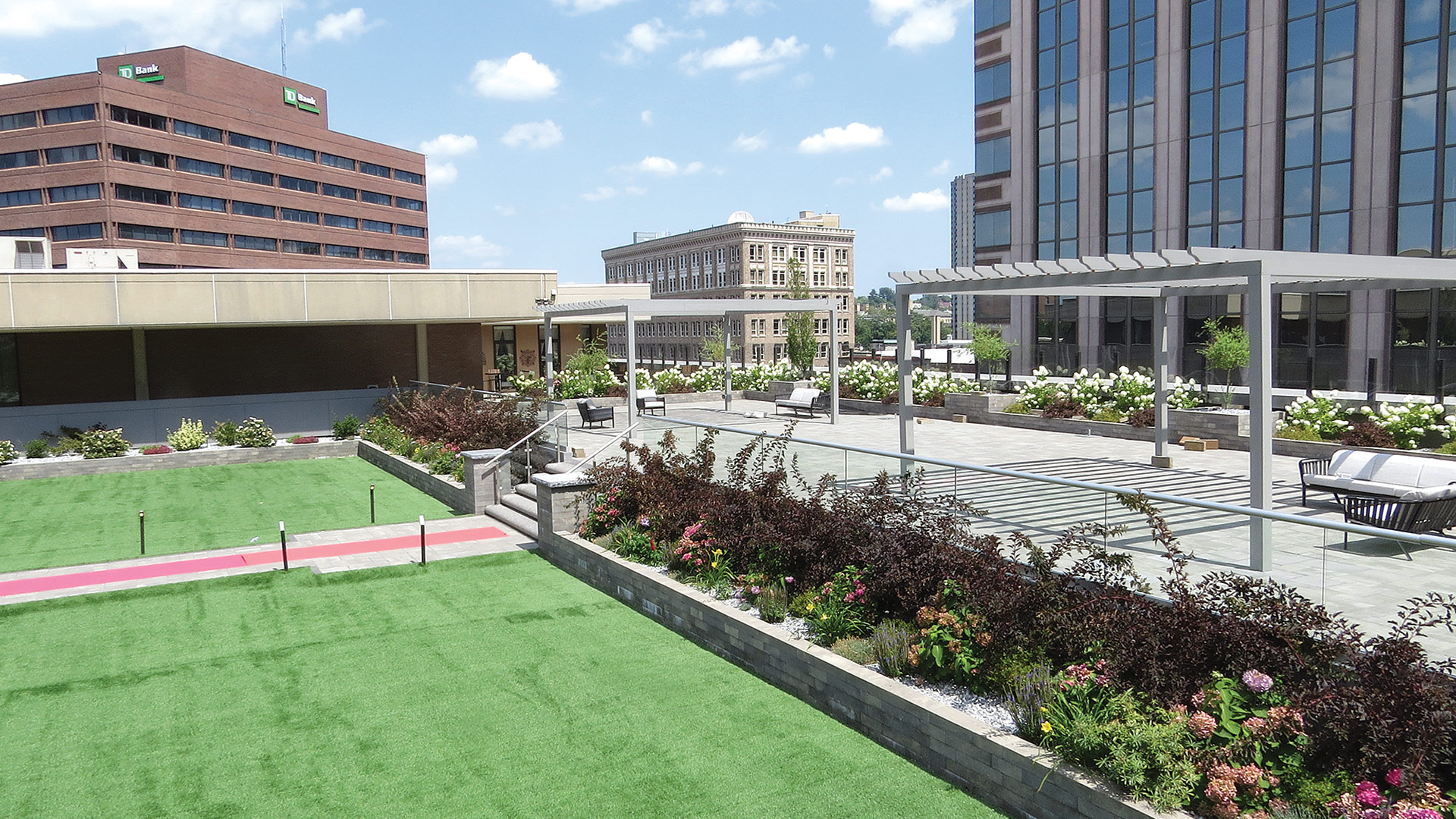
The renovated outdoor space off the sixth-floor meeting area

The renovated outdoor space off the sixth-floor meeting area is one of the highlights of the soon-to-open Marriott in downtown Springfield.

“The majority of the monies that have been distributed have really helped a lot of minority-owned businesses and women-owned businesses,” he explained. “It’s a very eclectic mix, from mom-and-pop businesses to larger ventures to direct assistance.”

There have been efforts in the broad category of workforce development as well, he went on, adding that businesses of all kinds continue to be impacted by an ultra-tight labor market, just as many are starting to see business pick up again.

Overall, there have been more than 30 meetings conducted with residents and business owners in attendance, said the mayor, adding that these listening sessions were staged to gain direct feedback on how federal COVID relief money can best be spent in Springfield.

Identified needs and challenges range from workforce issues to childcare to transportation, said Sheehan, adding that what has come from these sessions is dialogue, which has often led to action, on how the city can collaborate with other groups and agencies to address these matters. And it has been a very fruitful learning experience.

“It created an opportunity to look at things differently,” he noted. “And I do think it has caused people to look at how we can work collaboratively to solve some pretty significant problems.”

Bottom Line

To motorists who are stuck in it, there is really no such thing as ‘good traffic.’

But while drivers don’t use that phrase, elected officials and economic-development leaders certainly do. As Sarno told BusinessWest, good traffic is a barometer of a city’s vibrancy, a measure of whether, and to what degree, a community has become a destination.

For a long while, Springfield didn’t have much, if any, of this ‘good traffic,’ and then, in the 18 months or so before COVID, it did. The pandemic and its many side effects took much of that traffic away, but there are many signs that it’s back and here to stay.

As the mayor said, the city is starting to get its mojo back. 

George O’Brien can be reached at [email protected]

Features Special Coverage

Pivot Move


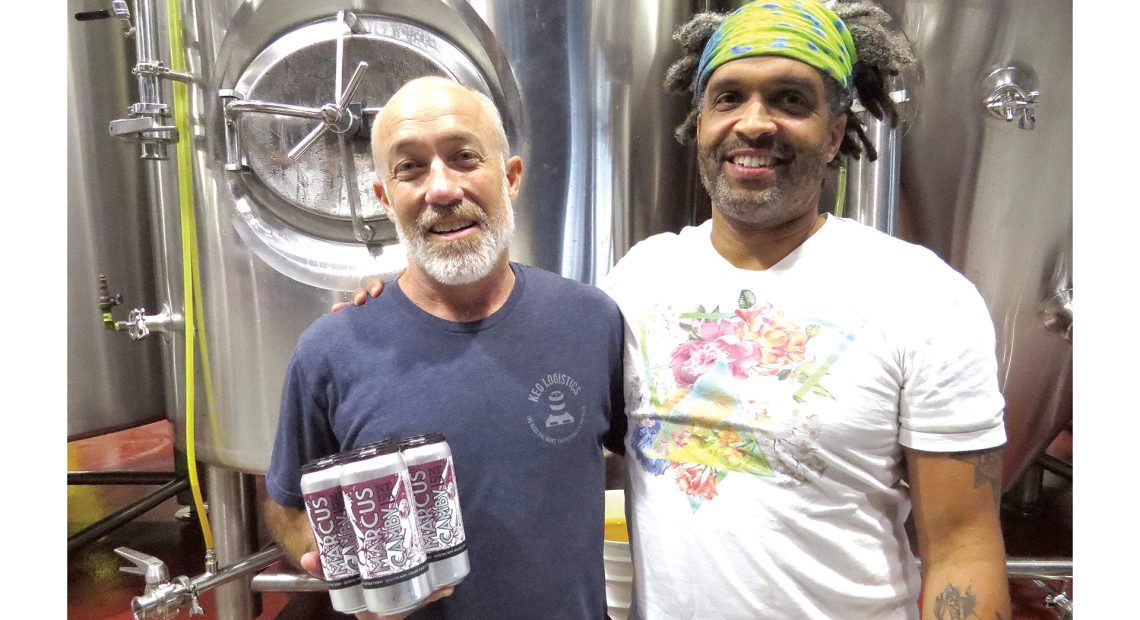
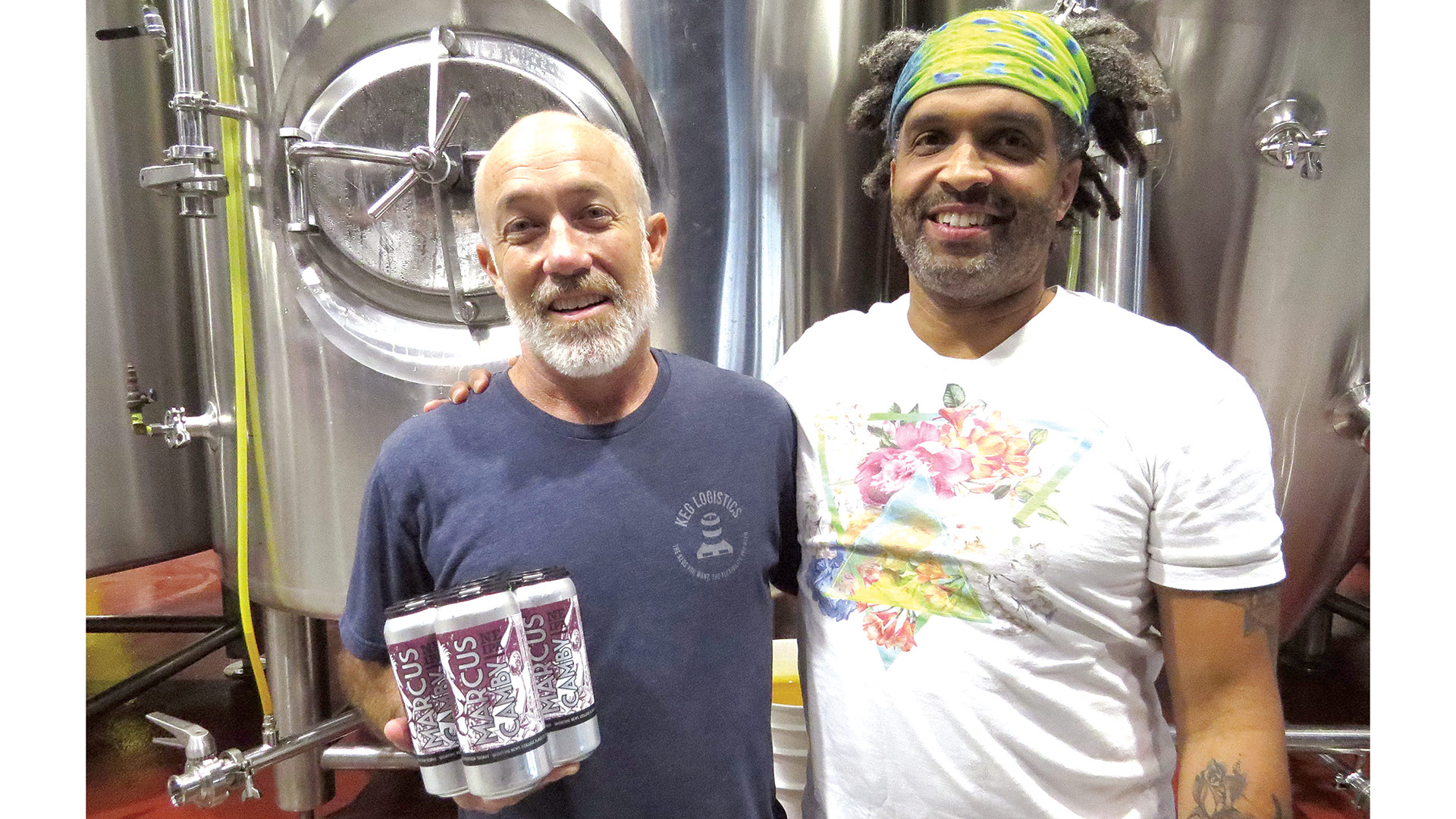
Mike Yates, left, and Ray Berry

Mike Yates, left, and Ray Berry agree that expansion into Amherst is a common-sense move for the company.


When asked how he would eventually become business partners with Marcus Camby, the former UMass and NBA star, Ray Berry, founder of White Lion Brewery, leaned back in his chair as if to indicate it was a bit of a long story.

It starts with Travis Best, another former NBA player who made his first headlines while playing for Springfield’s Central High School. It was Best who put together several annual Basketball Hall of Fame enshrinement weekend events, including a post-induction gathering. Following the opening of White Lion’s downtown Springfield operation just over a year ago, Best was looking to include the company in the festivities — and did.

Indeed, Best and Berry would collaborate with the city on a block party on Bridge Street during enshrinement weekend — the same weekend, it turned out, that UMass Amherst would be honoring Camby, Julius Erving, and John Calipari with statues in their honor on campus. Best and Berry decided to reach out to Camby to see if he wanted to co-host the event in Springfield, which he did.

“Marcus was all in — he was already in town, and he was excited to be part of what we were doing,” Berry recalled. “We shut down Bridge Street, rolled up the garage doors, and had some entertainment; it was our first grand event at our brick-and-mortar spot. At one point, I think we had 700 people between the brewery and the block-party environment. It was a beautiful evening downtown.”

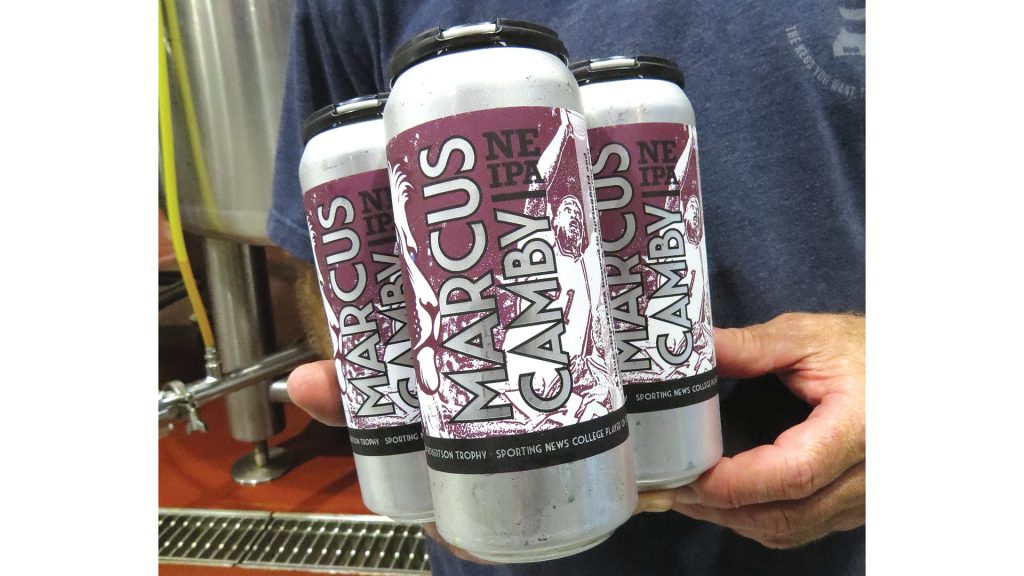
Fast-forwarding a little, Camby became more than a little impressed with the White Lion operation and Berry’s status as one of the very few minority brewery owners in Massachusetts — so much so that he attached his name to an IPA produced by White Lion. And later — we’re moving very quickly now, but will go back and fill in some detail in a bit — when Berry was presented with an opportunity to expand his footprint and bring the White Lion brand to Amherst with a location in the heart of downtown, Camby agreed to come in as a partner.

The venture will be called White Lion Brewing Amherst, and will be based in a location that has been making headlines in recent months — 104 North Pleasant St., home to the recently opened Drake, a live-event venue that is already fulfilling its vast promise as a destination for music lovers from across Western Mass. and far beyond.

The White Lion taproom will be located just below the Drake in space that was formerly the High Horse restaurant and, before that, Amherst Brewing, where Mike Yates served as head brewer — before working behind the bar at High Horse.

He now has that same title at White Lion, so this new venture amounts to going home for him.

And with that perspective, he believes the White Lion brand is in the right place at the right time, and with the right business partner.

“It will feel good to be back there. It’s a great little town — I love Amherst,” Yates told BusinessWest. “I think this is going to be a big hit here. Since Amherst Brewing left downtown, there’s no brewery in the downtown area. This is essentially a tourist town — every year you have a new crop of students coming in and parents looking for a place to go for lunch or dinner, and a brewery is always a good option.

“I think this is going to be a big hit here. Since Amherst Brewing left downtown, there’s no brewery in the downtown area.”

“Combine that with our partnership with Marcus and our establishment’s reputation here in Springfield as a prominent player in the brewing business, and I think it will be a big win,” he went on. “I think they hit a big home run with the Drake — that’s what Amherst sorely needed — and we will be another big piece of the puzzle.”

For this issue, BusinessWest looks at how this new venture came together, and what it means for Amherst — and White Lion.


What’s Brewing?

Berry told BusinessWest that he recently took part in a panel discussion before a convention of craft brewers at the Samuel Adams facility outside Boston.

The subject being addressed by the panel was satellite facilities, and, more specifically, when and under what circumstances they should be considered.

Summing up his remarks, Berry said he told them, “from a business lens, if the situation if right, and you’re not over-leveraging yourself, it could make sense for that brewery’s respective business model.”

That is certainly the case with this new location in Amherst, he said, adding that it makes sense on a number of levels. “Amherst is a great town. It’s a natural fit for White Lion and its progression.”

So much so that the Amherst Business Improvement District and other stakeholders, diligently trying to replace the lost Amherst Brewing operation, initiated talks with Berry back in 2019, by his recollection, about bringing his brand there.

He listened, but back then, he was devoting almost all of his time and energy to opening his brewery and taproom in the former Spaghetti Freddie’s location in Tower Square, a project that would eventually be slowed — as in slowed — by COVID-19 and its profound impact on construction and the larger renovation efforts at Tower Square.

When that location was well on its way, Berry and Amherst officials essentially picked up where they left off.

“They kept in communication — the conversations would come and go,” said Berry, adding that he eventually went to Amherst to look at some spaces there, including the former High Horse/Amherst Brewing location, which was attractive, but far more space than he needed. Consumed with opening his Springfield location, he put the Amherst project, if it could be called that, on pause.

Marcus Camby has already attached his name to an IPA

Marcus Camby has already attached his name to an IPA, and now he will take his involvement with White Lion Brewery to a higher level as a partner in the Amherst venture.

And it stayed there until, by coincidence (again), Camby was back in Amherst for event. While there, he and his business agent were inquiring about the “space across from Antonio’s Pizza” — the Amherst Brewing space.

That conversation started a dialogue between the two about what whether that location was available and what could be done with it, conversations that got more serious over time, prompted more visits to Amherst, and eventually spurred consideration of not the Amherst Brewing site (because it wasn’t exactly available at that time) but one just down the street, owned by the same party.

But then, the space under the Drake did become available, and the parties involved made an important pivot — yes, that’s a basketball term — back to 104 North Pleasant St.

With that backstory now complete, Berry and Yates have their focus on the future, one they believe holds a great deal of promise, because of the community, Amherst, the specific location, and what White Lion can bring to the table.

“From a White Lion lens, this makes total sense, and for a number of reasons,” Berry said. “For starters, the Drake is iconic. What they’re trying to do on that second floor is a game changer for the downtown Amherst community. To be below that music venue has a number of benefits, from a business perspective.”

“To be on the Main Street corridor in downtown Amherst has a number of benefits from a business lens,” he went on, adding that, while Springfield and Amherst are vastly different in terms of size, he sees many similarities in their downtowns and the work done by the two communities’ business improvement districts and efforts to bring more vibrancy to their respective downtowns.

“We see the many benefits that come with being in the heart of downtown Springfield, and we see the benefit of the partnership and the work that our own Business Improvement District does day in and day out, which includes special programming with White Lion,” he went on. “And the leadership at the Amherst BID has a similar fabric relative to their approach with downtown Amherst; they encourage and participate and facilitate and coordinate outdoor programming, special events, and business-improvement initiatives. Based off of what we’ve witnessed and knowing what they’re doing, it made total sense to be right in the heart of downtown Amherst.”

What also made sense, he said, was to meld the White Lion brand with the brand that Camby has developed, especially in the community where he originally made his mark a quarter-century ago.

“Amherst is a great town. It’s a natural fit for White Lion and its progression.”

Berry said preliminary design work is underway, and the Amherst facility should be open for business by the end of December, in time for the winter semester of classes at UMass and other area schools.

The facility will be a taproom, restaurant, outdoor social space, and a small pilot, nano-brew house — the main production will still be in the Springfield location — one that will allow for what Yates called “one-off” experimental ales.

“It will be a smaller scale — probably a three- or five-barrel brew system, which will allow us to spread our creativity wings a little and try some things that we couldn’t afford to do on a large scale like we have here in Springfield,” he explained. “It will be fun; I’m excited. Springfield’s great, and Springfield’s coming along, but it will be great to do a little bit of both.”


Draught Pick

Summing up his thoughts on the two communities where White Lion will have a presence, Berry said Springfield and Amherst have “similar bones.”

By that, he meant they’re trying to achieve the same things in their downtowns — specifically the establishment of an eclectic mix of businesses that complement one another and, together, create a destination.

White Lion has become a key piece of this puzzle in Springfield, and Berry is expecting the same in Amherst, especially with his new business partner attached to the project.

Together, they’ll be making a full-court press in a town where Camby is synonymous with success.


George O’Brien can be reached at [email protected]

Guide to Senior Planning Special Coverage Special Publications

Preparing for Life After 65

When people think about strategizing for their senior years, they often see it as a downbeat task, one marked by growing incapacity, financial stress, and, well, dying.

That’s not what this guide is about, although it definitely contains plenty of information about what to do before that day comes. But the goal isn’t planning to die; it’s making sure you get all your plans in order — from where you or your loved ones will live to how finances will be distributed — so you don’t have to worry about it. You can, instead, enjoy life.


And that planning is an increasingly important task. According to the U.S. Census Bureau, the number of Americans age 65 and older rose from 35 million in 2000 — 12% of the population — to 56.1 million, or 17%. By 2030, the bureau estimates, more than 21% of U.S. residents, about 73.1 million, will have passed their 65th birthdays.

That’s a lot of people. And a lot of planning. And a lot of living left to enjoy.

Achieving your goals — and your desires for your loved ones — requires careful thought, and that’s where our annual Senior Planning Guide comes in. So let’s sort through some of the confusion and get those conversations — and the rest of your life — started.


Architecture Special Coverage

Growth by Design

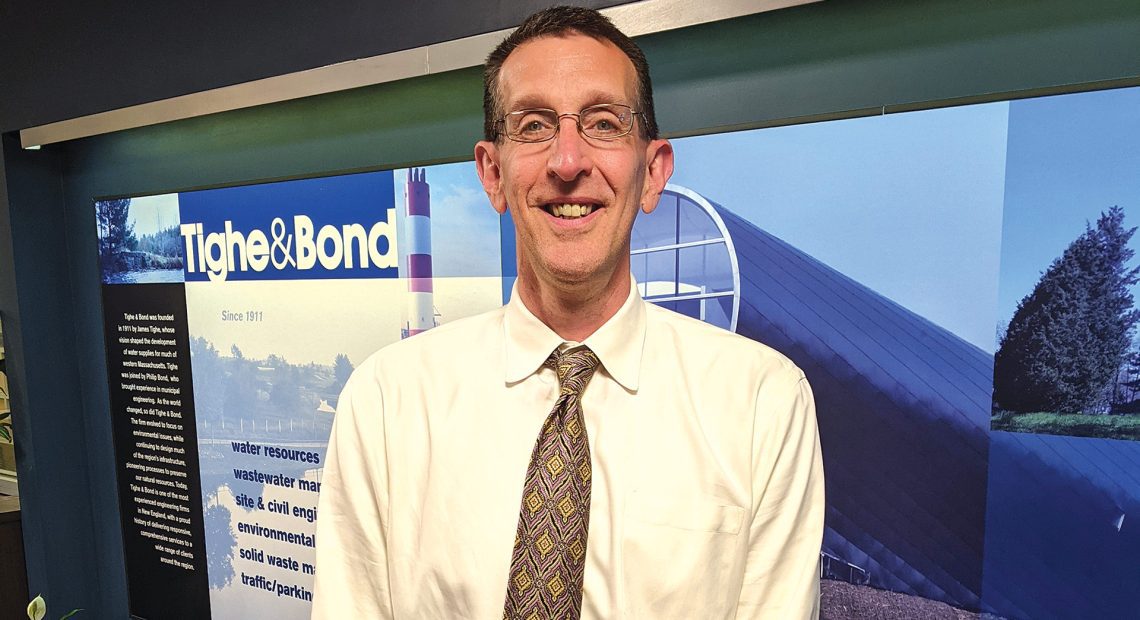
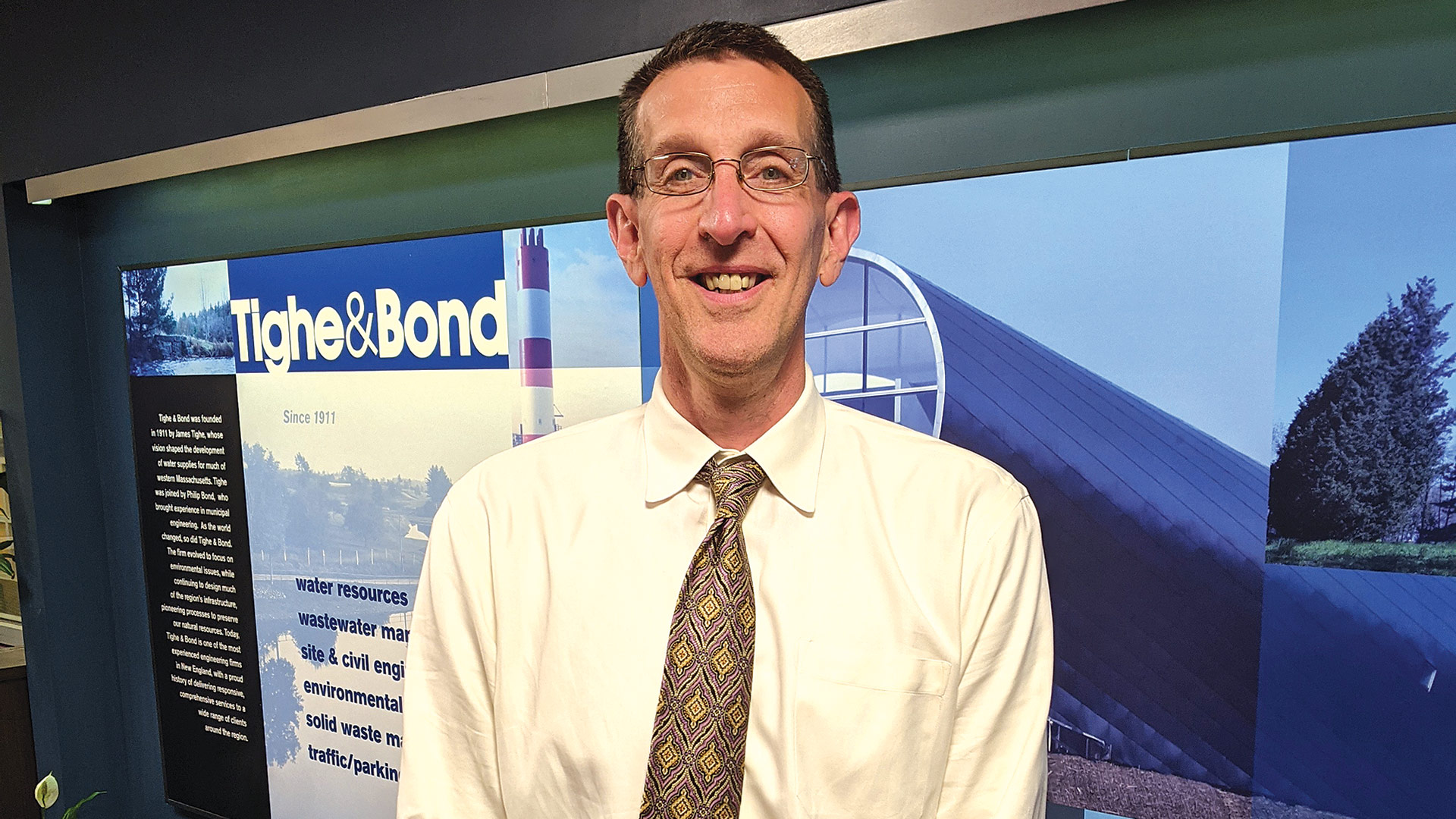
Tighe & Bond President and CEO Robert Belitz

Tighe & Bond President and CEO Robert Belitz

To say Tighe & Bond is a growing company would be an understatement.

From 2006 to 2016, the Westfield-based engineering firm increased its workforce from 170 to 270, but since then, the tally has expanded to 450, due to a combination of geographic expansion across the Northeast, enhancements to specialized services, and organic growth.

“We like to say it’s still manageable growth — robust, but manageable for us,” said Robert Belitz, who was hired by Tighe & Bond as chief financial officer in 2014 and took the reins as president and CEO three years later. “Our strategic planning process, which we go through every year, says it would be nice to grow between 5% and 10%. So you can see we’re on the higher end of that range.”

Among the recent footprint-expanding additions include an office in Portland, Maine, and two strategic acquisitions. One is a landscape-architecture and urban-planning firm in Boston called Halvorson Design (now Halvorson | Tighe & Bond Studio), which is part of the firm’s continuing strategy in Eastern Mass. and its first office presence in the Hub.

“The work they do is a terrific complement to our existing sites and brings more capabilities to our clients; they also did a lot of coastal-resiliency work as well, and that will continue to be in high demand for us.”

“We like to say it’s still manageable growth — robust, but manageable for us.”

The other recent acquisition was joining forces with RT Group, which expanded the firm’s waterfront and coastal-engineering capabilities in Rhode Island.

“Given where our offices are, there is a tremendous amount of coastline where we have opportunities to support our clients,” Belitz said. “There’s an awful lot of funding that’s being directed toward seawall construction, which is part of our coastal practice. The RT Group does a lot of work around port areas.”

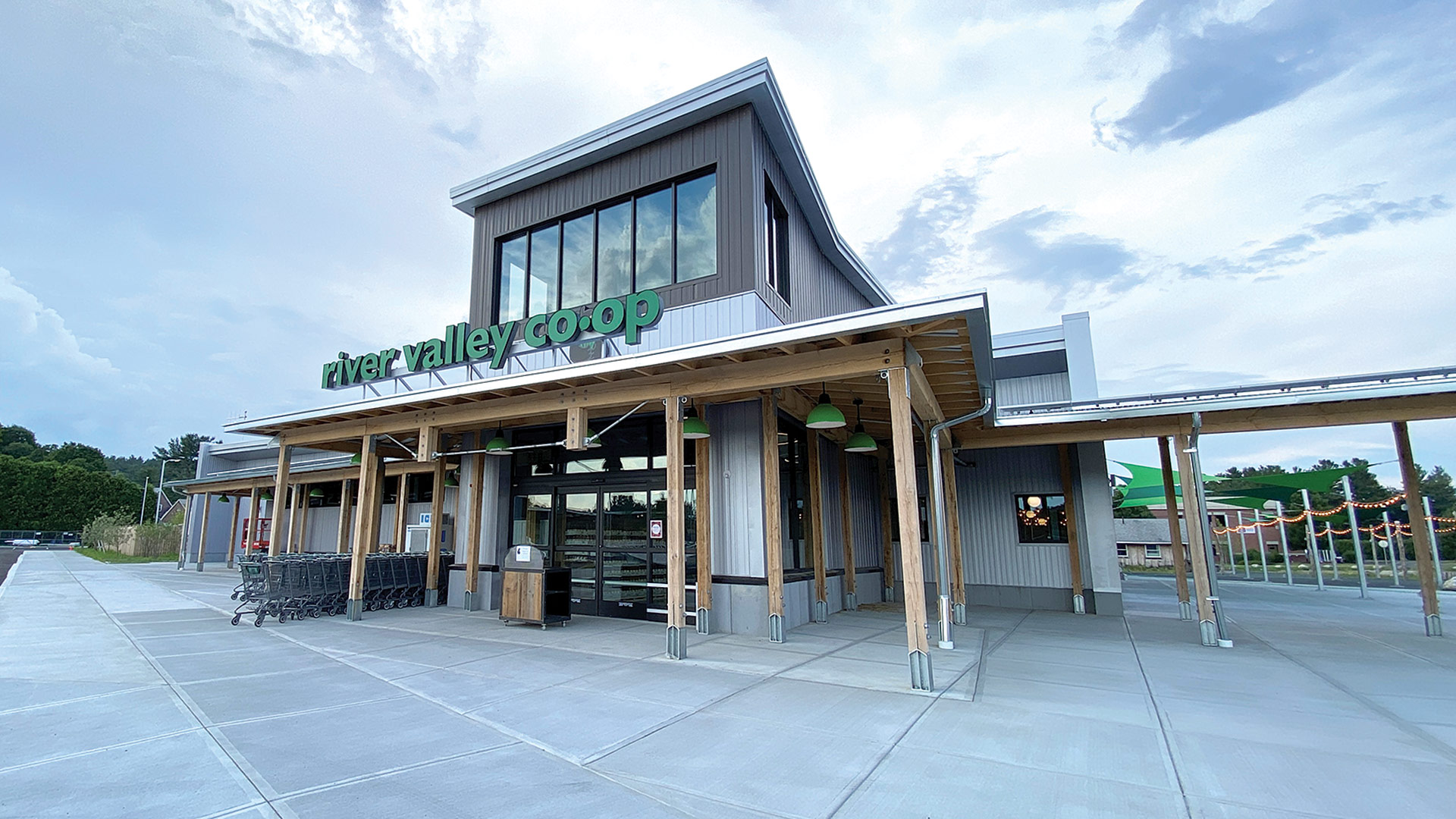
River Valley Co-op in Easthampton

River Valley Co-op in Easthampton is one of the first net-zero-energy grocery stores in Massachusetts.
(Photo by Tighe & Bond)

With offices in Massachusetts, New Hampshire, Maine, Rhode Island, and Connecticut, it’s a natural fit for Tighe & Bond to tackle more coastline work, he added. “There have been a number of natural-disaster events that have raised the awareness of the need for coastal resilience.”

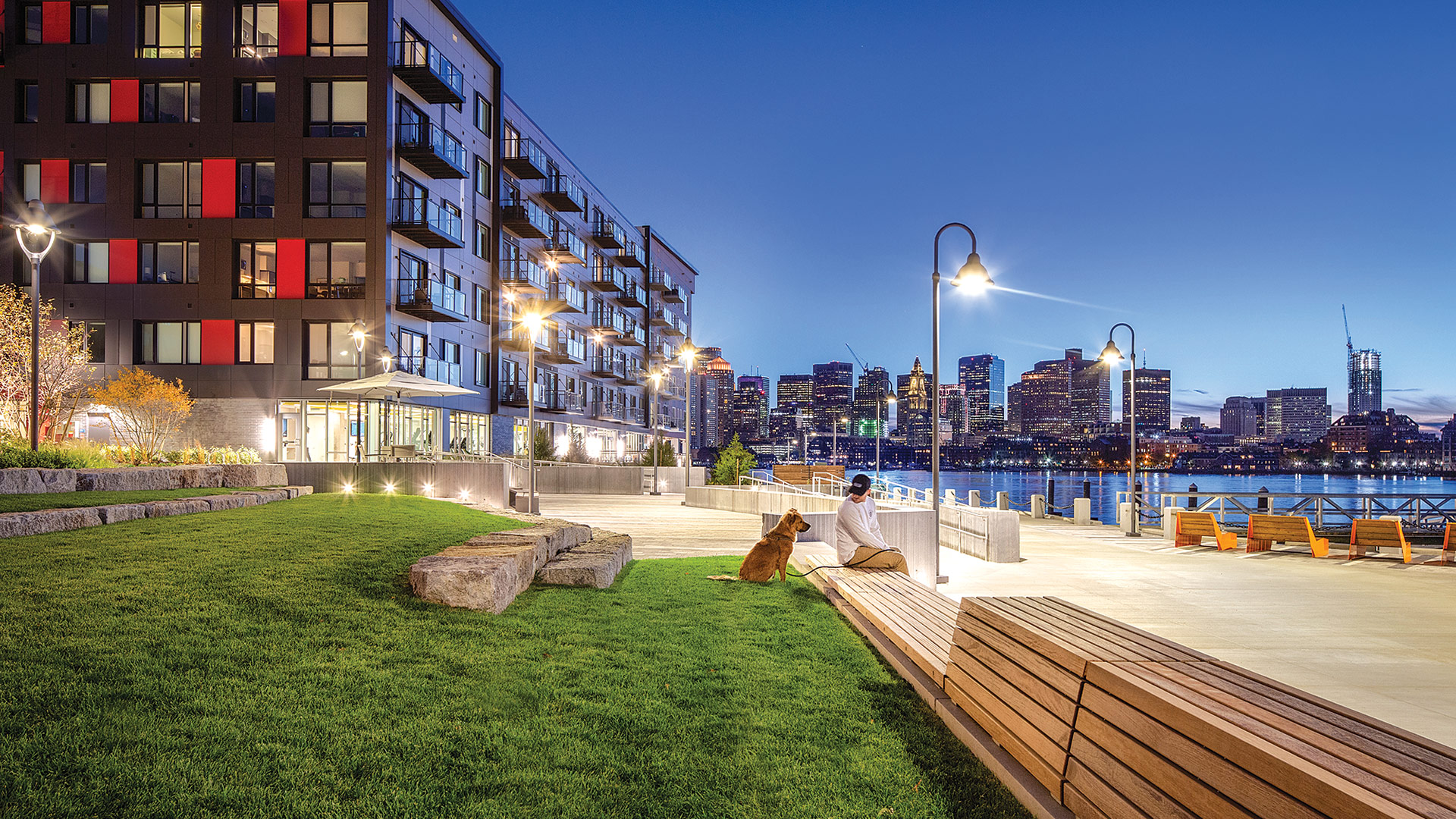
Clippership Wharf in East Boston is a good example. The waterfront residential complex was developed by Lendlease with landscape design by Tighe & Bond and Halvorson, and building design by the Architectural Team. The tiered site includes a harbor walk at the lower level, public access and open spaces at mid-level, and residences and a courtyard above. A ‘living shoreline,’ the first in Boston’s urban harbor, recreates the coastal habitat through the introduction of native plantings and wave-dissipating features to accommodate future sea-level rise, creating a natural flood barrier protecting tenants and other inland properties.

“Our challenge is prioritizing how we can capitalize on all these opportunities in the market.”

Tighe & Bond has also significantly expanded its capabilities in the MEP — mechanical, electrical, and plumbing — area, Belitz said. “We’ve added a significant number of resources there. That’s to serve our existing client base, but it’s also in response to the pandemic, when we were asked to do a fair amount of air-quality work.”

Other growth areas have included traffic and roadway projects as well as asset management, he added. Meanwhile, the firm’s traditional niches in water, wastewater, and other types of projects remain strong.

“We’re still really well-diversified in terms of the services that we can provide to our clients,” he went on. “We’ve trademarked a terminology we call the whole-asset approach, which says we can support a client’s needs on whatever their assets are, from the outset of a project all the way to completion, and that’s because we provide such a broad array of services to our clients.”

At the same time, “I think the stimulus money that’s coming from the Infrastructure Investment and Jobs Act aligns really well with the services that we provide as an organization, including our core water and wastewater services and our environmental work related to brownfield remediation. Our challenge is prioritizing how we can capitalize on all these opportunities in the market.”


System Expansion

Founded in 1911 to consult on broad-based civil-engineering projects, Tighe & Bond eventually came to specialize in environmental engineering, focusing on water, wastewater, solid-waste, and hazardous-waste issues, and its growing diversity of expertise has been a buffer against economic downturns in any one area.

Currently, 60% to 65% of its projects are public contracts with municipalities and state government agencies throughout New England and New York, and 35% to 40% are private work for a diverse group of industries.

Clippership Wharf in East Boston

Clippership Wharf in East Boston is an example of a project that includes elements of coastal resiliency.
(Photo by Ed Wonsek)

“It’s a great thing to be diversified during an economic slowdown,” Belitz said. “The diversity of the services we provide has always been beneficial for us.”

That’s particularly important during times of unusual economic disruption, like the current environment.

“We’re always trying to keep an eye on the economic conditions,” he told BusinessWest. “We are partnering very closely with our clients on any supply-chain issues that might cause delays in their projects or extensions of their projects. We’ve been trying to keep a very close eye on that and work closely internally to make sure our people understand how best to communicate with a client. That’s what it comes down to; it’s primarily communication around schedule and timing and making sure that all of that is coordinated.”

The firm has expanded its presence in renewable-energy projects over the past 15 years or so. For example, River Valley Co-op in Easthampton is one of the first net-zero-energy grocery stores in Massachusetts. Tighe’s engineers provided energy-modeling services to evaluate various design alternatives, including HVAC systems, building envelope, and lighting systems. In addition, it designed an array of electric-vehicle charging stations in the co-op parking lot.

Tighe & Bond, like all such firms, has faced an increasingly complex regulatory and permitting landscape, one where environmental concerns once considered minor are now paramount. But Belitz considers these issues not hurdles, but opportunities.

For example, “nitrogen and phosphorous removal for wastewater treatment plants has been a pretty big driver of some of our growth over the last few years,” he explained.

In that vein, the firm recently worked with the town of Southington, Conn. to upgrade its water-pollution control facility. Tighe & Bond developed a phased plan for addressing the town’s wastewater infrastructure needs over the next 20 years. Recent improvements included phosphorus removal, odor control, and UV disinfection.

The upgrades helped the town meet new phosphorus discharge limits that protect the Quinnipiac River, and odor-control measures have helped residents in nearby neighborhoods and those using abutting sports fields. The American Council of Engineering Companies of Connecticut honored the project team’s designs with the 2022 Grand Award for Engineering Excellence.

“We are partnering very closely with our clients on any supply-chain issues that might cause delays in their projects or extensions of their projects.”

Meanwhile, Belitz said, “one of the emerging regulatory drivers is what’s called lead service line replacements, which are requirements for communities to do inventories and replacement plans for the lead service lines. We also do a lot of brownfields cleanup, and that’s been a very significant piece of our growth over the past two to three years, and another example of our well-rounded services.”


Working on the Pipeline

Asked how Tighe & Bond continues to grow its workforce at a time when companies of all kinds are struggling with finding and retaining talent, Belitz said it’s a multi-layered strategy.

“I’m not sure a day goes by when we don’t talk about our hiring and attraction of talent. We’ve beefed up our talent-acquisition function here at the firm to continue to identify and attract candidates to the firm. And once we get candidates to join us, we’ve always done a really good job of investing in their development, in order to retain our latest employees.”

He said the firm’s “very robust” onboarding and training program consists of not only leadership training, but anything people need to do their jobs: project management, quality management, safety and health principles, and more. “We’ve made a very big investment in that area just because we’ve had to, given our growth. We’ve kind of branded it internally as Tighe & Bond University, where new folks come in and meet with their supervisor and figure out what sorts of training they need to be effective in their jobs, and we think that’s key to a successful onboarding.”

Tighe & Bond has purposefully cultivated a culture of mentorship and teamwork as well, particularly between the older and younger generations of engineers.

“One of the nice things that we hear all the time from people in our organization is they get to work on all different kinds of projects,” Belitz said. “The other thing we’ve always done, but have made further investments in, is the ability to work seamlessly across all of our offices. All our offices are fitted with collaboration tools and the technology that people need to work together, and to complement that, we assign new hires to current employees when they join the firm so they can get that initial mentoring and that on-the-job training that is so important to their success.”

The firm adopted a hybrid work model during the pandemic that has continued to be effective, he added. “We think that allows our people not only to have some of the work-life balance and work-life integration objectives they’ve always had, but it still affords us ample opportunities to collaborate on projects and have that on-the-job mentoring and training. That’s how we’ve approached the pandemic, with a pretty big investment in technology to make sure that happens.

“From the outset of the pandemic, we were very intentional about saying our main goals are to look after the safety and health of our people, to protect the jobs of our people, and also to maintain our employee benefits,” he went on. “There was a lot of uncertainty at the time. We had some sectors that slowed down for a short period of time, but we had others that ramped up, and now I think some of those sectors that have slowed down have come out of the pandemic ready to work with Tighe & Bond on even more projects.”


Building a Culture

Belitz said Tighe & Bond’s leadership is proud of the firm’s culture, which includes elements like the Make a Difference program, which affords employees time to give back to their communities through service projects with local nonprofits.

“Even during the pandemic, though we couldn’t do some of those things because of the restrictions, we had a number of our people volunteer in places like food banks and hospitals and places that had the most need during that period of time,” he explained.

Meanwhile, the company’s employee-benefit program has seen additions like a paid-time-off donation program, by which employees can donate hours of unused vacation to co-workers for certain personal needs; and a student-loan repayment benefit through which the company makes a principal payment to an employee’s student loan. “It shows our commitment to importance of education and our commitment to employees,” Belitz said.

Meanwhile, he added, the firm has made further investments in technology, both internally and with tools like drone technology, 3D laser scanning, and enhanced use of GIS. “We think those are things that enhance the client and employee experience.”

The firm has also increased its commitment to diversity, equity, and inclusion through efforts like the Supporting Women at Tighe & Bond Employee Resource Group and a partnership with the National Society for Black Engineers, which includes two scholarships for students in the engineering field; both efforts aim to increase the diversity of the firm’s talent pipeline.

All these efforts create an environment where people want to work, Belitz said.

“One area that’s super important for us is our employee ownership and the fact that, even in a climate today where there’s a lot of consolidation and a lot of influence of equity investment in engineering and architecture firms, we’re remaining committed to our employee ownership model,” he added.

“That, combined with the fact that we have all our offices within the Northeast, is a very good model for us to keep growing, but to grow in a manageable way. Growth creates opportunity for our people, and I think we’ve got a nice growth model in place.”


Joseph Bednar can be reached at [email protected]