Daily News

SPRINGFIELD — New England Public Media has hired local radio personality Monte Belmonte as host and executive producer of a new radio show and podcast celebrating life in Western Mass. Belmonte comes to New England Public Media (NEPM) from 93.9 the River/WRSI, where he’s hosted the popular “Mornings with Monte” since 2006. The new show and podcast will launch later this winter.

“When you listen to Monte Belmonte, you hear not only a great host with a devotion to his craft, but also a person who is committed to building and bolstering his community,” said NEPM President Matt Abramovitz, who came to NEPM in February 2022. “Sharing the unique voices and stories of our region and using the airwaves for the common good is what public media is all about. We are excited to have Monte bring his enthusiasm and love of Western Massachusetts to NEPM each day.”

Belmonte will be joined by Kaliis Smith, who also comes to NEPM from the River, where she hosted weekday evenings and was a regular guest on “Mornings with Monte.” Smith will be the show’s digital producer and will join Belmonte on air. Belmonte plans to bring some of his regular guests and popular segments to the live, daily program, along with new segments and opportunity for regular audience call-ins. The show will be available as a podcast and on YouTube. Belmonte will also have a presence at NEPM events and other station initiatives.

“I’ve been a huge fan of New England Public Media since I moved west of Worcester 20 years ago,” Belmonte said. “The station’s trusted reputation and broad reach was a big draw for me, as was the opportunity to work alongside people I’ve known and admired for years. I’m excited to get to work building a new show that’s all about celebrating what’s good about living here, meeting interesting neighbors and being a better community because of it.”

Daily News

PITTSFIELD — Entrepreneurship for All (EforAll) Berkshire County will celebrate the graduates of the 2022 fall accelerator program and award $12,500 in seed capital, which includes a $2,500 award from the Lee Bank Foundation, at the Berkshire Innovation Center on Thursday, Jan. 12 at 5:30 p.m.

EforAll Berkshire County began its sixth accelerator in September and will celebrate the 19 individuals (representing 13 businesses) completing the intensive program. They spent 12 weeks learning from experts on a variety of topics about business. With the help of 38 volunteer mentors, the entrepreneurs have developed plans to take their businesses to the next level.

The ceremony will feature remarks by EforAll mentor and local business owner Diana Wall, a speech presented by one of the graduating cohort members, and distribution of the $12,500 prize pool. Prior to the ceremony, EforAll alumni from all six cohorts have been invited to table and showcase their businesses. The event is catered by MadJacks BBQ.

Pre-registration is encouraged. To register, visit bit.ly/GalaShowcaseJan12.

Daily News

WORCESTER — Tye Jordan, regional director of Cinch I.T., will describe insights and best practices in traversing modern-day cybersecurity for all types of businesses and industries in a talk titled “Cybersecurity and Technology with Pro Tips” at a virtual meeting of the Communicators Club (TCC) on Tuesday, Jan. 10.

The Zoom-based program will run from noon to 1:15 p.m. The cost for TCC non-members is $15; the event is free for TCC members. The individual membership fee of $50 per year includes no charge for online programs and a $15 discount on in-person events. To register, visit conta.cc/3gN3g3c. The membership page is at bit.ly/3T7VLSt.

The pandemic changed work for employees and businesses alike in the U.S. as more people began working remotely. The trend is expected to continue into 2023. Noting the growing dependency on having a workforce split between traditional offices and remote work, Jordan will discuss how businesses can best protect both themselves and their employees when navigating this new age of IT organizational dynamics. Those in attendance will leave this session with an understanding and a keen awareness focused on the security of their day-to-day technology.

Daily News

NORTH ADAMS — Community members and residents are invited to downtown North Adams today, Jan. 6, for the monthly FIRST Friday event. This month’s theme is “Fresh Start,” a time for residents, businesses, and visitors to reflect, prioritize, find new ways to stay physically active and mentally healthy, and come together as a community.

Downtown businesses will have extended hours, and many businesses and galleries will be hosting openings, closings, and other special events focused on starting fresh. The following events have been planned by downtown businesses and organizations: candlelit yoga at North Adams Yoga at 6 p.m., live music at Hearts Pace Tea & Healing Arts Lounge, a Future Labs Gallery reception at 6 p.m., a firepit and hot chocolate outside First Baptist Church hosted by the youth group, and a ‘gong bath’ performed by Howard Rosenberg from Anahata Schoolhouse Yoga and Wellness Center at 5:30, 6:30, and 7:30 p.m.; gong baths are a form of meditation where one ‘bathes’ in the healing vibrations of sound.

Law

Five Important Things to Know Going into 2023

By Amelia J. Holstrom, Esq. and John S. Gannon, Esq.


Massachusetts employers are used to the ever-changing employment-law landscape. As we close out another year and ring in a new one, it is clear that 2023 will bring new challenges and new requirements for employers throughout the Commonwealth.

AMelia Holstrom

Amelia Holstrom

John Gannon

John Gannon

We’ve rounded up the top five things employers need to know and keep an eye on as we turn the page to 2023.


Decision on Micro-units May Be Troubling for Employers

When a union attempts to organize a group of employees at a business, it files a representation petition with the National Labor Relations Board (NLRB), identifying the proposed bargaining unit, which is the group of employees the union seeks to represent and who will be eligible to vote on whether it gets to do so. Sometimes, employers will seek to add additional employees to the union’s proposed bargaining unit, as larger proposed bargaining units may be favorable for employers in representation elections.

In a recent decision, American Steel Construction, the NLRB, which interprets and enforces the National Labor Relations Act (NLRA), gave a powerful tool to unions by clearing the way for small bargaining units, often called ‘micro-units.’ Specifically, the board decided that it will approve a smaller subdivision of employees as a bargaining unit if they meet certain criteria.

Under this standard, unions are likely to be very successful in getting the NLRB to approve micro-units. As a result, employers are placed at risk of having to bargain with several small units of employees in one workplace.


NLRB to Surveil Employers’ Surveillance Measures

Businesses regularly monitor employees in the workplace. For example, employers may monitor telephone calls for quality-assurance purposes, install cameras in the workplace or dashcam systems in vehicles, or monitor communications sent and received on employer-owned devices. Such monitoring appears be under attack by the NLRB.

In early November 2022, the general counsel of the NLRB issued a memorandum regarding employee surveillance, in which she urges the NLRB to adopt a “new framework” for determining whether employer surveillance violates the law. Under this framework, violations may occur when the surveillance would tend to interfere with an employee’s rights under the NLRA or “prevent a reasonable employee from engaging” in activity protected by the NLRA.

“In a recent decision, American Steel Construction, the NLRB, which interprets and enforces the National Labor Relations Act (NLRA), gave a powerful tool to unions by clearing the way for small bargaining units, often called ‘micro-units.’.”

This could involve employee surveillance of suspected organizing activity. The employer will then get the opportunity to explain their legitimate, business-based reasons for the surveillance. At that point, the new proposed framework would require the NLRB to weigh the employer’s business needs for the surveillance against the rights afforded to employees under the NLRA. If the NLRB determines that the employer’s reasons outweigh the rights of employees, the NLRB will require the employer to disclose all electronic monitoring, the reasons for doing so, and how the employer uses the information it obtains. This crackdown on employee surveillance impacts unionized and non-unionized workplaces alike.


Update That Handbook for New Protected Characteristics

Massachusetts law prohibits employers from discriminating against employees based on a number of protected characteristics, including but not limited to race, color, sexual orientation, and gender identity. Effective Oct. 24, 2022, Massachusetts added natural and protective hairstyles to the list of protected characteristics under the law.

Accordingly, employers need to update their handbooks and other policies to reflect the additions. Your handbook should also include language on many other employment laws, including the state Paid Family and Medical Leave Act.


Changes to Paid Family and Medical Leave

Speaking of the Massachusetts Paid Family and Medical Leave Act, last month the Department of Family and Medical Leave released updated model notices reflecting new contribution rates effective January 1, 2023. If you have not already done so, those new notices need to be distributed to your entire workforce as soon as possible. Employers should also ensure that their payroll providers are planning to implement this change.

The department also updated the mandatory PFML workplace poster, which should be posted in a location where it can be easily read by your workforce. The poster must be available in English and each language which is the primary language of five or more individuals in your workforce, if these translations are available from the department.

The department is also considering changes to the PFML regulations intended to clarify employer obligations to maintain employment-related health-insurance benefits while employees are out on leave. Stay tuned in 2023 for developments on these proposed regulations.


Speak Out Act Requires Changes to Employment Agreements

On Dec. 7, 2022, President Biden signed the Speak Out Act into law (see story on page 27). The new law prohibits employers from including non-disclosure and non-disparagement provisions applicable to sexual-assault and sexual-harassment allegations and claims in agreements executed before the allegation or claim arises. It does not impact agreements with those provisions entered into after such a claim arises.

Although it may seem insignificant because it only applies to pre-dispute agreements, employers need to carefully review their confidentiality, employment, and other agreements executed by employees and ensure that the non-disclosure and non-disparagement paragraphs in those agreements do not prohibit the employee from disclosing or discussing sexual-assault or sexual-harassment allegations or claims. Employers would be prudent to include language carving out those claims.

Businesses are encouraged to continue to consult with counsel regarding these changes in labor and employment laws. The team at Skoler Abbott also wishes readers a happy and prosperous new year.


Amelia Holstrom and John Gannon are attorneys at Skoler, Abbott & Presser, P.C. in Springfield; (413) 737-4753; [email protected]; [email protected]

Law

Talking Points

By Briana Dawkins, Michael Roundy, and Mary Jo Kennedy


Effective Dec. 7, 2022, a new federal law, the Speak Out Act, limits the enforceability of pre-dispute non-disclosure and non-disparagement agreements relating to sexual-harassment or sexual-assault disputes in the workplace. Such agreements that were entered into before an actual dispute arises are now unenforceable.

Brianna Dawkins

Brianna Dawkins

Michael Roundy

Michael Roundy

Mary Jo Kennedy

Mary Jo Kennedy

The Speak Out Act defines a pre-dispute agreement as one that is entered into between an employer and an employee before a sexual-harassment or assault dispute ‘arises’ — that is, before an allegation of sexual assault and/or harassment is made. Often, employers require employees to sign non-disclosure and non-disparagement agreements upon commencement of employment in order to protect confidential or otherwise private employer information. Under the Speak Out Act, these clauses can no longer be enforced with respect to any sexual-harassment or sexual-assault claim that may arise in the future.

A non-disclosure clause is defined in the act as “a provision in a contract or agreement that requires the parties to a contract and/or agreement not to disclose or discuss conduct, the existence of a settlement involving conduct, or information covered by the terms and conditions of the contract or agreement.” A non-disparagement clause is “a provision in a contract or agreement that requires one or more parties to the contract or agreement not to make a negative statement about another party that relates to the contract, agreement, claim, or case.”

A sexual-harassment dispute involves “conduct that is alleged to constitute sexual harassment under the applicable federal, tribal, or state law.” A sexual-assault dispute involves a “non-consensual sexual act or sexual contact, as such terms are defined in [federal criminal law] or similar applicable tribal or state law, including when the victim lacks capacity to consent.”

The act’s protections apply not only to complaints of sexual harassment or sexual assault towards an employee, but also to complaints about sexual harassment and assault involving other individuals. The act’s provisions do not prohibit an employee and an employer from entering a non-disclosure or non-disparagement agreement after a complaint of sexual harassment or assault has arisen. Thus, the act does not prohibit such clauses, for example, in agreements settling sexual-harassment or sexual-assault claims after they are asserted. However, employers should exercise caution, as such clauses in settlement agreements may have significant tax implications for employers under the 2017 Tax Cuts and Jobs Act.

“The act’s protections apply not only to complaints of sexual harassment or sexual assault towards an employee, but also to complaints about sexual harassment and assault involving other individuals.”

The congressional rationale expressed through the language of the act is clear. Many women who experience sexual harassment in the workplace are forced to leave their jobs or their industries, or to pass up opportunities of advancement. According to the congressional findings identified in the act, one in three women face sexual harassment or assault in the workplace, approximately 90% of whom never file a formal complaint.

The congressional findings also state that non-disclosure and non-disparagement agreements between employers and current and former employees, prospective employees, and independent contractors can perpetuate illegal conduct by silencing survivors of illegal sexual harassment and assault. Therefore, Congress finds that prohibiting such non-disclosure and non-disparagement clauses will empower survivors to speak out, hold perpetuators accountable, improve transparency around illegal conduct, and make workplaces safer and more productive for everyone.

The Speak Out Act complements the enactment earlier this year of the Ending Forced Arbitration of Sexual Assault and Sexual Harassment Act (EFASASHA). That act, which applies to employers subject to the Federal Arbitration Act, prohibits mandatory arbitration agreements between employers and employees for sexual-harassment and sexual-assault disputes. It also applies retroactively to arbitration agreements between employers and employees that have already been entered into containing such mandatory arbitration provisions.

Following the enactment of the Speak Out Act and the earlier EFASASHA, employers are encouraged to be proactive about compliance and should review their template releases and agreements to ensure that pre-dispute non-disclosure and non-disparagement agreements do not violate these laws.

It bears noting that the Speak Out Act does not invalidate non-disclosure and non-disparagement agreements relating to claims which do not involved sexual harassment or sexual assault. Thus, employers may consider including ‘carve-out’ language for pre-dispute non-disclosure and non-disparagement agreements to make clear that the pre-dispute agreements do not apply to later-arising sexual-harassment or sexual-assault claims.

Employers should review their arbitration agreements and any language pertaining to future mandatory arbitration agreements to ensure sexual-harassment and assault claims are carved out from those provisions as well. Such agreements may be revised to include clear language indicating that, with regard to claims of sexual harassment or sexual assault, employee signatories will have a choice — they are not required to submit to arbitrations and may bring their claims in court. Employers may also wish to consider updating sexual-harassment policies in their employment handbooks to include similar clarifications.

In reviewing such employment agreements, confidentiality agreements, arbitration agreements, and employee handbook policies as they relate to sexual harassment and sexual assault for compliance with the Speak Out Act and the EFASASHA, it is recommended that employers seek legal advice and guidance from an experienced employment-law attorney.


Briana Dawkins, Michael Roundy, and Mary Jo Kennedy are attorneys in Bulkley Richardson’s Employment Law practice.

Health Care

One Step at a Time

[email protected]
Drew McConaha

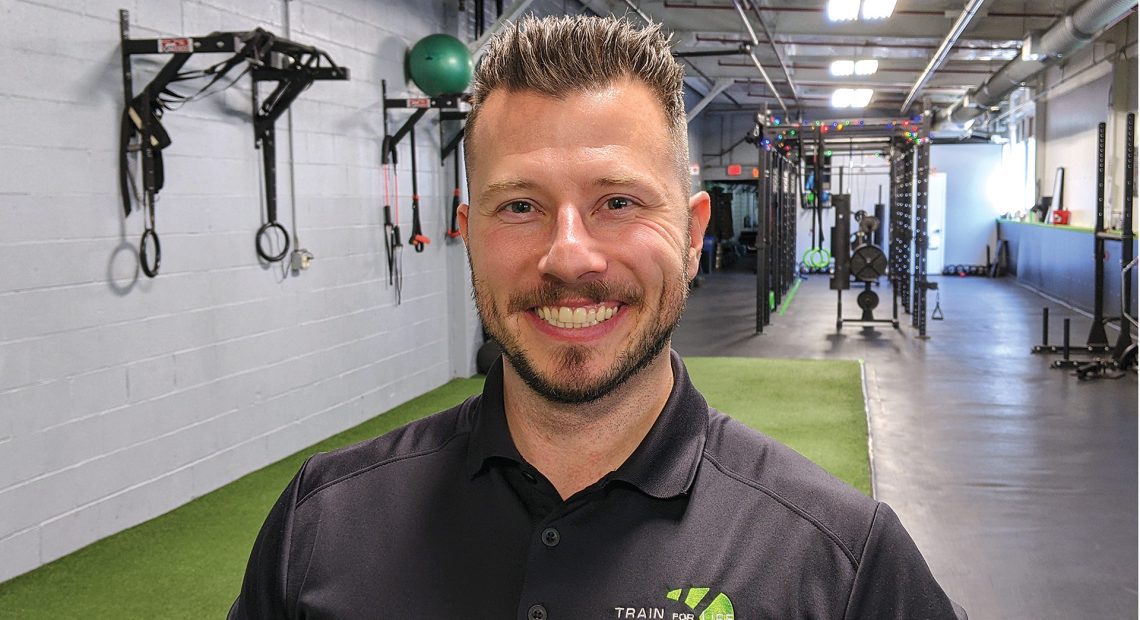
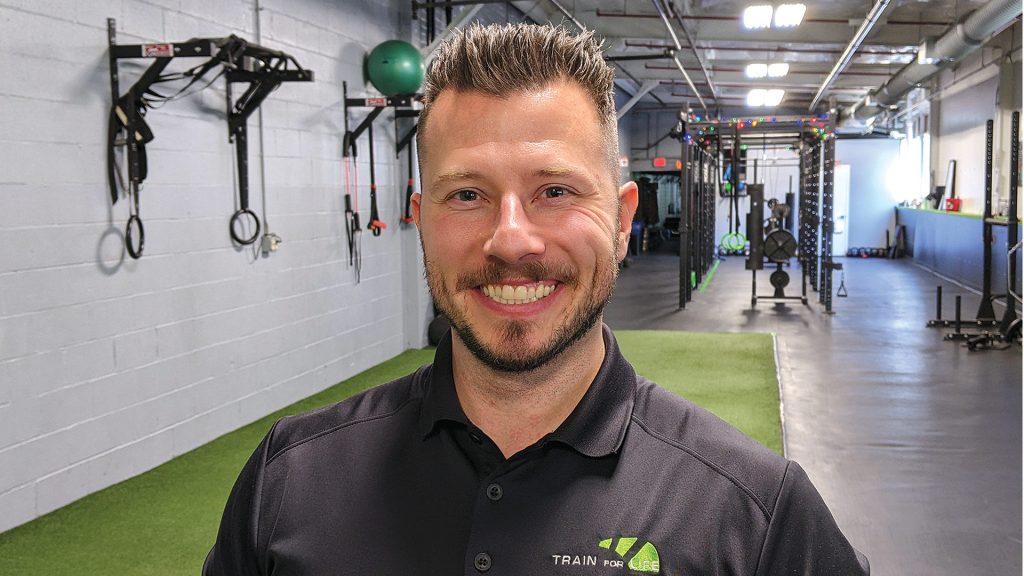
Drew McConaha says breaking a fitness plan into manageable steps is key to sticking to health resolutions.


Drew McConaha knows all about New Year’s resolutions. And he knows why so many of them fail.

In many cases, it’s a desire to do too much, too quickly, the owner of Train for Life in Chicopee said.

“When they’re setting those resolutions at the beginning of the year, most people want to do everything as fast as possible: ‘I want to get into the gym six days a week,’ or ‘I want to go on the latest diet craze.’ They want to go 100 miles an hour into that. But that doesn’t really work. Fitness is one of those things that needs to be a lifestyle change.”

At a time of year when people traditionally set goals for fitness, nutrition, and other types of wellness — and often leave them behind by February — area health experts told BusinessWest the same thing: starting small is key.

“Most everyone wants to set goals; they say, ‘I want to lose 10 pounds,’ or whatever,” said McConaha, who explained that he works with members to write those goals down, examine them, and then — this is key — setting small action steps to make them more manageable.

“When they’re setting those resolutions at the beginning of the year, most people want to do everything as fast as possible. But that doesn’t really work. Fitness is one of those things that needs to be a lifestyle change.”

“If you come to the gym three days a week for a year, after a year, you’re going to make a huge amount of progress,” he said. “But if you start out going to the gym five days in a row and you haven’t been exercising for 10 years, you’re very unlikely to get back there for week two, because you’re going to be so sore, and that’s unmotivating, because now you can’t move; you can’t go about your daily activities. Lots of times, that’s what derails people when they jump into something at the beginning of the year.”

That’s where having a coach can make a difference, he added. “We talk about smart goals all the time, having manageable, attainable, realistic goals. Having a very specific, small goal each day instead of focusing on the large goal — say, losing weight — will make it much more attainable.”

Dr. Kathy Mueller, who practices integrative medicine with Trinity Health of New England Medical Group, went even further, explaining a philosophy she shares with patients called ‘tiny habits,’ popularized by behavior expert and author BJ Fogg.

To start the journey toward changing a habit, she explained, “pick something that takes fewer than 30 seconds that builds toward the ultimate goal. Want to exercise in the new year? Instead of saying, ‘I’m going to the gym three times a week,’ try a tiny habit: ‘I’m going to put on my walking shoes,’ or ‘I’m going to put my gym bag in the front of the car.’”

The idea is that, by wearing walking shoes, someone is more likely to go for a walk, and by loading the gym bag in the car, they’re more likely to stop at the gym when out and about. And when they achieve those steps, they can add larger goals, always building on small victories, not frustrating failures, Mueller said. “Practicing tiny habits is clever because it’s built on success.”

In fitness goals, the goal is to move more, she said, so people should just start there. If they want to incorporate pushups, start with two — which often becomes five, then 10, and eventually maybe 50. Setting out a lunchbox by the coffee maker each morning might not lead to bringing a healthy lunch to work every day, but it might have that effect some days, meaning fewer fast-food runs each week.

“There’s this idea that one day you’re a smoker, and the next day you quit. But if you quit over four months, you still quit. Incremental steps work for a lot of people.”

Dr. Kathy Mueller

Dr. Kathy Mueller

“With nutrition, have one fruit or vegetable every time you eat. Want a bagel for breakfast? Great, but have fruit with it,” Mueller explained. “The idea is to anchor your tiny habits to something you’re going to do anyway.”

And for those who want to cut down their alcohol intake — which has risen, on average, for Americans during the COVID-19 pandemic — they don’t have to quit all at once, she added. “Have a glass of water with each beer. You’re still drinking and being social, but you’re cutting your alcohol intake in half.”


The How and the Why

It’s a common refrain among health practitioners: you don’t have to do everything; just do something. Even a 10-minute walk twice a day or one 20-minute walk per day can help someone reach a goal of 150 minutes of physical activity per week, said Patrick Schilling, manager of Cardiovascular Rehabilitation and Wellness at Baystate Health.

“We know physical activity feels good, improves sleep, and lowers stress, and taking care of your body may help you feel rejuvenated and will give you the extra energy you need,” he noted. “Don’t forget that children should also be reminded to stay active for at least an hour per day for optimal health. If you just can’t make it to the gym as regularly as you have in the past, you can try to keep moving in other ways. Don’t try to find that parking spot close to the mall entrance; instead, opt for one far away so that you will have to walk more. And take the stairs instead of the elevator or escalator.”

As an integrative medicine specialist, much of Mueller’s work is helping patients change habits and achieve lifestyle changes through complementary therapies. Some are dealing with chronic pain or other ailments, but most are trying to reach certain goals.

“Sleep is essential for our health and well-being, and getting a good night’s rest is important to help strengthen your immune system to fight infections, reduce stress, improve our mood, and to stay energized. Most adults function best with seven to eight hours of regular sleep.”

Dr. Karin Johnson

Dr. Karin Johnson

“Sometimes, people off more than they can chew. They decide to go to the gym for an hour three days a week, then life gets in the way, then it’s twice a week, then once, then the habit’s done,” she said, adding that it’s better to focus on little steps that then become bigger ones.

Take the notion that exercise isn’t impactful if it doesn’t get the heart rate up for an extended time. “That’s garbage. And one fewer cigarette is one fewer cigarette. It helps break a bad habit, as long as you have something to replace it with,” she said, adding that a good strategy is to delay how long you can go without one, and then keep extending that. “There’s this idea that one day you’re a smoker, and the next day you quit. But if you quit over four months, you still quit. Incremental steps work for a lot of people.”

McConaha said it helps many people to not only break down their goals into small, actionable steps, but actually treat those steps like appointments, not just vague intentions.

“If you’ve got a hair appointment, you’re going to show up. If you’ve got a dentist appointment, you’re going to show up at that time,” he explained. “A lot of people say, ‘I’m going to try to go to the gym tomorrow afternoon.’ Well, if you don’t have someone waiting for you there for that accountability, if you don’t have a specific appointment, it’s very easy for other things to get in the way.”

Just as important is understanding the ‘why’ behind a goal, he added.

You say, ‘hey, I want to start working out.’ But what does that mean to you? Why are you doing that? Why is that going to benefit you? How is that going to make you feel? Do you want to be around longer for your kids? Do you want to be able to do certain things you haven’t been able to do in the past? Adding that specific why behind what they’re doing makes a big difference.”


The Rest of the Story

Another golden rule for general wellness is to get plenty of rest, said Dr. Karin Johnson, director of the Baystate Health Regional Sleep Program

“Sleep is essential for our health and well-being, and getting a good night’s rest is important to help strengthen your immune system to fight infections, reduce stress, improve our mood, and to stay energized,” she explained. “Most adults function best with seven to eight hours of regular sleep.”

And any set of wellness goals should include taking care of mental health as well, which can especially suffer around and just after the holidays, said Dr. Stuart Anfang, vice chair of Psychiatry at Baystate Health.

“Don’t forget to take care of yourself emotionally as well as physically,” he urged. “Take relaxation breaks when needed; eat and drink in moderation; get plenty of sunlight, which helps avoid seasonal depression; avoid social isolation; and understand that you are not alone in feeling stressed. Volunteering and giving to others less fortunate is a great way to get perspective and feel better about your own situation and stressors.”

At the heart of every effective fitness or wellness plan is knowledge, McConaha said, as going to the gym with no plan or no information about the equipment will only lead to frustration.

“It’s easy to take on too much at once and feel defeated,” he told BusinessWest. “If you come in and do one exercise wrong, and your back doesn’t feel great after that, that’s one more obstacle to something that’s already very challenging for people.”

With the right — meaning realistic — plan, and the knowledge and commitment to follow it, anyone can make positive resolutions that don’t fall away by Groundhog Day, he added.

“Our bodies are meant to move, and no matter what age you’re at, there’s always something you can do,” he said, adding that he’s worked with people from age 7 to 97. “You can walk. You can do very scaled versions of exercises. It’s just matching up the right plan with the right person. The older people get, the more they feel they’re too old to start, but they’re not too old to do the right thing for them, whatever that might be.”