Culture Clash

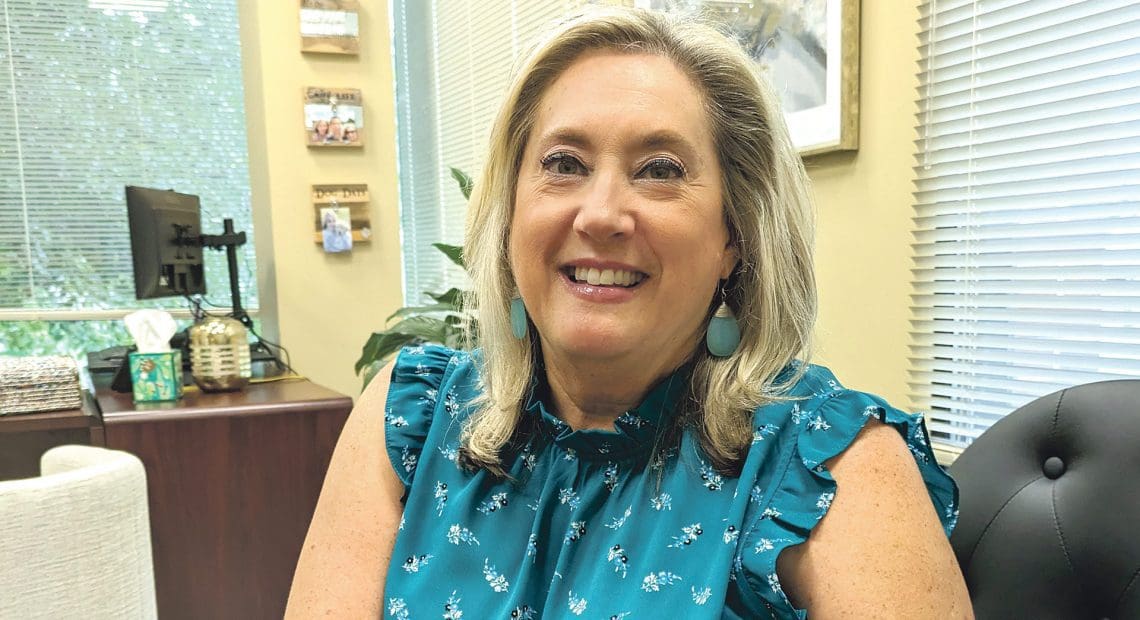
Allison Ebner says everyone — including the older cohort of workers — is benefiting from workplace changes being driven by Gen Z and younger Millennials.
‘Zoomers to Boomers.’
That’s how folks at the Employers Assoc. of the NorthEast (EANE) refer to the four main generations that populate today’s workforce: Baby Boomers, Gen X, Millennials (sometimes referred to as Gen Y), and Gen Z.
“We are at a point where, nationally, almost 50% of our workforce is Millennials and Gen Zs. And there are pluses to having all those different perspectives,” said Allison Ebner, EANE president. “You have the thought processes of the Baby Boomers and the X-ers who have all the knowledge, and they are transferring that knowledge to the Ys and the Zs, but the Ys and the Zs are bringing in new, creative ways to do things and tackle projects.”
It’s a diversity of experiences and perspectives from which savvy companies can benefit by considering their varied needs and expectations, said Cindy Ryan, head of Human Resources for MassMutual, one of the region’s largest employers.
“While you can’t make sweeping assumptions about any generation, it is safe to say that there are different drivers and motivators for employees across different age groups,” she told BusinessWest. “In our eyes, the best way to address these differences is creating a workforce where we place trust in our people to do their work thoroughly and do that work in an environment that best suits them.”
For MassMutual, she said, that includes offering a diverse range of benefits that support mental, physical, and financial health; providing flexible working dress codes and arrangements; and delivering opportunities for networking and internal connection. “We’re always seeking to increase the breadth and flexibility of what we offer, ensuring our benefits meet employees’ diverse needs at each stage of life.”
Ebner agreed that generational differences certainly become evident around employee benefits.
“We moved away from that cafeteria model of benefits where we had a bunch of different things, and you could sign up for whatever was important to you, to more standard benefits packages,” she noted. “But now, we’re kind of back to asking, ‘what are you looking for?’
“When we’re building our employee value proposition,” she went on, “what’s going to retain my staff? What’s going to help me attract and retain the best talent? And one area where there are some distinct differences generationally is employee benefits, for sure.”
“You have the thought processes of the Baby Boomers and the X-ers who have all the knowledge, and they are transferring that knowledge to the Ys and the Zs, but the Ys and the Zs are bringing in new, creative ways to do things and tackle projects.”
For instance, she said, Millennials and Zoomers express more needs around both mental health and financial education.
“There’s a lot of mistrust from the younger generations in the stock market and what’s going on economically today,” Ebner said of the latter. “They’ve lived through 9% inflation, they know that going to the grocery store is costing them a ton of money, they know they can’t buy a house right now with mortgage rates so high. So giving them a financial holistic wellness picture is important, and what a lot of them are looking for.”
At the same time, older workers can also benefit from that kind of perk, she added, in the same way that younger workers have driven the shift toward remote work and hybrid schedules that everyone now enjoys.
“It’s interesting to see some generational trends, and they’re not the same for everybody,” said Irene Costello, director of Operations at the Markens Group, an association-management firm in Springfield. “It’s forced us to become more flexible in our policies: remote work, time-off policies, reducing dress-code expectations. Earlier this year, we changed our time-off policy at the beginning of the year to adjust to the growing requests. A lot of organizations are doing it as well; some organizations are getting super flexible.”
It’s easier for a company like Markens, a small business where most staffers are under age 40, to make those changes, Costello added, but for larger companies with a more prominent cohort of Boomers and X-ers, it can be difficult to change the culture, alter policies around work-life balance, and … well, be flexible at all. “From the employer’s side, it’s challenging.”
For this issue’s focus on business management, BusinessWest delves into the different work styles and expectations of the four main generations in the workplace, how they influence each other, and why their differences can be positive.
Change Agents
It should be noted that two other generations are in play as well: the pre-Boomer Traditionalists, the youngest of whom are entering their 80s, and some of whom still work; and Gen Alpha, the oldest of whom are in high school and starting to seek summer jobs and internships.

Cindy Ryan
“While you can’t make sweeping assumptions about any generation, it is safe to say that there are different drivers and motivators for employees across different age groups.”
That’s quite a broad spectrum of employees working together, often with dramatically different expectations and work styles. While broad stereotypes hardly fit everyone, Traditionalists and Boomers are known for appreciating structure, stability, and clear expectations, while Gen X and Millennials are more apt than their older counterparts to prioritize work-life balance, collaboration, efficiency, and, as noted, benefits that speak to personal wellness.
“With older generations, there’s some aversion to change, some difficulty adapting to new technologies and new processes overall,” Costello said, adding quickly that there’s plenty of crossover in what different workers want. “We have a very young staff. I’m 29 years old. But even though I’m younger, I love to see people coming into the office five days a week, to be visible.”
What many employers are dealing with now, in a post-COVID era where companies in many sectors are struggling to recruit and retain talent, is the fact that the growing cohort of younger workers has some leverage to stand up for their own needs and desires, Ryan said.
“As such, we can start to draw different conclusions as to what different generations want from their employers,” she added. “Younger generations, for example, often feel more drawn to work for a company that is committed to bettering their communities.”
As a result, she explained, MassMutual offers a volunteer time-off policy that allows employees to take paid volunteer days to support local initiatives they are passionate about. “In the grand scheme, offering benefits and perks that meet the needs of different generations are now major points of emphasis for employers who are looking to attract and retain talent.”
That’s true of other benefits as well, Ryan said, noting that MassMutual offers benefits that support mental, physical, and financial health; provide flexible working arrangements; and deliver opportunities for networking and internal connection, all priorities for younger workers, not to mention a bereavement-leave policy where employees can define who their loved ones are.
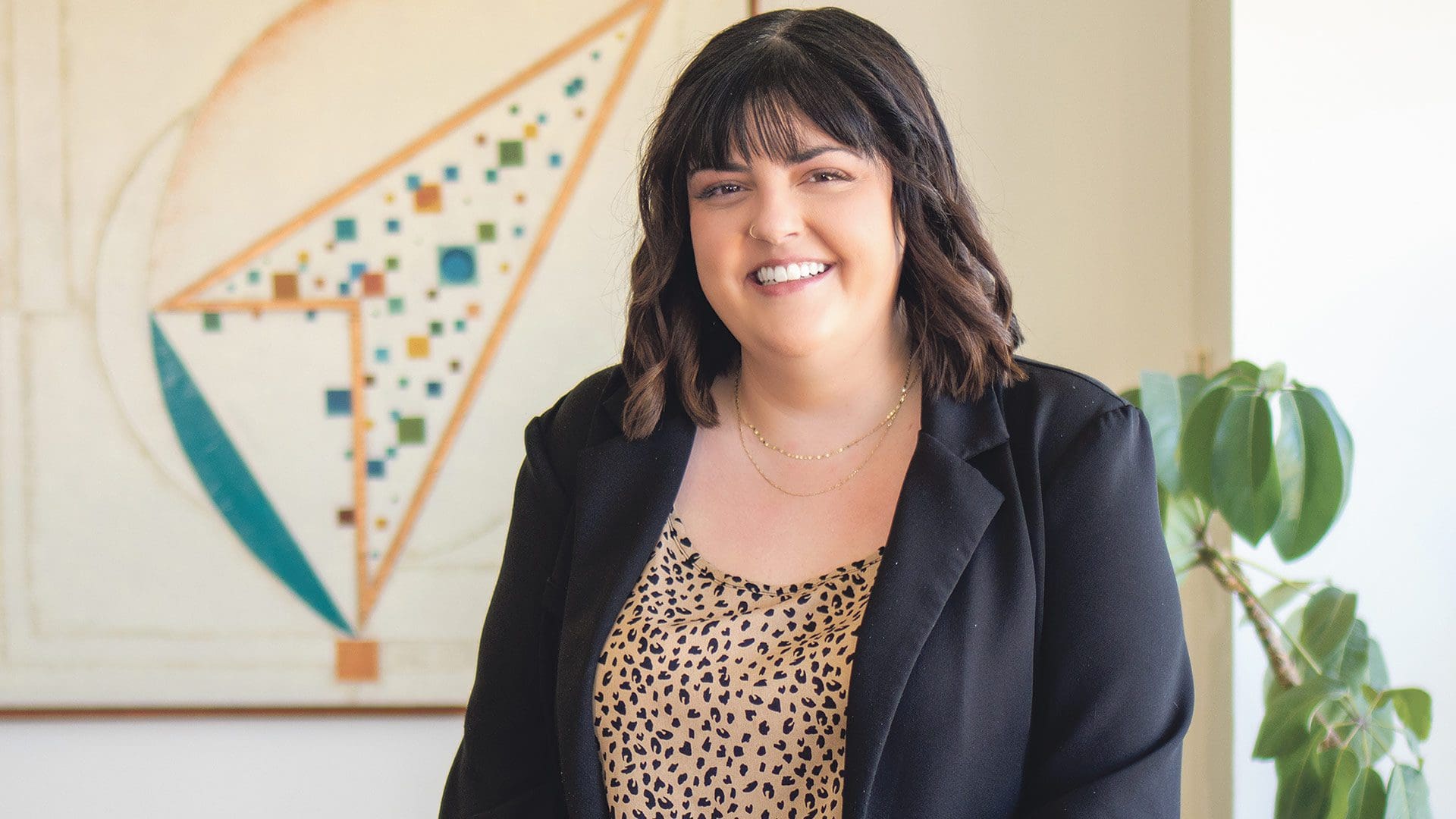
Irene Costello says open communication in the workplace can create a healthier environment for workers of all ages.
“Holistically,” she added, “it’s about supporting all employees’ well-being in ways that are meaningful to them.”
And, as noted earlier, many changes driven by the youngest workers wind up benefiting everyone.
“The X-ers and the Boomers have learned that, ‘hey, we’re getting this better life-work balance because these younger generations have demanded it. And employers can’t throw down the 60-hour work week demands anymore,’” Ebner said. “So it’s a gift that has been given to them by these younger generations.”
At the same time, she added, the pendulum may be starting to swing back in some sectors — layoffs at large technology companies have been in the news recently, for example — which may reduce some of that employee leverage and change the power dynamic.
One interesting — and, to some, concerning — generational trend, Costello noted, is the reluctance of Zoomers and younger Millennials to engage in chambers of commerce and other business associations.
“Boomers, Gen X, and maybe older millennials are of the mindset where it’s the right thing to do. Someone goes and buys a membership to be part of the chamber of commerce, part of an industry association, paying dues to the industry as a whole,” she explained.
“Now, with the younger generations, folks are looking for a tangible takeaway. Is it a résumé builder? Is there something of value at this conference, some credentialing? Instead of just going to build community, what am I getting from this networking?”
That’s an unprecedented shift, Costello added.
“It’s getting harder and harder to keep growing association memberships because of that. And it’s causing everyone in associations to reconsider their offerings: ‘what do you want? What can we do to change the offerings to keep you as a member, as a part of this community?’”
Though it’s difficult to pinpoint the exact reasons, she suspects people feel life is more hectic and stressful post-COVID, and don’t necessarily want to commit time to a two-hour board meeting at the end of the day.
“The younger generation is prioritizing work-life balance, mental health, and their personal lives over what they’re giving to the community, what they’re putting into work,” she told BusinessWest. “They’re protecting and advocating for themselves and their own interests rather than looking at it from a community perspective.”
Let’s Talk
When it comes to managing multiple generations, Ebner said, EANE has been asked to develop some unique trainings, like etiquette training, and how to come back to the office and dress properly. “You know, the yoga pants usually aren’t allowed in the office; flip-flops are a big no-no.
“And we’re getting asked to go back to the basics for some organizations — how to have a conversation with someone when you’re sitting in a room with them. We’re all very bold on the phone, by email, via Zoom. But we’re not in a room with someone watching body language. We need to relearn some of these skills, like how to have a respectful conversation. Being polite is something we’re kind of retraining people on.”
Speaking of communication, teaching the different generations how to talk to one another is critical as well — and can strengthen workplace culture.
“Different generations will naturally bring different perspectives to the table, which is especially important when building a workforce that reflects the markets and communities that we serve,” Ryan said. “This is why we’re always working to create an environment where all feel seen, heard, valued, and respected.”
One innovative initiative is MassMutual’s reverse mentoring program, where members of its Young Professionals Business Resource Group mentor senior executives, she added. It’s a concept that’s been discussed at EANE as well.
“We have some employers that are doing reverse mentoring,” Ebner said. “They’re pairing a Z with a Boomer or an X-er, and they’re having them work together on projects. So, instead of the Boomer mentoring just one way to the newer employee, who’s just coming into the work world, it’s kind of a collaborative back and forth, where the Z is also teaching the Boomer a few tricks. It’s very positive.”
That doesn’t diminish the importance of the traditional mentorship model, of course.
“I have somebody on my team who’s been there for 30 years in association management,” Costello said. “I’m her manager, but she comes into the office and teaches me something every day. I turn to her in confidence. I say, ‘I trust you. Obviously, you’ve done this for 30 years. You have a different perspective.’
“You want everyone on the team to question everyone else — to question everything, in a good way,” she added. “Does this make sense? Is there a better way to do this? Why are we doing this? Why are we still doing this?”
The alternative is a non-communicative culture than can quickly turn toxic, where everyone is putting up walls, Costello noted.
“When no one wants to hear somebody else’s perspective, that’s emotionally draining; no one enjoys it, and no one stands to benefit from it on either side. We have a really strong focus on our culture and that full-circle communication, giving and receiving feedback, no matter who we are, no matter what position we’re in or what project we’re working on.”
Ebner agreed that communication is crucial in effective business management.
“You need to pay attention to the differences, but also don’t think we’re so different that there aren’t some similarities. When employers are struggling, I always say, focus on the things that we have in common. Focus on building that respectful workplace culture where you’ve got one-on-one conversations happening between employee and manager.”
And make sure younger workers have a voice, she added, because at most companies, they’ll be the majority of the team soon, if they aren’t already. “That’s your strategic secret weapon right there: building cross-generational work teams, so they can collaborate and bring the best of all the different thought processes together.”
In other words, bridging the generation gap brings benefits across the board — from the company’s office culture to its bottom line.