Daily News

NORTH ADAMS — MountainOne Insurance Agency Inc. has been recognized as a Top Insurance Employer by Insurance Business America for the fifth time. The company previously earned this title in 2019, 2021, 2022, and 2023.

This award is based on several key factors, including MountainOne’s workplace culture, employee benefits, and dedication to overall job satisfaction. It was also recognized for its commitment to fostering career growth and implementing forward-thinking strategies that position the company at the forefront of industry.

“Our inclusion in the 2024 Top Insurance Employer list once again is a testament to the culture we’ve built,” said Jonathan Denmark, president and chief operating officer of MountainOne Insurance. “Our goal has always been to create a work environment that supports our Mountaineers professionally and enriches them personally. By offering meaningful benefits, opportunities for career advancement, and a culture that values every individual, we’ve been able to attract and retain some of the top talent in the industry.”

Daily News

GREENFIELD — Greenfield Cooperative Bank (GCB) announced the launch of its new Homegrown Heroes mortgage product, designed to provide special financing options for police officers, EMTs, RNs and CRNs, firefighters, school employees, and military personnel. This initiative aims to recognize the contributions of these dedicated individuals to their communities and offer them a helping hand in achieving their homeownership dreams.

The Homegrown Heroes program offers a variety of benefits, including reduced interest rates for eligible borrowers, making their monthly mortgage payments more affordable; and the flexibility to choose between a fixed-rate mortgage with predictable monthly payments or an adjustable-rate mortgage that offers potential interest-rate savings initially but may fluctuate over time.

“We are committed to supporting the brave men and women who serve our communities every day,” said Jane Wolfe, executive vice president – Residential Lending at GCB. “The Homegrown Heroes product is our way of honoring their service and making the dream of homeownership more accessible.”

To learn more about the Homegrown Heroes mortgage product and eligibility requirements, visit greenfieldcoopbank.com or contact a local GCB branch.

Daily News

NORTH ADAMS — MCLA will host the annual Constitution and Citizenship Day with a presentation for students and community members on Tuesday, Sept. 17 at 4 p.m. in Murdock Hall, Room 218. The federal holiday was established in 2004 and first celebrated in 2005, recognizing the signing of the U.S. Constitution on Sept. 17, 1787 in Philadelphia.

The presentation, “Understanding the Electoral College: Insights into 2024’s Presidential Election,” will be led by MCLA Associate Professor of Political Science Samantha Pettey. The lecture is free and open to the public.

Pettey will explore the historical origins and current controversies of the Electoral College, including the disparity between the popular vote and electoral outcomes and the influence of swing states. It will also cover best practices for interpreting polling data to help students and attendees critically analyze ‘hot-take’ headlines. A Q&A session addressing these topics and others will follow the presentation. This lecture is designed to empower students of democracy with the knowledge to understand and influence elections.

“Polling can be tricky to interpret responsibly, especially in the context of the Electoral College,” Pettey said. “The lecture will focus on some tips for reading and interpreting electoral news with polls and will allow time for questions about the broader election.”

Pettey has been interested in politics from a young age and has worked in the History and Political Science Department at MCLA since 2016. She teaches a range of courses on American government but is most passionate about teaching and researching Congress, state and local politics, and women in politics. Her current research focuses broadly on female candidates. She is particularly interested in the impact institutional features and demographic characteristics have on state-level candidate emergence and success.

Daily News

AGAWAM — OMG Inc., a leading global manufacturer and supplier of specialty fasteners and products for commercial roofing and residential construction applications, is hosting an open house at its Agawam headquarters, located at 153 Bowles Road, on Saturday, Sept. 21 from 9 a.m. to 2 p.m.

The free event is open to the public and will include guided riding tours of its manufacturing facility, demonstrations of the company’s innovative products and construction technologies, a job fair with on-the-spot interviews, and a variety of activities for children, including pumpkin decorating, face painting, a bounce house, and a photo booth. Vendors will be onsite offering breakfast and lunch during the event.

“OMG has changed the face of residential construction and commercial roofing through product innovation and advanced manufacturing, which we plan to showcase at this event,” said John Ashe, company president. “We offer one of the best places to work in Western Massachusetts, with an inclusive culture focused on our employees’ experience and career growth. We hope everyone in the area will bring their families on September 21 to see why Agawam is the fastener capital of America.”

OMG is headquartered in Agawam and operates two divisions, OMG Roofing Products and FastenMaster. The company, a wholly owned subsidiary of Steel Partners Holdings LP, operates manufacturing facilities in Massachusetts, Illinois, Minnesota, and North Carolina.

Community Spotlight

Community Spotlight

Allyson Manuel

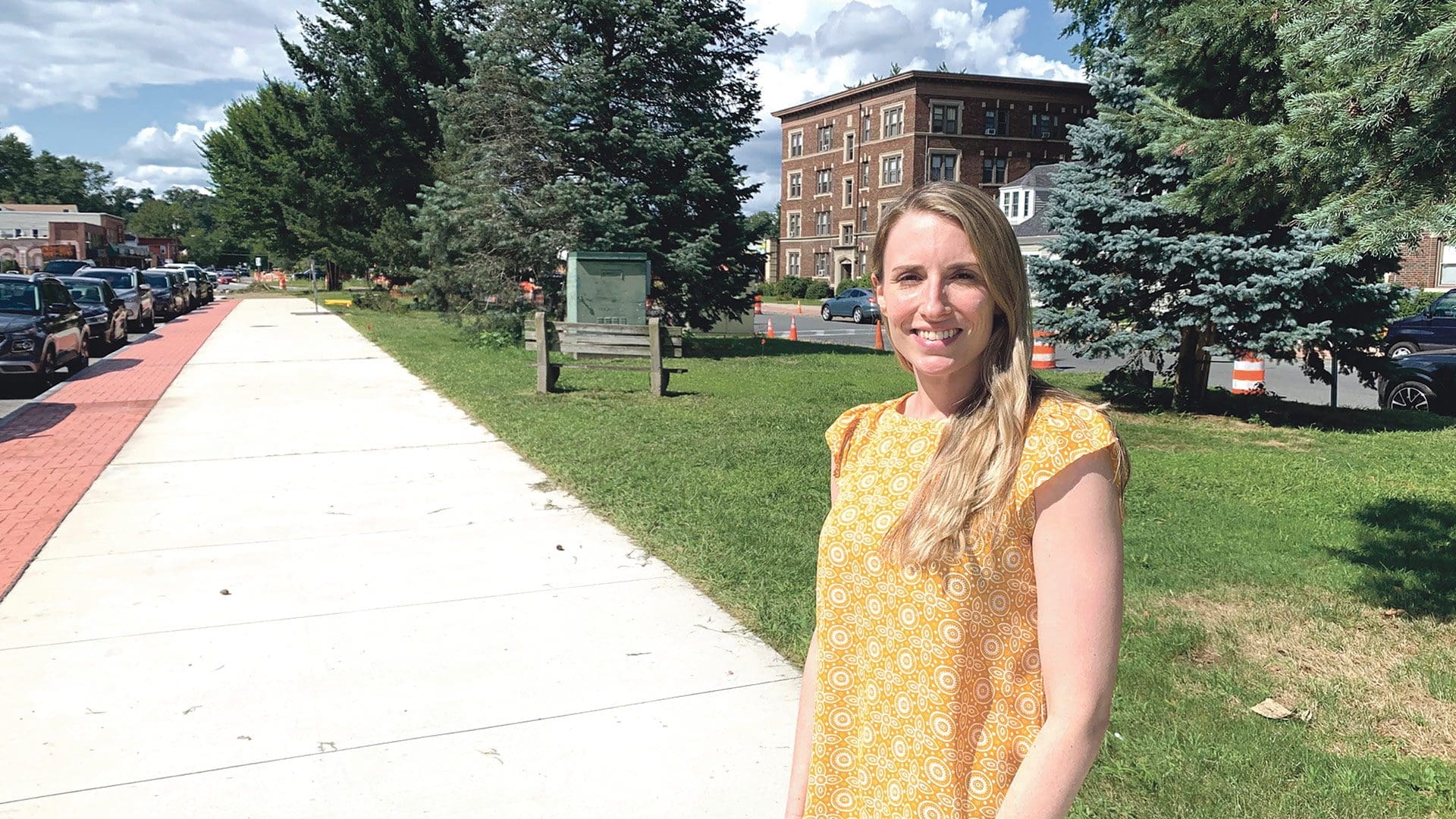
Allyson Manuel, seen here at one of the new sidewalks at the common on Elm Street, says there is renewed vibrancy in the downtown area.

Tyler Saremi calls it “cross-pollination.”

That’s how he chose to describe how the various businesses, government offices, and cultural institutions, especially the Majestic Theater, clustered in the downtown are supporting one another in a way that is bringing new vibrancy to the area and effectively turning back the clock in West Springfield’s central business district.

“It’s nice to see the downtown become a downtown again,” said Saremi, vice president of Saremi LLP, a multi-faceted company that redeveloped the former headquarters for United Bank at 95 Elm St. into Town Commons, a mixed-use facility that includes, on its ground floor, Tandem Bagel and West Side Bar & Grill, two eateries that are drawing more people into the downtown area and effectively extending their stays.

Indeed, more people are now arriving an hour or two before the shows at the Majestic for dinner at some of the eateries in that area, such as the Italian restaurant bNapoli — and, on some nights, especially when there is live entertainment at West Side Bar & Grill, sticking around after the shows.

“It’s fantastic cross-pollination in the downtown right now, and it’s beautiful to see; it’s all working,” he said. “You have people coming to West Side Bar & Grill before a show at the Majestic, and then there are people walking over when we have live music on weekends — they’re walking to their cars from bNapoli, and they’re saying, ‘I saw the music; I just wanted to come in and have a drink.’ Everything is complementing other businesses, and it’s exciting to watch the downtown grow.”

Julie Quink, managing principal with the accounting firm Burkhart Pizzanelli, which has been based in a former elementary school on Park Street for more than 25 years now, has also noticed more energy — and widespread general improvement — in the community’s downtown.

She referenced everything from new businesses like Tandem Bagel and West Side Bar & Grill, as well as comprehensive infrastructure improvements to the roads in the downtown and the signature town common as reasons why the downtown is staging what would be considered a comeback.

“There is a strong need, but there is just not much land that can be developed, and when we do propose something, it’s not welcomed.”

“There are a lot of new businesses, which is good for everyone,” she said. “And there is more vibrancy in the downtown area.”

Mayor Will Reichelt, now in his ninth year in the corner office, said this downtown transformation is just one development the community is celebrating as it also marks its 250th birthday — an ongoing party that has included fireworks, a revitalized Taste of West Springfield, and a 5K, and culminated with a parade on Aug. 24.

Indeed, the town that calls itself a city is also celebrating (if that’s the right word) some important infrastructure projects — on Elm Street, Memorial Avenue, and (soon) on Riverdale Street — that are bringing some inconvenience now but substantial benefits … well, down the road.

Also in the infrastructure category is a long-sought and highly anticipated solution to the rail crossing at Front Street near the border with Agawam — a flyover that will alleviate traffic backups in that area and make it more attractive for economic development (more on that later).

And while there is progress on many fronts, there is less of it in one identified area of need — housing, said Reichelt, noting that, while this community has many assets, an abundance of developable land is not one of them.
Tyler Saremi

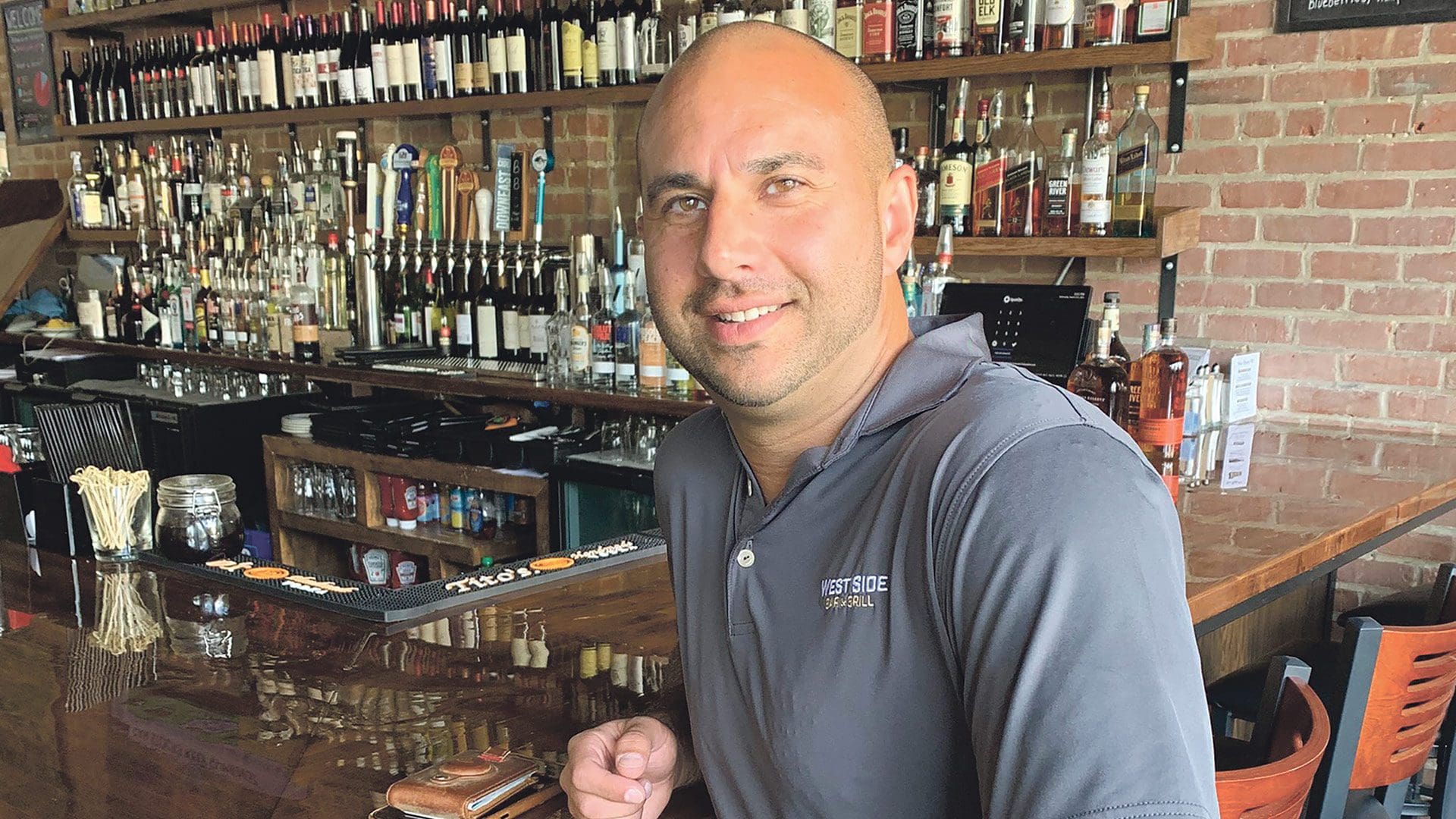
Tyler Saremi sits at the bar at West Side Bar & Grill, one of the many new businesses creating what he calls “cross-pollination” in the downtown.

“There is a strong need, but there is just not much land that can be developed, and when we do propose something, it’s not welcomed,” he said, adding that options are being considered, including very preliminary talks with the owners of the Cinemark theaters on Riverdale about the massive back parking lot, which might be ideal for a public-safety complex and some mixed-use housing.

Still, there are a few housing projects in various stages of development, including a condominium development at the site of a nursery on Piper Cross Road, as well as another project being undertaken by Saremi LLP — redevelopment of a former nursing home on Westfield Street into multi-family housing, most likely of the over-55 variety.


When a Plan Comes Together

As plans for redevelopment of 95 Elm St. were being drawn up, Saremi said, it was viewed as a three-year project.

Instead, it took maybe 18 months to secure tenants to fill the property’s three floors, he explained, adding that the property is now home to a variety of tenants, including the Saremi company, which has several components, including a real-estate arm and a student health-insurance venture; Tandem Bagel and West Side Bar & Grill; Kindred at Home; the Worcester-based Seven Hills Foundation and Affiliates, which has made Westside its Western Mass. hub; and an engineering company.

These businesses are bringing people back to that property to work years after United Bank left, he said, adding that these workers, coupled with those already downtown — there are dozens of businesses along Park and Elm streets, as well as West Springfield’s town offices — have created a critical mass of people that not only support other businesses, but generate more overall vibrancy.

“When the bank took off and left all those offices vacant, it was very quiet in the downtown,” he noted. “Now, I can look out my office window at any time, and there’s people walking around; there’s foot traffic. People are going into Celery Stalk, walking out and eating on the picnic tables he has outside, or they’re going back to the town offices — it’s great to see.”

Quink agreed, and, like Saremi, she said the infrastructure work taking place downtown, which includes a roundabout at the former intersection of Elm and Westfield streets, new sidewalks, new lighting, and considerable work to make the town common more accessible and walkable, have helped make the area more of a destination.

“The mill buildings are sandwiched between the Westfield River and the train tracks, and you have to get over the train tracks to access them right now. So having that alternative access opens them up to a lot of different uses they’re not suitable for now.”

“The city is doing a good job of making the town common more appealing,” she noted. “They have events there, like the Taste of West Springfield and events for veterans; it’s a great asset for the community.

“The construction has been really challenging for some small businesses on Elm Street,” she went on. “But the end result is going to be good; we just have to get through this period.”

As noted earlier, this renewed vibrancy downtown is one of the many emerging storylines in West Springfield. Others include the year-long 250th celebration, which has brought residents and businesses together to mark the past and contemplate the future; a new Chick-fil-A going into the site of the former Friendly’s on Riverdale Street; and, of course, the upcoming 17-day Big E, which will bring more than 1.5 million people to the community, clogging many of its roads, but also providing a huge boost to its many hotels and other hospitality-related businesses (see story on page 15).

There’s also ongoing infrastructure work along the two main commercial arteries — Riverdale Street and Memorial Avenue. With the latter, a project due to be finished in 2026, crews are undertaking underground utility work, said Reichelt, adding that, in the next construction season, concrete work from the Memorial Bridge to the border with Agawam will be completed, along with new curbing and lane reconfigurations.

On Riverdale Street, utility work is also being undertaken, with repaving coming over the next few years, he said, adding that, while it is inconvenient to have both major arteries torn up at the same time, the town will benefit when the projects are completed.


Train of Thought

Then there’s the planned flyover at the rail crossing at Front Street, which will alleviate traffic backups that have been a problem for decades, the mayor said. Announced late last month, the project, which is expected to cost at least $20 million, came about after extensive and sometimes contentious talks between representatives of Agawam and West Springfield, CSX, state transportation officials, and U.S. Rep. Richard Neal.

The fix will not only alleviate traffic tie-ups, but eliminate a public-safety concern, said Reichelt, noting that ambulances now take alternate routes, not knowing if they will be delayed by a parked train.

Allyson Manuel, West Springfield’s town planner, agreed, noting that the flyover will also facilitate economic development in the area, especially with an old mill complex that has sat mostly vacant in part because of accessibility issues created by moving or parked trains.

“The mill buildings are sandwiched between the Westfield River and the train tracks, and you have to get over the train tracks to access them right now,” she said. “So having that alternative access opens them up to a lot of different uses they’re not suitable for now.”

West Springfield at a glance

Year Incorporated: 1774
Population: 28,835
Area: 17.5 square miles
County: Hampden
Residential Tax Rate: $14.81
Commercial Tax Rate: $29.80
Median Household Income: $40,266
Median Family Income: $50,282
Type of Government: Mayor, City Council
Largest Employers: Eversource Energy, Harris Corp., Home Depot, Interim Health Care, Mercy Home Care
* Latest information available

Like almost all communities in the region, West Springfield is in need of more housing, said Manuel, adding that, unlike most of those cities and towns, it does not have much open land on which to build.

Which is why a provision within the $5.16 billion Affordable Homes Act recently signed into law by Gov. Maura Healey, which will allow in-law apartments in all communities, could have a substantial impact in Westside, where they are currently prohibited.

“We’ll be looking at how to regulate that, and we obviously have some work to do on that because they are currently not allowed; it’s a pretty big change,” Manuel said, adding that, in the few weeks since the housing bill was signed, there have been numerous inquiries.

Meanwhile, there are some projects in various stages of development. These include the condo project on Piper Crossing Road; Heartstone Village, a 55+ project off Birnie Avenue, a project that has been years in the making; and preliminary talks concerning repurposing the former Cowing School at the corner of Park and Elm streets for housing, especially senior housing.

There’s also the former nursing home on Westfield Street, which has been vacant for more than 20 years and in recent years had become an eyesore, Saremi said.

“There was an opportunity to acquire it, and we decided to take it on,” he told BusinessWest, using those words to help explain the size and scope of the challenge and the fact that few, if any, were willing to take on this property.

“It was a nightmare cleaning that place out; it was very labor-intensive — crews had to wear full-body suits with respirators,” he said while detailing the level of deterioration of the building. “There were trees growing on the roof. Now, the interior is completely clean, and we’ve had a zone change go through.”

The most common-sense reuse is housing, either affordable or 55+, Saremi said, adding quickly that, while architectural plans are being developed, funding help will be needed from the state or federal government to take what is likely to be a $7 million project off the drawing board and make it reality.

“The cost to build has just skyrocketed,” he said, adding that he is hoping that the housing bill will include funds for projects like this one.

“We’re ready to go,” he said of the project, which would include 51 mostly efficiency and one-bedroom apartments. “We just need some sort of government assistance on the cost to build.”


Features

Ride of Passage

Gene Cassidy

Gene Cassidy is hoping for less rain in 2024 — and the continuation of a trend whereby presidential election years have been good for large fairs.

Gene Cassidy says presidential election years are generally good ones, attendance-wise, for large fairs like the Big E.

As he explains it, the general population, bombarded with information about candidates, issues, and polls, is looking for a break from all that.

“They want to get out and get away from the news,” said Cassidy, president and CEO of the Big E, adding that this year, people may really want to get away from the news, considering the seemingly heightened tensions around this year’s race.

If they do, that would certainly help the Big E — which will take place Sept. 13-29 — bounce back from a somewhat down year in 2023 when it comes to attendance, due to seemingly relentless rain that started early in the fair, almost wiped out the middle weekend, continued through the 17-day stretch, and led to something Cassidy had never seen in his more than 30 years of involvement with the fair.

“It rained so hard one day, the midway never opened, and that had never, ever happened before,” he told BusinessWest as he quickly did some math in his head. “Let’s see, that’s 30 fairs times 17 days … that’s 510 days; one day out of 510, the midway was closed.”

Pulling out a white book in which he keeps detailed information about the weather, attendance, and other matters, Cassidy noted that the fairgrounds received 1.7 inches of rain the first Monday of the Big E’s 2023 run, and then on the middle weekend (Friday, Saturday, and Sunday) it received 5.1 inches of rain, a half-inch more than the region typically receives, on average, for the entire month of September.

“It rained so hard one day, the midway never opened, and that had never, ever happened before.”

Overall attendance was down about 11% from the year prior, he said, noting that it would have been a sharper decline had there not been a rise in attendance at night, generally after the rains had subsided. And had it not been for a 33% increase in the price of general admission — from $15 to $20, the first such increase in 13 years — 2023 would have been much worse for the Big E.

But enough about last year’s fair.

Fair food

Fair food is one of the perennial draws of the Big E.
Photo courtesy of the Big E

The Big E has certainly turned the page, and Cassidy and others charged with presenting the event are buoyed by everything from those election-year stats to early results from other fairs around the country, to the sense that the weather can’t be as bad this year as it was last.

It can’t, right?

Cassidy said he can’t concern himself with the extended forecasts, or even what the three weather apps on his phone are telling him. He focuses on what he can control, specifically the product he presents those 17 days. And by product, he means everything from the music to the rides on the midway to, of course, the food.

He believes there’s a solid lineup — some new food offerings as always, and a mix of music that ranges from Ludacris to America; Chubby Checker (back by popular demand) to Average White Band — and that 2024 will be a year to maybe, just maybe, meet his long-set goal of topping the attendance of the Minnesota State Fair (more on that later).

For this issue, we look at the 2024 fair and how things are looking up — hopefully, not at more clouds and raindrops.


Fair Game

Speaking of presidential elections … each year Cassidy has been at the helm of the Big E, he has sent a handwritten letter to the sitting president inviting him to attend that year’s fair.

The letter generally goes out in late winter, he said, adding that the only president who has even responded to the missives — and he sent his regrets that he could not attend — is Donald Trump. (The only president to attend the Big E, and this was well before Cassidy’s time, was Dwight Eisenhower in 1953, who wanted to see how one of the cows he bred fared in competition.)

In keeping with tradition, Cassidy sent a letter to President Biden. He hasn’t heard back and doesn’t expect to, especially with recent events. Gov. Maura Healey is expected to make an appearance, though, as she did last year, Cassidy said, adding quickly that he is more focused on the general population than elected officials.

And he expects this year will be a solid one for the fair, despite widespread concerns about the economy and inflation, some rising COVID numbers, and ever-increasing competition for the family’s leisure and entertainment dollar.

“I won’t say the Big E, and fairs in general, are recession-proof. I don’t want to jinx myself; I know people are feeling the pinch,” Cassidy said, while hinting strongly that the fair can withstand economic headwinds, and has historically. “People may postpone a vacation, but they won’t postpone attendance at the fair.”

That track record includes the ticket-price increase, which, he noted, was met with little pushback.

“If you plug the $15 admission ticket in 2010 into an inflation calculator, it actually translated to $20.65 in 2023. We loathe raising our ticket prices, which is why we waited so long to do it, but it saved us; had we not had the increase in the ticket price, we would have had red ink last year.”

“If you plug the $15 admission ticket in 2010 into an inflation calculator, it actually translated to $20.65 in 2023,” he told BusinessWest. “We loathe raising our ticket prices, which is why we waited so long to do it, but it saved us; had we not had the increase in the ticket price, we would have had red ink last year.”

What the fair can’t withstand is rain like last year, which pushed attendance down to 1,427,234, off considerably from the 1,603,000 in 2022, the second-highest attendance on record, behind only 2019 at 1,629,000, Cassidy noted, adding, again, that the weather cannot be controlled.

The music lineup can be, but putting together a slate of performers is becoming increasingly difficult, due primarily to mounting competition for acts from casinos and other venues, and the subsequent rising demands from in-demand performers.

“Buying entertainment gets more difficult annually,” he said. “When I say difficult … prices are off the charts. And the type of talent that we foster today in the entertainment business is not unlike hiring people for entry-level jobs.

rides to enjoy

Kids of all ages will find rides to enjoy at the Big E midway.
Photo courtesy of the Big E

“Everyone wants a corner office coming out of college, and they want to work at home in their pajamas,” he explained, adding that, in the entertainment world, performers want what amounts to the equivalent. “They want gobs and gobs of money, and, because of the ubiquity of casinos everywhere, they’re used to having beautiful green rooms, lots of air conditioning, climate-controlled arenas, and more.”

The fair cannot provide those things, but it has still managed to put together a strong slate. The lineup for the Big E Arena includes Ludacris, Dustin Lynch with special guest Dylan Scott, Phil Wickham, America with special guest Jim Messina, the Brothers Osbourne, Public Enemy, and Big Time Rush. The Court of Honor Stage, meanwhile, will feature Asia, Debby Boone, Herman’s Hermits, and Wang Chung, among many others.

“We originally booked Ludacris back in 2008, but he was viewed at the time by the police chief as being so controversial that we can to cancel him,” Cassidy recalled. “There’s a new police chief, and time has softened Ludacris.”

As for food … Big E officials will keep the public in suspense a little longer, but there will be several new vendors and 44 new food offerings, with vendors featuring $3 items on Mondays, to be called ‘3-buck bites.’

Overall, with its lineup of entertainment, food, some new rides, new float animals, and more, the Big E is expected to follow the lead set by fairs that have already had their 2024 runs, said Cassidy, who closely monitors what’s happening elsewhere.

“Wisconsin closed recently; they had a bang-up fair and set a record at the same time as they were dealing with extraordinary heat — over 100 degrees for four days of the fair,” he noted. “Iowa opened strong … these numbers bode well.”

The Minnesota State Fair comes later, and, as noted, Cassidy has long made it a goal to top that fair in attendance.

“They always beat us — they’re number 4, we’re number 5,” he said in reference to the country’s largest fairs. “We’ve been chasing Minnesota going way back to the very first fair in 1916. I want to challenge people to come to the fair so we can displace them.”


Meet Me Midway

Returning to his thoughts about election years and the attendance bump they generally provide, Cassidy acknowledged that, in this day and age, it’s very difficult to actually escape the news.

But people are likely to try, and the fair can provide that needed respite, he said, adding that this quality is one of many that can, and hopefully will, add up to a year where attendance records are approached and even threatened, and Minnesota’s numbers might even be eclipsed.

That’s if Mother Nature cooperates more than she did last year.

Business Management

They Need to Be Current, and Employers Need to Abide by Them

“Less is more.”

Those three words comprise one of the many forms of advice that Elaine Reall has for business owners and managers when it comes to what’s written in employee handbooks.

She says it should apply to most all content, but especially references to laws and regulations regarding the workplace, including the state’s Paid Family and Medical Leave Act.

“Employers go on, page after page, explaining a very intricate statute,” said Reall, chief legal officer for the Springfield-based Royal Law Firm. “They don’t need to do that; they need to say, ‘you’re eligible under Massachusetts law for the Paid Family and Medical Leave Act, and here’s the hyperlink to the government’s site, which will take you through the entire process.’”

Reall has lots of other advice on handbooks, regarding everything from how they should be updated regularly — especially when there are important changes in laws or seismic shifts in the workplace — to how managers shouldn’t borrow a template off the internet, to … well, whether a small business even needs a handbook.

Elaine Reall

Elaine Reall

“A lot of employers don’t realize that the first or second document that a plaintiff’s attorney in the employment area looks for is the guidebook, handbook, or whatever is being put out there by the employer.”

Indeed, she noted, handbooks are increasingly being viewed as contracts.

“A lot of employers don’t realize that the first or second document that a plaintiff’s attorney in the employment area looks for is the guidebook, handbook, or whatever is being put out there by the employer,” she said. “And they’re looking to see if there are implied contractual commitments that they can use, because Massachusetts does recognize that you can create an implied contract not just with the whole handbook, but with portions of the handbook.”

For this reason, if a business is going to have a handbook, and if it is going to have content on certain subjects, its managers need to be sure they get it right, she said.

John Gannon, an employment-law specialist and partner at Springfield-based Skoler Abbott, agreed. He noted that handbook policies come in two categories — those for which employers are legally obligated to have a policy, such as the Bay State’s earned sick time law, and those that are recommended.

“You don’t have to have them, but you should have them,” he said, adding that policies in this category include everything from remote work (more on that later) to dress codes.

Overall, a handbook should help get everyone on the same page — figuratively, but also literally — and also protect the employer, said Gannon, adding that handbooks are not contracts, but they are, or should be, written in such a way to help protect the employer if there are complaints or legal actions taken by employees.

“One of the reasons you have a handbook — not the principal reason, but one of the reasons — is if there is some kind of litigation and someone is challenging the reasons they are separated from employment,” he explained. “They might say they were fired because of their age, for example; the employer says, ‘no, you violated this policy.’ It’s helpful to have a policy in writing, so you can say, ‘this is the policy, and this is how you violated it.’

John Gannon

John Gannon

“If you have it in writing, that’s good. If you don’t have it in writing, that’s bad. And what’s worse is to have the wrong policy in place, something that’s old and outdated.”

“If you have it in writing, that’s good. If you don’t have it in writing, that’s bad,” he went on. “And what’s worse is to have the wrong policy in place, something that’s old and outdated.”

But — and this is a big but — if an employer is going to put something in the handbook, then it must abide by it, or the company could open itself up to trouble, said Gannon, who has seen this happen on many occasions.

“The best advice I can give is to put it in writing — and follow it,” he said, adding that this is one of the key reasons why training of managers is so important. With training, they’re better able to know the policies and abide by them.

Reall agreed. “There’s a lot of litigation where handbooks show up and are used against employers,” she explained. “You don’t want to require your employees, in the context of your handbook, to do X or Y without recognizing that the courts will recognize that and say, ‘reciprocity — you’re binding their hands here. What about you, employer? If you’re going to make these requirements, then it’s up to you to uphold them.’”

For this issue and its focus on business management, we take an in-depth look at handbooks and how to make sure they do what they are created to do.


The Write Stuff

“Telecommuting is not designed to be a replacement for appropriate childcare. Although an individual employee’s schedule may be modified to accommodate occasional childcare needs, the focus of the arrangement must remain on job performance and meeting business demands. Prospective telecommuters are encouraged to discuss expectations of telecommuting with family members before entering a trial period as the employee should not undertake to provide primary care for a young child during at-home working hours. If a young child will be home during the employee’s at-home working hours, some other individual should be present to provide primary care.”

That’s a passage from a handbook that Gannon, who recommends handbooks for companies with six or more employees, helped craft for a client. It’s an example of being both current — remote work, while not necessarily new, has certainly become much more prevalent since the pandemic — and thorough, leaving little ambiguity when it comes to the employers’ wishes, policies, and expectations.

Indeed, the section on telecommuting in this particular handbook covers everything from eligibility to equipment; from safety to time worked, specifically with regard to overtime and those not exempt from the requirements set in the Fair Labor Standards Act. “Hours worked over those scheduled require the advance approval of the telecommuter’s supervisor,” it reads. “Failure to comply with this requirement may result in the immediate termination of the telecommuting agreement and other disciplinary action.”

The rise of remote work and the many issues associated with it provides a reminder that handbooks need to be updated regularly, said Gannon, suggesting every two years. And if that yardstick is used, the updates should be relatively minor in nature. If they aren’t, well, the opposite is true.

“If I reviewed someone’s handbook in 2002 and they bring it to me in 2024, there may be one or two new policies to add and a few things we need to tweak,” he said. “But it’s quick if you stay on top of it. I had someone who just sent me their handbook, which hadn’t been looked at since 2017, which means it’s missing quite a few things and may have policies that don’t even apply anymore.”

He said there are many topics, as well as changes in the social and workplace landscape, that should be addressed in handbooks — everything from the Bay State’s Crown Act, which expands the definition of discrimination based on race to prohibit discrimination based on natural and protective hairstyles, to social media and the need to use gender-neutral pronouns with all policies.

Overall, there are many topics an effective handbook should cover, Gannon said, listing anti-harassment policies, the state’s sick-time and family-leave laws, meal breaks, what he calls a ‘code of conduct’ outlining proper behavior, and a workplace-violence policy, preferably one stating that the employer has zero tolerance for such violence “because that’s a scary thing these days.”

Reall agreed, but noted, again, that companies, and especially smaller ones, should think at least twice about whether they need a handbook and, if they determine they do, what goes in it.

“I tend to see more problems created by handbooks with smaller companies than positive outcomes,” she told BusinessWest. “It’s a tool, but it’s a tool that, if you don’t use it right, can burn you.”

She added that many of these smaller companies look for a template — a free handbook that shows up on Google — or copy another company’s handbook.

“Years ago, maybe not so much now, everyone used to steal MassMutual’s,” she recalled. “It was about 300 pages long and incredibly detailed; it read like an insurance contract, and it was absolutely what you didn’t want if you had 25 employees.”


Bottom Line

What employers do want is something that suits their sector and their specific business, Reall went on, adding that, if a company if going to have a handbook, it should enlist the help of an expert. And that employer should make it clear that the handbook is just a guide and that the employer reserves the right, unilaterally, to change anything in the handbook at any time.

“It’s got to look like an employer document and not an agreement between the employer and the employee,” she went on, adding that a handbook can, indeed, be a valuable tool — but only if it’s done right.

“You need to make sure that whoever crafts it knows what they’re doing. If you’re a small employer and you have no HR department, and you’re going to look at your handbook about once every 10 years, that’s very dangerous, and you would be best off not putting things in writing that will come back to haunt you.”

In short, when it comes to handbooks, employers should remember that less can certainly be more.

Law

Why Compliance Is Crucial for Business Owners

By Russell F. Anderson, Esq. and James F. Martin, Esq.


The Corporate Transparency Act (CTA) is a federal initiative to limit money laundering, tax evasion, and other illicit activities that took effect on Jan. 1, 2024. The CTA requires many businesses and their owners to register with the U.S. Treasury’s Financial Crimes Enforcement Network (FinCEN).

Russell Anderson

Russell Anderson

James Martin

James Martin

Persons and companies that violate the CTA’s reporting requirements by failing to report at all or by providing false information to FinCEN may be subject to civil penalties of $500 for each day the violation continues and may also risk additional criminal fines and imprisonment.

The reporting requirements of the CTA mainly apply to smaller entities that might otherwise slip under the federal government’s radar. These companies are classified as having a higher risk of abusing anti-money-laundering rules. While there have been legal challenges to the CTA, FinCEN has indicated that it will continue to enforce the law while these challenges are ongoing.

The CTA states that FinCEN must collect and maintain a federal database for beneficial ownership information (BOI) of companies. Unless there is an applicable exemption, all entities that are formed or registered to do business in the U.S. and have registered with the Massachusetts secretary of the Commonwealth’s office (or a similar office in a different state) need to register on the BOI database.


Exemptions

The CTA provides 23 different categories of exemptions, which include exemptions for entities that already make substantial public disclosures, such as financial institutions and tax-exempt charities. Most notably, there is also a more general exemption for larger organizations that have a physical presence in the U.S., employ more than 20 full-time employees, and report more than $5 million in annual revenue to the IRS.

No filing will be required if an entity is exempt, but compliance with the criteria will be determined on a continual basis. For example, if an entity drops below the 20-employee threshold, a prompt filing will be required.


Reporting

FinCEN’s reporting portal can be found at boiefiling.fincen.gov. Entities that are not exempt from BOI reporting must provide the following information for each “beneficial owner” of a company: full legal name, date of birth, current residential or business address, and a copy of an acceptable identification document (such as a driver’s license or passport).

A beneficial owner is considered to be an individual who exercises substantial control over the entity or owns or controls at least 25% of the ownership interests of the entity. Most C-suite officers (for example, CEOs, CFOs, COOs, and general counsel) will fall under the category of possessing substantial control over the entity.

To ensure the purpose of the CTA is being fulfilled, ownership is generally reported at an individual level and not through another reporting company. Thus, the reporting owner may be someone who is several levels up in a company’s organizational chart if holding companies are used.

Reporting ownership interests held by trusts may pose a challenge. A trust by itself is not subject to the reporting requirements under the CTA. However, if a trust holds a 25% or more ownership interest in an organization that is subject to the CTA, the trust’s grantors, trustees, and beneficiaries may all be required to be reported, depending on the specific terms of the trust.

For entities formed in or after 2024, at least one company applicant must also be identified for each entity. A company applicant includes the individual who controls the formation filing with the applicable secretary of state or the individual who actually submits the filing.


Compliance Is Key

For entities formed in 2024, the initial report must be filed within 90 days of formation. All entities that were created before the start of 2024 have until Dec. 31 to submit a BOI report to FinCEN. If there are changes in reported beneficial ownership information, the entity must file an updated report to FinCEN no later than 30 days after the date of the change.

Given the CTA’s draconian penalties, it is advisable to make your CTA registration a high priority and complete the required filing as soon as possible.


Attorneys Russell F. Anderson and James F. Martin are members of the Business and Finance practice at the law firm Pullman & Comley. Martin is based in the firm’s downtown Springfield office.


Law

Salary Transparency

By Michael McAndrew, Esq.


In an effort to increase transparency and equity in wage payment, the Massachusetts Legislature passed, and Gov. Maura Healey signed into law on July 31, H. 4890, “An Act Relative to Salary Range Transparency.”

The act is an extension of employee protections provided in the 2018 Massachusetts Equal Pay Act, a statute that made it unlawful for employers to discriminate on the basis of gender in the payment of wages and to prohibit employers from preventing, discouraging, or reprimanding employees who share wage information. Under the new act, covered employers no longer can keep secret from their employees and prospective employees pay information for positions within their company. The act has wide-ranging reporting and disclosure requirements of salary ranges.

The act’s provisions are twofold. First, it requires that employers disclose pay-range information to current and prospective employees. The act applies to ‘covered employers,’ which are defined as “any employer, public or private, that employs 25 or more employees within the Commonwealth.”

Michael McAndrew

Michael McAndrew

“Under the new act, covered employers no longer can keep secret from their employees and prospective employees pay information for positions within their company. The act has wide-ranging reporting and disclosure requirements of salary ranges.”

Under the act, an employer must disclose the pay range for positions listed in job postings, disclose the pay range for positions offered to current employees as promotions or transfers, and disclose pay-range information to current employees upon request. The act prohibits employers from discharging or retaliating against employees for exercising their rights under the act.

Employers will be required to start complying with these provisions on Oct. 29, 2025. The attorney general is required to conduct, within six months of the act’s passage, a public-awareness campaign regarding the requirements of the act.

Second, the act sets forth a system whereby employers are required to submit annual wage-data reports to the state secretary. The exact type and timing of the report that must be filed with the secretary depends on the size and type of the employer.

For private employers that employ 100 or more employees in the Commonwealth at any time during the prior calendar year that are subject to federal filing requirements of EEO-1 data reports, the employers must submit a copy of the EEO-1 data report to the secretary annually by Feb. 1. Massachusetts employers that are required to file EEO-1 data reports will be required to make their first report under the act by Feb. 1, 2025. Other types of employers, such as public employers, face different filing deadlines and requirements under the act.


Next Steps

After employers submit copies of their EEO data reports, the secretary has until April 1 to report this information to the Executive Office of Labor and Workforce Development. The Executive Office is then required to aggregate the information it receives from the secretary and post it on its website. It is important to know that, while aggregated salary information regarding certain professions will be available on the Executive Office’s website, individual employers’ EEO data reports will not be published. In fact, the act expressly provides that these records are not to be considered ‘public records.’

While this is administratively tedious, employers in Massachusetts must ensure that they comply with both the disclosure and reporting requirements of the act, or they will face heavy administrative fines. The attorney general has exclusive jurisdiction to enforce the wage-disclosure and annual reporting provisions in the act and can impose fines for an employer’s violation of the act and may obtain injunctive or declaratory relief for this purpose.

For a first offense, the employer will be given a warning. For a second offense, the attorney general can impose a fine of up to $500, and for third offenses, fines can be up to $1,000. For fourth and subsequent offenses, penalties are issued pursuant to Massachusetts General Laws chapter 149, section 29C, a violation of which can result in fines between $7,500 and $25,000.

For the first two years that the act is in effect, prior to levying fines for violation of the act, the attorney general is required to provide notice of the violation and give the subject employer two business days to cure the violation. For purposes of the attorney general’s enforcement of job postings, if multiple job postings are made after an initial job posting that violates the act, all posts for the same position that violate the act that are posted within 48 hours of the initial post will be considered a single violation.

Unlike the Massachusetts Equal Pay Act, “An Act Relative to Salary Range Transparency” does not provide for an employee’s private right of action for their unlawful discharge or retaliation by their employer for exercising their rights under the act. An employee may be able to assert such a claim under other discrimination laws or other causes of action. Further guidance on this and many other questions raised by the new law may be given once the provisions of the act become fully effective.


Michael McAndrew is an attorney in the Litigation and Employment Law practices at Bulkley Richardson.

Law

A New Wrinkle from the Supreme Court

By Benjamin M. Coyle, Esq. and Isabelle Fergus


A recent Supreme Court case ruling may have you making some important changes to life-insurance policies owned by your company. In early June, the Supreme Court unanimously ruled that proceeds from life-insurance policies used to buy out a deceased owner’s shares of a business are not offset by redemption obligations, which effectively results in the value of the company being increased.

In Connelly v. United States, the Supreme Court affirmed the lower court’s ruling that the obligation of the company to redeem shares at fair market value does not offset the value of life-insurance proceeds and that life-insurance proceeds must be included in the company’s valuation. The decedent’s estate argued that this decision made by the court will make succession planning increasingly difficult for closely held corporations, and he is right.

Benjamin Coyle

Benjamin Coyle

“The question here is whether Crown’s contractual obligation to redeem Michael’s shares at fair market value offsets the value of life-insurance proceeds committed to funding the redemption. The answer is no.”

In summary, Thomas Connelly, as executor of the estate of Michael P. Connelly Sr., sued the U.S. for a refund of the estate taxes assessed against Michael Connelly’s estate. Michael and Thomas Connelly owned a building-supply corporation known as Crown C Supply (“Crown”). Michael owned a 77.18% stake in the company, while Thomas owned the rest. The brothers had a buy-sell agreement that required the company to be valued as of the date of death of a shareholder.

Crown purchased a $3.5 million life-insurance policy on each brother’s life. The life insurance was to be used by Crown to buy the deceased brother’s shares if the other brother did not want to buy the shares personally. Thomas determined that he did not want to buy Michael’s shares, and therefore Crown was obligated to do so. This is where the valuation of Crown comes into play.

Thomas argues that Crown was worth $3.86 million before the redemption, and Michael’s shares were worth $3 million. He also claims that Crown was worth $3.86 million after Michael’s shares were redeemed. In the court’s eyes, both of Thomas’s claims cannot be true.

In granting summary judgment to the IRS, the lower court reasoned that it found that the stock-purchase agreement did not affect the valuation and, furthermore, that a proper valuation of Crown must include the life-insurance proceeds that were used toward redemption because it is seen as significant asset of the company, making Crown not worth $3.86 million, but $6.86 million.

The question here is whether Crown’s contractual obligation to redeem Michael’s shares at fair market value offsets the value of life-insurance proceeds committed to funding the redemption. The answer is no. The Supreme Court affirms that Crown’s contractual obligation to redeem Michael’s shares did not diminish the value of those shares because redemption obligations are not seen as liabilities that reduce a corporation’s value for federal estate tax.


Impact of the Ruling

So, how does this recent decision affect companies that have existing stock-redemption agreements? It means that the business must review their existing agreements and the manner in which the company and shareholders are obligated pursuant to its terms.

It is essential to review these agreements with your advisors, including your accountant and attorney. There are various options that may be utilized, each of which have significant consequences, and should not be done without consultation with your advisors, as the decisions will have an impact on the business and estate planning.

When looking into life-insurance policies, you may want to consider a cross-purchase agreement where the shareholders will purchase life insurance on each other. In doing so, this ensures insurance proceeds will go right to purchasing the deceased shares without the estate’s tax values rising. Although this was the better option for Thomas and Michael’s situation, this type of agreement requires each shareholder to pay premiums for the insurance policy, creating a risk that one may not be able to pay it. While this type of arrangement may be beneficial in some respects, it may have negative consequences as well.

Another key step is to regularly get valuations to see potential tax impacts and to see current market values and tax regulations. Consulting tax and legal experts on this matter will help to ensure that your corporate agreements align with all current laws and regulations. Along with talking to legal experts, you should also expect to plan for future tax obligations, whether that means setting aside funds and/or developing financial strategies to cover potential tax liabilities that could potentially rise from share redemptions or corporate obligations.

By taking steps to review agreements and evaluate life-insurance policies by consulting with experts, business owners can manage their estates better and minimize tax liabilities, all while establishing effortless ownership transitions within their business.


Ben Coyle is a shareholder with Bacon Wilson who focuses much of his practice in the areas of municipal law and litigation, while also handling probate and business matters. Isabelle Fergus is an intern at Bacon Wilson who is attending the Isenberg School of Management at UMass Amherst.

Home Improvement

Shingle Minded

Adam Quenneville stands in his warehouse

Adam Quenneville stands in his warehouse, which will expand soon when he moves office functions into a new building.


Adam Quenneville will soon open a new building next door to his South Hadley headquarters and move all the office functions there.

One benefit will be an expansion of warehouse space in the current building that currently stores about $500,000 worth of materials — basically, everything but the shingles that get delivered directly to project sites.

“When you see a roof, all you see is the shingles,” the president of Adam Quennville Roofing and Siding told BusinessWest. “There’s a whole layered system underneath the shingles. You have the edging, flashing, nails — all the stuff that is unseen, underneath the roof. The shingles are just the top coating. If you buy all this stuff in small pieces and they deliver it, it costs 30% more.

“Early on, the whole job got delivered, and we paid extra for all the small stuff,” he added. “They were delivering shingles with all this stuff.”

By stocking all that in-house, he said, customers are the ones who see those savings. “We’re buying in bulk to save money, and we pass on the savings to the customer. It’s a nice feeling to know we’ve kept our prices down because of that.”

Plenty of customers are benefiting from that efficiency; Quenneville typically completes four to six roof jobs every day, plus a couple of roof shampoo jobs, across a territory that encompasses all six New England states, the Albany region, and occasionally beyond. Part of the reason why is the ability for customers to get a quote without a visit.

“Now with the software we have online, if someone lives three, four hours away, we don’t have to visit them to price them out. We can use satellite imagery and give them a price.”

“Now with the software we have online, if someone lives three, four hours away, we don’t have to visit them to price them out,” he said. “We can use satellite imagery and give them a price, versus sending a guy there, who wastes a whole day to go there, look at it, measure it, give them a price, and come back. You can save people money by not having to do that.”

Residential and multi-family homes are still Quenneville’s bread and butter, though he does have a commercial division, with one crew that tackles flat roofs for businesses. And the company has even taken housing jobs on military bases as far-flung as North Carolina, South Carolina, Texas, and New Mexico. “That’s helped add some volume to the business,” he said.

So the business has certainly evolved in some ways over its 27 years. Another will be evident this month, when Quenneville sets up at the Big E for the first time ever.

“It’s more than 250 hours with four people there, promotional items, advertising around it. It’s a major undertaking,” he said, explaining that he’ll raffle off a free roof, a free siding job, a free roof shampoo, and a free Roof Maxx treatment. “Obviously, there will be thousands of people who don’t win, and we’ll re-market them with discounts to see if they want to buy a service from us.”


Down and Dirty

Roof Maxx is a low-pressure treatment derived from soybean oil that penetrates aged asphalt shingles and restores the flexibility necessary to facilitate daily expansion and contraction, Quenneville explained, noting that he’s been offering that service for 15 years.

“We spray it, and within a half-hour, it reaches into the asphalt, which is dry. If you think of asphalt on a road, you know that, when it goes down, it’s nice and pliable. Over the years, the sun gets it, and it cracks. It’s the same thing with shingles.”

Meanwhile, he’s been offering roof shampoos, a cleaning that removes algae and dark streaks from the roof, for 13 years. He said dirty roofs detract from curb appeal, reduce the ability to reflect sunlight — leading to super-heating the attic — and, increasingly, are being targeted by insurance companies, which see stains as a risk that can impact a roof’s integrity, and are instructing homeowners have them cleaned.

Both shampoo treatments and Roof Maxx aim to extend a roof’s life, which brings up the question, isn’t that cutting the legs out from Quenneville’s main business of installing roofs?

“We’re doing the right thing for the customer,” he said. “If it only needs a cleaning or a treatment, they can get five or 10 more years out of it. And it often fits the customer’s budget. A lot of people that don’t do these treatments and services will tell the customer, ‘I’m not going to clean your roof; you’ve got to replace it.’ And oftentimes, many roofs don’t need to be replaced. They can get five or 10 more years out of them.

“You can make a decision based on what kind of situation you’re in,” he went on. “You might be in a situation where you need five or 10 more years. Sometimes we deal with older customers, and they hear about a 30- or 50-year roof, and they say, ‘listen, I’m 85 years old. I don’t care about 50 more years.’ And we tell them we can get them five or 10, and they love it.”

That’s one way doing the right thing, as Quenneville calls it, can also be a competitive advantage.

“If someone else is trying to get them for 20 grand, we’re 25% of that cost to treat it. So we do a lot of those. It’s just doing the right thing for the customer and giving them options.”

Whether it’s a roof installation or a treatment (or siding, gutters, windows, or doors), the wide reach of Quenneville’s crews — typically within a five-hour drive — offers plenty of business opportunity, and homeowners aren’t charged extra for those miles. The company also charges the same rate for all customers, whether the project is sited in a wealthy town near Boston or a rural community where home values are much lower.

“Your price per square foot is the same,” he told BusinessWest. “And if you live in your home and we put a roof on it, we can guarantee it for the rest of your life.”


Slow and Steady

Since striking out on his own at age 25 after working in his father’s business, Quenneville, a BusinessWest 40 Under Forty honoree in 2009, has seen business steadily grow over the years, and now employs about 75 people between sales, service, office, and crews.

And while roofing is decidedly hard work — one of the three most dangerous jobs in the world, along with coal mining and deep-sea fishing, he noted — he has never had trouble finding workers to grow the company further, even today, at a time when businesses in many sectors are struggling to find help.

“I don’t like extremes; I like the nice, slow, steady growth,” he said. “I always say, we’re better today than we’ve ever been — we’re operating the best we’ve ever operated — but tomorrow, we’re going to get even better. We have meetings every week to talk about our processes and what we can do to make them better.

“At the end of the day, it’s just delivering the best customer experience we can, so that it’s done safely and seamlessly, giving them options to pay for it, and having a service team that’s there to back it up. It’s pretty simple.”

Technology

Convenience Over Security

Digital wallets — like Apple Pay, Google Pay, and PayPal — are projected to be used by more than 5.3 billion people by 2026. While these wallets promote increased security over traditional payment methods, reliance on outdated authentication methods and prioritizing convenience over security leaves digital wallets vulnerable, according to new research led by computer engineers at UMass Amherst.

“What we have discovered is these digital wallets are not secure,” said Taqi Raza, assistant professor of Electrical and Computer Engineering and an author on the paper. “The main reason is that they have unconditional trust between the cardholder, the wallet, and the bank.”

In the normal digital wallet ecosystem, users start by inputting their credit or debit card number, called the primary account number (PAN), into the digital wallet. The user’s identity is authenticated as the rightful cardholder with a piece of information, such as a ZIP code or the last four digits of their Social Security number.

Raja Hasnain Anwar

“If the banks are trying to move all of their payment platforms digitally, they need to put in more effort to make that secure. They cannot just rely on existing technology to take care of it.”

Then, whenever a purchase is made, the wallet hides the PAN and shares a ‘token’ with the vendor. The vendor attaches the token to the transaction. This information goes back through the bank’s payment network, converting the token back to the PAN. The bank then settles the payment with the vendor on behalf of the customer without ever revealing the PAN to the vendor.

Unfortunately, there are ways that bad actors can circumnavigate this system to make purchases with other people’s credit cards. The major U.S. banks and digital-wallet companies impacted by this are described in the paper. These companies were informed of the study findings prior to its publication and given ample time to make necessary security improvements. The researchers used their own cards to complete their tests, and no fraudulent activity was performed in these security tests.

First, there is the issue of the initial authentication. “Any malicious actor who knows the [physical] card number can pretend to be the cardholder. The digital wallet does not have sufficient mechanism to authenticate whether the card user is the cardholder or not,” Raza said, emphasizing that existing authentication methods can easily be bypassed.

Another issue is that, once a victim reports their card stolen, the banks only block transactions from a physical card, not ones made through a digital wallet. Banks assume that their authentication system has sufficient security to prevent attackers from adding someone else’s card to their wallet, which, as Raza points out, is not the case.

Taqi Raza

Taqi Raza

“We found the banks give more priority to convenience than security. Security is taken for granted because they believe that the user-device verification being used is sufficient for wallet security. It’s not.”

Once stolen card numbers are saved in a digital wallet, it is virtually impossible for the cardholder to deactivate them. “Even if the cardholder requests a card replacement, banks do not re-authenticate the cards stored in the wallet,” Raza said. “What they do is they simply change the virtual number mapping to the new physical card number.”


Case in Point

Here is a fictional example. The victim’s credit card number ends in 0123. An attacker adds 0123 to their digital wallet and starts making purchases. Again, digital wallets work by sending a virtual number to the vendor, so vendors receive the virtual number ABCD and take this number to the bank to get payment associated with account 0123.

The victim discovers the fraudulent payments and asks the bank to issue a new credit card. The bank sends a new card with the number 4567 and, on the back end, remaps the virtual number: ABCD no longer links to 0123; it now links to 4567. The wallet automatically starts showing the new card to its user without any verification for the new card to be updated in the wallet. Vendors then go to the bank with ABCD, which has now been linked to 4567, the new and active number, and the purchase goes through.

The researchers also tested this loophole on the digital wallet side of the equation and found similar vulnerabilities.

“We want [the digital wallet companies] to take some responsibility as well because they are at the forefront of how these transactions happen,” said Raja Hasnain Anwar, a doctoral candidate in electrical and computer engineering and lead study author. “We want them to have solid coordination. That’s the whole point of the paper: there’s not. There’s a lack of coordination.”

He added that many of these issues stem from new features offered by the banks. “For example, you could share your card within a family — one card could be added to multiple mobile phones. Or, if you have a Netflix subscription, the credit card company doesn’t want you to lose that subscription, so they will keep on charging your card, even though that card is locked. If the banks are trying to move all of their payment platforms digitally, they need to put in more effort to make that secure. They cannot just rely on existing technology to take care of it.”

As Raza noted, “it’s security versus convenience. And we found the banks give more priority to convenience than security. Security is taken for granted because they believe that the user-device verification being used is sufficient for wallet security. It’s not.”

While this specific loophole has been resolved, researchers still recommend following security best practices: turn on email notifications when a card is added or removed from the wallet, turn on transaction alerts for credit cards, regularly check credit card statements, and review devices linked to credit cards through the bank’s web portal or mobile app account settings.

This work was done by researchers at UMass Khwarizmi Lab, led by Raza.