Daily News

HOLYOKE — PeoplesBank is now a seven-time winner of the Boston Globe’s Top Places to Work award.

Amy Roberts, executive vice president of Human Resources at PeoplesBank, suggests that the bank’s emphasis on ensuring all associates have the support they need to succeed is the key.

“HR is really the facilitator of the people side of business and trying to make sure that anyone in the organization feels like they have the support they need,” Roberts said. “That goes for both managers and associates. How incredible is it to work in a place where you know you have people who support you and are behind you?”

To that end, PeoplesBank is constantly in touch with its associates through surveys and regular town meetings that encompass the whole organization. The bank also introduced the CARE (Collaboration, Accessibility, Reliability, Empathy) initiative, which enabled it to establish the structures and standards necessary to be much more deliberate about the service it provides to its customers and associates.

“The best employers pay attention to the many ways work changes — and the many ways it stays the same — and figure out how to keep people engaged and motivated through it all,” said Katie Johnston, the Globe’s Top Places to Work editor.

Top Places to Work recognizes the most admired workplaces in the state as voted on by the people who know them best — their employees. The survey measures employee opinions about their company’s direction, execution, connection, management, work, pay, benefits, and engagement. Top Places to Work rankings are based on confidential survey information collected by Energage, an independent company specializing in employee engagement and retention, from nearly 68,000 employees at 323 Massachusetts organizations.

“The rigorous Energage/Boston Globe survey was very valuable to us as an organization because it provides valuable feedback on our employee engagement and support efforts,” Roberts said.

PeoplesBank received several other ‘best’ awards in 2024, including Best Local Bank, Best Mortgage Lender, Top Corporate Charitable Contributor, and Best of West Hartford.

Daily News

ADAMS — The Susan B. Anthony Birthplace Museum has received a grant of $9,000 from the Mass Cultural Council, a state agency, through its Operating Grants for Organizations program.

“Public support enables the Susan B. Anthony Birthplace Museum to provide quality educational programming for students, immersive experiential learning for college students and adults, and free public programs for the entire community,” state Sen. Paul Mark said.

This grant signifies that the Susan B. Anthony Birthplace Museum provides significant public value through its programs and services. Last year alone, the museum brought Susan B. Anthony’s inspiring story to more than 300 students. With a 59% increase in programming and museum attendance, the museum intends to continue to grow and expand its immersive and experiential learning capacity. In the coming year, the museum will welcome six college interns, hold numerous free public programs, and continue to draw tourists to the Berkshires with its events and guided house tours.

State Rep. John Barrett III noted that “these funds will help preserve Susan B. Anthony’s historic birthplace in Adams, Massachusetts and will allow for expanded guided tours, school outreach, and free public programs for people of all ages.”

For this fiscal year, the Mass Cultural Council has adopted a $34 million spending plan, allowing the agency to award at least 2,500 grants totaling approximately $38 million to the Commonwealth’s creative and cultural sector. This is funded primarily through public dollars, including the agency’s $26.7 million state budget appropriation and support from the National Endowment for the Arts. The agency also runs the Mass Cultural Facilities Fund in partnership with MassDevelopment.

Mass Cultural Council funds reach every community in the Commonwealth. Its mission is to advance the Commonwealth’s creative and cultural sector by celebrating traditions and talents, championing collective needs, and equitably investing public resources.

The Susan B. Anthony Birthplace Museum, located on 67 East Road in Adams, is open Thursdays through Mondays during the summer from 10 a.m. to 4 p.m. For more information, call the museum at (413) 743-7121 or visit www.susanbanthonybirthplace.com.

Daily News

HOLYOKE — Holyoke Community College Foundation Inc., the nonprofit fundraising arm of Holyoke Community College (HCC), has added four new members to its board of directors, including two alumni.

They include Rob Cestola, a certified public accountant and tax and finance consultant who serves as board treasurer for Dakin Humane Society; Dan Desrochers, director of Communications at Amherst College and former Marketing director at Greenfield Community College; Deborah Rodriguez, an HCC graduate from the class of 2004, licensed clinical social worker, psychotherapist, and founder of FAROS Counseling Services; and Matt Manganelli, an HCC graduate from the class of 2009 and Retail Lending Sales manager at Westfield Bank who serves on the Western Mass. Mortgage Review Board for the Massachusetts Division of Banks.

“Attending Holyoke Community College and earning an accounting certificate was an important step in my return to higher education as an adult,” Manganelli said. “I went on to the University Without Walls program at the University of Massachusetts, graduating with a BA in accounting, and then Western New England University for my master’s.”

New board members attended their first meeting on Dec. 3.

“We are thrilled to welcome these community leaders to the HCC Foundation board of directors,” said Amanda Sbriscia, HCC’s vice president of Institutional Advancement and executive director of the HCC Foundation. “The expertise and unique perspectives that Rob, Dan, Deborah, and Matt bring to the board will strengthen our ability to advance the foundation’s mission, which is ultimately to support the success of every HCC student. This is such a committed and passionate board. Their leadership and good governance are what enables the HCC Foundation to be a strategic partner to the college.”

The HCC Foundation has total assets of $25.5 million and an endowment of $18 million, the largest of all 15 community colleges in Massachusetts, due in large part to nearly 200 endowed scholarships and other funds established by alumni, faculty, staff, and friends of the college. In 2024, the HCC Foundation provided more than $6 million to the college to support scholarships, academic programs, student support services, and facility improvements.

In 2023, the HCC Foundation board of directors was recognized by the Assoc. of Governing Boards of Universities and Colleges with the John W. Nason Award, a national honor that recognizes exceptional leadership and initiative.

Daily News

SPRINGFIELD — Freedom Credit Union is inviting the community to donate money at any of its branches to help make sure all families feel the warmth and magic of the season. Contributions will go to the Salvation Army of Massachusetts Toy for Joy campaign, serving families in need during the holidays and beyond.

“It’s deeply gratifying to be able to support such an important program,” Freedom Credit Union President Glenn Welch said. “The Salvation Army does great work and is especially uplifting for families facing challenges during the holiday season.”

Every month, Freedom Credit Union collects donations for a different charity. Money collected through Dec. 20 will support the Salvation Army’s work on the front lines of need.

Throughout the year, the organization offers services to struggling families across Western Mass. During the holidays, families will receive Christmas gifts for children ages 16 and under. Social-services teams are also helping families put food on the table, pay rent and utility bills, and keep a roof over their heads.

Cover Story

Brewing with a Purpose

Sarah Real and Mike Dell’Aquila

Sarah Real and Mike Dell’Aquila


Sarah Real and Mike Dell’Aquila spent a lot of time in their cold Brooklyn condo during the pandemic thinking about what they wanted to do for the next chapter in their lives — a “second act,” as they called it — and where they wanted to do it.

At the time, they both had corporate jobs, Real as a consumer insights and media research expert, and Dell’Aquila as a creative marketer and fiction writer. But starting in the early 2000s, when they were students at Penn State, both of them, and especially Real, developed a real passion for craft beer that led to home brewing — and thoughts of making beer their next career.

By the way, the condo was cold because the gas had been turned off due to a code violation, one that forced that home brewing to be conducted on a hot plate, a reality that would eventually inspire the name for the venture they would undertake in downtown Pittsfield.

It was there, after much introspection — and research, which revealed, among other things, that there were very few breweries in that area — they decided to embark on a mission to create not just a brewery, but one with a purpose.

A multi-faceted purpose.

“I began thinking, does the world really need another brewery? How are you going to differentiate yourself?” Real recalled. “I don’t want to brew beer just to brew beer. I want it to have purpose. I want it to be interesting. I want to push boundaries.”

In many respects, they’re doing all that, while also playing a lead role in the ongoing reimagining and revitalization of downtown Pittsfield, a central business district that was, as everyone knows, decimated by the loss of General Electric roughly 35 years ago now, and has been reborn as a center for the arts, culture, fine dining, and, now, a craft brewery that is, indeed, making an impact on many levels.

“I think we’re starting to leave behind that novelty act of … ‘it’s a Mexican-American woman making that beer,’ to the fact that Sarah’s just a brewer who makes good beer. We’ve gotten over that hump.”

Start with the fact that it’s one of the very few Latina-led breweries in the country. Fewer than 1% of American craft breweries are owned by women of color, a statistic that has led many visiting the School Street home of Hot Plate, a sporting-goods store a few decades ago, to conclude that Dell’Aquila is the genius behind such offerings as Rockin’ the Gold Tooth, Agent Cooper, Countess of Flanders, and the ever-popular Capable of Anything, a chamomile blonde ale that has become quite popular with women.

He is proud — and quick — to correct them.

“It’s been fun to be a gender-inverted team in that way and play with people’s expectations,” Dell’Aquila said. “People will come in with assumptions about who does what; very often I have to make the joke that Sarah does the hard work, and I’m just the pretty face, and that always gets a laugh.”

But as the Hot Plate story becomes more known, and as its beers rack up more accolades — its Italian Pilsner and Belgian Golden Strong ale were recently recognized, for example — fewer people need to be corrected, and the brewery has in many ways moved past the gender prejudices and the ethnicity stats.

Sarah Real and Mike Dell’Aquila say there’s a story behind each one of their beers.

Sarah Real and Mike Dell’Aquila say there’s a story behind each one of their beers.

“You can use some level of differentiation by who made it and what they look like, but if the beer’s not good, it’s not going to work,” Dell’Aquila said. “I think we’re starting to leave behind that novelty act of … ‘it’s a Mexican-American woman making that beer,’ to the fact that Sarah’s just a brewer who makes good beer. We’ve gotten over that hump.”

In the meantime, Hot Plate has made inroads with other aspects of its overall mission to push boundaries and make an impact. This includes work in the community, specifically support of neighbors and mission-aligned organizations, as well as intentionality and acting as good social and environmental stewards through responsible sourcing, usage, and disposal.

In the community, the brewery has partnered with an interfaith group on a fundraiser helping local families pay for heating oil — an initiative inspired in part by nights in that cold Brooklyn condo, which raised $13,000 that went to more than 200 households.

Hot Plate has also been involved with many of the initiatives to bring more people, and vibrancy, to downtown Pittsfield, including the taking of a lead role in the return of First Fridays, street festivals focused on the arts and dining.

Meanwhile, Hot Plate has put a special emphasis on locally sourced ingredients, said Real, noting that both its hops and malt are from Massachusetts producers, and such buying brings attention to the expensive, and not-so-eco-friendly, supply chain within the brewing industry.

Add it all up, and Hot Plate has earned a designation you don’t hear often in association with a brewery: change agent.


Lager Than Life

Returning to Brooklyn for a minute … it was there that Real and Dell’Aquila were witness to the transformation of that borough into a sought-after zip code and one of the hottest real-estate markets in the country.

And it was there they saw the broad impact that breweries, restaurants, and other hospitality- and culture-related ventures could have on the revitalization of neighborhoods.

“We had seen how an underutilized area could suddenly come back to life through interesting shops, stores, and retail places, but also bars, restaurants, and breweries as well,” said Dell’Aquila, adding that a desire to make such an impact — somewhere — was one of the things they talked about while cooking dinner, and brewing beer, on a hot plate.

They were inspired by what they saw in Brooklyn, but quickly ruled out the borough because of the high cost of setting up shop there. They explored the Catskills region of New York, but after several visits to the Berkshires, they settled on Pittsfield because of the population of that city and also the relative dearth of breweries. Thus, they became part of an entrepreneurial exodus of sorts to the Berkshires during and just after the pandemic, bringing their corporate jobs with them, but immediately setting about starting that aforementioned second act.

They were able to sell their condo as it was at market value — testimony to that hot housing market — and relocate in the summer of 2021. After a thorough search for a location, they settled on the School Street site, which lacks parking, but is otherwise well-situated, and opened their doors in early 2023.

“We wanted a model where we’re supporting our community, but also have a foot in a much larger sandbox. We can help show that you can build a mission-driven brewery that is trying to attack the problems of sustainability, conservation, and a lack of representation among marginalized communities.”

Since then, the venture has consistently added new beers to the portfolio, evolved and expanded offerings — including the addition of coffee, tea, and pastries to appeal to non-drinkers and draw traffic more hours of the day — and address all aspects of its broad mission.

Indeed, as noted earlier, they didn’t come to Pittsfield just to open a brewery, but to create a venture that would be impactful on many levels and in many ways.

“We wanted a model where we’re supporting our community, but also have a foot in a much larger sandbox,” Dell’Aquila said. “We can help show that you can build a mission-driven brewery that is trying to attack the problems of sustainability, conservation, and a lack of representation among marginalized communities, and really combat the notion that this is an either/or proposition — you can either be mission-driven or you can make a good product that is successful in the craft-beer world. To me, that’s a false dichotomy; you can do both.”

And they are, as evidenced by the growing list of accolades they’ve earned.

Indeed, Hot Plate has been recognized as everything from one of the “Best 19 New Breweries in 2023” by VinePair magazine, to one of the “Places to Check Out If You Have 36 Hours in Berkshire County” by the New York Times. Meanwhile, the brewery was selected as one of the Imbibe 75 by that publication in early 2023, a compilation that features “individuals, organizations, and businesses that are dedicated to creating a more positive, sustainable, inclusive, and equitable drinks world.”

It has also won a Silver Impact Award from MassEcon for making an investment in one of the Commonwealth’s gateway cities, and it’s been recognized by Berkshire Pride and the National Alliance on Mental Illness for its work in the community.

The Hot Plate location on School Street in downtown Pittsfield has become a gathering place for everything from concerts to trivia to meetings of the Silent Book Club.

The Hot Plate location on School Street in downtown Pittsfield has become a gathering place for everything from concerts to trivia to meetings of the Silent Book Club.

Meanwhile, the brewery has become a gathering spot in downtown Pittsfield and a big part of the revitalization efforts there. Hot Plate has brought a variety of different bands to the site — Dispatch played there before a performance at Tanglewood, for example — while also hosting food trucks, trivia and open-mic nights, tarot readings, and meetings of the Pittsfield chapter of the Silent Book Club, which gathers members in public at bars, cafés, bookstores, libraries, and online to read in quiet camaraderie.

All these honors and efforts to activate its space speak to that change-agent quality that Real and Dell’Aquila emphasized.


Draught Choice

That phrase certainly applies to what they call their Community Line, which features collaborations with a rotating list of mission-aligned nonprofit organizations and raises money for a variety of causes. Proceeds from these collaborative beers go directly to the charitable organizations with whom they are partnering.

“We know that one of the things that makes beer special is its ability to bring people together,” Real said. “With our Community Line, we really believe that we can show that craft beer can also be a force for good.”

Such is the case with the partnership with the interfaith community to help families in Pittsfield pay for heating oil.

“When we found out about this program, it really home because we lived without heat for a few winters,” said Dell’Aquila, adding that Hot Plate has a beer on tap called Kardia, a habanero chocolate stout; $1 for every pint sold, as well as proceeds from each four-pack sold, are donated to the program.

“This year, our goal is $20,000, which will meet the needs of the entire community,” he told BusinessWest, noting that, in Greek, Kardia translates into ‘heart and hearth.’ “It’s a recipe that’s based on Mexican hot chocolate, so it’s a nod to Sarah’s ancestry; it’s a fundraising beer, so you’re drinking for good, so to speak; and it’s helping households in the community directly. So it’s a way to bring all those multiple layers of impact full circle.”

“I’ve tried to partner with a lot of local people, or more craft maltsters, if you will, where I can go to the farm to get their grain and meet that farmer. It’s pricier, so there’s a balance between going to big grain as opposed to Valley Malt in Hadley, which is one of our providers.”

Hot Plate is also a force for good when it comes to sourcing of its ingredients, with a hard focus on buying local when possible, both to support local businesses and make their own supply chain more eco-friendly.

“I’ve tried to partner with a lot of local people, or more craft maltsters, if you will, where I can go to the farm to get their grain and meet that farmer,” Real said. “It’s pricier, so there’s a balance between going to big grain as opposed to Valley Malt in Hadley, which is one of our providers.

“You can’t have a fully local beer because Valley Malt, unfortunately, cannot sustain every brewery in Western Mass.,” she went on. “So there has to be a balance, and it’s important to understand how we partner with them, and what are the best recipes for partnering with them.”

“A lot of the sexy new hops are coming from New Zealand,” she went on. “And I just think about how fresh that is when they’re making that plane ride — that huge carbon footprint, just to go down the drain.”

Other initiatives in this broad realm include recipes that don’t require large amounts of hops, which cannot be reused, thus reducing waste, as well as ‘dry hopping,’ the use of dried, pelletized hops in New England IPAs and other offerings, further reducing waste.

Also, in addition to having local farmers pick up spent grain, which would otherwise go in the trash, Hot Plate has experimented with drying out spent grain, milling it down into flour, and making products such as dog treats.

Real and Dell’Aquila will use their own taproom, as well as social-media channels, to educate the public about the importance of conservation, buying local when possible, and the fact that it takes four square feet of grain to make one pint of beer.

That’s just one example of how they’re not just brewing, but brewing with a purpose, and a strong desire to be what few brewers can become: change agents.

Cover Story Giving Guide Special Coverage Special Publications

Regional Philanthropic Opportunities

Click on the image to view the PDF flipbook

The importance of giving to those in need — and to the organizations who help others secure their basic needs — doesn’t take a holiday, and there’s no season of the year when their work is not critical, especially at a time when an uncertain economy continues to pose challenges to so many individuals and nonprofits.

Still, there’s no doubt that people think about giving more around the year-end holidays, and that’s why BusinessWest and the Healthcare News publishes its annual Giving Guide around this time: to shine a spotlight on specific community needs and show you not only how to support them, but exactly what your money and time can accomplish.

These 25 profiles of area nonprofit organizations are just a sampling of the region’s thousands of nonprofits. These profiles are intended to educate readers about what these groups are doing to improve quality of life for the people living and working in the 413, but also to inspire them to provide the critical support (which comes in many different forms) that these organizations and so many others desperately need.

These profiles within the Giving Guide list not only giving opportunities — everything from online donations to corporate sponsorships — but also volunteer opportunities. And it is through volunteering, as much as with a cash donation, that individuals can help a nonprofit carry out its important mission within our community.

BusinessWest and HCN launched the Giving Guide to 2011 to harness this region’s incredibly strong track record of philanthropy and support of the organizations dedicated to helping those in need. This special section is designed to inform, but also to encourage individuals and organizations to find new and imaginative ways to give back. We are confident it will succeed with both of those assignments

Joseph Bednar, Editor
John Gormally, Publisher
Kate Campiti, Associate Publisher

Presented by:

Insurance Special Coverage

Real Talk on Artificial Intelligence

By Timm Marini

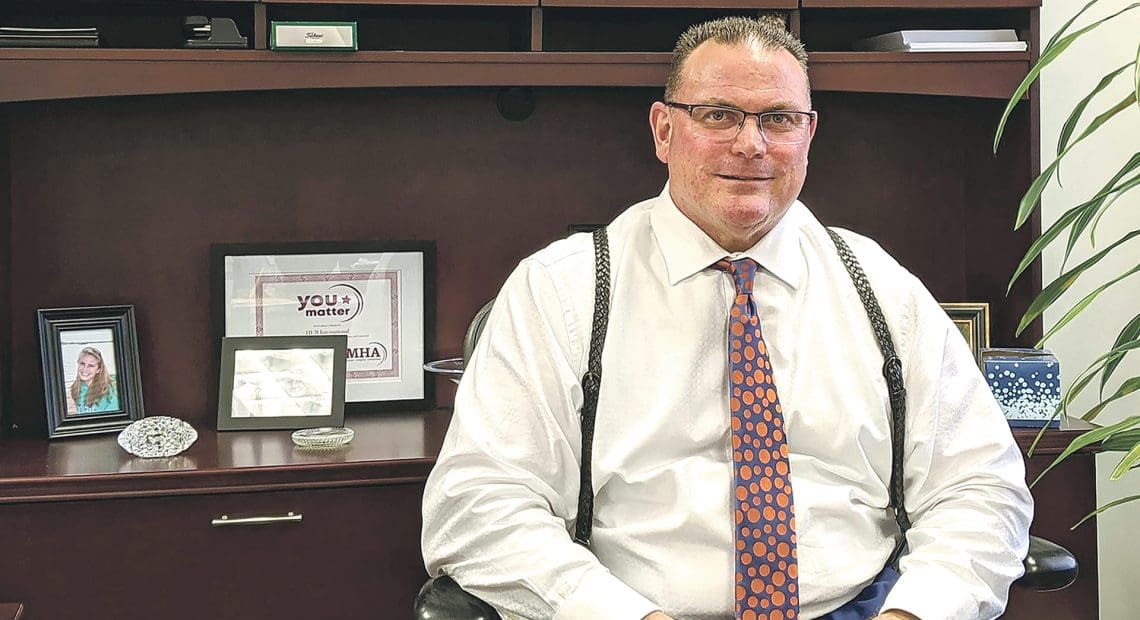
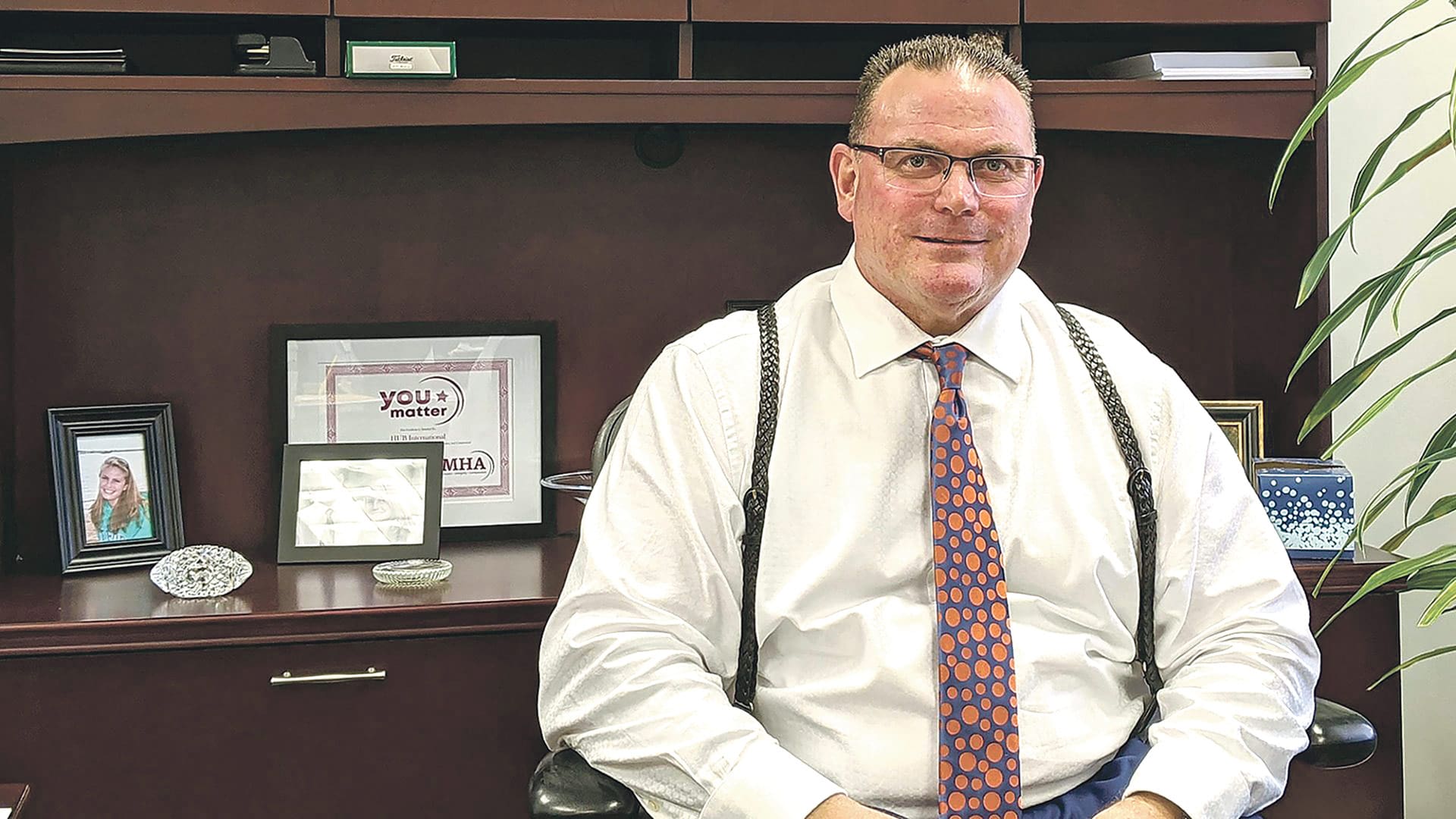
Timm Marini, president of Personal Lines Insurance at Hub International New England.

Timm Marini, president of Personal Lines Insurance at Hub International New England.

Artificial intelligence can help give nonprofits a leg up with donors and benefactors, but better AI safeguards may be needed to defend against potential cyber threats and other technology-related risks. Here’s what your organization needs to know.

Nonprofits are increasingly incorporating artificial intelligence (AI) into their operations and communication platforms, with their integration efforts actually outpacing their private-sector counterparts 58% to 47%.

AI enables nonprofits to enhance stakeholder engagement and can help them access solutions to social problems they are working to address. About 70% of nonprofits believe generative AI will help them achieve their organizations’ sustainable development goals by enhancing productivity, improving access to information, and increasing awareness to drive policy change.

But AI also presents risks that could threaten a nonprofit financially, reputationally, and operationally.


How Nonprofits Are Using AI

AI has surged since 2020 thanks to swift advances in technology to generate text, images, and videos. Nonprofits are tapping into generative AI and its large language model (LLM) subset to create text from big sets of data to enhance efficiency and expand their reach. Additionally, nonprofits can use AI to automate repetitive tasks, including certain administrative duties like scheduling meetings, data entry, or volunteer management, so they can instead focus their limited employee and volunteer resources on other important work.

“About 70% of nonprofits believe generative AI will help them achieve their organizations’ sustainable development goals by enhancing productivity, improving access to information, and increasing awareness to drive policy change. But AI also presents risks that could threaten a nonprofit financially, reputationally, and operationally.”

Savvy organizations are also leveraging predictive AI to analyze donor data and gain insights into potential future donors. These insights can guide generative AI to create personalized appeals through targeted communications such as letters, advertising, and other content. Some AI applications are even more ambitious by providing actionable information to people looking to get involved in a cause or mobilize resources.


The Risks in AI — and How to Combat Them

Despite AI’s benefits, risks abound, including errors in word choice, tone, or potential copyright infringement in AI-generated materials. It is critical that organizations have a process to fact-check AI-generated materials and develop usage rules and policies for employees or volunteers supported by awareness training. Organizations should also consider media liability insurance against AI content-related claims of personal injury, copyright/trademark infringement, and plagiarism.

Cybercrime is another concern. AI has enabled cyber criminals to improve the speed, scale, and automation of cyber attacks. The technology can turbo-charge schemes like phishing or ransomware and be used to mimic voices of real people ‘authorizing’ fraudulent activities, known as ‘deepfakes.’

AI systems can be targets as well. If a threat actor was able to compromise a language model and poison the information within it, the outputs generated by AI algorithms leveraging that model could be damaging.

“Savvy organizations are also leveraging predictive AI to analyze donor data and gain insights into potential future donors.”

Unfortunately, many nonprofits are resource-challenged and increasingly vulnerable to cyber threats. About 68% of nonprofits have had at least one data breach in the last three years, 75% don’t actively monitor their networks, and more than 70% don’t run vulnerability assessments.

Every organization using or considering AI technology needs best practices and policies to protect against the potential risks. Here are some steps to consider:

• Document AI use policies. Organizations need to determine who can use public AI tools, and for what purpose. For instance, can business or personal email accounts be linked to the programs? How will access be managed — and by whom?

• Perform due diligence. Third-party AI tools that organizations or its vendors can buy, license, or access cause more than half of all AI failures, which includes providing inaccurate or copyrighted information. Organizations must thoroughly evaluate AI tools and the AI practices of any potential vendors to ensure they are guarding against threats. Rigorous contractual risk management — including hold-harmless, indemnification, and insurance provisions — is a must.

• Conduct awareness training. All staff should be trained in the use of AI tools and general cybersecurity protocols.

• Ensure risk management. An experienced broker is an invaluable resource to help organizations assess their cyber risk. Organizations should work with their broker to ensure they have the right insurance for AI-related exposures, such as cyber insurance and intellectual-property coverage.

Contact HUB International’s nonprofit insurance specialists to learn more about how to protect yourself against AI-related risks and take full advantage of the technology.


Timm Marini is president of Personal Lines Insurance at Hub International New England.


Autos Special Coverage

Drive Time

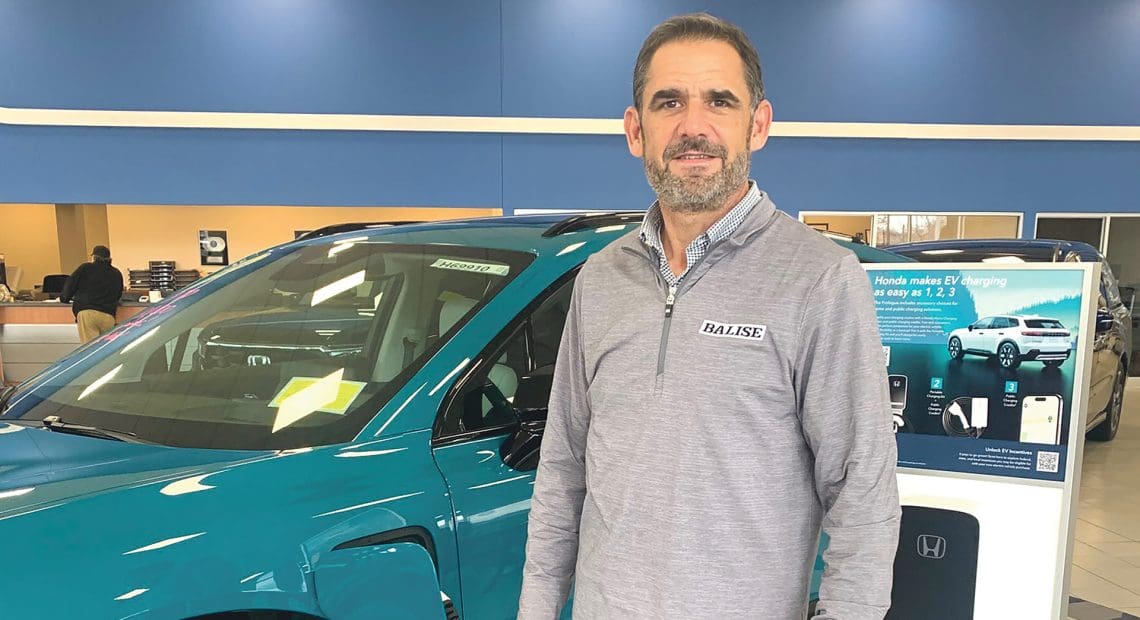
Ben Sullivan, seen here with a Honda Prologue

Ben Sullivan, seen here with a Honda Prologue, says sales of all-electric vehicles, as well as hybrids and plug-in hybrids, have been rising as consumers become more familiar with them.


‘Almost normal.’

Those are the two words that Ben Sullivan, chief operating officer for Balise Motor Sales, used to describe 2024 when it comes to just about every aspect of the auto-sales industry.

After four years of relative turmoil generated by COVID and its aftereffects, things were back to normal — almost, said Sullivan. To get his point across, he referenced the southernmost end of the huge parking lot for Balise’s Chevy/GMC dealership on West Columbus Avenue in Springfield.

Even 18 months ago, it was so barren, several people asked Sullivan if Balise had sold the lot. Now, it is heavily populated with cars — especially the commercial vehicles that were visible several years ago but were simply not available due to supply-chain issues in the wake of COVID.

That’s the case in every one of the many dealerships Balise has in Western Mass., the Cape, and Rhode Island, said Sullivan, noting that, when it comes to inventory levels, things are almost back to what was seen pre-pandemic.

“Until this year, there were cars coming in and cars going out, but there was zero stock to walk in and say, ‘I want to take something home today,’” he told BusinessWest. “We’re not back to totally normal levels now, but it’s getting a lot closer to what people would say is normal.”

Carla Cosenzi, president of TommyCar Auto Group, which boasts Nissan, Volkswagen, Hyundai, Volvo, and Genesis stores, agreed. In fact, she said that, in some cases, inventories even exceed pre-pandemic levels.

“Until this year, there were cars coming in and cars going out, but there was zero stock to walk in and say, ‘I want to take something home today. We’re not back to totally normal levels now, but it’s getting a lot closer to what people would say is normal.”

Which helps explain some of the aggressive incentives being offered by some of those brands, including 0% financing on a Nissan Rogue and a $79-a-month lease deal on a Hyundai IONIQ 5 EV. And they help explain why, on the Monday of Thanksgiving week, normally a traditionally slower time, the TommyCar dealerships were “swamped.”

“I think they’re trying to build demand for the increased production,” Cosenzi said of the manufacturers, adding that these incentives were one of the key contributors to a very solid year.

Sullivan agreed that 2024 was a good year saleswise — better than most in the industry, and he puts himself in that category, were projecting roughly a year ago.

At Balise, sales were up roughly 10% (most years, 3% to 5% is the average), a performance he attributes to lingering pent-up demand from the COVID years and availability of most models and most trims, including the lower-priced options on cars and SUVs that manufacturers pushed to the sidelines in favor of the higher-priced trims during COVID.

“This year was the first time that you started to get what people would consider to be real availability back,” he said.

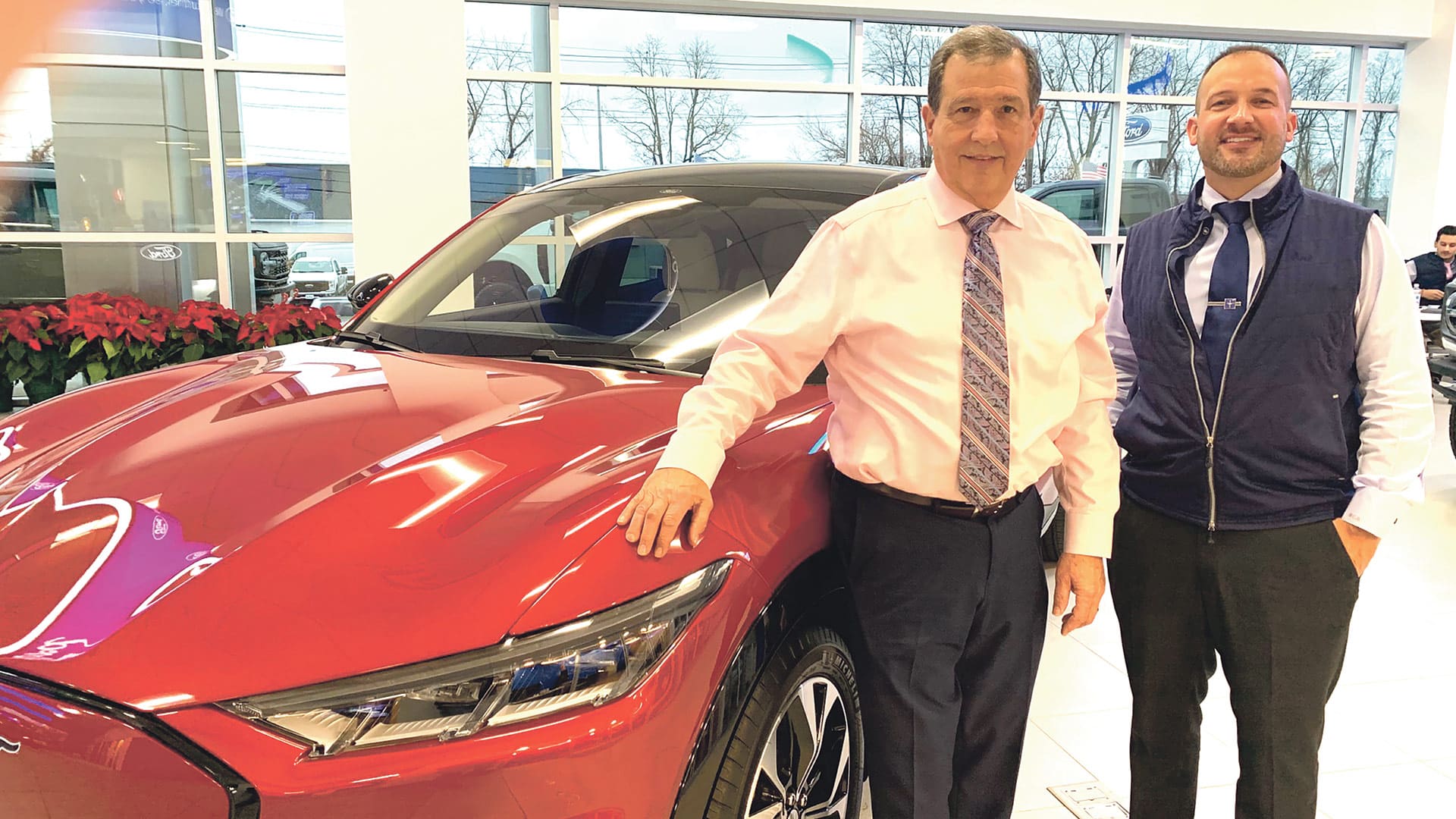
Mike Filomeno, left, and Mike Marcotte

Mike Filomeno, left, and Mike Marcotte show off a Mustang Mach-E, one of the many EVs now sold by Ford.

Mike Marcotte, president of Marcotte Ford in Holyoke, said his dealership has also recorded a nearly 10% increase in overall revenue in 2024, which he attributed to those same factors, particularly availability — on both the consumer and commercial sides of the ledger — with December, traditionally a big month, especially on the commercial side, still to go.

“Ford has put some great incentives out there to end the year out,” he said, adding that these cover everything from pickups to EVs that come with free chargers. “It’s been a good year, and we’re expecting to end it in strong fashion.”

Cosenzi said final numbers are obviously not in yet, but she is projecting 8% growth for 2024, and something along those same lines for 2025.

While things are returning to normal on most fronts, on the electric vehicle and hybrid segment, there isn’t really a ‘normal,’ because this is an emerging market, one that is building some momentum, although there are now real question marks about the future of the EV consumer tax credit.

“You’re seeing a big increase in customer demand for hybrids and plug-in hybrids,” said Sullivan, adding that many see them as an alternative to — or a bridge to — EVs, which are enjoying gradual growth in sales amid more options and better incentives, for the moment, anyway. “People might be scared to get into an electric, but they’re saying, ‘what can I do?’

“This hybrid technology has been out there for some time, it’s performing very well quality- and reliability-wise, and people are a lot more comfortable getting into these vehicles,” he went on. “The percentage of sales of hybrids versus non-hybrids continues to grow.”


To a Higher Gear

To get his points across regarding availability, getting back to normal, and even the EV and hybrid markets, Sullivan referenced Balise’s Honda dealership on Riverdale Road in West Springfield.

“During COVID and the post-COVID era, it was not unusual for us to finish the month with maybe 16 vehicles for sale,” he told BusinessWest. “Now that they’re starting to build more Hondas, I think we’ll finish this month [November] — and we had a very good month — with 80 to 100 to choose from if someone wanted to walk in and take one today.

“You went through three years of expecting to have to put a deposit down on something that was inbound on a ship, a train, or a truck,” he went on. “And now, you’re getting to the point where there’s a good chance you can find what you’re looking for available — not the same levels as before COVID, but at a level where the customer probably wouldn’t notice the difference.”

Elaborating, Sullivan said normal stocking levels would be 30 to 45 days of inventory, or maybe 140 cars in the case of this Honda dealership. At present, as noted, there are maybe 100, and they cover all trim levels.

“You went through three years of expecting to have to put a deposit down on something that was inbound on a ship, a train, or a truc. And now, you’re getting to the point where there’s a good chance you can find what you’re looking for available.”

It’s pretty much the same across the spectrum, he said, adding that inventory levels vary with the dealership, but most are working their way back to ‘normal.’

Improved availability is one of the key reasons why 2024 was a better year than most were expecting, said those we spoke with, noting that there is still a large amount of pent-up demand — and, now, many options for meeting that demand.

Indeed, during COVID and its immediate aftermath, manufacturers, hit with massive supply-chain issues, focused mostly on higher-end vehicles, driving up the average cost of a new car to levels many consumers were not willing to pay, said Cosenzi, adding that lots are now close to full with models across all trim levels, which has certainly helped drive sales.

“It was very hard to find middle and lower trim levels during that time,” she explained. “Now that things are opening back up again, it’s a lot easier to find a selection of low, middle, and high-end options of the same model. Buyers have more options than they’ve had in years.”

Meanwhile, other contributing factors include comparatively low unemployment, relatively strong consumer confidence, and those incentives from the manufacturers, Cosenzi said. “We’ve seen the manufacturers get more and more aggressive. Right now, we have 0% for 60 months — Nissan has it on its Rogue, which is a prime model, Volkswagen has it … 0% is back. Meanwhile, the Hyundai Tucson has 1.9%; those are examples of how aggressive the incentives are.”

Marcotte agreed, noting that these incentives come in many forms, including the Ford Power Promise, whereby those buying or leasing an EV become eligible for a complimentary home charger and standard installation.


Picking up Speed

With improved availability and overall sales up 10%, the question then becomes, ‘what are people buying?’

Some of everything is the obvious answer, but especially SUVs and crossovers — in part because there are simply fewer cars to buy — as well as trucks, EVs, and hybrids, said those we spoke with.

And commercial vehicles as well, noted Sullivan, adding that year end is traditionally a busy time for such sales as contractors and others look to take advantage of Section 179 tax deductions. But until recently, they simply weren’t available.

“We’re finally at the point where we can take care of those customers, and that’s making them happy, and it makes us happy,” said Sullivan, noting that the southern end of the crowded parking lot at the Chevy/GMC store reflects this reality. “The past several years, in many cases, people just said, ‘we’ll wait until next year.’ It was a very difficult time getting commercial vehicles.”

Mike Filomeno, Sales manager at Marcotte Ford, agreed, noting that truck sales, on both the commercial and consumer sides, remain solid as inventories grow. He cited, as one example, Ford’s Maverick, a small pickup with prices starting at $27,000.

“It comes in a hybrid and all-wheel drive, so it’s pretty popular; that’s a great price point,” he said, adding that Ford’s lineup of larger trucks is also performing well.

And used-car sales are also solid, said Filomeno, noting that inventories have improved somewhat, prices have returned to something approaching normal, and, as a result of both factors, sales are up, contributing to the dealership’s growth this year.

As for SUVs, they continue to dominate the market, with most manufacturers cutting back to one or two car models. Ford, for example, has just one, the Mustang.

But Sullivan said those in the industry are starting to see some movement among the younger generations toward cars.

“It’s too early to see if it’s a trend or just data, but there is some indication that the young people, the Millennials, don’t want to be in SUVs like their parents were,” he noted. “And you’re starting to see a lot of young people migrate into the sedan market.”

If that movement accelerates, then manufacturers may need to rethink their lineups and add more sedans, he went on. For now, the focus remains on SUVs. And larger numbers of these are coming in the hybrid, plug-in hybrid, and EV varieties, said those we spoke with, adding that sales of those vehicles are up across the board.

EVs still comprise only around 6% of all sales, said Sullivan, adding that the numbers continue to gradually improve as the options increase and consumers become more familiar with them.

To that point, he said Balise recently brought each of the 23 EVs sold across its stable of dealerships to an event at the Palmer Motor Sports Park, where consumers could get acquainted with the various vehicles — and drive them on a racetrack. More than 100 consumers turned out, and most all of them came away impressed with what they saw and experienced.

“I did not speak to one of them who didn’t say, ‘now that I’ve driven one, I believe it’s the car for me,’” he recalled, adding that familiarity breeds comfort.

Marcotte agreed, noting that Ford’s lineup of EVs includes everything from the Mustang Mach-E to the F-150 Lightning pickup to an E-Transit cargo van, and that, increasingly, consumers are becoming more comfortable with such vehicles.

Cosenzi concurred, noting that the Hyundai store put more than 30 people in the IONIQ 5 this month, thanks to the $79-a-month, 13-month lease deal. She said the outlook for continued improvement is generally positive, but much depends on whether the incoming Trump administration makes good on plans to kill the $7,500 consumer tax credit for EV purchases as part of broader tax-reform legislation.

“There’s a lot of speculation about what might happen with those incentives,” she said, adding that, at more than $10,000 in many cases, they certainly help some consumers get over the hump and into an EV.


Healthcare News Special Coverage

Beyond the Status Quo
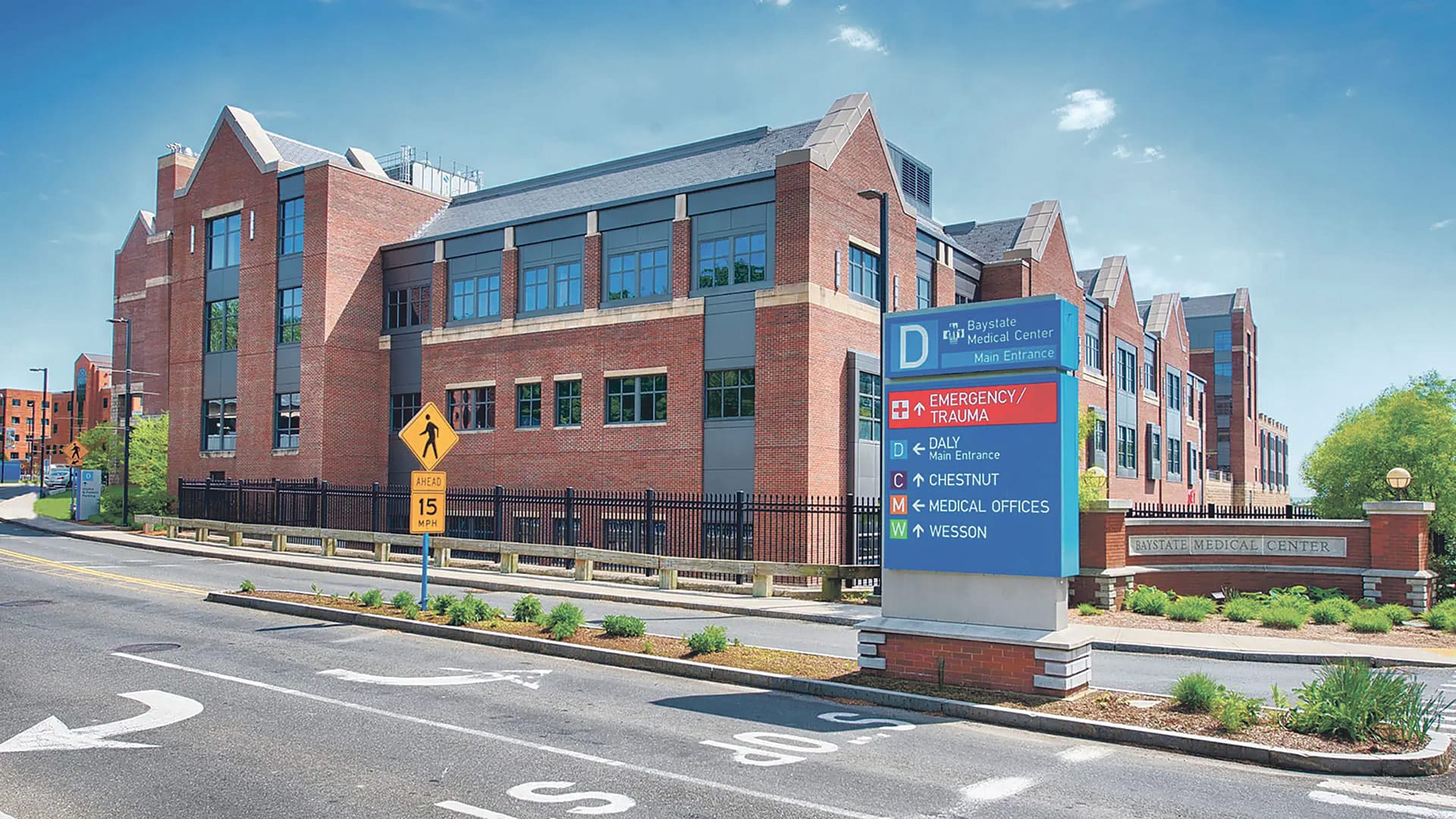
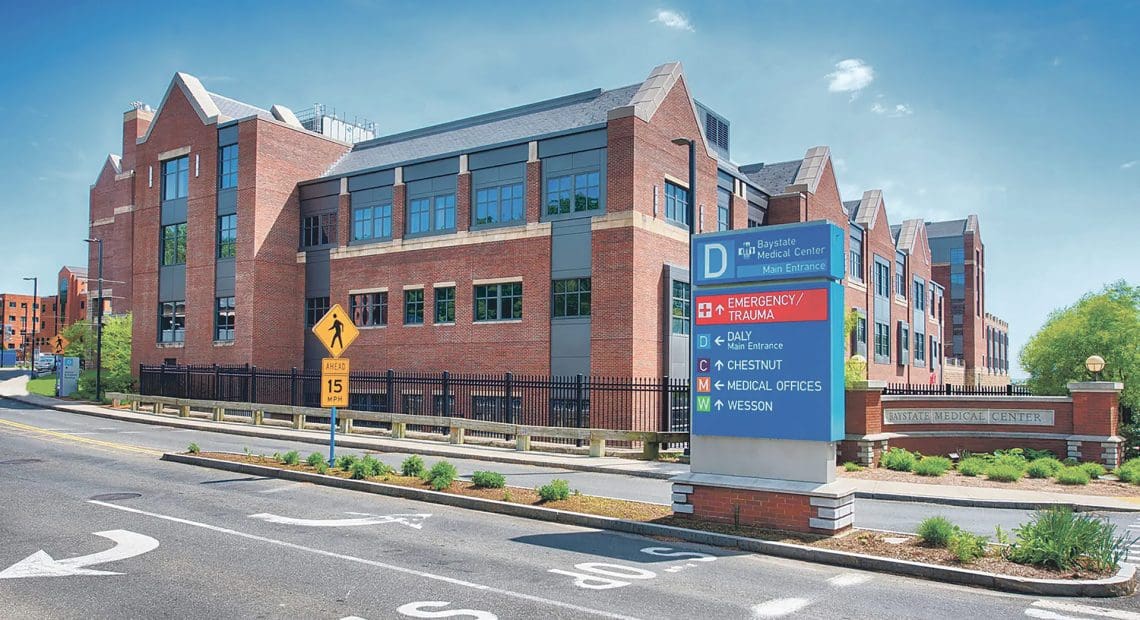
Baystate Health is undergoing some pain now, including the loss of many leadership positions, but plans to be on solid financial footing by the end of 2025.

Baystate Health is undergoing some pain now, including the loss of many leadership positions, but plans to be on solid financial footing by the end of 2025.


Spiros Hatiras was looking for some wood to knock on.

The president and CEO of Holyoke Medical Center (HMC) had just told BusinessWest that his hospital had a solid year in 2024 and made progress with many of the challenges facing all providers, and he was generally optimistic about the immediate future.

“Knock on wood,” he added quickly, noting that he and others in this sector are always wary of the unforeseen — like a global pandemic, for example, or the extreme workforce challenges that came in its wake, or a cyber attack … or any changes to Section 340B of the Public Health Service Act, which requires pharmaceutical manufacturers participating in Medicaid to sell outpatient drugs at discounted prices to hospitals that serve many uninsured and low-income patients.

“That’s a program that’s a lifeline for hospitals, and it constantly gets attacked, usually by pharmaceutical companies who want to do away with it because they have to discount drugs at a very high rate,” said Hatiras, who, like and others we spoke with, is not expecting any real changes to the 340B program, but acknowledged they could happen. In the meantime, they stressed that, while the unforeseen is always concerning, the many challenges that are in plain sight are certainly daunting enough.

Indeed, ‘relentless’ was the word Dr. Robert Roose, president of Mercy Medical Center, used to describe these ongoing headwinds, which include everything from spiraling costs and inflation to persistently inadequate reimbursements from payers, especially those of the public variety; from continuing workforce challenges to access and capacity issues.

And then, there is the overriding issue driving all those listed above — caring for a population that is older and sicker than what has been seen historically.

Dr. Robert Roose

Dr. Robert Roose

“The challenges in healthcare over the past five years have shifted, but they have not let up. And they ultimately result in financial challenges that are stressing the ways in which we collectively provide access to care in our communities.”

“The challenges in healthcare over the past five years have shifted, but they have not let up,” Roose said. “And they ultimately result in financial challenges that are stressing the ways in which we collectively provide access to care in our communities.”

The many hardships facing hospitals large and small have been effectively encapsulated in recent headlines involving the Baystate Health system, which includes four hospitals.

The system went public recently to detail recent struggles — including $300 million in operating losses over the past few years — and its response.

That includes the sale of its lab (which helped stem the flow of red ink for the fiscal year that ended Sept. 30), the pending sale of Health New England, and, most recently, the announced elimination of 130 administrative positions.

Those steps are part of what Baystate’s new president and CEO, Peter Banko, called a “transformation plan, one that calls for making hard decisions, relieving cost pressures, some cuts, but also investments in the years to come and greater financial stability.

“Next year at this time, we’ll be talking about being in a growth mode,” he added. “Not contracting, not selling things, but investing $1.2 billion over the next six years.”

There has been a good deal of red ink within the industry — 75% of Bay State hospitals will lose money in 2024, according to the Massachusetts Hospital Assoc. — but Hatiras said HMC has been able to stay in the black, in part through help from the Commonwealth, which has been very supportive of its hospitals, but also by managing carefully.

“We don’t have a lot to fall back on, so we’re careful,” he noted. “We also try to think outside the box and be smart about the risks we take.”

As they looked ahead to 2025 and beyond, those we spoke with made heavy use of that phrase ‘guarded optimism’ when it comes to improvement of the overall bottom line as well as issues such as the workforce. But they also spoke of the need for real change when it comes to how people are cared for.

Peter Banko

Peter Banko

“We need to develop more personalized care. One-size-fits-all doesn’t work; someone who’s 85 needs different care than someone’s who’s 65 or 55 or 25. I’ve been in this industry for 40 years; we’ve never personalized care or personalized care models to each person — it’s ‘here’s our model, and you’re going to fit into it.’”

“We need to develop more personalized care,” Banko said. “One-size-fits-all doesn’t work; someone who’s 85 needs different care than someone’s who’s 65 or 55 or 25. I’ve been in this industry for 40 years; we’ve never personalized care or personalized care models to each person — it’s ‘here’s our model, and you’re going to fit into it.’”

For this issue’s look at the healthcare outlook for 2025, we talked with these hospital leaders about what’s happening today, and what needs to happen for tomorrow.


Age-old Problems

Nov. 2 at 4 a.m.

That’s when Mercy Medical Center flipped the switch, if you will, and converted to the Epic EHR electronic health records system. The conversion comes at a price tag “in the eight figures,” over the next several years, and has been, in general, both all-consuming and quite necessary, Roose said.

“This has been a journey for us for several years that intensified over the past year — it’s a transformational moment,” he explained, adding that the system will greatly improve coordination of care. “It’s been incredible investment in terms of time — tens of thousands of hours — and money.”

Conversion to systems like Epic, taking place across the country, comprise just one of the many challenges — and huge expenses — facing all healthcare systems today.

And those challenges have been, as Roose said, relentless — both since the start of COVID and, on many fronts, since well before that.

One of the larger issues facing all providers today is simply caring for a population that is older — the oldest Baby Boomers are approaching 80, and there are a lot of them — and, for reasons both known and unknown, sicker.

“There’s been a spike in things, which everyone is still trying to explain,” Hatiras said. “We’ve seen a spike in cancers, a spike in heart conditions, spikes in cardiovascular and stroke … people are very, very sick, sicker than in years prior.
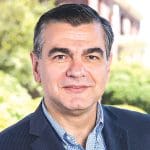
Spiros Hatiras

Spiros Hatiras

“There’s been a spike in things, which everyone is still trying to explain. We’ve seen a spike in cancers, a spike in heart conditions, spikes in cardiovascular and stroke … people are very, very sick, sicker than in years prior.”

“People are still trying to figure out why this is happening,” he said, not wanting to speculate himself but while also listing theories ranging from long COVID to vaccines to people putting off needed care during the pandemic.

“The bottom line is, we’re a lot busier,” he went on, adding that this phrase applies to many constituencies, including employees. Indeed, the hospital, which is self-insured, has seen claims for such conditions as cancers, cardiac disease, and stroke up 30% to 40%, spikes that are certainly not normal.

Banko noted that, in many respects, what hospitals are seeing relates to demographics — a large percentage of the population reaching its 60s and 70s at the same time more people are living well into their 80s, 90s, and beyond — and the resulting consequences. Meanwhile, in Western Mass., there is virtually no growth among younger people, leaving an older, sicker population to care for.

“We look at our growth over the next five to 10 years … there’s a little in the 25-to-44 age range, the 45-64 range is declining, the zero to 25 is declining. The most rapid increase in our population here in Western Mass. and the Northeast is the 65 and older, and the largest increase is 75 and over.

“What that means is more complex care and more chronic conditions; today, we’re at 70% Medicare, and that’s only to increase moving forward,” he went on, adding that these statistics explain why hospitals in this region are under more financial stress than those in growth areas such as the Southwest and Southeast.

“People are living longer, and when they live longer, there are chronic conditions,” Banko continued. “Decisions made in your 30s, 40s, and 50s show up in your 70s and 80s … you’re probably going to experience cancer, and you may experience heart disease or stroke, and you may need a hip replacement or spine surgery.”


Work in Progress

This surge in business presents a host of challenges, including crowded emergency departments, with backlogs of people getting into beds, and then backlogs when those people are ready for discharge because there is a lack of beds in nursing homes and other facilities.

“We have access issues,” Banko said. “It’s hard to access primary care and specialists, we don’t have physicians and workforce to care for the needs of the community, we don’t have enough beds … we don’t have enough capacity.”

These capacity issues are compounded by financial struggles, which make it more difficult to make needed investments in facilities and personnel, he went on, adding that a big part of Baystate’s transformation plan is to invest and expand so that more people can be treated in this market and fewer people will have to go to Boston or other markets for care.

Looking ahead, he said 2025 and the years to follow will be “tough but invigorating.”

And these challenges come amid workforce issues, amplified by those aforementioned demographics — Boomer doctors, nurses, and other professionals are retiring — and the unprecedented levels of stress generated by the pandemic, which prompted some to leave healthcare for other sectors or retire early.

Those we spoke with said there has been some easing on the workforce front, especially as hospitals offer incentives to nurses and other professionals, as well as more flexibility with hours and work/life balance. But the challenge persists.

One of the reasons why is capacity, said Hatiras, noting that incentive programs, which all area hospitals have now implemented, mostly result in professionals moving from one hospital or system to another, with no general improvement in numbers across the sector.

“I wish that, rather than us trying to attract staff that works somewhere else — when we hire someone, that leaves a hole somewhere else — we could find some way to grow the pie rather than share it differently,” he said. “But if you’re a small player like us, in order to survive, you have to have staff. Unfortunately, the game we have to play is to make this place as attractive as possible to attract people here, even if it’s from other institutions, which I’d rather not do, but, unfortunately, I have to.”

To attract these professionals, HMC and other providers are focusing on culture, while also creating more flexibility with schedules, something that is in demand, especially from younger generations of workers.

“We find more people who don’t want to work weekends, or they don’t want to work nights,” said Hatiras, adding that someone has to work those shifts, and the challenge is to incentivize people to want to.

Roose agreed, noting that, through some creative initiatives involving schedules, compensation, and overall culture, Mercy Medical Center has recorded a 33% reduction in turnover rates over the past nine months.


Bottom Line

As they looked ahead, those we spoke with again referenced the unforeseen, which is always a concern in this sector — again, because the ongoing issues are stern enough.

Hatiras said that, in addition to ongoing attacks by Big Pharma on Section 340B, there is some concern about planned cuts to the amount of support given to disproportionate-share hospitals, as contained in the Affordable Care Act.

Those cuts, included in the landmark legislation on the assumption that more people would have health insurance and that the need for additional support would be reduced, have not been implemented, he told BusinessWest, adding that the program expires Jan. 1, and there are questions about whether this lame-duck Congress will continue to kick that can down the road.

“If those cuts go into effect, it’s a lot of money — in Massachusetts, I think it’s $600 million, maybe $800 million,” he said, adding that hospitals like HMC will certainly be impacted.

Banko isn’t predicting any cuts to 340B or Medicaid’s Disproportionate Share Hospital program, adding that reductions to either would be devastating to the state’s hospitals and, therefore, unlikely.

As for the longer term, he noted that the demographics he cited earlier will continue to challenge hospitals and healthcare systems in this region, underscoring the need for real change in how care is provided.

“How we get paid versus how we provide care are two different things,” he said. “We’re going to have to figure out new care models with physicians, advanced practice providers, how we provide nursing, more virtual care, more outpatient care. Compared to other parts of the country, we don’t have a lot of ambulatory outpatient access points, so not a lot of imaging centers, surgery centers, or urgent care.

“So now, we’re stuck going to the big-box hospital,” Banko went on. “So we have to find ways to offload care to community settings, less costly settings, and starting to develop personalized care.”

Roose agreed. He called this an inflection point for the sector, one that requires a call to action and a transformation in how care is provided, with more intervention earlier that may prevent real problems later.

“Personally and professionally,” he said, “I see a real calling to try move upstream and intervene earlier — not only with individual improvements through lifestyle changes that can attend to the factors that can contribute to chronic disease, be that movement, appropriate nutrition, or good sleep, but also thinking more systemically about how we support the decisions and the resources within the community to lead people toward better health, better wellness.”


 

Environment and Engineering Special Coverage

The Next Generation of Entrepreneurs

Sundar Krishnamurty

Sundar Krishnamurty says I-Corps speaks to the vision of building a culture of innovation and entrepreneurship on campus.


The U.S. National Science Foundation has named UMass Amherst a partner in the NSF I-Corps Hub: New England Region. The university will receive more than $1.4 million from the partnership, which will be led by the Massachusetts Institute of Technology (MIT).

The hub will receive $15 million over five years to promote entrepreneurialism among STEM researchers, with I-Corps trained faculty, researchers, and students working to transform deep technology inventions into marketable products.

“We train our researchers to apply their findings to create value. We call it Innovation 101,” said Sundar Krishnamurty, faculty lead of the I-Corps program at UMass, Ronnie & Eugene M. Isenberg distinguished professor in Engineering, and department head of Mechanical and Industrial Engineering. “The interdisciplinary program reaches into the whole STEM world. This speaks to the chancellor’s vision of building a culture of innovation and entrepreneurship on campus.”

UMass has expertise in translating research from scientific and technology domains that are key focus areas for the I-Corps Hub: New England Region. These areas are bluetech (advanced technologies and innovations related to the marine and maritime domains), forestry/sustainability, and biotech/life sciences.

UMass has been an I-Corps site since 2018, but this new award marks the NSF’s shift from individual sites to what the NSF describes as “a more integrated model, I-Corps Hubs, comprising a lead and partner institutions, that form the operational backbone of the National Innovation Network.”

Now, in addition to running these trainings for the UMass community, the UMass I-Corps team will be recruiting from other universities within the UMass system, as well as Western Mass. institutions such as Smith College, Mount Holyoke College, and Springfield Technical Community College. The outreach initiative aims to correct persistent gender, race, and geographic disparities in entrepreneurship.

“The goal of the I-Corps program is to deploy experiential education to help researchers reduce the time necessary to translate promising ideas from laboratory benches to widespread implementation that in turn impacts economic growth regionally and nationally.”

“Our prior I-Corps site was highly successful in providing essential tech translation training programs to UMass faculty and student teams,” said Sanjay Raman, principal investigator of the UMass Amherst New England Hub I-Corps effort, professor of Electrical and Computer Engineering, and dean of the College of Engineering. “In total, over 60 regional teams were trained, 15 went on to the national level I-Corps program, and 12 new ventures were formed. We are thrilled to join MIT and our other New England partner universities to expand our impact throughout the region, in particular underserved, more rural regions.”


Examples of Impact

Successful I-Corps participants from UMass include Myrias Optics, an emerging developer of nanopatterned structures on glass called metaoptics; Latde, a company that designs inexpensive diagnostic tests to guide antibiotic treatment, starting with urinary-tract infections; and rStream, a startup creating AI-based systems to sort recycling.

Sanjay Raman

Sanjay Raman

“Innovation is a core value for our campus. The I-Corps Hub and the opportunity to participate as a partner directly aligns with existing campus efforts to create an environment that supports the research, development, and mechanisms leading to deep technology ventures,” said Mike Malone, vice chancellor for Research and Engagement.

Ina Ganguli, professor of Economics in the College of Social and Behavioral Sciences and the Isenberg School of Management, and director of the UMass Computational Social Science Institute, is the hub research lead. She brings her expertise in how to effectively involve individuals with diverse experiences and identities in university innovation and commercialization activities and how to create more inclusive entrepreneurial ecosystems.

Laura Burnham will continue to serve as program director. She brings more than 20 years of experience leading the development, design, and delivery of early-stage science and technology programs in the U.S. and globally.

“The goal of the I-Corps program is to deploy experiential education to help researchers reduce the time necessary to translate promising ideas from laboratory benches to widespread implementation that in turn impacts economic growth regionally and nationally,” said Erwin Gianchandani, NSF’s assistant director for Technology, Innovation, and Partnerships. “Each regional NSF I-Corps Hub provides training essential in entrepreneurship and customer discovery, leading to new products, startups, and jobs. In effect, we are investing in the next generation of entrepreneurs for our nation.”

The NSF I-Corps Hub: New England Region is one of three new regional hubs, bringing the total number of higher-education institutions with an I-Corps site across the country to 128. Led by MIT, the hub also includes Brown University, Harvard University, Northeastern University, Tufts University, the University of Maine, and the University of New Hampshire.