Daily News

SPRINGFIELD — The Zoo in Forest Park will open for the season on Saturday, March 29 with a day full of interactive events.

“This is such an amazing time of year,” said Sarah Tsitso, executive director of the Zoo in Forest Park. “It’s been a long, cold winter, and now it’s finally time to reconnect with your favorite furry (or scaly, or feathered) friends here at the Zoo. There’s that old saying: ‘March comes in like a lion and goes out like a lamb.’ But for us, as we reopen for another great season, March always ends with a bang.”

The zoo’s opening day will include keeper talks, animal encounters, enrichment demonstrations, and a contest to win a membership.

Keeper talks focusing on six different species — bald eagle, coyote, fisher, bobcat, lemur, and muntjac — will take place throughout the day at 10 a.m., 11:30 a.m., 1 p.m., 1:30 p.m., 2:30 p.m. and 3 p.m., respectively. These presentations, hosted by zookeepers and zoo educators, provide more information about the species being presented, including diet, habitat, conservation status, and defense mechanisms, as well as the personal stories of the animals that have resulted in their need for permanent care at the zoo.

In addition to the keeper talks, guests will have the opportunity to participate in up-close animal encounters from 10:30 a.m. to 12:30 p.m. with animals such as turtles, snakes, parrots, and rabbits. Zookeepers will also be giving an enrichment presentation at 2 p.m. outside the enclosure of the zoo’s two resident timber wolves, Keeba and Sakari. Visitors will learn about the importance of enrichment offered to animals under human care. Guests will get to watch as the wolves are given sensory enrichment to explore.

One lucky family will leave the opening day celebration as new members of the Zoo in Forest Park. As part of the day’s festivities, visitors can complete a scavenger hunt around the Zoo for a chance to be entered into a random drawing for a 2025 family membership.

“We’re so excited to welcome guests back to the zoo,” said Gabry Tyson, assistant executive director. “Although the animals ensure it is never completely quiet around here, it sure is a lot quieter during the offseason. We’re ready to hear children laughing at our goats or families marveling at our bobcats.”

Beginning March 29, the zoo will be open weekends only from 10 a.m. to 4 p.m. through mid-May, but will be open daily April 12-27 for both Connecticut and Massachusetts school vacation weeks. After Mother’s Day, the zoo will move to its seven-day-a-week operating schedule.

Daily News

EASTHAMPTON — Hometown Mortgage, a division of bankESB, recently announced that four homeownership assistance programs will soon be available to lower-income homebuyers across Massachusetts and neighboring states.

Hometown Mortgage has set aside $200,000 for a new Special Purpose Credit grant program, available to borrowers purchasing homes in select areas of Springfield. Grants of up to $10,000 per eligible borrower are now available. This grant can be combined with the bank’s affordable loan product or another conventional first mortgage loan offered by bankESB. Borrowers must be at or below 150% of the area’s median income to be eligible.

In addition, Hometown Mortgage has been selected to participate in three grant programs funded by FHLBank Boston. The Equity Builder program provides grants of up to $25,000 to income-eligible, first-time homebuyers to help with down payment or closing costs or to supplement rehabilitation costs associated with the purchase. The Housing Our Workforce program provides grants of up to $25,000 or 10% of the home’s sale price, whichever is less, toward down payment or closing costs. Funds will be available starting April 1.

The FHLBank Boston Lift Up Homeownership Program provides grants of up to $50,000 toward down payment or closing costs for people of color purchasing their first home. This program will begin on April 1.

The Special Purpose Credit grant may be awarded in combination with any one of the three FHLBank Boston program grants to borrowers who qualify.

In 2024, Hometown Mortgage borrowers received more than $900,000 in grants from the Special Purpose Credit program and participation in the three FHLBank Boston programs. For 2025, Hometown Mortgage hopes to raise that amount across all four grant programs to more than $1 million.

For all programs, applications are submitted, and grants are awarded on a first-come, first-served basis for as long as funds remain available. Only owner-occupied units intended to be used as the homebuyer’s primary residence are eligible for funding. Eligible units include one- to four-family properties, townhouses, and condominiums. Income restrictions apply. For all FHLBank Boston programs, homebuyer counseling courses through an approved agency are required. Other requirements and restrictions may apply.

For more information and to determine eligibility, contact a Hometown Mortgage loan officer at (855) 230-3939 or hfgmortgage.com.

Daily News

BOSTON — Berkshire Bank has been recognized for the fourth consecutive year as one of the most trusted companies in America in Newsweek magazine’s list of the Most Trustworthy Companies in America 2025. Berkshire is the only Massachusetts-based bank on the list.

In all, about 3,400 companies headquartered in the U.S. were considered for the list. In the end, 700 companies in 23 industries were honored.

Results evaluated customer trust, employee trust, and investor trust. The analysis included what was said about the companies online, including on social-media platforms, and survey results of approximately 25,000 U.S. residents.

Survey respondents who knew companies well were asked, among other things, if they believed individual companies treated their customers fairly, treated their employees fairly, and would be good long-term investments.

“This recognition is a reflection of our values-driven culture and the commitment of Berkshire Bank to integrity, fairness, transparency, and respect in every interaction,” CEO Nitin Mhatre said. “As a trusted advisor, we’re there to support our clients with expertise to help them navigate all economic environments and create a brighter future for all. We are delighted to receive this recognition for the fourth consecutive year and want to thank our customers for their continued trust in us.”

To create its Most Trustworthy Companies in America 2025 list, Newsweek partnered with Statista Inc., a leading data and business intelligence portal and provider of industry rankings that publishes hundreds of worldwide industry rankings and company listings with high-profile media partners.

Daily News

SPRINGFIELD — This month, the Pioneer Valley Planning Commission (PVPC) began the process of the 2025 update to the regional Bicycle and Pedestrian Transportation Plan, a comprehensive effort to improve and expand walking and bicycling infrastructure across the region’s 43 cities and towns. This updated plan, last revised in 2008, is a key resource for local municipalities, planners, and advocates working to enhance active transportation options and promote safer, more accessible streets for all.

The Bicycle and Pedestrian Transportation Plan outlines the current status of walking and biking infrastructure in the Pioneer Valley and provides recommendations for policies and projects that will support a more connected and sustainable transportation network. The plan aims to encourage more residents to choose walking, biking, and other forms of micromobility as viable transportation options by prioritizing safety, accessibility, and efficiency.

PVPC staff invites community members, municipal officials, and advocacy organizations to visit the plan’s webpage at pvmpo.pvpc.org/regional-bicycle-pedestrian-plan to learn more and share feedback about the various components of the plan as draft chapters and online engagement tools are posted during the next couple of months.

Features

Rolling with the Changes


The landscape of human resources and the pace of change in the workplace are never static, but some times are more … well, dynamic than others. And 2025 seems to be one of those times.

Which makes the annual Tri-State SHRM Conference — which will convene hundreds of regional HR professionals at Mohegan Sun on April 28-30 — a bit more interesting this year.

“It’s great networking with your peers when you’re at the event because things are drastically changing,” said Dave O’Brien, state director for the Massachusetts State Council of the Society for Human Resource Management (SHRM).

“Look at the DEI landscape. Some companies are changing their DEI efforts, and other companies are standing firm, and you can talk to your peers and have an honest conversation with them and say, ‘hey, what’s going on? What are you doing? How are you handling this? What have you encountered?’ Because it does change so drastically and so fast.

Dave O’Brien

Dave O’Brien

“You can talk to your peers and have an honest conversation with them and say, ‘hey, what’s going on? What are you doing? How are you handling this? What have you encountered?’ Because it does change so drastically and so fast.”

“And it’s good because an HR person can’t really talk to anybody but another HR person about these things. They really kind of get it. And there is some concern.”

That’s just one of many reasons O’Brien is looking forward to this year’s conference, hosted by the Massachusetts, Connecticut, and Rhode Island affiliate councils of SHRM. The three councils began collaborating on a biennial conference around 2000, which later became an annual event and has steadily grown over the years.

Lori McCombs, the Tri-State SHRM Conference manager, remembers the first conference she was hired to run: in 2020, which quickly had to pivot to a virtual event when the world shut down a few weeks before. But after a second virtual event in 2021, the conference has returned to an in-person model and grown significantly: while 242 people attended the 2020 event virtually, 385 showed up in person in 2024.

“The conference is definitely growing in popularity,” McCombs told BusinessWest. “We’ve had to close exhibitor registration due to the large volume of interest from exhibitors and sponsors. That’s a good problem to have. We’re experiencing a lot of positive growth.”

Most attendees are HR professionals, with 69% being HR manager or director level or above. “That means we have a lot of decision makers from these three states that attend this conference,” she said, adding that 32% of attendees represent companies with more than 1,000 employees, and half are from companies of at least 500. “And the type of people that exhibit are companies that provide goods or services to HR professionals — so, a lot of payroll companies, HR data companies, colleges and universities that have advanced HR degree programs, HR consulting firms, talent acquisition firms, recruiting firms, benefit brokers.”

Beth Groccia, a Tri-State SHRM planning committee member who has been involved with the conference for more than 20 years, noted that it used to rotate between venues in the three states, but between that and being held every other year, it was difficult to brand the event and build momentum.

Now a yearly event at Mohegan Sun, it’s much easier to promote, she said. “It’s a destination, people enjoy going there, and they know it’s around the same time of year, so they look forward to it.”


Big Ideas for Changing Times

This year’s keynote speaker is Paul Long, a motivational speaker who brings humor, energy, and tactical tips for workplace performance, McCombs said. In addition, a panel of speakers will share creative ideas for recruiting untapped talent, including individuals with disabilities, veterans returning to the workplace, previously incarcerated professionals, and other individuals facing challenges getting back into the workplace.

Lori McCombs

Lori McCombs

“If they’re unable to attend a session, they’re able to go back and watch that, which is very beneficial to those who want as much education as they can possibly get. That’s a great benefit that you don’t see at most other conferences.”

“So, it’s just looking at talent that maybe you’re not thinking of on a daily basis,” she said, adding that another popular panel is called the Stump the Employment Lawyers. “We end the conference with that session. It’s an opportunity for attendees to ask tough legal questions to a panel of employment lawyers from varying backgrounds. People look forward to that.”

Smaller sessions are conducted throughout the conference, three topics per time block, on issues ranging from employment law to professional development; from leadership integrity to combating HR burnout.

“People have the opportunity to attend whatever is of interest to them,” McCombs said. “We also livestream these sessions — we do have a small virtual audience — but we also record all the sessions so that attendees have full access to those recordings for 90 days on demand post-conference. So if they’re unable to attend a session, they’re able to go back and watch that, which is very beneficial to those who want as much education as they can possibly get. That’s a great benefit that you don’t see at most other conferences.”

Another benefit is continuing-education credits, Groccia noted. “A lot of the individuals that come to this conference are certified, and we need to get CEUs to maintain that certification. Plus, as we’ve said, things are changing so quickly. So, what else do we need to know about in our profession to stay up to date with these changing laws?”

O’Brien said the national Society of Human Resource Management provides plenty of general guidance. “But with the way things happen, we just have to stay true to our course and what our companies believe and what we believe.”

Having those discussions with other HR professionals in the field — and, really, just networking in general — is a real positive of the conference, McCombs added. “They’re practicing this every single day, but I would say that the attendees definitely come here to network and get support from each other, in these trying times in particular.”

The conference will also include a fundraiser for the SHRM Foundation, which supports scholarships and research for educational opportunities, O’Brien noted.


No Bull (Well, Maybe a Little Bull)

This year’s Tri-State SHRM Conference has a western theme and is titled “HR Rodeo: Saddle Up for Success,” and registration is available at tristateshrm.com. An event party will be held at Comix Roadhouse in Uncasville, “and we’ll be encouraging people to ride the bull and do line dancing and fun things like that,” McCombs said.

During the day, of course, the topics being dealt with are often serious. “The conference has a theme, but we try to stay relevant to what’s happening at the moment and offer best-practice ideas,” O’Brien said. But he quickly added that spending time with fellow HR professionals at a lively venue is, well, enjoyable.

“It’s always good to have more HR professionals join us and have fun,” he told BusinessWest. “You take the job seriously, but don’t take yourself too seriously. That’s the best part of this.”

Where Are They Now?

Where Are the Now?

Jessica Roncarati-Howe in her 2012 40 Under Forty portrait

Jessica Roncarati-Howe in her 2012 40 Under Forty portrait

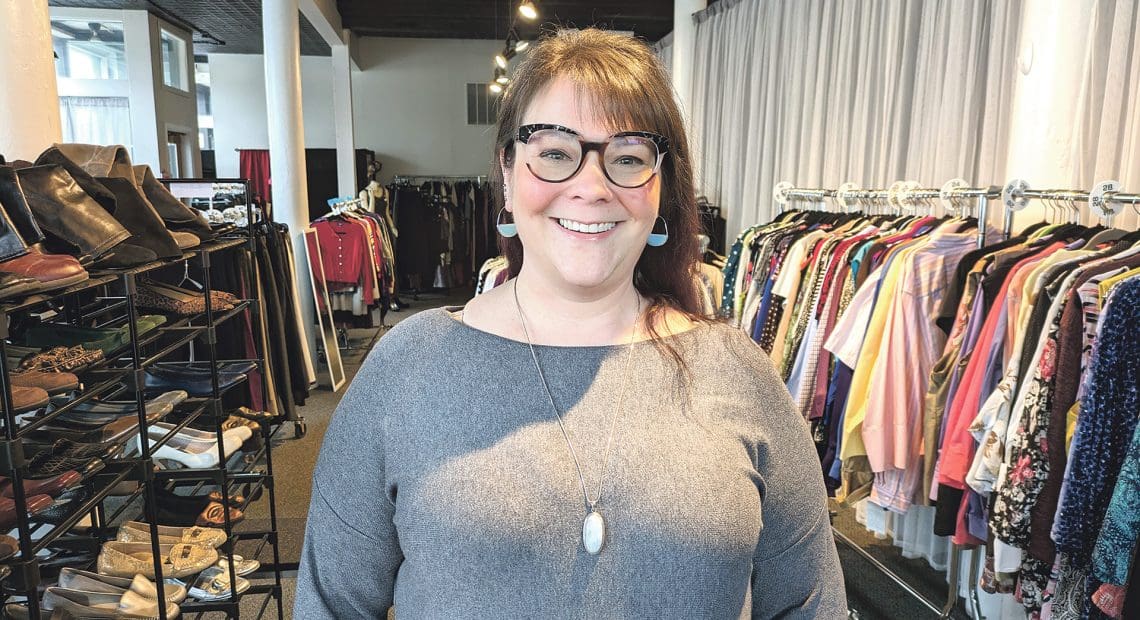
Jessica Roncarati-Howe  in the Dress for Success boutique today.

Jessica Roncarati-Howe in the Dress for Success boutique today.


When Jessica Roncarati-Howe was honored as a member of the 40 Under Forty class of 2012, she was executive director of the AIDS Foundation of Western Massachusetts — a job with many hats, all of which she wore proudly.

As the foundation’s only paid staff member, she was in charge of marketing and development, administering the grant program, co-chairing most events, and overseeing a cadre of volunteers and interns.

The AIDS Foundation had three missions: providing financial assistance to about 100 patients a year for expenses like rent, utilities, and medications; educational components, including the training of young peer educators to bring awareness into high schools and colleges; and referral services to help people with the disease access healthcare and other resources.

And those efforts made a difference, and even saved lives, considering Greater Springfield had the highest rate of infection in the state at the time.

“It was so gratifying to help them, not just get the services and supports they needed, but build their level of dignity and quality of life,” Roncarati-Howe recalled. “That work really was my heart for the longest time. It taught me a lot about this community, its diversity, how it feels to meet somebody where they are in their lives, as opposed to holding expectations of where people think they should be, and then helping them from that point. It was a remarkable bit of education for me. And that’s something that I wanted to carry into my career going forward.”

Eventually, the heavy workload of that job wasn’t meshing with her home life as well as she would have liked, and she didn’t want either to suffer. “I left the AIDS Foundation because I had a responsibility to both the people who relied on the foundation and my daughter, and I couldn’t juggle both without doing a disservice to one or the other.”

So she moved on to other jobs (and had “surprise twins” along the way), but nothing felt like the right fit — until she became involved with Dress for Success of Western Massachusetts, which she serves as executive director today.

“A friend of mine who was president of the board at the time met with me and asked if I might be interested in a position as program coordinator, but she couldn’t promise me anything except complete uncertainty and lousy pay,” she laughed.

Yet, the executive director at the time felt the organization was on the cusp of rapid growth, and she was right — eventually. Roncarati-Howe’s initial experience was something different, as she came on board in January 2020, just before the world shut down.

“My job went from defining existing programs and building more programs to figuring out what our participants actually needed in that moment and building from there,” she recalled. “And that meant scaling back and scrapping some things, going in different directions that we never expected that we would go. And, lo and behold, we ended up not only successfully delivering programs and services through the pandemic, but also growing.”

From program coordinator, she quickly advanced to director of programs and operations, and began to feel the same sense of ‘right place, right time’ that she had with the AIDS Foundation.

“The more things changed in the world, the more important it became to me to do meaningful work again. And now, I can’t see myself contentedly doing anything else.”

In January 2024, when the executive director position opened up, Roncarati-Howe was named to that role in an interim fashion, and the job became official two months later.

“We’ve all been in a position where we’ve needed help, we’ve needed support, and we haven’t known what the next steps are. To be able to provide that for women is an honor. That’s why I do this.”

It’s impactful work, with services that include the well-known boutique where women can get professional attire for interviews and after landing jobs, and also the Foot in the Door program that focuses on work readiness, from résumé writing and interview skills to networking, workplace etiquette, professional attire, and how to navigate difficult situations on the job.

Dress for Success also partners with a number of organizations, including hiring agencies, employers, and community colleges, to make sure as many people as possible graduate and move right into further training, higher education, or a job within three months of graduating.

“Instead of having siloed programming, we’ve developed a model that we call the continuum of support,” Roncarati-Howe said. “We help a woman from the moment they walk in the door, wherever they are in their life and whatever their needs might be, to whenever they feel that they don’t need us anymore. In some cases, that’s eight to 10 years.”

The program also provides basic computer literacy and a laptop, courtesy of Tech Foundry; basic financial wellness with Liberty Bank; and preparation for the National Career Readiness Certificate exam, not to mention the Margaret Fitzgerald Mentorship Program, a year-long, one-on-one mentorship with a professional or retired professional woman in the community.

The work of Dress for Success of Western Massachusetts is being amplified and expanded with the recent opening of its new Women’s Career Center, which will make the nonprofit’s workforce-development programming available to hundreds more individuals each year, both on a drop-in basis and through regularly scheduled workshops.

The organization will celebrate all of this, and its impact, at its 25th-anniverary Common Threads gala coming up on Thursday, April 17.

“We really try to ensure that, no matter who’s coming to us, the answer is never ‘no,’” Roncarati-Howe said. “It’s just so heartwarming and inspirational and gratifying. It’s also humbling because our perspective is that we’re serving. We are grateful to be able to do this work and do good for people who need us because we’ve all been in a position where we’ve needed help, we’ve needed support, and we haven’t known what the next steps are. To be able to provide that for women is an honor. That’s why I do this.”

Accounting and Tax Planning

Avoiding the Pitfalls

By Melissa Braun


Tax season can be stressful for small-business owners, but it doesn’t have to be. Avoiding common tax mistakes can save time, money, and the headache of an audit. Below are some of the most frequent errors small businesses make during tax season — along with practical solutions to help streamline the process.


Mixing Business and Personal Finances

The Mistake: Many small-business owners use personal accounts for business expenses, making it difficult to track deductions and report income accurately.

How to Avoid It: Open a separate business bank account and credit card. Use accounting software to categorize transactions and ensure accurate financial records.


Poor Record Keeping

The Mistake: Failing to maintain organized records leads to missed deductions and potential IRS scrutiny.

How to Avoid It: Keep digital and physical copies of all receipts, invoices, and financial statements. Use bookkeeping software like QuickBooks or Xero to maintain accurate records throughout the year.

Melissa Braun

Melissa Braun

“Use IRS guidelines to determine worker classification. If you’re unsure, seek professional advice to avoid costly reclassification issues.”


State Tax Filings

The Mistake: Not filing taxes in the correct states, especially for businesses with remote employees.

How to Avoid It: Ensure you are filing state taxes where your employees live and where your business has a tax obligation. Consult a tax professional to avoid missing required filings.


Overlooking Deductions and Credits

The Mistake: Many small business owners don’t take advantage of all available deductions, such as home-office expenses, capital improvements, and retirement contributions.

How to Avoid It: Research tax deductions and credits applicable to your industry. Consult a CPA to ensure you maximize all eligible write-offs.


Misclassifying Employees and Contractors

The Mistake: Misclassifying workers as independent contractors instead of employees (or vice versa) can lead to IRS penalties.

How to Avoid It: Use IRS guidelines to determine worker classification. If you’re unsure, seek professional advice to avoid costly reclassification issues.


Failing to File or Pay on Time

The Mistake: Missing deadlines for tax filings or payments can result in significant penalties and interest charges.

How to Avoid It: Mark key tax dates on your calendar and set reminders. Consider working with a tax professional to ensure timely filing and payments.


Underreporting Income

The Mistake: Some businesses inadvertently (or intentionally) underreport income, which can trigger an audit.

How to Avoid It: Report all business income, including cash transactions, digital sales, and third-party payments (such as PayPal or Venmo). Use accounting software to track and reconcile income regularly. Keep track of 1099s received.


Neglecting Payroll Tax Obligations

The Mistake: Business owners who handle payroll incorrectly — such as failing to withhold taxes or misreporting wages — can face IRS penalties.

How to Avoid It: Use a payroll service or consult with a tax expert to ensure compliance with payroll tax regulations.


Forgetting to Back Up Financial Data

The Mistake: Losing important financial documents due to a system crash or accidental deletion can cause major issues at tax time.

How to Avoid It: Regularly back up financial data to a secure cloud storage solution and keep paper copies of essential documents.


Trying to Do It All Alone

The Mistake: Many business owners attempt to handle taxes without professional guidance, increasing the risk of mistakes.

How to Avoid It: Work with a CPA or tax professional to ensure accuracy and compliance. Their expertise can help you save money and avoid costly errors.


Final Thoughts

Proactively managing your tax responsibilities throughout the year will make tax time much smoother. By keeping accurate records, making timely payments, and seeking professional guidance, small-business owners can minimize stress, reduce errors, and avoid unnecessary penalties.

Whittlesey specializes in helping small businesses navigate tax season with confidence. Whether you need assistance with tax planning, compliance, or financial strategy, our experienced team is here to help. Contact us today to ensure your business is prepared for tax season — and beyond.


Melissa Braun is a partner at Whittlesey, specializing in strategic tax planning, tax provisions, and tax-return preparation for corporate clients, including financial institutions. With extensive experience across real estate, low-income housing, construction, manufacturing, and closely held businesses, she provides expert guidance to help clients navigate complex tax regulations and optimize financial outcomes.

Architecture

Personal Touch

Lee Morrissette says it’s rewarding to see the impact the firm’s completed projects have on the community.

Lee Morrissette says it’s rewarding to see the impact the firm’s completed projects have on the community.


As Kerry Dietz planned her transition away from day-to-day leadership of the architecture firm she launched four decades ago, she was on a site visit to one of the firm’s Boston-area projects with Lee Morrissette — now one of the company’s four principals — and he asked her about her vision for the firm after she steps away.

“She said, ‘well, I’ve always envisioned the firm as a place for people to have a career in architecture.’ I thought that was a really interesting perspective,” Morrissette told BusinessWest. “It’s wasn’t ‘we want to build this building’ or ‘we want to get that award or make a lot of money from this particular type of project,’ but rather, ‘we want to be a place for people to have a career, to be part of a community,’ which I think is really rewarding.

“That, for me, has really resonated. Since becoming a principal over the past five years, I’ve realized that, even though I do interviews with clients and try to get new work and take on that competitive process we do for public work — which is great — it’s occurred to me that clients hire architects as people, not really as companies.”

And that’s important, Morrissette added, considering the relationship aspect of this work.

“You get the company, with all the breadth of experience. But you’re really hiring an architect, a person, to work with,” he explained. “The fastest projects barely get done in a year, and the really big, complex ones go three, five, seven, sometimes 10 years. You’re building a long-term relationship with somebody, so it needs to be somebody you can actually work with, someone who has your back. It’s like having a friend with special expertise you can really tap into. Perhaps friend isn’t the right word, but it’s building a relationship.”

Those relationships have grown over the years, and so has the firm, which now boasts a team of 30, completely filling the space in Springfield Union Station it has occupied since 2017. It has also opened a second office in Cambridge.

“Architects don’t build anything; contractors build things. We just provide all of what they need to be able to do that. And over that year of construction, 18 months, whatever it is, it slowly comes to life for us.”

“The bread and butter for our firm has always been affordable public housing, and there are a lot more housing authorities in the eastern part of the state than in the western part of the state, so we found ourselves getting more work in Eastern Massachusetts,” Morrissette said, noting that three team members work at that satellite.

But staff growth isn’t the only goal, he noted. Professional development is critical, as evidenced by the company’s designation, since 2018, as an Emerging Professional Friendly Firm by the New England Components of the American Institute of Architects. That program acknowledges architecture firms that promote the advancement of emerging talent through professional development and personal growth opportunities.

“It’s like a stamp of approval that we have an established professional-development program that includes mentorship and study materials and support of emerging professionals on a regular basis,” he said.

But it’s not just younger team members who are immersed in a culture of learning. Morrissette spent several recent weekends studying for an exam to become a certified passive house consultant, a cutting-edge type of sustainable design that dramatically reduces the amount of energy a building consumes.

“I’ve taken 56 hours of training to do this. And I’m really lucky that I can participate in that lifelong learning, just like the new grads that join our office,” he told BusinessWest. “We’re all learning together, and I think it’s a cool profession to be in. There’s a lot of variety in what we do, and there’s a lot to explore.”


Market Diversification

Dietz, like many large, well-established firms, designs projects in a range of sectors, including commercial, education, housing, senior living, hospitality, municipal work, and more.

“It sounds kind of like investment strategy, but it’s very similar. We have our hospitality industry, which is fairly market-driven, and then we have our publicly funded work,” Morrissette said, noting that publicly funded projects tend to land in a few buckets, from schools to housing authorities to municipalities. “They all have different budget cycles and money sources, but we’re working with public money from the very local level all the way to the feds, and that’s a nice balance to have.”

The principals at the firm — architects Morrissette, Jason Newman, and Kevin Riordan and chief financial officer Tina Gloster — regularly strategize on what projects to pursue or types of work to emphasize, and each brings different experiences and expertise.

Dietz & Company designed the new Richard E. Neal Cybersecurity Center of Excellence in Springfield.

Dietz & Company designed the new Richard E. Neal Cybersecurity Center of Excellence in Springfield.

“The business side, for architects, can be challenging. We don’t go to business school; we go to design school. But when you’re a really good designer, you get a lot of work, and you find yourself running a company, and you find yourself having to make business decisions,” Morrissette said.

One of them is Dietz’s continued evolution as a leader in sustainable design, with one recent example being the Wilmington Senior Center, the firm’s first exposed mass timber project.

“Instead of the old timber — huge trees cut into big pieces, like the interior of mill buildings with huge timber frames and brick exteriors — mass timber is when you take a whole bunch of small pieces of wood and glue them together to make either columns or beams or floor blocks or wall blocks,” Morrissette explained.

“It’s a good sustainability story because it’s wood that’s pretty quickly grown because you’re growing little trees instead of big trees. It’s fairly renewable and reasonably fast-growing. It helps manage the forests. It also sequesters carbon into the building.”

But despite the excitement of new designs and industry innovations, the most gratifying part of any project is watching the final product emerge — and the impact it has on clients.

“Architects don’t build anything; contractors build things. We just provide all of what they need to be able to do that. And over that year of construction, 18 months, whatever it is, it slowly comes to life for us,” Morrissette told BusinessWest, using the senior center as an example. “Nothing is more rewarding than walking an owner or a client through a building and saying, ‘over here, remember we talked about what that café was going to be like? This is where the coffee is going to be. This is where that beautiful tile you picked out is going to go.’

“And then you get to the ribbon cutting, and they say, ‘I can’t believe we’re here.’ To see the building full of its occupants — not contractors or architects, but to actually see it full of its occupants, enjoying the space, playing pool in the rec room and doing yoga in the fitness studio and sitting down for a meal — yeah, that’s pretty cool.”


Handing It Over

Still president and board chairman of the firm, Dietz can take a lot of pride in the company and culture she has built, which also includes an employee ownership model launched in 2021. Morrissette is proud of the work, too, but it goes deeper than that.

“In truth, there’s something a little bit zen about it. We spend all this time in this building. We argue and collaborate with the contractors and the owners about details and budget. We advocate for it like it’s our baby. And then we just give to the owner — because it’s not our building. You have to get used to giving it up and walking away.

“But it’s very rewarding,” he added. “It is incredibly challenging and nuanced, and I’m always tested, but I’m really lucky that I get to do this on a daily basis.”