Home 2025 March
Business Talk Podcast Special Coverage

We are excited to announce that BusinessWest has launched a new podcast series, BusinessTalk. Each episode will feature in-depth interviews and discussions with local industry leaders, providing thoughtful perspectives on the Western Massachuetts economy and the many business ventures that keep it running during these challenging times.

Go HERE to view all episodes

Episode 231: March 31, 2025

Joe talks with Megan MacBride, director of Marketing & Communications with the Better Business Bureau of Central New England

The Better Business Bureau has long promised value for both businesses and consumers: for companies, a reputation boost and access to member benefits, and for the public, trustworthy information and a host of consumer-protection resources. On the next episode of BusinessTalk, Megan MacBride, director of Marketing & Communications with the Better Business Bureau of Central New England, talks with BusinessWest Editor Joe Bednar about all this and more, from how the BBB elevates area businesses through an exciting awards program to some of the most common scams currently tripping customers up, and how to avoid them. It’s must listening, so tune into BusinessTalk, a podcast presented by BusinessWest.

Also Available On

Daily News

BOSTON — On April 15, the Massachusetts Department of Environmental Protection (MassDEP) will begin accepting applications for its 2025 Reduce, Reuse, Repair Micro-Grants. The application will be available on MassDEP’s website and must be submitted by 5 p.m. on May 15.

This grant program supports innovative waste-prevention solutions as alternatives to the disposal or new purchase of products across Massachusetts. Eligible projects will help advance the state’s goal of stopping waste at the source and reducing statewide waste disposal by 30% by 2030.

The Reduce, Reuse, Repair Micro-Grants range from $3,000 to $10,000 and reimburse costs associated with developing and implementing proposed projects. To qualify, projects must focus on reducing waste in Massachusetts through donation, sharing, rescue, reuse, and/or repair, and take a year or less to complete.

Both private and public sector entities, including businesses, nonprofits, schools, and local governments, are eligible to apply. MassDEP is committed to advancing equity, diversity, and environmental justice through its grant programs. MassDEP will prioritize projects that directly benefit environmental justice populations.

Examples of eligible projects include switching from single-use to reusable food service ware at schools, restaurants, or institutional cafeterias (such as installing dishwashers, onboarding with a dishwashing service, or adopting reusable dishware and/or takeout containers); promoting responsible dismantling of buildings — which allows materials to be recycled or reused — by hosting trainings, piloting a deconstruction project, and/or recovering and reselling used building materials; or starting or expanding programs that repair used furniture, appliances, electronics, and other durable goods for resale or distribution, to name a few.

Click here for a complete overview of the grant, including additional project ideas, eligible uses of funds, timeline information, evaluation criteria, and definitions of key terms.

MassDEP will host a virtual information session on Tuesday, April 1 from 10 to 11 a.m. Click here to register. After the application opens on April 15, questions must be submitted in writing to Leah Kelleher at [email protected]. All questions are due by April 29. Answers will be posted to the micro-grant webpage on May 2. Click here for more information.

Daily News

SHEFFIELD — Race Brook Lodge will present the Race Brook Spring Festival, a vibrant weekend filled with live music, dance, and community Friday through Sunday, April 4-6. Nestled at the foot of the Taconic Range in the Southern Berkshires, this immersive festival will feature an eclectic lineup of international and local artists in an intimate setting.

Headlining on Saturday night, Alsarah & the Nubatones will bring their East African retro-pop sound. Other performances include Palestinian vocalist Amal Murkus with Firas Zreik on Sunday and oud impresario (and biomedical engineer) Huda Asfour, who will appear with Alsarah on Friday.

Additional experiences include an Ecstatic Dance workshop with DJ Omar Aena on Saturday afternoon and a Sunday Jazz Brunch with the Tarik Shah Trio.

Guests are invited to stay at Race Brook Lodge for the weekend, where they can immerse themselves in nature and enjoy a peaceful retreat, take time to hike to Race Brook Falls, or simply unwind in a hammock surrounded by the freshness of the early spring.

For tickets, full schedule details, and lodging information, visit rblodge.com/springfest.

Daily News

WEST SPRINGFIELD — The town of West Springfield, in collaboration with the Eastern States Exposition, announced that applications are now open for the 2025 Big E Grant. This initiative, funded through the Big E Trust, aims to support local organizations and community-focused projects that enhance the vibrancy and well-being of the town.

The Big E Grant is a funding opportunity derived from an annual contribution of 1% of the Eastern States Exposition’s total gross operating revenues. This contribution is allocated to the town of West Springfield under the terms of the 1995 Big E West Springfield Trust Agreement, ensuring continued investment in community-development initiatives.

The Big E Grant provides financial support for local projects benefiting West Springfield, with eligibility open to organizations, nonprofits, and initiatives that align with the town’s community-development objectives. Applications must be submitted by May 15. The trustees will review submissions, with recipients announced by the end of June. Approved projects must utilize funds within the upcoming fiscal year (July 1, 2025 to June 30, 2026), and any unused funds will be returned to the grant pool for future applicants.

Applicants are required to submit a completed application through the town’s new OpenGov platform. Additionally, a W-9 form must be uploaded, along with receipts, invoices, and other supporting documents before funds are disbursed.

“The Big E Grant represents an incredible opportunity for local organizations to bring meaningful projects to life,” West Springfield Mayor Will Reichelt said. “Through this program, we are proud to invest in initiatives that contribute to the success and enrichment of our community.”

Established in 1995, the Big E Trust was created to ensure that a portion of the Eastern States Exposition’s annual revenues directly benefit the town of West Springfield. The trust is overseen by three trustees.

Interested applicants can learn more and apply by visiting tinyurl.com/bigegrant. Email Carly Camossi at [email protected] with any questions.

Daily News

HOLYOKE — As the first planned industrial city in the country, and one-time home to several large paper mills along the canals, Holyoke has a vast sewer system with combined wastewater and rainwater pipes, and it takes efficient management to keep things running smoothly.

This responsibility is handled by Veolia, a company providing state-of-the-art wastewater-treatment solutions designed to meet the highest environmental standards, protect public health, and preserve natural resources.

Veolia’s partnership with the Department of Public Works in Holyoke was recently highlighted in Estuary magazine, a quarterly publication focused on the history, health, and ecology of the Connecticut River. Last year, Holyoke was hit by an intense rainstorm that discharged more than 3 million gallons of untreated and partially treated wastewater and stormwater into the Connecticut River. “They got hammered,” reported Mike Williams, an on-site project manager for Veolia.

During heavy rainfall, overflow is diverted to Holyoke’s Berkshire Street CSO 9 Treatment Facility, managed by Veolia, where approximately 100 million gallons of wastewater and stormwater per day is screened, disinfected, and partially treated, before sending it out to the river. The facility can treat up to 37 million gallons of wastewater per day and reduces overflows to the Connecticut River by an estimated 250 million gallons a year.

In the Estuary article, Williams is described as “the personification of a professional water and wastewater operator,” with the highest level of certification for wastewater operators in the state. “Treatment plants are required to have an 85% removal rate of pollutants, and I’ve never been below that,” he said. “I would say our wastewater treatment plant averages 99% removal.”

Click here to read the full story.

Daily News

SPRINGFIELD — The Zoo in Forest Park will open for the season on Saturday, March 29 with a day full of interactive events.

“This is such an amazing time of year,” said Sarah Tsitso, executive director of the Zoo in Forest Park. “It’s been a long, cold winter, and now it’s finally time to reconnect with your favorite furry (or scaly, or feathered) friends here at the Zoo. There’s that old saying: ‘March comes in like a lion and goes out like a lamb.’ But for us, as we reopen for another great season, March always ends with a bang.”

The zoo’s opening day will include keeper talks, animal encounters, enrichment demonstrations, and a contest to win a membership.

Keeper talks focusing on six different species — bald eagle, coyote, fisher, bobcat, lemur, and muntjac — will take place throughout the day at 10 a.m., 11:30 a.m., 1 p.m., 1:30 p.m., 2:30 p.m. and 3 p.m., respectively. These presentations, hosted by zookeepers and zoo educators, provide more information about the species being presented, including diet, habitat, conservation status, and defense mechanisms, as well as the personal stories of the animals that have resulted in their need for permanent care at the zoo.

In addition to the keeper talks, guests will have the opportunity to participate in up-close animal encounters from 10:30 a.m. to 12:30 p.m. with animals such as turtles, snakes, parrots, and rabbits. Zookeepers will also be giving an enrichment presentation at 2 p.m. outside the enclosure of the zoo’s two resident timber wolves, Keeba and Sakari. Visitors will learn about the importance of enrichment offered to animals under human care. Guests will get to watch as the wolves are given sensory enrichment to explore.

One lucky family will leave the opening day celebration as new members of the Zoo in Forest Park. As part of the day’s festivities, visitors can complete a scavenger hunt around the Zoo for a chance to be entered into a random drawing for a 2025 family membership.

“We’re so excited to welcome guests back to the zoo,” said Gabry Tyson, assistant executive director. “Although the animals ensure it is never completely quiet around here, it sure is a lot quieter during the offseason. We’re ready to hear children laughing at our goats or families marveling at our bobcats.”

Beginning March 29, the zoo will be open weekends only from 10 a.m. to 4 p.m. through mid-May, but will be open daily April 12-27 for both Connecticut and Massachusetts school vacation weeks. After Mother’s Day, the zoo will move to its seven-day-a-week operating schedule.

Daily News

EASTHAMPTON — Hometown Mortgage, a division of bankESB, recently announced that four homeownership assistance programs will soon be available to lower-income homebuyers across Massachusetts and neighboring states.

Hometown Mortgage has set aside $200,000 for a new Special Purpose Credit grant program, available to borrowers purchasing homes in select areas of Springfield. Grants of up to $10,000 per eligible borrower are now available. This grant can be combined with the bank’s affordable loan product or another conventional first mortgage loan offered by bankESB. Borrowers must be at or below 150% of the area’s median income to be eligible.

In addition, Hometown Mortgage has been selected to participate in three grant programs funded by FHLBank Boston. The Equity Builder program provides grants of up to $25,000 to income-eligible, first-time homebuyers to help with down payment or closing costs or to supplement rehabilitation costs associated with the purchase. The Housing Our Workforce program provides grants of up to $25,000 or 10% of the home’s sale price, whichever is less, toward down payment or closing costs. Funds will be available starting April 1.

The FHLBank Boston Lift Up Homeownership Program provides grants of up to $50,000 toward down payment or closing costs for people of color purchasing their first home. This program will begin on April 1.

The Special Purpose Credit grant may be awarded in combination with any one of the three FHLBank Boston program grants to borrowers who qualify.

In 2024, Hometown Mortgage borrowers received more than $900,000 in grants from the Special Purpose Credit program and participation in the three FHLBank Boston programs. For 2025, Hometown Mortgage hopes to raise that amount across all four grant programs to more than $1 million.

For all programs, applications are submitted, and grants are awarded on a first-come, first-served basis for as long as funds remain available. Only owner-occupied units intended to be used as the homebuyer’s primary residence are eligible for funding. Eligible units include one- to four-family properties, townhouses, and condominiums. Income restrictions apply. For all FHLBank Boston programs, homebuyer counseling courses through an approved agency are required. Other requirements and restrictions may apply.

For more information and to determine eligibility, contact a Hometown Mortgage loan officer at (855) 230-3939 or hfgmortgage.com.

Daily News

BOSTON — Berkshire Bank has been recognized for the fourth consecutive year as one of the most trusted companies in America in Newsweek magazine’s list of the Most Trustworthy Companies in America 2025. Berkshire is the only Massachusetts-based bank on the list.

In all, about 3,400 companies headquartered in the U.S. were considered for the list. In the end, 700 companies in 23 industries were honored.

Results evaluated customer trust, employee trust, and investor trust. The analysis included what was said about the companies online, including on social-media platforms, and survey results of approximately 25,000 U.S. residents.

Survey respondents who knew companies well were asked, among other things, if they believed individual companies treated their customers fairly, treated their employees fairly, and would be good long-term investments.

“This recognition is a reflection of our values-driven culture and the commitment of Berkshire Bank to integrity, fairness, transparency, and respect in every interaction,” CEO Nitin Mhatre said. “As a trusted advisor, we’re there to support our clients with expertise to help them navigate all economic environments and create a brighter future for all. We are delighted to receive this recognition for the fourth consecutive year and want to thank our customers for their continued trust in us.”

To create its Most Trustworthy Companies in America 2025 list, Newsweek partnered with Statista Inc., a leading data and business intelligence portal and provider of industry rankings that publishes hundreds of worldwide industry rankings and company listings with high-profile media partners.

Daily News

SPRINGFIELD — This month, the Pioneer Valley Planning Commission (PVPC) began the process of the 2025 update to the regional Bicycle and Pedestrian Transportation Plan, a comprehensive effort to improve and expand walking and bicycling infrastructure across the region’s 43 cities and towns. This updated plan, last revised in 2008, is a key resource for local municipalities, planners, and advocates working to enhance active transportation options and promote safer, more accessible streets for all.

The Bicycle and Pedestrian Transportation Plan outlines the current status of walking and biking infrastructure in the Pioneer Valley and provides recommendations for policies and projects that will support a more connected and sustainable transportation network. The plan aims to encourage more residents to choose walking, biking, and other forms of micromobility as viable transportation options by prioritizing safety, accessibility, and efficiency.

PVPC staff invites community members, municipal officials, and advocacy organizations to visit the plan’s webpage at pvmpo.pvpc.org/regional-bicycle-pedestrian-plan to learn more and share feedback about the various components of the plan as draft chapters and online engagement tools are posted during the next couple of months.

Features

Rolling with the Changes


The landscape of human resources and the pace of change in the workplace are never static, but some times are more … well, dynamic than others. And 2025 seems to be one of those times.

Which makes the annual Tri-State SHRM Conference — which will convene hundreds of regional HR professionals at Mohegan Sun on April 28-30 — a bit more interesting this year.

“It’s great networking with your peers when you’re at the event because things are drastically changing,” said Dave O’Brien, state director for the Massachusetts State Council of the Society for Human Resource Management (SHRM).

“Look at the DEI landscape. Some companies are changing their DEI efforts, and other companies are standing firm, and you can talk to your peers and have an honest conversation with them and say, ‘hey, what’s going on? What are you doing? How are you handling this? What have you encountered?’ Because it does change so drastically and so fast.

Dave O’Brien

Dave O’Brien

“You can talk to your peers and have an honest conversation with them and say, ‘hey, what’s going on? What are you doing? How are you handling this? What have you encountered?’ Because it does change so drastically and so fast.”

“And it’s good because an HR person can’t really talk to anybody but another HR person about these things. They really kind of get it. And there is some concern.”

That’s just one of many reasons O’Brien is looking forward to this year’s conference, hosted by the Massachusetts, Connecticut, and Rhode Island affiliate councils of SHRM. The three councils began collaborating on a biennial conference around 2000, which later became an annual event and has steadily grown over the years.

Lori McCombs, the Tri-State SHRM Conference manager, remembers the first conference she was hired to run: in 2020, which quickly had to pivot to a virtual event when the world shut down a few weeks before. But after a second virtual event in 2021, the conference has returned to an in-person model and grown significantly: while 242 people attended the 2020 event virtually, 385 showed up in person in 2024.

“The conference is definitely growing in popularity,” McCombs told BusinessWest. “We’ve had to close exhibitor registration due to the large volume of interest from exhibitors and sponsors. That’s a good problem to have. We’re experiencing a lot of positive growth.”

Most attendees are HR professionals, with 69% being HR manager or director level or above. “That means we have a lot of decision makers from these three states that attend this conference,” she said, adding that 32% of attendees represent companies with more than 1,000 employees, and half are from companies of at least 500. “And the type of people that exhibit are companies that provide goods or services to HR professionals — so, a lot of payroll companies, HR data companies, colleges and universities that have advanced HR degree programs, HR consulting firms, talent acquisition firms, recruiting firms, benefit brokers.”

Beth Groccia, a Tri-State SHRM planning committee member who has been involved with the conference for more than 20 years, noted that it used to rotate between venues in the three states, but between that and being held every other year, it was difficult to brand the event and build momentum.

Now a yearly event at Mohegan Sun, it’s much easier to promote, she said. “It’s a destination, people enjoy going there, and they know it’s around the same time of year, so they look forward to it.”


Big Ideas for Changing Times

This year’s keynote speaker is Paul Long, a motivational speaker who brings humor, energy, and tactical tips for workplace performance, McCombs said. In addition, a panel of speakers will share creative ideas for recruiting untapped talent, including individuals with disabilities, veterans returning to the workplace, previously incarcerated professionals, and other individuals facing challenges getting back into the workplace.

Lori McCombs

Lori McCombs

“If they’re unable to attend a session, they’re able to go back and watch that, which is very beneficial to those who want as much education as they can possibly get. That’s a great benefit that you don’t see at most other conferences.”

“So, it’s just looking at talent that maybe you’re not thinking of on a daily basis,” she said, adding that another popular panel is called the Stump the Employment Lawyers. “We end the conference with that session. It’s an opportunity for attendees to ask tough legal questions to a panel of employment lawyers from varying backgrounds. People look forward to that.”

Smaller sessions are conducted throughout the conference, three topics per time block, on issues ranging from employment law to professional development; from leadership integrity to combating HR burnout.

“People have the opportunity to attend whatever is of interest to them,” McCombs said. “We also livestream these sessions — we do have a small virtual audience — but we also record all the sessions so that attendees have full access to those recordings for 90 days on demand post-conference. So if they’re unable to attend a session, they’re able to go back and watch that, which is very beneficial to those who want as much education as they can possibly get. That’s a great benefit that you don’t see at most other conferences.”

Another benefit is continuing-education credits, Groccia noted. “A lot of the individuals that come to this conference are certified, and we need to get CEUs to maintain that certification. Plus, as we’ve said, things are changing so quickly. So, what else do we need to know about in our profession to stay up to date with these changing laws?”

O’Brien said the national Society of Human Resource Management provides plenty of general guidance. “But with the way things happen, we just have to stay true to our course and what our companies believe and what we believe.”

Having those discussions with other HR professionals in the field — and, really, just networking in general — is a real positive of the conference, McCombs added. “They’re practicing this every single day, but I would say that the attendees definitely come here to network and get support from each other, in these trying times in particular.”

The conference will also include a fundraiser for the SHRM Foundation, which supports scholarships and research for educational opportunities, O’Brien noted.


No Bull (Well, Maybe a Little Bull)

This year’s Tri-State SHRM Conference has a western theme and is titled “HR Rodeo: Saddle Up for Success,” and registration is available at tristateshrm.com. An event party will be held at Comix Roadhouse in Uncasville, “and we’ll be encouraging people to ride the bull and do line dancing and fun things like that,” McCombs said.

During the day, of course, the topics being dealt with are often serious. “The conference has a theme, but we try to stay relevant to what’s happening at the moment and offer best-practice ideas,” O’Brien said. But he quickly added that spending time with fellow HR professionals at a lively venue is, well, enjoyable.

“It’s always good to have more HR professionals join us and have fun,” he told BusinessWest. “You take the job seriously, but don’t take yourself too seriously. That’s the best part of this.”

Where Are They Now?

Where Are the Now?

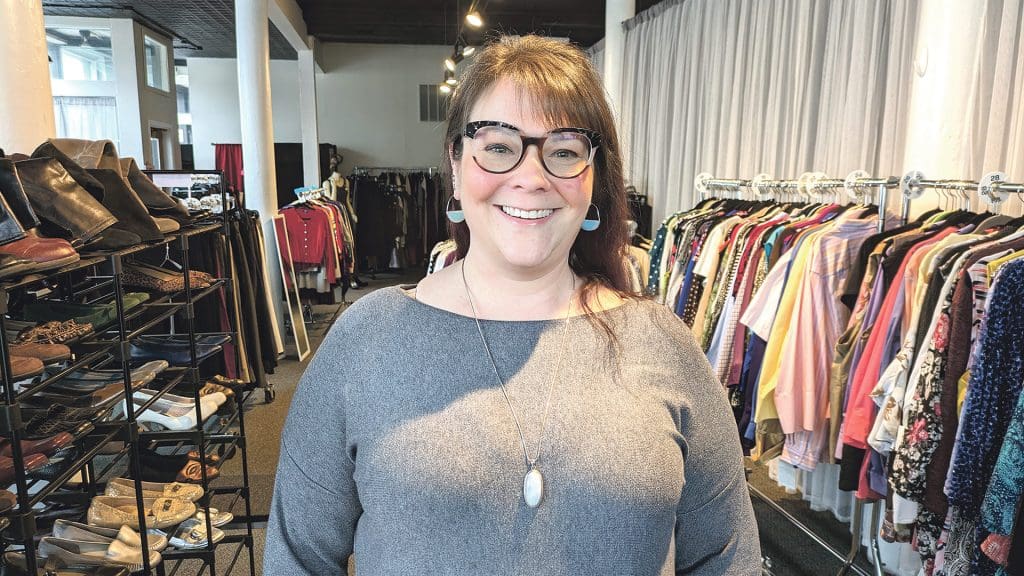
Jessica Roncarati-Howe in her 2012 40 Under Forty portrait

Jessica Roncarati-Howe in her 2012 40 Under Forty portrait

Jessica Roncarati-Howe  in the Dress for Success boutique today.

Jessica Roncarati-Howe in the Dress for Success boutique today.


When Jessica Roncarati-Howe was honored as a member of the 40 Under Forty class of 2012, she was executive director of the AIDS Foundation of Western Massachusetts — a job with many hats, all of which she wore proudly.

As the foundation’s only paid staff member, she was in charge of marketing and development, administering the grant program, co-chairing most events, and overseeing a cadre of volunteers and interns.

The AIDS Foundation had three missions: providing financial assistance to about 100 patients a year for expenses like rent, utilities, and medications; educational components, including the training of young peer educators to bring awareness into high schools and colleges; and referral services to help people with the disease access healthcare and other resources.

And those efforts made a difference, and even saved lives, considering Greater Springfield had the highest rate of infection in the state at the time.

“It was so gratifying to help them, not just get the services and supports they needed, but build their level of dignity and quality of life,” Roncarati-Howe recalled. “That work really was my heart for the longest time. It taught me a lot about this community, its diversity, how it feels to meet somebody where they are in their lives, as opposed to holding expectations of where people think they should be, and then helping them from that point. It was a remarkable bit of education for me. And that’s something that I wanted to carry into my career going forward.”

Eventually, the heavy workload of that job wasn’t meshing with her home life as well as she would have liked, and she didn’t want either to suffer. “I left the AIDS Foundation because I had a responsibility to both the people who relied on the foundation and my daughter, and I couldn’t juggle both without doing a disservice to one or the other.”

So she moved on to other jobs (and had “surprise twins” along the way), but nothing felt like the right fit — until she became involved with Dress for Success of Western Massachusetts, which she serves as executive director today.

“A friend of mine who was president of the board at the time met with me and asked if I might be interested in a position as program coordinator, but she couldn’t promise me anything except complete uncertainty and lousy pay,” she laughed.

Yet, the executive director at the time felt the organization was on the cusp of rapid growth, and she was right — eventually. Roncarati-Howe’s initial experience was something different, as she came on board in January 2020, just before the world shut down.

“My job went from defining existing programs and building more programs to figuring out what our participants actually needed in that moment and building from there,” she recalled. “And that meant scaling back and scrapping some things, going in different directions that we never expected that we would go. And, lo and behold, we ended up not only successfully delivering programs and services through the pandemic, but also growing.”

From program coordinator, she quickly advanced to director of programs and operations, and began to feel the same sense of ‘right place, right time’ that she had with the AIDS Foundation.

“The more things changed in the world, the more important it became to me to do meaningful work again. And now, I can’t see myself contentedly doing anything else.”

In January 2024, when the executive director position opened up, Roncarati-Howe was named to that role in an interim fashion, and the job became official two months later.

“We’ve all been in a position where we’ve needed help, we’ve needed support, and we haven’t known what the next steps are. To be able to provide that for women is an honor. That’s why I do this.”

It’s impactful work, with services that include the well-known boutique where women can get professional attire for interviews and after landing jobs, and also the Foot in the Door program that focuses on work readiness, from résumé writing and interview skills to networking, workplace etiquette, professional attire, and how to navigate difficult situations on the job.

Dress for Success also partners with a number of organizations, including hiring agencies, employers, and community colleges, to make sure as many people as possible graduate and move right into further training, higher education, or a job within three months of graduating.

“Instead of having siloed programming, we’ve developed a model that we call the continuum of support,” Roncarati-Howe said. “We help a woman from the moment they walk in the door, wherever they are in their life and whatever their needs might be, to whenever they feel that they don’t need us anymore. In some cases, that’s eight to 10 years.”

The program also provides basic computer literacy and a laptop, courtesy of Tech Foundry; basic financial wellness with Liberty Bank; and preparation for the National Career Readiness Certificate exam, not to mention the Margaret Fitzgerald Mentorship Program, a year-long, one-on-one mentorship with a professional or retired professional woman in the community.

The work of Dress for Success of Western Massachusetts is being amplified and expanded with the recent opening of its new Women’s Career Center, which will make the nonprofit’s workforce-development programming available to hundreds more individuals each year, both on a drop-in basis and through regularly scheduled workshops.

The organization will celebrate all of this, and its impact, at its 25th-anniverary Common Threads gala coming up on Thursday, April 17.

“We really try to ensure that, no matter who’s coming to us, the answer is never ‘no,’” Roncarati-Howe said. “It’s just so heartwarming and inspirational and gratifying. It’s also humbling because our perspective is that we’re serving. We are grateful to be able to do this work and do good for people who need us because we’ve all been in a position where we’ve needed help, we’ve needed support, and we haven’t known what the next steps are. To be able to provide that for women is an honor. That’s why I do this.”

Accounting and Tax Planning

Avoiding the Pitfalls

By Melissa Braun


Tax season can be stressful for small-business owners, but it doesn’t have to be. Avoiding common tax mistakes can save time, money, and the headache of an audit. Below are some of the most frequent errors small businesses make during tax season — along with practical solutions to help streamline the process.


Mixing Business and Personal Finances

The Mistake: Many small-business owners use personal accounts for business expenses, making it difficult to track deductions and report income accurately.

How to Avoid It: Open a separate business bank account and credit card. Use accounting software to categorize transactions and ensure accurate financial records.


Poor Record Keeping

The Mistake: Failing to maintain organized records leads to missed deductions and potential IRS scrutiny.

How to Avoid It: Keep digital and physical copies of all receipts, invoices, and financial statements. Use bookkeeping software like QuickBooks or Xero to maintain accurate records throughout the year.

Melissa Braun

Melissa Braun

“Use IRS guidelines to determine worker classification. If you’re unsure, seek professional advice to avoid costly reclassification issues.”


State Tax Filings

The Mistake: Not filing taxes in the correct states, especially for businesses with remote employees.

How to Avoid It: Ensure you are filing state taxes where your employees live and where your business has a tax obligation. Consult a tax professional to avoid missing required filings.


Overlooking Deductions and Credits

The Mistake: Many small business owners don’t take advantage of all available deductions, such as home-office expenses, capital improvements, and retirement contributions.

How to Avoid It: Research tax deductions and credits applicable to your industry. Consult a CPA to ensure you maximize all eligible write-offs.


Misclassifying Employees and Contractors

The Mistake: Misclassifying workers as independent contractors instead of employees (or vice versa) can lead to IRS penalties.

How to Avoid It: Use IRS guidelines to determine worker classification. If you’re unsure, seek professional advice to avoid costly reclassification issues.


Failing to File or Pay on Time

The Mistake: Missing deadlines for tax filings or payments can result in significant penalties and interest charges.

How to Avoid It: Mark key tax dates on your calendar and set reminders. Consider working with a tax professional to ensure timely filing and payments.


Underreporting Income

The Mistake: Some businesses inadvertently (or intentionally) underreport income, which can trigger an audit.

How to Avoid It: Report all business income, including cash transactions, digital sales, and third-party payments (such as PayPal or Venmo). Use accounting software to track and reconcile income regularly. Keep track of 1099s received.


Neglecting Payroll Tax Obligations

The Mistake: Business owners who handle payroll incorrectly — such as failing to withhold taxes or misreporting wages — can face IRS penalties.

How to Avoid It: Use a payroll service or consult with a tax expert to ensure compliance with payroll tax regulations.


Forgetting to Back Up Financial Data

The Mistake: Losing important financial documents due to a system crash or accidental deletion can cause major issues at tax time.

How to Avoid It: Regularly back up financial data to a secure cloud storage solution and keep paper copies of essential documents.


Trying to Do It All Alone

The Mistake: Many business owners attempt to handle taxes without professional guidance, increasing the risk of mistakes.

How to Avoid It: Work with a CPA or tax professional to ensure accuracy and compliance. Their expertise can help you save money and avoid costly errors.


Final Thoughts

Proactively managing your tax responsibilities throughout the year will make tax time much smoother. By keeping accurate records, making timely payments, and seeking professional guidance, small-business owners can minimize stress, reduce errors, and avoid unnecessary penalties.

Whittlesey specializes in helping small businesses navigate tax season with confidence. Whether you need assistance with tax planning, compliance, or financial strategy, our experienced team is here to help. Contact us today to ensure your business is prepared for tax season — and beyond.


Melissa Braun is a partner at Whittlesey, specializing in strategic tax planning, tax provisions, and tax-return preparation for corporate clients, including financial institutions. With extensive experience across real estate, low-income housing, construction, manufacturing, and closely held businesses, she provides expert guidance to help clients navigate complex tax regulations and optimize financial outcomes.

Architecture

Personal Touch

Lee Morrissette says it’s rewarding to see the impact the firm’s completed projects have on the community.

Lee Morrissette says it’s rewarding to see the impact the firm’s completed projects have on the community.


As Kerry Dietz planned her transition away from day-to-day leadership of the architecture firm she launched four decades ago, she was on a site visit to one of the firm’s Boston-area projects with Lee Morrissette — now one of the company’s four principals — and he asked her about her vision for the firm after she steps away.

“She said, ‘well, I’ve always envisioned the firm as a place for people to have a career in architecture.’ I thought that was a really interesting perspective,” Morrissette told BusinessWest. “It’s wasn’t ‘we want to build this building’ or ‘we want to get that award or make a lot of money from this particular type of project,’ but rather, ‘we want to be a place for people to have a career, to be part of a community,’ which I think is really rewarding.

“That, for me, has really resonated. Since becoming a principal over the past five years, I’ve realized that, even though I do interviews with clients and try to get new work and take on that competitive process we do for public work — which is great — it’s occurred to me that clients hire architects as people, not really as companies.”

And that’s important, Morrissette added, considering the relationship aspect of this work.

“You get the company, with all the breadth of experience. But you’re really hiring an architect, a person, to work with,” he explained. “The fastest projects barely get done in a year, and the really big, complex ones go three, five, seven, sometimes 10 years. You’re building a long-term relationship with somebody, so it needs to be somebody you can actually work with, someone who has your back. It’s like having a friend with special expertise you can really tap into. Perhaps friend isn’t the right word, but it’s building a relationship.”

Those relationships have grown over the years, and so has the firm, which now boasts a team of 30, completely filling the space in Springfield Union Station it has occupied since 2017. It has also opened a second office in Cambridge.

“Architects don’t build anything; contractors build things. We just provide all of what they need to be able to do that. And over that year of construction, 18 months, whatever it is, it slowly comes to life for us.”

“The bread and butter for our firm has always been affordable public housing, and there are a lot more housing authorities in the eastern part of the state than in the western part of the state, so we found ourselves getting more work in Eastern Massachusetts,” Morrissette said, noting that three team members work at that satellite.

But staff growth isn’t the only goal, he noted. Professional development is critical, as evidenced by the company’s designation, since 2018, as an Emerging Professional Friendly Firm by the New England Components of the American Institute of Architects. That program acknowledges architecture firms that promote the advancement of emerging talent through professional development and personal growth opportunities.

“It’s like a stamp of approval that we have an established professional-development program that includes mentorship and study materials and support of emerging professionals on a regular basis,” he said.

But it’s not just younger team members who are immersed in a culture of learning. Morrissette spent several recent weekends studying for an exam to become a certified passive house consultant, a cutting-edge type of sustainable design that dramatically reduces the amount of energy a building consumes.

“I’ve taken 56 hours of training to do this. And I’m really lucky that I can participate in that lifelong learning, just like the new grads that join our office,” he told BusinessWest. “We’re all learning together, and I think it’s a cool profession to be in. There’s a lot of variety in what we do, and there’s a lot to explore.”


Market Diversification

Dietz, like many large, well-established firms, designs projects in a range of sectors, including commercial, education, housing, senior living, hospitality, municipal work, and more.

“It sounds kind of like investment strategy, but it’s very similar. We have our hospitality industry, which is fairly market-driven, and then we have our publicly funded work,” Morrissette said, noting that publicly funded projects tend to land in a few buckets, from schools to housing authorities to municipalities. “They all have different budget cycles and money sources, but we’re working with public money from the very local level all the way to the feds, and that’s a nice balance to have.”

The principals at the firm — architects Morrissette, Jason Newman, and Kevin Riordan and chief financial officer Tina Gloster — regularly strategize on what projects to pursue or types of work to emphasize, and each brings different experiences and expertise.

Dietz & Company designed the new Richard E. Neal Cybersecurity Center of Excellence in Springfield.

Dietz & Company designed the new Richard E. Neal Cybersecurity Center of Excellence in Springfield.

“The business side, for architects, can be challenging. We don’t go to business school; we go to design school. But when you’re a really good designer, you get a lot of work, and you find yourself running a company, and you find yourself having to make business decisions,” Morrissette said.

One of them is Dietz’s continued evolution as a leader in sustainable design, with one recent example being the Wilmington Senior Center, the firm’s first exposed mass timber project.

“Instead of the old timber — huge trees cut into big pieces, like the interior of mill buildings with huge timber frames and brick exteriors — mass timber is when you take a whole bunch of small pieces of wood and glue them together to make either columns or beams or floor blocks or wall blocks,” Morrissette explained.

“It’s a good sustainability story because it’s wood that’s pretty quickly grown because you’re growing little trees instead of big trees. It’s fairly renewable and reasonably fast-growing. It helps manage the forests. It also sequesters carbon into the building.”

But despite the excitement of new designs and industry innovations, the most gratifying part of any project is watching the final product emerge — and the impact it has on clients.

“Architects don’t build anything; contractors build things. We just provide all of what they need to be able to do that. And over that year of construction, 18 months, whatever it is, it slowly comes to life for us,” Morrissette told BusinessWest, using the senior center as an example. “Nothing is more rewarding than walking an owner or a client through a building and saying, ‘over here, remember we talked about what that café was going to be like? This is where the coffee is going to be. This is where that beautiful tile you picked out is going to go.’

“And then you get to the ribbon cutting, and they say, ‘I can’t believe we’re here.’ To see the building full of its occupants — not contractors or architects, but to actually see it full of its occupants, enjoying the space, playing pool in the rec room and doing yoga in the fitness studio and sitting down for a meal — yeah, that’s pretty cool.”


Handing It Over

Still president and board chairman of the firm, Dietz can take a lot of pride in the company and culture she has built, which also includes an employee ownership model launched in 2021. Morrissette is proud of the work, too, but it goes deeper than that.

“In truth, there’s something a little bit zen about it. We spend all this time in this building. We argue and collaborate with the contractors and the owners about details and budget. We advocate for it like it’s our baby. And then we just give to the owner — because it’s not our building. You have to get used to giving it up and walking away.

“But it’s very rewarding,” he added. “It is incredibly challenging and nuanced, and I’m always tested, but I’m really lucky that I get to do this on a daily basis.”

Daily News

NORTH ADAMS — MountainOne Financial MHC, the mutual holding company parent of MountainOne Bank, and Mechanics Bancorp MHC, the mutual holding company parent of Mechanics Cooperative Bank, jointly announced they have entered into a formal agreement to merge into a combined mutual holding company.

After the completion of the merger, the new consolidated holding company for both banks will be MountainOne Financial MHC, and both banks will continue to operate independently, retaining their respective charters, headquarters, and brand names. The agreement, approved by both institution’s boards of trustees, awaits regulatory and corporator approval. The transaction is expected to close in the second half of 2025.

After completion of the merger, the new consolidated holding company for both banks will have approximately $1.8 billion in assets and 15 full-service retail banking locations across Massachusetts. Robert Fraser will become chairman, and Joseph Baptista Jr. will become president and CEO of the combined mutual holding company. Fraser will continue in his role as president and CEO of MountainOne Bank, and Baptista will also remain as president and CEO of Mechanics Cooperative Bank.

Under the terms of the agreement, no reductions in staff are planned at either institution. Furthermore, the agreement specifies a shared commitment to mutuality, a cornerstone of the combined organization.

“I am thrilled at the opportunity this partnership creates for our combined organizations. Continuing to operate independently enables us to position both mutual banks, as well as MountainOne Insurance and MountainOne Investments, for continued and future growth,” Fraser said. “Simply put, as two individually successful, fiscally strong, and strategically aligned mutual banking institutions, our combination is far greater than the sum of our parts.

“Mechanics is a like-minded financial institution who, like MountainOne, has built an incredibly strong reputation within its communities,” Fraser went on. “Together, we will create an even stronger, more resilient financial institution through a combined talent pool, shared resources, and technologies that benefit our customers and employees for the long term.”

Baptista added that “today is an exciting day in Mechanics Cooperative Bank’s 147-year history as we announce a partnership with MountainOne. Our shared values, vision, and deep roots in our respective markets make this partnership a natural fit. As mutual banking institutions, we are owned by our depositors, not by shareholders. As we set our sights on the future, we are committed to maintaining our mutuality structure, and our combined organization will continue to prioritize the interest of our customers and communities above all else.

“Our ongoing commitment to our local communities remains a great source of pride to our employees and is part of our shared legacy,” Baptista continued. “Customers at both institutions will continue to receive the same exceptional products and services they have come to know and expect. And, over time, this collaboration will allow us to create a more competitive, innovative organization that is well-positioned for long-term growth and stability for our valued customers and employees. Together, we are building a stronger, more dynamic, relationship-driven financial organization that will continue to service our communities at the local level for generations to come.”

Daily News

Brandon Calton

SPRINGFIELD — The Royal Law Firm recently welcomed attorney Brandon Calton to its team.

Calton advises clients through the litigation process and provides assistance when employers are faced with difficult scenarios, such as defending themselves against claims of discrimination, harassment, wrongful termination, or allegations of violations of the Family and Medical Leave Act.

He holds a bachelor’s degree in government from St. Lawrence University and a juris doctorate from Roger Williams University of Law. He is admitted to practice law in Massachusetts.

Daily News

WESTFIELD — On Saturday, April 5, Westfield State University will recognize and induct seven alumni and one faculty member into the Criminal Justice Alumni Hall of Fame. The event will recognize graduates for their outstanding contributions to the field of criminal justice, including law enforcement, public service, and legal advocacy at the local, state, and federal levels.

For more than 50 years, Westfield State’s criminal justice program has been a leader in the Commonwealth, offering undergraduate and graduate students the knowledge and experience to excel in their careers.

This year’s alumni inductees include Melvin Arroyo, chief Probation officer in Palmer Court; Bill Chase, founder and CEO of Sound Judgment Solutions, recognized for his career as a leader and special agent for the FBI; John Deveney, NCIS special agent in Boston; Gregory Hennick, acting chief of the Provincetown Police Department; David Lambert, director of Roger Williams University’s Justice System Training and Research Institute; Michael McCabe, mayor of Westfield, former Westfield Police Department member, and Westfield State adjunct faculty; and John Moran, special agent and federal air marshal, recognized for his distinguished career and role in transforming the nation’s aviation security system after the 9/11 attacks. Alice Perry, Westfield State faculty member, former state prosecutor, and advocate of women in law enforcement, will receive the Dr. Victor Ascollilo Lifetime Achievement Award.

The ceremony will take place from 11 a.m. to 2 p.m. in the Scanlon Banquet Hall on campus. For more information and to register to attend this event, visit westfield.ma.edu/cjhof.

Daily News

ENFIELD, Conn. — Farm Credit East reported solid 2024 financial results at its recent annual meeting. Continued loan growth coupled with strong earnings allowed it to distribute a combined $140 million in patronage dividends to eligible customer-owners based on 2024 earnings.

“Our strong financial results over the past several years reinforce Farm Credit East’s ability to serve Northeast agriculture and rural communities and the strength of our cooperative model,” CEO Mike Reynolds said.

In 2024, Farm Credit East’s net income grew to $337 million. Following more than two decades of growth, the cooperative closed out the year with $12.9 billion in loan volume and $2.4 billion in capital. This level of equity allows it to maintain competitive interest rates, while returning a portion of earnings to eligible customer-owners through patronage dividends.

“Given the association’s success in 2024, the board was pleased to approve a special patronage to members. This reflects our commitment to returning value to customer-owners while ensuring the long-term strength of the cooperative,” said John Knopf, Farm Credit East board chair.

The $140 million total patronage paid to members in February is a combination of $131.6 million in patronage dividends based on 2024 cooperative earnings and a $8.4 million special patronage payment the board of directors approved, resulting from the association’s strong results, which exceeded financial targets.

Cover Story

Stepping Out

If there’s one constant when conversations arise about quality of life in Western Mass., it’s the embarrassment of cultural and recreational riches that are accessible to this region’s residents — and, quite often, draw visitors from well outside this area.

For this issue’s focus on tourism and hospitality, we checked in with 10 such destinations, eight in Western Mass. and two just over the border in Connecticut, about whom their visitors are, what’s on tap for 2025, and why folks who may never have considered a visit should stop by. The picture that emerges is ever-evolving and vibrant, and may spur an idea (or 10) for a fun, enriching outing — and inspiration to look up other tourist and cultural attractions across the region.

Features Special Coverage

State of the Bay State


“The success of Massachusetts’ economy has historically been driven by a number of key strengths: a strong quality of life, an educated and engaged workforce, and economic sectors that adapt to changing conditions and are at the vanguard of innovation. However, these strengths are no longer as unique to Massachusetts, nor are they guaranteed to continue in perpetuity, and in recent years, national demographic shifts and increased mobility for people and employers have threatened to degrade Massachusetts’ competitive edge when attracting residents, businesses, and investment.”


That’s the introductory, summary paragraph in a note from the Massachusetts Taxpayers Assoc. (MTF) as it introduced something it calls its Competitive Index, which was first released last fall and will now be conducted annually. And it effectively sets the tone for the document, which compiled 26 different metrics — from grade-8 math test scores to energy costs; from international migration to commute time — that clearly and concisely measure how the Bay State is stacking up. (The full report can be found at masstaxpayers.org.)

The bottom line is that is that, while the state still has several strong attributes, it is not as competitive as it has been historically. Or, put another way, other states, such as California, Florida, North Carolina, and Texas, have become more competitive. And now, thanks to the pandemic and the advent of remote work, it has more competitors, including other New England states.

“Massachusetts has a number of real strengths; the fact that we are the most highly educated state in the nation and have been for a long time, the fact that we have the best K-12 school system, at least on average, and higher education is such a strength, bodes well for us,” MTF President Doug Howgate told BusinessWest. “But at the same time, there are lot of things that we can and do need to do better — we’re either lagging behind the standards we’ve set for ourselves, or we’re lagging behind other states.”

“One of the reasons why we wanted to look into some of these issues within the competitive index is that, during the pandemic, we started to see that location choices became a little more flexible — not for everyone, but for some people,” he went on. “And that has real impacts for the long-standing proposition that Massachusetts has for its residents in terms of what you gain from living here and what the costs are.

“There are lot of things that we can and do need to do better — we’re either lagging behind the standards we’ve set for ourselves, or we’re lagging behind other states.”

“If people became a little less sticky and had a little more ability to move around — the same with employers — was that going to be a competitive advantage or disadvantage for Massachusetts?” he continued. “And at least in the very short term, it appeared to be a net competitive disadvantage as we saw these big surges in domestic outmigration — not everywhere, but certainly in higher-cost areas.”

Since the release of the report, compiled with researchers at the UMass Donohue Institute and with the support of the Massachusetts Competitive Partnership, it has been the subject of discussion and debate — about what the state has lost when it comes to its historic competitive edge, to whom it has lost that edge, and, perhaps most importantly, how it might get that edge back.

Howgate has spoken at several forums about the Competitive Index and the issues related to it, including the Outlook lunch staged by the Springfield Regional Chamber earlier this month.

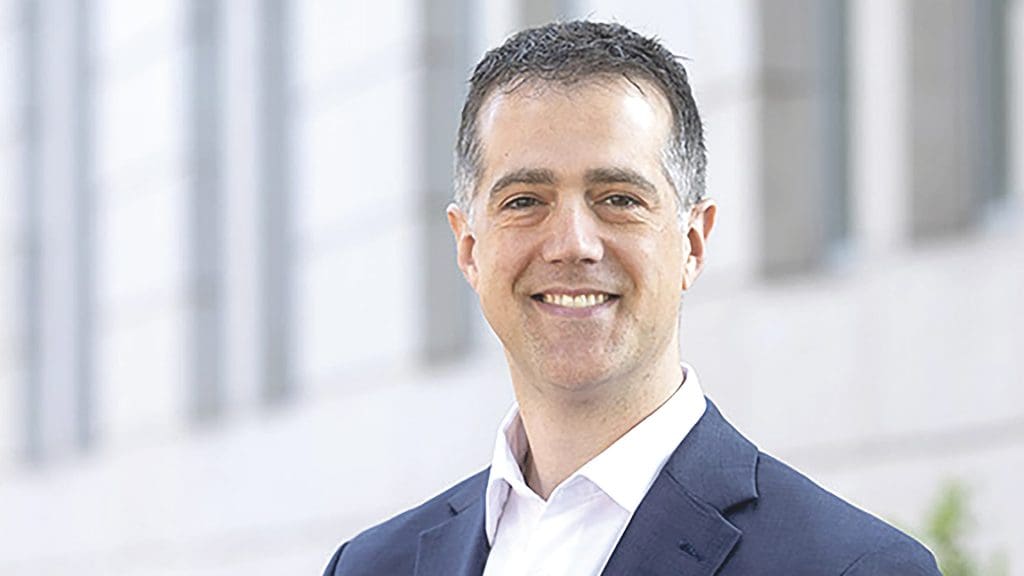
Doug Howgate

Doug Howgate

“If people became a little less sticky and had a little more ability to move around — the same with employers — was that going to be a competitive advantage or disadvantage for Massachusetts?”

At those forums, and in a wide-ranging interview with BusinessWest, he stressed that the Commonwealth can no longer take its historic advantages — and, again, there are several, from educational attainment to its ability to attract international immigrants — for granted, because other states are gaining ground in those realms.

In the meantime, several factors, such as the rising cost of everything from housing to energy to childcare, as well as the so-called ‘millionaire’s tax’ and the rise of remote work, have contributed to the state losing population — and talent — to other states, although some, if not most, of these losses have been made up through international immigration.

As he talked about the index and what the numbers mean, Howgate said it suggests at least five key areas for policy focus: creating a competitive roadmap, stemming outmigration, growing the labor force, incorporating cost considerations into policy conversations, and fostering and supporting the relationship between the state’s education system and the economy.

We’ll get into each in more detail as we examine the Competitive Index and how it serves as a call to action as the state, which is still very competitive when it comes to businesses, jobs, and talent, faces the hard reality that it must take steps to remain that way.

Moving Targets

As he sliced through the numbers in the index, Howgate reiterated that the Commonwealth still has several competitive strengths.

Indeed, it is ranked at or near the top in such areas as population age 25 and over with a bachelor’s degree or higher, average weekly wage, research and development funding as a share of gross state product, and even life expectancy at birth.

But these strengths are counter-balanced by many weaknesses, with the state ranked at or near the bottom nationally in income inequality, energy costs, overall cost of living, commute time, childcare costs, housing cost burden, and even average unemployment insurance tax amount per covered employee.

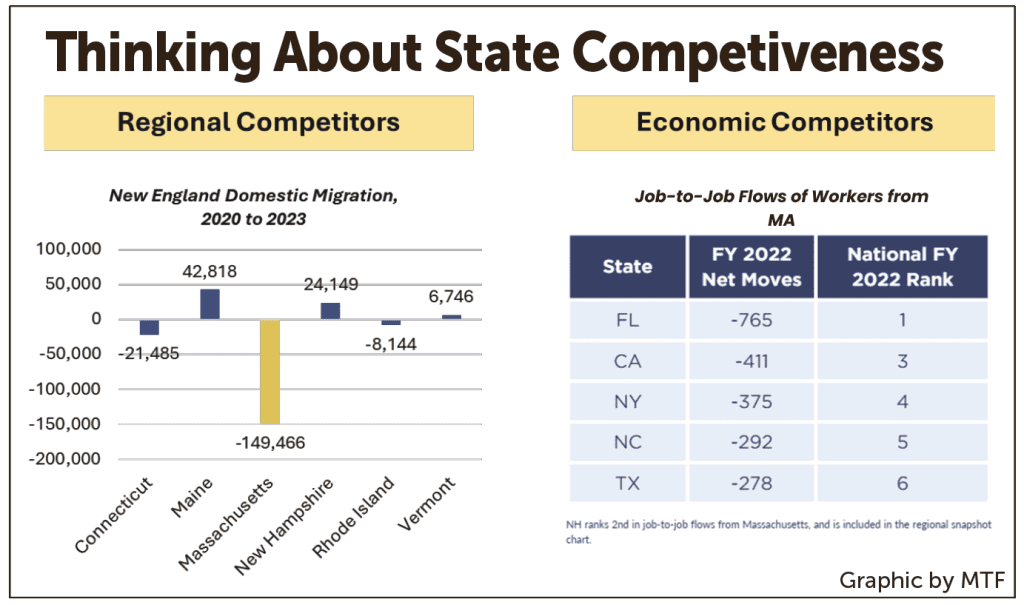
In many ways, these weaknesses are now taking their toll, and this is showing up in domestic migration, with the state losing workers to regional competitors such as Maine and New Hampshire, and especially Florida, California, and New York.

This disconcerting trend is what prompted MTF to “look under the hood,” as Howgate put it, and determine if and where the state was losing some of its edge.

“We started looking at questions related to where are we a leader or a laggard, and a lot of the places where we’re a laggard are places where the costs are borne by wealthy folks,” he said, referring to the millionaire’s tax but also other factors. “But also, a lot of the costs make it a challenging place to live for working families, which is another huge challenge for the Commonwealth moving forward.

“What we talk about in the report is that people are more sensitive to cost than they used to be,” he went on. “So that heightens some of our long-standing competitive disadvantages. The fact that childcare costs are higher, housing costs are higher, unemployment insurance taxes … we continue to fare very poorly in those areas, and they’re at the core of where people can afford to live.”

Statistics show that, while outmigration is occurring most in the higher income brackets, especially $250,000 in annual income and above, it is also happening with other groups, such as those in the $75,000-$100,000 range, said Howgate, adding that this speaks to, respectively, people who can afford to relocate and those who can’t afford to stay. And in both cases, the trends started before the pandemic.

“And the factor that’s kind of marbled throughout that is that we’re seeing increasing evidence that it’s our younger professionals who are leaving,” he said, adding that this reality has deep ramifications for the Commonwealth and its businesses, large and small.

Meanwhile, he acknowledged that this challenge does in some ways present opportunities for this part of the state, where some of these costs, especially housing and childcare, are not as burdensome.

Indeed, opportunities exist to convince people, and even businesses, to move to different parts of the Commonwealth rather than to another state, he said, adding that, due in large part to remote work possibilities, some areas, such as the Cape and the Berkshires, are gaining population.


Behind the Numbers

Howgate noted that one of the many lessons from the pandemic, a once-in-a-lifetime happening that altered many aspects of life, is that things can change quickly.

“Just like you don’t want to assume that things are going to go right back to the way they were before the pandemic in a couple of months or a couple of years, you also don’t want to assume that the way things looked in June of 2023 is what they’re going to look like forever,” he told BusinessWest. “One of the points with the competitiveness index is to say that, as we find a new normal — and what ‘normal’ is is always changing — how do we start to create these baselines for ourselves about what we’re doing well and not doing well?”

And with this baseline, Massachusetts can continue to track how it’s faring, he said, adding that overall competitiveness is something that the state and its leaders should continually gauge — and work to improve.

It hasn’t been this way historically, he went on, and this is perhaps one of the reasons why some of its edge has been lost.

“You don’t want to overreact as a policy maker, but at the same time, we have some compelling data that something has altered how people are making location decisions,” he said. “So we need to be more mindful of the fact that people aren’t going to just stay because this is where they’ve always been; there has to be more to our argument than that.”

This brings him back to some of those suggested key areas of policy focus and the overall need to emphasize competitiveness as an economic-development priority for the state.

Action, and change, is needed on several fronts, Howgate said, especially housing and what he called the “nexus between transportation and housing.”

“If people can’t afford to live in a place that gets them to where they want to go conveniently, you have a big problem on your hands,” he told BusinessWest. “And that is something Massachusetts has a real crunch on — both accessible and efficient transportation options and affordable housing.

“While there are other things that absolutely matter as well, such as childcare costs,” he went on, “I think that we started to focus more and more, as others have as well, on what are some of the smart things we can do on transportation and housing to get people more quickly to places with inexpensive housing, like Central Mass. and Western Mass., and then also, what can we do on the production side to boost housing so people are able to afford where they want to live?”

The Commonwealth is certainly not alone with these challenges — many other states and urban areas are dealing with sky-high housing costs and transportation issues, he said, adding that some are being more proactive, and effective, in dealing with them and issues such as zoning and land use.

When asked to project ahead five or 10 years to where the Commonwealth might be from a competitiveness standpoint, Howgate said this is difficult because of the profound pace of change. But he did say the state cannot afford to leave anything to chance.

“We know what our demography is, that we’re an aging population, like other Northeast states, and we know that we’re a high-cost area,” he said. “At the end of the day, irrespective of where you are ideologically, it’s in all of our best interests to incentivize people to stay in Massachusetts, and move to Massachusetts, because we’re not going to have that level of growth if we just sit here and do nothing.”

Accounting and Tax Planning Special Coverage

Unlocking the Benefits


By Matt Baran

Stock compensation has become an increasingly common form of employee compensation, particularly in tech startups, large corporations, and publicly traded companies. This form of compensation allows employees to benefit from their company’s success by offering them the ability to acquire shares of the company’s stock. Stock compensation also allows companies to save cash while still providing their employees with a form of payment.

There are different types of stock compensation plans available, each with its own set of benefits and tax implications. The most common types are incentive stock options (ISOs), non-qualified stock options (NSOs), and restricted stock units (RSUs). Understanding these options is essential for employees to make informed decisions about their compensation and plan for potential tax obligations.


Incentive Stock Options

Incentive stock options are a type of stock option that provides employees the right to purchase company shares at a fixed price (known as the exercise price) after a certain vesting period.

ISOs have unique tax advantages that make them appealing to employees. When employees exercise ISOs and hold onto the shares for at least one year after exercise and two years after the grant date, any gains from the sale of the stock are taxed as long-term capital gains rather than ordinary income, providing favorable tax treatment as long-term capital gain rates are typically lower than ordinary tax rates.

ISOs do not trigger ordinary income tax when they are exercised, as long as the employee meets the holding-period requirements previously mentioned. This allows employees to potentially defer taxes until they sell the shares. If the holding-period requirements are not met, the sale would be considered a disqualified disposition and subject to ordinary tax rates, on both the spread and any additional gains after purchase.

Matt Baran

Matt Baran

“Restricted stock units are valuable because they provide employees with an equity stake in the company once the shares vest. Unlike stock options, which have value only if the company’s stock price rises above the exercise price, RSUs have intrinsic value as long as the company’s stock has value.”

While ISOs provide the benefit of capital-gains tax treatment, they come with the risk of triggering alternative minimum tax (AMT). The spread between the exercise price and the fair market value of the stock at the time of exercise is considered a preference item for AMT purposes, potentially causing employees to owe additional taxes even if they do not sell the stock immediately. Any AMT paid in a tax year can typically be taken as a credit in the next year the taxpayer is not subject to AMT.


Non-qualified Stock Options

Non-qualified stock options are the most common type of stock options granted by companies. Similar to ISOs, employees are granted the right to purchase shares at the exercise price. Unlike ISOs, NSOs do not receive the same favorable tax treatment and can trigger tax consequences at the time of exercise.

When an employee exercises NSOs, the difference between the exercise price and the fair market value of the stock is taxed as ordinary income. This means that the employee will face immediate income-tax liability on the spread at exercise. The combination of the amount paid for the shares plus the taxable spread upon exercise becomes the tax basis in the shares and will be used in the calculation of gain or loss when the shares are sold. Any gains or losses will be treated as capital gains, either short- or long-term, depending on the holding period.


Restricted Stock Units

Restricted stock units are valuable because they provide employees with an equity stake in the company once the shares vest. Unlike stock options, which have value only if the company’s stock price rises above the exercise price, RSUs have intrinsic value as long as the company’s stock has value. Vesting, in relation to RSUs, is typically on a time-based schedule.

There are also performance stock units (PSUs), in which an employee must hit certain performance metrics to trigger the stock to vest. RSUs and PSUs are treated the same for tax purposes.

The shares are taxed at their fair market value when they vest, and employees usually elect a ‘sell-to-cover’ withholding method, meaning a portion of the vested shares are sold immediately to cover federal, state, and FICA withholdings. Employees with high tax rates should be conscientious of the withholding rate and consider making additional estimated tax payments, if necessary.

The fair market value that is taxable upon vest becomes the tax basis in the shares. Any gains or losses from sales of that stock are capital in nature and will be taxed at either short- or long-term rates, depending on the holding period.


Planning for Stock Compensation

Planning is paramount regarding stock compensation. It is important for employees to be aware of the relevant dates, including the grant date, exercise date, vesting date, and holding period once the employee gains ownership of the shares. For all types of stock compensation, employees must understand what type of stock compensation they were granted and the nature and timing of taxation, and have a plan for managing cash flows and executing sales of the stock down the road.

There are other planning considerations, including the long-term outlook of the company, the employee’s personal portfolio and diversification, and how other sources of taxable income impact tax liabilities and tax rates.


Bottom Line

Employees should carefully consider the type of stock compensation they receive and plan accordingly to manage their tax liabilities and maximize the benefits. As always, consulting a tax professional is recommended to navigate the complexities of stock compensation.


Matt Baran is a tax manager at MP CPAs

Architecture Special Coverage

Designs on the Future

Principals Rick Katsanos (left) and Don Hafner

Principals Rick Katsanos (left) and Don Hafner


As the long-time principals at HAI Architecture in Northampton, Don Hafner and Rick Katsanos don’t see the healthcare facilities they design — or any facilities, really — as simply physical spaces.

No, they see the impact on the people who live, work, and play in those spaces, and it’s a gratifying feeling, whether they’re designing an ICU for critical hospital care or a small outdoor stage for Forbes Library in Northampton.

“We don’t value healthcare systemically in this country,” Katsanos said of the former. “It’s more than just having a doctor; it’s more than just having the right medications. It’s about wellness. It’s about having an environment. And it doesn’t have to just be in a hospital. It can be in a clinic; it can be in a doctor’s office.”

As for the stage, which he called “a fun community project, a different thing for us,” there’s an element of wellness there, too.

“It’s mental health for the community. I like going and hearing the children’s choir, and instead of just standing on the muddy grass, there’s going to be a place for them. And I’m not placing an overemphasis on, ‘wow, we’re changing the world.’ But we’re changing a little bit of the world for the positive.

“And that’s all each of us needs to do — change the world a little bit for the positive. And then, cumulatively, great things can happen,” Katsanos went on. “That’s why I feel great about what we do. I’ve never felt like we’ve taken a project just for the money or we’ve taken a project that we weren’t proud of. I’m proud of every single thing this company has done.”

“We’re talking about some of these hospitals losing a hundred million dollars, two hundred million. That’s not insignificant. So that’s been an issue.”

Katsanos and Hafner met as freshmen at Penn State in the early ’80s and were among a group of architecture students who gravitated north after graduation to find work. Katsanos, a Wilbraham native, was hired in 1986 by Ed Jendry, who had launched Architects Inc. in Northampton in 1976. Two years later, Hafner, who had been working in Vermont, joined him at the firm.

In 1993, Katsanos and Hafner bought the business, which had also spun off a sister company, Healthcare Architects, to pursue work in the regional healthcare market — a decision that proved lucrative, as the firm still focuses heavily on designing modern, high-tech spaces for hospitals, health systems, and physician practices across the region.

The dramatic main entrance canopy was part of HAI’s work at Salem Hospital.

The dramatic main entrance canopy was part of HAI’s work at Salem Hospital.

Years later, the partners merged Architects Inc. and Healthcare Architects into one company, called HAI Architecture.

“Don and I have known each other for some 40-odd years. We met the first day of freshman year, and then went into business together,” Katsanos said. “We are fairly aligned. We have our differences, like every good relationship. Sometimes it’s like a marriage, sometimes it’s like siblings, sometimes it’s a business relationship. We run the gamut.

“And it’s important that we have differences of opinion; it helps,” he went on. “He’ll see something differently. I’ll say, ‘this is the way I’m going to design this.’ And he’ll go, ‘well, did you ever think that it might work out better this way?’ And that difference of opinion almost always makes it better.”


Healthy Returns

The firm is still heavily invested in healthcare projects, such as a just-completed ICU at UMass Memorial Health – Harrington Hospital in Southbridge and a new lobby addition and registration area at Salem Hospital — both of those long-time clients, as are some of the local hospitals, like Cooley Dickinson, Mercy, and the various Baystate facilities.

At Salem, “we’re doing a lot of radiographic technology stuff at their facilities and a bunch of clinical projects,” Hafner said, “and then also a bunch of infrastructure projects because we’ve always been a service provider in the truest architectural sense. We really love doing interesting architecture, but a lot of the stuff we’ve done with hospitals has always come from facility-based projects that help to support their infrastructure.”

“We have no idea if doors, which largely come from Canada, are going to be one and a half times what they were this time last year. Even stuff that is manufactured here is impacted by things like steel and aluminum prices.”

And those needs don’t stop, not even during the pandemic, when HAI stayed very busy.

“We never, other than maybe two weeks, had a slowdown. Everybody learned how to make sourdough bread, but I did not have that opportunity,” Katsanos said with a laugh. “We were fortunate because the healthcare sector needed to continue. The first project that went back online 10 days after the world shut down was a clinical trials facility — a lab that we were designing and in the middle of building for Baystate — because it was needed. The government told us we’re critical infrastructure.”

That said, healthcare is in a challenging time right now, he noted, with many hospitals and health systems — Baystate, for instance — grappling with serious red ink.

“They’re basically looking at scaling back a lot things that aren’t direct patient care. They have to re-evaluate where they’re going to spend money. We’re talking about some of these hospitals losing a hundred million dollars, two hundred million. That’s not insignificant. So that’s been an issue.”

In addition, Katsanos said, “I think we’re seeing the impact of COVID on healthcare. Like, they kept going and kept going because they needed to. Staffing costs were higher; everything cost more, but they needed to keep going. And I think it’s finally caught up, and there needs to be a little bit of a correction because everybody’s overextended.”

That trend happens to coincide with dramatic proposed federal spending cuts in all areas of life, including healthcare.

“That affects our flow of projects. We have some projects that have been delayed almost immediately because there’s just uncertainty. So, if you don’t have to spend — if it’s not, ‘oh my gosh, that piece of equipment is totally broken, and we need to replace it’ — then clients are scaling back.”

One of HAI’s projects in UMass Memorial Health – Harrington Hospital was this ICU renovation.

One of HAI’s projects in UMass Memorial Health – Harrington Hospital was this ICU renovation.

The same promises to be true across higher education, he added. “That’s a big one, and it’s been a target as well.”

But economic uncertainty can affect projects of all kinds, Katsanos added. “Even stuff like the stage [at Forbes] — it’s a steel-framed stage. We don’t know if the tariffs are going to actually impact the pricing on that. The prices are locked in, but there’s always a caveat of ‘barring uncontrolled circumstances,’ and certainly a tariff is not necessarily a controlled circumstance. It’s not in place at the time that somebody places a bid, and then, a week later, it is. It’s no way to run an economy, but here we are.”


Branching Out

In addition to its broad roster of healthcare projects, HAI has diversified into many other sectors over the years, from bank branches to work at a number of nonprofits, like Ronald McDonald House and the Northampton Survival Center, to facilities in the education world.

One recent project was the renovation of the Gateway City Arts complex in downtown Holyoke to house LightHouse Holyoke, a non-traditional middle and high school. “Working with those folks was fun and something a little bit different for us,” Katsanos said. “So that was pretty satisfying.”

He added that it’s simply good business practice to diversify, even when times are heady in the healthcare realm.

“You can get very complacent when healthcare is so busy that you can’t keep up with it. But we don’t say no to something that’s out of the ordinary. Sometimes it’s refreshing to work on something that’s just different. Like an outdoor stage for Forbes Library — I would not have targeted that, but it’s a wonderful project.”

He also appreciates the impact of something like creating a family room for Ronald McDonald House at Baystate Children’s Hospital.

“If you have a kid getting cancer treatment at Baystate, you don’t even have to walk two blocks to go to the Ronald McDonald House; you can go to this new family room and get a cup of coffee and check your email and be away from your child’s bedside, but literally 12 seconds away, and that is really cool.”

Hafner said projects like this, with palpable human impact, energize the staff as well. “They understand that we value the community that we live and work in. So it’s very exciting to do those kinds of projects.”

As noted earlier, there’s plenty of concern these days to go along with the highs of today’s architecture industry, stemming from the economic uncertainty of tariffs and funding cuts.

“I think there’s large-scale worry from the contracting area across the board,” Hafner said. “We have no idea if doors, which largely come from Canada, are going to be one and a half times what they were this time last year. Even stuff that is manufactured here is impacted by things like steel and aluminum prices.”

“So I think everybody is really on edge,” he added. “A number of the hospitals that have not signed contracts have put things on hold because they’re not sure if project budgets will hold. I think there’s going to be a wave that happens through the entire construction industry. It’s not going to be limited to any one thing in particular because all those issues impact every single aspect of every single building typology.”

That said, Katsanos told BusinessWest, “we’re positive. We’re optimists … cautiously. It’s not a fun time right now for anybody, on whatever side of the spectrum you are, because uncertainty is always difficult. So I’m not saying I’m not concerned about our industry — I am concerned. But I also am positive. We’ll survive, and we’ll persevere.”


Kindness and Gratitude

Katsanos said he committed to making 2025 a “year of kindness,” inspired by his mother, whom he described as very kind, and who passed away in August.

“It doesn’t have to be huge. We don’t have to be political and change the world. We all have to just do better. Cumulatively, there’s a lot of us, and we can do great things.

“That’s why we like healthcare,” he added. “I’m not a doctor, but I think the healthcare system can be improved, and we try to do it. We are very, very affordable, and we could probably make more money, but we do a lot of work for nonprofits, and those are little margins. And we make that work.”

Hafner agreed. “I’m very thankful for what we’ve been able to accomplish. I am very proud of the projects that we’ve done. They don’t always land on the cover of a magazine or anything like that, but over the period of time that we’ve done this, we’ve made an impact. I think we’ve done a reasonable job of making our community a better place through the work that we’ve done.”

Community Spotlight Special Coverage

Community Spotlight

The former Thorndike School will be converted into 12 to 18 units of market-rate housing.

The former Thorndike School will be converted into 12 to 18 units of market-rate housing.


When it comes to Palmer’s much-anticipated new train station and the return of passenger rail service after a half-century absence, there is no timetable in place yet.

There are several hurdles still be cleared, from design to the huge matter of funding — for this train station and the state’s much larger east-west rail project. Town officials can only speculate that it will be a few years, and likely more than a few — one said it will be at least 2029 — before the facility is up and trains are stopping there.

But this lack of a go date isn’t tamping speculation, both positive and negative — especially since the state has now chosen a site for the station, an open field at 1099 South Main St., south of Palmer Yard, land owned by wire brush manufacturer Sanderson MacLeod (more on that company later) and adjacent to its plant.

To the disappointment of many in the community, this site is not downtown — and, more specifically, not the site of the former, historic train station, now home to the popular Steaming Tender restaurant.

In fact, a group calling itself the Central Rail Passenger Coalition is not entirely ready to give up on the downtown site, even though the state Department of Transportation has deemed it inadequate for several reasons, and town officials are accepting the state’s decision.

“It’s a chance for the town to assess current land use in the area and begin laying some groundwork to really encourage and enable transit-oriented development in that area.”

Scarlet Lamothe, general manager of the Steaming Tender and member of the Central Rail Passenger Coalition, has been outspoken — at public meetings and other forums — about how the South Yard location, known as ‘Site B,’ will not bring real economic benefits to the downtown or the community as a whole, pointing to the example of Windsor Locks, Conn., which built a new train station outside of the central business district, didn’t see much economic development, and is now moving its station downtown.

“Site B is not located in the downtown district, and it will show no benefit to the town,” she said, adding that she, other members of the coalition, and other Palmer residents are trying to gather support for an ordinance that would require that a passenger rail depot and related facilities need to be zoned in the downtown district.

“Also, you won’t see as much ridership at Site B because you won’t have that north-south connection,” she went on, adding that behind the historic station is a diamond junction, permitting rail service in all four directions; Site B would only accommodate east-west service.

Town Planner Heidi Mannarino acknowledged some disappointment concerning the state’s choice of location, but said the site is only a half-mile from downtown, and, overall, it could benefit existing businesses and prompt additional development.

“There is potential to unlock more development in that area,” she said, adding that, while the next steps in this process play out, the town should be looking to maximize the development opportunities from this potentially groundbreaking development, one that could return the community known as the Town of Seven Railroads to its roots.

“It’s a chance for the town to assess current land use in the area and begin laying some groundwork to really encourage and enable transit-oriented development in that area,” Mannarino said, adding that this includes everything from new housing opportunities to businesses catering to those getting on and off trains to creating safer alternatives for multi-modal transportation.

The state’s selection of a site for the new rail station tops the list of developing stories in this community, but there are several others, including plans to convert the former Thorndike School, built in 1910, into 12 to 18 units of market-rate housing, $1.6 million in infrastructure work (from sidewalks to fire hydrants), a new strip mall on Route 32 near the turnpike exit that is nearing the finish line, and a spike in interest in Palmer in the wake of remote work and hybrid schedules.
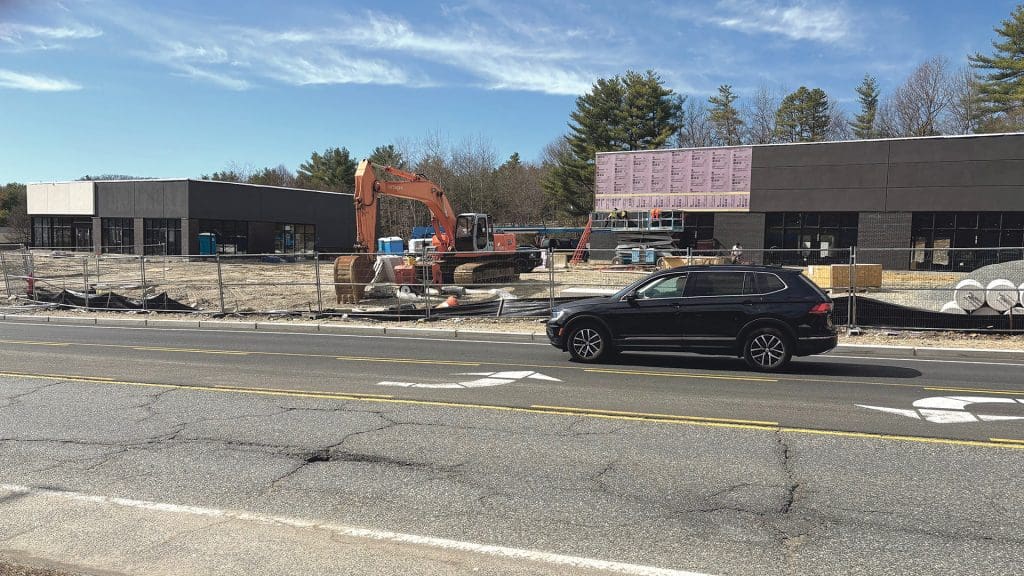
The Liberty Plaza project on Thorndike Street is nearing completion.

The Liberty Plaza project on Thorndike Street is nearing completion.

Indeed, this dramatic change in how people work has made the commute from Palmer to Springfield, Worcester, and points east of Worcester far more attractive than when people were going to the office five days a week, said John Latour, Palmer’s director of Community Development, adding that there are other incentives.

“There’s quality of life, there’s a grocery store and other amenities, but the housing here is more affordable than going further east,” he explained. “You can get a really nice house here for considerably less than you would, say, in the Shrewsbury area, so you’re seeing more people driving into Worcester and the Boston area from Palmer.”

For this latest installment of its Community Spotlight series, BusinessWest turns its lens on Palmer, where many forms of progress are, well … on track.


Train of Thought

Latour noted that, while there is, indeed, some disappointment concerning the state’s choice of a location for the new train station, there is still a buzz surrounding the east-west rail project and how it could change the fortunes of a community that is roughly halfway between Springfield and Worcester, but often (and until recently) considered too far from either for a commute or any economic benefit.

Remote work and hybrid schedules have changed some attitudes about Palmer, he said, noting that this is reflected in growing interest in housing within the community and rising prices, with the median price now exceeding $300,000.

And east-west rail could change the equation further by making the commute easier and thus more palatable, he said, adding that there are many examples of communities that have benefited, in many ways, from being a rail stop.

Mannarino agreed, noting that, in addition to spurring residential growth, a rail stop can benefit existing businesses in the broad hospitality sector and foster new ventures as well. And the chosen site for the station can do both, she added.

“Currently, on the other side of the track from the site, there’s already Seven Roads Brewery and other existing businesses that will shine. It’s going to be a matter of making sure that the rail stop is connected to those businesses in a safe way while also laying the groundwork so that it can be attractive for other business opportunities on the south side of the tracks as well.”

Overall, she said rail service will make Palmer’s location, already attractive because of its turnpike exit and close proximity to the state’s second- and third-largest cities, even more appealing to the development community.

While anticipating — and preparing for — a future with passenger rail service, Palmer is also coping with the present and developments on several fronts.

At the top of that list is housing, which is key to any residential growth and the benefits to be derived from it, said Latour, adding that, at present, there is little in the way of new construction of homes or subdivisions.

But the Thorndike School project is a small step forward, he added, noting that the new units will make a small dent in overall need. Conversion of the former Converse Middle School into 55-and-over housing, a project the town has been pursuing, will make another dent.

Other developments include Liberty Plaza, a strip mall taking shape just a few hundred yards from the Big Y on Thorndike Street (Route 32). The plaza will be home to a Starbucks and a Jersey Mike’s, as well as additional tenants, said Latour, adding that this project will hopefully inspire additional commercial development in that area just off the pike exit.

Palmer at a Glance

Year Incorporated: 1775
Population: 12,448
Area: 32 square miles
County: Hampden
Tax Rate, residential and commercial: Palmer, $18.15; Three Rivers, $18.23; Bondsville, $18.98; Thorndike, $18.28
Median Household Income: $41,443
Median Family Income: $49,358
Type of government: Town Manager; Town Council
Largest Employers: Baystate Wing Hospital; Sanderson MacLeod Inc., Camp Ramah of New England; Big Y World Class Market
*Latest information available

Meanwhile, the town has been awarded a $430,000 grant to design a new sewer infrastructure for a stretch of Thorndike Street, a project intended to alleviate a “ticking time bomb,” Mannarino said, and one that could unlock new development, both commercial and residential, in that area.

The overall price tag for that project will be $4 million to $6 million, she noted, adding that the town will be pursuing other grants to cover that cost, and there is no timeline for the initiative.


Making It Happen

Mark Borsari, president and CEO of Sanderson MacLeod, or SanMac, as it’s known colloquially, sidestepped questions about the rail station and east-west rail, noting that both are matters well beyond his control.

He preferred to talk about what is in his control, meaning his company, and its focus, which, technically speaking, is on making twisted wire brushes, but is really on creating an environment where people want to work and can thrive, and also on creating a model for other manufacturers, most of them facing the stern challenges of coping with retiring Baby Boomers and attracting and retaining young talent.

“We can’t control the weather, but we might as well see if we can be as creative as possible internally — we’re having a good time, we really are,” he said, adding that the company is firmly focused on making investments in the next generation of workers and, at the same time, “making it cool,” with ‘it’ being the overall experience.

It does this through everything from food trucks making regular stops at the plant to a cornhole tournament; from one of the company’s operating slogans — “you’ve got to be a little twisted to work here” — to an elaborate employee-appreciation day called Brushes, Blues, and Barbecue, which tells the whole story.

Such initiatives are part of a two-pronged approach at SanMac, said Borsari, adding that the first is to work with area schools to educate young people about the many attractive benefits to careers in manufacturing, while the second is to implement programs that demonstrate how valued employees are and encourage them to grow with the company, be part of the growth process, and encourage leadership.

“You do have to make it cool — I’ve always said that you have to look at through the eyes of someone who’s 18 or 19 years old and create an organizational place that they find cool to be in,” he explained.

“And that means you have to be creative. You make it cool by making the cafeteria a ’50s diner, you make it cool by putting bus wrap around the inside of the factory so you can put colorful graphics up, you make it cool by bringing in food trucks, you make it cool by having fun with the different ways that we work together, by focusing on people and rewarding them.”

Overall, it comes down to treating people as individuals where one size does not fit all, and “pointing out what the big picture is,” he added.

“When young people go out into the real world, they enter the workplace with an enthusiasm that’s a little naive, but it’s potent because they want to prove themselves,” Borsari said. “If they’re not handled properly by an organization, or they just get cast away after putting out 100%, it cuts the knees out from under them. You can only do that so many times to someone, especially if they’re young, before they say, ‘this is ridiculous — I’m just going to find a place where I can make as much as I can by doing as little as I possibly can,’ and that’s leadership’s fault.”

Through leadership that doesn’t take this approach, that truly values employees, SanMac has become not only a standout in the twisted wire brush industry, but a true leader in a changing manufacturing sector — and an economic driver in a changing Palmer, where even more promise may be chugging down the tracks.

Tourism & Hospitality


They plan to call it the “Immigration Experience Room.”

And that’s exactly what it will relate, said Megan Seiler, director of the Wistariahurst Museum in Holyoke, adding that this permanent new exhibit, set to open this summer, will give participants a glimpse into everything from the questions asked immigrants arriving at Ellis Island — thousands of whom found their way to Holyoke — to what they would pack in the one suitcase they would bring to this country.

“You come in, and you’ll take the steps that someone immigrating to this country would have taken, from the medical exam to other questions they would be asked,” she said, adding that this will be a hands-on family activity, complete with a passport that can be stamped and a map so visitors can pinpoint where they’re from.

The Immigration Experience is just one example of how Wistariahurst, the estate built by silk magnate William Skinner, is much more than a house museum; indeed, provides educational experiences involving all of Holyoke and much more. One upcoming exhibit is called “Prison Reimagined,” featuring visual art and poetry created by people who are currently incarcerated.

Meanwhile, it has become an event venue, hosting everything from weddings and retirement parties to art exhibits and book discussions.
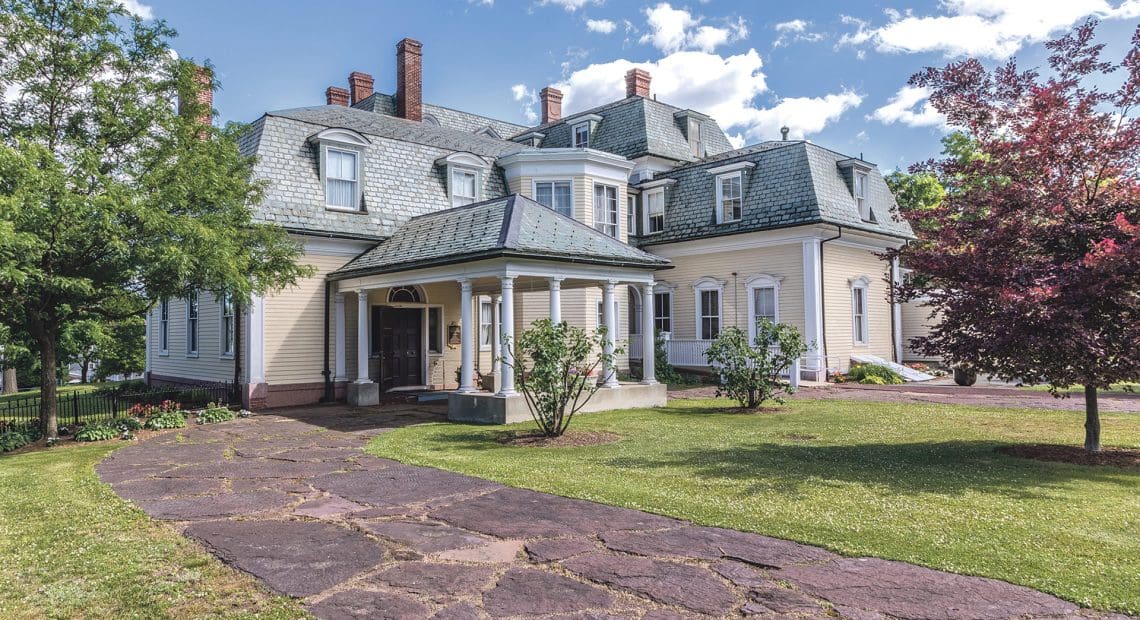
The home, like Skinner’s silk mill, was originally in Williamsburg, and moved to Holyoke after the great flood of 1874. The buildings and grounds were owned continually by the Skinner family until 1859, when Katherine Skinner Kilbourne, the youngest child of William and Sarah Skinner, and her heirs gave Wistariahurst to the city of Holyoke.
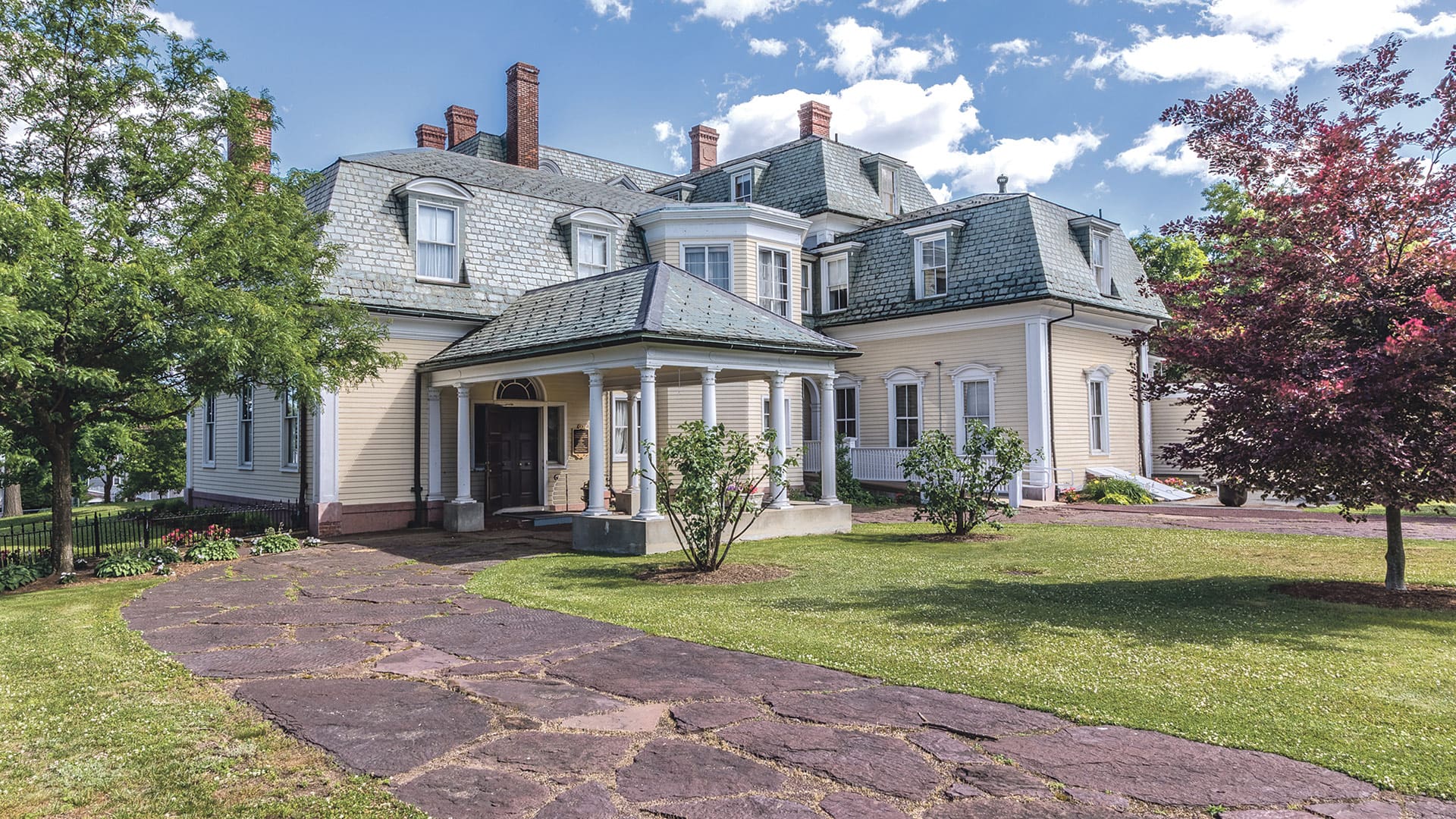
It has become what Katherine Skinner intended it to be — a center for cultural and educational purposes.

Its grounds are open to the public dawn to dusk, Seiler noted. “We get people coming throughout the day, especially when things are in bloom. We get people doing yoga on their lunch break, we get the YMCA preschool … people love the grounds.”

There are also house tours and, as noted, a wide variety of programs, many of them focused on Holyoke and the people who have come here since it became a planned industrial city in 1873. In addition to “The Immigrant Experience,” there’s also a planned permanent exhibit on migrants who came to Holyoke from the South, Puerto Rico, and elsewhere.

In short, while the landmark tells the story of the Skinners, it really tells the story of Holyoke and all who have called it home. Learn more at www.wistariahurst.org.

—George O’Brien

Tourism & Hospitality


Students. Star Wars fans. Dog lovers (both kinds).

There’s something for just about everyone this year as the Westfield Starfires open up their seventh season of play in the Futures Collegiate Baseball League.

“We’re actually opening the season with a few games that are baseball and education day games,” team co-owner Chris Thompson said, noting that these are school field trips, with first pitch at 10:30 a.m., that blend game action with lessons about the regions the players hail from, statistics, and sabermetrics.

Other promotions include a Star Wars night to benefit Big Brothers Big Sisters, fireworks presented by Westfield Gas & Electric, Mental Health Awareness Day, team poster and baseball card giveaways, a dollar dog night, and — speaking of dogs — a Bark in the Park night, where patrons can take in a game with their furry friends.

But the biggest draw is still the team itself, which lost in the league championship game last year and returns a solid group from Clemson, Georgia Tech, Louisiana Tech, Ohio, and a host of other schools, including UConn, Boston College, and others from around New England. Prior to last season, the Starfires extended their lease with the city to keep playing at Bullens Field at least until 2034.

“Mayor [Michael] McCabe sees it as an attraction, with people coming to visit from outside of Westfield, and we also have a ton of local partners,” Thompson said. For example, North Elm Butcher Block, a 90-year staple in downtown Westfield, will be dishing out barbecue fare like pulled pork sandwiches, brisket, burnt ends, and mac and cheese balls, while Amherst Brewing Co. is returning for the seventh year with its Starfire IPA.

And for the third year, the team will present the Starfires Summer Classic in June at Forest Park in Springfield. “We go out and do some brand building, build some awareness of who we are, and hopefully the families will come back to the ballpark at Bullens Field. We partner with a lot of regional schools, too, and hope they also might come back with their family.”

There’s also a Father’s Day promotion that culminates with a game of catch between fathers and sons on the field after the game.

“It’s a great family day at the ballpark,” Thompson said. “The goal for us is to try to increase our in-game fan experience, including the between-innings portion. We’re really thrilled by what we’ve been able to do over the last couple years.”

The 2025 season runs from May 28 to Aug. 9. Learn more at www.westfieldstarfires.com.

—Joseph Bednar

Tourism & Hospitality


It was just over a half-century ago that the Springfield Armory — the facility that gave the community its heritage of precision manufacturing and even its legacy as the City of Homes — was designated as a national historic site.

And those at the Armory, which now shares its home with Springfield Technical Community College, are celebrating that milestone in many different ways — from merchandise including clothing, pins, and a commemorative passport stamp to a celebration weekend slated for this fall.

But the 50th anniversary is just part of a loaded schedule of programs at the armory this year. There are also events to mark the 250th anniversary of the American Revolution, as well as programming that speaks to Springfield’s designation as an American World War II Heritage City by the National Park Service, the only one in the Commonwealth, said Susan Ashman, lead park ranger and historic weapons supervisor at the Armory.

It was during World War II that production at the Armory was at its peak, with more than 14,000 people working there producing weapons such as the legendary M1 Garand, said Ashman, adding that this indelible impact on the war, and the region, are big reasons why the Armory, the site for which was chosen by George Washington, was designated as a national historic site.

Today, as throughout its 50-year history, the Armory is a museum, visited by people from across the region and around the world, where visitors can see displays featuring everything from the Blanchard lathe — a turning point, literally and figuratively, when it comes to mass production — to weapons from several eras, to images of the men and women who worked there.

But it’s also the site of special programs, from recreations of historic battles to public talks, like the ones slated for later this year by several World War II-focused writers, including Alex Kershaw, author of The Bedford Boys, First Wave, and Liberator.

Then there’s the annual big-band show, slated this year for Saturday, July 19, which commemorates Benny Goodman’s band’s performance at the Armory in 1943.

As for that weekend celebration marking the 50th anniversary of the Armory becoming a national historic site, it’s slated for Aug. 16-17, said Ashman, adding that there will be bands, presentations, hands-on demonstrations, and much more. In short, it will celebrate all that the Armory has meant to Springfield, the region, and the country.

The Springfield Armory is open Wednesday through Sunday, 9:30 a.m. to 4 p.m. Learn more at www.nps.gov/spar/index.htm.

—George O’Brien

Tourism & Hospitality

Kate Craven says the 2025 season amounts to a “rebirth” for the Robert E. Barrett Fishway.

Indeed, it’s been a strange and difficult stretch for the Holyoke attraction, which did not open in 2020, 2021, or 2022 because of COVID, reopened in 2023, and then closed again to the public last year as the Holyoke Gas & Electric (HG&E), which operates the facility, undertook extensive upgrades to one of the hydroelectric units at the Hadley Falls station.

So this spring will bring a return to normalcy, if you will, meaning another 500,000 fish covering dozens of different species will be carried over HG&E’s Holyoke Dam by two large elevators — and some 10,000 visitors (that’s the annual average) will be able to take it all in.

That spectrum includes schoolchildren — third- and fourth-graders comprise the sweet spot — on field trips, college students, area families, and visitors to Western Mass. looking for a different kind of getaway.

“People can see where hydropower production, environmental stewardship, and fish passage all come together in a very powerful way,” said Craven, the HG&E’s director of Marketing and Communications, noting that, aside from 2023, many traditions have unfortunately been paused at the fishway, named after Robert Barrett, the former director of the Holyoke Water Power Co., who became consumed with finding a way to help fish — returning to freshwater steams to spawn — find their way over the dam.

They will resume starting May 7 with the opening of the fishway, said Craven, noting that one such tradition comes on Mother’s Day (May 11), when mothers visiting the facility — and many do — are given a carnation.

As noted earlier, visitors to the fishway can see many different species carried over the dam, from American shad, the most populous species, to blueback herring, sea lamprey, and the occasional shortnose sturgeon, a species protected by the federal government.

“We’re hoping to get a lot of school groups and visitors to the fishway this spring,” said Craven, adding that there will be some pent-up demand as well as the usual fascination with seeing ingenuity assist these species of fish with their annual migration to spawn.

The fishway will be open from May 7 to June 15, Wednesday to Sunday from 9 a.m. to 5 p.m. Visitors can enjoy a guided tour with a fishway guide or explore the facility at their own pace with a self-guided walk-through. Learn more at www.hged.com/community-environment/barrett-fishway/default.aspx.

—George O’Brien

Tourism & Hospitality

The Quabbin Reservoir is the main drinking water supply for more than 3 million people in the Commonwealth.

It is also an engineering marvel, home to wildlife ranging from eagles to mountain lions to porcupines, the site of dozens of hiking trails, and sits on the site of four small towns that were taken by the state, later disincorporated, and now covered by some 412 billion gallons of water more than 50 feet deep in places.

So there’s history, engineering, nature, recreation, fishing, and education into how this water supply was created and how it operates today. And all of that and more can be taken in with a visit to the reservoir and the Les and Terry Campbell Quabbin Visitor Center in Belchertown, said Maria Beiter-Tucker, Interpretive Services supervisor for the Quabbin.

She handles public programing and educational programming, and quite a bit falls into those two categories.

Starting with the visitor center, located on the first floor of the Quabbin Administration Building at 100 Windsor Dam Road in Belchertown. There, visitors can learn about the history of the Swift River Valley and those aforementioned towns — Dana, Enfield, Greenwich, and Prescott — and also about why and how the reservoir was constructed and how it is managed today, she said.

There’s also a considerable amount of information about the wildlife that calls the Quabbin home, she said, adding that there are educational programs for visitors and groups, including many school field trips, as well as self-guided tours of the area.

These public programs include hikes of Quabbin Park and Quabbin Reservation, including hikes focused on various habitats. There’s also a hike to Dana Common, where some of the foundations to buildings in that community can still be seen.

Overall, there are dozens of hiking trails, including the Bald Mountain Hill Trail, the Goodnough Dike Vista Trail, the Old Stone Trail, and the Quabbin Park Cemetery tour, which takes visitors to the cemetery created for the relocation of graves from the Swift River Valley.

No dogs are allowed at the Quabbin to keep that drinking supply safe from contamination, but two-legged visitors are more than welcome, and, as mentioned earlier, there is much to see, learn, and experience at this regional gem.

The Quabbin Visitor Center is open every day except Wednesday, 8:30 a.m. to 4:30 p.m. Learn more at www.mass.gov/locations/quabbin-reservoir.

—George O’Brien

Tourism & Hospitality

It’s called “Illustrators of Light.”

One of the current exhibititions at the Norman Rockwell Museum in Stockbridge, it’s a collection of advertisements created by Rockwell, and several of his notable peers in the world of 1920s illustration, for Edison Mazda Lamps, a division of General Electric.

“These amazing, large-scale paintings were done as advertisements, and now they’re being put on view to the public for the first time,” said Stephanie Plunkett, the museum’s chief curator, adding that “we constantly change our collections to highlight the influence that illustration has had across time and how Rockwell is a part of that great tradition that continues today.”

While the museum houses the world’s largest collection of art by Rockwell (998 original paintings and drawings in all), many other exhibitions rotate through, including, currently, “All for Laughs: the Artists of the Famous Cartoonist Course,” which was a popular 1950s correspondence course designed to teach artists to be funny; and “Original Sisters: Portraits of Tenacity and Courage,” a series of portraits by Anita Kunz that honor the contributions of history-making women.

Starting in June is “I Spy! Walter Wick’s Hidden Wonders,” showcasing Wick’s iconic photographic creations, and opening in November is “Jazz Age Illustration,” which explores popular illustration during the 1920s and 1930s and the cultural impact of that work,

Many visitors are surprised at the variety of exhibitions, Plunkett said.

“It’s a very mixed audience. Some people grew up with Rockwell’s illustrations; their families may have received the Saturday Evening Post or the Ladies’ Home Journal, and they have a real familiarity with his work. But we’re getting people across the age spectrum, lots of families with children and young adults. We had a Mad magazine exhibition that brought in an audience interested in comics and cartoons and satire. In addition, we have people who are travelers, people who may view us as a destination location.”

During the warm months, visitors can also visit the actual studio where Rockwell — who lived in Stockbridge for the last 25 years of his life — worked. The building was originally located in the backyard of his home on South Street and moved to the museum grounds in 1986. “It’s fun for people to experience Rockwell’s workspace,” Plunkett said.

The Norman Rockwell Museum is open every day except Wednesday, 10 a.m. to 4 p.m. on weekdays and 10 a.m. to 5 p.m. on weekends. Learn more at www.nrm.org.

—Joseph Bednar

Tourism & Hospitality


It’s called “Through the Eyes of Igor Sikorsky.”

It’s one of several new exhibits at the New England Air Museum in Windsor Locks, Conn., and, like the others, it’s designed to be interactive and take visitors beyond static displays of aircraft — although those are still quite popular.

Sikorsky, the Russian-American aviation pioneer, is known for developing the first American helicopter, although he also developed several fixed-wing aircraft, including ocean-crossing flying boats. His story is a fascinating one, said Stephanie Abrams, president and CEO of the museum, noting that the new exhibit, like the others, is designed to take visitors beyond the aircraft themselves and tell the stories of the people who designed and built them, flew them, and made history in them.

“Every aircraft in this museum, and it’s the seventh-largest of its kind in the country, has a story — a story of human genius, of courage, of innovation,” she said. “Instead of just looking at an aircraft, we want visitors to understand the story of the men and women behind them.”

This same philosophy guided the creation of new exhibits on the Tuskegee Airmen, New England women in aviation, and the famed Kosciuszko Squadron, the Polish squadron, formed with the help of American volunteers, that fought against Russia in 1919 and against the Germans in the Battle of Britain.

Abrams explained that her father was a crew chief on a B-29 Superfortress during World War II and transferred his passion for aircraft and the people behind him to his daughter. Abrams was in the media and later produced documentary films before making a significant and rewarding career change, taking the helm at the air museum.

Since arriving four years ago, she has made significant strides in efforts to “modernize the museum, making it more interactive, creating activation, using flight simulators so people experience flight, and using augmented reality to bring history, or the future, to light.”

Her team’s efforts have helped boost visitorship at the museum, which is now averaging roughly 50,000 a year.

Those who discover this somewhat hidden gem will find these new exhibits, as well as aircraft such as the B-29, a B-25, the A-10 Thunderbolt, one of Sikorsky’s flying boats, the Lockheed Electra, the plane flown by Amelia Earhart, several helicopters, and more, as well as engines and other displays.

The museum is open Tuesday to Sunday, 9 a.m. to 4 p.m. Learn more at www.neam.org.

—George O’Brien

Tourism & Hospitality

You’re never too old for the Eric Carle Museum of Picture Book Art.

“I tell everyone who’s been here before, when their kids were little, to bring them back when they’re older because there’s always something new to see,” said Rebecca Miller Goggins, director of Development. “Our ever-changing art galleries are sophisticated, beautiful, and inspirational for everyone. Our mission is to elevate the art of the picture book.”

The museum features a hallway dedicated to the life of Carle and the iconic children’s books he created (most notably The Very Hungry Caterpillar), but there are three other galleries of works by other artists that change twice yearly, a daily film in the auditorium, regular story times in the reading library, and hands-on activities in the art studio that change every six weeks or so.

“We may coordinate with something going on in the galleries; like, if there’s a watercolor artist, we’ll do watercolors in the art studio,” Goggins explained. “It’s an incredible creative space, and it’s a great place for families with young kids who don’t want to make a mess in their own house — they can come to the Carle and make a mess in our studio. And adults really enjoy making art in the studio as well.”

The museum’s expansive, award-winning bookshop typically carries every book in print by any author featured in a current exhibition, and authors and artists often come in for readings, lectures, and book signings.

Current exhibitions include Jerry Pinkney’s The Lion & the Mouse, featuring the cover art and more than 32 pieces from that book; a 50-year commemoration of Free to Be You and Me; “Created in Color: The Picture Book Art of Raúl Colón”; and an exhibit of work by Margaret Wise Brown, author of Goodnight Moon, and artists she has inspired.

There are also plenty of activities pitched at adults, from lectures and gallery tours to art-making programs, Goggins said, and plenty of reasons to come back, between the rotating exhibits and more than 10,000 pieces in the permanent collection.

And people do come back; the museum attracts more than 40,000 visitors annually and has welcomed more than 1 million since its opening in 2002.

“It’s a remarkable place,” she added. “Picture book art is not just for children; it’s for everyone. It’s ageless and evergreen. So come visit again, and be newly inspired.”

The museum is open Wednesday through Friday from 10 a.m. to 4 p.m., Saturday from 10 a.m. to 5 p.m., and Sunday from noon to 5 p.m. Learn more at www.carlemuseum.org.

—Joseph Bednar

Tourism & Hospitality

Many museums tout themselves as a chance to go back time, but few actually ‘go’ anywhere. For that, one might consider taking a ride at the Connecticut Trolley Museum.

“We’re a historic trolley and transportation museum, and we mostly see families with young children, but we get everyone, including a lot of visitors who are interested in railroad history,” Executive Director Gina Alimberti said.

“We have a large visitor center packed with trolleys. You can go on and view them and take in our exhibits and history,” she added. “We also have some trolleys outside. We have a full fire-truck museum on the same property, with 20 to 30 old trucks you can view.”

In all, the museum houses more than 70 pieces of rail equipment dating as far back as 1869, not only from Connecticut, but from cities across the U.S. and around the world. But the highlight of the visit for most is taking a ride on an historic streetcar.

“You feel like you’re riding back in time because you would never see yourself riding on these cars,” Alimberti said. “It’s a cool experience, and we try to keep it alive. We don’t want that history to go away. A lot of seniors remember from back in the day, whether it was downtown Springfield or downtown Hartford; they remember it, and they get to experience it again, which is really cool.”

Meanwhile, she added, kids tend to know very little about trolleys, so the museum teaches them that slice of history, and hopefully gains clientele who will keep coming back when they’re older.

Speaking of kids, many events at the Connecticut Trolley Museum are geared toward the younger set and their families, from the current season’s Easter Eggspress days, featuring Easter-themed crafts, exhibits, and movies, as well as a visit from the Easter bunny; the Dino Trolley in July, with dinosaur-themed activities; the Pumpkin Patch Trolley in the fall; and the evening Winterfest and Tunnel of Lights between Thanksgiving and Christmas.

The events are a big draw, and they’re critical to museum operations, Alimberti said. “We’re a nonprofit, and the only way we stay afloat are our events. It’s a big revenue maker for us to keep the museum and trolleys maintained.”

The Connecticut Trolley Museum is open weekends from 10 a.m. to 4 p.m. in April, May, June, and September; every day except Monday from 10 a.m. to 4 p.m. in July and August; and for special events later in the year. Learn more at www.ct-trolley.org.

—Joseph Bednar

Tourism & Hospitality


When the weather warms up each spring, Berkshire East and Zoar Outdoor — two neighboring outdoor recreation facilities in Charlemont owned by the same company — roll out a raft (pun intended) of activities, from whitewater rafting and kayaking to ziplining and mountain biking.

Take the Thunder Mountain Bike Park at Berkshire East, where bikers take a lift to the top and can access downhill trails of all skill levels.

“We’ve got quite an assortment of summer racing for families, friends, even school groups. We get folks from all over New England and as far as away as Canada,” said Nathan Marr, director of Marketing. “If you’ve never done downhill mountain biking before, we have clinics and a rental bike shop. It also attracts professionals and experts from all over the world.”

The popular Eastern States Cup racing series comes to the mountain twice a year, in the summer and fall, and over the past three seasons, an event called Thunderstruck has drawn a host of women professional mountain bikers. “It’s not competitive, really,” Marr said. “It’s just a show of what they can do, to show the sport to young women and girls and say, ‘hey, you can compete with the boys, too.’”

Both Berkshire East and Zoar Outdoor also offer rafting trips along the Deerfield River for all ages and skill levels.

“We have a family float trip for kids as young as 5. It’s gentle, fun, and a pretty way to see the river and get outside. Young kids with families can gently float down the river,” Marr said.
“Then, our mid-level trip is class 1 and 2 whitewater, with one class 3 rapid. That’s good for kids who are a little bit older, or someone who may have never been whitewater rafting before.”

An advanced whitewater rafting trip, with a minimum age of 14, features class 3 and 4 rapids along the way, he added. “We see a lot of college students, a lot of adventure camps, bachelor parties, things like that.”

Then there’s the famous Thunderbolt mountain coaster at Berkshire East, which pulls riders up the mountain, and they can enjoy the scenic descent at whatever speed they choose.

“There’s a whole range of things to do,” Marr said. “For folks with a tighter budget, we’ll see families do the mountain coaster and pack a picnic lunch, spread out on the lawn under a tree, and just enjoy being outside the house at a low cost, which is nice.”

Visit www.berkshireeast.com and www.zoaroutdoor.com for updated activities and schedules.

—Joseph Bednar

Daily News

LENOX — Paula Almgren, founder of Berkshire Law Group in Lenox, has been named to the Massachusetts Super Lawyers list, an honor given to fewer than 5% of attorneys in the Commonwealth. This marks the fifth consecutive year she has earned this recognition.

Almgren has been in practice for more than 20 years, counseling clients in elder law and estate, trust, and tax planning and administration, as well as life care. An accredited attorney with the Department of Veterans Affairs and a graduate of Williams College and Albany Law School of Union University, she is recognized as a state expert on Medicaid as well as leveraging community resources to help older people stay in their homes.

Berkshire Law Group covers the gamut of issues related to aging that impact seniors, their spouses, and families, including protecting assets like a home, making sense of the elder-care maze, stretching care dollars, and ensuring the right legal documents are in place in the event of incapacity or death. Indeed, it’s one of the few law firms in the country that includes an RN/care coordinator working alongside top attorneys, veteran and Medicaid benefits coordinators, probate, trust and estate administrators, and more.

In 2020, Almgren served as president of the Massachusetts chapter of the National Academy of Elder Law Attorneys during a pivotal time. She and her chapter peers were behind the successful advocacy effort to stop then-Gov. Baker from moving COVID patients into nursing homes. As a board member for two decades, she and her peers have also been instrumental in changing laws to benefit seniors, the disabled, and veterans.

Almgren serves on the Fairview Hospital ethics committee and the Pittsfield Council on Aging. She is a member of the Alzheimer’s Partnership, the Life Care Planning Law Firms Assoc., the Berkshire County Estate Planning Council, the Massachusetts Bar Assoc., and the Berkshire Bar Assoc. She is licensed to practice law in Massachusetts.

Daily News

BERNARDSTON — A big weekend is brewing in Bernardston with the grand opening of Incandescent Brewing, a new craft brewery located at 203 South St.

Incandescent Brewing will open its doors to the public for the first time on Friday, March 28, with grand-opening celebrations continuing throughout the weekend, including live music by the Brookside Project and DJ Trends, as well as the Ginger Love Café food truck.

Incandescent Brewing is the brainchild of husband-and-wife team Nate Perry and Mesi Charles-Perry. Nate, a Conway native, brings more than 12 years of professional brewing experience to this venture. The couple aims to create a vibrant and welcoming community space that offers a diverse selection of craft beers.

“We are thrilled to open our doors and share our passion for craft beer with the community,” Charles-Perry said. “Our goal is to provide a bright and colorful space where friends and neighbors can come together to enjoy great beer, live music, and delicious food.”

To celebrate this milestone, the Franklin County Chamber of Commerce invites the community to attend a ribbon-cutting ceremony on Friday, April 4 at 4 p.m. This event will offer attendees an opportunity to meet the owners, tour the brewery, and sample some of its signature brews.

“We are thrilled that Incandescent Brewing has found a home in Bernardston,” said Jessye Deane, executive director of the Franklin County Chamber of Commerce & Regional Tourism Council. “Small-business owners like Nate and Mesi are the backbone of our economy, and we are excited to support their success one sip at a time.”

Daily News

Lee Morrissette

SPRINGFIELD — Dietz & Company Architects Inc. announced that firm Principal Lee Morrissette has earned the credential of certified passive house consultant (CPHC) through Phius, a nonprofit organization dedicated to decarbonization and passive building.

The Phius passive building certification standard is a rigorous energy standard that produces buildings that use 40% to 60% percent less energy than conventional structures. In order to achieve CPHC certification, Morrissette completed a comprehensive training course and a rigorous multi-part exam to prove his knowledge.

Lee joined Dietz & Company Architects in 2019 and has more than 20 years of experience designing new construction and renovations for affordable housing, community and senior centers, and educational and commercial facilities. Throughout his career, he has focused on bringing sustainability and energy efficiency to his projects.

“As an architect and environmentalist, passive house design offers a way for me to make an outsized impact on climate change through massive building energy-use reductions. It is a powerful tool for creating buildings that are more comfortable to be in, with better quality air and daylight,” Morrissette said.

“Passive house design isn’t a solution; it’s a method to enrich design and make buildings healthier while reducing their long-term operating costs,” he added. “This additional knowledge will have an impact across all of our work as we continue to design our projects to be as sustainable as possible.”

Daily News

SPRINGFIELD — The United Way of Pioneer Valley will host a Volunteer Fair for all of Hampden County on Thursday, March 27 from 3:30 to 6 p.m. It will be located at the newly renovated Hope for Youth Arts Center in Springfield. More than 50 nonprofits from across Hampden County will be tabling at the event.

Volunteer opportunities are available for youth, individuals, groups, and more. Click here to register.

This is a free event for the public to come and learn about the work these nonprofits are doing and explore ways to volunteer. The event will be catered with light finger appetizers and a cash bar by White Lion Brewing. The Hope for Youth Performing Arts Center staff will also be on site to tour attendees around the revamped performance space, which is set to open in June. Parking validation will be available for attendees parked in the Columbus Center parking garage.

Picture This

Email ‘Picture This’ photos with a caption and contact information to [email protected]


Driving for the Cure

The 16th annual Tom Cosenzi Driving for the Cure Charity Golf Tournament, held on Sept. 26, 2024 at Twin Hills Country Club, exceeded all expectations by raising $176,500, the largest amount ever raised in the tournament’s 16-year history. This brings the total raised over the years to more than $1.8 million, all in support of the Dana-Farber Cancer Institute’s neuro-oncology research.

Pictured, from left: Tommy Cosenzi and Carla Cosenzi, co-founders of the Tom Cosenzi Driving For The Cure Charity Golf Tournament, and Dr. Patrick Wen, director of the Center for Neuro-Oncology at Dana-Farber Cancer Institute.

Pictured, from left: Tommy Cosenzi and Carla Cosenzi, co-founders of the Tom Cosenzi Driving For The Cure Charity Golf Tournament, and Dr. Patrick Wen, director of the Center for Neuro-Oncology at Dana-Farber Cancer Institute.


Attitude of Gratitude

Pioneer Valley Financial Group (PV Financial) announced a partnership with Baystate Health in recognition of the care provided by the Davis Neonatal Intensive Care Unit staff. PV Financial was inspired to collaborate with the Baystate Health Foundation after Andrea Lebeau, a member of the PV Financial team, experienced an emergency early delivery of her daughter, Blake, who required a 102-day stay in Baystate Health’s NICU. PV Financial has made a $5,000 donation to support the Davis Neonatal Intensive Care Unit, and its staff also volunteered at the Baystate Health Foundation’s annual radiothon, held in partnership with WMAS 94.7.

Pictured: Lebeau with her husband, Shawn, and daughter Blake.

Pictured: Lebeau with her husband, Shawn, and daughter Blake.


Being a Blessing

Allied Flooring, Paint & Design and Budget Cabinets recently donated $1,213.98, along with three boxes of life essentials, to Jenna’s Blessing Bags, a nonprofit dedicated to providing backpacks filled with necessities for those in need. The donation was the result of a successful holiday collection drive. The funds and donated supplies will go toward helping individuals experiencing homelessness in Massachusetts and Connecticut.

Pictured: Kevin Montemagni, board member of Jenna’s Blessing Bags, and Becky Tedeschi, president of Allied Flooring, Paint & Design.

Pictured: Kevin Montemagni, board member of Jenna’s Blessing Bags, and Becky Tedeschi, president of Allied Flooring, Paint & Design.

Agenda

Women’s Leadership Conference

April 3: Bay Path University announced that award-winning journalist, author, and television personality Hoda Kotb will be the keynote speaker at the 28th Women’s Leadership Conference (WLC), taking place in Springfield. Most well-known as the former co-anchor of NBC News’ Today and co-host of Today with Hoda & Jenna, Kotb joined Today as a co-host of the fourth hour in 2008, alongside Kathie Lee Gifford, and recently retired from the show after 17 years, during which time she received several Emmy Awards for her work. A New York Times bestselling author, Kotb has written eight books and continues to host the popular podcast “Making Space with Hoda Kotb.” The WLC will also feature lunchtime speaker Amelia Rose Earhart, a pilot, author, and reporter who, inspired by her namesake, circumnavigated the globe in a single-engine aircraft. Earhart has 15 years of experience as a helicopter and breaking-news reporter in Denver and Los Angeles, has sent numerous teenage girls to flight school during her 10-year tenure as president of the Fly with Amelia Foundation, and hosts a tech podcast focused on the future of AI in business. This year’s conference will also feature breakout sessions led by business experts and coaches, including Shira Abel, a lecturer at the University of California, Berkeley, who taps into her experience working with companies such as Siemens, Samsung, AXA, and Allianz to speak about navigating the complexities of modern business and the impact biases and expectations have on success. In addition, the WLC will welcome Jackie Glenn, former chief diversity officer at Fortune 500 EMC Corp. and founder and CEO of Glenn Solutions, where she partners with executives to reimagine organizational practices and implement strategies such as cultural assessments, executive coaching, and advisory services to foster thriving, innovative workplaces. An instructor at Harvard’s Division of Continuing Education, Glenn continues her mission to equip leaders with the tools to succeed through her work in the school’s Women Leaders: Advancing Together program. For further information on the conference, sponsorship opportunities, and ticket sales, visit baypath.edu/wlc.


Sip, Bid & Boogie

April 3: The WillPower Foundation, a source of support for Western Mass. individuals and families with different abilities, announced its new spring fundraiser, Sip, Bid & Boogie. This event will take place at the Jupiter Club in Easthampton mill building, offering an evening of entertainment, community, and philanthropy. Sip, Bid & Boogie will be a swanky soirée featuring handcrafted cocktails from the Jupiter Club, elevated bites by Blue Door Gatherings, live music by Mister Brilliant, and a silent art auction showcasing a diverse collection of artwork from artists of all abilities. The event will be emceed by the legal duo Ryan Alekman and Rob DiTusa, corporate donors who have supported WillPower since its inception. They will guide guests through an evening of fun, surprises, and a celebration of community. The art auction is a reflection of the WillPower Foundation’s mission to celebrate unique talents and different abilities. The collection will feature paintings, sculptures, digital art, mixed media, and more. Tickets cost $60 per person, $100 for two tickets, or $400 for a party pack of eight. Sponsorship opportunities range from $250 to $15,000, offering local businesses the opportunity to align their brand with a nonprofit making a tangible impact. Additionally, the WillPower Foundation is accepting donations of artwork for the silent auction. To purchase tickets, donate art, or learn more about sponsorship opportunities, visit www.willpowerfoundation.org or email [email protected].


‘An Evening Under the Stars’

April 4: Tapestry Health announced “An Evening Under the Stars,” its 2025 gala, set to take place from 5:30 to 8:30 p.m. at the Log Cabin in Holyoke. This inspiring evening will bring together community leaders, supporters, and advocates to celebrate and raise critical funds for Tapestry Health’s life-saving healthcare services. Guests will enjoy a night of dining, entertainment, and a silent auction, all in support of Tapestry Health’s mission to provide accessible sexual and reproductive healthcare, harm-reduction services, and WIC nutrition programs to residents across all four counties of Western Mass. For more information or to reserve a spot, visit onecau.se/tapestrygala or email [email protected].


‘Get Unstuck and Start Moving Forward’

April 7: Got goals? Lost momentum? Get unstuck with the help of an accountability partner by attending the Dulye Leadership Experience (DLE) in-person meetup in downtown Pittsfield. “Get Unstuck and Start Moving Forward” is the theme of this interactive program, which will help attendees gain new perspectives and approaches to identify what’s stopping them from achieving an important goal; take small, actionable steps to make changes; and keep progress going. There is no fee to attend, but registration is required by visiting www.surveymonkey.com/r/hjhlmdh. The program runs from 5:30 to 6:45 p.m. at the DLE office, 100 North St., Suite 402, Pittsfield. DLE meetups are designed to grow who and what attendees know in a fun and supportive environment. The program features breakouts and group discussions for meeting professionals from diverse companies and organizations.


WTrades Career Expo

April 9: River East School to Career will present WTrades, Your Present is Your Future, a skilled trades career-exploration day, from 9 a.m. to 1 p.m. at the Basketball Hall of Fame in Springfield. Students in grades 9-12 from school districts in the Greater Springfield and Greater Palmer areas are invited to attend. This program aims to showcase strategic, exploratory resources and hands-on opportunities to about 200 student attendees to enrich their knowledge about prospects for future employment and how to achieve a skilled trades career. River East is seeking skilled trade exhibitors, including those with heavy machinery, to participate in the WTrades career fair. Exhibitors will have the opportunity to speak directly with students, sharing insights about their careers and the skills required to succeed in their industries. By attending WTrades, exhibitors will connect directly with students to inform them about job opportunities and training programs that can lead to fulfilling careers. The skilled trades industry offers a broad range of career opportunities, from construction, mechanical, and industrial to healthcare, technical, and advanced manufacturing trades. However, many students are unaware of these possibilities or the training and/or educational paths available, such as apprenticeships, community colleges, technical institutes, vocational programs, and online training. For more information on the event, visit rivereaststc.org/wtrades or call Amy Scribner, partnership director, at (413) 283-5051 or [email protected].


Difference Makers Gala

April 9: Tickets are now on sale for BusinessWest’s 17th annual Difference Makers awards gala at the Log Cabin in Holyoke. The class of 2025, profiled in the Feb. 17 issue of BusinessWest and at businesswest.com, are Jennie Adamczyk, executive director of Providence Ministries; Sheryl Blancato, CEO of Second Chance Animal Services; Andrea Bordenca, managing partner of Generative Leadership Consulting; Mychal Connolly, CEO of Stand Out Truck; John Delaney, director of Ride to Remember; John Doleva, president and CEO of the Naismith Memorial Basketball Hall of Fame; the Michael J. Dias Foundation; and Dan Moriarty, president and CEO of Monson Savings Bank. Tickets cost $95 per person, and tables of 10 are available. They can be purchased at businesswest.com/eventcalendar/difference-makers-tickets. The 17th annual Difference Makers program is sponsored by Burkhart Pizzanelli, the Royal Law Firm, TommyCar Auto Group, and Westfield Bank.


Bowl for Kids’ Sake

April 19, 26; May 3: The youth empowerment nonprofit Big Brothers Big Sisters of Western Massachusetts (BBBSWM) invites the public to help fund programs that support kids in Berkshire, Franklin, and Hampden counties through the annual Bowl for Kids’ Sake (BFKS) fundraiser. Each of the three events will run from 10 a.m. to noon on the following Saturdays: April 19 K&M Bowling in Pittsfield, April 26 at Shaker Bowl in East Longmeadow, and May 3 at French King Bowling in Erving. Those interested in supporting BBBSWM’s mission can visit secure.qgiv.com/event/bbbswm2025bfks to register their team and get tips on how to engage their own networks to join in supporting their bowling team. BBBS creates connections between children (‘littles’) with qualified and vetted mentors (‘bigs’) in the community to create fulfilling relationships.


Technology Recycling Drive

April 22: For individuals and companies looking to get rid of their old computer equipment and do some good, Paragus IT is hosting a technology recycling drive to promote sustainability on Earth Day to benefit Dakin Humane Society. From 9 a.m. to 3 p.m., those looking to recycle old, unwanted computers, laptops, printers, and other equipment can drop them off at Paragus, 122 Russell St., Hadley. Paragus will prepare them for reuse or make sure they’re properly disposed of. In exchange, they will collect $5 per piece of equipment, all of which will benefit Dakin Humane Society. Some items may have additional fees. More details about those items — and other information about the recycling drive — can be found at paragusit.com/earthday.


UMass 5K Dash & Dine

April 26: UMass Dining Services invites the community to participate in its 14th annual UMass 5K Dash & Dine, with the goal to promote health and wellness at UMass Amherst while raising funds for the Amherst Survival Center. UMass Dining’s focus is on quality ingredients and meals, customer service, student health and wellness, customization options, and appreciation of global influences. Over the past 13 years, UMass Dining has raised more than $50,000 that has been donated to the Amherst Survival Center. Check-in at the Southwest Horseshoe will begin at 9 a.m. At 10 a.m., a free Fun Run begins for children 8 years old and under. At 11 a.m., the race begins, followed by an awards ceremony at 11:30 a.m. and lunch at noon in the Berkshire Dining Commons. The race fee is $15 for all Five College students, $25 for UMass Amherst faculty and staff, and $30 for the general public. Children 8 and under may participate free of charge. The race fee includes registration and lunch. Donations can be made and participants can register at runumass.com/about. Online registration will end April 24. Walk-up registration will be available on race day.


Feast in the East

April 29: The ERC5 announced that Feast in the East 2025 will take place from 5 to 8 p.m. at the Starting Gate at Great Horse, 128 Wilbraham Road, Hampden. This event will bring together more than 40 local vendors, including restaurateurs, confectioners, breweries, and wineries, creating an atmosphere for networking and community engagement. Attendees can indulge in diverse culinary experiences while enjoying the view overlooking the Pioneer Valley. PeoplesBank is the premier sponsor for this event, and Square One is the spotlighted nonprofit organization for this year’s Feast in the East. In an effort to be more impactful and mindful, event organizers have also welcomed back Rachel’s Table, which will ensure that food not served during the event will be collected and distributed to local organizations and shelters. For more information, to purchase tickets, or to learn about sponsorship opportunities, visit www.erc5.com.


Link to Libraries Gala

May 8: Link to Libraries announce its biennial gala, an evening that celebrates the organization’s transformative impact in the community while raising vital funds to ensure children have access to the books and programming they deserve. This year’s gala, taking place at the Basketball Hall of Fame, will feature a Swifty-themed evening inspired by Taylor Swift’s celebrated Eras Tour. Guests will enjoy an elegant night filled with cocktails, dinner, an auction, and the opportunity to connect with others passionate about the power of reading to transform lives. All proceeds from the gala go directly to Link to Libraries, a nonprofit committed to fostering literacy by providing books and programming for children in underserved communities. Tickets cost $90 per person, or $250 for VIP tickets that include a pre-gala VIP cocktail reception. Tickets are available at www.linktolibraries.org.


‘The Journey’

May 10: Graduate Women in Business, in collaboration with the UMass Fine Arts Center, will present “The Journey,” a charity gala at the UMass Campus Center Auditorium that celebrates the talent, transitions, and triumphs of women. The evening will be filled with music, dance, an auction benefiting Girls Inc. of the Valley and the Care Center in Holyoke, and thought-provoking panel discussions with influential women who have made significant impacts in their fields, as well as a motivating, empowering keynote address. Sponsorship opportunities are available. For details, contact Melisha Williams at [email protected] or [email protected].


Hooplandia 2025

June 20-22: Registration is now open for Hooplandia, the third annual 3-on-3 basketball tourney and festival, at hooplandia.com. The event will take place at Eastern States Exposition (ESE) and the Naismith Basketball Hall of Fame. Games will be played at the ESE complex, with special games held at the Basketball Hall of Fame. In 2024, 75 basketball courts allowed accommodation for more than 650 games played by approximately 2,100 participants of all ages. Diverse divisions include young girls and boys, women, men, high-school ages, college level, OGs, veterans, and more. Fees range according to age. Players in the Special Olympics and Unified division can look forward to free registration, and those in the Hoops & Heroes division, such as active and retired first responders and military personnel, have access to discounted registration. Players are invited to build teams of four, create their own unique team name, design their uniforms, and register at hooplandia.com.

People on the Move

Meyers Brothers Kalicka, P.C. (MBK) recently announced 11 promotions.

Chelsea Russell

Chelsea Russell

Chelsea Russell has been promoted to Audit & Accounting senior manager. She began her career with MBK as an intern in 2015 and has been working full-time in the Audit and Accounting department since June 2016. In her role as manager, she primarily focuses on not-for-profit, commercial, and employee benefit plan engagements. She is a member of the Massachusetts Society of Certified Public Accountants (MSCPA) and the American Institute of Certified Public Accountants (AICPA). Russell received a bachelor’s degree in accounting from Westfield State University and a master’s degree in accounting from Bay Path University. She is licensed as a certified public accountant in Massachusetts and also co-leads the firm’s community-outreach program.

Ryan Sabin

Ryan Sabin

Ryan Sabin has been promoted to Tax senior manager. He has been in public accounting since 2009, with a specialty in commercial audit and review engagements for private companies, 401(k) plans, and corporate, partnership, individual, and private foundation tax returns with a keen expertise in multi-state tax issues. He received his bachelor’s degree in business management with an accounting concentration, bachelor’s degree in economics, and master of accountancy degree from Westfield State University. He is also a member of AICPA and MSCPA.

Mallory Beauregard

Mallory Beauregard

Mallory Beauregard has been promoted to Audit & Accounting supervisor. She began her career with MBK as an intern and has been a valuable member of the team since. She works on a diverse range of engagements, including not-for-profit, commercial audit, review, and compilation engagements. She received a bachelor of business administration degree in accounting from UMass Amherst and her MBA at UMass Lowell. She is also a member of AICPA and MSCPA.

Briana Doyle

Briana Doyle

Briana Doyle has been promoted to Audit & Accounting supervisor. She serves as a supervisor in the Audit and Accounting department. She holds a bachelor of business administration degree and a master’s degree in accounting from Nichols College. She is also a member of AICPA and MSCPA.

Chris Soderberg

Chris Soderberg

Chris Soderberg has been promoted to Audit & Accounting supervisor. He is well-versed in the diverse niches that MBK offers, particularly in audit areas, where he leads pension, nonprofit, and commercial engagements. He is also skilled in managing complex individual tax returns. He graduated from Elms College with a bachelor’s degree in accounting and management and an MBA with a concentration in financial planning. He is also a member of AICPA and MSCPA.

Peter Kravetz

Peter Kravetz

Peter Kravetz has been promoted to Tax supervisor. He has been a dedicated practitioner of public accounting since 2007. He received his bachelor’s degree in business from UMass Amherst and his master’s degree in accounting from Western New England University. He is also a member of AICPA and MSCPA.

Francine Murphy

Francine Murphy

Francine Murphy has been promoted to Tax supervisor. She joined MBK in 2013, with significant tax-preparation experience and a special focus in tax preparation for not-for-profit organizations and individuals. She will be taking on a larger leadership role with the firm’s tax-exempt clients, preparing larger 990 returns and reviewing smaller tax-exempt clients. She holds an associate degree in accounting from Holyoke Community College and recently completed her bachelor’s degree in accounting from Westfield State University. She is also a member of AICPA and MSCPA.

Samantha Calvao

Samantha Calvao

Samantha Calvao has been promoted to Tax senior associate. She began her career in public accounting in 2021 in Springfield. She specializes in taxation, audit, and assurance, with a particular focus on taxation and bookkeeping. She holds an associate degree in accounting from Holyoke Community College, a bachelor’s degree in accounting from the University of Southern New Hampshire, and an MBA from Fitchburg State University. She is also a member of AICPA and MSCPA.

Andrea Latour

Andrea Latour

Andrea Latour has been promoted to Tax senior associate. Her main focus lies in client bookkeeping and write-up tasks, encompassing monthly reconciliations, accounts payable, accounts receivable, payroll, quarterly payroll returns, and tax filings (including meals and sales tax). She obtained her associate degree from the certified paralegal program at Becker College. She is also a member of AICPA and MSCPA.

Jonathan Lemoine

Jonathan Lemoine

Jonathan Lemoine has been promoted to Audit & Accounting senior associate. He began his career in public accounting in 2019. He holds a bachelor’s degree in business management with a concentration in accounting and a master’s degree in accounting from Westfield State University. He is also a member of AICPA and MSCPA.

Nicholas Mishol

Nicholas Mishol

Nicholas Mishol has been promoted to Audit & Accounting senior associate. He holds an associate degree in business administration from Holyoke Community College and his bachelor of business administration degree from UMass Amherst. He is also a member of AICPA and MSCPA.

•••••

Tech Foundry, the regional leader in IT workforce development and training, announced the hiring of three new staff members as well as promotions of existing staff to support the organization’s growing operations. Marie-Ange Delimon, Tech Foundry’s Community Impact manager, was recently promoted to Community Impact director. She graduated from Tech Foundry’s IT support training program in June 2021 and was quickly hired as the organization’s Workforce Development manager. In her three and a half years at Tech Foundry, she has substantially grown the organization’s employer and community partner network, streamlined the recruitment process of its IT support training, and upgraded internship and job-placement procedures. Lian Duan joined the Tech Foundry leadership team as the new director of Strategic Initiatives, where she will oversee the exploration, development, launch, management, and evaluation of new projects as well as spearheading review and continuous improvement of current initiatives. She has more than a decade of experience in STEM education and several years in management at an international education company. She holds a master of education degree in math, science, and learning technology from UMass Amherst and is currently pursuing a doctorate in the same program. Juan Torres was promoted to technical manager for the new Tech Hub in Springfield, where he will oversee daily operations. He was an essential member of the first Tech Hub team in Holyoke, where he helped support the launch of digital-literacy training, technical-support services, community workshops, and device distribution. He is also a graduate of the Tech Foundry IT Support training program, completing the program in the fall of 2023. Iman Zafar joined the Tech Foundry team as the organization’s new office manager. She graduated from George Washington University with a bachelor’s degree in political science and women, gender, and sexuality studies. She has worked as a research assistant in the Political Science department at GW, collecting data on government elections for gerrymandering research. She previously interned for the United Nations Assoc. of Greater Boston, helping facilitate its Model UN program and conferences. Floyd Zamarripa, a recent Tech Foundry graduate, was hired as the organization’s new Career Services coordinator. In this role, he will oversee all aspects of employer engagement and job and internship placement. He is an experienced IT professional, writer, movie-theater operator, and marketing director who recently moved to Western Mass. from Springfield, Mo. with his family.

•••••

Heather Zielenski

Heather Zielenski

James Hagan, president and CEO of Westfield Bank, announce the promotion of Heather Zielenski to vice president, branch manager, and the promotion of Nicole Kirk to assistant vice president, Deposit Operations manager. Zielenski, who joined Westfield Bank 26 years ago and has served in many different roles, will continue to oversee customer service, retail and business product sales, business development, and community outreach, as well as managing general operations and employee development within the branch. She is a graduate of American International College with a bachelor’s degree in business administration. In the community, she serves as a member of the Young Professional Society of Greater Springfield, the West of the River Chamber of Commerce education committee, and the West of the River Chamber foundation, and also volunteers with Action Centered Tutor Services (ACTS) in Springfield. Kirk will continue to be responsible for managing her department and external vendors to ensure compliance and quality control. She joined Westfield Bank in 2010 as a part-time teller in the Park Street branch, working her way up to head teller and later to Better Banking specialist. In 2021, she transitioned into the main office Operations department as the Deposit Operations manager. Kirk obtained an accredited ACH professional certification from Nacha, recognizing her advanced knowledge of all ACH systems and processes.

•••••

Bryan Murphy

Bryan Murphy

Bryan Murphy, an attorney in estate, trust, and tax planning and administration, has joined Berkshire Law Group of Lenox as a senior associate attorney. Prior to returning to the Berkshires, Murphy worked for nearly a decade as an attorney for two Greater Boston law firms — most recently, DesRosiers & Tierney, LLC in Beverly, and, previous to that, Cushing and Dolan, P.C. in Waltham — specializing in elder law as well as estate, trust, and tax planning and administration. Murphy earned his juris doctorate as well as his master of law degree in taxation from Suffolk University Law School in Boston. He also has a bachelor’s degree in history from Western New England University, where he graduated magna cum laude.

•••••

KB Accounting announced the appointment of Timothy Brelsford as the new director of Operations. With an extensive background in financial management and operational strategy, Brelsford is set to play a pivotal role in driving the company’s growth and innovation in the accounting industry. Brelsford brings more than 30 years of experience in the human-services and operations sectors. His expertise in streamlining processes and implementing forward-thinking solutions aligns perfectly with KB Accounting’s commitment to excellence and client satisfaction. In his new role, he will oversee daily operational activities, spearhead process-improvement initiatives, and collaborate with other department heads to ensure the company continues to meet the evolving needs of its diverse clientele.

•••••

Norell Ferguson

Norell Ferguson

Ethan Cattanach

Ethan Cattanach

Maryam Javanmard

Maryam Javanmard

Dietz & Company Architects Inc. announced the recent addition of three new employees to the firm. Norell Ferguson has joined Dietz & Company as an interior designer and is excited to explore hospitality design and dive deeper into housing and community-based projects. She comes to Dietz with more than 10 years of experience in interior design and urban planning and policy from her work at architecture firms and with local and regional governments. In addition, Ferguson is an adjunct professor at the University of Hartford and University of New Haven, where she teaches architecture, lighting, and interior-design courses. She holds a master’s degree in interior architecture from Philadelphia University and a bachelor’s degree in art history with a minor in architecture from the University of Hartford. She also earned a master’s degree in public policy from the University of Connecticut. Ethan Cattanach joins the firm in the role of architectural staff. He specializes in utilizing BIM programs and their integration into the project workflow and most recently used those skills while working for another local architecture firm with a focus on commercial manufacturing and retail. In his role at Dietz, he will be helping to manage local projects and developing project documents and detailed 3D models. Cattanach holds a bachelor’s degree in architecture from UMass Amherst and is currently pursuing his master’s degree in architecture at the Boston Architectural College. Maryam Javanmard also joins the firm in the role of architectural staff, bringing more than 15 years of experience as an architect and construction manager and specializing in sustainability and regenerative design. At Dietz, she will be assisting on projects throughout all phases of design. She has an impressive academic background, with two PhDs in architecture and a master’s degree in structural engineering from universities in Italy and Iran. A certified architect in Iran, she is currently pursuing professional architecture licensure in the U.S. In addition to her work as an architect, Javanmard worked as a professor, teaching courses in architecture, sustainable design, and visual arts at Zarand Industrial and Mining College and the University of Applied Science and Technology in Iran. Most recently, she worked for a Boston architecture firm and continued to expand her expertise in life-cycle assessment and sustainable design as a Marie Sklodowska-Curie fellow at Northeastern University. She is also currently a lecturer at Roxbury Community College, teaching classes on architecture and sustainability.

•••••

Nicole Baltazar

Nicole Baltazar

Junior Achievement of Western Massachusetts (JAWM) recently welcomed Nicole Baltazar as its new Education Pathways director. In this role, she will be overseeing traditional, experiential, and entrepreneurial learning experiences, guiding their alignment with JAWM’s mission and objectives to meet the needs of the community. Baltazar’s responsibilities will include a particular emphasis on stakeholder engagement, especially coordinating volunteer and educational partners. This will involve recruiting, training, supporting, and recognizing these contributors. She will also manage administrative programming procedures to uphold quality standards for the organization, ensuring adherence to program models and evaluating impact to deliver high-quality educational experiences. Baltazar is director I and II qualified through the Massachusetts Department of Early Education and Care. She holds a bachelor’s degree from UMass Amherst’s University Without Walls Program, with a concentration in early education and administration. In her previous role, she served as center director for Valley Opportunity Council in partnership with Holyoke Public Schools’ Commonwealth Preschool Partnership Initiative.

•••••

The Hampden District Attorney’s Office announced the hiring of Payton North as its Communications director. North previously worked as executive editor of Reminder Publishing and brings eight years of media and communication experience to her new position. While at Reminder Publishing, North rose from the role of staff writer through the ranks to executive editor, overseeing the company’s news production. Over the course of her tenure, she garnered many accolades, such as BusinessWest’s 40 Under Forty class of 2024, the 2024 Western New England Young Alumni Achievement Award, the 2024 Assoc. of Community Publishers Rising Star award, and recognition among the 2023 Editor & Publisher’s 25 Under 35. North holds a master’s degree in public relations, advertising, and applied communication from Western New England University, where she also attained bachelor’s degree in journalism. In addition, she received an associate of arts and sciences degree from Holyoke Community College. She serves as a board of directors member for both the YWCA and the Spirit of Springfield.

•••••

Nathan Boucher

Nathan Boucher

James Hagan, president and CEO of Westfield Bank, announced the promotion of Nathan Boucher to commercial loan officer. He is responsible for processing and closing approved loans, while also working with the middle-market lending team on business development in the Western Mass. and Northern Conn. territories. Boucher joined Westfield Bank in 2021 as an intern in the main office and joined full-time as a data management specialist once his internship concluded. He later joined the bank’s Commercial Lending department as a commercial loan admin in 2024. He graduated from Western New England University in 2022 with a bachelor of business administration degree in finance, graduating with honors. Outside of work, Boucher coaches Westfield Youth Hockey and the Western Mass Wizards.

•••••

Stephen Duval, a private wealth advisor with Ameriprise Financial Services, LLC, has qualified for the company’s Circle of Success annual recognition program and will be honored for this achievement in 2025. To earn this achievement, Duval established himself as one of the company’s top advisors. Only a select number of high-performing advisors earn this distinction. Duval has more than 30 years of experience with Ameriprise Financial. As a private wealth advisor, he provides financial advice that is anchored in a solid understanding of client needs and expectations and provided in one-on-one relationships with his clients.

•••••

Jessica Andrews

Jessica Andrews

MountainOne announced that Jessica Andrews, assistant vice president, Deposit Compliance officer, and Fraud Administration officer, has earned the Certified Anti-Money Laundering (AML) and Fraud Professional (CAFP) certification from the American Bankers Assoc. (ABA). This achievement highlights Andrews’ commitment to professional development. She successfully completed the required continuing education and passed a challenging qualifying exam. The ABA’s CAFP certification is a respected benchmark of excellence, recognizing individuals who have demonstrated advanced proficiency in combating money laundering and fraud. It ensures that certified professionals are equipped to meet the industry’s highest standards for preventing financial crimes.

•••••

BFAIR (Berkshire Family and Individual Resources) announced the appointment of Ethel Altiery as iterim CEO, effective March 28. Altiery, who has served BFAIR for 25 years, brings extensive leadership experience and a deep commitment to the organization’s mission. She has played a pivotal role in BFAIR’s operations, most recently as chief operating officer. Her longstanding dedication to the organization, along with her comprehensive understanding of BFAIR’s programs and services, make her an ideal leader to guide the agency through this transition period. BFAIR also announced the promotion of Katrina Cardillo to senior director of Marketing and Public Relations. In her new role, she will not only continue to lead marketing and PR initiatives, but also play an important role in advancing BFAIR’s fundraising activities. Cardillo brings a wealth of experience in marketing, management, and community engagement to her expanded responsibilities. Since joining BFAIR, she has been instrumental in amplifying the organization’s mission to support individuals with developmental disabilities, acquired brain injuries, and autism.

Company Notebook

Urban Co-Works Expands to Holyoke with New Facility

HOLYOKE — Urban Co-Works, a co-working space provider, announced the opening of its newest location at 98 Lower Westfield Road in Holyoke. This expansion marks the third location for Urban Co-Works, which began in 2017 in Schenectady, N.Y., and opened its second location in downtown Scranton, Penn., in 2023. The new Holyoke facility offers a state-of-the-art co-working environment featuring 55 private offices, three meeting rooms, an expansive event area with a fully equipped kitchen, and a co-working section with 20 workstations. Members will enjoy 24/7 access with a keyless entry system, free onsite parking, printing services, and complimentary beverages including coffee and tea. Conveniently located near shopping and dining options, the space is designed to foster collaboration, innovation, and professional growth.


Big Y Donates $75,000 to California Wildfire Relief

SPRINGFIELD — Big Y collected donations from customers and employees from Jan. 17 to Jan. 31 through its registers, online, and the myExpress mobile checkout app for California wildfire relief. Community and employee contributions, along with additional support from Big Y, resulted in a total of $75,000 donated to the American Red Cross network response to provide humanitarian relief to people affected by wildfires in California. D’Amour added that Big Y, along with its customers and employees, have a strong history of coming together to support those in need through the American Red Cross.


Whittlesey Named Regional Leader, Firm to Watch by Accounting Today

HARTFORD, Conn. — Whittlesey, the largest Connecticut-based accounting firm, has been named a 2025 Regional Leader in New England and a Firm to Watch by Accounting Today. With $40.2 million in revenue, three offices, and a team of 175 professionals, Whittlesey continues to provide assurance, advisory, tax, and technology services to businesses and individuals across the region. Accounting Today’s annual rankings highlight firms demonstrating strong financial performance, industry leadership, and forward-thinking strategies. As the only Connecticut-based firm named to the Firms to Watch list, Whittlesey remains dedicated to helping businesses and individuals navigate complex financial challenges with expertise, innovation, and personalized service.


General Cleaners of Holyoke Completes Coat Drive

HOLYOKE — General Cleaners of Holyoke announced the culmination of its New Year coat drive with the delivery of coats to the Salvation Army in Holyoke on Feb. 28. This initiative has been a heartfelt effort to support those in need during the winter months, with contributions from the community and local partners making it a resounding success. The drive included a collection event during the Greater Holyoke Chamber of Commerce’s Power Hour on Feb. 15. Attendees brought gently used coats as their admission, adding to the impactful donations. Additionally, Access Care Partners (formerly WestMass ElderCare) played a key role by collecting coats at its Mill Road location. All coats collected during the drive have been professionally cleaned by General Cleaners of Holyoke, ensuring they are ready to provide warmth and comfort to those who need them.


HCC Foundation Campaign Raises More Than $181,000

HOLYOKE — The Holyoke Community College Foundation raised more than $181,000 for scholarships and student-support programs during its “Together HCC” one-day giving campaign on March 4. The fifth annual “Together HCC: Drive to Change Lives” campaign exceeded its goal of 500 donors, receiving donations worth $181,285 from 504 alumni, students, faculty, staff, and friends of the college during the 24-hour fundraising drive. All of the money raised goes directly to six areas that support HCC students: academic excellence and innovation, scholarships, the Thrive Student Resource Center and Food Pantry, the President’s Student Emergency Fund, the President’s Fund for Opportunity, and the HCC Foundation’s general, unrestricted fund. HCC alumni made up the majority of donors at 37%, followed by 30% from HCC faculty and staff, 19% from friends of the college, 5% from parents, and 5% from students. Together, they unlocked $130,000 in challenge pledges, including $5,000 from campaign partner Gary Rome, owner of Gary Rome Hyundai in Holyoke and a member of the HCC Foundation board of directors.


JP’s Restaurant Wins Battle of the Bars

HOLYOKE — On Feb. 28, the St. Patrick’s Committee of Holyoke held the fifth annual Battle of the Bars bartending event at the Holyoke Knight of Columbus Council 90 to raise funds for the committee. Bartenders from six local bars competed for tips to determine a winner. Facing off in teams of two, round one was taken by Donovan’s Irish Pub, represented by Trista Kasperowski, raising $5,997, against Pic’s Pub & Pizzeria, represented by Matt Dulude, who raised $1,639. Round two was captured by JP’s Restaurant, represented by Mary Kate Glasheen, with $9,416, against Halfway House Lounge, represented by Colleen Flanagan, who raised $7,639. Round three was taken by Griffin’s Cafe, represented by Ashleigh McNulty, raising $1,122, against Francie’s Tavern, represented by Chy Clemens, who raised $779. In the end, JP’s Restaurant came out on top with $9,416 raised, and the entire night’s fundraiser brought in more than $26,500, a record total for the event. All money raised went toward the St. Patrick’s Committee of Holyoke’s Marching Forward fundraising campaign to present the 2025 St. Patrick’s Day Parade weekend and to preserve the St. Patrick’s Day Parade and Road Race tradition for generations to come.