Daily News

Jon Kostek

EASTHAMPTON — The Chamber of Greater Easthampton recently welcomed Jon Kostek as its new executive director. He is a lifelong resident of Western Mass., raised in Hampshire County, with a deep-rooted commitment to helping the local community flourish.

Kostek began his professional journey in retail management and buying, eventually bringing his leadership and strategic insight to USTA New England, where he spent the past 20 years. He is known for building strong, long-term relationships and is passionate about partnership development, membership growth, and meaningful community engagement. Actively involved in local governance, he serves on several town committees.

Daily News

AMHERST — On May 7, Amherst Cinema released the following statement to its community:

“Amherst Cinema’s Bellwether series celebrated its 100th screening last December. Featuring creative, thoughtful, and inventive approaches to non-fiction cinema, this transformative monthly series pairs brave, bold films with appearances by and conversations with visiting artists from around the country and around the world. It represents the possibilities of cinema when we widen the boundaries of exhibition.

“Last Friday, May 2, we were informed via email that our 2025 National Endowment for the Arts (NEA) grant to fund Bellwether was being terminated due to shifting federal priorities under the Trump administration. The cinema was among hundreds of arts groups of various sizes across the U.S. that received the emails just hours after President Trump proposed eliminating the NEA entirely from the federal budget.

“Amherst Cinema is a nonprofit arts organization — a catalyst for community — and we serve a constituency that deeply values and supports the arts. We hold that the arts are a vital component of a healthy, functioning society, and a reflection of and inspiration for our shared humanity. The film arts, in particular, capture our collective stories and preserve them for future generations. Our Bellwether series is especially important because many of these films remain self-distributed or only play in select film festivals.

“For five successive years, Bellwether has merited funding from the NEA through a rigorous and competitive grant process. We have consistently met and exceeded expectations, demonstrating the merits of our programming, supporting the work of independent filmmakers, and bringing artists and audiences together in person and in conversation.

“It’s important to note that termination of our $20,000 grant at this time leaves two-thirds of our 2025 Bellwether programs unfunded — a clear breach of contract. Because of our deep commitment to the Bellwether series as a manifestation of our values and mission, coupled with our strict adherence to the guidelines laid out by NEA, we will be taking immediate action to appeal this decision.

“The potential loss of future NEA funding and other federal resources means we will be relying on support from the Amherst Cinema community now more than ever. These are uncertain times. We know you feel it, too. Let’s work together to save the things that bring joy and value to our lives and our community.”

Daily News

SPRINGFIELD — The Realtor Assoc. of Pioneer Valley (RAPV) announced that its community service committee will host a free community shred event on Saturday, May 10 from 9 a.m. to noon at the RAPV parking lot, 221 Industry Ave., Springfield.

This event is free and open to the public. Secure, on-site document shredding services will be provided by FileShred, offering community members a safe and convenient way to dispose of sensitive documents while supporting a good cause, as Second Chance Animal Services will be on-site to share information about its mission and accept donations to support its efforts.

Daily News

SPRINGFIELD — Every month, Freedom Credit Union collects donations for different charities as part of its Month of Giving campaign. This year, Freedom asked its members to nominate their favorite charities as beneficiaries. During January, February, and March, Freedom Credit Union collected and donated more than $2,738 to three local organizations.

In January, nearly $703 was raised for the Massachusetts Coalition for the Homeless. In February, donations added up to more than $1,091 for the Foundation for TJO Animals in Springfield and the Franklin County Regional Dog Shelter in Turners Falls. In March, more than $944 went to Shriners Children’s New England in Springfield.

“It’s always humbling to see how generous our community is,” Freedom Credit Union President Glenn Welch said. “We’re very fortunate to have many good causes and even more people eager to step up to and support them.”

Money collected through the end of May will support A Bed for Every Child, an organization that provides beds for children who don’t have appropriate sleeping arrangements. Donations can be made at any Freedom branch.

Cover Story

Cover Story

Co-founders Gary Stone (left) and Jim White

Co-founders Gary Stone (left) and Jim White. Photo by Bob Zemba, Simple Truth Imaging


Jim White calls them ‘transformations.’

Architectural transformations, to be more precise. These are graphics such as wall coverings, murals, treatments for ceilings and windows, door wraps, and more.

They help individual businesses create environments that stand out, that help attract and retain employees, and that probably help improve productivity, said White, noting that these transformations have become a big part of the growing portfolio of products and services at East Longmeadow-based Go Graphix, which he founded with partner Gary Stone in 2005.

“These days, businesses want to create a more-exciting environment, something that’s a little more welcoming, more interesting, more brand-centric,” said White, noting that the company has created architectural graphics for a wide range of businesses and institutions, from Baystate Children’s Hospital to Central High School; UMass Amherst Athletics to the new Doherty Memorial High School in Worcester; White Lion Brewing to Providence College.

These architectural installations represent just one example of how this company, which started humbly, handling mostly printing and copying services, has achieved a transformation itself, into a multi-faceted branding firm with a roster of products and services — from signs to vehicle wrapping — best summed up by its own marketing slogans — ‘’branding where you need it,’ and ‘you name it, we’re on it.’

Go Graphix is an intriguing business story, one that brings together many of the elements of entrepreneurship — especially a desire to leave the corporate world behind and start a business from scratch, a decision White and Stone made together, over time, while working for medical laser producers Biolitec and then Lumenis.

White was serving the latter as director of Global Marketing, and Stone as national sales manager, when they decided to ditch the travel, time away from their families, and ample amounts of stress for … well, less travel, more time with their families, but often more stress and of a different kind.

“These days, businesses want to create a more-exciting environment, something that’s a little more welcoming, more interesting, more brand-centric.”

As they looked back on 20 years in business — and expansion from a tiny storefront in East Longmeadow to two adjacent buildings in the town’s industrial park — they talked about the roller coaster ride that is entrepreneurship, how nothing has really come easy, but also how there are many rewards from persevering and working through the hard times.

“Our persistence is definitely what kept us going,” said Stone. “We had many opportunities to quit or to get back into our cushy corporate jobs, but we never turned back; when we made the decision to start our own business and build it, it was pedal to the metal.

“We just kept moving forward,” he went on. “And whenever we came up on any obstacles or challenges, we made a commitment to each other that we could keep powering through and someday reap the benefits of business ownership.”

White concurred, noting that there have been many challenges along the way, from the Great Recession, which hit just a few years after they opened, to COVID, which brought most of the traditional work to a standstill, and early on, the loss of a major fleet-wrapping client.

Jim White says Go Graphix has evolved over 20 years, cultivating new markets such as vehicle wrapping and architectural graphics.

Jim White says Go Graphix has evolved over 20 years, cultivating new markets such as vehicle wrapping and architectural graphics.
Photo by Bob Zemba, Simple Truth Imaging

“We’ve rolled with the punches and learned some important lessons along the way,” he said, adding that resilience is perhaps the company’s strongest trait.

Both partners agreed that, while the cultivation of new business lines, such as vehicle wrapping, architectural installations, and signage of all kinds has been a key to success, a bigger factor has been relationship-building, which has enabled the company to add and retain customers and generate all-important repeat business, often across several different product lines.

For this issue, BusinessWest talked at length with White and Stone about their journey, where it has taken them to date, and where they might go next.


Plane Speaking

While working for Biolitec and then Lumenis, White and Stone spent a considerable amount of time in airplanes, hotel rooms, restaurants, and trade show floors.

And while passing that time talking business, they also spent it talking about going into business for themselves. And the seriousness of those conversations picked up in intensity the more they were away from home and their families.

“We both had young children … Jim had three and I had four, and we were on the road a lot,” Stone recalled, adding that the two were very good at what they did, and the more they succeeded for their corporate bosses, the more that was demanded of them in terms of being on the road.

“I remember looking at my schedule at one point, I was going to be gone 17 out of the next 23 weekends,” said Stone. “And I said, ‘that’s enough; I’ve got to make a change.’”

White had reached the same conclusion and had many of the same recollections.

“Our persistence is definitely what kept us going. We had many opportunities to quit or to get back into our cushy corporate jobs, but we never turned back; when we made the decision to start our own business and build it, it was pedal to the metal.”

“All the money in the world didn’t mean as much to me as my wife and kids, and Gary felt the same way,” he recalled. “And there was just enough shakiness in the business to make a dream materialize. Gary and I were together for many of those trips; you talk about what your life goals are and what’s meaningful to you. I always wanted to own a business, and so did he.”

Fast-forward a year or so, and White and Stone were talking with BusinessWest inside a storefront (a former coffee roaster) in the Heritage Park Plaza in East Longmeadow about their new venture. They didn’t have any furniture at the time, so they talked while sitting in lawn chairs.

Mostly, they talked about leaving corporate America and going into business for themselves. As for their chosen enterprise, they said it came about after considerable discussion about what was needed in the community, what would succeed business-wise, and how they could best deploy their respective talents. In short, they said it was a work in process, a trend that has continued for the past two decades.

“We weren’t sure exactly what we’d do at that point, but we did know that we could sell, and we could market it,” said Stone. “Those are good skill sets to have if you’re going to start a business.”

Their start, as noted earlier, was as a basic print shop, providing many of the same services as the Staples across the street.

“We were just doing copies and prints, and it was just ‘the lowest price wins,’” Stone recalled. “It was a very frustrating, very-low-margin kind of business model that we didn’t enjoy much.”

Gary Stone says resilience has been the company’s best character trait.

Gary Stone says resilience has been the company’s best character trait.
Photo by Bob Zemba, Simple Truth Imaging

White recalled that the two struggled in the beginning, printing flyers, business cards, and similar products, and tried to be all things to its clients, and that formula wasn’t working.

“We’d think it up, design it up, and try to produce it,” he recalled. “And we found a love and passion for designing it, making it, and installing it.”

Relatively early on, White and Stone recognized an opportunity with vehicle graphics, an emerging market at the time, and bought a printer that enabled them to produce those products. This was the company’s start in the large-format business.

“We saw the vehicle-graphics market and said, ‘no one owns this,’” White recalled. “We said, ‘let’s be known for something, let’s be the guys,’ and strategically, we went after it.

“I remember looking at my schedule at one point, I was going to be gone 17 out of the next 23 weekends. And I said, ‘that’s enough; I’ve got to make a change.’”

“What you had was a convergence of technologies to make it happen,” he went on. “It wasn’t just the printing … it was the printing, the inks, the media, and the adhesives; you could print something on vinyl, but would it stick? We were at the right place at the right time.”


Covering All the Bases

They started with smaller businesses that provided an opportunity to learn while doing, said White, adding that the company eventually moved on to fleets, such as the 1,200 Edible Arrangements vehicles, and work that was truly national in scope.

“We got really good at it,” said White, adding that the company would survive the loss of the Edible Arrangements account — one third of its overall business at the time — and learn valuable lessons from that experience about diversification and not putting so many eggs in one basket.

Today, vehicle graphics remains a large part, maybe 30% of the overall portfolio at Go Graphix, with several large fleets in the fold, from Maybury Material Handling to Blinds to Go.

And that work wrapping vehicles, helped inspire the next leap for the company, if you will.

“We figured that, if we could wrap contoured vehicles, it can’t be too hard to install this vinyl on walls and windows that are flat,” Stone told BusinessWest. “So, we started studying the different kinds of vinyls we could use for those applications.”

And after gaining needed certifications and making its entry into that specialty, the company soon identified a market to pursue — higher education and school systems, said White, adding that these installations help schools in this market, and well beyond it, “attract, retain, and motivate students.”

It’s the same with businesses and their employees.

“In the corporate world, it’s ‘how do I get these people back?’” he said, referring to the emergence of remote work and the ongoing struggle to get people to return to the office, adding that one way to do that is to create an environment that is more colorful, and more fun.

Consistent investment in new technology and equipment has been one of the keys to success at Go Graphix.

Consistent investment in new technology and equipment has been one of the keys to success at Go Graphix.
Photo by Bob Zemba, Simple Truth Imaging

The company’s offices boast some of these architectural elements, although in many cases they represent earlier generations of the product lines. The main conference room, for example, features the company’s name and logo in a faux-brick product, as well as hundreds of colored tiles that come together like a jig-saw puzzle. Meanwhile, the break room takes on a patriotic tone, with images and quotes from the likes of Benjamin Franklin and Harry Truman.

And in White’s office, one wall is covered with an image from the 2017 Super Bowl, when Patriots’ running back James White (yes, they share the same name) scored the winning touchdown in overtime.

But it’s what they do for other businesses that has made this a fast-growing portion of the portfolio, said White, adding that the company is working with a wide range of clients, not just on architectural graphics, but also signage and other way-finding elements.”

Indeed, one key to the company’s success is its vertical integration, handling many different needs for the same customer, such as UConn, for which the company has handled both architectural graphics and wraps for the buses transporting its athletic teams.


Pivot Moves

As they talked about continually rewriting the business plan and shifting to meet emerging needs in the market, Stone and White said COVID added several exclamation points to that line of thinking.

And as he got into that discission, Stone flashed back to a meeting with some administrators at Baystate Health about work the company was doing for the system, and what it could do moving forward.

“I was ready to shake their hands as they were coming in, and they said, ‘we can’t do that anymore,’ he recalled, adding that this was very early in 2020, before most in this region had a good understanding of what COVID was. “They said they could tap feet or bump elbows — that was it.

“We did our presentation, talked about our services and projects we’d done with them,” he went on. “I asked the group if there was anything outside of what they know we do that they would have a need for. And one of them said, ‘do you guys make those sneeze guards?’”

The answer was, essentially, ‘no but we could,’ he went on, adding that a few months later, those acrylic shields — as well as ‘stay 6 feet apart’ signs and other items — not only rescued the company at a time when the phones simply stopped ringing, but contributed to what was its best year to that date.

And that pivoting represents perhaps the best example of how the company has responded to change and created new markets for itself.

“We changed our business model a number of times over the years,” said Stone. “When things were going well, we went in that direction, when they didn’t go well, we went in a different direction. And I think we grew smartly; we didn’t grow too big too fast. We did it in a smart way where we added people and added equipment as needed and went after markets where we thought we could be the best.

“Jim and I are both guys where we never got up any morning in our lives and said, ‘let’s be mediocre today,’” he went on. “We’re two guys who get up every day and say, ‘if we’re going to do something, we’re going to be the best at it.’”

White agreed.

“I’ve never been able to really relax,” he explained. “We’re always, always fully focused and looking at everything closely. Maybe it’s over the top, but it’s the only way to keep this a top-notch organization.”

Another element of the company’s growth is team building, said Stone.

“A key part of our success over the years has been to surround ourselves with good people who wanted to be here every day, who enjoyed the work we do, who really bought into our purpose and our mission, and saw opportunity working here,” he said. “Our clients really enjoy working with us and with our people; we know that business is built on relationships, and we’re done a really good job of building relationships and building loyal clients over the years.”

Another key part of their success is continuously setting the bar higher.

We had a great year in 2024, and we celebrated,” said Stone. “But we start at zero at the start of the next year; we’re always looking to go above and beyond what we did previously, and we have a team behind us that is focused on those same goals.”


Education Special Coverage

School of Thought

Western New England University President Robert Johnson


“A shift in the market.”

That’s how Robert Johnson, president of Western New England University, chose to describe the current state of higher education, knowing this is a huge understatement.

Indeed, colleges and universities were already under great amounts of stress due to declining enrollments, rising costs, weaker bottom lines, and mounting questions about the cost and value of a college education. And that was before the Trump administration started what the Boston Globe and others are calling a ‘reign of terror,’ pressuring institutions on matters such as DEI policies and efforts to curb antisemitism with threats involving everything from the cancelation of grants to removal of schools’ tax-exempt status.

“It was already a fairly rapid pace of change, and what’s going on at the federal level is merely accelerating the pace of change, creating high levels of anxiety,” said Johnson. “I don’t think higher ed has ever been through this — I’ve been in higher ed 35 years, and I’ve never seen anything like this.”

But, at the end of the day, and in his opinion, this is just … a shift in the market, or another shift, one of many that higher education institutions have faced over the years, decades, or centuries, depending on how long they’ve been around, said Johnson, who referred early and often to the proverbial ‘other side’ of this current shift.

“I don’t want to call it a ‘new normal,’ because I think we’re creating ‘normal,’ and it’s going to be different,” he said. “What that ‘different’ is … who knows? But I think we must remain agile enough to change with the times. My perspective is simple; when it comes right down to it, places like Western New England University — we started as a branch campus for Northeastern University — are at a place where we’ve come through world wars, the Great Depression, the Civil Rights movement, Jim Crow, the dot-com bubble, the Great Recession … and now this. And we’ll figure this out.

“I don’t want to call it a ‘new normal,’ because I think we’re creating ‘normal,’ and it’s going to be different. What that ‘different’ is … who knows? But I think we must remain agile enough to change with the times.”

“Anyone who says they have a crystal ball and understands what it’s going to look like on the other side is fool’s gold,” he went on. “The best that we can do is be agile and try and manage as best we can given the resources that we have to emerge from this. It’s not going to be fun — this is not the golden age of higher education post World War II — it is a shift in the market, and that has to be our view, and there will be winners and losers.”

These were just some of the thoughts from Johnson in a wide-ranging interview with Johnson that turned out to be an exit interview, if you will. Indeed, he announced, just a few days after he talked with BusinessWest, that he will be stepping down from the university in August.

As he talked about the current landscape, he came back repeatedly to his contention that, to survive this latest shift in the market, schools will have to be agile and proactive in response to the factors that created this paradigm. And WNE is doing exactly that, he said, noting that, through several new strategic initiatives, it has improved its position.

Indeed, the school enrolled the largest entering class in its history in the fall of 2024, just two years after it recorded one if its lowest figures in a quarter century, he said. “Three years ago, we had just over 6,700 applications for our entering class. This year, we’re right on the cusp of 13,000 applications.”

This was accomplished, he said, by stressing brand value and return on investment — “including a 94% job-placement rate, starting salaries higher than 52 of the top-100 universities in the country — 36% higher than any of the other schools in this region.

Robert Johnson says that, through aggressive, targeted marketing, WNE entered its largest class ever in 2024, and is on pace to do the same this September.

Robert Johnson says that, through aggressive, targeted marketing, WNE entered its largest class ever in 2024, and is on pace to do the same this September.

“That’s the message that we keep driving home,” he went on. “And it’s showing up in our applications, deposits, campus visits … that’s my story, and I’m sticking to it.”

Beyond marketing, these increases in applications and enrollment are due to new programs designed to provide a bridge to the workforce, he said, citing the school’s new master’s degree program in Biopharmaceutical Technology, due to launch in September, as just one example.

If current trends continue, the school could exceed 1,050 students, and perhaps more, for the class entering this September, said Johnson, adding that this would be the largest class yet again.

For this issue and its focus on education, BusinessWest talked with Johnson about the current state of higher education and the many factors that will determine how and to what extent schools can ride out this storm.


Course of Action

Johnson, who arrived at WNE just as COVID did, noted that the pandemic represented a stern test for all institutions of higher education, one that forced them to rethink what they were doing and how, and make often dramatic changes to carry on and continue their missions.

This latest shift, one marked by demographic changes and governmental changes alike, and where 40% of private schools in New England are under some form of financial distress, is similar in many ways, but also fundamentally different.

“With COVID, there was a predictability to it — you knew that if you did certain things you would get through it,” he said. “Right now, in this environment we’re in right now, there’s no predictability; that’s what creates the high levels of anxiety we’re seeing right now.”

And this brings him back to that notion that schools will “figure this out.” Or not.

‘There’s something about the human spirit that says, ‘no matter what we’re going through, we’ll come out on the other side,’ and oftentimes, it really does come down to sheer determination with a plan of action that has the ability to pivot as you get different information or new information along the way that enables you to move forward.

“The indelible human spirt says that when a group of people work together toward a common goal, and they’re all rowing in the same direction, you can’t find a time in human history where they did not come out on the other side. And that’s going to be the difference — the institutions that can pull together and have that indelible human spirit that says ‘yes, I can.’ It’s possibility thinking and operating from a perspective of assets and not deficits — ‘I’m not going to focus on what I don’t have and therefore what I can’t do, but what I do have and what we can do with that.”

Elaborating, he said WNE’s success with growing its numbers for applications, deposits, and enrollment, comes down to one word — marketing.

“We’ve been really focused on telling our story,” he explained. “Because if families are going to make the investment, they want to know if I can get a job, a good job. It’s about outcomes, outcomes, outcomes.”

This marketing involves traditional vehicles, but especially social media and digital marketing, he said, but it also involves getting students on the campus.

“Getting them on our campus matters; there’s a higher probability of enrolling a student if they’ve been to the campus,” he said, adding that the school succeeds at being welcoming.

“This is place where, no matter who you are, where you’re from, or what you look like, you’re welcome. “It doesn’t matter what your political persuasion may be. And we don’t engage in highly politicized debate that’s happening in the external world; our heads are down, this is where you come to go to school, where you come to get a job — you don’t have all the drama about what’s going on in the world.”

When asked about how schools will emerge on the other side, and the factors that will determine what will look like when they do, Johnson said financial models and roadmaps that will provide long-term sustainability and growth, where revenues align with expenses, are obviously a key. But the bigger factor will the level to which institutions can focus on academic programs that can provide real jobs, “not just education for the sake of education.”

He mentioned examples at WNE including the new Biopharmaceutical Technology degree program, the Center for Advanced Manufacturing, FinTech program, and the recently opened XR/VR Lab, which provides students with hands-on access to cutting-edge virtual, augmented, and mixed-reality technologies.

“With COVID, there was a predictability to it — you knew that if you did certain things you would get through it. Right now, in this environment we’re in right now, there’s no predictability; that’s what creates the high levels of anxiety we’re seeing right now.”

“Those are the kinds of things that will matter moving forward,” he said. “Part of what will make a winner is programs that are relevant, that enable students to get real jobs … that have innovative and entrepreneurial components in place that become creative in nature and allow students to have hands-on experience and take that experience and go out into the world of work.”

“At the end of the day, each institution will have to decide what’s best for them, and position themselves accordingly,” he went on. ‘For many of them, probably most of them, elements of their plan will work, and for some of them, their plans will not work, and it will be to their own demise.”


Bottom Line

Johnson stressed that neither he, nor anyone else, really, knows just what ‘different will, indeed, look like.

But in these unprecedented times, when there is, as he said earlier, no predictability, schools must be creative and diligent if they are going to get to the other side.

“One of the outcomes of what we’re seeing now is that you’ll see some of the institutions come out of this and evolve and thrive, and there will be others that will contract and perhaps go out of business,” he continued. “I go back to the Great Depression, when the economy was rough, to say the least — which is what we’re starting to potentially see as an outcome of tariffs and uncertainty in the marketplace — some of the greatest companies in the world were started or evolved during that time. And that’s what we’re going to see on the other side of this with higher education — there will be institutions that will be reborn in a different way that will evolve and thrive in an environment in whatever ‘different’ will look like.”

Banking and Financial Services Special Coverage

Generational Impact

Country Bank team members help high-school seniors navigate a Credit for Life Fair.

Country Bank team members help high-school seniors navigate a Credit for Life Fair.


Jodie Gerulaitis’s title at Country Bank is first vice president, Community Relations. But before that, she was a Financial Education officer for the institution — a role for which she still has a passion.

“My job was offering financial education to our communities,” she said, noting initiatives like Savings Makes Sense, a partnership forged in the late 1990s with local schools — eventually about 40 of them — in which the bank collected deposits and students could engage in banking activities right at school.

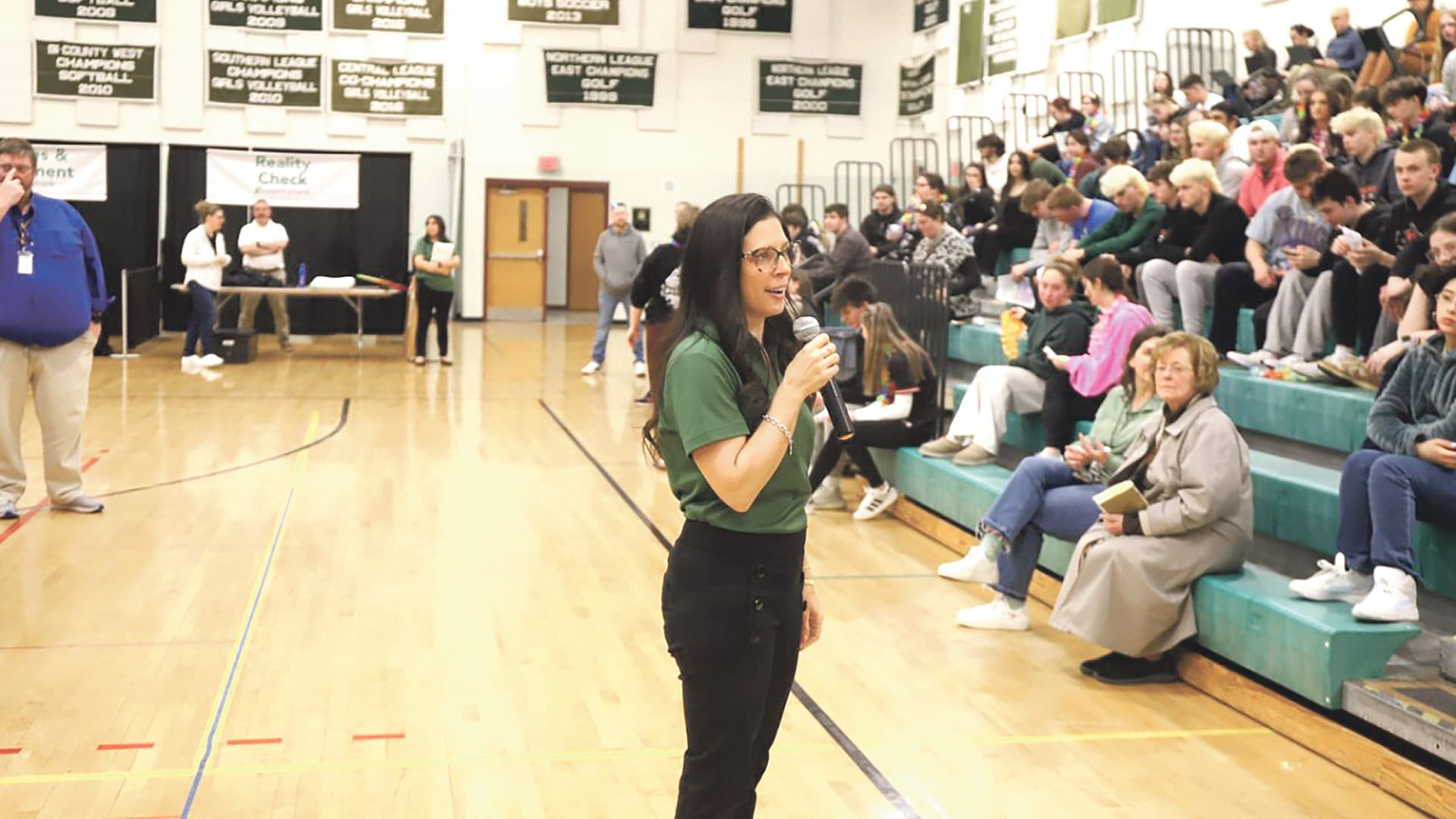
These days, that program has morphed into Money School, a series of financial-literacy resources in public schools that include books, workshops, and five annual Credit for Life fairs that involve about 2,000 seniors from 13 different high schools.

The fair, a Massachusetts-based program that many banks participate in, asks students to role-play a 25-year-old, visiting about a dozen booths and making financial choices based on their career and salary goals.

“Some students get a salary or a credit score they weren’t expecting, and they also learn to understand needs versus wants,” Gerulaitis said, adding that the students also get a dose of reality; at one booth, they might get a bonus at work or an unexpected expense. “Do they want to take vacations? Is that important to them? Do they want to own a pet? These are choices you and I make every day, and we’re bringing it to the students.

“The students who wind up with a low credit score or a low salary and are struggling, they’re going to learn the most,” she added. “They see how difficult it is to get where they want to go. Can they afford a house, or do they need a roommate to split expenses? It’s a really eye-opening experience, and they need to experience this stuff now, so they don’t make bad choices later.”

Two years ago, the United Way of Pioneer Valley started partnering with middle- and high-school students in Springfield and Holyoke to teach basic financial-literacy skills to young adults before they start interacting with finances for real, President and CEO Megan Moynihan said.

Megan Moynihan

Megan Moynihan

“It’s so very important — if you don’t understand how to take care of yourself from a financial perspective, how can you become successful?”

“We want them to create a basis to be financially successful before they go out into the real world,” she noted. “Many of these students may not have access to learning about financial independence through their families. They didn’t learn about the importance of saving and credit and preparing a budget as a child. Some of the students we work with have zero idea going into these classes. The goal is to give them a basis, a skill set to prepare them for the real world.”

The United Way’s financial-literacy programs go well beyond young people; it launched an initiative called Thrive almost a decade ago, which helps individuals across all age groups achieve financial security through education and other resources.

“Personal financial education is huge — it’s a huge gap for so many individuals,” Moynihan said, noting that the partner agencies the United Way funded would refer to Thrive people who needed the service.

“Our partner agencies let us know about individuals who needed support. We would do one-on-one coaching with those individuals, typically follow them for an entire year, helping them with budgeting, helping them set goals for raising their credit score. Many did not even have bank accounts, so we brought in individuals from the banks to set up simple checking accounts, direct deposit, and credit cards to create credit. Others would learn how to fix their credit score, how to consolidate credit, the importance of reducing expenses, and more.”

Around 2020, the United Way switched to a more direct-service model, and now Thrive services are offered to any client of the nonprofit who needs them, typically people who access services from one of the United Way’s service centers in Springfield, Chicopee, and Holyoke.

“Individuals come in needing help with food insecurity or mental-health support, and we can also help them with personal-finance training; every individual who comes through our doors has access to Thrive financial education,” Moynihan explained. “We also partner with other nonprofits on a classroom-style, six-session financial-education series.”

Serving about 450 people at any given time through its youth programs, human-service agencies, and workplaces, Thrive impacts families in ways that can be generational, she noted.

Jodie Gerulaitis says the financial-literacy skills students develop now will benefit them later, no matter what college or career path they choose.

Jodie Gerulaitis says the financial-literacy skills students develop now will benefit them later, no matter what college or career path they choose.

“It’s so very important — if you don’t understand how to take care of yourself from a financial perspective, how can you become successful?”

For this issue’s focus on banking and finance, BusinessWest talks to several area professionals involved in financial-literacy efforts about those impacts, and the various forms these programs take.


Lifetime Financial Journey

Springfield Partners for Community Action is another local organization offering financial-literacy education through a series of different free workshops, from basic financial literacy to first-time homebuying and property management.

“They all consist of a little bit of financial literacy. We dive deep into budgeting, credit, debt management, banking, and investing,” said Gabriel Ortiz, a housing councilor at Springfield Partners, noting that the workshops average around 28 people each. Some are one-session workshops that run six to eight hours, often featuring speakers from the banking and financial-services world, while the first-time homebuyer workshop is a two-part series.

“We have a lot of professionals that have been in that industry for a lot of years, and they give their expert analysis of what the process is and how to get people where they need to go, watching out for predatory lending, things like that.”

Meanwhile, the basic financial-literacy session is a good idea for people looking to establish some credit and start saving for the future, Ortiz added.

“In Springfield, probably one out of four residents live in poverty. Springfield has seen inflation, and potential tariffs will make it harder for households to manage their budgets. As a local financial advisor, we’re trying to give some helpful tips and help people regain control of their finances, stick to a budget, and cope with today’s economic challenges.

“We want to help people transition from poverty to a more equitable future,” he went on. “By establishing generational wealth, buying homes, and establishing some credit, that’s definitely going to help families down the road.”

Having offered financial-literacy programs since 1996, Gerulaitis noted, Country Bank has seen those initiatives take on a life of their own.

“These programs make a difference. Sometimes parents are not in the financial situation they expected themselves to be in, and I’ve found the grown-ups at home sometimes don’t talk to kids about money. Maybe they’re embarrassed about their financial situation.

“So, whether they come from a wealthier background or not — really, all walks of life — these programs empower students to make the decisions themselves. After all, if the parents aren’t having these conversations, who is?”

“In Springfield, probably one out of four residents live in poverty. Springfield has seen inflation, and potential tariffs will make it harder for households to manage their budgets. As a local financial advisor, we’re trying to give some helpful tips and help people regain control of their finances, stick to a budget, and cope with today’s economic challenges.”

Sherleen Crespo, vice president, branch manager, and mortgage specialist at Westfield Bank, who is being honored as one of BusinessWest’s 40 Under Forty this spring, said this reality — and the opportunity to start the conversation — is one of the reasons she loves being in banking.

“Sometimes financial literacy starts in the home, but not everyone has access to that,” she said. “Parents try their best, but they may not know as much as they should. And that lack of education affects people.

“Now, schools are very much involved in financial literacy. They invite me in, and that’s something that we didn’t have when I was growing up,” Crespo added. “It’s super important. It’s planting a seed toward breaking these generational cycles. The more we can educate people, the more that they’ll be able to grow.”

Gerulaitis agrees, and has anecdotal evidence to boot.

“I run into students after they’ve been through the programs — at the grocery store or a restaurant — and they say, ‘thank you, thank you. I got my first job, and a lot of what you said makes sense now.’ They put it into practice. That’s why we hit them when they’re seniors. Whether they’re going into the workforce or college, these skills are necessary at all levels. You can see the impact later on.”

And it’s not just high-schoolers; Country Bank targets educational programs throughout the community, from college students to senior centers. She’s even read age-appropriate books about money to preschoolers.


Bridging the Gaps

Moynihan said the United Way has a Thrive program that goes into workplaces, helping coach employees on the best ways to navigate financial struggles. In fact, three staffers are certified as financial coaches in the workplace, and they come at their roles from a mentorship perspective.

“We’re not giving you this information and saying, ‘now go figure it out yourselves.’ We’re setting you up with a mentor to walk you through these programs that will support you not just in your financial education, but on everything else that impacts your life.”

Another Thrive coach is a social worker, “so he understands the full scope of the needs of our clients — not just help with financial literacy, but so many other underlying issues that need to be addressed in the classes,” she went on. “We work with individuals to understand and identify the other areas where they need support so they can become financially stable.”

Every individual doesn’t need the same level of support, or the same educational components, she noted; some need close hand holding to get through it, and others just need to learn about different modalities to budget, save, and make good financial decisions.

“You don’t know what you don’t know, but it’s one of those things where it can be very difficult to ask for help. They might be ashamed,” Moynihan said. “So we move at the speed of trust. It can take time to build a relationship with an individual to become comfortable talking about this.”

The United Way is also part of the Bridges to Prosperity program through Springfield WORKS, a state-funded pilot program tasked with overcoming the ‘cliff effect,’ a phenomenon whereby the increased income from securing a job isn’t enough to offset public benefits while unemployed.

“It’s a first-in-the-nation approach that pairs cash payments to employed individuals over a two-year period with financial coaching and workforce training to bridge the gap between being on state assistance and being fully, gainfully employed,” Moynihan said. “So far, it’s working wonderfully.”

At the same time, the need for financial education continues, and Gerulaitis wishes it started at a younger age for everyone. She’s part of a committee that has advocated in Boston for state-mandated financial-literacy education in schools, trying to make Massachusetts the 27th state to mandate that as a graduation requirement.

Meanwhile, she added, Country Bank is doing as much as it can by offering free financial education.

“Even if it’s just one class, these schools love to partner with us. They feel they’re able to offer something to students as a benefit. Not all of them have personal-finance classes,” she said. “So, we’ve done a lot of programs. We want to provide as many free resources as we can to the community and guide them through their financial journey.”

Healthcare News Special Coverage

Crossing the Finish Line

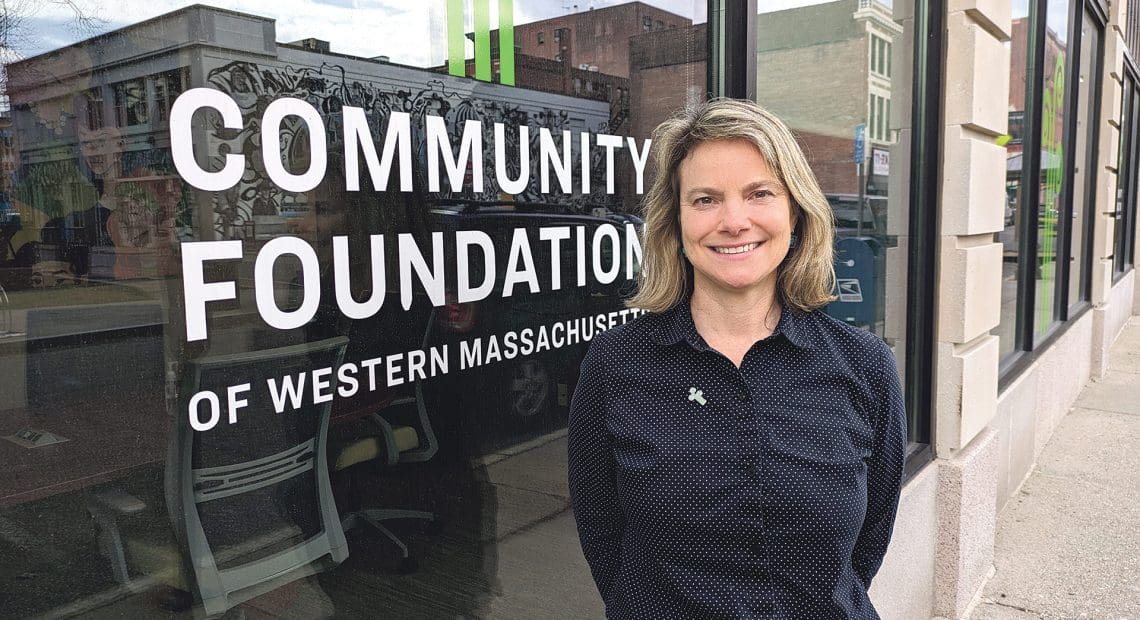
Community Foundation of Western Massachusetts President and CEO Megan Burke

Community Foundation of Western Massachusetts President and CEO Megan Burke


A few years ago, faced with a daunting statistic — that average college graduation rates are 60% at four-year institutions and 25% at two-year institutions — the Community Foundation of Western Massachusetts commissioned a study on factors that contribute to higher-education persistence.

From that effort emerged a program called Western Mass Completes, which recently supported 50 nursing and health-sciences students from 10 of the region’s colleges and universities, all of them identified by their schools as possibly being at risk of not finishing their degrees, for a variety of reasons.

The result? Forty-nine of them graduated on time and passed their certification exam, and most have secured employment in their field. The 50th simply missed a class and had to add an extra semester, but is expected to join the list of success stories.

That’s a remarkable result, but what may be even more impressive is the level of financial support involved: just $2,500 per student, to help pay for a range of expenses, from equipment to transportation to exam fees.

“From all these students who potentially were at risk of not completing, to have that much of a completion rate is really important,” said Megan Burke, president and CEO of the Community Foundation. “And because there was a preference for commuter students, these are now qualified nurses who are in our communities and are part of the local workforce. And most of them, as of this past winter, were employed — which isn’t surprising because we know there’s a great need for nurses.”

“It’s important to lift up the fact that there’s regional economic impact — that these folks are gainfully employed, making livable wages, and contributing to their local communities, which are very likely in the three counties that we serve.”

Based on the research of Becky Packard, a Community Foundation trustee and professor of Psychology and Education at Mount Holyoke College, who spearheaded the initial research, Western Mass Completes was developed with the understanding that it’s not enough to help students enter college — the bigger priority, for them and the region, is to see them cross the finish line.

Ten local colleges and universities joined the endeavor — UMass Amherst, Westfield State University, Bay Path University, Springfield College, American International College, Elms College, and Western New England University, as well as Greenfield, Holyoke, and Springfield Technical community colleges.

The research showed that students often need more time and more resources to complete degrees; many are working full-time while in school and taking a reduced course load, while others are balancing school, work, and family responsibilities. Those financial roadblocks create barriers to completion, especially for high-need, first-generation students.

Denise Hurst, vice president for Community Impact and Partnerships at the Community Foundation, noted that Western Mass Completes emerged from a growing focus on access to post-secondary institutions and the emerging realization that the biggest issue isn’t enrollment, but persistence and completion.

“From there, we really started to look at the areas where students were more apt to encounter financial barriers to completion,” she told BusinessWest. “And then the pandemic hit, and we knew there was a shortage in the nursing and allied health-sciences fields.”

Denise Hurst

Denise Hurst says Western Mass Completes has undoubtedly helped change the trajectory of some nursing students’ lives.

So the nonprofit launched a pilot program at four local colleges, providing financial grants to 20 nursing students. When the results came back positive, the program was expanded to 10 institutions and 50 students, some of them not in nursing but in health sciences, as not every school has a nursing program.

“We did that with the same sort of intention — how do we mitigate any financial barriers to completion — providing them with a grant during their time in school so that they could reduce their work hours, use it for food, gas, whatever it was that they needed that could impede their completion,” Hurst explained. “And we followed that up with providing them with a grant toward their NCLEX exam so they could be prepared to go right out into the workforce.”

While the Community Foundation is still working on next steps — determining what lessons can be gleaned from the pilot and how they can be applied to an overall workforce strategy in the region’s healthcare economy — it’s clear that students reaching the finish line is critical not only to their own career success, but to the long-term growth of a key sector.


Meeting a Need

Hurst listed a number of factors that Western Mass Completes seeks to address:

• The demand for skilled nurses has been at an all-time high and escalated with COVID-19, yet many aspiring nurses struggle to complete their education due to financial barriers.

• While tuition is a significant cost, smaller, but critical, expenses — like certification exam fees, technology costs, transportation to clinical training, medical equipment, and scrubs — can be the deciding factor between completing a degree or dropping out of an academic program.

• These challenges disproportionately affect students from low-income backgrounds and those without financial safety nets.

• Investing in students not only supports individuals, but strengthens the entire healthcare system by ensuring communities have access to well-trained professionals.

“Even though we might not know what particular niche of nursing they’ll go into,” she noted, “it’s important to lift up the fact that there’s regional economic impact — that these folks are gainfully employed, making livable wages, and contributing to their local communities, which are very likely in the three counties that we serve.”

Burke said it was important that colleges selected students for this assistance who were most in need of it.

A recent graduating nursing class at Holyoke Community College, one of the 10 partnering institutions in the Western Mass Completes program.

A recent graduating nursing class at Holyoke Community College, one of the 10 partnering institutions in the Western Mass Completes program.

“We recognized that the schools know their students really well and know who might be struggling or who might be facing barriers. When there is an application process, you don’t necessarily get the students who most need it; you sometimes get the students who are best able to complete an application.

“A lot of the students were so surprised and almost didn’t even believe it,” she added. “That was one of the challenges that our researchers had to overcome, which was to say, ‘no, no, this is for real. We’re giving you money, and we want you to be successful.’ And one of the things the students noted in the evaluation is that this vote of confidence, that we want you to succeed, was a really valuable component of the program for them.”

The fact that a relatively small grant can make a significant impact on completion rates is important to note, Burke said.

“It’s concerning that you could get three out of four years through nursing school and then potentially leave without a degree, not be able to pay back your student loans, not necessarily have an income to support your family — and $2,500 really made a significant difference in people’s lives,” she told BusinessWest. “It also helps to fill a nursing shortage in our economy.”


Strategy Sessions

The next big step, Burke said, will be a strategic planning process. “We really want to get a lot of community input into where can we best add value. So we’ve made it pretty clear that we will not be launching a new phase of Western Mass Completes right away until we can do some more of that learning.

“We do have other ongoing things that we’ll continue to do that contribute to student success, like our scholarship program, our interest-free student loans, and other pieces,” she added.
“But in this particular area of study, we’re waiting to learn what could be most useful.”

Another emerging factor, particularly for the community-college partners, is the success of MassReconnect and MassEducate, the state programs that offer an associate degree free of charge to a wide swath of Massachusetts residents.

“There’s also some input we’d like to get from employers who might be saying, ‘we have this program to try to recruit nurses,’ or maybe there’s a need in the early-education space, the daycare centers, who are struggling to employ. How can we build on the efforts that some of the employers are having?” Burke went on.

She noted that many students who are a good fit for a program like Western Mass Completes are

non-traditional students — typically older students who are returning to their education.

“A significant percentage have children, so they’re parenting, they’re sustaining a family, and they’re doing all these other things while they get their education. These are folks who are trying hard to improve the situation for their entire family. And the fact that we could do that with a couple thousand dollars — it feels so gratifying to know you’re helping a family stabilize itself, benefiting not just the one individual, but everyone else they’re supporting as well.”

Hurst agreed it has been satisfying to see the initial impact of the project, whatever strategies come of it. “To know that you were able to change the financial trajectory of someone’s life, something we know has generational impact, is really exciting.”

Community Spotlight Special Coverage

Community Spotlight

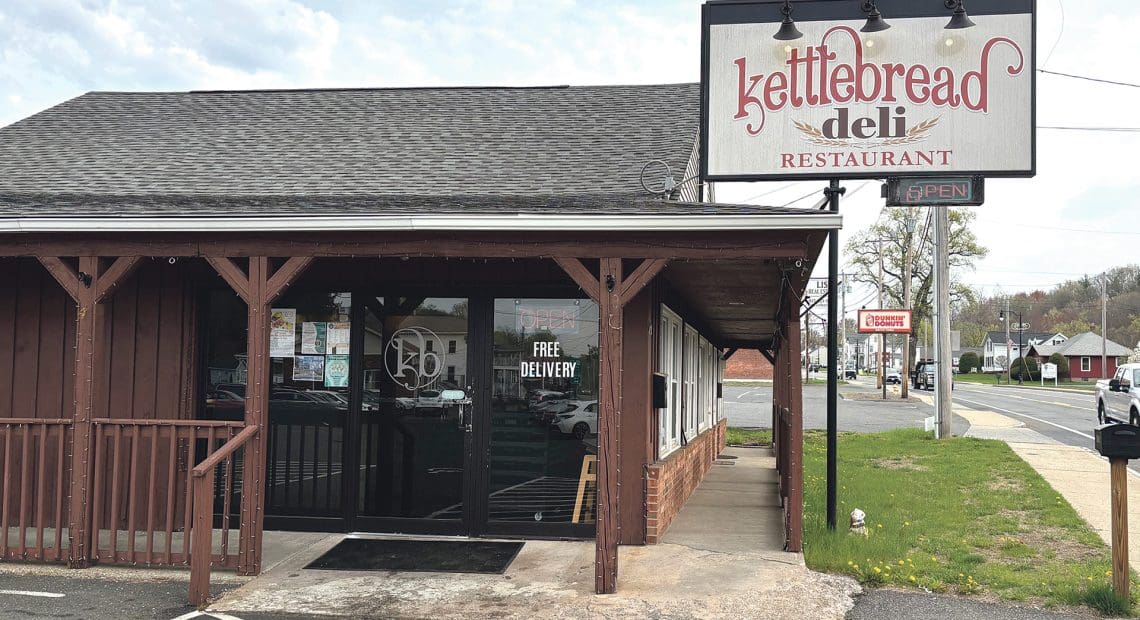
Kettlebread Deli is just one of the intriguing business storylines in Southwick.

Kettlebread Deli is just one of the intriguing business storylines in Southwick.


Ed Grimaldi pointed to the small table for two by the door, under the large-screen television. 

“I was sitting right there,” he recalled. “I had my head in my hands, thinking, ‘what have I done? What have I gotten myself into?’” 

It was April of 2020, a month after COVID-19 officially arrived in the region. Grimaldi had, in keeping with a mandate from the state, shut down Samuel’s, the pub-style restaurant at the Basketball Hall of Fame that he co-owned. And he had already invested, along with partners Melissa Veino and Joe Rondoletto, in a new endeavor on College Highway in Southwick called Kettlebread Deli, that was slated to open in a few weeks. 

Which explains why Grimaldi had his head in his hands. 

“We muddled through, somehow,” he said, noting that Kettlebread — more on that name and that concept later — pushed on through curbside service and was able to establish a beachhead, if you will. Fast-forwarding a little, the new business survived, has expanded to a second location and central bakery in Westfield, and Grimaldi and his partners are exploring franchising opportunities. 

“There’s nothing new about doing things home-made — lots of places do that now; we’re trying to do it in a way that’s duplicatable and scalable,” he said, hitting at the heart of this operation, adding that he believes he has an easily identifiable brand, a name that resonates within the industry, and “food that’s really, really good.” 

Kettlebread is one of many intriguing businesses and storylines in Southwick, a recreational community known for its Congamond Lakes, motocross, including the highly anticipated Southwick National in late June, the Ranch golf course, rail trails, a wide range of outdoor experiences, and more. 

“Our bread is very good because a portion of each batch is folded into the next day’s batch, allowing for an exponentially small portion of every batch that has ever been to be in every other batch.”

It’s also known for its hospitality and food-related businesses, including one that has risen to the ranks of institution. That would be Mrs. Murphy’s Donuts, another College Highway establishment that will soon — as in next year — be celebrating a half century of serving up a wide variety of offerings, including its signature raised, glazed honey dip. 

A family business to the core, Mrs. Murphy’s now has members of three generations working behind the big glass display case, or behind the scenes, said Shane Smith, noting that things really started with her grandparents — and especially her grandmother, Shirley, “the original Mrs. Murphy” — who opened a donut shop in Florida. 

“They taught my dad, Earl Murphy, how to make the donuts,” said Smith, adding that her father and mother, Rose, opened the shop in Southwick in 1976. 

Today, Rose is mostly retired, with Smith assuming more management responsibilities over the years and sharing duties with her husband, Zack, as well as her daughter, Bryce, and her husband, Jeff, and other team members. 

Building on this strong existing base of businesses, while maintaining the community’s rural, recreational character is among the main responsibilities of the community’s government, said Town Manager Nicole Parker, who came to Southwick not quite a year ago after serving in a similar post in the Central Mass. community of Hardwick. 

Shane Smith shows off the display case at Mrs. Murphy’s Donuts, a Southwick institution approaching its 50th birthday.

Shane Smith shows off the display case at Mrs. Murphy’s Donuts, a Southwick institution approaching its 50th birthday.

She was attracted by the town’s many attributes, including that rural quality, and has made it one of her priorities to build on that foundation. 

“As a recreational community, it’s important to have these kinds of opportunities,” she said, adding there have been some additions in that broad category with others in the planning stages, including a spray park at Whalley Park now under construction, a pickleball court at town hall, and perhaps more pickleball at Whalley Park — there’s an item on the town meeting warrant to that effect. 

Meanwhile, the community is in the process of hiring a new town planner, undertaking what Parker called a “major zoning revision” to update bylaws that have not been overhauled for decades, and voting on a proposal for new high-speed internet service through WhipCity Fiber. On the business side, the community’s first cannabis dispensaries will be opening shortly, and a Dollar General will soon join the ranks of the establishments on busy College Highway. 

Overall, said Parker, there is a need to achieve balance — between the businesses needed to serve residents and reduce the tax burden on those who call the town home, and maintaining those qualities that make this community so attractive to residents and visitors alike. 

“On College Highway … there’s a house, a business, a house, a house, a business, a business, a house — there’s no cohesion. Having strategic zones will really help the town grow the way it needs to grow, the way the residents want to see it grow.”

For this the latest installment of its Community Spotlight series, BusinessWest turns its lens on Southwick, where there is plenty to do, plenty to see, and plenty to eat. 


Doughs and Don’ts 

There’s a treatment on one wall inside Kettlebread that tells the story of this venture, or at least a big part of it. 

It features a dictionary-like definition of the noun Kettlebread — actually, two of them: 

1. ‘Our family’s secret all-natural artisan bread recipe involving a 3-day process, baked daily in round kettle pans, butter-salted crust’; 

2. ‘Suspiciously awesome sandwiches.’ 

The latter is a tagline of sorts for the business. Grimaldi was thinking about using ‘curiously awesome,’ but was reminded that the slogan for Altoids is ‘curiously strong mints,’ and he didn’t want to go there.  

As for the former … well, the bread is what defines this venture — along with what’s put inside it, especially the makings of a Philly cheesesteak sandwich, the most popular item on the menu. Grimaldi talked in generally vague terms about the bread and how it’s made, stressing repeatedly that it is, indeed, a process. 

“All bread has very simple ingredients, it’s just a matter of ratios,” he explained. “Everyone has their own formula; ask 100 people how to make bread, you get 100 recipes. I think our bread is very good because a portion of each batch is folded into the next day’s batch, allowing for an exponentially small portion of every batch that has ever been to be in every other batch.”

Grimaldi was visiting the Midwest several years ago, and became so impressed by a sandwich he had on that trip — a variation of the muffaletta, a New Orleans-style sandwich featuring a round loaf of Sicilian bread — that he became inspired to try to replicate it in the 413. 

“They had a very unique bread, and I tried for years to duplicate their bread, and I came nowhere near it,” he told BusinessWest, adding that he came up with something else, something he believes is even better — Kettlebread. 

As noted earlier, he and small group of partners introduced the concept near the height of the pandemic in a long vacant former karate studio on College Highway. Using mostly curbside service, the new deli and its offerings built a following, and today, the location is thriving, especially at lunch time. 

Southwick at a Glance

Year Incorporated: 1770
Population: 9,232
Area: 31.7 square miles
County: Hampden
Residential Tax Rate: $15.57
Commercial Tax Rate: $15.57
Median Household Income: $52,296
Family Household Income: $64,456
Type of Government: Open Town Meeting; Select Board
Largest Employers: Big Y; Whalley Computer Associates; Southwick Regional School District
*Latest information available

Grimaldi and his partners expanded with a second location in Westfield, which also serves as the bakery. And the long-term plan is to create franchises, said Grimaldi, adding that the first step in that process was to create that central bakery. 

“Franchising is still the ultimate goal, but right now, I want to stabilize my own operation,” he said. “So much has changed over the past couple of years — labor costs, food costs … it’s a more challenging environment in many ways.” 

As for the Southwick deli, Grimaldi said he fell in love with that location early on, noting that it is close to where Routes 10-202 and Route 57 form a ‘T.’ There are several other eateries and gathering spots in that general location including Tucker’s restaurant, the Summer House, the Southwick Inn, another institution, and Mrs. Murphy’s, which also found a way to persevere through the pandemic. 

That was with a drive-through, which remained how business was done until January of 2024, when the front doors were once again opened to a large and thoroughly loyal customer base that includes Southwick residents, of course, but also many from neighboring communities on both sides of the border with Connecticut. 

This customer base is treated to hand-cut donuts (a rarity in this business; most are now cut by machine) as well as pastries, breakfast sandwiches, and coffee. But it’s the donuts that make this an institution. 

They come in dozens of varieties, including many classics, but also several ‘specialty’ offerings including ‘maple bacon,’ ‘thin mint,’ ‘chocolate crème crumble,’ and ‘strawberry shortcake.’ 

When asked what the business has planned for its 50th anniversary, Smith said she hadn’t given that much thought — she and her family are busy enough with the day-to-day — but would in the months to come. 

“We’re just going to keep on doing what we’re doing,” she said, adding that this is one Southwick tradition that will endure. 


Work and Play 

Parker told BusinessWest that she wasn’t exactly searching for a new career opportunity when a friend recommended that she take a hard look at Southwick, which was advertising for a successor to long-time chief administrative officer Karl Steinhart. 

“I was like, ‘no, I’m happy here,’” she recalled, adding that her friend was persistent and again encouraged her to apply, noting that the town was bigger than Hardwick and presented more opportunities to grow professionally. She listened, did apply, and eventually triumphed in a lengthy search. 

“It’s been an amazing 10 months,” she said, hinting that it’s not exactly easy to succeed someone who had been in the job for 35 years. 

But the transition has gone smoothly, she said, adding that she was working on the warrant for her first town meeting, set for May 20, when she spoke with BusinessWest.  

Among the priorities she’s established is a revision of zoning bylaws, said Parker, noting that the current bylaws haven’t been overhauled “ever.” 

And this reality has contributed in many ways to the hodge podge that exists on College Highway today, said Parker, noting that the street is a mix of commercial, residential, municipal, and more. 

“On College Highway … there’s a house, a business, a house, a house, a business, a business, a house — there’s no cohesion,” she said. “Having strategic zones will really help the town grow the way it needs to grow, the way the residents want to see it grow.” 

Elaborating, she said planning officials can look at current zoning codes and see essentially whatever they want to see whether it comes to including a proposed use or excluding one, and something far more definitive is needed moving forward. 

And town residents will have a large say in how the bylaws are overhauled. 

“We’ll have a lot of public meetings to let residents let us know what they want to see for their town,” said Parker. “You live in a town because this is where you want to be, and you should make the decisions on how your town should modernize or move forward or really grow; it needs to be the residents who make those decisions, so I’m looking forward to having those meetings so we can gauge what the community wants for a business zone, where they want to see industrial zones, and where they want to see strictly residential zones.” 

Meanwhile, another issue confronting this community, like all others in the region, is housing, said Parker, adding that while few developments in the ‘affordable’ category are in the pipeline, there is a 200-unit condo project slated for Depot Street that has received Planning Board approval. 

As for the cannabis dispensaries, Pioneer Valley Trading and Haven will be opening in storefronts just a few blocks from each other on College Highway. 

“They can’t be within 500 feet each other, but I think they’re maybe 501 feet from each other,” joked Parker, adding that these additions will bring even more variety, and vibrancy to the town’s main business throughfare. 

And they provide even more to do and see in a community where there is already plenty in both categories.

Agenda

Coffee & Connections

May 16: The Chamber of Greater Easthampton will hold its second Coffee & Connections of the year from 8 to 9 a.m. at its WorkHub on Union co-working space at 33 Union St., Easthampton. Registration is complimentary and open to all business, organizational, and community leaders; however, registration is required due to limited registrations available. For more information or to register, visit the chamber’s events calendar at www.easthamptonchamber.org or email [email protected].


Shred Days

May 17, 31: bankESB invites customers and members of the community to two free Shred Days at local offices. No appointment is necessary. Events will be held from 9 to 11 a.m. (or until the truck is full) on the following dates and at the following locations: May 17 at the 770 Main St., Agawam office (in partnership with the Parish Cupboard, which will be collecting food donations), and May 31 at the 241 Northampton St., Easthampton office (two trucks will be at this event). Local residents can reduce their risk of identity theft by bringing old mail, receipts, statements or bills, canceled checks, pay stubs, medical records, or any other unwanted paper documents containing personal or confidential information and shredding them safely and securely for free. A professional document-destruction company will be on site in the bank’s parking lot and can accept up to two boxes of documents per person.


413 Women’s Health Connect

May 21: Living Local 413 announced the launch of 413 Women’s Health Connect, the first official program under its new Hot Topics initiative, an innovative series designed to bring people together around issues Western Mass. cares about. The event will be held from 5 to 7 p.m. at the Carriage House at the Barney Estate in Springfield. The program’s primary sponsor and featured speaker at the first event is Robin Suave of Baystate Ob/Gyn Group Inc. 413 Women’s Health Connect is a multi-faceted approach to improving women’s wellness and strengthening community bonds. The program features three in-person events per year across Western Mass., an active online discussion board at 413online.com to continue conversations and share resources, and a new podcast series, “413 Biz Buzz,” exploring Hot Topics in greater depth and featuring local experts and community voices. Visit community.livinglocal413.org/event/413-womens-health-connect to RSVP for the first event.


Walk to Cure Arthritis

June 1: The Arthritis Foundation announced that the Western Massachusetts Walk to Cure Arthritis will take place at Stanley Park in Westfield. Funds raised through donations to the Walk to Cure Arthritis will support the foundation’s ability to fund scientific research and continue to provide services and resources to the arthritis community. Walk to Cure Arthritis celebrates the community of arthritis patients of all ages, their caregivers, and everyone in the movement to conquer the disease. Ashley Scott is this year’s young adult walk honoree. She will be celebrated for her perseverance in her battle with arthritis and her strong support of the foundation’s mission. In addition, the following people will be honored: Grace Malave, juvenile idiopathic arthritis youth honoree, and Bill Squires, rheumatoid arthritis adult honoree. Residents can register and begin fundraising for the Western Massachusetts Walk to Cure Arthritis and learn more about the event by visiting www.walktocurearthritis.org/westernma or calling Hannah Hergenrather at (781) 312-9635.


40 Under Forty

June 19: BusinessWest will celebrate the 19th annual 40 Under Forty Gala at the MassMutual Center in Springfield. The class of 2025 is profiled in the April 28 issue and at businesswest.com. The presenting sponsor of this year’s 40 Under Forty is PeoplesBank. Partner sponsors include Live Nation Premium, Mercedes-Benz of Springfield, and the Isenberg School of Management at UMass Amherst. Health New England is the presenting sponsor of the Alumni Achievement Award, the winner of which will be announced at the gala. Tickets cost $125. If they are not sold out, they may be purchased at businesswest.com/eventcalendar/40-under-forty-event-gala.


Hooplandia 2025

June 20-22: Registration is now open for Hooplandia, the third annual 3-on-3 basketball tourney and festival, at hooplandia.com. The event will take place at Eastern States Exposition (ESE) and the Naismith Basketball Hall of Fame. Games will be played at the ESE complex, with special games held at the Basketball Hall of Fame. In 2024, 75 basketball courts allowed accommodation for more than 650 games played by approximately 2,100 participants of all ages. Diverse divisions include young girls and boys, women, men, high-school ages, college level, OGs, veterans, and more. Fees range according to age. Players in the Special Olympics and Unified division can look forward to free registration, and those in the Hoops & Heroes division, such as active and retired first responders and military personnel, have access to discounted registration. Players are invited to build teams of four, create their own unique team name, design their uniforms, and register at hooplandia.com.