
Jeffrey Fialky
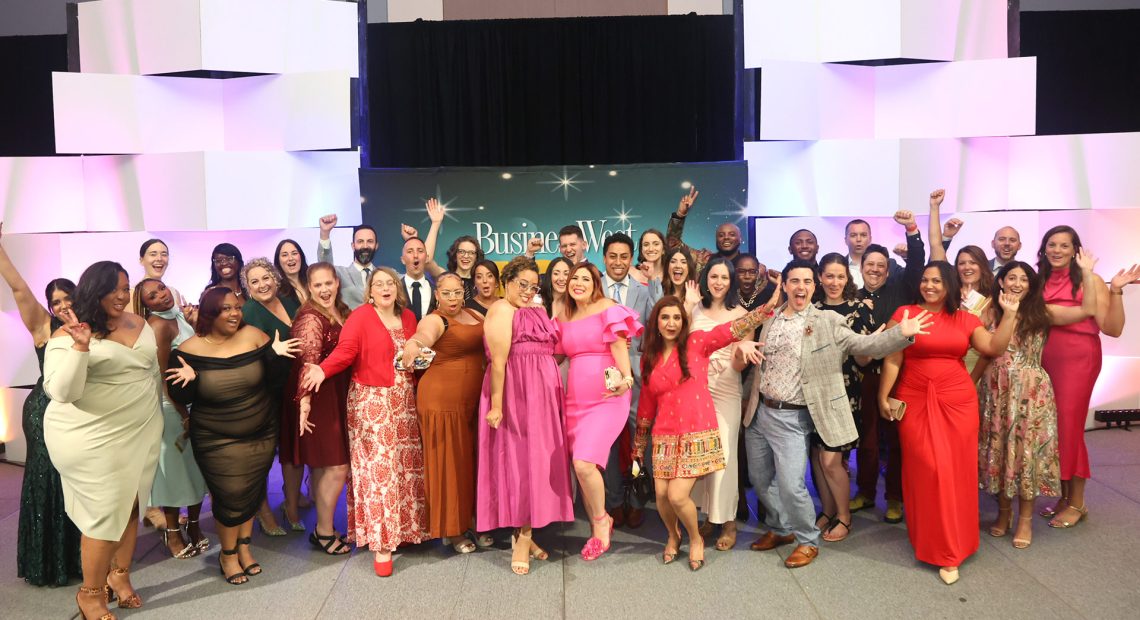
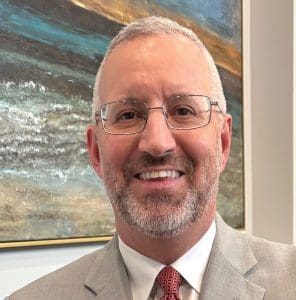
SPRINGFIELD — At Thursday evening’s 19th annual 40 Under Forty event at the MassMutual Center, BusinessWest announced that Jeffrey Fialky, managing shareholder at Bacon Wilson, P.C., is this year’s Alumni Achievement Award (AAA) winner.
Fialky broke through on his fourth time as a finalist for the AAA, which, since 2015, has been awarded annually to the past 40 Under Forty winner who, in the minds of an independent panel of judges, has most impressively built on his or her record of professional achievement and service to the community since being named a 40 Under Forty honoree.
Fialky was an associate with Bacon Wilson when he was voted to the 40 Under Forty class of 2008. Today, as managing shareholder, he is leading the firm through a time of change and challenge in that sector while also continuing to give back to community organizations and causes ranging from Springfield Museums to the Springfield Regional Chamber — which, just last week, awarded him its Lifetime Achievement Award.
The other four finalists for this year’s AAA award were Amelia Holstrom (40 Under Forty class of 2015), partner at Skoler, Abbott & Presser, P.C.; James Krupienski (class of 2010), partner at Meyers Brothers Kalicka, P.C.; Ryan McCollum (class of 2012), owner of RMC Strategies; and Orlando Ramos (class of 2014), state representative for the 9th Hampden District. The Alumni Achievement Award was presented by Health New England.
More than 500 people attended the 19th annual 40 Under Forty program, which was presented by PeoplesBank and sponsored by Mercedes-Benz Springfield, Live Nation Premium, and the Isenberg School of Management at UMass Amherst.
When Jim Vinick put his mind to doing something — whether it was the next iteration of the Naismith Memorial Basketball Hall of Fame or a statue in honor of the man who would be identified as the ‘Jimmy’ in the Jimmy Fund — he got it done.
And that’s just one of the character traits that people remember as they celebrate the life and accomplishments of Vinick, most recently the managing director of Investments for Moors & Cabot, who passed away earlier this month.
Mostly, they remember that he didn’t just get things done — he got them done right, the way he thought they should be done.
With the statue of Einar Gustafson (‘Jimmy’), that meant removing Red Sox slugger Ted Williams, a close friend, from the original plans for the piece — because it was the Boston Braves, not the Red Sox, that were originally associated with the nonprofit that raised money to battle cancer in children — and being steadfast in his efforts to have it located in a prominent area.
This determination to have things done his way sometimes ruffled people. Indeed, John Doleva, president and CEO of the Hall of Fame, who worked with and beside him for decades, said of Vinick: “while his exterior was gruff, his heart was pure.”
Indeed, it was, especially when it came to the Hall. For Vinick, it was literally a life-long passion.
“As a young teenager, he worked with his father, brother, and others to help establish the original Basketball Hall of Fame on the campus of Springfield College and since then has been a tireless advocate for the various iterations of the Hall,” Doleva noted. “He has served as our longtime finance committee chair and treasurer of the organization keeping a watchful eye on the Hall’s financial condition, and he helped guide the long-sought economic renaissance of the Hall and reveled in the current fiscal condition of the Hall and our growing impact on the game. He stands as the bedrock of the current Hall. He will be missed, but never forgotten.”
Those are sentiments shared by many, including those who tuned in to “The Vinick Report” on Channel 40, dedicated to financial literacy and helping viewers make smart, informed financial decisions. And those who worked with him on the Jeffrey Vinick Memorial Golf Tournament, staged in honor of his son, who lost his battle with a rare form of testicular cancer. And those who benefited from his many contributions to community institutions such as Jewish Geriatric Services, Temple Beth El, and the Willie Ross School for the Deaf.
Those sentiments explain why Vinick was honored by BusinessWest with its prestigious Difference Makers award in 2013. Only a few dozen people have earned that title, which is reserved for those who go above and beyond — in his case, with everything he did — and make this region a better place to live, work, and do business.
He certainly did that, and, as Doleva noted, he’ll be missed, but never forgotten.
SPRINGFIELD — The Springfield Symphony Orchestra (SSO) and Local 171 of the American Federation of Musicians jointly announced they have reached a new two-year collective bargaining agreement. The new contract starts in the upcoming 2025-26 season and extends through the 2026-27 season.
The new agreement contains a minimum of eight symphonic concerts and an education concert for the upcoming two concert seasons. The agreement also includes the addition of a second musician seat on the SSO board, which will expand from 15 to 17 seats, and wage increases for musicians over each of the two years. The agreement also calls for an average of 64 contracted musicians, remaining the same from the previous two-year agreement.
This new agreement gives the Springfield Symphony Orchestra greater flexibility to design seasons that both honor tradition and embrace innovation. Starting with the 2025-26 season, the SSO will present a minimum of four classical concerts each year, down from six in previous seasons. This change allows room to explore new formats and creative programming. In addition, the season will feature two pops concerts and two hybrid performances that blend classical repertoire with popular music to engage broader and more diverse audiences.
“We are so pleased to make this announcement about a new two-year agreement that builds upon the shared goal, between management and the SSO musicians, of sustaining and advancing our Springfield Symphony Orchestra,” said Paul Lambert, president and CEO of the SSO.
“With so much distressing news out there around the arts, this is a dose of much-needed good news for the SSO and for our region,” he added. “The new collective bargaining agreement joins musicians, staff, and our board in the collective enterprise of putting together the best symphonic concert seasons over the next two years. With this agreement, we are entering a new age of cooperation and collaboration with our incredible musicians, and our region and the arts are big winners.”
According to Beth Welty, president of Local 171, “the musicians’ negotiating committee feels that this is a very positive step. We look forward to continuing to work with Paul Lambert, the staff, and the board toward the goal of expanding the orchestra’s outreach and service to all of Western Massachusetts.”
Added Springfield Mayor Domenic Sarno, “I want to thank our wonderful Springfield Symphony Orchestra and the talented musicians for their efforts in working together on this new two-year deal. Thanks to the work from President and CEO Paul Lambert and his incredible team, and the leadership from the Local 171 of the musicians union, our beautiful symphony, which is a world-class venue and organization, will continue to provide and display an amazing collection of musical talent at every event and show. The proud tradition of our Springfield Symphony Orchestra will continue to light up our historic and majestic Symphony Hall with music for all to enjoy. Congratulations again to all involved, and I am looking forward to enjoying more of their shows in the future.”
In the past two seasons, the SSO has made efforts to diversify its musical offerings and brought talent from around the world in the form of both guest conductors and guest artists to Springfield Symphony Hall. The concert seasons have featured Latin jazz ensemble the Mambo Kings, Bugs Bunny at the Symphony, annual MLK Jr. celebration concerts, Fearless Women Awards honoring local women leaders in the community, Juneteenth concerts at no cost to the community, and more.
In the 2024-25 season, internationally acclaimed conductor Mei-Ann Chen joined the SSO as artistic advisor, helping to curate programs, select guest soloists, and facilitate other artistic needs.

Christina Reynolds
HADLEY — UMassFive College Federal Credit Union announced that Christina Reynolds has been promoted to assistant vice president of Account Operations. She began her career at UMassFive 15 years ago as a part-time online banking specialist in the Contact Center. Since then, she has taken on a variety of roles, including positions in branches, as Card Services manager, and, most recently, as Digital and Payments manager.
In her new role, Reynolds will oversee several key areas: Digital Banking (including online and mobile banking), Payments (ACH transactions, wires, and checks), Card Services (debit and credit cards), and Account Services (focused on fraud prevention, compliance, and risk management).
“I’m excited to work with my team to deepen the level of positive impact we can have with our products and services,” Reynolds said, “by helping to drive innovation, fostering collaboration, and leading efforts that help our organization fulfill strategic goals, and our mission to better the financial lives of our members.”


Elizabeth Staples today

Elizabeth Staples was honored in the 40 Under Forty class of 2016
When Elizabeth Staples was named to BusinessWest’s 40 Under Forty class of 2016, she had been running her business, the Good Dog Spot, for almost a decade, based on one foundational idea: that canine daycare should be more than stowing dogs in kennels.
“On the East Coast, you mostly saw the warehouse style of boarding — put the dog in a cage and go away, which is kind of sad,” she explained back then. “But nationally, the trend was toward an off-leash play center, where people could feel good about leaving their dog and not feel guilty about it. That’s what we wanted to bring to this area.”
Fast-forward nine more years, and Staples is still evolving the idea of how best to serve dogs and their families.
“There’s been a shift in the industry that recognizes that dogs are parts of our family, and people want more than even just a place for them to go play all day,” she told BusinessWest during a visit earlier this month. “They want to make sure that their lives are full of enrichment, and every dog is a little different, so their needs might be a little bit different. So it’s not quite the same as throwing all the dogs into a big group for playtime anymore.”
She’s talking about the Enhanced Dog Daycare program, which goes beyond playtime and aims to create a balanced day that leaves a dog fulfilled, but not exhausted, through carefully tailored activities, personalized attention, and thoughtful socialization — all individualized for each guest.
From a single location in Chicopee starting in 2007, the Good Dog Spot expanded to a second site in Northampton in late 2016, and both locations offer daycare, boarding, grooming, and services like Spot’s Tots, which is a puppy socialization program that gets pups ready for the daycare environment.
“Every dog is a little different, so their needs might be a little bit different. So it’s not quite the same as throwing all the dogs into a big group for playtime anymore.”
“That young puppy period is a really influential time where you can set them up for some very positive experiences,” Staples noted.
In its first nine years, leading up to her 40 Under Forty recognition, the Good Dog Spot grew from one employee to 18, and boasts close to 40 now. In 2016, the business served about 30 dogs a day; now, on a busy day, each site may see 50 dogs checking in for daycare, 20 for boarding, and another 20 for grooming.
“We’re growing organically with the two locations. I guess the big-picture dream is that there would be a third location,” she said. “We currently rent both of our locations, and we’ve got great relationships with our landlords, but eventually owning a property we’re in would be a future goal for us as well.”
The COVID years posed challenges on multiple levels, starting with how to serve the public under strict state regulations.
“Daycare was still on the essential list, so we could open for daycare and grooming, but we couldn’t do boarding. And then it shifted, but the shifts were not necessarily communicated clearly,” Staples said.
“But we realized that grooming was the essential service. You’ve got elderly people that can’t take care of their dogs. You’ve got hygiene, fleas, ticks, and things like that that you want to make sure you’re taking care of,” she noted. “Then, when that got taken off of the essential list, we could only do one at a time. And you’re making clients unhappy because they’re like, ‘my dog’s there; can’t you just groom him anyway? But we couldn’t because we could get fined. So it really was complicated.”
The other change coming out of COVID was that workforce issues across a broad spectrum of industries were forcing wages up, and with a growing staff, the Good Dog Spot has had to respond in order to attract the best talent, hiring staff at $18 per hour and paying managers in the mid-20s.
“We had to stay ultra-competitive,” Staples said. “Minimum wage was going up anyway, but to get ahead of that curve was challenging because we needed to bring in quality people to take care of these pets. The increase in wages allows us to take good care of our staff and keep them happy, content, and safe. But it also allows us to do what’s great for the dogs, so it’s just been a win-win all around.”
Since their children were born, Staples’s husband, Cory, has handled much of the day-to-day operations of the Good Dog Spot. “Cory’s focused on the numbers, and I focus more on what’s really great for the dogs. And when the two mesh together well, that’s really great to see,” she said.
She is also proud of the business’ focus on continuing education and safety. Both Elizabeth and Cory are certified through the Professional Animal Care Certification Council, and they’ve been involved with an organization called Fear Free Pets, which offers training to help the staff recognize stress signals and other signs in an effort to work with animals in a positive way. Employees are also certified in first aid and CPR.
As for the continued growth over the past 18 years, Staples said having to keep up with demand — in terms of both staffing and evolving client offerings — has been challenging, but gratifying when she looks back at her humble beginnings. “It really does blow my mind sometimes.”


Owner Matthew Abelli
It had been a long few years for Matthew Abelli and his wife — years marked by job changes, a frustrating journey toward parenthood, and years of health issues that culminated with a tumor in his brain.
But Abelli has emerged from all that with a positive diagnosis, a healthy daughter, and his own growing business, Matt’s Pellet Stove Service.
He told BusinessWest about all of that, starting at the beginning — the very beginning, when he was being raised by a divorced mom whom he described as strong-willed and tough.
“She was very do-it-yourself, hands-on, and I picked up a lot of that with her,” he said, recalling how he once repaired a broken toaster for her with a screwdriver and a dose of youthful common sense. “She loves telling that story.”
After studying in the electrical program at Smith Vocational and Agricultural High School in Northampton, Abelli worked in — and was laid off from — an electrician job during the Great Recession, then found himself spending more than 10 years with an HVAC company, installing, servicing, and repairing pellet stoves, wood stoves, and gas appliances, eventually departing around 2017.
“But I kept doing it, whether it was for friends, family, odd jobs, refurbishing units — it’s a big passion of mine,” he noted.
“I was starting to get headaches at work — to the point where I’m like, ‘this is weird.’ You know how sometimes you stand up and your eyes take a second to adjust? Well, I’d do that, but it would take a minute to adjust. And then I would lose my peripheral vision sometimes.”
After a stint as a maintenance technician for Pride, which he found neither challenging or enjoyable, Abelli applied for and eventually secured a custodial job with Barnes Air National Guard Base in Westfield, which he supplemented by working a second maintenance job with Highland Valley Elder Services in Northampton.
And then COVID hit — and so did a major health scare.
“I was starting to get headaches at work — to the point where I’m like, ‘this is weird.’ You know how sometimes you stand up and your eyes take a second to adjust? Well, I’d do that, but it would take a minute to adjust. And then I would lose my peripheral vision sometimes.”
On his wife’s insistence, he got a CT scan that revealed a small blockage and buildup of spinal fluid. The surgery to repair it couldn’t be done locally, so he went to Tufts in Boston. Because of COVID restrictions, his wife couldn’t be with him, which was upsetting, but the surgery was a success — for the moment, anyway.
“When I came back, I felt like a million bucks because I didn’t have that pressure,” he recalled. “They said, ‘come back in a year.’”
The couple did, in January 2022, and an MRI revealed that the blockage seemed a lot larger — in fact, it had tripled in size and was now classified as a brain tumor. Because of the risks of surgery in that location, including blindness — it was very near the optic nerve — Abelli opted for powerful oral chemotherapy and radiation treatments that led to cranial swelling, which was treated with potent steroids.
On top of that stress, his wife, Jennifer, discovered she was pregnant, the culmination of years of trying. Amid all that, an HVAC position came up at the base, which Abelli had wanted. Weakened by his various treatments, he wound up interviewing with sunglasses on because light hurt his eyes.
He got the job, though he continued to struggle with the effects of chemotherapy, while his wife managed her pregnancy. Meanwhile, both were diagnosed with COVID at one point in 2022. But as the year drew to a close, the tumor was shrinking, and Jennifer gave birth to a healthy baby girl, Grace.

Matthew Abelli says he takes pride in keeping pellet stoves clean and safe.
That’s a lot to experience in a short time. But Abelli was about to make another big change.
Specifically, he had never lost his passion for working with pellet stoves, and there came a time in 2023 — when Grace was about 6 months old — when Abelli decided he needed another source of income. So he started picking up cleaning and service jobs, and eventually registered Matt’s Pellet Stove Service as a business in 2024.
Today, he has built a clientele of about 200 regular customers, mainly by hustling for references, social media marketing (he has dozens of five-star reviews), and word of mouth.
“I would go to any place that had pellets. I had this whole spiel: ‘look, I’m factory trained, I can do this, I can do that. I’m not going to step on your toes, but if you have overflow or something you don’t service, I’ll take that on.’ Just anything to get my name out there as somebody doing this in the area. Because there aren’t a lot of people my age who do it. It’s a lot of older guys that are getting out of it.”
And that has created solid opportunity to grow. He works at Barnes on weekdays and devotes weekends to pellet stoves — during the busy winter season, he’s also servicing stoves after work during the week — and envisions a time, in the future, when the pellet stove operation becomes a full-time job, perhaps with a growing team of employees. But even then, he sees himself working in the field.
“I love doing the work, and I would always probably be a part of it, but there’s something comforting about having well-trained people to do the job while I do some of the logistics stuff. I think that would be ideal,” he told BusinessWest.
“My biggest thing is safety,” he added. “Anybody’s house I’m going into, I would hope that I would treat it like my own. I know that’s cliché to say, but it’s very true. And if I see something that somebody else did wrong, I’m going to tell the customer, and I’m going to do everything I can to fix it, to do it right. Because, at the end of the day, my name is on that.”
That commitment has been reflected by comments customers have left on town forums and online review sites, he said. And he’s become involved in the community in other ways, donating to local organizations both on his own and through volunteer efforts at Barnes.
Abelli’s footprint with the pellet stove business covers much of the southern part of the Pioneer Valley and into Connecticut, with Westfield being his busiest city.
He’s also encouraging young people to seek careers in the trades. Earlier this spring, he visited Putnam Vocational Technical Academy in Springfield and spoke with students in the HVAC department.
“I talked to them for about an hour and had a lot of good feedback,” he recalled. “I had kids come up to me at the end, saying, ‘I’d like to check that out.’ So that would be another pool to pick from if I needed a kid to help out.”
Like most trades these days, the career opportunities for young people are plentiful, he added. “Especially in this area, there’s enough work for everybody.”
There’s certainly enough work for Abelli right now, and plenty of potential for growth ahead. He’s especially gratified with his current path having come off a lengthy, often painful health issue that has essentially resolved, and a long struggle for parenthood that culminated in an appropriately named child — because he and Jennifer feel like they’ve needed plenty of grace to get to this point.
“Sometimes you think it’s never going to end. That’s the hardest part. It’s the unknown,” he said of those struggles. “I always get a little emotional just talking about it. We’re not completely religious, but I feel like it was … something. Sometimes the timing just feels that way.”


Francis and Rocio George say their use of body cameras is unusual in the cleaning industry, and a strong selling point.
It’s called time theft.
That’s a common problem in service industries, and it essentially refers to workers not spending the time they promised on a job.
Thanks to a proprietary technology called QCam, Skyview Cleaners is cutting down on wage theft — and creating the type of trust with clients that its owners, married couple Francis and Rocio George, believe sets their Springfield-based business apart.
“We’re actually incorporating technology into a legacy industry,” said Francis, who came out of the IT world and was looking for something different after an industry contraction back in 2022. “I have a couple of friends that used to be tech sales guys just like me. And all of a sudden, I see their LinkedIn update — one’s running a porta-potty company, one has a lawnmowing company. All they’re really doing is taking a legacy industry and making it more efficient with tech.”
In Skyview’s case, QCam is a body camera mounted to the worker’s belt when he or she visits a residential or commercial property on a contracted cleaning visit. This footage is shared with clients so they can see the work — and how long was spent completing it.
“In janitorial and cleaning, there aren’t very many tech-forward people, and that gave us a market opportunity,” Francis said. “We don’t consider ourselves in the cleaning business — we’re in the quality control business. And we needed some system to ensure quality.”
The second phase will be live-streaming jobs for clients, and the third will involve an AI assist to identify anomalies for someone watching several different feeds come in.
“For most clients, you’re doing the same thing week over week,” Francis explained. “So we can basically standardize some sort of a time metric, and an alert can go off to the internal quality control manager if the clean significantly diverts from that.”
Rocio said one of the main complaints from customers in the maintenance business is that cleaners don’t always do the job they promised.
“There is a gap in the industry. There is no quality control. We promise these things to the clients, but then, how do we make sure our employees do their job when no one is watching them?
“Right now, we’re just a janitorial company implementing a little bit of tech to differentiate ourselves and compete better, but I do have a vision for the future where this type of technology becomes commonplace.”
“That’s why we implement the QCam. If the client has any complaint at all, we invite them to look at the footage and see,” she went on. “It’s basically to ensure quality control. We also implement this only if the client gives us permission. It’s opt-in; we don’t just record the whole thing without our client’s permission. And we only share the videos with the client.”
Francis said he has not come across another cleaning company in the region that uses cameras like Skyview does, but that may not be the case in the future.
“Right now, we’re just a janitorial company implementing a little bit of tech to differentiate ourselves and compete better, but I do have a vision for the future where this type of technology becomes commonplace.”
When the couple met five years ago, they were living in New York; Francis was working at tech startups, while Rocio, a native of Paraguay, was studying English. They moved to Western Mass. when she was accepted at Mount Holyoke College, where she studied psychology and recently earned her degree.
“I was working remotely, doing tech sales, so it was an easy move,” Francis recalled. But his career was derailed by industry contraction and, in his case, working for an enterprise that got put out of business by ChatGPT.
“It sucked at the time, but it became a cool story later on,” he said. But not without significant challenges.
First, he worked with a friend selling solar installations door-to-door, using his severance from the IT world and unemployment funds to get the commission-only solar business going. But it failed “catastrophically,” he said.
“When that blew up, we were looking down the barrel of a loaded gun — overdrawn bank account, no money, a baby on the way, rushing to get on EBT and cash assistance.”
That was only last year. Rocio was still studying full-time — and also, eventually, adjusting to life as a new mom — and didn’t have a work permit yet. “I was in the middle of my status being changed from international student to getting my green card, so I couldn’t work.”
It took an emotional toll, Francis said. “I was dealing with all of the shame that comes with being a failed provider, at least in my eyes, and she’s trying to pull me out of that. Meanwhile, she’s dealing with the sheer terror of her provider not being able to provide, so we were both trying to console each other.”
But they had an idea. Rocio’s brother was in the cleaning business in California, so Francis, after studying the potential of such an enterprise, started going door-to-door, picking up the first few commercial and residential clients in what would become Skyview Cleaning.
“The whole past year was just a journey of building up enough income to to get off EBT and cash assistance and all the stuff that kept us afloat. I’m pretty thankful we’re in a state like this where we had access to that stuff,” he said, adding that a microgrant through the Latino Economic Development Corp. in Springfield was a lifesaver, as was a significant contract with Wyckoff Country Club. “That really saved us during a questionable period.”
While they also clean residential properties, the couple’s main niche is small (6,000 square feet and under) commercial properties.
“That’s a healthy zone for sure,” Francis said. “With any large commercial and residential, it’s a pretty aggressive race to the bottom. You’re quickly getting to these razor-thin margins.
“We have significantly better margins, and part of the reason is because, with QCam, we’re minimizing risk,” he continued. “For small or medium-sized businesses who are going to drop a couple grand a month on cleaning, they can’t really risk that not being done. A restaurant owner can’t arrive in the morning and have three hours of cleaning work that wasn’t done.”
As noted earlier, he believes wearable tech like QCam will become more commonplace in a number of industries.
“I think cameras in public, with phones everywhere, have culturally engineered the acceptance of being filmed, just by virtue of going outside,” he noted. “I think this is going to be one of the industries that adopts what we’re doing now, especially as companies have to crack down on time theft.
“I mean, when you look at the stats, billions are lost in the U.S. alone because of time theft. And with corporate America tightening the belt, they’re really going to have to figure out how to recapture some of that and make sure employees are out there doing what they say they’re going to do.”
While the Georges work in the field alongside three employees, they envision a time when they can grow the client base and employee roster and take on much less of the physical work themselves. But for now, they’re happy with their early trajectory.
“We did have a really rough start — having a baby while I was still in school, when we didn’t have money,” Rocio said. “But I feel it’s a blessing that we went through all that because we get to appreciate what we have, and we get to work together and create something unique.”
It’s a lesson in resilience anyone can emulate, she added. “No matter how hard your situation is, if you really want to change your circumstances, you can do it. When we didn’t have money last year, it was really hard, and I would never want to go back to that time in my life, but here we are, stronger than ever. We’re visionaries, we’re entrepreneurs, and I’m really grateful for what we’re creating.”

By Erica E. Flores, Esq.
Here in Massachusetts, we’ve gotten pretty accustomed to being known as a liberal bastion, a reliably blue populace governed by progressive icons like U.S. Sen. Elizabeth Warren and Gov. Maura Healey. Our laws reflect that ideology, including our many employment laws, which provide broad protections for workers on a wide array of topics, such as discrimination, harassment, retaliation, wage payments, family and medical leave, sick time, and others.
Federal law has never been nearly as protective of workers — for sure, the abysmal federal minimum wage ($7.25 per hour) has not been increased since 2009. But, still, it never really felt at odds with liberal values — just more moderate. Since President Trump took office for the second time, however, federal employment law has been changing at a breakneck pace, and not just via the president’s ever-growing stack of executive orders, but in the federal agencies and the federal courts as well.
“Employers here should start thinking about where their policies, programs, and practices are situated in the growing divide between Massachusetts’ liberal employment laws and the Trump administration’s new policies.”
“How does this affect me or my business?” you may be asking yourself. And it’s a fair question. Massachusetts businesses have to abide by the more employee-friendly Massachusetts laws, so a conservative shift in how federal employment laws are interpreted or enforced doesn’t really change employers’ obligations here. Right? Maybe not.
Under the U.S. Constitution, federal law is the supreme law of the land notwithstanding any state law to the contrary. This means that, when a state law conflicts with a federal law, the federal law trumps (no pun intended) the state law, which is rendered invalid and unenforceable. So, if a Massachusetts employment law were found to be in conflict with a federal law, the Massachusetts law would no longer govern. And conflicts are certainly brewing.
In January, President Trump signed a slew of executive orders, including two addressing “illegal” diversity, equity, and inclusion (DEI) and diversity, equity, inclusion, and accessibility (DEIA) initiatives, policies, and programs within the federal government and in place at federal contractors, federal grant recipients, and private employers who are subject to federal anti-discrimination laws.
A third executive order requires the federal government to recognize just two gender identities, male and female, as determined by the biological anatomy a person was born with, and to eliminate federal funding for gender-affirming care and the promotion of so-called “gender ideology.”
The latter also prohibits people who identify as transgender and other gender minorities from using single-sex spaces in federally funded facilities that do not conform with their biological sex, and directed the U.S. Attorney General to issue guidance that will “ensure the freedom to express the binary nature of sex and the right to single-sex spaces in workplaces and federally funded entities covered by the Civil Rights Act of 1964.”
The federal government responded swiftly to implement these orders. The acting chair of the Equal Employment Opportunity Commission (EEOC) stated that her priorities will include “rooting out unlawful DEI-motivated race and sex discrimination,” “protecting American workers from anti-American national origin discrimination,” and “defending the biological and binary reality of sex and related rights, including women’s rights to single-sex spaces at work.”
The EEOC and the Department of Justice (DOJ) also published technical assistance documents, offering guidance to employees who believe they have experienced discrimination related to DEI or DEIA programs at work. And the U.S. Deputy Attorney General announced the formation of the Civil Rights Fraud Initiative to investigate and pursue fraud claims against any recipient of federal funds that knowingly violates federal civil rights law.
The initiative will pursue its targets under the False Claims Act (FCA), a law that imposes civil liability on those who make a false statement to the government when seeking payment of government funds. The administration’s theory is that employers who accept federal funds while knowingly violating civil rights laws, or falsely certifying compliance with those laws, defrauds the federal government in violation of the FCA.
As an example, the deputy AG’s memo expressly states that a recipient of federal funding could be in violation of the FCA if it “allows men to intrude into women’s bathrooms.” The memo also encourages private citizens to report suspected DEI-related discrimination to the DOJ and to file their own FCA lawsuits against potential offenders in order to share in any monetary recovery. And the penalties can be steep. Under the FCA, violators are liable for treble damages (three times the government’s actual damages) as well as civil penalties.
Legal challenges to President Trump’s executive orders are pending, but most remain undecided. Earlier this year, a group of employers obtained a preliminary injunction that would have prevented the DEI/DEIA executive orders from taking effect while their lawsuit was pending, only to see that decision reversed on appeal, a strong indication that the challenge will ultimately fail.
Earlier this month, a federal judge in California blocked the Trump administration from enforcing both the DEI/DEIA executive orders and the executive order on gender identity, finding that the challengers in that case — a group of health centers, LGBTQ+ services groups, and the Gay Lesbian Bisexual Transgender Historical Society — had successfully demonstrated that the orders likely violate their constitutional rights.
But even if that decision is upheld on appeal, it would set the stage for a likely showdown in the U.S. Supreme Court, where a majority of the justices are considered to be conservative. In fact, the court recently ruled that a straight woman could not be required to satisfy a more demanding standard to prove that she was the victim of discrimination based on her sexual orientation than a gay person would have to satisfy, effectively eliminating the concept of so-called “reverse discrimination.”
The unanimous decision concluded that, “by establishing the same protections for every ‘individual’ — without regard to that individual’s membership in a minority or a majority group — Congress left no room for courts to impose special requirements on majority-group plaintiffs alone.”
Meanwhile, a federal judge in Texas recently dealt the LGBTQ+ community yet another blow when it vacated enforcement guidance that had been published by the EEOC last year under President Biden. The guidance in question contained information about workplace harassment based on gender identity, such as intentional misgendering and denial of access to restrooms that align with an employee’s gender identity.
The state of Texas and the Heritage Foundation brought a lawsuit against the EEOC, arguing that the EEOC did not have authority to require employers to accommodate employees’ gender identities in the workplace. A federal judge in Texas agreed, holding that the EEOC could not lawfully expand the definition of ‘sex’ under Title VII of the Civil Rights Act of 1964 to include ‘gender identity’ and ‘sexual orientation’ and that Title VII does not require employers to make accommodations related to employee pronouns, bathrooms, or attire.
Massachusetts law, by contrast, expressly protects employees from discrimination on the basis of gender identity and sexual orientation, and both the Massachusetts Commission Against Discrimination and our state courts have long agreed that denying an employee access to the restroom that corresponds to their gender identity, refusing to respect an employee’s request to use their preferred pronouns, and harassing an employee for behaviors that are believed to be inconsistent with their biological sex are forms of prohibited discrimination in Massachusetts.
Additionally, a group of 15 state attorneys general, led by Massachusetts Attorney General Joy Campbell and Illinois Attorney General Kwame Raoul, published a joint memorandum in March emphasizing the difference between DEI/DEIA programs and so-called ‘affirmative action,’ criticizing President Trump’s executive orders for conflating the two, and opining that the federal government does not have the legal authority to prohibit “otherwise lawful activities in the private sector” or to “mandate the wholesale removal of [DEI/DEIA] policies and practices within private organizations, including those that receive federal contracts and grants.”
How all of this ultimately shakes out remains to be seen, but as conflict between federal employment laws and our state’s laws seems more and more likely, employers here should start thinking about where their policies, programs, and practices are situated in the growing divide between Massachusetts’ liberal employment laws and the Trump administration’s new policies.
Erica E. Flores is a partner at Skoler, Abbott & Presser, P.C.; (413) 737-4753; [email protected]

By Scott Foster, Esq.
The Massachusetts House of Representatives recently unanimously adopted House Bill 4206 (HR4206), which would introduce fundamental changes in how the Massachusetts cannabis industry is regulated and managed. These changes include:
• A complete overhaul of the structure of the Cannabis Control Commission (CCC), moving from five full-time commissioners appointed by the governor, the attorney general, and the state treasurer to three commissioners in total, each of whom is appointed by the governor acting alone, with only the chair serving in a full-time capacity;
• Increasing the number of retail licenses under common control from three to six, potentially paving the way for increased consolidation in the market but also allowing early entrants to sell their business to multi-state operators and realize a significant gain on their investment of time and money;
• Legalizing CBD gummies, hemp-infused beverages, and other CBD edibles, while clearly controlling the manufacture, distribution, and sales of these products; and
• Opening the door a bit wider for employee stock ownership plans, which allow employees to potentially realize significant retirement benefits from long-term employment while also saving on taxes.
Two significant changes are also a bit ‘half-baked’ at the moment, and the Massachusetts Senate could provide more clarity on the implementation of these changes when it begins deliberations.
Currently, no individual or entity can own more than 10% of more than three licenses per category (e.g., retail, manufacturing, and cultivation). HR4206 appears to increase that threshold to 35% by exempting “any person or entity that possesses a financial interest in the form of equity in a license of less than 35%” from these license caps.
However, HR4206 leaves in place the definition of a ‘controlling person,’ which includes “any individual who has a financial or voting interest of 10% or greater.” Under the current regulations, an individual cannot be a controlling person over more than three licenses per category. The Senate has the opportunity to reconcile these seemingly contradictory provisions.
HR4206 also proposes a new delinquency reporting system that mirrors that which the Alcohol Beverages Control Commission has in place with respect to alcohol sales in the Commonwealth.
Going forward, no marijuana establishment will be able to offer credit terms to another marijuana establishment of more than 60 days from the delivery of products. If a purchasing establishment does not pay its invoice within these 60 days, the selling establishment is required to notify the CCC of this non-payment within three days, at which point the CCC reviews the situation and will post the name of the delinquent establishment on a newly created ‘delinquency report.’
At that point, no other selling establishment will be able to offer the delinquent establishment any credit terms, and all future purchases must be paid in advance or cash on delivery. Further, the CCC will not process any change of control applications for the delinquent establishment until the past due amounts have been settled.
While this may sound reasonable, the reality is that a large number — some believe a majority — of the current establishments have accounts payable over 60 days. Since HR4206 does not explicitly apply retroactively, these currently overdue accounts would not be considered delinquent.
This raises multiple issues regarding the future allocation of payments, such as whether a future payment applies to the oldest invoice or the most recent invoice, and whether the purchaser can specify to which invoice a future payment should be applied.
Hopefully, the Senate will consider the nuances of these significant changes and provide the necessary clarity before the bill is finalized. Either way, given the broad support already seen for overhauling the current statute, cannabis businesses (and their lawyers) should be on alert for a significant shift in how they operate.
Scott Foster is a partner at Bulkley Richardson in Springfield; (413) 272-6258; [email protected]

By Derek Brown
“Ability is what you’re capable of doing. Motivation determines what you do. Attitude determines how well you do it.”
This quote from my Notre Dame football coach, Lou Holtz, has not only resonated with me through all aspects of my life, but it has guided me in coaching employees for success. Indeed, in playing for Coach Holtz in the late 1980s and winning a national championship with him, I learned quite a bit about leadership and accomplishing goals.
The following takeaways that I learned as a young adult are what I have implemented into my professional life. While the objectives of leadership — driving performance, fostering engagement, and cultivating growth — remain constant, the ways in which we motivate our teams have evolved with each generation. What inspired Baby Boomers may not resonate with Millennials or Gen Z. Understanding these generational shifts is key to effective leadership today.
“When leaders understand what their team members are capable of, they can align tasks and goals in ways that challenge without overwhelming. Coaching helps bridge the gap between raw potential and real-world performance.”
In today’s work environment, coaching employees is not just a leadership tactic — it’s a strategic imperative. Remote work has reshaped communication, and employee expectations have shifted toward development and purpose. Coach Holtz’s quote serves as a simple but powerful framework for effective coaching: leaders must recognize ability, fuel motivation, and shape attitudes to bring out the best in their teams.
The first step in coaching is understanding each employee’s strengths and capabilities. This means going beyond résumés and job descriptions to truly observe how individuals think, solve problems, and interact with others. When leaders understand what their team members are capable of, they can align tasks and goals in ways that challenge without overwhelming. Coaching helps bridge the gap between raw potential and real-world performance.
Motivation is deeply personal. What drives one employee may not matter to another. Effective coaches take time to learn what inspires their team — whether it’s growth opportunities, recognition, or a sense of purpose. By connecting everyday work to larger goals and company values, leaders can unlock intrinsic motivation. Motivated employees are more likely to take initiative, push past obstacles, and grow within the organization.
Attitude determines how work gets done. A coach’s role is to cultivate a culture where positivity, resilience, and accountability thrive. This involves addressing challenges by considering setbacks as chances for learning and demonstrating emotional intelligence. Leaders who coach with empathy and encouragement set the tone for how their teams respond to pressure, change, and collaboration.
Coaching isn’t about occasional feedback — it’s about ongoing dialogue. Regular check-ins, clear communication, and actionable suggestions create an environment where employees feel supported and empowered. Effective coaching helps people take ownership of their growth, rather than waiting for direction. It turns feedback into fuel for development.
Hybrid teams, technological shifts, and generational changes have made coaching even more essential. Today’s leaders must be more intentional about building connections and offering guidance, especially when face-to-face time is limited. Virtual coaching tools can help, but the foundation remains the same: genuine curiosity, active listening, and consistent support.
Coaching done well builds more than just stronger employees — it builds stronger people. When leaders take the time to develop ability, ignite motivation, and nurture the right attitude, they create lasting value for individuals and the organization. As Coach Holtz wisely reminds us, performance is not just about what you can do — it’s about how and why you do it.
Derek Brown is chief administrative officer at the Royal Law Firm, LLP and a retired, nine-year NFL veteran who also gives speeches on leadership and teamwork to accomplish goals. If you have any questions or would like to engage the Royal Law Firm for training sessions, contact Brown at (413) 586-2288 or [email protected]

By Michael Orszulak
If giving is in your heart, charitable planning vehicles have likely been a topic of conversation with your advisor. There are a variety of options, and each has its own benefits, from tax advantages to grant control.
I advise using the following planned giving vehicles to maximize your impact on charitable causes and see your generosity go further. Consider these common charitable giving vehicles as part of your financial plan.
A private foundation might be the most recognized charitable giving vehicle among wealthy donors. Having one is often seen as a sign of success. They can be funded with assets like cash, private equity, publicly traded securities, tangible assets, real estate, and intangible personal property. All foundations are required to distribute at least 5% of their assets to charities or qualifying individuals each year.
Private foundations can engage in philanthropic activities that are not available through other giving vehicles, including distributing donations to individuals. Donors have complete control over granting (as long as it is charitable in nature) and investment decisions.
A foundation can exist in perpetuity, creating an enduring family legacy, and the collaborative board structure encourages family engagement. Invite your family members to become board members or vote on where charitable funds are distributed. Depending on the level of involvement your family members want, you may be able to hire one of them to manage the foundation.
Michael Orszulak
“Private foundations can engage in philanthropic activities that are not available through other giving vehicles, including distributing donations to individuals. Donors have complete control over granting (as long as it is charitable in nature) and investment decisions.”
Alternatively, you can hire a professional operating partner to oversee the administrative tasks associated with the foundation, as such tasks can become complex. Private foundations are a great solution for those who want to run their own charity, employ staff, and have greater flexibility in grant making.
A donor-advised fund (DAF) is like having a designated bank account for charitable giving. You can contribute to the DAF as often as you like, with cash, securities, or even other illiquid assets. You receive a tax deduction upon funding the account for the full fair market value, but don’t have to distribute the contributions until a later date.
DAFs are a popular choice because they offer great tax benefits and flexibility. The tax deduction for contributing cash can be up to 60% of adjusted gross income and 30% for long-term appreciated assets. (That compares to 30% and 20%, respectively, for a private foundation.) And you can involve your family in charitable giving through a DAF by requesting grant nominations from family members, like a private foundation, but without the formalities of board meetings and minutes.
There are no mandatory annual distributions, and you can even remain anonymous. DAFs also have less of an administrative burden than that of a private foundation; however, you are limited to disbursing funds to only qualifying charitable entities. If you want a simple solution with low costs and the potential to grow tax-free, a DAF might appeal.
A charitable remainder trust (CRT) is an ideal option if you’re interested in earning income over a period or for life while also contributing to a charity (or charities) of your choice. This irrevocable trust provides you or your beneficiaries with regular income. At the time of your death, the remaining assets are given to the designated charity.
You contribute assets to the trust and obtain a current-year personal income tax deduction, based on the estimated value set to go to charity. In the case of a charitable remainder annuity trust, you’ll get a fixed annuity amount every year for the term; for a charitable remainder unitrust, the annual distribution is a percentage of the trust, typically between 5% and 50%.
In most cases, a donor-advised fund can also be named the charitable beneficiary. A scenario that might lend itself well to a CRT is when you want a trust that can generate income for heirs or charities.
A charitable lead trust (CLT) is an irrevocable trust that lets you donate money to charitable organizations for a specific period before giving the remaining assets to your family or other beneficiaries — essentially the reverse of a CRT. It’s an efficient way to transfer assets and can help reduce your taxes while making a positive impact through charitable giving.
You donate assets to the trust, choose one or more charitable organizations, and distribute regular donations to them from the trust. The assets that remain in the CLT upon its termination go to your family and are free of estate and gift taxes. Similar to a CRT, a CLT can benefit investors who wish to generate income for a cause.
Incorporating charitable giving in your planning is a noble effort that allows you to leave a legacy of generosity and goodwill with your wealth. Speak to your advisor about your philanthropic goals to determine which charitable giving vehicle is best matched to help you achieve them.
Michael Orszulak is vice president of PeoplesWealth Advisory Group and senior wealth advisor with Raymond James Financial Services Inc.
Sources: foundationsource.com. Securities offered through Raymond James Financial Services Inc., member FINRA SIPC, and are not insured by bank insurance, the FDIC, or any other government agency, are not deposits or obligations of the bank, are not guaranteed by the bank, and are subject to risks, including the possible loss of principal. PeoplesWealth Advisory Group and PeoplesBank are not registered broker/dealers, and are independent of Raymond James Financial Services. Investment advisory services offered through Raymond James Financial Services Advisors Inc. Donors are urged to consult their attorneys, accountants, or tax advisors with respect to questions relating to the deductibility of various types of contributions to a donor-advised fund for federal and state tax purposes. Raymond James and its advisors do not offer tax or legal advice. You should discuss any tax or legal matters with the appropriate professional. Please be aware that there may be substantial fees, charges, and costs associated with establishing a charitable trust. Every investor’s situation is unique, and you should consider your investment goals, risk tolerance, and time horizon before making any investment. The foregoing information has been obtained from sources considered to be reliable, but we do not guarantee that it is accurate or complete, it is not a statement of all available data necessary for making an investment decision, and it does not constitute a recommendation. Any opinions are those of Michael Orszulak and not necessarily those of Raymond James.