Daily News

SPRINGFIELD — The Zoo in Forest Park’s seventh annual Brew at the Zoo, presented by PeoplesBank, is set for Saturday, Aug. 2 from 1:30 to 5 p.m.

Brew at the Zoo is the zoo’s largest fundraiser of the year, raising money in support of its mission to inspire the community to respect and value the natural world through education, conservation, and rehabilitation. This event includes beer samples from more than 20 breweries, food trucks, live music, a raffle, and a chance to visit with the zoo’s more than 200 animals.

“With the combination of beer and animals, it’s no surprise that Brew at the Zoo has become our most anticipated event of the year,” said Gabry Tyson, assistant executive director of the Zoo in Forest Park. “We have both guests and vendors that return to Brew year after year.”

One of these reoccurring vendors is Abandoned Building Brewery in Easthampton. “We have been coming to Brew at the Zoo for three years now,” said Braeden Dion, the brewery’s sales manager. “It’s a well-run event, and the Homebrew Competition is a great addition to the fest. So many friendly faces and great people make this an event that Abandoned Building Brewery wouldn’t miss.”

Michael and Kerry Kennedy, a husband-wife team that run Beerfort Brewing in Agawam, have been participating in Brew at the Zoo’s Homebrew Competition — a portion of the event in which attendees and professional brewers vote on their favorite home brew — since 2023. Last year, they were awarded People’s Choice for their blueberry shandy.

“What sets Brew at the Zoo apart from other brew fests is the atmosphere,” Michael Kennedy said. “We are surrounded by animals and keepers introducing those animals to the crowd while we pour beer. That’s amazing — my favorite event of the year.”

A limited number of VIP tickets are available, which include extra time to sample the beer, as well as interactive animal encounters and keeper talks with members of the zoo’s animal care and education teams. The VIP timeslot runs from noon to 1:30 p.m., and tickets are limited.

The zoo will be closed to the public for this ticketed event on Aug. 2. Advance tickets are required, and all IDs will be checked at the door. No one under 21 will be admitted. For a list of participating breweries and to purchase tickets, visit www.forestparkzoo.org/brew.

Daily News

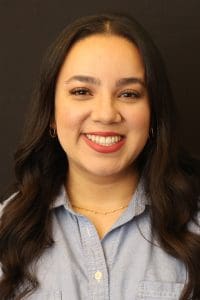
Natalia Castagno

HOLYOKE — Holyoke Community College (HCC) recently added two members to its Institutional Advancement team: Natalia Castagno as assistant director of Alumni Relations, and Heather Haskins as assistant director of Annual Giving.

Prior to HCC, Castagno worked at Springfield College as senior assistant director of Undergraduate Admissions and coordinator of Diversity Recruitment. She holds a bachelor’s degree in psychology from Brigham Young University and is pursuing a master’s degree in education from Springfield College.

“Natalia brings exceptional relationship-building skills and strategic thinking to HCC that will strengthen our alumni connections,” said Julie Phillips, executive director of Development. “As a natural networker, she will champion our alumni relations program and elevate alumni engagement.”

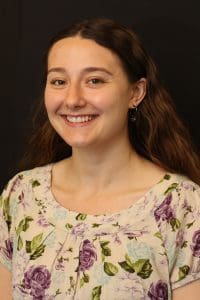
Heather Haskins

Haskins, a 2020 graduate of HCC, returns to the college after serving as Advancement Operations associate at the Harold Grinspoon Foundation. She began her HCC education at the age of 15 as a dual enrollment student from Westfield Technical Academy. After receiving her associate degree in business administration, she transferred to Bay Path University, where she earned a bachelor’s degree in nonprofit management and marketing.

“Heather’s extensive advancement experience and expertise in donor database management, event planning, and data analysis make her an excellent addition to our department and will enhance our annual giving efforts,” Phillips said.

Daily News

MONSON — Monson Savings Bank President and CEO Dan Moriarty and Executive Vice President and COO Michael Rouette, who also serves as board chair and chief volunteer officer of the YMCA of Greater Springfield, recently presented a $3,000 donation to the Scantic Valley YMCA branch. They met with branch Executive Director Debbie Kelder and YMCA of Greater Springfield President and CEO Dexter Johnson to deliver the gift in person.

“Monson Savings Bank has proudly supported the YMCA for many years,” Moriarty said. “We are happy to continue that support with this donation. The Scantic Valley Y is a vital part of our community — many of our team members use this location, Michael and me included. We see the positive impact this facility has on the people it serves.”

The Scantic Valley YMCA earned this donation by being one of the top 10 vote recipients in Monson Savings Bank’s 2025 Community Giving Initiative. Through this annual initiative, community members are invited to vote for their favorite local nonprofit organizations,

“As both a representative of Monson Savings Bank and as board chair and chief volunteer officer of the YMCA of Greater Springfield, this partnership holds a special place in my heart,” Rouette said. “I’ve seen firsthand how the Scantic Valley YMCA enriches lives and strengthens our community. It’s an honor to help support their mission through this donation, and I’m incredibly proud to see so many community members rally behind them through the bank’s Community Giving Initiative.”

Located at 45 Post Office Park in Wilbraham, the Scantic Valley YMCA offers a wide variety of programs for individuals and families of all ages, ranging from aquatics, cycling, yoga, and pickleball to childcare services, wellness programs, and community-building opportunities. As part of the YMCA of Greater Springfield, the branch serves to strengthen the community through health, wellness, and social connection.

“We are so grateful for the support of Monson Savings Bank,” Johnson said. “Donations like this allow us to provide financial assistance to families in need, expand our wellness offerings, and maintain our facilities. Thank you to everyone who voted for us, and to Monson Savings Bank for their continued generosity and community leadership.”

Kelder echoed this appreciation. “The relationship between Monson Savings Bank and the Scantic Valley Y is truly special,” she said. “We’re honored to receive this donation and thankful to our community for showing up to vote for us through the bank’s Community Giving Initiative.”

Daily News

LONGMEADOW — Glenmeadow Inc., a provider of senior retirement lifestyle options, has selected Adetayo Olatinwo as vice president for Human Resources. She will lead the HR function, overseeing talent management, compensation, benefits, training, employee relations, and engagement, while ensuring compliance with employment law and contributing to the organization’s strategic goals and mission. She will also shape Glenmeadow’s relationships with the local secondary and post-secondary education partners to encourage senior living as a career path of choice.

“I’m honored to join the Glenmeadow team and contribute to creating an exceptional workplace for our dedicated and talented staff,” Olatinwo said. “Glenmeadow has so much to be proud of, and I’m excited to help shape its bright future.”

Olatinwo most recently served Trinity Health Of New England as Colleague and Labor Relations business partner and previously served Global Medical Response and the Mental Health Assoc. in human resources roles. A graduate of Western New England University and Springfield College, she has deep roots in Western Mass.

“Adetayo is a tremendous addition to Glenmeadow,” said Kathy Martin, Glenmeadow’s president and CEO. “She brings enthusiasm, a strong sense of purpose, and a deep understanding of how to balance an outstanding employee experience with the highest standards of compliance and equity. Her presence, service mindset, and leadership will be transformative for our organizational culture and a catalyst for growth.”

Cover Story

Shifting into a Different Gear

CEO Brian Bachand

CEO Brian Bachand


As he walked with BusinessWest in the large lot behind Westover Auto Salvage in Belchertown, CEO Brian Bachand was quick to explain that he doesn’t care for the word ‘junkyard.’

That’s because handling these vehicles — and there may be between 1,500 and 2,000 here at any given time — involves layers of purposeful processing to extract — and, hopefully, sell — as many useful parts as possible before they’re crushed or otherwise disposed of, and doing it in an environmentally sound manner.

“We pride ourselves in selling used parts, but we’re actually selling relationships and experience, going the extra mile to take care of the customers,” he explained. “We try to do everything in a clean, eco-friendly way. Everything you see back here, there’s an outlet and opportunity for it. All the fluids that we drain from the vehicles are reused or repurposed. We filter the gasoline to use in our delivery trucks, and we use the oil to heat our buildings. It’s about sustainability and promoting the circular economy model.”

That’s especially true with Westover’s recent adoption of the SHiFT Vehicle Retirement Initiative, a global enterprise that helping consumers and companies recycle end-of-life vehicles with environmentally responsible protocols.

SHiFT was founded to address the environmental concerns associated with end-of-life vehicles and their impact on greenhouse gas emissions. The program partners with automotive recycling facilities across the U.S. to process and dismantle vehicles in accordance with strict environmental safeguards while also ensuring reusable components are made available for sale to consumers — all while ensuring these cars don’t end up back on the roads or shipped to landfills in third-world countries.

“The ShiFT initiative is an eco-friendly alternative to just recycling or junking your car, so to speak,” Bachand said, explaining that participants in the program must be certified by the national Automotive Recyclers Assoc.

“It was really intriguing to me to figure out what we do with vehicles when they’re truly at the end of life and how we turn that into environmental value and not just treating them like refuse.”

“It’s a rigorous program, and you have to be vetted. A third party comes in and audits our whole operation to make sure we’re following best management practices — what our layout looks like, stormwater permitting, where all our fluids are going, how our processes are vetted out back,” he explained.

“We’re one of only four certified auto recyclers in the state of Massachusetts, but one of only two high-voltage certified recyclers in the state. That was, again, done by a third-party auditor that made sure we have the proper tools, proper training, and only trained techs are allowed to touch high-voltage vehicles.”

Chapin Griffith, who heads up SHiFT, was formerly Amazon’s senior product manager of delivery fleet remarketing, developing its nationwide vehicle retirement service and end-of-life-cycle strategies and helping scale that practice area into a $100 million business, enabling the retirement of more than 20,000 end-of-life vehicles annually.

“The SHiFT program was actually in its infantile stages before I joined,” Griffith told BusinessWest. “It was really intriguing to me to figure out what we do with vehicles when they’re truly at the end of life and how we turn that into environmental value and not just treating them like refuse.

An end-of-life vehicle is prepped for recycling under the SHiFT Vehicle Retirement Initiative.

An end-of-life vehicle is prepped for recycling under the SHiFT Vehicle Retirement Initiative.

“If end-of-life vehicles are not tracked, they can end up in a landfill or in a yard — like in someone’s backyard or side yard — and kind of just rot. And the fluids and leakage and battery can have negative impacts from just sitting and leaching into groundwater,” he explained. “And then, it’s estimated that up to 30% of vehicles are exported to other countries when they reach end of life in the U.S.”

Griffith’s vision for SHiFT is to reduce the export and outflow of vehicles and engines that end up outside the control of U.S. emissions policy.

“SHIFT is unique in that it’s the only program in the U.S. that guarantees the engine will be fully retired,” he added. “So you can count on that carbon reduction, that carbon negation, because that engine will stop producing whatever its carbon output is at that point.”


A Greener Solution

In partnership with the Automotive Recyclers’ Assoc., SHiFT connects a network of more than 1,000 recyclers across the country that are committed to recycling SHiFT vehicles in a way that achieves the best environmental outcome. To date, almost 36,000 cars have been retired, resulting in more than 477,000 tons of carbon reduced, the program claims.

To participate in SHiFT, recyclers — who receive these cars at a lower cost than they typically would — sign affidavits and agree to retire and recycle the carbon-emitting internal combustion engines. This means the engine cannot be sold whole to be put into another car, but recyclers can still profit off of the recycled engine components.

Chapin Griffith

Chapin Griffith

“It was really intriguing to me to figure out what we do with vehicles when they’re truly at the end of life and how we turn that into environmental value and not just treating them like refuse.”

Participating SHiFT partners pick up the vehicle, manage the hazardous material, harvest and recondition recyclable parts, and prepare the vehicle hulk for further recycling. The engine, though retired as a whole unit, can be disassembled for parts harvesting in order to get the most use out of already manufactured products.

Both Griffith and Bachand emphasized that the program is totally voluntary and doesn’t involve a mandated destruction timeframe like the 2009 government program called the Car Allowance Rebate System. Cash for Clunkers, as it was known colloquially, was controversial for several reasons, including doubts about environmental benefit in that many of the cars weren’t at end of life, and were immediately replaced with new purchases, which also spiked used car prices.

“The government’s not involved, we are not mandated to crush the car within 60 days like Cash for Clunkers, and we’re not destroying any of the parts,” Bachand said. “We cannot sell the motor out of the vehicle because the whole point of the program is reducing carbon footprint and lowering emissions.

“By taking these vehicles in, we’re still promoting the circular economy because, even though it’s a SHiFT car and I can’t sell that motor as a running, driving motor, I can still sell parts of that vehicle, so I can still keep people up and running. There’s still other drive train elements that I can sell off — whereas, with Cash for Clunkers, you were mandated to crush it. They destroyed the motors before we even got them, and that really crippled the auto recycling industry; there were fewer parts available.”

Griffith noted that vehicles can be 90% recyclable when recycled properly. Meanwhile, hybrids in particular are full of rare earth materials, which is a booming industry right now. But in the end, the most significant benefit of SHiFT is its environmental impact.

“We can count the carbon negation from those engines coming off the road. One of the value propositions that we have for fleets is that we can help them meet their internal or sanctioned carbon-counting goals by committing these engines to be retired and doing that accounting for them.”

Recycling businesses benefit as well. “We can increase their increase their net volume just by capturing more vehicles, especially the ones that would be leaving the country and going overseas anyhow,” Griffith added. “The auto recyclers get competitive pricing on these scrap vehicles and can make a fair margin for themselves. But then two good environmental things happen: the vehicle is recycled to a very high degree of sustainability, and the engine is retired.”


Living the Dream

Bachand said his father, Paul, grew up wanting to own a salvage yard, so Westover Auto Salvage, which he opened in Belchertown in 1994, was the culmination of a dream. And even though he earned an accounting degree at Western New England University, joining — and eventually leading — the company has been Brian’s dream as well, if only in that he gets to work every day with his father.

“This was just an open field with 50 cars,” he told BusinessWest as he pointed out the large lot where many of hundreds of cars now sit, at various stages of recycling and parts resale. “We take between six to nine months to see what the car has yielded in terms of profit. If it’s worth saving because of the type of vehicle or the parts still left on it, maybe it’ll sit longer on the lot.

“Once it comes to the end-of-life stage, we pull it out of storage from out back and put it in our holding lot for crushed cars, and that’s when we do the penny pinching,” he went on. “Every piece of wire comes out of it, and we separate those metals accordingly; copper goes in one bin, aluminum in the other, whatever we can sell. We pull the dash out to just try to get that last bit of money off of the car.”

Brian Bachand with his father, Paul Bachand

Brian Bachand with his father, Paul Bachand, who started the business 31 years ago.

The market for reselling parts ranges from people repairing fender benders to young people buying their first used car and wanting to save a buck, as well as repair shops, the collision industry, and even yard-to-yard sales. “There’s other recyclers like us that do the same thing. So if they don’t have a part, they’ll buy it from us. And we do the same thing to connect our customers with the proper part.”

Both Bachand and his father serve on the board of directors of Automotive Recyclers of Massachusetts, which advocates for a more sustainable, eco-friendly industry. And the business stays connected to the local community in different ways; for instance, it will host a training exercise for local firefighters this fall by lighting an electric vehicle on fire.

Meanwhile, Westover’s sustainability efforts extend to a planned solar canopy that will one day cover the vast parking area, generating power for a low-income housing project in the planning stages in town.

Westover employs around 25 people, Bachand said, and perhaps his son will one day be among them. “He’s here in the summer. He’s 10 years old, but he wants to pull cars apart, so I’m taking time to train him.

“We’re a small, family-owned business, and that’s what we remind ourselves,” he added. “As big as we want to grow, we still want to take care of each individual person. You’re buying into our experience. We’re here to take care of you.”

Banking & Finance Special Coverage

Living on the Edge


Most people love the idea of a promotion or raise at work. But not everyone accepts one.

“Some employers may have employees saying no to promotions, and they don’t know why. It’s an invisible issue — they’re asking, ‘why wouldn’t you want more money?’” said Kristen Joyce, Bridge to Prosperity program director at Springfield WORKS.

Many, she explained, are running into something called the cliff effect, a common situation in which a low-income earner who’s accessing public benefits gets a pay bump that negates those benefits and leaves them bringing home less money than before. “They would actually be worse off, and you have to make a rational decision not to take the promotion when you feel that your family is going to be worse off.”

Enter Bridge to Prosperity, the pilot program Joyce oversees. “It’s been a long time coming, and we’ve been working with many partners in Western Mass. on this,” she told BusinessWest. “The cliff effect is really holding folks back and keeping them from moving up. We’ve heard from employers that it’s an issue for them too, when they can’t promote their workers.”

For the past several years, Springfield WORKS, a collaborative affiliated with the Western Massachusetts Economic Development Council, has been working on ways to navigate the cliff effect, and one key tool has been Bridge to Prosperity, a statewide pilot program that launched in February with 18 participants. It was initially funded with $1 million in seed money from ARPA, announced in 2022, a figure that eventually grew to $2.6 million in public and private funds.

“Some employers may have employees saying no to promotions, and they don’t know why. It’s an invisible issue — they’re asking, ‘why wouldn’t you want more money?’”

Seven of the initial 18 participants are in the Springfield area; the others are in Boston and Worcester. The program provides direct payments to workers facing the cliff effect, aimed at bridging the gap and making up for the value of lost benefits. Participants also receive financial and career coaching and connections to community resources as needed, and will be eligible for a $10,000 asset-building bonus at the end of the two-year program.

“The goal is to serve up to 100 people by the end of the year,” Joyce said. “We’re actively fundraising and building out our employer partnerships in Boston and Worcester as well. It’s definitely an economic development issue, and employees being at the table is really key.”

At the heart of the initiative is the idea that rigid safety net policies often discourage economic advancement, and Bridge to Prosperity addresses this challenge in myriad ways.

Kristen Joyce says Bridges to Prosperity Aims to expand to 100 participants this year

Kristen Joyce says Bridges to Prosperity Aims to expand to 100 participants this year, in an expanded range of careers.

“A few months ago, this all felt out of reach,” one of the Springfield pilot participants said. “Now, with support from the Bridge to Prosperity pilot, I’m not just dreaming of becoming a nurse; I’m taking real steps toward it and toward building a stable future for my son.”


Multi-layered Support

Joyce broke down the four key elements of Bridge to Prosperity for BusinessWest.

First, participants receive either $300, $500, or $700 per month to bridge the gap in lost benefits. Essentially, as wage increases result in a loss of assistance supports (like housing, childcare, and food) but are not enough to cover those expenses, the pilot will provide targeted cash assistance payments to bridge the gap.

Next, the pilot offers career coaching, financial management coaching, and wraparound services that empower participants to achieve their career and financial goals. This coaching aims to embed social capital resources into families and their communities, with far-reaching benefits. The coaching partners include United Way Pioneer Valley in Springfield, Worcester Community Action Council, and Women’s Money Matters in Boston.

“This is education and training around budgeting and goal setting around employment,” Joyce said. “Financial education and wellness is a big part of it.”

The third element is employer participation, aimed at mapping access to career pathways that pay a living wage, while helping area employers gain perspective on how the cliff effect impacts their workforce.

Joyce noted that six of the seven Springfield pilot participants are with Baystate Health, on track to become LPNs, in an environment where healthcare employers are in desperate need of more nurses.

“That’s an important part of this, this connection to employers,” she said. “We’re really connected to training and working with employers to advance them to a living wage job, or a family-sustaining wage job, so when they lose benefits, they’ll be in a better position at the end of the two years.”

The final step is a $10,000 asset-building payment, awarded after two years to support life-changing investments, such as moving to a better home or purchasing reliable transportation.

“We see that as a transformational investment for families,” Joyce told BusinessWest. “It’s an active investment in families.”

When the pilot program was announced in 2022, Laura Sylvester, Public Policy manager at the Food Bank of Western Massachusetts, noted that many households who receive emergency food at member food pantries and meal sites are directly impacted by the cliff effect. “Fear of losing benefits prevents people from advancing in their careers, keeping them trapped in a cycle of poverty. It is a major cause of food insecurity and economic instability.”

That’s why supporters of this program hope it will be a meaningful first step toward addressing the cliff effect on a much broader scale in Massachusetts, including through legislative solutions.

“A few months ago, this all felt out of reach. Now, with support from the Bridge to Prosperity pilot, I’m not just dreaming of becoming a nurse; I’m taking real steps toward it and toward building a stable future for my son.”

To that end, Springfield WORKS is also part of Beyond the Cliff, a national coalition with organizations in 12 other states, that grapples with legislative and policy solutions to the cliff effect. Models that have been discussed include benefit policy changes — like more gradual benefit reductions, increased income eligibility, and tax credits — as well as greater employer engagement on this issue, more robust workforce development programs, and addressing systemic barriers like lack of transportation, childcare, and healthcare.


Looking Ahead

Anne Kandilis, director of Springfield WORKS, called the pilot “a tremendous victory for workers and families throughout the Commonwealth” when it was announced. “To create economic opportunity, we must remove obstacles for people as they work to earn a livable wage by making sure that we do not strip away public benefits too rapidly.”

Joyce noted that, as the pilot is expanded to 100 participants — again, in the Springfield, Worcester, and Boston areas — the idea is to study outcomes that will inform policy and system solutions to the cliff going forward.

“The end goal is to eliminate the cliff effect and make policies so that families are not on a poverty track,” she told BusinessWest. “We’re not looking to drop people into a benefit state, but support them as they move into family-sustaining jobs.”

Anne Kandilis

Anne Kandilis

“To create economic opportunity, we must remove obstacles for people as they work to earn a livable wage by making sure that we do not strip away public benefits too rapidly.”

Bedsides United Way Pioneer Valley, Worcester Community Action Council, and Women’s Money Matters, other supporting partners with the program include the Food Bank of Western Massachusetts, Massachusetts Economic Pathways Coalition, Baystate Health, Boston Medical Center, the Massachusetts Department of Transitional Assistance, Boston Foundation, Ceres Foundation, JP Morgan Chase, Massachusetts Community Health and Healthy Aging Funds, MassMutual Foundation, UpTogether, and a number of legislative advocates, including state Sen. Adam Gomez and state Reps. Pat Duffy and Carlos Gonzalez.

And while the initial cohort of pilot participants from Springfield are in healthcare, Joyce sees potential in expanding it to early education, the hospitality sector, and the trades.

“We’re excited to hopefully expand this with fundraising and other employee partners,” she said. “We’ve heard directly from employers that their employees are refusing promotions; going from minimum wage to around $22 an hour is when the cliff effect really hits. We know there’s a lot of that in the healthcare space, education, and hospitality — CNAs, medical assistants, early educators.

“Folks have to make a rational decision, and if they take an increase, it could be a couple dollars an hour, and they lose all these benefits,” Joyce said, quickly adding that, when the cliff effect can be managed, “these employees benefit, and employers also benefit because they can keep their good workers and help their incumbent workers move up in their careers and advance.”

Healthcare News Special Coverage

On the Front Lines of Care

Nurses, in many ways, are the backbone of the healthcare system, caring for patients in dozens of different types of settings, often during the most distressing moments of those patients’ lives. It’s challenging work for sure — but also gratifying work, as the six individuals profiled on the following pages can attest. For our annual salute to nurses, BusinessWest sat down with three veteran nurses and three just entering the field about why they got into nursing, what motivates them, especially during hard days, and what the impact of their work means to them.


Click on the names below to read their stories:

Joseph and Vincent Bartolucci

Joseph and Vincent Bartolucci

Identical Twins Double Down on the Passion They Bring to Nursing


Yirancis Rivera

Yirancis Rivera

She Serves as an Inspiration — in Any Language


Kim Larrier

Kim Larrier

Fascinated by the Mind, She Forged a Path in Psych Nursing


Dave DesLauriers

Dave DesLauriers

This Veteran Nurse Seeks a ‘Bridge’ into Emergency Management


Kara Lombardi

Kara Lombardi

As Assistant Nurse Manager, Her Role Is to Be a Support Person


Environment and Engineering Special Coverage

Meeting of the Minds

Cofab Design Partner Mike Stone

Cofab Design Partner Mike Stone


When Mike Stone looks around Holyoke — and some of the innovative companies that have set up shop there — he sees a city with several unique advantages.

“First of all, the cost of energy is low, which is great for companies with electrical-heavy processes. Then there’s the amount of available space,” said Stone, CEO of Cofab Design, a Holyoke-based studio that develops hardtech products (more on that term in a moment) and the strategies to produce them.

In addition, he noted, “there are about 60,000 students in the Pioneer Valley, plus an industrial workforce that’s been here for more than 150 years. That’s not to say it’s the same as it was 100 years ago or 150 years ago, but there are still a lot of precision manufacturers, and there is a manufacturing workforce base here.

“So you have folks that know how to scale processes and do manufacturing, and you have the sort of innovation coming from the Five Colleges, plus the Boston-New York corridor, and I just think we’re uniquely positioned here to be able to kind of leverage that and offer second-stage space.”

“It makes much more sense to grow a base here and have a little bit more room to stretch out and grow. So that’s the vision, and hopefully more companies will take note.”

HardTech Holyoke, the second event of its kind (the first took place in 2023), highlights some of the innovative companies that are growing in Holyoke. The gathering, held on June 18 at Open Square, brought attendees face to face with the minds behind growing companies like Clean Crop Technologies, which is developing new ways to remove contamination from seeds and foods; Sublime Systems, which is developing an innovative cement manufacturing process; Xenocs, which uses X-ray technology to analyze nanoscale materials; and florrent, a maker of supercapacitors for energy storage, to name a few.

As opposed to software, Stone said, hardtech refers to more physical technology. “It’s a wide net — it covers advanced manufacturing, clean tech and green tech, even things in the defense space, energy, food and ag tech. It’s sort of an amorphous term, but the throughline here is folks that are building physical things, which takes a different form of investment and attitude than building software or building other types of businesses.”

Dan White says Holyoke has been attractive to many innovative companies

Dan White says Holyoke has been attractive to many innovative companies, for reasons ranging from competitive utility rates to a supportive city government.

And Holyoke, located not far from major innovation centers but offering a lower cost of doing business with a host of amenities, is the ideal spot to grow a hardtech hub, he added.

“It’s hard to compete on innovation. There are people innovating here, but you can’t compete with Boston or New York in terms of density of schools, and we know the attraction the cities have,” Stone explained. “But for a Clean Crop, when you’re spending money in Cambridge or Somerville for a bigger space, it starts to be disadvantageous, and it makes much more sense to grow a base here and have a little bit more room to stretch out and grow. So that’s the vision, and hopefully more companies will take note.”


Selling a City

HardTech Holyoke was conceived in 2023 when FORGE, a nonproft that helps innovators with physical projects navigate the journey from prototype through to commercialization, teamed up with Cofab, Clean Crop, and the city of Holyoke on a gathering to celebrate the startups, engineers, researchers, manufacturers, and others building new physical products in and around the city.

“So we put an event together, and we expected 50 people to show up, but 100 people came, and there was a good buzz,” Stone recalled. “There was a good sense after the event that people found it a good place to connect and network with this community. So we’ve been trying to do it annually ever since.”

It actually took about a year and a half to get the second HardTech launched, but attendance topped the first, drawing about 150, as did the number of participating companies. “It’s a bigger format, and we have a bigger space here, and we’re really appreciative of the folks at Open Square who donated space for this,” he noted at the start of the June 18 event. “I’m kind of leaning into the exhibit theme — I like to think of this as an art gallery opening night for manufacturing companies.”

“I think we have a chance to re-industrialize in a grassroots way and build cool stuff while also building robust manufacturing jobs, which left Holyoke 40, 50 years ago.”

Inside that ‘gallery,’ along with the participating companies’ exhibit tables, were displays explaining what Holyoke brings to the table in several categories, including:

• Energy and water, including the lowest regional energy costs, a high percentage of renewable sources, access to power infrastructure through Holyoke Gas & Electric, and high water supply and wastewater treatment capacity for water-intensive processes;

• Space and location, including 1.5 million square feet of industrial space available in the city, local development resources, turnkey hardtech startup spaces, pre-zoned industrial parcels, access to I-90 and I-91 connecting to major cities, airport access, and regional rail and bus lines;

• Talent and workforce, including an existing manufacturing base, a rich higher-education ecosystem, technical training programs, and workforce supports like MassHire; and

• A number of other factors, from a strong local industrial supply chain to available pools of both public and private grant funding.

Alex Nichols says he and his two co-founders of florrent took advantage of some specialized equipment at UMass Amherst

Alex Nichols says he and his two co-founders of florrent took advantage of some specialized equipment at UMass Amherst for early prototyping, then decided to stay in the region.

“We want to pitch why we’re here, why some of these other companies are here, and just try to get that into a communicable message where other people can say, ‘oh, there’s something going on in Holyoke,’” Stone said. “We want to show why it’s a good place, specifically for hardtech companies that are past their startup stage and into their scale-up stage.”

Companies like Clean Crop.

“Right now, we’re focused on seed treatment and finding ways to reduce overall pesticide use, so we can displace a lot of existing tools and give growers the same yields or better,” co-founder Dan White said. “We found a really strong initial market in leafy greens. So we’ve got quite a lot of demand that we’re just growing into right now, but we’re on track to expand our facility here to full utilization by the end of this year. And then the next step will be establishing our first facility in California sometime next year.”

White said it’s gratifying to see HardTech Holyoke grow since its first inception.

“When I look across at these other companies, the same reasons that we came here are why I think a lot of other folks are coming as well. We have really competitive utility rates, particularly electricity. But also, the city government has been incredibly helpful, and the ecosystem partners like Cofab are a huge part of the story too.”

Alex Nichols is one of three founders of florrent, a Sunderland-based startup that took part in HardTech Holyoke. The company is developing a material innovation that enables performance improvement in supercapacitor technologies.

The founders, Nichols explained, are UMass Amherst alumni who wound up using specialized lab space on that campus after they graduated. “They have some very specific equipment that allowed us to do early prototyping. That really brought us to the region. We stayed, we hired a team out here, and we’re here to stay.”


One Company at a Time

Stone said growth toward making Holyoke a hardtech hub may be gradual, but every step is meaningful.

“It’s a small city, so one company moving to the city a year could be meaningful for workforce development, which I think is a big part of this,” he told BusinessWest. “I think we have a chance to re-industrialize in a grassroots way and build cool stuff while also building robust manufacturing jobs, which left Holyoke 40, 50 years ago.

“So I think it’s a unique opportunity to do social impact work and create good jobs and create workforce training programs, and have some fun building some really novel, groundbreaking technology and utilize the infrastructure that was started 150-plus years ago in Holyoke; we can have a little bit of a repurposing for some of these tech companies.”

A wave of cannabis companies started moving to Holyoke over the past five years, he noted, and for some of the same reasons.

“I think that crest has peaked. But I think, over the next five, 10, 20 years, there will be a lot of this hardtech stuff. I have my ear to the ground because of Cofab, and there’s been a sea change over the past three or four years where a lot of people are trying to build stuff like this. And we’re able to take advantage of that.”

Community Spotlight Special Coverage

Community Spotlight

Laurie Tierney, seen in front of Hotel on North

Laurie Tierney, seen in front of Hotel on North, describes Pittsfield as the “Brooklyn of the Berkshires,” which is meant as a compliment.


Laurie Tierney likes to refer to Pittsfield as the “Brooklyn of the Berkshires.”

By that, Tierney — co-owner, with her husband, David, of Hotel on North (as in North Street, downtown’s main drag) — implies there’s some grit when it comes to that region’s largest community. “We’re gritty, not necessarily pretty,” she said with a laugh.

But if one were to look closer and beyond the grit, they would see much more — in this case, culture, restaurants, some retail, and outdoor recreation, for starters, she told BusinessWest.

“I think Pittsfield is doing a great job of reinventing itself,” she said of the ongoing transformation from the days when its economy and overall vibrancy were dominated by one large employer, GE. “Barrington Stage and the Colonial Theatre have been a big part of that; we have a great arts community … we just need more people to get to know us.”

Rebecca Brien, managing director of Downtown Pittsfield Inc. (DPI), agreed, adding that a multi-faceted marketing campaign is being launched in an effort to prompt more people — especially locals, but also those from other area codes — to give Pittsfield a closer look.

It includes Hey Neighbor, a program awarding marketing grants to 10 businesses in downtown Pittsfield, with grantees receiving custom video ads before films at the Beacon Cinema and radio advertisements on WUPE/WEBC during that same time period.

In addition, the city’s two major theaters, Barrington Stage Company and the Colonial Theatre, have received what she calls “dinner-and-a-show” radio spots on NPR.

“This initiative aims to drive foot traffic, build community awareness, and showcase the diverse stories of Pittsfield’s small business community,” Brien said of Hey Neighbor, adding that the theater spots are designed to remind neighbors that the city offers world-class theater and attractive dinner options just a short drive away (more on this later).

“If it isn’t daily workforce that’s occupying the restaurants and coffee shops and visiting the businesses, then it needs to be residents that are doing it in the morning and the evening after work, or while working remotely.”

These promotional initiatives and broader efforts to bring people to the city comprise just one of many developing stories in this community of roughly 44,000 people. Others include:

• Ongoing efforts to create more housing of all kinds, but especially market-rate and affordable units. Several projects in various stages of progress will add more than 100 units, but 200 to 300 will be needed, Mayor Pete Marchetti said;

• The demolition and rebuild of historic Wahconah Park, with the goal of bringing collegiate league baseball back to Pittsfield;

• Early-stage work to gauge interest in forming a business improvement district in the downtown;

• Late feasibility-stage work to build a new elementary school, one that would merge two existing schools into one; and

• Several infrastructure projects, including work on North Street.

Housing remains a critical issue in the community, said those we spoke with — both to meet an urgent need for more options among workers, the elderly, and other constituencies, and to bring more vibrancy to a downtown still suffering from the side effects of COVID, especially the transition to remote work and hybrid schedules, which has reduced the level of business activity in the neighborhood.

Jonathan Butler, president and CEO of the regional economic development agency 1Berkshire, said there is no turning back the clock in this regard, leaving housing as the best option for commercial space in the downtown — and for providing the critical mass of people needed to support the wide range of hospitality-related businesses.
The Hey Neighbor campaign

The Hey Neighbor campaign is part of a broad effort to bring more attention to Pittsfield, its cultural attractions, and its eclectic mix of small businesses.

“If it isn’t daily workforce that’s occupying the restaurants and coffee shops and visiting the businesses, then it needs to be residents that are doing it in the morning and the evening after work, or while working remotely,” he explained. “They’re replacing those people who were formerly working in commercial spaces and buying their morning coffee and lunch.”

“In the spirit of post-pandemic urban planning, downtown Pittsfield, like a lot of other urban centers, has seen a shift away of commercial activity — we’re seeing employers shifting to more work-life balance models with remote working and hybrid office models,” he explained. “So we’re seeing some investments in housing, to meet the city’s needs and a much larger regional need.”

For this latest installment of its Community Spotlight series, BusinessWest turns its lens on the Brooklyn of the Berkshires and the many ongoing efforts to inspire people to look beyond the grit.


Staying Power

Hotel on North is marking its 10th anniversary this year, Tierney said, and there is much to commemorate.

Indeed, the boutique 45-room hotel — created out of buildings more than a century old that were once home to the menswear and sporting goods emporium Besse-Clarke — has become a cornerstone of an ongoing transformation of downtown Pittsfield, from the retail-heavy and business-focused days when GE’s transformer division was employing more than 10,000 people, into a more hospitality- and arts-dominated district where more people live than in decades past.

The hotel and the guests it draws from across the Northeast and beyond have inspired several new businesses, she said, listing Methuselah Bar & Lounge and an expansion of Steven Valenti’s men’s clothing store among them.

As for the hotel itself … well, Tierney said it shares its personality with the Berkshires (and Pittsfield itself), meaning an intriguing blend of the past and present, heritage and innovation.

She and David have traveled all around the world, and they’ve incorporated their experiences into Hotel on North, such as its revolving door, a concept borrowed from a hotel in Nashville.

Over the past decade, the hotel has become a big part of the changing scene in Pittsfield, a tight-knit community of hospitality, arts-related, and service businesses that support one another and, together, have become more of a destination in recent years rather than a place to drive through on the way to somewhere else.

Mayor Pete Marchetti

Mayor Pete Marchetti says that, while new housing units are coming online, there is more work to do to meet enormous need in the city.

But in many ways, it is still an unknown, or at least underappreciated, commodity, said Tierney, adding that there is a need for the city to understand and appreciate all that it has become — “it’s been the ugly stepsister for the surrounding towns for so long that I think that sometimes it doesn’t see itself as the engine that can and will” — and do more to put its best foot forward.

Brien said this need to promote all Pittsfield has to offer is at the heart of DPI’s Hey Neighbor campaign, funded through MassDevelopment’s Transformative Development Initiative, as well as the spots promoting not only the shows at Barrington Stage and the Colonial Theatre, but nearby restaurants in Pittsfield.

With the latter, the goal, through the spots on NPR, is to introduce (or reintroduce) Pittsfield to a broad audience across Western Mass.

“We have great tourism that obviously goes on in the Berkshires, but Pittsfield is kind of that forgotten space,” she explained, adding that, while most area residents will go Northampton for dinner and a show, most don’t fully appreciate that they can do the same in Pittsfield.

“Why aren’t those same individuals coming here?” she asked rhetorically, adding that the answer may well be a simple lack of awareness.

Meanwhile, Hey Neighbor will spotlight 10 downtown businesses through those aforementioned cinema and radio spots, said Brien, adding that the eclectic mix includes Hot Plate Brewing Co., Thistle ’n Thorn Floral, WANDER Berkshires, Otto’s Kitchen & Comfort, Methuselah, and Berkshire Nautilus.

“Together, they say, ‘come back downtown and see what’s new,’” she told BusinessWest, adding that a third piece to the broad marketing campaign involves $1,000 grants to three summer event series to promote their offerings:

• The Pitt, a Friday summer music series being spearheaded by Hot Plate Brewing Co.;

• Rhythmscape, which offers weekly dance lessons on Sundays. (like the Pitt, these take place in Dunham Mall, a public pedestrian walkway that has seen several aesthetic improvements over this past year); and

• Depot After Dark, which pairs Tito’s Mexican Bar & Grill and WANDER Berkshires, a new gathering space, adding late-night dance parties to the alleyway just outside their businesses. 


Developing Stories

Such efforts are expected to bring more momentum to a downtown that has seen healthy doses of that commodity in recent years, even as it continues to build back from the many types of disruption resulting from the pandemic.

Perhaps the biggest of these is the change in how and where work is done, said Butler, adding that, like all downtowns in the region, Pittsfield’s suffers from having fewer people going to work there everyday.

This trend, coupled with critical need, is fueling investments in housing downtown, he went on, adding that several projects are in various stages of development.

Pittsfield at a Glance

Year Incorporated: 1761
Population: 43,927
Area: 42.5 square miles
County: Berkshire
Residential Tax Rate: $17.94
Commercial Tax Rate: $37.96
Median Household Income: $35,655
Median family Income: $46,228
Type of Government: Mayor, City Council
Largest Employers: Berkshire Health Systems; General Dynamics; Petricca Industries Inc.; SABIC Innovative Plastics; Berkshire Bank
* Latest information available

These include renovation of the Wright Building, just a few doors down from Hotel on North, which represents an example of the shift from commercial to residential uses for downtown real estate. Butler said there are maybe a few hundred more people living downtown than a decade or more ago, and this growing population has helped support existing businesses and inspire new ones.

Meanwhile, this new housing is helping to meet soaring need across the city and the region, said Marchetti, a former Pittsfield Cooperative Bank executive and city councilor, who was elected mayor in November 2023.

He said the city is ready to cut the ribbon on some projects, including Terrace 592, redevelopment of the Wright Terrace apartments, which will bring online 41 units, most of them affordable, while others are in earlier stages.

Overall, there are perhaps another 150 to 200 units in early stage or predevelopment, Marchetti said, including redevelopment of the former Hibbard Elementary School, while Mill Town Capital has several projects in different locations across the city. These initiatives will make a dent in overall need, but more will be needed, he added.

“There’s a lot more work that we need to do, mostly because ours is an aging population,” he noted, adding that affordable options are needed if empty nesters want to continue living in the city.

Beyond housing, there are other issues facing the city, he went on, including the demolition and rebuilding of Wahconah Park, the city-owned landmark built in 1919, with work slated to begin next year.

The wooden grandstand, one of the few remaining in the U.S., was deemed unsafe, Marchetti said, and the park, listed on the National Register of Historic Places, has been closed for two years. Plans call for replacement of that grandstand but retention of other elements of the park, as well as creation of a historic walkway that will highlight the history of the park, which had a diamond oriented due west (it was constructed well before the advent of field lighting permitted night games), which resulted in brief suspensions of play at sunset so that the setting sun would not interfere with the batters’ view of the pitch.

The Pittsfield Suns, part of the Futures Collegiate Baseball League, played at the park before it was deemed unsafe, Marchetti noted, adding that the team could possibly return to Pittsfield — which would be yet another development blending past and future in this city in flux.

Healthcare News

As Assistant Nurse Manager, Her Role Is to Be a Support Person

Kara Lombardi

Kara Lombardi traces her interest in healthcare, and the nursing profession, to her father’s bladder cancer diagnosis and subsequent visits to the hospital.

“It was a pretty late stage, so he was going back and forth to Boston with my mom,” she recalled, noting that she was just 15 at the time. “Obviously, it was a hard time for everyone, especially him, and when I would go visit, I would notice that, whenever the nurses came in, he was able to smile and joke with them; they brightened up his day.

“He always talked about how great and wonderful the nurses were, how they lifted his spirits when he was in the hospital,” she went on. “So they made me realize that’s what I wanted to do for people — I wanted to help them through the toughest days that they were going through.”

Today, several years after graduating from the Elms College nursing program, working in a few different settings, earning a master’s degree in nursing education through an online program, and rising in the ranks to assistant nurse manager of the med-surg unit at Mercy Medical Center, Lombardi gets to do some of that.

“I like teaching — that’s why I got my degree in that as well — and I like having the opportunity to teach nurses to be the best they can be, give them confidence, and show them what they can achieve in their career.”

But mostly, she’s managing and training others as they enter the profession, gain experience, and help patients through their toughest days.

It’s a job, one she’s been in for six years now, that comes with many rewards and opportunities for her to continue learning and growing as a manager and educator; in fact, she teaches the med-surg clinical for Westfield State University.

Lombardi talked about her role at length with BusinessWest, touching on the many aspects of this work that she enjoys.

“We round on the patients and make sure they’re having good experiences,” she said while giving a quick job description. “And we’re always available to help the nurses on the floor with whatever they need. And with the new grads, we’ll help answer questions they might have. We’re their support person, and we’re always available for them.

“I like that I can not only help the nurses, but have interaction with the patients, make sure they’re having a good experience, and do anything I can to make their stay better,” she went on. “I like teaching — that’s why I got my degree in that as well — and I like having the opportunity to teach nurses to be the best they can be, give them confidence, and show them what they can achieve in their career.”

What those coming out of nursing school need most is support, she added, and she’s committed to providing it, in whatever form it takes.

“They need to know that they’re not alone, that they can always ask for help — I think that’s very important,” she explained. “They need to know their resources and understand that they’re not going to know everything when they come out of school. A lot of nursing is gaining experience on the job, so as long as they know when to ask for help and whom to ask for help, they’ll be all set.”

Lombardi quickly acknowledged that this ability to ask for help is certainly an acquired skill, something she helps young grads with as much as anything she might teach at the bedside.

“Some don’t want to ask for help, and we discourage that,” she told BusinessWest. “We always encourage people to ask for help, and that’s one of the things I always do; I always make sure, especially with the new grads, to round on them multiple times a shift, asking them if they need help, what I can do for them, and picking their brains a little bit.”

Lombardi said the role of the nurse manager takes on even more importance at a time when many veteran nurses are retiring, others are moving on to less stressful work — a byproduct, in many respects, of the COVID years — and fewer people are getting into the profession.

“A lot of people don’t want to work at the bedside anymore — they want those remote jobs, office jobs, or even the aesthetics industry, with Botox and all that … many new nurses want to get into that field,” she said. “So it’s harder to find good bedside nurses.”

As for her own career, she said would like to eventually move into education, rather than a management role at a facility like Mercy.

“That’s one of my favorite jobs — I like giving students good habits and teach them the way things should be,” she explained. “And I don’t hide what real life is like because I feel that nursing school, sometimes, doesn’t really give the full picture of what it’s really like at the bedside. So I make sure that they see real-life situations.

“Everything isn’t going to be sunshine and rainbows,” Lombardi went on. “Things are going to go wrong, and you’re going to make mistakes, and it’s important that, if you do make a mistake, you own up to it so that something really bad doesn’t happen. And you need to learn from your mistakes; you have to get through it and learn from your experiences.”

That’s just one lesson she tries to impart on young people as they move forward in the same profession she chose. She’s not at the bedside as much as she once was, but she’s still deeply committed to providing care and helping patients through the worst of times, just like those nurses did with her father.

Healthcare News

Dave DesLauriers

Dave DesLauriers


For Dave DesLauriers, like many others in the nursing profession, this is a second — or third — career.

His first two were in the broad realm of social work, helping individuals with issues ranging from housing and employment to domestic violence and substance abuse, in settings that included a homeless shelter and a Planned Parenthood office.

The shift to nursing came about, in part, due to chance and circumstance while he was looking to pursue a master’s degree in social work.

“I’m a person who believes that everything happens for a reason,” he said. “I was really struggling to get things matched up for the path to the master’s in social work, and I eventually decided to go over to Mount St. Mary’s College — I was living in New York at the time — and talk about their nursing program.”

He did just that, and within an hour, one of the sisters at the school had his plan mapped out for him. One of his first professors there, he said, was a “strict, matter-of-fact educator” who reminded him a lot of his mother, who worked as a nurse at Holyoke Hospital (now Holyoke Medical Center) for many years.

“I knew exactly at that moment that I was in the right place,” said DesLauriers, whose third career has been anything but static. Indeed, it has involved several time zones — with stints in New York, Hawaii, and then the Bay State — as well as settings, from Vassar Brothers Medical Center to Mercy Medical Center to the Massachusetts Veterans Home at Holyoke, and responsibilities, from emergency room nurse to his current role as RN coordinator for admissions at the Veterans Home.

And now, with a master’s degree in emergency management from the Massachusetts Maritime Academy (MMA), which he earned online nights and weekends, the door is open to new opportunities in that intriguing field.

Indeed, while the current political climate leaves funding the Federal Emergency Management Agency in limbo, there are certainly opportunities at the state level, said DesLauriers, noting that the Massachusetts Emergency Management Agency handles many different types of emergencies, from power outages to weather-related disasters. And he would like to bring a nurse’s perspective to the response to such calamities.

“I would like to bridge my nursing experience on the front lines back into my life,” he told BusinessWest, “and I would love to assist with emergency management and be on the front lines of disaster response, and handle emergency management from the perspective of a nurse.

“We have a lot of current emergency managers — firefighters, police officers, the National Guard, and professionals with a long career in emergency management,” he went on. “But not a lot of nurses, from what I can see.”

And Massachusetts — which is where he would prefer to stay for now — is vulnerable to many types of disasters, DesLauriers said, including flooding, tornadoes (as residents of this region certainly know, having lived through one in 2011), hurricanes, brushfires, a global pandemic, and what he calls infrastructure-related issues.

Elaborating, he said the state’s infrastructure, including bridges, dams, seawalls, and more, is aging and, in many cases, in dangerously poor condition. He knows this because he completed his capstone project for his degree at MMA on such facilities in this region — including the Goodnough Dike and Winsor Dam at the Quabbin Reservoir, the Hadley Falls Dam, the Memorial Bridge, and others — and the consequences in the event of failure.

“They’re aged beyond what would be considered reasonable,” he told BusinessWest. “The bridge that collapsed when the barge struck it [in Maryland] was built in 1970; we have bridges and infrastructure that’s from the early 1900s.

“For the capstone project, I was looking at the catastrophic loss and what could happen if — and it’s not if; it’s more like when — these structures do fail, and what options would exist to manage that,” he went on. “The options that were given include doing nothing, which is not a feasible option, and spending the money to repair them or replace them.

“If you walk the Memorial Bridge today, you can see through parts of it,” he continued, noting that the bridge was essentially reconstructed in the mid-’90s, but has greatly deteriorated since. Meanwhile, the bridges over the Cape Cod Canal, built in the 1930s, are in an equally disturbing, and dangerous, state.

If there is a disaster involving any of these structures, or one of several possible weather calamities, the state must be ready to respond, he said, adding that this response includes treatment of those who might be injured, physically or mentally, with a focus on the long term. He wants to be part of that and bring that perspective he gained from being on the front lines.

“It’s not just a short-term element; it’s a long-term commitment to making sure that the health of the population is committed to,” he said. “And that goes along with the long-term commitment to rebuilding and stabilizing after a disaster.”

It remains to be seen what the next chapter in DeLauriers’ journey will be, but his story clearly shows that nursing can be a second, or third, career, and it can inspire the pursuit of other opportunities as well.

Healthcare News

Kim Larrier

Kim Larrier


When Kim Larrier started her rotation at the VA Central Western Massachusetts Healthcare System in Leeds as a student in the nursing program at American International College, she had a pretty good idea what path her career might take.

By the time it was over, the die was cast.

“I was quite intrigued with how the mind works, and how medical issues can impact someone’s health,” she recalled. “On that rotation … to see people get better with their symptoms — I was quite fascinated with how medications impact and how they can help someone’s mental health.”

So, when it came time for her senior management rotation, instead of a medical floor, which most students prefer, Larrier chose the psych unit at Holyoke Medical Center (HMC). And more than 30 years later, she is still there, now serving as clinical coordinator of the M5 Adult Behavioral Health Unit.

When asked what she likes about work in this realm, she quickly replied, “everything.”

And what she likes most is seeing people get well.

“When they come in at their worst, and they feel like they have nothing to live for, and then, through groups, meeting with them, medication … it’s nice to see people get better,” she said, adding that the unit has a strong track record for success, one that drew the attention of a brigadier general at the VA hospital she worked with on her rotation, who sought insight from the team at HCC on how it might be more helpful to veterans, especially with regard to suicide prevention.

“When they come in at their worst, and they feel like they have nothing to live for, and then, through groups, meeting with them, medication … it’s nice to see people get better.”

“Suicidal feelings are sometimes just a temporary feeling,” she went on. “And my goal as a psychiatric nurse is to get them the treatment so they don’t feel that way.”

There have been some difficult times on M5 — COVID was a stern challenge, to say the least — and some very scary moments, including the time several years ago when a brain-injured and deaf patient threatened her with a large piece of glass from the door he shattered with a chair in his room.

“I’m trying to write on a piece of paper, ‘please stop doing that,’” Larrier recalled. “He’s yelling at me, and he’s got blood all over the glass … he’s pointing the glass at me and saying, ‘I’m a grown man, and I don’t need to be here; let me out of here.’

“That was very scary,” she went on, adding that the situation was resolved with the help of 11 staff members.

Meanwhile, she has treated patients who would later be charged with murder, but were just another patient when they arrived.

But these moments have been far outweighed by those opportunities to see patients get better — and to play a significant role in helping them get better.

HMC has 54 inpatient psychiatric beds across three units, one for seniors and two for younger individuals, noted Larrier, adding that M5 has 20 beds for those ages 16 and up. Individuals assigned to these beds arrive with issues and conditions ranging from homelessness to substance abuse problems; suicidal tendencies to unmanageable anxiety and depression. And, due to a statewide shortage of beds, patients come from across the Commonwealth.

The average length of stay is seven to 10 days, she went on, adding that most patients arrive first at the emergency room, where they are evaluated by the crisis team.

Those who are assigned to these floors work with a psychiatrist and a social worker, while group therapy focuses on coping skills, how to manage feelings, manage a panic attack or anxiety, and more.

But nurses play a critical role in these broader collaborative efforts; in addition to administering medication, they conduct mental health assessments each shift where they grade depression and anxiety.

“The mind can be tricky … it can trick people into feeling that it’s not worth living. When they’re so focused on killing themselves, their mind will play a trick on them and make them believe their kids would be better off without them, their spouse would be better off without them, or they’re not needed at work, that they don’t fit in this world,” said Larrier, adding that nurses play a lead role in collaborative efforts to help patients fight through such feelings.

Many of these patients return to the unit several times, she went on, noting that she and the other members of the team build a rapport with them and, more importantly, earn their trust.

“Many times, we’re asked to come down to the emergency room to help with a difficult patient that we know,” she told BusinessWest. “They may not take a medication from a nurse in the ER that they don’t know; however, if they call me and want me to talk with her, we’re more than happy to work with them.”

As she noted earlier, many of those who come to this unit do get better and go on to lead productive lives, and such success stories are among the many rewards from working in this realm. She cited the case of a woman who had become so depressed, she became catatonic.

“That means she sits, she stares, she doesn’t eat, she doesn’t talk,” she said, adding that, through shock treatments and other interventions, she was pulled out of this catatonic state.

That was one small victory among many for a nurse who has always been intrigued by the mind and decided long ago that this wouldn’t just be a fascination; it would become a career.


Healthcare News

She Serves as an Inspiration — in Any Language

Yirancis Rivera

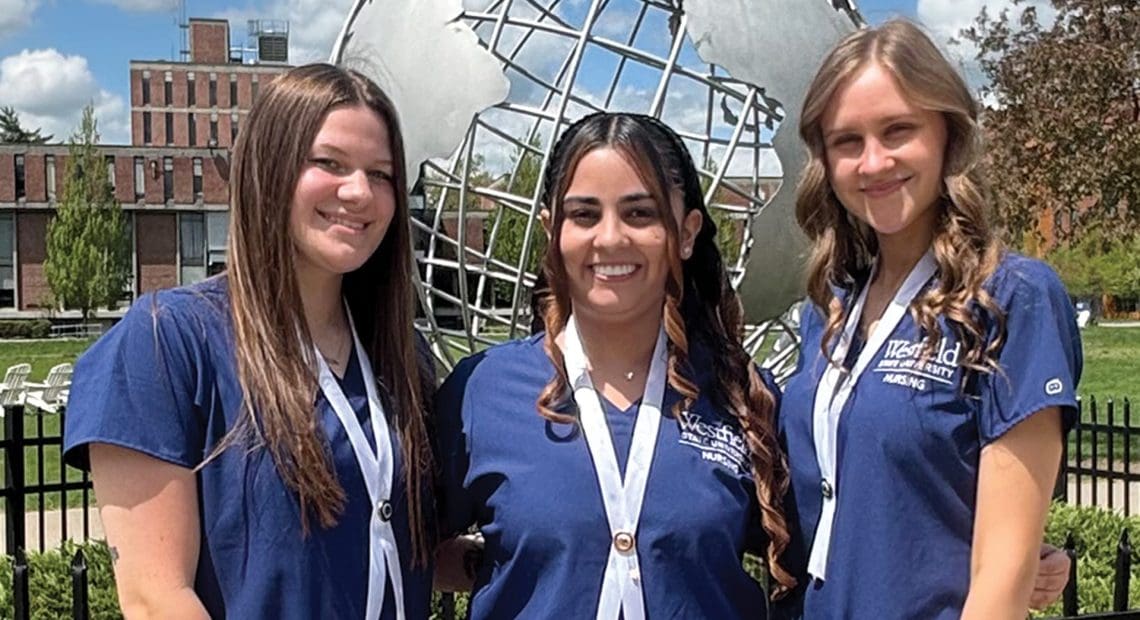
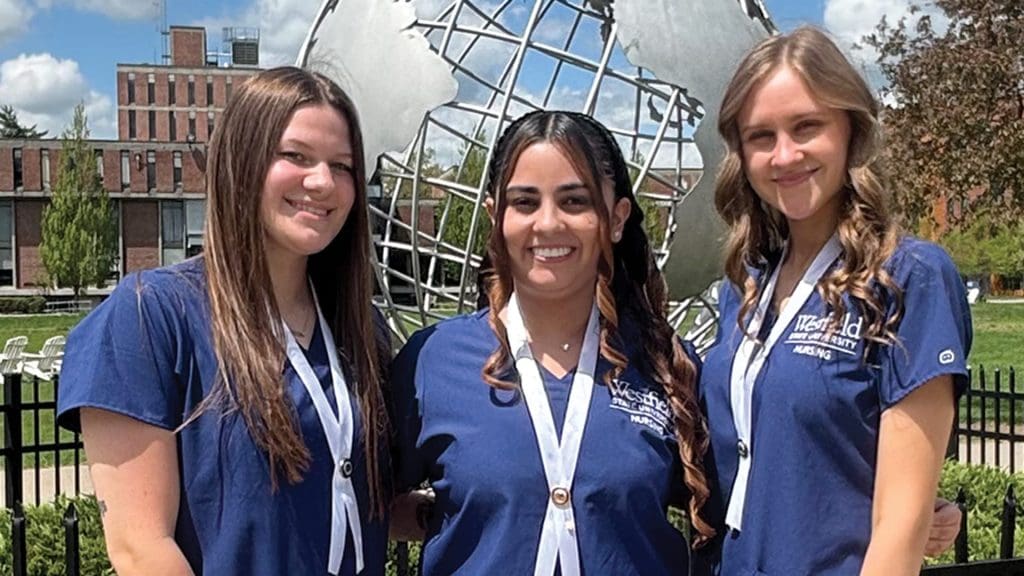
Yirancis Rivera, center, at the nurse pinning at Westfield State University in May.


Yirancis Rivera came to Springfield from Puerto Rico when she was 7 years old.

She has many memories from her youth, but among those that stand out are visits to healthcare facilities, where she would serve as an interpreter for her mother — who didn’t speak any English — even though she was still learning the language herself and was basically relying on what she learned from watching TV shows.

“I still remember walking into a hospital with my mom for the first time … the unfamiliar sounds, the sea of English words I didn’t understand, and the weight of her trusting me to be her voice,” she recalled. “I was overwhelmed but determined.”

Remember those two words.

In many ways, they define a truly inspiring story of how Rivera overcame challenges, some long odds, and many occasions when she felt overwhelmed to graduate from Westfield State University’s nursing program and earn a job on N3, a med-surg unit at Cooley Dickinson Hospital (CDH) in Northampton; she’s due to start in early August.

“I still remember walking into a hospital with my mom for the first time … the unfamiliar sounds, the sea of English words I didn’t understand, and the weight of her trusting me to be her voice.”

Her story begins with that hospital visit with her mother, which planted a seed, if you will, and motivated Rivera to become much more than a mere translator.

“I wanted to be a nurse who could provide comfort and care, no matter what language someone speaks,” she told BusinessWest. “I developed a passion for helping others that is deeply personal. Learning medical terminology in English felt like learning a second language, and there were times when I doubted myself. But I kept going, driven by the knowledge that families like mine need nurses who truly understand them.

“I knew that I wanted to be someone my patients could look up to in the sense that they speak the same language as me,” she went on. “But I also saw that there weren’t many nurses who looked like me, and I wanted to be part of that change.”

Returning to her youth, Rivera recalled that, while she had the vision and drive to be a nurse — with some inspiration from her great grandmother, who served a tech in a maternity unit — she wasn’t at all sure if such a career was within reach, financially and otherwise. But she worked hard, earned scholarships that essentially left her debt-free after graduating, and was able to enroll at Westfield State.

She credits her professors at the school with helping her not only with the rugged course material, but also with overcoming doubts that she fit in and could make it in this field.

“I had such amazing people in my life to get me here — especially the people in the Westfield program; I don’t know if I would have made it this far without them,” she said. “The small nursing classes there allowed me to build close connections with professors who encouraged me and helped me grow.”

Rivera completed rotations at Baystate Noble Hospital, the Holyoke Senior Center, Mercy Medical Center, Baystate Pediatrics, Springfield Public Schools, Hampden County House of Corrections, and Holyoke Medical Center, where, coincidentally, she worked on the M5 Adult Behavioral Health Unit with charge nurse Kim Larrier (see related story on page 32).

She said she chose CDH to start her career for several reasons, especially because it offers an opportunity to serve her community and also “be a bridge for patients who might feel unseen or forgotten.”

As noted, she is expected to start early next month, and is currently taking part in the hospital’s nurse residency program, where recent graduates are paired with a preceptor, but also other recent graduates.

“They’re going through that transition with you,” she said of the jump from school to the workplace, adding that it’s good to have the opportunity to work beside people who are also getting started in the field.

And while she’s looking forward to the med-surg unit — “it’s an amazing place to start, especially as a new grad, because you get many different kinds of cases” — her goal is to work in the intensive care unit.

“As nurses, one of our main goals is to help people cope,” she explained. “But especially in an ICU, you have to learn how to critically think. I’d love to experience the challenge on that floor.”

While she’s just getting started in her career as a nurse, Rivera hopes her story can serve as an inspiration and that she can be a role model of sorts to others facing the many types of challenges she did.

“Nursing isn’t just a job for me … it’s a calling,” she explained. “As a bilingual, first-generation nurse, I want others from backgrounds like mine to know they belong in healthcare and can succeed. My journey wasn’t easy or typical, but it shaped me into a nurse.”


Healthcare News

Identical Twins Double Down on the Passion They Bring to Nursing

Joseph and Vincent Bartolucci

Joseph and Vincent Bartolucci say they’ve always enjoyed intentionally confusing people and assuming each other’s identity — starting in kindergarten.

Let’s call it an identical-twins thing.

“It was really fun, especially with our mom — I used to answer to ‘Vincent’ all the time,” Joe said. “She would always confuse us, whether it was calling for us across the house or seeing us in the room.”

And their mother, Michele, who they say possesses a healthy sense of humor, was never shy about joining in on the fun, to the point of using her eyeliner to draw a freckle on Joe’s right cheek to match the one on Vin’s, in an effort to further confuse their teachers and classmates. She would also dress them in identical outfits, making it still harder to tell them apart.

A penchant for fun is not the only thing the Bartolucci twins took from their mother. Another is a passion for helping others and, more specifically, the nursing profession.

Indeed, Michele Bartolucci has been a nurse at Mercy Medical Center in Springfield for more than 30 years, working in intermediate care and endoscopy, where she is now nurse manager.

“That’s her passion … she just loves the field; she just loves helping people,” Vin said. “She would always come home with stories, talking about how she would help her patients that day and how it made her feel. She had hard days, too, but she would always express that she just loved helping people.”

This sentiment rubbed off on the twins, who recently graduated from the nursing program at Holyoke Community College (HCC), where they were in most classes together and where they greatly confounded fellow students, professors, advisers, and even the photographer at commencement, who thought they were the same person.

“My mom would be working with the patients, and I saw how passionate she was and how awesome a nurse she was, and that was the moment when I said, ‘I can do this; I want to do this.”

And they are now both working at Baystate Medical Center as apprentice nurses, on separate units, which will certainly help both patients and co-workers, because these two are pretty much indistinguishable except for slightly different hairstyles, Vin’s freckle, and the different earring preferences. They even sound alike.

At Baystate, they are building on a family tradition of work in healthcare — their stepfather, Brett Hayes, is also a nurse at Mercy, and their sister, Lexie, who majored in public health at UMass Amherst, will be pursuing a nursing degree at HCC in the fall.

“I think maybe we influenced her,” said Vin, who, like Joe, recalls his mother taking the twins to work with her when she was on call — because she had no one to leave them with — and being inspired by what he saw and heard.

The Bartolucci brothers at their recent graduation at HCC.

The Bartolucci brothers at their recent graduation at HCC.

“We would sit in the recovery room,” he said. “My mom would be working with the patients, and I saw how passionate she was and how awesome a nurse she was, and that was the moment when I said, ‘I can do this; I want to do this.’”

Joe, who tells a similar story, said he started at Baystate, again as an apprentice, on a neurology unit.

“It was a challenging unit; it was a heavy unit, really sick patients with declines, lots of rapid responses and code blues on that floor,” he said, adding that he will soon move to a med-surg/telemetry unit at Baystate Medical Center.

As for Vin, he started as a patient care technician on a med-surg unit last August and is now a nurse apprentice on that floor. And, like his brother, mother, and stepfather, he enjoys all aspects of this work.

“The best thing is being the person that improves someone’s day or makes a person’s day better,” he explained. “A lot of the people that I see don’t really want to be in the hospital, so to make someone’s day a little better is the best feeling. And just to see someone smile or say ‘thank you’ is a really good feeling, and it makes you want to work harder.”

Joe concurred. “It’s a rewarding job, and it’s great to be able to make a difference in someone’s day,” he said, “even if that difference is making them feel a little cleaner or just talking with them and hearing about their concerns.”

Meanwhile, having a brother that he’s still living with, who’s also just starting his career and going through the same experiences, is a unique benefit, he went on.

“It’s really good to have someone to bounce things off,” Joe said. “Whether I have a good day or a bad day, I have someone to go to at the end of the shift and talk to about things.”

Joe and Vin don’t sound like they’re done having fun confusing people and assuming each other’s identity. But right now, they have more important things to do — like getting entrenched in careers they knew they were destined for while sitting in that recovery room on those days their mother was on call.

When it comes to bringing the requisite passion to their work, they’re doubling down — in all kinds of ways.