Community Spotlight
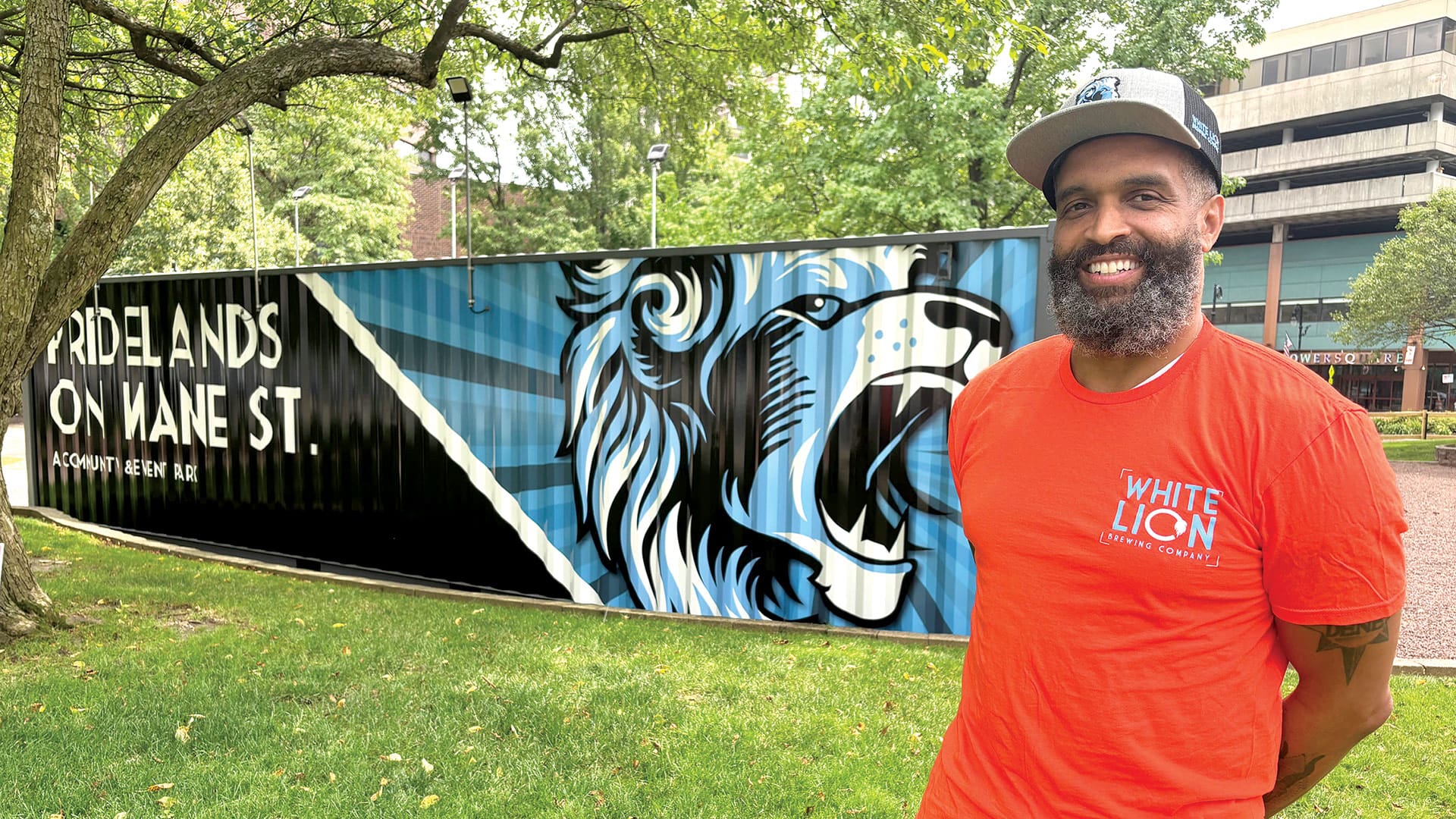
Ray Berry at Pridelands on Mane Street, what he calls a spinoff of a winning concept from the days before COVID.
Diana Szynal took the job as president of the Springfield Regional Chamber — and an office overlooking Tower Square Park — three years ago.
Back then, the city was still trying to shake off the effects of COVID, she said, with many workers at downtown businesses still spending considerable time working remotely.
They’re not all back five days a week, she stressed, but there is far more vibrancy in the downtown than when she started — and on many levels.
“More people are in their offices more days of the week, and this has helped create a lot of vitality downtown … I’m seeing a lot of energy there,” she said. “There are some new restaurants opening and new businesses coming in. There are a lot of people walking around and enjoying being downtown.”
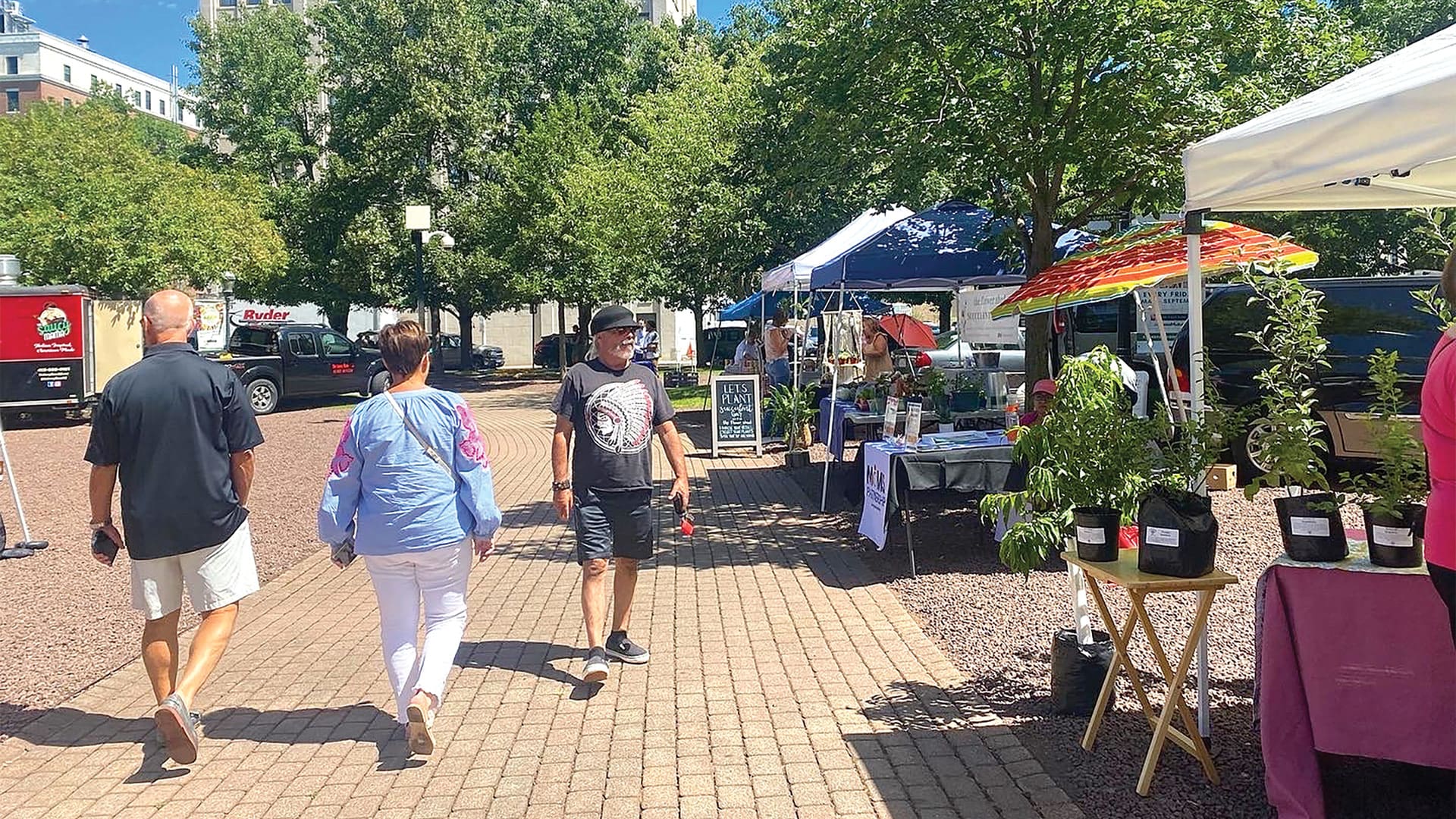
And that sentiment certainly includes what Szynal can see out her window in Tower Square Park, which is home to a popular farmers market and, more recently, an attention-grabbing art installation called Odyssey — one of the Springfield Business Improvement District’s more creative (literally and figuratively) efforts to promote the downtown and bring people to it — and a new outdoor event destination created by White Lion Brewing called Pridelands on Mane Street, which kicked off July 9.

Diana Szynal
“More people are in their offices more days of the week, and this has helped create a lot of vitality downtown … I’m seeing a lot of energy there. There are some new restaurants opening and new businesses coming in. There are a lot of people walking around and enjoying being downtown.”
Ray Berry, owner of White Lion, said the destination, created from three custom-designed shipping containers, offers a unique backdrop for planned weekly entertainment on Wednesday and Thursday evenings, but also for company outings, team socials, or casual get-togethers with friends and family.
“There are so many positive moving parts to engage and enjoy downtown,” he said. “We see Pridelands as another piece of the mosaic.”
This broad activation of Tower Square Park is just one of many storylines converging in the City of Homes. Others include:
• Progress to create more housing of all kinds, from market-rate apartments in the downtown to higher-end homes in different areas of the city (more on this later);
• The high-profile project to redevelop the Clocktower Building, Colonial Block, and two other adjoining properties into roughly 100 units of market-rate housing, as well as infrastructure improvements in that area, including a new parking garage;
• The transformation of the former CityStage into the Hope Center for the Arts, a state-of-the-art facility to designed to educate young people and perhaps inspire careers in the arts ;
• Ambitious work to revitalize the entertainment district through redevelopment of a block of buildings on Worthington Street, a project led by Raipher and Joseph Pellegrino in partnership with the city, detailed in the July 7 issue of BusinessWest;
• Continued discussion, and some anxiety, about the future of some downtown office buildings, which continue to struggle in this post-COVID era;
• Plans to replace the troubled Roderick L. Ireland Courthouse — the Massachusetts Division of Capital Asset Management and Maintenance has issued a request for proposals for a new site, preferably in the downtown; they’re due back in October — and speculation about what will done with the existing structure as well as adjacent properties in that area off State Street, including the former First Church;
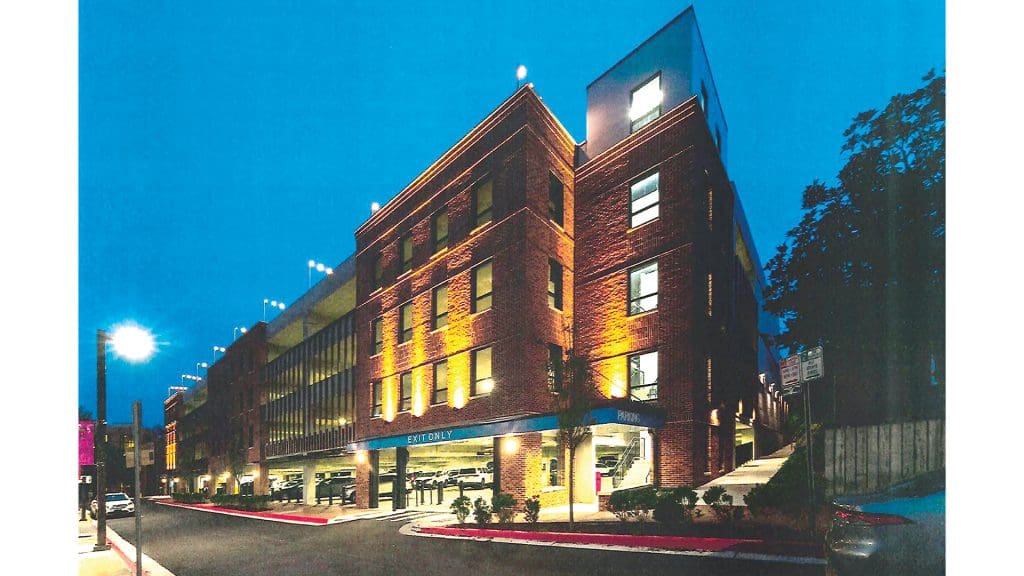
An architect’s rendering of the planned improvements, including a new parking garage, in the South End, between State Street and Union Street.
• The continued success of the Springfield Thunderbirds, which will soon enter their 10th season and continue to set the bar higher with everything from ticket sales to marketing and social media content (see below
• Movement toward creation of a master plan for redevelopment of the Mason Square neighborhood and adjoining areas;
• Visible signs of progress in a massive project to reimagine the former Eastfield Mall as a retail center with a large residential component; and
• Future redevelopment of the former Massachusetts Career Development Institute property on Wilbraham Avenue. The site was demolished four years ago, and speculation continues about what will come next in an area that has seen strong residential growth.
Overall, housing remains one of the main focal points, said Tim Sheehan, the city’s chief Development officer, noting that that there is both urgent need for more housing and several ongoing initiatives to address that need. These include everything from the aforementioned South End project to redevelopment of the former Springfield School Department headquarters on State Street to plans to build high-end homes on the pre-tornado campus of Cathedral High School.
This residential growth reflects both strong need for more housing as well as greater interest in the city overall as a place to live and work, he went on, adding that work is taking place on many fronts to meet the needs of new (and old) residents, and make Springfield a true destination.
All That Jazz
Evan Plotkin, president and CEO of NAI Plotkin, has long been a cheerleader for Springfield and a prime mover when it comes to projects to promote the city and especially its downtown and cast them in a positive light. These include everything from mural projects to the Springfield Jazz & Roots Festival, which took place last week and was in its final planning stages as he talked with BusinessWest.
Plotkin said he sees a number of positive developments taking place in the city, including several in the office tower he co-owns, 1350 Main St., where a high school now resides on the top two floors. But it’s what he’s not seeing that has him concerned.
Springfield at a Glance
Year Incorporated: 1852
Population: 155,929
Area: 33.1 square miles
County: Hampden
Residential tax rate: $15.68
Commercial tax rate: $35.22
Median Household Income: $35,236
Median Family Income: $51,110
Type of government: Mayor, City Council
Largest Employers: Baystate Health, MassMutual Financial Group, Big Y Foods, MGM Springfield, Mercy Medical Center, Center for Human Development
* Latest information available
That list includes new businesses coming to the city and its downtown; instead, he said, there’s much more movement of existing businesses and restaurants, a game of musical chairs that doesn’t result in real growth, just a shift of vacancies from one building to another.
Something else he’s not seeing is consistent effort from the city to maintain landmarks like Stearns Square, which was revitalized several years ago, but sees its ornate fountain not in use the majority of the time.
“They invested in the hardscape and the landscape, and then they walked away,” he said of the city and its efforts at the park. “And this is a pattern; we put up plaques saying ‘we did this’ and ‘we did that’ and ‘here’s this brand new park,’ but the next year, they don’t mow the lawn and let the weeds grow back.”
Overall, more work is needed to maintain and preserve such treasures and to make the city a more desirable place to visit — and work in and live in, he went on, adding that he would like to see the city create a permanent stage downtown near Stearns Square (a temporary one was set up for the Jazz Fest) and make live music a prominent piece of the puzzle, as it was years ago.
Live music is just one of the components of Pridelands on Mane Street, a play on words that also represents what Berry called a “spinoff of a proven concept, pre-COVID.”
Elaborating, he said that, before the pandemic, White Lion created pop-up beer gardens at several sites around downtown. The last few years, though, it has concentrated these efforts in Tower Square Park, making use of retrofitted shipping containers.
Fast-forwarding, he explained that, with an ARPA grant from the city, White Lion was essentially tasked with reactivating the park, and it’s doing so in colorful styles, as in a shipping container wrapped (by East Longmeadow-based Go Graphix) with the White Lion logo.
“We knew, by way of our partnership with the Business Improvement District and other stakeholders, that the beer garden concept worked in years past, and pre-COVID showed that a container park concept resonates with our customer base,” Berry explained. “So we thought, why not bring the concept back, look to make it more permanent, and have it be a true destination right in the middle of the business district and the emerging arts district?”
Approaching 10th Season, T-Birds Have Matured as a Business
Nate Costa says that, when it comes to the Springfield Thunderbirds and prospects for continued growth, there isn’t room for much more.
Well … at least when it comes to ticket sales.
Indeed, capacity at the team’s home, the MassMutual Center, a.k.a. the Thunderdome, is 6,700. For the 2024-25 season, the T-Birds, an affiliate of the NHL’s St. Louis Blues, averaged 6,369 per game, up from 6,321 the prior season. So, there’s still room for improvement, and the team will doggedly pursue it. But, again, not much.

Nate Costa
“We’re going to eventually, hopefully, run out of tickets to sell,” Costa, the team’s president, said with a laugh, noting that this is both a good problem to have — one many other teams in the American Hockey League would love to have — and one of many solid indicators of how far this team has come.
As it readies for its 10th season of operation, with various plans to mark that milestone, the Thunderbirds have established themselves as a solid franchise with an increasingly loyal fan base, as evidenced by those numbers above … and the fact that they were achieved with the parking garage next door to the arena unavailable for the past three seasons.
Which means that, while there’s not much room for growth in ticket sales, there’s still plenty of room when it comes to growing revenue through increases in ticket prices — the team still charges well below the league average — as well as merchandise sales and other avenues.
“Over the past five years, we’ve continued to see the maturation of our business,” Costa explained. “We’re continuing to fill the building, and now it’s looking at our margins; we’re 30th in the league out of 32 teams in ticket price. It’s been really good to get the bodies in the building and show the value, but now it’s up to us to start walking that ticket price up effectively and generating revenue on the margins.”
Looking back, Costa said 2024-25 was another solid season for the T-Birds. There was a playoff run, albeit not a deep one (the team lost in the first round), with 20 sellouts, and, as noted, continued improvement in ticket sales and other measures of success.
“Every Saturday in the second half of the season, we sold out,” he noted, adding that many other games approached capacity over the final three months.
Meanwhile, off the ice, the team earned several awards from the league, which is becoming an annual tradition.
Indeed, in addition to benchmark awards for ticket sales and corporate sales, the team was recognized as having the AHL Marketing Department of the Year and the Most Unique Social Media Content. (More awards were expected at the annual league meetings in South Carolina, which were taking place as this story went to press.)
The marketing and social media content awards help explain the continued improvement in group sales and overall ticket sales, said Costa, adding that, with the shorter playoff run, the team is already “well ahead and well out in front of next season” in terms of season ticket renewals, group sales, and other initiatives.
Indeed, the team continues to set the bar higher, he went on, adding that, with the parking garage now open, the space adjacent to it being activated — the team, working with the state, which controls the property, will look to create a Yawkey Way-like atmosphere on game nights — and an already stable fan base, there are expectations for continued growth.
As for ticket sales, the team’s success on the ice and with creating a fun, always changing fan experience, coupled with the relatively small capacity of 6,700, has created both demand and urgency, said Costa, adding that the team has grown season ticket sales past 1,600 and looks to surpass 1,700 for next season.
“When you have a base like that coming in for every game, and we had a really great year for groups — we did more than $1 million in group revenue for the first time ever in Springfield hockey history — that gives you a really good base to work from to fill the rest of the building,” he explained, adding that the full (and nearly full) houses create a raucous atmosphere not seen in some other buildings.
“In Hartford, the XL Center [now PeoplesBank Arena] seats 16,000 people; when you bring 6,000 out, it just doesn’t have that same feeling,” he said. “If you get 5,000 in our building, the place is rocking; it feels like it’s full. That’s an advantage for us.”
As for ticket revenues, the T-Birds’ average price is just over $20, with the league average north of $28, said Costa, adding that there is some leeway for increases, given those statistics, the value the team delivers, and the growing demand for the product.
“Since we started here, the big thing was just trying to show as much value as possible, with the promotions and themes we do on game nights … that’s really added to why people want to buy tickets,” he explained. “Now, with the scarcity of tickets, the ticket packages are much more valuable because people are trying to lock in their seats, knowing that they’re not going to get them waiting until a week before a game.
“It’s been really good to change that mentality, and we’ve re-educated the community as to how to get tickets and the best way to get them,” he went on. “Coming out of the gates, we focused on building the base and going after large numbers; then, once you get the large numbers in the building and you start to create some emergency with sellouts, you can start to walk up your ticket price. I think we’re there.”
Heading into their 10th year, the T-Birds are ‘there’ in many respects and looking to soar still higher in 2025-26.
—George O’Brien
Pridelands is one of many sources of greater vibrancy Szynal is seeing downtown, and at the chamber as well, which is based in Springfield but boasts members from across the region. She said membership is up — 419 was the latest count — amid efforts to both grow and diversify the membership through initiatives such as a revamped, more member-focused website and television commercials.
“We’re really trying to diversify our membership in every possible way, from diversification of the people that are part of the chamber to the businesses and types of businesses that join the chamber,” she explained. “We’re really trying to cast a wide net; the chamber is most effective if there’s a lot of different types of people and businesses that are part of it.”
Elaborating, she said the chamber has been working in many ways to “be more out there,” through those TV commercials, social media content, the new website, a deeper event schedule, and more.
Progress Report
While there are several visible signs of momentum in the city, perhaps the most notable is what would be considered the ‘housing market,’ Sheehan said.
That’s a broad term that covers everything from still-rising home prices — the city has seen one of the more dramatic such increases in the state — to development of new housing of all kinds, including new market-rate apartments downtown, but also upscale homes in several sections of the city, including East Forest Park, the Bicentennial Highway area, and perhaps the site of the former Sears at the Eastfield Mall, acquired by one residential developer.
“The demand is for new product,” he said, referring to both homes and rental units. “And that’s why we’re seeing so much new housing development coming in that includes homes at the higher end of the market.”
Meanwhile, interior demolition has commenced at the South End properties — the Colonial Block, the Clocktower Building, and others, said Sheehan, noting that McCaffery, the Chicago-based development company leading the project, is finalizing financing, which is expected to cost roughly $50 million. Transfer of the Springfield Redevelopment Authority properties to McCaffery is expected to take place early next year, with construction expected to begin soon thereafter.
As that project progresses, so too has a $30 million infrastructure improvement initiative, including a new parking garage at the corner of Stockbridge and Willow streets, for the area from State Street to Union Street, one designed to make it more responsive to the residential growth taking place there.
“There’s significant housing development that’s back there now, with Stockbridge Court being the largest one, but there’s also the Lofts on Park Street,” he explained, adding that the work includes new sidewalks, lighting, road repair, and improvements to the surface parking in that area, and will create stronger connections to Main Street. “This will lift up that entire area, not just for the new housing, but the housing that’s historically been there for quite some time.”
While Sheehan sees progress on many fronts, from housing to the Eastfield Mall to the county courthouse, there are areas of concern.
These include the property at 101 State St., owned by MGM Springfield. There is still scaffolding on the structure nearly seven years after the casino opened, he said, adding that redevelopment of the property is a key bullet point in the host community agreement, and lack of progress there has become a point of contention between the city and the casino operator.
“We have concerns about that not moving forward in a timely way,” he said, adding that another pain point is the lack of any apparent progress at the former Vibra Hospital site on State Street, now vacant for several years, a campus that includes the so-called ‘Isolation Hospital,’ which preservationists want to save from the wrecking ball.
Another concern is the property known as the Mardi Gras building because it was home to a now-closed gentleman’s club. The restaurant known as 350 Grill will be moving from that building to the site of the former Jackalope on Worthington Street, becoming a key part of the revitalization efforts there. And while that location will likely work out well for the restaurant, it leaves the Mardi Gras building vacant and with little talk of redevelopment.
“There hasn’t been much dialogue, but there has been discussion of doing housing there,” said Sheehan, adding that the upper floors hold the potential to house dozens of units. “And it would be an ideal site for housing because there’s plenty of parking at the site, and you’re close to Union Station.”
Meanwhile, several other properties downtown are largely vacant — he listed Harrison Place and adjoining structures along Main Street, but there are others scattered across the central business district — and with little movement toward redevelopment and the properties in serious need of investment in new infrastructure.
“These owners have held and held and held and not kept up with the requisite investments they should be making in these properties,” said Sheehan, adding that speculation that some properties might become part of the MGM complex, such as those now being converted to housing in the South End, kept those owners from investing in their holdings.
Sheehan said one possible reuse for some of these properties is housing, although conversion would likely be an expensive undertaking. The state has launched a new initiative called the Momentum Fund, a first-in-the-nation state revolving fund to support mixed-income housing production, and it recently announced its first financing commitment from the fund, $5 million for the Residences of East Milton, which will create 92 new mixed-income rental units in an underutilized commercial property in the town of Milton.
He noted that Springfield has several buildings that meet that description, and hopes projects will materialize that can take advantage of the Momentum Fund, adding that housing might be the best option for many commercial properties in and around the downtown.
“We’d like to have a little more momentum in Western Mass.,” he said, “a part of the state that needs more help with housing.”







 “In a move that drastically shifts federal energy policy, the act eliminates or shortens a range of green energy tax credits introduced in the Inflation Reduction Act.”