Daily News

GREAT BARRINGTON — After nearly a decade of leadership, Jane Ralph will step down as executive director of Construct effective Aug. 29.

“This was not an easy decision,” she said. “My partner and I have called Berkshire County home for years now, and I am so proud of our work at Construct. However, the past year has been a time of reflection for us. After facing some family health challenges, and looking at where things stand in the world, we have decided that being close to relatives should be our main priority, so we are relocating to Madison, Wisconsin.”

Since assuming the role in 2016, Ralph has led significant growth in Construct’s services, including support to help people remain in their homes, temporary housing for families, the development of new affordable housing at Forest Springs in Great Barrington, and the county’s first co-living workforce housing at the Windflower in Egremont. Under her leadership, Construct has also expanded its housing navigation services for individuals and families facing housing insecurity.

“We’re all grateful for Jane’s leadership over the past nine years,” said Betty Farbman, board president. “She’s led with a lot of heart and a strong commitment to our community. Thanks to her, Construct is in a great place. We have a clear vision, a strong team, and a solid foundation to build on.”

Ralph will work closely with the executive committee in the coming weeks to ensure a smooth transition of leadership and to ease the staff and board into the next phase. The board of directors has formed a search committee for a new leader and will soon post the position for potential candidates to apply.

“I have full confidence that Construct will continue to thrive after my departure,” Ralph said, “and I am so grateful to all who have supported our work during my time here. Your support has truly made all the difference in our ability to provide affordable housing and housing support to our South Berkshire neighbors.”

An event will be held to recognize and celebrate the accomplishments of Ralph and her team over the past nine years. The event will take place on Tuesday, Aug. 19 at 11 a.m. at Construct’s main office, located at 316A State Road, Great Barrington. Community members and partners are invited to attend. To RSVP, or for more information about Construct and the upcoming leadership transition, visit www.constructberkshire.org.

Daily News

LENOX — Ventfort Hall Gilded Age Mansion and Museum announced the acquisition of the original Gardener’s Cottage, known as the Huss House, once the residence of Gilded Age landscape architect John Huss. For the first time since the 1950s, the property is returning to the Ventfort Hall estate, restoring a vital piece of its original legacy.

In June, Ventfort Hall was granted the right of first refusal for the off-market sale of the cottage, located on Walker Street just a short walk from the main mansion. The board of directors and staff acted swiftly to secure the property, with the official signing taking place on July 29.

“This is more than a property acquisition — it’s the return of a lost chapter of our estate’s history,” said Wendy Healey, executive director of Ventfort Hall. “Reuniting the Huss House with the main estate is a powerful moment for all of us who cherish this place and its stories. It feels nothing short of miraculous.”

Ventfort Hall has developed a multi-phase plan for the restoration, maintenance, and reintegration of the Huss House into its operations. The vision includes transforming the property into a short-term vacation rental, allowing it to generate revenue for its own preservation while offering visitors an immersive, historically resonant experience.

“The Huss House adds a new dimension to our mission to preserve, interpret, and celebrate the Gilded Age,” Healey said. “We’re incredibly grateful for the board’s leadership and the passion of our supporters, without whom this wouldn’t be possible.”

Daily News

LONGMEADOW — Bay Path University announced the appointment of Megan Trinkle-Knotts as the new program director of the master of science in genetic counseling program, effective immediately.

Trinkle-Knotts brings nearly 20 years of experience in clinical genetics and genetic counseling education to the role. She began her career at St. Vincent Hospital in Indianapolis, where she worked in both prenatal and pediatric practice for nearly a decade. During her tenure, she helped develop a statewide Perinatal Loss Evaluation Program, which provided customized evaluation services for families experiencing stillbirth, and she co-led a Cord Blood Collection/Genetics Consultation Initiative aimed at avoiding missed diagnostic opportunities in newborns with anomalies or life-threatening conditions.

In 2015, she joined the Center for Genomic Advocacy at Indiana State University, where she played a foundational role in launching a new master’s in genetic counseling program and a Genetic Counseling Clinic focused on oncology and psychiatric genetics. In 2021, she joined Bay Path as assistant director and fieldwork coordinator, where she oversaw the development of clinical and fieldwork experiences for students nationwide.

“Megan’s background combines clinical excellence with a deep commitment to education and program development,” said Terry DeVito, dean of the School of Health & Natural Sciences at Bay Path. “We are thrilled to bring her experience and perspective to shape the program’s next era and continue to build upon our success.”

Trinkle-Knotts is an active contributor to the field through research, publications, and national leadership. She is involved with several professional organizations, including the Indiana Network of Genetic Counselors, the Genetic Counselor Educators Assoc., the National Society of Genetic Counselors, and the Indiana Maternal Mortality Review Committee. She earned her bachelor’s degree in secondary education from Indiana University and her master’s degree in genetic counseling from the Indiana School of Medicine.

Bay Path’s master of science in genetic counseling is part of the School of Health and Natural Sciences. As one of the largest genetic counseling programs in the country, enrollment is limited to 20 highly qualified students each year. With approximately 120 applicants annually, admission is both competitive and selective.

Daily News

SPRINGFIELD — American International College (AIC) will host Registration Rush 2025 on Monday, Aug. 4, offering prospective students an opportunity to complete the enrollment process for the fall 2025 semester in one day.

From 11 a.m. to 7 p.m., AIC’s Shea Memorial Library at 1000 State St. in Springfield will serve as a one-stop shop for prospective students. During the event, participants can receive an on-the-spot application review, meet one-on-one with an admissions counselor, receive assistance with completing the FAFSA, and register for fall classes.

Whether students have already been accepted to AIC but have not yet committed, or have not yet applied, Registration Rush is designed to help them take the next step toward beginning their college journey. Attendees may even leave the event with a completed class schedule.

“Registration Rush is about removing barriers and making the college enrollment process more accessible,” said Matthew Sykes, director of Admissions at AIC. “Whether a student is navigating financial aid or still deciding where to attend, we meet them where they are and help them take the next step. It’s all about providing real support, right when it’s needed most.”

Fall semester classes at AIC begin on Tuesday, Sept. 2. Participants are encouraged to pre-register for Registration Rush online at go.aic.edu/register/registrationrush2025. For more information, contact the AIC Admissions Office at (413) 205-3201 or [email protected].

Cover Story

Taking Back Control

Anthony Soto, interim school superintendent and former receiver in Holyoke.

Anthony Soto, interim school superintendent and former receiver in Holyoke.

As he talked about the Holyoke Public Schools’ emergence from a decade of receivership last month, Anthony Soto said that accomplishment results from several factors, but the overriding dynamic has been leadership.

That applies to the receiver’s office, the commissioner of Massachusetts Department of Elementary and Secondary Education (ESE), Holyoke’s School Committee, the mayor’s office, and within the ranks of the city’s teachers, principals, and other administrators, said Soto, who has been the receiver for the past five years and is now interim superintendent in Holyoke, adding quickly that leadership will ultimately determine how this district performs moving forward.

And on that front, there are some question marks, he said, noting everything from the upcoming election this fall, at which every seat on the School Committee will be contested, to the superintendent’s office (a nationwide search will soon commence, and Soto declined comment on whether he will be a candidate) to the ongoing challenge of retaining teachers and principals everywhere, but especially in Holyoke.

Indeed, when asked if he was worried about backsliding from the systemic changes and resulting progress that enabled Holyoke to emerge from receivership, Soto said, “not with the leaders we have in place.”

He added, “I would worry if we suddenly had seven principals leave and three or four district leaders leave — then I would be very concerned. I’m confident with the School Committee that we have, but the unknown is what worries me.”

While there are questions about the future and what will happen with this school district, Soto and Holyoke Mayor Joshua Garcia certainly wanted to take a moment and reflect on Holyoke’s ability to emerge from receivership — something the two other districts placed in that same state (Lawrence and Southbridge) have yet to do.

“This had never been done before; there was no blueprint for this, and I believe that Holyoke has perhaps created a blueprint,” said Garcia, who made emergence from receivership a campaign pledge when he first ran for the office more than three years ago. “This is a big win for Holyoke; we’ve proven to the Commonwealth of Massachusetts that we’re capable of self-managing our public schools.”

Soto agreed and said this return to local control is an accomplishment marked by dramatic improvement in the graduation rate — 52% to 77% — and progress on other fronts ranging from early literacy to reduced suspension rates; from restructuring of the schools in a middle-school model to the building of a new middle school, the city’s first new school construction in nearly 40 years.

MAYOR JOSHUA GARCIA

Mayor Joshua Garcia

“There’s a commitment from the district to continue our turn-around plan so that we don’t untangle any of the work over the past 10 years and go backward.”

That project was achieved despite the extreme challenge of a global pandemic that arrived as progress was building, isolating students and setting the district back several years, in Soto’s estimate, as it went about the work of transforming its schools, while also exacerbating a laundry list of stern societal challenges that have historically taxed students, families, teachers, and administrators alike.

“In a community like Holyoke, the pandemic just hits much harder,” he explained. “This community is already plagued with a high percentage of families living in transition or that are housing-displaced. We have a community living in poverty and with a high level of drug addiction … the things that our students have to go through in the community definitely have an impact when they walk through our doors. It’s hard; this isn’t a walk in the park.”

Garcia agreed, noting that, beyond the accomplishments in the classroom — where there is certainly still room for considerable improvement — Holyoke emerged from receivership by showing it has the commitment and leadership to manage its own schools and not slide back to the conditions that resulted in the state taking control.

“There’s a commitment from the district to continue our turn-around plan so that we don’t untangle any of the work over the past 10 years and go backward, and there’s a commitment from our committee to make sure we stay the course on that turnaround plan and continue the strategies that have achieved the progress we’ve seen,” he said, adding that these factors have enabled the city to earn the state’s trust when it comes to managing its schools.

“The Commonwealth can say, ‘the changes were made, they’re on a good path, they’re showing notable gain, there’s some strong leadership in their form of government,’” he went on. “Those buckets are what allowed the Commonwealth to say, ‘it’s time to transition to local control.’”

“When I first got here, there were 150 kids at Dean, and it was a dumping ground and at risk of closing. We have since invested in Dean and completely brought it to life; we now have over 400 kids attending, with more than 100 on the waitlist.”

For this issue and its focus on education, BusinessWest takes an in-depth look at how the Holyoke school system fell into receivership, how it emerged, and what happens next.


School of Thought

Soto was certainly familiar with Holyoke’s schools when he became the third receiver to oversee the system.

Indeed, he grew up in the city and graduated from Dean Tech High School. After working in Springfield Public Schools for several years, he became the chief of Finance and Operations for the Holyoke schools in 2016, soon after the system went into receivership.

When the first receiver left after more than five years in that role to take a position closer to home in the eastern part of the state, Soto was asked to take on that role, but declined, saying he didn’t think he was ready. But when the second receiver lasted only seven months, he was again asked to step in, and this time accepted the challenge.

And a stern challenge it was. Indeed, Holyoke met the basic criteria for entering receivership — chronic underperformance and not showing any improvement over time — and had the lowest graduation rate in the state and one of the highest drop-out rates.

“The state conducted reviews and determined that there needed to be some serious intervention to fix the systems and make sure there’s a foundation for high-quality instruction and to give our kids a shot,” said Soto, adding that he was working in Springfield when the Holyoke schools went into receivership, but was well aware of the factors that led to that decision.

With receivership, the receiver essentially takes on the duties of both the superintendent and school board, said Soto, which eliminates bureaucracy and politics, but places an enormous amount of power in the hands of one person, which may or may not work out depending on how committed that individual is and how much leadership that office provides.

How Holyoke emerged from receivership a decade later is an intriguing story, one that involves what both Garcia and Soto called a true partnership with the state, and especially with Russell Johnston, the former interim commissioner of ESE, to create a blueprint where none had existed before — and, even more importantly, to follow that blueprint.

“He came to every meeting of the local control subcommittee of the school board to map out a plan, and once we mapped out a plan with clear benchmarks, we executed,” Garcia explained, adding that this execution prompted the state to remove a provisional transition to local control this spring and make it permanent. “We hit our benchmarks, and we did what we said we were going to do.”

That sentiment applies to everything from progress in the classrooms to a capacity-building plan that would assure a smooth transition to local control and enable the city to hit the ground running on July 1, to a commitment to strong, local governance that would hopefully prevent a return to the conditions that put Holyoke in receivership.

As he talked about those improvements registered in the classroom, Soto said there have been many, including curriculum changes, a sharp reduction in drop-out rates, and improvement in graduation rates, attributable to creative efforts to keep students from falling through the cracks.

“Overall, we have shifted our mindset as a district that we are not giving up on our kids and doing everything we can to re-engage them when they are at risk of dropping out,” he said, citing initiatives such as the Opportunity Academy. This is designed for students who are “over-aged and under-credited,” said Soto, adding that, in the past, these students would just drop out, but now they can re-engage through a more personalized path that enables them to attain credits and graduate.

There has also been what he called a revival at his alma mater, Dean Tech. “When I first got here, there were 150 kids at Dean, and it was a dumping ground and at risk of closing,” he told BusinessWest. “We have since invested in Dean and completely brought it to life; we now have over 400 kids attending, with more than 100 on the waitlist.”

Another dramatic change was the restructuring of the city’s schools (accompanied by rezoning), moving away from the long-entrenched K-8 model to a middle-school model, punctuated by the building of the new William R. Peck Middle School, which will serve 550 students across grades 6-8.


Grade Expectations

As he offered BusinessWest a tour of the new facility, where construction crews were working on the finishing touches, Soto said there were certainly some growing pains with the restructuring and rezoning, but those changes are starting to pay dividends.

Garcia agreed, and said the building of Peck, as well as other investments made in city schools, represent a change of tone within Holyoke and provide more evidence that the city is ready, willing, and able to manage its schools.

“The fact that we got unanimous support from the City Council for that project … that never happened before,” he said. “I was on the school board when I was 23, 24 years old. The amount of investment we’re doing in our public school buildings, including building the new middle school, was never done before; it was always ‘let’s kick the can down the road.’ It wasn’t prioritized.”

There are many new priorities, said Soto, citing, among them, professional development and other measures to attract and retain teachers and principals and maintain the strong levels of leadership that helped enable the city’s schools to emerge from receivership.

“One of my theories of action is that, if you have a strong principal and you give them the tools and resources, they need to improve the quality of instruction, which will have an impact on student achievement,” he explained. “We’ve invested heavily in developing our leaders.”

These investments, as well as curriculum changes and other steps, have helped create the “Holyoke way of doing things,” as Soto put it.

“This is how we’re going to get out instruction, these are the teaching strategies we want teachers to use, and when we walk through classrooms, this is what we expect to see,” he explained. “Our leaders have been doing a very good job implementing those practices.”

“One of my theories of action is that, if you have a strong principal and you give them the tools and resources, they need to improve the quality of instruction, which will have an impact on student achievement.”

Looking ahead, Soto and Garcia said the plan is to … well, keep following the blueprint, stay on the path that led to the return of local control, build on what’s been accomplished, and address areas where progress has been elusive, such as MCAS scores.

“We’re starting to hit our stride now,” Soto said. “With students, we have a strong focus on early literacy, our graduation rate is up to 77%, we have strong strategies in place … we’ve invested well over $130 million in our schools. We’ve been working on all those things over the past three years, and we’re finally starting to see some promising data.”

Garcia agreed. “Are we where we want to be right now as far as performance? No, but have we shown incremental gain and progress? Yes,” said the mayor, adding that the right systems and leadership are in place for continued improvement.

Meanwhile, Holyoke’s progress over the past several years, and its eventual emergence from receivership, has caught the attention of the other two school systems still under state control, Garcia said, adding that the School Committee continued to meet every month for 10 years, despite the presence of a receiver, and it also met regularly with the various receivers.

This commitment and level of collaboration does not exist in Lawrence and Southbridge to his knowledge, the mayor noted, adding that this page is one of many that those communities could, and should, take from Holyoke’s playbook.

Or its blueprint. As he said, there wasn’t one for a community emerging from receivership. But now, Holyoke has created one.

Senior Planning Special Coverage Special Publications

When BusinessWest and the Healthcare News first started publishing an annual Senior Planning Guide, the idea wasn’t to create a roadmap to the end of life, though it could, in some sense, be described as such. Along with information about financial planning, care options, and family conversations, the idea was also to express that the retirement years should be a rich, rewarding, and robust time. It’s a topic of interest for an increasing number of individuals and families. According to the U.S. Census Bureau, the number of Americans age 65 and older — which was 35 million in 2000, just 12% of the population — will reach 74 million by 2030, or 21% of U.S. residents. That’s a lot of people. And a lot of planning. And a lot of living left to enjoy. In this year’s guide, we bring you perspectives on everything from Medicare plans, food insecurity, and important health issues, like stroke, to local options for in-home care, adult day programs, and more, as well as why it’s so imortant to stay active and have fun well into the retirement years. In short, stories about the questions families are grappling with every day. After all, these years should be an enjoyable time, highlighted by special moments with family and friends, the freedom to engage in a range of activities, maybe even a chance to develop new interests and hobbies. Hopefully, the 2025 Senior Planning Guide will be a helpful resource in that process.    


Go HERE to view the Digital Interactive 2025 Senior Planning Guide


The Serious Business of Joy

Why Having Fun Is Essential to Healthy Aging >> Read More


A Shared Responsibility

Let’s Work Together to Address Senior Food Insecurity   >> Read More


Decisions, Decisions

What to Look for in Medicare, Medicare Advantage Plans  >> Read More


Having the Talk

Ten Tips on How to Approach a Difficult Topic  >> Read More


Opening Hearts and Homes

Adult Family Care Offers Numerous Benefits  >>  Read More


Benefits of In-home Care

How It Supports Independence for Older Adults  >> Read More


Keeping the Pace

Mercy LIFE Aims to Improve Seniors’ Overall Wellness  >>  Read More


All About Stroke

The Medical Emergency That Doesn’t Discriminate  >> Read More


The Basics of IRMAA

How Does This Surcharge Impact Your Medicare?  >> Read More


Senior Resources

These Nonprofits Can Help Families with Care Planning  >> Read More


Features Special Coverage

The Blended Workplace

As companies grapple with the implications of artificial intelligence (AI) and other disruptive technologies, the conversations tend to focus on productivity and efficiency.

Linda Dulye wants companies to think about something else: the human element.

“I’ve seen it in my clients; there’s this rush, this FOMO — ‘we’ve got to get this injection of AI,’” she told BusinessWest, using the popular acronym for ‘fear of missing out.’ “This reminds me a lot of when I was working with General Electric and also AlliedSignal — when Lean and Six Sigma were unfolding, we were on the front end of it; we were the pioneers. And there was this rush.”

And her current concern surrounding AI is the same concern she had then — and has expressed with clients over the years when discussing those efficiency models — which is whether the human element is being squeezed out of the discussion.

“You can come in with all the tools, all the technology that is going to improve processes, and we’re going to take what was 10 steps down to three steps, but that can be daunting and scary for many people. So you still have to have a degree of human connection, collaboration, and communication.

“A lot of my work has been centered on, how do we get people to understand the new technology that’s coming in? Automatically there’s a barrier — ‘we’ve been doing this for 10 years; what do you mean I have to change?’”

Dulye — who launched her management consultancy, Dulye & Co., in 1998 to help business leaders and their organizations cultivate cultures where people want to stay and grow — has turned her thoughts on the coming AI revolution into a concept called the Blended Workplace, which she calls a “human-centered approach that harmonizes the benefits of advanced technology with the in-the-moment power of digital minimalism.”

In short, she said a technology-first, people-second mindset is costing companies dearly and pulling leaders away from making critical investments in human connection and communication.

“You can come in with all the tools, all the technology that is going to improve processes, and we’re going to take what was 10 steps down to three steps, but that can be daunting and scary for many people.”

“AI is essential for business success — so is human interaction,” Dulye notes on her website. “The current AI surge feels eerily similar to the Lean and Six Sigma boom. Back then, companies realized that even the most powerful productivity tools couldn’t succeed without real, person-to-person communication. The same holds true today: when workplace connections erode, so do trust and teamwork.”

In a wide-ranging conversation with BusinessWest recently, she explained that people love new bells and whistles in, say, their cars, but not so much at work.

“That’s kind of scary for many people. So that’s why I developed this concept of the Blended Workplace — it’s helping organizations understand they’ve got to devote time with human beings, helping them understanding why we’re doing this, showing them how this augments their skills and doesn’t make them obsolete.”

Linda Dulye

Linda Dulye says any process improvement has to be accompanied by human connection, collaboration, and communication.

On the contrary, the goal is to show team members how to adapt to new technology and new models and make themselves even more valuable to the company.

“That’s ultimately what we’d love to have people do. But we all don’t operate the same,” Dulye went on. “It’s not like flicking a switch and saying, ‘OK, on Monday, we’re going to be utilizing this new AI technology,’ and you’re like, ‘wait, what? What’s going on?’ We want to help people understand why we’re doing it, what it means to them in their job, and how to get comfortable with it. You have to help people.”


Change Agent

The Blended Workplace fits well with the overarching philosophy of Dulye & Co., a concept (and movement) known as the Spectator-Free Workplace, which emphasizes investments in human connection and communication in the workplace — in short, being engaged at work and not just a spectator.

Dulye’s new message with the Blended Workforce concept is underscored by a few insights:

• Employee fatigue is real. Endless screen time and nonstop notifications are burning employees out. Her company’s research shows employee engagement is steadily declining, echoing Gallup’s report of a 10-year low in 2024. Making matters worse, only 56% of employees believe their leaders genuinely care about their well-being, according to a Deloitte survey.

• Gen Z, in particular, is unplugging. The rising generation of professionals values authenticity and meaningful relationships over algorithms. CNBC reports that Gen Z craves in-person interaction — especially new graduates, who’d rather learn company norms from colleagues than scroll TikTok.

• Connection drives performance. Whether in person or with cameras on, face-to-face interaction builds trust, ignites creativity, and strengthens accountability.

One Dulye & Co. client boosted engagement and productivity by more than 50% in less than a year simply by transforming team meetings with no-frills fixes like employees helping to set agendas, tackling tough issues head-on, and recognizing peer contributions, she noted.

“We want to help people understand why we’re doing it, what it means to them in their job, and how to get comfortable with it. You have to help people.”

Meanwhile, Dulye told BusinessWest, workers from different generations have different responses to — and tolerances of — major change, especially technological change, in the workplace.

“There’s always a new wave. Do you remember when computers happened? I’m old enough to remember the pink slip. I came in my office — I was a reporter then — and saw who called, and now I had to return a call. Well, the person who wrote that doesn’t exist anymore. And neither does the pink slip.”

The idea, she went on, is that change of any kind is constant in the workplace, and in the rush to apply new tools and technologies to be more efficient, companies aren’t spending enough time on the people side to help everyone navigate change — especially dramatic change like AI, which is much more disruptive than ditching written phone messages.

“These tools are only effective when people are working collaboratively, when they understand them together,” she explained. “We all are gaining efficiencies with these new tools that help us work better together collectively, not just individually. So you’ve got to spend time as a team really figuring out, how do we work these tools into our own practices? And that involves communication between team members.”

Moreover, Dulye added, “we’ve got to understand all the different nuances that affect learning it, applying it, and feeling comfortable enough that I want to advance this; you’re going to have different roadblocks than me, just because of our experiences. But that’s the kind of discussion a team needs to do together. Leaders need to spend time helping their organizations know why we are doing this.”

Dulye said there’s an opportunity to promote this kind of conversation with Gen Z, whom many people assume want to live behind screens — a stereotype she said isn’t true. “I feel bad for this generation because they actually want more connections than maybe Boomers do or or some of Gen X.”

But connections are harder in general during the new age of remote and (more commonly) hybrid schedules, which make it more of a challenge for leaders to promote communication in the office. But she said hybrid arrangements are a net positive in many ways.

“I think the flexibility factor is strong. Unless you do a lot of work in manufacturing, or have a job where you have to physically be there — like hospitality — I think you have to have a hybrid schedule. I see models where having an in-person requirement on Tuesday, Wednesday, and Thursday is very effective.

“It’s not just getting people to come in, but being very deliberate and intentional about what we are doing to create more team-based experiences.”

“But here’s the thing,” she went on. “Just because we’re coming in doesn’t mean we’re working more collaboratively together. Just coming in doesn’t mean you and I will cross paths. So it’s not just getting people to come in, but being very deliberate and intentional about what we are doing to create more team-based experiences.”

That goes back to Dulye’s original business concept, the Spectator-Free Workplace.

“People want experiences at work that make them feel, one, I’m valued; two, I really like the team I’m with; and three, I really do like the company I work for. But it takes an experience. If you’re still operating on routines that you’ve been doing the last five years, that’s building a spectator-filled workplace. And it’s not beneficial. It’s just people coming into work, showing their faces, and really not interacting. So I’m all for the hybrid workplace — with very intentional team experiences.”


Beyond Meetings

Dulye concedes, of course, that hybrid schedules create a more challenging environment for business leaders when it comes to in-office interaction, but that it’s still possible to create a healthy, connected workplace even if employees are at home part of the time.

One strategy are team meetings where everyone is expected to contribute.

“It’s not OK to have a team meeting where three people out of 20 are talking, and everyone else just sits there doing something else, and says, ‘yeah, pass, I have nothing going on.’ Really? If you’re paying me and one week has gone by and I have no new information to contribute to my team, there’s something wrong. That’s not acceptable,” she said.

“If you’re getting together as a team once a week for 30 minutes, everyone’s got to bring something they learned, maybe something they didn’t expect that happened, maybe even just a recognition of a team member, but everyone has to contribute. You don’t get a pass.”

Getting back to communication around AI, she said some employees are worried about the implications on job security, but those concerns existed when Lean and Six Sigma came into being as well.

“People were all concerned about, ‘well, if we take 10 steps and go to five, how many jobs is that?’ So this is not new. I think people need to understand this is not a new phenomenon. People have always been fearful that technology can reduce jobs when it makes work more efficient.

“Again, it’s how do you see yourself being able to utilize that technology in a role that you still want? Or, maybe you want to think about a new role that requires skill sets you have and want to grow, but maybe isn’t as affected by AI. I mean, AI won’t affect us all at the same rate. It affects us all, but by different degrees.”

Construction Special Coverage

Spark of Youth

Walt Tomala (center) with apprentices Ben Harrington (left) and Matt Ganhao.

Walt Tomala (center) with apprentices Ben Harrington (left) and Matt Ganhao.


While he was already interested in the construction field, Matt Ganhao had never actually been on a job site before starting a co-op with TNT General Contracting in Westfield, which he procured through the Lower Pioneer Valley Career Technical Education Center, or CTEC.

“I was really excited — it was a new experience for me,” he told BusinessWest. “Once I finally got to work out in the field and actually get to see what goes into building a deck or building stairs, doing a roof, whatever, it really sparked something in my mind that maybe this is something that I want to do. And then, as I kept working my co-op apprenticeship, I decided I want to go full-time.”

That’s music to the ears of Walt Tomala, president of TNT, who has brought a number of teenagers onto job sites for lengthy co-op experiences in order to introduce them to a career path that, both locally and nationally, is in desperate need of young talent, as retirements continue to outpace new workers.

Tomala understands a youthful passion for this work; he started his company right out of high school and has done everything from changing screen doors to large remodels, additions, new homes, and even two Extreme Makeover builds.

“We’ve tried different strategies and different business models,” he explained. “And one that I just kept coming back to is working with our youth. Someone put some time and energy into me and helped me along the way, and if I didn’t have that, I don’t know that I’d be here and still loving the industry the way I do, or as passionate about it.”

“Once I finally got to work out in the field and actually get to see what goes into building a deck or building stairs, doing a roof, whatever, it really sparked something in my mind that maybe this is something that I want to do.”

Ben Harrington will be entering his junior year at Westfield Technical Academy this fall and already has real-world construction experience outside the shop environment at school.

“I just like being out here, working on different things, learning new skills — and I feel like being in this trade is very good for me,” he said, adding that it’s beneficial to learn from both teachers in school and construction professionals on job sites. “It’s good to know multiple people’s ways. If I ask Walt questions, he’ll give me different answers than somebody else, but if I listen to both answers, it helps me a lot. And it feels good knowing I’m doing something right for Walt.”

And that’s one thing Tomala emphasizes with his apprentices — the gratification of a job well done and understanding the why as much as the how.

“We do certain things all day, every day, and it can feel like the same thing over and over. But we take the time and make it our mission to make sure everybody understands why we’re doing this and why it’s so important,” he explained.

“They have to understand the passion that we have,” he went on. “No employee is ever going to be as passionate as you are about your business, but they can be as passionate about the industry. And it may mean they move on and start their own company or become a subcontractor. Or it may mean they just really embrace our beliefs and passions and then stay with us for as long as they choose to. There’s plenty of room for growth.”

Ganhao, who graduated from both West Springfield-based CTEC and Ludlow High School this past spring, is already convinced.

“I don’t really want to go to school and learn a different trade; I did decide that I want to go full-time,” he said. “It’s a new experience, and it’s something that not everyone’s going to like. But if you’re interested in the industry, this is something you should try out.”

Walt Tomala gives some instruction to Ben Harrington on a job site in Westfield.

Walt Tomala gives some instruction to Ben Harrington on a job site in Westfield.

When he was 16, Tomala said, he didn’t know if this was the industry for him; he needed exposure and experience.

“These young people should have an opportunity to really learn, and not just be kind of barked orders at. They’re full employees, on payroll, and we also teach them the whole finance component — how to open up checking accounts, getting direct deposits. So we’re preparing them for the real world, no matter what they choose to do. And hopefully, it’s construction.”


Desire to Inspire

Tomala has served in leadership with local, state, and national trade organizations, with the overall goal of “just kind of making sure that we’re all doing things the right way, the proper way.”

And building things to code is only the bare minimum, he added. “It’s like graduating with a D. You still pass, but did you do a great job? Our focus is showing everybody that it doesn’t have to be difficult — that it really can be an easy transition to just doing things better. It’s about collaborating with the right manufacturers and the right products and finding the systems that really work for you.”

That philosophy carries over to the way he mentors young people in the field. “I think my message to other builders out there is, take the time; put the energy in. Don’t show them just how to dig a hole, but why we dig that hole and, better yet, the importance of doing it right before we have to dig a hole. Make sure the foundation’s sealed correctly; make sure the roof is put on with all the right underlayments; make sure the windows are taped and sealed.

“Someone put some time and energy into me and helped me along the way, and if I didn’t have that, I don’t know that I’d be here and still loving the industry the way I do, or as passionate about it.”

“I’ve found, throughout my years, that a lot of times, we get some older people in the industry who just wanted to do a job. They didn’t want to learn how. So I sit on the board for three trade schools [Roger L. Putnam Vocational Technical Academy in Springfield is the third] because I want these young folks while they’re fresh, while they’re still excited. And the program we implement is, ‘hey, come on board. Come on for the summer; see if you like it. You’re in a trade school right now, but you might not know if this is the industry for you.’”

The backdrop to all these efforts, of course, is a persistent shortage of construction talent, which is why Tomala values apprenticeship.

“It’s not just important; it’s critical. I think we’ve been talking about this as an industry for 15 years,” he said, noting that Fine Homebuilding magazine has a program called Keep the Craft Alive, through which contractors donate funds to help support trade schools and improve their offerings.

“We’re now at a point where most of my subcontractors are going to age out and retire, and we just don’t have enough of the youth understanding how important this industry is, how rewarding it is, and how you can make an extremely good living here,” he said.

Matt Ganhao checks out a residential basement crack.

Matt Ganhao checks out a residential basement crack.

“It’s not like, ‘oh, you’re a roofer, so you’re only going to get paid so much,’” he went on. “No, there’s a really, really good paycheck at the end of the day, especially when you know what you’re doing and you deliver on the expectations. And that’s why it’s so important to know what the client wants and to be able to deliver on that. I’m not saying it’s the right fit for everybody, but I want to remind the world that the are companies out here taking the reins and giving these young folks an opportunity.”


World of Experience

Tomala said his influence on local young people interested in construction started with visits to the trade schools.

“They wanted someone to come in and talk, to just inspire students overall. And that worked out pretty nicely. I’d spend two hours with the students, and I enjoyed it,” he recalled. “But it wasn’t until after COVID that I was like, you know what? I get to see these kids for a day, but there should be more of a connection, and there should be more of an avenue for them to get to us.

“So I sat down with a lot of the teachers and said, ‘this is what I want to do, this is what I want my business model to be, and is there an opportunity for us to collaborate and to bring students on?’” I also said, ‘I don’t want to stop them from going to other places as well, but I’d like them to have an opportunity to interview with me, to just sit down to see if we’re a good fit or not.’”

“There’s a really, really good paycheck at the end of the day, especially when you know what you’re doing and you deliver on the expectations. And that’s why it’s so important to know what the client wants and to be able to deliver on that.”

He had nothing but praise for the teachers and programs in those schools. “Students are coming out with real knowledge. They’ve got some really great, committed teachers who are getting that curriculum going and inspiring the youth coming through that program.”

Ganhao said his classmates in Ludlow have been curious about his real-world experience.

“I’ve been asked questions like, ‘is that something you’re going to do for the rest of your life? Are you just doing it just for the heck of it? What’s up with that?’ And I feel like kids are missing out on the opportunities,” he said. “I feel like it should be more publicized because a lot of kids do want to try out a trade.”

Tomala it’s easy to become passionate about construction on actual job sites, finishing real projects. He was working with Ganhao and Harrington on a home in Westfield the day they spoke with BusinessWest, repairing a basement leak and replacing windows and shutters; a third apprentice, also from Westfield Technical Academy, wasn’t on the job that day.

“I think it’s rewarding for them to be able to start something and finish it and see that completed project because, often in the school system, they don’t get to complete a project in full,” Tomala noted. “And they’re learning how to work with each other in different skill sets and different personalities. They’re all having such a good time doing it, and it’s just such a good experience overall.

“I want them to form relationships and friendships and to just understand that the client is a human being — everything we do, whether it’s a deck or a whole house, is for somebody else,” he added. “It might be a small project to us, but it’s their entire world at one point in time. So they get that feeling of satisfaction and camaraderie, understanding how important it is to the client.”

And, hopefully, they find a passion they can turn into a career, in a field where young talent remains elusive.

“Just being able to see the customer at the end, satisfied with our work,” Ganhao added, “it’s something else.”

Community Spotlight Special Coverage

Community Spotlight

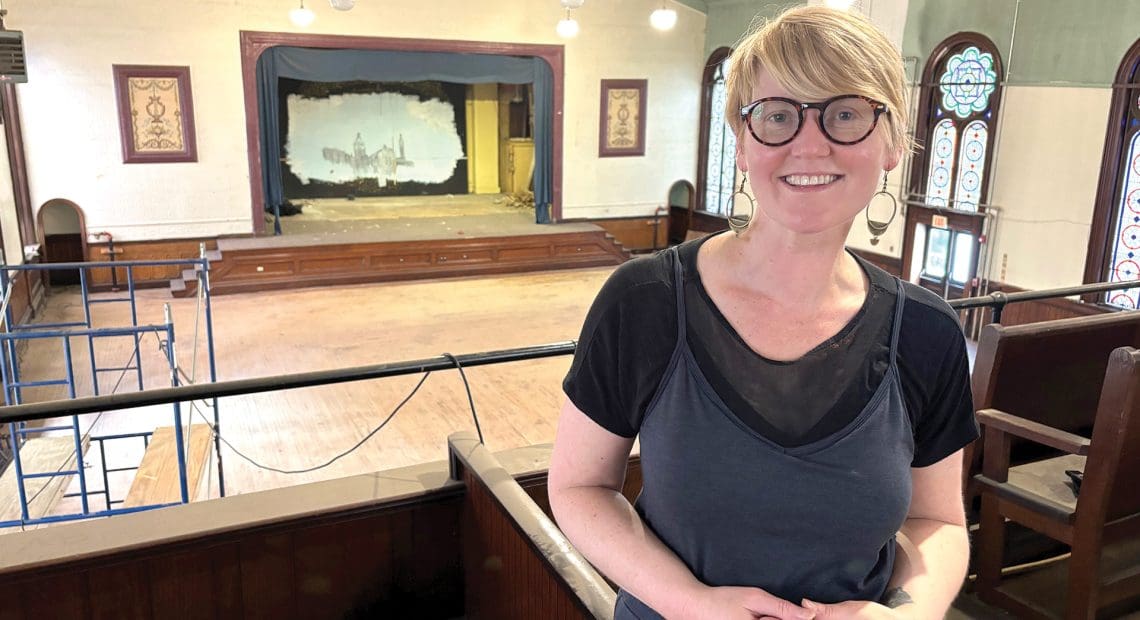
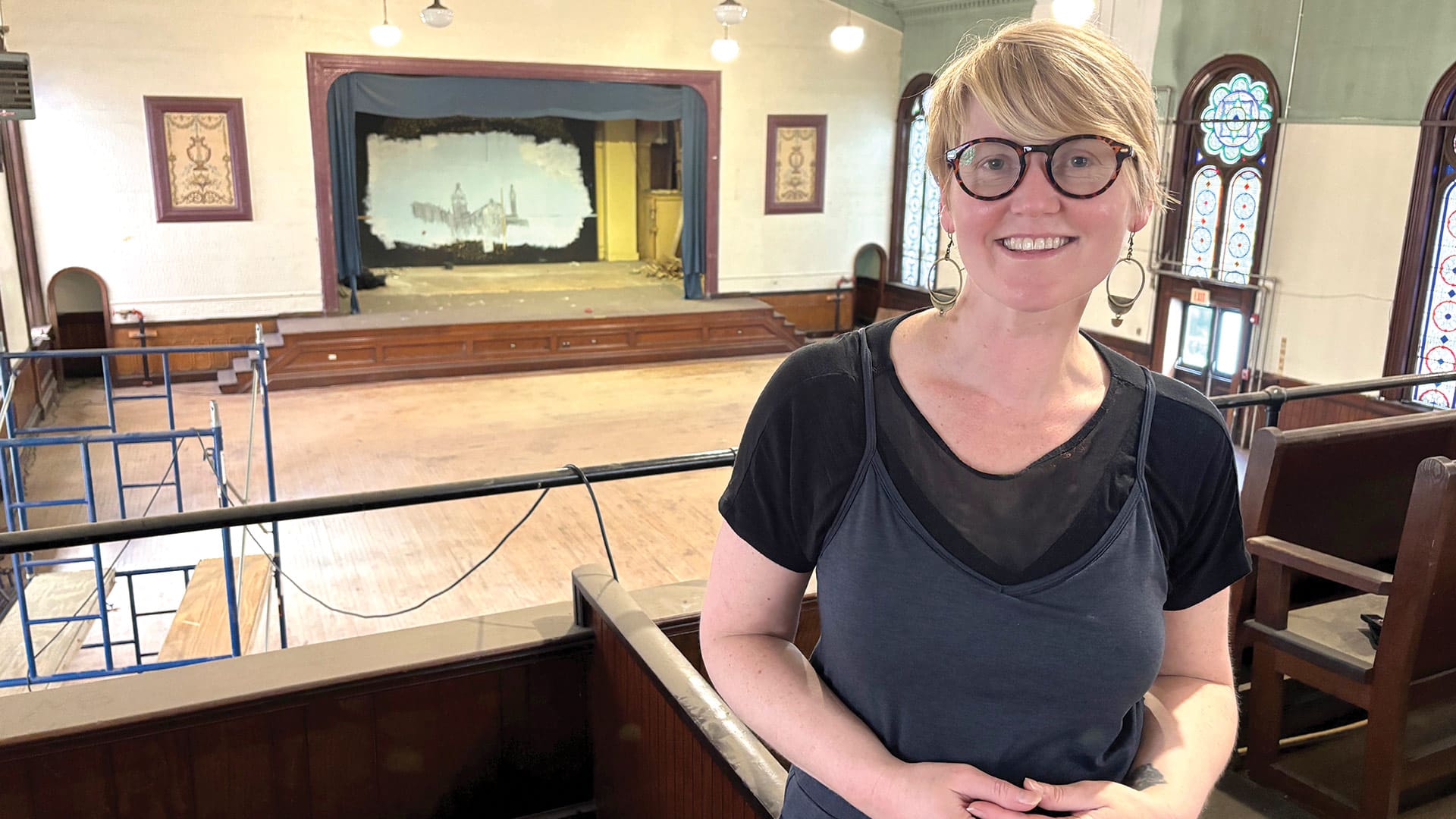
Burns Maxey in the balcony of the second-floor performance space.
Burns Maxey in the balcony of the second-floor performance space.

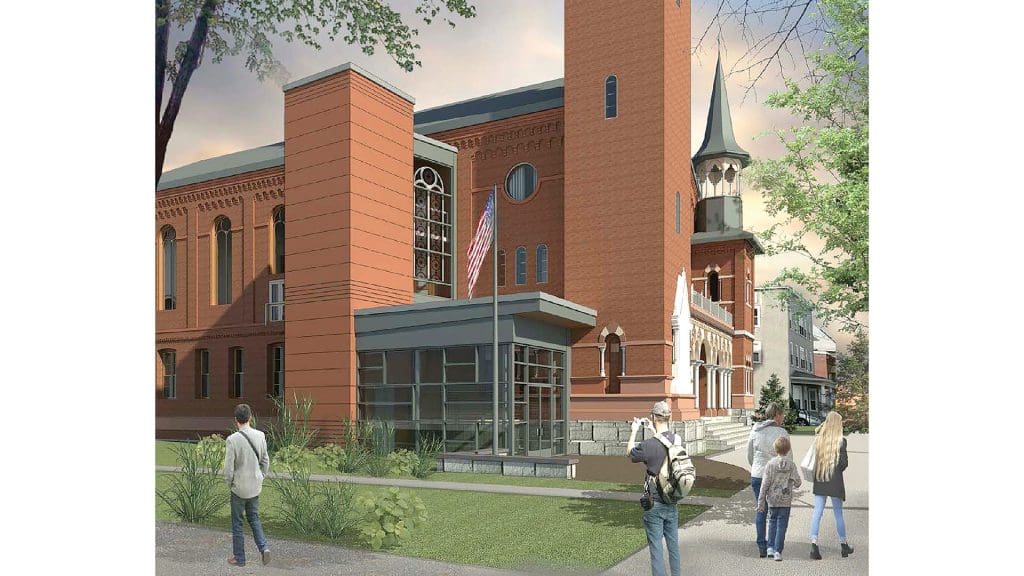
An architect’s rendering of the new entrance and elevator at Old Town Hall, home to CitySpace.

An architect’s rendering of the new entrance and elevator at Old Town Hall, home to CitySpace.

Salem Derby says he certainly didn’t see this coming.

Easthampton’s City Council President was at a meeting with Mayor Nicole LaChapelle, executive assistant Lindsi Sekula, and City Solicitor Mark Tanner, expecting conversation about municipal matters, when LaChapelle informed him that she would leaving to become the state’s Conservation and Recreation commissioner. And he would be serving as interim mayor.

“It was a complete surprise, and it was really quick — she said she’d be leaving in six days,” said Derby, an elementary school teacher, adding that he plans to be in City Hall something approaching full time this summer, but will maneuver around his classroom schedule once school starts, working afternoons, weekends, and in the morning if needed.

He’ll only be in the corner office until the November election (he won’t be a candidate for the job), and over the next four and a half months, he plans to provide stability, keep things running “as drama-free and interference-free as possible,” and, well, keep the ball rolling, if you will.

Indeed, Easthampton is a community in demand, and it has been this way for a while now, a pattern that brings with it some opportunities, but also stern challenges, as Derby, who has been on the council for more than 20 years, well knows.

“Housing is huge — the ability for people to find affordable housing is something I’ve been focused on the entire time I’ve been on the council,” he said, adding that the challenge extends across the housing spectrum, from potential homebuyers facing spiraling prices and limited inventory to renters in some of the bigger complexes — many of which have been sold to larger corporations — encountering increases that are pretty significant.

“There was a large group of renters and tenants outside of City Hall yesterday; they had a meeting and a little bit of a rally,” he explained. “There’s a push for the council to help the Legislature push for rent control.”

This housing crunch, and LaChapelle’s exit for the State House, are just two of the many converging story lines in Easthampton. Others include:

• Several projects in various stages of development to bring more housing on the market. These include, as we’ll see, everything from conversion of three closed elementary schools to the reimagining of more former mills;

• The start of redevelopment of the Tasty Top site on Route 10, a highly anticipated and somewhat controversial project that begins with a new Greenfield Savings Bank branch and also includes a gymnastics center, a daycare facility, retail, and a large residential component;

• The start of the second phase of redevelopment of the old Town Hall into CitySpace, what its leaders call a “thriving arts ecosystem.” This phase includes a new entranceway and elevator that will open the door, quite literally, to phase 3, renovations to the second-floor auditorium for concerts and other performances and events;

• New leadership at the Greater Easthampton Chamber of Commerce. Jon Kostek took the helm almost two months ago, and has established goals to continue growing membership; bring more users to WorkHub on Union, a co-working space at the chamber offices that opened roughly a year ago; and make more and better use of digital platforms to promote the chamber and its services, and, hopefully, engage more young business owners;

• Zoning changes to accommodate short-term rentals, a move that brings the community in line with what most other cities and towns have done and helps meet recognized need; and

• Plans for a new music performance venue at the site of a former massage school, an undertaking being spearheaded by the Heavy Culture Cooperative, a project that will, with the nearby CitySpace, create more vibrancy in the downtown area and serve to connect the downtown with the neighboring mills and the cultural activities taking place there.

For this latest installment of its Community Spotlight series, BusinessWest takes an in-depth look at Easthampton and how it continues to be in demand and cope with its growing pains.


Supply and Demand

Allyson Manuel was drawn to Easthampton by its many selling points — a vibrant arts community, an increasingly eclectic downtown area, a small-city feel, recreation, and more.

Formerly town planner in West Springfield, she and her husband settled here five years ago after considering several potential landing spots, and she became the city’s director of Planning and Community Development last December.

She can attest to spiraling home prices and a shortage of inventory, and how this surge is creating challenges.

“There’s a lot of demand. A lot of people want to be here, which is wonderful; it’s clearly indicative of a good quality of life and quality of place,” she told BusinessWest. “But it does come with challenges. Affordability is an issue for anyone looking to buy a house anywhere right now, but especially in Easthampton and Hampshire County.

“So, we’re reckoning with that and also with making sure we’re not pricing out residents that have been here for many, many years,” she went on. “And for the rental market, there’s been quite a pinch.”

“There’s a lot of demand. A lot of people want to be here, which is wonderful; it’s clearly indicative of a good quality of life and quality of place. But it does come with challenges. Affordability is an issue for anyone looking to buy a house anywhere right now, but especially in Easthampton and Hampshire County.”

Indeed, the housing market in the community is exceedingly tight across the board, and both Manuel and Derby hope and expect that the many projects promising to bring a mix of housing will serve to loosen things up a little.

Projects in various stages of development include Growing Green, a rural project just off Main Street, an initiative slowed by an appeal filed by neighbors but still progressing, with the number of planned units reduced from 87 to the mid-60s, said Manuel, adding that another project involves development of more property within the massive Ferry Street complex, specifically Building 11, where 96 units of housing are planned.
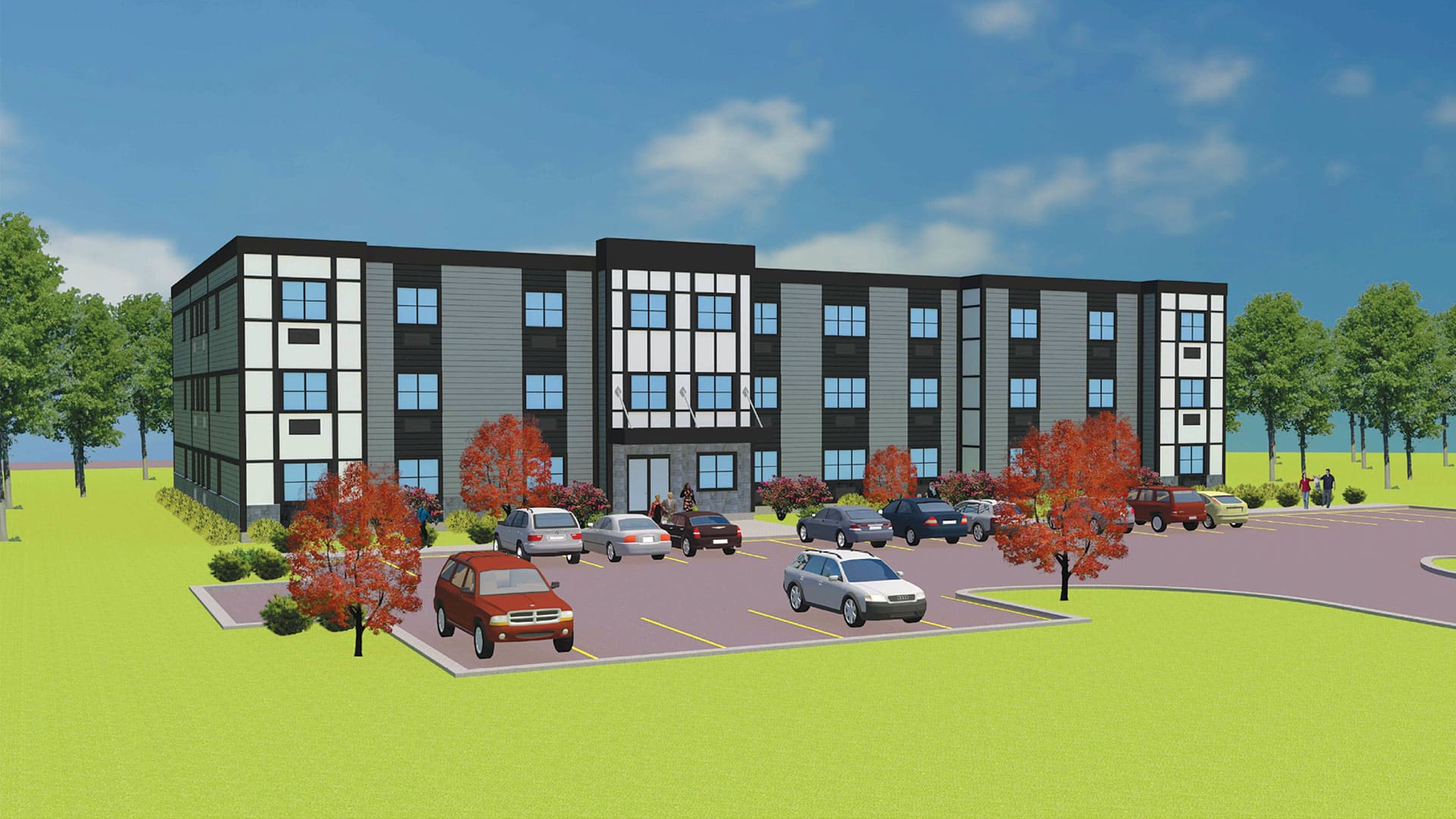
An architect’s rendering of the residential component slated to be built on the site of the former Tasty Top on Route 10.

An architect’s rendering of the residential component slated to be built on the site of the former Tasty Top on Route 10.

Another initiative involves redevelopment of the former Notre Dame Church and surrounding properties on Pleasant Street into approximately 42 ‘townhouse’ units, said Manuel, adding that several of these units will be in the church itself.

“I think those will be really cool units when they’re done,” she said, adding that other structures on the property will be razed to make way for new construction.

At the 34-acre Tasty Top site, housing (more than 200 planned apartments, a mix of market rate and affordable) is one of many components to a project being undertaken by developer Frank DeMarinis, said Derby, adding that more than 100 units are expected to be created through redevelopment of the three shuttered elementary schools.

These projects and other smaller initiatives are expected to make a real dent in overall need, he went on, and relieve pressure on existing inventory.

“Once all these are completed, I think the amount of housing in Easthampton will increase so significantly that I’m hoping it will make a real impact on affordability and access to quality housing,” the interim mayor said. “I’m hoping this can potentially be a catalyst for people who need affordable housing and maybe take a little pressure of some of the other units in Easthampton.”

Manuel agreed. “We have some challenges ahead of us, absolutely, but we also have a strong foundation that not all communities have to work from,” she said. “We have a lot of social capital — people that live in the city are very involved, they care about their neighbors, they care about the well-being of the city at large. And that goes a long way toward solving these types of problems. I don’t think it will happen overnight, but the fact that people care enough is a really valuable tool to have in the toolbox.”


Art and Soul

As she walked with BusinessWest up to the balcony of the auditorium in the old Town Hall, Burns Maxey gestured with her hand to the space below.

“You can imagine the possibilities,” she said of this space, which has sat idle for the better part of a decade and a half now.

The key to unlocking its full potential as a resource for the community is accessibility, said Maxey, who was honored by BusinessWest with its Difference Makers award in 2023 for her efforts to transform the landmark, opened in 1869, into CitySpace, adding that such access is at the heart of phase 2 of the ongoing project.

Designed by Amherst-based Kuhn Riddle Architects and construction work being handled by West Springfield-based Keiter, the $3.9 million project to build a new entrance and elevator is expected to take about 18 months, said Maxey, adding that, as this initiative is undertaken, a capital campaign continues to raise funds for the third phase.

Jon Kostek

Jon Kostek says one of his goals for the Greater Easthampton Chamber is growth of its WorkHub on Union.

Backing up a little, she said phase 1 included infrastructure work and conversion of the ground floor into an arts hub, with performance space (an area called the Blue Room) and several tenants, including Big Red Frame, a gallery, and Easthampton City Arts, the arts organization within the city’s Planning Department.

Phase 2 has been in the planning stages for several years and was delayed somewhat by bids for construction that came in higher than originally anticipated. With additional support in the form of an underutilized properties grant from MassDevelopment, the agency went out to bid again, with Keiter prevailing.

Easthampton at a Glance

Year Incorporated: 1785
Population: 16,211
Area: 13.6 square miles
County: Hampshire
Residential Tax Rate: $13.67
Commercial Tax Rate: $13.67
Median Household Income: $45,185
Median Family Income: $54,312
Type of Government: Mayor, City Council
Largest Employers: Berry Plastics Corp., INSA, Williston Northampton School, National Nonwovens Co.

The new entranceway and elevator have been designed to provide access, but also preserve the architectural and historic integrity of the building, said Maxey, including the staircases at the front of the structure, which is similar in many ways to Chicopee’s City Hall and designed by the same architect, Charles Parker.

As for phase 3, the projected cost is expected to approach $7 million, said Maxey, adding that work covers a wide spectrum, including the ceiling, lighting, sound baffling, asbestos remediation, sprinkler and fire suppression systems, bathroom renovations, creation of a green room and offices, and more.

Fundraising continues, and the stated goal is certainly a challenge, but Maxey is confident that the community will continue to support the initiative.

“We have a ways to go — we’re about halfway there,” she conceded, adding that the overall price tag for the project has soared from roughly $6 million to more than $11 million, mostly due to inflation and rising construction costs.

Once funding is secured, she believes phase 3 can be completed in perhaps 18 months, ushering in the next chapter in the story of CitySpace.


Making Connections

As for next chapters, the Easthampton chamber is writing itself, with Kostek taking the helm after long-time executive director Moe Belliveau stepped down earlier this year.

Kostek said he was looking for a new challenge after his position with the United States Tennis Assoc. New England was eliminated.

He said his work at the USTA, much of it focused program development for young people, is similar to his new role at the chamber in that they both involve relationship building.

“One of the things I liked most about my work with USTA was meeting people and developing relationships, and I think a lot of these same things apply here, at the chamber … meeting with members and discussing with them what the chamber offers and what we can do moving forward.”

Kostek said he’s spent much of the time since his arrival getting to know the community, meeting with his members, and gauging what they like, dislike, and want more of.

In that last category are face-to-face networking opportunities, he said, adding that he plans to add such events, including After-5s and more Coffee and Connections events at the WorkHub, to the calendar.

Also on his to-do list is growing overall membership and especially membership for WorkHub on Union. The facility has attracted only a few regular users to date, he said, adding that he plans to more aggressively market it across multiple platforms to get the word out.

“It’s a great space, and I think there is a real need for facilities like this,” he said, noting that there are several workstations, as well as a shared conference room, kitchen, and other facilities. “And it’s open 24/7.”

Senior Planning

These Nonprofits Can Help Families with Care Planning

These regional and statewide nonprofits can help families make decisions and access resources related to elder care planning.

AARP Massachusetts
1 Beacon St., #2301, Boston, MA 02108
(866) 448-3621;
states.aarp.org/region/massachusetts
Administrator: Mike Festa
Services: AARP is a nonprofit, nonpartisan, social-welfare organization with a membership of nearly 38 million that advocates for the issues that matter to families, such as healthcare, employment and income security, and protection from financial abuse

Access Care Partners
4 Valley Mill Road, Holyoke, MA 01040
(413) 538-9020; www.accesscarepartners.org
Administrator: Roseann Martoccia
Services: Provides an array of in-home and community services to support independent living; interdisciplinary team approach to person-centered care; information, referrals, and options counseling as well as volunteer opportunities available; primary service area includes Holyoke, Chicopee, Granby, South Hadley, Belchertown, Ludlow, and Ware, as well as other surrounding communities

The Conversation Project and the Institute for Healthcare Improvement
53 State St., 19th Floor, Boston, MA 02109
(617) 301-4800; www.theconversationproject.org
Administrator: Kate DeBartolo
Services: The Conversation Project is dedicated to helping people talk about their wishes for end-of-life care; its team includes five seasoned law, journalism, and media professionals who are working pro bono alongside professional staff from the Instititute for Healthcare Improvement

Elder Services of Berkshire County Inc.
877 South St., Suite 4E, Pittsfield, MA 01201
(413) 499-0524; www.esbci.org
Administrator: Christopher McLaughlin
Services: Identifies and addresses priority needs of Berkshire County seniors; services include information and referral, care management, respite care, homemaker and home health assistance, healthy-aging programs, and MassHealth nursing home pre-screening; agency also offers housing options, adult family care, group adult foster care, long-term-care ombudsman, and money management, and oversees the Senior Community Service Aide Employment Program

Estate Planning Council of Hampden County
www.estateplan-hc.org
Administrator: Christopher McLaughlin
Services: Provides a forum for current, accurate, and authoritative information with regard to estate and financial planning; council members are life-insurance professionals, bankers, fiduciaries, lawyers, accountants, planned-giving professionals, and other financial-service providers engaged in the planning, settlement, and management of estates

Greater Springfield Senior Services Inc.
66 Industry Ave., Suite 9,
Springfield, MA 01104
(413) 781-8800; www.gsssi.org
Administrator: Jill Keough
Services: Private, nonprofit organization dedicated to maintaining quality of life for older adults, caregivers, and people with disabilities, through programs and services that foster independence, dignity, safety, and peace of mind; services include case management, home care, home-delivered meals, senior community dining, money management, congregate housing, and adult day care

Highland Valley Elder Services
320 Riverside Dr.,
Florence, MA 01062
(413) 586-2000;
www.highlandvalley.org
Administrator: Allan Ouimet
Services: Services include care management, information/referral services, family caregiver program, personal emergency-response service, protective Services, home-health services, chore Services, nursing-home ombudsman Services, adult day programs, elder-care advice, bill-payer services, options counseling, respite Services, representative payee services, local dining centers, personal-care and homemaker Services, and home-delivered meals

LifePath
101 Munson St., Suite 201, Greenfield, MA 01301
(413) 773-5555; www.lifepathma.org
Administrator: Gary Yuhas
Services: LifePath, formerly Franklin County Home Care Corp., an area agency on aging, is a private, nonprofit corporation that develops, provides, and coordinates a range of services to support the independent living of elders and people with disabilities with a goal of independence; it also supports caregivers, including grandparents raising grandchildren

Massachusetts Executive Office of Elder Affairs
1 Ashburton Place, Unit 517,
Boston, MA 02108
(617) 727-7750;
www.mass.gov/elders
Administrator: Robin Lipson
Services: Connects seniors and families with a range of services, including senior centers, councils on aging, nutrition programs such as Meals on Wheels, exercise, health coaching, and more; supports older adults who may be somewhat frail through programs in nursing homes, such as the ombudsman program, volunteers who visit residents, and quality-improvement initiatives in nursing homes and assisted-living facilities; caregiver programs offer support to people with mild Alzheimer’s disease or those caring for someone with more advanced Alzheimer’s

MassOptions
(844) 422-6277;
www.massoptions.org
Administrator: Dr. Kiame Mahaniah
Services: A service of the Massachusetts Executive Office of Health and Human Services, MassOptions connects elders, individuals with disabilities, and their caregivers with agencies and organizations that can best meet their needs; staff can also assist with determining eligibility for and applying to MassHealth

VA Central and Western Massachusetts Healthcare System
421 North Main St., Leeds, MA 01053
(413) 584-4040;
www.centralwesternmass.va.gov
Administrator: Jonathan Kerr
Services: Provides primary, specialty, and mental-health care, including psychiatric, substance-abuse, and PTSD Services, to a veteran population in Central and Western Massachusetts of more than 120,000 men and women

Senior Planning

The Basics of IRMAA

By Erica Beaudry


I’ve previously written articles about some of the basics of Medicare, like “Navigating the Medicare Maze,” in which I introduced the concept of working with an independent broker such as myself to help guide you through the enrollment process, or “Medigap vs. Medicare Advantage: What’s the Big Deal?” which looked at how both Medigap and Medicare Advantage plans can be fortification tools that help limit the liabilities one is exposed to when covered by Original Medicare (the red, white, and blue card) alone.

Erica Beaudry

Erica Beaudry

“The Social Security Administration determines you owe an income-related monthly adjustment amount, it will send you a notice for the amount of your new premium and the reason for its determination.”

Today, we break down IRMAA, or the income-related monthly adjustment amount, which some folks pay for their Medicare Parts B & D coverage.

IRMAA is a surcharge that is determined by the Social Security Administration and is based on income reported two years prior. The amount is calculated annually, so if your income changes, so might your IRMAA.

The base rate for Medicare Part B in 2025 is $185. Depending on your modified adjusted gross income as reported on your IRS tax return from two years ago, you may have to pay the standard Part B premium and an income-related monthly adjustment amount.


If the Social Security Administration determines you owe an income-related monthly adjustment amount, it will send you a notice for the amount of your new premium and the reason for its determination. If you disagree with that determination, you have 60 days from the date of notice to appeal. Life changing events such as loss of income, death of a spouse, marriage, or divorce could be grounds for a redetermination, as well as inaccurate or outdated tax information.

IRMAA also comes into play with your Part D, or drug coverage. The same set of parameters are used to calculate the surcharge for Part D. The important part to remember is that the Part D IRMAA is in addition to any premiums associated with your Part D coverage, but is paid directly to the Social Security Administration the same way you pay for your Part B premiums.


A couple of scenarios worth mentioning that can affect your income-related monthly adjustment amount are the sale of a primary real estate property or winning the lottery. Both life events will increase your income for the year they occur in and may therefore result in an IRMAA surcharge two years later. Both life events are generally not appealable, meaning that you are more likely to lose an appeal filed on the grounds that your income increased in any given year due to these events occurring. With real estate properties, some exceptions are made when the property has been income-producing.

If your head feels like it is spinning after reading this, don’t worry. Take the headache out of understanding Medicare by working with a professional such as myself who will help you sift through all the details that come with enrollment and coverage.

Independent Medicare specialists do not work for the insurance carriers. Instead, we provide an independent, unbiased view of insurance options available to seniors and Medicare recipients at no cost to the people we serve. We focus on Medigap, Medicare Advantage, and prescription drug plans.

Our service to you doesn’t end when you enroll in a plan. We live in your community and are here to answer your questions on bills, drug plans, provider services, extra benefits, and much, much more year-round. 


Erica Beaudry is a local, licensed, independent insurance broker with EA Financial Solutions, focusing on Medicare. She does not work for and is not affiliated with Medicare. She can be reached at [email protected] or (413) 626-9906.

Senior Planning

The Medical Emergency That Doesn’t Discriminate

By Mary Orr


Stroke is a disease that affects the arteries leading to and within the brain. It occurs when a blood vessel that carries oxygen and nutrients to the brain is either blocked by a clot or ruptures. When that happens, part of the brain is deprived of the blood and oxygen it needs, causing brain cells to die.

“Affecting people of all ages, stroke is the fifth-leading cause of death and a leading cause of disability in the U.S. And while you cannot predict if you will suffer a stroke, there are things you can do to increase your odds of preventing one.”

Affecting people of all ages, stroke is the fifth-leading cause of death and a leading cause of disability in the U.S. And while you cannot predict if you will suffer a stroke, there are things you can do to increase your odds of preventing one, such as maintaining a healthy weight; eating fresh, unprocessed food; committing to a regular exercise schedule; limiting your intake of alcohol; and stopping smoking. And if you’re on medication, it’s vital to take it as prescribed.

If you do suffer a stroke, every minute counts. In fact, brain cells begin to die after a few minutes without oxygen. That’s why it is so important to recognize the first signs of a stroke and act quickly. The acronym BE FAST provides a helpful reminder:

B: balance issues

E: eye changes

F: facial drooping

A: arm weakness

S: speech difficulty

T: time to call 911

If you or a loved one have any of these symptoms, quick action in calling for an ambulance is essential. EMS crews pre-notify hospitals while en route with stroke patient information and arrival time. This allows for necessary teams to prepare to receive the patient, provide the quickest evaluation, and administer eligible acute treatments in the emergency department. In the event of a stroke, time is of the essence in determining the patient’s most effective course of treatment.

For more information on Stroke and Neurology services at Trinity Health Of New England, visit trinityhealthofne.org/stroke. n


Mary Orr is Communications and Media specialist for Trinity Health Of New England.

Senior Planning

Mercy LIFE Aims to Improve Seniors’ Overall Wellness

By Mercy LIFE


Mercy LIFE is a Program of All-Inclusive Care for the Elderly (PACE). We meet you where you are and help you feel better, live safer, and stay connected to what you love.

When you join Mercy LIFE, we know our participants by name; you are more than a number. Our team of healthcare providers will meet with you to discover your goals and create an individualized care plan, keeping you at the center of your healthcare decisions.

“The program does for me what I can no longer do for myself. It helps me to remain independent.”

What Makes Mercy LIFE Different?

The wrap-around care allows you and your loved ones to rest easy and experience peace of mind. A driver from our team is available to help participants get to and from our center and other medical appointments. Our center serves as a one-stop shop, with physical and occupational therapists, skilled nurses, primary care, nutritional planning with dietitians, and fun activities with our recreation therapy department. You can receive all your care under one roof.

Our team might decide home care visits are best for you. In addition to our medical and social support services, home care can help with daily tasks such as bathing, getting dressed, and light housekeeping. Our goal is to keep you living at home as long as possible, while helping you maintain your independence.


What Do Seniors and Caregivers Say About Mercy LIFE?

“I love, most of all, when I am not feeling good, I can call them, and they will set up time for me to come into the clinic. They don’t make you wait long — sometimes they can get me in the same day or the very next day. They find out what is going on, and if they can’t help me, they will send me to a doctor who can help. It makes me feel good I can get the help I need.” —Carolyn M.

“We have hospitals and all the doctors, but it’s different when you have one number to call, and they help you make decisions on what to do next.” —Lisa D.

“I have seen a lift in my husband’s spirits and in improvement in his health. I would recommend it to other people. He can do a few things they have taught him to do on his own, and it’s helpful to me, giving me a break as a caregiver.” —Margaret K.

“The program does for me what I can no longer do for myself. It helps me to remain independent. I can’t come and go as I used to. The program comes, they bring my medications, they pick me up at the door, they bring me into the center. I’m never lonely anymore.” —Sandra G.


How Can Mercy LIFE Improve Mental or Spiritual Health?

As seniors age, isolation and loneliness can cause concern, not only for mental health, but also physical health. Mercy LIFE understands social connection is a priority for wellness. When participants visit our center, they have access to primary care and rehabilitative therapies, as well as engaging recreational therapy activities like chair yoga, pet therapy, and crafts.

Our care model treats the whole person — in mind, body, and spirit. Participants have access to spiritual care, designed to honor your values, preferences, and cultural traditions. We prioritize making sure participants know we care about them as individuals and ensure they are treated with dignity and reverence.

The most important thing is that our colleagues are fully present with every interaction and open to receive what you want to share, whether that’s celebrating a milestone or companionship in times of loss or grief.

Social workers will work with you to help make decisions and connect you to resources like counseling services, caregiver education, or access to legal support. If a senior is eligible for housing assistance, our team will work closely with participants to ensure they have a safe, accessible place.

Our team is committed to going beyond treating your physical health, and we are dedicated to your overall wellness. Leading with compassion and healing with heart, we treat the whole person.

Learn more about the comprehensive care at Mercy LIFE by calling (413) 827-4238 or visiting mymercylife.com

Senior Planning

How It Supports Independence for Older Adults

By Access Care Partners


In-home care is a lifeline for countless older adults and individuals with disabilities, offering a vital alternative to long-term care facilities. As the population ages and the desire for aging in place grows, in-home care has emerged as a cornerstone of support for maintaining independence, dignity, and quality of life.


Personalized Care Tailored to Individual Needs

One of the greatest advantages of in-home care is its ability to cater to the unique needs of each individual. Unlike the one-size-fits-all approach often found in institutional settings, in-home care plans are designed with the individual’s preferences, health conditions, and goals in mind. Caregivers provide assistance with daily tasks such as bathing, dressing, meal preparation, and medication management, ensuring that each person receives the support they need while maintaining their autonomy.


Familiar Surroundings Enhance Well-being

Remaining in the comfort of one’s home can significantly impact mental and emotional well-being. Familiar surroundings, cherished routines, and the proximity of loved ones create a sense of security and normalcy. For individuals with cognitive challenges like dementia, staying in a known environment can reduce confusion and anxiety, contributing to a better quality of life.


Cost-effective Alternative to Facility Care

In-home care often proves to be a more affordable solution compared to long-term care facilities. Families can choose the level of care needed, whether it’s a few hours a week or round-the-clock assistance, allowing for flexibility in managing costs. Additionally, many programs and services exist to help offset the expenses of in-home care, making it an accessible option for those with limited resources.


Promotes Independence and Empowerment

In-home care empowers individuals to retain control over their lives. By supporting activities of daily living and encouraging participation in decision making, caregivers foster a sense of independence. This autonomy helps to preserve dignity and self-worth, essential elements for a fulfilling life.


Reduces Hospital Readmissions and Improves Health Outcomes

With the personalized attention provided by in-home caregivers, health conditions are often better managed, reducing the likelihood of hospital readmissions. Caregivers can monitor symptoms, ensure medication adherence, and assist with mobility, all of which contribute to improved overall health outcomes.


A Holistic Approach to Care

In-home care goes beyond physical assistance; it also addresses social and emotional needs. Companionship is a key component, alleviating feelings of loneliness and isolation that can negatively impact health. Caregivers often become trusted allies, fostering connections that enhance emotional well-being.


Who We Are and What We Do

At Access Care Partners, we are proud to continue the work we have done for decades under our previous name, WestMass ElderCare — helping people remain independent in their homes. Our new name reflects our commitment to the broad range of individuals we serve, from age 3 and up. Whether it’s a child, an adult with a disability, or an older individual, we are here to provide the support and resources they need. Our mission remains steadfast: to help people live with dignity and independence. 

If you or a loved one could benefit from in-home care services, call Access Care Partners at (413) 538-9020 or visit accesscarepartners.org to learn more about how we can support your journey toward independence. No matter your needs, our dedicated team is here to help you live life on your terms, in the comfort and familiarity of your own home.

Senior Planning

Adult Family Care Offers Numerous Benefits

By Kayla Brown-Wood


In today’s fast-paced world, where independence is highly valued yet often difficult to maintain for individuals with medical or cognitive challenges, Adult Family Care (AFC) services offer a dignified solution.

Grounded in respect, care, and a sense of community, AFC enables individuals who need assistance with daily living to thrive in a safe and supportive home environment. At the same time, it empowers caregivers, who are often family members or trusted individuals, with the support and resources to provide care in a sustainable and fulfilling way.

Whether you’re a potential caregiver exploring meaningful ways to help a loved one or a family member seeking the best quality of life for someone in need, understanding Adult Family Care can open the door to a life-changing journey for both the caregiver and the member.

Kayla Brown-Wood

Kayla Brown-Wood

“Adult Family Care is a community-based residential care option designed for adults who cannot live safely on their own due to age, physical disability, chronic illness, or cognitive impairment.”

What Is Adult Family Care?

Adult Family Care is a community-based residential care option designed for adults who cannot live safely on their own due to age, physical disability, chronic illness, or cognitive impairment. Unlike nursing homes or assisted living facilities, AFC allows individuals to remain in a home environment where they receive individualized care according to their needs.

At its core, AFC matches a qualified caregiver with a member who needs daily support in the form of supervision and cueing or hands-on physical assistance throughout an activity of daily living. Such support may include help with bathing, dressing, meal preparation, and medication management. A care team consisting of a registered nurse and case manager conducts monthly home visits and provides support and training to ensure everyone involved is set up for success.


The Benefit to the Member

For the individual receiving care, known as the ‘member,’ AFC is more than just a service; it’s a lifeline. One of the most profound benefits of AFC is the opportunity to remain in a home setting rather than being placed in an institutional environment. This can mean waking up in a familiar room decorated to their liking, eating preferred meals at the kitchen table, and receiving care from someone they know, trust, and can rely on.

While members may need help with daily tasks, they are still encouraged to participate in decision making and maintain as much independence as possible. This balance of support and self-determination lies at the heart of our mission, empowering individuals to live with dignity, purpose, and a true sense of belonging.


The Benefit to the Caregiver

AFC caregivers are truly the heart of the program. Whether a caregiver is a devoted family member or someone drawn to the role out of compassion and a drive to make a difference, the rewards of caregiving through AFC are both practical and deeply fulfilling. Providing care in an AFC setting isn’t just a job; it’s a vocation and heartfelt calling rooted in kindness, patience, and a deep commitment to supporting another person’s well-being.

To recognize the significant responsibility of caregiving, the AFC program provides a tax-free stipend to caregivers. Additionally, caregivers are also entitled to a room and board payment, which is provided through a portion of the member’s monthly entitlements. The program includes clinical support from a registered nurse and case manager, who visit at least monthly to assess the member’s health, provide training, and troubleshoot any challenges. This support network is invaluable, ensuring caregivers are never left to navigate the journey alone.


A Bridge to Support

Importantly, AFC also serves families. For those who have been caring informally for a loved one with increasing needs, the program can be a much-needed bridge. It allows family members to formalize the care they are already providing, gain financial support, and receive guidance from a qualified team. It removes the isolation that can often accompany family caregiving and replaces it with partnership and a sense of relief.

If you or someone you know could benefit from AFC, whether as a caregiver or a member, reaching out is the first step. You may find that what begins as a caregiving arrangement becomes something even more profound: a shared life, filled with care and compassion. With the right support, care can happen right where it matters most, in the place you both call home.


Member and Caregiver Eligibility

To qualify as a member for Adult Family Care, the individual must be age 16 or older, have MassHealth (Medicaid), or be enrolled in another qualifying health insurance plan. They must also be unable to live alone due to a chronic medical, cognitive, or physical condition and require daily assistance, supervision, or cueing with at least one activity of daily living. AFC services must be ordered by a physician, and the member must live in the same home as the caregiver.

To qualify as an Adult Family Care caregiver, the individual must be at least 18 years old and may not be the legal guardian or spouse of the member. The caregiver must reside with the member, be physically capable of providing hands-on assistance, and successfully complete all required screening and training processes. Caregivers don’t need a professional healthcare license, just a genuine heart for helping others and a strong commitment to providing meaningful, quality care.

For more information on the Adult Family Care program at BFAIR, call (413) 664-9382 or visit bfair.org


Kayla Brown-Wood is director of Community Services at BFAIR.

Senior Planning

Ten Tips on How to Approach a Difficult Topic

By the AARP Foundation

The reality is that some conversations are just plain difficult — even with the people to whom you feel the closest. When preparing to discuss a difficult topic like senior care needs, it helps to follow the ground rules below to ensure that everyone’s feelings are respected and viewpoints are heard. To help make the conversation as productive and positive as possible:

1. Try not to approach the conversation with preconceived ideas about what your loved ones might say or how they might react. “Dad, I just wanted to have a talk about what you want. Let’s just start with what is important to you.”

2. Approach the conversation with an attitude of listening, not telling. “Dad, have you thought about what you want to do if you needed more help?” — as opposed to “we really need to talk about a plan if you get sick.”

3. Make references to yourself and your own thoughts about what you want for the future. Let them know they are not alone, that everyone will have to make these decisions. “Look, I know this isn’t fun to think about or talk about, but I really want to know what’s important to you. I’m going to do the same thing for myself.”

“Make references to yourself and your own thoughts about what you want for the future. Let them know they are not alone, that everyone will have to make these decisions.”

4. Be very straightforward with the facts. Do not hide negative information, but also be sure to acknowledge and build on family strengths. “As time goes on, it might be difficult to stay in this house because of all the stairs, but you have other options. Let’s talk about what those might be.”

5. Phrase your concerns as questions, letting your loved ones draw conclusions and make the choices. “Mom, do you think you might want a hand with some of the housekeeping or shopping?”

6. Give your loved ones room to get angry or upset, but address these feelings calmly. “I understand all this is really hard to talk about. It is upsetting for me, too. But it’s important for all of us to discuss.”

7. Leave the conversation open. It’s OK to continue the conversation at another time. “Dad, it’s OK if we talk about this more later. I just wanted you to start thinking about how you would handle some of these things.”

8. Make sure everyone is heard — especially those family members who might be afraid to tell you what they think. “Susan, I know this is really hard for you. What do you think about what we are suggesting?”

9. End the conversation on a positive note. “This is a hard conversation for both of us, but I really appreciate you having it.”

10. Plan something relaxing or fun after the conversation to remind everyone why you enjoy being a family. Go out to dinner, attend services together, or watch a favorite TV program.

These are just a few suggestions of things you, your loved ones, and other family members can do to unwind after a difficult conversation. 

Senior Planning

What to Look for in Medicare, Medicare Advantage Plans

By Sarah Fernandes


Each year, people who are 65 or older make decisions about their Medicare and Medicare Advantage coverage during the Medicare Annual Enrollment Period (also known as Open Enrollment) from Oct. 15 to Dec. 7. Before choosing their plans, Medicare beneficiaries should consider a few things.


Is All Medicare Coverage the Same?

While Original Medicare (Parts A and B), the plan provided by the federal government, covers hospitalizations and most doctors’ services, coverage for other services — like outpatient care, medical supplies, and preventive health care (Parts C and D) — can vary widely. Part C, otherwise known as Medicare Advantage, and Part D (prescription drug coverage) are offered through private insurers, such as Health New England and others.

Sarah Fernandes

Sarah Fernandes

“By focusing on prevention, any potential health issues can be identified early, and you can work to maintain optimal health and prioritize your well-being.”

What Is Medicare Advantage (Part C)?

Medicare Advantage (Part C) plans cover everything Original Medicare (Parts A and B) would cover, but offer additional benefits and services beyond Original Medicare. These added benefits can include prescription drug coverage, vision care, dental services, hearing aids, wellness programs, and more. Medicare Advantage plans provide greater opportunities for beneficiaries to engage in preventive services, such as regular check-ups, screenings, vaccinations, and health education.

By focusing on prevention, any potential health issues can be identified early, and you can work to maintain optimal health and prioritize your well-being. If you do have a chronic condition, a coordinated approach from your Medicare Advantage plan and your providers ensures that you receive the necessary support, education, and interventions to manage your condition effectively, leading to improved quality of life and health outcomes.


How Do I Decide?

To decide what plan is right for you, be sure to review the features of the plan. For instance:

• Make a list of your preferred healthcare providers and see if they are considered in network or out of network for each plan you are considering. Some plans do not cover out-of-network services at all, while some cover them partially.

• Similarly, make a list of your medications and see if they will be covered and how much, if anything, you will need to pay out of pocket (your co-pay).

• If you travel or spend time in other areas of the country, check if the plan allows you to use any Medicare-accepting doctor anywhere in the U.S.

• See if the plan covers dental, vision care, hearing services, and prescription drugs.

• Ask if the plan offers additional healthy benefits such as gym memberships, coverage for acupuncture, activity trackers, and weight management programs.


How Do I Learn More?

Health New England’s Medicare Advantage plans are a popular option for people age 65 and older who are looking to tailor their healthcare coverage to their personal needs. Health New England has many high-quality providers in our network across Western Mass., and we have plans that cover you anywhere you travel in the U.S.

To learn more about choosing the right Medicare or Medicare Advantage plan, you can attend Health New England’s live information sessions, which you can find and register for at healthnewengland.org/medicare/sessions, or visit healthnewengland.org/medicare for details about all we offer. You can also call Health New England at (877) 443-3314 (TTY: 711).

Other resources include SHINE, Massachusetts’ free Medicare advice service; visit online at mass.gov/health-insurance-counseling or call (800) 243-4636. Meawhile, the Medicare website is medicare.gov. n


Sarah Fernandes is the Medicare sales manager at Health New England and been with Health New England for more than 25 years. She and her team spend countless hours educating Medicare beneficiaries in Western Mass. on their Medicare options.

Senior Planning

Let’s Work Together to Address Senior Food Insecurity

By Jodi Falk


Food insecurity affects millions of Americans, but one of the most overlooked groups struggling with hunger is our aging population. According to Feeding America, nearly 5.5 million seniors in the U.S. faced food insecurity in 2021, a number expected to grow as the population ages and inflation continues to rise.

In Western Mass., tight budgets, limited transportation, and social isolation increase the vulnerability of seniors who may already be choosing between medication and meals. Proposed changes to SNAP and other federal food assistance programs could further strain seniors’ ability to access affordable, nutritious food. This is not the fault of individuals — it’s a systemic issue that impacts us all, and one we can work together to solve.

Jodi Falk

Jodi Falk

“In Western Mass., tight budgets, limited transportation, and social isolation increase the vulnerability of seniors who may already be choosing between medication and meals.”

How Seniors Can Get Support Now

If you’re a senior facing food insecurity or know someone who is, here are three meaningful steps to take:

1. Access Local Food Pantries and Delivery Services. Many organizations, including those to whom Rachel’s Table of Western Massachusetts (RTWM) delivers, provide direct food access through rescued and purchased food programs. Visit 413cares.org for information on where to find a pantry or meal site near you.

2. Enroll in SNAP and HIP. Whereas the requirements for these programs may be changing, they offer financial assistance for groceries, and HIP allows for extra benefits when purchasing fresh produce from local farmers. There may be a Mobile Market in your neighborhood. Visit mass.gov for more information.

3. Join a Community Garden Program. Opportunities like RTWM’s Growing Gardens allow seniors to grow their own food, build community, and improve physical and mental well-being. There are many community gardens in our area; check with your town or city to get connected.


Four Ways Rachel’s Table Fights Senior Hunger

RTWM addresses food insecurity through four core programs: Rescue, Purchase, Glean, and Grow. Every initiative is community-led and rooted in dignity, sustainability, and empowerment. Every program feeds and nourishes all generations. You can explore each in detail at feedwma.org, but one program especially stands out for seniors: Growing Gardens.

Currently partnering with two agencies that serve only senior residents and several others that serve seniors alongside people of all life stages, RTWM’s garden program provides education, supplies, mentorship, and community-building opportunities tailored to older adults. Through this initiative, dozens of seniors have regained access to culturally meaningful, fresh food, right from their own garden beds. For many, it’s more than just food — it’s connection. It’s confidence. It’s healing.

RTWM provides materials and mentoring to agency sites that encourage senior residents or constituents to plan, plant, and harvest their own food. Many seniors participate in community workshops with recipes from the garden — sofrito, pico de gallo, and many more. Seniors have said, “we are able to access a taste of home, of our history.”

Become a Tend-A-Garden Sponsor and Grow More Than Food

Businesses, organizations, and families can deepen their impact by becoming a Growing Gardens Tend-A-Garden sponsor. With three tiered levels of support, sponsors can contribute not just funding, but also their time, talents, and services to help these gardens — and the communities they nourish — thrive.

• Seed Starter ($5,000):

– Logo on RTWM’s website

– Acknowledgment in quarterly newsletters

– One aligned social media shout-out

• Seed Saver ($7,500):

– All Seed Starter benefits

– Garden signage

– Sponsor spotlight in newsletter

– Three robust social media features

– Employee recognition during gleaning events

• Seed Sustainer ($10,000+):

– All previous benefits

– Exclusive sponsor gleaning day for your team

– Inclusion in press and media outreach

– Co-branded local media and educational materials


Food for Thought

Whether it’s watering a garden on your morning commute, donating compost, or teaching a financial literacy workshop, your involvement matters. And your partnership will directly support seniors and others experiencing food insecurity in our region.

To learn more or arrange a visit to one of our gardens, visit feedwma.org/growing-gardens. n


Jodi Falk is executive director of Rachel’s Table of Western Massachusetts.

Senior Planning

Why Having Fun Is Essential to Healthy Aging

By Kathy Martin


Getting older comes with a full plate of responsibilities. From managing health concerns and financial planning to navigating family dynamics and estate matters, the list of ‘serious stuff’ seems to grow longer with each passing year. Whether you’re still working or enjoying retirement, it’s easy to let the weight of these obligations crowd out something just as vital to your well-being: fun.

Yes, fun. Joy. Laughter. Play. These aren’t just nice-to-haves; they’re essential ingredients for a long, healthy, and fulfilling life.


Kathy Martin

Kathy Martin

“Why does laughter matter? Because it’s healthy for the mind, body, and soul.”


The Science of Laughter

In the mid-1990s, Dr. Madan Kataria, a physician in Mumbai, India, sparked a global movement by tapping into the healing power of laughter. He founded the first Laughing Club, blending intentional laughter with deep breathing and stretching. This evolved into what we now know as laughter yoga, a playful, social, and surprisingly effective wellness practice.

Why does laughter matter? Because it’s healthy for the mind, body, and soul. Here’s what a good laugh can do:

• Lift your mood by increasing oxygen intake and reducing cortisol, the stress hormone.

• Strengthen social bonds and reduce feelings of isolation.

• Boost brain health by improving blood flow, memory, and focus.

• Build resilience by helping you cope with stress more effectively.

• Defuse tension and lighten difficult conversations.

• Support your immune system and improve sleep quality.

In short, laughter isn’t just contagious — it’s therapeutic.


Making Joy a Priority

The real challenge — and opportunity — is to make fun a deliberate part of your life. That means holding space for the things that bring you joy and being open to discovering new ones. Here are some ideas to spark your imagination:

• Love music? Attend a summer concert series or open mic night. Dust off that guitar or take up a new instrument. Or sign up for vocal lessons — singing is great for your lungs and your spirit.

• Feeling crafty? Join a local art class for jewelry making, watercolor, calligraphy and more. Explore DIY projects or creative workshops at your local senior center.

• Want to get your game on? Move beyond solo apps like Wordle and join a Scrabble or Mahjong group. Or host a game night with friends — puzzles, chess, bridge, or Bananagrams.

• Want to give back? Volunteer with a nonprofit that aligns with your passions, mentor younger generations, or help out at local events.

• Feeling competitive? Join a golf or pickleball league, or learn to play for the first time. Walk with a neighbor, cycle with friends, or try a new fitness class.

• Hungry for knowledge? Start or join a book club. Take a class, attend a lecture, or learn a new language. Visit museums or historical sites in your area.

• Craving adventure? Plan a trip, near or far. Try an improv class or attend a live theater performance. Explore new hiking trails or attend a local sports game.

• Foodie at heart? Take a cooking class or try a new cuisine. Visit a winery, brewery, or food festival. Or host a themed dinner night with friends.


Your Community Is a Playground

Many towns offer vibrant programs for older adults through senior centers, libraries, and parks and recreation departments. These hubs of activity are goldmines for connection, learning, and fun. Group travel for older adults is also on the rise, perfect for those who want to explore with like-minded adventurers.


A Silver Spoon Reminder

Years ago, a dear friend gave me a sterling silver ice cream scoop engraved with the words: “Life is short; eat dessert first.” It’s a sweet reminder that joy isn’t something to save for later. It’s something to savor now.

So yes, keep managing your health, finances, and responsibilities. But don’t forget to laugh, play, and explore. Fun isn’t a distraction from healthy aging — it’s a cornerstone of it. And we are fortunate to live in a region that is rich with options.

Who knows? Maybe you’ll be the one to start a laughter yoga class right here in Western Mass. If you do, count me in! n


Kathy Martin is president and CEO of Glenmeadow, a life plan retirement community in Longmeadow.