Daily News

WEST SPRINGFIELD — Greater Springfield Habitat for Humanity (GSHFH) announced the MGM Foundation has donated $10,000 as a 2026 program partner, and MGM Springfield gave an additional $5,000. These funds support GSHFH’s mission to provide safe, affordable housing in Hampden County.

In addition, MGM will serve as a platinum sponsor for Habitat’s upcoming Family Fun Fest on Saturday, Oct. 5, and participate in Habitat Build Days on Thursday, Sept. 25 and Friday, Sept. 26.

The Family Fun Fest promises a day of games, activities, and community celebration, bringing together families and supporters to raise awareness and funds for affordable housing. MGM’s sponsorship will help ensure a successful event while directly supporting Habitat’s ongoing homeownership and home preservation programs.

“MGM’s commitment to our mission demonstrates the power of community partnerships in making affordable housing a reality,” GSHFH Executive Director Aimee Giroux said. “We are grateful for their support and for joining us on a Build Day to make a tangible difference for local families.”

During the Build Days on Sept. 25 and 26, MGM employees will work alongside Habitat staff and community members to help construct and improve homes, contributing hands-on support to families in need.

“MGM Springfield is a proud partner to the city of Springfield and its ongoing commitment to sustainable housing and city beautification,” said Jennifer McGrath, Philanthropy and Community Engagement director at MGM Springfield. “Since opening our doors, we have supported the Greater Springfield Habitat for Humanity in an effort to create safe, affordable housing for local families through volunteering, grants, and sponsorships.”

Daily News

LONGMEADOW — Bay Path University has been ranked 16th on U.S. News & World Report’s annual list of Top Performers for Social Mobility in the North. Bay Path is one of only two Massachusetts institutions to appear in the top 20.

The social mobility ranking measures how effectively colleges graduate economically disadvantaged students. Rankings are based on the percentage of Pell Grant recipients enrolled, their graduation rates, and how those rates compare to non-Pell-eligible students.

“Right now, there’s a lot of conversation about the value of a college degree. Throughout our 128-year history, Bay Path has remained committed to delivering affordable, workforce-aligned programs that ensure our graduates are career-ready. That has always been — and will continue to be — our educational model,” Bay Path President Sandra Doran said. “While many institutions are rethinking their approach to career readiness, we continue to refine our programs so that our learners graduate with the knowledge and skills to launch successful careers, advance throughout their professional lives, and get a return on all they’ve invested in their futures.”

In recent years, U.S. News & World Report’s Best Colleges rankings have drawn criticism for reinforcing exclusivity and inequality. Advocates point instead to the Social Mobility Index, which evaluates how well colleges educate students from families below the national median income and prepare them for meaningful, well-paying careers.

“We’ve upheld our commitment to offering a high-value education to students for whom a college degree is truly transformative,” Doran added. “To be recognized as a top performer for social mobility for five consecutive years underscores that commitment.”

Daily News

NORTH ADAMS — The Massachusetts College of Liberal Arts Communications Department will present a screening and roundtable discussion of the unreleased Bigfoot documentary Hidden Creek on Friday, Oct. 3 at 4 p.m. in the Feigenbaum Center for Science and Innovation.

Created by professional filmographer Terry Holland, Hidden Creek delves into one man’s story about his run-in with Bigfoot in the 1970s. A crew of friends and researchers travel to the Colorado wilderness to retrace his steps, all to uncover whether the mysterious creature really exists.

Holland has years of experience in the film industry, including his work on the 2022 film Bodies, Bodies, Bodies with Pete Davidson.

This event is free and open to the public, but seats are limited. Secure a spot by registering at lnk.mcla.edu/hiddencreek.

Daily News

SPRINGFIELD — The Healthcare Heroes class of 2025 has been announced by BusinessWest and the Healthcare News. The awards gala will take place on Wednesday, Oct. 22 from 5:30 to 9 p.m. at the Log Cabin in Holyoke. Tickets cost $95 per person, and tables of 10 are available. Click here to make a reservation.

The this year’s Healthcare Heroes, which were profiled in the Sept. 15 issue of BusinessWest and at businesswest.com and healthcarenews.com, are the Andy Yee Palliative Care Unit at Mercy Medical Center; Areliz Barbosa, clinical assistant professor and senior project coordinator at Bay Path University; Andrea Bertheaud, clinical assistant professor at Elms College; Chrissy Humason, nursing supervisor and stroke coordinator at Baystate Noble Hospital; Linda Koh, assistant professor in the Elaine Marieb College of Nursing at UMass Amherst; Cindy Leonard, infusion manager at Sister Caritas Cancer Center at Mercy Medical Center; Dr. Thomas Lincoln, physician and associate professor of Medicine at Baystate Health; and Dr. Yannis Raftopoulos, director of the Holyoke Medical Center Weight Management Program.

The ninth annual Healthcare Heroes program is presented by Baystate Health & Health New England and Elms College and sponsored by Trinity Health Of New England/Mercy Medical Center and Holyoke Medical Center.

The Healthcare Heroes program was created in 2017 to honor the heroes working across the region’s wide, deep, and all-important healthcare and wellness sector. These leaders, innovators, and collaborators have devoted their careers to improving the quality of individual lives and the health of entire communities.

For more information, call Natasha Mercado-Santana, Marketing and Events Manager, at (413) 781-8600, ext. 100, or email [email protected].

Daily News

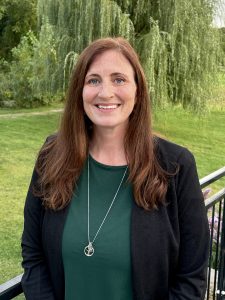
Caroline Morrissey

WEST SPRINGFIELD — West Springfield native Caroline Morrissey has been named the first executive director of the Irish Cultural Center of Western New England (ICCWNE), bringing with her a wealth of global experience and a deep passion for Irish heritage.

Morrissey, a Colby College alumna, earned her master’s degree in international administration with a policy focus from the University of Denver. She spent nearly a decade working in post-conflict zones across Africa, most recently serving with President Carter’s the Carter Center in Liberia, before returning to Western Mass. just before the pandemic.

Since returning, she has been an active member of the ICCWNE’s events committee, where she founded the new book club — a now-thriving literary group that she continues to moderate monthly. In summer 2024, she took on a larger leadership role by joining the board of directors.

“It’s a privilege to serve as the ICCWNE’s first executive director, and I look forward to building on the strong foundation created by so many dedicated volunteers while expanding the ICCWNE’s reach, programs, and partnerships across Western New England,” Morrissey said.

The newly established executive director position is made possible in part through the support of the government of Ireland. Serving as the ICCWNE’s chief administrator, the executive director will oversee daily operations, guide the implementation of the strategic plan, and expand cultural programming and community reach.

ICCWNE President Sean Cahillane welcomed Morrissey to this new position, recognizing her dedication and breadth of experience.

“Caroline’s passion for cultural engagement, combined with her extensive international work and deep Irish roots, make her a tremendous addition to our leadership team,” Cahillane said. “She has already contributed so much to the ICCWNE, and we’re thrilled to have her guiding us into the future.”

Executive Vice President Ed Sullivan added that “the addition of Caroline to the ICCWNE as the executive director could not come at a better time. Caroline’s experience, along with her energy and passion to advance the Cultural Center as a local, regional, and international hub, is impressive. We are excited to have her on board.”

A lifelong traveler who has visited 50 countries, Morrissey takes immense pride in her Irish heritage, with family ties to County Galway, Westmeath, and Wexford. She is also the proud new mom of Mae, a beloved presence at ICCWNE and likely its youngest patron.

Daily News

EASTHAMPTON — Matthew Sosik, president and CEO of bankESB, is kicking off the bank’s 2025 Neighbors Helping Neighbors fundraising drive to help support local food pantries.

This marks the fifth year of the bank’s annual appeal, which invites bank customers, employees, and community members to donate money between Oct. 1 and Oct. 31 to help fight food insecurity. All donations up to $2,500 per customer will be matched dollar for dollar by bankESB, and the total raised will be divided among participating food pantries across Western Mass. in communities the bank serves. In 2024, through contributions and matching donations, the campaign raised $28,000, and since its inception, it has donated $137,000.

Donations of any amount are encouraged. As an added incentive to give, the bank offers those who donate the opportunity to enter a drawing for a $25 gift card, which will be awarded at each of its 11 locations.

“Our Neighbors Helping Neighbors programs exemplifies how communities can come together to help others in need,” Sosik said. “bankESB is proud to lead this annual giving tradition. We thank everyone who selflessly gives each year.”

Those who wish to participate have until Oct. 31 to make their donations. Checks should be made payable to “bankESB Neighbors” and can be dropped off at any bankESB branch or mailed to Margaret Prendergast, bankESB, 36 Main St., Easthampton, MA 01027.

A total of 14 food pantries will be supported this year, including Best Life Food Ministry, Agawam; BUCC Helping Hands Cupboard Food Pantry, Belchertown; Lorraine’s Soup Kitchen, Chicopee; Easthampton Community Center Food Pantry; Easthampton Congregational Church Food Cupboard & Oasis Kitchen; Food Bank of Western Massachusetts, Chicopee; Hadley Food Pantry; Hilltown Food Pantry, Goshen; Margaret’s Pantry, Holyoke; Neighbors Helping Neighbors Inc., South Hadley; Northampton Survival Center; Not Bread Alone, Amherst; Southampton Community Cupboard; and Westfield Soup Kitchen.

Daily News

NORTHAMPTONU.S. News & World Report has once again recognized Smith College as a leader in access, affordability, and academic excellence. In its 2026 Best Colleges rankings, Smith is ranked 10th for Best Value and tied for 13th among National Liberal Arts Colleges.

The Best Value ranking highlights colleges that deliver outstanding academic quality at an affordable cost, taking into account the percentage of students who receive financial aid and the average net price of attendance. Smith is one of a handful of liberal arts colleges that meets the full demonstrated need of every enrolled undergraduate with financial aid packages that include grants and no loans.

This year, U.S. News evaluated more than 1,700 institutions using up to 17 measures of academic quality and graduate success. Out of 207 liberal arts colleges assessed, Smith placed fourth among 12 Massachusetts institutions in its category. In the Best Value list, Smith ranked third among the eight Massachusetts colleges recognized.

Cover Story

Getting the Band Back Together

Paul Silva

Paul Silva

They’re calling it VVM 2.0.

And that nickname for a new initiative called Innovate413 says a lot, said Paul Silva, who will be leading this effort to spark new, tech-based startups in the region, while not repeating some of the mistakes of the original VVM, Valley Venture Mentors.

Chief among them is getting into the real estate business, said Silva, noting that he was president of VVM when many of its board members pushed for a physical presence, and got one in the form of a building on Bridge Street in downtown Springfield that now bears no trace of the agency, which exists essentially on paper as an affiliate of the Western Massachusetts Economic Development Council, but hasn’t been active for years.

“One of the things that killed VVM was getting that space, because then you become a landlord, and then you’re tied to all the challenges of having space, as opposed to being focused on entrepreneurs — we’re not doing that again,” said Silva, quickly moving past the problems that visited the once-impactful nonprofit and focusing on the positive energy and dozens of startups it fostered in its better days.

It was this energy — and startups nurtured by VVM, such as Northampton-based Machine Metrics, and the critical need for more — that prompted Steve Davis, a director with the Irene E. and George A. Davis Foundation, to reach out to Silva and commence a dialogue about creating a new engine for fueling startups in the region.

These talks would eventually lead to the creation of Innovate413, what Silva calls a new kind of venture studio, one designed, according to the recently launched website, “to help bold ideas grow, connect founders to game-changing partners, and build the next generation of employers right here at home.”

“It doesn’t take a rocket scientist to realize that there’s trouble when big companies are shrinking and there aren’t any new companies being born … that’s not going to be great for us 20 years from now.”

With $150,000 in seed money from the Davis Foundation and another $100,000 from the MassMutual Foundation, Silva explained, Innovate413 will seek to foster startups and put them on the path to success by providing what he called “an unfair advantage.”

Elaborating, he said this advantage will come in two forms — access to potential customers, meaning large regional employers that will talk about problems facing them and all those in their industries, and access to the latest artificial intelligence and product development techniques.

“When you’re in Silicon Valley or in Boston, you have access to that stuff, but the vast majority of the country doesn’t,” he noted, adding that access, in this case, comes largely from the Center for Data Science and Artificial Intelligence (CDS) at the Manning College of Information and Computer Sciences at UMass Amherst.

“This isn’t just an ivory tower institution — they actually work with the business community,” said Silva, adding that CDS is one of many catalysts that will work with startups through Innovate413 and help provide them with that unfair advantage.

Machine Metrics, profiled in this 2015 edition of BusinessWest, is an example of the kind of tech-based startup that Innovate413 will look to cultivate.

“Most programs have mentors — we’ve learned that we must go further,” said Silva, noting that these catalysts are businesses and organizations with pressing challenges and powerful networks. Early catalyst partners include the CDS, manufacturers such as Belt Technologies and OMG, the Human Services Forum, and PixelEdge, which builds software to give business leaders a competitive edge (more on that later).

Access to these catalysts can give entrepreneurs the equivalent of a running head start, he said, adding that startups will need any advantage they can get to move off the ground and then become scalable.

For this issue, BusinessWest talked with Silva about Innovate413, its importance, its mission — and how it will carry it out.


Bringing Back the Magic

As he discussed all that, Silva stressed that this agency is itself essentially a startup, one that, as noted earlier, has been given some seed money to solve a problem.

“I said, ‘look, I’m going to practice what I preach — here’s a small amount of money to try a new way; how do we do things in a way that will be more sustainable and engaging for the region?’” he said, summing up what he told those funding this pilot program. “‘And we should be able to figure out if we’re on the right track within a year; if not, you shouldn’t keep funding it. If we are, great — I’ll come back and ask for more money.’”

He emphasized that the need for an agency focused on fostering startups, and the need for that agency to succeed, is clear — and pressing.

“Steve Davis and I were commiserating on the tragedy of what’s happened to the entrepreneurship ecosystem since VVM’s demise,” he explained. “It’s on the order of 5% as many scalable startups being generated as there used to be.”

Elaborating, he said the region was generating as many as 50 scalable startups a year through VVM, and now, there are maybe a handful.

“Meanwhile … big companies are relocating jobs, and there’s not a lot of stories about companies moving tons of jobs to this area — it happens, but the trend has not been good,” Silva noted. “It doesn’t take a rocket scientist to realize that there’s trouble when big companies are shrinking and there aren’t any new companies being born … that’s not going to be great for us 20 years from now.

“So, Steve Davis asked me if I’d consider putting together a proposal, and a team, to bring the magic back,” he went on, adding that the proposal has become Innovate413, and in many respects, he is putting the band back together — meaning many of the mentors and supporters in the business community that made the original VVM so successful.

But Silva wanted to stress what’s different about this agency, beyond the real estate factor. To do that, he talked about what’s he’s learned from other startup-related agencies, such as MassChallenge, about what has made them successful.

“They have to find a way to create an unfair advantage for their startups that’s tied to the local economy,” he told BusinessWest, adding that this generally comes from access to customers — specifically, a pilot customer that can help a startup get off the launch pad.

“We’re bringing in big regional employers to have them talk about the problems they and their industry are facing, so that entrepreneurs won’t be coming up with some random idea and having no idea if anyone gives a crap,” he explained.

“We’re bringing in big regional employers to have them talk about the problems they and their industry are facing, so that entrepreneurs won’t be coming up with some random idea and having no idea if anyone gives a crap.”

“Instead, they’ll be someone with pain and a budget sitting across the table from me, who, as long as I’m nice, will go out for coffee with me,” he went on, assuming the role of an entrepreneur. “And if I make progress, they’ll keep going out for coffee with me, and they might even become my customer.”

To drive home the importance of such encounters with catalysts, he related the story of Machine Metrics.

“They stood up at a VVM meeting and said, ‘we make software that makes factories run more efficiently,’” Silva recalled. “And Al Kasper said, ‘I have a factory, and I’d like it to run more efficiently.’”

Kasper, then CEO (now retired) at Westfield-based Savage Arms, became sufficiently impressed with what he saw and heard, and Savage became the pilot customer for Machine Metrics, Silva went on, adding that Kasper introduced the team to its eventual second customer.

“For a startup, you’ve got to get that pilot customer in a narrow window of time,” he continued. “Otherwise … you’re dead. No one’s going to want to work with you. You’re stale; you’ve been around too long.

“So, we’re going to cheat,” he continued, adding that, by bringing in large employers with pain of some form, entrepreneurs can find problems to solve — and often realize that the solution is something they’ve been working on, or at least thinking about.

“Entrepreneurs can see if there’s something they can be passionate about, or maybe they were thinking about a solution that could solve a variety of different problems. And now they find … ‘back when I worked in healthcare, we solved this problem over and over again. These guys in manufacturing have the same problem; they just use different nouns and verbs. I’ll go work on that.’”


Starting Something

Such encounters will be one of the main thrusts of Innovate413, which will start to ramp up this fall — with events with names such as ‘idea jams,’ ‘startup sprints,’ and ‘hackathons’ — while also giving entrepreneurs exposure to cutting-edge AI and product development techniques through the AI center at UMass and PixelEdge, which Silva serves as chief innovation officer.

“The CDS and PixelEdge are donating the training, skills, and consulting to any startup that gets into the program so they can now have access to the most modern tools,” Silva explained, adding that access to such resources can help entrepreneurs dramatically reduce the time and expense of bringing a product or service to market.

“These days, there’s a number of situations where you don’t need a technical co-founder to get off the ground. You can use AI to build you an ugly, minimally viable product to get off the ground; you can use AI to let you do the thing that would have taken five people before. You still need the humans — humans working really hard — but if there’s one thing startups don’t have, it’s a lot of people, because they’re broke. This lets them magnify their capabilities.”

Overall, Innovate413 is a hybrid of many different models within the nation’s entrepreneurial ecosystem, said Silva, adding that several elements are being borrowed from DeltaClime VT, an accelerator based in Burlington, Vt. that serves startup and seed-stage ventures focused on climate economy innovation across multiple industries.

Among other initiatives, that agency puts entrepreneurs in front of utility companies to help identify solutions for that sector, he noted, adding that companies from across the country gather in Burlington for that opportunity.

As for events, programs are slated for early this fall at UMass Amherst, Mount Holyoke College, and Western New England University, he said, adding that these will likely include some gatherings with large employers, ase well as hackathons, which he likened to inventors’ contests.

“They usually take place over the course of a weekend,” Silva explained. “You bring together a lot of engineering-type people, you give them some tools, you talk about some types of problems, and they basically spend the entire weekend hacking — trying to build something to solve that problem.”

From there, the goal will be to turn that solution into a business, he said, adding that it’s a leap to go from developing technology to creating a startup and enrolling in an accelerator program to bring it to the market.

Efforts to facilitate such leaps are an element of the entrepreneurial ecosystem that has been mostly missing for the past several years, he noted, adding that Innovate413 was created to close the gap and grow the startup population in the region.

As with any startup, success is anything but assured, but Silva says the problem has been identified, and he believes he has a possible solution. As he said, we’ll certainly know more in a year.

For now, he’s getting the band back together. There will be a different sound, though, one focused on providing that much-needed unfair advantage.


 

Special Coverage Tourism & Hospitality

Cool Happenings


Western Mass. is known for its wide range of tourist destinations and attractions, but the fun doesn’t have to end once the weather cools down. In fact, thanks to the perennial popularity of Halloween with families, October is one of the most lively months on the calendar for fun in the 413. Here are eight ways to enjoy the season.


The Great Halloween Drive-Thru

1911 Poquonock Ave., Windsor, CT

thegreathalloweendrivethru.com

The Great Halloween Drive-Thru is a unique family- and kid-friendly attraction, conveniently located next to Brown’s Harvest Farm in Windsor, Conn., just 15 minutes from Hartford and 25 minutes from Springfield. Visitors stay in their vehicles for a 45-minute journey through a farm full of spooky holograms, projections, and special effects. The Great Halloween Drive-Thru is not scary. There are no live actors and no jump scares, making this an ideal attraction for families with children. Spooky fun without the scare, the attraction draws visitors from all over Massachusetts, Connecticut, and New York. The Great Halloween Drive-Thru is open Fridays, Saturdays, and Sundays in October from 6:30 to 9:30 p.m., with the last ticket sold at 9 p.m. Admission is $30 per carload.


Hancock Shaker Village

1843 West Housatonic St., Pittsfield, MA

hancockshakervillage.org

With 20 historic buildings and a working farm and garden, Hancock Shaker Village is open April through December for self-guided tours, demonstrations, talks, and programs. Admission is $8 to $20, with children under 12 free. On Oct. 17, 18, 23, 25, and 30, the village offers the Haunted Hancock Tour at 7 p.m. ($30 additional cost). Guests can walk the dark halls of the Brick Dwelling and hear about all the haunted stories of this old building. For the younger set, Haunted Hancock for Kids (Oct. 18 and 25, 5 p.m.) is a tour of Shaker ghosts and mystery especially designed for kids ages 8-12 (and at least one adult companion). The 45-minute walking tour ($10-$15) includes a spooky walk through the Village and a visit to the Brick Dwelling. Finally, included in the Hancock admission is the Halloween Pumpkin Extravaganza at the Village on Oct. 18, 10 a.m. to 4 p.m. Guests are invited to wear a costume, trick or treat through the Village, meet Valerian the Garden Witch, and decorate a pumpkin.


A family enjoys pumpkin picking at McCray’s Farm.

McCray’s Farm

55 Alvord St., South Hadley, MA

mccrays-farm.com

McCray’s always gets its terror on in the fall, and this year’s Fear on the Farm spectacle includes the Monster Mash Haunted Hayride, Massacre Manor, and the Diagnostic, Operations, Nexus Genetic Research Facility (DONGRF). The farm is open every Friday, Saturday, and Sunday in October. The ticket box office opens at 6:30 p.m., and the haunted attractions open at 7 p.m. General admission is $30, and the fast pass option (to skip to the front of the line) costs $55, available online only. McCray’s also offers pumpkin hayrides every day from 10 a.m. to 5 p.m. The ride to the pumpkin patch costs $5, and the pumpkins range in price depending on size.


Mike’s Maze at Warner Farm

23 South Main St., Sunderland, MA

mikesmaze.com

Visitors to Mike’s Maze, now celebrating its 25th year as one of the country’s most recognized corn mazes, will encounter activities, games, and amusements to entertain the entire family. Every year, the farm concocts a new maze, along with themed games that will challenge guests to solve puzzles and problems and guide their exploration through the corn. Outside the maze, the attractions include a horse-drawn wagon ride, potato cannons, pumpkin picking, and lunch at the Corn Café. Young kids will enjoy a playground featuring a giant double drain-tube slide, a jump pad, a tractor tire jungle gym, and giant games. Older kids and adults can race around the track in pedal carts at Dave’s Derby. And folks love to check out the view of the maze from the perspective of a giant walk-in camera obscura. General admission ranges from $10 to $14 and is free for kids 4 and under. The site is open through Nov. 2, Fridays from 11 a.m. to 5 p.m. and Saturdays, Sundays, and Columbus Day from 9 a.m. to 5 p.m.


The Mount, Edith Wharton’s Home

2 Plunkett St., Lenox, MA

edithwharton.org

The Mount is a turn-of-the-century home, designed and built by Edith Wharton in 1902. Today, this historic landmark is a cultural center with a robust year-round calendar of events. On the Ghost Tour of the Mount (selected Thursdays, Fridays, and Saturdays in October; see edithwharton.org/visit/ghost-tours for a full schedule and reservations), guides lead guests through the darkened halls of the Mount, sharing tales of the many eerie encounters that have been reported there for years. Ghost Tours last approximately two hours and include a half-mile walk — rain or shine — between buildings on the Mount’s campus. This tour contains adult content that is not appropriate for young audiences, and children under 12 will not be admitted. Fortunately, families may also choose a Ghost Tour for Kids on Oct. 3, 24, or 30.


One of the performers lurking in a scare zone at Six Flags New England.

Six Flags New England

1623 Main St., Agawam, MA

sixflags.com/newengland

On weekends and select days through Nov. 9, the annual Fright Fest promises plenty of thrills and scares on weekends and select days through Nov. 2. Fright Fest features more than 20 attractions, including five haunted mazes: Nightmares, Terror Tales, Slasher Circus 3D, Midnight Mansion, and Camp Killamore. Guests will also encounter seven immersive scare zones located throughout the park, where creatures lurk in the fog and sinister performers emerge from the shadows. Each zone delivers its own brand of fear, from a toxic wasteland to a city overrun by demons, and even a carnival of sinister clowns. Live shows include Midnight Uprising, The Awakening, Mort’s Used Coffins, and Love at First Fright. Park admission is $39, and entry into the five haunted mazes is an additional $24.


Sonny’s Place

349 Main St., Somers, CT

sonnysplace.com

Halloween at Sonny’s takes place throughout October. In addition to more than a dozen year-round attractions, Sonny’s offers a pair of seasonal highlights. Haunted Mini Golf costs $18 per person and features terrifying themes and live scare actors roaming the course from sundown to 10 p.m. every Friday and Saturday through Nov. 1. In addition, the Trick-or-Treat Trail is a chance for kids to trick-or-treat at Sonny’s. Kids can purchase a bag and punch card ($6) and visit highlighted attractions to collect a prize or candy at each one. The trail is open Friday through Sunday during operating hours.


An illustration used in the “Witch Panic!” exhibit at the Springfield Museums.

Springfield Museums

21 Edwards St., Springfield, MA

springfieldmuseums.org

Through Nov. 2, the Wood Museum of Springfield History is showcasing an exhibit called “Witch Panic! Massachusetts Before Salem.” Forty years before the infamous trials in Salem, fear gripped the small settlement of Springfield. Neighbors whispered about Mary and Hugh Parsons as rumors simmered for years, exploding into hysteria that eventually consumed the town. “Witch Panic!” dives into the daily lives of the couple, examining the circumstances that led to their 1651 accusation and arrest for witchcraft. Guests can learn about the folklore surrounding witches, like their association with broomsticks, black cats, and cauldrons; design their own ghoulish familiar, a small creature believed to help witches; and review the evidence of the Parsons’ witchcraft as a member of the jury and determine their innocence or guilt. Admission to all five Springfield Museums ranges from $13 to $25, with children under 3 free.


Wistariahurst Museum

238 Cabot St., Holyoke, MA

wistariahurst.org

The 19th-century mansion and gardens at Wistariahurst comprise a cultural center that engages with the community and hosts exhibitions, performances, and private events throughout the year. October offers two seasonally appropriate events. Cemetery Tours at Forestdale Cemetery will take place on Oct. 11. Guests will discover all there is to know about living and dying in Holyoke from narratives of the people who now find solace in these hallowed grounds. Four tours kick off between 3 and 4 p.m., and the cost is $15. Then, on Oct. 15, the Darkened Hallways Tour (5:30 p.m., also $15) is a chance to get to know Wistariahurst Museum after dark as guests are led through its halls by candlelight.

Construction Special Coverage

Looking Up

A finished project from Sexton Roofing & Siding.

A finished project from Sexton Roofing & Siding.


The construction industry remains one marked by both challenge and opportunity — and that goes for businesses that have been around for just a few years, or many decades.

In the former group is Sasha Wilde, who bought Sexton Roofing & Siding two years ago and has continued to grow the Hatfield-based business with a mix of residential roofing projects — the company’s bread and butter — and other services, including siding, windows, and exterior doors.

“We’re still doing all of that, making sure we can provide clients with a seamless experience. There’s a huge amount of opportunity,” she told BusinessWest.

“Last year was pretty down across the industry,” Wilde noted. “There was a hangover from COVID. So many people had accelerated home improvement projects during COVID, and last year, it seemed like everyone took a breath. And with the political climate uncertain, they didn’t want to spend as much money. This year, we’ve definitely seen people’s willingness to pull the trigger on projects. That’s been really helpful for us.”

“So many people had accelerated home improvement projects during COVID, and last year, it seemed like everyone took a breath. And with the political climate uncertain, they didn’t want to spend as much money. This year, we’ve definitely seen people’s willingness to pull the trigger on projects.”

In the more venerable category is Mowry & Schmidt in Greenfield, which has been in business for the past 78 years and is also extremely busy.

“I don’t see anything slowing down in the near future, which is a good thing,” co-owner Bob Provost said. “We’re usually trying to finish up some of the big spring, summer, and fall projects before the winter, but we’re just rolling right through. I don’t see a slowdown.”

The firm takes on a robust mix of new construction and renovation work, typically about 60% to 70% on the commercial side, with the rest residential, he explained, a diversity that buffers the company against industry trends.

Mowry & Schmidt is building a new ice hockey arena at Northfield Mount Hermon School.

“The last couple years, we’ve seen a steady flow of new home construction and higher-end kitchens and bath renovations, but the commercial volume is still a little higher. If the economy seems to affect one type of building and not the other, we’ve been able to adapt and make that transformation back and forth. It’s definitely key to staying busy, no doubt.”

Two of Mowry & Schmidt’s more interesting current projects are the construction of an ice hockey arena at Northfield Mount Hermon School and the renovation of the historic Leavitt-Hovey House — the former home of Greenfield Public Library — into a location for Greenfield Savings Bank.

“That’s a historical building, so there are a lot of facets there,” Provost said. “You get ready to go in a direction, then hold up, wait a little bit to get clarifications from the historical society, wait for approval, continue on. But it’s going well. It’s a nice property to work on.”

Clearly, despite challenges ranging from supply costs to workforce needs, contractors in Western Mass. are finding plenty of opportunities to grow their business.


Growth Opportunities

One of those is Keiter, a 17-year-old firm based in West Springfield that recently announced it is expanding into Berkshire County with a physical presence in that region, specifically the Clock Tower Business Center at 75 Church St. in Pittsfield. This marks the company’s second expansion in two years.

The move made sense, CEO Scott Keiter said, with past clients in the Berkshires including Mass Audubon Pleasant Valley Wildlife Sanctuary, Bousquet Sport, Premium Waters, Berkshire Medical Center, the town of Lenox, Saint Patrick and Raphael Church, as well as several residential clients. 

“Since we started doing a more regimented and strategic interview process, we’ve been able to find better people. We’ve weeded out the folks that look good on paper but are maybe not so aligned with the way we think.”

“For several years, we’ve had the opportunity to work with incredible clients and professionals throughout the Berkshires, and it felt like the right time to officially set roots,” he noted. “We’re proud to continue to grow in a region where we’ve already begun to build strong partnerships.”

Wilde said trying to grow her company is complicated by a tight potential worker pool, a persistent problem across the construction field.

“The home improvement business has been great, but not without its challenges, since we are trying to grow and scale this business. Scaling sometimes comes with its own set of challenges, one of them being just finding great people to add to the team,” she said, adding that she’s dealt with some “hiccups” in that area, but still saw her staff expand to nine this year, in addition to the subcontracting teams.

“I tried hard to get referrals from people we know, and we listed on the major sites like ZipRecruiter and Indeed. But it really comes down to the interview process,” Wilde told BusinessWest, adding that the way she handles that process has changed in positive ways.

Sasha Wilde (right) has grown her team to nine at Sexton Roofing & Siding — and wants to grow it further.

“The first interview anyone does with the team, I wind up talking about our company’s mission and core values, and whether they’re a cultural fit with us,” she explained. “Since we started doing a more regimented and strategic interview process, we’ve been able to find better people. We’ve weeded out the folks that look good on paper but are maybe not so aligned with the way we think.”

And finding talent that will stick is important in an industry where retirements continue to outpace young, incoming talent, she noted. “When I think about fellow business owners in construction, their people are approaching retirement age, and from what I can tell, there’s a shortage of actual people to do the work.”

Provost said Mowry & Schmidt typically employs between 13 and 15 people in the field and three or four more in the office.

“We’re pretty fortunate. We’ve got our employees that have been with us for quite some time. But it does create some challenges looking down the road. When we have to bring in new people, the new hires just aren’t there. I still have to rely on subcontractors, and you want them to be a good extension of what you’re offering in-house; you want to make sure that the subcontractors you bring in are equally good as our employees. There’s a definite shortage of construction trade workers out there.”

To that end, Provost has been involved with Franklin County Technical School to cultivate young talent and interest them in construction careers.

“We’ve brought in some work co-op kids. It’s a way to start them at a young age and keep them going. But it’s rough. Kids come out of school, and they’re not sure what they want to do.”

The other major challenges of the past few years, supply costs and availability, have settled down to an extent, Provost added, although tariffs have thrown in a new wrinkle.

“Supply of materials has gotten better,” he said. “Windows and doors and cabinets have caught up, but it can be challenging depending on certain materials.”

One new challenge is private equity firms moving into roofing, Wilde said.

“In prior years, they were focused on other trades, but they are now honing on roofing. We’ve had a couple of new competitors this year backed by private equity, and we’re trying to stay relevant and outmaneuver them in this market. But they have an unlimited marketing spend — I can’t spend that kind of money.”

One key is focusing on the local angle — not just being based in Western Mass. and doing projects here, but being involved in the community, she said.

“That’s how I think we’ll maintain our competitive edge over those companies. Western Mass. wants to take care of Western Mass. and support people who are here. We are your neighbors.”


Spreading the Word

Another key to growth is improving internal processes and communication with clients, so everything turns out the way the client expects with no surprises, Wilde noted.

“We’ve had a lot of learning around what documents to create to make sure that the jobs are communicated very clearly, to translate what’s in the homeowner’s head to what they’re building, and making sure that happens. We’ve done a lot of improving in this area.”

The team also tries to communicate with customers’ neighbors about work on their street, which is another chance to make connections; meanwhile, Sexton gives a discount on projects when the client keeps its yard sign up for four months — another way to raise the company’s visibility in an increasingly competitive market.

Provost said he takes pride in having a good base of repeat customers, which is essential to landing opportunities and responding to demand.

“We’re fortunate to be going strong here. We’re facing some uncertainties, but there’s a lot of work out there,” he said. “People are being more selective in the process of who’s going to do the work for them. Customers are more savvy these days, and they’re looking to make sure that the people that are working for them are qualified.”

Accounting and Tax Planning Special Coverage

Fringe Benefits

By Lauren Foley, MSA

As Dec. 31 approaches, an important consideration for employers is proper payroll reporting. W-2s must be sent to employees by Jan. 31, resulting in a very short window in which to ensure that final payroll is correct for tax reporting. In addition to compensation, employers must be sure that benefits are properly reported, including fringe benefits.

Fringe benefits are considered compensation and included in employee wages, unless they qualify for exclusion (i.e., are nontaxable and omitted from employee wages). However, if the recipient is a ‘2% shareholder’ (i.e., an owner and employee) of an S corporation, fringe benefits that otherwise qualify for exclusion are included in wages.


What Are Fringe Benefits?

A fringe benefit is a form of pay, including cash, amounts paid on behalf of an employee (e.g., health and life insurance, retirement and health accounts), or in-kind (e.g., property, meals, company cars), in addition to stated pay for the performance of services.

The Internal Revenue Code provides that fringe benefits are taxable, excluded, or partially taxable, depending on the type of benefit. If a fringe benefit is excluded or partially taxable, it must be ‘qualified,’ i.e. meet strict requirements to qualify for this preferential tax treatment. Even if excluded or partially taxable by employees, employers may deduct the cost of fringe benefits.

Lauren Foley

Lauren Foley

“The Internal Revenue Code provides that fringe benefits are taxable, excluded, or partially taxable, depending on the type of benefit. If a fringe benefit is excluded or partially taxable, it must be ‘qualified,’ i.e. meet strict requirements to qualify for this preferential tax treatment.”


What Are S Corporations?

Qualifying corporations that make S elections under the Internal Revenue Code are not separately taxed, as regular (C) corporations are. S corp status allows corporations to avoid double taxation by passing income, losses, and deductions to its shareholders, who report these items directly on their tax returns. Often, S corp shareholders are also employees.

Fringe Benefits and S Corp 2% Shareholder Employees

Due to the overlap between owner and employee status, special rules apply to S corp shareholder employee fringe benefit taxation and reporting. These rules apply to shareholders owning 2% or more of S corp stock (2% shareholders). Even if excludable by regular employees, 2% shareholder benefits are generally taxable and must be reported on the shareholder’s W-2. The following benefits are treated differently for 2% shareholders:

• Health insurance premiums are taxable and included on 2% shareholder employee W-2s. Regular employees’ W-2 wage does not include the employer paid portion of their health insurance.

• Retirement plan contributions are subject to self-employed contribution rules for 2% shareholder employees. These rules allow contribution of 25% of net earnings from self-employment. Retirement plan contributions for regular employees are non-taxable if they are within limits.

• Dependent care assistance from an employer is tax-free up to $5,000 for regular employees, while all dependent care benefits are taxable to 2% shareholder employees.

• Group term life insurance is entirely taxable to 2% shareholder employees, while life insurance is tax-free up to $50,000 coverage for employees.

• Health savings accounts are tax-free to regular employees but taxable to 2% shareholder employees.

• Unlike regular employees, 2% shareholder employees cannot participate in flexible spending accounts.

In addition, family members of 2% shareholders (e.g., spouse, children, parents) are also treated as 2% shareholders for fringe benefit purposes. That means any benefits they receive must follow the same tax and reporting rules as the ones given to the actual shareholder.

“Many S corporations are unaware of these rules and may face IRS adjustment if fringe benefits are not properly reported. If fringe benefits are omitted from W-2 reporting, the IRS may disallow related deductions, resulting in increased taxable income and potential penalties.”

Compliance and Planning

Many S corporations are unaware of these rules and may face IRS adjustment if fringe benefits are not properly reported. If fringe benefits are omitted from W-2 reporting, the IRS may disallow related deductions, resulting in increased taxable income and potential penalties.

If you are an S corp, planning to start an S corp, or a 2% shareholder employee, it’s important to review all the shareholders’ ownership percentages to determine the correct tax treatment of shareholder employee fringe benefits. The S corp should decide which benefits to offer and clearly communicate this information to its payroll provider, especially regarding shareholder benefits. Be sure to consult your CPA or refer to the IRS website for fringe benefit guidance.


Lauren Foley, is a senior associate at the Holyoke-based accounting firm Meyers Brothers Kalicka, P.C. This material is generic in nature. Before relying on the material in any important matter, users should note date of publication and carefully evaluate its accuracy, currency, completeness, and relevance for their purposes, and should obtain any appropriate professional advice relevant to their particular circumstances.

Community Spotlight Special Coverage

Community Spotlight

Developers are planning to transform the former Lakeside Inn into a boutique hotel and restaurant.

Developers are planning to transform the former Lakeside Inn into a boutique hotel and restaurant.


Christal Russo acknowledged that Wilbraham hasn’t historically enjoyed a reputation for being ‘open for business,’ as communities like to say.

And that’s understandable given its rural nature and status as one of the more desirable of Springfield’s bedroom communities.

But it has always welcomed businesses that enhance the quality of life there and meet the needs of its residents, said Russo, the recently named chair of the town’s resuscitated Economic Development Committee. And now, it is even more so, she noted, adding that the community has many strong selling points, ranging from a single tax rate to some developable parcels along busy Boston Road, to a recent vote to squelch a proposed meals tax.

And there’s two developments to either side of the town — new development on the site of the former Eastfield Mall and a planned rail station in nearby Palmer as part of planned east-west rail — that can be added to that list.

Meanwhile, the town has seen some real momentum when it comes to new business in recent years, from a Delaney’s restaurant and Domino’s Pizza to a new development in the center of town featuring a pizza restaurant, brewery, and several apartments, to the recent announcement by developers of plans to transform the former Lakeside Inn (which was home to several other restaurants in recent years and is now used as office space for a transportation company) into a boutique hotel that will include a high-end restaurant (more on this later).

“And we want to keep that momentum going,” said Russo, a project manager at MassMutual, adding that the Economic Development Committee, resurrected a few years ago, is committed to promoting the town’s assets and growing its business community.

“What we want to do as a committee is let the public know is that Wilbraham is open for business and we support our businesses,” she said, adding that the community is poised for additional growth. “We’re looking to better understand what we can do and what our businesses need so we can support them.”

Jim Rooney, chair of the town’s Planning Board, agreed, noting that the single tax rate and other measures taken recently — or not taken, in the case of the meals tax — should help efforts to sell the town to business owners.

“We have a few open storefronts and some land available for additional development. We’d love to be able to fill those spaces and bring some businesses here to develop some of our open parcels.”

As for redevelopment of the Eastfield Mall, a project called Springfield Crossing, a planned mix of retail, service businesses, and, eventually, housing, should create more traffic on Boston Road, which will not only benefit existing businesses there and elsewhere in town, but inspire more business owners and entrepreneurs to give Wilbraham a hard look, Rooney said.

“We would definitely think that, with the increased traffic, someone will be driving down and thinking, ‘this would be a great place for my business.’”

For this latest installment in its Community Spotlight series, BusinessWest takes an in-depth look at Wilbraham and the many forms of momentum being seen in the community.


Delivering Results

Paul Robbins remembers driving past the site of Post Office Park on Boston Road while it was under construction a quarter-century or so ago. “I was thinking to myself, ‘who’s going to want to move in there?’”

Well … he did.

Indeed, not long after the facility opened, Robbins, a principal with the marketing firm Paul Robbins Associates, left his offices in downtown Springfield after 20 years there and relocated to the park. It was a move of convenience, he told BusinessWest, adding that he had moved his family to Wilbraham a few years earlier, and it just made sense to put his business there as well, especially since there was a new business park in town. (He recently relocated his business to the Brewer-Young mansion in Longmeadow.)

Getting back to his original commentary and skepticism about the park, it was grounded in the notion that Wilbraham was somewhat of a remote outpost, business-wise, hard to get to from Springfield — and many other parts of the 413.

And it still is.

But Wilbraham and, more specifically, the Boston Road corridor have become home to a growing number of businesses across several sectors, including hospitality, retail, and the broad realm of health and wellness, bringing people from several nearby communities into town.

A redeveloped Eastfield Mall is expected to boost existing businesses in Wilbraham and perhaps inspire more entrepreneurs to want to call it home.

Indeed, the park has made the community more of a destination, as it now hosts a post office (hence the name), the Scantic Valley YMCA, Monson Savings Bank corporate offices, a few medical offices, a hair salon, a shredding company, and other ventures. Looking at what’s happened, Robbins said the park has helped the community shed that ‘outpost’ label, and there have been many new developments along that stretch since.

And there’s land at the site for additional development, said Russo, adding that new businesses along that corridor, and the prospects for more, are one of the main forms of momentum in the community.

Perhaps the biggest are the announced plans for redeveloping the former Lakeside Inn. Built on Nine Mile Pond in the 1940s as an inn and restaurant, it was always a popular destination, drawing diners and guests from neighboring communities and well beyond.

Wilbraham at a Glance

Year Incorporated: 1763
Population: 14,613
Area: 22.4 square miles
County: Hampden
Residential Tax Rate: $17.88
Commercial Tax Rate: $17.88
Median Household Income: $65,014
Median Family Income: $73,825
Type of government: Board of Selectmen, Open Town Meeting
Largest Employers: Baystate Wing Wilbraham Medical Center; Friendly Ice Cream Corp.; Big Y; Home Depot; Wilbraham & Monson Academy
*Latest information available

The hope is that the planned boutique hotel and restaurant — conceived by unrelated business owners Joe Sullivan and John Sullivan, owners of several ventures in the area, including Nathan Bill’s Bar & Restaurant and Boulevard Tavern and Grill in Springfield and East Village Tavern in East Longmeadow — will do the same.

“This is a really exciting development for the community,” Russo said. “It’s going to bring new life to a true landmark.”

Rooney agreed. “We’re extremely excited to see this come back as a restaurant — they’re looking to have lakeside dining — and a boutique hotel, small rooms to support activities like when parents come in for events at Wilbraham Monson Academy,” he said. “We’re really looking forward to this happening; it will be a great addition to the landscape.”

Plans call for a restaurant on the main floor, with eight guest rooms on the second floor and another six on the basement level. If all goes as planned, both components of the business should be completed by the fall of 2026.


You Can Get Here from There

Overall, Wilbraham, its officials, and its town meeting voters have taken several steps that are making the community more business-friendly, said Rooney, listing everything from that vote to reject a meals tax, which will provide a boost for the town’s growing roster of restaurants, to a measure allowing used car sales (something not allowed in town previously) as an accessory to an existing business.

The latter is a nod to changes in that business, Rooney noted, adding that most of the business involving the sale of used cars is done online, reducing the need for large lots full of cars.

“This measure will allow that kind of business to flourish in Wilbraham,” he noted, adding that it is indicative of efforts to facilitate business growth in the community.

And while such growth will largely be limited to the Boston Road corridor and the center of town, as it has been historically, there is room for more, said those we spoke with.

“We have a few open storefronts and some land available for additional development,” Russo explained. “We’d love to be able to fill those spaces and bring some businesses here to develop some of our open parcels.

There is already ample motivation for doing so, said Russo and Rooney, but those twin developments mentioned earlier — the reimagined Eastfield Mall, known as Springfield Crossing (just a few hundred yards from the Wilbraham line), and the planned rail stop in Palmer — might provide additional incentives.

Construction is well underway at Springfield Crossing, a 360,000-square-foot strip mall that will include Target, BJ’s, Hobby Lobby, PetSmart, Chipotle, Chick-fil-A, and other regional and national retailers. It expected to make that corner of Springfield a more popular destination, as it was decades ago when the mall was thriving, said Rooney, bringing traffic from all directions, including east, through Wilbraham.

As for the rail stop, it is expected to make the eastern portion of the 413 more accessible, and more attractive, to potential residents — and also to business owners looking to create ventures to support those residents.

These are just some of the reasons why Wilbraham is enjoying some momentum, and why leaders there believe it can generate more in the years to come.