Daily News

GRANBY — On Saturday, Nov. 15 from 11 a.m. to 3 p.m., Red Fire Farm will celebrate the seasonal harvest to help people prepare for the upcoming Thanksgiving holiday and keep the barn raising going for the future of the farm. It all takes place at Red Fire Farm at 7 Carver St. in Granby.

During this time of year, the harvest can be preserved for the colder days ahead. Visitors on Nov. 15 can taste two different hot autumnal soups and pick up the organic vegetable ingredients and recipes to make at home. There will also be workshops on the basics of lacto-fermentation with a focus on two types of sauerkraut made with cabbage from the farm. And everyone is invited to take tractor rides to the barn.

The schedule for the day includes soup tastings from 11 a.m. to 3 p.m.; a classic easy green cabbage kraut class at 11:30 a.m.; wagon rides to see the new barn construction and fields with Ryan Voiland at 12:30 p.m. and 2:30 p.m.; and a colorful sauerkraut with red cabbage, carrots, and onions class at 1:30 p.m.

Construction is underway just down the road in Granby to build the new barn, which will provide a new heart for the farm CSA and farm store after a fire took down the farm’s 100-year-old barn in February 2024. Despite a large state grant, which has helped get this barn about half-built, the current inflationary climate has caused a huge increase in construction costs that are exceeding the grant and insurance money by hundreds of thousands of dollars.

The farm’s supporters have started a fundraising campaign to raise $200,000 to help meet the gap, with $70,000 raised to date. These monies are essential to getting the new farm store barn built and operational for the 2026 growing season. Click here for more information and to donate.

Daily News

GREENFIELD — Community Action Pioneer Valley (CAPV), the federally designated anti-poverty agency for Franklin and Hampshire County, has been named a 2025 Health New England Well Worth It Award recipient at the Gold level for successful worksite health promotion. The award recognizes CAPV’s commitment to its employees’ overall health and its achievements in implementing health and wellness programs during the previous year.

An effective worksite wellness program can improve the well-being and productivity of the workforce while managing employee turnover, behavioral health concerns, and the rising cost of healthcare.

Whether encouraging those from different departments to get to know one another with cross-department lunch opportunities, offering prompts to encourage gratitude, or sharing wellness resources, CAPV aims to weave a thread of wellness through day-to-day agency life.

“The Well Worth It Award allows Health New England to recognize our employer groups who work hard to provide their employees the opportunity to focus on overall well-being, both personally and professionally,” said Katie Bruno, manager of Quality Improvement Programs at Health New England. “CAPV has demonstrated our mission of helping to improve the health and lives of the people living in our communities with its commitment to wellness in the areas of awareness generation, education, skills development, and self-confidence. We are excited to recognize CAPV for always being caring, thoughtful, and committed to helping employees thrive.”

Bernadette Bean, director of Human Resources at Community Action Pioneer Valley, added that “we’re honored to receive this recognition from Health New England. The HR team participated in a walking challenge. Our walking challenge was more than just steps — it was about building community among our staff and demonstrating that wellness is a priority at every level of our organization. This award reflects our commitment to creating a workplace where everyone can bring their best selves to the important work we do.”

Daily News

WARE — In response to the increasing needs of local families and seniors affected by the recent government shutdown, Country Bank announced donations of $160,000 to support food insecurity programs across Central and Western Mass.

As the bank kicks off its annual “Season of Difference” campaign, it is donating an additional $25,000 to both the Food Bank of Western Massachusetts and the Worcester County Food Bank. Earlier this year, each of these food banks received $100,000 as part of a $1 million pledge. Additionally, another $55,000 is being donated to local food pantries and $55,000 to senior centers throughout the region.

“With so many in our communities facing uncertainty and hardship, it’s more important than ever that we stand together,” said Mary McGovern, president and CEO of Country Bank. “These donations are one way we can help ensure that our neighbors have access to nutritious meals and the support they need during this challenging time.”

The “Season of Difference” campaign highlights Country Bank’s long-standing dedication to strengthening local communities through financial support, volunteer efforts, and compassionate leadership. Each year, the bank donates more than $800,000 to nonprofits that focus on food insecurity, education, housing, and community well-being.

“As a community bank, giving back is at the heart of who we are,” said Shelley Regin, chief Marketing and Community Relations officer. “This season, we are focused on making a meaningful difference for our neighbors and ensuring that those most affected by current economic challenges receive the help they need.”

Daily News

HOLYOKE — The Greater Holyoke Chamber is issuing an urgent appeal to the business community and all Greater Holyoke residents. With SNAP benefits discontinued for nearly half of the community, many families now face the prospect of food insecurity and serious financial distress.

“The chamber, as a proud representative of local businesses, the broader community, and as organizer of the Holyoke Farmers Market, recognizes our responsibility at the vital intersection where business and community meet,” it stated. “Now more than ever, we are counting on businesses, organizations, and individuals to join us in meeting this challenge. We are launching a food drive to provide immediate support and ensure local families have access to shelf-stable food and essential supplies during this critical time and going forward.”

The chamber is seeking donations of non-perishable food items, baby supplies, and toiletries. High-need items include beans, rice, grains, oatmeal, nut butters, canned fruits and vegetables, soups, pasta, sauce, shelf-stable milk, baby food, diapers, and toiletries. Monetary contributions (cash, check, or digital payments) are also welcomed, and every donation will be converted directly into non-perishable food or grocery store gift cards for local families in need.

Donations can be dropped off at the Greater Holyoke Chamber office by appointment or during regular business hours: Mondays from 10:30 a.m. to 6 p.m. and Wednesdays from 10:30 a.m. to 4:30 p.m. The chamber is also working to extend its hours for Thursday and Friday and add additional drop-off locations for community convenience, with updates to follow via social media and its homepage.

Daily News

WILBRAHAM — Spectrum is sponsoring the Wilbraham Senior Center’s annual Thanksgiving luncheon on Thursday, Nov. 13 from noon to 1 p.m. This event will bring together approximately 120 older adults to celebrate the season of gratitude and enjoy a festive holiday meal. In addition to the luncheon, Spectrum will announce a $5,000 donation to Friends of Wilbraham Seniors Inc. in support of programming for older adults.

“Spectrum’s commitment to supporting our senior community is truly commendable,” said Matt Villamaino, president of Friends of Wilbraham Seniors Inc. “Their sponsorship of our annual Thanksgiving luncheon and the generous $5,000 donation are not just acts of kindness, but essential contributions that enable us to enhance the programs and services we offer. This support helps us foster a welcoming environment where seniors can connect, engage, and thrive.”

Camille Joseph, group vice president, State Government Affairs for Charter Communications, noted that “Spectrum is honored to continue our support for organizations like the Wilbraham Senior Center, recognizing their invaluable contributions to our communities. Our sponsorship of the Thanksgiving luncheon and the $5,000 donation to Friends of Wilbraham Seniors Inc. reflect our ongoing commitment to fostering a sense of community and ensuring that older adults have access to meaningful social and recreational activities. We are proud to enhance the quality of life for the residents of Wilbraham and look forward to contributing to their well-being.”

State Rep. Angelo Puppolo Jr. added that “I am delighted to see Spectrum’s continued dedication to our senior community here in Wilbraham. Their sponsorship of the annual Thanksgiving luncheon and the generous $5,000 donation to Friends of Wilbraham Seniors Inc. are deeply appreciated. These contributions significantly enhance the resources available to our seniors, ensuring they have opportunities to connect and thrive within our community. Spectrum’s support exemplifies the spirit of giving that defines this season of gratitude.”

Daily News

Juliana D’Agostino

WILBRAHAM — Giombetti Associates announced the addition of Juliana D’Agostino as its administrative assistant. An integral part of the team, she supports scheduling, client communications, assessment logistics, and internal operations.

“Her energy, drive, and love for the organization make her a key contributor to the team’s success,” the company stated. “Whether she’s scheduling travel, coordinating Giombetti YOU-niversity programs, or supporting clients with assessment data, she keeps everything, and everyone, running smoothly behind the scenes.”

Before joining the team, D’Agostino interned as a human resources assistant at Glenmeadow, where she helped strengthen employee recognition and marketing initiatives. She also spent five years at Big Y, building strong customer relationships and sharpening her service skills.

“As our clients and programs continue to grow, Juliana keeps everything (and everyone) running smoothly,” said Ross Giombetti, president of Giombetti Associates. “Her professionalism, humor, and just the right amount of sass keep us grounded, organized, and always smiling.”

Known for her outgoing personality — her friends joke that social anxiety is afraid of her — D’Agostino loves connecting with people wherever she goes. She is a graduate of Western New England University, where she earned her bachelor’s degree, magna cum laude, in psychology.

“I’m passionate about understanding people and helping organizations thrive, so Giombetti Associates is the perfect fit for me,” she said. “I’m excited to continue contributing to a team that’s deeply committed to helping others grow both personally and professionally.”

Daily News

GREENFIELD — The city of Greenfield invites local and regional artists to help commemorate the 250th anniversary of the American Revolution through a new public art project that will bring history to life, right on the city’s sidewalks.

As part of the city’s MA250 Greenfield project, 10 sidewalk murals will be commissioned for downtown Greenfield and its environs. The murals will highlight the American Revolution and its ideals, Greenfield’s own revolutionary history, and the spirit of innovation that has long defined the community. This project is modeled after a highly successful 2024 sidewalk art project on abolitionist history in Greenfield which can be found at visitgreenfieldma.com/art-walk.

Artists selected for the project will receive stipends of $1,100 per mural, plus $100 for each design mockup. The murals will be unveiled in June 2026 as part of a series of guided walking tours led by local historians, to take place in June and July.

The call is open to all U.S. residents age 18 and older, with special encouragement for artists with Greenfield or Massachusetts connections, and those experienced in community-based and inclusive arts. Artists of all experience levels are welcome to apply.

An information session will be held via Zoom on Monday, Nov. 17 from 6 to 7 p.m. Registration is required, and pre-application materials must be submitted by Dec. 1.

For full details, including links to the artist call, a pre-application form, and information session registration, click here or visit greenfield-ma.gov and search ‘Artist Opportunity.’

Features

The Tables Are Turning
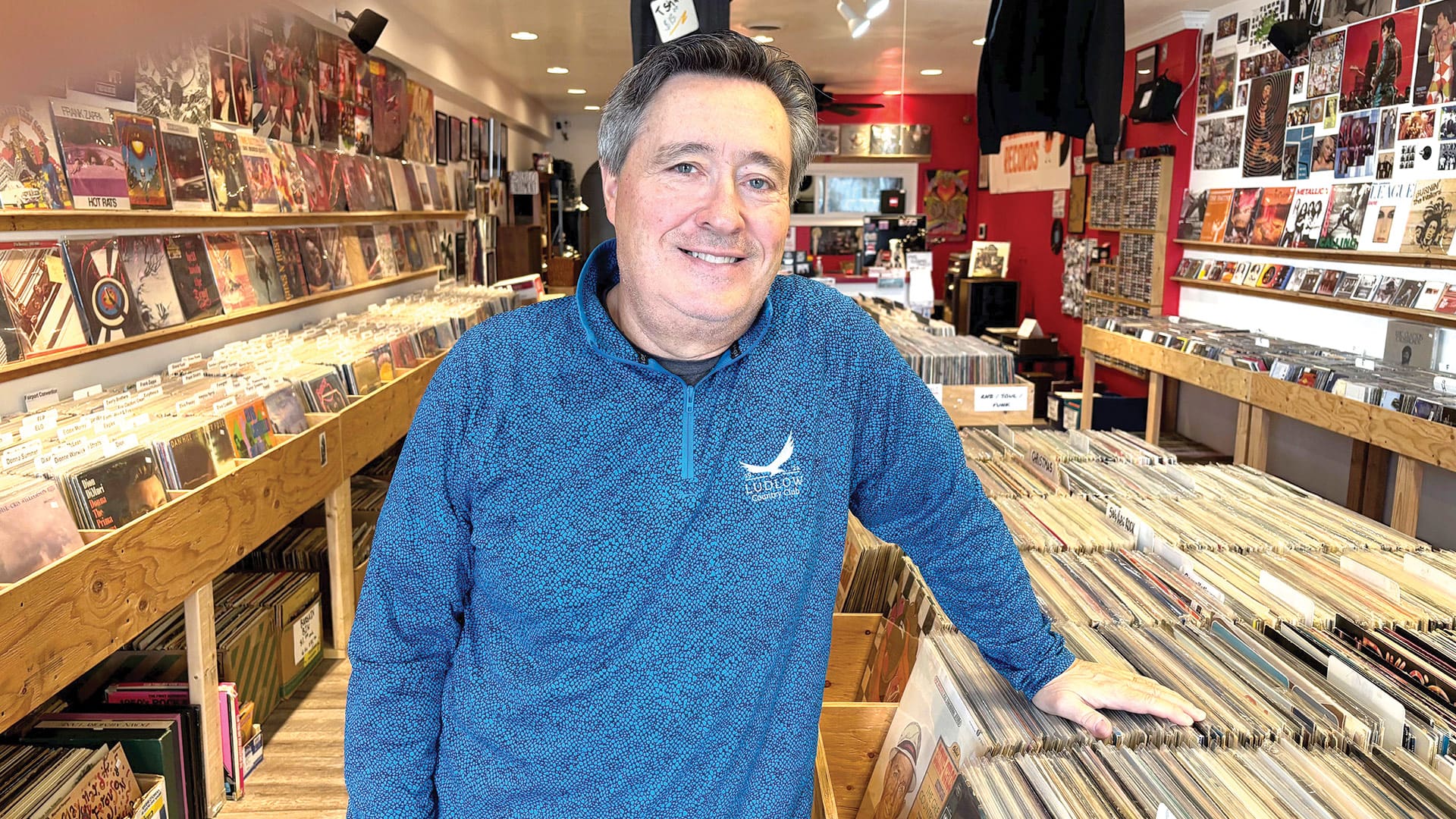
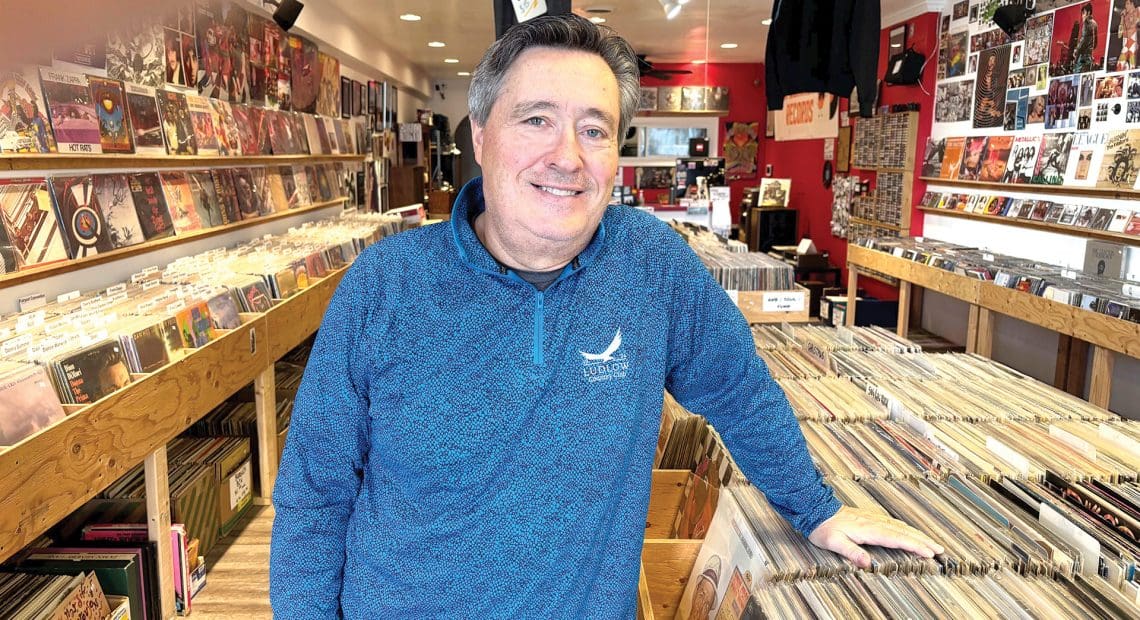
Bob Roccanti says vinyl is enjoying a resurgence among people of all ages.

Bob Roccanti says vinyl is enjoying a resurgence among people of all ages.


As he was explaining why vinyl has been staging a dramatic comeback over the past decade, Bob Roccanti stopped, reached into a box, and pulled out a Stevie Wonder album, circa 1972.

“Look at this … you buy this, you’ve got some artwork,” he said as he showed the cover. “And there’s lyrics, inside you’ve got some more things …a lot of these record albums tell a story.

“It’s a lot warmer than this,” he went on, holding up his cell phone and opining that this is just one reason why some Baby Boomers are rebuilding the record collections that filled their dorm rooms in the ’60s, ’70s, and ’80s and also why their children and even grandchildren are embracing vinyl — although Taylor Swift is probably the biggest reason there.

All this also explains Raspberries Records, a long-held dream and entrepreneurial gambit (although he says it’s not much of a gamble) for Roccanti, a retired wireless industry executive.

“You can put a record store anywhere, and they will find you.”

“It’s something I’ve always wanted to do — I’ve always been into music,” he said, adding that he opened his first location in Ludlow, where he lives and plays much of his golf, in 2022, and then expanded into a strip mall near the center of East Longmeadow roughly 18 months ago. Neither location is in a busy urban area, but they don’t have to be, he explained.

“You can put a record store anywhere, and they will find you,” he told BusinessWest, adding that ‘they’ means visitors from around the corner, halfway across the state, or even another state who arrive in person or go online to browse or find a specific item.

That list includes everything from a copy of the Beatles’ White Album — he generally has a dozen or more in the inventory that sell for $30 on average — to vintage band T-shirts; from blank album covers and frames to put them in to eight-tracks, tapes, and CDs; from 45s to vintage ’60s and ’70s stereo systems.

“We’re like the old Sears — we have good, better, and best, he said, pointing to a few stereos on the floor and on racks selling for between $500 and $1,000.

But the albums, new and vintage, are the big sellers. They cross all genres, and they’re being picked up people coming into stores or ordering them online, he said, adding that he ships out 10 to 12 a day on average.

“We get a lot of Baby Boomers in here, but we also get their children, and they think this is the coolest thing,” he said, adding that he believes this renewed interest in vinyl has legs and is not a fad.

For this issue, we talked with Roccanti about his venture, the record business, and the still-growing interest in vinyl.


Music to His Ears

As he talked with BusinessWest in the back room of the East Longmeadow store, Roccanti was surrounded by thousands of albums covering every genre and every letter of the alphabet.

Along the top row of shelves, many albums were separated by artist, with names written on tape along the bottom: Linda Ronstadt, J. Geils Band, Cat Stevens, Loggins & Messina, and the Beach Boys, among many others. For Boomers, these albums represent a trip in the ‘way back machine,’ while for the younger generations, it’s a new fascination and something more visual — and personal — than streaming music services.
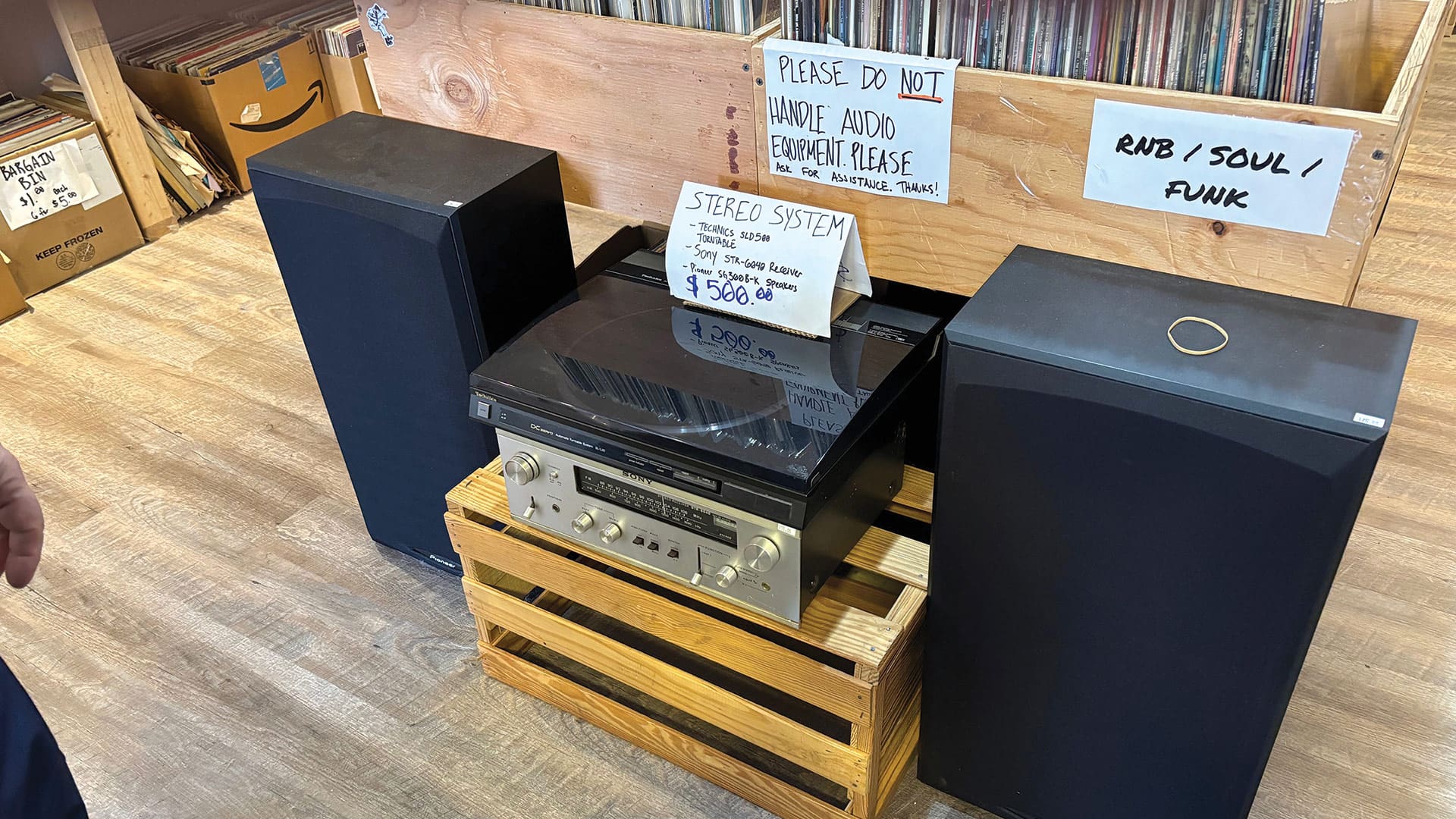
One of the ’70s-era stereo systems for sale at Raspberries.

One of the ’70s-era stereo systems for sale at Raspberries.

When asked where the 71,000 albums he has between the two stores came from, he said simply, “everywhere,” meaning everything from collections from other stores to area residents cleaning out attics and basements.

“A typical call would be, ‘we’ve got a bunch of records. We don’t use them anymore. They belong to my kids; I called the kids, and they said to just get rid of them. Before we take them up to the Goodwill or Salvation Army, we thought we’d give you a call.’”

And while people are still getting rid of their vinyl, others are buying it. When asked who, Roccanti said this runs the gamut as well.

“Collectors come in, other record stores come in and buy from us, people looking for something specific,” he said, adding that prices range from a few dollars to more than $2,000 for a rare funk album from the early ’90s.

“We’ve sold some old jazz albums for more than $1,000,” he said. “And then, you have some different albums that are unique in their own ways because they’re promo copies, or they printed very limited amounts of them, things like that.”

“We’ve sold some old jazz albums for more than $1,000. And then, you have some different albums that are unique in their own ways because they’re promo copies, or they printed very limited amounts of them, things like that.”

Roccanti anticipated all this when he conceptualized Raspberries. He said he started by visiting other record stores — and there are many of them, including maybe a dozen in the 413 by his count — and asking those behind the counter about the business and his prospects for success.

“Some of them would be very encouraging, and others were less so — many of them were retired, and they said they’d seen the industry change,” he recalled. “I saw opportunity, with Taylor Swift coming on board creating a huge amount of interest from young people — everything she came out with was on vinyl.

“All these people were buying record players that had never owned record players,” he went on, adding that demand remains high, and it’s from several different generations of music lovers.
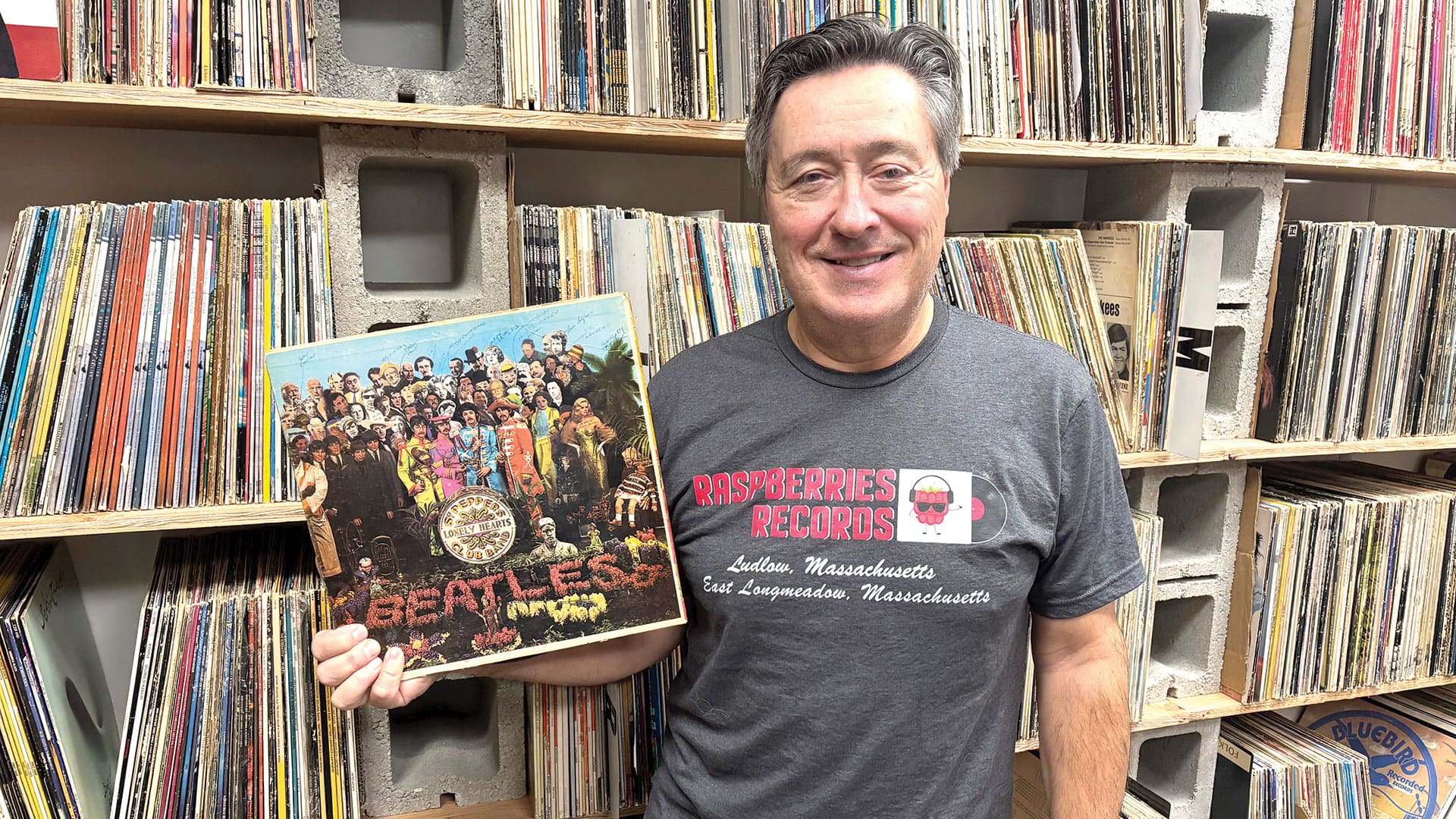
Bob Roccanti, seen here with a copy of the Beatles’ Sgt. Pepper’s Lonely Hearts Club Band, has amassed more than 71,000 records in his stores.

Bob Roccanti, seen here with a copy of the Beatles’ Sgt. Pepper’s Lonely Hearts Club Band, has amassed more than 71,000 records in his stores.

“We’ve got customers that are 12 years old and customers in their 80s,” he explained. “Some of them are just getting into vinyl, and some of them have been into vinyl their whole life. It’s unique in that sense because, when you’re planning your marketing and your strategy, you have to look at the big picture — who’s my target? Our target is anyone and everyone.”


Spin City

Roccanti said he started in Ludlow with a decent amount of inventory, and it didn’t take long to “fill the bins,” as he put it.

“As soon as we opened, from the first month, we were getting calls — the phone was ringing off the hook; ‘do you buy records? Do you buy records? Do you buy records?’” he recalled. “We were very fortunate because people were just getting rid of them.

“Sometimes, people just want to give them to us; other times, they want to sell them,” he went on. “One thing we generally do if someone just wants to give them away … if there’s value in them, I don’t let them leave without taking some money because I’m going to make money, and I want to be fair. If you found out one of those records you tried to give away was worth 100 bucks, you’d be pretty upset.”

Elaborating, Roccanti said there was obviously a learning curve involved with knowing just what an album is worth, and there have always been knowledgeable sources to rely on, as well as the internet.

“Everyone has a story about music.”

“I was fortunate that I had several record store owners that I became friends with,” he said. “I always had someone I could call and say, ‘hey, I’ve got a chance to buy this Beach Boys album.’ They’d say, ‘let me call you back, Bob,’ and when they did, they’d say, ‘grab it, Bob, it’s worth some money.’

“I’ve learned a lot, and the internet is fantastic — you can Google anything,” he went on. “And there are apps that are dedicated specifically to record stores and collectors.”

As for the business side of things, Roccanti said it has been steady, with solid numbers of customers visiting the stores or perusing items online.

A good start in Ludlow prompted thoughts of expansion, and the site in the strip mall in East Longmeadow, a former juice bar, fit the bill.

The nearby rotary — or infamous rotary, to be more precise — detracts a few, but it’s also a good reference point because everyone knows it, even if they don’t want to drive around it, he said.

Meanwhile, that aforementioned learning curve continues — with regard to what items are worth and what they can be sold for, and also what customers are seeking.

“They’re coming in with lists,” Roccanti explained, adding that the bulk of what is sold falls into the category of classic rock, but there is interest in many other genres as well.

“I’ve got a lot of customers my age who realize that this stuff is available again,” he said. “Now, they’re thinking, ‘I had these albums,’ and, little by little, they’re rebuilding their collections, whether it’s Springsteen, Bob Dylan…”

With that, he went back into the bin and pulled out a Traffic album from the early ’70s.

“People will come in, see this, and say, ‘I had this album,’ and then they’ll tell me a story — ‘I was dating this girl, and I loaned her this album, and I never got it back,’” he told BusinessWest. “Everyone has a story about music.”

And that’s why this entrepreneurial venture has taken off, and why Roccanti believes it has a solid future.


 

Banking and Financial Services

Here’s How Businesses Can Protect Themselves

By Heather Arbour


In an era dominated by digital payments, it’s easy to assume that check fraud is a relic of the past. But the reality is far more alarming: check fraud is not only alive, but it’s thriving, and it’s evolving to span both physical and digital realms.

As someone who has spent more than two decades in banking compliance and fraud prevention, I have seen the damage firsthand. Check fraud isn’t just inconvenient — it can be devastating.

At Monson Savings Bank, we’ve helped business customers who faced losing tens of thousands of dollars in a single incident. And what’s most frustrating is that many of these losses are preventable with the right tools and awareness.

Heather Arbour

Heather Arbour

“Fraudsters aren’t just individuals — they’re organized networks. They use social media and encrypted messaging apps to share techniques and sell stolen check images. It’s a whole underground economy.”


The Mechanics of Check Fraud

Check fraud is no longer confined to forged signatures and stolen paper checks; it has evolved into a complex, tech-enabled threat. Criminals are using both traditional tactics and digital tools to exploit vulnerabilities in business payment systems.

Classic forms of check fraud include forged signatures, altered payee names, counterfeit checks, and check washing, where stolen checks are chemically altered and rewritten. These methods remain prevalent, especially when checks are sent through unsecured mail channels.

Fraudsters aren’t just individuals — they’re organized networks. They use social media and encrypted messaging apps to share techniques and sell stolen check images. It’s a whole underground economy.

Digital check fraud is also on the rise, and it’s often harder to detect. Fraudsters are increasingly using mobile banking apps to commit remote deposit capture fraud, depositing the same check multiple times across different platforms. Synthetic identity fraud is another growing concern, where criminals create fake personas using a mix of real and fabricated data to open accounts and deposit counterfeit checks. Business email compromise schemes are also becoming more common, with scammers impersonating vendors or executives to reroute legitimate payments.

In fact, we’re seeing just as many cases involving digital manipulation as we are with physical theft. Fraud is a risk whether it involves traditional paper checks or digital deposits. This evolving landscape demands that businesses stay informed and proactive. Understanding the full spectrum of fraud tactics is the first step toward building effective defenses.


Integrating Critical Lines of Fraud Defense and Loss Mitigation

Fraud detection solutions are crucial. There are few as effective and proactive as positive pay when it comes to protecting against check fraud. Whether fraudsters are targeting traditional paper checks or digital deposit channels, positive pay offers businesses a critical line of defense.

This service allows businesses to submit a list of issued checks to their bank. When a check is presented for payment, the bank compares it against the list. If there’s a mismatch in amount, check number, or payee, the transaction is flagged for review.

Positive pay is like having a second set of eyes on every check. It’s proactive, not reactive. You’re catching fraud before the money leaves your account and potentially saving yourself from major losses. We strongly encourage our business customers to implement positive pay at Monson Savings Bank.

“As fraudsters continue to innovate, businesses must stay vigilant. The rise of AI-generated synthetic identities and deepfakes means that fraud will only become harder to detect.”

Why Businesses Should Act Now

The urgency to adopt fraud mitigation tools has never been greater. According to industry data, check fraud attempts have increased by more than 40% in the past year, with small and mid-sized businesses being disproportionately affected.

Many business owners think, ‘it won’t happen to me’ — until it does. And by then, it’s often too late to recover the funds.


Beyond Technology: Building a Culture of Vigilance

While tools like positive pay are essential in the fight against check fraud, that technology alone isn’t enough. Businesses must adopt a multi-layered approach that includes strong internal controls, employee education, and daily operational vigilance.

Daily reconciliation of accounts is critical to catching anomalies early, before they escalate into major losses. Employees should be trained to recognize red flags, such as suspicious payment requests or unexpected changes in vendor information, and empowered to question anything that seems off.

Verifying vendor payment instructions through a secondary channel can prevent business email compromise scams, and secure mailing practices, like using locked mailboxes or dropping checks directly at the post office, can help reduce the risk of physical check theft.

Fraud prevention isn’t just about tools; it’s about culture. Everyone in the organization needs to be part of the defense. Train your staff to recognize red flags. Reconcile accounts daily. Limit who can issue checks and who can approve payments. Fraud prevention is a mindset.

Monson Savings Bank offers a comprehensive Business Security Center on its website. This resource hub provides curated information on fraud prevention strategies, scam recognition, cybersecurity best practices, and secure operations. Whether you’re a small business or a growing enterprise, the Business Security Center is designed to help you stay ahead of threats and build a resilient, fraud-resistant organization.


Looking Ahead

As fraudsters continue to innovate, businesses must stay vigilant. The rise of AI-generated synthetic identities and deepfakes means that fraud will only become harder to detect.

If fraudsters are evolving, then so must we. The bottom line is that the cost of prevention is always less than the cost of recovery. As a local community bank, we are happy to help our customers be successful, and that includes offering solutions to help them stay one step ahead and reduce risk of harmful financial loss.


Heather Arbour is vice president, BSA/Fraud officer and Compliance manager at Monson Savings Bank.

Banking and Financial Services

Boosting Access to Local Food


Greylock, Arbella Support Berkshire Grown’s Mobile Farmers Market

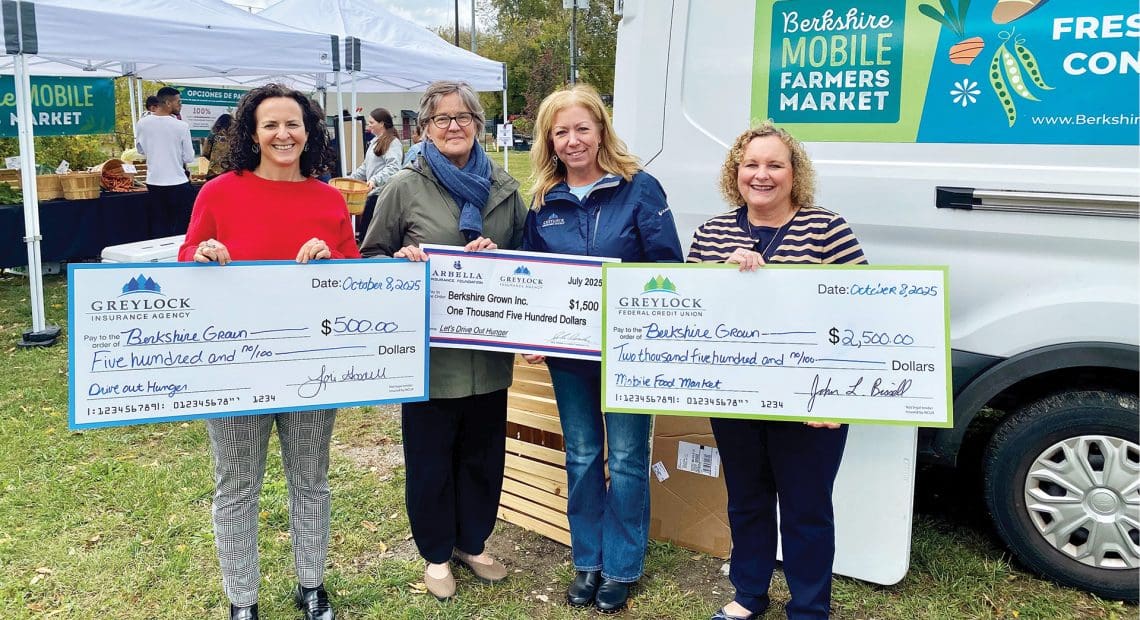
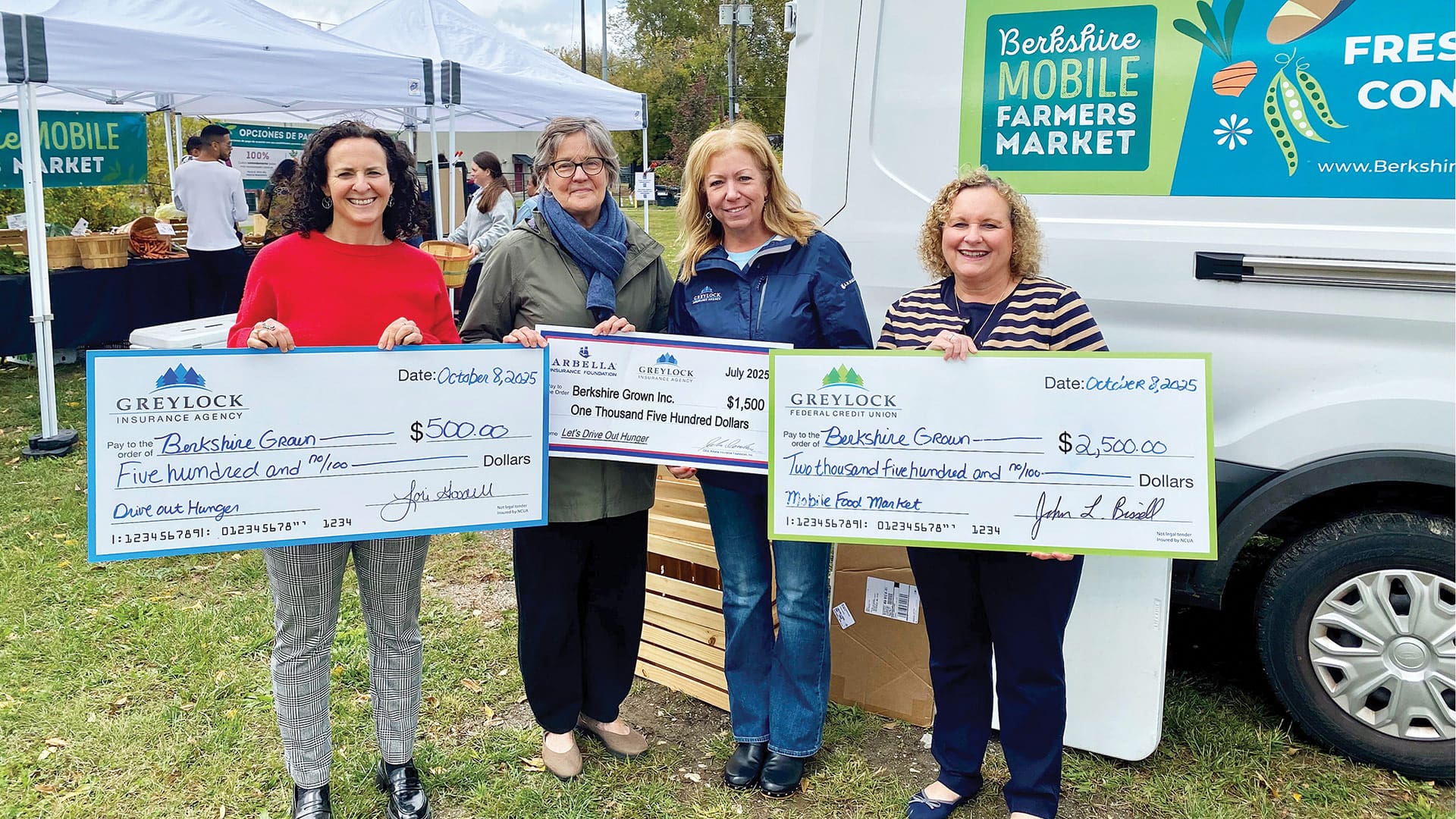
From left: Stephanie Bergman, director of Development, and Margaret Moulton, executive director, at Berkshire Grown; Lori Goodell Sr., vice president of Greylock Insurance Agency; and Jennifer Connor Shumsky, assistant vice president of Community Support and Engagement at Greylock Federal Credit Union.

The Berkshires is synonymous with farm-to-table culture, yet more than a third of Berkshire County experiences some level of food insecurity, and many farmers struggle to sustain their livelihood.

In service of caring for the Berkshire community, Greylock Insurance Agency, along with partners Arbella Insurance Foundation and Greylock Federal Credit Union, has awarded a combined grant of $4,500 to Berkshire Grown to help fund the Berkshire Mobile Farmers Market.

“Before you can think about insurance and other forms of financial health, you have to first meet your most vital needs, like feeding yourself and your family,” said Lori Goodell, senior vice president of Greylock Insurance Agency. “All of us at Greylock do our best to lead with heart. Supporting Berkshire Grown and this incredible program is part of our commitment to caring for our community. We are thrilled to continue partnering with Arbella to help fight food insecurity in the Berkshires.”

According to the Greater Boston Food Bank, food insecurity rates in the Berkshires is at 39%, with children experiencing even higher rates at 43% statewide. Rural regions, such as the Berkshires, have limited transportation, higher housing costs, and lower wages, which create obstacles to affording fresh food.

The Berkshire Mobile Farmers Market is one way Berkshire Grown helps feed people while supporting farmers. The Mobile Market uses funds from donations and grants to purchase fresh local food from more than 50 area farms. In collaboration with partner organizations, including Berkshire Bounty, the Mobile Market distributes seasonal produce, dairy, meats, and other goods, such as honey and bread, to low-income, underserved, and often rural communities of the Berkshires.

“Not only does the Mobile Market make accessible fresh, nutritious food, it also strives to create an inclusive, stigma-free shopping experience with a tiered payment system. Shoppers can choose a price that fits their budget.”

“Many areas, like the hill towns and Pittsfield’s inner city, lack nearby, walkable grocery stores or pantries,” said Katie Rubright, Berkshire Mobile Farmers Market manager. “Not only does the Mobile Market make accessible fresh, nutritious food, it also strives to create an inclusive, stigma-free shopping experience with a tiered payment system. Shoppers can choose a price that fits their budget.”

In addition to the tiered payment system, which allows customers to pay retail price, a 50% discount, or receive up to $50 worth of food for free, the Mobile Market accepts both Supplemental Nutrition Assistance Program and Massachusetts Healthy Incentives Program. Over the course of 17 weeks from June through October, the Mobile Market stopped weekly at sites in Adams, Becket, Cheshire, Monterey, and Pittsfield.

A key component of Berkshire Grown’s mission is to assist farmers in growing the food the community needs; the Mobile Market pays full prices for all products, regardless of how much the consumer is able to pay.

“The program specifically benefits seniors, children, and historically underserved communities, particularly those in environmental justice neighborhoods,” Rubright said. “We have the highest percentage of people more than 80 years old in the state, and many of them face mobility challenges. Our goal is to make locally grown food more accessible to the people who need it most and, at the same time, support small and mid-sized farms by helping bring their products to a wider market.”

Margaret Moulton, executive director of Berkshire Grown, sees the relationship between the farms, Berkshire Grown, and the Mobile Market as an important way to bolster the health of the Berkshire economy.

“Local agriculture is vital to the Commonwealth’s food supply and economy, but too often, farmers earn less than it costs to grow our food — on average, just 95 cents for every dollar,” she explained. “Choosing to buy local strengthens farm businesses, expands access to fresh, healthy food, and helps preserve the farmland that defines our communities.”

Banking & Finance

Easing the Load

The Healey-Driscoll administration recently awarded $400,405 to community-based organizations to support the economic security of unpaid family caregivers. The five organizations will receive funding to support 91 municipalities across Massachusetts.

Funded projects range from financial literacy training to resource navigation and community workshops.

“Family caregivers work incredibly hard, often holding a full-time job in addition to supporting a loved one,” Gov. Maura Healey said. “We know many caregivers struggle with balancing their own work and finances, as well as their loved ones’, and these grants will help provide family caregivers with the support they need to pay the bills.”

AARP estimates the average caregiver pays more than $7,200 annually in out-of-pocket costs for transportation and other needs.

“We have to support our family caregivers. Without them, our home- and community-based services system will not succeed,” Lt. Gov. Kim Driscoll said. “Family caregivers provide an estimated 36 billion hours of care for older parents, spouses, and other family and friends. Without family caregivers, there are not enough healthcare professionals to support our communities in need.”

Kiame Mahaniah

Kiame Mahaniah

“One of our priorities in Massachusetts is to prepare for an aging population, and we can’t do that without our family caregivers, who live out that care and support every day. This funding will ensure we support them in the same way.”

The grant funding comes from the Administration on Aging (AoA), which is part of the Administration for Community Living (ACL) under the federal Department of Health and Human Services. Massachusetts was one of only four states selected to receive the FY 2024 Advancing State Implementation of the National Strategy to Support Family Caregivers grant, demonstrating the state’s national leadership in aging policy and caregiver support.

“We are grateful to our partners at the ACL-AoA for prioritizing funding to support family caregivers,” Health and Human Services Secretary Kiame Mahaniah said. “One of our priorities in Massachusetts is to prepare for an aging population, and we can’t do that without our family caregivers, who live out that care and support every day. This funding will ensure we support them in the same way.”

Grants ranging from $50,000 to $150,000 were awarded to the following five community-based organizations:

• AgeSpan, in partnership with Northeast Legal Aid and M&T Bank ;

• Boston Senior Home Care, in partnership with ARCHANGELS

• Greater Lynn Senior Services, in partnership with Senior Care Inc., Somerville-Cambridge Elder Services, and Positive Approach, LLC;

• LifePath, based in Greenfield, in partnership with ​Dostata​; and

• Tri-Valley Inc., in partnership with Hanscom Financial Credit Union.

Grant-funded programs are expected to begin immediately, with impact reports due to the Executive Office of Aging & Independence this winter.

“Our community-based organizations know exactly what their communities need, which is why we are so excited to get this funding into their hands,” Aging & Independence Secretary Robin Lipson said. “These grants will allow organizations on the ground to pilot innovative programs that ease the financial strain on caregivers — whether that’s helping with transportation, groceries, respite care, or other daily costs. By investing in caregivers, we’re investing in the health and stability of families across the Commonwealth.”

Workforce Development

Training Ground

On Oct. 22, the Healey-Driscoll administration awarded approximately $1.5 million in Training Resources and Internships Network (TRAIN) grants to provide essential training opportunities to more than 500 unemployed and underemployed people across Massachusetts.

These grants will be administered through 13 of the state’s public community colleges and are designed to equip adult workers with the skills necessary to thrive in key industry sectors, ensuring that the workforce is prepared with the skills for the opportunities of today and tomorrow.

“Everywhere I go, I see the difference our investments in education are making — people earning degrees and credentials, launching new careers, increasing their earnings, and strengthening their communities,” Gov. Maura Healey said. “Free community college has opened doors for thousands of students, and these TRAIN grants will open even more by helping adult learners gain the STEM and workforce skills that power our economy. That’s what STEM Week is all about — learning that leads to opportunity.”

John Cook

John Cook

“By connecting skill development with industry-recognized credentials, STCC and our sister community colleges showcase our contributions to the economic vitality in every corner of the Commonwealth.”

Indeed, the grants were announced during the recent Massachusetts STEM Week, which promotes interest in science, technology, engineering, and math careers.

“At a time when employers across the state are looking for skilled workers, we’re making sure Massachusetts residents can get the training they need to fill those roles and build great careers,” Lt. Gov. Kim Driscoll said. “During STEM Week, we’re celebrating how hands-on learning — from the classroom to the lab to the workplace — helps people of all ages discover new pathways in science, technology, engineering, and math. These TRAIN grants strengthen that pipeline by connecting adult learners to the high-demand STEM careers driving our state’s innovation economy.”

The TRAIN grant program focuses on supporting long-term unemployed, underemployed, and new entrant adult workers by providing them with targeted industry skills and workforce readiness training. This funding supports 13 implementation programs that offer comprehensive training programs, which include not only the development of key skills, but also wraparound support services to guide participants through their learning journey and into new careers.

“We know that education doesn’t stop at high school graduation — it’s a lifelong pathway,” Education Secretary Patrick Tutwiler said. “Through programs like TRAIN, we’re connecting learning to purpose and helping adult learners develop the skills that Massachusetts employers need most. Announcing these grants during STEM Week is a powerful reminder that in our Commonwealth, STEM truly starts now — for students, workers, and communities alike.”

Sen. Jo Comerford

Sen. Jo Comerford

“These TRAIN grants demonstrate that our Commonwealth understands community colleges are not just classrooms — they are engines for equity, opportunity, and economic growth.”

Higher Education Commissioner Noe Ortega added that “these TRAIN grants are an important part of the Healey-Driscoll administration’s successful efforts to bring post-secondary opportunities to more residents, building their careers and strengthening our communities. During STEM week, TRAIN grants also serve as an example of the crucial role our community colleges play in building a skilled workforce to fuel our STEM industries.”


Local Impact

The announcement was made at Springfield Technical Community College (STCC), which was selected to receive a $150,000 grant to train certified nursing assistants.

“As the community college in Massachusetts with two middle names, we are honored to help highlight investments in STEM and workforce,” STCC President John Cook said. “At STCC, we know there is a lot of STEM in healthcare, and our $150,000 in grant funds … will expand access to careers in a vital sector. By connecting skill development with industry-recognized credentials, STCC and our sister community colleges showcase our contributions to the economic vitality in every corner of the Commonwealth.”

Other TRAIN grant awardees include:

• Berkshire Community College, $132,825 for commercial driver’s license training;

• Bunker Hill Community College, $150,000 for dental assisting, EKG, phlebotomy, and IT training;

• Bristol Community College, $87,289 for a cybersecurity certificate program;

• Cape Cod Community College, $107,209 for addiction recovery and medical interpreter training;

• Greenfield Community College, $102,309 for certified nursing assistant and phlebotomy training;

• Holyoke Community College, $123,235 for paraeducator training;

• Massasoit Community College, $75,730 for EKG technician and phlebotomy training;

• Middlesex Community College, $124,870 for advanced manufacturing, pharmacy technician, and phlebotomy training;

• Mount Wachusett Community College, $99,282 for paraeducator training;

• Northern Essex Community College, $147,258 for certified nursing assistant and pharmacy technician training;

• North Shore Community College, $92,895 for dental assisting and central sterilization training; and

• Quinsigamond Community College, $106,183 for personal care aide training.

“As federal support for education declines, Massachusetts is charging forward, investing deeply in our community colleges and the students they uplift,” said state Sen. Jo Comerford, vice chair of the Senate Committee on Ways and Means. “These TRAIN grants demonstrate that our Commonwealth understands community colleges are not just classrooms — they are engines for equity, opportunity, and economic growth.”

Added William Heineman, president of North Shore Community College and chair of the Community College Council of Presidents, “thank you to the Healey-Driscoll administration and members of the Legislature for prioritizing TRAIN grants. These funds help the community colleges to support the Commonwealth’s workforce and strengthen the career pipeline.”