Home 2025 November
Daily News

SPRINGFIELD — The Springfield Public Forum, the country’s oldest independent, free public speaker series, continues its 2025-26 series on Monday, Dec. 1 at 6 p.m. at Springfield Symphony Hall with CNN host, columnist, and bestselling author Fareed Zakaria discussing “Age of Revolutions.” The event is offered free to the public thanks to platinum event sponsor St. Germain Investments. No tickets are required to attend, and the doors to Symphony Hall will open at 5 p.m.

Zakaria will discuss the revolutions — past and present — that define the polarized and unstable age in which we live. For his book Age of Revolutions: Progress and Backlash from 1600 to Present, Zakaria investigates past revolutions over the last 400 years to see if they can help us to understand our current world. Alongside these historical events, he will discuss present-day revolutions: globalization, technology, identity, and geopolitics. While he believes that the early decades of the 21st century may be the most revolutionary period in modern history, he will demonstrate that humans have lived, and thrived, through more than one great realignment, and that pessimism in our current climate is premature.

The Springfield Public Forum, a nonpartisan, independent, nonprofit organization, began in 1935 with the goal of engaging local residents in the political, economic, and social issues confronting the region, nation, and world. For 90 years, it has remained a Springfield institution and has always been completely free and open to the public.

Sponsorship support for the 2025-26 season is provided by PeoplesBank, the Irene E. & George A. Davis Foundation, the Beveridge Foundation, the Community Foundation of Western Massachusetts, BusinessWest, the Republican, Meyers Brothers Kalicka, P.C., NEPM, and Focus Springfield. For more information, visit springfieldpublicforum.org.

Daily News

HOLYOKE — Girls Inc. of the Valley received a $10,000 grant from the Liberty Bank Foundation Inc. to support the organization’s Eureka! program, which promotes STEM and college access for girls.

Eureka! is a five-year program that immerses middle- and high-school girls in hands-on STEM learning while also fostering personal development, career exploration, and college readiness opportunities. Participants attend workshops, take part in summer STEM intensives on college campuses, and gain real-world experience through externships and mentorships. With support from the Liberty Bank Foundation, Girls Inc. of the Valley will continue expanding access to this transformative program for girls throughout Hampden County and beyond.

“This generous grant from the Liberty Bank Foundation helps us provide young people with the tools and confidence they need to see themselves as future scientists, engineers, and leaders,” said Suzanne Parker, executive director of Girls Inc. of the Valley. “Through Eureka!, we open doors to new opportunities — college visits, STEM workshops, internships, and mentorship — that help youth discover their full potential.”

Since its founding in 1997, the Liberty Bank Foundation has supported nonprofit organizations that empower individuals and strengthen communities across Connecticut and Western Mass. The foundation’s commitment to education, affordable housing, and basic human needs aligns closely with Girls Inc. of the Valley’s mission to inspire all youth to be strong, smart, and bold.

“We are happy to support Girls Inc. of the Valley,” Liberty Bank President and CEO David Glidden said. “This organization helps so many middle- and high-school girls learn, grow, and prepare for college and employment. This work is important to our community, and Liberty Bank is glad to be a part of it. These teens are our future.”

Daily News

PITTSFIELD — Carr Hardware announced that its customers in Lenox and Pittsfield have raised a total of $2,486.99 through the company’s round-up initiative, directly benefiting the local Thanksgiving Angels program. This generosity helped provide Thanksgiving meals for more than 2,500 families in Berkshire County who signed up to receive a traditional holiday dinner through the program.

Throughout the month of October, Carr Hardware hosted a round-up campaign at its Lenox and Pittsfield locations, encouraging customers to round up their in-store purchases to the nearest dollar. The funds collected through this initiative were donated to the South Congregational Church’s Thanksgiving Angels program, which has been serving local families for more than a decade. Carr’s generous customers stepped up even more this year, beating last year’s round-up total of $1,856.35.

On Nov. 24, Carr employees were greeted by Pittsfield Mayor Peter Marchetti at the Thanksgiving Angels check presentation. Numerous employees then volunteered handing out meals and supplies to local families. Last year, Thanksgiving Angels had more than 350 volunteers from local businesses and groups assist with the annual distributions.

“A special thank you to our Berkshire County customers, who stepped up again this year and donated even more than in years past,” said Bart Raser, Carr Hardware president. “Your generosity helped us feed our neighbors and build a stronger, more caring community. We donated our time and money to help nourish those in need.”

The Thanksgiving Angels program serves as an essential resource to families throughout the county, providing meals and a sense of connection and community. Carr Hardware extends a heartfelt thank you to everyone who participated in the round-up campaign, as well as to the volunteers and local organizations that help make the Thanksgiving Angels program a success each year. The company remains committed to supporting community initiatives and looks forward to continuing to contribute to this vital program in the future.

Daily News

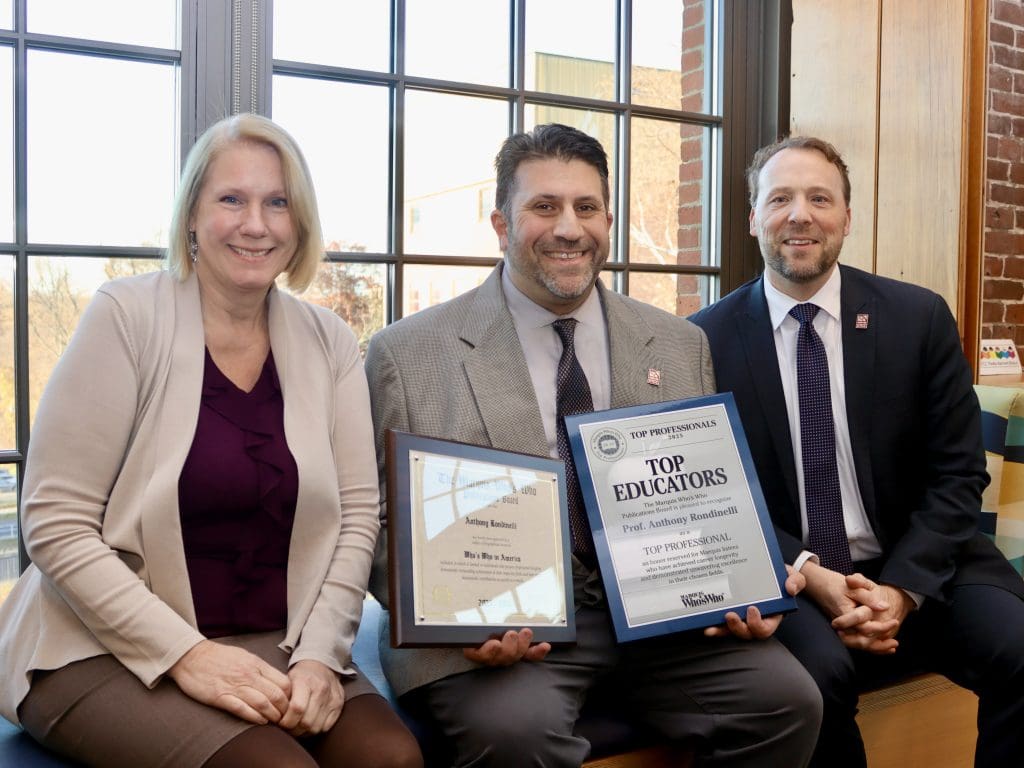
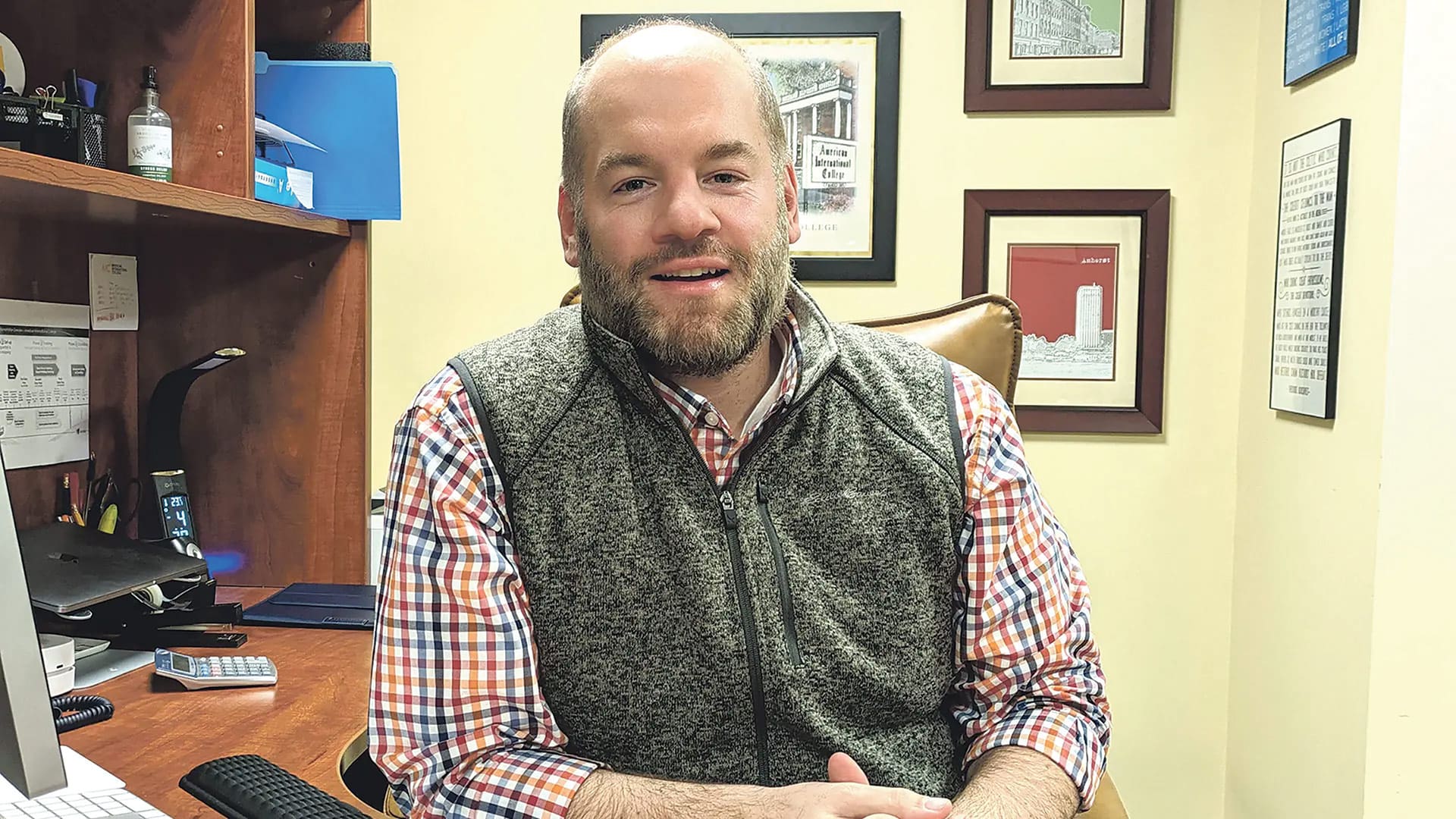
From left: STCC’s Mary Lou Vrendenburg, dean of Liberal and Professional Studies; Anthony Rondinelli, professor of Business; and President John Cook.

SPRINGFIELD — Springfield Technical Community College (STCC) Professor of Business Anthony Rondinelli has been recognized by Marquis Who’s Who Top Educators for his dedication, achievements, and leadership in accounting and education.

The national recognition highlights Rondinelli’s more than three decades of professional experience and his commitment to both his students and the community.

“When Marquis contacted me, I was completely floored,” Rondinelli said. “It’s a real honor.”

Raised in Springfield, Rondinelli attended STCC after graduating from Cathedral High School (now Pope Francis Preparatory School), saying affordability and opportunity made the decision clear.

“STCC was a great fit for me because I could balance my work life with my studies,” said Rondinelli, a 1992 graduate. “Affordability was very important. With my dad passing away when I was 8 years old, our family didn’t have a lot of financial means.”

He graduated from STCC with an associate degree in business administration and finance and was recognized in the National Dean’s List for academic achievement. He went on to earn a bachelor’s degree from Westfield State University and two master’s degrees in management and accountancy from Western New England University, graduating summa cum laude.

Before joining STCC, Rondinelli built a wide-ranging career in business and finance, serving as a district sales and marketing manager for Stop & Shop supermarkets and later holding senior consulting and accounting positions with MassMutual Financial Group, Lincoln Financial Group, GE Financial Assurance, and Corbin & Tapases, P.C.

In 2013, after several years teaching part-time at local colleges, Rondinelli returned to STCC as an adjunct professor and then became a full-time faculty member in 2014.

“STCC’s been so important to my career and my own self-development over the years,” he said. “Without STCC, I don’t know if I would have ever come back and entered teaching, a career that I really love.”

Today, he is a full professor of Business and a respected leader on campus. He teaches a range of courses in accounting, personal income tax, finance, marketing, and management, and advises students in STCC’s Business Club. Known for his compassion and creativity in the classroom, he once learned to read Braille to support a blind student enrolled in his course.

STCC President John Cook congratulated Rondinelli and described him as the embodiment of the community college mission. “First and foremost, Anthony is a wonderful human being. Knowing as well that he is deeply committed to student success is part of the special formula that makes community colleges, and STCC specifically, a place for transformation. We are proud to see him recognized for his commitment to teaching and service.”

In addition to his teaching, Rondinelli is the president of Anthony Rondinelli Tax and Accounting Services LLC, which provides tax and accounting support for individuals, small businesses, and nonprofits. His courses in personal income tax preparation have helped STCC students secure jobs with Liberty Tax, H&R Block, and Jackson Hewitt immediately after completing the class.

Rondinelli also contributes regularly to online personal finance platforms, including wallethub.com, and serves on numerous campus committees and the STCC Foundation board.

Looking ahead, he hopes to pursue a doctoral degree in accounting while continuing to mentor students and strengthen STCC’s connection to the regional business community.

“To me, when I see that light go off in the mind of a student, that’s very fulfilling,” he said. “It’s been the most rewarding thing I’ve ever done professionally.”

Daily News

Brett Brbovic

NORTH ADAMS — MountainOne announced the appointment of Brett Brbovic as senior vice president and chief financial officer of MountainOne Financial, MHC and its subsidiary, MountainOne Bank. Brbovic will join the leadership team operating from the company’s headquarters in North Adams.

In his capacity as chief financial officer, Brbovic oversees MountainOne’s financial strategy, operational efficiency, and balance sheet risk management. Reporting directly to President and CEO Robert Fraser, he works closely with other senior leaders to align financial and operational goals with the organization’s strategic vision.

Brbovic joins MountainOne with more than 18 years of experience in the financial services industry. A graduate of Western New England University with a master’s degree in accounting, his career spans leadership roles in accounting, financial strategy, and executive management, most recently serving as executive vice president and chief financial officer of Berkshire Bank and its parent company, Berkshire Hills Bancorp.

He succeeds Steve Owens, who announced his retirement from MountainOne following a 14-year tenure as chief financial officer, chief operating officer, and chief information officer. Owens’s departure coincides with the recently announced parent company merger between MountainOne Financial, MHC, and Mechanics Bancorp, MHC, slated for completion on Jan. 1, 2026. Owens will continue in his roles as COO and CIO through completion of the merger.

“We’re thrilled to welcome Brett to MountainOne,” Fraser said. “His depth of experience and presence in the Berkshire community make him an ideal fit for our organization. His previous experience will be tremendously helpful as MountainOne Financial becomes the parent company of MountainOne Bank and Mechanics Cooperative Bank as of January 1, 2026.”

Added Brbovic, “joining MountainOne at such a pivotal time in its growth is an exciting opportunity. I look forward to working with Bob Fraser and the leadership team to advance MountainOne’s strategic goals and support its continued success.”

Daily News

NORTH BROOKFIELD — Stone & Lime Historic Restoration Services, a landmark restoration specialist, announced it has hired Justin Billings to join its leadership team as vice president of Operations. Billings will oversee historically sensitive and landmark restoration projects across the Stone & Lime portfolio, which includes significant preservation programs among both public and private clients.

Billings joins Stone & Lime after two decades in construction management with one of the region’s largest general contractors, managing both new construction and renovation projects. His passion for preservation makes him a natural fit for the Stone & Lime leadership team, and he has overseen notable projects like the restoration of the Trinity College Long Walk, multiple renovation and restoration projects at Wadsworth Atheneum Museum of Art, and repairs and updates to the Travelers Tower, all in Hartford, Conn. In addition to his deep project management experience, Billings is also a LEED-certified professional.

As Stone & Lime continues to expand its portfolio of work both in terms of geography and complexity, it was necessary to add a seasoned professional like Billings to its ranks. His experience will play a significant role in supporting ongoing restoration projects, including National Parks Service-managed sites like the Cape Lookout Lighthouse in North Carolina’s Outer Banks and Fort Jefferson at the Dry Tortugas National Park in the Florida Keys.

“We are in the fortunate position of being awarded new and exciting restoration projects around the country and, as such, saw an opportunity to add a respected industry leader to our team,” said Chris Dabek, vice president of Stone & Lime. “In addition to a sterling track record for client service and having the ability to balance passion and practicality when it comes to landmark restoration work, he will also serve as a resource for our project managers who can tap into his experience working for recognized institutions across the Northeast.”

Billings holds bachelor’s and master’s degrees in civil engineering from Worcester Polytechnic Institute.

Daily News

SPRINGFIELD — Rocky’s Ace Hardware announced the results of its annual Round Up for Pets fundraiser. Customers at participating Rocky’s stores in Western Mass. helped raise a total of $7,663.06, while stores nationwide collected a combined $45,646.45. These donations will go directly to care for rescued and surrendered animals, ensuring their needs are met as they wait for their forever homes.

“We are so grateful to our customers for their generosity,” Rocky’s Ace Hardware President and CEO Rocco Falcone II said. “This fundraiser makes a real difference for the shelters and the animals they care for. Every dollar helps provide food, medical care, and comfort to pets who are waiting for loving families.”

Participating Rocky’s locations included the stores on Island Pond Road and Liberty Street in Springfield and the stores in Agawam, East Longmeadow, Ludlow, Palmer, South Hadley, and Westfield.

Local shelters benefiting from the year’s round-up include the Thomas J. O’Connor Animal Control & Adoption Center and Dakin Pioneer Valley Humane Society in Springfield, Second Chance Animal Services in East Brookfield, and Westfield Animal Control and Shelter.

“Pets are family,” Falcone added, “and we’re proud to offer our customers an easy way to make a positive impact in the lives of animals in need.”

Daily News

SPRINGFIELD — The Entrepreneurial & Business Collaborative (E&BC), a Springfield-based, community-rooted organization, was recently selected to serve as the Pioneer Valley regional hub by the Massachusetts Clean Energy Center (MassCEC) and will receive four grants totaling up to $1,195,000. E&BC will be one of only two regional hubs selected in the state of Massachusetts to receive the Climate-Critical Underrepresented Business Support (CUBS) grant alongside BECMA.

The first two grants include a $600,000 CUBS grant designed to expand the clean energy workforce pathways for individuals, entrepreneurs, training providers, and business support partners throughout Western Mass., which will also help reduce barriers for minority- and women-owned businesses (MWBE); and a regional spoke award, ensuring strategic integration of spoke procurement with the award funding up to $135,000.

MassCEC launched the clean energy business support initiative to address a major statewide challenge: MWBEs are underrepresented in the clean energy sector and face barriers to accessing technical assistance, procurement opportunities, and capital. This award arrives at a critical moment, as the region works to strengthen and reconnect the systems that support business development, clean energy participation, and economic mobility across the Pioneer Valley.

E&BC was also selected by MassCEC for two additional awards:

• An Equity Workforce Training Implementation Grant. E&BC will receive a $335,000 grant award to implement its Clean Energy Electrical Training Program with a dual training track: one for individuals with prior electrical training and/or electrical trainees who have not yet completed the 600 classroom hours for licensure, and one for licensed journeyman electricians seeking specialized clean energy skills. The Healey-Driscoll administration recently announced these grants through MassCEC to grow the state’s clean energy and climatetech workforce; and

• A Climate-Critical Workforce Training, Equipment, and Infrastructure Grant. These awards support E&BC’s Clean Energy Electrical Training Program, delivered in partnership with Grounded Services, an early participant in its Consolidated Accelerator Program that now serves as a technical training partner.

While these grants build essential training capacity, they function as a spoke within a much larger system. The hub is the primary structure that ensures this training connects to real business outcomes: procurement readiness, MWBE business development, certification pathways, and coordinated access to capital. In other words, the awards strengthen the workforce piece, but the hub turns that training into long-term economic opportunity.

“These grants validate the work we have been building for years to create pathways for people and businesses historically excluded from opportunity,” said  Ron Molina-Brantley, E&BC’s co-founder and managing partner. “It also positions E&BC as an anchor institution for clean-energy access in Western Mass. while strengthening our ability to connect talent, businesses, and partners in a coordinated system built to last.”

This partnership with MassCEC strengthens E&BC’s community-based research model and reinforces its core belief that MWBEs deserve coordinated, accessible pathways into the future economy. As this hub model grows, it is designed to support workers, entrepreneurs, and MWBEs through every stage of growth, aligning workforce pathways, entrepreneurial readiness, and clean-energy participation into one ecosystem.

Daily News

HOLYOKE — Today, Nov. 25, at 3 p.m., community volunteers will visit the HCC MGM Culinary Arts Institute to pick up 150 cooked turkeys, along with assorted sides (mashed potatoes and sweet potatoes) prepared by Holyoke Community College culinary arts students to help feed hungry people this holiday season.

Their efforts are on behalf of the Compassion Project, founded by Areliz Barbosa, to deliver meals to hungry people on Thanksgiving. This marks the 23rd year of Barbosa’s initiative.

Last year, the HCC culinary arts crew helped the Compassion Project give out 1,000 hot meals for Thanksgiving. This year, Chef Tracy Carter, chair of the HCC culinary arts program, integrated the cooking of turkeys and Thanksgiving sides into the culinary arts curriculum to help meet the agency’s goal of delivering 2,000 hot meals.

Carter said the students and staff have been in production in the culinary arts institute kitchen all day today, getting the food ready for the 3 p.m. pickup. The HCC MGM Culinary Arts Institute is located at 164 Race St., in Holyoke.

The food will be taken to Gran Cocina on High Street in Holyoke, where hot meals will be available for pickup or sit down on Thanksgiving Day.

HCC culinary arts students also prepared grab-and-go bag lunches for people participating in the 16th annual March for the Food Bank, as marchers, led by radio host and march leader Monte Belmonte, passed the Culinary Arts Institute on Monday on the Holyoke leg of their two-day, 43-mile trek from Springfield to Greenfield.

Daily News

GREENFIELD — At its November meeting, the Greenfield Community College (GCC) Foundation celebrated new leadership and fresh perspectives on its board of directors while honoring four members who completed their six-year terms of service.

Departing members Deb Berryere (president), Ann Barker (vice president), Jacqui Zuzgo, and Savitri Rambissoon were recognized for their commitment to the college and the foundation’s mission of supporting student success. Under their leadership, the foundation strengthened its scholarships, endowment, and community partnerships, advancing opportunities for students across the region.

Succeeding them in leadership, the board elected James Fitzgerald as president and Jane Wolfe as vice president. Fitzgerald and Wolfe both joined the foundation board in 2023 and bring experience in business and community service.

The foundation also welcomed four new members whose expertise reflects the diverse strengths of Franklin County and Western Mass:

• Tim Grader, a real estate investor, broker, and property manager, is the owner of Cohn & Co. Real Estate and Stillwater Real Estate Services. A GCC alumnus, he brings a deep commitment to regional revitalization, historic preservation, and lifelong learning.

• Colleen Kucinski, executive director of the Literacy Project, has spent more than 25 years advancing educational access through leadership in higher education and philanthropy, including 18 years at GCC and eight years at the Community Foundation of Western Massachusetts.

• Hannah Rechtschaffen, executive director of the Greenfield Business Assoc., is a leader in creative placemaking and community development. Her background includes strategic roles with W.D. Cowls and the Lindy Institute for Urban Innovation, where she built partnerships that drive local economic growth.

• Mary Siano, a social worker and civic leader, has dedicated her career to community service and advocacy. She has served on local boards and committees including the Greenfield School Committee, the Community Health Center of Franklin County, the Literacy Project, and the League of Women Voters of the Greenfield Area. A longtime GCC volunteer and annual campaign co-chair, she continues to strengthen community engagement across Franklin County.

“Each of our new board members brings a unique perspective and a deep commitment to education, equity, and community well-being,” said Alexis Page, executive director of the GCC Foundation. “Together, we’re building on decades of local generosity and ensuring that GCC students have the support they need to thrive.”

Features Restaurants

Morning Glory

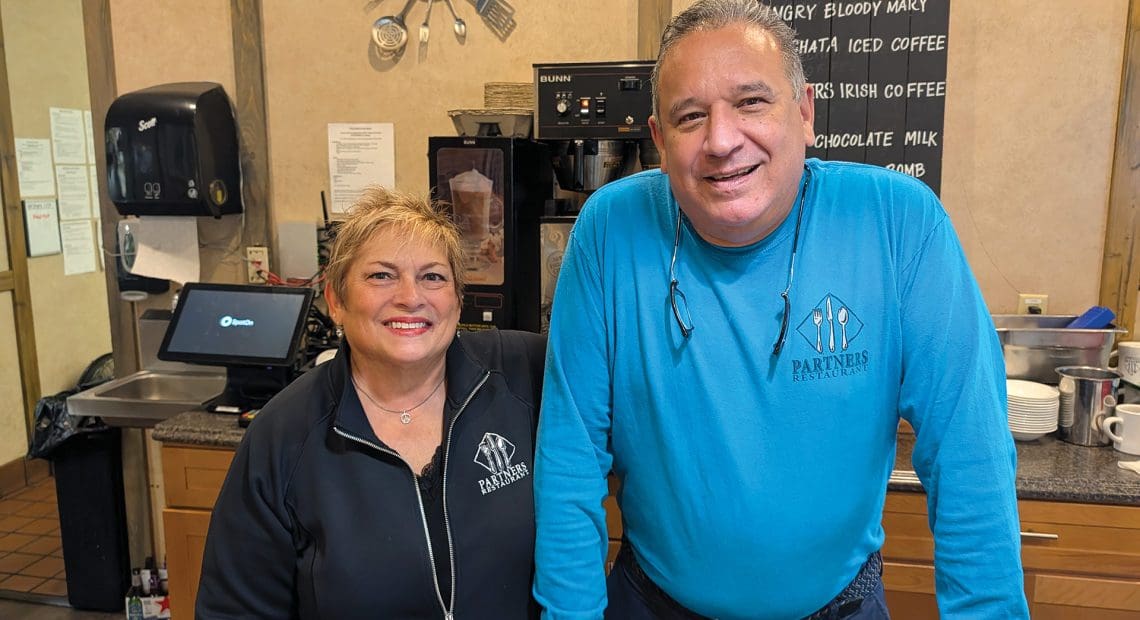
Sue and Mark Tansey are partners in both business and life.

Sue and Mark Tansey are partners in both business and life.

Mark Tansey didn’t exactly plan his path into the culinary world.

“My brother kind of pushed me into the business,” he recalled. “My mother died when I was 15, and I had to cook at home. I wanted to go to college, and he goes, ‘why don’t you go to cooking school?’ So I ended up going to Johnson & Wales.”

In addition to completing that two-year program, Tansey worked at the Monte Carlo in West Springfield, and later at Hillbrook House in Westfield, then Springfield Country Club. The first two of those establishments are long gone, but his next venture — Partners Restaurant & Catering in Agawam — is still going strong, more than 40 years later.

“A woman came to me and said, ‘I have this little breakfast-lunch place in Agawam, Mark, if you want to think about it,’” he recalled. That was 1984, and Partners had been open just a couple of years when its then-owner wanted to unload it. Tansey, then just 24 years old, liked what he saw, secured a $45,000 loan from Westbank, and started crafting a plan, both culinary and financial.

“I had to learn how to write the financials, how to figure out, ‘well, if I have one dishwasher and a cook and a server, how much do I need?’ But then I realized, for the first couple of years, I was the dishwasher and the cook.”

His first marriage would end in those early years, and he wound up bonding with his current wife (and business partner) of 33 years, Sue, over food; her family owned Angy’s Tortellini at the time, and she ran a small catering business.

And now, they’re celebrating four decades running a restaurant and catering business that has outlasted challenges ranging from a devastating fire in 2014 to the COVID-19 pandemic (more on both later), emerging from it all with a loyal clientele, about 50 employees, and even a succession plan (the Tanseys’ daughter, Siena, is deeply involved in the business).

In short, there’s plenty to celebrate, which they did on Nov. 22 with an admittedly late 40th anniversary event (the actual milestone was last year) at the restaurant, where they expected about 400 people to show up.

“We have a lot of repeat business, and we have people that say, ‘I can’t wait until they put out those specials because I want to see what I’m going to have this weekend.’”

The clientele has been multi-generational, Sue said, but so has the staff.

“We’ve had multiple third-generation family members working for us. We’ve had the mother, then their daughter, and now the granddaughter working for us — I’d say a good five families like that. It’s so cool.”

Both Tanseys attribute much of the restaurant’s success to its staff. In the early days, Sue said, “if we came home on a Sunday and we were over $1,000, we’d be like, ‘oh my God.’ Now, we serve 400, 500 people on a Sunday.” And they appreciate those putting in all the work to make that happen.

“Everybody makes fair money; I pay them well. I don’t chintz around. And if we do have a great week, they get extra,” Mark said. “How is that money going to enhance my life? I could use it, but in the long run, by giving everybody 50 bucks, it works out better, because they’re going to stay, we have less turnover, less training. I didn’t know that in the first five years of business, but after a while, we did.”

The result is clear in the waitstaff’s hustle and demeanor, he added. “That’s how we want it. I want people to feel fun and not have a grumpy person greeting them.”


Serving Up Challenges

Sept. 3, 2014 was not one of those fun days.

That’s the night the Tanseys were summoned to the restaurant, which had suffered a major electrical fire caused by degraded conduits across the street.

“If you looked in the window, you wouldn’t think we had a fire, but it was all electrical damage; everything was permeated with smoke,” Sue said. “They ended up having to take the building down.”

Thankfully, an insurance policy allowed them to operate at another spot, and they opened Partners at the Cup on Route 20 in West Springfield the following June. Before that, however, “we still had catering to do,” Mark said. “Because I had a rapport with Six Flags, they had a kitchen out in the back. It was winter, and they weren’t using their stoves and ovens, and they didn’t charge us at all.”

First Baptist Church of Agawam also allowed the couple to cater from there, so they paid rent to the church to do that for a while. “We had people come out of the woodwork to help us rebuild,” Mark said.

Partners reopened in December 2015, and the couple ran both locations until 2020, when the Cup closed for good.

As difficult as the fire was, however, COVID may have been worse. “I think I still have PTSD,” Sue told BusinessWest. “It was difficult to figure out the PPP, but we rallied, and we came up with menus. We had family dinners. We did takeout. We had a few employees that weren’t afraid, and we ran a skeleton crew.”

That was when Siena came home from Boston, where she had she studied hospitality and was working at the Omni Parker House until it closed, and started a new career at Partners.

“We also fed our employees; we would have employee dinners.” Sue recalled. “It was very hard work. We did fish and chips Friday night, and people would pre-order. We had a little side window that worked out perfectly, so people didn’t have to come in.

“But every Monday, we waited for [then-Gov.] Charlie Baker to drop another hammer. Every Monday, there was another restriction on us. It was awful. But then we were able to open outside, and we put up a big tent. Eventually, we ended up coming back inside, though we had to go from 80 seats down to 40, with barriers between them. But we still had our loyal employees.”

“Thank God for them,” Mark quickly added. “Especially during COVID. We were not surprised, but taken aback by how much support we got.”

It’s not just the restaurant that has succeeded, but a catering business that has taken many forms and operated in many settings over the decades, and now includes an event space that opened two years ago right on the Partners property, which can accommodate parties of more than 400 people.

On both sides of the business, Mark said, they use as much locally sourced, fresh food as possible, from produce to breads — no canned vegetables anywhere. And patrons look forward to the ever-changing specials board, which benefits not only their taste buds, but the bottom line.

“You can get bacon and eggs anywhere at $6, $7, $8. But I want to get a higher check average because I have a good payroll,” he explained. “So I’ll try to do dinner entrees for breakfast specials. Like, this weekend we have beef brisket. And now, instead of getting steak and eggs for $14.95, you can get smoked beef brisket for $16.95.

“We have a lot of repeat business,” he added, “and we have people that say, ‘I can’t wait until they put out those specials because I want to see what I’m going to have this weekend.’”


Off the Air

Mark has taken his passion for cooking to the airwaves in past decades, hosting a local cooking TV show, Continental Cuisine, and a talk radio show, The Latest Dish, as well as participating in cooking demos and seminars for the Big E, Angy’s Tortellini, Big Y Foods, and various clubs and organizations.

“At that time, people wanted quick meals they could make at home,” he told BusinessWest. “People can go to a restaurant and get chicken parm; I would show them how to do a chicken parm or something simple. Speed scratch cooking — that’s kind of what I did. And then I did some more upscale stuff, because I have some background in that too. But I wanted the people to know that you can do this at home.”

Sue thinks her husband could have become nationally known.

“Food Network was just starting to come out, Emeril was getting popular, and I remember thinking I should send in a tape for Mark,” she said. “And I never did it.”

“I could have been famous,” he said, then flashed a warm smile at his partner. “But look at our life.”

Education

Challenging the Assumptions

Physicists have long believed that black holes explode at the end of their lives, and that such explosions happen — at most — only once every 100,000 years. But new research published in Physical Review Letters by physicists at UMass Amherst has found a more than 90% probability that one of these black hole explosions might be seen within the decade, and that, if we are prepared, our current fleet of space and earthbound telescopes could witness the event.

Such an explosion would be strong evidence of a theorized but never observed kind of black hole, called a ‘primordial black hole,’ that could have formed less than a second after the Big Bang occurred, 13.8 billion years ago. Furthermore, the explosion would provide a definitive catalog of all the subatomic particles in existence, including the ones science has observed, such as electrons, quarks, and Higgs bosons; the ones so far only hypothesized, like dark matter particles; as well as everything else that is, so far, entirely unknown to science.

Andrea Thamm

Andrea Thamm

“The lighter a black hole is, the hotter it should be, and the more particles it will emit. As PBHs evaporate, they become ever lighter, and so hotter, emitting even more radiation in a runaway process until explosion. It’s that Hawking radiation that our telescopes can detect.”

This catalog would finally answer one of humankind’s oldest questions: from where did everything in existence come?

Science knows that black holes exist and has a good understanding of their life cycle: an old, large star runs out of fuel, implodes in a massively powerful supernova, and leaves behind an area of spacetime with such intense gravity that nothing, not even light, can escape. These black holes are incredibly heavy and essentially stable.

But, as physicist Stephen Hawking pointed out in 1970, another kind of black hole — a primordial black hole (PBH), could be created not by the collapse of a star, but from the universe’s primordial conditions shortly after the Big Bang.

PBHs, like the standard black holes, are so massively dense that almost nothing can escape them — which is what makes them ‘black.’ However, despite their density, PBHs could be much lighter than the black holes so far observed. Furthermore, Hawking also showed that black holes have a temperature and could, in theory, slowly emit particles via what is now known as ‘Hawking radiation’ if they got hot enough.

“The lighter a black hole is, the hotter it should be, and the more particles it will emit. As PBHs evaporate, they become ever lighter, and so hotter, emitting even more radiation in a runaway process until explosion. It’s that Hawking radiation that our telescopes can detect,” said Andrea Thamm, co-author and assistant professor of Physics at UMass Amherst.

Yet, while we should be able to, no one has ever directly observed a PBH.

“We know how to observe this Hawking radiation,” said Joaquim Iguaz Juan, a postdoctoral researcher in physics at UMass Amherst. “We can see it with our current crop of telescopes, and because the only black holes that can explode today or in the near future are these PBHs, we know that, if we see Hawking radiation, we are seeing an exploding PBH.”


Asking the Right Questions

Though physicists since Hawking’s time have thought that the chances of seeing an exploding PBH are infinitesimally slight, Iguaz Juan noted that “our job as physicists is to question the received assumptions, to ask better questions, and come up with more precise hypotheses.”

The team’s new hypothesis? Get ready now to see the explosion. “We believe that there is up to a 90% chance of witnessing an exploding PBH in the next 10 years,” says Aidan Symons, one of the paper’s co-authors and a graduate student in physics at UMass Amherst.

In its work, the team explores a ‘dark-QED toy model.’ This is essentially a copy of the usual electric force as known, but which includes a very heavy, hypothesized version of the electron, which the team calls a ‘dark electron.’

The team then reconsidered long-held assumptions about the electrical charge of black holes. Standard black holes have no charge, and it was assumed that PBHs are likewise electrically neutral.

“We make a different assumption,” said Michael Baker, co-author and an assistant professor of Physics at UMass Amherst. “We show that, if a primordial black hole is formed with a small, dark electric charge, then the toy model predicts that it should be temporarily stabilized before finally exploding.”

Taking all known experimental data into account, the team found that a PBH explosion could potentially be observed not once every 100,000 years, as previously thought, but once every 10 years.

“We’re not claiming that it’s absolutely going to happen this decade, but there could be a 90% chance that it does,” Baker said. “Since we already have the technology to observe these explosions, we should be ready.”

Added Iguaz Juan, “this would be the first-ever direct observation of both Hawking radiation and a PBH. We would also get a definitive record of every particle that makes up everything in the universe. It would completely revolutionize physics and help us rewrite the history of the universe.”

Wealth Management

Finding a Way Home

By Jeffrey Liguori

In many ways, the U.S. economy is still dealing with the effects of the global financial crisis of almost two decades ago. It was a massive reset of our entire financial system, with one segment, residential real estate, still evolving from that disruption.

The boom of housing and real estate prices, exacerbated by exotic derivative investment vehicles tied to mortgages of borrowers with poor credit, led to an historic bust in the real estate industry. Following the crash, banks significantly tightened up their lending standards, and home building, illustrated by housing starts, collapsed as demand for new homes evaporated.

Consider this: the number of new housing units rose from roughly 1.65 million to a peak of 2 million per year from 1999 to 2005 before contracting to fewer than 500,000 in 2009. By contrast, the number of 20- to 30-year-olds in the country, the typical first-time homebuyer, which drives much of the market, increased from 72 million to 78 million from 1990 to 2000. And while that is a modest increase of about 8% over a decade, the growth in that cohort of the population grew by nearly 40% in the prior decade, from 1980 to 1990.

Jeffrey Liguori

Jeffrey Liguori

“When the Fed raised rates to fight inflation from 2022 to 2024, mortgage costs climbed rapidly, and higher rates reduced the number of homeowners willing to sell or upgrade. Contrary to economic theory, supply shrank while demand stayed high, putting home ownership out of reach for many.”

The combination of population growth and a booming economy prior to 2007 worsened the housing availability issue, which was already running short of demand. The economic downturn simply put that supply and demand imbalance on hold. Until COVID.

Today, housing affordability remains a significant problem. COVID stimulus and the shift to remote work caused demand to surge, driving up prices. When the Fed raised rates to fight inflation from 2022 to 2024, mortgage costs climbed rapidly, and higher rates reduced the number of homeowners willing to sell or upgrade. Contrary to economic theory, supply shrank while demand stayed high, putting home ownership out of reach for many.

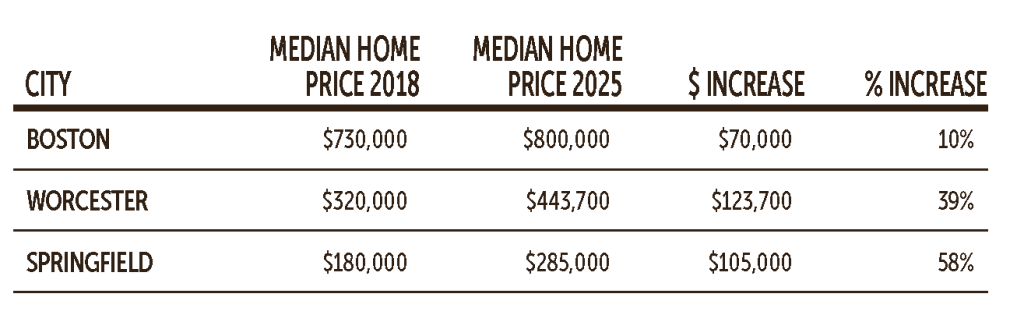
Individuals and families at the lower end of the economic scale are at a greater disadvantage, consistent with our bifurcated economy, as illustrated here:

Recently, President Trump proposed the idea of a 50-year mortgage as a solution to the housing affordability problem. The concept may have originated from Bill Pulte, director of the Federal Housing Finance Agency (FHFA), who has strong ties to the homebuilding industry. Pulte’s grandfather, William Pulte, founded Pulte Homes, now the third-largest home builder in the U.S., with annual sales exceeding $17 billion.

The FHFA is central to residential real estate as an overseer of the mortgage market and conservator of Fannie Mae and Freddie Mac, which protects taxpayers and maintains the stability of the housing finance system. The FHFA, with its access to valuable data and policy tools, is in a unique position to help alleviate the issue.

Extending the term of a mortgage from 30 to 50 years means lower monthly payments for the borrower. To put affordability in perspective, prior to the pandemic, the median home price in the U.S. stood at approximately $260,000, with a 30-year fixed mortgage rate averaging 3.8% and 20% down, resulting in monthly payments near $1,200. Currently, the median price has risen to about $420,000, while mortgage rates have increased to around 6.4%, pushing monthly payments above $2,100.

This means the cost of purchasing a typical home today is more than double what it was before the pandemic and requires significantly more cash down. The cost has put buyers on the sidelines. But the persistent shortage of supply has kept prices stable at historically high levels. J.P. Morgan estimates there is a shortage of almost 3 million homes, which could take a decade to resolve.

The chief economist for the National Assoc. of Realtors, Lawrence Yun, says the “small savings” on monthly payments for a 50-year mortgage has tradeoffs. For one thing, building equity in one’s home, often the largest asset to most families, would take considerably longer.

According to Yun, “it would also take almost 40 years to pay off half the balance, meaning most borrowers would not begin building meaningful equity until the final decade.” Which simply reinforces the current problem of existing homeowners not trading up because financing costs are too high. It is unlikely that someone would use their current equity and take on a loan for another 50 years just to be able buy a nicer home at the same monthly cost.

And what if this type of mortgage sparks demand for homebuyers? Without greater supply, it will undoubtedly drive up prices, thus not solving the affordability problem at all.

Analysts say that, to implement a 50-year mortgage, Trump would need Congress to repeal the law that prohibits government-backed loans with terms longer than 30 years. Some believe regulators have the executive authority to create this type of loan.

Jim Millstein, who served as the Treasury Department’s chief restructuring officer from 2009 to 2011, noted that “a lot of so-called innovations occurred to make mortgages more affordable prior to the financial crisis. It proved to be a disaster.”

Time will tell if this is a crisis in the making or the start of a solution to the housing problem.


Jeffrey Liguori is executive vice president of Bradley Foster & Sargent Inc.

Daily News

‘Unique.’

When pressed to describe John O’Brien, the radio personality and community activist who died Sunday after a lengthy and courageous battle with cancer, with just one word, that’s the one Dave Oldread, former general manager at Rock 102, where O’Brien was a fixture for more than 30 years, chose.

And he put a considerable amount of thought into the assignment because there are many words that come to mind when one thinks of O’Brien — like ‘opinionated’ and ‘confrontational,’ or ‘complicated’ and ‘complex.’ Others that work include ‘fun,’ ‘serious,’ and especially ‘genuine.’ Springfield Mayor Dominic Sarno called him a ‘lovable curmudgeon.’ OK, that’s two words.

But ‘unique’ works best.

Indeed, O’Brien was one of a kind, a true character, who was never afraid to speak his mind or ruffle some feathers — whether he was on the air, playing golf with you in a charity tournament, or sitting next to you at a Patriots game.

“When I would tell someone I worked at Rock 102, the first question anyone would ever ask was, ‘what’s it like to work with John O’Brien?’ or ‘what’s John O’Brien like?” Oldread said. “And, of course, that was a complicated question. I would tell anyone who was asking that John was the same person — who you got on the air was who you got off the air.”

And who you got was a true radio personality who would go on to become one half, along with Mike Baxendale, of perhaps this region’s most famous and enduring radio team.

Indeed, Bax and O’Brien were a morning tradition in this region, staying together for 25 years — unheard of in the radio industry — and earning their way into the Massachusetts Broadcasting Hall of Fame.

But you also got someone who was involved in his community, lending his time, talent, wit, and opinions to many causes and institutions, from the Spirit of Springfield to the Mayflower Marathon (which he co-founded), during which he and Bax would stay on the air for 52 hours, filling the time with an eclectic mix of guests and endless stories.

Fittingly, the marathon is going on right now, and many area residents are making a point of making donations in O’Brien’s honor. That’s a fitting way to remember someone who will never be forgotten.

He was, in a word, ‘unique,’ and his strong, clear voice will certainly be missed.

Daily News

SPRINGFIELD — Bulkley Richardson holds an annual campaign to raise funds for the United Way of Pioneer Valley through personal contributions from attorneys and staff. The campaign has become a tradition at the firm for many reasons, making an impact in the local community.

This year’s campaign donations will go directly to battling food insecurity. The temporary increases to SNAP (Supplemental Nutrition Assistance Program) benefits that were provided during the pandemic have now ended, leaving families across the Pioneer Valley with a significant reduction in their monthly food assistance at a time when grocery prices remain high. This means more households are struggling to keep food on the table and are turning to community resources for help.

“Each year, Bulkley Richardson holds this campaign for the United Way of Pioneer Valley during the month of November. It has become a firm tradition, and I am pleased to announce that we raised $11,000 this year,” said Rachel Knauerhase, 2025 campaign co-manager. “We want to thank everyone who donated, with an extra special thanks to Chris Visser, Jenelle Dodds, John Pucci, Scott Foster, and Dan Finnegan for participating in our Match Days. This is the most money we’ve raised for the United Way campaign since 2018, and we could not have done so without everyone’s generosity.”

Andrew Loin, 2025 campaign co-manager, added that, “for more than 100 years, our local United Way has mobilized community resources to meet community needs. Food security is just one of their many initiatives, providing food to families who are struggling to meet their needs due to the substantial impact of inflation on the affordability of food. With community donations, the United Way of Pioner Valley has been able to create its own food pantry in Springfield that directly gives food to over 400 families every Tuesday.”

Daily News

HOLYOKE — Holyoke Mall recently welcomed two new eateries to the center, Mama G’s Halal Platters and Frozen D Lite.

Mama G’s Halal Platters is now open on the JCPenney wing of the upper level, next to Pretzelmaker. It offers Middle Eastern flavors like chicken, lamb, shrimp, or falafel rice platters; chapli kabob; Indian dishes like chicken tikka and butter chicken; as well as classic American dishes like burgers, Philly cheesesteaks, and chicken tenders. All the food will meet halal dietary standards.

Frozen D Lite opened recently on the lower level next to Mystery Bins. The snack shop offers a range of treats, from sweet crepes and waffles with ice cream to smoothies, shakes, and frozen yogurt.

“We’re thrilled to add these two new tenants to Holyoke Mall,” said Kristen Hinckley, Marketing director. “We think they nicely compliment the dining options we already offer and hope our guests will love the variety they add to the center.”

Daily News

HOLYOKE — Atlas Chiropractic of Holyoke announced the successful completion of its 2025 annual giving campaign, resulting in a significant donation to support local food security efforts.

On Nov. 18, Dr. James McCann presented a check for $8,055 to Michael Nowak of Providence Ministries, which operates Kate’s Kitchen. The presentation took place at the Atlas Chiropractic office on Dwight Street, marking the culmination of the practice’s 13th annual patient appreciation event.

This annual initiative brings together McCann, his staff, and the patient community to support those in need within the Holyoke area. For more than a decade, the event has served a dual purpose: providing high-quality chiropractic care to the community while gathering essential resources for local charitable organizations. Historically involving food drives, the event has evolved to focus on monetary donations to maximize impact for local service providers.

During the appreciation event, existing patients were invited to schedule appointments where they received chiropractic adjustments in exchange for a voluntary cash donation. The event saw robust participation, with 233 participants contributing to the fundraising total. This community-driven approach allows patients to directly support their neighbors while maintaining their own health and wellness.

Atlas Chiropractic also expanded its outreach to new patients during this period. The clinic waived standard consultation costs for individuals suffering from health conditions who had not yet found relief. First-time patients received a comprehensive consultation and examination, including any necessary X-rays and neurological scans — a package valued at up to $240 — in exchange for a $99 donation to the annual giving fund. This structure ensures that financial barriers do not prevent residents from accessing necessary spinal care while simultaneously boosting the donation goals for Kate’s Kitchen.

The success of the 2025 campaign highlights the dedication of the Atlas Chiropractic patient community. Their generosity directly supports the mission of Providence Ministries and Kate’s Kitchen to feed the hungry in the Holyoke area. Since starting the practice 29 years ago in September, McCann has remained committed to leveraging his professional expertise to foster a healthier, more supportive community.

Daily News

SPRINGFIELD — The Springfield Symphony Orchestra (SSO) announced its official launch of the search for its next music director, a step that President and CEO Heather Caisse-Roberts said will shape the artistic future of the organization. The SSO is the sole professional orchestra in Western Mass. and the largest in Massachusetts outside of Boston, with more than 70 contracted musicians.

“Launching the music director search marks a defining moment for the Springfield Symphony Orchestra. We’re stepping boldly into our next chapter with a deep commitment to artistic excellence, community connection, and the future of symphonic music in Western Massachusetts,” Caisse-Roberts said. “The next music director of the SSO will not only shape our stage, but they will also shape our region’s cultural heartbeat. This is a monumental next step in the SSO’s history and represents a moment of possibility, momentum, and transformation, and we are ready.”

A formal Search Committee has been established, she added, including musicians, members of the SSO staff, SSO board members, and Renato Wendel, SSO’s director of operations, personnel manager, and artistic transition lead, who will serve as chair of the search committee. The committee will include a way for community input to be part of the hiring process.

The job description and application are live on the SSO’s website, springfieldsymphony.org. Applications will be accepted through Jan. 5, 2026, at which point a thorough process will begin to determine a shortlist of candidates. Finalists will then conduct one concert during the SSO’s 2026-27 season, with the next music director to be named in 2027.

“This is one of the most important investments we can make in the SSO’s future,” Caisse-Roberts said. “Establishing consistent artistic leadership is something that has been needed for a long time for stability, for a clear artistic identity, and for a deeper commitment to this community and to our musicians.”

Most recently, Kevin Rhodes served as the SSO’s music director for 20 years, from 2001 to 2021. Prior to that, Mark Russell Smith served as music director for five years, from 1995 to 2000.

The next music director will serve as the SSO’s principal conductor and will conduct an agreed-upon number of concerts each concert season while also identifying and engaging occasional guest conductors, soloists, and composers for performances. The music director will be tasked with driving the artistic vision of the SSO, honoring traditional symphonic programming while embracing innovation by developing diverse and compelling performances in collaboration with the president and CEO, the programming committee, and musicians.

The music director will also support and participate in the SSO’s long-standing education programs in collaboration with the education manager and youth orchestra conductors, and will be expected to build bridges with schools, universities, and cultural organizations across the region with the aim of growing audiences and inspiring the next generation. The music director will also collaborate with the SSO Chorus director to prepare and present performances involving the SSO Chorus.

The qualifications for the next music director include an advanced degree in music and significant professional experience conducting full-size symphony orchestras, with proven success in programming, rehearsal leadership, and audience engagement. The SSO is also looking for candidates who have experience conducting across a wide repertoire, including classical, pops, and hybrid performances, as well as new works and youth/education concerts. Residency in Springfield is not required; however, the music director must maintain a strong, visible, and consistent community presence.

Daily News

SPRINGFIELD — From now until Dec. 5, Liberty Bank is coordinating a clothing drive to benefit Dress for Success Western Massachusetts and Suit Up Springfield. These two Springfield-based organizations provide professional attire and support to low-income people preparing for job interviews and entering the workforce.

The Springfield Business Improvement District will maintain collection boxes throughout downtown Springfield. Community members are invited to donate new or gently used business attire and accessories at the following locations: 1350 Main St., Monarch Place, Tower Square, 1441 Main St., and 1319 Main St.

Donated clothing should be freshly dry-cleaned or laundered. Items most needed include suits, business dresses, pants, blazers, and other professional apparel, as well as shoes, boots, coats, and accessories such as ties, handbags, and jewelry.

“We would like to thank our community partners for making this third annual clothing drive such a success,” said Dawn Creighton, Community Outreach officer at Liberty Bank. “Without AM Litho providing donation boxes, Springfield Sheraton/Monarch Place for promoting it on the marquee, and the Springfield BID aiding in collection, it simply couldn’t be possible.”

Daily News

WEST SPRINGFIELD — Every year, the Eastern States Exposition (ESE) board of trustees donates beef purchased at the Big E’s 4-H Beef Sale to organizations that combat food insecurity in Western Mass.

On Nov. 20, ESE President and CEO Gene Cassidy, accompanied by West Springfield Mayor Will Reichelt and members of the ESE staff, visited the Parish Cupboard, Open Pantry, and Friends of the Homeless to donate the beef. Each food shelter received more than 300 pounds of beef to help those in need in Greater Springfield.

The 4-H Beef Program is a staple of the agriculture showcase at the Big E. The program is the culmination of more than a year’s worth of labor and dedication by 4-H students from across New England. The 4-H Beef Sale, the final event of the program, occurs in the Mallary Complex during the fair and provides an opportunity for buyers to support rising agriculture workers by rewarding their hard work and purchasing a project steer.

This year, the 4-H Beef Sale saw its most successful auction to date: 44 steers were sold at an average of $7.77 per pound. Auction sales totaled $424,946, which is a 67% increase from 2024. The ESE board of trustees purchased the highly commended overall steer, which weighed 1,510 pounds and was raised by Angelina Otero of Connecticut. The board also purchased the fifth-place medium weight steer, a 1,270-pound steer raised by Zoey Violette of Massachusetts.

“The 4-H Beef Program is one of Eastern States Exposition’s time-honored agricultural initiatives,” Cassidy said. “The ultimate event of the program, the beef auction, is a fantastic evening that brings together prospective buyers from local businesses, colleges, and university food service programs to hungry people, all with a common goal: creating agricultural markets that support our future producers. Our board of trustees is proud to then donate the beef they purchase to nonprofit organizations focused on feeding those in need among us, supporting the community we strive to uplift.”

It is key that ESE’s year-round programming aligns with its founding purpose: to support agriculture, innovation, and education throughout New England and beyond. Students in 4-H learn foundational life skills and responsibilities through initiatives including the 4-H Beef Program at the Big E.

“When you buy from the 4-H Beef Sale, you’re supporting agriculture, you’re supporting youth, and you’re providing for those in need,” Cassidy said. “All the while, you’re getting a great deal on quality beef. The beef sale does a lot of good on a lot of levels.”

Cover Story

Where Will It Go?


Chuck Irving says he’s surprised that none of the other groups that responded to the state’s request for proposals to build a new Springfield Regional Justice Center submitted plans that focused on the current courthouse site.

“We see an opportunity to not abandon the current courthouse location, but embrace it and make it even better,” said Irving, a principal with the Davenport Companies, who is partnering with Thomas O’Brien, CEO of HYM Investment Group, on two proposals for a new courthouse, one involving redevelopment of the current site off State Street. “We want that site to be the tentpole that it is in terms of holding up the economy of downtown.”

That’s his opinion.

And everyone, it seems, has their own opinion on this project, which has captured the attention of the development community, the business community, the legal community, and the city as a whole — to an extent that has impressed Adam Baacke, commissioner of the State Department of Capital Asset Management and Maintenance (DCAMM), which issued the RFP and will decide — probably in Q1 of next year — which of the 11 proposals received will be the winner.

“We do a lot of projects, both construction and leasing, and the vast majority of them don’t garner the level of interest and, dare I say, excitement that this is generating in Springfield.”

“We do a lot of projects, both construction and leasing, and the vast majority of them don’t garner the level of interest and, dare I say, excitement that this is generating in Springfield,” he said. “We’re happy to be involved with something that the community sees as such a significant project for its city.”

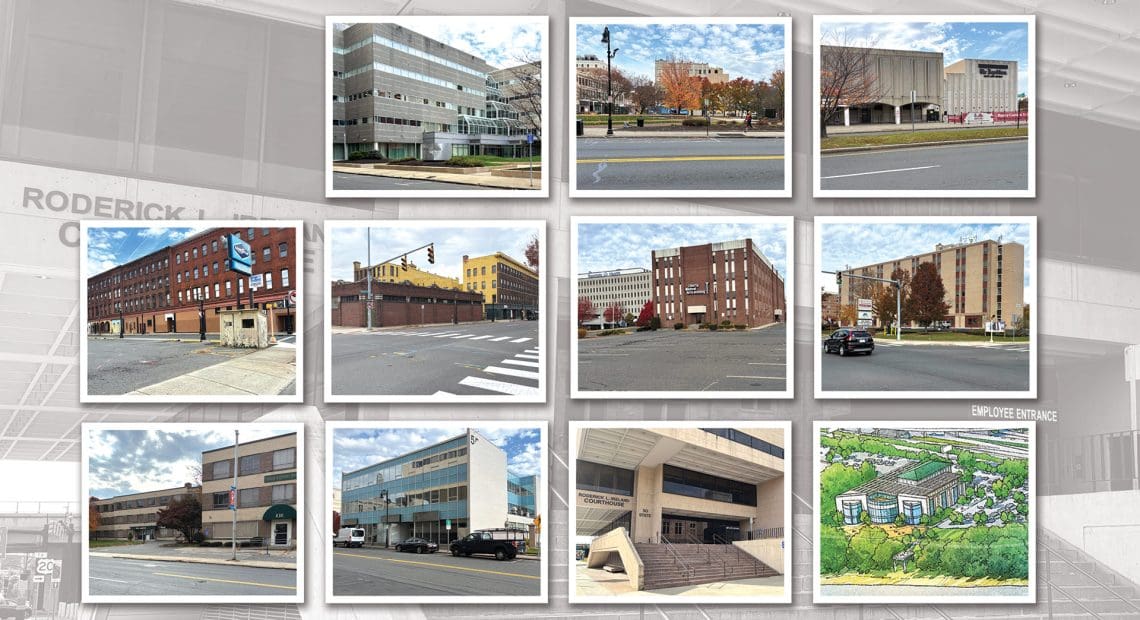
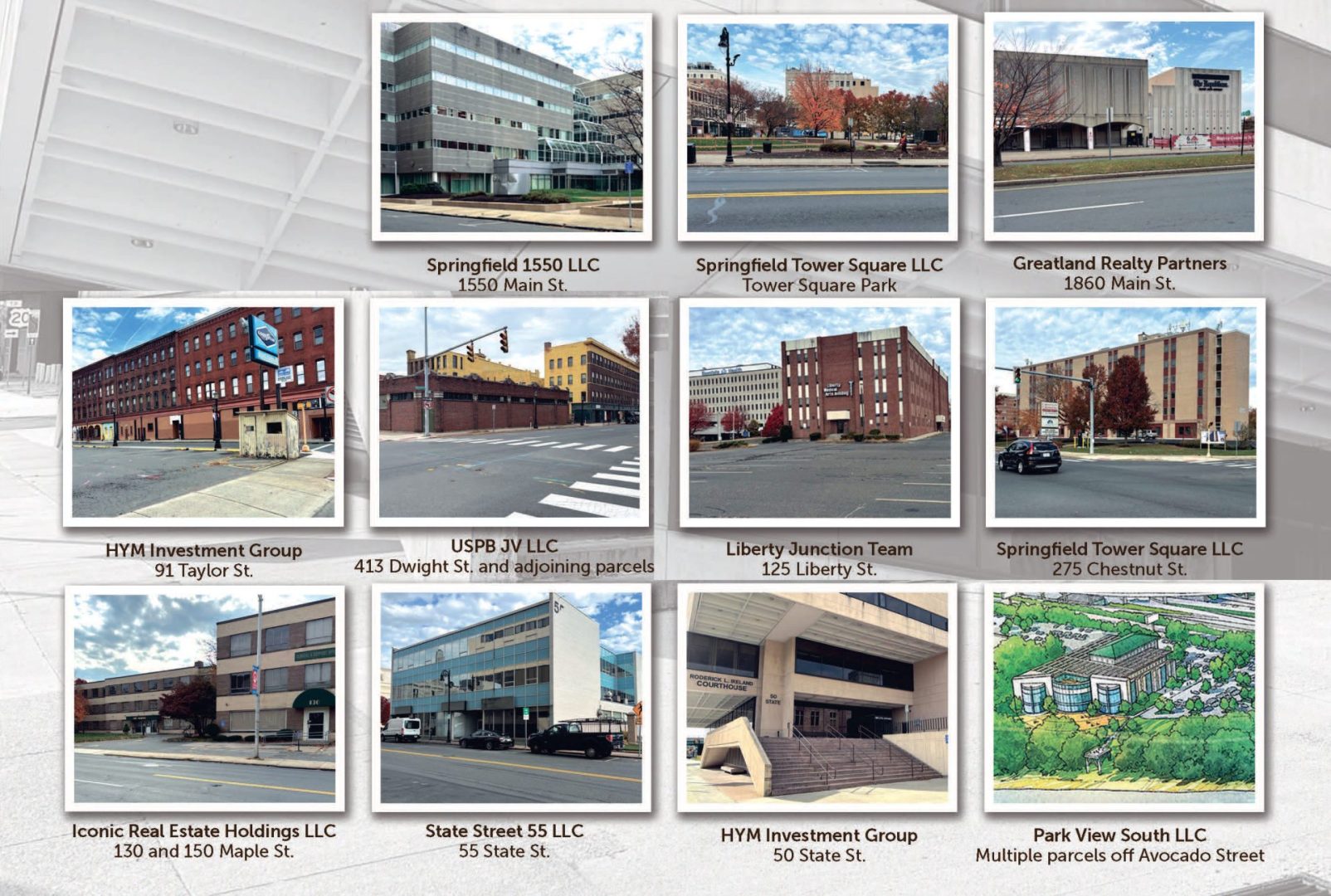
Efforts to build a replacement for the troubled Roderick L. Ireland Courthouse reached an intriguing phase last month, when DCAMM released the list of 11 proposals submitted by a wide range of local and regional developers (see box).

The submissions cover an eclectic mix of properties, ranging from the park created when the Steiger’s department store on Main Street was razed nearly 30 years ago to the building that houses the Republican and its giant printing presses; from the site of a factory where Absorbine Jr. was made to a now-vacant property that was home to a strip club.

An architect’s rendering of the proposal submitted for the property at 55 State St.

An architect’s rendering of the proposal submitted for the property at 55 State St.

Meanwhile, the list of developers includes a notable who’s who when it comes to major projects in Springfield and the Commonwealth, from Davenport and HYM to the brothers Picknelly (Paul and Peter, each heading their own proposal); from Greatland Realty Partners, which recently prevailed in a similar competition to build the state’s new crime lab in Marlborough, to the team of Jeb Balise, president of Balise Motor Sales, and Tom Dennis, president of the Dennis Group, which both have downtown Springfield development projects in their portfolios.

These groups were drawn in by a unique opportunity whereby DCAMM has decided to use a private developer to identify a site, permit, and build the new justice center and then lease it back to the Commonwealth. The terms are quite attractive — a 40-year lease, a rarity in commercial real estate — with an obviously high-credit tenant, and these conditions certainly contributed to what Baacke considers a robust response.

“We’re very happy with the quantity of responses, and I think it’s a clear reflection of how attractive this opportunity is in the development community,” he noted, adding that the RFP has attracted a solid mix of local and regional developers. “This is a very substantial requirement from the largest commercial tenant in Massachusetts that also happens to be one of the strongest credit tenants available in the marketplace, and this is a time when the commercial real estate market is not as strong as it has been at other times.”

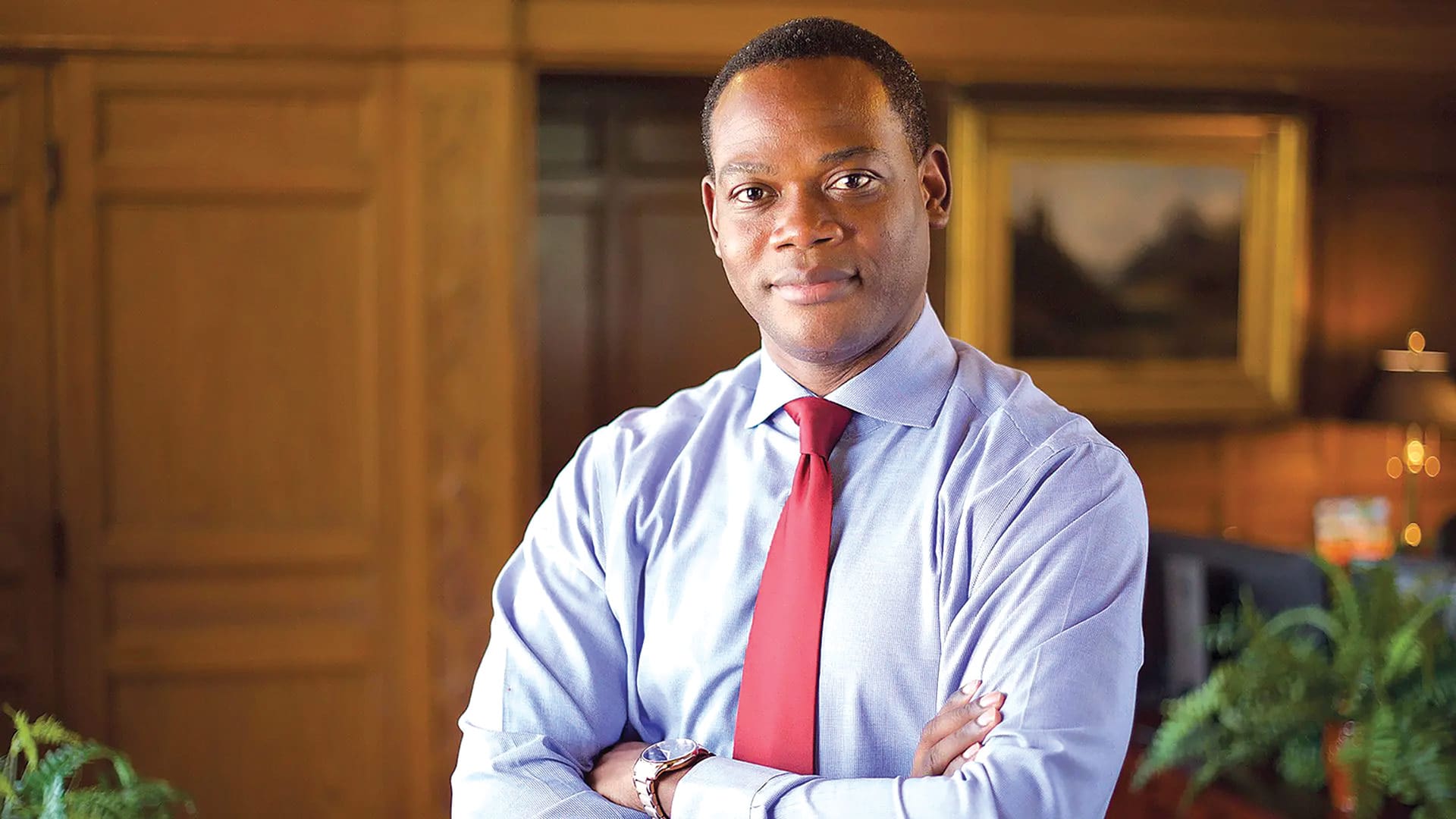
Adam Baacke

Adam Baacke

“This is a very substantial requirement from the largest commercial tenant in Massachusetts that also happens to be one of the strongest credit tenants available in the marketplace, and this is a time when the commercial real estate market is not as strong as it has been at other times.”

Overall, this method creates opportunities for the city (in tax revenue from what will be a privately owned facility, as opposed to state owned) and both the state and the chosen developer, said Baacke, adding that it enables the justice center to be built more quickly and perhaps more cheaply, although cost is not the overriding reason for going this route, which was also chosen for the crime lab.

“The biggest benefit for the state, especially in this instance, is the speed with which we can deliver the project,” he explained. “The process that the private sector undertakes for construction procurement is more efficient — time-efficient and probably cost-efficient as well — than the process the Commonwealth is required to undertake for a public building.

“That results in some benefit in how quickly we can deliver the project,” he went on. “But the really big factor in this case is that this is a pretty sizable project, and fitting it into an already-oversubscribed capital plan would push the project further out than would otherwise be necessary.”

The current courthouse at 50 State St. is considered obsolete in many respects.

The current courthouse at 50 State St. is considered obsolete in many respects.

As for what will go into the decision-making process, Baacke said several factors will be considered, from cost to accessibility to “having a positive economic impact on the city.” And given all that, there was a requirement within the RFP that the courthouse be built in the center of the city, a broad area that covers all 11 proposals, from Maple Street to the south to a parcel on the riverfront to the north.

For this issue’s focus on commercial real estate, BusinessWest examines the many aspects of the courthouse project, from the process to the players to the factors that will go into the decision.


Court of Opinion

Baacke noted that, while the ‘sick’ nature of the current courthouse has added a degree of urgency to the matter, the 46-year-old facility is in many ways obsolete, from operating efficiency to design.

“That building reflects old thinking around everything from security to how the building welcomes the public and celebrates the importance of justice,” he said, adding that, with recently constructed courthouses, such as the one in Lowell and those under design in Quincy, Framingham, and Lynn (all to be built by the state), there is a “different feel to the buildings and a very different organization, particularly around circulation and security, and it’s just not possible to retrofit that building, which was designed for a very different philosophy around judicial architecture.”

“We believe we’re ready to move as fast or faster than anyone. We’ve got a fully formed team that has built basically the last several courthouses to the state’s specifications and satisfactions, so there will be no learning curve for anyone involved. And we have a site that is basically shovel-ready.”

As noted, the state’s quest to replace the structure has attracted a broad range of development teams, many of which have helped reshape the landscape in Springfield in recent years.

In addition to Davenport, which has been involved in several projects in Springfield, including the recent conversion of the Willys-Overland building on Chestnut Street into market-rate housing, redevelopment of the former RMV building in Springfield, and the new Square One facility, teams submitting proposals include the owners of Tower Square, Vid Mitta and Dinesh Patel, who successfully retenanted the downtown landmark, bringing in the Greater Springfield YMCA, White Lion Brewing, and others.

The new courthouse in Lowell is one of several opened recently or in the design/construction phase.

The new courthouse in Lowell is one of several opened recently or in the design/construction phase.

The two partners have submitted three different proposals, one involving 1550 Main St., the office building adjacent to Tower Square that they acquired in 2023; another involving the park across the street, created when Steiger’s closed and was torn down; and a third entailing the site of the former YMCA building on Chestnut Street, most of which has been demolished, with the remaining portion used for affordable housing.

As for Greatland, company President Kevin Sheehan said the company’s portfolio is dominated by projects in the eastern part of the state, including the crime lab, and the Springfield courthouse represents a growth opportunity in a different market.

Sheehan didn’t want to discuss the Springfield project in any detail other than to say the company looked at several sites and ultimately concluded that the Republican building represented the best option for the city and the trial court.

Other developers also chose to refrain from comment on their projects, opting, as one put it, to “let the DCAMM process play out.”

The Balise/Dennis partnership, for example, issued a simple statement on their proposal, which involves a city block between Dwight, Taylor, and Chestnut streets that includes the former home of W.F. Young, maker of Absorbine Jr.

“We see this project as an opportunity to transform downtown Springfield in a way that connects the metro center’s various neighborhoods and increases community pride,” it reads. “By tying Union Station more closely to the rest of downtown, we can bring new energy and life to the area while revitalizing the surrounding neighborhood. Just as important, our proposal prioritizes the health, safety, and well-being of everyone who works and visits the new courthouse, giving Springfield the modern facility it deserves.”


Building Momentum

But other developers were more open about their proposals and willing to tout their attributes.

Irving said both Davenport/HYM proposals have merits. The second, for the building that once housed the Mardi Gras strip club, is just a block from Union Station, he noted, adding that a courthouse on that location could provide a substantial boost to that section of the downtown.

But the group’s other school of thought was that moving the courthouse from its current location would be devastating for the city’s downtown, so it submitted two plans.
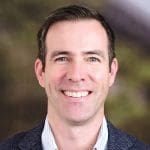
Kevin Sheehan

Kevin Sheehan

“I definitely wouldn’t say there’s no risk, but I think that, with a high-credit, long-term lease, you’ve solved a lot of the risk in real estate development. It’s a smart strategy for the state to get what it wants, a nice new facility, and not take the risk on construction overruns and instead push that to the developer.”

“We said, let’s give the state its choice,” he noted. “But the best thing we’re offering to DCAMM is the depth of our development experience. Between a massive company like HYM, which has done work for DCAMM around the state, and Davenport, which has vast experience in Springfield, I think we bring a team that can deliver, and I think that’s the biggest issue for this project — who can deliver. The state needs this to be done on budget and on time, and we can do that.”

Meanwhile, Paul Picknelly gushed about the proposal submitted by Monarch Enterprises for the property he owns at 55 State St. — and the team behind it.

That team includes Finegold Alexander, a women-owned architecture firm that has designed several courthouses, including the one in Lowell, as well as the one under design in Framingham; Springfield-based Fontaine Construction, which has a deep portfolio of projects in the city, including the MassMutual Center and the Court Square apartment complex, a block from the current courthouse; Dimeo Construction, which built the courthouse in Lowell and is currently building the one in Framingham (Fontaine and Dimeo recently collaborated to build the new Doherty Memorial High School in Worcester); and Westmass Area Development Corp., chosen to see oversee redevelopment of the existing courthouse site.

Picknelly and David Fontaine Jr., president of Fontaine Construction, talked about what they consider to be a strong case for their proposal, including everything from design (it bears a strong likeness to the Lowell courthouse, also built vertically) to how quickly their concept could move from demolition to construction, to its location across the street from the current courthouse — proximity, they say, that brings everything from familiarity to better odds for successful redevelopment of the existing courthouse when it is demolished.

“We believe we’re ready to move as fast or faster than anyone,” Fontaine said. “We’ve got a fully formed team that has built basically the last several courthouses to the state’s specifications and satisfactions, so there will be no learning curve for anyone involved. And we have a site that is basically shovel-ready.”

Even parking, a consideration for all proposals and a problem for some, won’t be an issue for the 55 State St. site, said Picknelly, who referred to his recent call for jury duty at the Springfield courthouse to get his point across.

“It instructs me to park in the I-91 South lot,” he said, referring to the facility under the highway, adding that these instructions won’t change if the courthouse is built at 55 State St.


New Lease on Life

The Springfield Regional Justice Center will be the largest undertaking by the state when it comes to using a private developer to build a facility and then leasing it. But this method has been used with many facilities, including smaller courthouses, such as the one in Westfield.

“The state has about 7.5 million square feet under lease across the Commonwealth, including dozens of properties on behalf of the Trial Court,” Baacke explained, adding that what makes the Springfield project unique is its scope and the length of the lease.

Approved by the state’s Asset Management Board, which authorizes leases longer than 10 years, the 40-year commitment was considered necessary for this project to work.

“During the process of working with the Asset Management Board for the authorization for this project, we really tapped into expertise of the development community members of that board for their recommendations about what length of term would enable developers to not only be interested, but obtain financing on terms that could be most favorable, ultimately, to the Commonwealth in what they would pass through in terms of the lease cost.”

In those respects, this project is most similar to the new State Police crime lab in Marlborough, a 200,000-square-foot, $300 million project that comes with a 20-year lease; construction is due to start in early 2026.

Sheehan said there are many similarities between the crime lab project and the courthouse initiative. He described the former as an effective process, one with advantages for both the state and the chosen developer — and even for the host community.

“In terms of working together with a private developer and the state and the local community … that has resulted in a pretty successful outcome,” he told BusinessWest, referring to the crime lab. “It can be a great partnership; it allows us to do what we do, and by publishing a long-term lease, the state can use its credit to support the construction of this facility without putting all the cost up front and without committing its resources to the design and construction and procurement process, which I think we can a little more efficiently than the state government.”

Irving agreed. “The state provided an opportunity to have a 40-year lease, and in my lifetime, I’ve never seen Massachusetts offer a 40-year lease, which is pretty much the equivalent of a bond,” he explained. “So, this is really well done because it makes this easily financeable, and it makes that financial modeling much easier, and that’s why you have 11 proposals on the table; it’s an amazing opportunity.”

And while there are certainly fewer risks for developers with a project of this nature rather than building a spec office building or renovating a tenanted office facility (where leases typically run five to 10 years) given recent trends with remote work, there are still risks, even with the state as a tenant and a 40-year lease.

“In the development world, there are three basic risks — the leasing risk, the financing risk, and the construction risk,” Sheehan noted. “If it’s a pre-leased facility, you’ve solved the first one, and if you’re using the state’s credit, you’ve somewhat solved the second one, but there’s still fluctuations in interest rates that certainly impact cost, so that’s a risk. And then, there are the construction risks — cost escalation, trade tariffs, labor rates, and general execution risk from construction of the building.

“So I definitely wouldn’t say there’s no risk, but I think that, with a high-credit, long-term lease, you’ve solved a lot of the risk in real estate development,” he went on. “It’s a smart strategy for the state to get what it wants, a nice new facility, and not take the risk on construction overruns and instead push that to the developer.”


Heavy Wait

Getting back to the factors that will ultimately decide which proposal is chosen, Baacke said there will be several, from the proposed lease terms to accessibility; from meeting the state’s decarbonization and climate goals to a project’s ability to positively impact the city economically.

“We do want this project to be a benefit to the city of Springfield,” he told BusinessWest. “As a former gateway city planner myself, I know this is the kind of facility that can be influential in attracting people to an area. It can have a positive impact, and it can also have, if it’s placed in the wrong location, a negative impact on areas that benefit from the location of the current facility.

“The biggest factors in selecting the best proposal are going to be about how the proposal aligns with the needs of the Trial Court,” he explained. “And that’s a little bit about siting, but more about the design of the facility and how well it meets the program and is consistent with their expectations for a hall of justice.”

And then, there’s the cost.

“This is not going to be a decision that is made on which project is cheapest, but which project delivers the best value to the Commonwealth,” Baacke continued. “The project that has the strongest alignment with the needs of the Trial Court, at the best price available to the Commonwealth, is what we’re ultimately going to be looking for.”

Which proposal best does all that will be decided over the next several months.

Now comes what may the hardest part of this process — waiting for a decision.

Business Talk Podcast Special Coverage

With new episodes airing every other Monday, BusinessTalk features in-depth interviews and discussions with local industry leaders who offer thoughtful perspectives on the Western Massachusetts economy and the many business ventures that keep it running. BusinessTalk is sponsored and presented by Greenfield Cooperative Bank.

Go HERE to view all episodes

Episode 247: November 24, 2025

Joe Bednar talks with Jillian Morgan, Director of Development, Food Bank of Western Massachusetts

Every single month, through its roughly 200 partners, the Food Bank of Western Massachusetts helps about 125,000 people in the 413 access more than 1 million meals. Among the roles of Director of Development Jillian Morgan and her team are to execute fundraising activities, boost engagement through volunteering, and develop strategies to raise awareness about this nonprofit’s critical mission — one that has been challenged this year by everything from federal funding cuts to the recent SNAP disruption. For this episode of BusinessTalk, Jillian sits down with BusinessWest Editor Joe Bednar to talk about all of that, plus the 16th annual March for the Food Bank, which engages a sea of participants in a four-county effort to raise hundreds of thousands of dollars. It’s must listening — and certainly food for thought — so tune into BusinessTalk, a podcast presented by BusinessWest over both audio and video platforms, and sponsored by Greenfield Cooperative Bank.

Sponsored by:

Also Available On

Features Special Coverage

A Long-running Success Story

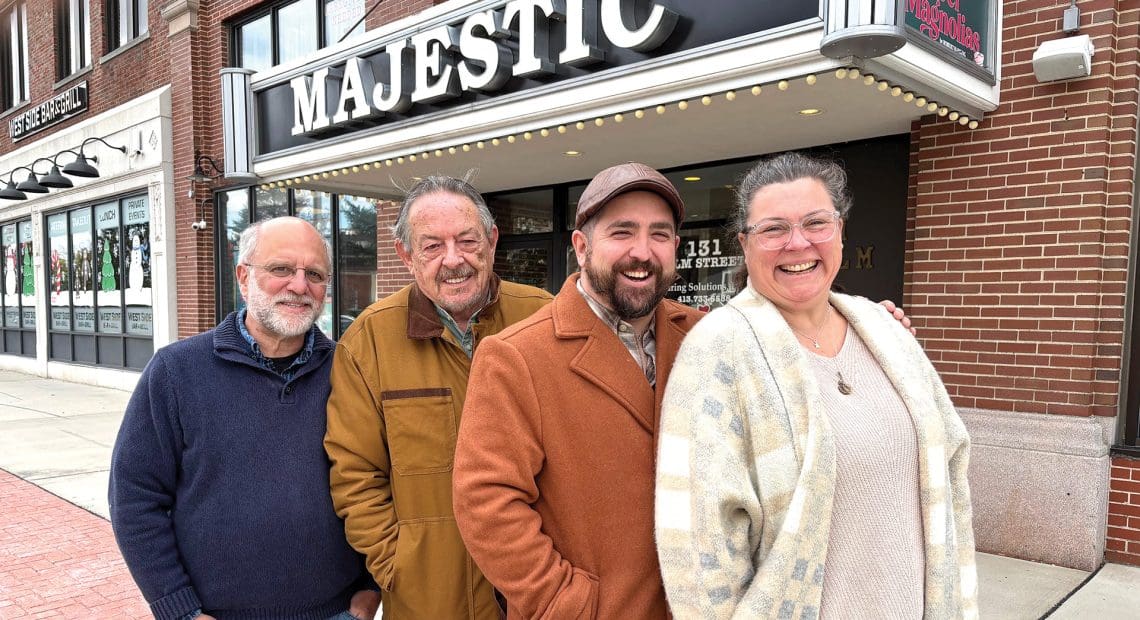
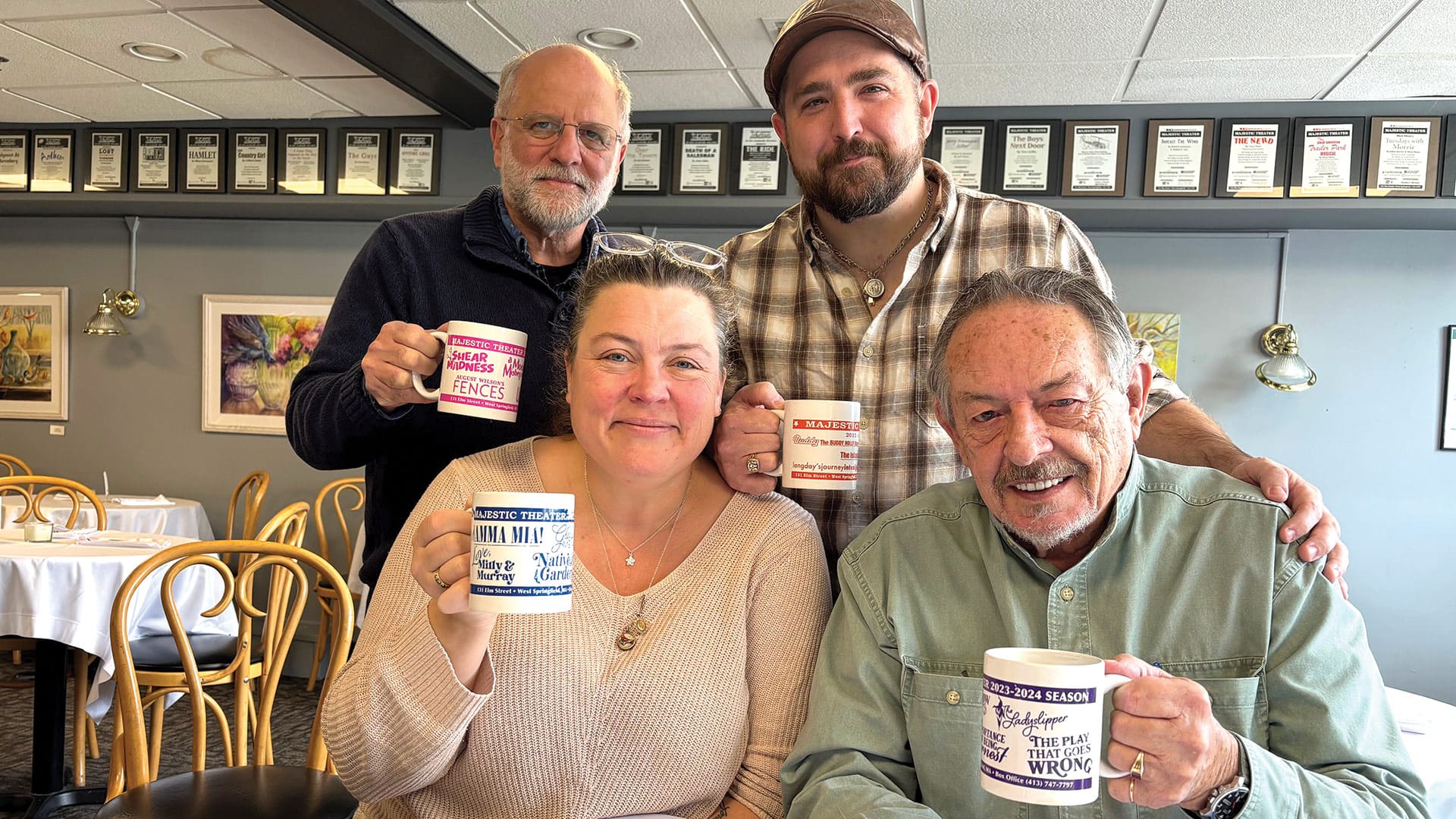
From left, Todd Kadis, Danny Eaton, Sue Dziura, and Terry LaCasse.

From left, Todd Kadis, Danny Eaton, Sue Dziura, and Terry LaCasse.


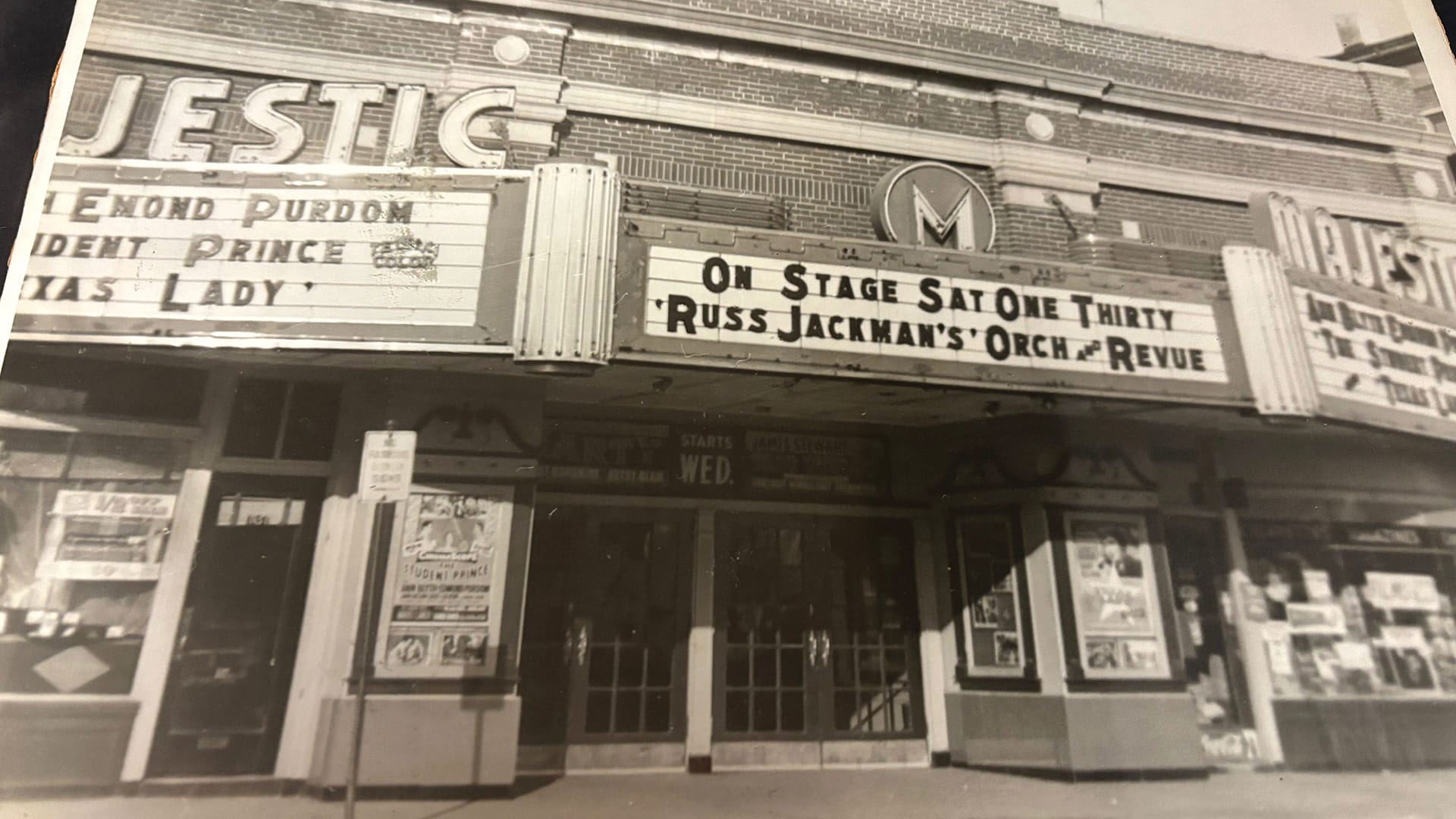
It’s been more than 30 years now, but Danny Eaton can still vividly remember the first time he saw what was left of the historic Majestic Theater on Elm Street in West Springfield.

There wasn’t much to look at, he recalled, adding that the back area of the old moviehouse, where Mickey Rooney once played Puck in A Midsummer Night’s Dream and the Three Stooges had performed, had become a crumbling dumping ground of sorts.

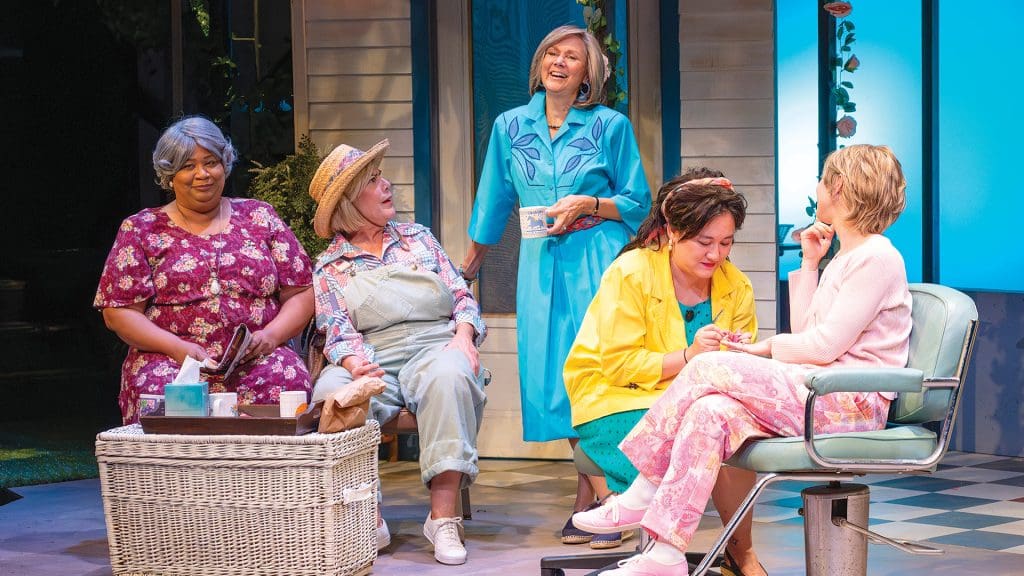
A scene from Steel Magnolias, currently playing at the Majestic.

A scene from Steel Magnolias, currently playing at the Majestic.

“There were carpet remnants, some broken office furniture, and all kinds of junk like that,” said Eaton, the actor, director, playwright, and entrepreneur who had been leading a group of like-minded individuals in the creation of a nonprofit professional theater company called the Theater Project, which was, at that time, looking for a permanent home.

A board member who taught business at Westfield State University arranged for two interns to work with the fledging troupe, and their primary assignment was to find a venue. They were steered to the old theater, built in 1928, by the town’s assessor. And after being let in by the owner of a delicatessen that occupied the front part of the theater, they could see what they had to work with.

That same board member thought he was crazy to do anything but look at the Majestic, but Eaton said simply, “I loved it … it spoke to me.”

Nearly three decades after the theater opened with a showing of The Buddy Holly Story, it’s still talking — to Eaton and to the tens of thousands of people who visit it every year.

“We’ve always seen new people, first-timers, coming to the theater, based upon the offerings.”

And the Majestic — not the building, necessarily, but the institution — has become part of the fabric of the region, said Eaton and others we spoke with.

“People have grown up with us,” he noted, referring to both the audiences for the shows, which span generations now, and some of the performers as well.

Like Ben Ashley, who played Buddy Holly in the The Buddy Holly Story and has reprised that role a few times, while performing in several other shows at the theater as well, including its upcoming Home for the Holidays. And Robbie Simpson, who grew up attending shows at the theater, then started performing in some, and has gone on to star on ABC’s General Hospital and Hulu’s The Path. He returns to West Springfield for shows at the Majestic, such as 2023’s The Glass Menagerie.

The historic Majestic Theater opened in 1928.

The historic Majestic Theater opened in 1928.

Like the plays shown at the theater, the Majestic has several plotlines and props, from the framed showbills that line the café area celebrating shows that include the well-known (Death of a Salesman, Hamlet, Miss Saigon, and Judgment at Nuremburg, for example), and the not-so-well-known (Golf: The Musical) to the annual fundraising car raffle, another institution — first prize this year is a 1962 Corvette convertible; the drawing is Dec. 31.

And then, there are the coffee mugs. Given each year to subscribers — who now total more than 4,000 — they’re printed with the names of the shows from each season.

Subscribers passionately collect them, said Sue Dziura, producing director for the Majestic, and look for them every year.

“They’ll tell us when they come in — ‘I have all my mugs,’” she said, adding that, in many ways, the mugs have become symbols of the Majestic’s two enduring traits — creativity and perseverance.

Indeed, between the shows, the mugs, the cars, a playbill supported by more than 100 local businesses, and more shows, the Majestic has become a long-running success story, one complete with its magic moments and stern challenges, like the pandemic, but also the rising expenses associated with professional theater, from paying the actors to insuring the property.

“Danny has programmed it so that there’s something for everyone, whether that’s genre-related — a comedy and a drama and sometimes a whodunit.”

For this issue, we look behind the curtain, if you will, at nearly 30 years of a class act — literally and figuratively.


Setting the Stage

When he spoke with BusinessWest as the 10th anniversary of the theater’s opening approached in 2006, Eaton recalled how, at that opening, a local journalist remarked that his dream had come true.

Eaton said he had to correct him to a degree and note that getting the doors open wasn’t the dream, or the hard part, or the end of the story. Keeping them open was, and is, the dream. And the hard part as well.

From left: Todd Kadis, Sue Dziura, Tery LaCasse, and Danny Eaton in a ‘mug’ shot.

From left: Todd Kadis, Sue Dziura, Tery LaCasse, and Danny Eaton in a ‘mug’ shot.

And nothing has really changed in that regard over the past three decades, he said, adding that the overriding mission can be boiled down to those four words: keeping the doors open.

Actually, there’s much more to it than that, said Todd Kadis, the Majestic’s treasurer, who has also been here from the beginning.

Indeed, the overriding goals are to make theater accessible and affordable (tickets are under $40), he said, and also to draw people who might not otherwise attend theater.

“We’ve always seen new people, first-timers, coming to the theater, based upon the offerings,” he explained, adding that most of these first-timers will return, and many of them will become subscribers.

It all started, as noted, with The Buddy Holly Story, which returns every five years at the Majestic. Actually, our story really begins in 1992 with the creation of the Theater Project, which performed shows at the Church of the Good Shepherd, just down the street from its current home, to raise money to open the Majestic’s doors.

Or new doors, to be precise, because the current front entrance still led to the deli, so a new entrance had to be built in the back of the structure.

“We spent summers hammering nails and lugging concrete blocks,” Eaton recalled, adding that the team put in two and half years of sweat equity to get the theater ready for prime time. And that hard work essentially set the tone for all that has happened since.

“One of things we found with The Buddy Holly Story is that we could get people to come to the theater who had never been to the theater before and maybe had a notion that it was a highbrow thing that couldn’t be part of their lives.”

Over the years, the Majestic has added more framed playbills to the walls — to the point where there’s no remaining room; raffled off 29 vintage cars; transformed its café into a gathering spot, with patrons showing up an hour or more before a show starts for a quick meal and a beverage; maintained its core audience while attracting new patrons; and become one of the cornerstones for growth and new businesses in the Elm Street area.

Very little, if anything, has been easy, said those we spoke with, but the Majestic has persevered through hard work, imagination (in all its forms), and the ability to stay engaged with its audience.

All these traits were on display during the pandemic, when the lights went down, literally, on March 21, 2020, and didn’t go back on again until August 2021, when the Majestic picked up right where it left off.

Kadis said the institution was kept afloat by PPP and also a much-needed Shuttered Venues Operating Grant, a federal program that, as its name suggests, provided grants to shuttered venues ranging from theaters to aquariums to museums.

And while the theater was dark, those at the Majestic found ways to stay engaged with subscribers and the community at large through online programs such as “Behind the Curtain,” a series of interviews with actors and directors who had done shows at the Majestic, providing a backstage perspective.


Shows of Force

The Majestic now hosts between 250 and 300 shows each season, which begin in September, said Dziura, noting that the simple strategy is to “create as much art as possible.” Each season features five subscription shows as well as Home for the Holidays and a packed summer schedule that includes more than 100 performances, including a children’s theater.

In putting together that five-show slate, organizers strive for diversity and a solid mix of plays and at least one musical, a lineup crafted to appeal to both subscribers — who provide a rock-solid base for the theater company — and single-ticket sales.

“Danny has programmed it so that there’s something for everyone — a comedy and a drama and sometimes a whodunit,” she explained, adding that this year’s slate is no exception.

The season started with Once – The Musical, which tells the story of an Irish street musician and a Czech immigrant who form an unlikely bond over their shared love of music. Currently running is Steel Magnolias, a comedy set in a small Southern beauty salon. In January, The Hound of the Baskervilles, a parody of the Sir Arthur Conan Doyle classic, will begin its six-week run, followed by a ‘two-hander,’ an two-person performance called Dear Jack, Dear Louise, described as heartfelt and comical play that unfolds through the letters exchanged between a young Army doctor and a nurse during World War II. The season concludes with Come From Away, an uplifting musical that tells the true story of 7,000 passengers who were stranded in the small town of Gander, Newfoundland after the events of 9/11.

Each year’s schedule is crafted to provide variety, but also more opportunities to bring new people to the theater and bring back those who have already found it.

“Being a nonprofit theater in a small community in an area that is not particularly known as a cultural hub is a challenge,” Eaton said. “One of things we found with The Buddy Holly Story is that we could get people to come to the theater who had never been to the theater before and maybe had a notion that it was a highbrow thing that couldn’t be part of their lives.

“We changed their minds,” he went on, adding that this might be the unofficial mission statement for the Majestic. “I’ve always maintained that, if I can get 10 new people to come to theater for the first time in their lives, I’ll get seven of them to come back, and I’ll get five of them to become subscribers — and that’s held true in many respects.”

Looking ahead, the simple goal is to keep changing minds about theater, said Kadis, while also maintaining and growing the subscriber base and attracting audiences of all ages. He noted that the average age of attendees is roughly 65, and it has been this way for some time, meaning the theater group has managed to retain subscribers who joined years ago and add new, younger ones as the original subscribers move into their 70s and 80s.

Terry LaCasse, the Majestic’s managing director, agreed. “There’s a multi-generational appeal here,” he noted. “I remember my first week here … I was introduced to a parent, a grandparent, and a child at one of the shows. They were sitting in the back, and they said, ‘we’ve had these seats for years, and we’ve passed then down from generation to generation.’”

That story, and others like it, speak volumes about what the Majestic has become over the years in terms of a cultural institution and tradition.

“The Majestic is a true-to-form community anchor,” said LaCasse, speaking for all those at the table, adding that it promotes the arts, supports local businesses, and makes this region more of a destination.

And that’s why the show has gone on for nearly 30 years — and counting.

Education Special Coverage

Moving On Up

American International College Provost Michael Dodge

American International College Provost Michael Dodge


When Michael Dodge thinks about the 227 students from Duggan Academy in Springfield currently taking classes at American International College (AIC), he understands who benefits the most — and it’s not necessarily the academic high achievers who already have their eyes on college.

“We’re reaching the ones saying, ‘college isn’t for me,’ or ‘I’m not smart enough,’ or ‘no one in my family has gone to college.’ And we’re saying, ‘this program is for you.’ We’re helping students that might not have thought of college as an option — helping it become an option for them.”

Dodge, AIC’s provost, was describing the college’s relationship with Duggan, which began three years ago with high-schoolers taking classes for college credit, and has now become much more robust with AIC being designated as a Massachusetts Early College Program by the state’s joint Early College Committee.

AIC, in partnership with the Springfield Empowerment Zone Partnership (SEZP), is one of 18 new Early College programs announced this year by the Healey-Driscoll administration, and the only private college west of Worcester to receive this designation.

“Those students are taking a total of 900 credits,” Dodge said. “Given our successful pass rates with Duggan, that’s bringing in a significant number of students who are picking up a lot of college coursework that they now have under their belts as they think about where they want to go after high school.”

Notably, the program is a ‘wall-to-wall’ model in which every Duggan student participates. Students have the opportunity to earn up to 60 college credits — at no cost — before graduating from high school. Courses focus on high-growth, high-wage fields including allied health, education, and criminal justice.

“We’re reaching the ones saying, ‘college isn’t for me,’ or ‘I’m not smart enough,’ or ‘no one in my family has gone to college.’ And we’re saying, ‘this program is for you.’”

“We wanted to focus on fields that are in demand and lead to well-paying jobs,” Dodge said. “This puts them on a path to pursue an associate degree either at AIC or a community college or another four-year institution.”

The model ramps up the college coursework as they advance, he explained. Freshman year orients them to the expectations of a college class, and what follows is coursework in general education classes that are easily transferable, regardless of institution.

“Those include things like English composition, analytical writing — things that can help them be better writers and critical thinkers, which sets them up for success when they get to their junior year and senior year,” Dodge noted.

In those final two years of high school, students are blending college-credit courses at Duggan with classes they actually take on the AIC campus, he explained. “We want you to come to AIC, but regardless of where you go, you’re setting up a strong foundation to help you be able to keep pace with the academic rigor that exists at a college.”

While Duggan students have already been earning AIC college credits, the new designation is designed to build on that success and help even more students access college by removing common barriers.

Key program features include personalized support, including small cohorts, academic coaching, and dedicated advisors for multilingual and exceptional learners; advising to promote college readiness; culturally responsive teaching and staffing to reflect and support the student population; and universal access, with 100% of Duggan students participating regardless of prior academic performance.

Tricia Canavan

Tricia Canavan

“Tech Foundry’s senior team has been collaborating with various members of UMass leadership in a variety of ways over the last couple of years. Our partnership has evolved to include working with the IT staff on workforce priorities and employment opportunities.”

“All students deserve opportunities to succeed,” Dodge said. “Early College is about more than earning credits — it’s about building the skills, confidence, and support networks students need for college and life.”


Priming the Pump

Early College is just one way the state has been trying to draw more students into the college pipeline. The most notable ones, of course, have been MassReconnect, which made community college free for Massachusetts residents age 25 or older, and, more recently, MassEducate, which extended that tuition- and fee-free model to any resident, regardless of age, who has not yet earned a bachelor’s degree.

Beyond that, many of the state’s community colleges have forged articulation agreements with four-year institutions, under which students who satisfactorily complete an associate degree program are guaranteed admission into a bachelor’s degree program at the four-year school.

One of these partnerships, between Elms College and both Holyoke Community College (HCC) and Springfield Technical Community College (STCC), deepened recently by allowing students of those two community colleges to reside in residence halls at Elms.

STCC and HCC are commuter colleges and do not provide on-campus housing, so the agreement benefits STCC and HCC students who have housing needs, while creating the kind of familiarity with the Elms campus and culture that makes it more likely they’ll pursue a baccalaureate degree there.

“Elms College, for nearly 100 years, has prided itself on promoting educational opportunities to those who would otherwise not have access, and being a collaborative partner with our neighboring colleges. This agreement accomplishes these goals and expands our strong partnerships with HCC and STCC,” Elms President Harry Dumay said. “Our campus has always been a welcoming, inclusive community, where we work hard to ensure that everyone feels like they belong in the spirit of our founding mission. HCC and STCC students now get to discover that aspect of the Elms experience.”
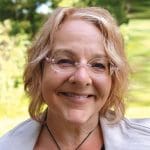
Other regional partnerships target an older demographic — people who either never attended college or started but didn’t finish.

Elms College President Harry Dumay recently announced that the college expanded its articulation agreement with HCC and STCC to allow students at those colleges to live on the Elms campus.

Elms College President Harry Dumay recently announced that the college expanded its articulation agreement with HCC and STCC to allow students at those colleges to live on the Elms campus.

One recently announced collaboration between UMass Amherst and the Tech Foundry — the Springfield-based workforce development nonprofit that trains local residents for IT careers — enables Tech Foundry staff and community members to complete their undergraduate degrees through the university’s flexible, customizable online program.

Specifically, Tech Foundry members can take classes, receive academic counseling, and map their educational pathway through UMass Amherst’s University Without Walls Department of Interdisciplinary Studies (UWW-IS).

Current UWW-IS admission requires 12 transferrable college credits and a 2.0 GPA for adults who did not previously attend UMass Amherst. As part of its program, however, UWW-IS offers credit for prior learning or life experience. Under the new agreement, students who are accepted into UWW-IS and have completed Tech Foundry’s 18-week immersive hybrid training program will receive 15 credits via special transcript, which is equivalent to a full semester courseload. The collaboration builds on earlier programs in which UMass Amherst IT provided internships for Tech Foundry trainees.

“Tech Foundry’s senior team has been collaborating with various members of UMass leadership in a variety of ways over the last couple of years. Our partnership has evolved to include working with the IT staff on workforce priorities and employment opportunities,” said Tricia Canavan, CEO of Tech Foundry, who called the new collaboration an important expansion of opportunity for Tech Foundry students.

“We’re really centering equity efforts. We don’t always want to polish just the shiniest of apples, but we’re making sure we’re reaching out to that student who may not have thought of college as an option — but help them do it in ways that make sense.”

UWW-IS Department Administrator Siobhan Henderson said the collaboration also enhances University Without Walls’ longtime relationship with Springfield residents. “We are committed to meeting learners where they are — professionally, academically, and geographically. This collaboration aligns with our UWW-IS mission that was founded more than 50 years ago: to open doors to adults who thought achieving a bachelor’s degree was unattainable.”


Opportunity Knocks

Gov. Maura Healey has called Early College programs a central element of her administration’s Reimagining High School initiative to prepare students for college or careers and expand access for those historically underrepresented in higher education — at a time when higher education is already facing demographic headwinds in the form of fewer high school graduates.

“Early college is an important and effective tool for making higher education more accessible and affordable for every Massachusetts student,” she said earlier this year. “These new partnerships give more young people the opportunity to earn college credit at no cost while still in high school, setting them on a path to success and helping to close opportunity gaps.”

Dodge sees such efforts as steps in the right direction, and considers the college campus immersion element an important part of the process.

“The intent, in senior year, is to have students be on our campus taking college-level courses, similar to the models for dual enrollment in the past,” he explained. “Students can take 12 to 15 credits over the course of senior year — typically four to five classes — develop some affiliation with the institution, and be able to take some independent coursework and things very specific to their planned major, so it’s not just, ‘oh, I come to campus for one class and then leave. Instead, they’re thinking about being on campus most of the day for Tuesday and Thursday, or Monday, Wednesday, and Friday.”

He also appreciates the Healey administration’s focus on equity and helping close performance gaps.

“That’s one of the reasons why we applied for this designation with SEZP and the Department of Higher Education. We’re really centering equity efforts. We don’t always want to polish just the shiniest of apples, but we’re making sure we’re reaching out to that student who may not have thought of college as an option — but help them do it in ways that make sense. That’s why we start small, one or two courses freshman year, then building up intentionally and bringing them into the fold in college.
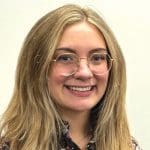
“We’re really thankful for the support from SEZP and the Department of Higher Education, and we value the partnership we have with Duggan and the Springfield Public Schools,” Dodge went on. “We think it’s a partnership that makes sense in this current environment, this academic cliff where fewer 18-year-olds are going to college. It seems like what the future of higher education needs to be.”
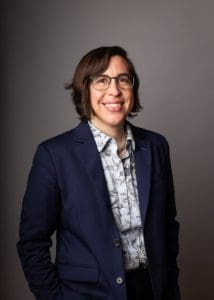
Special Coverage Wealth Management

Lessons Learned

Ty Vinick

Ty Vinick

Ty Vinick says his grandfather, the late Jim Vinick, had been “training me my whole life.”

That’s not surprising to anyone who knew Jim, the former managing director of investments at Moors & Cabot — and a 2013 BusinessWest Difference Maker — who passed away in June, and was known for his passion for financial literacy.

“When I was like 8 years old, he was teaching us stocks and bonds and everything else,” Ty recalled. “I came to work with him at the start of this year, and I was hoping to work with him longer — I mean, he’d been teaching me my whole life though.”

That wasn’t meant to be, however. “Three days before he passed, we were in the hospital, and he was asking to check on his portfolio. So he was working right up to the end. He went out with his boots on.”

Those are certainly massive boots to fill — Jim was one of the driving forces behind the establishment and evolution of the Basketball Hall of Fame in Springfield, as well as a longtime, respected wealth manager and financial expert — but Ty is up for the challenge, recently taking over his grandfather’s book of clients and running the Springfield office of Moors & Cabot, a Boston-based financial planning firm with numerous locations across the U.S.

“He loved his job,” Ty recalled. “Outside of his family, he loved his job, and he loved the Basketball Hall of Fame. Anyone who ever met him heard all about both things. He had incredible relationships with people, and I feel really fortunate that I get to do the same thing he did.

“I had a lot of teaching experience, which I actually find helpful now because I spend a lot of time explaining different concepts to people in terms of investing, or different investment vehicles they might not know about.”

“I see a side of him that maybe even other people in our family don’t get to see, where I’m talking with people, and they say, ‘you know, he was like a father figure to me. He was there for me when my husband passed or when my parents passed, and I didn’t know what to do, and there was money, and I needed help handling it,’” he went on. “And then they’re like, ‘but he was also just there to talk about life and what I might need.’ So it’s good to see, not just coming from him, but from other people, the impact he had on them, where they say, ‘you know, when I really needed somebody, he was someone I could turn to.’ That’s pretty cool.”

And the younger Vinick finds it gratifying to help people in the same way.

“Life keeps on going for everybody, and different things come up, and people call me because they had someone pass or they’re planning for their kids,” he told BusinessWest. “Sometimes you’re helping them because it’s a good situation that you’re trying to manage, making things a little more secure, like parents paying for college. And sometimes you’re helping them because it’s a sad situation; if a partner dies or spouse dies or a parent dies, they’re in a really tough moment, but at least you’re there to make that tough moment a little more manageable and a little bit smoother to get through.”


Let’s Talk

Vinick’s title is financial professional, though, as noted earlier, it involves a lot of education, too. That makes sense, considering his career journey.

At Tufts University, he majored in economics and also studied pre-med, thinking he might want to be a doctor. But after that, he went to Spain for a year and worked as a teacher in a rural village of about 700 people; he had also done some tutoring in college.

“I had a lot of teaching experience, which I actually find helpful now because I spend a lot of time explaining different concepts to people in terms of investing, or different investment vehicles they might not know about. So, in a weird way, it actually ended up being very, very helpful.”

After returning to the States and working in a few doctors’ offices, he realized he had lost enthusiasm for the medical profession. So he worked in biotech for a time, then returned to his native Western Mass. and entered the family business. In retrospect, it was the logical choice.

Jim Vinick, pictured here in 2013, when BusinessWest named him a Difference Maker, was well-respected in the region for wealth management, financial literacy, and civic commitment, particularly with the Basketball Hall of Fame.

Jim Vinick, pictured here in 2013, when BusinessWest named him a Difference Maker, was well-respected in the region for wealth management, financial literacy, and civic commitment, particularly with the Basketball Hall of Fame.

“I think I took a lot of it for granted growing up. We would sit with my parents and with my grandfather at the table, learning about investing and things like that, and now that I’m working in this role, a lot of times, I’m explaining things to people that I’ve been taught my entire life, and he was so good at teaching all that.”

It’s an ethos he brings to each client interaction today.

“I’m constantly talking to my clients, pretty much every month. So I get to really know them as people,” Vinick said. “A lot of the planning and understanding their finances is ongoing, rather than just sitting down and having it be a one-time conversation. It’s ongoing conversations, understanding where people are in life and meeting their shifting needs.”

Those clients, he said, range from young families all the way up through retirees working on estate planning matters, and they come to Moors & Cabot with a wide range of income levels and assets. Obviously, the investing strategies — and those conversations — are far from cookie-cutter.

“It definitely changes with retirees who might be looking more for income and living off of the savings that they have, versus younger people who might be looking to build something for the future, planning for a house or college,” Vinick said. “There are a lot of key factors that most people want to consider, so we just talk through those. You can always start with the big picture and then hone down as you go.”

As for clients closer to retirement, at a time when people are living longer than ever, it’s important to help them understand they might be looking at 25 years or more of post-work years — and how much money it will take to live the lives they want.

“Part of it is factoring in the fact that there’s going to be inflation in that path, and expenses might vary even during retirement. Health concerns can come up. Do you plan on traveling, and do you have certain goals or a certain lifestyle you want to maintain during retirement? Those costs can change as you go,” he explained. “So you want to consider that variability. You don’t want to get to retirement and then run out of money because that would be a tough position. So that’s part of the plan as well.

No matter what one’s age, Vinick said, it’s important to start crafting that life plan as soon as possible.

“The best time to start was yesterday, and the second best time to start is today. So even if you didn’t start yet, you can always get started now, and it’s better than not getting started at all. Better late than never, they say.”

“Some people can see volatility and say, ‘it’ll be fine. I know I’m not investing for tomorrow; I’m investing for 10 years.’ And for some people, there could be a 1% change in their account over the span of a month, and it will worry them.”

Another element of helping clients is guiding them through periods of uncertainty in the market, like during the roller-coaster ride this past spring when the market kept diving and rising amid constant tariff rumours, announcements, and rollbacks.

“Part of investing for different clients is meeting the level of risk that they’re willing to accept,” Vinick said. “Some people can see volatility and say, ‘it’ll be fine. I know I’m not investing for tomorrow; I’m investing for 10 years.’ And for some people, there could be a 1% change in their account over the span of a month, and it will worry them. It’s something to keep in mind for each client, how much risk they can accept or how much tolerance they have for it.

“And then part of it is explaining to them, ‘hey, something may have happened last month, but overall we’re doing OK,’ or ‘this is the vision for the long term, and this is what we’re looking to do,’ and keeping them on track rather than giving in to either overjubilance when things go really, really well, or panicking when things get a little rocky for a month here or there, whatever it might be.”

That’s easier to do with somebody who’s at an earlier stage of life and can take a longer view, but it’s also a matter of personality, he added. “Younger people can still panic, too. I think it just depends on the personality, the person, and the risk they can accept.”


Back to School

Vinick’s father, Michael, didn’t choose the financial services path, but rather forged a successful career in the HVAC trade; he’s president of Duct & Vent Cleaning of America in Springfield. But Ty’s transition into leadership at Moors & Cabot ensures a multi-generational family legacy there — serving clients that are often also multi-generational.

“My grandfather had clients that were parents, grandparents, great-grandparents, and then, with his passing, I now have them as clients,” he said. “I’m the fifth generation of my family that’s in Springfield, and part of the business for me will also include being involved in the community that my family’s been involved in.”

And also education and communication. Vinick is already thinking about not only how he can become more involved with community organizations, as Jim was, but also how to continue his grandfather’s work on financial literacy, which included, many years ago, The Vinick Report, a local TV show on that topic.

“I love talking to people. I get to be on the phone all day with people, and you get to know them quite well,” he said. “You get to build these very meaningful relationships with people where you can kind of track them through their life. I think that’s the part that I enjoy doing.

“And I get to have a meaningful impact on their lives as well — I’m genuinely helping people reach milestones and achieve their financial goals,” he added. “You know, outside of their health, making sure they have a reasonable financial plan creates the foundation for everything else they want to do.”

Community Spotlight Special Coverage

Community Spotlight

An architect’s rendering shows the various buildings and parcels to be developed at the Eagle Mill complex in Lee.


Jeff Cohen says he was “looking for something to do.”

That was how the long-time developer, lawyer, and one-time police officer casually described how he began what has become a 14-year journey (and counting) to redevelop the Eagle Mill in Lee, one of the oldest paper mills in the country.

It certainly hasn’t been an easy journey — “I have lot more gray hair now than when I started,” Cohen said — but the Eagle Mill canvas, if you will, is filling in, and there is more on the drawing board for this parcel bordering downtown.

Indeed, nearly 60 units of affordable housing are in the process of being leased, and should be occupied next spring. Meanwhile, roughly 150 more units are planned, as well as commercial space, in subsequent phases of the project, including a recently announced plan for 69 units of affordable housing on property across the street from the Eagle Mill.

As these different phases of the project unfold, the impact on Lee, its downtown, its business community, and different constituencies searching for affordable housing will only grow.

Alex Heddinger

Alex Heddinger

“Our walkable downtown is lined with one-of-a-kind shops and restaurants, many family-owned for generations, and there’s a real sense of connection among the people who live and work here.”

“This is going to create a village at the north end of town,” Cohen explained. “As you drive from the Berkshires through Lee along Route 20, there will be a great-looking community, and there will be lots of people on the street. This is going to enable Lee to attract people who want to work in and around the town, it’s going to put more kids in the schools, and it’s going to enhance the businesses in town and probably create opportunities for new ones.”

Redevelopment of the Eagle Mill complex is one of many converging stories in this community of almost 6,000 people. Others include:

• A slight cooling of its housing market, which was one of the hottest in the state just a year or two ago. Town Manager Chris Brittain said the market has returned to something approximating pre-COVID days, before prices exploded amid the surge of remote work and strong interest in rural settings from which to do it;

• Ongoing efforts to encourage development of other mills in Lee, and there are many of them — the community was once home to two dozen mills making more paper than anywhere else in the country;

• Progress toward construction of a new and much-needed public safety complex — groundbreaking is slated for next month — as well as discussion of converting the historic fire station into a community space;

• Continued efforts to make this community, known as the ‘Gateway to the Berkshires,’ more of a place to stop, dine, shop, recreate, and more, rather than being a gateway to other, better-known destinations, including Lenox, Stockbridge, and Pittsfield; and

• Some new restaurants and other small businesses that are certainly helping in these efforts to make Lee more of a destination.

“Our walkable downtown is lined with one-of-a-kind shops and restaurants, many family-owned for generations, and there’s a real sense of connection among the people who live and work here,” said Alex Heddinger, a Lee native who became executive director of its Chamber of Commerce this past spring. “We also have one of the most diverse dining scenes in the area — Mexican, Indian, Peruvian, French, pizza, new American, pub fare, diner classics, and even a Burmese restaurant.

Brooke Healy

Brooke Healy

“When it comes to affordable housing, many people have preconceived notions about it, but it can really impact everyone — from families to young professionals just starting out in their career like I was.”

“Lee has a way of making visitors feel right at home,” she went on, adding that one of the goals moving forward is to make business owners feel at home as well.

For this latest installment of its Community Spotlight series, BusinessWest takes an in-depth look at Lee and the many intriguing storylines converging there.


Milling About

Cohen told BusinessWest that he and his wife moved to the Berkshires in 2012, and soon thereafter, he became fascinated with the Eagle Mill and the prospects for developing it.

The property had been abandoned since 2008, he said, adding that the various buildings were in poor condition when he acquired them, but still historic. He contracted with an architect and started meeting with various groups in town to get a sense “for what could be attractive to the town and be profitable for me, and that’s how it started.

“I’m not the type of person who buys something and says, ‘here’s what I’m going to do,’ and then present that to whomever is going to approve it,” he explained. “My style is a little different; I try to work with people in the neighborhood, various town officials, and various interested community groups to get a sense for what’s going to pass muster.”

It took several years to identify the preferred use, he said, adding that various uses, including a 100-room hotel and a Faneuil Hall-type retail market, were considered. Overall, it’s been a long, difficult journey, made much more complicated by the pandemic, but pieces to a complicated puzzle are coming together, starting with phase 1 — 56 units of affordable housing in the two original mill buildings, the Union Mill and the Eagle Mill.

Phase 2 includes 44 new apartments at the eastern end of the site; phase 3 is another new building with 35 units of housing and 4,000 square feet of retail, with construction slated for 2028 if all goes as planned; phase 4 involves redevelopment of the historic machine shop building for commercial and retail use, including a restaurant; phase 5 will consist of five condominium townhouses on the Housatonic River; and phase 6 will be 69 more units of affordable housing on the corner of West Center and Canal streets.

Cohen described the sum of these parts as game-changing, and Lee Town Planner Brooke Healy agreed.

“These new units will provide a boost to our downtown business owners and stores,” she said. “You’ll have people walking up and down Main Street — the restaurants are going to get a boost, the stores are going to get a boost … and while some people will work in Lee, others will work in surrounding towns, meaning this will benefit not just Lee, but the Central and Southern Berkshires.

Healy speaks from experience when she said many workers in the Berkshires face lengthy commutes between their jobs and housing they can afford, and the Eagle Mill project will be a difference maker in this regard and make a huge dent in the demand for housing, especially the affordable variety.

“I took this job about a year ago, and it took me a few months to find housing that was less than an hour away; I’m very lucky to live close to downtown Lee,” she told BusinessWest. “When it comes to affordable housing, many people have preconceived notions about it, but it can really impact everyone — from families to young professionals just starting out in their career like I was.”

Meanwhile, there are several other mills that remain vacant or mostly vacant, Healy said, adding that the town is working on revamping zoning bylaws and other strategies for making these mills more “developer-friendly.”

Lee at a Glance

Year Incorporated: 1777
Population: 5,788
Area: 27 square miles
County: Berkshire
Residential Tax Rate: $11.25
Commercial Tax Rate: $11.25
Median Household Income: $41,556
Median Family Income: $49,630
Type of Government: Open Town Meeting
Largest Employers: Lee Premium Outlets; Onyx Specialty Papers; the Landing at Laurel Lake; Oak n’ Spruce Resort in the Berkshires; Big Y
* Latest information available

The town recently collaborated with UConn students to create a site reuse assessment and master plan for three mills — Columbia Mill and Greylock Mill, both on Columbia Street; and Greenwood/Mountain Mill on Forest Street, which was recently sold by the town at auction.

“When a lot of the current bylaws were written, most of these mills were still functioning, and people didn’t really think about the next steps if these mills were to ever go out,” she explained. “Looking forward, we have some mills that are not being used, and there’s been some discussions with the owners of those properties to make sure they know the town has their interests in mind and will help in any way it can.”


Progress Report

Brittain told BusinessWest that Lee’s current fire station, a granite and marble structure built in 1912, was designed for horses, not 21st-century firetrucks.

Which means the town has had to special-order trucks to fit into the doors of this facility. And they just barely fit.

“The last one had five-eighths of an inch clearance on either side,” he said, adding that a few mirrors have been lost over the years.

Wider doors are just one of the myriad design elements to a new, 37,000-square-foot public safety complex, said Brittain, adding that the facility, with a projected price tag of roughly $32 million, will bring the Police, Fire, and Building departments under one roof on the site of the former Bull’s Eye Pub in downtown Lee. And, as noted, the town is in early-stage talks concerning what to do with the current fire station, also downtown.

These developments are just some of the emerging stories in the community’s eclectic downtown, which is just a few miles off Exit 10 of the turnpike, a unique asset that has certainly helped the town’s efforts to promote tourism, while also attracting other types of businesses, such as biotech and enterprises such as Sharp Sterile Manufacturing and Boyd Biomedical, both on Pleasant Street, just off the turnpike exit.

Getting back to the downtown, visitors pass through on their way to Tanglewood and other Lenox attractions, as well as Pittsfield, said all those we spoke with, adding that the goal is to get them to stop along the way — or, better still, make Lee the destination.

There’s a growing list of reasons for doing so, said Heddinger, adding that there is a good mix of restaurants, including some recent additions, such as the Station Gastropub, so named because it’s housed in a former train station.

“Downtown has restaurants, shops, several different kinds of businesses, a park where we stage events, and much more,” she said, adding that this central business district is more than a place to drive through on the way to somewhere else.

Brittain agreed. “We’re seeing a lot more people dining and staying here than we used to, and our hotel and restaurant taxes reflect that,” he said, adding that the growing number of restaurants, and the diversity of those offerings, is a big reason why. “More people are stopping and enjoying the downtown area on their way to Tanglewood or the Norman Rockwell Museum, or whatever.”

Meanwhile, the town is developing strategies for bringing more businesses to the community, such as the “Friend-Lee Approach to Business” marketing campaign, which Healy described as a work in progress, likely to be ready for the new year.

“We’re trying to break down the barriers for developers and residents interested in owning businesses,” she explained. “We want them to able to come in and have conversations face-to-face with various departments and understand what is needed to open a business.

“It can very overwhelming to try to open a new business,” she went on, adding that the campaign will likely ask the question ‘why Lee?’ and then focus on the town’s many attributes — from recreational facilities to that turnpike exit to proximity to other destination communities.

It’s all part of an effort to promote this Gateway to the Berkshires, but also make it much more than that.

Daily News

SPRINGFIELD — On Nov. 19, the Pioneer Valley Planning Commission (PVPC) celebrated the graduation of the second cohort of the Quantum Training Academy, a pioneering program preparing Western Mass. students for careers in the emerging quantum computing industry.

The ceremony, held at the UMass Center in downtown Springfield, honored students as young as grade 9 who successfully completed an intensive curriculum combining quantum computing fundamentals with early college coursework. Attendees included program leaders, industry representatives, and regional officials, all gathered to recognize the students’ achievements and the growing quantum talent pipeline in the region.

“These graduates have shown remarkable dedication and curiosity,” said Kimberly Robinson, executive director of PVPC. “Their achievements highlight the potential of local students to excel in fields that will shape the future of technology and innovation.”

Vanessa Otero, senior fellow for Economic Development at PVPC, added that “the Quantum Training Academy is about more than technical skills — it’s about creating pathways, networks, and opportunities that allow students to thrive in high-demand industries.”

The Quantum Training Academy is a collaborative initiative funded by the Innovation Institute at MassTech and developed in partnership with Springfield Technical Community College, UMass Amherst, New North Citizens’ Council, the Springfield Empowerment Zone Partnership, and industry leaders, including QuEra Computing. The program equips students with hands-on experience in quantum technologies, preparing them for careers in sectors ranging from medicine and cybersecurity to advanced manufacturing.

With members of the local education and technology communities in attendance, the graduation underscored the impact of public-private partnerships in cultivating a skilled, homegrown workforce. The Quantum Training Academy reflects PVPC’s ongoing commitment to equitable economic development, providing students from Springfield and neighboring communities with access to transformative opportunities in cutting-edge technology fields.

Daily News

Christa Douaihy

SPRINGFIELD — Christa Douaihy and Krista Ellis — two attorneys at Community Legal Aid, a nonprofit organization that provides free legal services annually to more than 9,000 low-income and elderly households in Central and Western Mass. — have been recognized among Massachusetts’ top legal professionals.

Krista Ellis

Douaihy, coordinating attorney for Community Legal Aid’s Housing Unit, was recognized on Nov. 18 by Massachusetts Lawyers Weekly as one of the 2025 Top Women of Law. According to the publication, the Top Women of Law event celebrates the achievements of exceptional women lawyers who are pioneers, educators, trailblazers, and role models.

Douaihy joined Community Legal Aid in 2022 as a seasoned litigator with diverse legal experience in New York and Massachusetts. She began her career in 2008 at Legal Services of the Hudson Valley, where she advocated for the civil rights of people with disabilities in cases involving housing, employment, and family law. She went on to hone her legal expertise as a civil litigator and disability rights advocate at the Bronx Defenders and in private practice.

As coordinating attorney in Community Legal Aid’s Fair Housing Unit, she specializes in eviction defense, brings lawsuits under state and federal fair housing laws, provides community education and outreach, and mentors her colleagues. She serves as an adjunct professor at Western New England University School of Law, where she teaches the “Access to Justice” course.

“It is an immense privilege to work in the legal profession in Massachusetts,” Douaihy said. “We have a progressive tradition. We have dedicated judges who are committed to the rule of law and enhancing access to justice. We have a passionate bar who, along with community organizations, work tirelessly to address root causes of inequity and vindicate rights. I am proud to be among them.”

Ellis, coordinating attorney at Community Legal Aid, was honored as an emerging leader in the law by the Women’s Bar Assoc. (WBA) at the organization’s 2025 gala on Oct. 22. The WBA’s Emerging Women Leaders in the Law Award honors women attorneys who have demonstrated professional excellence or had a significant professional achievement in their first 12 years in the legal profession, and either promote the status of women in the legal profession or contribute meaningfully to the equal participation of women in a just society.

A graduate of American University Washington College of Law, Ellis has worked in Community Legal Aid’s Family Law Unit since 2019. She also recently graduated from the Massachusetts Bar Assoc. 2024-25 Leadership Academy.

Both Douaihy and Ellis are based in Community Legal Aid’s Springfield office and represent clients primarily in Western Mass.

Daily News

SPRINGFIELD — Revitalize Community Development Corp. (CDC) announced its upcoming #GivingTuesday on the Rocks: Celebrity Bartenders fundraising event, taking place Tuesday, Dec. 2 from 4:30 to 8:30 p.m. at White Lion Brewing Co., Tower Square, 1500 Main St., Springfield. Parking will be validated in Tower Square.

This festive #GivingTuesday celebration invites the community to come together in support of Revitalize CDC’s mission of revitalizing homes, neighborhoods, and lives through preservation, education, and community involvement. Guests will enjoy an evening filled with fun, purpose, and local star power as community leaders step behind the bar for a fun-filled night of fundraising.

The event will feature live music by DJ Groove, courtesy of White Lion Brewing Co., along with food and beverages; a portion of all sales will be donated to Revitalize CDC.

A dynamic lineup of local celebrities will compete to raise the most in tips, with 100% of all bartender donations supporting Revitalize CDC’s mission-driven programs. They include Ryan Alekman of Alekman DiTusa, Matt Bannister of PeoplesBank, Carla Cosenzi of TommyCar Auto Group, Dawn Creighton of Liberty Bank, Robert DiTusa of Alekman DiTusa, Nikki Gleason of Florence Bank, Chris Kellogg of WMAS 94.7 FM, Rania Kfuri of Glenmeadow, Chrissy Kiddy of PeoplesBank, Jay Latorre III of Verizon, Mary McGovern of Country Bank, Dan Moriarty of Monson Savings Bank, Frank Robinson (retired) of Baystate Health, and Moyah Smith of B-Side Entertainment & Memories Matter. Any donation of $1,000 or more is eligible for a 50% Community Investment Tax Credit.

Event sponsors include APlus HVAC, ASAP Environmental, Country Bank, Garvey Communication Associates Inc., and Rocky’s Ace Hardware. For those unable to attend, donations are accepted at www.revitalizecdc.com.

Daily News

SPRINGFIELD — Western New England University (WNE) and Bay Path University have signed a new articulation agreement that creates a streamlined academic pathway between two rapidly expanding fields, genetic counseling and pharmacogenomics. The partnership is designed to support the significant regional workforce demand for professionals trained in precision medicine, genomic testing, and personalized therapeutics.

Under the agreement, WNE will reserve at least two seats annually in its master of science in pharmacogenomics (MSPGx) program for qualified graduates of Bay Path’s master of science in genetic counseling (MSGC) program. Conversely, Bay Path will reserve at least five interview seats in its MSGC program annually for WNE MSPGx graduates. Students accepted through this pathway will also receive six transfer credits toward the MSPGx or MSGC degree, which may reduce the cost of their graduate studies.

Genetic counseling and pharmacogenomics are increasingly critical to modern healthcare. Genetic counselors help patients interpret genomic information and make informed decisions about inherited risks and treatment options, while pharmacogenomics focuses on how genes influence an individual’s response to medications, enabling physicians to prescribe more effectively and safely.

These skills are in high demand across Massachusetts and New England. The 2025 MassBio Industry Snapshot reports that the Commonwealth will face a significant life sciences talent gap over the next decade, particularly in roles requiring molecular diagnostics, genomic analysis, and precision medicine expertise.

In Western Mass., health systems such as Baystate Health, Cooley Dickinson Hospital, and Berkshire Health Systems are expanding their use of pharmacogenomic testing in oncology, cardiology, psychiatry, and chronic disease management. Providers increasingly depend on genomic data to guide chemotherapy dosing, tailor cardiovascular medications, and improve the effectiveness of behavioral health treatments. As precision medicine becomes more integrated into everyday care, these organizations continue to seek graduates with advanced training in genomic interpretation and pharmacogenomic decision making.

“This partnership supports the growing precision-medicine ecosystem in our region by preparing professionals who can bridge genomic evaluation with personalized therapeutic decision making,” said Shannon Kinney, MSPGx program coordinator and professor of Pharmacology at WNE. “Bay Path’s talented MSGC graduates arrive with a strong foundation in patient-centered genetic interpretation. By continuing their studies in pharmacogenomics at WNE, they can expand their expertise and play a vital role in improving patient outcomes across New England’s evolving healthcare landscape.”

To qualify for the reserved seats and transfer credits, interested students must meet established academic standards, including maintaining at least a 3.5 GPA and completing designated prerequisite coursework. Applications for the pathway must be submitted by April 1 each year.

The agreement also outlines joint recruitment and advising initiatives, including co-hosted virtual and in-person information sessions to ensure students understand the academic requirements and career opportunities in both fields.

“This collaboration reflects our shared commitment to expanding academic opportunities for students who want to deepen their expertise in genetics and personalized medicine,” said Susan Capasso, associate director of Bay Path University’s MSGC program. “By creating a smooth and supportive pathway between our programs, we are giving students more flexibility, more opportunity, and a direct route into one of the fastest-growing areas of healthcare.”

With precision medicine continuing to reshape how healthcare is delivered, the WNE-Bay Path articulation agreement positions both universities as key contributors to strengthening the genomic and pharmacological workforce pipeline in Western Mass. and beyond.

Daily News

CHICOPEE — The Food Bank of Western Massachusetts will kick off a milestone year for its signature annual fundraising tradition with two community marches — starting with the first-ever Berkshire Mini-March on Saturday, Nov. 22 in Pittsfield, followed by the 16th annual March for the Food Bank from Springfield to Greenfield on Monday and Tuesday, Nov. 24-25.

The Berkshire Mini-March begins at 9:30 a.m. at Hot Plate Brewing in downtown Pittsfield. The three-mile route includes stops at several Food Bank member food pantries, including Mercado De Vida and the Berkshire Dream Center. The final stop at the Pittsfield Community Pantry invites marchers to get involved directly by assembling Thanksgiving Angels packages for local families.

On Monday, New England Public Media’s Monte Belmonte, U.S. Rep. Jim McGovern, and Food Bank Executive Director Andrew Morehouse will once again lead the 43-mile journey from Springfield to Greenfield. Gov. Maura Healey is scheduled to join part of the March on Tuesday.

Both march routes can be found by clicking here.

For the Food Bank, the March is more than tradition — it is the largest annual fundraiser for the organization. “The strength of communities across our region is extraordinary,” Executive Director Andrew Morehouse said. “Month after month, we see more people needing food assistance, more than at the height of the pandemic. The march is one way we meet these challenges together — with resolve, generosity, and a shared belief that everyone deserves reliable access to nutritious food without barriers or stigma.”

With demand at historic levels — more than 123,000 people seek food assistance each month, a number that is likely to continue to rise — the march plays a critical role in keeping food flowing to nearly 200 partner food pantries and meal sites across the region.

This year, the Food Bank aims to raise $650,000, the equivalent of 1.3 million meals for families, seniors, and veterans across Western Mass. Nearly $250,000 has already been raised through early support from marchers, donors, and sponsors.

“The energy around this year’s march is incredible,” said Jillian Morgan, the Food Bank’s director of Development. “People are showing up with such heart, whether they’re registering, fundraising, or sponsoring. We’re grateful for every person who helps carry the Food Bank’s mission forward.”

Media sponsors WRSI 93.9 the River and New England Public Media will air programming on food insecurity and hunger leading up to and during the march.

People can donate by phone at (888) 323-4673 on Monday from 7 a.m. to 5 p.m. and Tuesday from 7 a.m. to 6 p.m., or anytime online at marchforthefoodbank.org.

The March for the Food Bank is supported by hundreds of individuals and dozens of local businesses, with a special thanks to Alekman DiTusa LLC, Blue Cross Blue Shield, Boston Mutual Life Insurance Co., CoBank, Dean’s Beans Organic Coffee Co., Eversource, Fallon Health, Greenfield Savings Bank, Innovative Industrial Properties, M&T Bank, PeoplesBank, Lia Auto Group, and Performance Food Group.

Daily News

NORTH ADAMS — MountainOne announced it will donate $25,000 to local community organizations across the Berkshire County and South Shore regions to assist with combating food insecurity and providing winter fuel assistance.

This financial commitment arrives at a moment when many local partners are seeing record need. Rising fuel costs have pushed many households to the edge, and increasing demand at food pantries has led to strained resources. MountainOne is stepping in with funding that will help keep homes warm and ensure families have access to healthy meals.

In Berkshire County, MountainOne will contribute $10,000 to local food pantries, including Thanksgiving Angels Inc., Berkshire Grown Inc., Berkshire Food Project Inc., Al Nelson Food Pantry, and the Food Bank of Western Massachusetts.

In the South Shore region, MountainOne will contribute $5,000 to local food pantries, including End Hunger New England, which provides meal packages for South Shore Food Pantries, as well as the Rockland Emergency Food Pantry, Interfaith Social Services, and the Scituate Food Pantry.

Lastly, MountainOne will direct its $10,000 donation for fuel assistance to the Pittsfield Area Council of Congregations (PACC) Hearth and Home Fuel Fund.

“I am moved to commend MountainOne for supporting the needy in our community through the PACC fuel fund with this generous gift. $10,000 will keep quite a few households warm in what is already shaping up to be a very difficult season,” said Rabbi David Weiner, PACC past president. “Funded by gifts from many congregations, corporations, and individuals and administered directly through the Salvation Army, the PACC fuel is a last-resort resource for Pittsfield residents who will be left in the cold without another oil delivery. This gift will make a difference.”

In addition to these donations, MountainOne Cares, an employee-led group, held a Thanksgiving basket raffle to raise employee donations and hosted local canned food drives for employees and customers across all locations. Proceeds from the raffle and items collected at the food drives will be donated to seven different food pantries across the bank’s communities.

“As the need around us grows, our commitment has only become stronger. The organizations we are supporting are lifelines for local families, and we are grateful for the work they do every single day,” said Brenda Petell, vice president and Community Engagement officer at MountainOne. “It is a privilege to stand with them and help provide food, warmth, and relief for our neighbors across Berkshire County and the South Shore.”

Daily News

SPRINGFIELD — The Massachusetts Department of Youth Services (DYS) and the Center for Human Development’s Adolescent Reentry Services division are once again partnering with three local nonprofit organizations — Martin Luther King, Jr. Family Services, Give Music, and the Springfield Cultural Partnership — to present the third annual Holiday Tree Jubilee.

This festive community celebration will be held on Tuesday, Nov. 25 from 5 to 8 p.m. at the Tower Square Food Court, 1500 Main St., Springfield. Thanks to the generosity of community sponsors, the Holiday Tree Jubilee remains free and open to all.

“The Holiday Tree Jubilee reminds us that, even in challenging times, we can create something beautiful when we come together. The magic starts with us — with every partner, volunteer, and community member working to bring joy to youth and families,” DYS Facility Administrator Katisha Woods-Johnson said.

This year’s Holiday Tree Jubilee promises an evening filled with holiday cheer for families and youth. Attendees will enjoy photos with Santa, live carolers, a hot chocolate station, dance performances, face painting, cookie decorating, ornament making, letters to Santa, Friendly’s sundaes, and more. The celebration highlight — a holiday tree raffle — features 105 (and counting) beautifully decorated, family-themed holiday trees, all donated and designed by community partners. Every tree will go home with families in attendance at no cost.

“We are honored to continue this purposeful partnership as we usher in the holiday season for families in our community,” said Shannon Rudder, president and CEO of Martin Luther King, Jr. Family Services. “This collaboration represents more than a celebration — it is a heartfelt commitment to spread much-needed joy, hope, and support to our neighbors. Together, we are reminded of the strength of community and the importance of lifting one another up.”

Picture This

Banking on the Community

bankESB recently announced its continued support for the West Springfield Boys and Girls Club as a $6,400 season ticket holder sponsor. This sponsorship helps provide critical funding for youth programs that empower and inspire local children to reach their full potential. 

bankESB’s Michael Oleksak (third from left) with, from left, Victoria Larriva, Sarah Calabrese, and Dan D’Angelo of the West Springfield Boys and Girls Club. bankESB also recently announced its $10,000 sponsorship of Cooley Dickinson Hospital’s annual Golf FORE Health Tournament, a fundraising event that supports vital healthcare programs and services for the community

bankESB’s Michael Oleksak (third from left) with, from left, Victoria Larriva, Sarah Calabrese, and Dan D’Angelo of the West Springfield Boys and Girls Club. bankESB also recently announced its $10,000 sponsorship of Cooley Dickinson Hospital’s annual Golf FORE Health Tournament, a fundraising event that supports vital healthcare programs and services for the community.


Cooley Dickinson’s Nancy Lapointe and Kevin Whitney (second and fourth from left) with, from left, bankESB’s Cara Crochier, William Judd, Joseph Williams, Lauren Tabin, Timothy Czerniejewski, Elizabeth Schabacker, Michael Oleksak, and Christopher Scott.

Cooley Dickinson’s Nancy Lapointe and Kevin Whitney (second and fourth from left) with, from left, bankESB’s Cara Crochier, William Judd, Joseph Williams, Lauren Tabin, Timothy Czerniejewski, Elizabeth Schabacker, Michael Oleksak, and Christopher Scott.


Legacy Award

Dozens of area companies were honored by the Springfield Regional Chamber on Nov. 7 in its 36th annual Super 60 awards program, which recognizes excellence in five core categories: Revenue, Growth, Start-Up, Give Back, and Non-Profit. In addition, the chamber presented its first-ever Legacy Award, which recognizes an organization with deep and lasting contributions to the region’s economic and community vitality. The inaugural honor went to Balise Motor Sales Co. 

Pictured, from left: Alex Balise and Jeb Balise with Diana Szynal, president and CEO of the Springfield Regional Chamber.

Pictured, from left: Alex Balise and Jeb Balise with Diana Szynal, president and CEO of the Springfield Regional Chamber.


Happy Occasion

On Oct. 25, Happier Valley Comedy held the grand opening of its new Dream Theater in Hadley with an improv show and reception. The new theater, located next door to the previous performance space at 1 Mill Valley Road, features expanded theater seating, an accessible stage, theatrical lighting, and an improv-friendly set. The expansion was funded in part by $115,000 in matching funds from the Massachusetts Cultural Council’s Cultural Facilities Fund Capital Grant.

On Oct. 25, Happier Valley Comedy held the grand opening of its new Dream Theater in Hadley with an improv show and reception

On Oct. 25, Happier Valley Comedy held the grand opening of its new Dream Theater in Hadley with an improv show and reception


United in Support

Florence Bank recently announced a gift of $73,520 to the United Way of the Franklin and Hampshire Region. The bank provided direct support of $50,000, and its employees pledged an additional $23,520 as part of the bank’s annual workplace campaign. The combined gift will be used to support the United Way’s annual Diaper Drive, food insecurity efforts, the Ski United event, and event sponsorships. 

Pictured, from left: Chris Mullen and Jen Halpin of Florence Bank, Holly Martineau of the United Way, Ryan Hess and Matt Garrity of Florence Bank, Geoff Naunheim of the United Way, and Jenna Rahilly of Florence Bank.

Pictured, from left: Chris Mullen and Jen Halpin of Florence Bank, Holly Martineau of the United Way, Ryan Hess and Matt Garrity of Florence Bank, Geoff Naunheim of the United Way, and Jenna Rahilly of Florence Bank.


Supporting Local Youth

On Oct. 20, Eastern States Exposition (ESE) and the town of West Springfield visited the West Springfield Boys & Girls Club to present a check for $6,000 toward an all-new technology lab for the students it serves. This donation comes from the ESE-West Springfield Trust. 

Pictured, from left: West Springfield Boys and Girls Club trustee Jim Sherbo and board chair Mike Oleksak; ESE President and CEO Gene Cassidy; West Springfield Mayor Will Reichelt; and West Springfield Boys and Girls Club Executive Director Dan D’Angelo, trustee Joe Kelley, Development Director Sarah Calabrese-Dunphy, and Assistant Development Coordinator Victoria Larriva.

Pictured, from left: West Springfield Boys and Girls Club trustee Jim Sherbo and board chair Mike Oleksak; ESE President and CEO Gene Cassidy; West Springfield Mayor Will Reichelt; and West Springfield Boys and Girls Club Executive Director Dan D’Angelo, trustee Joe Kelley, Development Director Sarah Calabrese-Dunphy, and Assistant Development Coordinator Victoria Larriva.


Taking Action Against Hunger

Meyers Brothers Kalicka, P.C. (MBK) recently partnered with Rachel’s Table in support of Alianza DV Services of Holyoke. During Hunger Action Month in September, MBK raised more than $700 and was able to donate 464 pounds of food to Alianza DV Services through Rachel’s Table of Western Massachusetts. 

Pictured, from left: members of the Rachel’s Table team with Mallory Beauregard and Keara King from Meyers Brothers Kalicka.

Pictured, from left: members of the Rachel’s Table team with Mallory Beauregard and Keara King from Meyers Brothers Kalicka.

Agenda

Difference Makers Nominations

Through Dec. 22: BusinessWest is now accepting nominations for its 18th annual Difference Makers awards. BusinessWest launched the Difference Makers program in 2009 to recognize and celebrate the work of individuals, groups, businesses, and institutions that are positively impacting the communities of Western Mass. As previous honorees have shown, there are many ways to make a difference within our community, such as working on initiatives aimed at improving quality of life; succeeding in business, public service, or education; inspiring others to get involved; and making an imaginative effort to help solve societal issues. Nominations for the Difference Makers class of 2025 are due by Monday, Dec. 22 and can be submitted at businesswest.com/difference-makers-nomination-form. For more information, call Natasha Mercado-Santana, Marketing and Events Manager, at (413) 781-8600, ext. 100, or email [email protected].


MGM Springfield Tree Lighting

Nov. 28: MGM Springfield will usher in the holiday season with its annual tree lighting ceremony, marking the opening of Holiday Winter Wonderland on Armory Square, featuring the city’s only outdoor skating rink. Festivities kick off at 5:15 p.m. with special appearances by the New England Patriots cheerleaders, Pat the Patriot, Red Sox mascot Wally, the Springfield Thunderbirds’ own Boomer, and Santa Claus himself. At 5:30 p.m., MGM Springfield will welcome Westfield native and The Voice semifinalist Madison Curbelo as she performs holiday favorites from the Armory Square Stage. Visitors can enjoy a hot chocolate or festive adult beverages available in our outdoor Lion’s Den winter cabin, located next to the skating rink. Local favorite Jeannie’s Weenies will be serving up its signature all-beef hot dogs with fresh toppings, plant-based options, and sweets. A brief welcome program will begin at 6 p.m., led by the MGM Springfield team and Springfield Mayor Domenic Sarno. The official tree lighting and grand opening of the skating rink will immediately follow. Throughout the season, MGM Springfield invites guests to enjoy a festive experience at Armory Square, including a coordinated holiday tree light and music show with magical snow, that will be on display every hour, on the hour, from 2 to 10 p.m., seven days a week. This season, the ice skating rink will remain open until Jan. 4, 2026. Tickets for the ice rink can be purchased in person.


Holiday Marketplace, Festival of Wreaths

Dec. 5-7: A holiday tradition continues at Berkshire Botanical Garden (BBG) with Holiday Marketplace, featuring a preview party and Gallery of Wreaths. The festivities begin Dec. 5 in BBG’s Center House from 5 to 7 p.m. The party includes early wreath-buying opportunities, live music, hors d’oeuvres and a raw bar, and festive libations. This is a pre-registered event. Admission is $75 for members and $100 for non-members. The Marketplace runs Dec. 6-7 from 10 a.m. to 4 p.m. and will feature artisan vendors from throughout the region as well as a collection of one-of-a-kind designer wreaths, an assortment of holiday-blooming amaryllis and paperwhites in decorative and clay containers, succulent arrangements, garlands, hanging terrariums, and other gift items. The weekend festivities will include live music, s’mores around a campfire, and hot drinks from the Best Damn Espresso coffee truck.


Women of Impact

Dec. 9: BusinessWest will celebrate its eighth annual Women of Impact cohort at Twin Hills Country Club in Longmeadow. Tickets cost $95 per person, and tables of 10 are available. To purchase tickets, visit www.businesswest.com/eventcalendar/womenof-impact-2025. The class of 2025, featured in the Oct. 27 issue of BusinessWest and at businesswest.com, includes Tara Brewster, vice president of Business Development and Director of Philanthropy at Greenfield Savings Bank; Tracy Friedenberg, executive director of Bacon Wilson, P.C.; Chelsea Kline, executive director of Cancer Connection; Ayanna Crawford, president of AC Consulting and Media Services; Rania Kfuri, vice president for Philanthropy, Sales, and Marketing at Glenmeadow; Angelina Ramirez, CEO of Stavros Center for Independent Living; Amanda Sanderson, executive director of Resilience Center of Franklin County; and Sarah Rose Stack, lecturer of Public Relations at UMass Amherst. The event is presented by Country Bank and TommyCar Auto Group and sponsored by Bacon Wilson, P.C.


Berkshire County Development Alliance Winter Mixer

Dec. 9: The Berkshire County Development Alliance (BCDA) will host an informal networking mixer from 5:30 to 7 p.m. at Hot Plate Brewing Co., located at 1 School St., Pittsfield. All are invited to drop by after work, grab a drink, and connect with fellow development professionals, volunteers, and community members from across Berkshire County. This get-together is a relaxed way to meet new people, share ideas, make connections, and learn about what others are working on in the area — no pitches or presentations required. The event is free to attend. Light snacks and drinks are available for purchase from Hot Plate. RSVP is requested by Dec. 5 at [email protected], but walk-ins are welcome. Visit bit.ly/4cDsUjA to learn more.


Follow My Steps Foundation Annual Gala

Dec. 14: Follow My Steps Foundation announced its annual gala, Stepping Into 2026, will be held at the Basketball Hall of Fame. This event will bring together community leaders, partners, supporters, and youth to celebrate the strides made over the past year and to rally support for future expansion of the foundation’s mentorship, career readiness, and financial literacy programs. The event will also introduce the Pioneers for Change Award, recognizing exemplary changemakers whose actions resonate with Follow My Steps’ mission. Guests will enjoy a catered dinner, live entertainment, and uplifting stories about the youth served by the foundation. The evening also marks the launch of a community giving campaign, aiming to raise $10,000 in individual contributions that fuel mentorship, education, and empowerment initiatives throughout the year. Early bird tickets (through Nov. 14) cost $55 for adults and $27.50 for children. General admission tickets (Nov. 15-30) cost $65 for adults and $32.50 for children. Final admission tickets (Dec. 1-14): cost $75 for adults and $37.50 for children. Visit www.followmysteps.org/steppinginto2026 to purchase tickets. Businesses and community partners are also invited to join as sponsors of the Stepping Into 2026 Gala. Five tiered sponsorship levels — copper, bronze, silver, gold, and platinum — offer meaningful opportunities to align one’s brand with youth empowerment and community advancement. Each level includes a range of benefits such as brand visibility across digital and print channels, recognition during the event, logo placement, program ads, reserved tickets, and social media promotion.

People on the Move
Josh Levine

Josh Levine

Shatz, Schwartz and Fentin, P.C., a multi-disciplinary law firm with offices in Springfield and Northampton, announced the addition of Josh Levine as of counsel, bringing extensive experience in commercial real estate, land use, and business licensing to the firm’s growing practice. Levine joins Shatz, Schwartz & Fentin after a distinguished career spanning more than 17 years. His experience includes serving as product liability defense counsel at a boutique litigation firm in Washington, D.C., trial counsel at the U.S. Department of Justice Tax Division, and partner at Levine Law, where he focused on commercial transactions and land use. In his role at Shatz, Schwartz & Fentin, Levine assists clients with all aspects of commercial real estate transactions, secured financing, land use and zoning, business licensing, and purchases and sales. He represents clients extensively before local boards throughout Western Mass. and across the state for liquor licensing matters. Levine has been actively involved in his community, serving on the Longmeadow Select Board since 2021, currently as chair, and previously on the Longmeadow Planning Board from 2019 to 2021. He earned his juris doctorate with honors and a bachelor’s degree in English from George Washington University.

•••••

Eric Padelford

Eric Padelford

Pittsfield Cooperative Bank announced the promotion of Eric Padelford to chief operating officer. As COO, he will lead the bank’s operational strategy and execution, aiming to drive innovation, efficiency, and exceptional customer experience across all areas of the organization. A dynamic and results-driven operational leader with decades of experience in technology, finance, and banking, including extensive experience in the financial services sector since 2010, Padelford has been instrumental in modernizing Pittsfield Cooperative Bank’s infrastructure and aligning its operations with long-term strategic goals. He holds a master’s degree in data science from Eastern University, which fuels his data-driven approach to process improvement, performance management, and digital transformation. As COO, Padelford will collaborate closely with Levante and CEO Mike Daly to guide the bank’s strategic initiatives and uphold its 136-year legacy of service to the Berkshires.

•••••

Alison Tower

Alison Tower

bankESB announced the promotion of Alison Tower to senior vice president of Enterprise Risk Management and Legal Services. In her new role, Tower will lead enterprise risk management initiatives, ensuring rigorous compliance and legal oversight across all business lines at bankESB and the family of banks that comprises Hometown Financial Group, including bankESB; bankHometown; North Shore Bank; Abington Bank and Colonial Federal Savings Bank, divisions of North Shore Bank; and Hometown Mortgage. With an extensive background in risk and legal services, she has been instrumental in shaping strategic approaches that strengthen the bank’s risk posture. Tower joined bankESB in 2015, bringing with her a wealth of experience from running her own law practice in Amherst. She earned her juris doctorate from Western New England University School of Law, an MBA in finance from UMass Amherst, and a bachelor’s degree in gender studies from Bard College at Simon’s Rock. Tower currently serves as president of the board of directors for Easthampton Community Center, an executive committee member for Brockton Housing Partnership, and a finance committee member for Pioneer Valley Habitat for Humanity. She also contributes her expertise as a review board member for the Western Massachusetts Mortgage Loan Review Board and on the loan committee for Worcester Community Housing Resources.

•••••

Frank Robinson

Frank Robinson

Nikki Gleason

Nikki Gleason

Moyah Smith

Moyah Smith

Robin Youmans

Robin Youmans

Revitalize Community Development Corp. (CDC) announced the election of two new members to its board of directors: Frank Robinson, retired vice president and Public Health officer at Baystate Health, and Nikki Gleason, vice president and branch manager at Florence Bank in West Springfield. Robinson has made decades of contributions to public health, education, and community development across Western Mass. and beyond. Early in his career, he advanced health equity through leadership roles in the Massachusetts Department of Mental Health and the Northeast Ohio Developmental Center. He went on to serve as the founding executive director of Partners for a Healthier Community and director of Community Health Planning at Baystate Health, where he championed upstream approaches to community well-being. From 2015 to 2024, as vice president and Public Health officer at Baystate Health, Robinson played a pivotal role in establishing the Baystate Academy Charter Public School and the Baystate Springfield Educational Partnership, both designed to empower Springfield students through academic excellence and college readiness. He also led regional initiatives such as the Anchor Collaborative and the Alliance for Digital Equity, and in 2023, he secured a $5.1 million grant from the Massachusetts Broadband Institute to expand digital literacy and public connectivity. Gleason brings more than 25 years of experience in commercial and community banking to the board. As vice president and branch manager at Florence Bank, she is known for her dedication to helping businesses and individuals achieve financial stability through personalized, relationship-driven service. She has also demonstrated her long-standing commitment to community revitalization by volunteering for more than a decade as a Revitalize CDC #GreenNFit Neighborhood Rebuild house captain, helping transform homes and neighborhoods across Springfield. The organization also announced new board leadership with Moyah Smith, owner of B-Side Entertainment & Memories Matter, elected as board chair, and Robin Youmans of the Center for Human Development elected as board clerk. Smith, who has served on Revitalize CDC’s board for 10 years, succeeds John Robinson, who led the board for the past five years and will continue to serve as a member after more than two decades of volunteer leadership.

•••••

The Isenberg School of Management at UMass Amherst has appointed Paula Murphy as the new state director of the Massachusetts Small Business Development Center (MSBDC) Network. She founded and directed the Massachusetts Export Center, the network’s international trade arm, in 1994. Under her leadership, the center became one of the nation’s most respected export assistance programs, helping Bay State companies achieve more than $200 million in annual export sales and earning multiple national honors, including the U.S. Small Business Administration’s Excellence and Innovation Award and the Presidential E Award, the federal government’s highest recognition for contributions to American exports. Murphy brings more than 30 years of international trade and business development experience in both public and private sectors. In addition to her leadership at the Export Center, she taught graduate-level international marketing and export/import operations at Boston University and previously served as an international trade advisor for the Commonwealth of Massachusetts and as an international marketing analyst with Hagan & Co. Her early work included representing the Irish Trade Board (now Enterprise Ireland) and the Australian Commission in New England. Throughout her career, Murphy has been recognized for professional excellence and service. She is a certified global business professional, a certified U.S. export compliance officer, and a five-time recipient of the Massachusetts State Star award from the Assoc. of Small Business Development Centers (ASBDC). A graduate of Suffolk University, she has served on multiple nonprofit boards and as national co-chair of the ASBDC’s international trade committee. As state director, Murphy will oversee the network’s nine offices across the Commonwealth, including the MSBDC state office in Amherst; regional centers in Newton, Fall River, Pittsfield, Salem, Springfield, and Worcester; as well as the Massachusetts Export Center and Government Sales Center.

•••••

Katherine von Haefen

Katherine von Haefen

The Berkshire United Way (BUW) board of directors has officially approved Katherine von Haefen as president and CEO, effective immediately. She previously served as interim while continuing her role as director of Community Impact. Von Haefen joined BUW in October 2021 and has led region-wide initiatives focused on early childhood education, food security, and nonprofit investment. She also spearheaded BUW’s $1 million annual investment strategy and played a key role in shaping the organization’s strategic plan. She brings more than two decades of nonprofit leadership experience, including her tenure at United Way of Greater Houston, where she led major initiatives in early childhood development and public policy advocacy. She will continue to serve on the city of Pittsfield’s Commonwealth Preschool Partnership Initiative leadership committee, the Massachusetts Early Childhood Funder Collaborative steering committee, and the board of Berkshire Area Health Education Center.

•••••

Nick DePalma

Nick DePalma

Notch Mechanical Constructors announced the retirement of Steven Neveu, who has served as president for the past 28 years, and the appointment of Nick DePalma as the company’s new president, effective Oct. 1. This leadership transition marks a new chapter for Notch, continuing its long-standing commitment to quality, safety, and innovation across New England’s industrial mechanical construction industry. Stepping into the role of president, DePalma brings extensive experience and a deep understanding of Notch’s operations, clients, and values. Having served as executive vice president for the past three years, he has played an integral role in driving strategic growth and maintaining the company’s reputation for excellence in mechanical contracting.

•••••

Jason Urban

Jason Urban

Colonial Carpentry Innovations Inc. announced the addition of Jason Urban as consultant and production manager. Urban brings more than two decades of experience in the custom woodworking industry, cabinetry design, and home improvement to the Colonial team. Known for his strong communication skills, organizational excellence, and steady leadership, he has built a career centered on craftsmanship, collaboration, and genuine customer care. Urban’s experience includes years with Michael Humphries Woodworking, where he worked closely with architects, builders, and homeowners. He earned accolades while working at rk MILES, where he served clients throughout the Pioneer Valley. He built his career helping homeowners and builders alike find creative, practical solutions that balance beauty and durability. As a U.S. Army National Guard Veteran, he was awarded the Army Commendation Medal for Meritorious Service. His background instilled a strong sense of discipline, responsibility, and teamwork — qualities that continue to shape his professional approach today.

•••••

Country Bank, a full-service financial institution serving Central and Western Mass., announced the appointment of Paul Whitfield as retail banking officer. With more than two decades of experience in the financial industry, he brings a depth of knowledge, leadership, and customer-focused service that align seamlessly with Country Bank’s mission to make a difference in the communities it serves. Whitfield began his career in the financial sector in 2001 as a loan officer for a small brokerage in Lakeville, later expanding his expertise across several leading financial institutions, including Citizens Bank, Santander Bank, Bank of America, Berkshire Bank, and Fiserv. His professional journey has included roles as a banker, assistant manager, manager, small business officer, and merchant specialist, each reinforcing his dedication to delivering exceptional customer experiences. Whitfield has served for more than 34 years as a youth basketball and baseball coach, mentoring countless student athletes across New England. His leadership extends to serving on the programs committee with the Corridor 9/495 Chamber of Commerce and previously as a committee of management member and sub-committee chair for special events with Big Brothers Big Sisters of Southeastern Massachusetts, where he received the Massachusetts Governor’s Alliance Against Drugs Award for his volunteerism.

•••••

Hector Suarez

Hector Suarez

Jeffrey Lomma

Jeffrey Lomma

David Gadouas

David Gadouas

Westfield Bank announced the appointment of Hector Suarez as retail banking officer and branch manager, and Jeffrey Lomma as business specialist, both at its 1342 Liberty St. office in Springfield. Suarez, who joins the bank with more than 30 years of banking experience, is responsible for leading and managing the branch, including customer service, retail and business product sales, employee development, and overseeing general branch operations. He has held various officer and management roles for several national banks in the Greater Springfield area and has been recognized throughout his banking career for sales and service excellence. He has been very active with financial literacy, most recently with first-time homebuyer seminars for the Holyoke Housing Authority. A familiar face to customers and coworkers, Lomma returns to the bank, where he previously served in business development and management roles, including in the Springfield market. In his new role, he is responsible for servicing existing and developing new business relationships, community development within Springfield, and supporting the branch as needed. Lomma originally joined Westfield Bank in 2006, departing to be the Member Services director for the Springfield Regional Chamber of Commerce. He holds a bachelor’s degree in business administration from Western New England University and is deeply involved with the local community, currently serving as a board member for the West of the River Chamber of Commerce and as treasurer and board member of the Asnuntuck Community College Foundation. Westfield Bank also announced the appointment of David Gadouas as assistant vice president and branch manager at the bank’s 599 Memorial Dr., Chicopee branch. He joins the bank with nearly two decades of banking experience. In his new role, he will be responsible for leading and managing the branch, including customer service, retail and business product sales, employee development, and overseeing general branch operations. Gadouas has held various officer and management positions at both community and national banks across the local area. Throughout his banking career, he has been recognized for his significant contributions to employee development and advancement. He is an alumni of Westfield State University with a bachelor’s degree in Mathematics.

•••••

Kent Griffiths

Kent Griffiths

The Wealth Transition Collective, a values-based financial planning firm located in Holyoke, announced the the addition of industry veteran Kent Griffiths, who joined the firm in early October as head of Investment Strategy. Griffiths brings with him more than 30 years of experience in the financial services industry, most recently from MFS, the pioneering firm that launched the multi-trillion-dollar mutual fund sector. During his career, he has collaborated with thousands of financial advisors, providing market insights and innovative investment strategies that have enabled countless advisors and their clients to navigate the complexities of the financial landscape. Griffiths has lived in various parts of the U.S. before making his home in Western Mass. Originally from Southern California, he moved to Houston during his early school years and attended the University of Texas at Austin. There, he met his college sweetheart, Ruth Mitchell, and began a lifelong partnership. The couple eventually settled in Boston before moving to Western Mass. in 2000.

•••••

The National Assoc. of State Boards of Education (NASBE) recently announced that Michael Moriarty, executive director of OneHolyoke CDC and a longtime advocate in the movement to advance early literacy in the Commonwealth, is a recipient of NASBE’s 2025 Distinguished Service Award, recognizing exceptional contributions to education. Moriarty recently completed his tenure on the Massachusetts State Board of Education after 10 years of service, during which he chaired the state’s early literacy subcommittee, and was a member of the budget subcommittee and commissioner evaluation committee. He was also an active member of NASBE’s early literacy working group. Prior to chairing Massachusetts’ early literacy subcommittee, Moriarty pioneered tying budget requests to literacy programs, years before it became common in state policy. A final report incorporating Moriarty’s comprehensive recommendations on early literacy is being adopted by the state’s education department. A lifelong resident of Holyoke, Moriarty also served for 13 years on the city’s School Committee and was instrumental in the formation of the Holyoke Early Literacy Initiative, a community-wide collaborative that focused on increasing the number of students who were proficient in reading by the end of grade 3. He has also been a vocal advocate for arts education. Since 2013, Moriarty has served as executive director of OneHolyoke CDC, a mission-driven nonprofit that believes every resident of Holyoke should live in a dignified home and a safe, attractive neighborhood. Before attending law school, he taught in Holyoke for five years, in subjects including Latin, English, and social studies. As an attorney, he has also taught at Middlesex Community College and Holyoke Community Colleges.

•••••

Linda Chavers

Linda Chavers

Holyoke Community College (HCC) recently welcomed Linda Chavers as the inaugural director of its new office of Restorative Practices and Mediation. A published writer, educator, and consultant, Chavers has spent her career examining structures of institutional inequality and reimagining what justice can look like in the field of education. She brings to HCC a specialization in restorative practices in the workplace, including crisis management, curriculum design, diversity support, and organizational development. Most recently, she has been working as a nonprofit leadership consultant and a national executive search consultant. Prior to that, she spent 15 years in higher education, serving as co-director and English professor at the Clemente Course in the Humanities in Dorchester; resident dean, assistant dean, and lecturer at Harvard College; and assistant professor of Instruction at Temple University in Philadelphia. She also was an instructor of English at Phillips Exeter Academy in Exeter, N.H. Chavers holds a Ph.D. in African and African American studies from Harvard University, a master’s degree in English from Harvard, and a bachelor’s degree in cultural studies from New York University. She began her role at HCC on July 30.

•••••

Kim Lynch

Kim Lynch

Excel Dryer Inc. announced the addition of Kim Lynch as its new director of Marketing, effective Oct. 20. Lynch brings more than 15 years of experience in marketing and advertising across a range of industries, including electrical wholesale, retail, finance, and industrial. She has a proven track record of building and leading high-performing teams, developing strategy-driven campaigns, and strengthening brand visibility across multiple platforms. A graduate of Westfield State University with a bachelor’s degree in mass communications and managerial marketing, Lynch offers extensive expertise in marketing technology and analytics tools and platforms. She is also highly skilled in brand management, digital strategy, and creative development. In her new role, Lynch will oversee the development and execution of Excel Dryer’s brand and marketing strategy, support business development initiatives, and continue to elevate the company’s position in the commercial restroom and hand hygiene industry.

•••••

Elena Gervino, senior vice president at Travelers Insurance Co., has been named chair of the Western New England University (WNE) board of trustees. With nearly four decades of experience spanning law, education, and corporate leadership, she brings a combination of strategic insight, operational excellence, and commitment to community impact to her role. A respected leader in the insurance industry, Gervino aims to guide the university’s continued growth and innovation at the intersection of business, technology, and social responsibility. At Travelers, Gervino serves as senior vice president for Claim Shared Services (CSS). A cum laude graduate of the Western New England University School of Law, Gervino served as Notes editor of the Law Review and was named Outstanding Woman Law Student of the Year. Her longtime support as a law school alumna earned her the Dean’s Alumni Excellence Award in 2020. Gervino joined the WNE board of trustees in 2021 and has served on the governance, academic affairs, development, student affairs, investment, and finance committees. In 2025, she received the university’s Benefactors Award in recognition of her commitment to WNE and her exemplary record of leadership. In the community, Gervino has held board positions with Horizons Inc., TRUE Colors, and Nutmeg Big Brothers Big Sisters, advancing opportunities for youth and individuals with disabilities.

Company Notebook

Pittsfield Cooperative Bank Partners with Brown & Brown

PITTSFIELD — Pittsfield Cooperative Bank announced a new partnership with Brown & Brown, one of the nation’s leading insurance brokerages. Together, the two organizations will offer customers and community members throughout the Berkshires access to a wide range of insurance products backed by local service. Unlike national call centers or impersonal online platforms, this partnership brings together two organizations with deep ties to Berkshire County. Brown & Brown’s regional team of insurance professionals live and work in the community, offering local personal attention and providing responsive support. Through this partnership, customers can access comprehensive insurance coverage — including auto, home, umbrella, life, recreational vehicles, commercial property, liability, and organizational employee benefits — delivered with the same personal touch and community commitment that define both organizations.


Berkshire Money Management Expands to Williamstown

WILLIAMSTOWN — Berkshire Money Management (BMM), a fixture in the Central and Southern Berkshires, will open a new office at 136 Water St. in Williamstown later this year to better serve clients and neighbors in the Northern Berkshires and Southern Vermont. The move expands BMM’s physical presence across Berkshire County — with offices now in Dalton, Great Barrington, and Williamstown — so clients can meet with their advisors close to home, wherever they live. The Water Street location, just around the corner from Spring Street and the Williams College campus, brings the firm’s financial planning expertise to the heart of Williamstown’s business district. Advisors will begin meeting clients in Williamstown by appointment later this year, with a grand opening planned for early 2026. The building is owned by BMM co-founder and Chief Engagement Officer Stacey Carver, who purchased the property earlier this year.


WNE School of Law Launches Online JD Access Program

SPRINGFIELD — Western New England University School of Law announced the launch of JD Access, a part-time evening online juris doctor program designed to expand access to legal education for working professionals, non-traditional students, and individuals whose life circumstances make attending on-campus programs difficult. The first cohort will begin in the fall of 2026. Fully accredited by the American Bar Assoc. (ABA), JD Access is among only about 20 ABA accredited online JD programs nationwide. The program offers an innovative blend of synchronous online classes, asynchronous coursework, and limited in-person residencies, giving students the flexibility to pursue their law degree while balancing work, family, and other commitments. The part-time evening structure is ideal for working professionals, with short, required residencies designed to foster connection and collaboration. The program also provides opportunities for meaningful pro bono and community engagement through the Center for Social Justice at Western New England University. Students can complete the program in three and a half or four years, with optional summer courses available, and the program is open to students across the country, regardless of where they live and work.


Westfield State Named Among Top 100 Women-led Businesses

WESTFIELD — Westfield State University has been recognized as one of Massachusetts’ premier women-led businesses. The university earned a spot on the 2025 Top 100 Women-led Businesses list presented annually by the Women’s Edge and the Boston Globe. The winners were honored at an awards ceremony and celebratory breakfast event held on Oct. 24. Key factors in the evaluation of businesses included workplace and management diversity, board makeup, and innovative projects, alongside revenue or operating budget.


Bulkley Richardson Named Best Law Firm in 14 Areas

SPRINGFIELD — Best Lawyers, in partnership with U.S. News and World Report, ranked Bulkley Richardson as 2026 Best Law Firm in the Springfield region in the following 14 practice areas: banking and finance law, bankruptcy and creditor debtor rights / insolvency and reorganization law, business organizations (including LLCs and partnerships), commercial litigation, corporate law, criminal defense – general practice, criminal defense – white collar, employment law – individuals, employment law – management, litigation – labor and employment, medical malpractice law – defendants, personal injury litigation – defendants, real estate law, and trusts and estates law. To be eligible for a ranking, a law firm must have at least one lawyer included in the list of Best Lawyers. Bulkley Richardson has 12 lawyers included on the 2026 Best Lawyers list, and Mary Jo Kennedy was named 2026 Springfield-area Lawyer of the Year for both employment law (management) and litigation (labor and employment). Rankings are based on a rigorous evaluation process that includes the collection of client and lawyer evaluations and peer reviews from leading attorneys in the field.


Allied Flooring & Budget Cabinets Supports Two Regional Nonprofits

AGAWAM — Allied Flooring & Budget Cabinets announced the results of its second annual Charity Golf Tournament, raising a total of $31,385 to benefit two local nonprofit organizations, Sunshine Village and Project New Hope. In Agawam on Oct. 29, the leadership team presented Sunshine Village with a donation of $15,692.50 to support the organization’s programs for adults with developmental disabilities throughout Western Mass. Then on Oct. 30 in Leominster, they presented the remaining $15,692.50 to Project New Hope, a nonprofit dedicated to providing veterans and their families with support programs, retreats, and community resources designed to help them rebuild their lives after military service. The annual tournament, held in September at Chicopee Country Club, brought together more than 100 golfers, dozens of sponsors, and community partners for a day of friendly competition and fundraising. The event’s success reflects Allied Flooring and Budget Cabinets’ ongoing commitment to supporting local causes and building strong community connections beyond the showroom. Plans are already underway for the third annual Allied Flooring & Budget Cabinets Charity Golf Tournament, with hopes of raising even more funds in 2026.


AIC Opens Food Pantry to Combat Student Food Insecurity

SPRINGFIELD — American International College (AIC) is helping students facing food insecurity with the launch of the Buzz Stop, a new campus food pantry. According to government data, approximately 3.8 million college students nationwide, or about 23%, face food insecurity. Many do not receive Supplemental Nutrition Assistance Program benefits due to application barriers or lack of awareness. The pantry, located in the Student Affairs office on the upper level of the Schwartz Campus Center, offers both perishable and non-perishable foods as well as basic academic supplies. Students can fill a shopping basket once per week without restrictions, ensuring they have access to essential nutrition while pursuing their studies. Since December 2024, AIC has been preparing an unused office on the upper level of the Schwartz Campus Center to host the Buzz Stop. The renovated space includes shelves stocked with non-perishable items, a refrigerator for perishable foods, and basic academic supplies. Students can find supplies like canned goods, fresh produce, snacks, macaroni and cheese, and more with items available on a rotating inventory. AIC partnered with the Food Bank of Western Massachusetts to stock the pantry, with support from an anonymous donor. The college will continue refining the Buzz Stop based on student feedback to ensure it meets evolving needs.


Country Bank Makes Back-to-school Donations

WARE — Country Bank, a full-service financial institution serving Central and Western Mass., announced its recent donation of $250 Visa gift cards to 44 local schools, totaling $11,000. These schools have been long-standing partners in the bank’s financial literacy initiatives, and this contribution aims to support teachers and students as they head into the new academic year. As part of its continued commitment to financial literacy, Country Bank’s Money School program offers engaging, age-appropriate lessons and resources to help students learn the fundamentals of money management, budgeting, and saving. From classroom sessions to interactive fairs, the program provides real-world financial experiences that make learning fun and practical. Students and families are encouraged to visit any Country Bank location to learn more about Money School and how to get involved. The program’s goal is simple: to help young people develop the knowledge and confidence to make smart financial decisions throughout their lives.


Market Mentors Raises $5,000 for Rays of Hope

SPRINGFIELD — Market Mentors, LLC, a fully integrated marketing, advertising, and public relations agency with offices in Massachusetts and Florida, announced it has raised $5,000 for Rays of Hope, the Baystate Health Breast Network initiative supporting breast cancer patients, survivors, and research since 1994. Each October, during Breast Cancer Awareness Month, the agency creates specially designed items to raise funds and awareness. This year’s featured travel mug delivers the simple, life-saving reminder: “Check them early, check them often.” The campaign reminds men and women alike to take small, proactive steps that can make a big difference in their health.

Since its founding, Rays of Hope has raised more than $17.2 million, with every dollar staying in Western Mass. to fund research, patient care, state-of-the-art equipment, educational programs, and community grants.


Bay Path University’s PA Program Reaccredited

LONGMEADOW — Bay Path University announced that its physician assistant (PA) program has been awarded a 10-year continuing accreditation from the Accreditation Review Commission on Education for the Physician Assistant, the maximum term granted by the national accrediting body. The 10-year accreditation affirms the program’s sustained commitment to academic excellence, clinical training, and student success. Graduates consistently achieve strong first-time pass rates on the Physician Assistant National Certifying Examination and secure employment across a range of healthcare settings. Bay Path’s physician assistant master’s program, launched in 2010, is based at the state-of-the-art Philip H. Ryan Health Science Center in East Longmeadow. The two-year program combines classroom instruction, laboratory experiences, and extensive clinical rotations designed to prepare students for real-world practice. Through a recent partnership with Harvard, students have been able to attend lectures on ways emerging technologies and AI can be applied to patient care. In 2022, the program doubled in size and now admits 60 students per year. As Bay Path’s ongoing integration with Cambridge College continues, the university is exploring opportunities to expand the program and serve new populations of learners through flexible modalities that may include online coursework paired with in-person practicums at its Boston location.

Incorporations

The following business incorporations were recorded in Hampden, Hampshire and Franklin counties and are the latest available. They are listed by community.

AGAWAM

The Happy Teacher Project Corp., 335 Adams St., Agawam, MA 01001. Gabriella Harrison, 600 Suffield St., Agawam, MA 01001. Raises funds for the benefit of teachers and educational staff; partners with businesses and organizations to provide discounts and wellness resources for educators; and promotes and supports the personal and professional well-being of teachers through public events, campaigns, and other activities.

BELCHERTOWN

Friends of the Jewish Cemeteries in Fall River, Massachusetts Corp., 71 South Main St., Belchertown, MA 01007. Allen Juda, 1320 Stonewood Court, Bethlehem, PA 18017. Organization providing financial assistance for the preservation, maintenance, and security of Jewish cemeteries in Fall River.

CHICOPEE

JDMZ Corp., 100 Huntington Ave., Chicopee, MA 01020. Yasirahamed Yaseen, 9612 North Greenwood Ave., Apt. 1A, Des Plaines, IL 60016. Automotive parts and accessories store.

Law Offices of Ann Dargie Gladd, P.C., 10 Center St., Suite 206, Chicopee, MA 01013. Ann Dargie Gladd, 128 Mountainview Road, East Longmeadow, MA 01028. Law practice.

EASTHAMPTON

Wagner Equine Center and Sanctuary Inc., 26 Strong St., Easthampton, MA 01027. Geraldine O’Connor Page, same. Provides a lifelong refuge for horses facing adoption challenges due to age, injury, medical conditions, or behavioral challenges, and offers transformative support to individuals facing physical, mental, and emotional challenges.

FEEDING HILLS

Horeb Media Inc., 10 Gary Place, Apt. C, Feeding Hills, MA 01030. David Reji, same. Religious and Christian media.

GREENFIELD

Wild Heart Ranch Inc., 161 Smead Hill Road, Greenfield, MA 01301. Kelli Richardson, same. Healing center for people to have retreats or coaching sessions with horses as a form of therapy, as well as lessons.

HOLYOKE

Church of Christ the Altar Inc., 92 Suffolk St., Holyoke, MA 01040. Nelly Alvarez, 20 Mobile Home Way, Springfield MA 01119. Place of worship.

Kodagubeans Co. Inc., 14 Montague Road, Leverett, MA 01054. Deep Chinappa, same. Imports whole beans and sells coffee to roasting companies in New England.

LUDLOW

Picariello Consulting Inc., 612 Fuller St., Ludlow, MA 01056. Donald Picariello, same. Sales and marketing of printing products for hospitals.

NORTHAMPTON

Kri & Shree Inc., 80 Main St., Northampton, MA 01060. Mayurkumar Patel, 2 Nautical Way, Douglas, MA 01516. Fast food franchise restaurant.

PITTSFIELD

Aloysius, Butler & Clark Associates Inc., 82 Wendell Ave., Suite 100, Pittsfield, MA 01201. Paul Pomeroy, same. Full-service marketing agency.

Baesman Group Inc., 82 Wendell Ave., Suite 100, Pittsfield, MA 01201. Tyler Baesman, same. Printing company.

Cherry St. Boxing Inc., 1625 East St., Pittsfield, MA 01201. Sean Jennings, 18 Church St., Stockbridge, MA 01262. Boxing training and education at introductory, intermediate, and competitive levels; program targets at-risk youth, teaching respect, discipline, boxing fitness, and team and individual competition in a supportive environment.

D&S Coffee Co., 82 Wendell Ave., Suite 100, Pittsfield, MA 01201. Dolly Mwangi, 100 Cummings Center, Suite 339D, Beverly, MA 01915. Procurement, processing, distribution, and retail sale of coffee products and related goods, including the complementary sourcing and sale of tea products.

JMF Contracting Inc., 82 Wendell Ave., Suite 100, Pittsfield, MA 01201. John Finn Jr., same. General construction.

Nord Gear Corp., 82 Wendell Ave., Unit 100, Pittsfield, MA 01201. Torsten Schultz, same.

United at Home, 82 Wendell Ave., Suite 100, Pittsfield, MA 01201. Khanh Bui, same. Home care.

SOUTH DEERFIELD

Red Pine Learning Community Inc., 6 Eastern Ave., South Deerfield, MA 01373. Christopher Caldwell, same. Corporation organized for the purpose of providing regular and supplemental instruction for children enrolled in virtual or homeschool; educational opportunities may also include workshops, events, camps, and day camps.

SPRINGFIELD

Agape, Alpha y Omega Transportation Inc., 61 Ashley St., Springfield, MA 01105. Luis Pena, same. Transportation services.

Birthplace Ballerz Inc., 17 Forest St., Springfield, MA 01108. Gary Bestman, same. Corporation to increase the participation of youths in sports and fitness programs, particularly basketball, globally, through such activities as providing fundamentals, skills, conditioning, competition, discipline, and games for boys and girls.

Prep Connect Health Inc., 268 Washington Blvd., Springfield, MA 01108. Benjamin Bland III, same. Corporation dedicated to advancing public health for LGBTQIA+ individuals across Massachusetts by improving access to accurate, inclusive, and culturally competent sexual health information and services.

SK Community & Family Services Inc., 230 Eastern Ave., Apt. 2L, Springfield, MA 01109. Jourd’henri Eslandie Henriseme, same. Corporation providing charitable and educational services to underserved individuals and families in the Springfield area, including immigration and employment support, résumé preparation, digital skills training, access to public benefits, transportation to appointments, and small business education through e-commerce platforms.

WRL R&R Inc., 272 Worthington St., Springfield, MA 01103. Ryan Kealey, same. Restaurant and lounge serving food and beverages.

WESTFIELD

Better Investment Group Corp., 21 Mainline Dr., Westfield, MA 01085. Viktoria Brennan, same. Real estate brokerage servicing clients.

WEST SPRINGFIELD

Anchor Housing Solutions Inc., 268 Cold Spring Ave., Suite B, West Springfield, MA 01089. Michael Rodgers, same. Real estate consulting firm.

Pavel Pavement Maintenance Inc., 70 Windsor St., West Springfield, MA 01089. Michael Crean, 330 Buck Pond Road, Westfield, MA 01085. Pavement maintenance.

WILLIAMSBURG

Two Cents Consultants Inc., 71 Sugar Hill Road, Williamsburg, MA 01096. Jane Loechler, same. Technology and advisory consulting services to nonprofit affordable housing organizations.

DBA Certificates

The following business certificates and/or trade names were issued or renewed during the months of October and November 2025.

AMHERST

Amherst Mushroom Co. LLC
66 Wentworth Manor Dr.
Sabina Cournoyer

Crossman Properties
664 Main St., #57
Thomas Crossman

Elizabeth Folk
1420 South East St.
Elizabeth Folk

Ernie’s Towing
40 Montague Road
Brian Fournier

Severin Energy Consulting
53 Henry St.
Ryan Severin

Subway
308 College St.
Frank Patel

BELCHERTOWN

Chosen Voice
22 Raymond Dr.
Karen Van Hook

Cold Spring Soapery
180 Bardwell St.
Joyce Douthwright

Mill Hollow Apartments
133 Jabish St.
Hergert Berezin

HADLEY

Barnes & Noble Booksellers
335 Russell St.
Barnes & Noble Inc.

Diversified Equipment Services & Consulting
200 Venture Way
Andrea Bordenca

Flayvors of Cook Farm
129 South Maple St.
Debra Cook

Gardeners Supply Co.
285 Russell St.
Gardens Alive Inc.


Sobasko Cordwood
20 Lawrence Plain Road
Tony Sobasko

The Stables
326 Russell St.
Brett Lord

Up to Speed
9 Kennedy Dr.
Robert Kuzmeski

Western Mass Family Golf Center
294 Russell St.
Richard Hollrock

NORTHAMPTON

All-4-U
150 Main St.
Kristie Woodard

Blackbird
27 Pleasant St.
Lauryn Winiarski

Cannabis Culture
26 Strong Ave.
Thomas Little

Clarity Data Services
36 Wilson Ave.
Graham Ridley

Dalco Custom Works
91 North St.
David Collins

Intensive Therapy Retreats
43 Center St., Suite 304
Bambi Rattner

JMAStudio
155 Pleasant St., Apt. 209
Jeffrey Morgan

Maisie Sibbison-Alves, LMT
306 King St.
Maisie Sibbison-Alves

Meadow City Wealth Advisors
196 Pleasant St., Suite 202
John Rhoades

MettaTech
51½ Hatfield St., Apt. 13
Tyler Dowley

Pinch
179 Main St.
Jena Sujat

Ryan Imported Car Repair
3 Brewster Court
Timothy Ryan

Team Link Northampton
141H Damon Road
Thomas Gomes

SOUTHWICK

AJ Precision Inc.
13C Industrial Road
Wade Austin

Elevate Self Care Head Spa
627 College Highway
Sara Costa Dauphinais Auclair

Joe’s New England
3 Reservoir Road
Joseph Stratton

Southwick Computer Services LLC
4 Island Pond Road
Robert Cranston

The Summer House
552 College Highway
Richard Grimaldi, Steven Grimaldi

WESTFIELD

Bright Cloud Studio
102 Elm St., #4
Robert Burch III

Eastern Touch Bodywork
83B Main St.
Cuiying Wang

Pioneer Valley Trading Company Inc.
475 Southampton Road
Michael Albert

Salon Olivine
52 Court St.
Delia Bromley

Salon Thairapy (Mary E)
338 Springdale Road
Mary Wood

WEST SPRINGFIELD

7 Brew Drive Thru Coffee
927 Riverdale St.
7 Brew Drive Thru Coffee

A.T. Home Consulting
112 Lewis Ave.
A.T. Home Consulting

Balboni Associates
67 Stone Path Lane
Balboni Associates

Baldwin Inn & Suites
21 Baldwin St.
Baldwin Inn & Suites

Banaru Electric
122 Heywood Ave.
Banaru Electric

Grosso Chicopractic, P.C.
615 Westfield St.
Grosso Chicopractic, P.C.

Hair by Emma Rose
33 Westfield St.
Hair by Emma Rose

Outback Steakhouse #2218
1537 Riverdale St.
Outback Steakhoyse of Florida LLC

Park Square Realty
470 Westfield St.
PSQ Inc.

PAT Tours
1446 Riverdale St.
Gorecki Enterprises Inc.

Stanley’s Vintage Finds
683 Westfield St.
Stanley’s Vintage Finds

Westside Market
20 River St.
Westside Market