Daily News

HOLYOKE — The Print Shop Makerspace in downtown Holyoke invites families, creatives, and curious community members of all ages to explore hands-on art and design through First Saturdays at the Print Shop, a free, monthly workshop series running February through May.

Held on the first Saturday of each month — Feb. 7, March 7, April 4, and May 2 — from 10 a.m. to 2 p.m. at the Print Shop Makerspace, 62 Main St., the series offers welcoming, drop-in workshops that introduce participants to the tools, technology, and creative possibilities of a working print shop and classroom space. No prior experience is required, and all materials are provided while supplies last.

Each First Saturday features a different make-and-take activity designed to spark curiosity and build creative confidence. Upcoming workshops include Valentine’s card making, custom sticker printing, wearable art using heat transfer vinyl, and a Print Day in May open house on May 2, part of an international celebration of printmaking and creative production.

“First Saturdays are about opening the doors and lowering the barrier,” said Jeff Bianchine, manager of the Print Shop Makerspace. “We want people to feel comfortable exploring professional tools, asking questions, and discovering that this space is for them — whether they’re kids, artists, families, or first-time visitors.”

The May 2 event will feature expanded activities and demonstrations, inviting the public to circulate through the space, try multiple creative processes, and celebrate Holyoke’s long history as the Paper City while connecting to a global printmaking movement.

The Print Shop Makerspace is a project of Holyoke Art, a nonprofit organization dedicated to supporting artists, creative entrepreneurs, and cultural programming in the city. Holyoke Art operates community-focused spaces and events that strengthen access to the arts, support local creatives, and contribute to the city’s cultural and economic vitality.

First Saturdays at the Print Shop are made possible in part by a grant from the Holyoke Local Cultural Council, a local agency supported by the Massachusetts Cultural Council, a state agency.

Daily News

GREAT BARRINGTON — On Jan. 16, U.S. Rep. Richard Neal joined Peter Dillon, superintendent of Berkshire Hills Regional School District; Christopher Barnes, principal of Monument Mountain Regional High School; faculty; staff; and students to announce the winner of the 2025 Congressional App Challenge.

Established by the U.S. House of Representatives in 2013, the Congressional App Challenge officially commenced in 2015. It was created to inspire students to explore STEM, coding, and computer science through hands-on practice. Since 2015, more than 85,000 students across all 50 states have participated in the competition. This year, nearly 5,000 applications were submitted by more than 13,000 students.

The winning app from the First District of Massachusetts was submitted by Jonah Sanabria of Monument Mountain Regional High School. His app is designed to serve as a patient advocate, learning each user’s health conditions, medications, and medical history. The app helps its users prepare for appointments by compiling questions to ask providers and listening during appointments to ensure all questions are answered. As a result, users leave their appointments feeling heard and with a clear path forward to deliver better patient outcomes.

“In a society where technology has become an integral part of our everyday lives, the need for professionals in the STEM field is more important now than ever. The Congressional App Challenge encourages students to explore these fields through hands-on practice, and as we witnessed here today, our students are excelling,” Neal said. “I am grateful to the administration, faculty, and staff at Monument Mountain Regional High School for providing their students the opportunity to gain valuable experience in a field with great potential. We often celebrate students for their athletic achievements, but it is equally important to recognize them in moments like these. Jonah has demonstrated his superb talent in coding and computer science — skills that will greatly benefit him in his future careers.”

As the winning student from the First District of Massachusetts, Sanabria’s app will be displayed in the U.S. Capitol for one year. In addition, he will have the opportunity to visit Capitol Hill in the spring at a celebration called #HouseOfCode, where winning teams from across the country hear from lawmakers, interact with sponsors and partners at the STEM Expo, and demonstrate their apps.

“Jonah is obviously a bright, driven, and self-motivated young man. We are incredibly proud of him and his initiative and skills with technology,” Barnes said. “That he focused his efforts on healthcare is also highly impressive. I do have to say that we very much appreciate Jonah bringing Congressman Neal to our school. It’s a great honor.”

Daily News

PITTSFIELD — On Thursday, Jan. 29 at 7 p.m., the Jewish Federation of the Berkshires will welcome award-winning British-Iranian journalist Jonathan Harounoff, who now serves as Israel’s international spokesperson to the United Nations. He will discuss his book, Unveiled: Inside Iran’s #WomanLifeFreedom Revolt, with Robyn Rosen, professor of History and Women’s, Gender & Sexuality Studies at Marist University.

This program, part of “Jewish Literary Voices: A Federation Series in Collaboration with the Jewish Book Council,” will be presented via Zoom. Click here to register.

In September 2022, 22-year-old Kurdish-Iranian woman Mahsa Jina Amini was killed by Iran’s morality police in Tehran for allegedly wearing her hijab too loosely. Outrage triggered nationwide protests. Women ripped off their headscarves, setting them afire. Others cut their hair in open defiance. Key industries were brought to a standstill, and once-revered banners of the country’s supreme leader were incinerated.

It was the greatest challenge to the Islamic Republic of Iran in its 46-year history and came not from a foreign adversary, but from Iran’s own freedom-seeking women. Women and girls, perhaps for the first time in the history of the modern Middle East, took center stage in a nationwide uprising, clamoring for a freer Iran and chanting the now-viral battle cry of “woman, life, freedom.”

Harounoff will demystify the context leading up to these historic protests inside Iran and abroad and examine the potential future ramifications. With much of the global spotlight focused on the Islamic Republic’s dangerous foreign policy agenda, Unveiled: Inside Iran’s #WomanLifeFreedom Revolt pays tribute to the people of Iran who have paid the ultimate price for freedom.

Daily News

BELCHERTOWN — The Zonta Club of Quaboag Valley, a nonprofit organization, has begun its annual Period Project collection. This fundraising and supply-drive program purchases and collects women’s hygiene supplies for packaging and distribution to shelters, food pantries, schools, and organizations serving women and teens in need.

Feminine hygiene products are considered non-essential by the federal government, so they are not covered by SNAP and WIC programs. The project seeks donations of sealed boxes of individually wrapped pads and tampons, cleansing wipes, hand sanitizers or soap, and panty liners. Also in need are toiletries like hair products and lotions.

Find addresses and maps for drop-off locations throughout Hampden and Hampshire counties, and a link to an Amazon wish list, at www.zontaqv.org/period. Cash to purchase items in short supply are also accepted. Checks can be made to Zonta and sent to P.O. Box 1034, Belchertown, MA 01007.

Period Project kits will be assembled on Saturday, Feb. 21 beginning at 10 a.m. at Venture Way Collaborative, 200 Venture Way, Hadley. The public and organizations needing these products are encouraged to join. Call Mary Knight, chair of the Period Project committee, at (413) 219-8260 for any questions about donations or pickup.

“When many of us think about giving donations and goods to local organizations that assist families, the first items that come to mind are things like clothes, shoes, and food,” according to the Zonta Club of Quaboag Valley. “Many of us don’t think about the other items that people with periods are in need of on a regular basis. It is our hope that you will contribute now and share this message in the new year and beyond.”

Daily News

NORTHAMPTON — Local nonprofit community behavioral health agency Clinical & Support Options (CSO) announced the appointment of Yaw Gyebi Jr. as the agency’s internal general counsel.

Gyebi is a graduate of Connecticut College and Indiana University Robert H. McKinney School of Law. He has more than 20 years of experience as an attorney and executive leader across state and federal agencies. Most recently, he served as district director at the U.S. Equal Employment Opportunity Commission, overseeing complex investigations, litigation decisions, and large, multi-disciplinary teams. His background also includes senior leadership and general counsel roles in Massachusetts regulatory and enforcement agencies, with deep expertise in compliance, risk management, and dispute resolution.

Daily News

HOLYOKE — Holyoke Mall released its 2025 Community Report, highlighting the results of the center’s collaboration with Western Mass. nonprofit community organizations over the past year. The Community Report is now available by clicking here.

In 2025, Holyoke Mall hosted more than 150 nonprofit events and partnered with many different local organizations that utilized the center for fundraising, awareness campaigns, and other events.

In December, Holyoke Mall received the Melha Shriners Commitment to the Community Service Award, recognizing its strong partnership and dedication to community engagement, helping the Shriners connect with hundreds of supporters and raise substantial funds for outreach and philanthropic initiatives.

“Community partnership has always been a core part of who we are,” said Kristen Hinckley, Marketing director at Holyoke Mall. “We are proud to work alongside so many dedicated nonprofit organizations and are grateful for the opportunity to support the important work they do throughout our community.”

Holyoke Mall is pleased to work with nonprofit organizations seeking opportunities for tabling, fundraising and awareness campaigns, or larger-scale events in the common area. The center remains committed to being a valuable resource for the Western Mass. community.

Holyoke Mall event space and community rooms are free for nonprofit use. Groups are asked to fill out and submit the required paperwork to be granted access. For more information, visit www.holyokemall.com/community.

Daily News

CHICOPEE — Traditionally, a mayor’s inaugural ball is held after elections are over and elected public officials take their oaths of office. Chicopee Mayor Vieau decided that, this year, coinciding with the nation’s 250th birthday, the start of a new two years of leadership called for a special celebration.

The mayor and the city of Chicopee invite residents, community leaders, businesses, and guests from the city and across the region to attend the Chicopee Inaugural Ball on Friday, Jan. 30 at 6 p.m. at the Castle of Knights, 1599 Memorial Dr.

The theme “America 250,” commemorating the upcoming 250th anniversary of the U.S., will celebrate the importance of working together; honoring the public service of elected officials, residents, and community leaders; and a shared commitment to Chicopee’s future. The evening will celebrate patriotism, civic pride, public service, and the collaborative spirit that continues to move Chicopee forward.

Guests will gather for a night of reflection, unity, and optimism as the community looks ahead to the future of both the city of Chicopee and the nation. A large video screen will include photos and images of the city’s history, past and current landmarks, historical achievements, and the people who have contributed to the community’s success. Formal attire is requested.

Tickets are available for $75 per person (Eventbrite fees may apply). Tickets may be purchased online by clicking here, or through the official event website at chicopeeball.com.

In addition, businesses, organizations, and individuals are invited to participate by purchasing an advertisement in the 2026 Inaugural Ball Ad Book. Ad submissions will be accepted through today, Jan. 19. More information is available at chicopeeball.com.

Commercial Real Estate Cover Story Special Coverage

Vision Quest

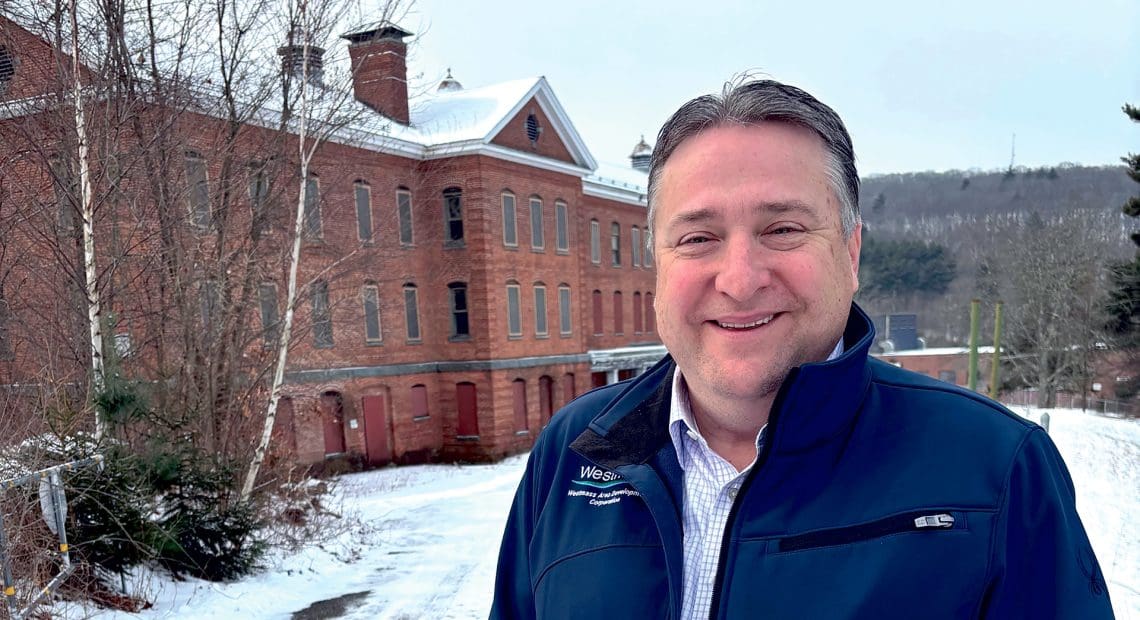
Jeff Daley at one of the ‘T-bones’ on the MDC campus.

Jeff Daley at one of the ‘T-bones’ on the MDC campus.

Jeff Daley stopped his pickup truck at a building known affectionately as one of the ‘T-bones,’ or ‘dog bones,’ because that’s what they’re shaped like.

It wasn’t the structure he wanted to comment on, necessarily — one of dozens of nondescript, red-brick buildings on the Monson Developmental Center (MDC) campus, this one a residential hall — but rather the view from it, of downtown Palmer and the mountains framing it.

“You don’t get many views better than that,” said Daley, president and CEO of Westmass Area Development Corp., which now owns a significant portion of the campus and is charged with redeveloping it, adding that he envisions this section at the high point of the sprawling complex to be ideal for estate lots of maybe five to 10 acres.

“Maybe a dozen or so could go right here,” he said, referring to an area with several T-bones, which, like almost all of the more than 40 buildings on the campus, are in an advanced state of decay and will be demolished.

“No matter how good you are, I really don’t think you can develop a vision of what this is going to be until these buildings are out of the way and we have a more permanent solution.”

And while he can imagine a large home with a bay window looking out on that view of the surrounding countryside, Daley said that it probably won’t be until all the buildings are down that Westmass and the developers it will likely partner with in this ambitious undertaking can fully understand what they have to work with — and what uses might emerge for this intriguing property.

“No matter how good you are, I really don’t think you can develop a vision of what this is going to be until these buildings are out of the way and we have a more permanent solution,” he noted. “But maybe by this fall we can start talking to developers, have them out, and see what they think.”

As he offered BusinessWest a tour of the rolling campus, Daley drove and talked about what might come next and the many hurdles to be cleared during what will likely be a 10- to 20-year project to transform the landscape into what will be known as the Village at Sawmill Brook and fill in a canvas that few residents of the 413 have seen.

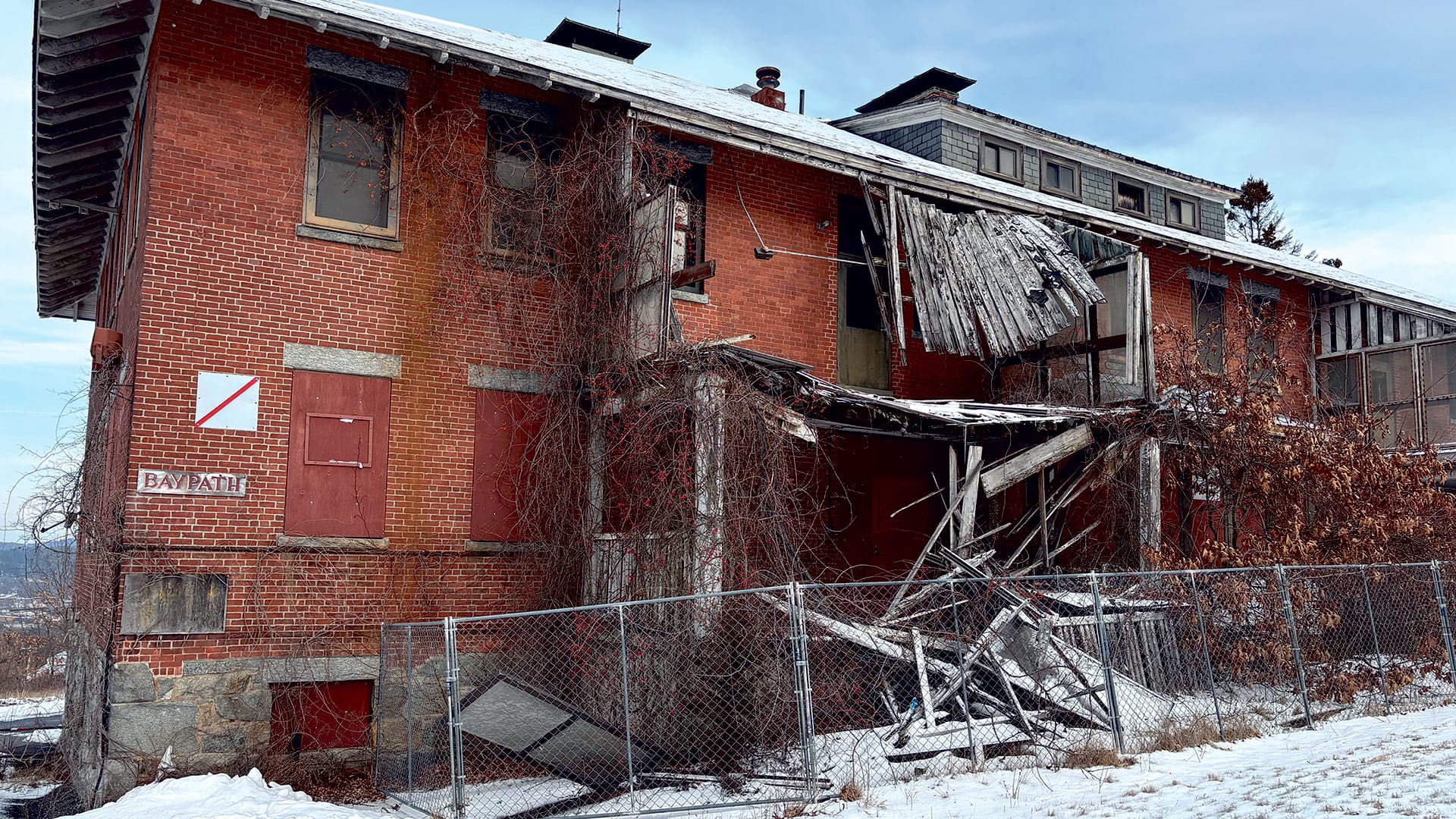
Most of the buildings at the MDC are in an advanced state of decay and must be demolished.

Most of the buildings at the MDC are in an advanced state of decay and must be demolished.

As he did so, he used the word ‘challenging’ repeatedly, in reference to everything from demolition of the buildings, which are loaded with asbestos in the walls, floors, ceilings, and slate roofs, to finding new uses for the property — built on the side of a mountain — that will mesh with Monson’s decidedly rural character and slow, as in very slow, pace of residential growth and new building.

“When you only have 8,000 residents, you can’t plunk down something that won’t fit the community, and that’s something we’re sensitive to when we’re looking at this type of development,” he said. It’s all going to be market-driven; whatever the market dictates and zoning — that’s what we’ll manage.”

For this issue and its focus on commercial real estate, BusinessWest visited the MDC campus to get the lay of the land, if you will, and talk with Daley about the next, and quite intriguing, addition to the Westmass portfolio.


Peaking Their Interest

Daley said the buildings on the campus have deteriorated quickly since the center shut down officially more than a dozen years ago.

And it’s mostly the elements that have been responsible for the highly visible damage to many of the structures, he noted, adding that there has been little vandalism on the closely patrolled campus and few people willing to ignore the myriad ‘no trespassing’ signs posted on every building, save for the occasional ghost hunters.

“When you only have 8,000 residents, you can’t plunk down something that won’t fit the community, and that’s something we’re sensitive to when we’re looking at this type of development.”

“They come in with their infrared cameras and sound machines,” said Daley, adding that they’ve come out more in the summer months, and there’s no word if they’ve found anything.

Given the history of the MDC, there just might be a few ghosts to be found there.

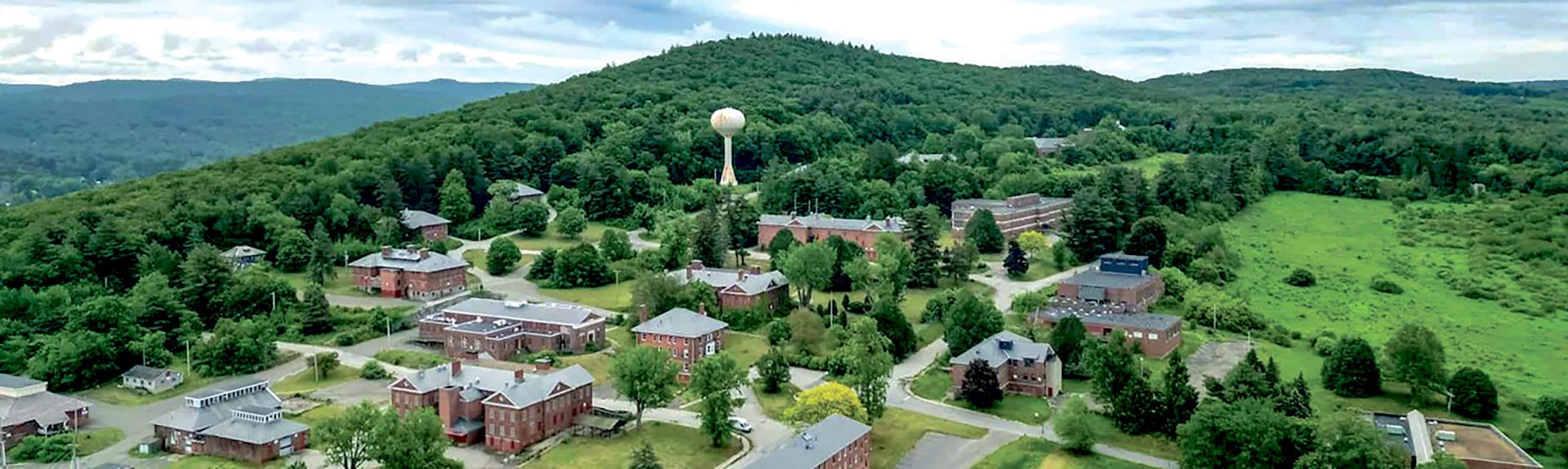
An aerial view of the MDC campus shows the rolling topography.

An aerial view of the MDC campus shows the rolling topography.

Established nearly a decade before the start of the Civil War, it was first a state almshouse for the poor and eventually evolved into a primary school for poor children and then the Massachusetts House for Epileptics in 1895, and later the Monson State Hospital, housing people with epilepsy and developmental disabilities. The campus grew significantly in the early 20th century — with the complex expanding to more than 70 buildings across 600 acres and the population peaking at about 1,700 residents in 1968 — but faced declining populations with deinstitutionalization.

Redevelopment of the 108-acre main campus will be similar in many respects to reuse initiatives at Northampton State Hospital and the Belchertown State School, also large campuses once owned and operated by the state, said Daley, but each initiative has its own personality, with MDC’s still to be determined, obviously.

While Northampton State Hospital became a mostly residential development — more than 400 homes geared to all income levels have been built at Village Hill — along with a large manufacturing facility, the Belchertown State School property, now known as Carriage Grove, is becoming more of a mixed-use property, with plans for everything from housing to a community center in the old administration building.

The MDC will likely be more like the latter, said Daley, adding that the pattern of reuse will ultimately be shaped by the town and the development community. He said Westmass plans to advance a zoning bylaw to a town meeting vote this spring; the proposed zoning would create a mixed-use district to support long-term development of the property.

“There are a lot of folks around Monson and Palmer who raised families in big farmhouses, and now they’re getting to the point where they don’t need the big farmhouse anymore. But there’s limited housing available to move into; whether it’s a single person or an aging couple, there’s really no housing for them.”

Housing of several different types may emerge as options, he said, listing everything from three- and four-story apartment buildings to multi-family homes to cottages and those aforementioned estate lots. Other permitted uses could include small-scale commercial and office facilities, light industrial, and civic uses compatible with the neighborhood character.

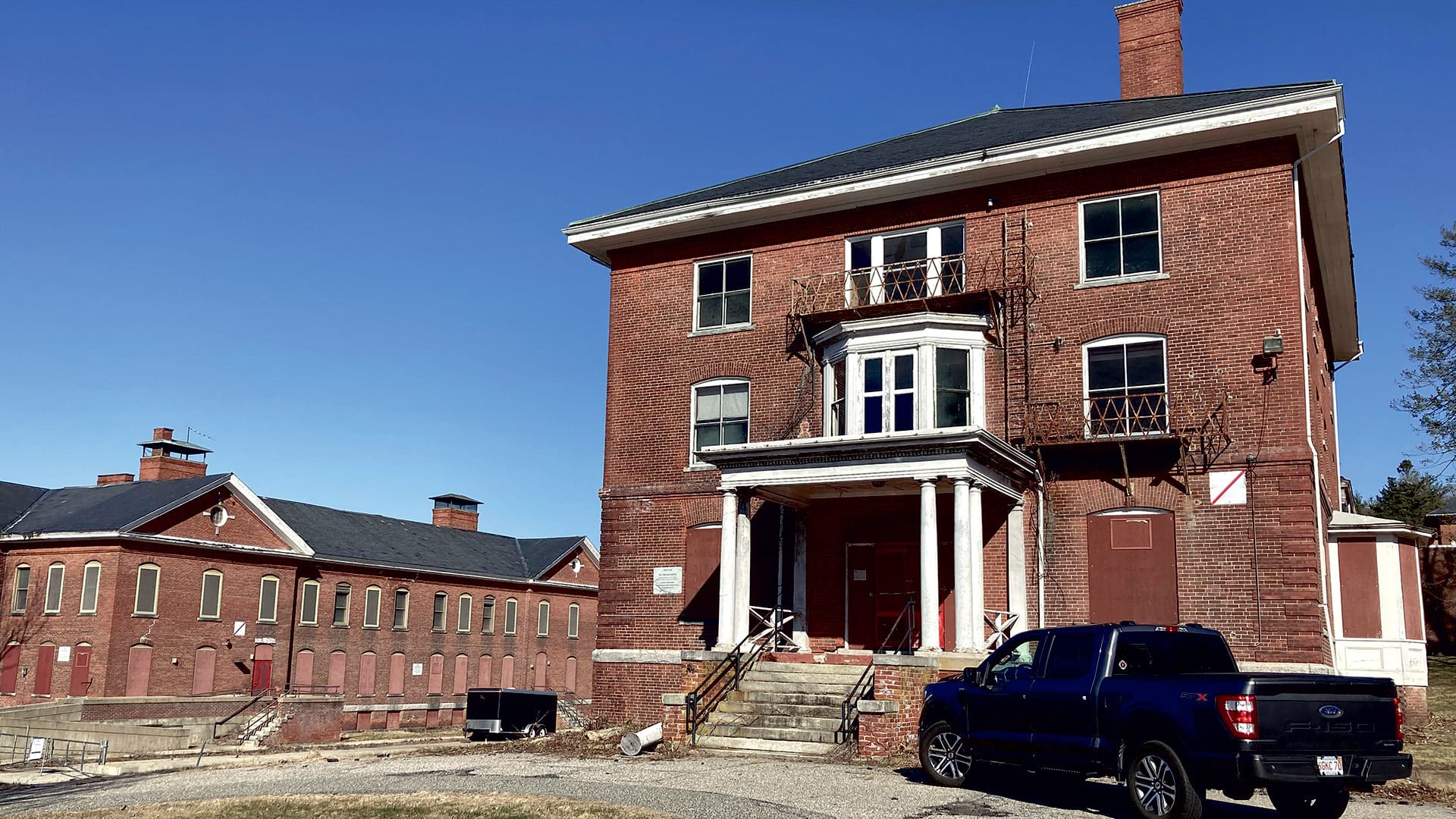
The first step in the redevelopment process is clearing the site and demolition of all but a few of the 42 buildings on the main campus, 18 of which (the larger brick structures) will be mitigated by Westmass, with the state responsible for the rest.

“Unfortunately, the buildings are not savable,” said Daley, adding that preliminary cleaning and demolition work — on buildings as well as several underground and above-ground tunnels to convey steam — is expected to commence within the next few months. Bids are currently being sought, with the goal of clearing the site by the fall of 2027.

Demolition work is expected to cost roughly $16 million, and after this phase is done, there is considerable infrastructure work to be undertaken — everything from new roads and utilities to a new, wider bridge over Sawmill Brook, which runs through the middle of the property, to work to repair and upgrade the water tower on the campus (there is no pumping station that can supply water to the higher portions of the campus).

As these pieces fall into place, development efforts can move to the next stages.

Demolition of dozens of buildings at the MDC is slated to start later this year and be completed in 2027.

Demolition of dozens of buildings at the MDC is slated to start later this year and be completed in 2027.

“Our goal is to be done with the cleaning and demolition by 2027, and between now and then, we’re going to be working on getting a full design of where the infrastructure — water, sewer, power — will go,” Daley explained. “Then, we can do a road development study and figure out where roads will go and to what part of the development. And at that time, hopefully, some of the easier development pieces can be developed or sold to generate revenues to offset the investment we’re going to have to make on the capital side on the infrastructure.”


Grounds for Optimism

While most of the buildings on the campus will come down, a few can be reused, said Daley, who pointed to a structure known, coincidentally, as the Daley Building, a recreation center with a theater on its upper floor as well as a basketball court and a decaying bowling alley.

“Our hope is that we can provide this as a community center for Monson and Palmer,” he explained. “It’s a great hall, and there’s a big gymnasium; we’re not sure how it will all work out, but we’re hoping to keep it for that purpose.”

Meanwhile, Brookside Hall, another residential facility, could be salvaged and converted into senior or veteran housing.

“We’d like to do a veterans housing project — there’s definitely a need for one in this area — but projects like that take four or five years to develop,” he noted, adding that, overall, there is a need for many different kinds of housing, especially affordable options for an aging population.

Indeed, the Commonwealth officially conveyed the property to Westmass as part of larger efforts to utilize properties under its control to address an ongoing housing crisis that is impacting every corner of the state.

“There are a lot of folks around Monson and Palmer who raised families in big farmhouses, and now they’re getting to the point where they don’t need the big farmhouse anymore,” he said. “But there’s limited housing available to move into; whether it’s a single person or an aging couple, there’s really no housing for them.”

Whatever comes of the site from a development standpoint, it will have to mesh with the town’s rural character and not dramatically change the dynamic in a community that hasn’t seen much, if any, residential growth in recent years.

“I think they’ve built something like 12 houses in the last 20 years,” said Daley, who didn’t know the exact figure but did know it wasn’t a big number.

And that statistic represents just one of the many challenges involved with a project that will unfold over the next decade or two and change the landscape of that area — literally and figuratively.

Business Talk Podcast Special Coverage

With new episodes airing every other Monday, BusinessTalk features in-depth interviews and discussions with local industry leaders who offer thoughtful perspectives on the Western Massachusetts economy and the many business ventures that keep it running. BusinessTalk is sponsored and presented by Greenfield Cooperative Bank.

Go HERE to view all episodes

Episode 250: January 19, 2026

Joe Bednar talks with Ayanna Crawford, President, AC Consulting Media & Public Relations Firm

Much of Ayanna Crawford’s work has been built on the importance of education, from her public school teaching days to her creation of the youth public speaking initiative called Take the Mic; from the growth of the Parent Villages nonprofit to her new role on the Springfield School Committee — and more. On the next episode of BusinessTalk, Ayanna sits down with BusinessWest Editor Joe Bednar for a wide-ranging discussion about all this, plus her consulting business, her community advocacy as chief of staff for a state representative, her experience being named one of BusinessWest’s Women of Impact, and why it’s important to prioritize self-care in order to keep making an impact in the world. It’s must listening, so tune into BusinessTalk, a podcast presented by BusinessWest over both audio and video platforms, and sponsored by Greenfield Cooperative Bank.

Sponsored by:

Also Available On

Features Special Coverage

Landmark Decision

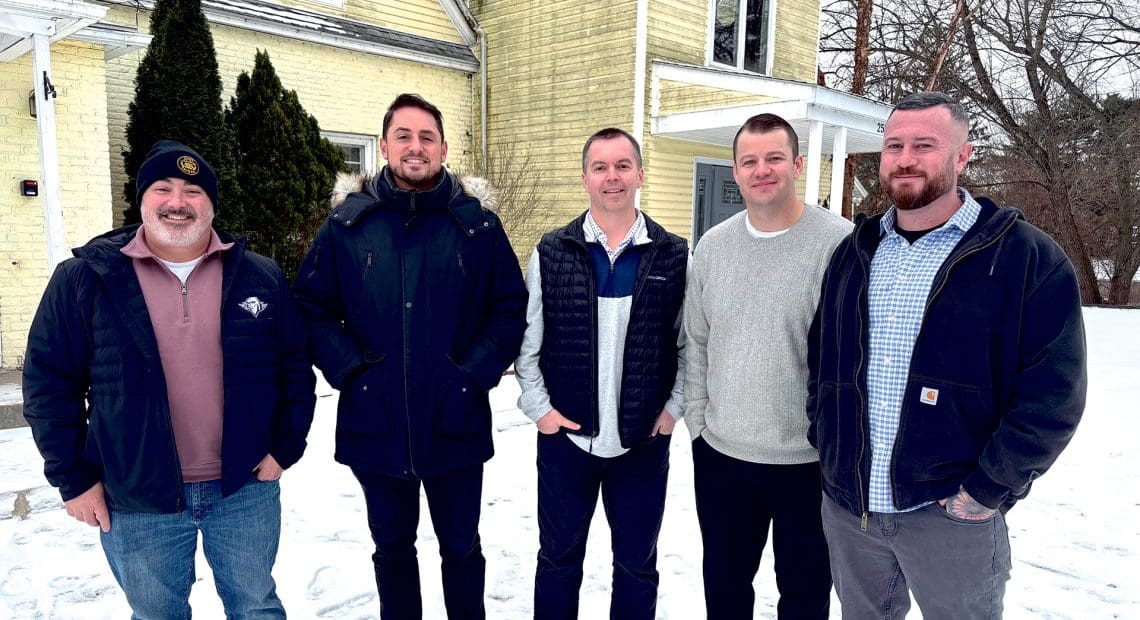
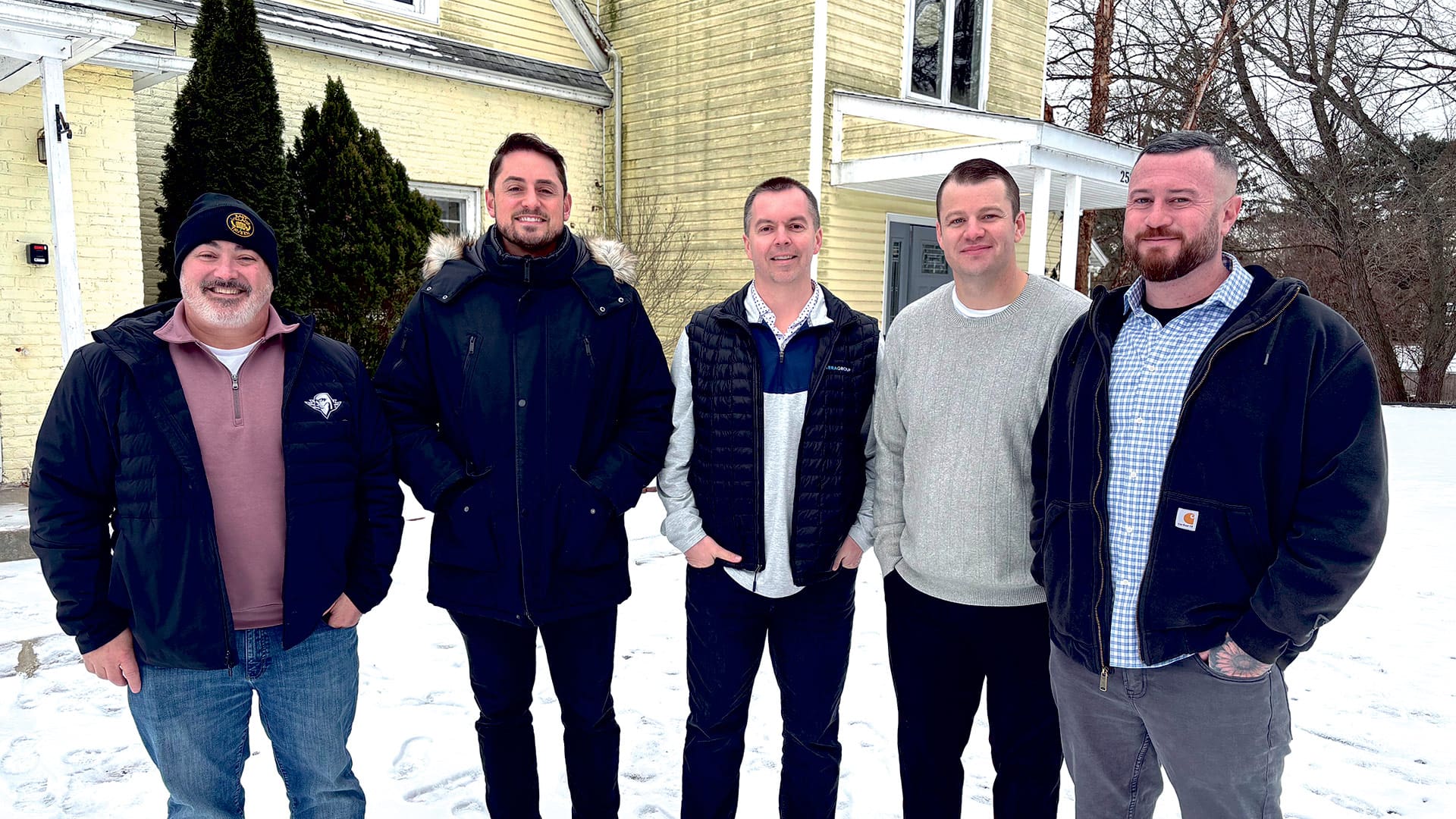
From left: Joe Sullivan, Jordan Healy, Marc Murphy, Mike Rogers, and John Sullivan.

From left: Joe Sullivan, Jordan Healy, Marc Murphy, Mike Rogers, and John Sullivan.

Joe Sullivan says he and business partner John Sullivan (no relation) were “looking to hedge our bets and diversify.”

It was the height of the pandemic; the restaurant they co-owned, Nathan Bill’s, was forced to close; and, like most all business owners navigating those difficult and unprecedented times, they didn’t know what was to come next.

“We were looking for real estate purchases and maybe another business opportunity,” said Joe Sullivan, adding that the two would buy a package store and then the plaza in which Nathan Bill’s was located, among other transactions. “And as we were doing all that, someone mentioned this spot to us and said it would be good for a restaurant.

“We already had three restaurants and said, ‘we don’t really want another restaurant, but it looks interesting,’” he went on. “We did our due diligence and realized that we could do something different and really special here.”

That was the genesis of one of the more intriguing development initiatives in the region — work to turn back the clock on the Wilbraham landmark known as the Lakeside.

Once a popular inn and restaurant, the property on Nine Mile Pond, most recently home to a transportation company, had fallen into disuse. John and Joe Sullivan have become partners with the principals at West Springfield-based Lock and Key Realty in an ambitious effort to revive the property and create a 15-room boutique hotel and restaurant, with outdoor dining and lake access.

“We already had three restaurants and said, ‘we don’t really want another restaurant, but it looks interesting.’ We did our due diligence and realized that we could do something different and really special here.”

The project has certainly captured the attention — and affection — of Wilbraham officials (members of the Planning Board are said to have cheered when the project was proposed), as well as the legions of fans of the Lakeside restaurant, often involving several generations of families.

“The community support has been overwhelming — social media has been huge, and we’ve gotten letters from people praising what we’re doing,” John Sullivan said. “Every time I’m out working on the yard, I’ve got people in kayaks thanking us and congratulating us.”
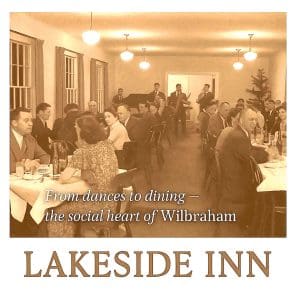
An early ad for the Lakeside Inn.

An early ad for the Lakeside Inn.

Such sentiments were repeated among the five main principals in this venture, who spoke with BusinessWest at the Lakeside recently. Collectively, they talked about how, while this is a solid real estate investment, the endeavor also blends history, tradition, and community, and these attributes bring ample amounts of pride and enthusiasm for what is being undertaken.

“It’s a property the community truly cares about, and with the right vision and redevelopment strategy, it has the ability to become a destination that drives economic activity and sustained local value,” said Jordan Healy, a partner at Lock and Key Realty. “For us, it’s more than a single project—it’s a chance to help reshape a landmark in a way that benefits the region for decades.”

Mike Rogers, another principal with Lock and Key Realty, agreed. “It seems that everyone who comes in has some family that had some experiences here, whether it was recently or decades ago,” he said. “So the appeal of renovating this property and trying to maintain some of that historic charm, like with the gazebo, while also modernizing it, is a huge draw for us and the community, and it’s really something that’s driving excitement in this project.”

As for the business aspects of this venture, the principals say that, while construction has not officially begun, they’re already hearing from people looking to book rooms — from couples planning to get married at the nearby GreatHorse country club to officials and participants involved with the Brimfield antique shows staged three times each year.

Meanwhile, the redevelopment of the former Eastfield Mall into a retail destination promises to bring more traffic to the Route 20 corridor and to businesses like the new Lakeside, said John Sullivan, adding that the new shopping center, coupled with the Lakeside project, is likely to spur new activity along that throughfare and activate currently idle real estate.

“There will be a ripple effect where there will be more investment opportunities and redevelopment along Boston Road,” he said, adding that there are several vacant or underutilized properties that could be reimagined.

For this issue, BusinessWest talked with the principals involved with the Lakeside project about the many aspects of this endeavor, from its history to the way it might well become a catalyst for more development on Boston Road.

On the Waterfront

For Joe Sullivan, the Lakeside project evokes a different time — for both Wilbraham and his family.

Indeed, his grandfather, Barton Sullivan, owned and operated the Auto Inn, an automobile-era lodging establishment, farther north on Route 20 and on the opposite side of Nine Mile Pond from where the Lakeside sits.

“It’s a property the community truly cares about, and with the right vision and redevelopment strategy, it has the ability to become a destination that drives economic activity and sustained local value.”

There were several establishments of that type on or near Route 20, he said, adding that, during the stagecoach era, there was one every 10 or 15 miles.

As for the Lakeside, it opened its doors in the early 1940s and quickly became a popular destination, with a restaurant, a club with bands, a banquet hall, and a few rooms for rent.

“There’s a lot of history here,” Sullivan said, noting an intriguing bit involving the name of the establishment and the body of water it fronts.

“This is called the Lakeside Inn, but this is Nine Mile Pond,” he said, noting that this name connotes how far the pond is from the center of Springfield. “At some point in the ’50s or ’60s, they changed the name of the body of water to Lake Machonish; the Lakeside owners just decided to do that because they wanted to advertise it as a lake. It didn’t catch on.

“We may try that again,” he said with a laugh, noting that it was partly out of a desire to turn back the clock, while making more business history on Boston Road, that prompted him to take a hard look at the Lakeside property. A serial entrepreneur, he and John Sullivan had become involved with several hospitality ventures, including Nathan Bill’s on Boston Road in Springfield, East Village Tavern in East Longmeadow, the Boulevard Bar on Page Boulevard in Springfield, and others.
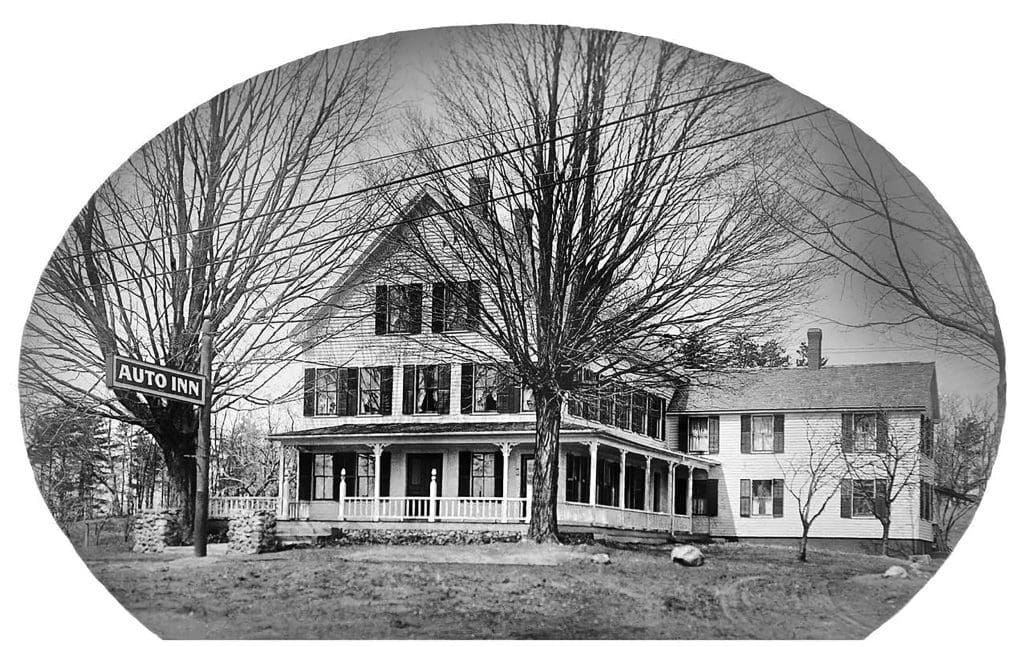
The Auto Inn, owned and operated by Joe Sullivan’s grandfather, provided some inspiration for the Lakeside project.

The Auto Inn, owned and operated by Joe Sullivan’s grandfather, provided some inspiration for the Lakeside project.

As noted earlier, redevelopment of the property represented not merely a real estate investment, but a unique opportunity to revive what many would consider a landmark.

“Through talking to the architect and talking to the town, we figured out there was an opportunity to build a small boutique hotel and still have a restaurant on the first floor,” Joe Sullivan said. “Everything fit into place and worked out to look like a really successful plan.”

That plan was further solidified by the emergence of a partnership between John Sullivan, Joe Sullivan, and the principals of Lock and Key Realty — Healy, Rogers, and Marc Murphy — who, collectively and individually, have become involved with several business and real estate ventures in the 413, including Shaker Bowl in East Longmeadow and All American Masonry in Indian Orchard, as well as the redevelopment of several fire stations and other properties.

Healy said those at Lock and Key are always looking for real estate opportunities, and the Lakeside made sense on many levels.

“There’s so much history behind it … it just felt like a project where we could reutilize, revitalize, and restore something, make it pretty again — and it’s right in line with what we do,” he noted. “If we can bring some redevelopment back to Wilbraham, it’s a home run for everyone.”

Elaborating, he said there is considerable synergy between the two partnership entities, with Joe and John Sullivan bringing experience in hospitality, and Lock and Key thriving in the redevelopment realm.

Murphy agreed. “Partnering with the Sullivan Group was a natural fit. They have deep experience in hospitality, creating successful restaurant and bar concepts that consistently serve the community at a high level. Together, we blend hospitality vision with market insight to ensure the Lakeside project becomes both a vibrant destination and a strong, long-term asset for the region.”

Joe and John Sullivan officially acquired the Lakeside last August, but talks about the property and the creation of a plan for its redevelopment had been ongoing for a few years prior, Joe said.

“The timing is right because the community is ready for this property to be brought back to life.”

“I wanted to make sure the town approved of what we wanted to do before we bought the property,” he explained, adding that the partners obtained a special permit to create an inn there.

Shore Thing

As for the reimagining of the property, the partners said this will be a major undertaking, with projections for the overall cost to approach or exceed $3 million.

Indeed, while the work falls into the categories of renovation and restoration, it will be much more like new construction, said Joe, adding that, while the property still has good bones, it is no longer suited for either a restaurant or an inn.

“It’s going to be a major construction project — raising the roof, literally,” he told BusinessWest. “The major appeal is that this is waterfront property — they don’t make any more of that. It’s a beautiful spot; even the gazebo needs a little fixing up, but it adds to that picturesque appeal.”

Work is expected to start within the next few months, said John Sullivan, adding that the goal is be finished in perhaps a year to 18 months. The partners are planning a 15-room hotel and a 100-seat restaurant (to be managed by a third party), and they’re already seeing great anticipation for both.

Indeed, John said that, between parents of students at nearby Wilbraham & Monson Academy, wedding parties at GreatHorse, and visitors to the Brimfield shows, there will be strong demand for the inn’s rooms.

“A family from Scotland has asked to rent out the whole place for two weeks for a wedding, and the organizers of the Brimfield fair wanted it block it off for a whole month,” he told BusinessWest, adding that there have been many inquiries about both the inn and restaurant.

And the surge in traffic from the new retail center taking shape a few down the road at the former Eastfield Mall is expected to bring more people to the property, said the partners, noting that, given all they’ve seen and heard, from the Planning Board and kayakers alike, this certainly seems like a sound business investment.

But it has always been more than that, they stressed, noting the attachment the community has to this property and the memories it has created for generations of area residents.

“It’s a good investment opportunity, but it’s a community-focused project as well,” Healy said. “And for a lot of us, that brings a level of excitement that we normally wouldn’t have. You can build 20 houses, and you never get any notoriety from those 20 houses; you do a project like this, and the community gets excited.”

Rogers agreed. “The Lakeside project represents a turning point. It shows what’s possible when investment, vision, and community pride come together,” he said. “Projects like this attract new interest, encourage surrounding revitalization, and help establish the region as a place where people want to live, invest, and build.

“The timing is right because the community is ready for this property to be brought back to life, and market conditions support redevelopment that adds both lifestyle and economic value,” he went on, adding, as others did, that this project will being rewards — for the partners involved and the community as a whole — on many levels.


Opinion

Community Spotlight

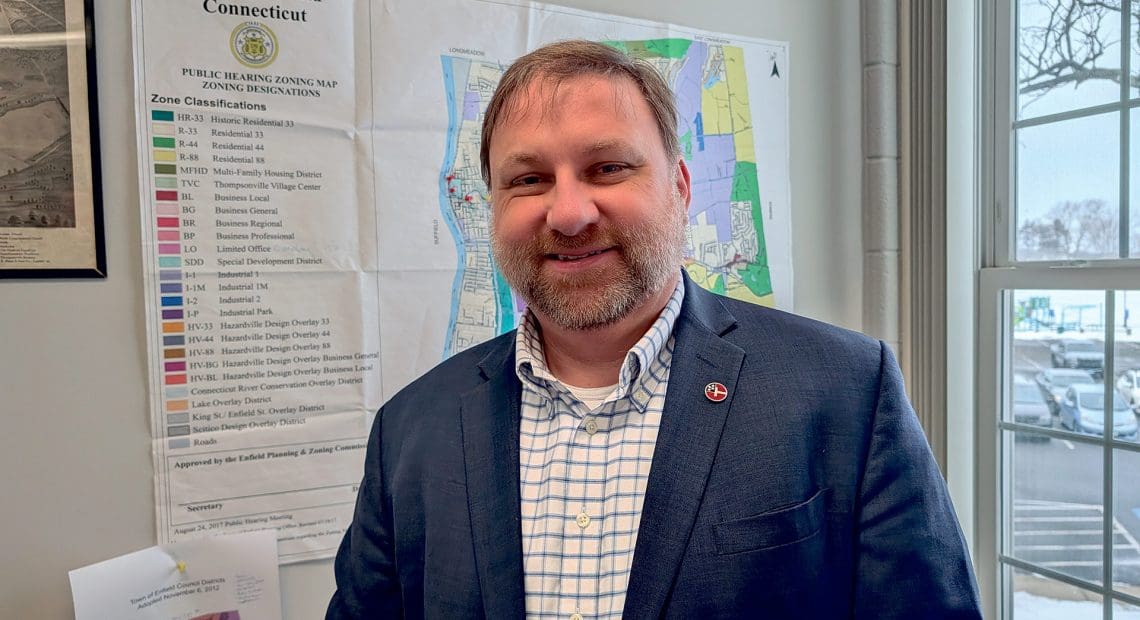
Aaron Marcavitch says Enfield residents tend to take a wait-and-see approach to development, but they’ll soon be seeing some shovels in the ground.

Aaron Marcavitch says Enfield residents tend to take a wait-and-see approach to development, but they’ll soon be seeing some shovels in the ground.

Development projects — whether for much-needed housing, a transportation hub, or the reimagining of a long-dormant retail center — aren’t done in a day, or a year. That’s certainly true in Enfield, Conn., which is looking forward to all of that and more. The good news is, progress in evident across the board.

“Enfield is kind of ‘we’ll believe it when we see it.’ There’s always a little bit of hesitancy to celebrate something until they see a shovel in the ground,” said Aaron Marcavitch, the city’s Economic & Community Development director.

“These projects are either in their permit process, or they’re moving through different gyrations. But the redevelopment of the mall is still moving ahead, the North River Street project is still moving ahead, and the MassMutual site is still moving ahead,” he added, referring to three projects that all involve new residential units. “They’ve not stopped for any reason — they’re just moving through their process.”

“The redevelopment of the mall is still moving ahead, the North River Street project is still moving ahead, and the MassMutual site is still moving ahead.”

In 2024, most of the Enfield Square property — one of the region’s most notable dead malls — was purchased by Woodsonia Acquisitions, which proposed a $250 million project that will feature retail and restaurant businesses and 465 residential units. Site work on what will be called Enfield Marketplace could begin this spring.

Woodsonia will serve as the project’s master developer and seek other developers for the various components. “There’s a set design to the overall layout, and they’ll come in with each piece — the housing piece, the retail piece, the outparcel pieces — over time. So that will take some time,” Marcavitch explained.

“The overall concept has not changed dramatically,” he added. “They did a market study and found that a hotel really wasn’t going to work. So that’s the biggest dropout from the plan. And then they ran into a few issues with agreements that already existed on the property between other tenants that are staying, so that caused them to move the design around a little bit. But the overall concept of a housing component, a retail component, and an outparcel component still remains the same.”

The former MassMutual site on Bright Meadow Road is being redeveloped for hundreds of residential units along with some commercial space.

The former MassMutual site on Bright Meadow Road is being redeveloped for hundreds of residential units along with some commercial space.

For this issue’s Community Spotlight, we update not just that project, but several others in various phases of progress, most emphasizing a key priority for many towns these days: new housing.


Home Sweet Home

The wait-and-see mindset of many in Enfield is why Marcavitch is especially excited about a project on North River Street that will add 140 units of housing, perhaps with more to come.

“They’re expecting to put shovels into the ground in quarter one — soon. So people will say, ‘oh, there is actually something happening in Thompsonville right now. People have shovels in the ground.’”

The project is being developed by HGRE Ventures, a partnership between Avon-based Honeycomb Real Estate Partners and GRAVA Properties of West Hartford. HGRE plans a $100 million, two-phase project that could eventually bring more than 300 units to the riverfront section of Thompsonville, near the much larger Bigelow Commons apartment complex.

Meanwhile, South River Realty, which owns a series of parcels on South River Street, has proposed a 160-unit residential building there, while MB Financial Group is looking to develop a 464-unit housing project, with some commercial space, at the former MassMutual site on Bright Meadow Road.

The housing element is especially intriguing at a time when most cities and towns in the region need more of it. At the same time, Enfield officials are eager to see more progress at the train stop project taking shape in the Thompsonville neighborhood, not far from the North River Street development.

The Enfield train station aims to connect the town to Springfield, Hartford, New Haven, and beyond. The $45 million project includes Main Street bridge work and new track, and ties into broader revitalization efforts for the riverfront and other areas of town. The station is expected to be more than a metro stop, bringing locals to work; it will also be a larger Amtrak hub for more distant destinations, while a planned spur off the Windsor Locks stop will bring people to and from Bradley International Airport.

Late in 2023, the Connecticut Department of Transportation attached dates to the project, including the summer of 2024 for the final design to be completed, the winter of 2025 for the construction bid to be awarded, the spring of 2027 for accompanying rail and bridge work to be completed, and the fall of 2027 for completion of the station and platform. But those dates have shifted — more than once.

“We had some recent meetings with the folks at DOT. And the train station is still on track — those are the only words that ever come to my head when I think of it,” Marcavitch said with a laugh. “They were saying maybe the end of ’28, but now they’re somewhere in ’29 for being finished.

Enfield at a Glance

Year Incorporated: 1683
Population: 42,141
Area: 34.2 square miles
County: Hartford
Residential Tax Rate: $31.50
Commercial Tax Rate: $31.50
Median Household Income: $67,402
Median Family Income: $77,554
Type of Government: Town Council, Town Manager
Largest Employers: Empower Retirement LLC, Town of Enfield, Advance Auto Parts Distribution Center, Eppendorf Manufacturing
* Latest information available

“I don’t think we were surprised by that in any way; that’s sort of standard for these types of projects,” he added. “Seeing how long it’s taken to finish the Windsor Locks station, I have a feeling it may even shift another couple of months, but that’s just the way it goes.”

A few components have added to the complexity, including creating a service road from Route 5 to the station, determining a new spot for commuter bus service, and altering an undersized Main Street underpass at the train station, Marcavitch explained.

“But it’s continued to move. They’re done with their design process, and they hope to go out to bid sometime soon for the construction part of this. So in theory, we’re going to see shovels in the ground sometime in 2026.”

He said the combination of more public transit and more housing should create more mobility and economic opportunities for people in town. “People who may be working in Hartford, or working in Springfield, and taking the train to those locations — they’re not going to need a vehicle as much. Maybe they only need one car; maybe one person is working from home, and the other person is taking the train.

“So it’s going to be important for us to not only have that, but then also have our own local bus connections that somebody could pick up at the train station and take to the mall, take to Costco. And we have to work on our bike connections so that people can use their bikes to do that. We want to try to reduce car dependency for folks who live in that area,” he added. “It really is going to be beneficial in that way. Once we start to get some momentum, that’ll be really good.”


Setting Down Roots

The town has been making progress on other fronts as well, from an Amazon distribution facility moving ahead on Bacon Road to continued streetscaping in North Thompsonville.

Efforts like the latter, Marcavitch said, “aren’t huge projects, but they’re really going to impact how people perceive Enfield as a place they want to bring their business to. And we’re going to continue to work with commercial retail and food options in town to make sure we’re bringing in stuff that people in the town want.

“We’re very driven, in many ways, by the traffic on 91, where people are coming off the highway, grab food quickly, and jump back on the highway and head off to Vermont or wherever they’re going,” he noted. “We tend to be a very good rest stop in that way, but we also want to make sure we’ve got diverse retail and diverse food options for people in town.”

He said town officials appreciate that travelers and residents of local communities are coming to Enfield to use its services and enjoy its restaurant and shopping offerings. But he wants it to be seen as more than a drive-through community; after all, more than 42,000 people live there.

“If we’re going to have businesses moving in, we need to make sure that they’ve got the services and the experiences they need to stay. We want to keep them here. We’re going have new people moving into the community with these apartments. What kind of activities are there for them? So I think the natural next step is a big conversation about that. We’ve got to make sure we’ve got community amenities.”

Education Special Coverage

More Than Food for Thought

Renee Tastad says HCC’s vision centers around helping students overcome barriers to success.

Renee Tastad says HCC’s vision centers around helping students overcome barriers to success.


Renee Tastad says Holyoke Community College (HCC) takes it seriously when a student withdraws from classes, whether for a semester or permanently.

But the conversations that followed those withdrawals, over the years, have helped many more students avoid that path.

“I think it comes down to our vision, which is to be a college of academic excellence known for helping students overcome barriers to success,” said Tastad, assistant vice president of Student Affairs and dean of Enrollment Management at HCC. “So we’ve called those students to find out, ‘what prevented you from being successful? And how can we get you back on track?’

“Primarily, their concerns were childcare, transportation, cost of living expenses — ‘I had to take on extra hours at work that prevented me from committing all of my time to my studies,’” she went on. “With the help of the HCC Foundation, which has been really tremendous, we’ve been able to say, ‘OK, what can we assist with? What are things that we can reasonably do to help lessen the burden on the student to have to work those extra hours, which takes them away from their studies?’”

What has emerged from those conversations is an evolving array of student supports at HCC, from the Thrive Center food pantry to the Itsy Bitsy Child Watch service to the President’s Student Emergency Fund, which helps students with unexpected expenses.

“We’ve called those students to find out, ‘what prevented you from being successful? And how can we get you back on track?’”

“If a student’s car breaks down, that expense could derail them — they have to determine, ‘am I going to put the rent money that I had set aside toward this car repair so I can get to class? Then I’m going to be behind on rent,’” Tastad said. “So the emergency fund is one of those ways to bridge that gap for these unexpected situations that could derail their progress in school.”

American International College (AIC) in Springfield also maintains an emergency fund for students to access in times of unexpected need.

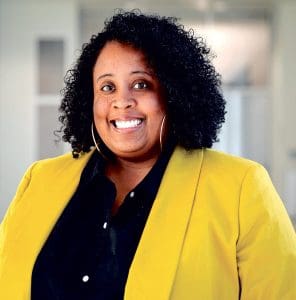
Melisa Loa says AIC leaders don’t want students going to class hungry and unable to focus on learning.

Melisa Loa says AIC leaders don’t want students going to class hungry and unable to focus on learning.

“Students may request funds for emergency situations or unanticipated circumstances that make it difficult to continue in school,” said Melisa Loa, dean of students and director of Residence Life. “They’re able to request anywhere from $100 to $1,000, depending on need. We just ask that they’re currently enrolled as a full-time undergraduate student. We review those on an ongoing basis, and we’re able to help students through that fund.”

AIC maintains numerous other non-academic student supports, from its recently opened Buzz Stop food pantry to a program called the CARE Team (the acronym stands for Concerns, Assessment, Referral, and Education) that reviews concerns around mental health and helps students struggling with such issues to access the help they need to address them.

“It’s a robust team that does a lot of great work,” Loa said. “We’re following up with students to make sure they have appropriate resources, both on and off campus. We work really hard to make sure students’ mental health concerns are addressed in a timely manner.”

Just down the road, the Center for Access Services (CAS) at Springfield Technical Community College (STCC) provides students with a broad range of non-academic supports, helping them overcome barriers that stand in the way of self-sufficiency, allowing them to succeed and stay in school.

Specifically, the CAS office houses a variety of services and initiatives, including free school supplies and the RAM Mini Mart, which provides groceries and meals to students facing food insecurity. CAS staff also connect students to on-campus resources and provides referrals to community agencies that assist with financial challenges, food insecurity, homelessness, substance abuse, and various state and federal benefits.

“STCC is a contemporary community college in that there are so many non-academic supports that we provide students,” the college notes. “These range from an on-campus food pantry and food lockers to housing agreements with Elms College and AIC, a mental health counseling partnership with Uwill, and a long-standing, federally funded TRIO program investing in first-generation college students.”

“We’re following up with students to make sure they have appropriate resources, both on and off campus. We work really hard to make sure students’ mental health concerns are addressed in a timely manner.”

In short, colleges are invested in student success, and that begins with making sure they stay in school, and have the resources they need to do just that.


Hunger to Learn

At a time when food insecurity has been in the news, the food pantries available on area campuses take on greater importance. HCC and AIC both have partnerships with the Food Bank of Western Massachusetts, which provides many staples. HCC’s Thrive pantry also receives funding from Stop & Shop for food and personal care items, and the campus community has been generous in donating as well, Tastad said.

“We give out thousands of pounds of food every month to any students, faculty, or staff who has a food need. You don’t have to demonstrate your need; you just have to say, ‘I need some food today.’ And we got an earmark in last year’s budget to purchase refrigerated lockers outside Thrive, for non-perishable food. That’s really helpful because a student or anybody can put their order in, and our pantry staff will fill the order and put it in the refrigerated locker, and they can pick it up anytime the building is open, not just during the hours the pantry is open. That’s been really fabulous.”

At AIC, the Buzz Stop also provides perishable and non-perishable food as well as self-care items, which can be accessed outside normal pantry hours, Loa explained. “If a student needs an item in the middle of the night, they can contact the campus police, and the police will open it for them.”

“Their primary identifier is not necessarily a student — they’re a parent, they’re an employee, or they’re a caregiver, something other than a student. So we want to make sure that we’re respecting the time that they have here on campus.”

Like HCC, supplies from the Food Bank of Western Massachusetts have been supplemented by numerous monetary donations at AIC. “That’s really helpful to keep the pantry going, especially for items we’re not able to get from the Food Bank.”

Loa emphasized the importance of this simple service.

“We don’t want students going to class thinking about where their next meal is coming from, whether they’re residential or commuter. We want students to be happy, healthy, and fed, and able to focus on their academics. We want their basic needs to be met. That’s what these resources are for — to meet those needs so they can come to school and focus on their academics.”

Many students have become regular users of the Buzz Stop, she added, and many off-campus students who are food-insecure have said other community pantries don’t always offer the same amount of food.

“In the last couple of months, with things happening with SNAP, we’ve been very thankful that we’re able to provide food, and they’re really thankful and appreciative that this is a resource on campus.”

At HCC, the Thrive Center also helps students access housing in the area, Tastad told BusinessWest, partnering with AIC and Elms College to have students live on those campuses, and maintaining housing agreements with the Holyoke Housing Authority, with vouchers reserved just for HCC students to access Section 8 housing, among other options, including housing available through Gándara Center and at Westfield State University under a state homeless youth initiative.

Meanwhile, HCC recently expanded its Itsy Bitsy Child Watch Center, doubling its capacity. The center is a free, drop-in service for student parents who need short-term child care while they attend classes, study, or meet with tutors and advisers. It opened as a pilot program in fall 2022 after a $100,000 state allocation, and expanded with the help of a $600,000 grant from the Davis Foundation in late 2023.

The Itsy Bitsy Child Watch Center is now located next to the HCC Parent Learning Center, a study lounge and play area for parents and their children, and the Marieb Adult Learner Success Center, a support program for student parents and students ages 24 and older.

“So the students, when they’re in class, can drop their kids off at the child watch, but when they’re not in class, they sometimes go over to the Parent Learning Center because they can be in that space with their kids,” Tastad explained.


Springboard to Success

The throughline in all these efforts, again, is identifying what might derail a student from completing their degree, and then filling those gaps, Tastad said, all with the understanding that many students aren’t traditional, full-time attendees, but older part-time students with families, jobs, and other responsibilities to juggle.

“Their primary identifier is not necessarily a student — they’re a parent, they’re an employee, or they’re a caregiver, something other than a student. So we want to make sure that we’re respecting the time that they have here on campus.”

And make sure their studies continue — which not only helps the college and the student, but a regional economy that, in many cases, is struggling to recruit skilled talent in many fields.

“We take it seriously,” Tastad said. “We are a part of the Greater Holyoke community, and everything we can do to support the students and create that network is going to help everyone prosper. Student success is built into our strategic plan. We’ve put it out there that this is what we are known for, and it’s true.”

Banking and Financial Services Special Coverage

Tools of the Trade

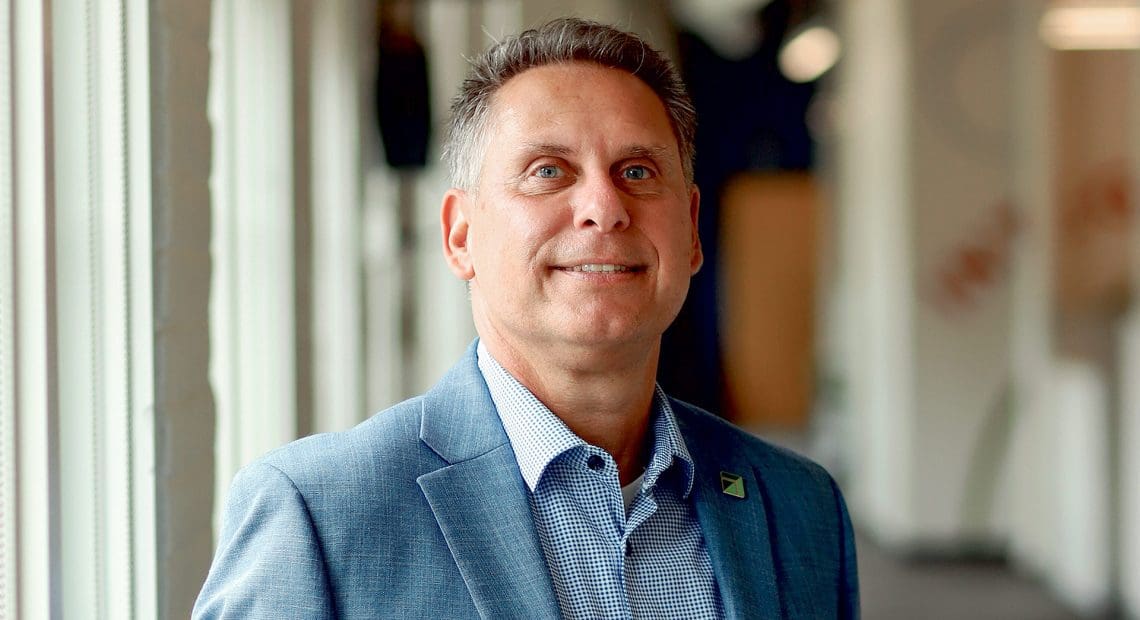
Marco Bernasconi says Country Bank’s adoption of new technology must be done smartly, with the needs of customers in mind.

Marco Bernasconi says Country Bank’s adoption of new technology must be done smartly, with the needs of customers in mind.

It’s no secret, Marco Bernasconi said, that all banks use similar technology. The difference lies in how they deploy it, and which services they emphasize.

“It’s not just about getting bigger, or being involved in more technology; it’s about operating with intelligence and leveraging efficiency and automation to drive sustainable growth,” said Bernasconi, chief Operating and Innovation officer at Country Bank. “For us, it’s about being smart and determining how to serve the needs of customers.”

Glenn Welch, president of Freedom Credit Union, agreed.

“A lot of us use services provided through a third-party provider. So if you go to our websites, they’re fairly similar — different colors, but the same tools,” he said. “So a lot of it comes down to service. You have to have the tools on the websites, but customers have to like you, too. You have to provide good service to the members.”

Both were speaking to a reality shared by all banks and credit unions these days — at a time when fewer customers actually visit a branch to do business, instead conducting most of it online, institutions need to ensure that those digital tools are robust, easy to use, and, especially, secure.

At the same time, though, there will always be a need for a physical branch presence for the business that people like to conduct there — opening accounts, loan applications, and, for some, normal deposits and withdrawals — so banks can’t afford to neglect that side of their business while they focus on developing and evolving their digital platform.

“We’re modernizing digital channels and continuing to leverage digital investing and marketing tools, and constantly reassessing different technologies to keep customers secure. But we also need to be equipped to train the team when people come in for traditional transactions,” said Bernasconi, noting that Country’s branch strategy includes its first branch in Springfield, opening this year.

“We’re modernizing digital channels and continuing to leverage digital investing and marketing tools, and constantly reassessing different technologies to keep customers secure. But we also need to be equipped to train the team when people come in for traditional transactions.”

The volume of branch visitors has changed from the time he was a teller, he added, “but they’re coming in with more difficult problems, and we’re spending more time with them on education, explaining different products, helping move their financial lives forward. So we certainly need traditional transactions at branches.”

A balance between high-tech and high-touch resources is important to commercial customers as well, said Aleda De Maria, executive vice president and chief operating officer at PeoplesBank.

“A lot of our small business owners are all things to their users — CEO, CFO, HR person, day-to-day manager. So we want to make sure we’re offering services through technology to make their lives easier,” she explained.

Aleda De Maria says PeoplesBank has bolstered its internal fraud detection tools to protect customers.

Aleda De Maria says PeoplesBank has bolstered its internal fraud detection tools to protect customers.

For example, “last year, we implemented some smaller balance lending that our customers can apply for 100% digitally and get answers from us within days, in some cases. We’d like to push that in 2026, optimize that to bring it to a wider audience. That’s something I’m super excited about.”

Last year, PeoplesBank underwent a core conversion of its technology and systems, building on the early growth of its digital brand, ZYNLO Bank, which it launched in 2020 in partnership with Nymbus.

“We didn’t just do the conversion to say we did it. We did it to continually evolve what we offer customers,” De Maria said, adding that the focus was on both back-end technology and front-end interface.

“We are constantly focused on the front end. That’s the window into PeoplesBank. If the customer opens an account and we’re not seeing them after that, what are they doing? They’re online and mobile,” she went on. “Because of the conversion, we have more control over the customer experience and can be more aggressive in updating user experiences — and to ask ourselves what services are available, how can we improve, and what we can add to that.”

Bernasconi said banks must decide whether to crawl, walk, or run toward new technology, but all are asking similar questions — how to deal with the rise of AI, from both a technical and governance perspective; how to help customers access new business products; and, through all of it, how to ensure a crisp customer experience.

“We’re competing with the Apples and Amazons, the fintechs now; it’s not competing only with banks and credit unions anymore,” he added. “The world has changed.”


Battling Back

All the area financial leaders who spoke with BusinessWest said fraud prevention — and the increasingly powerful tools that enable it — are critical to any institution’s technology strategy.

“One of the biggest things we’re talking about is fraud detection,” De Maria said. “I recently read an article saying financial scams are an industry now, and one of the things the scammers have going for them is the use of AI. So we’re having internal conversations about how to leverage new technology to detect and prevent these scammers from getting a foot in the door or gaining access to customer accounts — the concept of how to fight AI with AI, using different fraud detection tools.”

Last year, PeoplesBank launched a new fraud detection module developed through ZYNLO.

“We saw some success immediately in detecting fraud specific to account-to-account activity,” she noted. “We’re looking to expand that and get into other areas like mobile deposits, and also things like devices; the technology that we’re dealing with can look at a device somebody’s on and better detect whether that’s your device or not because of how they interact with the screen, where normally they’d spend three seconds on a screen, and they’re now spending 10 because it’s not as familiar to them.

“From a customer perspective, those things may not sound exciting — unless you’ve been the victim of fraud — but it’s certainly something we are extremely excited about as a bank, to be able to step up our game in this industry that has been created around fraud and scams.”

“From a customer perspective, those things may not sound exciting — unless you’ve been the victim of fraud — but it’s certainly something we are extremely excited about as a bank, to be able to step up our game in this industry that has been created around fraud and scams. So we’ll be looking this quarter at deploying more of those fraud technologies at PeoplesBank.”

Such efforts are critical, De Maria added, at a time when many people do the majority of their banking online.

“We still see a significant amount of accounts open in person — those are still greater than the accounts we open online — but after that, we may not see those customers often; they’re relying on the bank’s investment in technology. There is an expectation that, if they use that technology, they’re going to be safe; they’re going to be protected. I think customers should have the expectation that banks are investing in technology to make things safer and more secure.”

Welch said Freedom has also developed a robust set of fraud prevention tools on the back end, which can detect transactions that are unusual to an account at any given time. The same goes for wire fraud or other types of social engineering attacks designed to separate customers from their money.

“At times, I think we have annoyed members by asking them too many questions, but we want to keep them safe. And we’ve stopped a lot of fraud up front by just knowing our members, knowing what their normal transactions are, reaching out to them, and making sure that is something they want to do.”

Along with its wide array of digital banking tools, Country Bank also hosts numerous online financial literacy and fraud prevention resources, in addition to community outreaches like its Credit for Life fairs at area high schools.

Glenn Welch says people became more comfortable during the pandemic conducting basic transactions online, but many were relieved to return to face-to-face interactions.

Glenn Welch says people became more comfortable during the pandemic conducting basic transactions online, but many were relieved to return to face-to-face interactions.

“It’s extremely important that we spend a lot of time in our community and with the high schools, educating them in financial literacy and credit reports and how to manage budgets,” Bernasconi said, noting that it’s in the bank’s interest to engage young adults. “We spend a lot of time understanding the needs of younger generations. We’ve got to cater to the customers that we have, but also onboard the next generation and be astute to their needs as well.”


Face to Face

One way banks and credit unions have melded high tech with high touch is with interactive teller machines, or ITMs, which offer the functions of a traditional ATM with some enhanced services, such as making loan payments, cashing large checks, opening accounts, and, most notably, speaking live with a teller over a video feed.

“We launched our first ITMs in 2019. I like to say we had a crystal ball before COVID hit,” De Maria said. “Our ITM fleet is pretty significant — we have ITMs at every banking center, and also standalone remote locations throughout Western Mass. And we’re seeing, on average, about 25% of our in-person transactions occurring through the ITMs. At some banking centers, it’s as much as 35% to 40%.”

And it’s not just personal lines — about one-quarter of PeoplesBank’s commercial clients have used an ITM at least once. “We’re really seeing a good adoption of the ITM technology,” she said, noting that they operate seven days a week. “They’re what I would consider the next generation of drive-up teller, essentially.”

Country Bank has a fleet of ITMs as well, and while Freedom Credit Union offers one at its Springfield main office — and has the technology ready to deploy at other branches — Welch said questions remain about whether customers are clamoring for more.

“People are using it a lot like an ATM. We might need it more at remote sites because, if the branch is open, customers like to see people,” he explained. “These were perfect during COVID; we couldn’t let people in, or they had to wait in a long line. But now, I think if people travel to the branch, if they want the convenience of a drive-up ATM, they do that, but if they want to talk over transactions, we find they’re coming inside.

“We’ve stopped a lot of fraud up front by just knowing our members, knowing what their normal transactions are, reaching out to them, and making sure that is something they want to do.”

“So we’re going to turn on the remote one that we have in Ludlow to see if that makes a difference,” he went on. “If it’s not attached to a building or a branch in a remote area, and they have transactions they want to discuss with someone, they might get more out of it. So that’s part of our strategy this year — we’re going to test it in Ludlow and see how that goes.”

Part of any institution’s strategy, Welch added, has to be how to engage multiple generations, which is why all this technology is important.

“The younger generation doesn’t necessarily want to come in to do transactions. If they want to do an auto loan, they may not want to do it online, and definitely for mortgages, they want to be walked through the process and talk to people,” he said, adding that Freedom also has a secure video call platform where people can engage in these conversations from home and even download documents.

But since the pandemic, he added, “I think a lot of people got more comfortable doing basic transactions online.”

Across the industry, that’s especially true of younger customers, so Freedom — whose average customer age is around 50, a number Welch would like to see creep into the 30s — will, like all financial institutions, continue to evolve its digital platforms and other high-tech offerings in order to strike that generational balance and meet customer needs.

“When people age out of here, we need to have new members filling in the pipeline,” he said. “And we need to keep them here.”