Daily News

Mackenzie Lagoy

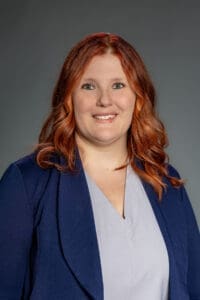
HOLYOKE — Meyers Brothers Kalicka, P.C. announced the hiring of Mackenzie Lagoy. Lagoy first joined the team as a tax intern and has been recently hired as an associate in the firm’s Taxation department. Her professional focus includes taxation services, with concentrations in individual returns and family and independent businesses.

“Mackenzie brings a thoughtful and client-focused approach to customer service, consistently demonstrating patience, professionalism, and strong interpersonal skills. Her natural warmth and approachability make her an asset in any client interaction,” Partner Jim Krupienski said.

Lagoy holds a bachelor’s degree from Cooper Union for the Advancement of Science and Art and is slated to complete a master’s degree in accounting in December from the Isenberg School of Management at UMass Amherst. She is also a member of CPAmerica and the Massachusetts Society of Certified Public Accountants.

Daily News

SPRINGFIELD — Sophia Learning, an online, on-demand, self-paced learning platform offering courses recommended for college-level credit by ACE, announced a new partnership with American International College (AIC).

Through this partnership, AIC, a private, co-educational, doctoral-granting institution, joins Sophia Learning’s growing network of partner colleges and universities, providing their learners with a flexible, more affordable pathway to degree completion. This offering is distinct from AIC’s traditional undergraduate experience, maintaining the college’s full, faculty‑led academic model while offering an alternative pathway tailored to adult learners who are balancing work, family, and other commitments.

“The partnership between American International College and Sophia Learning expands flexible, affordable pathways into degree programs,” said Michael Dodge, provost at American International College. “This initiative supports transfer students, adult learners, and working professionals by providing an accessible way to complete general education coursework, whether before enrolling at AIC or while pursuing their degree at the college. As part of AIC’s broader commitment to access and student success, the partnership strengthens regional workforce pipelines while preserving the full, faculty-led academic experience that defines an AIC education.”

Designed specifically for working adult learners, Sophia Learning’s partnership with AIC expands access to higher education through flexible, transfer‑friendly options that align with today’s workforce needs and support career advancement. By enabling learners to complete general education requirements efficiently and affordably, the program will help students build relevant skills and credentials that can be used to support professional growth.

Through this partnership, AIC will accept up to 90 Sophia Learning transfer credits toward eligible bachelor’s degrees. AIC provides flexible degree completion pathways designed for transfer by learners in high-demand fields including criminal justice, educational studies, business, and more.

“We’re honored to partner with AIC to expand access to higher education for working adults and transfer learners,” said Hunter Davis, CEO of Sophia Learning. “By pairing Sophia’s flexible, affordable coursework with AIC’s career‑focused degree programs, we’re creating a streamlined pathway that helps learners earn college credit while balancing responsibilities and building lasting momentum toward degree completion.”

Daily News

SPRINGFIELD — Freedom Credit Union is once again stepping up to support local families by hosting a summer-long food and donation drive to benefit the Food Bank of Western Massachusetts.

From June 1 through Aug. 31, community members are invited to visit any Freedom Credit Union branch to contribute non-perishable food items or monetary donations. The drive is open to everyone, and donations can be made at all Freedom Credit Union branch locations across the region.

The Food Bank of Western Massachusetts has been serving Berkshire, Franklin, Hampden, and Hampshire counties for more than 40 years. The organization distributes more than 17 million pounds of food each year, which equates to more than 14 million meals. Through a network of nearly 200 partner pantries, meal sites, and shelters, the Food Bank works to ensure individuals and families have access to nutritious food while also addressing the root causes of hunger.

The need is especially acute in the communities served by Freedom Credit Union. According to the most recent Food Access Report from the Greater Boston Food Bank and Mass General Brigham, the number of households experiencing food insecurity has gone up by as much as 54% in some counties since 2019. The Food Bank of Western Massachusetts also reports that pantry usage has tripled since then, underscoring the growing demand in the region.

“Access to nutritious food is a basic need, yet a growing number of individuals and families in our region continue to face food insecurity,” said Glenn Welch, president of Freedom Credit Union. “We are proud to partner with the Food Bank of Western Massachusetts to support their critical work. This annual initiative gives our members and the broader community a simple way to make a meaningful impact this summer.”

In addition to distributing food, the Food Bank provides services such as SNAP enrollment assistance, nutrition education, and advocacy efforts aimed at creating long-term solutions to hunger.

Freedom Credit Union encourages individuals, families, and local businesses to participate by donating what they can throughout the summer months. Even small contributions can help make a difference for neighbors in need.

Daily News

ENFIELD, Conn. — In conjunction with Mental Health Awareness Month, Farm Credit East announced that its Farm Credit East Cares Community Fund donated $40,000 to rural mental health initiatives throughout the Northeast.

Multiple organizations across Farm Credit East’s eight-state territory of New York, New Jersey, and New England will receive funds to support their work in providing mental health resources to rural communities. Agriculture faces unique stressors like weather and economic uncertainty, coupled with the demanding nature of farm work. Dedicated resources to support the well-being of farmers, fishers, foresters, and their families are critical to manage these challenges.

“Mental Health Awareness Month is an important reminder of the significance of mental wellness,” said Craig Pollock, Farm Credit East senior vice president and Farm Credit East Cares coordinator. “Through these donations, Farm Credit East aims to support those going through tough times and encourage the long-term success of the region’s agriculture industry.”

The Farm Credit East Cares Community Fund was established by Farm Credit East employees who raise contributions with a Farm Credit East match. The fund’s primary intent is to provide support for farm families and organizations impacted by disasters. Since 2011, Farm Credit East Cares has donated more than $1.5 million.

Daily News

Kaci Nowicki

PITTSFIELD — Greylock Federal Credit Union announced the promotion of Kaci Nowicki to vice president, Asset Quality and Real Estate.

“We’re proud to promote Kaci into her new role, where she will help guide Greylock’s credit risk direction and strengthen our long-term portfolio performance, drawing on her deep institutional knowledge, strong credit judgment, and proven experience navigating complex risk and lending environments,” said Tara McCluskey, senior vice president, lending officer.

As VP of Asset Quality and Real Estate, Nowicki will oversee underwriting and asset quality across Greylock, set risk standards, and align teams to support growth, new lending programs, and secondary market expansion. She will work closely with senior leadership to build scalable credit systems, improve risk governance, and position Greylock for future opportunities while leading teams.

“I’m incredibly grateful for the opportunity to continue supporting Greylock’s community‑driven mission,” she said. “In my new role, I look forward to expanding access to homeownership across our communities even further while also developing additional resources and tools to better support our members at every stage of their journey. Above all, I want our members to feel confident turning to Greylock for guidance, knowing we are truly on their team, committed to their success, and invested in helping them achieve their goals.”

Nowicki began her career with Greylock in 2013. She serves on the board of directors for Central Berkshire Habitat for Humanity, Berkshire Coalition for Suicide Prevention, and the newly established Footprints Family Foundation Inc.

Daily News

GREENFIELD — Greenfield Community College (GCC) announced it has been selected as a beneficiary of the Connected and Online Program, a statewide initiative led by the Massachusetts Broadband Institute (MBI), a division of the Massachusetts Technology Collaborative (MassTech). This initiative aims to bridge the digital divide by distributing internet-enabled devices to essential community organizations across the Commonwealth.

Through this grant, GCC will receive a significant influx of technology to support its students, including 60 Dell laptops, 68 Dell Chromebooks, and 20 accessible keyboards and computer mice.

The Connected and Online Program is a $28.5 million initiative funded through the U.S. Treasury’s Capital Projects Fund. It is specifically designed to increase access to education, workforce development, and healthcare services with a particular focus on rural communities like those served by GCC.

“This grant allows us to expand our existing Technology Lending Library, which has been a game changer for our students,” said Liza Harrington, library director at Greenfield Community College. “By adding these devices to our inventory, we are significantly lowering the barriers to digital equity. Whether it’s a student needing a laptop for a remote course or a workforce student accessing career training, we now have the resources to meet those needs directly. These tools aren’t just hardware; they are pathways to opportunity.”

These new devices will be integrated into GCC’s tech lending library, which also includes Wi-Fi hotspots and other tech equipment, all of which bolster the college’s ability to provide equitable access to education. Additionally, they will help students access teletherapy services offered by GCC’s Wellness Center, as well as virtual appointments with GCC’s peer tutors, advisors, faculty, and more. By putting Dell devices directly into the hands of community members, GCC is opening new doors to career advancement, including specialized offerings like the free online AI training currently available through the Massachusetts AI Hub.

For more information about the program and the full list of awardees, visit broadband.masstech.org/connected-online.

Daily News

AMHERST — Most large-scale solar energy projects in the U.S. encounter relatively little public conflict, despite widespread perceptions that opposition to solar development is common, according to a new study led by UMass Amherst researchers.

Published in Energy Research & Social Science, the study analyzed 686 large-scale solar facilities that went online between January 2022 and November 2023. Researchers found that 56% of projects fell into ‘no’ or ‘low’ conflict categories, while 19% saw high levels of conflict.

The study also found that projects approved under state-level permitting systems were associated with lower levels of observed conflict compared with projects reviewed under local or hybrid permitting structures. Larger projects were more likely to involve more conflict, while the share of Democratic voters in the area surrounding development sites showed no statistically significant relationship to opposition levels.

Lead author Juniper Katz, assistant professor of Public Policy at UMass Amherst, said the project grew out of a disconnect between public perception and the available evidence on solar siting disputes.

“All I saw in the news was conflict, conflict, conflict over solar,” Katz explained. “But there was really very little research that operationalized what conflict means and looked at it from a national scale to understand if the appearance of conflict was as prevalent as it seemed.”

The study comes as electricity demand and utility bills rise alongside rapid growth in energy-intensive technologies such as artificial intelligence and data centers. Katz insists that understanding the drivers of renewable energy conflict will become increasingly important as governments seek to expand energy generation capacity.

The research team, which also includes UMass Amherst alumnae Natalie Baillargeon and Alice Potapov, gauged conflict by analyzing news coverage and social media posts that used terms associated with public disputes, such as ‘protest,’ ‘lawsuit,’ and ‘opposition.’ The study is the first to systematically examine the relationship between permitting jurisdiction and solar conflict nationwide.

The findings also differ from earlier research on wind energy development. Unlike studies of wind projects, the researchers did not find that wealthier, whiter, or more Democratic communities were consistently associated with higher levels of solar opposition.

“We shouldn’t just assume that all renewable energy is the same in terms of how it gets from conception to build-out,” Katz noted.

She cautioned that the findings should not be interpreted as evidence that state permitting systems are inherently better than local review processes. Instead, the results highlight the need for more research into how different permitting structures shape public participation and project outcomes.

The research was supported by Elevating Equity Values in the Transition of the Energy System at UMass Amherst, using funds from the U.S. National Science Foundation’s NSF Research Traineeship program.

Business Talk Podcast Special Coverage

With new episodes airing every other Monday, BusinessTalk features in-depth interviews and discussions with local industry leaders who offer thoughtful perspectives on the Western Massachusetts economy and the many business ventures that keep it running. BusinessTalk is sponsored and presented by Greenfield Cooperative Bank.

Go HERE to view all episodes

Episode 257: May 26, 2026

Joe Bednar talks with Suzanne Parker, Executive Director, Girls Inc. of the Valley: Investments in the Future

Suzanne Parker

The mission of Girls Inc. is to inspire all girls to be strong, smart, and bold. And Girls Inc. of the Valley has certainly been all three during the buildout of its new headquarters in Holyoke, which offers more opportunity to help girls succeed — both now and in the future — through STEM studies, career preparation, skills to overcome challenges and achieve mental wellness, and much more. On the next episode of BusinessTalk, Executive Director Suzanne Parker talks with BusinessWest Editor Joe Bednar about the long journey to open those doors, and how the organization’s focus and programming continue to evolve in the service of helping girls thrive in myriad ways. It’s must listening, so tune into BusinessTalk, a podcast presented by BusinessWest over both audio and video platforms, and sponsored by Greenfield Cooperative Bank.

Sponsored by:

Also Available On

Features Special Coverage

While soaring gas prices and the rising cost of plane tickets have most people seeing red, Betsy Andrus sees some opportunity.

Indeed, the exploding cost of traveling far away might prompt some people in this region to travel … well, maybe not so far, said Andrus, executive director of the Southern Berkshire Chamber of Commerce, adding that one community that stands to benefit from such a development is Great Barrington.

It already sees large numbers of visitors taking in everything from restaurants, clubs, and hiking trails to the Mahaiwe Performing Arts Center, an eclectic mix of shops, a few breweries, and a collection of art galleries. And the numbers could move higher, given current trends.

“Because of the price of gas and because of the way the economy is moving, for people to do lavish vacations and fly to Paris or whatever will be more difficult and expensive,” Andrus said. “Instead of spending $4,000 to get to the Caribbean, hopping into the car and spending a few dollars on gas going to the Berkshires seems like an easier choice.”

Great Barrington at a glance

Year Incorporated: 1761

Population: 7,172

Area: 45.8 square miles

County: Berkshire

Residential Tax Rate: $13.24

Commercial Tax Rate: $13.24

Median Household Income: $95,490

Median Family Income: $103,135

Type of Government: Open Town Meeting

Largest Employers: Fairview Hospital;
Iredale Mineral Cosmetics; Prairie Whale

* Latest information available

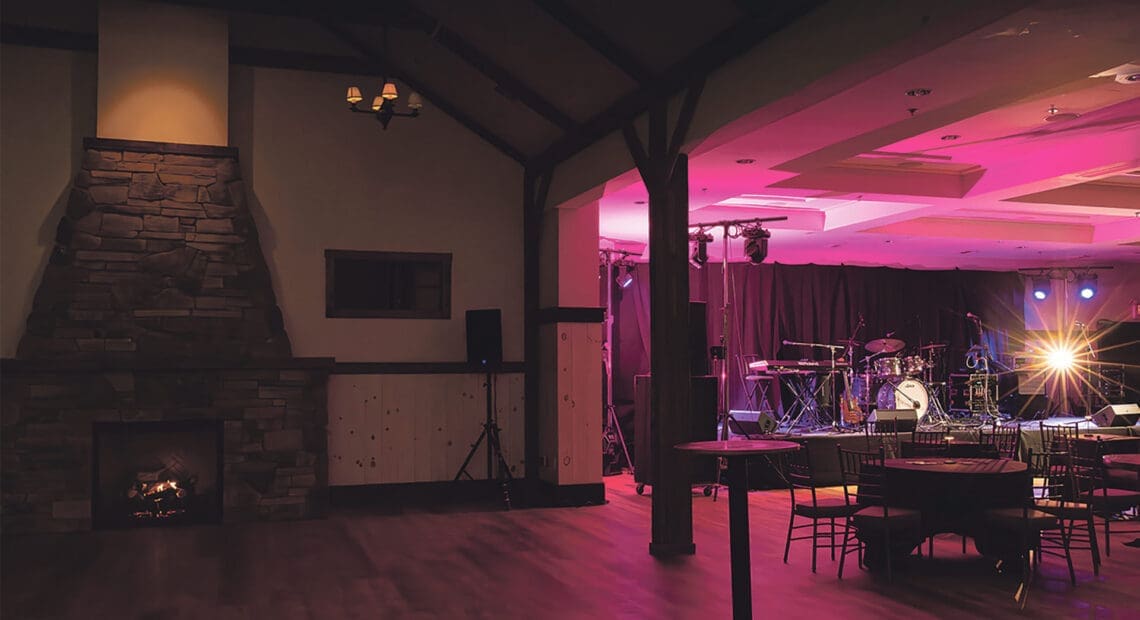
As noted, there’s always been plenty to do in this town, and now, there’s more, such as concerts and comedy shows at Barrington Hall, the reinvented former Chrissie Farm, which has become what its owners, Dan Baker and Daniel Latzman, expected it to become — a true destination.

Indeed, the new owners have added live concerts, comedy shows, lectures, family events, and more to the mix.

“We like to think of ourselves as a gathering space for the community,” Baker told BusinessWest. “We really try to be community-oriented, both with our public schedule and our private events.” 

As for that mix of stores and eateries, it’s in a seemingly constant of change, and even more so in recent years as many long-time store owners have moved into retirement. That was the case with the Gorhman & Norton package store, a Great Barrington institution that Robbie Robles has transformed into Robbie’s Community Market, another gathering place that offers fresh sandwiches and salads, brick oven pizza, live music Saturdays, and, as the name over the door suggests, community.

“I work hard on making this a quality place that you want to be in — you want to have memories there; you want to go back and have parties and events,” he said, adding that the word ‘market’ is meant to convey the more European definition of gathering place.

And then, there Tom’s Toys, another downtown Great Barrington institution that has been selling specialty items for three decades. Owner Tom Levin said he’s seen a lot of change over 30 years — in the toys that the public is buying at any given time, and in downtown Great Barrington itself.

“Change has been the one constant,” he said, adding that a once-sleepy community started to change and become a destination about the time he went into business, and it remains one today.

Those we spoke with talked about the rhythm of doing business in Great Barrington, which has a slow season, from January until early May. But then, things start to pick as owners of second homes return for the summer and tourists start arriving in larger numbers. Things really pick up when the summer seasons start at Tanglewood in Lenox, Jacob’s Pillow in Becket, and other venues, and it remains steady, if not quite as robust, through the fall and into December.

Understanding and making do through these seasonal ups and downs is one of the challenges of doing business here, said Levin, adding that, since COVID, the winters have been better, and the summers have remained solid.

And this year, Andrus and others are hoping that those aforementioned economic forces — everything from high gas prices to lingering uncertainty about the future — will make this community even more of a destination.

Staying Power

Abdrus noted that, while January to early May is traditionally slow in Great Barrington, the past four months have been slower than normal, despite a strong season for the ski resorts.
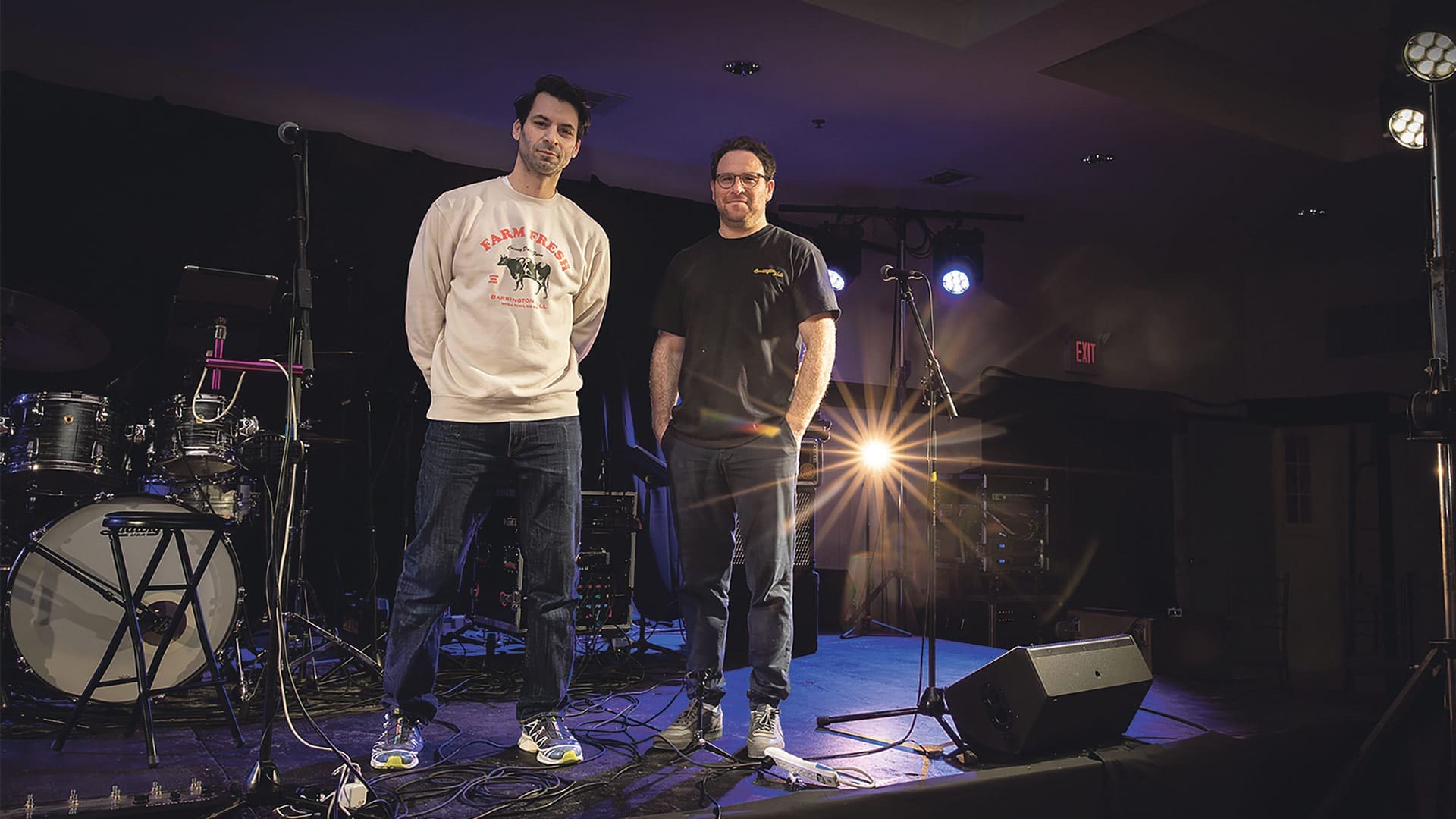
Dan Baker, left, and Daniel Latzman in Barrington Hall, which they have transformed into a destination for a wide array of public and private events.

She’s not sure if the closure last summer of the Simon’s Rock of Bard College campus, the future of which remains a large issue moving forward, had anything to do with that, but she’s more certain that the economy and general uncertainty about what comes next did.

She’s hoping for a full rebound during the summer, when the town’s population triples from 7,000 to 21,000, and believes that, if a ‘stay closer to home’ mentality gathers any steam, it will certainly benefit the Berkshires as a region and individual communities where there’s lots to do.

And Great Barrington fits that description, she said, citing everything from a wide variety of shows at the Mahaiwe to Berkshire Busk, the 10-weekend street music and arts festival that makes downtown streets come alive; from an eclectic roster of restaurants to opportunities to hike the Appalachian Trail.

“I think the summer is going to be busy,” she said, adding that the nation’s 250th birthday may bring more opportunities to celebrate the Berkshires’ museums, other cultural institutions, and history, such as the Knox Trail, which winds through several communities in the area, including Great Barrington.

‘Busy’ would certainly suit the many shops in the downtown area, which include a mix of old and new, with Levin now counting his business — located in the heart of downtown, at the corner of Main and Railroad streets — as among the oldest.

“We like to think of ourselves as a gathering space for the community. We really try to be community-oriented, both with our public schedule and our private events.”

“We’ve lost some of our old-time stores, like the photo shop, a hardware store, and a shoe repair shop, and we’ve definitely seen a trend of more upscale shops opening in town,” he said, adding that, for him, business has been generally good as a mix of locals and tourists snap up what’s hot — if he can keep them in stock.

That list includes Japanese blind box toys, Needoh squishy toys for stress relief, and Jellycat stuffed animals, he said, adding that many visitors have specific items on their list, but many come just to browse.

As for Robbie’s Community Market, it is a work on progress, said Robles, a serial entrepreneur with two other businesses in nearby Sheffield, who will mark a year in his storied Great Barrington location — Gorham & Norton was in business for 113 years — later this month.

“I was building the rocket ship while I was going to the moon,” he said of his work to transform the space and add such features as a pizza oven while expanding the overall menu.

Like others who have set up shop in town, he’s experienced a learning curve, especially the ebbs and flows to the calendar.

“It’s a short season, but we’ll be strong until December now,” he said, adding that he’s learning the rhythm of the business year and, thus far, gathering momentum as a place where people gather year-round.

Developments of Note

Baker told BusinessWest that the former Chrissie Farm was mostly a banquet hall, handling weddings, galas, and other gatherings such as corporate outings.

Barrington Hall still hosts such events, but it has broadened the portfolio in dramatic fashion, he said, adding a roster of live, public events that is drawing both area residents and visitors to the region.

This includes live music, including upcoming shows such as “Big Yellow Taxi: The Music of Joni Mitchell,” “Afrobeat Concert with Armo,” “Billy Keane and the Waking Dream,” and “The Rock and Roll Playhouse Plays Music of the Beatles.” There are also comedy shows and events for children and families.

This was the vision that Latzman, a software company owner, and Baker, formerly in the financial services industry, and before that, the entertainment industry (in everything from production to management), brought to their entrepreneurial venture.

The two moved to the Berkshires five years ago and met as neighbors in the nearby town of Egremont and developed a strong friendship.

“We started to align as to our ideals and what it means to live here in the Berkshires, and how there might be opportunities to really establish some roots on the business front,” Baker said. “We then started to look at various venues to accomplish this mission.”

“I work hard on making this a quality place that you want to be in — you want to have memories there; you want to go back and have parties and events.”

In early 2025, when Chrissie Farm came on the market, they gave it a look.

“We walked in, and we knew that we could do what we wanted to do with that space,” he said. “On our side, a lot of this is about a want and need to throw down roots here, grow our families, and create something meaningful for the community, both in Great Barrington and Berskhire County as whole.”

Not quite a year since the sale was completed and several months since the first events were hosted, Baker said the venture is off to a very solid start, with events on both the public and private side of the ledger, especially the former.

“We’ve really packed the schedule with public events,” he said, adding that, beyond the number of events, there has been great diversity as well. “We’ve had rock and singer-songwriter things, jazz, world music like Afrobeat … we’ve really tried to inject some diverse offerings for the people in the Berkshires. We’ve also had a number of comedy shows since the beginning of the year, and some successes beyond that.”

There is a hard focus on local talent — “Live shows. Local energy” is the venue’s marketing tagline — as well as an emphasis on children and families.

“We’ve had at least one kids and family show, and that was a huge success, and we have at least three more lined up for the summer and early fall,” Baker noted, adding that the flexibility of the space provides opportunities to host many different kinds of events. “We can accommodate different setups; that’s one of the beauties of our space, and you might see something different every time you come in here.”


Workforce Development

Powering the Future

The Massachusetts Clean Energy Center (MassCEC) recently issued $13.4 million in grants to 13 Massachusetts community colleges to expand career training programs in clean energy fields.

Greenfield Community College (GCC) was awarded $810,000, and Springfield Technical Community College (STCC) received $809,989, both to launch and expand workforce training in HVAC and heat pump technologies, creating new career pathways in the growing clean energy sector.

MassCEC’s latest heat pump and HVAC training grants will benefit students at Greenfield Community College and other institutions.

Meanwhile, Holyoke Community College (HCC) was awarded $455,000 through a different MassCEC grant program to continue and refine its clean energy career training programs. 

“Massachusetts is leading the nation in clean energy and climatetech, and that leadership depends on a strong, skilled workforce,” Gov. Maura Healey said. “These investments will connect residents across the state to good-paying careers while helping employers meet growing demand. We are building a clean energy economy that creates opportunity in every region and real jobs for Massachusetts workers.”

Beyond funding, MassCEC will ensure program quality and consistency through the development of a universal heat pump curriculum, a shared instructional framework, and contextualized English for speakers of other languages (ESOL) resources. Together, these efforts represent a coordinated, statewide push to expand training capacity, improve program quality, and create accessible pathways into clean energy careers for Massachusetts residents.

“We need training that keeps pace with how the energy industry is evolving,” Massachusetts Secretary of Energy and Environmental Affairs Rebecca Tepper said. “These grants give community colleges the tools to deliver hands-on, modern instruction that prepares students for the work happening today and what’s coming next.”

“By pairing funding with a shared approach to curriculum and training, we’re helping to build an integrated system that can better support our workers and a clean energy future.”

MassCEC CEO Ben Downing added that “the Heat Pump and HVAC Training Network is focused on what happens after the investment — more trained workers and closer alignment with employer demand. By pairing funding with a shared approach to curriculum and training, we’re helping to build an integrated system that can better support our workers and a clean energy future.”

Heating Up

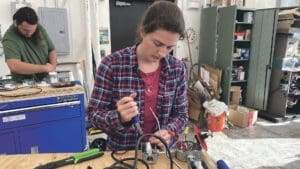
Jayshawn Brown, a student in HCC’s solar tech training program, works on a solar panel installation project at Dean Technical High School.

GCC’s grant will provide its division of Workforce Development with funding to train 40 students in HVAC skills. It is anticipated there will be two cohorts of entry-level HVAC training and two cohorts of incumbent worker heat pump training; each cohort will include up to 10 students.

Across the state, this program, supported by the Department of Energy Resources, aims to train 500 additional HVAC workers to meet the Commonwealth’s growing demand for clean heating and cooling systems. Greenfield Community College will use this funding to continue training programs for new HVAC technicians as well as work with local employers to provide heat pump installation and maintenance training for their current workforce.

“This funding allows us to continue to offer a full range of HVAC and heat pump training through our Workforce Development division, creating excellent opportunities for residents to enter and advance in clean energy careers,” said Kristin Cole, vice president of Workforce Development at GCC. “With these programs, we can address the urgent needs of local employers and equip our community with the skills necessary for success in a sector that supports both economic growth and clean energy.”

Since launching the HVAC training program in fall of 2024, GCC has graduated 27 individuals from the program with several industry certifications; 85% of those graduates are currently working in the industry. On May 29, the third cohort of students will graduate and transition into employment or paid internships with local employers. This new grant will fund training for additional students.

“We are building a pathway that supports our community, meets employer needs, and connects workforce training to college and long-term economic growth.”

Meanwhile, STCC’s funding supports a comprehensive clean energy training strategy centered on high-efficiency heating and cooling systems and modern heat pump technologies. 

Through six workforce development programs, STCC will provide Springfield residents and regional workers with free, hands-on training aligned with employer demand, industry certifications, and the Commonwealth’s clean energy goals. Together, these programs prepare both entry-level learners and incumbent workers for employment, advancement, and credential attainment in a rapidly changing workforce.

Gladys Franco, assistant vice president of Workforce Development at STCC, noted that “we are building a pathway that supports our community, meets employer needs, and connects workforce training to college and long-term economic growth.”

The initiative strengthens STCC’s existing HVAC and energy systems programs while creating a flexible workforce training model that helps participants quickly gain skills, credentials, and access to employment opportunities. The program also creates a pathway into STCC’s associate degree programs in energy systems technology and building automation.

MassCEC funding has made it possible for STCC to launch and scale six targeted training programs that would not otherwise be available. Investments in lab upgrades, modern equipment, and instructional delivery are significantly increasing training capacity, expanding access for underrepresented populations and accelerating entry into clean energy careers. Meanwhile, the college is working closely with MassHire, regional employers, and community-based organizations to support recruitment, training, and job placement.

The Next Phase

At HCC, the MassCEC grant will pay for two free training programs for up to 30 individuals: introductory training in construction, electricity, and clean energy systems in the fall of 2026, and a solar installer/electrical pre-apprenticeship program in the spring of 2027.

HCC piloted both programs in 2025 after receiving a $1.42 million grant from the Massachusetts Executive Office of Education for climate-related workforce training initiatives. The new award is part of a $7 million allocation in clean energy and climatech grants announced last month by the Healey-Driscoll administration.

“The first grant was really to design, develop, and essentially figure out what would work in our market,” said Kermit Dunkelberg, HCC’s assistant vice president of Adult Basic Education and Workforce Development. “Now, we’ll not just be continuing, but refining these programs to achieve even stronger outcomes.”

The MassCEC grants will support 17 organizations through four programs: Equity Training Implementation; Climate Critical Training, Equipment, and Infrastructure; Climate Critical Underrepresented Business Support; and Student and Young Adult Career Awareness and Training. They are designed to help local organizations expand inclusive training, career awareness, and business support for jobs such as electricians, solar technicians, HVAC-R technicians, energy auditors, refrigeration technicians, and EV charger technicians.

“Through our programs and partnerships, students are introduced to building trades unions — in particular, the electrical workers union and carpentry union — as well as solar installer and electrical apprenticeship opportunities.”

HCC was the only community college in Massachusetts to receive a dedicated grant, while the Massachusetts Assoc. of Community Colleges, a consortium of all 15 community colleges in the state, received $120,000 to support HVAC programs across the community college system. 

HCC’s key partners in the grant are Holyoke’s Dean Technical High School, where the clean energy training classes meet, and solar industry companies PV Squared and SolaBlock. Other partners include the MassHire Hampden County Workforce Board, the Coalition for Equitable Economy, Springfield Works, Browning the Green Space, and the Entrepreneurship & Business Collaborative.

“Thanks to these grants, we’ve been able to connect students to career pathways that can be very challenging to get into,” said Mary Wagner, HCC’s Workforce and Economic Development training manager. “Through our programs and partnerships, students are introduced to building trades unions — in particular, the electrical workers union and carpentry union — as well as solar installer and electrical apprenticeship opportunities.”

Since 2025, HCC has run the introductory clean energy program three times, the solar tech program once, a weatherization program two times, and recently introduced an Introduction to Manufacturing and Clean Energy Applications pilot program. 

“These programs are creating opportunities for underserved populations,” Dunkelberg said. “It’s not just opening the pathways, but reaching deeply into the community to create the access that’s been missing.”

Commercial Real Estate

What Comes Next?

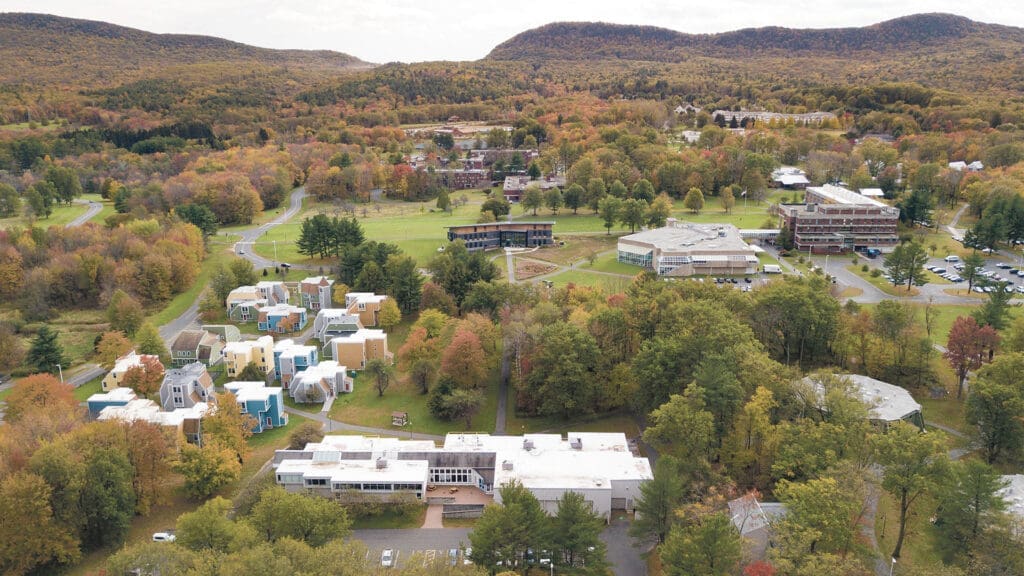
The Hampshire College campus covers roughly 800 acres, and there is already widespread speculation about the many potential future uses of the property.

“Stay tuned. This is going to be fun.”

With that, Barry Roberts, a developer who has reshaped downtown Amherst and handled projects across that college town, summed up what most are thinking about the announced sale of the Hampshire College property.

Elaborating, Roberts said he is expecting this to be an intriguing sale process, and one that could impact this community in many ways depending on who buys the property and what they do with it.

The college announced last month that it was selling the 800-acre campus property to pay off creditors; the school currently carries about $25 million in loans. In response to a series of questions sent to the school by email, a college spokesperson would say only this:

“As part of its transition to closure, Hampshire College is working to sell its land in order to satisfy debt obligations and steward an orderly teach-out process. The college has retained Region as a broker, and the college’s board of trustees is preparing to review any and all offers that enable meeting Hampshire’s fiduciary obligations.”

Region is a West Springfield-based commercial real estate firm led by the father-son team of Mitch and Ben Bolotin (see related story on page 28). Region is preparing a listing for the property, and while it was not available at press time, it was to be available ‘soon,’ according to that college spokesperson.

When asked to speculate about the sale and what might happen with the property, Roberts, who has been involved in retail, housing, and office projects in Amherst, said there has been plenty of talk, and there will be more in the weeks and months to come.

“They would like to get some tax money out of the property, I know that. It will be interesting to see who comes forward and what kind of deal they can work out with Hampshire.”

He told BusinessWest that town officials have expressed interest in “putting the property back on the tax rolls.” Colleges like Hampshire do not pay property taxes, but generally make in-lieu-of-tax payments. Most other uses, other than education and nonprofit initiatives, do pay taxes.

“They would like to get some tax money out of the property, I know that,” he said. “It will be interesting to see who comes forward and what kind of deal they can work out with Hampshire.”

He said there should be ample interest in the property, as there was for a 20-acre strip of Hampshire College-owned land near Atkins Farms that came on the market late last year. Roberts noted that his company submitted a proposal for that property that was under consideration by the school when “the clock ran out,” as he put it, and the college announced it would be closing.

Roberts didn’t want to speculate on whether the campus would be sold as one block or whether it could be subdivided and sold that way. Overall, the site comprises 600 acres in Amherst and 200 in Hadley, he said, but only a few hundred acres are developable, with the rest being wetlands.

And while the development community waits for the listing on the property, there have already been a few proposals forwarded for potential reuse.

One is called Hampshire Next, a coalition comprising alumni, students, families, staff, and community members. Its goal is to raise $21 million by September to retire the college’s bonds and ensure its financial stability.

The initiative’s website explains its mission — “to organize and secure a future where a new expression of Hampshire’s mission can be nurtured under the direct guidance of its community” — and motivation.

“It either stays with the community, or it could become the next data center,” organizers wrote on the site. “If we don’t act, Hampshire’s campus may be used for purposes that have little connection to what Hampshire made possible. Hampshire taught us to think critically, act boldly, and build alternatives. Now we are applying those values to ensure the campus continues to serve Hampshire’s mission through a future that is not yet fixed, but firmly rooted in its purpose.”

“It either stays with the community, or it could become the next data center. If we don’t act, Hampshire’s campus may be used for purposes that have little connection to what Hampshire made possible.“

Another proposal forwarded by Jerome Segal, a philosopher and former candidate for president, calls for a plan to refinance the school’s debt while merging it with his newly created Peace Institute into something that would be called the Advanced Hampshire Institute for Peace, Plain Living, and Conflict Resolution Training.

Whether either of these proposals gains any traction remains to be seen. In the meantime, input from the public will be paramount in the discussions about future uses and what will be permitted there, said Jeff Bagg, Amherst’s director of Planning and Economic Development.

“It’s important for the community to submit their ideas, questions, and concerns,” he said. “Given the size and complexity of the news about Hampshire College closing, the town manager has begun a series of meetings with various stakeholders to understand immediate impacts to students, faculty and staff. We are also taking into consideration the needs of the existing nonprofit organizations and businesses on or adjacent to the college campus,” he noted. “After some of the immediate issues are addressed, the town of Amherst expects to facilitate and be part of broader discussions about future uses of the land.” 

As Roberts said, this should be fun. So stay tuned.

Commercial Real Estate

Vote of Confidence

Plans to redevelop the long-idle former Monson Developmental Center took a big step forward recently as town residents resoundingly approved a vote to establish a planned village district (PVD) for the sprawling property.

The plan creates the zoning framework for the redevelopment of approximately 108 acres of the former state hospital campus, enabling a future that includes housing, economic development, open space, and a “renewed sense of place on a historically significant site,” said Jeff Daley, president and CEO of Westmass Area Development Corp., which has been tasked with redeveloping the property.

“It is important to Westmass, the town, and its residents that this redevelopment supports needed housing and regional economic development in a tasteful, responsible, and community-focused way.”

The district also creates pathways for light industrial, research, and commercial uses, reflecting the site’s potential as a hub for economic activity alongside its residential program, Daley noted.

The PVD establishes two subdistricts tailored to the character and potential of different parts of the campus:

• Subdistrict A, 48 acres, allows multi-family housing, office, retail, restaurants, neighborhood-serving commercial uses, and select light industrial and R&D uses at densities appropriate for a walkable village center — up to 15 dwelling units per acre.

• Subdistrict B, 60 acres, calls for a quieter, pastoral setting for single-family homes, townhomes, and cottage cluster developments, with flexibility for up to six units per acre for attached housing types.

Together, the two subdistricts create the conditions for a diverse, mixed-income community that honors the history and landscape of the former MDC campus while opening the door to significant private investment and new tax revenue for the town.

“I am grateful and excited that the town of Monson voted in favor of creating the new Village District Zone and approving the zoning change for the former Monson State Hospital property,” Daley said. “For too long, this former state-owned property sat dormant, creating an eyesore and safety concern for the entire community. With the Westmass team prepared to move forward with demolition of the buildings on site, we can now begin the next phase of predevelopment work and thoughtful planning for the property’s redevelopment.

“As I have said many times to Monson residents, Westmass is committed to developing this site with respect for the town of Monson and the fabric of the community,” he added. “It is important to Westmass, the town, and its residents that this redevelopment supports needed housing and regional economic development in a tasteful, responsible, and community-focused way.”

Demolition work is expected to cost roughly $16 million, and after this phase is done, there is considerable infrastructure work to be undertaken — everything from new roads and utilities to a new, wider bridge over Sawmill Brook, which runs through the middle of the property, to work to repair and upgrade the water tower on the campus (there is no pumping station that can supply water to the higher portions of the campus).

The goal, Daley explained, is to be done with the cleaning and demolition by 2027, with the infrastructure work to follow. Like other projects to redevelop former state properties, such as Northampton State Hospital and Belchertown State School, he expects this initiative to take time and play out over the next
10 to 20 years.