
Home Sections Archive by category Features (Page 27)

Features

Features
Stuart Reese Leads a Cultural Change at MassMutual

Stuart Reese, who was thrust into the role of president and CEO at MassMutual in the wake of the scandal that took down his predecessor, Robert O’Connell, recently completed his first year at the helm. This has been a time of transition, he said, noting that in some ways — especially with regard to individual businesses and their performance, as well as community involvement — it has been seamless. But with others, most notably the corporate culture he’s instilling and a strategic plan he’s shaping, it’s been anything but.

Stuart Reese remembers the phone call. It would be a hard one to forget.

It was from board member James Birle (now chairman) and it came on June 2, 2005, around lunch time. He was calling to say that, amid a series of allegations of improper conduct, Robert O’Connell was out as president and CEO of MassMutual, the largest company in Massachusetts and a Fortune 100 stalwart, and that Reese, then the company’s executive vice president and chief investment officer, was in.

Asked to recall his immediate reaction to that news, Reese struggled somewhat, saying that the ensuing minutes, hours, and days were in some ways a blur, with he and many others at the company “going 24/7,” as he put it.

“It was a difficult moment conceptually and logistically, because there were so many issues that had to be dealt with very, very quickly, and so few people who knew what was going on,” he remembered, adding that he had to address regulators, rating agencies, the press, the board, and employees, all of whom were looking for answers.

“We had to engage a lot of people to get many things done quickly, and these people weren’t exactly sitting around waiting for this to happen; they were doing other things,” he continued. “The mindset at the time was that we knew there were so many good people at the company running the businesses; we said ‘let’s engage them and let them know what’s going on and rely on them to run the business while we deal with these other issues.’”

Thus began what has been an intriguing transition process, said Reese, one that is in many ways still ongoing. In some respects, that transition has been seamless in nature, he said, especially with regard to individual businesses and their performance — year-end 2005 and first-quarter ’06 numbers show strong gains in many areas — but definitely not in some others.

That was certainly the case with corporate culture, said Reese, who sat down with BusinessWest recently to talk about his first year at the controls of the company and his focus moving forward.

“We had to make a very clear statement internally and externally that there was a change in culture and that things were going to be different in some ways,” he explained. “There were some things that had been done wrong, and they were not going to be done that way any more. In that regard, the transition was intentionally not seamless in some ways.”

Elaborating, Reese said that since last June, he, the board, and the leadership team he’s assembled have promoted a culture defined by transparency — a word he would use often — as well as meritocracy and open lines of communication, all traits he believes were missing during the O’Connell years.

But the cultural shift involves more than improved communications and open doors, said Reese, noting that the company intends to be more customer-driven in the development and refinement of products and services.

“We need to be more of an outside-in driven organization, and less of an inside-out driven organization,” he explained. “We need to have a higher percentage of our employees closer to the customer and responding to the customer, so what’s taking place within the company is driven more by the customer than by internal processes.”

BusinessWest looks this issue at Reese’s first year of work guiding the financial services giant, and about how he’s spreading a new culture among its nearly 6,000 employees.

Mutual Respect

Reese says his primary goals for his first 12 months at the helm were to have a strategic plan in place and a team assembled that is “second to none.”

He’s just about there. “There are some ‘i’s to do be dotted and ‘t’s to be crossed, and we’ll do that by the June board meeting,” he told BusinessWest. “But those primary goals of having the team in place, as well as the strategy and the vision, have been accomplished.

“We still have some work to do communicating our plan to the company, and we’ll do that — there are many methods for communication,” he continued. “What I’ve learned is that people need to hear these things many times, so we’ve got lots of repetition ahead of us and helping people understand exactly what it all means; we’re just beginning execution.”

Reese uses the third-person plural quite regularly as he discusses the company, its present, and future. He’s spent the past year assembling his leadership team — there are a few holdovers from the O’Connell era, some from within the company in new positions, and several newcomers to MassMutual — and is a strong proponent of teamwork.

“I want people who are team players,” he said. “This isn’t about me, it’s about the company and moving it forward.”

The concept of ‘team’ is a recurring theme for Reese, who first came to MassMutual in 1993 and has served in a number of roles since.

A graduate of Gettysburg College in his native Pennsylvania, Reese majored in biology and had designs on a career in veterinary medicine. Such thoughts subsided when he actually started working for a local vet.

“I realized rather quickly that this wasn’t what I wanted to do with the rest of my life,” he told BusinessWest, adding that he took a few business courses, found the subject matter intriguing, and eventually earned an MBA at the Amos Tuck School of Business Administration at Dartmouth College.

He mulled several job offers before taking one from Aetna in 1979. There, he served in several capacities, most involving investments. He eventually rose to the rank of vice president and managing director of Capital Markets, overseeing the management of all external funds.

A search firm hired to identify candidates for positions in asset-management at MassMutual contacted him, thus beginning a dialogue that brought him to Springfield in early 1993. Over the years, he held various leadership positions at several MassMutual subsidiaries, serving as chairman and CEO of Babson Capital Management LLC, chairman of Cornerstone Real Estate Advisors LLC, and as a member of the Board of Directors for Oppenheimer Acquisition Corp.

As executive vice president and chief administrative officer, he was responsible for the management of the company’s general account and served as a key advisor on overall business strategy.

He was handling those duties and others when MassMutual and its State Street headquarters became ground zero for a highly public and controversial change of command, one that played itself out on the front pages of the Boston Globe and Wall Street Journal at the top of the local news broadcasts.

Details of the firing emerged, and specific allegations against O’Connell — all of which he denied — ran the gamut from improper use of company planes and helicopters to nepotism; controversial real estate transactions to questionable handling of a ‘shadow’ account.

Reese was reluctant to revisit the events of June ’05 — and the weeks and months that preceded them — other than to praise the board for addressing the matter, not covering it up, and also the team of leaders that effectively moved the company forward from that fateful phone call.

“Instinct plays some role in that process, but I think instinct is somewhat overstated,” he explained. “Basically, I had to rely on the existing management team, trust them to do the right things, and just grind through it. And that’s what we did.”

Policy-maker

While the O’Connell firing is not exactly behind the company — several investigations are still ongoing and arbitration requested by O’Connell is still pending — MassMutual has, in most respects, put that ugly chapter in its 154-year-history, in the rear-view mirror, said Reese.

Indeed, in areas ranging from community involvement to the Q1 numbers posted by the company and its subsidiaries, life has been seemingly unchanged, he told BusinessWest.

And if there has been change on the business end, it has mostly been for the better.

First-quarters numbers show strong gains: total assets under management for the company and its subsidiaries rose to $418 billion, a $23 billion, or 6%, gain from the end of ’05. That projects to a 24% increase for the year, slightly better than the already solid 22% registered in ’05. Life company assets climbed to $116.5 billion in Q1, up 7% from the same quarter a year earlier, while net income soared to $143 million for the period that ended March 31, up 55% from the $92 million posted in that same period a year earlier.

As for individual subsidiaries, most had strong performances in ’05. Oppenheimer Funds Inc. was recently named the ‘best large overall fund family’ and ‘best large fixed-income fund family’ at the 2006 Lipper Fund Awards in New York, said Reese. In addition to those top honors, three Oppenheimer mutual funds — Oppenheimer AMT-Free Municipals, Oppenheimer California Municipal Fund, and Oppenheimer Rochester National Municipals, were recognized for their individual achievements within their respective Lipper classifications.

Other subsidiaries, including Babson Capital Management LLC, Baring Asset Management Limited, Cornerstone Real Estate Advisers LLC, MassMutual International Inc., which has operations in Chile, Hong Kong, Japan, Luxemburg, Macau, and Taiwan, also had solid gains in 2005, said Reese.

“We had a fabulous year.” And while individual businesses have put up good numbers, the company has expanded its physical presence. It opened a 66-acre office complex (the former Phoenix headquarters) in Enfield last fall, and recently completed a $45 million renovation to the State Street headquarters. That project included construction of an 80,000-square-foot document-management building and renovation of a major building wing, including a complete overhaul and expansion of its employee cafeteria.

Progress in these areas, as well as continued strong involvement in the community — to the tune of $5.9 million in total corporate donations in 2005, a $2 million increase over ’04 — constitute the seamless elements of the transition, as Reese described them.

But there have been other changes for which that adjective would not apply, said Reese, referring to a new management team he assembled, an emerging strategic plan, and that broad cultural change he mentioned and its focus on transparency.

Open to Discussion

When asked what that word meant to him, Reese said it comes down to making all matters of the company visible to all constituencies, including the board, rating agencies, and employees.

Change, in the form of greater visibility, was needed, he said, because in the O’Connell years, the management style could be described as exclusive, not inclusive, with managers aware only of their specific piece of the company.

Reese used the term ‘hub and spoke’ to describe it.

“There was a relatively small group, maybe two or three people, that knew everything about what was happening,” he explained. “You had Bob and one or two other people at the center of the hub and everyone else on the outside, knowing only their small piece of what was going on.

“To me, this ‘you can focus on your piece and don’t bother with the rest of it, I’ll take care of it’ style is not an effective management strategy,” he continued. “I want a management team that’s involved in managing the entirety of the corporation; I lead the team, but every member of that team should have a clear understanding of what’s going on with the company.”

Which brings him to the strategic planning activities that have been ongoing since last June, and undertaken with the help of a consulting firm. Reese offered few real specifics on the plan’s contents, other than to say that this is a mutual insurance company owned by its policyholders and it will remain that way; there are no plans to take it public. Also, he said MassMutual will refocus on its core business — protection, especially the life insurance business.

Reese said the company will look for opportunities to grow its international business — China and India are two logical areas for expansion — and will also be exploring new acquisition opportunities, looking, as always, for ventures that make sense for the company and fit into its evolving strategy.

Overall, Reese said that more important than the strategic plan’s specific contents is the fact that employers and board members must know and understand the basic goals and how to achieve them.

And this is another change from the O’Connell administration, he continued.

“To the extent that there was a strategy for the company before, it was probably only known to a few people,” he said, referring to the hub-and-spoke nature that existed. “We want to clearly communicate our strategy to everyone.”

When asked how he intends to spread his new culture and explain his strategic plans to 6,000 employees, Reese acknowledged that this is certainly a challenge.
The process involves many methods, he said, including a trickle-down theory that involves individual businesses and departments and successive layers of leadership. But Reese will also work to get the message out personally.

He has staged several ‘all-employee meetings’ and recently initiated a series of what amount to ‘lunches with the president,’ involving small groups of employees covering all rungs on the ladder. The first installment was considered a success.

“From my vantage point it was great … there’s no agenda; you just pick up a pizza and talk about the company,” he explained, noting that he has staged such sessions in prior jobs and with measurable results. “It’s a chance for them to talk to me and for me to hear from them about what’s on their minds.”

The Bottom Line

The small gatherings are just one component of a much larger culture of openness and communication, said Reese, noting that such a change in a large company doesn’t come quickly or easily.

And it comes through teamwork, he stressed repeatedly, as well as a management philosophy in which there is no real hub or a few spokes. Instead, there’s a system of mutual understanding — both literally and figuratively.

George O’Brien can be reached at[email protected]

Features

Many times, succeeding in business means changing with the times. The Porfilio family has proven that for a half-century.

When William Porfilio Sr. launched Eastern Electronics in downtown Springfield in 1957, he specialized in antenna-based communications, from paging and intercom systems to radio repair. But when cable became the dominant mode of receiving broadcasts, Porfilio knew he had to make a shift.

That’s when he changed the company name to Eastern Electronics & Security, putting more emphasis on the security side of the business, which now encompasses a wide range of services to protect and monitor homes and businesses, as well provide tools to track the attendance and productivity of a company’s workforce.

“We had to change with the times, basically,” said William Porfilio Jr., the company’s current president. Heading into its 50th year, Eastern remains a family business, with another son, Richard Porfilio, serving as vice president and Porfilio Sr. continuing to act as CEO.

“Security will always be an important part of the business,” Porfilio Jr. continued. “Companies want to keep drivers from wandering around when deliveries are made. They want to control who’s entering the building, and they want to keep track of time and attendance.”

Those efforts not only keep companies secure, he said, but also benefit their bottom line – sometimes in unexpected ways.

This issue, BusinessWest examines how Eastern Electronics & Security, now based in West Springfield, has managed to remain ahead of the curve in the rapidly changing, increasingly technology-driven field of electronic security.

Shifting Landscape

Eastern Electronics had been a player in the Pioneer Valley for more than 20 years when Porfilio Jr. joined the business in 1979, followed by Richard Porfilio in 1982. Both have been there long enough to witness workplace security trends come and go.

For example, “right after 9/11, we were doing more in the food industry, but now we work with almost all industries, and everyone has their own needs,” William Porfilio said. “Some want to prevent people from entering the building, while some are monitoring employees or keeping an eye on production.”

Whatever the industry, Eastern tends to work with mid-sized and large companies more than smaller ones, in part because larger businesses have larger security budgets and more employees and facilities to protect.

“It is a long-term expense,” Porfilio explained. “I’m not saying smaller companies aren’t interested, but most of our growth has been with companies of 100 employees and up.”

“People want all the coverage. They want protection for their whole building,” Richard Porfilio added. “But when they find out what the bottom line is, they tend to do it in phases. It’s tough to do it all in one shot.”

Fortunately, Eastern offers an array of security options – including access control badges and biometric readers, video surveillance systems, fire and security alarms, and 24-hour remote monitoring – so that companies can prioritize them according to their individual needs. Clients can also purchase a range of communications products, including nurse call systems for health care facilities, digital phone systems, and paging and evacuation systems for industrial facilities.

In all cases, Eastern works closely with a client company to identify its security and communications needs, design a system to meet those needs, and install and service that system. It’s not a business that rewards complacency, Porfilio Jr. said, since the technology that supports these products is always changing.

“Unlike 20 or 30 years ago, most of this is computer-based,” he said. “So there’s definitely a learning curve – you have to know the software and the hardware, where years ago, it was all about the hardware.”

The march of technology has ushered in some effective tools. For example, only in recent years have employers had the ability to monitor their workplace on a laptop from a vacation spot across the country.

And certainly, GPS tracking devices for vehicles and shipped products weren’t part of the business landscape 20 years ago, but that’s yet another option for companies seeking ways to monitor their operations.

“That’s a new technology, and it’s still in its infancy stage, so it’s still on the higher end, pricewise,” Porfilio Jr. said. “But it will become more affordable. It’s the same as with any new technology – it starts out expensive, but as the technology improves, the price comes down.”

A Solid Investment

The Porfilios don’t shy away from the price factor in discussing their services. “Not everyone has the budget to do some of this,” Porfilio Jr. told BusinessWest. “There is a cost. But technology also allows us to do a lot more for the money than we could 20 years ago.”

He cited one local company that hadn’t addressed its security needs in 15 years. “As it turned out,” Richard Porfilio said, “it was more cost-effective to completely upgrade it than it would have been for them to work with the old system.”

Meanwhile, “there’s a lot of junk on the market, and you get what you pay for,” Porfilio Jr. added. For that reason, he said, Eastern deals only with high-quality vendors with proven track records, so clients can be confident they will be around five or 10 years down the road.

However, the Porfilios don’t allow costs to obscure what they believe is a financial return on investment – one that extends beyond preventing theft from outside intruders.

“There’s also theft of equipment and time” by employees, Porfilio Jr. said, which is why Eastern offers a number of workplace- monitoring products. He told of one company that discovered second- and third-shift employees hiding and taking naps over a long period of time. “That may sound funny, but that’s money,” he said. “You’re paying somebody to do the work, and they’re not producing.”

In addition, swipe cards can track the movement of employees, while GPS hookups in company vehicles can determine whether drivers are spending too much time taking breaks.

“Companies don’t realize what they’re losing,” Porfilio Jr. said. “You can track how many times someone takes a cigarette break over the course of the week, and how that affects productivity. So while this technology protects employees, it’s also there for the employer, to improve his bottom line.”

After all, a healthy bottom line is the best way to secure a successful future in business – and that’s what the Porfilio family has enjoyed for almost 50 years.

Features
For years, Springfield, the birthplace of basketball, was also home to the finals of the NCAA Men’s Division II Basketball Championship. After a 12-year hiatus, the city has been awarded the Elite Eight for the next two years. Event organizers intend to use that time to make a solid case for establishing Springfield as a permanent home.

Of late, when the National Collegiate Athletic Assoc. (NCAA) awards the Division II Men’s Basketball Championship to a city, it’s a one-year proposition.

That’s the way it’s been since the start of the decade, with stops in such places as Lakeland, Fla., Evansville, Ind., Bakersfield, Calif., and, last year, Grand Forks … North Dakota.

But when a group of Springfield businesspeople and basketball enthusiasts made a bid to bring the tournament back to Springfield for what would the 50th anniversary of the Division II championship in 2006, they asked the NCAA for two years — and they got them.

But that wasn’t the real goal.

Indeed, their mission was and is to make The City of Homes a permanent home for what has come to be known as the Elite Eight. This is a nearly week-long series of games that climaxes a 64-team tournament staged over two weeks each March, with the championship game broadcast live on CBS.

The request for two years, says Don Senecal, vice president of Finance and Operations for the Basketball Hall of Fame, was a bid to give Springfield a chance to show what it can do.

“This will be our opportunity to show that Springfield, Basketball City, is the place where the Elite Eight should be,” he told BusinessWest, “and we’re going to do our best to convince them.”

Already, organizers have commitments from 22 area businesses, amounting to more than $100,000 that will be used to stage the event and purchase tickets, some of which will go to area young people as part of broad basketball-oriented educational program called MVP’s of Character. Senecal said the immediate goal is to build on that base of support and thus show the NCAA that Springfield’s desire to host the event is a region-wide phenomenon.

Springfield was home for the tournament’s final games throughout the ’80s and early ’90s, Senecal explained, and drew decent crowds. But with a desire to spread the wealth, and perhaps give the tournament a boost, the NCAA took the show on the road — specifically to Louisville, Ky. There it stayed for six years before moving on to Bakersfield, Evansville, and other locales.

But Bob Burke and others in Springfield believe the Elite Eight belongs here.

Burke, athletic director at American International College, a Division II school that has acted as official host for the tournament in the past, and will do so again in ’06 and ’07, called Springfield the “natural home” for the championship.

“This is the birthplace of the sport,” he explained. “And we have everything the NCAA needs — a great facility, a number of hotels, and some great educational opportunities for the athletes playing in the tournament.”

Burke said this is a different Springfield than the one that last hosted the event in 1994, one with a refurbished arena that is part of a new, $55 million convention center, and a new Basketball Hall of Fame, one with a number of facilities and exhibits that didn’t exist in the old Hall.

“We have a lot to offer here,” he explained. “This will be a great opportunity for Springfield, the NCAA, and the athletes themselves.”

Sal D’Amato agreed.

Chairman of this year’s tournament and executive vice president of the TD Banknorth Insurance Group, he said the Elite Eight is about much more than basketball.

He told BusinessWest that there are economic benefits for Springfield and the region — for starters, the event is expected to consume 1,000 hotel nights — but there are other dividends, as well. The event will provide a chance to showcase the city and its gleaming new MassMutual Center, for example, and in the process show the NCAA and other groups it is a fitting site for conventions, meetings, and other sporting events.

Meanwhile, the games and the accompanying festivities could provide a needed psychological boost for the city at a time of extreme fiscal duress and headlines about possible bankruptcy or receivership.

“Springfield has had some difficult times, to be sure, but it’s starting to climb back,” D’Amato said. “The Elite Eight can be a big part of that comeback.”

BusinessWest looks this issue at how Springfield intends to make the most of its two-year window, and soon make the city and the name Elite Eight synonymous.

Bouncing Back

The colleges are not exactly household names.

Kennesaw State. Fort Hays State. Virginia Union. North Carolina Central. Kentucky Wesleyan. Metro State. These are some of the recent Men’s Division II champions, and most people would be hard pressed to find some of them on a map.

But while the schools may be small and somewhat obscure, the basketball they play is still top caliber, said Mark Morris, vice chairman of this year’s event and director of public relations for Health New England.

Tracing the history of the event, Morris said it all started in 1957 in Evansville (with Evansville College as the host school) and remained there for 20 tournaments, five of which were won by the hosts.

When Evansville became a Division I school, the tournament had to move, and Springfield earned its first opportunity to host the event in 1977. The event moved to another Springfield, the one in Missouri, for the next two years, before it returned to the Pioneer Valley for a 15-year run.

It was during that time, that area residents became familiar with such schools as Central Missouri State, Florida Southern, St. Augustine’s, Alaska-Anchorage, and Mount St, Mary’s. Attendance for the final games was fairly steady through those years — championship game turnout ran from a high of

6,894 in 1987 to a low of 3,555 in 1980 — and often reflected the proximity of the teams to the region and the number of fans they brought with them, Morris explained.

But by 1994, the NCAA wanted to take the event to other sites, said Morris, noting that this is the policy with Division I basketball finals, the hugely popular Final Four, and other tournaments. Louisville played host for six years, drawing attendance numbers similar to Springfield’s. But turnout has declined in the past few years, with only 2,378 coming out for the championship game in 2002 in Evansville, 1,600 for the 2004 game in Bakersfield, and about 1,500 for last year’s tilt in North Dakota.

“Grand Forks had a great facility, a wonderful place to watch a basketball game,” said Morris. “But they didn’t get the turnout; there were some logistical challenges — only one airline actually flies into the city.”

But even before the tip-off in Grand Forks, Springfield was making its case to bring the tournament back to Springfield, said Senecal, noting that as it did so, it had commitments from 22 area businesses and organizations that helped sell the NCAA on the city and the region.

Net Results

As he talked about Springfield’s two-year window of opportunity to impress the NCAA and make the Elite Eight a fixture in the city, D’Amato said organizers have to do more than fill seats — although that is an important consideration.

Indeed, there must be a broad base of support that includes business and civic leaders and area residents. Building that base is a process that started more than a year ago, he told BusinessWest, adding that it started with a commitment on the part of officials at the Hall of Fame and others to bring the championship back to Springfield.

To make that happen, the city needed to make a bid to the NCAA, and to do that it needed a solid case.

There are many elements to that case, said Senecal, including accessibilty — getting teams and fans to the game — and also facilities and accommodations. Beyond those essentials, however, he added, the city needed a solid core of supporters.

Springfield had one in the form of an organizing committee for the championship comprised of those 22 businesses and groups, also known as ‘Community shareholders.’

They include the Affiliated Chambers of Commerce of Greater Springfield, TD Banknorth, the Hall of Fame, Chicopee Savings Bank, Comcast, the Economic Development Council of Western Mass., Freedom Credit Union, the Greater Springfield Convention and Visitors Burea, Health New England, Houser Auto Group, and Verizon. Also, MassMutual, the Northeast-10 Conference (which includes AIC), Peoplesbank, The Republican, Sheraton Springfield, Six Flags New England, Spalding, the MassMutual Center, Springfield Marriott, the Tip Off Committee, and Western Mass. Electric.

“Having that base of supporters really convinced the NCAA that Springfield could do this, that we could put on a great championship,” said D’Amato, adding quickly that organizers are seeking additional sponsorships from area businesses. “That’s what sold them.”

Now that Springfield has the Elite Eight for this year and next, said Senecal, the assignment is to put on tournaments that will give the NCAA reason to keep the event here. He said the facilities such as the MassMutual Center, the new Hall of Fame, the downtown hotels, and the proximity to Bradley International Airport will all help in that regard.

But another key ingredient in the equation is making the Elite Eight more than a series of seven basketball games, he said, and instead a community event.

This was the motivation behind such initiatives as MVP’s of Character, which is expected to include nearly 1,000 area students. They will hear several speakers, including Bob Amastas, founder and director of Students Against Drunk Driving, and former Olympic gold medalist and motivational speaker Tim Daggett.

“There is an important philanthropic component to this,” said D’Amato. “We’re going to have 1,000 kids at the MassMutual Center to watch some basketball, but also listening and learning.”

Senecal told BusinessWest that there are no hard estimates on the overall economic impact of the championship on the city and region. Beyond the 1,000 hotel nights, however, the event is expected to be a boon for area restaurants, clubs, the Hall of Fame, and other hospitality related businesses.
But there will other benefits, he contin

ued, including the opportunity to showcase the city before a fairly large and diverse audience (the final game will be broadcast nationally) that includes the NCAA, which stages hundreds of championships and events each year.

“This will be a chance for us to show we a great city this is,” said D’Amato. “And if we do a good job hosting this event — and I’m very confident that we will — there may be opportunities for us to host other NCAA events down the road.”

In the meantime, the event should provide a psychological boost, the size of which is still to be determined.

“There will be a sense of pride to come with staging this event and making it successful,” said Senecal. “

Fast Facts

What:The NCAA Division II Men’s Basketball Championship — the Elite Eight.
When: March 22-25
Where: Springfield, Mass., the MassMutual Center
Contact: For tickets, information, or sponsorship details, call (413) 231-5515.

Courting History

The tournament committee has chosen the marketing slogan The National Championship Happens Here for the upcoming Elite Eight.

The plan, however, is to be able to use the branding tool for a long time.
Armed with a solid game plan and a team of business leaders supporting the effort, organizers believe they have a winning proposition.

They’ll have two years to make their case.

George O’Brien can be reached at[email protected]

Features
Those grappling with Springfield’s many fiscal and social issues often wonder where to start in the process of fixing a system that is clearly broken.

We have a suggestion, and it is one that would seem less obvious to many. And that is with a strong commitment to early childhood education, especially among the region’s underprivileged populations.

Making investments in young people will pay many dividends down the road — in the region’s schools, neighborhoods, and businesses. Statistics show that when young people are stimulated and prompted to learn early, communities will eventually see reductions in drop-out rates, crime, teenage pregnancy, and welfare dependency.

Meanwhile, businesses will see a higher-quality-workforce and greater productivity from those they hire. In other words, investing in disadvantaged youths is good for business and good for the economy.

The problem is that benefits do not materialize until years after the investments are made, prompting some — usually those who lack vision — to focus on steps that may yield results more quickly, with the emphasis on may.

The importance of early childhood education and the need for government funded programs to ensure universal access to such education was the general message delivered at a recent conference in New York called Building the Economic Case for Investments in Preschool. Sponsored by the Committee for Economic Development, a group of business executives, university presidents, and other groups, the conference was attended by several local business and civic leaders, including Affiliated Chambers of Commerce President Russell Denver and Control Board Director Phillip Puccia.

They heard a host of speakers qualify and quantify the need to invest in young children. James J. Heckman, a Nobel Prize-winning economics professor from the University of Chicago discussed his findings, which show that investments in early education programs for disadvantaged children bring far greater ROI than investments later in life such as job-training, reduced pupil-teacher ratios, tuition subsidies, and convict rehabilitation. And Isabel Sawhill, director of Economic Studies at the Brookings Institute, a nonprofit policy organization, estimated that investment in universal preschool would increase the gross domestic product by nearly $1 trillion within 60 years.

It is our hope that conference attendees from the Pioneer Valley and elsewhere use what they’ve learned to inspire continued progress in the creation and expansion of early childhood education programs. While there has been some progress — 14 states increased their preschool funding by $300 million in 2004 and last year, there were increases in 26 states totaling $600 million — the U.S. continues to lag behind — often way behind — other countries.

Locally, the Cherish Every Child initiative has started a number of programs to enhance early education. These include QUEST — Quality Enhancement for Springfield Teachers — a professional development effort to increase the number of early education and care providers in the city who attend and complete a higher education degree.

Meanwhile, there are other efforts, such as the Get Off On the Right Foot program, a campaign launched by Charlie Epstein, president of the Epstein Financial Group, and Springfield Day Nursery, to encourage area businesses and individuals to contgribute scholarships that will enable children to attend SDN for year.

We encourage area businesses to support these initiatives and lend support to those groups blueprinting new concepts and programs to inspire young children to embrace learning.

Looking at the big picture in Springfield today — and at the prospects for the future — at least two problems are apparent. The first is a poverty rate that impacts everything from crime in the streets to the continuing decline of retail in the city’s downtown. The second is a workforce — or lack thereof — that is hindering development of new industry groups, such as the biosciences, and will continue to do so.

Investing in early childhood education, and giving underprivileged children a better chance to break the cycle of poverty, is a step that can address both issues and help provide Springfield with a brighter future.

Features
Museums 10 picked a unique subject for its first endeavor as a formal organization – Dutch culture. More notable than the topic from which the museums and several other groups and businesses will derive inspiration, however, is the increasingly expansive nature of the Go Dutch! program, which is spanning the region and attempting to break down invisible barriers between the counties of the Pioneer Valley.

Unpack your tulip vase and dust off your wooden shoes … it’s time to Go Dutch.

In less than a month, a multi-organization, cultural exhibit will kick off in the Pioneer Valley, offering art, music, literature, floral, and other programs to the public, all centered on the theme of Dutch culture and both the modern life and historical relevance of The Netherlands.

What makes this project different from other cultural exhibits, however, is that it involves several non-profit organizations and for-profit businesses, serves as the first major program spearheaded by a new partnership between 10 Hampshire and Franklin county museums, and will run for several months, drawing in visitors from both the local area and surrounding cities and states.

And it is expected to break through the ‘Tofu Curtain.’

That’s what some people call the invisible line that separates Hampden from Hampshire and Franklin counties, and often stalls cultural partnerships between them. A joke referring to Hampshire and Franklin counties’ reputation as the more liberal and artsy portion of the Pioneer Valley, and to Hampden County’s more industrial identity, the Tofu Curtain gives some levity to a very real issue in the Pioneer Valley — the disconnect between many cities and towns in terms of the cultural tourism initiatives of the region.

Nora Maroulis, director of Development and Marketing for the Eric Carle Museum of Picture Book Art and a member of the marketing team of Museums 10, a cultural partnership launched last year, said the primary goal of the organization’s first major project, Go Dutch!, will be to promote the cultural gems of the Pioneer Valley as a whole, not separated by town lines.

“This project is completely unprecedented,” she said. “Chambers of commerce in Franklin, Hampshire, and Hampden counties are all sitting at the same table, along with the GSCVB (Greater Springfield Convention and Visitors Bureau), several organizations, and businesses across the region. And we’re all talking about one thing: tourism.”

The Power of 10

Museums 10 was officially launched last year, following many years of successful partnerships on a less formal level among the museums’ directors.

The organization now consists of seven college museums, all located on the ‘Five College’ campuses in Amherst, Northampton, and South Hadley: The University Gallery at UMass, Amherst; the Mead Art Museum, Emily Dickinson Museum and Homestead, and Museum of Natural History at Amherst College; the Hampshire College Art Gallery; the Smith College Museum of Art, and the Mount Holyoke College Art Museum.

Two independent Amherst museums – the Eric Carle Museum of Picture Book Art and the National Yiddish Book Center – and Historic Deerfield complete the group, and a suite of materials promoting the museums as one set of attractions was also created last year.

Maroulis explained that the marketing professionals of each museum were asked by the museums’ directors to begin meeting on a regular basis, as the directors had with some success.

“You put a group of marketing directors in the same room, and it’s inevitable that some major brainstorming is going to happen,” she said.

The first byproduct of such brainstorming is Go Dutch!, a region-wide exhibition of Dutch art and culture that will be anchored by a traveling art exhibit slated to appear at the Eric Carle Museum from March through July, titled Dutch Treats: Contemporary Illustration from the Netherlands. The other museums in the organization will also hold exhibits, performances, and other events in keeping with the same Dutch theme.

However, as Maroulis was quick to note, not only Museums 10 galleries will be participating in Go Dutch! – museums, businesses, and other venues across the Pioneer Valley have pledged their support and participation, creating a partnership that is a first in the area.

In addition to Museums 10, more than 25 businesses and organizations across the valley are slated to offer some type of exhibit or event in keeping with the Go Dutch! theme, including the Springfield Museums, Chandler’s Tavern and Yankee Candle in South Deerfield, the Springfield Armory, the Springfield Symphony Orchestra, the UMass School of Architecture and Regional Planning, the Log Cabin, the Paradise City Arts Festival, and several others.

Rediscover the Spring and Summer

Maroulis said the number of participants continues to grow as the start date for Go Dutch! nears, and added that in addition to the growing numbers of participants across the valley, other aspects of the project are expected to factor into its overall success, including the ever-important issue of economics.

“We didn’t want the museums to create new programs for Go Dutch!, because creating programs costs money,” she explained. “Instead, we asked them to look inward at their existing collections for art work or potential performances and events that would fit the theme of Dutch culture or the Netherlands.”

To that end, several museums, including the Mead Art Museum and the Springfield Museums, will showcase paintings or sculpture by some of the Dutch masters, including Rembrandt and Vermeer, and the botanical gardens of Smith and Mount Holyoke Colleges, for example, will use their existing stores to create Dutch-inspired flower and plant shows. But all of the planned programs are unique in their subject matter, and include a wide-range of topics, for instance:

  • From March to May, the Emily Dickinson Museum will allow visitors to explore unexpected connections between the Dickinsons and cultural influences of the Low Countries, and throughout the spring, the museum grounds will be peppered with tulips and other bulb-grown flowers;

  • Showcasing tulips and other spring flowers on a grander scale will be the Mount Holyoke College Botanic Garden Spring Flower Show, dubbed On the Dutch Waterways, from March 4 to 19;
  • The Smith College bulb show, also opening March 4;
  • The Arcadia Players, a baroque ensemble based in Northampton, will perform a Dutch Baroque organ music program at First Church in Amherst on March 4;
  • From March to June, the Smith College Museum of Art will exhibit Dutch prints and drawings from its collection. The selected prints represent the art of 17th century Holland, often called the Golden Age of Dutch art;
  • Similarly, the Springfield Museums at the Quadrangle will also exhibit prints and drawings from the Golden Age during the same time;
  • A Family Day is planned for March 11, offering a preview of Go Dutch! From 11 a.m. to 2 p.m., at no cost, on the Mount Holyoke College campus. Families are invited to enjoy a variety of activities, including a scavenger hunt focusing on the museum’s collection of Dutch art;
  • From March 31 to May 19, the University Gallery of UMass Amherst will exhibit of works by contemporary Dutch artist Avery Preesman, whose abstract paintings and wall reliefs are gaining notoriety;
  • Beginning April 1 and running until late December, Historic Deerfield will offer At Home in Holland: Dutch Decorative arts from the Historic Deerfield collection to all visitors. Colonial-era objects created in or inspired by Holland will be on display at the Flynt Center of Early New England Life;
  • The Yiddish Book Center, which already stages several programs a year to promote Yiddish culture and literature, has scheduled 10 individual programs throughout the spring and summer as well as two art exhibitions as part of Go Dutch!, which will include a concert titled Music from the Time of Anne Frank on April 23, and on view in the Gerson Gallery, a series of etchings created by illustrator Joseph Goldyne, depicting scenes inspired by the diary of Anne Frank; and
  • From May 5 to 7, the Mass. International Festival of the Arts (MIFA) will stage a theater production of Van Gogh’s Ear, a new musical theater work based on the painter’s letters, at the Rooke Theater, Mount Holyoke College.

A Blooming Economy?

Some funding for the various programs as well as advertising for the Go Dutch! project was made possible by a matching grant from the Mass. Cultural Council (MCC), which provided $50,000 to Museums 10 that the organization must match with cash or in-kind contributions.

As the program continues to grow across the region, said Maroulis, Museums 10 is focused on recruiting more for-profit businesses to serve as partners or sponsors with the museums and other cultural outfits comprised in Go Dutch!, in order to ensure those matching grant funds are secured and also to underscore the importance of cultural tourism to the Pioneer Valley’s overall economic health.

“We’ve already seen programs like this succeed in other areas,” she said, noting as an example a recent county-wide endeavor in the Berkshires, titled the Vienna Project. “In that case, businesses and restaurants were very involved, and we want to mirror that involvement here.”

Christine Noh, marketing manager for the Eric Carle Museum, added that not only would the involvement of more for-profit businesses benefit Go Dutch!, but the program can also provide some unique marketing opportunities for those businesses.
“This is a groundbreaking project, and some savvy business owners, particularly in the small business sector, have been quick to jump on board,” she said. “Go Dutch! is going to get a lot of play up and down the I-91 corridor, but also outside the area in key markets like Boston and New York.”

Noh explained that, in addition, a lengthy booklet is being published by Museums 10 that features all partnering organizations and businesses, as well as a ‘passport’ program that allows visitors to Go Dutch! exhibits to receive stamps that make them eligible for an all-expense paid trip to the Netherlands. There are advertising opportunities within the booklet, which will be distributed throughout the Pioneer Valley and outside of the area as a visitor’s guide.

“We’re trying to remind people that live here of what is so great about the valley, and of everything we have to offer culturally,” said Noh, “but we’re also working to bring new tourism in. Several small business owners have been very responsive to that goal, and the hotels are joining us quickly, too. We have a core group of people who understand the value of cultural tourism that is very strong.”

Still, Noh and Maroulis agreed that to give Go Dutch! that final push, greater involvement from some of the area’s larger companies is necessary.

“Businesses need to understand that the cultural and academic organizations of the area bring in more than 500,000 visitors to the area a year,” said Noh. “That’s a lot of people who will come back, or better yet, stay, if they like what they see.”

Maroulis added that Museums 10 is sensitive to the financial obligations of for-profit organizations, but added that in terms of Go Dutch!, the positive marketing opportunities could outweigh economic factors and also give many businesses a boost.

Home Improvements

“We would like very much to see some of the larger employers in the area become corporate sponsors,” she said. “With the support we’ve received from the GSCVB and from the MCC, we have been able to be very successful very quickly with branding ourselves as a permanent fixture in the area, and Go Dutch! is sort of the big event that is heralding the arrival of Museums 10.

“We’re not going anywhere … and we want to work with major businesses to increase the visitorship to their stores or increase awareness of their services, as much as we want to promote ourselves,” she continued. “It all helps us work toward the same goal – benefiting and promoting the place we call home.”

A home she hopes will soon include more open doors and windows of opportunity, unfettered by curtains of any kind.

Jaclyn Stevenson can be reached at[email protected]

Features
Some of Trish Hannon’s earliest memories are of times spent in a hospital.

An orthopedic birth defect provided her with an and early — and thorough — introduction to the health care community, one that ultimately left her with the ability to walk and a desire to help others in the same way that teams of doctors and nurses had helped her.

“I was hospitalized on and off as a child, and those experiences were in many ways good experiences, as odd as that sounds,” said Hannon, senior vice president for Healthcare Operations for Baystate Health and COO of Baystate Medical Center. “It was an opportunity for me to see how people who were in health care, particularly nurses, were able to impact people’s lives.

“I felt personally as if my life had been changed by the experience,” she continued. “Early in my life I had a very hard time walking, but by age 10, I was able to walk without any issues. And I knew I was going to be able to dream a lot bigger because I would be able to walk — and it was all because of the great nurses and doctors who took care of me.”

And because of those early experiences and a similar desire to change lives, the first dream was to become a nurse.

“I knew at age 5 that this was what I wanted to do,” she said. “I grew up watching Dr. Kildare and reading Cherry Ames (the mystery-solving nurse in the series authored by Helen Wells); I would go to the library and read everything I could on nursing, and set out to be one as quickly as I possibly could.”

That route was through the Nursing program at Marymount College in Virginia. From there, she started her professional career in pediatric nursing, eventually gravitating toward the operating room and the emergency room.

After relocating from the Washington, D.C. area to San Diego, Calif., and, later, to Springfield and the Baystate system, her career transitioned into roles that were increasingly administrative in nature — titles varied from director of Surgery and Emergency Services to vice president of Clinical Affairs.

But the desire to change lives has remained the common denominator.

“I’ve moved from touching one life at a time from a clinical perspective,” she explained, “to hopefully influencing many thousands of lives with a great team of people through the work that we do; that’s very powerful as it relates to my original dream.”

Today, in her current capacities with Baystate Health, which she joined in 1994, her job description and specific duties are broad in nature; she’s involved in everything from revenue-cycle performance to pension plan redesign to development of a state-of-the-art clinical information system for the system’s three hospitals, Baystate, Franklin Medical Center, and Mary Lane Hospital. But the mission is actually rather simple — the day-to-day delivery of quality health care services.

Walking the Walk

Hannon has a large office in what is known as the Springfield Building at the Baystate complex — but she told BusinessWest she’s rarely in it.

Indeed, as she talked about her current responsibilities within the system, Hannon said her job is largely about listening, and she does it pretty much anywhere but at her desk.

“I manage by walking around,” she explained, noting that she conducts daily “rounds,” during which she talks with patients, nurses, doctors, pharmacists, receptionists — anyone who has something to say about the care administered at Baystate and how to make it better.

Walking and listening are the two main operating philosophies for Hannon in her role as COO of BMC and senior vice president for Healthcare Operations at Baystate Health. This is the latest step in a 32-year career in health care that has seen her transition from hands-on care of single patients in the pediatric ward to direct and indirect responsibility for hundreds of patients and the 4,500 or so employees at BMC.

Hannon came to Baystate after nearly 20 years of work with various health care facilities in San Diego. She spent four years as the director of Specialty Services at Sharp Health Care in Chula Vista, and prior to that worked as senior consultant and president of the Physicians Business Network in San Diego. She also served as director of the Mericos Eye Institute at Scripps Health Inc. in La Jolla, and as director of Surgery and Emergency Services at Villa View Community Hospital in San Diego.

At Baystate, she started in 1994 as service line director of Surgery and Anesthesia, before moving on to director of Clinical Affairs, vice president of Clinical Services, and, in 2000, to COO of BMC. She was named senior vice president of Healthcare Operations for the system in 2005.

Breaking down her present responsibilities, she said they come in three main areas, or sets of activities, that she addresses in partnership with Chief Medical Officer Loring Flint and in conjunction with teams of individuals;

  • Providing physicians, nurses, and other staff with the proper environment, resources, tools, and support systems, as she called them, to provide quality care;
  • Developing new leaders in both clinical and administrative capabilities throughout the system — in other words, putting the right people in positions at every level of service; and
  • Putting the necessary processes in place to measure results and continuously look for ways to improve the work being done.

Lessons in Listening

Elaborating, she stressed that the first of these assignments is perhaps the most critical, and the one that most consistently tests and refines her ability to listen.

“I listen carefully to what the staff is telling us, what the managers are telling us, what the physicians and patients are telling us,” she explained, adding that much of the feedback is garnered while doing rounds of patient wings. “I stop in the emergency department, the oncology unit, the pharmacy, the Comprehensive Breast Center, everywhere.”

Rounds come in two varieties, informal and formal, she noted, adding that during the latter, known as “safety rounds,” the questions are of a more serious nature.

“We interview staff, nurses, pharmacists, and other health care professionals about what concerns them, and the things they are most worried about with respect to the resources they have and the responsibilities they have,” she said. “We ask what them what they need, and if they can identify opportunities to improve; it’s a process we use to create the proper environment people need to do what they do.”

As for leadership development, Hannon said this is another critical component of her work, and another that involves solid teamwork. She told BusinessWest that she is directly involved in the hiring of operating vice presidents and takes part in interviews at the director level. But, system-wide, she is responsible for setting standards and a tone in defining leadership capabilities for managers, directors, and supervisors. She also teaches a class for front-line supervisors that helps provide the skills they need to be effective leaders.

“We constantly look at the development needs of each of the leaders, and make sure that we’re appointing people with the right competencies,” she explained. “We work to make sure that those leaders are developing relationships with the staff that are open and communicative, and that they listen.”

Skills are an important factor in hiring decisions, she continued, but in a word, she’s looking more at personality, or fit with the organization. Elaborating, she said the system’s leaders must possess a “style that is fundamentally about connecting with other human beings and feeling privileged to be serving other human beings.”

Finding such individuals is an inexact science, she acknowledged, but a critical process in making sure the Baystate system is able to carry out its overall mission — today and tomorrow.

“What’s most important to us is a philosophy that we hire for a fit with our organization’s culture and operating principles, and we train for skill development,” she continued. “In my view, it’s a mistake for people to hire on the basis of technical skill, without regard or with less regard to the individual’s ability to effectively lead in an environment that’s about trust and respect and communication and collaboration.”
Many of those elements go into the third component of Hannon’s job description, the quality-measurement responsibilities, or continuous improvement efforts.

“This is a relentless pursuit of perfection,” she told BusinessWest. “And while noting is ever really perfect, the work is in that relentless pursuit.”

Borrowing lessons from the manufacturing sector, the airline industry, and other business groups, health care is becoming increasingly focused on the processes involved with quality and continuous improvement, said Hannon. She noted that the key is to embed this mindset into the culture of the system and make it “part of what you do every day.”

“It is about creating opportunities to learn from things that didn’t go so well,” she explained, “and the opportunity to replicate things that go very well; we focus very much on how to be a better organization all the time.”

Positive Prognosis

Looking at the sum of her many responsibilities, Hannon told BusinessWest that she finds her work both consistently challenging and deeply rewarding.

And it is also honors her original motivation for entering the health care field: impacting lives.

“The work is always exciting because it’s about people,” she said, “and the greatest part of my job is being able to talk with both the staff and patients about the work that we do and the opportunity to actually improve someone’s life because they’ve touched Baystate and Baystate has touched them.

“I have the benefit of both learning continually and working with colleagues who have the same passion for the relentless pursuit of perfection in the way we deliver care,” she continued. “It’s fun to get up in the morning and know that on any given day we have the opportunity to really impact someone’s life in a very meaningful way; that’s very worthwhie.”

In other words, it’s another of her bigger dreams come true.

George O’Brien can be reached at[email protected]
Features
Alan Seewald recalls what one former town moderator is reported to have said about that remarkable institution known as Amherst town meeting.

“He said that if someone ran into the hallway screaming ‘fire!’ you’d have five people asking for a definition of ‘fire,’ and another five people trying to form a committee to make sure that we included every definition of ‘fire.’

“That’s Amherst — that’s what we love about it and that’s what some hate about it,” continued Seewald, who, as the community’s town counsel for the past seven years and assistant town counsel for the decade before, has had to represent the town in a highly charged, often litigious environment made even more challenging by the presence of UMass and its 20,000 students.

And he’s very thankful for the opportunity.

“It has taken me places that the normal, small town practitioner would never get to see,” he said of municipal law in general, and his Amherst assignment in particular. “I’ve been to the First Circuit Court of Appeals, the SJC (Supreme Judicial Court), every trial court except the Juvenile Court, and I’ve been to state agencies that most people never get to.

“I’ve had a varied and multi-dimensional practice,” he continued, “because municipal law is one of those areas where you touch on nearly every aspect of the law — contracts, tort civil rights cases, municipal finance, land use, personnel, all of it. It’s given me an opportunity to have a practice that’s never boring.”

Indeed, there is both a quality and quantity to the legal workload for the town of Amherst, said Seewald, a partner in the firm Seewald, Janikowski & Spencer, PC, and the latest subject in BusinessWest’s ongoing Attorney Profile Series. He noted that, in recent years, those with strong opinions — and there is no shortage of them in this intellectual and very liberal community — have seemingly acquired greater determination to translate their words into legal action.

“What you’re seeing is an entrenchment that you didn’t see years ago,” he said, speaking from two decades of experience. “When I first started here in the ’80s, I think people were more apt to state their position, press their position, and, if their position didn’t win the day, move on to the next issue; today, I think people are finding it harder to move on — and positions fester.”

That was certainly true in the famous, or infamous, case of the town’s new downtown parking garage, an initiative that survived five separate lawsuits to block it and took several years to bring from town meeting vote to reality.

To successfully represent the town and its employees in this climate, Seewald, who is also town counsel for the Worcester County community of Westminster, says he must separate policy, or politics, from the law.

“Debate in Amherst is spirited, it really is,” he explained. “My formula for success in representing the town has been to always call it as I see it and not get involved in the political process,” he explained. “I have to treat everyone in town with respect and dignity and not get drawn into the political fray.”

In a wide-ranging interview, Seewald talked about the challenging yet rewarding work in municipal law, and also about handling legal duties in what some call the ‘People’s Republic of Amherst.’

Liberal Interpretation

This is a town that has been Seewald’s home for nearly 30 years now. He attended UMass in the late ‘70s — earning a degree in Theater Arts — and “never left,” as he put it.

After graduation, he worked several different jobs before enrolling in Western New College School of Law. As a first-year law student, Seewald did some work in the UMass Legal Services Offices, where he spent considerable time advising students in civil rights cases against the Amherst Police Dept. It was while handling such work that he met Bob Ritchie, an attorney in Amherst who was then town counsel and the individual representing the police officers in such matters.

Upon graduation from WNEC, Seewald would eventually joined Ritchie as an associate in a firm then known as Ritchie & Ennis, and became a partner two years later. He also became assistant town counsel in January, 1987, beginning what has become a two-decade-long stint of service to the community.

His firm, meanwhile, now boasts three partners — Seewald, Bob Spencer, and Debra Jankowski — and an associate, Kristine Bodine. It is a general practice with several specialties, including real estate, generally handled by Spencer, trusts and estates, handled by Jankowski, and civil litigation and municipal law, which is Seewald’s realm.

In addition to his work for Amherst and Westminster, an appointment he assumed in 2003, Seewald has also acted as special counsel, representing a host of communities on issues from ranging from sewer moratoriums to landfill expansions. He also represents individuals in cases against communities other than Amherst and Westminster. Often the clients are developers trying to advance commercial and residential projects through the bureaucratic process. Meanwhile, he also represents neighborhood groups and other constituencies that might oppose such initiatives.

His portfolio of work on both sides of the fence has enabled him to establish reputation — and a growing practice — in a field, municipal law, he says has undergone some dramatic change over the past few decades, making it more complex and thus more specialized.

“State laws apply to big towns and little towns alike, and it’s become quite complicated,” he said, citing measures on everything from procurement to conflict of interest. “It takes someone who has a particular concentration in this area of the law to really do it right.”

He said work as a town counsel involves not only representing a community when claims are filed against it, but also “preventative maintenance,” as called it, to keep a town and its employees out of harm’s way.

This means frequently telling appointed and elected officials things they don’t necessarily want to hear — such as Seewald’s recent advisement to conduct recent interviews for the town manager’s position in open, rather than executive, session.

“People love policy and process here,” he said. “I stay out of policy and try to tell boards and try to tell politicians what the range of their discretion is — what they’re allowed to do and what they’re not allowed to do.”

Case in Point

As he described his work as town counsel in Amherst, Seewald started with the obvious: “There’s never a dull moment here.”

Elaborating, he said the town poses several somewhat unique challenges for its legal representation. For starters, there are the colleges — Amherst and Hampshire — and the university, which is a small community unto itself.

“Obviously, having a young, mobile population can sometimes be inconsistent with the stable family neighborhoods that we like,” he said. “But I think the town and the university have come together in recent years better than they have in the past.”

As an example, he cited the apparent end of one infamous Amherst tradition, the so-called Hobart Hoedown, a spring party in North Amherst that had turned ugly earlier this decade; the 2003 event ended with a riot in which 15 police officers were hurt. Ten individuals, many of them UMass students, were later indicted on a number of charges.

“That’s one example of the town and university coming together and working on issues and common problems,” said Seewald, noting that there has not been a hodown the past two years. “We owe a lot to the colleges; they do present us with a lot of challenges, but they also contribute greatly to the tremendous quality of life we have here.”

Preservation of that quality of life is at the heart of what some see as an anti-business, anti-development mindset in Amherst — Seewald believes perception is not exactly reality on that issue — and cases like the town’s long-delayed parking garage.

“We had people who, for some very legitimate reasons, thought this was not appropriate policy,” he said of the project, the six town meeting warrant articles to revise or rescind the initial approval, and the various unsuccessful lawsuits filed to stop it, involving everything from the acquisition of easements to the town exceeding set appropriations.

Opposition to the garage is an example of the “entrenchment” he described earlier, and also a model for how he approaches his work as town counsel.

“My approach to that was the same as my approach to everything else in town,” he said. “As far as I was concerned, the legislature had spoken and my mission was to effectuate the vote of the legislative body in town — town meeting — which said, ‘build a garage.’

“I think I’ve survived in this town because no one knew whether I personally supported the garage or not,” he continued. “And if were to ask me, I wouldn’t tell you, because it was none of my business; the legislature spoke and my advice to the town was to build the garage.”

Fast Facts:

Attorney: Alan Seewald
Firm: Seewald, Jankowski & Spencer, P.C. (East Pleasant St., Amerst). Also, town counsel for the communities of Amherst and Westminster.
Education: Juris Doctor: Western New England College, 1985; Bachelor of Arts: UMass Amherst, 1980
Phone: (413) 549-0041; E-mail:[email protected]

Final Arguments

In other words, it was another case of calling it as he sees it.

That’s how Seewald has crafted a solid reputation in the field of municipal law, and how he’s managed to represent the town of Amherst for nearly 20 years.

As he said, it’s an assignment that provides more variety — and less boredom — than most lawyers, and most town counsels for that matter, will ever experience.
And there’s no debating that.

George O’Brien can be reached at[email protected]
Features
The business cycle contains upturns and downturns. This is hardly news. Unfortunately, how your business weathers the bad times often dictates whether it will survive.

In such times, it may be necessary to enter into negotiations with your lenders to restructure your debt and get your business back on track to financial stability. This process is called a ‘workout.’ Each situation is unique and generalized observations concerning workouts are difficult to make. However, there are some elements that are commonly incorporated in workouts in various combinations. The following is an overview of those elements.

In a workout, both the lender and the borrower give up something to gain something. A lender must be prepared to give up some of its legal and contractual rights and provide some short-term relief for the borrower, with the long-term goal of enhancing the relationship and likelihood of repayment. The concessions made by the borrower in the workout vary on a case-by-case basis, but in broad terms, in order for a workout to be successful, the borrower must minimally reaffirm its obligations to repay the loan.

Before engaging in any workout discussions, a lender should assess the strength of its position under its existing agreements with the borrower. He should also assess the relative strengths and weaknesses of the borrower and its ability to perform its obligations under various workout scenarios.

As a borrower, you can expect the lender’s review of the loan documentation to be the first step in the lender’s assessment. Title reports and financing statement searches should be ordered and reviewed to determine any lien priority problems and to discover any other interests in the collateral of which the lender was unaware.

Problems are often discovered at this stage and include errors or other inadequacies in descriptions of collateral, improperly drafted or unrecorded extension agreements, and defective, aged, or unfiled Uniform Commercial Code financing statements. A savvy lender can use the workout as a means of curing defects discovered at this stage.

The lender should also assess the borrower’s total financial position and require the borrower to inform the lender of the status of its relations with other lenders as well as with keeping it updated on other workout negotiations. In certain instances, a lender may benefit by joining with other lenders to seek a comprehensive workout of the borrower’s financial affairs. The lender’s analysis of the borrower’s honesty and competence is as important as the analysis of the borrower’s financial condition. The lender should attempt to review as objectively as possible the borrower’s dealings with the lender in the past.

The lender’s representative should also take stock of his or her subjective feelings toward the borrower to determine if it will be possible to work together reasonably. Because a workout necessarily requires the borrower and the lender to work with each other after the optimism that accompanied the initial closing of a loan has faded, there may be feelings of mistrust on the lender’s side and feelings of persecution or harassment on the borrower’s side. It is unlikely that a workout can be successfully consummated if either party consistently feels that the other side is attempting to gain an unfair or unreasonable advantage or is untrust The business cycle contains upturns and downturns. This is hardly news. Unfortunately, how your business weathers the bad times often dictates whether it will survive.

In such times, it may be necessary to enter into negotiations with your lenders to restructure your debt and get your business back on track to financial stability. This process is called a ‘workout.’ Each situation is unique and generalized observations concerning workouts are difficult to make. However, there are some elements that are commonly incorporated in workouts in various combinations. The following is an overview of those elements.

In a workout, both the lender and the borrower give up something to gain something. A lender must be prepared to give up some of its legal and contractual rights and provide some short-term relief for the borrower, with the long-term goal of enhancing the relationship and likelihood of repayment. The concessions made by the borrower in the workout vary on a case-by-case basis, but in broad terms, in order for a workout to be successful, the borrower must minimally reaffirm its obligations to repay the loan.

Before engaging in any workout discussions, a lender should assess the strength of its position under its existing agreements with the borrower. He should also assess the relative strengths and weaknesses of the borrower and its ability to perform its obligations under various workout scenarios.

As a borrower, you can expect the lender’s review of the loan documentation to be the first step in the lender’s assessment. Title reports and financing statement searches should be ordered and reviewed to determine any lien priority problems and to discover any other interests in the collateral of which the lender was unaware.

Problems are often discovered at this stage and include errors or other inadequacies in descriptions of collateral, improperly drafted or unrecorded extension agreements, and defective, aged, or unfiled Uniform Commercial Code financing statements. A savvy lender can use the workout as a means of curing defects discovered at this stage.

The lender should also assess the borrower’s total financial position and require the borrower to inform the lender of the status of its relations with other lenders as well as with keeping it updated on other workout negotiations. In certain instances, a lender may benefit by joining with other lenders to seek a comprehensive workout of the borrower’s financial affairs. The lender’s analysis of the borrower’s honesty and competence is as important as the analysis of the borrower’s financial condition. The lender should attempt to review as objectively as possible the borrower’s dealings with the lender in the past.

The lender’s representative should also take stock of his or her subjective feelings toward the borrower to determine if it will be possible to work together reasonably. Because a workout necessarily requires the borrower and the lender to work with each other after the optimism that accompanied the initial closing of a loan has faded, there may be feelings of mistrust on the lender’s side and feelings of persecution or harassment on the borrower’s side. It is unlikely that a workout can be successfully consummated if either party consistently feels that the other side is attempting to gain an unfair or unreasonable advantage or is untrustworthy. One of the most important aspects of this pre-workout analysis is a determination of the value of the collateral securing the loan. This information may be determinative of whether a workout is warranted at all.

The lender may also find it prudent to enter into a ‘pre-workout agreement’ as a condition to any further, substantive negotiations. The pre-workout agreement need not be extensive, but should include the borrower’s acknowledgment of the validity and amount of the loan, the existence of the borrower’s default under the loan documents, the lender’s reservation of all of its rights under the loan documents until a comprehensive settlement agreement is executed and delivered, and that nothing discussed in the course of the negotiations shall be binding upon the lender until it is reduced to a formal written, signed settlement agreement.

The lender will often require the borrower to make a principal reduction as a condition to making other modifications to the loan terms. The borrower may attempt to convince the lender that a source of funds for the pay down should be a sale of a property, in some cases financed by the lender. If a decision is made to provide additional funds for a project, the lender will likely require additional collateral to support the increase, which should be subjected to the same scrutiny and review as are called for by an initial loan funding.

From the borrower’s perspective, this additional funding presents a downside in that if the loan problems continue after the workout, he would find it more difficult to walk away from the project, since more assets would be encumbered. Generally, lenders must be careful during workout negotiations not to say, do, or write anything that may be used against them should negotiations fail and the borrower commences a lender liability action.

While it is often the case that the analysis and investigations described are being conducted as negotiations in progress, in no event should the workout be consummated until the lender has completed this due diligence.

Assuming that the lender has determined in principle that a workout of the loan is feasible and appropriate, decisions must be made as to the particular elements to be included in the workout package. At least some of the following elements typically are incorporated into most workouts:

• Extension of the payment term;
• Modification of the interest rate;
• Partial forgiveness of principal;
• Requirement of a partial payment of principal;
• Increase of the loan amount;
• Tying interest and principal payments to positive cash flow produced by collateral;
• Temporary deferment of some or all interest payments; and
• Requiring the borrower to ‘give back’ some collateral to the lender through deed-in-lieu of foreclosure or requiring the borrower to put up additional collateral, either because the original collateral’s value has declined to a degree that it no longer adequately secures the funds advanced or because additional funds are being advanced.

The workout process invariably occurs at a stressful time for all concerned. However, with some advance planning and cooperation on the part of the borrower and lender, the end result can be a win-win for both parties.

Martin C. Dunn, Esquire is an associate with Bacon & Wilson, P.C. He practice includes commercial finance and transactions, immigration law, real estate, and corporate law; (413) 781-0560;[email protected].

Features
The Construction Institute at the University of Hartford is technically a networking group for those in the building trades — and also businesses with facilities management issues and concerns. But its directors say its mission goes well beyond the pressing of flesh and, as the name suggests, focuses on education.

Bob Gonyeau draws a clear distinction between education and intelligence.
“Education is learning how to do something,” he told BusinessWest. “Intelligence is learning about things that you need to know about, getting the information you need to do your business better.”

Both processes are at the heart of the mission of the 31-year-old Construction Institute, which Gonyeau serves as assistant executive director. Based at the University of Hartford, but now serving a membership base that stretches from New York City to Boston, the institute was created to serve businesses in what is known as the ‘built environment.’

This means general contractors, architects, and engineering firms, obviously, said Gonyeau, but it also includes companies — like MassMutual, Baystate Health, area colleges, and other businesses — that have vast operational facilities and need to know how to manage them efficiently and cost-effectively.

And, in a broad sense, it includes virtually any business that will be impacted by skyrocketing energy prices this winter and wants to develop strategies to minimize those costs.

“It appears that these higher energy costs will be here for a while — they’re becoming a fact of life,” he said. “In that environment, it just makes sense to build smart and find ways to conserve energy and control your costs; we want to help people understand how to do that.”

This is what Gonyeau means by intelligence, and he says the institute provides it through a number of formal and informal gatherings — meetings of the minds, as he called them, involving people from across the broad spectrum of the built environment.

Such programs include the ‘North-Central Conn. & Western Mass. Construction Forecast,’ set for Jan. 26 at the Basketball Hall of Fame. Titled Bridging the Borders … There’s Work for Everyone!, the program will explore the challenges and opportunities for design and construction in North Central Connecticut and Western Mass., or the I-91 corridor, as it’s called, said Gonyeau, noting that it is one of many regional forecasts staged by the institute to inform members and potential members of opportunities within both the public and private sectors and to provide a sense of what the future holds for the construction sector.

The forecasts are just some of the institute’s many attempts at outreach, said Gonyeau, noting that the most significant of such efforts is the upcoming, two-day ConstruCT 2006, the 9th Annual New England Construction & Facilities Management Conference & Exhibition. Set for March 21st and 22nd at the recently opened Connecticut Convention Center, the event will feature a number of educational sessions to, as organizers put it, “improve the process of construction.”

Such process-improvement efforts are at the very heart of the institute’s mission, said Gonyeau, adding that beyond its basic goal of bringing a diverse set of professionals together to discuss common issues and concerns, the institute wants to help enable those in this sector to do what they do better.

“When that happens, everyone benefits,” he said, noting that ConstruCT 2006 and the annual construction forecasts represent just some of the many ways the Construction Institute moves beyond the realm of the traditional networking group.

Another example is its extensive educational component, which includes continuing education programs in the form of half-day workshops offered by the University of Hartford. Workshops are conducted on a wide range of subjects, from construction management to building codes and regulations.

Designed to fill educational gaps within the industry, the workshops help individuals earn certificates and advance within the industry. It’s all part of the institute’s global efforts to inform, enlighten, and develop business leaders.

In two words, Gonyeau told BusinessWest, the institute is all about building relationships.

Solid Foundation

A look at the agenda for ConstruCT 2006 reveals both some of the issues facing the ‘built community’ and the overall mission of the institute.
Individual educational sessions are slated in such topics as:

  • Energy management, conservation, and sustainable design;
  • Emergency preparedness, safety, and critical response;
  • Design and construction issues in higher education, municipalities, and public schools;
  • Marketing, business development, and customer satisfaction;
  • Successful negotiations, construction claims, and dispute resolution; and
  • “How to Succeed in the Connecticut DPW Design and Construction Process.”

The last of those items is a nod to one of the institute’s original charges said Gonyeau — helping firms across the construction sector understand the rules of the road in the Nutmeg State and successfully attain business there. The others? Well, they speak to the seemingly constant change that defines the built environment, and how the institute has continuously evolved in response.

“The industry is constantly changing, and we want to help people keep pace,” he explained. “You can’t be stagnant in this business — if you do, you’ll be left behind.”

The institute was created in the mid-’70s, said Gonyeau, in response to an emerging need for a forum, in which people in businesses across the construction industry could share experiences and knowledge, stimulate growth within the industry, and, in many ways, create opportunities through relationship-building.

This is the essence of any networking group, he said, adding that the mission has grown and evolved over the years, and the institute, while still Connecticut-based and, in many ways, Connecticut-focused, has broadened its geographical reach.

The institute was created at a time of turmoil and challenge for the Connecticut construction community, said Gonyeau, noting that in the mid-’70s, the industry was fragmented and many projects became bogged down by logistical problems and tangled lines of communication. The institute, a non-profit, non-partisan professional organization and one of the few organizations of its kind in the country, was seen as a mechanism for streamlining and strengthening what was then an industry in disarray.

Within a few years of the institute’s creation, there was a deadly collapse of a section of highway bridge in Southern Connecticut and the nearly tragic collapse of the Hartford Civic Center’s roof, said Gonyeau, noting that these events and others helped inspire the many educational components of the institute.

“Those events helped give the institute a sense of purpose — and some credibility,” he explained. “They provided a sense of urgency within the industry to focus attention on issues and improving communication.”

In other words, the institute helped create a dialogue among professionals within the construction community that simply didn’t exist before. Today, that dialogue continues, shaped by emerging trends, economic conditions, and factors that impact builders and end-users alike.

Things like energy costs.

“They touch everyone who owns a building or is thinking about building one,” said Gonyeau, noting that the institute recently staged a seminar, in conjunction with Northeast Utilities, on soaring energy costs and what can be done about them.

“We addressed it from a design standpoint, a construction standpoint, and an operational standpoint,” he explained, “and discussed what people can do, from materials for building, sensible design, and sustainable building.

“When you make a capital investment in a property you intend on keeping, the life-cycle costing is very important,” he continued. “You need to address matters such as where your windows face, how well the building is insulated, how your connections are made in the construction process so you don’t have a lot of air loss; these are all issues to be considered.”

Shedding light on such issues is part of the institute’s broad efforts to educate and disseminate information, said Gonyeau, noting that the educational component continues to grow. Indeed, several hundred students enroll each year in the workshops, administered by the University of Hartford’s Office of Continuing & Professional Education.

Workshop subjects are designed to address specific industry needs, he explained, and involve a hands-on, learn-by-doing style of training. The list of offerings includes subjects that are broad — “Environmental Health and Safety for Facility Managers” is one example — and also quite specific — “Construction on Contaminated Land: How to Prepare and How to Respond.”

Concrete Examples

And while the institute strives to widen the scope of its educational and informational initiatives, it is also working to broaden its audience.

The institute now boasts roughly 375 members, which represent every facet of the built environment. More than two-thirds of those members are from Connecticut, said Gonyeau, but the number of those from out-of-state has grown steadily in recent years.

A number of firms based in Western Mass. or with regional offices there have joined, including Holyoke-based Daniel O’Connell’s Sons Inc., the Mount Vernon Group, a Chicopee-based architectural firm, Tighe & Bond, an environmental engineering firm with headquarters in Westfield, and B-G Mechanical Contractors, also in Chicopee.

Efforts to recruit more companies in this region continue on both a formal and informal basis, said Gonyeau, noting that the institute stages a number of programs over the course of the year during which attendees can learn about the many benefits it offers.

New members have been recruited from New York and Rhode Island, he said, but the natural direction for expansion is north, to the Pioneer Valley. This initiative parallels other efforts, such as the creation of the Hartford-Springfield Economic Partner-ship, to bridge the border between the states — or effectively erase it.

The economic partnership is a now five-year-old effort designed to market the region from Amherst to Storrs, Conn. as one economic region. By combining the demographics of the two major cities and the region between them, organizers believe they can create more economic development opportunities for businesses and residents in both states.

Gonyeau added that the institute takes has adopted a similar philosophy, noting that development in Connecticut could yield opportunities for construction-related businesses in Massachusetts, and vice versa.

“There will always be some measure of territoriality,” he explained, noting that construction and architecture firms in some cities and regions aren’t enamored with the thought of companies from other area codes taking work that could go to them. “But, as the name of our forecast suggests, we really believe there is enough work for everyone.”

Attendees at the Jan. 26 North-Central Conn. & Western Mass. Construction Forecast can find out about some of that work, said Gonyeau, adding that they will hear about opportunities on both sides of the border.

Indeed, among the speakers will be Oz Griebel, president & CEO of the MetroHartford Alliance, and Sandra Johnson, vice president of Business Development for the alliance. They will address current revitalization efforts in Hartford, including the broad Andrien’s Landing initiative on the riverfront.

Meanwhile, Peter Pappas, an East Longmeadow-based real estate developer, one of two partners who have forwarded a $9 million proposal to renovate and expand the old Basketball of Fame Hall building into an integrated sports, fitness, and entertainment complex, is scheduled to talk about that specific project and also the broad subject of riverfront development in Springfield.

Also on the agenda is Westfield Community Development Director James Boardman, who will detail a series of public (a new bridge over the Westfield River, for example) and private construction projects slated in that community.

The institute stages a number of regional forecasts each year, said Gonyeau, all designed to keep members and potential members informed about what’s happening, and also foster the relationship-building efforts that make the group successful.

Hard Hat Area

As he talked about the construction sector, Gonyeau said that large projects, and even smaller initiatives, are marvels of coordination and communication.

Fast Facts

Agency:The Construction Institute

Address:University of Hartford, 312 Bloomfield Ave., West Hartford, Conn. 06117

Phone:(860) 768-4459

Web Site:www.construction.org

Bringing a project to successful completion requires organization and a step-by-step approach to getting the job done, he explained. “It can be very complex … one hand has to know what the other is doing.”

Bringing together elements of the built environment can be equally complicated, he continued, but such efforts are vital to moving that sector forward and creating opportunities for companies and individuals.

The Construction Institute is succeeding in that mission because it has created a solid foundation and continues to build on it.

George O’Brien can be reached at[email protected]
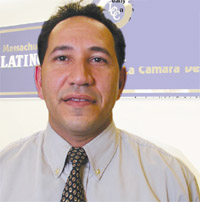
Features
It’s a little like that joke George Carlin told years ago, the one where he speculates about what John F. Kennedy Jr. would think or say when asking a cab driver to take him to J.F.K. Airport in New York.

When Andy Scibelli heads to the office now, he goes to a building with his name on it — the Andrew M. Scibelli Enterprise Center. Like other tenants, the former president of Springfield Technical Community College is trying to get a fledgling business off the ground.

In this case, it’s Scibelli & Associates, a consulting venture he started soon after retiring 18 months ago to help other colleges do as the team at STCC did — think entrepreneurially. By that, he meant creation of programs to help spur entrepreneurship, or E-ship, as he calls it, and, if possible, create incubator facilities to help new businesses get a solid start. To do that, colleges would themselves have to become entrepreneurs in the sense that they would have to take risks and think outside the box.

STCC did all that in the creation of its enterprise center, which includes two incubators — one for area high school and college students and the other for more-established businesses — and also houses the college’s Entrepreneurial Institute and a number of agencies that support small businesses. Scibelli led the team that acquired the funding and assembled the various components that comprise one of the most comprehensive programs of its kind in the country.

That’s why his name is on a sign over the front entrance, and also why he feels eminently qualified to help other colleges and universities undertake similar initiatives.

In an interview with BusinessWest, Scibelli said he has worked with a few public colleges in the Northeast that are exploring entrepreneurship programs, while also handling a few interim-president assignments — at Massachusetts Bay Community College and, more recently, Berkshire Community College.

He said Scibelli & Associates is still mostly a part-time pursuit, one that he looks to grow through word-of-mouth referrals, marketing, and networking. Those are some of the skills that, like other business owners in the SEC, he is still acquiring.

Actually, there have been several adjustments for Scibelli, who served as STCC’s president for 22 years.

“Before, when I wanted a PowerPoint presentation, I just called some people and a few days later, it was there,” he explained. “Now, when I order a PowerPoint, I’m ordering me to take care of it.”

Name of the Game

Learning PowerPoint has actually been one of the simpler challenges for Scibelli to wrestle with since retiring in the summer of 2004 — that and getting accustomed to the notion that his name is also his business address.

“That took a little getting used to … it’s cool seeing your name on the building,” he said. “A few times, I’ve been introduced to some people here who don’t know who I am; they hear the name and ask, ‘is this your building?’”

It’s not, but it came to be a part of Scibelli’s vision to make the portion of the old Springfield Armory located on the east side of Federal Street into a unique economic development initiative. It started with the creation of the STCC Technology Park in 1996, which currently houses more than a dozen technology related businesses that employ nearly 800 people, and continued with the conversion of one of the oldest Armory buildings into what was then known as the Springfield Enterprise Center.

The SEC was designed to promote entrepreneurship in a number of ways — through its incubators, which currently house a number of small businesses, support organizations based there, such as SCORE and the Mass. Small Business Development Center Network, and the Entrepreneurial Institute, which promotes programs for students at all levels.

When Scibelli retired, administrators at the college moved to rename the facility in his honor. He now occupies a suite on the ground floor, next door to former radio and television sales executive Fred Steinman, who last year bought the local franchise for the direct mail company Valpack.

In many ways, the SEC is not only Scibelli’s business home, it’s also a selling tool as he acts as consultant for colleges and universities mulling entrepreneurship. In other words, it’s a working model of an effective E-ship program, and it displays the many benefits that may come to a school — everything from closer ties to the business community, to a hands-on link to K-12 students, to strong media attention.
This is the message Scibelli has brought to several schools, including Broome Community College (BCC) in Binghamton, N.Y. An old industrial center, Binghamton is in many ways like Springfield in that it is looking for new economic development opportunities and has an inventory of older, mostly vacant mills that could be converted into incubators.

“They want to look at the full menu of opportunities when it comes to entrepreneurship,” said Scibelli. “They wanted to find out more about the subject, including incubators.”

BCC’s motivations are many, he continued, adding that the school wants to explore ways to expand its role in the community while also help in bringing new jobs to the region; there are currently 17 businesses in the Technology Park at STCC, and another nine in the SEC, said Scibelli.

“In Binghamton, as in most communities that are experiencing a downside, the Chamber and other business groups are saying, ‘who can come to the rescue?’” he explained. “For colleges to jump in and create businesses and jobs, that’s wonderful and everyone wants to cooperate.”

BCC is still in the early stages of creating an E-ship program, said Scibelli, noting that he is also working with Worcester State College in the preliminary steps toward a venture that may involve the school in new economic development initiatives there.

“That’s a city that’s re-inventing itself,” said Scibelli, referring to a shift within the state’s second-largest community from manufacturing to the biosciences and other technology-related fields. “And the city wants the colleges to play a role in that.”

To generate interest in E-ship programs and the opportunities they present for both two- and four-year colleges, Scibelli has staged a few seminars on the broad subject, including one early last year at Cornell University, and has another planned for next month in Florida. His goal is to get the schools’ presidents involved early on, because this is how to get the ball rolling.

“Without the commitment from the CEO, the president, a lot of this stuff never flies,” he explained. “It doesn’t matter what the level of commitment is from everyone else; if the CEO isn’t on board, it’s not going to happen.”

What he tells school presidents, and everyone else who’s interested, is that while entrepreneurship programs help the community, they can also bring a return on investment, or ROI, for the colleges themselves.

This can take a number of forms, he said, noting that some incubator ventures can actually become profit-making ventures. But in the meantime, schools can, and often do, increase enrollment, develop a broader donor base, add certificate and degree programs, and establish niche identification.

“If you fold it into the mission of the college, it has nothing to do with making a profit; it has to do with service,” he explained. “It’s another arm of an educational resource for the community — one that happens to grow new businesses.”

Culture Shock

As for his new business, Scibelli said he wants to achieve controlled growth. Elaborating, he told BusinessWest he wants it to be a successful venture, but not one that will become all-consuming.

He currently averages a few hours each day at the SEC, but generally works when and as long as he wants, and keeps his eyes (and schedule) open to other interim assignments or consulting projects. Meanwhile, he’s traded designer suits for designer sweatshirts and jeans, and is getting used to the notion of having no one to supervise but himself.

“I’ve had to learn how to do a lot of things,” he said, referring back to his adventures in PowerPoint. “Overall, I’ve really enjoyed the transition and being entrepreneurial.”
And he wants to show colleges and universities how to do the same.

George O’Brien can be reached at[email protected]
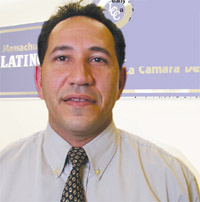
Features
The Greniers Studio Changes Its Name, Widens Its Focus
Dan, Chris, Larry, and Marc Grenier of Grynn & Barrett Studios

Dan, Chris, Larry, and Marc Grenier of Grynn & Barrett Studios

Second-generation members of the Greniers photography studio say the company is in a growth mode — expanding services, while also widening its geographic reach. To convey the growth of this family business, and facilitate it, the brothers Grenier are actually downplaying the family name somewhat, adopting Grynn & Barrett Studios as a new moniker. It’s a play on words they hope will resonate with a younger audience and show that while this is a company that knows how to have fun, it takes its business seriously.

One of the early entries was ‘S.O.B.’

That stands for Sons of Bob, as in R. Robert (Bob) Grenier, founder of the nearly 60-year-old photography business that still bears the family name — sort of — and his four sons, Larry, Dan, Chris, and Marc, who now run the company.

‘S.O.B.’ was one of several concepts floated as a new name for the Holyokebased business, which specializes in school and family portrait work, and sought a new name for several reasons, including territorial expansion and a need to consolidate many business divisions.

Ultimately, it was decided that, while S.O.B. was clever and well-liked internally, there would no doubt be problems making it work within a youth- and family- dominated customer base.

But the search for a name that conveyed fun and a contemporary focus continued and, ultimately, the company, with the assistance of the local marketing firm Darby O’Brien, came up with Grynn & Barrett Studios.

The words The Grenier Family, Photographers since 1948 accompany the new name in all marketing materials, letterhead, and business cards, said Larry Grenier, the company’s president and CEO, noting that the family name is well-known and respected in the community and the industry, and still holds great value.

But the company is pushing Grynn & Barrett, a play on words that the brothers believe conveys not only what the company does, but how it does it — with an accent on fun and outside-the-box thinking.

Meanwhile, they say the name change and the expansion with which it coincides, send a message to competitors that this family business is strong — and intends to get stronger.

“Within a part of the industry, our family name was getting trashed,” explained Larry Grenier. “People were saying that we’re a dysfunctional family, that we can’t keep the family together (a sister did leave to start her own venture), and that this business was not working well.

“We want to show those people that we’re not dysfunctional,” he continued, “and that we have plans and we’re moving them forward.”

Those plans include a physical expansion into Connecticut, where the company plans to open a second studio, probably in Rocky Hill, early next year. From there, the brothers want to continue their expansion effort into New York and perhaps beyond. With questions about how well the Greniers name would travel, the sons of Bob undertook a search for a new name.

BusinessWest looks this issue at how a family business intends to grow by actually downplaying the family name, and at how its broad expansion might ultimately develop.

Portrait of a Success Story

To announce the name change and new business strategy, the brothers Grenier took the company’s annual holiday pot luck lunch, staged Dec. 13, and turned it on its ear.

A light-hearted program began with announcements that the company had been sold (rumors to that effect have been circulating for years) and continued with the introduction of the new ownership tandem (both blind), and a display of their work. This was a set of poor, out-of-focus, badly aligned photographs that soon led staff members to realize that what they were seeing was all a gag.

But the new name and the company’s expansion efforts are serious business, said Dan Grenier, who heads studio operations for the company as vice president and director. He told BusinessWest that there were several motivations for changing an established name, especially the need to pull several different businesses, or divisions, under one brand.

Those divisions include one that he established, called Daniel’s School Pictures, which concentrates on portraits of students in grades K-11. There is another component that focuses exclusively on high school seniors (The Greniers), and still another, called Greniers ProSports, which concentrates on high school and youth sports.

These specialties have been developed over the course of the past 57 years, or since Bob Grenier, later nicknamed ‘Grin’ set up shop in the family home on Pine Street in Holyoke.

He started out with a partner, Lucien Ducharme, and the two names co-existed on the letterhead until the latter retired in the mid ’60s. The company grew steadily through the ’50s and ’60s, with wedding, family portrait, children, and high school senior photography.

In 1971, Grenier opened a second studio in the then-new downtown Springfield office/retail complex Baystate West. Soon thereafter, Larry Grenier became the first of the second generation to join the business. He was joined by Marc in 1976, Dan in 1979, and Chris in 1980.

The company saw a surge of growth in the ’80s, with the addition of the undergraduate student department, as it was called, and the sports department, which features products and services ranging from team photos to cards (similar to the ones for the pros) to championship plaques and refrigerator magnets.

Today, the company counts more than 60 high schools and colleges and about 300 elementary and middle schools on its customer list, as well as other clients ranging from the Vermont State Police Department to the Holyoke and Hartford, Conn. fire departments.

Bob Grenier eventually sold the business to his five children in 1991, and since, the company has continued to grow, while also consolidating. The Springfield studio (the company moved from Baystate West to a location on Mill Street in the late ’70s) was eventually closed, with all operations moving to Holyoke. This necessitated a larger facility, and, after a lengthy search of sites across the region, a location was found on Jarvis Avenue in Holyoke. A 24,000- square-foot, state-of-the-art studio was opened in July 2002.

Looking forward, the Grenier brothers believe they can build on their considerable success in Connecticut (roughly 50% of their business is generated in the Nutmeg State), which was amassed without an actual studio there.

Plans to construct an operation similar to the one on Jarvis Avenue are being finalized, said Larry Grenier, noting that such a facility should enable the company to secure a larger share of the Connecticut market and ultimately serve it more effectively.

The Big Picture

To take the company to the next level, and a broader territorial market, it was decided to create one name, or brand, said Dan Grenier, noting that this was an exercise approached with equal amounts of caution and determination.

“There is a lot of equity in the family name,” he explained. “But maybe not as much as we thought; it is well known in Western Mass. and Northern Connecticut, but beyond that, it doesn’t mean much to people.”

The search for a new name, he said, focused on finding something that would get people’s attention and make it clear that this was a fun company to work for and do business with.

Bob Grenier was brought in on the project early in the process, said his son Larry, noting that the company’s founder agreed that a new name would be needed to take the company into new and different markets.

‘S.O.B.’ was one of several contenders, although it was quickly confined to internal use, said Larry Grenier, and it will continue to be used in that capacity, with S.O.B. tshirts, sweat shirts, and other items for staff members.

Meanwhile, other suggestions for a new name included Churchill Studios, to connote the neighborhood in Holyoke in which the business grew up, and ‘The Brothers Grinn,’ another play on words.

‘Grynn & Barrett Studios’ emerged after several rounds of concepts and debate, said Darby O’Brien, because it conveys a sense of fun and contemporary thinking. This matches what goes on in the company’s studios, especially when it comes to high school senior portraits, where the nature of the final product is limited only by the student’s imagination.

Indeed, while decades ago, the photos were fairly static, with limited options, students today can blend their passions, modern technology, and even a little MTV to produce something truly original.

Larry Grenier

recalled one student who, wishing to pay homage to her father’s passion for the Red Sox, donned a uniform and was captured in a image in which a ball and bat seemed to be on fire.

“Our studio is built like a TV set,” he explained. “We can use a number of different backgrounds and elements to make this more than a photo — we want it be an event.”

Thus, the company wanted a name that would play with students and young parents, he continued. “And we think we’ve accomplished that.”

There was a good deal of discussion about the name change before the company moved forward, said Larry Grenier, noting that the proposed new brand was test-driven before some people in the photo industry.

“Most got a chuckle out of it; they thought it was fun, but also somewhat risky,” he told BusinessWest. “There is some risk involved, but at this point, we knew it was necessary to do something a little risky to move our business forward.

“We didn’t want something safe,” he continued. “We wanted to make a statement — to our staff, to our customers, and to our competition.”

Taking Their Best Shot

That statement is that the Grenier family is focused — figuratively and quite literally — on continuing the growth pattern that has defined the company since ‘Grin’ first told a family to say ‘cheese.’

The Grenier name will still be on each portrait taken, said Dan Grenier, adding that this long-standing tradition will not change. But the larger letters on the sign outside the Jarvis Avenue studio are reserved for the names Grynn and Barrett. They are there to make people laugh, but also take this family business seriously.

George O’Brien can be reached at[email protected]

Features Sections Supplements
To Climb the Career Ladder, You Must Have Good Balance
We’ve all heard the saying that all work and no play makes Jack (or Jill) a dull person. Well, that saying is not just a cute statement of life. It actually means that a person who never takes time off from work becomes both boring and bored. So if you opt to work seven days a week, 12 hours a day, you’re doing yourself more harm than good.

No matter what part of the country you work in, no matter what your background, no matter what your family or financial situation, you must have a balance between your personal and professional life. In fact, it’s impossible to produce at high levels without a personal life.

Yes, this philosophy goes against the American work ethic, which says to push yourself to the breaking point to get ahead. So many people these days think it’s normal to work seven days a week, to never take a vacation, and to sacrifice family time for financial gain. Well, that’s not the case in business. That’s right … if you want to reach the top dog status, you MUST take time off and have a work/life balance.

The fact is that you cannot work 90 hours a week and be a millionaire. Sure, you may be able to pull it off for a short period of time, but fairly quickly something will start to fall apart. Maybe it’ll be your marriage or your health. Whatever it is, you can be sure it will happen. What’s funny, though, is that the top producers— the ones who consistently earn at high levels — always have family and personal time built into their schedules.

Set the Expectation

Unfortunately, many businesspeople feel guilty when they spend time with their family or pursuing personal interests. They feel they must be available for their clients at all times — weekends and evenings if need be. Look at many business cards today and you’ll see that many give out their cell phone number, home number, and some even their home address.

Unknowingly, these workers are setting the expectation that they are available 24/7, rain or shine, sickness or health. And that’s no way to run a business.

While you should be accessible for your clients, you must also have some boundaries in your professional relationships. If you’re new to the business, then you more than likely will have to work weekends to get yourself established. That’s fine. But you still must plan some other time off for yourself during the week.

If you’re established in the business and you are still working every weekend, then maybe you really need to look at how efficient you’re being while you’re working.

Are you sticking to your established schedule? Once your business is established, there’s no reason for you to be working seven days a week. For example, one real estate agent in Colorado only works three days a week, sells about 270 homes a year, and earns approximately $4.5 million a year. That’s efficiency.

Ultimately, it’s your responsibility to tell clients what your days off are. They won’t guess, and they can’t read your mind. So if they ask you to meet with them on Thursday, and you take off Thursdays, you must set the expectation.

Don’t meet with them anyway and then be mad that they made you work on your day off. The client did not make you work on your day off; you made yourself work on your day off because you did not set the expectation. Hiding your schedule from clients will only create problems later.

What to Schedule

People often wonder what kind of personal things they should be putting in their schedule. Put in whatever is important to you. Some things you may want to schedule are your kid’s sports events, dinner with your spouse, time to work on your favorite hobby, commitments to personal groups or clubs you belong to, etc. There’s no right or wrong thing to schedule. The important thing is that you do it.

But putting these items in your schedule is only step one. Next you need to have accountability to these personal items.

Perhaps your spouse can keep you accountable for your scheduled ‘date nights.’

Maybe your kids will keep you accountable for going to their events. Whatever it is, be sure to tell your family and friends what you’re scheduling in your planner. When they know you have time set aside for them, they’ll help ensure you keep your word. After all, you don’t want to let down your family and friends, do you?

How Much Balance is Enough? When you’re starting out in the business, you must have at least one full day to recharge your batteries. This is one day when you’re completely unplugged from the office and from clients. You don’t take any phone calls, return any E-mails, or even think about work. This is a day just for you. This may sound scary for some people, especially you Type A control freaks, but relax … the office won’t fall apart without you. And your clients won’t abandon you and work with another agent just because you took a day off. Remember, set the expectation upfront and no one will mind.

As your business grows, or if you’re already established in the business, then you must take at least two days off per week. They don’t have to be two consecutive days (although that is best), and they don’t have to be weekends. You simply need to take two days. Why? Because as you get established, your efficiency should naturally be increasing. You can accomplish more in less time, so there’s no reason to work more than five days per week. Also, when you produce at higher levels, your brain and body will require more relaxation time so you can stay at peak performance.

Finally, when you push yourself and overwork yourself, you begin to develop a sour attitude. You may secretly resent those clients who want to meet with you on weekends or whatever days off you want. You may resent colleagues who seem to work less but make more money than you. Resentment, anger, and frustration are not traits of successful businesspeople. A positive attitude, enthusiasm, and a love of the business are the traits that propel people to the top. And you can’t possess those traits consistently if you’re not allowing yourself time to rest.

A Little R & R Goes a Long Way The bottom line is that you must have a balance between your work and personal life. Without it, your career, your health, and even your family life will suffer.

No career is worth that price. So work diligently to maintain balance. When you do, you’ll be able to hob-knob with all the other top dogs as you sit by the pool on your day off.

A real estate trainer and speaker, Jerry Pujals helps agents nationwide increase their production, efficiency and sales. His forthcoming book, “Secrets to Real Estate Success,” offers strategies to help others achieve their real estate goals;www.jpsalessystems.com.

Features
AIC Creates Scholarship Program for Springfield Homeowners
Ernestine Johnson

Ernestine Johnson, president of the Bay Area Neighborhood Council,addresses the audience at AIC’s announceent.

In a move that Springfield Mayor Charlie Ryan called “revolutionary,” American International College (AIC) has announced plans to offer annual $10,000 scholarships to its closest neighbors. The college unveiled its ‘Community Engagement Initiative’ on Oct. 31, which will award four-year renewable scholarships to homeowners and their children residing in the Bay Area neighborhood and who meet AIC’s general admission requirements.

The section of the city includes portions of the State Street corridor, Mason Square, Tapley Street, and Roosevelt Ave., and is home to just over 4,000 of the city’s 152,000 residents.

According to AIC president Vincent Maniaci, the program was designed to not only boost AIC’s enrollment numbers, but to also spur revitalization in the Bay Area.

“We hope this will attract people to the area and have a positive impact on property values,” he said, noting that if the program proves successful over the next year, the Bay Area will represent the first of several Springfield neighborhoods to benefit from the scholarship program, which essentially covers half of AIC’s annual tuition and does not preclude students from securing other loans, including federal loans.

“We’re going to approach this one neighborhood at a time,” he said. “But we hope to gradually build the program, and connect the dots from one neighborhood to the next, in order to bring them together.”

Ryan expressed the same hope, and also called upon Springfield’s remaining colleges to follow AIC’s lead.

“All of the colleges play a strong role in the city,” he said. “AIC has just gone beyond what anyone would have contemplated, creating a program we didn’t even know was in the cards. Thousands of people could theoretically qualify … I hope that the other colleges will see fit to replicate this.”

U.S. Rep. Richard Neal also praised the program, calling it a “bold, assertive move.”

“Over the past few weeks, several key people within the city of Springfield have been given an opportunity to say what they think would best help this city, and the colleges and their roles in our future come up again and again,” he said. “AIC is the first college in the city to do anything about it.”

The announcement comes on the heels of the establishment of a dual admissions agreement between AIC, Springfield Technical Community College, and Holyoke Community College, which allows students applying to one of the two-year schools to simultaneously apply at AIC, and take advantage of significant scholarship opportunities. Maniaci said the programs are similar in that they were both designed to open up the four-year college experience to as many people as possible.

“We are looking to incorporate a number of other partnerships and programs in the future,” he noted, declining to offer specifics until the initiatives are firmly in place. “There are two or three things that are definitely in the works right now, each designed to make us an integral part of the Springfield community. If it’s not good for Springfield, we shouldn’t be doing it, and we’re not going to.”

Ernestine Johnson, president of the Bay Area Neighborhood Council, said she and her fellow Bay Area residents are pleased to enter into a new collaboration with the school.

“Over the years, we have all watched AIC grow and change. Now, we’re thrilled to be part of something new and exciting … all we can say is ‘thank you.’”

Features
Latino Chamber Builds Membership, Partnerships
 Carlos Gonzalez

Carlos Gonzalez

The Massachusetts Latino Chamber of Commerce, formed in early 2004, is in a growth mode. The agency recently opened a new office in downtown Springfield that features a business center currently incubating four fledgling companies. The LCC is also extending its reach into Worcester County, the Merrimack Valley, and, eventually Boston. The steps are all part of chamber President Carlos Gonzalez’s drive to make the Latino business community a stronger force in the state’s economy.

As deputy chief of staff to Springfield Mayor Michael Albano, Carlos Gonzalez spent a considerable amount of time working in the realm of small-business development.

Indeed, among his many duties in that capacity was providing assistance to existing and aspiring small business owners in matters ranging from obtaining permits to understanding city sign ordinances.

Over the course of eight years of such work, Gonzalez gained a unique understanding of the city’s business community — and also an appreciation for a growing but often overlooked constituency: Latino business owners.

As the number of such entrepreneurs grew, Gonzalez recognized a need to give the group both a ‘voice,’ as he called it, and a proverbial seat at the table — the one reserved for area business and economic development leaders.

So when the Albano administration ended its tour of duty in 2003, Gonzalez set out to meet that need through formation of the Massachusetts Latino Chamber of Commerce (LCC), or La Cámara de Comercio, as many of its 150 or so members might say.

That number has been rising steadily since the chamber opened its doors (or its door, to be more precise) in March 2004. Then, the fledgling group was renting a small office within the facilities of the New England Farm Workers’ Council. As membership and resources grew, the chamber set its sights on larger quarters and a broader mission.

Both clearly come into view at the LCC’s new facility, a 2,400-square-foot suite at offices at 1655 Main St. that opened for business on Oct. 19. In addition to more administrative space, the office features a business center that is now home to four fledgling Latino-owned businesses ranging from a photography studio to an accounting firm.

“The new offices will serve as a one-stop center for small-business development,” said Gonzalez. “We want to provide business owners with the tools they need to grow and succeed.”

While supplying the physical space and technical assistance needed to help those entrepreneurs in the business center get to the next level, the LCC is working on several different assignments, said Gonzales.

They include everything from a membership drive to the creation of satellite offices in the Worcester area and Merrimack Valley, he told BusinessWest, and collectively they fall under the category of relationship- building.

“By creating relationships and partnerships we help make government officials see the many advantages of the emerging Latino small business community as an economic development engine that is fueling the local and state economy.”

BusinessWest looks this issue at how the LCC goes about the process of building those relationships, and how it hopes to build the base of Latino-owned businesses.

The Language of Business When asked if he thought the Latino business community has been under served historically, Gonzalez thought for a minute and decided that overlooked was the more accurate term.

He told BusinessWest that state economic development leaders have put considerable emphasis on luring large corporations to the Commonwealth, at the expense of a broader emphasis on small-business development.

Meanwhile, they have either overlooked or ignored both the surging Latino population, especially in urban areas like Springfield and Holyoke, as well as a recognized entrepreneurial spirit within that constituency.

“Financial institutions have not recognized the Latino community as an economic power base,” he explained, adding that Springfield has been recognized as one of the leading centers of new-business development, and the area’s minority populations have played a significant role in that movement.

“The Latino community has a strong entrepreneurial spirit … many people strive to open their own businesses,” he explained. “Government officials need to realize this and help generate new Latino businesses.”

Gonzalez saw those entrepreneurial tendencies during his tenure in the mayor’s office. And when his work there ended when Albano opted out a fifth term, Gonzalez sought a way to tap into that energy, while also fulfilling his own entrepreneurial aspirations.

Indeed, before joining the Albano administration, Gonzalez served as station manager and producer at WSPR-1270, and played a lead role in the transformation of that facility into a 24-hour Spanish language station. Two years in that role followed by his work with small businesses for Albano gave him a front row seat from which to view the emergence of the Latino business community.

He wanted to give that group a presence and a voice, and his answer was the Latino Chamber, an entity he believed could succeed where a number of other, smaller, Latino-focused chambers with similar goals had not.

“There was a gap,” he said, referring to the emergence — and later the dissolution of several smaller chambers focused on groups like the Latino population. “When you walked around and talked to the small Latino base, few of them were aware of the opportunities available to them, from agencies like the SBA, area chambers, SCORE, and others. We wanted to address that need.”

Gonzalez told BusinessWest that the Latino chamber was created with a number of goals in mind. First and foremost, the agency would act as a resource that would help Latino-owned businesses clear a wide variety of hurdles, from initial business plans to marketing; licenses to financing options.

The LCC is addressing that aspect of its mission through a variety of programs, including workshops and training sessions on a number of subjects.

Beyond that, the chamber was conceived to act as an advocate for the Latino business community, so it is not overlooked in the future as it has been in the past.

As an example, he cited one recently created city program that enables individuals to apply for up to $30,000 for technical assistance to open vacant storefronts in three neighborhoods, the North End, the South End, and Old Hill.

“There is not a vacant storefront in the North End,” said Gonzales, referring to the predominantly Hispanic neighborhood and speaking figuratively. “We want to help create programs that can better serve the Latino community and help Latino businesses stay in business.

“We’re not asking for any handouts,” he continued, “but we do want to be part of the discussion when these programs are being set forth. And a united voice is the only way to get people to listen.”

To strengthen that voice, Gonzalez said he wants to both expand membership locally — 500 is his immediate, and ambitious, goal and he believes he can achieve that by the end of next year — and extending the LCC’s reach beyond the Pioneer Valley.

He said there are growing Latino populations in Lawrence, Lowell, Worcester, and other communities, and the LCC desires to serve them, through outreach and partnerships generated from the Springfield office, and perhaps through creation of satellite facilities.

“There’s a lot of work to be done in these areas,” he explained. “We want to reach out … we think can help build those bases of Latino-owned businesses and create a stronger, more influential group.”

Building Blocks

As he talked about the region and state’s Hispanic business community and its prospects for the future, Gonzalez drew some parallels to Miami and what has happened in that city over the past quarter century. There, a steadily growing Latino population managed to come together, pool its resources, and forge what he called a “Latino business power base” that made major contributions to Miami’s economy.

The same could happen in Massachusetts and, specifically, the Greater Springfield area, said Gonzalez, if effective partnerships are formed between Latino businesses, the LCC, and the community at large … and if the Latino community as a whole is viewed as a financial resource.

An important part of the equation is building a solid base of Latino ventures, he said, adding that the LCC’s business center will play a role on that mission.

Designed to be an incubator that will give start-ups and existing businesses the physical space and support services needed to get off the ground, the center will house businesses until they reach maturity and become ready to move out into the community. “We’re going to start by walking, and when we start running, we’ll move on and another new business will take our place,” said Rene Romero, creative director and coowner of LatinMark, one of the center’s tenants.

The business, recently re-named after three years of operating as AdMark, offers an array of services designed to help businesses, Latino-owned and otherwise, to tap into the growing Hispanic market.

A native of Venezuela, Romero first came to the United States in the late ’70s to get an education, specifically a degree in marketing and advertising at Louisiana State University. He returned home, but eventually came back to the states in early 2000.

After working for a short time in Boston, he and his wife relocated to Miami to work in advertising.

“We didn’t have very good timing,” he said, referring to the decline in the Miami area economy in the months after 9/11. “It was a case of being in the right place at the wrong time.”

He believes his decision to return to the Northeast has put him in the right place at the right time.

Elaborating, he said Western Mass. has an attractive demographic mix — specifically a growing Latino population — as well as the right geography, a location within a few hours of several major metropolitan areas, including Boston, Hartford, and New York.

While Romero hopes to conduct business in and those cities, his primary focus for now is the Western Mass. market, where he is providing services to the LCC, several of its members, and other area businesses, while trying, as all small business owners do, to build a name and reputation.

Those are goals common to other tenants in the business center — Ramos Accounting & Tax Services Inc., a start-up venture created by Springfield native Oscar Ramos; MOYO Photography, a two-year-old business operated by Yolanda and Johnny Torres; and Evis Medical Supply, a Connecticut-based company owned by Carlos Alvarez, who is expanding with a Springfield satellite office.

The center’s first businesses represent a good cross-section of Latino-owned ventures, said Gonzalez, noting his roster of tenants — and the LCC’s membership list — is diverse, with a broad mix of professionals and service providers.

Growing that base is the primary objective for the chamber, he said, noting that the mission will be carried out across the Valley — and across the state.

Sign of the Times

As he gave BusinessWest a tour of the then-unfinished LCC offices, Gonzalez stopped to introduce Blas Rosa, owner of Quick Sign, who was putting the finishing touches on the sign that graces the front lobby.

The chamber tries to support members and other Latino-owned businesses with work like the sign project, Gonzalez explained, adding that its broad mission is to give such ventures much more than small jobs like the new signage.

“The goal is to provide a voice,” he stressed, “and as we become bigger and stronger, the voice grows louder.”?

George O’Brien can be reached at[email protected].

Features
Symposium Is All About the Message
John Bidwell,

John Bidwell,president of Bidwell ID, said ‘branding’is an oft-used term that he hopes to better define for the region·s business professionals.

John Bidwell has always incorporated an educational component into his work.
Indeed, Bidwell, founder and president of Florence-based Bidwell ID, has employed a number of means to educate clients and prospective clients about the many aspects of marketing and brand-building. Topics covered by so-called white papers downloadable from his Web site include everything from logos to copyrights; capital campaigns to naming a company.

“I find that an educated client or potential client turns out to be a better client,” said Bidwell, who said his white papers are what he considers an objective approach to answering common questions about the often-complex world of branding.

Recently, he sought to take this educational component to a higher plane. This was the genesis of a symposium, created in conjunction with the Mass. Small Business Development Center Network, to be staged Nov. 1 at the Eric Carle Museum of Picture Book Art in Amherst. The museum will serve as not only the site, but also one of five case studies — in this instance, a not-for-profit group — that will, according to event planners, help attendees gain an appreciation for the nuances of marketing.

As Bidwell explained to BusinessWest, not-for-profits have seen traditional sources of funding — foundation grants and allocations from local, state, and federal organizations — dwindle, leaving them under increasing pressure to raise more revenue. One key to this, of course, is marketing.

“This is a time of great change for not-for-profits; they have to reach out and do a lot more development work than ever before,” he explained. “Part of that development work is branding, and this is something that many of these organizations never had to look at before. They have to look at who they are and how they define themselves in a way that wasn’t an issue only a few years ago.”

A similar focus will be put on other industry sectors and specific marketing challenges though case studies involving Amherst College (education); the Amherst Nursing Home (health care); Banana Publishing (a small, relatively new business); and Cooley Dickinson Hospital’s Way Cooley brand of coffee (a new product).

The purpose of the symposium, said Bidwell, is to take what many business owners consider a buzz word — branding — and give it some workable definitions that they can apply to their companies and agencies.

Getting the Word Out

Bidwell told BusinessWest that, originally, the letters I and D incorporated into his company’s name stood for illustration and design.

“I’ve always been into graphics and design,” he said, adding that he did work for a number of newspapers and magazines earlier in his career. Later, those letters stood for identity and design, he said, and today, they’re used to convey the fact that the six-year-old company specializes in helping clients create and shape an identity, or ID.

Bidwell, who studied Theology at McGill University and did a stint for the Peace Corps in Africa before moving into the marketing field, has done such ‘identity’ work for clients ranging from Mount Holyoke College to the National Yiddish Book Center, to DramaWorks, the Northampton-based company that uses theater to help companies understand workforce issues.

These are among the ‘educated’ clients he described, noting that the more individual business owners know and truly understand about the need for branding and the many components of that assignment — the better he will be able to partner with them to achieve positive results.

This fall’s symposium (for information, visit www.brandnew2005.com) was designed to offer working examples of how branding works — and how it can work better, said Bidwell, noting that the program will include several aspects.

There will be presentations on the branding strategies for each company or product, he explained, and also questions from a panel of marketing experts and then more questions from the audience.

The panel of experts will include Lee Phenner, vice president of Hill Holiday Design in Boston, Cheri Cross, partner and communications professional with Slate Roof Studio in Northampton, and Rick DeBonis, senior vice president and director of Marketing for Hampden Bank. As for the audience, Bidwell said he expects it to include everything from marketing and public relations professionals to business owners.

The case studies were chosen, he said, to spotlight the different kinds of challenges faced by various industry sectors and types of businesses. As he mentioned, non-profit groups like the Eric Carle museum are under mounting pressure to reach broader audiences, and thus boost revenue.

“A lot of not-for-profits are taking more interest in branding because they’re being forced to,” he explained. “Many of them are struggling to survive and they’re having to address development and branding issues.”

Springfield-based Banana Publishing, which has created cross-border telephone books, including one for Longmeadow and Enfield, Conn., was chosen to highlight the many challenges faced by emerging small companies, said Bidwell. He told BusinessWest that this case involves both a new business and a new product, and that branding efforts must be designed to raise awareness for both.

Amherst College, meanwhile, was selected to focus attention on higher education and its unique issues, he said. The discussion will likely focus on whether such a well-known institution needs to market itself — and how it goes about that mission.

Cooley Dickinson’s Way Cooley Coffee was chosen to spotlight the branding of a new product, said Bidwell, noting that the hospital began to brew its own brand and use proceeds to help bring health care services to those who are uninsured or underinsured. That talk is expected to focus on how the hospital is getting word out about its coffee, and how effective these efforts have been at building awareness.

“These are all successful ventures,” Bidwell said of the case studies he’s assembled. “What we want to do at this symposium is examine the various ways that effective branding contributed to their success.”

Name of the Game

Bidwell said he expects some business owners to attend not because they know what branding is and why it is important — but because they don’t.

“To many people, this is just a buzz word and they don’t really know what it means,” he said. “Some people thinking branding is just a new name for marketing. I happen to think it’s goes beyond that, but that’s a matter for discussion.”

There will be many of those at the symposium, which, if it is as successful as Bidwell believes it will be, could be the first of many.

As he said, educated clients ultimately become better clients.

George O’Brien can be reached at[email protected]

Features
Businesses Pitch in to Help Habitat for Humanity
Steve ·Dusty· Hoyt

Steve ·Dusty· Hoyt, left, and Steve Gelling,say the upcoming Habitat project takes the involvement of the business community to a higher level.

Steve ‘Dusty’ Hoyt says his company endured a good deal of hardship over the years on the way to its current robust health.

A distributor of Marvin windows and doors, Enfield-based A.W. Hastings was hard hit by the long recession of the early ’90s and its profound impact on the housing market. It also weathered other economic ups and downs, shifts in product lines, assimilation into the Greater Springfield market, and mounting competition.

“A lot of people stood by us and helped us through those tough times,” said Hoyt, listing banks, long-time customers, suppliers, and devoted employees as those who enabled the company to endure and recently reach a rare milestone — 150 years in business. (Actually, it’s 158, as determined by some recent research).

Being on the receiving end of such generosity has helped spark a strong sense of giving back throughout the company, Hoyt told BusinessWest. He cited creation of the program TEAM (Together Everyone Achieves More), which has involved employees in a number of community activities, as the greatest manifestation of that spirit.

Until recently.
Indeed, while searching for a meaningful way to celebrate the 150th birthday, Hoyt and his brother, Jonathan, Hastings’ treasurer, wondered if the company could take its participation with the Greater Springfield chapter of Habitat for Humanity to a higher level.

Hastings had frequently made at-cost contributions of windows and doors for Habitat homes, and several employees had volunteered to install such products, said Dusty Hoyt. “I was thinking about the various talents of the different people we have within our company — from architectural drawing ability to hands-on skills, and it struck me, ‘why can’t we build one of these houses all by ourselves?’”

He put that question to his employees early this year, and the response was overwhelming, thus providing one of the pieces to what will be a landmark Habitat project, scheduled to commence later this month.

Stephen R. Gelling, executive director of the Greater Springfield chapter of Habitat, said this will mark the first time that private companies will provide the land, labor, and materials for a home. A parcel at the corner of Bartlett and Carew Streets in Springfield, across from the entrance to Mercy Medical Center, has been donated for the project by Thomas Henshon, owner of West Springfield-based Pearson Systems, said Gelling, adding that Hastings employees will provide the bulk of the labor for the project and also purchase the materials — families in line for future Habitat homes will also contribute sweat equity. “We’ve had other companies sponsor homes in the past,” said Gelling, using that word to describe the act of covering the cost of materials and specialized labor not handled by volunteers. “But they (A.W. Hastings) want to utilize their specific skills and go in and make this a total hands-on effort. For our chapter, this is something totally unique.”

And also something he hopes will prove inspirational to other businesses in the area. “This build project will provide a family with a home,” he said, “but it will also create a lot of excitement within this company and a tremendous sense of accomplishment; we’d love to see other businesses experience those same things.”

BusinessWest looks this issue at how this most recent Habitat project came together, and also at how the local business community continually steps up its contributions to the organization that makes the dream of home ownership a reality.

Hammering Home the Point

Hoyt and Gelling both told BusinessWest they weren’t sure what to expect for a response when they scheduled an after-hours meeting at A.W. Hastings this past spring to formally present the company’s Habitat plans and gauge response.
“I was expecting maybe a handful of people,” said Gelling. “Instead, the room was full of people who wanted to know what they could do; there was a lot of energy in that room.”

The home to be built at the corner of Carew and Bartlett Streets, one of three to be started by the local chapter by the end of this year, represents a new, higher level of involvement for the business community in Habitat, said Gelling. He noted that individual companies and groups have made contributions ranging from full sponsorship to donations of materials to volunteering in the construction of many of the 22 homes the local chapter has built in the past five years.

Members of the business community have taken part in the chapter’s ‘women-build’ initiative, he said, referring to one home built, as the name, suggests, entirely by women. They have also taken part in some of the so-called “blitz build” projects in which homes are put in 10 days, and in various ways for more-traditional projects, which take six to nine months.

Meanwhile, the latest Habitat project is also the most ambitious act of ‘giving back’ for A.W. Hastings employees, said Hoyt, noting that it melds community activism with the company’s experience in home-building.

“This made sense for us on a number of levels,” he explained. “First, we’re affiliated with the home-building business as a window distributor, and we also recognize how important a home is to a family and understand the inspiration that can ensue when someone has a vision like that to look at.”

As Hoyt mentioned, the company’s ‘giving-back’ philosophy stems in part from the generosity extended in its direction throughout its history, and particularly over the past 30 years. In 1976, the company, founded in Boston, lost its primary window supplier, and, as a result, about 40% of its business. It found a new supplier in Marvin, but needed strategies to replace the lost volume.

One of those strategies was to expand territorially, a decision that brought Hoyt, grandson of Ivan Hoyt, a manager who purchased the company from the Hastings family in 1945, out to Springfield to cultivate a new market.

Over the next few decades, the company consolidated both its operations (into its current facility in Enfield) and its product lines — focusing on Marvin and its windows and doors — while also weathering several downturns in the economy.

“What brought us out here was a crisis — we were really on the ropes,” he said. “We’ve been through a few of those on my watch — hopefully not because of my watch — and there are a lot of people who helped us along the way.”

Today, the company, like most in the home-building and renovations sectors is enjoying profound growth at a time of extensive new building and remodeling in many regions, including the Pioneer Valley and Northern Connecticut.

“The past decade has been our longest period of sustained growth,” he said, adding that while the tough times are becoming an increasingly distant memory, they haven’t been forgotten.

“We know what it’s like to need help,” he explained. “And I think it’s because of where we are now and the experiences we’ve been through over all those years that we feel that since we’ve achieved some element of success that we have an inherent responsibility to give back to our community.”

This mindset helped drive the creation of TEAM, said Hoyt, noting that the program solicits small weekly donations from employees as well as time and energy for various charitable efforts, ranging from the “adoption” of a local Enfield elementary school to staging a bike race to benefit an employee’s with mitochondrial disease.
And it also created a great deal of enthusiasm for the Habitat project.

Indeed, as he talked about the enormous task ahead for A.W. Hastings — building the 1,200-square-foot, six-room home, raising the money to pay for the materials, and organizing every aspect of both initiatives — Hoyt said he expects each of his 140 employees to “touch” the undertaking in some way.

“One of my goals is to get everyone involved in this — be it with fund-raising or banging nails,” he said. “There’s certainly plenty of work to do.”

The level of organization needed for the project can be seen in a flow chart that delineates the various aspects of the initiative and those who will lead them. Hoyt is acting as project leader, and has three teams reporting to him — one focusing on processes and volunteer-coordination, another on marketing and finance, including fund-raising, and a third, much larger group dedicated to the broad construction effort.

Within the construction team are more than 20 leaders of specific tasks, from excavation to gutters, permits and inspections to landscaping, interior trim to the front porch.

The Habitat project has captured the imagination of the company’s employees, said Hoyt, adding that many have enthusiastically found ways to trim time and cost from the initiative by soliciting donations of materials and expertise.

“We had someone step up and say ‘my cousin does excavation, and he says he’ll do the excavation work for this and only charge us for the asphalt,’” said Hoyt. “We have an electrician who said he’d do that work for no charge; we’re seeing people come forward and do things like that. It’s exciting.”

Foundation Work

Reflecting on the creation of TEAM and this latest manifestation of its purpose, Hoyt said A.W. Hastings has created a culture grounded in the philosophy that, by working together, its employees and managers can do more than make their company successful.

“We can make an impact in our community,” he explained, adding that the “Hastings home,” as its being called, will hopefully inspire other businesses to be part of Habitat’s efforts and encourage more families to pursue their dreams of home ownership.

In that sense, the company is opening doors of opportunity — literally and figuratively. v

George O’Brien can be reached at[email protected]

Features
There Are Many Factors that Determine if a Loan Package Works for You
Obtaining a commercial loan from a financial institution can be complicated, and it requires substantial consideration.

A bank traditionally proposes terms that are necessarily protective of its own best interests, so the borrower must be very careful to do the same. Unfortunately, many borrowers make their decision to sign on the dotted line by a sole factor, the interest rate.

Basing one’s decision on this sole criterion can be a dangerous mistake. Many other factors should be carefully considered before a commitment letter is signed, sealed, and delivered, as many of the terms may be negotiable.

First and foremost should be a careful evaluation of the loan officer, who should be someone with whom you are comfortable and share an open and honest mutual respect. He or she must have the ability to understand and the desire to care about your business. The lines of communication must be strong between the two of you, and if you find that you are not comfortable with him or her during the loan application process, you may want to consider asking for another representative or, if necessary, consider another financial institution.

Collateral is also an important consideration when evaluating loan terms. Whenever possible, it is recommended that business assets be utilized before personal ones. In the event that business assets cannot substantiate the loan amount requested, personal assets may have to be pledged as additional security. Items such as equipment, furniture, fixtures, inventory, accounts receivable, and related real estate should be considered. It is also important to note that the definition of what constitutes eligible accounts receivable and eligible inventory can vary from one financial institution to another.

Carelessly crafted loan terms can leave the borrower without options in the event that the borrower needs additional financing.

For example, one financial institution may look to a specific percentage of a business’s inventory as eligible collateral, specifically excluding old or obsolete collateral. Accounts receivable can also be utilized as collateral, but again, what constitutes eligible accounts receivable must be defined. For example, must they be earned less than 30 days, 60, days or 90 days? These conditions vary among financial institutions, so it is paramount to clarify them at the onset of the agreement.
Another factor that may be negotiable is marshaling. This ensures that business assets be utilized first rather than personal assets, in order to pay any indebtedness incurred, in the event that your business encounters future problems and a liquidation proceeding is necessary. Marshaling can designate the order of liquidation of assets, leaving any personal assets intact as long as possible. The failure to discuss this issue at the outset of the loan process will give the bank the option to elect which assets it will first proceed against when the borrower defaults.

Still another significant aspect of a loan is the covenants designated within the loan-commitment letter. These covenants, which may be both affirmative and negative, govern specifics that the borrower can and cannot do throughout the term of the loan. They may run the gamut from predetermined salary limitations for the company’s principals, to prohibitions on future acquisition of capital assets, and also prohibitions on additional borrowing from third party lenders. Carelessly crafted loan terms can leave the borrower without options in the event that the borrower needs additional financing, and is prohibited from obtaining it, which may tend to preclude a company’s ability to expand.

Covenants, such as maintaining a minimum net worth, or loan balance to fair market collateral value, i.e. equipment or real estate, effectively provide a report card for the business. They establish financial expectations that must be met on an annual basis as a condition of the loan. Therefore it is important to include an accountant who will be able to review these covenants in order to provide reasonable assurance that they can be complied with on a timely basis.

An attractive interest rate may initially be very seductive for a borrower; however, evaluating a business loan upon any single standard may tend be dangerous because this provides the potential that the loan may not be advantageous to you on an overall basis. By focusing on a lower interest rate you may be overlooking other critical aspects of the loan, which may be far more harmful than an extra point or percentage of a point. One key factor to keep in mind is that virtually all terms and conditions of the loan commitment may be negotiable. No business should enter into a loan commitment with a financial institution without the benefit of professional advisors, who will work to protect its best interests.

Gary Fialky is chairman of Bacon and Wilson’s Corporate Department. His practice is concentrated in Business and Banking Law, with an emphasis on business formations,as well as the purchase and sale of businesses and the representation of financial lending institutions; (413) 781-0560;[email protected]

Gary Breton is a member of Bacon & Wilson’s Banking and Finance Department whose major emphasis of practice includes representation of financial lending institutions,as well as both individual and businessborrowers. He also represents numerous business clients in the startup, purchase and sale of businesses; (413) 781-0560;[email protected]

Features
Baiging Li played forward for two Chinese professional basketball teams in the late ’80s before he took advantage of a rare opportunity to come to the United States — and Springfield College — to study sport management.

Since graduating, he has become, as he described it, a serial entrepreneur of sorts.

He started by creating a business focused on teaching Tai Chi, a Chinese system of physical exercises designed especially for self-defense and meditation, and has successfully grown that venture, establishing classes in many area clubs, senior centers, and health care facilities. Later, he started another business featuring tours of his native country. Over the past several years, he has led hundreds of people, many of them Tai Chi students, on visits to different areas of China.

His latest venture, one that seems laden is potential, is called ChinaAccess. It specializes in China/U.S. business development, and focuses specifically on helping business owners make connections — and eventual partnerships — with Chinese manufacturers.

As he shaped each of those ventures, Li leaned heavily on the Mass. Small Business Development Center Network (SBDC). A state agency (the only one anyone knows of that is based in Western Mass.), the center provides a wide range of free, one-on-one counseling, training, and capital support to people who want to do everything from start a business to sell one.

"We act as an objective, experienced set of eyes and ears for people who need some help getting started or to the next level," said Diane Fuller Doherty, director of the SBDC’s Western Mass. Regional Office, located in the Andrew M. Scibelli Enterprise Center at Springfield Technical Community College. "We’re there to be a resource for people facing the many challenges of business today."

In Baiging Li’s case, the center helped with everything from business plans to obtaining a green card, said Fuller Doherty, who told BusinessWest that Li has always had entrepreneurial drive — and also many valuable connections in China. What he needed was some help with the details and the hurdles that challenge all small business owners, from initial financing to deciding how much insurance to carry.

Georgianna Parkin, state director of the SBDC, said the agency has become an effective economic development resource over its 25-year existence, as it works to both create and retain jobs. It addresses this goal through a network of offices, or consortium, that includes the Isenberg School of Management at UMass-Amherst (the lead institution) and also Boston College, Clark University, Salem State College, UMass-Dartmouth, UMass-Boston, and the Mass. Export Center.

"The statistics show that small businesses are the backbone of the nation’s economy," she told BusinessWest. "We work to strengthen that backbone."

In recent years, the SBDC, funded by the U.S. Small Business Administration, the state, and UMass and other consortium members, has worked to dispel the notion that it works only with, small mom-and-pop operations, said Parkin. She told BusinessWest that ’small’ is a relative term when it comes to classifying businesses. By some definitions, that word describes those with 500 employers or fewer, and by others, the benchmark is 100 employees, she said, adding that the SBDC has assisted companies in both categories.

Still, the bulk of its work, especially in Western Mass., is with companies with 10 or fewer employees. In many cases, the businesses are sole proprietorships, as is the case with Deliso Financial and Insurance Services.

Jean Deliso, founder, told BusinessWest that after years of working for a large financial services company in Florida, she wanted to return to her native Springfield and start her own business. She went to the center for counseling because, while she was confident in her ability to help individuals make sound investment decisions, she knew she could use help with such matters as marketing her business — and even picking a name for it.

"When you’re a sole proprietor, getting help is important; this is a lonely game," she explained. "I don’t have a board of directors, no business this size does. It’s great to have a resource like this with knowledgeable people who can say, ’yes, you’re doing it right,’ or ’no, you’re not.’"

BusinessWest looks this issue at how the SBDC has counseled business owners like Deliso and Li and, in the process of doing so, become a driving force in job creation has for the region.

Foreign Concepts

In two months, Li plans to lead of small contingent of Western Mass. business owners on a trip to the Shandong region of China. Located between Beijing and Shanghai, it is home to roughly 93 million people and businesses in fields ranging from agricultural manufacturing and production to auto making.

The purpose of the junket — with all or most of the expenses paid for by the Chinese government — is to help forge partnerships between Chinese industry groups and individual companies and U.S. business owners who are being advised, and in some cases told, by major clients to find ways to collaborate with China and other countries where the cost of doing business is considerably lower than it is here.

Keith Stone is one such business owner, and he may well be on the plane in October.

Stone, president of Agawam-based Interstate Manufacturing Company (IMC), and also a relatively new client of the SBDC, told BusinessWest that Hamilton Sundstrand, a division of United Technologies Corp. and one of his largest customers, wants him to partner with companies in India and China, in an effort to secure both high quality and low cost for its parts.

Stone is now working with Li in what promises to be a lengthy process to establish such partnerships. And Stone credits help from the SBDC with putting him in a position where he can take such a bold step.

Indeed, when Stone first visited the Mass. Small Business Development Center (SBDC), his business was a critical crossroads.

IMC was created to make tools and fixtures required for the assembly of parts — primarily for the aerospace industry. Following 9/11, virtually every company that did business in that sector was hit and hit hard, and Interstate was one of them.

The company fought successfully to avoid bankruptcy, and business eventually improved somewhat. But even this past spring, Stone wasn’t sure if his entrepreneurial venture was going to survive.

His visit to the SBDC and one of its advisors, Alan Kronick, was broad in nature, Stone told BusinessWest, adding that he was looking for some advice and direction on how to remain competitive in a changing marketplace. Kronick and other counselors provided assistance in several areas, but especially with the complex process of being positioned to bid for projects with defense contractors.

"Alan understood what I was going through, and he’s helped keep me focused on where I am and where I need to be," said Stone. "It’s great to have a fresh perspective on things on things like cash flow, projections, and different ways to cut expenses; he can see things that I can’t."

Stone’s story is typical of how the SBDC works to help companies get in business and stay in business, thus fueling economic growth in all regions of the state.

"Small businesses are truly the engine driving economic development, especially in Western Mass., said Fuller Doherty. "This is where most of our net new jobs are coming from; entrepreneurs are providing jobs not only for themselves, but many other people."

Over the years, the Western Mass. office of the SBDC has helped hundreds of individuals like Deliso, Stone, and Li. Between Oct. 1, 2003 and Sept. 30, 2004 (the latest statistics available), the office assisted 618 clients, providing more than 2,626.25 hours of counseling.

More than half of those clients sought assistance in the broad category of business startup, said Fuller Doherty, noting that there are many other areas of counseling, ranging from business plan and loan package development to strategic needs assessment and marketing/sales.

In general, the center helps small business owners stay on track, said Deliso, noting that entrepreneurs like herself are versed in their particular area of expertise — in her case, accounting and financial planning — but not necessarily in the many facets of running a business.

"Take marketing for example," she said. "They helped me develop a marketing plan and figure out where and how I should be spending my money. Those are the kinds of things small business owners need help with."

Name of the Game

Richard Green came to the SBDC last spring, when he was entertaining thoughts of opening his own insurance agency. A long-time insurance industry veteran, Green drafted a preliminary business plan earlier this year, and drew some encouraging remarks from his lawyer, who nonetheless advised him to seek a second opinion.

"He told me that I was in the middle of the forest and needed to find a way to see through the trees," Green recalled. "He said I needed another pair of eyes."

Those eyes turned out to be Fuller Doherty’s, and Green recalls that she didn’t sugarcoat anything about the process of getting his venture off the ground.

"They’re not there to pat you on the back, tell you everything’s great, and send you out there," he explained. "They ask the hard questions, starting with whether you have what it takes to be in business for yourself."

An evaluation process revealed that Green did indeed have the requisite desire, talent, and capital to start his own venture. Richard Green Insurance Inc. opened for business on Elm Street in Hampden earlier this summer; a grand opening is set for later this fall.

During the process of getting his business started, Green said he turned to the SBDC for counseling on matters ranging from office furniture — the center provided names of area dealers — to what to name his venture.

"Putting my name on the company wasn’t my first choice," he revealed. "But people at the center told me that I should use my name and then stand behind it."

Deliso said she faced the same dilemma. As she began the process of starting her venture, Deliso said she was wary of putting her family name on it. Her grandfather, Joseph Deliso, was a successful entrepreneur and founder of HBA Cast Products, while her parents started several other ventures, including Tool Craft and Pioneer Tool.

"That name was one of the reasons I left the state," she said. "I didn’t want to be merely my grandfather’s granddaughter; I wanted to do it on my own.

"But people at the center got me to see that this was a name that people associated with success, and it was a name I should utilize," she continued. "That was a real turning point for me; that was the right decision to make and they helped me make it."

The center has helped Li make a number of right decisions in his decade-long association with the agency. While some of his needs and challenges are unique — obtaining citizenship, for example — most are fairly typical.

"The center has been very helpful with all of my businesses," he said. "In the beginning, a lot of things were unclear to me, like how to make a plan, contact people, and follow through; they’re helped with all those things.

"They’re teaching me ways to look at the big picture," he continued. "That’s where my focus needs to be."

As for the October trip to China, Li said he is using the SBDC as a resource to help identify area businesses, such as Stone’s, that might benefit from what he called the ultimate learning experience.

"Through this visit, people will have a clear idea of how Chinese business operates," he said. "That’s important, because partnerships are how companies here and there are going to be successful."

Bottom-line Analysis

Assessing his entrepreneurial exploits to date, Li said that, like all business owners, he is continually reviewing his ventures with an eye toward continued growth and profitability. In other words, he’s not resting on any laurels.

"You can’t do that," he said, adding that the learning process that is part and parcel to being a successful business owner never really ends.

"I still have many things still to learn about business," he told BusinessWest, adding that he considers himself lucky to have a resource like the SBDC. "They’ve kept me going in the right direction."

George O’Brien can be reached at[email protected]

Features
It’s called the Regional Entrepreneurship Index.

That’s the name given to a relatively new measure, for lack of a better word, of entrepreneurial activity in a community. The index was created by the U.S. Small Business Administration’s Office of Advocacy and the Edward Lowe Foundation, and it takes into account several different statistics with regard to business creation and subsequent growth.

The recently conducted study using the index involved 394 communities, and Springfield was one of them. The City of Homes placed 76th overall, just ahead of Providence, R.I., and behind a diverse group of cities and towns ranging from Las Vegas (2nd overall) and Boston (29th) to Bend, Ore. (7th), and top-finisher, Glenwood Springs, Colo. Springfield even finished first in one category — something called "average annual change in new-firm births," at 11.73% between 1990 and 2001.

That’s what we know. What we don’t know is what all this means. As one analyst said — and we agree with him — being highly ranked in this study cannot be a bad thing. But just how good a thing is it, and what does it say — and mean — for Springfield?

Indeed, while the study has good intentions, its results are certainly open to interpretation. For example, it does not differentiate between a new business with one employee and one with 100 or 1000, and Springfield obviously has far more of the former than the latter.

Through the efforts of several area agencies, including the Springfield Chamber of Commerce and it’s TAP (Technical Assistance Program), Springfield Technical Community College and its small business incubators, the Mass. Small Business Development Center (SBDC), and the Western Mass. Enterprise Fund (WMEF), many small businesses have been created and nurtured. But the vast majority of these ventures are very small, with 10 employees or fewer.

Contrast this with Las Vegas, where a new business might be a billion-dollar hotel and casino, or Boston, where the venture might be a pharmaceutical company. What’s more, Springfield finished 317th in terms of the percentage of firms growing "rapidly." Considering these factors, it’s easy to see why the value of the Regional Entrepreneurial Index, and a ranking of 76th, could be called into question.

But while there are some problems with this new measure and its findings are certainly subjective, if one looks past the numbers there are some positive qualitative indications that can be seen.

First and foremost, we believe, Springfield’s fairly strong ranking shows that there is a solid infrastructure in place to support startups and existing small businesses and help them survive the rugged first few years of existence.

The TAP, for example, offers technical assistance to existing small businesses, specifically minority-owned ventures, as well grants of up to $2,500, to be used for everything from equipment to marketing. The Andrew M. Scibelli Enterprise Center at the Technology Park at STCC houses two incubators, one for students and the other for more-established ventures. The former currently boasts fledging businesses in everything from energy bars to designer umbrellas, while the latter hosts several successful businesses, from Banana Publishing, which puts out a cross-border phone book, to a local franchise for ValPak.

The WMEF, meanwhile, has provided loans to businesses that don’t qualify, for one reason or another, for traditional bank financing, and the MSBDC offers a host of services to start-ups and existing businesses, from help with a business plan to assistance with adjusting to changes in the marketplace.

Most of the businesses helped along by these agencies and others in the Valley are quite small — a good number are sole proprietorships — and many will remain small. But all have the potential to someday become major employers. And in the meantime, each small business puts more Valley residents to work and contributes, in many ways, to the overall health of the region’s economy.

While the full meaning of the Regional Entrepreneurship Index is a subject for debate, this area’s commitment to promoting new-business development is not. The infrastructure now in place should continue to swell the ranks of new ventures in Springfield and the surrounding region, and this certainly bodes well for the future.

Features
Chamber, Western New England College Program Focuses on the Community
Michele Campbell-Langford

Michele Campbell-Langford says the Leadership Institute has helped her identify strengths, weaknesses — and areas in need of “tweaking.”

Keith McKittrick remembers one of the exercises in teamwork. His group, like the others in this particular session of the 2005 Leadership Institute, was hiking the Appalachian Trail (figuratively) when its most experienced hiker was attacked by a bear and seriously injured.

"We were presented with a number of options," said McKittrick, associate dean for Development and Law Alumni Relations at Western New England College (WNEC), "and essentially told to devise the best game plan.

"As it worked out, we all made better decisions in groups than we did individually," he continued, noting that he originally wanted to send some people ahead to get help, while the team decided it was best to carry the wounded member out together. "What we learned is that is it’s important to get input from people and make decisions together."

This was one of the many lessons imparted during the seven sessions of the Institute, a program created by the Affiliated Chambers of Commerce and conducted in partnership with WNEC. The Institute’s course of study was designed to groom the region’s next generation of business leaders andcommunity activists. The Class of 2005 graduated on April 5 and thus joineda list of about 900 area business and civic leaders who have taken part in the program since it was initiated in 1976.

Back then, the program’s primary focus was stressing the importance of community service, said Anthony Chelte, a professor of Management at WNEC, and Leadership Institute session facilitator.

And while that remains a key consideration, the program has expanded its mission to provide participants with lessons in leadership that will benefit their company or non-profit group.

"We want people to leave the program with skills and insight that they can bring back to their organization," he said. "At the same time, we’re emphasizing the value of giving back to the community in which they live and work."

By doing so, the Institute is helping a wide range of area businesses and non-profit agencies cultivate leaders who will follow those currently managing those organizations, said Russell Denver, president of the Affiliated Chambers of Commerce of Greater Springfield (ACCGS), who graduated from the Institute in 1989, when he was working as a staffer for what was then the Springfield chamber. He told BusinessWest that, 16 years later, he still recalls the tone and the direction of the program.

"I remember that they made it abundantly clear that it is important for people in business to become involved in the community," he said. "That’s something that’s stayed with me."

Many different kinds of lessons have stayed with program participants over the years — a list that includes several judges, school principals, and elected officials including U.S. Congressman Richard Neal. BusinessWest looks this month at how the Institute has met its mission, and why that work is important to the Pioneer Valley.

Follow the Leader

Michele Campbell-Langford also remembers the hiking-the-Appalachian-Trail exercise. Like McKittrick, she said it gave her a new perspective on the art of decision-making and the dynamics of working within a team.

"The Institute helped me realize what kind of leader I am," said Campbell-Langford, an assistant principal at the Rebecca Johnson School in Springfield’s Mason Square area. "I realized that I’m fairly compassionate, but firm when I need to be firm. I learned that, in a group dynamic, it’s not always good to have people that are the same; when you have different leadership styles, you bring different interpretations to whatever situation you’re looking at."

Campbell-Langford told BusinessWest that the Institute helped her identify her strengths and weaknesses and the need to exploit the former and work on the latter. "I found out what I needed to tweak," she said.

Such learning experiences are what the creators of the Institute had in mind, said Chelte, noting that the program has historically had three main goals: leadership development, cultivating volunteers to serve on boards for area non-profit organizations, and enhancing the visibility of both the Chamber and the college. Each of those has been met, he said, adding that the Institute has helped forge a strong partnership between the college and the business community, while imparting lessons in effective leadership on two generations of Springfield area business people.

WNEC became involved in 1981, after Stanley Kowalski, dean of the School of Business, participated in the program and saw its many benefits for students and the community as well.

About 30 individuals attend the Institute each year, said Chelte, noting that participants are nominated by representatives of their companies or non-profits. Students range in age from their early 20s to their late 50s, but most would be considered younger professionals. Many area companies have sent a number of individuals through the program. That list includes MassMutual, Baystate Health System, Western Mass Electric Co., and several banks, colleges, law firms, and accounting firms. Non-profit groups represented this year include the New North Citizens Council, which had three participants, SAGE, and the Springfield School System.

The broad goal of the Institute is to leave people with practical lessons they can apply to their everyday work and life situations, said Nancy Creed, member of the Class of 2000, who told BusinessWest that there have been many opportunities to apply what she absorbed.

"I use a lot of what I learned," she said, adding that she participated while serving as communications director for the ACCGS "It taught me a lot about team building and my personal learning style and how that interacts with other people and the way they communicate and work together.

"As for my learning style, I learned that I need to do it; if I’m putting a bike together, I won’t read the instructions — I’ll just put it together and when I’m done I’ll see if it came out right," she continued. "But if I know that someone I’m on a team with has a different style, where they need to read those directions, I’m very cognizant of that and won’t impose my style on them; I’d say, ’you read the instructions and I’ll put it together.’"

Creed served on the planning committee for the next session of the Institute after her graduation, and in that role she helped usher in a slight change in overall focus.

"When I went though the program, it was more focused on volunteerism, and there was a whole section on being on boards and what boards are looking for in members," she said, adding that the Institute has moved away from that strategy because most participants are already involved in the community. "So the Institute has really gone on to the next level, which is preparing the next business leaders of Greater Springfield."

School of Thought

Tony Chelte will be leaving WNEC after the current semester ends.

He’s taking on a new challenge, as dean of the College of Business Administration at Midwestern State University in Wichita Falls, Texas. He says he’ll miss many things about the Pioneer Valley, including the Leadership Institute, which he considers one of his career high points.

"I’ve taken a lot from the program," he said, "and I think it has made the local community stronger. Overall, it’s been an incredibly rewarding experience."

If asked, the Institute’s 900 graduates would say the same thing.

George O’Brien can be reached at[email protected]

Features
’Mary Kay Wydra calls herself the Valley’s biggest cheerleader. That’s an oversimplification of her duties as President of the Greater Springfield Convention and Visitors Bureau, but still, the title fits. And while she works to sell the region to travelers, she’s also recruiting residents to root for the home team.

H For Mary Kay Wydra, the Pioneer Valley is home. But it is also her workplace, her passion — and her product.

She’s been selling that product for more than 15 years as part of the team at the Greater Springfield Convention and Visitors Bureau (GSCVB), which she now directs.

Wydra has dubbed herself the definitive cheerleader for Western Mass., though that may be an oversimplification of her day-to-day duties. Responsible for promoting the Pioneer Valley as a year-round destination for everyone from large-scale corporate groups seeking convention and meeting spots to tour groups in search of new sites to visit, not to mention the casual day-tripper, Wydra and her staff must constantly find new ways to market the region as fun, exciting, historic, educational, accessible, and affordable, all on a shoe-string budget.

There are many challenges that come with that assignment, some that are relative to the broad tourism industry, such as seasonal slowdowns and intense competition for tourism and convention dollars.

Others, though, are hurdles specific to Greater Springfield. For starters, there’s the perception that the region is primarily an ëideal pit stop’ for refueling, grabbing a quick bite, and moving on. There’s also the perception that the Valley is too far away (from anywhere) and has little to offer.

Those elements, coupled with the present need to triumph over negative headlines regarding crime, poverty, and fiscal duress, would complicate any cheerleader’s job. To overcome those obstacles, Wydra and her staff are composing a multi-faceted strategy for not only selling the region, but building momentum within it.

BusinessWest looks this month at the components in that strategy, which includes recruiting new players and inspiring the home team.

The Laws of Attraction

Wydra, a Westfield native, has worn many hats at the bureau. She started there in 1988 as a secretary after graduating from Springfield College with a degree in business and a minor in psychology. She later left to pursue a job in public affairs with Big Y.

Soon, though, Wydra came to the realization that tourism was her calling.

"I really missed my industry," she said. So, after 15 months away from the convention and visitors bureau, she returned, this time to stay, rising up the ranks to assume her current position in January, 2001.

The date is notable — just eight months later, the terrorist attacks of Sept. 11 brought the nation to a standstill and the travel industry into a prolonged tailspin. Tourist destinations of all kinds suffered, she said, but major metropolitan areas were especially hard hit.

"People were fearful of traveling to large cities for a long time," she said. "Because of that, more people took notice of our major attractions, and they began to realize that we were a varied, interesting, and accessible place to visit."

So in some ways, 9/11 actually created opportunities for the Pioneer Valley, she said, a situation augmented by the addition of several new attractions; the fact that hotel occupancy rates in the Pioneer Valley have exceeded the state-wide numbers for the past several years are proof of that.

Wydra said steady, improving tourism numbers are the result of a set of marketing and community-based initiatives, designed specifically to keep the Pioneer Valley on the map.

Her approach takes into account both those people unfamiliar with the region and those who live and work here, and is heavily weighted toward positive public relations — an important facet of the bureau’s operations and a key component to putting Greater Springfield’s best face forward.

It’s also one of Wydra’s professional strengths. She handled much of the bureau’s marketing efforts prior to accepting the president’s post, and displays many successful print campaigns of years past in her Main Street, Springfield office.

The current campaign uses materials that showcase the Pioneer Valley to outsiders, including businesses and organizations that may want to hold conventions and meetings in the area, tour groups, and individual travelers, all with a family feel and all underscoring the expansive nature of the region, Wydra explained.

Of course, there is a strong emphasis on major attractions — Six Flags in Agawam, Springfield’s new Basketball Hall of Fame, and the Yankee Candle flagship store in South Deerfield among them. The rise in leisure travelers that began in 2002 can also be attributed to the simultaneous addition of four new attractions — the new Hall, the Dr. Seuss Memorial Sculpture Garden at Springfield Quadrangle, the Eric Carle Museum of Picture Book Art in Amherst, and the Superman — Ride of Steel roller coaster at Six Flags.

"We really pushed the fact that we had four new attractions being added all at the same time, " she said, "and that helped us get the word out about the Pioneer Valley in general."

It also added to the progress being made in the cross-promotion of events and attractions within the three counties that make up the Pioneer Valley, one of the aspects of her job that Wydra finds most gratifying.

Weekend Warriors

"The great progress we’re seeing among people identifying themselves as part of the entire region and not a specific county or town is wonderful," she told BusinessWest. "We are united by a highway and a river, and can offer so many different types of experiences. You can start a trip in a city and experience the urban flavor of the region. Then, you can go a little further west and visit some of the more funky, artsy places like Northampton; go a little further still and you’re in the heart of a beautiful, bucolic area … I think people realize the value of that."

Another phenomenon Wydra has noticed is the evolution of the region’s tourism sector, from what was largely an afterthought in an area dominated by manufacturing, to one of the fastest growing segments of the area’s economy.

She said the tourism industry has created a number of jobs locally, and has spawned the creation or expansion of hospitality management programs at UMass, American International College, and Holyoke Community College.

"Years ago, people found travel and tourism information in the leisure section of the daily newspaper," she said. "That is no longer true. Now, the things we are doing are on the front of the business section. We need to continue to cultivate that to benefit the Valley."

At the same time, area residents need to take a measure of ownership in the region’s tourism sector by becoming part of cheerleading squad, Wydra added. This includes providing recommendations, directions, or travel advice to visitors, while encouraging families and groups exploring convention sites to consider the Pioneer Valley.

In short, Wydra wants to create a greater sense of pride in the region.

She’s doing so through several initiatives, including the Pioneer Valley Pride program, which in part will enlist local individuals to promote Greater Springfield as a possible convention location for regional or national associations they may belong to. Meanwhile, the GSCVB continues to promote the decade-old Howdy Awards, given to residents who work in the hospitality industry annually, to recognize exemplary service.

"These individuals are often overlooked, but they are the people who are giving directions, checking people into hotels, and serving their food," she said.

This year, to augment the program, she has added a wrinkle to the Howdy tradition — ëHowdy U’ — that will take shape in June. The program, designed to give those in the hospitality business a crash course in Pioneer Valley tourism, was developed in part to create career ladder opportunities for people in the service industry, as well as to decrease the high turnover levels that are common to hospitality and tourism-related jobs nationwide.

The two-day course, to be held at Western New England College, will first provide its students with information regarding broad skills such as dealing with angry customers, and later, region-specific information.

"We want people to be knowledgeable about the region — to know about attractions like our museums, live theater, and symphony, and how to direct people to them," she said.

The second day, Howdy U participants will be loaded onto a bus and shuttled around the Pioneer Valley on a guided tour of both visible and hidden gems, in order to develop a working knowledge of their proximity to one another.

"That will allow them to tell people how close different attractions are to one another and help them suggest possible itineraries," she explained.

Howdy U graduates will also be able to illustrate the variety of attractions that exists in the region, which Wydra sees as one of its best assets.

"It’s a big selling point," she said, pointing out that in addition to specific attractions such as the Yankee Candle flagship store or seasonal events like Bright Nights and the Big E, the bureau frequently promotes ëhub and spoke trips’ that allow tourists to stay overnight in one location, but branch out on any number of day trips in surrounding towns and cities.

"We like to point out that there are so many attractions within minutes of each other, that it’s very easy to pick a hotel or a bed and breakfast in one city or town, but experience the entire Valley in a matter of days," she explained. "Overall, we try to pitch the Pioneer Valley as a package. All of these partnerships enhance the work we do, and help us expose what the Valley has to offer."

In addition, Wydra is focusing on attracting new populations to the area, including an increased number of bus tour groups and student travelers, of both high school and college age. The bureau also continues to market heavily to potential convention customers, and is poised to capitalize on the opening of the new MassMutual Convention Center, being built on the Springfield Civic Center site, slated to open in September of this year.

Its very construction is adding to the Pioneer Valley Pride Program, Wydra noted. "People are watching it go up and they’re starting to get excited about what it means for Springfield."

With or without major projects like the new convention center aiding the marketing efforts of the bureau, though, it always maintains a strong concentration on its three major customers — meeting planners, tour operators, and leisure visitors — and has stepped up its collaborative efforts with business partners across the Valley, including some unconventional partners such as area hospitals and banks. The partnerships reflect both the unique and close-knit nature of the region, Wydra said, as well as the growing importance of tourism initiatives to the region’s fiscal picture.

"There needs to be a concerted effort to bring commerce into the region," she said. "It’s important to everyone, and as more people are exposed to what the Valley has to offer, more people will ultimately take advantage of all of our services."

A-list Possibilities

With so many different variables to monitor, Wydra said measuring success has become a detailed process. The occupancy rates at area hotels are constantly monitored, as are the number of bus tours arriving in the Valley and what types of people are aboard. Attendance at major events and attractions is also compared to the previous year’s, down to the last child to pass through the Big E gates, or the last car to exit the Bright Nights tour.

All that data is proof of what Greater Springfield’s improving allure to travelers, Wydra said, thanks to home team hustle.

"The Pioneer Valley has become a destination due to a lot of hard work by a lot of people. My job is to be enthusiastic for the region — which in and of itself is not hard, because I believe in it, I love it, and it is home to me."

Jaclyn Stevenson can be reached at[email protected]

Features
Local Entrepreneur Caters to Canines With a Business Plan That Has Legs
It’s A Dog’s Life

It’s A Dog’s Life

There is quite a motley crew of clients milling around inside Springfield’s newest hotel and spa. There’s Rocky, who likes to run with the big boys despite his small stature. There’s Connie, the grandma of the group, who likes her quiet time but will still tussle with the younger set every now and then. And then there’s Wilson, the lookout, Frankie, the wise guy, and Tiffy, the new kid with wacky hair and a great personality.

After less than a month in operation, the facility is bustling with activity and its guests are vocal with their approval. They even greet visitors at the door themselves, with jubilant barks and howls of hello.

It’s A Dog’s Life, a canine daycare, hotel and spa located on Verge Street in Springfield, is the brainchild of Laura Pozzuto of East Longmeadow. Pozzuto said she first started to muse about the idea of a facility for dogs that would offer a comprehensive suite of services while living in New Jersey and traveling on the fast track in corporate America, and has brought a good deal of that business-sense to her new endeavor.

While playing with Rizzo and Otis, her two Greater Swiss Mountain Dogs, Pozzuto envisioned a unique resource for her four-legged friends that would include grooming, training, boarding, and home-based services such as transportation to and from veterinarian appointments, regular walks, and playtime in the backyard.

It’s A Dog’s Life remained just an idea for eight years, until Pozzuto’s own life followed a bend in the road; an executive at Qwest Diagnostics, she had worked her way up to the position of senior vice president of Human Resources, reporting directly to the CEO. It was at that point that Pozzuto made the decision to adopt an infant ‚ a Russian boy named Alek.

"I loved my job, but I loved my baby, and I knew he needed a family around him," she said. So, the Western Mass. native packed up and moved home, and soon her idea for a ’doggie daycare’ started moving off the drawing board.

With Dogged Determination

Armed with the business savvy she acquired in the corporate world, the support of her friends and family, and an extensive business plan that she still keeps close at hand, Pozzuto soon secured a space large enough to accommodate all of the services she hoped to offer in Indian Orchard, in a warehouse-sized building large enough to accommodate a few tractor-trailers.

But Pozzuto had smaller cargo in mind for the space.

"I’ve seen a lot of businesses that offer some services for dogs, like grooming, walking, or day care, but I hadn’t seen any place that offered all of it," she said. "I wanted to take the best aspects of dog care I had seen and offer them all out of one place."

Pozzuto designed the facility to allow the most open space possible, while still maintaining safety. Both the play area and adjoining training arena are lined with padded flooring, and a two-door gate system keeps dogs from exiting the play area without a handler.

Dogs can visit It’s A Dog’s Life for a matter of hours, an entire day, or for a few days as an overnight guest. Dogs in day care are able to romp with other dogs both outdoors in an enclosed yard, and indoors in an open space, framed by a massive mural of New York’s Central Park that spans two walls. They are fed and given comfy dog beds to nap on, and are constantly supervised by a trainer that serves as ’top dog,’ said Pozzuto, making sure that they are always interacting with each other safely.

Overnight boarders are given their own private room, with a dog bed, water, food dish, and a favorite toy, and any special needs are clearly written on a sign outside their door, such as ’clip my nails before I go home,’ and ’give me lots of attention, because I’m a little nervous my mom left me.’

A Dog-eared Plan

Pozzuto said she’s on target with her business plan, now tattered from months of flipping pages to ensure every objective she set out to complete is being addressed.

"I feel like I’m right where I should be," she said. "I’m happy and I’m proud to be able to get there. I have received a lot of support from the vets in the area ‚ some of them are telling me this is something they wish they had done, and they want to be part of it and do anything they can to help."

And Pozzuto has made some substantial investments herself to meet her business goals. It’s A Dog’s Life employs a full-time trainer, a full-time handler and three part-time handlers, and a full-time groomer. In order to create a state-of-the-art grooming salon, she purchased all brand-new equipment including a professional grooming tub for several thousand dollars. She also installed a surveillance system, located in her second-floor office, to monitor both visiting dogs and her staff.

"We have a very safe, fun environment here and I wanted to make sure that the handlers are safe and happy as well as the dogs," she said. "If they’re outside, and a handler slips and falls, he needs to be helped right away, and the dogs need to be taken care of, too."

The safe, fun environment of It’s A Dog’s Life is also its greatest marketing strength. Pozzuto has also spent a lot of time and resources ‚ close to $20,000 ‚ on some aggressive marketing, including enlisting the help of two marketing firms to create full-page newspaper ads, four-color brochures, and a Web site.

"Word-of-mouth is great," she said, "But I want the buzz to start right away so the word-of-mouth will be an added bonus, not the only thing that is making people talk. Putting together some professional materials will get the idea across that we are a professional, well-run day care for people’s dogs."

And even though Pozzuto said she and her staff don’t take themselves too seriously ‚ "It’s nice to wear jeans to work and be a little goofy," said the former V.P. ‚ one of the primary services she wants to offer is support for dog owners, and putting a professional foot forward in the Western Mass. market is the best way, she said, to accomplish that.

"I want dog parents to have a great relationship with their dogs, and know what they can do to make them happy. We offer them another option to do that ‚ a place to bring their dogs so they can socialize and play, and go home happy and tired."

Furever Grateful

"This place is crazy and fun," she said over the din of a new round of barking, as a staff member arrived at work. "And the most important thing is the dogs know it."

That includes Rocky, Connie, Wilson, Frankie, and Tiffy, a labradoodle and It’s A Dog’s Life’s newest client, who wagged his tail in appreciation as Pozzuto walked by.

Jaclyn Stevenson can be reached at[email protected]

Fast Facts:

Company: It’s A Dog’s Life
Address: 100 Verge Street, Springfield, MA
Phone: (413) 543-7900
Services: Canine Daycare and Spa; boarding, grooming, and training.
Web site: www.dogslifedogcare.com

Features
MassMutual Chairman Robert O’Connell wasn’t sure he needed a large, formal press conference to announce the company’s $40 million expansion.

As he told the large group assembled for the event late last month, MassMutual’s support for, and confidence in, the city of Springfield isn’t exactly news. After all, the company has long been one of the city’s largest employers, and it has shown its support in ways ranging from the creation of Baystate West (now Tower Square) to the purchase of naming rights for the convention center taking shape on Main Street.

But O’Connell figured that a project of this magnitude deserved a ’celebratory moment,’ as he put it, and that residents and business owners might need to be reminded that, at a time when the headlines are dominated by the city’s fiscal woes, crime, and the many effects of poverty, there are some good things happening here.

The Springfield Chamber of Commerce and the Springfield Business Improvement District came to roughly the same conclusion.

The two agencies are splitting the bill for a radio advertising campaign that compares and contrasts Springfield to the rest of the Commonwealth with regard to several economic statistics. The data shows that, since 2001, the number of new businesses in Springfield is up 32%, compared to 9% for the entire state. Likewise, the number of Springfield residents employed increased 2.6% during that period, while the state as a whole, increased just 0.7%.

People can use statistics to say whatever they want, and these numbers certainly reflect how much the state is lagging behind the country in terms of overall recovery. But the numbers do show progress, a message that Russell Denver, president of the Affiliated Chambers of Commerce of Greater Springfield, did not want lost amid all the negative headlines about Springfield’s control board, $30 million deficits, tax delinquents, and squabbles with city unions over concessions.

The ad campaign, which will cost about $15,000, is unprecedented, says Denver, but it is also quite necessary to let people know that in Springfield, it’s not all gloom and doom.

Quite the contrary, actually.

As BusinessWest’s annual economic outlook (which starts on the next page) shows, there are many indications that the recovery, which has been less than spectacular to date, will become more pronounced in the year ahead.

A look at the jobs picture, for example, shows that the volume of job postings in the Greater Springfield area is up, while the number of people looking for work is down — and the numbers have been trending in this fashion for several months. The employment news is especially positive in the manufacturing sector, which has struggled in recent years amid growing foreign competition. Many local manufacturers have begun adding both part-time and full-time employees, and some are confident enough to move forward with major expansions and new construction.

In East Longmeadow, for example, German-owned papermaker Suddekor is building a 100,000-square-foot plant and Maybury Material Handling is moving ahead with a new, 40,000-square-foot facility.

The new construction is not limited to manufacturing. In Chicopee, the Memorial Drive corridor is growing by leaps and bounds, adding both a Home Depot and Wal-mart in just the past year, with Staples and Marshall’s on the way.

The construction activity is an especially positive sign, because while area hospitals and colleges have been building steadily over the past several years, the most high-profile initiatives have instead been publicly funded projects such as the Basketball Hall of Fame, the new federal courthouse on State Street, Union Station, and the new convention center. Private-sector building is always a strong indicator of confidence in a community’s future.

Not all the news in Springfield is positive, to be sure. The control board will reign over the city’s finances for years to come, and the work to take the community out of the red will be very challenging indeed. Meanwhile, the city’s problems with crime and poverty will not be corrected quickly or easily. These are not the best of times.

But O’Connell and Denver are right to say that the city’s fiscal problems and high murder rate should not overshadow the good things that are happening here and in surrounding communities.

The signs point to a more-robust economy in the year ahead, and MassMutual’s expansion is merely one expression of a growing feeling of confidence that will hopefully translate into many more positive business stories.

Features
Chicopee Savings Bank celebrated its 150th birthday this year. While much has changed since the first transaction was completed in the original office — the homestead of its first president, Jerome Wells — the bank’s basic business strategy hasn’t.

Chicopee Savings Bank turned 150 this year. Exactly when, President William Wagner isn’t sure.

"There were no big celebrations," said Wagner, who summoned the bank’s annual report and its section on the institution’s history to pinpoint the exact date it opened (March 6). "Some banks make a big deal out of things like that. We don’t; it’s not our style.

"People know we’ve been around a long time," he continued. "We have other things to celebrate around here — for us, it’s been business as usual."

That means life as a small ($350 million in assets) community bank, slugging it out in a city and a region where there has never been any shortage of competition and it appears there is more of it every day.

Take credit unions, for example.

Chicopee is a credit union-rich community, said Wagner, noting that there are perhaps $700 million in assets in credit unions in the city, as opposed to maybe $15 million in Westfield. "And those credit unions aren’t paying any taxes," said Wagner, noting a special exemption that he and other banking officers have long opposed. "They should be, but they aren’t."

The list of competitors also includes a number of other community banks, mortgage companies, predatory lending businesses, and regional powers such as Fleet/Bank of America. Chicopee Savings has thrived despite all that competition because it hasn’t deviated from its basic mission or style of doing business, said Wagner.

This sentiment is reflected in the fact that while many area community banks (Westfield, Peoples, and Hampden, among them), have dropped the word ’savings’ from their title. Chicopee hasn’t, and won’t any time soon.

"We’re going to keep our name the way it is — we like what that word ’savings’ means to our customers," said Wagner. "We believe that it doesn’t just connote savings accounts, but also the fact that they can save money by doing business with us.

"I like the word savings," he continued. "Especially since we might soon be the only bank around that uses it."

To grow, CSB has been focused on providing its core services to a wider customer base. The institution has gradually expanded its scope beyond Chicopee, and now does roughly one-third of its business with residents and businesses on the west side of the Connecticut River.

To better serve those customers — and attract more of them — the bank will open its sixth branch on Morgan Road in West Springfield. A grand opening is slated for February, said Wagner, who told BusinessWest that additional sites are being scouted and that more territorial expansion is likely in the next few years.

He noted, as other area bank presidents have, that many Pioneer Valley communities, including East Longmeadow, Ludlow, Amherst, and, yes, West Springfield, have become heavily populated with competing branches. He is focused not on the quantity of banks, however, but the quality of locations.

CSB has recorded steady, if unspectacular growth the past several years — net income actually fell from $2.4 million in 2002 to $1.5 million in 2003 — but some of this has been by design, said Wagner.

"We could have grown the bank quicker, but instead we took some steps to ensure continued growth down the road," Wagner said. "Our philosophy is not to grow for the sake of growth, but to manage growth so that we properly serve our customers."

He told BusinessWest that CSB has made a number of investments in personnel and support systems as part of an infrastructure-building process to better serve customers. With that infrastructure, which includes the new West Springfield branch, in place, the bank is well-positioned for the future.

Safe Bets

As he talked with BusinessWest, Wagner noted a newspaper article and accompanying photograph concerning the new, spacious Boston Road headquarters of First Pioneer Credit Union, formerly the Monsanto Credit Union (one of many in or near Chicopee), and its new branch within the Wal-Mart that recently opened on Memorial Drive.

"They look like a bank to me," he said. "And if it looks like a duck and quacks like a duck, then it’s a duck — or, in this case, a bank."

It’s easy to get Wagner started on the subject of credit unions, their affinity for Chicopee and surrounding communities, and what he considers a unlevel playing field when it comes to providing financial services. "I don’t blame the credit unions; I blame the elected officials who allow them to have an unfair advantage."

But he also believes the proliferation of those institutions has in some ways helped CSB.

"I think they’ve made us a better bank," he explained. "They’ve prompted us to focus on customer service, and to move into some areas sooner than other banks have."

At the top of this list is commercial lending, said Wagner, who has a background in that realm and made it one of his priorities when he came to CSB in 1984. When he arrived, less than 5% of the bank’s lending activity was on the commercial side of the ledger; now, it’s more than half the total volume.

Getting to this point has been a combination of personnel — both from a quality and quantity standpoint — and also calculated risk-taking and seizing upon opportunities that have come about through ongoing mergers and acquisitions.

Russell Omer, CSB’s senior vice president and senior lender, told BusinessWest that in the seven years he has been at the bank, the commercial lending staff has grown from one lender to five. And during that period, volume has increased at a steady 8% to 10% per year.

Omer described the past three years as one of transition for the commercial lending department, or "infrastructure-building" as he called it. This process includes the hiring of new lenders, but also the development of back-room operations that support the lenders and their clients.

With that infrastructure in place, the bank is positioned to achieve even better numbers in the years ahead, said Omer, who is projecting 15% growth for ’05, based in part on an improving economy, but also the bank’s strong focus on that area.

Omer said that Chicopee Savings, like all community banks in the region, has seen its commercial lending portfolio helped by the recent spate of mergers and acquisitions. The unsettledness in the market has prompted many small business owners — and their lawyers and CPAs — to pursue relationships, rather than banks.

"Most of the larger institutions take a cookie-cutter approach to commercial lending … if you don’t fit the mold, they don’t want or don’t need your business," he said. "With community banks, especially this one, it’s different.

"Here, you don’t need five meetings to discuss what you want to do with a new piece of equipment," he continued. "We can probably do it in one."

A strong focus on relationships has enabled the bank to record steady growth in other areas, including residential lending, said Wagner. Putting aside the drop in net earnings in 2003 — which Wagner attributed to investments in new facilities, personnel, and technology, as well as a decision to sell, rather than inventory, $50 million in residential loans — the bank achieved most of its other goals.

Assets grew by $24.3 million, or 7.5%, he said, while deposits grew by 6%, and total loans grew by 6%.

To continue and enhance this pace of growth, the bank has moved beyond its Chicopee roots. In 2002, it opened a branch on Center Street in Ludlow, joining a number of banks establishing a physical presence in that community.

The next step will be the West Springfield branch, which Wagner believes will help CSB add to the $125 million in loan volume it has on the west side of the Connecticut River. West Springfield already hosts a number of competitors — Westbank and United Bank are headquartered there and most area institutions have branches in the community — but Wagner, as usual, isn’t concerned about the volume of competition.

"If you made judgments based on whether you thought a community was over-banked or not, you’d never open another branch," he explained. "Instead, I look at locations; if I can get a good spot, I’ll go there — I don’t care how many other banks are there.

"Every town you look at — Longmea-dow, East Longmeadow, Ludlow … they all have a lot of branches," he continued. "You can’t go in with the attitude there are too many. If you did, you couldn’t expand. Instead, you have to find the right location and then make the most of it."

As for future expansion, Wagner couldn’t say where it will take place — or even on what side of the river — but only that it will.

"We have at least one more expansion in mind that’s probably three years down the road," he said. "Where will that be? We’re still working on it."

The Bottom Line

When asked to pinpoint the reasons for his bank’s success, Wagner said much of it has to do with the relationship between the institution and the people it serves — especially those in Chicopee.

"When people come here, they act like they own the place," he explained. "That’s good, because people aren’t going to leave a bank they own."

That special relationship is one of the things the bank will celebrate; even as it makes little note of its 150th birthday.

George O’Brien can be reached at[email protected]

Features
Recently appointed Holyoke Community College President William Messner is a firm believer in the community college mission of inclusion, not exclusion. But that assignment is becoming increasingly challenging at a time when the commitment to public higher education is waning.

William Messner says it wasn’t that long ago when community colleges were considered schools of last resort.

"If you couldn’t get in anywhere else, or if you didn’t know what to do with yourself, you went to a school like this," said Messner, who recently succeeded long-time Holyoke Community College President David Bartley. He noted that times have changed, however, and today the schools are often a first choice for people looking to enter some fields, and an attractive alternative for individuals and families suffering from sticker-shock when considering private institutions.

But community colleges must still serve those who don’t have the grades or wherewithal to attend most other schools, he explained, and they must also cater to those who need some time to figure out what they want to do professionally. And this is one of the many challenges facing community colleges in this day and age.

"We’re not a selective institution and we shouldn’t be — we’re a community college," he explained. "You can’t be closing the door on half the community and effectively carry out your mission. But being an open-door institution means you’re bringing in students at all levels of the preparedness spectrum, and you’re expected to deal with all those students at all those levels.

"That’s an incredible challenge," he continued. "And it’s made even moreso by the fact that the state has disinvested in the public higher education system over the past several years."

Messner, who has a deep background in public higher education, comes to HCC from the University of Wisconsin Colleges, where he served as chancellor and was responsible for the management of a 13-campus institution that served as the transfer arm of the university system.

He desired to return to a campus setting, however — he was former president of SUNY Orange in Middletown, N.Y. and held other administrative posts at individual schools — and chose HCC, which is at an intriguing time in its 58-year history.

The school remains in an expansion mode — in terms of both enrollment and campus infrastructure — and is currently building an $18 million business center that will bear the name of Yankee Candle founder Michael Kittredge.

As construction of the center continues, Messner is focusing his efforts on making it a true community resource, not a classroom building.

"One of my priorities is to more effectively connect the college to the community … we’ve done a good job of that historically, but much more needs to be done," he said. "And the best example is the business center. Our challenge is to make it a center for the community and not physical structure.

"It should be a manifestation of a programmatic outreach on the part of the college to better serve the needs of the community," he said. "We’re calling it a business center, and while in some respects that’s accurate, it’s a center not just for businesses, but for individuals, groups, and organizations that are about the business of the region."

While he is focused on his new school, Messner said he is also looking at collaborations with other area institutions, especially Springfield Technical Community College (STCC) and Greenfield Community College (GCC), in an effort to maximize the region’s public higher education resources.

The goal, he said, is not to squander any of those facilities’ resources by unnecessarily duplicating programs, especially when two of the schools, HCC and STCC, are only a few miles apart.

BusinessWest wraps up its series of stories on new college presidents in the Pioneer Valley with a wide-ranging discussion with Messner, who has dedicated much of his career to community colleges and fully understands their value to the cities and towns they serve

Grade Expectations

Since arriving in Holyoke, Messner has been "getting around," as he put it, in an effort to gain a full appreciation of the school, the city of Holyoke, the Pioneer Valley, and region’s higher education infrastructure.

He ran down a recent day’s calendar of events to illustrate the variety in his travels.

"I started off at a chamber breakfast, and ate lunch at a homeless shelter in downtown Holyoke," he said. "That night, I was at the 25th anniversary celebration for the Holyoke Mall, followed by an event at Heritage State Park — a poetry reading and the unveiling of a mural that 3- and 4-year-olds had created."

The next day, Messner spent the bulk of his morning at a program dedicated to improvement of workforce-development initiatives in the region. "These are the sorts of things a community college and its president should be involved in," he said. "That’s how we extend ourselves beyond our walls and into the community."

Messner told BusinessWest he enjoys handling the day-to-day challenges at a school, and also being actively involved in the community — elements that were missing from his duties as chancellor at the University of Wisconsin Colleges.

Prior to his work there, he served as vice provost of the State University of New York (SUNY) in Systems Administration. That assignment followed a 10-year stint as president of SUNY Orange, formerly Orange County Community College. There, he led development of a diversity program for the college resulting in a tripling of minority student enrollment and faculty hiring, completed the school’s first capital campaign, and established a marketing office and campaign that resulted in record student enrollments for two consecutive years.

Messner transitioned into college administration after a five-year run as a history instructor at Keystone College in La Plume, Pa. He later served that school as dean of the college and later a vice president before moving to SUNY Orange, where he served as vice president of Academic Affairs before becoming president.

At HCC, he said there are a number of items on his preliminary to-do list — which he described as a work in progress — and that many of them reflect challenges he confronted in New York and Wisconsin. He told BusinessWest that while enrollment at HCC is up, the number of what he called ’new’ students, those starting their college education rather than continuing it, has been fairly stagnant, and he plans to address that concern.

Part of the solution may be continued work to convey the message that HCC is truly a regional school. "I think we still struggle with that in some ways — some people think we’re just an institution for Holyoke," he explained. "We’re not; we attract students from across the region, including many from Springfield."

Another priority for Messner and all state and community college presidents in the Commonwealth is rebuilding the faculty and staff in the wake of cutbacks and early retirement. Like other schools, HCC has been forced to make greater use of adjunct faculty and part-time staff, who simply don’t have the same commitment to the school or its students as their full-time counterparts.

"At some of the schools I’ve worked at, adjuncts were some of our best instructors," he explained. "But what they don’t do, and what you can’t expect them to do, is everything outside the classroom that we expect and have delivered by full-time faculty.

"You also don’t get the continuity in terms of programming from semester to semester that you get from full-time faculty, nor the development of the curriculum that you get from full-time faculty," he continued. "You’re constantly in a mode of getting these adjuncts up to snuff, only to have them walk out the door the following semester or the following year," he continued. "We’re in the process of setting priorities for the school, priorities that will drive the budget. And I’ll be surprised if a commitment to improving the numbers of full-time faculty and staff is not at the top of that priority list."

A Stern Test

Meanwhile, another stated goal is to expand the school’s presence in the city of Holyoke — from both a cultural and economic perspective — and form additional partnerships with the city’s large Hispanic community.

"There’s a perception on the part of some that even though it’s only two miles from the center of Holyoke to our campus, those two miles loom large in some people’s minds relative to their willingness to avail themselves of our services," he said, adding that, conversely, some believe the college is too far from from the city’s center to have any real economic impact. "If you’re a Latino businessman in the center of Holyoke, do you perceive the community college as a resource to be taken advantage of, or do you perceive it to be a cluster of buildings out there on the perifery of town that has little if any relationship to what you’re about on a daily basis?"

To ease these perception problems, many have suggested that the school create a physical presence in the city’s downtown. Messner understands that sentiment, and told BusinessWest there may be some opportunities for the school to be visible and to have that presence, but not necessarily with a satellite campus.

"I believe the college needs to increase its presence in the downtown area of Holyoke, but I am dubious that this would involve a campus in the traditional sense that people use that word," he said. "I have used the term ’educational incubator,’ rather than campus, to describe the type of physical entity with which the college might be involved."

A downtown center could be used for a variety of programs, including adult basic education, high school equivalency test preparation, English as a Second Language (ESL) courses, and others. It would thus become an asset for both the city and the school.

Messner said that such an incubator might involve several institutions offering a variety of programming that would help local residents further their educational goals and subsequently connect to the broader array of programming offered by those educational facilities on their campuses.

One venue for such a facility could be an intermodal transportation center that would be created in a now-abandoned four-story fire station on Maple Street. A number of uses are being considered for the facility, including transportation, retail, and hospitality, said Messner, adding that one of the floors could be used to create classrooms and other learning facilities.

"Since I’ve arrived here, I’ve been impressed with Holyoke in terms of the vibrancy and the spirit of ’we can advance’ — we just need to do it together," he said. "I’m pleased that the college is part of that, but just one part. No group can do it themselves; we really need to do it together."

The Kittredge Center will play a role in this process, he said, adding that he is seeking input from institutions as diverse as the Springfield Urban League and Holyoke Medical Center to gain direction on the center’s function in the Pioneer Valley.

"Having dialogue with groups like that is critical before we decide which programs to pursue and what the overall business plan for the center will be," he said.

Aggressive Course

Like other public school presidents BusinessWest has profiled this fall, Messner has noticed a weakening in the commitment that has been made to public higher education.

At the University of Wisconsin, he said, a budget that was $1 billion a few years ago, has but cut by 25%. "That’s happening across the country," he explained. "Spending on public higher education has been reduced in 49 of the 50 states."

Economics have played a big part in this phenomenon, he said, but there are other factors at play, including a lack of recognition — on a national and regional level — of the importance of public higher education, and the profound impact on communities when a college education is put out of the reach of even small segments of the population.

"What makes public higher education particularly susceptible to the knife is the perception that we have an alternative source of revenue that the highway department or the correctional department doesn’t have — it’s called students and student tuition," he explained. "The state believes it can simply cut its support and pass on its share to the students in the form of higher tuition; every state has done it.

"The only problem is, when you raise tuition, especially in communities like Holyoke and Springfield, where we’re drawing on people at all levels of income, you’re going to price some students out of the market," he continued. "And many states — Wisconsin is one of them — have seen dramatic declines in the numbers of students of color and those who are low-income."

HCC strives to keep tuition as low as possible, he said, but it also committed to quality education, and therein lies a catch-22.

While working to strengthen the commitment to public higher education and thus ensure that community colleges can continue their practice of inclusion, Messner said he will help promote the regional approach taken to economic development and education in the Pioneer Valley.

He said he is encouraged by the new, recently unveiled Plan for Progress, which takes a decidedly regional philosophy and lists as one of its priorities a more-effective leveraging of its 14 colleges and universities.

He said it is unusual to have community colleges as close together geographically as HCC and STCC, a situation he believes poses both challenges and opportunities. He said he has had discussion with new STCC President Ira Rubenzahl and his counterpart at GCC, Robert Pura, about what he called a "regional strategy" that will also involve Westfield State College and UMass.

"The needs in this area are so acute in terms of education, human resource development, workforce development, or whatever label you want," he said. "No single institution can handle all that alone. The challenge is to effectively leverage the resources of our schools and not squander them, not duplicate, and not needlessly compete."

Final Exam

As he surveys the public higher education landscape, Messner can clearly see the progress that community colleges have made in the past few decades — in terms of public perception and the role they play in educating all elements of society.

The task at hand, he said, is to staunchly defend the ground that’s been gained and to make additional progress.

"Community colleges don’t face the same uphill battle they did when I started with them … we’re no longer considered the school of last resort," he said. "We’re more viable now, but we have some new challenges. v

George O’Brien can be reached at[email protected]

Features
Jack Wilson has some ambitious goals for the five-school University of Massachusetts system he now leads. He wants UMass to be more visible and much more of a force in economic development initiatives across the state. In a word, he wants the school to be indispensable to the Commonwealth.

Since being named president of UMass this past spring, Jack Wilson has been busy, as he put it, "telling our story.î

He has spoken to business and civic groups from one end to the state to the other. He’s penned op-ed pieces for publications ranging from The Republican to Mass High Tech magazine. And he’s appeared before editorial boards at most of the state’s major publications.

The blitz has a purpose, Wilson told BusinessWest: making a distinct connection between the five-campus university and economic development efforts in the Commonwealth. The connection has always been there, he said — thousands of jobs have come out of research at the university and thousands more have been retained through various workforce initiatives — but more people need to understand it and take part in it.

"The path to economic and social development in the state goes through UMass,î he explained, using phrases he would repeat often. "We see the university as an indispensable partner in economic development of the Commonwealth.

"When you look at economic development across the United States, you quickly discover that it goes best in an area around outstanding university research universities,î he continued, citing Research Triangle Park in North Carolina and Silicon Valley as just two examples. "The same holds true in Massachusetts; if you took UMass out of the picture, 90% of the research that took place outside of Route 128 would disappear.î

As he pushes his message, Wilson is also taking steps to see that the rhetoric becomes reality. To make UMass the economic development engine he envisions, it must have more and better partnerships — with business, government, non-profits, other colleges and universities, and its own alumni.

Such partnerships have led to success stories involving all five campuses, he said, citing the collaboration between UMass-Amherst and Baystate Health System in the creation of a biosciences research center as just one example.

"We want to partner will all sorts of community groups,î he said. "This could be industry giants like Raytheon, or it could be entities like the Boston public schools, which we’re joining in a math/science partnership that’s part of a $12 million externally funded program high-quality match and science opportunities,î he said. "We have another one called the Urban Scholars Program, in which we’re partnered with community groups focused on minority groups and providing them with educational opportunities.î

While the partners and the specific missions vary, the common denominator is economic development, said Wilson, noting that efforts in this realm include everything from new job creation to making sure the state’s workforce can take on the jobs of today — and tomorrow.

Wilson said he has a number of specific and general goals for the university. For starters, he wants to double the amount of public and private research grants received by the university — from the current $300 million to $600 million, perhaps within five years. He also wants to take the school’s endowment, currently at $170 million, to new heights.

Meanwhile, he wants to create what he called a "unified brandî for the university. By this, he meant that current students and faculty members, as well as alumni of the five schools in the UMass system will think of themselves as part of a larger entity, rather than graduates of a specific school.

With new strategic alliances, and an increasingly entrepreneurial approach within the university itself, UMass can emerge as one of the nation’s premier public university systems, said Wilson, adding that he is committed to making this happen.

"We want to be a willing partner in social and economic development most broadly construed,î he said, "not narrowly construed.î

Degrees of Progress

After he was named interim president of UMass following the resignation of William Bulger in September 2003, Wilson said he had to think long and hard about whether he wanted to pursue the job on a permanent basis.

"To be honest, if they had offered me a permanent position at that time, I would have declined, because it wasn’t clear to me that we had the support it would take to be successful,î he said, referring to both public and private constituencies. "It wasn’t until I worked three and four months and I felt that the situation was coming together nicely and that we were going to have the support from the business community and we were going to have the support from the governor’s office, the Legislature, and the alumni, that I decided to become a candidate.î

That support came in a number of forms, he explained, noting the Legislature made a strong commitment in the budget, especially with an appropriation for long-unfunded contractual raises for faculty and staff, and the governor included a number of capital projects. Meanwhile, Wilson noted a strong measure of support from members of the business community, many of whom he worked with during creation of report titled Choosing to Lead: The Race for National R&D Leadership and New Economy Jobs.

Touted as the Massachusetts Technology Road Map, the report was organized by Mass Insight Corp., a Boston-based public policy firm, and Batelle, an Ohio-based economic development consulting firm. It concluded that UMass is one of the state’s key economic drivers, a resource that should be exploited for new business development and job creation.

"I sat down with many different constituencies, and had some rather frank discussions about where they want this university to be, and how it fits in with development strategies in the Commonwealth,î Wilson said. "I was very pleasantly surprised to find that there was a great deal of bi-partisan support for a strong state university.

"These things are like a snowball,î he went on. "It starts small and it keeps getting bigger and bigger, and at some point you say, ëthis is going in the right direction, let’s keep it going.’î

With such commitments, Wilson said the university can proceed with confidence in its efforts to take a larger role in economic development efforts across the Commonwealth. And as he moves ahead with his plans, Wilson can call on many of his own experiences for inspiration.

Indeed, Wilson knows what it takes to bring a concept through the university research stage, the venture-capital-raising stage, into development, and then through the process of going public. He did just that at Rensselaer Polytechnic Institute. While working there as the J. Erik Johnson ’22 Distinguished Professor of Physics, Engineering Science, Information Technology, and Management, he spun off a software development company called ILINC.

The company was built through three rounds of venture capital from Exponential Investors, Intel Corporation, the New York State Science and Technology Foundation, and GeoCapital Investors. The venture, known later as LearnLinc, eventually merged with Allan Communications and Gilat Communications to form the publicly traded Mentergy Corporation.

That business venture came as Wilson was filling his resume with achievements in academia, in both the classroom and administration.

Wilson earned a degree in Physics from Thiel College in Greenville, Pa., and his Ph.D. from Kent State University. He taught physics at Sam Houston State University, and eventually served as chairman of the Physics Department and director of the Division of Chemistry, Physics, and Physical Sciences.

He then moved to the University of Maryland, where he taught physics and science, and later to Rensselaer, where he served in a variety of positions. These included acting provost, acting dean of Faculty, dean of Undergraduate and Continuing Education, director of the Lois J. and Harlan E. Anderson Center for Innovation in Undergraduate Education, and co-director of the Severino Center for Technological Entrepreneurship.

He exited LearnLinc in 2000, at the height of the tech market and just before the sector turned south. He pocketed more than enough to retire, but wasn’t ready to do so. Instead, he went looking for a new challenge, and found one when he came to UMass to bolster its fledgling online education initiative.

He took a program with only a handful of courses and students and guided it to exponential growth. When he become interim president, the online program served nearly 15,000 students and involved 40 different degree and certificate programs.

It was this diverse background, including many levels of work in academia and business over a 35-year career, that made Wilson a logical choice for interim and then permanent president at the university. And it is this mix that he believes will help in the process of creating the strategic alliances he says are crucial to the school’s continued growth and development.

Stern Test

There are five schools in the UMass system — Amherst, Boston, Dartmouth, Lowell, and Worcester (UMass Medical) — and Wilson says each one has made significant contributions to their respective regions — and the state as a whole — and will look to increase its involvement in the years to come.

The day he spoke with BusinessWest, Wilson also addressed business groups in the New Bedford-Fall River region of the state, now known collectively as the South Coast. The message delivered there was similar to the one being sent across the state.

"I told them that we’re here to do our part; we’re willing to be your partner,î he said, adding that this same message is being across the state.

When asked how partnerships come together, Wilson cited the case of a $40 million research center created out of work at the Amherst campus. This was an initiative where all the pieces to the puzzle — university research and both public and private participation — fell into place.

Known as CASA, the Engineering Research Center for Collaborative Adaptive Sensing of the Atmosphere, was inspired by the work of UMass-Amherst professor David McLaughlin, who devised of method of using low-level radar to radically improve weather-forecasting capabilities and also provide new tools for monitoring airborne toxins generated by pollution or terrorism.

The initiative was moved forward thanks to a $1 million gift from Amherst philanthropists John and Elizabeth Armstrong, which helped trigger $5 million in seed money from the Commonwealth and support from Massachusetts businesses. This multi-faceted support eventually led to a $17 million engineering research center grant from the National Science Foundation.

"That’s an example of what can happen when the necessary components come together,î Wilson said. "CASA shows how effective partnerships can make things happen.î

With $320 million in public and privately funded research and development, UMass ranks third in that category in Massachusetts (behind Harvard and MIT) and fourth in New England (behind Yale). It also has a faster R&D growth rate than the national average. But Wilson believes it can be doing much better, and the Mass. Insight/Battelle report echoes that sentiment.

"We want to double our research — the questions are: how fast can we get that done and do we need to do to get it done?î he said, adding that while there is no how-to manual on such initiatives, the university will start by focusing on what Wilson called its "core businesses,î while developing new ones.

"There are a number of factors involved — we want to focus on the areas where we have expertise, but also on what the specific community needs are,î he said. "We know the biomedical business is going to be very big, so we have to figure out how we’re going to play in that. We know that the marine sciences and ocean engineering are also going to be big, and we know that information technology and telecommunications will continue to be a strength. We have to gauge all our opportunities and make the most of each one.î

Wilson said there has been a gradual shift in the research arena from private schools to public schools and especially what he called the "super publics.î This has coincided with huge growth in the scale of research and, recently, a loss of market share in the Bay State.

To get those research dollars back, and to fully capitalize on the shift from private to public schools, he said, UMass must focus on strategic alliances such as the one with Baystate involving bioscience.

While endeavoring to boost research, Wilson also wants to grow the school’s endowment. He said UMass has been lagging behind other state universities in this arena, and he and UMass/Amherst Chancellor John Lombardi are forwarding plans to help the school catch up.

"Other institutions, like Michigan and Penn State have been after this a lot longer than we have,î he explained. "In fact, it’s only been in the last five years that there’s been any focus on this at all. So we have a long way to go.î

Meanwhile, he wants to strengthen the UMass ëbrand.’ He said each of the five schools has, and must maintain, its own identity, but they must work together to promote the larger entity.

Wilson drew parallels to a family.

"Siblings compete with one another,î he explained. " But they also work together for the benefit of the family, and that’s what we have here, a family.î

Overall, Wilson wants the university to become more entrepreneurial in its approach to all its ventures, and to set the bar higher in pursuit of its goals.

"We don’t want to set our sights on being average,î he said. "We want to set our sights on being one of the world’s great public universities. That means we shouldn’t be striving for national averages in anything we do. Instead, we should be comparing ourselves to the top schools and then competing with them — and we have a ways to go to get there.î

Class Act

When asked to describe his role as president of the UMass system, Wilson said it’s his job to set an overall direction for the system and provide it with the resources it needs. To do this effectively, he must keep the school in the public eye or, as he put it, continually tell its story.

This explains why Wilson has used the airwaves and publications’ op-ed pages with such frequency in recent months.

"If we don’t step up and tell our story, it’s our fault,î he said, adding that with strong visibility the school can position itself for continued support.

"It’s all about partnerships,î he stressed repeatedly. "We want people to know that we’re here and ready to work with them. That how we can reach our goals — and that’s how we can become indispensable.î

George O’Brien can be reached at[email protected]

Features
Since he arrived at Baystate Medical Center 12 years ago and assumed the title of president, Mark Tolosky has made it a habit to attend the facility’s twice-monthly new-employee-orientation sessions. He says he does so to "put a face" on the massive health care system, and share with the newcomers his thoughts on the values and goals he considers most important. It’s part of a personal approach to management that Tolosky, now CEO of Baystate Health System and the subject of this month’s CEO Profile, owes to a childhood spent in a tiny mining town in upstate New York, and the lessons he learned from the people who carved out a life there.

Baystate Medical Center is the second-largest health care facility in the state. More than 5,000 people work there, and 1,000 physicians administer care to the thousands of people who visit the complex every day.

This is a city unto itself, one that is a world — make that several worlds — away from the place where Mark Tolosky, CEO of the Baystate system, grew up and eventually developed a special interest in health care.

That place is Lyon Mountain, N.Y., an iron-ore-mining town in the Adirondacks near the Canadian border. Its claim to fame is that the cables in the Golden Gate Bridge were made with ore from the Republic Steel mine that gave the community its identity. When Tolosky grew up here in the ’50s, the town’s population was 900, and dominated by Poles, Lithuanians, and other Eastern Europeans who worked hard to support their families.

"Everybody knew everybody, and life was really simple," said Tolosky, who would become an Eagle Scout and an athletic star at the town’s tiny high school. "It was very close-knit, and everyone looked out for each other. I could walk down the street and tell you who lived in every house."

Tolosky, the subject of this month’s CEO Profile, takes the same approach to his responsibilities within the Baystate system, where he succeeded longtime CEO Mike Daly in January. He practices what he calls a very personal style of management, despite the size of the facility and the scope of his responsibilities.

For example, Tolosky often hand-delivers complimentary letters he receives about employees from patients and reads them to the individual in front of his or her co-workers. Meanwhile, he still attends many of the company’s bi-weekly new-employee- orientation meetings.

"I like to meet and greet the new employees and talk about values … I want to put a face on the organization," he said, noting that he started attending the sessions soon after he arrived at Baystate in 1992. "I also want to let them know that the leaders that are making decisions about this organization live and work in the community, and you can see them, touch them, and converse with them."

Tolosky assumes the helm of the Baystate system at a very challenging time for this industry. He told BusinessWest that providers are being stretched to the very limits of their capabilities and imaginations, and he doesn’t believe the health care system can maintain itself much longer without meaningful reform.

"I know people have been saying that for the past several years, but it’s clear to me that we can’t keep going in this direction," he said. "There is a fundamental belief among people who know this business well that the course we’re on is not sustainable.

"There are 600,000 uninsured people in this state now — that’s equivalent to the population of the city of Boston," he continued. "The data is looking continually troublesome, and when you factor in the aging population, the Baby Boomers who are reaching retirement age, and the unbelievable advances coming in technology and interventions in pharamaceuticals, and there’s a mismatch between what our capabilities are going to be and what society may want to commit to."

The problems facing health care are so acute and so numerous that, when asked what he would do if he had a proverbial magic wand, Tolosky said leaders in this industry have pondered that very question, and have come to the conclusion that there are no easy answers or quick fixes.

He said that, if possible, the process would begin with a national dialogue about what people expect from the nation’s health care system, and whether they’re willing to pay for that care.

"In the absence of the war on terror, health care will be, over the next five to seven years, the single biggest state and national political issue," he said, adding that while the presidential candidates have been relatively quiet on the subject to date, that will soon change. "I’m very frustrated with some elected officials who have a very short-term view and are simply not dealing with the very predictable long-term consequences of the track that we’re on."

In a wide-ranging interview, Tolosky talked about the challenges facing the health care sector, his short- and long-term goals for Baystate, and how his upbringing shaped his leadership style.

Lessons in Caring

Tolosky told BusinessWest that he was first drawn into health care, and first considered it as a profession, after listening to the stories told by a longtime friend of his father who managed a small hospital in Southern New York.

"Our families would see each other in the summertime … I would listen to him talk about health care and became intrigued," he said. "When I finally went to visit his hospital, I was absolutely fascinated by what was behind the walls.

"Until that time, when I thought of hospitals, I thought of doctors and nurses," he continued, "but this visit really opened my eyes; I was fascinated by all the different types of people, the different disciplines, how complex the processes were, and the overall business aspect of a hospital. It caught my attention."

Tolosky attended schools in Lyon Mountain (there was one building for all 12 grades) before his father was transferred to another community in New York after the mine closed in the late ’60s in the face of heavy foreign competition. He later went on to attend State University of New York in Binghampton, and then Xavier College in Cincinnati, where he earned a master’s degree in Hospital and Health Care Administration.

After serving as an administrative resident at Ingalls Memorial Hospital in Chicago, Tolosky took his first job at Franklin Square Hospital in Baltimore. He started as assistant director, moved up to associate director, and later to senior vice president.

During his stint at Franklin Square, Tolosky devoted three summers and countless nights to pursuit of a law degree at the University of Maryland School of Law, and at one time had a small private practice.

"I always enjoyed law, and I think it really helped me develop my analytical skills and my writing and speaking," he said, adding that while he considered joining a large law firm and specializing in health care, he ultimately decided that he would stay in hospital administration. "I enjoyed management, and I enjoyed being part of an organization and leading it, and in 1980 I made a very deliberate decision to stay the course."

From Franklin Square, Tolosky moved on to Faulkner Hospital in Boston, which he served first as chief operating officer and later as president and CEO. In 1987, he took a job as executive vice president of Mount Auburn Hospital in Cambridge.

Tolosky told BusinessWest that he greatly enjoyed his work at Mount Auburn, and had no intentions of leaving there. But Daly and others actively recruited him for the position of CEO of Baystate Medical Center and senior vice president of the Baystate system.

In the end, it was an opportunity to work at a bigger system and a chance to stay close to his family in New York, and thus it was an offer he didn’t want to refuse.

"I wasn’t going to go to Texas or Florida or California," he said. "My whole family is from Albany north, and my wife’s family is also in New York, and our families are very important to us."

And while Tolosky was soon on a track to succeed Daly, he wasn’t thinking that far ahead when he made the decision to come to Springfield. "You never go somewhere for the next job, because something can, and often does, go wrong," he said. "I came here for the job I was hired for."

Getting Personal

That job evolved considerably over the years, he said, noting that, while he was charged with administering Baystate Medical Center, he also had a system role. He was involved, for example, in the broad care delivery system that includes Franklin Medical Center, Mary Lane Hospital, and the Visiting Nurse Association. He was later assigned academic affairs, research, and information technology.

"The scope of my role kept getting more pervasive — bigger, broader, deeper — and that happened over a period of many years," he said, adding that the depth of his responsibilities left him well-positioned when, about three years ago, Daly initiated the process of selecting a successor.

That search process morphed into what became a lengthy transition period that Tolosky described as "remarkably smooth," in part because of the careful planning that went into it, but also because the two leaders share many of the same visions and management philosophies.

When asked for a job description for the CEO of a system of Baystate’s size, Tolosky said that individual obviously helps to shape a vision for the institution and is intricately involved with putting together the business plans for meeting goals and objectives. But the bigger assignment, perhaps, is setting a tone for how work will be carried out and how care will be delivered.

"I think that’s an important role — determining what this leadership team stands for, and what kind of organization we’re going to be," he said. "Are you going to be driven purely by the numbers, or are you going to be a compassionate organization?

"The CEO puts the stamp on the values of the organization and answers the question: what do you stand for?" he continued. "And how do you, as a CEO, project that in real life, on an hourly basis, in how you conduct your work?"

Tolosky answered his own question by saying that he takes a decidedly personal approach to what he does. Attending new-employee-orientation meetings is part of the equation, but the work continues after the individual is hired.

"I make a deliberate, concentrated effort, which I thoroughly enjoy, of making phone calls to thank people for things," he said. "I send notes, and I hand-deliver complimentary letters to staff members. Those are just some of the ways that I like to personalize my work and not be remote; I think it’s very important to be visible."

As for Baystate’s short- and long-term future, Tolosky said he will work in conjunction with the system’s board and other members of the management team to shape a strategic plan. Long-term planning is more difficult than ever given the current climate in health care, he said, but health care systems can project a few years out and plan accordingly.

"You can’t stop thinking mid- to long-term, but you can wait on your specific commitments as long as you can to make sure you have the best sense of the environment," he explained. "We’re always thinking out and looking at demographic trends; we have a five- to seven- to 10-year look, and we keep translating that back into three-year goals and then one-year objectives. We have a multi-layering of how we look at the world.

"Overall, we need to evolve," he continued. "That’s because there’s a natural migration of procedures and technology to community hospitals and physicians’ offices. We need to keep climbing up the sophistication scale, so that we’re differentiated. If we just sat back and we didn’t change over the next eight to 10 years, a lot of our business would go right out the front door."

Critical Condition

As he talked about the situation facing health care providers today, Tolosky spoke as both the CEO of Baystate and the immediate past president of the Mass. Hospital Assoc. In that role, he pressed the case for all the hospitals in the Commonwealth, and became keenly aware of the political, economic, and logistical challenges facing those now seeking reform of the current system.

"The bigger view of the industry is very troubling," he said, "and it doesn’t appear that the political ambition to take this on is there — at either the state or federal level. We learned with the Clinton administration that a wholesale change in the health care system is not something that is embraced by most Americans."

Summarizing the problem facing the health care industry today, Tolosky said medicine is advancing at a phenomenal pace. New technology and new pharmaceuticals are improving the quality of care that can be provided and, in most cases, the quality of life of individuals receiving that care.

The big problem, of course, is how to pay for it all. Americans want and expect the best, but they are also reluctant or, in many cases, unable to pay for it, said Tolosky, and neither the government nor private insurance companies are moving to pick up that cost.

Reimbursements from public and private payers continue to fall, said Tolosky, while, in the case of insurance companies, double-digit increases in premiums have been placed on individuals and businesses.

There are other problems, as well, starting with shortages of many health care professionals, especially nurses, and lack of any real solution to the problem. In fact, in many areas, including Western Mass., there are more people trying to get into nursing programs than there are seats in the classrooms.

Meanwhile, the environment for physicians has become increasingly uninviting, especially in Massachusetts, said Tolosky. They face reimbursement problems of their own, coupled with skyrocketing malpractice rates that are driving them out of the state or into retirement.

And for facilities like Baystate, there is another issue to contend with — capital, or lack thereof. "When we look at some of the great things that are coming to the marketplace, as well as our need to rebuild some of our facilities, our tremendous need for information technology, and capital equipment to take care of patients, it’s going to be a real challenge to afford all that — and we’re one of the three strongest organizations in the state," he said. "Some smaller institutions just have no access to capital."

Add it all up, and it’s not a pretty picture, he said, adding that many in the industry have trouble even deciding where and how to begin fixing the system.

"When you talk about waving a magic wand, or asking people what they would do to solve the problem, that’s the question that causes the best and the brightest people to glaze over," he said. "What should we do? That question is so big, so interdependent, so complex, no one can take three minutes and say, ’this will fix our health system.’"

Tolosky told BusinessWest that, while waiting for that larger solution, elected leaders should refrain from quick fixes, which is how he categorized the national drug legislation that was recently passed.

"I think there’s going to be a revolt in this country by seniors when they figure out what this national pharmacy benefit is and what it isn’t," he said. "The average American thinks it’s first dollar, every dollar that’s covered by this proposal, and that’s not what it is — that’s nowhere near what it is, and that’s why I think that issue will get revisited, and soon."

Healthy Approach

Tolosky admitted that he certainly doesn’t know everyone at the Baystate Medical Center, let alone the rest of the system, on a first-
ame basis. But he knows many of them, and can usually recognize people by face and the department they work in.

He’s delivered letters from patients to some of these employees, and he’s met hundreds of others at new-employee-orientation sessions. When asked how and why he takes such a personal approach, Tolosky replies simply, ’that’s me … that’s how I was brought up."

It’s a style of management that has put Tolosky at the helm of the largest Massachusetts health care facility west of Boston, and one of the Top 100 hospitals in the country. It’s also made him Lyon Mountain’s other claim to fame, besides the cables in the Golden Gate Bridge.

George O’Brien can be reached at [email protected]

Features
As he goes about the task of righting the fiscal ship in Springfield, Mayor Charles Ryan will solicit the help of the city’s business community. Specifically, he wants to tap into the competitive nature of business leaders and their focus on customer service.

Charlie Ryan stressed that the city of Springfield is not Ford Motor Co. "We’re not making cars, or widgets, or anything else," he told BusinessWest. "We’re educating children, we’re providing public safety, and we’re offering basic services. That’s not the same as running a company; some of the rules that apply to business don’t apply to a municipality."

That said, Ryan, the city’s 76-year-old mayor who returned to City Hall in January 36 years after he left it following three terms as Springfield’s top executive, believes his administration can, indeed, borrow lessons from the corporate world.

At the very least, it can benefit from its expertise and competitive nature, said Ryan, who has embarked on an intriguing initiative to involve members of region’s business community in his multi-faceted effort to return the city to sound fiscal health and, in general, enable it to operate more efficiently.

"The business community consists of men and women who are, out of necessity, competitive," he said. "They wouldn’t survive if they weren’t successful in beating the competition. Whatever attributes make them competitive — persistence, tenacity, imagination, and others — are very rare indeed.

"To whatever extent these individuals turn their attention to our problems," he continued, "we’re going to benefit."

Specifics of the plan are still coming together, and ordinances for the program must be drafted and approved by the City Council. But what is known is that Ryan wants to tap the talents of area business leaders to address some of the city’s many ills — and he believes that free assistance is crucial to the city’s efforts to right its financial ship.

For starters, Ryan intends to make use of three individuals from MassMutual in what he calls a "loaned-executive program." These volunteers will be reviewing various city departments with an eye toward creating efficiencies.

Once the 90-day review process is completed, the next, still-evolving stage of the process will take place.

Russell Denver, president of the Affiliated Chambers of Commerce of Greater Springfield, told BusinessWest that Ryan approached the Chamber and the Springfield Business Development Council after last fall’s election and asked about the recruitment of business volunteers to work on projects within City Hall. Denver said that to date, he has enlisted more than 100 such individuals who are willing to offer some form of assistance in project-specific situations.

"This is a great opportunity for the city to take advantage of some free consulting," he said, noting that, while that word consulting is the one being tossed around by those involved with this initiative, he prefers to say that business leaders would be partnering with city department heads and other employees.

But will this work? Can the private sector and public sector come together and achieve progress? Some city councilors have questioned whether department heads will feel threatened by the intrusion of business leaders, while others have expressed concern about chain-of-command and collective-bargaining issues.

But both Ryan and Denver believe there will be collaboration, not intrusion, and that the business community’s help is needed to fix the city’s bottom line and enable departments to provide better service to residents.

"Fundamental things are not being done, or not done as well as they could be," said the mayor of day-to-day activities at City Hall. "And this is everywhere I look."

Executive Decisions

Ryan acknowledged that his plans to enlist the business community are unusual and rather extraordinary — but those are some of the same words he would use to describe the city’s current situation.

Springfield is getting plenty of ink these days, and most of it isn’t good. The headline on the cover of the winter issue of Commonwealth magazine, put out by the Mass. Institute for a New Commonwealth (MassInc.), screams, ’Springfield: Has It Hit Bottom?’

Without directly answering that question, Ryan said the city’s fiscal state is precarious to say the least. He told BusinessWest that the city can generate about $3 million in new tax revenues this year under the guidelines of Proposition 2 1/2, but he’s already looking at an additional $6 million in debt service and $6 million to $7 million in additional health insurance expenses. "We just continue to lose ground."

During last fall’s campaign, Ryan dared to utter the R-word — receivership — and was accused by rival Linda Melconian of trying to scare voters and greatly exaggerating the problem.

He insists that he was doing neither, and a month after taking office, he is using the same language.

"I don’t know if we can head this off," he said, referring to the prospect of receivership. "I’d like to say that we can, but I just don’t know — the news keeps getting worse."

Indeed, in the budget he outlined late last month, Gov. Mitt Romney calls for level funding of aid to cities and towns, this at a time when Ryan is begging for a real increase.

The mayor said some people understand and appreciate the bind Springfield finds itself in, but many don’t. "When we end a contract or don’t fund a certain position, there still seems to be a lack of understanding as to why those things are happening," he said. "The answer is simple; we can’t afford those things anymore."

Using a decidedly somber tone, Ryan described a collective bargaining session that occurred just prior to his meeting with BusinessWest. Most City Hall employees are overdue for raises, said the mayor, noting that the city simply doesn’t have the $4 million needed to pay for contracted pay hikes. "In a few months, we’re going to be starting a new fiscal year," he noted. "And unless a miracle happens, we’re not going to have the $3 million to $4 million to pay for the next round of increases. The IOUs keep piling up."

Ryan isn’t looking for miracles from the business community. He is, however, looking for some good advice, the kind of consulting that the city couldn’t afford if it had to pay for it.

Denver believes the business community can provide that brand of help, and wants to, because it understands that a healthy Springfield is vital to the prospects of further economic development in the Pioneer Valley.

"They know how important it is for Springfield to turn itself around," he said. "That’s why you’re seeing so many people come forward and volunteer their services."

In Good Company

Ryan told BusinessWest that he had several discussions last fall with MassMutual CEO Robert O’Connell about ways the financial services giant might assist the city. One byproduct of those discussions is the planned loaned-executive program, which could commence over the next several weeks.

Plans — subject to approval by the council — call for MassMutual’s involvement to be led by Theresa H. Forde, senior vice president of sales and marketing, and John F. Abbott, vice president of state government relations and policy holder relations. They will meet with department heads and other employees to review operations and identify areas where changes can be made and improvement realized.

Ryan, who stressed to the City Council that the project was not a witch hunt, said that the MassMutual executives will be working with him in what he called a "dynamic process that will identify better ways for us to carry out our business.

"It’s fundamental that people understand that this is not a study by the MassMutual people that will be presented to me at the end of 90 days," he explained. "They will work, day by day, in concert with me, as together we make this very necessary analysis and identify the strengths and weaknesses of our city operation."

The hope is that the department-by-department review will yield strategies that do not involve additional personnel or other expenditures.

"We want to focus on remedies that are practical and affordable," Ryan said. "I’m sure there will be some where they say, ’you could do a better job if you had 30 more police officers.’ Well, right now, that’s not an option — we don’t have the money to hire 30 more police officers.

"What we have to do is look at what our economic capacity is and, within those significant constraints, try and improve our effectiveness," he continued. "And I’m sure there will be a lot that we can do, even with our empty pocketbook."

Once individual remedies have been identified, the city could call on some of the companies the Chamber has enlisted to take on specific projects. For example, area banks could assist with cash-flow or debt-refinancing issues, said Denver, while property-management companies may be able to identify economies of scale or other means of reducing costs.

Law firms may offer pro-bono services in a number of areas, said Denver, including the collection of overdue property taxes or the taking of properties. Meanwhile, accounting firms, marketing agencies, staffing companies, and the area’s colleges have services they can offer.

Even retail outlets can be of assistance, he explained, noting that such businesses know a lot about inventory control and customer service.

Denver told BusinessWest that, in early discussions with the mayor on the subject of business volunteers, Ryan focused on the broad subject of productivity.

"In our local economy, the numbers are improving, but unemployment is not, because companies are increasing productivity — that’s why they’re calling this a jobless recovery," said Denver. "Companies are doing more with the same number of people, or fewer, and this is what intrigues the mayor."

While he acknowledged that there are vast differences in how a company and a municipality are managed, Denver said he thought area business leaders can make whatever adjustments are necessary and make some solid contributions to the kind of progress the mayor is seeking.

"You’ve already seen a number of companies lend practical assistance to the School Department and to individual schools," said Denver, listing MassMutual, American Saw & Mfg., and other businesses in the same category. "This is the same thing, but on a much larger scale.

"Besides," he continued, "a number of business people have served on boards or commissions in the communities they live in, and some have held elected office; they know how a municipality operates."

When asked to what extent he will utilize the business community, Ryan said, "in whatever legitimate and responsible ways I can."

He told BusinessWest that it is as important for business leaders to help as it is for the city to seek their assistance.

"They have a lot at stake," he said. "It is intolerable that the main city in Western Mass. continues to limp; we need a strong, vital central city."

View Toward Progress

Gesturing to the thick layer of crud on the outside of the windows of his second-floor office in City Wall, one that appeared to be years in the making, Ryan joked that he wouldn’t mind if the Chamber could get a window-cleaning company to do some "consulting" work.

If those business executives who do contribute some time and energy to the city’s management can help devise strategies to improve services and make progress in the quest for better fiscal health, then Ryan might enjoy the view out the windows in both a literal and figurative sense.

George O’Brien can be reached at [email protected]

Features

As the calendar prepares to turn to 2004, economic analysts project that the regional recovery that has been predicted for the past 18 to 24 months will finally materialize. Those business owners looking for a return to the halcyon days of 1999 and 2000 are due for a disappointment, however; this recovery will be far less pronounced.
’It’s six months out.’

Area business owners have been hearing that now for at least two years. They have it heard so often, many are becoming more than a little skeptical.

It, of course, is the recovery from the recession-turned-economic-downturn that started, by most accounts, in early 2001. This prolonged period of sluggishness will come to an end early next year — if it hasn’t officially ended already, say economic analysts who tell BusinessWest there is plenty of evidence to suggest that things have started to turn around and that it is time to believe the ’six months out’ talk.

Indeed, the technology sector that has been mired in a slump since the end of the Y2K craze is finally showing signs of life. Meanwhile, manufacturers that have been stymied by a persistent lack of confidence among business owners say orders are starting to come in again (see related story, page 19). And the tourism industry, which is becoming one of the pillars of the region’s economy, has outperformed the rest of the state again in 2003 and is looking toward a stout 2004, buoyed by the Women’s U.S. Open to be played next June in South Hadley (see related story, page 9).

Overall, analysts say, the question isn’t whether there will be a rebound, but what kind of upturn it will be.

In short, no one is using the word ’robust to describe the year ahead, and experts say those pining for a return to the glory days of 1999 and 2000 should adjust their thinking.

The phrase being bandied about is "jobless recovery," and analysts insist it is not an oxymoron. Ever-improving technology and enhanced productivity that allows companies to do more with fewer people mean that the economy may well rebound, but without significant new employment.

However, many we spoke with said the recovery won’t be entirely jobless. Manufacturers are expected to do some hiring, and the tourism and service sectors should also add jobs, although they will not be high-wage positions (see related story, page 22). Meanwhile, some are predicting that the availability of land in Western Mass., a statewide commitment to developing a biotech sector, and the sky-high price of housing in the Boston area may finally prompt some companies to take a hard look at the Pioneer Valley as a place to locate.

In general, analysts are predicting a decent bounce for the state’s economy in the year ahead — especially if the current surge in technology spending continues. The Pioneer Valley, which didn’t have so far to fall during the downturn because of the diversity of its economy and less dependence on technology-related businesses, won’t see as significant an upturn.

"Though current conditions are bad and consumer and business expectations are weak, the excesses of the technology bubble may be nearly wrung out of the economy," Alan Clayton Matthews, an assistant professor and the director of quantitative methods in the Public Policy Program at UMass Boston, wrote in the latest issue of Massachusetts Benchmarks, a quarterly report of the state’s economy. "Technology spending appears to be headed back into growth after crashing in 2001 and remaining stagnant through 2002. The Massachusetts economy should begin to turn around accordingly.

"The state is in the process of recovery," he told BusinessWest. "But it won’t feel like it until we see some jobs."

Spending Time

Many of the analysts who spoke with BusinessWest said the recession, or economic downturn, that has visited the region — and the rest of the country to one degree or another — has been unique in many ways, especially with regard to consumer spending and housing prices.

In short, consumers never really stopped spending, and housing prices never declined, said Matthews, who termed this an "investment recession." Indeed, auto sales have been steady — helped along by special financing packages spawned by 9/11 and continued through 2003 — while sales of most other goods, boosted by numerous tax cuts and checks to families from the federal government, have remained strong. The problem has been business spending, said Andre Mayer, senior vice president for Research at the Associated Industries of Mass. (AIM). He told BusinessWest that many employers simply haven’t had the confidence (or the need, in many cases) to move forward with hiring, expansions, new equipment purchases, or investments in technology. If most business owners can become true believers in the economic recovery, then it may become a self-fulfilling prophecy.

"The slow pace of progress in this state has many business owners reluctant to get on the bandwagon," he said. "They want more evidence that things are turning around."

What has really hurt Massachusetts in this recession and kept it from recovering as quickly and profoundly as the rest of the country, said Mayer, has been the concentration of technology-related businesses here. Boston has been especially hard hit, but every region, including the Pioneer Valley, which is far less dependent on that sector, has felt an impact.

But recent statistics show technology spending is on the rise nationally, said Matthews, and that bodes well for the Bay State’s economy.

"U.S. investment spending for information and processing equipment was up 15.4% in the third quarter this year, and it was up 15.5% in the second quarter," he said. "That’s two quarters in a row of very strong growth in investment spending, and all indications show that this will continue."

Another healthy indicator is the Federal Reserve Board’s Index of Industrial Production, said Matthews. That barometer has an ’information and processing business equipment’ component, and that number has been growing since the beginning of the year at a rate of 9.5%. Meanwhile, shipments recorded nationally by the Computers and Electronics Industrial Sector — the largest manufacturing group in the Commonwealth — were up 16.2% for the first eight months of the year.

"New orders are up, and unfilled orders are also up," he said, adding that inventories are very low across the technology sector. "That means that these new orders will have to come out of production."

What all this means for the Western Mass. economy remains to be seen, said Matthews, but generally, what’s good for one part of the state is good for the whole state.

Charting Progress

There are other positive signs of turnaround beyond the technology sector, said Mayer, pointing to improvement in many foreign economies, especially Japan’s.

"It’s been a problem for all of us that Japan has been in a recession for 10 years," he said, noting that exports statewide improved markedly in the first three quarters of 2003. "It looks like the world’s economy is climbing its way back to growth without one big engine to pull it; instead, it’s a lot of little engines pulling together, and I think the Western Mass. economy is well-positioned to take advantage of all this."

As for the outlook on jobs, most analysts say there will be some growth locally, if only because companies that are already stretched thin will not be able to handle a larger volume of orders without adding personnel.

"Companies are pressing people very hard already," said Mayer. "The notion that there won’t be any job growth because improved productivity can make up the difference when orders come in is simply not true."

Allan Blair, director of the Economic Development Council of Western Mass. (EDC), concurred, but told BusinessWest that if there is to be any significant job growth, it must come from new businesses coming into the area. And he and others say conditions are ripe for cultivating new jobs.

For starters, the state is making a real commitment to growing its biotech industry, and the recently passed economic stimulus package contains many incentives for entrepreneurs in that sector. The Pioneer Valley has a suitable infrastructure for that industry to develop, said Blair, noting the research facilities created by Baystate Health System and UMass.

Another factor working in the region’s favor is the still-escalating price of residential real estate in the Boston area, which is making it difficult for some companies to locate there.

"There is a phrase people are using these days — ’drive till you qualify,’" said John Mullin, director of the Center for Economic Development at UMass, referring to the fact that people who can’t afford homes in Boston are lengthening their commute to communities where prices are lower. That same phenomenon should help attract companies to Western Mass.

"I’ve heard more anecdotally than ever before about businesses looking at the western part of the state," he said. "And the prices in Boston are part of the reason why."

Blair said the continued marketing of the Hartford-Springfield Economic Partnership — the Knowledge Corridor — will also pay dividends in the near future. He said site selectors are becoming increasingly aware of the region, and the statistics concerning it, including everything from the number of college students to the price of doing business, are starting to turn heads.

The Bottom Line

While analysts were adding the necessary caveats about any projections for 2004 — and predicating their expectations on no further terrorist attacks or escalating global conflicts — they were generally in agreement that things would improve in 2004.

The question is: how much will they improve?

Few are expecting anything spectacular, but they spoke for area business owners when they said that any upward movement would be appreciated.

And this time, people can believe it when they hear the phrase, ’it’s six months out.’ That’s because, in many respects, it’s already here.

Features

The mayoral race in Springfield is over, and Charles Ryan has emerged as the city’s next leader. He won a position it seemed that no one else wanted, and in the weeks and months ahead, he’ll come to fully understand why the field was so slim.

This will be a very challenging time for the city — and especially the person in the corner office. The city is currently in very shaky financial condition, and, by most estimates, things are going to get worse before they get any better.

The budget will be the first priority for Ryan, and he has already given an indication of some strategies he will use to improve the bottom line. These include more conservative spending policies (which are certainly necessary) and also more aggressive pursuit of delinquent property taxes and a campaign to compel the state to fund more of its obligations to cities and towns, including Springfield.

Getting more money from the state — not to mention tax deadbeats — will be very difficult, and we wish him luck with these assignments.

While going to work on the city’s finances, Ryan will have some other challenges, many related directly to the vitality of the city’s business community. At the top of this list, we believe, is restoring a sense of confidence and respect in City Hall. Both of these have been lost in the last term of the Albano administration, and it falls upon Ryan to restore a sense of integrity to the city.

Most members of the Albano administration would disagree, but we believe that the recent undercurrent of corruption and favoritism in City Hall has hurt Springfield’s efforts with economic development. Employers and entrepreneurs looking for places to start or expand a business have many options — locally and across the region — and we sense that many are looking elsewhere, and will continue to do so unless or until they can view Springfield as a business-friendly community where leadership is not pushed and pulled by influence peddlers.

There are other matters on Ryan’s to-do list, however.

For starters, there will be some key appointments, starting with leadership of the Community Development Depart-ment and the Law Department, two posts that are vital for the health and well-being of the city’s business community. Finding good talent will be a challenge, but we believe Ryan can find people committed to Springfield who are willing to serve.

Meanwhile, there is the matter of the city’s Building Department, which is certainly broken and in need of fixing.

As we said several months ago, the Building Department has no real leadership — there is no head of that department at present — and this fact has led to a frustrating backlog of work that has slowed many companies’ plans for development and expansion.

Ryan said many times during the campaign that bulking up the Building Department and giving it the resources to do its job will be one of his priorities. We hope he follows through with this promise and makes an appointment based on qualifications, not politics.

Lastly, we believe Ryan needs to listen and give the business community a stronger voice. Recently, it seems, many policy decisions have been made without clear input from business leaders.

Ryan will have a good opportunity to listen at a business summit set for Dec. 4. Organized by the Springfield Chamber of Commerce and the Springfield Business Development Corp. and sponsored by Banknorth, the summit will provide area business leaders with a chance to set an agenda.

We urge Springfield business owners and managers to take part in that summit and become part of the process. And we encourage the Ryan administration to take what comes from that meeting as a good starting point for his economic development strategy.

There will be no shortage of challenges ahead for Ryan and the team he assembles to lead Springfield. But with every challenge comes an opportunity, and we look upon this new administration as a vehicle for moving Springfield forward.

Features

Bob Penicka, the new president and COO of Top-Flite Golf Company, has a difficult assignment: reversing the company’s fortunes at a time when golf equipment sales are declining and industry analysts don’t know when they’ll bounce back. He believes that by refocusing some marketing efforts and tweaking already-efficient manufacturing processes, the company can drive higher sales — and profits.

Bob Penicka says the building blocks are in place for a turnaround at the Top-Flite Golf Company.

They have been for some time, said Penicka, 41, who was introduced last month as the new president and COO of the Chicopee-based institution. But some of these blocks — including winning brand names, state-of-the-art technology, and a versatile workforce — haven’t always been structured properly or utilized to their full potential, he told BusinessWest, adding that it will be his job to reverse that trend.

This won’t be an easy assignment, given the ongoing sluggishness in the golf industry and forecasts for more of the same, as well as growing competition across all lines of equipment — balls, putters, irons, and woods.

However, Penicka, who has spent the past several years working his way up the ladder at Top-Flite’s new parent company, Carlsbad, Calif.-based Callaway Golf, firmly believes that, with better utilization of the company’s assets, a return to profitability is possible — and sooner than many people think is possible.

He says that a combination of solid products and efficient manufacturing processes (foundations that have been in place), coupled with a debt-free existence as well as the pressures and incentives that come with being a publicly held company, should be a winning formula for Top-Flite.

"We’re a large enough wholly owned subsidiary to have our own P & L posted separately every quarter," he said. "You will find that having that public scorecard coming out every 90 days is a huge motivator to run your business effectively."

Saddled with heavy debt in recent years, Top-Flite, formerly Spalding, was placed under a great deal of pressure when it introduced new products and brands, said Penicka, adding that the company was forced, in effect, to try and hit home runs. Under the umbrella of Callaway, now the largest golf equipment company in the world, Top-Flite can score with doubles and even singles.

"Without the huge debt load that we’ve had for the past several years, this company doesn’t have to worry about hitting a grand slam every time it steps up and does something," he said. "Our goal is to build on a number of smaller successes, and not try to hit the jackpot with one franchise-winning or franchise-establishing product.

"Callaway Golf is in this for the long term," he continued. "We don’t have to return to profitability in one year to make this a go. That’s a goal of mine — I would like to achieve a profit next year — but we have a longer-term vision."

In a wide-ranging interview, Penicka talked with BusinessWest about Top-Flite, the golf market and its future, and his challenging assignment — to reverse the fortunes of a company that has been underachieving for several years.

Course of Action

Penicka says the Top-Flite name remains one of the most respected in the golf industry — especially within the golf-ball market — and he told BusinessWest that it’s his mission to use that name to drive profits, not merely sales.

To achieve that end, he’s putting together a multi-pronged strategy that will involve everything from revamped marketing to new product development to changes on the factory floor.

He’ll also make full use of a varied business background, one that is grounded in science, not sports, and manufacturing processes, not sales and marketing.

Indeed, upon graduating from Ohio State University in 1984 with a degree in chemical engineering, Penicka went to work for General Electric and its lighting division, where he held a number of engineering and management positions. From there, he went to Harman International Industries in Indianapolis, a maker of branded audiophile equipment, where he served as vice president of Manufacturing for the Automotive OEM Division.

He then joined Chicago-based putter maker Odyssey Golf in 1996, and was serving that company as vice president of Manufacturing when it was acquired by Callaway in 1997. He was subsequently promoted within Callaway to vice president of Manufacturing Technology, senior vice president of Golf Club Manufacturing, and, in 2001, executive vice president of Manufacturing in the golf club and golf ball operations.

He was serving in that capacity when Callaway began its pursuit of Top-Flite this past summer. Penicka told BusinessWest that he understood early on that if Callaway survived the bidding war for Top-Flite, he would be packing his bags for Chicopee.

And as the bidding process for the company continued, Penicka started to scrutinize the company he had watched from 3,000 miles away. While he was not able to talk directly with employees and managers at Top-Flite until the deal actually closed on Sept. 15, he was able to make observations and begin the process of plotting a new course of action.

One thing he and others at Callaway noted was that Top-Flite needed to refocus some marketing dollars. In recent years, Penicka explained, the company invested heavily in marketing its Strata lines of golf balls and its Ben Hogan lines of irons, at the expense of what has historically been the company’s bread and butter — the value-priced Top-Flite golf ball models.

"The Strata and Ben Hogan brands are important to this company, but so is Top-Flite, and it has been getting the short end of the stick recently," he said. "I believe that if we spend some money on that brand, we’ll see an impressive return on that investment."

By focusing more marketing dollars on Top-Flite products, the company will likely regain some of the market share in the value-priced segment of the market that has been lost to a host of new competitors, including Nike, Titleist, Maxfli, and Callaway itself.

Top-Flite once owned about a quarter of the value-priced ball market, and has seen that share erode to about 15%, said Penicka, adding that the company can regain some of what it lost by pushing the brands that put it on the map.

Aggressive marketing will be necessary, he said, because the golf market is not growing at present — Callaway and other companies have created programs in an effort to involve more people in the sport for the long term — and that means equipment makers will have to take a bigger piece of the existing pie if they want to grow.

"I think stagnant would be a generous term to describe what’s been happening in the golf market," he said, adding that sales have been declining for several years for a number of reasons, including everything from the prolonged economic slump to the fact that many young people simply don’t have the time for a game that takes five or six hours to play.

While re-directing some marketing dollars, Penicka will also look to streamline some of the production processes, with the goal of making the company more flexible overall. He described the Chicopee plant as efficient and certainly current with new technology, but he believes there is capacity that is not being utilized.

"Top-Flite is the low-cost producer in the United States, and I think it can compete with some of the golf ball manufacturers in Asia that have very low labor costs," he said. "But there are some opportunities we can take advantage of."

Specifically, he believes the company needs to become more responsive and reduce its lead times.

"We’ve got a large, high-volume factory that is set up to run in big batches; the factory evolved over the years and wasn’t laid out with a lot of flexibility in mind," he explained. "Our product mix has become more complex, and our customer base has become more complex — and demanding. I think there’s some opportunity to go to smaller, batch-type production to where we can be much more responsive to our customers than I think we have been in the past."

Top-Flite has placed a great deal of emphasis in recent years on the quantity of golf balls it produces at its plants in Chicopee and Gloversville, N.Y. — about 1 million a day, according to recent counts — but in the future, more focus will be put on profitability, not sheer volume.

"That will be our priority," he said. "We’ll be happy if, in some categories, we have to sell less product, but can spend less against it and make it more profitable than it’s been. We need to stress profits, not sales."

Looking for a Bounce

Penicka joked to BusinessWest that there are some things about California he won’t miss — including the insanity of the gubernatorial recall vote. "I’m coming to a state where people don’t have to face the prospect of seeing an actor on the ballot," he said.

In making that move, however, he’s taking on a huge challenge, one he believes the entire company is up for.

"I see building blocks here that we can use as the foundation to return to profitability," he said. "There is a great workforce of knowledgeable, motivated people who are hungry right now.

"They want to build on their success and restore the image of the Top-Flite company to what it once was," he continued. "I don’t think it will take us too long to do that."

Features

Business owners who feel aggrieved often believe the courthouse is their first, best option. But business lawyers say that cool heads must prevail in such situations, and parties must always be aware of the potential for a counterclaim.

The deal with Interstate Litho Corp. was going to be the biggest of Marc Brown’s career.

Brown, a broker of new and used printing equipment, had entered an agreement with Brentwood, N.Y.-based Interstate to secure and recondition two used presses. The agreed-upon sale price was $2.6 million, which would earn Brown, who did business as Integra Technical Services, a tidy $200,000 in sales commissions and profits.

But Interstate Litho backed out of the deal at the 11th hour and eventually purchased a new press from a third party. Brown was frustrated, but essentially accepted his fate.

That might well have been the end of the story, but Interstate President Henry Becker decided to aggressively pursue the $75,000 deposit he put on the two machines Brown was going to sell his company. When Brown refused to return it, claiming the deposit was non-refundable, Becker took him to court over the money. In the course of finding the paperwork substantiating his claim that the deposit was non-refundable, Brown and his attorneys also came across a written agreement for the purchase of the two presses, a document that would become the cornerstone of a counterclaim against Interstate charging the company with breach of contract.

When the dust settled, a federal court jury in Boston awarded Brown a judgment totaling $227,029.

There is a moral to this story, said Keith Minnoff, a litigator with Springfield-based Robinson Donovan, who represented Brown: always beware the counterclaim!

"There are lessons here for both sides from this case," Minnoff told Business-West. "First, for companies filing claims, always think several moves ahead. And for the defendant, don’t be on the defensive; go on the offensive — as long as you have a case."

Minnoff and other lawyers we spoke with say they have dozens of examples where a defendant in one court action eventually became a plaintiff in another, and the party that originally brought suit wound up paying far more than it was originally seeking in damages.

"Companies have to think twice before they fire the first shot," said Minnoff, who told BusinessWest that many business owners who feel aggrieved are often quick to pull the trigger, especially when they don’t get paid in a timely fashion for services they provide.

Bob Murphy, a litigator with Spring-field-based Bacon & Wilson, concurred. He told BusinessWest that many business owners take a ’let’s sue the bastards’ attitude, especially when their products, services, or reputations are called into question or a customer is very late in paying a bill.

"That’s exactly when cooler heads need to prevail," he said. "When you go into the litigation process, you have to go in with your eyes open; you can’t — or shouldn’t — just run to the courthouse."

He said there is often a very good reason why a customer doesn’t pay when the bill comes due, and business owners must examine such situations with diligence and full honesty before telling their lawyer to file a claim. If they don’t, they’ll put their lawyer in a hole, and, much worse, they could endanger the company they’ve built.

That’s why it is incumbent upon business owners and their attorneys to weigh possible litigation as a business decision, one with possibly damaging repercussions.

"Sometimes, you just have to walk away, or even run away, from a suit," said Lisa Brodeur-McGan, a litigator with Springfield-based Cooley-Shrair. "You have to be smart and examine all the possible costs of a suit before going forward."

BusinessWest looks this month at a few intriguing counterclaims involving local companies, and the lessons they provide for all business owners.

Back at You

Minoff told BusinessWest that, while it might seem obvious to consider counterclaims before taking a case to court, area law firms have file drawers full of cases where a party failed to look before it leaped — or look hard enough.

The reason is obvious, he said — it is a logical reaction to seek redress when someone believes they’ve been wronged, and in this increasingly litigious society, the courtroom is considered the first, best option.

Brodeur-McGan agreed, and said that business owners should understand that there are some attractive alternatives — including a decision to simply walk away from a fight, especially when the many costs of taking up that fight haven’t been properly calculated.

Indeed, Brodeur-McGan said the first thing she does with a client or prospective client is look at what a case may cost that individual — in terms of legal fees, time spent away from their company while in court, and possible damage to the reputation of the person, the business, or both. This is all part of the process of determining whether it’s worth it to pursue a claim in court.

Part of this equation is consideration of possible counterclaims, she said, adding that, in some cases, prudent business owners are better off letting sleeping dogs lie or pursuing a more amicable method of seeking relief, such as mediation.

When a business or individual wants to bring a case to court, a good lawyer will urge his client to look at the matter rationally, said Murphy. "Both the business owners and the lawyers have a responsibility to step aside from the emotions of the situation and look at things objectively and go into any litigation process with their eyes open, because it is so consuming in terms of time, money, and emotion."

Brodeur-McGan said lawyers must play devil’s advocate and ask their client or potential client the right questions needed to keep that individual out of harm’s way. Often, this means asking that individual to be brutally honest when assessing why a customer hasn’t paid for goods or services or has failed to honor the terms of a contract.

"Often, there’s a very good reason," she said, "and the business owner has to look and find it. Sometimes, it’s not obvious; it may have nothing to do with the shipment that was just received, but the shipment from five months before."

In any event, a business or individual should always expect a countersuit and fully gauge the ramifications of such an action when pondering a suit, said Murphy.

He cited as a good case in point the example of a local business that sued a leasing company and manufacturer over allegedly faulty equipment.

"This company did two things that turned out to improvident," he said. "They stopped paying on the lease, and they pre-emptively filed suit against both the leasing company and the manufacturer, claiming defects.

"As a result of that action, counterclaims were filed, and the eventual outcome was that this local company sought bankruptcy protection because the leasing company prevailed on its claim that money was owed on the lease," he continued. The company could never really get into its arguments about the performance of the machine because what took precedence were documents it signed that spelled out the terms for inspecting equipment and accepting delivery — terms it violated.

"Did they have a valid claim against the manufacturer? Perhaps, but they still had an obligation to pay under the lease provisions," said Murphy. "So this was a situation where they either got some bad advice, or they thought the aggressive pursuit of this claim was the best route. What, in fact, it got them was a ticket to bankruptcy court, which was obviously not the intended result."

The leasing company wound up winning a settlement for the amount owed on the lease, about $80,000, said Murphy, but also its attorneys fees, as dictated in the lease agreement. Such attorneys fees are often a "big stick" in counterclaims, he told BusinessWest, and they are a factor that must clearly be weighed when contemplating a suit.

"This appears to be case where someone just didn’t consider the worst-case scenario; if they had, they probably wouldn’t have taken such an aggressive action," he said. "That’s one example where taking the most provocative stand and actually pre-emptively filing suit can come back and hurt a company. Any business person out there needs to know that counterclaims can and will be filed against them."

Case Study

Brodeur-McGan said there are a number of factors she and her clients consider when they weigh potential suits. These include the strength of the claim, obviously, the hard costs of pursuing it (everything from filing fees to attorneys fees), and the ability to recover damages. "You have to add it all up and decide if it’s worth your time and trouble."

Another factor that goes into that decision is what she called "the risk of adverse action by the person you’re suing," or counterclaims. And that’s why parties should look at all their options, including less-aggressive methods of seeking redress.

These include mediation and binding arbitration, which are almost always less costly and less stressful than court cases. "If you resolve something without a lawsuit, that can often tone down the emotions," she said.

Minnoff agreed, and said that often, it isn’t until a party becomes a defendant in one action that it decides to become a plaintiff in another. He cited a case involving a parcel of land on Riverdale Road in West Springfield as a good example.

In the case, Sunoco Inc. (R&M) v. Makol Family Limited Partnership, Sunoco brought suit against Makol for not honoring an option agreement signed when Sunoco entered into a long-term lease with Makol in 1993 to operate a gas station, car wash, and convenience store on the commercial property. That option allowed Sunoco to purchase the property in 2000 for $1.75 million.

Makol claimed it refused to honor the option because Sunoco subleased the car wash operation to F. L. Roberts, a step not allowed in the lease agreement.

When Sunoco filed suit seeking a declaratory judgment that its option had not been terminated and an order requiring Makol to sell the property at the option price, Makol quickly counterclaimed, seeking 50% of the rents collected by Sunoco from Roberts under the improper sublease.

Sunoco and F. L. Roberts representatives tried to prove that Makol knew of the arrangement between those companies from the outset and never objected until just before the option period. Meanwhile, Sunoco argued that it never would have agreed to split the sublease rents with Makol and, if necessary, would have operated the car wash itself.

But a jury saw things differently and, following a four-day trial, awarded Makol $231,000 — about half the rents received by Sunoco from Roberts between 1993 and 2002 — and the court added $124,000 in pre-judgment interest and $86,604 in attorneys fees, for a total award of $440,630.

Minoff, who represented Makol, said he couldn’t say with any certainty whether his client would have pursued his claim if Sunoco hadn’t forced the matter of the option agreement, but it’s very possible that Makol would have not have pressed its claim if not provoked.

"You don’t want to nudge an angry snake," said Minoff. "That’s how many counterclaims get started."

And while the sum eventually paid in the Makol case might have been worth the risk for a large corporation trying to acquire valuable property on Riverdale Road, most smaller companies can’t easily afford the costs of a successful counterclaim, said Minoff. And that’s why business owners and their lawyers must think possible legal action through before rushing to the courthouse.

Business owners should never easily forfeit their rights, he continued, but they should put possible court action in a business context. Henry Becker took a gamble and lost, he said — all for a $75,000 deposit. That’s not an insignificant amount of money for most businesses, but Becker’s actions wound up being penny-wise and pound-foolish.

Case Closed

Murphy told BusinessWest that many counterclaims that are filed turn out to be meritless — actions taken by defendants in an effort to cut their losses or make gains when they are not entitled to any.

But a good number of such suits do have merit, and they can change the fortunes of the parties in a legal action in a hurry, he said.

That’s why companies and individuals need to think several moves ahead in whatever legal chess game they’re playing, and always consider the worst-case scenario.

In the case of Marc Brown and Interstate Litho Corp., the company’s greed and its haste in filing suit wound up costing it three times the amount it had originally sought — a $300,000 swing — giving Brown an even bigger payday than he had imagined.

Features

Westfield Bank prides itself on maintaining the same reputation for personal service over its century and a half in business. But in many other respects, the institution has had to change with the times — and bank officials are keeping their eyes on the shifting needs of its residential and commercial markets, looking to continue a pattern of measured growth in a highly competitive region for banking.

When Westfield Bank — then known as Westfield Savings Bank — opened its doors for the first time in 1853, 13 people, most of them residents of the growing town, opened savings accounts.

Today, as it celebrates its 150th anniversary, Westfield Bank boasts 10 locations, $813 million in assets, and the third-largest market share in Hampden County. However, ask President Donald Williams about the bank’s long history, and he’ll tell you that more has changed in the past two decades than in the 13 before them.

"When I was hired in 1979, Westfield Savings Bank was a thrift," he said. "Our assets were primarily stocks, bonds, and real estate loans, and our liabilities were passbook savings accounts and CDs."

But by the late 1990s, the bank had taken the word ëSavings’ out of its name to reflect how commercial lending and other business services had become a crucial part of the company’s business. And a decision in 2001 to offer shares in the company for public trading has led to a dramatic increase in the bank’s capital for lending and its flexibility in making larger loans.

In a highly competitive region for banks — one that has seen many growing towns in Western Mass. become overbranched in the past few years — Westfield Bank is taking a cautious look at growth, strengthening its presence in areas where it already has a footprint before turning to new markets.

Yet, steady growth has been one constant in this bank’s 150 years, and Williams told BusinessWest that it intends to remain a strong regional player in savings and lending services.

Humble Beginnings

Back in 1853, Westfield — a community already 184 years old — was a growing town, with a population of 4,300 and rising, a number of growing industries, and a need for more banking services. "We were primarily a provider of low-cost deposits and mortgage loans. That was the reason for the bank’s existence, according to its charter," said Alice Babcock, vice president and director of community banking.

In its first days, the institution shared space — a common practice among banks of that time — with First National Bank until 1866, when Westfield Bank moved upstairs. Continuing its growth largely in the personal-savings arena, the institution had built $1.8 million in assets as the 1900s dawned.

Geographical expansion began with a West Springfield office in 1940 and an Agawam branch in the 1960s. Today, the bank boasts 10 offices in seven communities, including East Longmeadow, Holyoke, Southwick, and Springfield — the latter of which replaced teller windows with a more business-oriented, one-on-one style of banking in an effort to boost the commercial-lending side.

Meanwhile, the bank’s assets have steadily grown through the years, to $3 million in 1913, $7 million in 1923, and $100 million in 1975. That’s a far cry from the $813 million the bank held at the end of 2002, as the last 20 years have brought the most change, with commercial and business banking services leading the way to a new focus, Williams said.

Those changes have hardly come by accident, however. In fact, the bank launched a strategic plan about a decade ago that incorporated three elements: taking ësavings’ out of the name, opening a branch in Springfield, and increasing the bank’s volume of consumer lending. All those elements have come to pass, and the business-lending emphasis is still a developing one, said Williams.

"We’re trying to diversify the balance sheet," he explained. "It’s a long process, and we’re hoping to be where we want to be in 10 years." Going public was a major step toward building more flexibility — and allowing loans of up to $15 million — all the while keeping 53% of the ownership in the hands of the bank’s customers.

The push for more commercial lending has, of course, been slowed to some degree by the sluggish economy over the past few years, as businesses are slower to make capital investments.

"It’s a very competitive environment right now," Williams said. "But we’ve maintained a good backlog, and when the economy gets better, we expect to pick up some growth in that area. But, in this region, with so many banks, it will always be competitive."

Branch Boom

That competition is partly the result of a branch boom among area institutions, who have moved quickly and aggressively to place offices in growing communities such as Ludlow, Belchertown, and Easthampton.

Williams said that, for now, Westfield Bank’s strategy is not to compete for additional territory with the community banks that already have footprints in such towns.

"It wouldn’t be in our best interest to compete with some of those community banks solely on rates," he said. "We don’t want to jump markets. Those are local institutions that do a good job. It would be better for us to look for additional opportunities where we already are."

That means expanding the brand in communities that already have Westfield Bank offices, including the placement of additional ATMs in strategic locations, such as in Shriners Hospital and in the American International College campus center, two recent Springfield additions.

Further cultivating existing geographic strengths without building several new branches makes sense, he said, because it’s consistent with the way the bank has grown throughout the years.

Williams noted that, while Westfield ranks behind only Fleet and Banknorth in Hampden County market share, those banks have 30 and 20 branches, respectively, while Westfield has only 10 — so success has clearly been a matter of making each of a limited number of locations as productive as possible. "We’re looking for ways to really solidify that presence."

One challenge for a 150-year-old bank, Babcock said, is balancing the needs of two different clienteles: a new breed of younger customers who value convenience over anything, as well as a number of older customers who have been with the bank for generations and appreciate personal service most.

Leading up to the 150th anniversary celebration, she said, some longtime customers showed tellers decades-old mortgage books from the days when mortgages were paid in person monthly and the books were stamped accordingly. Nowadays, the process is more impersonal — mortgages are billed and paid by mail, and they may be bought and sold by multiple institutions over the life of the loan.

The dilemma, if one could call it that, Babcock said, is that a bank with many decades of history must give older, longtime customers the personal touches they have come to expect, while also investing aggressively in Internet banking — including a Web-based cash-management system launched last year — as well as ATMs and other convenience-minded services that appeal to younger depositors.

"The good news is that we’re 150 years old," Babcock said. "But that’s also the bad news. If we’re going to continue to thrive, we need to meet those different expectations that customers have."

A Banking Continuum

But the bank simply considers that another challenge. What bridges the gap between both types of clients — those who need bricks-and-mortar, personal contact, and those who are happy banking from home — is an emphasis on a relationship, Williams said.

"We’re not looking to get a customer who wants to do just one service with us," Babcock said. "We’re looking at a relationship" — and that means offering a wide-enough variety of services to draw in new customers, such as cash management services and lockboxes, and then making an effort to get to know customers and their needs personally.

It helps, she said, that the bank has very little turnover among its loan officers, and makes an effort to cultivate a continuum of services by not passing customers from employee to employee. "The client gets to know the lender, and vice versa," she said.

The relationship priority also extends into the community at large, as Westfield Bank continues to donate to local organizations through its Future Fund, with an eye on spreading the wealth evenly into all the cities and towns it serves.

Those seven communities could be joined by others in the future — the institution certainly isn’t abandoning all geographic expansion — but, for now, Westfield Bank seems well-positioned to rely on its strengths in building a greater presence in Hampden County.

"Our financial strength, combined with our non-financial assets, like good customer service and strong relationships with our communities, positions us well for our next 150 years of measured growth," Williams said.

There’s that word measured again. And, by any yardstick, Westfield Bank has been one of the county’s financial success stories.

Features
An economic impact report on the Technology Park at Springfield Technical Community College reveals that the facility has generated more than 2,000 jobs, directly and indirectly. The report’s author says, however, that the real return on the significant investments made in the park will come perhaps 10 or 20 years from now, when its various job-creation initiatives bear fruit across the Valley.

John Mullin calls it the "Silicon Valley effect."

That’s a term that some of those studying the nation’s technology sector use to describe the free exchange of ideas, or "cross-pollination," as Mullin described it, that goes on when technology professionals work in the same office complex or even the same community. That exchange helps generate new breakthroughs and, therefore, growth within that technology cluster — or so the theory goes, he explained.

This phenomenon, as hard to quantify as it might be, is just one of the tangible and intangible economic benefits that have resulted from the creation of the Technology Park at Springfield Technical Community College, said Mullin, director of the Center for Economic Development at UMass and one of the authors of a new report on the park’s economic impact on the region.

While the Silicon Valley effect may be hard to measure, most other benefits from the creation of the park are not, he said, noting that the facility has created 860 jobs in direct employment (a number that was higher when the tech sector was healthier) and another 1,223 jobs generated indirectly. Meanwhile, the 18 companies in the park have a total payroll of $22.5 million and annual purchases of $17 million.

The economic impact study was commissioned by Appleton Corp., the company that manages the park, to gauge the contributions the facility has made to the local economy, said Mullin. When put on the drawing board, the park was envisioned as an economic engine that would put valuable industrial real estate back on the tax rolls and facilitate growth of the technology sector. The report has concluded that those goals have been met or exceeded.

"I think that this is a great success story, not because the college quickly filled the park or because they immediately had a return on investment," he explained, "but because they put a major industrial/office facility to a highly imaginative and productive use, and made the thing work.

"The real return on this is not today or in five years; it’s going to be in 10 years or 20," he continued, referring to the park’s many programs aimed at job creation, including the Springfield Enterprise Center.

STCC President Andrew Scibelli agreed, but he said there may be more good news coming out of the park in the next few months. There is one vacant building remaining in the complex, and it may soon become the focus of efforts to grow the biomanufacturing sector in this region.

He said that intiative, still in its formative stage, would, like other components of the tech park, create synergies with programs at the college. Such relationships are perhaps the most important aspect of the facility, he said.

"We didn’t want to be just a landlord," Scibelli said at a press conference to announce the report’s findings. "We’ve had hundreds of students who have affiliated with companies across the street."

BusinessWest looks this month at the grades the tech park earned on its first report card, and what might happen next at the award-winning facility.

Crunching the Numbers

Mullin said that maybe the best thing about the attractive statistics compiled on the tech park (see box, below) is that they were tallied during what he called the "rock bottom" of the current economic slowdown.

Indeed, the direct employment figure of 860 is well below the high-water mark at the tech park of more than 1,000 jobs, recorded when the tech sector was much healthier, he said. Meanwhile, the number of indirect jobs created by the park — a figure derived using a standard multiplier that assumes that each job in the park creates an additional 1.4 jobs in the community — has also been higher.

Mullin, who has studied a number of old mill complexes in the Northeast that have been converted into tech centers, said most companies in that sector have seen employment dip 20% to 25% over the past few years, a number that is consistent with what he found at the STCC facility. Many of those companies are now poised to grow.

Thus, the already impressive numbers could look better in the years ahead, he said, adding that, while the quantity of jobs is an important statistic, the quality is also of note.

He said it is likely that the Digital complex, which had been largely vacant since the company moved out in June 1993, would have been converted to warehouse use if the technology park had not been created with the help of state and federal funding. And warehouse positions would pay considerably less than the manufacturing and management jobs that currently exist in the facility, he noted.

While the technology park has not replaced all the jobs that existed in that location when Digital was at its height, Mullin explained, the more reasonable yardstick when gauging economic impact is what the next probable use of the complex would have been. In that respect, the tech park has become an asset for that area of Springfield and the region as a whole.

Its benefits take a number of forms, said Mullin, adding that while it is reasonable to assume that some of the tenants in the park would have located in other office buildings and manufacturing complexes around the region if the facility had not been created, the combination of attractive lease rates (well below area Class A rates), the resources of the college across the street, and synergies created by having tech companies clustered together made Springfield more attractive to some companies.

"I don’t think there’s any doubt that the technology park made the Springfield market more attractive to some people," he said. "I think this project definitely helped to grow the tech cluster in this area."

Down to a Science

Looking to the future, the college is now training its sights on another emerging sector of the economy — biotechnology and, more specifically, what is now known as biomanufacturing.

As Scibelli explained, companies that are creating new pharmaceuticals and medical devices need trained employees to produce those products. The remaining undeveloped building in the tech park, known as 103B, could be targeted for existing and startup biotechnology companies that would benefit from the college’s associate’s degree program in biotechnology and the students that graduate from it.

Such a program, Scibelli said, would complement the Baystate Medical Center-University of Massachusetts-Amherst Biomedical Research Institute by providing both the physical space and the workforce needed for companies that will be spun off by that initiative.

Meanwhile, another component of the tech park, the Springfield Enterprise Center (SEC), is creating new jobs by fostering entrepreneurship. The center includes a small business incubator, which has already graduated several tenants that have relocated to other sites in the Valley. It also has a student incubator and houses the college’s Entrepreneurial Institute, which includes programs for area elementary and secondary school students, as well as a college degree program.

The SEC model has become so successful that the college is now attempting to sell it — in both a figurative and literal sense — to community colleges across the country.

To that end, the school has formed the National Assoc. for Community College Entrepreneurship (NACCE) and has scheduled a conference for this October to introduce other colleges to the STCC model and educate them on how to emulate it, said Scibelli.

The various educational and job-creation programs at the tech park have earned it several honors. These include the U.S. Department of Commerce’s 2001 Excellence in Urban or Suburban Economic Development Award, as well as the International Economic Development Council’s 2002 Excellence in Economic Development Award.

More important than the awards, said Scibelli, are the jobs the park has created and the promise of more employment opportunities down the road. "When we first conceived the Technology Park, we did so with the firm belief that it would become a source of jobs and act as fuel for the region’s economic engine," Scibelli said. "The economic impact report quantifies what we already knew — that this tech park has become one of the cornerstones of regional economic development."

Technically Speaking

Mullin told BusinessWest that he was not immediately sold on the concept of the Silicon Valley effect. "Let’s just say I needed some convincing," he said, adding that he got it when he listened to a report on how the phenomenon has impacted the growth of the Route 128 corridor in the eastern part of state.

He didn’t need any convincing on the impact of the tech park, however. He said the numbers — and the programs behind those statistics — speak for themselves.

And the best news is that they will only get better.