
Home Sections Archive by category Features (Page 26)

Features

Features
Explaining the Link Between Education and Economic Development

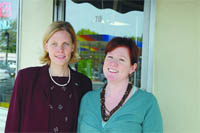
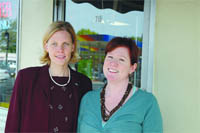
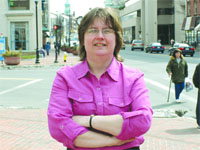
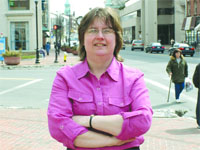
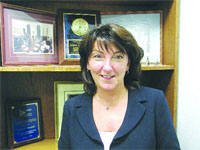
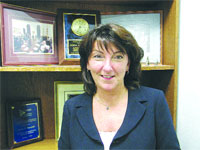
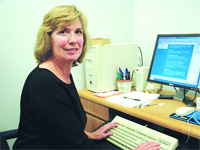
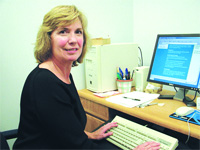
Sally Fuller and Bill Ward

Sally Fuller and Bill Ward hope the Nov. 19 conference will energize business owners and managers, and drive home the connection between education and workforce development.

While there is some general understanding within the business community of a recognized link between education, especially early-childhood education, and workforce development, many are still missing that message. A Nov. 19 conference will attempt to drive that point home and, in the process, mobilize area business owners and managers for what will be an ongoing fight to ensure that companies have qualified workers for the short and long term.

Bill Ward calls it “an economic imperative.” That’s how he chose to describe this region’s need to focus on workforce development for the long term and, even more specifically, to drive home the connection between education, at all levels, and economic development.

Some business owners and managers understand this relationship, said Ward, director of the Regional Employment Board of Hampden County, but too many do not. Changing that equation is the unofficial mission of a group of area business and civic leaders who will punctuate their efforts with a conference titled ‘Building a Better Workforce: Investments in Education and Early Development.’

It will feature, among other speakers, Dr. James Heckman, the Nobel laureate in Economics from the University of Chicago, who will present the economic case for investing in young children.

In an op-ed piece that appeared last year in the Wall Street Journal, Heckman said there are many reasons why investing in disadvantaged young children has a high economic return. “Early interventions for disadvantaged children promote schooling, raise the quality of the workforce, enhance the productivity of schools, and reduce crime, teenage pregnancy, and welfare dependency,” he wrote. “They raise earnings and promote social attachment. Focusing solely on earnings gains, returns to dollars invested are as high as 15% to 17%.”

Sally Fuller hopes these and other numbers resonate with conference attendees. Fuller is project director of the Cherish Every Child Initiative launched by the Irene E. and George A. Davis Foundation. Cherish Every Child has a number of focus points, she said, but has made universal early-childhood education one of the biggest planks in its platform.

Fuller and others involved with planning the Nov. 19 conference hope to energize those in attendance for what will be a lengthy and challenging battle to improve education at all levels and, eventually, build a bigger, stronger workforce for the region.

“I have a Chinese menu full of options for business people who want to get involved,” said Fuller, using the word interventions for the first of many times to describe what individuals and companies can do. Menu items include everything from tutoring programs to mentoring junior high school students; from initiating literacy programs to lobbying state legislators to fund universal early education.

Some businesses are already doing such things, and some view it as a “good thing they can do,” said Fuller, adding quickly that such thought patterns need to be altered, because such interventions go well beyond good deeds — they are part of a larger economic-development strategy.

“The research clearly shows that if we can intervene with children at a very early age, that will have a significant economic impact,” she said. “Granted, it’s way down the road, but it’s there, and it’s real.”

Carol Baribeau agreed. As regional director of Public Affairs for Verizon, she’s been involved in a number of programs to promote literacy and early childhood education — and she’s heard Heckman’s message about reaching children at an early age.

“I’ve seen a huge amount of research and science that’s telling us we need to begin the quality education at the youngest, youngest levels,” she said. “We need everyone — educators, families, policy makers — to understand that education is truly a life-long process, and it has to begin at the earliest ages.”

In this issue, BusinessWest turns a spotlight on the workforce-development conference, the motivation behind it, and most importantly, what organizers say needs to happen when it’s over.

Schools of Thought

They’re called “dropout factories.”

That’s the term used by the authors of a nationwide study on graduation rates to classify high schools where no more than 60% of a freshman class will graduate from that institution. Springfield has four of these factories — Central, Commerce, Putnam, and the High School of Science and Technology — while Holyoke has two, and Greenfield and Ware also find their high schools on the list.

These dropout numbers comprise just part of the qualitative and quantitative evidence that points to a mounting problem in the Pioneer Valley, said Ward, one that will have serious consequences for the economy if it is not addressed, and soon.

“These dynamics, on some scale or another, exist in all urban areas,” he noted, referring to dropout rates, poverty, crime, homelessness, and others that can be traced back to disadvantaged youths. “But once the problem reaches a certain scale or proportion — with more and more children dropping out of school and more people going into poverty — it begins to have a more significant impact on the economy.”

And this is the point that Springfield and Holyoke have reached, he told BusinessWest, adding that there are other demographic trends that will impact the future workforce.

Indeed, as he talked about the region, its workforce, and the future, Ward said population growth in the region has been flat, and that it is unrealistic to expect large numbers of people to move into the area down the road. Thus, the Valley’s workforce will be mostly homegrown, which is not an appealing situation when there are eight dropout factories in the 413 area code.

“There are changes in how work is being done … it’s more complex and requiring more and more skills,” said Ward, who said he hears from business owners on an almost daily basis about how difficult it is to find qualified help.

Couple that with the fact that our population is flat, and one can see that we face a real problem.

“These dynamics are forcing us to take a look at finding ways to do better with the people that we have, to grow our own,” he continued. “There’s now an economic imperative, not just a social imperative, to find new and better ways to link economic development and education.”

Many in the business community tend to think that the job of preparing people for the workforce is to be handled by the school systems, he told BusinessWest, “but we can’t afford to think that way anymore; we need to see business people come to the table with an open mind, and use their leadership and problem-solving skills to work on some of these very tough issues.”

Changing the outlook for the Pioneer Valley, workforce development-wise, will require a broad focus on education at all levels, said Ward, noting that the business community must play a major role in this effort.

Some businesses are already involved, primarily out of a strong need for qualified workers for the short and long term, but also out of recognition that this is a regional issue impacting all businesses.

“We take the philosophy that the only way out of poverty is to have a job, and the only way to have a job is to have an education and speak English,” said Bob Schwarz, executive vice president of Communica-tions for Peter Pan Bus Lines, a company that has invested significant time, energy, and resources on literacy programs like the REB’s Literacy Works campaign, and adult basic education, or ABE.

In fact, the company will create a learning center in an intermodal transportation center it is building in conjunction with the Pioneer Valley Transit Authority in downtown Holyoke. Construction is set to begin soon, with ABE classes due to begin at the center next September.

Like others we spoke with, Schwarz said organizers of the workforce development conference face a stern challenge in enlightening the business community about the link between education and workforce development, and then mobilizing it for the work that will have to be done in the years ahead.

“One of the biggest challenges we faced with Literacy Works was to persuade the community at large that there was a literacy problem that we faced, and that there is a connection between employment and one’s ability to speak and read English,” he said. “A lot of human resources directors knew how important it was, but not many small business owners — and even our legislators had to be educated about the importance of ABE to workforce development.”

Driving Forces

This broad message is what will be driven home at the Nov. 19 conference, he said, adding that he hopes and expects that what will result is the necessary commitment to what will be an ongoing campaign.

“We need to get people committed to putting their shoulder behind this,” he explained. “This isn’t something you can start and then walk away from … this is a long-term commitment.”

To get this commitment, conference organizers are leaning heavily on Heckman. The Davis Foundation has been working to bring him to the Pioneer Valley for about two years now, said Fuller, adding that she expects his remarks to be well worth the time and expense.

Heckman’s basic message is that investing in disadvantaged youths is good for the economy, and that such investments yield far better results than adolescent and young-adult remediation programs when it comes to lifting people out of poverty.

“It is a rare public policy initiative that promotes fairness and social justice and, at the same time, promotes productivity in the economy and in society at large,” he wrote in the Journal. “Investing in disadvantaged young children is such a policy.”

There will be several other speakers at the conference, said Fuller, including Paul Harrington from the Northeastern University Center for Labor Studies, who will address the status of the region’s workforce, and Dana Mohler-Faria, Gov. Deval Patrick’s education advisor, who will provide insight into the governor’s “Cradle to Careers” initiative and its planned impact on the development of the state’s workforce.

And while the morning-long event is expected to inform attendees, its primary focus is to inspire, said Fuller, who told BusinessWest that involvement from business owners is needed for a number of initiatives — from lobbying for early-childhood education to helping current and future preschool teachers earn college degrees .

Combined, these efforts can work effectively to close what she called the “achievement gap” among children in the region.

“We know how much we’re spending on special-education diagnoses in Springfield, we know how many kids will be involved in the criminal justice system, and we know how many children are going to drop out of high school,” she said. “But we now also know, thanks to research, that we can level the playing field for children, especially disadvantaged children.

“In Holyoke, 47% of the children in the public school system have not experienced early-childhood education,” she continued. “It is very, very difficult to get those kids to the point where they can read at grade level in the third grade. We have an opportunity to close that gap.”

Part of the challenge facing those who have developed the conference and are stressing the link between education and economic development is to convince business owners to invest in something that probably won’t bear fruit for a decade and a half, said Ward, who admitted that this is no small hurdle.

“The mindset in corporate America today has been accused of being too short-sighted … they’re focused on short-term gains, how their stock is doing, and how they’re looking for the next quarter,” he said. “If you say ‘early-childhood education’ to them, they do the math and say, ‘I won’t see any impact out of this for 14 years … I may not even be here in 14 years.’

“This is the kind of knee-jerk reaction that we have to change,” he continued. “Because there are some direct benefits that can be seen. When you reach out to young children today, you’re also reaching out to their parents, many of whom see their children reading and want to be able to read with them.”

Baribeau concurred, and noted that those preaching the importance of education to the future workforce have to be diligent about spreading awareness and gain the commitment needed to turn the tide.

“Everybody, not just the major employers we have in this region, but everybody needs to make this a priority if Massachusetts and the Springfield area are to be successful,” she said.

Class Dismissed

Fuller told BusinessWest that when she talks with business owners and managers about the many ways they can intervene with the education of people of all ages, but especially children, their eyes tend to glaze over, in large part because they don’t see or fully understand the connection between such steps and regional economic development.

“They still tend to look at these as good things they can do, being good corporate citizens,” she explained. “They need to understand that it’s much more than that — we’re talking about the future workforce here. It’s not just doing good.”

Indeed, as Ward said, it’s an economic imperative.

George O’Brien can be reached at[email protected]
Features
As Confusion Mounts, Cautious Optimism Surrounds Health Insurance Reform
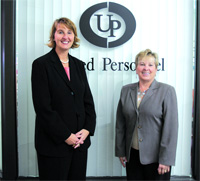
Christine Phillips and Carole Parlengas

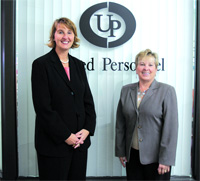
Christine Phillips (left) and Carole Parlengas of United Personnel say health insurance reform could have some rocky times ahead, but they view the changes as necessary and important.

‘One calendar month is the calendar month, commencing with the first calendar month following the first day of employment, unless the first day of employment is the first day of a calendar month, in which case the calendar month commences with the first day of employment.’

That’s how one sentence, regarding employee start dates and how they affect a company’s calculation of full-time equivalent (FTE) employees, reads on the Mass. Office of Labor and Workforce Development Web site.

Carole Parlengas, vice president and CFO, and Christine Phillips, executive vice president with United Personnel, a staffing agency based in Springfield, said it’s also a good example of the verbiage surrounding the Commonwealth’s health insurance reform legislation that has their heads spinning.

“If just one sentence is overwhelming, think of all the other things we haven’t even seen yet,” said Parlengas, to which Phillips added that, while in many respects United Personnel has stayed ahead of the game in terms of implementing new requirements, there’s still an anxiety level surrounding what needs to be done, and how.

“From the beginning, we’ve said that we will work with whatever the state gives us in order to stay legally compliant and in step with the legislation,” said Phillips, “but we’re still nervous, because we’re not always sure what the state is doing. And from what I’m hearing, we’re actually ahead of some other companies who’ve gotten lost in the quagmire and are waiting for more direction.”

United Personnel represents the business sector that could be experiencing the most problems with the Commonwealth’s implementation of health insurance reform, signed into law by former Gov. Mitt Romney in April 2006. It requires all Massachusetts residents to have health insurance — the deadline was this past July — and through mandates and new filing requirements, places this responsibility not only on individuals, but state agencies, health plans, and employers as well.

Devil in the Details

While the plan has received little public criticism of late on administrative or legislative levels, employers are beginning to feel the weight of the new paperwork required by the law.

Staffing agencies are particularly stymied, trying to understand how to efficiently file new forms when employees are temps, often starting a new position multiple times throughout the year. This makes it difficult to pinpoint how many FTEs an agency actually has, not to mention those employees are scattered throughout various businesses, not contained in one office.

“I don’t think the administration ever thought about transient employees,” said Parlengas, who, over the course of the last month, has attended several meetings with legislators, health insurance companies, and other staffing agencies across the state as they scramble to find their place in the puzzle. “They thought of seasonal and part-timers, but not the temps.”

This concern has moved closer to the forefront in recent weeks due to the arrival of the first round of new annual filings for employers that are part of the legislation.

Employers were notified the week of Sept. 24 that beginning on the first of October, they would receive their first Fair Share Contribution report (FSC), which can be completed online and details whether or not an employer with 11 or more FTE employees has made a ‘fair and reasonable contribution’ to their employees’ health insurance, and if not, to what extent a per-employee Fair Share Contribution (of up to $295 per employee annually) must be paid.

Employers have also received a second form, the Employer Health Insurance Responsibility Disclosure report (HIRD), which confirms whether or not an employee has been offered a Section 125 plan, a pre-tax payment system for health coverage and the minimum requirement for employers. Forms must be signed by each employee regardless of their decision to accept or decline the plan, and must be kept on file for three years.

Further, they must be filed with the state by Nov. 15, and that quick turn-around has many people reeling. Staffing agencies have arguably felt the pressure first, but Phillips said she wonders if similar worries will surface in other industries, such as health care, which employs a large number of per diem employees, and in restaurants, in which servers rarely work ‘normal’ hours.

“The data is the scariest thing; it’s going to be a few rocky years for some companies,” she said. “It’s the biggest piece of this right now — record-keeping, and producing the data the state needs.”

In some ways, the problems brought on by the new filing requirements start at a very basic level, Phillips noted. For one, the computer systems currently used at United Personnel have no way of ‘answering’ the questions posed by the state: questions such as ‘what is the percentage of the premium cost for individual coverage your business offered to contribute for all full-time employees?’

“We need certain tools in order to report the data correctly that we don’t have; our databases weren’t built to deal with such sophisticated queries,” she said, adding that for now, the process has become a very human one — and therefore very time- and resource-consuming. “It’s daunting that record-keeping has become so important … especially when we don’t even understand what constitutes a calendar month.

“I think that when this was being planned out, the administration was thinking in terms of standard jobs, and standard hours,” she continued. “When I think of people in restaurant and hospitality jobs, or the medical field, I think they must have some of the same challenges as we do. I don’t think the administration thought long on logistics.”

Painting with a Broad Brush

Still, some with a bird’s-eye view of the reform say that while some roadblocks are bound to crop up, the plan has moved ahead as smoothly as they could have hoped.

Mike Widmer, president of the Mass. Taxpayers Assoc. (MTA), spoke with BusinessWest a year before the health coverage deadline, and at that time cautioned employers against leaping to any conclusions when the legislation’s reporting components began to fall into place.

“The classic, Massachusetts response at the first sign of trouble is ‘man the torpedoes,’” he said in May 2006. “We have to keep working, to progress into new territory.”

Today, his sentiments have not changed much.

“Massachusetts gets very high marks for how well the implementation has gone, and I include the Connector in that,” said Widmer, referring to the Commonwealth Health Insurance Connector Authority, an independent public authority created to implement significant portions of the health care reform legislation, including assisting qualified Massachusetts adult residents with the purchase of affordable health care coverage.

“The administration in general deserves high marks for implementing health care reform. It could have been a problem with a Democratic governor taking over after a Republican governor, but they’ve been sensitive to this and have not tried to reinvent solutions to the issues.

“It took a broad and unusual coalition to pull this off, and a group of constituencies sought to achieve compromises that have held together,” Widmer continued. “We’ve enrolled 200,000 people to date, and moreover, the Connector Authority votes on tough issues, like affordability. Those votes have been largely unanimous, and that reflects the compromise and proves that the board is not going to the mat on every issue.”

Widmer said he, too, has some looming concerns despite his confidence in the system, including the possibility of losing key federal funds.

“We are negotiating with the federal government to maintain funding in 2008 that is critical,” he said. “Once the reform was in place, they approved it, and we didn’t lose the money, but now, we must re-evaluate, and that’s going to determine how much funding we’ll get.”

The Finer Points

Jeff Ciuffreda, vice president of Government Affairs with the Affiliated Chambers of Commerce of Greater Springfield, agreed that while much remains to be seen, the current climate in the region seems to be one of acceptance of the law, and of respect for its objective. But like Widmer, he also guards his optimism.

“The roll-out of the products is being seen as fairly good,” he said, “and overall, we haven’t heard a lot of negative feedback. I do hope, though, that there aren’t too many people adopting a ‘let’s-wait-and-see’ attitude.”

Ciuffreda said he fears some employers may be unclear on some of the details of the legislation, in particular the role of the Fair Share Contribution, and that this could create a backlash later in the year as tax time approaches.

“I hope this lack of feedback isn’t a sign that employers are not understanding some of the fine complexities of the law,” he said. “When they file their taxes, they could face the first phase of penalty, and we could hear more complaints.

“The biggest misconception is that the Fair Share Contribution of $295 is a good deal, but that’s just the first part,” he added. “It could get exceedingly worse for those employers.”

That’s because if employees at a given company (of 11 employees or more) accrue more than $50,000 in health care costs drawn from the free care pool the legislation is aimed at eliminating, the employer is responsible for at least a portion of the bill, and possibly the whole amount.

“If the legislation hasn’t gotten people’s attention, those penalties will,” said Ciuffreda. “They’re not meant to fine; they’re meant to make health care ultimately more accessible for everyone, and by the end of this year, we’ll have a clearer picture as far as how that is progressing.”

Agents for Change

Despite the challenges they’re currently facing, Phillips and Parlengas also agreed that with any new legislation, especially one with such broad implications, there are bound to be some stumbling blocks.

Overall, though, they’re optimistic that the Commonwealth’s health insurance reform will achieve its goal — to make health care universally accessible to Massachusetts residents.

“We’re patient, and we’re positive,” said Phillips. “We have a commitment to making sure we’re compliant and we take doing business in this state very seriously.”

“Something needed to be done,” added Parlengas. “Even though it’s confusing now, and the employer bears the brunt — it’s important.”

Jaclyn Stevenson can be reached at[email protected]

Features
But Former Westfield Mayor Rick Sullivan Is Enjoying His State Cabinet Post
Rick Sullivan

Former Westfield Mayor Rick Sullivan, now Commissioner of Recreation and Conservation for the Commonwealth, says the governor has made open space preservation a top priority.

Rick Sullivan, former mayor of Westfield and Massachusetts’ current Commissioner of Conserva-tion and Recreation, recently took the leap from the relatively small pond of Western Mass. to a sea of possibilities, as he sees it, in Boston.

True, he’s had to make plenty of adjustments — when an issue in his jurisdiction arises, he’s often consulting a map instead of taking a quick spin to a familiar street, and his daily commute from Western Mass. to the Hub can be daunting.

But Sullivan said living in one region and working in another also affords him the perspective he needs to serve many diverse communities, and that his past service in municipal leadership doesn’t seem so far away — in fact, he says he’s using the skills he learned during his six terms as mayor every day.

“Being a mayor was great training,” he said. “This job is bigger, and it impacts many more people, but the issues are the same. Knowing the mayors across the state has already been helpful, because we’ve talked about their communities before. I’ve also gotten the message from elected officials that they want DCR to work, so the reception has been great, and I don’t feel like a little fish.”

Nor should he. The name ‘Mass. Department of Conservation and Recreation’ doesn’t reveal the full breadth of services it provides. Formed in 2004 under the Romney administration, DCR blends the functions of the former Metropolitan District Commission with the former Department of Environmental Management.

But the model is more complex than that; four divisions — Urban Parks and Recreation, Water Supply Protection, Planning and Engineering, and State Parks and Recreation — operate under the DCR, employing 1,100 full-time staff and an additional 1,700 in seasonal staff (lifeguards, park rangers, and the like) in the summer months.

The agency oversees 450,000 acres of property across the Commonwealth, including 250 parks, forests, greenways, reservoirs, watersheds, and beaches, ranging from Mount Greylock in North Adams to Boston’s Esplanade, home of the Hatch Shell (the DCR Hatch Memorial Shell, to be exact) outdoor performance venue.

The department oversees programming, facilities management, and maintenance of all of these locations, and Sullivan said there’s a particular focus now on making the parks cleaner, safer, and more accessible for the Commonwealth as a whole.

This includes the monitoring and maintenance of 275 bridges and tunnels, including Boston’s Longfellow Bridge and the Storrow Drive tunnel. Thirty-one of these are major artery structures.

Sullivan, who took office in June, said he recognized the Patrick administration’s commitment to open-space preservation in Massachusetts early on, and after a few conversations, he was approached to consider the commissioner’s post. He said he suspected his history of civic leadership in Western Mass. played a part in the decision.

“There has been a real push by our government to make the executive team as inclusive as possible at all levels,” he said, “and to reach out to the various geographic regions of the state.

“I think part of what the governor recognized in me is the Western Mass. perspective,” he continued. “I can see the needs of Boston and the beltway, and they’re real. But everyone has projects, and they’re just as important as everyone else’s.”

His management style is a democratic one, and in the coming months Sullivan said he hopes to strengthen the department’s chain of command, thus increasing efficiency.

“It’s probably a mayor thing,” he said. “I’d like to see more people at the ground level keeping things neater, and less upper-management involved at that level. I believe that if you have professionals who are hired to do a job, we should of course make sure they’re doing it, but then let them do it. I’m pretty comfortable with that, and I think we’re going to be in good shape.”

And Sullivan added that, after many years of community planning, he has seen the importance of quality of life to Massachusetts residents.

“As a mayor I understood, as all mayors do, that at the end of the day, it’s a clear understanding of what the public wants — quality of life — that’s important,” he said. “It’s why people choose to live in the communities in which they live.”

Hook, Line, and Sinker

That’s not to say Sullivan doesn’t face his share of challenges in his new venture, though. Already, he’s seen the vast difference between serving a city and serving a state, even if it’s just through one sector of the government.

“You find out fast how big Massachusetts is,” he said. “It’s not a large state, but you have to stop and look at the huge number of facilities we operate, and how important each one is to its community. Every park offers a different experience, and that’s impressive.”

He recalls one of his first site visits — to Constitution Beach — as one of those moments of clarity.

“It’s one of first beaches in the urban ring, right at the end of a runway at Logan Airport,” he began. “You could literally throw a baseball, and it’ll almost hit the runway, and to watch the planes taxi around from the beach is a very different experience from Scusset Beach on the Cape, which is a quiet, ocean beach … and also different from a climb to the top of Skinner Mountain, where you can see the whole Valley.”

But Sullivan returns quickly to the positives of the job, and to the renewed commitment to conservation he sees in the Patrick administration.

“I think two big things that struck me when I came in, besides how big and diverse the state is, was the real dedication of staff, from those in the field to senior management,” he said. “They don’t think of work as a job, they think of it as a passion, and most people came to DCR because they truly believe in recreation and conservation. The commitment is huge.

“The other thing I’ve seen is the commitment from the governor and the legislature,” he added. “They truly believe in the mission of DCR, too, and also understand that it’s an organization that has been significantly underfunded for 18 years. We’ve taken some gigantic hits, and if we’re going to do a better job, we need more dollars — and that has started to happen.”

From the Mountains to the Oceans

Following a report on the state’s urban beaches, for instance, the Legislature approved funding for maintenance and upgrades that could be used at all beaches, including freshwater lakes and ponds and those in the state park system.

A ‘Parks Caucus’ has also been formed in the Legislature, dedicated to discussing issues that fall under DCR’s jurisdiction.

“If there’s a special issue that runs through several districts, many members will get together,” Sullivan explained. “There are more than 80 members involved now, and given that there are only 200 total, that’s huge — and it’s growing.”

He said that when he first addressed the caucus, 50 members were in attendance, and later, one member joked that to get that many legislators to come to any meeting is a small victory unto itself.

“It shows a commitment, and I’m extremely pleased,” he said.

The reason why could have much to do with DCR’s long reach and wide range of responsibilities. All communities have their issues, said Sullivan, and they range from keeping the public pool open and staffed to major infrastructure projects, such as the multi-million-dollar roadway construction and Summit House renovation now taking place on Mount Greylock, slated for completion at the close of next summer.

“Some projects are simple, but they’re all important to someone,” said Sullivan. “Holyoke would love to see its visitors center at Heritage State Park fully staffed, and Fall River wants the same thing.”

And it’s here, he said, that the support he’s seen from the Legislature and the governor’s office will be put to the test. With such a wide array of projects on tap and plenty of voices promoting each, Sullivan said a continued influx of funding is more important to DCR than ever.

“This is where the rubber meets the road,” he said. “There’s always ways to make a system work better through organization, but at the end of the day, we have to make investments in infrastructure.”

Building Bridges

Beyond funding concerns, there have been a few hot-button issues Sullivan has had to address; for one, while the core mission of the DCR is improvement of the state’s many parks, work involving bridges, dams, and tunnels has moved to the forefront recently as well. This is due in part to the issues Boston has already seen — the Storrow Drive tunnel collapse in 2006 probably the most notable — and increased awareness of such infrastructure concerns across the country in the wake of the Minnesota interstate bridge collapse, the levee breaks caused by Hurricane Katrina in New Orleans, and increased anti-terrorism efforts.

“Breach of dams has risen in importance in terms of emergency management planning, as have safety inspections in places like the Quabbin reservoir, as well as other lakes and ponds,” said Sullivan. “And the Longfellow Bridge is 100 years old and need of a major overhaul.

“The hottest issue right now is probably the Storrow Drive tunnel,” he continued. “That’s a process we’re working through now, and no one disagrees that significant work needs to be done.”

Still, it’s a somewhat controversial topic, he said, as the tunnel runs along the Esplanade, which Sullivan described as “a very significant park in the DCR family.”

“In any construction job, there will be impacts,” he said, “So my goal has been to have an open public discussion in order to decide which impacts we can live with and which we can’t. The bottom line is we need that tunnel to be as safe as possible for motorists.”

Pooling Resources

Moving forward, Sullivan said there are a number of additional issues that are high on the governor’s to-do list, including new rail trail projects, improvements to the state parks system, and new programs in the area of land protection and conservation –– both of agricultural and forest land. He’s particularly excited about the latter, given that the bulk of the Commonwealth’s open forests are in the western part of the state.

“We’re going to identify 10 significant forest areas soon through the Forest Legacy Project, and many are in the west,” he said. “There’s going to be a lot happening to protect that rural character.”

In summation, Sullivan said he feels like he’s joined the administration at what could prove be one of its most dynamic periods. He has a clear set of priorities before him, and the systems in place to get down to business.

“The governor has made the direction really clear, and there are opportunities to improve and expand any number of things,” he said. “It’s an exciting time.”

And while the laps he must complete between Boston and Westfield are long each week, he assures us the water’s just fine.

Jaclyn Stevenson can be reached at[email protected]

Features

SPRINGFIELD – Three distinguished individuals have been selected to receive the William Pynchon Medal and induction into the Order of William Pynchon. The honor is bestowed annually by the Advertising Club of Western Mass. to individuals from the region who have demonstrated exceptional community service with compassion, humility and grace.

The 2007 honorees are Carol A. Leary, president of Bay Path College, Allen G. Zippin, of the Springfield School Department, and Dan Roulier, president of Dan Roulier & Associates.

The William Pynchon Award was established in 1915. It honors individuals from all walks of life who go beyond the call of duty to make life better for the Western Mass. community. The awards dinner and ceremony for the 93rd annual William Pynchon Awards will be held on Nov. 29, from 6 to 9:30 p.m. at Chez Joseph in Agawam. Tickets and more information are available at www.adclubwm.org, or by calling the Club Administrator at 736-2582.

•••••

President of Bay Path since 1994, Leary has been a staunch advocate of young women throughout Western Mass. She is described by friends and colleagues as “tireless, optimistic and humble.” Leary helped organize the first health and fitness expo for women at the Naismith Memorial Basketball Hall of Fame, in conjunction with the Pioneer Valley Women’s Running Club and Baystate Health.

She has also mentored young women from the Go FIT Inc. clinics and actively participates in the running and physical activity programs. As one of the directors noted “she thinks nothing of showing up at a Go FIT clinic in her business attire, putting on her running shoes and heading out for a run with students in the program.”

Leary was an early supporter of the Women’s Fund of Western MA, helping raise millions of dollars for the organization. She has served as president of the board of trustees at local public television station WGBY, and has served on the board of the Western Mass. Economic Development Council.

She was awarded the Pioneer Valley Woman of Distinction Award from the YWCA, the Woman of the Year Award from the Women’s Partnership of the Affiliated Chambers of Commerce of Greater Springfield, the 2005 Heart of Gold Award from the American Heart Assoc. of Greater Pioneer Valley, and the 2006 Women’s History Award from the U.S. Postal Service.

•••••

Zippin is well known in Western Mass. for his considerable contributions to education. An advocate for children and children’s education for more than 45 years, Zippin had a long career as director of Education at the Children’s Study Home. Today, he holds a position in the Pupil Services Department with the Springfield School Department, where he works to ensure that children of the city receive the proper educational services they need.

At the same time that he started his career, Zippin became involved with the Shriners Organization, and at the age of 21, he became a Shriner in Springfield. His legacy to the entire organization and the Shriners Hospital for Children are celebrated. In 1983 he served as potentate with the Shriners.

He currently serves on the board of governors at the Shriners Hospital for Children in Springfield, and was responsible for overseeing the construction of the Shriners Hospital facility that exists today. Zippin holds the title of a 33rd degree mason, one of the highest Freemason honors that can be attained, and he currently serves as the Circus Chairman with the Shriners Organization, a position that he has held for more than 20 years.

Additionally, Zippin serves as the director of public relations and special events for the Eastfield Mall, another community effort where he is distinguished by his talent in communications and his humor. He is a former member and secretary of the board of directors of the Greater Springfield Convention and Visitors Bureau, a former member of the doard of directors of the Youth Development Program under the auspices of the Juvenile Court system, and served on the Education Committee at Temple Beth El.

•••••

Roulier, a local builder, has been a quiet force in helping those less fortunate in our community. His involvement touches more than 20 local organizations. Since 2003, Roulier has brought summer camp to children at the Dunbar Community Center and Chestnut Street School in Springfield by donating the use of his property, Worthington Farms, in Somers, Conn. This provides the children a chance to experience nature, animal life and the benefits of being in a country environment that would not otherwise be afforded to them.

At the Massachusetts Career Development Institute (MCDI), Roulier helped to create an urban garden out of a 2.5-acre abandoned, illegal dumping ground. He single handedly recruited volunteers — friends, business associates, anyone who could handle a shovel — to get the project going and completed. His selfless work transformed the space into a haven for honeybees, hummingbirds and other wildlife.

Roulier’s good works include building a much needed storage facility for the YWCA Battered Women’s Shelter, raising cattle on his own farm for the sole purpose of giving the beef to soup kitchens, and funding programs for Jewish groups to come to the Holocaust museum. He is an inspiring presence at MCDI, working with children to plant gardens. And when the opportunity came to acquire bikes for the summer camp, Roulier enlisted a tractor-trailer from the New England Tractor Training School to the transport the bikes and the services of prisoners from the Ludlow jail to clean them up.

Features
Max’s Golf Tournament Shows the Power of Philanthropy
Ann Marie Harding; Ron Sadowski; Jennifer Baril; Edward Reiter

Gathered on the play deck at BCH are, from left, A.M.Harding, Evnts. Dir. for Max’s Tavern; R.Sadowski, V.P of Williams Distributing; J.Baril, major gifts officer for the Baystate Health Foundation; & E.Reiter, Chm.of the Dept. of Pediatrics.

They call it a “shotgun start.”

That’s the name given to the process used to get as many as 120 people around a golf course in a timely fashion for a charity tournament or even a regular Saturday morning’s play at the local municipal course. The idea is to send everyone off at the same time, using all or most of the 18 holes, enabling them to finish at the same time.

The name is derived from the fact that in the old days, the individual starting the tournament would sometimes actually fire off a shotgun to signal the start of play. Those crackles have long since been replaced by horns.

But for the start of the first Max Classic tournament in 2004, organizers, looking to evoke some nostalgia or to just get the ambitious event off with a bang — literally — fired a Revolutionary War-era cannon to get things going. The blast cracked a mirror in the lobby at Crestview Country Club in Agawam.

Seven years of bad luck? Hardly.

It’s been four years of incredibly good fortune for Baystate Children’s Hospital — which has been the beneficiary of the tournament since the start — with the promise of many more to come. Indeed, the event, so-named because Max’s Tavern is the lead presenting sponsor, is fast becoming one of the most popular tournaments on the region’s crammed slate, and the benefiting organization is one that touches, in one way or another, virtually everyone who puts a tee in the ground or places their name on a tee sign. So the future looks bright.

The past and present aren’t bad, either. In four short years, the Classic has raised more than $500,000 for the Children’s Hospital. Those who organize or play in charity tournaments might think that’s a misprint; it’s not. But perhaps more important than the number behind the dollar sign is the direction in which the money goes — toward specific equipment purchases identified as priorities by hospital administrators.

In the first year, proceeds went toward purchase of omnibeds, or high-tech incubators, for the hospital’s Neonatal Intensive Care Unit — with the accent on the plural. Organizers thought they’d raise enough for one, but obviously did much better than expected. In years two and three, a total of more than $250,000 was channeled toward asthma programs at the hospital, and this year’s event raised more than $160,000 for a digital pediatric echocardiogram.

That’s roughly half the actual sticker price, said Dr. Edward Reiter, chairman of Pediatrics at Baystate Children’s Hospital, who told BusinessWest that the donation probably expedited the process of moving the echocardiogram up the list of capital purchases within the Baystate Health system. Overall, he said the golf tournament and other special events staged on behalf of the hospital have helped the facility stay on bthe cutting edge of technology and programs at a time of still-inadequate reimbursements for care and fierce competition for capital dollars.

“The challenge of the capital budget process for any children’s hospital is a dramatic one,” said Reiter. “That’s because the amount of revenue that comes in from insurance payers for clinical care doesn’t enable you to purchase all the things you need for a modern setting.

“That’s why the gifts from generous individuals and the proceeds from events like the golf tournament are so important,” he said. “New technology is very expensive, but it’s also very necessary if we’re going to provide the best care.”

In this issue, BusinessWest looks at what has become a perfect match between a company, Max’s, with a deep commitment to philanthropy, and a beneficiary that has important items on its wish list.

Round Numbers

It took some doing, but organizers of the 2007 Max Classic managed to get one of the manufacturers of the desired digital echocardiogram to bring one of the machines to the Ranch Golf Club in Southwick, one of two venues used for the tournament, so participants could see where their largesse was going.

The sales representative brought his son along to act as a ‘patient’ for demonstrations, said Jennifer Baril, major gifts officer for the Baystate Health Foundation. “We wanted to make a strong connection between the golf and the beneficiary,” she explained, adding that this has been accomplished in several ways, right down to ‘Children’s Hospital’ logos placed on the golf balls and bottles of water given to each of the players before the start of the tournament. “By making that connection, people can better relate to the hospital and see why their help is needed.”

As she talked about fund-raising efforts for the Baystate system and specifically the Children’s Hospital, Baril said there are several special events during the year involving the Children’s Miracle Network, the fund-raising platform for pediatric care — including an annual radiothon and telethon — that raise money for programs across the system. This includes two other hospitals — Baystate Mary Lane in Ware and Baystate Franklin Medical Center in Greenfield. The system also solicits major gifts from area residents and business owners that are often put toward specific purposes and programs.

The Max Classic is a type of hybrid, she explained, adding that it is a special, annual event, but one with a specific beneficiary — the Children’s Hospital in Springfield — and often very specific equipment purchases. It is quite unique, because it’s organized by a private entity, Max’s, and not the benefiting institution or non-profit group.

It all started with the philanthropic tendencies of Rich Rosenthal, founder and owner of a series of Max’s restaurants: the Tavern, within the Basketball Hall of Fame complex in Springfield, and five others in the Greater Hartford area.
When he started doing business in Connecticut, Rosenthal soon sought out a major beneficiary for fund-raising activities involving his restaurants, said AnnMarie Harding, events coordinator for Max’s Tavern, and found one in the Arthritis Foundation. His restaurant group has also staged events to benefit the Connecticut Children’s Medical Center and myriad other groups, she said.

Rosenthal’s arrival in Springfield coincided with efforts among supporters of the Children’s Hospital to find new funding sources, she continued, adding that the hospital seemed like a perfect fit for Rosenthal’s efforts to find high-impact ways to benefit the Greater Springfield community.

Fund-raising efforts for that facility started with grand-opening festivities for the restaurant in the summer of 2003 — continuing a tradition involving each of the Connecticut eateries — and have been followed up with several special events, including two galas staged at the restaurant and the golf tournament, which has quickly become one of the largest and most popular in the region.

Ron Sadowski, vice president of Williams Distributing in Chicopee, a family-owned business started by his father, Bill, said that despite a saturated schedule of charity golf tournaments, he and others recruited to organize the Max Classic knew there was room for one more, especially if it was unique and had a beneficiary with which area individuals and especially business owners could relate. He’s been proven right.

The Sadowsky family, which has been very philanthropic in its own right over the past several decades, has a strong connection to the Baystate System and especially the Children’s Hospital, said Ron Sadowsky, noting that his wife, Brenna, has been involved in several fund-raising initiatives for the facility and the group Friends of Children’s Hospital.

Couple that interest with Ron Sadowsky’s major contributions over the years — in both time and money — to golf tournaments for the American Heart Assoc. and the Jimmy Fund, and it’s easy to see why the Max’s tournament has become a Sadowsky family affair, with Ron’s brother Jim and his wife Barbara also becoming major sponsors.

And to honor Bill Sadowsky and the philanthropic traditions he established for his family, the 2007 Max’s Classic was played in his memory.

Fair Way to Succeed

The first Max Classic raised just over $100,000 for the Children’s Hospital, said Harding, and has grown in size — in terms of golfers and the number printed on the check given to the hospital — each year since, to the point where the amount raised is approaching that garnered from a similar event staged in the Hartford area for the Arthritis Foundation.

This has been accomplished by gaining the support of numerous corporate sponsors, who contribute on a number of levels. For the 2007 tournament, Max’s was joined as a lead, or presenting, sponsor by Cadillac and Winer/Levsky Group. There are several other sponsorship levels, said Sadowsky, adding that the event has added new supporters each year, again because of the uniqueness of the event and the beneficiary.

“The tournament has really captured the attention of the business community,” he said. “People come back every year, and more people want to be a part of it — it’s really amazing.”

The 2007 event was played seven weeks ago, but already planning is underway for next year’s edition. This means work on the part of the tournament committee to continue to find new and intriguing ways to bring value for sponsors and individual golfers, and among those involved with the Children’s Hospital to identify specific needs that could be met by the event.

A new fiscal year will be starting soon, said Reiter, adding that he and others will soon be reviewing lists for capital requests and programming needs to determine how the 2008 Classic can best help the hospital advance its mission.

He said that it is usually easier to capture the attention of hospital administrators — or golf tournament organizers — with requests for the latest high-tech equipment that can be seen, touched, and heard. It’s harder, but no less important, to gain funding for programs that will have long-term benefits for the region.

“What are the things that your children’s hospital should be doing for the community?” he asked, noting that this question should be the basis of the discussion. “We already have a comprehensive obesity program that needs to be increased in size, and a diabetes program, which is exploding in part because of the obesity problem, that needs more staff.

“And for some reason, this region is a hotbed for asthma,” he continued, adding that he expects the golf tournament and other special events to play a key role in expanding and improving programs to combat these problems for years to come.

Rub of the Green

For the second Max Classic, organizers dispensed with the cannon and started things off with strains from a bagpiper.

It was a safer approach — no cracked mirrors — but one no less poignant.

That’s because since the start, this has been a tournament, and a unique partnership, certainly worthy of note.

George O’Brien can be reached at[email protected]
Features
CityStage Celebrates 10 Years of Theater in Downtown Springfield
Tina D’Agostino and Cindy Anzalotti

Tina D’Agostino, left, and Cindy Anzalotti of CityStage are celebrating 10 years of presenting shows at the theater, and gearing up for new challenges ahead.

It’s been 10 years since CityStage entered the Western Mass. landscape, and the theater’s management has coined a new, informal catch phrase: “let them eat cake.”

At every performance this season, that is, as well as at a kickoff celebration this month and an end-of-season gala, all part of a seven-month-long anniversary celebration.

CityStage, a private, non-profit theater company based in downtown Springfield, presents a wide variety of performances ranging from full-blown musical productions to stand-up comedians to community events. It stages those performances at either Springfield’s Symphony Hall, which CityStage manages, or at one of its two theaters on Columbus Street, the 487-seat Blake Theatre and the 70-seat Winifred Arms Theatre.

CityStage was conceived in 1997 during Mayor Michael Albano’s administration; a request for proposals was issued to identify an entertainment venue that could fill both the space and the void left by the departure of StageWest, the company that once housed the theater space at Columbus Center in downtown Springfield, where CityStage now operates.

Submitted under the name Springfield Performing Arts Development Corp. by the Springfield Business Development Corp., the CityStage model was accepted, and a board of directors made up of 18 local business and community leaders was formed to serve as a volunteer overseeing body, which still remains today.

Unlike StageWest, CityStage does not produce any of the shows it presents, but instead books touring shows and performers from across the country. Dozens of national acts have poured into Springfield as a result of its creation in 1997, including Jackson Browne, Bill Cosby, David Copperfield, and George Carlin, to name a few.

That is one reason, in addition to the many hurdles this entertainment group has cleared in the last 10 years, why CityStage management is feeling festive. There are still challenges to be met, but this year’s schedule of performances marks not only a milestone, but a new plateau, from which greater success can be achieved.

The Dark (and Damp) Years

Cynthia Anzalotti, CityStage’s president since 2003, has been with the theater since its inception. She began as its director of Development and box office manager, and later became general manager, leading a trend among CityStage staff, she says, of wearing many hats.

Anzalotti said the early years were filled with promise and possibility, but those qualities were not always evident from the outside — and sometimes, not so evident on the inside, either.

“I came on in October, we opened in December, and it was a nightmare,” she said succinctly before reciting a laundry list of problems that awaited the small arts organization from the start. Among them were rotting food left in refrigerators, and gas and electric bills that had gone unpaid, leaving bad debt.

“We needed to get loans and pay huge cash deposits to get the utilities turned back on,” she said, “and that meant asking for help when people had no idea who we were.”

Not long after that, a sewage pipe broke, filling areas of the theater with more than a foot of waste, and later, a winter freeze caused a water main to burst, flooding the lobby.

Changing demographics in the city and a lack of understanding of what, exactly, CityStage was also posed problems. Anzalotti said many people believed, and still do, that CityStage was a permutation of StageWest, which it isn’t. Conversely, she said the majority of StageWest supporters didn’t return to bolster the new endeavor.

Early on, an outside firm was hired to book shows at the new venue, but the choices weren’t pulling in crowds. The cards noticeably stacked against the theater, Anzalotti made the decision to take matters into her own hands, choosing shows internally.

That first year was a struggle, and by year two, CityStage had a cumulative debt of $531,500. The new line-up of shows was creating a buzz, however, and in its third year, the organization turned its first small profit. It has remained debt-free since its sixth year in business.

Mixing and Matching

This year, the 10th anniversary season includes a wide range of offerings for audiences of all age groups. Beginning in October, CityStage and Symphony Hall will present nine musicals, three comedians, a team of illusionists, a tribute band (Rusty Evans and Ring of Fire, a homage to Johnny Cash) and a holiday performance — Sister’s Christmas Catechism, a spin-off of Sister’s Late Night Catechism, which has appeared to rave reviews in the past.

Other productions are making return trips to Springfield, such as Capitol Steps, a political satire, and some are brand-new, including Shout!, a coming-of-age tale set in the 1960s. The mix is intentional, said Anzalotti.

“We try to do a little bit of everything,” she said, noting that diversity is one of the best ways to combat a wide array of challenges that routinely face theaters, especially those with sizes and markets similar to CityStage.

Anzalotti said a keen understanding of the market she serves is integral to presenting successful shows. She and her staff of seven strive to present acts that reflect the cultural diversity of the region, and that are affordable. The $35 ticket price hasn’t budged in recent years, and is not expected to any time soon.

But understanding which shows, and price points, best serve the community at large also helps the theater overcome another barrier, created by a near-fortress of performance venues in Massachusetts and Connecticut that surround CityStage.

“Boston, the Bushnell (in Hartford), and the casinos all block us out,” she said. “Every show we consider, we have to first see if it’s even coming this way, and if so, where else it might be showing. We don’t want to show the same shows as nearby theaters, and a promoter isn’t going to book a performance here just because it will be in the area, either. It takes time to build a reputation.”

She and members of her staff view performances of nearly every show they book, to judge if the subject matter will attract Pioneer Valley crowds, but also to discern whether it is viable for CityStage’s or Symphony Hall’s infrastructure.

“People say, why don’t you show Wicked? Why not Miss Saigon? And we have to explain that we’re just not built for Broadway shows. A show has to fit the market, but it also has to be feasible for our spaces.”

This has led to some trial and error; Anzalotti was sure The Will Rogers Follies would be a hit, but it didn’t fare as well as she’d hoped. Lord of the Dance with Irish step dancer Michael Flatley, however, was expected to have steady but unremarkable returns, and it was a smash.

A lot comes down to a gut feeling, but one that is strengthened by a few constants Anzalotti has noticed in the marketplace.

“Women are the decision makers,” she offered as an example, “and as such, women’s plays like Shout! are a huge hit.”

But so are others, including classics that are seeing a resurgence thanks to Hollywood adaptations (Chicago and Hairspray are both on this year’s roster) and surprises like the Pink Floyd Experience, which just two years ago sold out and welcomed a crowd ranging in age from 12 to 65.

“We never really know what’s going to be a big success, or what might be a surprise bomb,” she said, noting that the biggest caution she heeds is to avoid choosing shows based on her own record collection.

“It can be hard not to want to pick only the things we like,” she said, “but we have to remain mindful that different people enjoy different things. I’m not an Evita person myself, but audiences generally love the show and we think it will do well here.

“That’s not to say I wouldn’t love to have John Fogerty, though.”

The Supporting Cast

Tina D’Agostino, CityStage’s director of marketing, agreed that adding some bigger names to the company’s playbills would help in moving it further as the next 10 years unfold.

More important, however, is continuously branding CityStage in an effort to keep it in the minds of residents across the region as a viable, invigorating entertainment option.

“We try to get out there to be ‘top of mind,’” said D’Agostino. “Our base is women, but we don’t try to cater to one specific demographic through marketing. We do a lot of outreach with many different groups — we try to be at just about every event we’re invited to.”

That outreach includes connecting with the area’s colleges to promote the theater’s reasonable student ticket prices — $15 per ticket — and community collaborations surrounding specific shows. During a showing of The Vagina Monologues, for instance, performers talked with battered women at the Springfield YWCA, and, similarly, Mark Lundholm, star of the original play Addicted, visited inmates at the Ludlow Correctional Facility during his stay.

And when Fosse, a tribute to the late choreography great was presented, dancers taught a master class at the Artist Dance Studio in East Longmeadow.

“We’re lucky to have these unique collaborations,” said D’Agostino. “There’s always something different happening, and it allows us to offer some very deep experiences that are tied directly to theater.”

A Slice of the Life

That strength, both on and off stage, is increasing CityStage’s visibility as the group continues to make behind-the-scenes improvements to its theater space, rented from the Springfield Parking Authority.

To date, CityStage has completed about $300,000 in repairs to the property, ranging from coats of paint to the creation of a new lounge for community and corporate events, and VIP receptions for subscribers. It funds such renovations from its operating budget, about $2 million; from its annual campaign, which is expected to receive a facelift this year; and from corporate sponsorships, individual donations, and season subscriptions, which are up from last year.

“It’s hard to get grant funding for capital improvements in a rented building,” said Anzalotti. “We’d like to build a stronger donor fund and annual plan, so we can continue making improvements, and those improvements are made with our constituents in mind.”

The fundraising efforts she’d like to see more of in coming years are also planned with CityStage patrons in mind. Many are event-based, such as shopping and casino nights held at the theater, to maintain a celebration of the theater year in and year out, not just on this, its 10-year anniversary.

“We tend to spend money on things we think will generate more revenue in the future,” said Anzalotti, “and events bring more people to the theater. Not to mention we believe in fun as part of our plan.”

That’s Entertainment

For a theater company that began in the dark and suffered flood and famine, stepping out as well as stepping up seems appropriate, but moreover, it’s a philosophy that may be lending some added strength to the repertoire; Anzalotti said CityStage shows are selling out more than ever before.

“We’ve gone from selling 50 seats to 100, to 200, 300, and now we’re at a point of saturation,” she said. “People shouldn’t assume there will always be tickets available for our shows anymore, and there is no better feeling than announcing that a show is sold out.”

The rest, she says, is icing on the cake.

Jaclyn Stevenson can be reached at[email protected]

Features
Use Them to Solve Problems, Not Track Performance

It’s yet another weekly management meeting. Everyone shows up, sits down, and takes their turn in reporting progress on assigned projects. At first glance this looks like a great way to ensure accountability for performance, but could it be sabotaging your company’s future success?

How can this be? Surely something as simple as meeting to track performance is basic MBA 101 on how to run a company, right? Well, some CEOs disagree. By challenging the assumption about these types of meetings they’ve found something remarkable — competitive advantage.

It’s not that tracking performance is wrong, but there are other ways to issue status reports on projects more efficiently. E-mail, intranets, and old-fashioned paper can allow data to be absorbed more quickly than verbal presentations at meetings. Why not use the invaluable time in management meetings for what we wish we had more time for — solving problems?

This sounds great except for one snag — the problem is we don’t like revealing problems! We’d rather reveal our “great performance.” Divulging our problems could make us look weak or incompetent, or diminish our demonstration of “brilliance” to those who could promote us. Moreso, it could open us up for retaliation or manipulation!

Of course there are organizations where these could be real fears, but cultures like these have deeper problems than ineffective use of management meetings. For the rest of us, using meetings to share and solve problems versus displaying our ‘great performance’ may offer a better opportunity to improve such performance.

Examples of organizational successes using this methodology are buried in the literature, from examples of ‘skunk-works’ projects to the recent success of Toyota. For example, one manager at the Toyota Georgetown plant used his time in management meetings to demonstrate his good performance on projects he was assigned until plant manager Fujio Cho (now the chairman of Toyota worldwide) said to him, “we all know you are a good manager, otherwise we would not have hired you. But please talk to us about your problems so we can all work on them together.” Of course, the rest is history now that Toyota has surpassed GM. Could it be that Toyota’s meetings were different than GM’s?

Problems Versus Performance

Meetings that focus on problem-solving versus reporting on good performance seem to offer companies key benefits, such as:

More efficient use of time. Time is scarce and getting moreso. Companies that use face-to-face time for problem-solving exploit the power of human dialogue versus wasting it on monologues. They create solutions and address decisions on the issues that matter. Project status reports are important, but this one-way data can be transferred using other more efficient means. Time is money. Where do you want to spend it?

Higher motivation. Solving problems generates more positive energy than status reports do. Celebration and acknowledgement of good performance should be done, but in more meaningful ways then self-proclamation in short slots of meeting agendas. When a strong staff is free to expose real issues and work on them, it pulls the team together and lessens the effect of demoralizing egos on the organizational agenda.

Profits. It doesn’t take a rocket scientist to figure out how Toyota got to the top. Continuously seeking improvements by finding and resolving problems enhances competitive advantage in any market. Tolerating a culture that avoids this in order to ‘look good’ or satisfy personal interests guarantees a dramatic financial failure. This has toppled the largest of companies, some whose executives are now facing prison time.

Make It Happen

Shifting your company’s culture to embrace problem-solving meetings can be tough. It takes more than an E-mail announcement or a speech. Some ideas include:

  • Assess management meetings you are now attending and determine if they really are necessary. If not, distribute data or information from those meetings using other methods.
  • If the meeting is important, shift the agenda from focusing on performance accolades to sharing and solving problems.
  • Challenge those who “don’t have problems.” Are they playing hard enough? Are they holding their cards too close to the vest?
  • Notice the level of defensiveness in the culture. Are people coachable? Can they disclose issues easily? Can they take feedback without it seeming so personal?
  • Start leading by example. Surface your problems first! This last idea could be difficult, but it shows you are serious. And it allows you to start challenging the group.
  • Start asking questions like: “Even though we are performing well, what’s not working or can be improved in your department?” “What is your greatest personal challenge or concern we should be talking about today?” “Where in your area are you having the most problems?”

This doesn’t mean that project performance status shouldn’t be on the agenda. A few accolades can be appropriate, but surfacing and focusing on problems and projects which are off-course so that the group can work together on resolving them is critical for sustaining competitive advantage and profits.

Is this something that everyone is ready for? No. It requires a strong, confident staff. Only solid teams thrive in an open and supporting culture. On the other hand, weak teams don’t have the courage to disclose their issues and accept help. But then, if that’s the case, perhaps you have another problem.

Don Schmincke is a business consultant and author of the CEO bestseller, ‘The Code of the Executive.’ He has worked with the U.S. Navy Fleet Readiness, DuPont, IBM, Miller Brewing, and other organizations;www.sagaleadership.com

Features
New Control Board Chair Chris Gabrieli Assesses the Work Remaining
Chris Gabrieli

Chris Gabrieli says Springfield should be helped by the attention being paid nationally to the plight of struggling urban centers.

Chris Gabrieli wouldn’t use the words ‘easy’ and ‘hard’ to describe the work already completed by the Finance Control Board in Springfield, and that which still remains to be done.

“It’s all hard … very hard,” said Gabrieli, who was recently appointed chairman of the board by Gov. Deval Patrick. “But it’s hard in different ways.”

Elaborating, he said the progress made to stabilize the city financially and gain new contractual agreements with most city unions was hard because the steps taken to achieve it were politically unpopular and impacted the lives of city workers and residents alike.

“It’s hard to drive change when there is real sacrifice involved; there are people who have paid a real price for those changes,” he said.

“It’s almost a zero-sum game. For the city to balance its budget means in large part it is spending less money on some things it was spending more money on before. And that ‘more money’ predominantly went to people.”

As for the work ahead, “turning the tide,” as he put it, from a social and economic development standpoint, is politically easier — “we’re all for it” — but hard because the problems come with no simple, controllable solutions.

“The next set of levers — deeply improving schools or trying to figure out an economic strategy that will lead to a healthy boom in high-paying jobs — those aren’t directly under the control of any government, especially local government,” he explained. “So that’s hard in a different way.”

But these are issues and challenges being faced by dozens of cities across the country that, like Springfield, thrived in an industrial economy but have struggled to make the adjustment to a knowledge-based economy, he said, adding that the collective attention being paid to such intertwining issues as crime, education, housing, and finding new sources of jobs could help Springfield achieve real progress in those areas and others.

“The 19th and 20th century economies built around factories were very decentralized; many, many cities boomed in that setting — there were mostly winners,” said Gabrieli, a successful businessman but unsuccessful gubernatorial candidate in 2006. “But the 21st-century economy tends to have winners and losers geographically.

Putting Springfield in the latter category, where it has lots of company in the form of many Northeast urban centers, Gabrieli said the next (and probably last) two years of control board duties will be focused on advancing efforts to put Springfield in the ‘winners’ category.

In this issue, BusinessWest talked with Gabrieli about his new role in Springfield and his current work to craft a business plan for the control board moving forward.

City Limits

Gabrieli said he has a personal attachment to Springfield and its plight — sort of.

He was born and raised in Buffalo, N.Y., a city of some half a million people and not one but two control boards, one county and one city.

Like Springfield, Buffalo thrived in the 19th and 20th centuries (or most of them) with jobs in steel, auto parts manufacturing, grain processing, and other sectors. “Now, they’re gone, or only tiny fractions of them remain,” he said, adding that he monitors progress, or a lack of it, in his hometown from afar. “The city is still struggling; these are hard problems it’s facing.”

The same can certainly be said of the City of Homes, he said, adding that many city residents and officials mistakenly believe that the problems they face are ‘Springfield-specific,’ as he put it.

“That’s a huge misunderstanding for people to think that way,” he said. “This is a national problem … there are dozens of cities struggling with the same issues.”

This fact should help in that ‘tide-turning’ process he described, because many think tanks are now focusing on the plight of large urban centers in the 21st century. “The Brookings Institute has been on this for a while, and there are a number of groups studying what’s happening in our cities.”

It was the opportunity to be part of what will certainly be a regional and national effort to revitalize struggling municipalities — and take a lead role in a community he came to know and understand during the ’06 campaign — that prompted Gabrieli to accept Patrick’s offer to chair the control board.

“It’s important for Springfield and important for the state,” he said of the board’s assignment and the obvious need to succeed. “Before I said ‘yes,’ though, I had to take a look at Springfield’s situation and the control board’s situation to make sure that I could be useful.”

Gabrieli brings to his assignment a resume replete with triumphs in business and considerable work with nonprofits and public policy, particularly in education and lengthening the school day. A co-founder of the health care software company GMIS, he later joined Bessemer Venture Partners, where he remains active as a senior partner focused on the biotech sector.

From 1996 to 2002, Gabrieli served as chairman of MassINC, a non-partisan, independent policy think tank, and he currently serves as chairman of Massachusetts 2020, which leads the state’s first-in-the-nation initiative to redesign and expand learning time in public schools.

Gabrieli admitted to being somewhat embarrassed that he couldn’t clearly recall his stance on the control board during the gubernatorial campaign — specifically whether it was still needed and for how long. But he is solid in his belief now that, while many, especially those within the business community, feel more secure with the control board in place, soon the city needs to take control of its own fortunes.

“I think it’s important when you have a control board like this that there be a very clear path to restoring self-government,” he said. “It is efficient to have a control board, and there are some important things you can get done with the advantage of both the autonomy and amount of power invested in it.

“But ultimately, messy though it can be,” he continued, “democracy and self-rule are the best things for local government.”

Issues and Answers

Before such self-rule can be restored, however, the Patrick administration has deemed more direction from the control board is necessary, and in areas that go well beyond restoring fiscal order.

“I think the board has played a powerful role in re-setting Springfield’s financial system, its budget drivers, and other things, to the point where the city can be reasonably healthy from a financial standpoint on its current basis,” said Gabrieli. “That was difficult, and it took an autonomous, outside force to get it done. But the harder problem is to fundamentally turn the tide; what can be started in conjunction with the state and other, private forces beyond city government in Springfield to move Springfield forward?

“Very little of what the control board did in its first three years was aimed at that, nor should it have been,” he continued. “They had to deal with a serious fiscal crisis, and that demanded all of the board’s attention.”

Elaborating on the work still remaining for the control board, Gabrieli said it comes down to what he called “four streams that run together into a negative cycle that reinforces itself”:

  • The economy and the as-yet-unsuccessful quest for new sources of jobs;
  • Public safety, meaning crime and the perception of same;
  • Education, and, more specifically, high dropout rates and low percentages of college graduates within the city;
  • Springfield’s “demographic challenge,” meaning the flight of the middle class to the suburbs and the resulting preponderance of lower-income families in many neighborhoods.

There is no clear ranking of these issues in terms of priority, he said, nor any need to do such an exercise, because they all need to be addressed simultaneously and with equal vigor.

To tackle the remaining challenges, the control board will be developing a business plan, he said, and hiring a new CEO to carry it out. That individual is Stephen Lisauskas, who succeeds Phillip Puccia after serving as his primary assistant for the past two years, and was considered a logical choice by the board.

Moving forward, Lisauskas, a soon-to-be-hired deputy director, and others will continue to focus on ways to restructure and institutionalize financial processes and policies, said Gabrieli, while also working on those societal and economic development-related issues that will ultimately determine the city’s ability to fully recover.

“If you were to go forward 20 years from now, the things that the control board has done and will continue to do to provide strong fiscal systems now won’t make much of a difference in 20 years either way,” he said. “They will help a lot to make sure that, over the next five to 10 years, Springfield isn’t fighting fires on the fundamental fiscal issues, but if you were to ask, will the city be any healthier and stronger in 20 years, the answer is probably not.

“I think long-term health rests on those other issues, like education and jobs,” he continued, “which are way beyond budgeting.”

While he has focused much of his civic energy on education, with Mass. 2020 and other initiatives, Gabrieli has also been involved in job creation through Bessemer, and understands that tapping into new sources of employment is critical to the city’s chances for achieving a real turnaround.

“The jobs that made Springfield great in the 19th and 20th centuries are vanishing; we’re still seeing significant job loss in manufacturing,” he explained. “We should do everything we can, obviously, to preserve what’s left, but manufacturing is not going to be the base for healthy growth in Springfield in the future.

“Cities need an economic driver,” he continued. “What will Springfield’s be? That’s a question that still hasn’t been answered, and we need to answer it.”

For some Bay State cities, answers have been found, but they center largely around geography, meaning they’re within commuting distance to Boston and other communities inside Route 128 that have thrived in the knowledge economy, he said. Lowell is perhaps the best and most noted success story, he told BusinessWest, but Worcester and other former manufacturing centers have also benefited.

“Those cities have an edge that Springfield just doesn’t have and won’t ever have,” he explained. “That’s going to make it that much harder to find an economic driver.”

On the Clock

When asked how much the control board can accomplish over the next two years, Gabrieli said there are a number of variables that could impact that equation — from the level of state assistance to work nationally on the myriad issues impacting urban centers.

One thing that is known is that progress won’t be achieved quickly or easily, in Springfield, Buffalo, or any of the other former industrial hubs now looking for the proverbial ‘next big thing.’

That’s because, as Gabrieli said, all of this work is hard.

George O’Brien can be reached at[email protected]

Features
Springfield Day Nursery Goes Forward to ‘Square One’
Joan Kagan

Joan Kagan believes the name ‘Square One’ properly conveys the importance of early childhood education.

When a brand has been around for 124 years, any thoughts of changing it — be it through a name, a look, or both — need to be backed up with some pretty good reasons for doing so.

At Springfield Day Nursery, administrators and board members believed they had many, especially the general thinking that the key words in the name — Springfield and nursery — were simply, well … obsolete.

The former, because the company has opened a new facility in Holyoke that makes it a truly regional venture, and the latter because the term ‘nursery’ implies simply child care, at a time when the company’s mission is broader and more focused on early education and preparing children to learn.

“The name Springfield Day Nursery just didn’t work anymore,” said President and CEO Joan Kagan, adding that, after much talk and work with a consultant, the company settled on a replacement — Square One — that it believes conveys all that the old name didn’t.

“Everything starts at square one,” said Kagan. “That’s why we chose that. During one’s first five years, the stage is set for all future growth and development — cognitive, social, emotional, and even physical. That’s why preschool is so important.

“It’s not just about caring for children, which is important, but not the entire story,” she continued. “You also need to encourage and stimulate and support the development of children. ‘Square One’ conveys all that.”

The new name will grace five facilities operated by the company, including the new, 8,000-square-foot center within the Holyoke Health Center that opened its doors late last month. That operation, the company’s first foray into Holyoke, was prompted by recognized need in that city, and an opportunity to meet it, said Kagan, adding that the expansion re-emphasizes Square One’s mission and its commitment to meeting it.

In this issue, BusinessWest looks at how ‘Square One’ came to grace the doors and stationery of this Springfield-area institution, and how the change represents going forward, not back.

Learning Curve

Kagan told BusinessWest that talk of a name change surfaced several times at SDN over the past several years. The reason is simple: the industry has evolved considerably since 1883, and especially over the past decade or so, and the terms ‘nursery’ and ‘day care’ no longer reflect what progressive service providers offer today.

The pending expansion into Holyoke — something that’s been in the planning stages for more than year — prompted SDN’s board to revisit the name-change issue several months ago, said Kagan, adding that it was a changed mission, not geographic reach, that ultimately convinced the board to take the bold step.

And even then, it was a hard vote for some. “One board member told me that her head said ‘yes’ when it came to changing the name,” said Kagan, “but her heart told her ‘no.’”

Such is the level of name recognition that SDN had (and still has) in the region, she said, adding that despite all the equity the company has in that name, change was necessary.

“The term ‘day care’ is being phased out,” said Kagan. “The name Springfield Day Nursery was very appropriate 124 years ago, when this really was a nursery and took care of children and diapered them and fed them and rocked them and sang nursery rhymes to them. It was a good place for working parents to place their children when they went to work.

“Over the years, Springfield Day Nursery has adopted its programming to reflect research that demonstrates that between birth and age 5, 85% of one’s brain development occurs,” she continued, “and ‘who you are’ is developed.”

Elaborating, she said those first five years comprise what she called “windows of opportunity” for learning and also cognitive, social, and emotional development. If those windows are missed, she explained, it’s difficult to recapture them later on down the road — and it gets more so as years go by.

Recognizing all this scientific evidence and the clear picture it paints about the importance of early childhood education, administrators at SDN knew that, despite all the equity tied up in their name, a change was necessary.

Darby O’Brien, owner of the advertising and marketing agency that bears his name and was eventually hired to create a new brand, said this realization facilitated the re-branding process and created the energy needed to carry out the assignment amid strong emotional attachment to the original name.

O’Brien said his agency first became involved with Springfield Day Nursery several years ago, when SDN administrators approached one of his clients, Charles Epstein, president of Epstein Financial Group, for some form of corporate contribution.

Instead of writing a check, Epstein instead launched a program to encourage area businesses to ‘adopt’ area children and help underwrite the cost of their early childhood education through participation in a scholarship program called Get Off on the Right Foot. In a series of ads the O’Brien agency created, Epstein implored area business owners to “make a difference,” and help strengthen families through scholarships. Several chose to participate.

Through his work with Epstein, O’Brien said he gained some unique perspective on the SDN mission, which he applied to his assignment to help create a new name and look for the institution.

A number of options were considered, he said, but Square One quickly emerged as the most appropriate, because it speaks to the essence of the mission.

Kagan agreed. “We needed to find a name that exemplified who we are,” she said, “and that we do advocacy, parent education, and support; are one of the leaders of early education and care; and are advocates for change.

“The name indicates who we are and what we do,” she continued. “We get kids off to a good start, and we’re preparing future employees for area companies; Square One is where is all starts.”

The new name and imagery will grace four facilities in Springfield and new one in Holyoke that Kagan said was born purely out of need, as evidenced by some telling statistics.

“They showed that in Holyoke 37% of the children entering kindergarten have not had a a quality pre-school education,” she said. “And when I talked to the superintendent of schools, he said the number was actually much higher than that. Knowing those statistics, we made a decision that Holyoke would be a place where we could provide services.”

Kagan said the new facility, which started with 32 children but has capacity for more than 100, would serve a constituency that, by and large, is not being served by existing providers, in part due to capacity issues, but also because many of the families in questions are not aware of the programs or state funding available for them, and don’t know how to access services.

Thus, the main challenge for Square One is one of outreach, something smaller early-education providers cannot do easily,

“These are children who weren’t going anywhere,” she said, referring to early-childhood-education facilities. “We’ve been doing huge amounts of outreach, going into homeless shelters, abuse shelters, and housing projects and finding families that need some help accessing services.”

Building Blocks

O’Brien told BusinessWest that his firm has handled a number of re-branding efforts involving both companies and nonprofit agencies, and ranked Square One’s the smoothest to date.

Cooperation from a large board of directors has been a factor in the ease of transition, he said, but a bigger one has been recognition of the need to rebrand.

“There’s a lot of emotion and equity tied to this name,” he said, referring to Springfield Day Nursery, “but as board members looked at their programs, they knew they had to go in another direction.”

That would be forward to Square One.

George O’Brien can be reached at[email protected]

Features

“Going green” is more than just a catchy slogan or marketing campaign.

To truly “go green” is to comply with a series of state, federal, and international laws and directives. Whether complying with a local ordinance pertaining to recycling or a European Union directive restricting the use of heavy metals in electronics, there are many signposts that can lead a business down the road to green.

While most companies turn to their marketing departments or consultants when they decide to go green, many are finding that their next call should be to their attorney or compliance department. With the world becoming a much smaller place thanks to the Internet and other technological breakthroughs, and the global marketplace becoming more and more accessible to small and medium-sized businesses, many are finding that it is not only U.S. laws that they need to concern themselves with, but also international treaties and directives.

With the business of green becoming more and more lucrative, governments around the world have begun to catch up with this trend by passing laws and implementing directives aimed at protecting the environment. Compliance with these laws and directives may be as straightforward as not dumping waste into rivers and streams, or as complicated as which heavy metals may or may not be used in the production of electronic devices.

In the U.S., most federal laws dealing with the environment date back to the 1970s. The Clean Air Act was passed in its original form in 1970 and amended in 1977 and 1990, while the original Clean Water Act was enacted in 1948 and took its current form in 1972. Most Americans take these laws for granted but do not understand the impact they have had on our environment.

While public health is the primary goal of both these laws (clean air to breathe and water to drink), there is no doubt that each has had a major impact on our environment. Since the passage of the Clean Air Act, lead emissions have dropped 98%, while emissions from sulfur dioxide and carbon dioxide have been reduced by 35% and 32%, respectively.

The standards set by and regulations created by the Clean Water Act have resulted in many local success stories, including the Connecticut River being named an American Heritage River and Boston Harbor being transformed from a virtual cesspool into a body of water where striped bass and herring thrive.

U.S. laws should not be the only concern of businesses that wish to go green. Today, companies looking to capture a larger share of the market must look across the Atlantic Ocean when contemplating compliance with environmental standards. The European Union has adopted the Restriction of Hazardous Substances Directive (RoHS) and the Waste Electrical and Electronic Equipment Directive (WEEE).

The RoHS restricts the use of six hazardous substances (lead, mercury, cadmium, hexavalent chromium, polybrominated biphenyls, and polybrominated diphenyl ether in the manufacturing of electrical and electronic equipment. The WEEE directive sets collection, recycling, and recovery standards for electrical goods.

While these directives may seem far removed from the ordinary course of most small and medium-sized businesses in the U.S., if those businesses place goods into European markets, they are absolutely affected. Each European Union member country is scheduled to enact its own legislation using RoHS and WEEE as its guide, so U.S. businesses will have to be attuned to individual countries’ restrictions and regulations as well.

The trend toward going green makes it likely that more and more states will adopt laws which promote recycling, waste reduction, and environmentally friendly products and services. For example, the Mass. Department of Environmental Protection is currently developing a Greenhouse Gas Registry in cooperation with other states across the country. This registry will create a uniform system for tracking and reporting emissions of greenhouse gases.

In Connecticut, a state law passed in 2006 requires that all new buildings costing more than $5 million that are financed with state funds must be constructed and designed in conformance with the Leadership in Energy and Environmental Design (LEED) standards set forth by the United States Green Building Council. As a result, contractors who bid on public projects must adhere to the LEED standards.

California’s Electronic Waste Recycling Act of 2003 prohibits the sale of liquid crystal displays (LCD) and cathode ray tubes (CRT) that contain the heavy metals prohibited under the European Union’s RoHS. Other states have similar bans on mercury and related heavy metals and are considering the adoption of laws similar to California’s.

These laws and initiatives are just a handful of the local, federal, and international laws and directives with which companies must comply when placing their products and services into the local, national, and international stream of commerce. Companies large and small have found that mere compliance with these regulations is less profitable than implementing a company-wide philosophy of “green.”

By committing to business plans that embrace environmental protection and sustainability, companies have found that the cost of compliance has decreased and new markets have opened. For example, Xerox has teamed with The Nature Conservancy to ensure that Xerox’s paper is produced from trees from responsibly managed forests. In addition, MTV and Wal-Mart have joined forces to form “Everyday Green,” which is designed to educate consumers as to how to introduce environmentally-friendly products into their everyday lives.

As more and more states adopt laws that promote protection and sustainability of the environment, businesses will be forced to ensure that their processes and products comply with these laws, or risk losing out on market share.

As a result, businesses that position themselves ahead of the ‘green’ wave will thrive in this new environmentally-friendly marketplace.

Meanwhile, those who don’t look upon existing laws and regulations as a sign of what is to come may find themselves constantly playing catch-up, and as a result, unable to take advantage of the new opportunities such laws present.

While these initiatives may sound costly and idealistic, all signs point to a time when they will become the norm. The question becomes, which businesses will embrace the changes and which will be dragged there kicking and screaming?

Dennis G. Egan, Jr. is an associate with the regional law firm Bacon & Wilson, P.C, specializing in business and corporate law;[email protected]; 413-781-0560.

Features
With Pampered Pet Sitting, Animals Don’t Have to Ruff It
Candy Laflam

Candy Laflam greets one of her canine clients.

Face it: family vacations are no picnic for the family dog or cat.

Even conscientious kennels offer little beyond some fresh air, regular meals, and maybe a little playtime: a safe place for Fido or Fluffy, but nothing resembling home.

That’s why Candy Laflam asks: what’s wrong with leaving the pets at home?

Five years ago, Laflam started Pampered Pet Sitting to address a growing desire among pet owners to minimize vacation stress on both them and their furry kids by letting their dogs, cats, and other animals stay at home, with regular visits by trained sitters replacing the hard floor and unfamiliar cage of a crowded kennel.

“Some animals do much better in a kennel, so I would never criticize a kennel,” said Laflam. “But certain dogs do well at home, too, so there’s a definite need for this service.

“A lot of people don’t have children, and their pets are their children,” she added, “so they go above and beyond for their ‘kids.’”

The number of pet parents looking to pamper their pooch or puss is growing, too. Since being inspired by a college marketing class to launch this entrepreneurial enterprise, Laflam has seen her business — now based in Easthampton — become the largest pet-sitting operation in Western Mass. And with more than 400 clients and between 20 and 30 sits per day, it’s still growing.

“This is becoming very popular, and it amazes the heck out of me that it’s grown to where it has,” she told BusinessWest. “This was supposed to be a part-time job while I got my degree. I was going to be an accountant or a bookkeeper. Talk about the opposite happening.”

Paws in Her Plans

Speaking of that degree … Laflam doesn’t exactly have it yet. While working as a kennel manager at a veterinarian boarding facility, and halfway to earning a Business degree at Holyoke Community College, she was inspired by a marketing class to look into a career, pet sitting, that she had been learning about.
“I came to a crossroads and had to make a decision: do I finish my degree or start a business?” she said. “And I went this route.”

So her degree-completion efforts went to the dogs — for now. Laflam said she wants to finish that degree someday, but her success as a sitter has proven her decision five years ago to be correct. “I’m kicking butt in the pet-sitting industry,” she said. “I have the biggest sitting company out there. I have five employees at this point and a humongous territory.”

That last part wasn’t on the original business plan, however. “A lot of people know about it now, but five years ago, it was tough,” she said — partly because she originally intended to limit her territory to the Hilltowns region; she lives in Goshen and works as the animal control officer for that town as well as Chesterfield. But response to her service was sluggish there.

Fortunately, other areas, particularly Northampton and its surrounding communities, proved much more fertile. (The large number of childless gay and lesbian couples who treat their animals like children doesn’t hurt, Laflam added.) She’s expanded her base to cover much of Western Mass. and moved from a solo business model to one with several employees.

Whether a family goes away for a week or just overnight, Laflam offers a customized care plan, charging by the visit and working out in advance the amenities, from feeding to medication to on-leash walks. She and her sitters will also bring in mail and newspapers, water plants, empty dehumidifiers, alternate lights, and perform other tasks to ease a family’s peace of mind. Some families even opt for a sitter to stay overnight.

“This is less stressful to both the parent and the pet,” said Laflam, adding that her goal is to become part of a client’s family for the rest of the pet’s life. “They can call me about anything — referrals to vets, behavioral advice, whatever; I just want to be in their lives. I don’t want them to use me once and never again. I want to be in it for the long haul.”

Clicks and Licks

Laflam points to the launch of Pet Sitters International in the early 1990s as a development that increased the profile of her chosen career. That organization (www.petsit.com) now boasts more than 7,600 members in all 50 states, most Canadian provinces, and several other countries. Laflam said her own Web site,www.pamperedpetsitting.com, has been a major factor in her success.

“The Web is my friend,” she said. “Just by having my site up and running, allowing people to research what pet sitting is, we’re educating people.”

While the pet-sitting industry doesn’t require accreditation — although national organizations like Pet Sitting International are working to change that — Laflam said she makes sure her employees have as much training and certification as is available. Her completion of the American Red Cross pet first-aid course and requirement that all her employees do the same is just one of her strict guidelines for those looking to become part of the team.

When someone applies for a job, she said, “I talk to them to make sure we can work well together and they have the mentality I do. Then they fill out an application with questions like, ‘what would you do if a dog got away, or an alarm goes off, or a dog is sick?’ You have to have some general knowledge. If that comes back OK, I interview them to see if they’d be a good fit with me.”

A new employee trains beside Laflam for several days before being set free for solo sits. In a job where people open up their homes to a relative stranger, background checks for new employees are also a must.

“I want to go above and beyond with my staff,” she said, “so people can trust our judgments, knowing we have expertise behind them.”

Customers get a different sort of grilling, in the form of six pages of paperwork detailing everything from what the pet eats to where the trash can is. And although the vast majority of animals pose no problems, Laflam said she has had to turn away three potential clients over the years.

“If we have a meeting and the dog shows any aggression, we won’t do it,” she said, “because, if the dog acts that way when the owners are there, how will it be when they’re away? Still, people are pretty aware of their dogs’ personalities.”

The Purrfect Job

Even with her steady growth and potential for more, Laflam doesn’t see herself in competition with other sitters; in fact, she founded the Western Mass Pet Sitters Network as a way to link similar businesses, referring customers to each other and generally growing the awareness of pet sitting as an alternative to kenneling.

Meanwhile, she’s considering the potential for franchising the business someday, with her growth already forcing Pampered Pet Sitting out of her home last year and into office space on Route 10 in Easthampton. “I definitely outgrew my office, but this location has opened a lot of doors for me.”

Pet sitting also keeps her away from home — often for a week or more at a time. Her husband, three dogs, five cats, two guinea pigs, and two rats might not be crazy about that, but she’s not complaining.

“This has been great. I never thought I’d be an entrepreneur; I’d always worked for others,” she said. “But being my own boss, I don’t think I’d do anything other than this. To be around furry creatures all day — I don’t think anyone has a better job than me.”

Joseph Bednar can be reached at[email protected]

Features
Springfield Chamber Leader Promotes Action, Not Talk
Victor Woolridge

Victor Woolridge has seen some inspiring turn-around stories in his travels, and he believes Springfield can be added to that list.

Victor Woolridge was busy gathering up the material he wanted to read on his flight to Buffalo, which was scheduled to leave in a few hours.

“I’ve had a lot of practice at this,” he told BusinessWest, noting that his job as managing director of the Real Estate Finance Group at Babson Capital Management LLC forces him to travel frequently. Name a city and he’s probably been there — often.

And in the course of all that travel, amassed through 27 years of work with MassMutual and its subsidiary, Babson, Woolridge has seen some inspiring turn-around stories.

“I’ve been to a lot of places that people had pretty much given up on,” said the Springfield native, listing sections of New York, Chicago, Baltimore, Washington, D.C., and other, smaller cities. “Years ago, people had nothing good to say or think about Harlem, but now it is the place to be. It’s the same with the inner harbor in Baltimore and on 13th and 14th streets in Washington. Not long ago, you wouldn’t walk down those streets; now, there’s a real renaissance going on there.”

Exposure to such success stories is one of the reasons why Woolridge, the recently elected chairman of the Springfield Chamber of Commerce, is optimistic about the prospect of adding the City of Homes to that list he offered. But he admits that there is much work to be done in a community that is recovering from near-bankruptcy, political scandal, and lots of bad press, and is just starting to see some momentum.

And as he assesses the challenges ahead for Springfield, Woolridge started by telling BusinessWest that he can see some direct parallels between what he does for a living — assessing high-yield investment opportunities for Babson — and his work with the Chamber and other groups trying to achieve progress in Springfield.

“In both cases, it’s about moving the ball forward,” he said, adding that, roughly translated, this means moving beyond the talk and actually getting things done.

“There is such a thing as analysis paralysis,” he said, referring to both the investment opportunities he and other members of the Real Estate Finance Group must weigh — and the many recommended plans of action for Springfield. “If you sit there and analyze all day long, you’re never going to get the deal. You have to get in there and put something on the table and advance the ball.”

And Woolridge says he’s seeing signs of that happening in Springfield.

Indeed, he told BusinessWest that, in recent months, he’s observed a change within both the Chamber and City Hall — a movement from talk to action that he intends to continue and accelerate.

Woolridge referred often to the recently completed Urban Land Institute (ULI) study of the City of Homes. The report lists a number of priorities, including downtown and the Court Square area, the South End neighborhood of the city, and the soon-to-be-vacant federal building on Main Street. As he begins his two-year stint as chairman of the Springfield chamber, Woolridge said one of his priorities is to help ensure that the ULI report becomes much more than good reading.

“Oftentimes, these reports sit on a shelf and gather dust,” he said. “We can’t let that happen in this case; there’s too much at stake for Springfield.”

In a wide-ranging interview, Woolridge talked about the Chamber, Springfield, some of those turn-around stories he’s witnessed, and what it will take to write one in his hometown.

Progress Report

Woolridge recalled one of his first meetings as an officer with the Springfield Chamber, and some comments he made then.

“I said, ‘everyone has obvious sympathy for the leper, but no one is willing to touch him,’” he remembers. “But every physician knows that for the sick patient to get better, someone has to touch him.”

Springfield was in many ways a sick patient at that time, he continued, noting that there was perhaps too much watching on the part of the Chamber and other groups in the city in the past, and not enough direct involvement, or touching. But this is a pattern he’s seen change.

“I’ve seen much more energy when it comes to the matters facing the city — not just talking about it, but strategizing, and saying ‘what do we do about it?’ and becoming a more active force in seeing these things happen,” he said. “On top of that, we’ve been discussing — we’re not there yet — how we can be better stewards or watchdogs over not just implementation of these things, but standards for how things get done so we don’t slide back into the kinds of problems we’re experienced over the past several years.”

Woolridge told BusinessWest that this greater willingness to touch the patient in recent years, an attitudinal change encouraged by his immediate predecessors on the Chamber, Mary Ellen Scott and Carol Baribeau; Mayor Charles Ryan; Economic Development Director David Panagore; and others, bodes well for the city.

That’s because direct action, not talk, is the only way to achieve progress with the many issues facing Springfield, including poverty, homelessness, public safety, economic development, workforce development, zoning, and creating a more business-friendly City Hall.

“We decided it was important to take a look at our zoning and procedures to make sure that they were competitive, streamlined, and that people understood them,” he said, adding that he helped initiate discussions with developers who compared and contrasted Springfield’s model with others to create a qualitative database for action. “Hopefully, at the end of the day, we’ll have a comprehensive set of zoning procedures so that people can track from A to Z how to get a transaction done in the city of Springfield.

“Our process was deemed to be not as friendly as other neighboring communities as well as other cities,” he continued, adding that he and others visited other cities to see how they handled things. “It just makes sense to try to fix the system, because if you save people time and money and make it a pleasant experience, then that gives you an opportunity for more business.”

Streamlining zoning codes and the overall development process is just one example of how city and civic leaders are progressing from talking about the patient to touching him, said Woolridge, adding that the ULI is certainly another.

The process of preparing the report gave people an opportunity to listen, exchange ideas, and, in many cases, vent, he said, adding that with the report in hand, the city and its leaders must do something with it, or else risk losing some of the momentum that’s been achieved.

“Some of the recommendations in that report need to be pursued,” he said, returning to his warnings on overanalysis that can stifle action. “This is an outline, a framework, that provides a direction; the best way to move is to take a step forward, do something, and do your analysis on the way to building a new city.

“You can’t analyze ad nauseum,” he continued. “You have to work the problem and figure it out along the way.”

Agenda Items

Woolridge told BusinessWest that he’s thankful for having two years as chairman at the Chamber; one is simply not enough time to finish some of the work started by others, let alone start and advance new initiatives.

Assessing priorities for the city and the Chamber, he said there are specific and general goals for both. With the Chamber, he wants to increase membership, improve visibility, and make the organization more directly involved with key issues. Also, he wants to continue working with the state Legislature on business-related measures, and with the Finance Control Board on its ongoing efforts to bring fiscal stability to the community.

As for the city, priorities include everything from poverty and homelessness to devising ways to make the community’s great ethnic diversity more of a cultural and economic asset.

“That diversity should be fully embraced and seen as a clear positive for the city,” he said. “Right now, it isn’t.”

Another issue to be addressed, he said, is the preponderance of affordable and subsidized housing in the city, at the expense of market-rate units that could attract more professionals to many neighborhoods and breathe life into the city’s downtown. There has been some quality single-family home construction in outlying areas of the city, he noted, adding that the next step is to continue this trend into the core of the community.

“We have to stabilize our economy by bringing in higher-quality real estate that attracts higher-income people to help lift the entire economic boat of the city,” he said. “If you continue to build poor-quality housing, then ultimately you end up with a city that’s full of poor-quality housing. And how then do you attract people of better means, if you will, into a community like that?

“It’s a domino effect,” he continued. “The tax base gets impaired because you don’t have a good balance between affordable and market rate, and when the tax base gets impaired the infrastructure is impaired, and your school buildings and other municipal facilities can’t get repaired; it’s a spiral downhill because you can’t generate enough tax base.”

Achieving a balance between affordable and market-rate housing is easier said than done, he acknowledged, adding quickly that he’s seen it done — in cities like Boston, New York, Chicago, and also smaller communities like Greenville, S.C. In those cities, developers have created 80/20 mixes that attract professionals (the market-rate component is the ‘80’) but without, in his words, “casting aside” lower-income constituencies.

Housing is one of those areas where there has been mostly talk in Springfield, said Woolridge, adding this isn’t getting the job done.

As with other issues, the city needs to move on the housing dilemma or, as he said many times, move the ball forward.

“We’re never going to know all the answers, and no matter how hard you search, the target keeps moving,” he said. “You have to move with it, and you have to get things done; you learn along the way, you make mistakes along the way, but that’s all part of the process.”

Plane Speaking

As he prepared to shuffle off to Buffalo, Woolridge took a minute to show BusinessWest one of his group’s latest investment gambits — a high-rise office tower in what might be his favorite destination: Chicago.

“It’s a wonderful city, and it’s transformed itself into a European-style city,” he said, adding that by this he meant an attractive mix of arts, green space, and architecture. “What I like most about Chicago is that there’s an overall vision for the city and its neighborhoods.”

And by advancing the ball, that city is turning vision into reality, he said, adding that the same can happen in Springfield if talk can be turned into action.

“There are some who maybe have given up on Springfield,” he continued. “But you never know … this could someday be the place people want to be.”

George O’Brien can be reached at[email protected]

Features
This Is a Simple Process Anyone Can Learn

If you’re one of the many business professionals today trying to do more in less time, you know that delegation is a must. Unfortunately, the majority of business people reveal that they dislike delegating.

Either they believe the delegated task will “fall through the cracks” and never get done, or that it will get done, but not to their liking. As such, they refuse to delegate anything to anyone unless it’s absolutely necessary, and even then they often opt to work longer hours rather than turn the task over to someone else.

Realize, though, that not delegating causes more stress to you and leads others to believe that you don’t trust them or don’t want them to take on new responsibilities. That’s when people view you as a “control freak” who refuses to let anything go.

The good news is that effective delegation follows a simple process that anyone can learn. And whether you’re a manager overwhelmed with deadlines and meetings or a business owner trying to stay on time with multiple projects and travel schedules, the following five tips will enable you to delegate effectively and be more productive.

1. Be committed to the full delegation cycle.

Proper delegation is actually a cycle. Think of it like the links of a chain, where each link interacts with others. Every link has four points, just as the delegation cycle does.

The top of the link intertwines and comes away from the link above it. This represents the task coming to you from some other source, such as a supervisor or customer.

The link then circles around and interacts with the links next to it and below it. One side of the interaction represents you delegating portions of the assignment to others.

The other side of the interaction represents you following up to get a report from the people you delegated to.

Finally, the link completes the cycle and returns to its point of origin. This represents you forwarding the report, decision, or findings to the source that originally gave you the task.

Be sure to complete all four points of interaction with every assignment. If you neglect any of these four points, the link is broken, and the chain loses its strength. That’s when the delegation process fails.

2. Delegate in writing.

Often the delegation process breaks down because the person being delegated to is unclear on the details of the assignment. And rather than ask you for clarification (and possibly appear incompetent), the person sits on the assignment, hoping you’ll give some additional clues about what you really want. That’s why you need to put every delegated task in writing.

The written document can be a simple E-mail, or it can be something more formal, such as a detailed process sheet. The purpose of writing the task out is that it causes you to slow down enough and include all the details someone needs to complete the task successfully. Additionally, your written note provides clarification for the person who receives it. He or she can refer back to your written instructions while doing the task to make sure the work is being done right.

Yes, written delegation takes more time then verbal delegation. However, remember that for every minute you spend writing out the details, you save one hour in execution.

3. Train your team members to report back on time.

In your written instructions, be sure to tell people when you want them to report back to you, both with progress updates and the final product. Be specific. For example, rather than say, “please give me regular updates on your progress,” say, “please provide me a status update every Friday at 2 p.m. for the next two months, or until the project is completed.” And instead of saying, “finish this by Wednesday,” say, “please complete this task by noon on Wednesday.” Being specific removes any guesswork and enables your team to live up to your expectations.

When team members report back on time, make a big deal about it. Thank them for completing the assignment, and congratulate them for reporting back within the timeframe outlined. Likewise, when they fail to report back on time, make an even bigger deal about it. Even if they completed the task but didn’t report back to you with the final product, help them realize that reporting back is every bit as important as getting the task done. With every delegated assignment, you need to reinforce the importance of reporting back in a timely manner.

4. Use a reminder system to ensure proper followup.

Never delegate an assignment and completely leave it up to the other person to make sure it gets done. Just as the person you delegate to needs to be accountable for reporting in, you need to be accountable for following up.

Your reminder system can be your daily planner, a tickler file system, or any other system that works for you. Place a note in your reminder system to follow up with a team member if you have not received the report, update, or task as requested. So if you give the team member the deadline of Friday at 2 p.m. for a progress update, then you enter into your own reminder system to follow up with the person at 4 p.m. if he or she does not meet that deadline. Give the team member the full opportunity to report to you before you track the individual down for followup.

Important: Only follow up when the person misses a requested update or deadline. You don’t want to train people that you will be following up with them on a regular basis, because that leaves the task’s responsibility with you. Rather, you want to train them that they are expected to report back to you, making them responsible for the delegated item. That’s why you set the progress updates and deadlines in writing. If they don’t report as scheduled, you must follow up. If they don’t report and you don’t follow up, the delegation cycle is broken, and the process fails.

5. Report back to the person you received the assignment from.

Just because you receive the delegated task back completed (and to your satisfaction) doesn’t mean you’re done. Always remember to complete the cycle by reporting back to the person who initially gave you the task. Tell your boss the findings; give the customer the information he or she needed; share your report with the board. Keep the communication chain intact so others learn that they can trust you as well.

Delegate to Win

If you want to free up some of your time so you can focus on your core duties or income producing activities, you need to delegate effectively. So examine those tasks that are repetitive in nature and decide which ones someone else can do. Then delegate effectively by writing out your task, training people to report on time, doing proper followup, and finally completing the cycle and reporting your results.

Taking the time to get the delegation process right pays great dividends, in the form of increased productivity, on-track company objectives, and reduced work-related stress.

Christi Youd is a speaker, trainer, and president of Organize Enterprise, LLC. Trained by the National Association of Professional Organizers, she has more than 20 years of experience helping companies and individuals increase productivity with organization, time management, and change;www.organizeenterprise.com

Features
Dr. Seuss, Merriam Brothers Among Entrepreneurship Hall Inductees
Seth Roberts, Steve Roberts and Frank Roberts

Members of the Roberts family, one of the inductees in the Class of ’07: from left, third-generation members Seth and Steve, and fourth-generation member Frank.

Tom Goodrow talked of “putting more entrepreneurs in the pipeline.”

That’s how he described the broad goal for the many entrepreneurship programs at Springfield Technical Community College, which he serves as vice president of Economic and Business Development.

Like nurses, radiologists, and precision machinists, entrepreneurs are in somewhat short supply — and also crucial to the future of the Pioneer Valley economy, Goodrow told BusinessWest, adding that, as with those professions, increasing the number of entrepreneurs is a challenge. The process starts, he continued, with introducing people to the notion that entrepreneurship is viable career pathway, and continues with efforts to caress ideas into successful ventures.

The Western Mass. Entrepreneurship Hall of Fame, located at the Andrew M. Scibelli Enterprise Center (SEC) in the Springfield Technical Community College Technology Park, has helped with this mission in several ways, said Goodrow. For starters, the annual inductees — including the recently announced Class of ’07 — provide ample doses of inspiration, he noted, adding that the banquet staged each fall to recognize those inductees raises more than $50,000 each year for a host of entrepreneuship programs.

These include the YES (Young Entrepreneurial Scholars) program, which serves more than 1,000 young men and women in two dozen area high schools, as well as the Community Foundation of Western Mass. student business incubator in the SEC. That facility hosts up to nine fledgling businesses, with current tenants ranging from a gift basket venture to a company that stages events.

Those businesses will be on display at the Oct. 4 induction ceremony for the Class of ’07, which has a literary pattern to it — sort of. Among the honorees are the late Theodor Seuss Geisel, a.k.a. Dr. Seuss, who reinvented the genre of children’s books, and George and Charles Merriam, brothers and Springfield print shop owners who would merge their name with that of the father of the American dictionary, Noah Webster, to create the publishing icon Merriam Webster.

The other inductees, all families that started successful ventures that are still thriving in the Pioneer Valley, are: the Falcone family, founders and owners of the Rocky’s Hardware chain; the Roberts family, founders and owners of the F.L. Roberts chain of gas stations, car washes, and quick lubes; the Bassett Family, which started Bassett Boat Company; and the Gordenstein family, which started Broadway Office Supply, now known as Broadway Office Interiors.

“The Class of ’07 includes some of the most famous names from Springfield’s business and cultural history,” said Goodrow, one of the lead organizers of the induction ceremonies. “These businesses and individuals reflect the region’s strong entrepreneurial heritage, a tradition that we’re working to continue through YES, the student business incubator, and other programs.”

Here’s a look at the Class of ’07.

Theodor Seuss Geisel
(Dr. Seuss)

He created some of the most unforgettable characters in children’s literature — the Lorax, Yertle the Turtle, Horton the Elephant, the Grinch, and of course, the Cat in the Hat.

But Theodor Seuss Geisel, or Dr. Seuss, as the world would come to know him, did much more that. He redefined a genre, children’s literature, by insisting that books need not merely educate: they could also entertain. And he also showed that the word entrepreneur needn’t be saved exclusively for captains of industry; it could also be applied to writers and artisans.

While Geisel, a Springfield native, made his mark with strange creatures from far-away places, he actually started with a different kind of monster; one of his first jobs was with the Standard Oil Company, for which he drew grotesque, enormous insects to help that company sell a pesticide called Flit. During World War II, Geisel drew editorial cartoons that attacked American isolationism and later made documentary films about Hitler and the Japanese war effort.

But he is of course best known for his children’s books, which started with And to Think That I Saw It on Mulberry Street. Seuss continued writing children’s books, such as the The 500 Hats of Bartholomew Cubbins, Horton Hatches the Egg, and others, before his breakthrough in 1957 called The Cat in the Hat. Using only 223 different words, he crafted a rhyming masterpiece still regarded by many critics as the best, and most important, children’s book ever written.

Geisel would go on to write more than 50 children’s books, published in 20 languages, selling more than 200 million copies. Many of them have been turned into television shows and, more recently, movies. Geisel, who died in 1991, lives on through the characters he created — many of them immortalized, along with the artist himself, in a statue garden in the Quadrangle that brings thousands of people to Springfield every year.

The Cat in the Hat, the character, turned 50 this year, a milestone that was celebrated in March in ceremonies at the Springfield City Library.

The Falcone Family

The name Rocky’s has been part of the Pioneer Valley lexicon for 81 years now.

It has become synonymous with good customer service and a friendly retail environment. But there are some other words for which that corporate name would be a synonym — perseverance, imagination, and entrepreneurship.

Indeed, while many small, family-owned hardware chains went out of business when the giant big-box retailers invaded the region in the early ’90s, Rocky’s is still here.

Better than that, it is growing — expanding its reach geographically with stores across Massachusetts and now beyond, and diversifying into commercial real estate with projects like the East Longmeadow Center Plaza, a mix of retail, office, hospitality, and municipal facilities.

It all started in 1926, when Rocco (Rocky) J. Falcone opened a small hardware store at the corner of Main and Union Streets in downtown Springfield. A few years later, he took a second entrepreneurial risk; knowing that people needed to use power tools but couldn’t afford them, he started a rental business that thrived for decades. He later opened a second hardware store in Springfield.

Rocky’s is a family business, and each generation has taken the company to a higher level. In 1966, Jim Falcone took over after his father passed away, and eventually took the Rocky’s name beyond Springfield and into many surrounding communities while forging a national affiliation with the ACE Co-op.

It was the third generation of the family, especially Rocco II, that created a survival plan for the company when Home Depot and Lowe’s arrived on the scene. Instead of surrendering, as other chains did, Rocky’s dug in, redecorating its stores, making them cleaner, brighter, and even more customer-friendly. The strategy was simple: concede some of the decorating, home improvement, and major appliance aspects of the business to the huge chains, and step up in the areas in which it could compete. And Rocky’s has thrived with that model.

In recent years, the company has added many stores — it is now up to more than two dozen — and it has diversified into commercial estate, a division led by Jayson Falcone, with the East Longmeadow complex and many other projects on the drawing board.

The Falcone family was recently recognized collectively by BusinessWest magazine as its ‘Top Entrepreneur for 2006.’

George and Charles Merriam

It’s one of the most repeated phrases in education, journalism, and politics.

“According to Webster…” it starts, and people have filled in the blank with hundreds, if not thousands, of different words.

The people now managing one of Springfield’s most famous, but also quiet, companies would prefer that speech-givers amend that phrase slightly and say, “According to Merriam-Webster.” That’s because there are many dictionaries that borrow the name Noah Webster, known as the creator of America’s first dictionary, A Compendius Dictionary of the English Language, but Merriam-Webster is the only one that has direct ties to that pioneer in lexicography.

Charles and George Merriam, who grew up in their father’s printing office in West Brookfield, Mass., opened a printing and bookselling shop in Springfield in 1831 called G. & C. Merriam Co. They inherited the Webster legacy when they purchased the unsold copies of the 1841 edition of An American Dictionary of the English Language, Corrected and Enlarged from Webster’s heirs after the great man’s death in 1843. At the same time, they secured the rights to create revised editions of that work.

The two, who are credited with popularizing, or democratizing, the dictionary, thus began a publishing tradition that has given the world some of the most famous dictionaries ever made, including the groundbreaking Webster’s Third New International Dictionary, Unabridged, or simply Webster’s Third, in 1961, and the popular Collegiate, now in its 11th edition, which was introduced in 1898.

Today, while researchers and editors continue the ongoing process of adding to the dictionary and refining definitions, they are also delivering the dictionary in ways Noah Webster may not have imagined — then again, he was a visionary. Today, people can check spellings, definitions, and usage via Web sites, CD-ROMs, portable hand-held devices, and even their cell phones.

While research and development continues on new ways to bring the dictionary to users, editors also continue to add new words. Among the latest additions to the Collegiate: ringtone, phishing, bird flu, cybersecurity, text messaging, and google.

The Gordenstein Family

It all started when six brothers decided to go into business together.

The year was 1910, the brothers were from the Gordenstein family, and the venture was called Broadway Office Supply. The company made deliveries on Indian Motorcycles, and supplied businesses with everything from paper to safes to slide rules.

The traditional business office and the technology used in it have changed considerably since World War I, and Broadway has changed right along with it. The company now handles office furniture and interior design work, which led to a name change to Broadway Office Interiors. The mix of services has also changed; in addition to selling office furniture and accessories, the company also assists businesses with making workspaces ergonomically correct, while also conducive to effective communication between people and departments.

Today, Broadway is led by Ron Gordenstein, the third-generation president of the company, who continues to expand and diversify the business, mixing extensive lines of office furniture with a growing office design component that uses state-of-the-art software to help businesses design their spaces and then see what they’ll look like before any furniture is moved.

Talking about the past, Gordenstein has said that the name Broadway was chosen in 1910 because at the time, Broadway was king, and the six brothers wanted to stress that their company had star power. And for a time, the company was actually located on Springfield’s Broadway.

Today, the street address, the company’s name, and its overall mission have changed. But the focus on the customer hasn’t, and that’s why this company is still going strong in this, its 90th year.

The Bassett Family

Today, Bassett Boat is one of the Northeast’s leading dealers of Sea Ray boats, and is also one of the largest women-led businesses in Massachusetts.
But to say it had humble beginnings would be an understatement.

It was in 1943, when World War II was at its height, that Louis Bassett Sr. started a business selling bait — shiners he netted in the Connecticut River. Bassett and his wife, Norma, would later diversify into small rowboats made for fishermen and, eventually, a broad range of customers including many state parks. How that business would become one of the region’s leading dealers of recreational boats is an inspiring story that involves two generations of the Bassett family.

It was Louis and Norma Bassett who grew the business, made it into one of the region’s first dealers of Sea Ray boats, and established dealerships in Springfield, Westbrook, Conn., and Warwick, R.I., as well as a large service center in Ludlow. It was their daughter, Diane Bassett Zable, who came back to Springfield from the family’s Connecticut location in 1992, after her father died, to take the helm of the Springfield dealership, located near the North End Bridge.

Bassett Zable has led the company to designation as a master Sea Ray dealership, with sales of more than 300 boats a year, or nearly $30 million in annual sales. She has also found what seems like a permanent home on the list of the largest women-run businesses in Massachusetts, as compiled by Center for Women’s Leadership at Babson College and the Commonwealth Institute.

Bassett Zable and her husband, Paul Zable, have charted an aggressive course for the company, and they’ve encountered some rough seas — including a few recessions and a luxury tax, repealed years ago, that put some dents in leisure boat sales.

They’ve survived all that, and guided the company to steady growth since.

The Roberts Family

They call him “Grandpa Frank.”

That’s how members of the third generation to run another family business in the Class of ’07 refer to F.L. Roberts, the man who started it all and whose initials now grace dozens of convenience stores, car washes, and Jiffy Lubes in Massachusetts and Connecticut.

F.L. Roberts & Company was started in 1920 as an automotive and tire store at the corner of Main and Adams streets in Springfield. Texaco motor oils and gasoline pumps were added soon after opening the first store, and by the mid-’30s, there were 15 more stations in Springfield and surrounding communities.

Along with geographic expansion came diversity, a process helped along by the next generation in the family, Frank Roberts’ son, Abbott. In the 1940s and ’50s, he expanded both the fuel and motor oil components of the business, and made F.L. Roberts part of the local business landscape.

By the 1970s, that name was being seen in more places, and over the doors of many types of businesses. By then, third-generation members Steve and Seth Roberts had opened new businesses that would complement gas stations and convenience stores. These included a chain of car washes, a chain of quick-lube facilities, two diners, and even a small hotel and a discount tobacco shop. In the late ’80s, the company’s principals embarked on several commercial real estate developments, including a complex in Springfield’s North End, and the Riverdale Shops in West Springfield.

Today, F.L. Roberts and Co. is still a family-owned business. It has expanded to more than 500 employees and more than 70 sites. The locations look much different than the one Grandpa Frank started with, 87 years ago, but the mission remains the same — to serve the motoring public. The fact that F.L. Roberts is now a household name speaks to how well they’ve accomplished that mission.

Today, there are several members of the fourth generation of the Roberts family now working for the company, which continues to extend its reach in Massachusetts and Connecticut.

More than 450 civic and business leaders are expected to attend the Oct. 4 banquet at the Log Cabin Banquet and Meeting House in Holyoke; for information or to order tickets, call (413) 755-4500.

Features
Age 34. Program Administrator, Berkshire Bank Foundation of the Pioneer Valley

Rima Dael’s career path was forged early in her life, although she didn’t know it at the time.

When Dael was a child, her mother enrolled her in a dance class because, in her own words, she was born “flat-footed and pigeon-toed.”

“That started a passion for the arts, and I instantly wanted to be a professional dancer,” she said, adding that soon, her interest shifted to acting and, by the time she entered college at Mount Holyoke, to stage management and administration.

That led to positions at the college’s Summer Theatre and at StageWest (now CityStage), and a number of consultancies with various arts agencies in New York, such as Artpark in Lewiston and the Better Brooklyn Community Center.

Her work in the arts pushed her further along that career path, as she developed a passion for the nonprofit sector as a whole. She earned a master’s degree in Nonprofit Management from New School University in New York City in 2003, and after returning to Western Mass., put her skills to work as program manager with the Human Service Forum in Springfield.

Now, she’s moved on to serve as administrator with the Berkshire Bank Foundation of the Pioneer Valley, a position that puts her on the giving end.

Dael has become a vocal proponent for non-profit education, serving on the advisory board for Bay Path College’s master’s program, for example. She also remains actively involved with the arts, serving on the board of the UMass Fine Arts Center. “I am so passionate about the arts and education that I want to make sure that I align myself with positions that constantly educate me.”

Looking forward, Dael said her definitions of success are still evolving, and many of them are related directly to the opportunities and challenges that face her own age group.

“I have a lot of philosophical questions for the future,” she said. “Some are related to nonprofit management — what does the emerging leadership vacuum mean for people my age? Also, there’s a lot to be said about this age bracket. There was so much buzz about us being ‘slackers’ when we were in our teens and twenties. We must shrug off that mentality, and at the same time realize that the definitions of success change, constantly.”

Features
United Way Looks to Young Leaders to Help Spread Its Mission
Sarah Tanner and Tracy Trial

Sarah Tanner (left) and Tracy Trial say the Young Leaders program was formed to recruit new philanthropists into the United Way’s fold.

There’s a flurry of new ideas flying about on Mill Street in Springfield, as some of the area’s young professionals kick off their first year as philanthropists for the United Way of Pioneer Valley.

The initiative is called the Young Leaders’ Program, and its mission is to cultivate a new cadre of community and volunteerism ambassadors, through community involvement, learning opportunities, and social and networking events. It targets the under-40 set, and was introduced to the region this year as part of the United Way’s outreach and recruitment work.

Sarah Tanner, vice president of Resource Development with the United Way of Pioneer Valley, said the idea of a young leaders program is not new; however, it’s a broad concept within the United Way that can be tailored to various agencies across the country.

“It’s an example of a best practice within the United Way, which can be used to expand the organization and introduce it to a new audience,” she said. “In this region, we’re hoping to use it as an agent of change that appeals to the under-40 crowd.”

One for the Ages

In some respects, Young Leaders is centered on community service, while in others it’s a social program, which pulls a number of young professionals together through a series of networking events. Tanner, who helped institute such a program in New York City, said the initiative typically reflects the region it serves.

“New York is a very active, corporate environment, and the program there was a perfect fit,” she said. “But in the Valley, the chambers of commerce and other organizations really take care of that social component.”

After careful consideration, the United Way of Pioneer Valley chose to use a mix of three components to introduce Young Leaders to the area, said Tracy Trial, the agency’s director of Individual and Planned Giving.

“The first piece is community involvement,” she said. “We are working to identify some volunteer opportunities that appeal and are accessible to this age group. The second piece is learning opportunities, which will provide educational programs that are relevant to professional and personal development within the under-40 set, such as meetings with civic and community leaders or financial-planning seminars.

“The third piece will be that social aspect,” she added. “We’re going to try to stay away from loose cocktail hours, and hold some meaningful events, perhaps tied in with larger events taking place in the region or within the United Way.”

To create these events, a steering committee made up of young professionals in the area has been formed, and work is now underway to formalize Young Leaders and add to its ranks.

“The group will also raise funds and determine where those funds will go within the community,” said Trial, “which is something we know is important to this age set. They like to see the impact their dollars are making.”

Follow the Leaders

Gainer O’Brien, a steering committee member and creative director with Darby O’Brien Advertising in South Hadley, said the three-pronged approach to marketing Young Leaders and recruiting new people appealed to him because of its creativity, and its understanding of the generation it is targeting.

“The Young Leaders program hopefully will allow me to do some good in the community, forge friendships with other young business people, and do so without having to make a huge financial investment,” he said. “Most young people, like myself, have more currency in time and effort than in monetary donations. I look forward to approaching the program with a creative eye and working with others to make it relevant and unique.”

Similarly, fellow committee member Jayson Falcone, managing partner of Falcone Retail Properties of Springfield, said he liked the United Way’s broad approach to community service and philanthropy.

“I’m a new member, and I saw this as an opportunity to get involved with a great organization,” said Falcone. “I heard fantastic things, like the high-level view they take toward a locality, which is something I think our region needs.

“The United Way chapters are also not dedicated to any one niche, and they evolve their mission over time,” he added. “That’s appealing to me, and Young Leaders seemed like the appropriate way for me to get involved. It’s a group of entrepreneurial minds who are already doing things, and now we’re mobilized.”

Among the issues Falcone said he’d like to tackle in his new post are homelessness in the region and the lack of quality job opportunities.

“This area in general is ripe for a next generation,” he said, “for people to step forward on all levels of philanthropy. I look forward to sharing my time and my ideas.”

O’Brien and Falcone’s first impressions are not far off from the message the United Way is trying to convey across the country — that a new generation is poised to take on its mission, and therefore the face of the organization is changing, as well.

“This is not your father’s United Way,” said Tanner. “Nationally, there is a shift toward more proactive programming, and a focus on finding solutions to long-term issues. We’re moving away a bit from the annual campaigns, and measuring our impact in specific areas.”

The Young Leaders are playing a major part in that evolution within the United Way — by identifying the causes they hope to support, various Young Leader groups across the nation are combating some very real issues on a local level and positively affecting various communities’ quality of life.

In Burlington, Vt., for instance, Tanner said the Young Leaders chose to battle truancy, and since beginning their work have spurred a double-digit drop in truancy rates.

“Every group has autonomy to pursue the issues they feel are pressing in their community,” she said, “but at the same time, we’re creating a national grid of sorts, and a ripple effect that spans the country.”

Building a Legacy

As the program moves forward, said Tanner, the Pioneer Valley Young Leaders have expressed interest in working with children and families and increasing financial stability on both individual and community levels. As work in those areas begins, she added that continued attention will be paid to the group’s unique identity, to ensure that Young Leaders doesn’t get lost in the shuffle.

“There are many under-40 programs popping up,” she said, “and our first task will be to differentiate ourselves from those. We all need to rise up and find our own value points, while at the same time not tear each other down. That’s huge.”

Tanner added that a second challenge will be keeping the program going strong during this important launch phase.

“We know there’s a high demand for programs for the under-40 set, and also for people to volunteer,” she said. “We need to keep our own program moving, and not let it be an incubator for too long, so people won’t lose momentum or faith.”

Tanner said the United Way of Pioneer Valley is again turning to its Young Leader steering committee to keep that energy flowing.

“These are people who are already very involved in the area, and in their own right are fabulous,” she said. “Now, we have them sitting around the same table, so I feel strongly that something great is going to come out of this.”

Jaclyn Stevenson can be reached at[email protected]

Features
Turley Publications Makes an Award-winning Recovery from the Flood of ’05
Doug and Keith Turley

Doug (left) and Keith Turley, stand in the renovated lower-level production room at Turley’s Palmer headquarters. The windows seen at the left were covered by water by mid-morning on that fateful Saturday.

By mid-morning on that fateful Saturday in October 2005 when the Quaboag River spilled over its banks, Pat Turley had called his wife to tell her he thought they’d lost everything. But then, the water that had invaded the publishing company Turley and his brother started 43 years earlier — and now threatened millions of dollars worth of printing equipment — stopped rising, and it receded almost as quickly as it had risen. The problems facing Turley Publications had really only started, but what would become an award-winning process of disaster recovery was already well underway.

Pat Turley remembers retiring to his office for a private moment, but not before locking the door.

He feared that he might get emotional, and didn’t want any of his employees, including his two sons, walking in. It wasn’t that he didn’t want anyone to see him crying — he just didn’t want anyone to think things were “really bad.”

Which … they were.

It was Saturday, Oct. 15, 2005, mid-morning by Turley’s recollection. The flood waters that hours earlier had just started to approach the headquarters building of Turley Publications Inc. in Palmer, the business he started with his brother, Tom, some 43 years earlier, had by that time crashed through air conditioners in windows on the lower level, nearly reaching the ceiling tiles in the seven-foot-high newsroom/production department.

The water was still rising, Turley recalled, and no one knew how high it would go. “If it flooded the upper level, where our printing presses were, we were dead,” he told BusinessWest, admitting that those thoughts, facilitated by the knowledge that he lacked flood insurance, were already crossing his mind. But by the time Pat’s son, Keith, knocked on his father’s door to tell him that things would be OK, the water had started to recede.

“I thought I was seeing my life’s work floating away before my eyes,” the elder Turley recalled. “This was my baby, and it was disheartening to see what was happening to it.”

By nightfall, the waters of the Quaboag River had retreated across Water Street, and the Turley company had already shifted gears — from disaster-watching (and praying) to disaster recovery. That Sunday was spent cleaning and mopping up the press room, said Keith Turley, the company’s executive vice president, noting that print deadlines for the Monday editions of the UMass-Amherst and Boston University daily newspapers were met.

“The presses never actually stopped,” he told BusinessWest, adding that it was only through a heroic effort involving everyone from reporters, editors, and truck drivers to the Palmer Fire Department, that the company was able to make that statement. And there were many other times when that phrase would be put to use, both on that first weekend and months after the waters had receded.

Indeed, the contributions of many individuals, municipal departments, and local, state, and federal agencies would combine to create an inspiring business-recovery story. So good, in fact, that it recently earned the company the 2007 Phoenix Award for Small Business Disaster Recovery from the Small Business Administration (SBA).

The award, presented last month in Washington, D.C., was granted in part because the company’s presses, which print 15 weekly and three monthly publications for the Turley chain and a host of other newspapers and magazines, including BusinessWest, kept running. But the bigger story was that Turley achieved its recovery without laying off any of its 230 or so full-time employees, although times would become tough for the business, which was facing $1 million in damages and would wait six months for a disaster-recovery loan from the SBA.

“We had graphics people working at six-foot-long tables — they were working elbow to elbow and doing it for six months; they were tremendous,” said Pat Turley. “How are you going to lay off anyone like that?”

Beyond the award, the flood has given those at Turley some practical lessons in disaster preparedness. The business is now the proud owner of flood insurance — it was purchased within days after the water receded — and central air conditioning. It also has a series of contingency plans in place if disaster strikes again.

Some of the bullet points in that plan were being contemplated just a few weeks ago, when the Quaboag River again spilled over its bank.

“We didn’t need to implement any of those contingencies,” said Keith Turley. “But we had them if we needed them. We were ready.”

He couldn’t say that when the subject turned again to that fateful Saturday morning.

Current Events

The younger Turley recalls thinking that he suddenly knew what it must be like to live in a fishbowl.

He was looking out the wide but shallow windows of the newsroom/production area, where 40 people worked, soon after being summoned to Palmer at 6 a.m. … and seeing nothing but muddy water. It had risen well beyond the tops of the those windows, Turley remembered, adding that while there wasn’t much water inside yet, perhaps a few inches, he understood that it was only a question of time — and probably not much of it — before that would no longer be the case. So he, his brother, Doug, several employees, and some firefighters scrambled to get whatever they could to higher ground.

They grabbed computers, servers, production equipment, some paper records, and whatever else that was easily transportable, and made several dozen trips each up the short flight of stairs to the upper floor of a building Turley compared to a split-level ranch. Only some phones, a few laptop computers, and one desktop model were lost as the water eventually broke through those windows.

That was just one of the impossible-to-forget scenes that played themselves out over a 48-hour span that began just past 5 a.m. on Oct. 15, the day when a week’s worth of heavy rains that pummeled the Pioneer Valley finally came to a merciful halt — a least a few hours too late.

“Most of it is a blur,” Turley said of that first weekend. “But there are many things I won’t forget, especially how people came together to help.”

Turley told BusinessWest that, ironically, among the things lost in the flood of ’05 were the company’s archives on the famous flood of 1955, which devastated many communities in the Pioneer Valley.

That was the last time the Quaboag River, just a few hundred yards from the company’s front door, had gone over its banks, he recalled, adding that the building on the aptly named Water Street became Turley’s home in 1962, and until the disaster of two years ago there wasn’t anything approaching a flood at that address.

“That’s why we didn’t have flood insurance — it never entered our minds,” he said, adding that, on a few occasions, there had been flooding of the athletic fields across the street from the plant. So when those fields were again covered with water in the early morning of Oct. 15, there was no immediate cause for alarm.

But all that changed when the water reached the street, and then started lapping at the building itself. “It was a very fast-moving event,” said Turley, noting that the flood waters rose three feet in one hour that morning and, overall, about 12 feet over three or four hours, and then receded just as quickly.

Pat Turley also remembers the fast pace of events, and recalled thinking just how quickly all that he had built appeared to be lost.

“It took me 40 years to build the business, and I thought it was going to be gone in a minute,” he said. “We kept watching the stairs … the water kept climbing up them.”

Eventutally, though, it would start to retreat, leading to a huge sigh of relief, but also realization that the problems had only begun.

The Beat Goes On

Jen Hoboth, editor of the Journal Register, the weekly paper devoted to coverage of Palmer, didn’t witness the flooding of her offices first-hand.

Like many employees of the company, she had difficulty getting to the plant because the streets surrounding it were flooded and closed off to traffic. And besides, she had work to do; Palmer’s most severe flooding in nearly a half-century would certainly dominate the front page of an edition that would hit the streets a few days later.

But while gathering news around town, Hoboth also received some from the Turleys, with whom she kept in touch via cell phone. When told that the space in which she worked was now underwater, Hoboth created a mental picture of what she thought that would look like; it turned out to be quite inaccurate.

“I thought everything would be just where it was before, but under water,” she said, adding that when she was finally able to see the damage, the reality was much different. “This was river water, and there was a lot of mud; the water pushed everything around, and desks were on top of one another. It was a mess.”

There wasn’t much time to contemplate the scene — again, because there was a newspaper to put out. Working from their homes, where they could write and also download photographs, reporters, editors, and photographers managed to get the Journal Register and the company’s other publications out on schedule.

While doing so, Hoboth said she and others could easily relate to the situations that faced journalists in Florida during Hurricane Andrew, in New Orleans during Katrina (only a few months earlier), and other disasters where writers and editors weren’t just reporting news, they were part of it.

“This was a little different because our homes weren’t destroyed and our personal lives weren’t turned upside down,” she said. “Still, our offices were flooded, and we couldn’t work in them. It was surreal.”

Like Hoboth, Keith Turley told BusinessWest that, for much of that first week after the flooding, he and others were preoccupied with various tasks that were right in front of them. “There just wasn’t much time to think,” he said, adding quickly that when there was time, there was plenty to think about.

For starters, the news/production area, while now dry, was completely unusable, and it was clear to all concerned that it would be so for several months. The first priority was to find more permanent places for people to work.

Some were relocated to other offices — Hoboth, for example, was given desk space in the company’s Ware facility, and others went to one in West Springfield — while others were squeezed into every usable space in the building’s upper floor.

The conference room was soon home to five production personnel, while every bit of floor and wall space was put to use. “We had people working shoulder-to-shoulder and back-to-back,” said Hoboth. “You had to be pretty skinny to get between the chairs.”

While shuffling personnel into new workspaces, the Turley company started replacing lost equipment and rebuilding damaged space. The process was costly, and money was tight, said Keith Turley, adding that the company was helped through it all by vendors, customers, employees, the Federal Emergency Management Agency (FEMA), MEMA (its Baystate counterpart), and the SBA.

“This wasn’t long after Katrina, and FEMA was still getting heavily criticized for how it handled that disaster,” he said. “But they were great with us; they helped us get back on our feet.”

As part of that effort, the agency connected the company with the SBA, which eventually granted it a $977,000, 30-year, low-interest loan that has greatly facilitated the recovery process.

Both Keith and Pat Turley said the company would have survived without the loan, but it made the process of recovery easier, and without any staff reductions.

To say that the loan probably saved 25 to 30 jobs wouldn’t be a stretch,” said Keith.

Bank Statement

The Turley company now has a wood-and-glass award for its front lobby as a testament to its inspiring recovery story. Pat Turley went to Washington to pick up the hardware and say a few words.

Not a polished public speaker, by his own account, Turley said his task was made harder by the fact that he had to follow Commerce Secretary Carlos Gutierrez to the podium. He said he told the audience the same thing he was now telling BusinessWest:

“People are good … their basic instinct is to do good; when they see someone down, they want to help,” he said. “We had employees who were scaling fences — they could have been hurt — to get inside the property and help us. Townspeople helped, and employees from all across the company came in; we had people in the newsroom hauling muck out of the press area.

“That phrase ‘family business’ is overused somewhat,” he continued. “But that’s how we’ve always run this business; yeah, you’re looking out for the Turleys, but you’re also looking out for 250 families.”

His son, Keith, agreed. “When adversity strikes, you learn a lot about yourself, and also about who your friends are,” he said. “It’s the same for a company. My father runs this company to high ethical and moral standards, and on the 15th and 16th of October in 2005, that paid us back.”

Beyond the gleaming award, Turley has taken home many other things from its experiences during and following the flood of ’05. First and foremost, there is respect and gratitude for everyone who helped. There is also a deep appreciation for the need for businesses to think about disaster prevention and recovery — and to ultimately do more than think about it.

The Turleys shared some of these thoughts in a trade industry magazine piece on that subject. But they told BusinessWest that these lessons, pertaining to everything from back-up generators to the need for regular insurance audits, apply to businesses across every sector.

The Palmer plant now has thicker windows that will better withstand flood waters that reach them, said Keith Turley, also noting the aforementioned central air conditioning and other steps designed to prevent future calamity. For example, important documents are now stored well above floor level, and the company’s vans and trucks are now moved to a higher, safer location at the first hint of flooding.

“We’ve changed things around a lot since the flood,” said the elder Turley. “We’re not all set, but we’d do better another time with the same amount of water.”

While the company has contingencies in place, its larger plan is to move to higher ground — literally, said Pat Turley, noting that he is searching for a site in Palmer that has both the requisite space and desired distance from the Quaboag River.

Press Run

What happened at Turley Publications during the flood of ’05 was downplayed somewhat in the Oct. 20, 2005 edition of the Journal Register. It was, as they say in the business, below-the-fold news.

The bigger, better story, the one about the company’s recovery, will likely see even less press coverage, which is regrettable, because it is inspiring and provides valuable lessons for all businesses.

As Pat and Keith Turley said, the waters from the flash flood went as quickly as they came. But the lessons — and memories of unselfish acts — will always be there.

George O’Brien can be reached at[email protected]

Features
Museums10 Prepares a Celebration of the Art of the Book
Artwork created with or inspired by books of all types, which will be on display as part of BookMarks.

Artwork created with or inspired by books of all types, which will be on display as part of BookMarks.

Last year, residents and visitors to the Pioneer Valley alike were asked to take a virtual tour of another destination through Museum10’s inaugural, cross-promotional arts and culture endeavor, GoDutch!.

This year, however, Museums10 has closed the book on Dutch culture, and opened a new volume on the written word, and how it has been historically celebrated right here at home. Museums10, a partnership of 10 museums in the upper Pioneer Valley, has announced its second cross-cultural initiative, titled BookMarks: A Celebration of the Art of the Book.

The program follows the success of GoDutch!, which explored the art and literature of the Dutch culture past and present. BookMarks will be the largest Museums10 event of the year, geared toward its mission of using the region’s museums and cultural attractions as magnets for cultural tourism and, ultimately, economic vitality in Western Mass.

According to Tony Maroulis, project coordinator for Museums10, the goal for GoDutch! was to increase attendance at the participating museums by 5%. Instead, the event boosted visitation by 15% across the board, and in some venues by as much as 40%.

This year, the group will be building on that success, and also taking BookMarks in a few different directions, aimed at further increasing visitation to its participating museums and marketing the various attractions within the Valley.

“GoDutch! was a success on many levels, we really did well,” said Maroulis. “The drawback was that the season was really long – it ran from January to the end of August, and that’s a really long time to sustain momentum.”

With that in mind, BookMarks has been planned to run for a shorter period —from September 2007 to January 2008 – a stretch that coincides with the Pioneer Valley’s busiest season for tourism.

In addition, targeted weekends have been created this year, to keep interest and public knowledge of BookMarks programs from waning: Art of the Book Weekend will kick off the initiative, from Sept. 20 to 23, and will be followed by Books Out Loud, from Oct. 12 to 14.

Two weekend programs are still in the planning stages, he said, adding that one will explore the effect technology has had on books and literature, while the other will be a science fiction weekend, planned to coincide with Halloween.

“The weekends looking at different topics differ from our schedule last year,” said Maroulis. “BookMarks already includes quite a few programs — it’s packed, and the weekends help to point out the various options to people.”

Ties the Bind

And similar to last year’s endeavor, several free-standing programs have also been scheduled throughout the fall and winter months at the museums and at area businesses, which speaks to the cross-collaborative goals of Museums10 and of BookMarks.

“This is where we start to meet our mandates in promoting the region,” said Maroulis. “By involving the business community in cross-promotional events, we’re getting people into the museums, but also the stores, restaurants, and hotels.”

According to some data collected during last year’s GoDutch!, Museums10 has had some success in this arena, as well.

Maroulis said the organization recorded about 105,000 visitors to GoDutch! exhibits and programs. Of the visitors surveyed, 60% reported that they were also patronizing stores and restaurants during their visits, and a whopping 40% said they stayed overnight in the Valley – a percentage that was higher than expected, and certainly welcomed.

“There was real economic impact, and that’s exactly what we wanted to hear,” he said, adding that, while applying for a grant for BookMarks from the Massachusetts Cultural Council (the group received $75,000 toward the program), Museums10 estimated a $10 million boost to the local economy during GoDutch!.

“We’ve done a lot more this year, talking with businesses and giving them ideas, not just saying ‘come up with something,’” he said, noting that readings by authors and poets has been one area in which businesses have shown early interest.

To date, businesses such as the Odyssey Bookshop in South Hadley, Thornes Marketplace in Northampton, and Amherst Cinema, which is mulling a mini-film festival inspired by literature, have expressed interest in partnering with Museums10 to create events.

In addition, the organization is actively seeking corporate sponsors, and has already begun preliminary talks with Veridian Village in Amherst, a community geared toward Baby Boomers, and media sponsors WGBY in Springfield, Preview magazine of Easthampton, and WFCR in Amherst.

Maroulis said he hopes to see even more interest as BookMarks’ launch date nears, in part due to the theme Museums10 chose for its second foray into a multi-organization, cross-promotional, regional event.

“It is really unique for us to cross-promote,” he said. “this is something where people can piggyback on our initiative to add value to their events, and if they’re putting our name and our logo in their own materials, it’s just as valuable to us. Everyone wins, and there are very few scenarios like that.”

Literary Prowess

Maroulis added that BookMarks evolved from a desire to offer a program that leaned more heavily on the Valley’s exisiting merits.

He explained that curators who work within the museums initially introduced the idea of celebrating the art of the book, as well as the role books and literature have played in history and how that role has changed in recent years. They were looking for a truer, more organic, museum-centric theme, and added that unlike GoDutch!, which brought the art and culture of a completely different region to Western Mass., BookMarks is a perfect fit for the Valley, drawing on its long, literary history.

“This is a theme that makes sense for the Valley,” said Maroulis. “We have such a rich tradition of literature and art — that’s what the Valley is about.”

BookMarks will present programs or exhibits at all of Museums10’s venues, which include seven college museums, all located on the ‘Five College’ campuses in Amherst, Northampton, and South Hadley: The University Gallery at UMass, Amherst; the Mead Art Museum; the Emily Dickinson Museum and Homestead; the Museum of Natural History at Amherst College; the Hampshire College Art Gallery; the Smith College Museum of Art, and the Mount Holyoke College Art Museum. Two independent Amherst museums – the Eric Carle Museum of Picture Book Art and the National Yiddish Book Center – and Historic Deerfield complete the group. Maroulis said seven museum exhibitions will serve as the anchors for BookMarks:

  • Spiderwick from Page to Screen at the Eric Carle Museum, which will display materials from the books Arthur Spiderwick’s Field Guide and The Spiderwick Chronicles, which is currently being made into a feature film by Paramount Pictures;
  • The Write Stuff: The Material Culture of Literacy, presented at Historic Deerfield, displaying various objects related to reading and writing in colonial New England;
  • Two by Two: Lines, Rhymes, and Riddles, on display at the Mount Holyoke Museum of Art, including original artwork and poetry by Brad and Mark Leithauser, two brothers who collaborated on four volumes of art and verse;
  • Off the Shelf: Books from the Amherst Library Collection at the Mead Art Museum, displaying unique and limited edition volumes;
  • The People’s Book and Alpha Botanica at the National Yiddish Book Center, concentrating on the Five Books of Moses and a book of engraved alphabets by Sarah Horowitz;
  • Poetic Science: Bookworks by Daniel E. Kelm at the Smith College Museum of Art, featuring the work of the artist and book-binder, and
  • Bethan Huws at the University Gallery, UMass Amherst, featuring the artists’ work in text and language as a conceptual art movement.

To promote those wide-ranging events cohesively, Maroulis said Museums10 called on Barry Moser, who has lent his illustrative talents to more than 250 books, to create a logo for the event.

“We had a logo for GoDutch! last year that was cute, and people really liked it,” he said, “but I think they had a hard time making the connection between GoDutch! and Museums10.”

This year, the group has taken that into account, he said, noting that effective branding is key to the success of all cross-promotional events sponsored by Museums10, because of the wide range of activities and venues.

Stepping up to the Plate

“This year, we made sure to have Museums10 in the logo, to tell people who and what we are,” he said. “Another goal of ours is to really create a true sense of brand awareness.”

“Along with that, we’d of course love some brand loyalty – in other words, repeat visitorship.”

In keeping with that goal, Museums10 has already begun mulling 2009’s cross-promotional offering, hoping to take yet another tack and focus on gastronomy – and all things edible.

With a European country and a major mode of communication under their belts, Maroulis expects that this upcoming chapter in Museums10’s legacy will be a piece of cake — or at least include one.

Jaclyn Stevenson can be reached at[email protected]
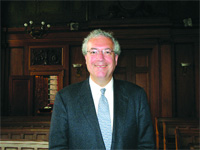
Features
World Affairs Council Brings Global Issues to Light with a Local Focus
Cyd Melcher

Cyd Melcher, administrator for the Springfield-based World Affairs Council, said discussion of timely international subjects often leads to greater understanding and tolerance of various opinions.

Following 9/11, World Affairs Council Administrator Cyd Melcher said she was struck by how many people knew very little about the world, and how various parts of it perceive the United States.

“So many people were saying, ‘why do they hate us?’” she said of the terrorists who attacked the country. “I saw a major disconnect between what people saw and understood of the world, and what was really there.”

That realization led the World Affairs Council of Western Mass. (WAC), part of the largest international affairs non-profit in the country, to look more closely at its educational programming and how the organization could positively affect awareness of global issues among the local population.

In some ways, that’s a tall order, but it’s not a mission that is entirely foreign to the council. The WAC is one of 85 such councils across the country, and in fact was one of the first councils to form, in 1926.

Since that time, the council has provided educational opportunities for adults and students in various forms, geared toward a better understanding of the world at large.

But today, with international issues playing a role in everything from homeland security to gas prices, the WAC is redoubling its efforts in order to attract a wider, more diverse audience. Melcher said those efforts are more necessary than ever in today’s tenuous world.

“People are starved for well-informed conversation,” she said, “as well as for civil, interesting conversation. They read the headlines, and they have both the want and the need to talk about them.”

But beyond that, Melcher said conversations regarding the global economy, politics, religion, and other areas can become highly charged, and the WAC is also an outlet for conversation that includes and values differing opinions and perceptions.

“Sometimes people disagree, and disagree passionately, on an issue,” she said. “But what makes us different is that at one of our events, people are allowed to speak long enough that others hear how they feel, and begin to understand why.”

The Power to Speak

Ken Furst, president of the WAC board of directors and a principal of the Momentum Group in East Longmeadow, said there are a few programs in place within the WAC that achieve that goal, including an international visitors program, through which the council sponsors foreigners visiting the area, and facilitates meetings with various business and government officials, as well as residents of the region.

“These are State Department-sponsored guests who are here to get a better understanding of what America is all about,” said Furst, noting that while the WAC works with government-sponsored visitors and ambassadors regularly, the organization is not federally operated. “Some of these visitors want to see how local governments run, and some have more specific requests, like visiting rural schools.”

The largest programming aspect for the Western Mass. council, however, is bringing dynamic speakers and experts in various fields to the area, to offer insight into a wide array of global issues.

“We bring in speakers that are experts in international and world affairs, political and cultural issues, and topics that are timely and ongoing, such as what’s happening in Iraq and Iran, or Latin America,” said Furst. “It is an organization that promotes people-to-people diplomacy.”

In the past, speakers have included Q. Ketumile Masire, former president of Botswana, who led a program on developing sustainable leadership in Africa; Ambassador Phyllis Oakley, former assistant secretary of State, who addressed the topic of anti-Americanism; Ambassador Mark Hambley, former U.S. ambassador to Lebanon and Qatar, who spoke to the U.S. presence in Iraq; and Hugo Restall, editor of the Far Eastern Economic Review, who offered insight on the possibility of India overtaking China as the next superpower of the global economy.

Furst added that, as a non-partisan group, the WAC strives to book speakers who can report on many different aspects of major global issues, including foreign affairs, the environment, war, and education.

“We help promote understanding of what’s going on,” he said, echoing Melcher. “We’re not, for example, necessarily for or against the war in Iraq. The speakers may have a point of view, but we try to achieve a balance; we aren’t there to judge as much as inform.”

Speakers are put in front of the public through regular luncheons called Brown Bags, which began about two years ago and offer frequent low-cost, easily accessible seminars during the lunch hour in downtown Springfield; the WAC also hosts occasional dinners. A program called Classroom Conversations, which places speakers, including diplomats, military personnel, academics, and others in area schools, is one aspect of the WAC’s expert-led seminars that is gaining speed, Furst said.

“The students speakers address are usually high school students in the Springfield area, and our speakers have already talked to about 500 students this season,” he said, leading into another council objective that has been ramped up in recent years.

To capitalize on the growing interest among student populations in the WAC’s work, the council has expanded its academic programming to include a national offering, called Academic WorldQuest.

WorldQuest is an annual competitive quiz open to public high school students on both regional and national levels, which charges them with answering questions on current events, geography, and world leaders.

The WAC formed a school partnerships committee, chaired by member Daphne Hall, and opened the competition to Springfield high schools in 2004. This year, the winning team, from the High School of Science and Technology, has advanced to national-level competition, to be held in Washington, D.C. this month.

The council’s academic efforts haven’t gone unnoticed. Last month, the agency was presented with the 2006 Carol Marquis Award for School Excellence at the national conference of the World Affairs Councils of America in Washington, D.C. The award was given for outstanding growth and development of the Council’s educational system over the past year, and Furst said the honor added some significant weight to the council’s efforts.

“Because of our increased activity educating students, we were recognized for our educational programming, and recognized for the growth in the program,” he said. “It proved that we don’t have to be the biggest group to be noticed. We’re smaller than most councils, but we have a good group of people.”
Melcher added that the educational aspect of the WAC’s work has been the area of which she is most proud.

“It benefits both adults and students,” she said. “Students who are involved become more aware of the world on a deeper level, and I’m also impressed by how many adults change their opinions of high school students.”

The Opportunity to Listen

Moving forward, continued education — not only of students, but of the adult population — will remain a key objective for the council. To that end, the WAC will be zeroing on some key issues over the course of the year, such as the importance of global issues to common business practices, the ever-changing workplace, and the global economy.

That, Furst said, will also allow the council to take a closer look at the region’s business community, and how the council can better integrate itself therein.

“There’s a lot of information given out through the council regarding trade between us and foreign countries, and knowing and better understanding the countries they’re working with helps local businesses,” he said. “We’ve had meetings on the outsourcing of goods in the U.S., for instance, at which we looked at the pros and cons.

“People may not like to hear about the topic of outsourcing,” he continued, “and they might not like the fact that so many goods are being made in China. But that’s not going to help us. Understanding why, however, will. That allows us an opportunity to make that knowledge work to our advantage.”

Furst said the council would also like to better promote its unique networking opportunities, which include international contacts and resources both locally and abroad, available for members’ use.

“We have access to diplomats, non-governmental organizations, libraries, and other sources,” said Furst, “and we can also refer to our database, which includes academics, world travelers, exporters, former Peace Corps volunteers, language experts, and native-born citizens of a number of countries.”

To create stronger relationships with local businesses, Furst said the council hopes to promote membership at an employee level among various companies in the area, and also boost the WAC’s number of event sponsors.

Currently, about 35 businesses and organizations are involved with the council on various sponsorship levels, ranging from benefactors to patrons to basic members. Those outfits include colleges, banks, advocacy groups, foundations, and both public and private companies of varying sizes and industries.

The Need to be Heard

Even with such a wide gamut of services and members, however, Furst said the council still struggles with recognition in the area, of both its name and mission.

With a board that is entirely volunteer-based except for Melcher, the WAC’s sole paid employee, translating its mission can be a challenge, and outside of some specific circles, Furst said, there are still many businesses and individuals in the area still unaware of the World Affairs Council or why it might be relevant to their businesses or daily lives.

“We use all means we can to get better-known, but sometimes we think we are the most well-kept secret in the area,” he said. “What’s important is that we always have our mission in the forefront of our minds — to keep the population better informed on what’s going on in world affairs, so they get a better understanding of the world as it gets flatter and smaller.”

Melcher said that flattening of the world is the result of all politics indeed becoming local, along with business trends, environmental concerns, and societal issues.
But flattened as it may be, the world is still a very big place. Melcher said the act of conversation, as simple as it sounds, opens many doors that lead to more awareness and intuitiveness of complex issues that are relevant worldwide — and through knowledge comes understanding.

“If we’re asked what the best result of the World Affairs Council is, I’d have to say it’s people taking a greater interest in the world around them,” she said. “If someone gets into the habit of reading the New York Times a few days a week to stay current … I’m happy with that.”

Jaclyn Stevenson can be reached at[email protected]
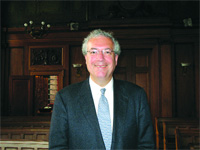
Features
Academy of Music, WGBY Collaborate to Improve the Big Picture
Rus Peotter and Andrew Crystal

Rus Peotter, left, general manager of WGBY, and Andrew Crystal, president of the Academy of Music’s board of directors, say the new partnership between the two entities will improve fundraising, marketing, and community outreach efforts.

Rus Peotter says that, from a technical standpoint, it’s a “short-term investment.”

But the $50,000 loan from WGBY, the Springfield-based public television station he manages, to the financially challenged Academy of Music in Northampton is something he believes will bring long-term benefits to those cultural institutions — and the communities they serve.

The loan, made possible by an extension of the so-called ‘digital deadline’ — the date by which all analog stations must make the transition to digital broadcasting — from 2006 to 2009, thus freeing up some cash for WGBY, is the linchpin of an intriguing collaborative effort between the two non-profit entities.

In a nutshell, the academy gains some financial stability in the form of cash to pay down some debt at a time when the 800-seat theater has cut back on its schedule of movie showings and is struggling to meet fundraising goals. The station, meanwhile, gains some rent-free office space at the academy, some event space there for up to 10 uses per year, also rent-free, and, in the process, a bigger presence in a community that sits at the center of its coverage area and represents the station’s most supportive region per capita.

“Many people think of us as a Springfield station instead of a regional station,” said Peotter, “and this is an opportunity to get in front of a larger number of people.”

Beyond the visibility, however, the collaborative effort gives WGBY a chance to improve the long-term health of two cultural entities, he said, adding that he and others and at the station view this as an investment well worth whatever risk may be involved.

“Collaboration is really important for non-profits today, and it’s one of the primary reasons for this alliance,” he said. “It’s a move that we hope will allow two cultural organizations to enhance their core missions by bringing on more resources and by adding some horsepower.”

Andrew Crystal, vice president of O’Connell Development in Holyoke and chairman of the academy’s board, agrees.

“Our board thought very carefully on this decision, and it was approved to move forward with the goal of becoming a more community-based arts venue,” he said, adding that the partnership, unique among non-profit agencies, represents an imaginative effort to advance common goals.

This issue, BusinessWest looks at how it came together, and what it means in terms of the big picture.

Staging a Comeback

The agreement comes a month after the academy, opened in 1891, announced it would end regular showings of films, timing that prompted many to wonder if the landmark would be closing its doors to the public altogether due to financial constraints.

But Crystal said the move was made to help create a firmer financial future for the theater as what he called a “cultural hub,” and in turn to better brand the academy as such.

Programming is still relatively robust at the theater; in the coming weeks, for instance, the theater will host the Pioneer Valley Ballet’s rendition of Cinderella and the Pioneer Valley School for Performing Arts’ spring musical, Little Shop of Horrors.

Films with a foreign, art, or independent thrust will also continue, but on a less frequent basis, said Crystal, including showings of the acclaimed British documentary Young at Heart this month. The Jewish Film Festival has also been scheduled at the Academy this month, as well as the Northampton Independent Film Festival in November.

Still, Crystal added that financial pressures are in fact a reality as the academy moves forward. Fundraising has long been a struggle for the theater, which is governed largely by an 11-person board of directors who volunteer their time.

“It’s partly a manpower issue, and partly perception,” he said. “Our board includes the mayor of Northampton and the president of Smith College — these are obviously people who have many other things to think about. Plus, people still think of us as a movie theater, and it’s hard to translate why we need to raise money.”

Because of those issues, Crystal said the academy failed to reach its most recent fundraising goal, set forth in 2005, to generate about $200,000 in unearned income, or a third of its operating budget.

“We raised about half of that last year,” he said. “The norm for a non-profit arts venue is to have about 30% to 40% of its budget represented by unearned income, and we have never come close to that.”

He said neither he nor his fellow board members saw the academy’s fundraising woes as prohibitive to moving forward with new plans, but understood that it was a problem that required some outside assistance.

The contractually specific agreement that came about with WGBY is not common to the non-profit sector, and Peotter said it’s a model he hopes will be examined by similar outfits across the country, and possibly emulated.

“When a community’s arts and culture organizations have so much common ground, as do those in this region, they’re less inclined to collaborate,” he explained. “People go after the same pieces of pie because they don’t believe that pie can be grown — but it can.”

Next-stage Development

An 11-page description of the agreement details its many aspects, including the alliance’s mission to allow both entities to “provide each other with increased opportunities to carry out their respective goals and objectives … thereby enhancing the ability of WGBY and the academy to carry out their respective charitable activities.” The agreement will remain in effect for five years.

With fundraising such a large part of that philanthropic picture, Crystal said talks with WGBY began revolving around that topic, but soon expanded to include many other concerns.

“Increased, effective fundraising was the need that initially jumped out at us,” he said, noting that the academy would like to reach that elusive $200,000 mark and also increase its annual operating budget by as much. “But as we spoke, we began to see many other opportunities.”

To foster those developments, a number of cooperative measures were put into place through the partnership’s formal agreement, the biggest being that $50,000 loan.

It was this bullet point on which Peotter said he received the most questions from his 36-person board of directors. However, he explained that the funds were available due to the postponement of the digital deadline, which requires that all analog televisions and, subsequently, analog programming be phased out of use. The three-year extension left the station with an unexpected amount of previously earmarked funds held in short-term securities.

“That’s where most of the questions centered,” he said, “and the other question I heard often was, ‘why Northampton?’”

The answer can be found by looking at a map detailing the station’s coverage area, and in those demographic stats on donations to the station per capita, he explained, noting that agreement between the entities allows the station to host a greater number of live screenings or fundraising events of its own.

“As a public television station, we have access to a number of independent films that we often like to premiere prior to broadcast,” he said. “But beyond that, this is an opportunity for a greater number of face-to-face events in more places than we already do.”

The accord also stipulates that WGBY provide fundraising assistance to the academy, including help with the establishment of annual fundraising plans, to be drafted in conjunction with the academy’s newly formed fundraising committee.

The partners’ first foray into this area has already begun — a grant application from the Academy to the Massachusetts Cultural Council, which WGBY staff will assist in completing.

“That help will make for a more professionally prepared application,” Crystal said, “and in general I think it will strengthen our grant-writing capabilities.”
WGBY and the academy will also work to develop ‘co-branding’ opportunities, for the joint promotion of events and initiatives the two parties deem “consistent with their charitable purposes,” according to the formal agreement.

“The individual brands of both institutions are quite strong,” Crystal told BusinessWest.

“We each have a level of respect in the community,” he explained. “But through co-branding, fundraising, and promotion together, we can increase our visibility and the sense of goodwill we already generate separately.”

Waiting in the Wings?

As the partnership between the Academy of Music and WGBY moves forward, Peotter said he hopes to bring other cultural organizations on board — perhaps not to the same contractual degree, but in a way that creates a greater sense of community among like-minded groups and venues.

“That way, opportunities will continue to present themselves,” he said. “It’s always helpful to have non-profits look at challenges together, instead of as competitors.”

Jaclyn Stevenson can be reached at[email protected]

Features
Entrepreneur Accentuates the Spoken Word
Erica Walch

Erica Walch says speaking in a heavy accent can be problematic in certain professions.

As anyone who has tried to learn it can tell you, the English language is quirky and maddeningly inconsistent.

There are words that are spelled differently but pronounced the same — meet and meat; days and daze; wait and weight; whether and weather; right, write, and rite. And there are words with the same structure that are pronounced differently: height and weight; bury and fury; pour and hour; fowl and bowl.

All this makes for good fodder for stand-up comedians — George Carlin had a famous bit — and headaches for those new to the language. But the troubles don’t cease even after one has come to grasp these idiosyncrasies and gain a working knowledge of English sufficient to read, write, and understand it.

Indeed, there is the matter of properly enunciating the words, said Erica Walch, a college professor of English as a Second Language. She told BusinessWest that those who bring an accent — from a country, region, or dialect — to the task of speaking a language run the risk of being misunderstood, and in some professions (hers included) this can be problematic, and in others (the medical field) even dangerous.

This challenge has provided her with the inspiration for an entrepreneurial venture, one she launched in downtown Springfield late last year.

It’s called Speak Easy Accent Modification, and the name essentially tells the story: Walch works with clients to minimize the effects of an accent on pronunciation.

“Like anything else, it’s a skill,” she said of clearly enunciating words in a new language. “It comes easily for some, but not for all.”

With that in mind, Walch, who holds master’s degrees in both ESL and translation studies, went searching for teaching methods, and found one in Compton P-ESL, a systematic approach to improving pronunciation and communication skills among non-native English speakers. The first step in founding her new business was to become certified in the method, which she accomplished in October, opening the door to an intriguing set of new business ideas.

Corporate Language

A native accent’s effects on communication can lead to a host of problems beyond simply misunderstanding someone, said Walch, noting that newcomers to English may, for example, become dependent on written communication, including E-mail, in lieu of meetings or phone calls. That, in turn, can lead to isolation, or even a failure to make career advancements.

That’s why Walch has made professional development a key focus at Speak Easy. She chose a central, downtown location when she opened her offices last October, in order to offer convenient service to professionals within the Knowledge Corridor, which stretches from Northampton to New Haven. Some of her marketing materials are geared directly toward the health care and higher education sectors, where she has seen particular need, while others are directed toward employers who may want to invest in accent modification as continuing education for their non-native English-speaking staff.

“As a business application, it makes sense,” she said, noting that most clients, with practice, can achieve about a 50% improvement in their comprehensibility.

Programs like Toastmasters teach public speaking skills to professionals, and this is along the same line.”

Classes can also be tailored to help clients with specific words or industry jargon, said Walch, adding that while accent modification can still be a sensitive issue within the employer-employee dynamic, the career-development aspect of Speak Easy helps to translate its importance within business climates.

“Many people are showing an interest in the business,” she said. “It’s still a sensitive issue — ultimately, the individual needs to make the decision to take the course or not — but most people are aware they have an accent; most actually self-refer. Another important point to remember is that these people have already learned English — the hard part is done.”

Form and Function

The Compton program, named for its creator, Dr. Arthur Compton, works by identifying common speech and pronunciation patterns of a client, so improvements can be made quickly and easily. 

Compton, a linguist, analyzed the English pronunciation patterns of hundreds of individuals from more than 100 different language backgrounds while developing the program, and his research revealed that although many different speech errors (also called ‘accented sounds’) occurred in an individual’s speech, these errors represented a relatively small number of basic patterns that lead to pronunciation difficulty.

Walch explained further that the program essentially picks up where more traditional ESL programs leave off, by addressing common issues among non-native English speakers that affect others’ comprehension of their speech, such as word production and voice projection.

Essentially, she said, non-native English speakers usually apply the rules of their own language to English, resulting in an accent. Some accents are light, but others can be thick.

“These are real problems even for people who have been speaking English for a very long time,” she said, listing physicians, college professors, and other professionals as examples. “Many get complaints from patients or students who can’t understand them, and that can be very frustrating, because they know they’re saying the right thing.”

Back to Basics

The course spans 13 weeks, and includes an initial analysis with the client, to assess the level of pronunciation issues and rule out anything that might impede the process, such as lack of fluency or hearing problems.

A customized program that addresses each client’s needs follows that assessment. It can be completed on either a one-on-one basis or as part of a group, and the Compton P-ESL workbook and training materials are used throughout the process. Most of Walch’s current clients are native Spanish or Russian speakers; however, she said the program is effective for all non-native speakers regardless of age; she also offers a seven-week course for native English speakers, such as those from England and Ireland, who want to work toward a more American accent.

Clients meet with Walch once a week, at which time they listen to examples of what is known as standard American English (spoken without regional accents like those from Boston, Maine, New York, the deep South, and other regions) and learn how to make those sounds correctly through, for example, mimicking and practicing mouth movements needed to produce certain sounds.

“Practice on their own is key,” added Walch, who recommends her clients rehearse sounds and mouth movements for about an hour a day.

She said it’s unlikely a client will lose his or her accent completely, but through the course and the individual practice, clients soon begin to learn how to discriminate between different speech sounds.

In addition, complete word production is emphasized; for instance, the final consonants of a word are silent in many languages, and that trait is often applied to English among non-native speakers, creating ‘whir’ instead of ‘word,’ or ‘din’ instead of ‘didn’t.’ In some cases, voice projection is also stressed — some cultures, such as in Asian countries, often lead to soft-spoken English speakers; conversely, other cultures tend to produce loud, booming voices.

Sound Advice

Simple tools such as audio and video recorders and mirrors are used to monitor a client’s progress, and at the end of the course, the difference in speech patterns is compared. Walch said most people hear a marked improvement, which only continues to improve as they speak using new pronunciation skills. She added that the process does not affect one’s pronunciation in their native tongue.

Walch said she really only sees one side effect of the process.

“Some people have muscle soreness,” she offered, “from making sounds they really never have before.”

Sounds like those made by ‘i’ and ‘e’ after a ‘c’ — one of those rules that isn’t always followed.

 Jaclyn Stevenson can be reached at[email protected]

Features
Business Survey Designed to Give a Snapshot of the Knowledge Corridor

Jason Giulietti says that, while the brand Knowledge Corridor is gaining some traction among legislators, site selectors, and business groups, those representing agencies that serve businesses in that cross-border region have little hard data to work with when it comes to those companies, their relative fiscal health and well-being, and the challenges they’re facing.

This is a situation that economic development leaders hope to rectify with something called the 2007 Hartford/Springfield Regional Business Survey. It contains 33 questions, the answers to which (due March 7) should be enlightening, said Giulietti, a research economist with the Conn. Business and Industry Assoc. (CBIA), which represents about 10,000 businesses in that state.

He is one of the authors of the business survey, the first of its kind for the Knowledge Corridor, which is designed to shed some light on the businesses within that region stretching from Northampton to New Haven. It will do so with questions on subjects ranging from transportation to telecommuting; from hiring patterns to exporting.

“This is the first time we’ve done something like this,” he said, noting that a similar study was conducted involving Connecticut’s Litchfield County and New York’s Westchester County, and the results were compelling enough to prompt officials in Hartford and Springfield to undertake one. “I think we’re going to get some data that will help us better understand our region and the businesses in it.”

Russell Denver, president of the Affiliated Chambers of Commerce of Greater Springfield, agreed. He said there are some assumptions about businesses in the Corridor and the challenges that are part and parcel to doing business in both states and often well beyond, but no hard data.

“The Census Bureau doesn’t offer information on that region,” he said. “This survey will give us a better understanding of the requirements needed for businesses to operate on both sides of the border.”

The survey was sent to thousands of area businesses via the CBIA, the ACCGS, the East of the River Chambers of Commerce in Northern Conn., and the Metro Hartford Alliance. The responses will be analyzed and the results unveiled at a May 18 event at Asnuntuck Community College in Enfield. A formal report will then be printed and distributed.

Giulietti said answers to all 33 questions could prove insightful, but there are some he will monitor closely. These include the first three, which amount to essay questions (most of the rest are multiple choice):

  • What do you think is the greatest challenge to operating a business in the Hartford-Springfield region?
  • What do you think is the greatest benefit of running a business in the Hartford-Springfield region? and
  • What do you believe will be the biggest concern facing your business in the next five years?

“Those three should give us the best gauge of what’s going on,” he said. “Because they’re open-ended and we don’t give people any options, you get a true look at what people are thinking, and oftentimes, the responses are similar.”

Giuletti said he’s anxious to also see the results from a series of questions on workforce issues. These include queries on when workers are expected to retire, the types of positions filled over the past 12 months, the skill sets new employees will need to succeed in their jobs, and the reasons why employers may be having trouble finding qualified workers.

Another key section deals with transportation, a key issue for legislators and economic development leaders, said Giuletti. Questions were structured to gauge transportation needs, methods to pay for improvements, and even the percentage of employees who cross state lines to get to their jobs.

Officials on both sides of the border are advancing plans to improve commuter rail service between Springfield, New Haven, and New York, he said, and the survey will hopefully yield insight into how valuable such a resource could become.

Other sections deal with energy, international trade, housing, demographics, and the region’s business environment.

Giuletti said there has been good response to the survey to date, with nearly 400 questionnaires returned by late February. At least 600 would be needed to get an accurate read on the issues facing the region.

Denver said surveys have been sent to roughly 400 businesses in Western Mass., a cross-section that includes board members of several area chambers, as well as agencies such as the Economic Development Council of Western Mass., the Greater Springfield Convention and Visitors Bureau, the Regional Technology Council, the Small Business Development Council, and others.

Surveys can also be downloaded from the CBIA’s Web site:www.cbia.com

Features

Western Mass. is blessed with a large core of young talent in its business community — entrepreneurs, lawyers, financial services experts, leaders in health care, education, marketing, technology, the biosciences, the non-profit sector, and more.

BusinessWest would like your help in identifying them for a special section to appear this spring called ‘Forty Under 40.’

As the name suggests, we’re talking about individuals under 40 years of age — not 60, the so-called ‘new 40,’ but the real 40, meaning they were born after 1966. To be precise, we’re looking for people who will not turn 4-oh before Jan. 1, 2008.

But the age parameters are just a way to identify the constituency in question. More important are the other attributes that will define those chosen as our Forty Under 40. In short, we’re looking for standouts, in whatever way that word can be defined. We’re assembling a list of leaders, people who are leaving their mark on the Western Mass. community and will hopefully do so for at least another few decades.

The key word in that sentence is community, because we’re looking to identify people who not only excel in whatever field they may be in — from mortgage lending to Internet service; from hospital administration to the district attorney’s office — but who also give back to the community through donations of time, money, sweat, vision, and imagination.

Here’s how it works: On page 45 of this edition of BusinessWest there’s a nomination form that spells out the program and lists the information needed for a candidate to be considered. The form is also available online atwww.businesswest.com, and via E-mail; requests should be sent to[email protected]

We’re very excited about this endeavor to identity and then recognize the young stars on the region’s business stage. With the help of a panel of judges we’ll narrow our list to 40. But first, we need your help to create a field from which choices can be made.

The nomination form takes just a minute to fill out, and can be done entirely online. Please take that minute and help us identify the Forty Under 40.

George O’Brien Editor

Features
HRU Partners with Businesses to Help Make Dreams Reality
Schley Warren, left, general manager of Berkshire Service Experts

Schley Warren, left, general manager of Berkshire Service Experts, says Ed Collins, who came to the company via Human Resources Unlimited, has been a tremendous asset.

Schley Warren remembers his introduction to Human Resources Unlimited and its facility called Lighthouse.

He was at that Springfield location several months ago overseeing some work to its HVAC system as part of his work as general manager of Berkshire Service Experts. “I asked the people, ‘so . . . what do you do here?’”

The answer intrigued him enough to eventually become both a vendor and a client, although the preferred term is ‘business partner.’

Lighthouse is one of HRU’s four so-called clubhouses, facilities that provide a variety of rehabilitation services to adults with mental illnesses ranging from depression to schizophrenia. One of those services involves transitioning individuals into the workforce through skill building and then matching people with positions at area companies.

After watching and learning about Lighthouse, Warren, who had long been looking to add a receptionist to cover lunch hours, decided to make Berkshire one of those companies.

Today, Ed Collins works at the front desk of Berkshire’s offices on Capital Drive in West Springfield. There, he handles the phones, greets visitors, and even works on spread sheets. Warren describes him as a real asset to the company, someone he’ll certainly miss when Collins moves on in a few months.

His assignment is temporary in nature (six to nine months is the norm) and while there is more than a touch of regret on Warren’s part about this fact, there is also a realization that moving on is better for Collins — “he’s underutilized here … there’s bigger and better things waiting for him out there” — and for HRU. That’s because the position at Berkshire isn’t really given to an individual; it’s given, in essence, to the agency, which will hopefully assign a succession of individuals to it, giving them additional skills and work experience that will enable them to land permanent jobs.

“Meaningful work is an integral aspect of an individual’s sense of purpose and well-being,” said Margaret Jordan, HRU’s director of Mental Health Services, who told BusinessWest that for individuals helped by HRU, joining the workforce is an important part of their recovery.

“Individuals with mental illness have been told that they shouldn’t be working, and should instead just collect services,” she continued. “We don’t believe that.”
Those involved with HRU, called ‘members,’ now occupy a number of positions, ranging from receptionist to software support, and for companies ranging from what are (or were) one-person shows to large corporations like Big Y and CVS.

Business partners can earn $2,400 Work Opportunity tax credits for each position they designate for HRU, Jordan explained, but this is rarely, if ever, the motivation. Instead, it’s a simple desire to bring on skilled, dependable workers (something that is becoming increasingly difficult in this labor market), while also giving those individuals a much-needed opportunity to be productive, earn wages, and, most importantly, gain confidence in themselves.

“They’re not just doing good,” Jordan said of the companies that have become partners. “They’re doing well. In many ways, they’re helping their businesses.”

Looking forward, Jordan said HRU would like to add more business partners, an expansion effort that would help more individuals with mental disorders, while helping to address the challenge of finding good help. Such growth for the program will come through awareness, she continued, adding that business owners should consider HRU’s ability to solve their workforce problems.

Seeing the Light

Jeff Lander is another of those business owners who discovered HRU largely by accident.

His relationship started in 1999, when he bought a home on Broad Street in Westfield — in which he set up his software development business called Appilistic — located next door to another HRU facility known as Forum House. Curiosity prompted him to learn about the work being done at that facility, while intrigue compelled him to first volunteer, then become a member of the group’s board of advisers, and then lead that board.

And it was common sense that made him a business partner.

An administrator at Forum House approached him about an individual she thought would be a good support person for Appilistic. Talk eventually led to the hiring of Mike Santner, who now handles a variety of tasks, including HTML coding, thus allowing Lander more time for initiatives that will help grow his business.

“His skills complement mine nicely,” said Lander, who said his experience with Santner has worked out so well that he has created another position, largely along the lines of an administrative assistant, that is also staffed through HRU. “He’s a great addition; he’s very good at what he does.”

For his commitment to HRU and its programs, Lander was recently named the organization’s employer of the year, one of several awards given annually to recognize the companies that help HRU carry out its mission of community integration. This partnership with the business community began in 1970, said Jordan, when now Springfield-based HRU was founded.

Originally, the agency was affiliated with Belchertown State School and its vocational program, she explained, adding that it broke away from the school and relocated to Springfield in 1985. HRU, with a $7 million annual budget funded by the State Dept. of Mental Health, has a number of component parts. They include ETS Career Services, a Springfield-based facility that places developmentally disabled individuals for contract and assembly work, and the Pyramid Program, which conducts skill-building for individuals with severe developmental disabilities and, more commonly, physical disabilities. There are other programs to help those on transitional assistance enter the workforce and offer services that enable homeless individuals get back on their feet.

The Mental Health Services Division now operates four clubhouses — Lighthouse, Forum House, the Star Light Center in Florence, and Tradewinds in Southbridge — that function to provide individuals with work skills and then match them with transitional and, hopefully, permanent employment opportunities.

The basic mission for the clubhouses is to challenge program members to rise to their full potential through skill-building and work, Jordan explained. “The program was founded on the belief that members have the right to be connected to their community, to make their own choices, pursue personal goals, and have the opportunity to work.”

The clubhouses assist individuals with an array of mental illnesses, she continued, including severe depression, bi-polar disorder, schizophrenia, and personality disorders.

For employers, the clubhouses act in many ways like staffing agencies. The work begins with assessing specific employment needs and continues with efforts to match job requirements with members, said Jordan. Clubhouse administrators actually take on a position initially, to understand its nuances and properly train members to assume it. The clubhouse provides what it calls an absence-coverage guarantee, meaning that if, for any reason, the employee cannot show up for work, another, already trained, clubhouse member or administrator will fill in.

Getting Down to Business

Over the years, the roster of business partners has steadily grown, said Jordan. It now includes A.J. Wright, Aquadro & Cerruti, Burger King, Friendly’s, O’Connell Oil, T.J. Maxx, WGBY, and dozens more. Assignments within these companies vary, ranging from administrative assistant to assembler; groundskeeper to hotel bellman; stock clerk to tutor.

But while the job titles vary, the opportunities are largely the same, said Jordan, adding that individuals are given a chance to build a track record as a responsible, dependable, and efficient employee, which could lead to permanent employment within the area.

The process starts with transitional employment assignments, like the one Ed Collins is on at Berkshire. In two months, he will move onto another transitional position, gaining more skills and confidence as he does so. In some cases, transitional work will lead to permanent jobs at a company, although this means that HRU loses the position in question — unless it convinces the employer to create another job for the agency, which often happens.

Such was the case at Appilistic, where Lander thought Santner was such a good addition he asked him to stay on with the company.

Transitional jobs have also led to a number of permanent positions at Big Y stores, including the one on East Silver Street in Westfield, which has a long-standing relationship with Forum House.

John Mountain, the store’s manager, told BusinessWest that the facility now has six employees, all “service clerks” who handle duties ranging from bagging groceries to corralling shopping carts, who came to the company from Forum House. Many have been with the store for years, he said, adding that a few that he hired before a four-year assignment with another store before returning to Westfield to become manager are still there.

“This has worked out very well for us; all the employees are very dependable,” he said, adding that when the store has openings, Forum House members are always an option to be considered just like other candidates.

Like other business partners, Warren said there are many advantages to awarding a position to HRU. The post is consistently staffed with reliable individuals who don’t have to be trained by Berkshire, he explained, adding that the alternative — trying to find someone who will stay in such an entry-level, part-time position for any length of time — is not very attractive. He’s now mulling other positions, such as sheet metal fabrication, that could be given to HRU and Lighthouse.

Warren’s not looking forward to seeing Collins leave Berkshire early next year, but he is excited about the prospects of helping other individuals gain work experience.

“It really is a win-win,” he explained. “We win because our company’s is better because we have people like Ed here, and Ed wins because he’s learning and growing.”

Labor of Love

As he talked about HRU and Forum House, Lander stressed repeatedly that his involvement is not simply doing good deeds.

“This is a resource that helps me run my business more efficiently,” he said, referring to Forum House as his HR department. “It helps in unexpected ways — they want to help my business succeed.

Similarly, the programs help members to succeed — in whatever ways they define that word.

“We help people set their own goals and help them dream,” Jordan explained. “Sometimes, mental illness interferes with dreams; it shouldn’t keep them from coming true.”

George O’Brien can be reached at[email protected]

Features
AIC President Vince Maniaci Orchestrates a Stunning Turnaround
AIC President Vince Maniaci

AIC President Vince Maniaci

He barely had his boxes unpacked before AIC president Vince Maniaci realized he had a big problem on his hands – a waning sense of community and pride at the private college that was dwarfed only by a $5.3 million deficit. The 122-year-old institution is now back in the black and its leaders are focused on regaining what was lost – and creating what never was.

Vince Maniaci, president of American International College, has a number of signature phrases he’s coined that are directly related to AIC and the turnaround he’s trying to create.

He says all of the changes on campus are “mission-centric” and “market-smart,” meaning they don’t stray from the institution’s core educational values, and are made with attention to the state of the local economy and the region’s strengths and weaknesses.

He also says he’s trying to “put the international back in American International,” a pledge that is leading to some intriguing global developments at the school.
Finally, he says that AIC will “tolerate excellence, but its goal is perfection.” Of all his quotable quotes, that’s one of Maniaci’s personal favorites, and also probably the loftiest goal he, or any college president, could create for himself.

Indeed, AIC is only now gaining solid footing after standing on shaky ground for some time. Maniaci took the helm in August of last year, after serving as the vice president for institutional advancement at Bellarmine University in Louisville, Ky. He succeeded long-time president Harry Courniotes, who announced his retirement plans in October of 2004.

Maniaci remembers first discovering that the college was in dire straits his fifth day on the job, when a financial review of its books revealed a $5.3 million shortfall in the budget for 2005. The audit also showed the college had consistently come up short for several years, dating back to 1997.

“That made it abundantly clear that we were not financially sound, and it was shocking to me, but more shocking to the Board of Trustees,” he said. “We were in bad shape, and the vultures were starting to circle. We had to focus not on creating a healthy surplus, but just on breaking even.”

To do that, the college entered a deep freeze; $1 million was slashed from AIC’s operating budget — in some cases, the loss was fat, but some pet projects across all departments also had to be sacrificed. A total of 15 positions were eliminated, and the pension fund was frozen and later replaced with a defined contribution plan.

“It was painful,” Maniaci said, “But we did it about as well as we could, and it’s really what began the renaissance here.”

It also pushed Maniaci into the spotlight much sooner than he expected and for less auspicious reasons, but the images that attention created were not always of somber financial reports and layoff announcements.

As freshmen moved into the dorms during AIC’s orientation weekend, for instance, they had help from a man wearing a yellow sweatband that read ‘President.’ He introduced himself to parents as Vince, and made that same promise to “tolerate excellence.”

His unconventional approach persists on campus. He makes an effort to memorize every new student’s name, and they call him Vin, Vinny, and ‘Manach.’ His office is adorned with the standard certificates and diplomas of any college president, as well as one of C.M. Coolidge’s oil renderings of dogs playing poker.

“You have to have a sense of humor,” said Maniaci. “Especially when it comes to survival.”

School of Rock

That positivism adds to an already amplified sense of change at AIC since Maniaci arrived. At 47, he’s a young college president who succeeded one of the country’s oldest, who led AIC for 36 years, and who worked at the college for longer than Maniaci has been alive.

Maniaci has also instituted more changes in a year and a half than the campus saw in the decade prior to his arrival. Positions have been cut and rearranged, titles have been adjusted, programs have been both changed and added, and the doors of some campus buildings have closed while others have opened.

But in the midst of continued upheaval, one thing is certain – the college’s finances are improving, and that can be seen plainly in black and white.

Following that paralyzing financial review in 2005, the college was projected to see an additional shortfall of about $4 million this year. But as the year draws to a close, the books will show a $500,000 surplus on a cash basis. In addition, the school’s retention rates ticked up by 8%. Adding to the positive press was the recent announcement of a new master’s program in nonprofit management, and earlier in the year, the announcement of a new Web-based master’s in nursing.

In fact, new program announcements have become common occurrences at AIC, and Maniaci credits many of them with contributing to the speed at which the institution has returned to health.

“Yes, there were cuts,” he said, “yes, there were layoffs. But there has also been a lot of reallocation of resources, a brand new marketing plan has been put into place – we weren’t marketing globally before, now that’s very much a focus – and several new programs have been instituted, so far with very good success rates.”

“We won’t grow through austerity,” he said. “We will grow through recruitment and by creating an identity that both fits and benefits our students and the city we’re in.”

The first new development came just three months after Maniaci arrived, when dual admissions agreements were signed between AIC, Springfield Technical Community College, and Holyoke Community College in October 2005. The agreement, which allows students to transfer automatically to AIC after successful completion of coursework at one of the two-year schools and also provides $4,000 scholarships, created a new pipeline of students and marked the first such arrangement with a private, four-year college in the area. Since that initial agreement was signed, Greenfield Community College, Berkshire Community College, Capitol Community College in Connecticut, and Bermuda College have entered into similar agreements with the college.

A month later, the AIC’s ‘Community Engagement Initiative’ was unveiled, which awards $10,000, four-year, renewable scholarships to Springfield homeowners and their children. The program was initially opened to the 4,000 residents of the city’s Bay Area, including portions of State Street, Tapley Street, Roosevelt Avenue, and Mason Square. Now, it is being expanded to other areas.

The Web-based nursing degree, a master’s in Nursing Education, was announced in May of this year, augmenting the master’s in nursing program that itself is only two years old, but was added to enhance what is currently AIC’s largest major with 350 students. That announcement was followed in September with the unveiling of the Nursing Workforce Diversity Collaborative Project, designed to introduce health-related careers to disadvantaged high school students, with the help of a $1.1 million grant from the Department of Health and Human Services.

And the newest addition to the curriculum, the master’s in nonprofit management, was created, Maniaci said, to fill a need within the nonprofit and human services sector of Western Mass.

“There are thousands of people who are underserved in this area, and that creates a defined need and a demand for expertise,” he said, “and we are the ideal institution for this program.”

There are other changes that garnered fewer headlines; a set of satellite campuses have been created across the Commonwealth in high schools, community colleges, and other locales, offering a master’s in education in the Greater Boston area. The high hedges that once weaved through the campus quad were leveled, picnic tables were added outside of the dining hall, and an international student lounge has been created in Sokolowski Tower, a building that, previously, was the subject of a joke among many students at the small college who never knew what it was for.

News, Views, and Brews

New additions, academic and otherwise, are a long-term answer to the college’s ills, said Maniaci, and foster continued growth rather than reinforcing the status quo. He added that the creation of new initiatives is not as damaging to the bottom line during troubled times as many might suspect.

“The effect on the bottom line is not bad,” he said. “People forget that new initiatives, especially scholarship programs, bring in students who in turn bring with them a certain amount of state and federal money.

“And the fact of the matter is, our budget is balanced, and now we can begin reinvesting.”

Moving forward, activity is not slowing down at AIC. In an effort to increase its international reputation, Maniaci is working to create satellite campuses in global markets such as Cairo and Bermuda, where a joint admissions agreement already exists with Bermuda College. He said he’s looking primarily at secondary markets – not China or other locales in high demand for American ventures, but rather smaller, promising markets such as Ireland and The Netherlands.

Stateside, plans are being mulled for an MBA with a global focus and, more locally, for a degree program tailored for paraprofessionals in education, to address the need for qualified teachers in the Greater Springfield area.

And in terms of physical development, a new pub is being added to the campus that will serve coffee during the week and beer and wine on the weekends. It’s an interesting addition, as many schools across the country close their on-site bars to ‘go dry.’ What’s more, the pub – The Stinger – will occupy what was once the faculty dining room, an amenity that Maniaci permanently removed.

“I am not advocating underage drinking or excessive drinking at all,” he said, “but let’s be real: there is no such thing as a dry campus in this entire country. And I also have no enthusiasm for students driving downtown to drink. What this is about is establishing a sense of community on campus.”

That sense of community is one of the intangible qualities Maniaci is trying to foster in tandem with cold, hard business improvement. He said he sees it happening – he receives reports that classroom behavior has improved, registration numbers for the spring semester are healthy, and interest in the college newspaper The Yellow Jacket has been revived after a few stagnant years. The most recent edition features a cover photo of Maniaci, with a New York Post-like headline that simply reads ‘The Man.’

A Man with a Plan

Maniaci is quick to accept the compliment, and just as quick to accept that not every decision he’s made has been popular.

“Transition is hard, and it’s particularly hard in an institution of higher learning,” he said. “We are largely a group of open-minded thinkers, but there’s an irony there, because we also have a tendency to harken back to the past.

“A lot of change was necessary,” he added, “and even I had no idea how deep the cultural shift was going to go. But we have a noble mission, and to achieve our goals we need to stay centered on that mission, run this place like a business, and make difficult decisions.”

The challenges will persist, he said, among them a loss of a sense of urgency among AIC’s administration, now that the college is no longer floundering in a sea of red.

“We have escaped imminent doom,” said Maniaci. “My worry is we could lose our edge, and we absolutely can’t afford to lose our edge. Still, we are stable, and that in turn makes a good base for creating excellence.”

And from excellence, there is the possibility of perfection.

Jaclyn Stevenson can be reached at[email protected]

Features
Life Sciences Center Helps Turn Good Research into Good Health

To Dr. Lawrence Schwartz, the life sciences are about bridging a gap.

“A lot of our activity is in transitional research,” said Schwartz, science director of the Pioneer Valley Life Sciences Institute (PVLSI) in Springfield. “We’re trying to take the discoveries we make in the lab setting and move those to clinical applications. There’s a big gap there.”

A recent $3 million grant from the Mass. Technology Collaborative (MTC) will help the institute — a scientific research partnership between Baystate Medical Center and UMass Amherst — make that kind of connection in a field called apoptosis. That’s the study of cell death, a normal process that, when it goes haywire, is a key factor in many types of disease.

Schwartz, who is also a faculty member at UMass, explained that a better understanding of how apoptosis works on a tissue-specific basis may potentially open opportunities for treating, preventing, or delaying the onset of various types of cancer, cardiovascular disease, autoimmune diseases, and neurodegenerative conditions such as Alzheimer’s disease and Parkinson’s disease.

“People always talk about promising new research, but much of it never makes it to clinical applications,” he said. “We want to bridge the space between clinical science and medicine.”

The institute is doing so by bringing together an impressive — and growing — roster of not only cell and molecular biologists and geneticists, but also experts in computer science, chemical engineering, and other diverse fields to achieve the kind of breakthroughs that can potentially make an imprint on people’s lives, not just on the pages of medical journals.

In doing so, Baystate and UMass hope the partnership, which has been up and running for three years, proves to be an economic driver for Western Mass., incubating biotech startups and attracting established companies in an effort to create a life sciences hub in the Pioneer Valley.

Cell Death, Birth of Knowledge

The PVLSI opened in 2003, with facilities both on Main Street in Springfield and on the UMass campus in Amherst, with the goal of establishing biomedical research programs in areas such as breast cancer, neurodegenerative conditions, and diabetes and other metabolic disorders,

“At this point, we have really gone from a concept to operationalizing the institution,” Schwartz said. “We’ve recruited a number of scientists and have active searches for additional scientists, and we’ve already built out a very strong research program in breast cancer. Those are some of the tangibles we want to see in a robust research program.”

Schwartz said decisions on what fields to study are made simply on the basis of what is most relevant to this region.

“The fields we picked out are ones that are very important to the community; they are public health concerns,” he said. “They’re also fields in which we have a number of pre-existing collaborations” — Baystate’s neighboring Breast Center being one example — “and we want to build more. We have resident expertise in these areas, but these decisions are driven not only by our capabilities, but by the interests of the community.”

To date, the institute has garnered more than $11 million in federal funding and more than $420,000 in private research grants. The latest prize, the $3 million grant from the Mass. Technology Collaborative, will help establish a new program to focus on apoptosis (cell death) — a field in which UMass is already recognized as a research leader, Schwartz said.

That reputation is important, said UMass Chancellor John Lombardi, who noted that he heard doubts several years ago whether the life sciences partnership would work at all, let alone grow and continue to earn research funding. “It succeeded because these enterprises are good,” he said, referring to the hospital and the university.

The institute’s directors recognize that apoptosis is an arcane concept to most people who work outside the science or health field, but researchers believe it’s an important concept when it comes to learning to control and prevent disease.

Apoptosis is a natural process; in fact, millions of your cells are dying as you read this paragraph. This process is normally well-regulated by the body’s cells. However, defects in the control of apoptosis can have damaging effects on the body.

For instance, cells can inappropriately activate the apoptosis program, resulting in the loss of valuable cells, such as neurons in Alzheimer’s disease or heart cells following a heart attack. On other occasions, cells can ignore the body’s instructions to commit suicide, as it were, and persist — which is an essential step in the formation of most cancers and autoimmune diseases.

Recent research has shown that individual cells represent specific genes whose proteins are key to the apoptosis process, and that these genes are defective in certain diseases. The research community — including the PVLSI — is now beginning to exploit these insights to make connections between understanding apoptosis and controlling the onset or spread of disease.

“About 70% of human disease results from defects in the regulation of apoptosis,” Schwartz said. “If we can control it, we’ll have a very effective tool for treatment.”

Good Economic Health

Clearly, Schwartz is talking about global goals when he describes the health potential of such research. But the Pioneer Valley Life Sciences Institute has always had a second goal — the economic health of the region, and especially the potential of Western Mass. to become a hub of biotechnology and life sciences research.

“This center presents an enormous opportunity for the Pioneer Valley to reap the vast economic benefits from the state’s growing life sciences sector, which is critical to our high-tech, knowledge-based economy in Massachusetts,” said Patrick Larkin, director of the John Adams Innovation Institute, the development arm of the Mass. Technology Collaborative.

At a recent ceremony announcing the $3 million grant, Springfield Mayor Charles Ryan made the connection between such goals and the economic improvements that Baystate has already made on Springfield’s north side, investing some $100 million in medical and research facilities along the Main Street corridor.
Ryan noted that he inherited some unfortunate circumstances when elected mayor three years ago, “but I also inherited this, which is great for the North End of Springfield.”

Dr. Paul Friedmann, executive director of the PVLSI, envisions economic development that reaches far broader horizons. The institute has already formed partnerships with private industry, working to develop new technologies in the life sciences with an eye toward commercialization.

For example, the institute has helped a company called Biomedical Research Models, which has space in the life sciences building on Main Street, achieve federal funding for work on congestive heart failure — a condition that costs Medicare billions of dollars a year. “They in turn have a large subcontract with us that provides many services that we need,” Schwartz said.

He and Friedmann see more of these partnerships arising in the future. Similarly, the John Adams Innovation Institute is committed to improving the Bay State’s competitive edge in knowledge- and technology-based industries, such as the life sciences.

Schwartz noted that he and Friedmann recently participated in a program with U.S. Sen. Edward Kennedy, U.S. Rep Richard Neal, and officials from both the pharmaceutical industry and government agencies supporting biotechnology and economic development. The dialogue was meant to spur interest in developing the life sciences sector in the western part of the state.

“We want to see a biomedical hub out here, a regional program with incubator space for small startup companies and facilities for larger companies that want to have a presence in Western Mass.,” Schwartz said.

Mark Tolosky, president and CEO of Baystate Health, noted that “we continue to see very significant investment here that will impact our region and beyond.”
Yes, cells may be dying all the time, but medical innovation in the Pioneer Valley is definitely showing signs of life.

Joseph Bednar can be reached at[email protected]
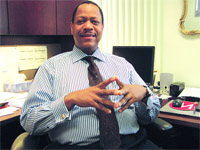
Features
Your ticket to the show
Fall Business Show Commerce ’06 November 2, 2006

Fall Business Show Commerce ’06 November 2, 2006

The 16th edition of the Commerce trade show, presented by the Chicopee and Greater Holyoke Chambers of Commerce will be staged Nov. 2 at a new venue, the Basketball Hall of Fame. The show will feature more than 150 exhibitors placed in a variety of locations, including the Hall’s Center Court, the MassMutual Room, and the upper levels of the museum. The exhibitor list, which includes a number of long-time participants and newcomers, begins on page 14. The day begins at 8 a.m. with a breakfast in the shrine’s theater, and the doors to the show will open at 9.

List of Exhibitors

Features
Yankee Candle’s Programs, Philosophy Earn It the Work/Life Balance Award
Lori Kerwood and Laura McCormick

Lori Kerwood, left, and Laura McCormick, say Yankee Candle’s many programs and perks help in the process of attracting and retaining employees.

When Yankee Candle Co. stages job fairs, it conducts those well-attended events in its Employee Health and Fitness Center.

The facilty’s size, 10,000 square feet, makes it appropriate, said Laura McCormick, head of Corporate Communications and Employee Services for the South Deerfield-based company. But there is another motivating factor.

“We want to demonstrate our commitment to employees, even as they are applying for jobs,” she explained, adding that the wellness center, which opened in the late ’80s and is stocked with a wide array of cardiovascular and weight-training equipment, is one of myriad facilities, programs, and operating philosophies that define the company’s dedication to helping employees balance life and work.

The list of services and benefits is long, and includes everything from a day-care-service locator to a comprehensive disease-management program; a dry-cleaning service to discounts at area retailers; an employee assistance program to breast-feeding accommodations. This collection of perks and programs helps create an attractive work environment, said Lori Kerwood, benefits manager for the company, one that enables the candle manufacturer and retailer to attract and retain quality workers.

But beyond the impressive retention statistics (70% is the most recent number, meaning that more than two-thirds of the workforce has been there five years or more) the company’s various programs help employees live healthier, more balanced lives, said Kerwood. And this ultimately makes them better employees.
Said McCormick, “Yankee Candle’s work/life philosophy has always been to provide practices, policies, and programs that actively support efforts to make our employees successful at home and at work. That’s what we strive for.”

Yankee Candle’s many initiatives in this realm have earned it the Work/Life Balance Award, co-sponsored by BusinessWest and Springfield Day Nursery. Now in its fifth year, the award was created to recognize companies’ efforts to help employees balance work and life outside it — and also promote awareness of the subject and how proactive employers are addressing it.

“Yankee Candle is one of many companies that understood long ago that employers must do more than issue paychecks each week,” said BusinessWest publisher John Gormally. “They have to recognize that their workers are their best assets and that they have lives outside their office, cubicle, or work station.

“Helping their employees manage their health, their time, even their finances isn’t merely something that’s good to do,” he continued. “It’s smart business, and it helps strengthen our communities.”

Kerwood agreed, and said one of the challenges for Yankee Candle, or any company focused on work/life balance issues, is to remain on the cutting edge of programs and services for employees.

“That’s something which is on many people’s job descriptions,” she explained. “Part of being able to offer a great benefits package is to stay on top of trends and new products and offer our employees the very best.”

This issue, BusinessWest takes a detailed look at how Yankee Candle goes about that important, ongoing assignment.

Shedding Light on the Subject

McCormick told BusinessWest that, when advertising job openings at the company, Yankee Candle gets quite descriptive when it lists employee benefits and programs. The goal is to secure a large, qualified pool of applicants for the position in question, and the full menu of perks certainly helps with that mission.

But the benefits do much more than guarantee a large number of resumes, she continued. They help make the 1,500 or so employees at the South Deerfield complex and 5,000 around the world feel happy — and appreciated. And these sentiments no doubt play a role in the company’s explosive growth rate and continued expansion across the country.

Employee benefits, like scented candles themselves come in several flavors at this company, but there is a premium placed on overall health and fitness, said Kerwood. There are many programs that would be described as typical — health and dental plans, disability insurance, reimbursement for fitness club membership for satellite workers, and even discounts on flu shots — but several that go well beyond that word.

They are part of a broad effort on the company’s part to make all of its employees what she called “better health care consumers.”

Elaborating, Kerwood said Yankee Candle goes to great lengths to make sure that employees don’t merely have health coverage, but that they fully understand their plan and can use it wisely and cost-effectively.

“We know that a healthy employee is sometimes just not enough,” she explained. “A smart health care consumer can help control some of the health care costs at Yankee Candle.”

Steps to improve health care IQ include online education programs, on-site programs with area providers, and training initiatives on the part of insurer Blue Cross Blue Shield on how to make smart decisions on health care consumerism.

“Health care is expensive, for all of us,” said Kerwood. “If you have a child who has a health emergency in the middle of the night, the first impulse for most people is to go to the emergency room. But if people can instead use a nurse line available 24/7, they can save themselves the $100 emergency room co-pay.”

Communication plays a vital role in this process, Kerwood continued, adding that the company uses newsletters and other vehicles to get the word out. “We can offer all the services we want, but if we don’t communicate them to people, they won’t be taken advantage of.”

Another part of the broad focus on health and fitness is a commitment to employee safety and injury prevention in the workplace, said McCormick, adding that programs include stretch breaks to reduce repetitive motion problems and an injury-management initiative designed to identify and respond to injuries before they lead to lost work time.

As for the employee fitness center, it would rival any gym in the area and is open 24/7, thus serving all shifts, said McCormick, adding that the company sees its responsibility as going well beyond staffing and equipping the center. Indeed, the primary mission/challenge is to incentivise employees to use it. Meanwhile, for those who aren’t comfortable in a gym, the company wants to encourage exercise at home.

This is accomplished through a number of programs, she explained, noting that while the company certainly supports and encourages those who work out every day, they are equally, if not more, focused on those who might do so once or twice a week or month. And the first priority is to get them to increase that frequency.

“We tailor our programs to allow employees to create their own goals,” she explained. “Maybe for someone to walk once a week in their neighborhood with their grandchild is a big step for them; we want them to set their goals, and if they reach them, we’ll reward them through prize drawings.”

The broad mission is simply to encourage people to exercise more than they have in the past, said Kerwood, adding that those who increase the number of regular visits to the fitness center are recognized on a board at that facility. “We don’t just want to recognize people who find the time to work out every day; we want to encourage those who are taking the first step.”

Dollars and Scents

Beyond health and fitness initiatives, the company has a number of other programs designed to provide convenience and cost savings, said McCormick. In the former category are such things as a dry cleaning drop-off and pick-up service — a very popular perk — and a new item rolled out this year called the “total pay card.”

Issued in place of a paper check, the concept takes direct deposit a step further, she explained, noting that money is deposited onto what amounts to a debit card that employees can use in virtually any location that takes credit or debit cards.

As for cost savings, the company uses its large workforce numbers to create discount programs on everything from auto and home insurance to meals at area restaurants.

“Financially, we help our employees in a number of ways; we work with area and national retailers to secure discounts for our employees,” said McCormick, noting that many such programs are reciprocal in nature, with the company offering retailers discounts on its products.

National chains include BJ’s Costco, Dick’s Sporting Goods, and others, she said, adding that the company has worked with Staples in the past. Meanwhile, a local discount booklet offers deals at a number of Western Mass.-based shops and eateries.

Still another group of benefits falls under the category of personal and professional development, said Kerwood, noting that the company has a number of programs — designed to help employees (especially women) advance their careers and take more active roles in the community.

The company recently created the Yankee Candle Women’s Network, she continued, adding that the program, still in its embryonic stage, is a multi-faceted endeavor involving community outreach, mentoring, and a peer group that will meet quarterly.

The community outreach component involves support of such programs as Dress for Success, which provides clothes for women in need trying to enter or re-enter the job market, said McCormick. “We want to look for ways in which Yankee Candle women can affect and better the community.”

Meanwhile, the mentoring program is designed for women looking to take the next step in their careers, she said, while the peer group will be focused more on social development. “The group will get together, bounce around some ideas, and just have fun,” she told BusinessWest.

When asked to quantify the overall benefit Yankee Candle yields from its largesse with benefits and employee programs, Kerwood said numbers, be they from lowered health insurance rates to savings that result from low turnover, are hard to come by. But it is much easier to qualify the results.

Indeed, repeated surveys have revealed that employees are generally happy with their benefits packages and that Yankee Candle would be considered an employer of choice.

Illuminating Discussion

On top of all the other benefits offered at Yankee Candle, there is an attractive (50%) employee discount on the scented candles and myriad other items the company produces, one that is often extended to friends and family members, said McCormick.

This perk is particularly popular during the holidays, she said, adding that, in the larger scheme of things, the discount is not as important to employee retention or contentment as the health insurance package or the fitness center.

But it is part of the package, and the sum of the various parts is a factor in the company’s success — and its standing as a glowing example of an effective work/life balancing act.

George O’Brien can be reached at[email protected]
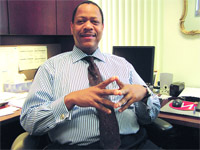
Features
Lupazoo Educates — and Inspires
Henry Lupa

Henry Lupa made his vision for a zoo become a reality.

In its literature, Ludlow’s Lupazoo is described as “a conservation and education institution demonstrating the value, beauty, and interdependence of all living things.” In simpler terms, the game farm opened four years ago is a promise kept by Henry Lupa, a Polish émigré who told his young children nearly 30 years ago that when he had the resources he would build a park with animals to enrich and educate the community. It took considerable patience, hard work, and research to make the dream reality, but Lupa was true to his word.

Henry Lupa has a soft spot for the white-tailed deer.

There are many reasons why, but primarily because it is with one of these docile animals that the remarkable story of the zoo that bears his name really began.

Lupa, a Polish émigré who had long desired to create a zoo (more on that later), began dabbling in the early ’70s with a small, backyard collection of animals that started with a deer called Betsy. One incident involving her has stayed with him for more than three decades and hits squarely at what exactly it is that motivates him.

“I had a little enclosure for the deer, and one day I was coming home from work to feed the deer, and I saw a car near the pen. I saw a woman and a young boy, who was screaming and crying,” Lupa recalled, using heavily accented English. “The woman told me that the boy was abused by her husband, that he was 4 years old. He was shaking and did not speak. She told me she did not have money to take him to a doctor to cure him.

“Someone had told her that animals would help kids,” he continued, “and she asked if the boy could come to the pen and maybe pet the deer. I said yes, and when the boy came over, Betsy ran all the way across and started licking his face. He stopped crying and started smiling.”

The boy returned on several occasions to the Lupa property off Nash Hill Road in Ludlow, getting better over time. His progress helped steel Lupa’s resolve to build a zoo, a promise he made to his own children not long after arriving in Western Mass. from his native Krakow in 1965. It took more than 30 years to make the dream reality — with hurdles including everything from the financial commitment to the laborious process of obtaining a license from the U.S. Dept. of Agriculture (USDA) in 2002.

Looking back, Lupa said that at times he became frustrated with the slow pace of progress and the sheer volume of oversight, but it has all been worth it.

Indeed, the level of pride is palpable as he conducts a tour of the facility, which is literally in his backyard — his residence abuts the 56-acre parcel he purchased for his park. Lupa knows each animal by name (both common and proper) and reputation. He also talks at length about the living quarters, diet, and any special needs, habits, or behavioral traits of the resident in question.

Pointing to a row of wooden poles inside the large home for the North American elk, Lupa said the male in the group will aggressively butt them during mating season, which started a few weeks ago. “He destroys everything,” said Lupa with a laugh. “He loves to show off.”

So too does the Guenon monkey, which is somewhat of a ladies man, said Lupa, who doesn’t worry about being politically correct. “He likes the young, pretty women; you can see it in the way he acts.”

Lupa has plenty of time to observe the monkey and the hundreds of other zoo residents. He is essentially retired from the construction company he started a few years after arriving in this country and devotes most of his time to the zoo. This is a family business, he explained, noting that his son Stanley and daughter-in-law Carla manage the venture known as Lupa Game Farm Inc. — one of the few nonprofit, privately owned zoos in New England.

It receives some support in the form of donations from individuals and businesses, but most of the funding comes from the Lupa family, which keeps admission costs low ($5 for adults) and admits children under 12 and all those with handicaps free of charge. This is just part of the zoo’s broad mission to educate, said Lupa, noting that to do this it must continue to expand its offerings — and its population.

Only 15 of the 56 acres Lupa acquired years ago are now being utilized, meaning there is ample room to grow. For the immediate future, Lupa said he would like to add some exotic cats, perhaps some ocelots or bobcats, and is seeking corporate help to make that happen.

“We ask people what they want to see, and a lot of them say they want cats,” he explained. “So we’ll try; we’ll do our best.”

This issue, BusinessWest looks at how, by trying — and doing — his best, Lupa has created a truly unique center for learning.

The Buck Stops Here

Pausing at an area set aside for large, flightless birds, Lupa offered a quick dissertation on the ostrich, and a slightly painful one at that.

“He could kill a lion,” Lupa said of the six-foot-tall bird now pecking at his hand through a wire fence nearly as tall as the animal. “Not with his mouth, but with his leg; he can kick, and he’s very powerful.

“He doesn’t really bite,” Lupa continued, although he emerged from this encounter with a small cut on his hand from the incessant nibbling. “At least, not like other things around here can bite.”

That list would include a few young alligators, some of the other birds on the premesis, and something called the ‘African jungle cat,’ a close cousin of the domestic feline but one that has spent many more hours in the gym.

Lupa has acquired these and the hundreds of other animals from a variety of sources; some come from other zoos that are closing, downsizing, or selling some newborns. Others come from auctions of exotic animals — Lupa attends two such events in Ohio each year and brought home an albino skunk from his most recent visit. Harvard University donated 10 monkeys of the common marmoset variety, and one of the alligators came from a local college after it confiscated the reptile from a student.

But while the question of how the zoo’s population – which now includes Himalayan bears, yaks, kangaroos, 20 species of monkeys, and more than 300 varities of birds – has been assembled is intriguing, the why is what makes this story so fascinating.

A television reporter recently asked Lupa that very question — why a zoo, and why in Ludlow? Paraphrasing his answer, Lupa said he replied, essentially, with ‘why not?’

“We deserve a zoo here, too,” he told BusinessWest. “They have them in New York and other big cities; we’re not second-class citizens. We should have a zoo.”

Lupa’s specific motivation was to create a facility that would give young people, especially those with handicaps or from poorer families, a place to go. He vowed to his wife and three sons that when he had the financial wherewithal to do so, he would create a zoo.

The educational and healing qualities of a zoo were demonstrated in that chance encounter between Betsy and the young boy.

“That really touched my heart,” said Lupa. “The boy came back many times, and each time he became more confident. His mother told me that after coming back a few times, he started calling out ‘Betsy, Betsy.’”

Lupa eventually acquired the needed resources through the growth of his entrepreneurial venture, N. L. Construction, which specializes in commercial projects, including schools, fire stations, and other municipal buildings. That background in construction has helped Lupa as he’s gone about the task of creating living quarters for the zoo’s population — work he describes as a labor of love — and he has used left-over building materials and some donated labor from his employees, many of whom are from Europe, to build those customized homes.

“Without that help that was volunteered, we could never have built this,” he said. “It would have been too expensive for us.”

Bear Necessities

When asked about the assorted logistics of creating a zoo and the business aspects of this venture, Lupa said it takes much more than mere love of animals to make such a facility work. It takes research, patience, hard work — and some capital.

As an example, he cited the current going rates for giraffes: $40,000 for a male and maybe double that amount for a female. “That’s why we have two males,” he said of what are perhaps the zoo’s most popular residents. “We can’t really afford a female.”

Obtaining a zoo license is a long, complex process, Lupa explained, noting that it took him 15 years to get his. The USDA is very strict when it comes to facilities for the animals, diet, and medical care, he said. “They’re watchdogs; they make sure everything is done properly.”

Lupa said he started with a small petting zoo, with Betsy and a few other animals. He was advised to move on to goats and other farm animals to show that he could effectively care for a small, diverse collection. Upon passing that test, he graduated to exotic birds and different species of animals, building a portfolio, as well as the trust of the USDA, in the process.

“There were many times when I got upset,” he said of the heavy oversight and the slow pace of progress before achieving his license in 2002. “But now, I realize why they are so strict. They have to know, definitely, positively, that if you have animals you know what you’re doing; they need to know that the animals aren’t abused, and they’re not bored, that there’s enrichment.”

When designing and building facilities for the zoo’s residents, Lupa works to create enrichment for those on both sides of the fence, or glass. For example, the giraffes’ home includes a set of stairs and a landing, enabling visitors to attain the same height as the animals, and to actually reach out, feed them, and touch them.
“You won’t see anything like this at any other zoo, maybe in the whole country,” he said after luring the animals over to him with a bag of treats. “You can’t get this close anywhere else.”

Visitors can get even closer to a pot-bellied pig named Daisy, who can be found, usually sound asleep, on the floor in a building that houses monkeys, reptiles, and other assorted residents. “She’ll probably live forever,” joked Lupa, as he tried, unsuccessfully, to rouse the animal from slumber, “because her heart probably beats twice a day.

“But she’s everybody’s favorite,” he continued. “Everyone wants to meet Daisy.”

And such introductions are a vital part of the zoo’s two-part mission — to entertain and, especially, to educate, said Lupa. He noted that the facility has a theater for educational programs, a highly interactive Web site, and several initiatives to promote awareness on conservation, the environment, and even alternative fuels; the zoo runs on bio-diesel.

“We want to help people learn,” Lupa explained. “And the best way to do that is to make learning fun. That’s what we’re trying to do here.”

Fun learning would also describe Lupa’s long journey from conceptualizing a zoo to making his a reality. He told BusinessWest that he has visited dozens of zoos and has brought home concepts and inspiration from each of them.

“Wherever I visit, the first place I want to go is the zoo,” he said. “From them, I get ideas, and I make those ideas my own.”

Poignant Paws

As he offered the giraffes another bag of treats, Lupa recalled the story of an elderly woman from a local nursing home.

“All her life she wanted to go to Africa and see a giraffe,” he recalled, “but she never got there. On her 100th birthday, some people from the nursing home brought her here. We took her over, and she got a chance to feed them. She said that since her dream had come true, she could die in peace.”

Many similar, if less emotional stories have been scripted thanks to this visionary’s generosity and determination to create a center for learning and, in many cases, healing.

To make a long and truly wonderful story short … Henry Lupa kept his promise.

George O’Brien can be reached at[email protected]
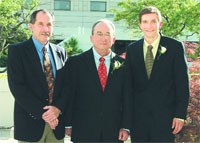
Features
ACCGS’s Boronski Earns Rare Chamber Designation
Deb Boronski

Deb Boronski, CCE, says chambers of commerce are now about much more than maps, and must provide large doses of value to their members.

Deb Boronski says it gets in your blood.

She was referring to the work undertaken by chamber of commerce administrators — duties that range from making coffee for a quick breakfast meeting to lobbying legislative leaders on minimum wage proposals and other matters that impact members and their bottom lines.

“The work is different every day,” Boronski, senior vice president for the Affiliated Chambers of Commerce of Greater Springfield, told BusinessWest. “You never know what business person will call you with what problem. It’s fun work and it’s challenging, and that’s why once it’s in your blood it doesn’t go away.” This explains why many chamber leaders stay in the profession, or sometimes one specific job, for many years, she said. “You become part of the community.”

Boronski speaks from experience; she’s been involved with chambers for more than two decades and has held leadership posts for the past 17 years, including a stint as president of the Chicopee Chamber and the past nine years in her post with the ACCGS. She wants to continue in this profession and build upon the skill set she has acquired, and for those reasons and others she sought and attained designation as a certified chamber executive.

Thus, she is now Debra A. Boronski, CCE.

Few of the officials working for the 4,500 or so chambers in the U.S. that have paid staff (perhaps 10%) achieve such status, she said, adding that doing so should help her advance her career in chamber work. But the designation also sends a message to the 1,500-odd ACCGS members that its leadership is serious about effectively serving its members and providing value for their investment in the chamber.

This is important, she said, because chamber members and would-be members are becoming ever-more-discerning customers, and ongoing education, including CCE designation, is necessary to effectively serve them.

BusinessWest talked with Boronski recently about that challenge, and also about a profession that few people really understand — or would even consider a profession.

Initial Reaction

Maps.
That what local chambers of commerce were perhaps most noted for years ago, said Boronski, adding that their lobbies were, and to some extent still are, dominated by maps of the community in question and brochures for area events, organizations, and hotels.

But the roadmaps that chambers are most concerned with now are more figurative in nature, she explained, adding that they detail how business owners and managers can run their ventures more effectively and more profitably.

This is part of an ongoing nationwide trend that sees chambers providing increasing value to their members, she said, adding that value is both needed and demanded.

“Businesses no longer join out of loyalty or feel-good reasons,” she explained. “Now, it’s all about WIFM — ‘what’s in it for me?’”

The need to effectively and continuously answer that question is one of many changes Boronski has witnessed during a long span of chamber involvement that began when she was the director of marketing and development for a Chicopee-based nonprofit organization known then as FOR Inc. and now as Sunshine Village, a group that provides employment opportunities for developmentally disabled individuals.

She became involved with the chamber’s women’s volunteer division known as the Super Cs. “The men had their own division called the Fireballs,” she said, rolling her eyes slightly. “That’s how long ago that was.”

Boronski became increasingly involved with the Chicopee chamber, and when its then-director, John Frickenberg, left his post and the profession, she applied for the job.

“I liked working for the business community,” she said of her decision to change careers, “and I felt like a natural in committee meetings and facilitating things; I really liked the work.”

It was the variety of that work and involvement in the community that most appealed to her, and these ingredients took on exponentially greater meaning when she became senior vice president of the ACCGS in 1997. That group, which has grown substantially over the past decade, now includes seven chambers — Springfield, Westfield, West Springfield, East Longmeadow/Longmeadow, Agawam, Ludlow, and Hampden/Wilbraham, and Boronski is very involved with each one.

“And that’s what makes each day different,” she explained. “One day you’re at a meeting on East Street Corridor work in Ludlow, the next it might be the Lowe’s project in East Longmeadow, or working with the redevelopment authority in West Springfield on the Merrick section initiative, or talking about Bowles Road in Agawam.”

Much of the work with and for those chambers would never be described as glamorous, she said, noting that there are countless breakfasts, golf tournaments, and after-hours gatherings for which her presence is required. But planning such events, and then being at them, networking with members, and listening to their concerns is part of the process of providing value to that membership.

Elaborating, she said that, while the chamber still provides maps and stages fundraising events like Chicopee’s famed Kielbasa Festival, which she orchestrated for many years, its primary function is economic development. “We’re here to help make businesses more profitable and to bring more businesses to cities and towns.”

This is achieved, she said, through a variety of chamber-led cost-cutting initiatives involving everything from health insurance to credit card transactions to a recently announced collaboration with W.B. Mason that will save members money on office supplies. Meanwhile, advocacy is another important element, she continued, adding that it is part of any chamber’s responsibility to see that the voice of the business community is heard.

Still another part of that equation is ongoing education, or “staying sharp,” as she called it.

“That’s how you effectively serve your members,” she said, “through education and learning from other chambers about what has worked in their communities and what could work in yours. We’re all happy to share ideas.”

As part of that ongoing education and process of getting better at what she does, Boronski first graduated from the U.S. Chamber of Commerce Institute for Organizational Management — a recognized standard for professional development and fundamental training in the chamber industry — and then sought CCE designation, which isn’t easy to earn.

“It’s quite a process,” she said, noting that first, applicants must qualify for the honor through several years of work in the industry, a demonstrably active role in the community, and service to the Association of Chambers of Commerce. Actual CCE designation is awarded through the accumulation of points — earned in several ways, including graduation from the institute, serving on and presiding over chamber association committees, and getting work published — and then several other steps designed to prove worthiness.

These include writing an essay on some aspect of one’s work — Boronski chose her involvement with the creation of the chamber’s new Division of Business Excellence — and also a lengthy interview with five CCEs, who grill applicants on subjects ranging from economic development to management style and grade their responses, and then a four-hour exam featuring essay and multiple-choice questions.

When the process is over, CCE designees are tired, but proud, said Boronski, noting that this is the only national certification for chamber professionals, and only a few people in the Commonwealth have such a plaque on their wall.

Chamber Music

Boronski told BusinessWest that while most people in the local business community understand and respect what she does, some confusion and/or ignorance remains.

“Some people will ask, ‘what’s your real job?’” she explained, “or they think I work in city hall.”

Having a few initials after her name is not likely to change that scenario any time soon, but it will give her a greater sense of pride and accomplishment that goes with venturing where few in her profession dare to tread.

And it will help her stay sharp.

George O’Brien can be reached at[email protected]
Features
Center of Advancing Entrepreneurship Expands Its Horizons

Aimee Griffin Munnings calls it “walk-up traffic.”

These are individuals who arrive, usually unannounced, at the offices of the Law and Business Center for Advancing Entrepreneurship in the Springfield Enterprise Center at STCC with questions — lots of them.

The queries vary, with subject matter ranging from business plans to branding, said Griffin Munnings, director of the center, who told BusinessWest that she expected walk-ins when the facility opened just over a year ago, but not the volume she has seen. She takes this as a good sign, an indication of the growing number of Springfield area residents starting their own businesses or pondering that option, and she is responding proactively.

In short, she wants to help individuals by not only providing answers, but also by offering insight into the questions that should be asked. It’s part of a broad expansion effort for year two of the center, created by Western New England College to provide real-life experiences for graduate law and business students while fostering entrepreneurship in the Greater Springfield area. The center pairs individuals in those academic programs with budding entrepreneurs — some of them located in the SEC’s incubators but many others from surrounding neighborhoods and communities — for semester-long projects on subjects ranging from marketing to legal entities.

While doing so, the center has also become a resource for entrepreneurs, said Griffin Munnings, with monthly programs and both answers and referrals for those walk-ins. To better serve the community, the center is introducing some new programs to put more information out to more people.

Steps include formal office hours at the center by a recently hired member of the faculty at WNEC’s School and Law and School of Business, during which entrepreneurs can have their questions answered. Also, a two-day event called the ‘How-to Entrepreneurial Institute,’ a business seminar with a wide variety of programs designed to provide entrepreneurs with basic information and resources is slated for late October.

Still another new program is something called the “Success Stories Speaker Series,” which, as the name suggests, will feature successful entrepreneurs, starting with Mestek President and CEO John Reed, telling their stories and hopefully inspiring others.

The sum of the new initiatives will serve to create a larger, better resource for area entrepreneurs, said Griffin Munnings. “We asked ourselves how we could better serve the community,” she explained, “and the answer was simply to get more information out.”

Summing up the center’s first year of operation, Griffin Munnings categorized it as a success, especially with regard to the process of linking fledgling business owners with law and business students. Entrepreneurs with ventures ranging from a restaurant to a book store; a sports drink to a transportation service called Youth on the Move were chosen for participation after filling out a lengthy application detailing their businesses and specific requests for assistance. The principals with those companies were provided assistance with such issues as which legal entity to choose, marketing and branding, and even creation of an employee handbook.

“It was a very successful start,” she said of the spring semester, noting that a dozen business owners were matched with students. “Several different kinds of questions and problems were resolved.”

While continuing this matching program, the center has also taken strides toward becoming a total resource for entrepreneurs and would-be business owners, said Griffin Munnings. An entrepreneurship speaker series was launched last year, and it continued this fall with a Sept. 12 program featuring Nadine Thompson, president and CEO of the beauty and wellness products company Warm Spirit, who spoke on the subject “Doing Well by Doing Good.”

That series will be complemented by “Success Stories,” which will start with Reed, who founded Sterling Radiator Company and later went on to acquire 30 operating companies he consolidated into Reed National. Subsequent speakers include Dennis Donovan, executive vice president of Human Resources for Home Depot, Fletcher Wiley, director of the TJX Companies Inc., and John and Steven Davis, former chairman and CEO and president and COO, respectively, of Lenox/American Saw.

“I think people are inspired by the ones who came before them,” she said. “Sometimes it’s hard for business owners to plod along … you start wondering, ‘is this actually going to work?’ Seeing people who have hung in there and done great things should be encouraging.”

The How-to Entrepreneurship Institute is another venture designed to inform and inspire, said Griffin Munnings. Slated for Oct. 27 and 28, the event will feature several seminars hosted by area lawyers, accountants, business owners, and officials with business-assistance groups such as SCORE and the Mass. Small Business Development Center. Specific programs include, ‘How to Start a Business,’ ‘How to get Money,’ ‘How to Protect Your Ideas,’ and ‘How to Get the Help You Need.’

Fast Facts:

What:The How-to Entrepreneurial Institute
When:Oct. 28 and 29, 9:30 a.m. to 5 p.m.
Where:Western New England College, Rivers Memorial Building;
The Program:A variety of seminars designed for entrepreneurs and would-be business owners
Price:$60
For More Information:call (413) 736-8462; E-mail: [email protected]

The keynote speaker will be Dan Elias, a news anchor and reporter on TV-22 and president of Zunafish.com, an online media trading Web site.

Another new program at the Center for Advancing Entrepreneurship will be office hours with Robert Statchen, recently appointed as an assistant clinical professor of Law and professional educator in the School of Business. As a joint appointee to both schools, he will teach and advise law and M.B.A. students at the center’s small business clinic. He will also answer questions and offer guidance (four hours a month) to entrepreneurs on subjects that can be addressed in a few minutes or hours, not a full semester’s worth of work by a law or business student.

Features
Springfield’s Schools Get a Clean Slate
David Shea

David Shea says privatization of school-cleaning work is gaining acceptance in a growing number of communities as a way to reduce costs and improve quality.

A five-year contract awarded to a Danvers-based company to clean Springfield’s schools — the largest such undertaking in New England — provides an effective, comprehensive test of privatization of municipal services. There are potential benefits to such outsourcing, including cost savings, but the president of the Springfield Finance Control Board says money can’t be the only consideration.

They’re calling it ‘the remediation.’

That’s the term Springfield school officials, Springfield Finance Control Board members, and those with the company hired to do the work are using to describe a massive clean-up/catch-up effort involving the city’s school buildings.

It started on July 1 and it’s still in progress, said David Shea, president of the Danvers-based company S.J. Services and its school division, EduClean, which recently opened a location in Springfield. The work has been exhaustive and quite revealing, he explained, referring to years of accumulated grime — and wax buildup.

“One custodian estimated that we were taking off 50 coats of wax,” Shea said in reference to a wooden floor in one of the elementary schools. “They wouldn’t strip the wax off, they would just clean the floor and put on another coat. It’s not that they didn’t want to take the old wax off, they just never had time.”

The remediation, now down to some last details, is the first phase of what amounts to a comprehensive test of privatization — at least as it pertains to night-time cleaning of school buildings — in Springfield and perhaps elsewhere.

The step to privatize much of the school cleaning duties is one of several being taken or considered by the Springfield Finance Control Board to help balance the city’s books and provide long-term economic stability for the community The five-year contract is expected to save the city about $9 million, according to Patrick Sullivan, Director of Parks, Buildings & Recreation Management.

But cost savings are only part of the privatization equation, said Finance Control Board President Phil Puccia. He told BusinessWest that there are several other factors to consider, including overall quality of service and effective allocation of funds.

“Privatization is not a panacea,” he explained, adding that the control board prefers mixing privately contracted work with municipal supervision. “We pick our spots … we’ll do it when it makes sense and when the city benefits.”

Nighttime school cleaning apparently meets those criteria, as does school cafeteria work, he explained. “A school system’s principle function is to educate kids, not feed them,” he explained of the latter contract, awarded this past summer. “A company like Sodexho (the firm hired) can do that far better, and more efficiently, then we can.”

The city has also looked at outsourcing trash pick-up, but saw no cost benefit, said Puccia, and has privatized some of the street-sweeping duties, so far with mixed reviews. “We haven’t seen all the results we’re looking for; that’s still a work in progress.”

From what’s he’s seen thus far, the school-cleaning outsourcing initiative has provided what the city is looking for, said Puccia, meaning results — on the bottom line and in the classrooms.

Shea told BusinessWest that EduClean, now the largest school-cleaning company in the state and probably New England, has more than 100 schools and 20 million square feet of floor space in its portfolio. He said more communities are starting to see the light — literally as well as figuratively — when it comes to privatizing school cleaning, and hopes the current project will help create more believers. Meanwhile, he expects the contract with the city will eventually help his company expand its presence in the Pioneer Valley, not only with school projects but with commercial and residential cleaning work as well.

But for now, his focus is clearly on the Springfield schools and giving them and the city a clean slate.

Waxing Nostalgic

On July 1, Shea took up work-week residence at the Hilton Garden Inn on Springfield’s riverfront. He did so to keep a close eye on what is considered to be the largest school-cleaning privatization effort in New England.

And as a result, he knows there will be many eyes on him. “This is an important contract for our company and for the city of Springfield.”

S.J. Services, now 26 years old, was started by Shea’s brother, Shawn. It was focused first on residential cleaning and eventually expanded to the commercial sector. About 15 years ago, it expanded its reach to school and municipal buildings and has been steadily building that portion of the portfolio.

School cleaning is a niche, he explained, and not as easy, at least from a business perspective, as it might look.

“A school is a lot different than an R&D building on Route 128,” he explained, noting that with most office buildings, those bidding to do work can simply add up the square footage and multiply by a certain amount. “Schools have classrooms, pools, locker rooms … you can’t just sit at a computer and punch out a dollar amount.

“We spend a lot of time learning about schools and how to handle them efficiently,” he continued, adding that the work has paid off, with the company adding a number of communities and individual state colleges and community colleges to its client list.

The opportunity to add Springfield to the list came early this spring, when, after a lengthy period of study, review of options, and negotiations with the school custodians’ union, the control board opted to privatize a large part of the work being done.

Cost-savings was part of the motivation, said Puccia, but there was more to it.

“There was a general understanding that the buildings were not as clean as they should be; they were not being maintained,” he said. “That pushed us into a competitive outsourcing mode.

“This was a decision that we grew into over time,” he continued. “When we looked at how much money we were spending in payroll and other expenses to maintain the school buildings in particular, and when we looked at the size of the workforce, it didn’t match up with the level of service we were seeing. We really felt that we should be getting a bigger bang for the buck we were spending on 200 to 250 custodians plus supplies and everything else.”

Negotiations with the union did not yield the changes in the contract requested to achieve desired flexibility, Puccia explained, adding that while the union did move slightly in the control board’s direction, it didn’t move far enough.

This led to the decision to privatize part of the school-cleaning work, a step that led to about 110 layoffs, with some of those individuals among the 40 people placed in newly created positions involving grounds and maintenance work.

A request for proposals for the school-cleaning work, including the remediation, or deep-cleaning, project, was issued in the spring, said Shea, noting that his was one of four companies that submitted bids. Other firms took a look, he said — there were bus tours of the schools given to prospective bidders — “but they decided they just didn’t want to take it on.”

A Floor of a Different Color

As work commenced on the deep cleaning, Shea could clearly understand why.

He said the project involved work that hadn’t been done in years, perhaps decades. Rest rooms were often covered with grime and graffiti, wax had built up in corners and behind equipment, and the floors … well, they were another story.

After stripping off dozens of layers of wax, EduClean workers discovered that some floors were a different shade than those walking over them would be led to believe. “There was one floor everyone thought was brown,” he explained. “It was really white; we left a small section the way it was for a few days so everyone could see the difference.”

Shea intends to continue showing things are different now that the remediation is mostly over and the company is doing largely day-to-day cleaning. He said teachers, students, and administrators will notice improvement — while the school system is saving money.

When asked why privatization of school-cleaning work has been effective in many communities and will likely yield similar results in Springfield, Shea said there are many factors, ranging from technology, to work patterns, to the simple fact that his employees won’t lose time to moving boxes of supplies.

Shea told BusinessWest that he has no doubts that the former city employees tasked with cleaning the city’s schools were working hard; they were not, however, working effectively, at least from his judgment gained from years of cleaning schools.

As one example, he pointed to the fact that most municipal school custodians were (are) full-time workers, and that studies show that such individuals are considerably less productive after four or five hours of work. EduClean hires primarily part-time employees working five-hour shifts, meaning that there is more productivity for the dollars being spent.

Technology also plays a role, said Shea, noting that as a large, private company, S.J. Services invests heavily in the latest equipment, which enables workers to do more in less time. The company also focuses on what is known as ‘green,’ or environmentally safe cleaning products and methods, he explained, adding that these create a better learning environment that reduces absenteeism while improving productivity.

Still another part of the equation is accountability, said Shea, adding that there is more now than before, because the company makes it known what it expects from each worker, and gets it.

But part of the accountability factor is having municipal supervision of the work being handled by EduClean, said Puccia, who told BusinessWest that this is a key element in determining whether any privatization effort will ultimately work.

“The question you have to ask and answer is, do you have the management talent and skill to supervise a sophisticated outside company?” he said. “That, to me, is the big challenge. And will you have the skill sets to draft a contract that really holds the private company’s feet to the fire and holds them accountable for the work they promised they’d deliver in the bid.”

Thus far, these elements appear to be in place with regard to the school-cleaning contract, he continued, adding, again, that the bottom line isn’t merely the bottom line.

“If we save money on the deal, that’s great,” he said. “But you need to have the buildings sufficiently clean so kids can learn and teachers can be happy that they’re working in them.”

Sweeping Statement

As he wrapped up his interview with BusinessWest in a classroom at Van Sickle Middle School, Shea stooped to pick up a piece of trash from the floor by the teacher’s desk.

“It’s second nature,” he said, adding that he will be staying at the Hilton Gardens until he what he called “a comfort level” is achieved with the Springfield project. By that, he meant that he would stay in Springfield until was sure this initiative is running like clockwork. He thinks he’s just about there.

In the meantime, he’s been making some introductions to community and business leaders, with the expectation that this contract could eventually lead to a larger base of business here.

That will come later, though. For now, he focused on that wax build-up and making it history.v

George O’Brien can be reached at[email protected]

Features
Disney Institute Brings Creativity and Team-building Expertise to Western Mass.

Business owners often wish for a little magic to help them through the tough spots. While the Disney Institute, the professional development arm of the world-famous corporation is quick to note that the company’s success didn’t happen overnight, some Western Mass. companies are hoping the Disney model will be just the thing to help them pull the sword from the stone.

It can still be a challenge for executives at Disney to explain that the global corporation that began as a cartoon studio in the 1920s doesn’t run on pixie dust and wishes on stars.

But undoubtedly, there’s a little more going on behind the scenes than flights of fancy at a company that now includes 10 theme parks, motion picture studios, countless consumer products, and its own television channel and radio station. Since 1986, the Disney suite of services has also included the Disney Institute, a professional development and training entity that has been using Walt Disney World in Orlando, Fla. as a ‘living laboratory,’ examining the effectiveness of day-to-day operations and translating them to businesses and organizations around the globe.

Those everyday practices at Disney recently became the backbone of Team Creativity, the latest Disney Institute offering that brings the Disney method to various groups and businesses. The program, which launched just this year, will be staged at Holyoke Community College’s Kittredge Business Center on Sept. 26. Keith Hensley, executive director of business and workforce development at HCC, said the college reached out to Disney earlier this year, in hopes of bringing a little bit of the company’s magic – but more importantly, its corporate know-how – to Western Mass.

“We’ve had the Disney Institute out twice before,” said Hensley, “for training on two separate topics – customer service and leadership, Disney style. Both were very well-received, and when I found out the institute had come forward with Team Creativity, I thought it was a great thing to offer area businesses.”

Hensley said it’s coincidental that the program will be staged so soon after the Kittredge Center’s opening, but it’s a fortuitous coincidence nevertheless.

“We wanted the institute to come and offer this particular training regardless of the venue, but it’s a great fit with some of the things we’re trying to achieve through the business center,” he said. “It’s getting more and more competitive out there in the business world, and what want we try to do is provide tools companies can use to stay economically viable by improving their competitive edge.

“It’s a two-pronged approach,” Hensley continued, “that focuses on using assets within a company and being able to use sparks of creativity to better position that company.”

Hi-ho, Hi-ho

And that, he said, is where the Disney Institute comes in. The organization uses the Disney corporate model and culture as a springboard for training workshops and seminars, and according to Bruce Jones, programming director for the institute, creative problem-solving and a team-based approach are two major hallmarks of that model.

“Creativity and high performing teams are our tenets at Disney,” he said. “We’re always looking at ways to broaden the definition of ‘team.’ We’ve long had content surrounding teams and creativity, but they’re things that are constantly improved.”

Jones explained that the institute’s first off-site program, Keys for Excellence, touched on the power of team-building through creative channels, but Team Creativity takes it to a new level.

“Keys was the first program created for which we leave property on a scheduled basis,” he said. “That continues to be a strong focus. But recently, participants started asking for more. Keys is more of a presentation, but Team Creativity is a full-day workshop that uses brainstorming and team-building activities to discover effective uses of both.”

Jones added that the institute terms the all-day events workshops rather than seminars, because of the high level of audience participation, modeled after Disney employee trainings.

“We are pretty confident in the program,” he said, “because it’s based on leadership, people, management, service, and loyalty – all things we’ve researched and put into practice at Disney, not to mention our audiences expect Disney to have a story to tell, which is another strength.”

Jones added that the workshop is well-suited for those who do not often find themselves in creative positions.

“This is not necessarily tailored to those who find themselves in the traditionally creative role, but to those who want to examine the strength of creativity in their own jobs and teams,” he said. “We’ll look at the analysis of ideas and the implementation of ideas, take them through activities that explore that team dynamic, and hopefully, they’ll discover the dynamic that exists between relationships and results.”

A Problem-free Philosophy

That link between relationships within the workplace and how they often affect the outcome of a given team-related task is something Hensley said he hopes will resonate within the Western Mass. business community. While they’re often seen as ‘soft skills,’ he said team-building and creative management are two things Team Creativity can offer to give the region that competitive edge he sees as essential.

“As we all know, Disney is a hospitality leader, but we absolutely know that their model works and can be applied to other industries,” he said, noting that some local companies, such as Balise Auto Sales, have already jumped on board. “It’s nice that companies will have the opportunity to experience a model that is known to work and not have to reinvent the wheel. That’s why we reached out to Disney – they have a tried and true system from which we want to learn.”

Ann Holland, director of organization development for Balise, echoed Hensley’s comments, adding that as part of a company that has grown considerably in recent years, participants attending Team Creativity from Balise are hoping to glean some information on how to maintain a cohesive corporate culture.

“Balise is growing by leaps and bounds, and with that kind of growth, gaps can occur within internal branding efforts,” she explained. “Disney has built a culture and built an internal brand to support its external branding, and because of our expansion, we are at a point at which we have a tremendous opportunity to learn from that, and engage our associates.”

Holland added that as Disney has already gone through that process of major growth and expansion, she’s also hopeful that the workshop will provide some insight into corporate growth, and how to best streamline the process.

“As a company gets larger, there are more and more projects happening simultaneously and people running in all different directions,” she said. “The question becomes ‘how do you avoid getting too subdivided?’ Disney has really latched onto the answer.

“One of my number one concerns is to keep our culture healthy and strong, as well as be more efficient, and provide career pathing for our associates, which is another thing Disney does well,” Holland added. “I’m also hoping to get some insights on new ideas, and confirmation of current ideas.”

Makes No Difference Who You Are

Jones said some of Holland’s questions are indeed the type of complex issues Team Creativity aims to address, however he did note that the validity of the Disney model might not be immediately evident to some. Therefore, there are several components of Team Creativity that explain how one industry’s culture can be applied in other sectors.

“We don’t hear a lot of cynicism, but it’s probably there,” said Jones. “Some people can’t get past our product. But we do the work up front to address concerns; we ask people who might not be sure how this will apply to their business to think about a scenario in which Disney is in a completely different business, and ask themselves, ‘could these principles apply elsewhere?’

But beyond that, Jones said there are some specific aspects of the program that were designed to make the key points even more relevant to various industries, in part to answer to skepticism regarding the relevance of corporate culture at, essentially, a theme park.

“We point out that there are many similarities among our business and others,” he said, “and competition – the need to stay on top of our game – is one big piece of that.

“It’s important to understand teams and how they work,” he added. “Teams are units of performance. We’re not teaching creativity for fun, but rather creativity to help deliver results. It helps build effective groups and networks; more ideas are generated, teams are strengthened, and that becomes a powerful tool to move an organization forward.”

Jones also noted that Disney functions in a unionized environment, another similarity to many local businesses.

“All types of organizations benefit from thinking about teams and creativity,” he said. “We have that conversation right up front with the audience – we tell people that we’re going to concentrate on the principles at play in our organization, and we stress that it doesn’t always come easy … we’re not perfect, and we don’t take for granted that people understand our culture. But we’ve evolved to where most big organizations find themselves thinking about things like corporate culture very deliberately.”

Fast Facts:

What:Team Creativity, Disney Style
When:Tuesday, Sept. 26, 8 a.m. to 4:30 p.m.
Where:The Center for Business and Professional Development at Holyoke Community College
Cost:$349/person; teams of three may bring a fourth team member at no cost. Breakfast, lunch, and materials included.
Contact:(413) 552-2122;[email protected]

Bedknobs and Broomsticks (and Business)

That deliberate approach, added Jones, includes sharing the Disney model with other businesses through the institute, as a way to not only share ideas with others, but to hone a culture that has been ingrained at the company since the early 1950s.

“Disney is always working on improving,” he said. “But we have a culture that has been grown organically since the days of Walt – he thought of himself as a bee, pollinating others with ideas that they could take hold of.

“It’s a culture that has grown organically, but now it’s something that we incorporate into virtually everything we do.”

And that’s not magic, though it does make for some animated conversations.

Jaclyn Stevenson can be reached at[email protected]

Features
Springfield Club Owners Take to the Sky with New Entertainment District Venture
Steven Stein and Mike Barrasso

Steven Stein and Mike Barrasso, at SkyBar overlooking Springfield, adopted the concept of a rooftop bar from several successful venues worldwide.

From their newest venture in Springfield’s entertainment district, club owners and developers Steven Stein and Mike Barrasso have an enviable view: one that includes the city’s skyline and comes complete with comfortable seating and a chilled martini.

Located at Stearns Square in the heart of Springfield’s club quarter, Skyplex is Springfield’s newest nightspot, replacing Stein and Barrasso’s former business, Rain Entertainment Complexes, with the goal of catering to an older, more sophisticated crowd.

The facility will include three separate clubs, each the product of months of research and redesign on the part of the business partners; the ground floor has been converted into a country western bar dubbed Buck Wild, while the second floor has become Vivid, an interactive, video-driven dance club.

But it’s the complex’s third component that is creating the loudest buzz. Modeled after similar ventures in other parts of the country, SkyBar is an open-air rooftop lounge complete with private VIP seating, cabana bars, and a view of the Springfield skyline.

Rooftop lounges are becoming popular venues in several major cities across the globe, including Las Vegas, New York City, and London. Stein and Barrasso, known locally for large-scale projects including the purchase and renovation of the Hippodrome, formerly the Paramount Theatre, in 1999, said they’ve tried to bring some of that big city flair to Springfield in an effort to improve the city’s economic picture as well as its overall image.

“We try to stay ahead of the trends, not follow them,” said Barrasso, “and rooftop ultra bars are huge right now. What we’re trying to do is attract more people from the disposable income crowd – it’s all in keeping with ongoing economic development.”

Leaping Tall Buildings

The partners said they embarked on a country-wide fact-finding mission last year in search of fresh, new ideas in the entertainment sector, and they happened frequently upon rooftop bars teeming with patrons. Such facilities capitalize on little more than some savvy design schemes and fresh, night air. Country-western themed bars, they said, have also proven to be lucrative in other parts of the country, and tend to attract an older, more sophisticated crowd. Similarly, they noted that dance clubs such as Vivid remain a constant draw for a diverse customer base, especially in urban areas.

But applying big-city formulas in a smaller locale, one that has seen its share of financial woes of late, isn’t the only risk the duo has taken in changing the property they manage. In completely overhauling the complex, Stein and Barrasso made some substantial financial committments.

In addition to the creation of SkyBar, Buck Wild, the complex’s country western offering, for instance, includes a mechanical bull that was installed at a cost of $15,000. It also features the first of what Stein and Barrasso hope will be many cross-promotional items with area businesses – a Harley Davidson from Tibby’s in Springfield.

Similarly, Vivid includes a full lighting system, private dance floors, couches for seating, and a 360-degree video-screen that is fully-synchronized with the sound system – allowing for dj-mixing and video presentations that reflect the beat of the music.

Technological upgrades such as these have been paired with more-pressing renovations, such as a new sprinkler system and handicapped-accessible elevator. All of these improvements have added up to a price tag that exceeds $250,000.

“The cost actually ended up being about double what we originally anticipated,” said Barrasso. “But we’ve done our best to use local contractors and local materials, and we expect that the amount of business we’ll attract will more than take care of it.”

Climbing to the Top

That’s not to say the partners are blindly optimistic about their new venture, Barrasso added; they are aware of the leap of faith involved with overhauling an existing club in a struggling city.

“We know this is a risk, changing the format completely at Stearns Square,” he said. “But the Hippodrome and Rain were also risks with which we believed we could serve a new entertainment market niche in Springfield.”

Indeed, both venues turned profits. The Hippodrome remains a popular nightspot that draws national acts to its stage regularly, and Rain, formerly the Hot Club, also maintained steady traffic prior to the format change and renovation project. However, Barrasso explained that over the past two years, its clientele began to shift toward a younger, rowdier set.

“There were a lot of factors that led to that,” he said, noting that among them were crime statistics that kept many older, more discriminating club-goers away.

We weren’t happy with the direction the complex was moving in, so we decided to shut it down and start over.”

Stein added that since the new venue has been modeled directly after similar venues in Vegas and California, he expects new audiences to visit if for no other reason at first than the curiosity factor.

“It’s something that is totally unique to Springfield,” he said, adding that a twist on the rooftop concept in Springfield will be the expansion of service not only at night, but during after-work hours and for private and corporate functions.

Stein said he hopes to see the Springfield business community leading the way toward utilizing the space for after-hours socializing or as a venue for events ranging from networking opportunities to office parties.

“We’re getting feedback already from the city’s professionals who work in the high rises,” he said, “because they can literally look out and see our progress in transforming the roof into an open-air gathering place. I think this beats any other function space you can find, and with the demographic we’re trying to hit, cooperation with the business community is a perfect fit.”

To further promote that idea, Stein and Barrasso have begun an extensive marketing campaign announcing the creation of Skyplex, targeting adult contemporary radio stations, local television networks, and private households through a direct mail campaign.

“We’re also very Internet savvy,” said Barrasso, “and that has helped us get the word out to our key demographic. We’re looking for a nice mix of professional, 25- to 45-year-olds, and using E-mail and certain Web sites like MySpace are a great way to reach them.”

SkyPlex’s page on MySpace.com – the well-known networking site that is increasingly prevalent in the marketing repertoire of many entertainment-based businesses – has already attracted more than 300 ‘friends,’ or MySpace users who receive regular bulletins and event listings from the club.

Watching the World

Stein conceded that even he is amazed at how much his industry has changed, both in terms of trends and the role that virtual marketing plays.

“It’s a new world out there,” he said with a laugh. “It’s our job to keep up with it.”

He and Barrasso have a vantage point, however, that allows them to see many things coming early – be it a rain cloud on the horizon, or a new venture – or adventure.

Jaclyn Stevenson can be reached at[email protected]

Features
New Program Takes Business- Retention Efforts to the Next Level
Ann Burke

Ann Burke describes HomeField Advantage as a proactive, team-based approach to business retention.

Ann Burke called it “a new way of looking at business retention.”

She then paused for a second and declared that she didn’t really like that word retention, or at least she didn’t think it worked properly in this context.

“It sounds too static, like we’re just preserving the status quo — and it’s much more than that,” she said, referring to a new program created by the Economic Development Council of Western Mass. (EDC) called HomeField Advantage. Describing it, Burke, vice president of the EDC, said it’s all about effective portfolio management — meaning the region’s portfolio of businesses.

HomeField, based on a model used in Louisville, Ky. and other cities, was created to help retain those businesses, Burke explained, noting that keeping existing companies in the 413 area code is an important part of the EDC’s broad mission. But it will also assist individual business owners with efforts to change, grow, and become more competitive.

How? By essentially enabling area economic development leaders and supporting agencies to become much more proactive in their approach to business-retention efforts.

“In the old days, you’d wait for business owners to come to you and say, ‘I’m getting ready to move out of town,’ or ‘my lease is up, and someone from North Carolina is recruiting me,’ or ‘I have to move because I can’t find a workforce,’” she explained. “What we’re hoping to do is be more proactive and develop relationships with these companies so we can help them for the long term.”

HomeField is a team approach, she said, meaning that affiliates of the EDC, including the Regional Technology Council, Affiliated Chambers of Commerce, and the Greater Springfield Convention & Visitors Bureau, other agencies, such as the Regional Employment Board, and legislative leaders are brought together to solve problems and create opportunities.

The field of focus is broad, she continued, and includes everything from workforce training to lean manufacturing processes; site and location analysis to internship opportunities with area colleges and universities.

Some of these issues are among those that a Homefield team is currently addressing with one of its first ‘clients,’ East Longmeadow-based Lenox America Saw.

The manufacturer of saw blades and hand tools has no intention of leaving the region, said its president, Bill Burke, but to remain in this area it must take action — and it will need some help as it does so.

Some of the costs of doing business are simply beyond the company’s control, he said, listing the skyrocketing price of steel as one example. But there are other expenses, everything from energy to workforce training to property taxes, that can be controlled (or reduced) through proactive steps.

“The companies that find themselves in trouble are the ones that are not proactive,” he told BusinessWest. “They wake up one morning and realize they have major issues that they can’t overcome overnight. I’m trying to stay ahead of the game and make sure that doesn’t happen to us.”

Ann Burke said HomeField, which had what she called a ‘soft startup’ six months ago, is being used to assist not only individual companies of all sizes, but also entire business clusters, including the region’s precision machining sector. For that group, officials helped secure a $150,000 grant to hire a cluster manager to help identify concerns — in this case, the overriding issue is securing an adequate supply of machinists for the future — and shape strategies for addressing them.

Overall, HomeField was created to bring a stronger sense of organization to business-retention and competitiveness issues, said Burke, “We’re not doing anything that we didn’t do before,” she explained. “We’re just taking a more comprehensive, team-oriented approach to the process.

“We want to make sure that nothing falls through the cracks,” she continued, using a phrase she would employ early and often as she described HomeField and its many potential benefits for the region.

The Game Plan

The marketing materials being developed for HomeField Advantage are still a work in progress, with some final design elements and fonts to be determined.

But the emerging image is that of interlocked paper clips, and Burke believes it will effectively convey just what this venture is designed to do: make connections.

Specifically, these are connections to resources, she said, which come in a number of shapes and sizes, from individuals to local, state, and federal agencies. A team comprised of several such resources then takes a three-pronged approach to specific cases: assessment of needs and challenges; professional advice on those issues; and linkage to strategic business information that may help in the development of strategic initiatives.

Here’s how it works: It starts with some initial contact, said Burke, noting that sometimes, businesses find HomeField, and other times, it’s the reverse. And there are several points of entry, including referrals from EDC affiliates, a link on the EDC Web site (www.westernmass edc.com), and a phone number — (413) 781-1591, ext. 19. The goal is to make things easier for business owners who may or may not know where and with whom to start with regard to their basic issues or problems.

Once contact is made and the concerns, goals, and challenges to meeting them are outlined, a team is assembled to take on that specific case and develop “customized solutions.”

To facilitate that process, the EDC has acquired a state-of-the-art business-Ann Burke called it “a new way of looking at business retention.”

She then paused for a second and declared that she didn’t really like that word retention, or at least she didn’t think it worked properly in this context.

“It sounds too static, like we’re just preserving the status quo — and it’s much more than that,” she said, referring to a new program created by the Economic Development Council of Western Mass. (EDC) called HomeField Advantage. Describing it, Burke, vice president of the EDC, said it’s all about effective portfolio management — meaning the region’s portfolio of businesses.

HomeField, based on a model used in Louisville, Ky. and other cities, was created to help retain those businesses, Burke explained, noting that keeping existing companies in the 413 area code is an important part of the EDC’s broad mission. But it will also assist individual business owners with efforts to change, grow, and become more competitive.

How? By essentially enabling area economic development leaders and supporting agencies to become much more proactive in their approach to business-retention efforts.

“In the old days, you’d wait for business owners to come to you and say, ‘I’m getting ready to move out of town,’ or ‘my lease is up, and someone from North Carolina is recruiting me,’ or ‘I have to move because I can’t find a workforce,’” she explained. “What we’re hoping to do is be more proactive and develop relationships with these companies so we can help them for the long term.”

HomeField is a team approach, she said, meaning that affiliates of the EDC, including the Regional Technology Council, Affiliated Chambers of Commerce, and the Greater Springfield Convention & Visitors Bureau, other agencies, such as the Regional Employment Board, and legislative leaders are brought together to solve problems and create opportunities.

The field of focus is broad, she continued, and includes everything from workforce training to lean manufacturing processes; site and location analysis to internship opportunities with area colleges and universities.

Some of these issues are among those that a Homefield team is currently addressing with one of its first ‘clients,’ East Longmeadow-based Lenox America Saw. The manufacturer of saw blades and hand tools has no intention of leaving the region, said its president, Bill Burke, but to remain in this area it must take action — and it will need some help as it does so.

Some of the costs of doing business are simply beyond the company’s control, he said, listing the skyrocketing price of steel as one example. But there are other expenses, everything from energy to workforce training to property taxes, that can be controlled (or reduced) through proactive steps.

“The companies that find themselves in trouble are the ones that are not proactive,” he told BusinessWest. “They wake up one morning and realize they have major issues that they can’t overcome overnight. I’m trying to stay ahead of the game and make sure that doesn’t happen to us.”

Ann Burke said HomeField, which had what she called a ‘soft startup’ six months ago, is being used to assist not only individual companies of all sizes, but also entire business clusters, including the region’s precision machining sector. For that group, officials helped secure a $150,000 grant to hire a cluster manager to help identify concerns — in this case, the overriding issue is securing an adequate supply of machinists for the future — and shape strategies for addressing them.

Overall, HomeField was created to bring a stronger sense of organization to business-retention and competitiveness issues, said Burke, “We’re not doing anything that we didn’t do before,” she explained. “We’re just taking a more comprehensive, team-oriented approach to the process.

“We want to make sure that nothing falls through the cracks,” she continued, using a phrase she would employ early and often as she described HomeField and its many potential benefits for the region.

The Game Plan

The marketing materials being developed for HomeField Advantage are still a work in progress, with some final design elements and fonts to be determined.

But the emerging image is that of interlocked paper clips, and Burke believes it will effectively convey just what this venture is designed to do: make connections.

Specifically, these are connections to resources, she said, which come in a number of shapes and sizes, from individuals to local, state, and federal agencies. A team comprised of several such resources then takes a three-pronged approach to specific cases: assessment of needs and challenges; professional advice on those issues; and linkage to strategic business information that may help in the development of strategic initiatives.

Here’s how it works: It starts with some initial contact, said Burke, noting that sometimes, businesses find HomeField, and other times, it’s the reverse. And there are several points of entry, including referrals from EDC affiliates, a link on the EDC Web site (www.westernmass edc.com), and a phone number — (413) 781-1591, ext. 19. The goal is to make things easier for business owners who may or may not know where and with whom to start with regard to their basic issues or problems.

Once contact is made and the concerns, goals, and challenges to meeting them are outlined, a team is assembled to take on that specific case and develop “customized solutions.”

To facilitate that process, the EDC has acquired a state-of-the-art business-retention software program called the Synchronist Business Information System, which, according to its makers, provides economic development professionals with a “360-degree view of their economic development portfolio.”

The program, which Burke described as one tool to be used by HomeField Advantage teams, enables users to organize, analyze, and report company information. By doing so, they can more easily identify companies with the best growth potential, predict businesses at risk, and create a valuable proprietary database.

Building that database has been one of the primary initiatives of the HomeField program, she said, adding that Synchronist is now being used in dozens of cities and regions and has helped script several success stories.

“It’s being used all over the country to help regions better understand the businesses they have,” she explained, “and to be able to analyze them and work with them to develop solutions.”

Burke said HomeField has already assisted several companies with specific concerns and questions, and expects the volume to increase once more business owners become aware of the program’s existence.

Lenox American Saw represents the best ongoing example of how the program works and why it was created, she said, adding that work to assist the company with a wide range of issues was initiated in the early spring. That list includes workforce training, the possible creation of an Economic Target Area, or ETA, a designation needed to qualify for tax-increment financing, or a TIF, and discussions with officials at Northeast Utilities about strategies to make the company more energy efficient.

The securing of state workforce training grants is at the top of the list, said Bill Burke.

“We’ve hired more people in the past six months than we did in the previous 10 years — we’re running the factory 24 hours a day, seven days a week,” he explained. “In doing so we noticed a significant strain on our existing employees and our need to focus on training and providing additional tools like Six Sigma training to ensure that the quality is second to none.”

Other priorities for the company include reducing energy costs — they have risen nearly 40% over the past year — as well as securing ETA status — East Longmeadow currently does not have that designation, and help from town officials and legislative leaders is needed to get it.

“For us, it’s about what’s happening to our business in terms of costs we can’t control like soaring utility costs and raw material costs — things that are just killing us from a competitiveness standpoint,” he said. “So we have to look for other areas to offset that.

“We’re doing well and we’re growing … my objective is to sustain that, and to be able to compete globally we need to have the best cost,” he continued, adding that, overall, he sees real potential in HomeField as an effective way to address business retention issues in the region. “We’re trying to do a lot as a region to recruit new companies, but it’s the businesses that are already here that are often neglected until they have to make a decision that they can no longer stay.”

The HomeField program may improve American Saw’s efforts to meet its goals, said Ann Burke, by better organizing assistance efforts and effectively fast-tracking them. Elaborating, she said that any company facing similar issues would eventually have to meet with such groups as the REB and the Affiliated Chambers. What HomeField does is put them all in the same room at the same time.

“We had one large meeting at the start,” she said, referring to Lenox American Saw. “Their team, which included HR people, the plant manager, and others, met our team, and we were able to make some assignments on specific issues. Our team meets on a regular basis and we communicate as a group back to their team to make sure nothing falls through the cracks.

“This is a way for us to provide assistance to a particular company, and it could be one issue or myriad issues,” she continued. “They have a central point of contact and access to a team of professionals.”

And while many of the HomeField initiatives will be on behalf of individual companies, work will also be focused on industry clusters, she said, returning to the region’s precision machining sector and proactive steps to help it.

Using Synchronist, and working in conjunction with the Regional Competitiveness Council, the EDC interviewed about 50 companies large and small to identify common issues, challenges, and opportunities. The information gleaned was eventually included in a summary given to Gov. Romney on the state of precision manufacturing in the Pioneer Valley, and also incorporated into the application that eventually landed the $150,000 grant from the Mass. Technology Council to hire the cluster manager.

That’s an effective example of how HomeField works, she said, noting that the broad mission
s to make full use of information and effective communication to drive measures that will yield both short- and long-term results.

And hopefully there will be many similar examples in the years ahead.

Box Score

Returning to the more common usage of the phrase ‘portfolio management,’ Burke said that individuals and institutions obviously want to see their investments grow, not remain static, and that’s why they need to be managed.

The same holds true of the region’s portfolio of businesses, she said, adding that simple retention is the baseline goal. Retention and growth are desired, she told BusinessWest, and HomeField provides an effective vehicle for meeting those broad goals.

“This portfolio needs to be managed,” she explained. “And this gives us the tools we need to do that more effectively.”

George O’Brien can be reached at[email protected]

Features
The Majestic Theatre Marks 10 Years of Running Lines and Renovation

The ongoing success of the Majestic Theatre in West Springfield certainly wasn’t scripted. Instead, it’s been the product of determination, dedication, and imagination exhibited by a team of managers who understand that, in the theater industry, there is no such thing as business as usual.

It’s the climactic scene of the second act of the musical Miss Saigon.

A helicopter — or something approximating one — is lowered to the stage and then raised again as the last Americans are evacuated from the roof of the U.S. Embassy as the city falls to the Vietcong in 1975.

Large theater houses often struggle with the logistics of the demanding scene, and management at the Majestic Theatre in West Springfield, a small but popular venue, certainly had their doubts about whether they could pull it off. But like many of the other fears and concerns raised during the Majestic’s first decade of operation, this one proved unwarranted.

Indeed, the helicopter scene went off without a hitch, and Miss Saigon, staged just last season, would go on to become the theater’s highest-grossing show to date, pulling in more than $190,000 after extending its run for a week to meet audience demand.

“There hasn’t been a season when we haven’t wondered about a particular show or decision,” said Todd Kadis, the Majestic’s treasurer. “But it seems as though we’re always wrong; shows we’re not sure about always find an audience, and that helps us build our base.”

Like the shows it stages, the Majestic’s history is a compelling story, one with many plot twists and intriguing characters, including the theater’s founder, Danny Eaton. An actor, director, playwright, and entrepreneur, Eaton formed a theater troupe, known as The Theater Project, in 1993.

It began staging shows at the Church of the Good Shepherd in West Springfield, just down the street from its current home, the former Majestic Theater movie house, which the troupe moved to in 1997, adopting that name in the process. After first renting the 78-year-old landmark, The Theater Project (still the formal name for the non-profit corporation) purchased the property from United Bank in 2003 for $400,000.

Eaton said the venture’s first decade has been filled with challenges, triumphs, a hugely successful classic car raffle fundraiser — and plenty of sweat equity.
“It would be nice to have just one typical, standard year,” he said, “But we haven’t had one yet.”

The Play’s the Thing…

Indeed, the theater industry is one that requires constant upgrades in terms of technology and infrastructure, as well as diligent attention to cultural trends and audience preferences, to ensure that seats remain filled.

Marie Susen, the Majestic’s company manager, said a number of elements contribute to theater experience, and the devil is in the details.

“There are so many factors,” she said. “Everything factors into whether or not a ticket is purchased for the first time and into whether or not a person comes back — how they’re treated on the phone, if they are greeted at the door, the service at the cafe, the ambience … people are predisposed before they ever see anything on stage.”

Eaton agreed that all aspects of the Majestic, from the ticket price to the freshness of the popcorn, create the overall experience that the theater is trying to sell to a public that, unlike other regions, doesn’t already have a strong cultural undercurrent.

“Finding new audiences is tough,” said Eaton. “Western Mass. doesn’t have a cultural tradition like Boston or New York. We have to first sell people on the fact that theater isn’t necessarily a departure from the rest of their lifestyle. Then, it’s on to choosing shows that will appeal to wide audiences, while not requiring technical aspects that we can’t handle.”

The Majestic has already proven, through the helicopter scene in Miss Saigon, that it can clear logistical hurdles that some may have originally thought beyond its reach. But Eaton said the focus is always on the next challenges, not those in the past tense.

“I certainly recall when we first opened, how many people commented on how our dreams had just come true,” said Eaton. “But that suggests that we had reached the end of a long road, when in actuality, opening a theater is the easy part. Keeping it open is the real challenge.”

The Majestic has several plot points in its history that speak to that concern and its ability to address it through proactive steps designed to boost revenues and keep the venture financially sound.

Shortly after the Elm Street property was purchased, a cafe was added to the space for use during shows and to rent for private functions. And in addition to its current venue, Eaton said The Theater Project also purchased a second property on Baldwin Street in 2004 for use as a set shop, rehearsal space, and living quarters for actors.

The theater has also seen its share of renovations and upgrades each year, all geared toward continuous improvement of the space and the theater experience.
Kadis said most of those improvements come with large price tags.

A new sound system, for instance, recently cost the theater $60,000. The current challenge facing the Majestic is the installation of a new sprinkler system, mandated by the state, which has necessitated major construction on site at a price tag that is expected to exceed $115,000 when completed.

It’s not just these larger expenses that add up, however; regular operation of the theater and staging of its five shows each season also necessitates a number of expenses. These include rental fees for scripts and music scores, and salaries for actors and stage hands — all of the Majestic’s staff members are paid, Eaton said. And in the case of equity actors (those who are unionized), a minimum salary of about $380 each week is required for each, as is health insurance and living quarters.

“There are all of those things to take into account, as well as the prevailing goal of producing top quality theater,” said Kadis. “To offset costs, ticket sales are number one.” The theater’s season subscribers number approximately 3,800, and individual ticket sales usually fall between 22,000 and 25,000 annually. But Eaton added that box office sales alone aren’t nearly enough to cover expenses, and although sales have remained mostly steady for the Majestic, they are a source of revenue for all theaters that never holds a guarantee.

“The line-up is the line-up,” he said, “and we’re not going to win over every single audience with every play we do; people have different tastes and preferences. People’s time is worth so much more than that $26 ticket, and if we ever get to the point where people feel their time is being wasted, we’re in trouble, and we’re very conscious of that.”

Rewriting the Script

The theater actively seeks corporate sponsors each season, offering advertising in programs and on billboards throughout the year. However, it’s the theater’s largest fundraiser, a classic car raffle that began 11 years ago, that does the most to keep the Majestic in the black.

Each year, Kadis explained, raffle tickets are sold for a chance to win one of two classic cars or motorcycles, which are purchased by the theater from a variety of sources — from private sellers as close to home as Springfield or from dealers as far away as El Paso, Texas.

“Originally, the raffle was tied into the first show we held at this location — The Buddy Holly Story,” said Kadis. “We were selling tickets before the theater had even opened. It was such a hit, that we kept going. The raffle gave us the cash flow to open the Majestic, and now it helps us grow consistently every year.”

And that growth has allowed the Majestic to take some important creative leaps in the last few years. While its distinction as a professional theater (as opposed to an amateur operation) has its downsides, such as increased fees for script use based on box office revenue, it also holds some cache in the theater world, and sets the Majestic apart from other venues in the area — few hold such a distinction and employ largely local talent, as the Majestic does.

In turn, that reputation for quality has allowed the theater to stage some original shows without sacrificing audience turnout. Eaton has written three plays — titled Winds of Fashioning Time, inspired by the letters of Ethel Rosenberg; The Ride, which details a cross-country motorcycle trip of Vietnam veterans, traveling to the Washington, D.C. memorial; and Anthem, a musical co-written with Kadis.

Eaton would like to stage more of these original shows, perhaps by rehabbing a portion of the Baldwin Street property in the future to serve as a studio theater, or black box, space for additional performances. “That would make for more flexibility,” he said.

Such an endeavor would necessitate more grunt work for Majestic staff. There would be more concrete to pour, more cement blocks to place, and twice as many sets to paint. But a smaller venue would likely negate the need to cable a helicopter to the ceiling.

Maybe.

Jaclyn Stevenson can be reached at[email protected]

Features
Still Struggling with Budget Cuts, Area Career Centers are Being Entrepreneurial

Kevin Lynn

Kevin Lynn of FutureWorks said proactive programs and business strategies are one way to offset the effects of funding cutbacks.

Sometimes, when David Gadaire, executive director of CareerPoint one-stop career center in Holyoke, talks about the center, it sounds like he’s describing an emergency room.

“When people lose their jobs, they go into panic mode,” he said. “Often, people are frantic. They walk in off the street, and we work to help them as best we can. At the same time, the phone is ringing, sometimes 300 calls a day, and everyone has a specific, important question that needs to be answered. To succeed, it becomes part of our jobs to cut through the bureaucratic system, which we are — very — and focus on being as customer-driven as possible.

“It’s like triage.” CareerPoint and its Springfield counterpart FutureWorks, have been serving Western Mass. as the only one-stop career centers in the area for 10 years, and upon this anniversary, Gadaire and others are reflective of the challenges of the past that have been surmounted. However, they’re also mindful of the challenges to come.
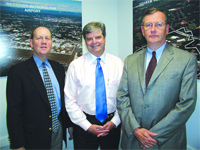
In those 10 years, career centers across the country have faced mortal wounds to their budget, while the job-seeking community remains in constant supply, and more in need than ever to enter the job market armed with increasingly sophisticated skills.

Rexine Picard, executive director of FutureWorks, has been at the center since its inception in 1996, and has seen the changes to the market firsthand.

“It has been an intense journey,” she said. “I came on board as a career counselor and made my way up to my current position. This was the first one-stop career center in Massachusetts, and I saw it as a great opportunity to do things out of the box.”

Center Cuts

According to Picard, that’s exactly what happened — FutureWorks thrived in its first year by focusing on the development of individual career skills, education, and strong employee-employer matches. And despite budget cuts that have necessitated some downsizing over the past 10 years, she said FutureWorks has managed to remain on an even keel in terms of services, although there have been stormy periods.

At one point, for instance, state funding was virtually eliminated in the middle of the year for a program called Next Step, which provides work opportunities for welfare recipients. The slash necessitated the lay-off of 14 people, and although funding was eventually restored and all 14 employees returned to their posts, it’s surprises like those that can rock the boat.

As can a little controversy. Several years ago, Picard explained, FutureWorks be-came the site of protests, as some local groups called the center’s private standing – at the time, the organization functioned as a private, for-profit venture – into question.

“Some people in Springfield saw issues surrounding the idea of private industry managing a government entity,” she said, noting that FutureWorks rechartered as a private non-profit in 2001, forming a local board of directors. “The local board of business professionals has given us a much stronger hold in the community.”

Despite their private status, however, FutureWorks and CareerPoint (also a private non-profit) still glean the majority of their funding from state and federal sources, and have suffered the same financial dire straits as many career centers in the Commonwealth, public and private. Kevin Lynn, manager of business and youth services at FutureWorks, said that while unexpected hits like the loss of the Next Step funding can have a profound effect on the center’s bottom line, it’s the steadily diminishing stream of funding that has an even greater impact.


“For career centers, funding has declined every year for the last 10 years,” said Lynn, noting that fiscal year 2007 is expected to see a $900,000 cut. “The high-point was really that very first year, when money was rolled out for this new concept.

“The loss in federal funding is due in part to the state’s loss in population,” he continued. “There are occasional grant opportunities, but not all are of an appreciable amount, and grants also usually have a dedicated purpose, and that doesn’t allow you to solidify your core mission. So in many ways, career centers are limping along.”

In Business

To address that fiscal need, though, many career centers have turned to new, profitable service options, in order to gain greater control of their finances.

Gadaire explained that CareerPoint’s business division, which provides training classes for companies across the region for a fee, was a response to the need to serve several specific populations on a shoestring, and the realization that funding just wasn’t going to stretch far enough.

“What has changed the most for us is the sheer volume of people coming through the doors,” said Gadaire. “The first year we were open we served 4,000 people. Last year, the number was 14,000. That, paired with the fact that we’re currently receiving less funding today than we were in that first year, has prompted us to keep a close watch over how we do business, and what services we provide.”

Gadaire explained that at the outset, CareerPoint’s central mission was to provide as many job-related services as possible to the greatest number of clients as possible.

“We were set up to serve as a one-door, access-for-everyone career center,” he told BusinessWest. “When we acknowledged the fact that we didn’t have the resources to serve everyone, including special populations such as the disabled, ex-offenders, those who speak little or no English … that’s when we became more entrepreneurial in our thinking.”

He said CareerPoint’s business division was created to tap into funding sources outside of state and federal programs, and in turn to serve a greater number of people more completely.

“The largest population of people we serve is still people who want to change or expand in their careers, or who have been dislocated from their jobs,” said Gadaire. “The problem there is that when the population of people in need gets too big, the specific populations get lost.

“We’ve been able to expand our capacity over the last five years by $1 million,” he continued, “by tapping into three key areas: grants, partnerships with other businesses, and through fee-for-service offerings. We want to become even more self-contained … we’re not there yet, and I don’t know if we’ll ever be able to be fully free of state and federal funding … but we do need to be more flexible.”

And beyond expanding revenue, the new funding streams have also allowed CareerPoint staff to expand their knowledge base. The center’s partnership with the Hampden County Sheriff’s Department, for instance, has allowed CareerPoint to conserve time and resources by tapping the Sheriff’s Department for assistance with ex-offender re-entry to the job force.

“The Sheriff’s Department goes for grants for ex-offender re-entry which in turn benefit us through the partnership,” said Gadaire. “That also allows us to grow our area of expertise. It allows us to have people on the payroll who are truly experts in one or more of those sub-groups of people, and those groups begin to add up.
“We still believe in the universal access model,” he added. “And expanding our expertise helps us ensure that people with specific needs don’t get lost in the crowd.”

The business division will continue to play a major part in CareerPoint’s strategic planning, said Gadaire, especially in light of the news that funding is expected to drop substantially in 2007.

“We’re taking some fairly draconian hits,” he continued, noting that the center is expected to lose 22% of its federal funding. “They’ve necessitated some layoffs and some hours cut, which is ironic, because now some of our staff members will be using our services. That really drives the point home that everyone is a customer.”

Stitch in Time

And while not every case is an emergency, there is a wide gamut of clientele to be served – some, arriving just hours after losing a job, need wounds healed, while others are looking to improve the overall health of their careers.

Either way, said Gadaire, whatever the fiscal year brings, FutureWorks and CareerPoint both have waiting rooms that are perenially busy.

Jaclyn Stevenson can be reached at[email protected]

Features
EDC Appointments Expected to Advance Agency’s Mission
Michael Graney, Alan Blair, and Kenneth Delude

From left, Michael Graney, Alan Blair, and Kenneth Delude.

Alan Blair says a transition in leadership at Westmass Area Development Corp. has been in the talking stages for some time now.

“We wanted to make the change when it made sense to do so,” said Blair, referring to his recent decision to step down as president of that agency, an affiliate of the Economic Development Council of Western Mass. (which he also serves as president), and hand the reins over to his long-time lieutenant, Kenneth Delude. “And that time is now.”

By that, he was referring to both the 10-year anniversary of the creation of the EDC (see related story, page 6), what Blair considered a logical time to take stock of the corporation and its affiliates, but also the state of Westmass, the private, non-profit organization that has developed industrial parks in several area communities.

Westmass, like its sister organization, Westover Metropolitan Development Corp., the non-profit group created by the state Legislature to oversee development of former Westover Air Force Base property into what has become four industrial parks, is a vital cog in regional economic development efforts, said Blair. For Westmass to better carry out its role of job creation, he continued, it was decided that Delude, who has served that agency as senior vice president for several years, would assume the presidency and that additions to the staff would be made.

The move also gives Blair, who will remain in his role as president of Westover, more time and energy to devote to the EDC as it enters its second decade of operation.

“There is a strong imperative to continue Westmass’s mission, which is to continue to find ways to work with area communities to bring jobs to this region,” said Blair, noting that the changes in staffing will help with that assignment. “If we don’t continue to provide space for new development, growth in this region will begin to slow.”

Delude’s promotion is one of two appointments announced by the EDC this month. The other is the naming of Michael Graney, most recently director of the Springfield Business Development Corp. (SBDC) as senior vice president of Marketing and Business Development for the EDC.

Graney succeeds Ralph Carlson, the recently retired vice president of Marketing for the EDC, but he will have a broader and somewhat different role than his predecessor, said Blair. That new job description will also include work in what he called “prospect management.”

Elaborating, he said this is work that takes leads for development in the region — both new ventures and job-retention efforts — and works them through what can be a lengthy, complicated process.

Prospect-management has always been an organization-wide function within the EDC, Blair, continued, and it will continue to be, but Graney, in the ‘business development’ role included on his business card, will play an active role in those efforts.

Delude has been part of the team at Westover/Westmass for nearly 25 years. A former engineer for the city of Chicopee, he has worked for both agencies in all aspects of development, in a capacity that essentially matches prospects with suitable sites in the agencies’ industrial parks.

His responsibilities have included everything from working out purchase and sale agreements and closings for individual parcels, to representing the EDC before boards and commissions in communities where the agency has conducted business. In his capacity as president he will maintain some of the duties, but will mostly be tasked with the broad assignment of making sure Westmass can continue its mission for the long term.

Looking forward, Delude told BusinessWest that his agency has several tasks at hand.

The first involves staffing issues, he said, noting that in addition to securing his successor, he will also look to hire another individual to handle a combination of sales and closing duties.

Those staff additions will help Westmass make some progress with its two primary assignments — filling remaining space in existing parks and developing new parks to ensure that the region has an adequate inventory of land for development.

As for existing parks, some are filled or near that point, said Delude, referring to facilities in Westfield and Agawam, while a recently developed park in East Longmeadow has a few parcels remaining. University Park in Hadley has approximately a third of its 76 acres remaining, he continued, while the Chicopee River Business Park, which has one current tenant and a second deal in the works, will have 10 remaining sites and roughly half its developable acreage left after that second deal is inked.

This fairly limited inventory — the Westover parks are also nearing capacity — makes the development of new industrial parks a priority, said Delude, noting that Westmass officials have been exploring both urban and surburban sites in Hampden, Hampshire, and Franklin counties. There are some options, he continued, but mostly smaller parcels, at least when compared to the two large parks Westmass developed in Westfield and Agawam.

“We may never see a 300-acre park again,” said Delude, referring to the Agawam Regional Industrial Park, built on the site of the former Bowles Airport. “But there are opportunities for smaller developments, and we’re looking at both greenfields and brownfields sites in several communities.”

Graney brings a diverse resume to his new position, one he told BusinessWest he lobbied for as part of his pursuit of a new challenge.

He had spent the previous decade at the helm of the SBDC, an agency now with no personnel and an uncertain future. During that time, the agency contributed to formation of the Springfield Business Improvement District, created a new management model for Symphony Hall and StageWest (now City Stage), and worked unsuccessfully to bring minor league baseball to Springfield, among other initiatives.

Prior to that, Graney managed the Springfield Civic Center, as well as other area arenas and theaters, including the CTNow.com Meadows Music Theatre (Meadows Music Center) in Connecticut, and before that worked on commercial real estate, particularly specialty retail centers.

It was that broad depth of experience that appealed to Blair.

“As it developed, the job description for this position was not pure marketing,” he told BusinessWest, adding that there was no formal search for Carlson’s replacement. “We’re trying to attract investors; we needed someone who understands marketing, but also someone who understands real estate and this region. We realized that this isn’t someone you find on the street.”

The new challenge that Graney has assumed involves equal parts marketing, education, and the management of prospects for the region’s industrial parks, said Blair, noting that, a decade after its creation, the EDC, a unique management model, remains a difficult concept for many in the region to grasp.

Thus, marketing will involve initiatives both inside the region and outside it, said Blair, noting that the EDC takes part in a number of trade shows and conventions involving developers and site selectors. Graney took part in his first, a medical device manufacturers show staged in New York, earlier this month.

As for prospect-management, Graney described it as the process of “turning leads into deals,” and said his background in real estate, building management, and in working with other agencies to get things done, will assist him in that assignment.

“Leads can come from a variety of places, from trade shows to state agencies — there’s a whole alphabet soup of them out there,” he said. “We want to take those leads and work with whomever we need to work with to turn them into deals.”

Features
Five Easy Steps to Pain-free, Productive Meetings

Do you think all meetings are painful, time-wasting, poorly run and unproductive torture sessions? If you hate meetings, you’re not alone. Practically everyone does, and although businesses have to run meetings, very often, meetings run businesses. More than just a drag, bad meetings can have a tremendous negative impact on productivity and the bottom line.

You may think that the only thing worse than sitting through meetings is having to lead them. After all, you don’t want all that wrath and boredom directed at you, right? Rather than dreading running meetings, though, you can embrace the opportunity to polish up and show off your leadership skills. The style in which you lead a meeting will establish its tone and influence the meeting culture. People will take their cues from you, adopting your good practices.

Different types of meetings require different approaches. You must be flexible and adapt to the purpose and participants in a meeting. While there are different meeting styles, some practices and policies make all meetings better. These simple steps will enable you to lead great meetings:

Determine Purpose and Prepare for Productivity

As the meeting leader, you must determine why the meeting is taking place in order to know who to invite, what to put on the agenda, how long to discuss each item and even what methods to use to come to a decision.

Productive meetings begin with good pre-meeting communication. Several days or even weeks in advance of the meeting, call, E-mail or speak in person with influential people. Identify which issues will need to be addressed. This checking-in process will help you to deal with objections and build consensus.

Write an Agenda and Stick to It Without an agenda, participants cannot prepare, so time is lost while people read or catch up. Missions fall by the wayside as people talk about whatever is on their minds instead. As the meeting wanders, some may start up whispering side conversations and anyone dominant enough can easily hijack the meeting.

Agenda-less meetings often must end before decisions are made, or decisions are made after key people have to leave. Sound familiar?

Realize that you can’t solve all the problems of the world in one meeting. If you decide to spend 10 minutes on something, and the 10 minutes is up, it’s your responsibility to move on. You may be amazed to find what a difference just starting and ending the meeting on time and keeping it clipping along will make in participants’ morale and willingness to participate now and in future meetings.

Encourage Discussion and Participation

Your most valuable resource is the collective knowledge of others in the organization. A good leader encourages participation in order to harness others’ creative power. Everyone will benefit when you make the atmosphere safe and easy for everyone — even the shy ones — to get involved.

Take note of those who remain silent, and make it a point to ask them what they think. You don’t want those who disagree with you or with the group’s decisions to not say anything, and then leave the meeting and attempt to undermine the decisions later.

Encourage participation by saying:
• “Stan, you shook your head just now. What else do we need to consider?”
• “I would like to hear from Amanda on this.”
• “Jack, you and I talked about something before the meeting. Would you share it?”
• “Do we have all the issues on the table?

Listen Actively

Listening well and being able to provide a brief but accurate review of what has been said sets great leaders apart from the rest. To summarize effectively, you must hear everything that is said, and even more important, notice what is not said.

Take notes or listen in “note-taking” mindset to key words and phrases. Put ideas you hear into the context of the whole discussion, and you will find that this creates accountability. Ask questions and then truly listen to the answers.

Questions that will yield valuable insights might begin with:
• “What’s your reaction to…?”
• “What’s your view on…?”
• “What led you to…?” and
• “How could we…?”

Manage Conflict and Deal with Difficult People

As a meeting leader, if you ask good questions and make it safe to disagree, participants will debate issues on the merits. You can’t allow discussions to get personal or let issues go unresolved; otherwise, you risk damage to the whole organization, not just the individuals involved. Meeting leaders must promote positive conflict while avoiding personal attacks.

While debate is usually healthy for organizations, some people in the group will test the limits. Because they are angry or feel ignored, they will argue miniscule points, be unable to see others’ views, or fail to recognize the value of compromise. They may be poor listeners or have hidden agendas. Most of the time, difficult people are unaware of how they affect others, or what a serious impact they have on their own careers as well as on the effectiveness of their teams.

To keep difficult people from derailing your meeting, intervene in advance. Speak with them one-on-one so that they can vent or discuss what’s on their minds outside of the meeting context. During the meeting, allow them to have their say, and even ask a few questions, and then move on. Remember, your role as a leader is to enforce time limits.

Learning Meeting Skills Leads to Great Opportunities

Good meeting leadership is not as common as it should be. Few people have the skills, and even fewer are taught how to lead meetings effectively. Rather, like most of us, they sit through many bad meetings, develop a lot of terrible habits, and then, when it’s their turn to step up and lead, they just don’t have the skills to do it.

Your ability to run meetings well is a direct reflection of your leadership skills. Your staff, your peers, and the people you report to will all judge how you lead meetings and, in turn, whether your meetings accomplish results. In other words, your leadership skills will have a direct impact on the organization’s bottom line because the meeting is not an end in itself; it is a vehicle to accomplish the work of the organization.

By following these five steps, you can learn how to lead productive, pain-free meetings, demonstrate that you have these leadership qualities, and position yourself for promotions and advancement in your organization.

Suzanne Bates is an executive coach and communications consultant. She is the President and CEO of Bates Communications, which helps executives and professionals develop a unique and authentic communication style;www.bates-communications.com.

Features
Six Steps to Relieve the Most Common Memory Worry

If you live in fear of forgetting prospects’ names, sometimes within mere seconds of being introduced to them, you’re not alone.

Surveys show that 83% of the population worries about their inability to recall people’s names. Ironically, while most of us hate having our names forgotten or mispronounced, the majority of us claim we just ‘aren’t good at remembering names’ or putting faces together with names when we meet people again.

If you have difficulty recalling names, you know that the two most common scenarios are forgetting the name instantaneously upon being introduced to someone new, and failing to recall the name of someone you’ve met and interacted with in the past and should know but just can’t pull up from your memory bank.

Forgetting names becomes more than just an embarrassing social faux pas in business, and especially in sales. Straining to recall a name can so preoccupy you that you are unable to fully pay attention to your client or prospect. He or she may perceive you not only as unfocused and easily distracted, but also as not very bright if you’re unable to devote your full attention to him or her.

Even worse, if you forget the name of a client with whom you’ve worked in the past, he or she may view your memory lapse as a betrayal of trust, which can cost you a great deal of money if that client severs the relationship.

Integrating Learning Styles to Improve Name Recall

While common, this frustrating phenomenon can be relatively easy to overcome when you commit to taking steps to improve your memory. The most important key to really effective learning of any kind is understanding that there are three learning styles: visual, auditory, and kinesthetic (physically interactive). The more you can apply all three of these styles to a task, the more quickly and solidly you will learn anything.

Practice each of the following steps to improve your name recollection in every sales and social situation.

• When you’re first introduced to someone, look closely at his or her face and try to find something unique about it. Whether you find a distinctive quality or not is irrelevant; by really looking for a memorable characteristic in a new face, you’re incorporating the visual learning style. And a word of advice: if you do find something that really stands out about someone’s face, don’t say anything! Within minutes of meeting someone new, it’s generally a bad idea to exclaim, “Whoa! That’s a huge nose!”

• The next step utilizes both auditory and kinesthetic learning styles. When you meet someone, slow down for five seconds, and concentrate on listening to him or her. Focus on the prospect and repeat his or her name back in a conversational manner, such as ‘Susan. Nice to meet you, Susan.’ Also make sure to give a good firm handshake, which establishes a physical connection with the prospect.

• Creating a mental picture of someone’s name incorporates the visual sense again. Many people have names that already are pictures: consider Robin, Jay, Matt, or Dawn to name just a few. Some names will require you to play with them a bit to create a picture. Ken, for example, may not bring an immediate image to your mind, but a “can” is very close. Or you might envision a Ken doll. The point is not to create the best, most creative mental image ever, so don’t get caught up in your head during this step of the process, thinking, “Oh, that’s not a very good picture. What’s a better one?”
The worst thing you can do when learning is to stress yourself out and overthink the process. If an image doesn’t come to you right away, skip it and do it later. You’ll undo all of your good efforts if you’re staring dumbly at your prospect, insisting, “Hey. Hold still for a minute while I try to turn your name into a picture!”

• Once you’ve identified a mental image that you associate with a person’s name, the next step is to glue that image to the person’s face or upper body. This bridges that gap many people experience between being able to recall faces but not the names that belong to those faces. If you met a new prospect named Rosalind, for example, you might have broken her name down into the memorable image of ‘rose on land.’

Now you must create a mental picture that will stick with you as long as you need it and pop into your head every time you meet her; this should be something fun, even a little odd, that will bring ‘rose on land’ to mind when you see her face. You might imagine her buried up to her neck in earth, with roses scattered around her, for example. Because you created the image, it will come up next time you see her and enable you to recall her name.

• At the end of the conversation, integrate auditory learning by repeating the prospect’s name one more time, but don’t ever overuse someone’s name in an effort to place it more firmly in your mind. Use the prospect’s name only right at the beginning of the conversation, and then again at the end; if you feel like you can do so naturally, you might insert someone’s name once or twice in a natural fashion during the course of the conversation, too. But if you’ve ever had a stereotypically pushy salesperson use your name a dozen times in a five-minute conversation, you know how annoying, even weird, this can be, so don’t overdo it.

• Writing is a form of kinesthetic learning – you’re getting a part of your body involved in the learning process – so if you’re really serious about wanting to remember people’s names for the long term, keep a name journal or a log of important people you meet, and review it periodically.

Forget Me Not: It’s the Effort That Matters Most

The most important thing to know about this memory process is that even when it doesn’t work, it still works! For example, if you get stuck trying to make a picture out of someone’s name, skip it for now. The next day, when you have a chance, give the matter a few minutes of concentrated thought. If you still can’t get a picture, stop and take up the matter a week later.

Even if you’re still unsuccessful at creating a mental image, you’ve thought about the prospect’s name so much, there’s now no way you’ll ever forget it! So you’ve actually accomplished what you set to do in the first place.

People can’t remember names for one main reason: they’re just not paying attention. This process forces you to think. If, for example, you struggle with the step of creating a mental picture, the other steps – looking at the prospect closely, shaking his or her hand confidently and repeating the name a few times – are easy to do, will solidify the name in your memory, and will ultimately convey a positive image of you to clients and prospects.

That positive image will certainly make you memorable to prospects, enabling you to close more deals and increase your bottom line.

Roger Seip is the President of Freedom Speakers and Trainers, a company that specializes in memory training. Workshops are presented all over the country;www.deliverfreedom.com.