Home Archive by category Sections (Page 20)

Sections

Community Spotlight Special Coverage

Community Spotlight

By Mark Morris

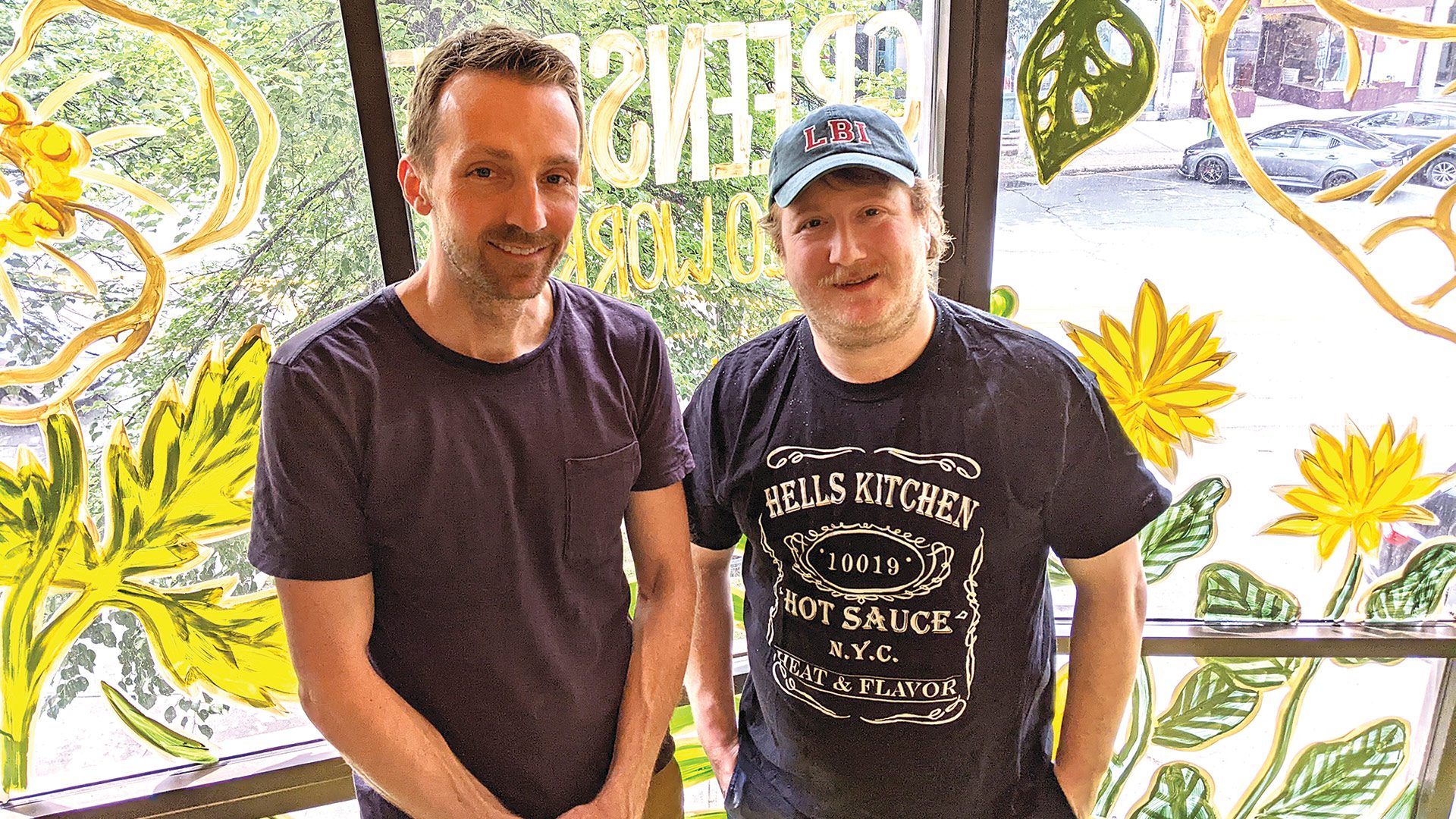
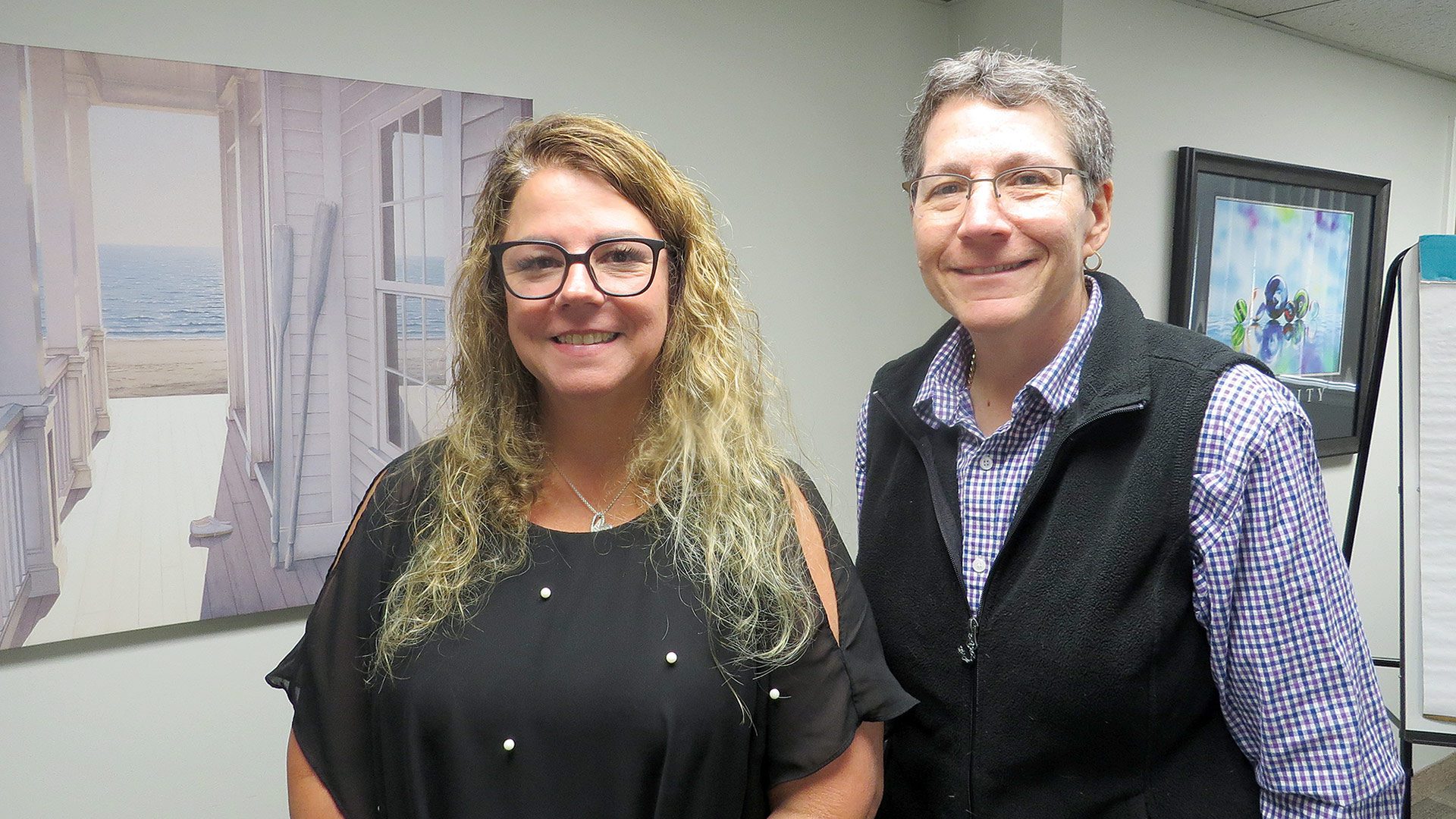
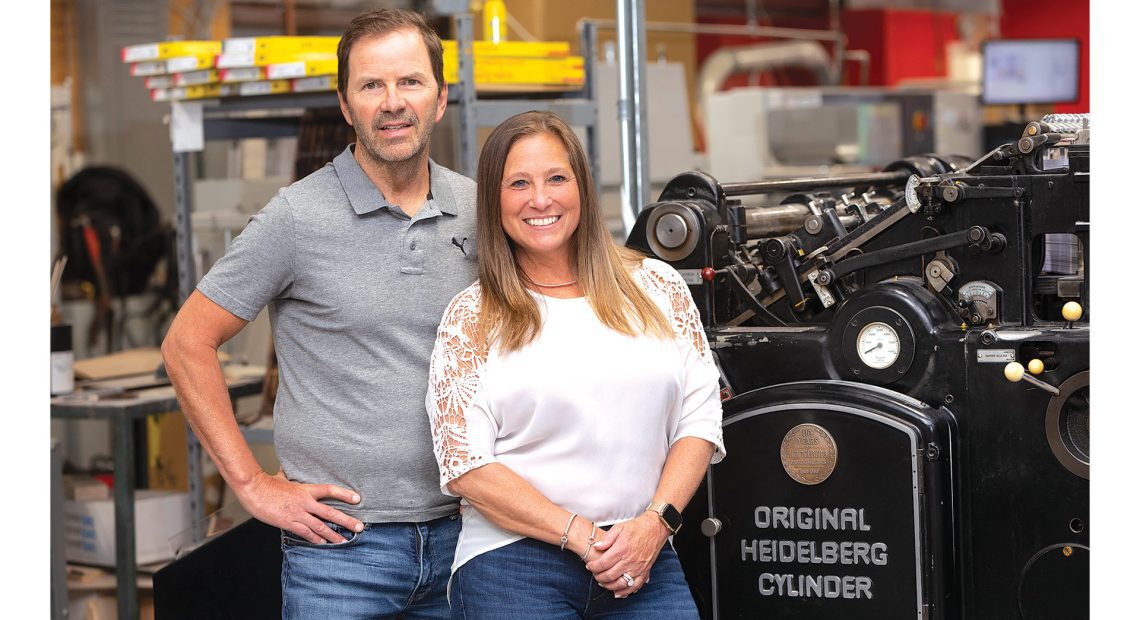
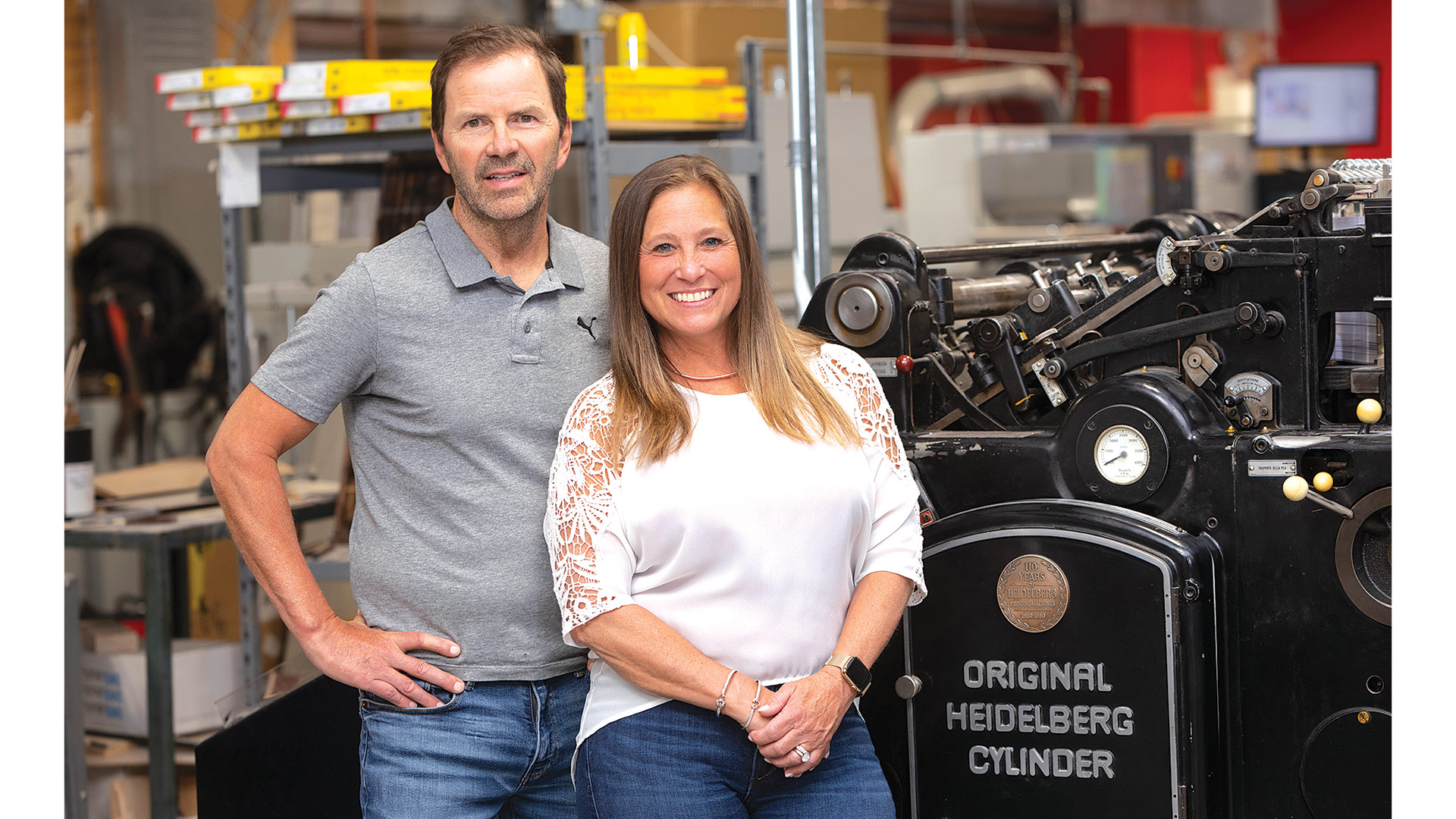
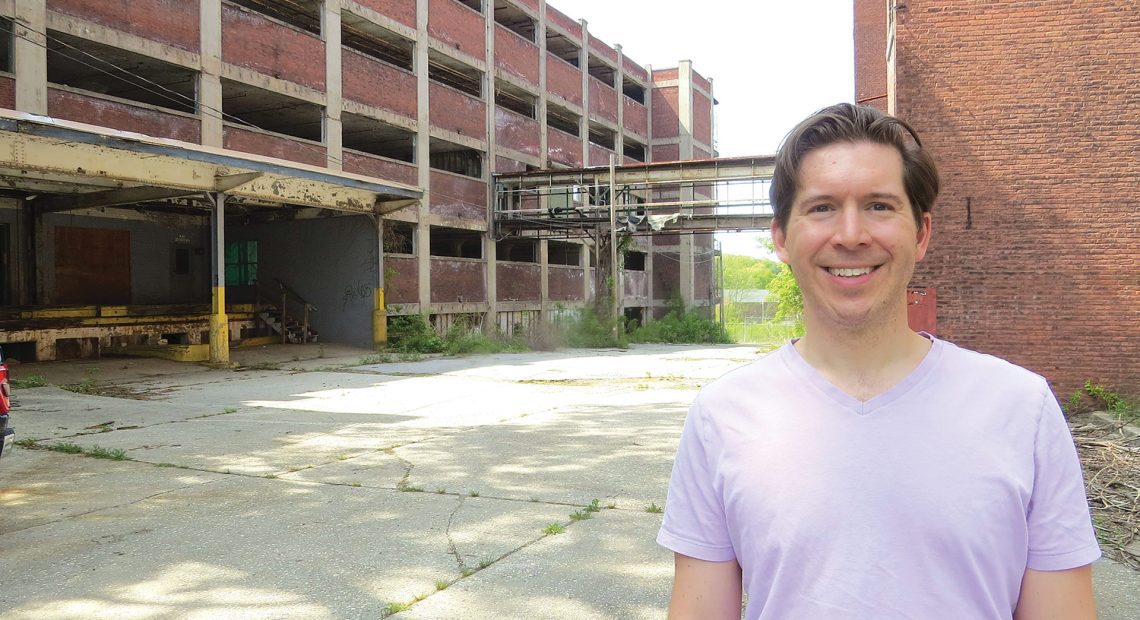
Doug Moglin and Heather Kies

Doug Moglin and Heather Kies stand at the construction site for Whalley Computer Associates’ 85,000-square-foot addition.

When Whalley Computer Associates in Southwick recently broke ground for a new 85,000-square-foot warehouse and office addition, Doug Moglin said the company was making a statement about its commitment to the town.

“We’ve been operating in Southwick for 44 years, and the new facility represents our investment in the next 25 to 30 years,” said Moglin, vice president for Whalley’s OEM business.

While many of its customers are based in New England, Whalley sells all over the U.S. and internationally. Warehousing is essential because a big part of the business involves acquiring various types of computer equipment from manufacturers, customizing it to clients’ specific needs, and then shipping out the final product. All of that requires space, which can present a challenge. Moglin gave an example of a national retail chain that needed new servers, a case that explains the need for the expansion.

“One day, 8,000 servers showed up to our near-capacity warehouse,” he explained. “And because only eight servers fit on each pallet, it quickly became a math problem.”

The company currently uses warehouse space in Westfield to handle the overflow, but the need keeps growing. For several years, senior managers had discussed building more warehouse capacity on the parcels that surround Whalley’s main facility in Southwick. Supply-chain issues during the pandemic accelerated those discussions.

“Supply-chain reliability is a concern for our customers, so having components on hand is a huge benefit,” Moglin explained. “Having the capacity to hold more inventory brings additional customers to us because, instead of buying direct from manufacturers or companies like ours out of the area, they have a local resource that provides better service and better support.”

Heather Kies, marketing manager for Whalley, called its evolution “a great story of a company that’s growing but still staying in its hometown.”

The Southwick Select Board and the Massachusetts Office of Business Development worked with Whalley to secure a tax-increment financing (TIF) agreement.

Russell Fox, chair of the Select Board and a selectman for most of the past 40 years, said the TIF was well worth the effort to keep the project in Southwick. Under the agreement, Whalley has agreed to add to the 200 workers it currently employs. “The Whalley project is all positive news for Southwick,” Fox said.

“The reconfiguration addresses the concerns of people who don’t want a huge operation. I think it’s a good way to use this industrially zoned parcel.”

In another part of town, the Planning Board is now considering a reconfiguration of the site where a Carvana facility was once proposed but then shot down by residents over concerns of increased traffic along College Highway. Now the same area has been redrawn as five separate lots, with some facing the road and smaller lots positioned in the back of the parcel. Fox sees the new plan as a great compromise.

“The reconfiguration addresses the concerns of people who don’t want a huge operation. I think it’s a good way to use this industrially zoned parcel,” Fox said, adding that, when new businesses occupy that parcel, it will help the town make its case to add a traffic light at the Tannery Road intersection.

Moving forward, the town’s goal is to continue decades of work to create an attractive balance. Fox noted that, while Southwick is known as a recreational community — it is home to the Congamond Lakes, a successful motocross track, and two golf courses — it is also a town that wants and needs to continually grow its business community.

Overall, it strives to be a community where people can play, work, and live, with new housing developments under construction and others set to come off the drawing board, as we’ll see later.

For this, the latest installment of its Community Spotlight series, BusinessWest takes an in-depth look at Southwick and how this community on the Connecticut border is building momentum — in all kinds of ways.


Getting Down to Business

A key agenda item at the upcoming Southwick town meeting in May involves bringing fiber optics into town to handle its cable-TV and internet services.

The process involves forming a municipal light plant, which voters approved at a special town meeting last fall. A second vote for the plant will be taken at the May meeting. Fox pointed out that the municipal light plant is an entity in name only. If the second vote is successful, Southwick will begin interviewing firms to install and maintain the fiber-optic network. Whip City Fiber in Westfield will be among the companies under consideration.

“We’re telling all bidders that they must cover the entire town and not just the densely populated neighborhoods; that’s a non-negotiable point,” he said. “We are a community, so everyone must have access.”

The fiber-optic network is considered an important step forward for the community, one that will bring faster, more reliable service to existing residential and business customers, and provide one more selling point as town leaders continue their work to attract more employers, across a wide range of sectors.

Diane DeMarco has a special trade-show display

Diane DeMarco has a special trade-show display room to help clients pick the right materials for their needs.

The town already boasts a large and growing business community, one that is served by the Greater Westfield Chamber of Commerce, which has increased its membership among Southwick businesses, a sign of growth both in Southwick and in the chamber.

Indeed, last year, the chamber reported 13 members from Southwick, while this year, that number has grown to 20.

Diane DeMarco, owner of Spotlight Graphics in Southwick, is a long-time chamber member. For 10 years, the company has provided area businesses with logo signage, trade-show materials, and graphic vehicle wrapping, among many other services offered.

When COVID hit, Spotlight lost a few clients when it was forced to shut down. Since then, DeMarco reports she has gained back many more clients than she lost. “Business has been very good for us. We have new clients coming on board, and word of mouth about us is spreading.”

She credits customer loyalty through the years thanks to the relationships she and her staff have built. “Our customers aren’t buying their graphics from a company; they are working with Allie, David, or Diane,” she said, listing long-time employees at the business.

In addition to offering full-service, quality work, Spotlight Graphics is a nationally certified Women’s Business Enterprise (WBE) and certified by the state as a Disadvantaged Business Enterprise (DBE). DeMarco explained the state designation has led to work from clients who are required to do business with DBE firms as part of their state contract. She described it as a win-win.

“The client is fulfilling their contractual requirement for the state by working with a woman-owned business, and they are getting a quality product at a fair price,” she said.

While DeMarco competes with online graphic firms that offer cheaper prices, she’s not worried because they often can’t match Spotlight’s quality.

Southwick at a glance

Year Incorporated: 1770
Population: 9,232
Area: 31.7 square miles
County: Hampden
Residential Tax Rate: $16.11
Commercial Tax Rate: $16.11
Median Household Income: $52,296
Family Household Income: $64,456
Type of Government: Open Town Meeting; Select Board
Largest Employers: Big Y; Whalley Computer Associates; Southwick Regional School District
*Latest information available

“Sometimes a client will buy an inexpensive retractable banner stand or go for the cheap price on a poster,” she said. “Then, when the stand breaks or the poster is the wrong color, they come to us to get it done right.”

In fact, Spotlight clients can see and touch the quality of banner stands and other graphic materials at its trade-show display room. DeMarco said online and print catalogs provide only an approximate idea of the size and quality of trade-show materials.

“People who are new to trade shows or have to revamp their current displays like to stop by because they can see the actual items they would use and get answers to their questions from our staff.”


No Place Like Home

While its business community continues to grow, Southwick is experiencing residential growth as well.

Indeed, the Greens of Southwick, a housing development located on both sides of College Highway on the former Southwick Country Club property, is nearing completion. With 25 lots on the west side and 38 on the east side, only a handful of parcels remain for this custom-built home development.

Fox appreciated the quality of the homes that added to the number of new residences in Southwick. “The developers did a tremendous job with the houses there,” he said. “The whole project is a real asset to our town.”

Next up for new housing, a 100-unit condominium complex has been approved at Depot and Powder Mill roads. While construction has not yet started, the town has already secured a grant to install sidewalks around the perimeter of the eventual construction. Fox said the sidewalks make sense because the location of the condos is an active area.

“The sidewalk will connect to Whalley Park, the rail trail, the Southwick Recreation Center, and to the schools at the other end of Powder Ridge,” he explained.

In Southwick, much of today’s activity is as much about the future as it is about the present.

As Moglin noted about Whalley Computer’s building addition, “this is not a 2024 investment; this is a 2044 investment, and beyond.”

The same can be said of the fiber-optic network soon to be built, the plans to divide and then develop the site eyed by Carvana, and the many housing projects in various stages of development.

In short, this is a community with expanding horizons, both literally and figuratively.

Features

Material Growth

LiftTruck celebrates 35 years

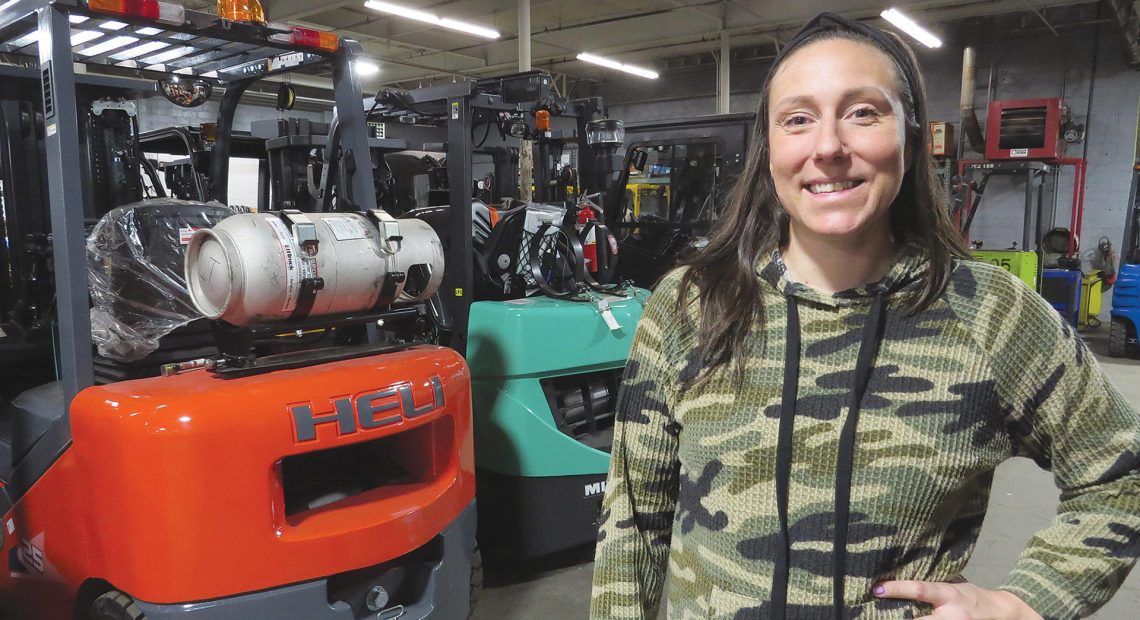
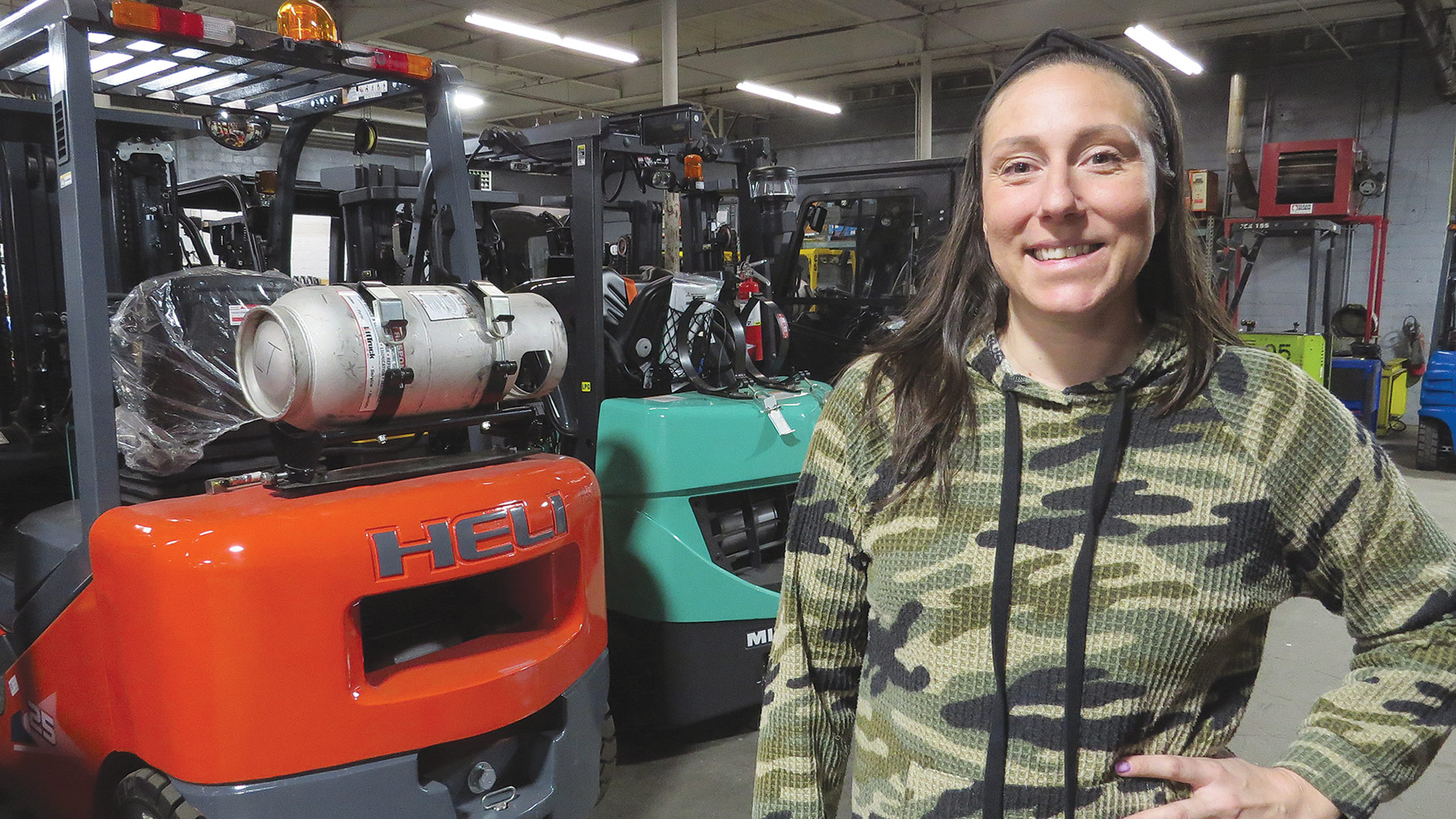
As LiftTruck celebrates 35 years, Kara Sotolotto says, its focus is on continuing to grow its many business operations and building on an already-solid foundation.

Kara Sotolotto says she essentially grew up in her family’s business, LiftTruck Parts & Service Inc. in West Springfield.

She remembers doing a little bit of everything for this company — founded by her father, Mario C. Sotolotto, which specializes in forklift and lift-truck sales, maintenance, parts, rentals, and more — but especially the vast amounts of paperwork that have long since been replaced by computer files. This included handling work orders, parts inventory (something that is still done by hand), calling customers, and much more. It seemed there was something new every day, and, collectively, those various assignments have prepared her for her current and somewhat new role, as the company’s vice president, a title she shares with her brother, Mario A. Sotolotto.

She was still waiting for her new business cards when she talked with BusinessWest, but she has already eased into the role, which will see her work with other family members (and there are many of them) and other employees to chart a course for future growth for this venture, which this year celebrates 35 years in business.

It is marking this milestone in a mostly quiet fashion — but also with charitable donations each quarter, including one recently to Baystate Children’s Hospital — and by essentially doing what it has been doing from the start, Kara Sotolotto said — taking care of the many different needs of its clients, mostly manufacturers and distributors located across the Bay State, but also in Connecticut and Rhode Island.

Over the years, the company has expanded well beyond its West Springfield roots, opening an office in Brockton to better serve customers in the eastern part of the state, including Cape Cod and the islands, as well as Rhode Island. Looking forward, she said the company is looking at possible additional expansion in the Worcester area, with a location to house what she called a ‘green division,’ dedicated to sales and service of battery-powered BYD material-handling equipment (more on that later).

Overall, though, the business plan calls for shifting more of the day-to-day responsibilities of managing the company to the second generation, Sotolotto explained, as well as simply building on the solid foundation created over the past 35 years, one that has enabled the company to thrive in a sector with many competitors.

Indeed, when asked how LiftTruck manages to stand out in such a crowded field, she said simply, “our service and our mechanics; these are mechanics that everyone likes and trusts, and they really know their stuff.

“He started from the ground up with a few mechanics, who are actually still with us today, and one person in the office.”

“Also, our lines,” she went on, adding that, while many competitors will sell one or a few brands, LiftTruck handles many labels and many options when it comes to how machines are powered — from propane to electric.

It is this ability to provide clients with choices, but also reliable, quality service, that has both enabled the company to thrive for the past 35 years and positioned it for continued success for the next 35.


Getting a Lift

As she offered BusinessWest a tour of the LiftTruck facilities and posed for a few pictures, Sotolotto pointed to a Clark forklift — vintage 1948, by her estimate — that was at the shop for some maintenance. It’s not really used anymore, and she believes it is one of the items on display at a small museum at Barnes Airport in Westfield.

While it is not in active service, the company services many pieces of equipment dating back to the ’60s and even the ’50s that still are, she said, adding that fork trucks, depending on how much they are used, can run for decades, and most clients are determined to get their money’s worth out of their machines.

But there are challenges to servicing such long-lasting pieces of equipment.

“These forklifts were built like tanks because they were used in the military,” she explained, referring to the older Clark machines. “The trouble is, it comes to a point where you can’t find parts for them; there are times when we can have people fabricate the parts for them, but once you get to certain big parts, like cylinders, you have to give in.”

Helping companies keep their machines running as long and as efficiently as possible has become one of the many trademarks of this company, which was started by the elder Mario Sotolotto in 1987.

As Kara explained, her father worked for Northeast Clarklift, joining his father-in-law there, and starting in the parts department and moving up the ladder. He eventually decided to take all that he had learned and start his own venture, one that would focus on all aspects of this competitive business — including sales of new and used machines, service, parts, forklift training, rentals, and more.

“He started from the ground up with a few mechanics, who are actually still with us today, and one person in the office,” she said, adding that the company has enjoyed steady, consistent growth over the years.

This is a family business, she added with conviction in her voice, noting that there are many members of her family who are involved, including her father, the company’s president, who, she said, “likes to keep involved in all aspects of the business,” as well as his uncle, Sales Manager Anthony Sotolotto.

There’s also her brother, Mario, who works mostly out the Brockton facility, and focuses on the sales and everyday operations sides of the business, while Kara is focused more on the back end of the operation — accounting, receiving equipment, managing the West Springfield facility, and talking with the press.

As noted, this is a multi-faceted business, with several components and revenue streams.

On the sales side, the company handles a number of manufacturers, including Clark, Komatsu, Doosan, Heli, and the most recent addition, BYD, which offers machines that run on iron phosphate batteries, Kara said, noting that buyers have a number of options these days in terms of both brands and how machines are powered.

Indeed, while gas-, propane-, and diesel-powered vehicles are still popular, this sector, like the automotive industry, is moving aggressively toward more electric vehicles.

“A lot of people are switching over to electric forklifts,” she explained. “It’s more economical for them, and it’s better for the environment; they’re becoming more and more popular.”

Looking ahead, Sotolotto said the company is strongly considering creation of that aforementioned ‘green division,’ one that will focus on the BYD line and likely be based in the central part of the state so it can effectively serve all corners of the Commonwealth.

“Having a facility to at least store all of our electric lifts and maybe have a few mechanics operate out of there would be great,” she told BusinessWest. “This is definitely something we’ve been talking about and moving toward; it’s a logical next step.”

The sales side of the business has been steady, she added, and it received a somewhat unexpected boost during COVID, when rentals were harder to come by (just as rental cars were) and many customers decided to buy instead — if they could find machines to buy.

And overall sales remain steady as customers seek to replace machines that hit a certain number of hours.

Meanwhile, the machine-rental side of the business remains solid as well, she said, noting that businesses will rent equipment for a day, a few weeks, a quarter, or for much longer stretches depending on need. To mark its 35th anniversary, the company is donating 10% of its rental revenue to various charities, including Baystate Children’s Hospital, each quarter.

The service side of the operation is another key contributor to the company’s overall success, Sotolotto said, noting that clients need their machines to operate successfully, and LiftTruck’s ability to provide reliable service has been another of its hallmarks.


Lock and Load

These various parts contribute to the whole, she said, adding that LiftTruck has much to celebrate as it marks its milestone anniversary this year.

Mostly, it is celebrating what has become a family, or a bigger family, to be more precise, one that includes several people related to one another, but also others who have been part of this operation for years — in many cases, 35 years.

Together, they have made this venture an uplifting success story — in every sense of that phrase.

Banking and Financial Services

Checks and Balances


By Mark Morris

About a year into the pandemic, banks found themselves in a strange position.

When the federal government pumped stimulus and Paycheck Protection Program (PPP) money into the economy to help consumers and businesses regain their footing, it created an unprecedented glut of deposits.

In normal times, banks would have celebrated the excess in the form of making more loans — and generating more revenue — but these were different times. Consumers and businesses kept their money in banks to take advantage of FDIC protection while they figured out their next moves.

Despite record-low interest rates, uncertainty from the pandemic also resulted in reduced loan activity. When deposits sit idle, banks don’t generate revenue — or profits. As one executive noted at the time, all these deposits became a burden, a concept that went against everything they were taught about banking.

Another executive said simply, “back then, cash was a four-letter word.”

“There’s a rate battle these days because, with higher interest rates, we have to offer more generous rates on CDs to keep deposits here and attract new funds.”

Mary McGovern

Mary McGovern

Things began to change by the third and fourth quarter of last year as excess deposits began flowing out. Some people withdrew money to pay for increases in daily living expenses, while other depositors sought to move their money into financial products that pay higher rates than banks.

As a result, what was once a problem of too much liquidity became a matter of banks competing for deposits.

“There’s a rate battle these days because, with higher interest rates, we have to offer more generous rates on CDs to keep deposits here and attract new funds,” said Mary McGovern, executive vice president and chief financial and operating officer for Country Bank.

Jeff Sullivan, president and CEO of New Valley Bank, added that, with excess liquidity a thing of the past, his staff is working harder to bring in deposits because demand for loans remains strong for his four-year-old institution.

“If we can raise new deposits, we can keep generating new loans and keep growing our franchise,” he noted.

These forces have been compounded by recent events in the banking world, which was rocked in March when Silicon Valley Bank (SVB) failed and was shut down by the state of California. News like that can create panic in bank customers everywhere. The bankers BusinessWest spoke with all said they communicated with their respective customers early and often to allay any fears.

“When I saw the news about Silicon Valley Bank, I sent emails and text blasts to our members to let them know everything was safe, secure, and that we are well-capitalized,” said Michael Ostrowski, president and CEO of Arrha Credit Union. He also credited the Massachusetts Division of Banks for calling every institution to make sure there were no problems.

Sullivan agreed the industry did a good job preventing a bigger problem.

“We certainly made phone calls with our customers and communicated as much as we could,” he said. “As a result, we did not see any outflows caused by people worried about the system.”

Dan Moriarty, president and CEO of Monson Savings Bank, said the deposit spend-down, along with higher interest rates for loans, particularly mortgages, have caused a paradigm shift.

“If we can raise new deposits, we can keep generating new loans and keep growing our franchise.”

Jeff Sullivan

Jeff Sullivan

“Most banks have seen a drop in their residential mortgage business due to higher interest rates, low inventory of available houses, and the high cost of houses,” he explained. “So we are seeing a couple different forces at play, and that’s a dramatic change compared even to last year.”

For this issue and its focus on banking and financial services, BusinessWest looks at these colliding forces and how they are impacting local banks — or not, as the case may be.


Points of Interest

The foundation of the banking system has long been the Federal Deposit Insurance Corporation (FDIC), which insures accounts up to $250,000, an amount that provides sufficient protection for most people. McGovern noted that, in today’s banking world, people with higher assets don’t usually keep their money in one place.

There are situations, however, when FDIC coverage isn’t enough for an account. For example, a small business that keeps its payroll in a savings bank or a consumer who has sold a house or other large transaction can exceed the FDIC limit.

To address those needs, Country Bank and Monson Savings Bank are two of 78 savings banks in Massachusetts that take part in the Depositors Insurance Fund. The DIF is supplemental insurance to protect deposited amounts that exceed $250,000. McGovern and Moriarty said having the extra protection of the DIF gives everyone peace of mind.

“We made sure to educate our customers that all the deposits in Country Bank, even the ones over $250,000, are safe and insured,” McGovern said.

“Because Monson Savings has both FDIC and DIF, it calmed a lot of nerves during the weekend when Silicon Valley Bank failed,” Moriarty added. “We had conversations with some of our customers, but their concerns quickly subsided.”

Having conversations with clients and explaining acronyms like FDIC and DIF has become a somewhat unexpected addition to the workload for area banks, which have been placed in a situation of explaining what has happened at SVB and other institutions, and why the fallout has not extended to the smaller community banks populating this market.

Indeed, those we spoke with pointed out that Silicon Valley Bank’s troubles stemmed from mismanagement and went against the norms of good banking practices. “By contrast, the bankers in our area do things the right way, and the regulators do a good job, too,” Ostrowski said.

Silicon Valley Bank also had a handful of customers with billions of dollars in deposits. Money movements by these few contributed to destabilizing the bank. When Silicon Valley failed, it provided an opportunity for McGovern to reassure Country Bank customers.

“We explained that we have $1.3 billion in deposits, and we are in sound financial condition,” she said. “We have a diversified depository clientele, so there was no risk of large outflows of the kind Silicon Valley experienced.”

“We are seeing a couple different forces at play, and that’s a dramatic change compared even to last year.”

Dan Moriarty

Dan Moriarty

While local bankers remain mostly unscathed by these highly publicized events, they are keeping their focus on raising deposits and managing the fallout from increases in interest rates.

Ostrowski noted that first-time homebuyers face perhaps the sternest challenge because housing prices are at an all-time high and interest rates are higher than they’ve been in recent years.

“Young people buying their first home have never experienced anything but very low interest rates,” he said, adding that today’s mortgage rates of 6% to 7% aren’t exceedingly high, but when combined with high housing prices, they can keep buyers on the sidelines.

Still, while loan volume might be down, mortgage activity continues.

“People are still moving and buying houses,” McGovern said. “Many are taking out adjustable mortgages thinking that rates may adjust down.”

In recent years, many homeowners refinanced their mortgages to take advantage of the low interest rates. Sullivan pointed out there’s no incentive for people to pursue refinancing today. “The folks who refinanced at 3% a few years ago are obviously not looking to do it again at today’s rates.”


By All Accounts

Even with the challenges they face, the bankers we spoke with remain optimistic. Interest rates have begun to stabilize and, in some cases, go down.

“We may find that the crisis at Silicon Valley and the other banks may have caused a credit pullback and stabilized the market without the federal government having to raise interest rates,” McGovern said.

Sullivan predicted there may be smaller bumps in the road, but nothing of the magnitude of SVB in the near future.

While the remainder of the year looks slow and steady on the retail side at Monson Savings, Moriarty believes there may be better news on the commercial side of his business.

“We’ve been hearing that some areas of manufacturing are still robust,” he said. “There could be opportunities for us if a manufacturer decides to expand or purchase some new machinery.”

Despite all the challenges local bankers have seen, they are moving forward in a strong position.

“The system is working correctly, just as it was designed,” Ostrowski said. “That’s important to hear because people need to have trust in our financial system. The good news is, it’s not going anywhere.”

Banking and Financial Services

And If There Is One, How Will It Affect You?

By Barbara Trombley, CPA


It seems as if we have been waiting for a recession for quite a while now. Economists initially thought 2022 would bring a recession. Certainly, it seemed as if a recession was inevitable as the stock market (S&P 500) dropped more than 19% in 2022.

But, by definition, a recession never occurred. Many people think that two consecutive quarters of negative GDP define a recession. Technically, this is not true. The National Bureau of Economic Research considers a wide range of economic indicators when declaring a recession rather than only negative GDP. It defines a recession as “a significant decline in economic activity that is spread across the economy and that lasts for more than a few months.”

Warning signals often precede a recession. The U.S. economy has slowed from January through March of this year to just a 1.1% annual pace. Business inventories have reduced; companies usually slash inventories when they anticipate a downturn. Employment also declines before a recession. I would argue that we have started to see this decline with the large layoffs in the tech industry by companies such as Meta, Google, Microsoft, and Amazon. Higher interest rates have slowed housing sales, and rents are stabilizing. Compounding these economic signs is the debt-ceiling debate; House Republicans say they will raise the debt limit in exchange for sharp reductions in spending.

“The Fed is walking a tightrope of slowing inflation and trying to prevent further damage to our economy.”

Barbara Trombley

Barbara Trombley

These signs, which we all can see, may just be the tip of the iceberg.

The actions of the Fed in the coming months may dictate the strength of the potential recession that we are facing. As we all now know, the U.S. has been experiencing critical inflation mainly because of the easy money that was distributed during the pandemic and the pent-up demand for consumer goods and travel after COVID.

The only way for the Fed to combat inflation has been to raise interest rates, making it more expensive for businesses and consumers to borrow money, thereby slowing the economy and lowering inflation. Unfortunately, inflation has been stubborn and has not decreased as quickly as the Fed would like. The quick rise in interest rates contributed to the bank failures that we have seen recently. The Fed is walking a tightrope of slowing inflation and trying to prevent further damage to our economy.

The main questions that people need to ask is how a recession may impact them and how to prepare. Unfortunately, many people lose jobs during recessions.

‘Recession-proof industries’ typically are unharmed. The medical field, education, and government jobs may be unaffected by a recession. If you do worry about the future of your job, have you saved emergency money to live on for a while? Can you network in your industry to see what other positions may be available if the worst-case scenario occurs and you lose your job?

How about your bank? Is it possible that it collapses as others have? Most people are aware that the FDIC insures deposits according to the ownership category in which the funds are insured and how the accounts are titled. The standard deposit-insurance coverage limit is $250,000 per depositor, per FDIC-insured bank, per ownership category. If you are still nervous, utilize the services of two or more banks.

“Credit is also reduced during recessions. Banks may be choosier about whom they loan to as unemployment rises. If you need a loan, be prepared to be scrutinized and pay a higher interest rate.”

Credit is also reduced during recessions. Banks may be choosier about whom they loan to as unemployment rises. If you need a loan, be prepared to be scrutinized and pay a higher interest rate. Tight lending leads to consumers putting off larger purchases, compounding the depth of the recession, as spending slows.

Many retirees worry about a recession and the impact of the stock market on their portfolios. A deep recession could mean a drastic drawdown in stock prices. Making knee-jerk reactions to economic situations never bodes well for the long term. It is impossible to time the market. Most retirees know that they need to stay invested to grow their assets to mitigate inflation. Having a conversation with your advisor to make sure that you are properly allocated to your risk tolerance is a good way to start. If you find yourself overly concerned, perhaps a portfolio adjustment is due. A proper allocation to bonds or ‘like’ investments is always a good idea in volatile times.

From political turmoil to world events, it is easy for investors and consumers to feel concerned. Stress and recession go hand in hand. Know that you can only control your own personal situation. Reassess your budget, evaluate your employment, and review your investments.

Historically, there have been many terrible things the world has endured. People still have money and plan for the future. The markets still function. Recessions are an unavoidable part of life, but are a precursor to an eventual healthy economy.


Barbara Trombley is a financial planner with Wilbraham-based Trombley Associates Investment and Retirement Planning. Securities offered through LPL Financial. Member FINRA/SIPC. Advisory services offered through Trombley Associates, a registered investment advisor and separate entity from LPL Financial. This material was created for educational and informational purposes only and is not intended as ERISA, tax, legal, or investment advice. If you are seeking investment advice specific to your needs, such advice services must be obtained on your own separate from this educational material.

Cybersecurity

Bridging the Divide

Leaders from the Commonwealth’s Executive Office of Economic Development and the Massachusetts Broadband Institute (MBI) at MassTech recently announced $14 million in new grants from the state’s Digital Equity Partnership Program to address statewide digital-equity gaps during an event at Tech Foundry in Springfield.

The three grants were announced by Economic Development Secretary Yvonne Hao, who highlighted selected projects from Tech Goes Home, which will receive $4.5 million; Vinfen, on behalf of the Human Services Alliance for Digital Equity, which will receive $4.3 million; and Baystate Health, on behalf of the Western Massachusetts Alliance for Digital Equity, which will receive $5.1 million.

“Massachusetts has a real opportunity to close the digital divide and ensure all people in our state can participate in the digital economy,” Hao said. “These grants will help residents build their digital skills and get online affordably, thereby expanding their connections to job and training opportunities, healthcare resources, social connections, and so much more. We are grateful to the Massachusetts Broadband Institute for its work to make affordable high-speed internet available to residents across the state.”

The secretary was joined at the event by business and nonprofit leaders from across the state, highlighting the critical need for increased digital connectivity for residents statewide, an issue that grew in importance during the COVID-19 public-health crisis. Following the secretary’s remarks, MassMutual Chairman, President, and CEO Roger Crandall spoke about the issue, appearing in his role as a board member of the Massachusetts Competitive Partnership, which published a report last year titled “Connecting Communities through Digital Equity,” highlighting the importance of addressing digital equity statewide.

“Internet access is a crucial driver of economic and social advancement, from fostering innovation and creating new jobs to utilizing government and community services,” Crandall said. “Yet, far too many households in Massachusetts lack broadband service, creating a significant barrier to many career and educational opportunities. The business community has a collective responsibility to help address this inequity by continuing to invest in and expand access to digital infrastructure, literacy programs, and affordable digital tools for all residents throughout the Commonwealth.”

The event included a roundtable discussion with executives from the three grant-recipient organizations, which pointed to the digital-equity challenges Massachusetts citizens face each day and how the awarded projects aim to increase connectivity and access. The grants will support two years of critical digital-equity project development and implementation across the state.

“The genesis of the Alliance for Digital Equity in June 2020 was a direct response to digital disparity — not new — and our societal dependence on the internet to address to meeting basic material needs as the COVID-19 pandemic surfaced,” said Dr. Frank Robinson, vice president of Public Health at Baystate Health. “It was embarrassingly obvious that digital marginalization for already-marginalized people would exacerbate negative health outcomes, economic oppression, and racial injustice. Digital equity and inclusion is truly a super-social determinant of health, critical to our meaningful progress toward health equity and satisfying basic human rights in this connected society, linking people to vital resources, such as jobs, education, healthcare, food, and information.”

The Digital Equity Partnerships Program was launched in September 2022 with the goal of designating qualified organizations to implement projects that meet the goals outlined in the Commonwealth’s ARPA COVID recovery legislation, which created a $50 million fund to bridge the digital divide in the state.

“I am thrilled to see that Baystate Health, in partnership with the Western Massachusetts Alliance for Digital Equity, have been recognized by the Commonwealth’s Digital Equity Partnership Program and received a grant of $5.1 million to continue addressing the digital divide,” state Sen. Jo Comerford said.

State Sen. Adam Gomez added that “the funds created by the ARPA COVID recovery legislation of 2021 represented a momentous step toward bridging the digital-equity divide for Western Massachusetts. There are far too many unserved communities in this region of the Commonwealth who do not have simple access to WiFi. Communities in this region will now have substantially increased access to not only WiFi, but also support for key programming areas such as digital literacy, public-space internet modernization, and connectivity initiatives for economic hardship. Eliminating the digital-equity divide in Western Mass. is absolutely crucial to supporting a thriving economy.”

While the state has made trides to improve broadband and WiFi access, state Rep. Lindsay Sabadosa noted, many communities have been left behind, much public housing remains unwired, and towns that don’t know how to fund projects that would level the playing field for all residents. “The Digital Equity Partnership Program will assist these communities, providing important funding and assistance in learning how to incorporate this technology into their daily lives.”

Springfield Mayor Domenic Sarno said the Digital Equity Partnership Program will help eliminate or mitigate the barriers faced in accessing digital equity and help close the digital divide. “Access to affordable and reliable internet is essential for our residents, and achieving this goal will not only enhance the quality of life for many, but will also help advance vital economic-development projects and educational initiatives, not only here in Springfield, but across the Commonwealth.”

The state’s digital-equity programs build on initiatives launched in response to the COVID-19 public-health crisis, which included public WiFi hotspots in unserved towns in Western and Central Mass., as well as the Mass Internet Connect program, which worked with MassHire to provide financial support and digital-literacy tools to help get unemployed residents back to work.

The MBI has also launched a Municipal Digital Equity Planning Program to support Massachusetts communities with planning activities that will help build a broad understanding of how a lack of internet access is impacting residents in their community, as well as a Broadband and Digital Equity Working Group comprised of stakeholders from across the state that will inform the makeup and focus of state programs, providing key technical expertise and representation of target populations.

“Our partner organizations are leaders in the digital-equity field and have cultivated an incredible network of local stakeholders who will ensure these funds have maximum benefit to the communities they are designed to serve,” said Michael Baldino, MBI director. “Today’s grants, coupled with our municipal planning program and the engagement of our dedicated working-group members, will ensure that the dollars invested lead to the desired impact — more residents will not only gain access to devices, digital skills, and more affordable internet, they will have access to a wider range of social, educational, and healthcare resources.”

Women in Businesss

Making Workplaces Better

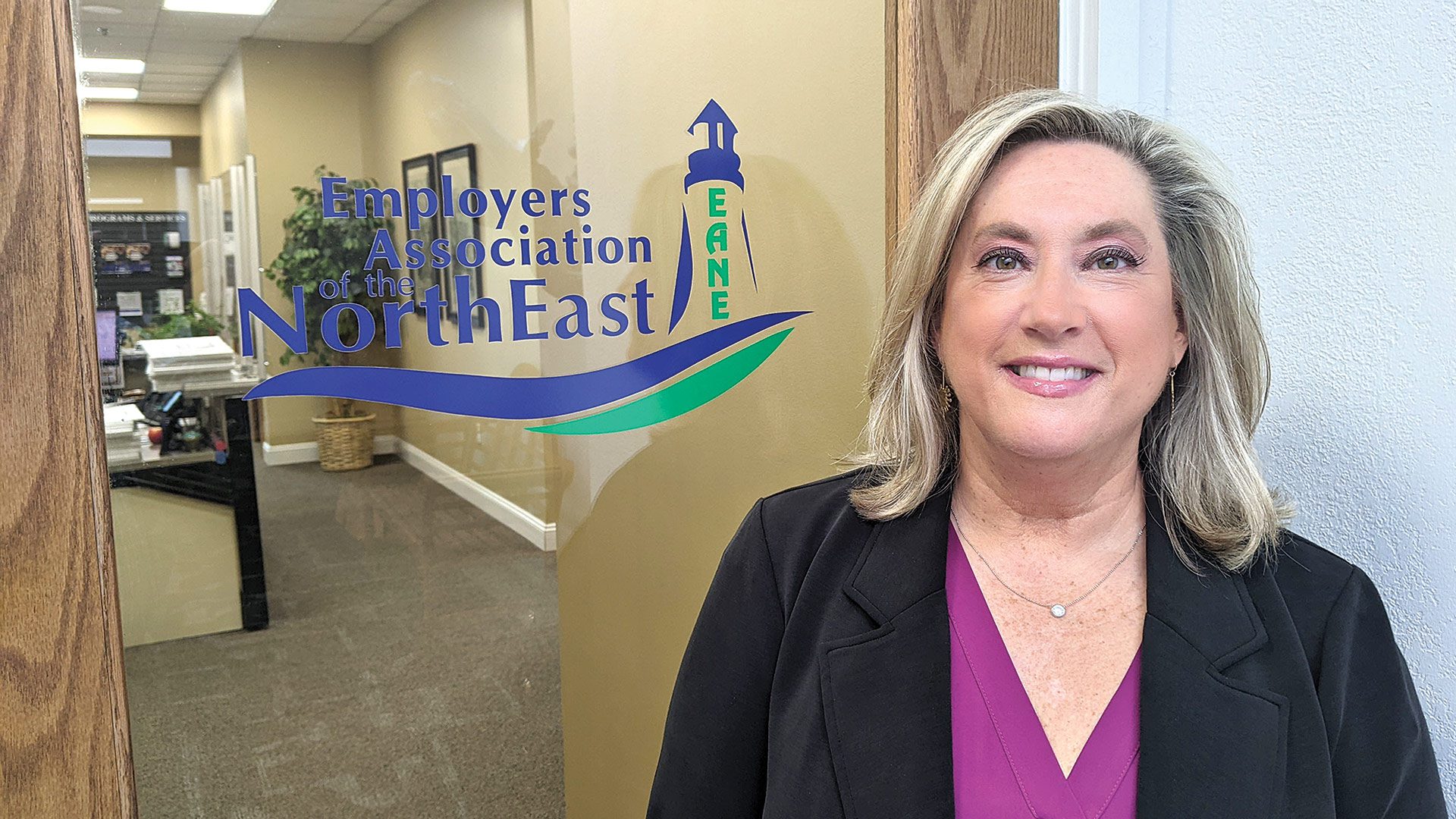
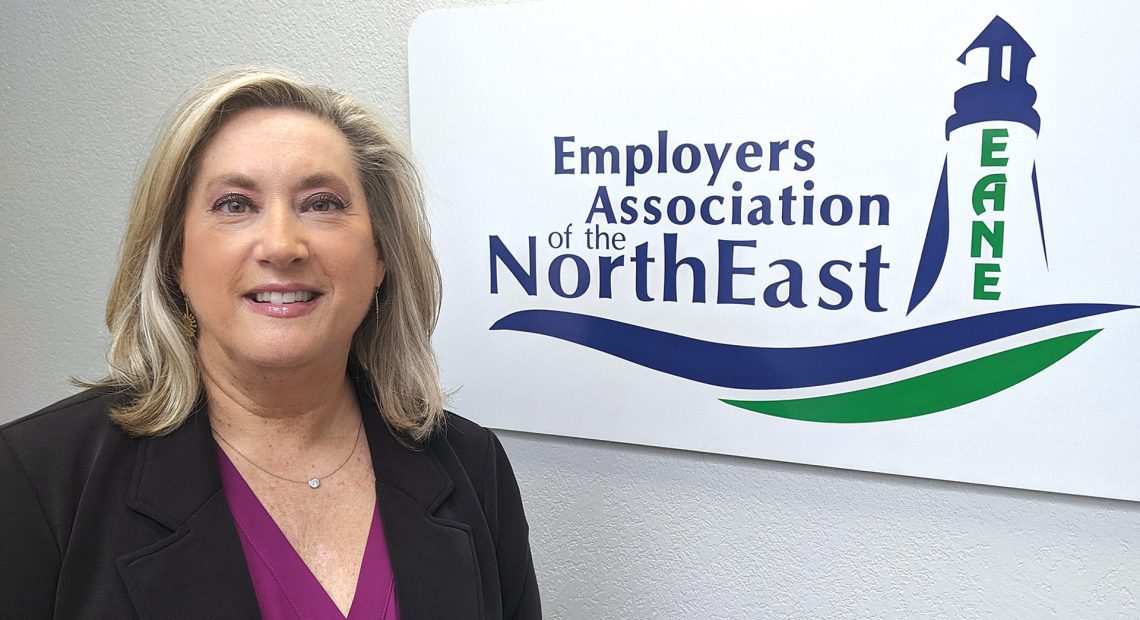
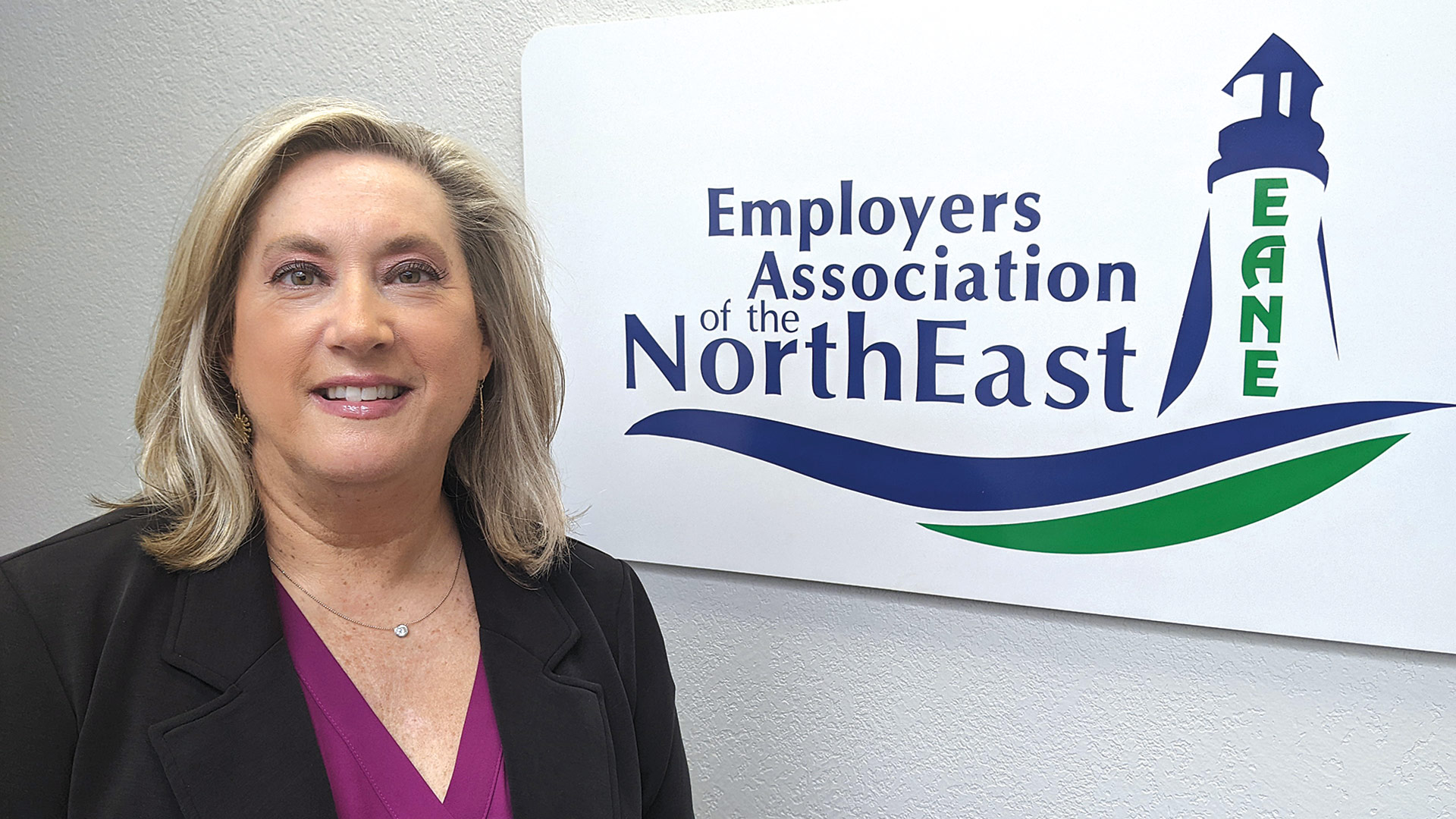
Allison Ebner

Allison Ebner says EANE’s services have become more important in the wake of recent workforce challenges, from retention to legislative compliance.

Looking back, Allison Ebner said she’s had the perfect trajectory to transition into her newest role, as president of the Employers Assoc. of the NorthEast (EANE).

“My background has always been in the third-party services area, working in the staffing industry,” said Ebner, who joined EANE seven years ago. “You get to see so much when you’re in so many different businesses, so many different organizations, across a variety of industries, working with their leadership teams and their human-resource departments.”

Those roles, over the years, included talent agent at FIT Staffing, director of Membership Development at Associated Industries of Massachusetts, and vice president of Sales & Marketing at United Personnel Services.

“So I’ve had the opportunity to get to know so many of the businesses that are members of EANE throughout my career,” she added. “And that’s why it’s really fun to be able to step into this position and continue some of the relationships I’ve had with HR professionals and CEOs for a number of years.”

Longtime EANE President Meredith Wise recently announced she will be stepping down at the end of June after 28 years with the organization, the last 21 as president.

“We have the opportunity every day to make 1,050 organizations across the Northeast better, to have a better employee experience. We talk about that here — how we help create exceptional workplaces.”

“I am so proud of our accomplishments and the work we’ve done to continue the 100-plus-year tradition of the association, including expanding our footprint to serve employers in Connecticut and Rhode Island as well as all of Massachusetts,” Wise said. “The depth and breadth of our resources and services has grown to meet the ever-changing needs of our members and employers in the region.”

Ebner joined EANE in 2016 as director of Membership and Partnerships, overseeing the group that is responsible for keeping members with the association and expanding membership, as well as developing relationships with partners who might provide services and support to members.

For example, “we have partners in the payroll space. We have partners in the background-checking space,” she said. “And we fully vet those vendors and bring them to our members if they’re good partners for our members to have and use.”

Last year, Ebner was promoted to vice president of Membership and Partnerships, and later selected by the board to succeed Wise. Linda Olbrys will join the EANE team as the new director of Membership and Partnerships, bringing considerable experience in both human resources and talent acquisition and retention services.

As for Ebner, she brings not just her experience to the president’s chair, but a passion for EANE’s multi-faceted work.

“We are a nonprofit organization that provides amazing resources to these member companies, and we all really believe so strongly in that mission,” she told BusinessWest. “We have the opportunity every day to make 1,050 organizations across the Northeast better, to have a better employee experience. We talk about that here — how we help create exceptional workplaces. That’s really what we do.”


What’s the Pitch?

Ebner jokes that it’s impossible to craft an elevator pitch detailing all the reasons a business should join EANE. An elevator ride of that length simply doesn’t exist. But it helps the discussion, she said, to break its services into three pillars.

The first is membership support, funded by annual dues that are benchmarked to the number of workers a member employs.

“Probably the most popular member benefit we have is access to our employer hotline, which is staffed Monday through Friday from 8 and 5 with seven or eight certified HR professionals. Members can call with compliance questions, employee-relations issues, safety-related issues, best practices, anything around policies, forms … really, anything.”

Last year, the hotline fielded more than 5,000 calls. During the first year of COVID, it took more than 8,000 as companies were suddenly faced with unprecedented challenges.

“When needs arise, people want answers, they need advice, they need resources,” Ebner said. “Our director of Compliance, Mark Adams, was doing weekly Friday webinars with 500, 600 people — it almost crashed our Zoom. Everyone was trying to keep up — ‘well, what are they saying now about compliance? What do we do about testing? Are we allowed to require masks, or not require masks?’ It just got so crazy. And we had to be on top of everything.

“The pandemic was a game changer,” she added. “The hotline was really crazy during that time. And it still remains our most popular member benefit.”

But members also get access to monthly webinars, compensation and salary-benchmarking data, a library of sample forms and policies, and an online resource tool offering performance-management systems, job-description writing tools, and other resources.

“The pandemic was a game changer. The hotline was really crazy during that time.”

The second pillar has to do with HR support services, like employee handbooks, affirmative-action plans, audits, and recruiting services.

“We’ve done a lot of compensation reports for organizations. When you can’t find the talent, the first place people go is, ‘well, what am I paying? Am I paying fair market? How am I benchmarked versus my competition?’ So we’ve done a lot of compensation work over the last few years, during the talent crunch.

“We also use a service called HR Partner, where, if you need an extra hand in HR or you’re missing HR — maybe you’re a small organization, and you don’t have a dedicated HR person, or maybe you lost your HR person to a medical leave — we have a team that will go out and be your HR team,” she explained. “That’s a really nice option for folks, and a very fast-growing part of our business here at EANE.”

The third pillar centers on learning and development, including more than 40 different training programs, both virtually and on site.

“Our learning and development area is very, very strong, and that’s a fast-growing part of our organization,” Ebner said. “We just had a leadership summit with over 500 attendees at the MassMutual Center.

“So, it’s all those resources, the HR services and the training. What I love about EANE is we’re all under one umbrella; members get a discount on all the HR services and training, and then they get all those benefits with their membership dues,” she went on. “Our challenge is shortening that elevator speech. But, in alignment, it all makes sense.”


Growing Footprint

That network of services and resources benefits members of all sizes, she said, and from all across the Northeast; the majority of EANE members are in Massachusetts, Connecticut, and Rhode Island, but the organization is growing in Vermont, and it has members in New Hampshire and even Maine as well.

“It’s for a five-person organization that’s looking for support getting started with their HR infrastructure, all the way up to a large healthcare organization here with more than 10,000 employees,” she noted. “The sweet spot for us is that 50- to 300-employee organization.”

No matter what their size or sector, employers of all kinds continue to deal with compliance challenges, from proposed legislation to raise the Massachusetts minimum wage again to recent laws regarding sick time and family leave.

“We’re looking at those challenges from a compliance standpoint, federally and statewide. But I think what’s really changed for organizations is the deal between employers and employees — that currency, that transaction.”

Elaborating, Ebner noted, “pre-pandemic, employers were really in the driver’s seat. The talent crunch was tight, but it was still a very employer-driven economy for the workforce. That has been turned upside down, and it’s turned into an employee-driven marketplace, where employees are making demands. They want more flexibility. They want work-life balance. They want to work differently. They want to work from anywhere.

“That’s where we’ve had to pivot and provide resources to employers so they can sustain their organizations,” she went on. “And a lot of our members are in multiple states, too. So paid family leave in Massachusetts is very different than paid family leave in Connecticut. And if you’ve got a headquarters in Massachusetts, but you’ve got another facility in Connecticut, you have to know everything; you’ve got to know what’s happening in both states, plus federally. We just brought on a new member, and they have remote employees in 22 states, which means you’ve got tax and employment implications in 22 states.”

HR professionals often find it challenging to keep up with all of that on their own, Ebner noted, and that’s if a company even employs an HR team. “So we really try to provide that value, where we keep up with those things so you don’t have to. And we execute on those things that you need to know.”

And while the questions might not be flying the way they were during COVID, the quickly changing nature of business — from compliance to talent retention to strategies for pay and benefits — is a constant.

“It’s challenging, obviously, but it’s gratifying, helping businesses navigate all this,” Ebner said. “That, I think, is our core mission. That’s why we work here.”

Women in Businesss

Changing Tides

The Massachusetts labor force has transformed in recent decades, with some of the biggest changes being the advancement of women, workers getting older and more diverse, and a divergence in labor-force participation rates based on levels of educational achievement.

Those are among the findings in “At a Glance: The Massachusetts Labor Force,” a policy brief written by Aidan Enright and published by Pioneer Institute, with data drawn from the institute’s new laboranalytics.org website.

“Decreasing labor-force participation rates among prime-aged (25-54) men and college-educated individuals may portend future labor shortages,” Pioneer Institute Executive Director Jim Stergios said.

Nationally, the labor-force participation rate among 25- to 54-year-old men has fallen from 96.2% in 1948 to 88.8% last year.

Massachusetts had nearly 300,000 unfilled jobs in 2021. Inadequate daycare capacity, a mismatch between the skills needed for these jobs and the skills possessed by potential workers, immigration restrictions, and a spike in retirements during the pandemic are among the reasons economists cite for the shortage.

The number of individuals 65 and older in the Massachusetts workforce rose dramatically in recent years, then plateaued and decreased from 2019-21, possibly due to retirements during the pandemic. Overall, the number of older workers more than doubled between 2007 and 2021, from 131,000 to 271,000.

The increase in older workers was particularly notable among women aged 55-64. Between 2007 and 2021, an additional 105,000 women in that age group entered the workforce, compared to 79,000 men.

According to the report, women are likely the reason why New England has a high labor-participation rate compared to other census regions, as women there have a higher rate than in all but one other region. New England men, on the other hand, had the fourth-highest rate out of nine total census regions in 2021.

The pandemic also affected women the most — their employment rate dropped 7.7% compared to 6% for men — even though their recovery from it has been quicker than for men. Women in Massachusetts also had a labor participation rate 4.5% higher in 2021 than women nationally. While men in that age range accounted for 79,000 additional workers to the workforce, women added 105,000.

Among other findings in the report:

• As a higher rate of older individuals remained in the workforce, the number of 16- to 19-year-old workers fell by 40,000 between 2019 and 2021.

• The labor-participation rate among non-whites has been higher than among white workers in every year since 2018. Minorities accounted for 18% of the Massachusetts labor force in 2007, rising to 30% in 2021. The Massachusetts workforce is still less diverse than many other states, but it’s by far the most diverse in New England.

• In New England, Massachusetts ranked second behind New Hampshire with 62.1% of its total population employed in 2021. Previously, the Commonwealth also often ranked behind Connecticut and Vermont.

• Massachusetts saw a notable increase in the size of its workforce between 2016 and 2018 before shrinking during the pandemic. In 2018, the labor-force participation rate reached its highest level since 2007, and the workforce was still larger in 2021 than it had been in 2016.

Without policy intervention, serious structural challenges will remain for the Massachusetts labor force, the report notes. Like the rest of New England, Massachusetts has an older population and will struggle to maintain and grow its labor force as Baby Boomers continue to retire and less-populous younger generations attempt to fill the void they create. This, if left unattended, will create an employment desert. Employers finding it increasingly difficult to hire skilled candidates to fill positions will limit the state’s economic growth potential.

To address these issues, the report continues, the Healey administration and Beacon Hill lawmakers should consider three primary areas that are ripe for reforms and advocacy: expanding daycare capacity and affordability, expanding vocational-technical school programs, and advocating for less-strict high-skill immigration caps.

One of many issues that keep healthy, prime-aged adults sidelined from the labor force is concerns over childcare. Several studies have indicated that affordable childcare increases the number of hours worked by mothers and frees up parents to re-enter the labor force. Nationally, Massachusetts ranks below average in terms of available childcare. One study found that, in 2019, the state was likely more than 30% below demand in terms of available seats. This lack of supply has severely inflated prices; the average parent pays as much as $20,000 a year for an infant and $15,000 for a 4-year-old, ranking Massachusetts near the bottom of all states in affordability.

Separately, many workers remain sidelined as a result of a skills mismatch between them and employers. While there are nearly 300,000 job openings in the state, there remain 140,000 unemployed workers, a ratio of more than two open jobs for every unemployed person. This ratio has largely remained the same since 2021, despite millions of dollars spent on workforce training.

Lastly, and likely most consequentially, the state has suffered from diminished immigration levels due to overly restrictive federal immigration policies. Massachusetts relies heavily on immigrants, as the state would likely have seen significant net outmigration without inflows from immigrants over the last decade. Only recently has the state lost net residents — more than 110,000 since 2019 — due to pandemic-era restrictions on immigration and other compounding factors like remote work and an increased cost of living.

Cover Story Cybersecurity

Rise of the Machines


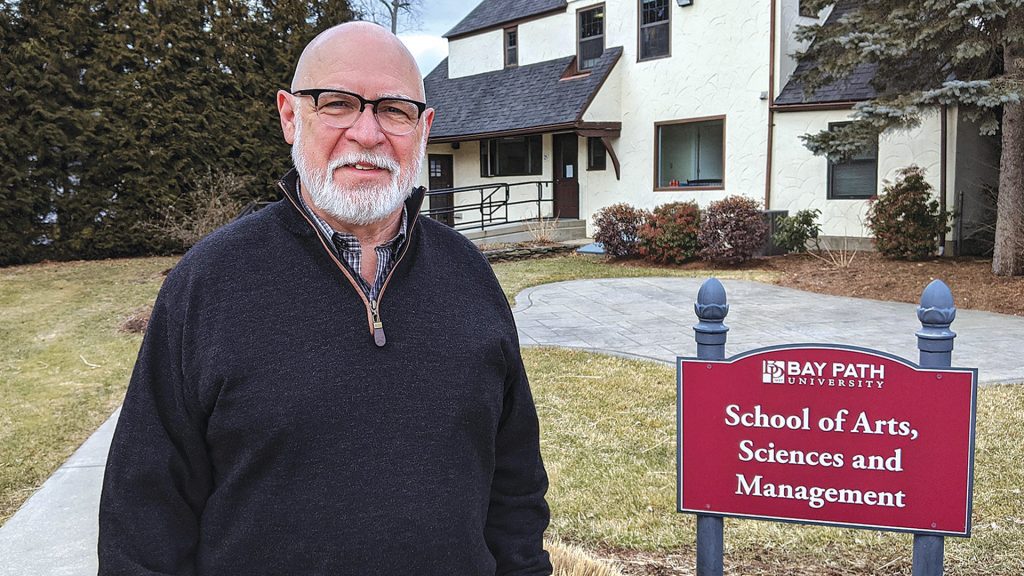
Twice a year, Tom Loper participates in a Cybersecurity Advisory Council meeting. The last one was … different.

“I would say there was a sense of concern that I hadn’t seen before at that council because of ChatGPT and the phishing potential,” said Loper, dean of the School of Arts, Sciences and Management at Bay Path University.

He explained that people can use ChatGPT, the AI chatbot that has drawn major worldwide attention since its unveiling last fall, to input information from any website, or emails from an organization, to generate a phishing episode much more realistic, and much more likely to draw a response, than its target had ever received.

“These are people — from Facebook, from Fidelity, from the Hartford, from every major organization you can think of in our area and beyond — who were taken aback by the capabilities of ChatGPT,” Loper said.

“It really scares the hell out of all of us, because we know the biggest problem that we have in cybersecurity, the biggest challenge, comes between the brain and the keyboard. Human beings allow people in.”

“It really scares the hell out of all of us, because we know the biggest problem that we have in cybersecurity, the biggest challenge, comes between the brain and the keyboard,” he explained. “Human beings allow people in. The systems are very good at stopping people from breaching — flags go off, bells and whistles go off. But the biggest problem we have is the human intervention that has to take place. And human beings make mistakes. Especially when we’re connected to the outside world, we make mistakes that allow phishing to take place.”

Tom Loper says ChatGPT is already making work easier

Tom Loper says ChatGPT is already making work easier for students and professionals, but that raises issues ranging from plagiarism to how jobs might change.

And ChatGPT just made that challenge even more daunting.

But the impact of this and other AI tools extend far beyond cyberthreats.

“AI has the ability to be as impactful as the internet — possibly even as impactful as electricity — on the way business is conducted,” said Delcie Bean, president and CEO of Paragus Strategic IT in Hadley. “We all knew this day was coming for a long time, but now it’s here, and by the end of this decade, the only businesses that will still be in business are the ones that embrace the change.”

Bean explained that these tools allow enormous amounts of work previously done by humans to be completely automated, often in a fraction of the time and with much greater accuracy — and not just basic administrative work.

“We are also talking about highly complex work like computer coding, law, and even practicing medicine,” Bean related. “In a recent demonstration, AI correctly diagnosed 225 cancer cases within 18 minutes and at 85% accuracy, while human doctors took 50 minutes and only achieved a 64% accuracy rate with the same cases. Between now and the end of the decade, we are going to see dozens of new companies and technologies emerging, displacing a lot of legacy processes and technologies at a rapid pace.”

What does that mean for employers, the workforce, and job opportunities in the future? No one has all the answers to that question — although ChatGPT itself took a stab at it for us  — but there is broad agreement that change is coming.

“AI has the ability to be as impactful as the internet — possibly even as impactful as electricity — on the way business is conducted. We all knew this day was coming for a long time, but now it’s here, and by the end of this decade, the only businesses that will still be in business are the ones that embrace the change.”

“This really challenges all forms of expertise because it’s drawing on this incredible domain of knowledge,” said James Wilson, professor of Business at Bay Path. “Now, the accuracy of it, the citing of it, all that is not there yet. But it will come.”

Wilson recently started teaching courses in a certificate program on digital transformation, which includes discussion of the impact of AI on the workplace.

“It started as a therapy session because the students were like, ‘what’s the future going to be? What skills do I need to have? What’s going to happen?’ It’s very uncertain. We have these things called human skills … which are presumably going to differentiate us from this artificial intelligence — that is, creative thinking, inquiry, critical thinking, collaboration. You’re not going to run your business on ChatGPT.”

Delcie Bean says AI promises to disrupt

Delcie Bean says AI promises to disrupt not only administrative and computer careers, but law, medicine, and a wide range of other fields.

But that’s not the only viewpoint. “The most pessimistic view of this is that AI will do for humans what the automobile did for horses,” Wilson said. “There are some dire projections.”


Future … Tense

Loper and Wilson have delved into the capabilities and possibilities of ChatGPT and other AI tools on the higher-education level, and they’ve been impressed.

“ChatGPT is the hot topic because it’s a breakthrough in the way it uses large language processing,” Loper said. “It’s never been made available to the public like this before. The exciting part is how it processes data at a phenomenal speed — it’s absolutely amazing.”

And it’s not just regurgitating knowledge, he stressed. Xiaoxia Liu, assistant professor and director of Applied Data Science at Bay Path, has been using ChatGPT in her classes, helping students finish programming projects.

A Brief ‘Interview’ with ChatGPT

We went right to the source and asked ChatGPT for its take on this article’s topic. These are the answers it provided within seconds.

How will ChatGPT and other AI tools threaten the job market in the coming years?

AI tools and automation have already impacted the job market in many ways, and it is likely that this trend will continue in the coming years. ChatGPT and other AI tools can automate repetitive or low-level tasks, leading to job displacement for those whose work can be automated.

However, it’s essential to note that AI tools and automation can also create new job opportunities, particularly in areas that require specialized skills or expertise in implementing and managing AI technology. Additionally, the use of AI tools can increase productivity and reduce costs, which can result in businesses expanding and creating new job positions.

Overall, the impact of AI on the job market is complex and multi-faceted. While some jobs may be replaced by automation, new opportunities may arise, and existing roles may evolve and require different skill sets. It is essential for individuals and businesses to adapt to these changes by acquiring new skills and embracing the opportunities presented by AI.

What are some jobs that ChatGPT and other AI tools will impact the most?

ChatGPT and other AI tools are likely to impact a range of jobs, particularly those that involve repetitive or low-level tasks that can be automated. Some examples of jobs that may be impacted the most include:

• Customer-service representatives: ChatGPT can automate many customer service tasks, such as answering common questions or directing customers to the appropriate department.

• Data-entry clerks: AI tools can be used to scan and input data, reducing the need for manual data-entry clerks.

• Factory workers: AI-powered robots can perform tasks such as assembly-line work, reducing the need for human workers.

• Drivers: The use of self-driving cars and trucks may impact the job market for drivers in the coming years.

• Financial analysts: AI tools can analyze financial data and identify patterns, potentially reducing the need for human financial analysts.

• Retail salespeople: The rise of e-commerce and automated checkout systems may reduce the need for human retail salespeople.

• Administrative assistants: AI tools can be used to automate tasks such as scheduling appointments, managing email, and organizing files, reducing the need for human administrative assistants.

It’s important to note that the impact of AI on these jobs may vary depending on the industry, location, and other factors. While AI may automate some tasks, it may also create new job opportunities in areas such as data analysis, AI development and maintenance, and other specialized roles.

Write a haiku about how AI might change the way people work.

Machines learn and grow.
Work becomes more efficient.
Humans thrive with ease.

“She gives them a start, and then they have to finish it; they use Python or whatever to finish it,” Loper explained. “Now, she’s letting them use ChatGPT, and they’re finishing it in seconds. And it’s very accurate, very fast. She’s excited about that. That’s an example where ChatGPT uses large language learning to help it finish something that you started without you giving it much guidance at all, other than the start of the program.”

Loper noted that ChatGPT also gives different answers to questions based on who’s asking and in what way.

“The algorithm, for whatever reason, is drawing on what it thinks is ideal, but your past references influence the way that it searches. The type of question you ask generates a certain type of format and answer. So if you’re asking a business question, you get an answer in a business format. If you’re asking a question for a literary magazine, you get a different format.”

And that raises issues with academic plagiarism, Loper noted, because professors can no longer throw a chunk of a student’s work into Google to get a definite take on whether something was lifted, verbatim, from another source.

He has experimented with generating presentations from ChatGPT based on a series of prompts, and recognizes the ramifications for students. “It was logically laid out and put in a format that, if a student gave it to me, I would say, ‘damn, that’s good. You really learned this material.’”

When it comes to cracking down on plagiarism, Wilson added, “we might have to abandon ship on that in a way, because it’s not so much about being original anymore as being creative in your inquiry and critical in your understanding of it.”

Wilson called up other AI tools as well during his talk with BusinessWest, from Butternut AI, which can build a website in 20 seconds, to Pictory AI, which generates videos, to Wondercraft AI, which asks for discussion prompts and will generate a full podcast, featuring multiple voices.

“I teach a business-analytics class, where it was all research, research, research. I don’t think it’s about research anymore,” he said of the way AI will affect academia. “I think it’s about asking the right questions. It’s about the right inquiry. It may not be about writing anymore. It may be about editing and getting a draft from the AI expert and then adjusting it. The amount of content that can be created is staggering.”

Even classroom lectures can benefit, he added. “I can put in a few prompts, and it generates an entire lecture. I can go in and change the text, which will then be re-narrated through AI. Suddenly, all my content is better organized.”

Amid all these implications is the compelling idea that AI will only get sharper.

James Wilson

James Wilson

“We’ve all gotten used to Siri, and we’ve all gotten used to Google, but now you’re going to have this super-intelligent, conversational assistant with you,” Wilson said.

Loper added that these discussions are no longer theoretical. He noted that speakers at the Davos World Economic Forum, among others, have been thinking seriously about what types of work are going to be replaced by artificial intelligence and what careers will continue to be dominated by human beings, with their unique sensing and critical skills.

“Human beings aren’t going away any time soon, but we’re going to have a level of augmentation that we’ve never experienced, and we don’t know how to work with it yet. It’s so new,” he added. “James and I are playing with ChatGPT, and we’re kind of in awe of it, but we’re just skimming the surface compared to some of the ways people are using it. It’s just amazing.”

Added Wilson, “if you try to imagine this in a much smaller sense, it’s like when the smartphone came out — how did that change business? Texting and emailing and video chat reconfigured the way things are done, but in a smaller sense.”

Loper agreed. “This is much bigger than anything like that.”


Risk and Reward

Przemyslaw Grabowicz, a computer scientist in the College of Information and Computer Science at UMass Amherst, is heading up a research initiative called EQUATE (which stands for equity, accountability, trust, and explainability), which is currently developing a coordinated response to the Biden administration’s request for public comment on its AI Accountability Policy.

“As a computer scientist, I believe technology can make our lives better, maybe in some senses easier,” he told BusinessWest. “But I think there’s a risk that, if we step into new technologies too quickly, then society may develop a distrust for new technology that may, in the end, slow down developments.”

The National Telecommunications and Information Administration (NTIA), a Commerce Department agency that advises the White House on telecommunications and information policy, is studying whether there are measures that could be implemented assure that AI systems are “legal, effective, ethical, safe, and otherwise trustworthy.”

“Responsible AI systems could bring enormous benefits, but only if we address their potential consequences and harms,” NTIA Administrator Alan Davidson told Reuters. “For these systems to reach their full potential, companies and consumers need to be able to trust them.”

In crafting accountability policies, Grabowicz said, leaders in all areas of life need to think carefully about the consequences of technology development and ways in which profits from this development will be converted into long-term societal gain rather than short-term profits. If not, such technology may contribute to the growth of misinformation and polarization.

“As a society, nobody wants these kinds of consequences, but if corporations focus on short-term financial gain, they may not consider the potential harmful consequences of technology being used in a way that it wasn’t meant to when it was developed.”

Such questions, Bean noted, will be further accelerated by advances in other technologies, especially robotics. “We are rapidly approaching the day when there will be free-standing robots in our lives who are able to think, make decisions, and interact with the world around them.”

In terms of security, he went on, it is hard to quantify the threat. “With Microsoft’s new tool VALL-E, which can mimic a human voice with a sample size as small as three seconds; deepfakes being able to be produced in minutes by anyone with basic computer skills; and more and more data being available to be mined, we are going to need to rethink security.

“While it is possible to imagine how technology will respond to meet these threats, the risk to businesses is the gap that exists in between the threats coming online and the response being available and adopted,” he added. “A lot of businesses are likely to face real threats in that gap — not to mention physical security, things like hacking a moving vehicle or sending a robot to conduct a robbery.”

In short, Bean said, “while there is much to look forward to, there are certainly many threats that will need to be understood and addressed.”

Meanwhile, artificial intelligence continues to evolve — in ways we may not even see coming.

Features Special Coverage

The Sky’s the Limit

new Zeiss projector

[email protected]


For a few minutes on April 28, if you were looking for a gaggle of local lawmakers and Springfield Museums board members, you’d have to look beyond earth, because they were traveling through space.

At least, they felt like they were.

That’s the idea, anyway, and it’s becoming reality thanks to the addition of a state-of-the-art Zeiss Velvet full-dome projector in the Seymour Planetarium, which will provide a fully immersive, 3D experience for visitors to the Springfield Science Museum. The planetarium opened to the public with the new system on April 29, the day after legislators and museum supporters got a tour.

“Our new projector creates an incredibly immersive experience,” said Jenny Powers, director of the Science Museum. “We hope that even more in-depth learning will happen when our visitors feel that they are traveling through part of our universe.”

The planetarium’s venerable Korkosz star ball — in continuous operation since 1937 — is not being replaced; in fact, it works in tandem with the Zeiss projector to create a more detailed, realistic virtual journey through the cosmos.

Meanwhile, just down the hall from the planetarium, a newly upgraded, interactive International Space Station exhibit will provide visitors with a better understanding of what it takes (and what it’s like) to fly among the stars, living and working in outer space for months on end. That improved exhibit also opened on April 29.

“In addition to the educational value of these improvements for schools and workforce development, the dynamic additions to the Science Museum will help drive tourism and generate critical economic development for the region.”

Taken together, these improvements — and others throughout the Science Museum — represent a $750,000 investment made possible through private donations as well as support from the Massachusetts Office of Travel and Tourism and a partnership with the National Aeronautics and Space Administration under a federal earmark sponsored by U.S. Sens. Edward Markey and Elizabeth Warren.

Kay Simpson, president and CEO of the Springfield Museums, said these projects are major steps toward the goal of making the museums the premier STEM learning center of the region.

“Today is historic,” she told the gathered guests the day before the new exhibits opened. “The story starts back in 1934 to 1937, when the Korkosz brothers of Chicopee made a star-ball projector by hand for the Seymour Planetarium. And they did this because it was the Depression and the museum could not afford a state-of-the-art Zeiss projection system. That being said, this star-ball projector was a marvel of innovation and invention. And it entertained such celebrities as movie star Clark Gable, who actually saw a live show in the planetarium in 1939.”

Fast-forward to 2022, and the museum was still using what had become the oldest operating star ball, not just in the country, but in the world, she added.

“So we’re very, very proud of our antique star ball, but we knew that we could do so much more to teach children and families about the wonders of the universe and really provide high-quality STEM learning experiences for students,” Simpson said. “So we’re fortunate that we were able to receive funding through federal and state earmarks so we could finally purchase the state-of-the-art Zeiss projector that we could not afford back in 1934. We have come full circle, and we are so excited about what is happening.”


The Final Frontier

In 2018, Simpson explained, the Springfield Museums launched its Evolution Campaign, which was designed to make the Science Museum a 21st-century, state-of-the-art attraction.

“In addition to the educational value of these improvements for schools and workforce development, the dynamic additions to the Science Museum will help drive tourism and generate critical economic development for the region,” she said.

Simpson emphasized the public and private support for the project, which has drawn on state and federal earmarks and leveraged funding from private foundations and individuals as well.

“So, needless to say, this is just an incredible moment for the Science Museum and a major investment in amplifying our importance as an educational resource for students and also a must-see tourist attraction. And I think we are really doing great work on both fronts.

opening of the upgraded planetarium

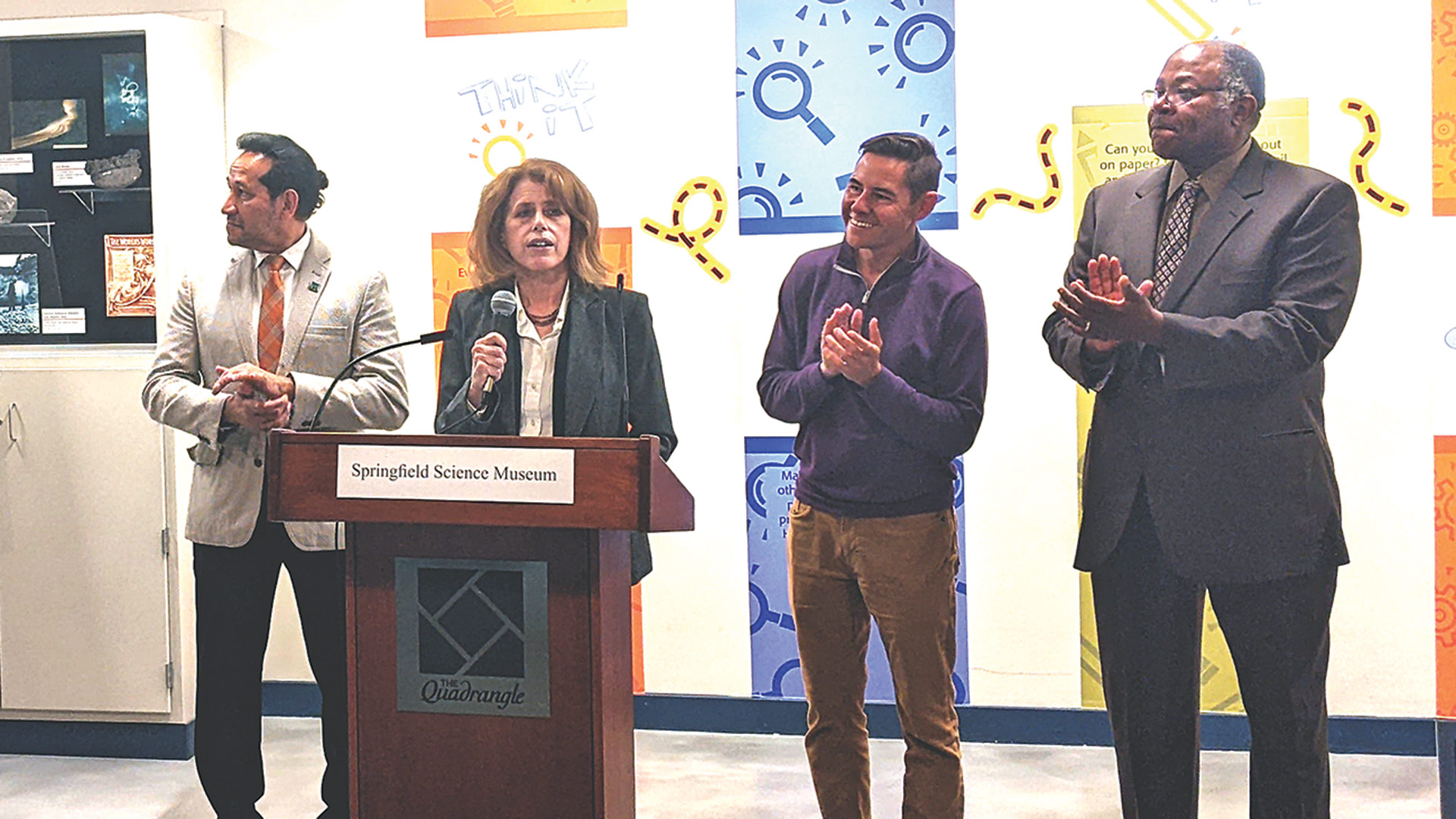
Kay Simpson celebrates the opening of the upgraded planetarium alongside (from left) state Rep. Carlos Gonzalez, state Sen. Jake Oliveira, and Darryl Williams from the office of state Rep. Bud Williams.

“We all know that the education for our children is essential for workforce development,” she added. “We hear a lot about educational equity. Museums are playing a role in all of that. And tourism, as we all know, is a major economic driver in Western Massachusetts.”

State Rep. Carlos Gonzalez agreed. “We know the importance of tourism; we know the importance of these destinations,” he said. “Having these locations to bring people from across the world to visit is so critical and important. But also, for the community and city of Springfield to come and embrace the educational opportunities that they have here is so great.”

State Sen. Jake Oliveira agreed. “Tourism is our third-largest industry, and it is so important for the Pioneer Valley, and the Springfield Museums have played such a critical role in that.”

He added that he was pleased to attend the legislative visit as someone who has always loved outer space. In fact, he recalled visiting the Springfield Museums as a child, taking in the space exhibits, and dreaming of one day being an astronaut.

“That dream ended very quickly when I realized I’m afraid of heights, small places, and fires. So that dream ended very quickly,” Oliveira said. “But I’m so glad that so many families can explore the opportunities of space that we have here at the Springfield Museums — and going into a planetarium that can actually project the images of the Webb Space Telescope, which are some of the most beautiful images of our galaxy and beyond that we can see.”

Powers emphasized the potential the Seymour Planetarium will have in creating customized programs for local teachers and students.

“There are two different ways that we’re going to be able to serve schools,” she said. “First of all, the planetarium shows have previews, and we’ve been able to embed them on our website so teachers can see them in advance and match the content of the show to what they need to teach their children. That’s really important.”

“The planetarium shows have previews, and we’ve been able to embed them on our website so teachers can see them in advance and match the content of the show to what they need to teach their children.”

In addition, Kevin Kopchynski, STEM curator for the Springfield Museums, can create custom shows for students, Powers explained.

“So if a teacher comes in from any level, from kindergarten up through college, and has a particular thing they need to focus on, Kevin can make them a show about that. It’s something that’s highly customizable.”

Also, for the first time ever, the planetarium will offer Spanish-language planetarium shows.

“We can do almost any kind of representation that we want to using this system,” Powers said. “The modern planetarium shows offer us such a greater diversity of people than the old ones do. That’s one way we can serve not only schools, but all of our visitors. We’re incredibly excited about that.


The Next Generation

Darryl Williams, district director for state Rep. Bud Williams, spoke at the legislative event and, like Oliveira, recalled fond early memories of the Science Museum.

“This is my favorite museum here in Springfield. I grew up going to this museum every summer; my parents made sure that we came here,” he said, noting that his parents also bought him a telescope to gaze at Mars and Venus and myriad constellations — and that he was inspired by learning about the accomplishments of scientists during his museum visits.

“I really enjoyed it, and I look forward to many, many more years,” he said, “and I look forward showing my grandkids this one day.”

That’s the kind of legacy the Springfield Science Museum and its Seymour Planetarium has cultivated for generations, and will continue to cultivate — only now, in much sharper detail.

Banking and Financial Services Special Coverage

Marking a Milestone

The five partners at Meyers Brothers Kalicka

The five partners at Meyers Brothers Kalicka: from left, Jim Krupienski, Kristi Reale, Howard Cheney, Rudy D’Agostino, and Kristina Drzal Houghton.

It’s called the ‘Founders Room.’

This is a small conference room at Holyoke-based Meyers Brothers Kalicka featuring a table that can comfortably seat six or seven people, which makes it a popular spot for smaller meetings and an attractive alternative to the cavernous main conference room, which can host more than 40.

There are a few other gathering spots at this accounting firm, but this one is unique because it pays homage to those who were there at the beginning — and in the decades that followed — for both Meyers Brothers and Joseph Kalicka and Co., two accounting firms that started the same year, 1948, and came together in a consequential merger in 2004 that created the firm known to most by the letters MBK.

The Founders Room takes on a little more importance this year as the firm celebrates a milestone — its 75th anniversary. As it does so, it looks back at the important work of the three Meyers brothers who went into business together — Ben, Raymond, and Maurice (there’s a photo of them on the wall in the Founders Room) — and Joseph Kalicka, founder of the firm that took his name (there’s a photo of him with former Massachusetts Gov. Michael Dukakis).

But the present and the future are the dominant topics of conversation on this occasion, and there was much to discuss as we gathered thoughts from the five partners now setting a course for the firm — Howard Cheney, Rudy D’Agostino, Kristina Drzal Houghton, James Krupienski, and Kristi Reale — as well as David Kalicka, partner emeritus.

Collectively, they said the tenets put in place by the founders of both firms in 1948 — everything from a laser focus on customer service to a tradition of innovation and an emphasis on anticipating what the future might bring (and being ready for it) — are still serving MBK well as it copes with an onslaught of change coming from every direction.

“I’ve always felt that the strength of our firm is the people here. It’s a collaborative effort. People work really well together; we’ve got a lot of smart people who work hard. From the top down and the bottom up, everybody works as a team.”

This change involves everything from technology and how it is used to better serve both the company and its clients to creating a workplace that recognizes emerging needs and enables several generations of employees to work effectively — work that was in some ways impacted by, and accelerated by, the pandemic and the many ways in which it impacted the workplace.

For this issue and its focus on banking and financial services, BusinessWest talked with MBK’s partners about the past 75 years, but mostly about what will come next — for both the firm and the industry.


Addition by … Addition

It was in early 2003 that talks began about merging Meyers Brothers and Joseph Kalicka and Co., two firms that were in ‘friendly competition’ — a phrase heard early and often — for more than a half-century and had a lot of things in common.

Looking back on those days, Drzal Houghton, who joined Meyers Brothers in 1995, said that, while the firms were operating in many of the same spaces, or sectors of the business community, they had different niches. Also, Meyers Brothers had a benefits-consulting business as well as a wealth-management business. So a merger made sense on many levels.

“Both firms had a lot of clients in the medical field, but Meyers Brothers had a lot of clients in the nonprofit industry, so there was a lot of summer work,” she explained. “Whereas, Joseph Kalicka and Co. didn’t have as much summer work, so that was a good fit. Meanwhile, Joseph Kalicka and Co. had a lot of work in the construction and real-estate industries, so it was just clear that we would be stronger together.”

Kalicka agreed. “We decided that it had been 50 years since we’ve been competing against each other and we’d both do better if we merged,” he explained. “It’s worked great; it’s helped us to survive different challenges. We’ve been around for a long time and have been approached by several bigger firms to merge and have turned them down.”

D’Agostino, who joined the Kalicka firm in 1995, noted that there were several young partners with that firm at the time, a core of leadership that appealed to those at Meyers Brothers and made a merger even more attractive.

“The opportunity to make the firm stronger, work on some bigger accounts, and have a good nucleus of young partners — those were all driving forces in the merger,” he noted. “And the culture was very similar.”

The firm that emerged from that merger is now the largest accounting firm based in Western Mass., with more than 60 employees. And that size brings with it several advantages, said the partners, including the ability to attract young talent, a challenge that has only grown in size and scope in recent years as competition for talent grows and the need for young leaders to replace retiring Baby Boomers increases.

MBK serves individuals, privately held businesses, family and independent businesses, and not-for-profit organizations in Western Mass. and well beyond. Services include taxation, accounting, auditing, and business-advisory work. The client list is deep and diverse, and it reflects the many business sectors served and the niches the company has developed. That client list includes Peter Pan Bus Lines, the Springfield Thunderbirds, the construction firm Fontaine Bros., the nonprofit agencies Square One and Mental Health Assoc., and small to mid-sized businesses such as New England Dermatology and Tyler Equipment Corp.
Partners Kristi Reale and Jim Krupienski

Partners Kristi Reale and Jim Krupienski, seen here in MBK’s Founders Room, say the firm has priorities for the future, but especially the need to develop the next generation of leadership.

As they talked about what makes MBK different, and successful, the partners used different words and phrases, but essentially said it comes to down to people — those at all levels of the organization.

“I’ve always felt that the strength of our firm is the people here,” Cheney said. “It’s a collaborative effort. People work really well together; we’ve got a lot of smart people who work hard. From the top down and the bottom up, everybody works as a team.”

Drzal Houghton agreed. “We believe here that it’s family first,” she said. “Our clients think of us as family, and I think it’s just that whole feeling … the clients feel it, the employees feel it. And it really makes us different — we care about every member of our team and every client, like family.”

As they look ahead, the partners again spoke with one voice as they talked about the priorities moving forward and what will be needed for this firm to thrive for another 75 years.

Remaining an independent firm at a time when mergers remain the order of the day and the partners field calls from private-equity firms about acquisition on a regular basis is an important goal — and also a major challenge, said those we spoke with.

“We’d like to remain independent; it’s a tough fight to stay independent, but it’s worth it because it benefits the clients,” D’Agostino said. “We make the decisions here, the philosophy that the client comes first — we can keep that. We all have to follow the same regulations, but we like to make sure we are doing things responsibly and really know our clients.”

Drzal Houghton agreed. “We definitely want to stay independent,” she said. “In the industry, there have been a lot of mergers; a lot of private equity is trying to buy firms, but we have worked very hard to be independent, and we want to give that opportunity to our rising stars.”


Crunching the Numbers

MBK’s partners told BusinessWest that, years ago, the firm’s leadership team would conduct an annual two-day retreat to discuss matters and set in place a strategic plan for the future.

Now, they stage four- to five-hour strategy sessions every six to seven weeks. The shorter, more frequent sessions are ultimately more productive — people are tired and less effective at the end of the second day of a retreat, they noted — and follow-up and accountability are more manageable. Meanwhile, change is coming at such a constant and profound rate that more frequent strategy meetings with shorter agendas are certainly necessary.

“We’re maintaining the momentum and holding ourselves more accountable,” said Krupienski, adding that items for discussion include everything from staffing to succession planning; from IT conversions to client services and client development.

Staffing is certainly a common agenda item, and there are layers to this issue, said those we spoke with, adding that these include everything from attracting and retaining talent to creating policies for remote work.

“We definitely want to stay independent. In the industry, there have been a lot of mergers; a lot of private equity is trying to buy firms, but we have worked very hard to be independent, and we want to give that opportunity to our rising stars.”

“A major issue with all businesses, and especially accounting firms, over the past few years has been staffing — staff costs, recruiting staff, and maintaining staff have all been significant concerns within this industry,” said D’Agostino, adding that there are some issues unique to the accounting sector, such as the compression of work during tax season and a reluctance on the part of many younger workers to “want to work the kinds of hours the previous generations have.”

“So we need to adapt to that,” he said, adding quickly that this is one of the many reasons why firms need to embrace technology — especially the technology that can handle some of the more mundane accounting tasks and thus enable professionals in the industry to focus more on consulting and advising clients.

“A lot of the bigger firms are embracing artificial intelligence,” said Reale. “We’re not there yet, but we should look at it and determine if there is anything that AI can help us with.”

Elaborating, she said that, while there is concern in some sectors about AI and its potential for eliminating jobs by doing work that humans can do (see related story on page 32), forward-looking accounting firms need to focus on its potential to create efficiencies and free up professionals to serve clients in different ways.

“AI is not going to be able to have meaningful discussions with a client and help grow its business,” she explained, adding that, increasingly, clients are looking for such consulting services — everything from contracts to mergers and acquisitions — from their accounting firm.

To provide these services effectively, firms need a pipeline of talent, said the partners we spoke with, adding that maintaining such a pipeline has become more difficult in recent years, and for a number of reasons, some of them amplified by the pandemic.

Indeed, Krupienski noted that, years ago, local and regional firms might have had a leg up when it came to the graduates of local colleges and their accounting programs, but now, those same individuals are fielding offers from firms on the other side of the country offering remote work opportunities at wages higher than those traditionally offered in Western Mass.

And that’s one of many challenges this firm and others in the region face as they try to recruit and maintain talent, said D’Agostino, adding that the firm generally likes to hire people with three to five years of experience, but there are simply fewer people with that background available to hire in this market.

Thus, the firm is hiring more individuals out of college, training them, and hoping to hang on to them when they have that three to five years of experience.


Then and Now

As they talked about what’s changed in the industry and for this firm, and what hasn’t, the partners we spoke with started with the later.

And Krupienski offered the obligatory “death and taxes.”

That was his way of saying that many of the services — basic and complex — have remained the same over the past 75 years. How they are provided, and sometimes when … well, that’s a different story.

This firm has been essentially paperless for years, said Reale, noting also that the phone has been replaced by email, which has, to a large degree, been replaced by the text, which can come at all hours of the day or night. And, for the most part, it needs to be answered soon after it’s received.

The midnight or 5 a.m. text comprises just one of the many changes that have taken place within the industry, said the partners, adding that many significant changes have also come in the workplace.

Elaborating, they said the younger generations now dominating workplaces like MBK have different needs and priorities than those that preceded them, and firms that want to be successful must acknowledge this and respond accordingly.

And flexible schedules are just part of the equation, said D’Agostino, adding that these generations place a premium on work-life balance and how to achieve that balance.

As an example, he recalled a few younger team members departing at 5:15 p.m. during the height of tax season to go to spinning class, something those in his generation wouldn’t think about doing.

But beyond a need to go to the gym when they need to go the gym, these generations want different things from their work, and they want them more quickly than previous generations, he went on.

“They want diversity in their work situation,” D’Agostino said. “They don’t want to just do a tax return; they want to do consulting work, they want to do something above and beyond that, they want to do things that are interesting to them, and they want challenges.

“In order for this firm to continue to survive, we have to be flexible and accommodate the next generation,” he went on. “That’s what every firm is dealing with; I’m resistant to change, but things have to change, because this is the next generation of leadership here, and this is how they operate.”

Meanwhile, another change that has taken place at MBK is a greater focus on giving back to the community and getting involved with its many nonprofits and causes, said Reale, who couldn’t speak to how things were 75 years ago, but can point to a dramatic change over the 23 years she has been with the firm.

“Twenty years ago, we would do one or two charity days,” she recalled. “And now, every other Friday, there’s a specific dress-down for charity, and some of our team members pick a special organization each month, and we do something for the community each month, whether it’s a service, or stuff the bus, or bringing in toys for the holidays, or providing needed items for the homeless … as a firm, we’re much more involved.”

As an example, she cited work involving an employee who was born in Ukraine and whose family was still in that country when the war with Russia started.

“When that war began, they needed certain things,” she recalled, adding that a local church put out a call for items, and the firm answered that call. Indeed, clothing and other items were donated by employees and clients alike over several days during tax season.

“You couldn’t walk in our lobby; they took three truckloads of items to that church,” she went on. “And that really hit home because it affected one of our team members.”

This heightened involvement in the community is important to the younger team members at MBK, said D’Agostino, and it’s one of the many cultural traits that will aid efforts to recruit and retain talent.

“They want to feel that the firm is behind certain community activities and certain charities because that’s important to them beyond the work environment,” he said. “Usually, it’s one of the staff people that takes the lead on these initiatives, and they really do enjoy it.”


Bottom Line

The photos along the walls in the Founders Room generally speak to another time. Indeed, most of those in the pictures have passed away, and the black-and-white images are stark reminders of just how much technology has advanced and the world has changed.

Still, the partners we spoke with said that, when it comes to the business of accounting and auditing, what truly matters most hasn’t changed since 1948, and it won’t change. This would be the matter of working closely with clients to handle their needs and help them set a course for success. And the ability to do this, as stated earlier, comes down to having people who care.

This has always been the main ingredient in the success formula, and as MBK looks forward to the next 75 years, it isn’t about to change that recipe.

Special Coverage Women in Businesss

From the Grounds Up

Hayley Procon

Hayley Procon entered college with the goal of one day getting into broadcast journalism.

In fact, her ambition was to be the “next Erin Andrews,” as she put it, referencing the well-known sideline reporter for FOX on its NFL broadcasts.

“I loved baseball, and I still love baseball; I just wanted to be on the sideline for the Red Sox,” she told BusinessWest, adding that it wasn’t long after arriving at Suffolk University in Boston that she realized that this wasn’t a realistic, or even desirable, goal.

And upon transferring to Springfield College, she would set a new goal — to be her own boss.

“I definitely didn’t want to work for someone else,” she explained, with a note of extreme confidence in her voice. “I didn’t want to put in the work and put in the effort and see someone else basically reap the benefits; I don’t want to work hard for someone else’s success.”

She kept pursuing that goal and made it reality in what would be called a joint venture with her mother, Kristen Procon. Together, they acquired an established business, Common Grounds, a coffee shop on busy Boston Road in Wilbraham, while she was still in college — a venture for which she would win the Spirit Award from the Harold Grinspoon Foundation.

“I definitely didn’t want to work for someone else. I didn’t want to put in the work and put in the effort and see someone else basically reap the benefits; I don’t want to work hard for someone else’s success.”

Together, the partners made a few subtle changes, building on an existing foundation, and have built on that success story. While doing so, though, they have taken things to a different level, becoming serial entrepreneurs with the opening of Aura Day Spa in Ludlow, a new venture they have taken from the ground up — as opposed to the grounds up with the coffee shop.

As she talked about these ventures, Procon used many of the words and phrases summoned by others profiled over the years in BusinessWest’s Women in Business sections. She said her work has been fun and rewarding, but also challenging and, at times, a little frightening.

In the end, though, she has no second thoughts about the entrepreneurial path she has chosen because she’s ultimately doing what she set out to do back in college — put her name over the door, figuratively if not literally, and sign the front of the paycheck, not the back.

“I really enjoy it,” she said of the entrepreneur’s life. “There are some days when I wish I did the 9-to-5 and went to work for someone else, but I don’t think I would have been happy in the long run.”


Bean Entrepreneurial

Procon told BusinessWest that she’d been coming to Common Grounds, a popular spot in the back of a large office and retail plaza on Boston Road, when she was in high school.

The business came onto the market in September 2020 — yes, the height of the pandemic — and, despite the many challenges facing all businesses at that time, but especially those in the broad hospitality sector, Hayley and her mother decided to take the plunge.

Haley Procon and her business partner and mother, Kristen Procon

Haley Procon and her business partner and mother, Kristen Procon, have become true serial entrepreneurs, starting with Common Grounds and then opening Aura Day Spa.

“It was COVID, and everything was still pretty weird,” she recalled, using that word to sum up a time when many consumers were still hunkering down, college students like herself (she was just starting her senior year) were mostly taking courses remotely, and those in hospitality were managing day to day. “We found out it was for sale, we walked in, we sat down with the owner, and we bought it a month later.”

As noted earlier, the two partners took the existing, and fairly successful, business and made some minor but important tweaks, including adjustments to the menu, changing some furniture, extending the hours of operation, and, perhaps most importantly, opening on Sundays.

“Sunday is a good coffee day, a good breakfast day,” Procon said. “But overall, this place has been running great, and we wanted to keep the same vibe; we have a lot of great regulars, and we have great work-of-mouth.”

She said the business draws heavily from the plaza it’s located in, as well as the massive Post Office Park, home to a YMCA and dozens of businesses large and small, just down the street.

While she’s managing her own business, this is certainly not what she was thinking about when she was in college and planning and plotting to work for herself one day — and soon.

“I never thought I’d own a coffee shop … I’ve never worked with coffee before, and I figured, ‘how hard can it be?’” Procon asked rhetorically, before answering the question by saying that every business, even an existing one with a core of loyal customers, comes with a complete set of challenges.

“I just loved the idea of having a spa and building from scratch. My hobby is building; I like taking things from the ground up and just expanding from there. Seeing it from start to finish is something I really wanted to do.”

She said the partners split up the duties of running the business, with her mother handling most of the accounting and bookkeeping responsibilities while she tackles marketing, social media, and many of the day-to-day operations.

It’s a juggling act that was taken to a much higher plane when the two decided to double down, if you will, and take entrepreneurial plunge, this time with a new business, a spa they opened in Ludlow last September called Aura Day Spa.

Unlike Common Grounds, this was something that she aspired to do and has been thinking about for some time now.

“A spa has always been a dream of mine,” she said. “And when we realized how well we did with this place [Common Grounds] and how well we worked together, we kind of looked at each other and said, ‘let’s try to open a spa.’

“Neither one of us is in the cosmetology industry; we don’t do any of the services,” she went on. “But I just loved the idea of having a spa and building from scratch. My hobby is building; I like taking things from the ground up and just expanding from there. Seeing it from start to finish is something I really wanted to do.”

Having a dream and making it a reality are two different things, she acknowledged, adding that she did extensive research into everything from where her spa concept might work (Ludlow was quickly identified as a community in need of such a facility) to what types of services should be offered.

“I was all over the internet looking at spas; I went around here looking at spas, and just pieced together how ours would run,” she told BusinessWest. “We have no experience in the industry, but we did our homework, and here we are.”

That due diligence led to a former dance studio on Holyoke Street that the partners gutted and converted to a facility offering everything from facials to massage; body contouring to a sauna.

The venture is off to a solid start that Procon credits to hiring the right people to provide those services, some aggressive efforts to get the word out about the facility, and continued work researching the industry with an eye toward best practices and the best avenues for achieving results.

“I’m always looking at other places — East Coast, West Coast, just seeing what other places are doing and how to stay up to date in the industry and what we can add,” she said. “I just like to stay on top of all that and find new ways to bring people and add more services.”

Procon dares to ponder where this venture might go next and perhaps the possibility of opening several Aura spas. For now, though, she and her mother have their hands more than full managing these two businesses, as well as the ups and downs and emotional swings that are part of parcel to being business owners.

“It’s a grind,” she said, borrowing another term, sort of, from her coffee-shop business. “I love the idea of being a business owner, and everything falls on you at that point; I just knew that this is exactly what I wanted.

“I realize that the more I put into it, the more I’ll get out of it,” she went on. “I’m excited to get to that point — I know it will take a few years, but we’ll get there.”


Skin in the Game

When asked about the path she’s chosen and what she likes about being an entrepreneur, Procon said this life offers her everything she wanted and expected. Well, sort of.

“I like the freedom that it offers,” she explained. “I have very little right now — I’m tied to both of these places for quite a long time, but just being able to show people what we did and what we started and what our goals are, it’s really rewarding, knowing that I’m in here most mornings at 5:30 and then go over to the spa. Some people call me crazy, but it’s very rewarding.”

It is certainly that, and the woman who wanted to be the next Erin Andrews found something much better.


Law

Managing Hybrid or Remote Workers

By John S. Gannon, Esq.


Prior to the COVID-19 pandemic, working remotely and other flexible work models like hybrid schedules were fairly uncommon. Now, allowing employees to work remotely at least a few days a week has become the norm for jobs that can be done from home.

One research summary suggested that 74% of U.S. companies are using, or plan to implement, a permanent hybrid work model in 2023, and 55% of employees want to work remotely at least three days a week. With remote work becoming more and more common, businesses need to be aware of employment-related legal issues that can bubble up when employees are working from home (and probably in their pajamas).


Wage and Hour Issues

One of the biggest challenges for businesses with teleworkers is compliance with wage and hour laws, which are laws that govern issues like payment of wages and meal breaks. Federal and state laws can differ considerably on these topics.

For example, federal law, and many state-law equivalents, do not require that an employer provide employees with meal breaks. Here in Massachusetts; however, state law requires employers to provide a 30-minute unpaid meal break to those who work more than six hours in a work day. In New Hampshire, workers are required to get a meal break after working five hours, unless it’s feasible to eat while working. Massachusetts does not have this ‘feasibility’ exception to its meal-break statute.

“With remote work becoming more and more common, businesses need to be aware of employment-related legal issues that can bubble up when employees are working from home.”

Similarly, some states (including Massachusetts) require the payout of accrued, unused vacation time upon separation from employment. Most states do not have this requirement. Other states require employers to reimburse employees for home-related business expenses, such as a laptop, upgrading home internet, or phone service.

Although this is type of reimbursement is technically not required in Massachusetts, the state attorney general’s office has suggested that employers should reimburse expenses that are “unavoidable and necessary” (whatever that means). Bottom line, businesses need to be familiar with the wage and hour laws of each state where employees live if remote work is allowed.

One wage and hour issue that does not vary from state to state is the requirement to pay non-exempt workers for all hours worked. This can be a problem with remote workers, regardless of where they live. Consider an hourly employee who answers a few emails from home during non-core working hours. This is working time, even if the employee has signed out for the day.

Employers need to have policies and practice in place to make sure all working time at home is recorded and paid for. Otherwise, they might be looking at a costly failure-to-pay-wages lawsuit.


Family and Medical Leave Laws

Similar to wage and hour laws, employee family and medical leave entitlements can vary considerably from state to state. As readers are likely aware, in Massachusetts, employees are allowed to take up to 20 weeks of paid leave per year to care for their own medical condition. Full-time employees also earn an additional 40 hours of sick time to use during the year. Employees working from home who live outside of Massachusetts may not be entitled to this leave. However, if they live in Connecticut or New York, they would be entitled to paid medical leave and sick time required by their home state’s laws. Because this issue can be confusing for employees, leave entitlements absolutely need to be addressed in your company handbook and/or policy and procedure manual.


Poster and Notice Requirements

Numerous labor and employment laws, including wage and hour laws and family and medical leave laws, require employers to put a poster up in the workplace and provide informational notices to employees in places like a handbook. This obligation does not vanish when employees are working from home. If employees rarely visit the office, the required postings need to be distributed via email or posted on an employee-accessible intranet.


Health and Safety Requirements

Even for remote employees, businesses must ensure a safe and secure working environment. This means identifying risks and hazards associated with working in the home and requiring employees to report any work-related injuries or incidents. Even employees working from home are entitled to workers’ compensation for job-related injuries.


Consider an Employment-practices Audit

An employment-practices audit is a complete risk-and-liability assessment of your human-resources and compliance operations. Audits are a cost-effective way for employers to confirm that they are meeting their legal requirements under federal, state, and local laws and regulations. Employers with a hybrid or remote workforce should consider engaging labor and employment counsel to conduct an employment-practices audit to detect and fix any of the problems identified in this article (and more).


John Gannon is a partner with the Springfield-based law firm Skoler, Abbott & Presser, specializing in employment law and regularly counseling employers on compliance with state and federal laws, including family and medical leave laws, the Americans with Disabilities Act, the Fair Labor Standards Act, and the Occupational Health and Safety Act; (413) 737-4753; [email protected]

Law

Case in Point

By Mary Jo Kennedy and Briana Dawkins


A recent decision by the National Labor Relations Board (NLRB), McLaren Macomb, has employers in both union and non-union settings reviewing non-disparagement and confidentiality provisions used in their employee-separation agreements for possible legal challenges.

Mary Jo Kennedy

Brianna Dawkins

Brianna Dawkins

In February of this year, the NLRB held that the severance agreements at issue in McLaren Macomb violated the National Labor Relations Act. The employer, a hospital, offered severance agreements to union employees being furloughed that required them to waive certain rights under the act. The agreements included provisions that prohibited furloughed union employees from making statements that could disparage or harm the image of the hospital and prohibited employees from disclosing the terms of the agreement.

The NLRB found that those provisions were overly broad, unlawfully restrictive, and coercive on the employees’ ability to exercise their rights under Section 7 of the act. Section 7 protects the ability of employees and former employees to discuss terms and conditions of employment with co-workers. More broadly, Section 7 affords employees a wide range of protection, including communications with third parties “where the communication is related to an ongoing labor dispute and when the communication is not so disloyal, reckless, or maliciously untrue.”

The NLRB’s decision in McLaren Macomb makes clear that a severance agreement that has a reasonable tendency to interfere, restrain, or coerce the exercise of Section 7 rights by employees is unlawful. An employer that proffers a severance agreement with provisions that would restrict employees’ exercise of their rights under the act may be found in violation of the act. The decision states that it is immaterial whether an employee accepts the agreement. It remains uncertain whether any courts will uphold McLaren Macomb.

“The NLRB’s decision in McLaren Macomb makes clear that a severance agreement that has a reasonable tendency to interfere, restrain, or coerce the exercise of Section 7 rights by employees is unlawful.”

One month after issuance of the McLaren Macomb decision, the NLRB’s general counsel issued a guidance in response to inquiries about the McLaren Macomb decision, which responded to some inquiries regarding the decision’s impact. While not binding or controlling, some key points referenced in this guidance are:

• The McLaren Macomb decision applies to existing separation agreements. The general counsel suggests employers should proactively consider contacting those subject to severance agreements with overly board provisions in order to advise them that the provisions are null and void and that the employer will not seek to enforce the agreements or pursue any penalties;

• Because of the inequality of bargaining power between employees and their employers, it is the role of the NLRB to act “in a public capacity to protect public rights to effectuate the public policy of the act.” Even if the employees agree to broad confidentiality or non-disparagement provisions, the rights of the public may not be waived in a way that precludes the future exercise of Section 7 rights;

• Provisions in any employer communication to employees that tend to interfere with, restrain, or coerce employees’ rights under Section 7, if not narrowly tailored, may also be prohibited under Section 7 of the act;

• Confidentiality provisions that are narrowly tailored to restrict the disclosure of proprietary or trade-secret information, and include a time frame on such a restriction, may be considered lawful; and

• Non-disparagement clauses that are narrowly tailored and limited to employee statements about the employer that meet the definition of defamation, as set forth in McLaren Macomb, may be lawful.

With regard to supervisors who are generally not protected under the act, the guidance notes that they would be covered in situations in which an employer retaliates against a supervisor for refusing to act on the employer’s behalf in committing an unfair labor practice under the act. Supervisors, as defined by the act, are individuals who have authority requiring independent judgment to hire, transfer, suspend, lay off, recall, promote, discharge, assign, reward, or discipline other employees in the interest of the employer, or to adjust their grievances, or to effectively recommend such action.

Accordingly, to ensure enforceability of its severance agreements, it is important for employers to classify its employees appropriately with respect to their responsibilities and not solely based on their job titles. Nonetheless, employers may continue to negotiate broader non-disparagement and confidentiality agreements in communications with supervisory employees, which remains unaffected by the McLaren Macomb decision.

Although McLaren Macomb involves union employees, the risk of non-compliance following this decision extends to all employers subject to the act, including non-union employers. Small businesses with non-union employees, while least likely at risk of a claim of unfair labor practices, are also subject to this decision. While employers may choose not to follow the proactive advice of the NLRB general counsel, employers should consider reviewing their current severance agreements and consider revising the non-disparagement and confidentiality clauses to avoid possible non-compliance.

Employers with questions regarding the enforceability of their non-disparagement and confidentiality clauses may wish to seek advice from their legal counsel.


Mary Jo Kennedy is a partner, and Briana Dawkins is an associate, with the law firm Bulkley Richardson, which has offices locally in Springfield and Hadley.

Healthcare News

Don’t Ignore the Signs

Like with any disease, Cheryl Moran said, early detection of Alzheimer’s can make a big difference.

That’s why the Atrium at Cardinal Drive in Agawam and Orchard Valley at Wilbraham, both Benchmark mind and memory-care communities, have been hosting a series of memory screenings at area senior centers.

“Over the past 25-plus years, we’ve seen that people and families affected by dementia often delay planning, which makes for a much more challenging situation later,” said Moran, executive director of the Atrium. “By offering this to the community, we want to help ease the burden.”

Alzheimer’s disease and dementia affects nearly 350,000 people in Massachusetts, and the numbers continue to grow.

Cheryl Moran

Cheryl Moran

“Over the past 25-plus years, we’ve seen that people and families affected by dementia often delay planning, which makes for a much more challenging situation later.”

Memory screenings, Moran noted, are appropriate for anyone concerned about memory loss or experiencing symptoms of dementia or who believes they are at risk due to family history. Screenings like the ones being offered at area senior center provide a safe, simple, face-to-face way to check a person’s memory, language, intellectual functions, and other thinking skills using a series of questions and tasks.

Screenings have already taken place at Wilbraham Senior Center and West Springfield Senior Center in April, and the next two are slated for Wednesday, May 17 from 10 a.m. to noon at Agawam Senior Center, 954 Main St.; and Wednesday, May 31 from noon to 2 p.m. at Palmer Senior Center, 1029 Central St. Attendees can register for either event by calling (413) 821-0605 for Agawam or (413) 283-2670 for Palmer.

A screening can indicate whether someone should consult with a medical provider in order to identify what is causing memory loss. If dementia is the cause, early diagnosis can help both individuals and their family members learn about the disease, set realistic expectations, and plan for their future together.

“If they are able to obtain a diagnosis for the cause of their dementia, it can help to better understand what the individual is struggling with and what to expect as the dementia progresses over time,” said Julie Waniewski, executive director of Armbrook Village in Westfield, which has a memory-care neighborhood called Compass. “There are also clinical drug trials that they can partake in to aid in research and hopefully find a cure one day.”


What to Look For

According to the Alzheimer’s Assoc., memory loss that disrupts daily life may be a symptom of Alzheimer’s or other dementia. The organization lists 10 signs in particular to keep an eye on:

1. Forgetting recently learned information. Similar signs include forgetting important dates or events, asking the same questions over and over, and increasingly needing to rely on memory aids (such as reminder notes or electronic devices) or family members for things they used to handle on their own.

Julie Waniewski

Julie Waniewski

“If they are able to obtain a diagnosis for the cause of their dementia, it can help to better understand what the individual is struggling with and what to expect as the dementia progresses over time.”

2. Challenges in planning or solving problems. Some people living with dementia may experience changes in their ability to develop and follow a plan or work with numbers. They may have trouble following a familiar recipe or keeping track of monthly bills. They may have difficulty concentrating and take much longer to do things than they did before.

3. Difficulty completing familiar tasks. People with Alzheimer’s often find it hard to complete daily tasks. Sometimes they may have trouble driving to a familiar location, organizing a grocery list, or remembering the rules of a favorite game.

4. Confusion with time or place. People living with Alzheimer’s can lose track of dates, seasons, and the passage of time. They may have trouble understanding something if it is not happening immediately. Sometimes they may forget where they are or how they got there.

5. Trouble understanding visual images and spatial relationships. For some people, having vision problems is a sign of Alzheimer’s. This may lead to difficulty with balance or trouble reading. They may also have problems judging distance and determining color or contrast, causing issues with driving.

6. New problems with words in speaking or writing. People living with Alzheimer’s may have trouble following or joining a conversation. They may stop in the middle of a conversation and have no idea how to continue, or they may repeat themselves. They may also struggle with vocabulary, have trouble naming a familiar object, or use the wrong name.

7. Misplacing things and losing the ability to retrace steps. A person living with Alzheimer’s disease may put things in unusual places. They may lose things and be unable to go back over their steps to find them again. He or she may accuse others of stealing, especially as the disease progresses.

8. Decreased or poor judgment. Individuals may experience changes in judgment or decision making. For example, they may use poor judgment when dealing with money or pay less attention to grooming or keeping themselves clean.

9. Withdrawal from work or social activities. A person living with Alzheimer’s disease may experience changes in the ability to hold or follow a conversation. As a result, he or she may withdraw from hobbies, social activities, or other engagements. They may have trouble keeping up with a favorite team or activity.

10. Changes in mood and personality. Individuals living with Alzheimer’s may experience mood and personality changes. They can become confused, suspicious, depressed, fearful, or anxious. They may be easily upset at home, with friends, or when out of their comfort zone.

“There are many warning signs of memory issues or early-stage dementia,” Waniewski said. “Sometimes a person is struggling to prepare meals, which leads to improper nutrition, or they are not taking their medications correctly, the house is unkept, appliances may not be working, or their personal hygiene is not what it used to be. They may also ask the same question repeatedly, which is a sign of short-term memory loss. They may lack interest in previously enjoyed activities or group gatherings, which is usually because they are afraid that others will start to notice that they are struggling cognitively.”

Other warning signs may include piles of unopened mail or shutoff notices, indicating that their executive functioning is declining and finances are becoming difficult to handle on their own, Waniewski added. “Also, their car may have new signs of damage, or they may have gotten lost driving, and the yard may be overgrown and not tended to.”


Next Steps

While not every symptom is a sign of dementia, the Alzheimer’s Assoc. stresses the importance of getting screened, as early detection matters.

“If you notice one or more signs in yourself or another person, it can be difficult to know what to do,” the organization notes. “It’s natural to feel uncertain or nervous about discussing these changes with others. Voicing worries about your own health might make them seem more ‘real.’ Or you may fear upsetting someone by sharing observations about changes in his or her abilities or behavior. However, these are significant health concerns that should be evaluated by a doctor, and it’s important to take action to figure out what’s going on.”

Early detection may also open doors to treatments that may provide some relief of symptoms and help maintain independence longer, as well as increase one’s chances of participating in clinical drug trials that help advance research. Waniewski noted that Armbrook Village and its parent company, Senior Living Residences, are affiliated with Boston University’s Alzheimer’s Disease Research Center, which offers clinical trials in which people can participate.

Healthcare News

Making Progress


In January, the U.S. Food and Drug Administration approved Leqembi (lecanemab-irmb) via the Accelerated Approval pathway for the treatment of Alzheimer’s disease. Leqembi is the second of a new category of medications approved for Alzheimer’s disease that target the fundamental pathophysiology of the disease. According to the FDA, these medications represent an important advancement in the ongoing fight to effectively treat Alzheimer’s disease.

“Alzheimer’s disease immeasurably incapacitates the lives of those who suffer from it and has devastating effects on their loved ones,” said Dr. Billy Dunn, director of the Office of Neuroscience in the FDA’s Center for Drug Evaluation and Research. “This treatment option is the latest therapy to target and affect the underlying disease process of Alzheimer’s, instead of only treating the symptoms of the disease.”

Alzheimer’s disease is an irreversible, progressive brain disorder affecting more than 6.5 million Americans that slowly destroys memory and thinking skills and, eventually, the ability to carry out simple tasks. While the specific causes of Alzheimer’s are not fully known, it is characterized by changes in the brain — including amyloid beta plaques and neurofibrillary, or tau, tangles — that result in loss of neurons and their connections. These changes affect a person’s ability to remember and think.

Leqembi was approved using the Accelerated Approval pathway, under which the FDA may approve drugs for serious conditions where there is an unmet medical need and a drug is shown to have an effect on a surrogate endpoint that is reasonably likely to predict a clinical benefit to patients.

Researchers evaluated Leqembi’s efficacy in a double-blind, placebo-controlled study of 856 patients with Alzheimer’s disease. Treatment was initiated in patients with mild cognitive impairment or mild dementia and confirmed presence of amyloid beta pathology. Patients receiving the treatment had significant dose- and time-dependent reduction of amyloid beta plaque, with patients receiving the approved dose of lecanemab every two weeks having a statistically significant reduction in brain amyloid plaque from baseline to week 79 compared to the placebo arm, which had no reduction of amyloid beta plaque.

These results support the accelerated approval of Leqembi, which is based on the observed reduction of amyloid beta plaque, a marker of Alzheimer’s disease. Amyloid beta plaque was quantified using positron emission tomography imaging to estimate the brain levels of amyloid beta plaque in a composite of brain regions expected to be widely affected by Alzheimer’s disease pathology compared to a brain region expected to be spared of such pathology.

According to McKnight’s Long-Term Care News, neurologists in the U.S. have a strong interest in prescribing the Leqembi, with the majority of 73 specialists surveyed saying they would prescribe the treatment if the government fully approves it.

The March 2023 survey, from Spherix Global Insights, found that a healthy proportion of neurologists had already begun prescribing Leqembi within a month of commercial availability, while most have chosen to wait for the FDA’s decision when it reviews the request by Eisai, the drug’s manufacturer, for traditional approval on July 6. If traditional FDA approval is granted, nearly all of the surveyed specialists said they planned to prescribe the treatment, mostly within the year following the greenlight, Spherix reported.

The prescribing information for Leqembi includes a warning for amyloid-related imaging abnormalities (ARIA), which are known to occur with antibodies of this class. ARIA usually does not have symptoms, although serious and life-threatening events rarely may occur. ARIA most commonly presents as temporary swelling in areas of the brain that usually resolves over time and may be accompanied by small spots of bleeding in or on the surface of the brain, though some people may have symptoms such as headache, confusion, dizziness, vision changes, nausea, and seizure.

Another warning for Leqembi is for a risk of infusion-related reactions, with symptoms such as flu-like symptoms, nausea, vomiting, and changes in blood pressure. The most common side effects of Leqembi were infusion-related reactions, headache, and ARIA.

According to Fierce Pharma, while there is another new drug on the market for Alzheimer’s — Aduhelm, which Eisai helped create with Biogen — that drug is commercially non-viable at the moment.

Specifically, the Centers for Medicare & Medicaid Services refused to cover payments of Aduhelm, which was also damaged by the controversial way the FDA approved the drug in 2021. The drug passed the regulatory hurdle despite serious safety and efficacy questions, including from the FDA’s own drug-review experts, who denied its approval at the drug’s advisory committee and were overruled by the FDA itself several months later.

Features Special Coverage

Moving Beyond a ‘Safety School’

chancellor in recent history at UMass Amherst

As the longest-serving chancellor in recent history at UMass Amherst, Kumble Subbaswamy has posed for more than a few photos during his tenure.

Kumble Subbaswamy recalls that, when he arrived at the UMass Amherst campus a dozen years ago, his first priority was to bring some needed stability to a school that had seen a number of leadership changes over the previous decade.

After that, he said, his main goals were to bring the school to a higher level in terms of national rankings, prestige, and reputation — locally, nationally, and internationally.

As he prepares to step aside in a few months and move on to next challenges and opportunities in his career, Subbaswamy, the longest-serving chancellor in the modern era at the school, talked with BusinessWest about how he believes those broad goals have been accomplished — and the manner in which they’ve been accomplished.

In a wide-ranging interview, he talked about everything from the school’s climb in the rankings, and what it means, to the challenges facing UMass and all colleges and universities today and tomorrow, to the pandemic — what it was like to lead the school through that tumultuous time, and how that period changed higher education.

He said he has a rather unique way of measuring how he fared with all that and his legacy, if you will, on the campus — the number of students, and others, who want to stop and take a selfie with him.

It’s an official measuring stick, to be sure, but one that indicates just how far this campus has come during his tenure, and how his leadership helped generate and sustain the very palpable sense of momentum at the school.


BusinessWest: Turn the clock back 12 years, if you will, and talk about the goals you set and how you fared with achieving those goals.

Subbaswamy: “One of the first goals was simply to create some stability. There had been a lot of turnover in a short period of time; there was instability, insecurity, and a lot of drama coming out of Whitmore [the school’s administration building]. So there was a strong desire to stabilize that situation so the campus could then go about its business of achieving its mission of teaching, research, and outreach. And there was no guarantee this would happen — it’s a complex job where you have multiple audiences. You have the system office; you have to keep them happy. You have to keep the campus happy, you have to keep the unions happy, you have to keep the local legislative group happy, and so on. So none of that was a given.

“But when we were able to focus on improving the campus … one important focus that became self-evident as I was looking at the data was that, while we claimed to be the best public university in New England, the data didn’t really show that, especially student-success data. We were much further behind UConn, for example.

“That was the beginning of what I’ll call installing a planning culture — always being data-driven and doing plan assessment and improvement on a continuous basis. That was not necessarily the culture on the campus, at least not in a systematic way. So when I look back and identify one important thing that helped turn the campus around, I would say it was creating a culture of strategic planning, being data-driven, and always thinking about improving those aspects in which we could be doing better or where we’re not doing as well as our competition.”

UMass Amherst

During Kumble Subbaswamy’s tenure, the UMass Amherst campus became much more of a destination for top students.

BusinessWest: What was the biggest step forward taken by the university during your tenure?

Subbaswamy: “Improvement in graduation rates would be one example, but there are other measures, such as people doing internships, job placement, and more, and all this showed up in U.S. News & World Report rankings, because there is strong weight given to graduation rates, and without being overly selective, when you achieve high graduation rates, you get lots of points.

“It’s not that we’re pursuing rankings, but those metrics that we care about, and achieving progress with them, really does help. And when we went from number 52 in national public university rankings to number 26 — we’re hovering right around 25 or 26 — that made people take notice of Massachusetts.

“That rise in the rankings gave everyone associated with the university a point of pride; alumni started taking notice, parents and prospective students started taking notice, guidance counselors started taking notice. It started a positive cycle where more and more highly qualified students started applying, our classes got better, and our results got even better.”


BusinessWest: Talk more about how that rise in the rankings was achieved.

Subbaswamy: “Back in 2013, based on what was going on, as well as part of our requirement for re-accreditation, we developed a strategic plan; we declared that our goal was to make UMass Amherst a destination of choice. We had been thought of as a safety school in previous decades, and we were essentially saying, ‘no, that’s not who we are — we’re the flagship of the Massachusetts system, we’re the flagship of the Commonwealth.’ In fact, that became our tagline.

“This was a strategic plan that sought ways to make improvements across the board, with a particular emphasis on undergraduate education, where we really did need to catch up with some of the neighboring states. It then became a rallying cry for the entire campus; every department, every college focused on what they needed to be doing better in order to retain our students, make sure they graduate on time, placement, bringing in more internships and other experiences that help students get jobs, improving student experiences, and improving student outcomes. And that culture is now part and parcel to who we are at UMass.”

Seen here with former Gov. Charlie Baker, Chancellor Kumble Subbaswamy says managing the school through COVID was an intense challenge marked by decisions involving “life and death.”

BusinessWest: What has this experience of leading UMass at this critical time in its history been like for you, personally and professionally?

Subbaswamy: “It’s been exhilarating. It’s been the pinnacle of my career in terms of the personal satisfaction I’ve had in being able to rally the campus — all sectors of the campus — to a single goal of being better, serving our students better, serving the Commonwealth better.

“We’re trying to make people feel like they belong. In fact, belonging is a major theme in our equity and diversity efforts — we want people to feel that they belong here, and if they don’t, then we want to know why and see how we can improve that. It’s been very rewarding to see the campus feel like an entity with a purpose and with a vision.”

“That rise in the rankings gave everyone associated with the university a point of pride; alumni started taking notice, parents and prospective students started taking notice, guidance counselors started taking notice.”

BusinessWest: Is there an area where there is some significant work still to do on the Amherst campus?

Subbaswamy: “One issue that has come up recently, and one that has been partly exacerbated by the pandemic as well, has been housing in general. Housing, in Amherst and the surrounding communities where our students, faculty, and staff live, is becoming considerably more expensive and harder to find, especially in the past few years. We’re faced with not just a shortage of housing, but a shortage of affordable housing, because that’s a significant component of the cost of education for anyone who comes to Amherst.

“Some serious joint planning with the surrounding communities is needed to try to address the need for more affordable housing so that this university doesn’t become a university that can only serve the affluent.”


BusinessWest: We’re seeing some demographic shifts, especially with regard to the numbers of high-school graduates, as well as other trends involving enrollment. What do these mean for the university, and higher education in general?

Subbaswamy: “There has been a lot written about the fact that the number of 18-year-olds, across the country, but in the New England area especially, will drop significantly starting in 2025 for 10 years. But we’re already seeing a lot of changes taking place here. There are some smaller colleges that are really financially stressed, to the point where they may close or merge — we’ve seen both closures and mergers recently. We’ve also seen regional universities, and some of the state colleges, see some decline in enrollment, and we’ve seen community colleges see a similar decline in enrollment.

“What we’ve seen is that more and more students are beginning to apply to the large flagships, and so, nationwide, schools like UMass and others in our class have seen higher numbers of applications, and so we haven’t seen that pinch of demographic decline. I think that’s because of that shift in thinking; some people who used to apply to small colleges are now asking, ‘will that school be there in four years?’ and thinking they’re better off applying to the state university, especially one that’s robust in terms of enrollment and support from the state. There’s definitely some of that going on.

“Also, there was a time when state boundaries mattered, but now they don’t for education. The University of Pittsburgh and the University of Alabama actively recruit in Massachusetts, and we actively recruit in Texas and places like that. It’s a national — in fact, international — marketplace, so quality matters; education matters. So to keep focusing on those things is very important.”


BusinessWest: Beyond these demographic changes, what are the other significant challenges facing higher education today?

Subbaswamy: “Affordability is certainly a challenge … even when it comes to public options. For in-state residents, we’re now $31,000 to $32,000 a year, and for a middle-class family, this is a really big hit. So we have to ask, ‘is this model sustainable, and if it is not, how do we bring it under control?’

“What role does online education play in this? Does residency become more a luxury? Do we reduce it so there’s two years online and two years residency? There are many large questions to be answered, and I think this is going to become more and more of an issue moving forward.

“And this is for all public universities in all segments; this is not a UMass Amherst problem, and it’s not a UMass system problem. Affordability looms large for higher education in general, and what that implies for society.”


BusinessWest: Your tenure obviously included the pandemic years, a difficult and intense time for all those in higher education. What was it like to lead the school through that crisis?

Subbaswamy: “Toward the latter half of March 2020, we were just breaking for spring break, and just before then, we got the news that the virus was spreading, so we should shut down and send people home. We thought we were sending people home for one extra week; little did we know that was going to be a more-than-two-year deal before we returned to normalcy, whatever that means.

“Like everyone else in the country, we had the enormous task of adjusting to remote learning and remote work in a matter of two weeks … and, along the way, there were decisions for which there was no rulebook; in fact, whatever rules or guidelines were there were changing on a daily basis.

“There were decisions we had to make — like, in the middle of the semester, do we send everyone home? Or at the beginning of the semester, do we bring everyone back, or only a small percentage of the students? If so, how many, and who? And the town was worried: ‘you’re going to bring back 10,000 students? You’re going to bring back 30,000 students? Do you know what that’s going to do to our community?’ At that time, the business community was really struggling and wanted to see the students come back.

“The uncertainties and the competing factors that had to be considered, and the speed with which decisions had to be made, was nothing like what we were ever used to or learned or how any management book would tell you how to do it. We had to make decisions on a rapid basis with a lot of uncertainty, and it was unusual in that you could say that, literally, lives were at stake.

“You were making life-and-death decisions; I don’t ever want to go through that again, and I’m thankful that we got it right, and there weren’t any campus-related COVID deaths that I’m aware of.”

UMass

UMass Amherst made dramatic leaps in the national rankings during Subbaswamy’s tenure.

BusinessWest: Talk some more about some of the hard decisions that had to be made and what it was like for you, as chancellor, to be the one ultimately making them. What was it like day-to-day and week-to week?

Subbaswamy: “By not bringing the students back in the fall of 2020, were ended up having to furlough, for a long period of time, more than 800 employees. That hurts — these are members of our community, and we did our best to make sure that they kept their health insurance and so forth. But nonetheless, lives were disrupted because of that.

“These were difficult and consequential decisions that affected people’s lives and livelihoods, and I don’t wish this upon my successor. It was tense; from morning till evening, you were getting constant reports about what’s going on, how many people were in isolation, how many people are in quarantine, what’s going on in the town. — you were getting daily reports on cases, hospitalizations, if there were any, and much more. And in the middle of all that, we were having internal discussions about how to manage the budget because, between the two fiscal years, we had a $200 million revenue loss. How do you recover from that?

“It was a situation where we couldn’t govern by consensus, even within the leadership team, because there were members who felt very strongly, in one direction or the other, that they were right. But two factions can’t both be right, and I had to make decisions based on my best judgment rather than arriving at a consensus, which is what we usually do. It was very tense, and you just hoped that you made the right decision.”


BusinessWest: What did you learn about yourself as a manager and a leader through that time?

Subbaswamy: “I couldn’t show my own frustrations and my own self-doubt in terms of whether I’m making the right call. You have to provide confidence to everyone that we know what we’re doing. As a leader, you always have to put on a strong front, show composure, and show resolve, and that takes its toll, especially when you go back home and start reflecting on the decisions you’ve made.

“By listening and using what experience has taught you over the years, you tend to make the right calls. It was a very stressful time. That’s why you’re seeing a lot of people, even younger people, leave jobs, leave presidencies, because those were very stressful times. No one was happy, everyone wanted something different, and they took out their frustrations on the university.”


BusinessWest: How did higher education change because of the pandemic, and what has changed forever?

Subbaswamy: ‘Fundamentally, online education came to be accepted as a result of the pandemic. Until then, there was sort of a significant prejudice that online wasn’t good enough. Residential universities thought of it as second-class education. But once everyone was forced to go online, you saw two things: you can’t suddenly say, ‘we’re giving you a second-class education and charging you first-class rates,’ so people started taking notice of the fact that you can, and must, do just as well. And secondly, everyone was really surprised by how much technology had improved in recent times — and even in real time.

“Zoom became the coin of the realm, and its improvements became accelerated because they had the investment money to do so. In classes and in business, everyone started being connected online in very effective ways. The advantages of remote work, the efficacy and the ability to conduct business, including learning and teaching online, has fundamentally changed to the point where you’re seeing what we call UMass Flex — where flexible work is the way of the future. We will get to a state where UMass Amherst can be experienced almost just as well, in ways that matter, from wherever you are.”


BusinessWest: Finally, do you have any advice for your successor?

Subbaswamy: “I would first advise him to learn the local culture and work within those cultural norms in order to bring about change. You can’t bring about change unless you’re willing to understand and work inside that culture.

“Ours is a very consultative and participatory campus, where students have their say, and our faculty and staff have their say, both through normal governance but also unions. So someone who builds trust and is accessible and available, and works through our established procedures and consultative process, will succeed.”


Law Special Coverage

Return-to-office Mandates and Related Woes

By Trevor Brice

As pressure increases on companies to have an in-person presence post-pandemic, many companies have issued return-to-office mandates. Some of these, if they are not heeded by employees currently working remotely, can result in severe penalties, including loss of compensation, bonuses, even termination.

While these companies can impose these penalties on their wayward employees, it is now the time to remember one of the reasons why employees request to work from home: as a disability- or age-related accommodation.

On March 28, the Equal Employment Opportunity Commission (EEOC) announced suit against an employer who disciplined an employee in relation to one of these policies. This serves as a reminder of what employers’ responsibilities are to employees with age- or disability-related accommodation requests, despite being able to pressure employees to come back to the office.


COVID-19 Policies and Protected Class

In general, employers can impose any sort of discipline or policy on their employees. However, there are exceptions to this general rule, specifically that employers cannot discipline or impose policy that is either directly or indirectly based on the employee’s protected class (e.g., race, color, disability, age, sex, or ancestry).

“When an employee requests a reasonable accommodation, the employer has a duty to engage in an interactive dialogue with the employee and attempt to come up with a reasonable accommodation that does not impose an undue hardship on the employer.”

As we come out of the COVID-19 pandemic, most employers are setting up policies mandating that employees come back to the office, some of them with penalties attached if employees do not comply. For example, Apple recently threatened disciplinary action for employees that are not coming into the office at least three days per week. Policies like these are facially neutral and non-discriminatory in their purpose. Every employer has a legitimate business interest in enforcing attendance, and policies like these have become more commonplace.

However, these policies run the risk of disability or even age discrimination. Some employers might ask why this is the case if they are enforcing a neutral policy. The usual issue will be that a policy like this will be imposed on an employee who is older or has disabilities that make them more at risk of contracting COVID-19. As such, when a policy like this is imposed, the employee will ask, due to their disability or age, to continue to work from home as a reasonable accommodation. If and when this happens, employers have a duty to engage in an interactive dialogue with the requesting employee and try to fashion an accommodation that will allow the worker to continue their work without undue hardship to the employer.

As long as this conversation, the interactive dialogue, is had with the requesting employee, it will be difficult for the employee to say that they have been subject to discrimination or that the employer failed to provide a reasonable accommodation. However, the problem arises when the employer does not initiate this conversation.


The EEOC Lawsuit

On March 28, the EEOC sued a company for allegedly denying repeated requests by an employee for remote work as a reasonable accommodation due to the increased risk of COVID-19 and further was alleged to violate the law by retaliating against the employee for taking medical leave to avoid exposure.

The facts in the case, EEOC v. Total Systems Services Inc., involve a customer-service representative who repeatedly requested to work remotely as a reasonable accommodation starting at the beginning of the pandemic in 2020 to decrease the risk of her exposure to COVID-19. The employer, in response, without engaging in an interactive dialogue with the disabled employee, repeatedly denied the requests despite granting remote-work requests to other employees.

While there has not been a ruling in this case yet, it is clear why the EEOC sued the company in question. As a reminder, when an employee requests a reasonable accommodation, the employer has a duty to engage in an interactive dialogue with the employee and attempt to come up with a reasonable accommodation that does not impose an undue hardship on the employer. Here, the employer did not attempt to engage in an interactive dialogue, denying the request (in this case, repeatedly) outright.

Further, even if the company had attempted to engage in an interactive dialogue with the disabled employee (which it did not), the employer would still potentially be liable because it would be more than likely that the employer could not show that the accommodation request was an undue hardship.

As the EEOC’s lawsuit notes, most of the employee’s department was allowed to work remotely, despite denying the employee’s request to also work remotely. The company could have possibly shown that the employee’s request was an undue hardship if other employees in the employee’s department were not allowed to work remotely or if a compelling reason was given why the employee and other employees in her department needed to be on site. However, this was not the case here.


Conclusion

As it becomes more and more commonplace for employers to require their employees to come into the office post-pandemic, there will increasingly be more litigation from employees who suffer from disabilities or are older, who ask to be given accommodation to work from home in order to avoid COVID-19 exposure.

As shown above, employers, once a reasonable accommodation has been made, must engage in an interactive dialogue with the employee to see if there is a reasonable accommodation that can be granted without undue hardship. It is possible to show that the employee’s request is an undue hardship, but there needs to be an interactive dialogue with the employee first.

If your company is imposing these return-to-work policies and it is questionable whether there is an undue hardship with an employee’s request for a reasonable-accommodation request, it is prudent to seek out representation from employment counsel.


Trevor Brice is an attorney who specializes in labor and employment-law matters at the Royal Law Firm LLP, a woman-owned, women-managed corporate law firm that is certified as a women’s business enterprise with the Massachusetts Supplier Diversity Office, the National Assoc. of Minority and Women Owned Law Firms, and the Women’s Business Enterprise National Council.

Healthcare News Special Coverage

Living in Their World

Beth Cardillo calls them ‘fiblets.’

These are things that are said to someone with dementia that … well, do not represent the whole truth, or even a portion of it, at least to the person making that statement.

But to that person suffering from Alzheimer’s or one of the many other forms of dementia, it is the truth as they see it in their world. “It’s not a lie,” she said of these fiblets. “It’s an OK thing to tell people with memory issues.”

She offered up an example.

“Let’s say someone’s husband has been dead for 20 years; she might say, ‘I’m not going out shopping, I’m waiting for my husband to get home,’” noted Cardillo. “A fiblet would be … ‘oh, he just called; his tooth is hurting him and he’s going to see a dentist. Why don’t you and I go out for a ride and go to the grocery store?’”

“You’re going to tell someone that their husband died over and over again, every day?” she went on, asking that question rhetorically before answering it poignantly. “I mean, why would I want to do that? It’s cruel.”

Indeed, and fiblets are a good example of how those caring for and simply around individuals with dementia regularly should try to live in their world, rather than constantly try to pull them into the ‘real’ world. It’s also an example of the kind of work that Cardillo has made into a career, or at the least the latter stages of one.

Beth Cardillo

Beth Cardillo

Her latest move comes as a part-time social worker for a unique program called Baystate House Calls. As that name suggests, it’s a program operated by Baystate Health that involves healthcare professionals making house calls to older adults. It includes a physician, nurse practitioner, nurse, social worker, and community health worker, team members who will visit individuals in their home to assess their needs and provide recommendations.

The initiative concentrates on what administrators call the 4Ms — ‘mobility,’ ‘what matters,’ ‘medication,’ and ‘mind.’

It focuses not only on those in need of help and services, but caregivers as well, said Cardillo, adding that her work, and that of her colleagues, takes them to every corner of Springfield. And while she is helping seniors and caregivers with a wide variety of issues from substance abuse to falls to depression, much of her work involves those with memory issues.

And, increasingly, it involves what is known as habilitation therapy (HT), a holistic approach to dementia care that focuses on the abilities that the person still has, rather than what they have lost, and can reduce difficult symptoms.

“It focuses on everything positive — it focuses on people’s strengths, not their weaknesses,” she said of HT, adding that it brings caregivers and patients closer together as they work on daily tasks, makes those suffering from dementia feel respected and valued, reduces stress among caregivers, and creates positive emotional experiences that bring comfort and happiness.

“The reality therapy is for us to learn to live in their reality, not for them to live in our reality of our world. That’s probably the biggest lesson there is.”

Cardillo was recognized by BusinessWest and its sister publication, HCN, with a Healthcare Heroes Award in 2021 in the category of Community Health for her work during her years as executive director at Armbrook Village in Westfield to create ‘dementia-friendly’ communities and help others better understand — and communicate with — those suffering from memory loss.

For this HCN Monthly Feature and its focus on Memory Care, we talked with her at length about the importance of understanding what is reality that for those with dementia — and enabling them to thrive, as much as possible, in that reality.


Reality Check

Cardillo told BusinessWest that, years ago, she and others involved with providing memory-care services would offer to those with dementia what was called, by some at least, ‘reality therapy.’

“We would say, ‘no, no, no, you’re wrong — today’s Thursday, or today’s this, and tomorrow is that,’ she said, correcting wrong statements and answers to questions whenever the need arose. “But what we’ve learned is that it doesn’t matter. The reality therapy is for us to learn to live in their reality, not for them to live in our reality of our world. That’s probably the biggest lesson there is.”

Helping others live in the reality of those with dementia is a big part of the work Cardillo has been involved with over the years, especially at Armbrook, but also now as a social worker. She said that to make this leap — and it is a leap for most — it begins with education and an understanding of the disease and how it impacts people.

It robs them of short-term memory and the ability to do certain things — from driving to cooking to reading. But it doesn’t, or shouldn’t, take from them the things that are important to them, and have been important throughout their lives, be it what they did for a living, or travel, music, pets, or a love of the movies.

Cardillo recalled the case of a long-retired college professor who had (and still has) a passion for the New York Times and carries it with her daily.

“Some days, it’s upside-down,” said Cardillo. “But it doesn’t matter; that was her identity. Those are they types of things you don’t want to change; you don’t want to correct people.”

Overall, she said it’s important to treat those with dementia with respect and to not embarrass them with ‘reality’ questions or constant corrections concerning what day it is and what members of the family are no longer alive.

“It doesn’t matter if they say it’s Tuesday and it’s really Sunday. It just doesn’t matter. So, we don’t want to correct people. Does it matter if Mr. Smith thinks it’s a different day? Is that going to change the world? No. If he thinks it’s Christmas tomorrow, that’s OK. Why take that joy away?”

“Just because you have Alzheimer’s doesn’t mean you’re stupid,” she explained. “It doesn’t mean you can’t read people’s emotions. “I know people who will say to family members, ‘what’s my name? What’s my name?’ Why are you saying that to them? It embarrasses them. They know you have a connection. Is it because you think that if they know your name, they’re having a good day and that makes you feel good?

“Because it doesn’t matter if they know your name,” she went on. “It doesn’t matter if they say it’s Tuesday and it’s really Sunday. It just doesn’t matter. So, we don’t want to correct people. Does it matter if Mr. Smith thinks it’s a different day? Is that going to change the world? No. If he thinks it’s Christmas tomorrow, that’s OK. Why take that joy away?”

She recalled the case of a woman who told her that she was pregnant at 66. Instead of correcting her, Cardillo said she simply told her, ‘if that’s true, you’re going to make history.’

“You laugh about it with her, because she tells me these wacky stories,” she went on. “Her parents have been dead, but she’ll say, ‘oh, my mother wants you to come over for dinner.’ “I’ll say, ‘oh, how is your mother? I like your mother; tell her I said hello.’

“Her husband, on the other hand, keeps saying, ‘your mother is dead!’” she continued. “We need to stop that because it doesn’t matter. She doesn’t remember and she doesn’t care, and in in her head, her mother is alive. That’s fine. Who does it hurt?”

Overall, she said it’s important to try to communicate with a positive spin, rather than a negative one.

Indeed, instead of telling someone with dementia that they are not supposed to be going outside, when they suggest that they want to do so, one should instead stay positive and suggest that this person can sit outside when the weather is better.

As she talked about those suffering from dementia and how those caring for them should approach daily conversation and activities, Cardillo said it is important to keep them engaged and to focus “on what they can do, not what they can’t do.”

This brings her back to the concept of habilitation therapy, which, she believes, has benefits, and many of them, for those living with memory loss, their caregivers, family, and friends.

“It’s important to keep people meaningfully busy and not just silly busy,” she told BusinessWest, adding there is a big difference between the two.

Elaborating, she said that television is not a good option.

“We don’t want to put people in front of a TV all day, because it’s … not good,” she said. “It doesn’t make them happy campers. It doesn’t mean that TV is bad, just not as a babysitter all day.”

Instead, such individuals should be involved in activities that speak to who they are, who they were professionally, and what interests them.

“It’s really important to know what people did in their work,” she explained, “because they still retain some of those skills, and it’s still a part of who they are as an identity. For those who were teachers, give them papers to correct; you come up with things that they can do.

“I had someone whose father was a retired electrician,” she went on. “He had a manual of electrical … something; it was bigger than the New York City phonebook. He looked through those pages every day. I don’t know if he knew what was in it — I sure didn’t — but that gave him comfort.”

And some form of comfort is what those caring for people with dementia should be trying to provide each day, she said, adding that this can be done through HT, emphasizing the positive, and, yes, focusing on what those with dementia can do, not what they can’t.


Bottom Line

Summing up what she tells those caring for people with dementia, Cardillo said it is simply that reality is in the eyes — and mind — of the beholder.

And if we really want to help those with this disease, we have to at least try to live in their world, rather than make them live in ours. It’s not an easy assignment, especially when one is asked the same questions over and over, day after day, but it’s the key to those on both sides of the equation being able to thrive.

Community Spotlight Special Coverage

Community Spotlight

By Mark Morris

David Bourgeois

David Bourgeois says Amherst Burger focuses on fun food sourced locally.

By all indications, from bustling sidewalks to traffic congestion, Amherst is most definitely back.

As the home of UMass Amherst, Hampshire College, and Amherst College, the town had always benefited from the presence of all those students, faculty, staff, and visitors, both economically and with the energy they brought. When the pandemic hit, all those constituencies at all three campuses left town while people everywhere dealt with COVID-19.

Slowly but surely, the students returned as everyone learned how to work their way through the pandemic. Now, after persevering through a few very difficult years, there’s new energy and excitement in and about Amherst.

“When the colleges came back and started to re-engage with the community, it really set the tone for everyone else,” said Claudia Pazmany, executive director of the Amherst Area Chamber of Commerce. “The outpouring of students returning to downtown was huge.”

Currently, downtown Amherst enjoys a 4% vacancy rate for its commercial properties. Gabrielle Gould, executive director of the Amherst Business Improvement District (BID), said seven new restaurants have either recently opened or will do so by the end of the year, including a new White Lion brewery.

“At the Drake, the average age of our audience is in the 40s, and 70% of them live outside Amherst. It’s making our downtown destination-worthy, and as a result, we’re bringing in bigger bands and touring groups.”

“A staple of a successful downtown center is a brewery,” Gould said. “It’s something we’ve been trying to get for several years.”

Gould and the BID played an important role in establishing the Drake, an arts and entertainment venue downtown. Averaging 200 guests a night with four shows a week, the Drake is achieving the BID’s goal of bringing people, vibrancy, and a tricke-down effect to downtown.

While the return of the students is worth celebrating, older adults have also become essential in Amherst’s comeback.

“At the Drake, the average age of our audience is in the 40s, and 70% of them live outside Amherst,” Gould said, adding that audience polling shows they are eating at Amherst restaurants and going out for drinks after attending performances at the club. “It’s making our downtown destination-worthy, and as a result, we’re bringing in bigger bands and touring groups.”

Gould also credits Amherst’s revival to building owners downtown and in the Mill District who have helped entrepreneurs enter the restaurant or retail business, or open ventures themselves, rather than let their properties sit idle.

Alysia Bryant’s Carefree Cakery

Where the wheelbarrow of scrap wood sits is where the main counter of Alysia Bryant’s Carefree Cakery will be located when she opens in June.

“Landlords understand that opening a new business is hard, so they want to help people get started,” she said. “It’s an exciting shift that’s been happening.”

Barry Roberts owns several properties in Amherst and decided to create a burger restaurant when his previous tenant, Shanghai Gourmet, closed.

“We have lots of wonderful places to eat in Amherst,” said Roberts, who is also president of the BID. “But I thought there was a need for a moderately priced place where you can get burgers, beer, and ice cream.”

After brightening up the wall colors and repurposing booths, the Amherst Burger Company was launched. At press time, the restaurant was scheduled to open its doors by late April.

To manage the new restaurant, Roberts hired David Bourgeois, who has experience running other Amherst restaurants. The emphasis at Amherst Burger is on fun food sourced locally.

“We get our beef from Echodale Farm in Easthampton, our ice cream from Cook Farm in Hadley, and our milk from Mapleline Farm in Hadley,” Bourgeois said. “We are looking to build relationships with additional local farms as their crops come into season.”


Schools of Thought

While downtown has become home to many new businesses, the Mill District in North Amherst is emerging as another hotspot.

When BusinessWest visited Alysia Bryant, owner of Carefree Cakery, the walls in her store were still two-by-four studs. Slated for a June opening, the venture will feature fair-trade ingredients in all its baked goods.

Amherst Burger Company

Amherst Burger Company is just one of many new additions to the downtown landscape.
Bryant started college with the intent of becoming a doctor, but soon realized she didn’t have the passion for it and shifted gears to a business curriculum. At that time, she also began making brownies for friends in her dorm room. When her friends became bored with plain brownies, Bryant added different ingredients, such as peanut-butter swirl and cheesecake swirl, and discovered how much she enjoyed the process of modifying recipes to create new treats.

“I realized that I had a passion for helping people and that my skill was baking,” she said. “So I asked, ‘how on earth could I do both at the same time?’”

While the idea for her own place incubated, Bryant spent five years managing the Sherwin-Williams paint store in Hadley, where she refined her skills before running her own business. Additionally, she researched how to source fair-trade ingredients such as vanilla extract, chocolate, and other essential baking items.

“I knew fair-trade products would be more expensive,” she said. “And my biggest concern was, would people be willing to pay for them?”

To get the answer, Bryant teamed up with the Holyoke chapter of EforAll, a national nonprofit entrepreneurial organization, to conduct surveys on pricing and flavors. She was surprised at the positive feedback. “After the survey results, I felt less trepidation and more excitement about Carefree Cakery.”

The owners of Futura Café, located next door, are planning their opening in June at the same time Bryant opens her doors. They will join nearly a dozen other businesses featuring, among other things, vintage clothing, a general store, and an art gallery.

Amherst at a glance

Year Incorporated: 1759
Population: 39,263
Area: 27.7 square miles
County: Hampshire
Residential Tax Rate: $20.10
Commercial Tax Rate: $20.10
Median Household Income: $48,059
Median Family Income: $96,005
Type of Government: Town Council, Town Manager
Largest Employers: UMass Amherst; Amherst College; Hampshire College
* Latest information available

“I enjoy being in the Mill District because there’s real collaboration among the businesses,” Bryant said. “They’ve put an emphasis on building community here.”

Pazmany concurred, noting that the Mill District has created many new community events, including a recent Easter egg hunt that sold out. “It’s a family-friendly place that keeps growing as more people experience the shops there.”

And family-friendly locations are needed because the Amherst area is, well, attracting more families.

Indeed, over the past few years, Massachusetts has seen a slight decline in its population — less than 1%. But in that same time, Hampshire County has seen an increase in its population of roughly 11%, with Amherst on the leading edge of that growth.

“Private development of housing is a major economic driver at this time,” Town Manager Paul Bockelman said. “There’s a demand for housing because so many people want to live in Amherst.”

Realtors are noting trends of growing numbers of families looking to move back to their hometowns, and Amherst is no exception.

“I’ve talked with people who were unleashed from their offices and could live anywhere, and they chose to live in Amherst because of the schools, open space, and cultural attractions downtown,” Bockelman said. “Our town has become a real magnet for people who work remote most of the time.”


Signs of Progress

A key municipal project in the works is the renovation of the North Common, a project Bockelman said will transform the center of Amherst. The area is technically a green space, though most of it is currently covered in wood chips. He said the new design will be a great space for everyone.

“During the pandemic, we learned that people like to get takeout food but then want to linger downtown, and, of course, we want people to linger downtown,” he said. “With the new design, they will be able to get takeout from one of our restaurants and sit at a picnic table or park bench in the middle of a bucolic lawn.”

As the project goes out to bid, several contractors have already told Bockelman they hope to win the contract because the North Common will be such a high-profile job. Construction is scheduled to start in late fall, with completion slated for spring 2024.

“It will be a great civic space where we will have flag raisings, celebrations of different cultures, and, because it’s Amherst, we’ve even created a special space to stage protests,” he said.

Gould said more evidence that Amherst is back can be seen in the restaurants that are busier today than they were before the pandemic. “Restaurant owners are telling me that they’ve never had numbers like this. Many are looking at opening second restaurants.”

Meanwhile, the student population continues to increase as Hampshire College plans to add 200 additional students in the fall.

And downtown will get another boost, with Amherst Cinema being chosen as one of only 12 film houses in the U.S. to show entries into the Sundance Film Festival when it takes place next year. The popular cinema will be the only place in the Northeast to view the Sundance entries.

“That means, during the festival, people will be coming here from Manhattan and Boston because Amherst Cinemas is the closest place in this region to see those films,” Gould said.

Even longtime attractions like the Emily Dickinson Museum are benefiting from the new energy in Amherst. After closing for renovations for part of last year, the museum is busier than ever and draws visitors from all over the world. Many new visitors are young people who discovered the Belle of Amherst through the Apple TV+ series Dickinson.

In the office Pazmany and Gould share, the phone has been ringing much more of late with people complaining they can’t find a hotel room in the area. As much as Pazmany wants to accommodate all visitors to the area, she also recognizes one of those proverbial ‘good problems to have.’

There are actually several of them, she said, noting that people are also complaining about traffic and a need for more places to park.

“Well, the complaint desk is active again, and that’s certainly a sign that we’re busy again,” she said, adding that, after the COVID years, such complaints are more than welcome.

Community Spotlight

Community Spotlight

By Mark Morris

Ryan McNutt

Ryan McNutt says the ‘hill’ off Palmer’s Mass Pike exit is a challenging site.

You might say Ryan McNutt is a man with a plan. The Palmer town manager keeps a copy of the town’s master plan on his desk for anyone who wants to know the projects and priorities for the community in the years ahead.

McNutt sees a real benefit in a formal plan because it reduces what can be an overwhelming world of choices.

“When you have a document that we’ve all agreed on, it allows us to work toward the different benchmarks that are laid out for us,” he said. “Having a plan just makes it easier to get things done.”

And there are a lot of initiatives that developers, the town, and the state are trying to get done in Palmer — everything from a hotel and water park on the site once proposed for a casino to a stop on the planned, and highly anticipated, east-west rail line; from new cannabis businesses and a brewery to some infrastructure projects, and much more.

Overall, it’s an intriguing tome for this town roughly halfway between Springfield and Worcester, one that could change the landscape in all kinds of ways.

One key benchmark involves developing the land near Exit 63 on the Massachusetts Turnpike, commonly known as the Palmer exit.

With several empty land parcels near the exit ramp, McNutt and others see this as a significant economic opportunity. He was prepared to have the town purchase one of the parcels, clean up the lot, and advertise it for development with the hope it would be a catalyst for others.

“When you have a document that we’ve all agreed on, it allows us to work toward the different benchmarks that are laid out for us. Having a plan just makes it easier to get things done.”

While planning that move, a developer bought the parcel from the current owner and signed on to build the Liberty Plaza, scheduled to open late next year. Committed retail stores include a Chipotle restaurant, Starbucks, Jersey Mike’s Subs, and two other retail spaces not yet finalized.

“This is a great success for the town because it turns an empty lot into the kind of plaza you would expect to see close to a turnpike exit,” McNutt said. “Best of all, we achieved the result we wanted without having to buy anything.”

But this project pales in comparison to another proposed project, one that involves development of an area known as the ‘hill.’ Located directly at the end of the turnpike exit, the parcel represents nearly 200 acres of land. It was this area that was the proposed site for a casino complex.

According to Quabog Hills Chamber of Commerce Executive Director Andrew Surprise, Kalahari Resorts is in discussion with the town about a potential 400- to 500-room hotel with an indoor water park. Kalahari Resorts currently has hotel complexes in Pennsylvania, Ohio, Wisconsin, and Texas. Themed around African adventure, the hotels emphasize family vacations by featuring large indoor water parks, and business gatherings by offering large conference centers.

Andrew Surprise

Andrew Surprise says the Quaboag Hills Chamber has rebounded following a loss of members and direction during the pandemic.

“If Kalahari eventually locates here, it would be a huge economic benefit to Palmer and the entire region,” Surprise said.

At the town level, McNutt said Palmer is working with the company to address bringing public utilities and access roads to the hill parcel.

“It’s a challenging site,” he noted. “While nothing is a sure thing, I’m glad to see this company feels optimistic enough to keep exploring the opportunity.”

Meanwhile, those in — or looking to enter — the cannabis industry are also finding opportunities in Palmer.

Indeed, while there are no cannabis retailers currently operating in town, that will soon change. Kali Cannabis has begun building a retail operation on Shearer Street, close to the turnpike exit. Cannabis retailer Silver Therapeutics has also broken ground on its facility, and two additional companies, Green Gold Group and Green Adventure, are planning retail operations in Palmer. The latter companies are still completing the permitting process with the Cannabis Control Commission.

In short order, the town could see four cannabis establishments open their doors.

“We will have to see what the market does to determine the right number of cannabis retailers,” McNutt said. “We’re going to let capitalism solve that one.”

As for the chamber, in the middle of the pandemic, it faced a shrinking membership base and a loss of direction. During that time, Surprise became the executive director, with a mandate to turn things around. After nearly three years, he is happy to report the chamber is back.

“We’ve added dozens of new members in the last two years, with more businesses signing on every day,” he said, adding that, in the past year, the chamber has brought $364,000 in economic-development money to its members.


Tracking Progress

Another engine of economic development involves a train stop in Palmer as part of the east-west rail project currently under consideration. In the budget that Gov. Maura Healey will present to the legislature for approval, she has identified funding for train stops in Pittsfield and Palmer.

“While the budget hasn’t yet passed, it’s a promising sign because it shows the Commonwealth believes in the rail project and supports Palmer,” McNutt said.

If approved, a rail stop in Palmer offers residents the possibility of direct access to Boston without driving. But Surprise looks at that potential from a different angle. “I’m more focused on bringing people from Boston and Eastern Mass. here, so they can visit the region, spend money in this area, and help our economy.”

It’s an economy that’s growing and becoming increasingly diverse, with many new additions, including cannabis-based businesses as well as the town’s first brewery, created by Rachel Rosenbloom and her husband, Michael Bedrosian, who saw opportunity in Palmer and are seizing it.

“We knew town officials were looking to revitalize downtown, and we thought it would be a good idea to add something to the community that would encourage people to go downtown,” Rosenbloom said.

While the couple have been home brewers for 10 years, Rosenbloom is a professional brewer, working at Fort Hill Brewery in Easthampton for the past five years. Palmer is known as the Town of Seven Railroads because the rail industry was an important part of the town’s early industrial development. That knowledge inspired the couple to name their business Seven Railroads Brewery.

“We didn’t want to go with an obvious name like Palmer Brewing Company,” Rosenbloom said. “We wanted to choose a name that really meant something to the community and to the area.”

Once they receive the proper construction permits for their Park Street location, the couple will start installing their brewing equipment. They have secured a license to brew and are still waiting for approval of their license to pour, which will determine how soon they can open the taproom and start serving the public.

“We’re going to concentrate on being a brewery, and while we won’t be serving food, we will invite local food trucks and let patrons know they can bring in food,” Rosenbloom said.

Palmer at a glance

Year Incorporated: 1775
Population: 12,448
Area: 32 square miles
County: Hampden
Tax Rate, residential and commercial: Palmer, $21.40; Three Rivers, $21.82; Bondsville, $22.54; Thorndike, $22.25
Median Household Income: $41,443
Median Family Income: $49,358
Type of government: Town Manager; Town Council
Largest Employers: Baystate Wing Hospital; Sanderson MacLeod Inc., Camp Ramah of New England; Big Y World Class Market
*Latest information available

She is hopeful the taproom can open this spring or early summer, and she’s not the only one looking forward to it.

“Everyone we talk to is super excited and can’t wait for us to open,” she said. “The response we’ve gotten from the community has been so positive, with several local businesses reaching out to help and to discuss working with us in the future.”

Last spring, Surprise resumed publishing the chamber’s recreation guide and business directory after not producing it during the pandemic years. Published in time to distribute at the Brimfield Antique and Flea Market (which brings more than 250,000 people to the region every year), the guide’s return proved a big success.

“We distributed half our print run at the flea market as well as to more than 60 locations in the region, with many asking for more copies,” Surprise said. “People really liked the pocket-guide format, and, of course, it’s available online, too.”

With the 2023 edition, Surprise is looking to create different trails for antique shops, breweries and wineries, boutique shops, and more. He hopes the increased activity will increase the tourism dollars spent in the region. “Right now, our efforts are all about planting seeds and seeing what grows.”

Meanwhile, Palmer continues to seek a new use for the 100-year-old Converse Middle School. McNutt said the town looked into the costs to modernize it for municipal use, but the price tag was too high. Now he’s looking to see if housing developers, specifically those building for residents age 55 and over, can propose an effective use for the site.

As part of its master plan, Palmer is also working on replacing two main bridges in town, on Church Street and Main Street. After minor repairs, the Main Street bridge has been deemed safe for now, while the Church Street bridge was closed. A truss bridge is in use until a new Church Street bridge gets built.

“It’s a complicated construction project, but we are still on schedule with our benchmarks,” McNutt said. “It is still a goal that I will drive my car across the new bridge this year.”

A boat ramp for Forest Lake is one project that is now complete. As a small, quiet spot, McNutt explained that the lake is a popular place for parents to teach children how to fish.

In the past, boat owners would launch from a sandy area along the lake and park their vehicles on the adjacent road. That would often lead to two safety issues of launching during muddy times and then parking vehicles on a fairly busy road. The Massachusetts Department of Fish and Game and Department of Conservation corrected those issues with a dedicated boat launch and an adjoining parking lot.

“From a safety, convenience, and aesthetic point of view, the boat launch was a great project all around that will benefit people for years to come,” McNutt said.


Bottom Line

In order to keep town projects on the path to completion, Palmer has a master-plan implementation committee consisting of citizens and town officials to make sure the actions that occur are aligned with the goals the town has identified.

“As we succeed and complete these projects, it serves as a catalyst and allows us to get even more done for the town,” McNutt said.

After all, it’s part of the plan.

Construction

Claiming Mileage


On March 30, the Massachusetts State Senate passed a bill that includes $350 million in bond authorizations for transportation needs across the state, including $200 million for the state’s Chapter 90 program, which provides municipalities with a reliable funding source for transportation-related improvements, including road and bridge repairs.

“This legislation will maintain and improve our state’s infrastructure, ensure that residents have safe and reliable transportation options, and support sustainable, regionally equitable economic development in communities across the Commonwealth,” Senate President Karen Spilka said.

The legislation also authorizes $150 million in programs that will assist municipalities with various transportation-related projects. This includes $25 million each for the municipal small-bridge program, the Complete Streets program, a bus-transit infrastructure program, grants to increase access to mass transit and commuter rail stations, grants for municipalities and regional transit authorities to purchase electric vehicles and the infrastructure needed to support them, and new funding dedicated to additional transportation support based on road mileage, which is particularly helpful for rural communities.

“Rural towns do not have large municipal budgets like some Commonwealth cities; yet, with much smaller municipal budgets, they have been expected to maintain many hundreds more miles of roads than their urban counterparts.”

“By dedicating a $25 million fund to rural communities for road and culvert work, the Senate has once again demonstrated a commitment to regional equity,” state Sen. Jo Comerford said. “Rural towns do not have large municipal budgets like some Commonwealth cities; yet, with much smaller municipal budgets, they have been expected to maintain many hundreds more miles of roads than their urban counterparts. They have culverts in need of repair and a significant number of gravel and dirt roads. This rural program recognizes and begins to address these pressing, inequitable realities for rural communities, and I’m deeply grateful.”
In arguing for the bill’s passing, Comerford made a passionate appeal for relief for communities in her district, which includes parts of Hampshire, Franklin, and Worcester counties.

“I know Boston didn’t have a lot of snow this winter. That was not the case in my district. Just over two weeks ago, a number of towns in my district received over 24 inches of snow, some getting as much as 38 inches just in one storm,” she said. “The Hatfield DPW director wrote that, ‘due to the late storms, we have a lot of roads that have fallen apart and a lot of tree damage. With the costs of asphalt rising and the Chapter 90 funding staying the same, we will never catch up.’ The Greenfield DPW director told us, ‘due to many freezes and thaw cycles, our roads have shown accelerated deterioration, and our pavement-management program is really in shambles.’

She said the base amount being provided to communities has been static for many years, while costs are constantly rising. “Weather events are getting more extreme, putting more stress on roads and bridges and cleanup, and rural municipalities have many dirt and gravel roads, making up more than 30% of a municipality’s road network, in some instances, in my district. And this, of course, is exacerbated by climate change, the erosion and the disrepair of these roads.”
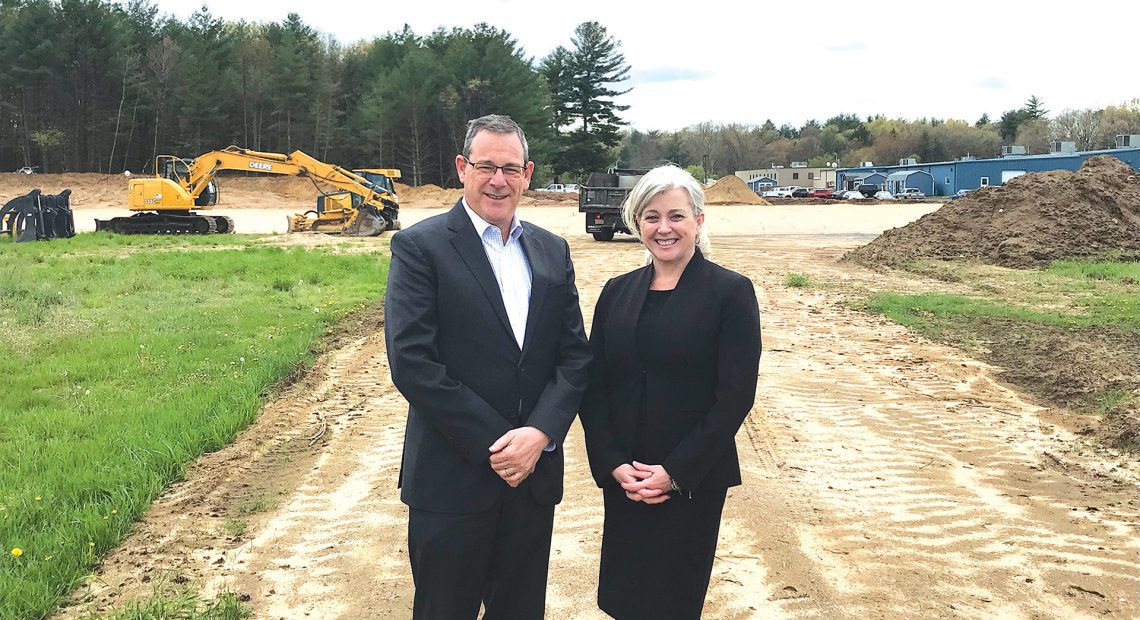
She noted that the existing Chapter 90 formula used to distribute funds — established more than 50 years ago — takes into account road mileage, but also population and employment. “But this doesn’t work for the places that don’t have the people, but do have the miles and miles of roads. Adjusting the base Chapter 90 formula to put more emphasis on road mileage is something that I respectfully urge us to consider.”
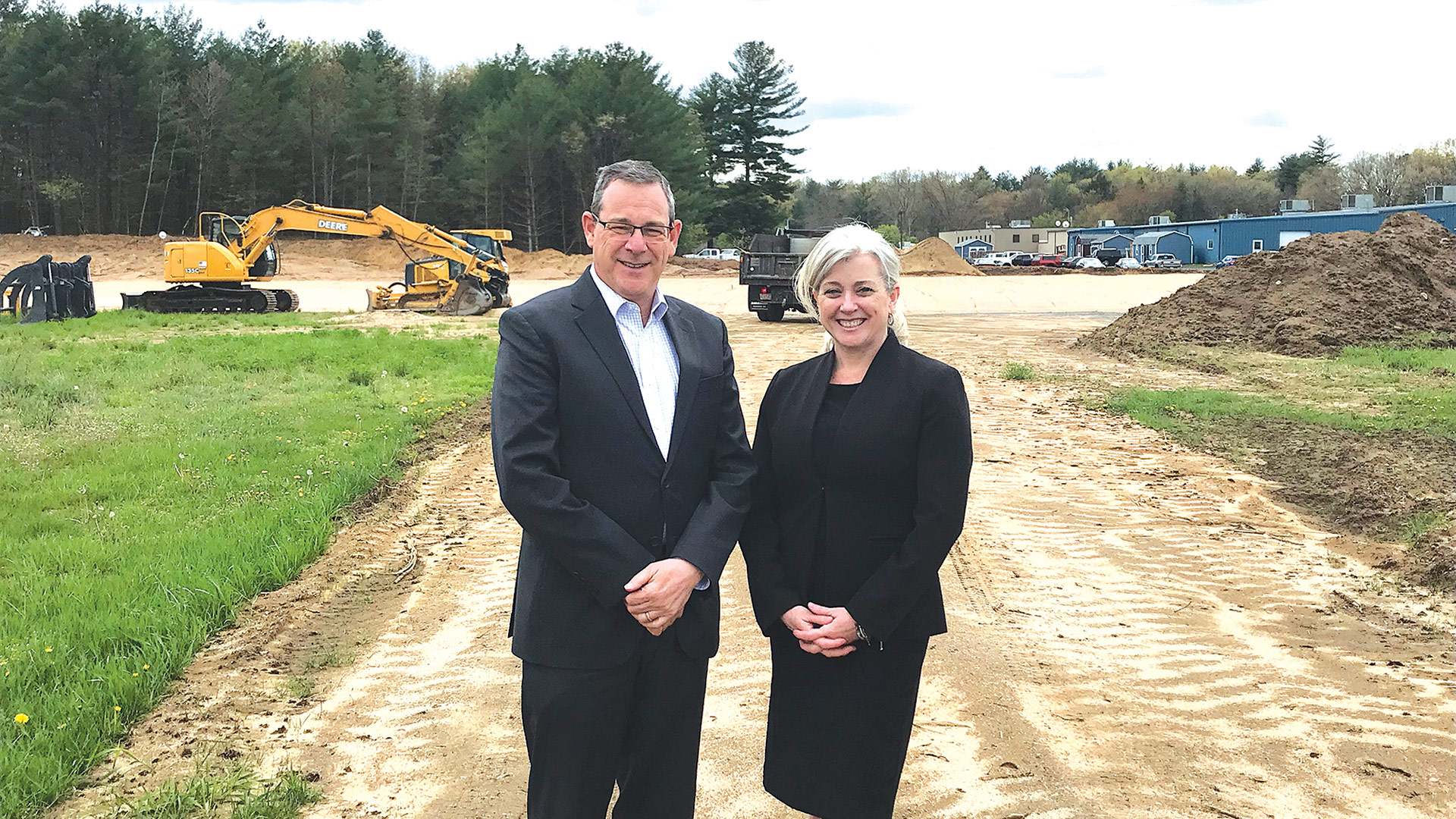
State Sen. Paul Mark, who represents all of Berkshire County among some communities in Hampden, Hampshire, and Franklin counties, agreed that the mileage-based calculation will greatly benefit smaller towns.

“In a district of 57 cities and towns, 54 of which have populations of fewer than 10,000 people, and in some cases communities as small as 120 residents, we live first-hand every day how difficult it can be to undertake road repairs, invest in new equipment, or have our voice heard in Boston,” he said.

Legislators outside Western Mass. also praised the bill’s passage.

“Our transportation system is the backbone of our Commonwealth, connecting us to our jobs, families, and communities,” said state Sen. Brendan Crighton, chair of the Senate Committee on Transportation. “This investment is not just an investment in infrastructure, but an investment in the future of our Commonwealth, enabling our cities and towns to make the necessary improvements to promote efficient and safe travel for all.”

State Sen. Edward Kennedy, chair of the Senate Committee on Bonding, Capital Expenditures, and State Assets, added that “I’m pleased to see this crucial investment in the Commonwealth’s roads and bridges move toward fruition. The cities and towns of Massachusetts depend on this necessary funding to maintain their transportation infrastructure.”

A different version of the bill having previously been passed in the House of Representatives, the two chambers will now reconcile differences before sending the bill to Gov. Maura Healey’s desk.

Insurance

Avoiding a World of Hurt

By Encharter Insurance


If you are an employer in Massachusetts with one or more employees, workers’ compensation is a mandatory business-insurance coverage. An employer may be an individual, a partnership, a corporation, or any other form of ownership that has employees. Failure to carry workers’ compensation coverage can result in an immediate stop work order and fines for every day that no coverage was available.

Besides being the law, here’s why you need it: workers’ compensation is essentially a no-fault system designed to protect both employers and employees should a workplace injury or illness occur. Your workers’ comp insurance policy would cover payment for medical care related to the employee’s injury, and would pay wage-replacement benefits, also called indemnity payments. In exchange for these benefits, workers’ comp, rather than the courtroom, becomes the employee’s exclusive remedy.

Individual states have jurisdiction over their own systems, so specific regulations and benefits vary by state. In Massachusetts, the Department of Industrial Accidents (DIA) manages the workers’ compensation system, adjudicating any disputes or appeals that arise. Meanwhile, the Massachusetts Workers Compensation Rating and Inspection Bureau sets rates.


How Is Coverage Obtained?

Most employers secure their workers’ compensation from an insurance agent. Large employers sometimes self-insure but must pass several regulatory gating issues to qualify for self-insurance.

If two or more insurance companies decline to insure your organization, you may have to seek coverage in the Massachusetts residual market, also known as an assigned risk pool.

Workers’ compensation insurance can be canceled by the insurance company, but only for the reasons of non-payment of premium, fraud or material misrepresentation, or a substantial increase in the hazard being insured. Your insurance company would need to notify you of cancellation with 10 days written notice.


How Are Rates Set?

The cost of the insurance is based on anticipated loss experience and is comprised of two basic components.

Under manual premium, the cost for your workers’ compensation policy is determined by your payroll and the classification of the work your employees do. The riskier the work, the higher the rate for the class code. There are thousands of class codes set by the Workers Compensation Rating & Inspection Bureau (WCRIB) in Massachusetts.

Under modified premium, once you have purchased workers’ compensation for two years, if the sum of the premiums for two years is $11,000 or more, your policy will be subject to experience rating. Manual premium is multiplied by an experience rating factor (or ‘e-mod’) reflecting your specific organization’s loss history. Much like the experience rating system used by many states to develop auto insurance rates, a bad year will impact an employer for years to come, as three prior years’ experience are used to develop a workers’ compensation e-mod.


What Benefits Does Workers’ Comp Provide to an Injured Worker?

Workers’ compensation coverage provides unlimited medical expenses, lost wages (also referred to as wage replacement or indemnity), rehabilitation expenses, and dependent and funeral expenses up to a state’s limits

The amount and duration of wage replacement and medical benefits varies based on each state’s law. Generally, the injured worker faces no out-of-pocket medical costs.


What Are Your Responsibilities as an Employer?

• Obtain workers’ compensation insurance coverage. Failure to carry coverage can result in stop-work orders and daily fines for the uncovered duration.

• Show proof of that coverage by posting notice in a public and visible place that all employees use.

• Provide a safe workplace, as required by OSHA.

• If an employee is injured, send them for medical care. In Massachusetts, you have the option to choose the physician for the first appointment.

• Report a medical-only injury (one with no anticipated lost time) to your insurer.

• Report a workplace injury with five or more days of absence, or a death, to the Massachusetts Division of Insurance.


What Are Some Best Practices to
Minimize Costs?

You can lower your workers’ comp costs by working to the lowest possible e-mod. There are two variables that you should work to control: the frequency of injuries, or how many work-related incidents occur; and the severity of workplace injuries, or the duration of time away from work. Here are best practices to help control both and to help you attain the lowest possible experience e-mod:

• Maintain a safe and healthy workplace. The least costly injuries are the ones that never happen. Control frequency by setting the expectation for an injury-free workplace, training employees to work safely, requiring personal protective equipment, and conducting periodic walk-through audits. Your insurance company can often provide safety resources.

• Have a plan for point-of-injury response. A quick, caring, non-judgmental response to a work injury will help to set the trajectory for a positive outcome for all. Ensure that employees and managers know what to do if an injury occurs. Escort the injured worker to medical treatment.

• Partner with a nearby occupational doctor or medical clinic. Massachusetts allows employers to choose the first medical contact. Choose a top-quality physician or a clinic experienced in workplace injuries. Your insurance company may have a good network.

• Report injuries to your insurer in a timely manner. Early reporting is extremely important — numerous studies have demonstrated that the sooner injuries are reported, the better the outcome. Aim for same-day reporting.

• Prepare for return to work. It’s important to get employees back to work and on the team as soon as possible to help prevent disability syndrome. Plan for a transitional or modified job duties to help the employ re-acclimate and work-harden to their regular job.

Cannabis

Improvement Needed


In its annual “State of the States” report, Americans for Safe Access (ASA) gave 13 state medical cannabis programs failing grades.

In the report, the ASA gave failing grades to Georgia, Idaho, Indiana, Kansas, Kentucky, Mississippi, Nebraska, North Carolina, South Carolina, Tennessee, Texas, Wisconsin, and Wyoming. Idaho and Nebraska, the last two states without medical cannabis access, both got a zero.

No state earned an A, but Connecticut, Illinois, Maryland, Michigan, and Rhode Island got the highest grade on the ASA report card, a B+.

Massachusetts earned a C+. According to the report, “medical cannabis sales in Massachusetts have reached almost $1 billion since the medical cannabis program was approved in 2018. Despite this promising sales number, Massachusetts did not make any noticeable improvements to the medical cannabis program in the past year.

“In 2023, ASA recommends that legislators in the state expand protections provided under the law for patients. As it stands, employment protections only exist through case law and should be formalized by the state Legislature. The Legislature should also seek to protect patients rights within housing, education, and family court as well.”

The ASA did commend Massachusetts for not requiring a fee with patient registrations and encourages policymakers to extend patient registrations to cover multi-year periods in order to cut down on administrative paperwork for patients.

According to patient feedback gathered for the Massachusetts report, “patients surveyed expressed concern regarding inflated pricing, a concentration on potential harm rather than potential benefits, and that the adult use/recreational market is undermining the medical market. They also reported a lack of pediatric access.”

While states continue to slowly adapt their laws to meet the needs of patients, the ASA noted, “we have noticed a big shift in states prioritizing adult use. Recreational adult-use programs and medical cannabis programs are not the same and should not be treated as such. A state may have both recreational, adult-use laws and medical cannabis laws, but those programs must remain separate in order to serve the distinct needs of the population. Cannabis patients rely on medical cannabis products for their health and well-being and should be treated as patients by the state — not as recreational consumers.”

This includes protections that may not exist in the recreational market, the report explained, such as excise and sales tax breaks on medical cannabis products, continued access to medical cannabis for minor patients, civil-rights protections for employment, housing, parental rights, and even alternative accessibility methods.

“Medical cannabis programs are essential to patient health and well-being and should be maintained and improved upon regardless of the legality of recreational adult use in the state,” the ASA argued. “While adult-use models can expand access to a larger population of people and may even increase the number of legal cannabis retailers, these systems and associated businesses are often not held to the same standards as authorized medical cannabis businesses.

“For example, laboratory testing of adult-use products may not have to undergo screening for the full array of heavy metals and contaminants that medical products require. It is also uncommon that states ask adult-use retailers to maintain staff competent about medical cannabis products or their applications to ensure patients have a trained advisor to consult with when they purchase medicine. It is critical to patient health that states maintain focus on addressing medical cannabis program challenges and patient needs before, during, and after developing adult-use programs.”

The ASA also gave grades to the medical cannabis programs of U.S. territories, such as the Commonwealth of the Northern Mariana Islands (D+), Guam (C-), Puerto Rico (D), and the Virgin Islands (D+).

According to a report by Ganjapreneur, “even in states with full medical cannabis programs, each state differs greatly in how patients can access their medicine, where they can access it, or even what types of products they can access.” Because medical cannabis remains prohibited federally, it added, “most state programs leave out millions of potential patients due to issues with affordability, patient rights, and civil protections, or product-safety standardization.”

The ASA gave no state a grade higher than a B+ because none of them “include the entire range of protections and rights that should be afforded to patients under the law, with some lagging far behind others.”

The ASA believes there are more than 6 million medical cannabis users in the U.S., which is about 1 million more than in its report from 2021.

Construction Special Coverage

Yard Markers

By Mark Morris

Sean Corrigan

Sean Corrigan says landscapers have to deal with the challenge of longer lead times for delivery of many supplies.

Mark Lacombe likes good head start.

And like others in the landscaping industry, he’s grateful for one of the mildest winters in many years — from one perspective, at least.

“A mild winter helps us because there’s no frost in the ground, which allows us to start working on sites now rather than waiting for the frost to thaw and the mud season that would typically follow the thaw,” said Lacombe, general manager of Commercial Grounds Maintenance for Mountain View Landscapes in Chicopee.

However, the downside of a mild winter affects snowplowing, the other business many landscapers run in winter months. Lacombe said a normal winter allows the company to start the year off with revenue, even though he can’t count on it every year.

“During a normal winter, we’ll do about a million dollars in snow removal,” he said. “This winter was only about 65% to 70% of our normal business. That’s where a mild winter really hurts.”

Still, area landscapers say they are staying busy as spring takes hold in New England, and 2023 holds promise as well as some continuing challenges.

Brian Campedelli, owner of Pioneer Landscapes in Easthampton, said his crews are already busy finishing several jobs that carried over from last year due to the unprecedented growth his company experienced in 2022. This year is off to a strong start, too.

“During a normal winter, we’ll do about a million dollars in snow removal. This winter was only about 65% to 70% of our normal business. That’s where a mild winter really hurts.”

“We had a good turnout at the home show,” Campedelli said of last month’s annual event put on by the Home Builders & Remodelers Assoc. of Western Mass. “Many people we spoke with are interested in new projects.”

Greg Omasta also begins the year with several carryover projects. The owner of Omasta Landscaping in Hadley believes he will have a busy year, but he’s also concerned that increases in basic necessities like food and fuel may cause some homeowners to delay their yard improvements.

“We’re still getting calls every day, so I guess I’m optimistic and pessimistic all at the same time,” Omasta said.

Greg Omasta (right, with son Chris Omasta)

Greg Omasta (right, with son Chris Omasta) says inflation in basic necessities may cause some families to delay yard improvements this year.

At the height of the pandemic, the residential side of landscaping exploded as homeowners who would have normally scheduled out-of-town vacations had to stay put. Many decided to convert their yards to outdoor entertainment areas. From elaborate projects like swimming pools and outdoor kitchens to simple landscape upgrades and firepits, every contractor had more business than they could handle.

However, while COVID-19 boosted the staycation phenomenon, it also created unusually high demand for all the products used in hardscaping and landscaping at a time when supply chains around the world faced sporadic delays due to the pandemic.

Landscapers now report that many of the supply-chain issues have subsided, but there are still delays for some products, and everything costs more.

“As we order for this season, plant prices are up, and the freight charges to ship them to us are really high,” Lacombe said, noting that this is a particular challenge when bidding for commercial landscaping projects that won’t start for 12 to 18 months. “We have to estimate the costs for a job that will happen a year from now, while our material prices are only guaranteed for 30 days.”

“Since COVID, municipalities are paying more attention to outdoor spaces and upgrading them, particularly with more climbing structures.”

Omasta pointed to one pleasant surprise, as grass-seed prices have seen a slight decrease. “Also, fertilizer prices have stabilized. I don’t expect them to come down, but at least they are more stable than they’ve been.”


Places to Play

Public parks and playgrounds are an area of commercial business both Omasta and Mountain View have seen as growth opportunities.

Sean Corrigan, vice president of Landscape Construction for Mountain View, said his company has a full schedule of reconstruction work on parks, playgrounds, and athletic fields, with most of the work happening in Connecticut and the Boston area.

“Since COVID, municipalities are paying more attention to outdoor spaces and upgrading them, particularly with more climbing structures,” he said. “They are interesting structures, and many have unique designs. The kids love them.”

Playground equipment and drainage piping are among the products that still have long lead times for delivery, Corrigan noted. “It’s getting better, but we still have to factor in extra time for these items.”

Finding enough workers is another challenge that still exists, but the situation has started to improve. Campedelli said this year has been easier to hire laborers as better-quality applicants are looking for work.

“Some of the more specialized jobs, like hardscape installers, are still hard to fill,” he said. “We recently hired a new general manager and a new office manager, who are both fantastic.”

Dave Graziano

Dave Graziano says the industry is being challenged to cultivate the next generation of workers.

While Omasta hires extra workers for spring and fall cleanups, he depends on a core group of employees who have worked with the company for years. “We provide them with benefits, holiday and vacation pay, as well as other perks to keep them with us.”

Lacombe said more people are looking for work this year than in the past, but finding workers with experience remains difficult.

“We’re hiring on attitude more than anything else,” he said. “I can teach someone what they need to know, but they need to be willing to come to work every day and put in the effort.”

Dave Graziano, project manager in the Landscape division of Graziano Gardens in East Longmeadow, sees a larger industry problem finding the next generation of landscape workers who want to put in the effort to be successful.

“Anything you can do outside to enhance the entertaining possibilities in your yard is generally what remains popular with people.”

“It’s not for everyone, but it can be rewarding work,” he said. “You see the fruits of your labor from the design of a project through completion, and you make the customer happy. It’s very satisfying.”

Graziano proudly noted that he and his brothers, Mark and Chris, work closely with all their customers. “One of the reasons people call us is because they know they will get a Graziano, and our customers like that.”

Along with landscaping services, Graziano Gardens also runs a retail location, he added. “In addition to people who hire us for landscaping projects, our clients are also do-it-yourselfers who are looking for good ideas and advice.”

As the world continues to move past COVID and more people leave home for vacation, landscapers say there are still plenty of homeowners who want to improve their yards.

“It seems that people are traveling by car more than plane, yet they are still spending money on their yards,” Omasta said.

“It’s not for everyone, but it can be rewarding work. You see the fruits of your labor from the design of a project through completion, and you make the customer happy. It’s very satisfying.”

Campedelli added that he’s hearing from plenty of homeowners who still want stone patios, new lawns, firepits, and other projects. “Anything you can do outside to enhance the entertaining possibilities in your yard is generally what remains popular with people.”


Long-term Value

In addition to the entertainment factor, Omasta noted one compelling reason to invest in a landscape project is the value it can add to a home when it goes up for sale.

According to Better Home and Gardens, attractive landscape projects can add 5% to 12% to a home’s resale value, while a professional hardscape project can add 15% to 20% to the resale value.

For many consumers, thoughts about landscape improvements don’t occur until the weather reaches 70 degrees and stays there. Campedelli’s advice for homeowners planning large backyard projects? Book soon if you want to get your job done this year.

“For special projects, we are scheduled into June and maybe a little later,” he said. “We can bring on new yard-maintenance clients without waiting, but big projects are booking further out.”

While traveling for vacations is on the rise, many people are still staying close to home and investing in their backyards. During the winter months, Campedelli attended seminars from hardscape block manufacturers who said they are in full production this year with lots of new product selections.

“They said the availability is much better this year, and we’ll have no problem getting what we need,” he said. “I hope they are right.”

Insurance Special Coverage

Perfect Storm

Inflation ebbs and flows in unpredictable ways. The insurance world is certainly finding that out — and so are customers seeing their auto-insurance bills.

“Auto insurance hasn’t kept up with inflation over the past three to four years, and it’s finally catching up to it,” said Michael Long, CEO of Axia Insurance Services in Springfield, partly explaining why the average premium nationwide rose more than $240 in the past year, according to Bankrate.

There are plenty of other parts to the equation, of course, including the ongoing supply shortages that are generating inflation on everything that goes into cars, from materials to computer chips to labor.

In fact, used-car values in 2022 were 37% higher than they were previously, Long said, meaning insurance carriers that had been paying, say, $20,000 for a totaled car were now paying $30,000. Eventually, that was going to be passed to customers.

Bill Grinnell, managing partner of Webber & Grinnell Insurance, agreed. “A few things are driving automobile prices; one is supply-chain issues and a lack of supply of replacement vehicles and parts, and the increased costs of all that.”

As a result, he went on, “your collision claim that might have cost a couple thousand dollars pre-pandemic is now $3,800. It’s significantly more, and the insurance has kind of trailed that inflation. First the cost of the replacement vehicles and parts go up, and that’s reflected in the financial statement of the insurance company, and they need to react and bring rates up. It’s not a leading edge, but a trailing edge, but there’s an inflationary factor there.”

And it’s not just auto insurance. On the home-insurance side, the cost of building materials has risen sharply over the past few years, and supply shortages and lag times still beset the construction industry. Meanwhile, contractors dealing with those issues and also a workforce crunch aren’t able to take on as many jobs as they’d like.

Bill Grinnell

Bill Grinnell

“The cost to build a home three years ago might have been $175 per square foot, and now it’s $275 per square foot. If you’re insuring a home that was worth 300,000, now it’s $400,000.”

“The combination of those two factors have driven up the cost of repairs, and that’s reflected in increased claim payments. So insurance companies need to adjust their rates to afford these claim payments.”

The other huge factor is the dramatic rise in home values over the past two years, another supply-and-demand metric. “You’re required to insure your house to an educated, calculated measurement of its true replacement value,” Grinnell said. “And the cost to build a home three years ago might have been $175 per square foot, and now it’s $275 per square foot. If you’re insuring a home that was worth 300,000, now it’s $400,000.”

Whatever the reason — and, obviously, there are many — insurance customers are experiencing more pain than usual in their monthly premiums. While there are ways to reduce the hit, the key economic factors influencing those increases will continue to linger, at least in the short term.


Up, Up, and Away

Plymouth Rock Assurance recently created an infographic that showed customers why home and auto rates are rising.

On the home side, it listed a worker shortage (the construction industry is down 200,000 trade workers); supply-chain shortages and delays with everything from asphalt shingles and piping to copper wire and drywall; lumber and other material costs up more than 50%; and increased operating expenses for energy, transportation, storage, and more.

On the auto side, higher costs are related to chip shortages; a technician shortage driving labor costs up about 6%; a shortage of parts in repair shops causing delays, higher demand, and higher repair prices; and a still-low vehicle inventory on many lots, inflating the sticker price of cars — and their replacement value.

Michael Long

Michael Long

“Not all insurance companies are created equally. Whether it’s the way they handle claims, the way they handle billing, the way they handle cancellations after a loss or two losses, all those things need to be discussed with an agent because not all contracts are the same.”

“It’s a challenging time for all of us,” Long said. “When we talk to clients, last year’s rates were up about 15% on the auto side, and we’re expecting another 8.4% this year.”

Some of the cost factors are unexpected — for example, glass replacement. “With glass claims, it used to be a couple hundred to replace a windshield. I’ve seen them as high as $2,400 because of all the information you get from the sensors in the windshield.”

Then there’s driver behavior. Long noted that accidents were up 7% in 2022, and insurance companies have never seen the volume of lawsuits they’re dealing with.

Grinnell agreed. “The results are worse for insurance companies. The severity of accidents is up, and that’s driving up the cost of the insurance, too.”

There are only so many ways for customers to reduce insurance costs, and some of them are common-sense.

“First, don’t have a claim. Drive carefully,” he said. “Claims really impact your premium quickly, so drive safely and don’t have motor-vehicle violations; don’t get a speeding ticket.”

Paying bills on time helps as well, he said. “There are so many hidden factors that none of us understand, even at the agency level, that go into ratemaking these days, but late payments and being consistently behind and getting cancellation notices is a sure way of having your premiums go up. So pay your bill on time and even enroll in automatic bill payment.”

While it’s important to have adequate coverage, Grinnell said people with older cars they might not be driving for much longer may opt out of collision coverage. He did just that with a 12-year-old car he owns but doesn’t drive that much, and it saves him about $450 per year.

Long said he talks to clients all the time about raising their deductibles. “If you currently have a $500 deductible, maybe look at a $1,000 deductible. If its $1,000, maybe $2,500. We’re regularly quoting $2,500 deductibles,” he noted. Meanwhile, “if a tree comes down, and it’s a $500 loss, absorb it, and pay it in full.”

Carriers also offer any number of discounts, from safe-driver and good-student benefits to discounts related to involvement in organizations ranging from the Pan Mass Challenge to the Massachusetts Golf Assoc. “There’s a Red Cross discount; if you contribute $25 to the Red Cross, you get 5% off your insurance. So you’re helping the community and saving money on insurance. Everyone wins with that deal.”


Weather or Not

The home-insurance market has been buffeted by a series of costly weather events, from hurricanes in Louisiana and Texas to tornadoes in the Midwest to fires in California. Insured losses from natural disasters routinely top $100 billion per year these days, and Long said $20 billion of that in 2022 was in auto claims alone.

As noted earlier, the cost of lumber and other building materials (up 33.9% in 2022) and labor (up 27%) are already causing insurance companies to play catch-up, and weather and climate events are just another challenge to deal with.

“It’s been a funny year for homeowners,” Grinnell said. “Property rates were certainly affected across the country due to some of these climate changes and weather patterns, the big windstorm losses.”

He noted one “big freeze” day last year that wound up affecting the region’s home-insurance carriers. “It was one of the biggest lost days on record. Pipes burst, and those are expensive claims. Generally, that’s not helping our region at all.”

Long advises people to be careful when switching carriers due to rising rates because the new carrier might not have made the same inflationary adjustments, and the customer will just have to face that all over again — while possibly losing benefits like accident forgiveness.

“Not all insurance companies are created equally. Whether it’s the way they handle claims, the way they handle billing, the way they handle cancellations after a loss or two losses, all those things need to be discussed with an agent because not all contracts are the same.”

On the other hand, Long said customers should absolutely stay in touch with their agent. “How often do you review insurance with them? Every year is not realistic, but every two to three years, you should be getting a call from your agent: ‘hey, let’s talk about what’s going on, and any new coverages out there.’”

After all, people still need to have enough coverage in case the worst does happen. And with home values what they are now, a total loss could be extra catastrophic if the coverage is not in line with that.

“The biggest investment people have is their dwelling. So, young people may have the time to make up for a disaster, to build equity in their house if they lose it,” Long said. For older homeowners, inadequate coverage for a loss could be a real problem.

The bottom line? Insurance costs money, and even more so this year, as customers should expect premiums to rise another 8% to 10% for both home and auto, Long said.

But when disaster strikes — even a small disaster, like a burst pipe or a sideswiped car — it beats not being covered.

Cannabis Special Coverage

Growth Pattern

Enlite co-owner Matt Yee

Enlite co-owner Matt Yee

From the start of cannabis legalization in Massachusetts, Northampton was one of the most receptive communities, streamlining the municipal regulatory process and initially setting no caps on licenses. Meanwhile, Springfield posed a more onerous process and set strict limits.

Enlite has experienced both, having opened its first dispensary in Northampton in late 2021 and is getting ready to open a second shop in Indian Orchard this year, Springfield’s fourth dispensary in all.

Matt Yee, one of Enlite’s owners, sees value for business owners in both models.

“Springfield was a longer process getting through special-use permit hearings. Northampton, in comparison, was very, very open and friendly to cannabis businesses, which created the amount of licenses we see here,” he explained. “So in some ways, [Springfield] has been difficult, but that difficulty also creates a bit of a barrier for competition to come in; there’s only a handful of active licenses in Springfield.”

The fact that Enlite is expanding at all is an accomplishment in an increasingly competitive marketplace, one that has exploded with new businesses to the point where the industry is starting to weather its first closures, including the Source in Northampton and Pleasantrees in Easthampton.

And Yee and his fellow owners — who include Matt Cutting, Peter Picknelly, and Nick Yee — aren’t done, with plans to apply for a third license, the maximum allowed by the state’s Cannabis Control Commission (CCC).

“Most customers are shopping with their phone prior to coming in with us, seeing what our menu looks like, seeing what our price points look like, and if they can’t find the specific product that they’re looking for, then they’re going to go somewhere else.”

“We’re still hunting for that third location,” Matt said. “That makes for a more profitable and healthy business model. It’s hard to exist with just one unit. And we chose Springfield because the location fills a niche of demand.”

Specifically, Indian Orchard borders two towns, Wilbraham and Ludlow, with moratoriums on dispensaries, he explained. “We’re very close to both of those. So we saw that location in Indian Orchard as a prime spot.”

Northampton shop’s location right off I-91

Enlite’s owners say the Northampton shop’s location right off I-91, rather than in the congested downtown, has been a plus.

When Enlite opened in Northampton a year and a half ago, Yee and his team saw potential, not only in the state’s legalization of cannabis, but Northampton’s embrace of it. It was the city’s eighth adult-use dispensary, a number which quickly bloomed to 11 and now sits at 10.

“So competition has definitely gone up. But competition is good, especially in this industry. Just like in my former industry, restaurants, competition benefits the customer at the end of the day.”

Considering the experience of the Yee family and Picknelly in that other challenging industry, and Cutting’s business background, the Enlite leadership team felt it had a good chance of success in cannabis, and so far they’ve been proven right. That’s not to say there haven’t been obstacles to overcome, but so far, Enlite is not only staying the course, but setting their sights … well, higher.


Rolling Along

Soon after Enlite opened, Yee told BusinessWest that the sheer number of cannabis businesses in Massachusetts — which now tops 265 retailers, in addition to cultivation, manufacturing, and wholesaling businesses — actually makes it easier for the best-equipped players to succeed, because of the cross-pollination. It’s why Enlite has adopted the model of many area dispensaries of partnering with boutique makers of cannabis products.

“We work with about 65 wholesalers right now,” he explained during BusinessWest’s recent visit. “We try to give priority to those who are producing local here in the Pioneer Valley, and also give priority to minority-owned, woman-owned, and veteran-owned companies, and participants in the social-equity program or the economic-empowerment program of the CCC. Anybody who checks those boxes and has a quality product, we definitely give priority to.”

A wide variety of products is key, he added. “We have about 450 to 500 items on the menu at any given time, which is a burden to control inventory-wise, but we have systems in place and experience with that well enough to handle all those SKUs and provide a wide selection to our customers.

“Most customers are shopping with their phone prior to coming in with us, seeing what our menu looks like, seeing what our price points look like, and if they can’t find the specific product that they’re looking for, then they’re going to go somewhere else,” Yee went on. “Our mentality is, if they can find the item here and maybe try some new items too, then they’ll become a repeat customer with us.”

“To kind of wade through the chaff and find the quality product at the right price point that the customer will enjoy can be a little overwhelming.”

He said many customers settle into buying favorite brands, but still appreciate variety.

“Five years ago, there weren’t very many brands, and quality wasn’t the highest, but now, with the level of competition we’re seeing in the wholesale market, there are brands that are definitely excelling. We have a couple of brands in-house that are excellent performers, and people come back for more.”

With competition forcing retail cannabis prices down to five-year lows in Massachusetts, Yee said his time in the restaurant world, where stiff competition also challenges profit margins, has taught him the value of customer service, as well as product knowledge and customer engagement — all factors that make the experience easier and more enjoyable, especially newcomers to the cannabis world. “That’s something we really pride ourselves on and strive for.”

The other differentiating factor is location — not just the strategic second location in Indian Orchard, where competition in the immediate environs is low, but in Northampton, where the flagship store sits right off the Coolidge Bridge rotary.

“Everybody’s kind of congested in the downtown area, which makes it far more difficult because somebody could just walk next door and find a cheaper price and buy there,” he said. “Here, with our location, situated right by the bridge and off the highway, we provide a convenience for people. It’s easy in, easy out, with plenty of parking that’s tough to find downtown. Our consumers want convenience, so that’s the other aspect we try to excel at.”


Highs and Lows

That said, Yee was quick to stress that captivating an audience and generating repeat customers is a constant focus, not something Enlite takes for granted.

“I think the other challenging aspect is the amount of wholesale product that’s becoming available on the market,” he explained. “Something I buy this month may be far less expensive two months from now, which would mean another retailer might pick it up for that price point and sell it for that price. So we’re seeing constant fluctuations in the price points of the wholesale product.

“That, along with the sheer amount of wholesalers that are knocking on our door and calling our phone, is pretty overwhelming,” he went on. “To kind of wade through the chaff and find the quality product at the right price point that the customer will enjoy can be a little overwhelming.”

Some cannabis-industry observers have commented on the experience of other states that followed a similar pattern to what’s happening in Massachusetts — exploding competition sends prices plummeting, and many operators focus on competing on price above all else, including quality and customer experience.

“We’ve always been conscious about that. We’re not trying to race to the bottom,” Yee said. “There are some operators here in Northampton who are dropping their prices, and all the other operators are forced to match those prices, which is difficult. But maintaining a healthy economy here in the Western Mass. market is something that we think about a lot. We’re not trying to drive the prices down too low and hurt everybody’s margin. There are definitely some players in town who are playing that game.”

Enlite will be the second minority-owned dispensary in Springfield, after Six Brick’s, which opened in September 2022. Enlite’s Northampton site was also the state’s first Minority Business Enterprise (MBE) applicant to open its doors, and Yee said the process of getting into the industry is still laden with minefields, especially for smaller entities.

“It’s definitely difficult. The requirements to get through the licensing procedure and then the buildout, inspections, and final licenses … it’s strenuous, and a lot of that knowledge is unknown to those smaller operators,” he explained. “So a lot of money can be burned just going through that painful process and experiencing that learning curve. And for those smaller operators who don’t have the capital of the big, multi-state operators or well-capitalized groups, that can be very difficult and sometimes detrimental to the business.”

As Enlite grows and expands, Yee said he’s still learning new things all the time, whether it’s a new product — from fast-acting edibles to new beverage lines — or a new market opportunity. “There’s something new coming out every month, it seems, and the customers are being introduced to those products with us.”


Business in Bloom

Yee has said Enlite’s biggest competitor is the black market, but analysts have pointed out that the leveling out of prices in the legal cannabis market may mitigate the illicit market’s advantage somewhat — while bringing on a whole new set of headaches in an industry where profits are already very tight due to onerous taxes.

He hopes, as consumers find more options in their price range, that stores that focus on quality, education, and customer experience will maintain an edge. And he said dealing with those customers, and hearing their stories, is his favorite part of the job.

“On a daily basis, we have first-time consumers come in, curious about cannabis and wanting to learn more. I have so many stories of first-time consumers coming back in and saying, ‘wow, that really helped me. That got me to go to bed more regularly. I got more sleep. I’m less stressed out. I have more fun with my kids — thousands of stories like that.

“Every day, somebody comes in, and we have a great conversation, and we can introduce them to a new product that they didn’t know existed, and we’ll see them back here a couple of days later. And there are still a lot of people who are just wading into this industry and finding these products.”

And finding them at a shop that continues to navigate an ever-changing, always-challenging landscape for business owners, with not just survival in mind, but continued growth.

Commercial Real Estate Special Coverage

Turning Back the Clock

Clocktower Building

The Clocktower Building, above, was home to Masonic Temple more than a century ago (right).

At other times in Springfield’s history, the properties at 113 State St. and 1155 Main St. were prominent players in the vibrancy, culture, and overall tenor of the City of Homes.

The former — long known, for obvious reasons, as the Clocktower Building — was home to the Masonic Temple when it opened in 1893, before a new, much larger facility was built further east on State Street. The latter, the Colonial Block, which opened in 1903, was one of the city’s first real mixed-use facilities, noted Tim Sheehan, Springfield’s chief Development officer, featuring a blend of office and retail space on the lower floors and residential units on the upper floors.

Until fairly recently, meaning before the pandemic, the two properties had still been somewhat vibrant, featuring a wide array of tenants, including nonprofits, small businesses, a bank (at 113 State St.), and a number of various-sized law firms taking advantage of the buildings’ proximity to the Hampden County Courthouse just down State Street. These days, though, they are almost entirely vacant and stand in stark contrast to the progress seen around them, most notably across Main Street at MGM Springfield and across State Street at the MassMutual Center.

City officials have been looking to change that picture, obviously, and are moving forward with a plan to return these buildings, and also 11-21 Stockbridge St., a smaller, better-occupied office property in that same area, to their former status and make them part of the city’s resurgence. After acquiring them as a package in 2021 for $2.75 million, the Springfield Redevelopment Authority (SRA) has invited the development community to step up and submit proposals for the properties, separately or perhaps collectively.

Responses to this request for qualifications (RFQ) are due later this month — the deadline was originally late March — and Sheehan and SRA Executive Director Amanda Pham are expecting some imaginative proposals because that’s what will be needed to turn back the clock and make them key players again.

“This will require a responsive, creative developer, someone who has a vision for preservation of these buildings,” Pham said. “They have great potential.”

Sheehan and Pham are expecting proposals that will likely blend office and/or retail with a residential component, noting that what emerges for one, two, or all three properties will likely require a public-private partnership, similar to what was needed to finally move the needle and create a new use — a mix of residential and retail — for the former Court Square Hotel, just a block or so from the three properties in the RFQ.

Finding a preferred developer is a two-step process, said Pham, adding that, after responses to the request for qualifications are received and reviewed, three finalists will move on to a request for proposals.

If all goes well, a preferred developer is expected to be named by June, they said, adding that it may not be long after that when people start talking about these landmarks using mostly the present and future tenses, and not the past.


Building Momentum

As she gave BusinessWest a tour of 1155 Main St., Pham referenced some reminders of, well … what it once was, starting with the large directory on a wall in the lobby listing tenants and their suite numbers.

Tim Sheehan and Amanda Pham stand outside the historic structure.

Tim Sheehan and Amanda Pham stand outside the historic structure.

The board still includes the names of dozens of tenants that are no longer there — from the law firm Pellegrini Seeley, Ryan and Blakesley, which once took much of the space on the third floor before moving to the Basketball Hall of Fame complex, to Revitalize Community Development Corp., which occupied a large suite on the second floor. In fact, the 82,000-square-foot property is currently only about 12% occupied.

Later, she pointed to a large bookcase full of law books left behind by one of the departing law firms.

“We have a lot of law books,” she said, adding that, apparently, many of the departing firms located in various-sized offices on the maze-like floors had no use for the books in this age of the internet and simply left them behind.

Thus, these law volumes become part of the dialogue concerning what this property used to be, said Pham, who took the helm at the SRA in 2021, adding that, increasingly, the focus is on what they can be moving forward.

The SRA has taken the matter from the discussion phase to what could be called the discovery phase with the request for qualifications. It includes a link to a six-minute video that features comments from Pham, Sheehan, Mayor Domenic Sarno, MGM President and CEO Chris Kelley, Peter Picknelly, chairman of Peter Pan Bus Lines and a key player in the Court Square project, and others, all inviting developers to take advantage of this “Main Street and Convention District development opportunity.”

“This will require a responsive, creative developer, someone who has a vision for preservation of these buildings. They have great potential.”

Together, they talk about the progress made downtown and the progress still to come, with projects like the $74 million parking garage and event space that will replace the facility torn down last fall. They also discuss how much of this progress was the result of public-private partnerships.

“This development behind me never would have happened if not for the cooperation of City Hall and the state of Massachusetts,” said Picknelly as he stood in front of the Court Square property.

The Colonial Block

The Colonial Block was one of the first mixed-use buildings in Springfield, with retail and residential space. It may see a similar blend in the future.

A number of developers, both with local ties and from outside the region, have expressed interest in the properties, said both Sheehan and Pham, noting that the city acquired the properties to move beyond the ongoing speculative nature of previous ownership and take redevelopment to a higher plane.

“We wanted the buildings situated so their redevelopment would ultimately fit the city’s overall planning as it relates to the Main Street Convention Center District Plan,” said Sheehan, adding that this plan, in general terms, calls for building on existing momentum and creating a true destination in the downtown, a place where people can live, work, and (especially with MGM and the MassMutual Center right next door) play.

A developers’ tour conducted several weeks ago attracted several parties, many in person, but some virtually, said Pham, adding that Springfield has managed, through its recent spate of progress, to put itself on the map with regard to regional and national developers looking to expand their portfolios.

There were site tours of the properties and the surrounding area as well, she went on, adding that firms brought full teams with them, including architects, engineers, and planners, to gauge future uses for the landmarks.

Given the current glut of office space, Sheehan said, especially the class B and class C variety that these properties have featured, future redevelopment will likely not focus on that use entirely, although it could be part of the equation.

“There is an overabundance of class B and C space in the office sector, so we’re really encouraging people to look at adaptive reuse to … something else,” he noted. “Developers may want to reduce the amount of office, but not completely eliminate it, either.”

A much larger part of the equation will likely be market-rate housing and activation of the ground floors with retail and hospitality-related businesses that will give downtown visitors more things to do and more opportunities to stay, he went on.

Colonial Block

Above, the directory inside the Colonial Block is quite dated, as most of those tenants have moved out. At right, one of the unique spaces in the building.

“Our planning ultimately calls for extensive ground-floor activation,” he explained. “You have two very strong anchors, in MGM and the MassMutual Center, adjacent to these properties, and we really think there is the ability to activate the ground floors so that it encourages people who want to come to the MassMutual Center or MGM to want to linger and stay in the area.”

As for housing, Sheehan said a recent study identified the need for 1,500 units of additional housing of this type in and around downtown.

And while conversion of such properties to housing is often difficult and expensive, developers need only look a few hundred yards to the south for inspiration, to the massive Stockbridge Court apartment complex, created more than 40 years ago and perhaps the city’s best market-rate-housing success story.

“Stockbridge Court is certainly an example of what can be done,” he said, adding quickly that any residential projects in these properties will likely require a public-private partnership to not only renovate the buildings in question but improve the overall area and its connection to Main Street.

“We’ll need to enhance the infrastructure to make it a much more walkable environment — and a pleasant walkable environment — if we’re going to attract that scale of residential development in this area.”


Right Time and Place

Overall, there are some building blocks coming together that could make development of these properties a more attractive and more viable opportunity, said both Sheehan and Pham, noting that leasing activity will start soon at Court Square, and construction is set to commence on the new parking garage. Meanwhile, a new entrance is planned at the southwest corner of the MassMutual Center.

Meanwhile, the two leaders are looking at adaptive reuse of these properties as just part of a larger effort in the city’s downtown.

“We’re looking at these as the first step in the redevelopment of the area,” said Sheehan, noting that that there are several other vacant or underutilized spaces, including the neighboring 1260 Main St., several surface parking lots, and other properties.

As he referenced a photo of the Clocktower Building, from the days before its stone exterior was mostly stripped away — it remains in some places as a reminder of what was — Sheehan waxed nostalgic on its place in city history.

“For a long time, this building has certainly played a major role in downtown Springfield in terms of being a major corner and a huge presence,” he told BusinessWest, adding that the hope is that this property, as well as the Colonial Block — and other properties in that area — can attain that status again.

Time will tell, of course, when and how soon that happens, but this is certainly a developing story — in every sense of that phrase.

Education

A Potential Game Changer

John Cook says that, while the cost of a community-college education (roughly $7,000 per year) isn’t high, at least when compared with that of a four-year institution, public or private, it can be, and often is, a barrier that some cannot overcome, even with financial aid.

And for others, it’s enough of an obstacle for them to think twice about college — or not at all.

“Like anything in our lives, we can’t just separate this cost or isolate it from all the other considerations for a human being; it’s one more thing, one more cost in the lives of so many … this is why we see students drop out, or say ‘now is not the time,’” said Cook, president of Springfield Technical Community College (STCC). “Any way to get a whole lot of people, frankly, to take this second look is a good thing.”

With that, Cook added his voice to many others who are praising Gov. Maura Healey’s inclusion in the budget of something she calls MassReconnect, which would fund free community-college certificates and degrees to the Commonwealth’s residents who are age 25 and older and have not yet earned a college degree.

“This is a group of adults, many of whom have college credits, that we really want to encourage to come and take another look at college.”

John Cook

John Cook

According to some statistics released by the state, roughly 2 million residents would be eligible for the program — individuals who have a high-school diploma but not a college degree — and perhaps 700,000 of these individuals already have some college credits.

MassReconnect, which is actually one of two ‘free’ community-college programs that have been proposed (Senate President Karen Spilka has proposed free community college for all students), would provide both incentive and the means for many people to return to college and get the degree or certificate that might open a door to not just a job, but a career, said Christina Royal, president of Holyoke Community College (HCC).

“This is a potential game changer,” she told BusinessWest, adding that MassReconnect targets what she called the “emerging space of adult learners,” individuals who want a college education, but are held back by competing demands on their life, including family and work.

“The governor’s MassReconnect proposal is a great starting point that increases access for adult learners who don’t already have a college credential,” she went on. “It’s designed to help them finish that stretch so they can get a college credential.”

Michelle Schutt, president of Greenfield Community College, concurred. She said GCC ran some numbers and determined that nearly 200 of the roughly 1,400 students currently enrolled would qualify for the program. “That’s not insignificant,” she said, adding that many more in the community who are not enrolled who might be inspired to connect, or ‘reconnect,’ as the case may be.

“I’m incredibly excited about this,” she added. “Reconnecting with those people who have some college but no degree and letting them know that there’s a new opportunity here has great potential for the community colleges and GCC specifically.”

Rick Sullivan, president and CEO of the Western Massachusetts Economic Development Council, agreed.

Using similar language, he said MassReconnect could have broad and powerful impact over time, providing benefits for the region, its employers, and both community colleges and the four-year institutions for which they are feeders.

“Reconnecting with those people who have some college but no degree and letting them know that there’s a new opportunity here has great potential for the community colleges and GCC specifically.”

michelle Schutt

Michelle Schutt

Based on initiatives in Michigan and Tennessee, the MassReconnect proposal actually goes further than those programs by covering more than just tuition; it also covers mandatory fees, books, and various support services. It is designed to remove barriers to getting the college degree that is needed to succeed in most jobs today, and it holds significant promise to just that, said those we spoke with.

Cook told BusinessWest that the average age of a student at STCC is 26, a statistic that might surprise some, but certainly helps explain the thinking behind MassReconnect and its potential impact.

“This idea is right in our wheelhouse,” he noted. “This is a group of adults, many of whom have college credits, that we really want to encourage to come and take another look at college.”

Indeed, he went on, for many individuals over age 25, there are now many competing forces when it comes to the weekly budget, and for a good number of them, higher education is something that doesn’t make the cut. MassReconnect, as he noted earlier, provides people an opportunity to rethink college education.

“There are many students who might just have the perception that they are priced out,” he said. “And when we give them a chance to look at this, they might realize, ‘OK, that business degree is not out or my reach,’ or ‘maybe a manufacturing program isn’t going to be too big a lift for me.’”


Ripple Effects

Royal concurred, and noted that MassReconnect will bring more attention to the state’s community colleges — and the careers that individuals can access with two years (or less) of college education.

“Massachusetts, as a state, needs to move beyond the notion that everything requires a bachelor’s degree,” she told BusinessWest. “There are many jobs where an associate degree would either elevate their wages or help them gain a footing toward a career change or a particular job.”

Cook agreed, and said he considers MassReconnect to be an investment in the state’s community colleges and a huge opportunity to introduce more individuals to the value of the education provided by these schools and their ability to help open doors.

“At this price point, and with our class sizes, you won’t find a better deal,” he told BusinessWest.

“Massachusetts, as a state, needs to move beyond the notion that everything requires a bachelor’s degree.”

Christina Royal

Christina Royal

Schutt noted that these arguments and others have been born out in other states where the notion of free community college has become reality, especially Michigan, which adopted a model on which MassReconnect is based and has had it in place for three years now. She said that state has measured its success in many ways.

“From the number of people who came to the college to the number earning better wages, and more, this model has proven successful,” she said. “Those schools recognize that these are students they wouldn’t have otherwise.”

As he assesses MassReconnect and the broad concept of free community college, Sullivan said there will be a broad trickle-down resulting from making these schools more accessible.

For starters, the community colleges themselves will benefit, he said, noting they have been hit hard by sharp declines in enrollment over the past decade, a trend only exacerbated by the pandemic.

Cook qualified this decline by pointing out that STCC’s enrollment — just over 3,600 — is down a full 50% from the school’s peak in 2012 of roughly 7,000, numbers that reflect everything from smaller high-school graduating classes to a still-robust economy featuring low unemployment — the conditions that don’t spur enrollment at community colleges.

But enrollent has become a challenge at most all public and private institutions, Sullivan noted, adding that, over time, this concept of free community college could provide a boost for the large and important ‘Eds’ component of the region’s economy.

“Western Mass. is really lucky … obviously, we have four community colleges [STCC, HCC, Greenfield Community College, and Berkshire Community College] that are well-respected and do a great job,” he said. “But they are also feeders into our four-year colleges and universities, and we’re fortunate that we’ve got such a high-end cohort of four-year and community colleges in this region, and it is an important part of our economy.

“Most all of these schools are looking to bring in more students to be able to grow,” he went on. “So it shouldn’t be lost on people that, in many cases, the community colleges are the start of the training and retraining of that workforce.”

Elaborating, he said that while the higher-ed sector will benefit from free community college, the broader impact will be on the region’s employers, which have been struggling with workforce issues, to one degree or another, for the past several years.

“Workforce is the issue that every single employer is facing right now, and it’s probably the biggest barrier to growth; it doesn’t matter what sector you’re in,” Sullivan said. “This opportunity to bring it back — or, to use the governor’s phrase, ‘reconnect’ — is a good one for our region.”

Cook agreed, and noted that while sectors — and college programs — may not be greatly impacted by MassReconnect (many healthcare programs, such as nursing, already boast strong enrollment), there are others that will, because the assistance from the state might act to remove a barrier to exploring certain fields.

He mentioned manufacturing as one of them, noting that, while this sector features well-paying jobs and attractive opportunities, it still manages to elude the attention of many job seekers.

“I would love for us to continue to demystify manufacturing, to see people realize it’s very much a high-tech, high-end, laboratory type of setting for so many of the professionals working in this field,” he said, adding that MassReconnect, if it becomes reality (and it has the support of many in the State House), could help achieve that.


Bottom Line

Overall, and combining MassReconnect with the elimination of COVID vaccine requirements and proposed fee-stabilization initiatives, Cook can envision a lift in enrollment for this fall’s semester — perhaps a 2%, 3%, or 4% gain, this on top of a 4% improvement registered this spring.

Just how big a lift remains to be seen, obviously, but any improvement would be a step in the right direction, he said, and hopefully the first of many such steps.

Healthcare News

All Hands on Deck


In the six months since the Biden-Harris administration hosted the second-ever White House Conference on Hunger, Nutrition, and Health, U.S. Rep. Jim McGovern has recognized the significance of the moment — only, he hopes it’s more than a moment.

“The first and only other conference was held more than 50 years ago — in 1969, the year we put somebody on the moon,” McGovern said at a recent virtual gathering with officials from food-justice organizations, farm advocates, public-health leaders, healthcare providers, and other legislators, to discuss the White House event, legislative action that has emerged in its wake, and what is being done in Massachusetts — and what more can be done — to end hunger.

Liz Wills-O’Gilvie

Liz Wills-O’Gilvie

“The only way that we’re going to eradicate hunger and improve health is by centering our work with a racial-equity lens.”

“Out of this conference came an ambitious but achievable roadmap to end hunger and reduce diet-related disease by the year 2030,” McGovern said, adding that the conference has the potential to impact even more change than the 1969 event, which is saying a lot, since innovations like WIC, the modern-day SNAP program, and better food labeling came out of that session.

“There were so many important things,” he went on. “But I think this conference, if we do the follow-through, has the potential to have even a greater impact on this country.”

The March 17 briefing, attended by about 300 people, was co-hosted and organized by the Food Bank of Western Massachusetts, Growing Places, Stone Soup Cafe, CISA, the Springfield Food Policy Council, the Massachusetts Food System Collaborative, Project Bread, and the Western Mass. state legislative delegation, including state Sen. Jo Comerford and state Rep. Mindy Domb.

Liz Wills-O’Gilvie, who chairs the Springfield Food Policy Council, saw the historic nature of the White House event, which she attended, from a unique perspective: her own personal history as “a little Black girl from Springfield who was dependent upon commodities food before food stamps as we know it now existed.

“Our family’s life improved when food stamps emerged out of the last conference,” she recalled, “so I was struck by the significance of the moment I got to be there in that room and hear both President Biden and Secretary [of Agriculture Tom] Vilsack make the comments that they did … that the only way that we’re going to eradicate hunger and improve health is by centering our work with a racial-equity lens.”

To that end, Wills-O’Gilvie called Massachusetts’ Healthy Incentives Program (HIP) — which reimburses EBT card users when they used SNAP benefits for healthy produce from local farm vendors — a tool for racial equity as well as a way to improve the health of families.”

She also called for making universal free school meals permanent in the Bay State, a priority shared by Domb, who also praised HIP, talked up the benefits of food-literacy education, and called for a conversation about hunger on college campuses.

“We need to make universal free school meals in Massachusetts permanent,” Domb said. “It’s terrific that we extended it this year. It’s wonderful that the Legislature in the supplemental budget has included additional money to make sure it continues through the end of this academic year.”

“There’s obviously much, much more that needs to be done in these areas. But we’re off to a good start. And there is finally momentum at a national level behind efforts to end hunger.”

U.S. Rep. Jim McGovern

U.S. Rep. Jim McGovern

But she said expansion of such benefits during COVID demonstrated how important they are to families, even beyond the pandemic. “So we need to make sure that that continues.”


One Bite at a Time

McGovern said President Biden has made it clear that the federal government wants to implement an aggressive national strategy to end hunger in the next decade.

“In the months following the conference, Congress has gotten to work on some of the priorities that were laid out in the strategy,” he noted. “We created a permanent summer EBT program to give families with kids $40 per child per month over the summer, when we know that hunger is often worse. It’s a small step in the right direction, but it’s an important step in the right direction. And especially during these times of high inflation and especially in the aftermath of the SNAP pandemic boost being cut, this is really, really crucial.”

He also said lawmakers responded to a recent EBT-skimming problem by requiring benefit replacement for those who had SNAP benefits stolen through no fault of their own, mandated that the Department of Defense screen military families for food insecurity, and passed the Food Donation Improvement Act to make it easier for retailers, manufacturers, farmers, and schools to donate food directly to hungry people.

“And we passed a massive omnibus spending bill that includes the highest level of non-defense spending in history. That translates into robust funding for WIC, farm-to-school grants, school meal equipment grants, among other things,” McGovern went on. “There’s obviously much, much more that needs to be done in these areas. But we’re off to a good start. And there is finally momentum at a national level behind efforts to end hunger. We have people in the administration saying that we want to end hunger.”

He also recently introduced legislation to permanently increase the reimbursement rates paid by the federal government to schools for every breakfast and lunch served.

“We talk a lot about the quality of food that we provide our kids in school, but we also talk about the importance of supporting our local farmers,” he explained. “With a little more money for breakfast and lunch, it gives school districts and people who oversee school meals some flexibility to do some things that, right now, they don’t do because it’s too complicated or it might cost a little bit more.”

Kirsten Levitt, executive chef and co-director of Stone Soup Café, a volunteer-driven, pay-what-you-want meal spot in Greenfield, also attended the White House conference and came away with the belief it will take all sectors of the nation to eradicate hunger, and Western Mass. has the ability to be a national model for its emphasis on farms, food, and nutrition. She added that children will be the best ambassadors for health and nutrition, especially if school meals are funded properly.

Erin McAleer, president of Project Bread, an anti-hunger nonprofit based in Boston, identified five pillars to a statewide strategy on hunger, nutrition, and health: increasing access and improving quality of child-nutrition programs, increasing access and affordability of food for all, integrating food access into healthcare, strengthening and integrating the local food system, and ensuring economic stability and promoting economic opportunities to address the root causes of hunger.

“I never imagined I would be sitting in a room with the president of the United States, and certainly never imagined I would be sitting in the room when he expressed that what I went through my childhood was unacceptable — that food insecurity is unacceptable,” McAleer said.

“When 21% of families in Massachusetts are food-insecure and 33% of the Black and Latino families in Massachusetts are food-insecure, that is a systemic issue. And that requires systemic solutions. Too often, we focus on individualized solutions when it comes to this issue.”

Erin McAleer

Erin McAleer

“What I really appreciated about the plan that was put together by the White House is the focus on systemic solutions,” she went on. “When 21% of families in Massachusetts are food-insecure and 33% of the Black and Latino families in Massachusetts are food-insecure, that is a systemic issue. And that requires systemic solutions. Too often, we focus on individualized solutions when it comes to this issue.”

McGovern agreed that fighting hunger and improving nutrition is a battle that can, and should, be waged on all levels — federal, state, and local.

“There are things that can be done at the local level — things like expanding access to culturally appropriate cooking classes, bringing gardens and hydroponics to every school, and more robust food-recovery partnerships. All of this is going to require close collaboration.”


Menu of Activity

On the state level, myriad bills have been filed recently relating to nutrition, hunger, and agriculture: “An Act Relative to Universal School Meals,” “An Act to Promote Food Literacy,” “An Act Protecting Our Soil and Farms from PFAS Contamination,” “An Act Strengthening Local Food Systems,” “An Act Promoting Equity in Agriculture,” “An Act Relative to an Agricultural Healthy Incentives Program,” “An Act Supporting the Commonwealth’s Food System,” “An Act Encouraging the Donation of Food to Persons in Need,” “An Act Establishing the Massachusetts Hunger-free Campus Initiative” … the list goes on.

Comerford said those who organized the March 17 briefing with McGovern wanted participants to be inspired by the White House’s 2030 hunger goals, tackle diet-related diseases like hypertension and obesity in the Commonwealth, and strengthen the region’s food system and farms in the process.

“We also want to help participants take away concrete and timely action steps around critical budget priorities and policy proposals that are going to move the Commonwealth boldly toward ending hunger in just a handful of years.”


Healthcare News

An Active Office

Standing desks are standard at many local companies.

Since COVID-19 swept across the globe, many industries have shifted to fully remote or hybrid working. During the pandemic, 70% of the workforce was working from home, and since then, 62% of companies have planned to incorporate remote work, be it fully remote or hybrid.

With more and more people working from the comfort of their own home, concerns have arisen that this model may be associated with more sedentary lifestyles and, in turn, increased risk of obesity. Most of our calories throughout the day are burned through non-exercise activity thermogenesis, which includes walking and other basic activities. When working from home, sometimes those activities can be even more limited.

Here are a few ideas from online fitness resource Total Shape to stay fit even while working from home.

Standing Desk ($150-$600)

Standing desks have gained popularity over the last few years and have been proven to provide many positive health benefits. Simply put, standing burns more calories than sitting, even if you simply stand still. Research has also shown that 66% of workers felt more productive, and 87% felt more energized, using standing desks. Standing activates the muscles in your legs and core while stimulating circulation, which can help you to burn extra calories (typically 60 to 90 per hour) and build your strength. Standing desks come in a range of styles and cater to many different budgets, meaning this is an accessible option for all.

Desk Treadmill ($200-$800)

Although it is a more expensive option, this is one of the most effective ways to stay fit while working at home. It essentially takes the standing desk a step further by adding the walking element. Studies have shown that walking between 1 and 2.5 mph can lead to an extra 170 to 240 calories burned per hour. Not only have people encountered the physical benefits of getting more exercise, but walking helps oxygenate the brain by stimulating blood circulation. In other words, we think better and more efficiently when we walk. With most people having busy schedules outside of work, it can be difficult to get the recommended amount of physical exercise, which makes this a great way to stay fit while working from home.

Under-desk Bike ($50-$200)

A very similar concept to the desk treadmill, an under-desk bike features a small set of pedals that can slide under your desk so that you can pedal while sitting. The small machines can be altered to have more resistance, which makes it harder or easier to pedal. This type of aerobic exercise is good for staying fit and can help strengthen your legs and joints. Studies estimate that pedaling while seated can burn up to 10 calories per minute, depending on the intensity, which means you could burn up to 600 calories per hour. However, the average gentle pedaling will most likely burn 100 to 300 calories per hour.

Resistance Bands ($15-$40)

Resistance bands are an affordable option to help train your body and get fitter, by helping you build muscle and burn calories (180 to 250 per hour) while seated at your desk. You can perform plenty of passive resistance-band workouts even when you’re doing something at your desk, and in between typing and during brainstorming sessions, your body can keep active alongside your mind. Exercises could include bicep curls, overhead tricep extensions, and shoulder raises. However, there are many variations and other exercises that can be done with resistance bands. A study published in 2022 showed that resistance-band training lowers body fat in people who are overweight better than other forms of training, including free weights and body-weight exercises.

Seven-minute Workout

Searching ‘seven-minute workout’ on an app store will reveal an app that will guide you through various workouts you can do in your own home, which take just seven minutes at a time. The best thing about the seven-minute workout app is that its programs are designed especially for people who are doing the workouts at home, and who have no special equipment. The brief nature of these workouts allows people with busy schedules to fit in exercise and can help break up your workday, which can increase productivity while burning 20 to 50 calories per session. While there are some in-app purchases available, you can use the app completely free, so there’s nothing stopping you from getting started.

Diet

Exercise and living an active lifestyle are obviously important in staying fit and healthy; however, diet is a key contributor to overall health and fitness. People with few distractions at home may find they are more aware of hunger than they would be at the workplace, which can lead to more snacking and possibly an unhealthier diet. By focusing on eating healthy foods and healthy snacks, people who work from home can ensure they are staying fit and keeping their bodies healthy. Studies show that both the overall composition of the human diet and specific dietary components have been shown to have an impact on brain function, which means diet isn’t only going to keep you fit, but it’s going to improve cognitive function, and thus the quality of work produced.

Why It’s Important

A spokesperson from Total Shape noted that “roughly two in three people in the U.S. are overweight, and with many aspects of life becoming more sedentary, it’s important that people try to find new ways to keep fit and healthy. Life has become busy and more expensive, meaning that it’s harder to find the time and money to attend gyms or activities that help us to remain fit. This guide provides a plethora of choices for people on various budgets and with specific preferences to ensure we are keeping ourselves healthy.”

Total Shape is a fitness resource site providing information about workouts, supplements, and fitness to help people reach your goals. Total Shape does not provide medical advice, diagnosis, or treatment.

Healthcare News

Set Up to Fail


“How to lose weight fast” has an average 284,000 monthly search volume in the U.S., demonstrating that Americans are desperate for a quick fix to help shed those unwanted pounds in time for summer.

How to lose weight is one of the most pressing health questions for many people. As many as 95% of dieters fail to reach their body target or quickly backslide and regain the weight they lost once their diet is finished. Because of this, a massive number of people are serial dieters who skip from one eating plan to the next, trying to find best way to lose weight and keep it off.

While there are thousands of diets to choose from, the overall rule is, if you want to lose weight, get toned, build muscle, or even just improve your energy levels, you’ll probably need to change what you eat.

“Provided that your diet of choice meets your caloric needs, it will have the desired effect,” an exercise and nutrition expert at online resource Fitness Volt said. “For example, consume fewer calories than you need, and you will burn fat and lose weight, but consume more than you need, and you will gain weight.

“However, most people fail to stick with their diet long enough for it to work sustainably. They’re strong out of the gate, but soon fall off the wagon and return to their previously sub-optimal eating plan,” the expert continued. “That’s why so many of us lose weight only to regain it shortly afterward, and it seems long-term, sustainable weight loss is rare nowadays.”

According to Fitness Volt, here are six reasons why most diets fail.


Foods Are Too Restrictive

Most diets ban certain food or food groups. For example, the paleo diet excludes all processed foods, while keto severely limits your carb intake. Other diets will cut out sugar or alcohol. The problem is, while cutting out certain foods can help contribute to your daily calorie deficit, this technique is also guaranteed to trigger cravings.

Essentially, any diet that bans a particular food or food group will invariably result in cravings, driving you to cheat on your diet. So allow yourself the smallest amount of this particular food or drink to allow your body to feel like it isn’t being deprived of something. In other words, everything in moderation.


Ingredients Cost Too Much

It is good to follow a diet of healthy, fresh ingredients, but with food being one of life’s unavoidable expenses, it will be harder for you to sustain this diet plan long-term if you aren’t always financially stable.

For example, some diets specify that you must eat expensive foods and that somehow these products are better for weight loss than those that are more reasonably priced. Organic vegetables and grass-fed beef from free-roaming cattle cost a lot more than the basics you get at Costco, but nutritionally are not all that different. They certainly won’t help you lose weight faster.

For a diet to be sustainable, you need to be comfortable with how much your food costs. For example, if your grocery bill doubles overnight, you’ve got a ready-made excuse for quitting your new eating plan.


It’s Too Complicated

To make diets unique, they are often unnecessarily complicated. This complexity can often cause people to make mistakes or just give up after a while.

Food-combing diets are a perfect example of this. Some may say things like “you can’t eat fat and carbs in the same meal,” which looks OK on paper, but makes meal prep far more complicated than it needs to be. Ultimately, for any diet to work, it needs to be simple enough to follow every day.


Perfection or Failure

Diets can often be very prescriptive and allow no variation. However, in everyday life, any diet can be difficult to stick to. Perhaps you have a friend’s birthday or an off day, and you decide to indulge in something sweet.

The reality is that your diet doesn’t have to be perfect; it just needs to pretty good most of the time, which is more than enough to reach weight-loss goals.


Ignoring the Long Term

Putting a timeframe on any diet sets you up for failure. Some of the most common ways diets are advertised are through their quick-fix timestamp, like “lose 30 pounds in 90 days” or “30-day get-ripped plan.”

Excess body fat accumulates over many years, and no one goes to bed lean and then wakes up fat. Likewise, achieving your body goal could take many months, or even years. To achieve a significant result in just a few weeks, any diet must be very restrictive, and, therefore, it may be unsustainable, as your body will soon put the weight back on that it dramatically lost. Before considering any diet, ask yourself, “can I follow it for the next six to 12 months?”


What’s the Science?

Some diets are based on very flawed science or may not be based on any science at all. One example of this is calorie-burning or negative-calorie foods, such as celery. No food burns more calories than it contains, and these claims are very misleading.

Effective diets work by manipulating your calorie balance. Consume fewer calories, and your body will make up the shortfall by using stored body fat for energy. No deficit means no fat burning. There are no shortcuts around this law of thermodynamics.


Bottom Line

As a rule, if a diet promises something that sounds too good to be true, it probably is, so don’t fall for it.

“Fortunately, healthy eating doesn’t have to be complicated or unpleasant, and weight management doesn’t have to take over your life,” Fitness Volt’s expert said. “You don’t even have to give up your favorite foods. However, you will need to quit looking for short-term fixes and adopt healthier, long-term habits.”


Fitness Volt is a comprehensive online resource dedicated to strength sports. Its mission is to empower readers with tried and tested knowledge and practices surrounding the latest fitness and nutritional information.

Technology

Layers of Protection

By Mark Morris


As the world increases its dependence on the internet for all kinds of transactions, keeping everything secure becomes a constant challenge.

Cybersecurity experts compare their work to an ‘arms race’ in which every new, secure tool they put in place motivates cybercriminals to find a new way to defeat it.

“When you think about it, we need to be right all the time; they only need to be right once,” said Charlie Christianson, president of CMD Technology Group, which installs computer networks for all kinds of companies and keeps them safe.

Paul Whalley, president of Growth for Your Company (G4YC), said cybersecurity is like physical security in that, the more difficult it is for criminals to defeat, the better the odds of not being a victim.

“For example, if criminals want to rob a house, they are more likely to hit the house with an open door over one with bolted locks on every door, tightly shut windows, and a sign out front that says they have a security system.”

“Two-thirds of people use the same passwords on multiple online accounts. Imagine if a cybercriminal knows that one password and can log into your financial, work, or cloud accounts. It happens every day to millions of people.”

In his current venture with G4YC, Whalley helps companies like CMD Technology Group grow their business. In addition, Growth for Your Company is organizing a cybersecurity conference on Tuesday, Sept. 19 from 8:30 a.m. to 3 p.m. at Twin Hills Country Club in Longmeadow. The idea is to educate local business leaders and IT professionals on evolving cyberthreats and the latest tools to combat them.

Businesses that purchased antivirus software years ago may think they are protected, but Christianson noted that, even if the old software blocks a cyberattack, it can take months to determine the source of the attack and how it gained entry.

“The new software tools can make a huge difference because they will immediately point you in the right direction to find the problem,” he said. “Some will block the threat and move it to a safe server to determine if it needs to be quarantined.”

Two-factor authentication (2FA) — that access code a bank sends by text after the customer inputs a password — has emerged as a strong deterrent against outside attacks. Encouraging safe practices such as a written policy to guide employees on how to act when they are using the company’s system is another key to fighting cyberattacks.

The software tools are only as good, however, as the people using them. Scott Augenbaum is a retired FBI agent and cybercrime-prevention trainer who is scheduled to present at the fall cybersecurity conference. Augenbaum contends that online safety begins with basic practices everyone can follow, starting with passwords.

“Two-thirds of people use the same passwords on multiple online accounts,” he said. “Imagine if a cybercriminal knows that one password and can log into your financial, work, or cloud accounts. It happens every day to millions of people.”

When he retired from the FBI in 2018, Augenbaum said, cybercrime was a $4 trillion problem. Since then, the cost to society has doubled. “The pandemic ruined everyone’s lives except the cybercriminals. So many people were shopping online, working from home, and logging in remotely to our most critical sites.”

In addition to using 2FA, Augenbaum recommends that businesses and individuals identify what he calls “mission-critical accounts,” such as banks, credit cards, and cell-phone accounts, and make sure each password is unique and at least 12 to 15 characters long.

All three cybersecurity experts told BusinessWest no one is too small to be a target for cybercriminals.

“Every one of the victims I’ve worked with felt they didn’t fit the victim profile,” Augenbaum said. “Anyone who thinks they are immune because they are a small business increases their chances of joining the list of small businesses that have been victimized.”

Christianson agreed, and gave an example of someone who owns a pizza shop. “That person might think they are only in the pizza business, so what could happen? Well, they most likely process credit-card transactions, and that’s a gold mine to a cybercriminal.”

He added that it’s important for a business owner to consider what is unique in their environment that makes them vulnerable to a cyberattack. There was a time when insurance for cyberattacks could quickly help a company get back to business but after years of increasing claims, that has changed.

“There is a new landscape for cybersecurity insurance companies,” Whalley said. “Companies are now more stringent on eligibility to get cyberinsurance.”

Before selling a cybersecurity policy, Christianson added, insurers want to know that a business has built several layers of protection into its systems.

“Just like an onion has layers, an effective security system also has layers to make it harder to penetrate a company’s data,” he explained. “If one layer gets defeated, there’s another one right behind it to stop a potential breach.”

The Sept. 19 conference will focus, in large part, on how to create those layers of protection with technology and a more educated human element.

“Along with the technology, we will be encouraging training so everyone understands how to mitigate the risks,” Christianson said. “We all have a role to play in preventing cyberattacks.”

Cover Story Education

Taking Themselves More Seriously

Izabella Martinez

Izabella Martinez

At first, Izabella Martinez said, she was somewhat intimidated by the prospect of taking college courses when she was only a freshman in high school.

But then, when she got into it, that apprehension soon melted away and was replaced by a host of emotions and feelings, but mostly pride in accomplishment in taking, and doing well in, courses such as Introduction to Computer Technology, English 101, Art, Philosophy, Public Speaking, and what she considers her favorite thus far — College Writing.

“The teacher gave us a lot of freedom to write about what we felt passionate about,” said Martinez, a student at Discovery Early College High School in Springfield, a unique learning center that opened its doors in 2021. “I was able to improve my writing skills while also having creative freedom.”

Martinez believes she’ll have at least 24 college credits by the end of her sophomore year at Discovery. But she’ll have much more than that. She’ll have a higher level of confidence and perhaps something even more important — higher aspirations when it comes to her career and what’s doable, and the wherewithal to get to where she wants to go.

“One thing that we continued to struggle with was the number of people attending college and who were on a path to a living wage. The usual marker for success is graduation, and we were ringing that bell. But we weren’t seeing students entering into high-paying positions right after college, or who were pursuing college, in the way we wanted.”

And this, is a nutshell, is what Discovery High School (DHS), part of the Springfield Empowerment Zone Partnership (SEZP) — an independently governed nonprofit established in 2015 as a collaboration between Springfield Public Schools, the Massachusetts Department of Elementary and Secondary Education, and the Springfield Education Assoc. — is all about.

It uses what’s called a ‘wall-to-wall’ model to build viable future career pathways for students by enabling them to take college classes while in high school — and perhaps even earn an associate degree by the time they graduate — without having to pay for the college courses.

As he talked about the school, why it was created, and its overall mission, Matt Brunell, co-executive director of the SEZP, said the inspiration came in the form of statistics showing that, while Springfield’s high-school graduation rates were improving, the number of students going to college, and succeeding there, were not growing.

Matt Brunell

Matt Brunell says Discovery High School was designed to propel students to achieve a living wage within four years of graduation.

“One thing that we continued to struggle with was the number of people attending college and who were on a path to a living wage,” he explained. “The usual marker for success is graduation, and we were ringing that bell. But we weren’t seeing students entering into high-paying positions right after college, or who were pursuing college, in the way we wanted.”

“Three years ago, we took a hard look at industry and labor trends in the area, and we looked at which businesses were going to be growing over the course of the next several years,” he went on. “And we thought differently about a high-school model that would project and send students on that path to a living wage.”

Elaborating, he noted that DHS was designed to propel students to achieve a living wage within four years of high-school graduation. It does this by providing academic pathways that focus on high-demand careers in technology, computer science, engineering, and teaching.

But mostly it does this by inspiring students to “take themselves seriously.”

There are quotation marks around those words because all those we spoke with at DHS used them early and often.

“What she’s developed is an identity around college, and it’s really sticky.”

Especially Declan O’Connor, executive principal of Discovery, who referenced one student who will have amassed 24 college credits by the end of her sophomore year.

“What she’s developed is an identity around college, and it’s really sticky,” he told BusinessWest. “Kids are just starting to understand that this is real, and they’re looking toward their future, and they’re taking themselves seriously.”

Farrika Turner, assistant principal at Discovery, agreed.

“We’re really excited to see our Black and Brown students not be afraid of college, for their families not to be afraid of college and whether it will be attainable for them, to see parents become interested in returning to college and maybe take some of the classes that their children are taking,” she said. “And to have students see themselves as a college student, not as a high-school student that’s taking a course or two here and there that doesn’t add up to anything — they’re working toward the degree they’re interested in after high school.”

Farrika Turner

Farrika Turner says students at Discovery High are taking themselves, and their prospects for future employment, more seriously.

It will be another two years before DHS graduates a class of students. And it will be several years before those involved can compile real data on the outcome of students. But those we talked with said the early-college model is demonstrating promising results in many settings. Meanwhile, they say it is not too early to say it is succeeding at Discovery — at least when it comes to the very unofficial mission of getting students to take themselves more seriously.


Course of Action

As he led BusinessWest on a tour of DHS, O’Connor stopped in one classroom where students were learning how to create a circuit and, ultimately, a very small-scale solar panel, and in another, an Introduction to Digital Media class was ongoing where students were getting their pictures taken and compiling information to create their ‘digital brand.’

As inspiration, they were using a brand created by Ruth Carter, the costume designer from Springfield who has won two Oscars for her work on the Black Panther film franchise.

These are not college courses, he explained, but they are solid examples of how students at the school learn by doing, work together, and gain resolve by creating solutions and solving problems.

And this is what Brunell and others had in mind when they conceptualized this relatively new kind of high school.

“We’re really excited to see our Black and Brown students not be afraid of college, for their families not to be afraid of college and whether it will be attainable for them, to see parents become interested in returning to college and maybe take some of the classes that their children are taking.”

“We wanted to create a very small high school where kids were known, where they were cared for and loved during their time here, and where they could get really personalized attention and see themselves in careers that have been under-represented by Black and Brown folks in this community,” he said.

“Discovery High School is our attempt to take a really critical look at the STEM industries and to get students on a stronger pathway to those jobs,” he went on, adding that the Empowerment Zone board ultimately authorized the school in the spring of 2021, and it opened its doors that fall.

The school has open enrollment and is open to all students, said O’Connor, adding that there is no selection process. Overall, the school boasts a diverse population and draws from across the city. These students represent all levels of academic achievement as well.

“The child who chooses us … they know we are and what we’re about,” he explained. “They choose us mostly because they’re invested in our STEM pathways; they like to game, they like computers, they’re interested in engineering — or at least they think they are — and a lot of our students are those who traditionally didn’t do well in school, but have a big curiosity about technology.”

Now boasting 120 students, with plans to expand to 90 students per grade, DHS, as noted earlier, operates under the Early College model, which, as that name suggests, introduces students to college classes while they are high school. This not only gives them a solid head start when they get to college, said Declan, but it gives them that confidence and pride in accomplishment that Martinez spoke of.

Declan O’Connor

Declan O’Connor, principal of Discovery High School, says students there “gain an identity” by taking college classes.

O’Connor said every student at the school can take college classes, and most of them do, with DHS working in partnership with Holyoke Community College, Springfield Technical Community College, Worcester State University, and Quinsigamond Community College in Worcester. Classes take place at Discovery, online, and on the Quinsigamond campus.

As they take them, they are provided with plenty of support, he noted, adding this is an essential ingredient in this success formula, because they are real college classes, something he needed to be assured about himself.

“When I first started this and as I was learning about early college, I asked, ‘are these real college classes, or are they watered-down college classes that are a version for high-school kids?’” he recalled. “And Worcester State sternly said, ‘these are the same college classes.’ So the expectations didn’t change, but what had to be put in place was just a lot of supports for students.”

And what he’s learned over the past 20 months or so is that the students can handle these classes, academically; it’s the other aspects of that challenge, as they are for actual college students, that prove to be the bigger hurdle.

“These students didn’t have trouble doing the work,” he explained. “The challenge was more just ‘teenager stuff’ — following through, doing your homework, and submitting your assignments. Some of the students will say some of the classes they will take in the colleges are easier than 10th-grade English class.

“It’s really cool to see the shift from when they entered high school — to go from being scared and wondering, ‘what am I going to do with my life?’ to start future-planning and talking about their future in ways that make sense, and the feeling ‘I’m going to make some good money.’”

“A lot of it was just executive functioning,” he went on. “But when it came to the actual content of the classes, they were just fine because what we know about all of our kids is that, cognitively, they all have the capacity to learn.”


Learning Experiences

The learning at DHS has a stated purpose, said all those we spoke with — to put students on a path to not just a high-school diploma, but that living wage Brunell spoke of.

And this goes back to that notion of the students taking themselves seriously, an undertaking that comes with that confidence gained from taking those college classes, thus making students more ready not only for their actual college experience, but what can come after it.

“Early college for these students is an identity thing,” he explained. “They develop an identity around going to college, and there’s a lot of demystifying of going to college that happens along the way — they no longer have to wonder what college is like. Maybe they’re the first generation in their family to go to college, and in their freshman year, they can break down that psychological barrier of going to college.”

This ability to establish such an identity is one of the ways the faculty and administrators at Discovery are measuring success, more than two full years before anyone is handed a diploma or earns enrollment at a college or university.

Students at Discovery High

Students at Discovery High participate in a project to create a circuit, one of many examples of hands-on learning at the school.

“When the Empowerment Zone surveyed the schools in the entire country that were getting the strongest results for kids, the most predictive quality of the schools that were propelling kids to earn a living wage was whether or not kids were taking college classes in high school,” Brunell said. “It is far more predictive of college matriculation, of college success, of college achievement, of getting the diploma. If they can, during their high school years, actually spend the time in college-level classes and see themselves as being able to take those classes … this is the biggest element for us.”

Brunell said the state recently started compiling data on the salaries earned by the graduates of specific high schools. Looking out five years or so, he projects this data will show that DHS students are faring better than those in high school with more traditional models.

“We see this as the benchmark for whether or not the school is a success,” he said. “When we look at the average number of college credits earned by freshman and sophomores at Discovery High School, we’re incredibly enthused — this is a leading indicator that the school is on the right track.”

Elaborating, he said there will be several ‘winners’ to emerge from the creation of DHS and schools like it, starting with the students, who can earn up to 60 college credits and, as noted, perhaps even a degree in high school, without having to go into debt (those costs are absorbed by the school’s general-fund budget or philanthropy from groups such as the Barr Foundation and New Schools Venture Fund, as well as, locally, the Davis Foundation).

Other winners are the participating colleges, who gain enrollment, revenue, and, in some cases, future students, as well as area employers, especially those in technology-related fields, who are struggling, as other sectors are, to attract and retain qualified talent.

Another indicator of early success at DHS is the level of confidence exuded by students like Izabella Martinez, said Turner, noting that she and others can see this confidence build and reflect itself in how students see themselves and talk about the future.

“It’s really cool to see the shift from when they entered high school — to go from being scared and wondering, ‘what am I going to do with my life?’ to start future-planning and talking about their future in ways that make sense, and the feeling ‘I’m going to make some good money.’

“We see students come in and say, ‘I just want to graduate from high school, get a job, and help my family,’” she went on. “Now they’re understanding that they don’t have get a job at Geek Squad at Best Buy — ‘I can be a programmer; I can use my skills to go in the military and work in cybersecurity.’ It’s really cool to see that change, that mind shift.”

That’s what happens when young people start to take themselves, and their futures, more seriously.

Features Golf Preview Special Coverage

Staying the Course

Ted Perez

Ted Perez, long-time pro at East Mountain Country Club

When Ted Perez Jr. talks about the 2023 golf season, he uses the present tense — and even the past tense on occasion.

Indeed, Perez, the pro and co-owner of East Mountain Country Club in Westfield, said the season — for his course, anyway — began in January, as it sometimes does; this family-owned club is famous for being open whenever there is no snow on the ground.

But this January was different from just about any other that came before it, said Perez, who said the course was probably open for play all but a few days that month. And it was open most every day the first three weeks in February as well.

March wasn’t as kind, with the course closed several days by snow and play reduced to a trickle on many others, he said, but overall, it’s been a phenomenal start to 2023.

“I’ll call this a non-winter,” said Perez, whose father, Ted Perez Sr., built this course, located just a long par 5 from the runways at Barnes Municipal Airport, 60 years ago. “I wish every winter could have been like this one.”

Elaborating, he said winter golf of this kind is a real boon for the course because the revenue generated isn’t offset by the expenses encumbered most of the rest of the year, everything from cutting the grass to overseeding the fairways to paying the people to perform those tasks. “My father used to say, ‘it’s like finding money on the street.’”

As the 2023 season begins for most courses in the region — a few others were open for play through during stretches of the winter — they are hoping that their springs, summers, and falls are as good, relatively speaking, as Perez’s winter was.

“My father used to say, ‘it’s like finding money on the street.’”

Actually, they’ll settle, if that’s the right word, for what they’ve seen the past few years, a recognized surge in play that started during the summer of 2020, the height of the pandemic, when there was little else for people to do — they couldn’t even play tennis due to restrictions imposed by the state.

That surge continued into 2021 and then 2022, said Jesse Menachem, executive director and CEO of the Massachusetts Golf Assoc., noting that the numbers were down slightly in 2022 from 2021, but still better than the years leading up to the pandemic.

“We saw levels jump considerably in 2020 and into 2021,” he told BusinessWest. “In 2022, we were able to sustain levels and continue to grow. Overall, we’ve been able to retain the new golfers and the golfers who were brought back into the game by the pandemic. Our facilities, our operators, and our organizations are doing a great job of keeping the game sticky, keeping it relevant.”

The questions on everyone’s mind going into the new year are … will this surge continue?, and to what extent? As with the weather — always the biggest question mark heading into a new year — no one really knows the answers, but those we spoke with project another solid year for the local golf industry.

EJ Altobello

EJ Altobello, head pro at Springfield Country Club, is among those projecting the recent surge in the region’s golf industry will continue in 2023.

EJ Altobello, head pro at Springfield Country Club, a private club, said most all signs point to a continuation of current trends (his club now has a healthy waiting list for membership), and he points to Florida, where the first three months of the year have been on par (yes, that’s an industry term) with the past few seasons, as evidence.

“They’re off to a great start,” he noted. “Golf retail is off to a great start, golf rounds are off to a great start, and I think things will go the same way up here — there’s no reason to believe otherwise.”

Steve Elkins, chair of the board at Amherst Golf Club, a nine-hole track owned by Amherst College and managed by the board members, agreed. He said the past few years have been solid, and revenues have helped put the course on more solid ground than it has been in some time.

“We’re in good shape … we’re in as a good a shape as we’ve been in a very long time,” he said, adding quickly that courses have to be careful and smart with their spending to stay in solid shape financially.

On the downside, if it can be considered that, it is somewhat more difficult to get a tee time at some courses, said Menachem, and there are now waiting lists at many private clubs. So accessibility is certainly not what it was in the pre-pandemic years.

But for those in this unpredictable business, those are definitely good problems to have.


Green Lights

It’s called Good Friday, Bad Golf.

That’s the name of the first organized golf outing of the year at East Mountain Country Club, and, as that name suggests, it’s played every year on Good Friday, which means that some years, it isn’t played at all due to inclement weather, especially when Easter comes earlier rather than later.

This year, it’s set for April 7, and Perez is hoping his luck with the weather in 2023 holds, because there are 140 signed up for golf and the dinner to follow it. Meanwhile, April 7, or thereabouts, is when most courses in the area project to be open, if not a week or more earlier — a solid head start over most years.

“We saw levels jump considerably in 2020 and into 2021. In 2022, we were able to sustain levels and continue to grow. Overall, we’ve been able to retain the new golfers and the golfers who were brought back into the game by the pandemic.”

Jesse Menachem

Jesse Menachem

And as they open, they’re expecting to see roughly what they’ve seen for nearly the past three seasons — more business than they were seeing in the years leading up to the pandemic. In most cases, much more.

Indeed, through the end of the 2010s, golf was in the doldrums, continuing a downward trajectory that started in the early 2000s. For many, and especially the younger generations, the game was too time-consuming and too expensive, and they were putting their time and money elsewhere.

Public courses struggled to get daily play, often despite attractive specials, and private clubs, many of which had been historically full and boasted waiting lists, had plenty of spots available and were marketing themselves far more aggressively than ever before to bring in new members — and much-needed revenue.

The downward spiral was punctuated by the closing of several courses in the area, including Hickory Ridge in Amherst, Pine Grove in Northampton, and Southwick Country Club. Despite this thinning of the herd, many area courses continued to struggle.

Then, the pandemic came.

Golf was still slow and still comparatively expensive, but suddenly, people didn’t seem to care, or care as much. People of all ages and other demographic categories were looking for things to do, ways to keep active as they were eating and drinking more, and opportunities to socialize — and golf could check all those boxes, to one extent or another.

Then-Gov. Charlie Baker lifted tight restrictions on golf in early May 2020, and for the rest of the year, clubs saw surges in play, memberships, and retail sales.

Elkins said Amherst Golf Club (AGC) received a huge boost from students, most of them from UMass, who were still living in the area but not attending classes in person. Looking for things to do with their time, maybe 30 bought attractively priced memberships at AGC, a semi-private course.

Amherst Golf Club

Amherst Golf Club, a 9-hole track with a long history, has seen an increase in memberships and overall play since the start of the pandemic.

“We got a huge COVID bounce from students who couldn’t attend classes in person,” he said. “It was a one- or two-year bump, and now it’s gone away.”

Still, membership remains solid — it’s currently at about 265, down from the peak but certainly up from the pre-COVID years — and daily play (there’s a $32, play-all-day rate) has been stable as well and certainly helped by the closing of Hickory Ridge (just a mile or so down the road) a few years ago.


Different Strokes

The surge in play — and spending at local clubs — continued, and even accelerated, in 2021, despite the loss of maybe two dozen days of play to seemingly non-stop rain.

The skies brightened in 2022 — when obsessive heat was the bigger problem — and those trends continued. Indeed, almost everyone we spoke with said 2022 was down slightly from the year before, but still quite solid and better than pre-pandemic.

“Last year wasn’t quite as good, but right in that same ballpark,” said Altobello, using total rounds and membership, which is at a 15-year high, and his main measuring sticks. He noted that the difference might have been as simple as more people returning the office last year, making it somewhat more difficult to “sneak out for an afternoon round,” as he put it.

Overall, though, the numbers were quite good, and they provided ample evidence that those who picked up the game during the pandemic, or picked it up again after putting it down, were, indeed, staying with it, said Altobello, adding that these increases were across the board, and especially encouraging when it comes to women and young people, two demographic groups that many feel hold the key to the long-term success of the industry.

“The indicators are that they are still here,” he said. “How long they stay … that’s to be determined. But as of right now, they’re still out there playing. We’re seeing more and more women in the game, more and more men in the game, and we’ve had a great increase in our youth programs as well.”

As play picked up over the past few years, there were some changes to the landscape, ones that reflect concerns about the cost of the game and the time it consumes, said those we spoke with. Indeed, the nine-hole outing, or ones that are even shorter, became far more common, and more accepted, than perhaps ever before.

“In many cases, people only have time for nine holes. That’s roughly two and a half hours on a full course, and that’s all the time many people have.”

“Ten or 15 years ago, that wasn’t even a thought,” Menachem said of a nine- or maybe six-hole round. “It was either 18 holes or nothing; now, nine holes is a far more realistic and accepted option for those with families, for those with shorter windows of time to play before work or after work. That is definitely a positive.”

Dave Twohig, the head pro at Amherst Golf Club for more than 40 years, agreed. “In many cases, people only have time for nine holes,” he said. “That’s roughly two and a half hours on a full course, and that’s all the time many people have.”

Amherst actually has two “loops,” as he called them, holes 1-5 and 6-9 — both wind up back at the clubhouse — that people can play if they have just an hour or so and want to get a little play in, and many do just that.


Round Numbers

Looking ahead, or at what’s right in front of them, in the case of East Mountain and other courses that have been open for play in Q1, those we spoke with said the outlook for 2023 is colored by optimism.

And the head start many courses were able to get will certainly help, said Menachem.

Indeed, he said that, for tracks like East Mountain and many others, especially in Eastern Mass. and on the Cape (maybe 20% of the state’s courses), the robust first quarter provides needed cash flow, as Perez noted, when there are few, if any, offsetting expenses.

“It’s like found money,” said Menachem. “You’re running on a thin operation, and you’re allowing access to the golf course in the condition that it’s in without much preparation on the maintenance front; it’s not too much of a heavy lift, and the revenue you’re able to derive should completely outweigh the expenses.”

Also, the early, solid start provides a buffer against possible headwinds, such as heavy rain and excessive heat, later in the year, he went on.

Meanwhile, almost all courses should be able to open earlier than what would be considered normal, said Menachem, who, as he spoke with BusinessWest a few weeks back, said 60 to 70 were already open.

Despite all the optimism that prevails within the industry, there are still challenges to be overcome.

Indeed, the ongoing workforce crisis is still making it more difficult to attract and retain help than it has been historically.

“Labor is still a huge issue, especially on the maintenance and operations side of the game,” Menachem said. “It’s not always been attractive to get up early and set up a golf course, and we want to make sure we can support the next generation of staff and make sure wages are competitive with other industries. Meanwhile, being a seasonal sport also has its challenges.”

Elkins agreed, noting that Amherst Golf Club has increased pay rates to remain competitive and hire and retain not only young people, but also some retirees looking to work and stay active.

Meanwhile, the higher cost of … well, just about everything poses stern challenges for clubs, most of which are operating on rather thin margins and without huge reserves to fall back on. In a word, clubs need to be careful, said Elkins, adding that this certainly the case at AGC.

“Making sure that we manage our cash is really important,” he noted. “Like a lot of courses, we’re in good shape, but we’re not going to spend a ton of money on something that’s not core to the course, because it’s risky. We want to make sure we have a good capital reserve and that we spend our money wisely.”

Perez agreed, noting that, despite his great start to 2023, he knows things can change quickly, and he’s learned to reserve judgment until he’s added up all the numbers in December.

“I don’t get too caught up in all the numbers until the end of the year,” he said. “I’ve been doing this a long time, and I know better than to get too excited in March. But it is good to have a non-winter like this one; it beats the alternative.”


Staying on a Roll

With the non-winter of 2023 now in the rear view, the region’s golf industry looks forward to the next three seasons.

They do with a spring in their step — figuratively but also quite literally, and optimism that the recent surge the game has enjoyed will continue.

Time will tell if they are right, but all signs indicate that area operators will be able to stay the course — in all kinds of ways.


Healthcare News Special Coverage

Second Wind

By Mark Morris

Steve Conca

Steve Conca says he’s seen a post-pandemic uptick in people wanting to take charge of their health.

Editor’s Note:

These are exciting, challenging, and ever-changing times for healthcare and the businesses and individuals providing it. To better inform and educate its readers about the many issues, trends, and developments in the healthcare sector, BusinessWest will be introducing a new, monthly segment that will present content from its sister publication, Healthcare News (HCN) .

This new resource will be called “HCN Monthly Feature,” bringing news and information on the many health, wellness, and fitness issues and developments of today, from both regional and national sources. Each HCN Monthly Feature will have specific themes and points of emphasis — everything from health and fitness (this month) to behavioral health; from cancer care to a salute to the region’s nurses — and it will be made available online at both businesswest.com and healthcarenews.com, as well as via the daily e-newsletters BusinessWest Daily News and HCN News & Notes, making it readily available to subscribers and consumers in the Western Mass. region and beyond. 

For subscriptions, additional information, and to send us your news and story ideas, please visit BusinessWest  and HCN

Marina Lebo remembers what Healthtrax in East Longmeadow looked like during the pandemic — and is glad it looks a lot different now.

“The plastic barriers are down, and the equipment is all back where it was,” said Lebo, vice president of Operations at the club. “We have more cleaning supplies available, but that’s the only difference.”

Fortunately, that return to normal is manifesting in other ways as well — including an increase in activity.

That’s only natural; at the start of the pandemic in March 2020, fitness centers were forced to shut down. Three months later, they were allowed to reopen at 40% occupancy only after installing clear plastic barriers at the front desk, mandating masks for everyone, spacing out exercise machines, and providing lots more sanitizing wipes to clean the equipment after each use.

With Healthtrax membership back to about 70% of pre-pandemic levels, Lebo’s goal is to keep increasing everyone’s comfort level to encourage going to the club as a normal activity again.

Steve Conca, owner of Conca Sport and Fitness in West Springfield, described the last few years as a whirlwind. He’s grateful his business has survived — and even thrived — since the early days of the pandemic.

“We don’t have a huge membership base, probably around 150, and it’s a very tight-knit community where people support each other inside and outside the gym,” he said.

When everything shut down in the spring of 2020, Conca began meeting with clients outdoors and over Zoom. “Everyone stuck with us, which was great. We didn’t lose too many people once we got back into the swing of things.”

Outdoor gatherings and livestreams were options Ashley Brodeur also used to keep her business going during the height of the pandemic. The owner of Active Lifestyle Fitness in Agawam hosted a private group on Facebook Live to keep her members on a regular workout schedule. While she appreciated virtual classes as a short-term necessity, she said, nothing beats the in-person experience.

In fact, shortly after in-person sessions resumed, Brodeur noticed several members getting easily winded from doing the same workouts they were performing during the livestream sessions. “When I asked why, they admitted that they weren’t doing the entire workout at home.”

So everyone was glad to return, she went on. “There is an accountability in having to show up somewhere and having someone watch how you are exercising.”


Wake-up Call

Everyone who spoke with BusinessWest pointed out that the pandemic served as a wake-up call about the importance of good health. As their members return to fitness centers, all agree there’s a new emphasis on getting results.

Marina Lebo

Marina Lebo says the rise of flexible and hybrid work schedules has led to Healthtrax being busy at less traditional times.

“I think a lot of people’s minds shifted during the pandemic,” Brodeur said. “Instead of working out to quickly lose some weight, our typical member now seeks a higher quality of life and to avoid becoming an unhealthy person.”

Lebo noted that the most vulnerable people to getting COVID usually have issues with obesity or struggle with other health problems.

“There’s been a realization that, if you stay in shape, you will be better-prepared for all kinds of ailments, and you’ll be less likely to have symptoms over someone who isn’t as healthy.”

For the past year or so, Conca has seen a resurgence in his West Springfield facility due to people taking more initiative with their own health and wellness — especially older people or those who navigated the pandemic with heart disease, diabetes, weight issues, or other health factors, and now want to improve their outlook.

“They weren’t really paying attention to their fitness or health before,” he said. “These are folks who want to take a much closer look at their health.”

Most of Conca’s members are in their mid-40s through their 60s. “We have some folks in their 30s, but they’re not the majority,” he said. “It’s a nice mix of folks, and no one’s here for vanity reasons like getting ready for bikini season. They want to move better, feel better, take care of themselves. When they go on vacation, they want to be able to go on a hike without pain.”

The demand for more results-oriented workouts has meant growth in the personal training and small-group training programs at Healthtrax. Lebo said the small-group training appeals to people who like a dedicated workout at a scheduled time.

“If you’re a biker, golfer, tennis player, runner, obviously you can’t go as fast and hard and aggressive as you did in your 20s or 30s, but you can still go out and enjoy doing it, at maybe a little less intensity.”

“If you have a goal and you start to see results, you are more likely to stick with the training,” she said. “It’s far more effective than going to the gym for weeks, doing your own thing, and not seeing any noticeable results.”

To establish a starting point for fitness, Healthtrax uses a high-tech body-composition machine known as InBody 570. While the user stands on it barefoot and holds the handles, the machine provides a wealth of fitness information that helps a person understand what type of workout would benefit them most.

“For example, someone who is thin might learn they are not as fit as they thought, and the InBody might also reveal a heavy person has a good amount of muscle, so they can concentrate on exercises that burn fat,” Lebo said.

At Active Lifestyle Fitness, Brodeur offers what she calls a 6 Week Transformation Challenge, with an emphasis on strength, cardio health, and flexibility. She emphasized this is not a quick fix, but a results-oriented approach to a healthy and balanced body.

“We developed this program because people told me, ‘I need help. I don’t want to mess around with my health anymore’” she said. “It’s been successful because it centers around the basics of helping people properly move their body and build strength.”

Ashley Brodeur

Instead of just wanting to lose some weight, Ashley Brodeur says, today’s fitness crowd is looking to improve their quality of life.

An emphasis on long-term health comes with many rewards. Conca noted that, while everyone knows the definition of ‘lifespan,’ he talks with members about ‘healthspan’ — the number of years one spends without being hampered by chronic disease — and ‘playspan,’ the number of years one is able to continue to enjoy favorite activities.

“If you’re a biker, golfer, tennis player, runner, obviously you can’t go as fast and hard and aggressive as you did in your 20s or 30s, but you can still go out and enjoy doing it, at maybe a little less intensity.”

Understanding the value of that playspan, and of maintaining the ability to enjoy quality-of-life moments like getting on the floor to play with a grandchild and easily getting back up, puts a real-life emphasis on fitness goals, Conca said, which are more powerful than the numbers attached to weight-loss goals.

“When they come here, a lot of folks are not in a good place; they’re struggling, and there’s a lot of misinformation out there,” he explained, adding that many people have tried different approaches but lacked proper accountability along the way.

“We really personalize it. I’ve been really blessed to help people and have a team around me who feel the same way. It’s exciting because we’re really helping people.”


Opportunity Knocks

Lebo has seen a huge change involving when people choose to access her club. In the past, the hours before and after work were consistently busy, while the club was practically a ghost town in the early afternoon. That’s no longer the case.

“We are busy at all different times during the day,” she said. “With more people working from home or on floating work schedules, they might come in after 9 a.m. or after 2 p.m.”

All-day activity has been a positive development because, in addition to seeing activity all day, members no longer experience those congested times waiting to use the more popular exercise equipment.

“It’s also good for our training classes because we can schedule throughout the day instead of trying to jam everyone in after work,” Lebo said.

Whether it’s through personal training sessions, small groups, open gym time, or an introductory, six-week program called Mastering Your Best Self, Conca emphasizes that fitness should not be stressful. In fact, when done properly, it should reduce other stressors in life.

“Everyone’s dealing with something, whether it’s physical stress, financial stress, or family situations, taking care of someone. Everyone’s got a lot of stuff on their plate. So we try not to make fitness another burden for them,” he said.

“We want people to recognize, they have an opportunity to take better care of themselves, and it’s going to make all those things they are dealing with much more manageable. Fitness can be fun, let’s not make it a punishment.”

Special Coverage Technology

The World in Your Pocket


It’s staggering how much accumulated knowledge is available with a few taps on a smartphone screen. Whether Apple or Android, countless apps are available to help users with a wide range of tasks, from managing their finances to tracking their fitness goals to getting an education in various topics to making travel easier and more fun.

For this year’s roundup of what’s hot in technology, BusinessWest checks in on what the tech press is saying about some of the most popular smartphone apps.


Dollars and Sense

Smartphones have put a world of personal finance in people’s hands. For example, Intuit’s Mint gives users a real-time look into all their finances, from bank accounts and credit cards to student loans and 401(k) accounts.

“Let’s start with Mint’s very high ratings in both the App Store and Google Play,” Nerdwallet notes. “It’s free and syncs many kinds of accounts: checking and savings, credit cards, loans, investments, and bills. As far as the actual budgeting, Mint tracks your expenses and places them in budget categories. You can personalize these categories, which are unlimited. You set limits for these categories, and Mint lets you know if you’re approaching those limits.”

Besides those budgeting features, Nerdwallet notes, Mint may help users pay down debt, save more money, and track goals, while showing users their credit score and net worth. As a bonus, Mint provides plenty of support for using the app, including a detailed FAQ.

As its name notes, You Need a Budget, or YNAB, earns top grades from Investopedia because of the company’s renowned budgeting philosophy and reputation. YNAB says new budgeters typically save $600 in their first two months and more than $6,000 in their first year. It includes customizable reports that break down the user’s income and expenses by category, account, and time frame, with the aim of helping users get their finances in order.

“YNAB allows you to sync your bank accounts, import your data from a file, or manually enter each transaction,” the site adds. “After signing up, you create your first budget and assign every dollar a purpose, such as your rent or car payment. The goal is to eventually get at least one month ahead, so you’re spending money you earned 30 days ago. The company offers extensive educational resources and customer support to keep you on track.”

For investors, Forbes recommends Empower (formerly Personal Capital) for its outstanding reporting options, desktop capabilities, investment-management platform and spending tracking. Empower gives a holistic view of customers’ entire financial picture, from day-to-day spending to tracking portfolio performance.

“The app has several savings tools designed to help build retirement savings and emergency funds and pay down debt,” the publication adds. “It also has excellent advisory tools, including an investment checkup, investment-fee analyzer, financial planning, cash-flow tracking, education cost planning, and real-time net-worth tracking. All of these tools give detailed insights into your current financial picture, while also helping you plan for the future. The list of features may sound overwhelming, but the app is easy to use.”

Meanwhile, CNBC sings the praises of PocketGuard, which, among other features, taking into account the user’s estimated income, upcoming expenses, and savings goals, and uses an algorithm to show how much is available for everyday spending. The app categorizes expenses; syncs to bank accounts and credit cards; and boasts security features like bank-level encryption, PIN codes, and biometric IDs.


Beyond the Workout

Moving beyond financial wellness to physical wellness, countless apps are available to offer information on what to eat, how to exercise, and how to stay committed to better habits.

Forbes recommends FitOn, which offers a wide variety of workouts, including cardio, strength, high-intensity interval training, dance, yoga, Pilates, Barre, and more. It even features workouts led by celebrities like Gabrielle Union, Julianne Hough, and Jonathan Van Ness. Classes are available in real time with the app’s live classes feature or through on-demand workouts.

With a live leaderboard and real-time heart rate tracking via Apple Watch, users can track their progress and fitness goals. Upgrading to the Pro version grants users access to more than 500 recipes, live workout video calls, personalized meal plans, and more.

One of the most popular nutrition apps is MyFitnessPal, which offers a wealth of tools for tracking what and how much the user eats and how many calories they burn through activity, according to PC Magazine.

The app is also a top pick of Verywell Fit, which notes that “MyFitnessPal is our pick for best overall fitness app because of its robust food and activity database, easy-to-use logging and tracking tools, library of workouts, and ability to connect to several other apps.” It includes a database of more than 14 million foods, is customizable based on health goals, and offers restaurant menu logging as well.

According to CNET, Nike Training Club provides various workout programs such as body-weight exercises, high-intensity interval training, cross training, yoga, core exercises, and even expert health tips by Nike trainers to keep you on track.

“The workouts are easy to follow because there are video demonstrations of each exercise with the allotted time you should be doing them,” CNET notes. “This keeps you from losing track during your workout and mentally prepares you for the following exercise. The app also connects to your Apple watch to provide health metrics such as your heart rate and logs your activities. The best part of this app is that it’s free and gives you access to many resources no matter if you’re a beginner or more advanced.”

Although Peloton is famously associated with the home-workout bike of the same name, the workouts on the app don’t all require users to have the bike or other equipment, U.S. News and World Report notes, while boxing, running, yoga, and many more types of fitness workouts are available on the app.

Women’s Health agrees, adding that “testers loved the huge choice of workouts available, from strength sessions to yoga to meditation, and found it easy to filter classes on the app by duration and difficulty to find the right one for them. Our team also said they were persuaded to push beyond their usual limits during each session thanks to motivational instructors, who helped keep their form in check with non-stop helpful pointers — though some testers found them a tad too intense for their liking.”


So Much to Learn

Countless popular apps focus on education and learning for all ages. For kids, Verywell Family recommends Khan Academy, which collaborates with the U.S. Department of Education and myriad public and private educational institutions to provide a free, world-class education for anyone.

“From preschoolers to high-schoolers, there are few educational apps that can measure up to Khan Academy when it comes to the wide range of courses it offers to students of all ages,” the site notes. “Khan Academy’s YouTube videos cover most subjects at a range of levels: math, science and engineering, arts, humanities (which includes history and social studies), economics, AP courses, and test prep.”

It adds that Khan Academy is popular among students, parents, and educators because its videos are engaging and targeted at visual learners, using photos, maps, and other illustrations, and because it allows students to work at their own pace.

For teachers, Education Corner calls Google Classroom an excellent resource. “It pulls together all of the G-Suite apps (Docs, Slides, Sheets, and Draw). Teachers can create assignments and announcements for individual classes. They can attach worksheets, slideshows, or weblinks (along with many other things) and set deadlines. The work can be marked/graded and returned to students for further work.”

When a student completes work, it gets saved automatically to their Google Classroom class folders in their Google Drive (which are set up automatically). All work is saved securely. Students may submit class comments that are viewable to all students and teachers assigned to that ‘classroom,’ which leads to collaborative working.

My eLearning World touts HOMER as a personalized learning app designed to help younger kids fall in love with learning, featuring more than 1,000 learning activities across all subjects. “From toddlers to second-graders, this educational app is a fit for every eager kid ready to learn something new, especially younger kids early in their development. HOMER is an early learning software designed to help children develop their critical thinking skills. It helps them build their confidence for the future by leading them on their customized educational journey.”

HOMER features a variety of interactive lessons, stories, and activities that are tailored according to the student’s individual skills, age, and interests. “The level of personalization is what really sets HOMER apart from other kids educational apps,” My eLearning World notes, “and it’s why this is our favorite app for keeping children of various ages and skills engaged and learning at their own pace.

For learning another language in the go, Lifewire gives top marks to Duolingo, which “stands out among language-learning apps, and among education apps overall. Duolingo includes dozens of languages, including a couple of fictional ones just for fun. Each language offers a mostly linear path divided into topics of conversation. Each topic presents you with short exercises to familiarize you with the material through spoken and written formats.”

The app encourages users to make a habit of practicing with a reward system and a social component. The rewards can be spent in the app’s store on powerups and fun accessories. Meanwhile, the in-app social network encourages users to invite friends to the app and compare scores.


Now Go Away

Thinking about a vacation? PC Magazine says Hopper “is an app you definitely want to use while you’re planning a trip and before you buy any tickets. The mobile-only app tracks flight prices and gives you clear advice on the best time to buy — including through notifications when the price drops. What makes this travel app valuable is its level of detail. It doesn’t just tell you to wait to buy your ticket, but gives you a date when the price will likely rise. You can book through Hopper, too, with a commission fee of a few dollars.”

Travel + Leisure notes that flight prices can fluctuate, making it tricky to decide whether to book right away or hold off. Hopper can remove some of the uncertainty by predicting the best time to find the cheapest fares, saving up to 40%. The app also has a price-monitoring feature so users can select a particular flight and receive alerts if the price drops. They can also compare the prices and amenities of more than 250 airlines and get alerts about airfare flash sales.

For lovers of the great outdoors, Travel + Leisure also sings the praises of AllTrails, noting that “this app will provide you with the area’s best hiking, biking, and running trails. In addition to details on length, starting location, and trail quality, AllTrails includes reviews and photos from a community of hikers and outdoor enthusiasts. You’ll find useful information like what to pack, obstacles you’ll find along the route, and the best scenic spots to check out.”

Finally, Afar singles out TripIt, which automatically tracks confirmation emails for flight itineraries, hotel, or Airbnb bookings; car rentals; restaurant reservations; and even event tickets, then populates those travel plans into an itinerary that be viewed in one place.

“The easy-to-use organizational app makes it simple to share the consolidated information with family or friends, so you can send them your itinerary directly and avoid having to answer repeated texts like, ‘when are you landing again?’ to coordinate an airport pickup,” Afar notes. “TripIt even features a personalized travel stats page for really data-hungry folks who want to know how many trips they’ve taken or countries they’ve visited — and that’s just in the free version.” Meanwhile, the paid version includes extras like real-time flight alerts, TSA wait times, and loyalty reward program updates.

In short, whatever you’re looking to improve in your life, as Apple’s famous ad slogan notes, there’s an app for that.


Community Spotlight Special Coverage

Community Spotlight

MJ Adams

MJ Adams, seen with one of Greenfield’s signature bees, says commercial and residential development are equally important downtown.


MJ Adams recalled a community event in February 2020 called “A Deliberate Downtown: Growing by Design.”

“Because so many interesting things were happening downtown at that time, and we were getting ready to launch a downtown-revitalization effort, we wanted to engage everyone in the community conversation about downtown,” said Adams, Greenfield’s director of Community and Economic Development.

Then the pandemic struck, the world went into lockdown, and the city pressed pause on its plan, she said. But only a pause.

“The COVID-19 pandemic changed many things about the city’s growth plans for the short term, all of 2020 and most of 2021, but it did not change the grit, determination, and resiliency of our city’s business and government leaders,” Mayor Roxann Wedegartner said in a recent state-of-the-city address, noting that municipal leaders moved forward with construction and revitalization programs, aided by a rush of state and federal money intended to pump life into the economy and infrastructure.

During that time, the city broke ground on a new, $20 million library (set to open this spring), solidified a location for its new $21 million fire station (expected to open early next year), and built a temporary fire station to ensure continued service.

“These projects are a testament to the willingness of Greenfield citizens to fund essential services that serve our city and surrounding communities,” she said, adding to that list a skate park soon to open between Chapman and Davis streets downtown, funded with a combination of state grant money and city capital-improvement funding.

It’s all part of what the mayor calls the city’s ‘rurban’ lifestyle, an appealing combination of urban amenities and a rural feel, all highlighted by a downtown set to undergo significant changes to make it more liveable, walkable, and attractive for businesses and visitors alike.

“Downtown areas throughout the nation are changing; some have dried up completely, while others, like ours, are focusing on recognizing demographic and business shifts and are embracing that change,” Wedegartner said in her address. “We have a robust downtown-redevelopment strategy focused on transformational change incorporating available and new housing, new infrastructure improvements, and retail and commercial opportunities. Here is where we merge our economic-development, infrastructure, and housing efforts into a cohesive plan.”


What’s in Store?

A significant element in the downtown mix is the former Wilson’s Department Store site, which is being converted into an intriguing mixed-use development.

The city brought together the Community Builders and MassDevelopment in the acquisition and redevelopment of the former Wilson’s property, originally built in 1882. The redevelopment will create approximately 65 residential rental units and will reactivate prominent first-floor and basement retail spaces through the relocation and expansion of Franklin Community Co-op’s Greenfield store, Green Fields Market.

“In addition to creating much-needed, high-quality housing in Greenfield, relocating and expanding Green Fields Market will provide the community with access to healthy food in an area of Greenfield currently without a full-service grocery store,” said Rachana Crowley, director of Real Estate Development at the Community Builders, when the project was announced. “We’re proud to be a part of this team which will create new housing and employment opportunities and invest in a strong and robust Main Street in Greenfield.”

Adams said attracting a combination of commercial and residential tenants through mixed-use development has been important in the ongoing downtown plan. “What happens downtown, how we perceive it, is how the region perceives us as a community. So we knew we had to work on downtown. And we knew we couldn’t leave Wilson’s sitting empty.”

Jessye Deane

Jessye Deane says Greenfield businesses thrive through connections with myriad agencies that provide technical, financial, and other forms of support.

Adams called upper-story redevelopment “a significant building block in our efforts to create more business development and housing in Greenfield.” But the Wilson’s project is only one piece; another 36-unit development on Wells Street will hit the construction phase soon, and developers are eyeing other potential residential-development sites both within and outside of Greenfield’s downtown sector.

“We know we need to take a look at the missing middle-market supply of housing that serves working people who are not eligible for subsidized housing but are also struggling to find housing in any market now,” she said. “This is an issue for the whole state. Everyone is feeling, quite accurately, that we’ve made progress with affordable rental housing, but now we need to work on other aspects of the market.”

Adams feels like Greenfield is an attractive market for people looking for a place to live because it’s considered more affordable than other communities and boasts strong transit links to the rest of the region and beyond.

A $7.8 million, state- and federally funded multi-modal Main Street improvement project should only lend momentum to that perception, she and Wedegartner believe. The mayor appropriated $288,900 in capital funds for engineering and design of the project, which begins 100 feet to the east of Colrain Street and ends at High Street. The project is on track to be included in MassDOT’s Transportation Improvement Program, with construction slated to begin as early as fall 2026.

“While this project is underway, the city will also be able to upgrade underground utilities, primarily our water and sewer infrastructure. This will save the city money as we will not need to dig up Main Street twice,” the mayor noted, adding that additional grant money is being used to fund a parking-management study for the downtown area.

One significant goal of all this, she told BusinessWest, is to make Main Street more pedestrian- and bike-friendly, including continued efforts to make Court Square a pedestrian plaza. “Route 2A can never be pedestrian-only; Main Street has to be open to all traffic. But there’s significant work being done curb to curb.”

“I’m fond of saying that, in five years, you’re not going to recognize Main Street.”

Wedegartner stressed that development activity in Greenfield extends well beyond downtown. The Planning Department and City Council continue work to rezone about 40 acres across Route 2A from the I-91 Industrial Park as additional industrial space geared to attracting more advanced manufacturers and sustaining existing manufacturers who have run out of space in the current industrial park.

Jessye Deane, executive director of the Franklin County Chamber of Commerce and Regional Tourism Council, said one of the city’s selling points is its balance between that industrial sector and the sorts of small, locally owned shops and eateries that dot the downtown, as well as attractions ranging from Greenfield Garden Cinemas, which recently celebrated its 94th birthday, to Hawks & Reed Performing Arts Center.

Greenfield at a glance

Year Incorporated: 1753
Population: 17,768
Area: 21.9 square miles
County: Franklin
Residential Tax Rate: $19.65
Commercial Tax Rate: $19.65
Median Household Income: $33,110
Median Family Income: $46,412
Type of Government: Mayor, City Council
Largest Employers: Baystate Franklin Medical Center, Greenfield Community College, Sandri
* Latest information available

The owners of Greenspace Co-work, located upstairs from Hawks & Reed, have been bringing local businesses together at a monthly event called Business Breakdown, and Deane has been impressed with what they’re saying.

“The Business Breakdowns are so interesting; we’re hearing how many people not originally from this area chose to start a business in Greenfield because there are so many resources available — partnerships with the chamber and the Franklin County CDC and the city — and how glad they are that they did choose Greenfield.

“Greenfield is the seat of Franklin County,” she added. “When Greenfield does well, all of Franklin County does well. So it’s good to see Greenfield making such a concerted effort to revitalize the downtown.”


Partners in Progress

With technical and financial assistance and other resources provided to businesses through agencies like the CDC, Common Capital, the chamber, and others, and workforce-development efforts at Greenfield Community College, Franklin County benefits strongly from a culture of partnership, Deane said.

“It feels like there’s this collective effort to really build on the partnerships; it’s one of the things Franklin County generally does very well,” she explained. “Working through the pandemic, we had effective partnerships, and I’m really seeing those grow as we’re able to share resources and think more strategically about the next generation of Greenfield and what the city should look like.”

That said, “I’ve been really impressed with the energy and momentum I’m seeing in Greenfield,” she told BusinessWest. “We’ve seen the city of Greenfield creating an environment more attractive to businesses, while simultaneously supporting the outstanding businesses we already have to make sure we’re ensuring their success.”

That’s Wedegartner’s goal too, of course, even as she asks people for patience as all the visible signs of progress come together downtown over the next few years, from the new library and fire station to new housing and a more walkable city center.

“I’m fond of saying that, in five years, you’re not going to recognize Main Street,” she told BusinessWest. “It’s going to be so different and so much more vital in so many ways. But it’s going to take time.”


Banking and Financial Services

Branching Out

Oumkar Tobaran

Oumkar Tobaran says the human element is critical in banking even amid the rise of online and mobile tools.

At a time when a bank’s customers can conduct business from anywhere with a few clicks, dramatic branch expansion may seem outdated.

But it’s not, Ali Zaidi said, explaining why Chase Bank is looking to double its presence in Massachusetts over the next several years, starting with the opening of a downtown Springfield office on March 7.

“When you think about the important life events that customers go through, whether it be retirement planning, buying a house, or the birth of a child, people still have an appreciation for that face-to-face conversation. That makes an impact,” said Zaidi, Chase’s market director for Western and Central Mass. “And about 75% of our customers that have balances with us still come to the branches. So, clearly, the customers are telling us they would love to have that face-to-face interaction, especially with complex life events.”

Oumkar Tobaran, branch manager for the new location in Harrison Place — which has a long history of housing banks, including Third National Bank and, in recent decades, Bank of Western Massachusetts and People’s United Bank — said the human element is critical.

“With all the technology and innovation we have, think of the amount of things that we can go on our phones to do on a daily basis,” he told BusinessWest. “But the minute something doesn’t go right or the minute you need support or additional advice on something, we want to show that customer service matters, with a physical presence.”

The branch is Chase’s 38th in Massachusetts since opening its first Bay State location in Boston in 2018 — an impressive growth trajectory, and a number the institution is looking to double by 2025, including a location to open this spring in the former Silverscape Designs building on King Street in Northampton.

“This is a central point,” Zaidi said of downtown Springfield, noting that Chase has an office a few miles down I-91 in Enfield, but this is technically the first in Western Mass. “There’s definitely a rich history here on Main Street and its local businesses, as well as larger clienteles with MGM and the Hall of Fame. We’re serving clients of different demographics, and I’m very excited that we were able to secure this spot on Main Street.”

Tobaran said he expects plenty of foot traffic downtown, as well as visits from customers who may have been banking in Enfield or branches to the west, while Chase has been conducting outreach to build a larger base of business in the region.

“About 75% of our customers that have balances with us still come to the branches. So, clearly, the customers are telling us they would love to have that face-to-face interaction, especially with complex life events.”

“We wanted to make sure that we have a convenient place for them to visit because it’s important to be able to interact with the community,” he added. “There’s a lot of development happening in Springfield, and we wanted to be part of that momentum as well.”

Zaidi agreed. “Springfield is a key cog that gives us an entry point into expanding into Western Massachusetts and brings convenience to our customers. Springfield is being revitalized, and I feel we can be an integral part of that.”

He also feels there’s an opportunity to add customers who might already be familiar with Chase through its mortgage products and credit cards. “That’s what people know. So one of our consumer-banking priorities is to be a bank for all and make it easy for people to do business with us. And technology-wise, where customers were able to bank with us remotely, this now gives them a physical location to meet their diverse needs.”

Ali Zaidi

Ali Zaidi says downtown Springfield is the first Chase branch in Western Mass. and the springboard to an eventual doubling of the bank’s branches in Massachusetts.

As he showed off the space at 1391 Main St., from the tellers and ITM machines up front to the various offices further back, Zaidi said the new Springfield branch can do all of that.

“We will help our customers with any needs, and we have more licensed specialist bankers to navigate those complex life events — retirement, financial planning, or just navigating your credit-history trajectory if you’re looking to purchase something down the road. We’re so excited to be providing that face-to-face value, and we’re looking forward to continuing the expansion.”


Set Up to Help

This first Western Mass. branch is about 3,000 square feet in size and features a modern, bright design with plenty of natural light, quiet meeting areas, and state-of-the-art banking technology, including those ITMs, which allow a higher withdrawal limit than traditional ATMs, as well as access to Chase professionals.

“For customers who have commercial or small-business banking needs, we have our team of experts, partners who will be working out of here and supporting other branches to connect customers. So it’s a one-stop shop.”

A dedicated Chase Private Client team provides premium banking services, personalized attention, and access to the expertise and investment capabilities of J.P. Morgan to help families reach their goals. Customers may also meet with financial and home-lending advisors and business-banking relationship managers.

“Our retail banking operations are here, and we have our licensed bankers to deal with client management,” Zaidi explained, “and for customers who have commercial or small-business banking needs, we have our team of experts, partners who will be working out of here and supporting other branches to connect customers. So it’s a one-stop shop.”

Tobaran said the open layout will help customers easily navigate what they need. “We will have associates in the lobby greeting clients, interacting with them. And then, depending on the transactions they’ll need to leverage, we can go back here and figure out what we need to help them with,” he explained, gesturing away from the front door toward the offices in back.

“But we equip a lot of our associates with tablets,” he added. “So in addition to helping them back there, however we can help support them face to face, sitting down in the lobby area, we will do that with the resources and tools we have.”

Besides banking business, Chase also wants to connect with Greater Springfield in other ways, Zaidi said, through financial-literacy programs and other types of community outreach.

“The idea is to have our branches be community anchors. So when we think about financial-literacy conversations, be it with young professionals or small-business owners, we want to host workshops and assistance in that space as well,” he explained, noting that Chase is working on several community-development efforts around financial literacy, including a partnership with Western New England University. “So this would serve as an anchor for us where we could do before- or after-hours seminars and events. It makes sense.”

Harrison Place

Harrison Place has been home to several banks in the past, from Third National Bank to the Bank of Western Massachusetts and People’s United Bank.

Tobaran added that the bank’s employees also reflect its region, as the branch hired locally, including people who hail from the Latino and Vietnamese communities, among others.

“We want some familiar faces to be representing Chase, saying, ‘hey, these are the resources we have to help you accomplish your goal.’ It was important for us to get local talent, people who had ties to the community, people who are passionate about giving back and who genuinely want to see Springfield succeed.”


Only the Beginning

Zaidi and Tobaran know Chase is making an ambitious surge into a region some have called overbanked, and where community banks have long dominated. But they say Chase is committed to local residents and organizations in much the same way locally headquartered banks are, while also bringing vast financial resources to the table.

“When you think about Chase, we have the resources of a large global corporation,” Zaidi said. “And our vision is, how do we take those resources and localize the solutions for our customers? Our technology and data analysis help us strategize and take a more targeted approach, because all the branches are going to operate differently based on the community-specific needs.”

One example is a partnership with Habitat for Humanity, one of the organizations that will be on hand on March 15 for the branch’s official grand-opening festivities.

“That’s one way Oumkar and his team have been making an impact in the community already,” Zaidi said. “We feel that we can be a valued contributor in that space among all the other banks. The competitive edge that we have is not only through our resources, but with the community aspect that we are trying to drive here.”

Banking and Financial Services

Details, Details

By Matthew Nash, CPA


The implementation of the Financial Accounting Standards Board’s (FASB) new lease accounting standard, ASC 842, presents a major challenge for companies that produce financial statements under Generally Accepted Accounting Principles (GAAP).

Matthew Nash

Matthew Nash

After almost seven years since the release of Accounting Standards Update (ASU) 2016-02 in February 2016, these organizations must now work toward implementing ASC 842 for the 2022 fiscal year. This article will provide an overview of the key changes that need to be made in order to ensure compliance with the new lease-accounting standard.


What Is ASC 842?

This standard intends to provide visibility on a company’s capital needs and obligations, improve consistency in financial-statement presentation, provide enhanced disclosures to the readers of the financial statements, and improve the comparability of lease practices across entities and industries.

Under the new standard, lessees are required to account operating leases with terms longer than 12 months on the balance sheet, resulting in the recognition of a right-of-use asset and the corresponding liability. Under the previous standard, ASC 840, the only leases that were required to be accounted for on the balance sheet were capital leases, which are now referred to as finance leases under ASC 842. Prior to ASC 842, operating leases required disclosure only in the notes to the financial statements.

Lessor accounting practices remain largely unchanged from ASC 840 to 842.


What Qualifies as a Lease Under ASC 842?

To better understand the new lease standard, you must first understand the definition of a lease. A lease is defined as the contract, or part of a contract, that conveys the right to control the use of an identified property, plant, or equipment for a period of time in exchange for consideration.

To simplify this definition, a lease is a physical asset that a company has the right to direct the use of for economic benefit. The most common examples of leases are office space, machinery, vehicles, equipment, and land.


What Steps Should Companies Take to Prepare?

To prepare for adoption of this standard, companies first need to account for all their existing leases and thoroughly review the contracts to determine whether they include an operating or a finance lease.


Do You Have an Operating Lease or Finance Lease?

If the lease meets any of the following criteria, it will be classified as a finance lease:

• Does the lease transfer ownership at the end of the lease term?

• Does the lease grant the lessee a right-to-purchase option that is lessee is reasonably certain to exercise?

• Is the lease term for the major part of the economic life of the underlying asset?

• Does the present value of the sum of lease payment and any residual value guaranteed by the lessee not reflected in the lease payments equal or exceed substantially all of the underlying asset’s fair value?

• Finally, is the underlying asset of such a specialized nature that it is not expected to have an alternative use to the lessor at the lease term end?

If the answer to all five of those questions is no, then the lease qualifies as an operating lease.


Lease Details

After concluding the lease type, it is time to dig into the lease details:

• When does the lease start?

• When does the lease end?

• Are there early termination or renewal options?

• Are there variable expenses related to the lease?

• What is the monthly cost of the lease?

The answer to all these questions is integral to the calculation of the asset and liability to be included in the financial statements. Once the total future lease obligation has been calculated, the obligation will be presently valued using one of three discount rate options. The newly recognized right-of-use asset and liability will then be amortized over the life of the lease, based on the lease type.

For income-statement purposes, operating leases will continue to be classified as lease expense, and finance leases will be split between amortization expense and interest expense.


Transition Methods

As part of the initial adoption of the new lease standard, there are certain practical expedients that can be adopted to help make the transition easier. Companies are not required to assess existing lease classifications. Existing operating leases with terms extending beyond 12 months will be included on the balance sheet effective Jan. 1, 2022, the date of required adoption. Existing capital leases will continue to be included with property, plant, and equipment, and will be amortized over the remaining life of the lease.


Financial-statement Disclosure Impacts

Aside from the impact on the balance sheet, the standard will also provide enhanced disclosures in the notes to the financial statements. The required disclosure will include qualitative and quantitative disclosures, including descriptions of the existing leases, disclosure of lease expenses as included in the income statement, cash paid for leases during the current year, new right-of-use assets obtained through operating and finance leases, weighted average of discount rate used to present value the lease obligation, and the maturity analysis disclosing the future obligations to be paid.


In Conclusion

The new lease standard is expected to have the biggest impact on those companies with a large volume of real-estate leases that have previously been required to be disclosed only in the footnotes to the financial statements. The overall expectation is that most companies with leases will see some impact related to the adoption of the new standard. Because the new standard has a balance-sheet impact, it is recommended that all companies review any financial covenants and proactively work with financial institutions to consider whether amendments to covenants may be required.

There are many intricacies within the new lease standard, and it will be a learning process for all of those involved in preparing their company’s financial statements. The best thing a company can do is take the time to make sure that they fully understand how each lease is written, and to have an open dialogue with their CPA.


Matthew Nash, CPA is a senior manager at the Holyoke-based accounting firm Meyers Brothers Kalicka, P.C.; (413) 536-8510.


Wealth Management

ESG Investing

By Josh Bedell, CFP, CIMA and Sylvia Callan, CFA


As with any new investment trend, a rise in popularity can give way to bad actors.

ESG (environmental, social, and governance) investing is not immune. Recent articles from the Economist, Barron’s, and the Wall Street Journal focus on the rise of ESG investing, and the perhaps predictable attempt by some to capitalize on this trend in a disingenuous and unscrupulous manner.

However, they leave investors who are socially conscious without a way forward in seeking to decipher the good from the bad.

The need couldn’t be more pressing, with ESG investing slated to rival traditional forms of investing in the next several years. With this potential surge in demand, concerns have arisen about how seriously the ESG criteria are being considered.

“Some mutual funds and portfolio managers have taken to slapping an ESG title on a fund or portfolio without doing much of anything to truly incorporate ESG factors into the investment process. This practice of attempting to woo well-intentioned investors, while not actually striving for change, has even earned a sardonic title: ‘greenwashing.’”

Indeed, some mutual funds and portfolio managers have taken to slapping an ESG title on a fund or portfolio without doing much of anything to truly incorporate ESG factors into the investment process. This practice of attempting to woo well-intentioned investors, while not actually striving for change, has even earned a sardonic title: ‘greenwashing.’

Josh Bedell

Josh Bedell

Sylvia Callan

Sylvia Callan

The good news is that the SEC has taken notice, and has proposed some rules that would create consistent standards and disclosure requirements. In addition, the Principles for Responsible Investing (PRI), a globally recognized institution for sustainable investing, tracks the development of regulatory policies in sustainable finance that support ESG investment principles. Over the past year alone, the PRI identified more than 200 new or revised policy instruments that support, encourage, or require investors to consider long-term value drivers in ESG — the main elements of socially responsible investing.

Understanding the evolving landscape in ESG can feel like a daunting task, especially if you have many other things on your plate, like a job, family, and normal day-to-day responsibilities. The good news is, there are some relatively easy steps investors can take to ensure their portfolio aligns with their values.

For starters, mutual-fund families that focus exclusively on ESG and/or socially responsible investment (SRI) funds are more likely to utilize stringent criteria than a traditional fund family that has added one or two ESG funds in recent years. Further, actively managed funds, which incorporate at least some degree of qualitative analysis, tend to evaluate companies more thoroughly than index funds, which simply track a list of ‘approved’ holdings from a third party, though there are exceptions.

Investors without the time or inclination to do this research on their own can turn to a trusted asset manager who takes ESG investing seriously. Dedicated ESG portfolio managers do extensive work in the field, often talking to mutual-fund managers directly, visiting corporate offices, analyzing lists of underlying holdings, and obtaining advanced credentials related to ESG investing.

Ultimately, it pays to have a healthy dose of skepticism. It certainly helped our firm when we decided to offer an ESG strategy for our clients. It required an added layer of scrutiny to ensure that ESG investment principles were clearly defined, closely monitored, and reported in a timely manner.

It could be an encouraging sign that increasing numbers of investors are seeking to effect positive change while also generating competitive — or possibly even superior — returns. A shift of this magnitude is bound to encounter some hiccups along the way.

Far from a reason to abandon the initiative altogether, greenwashing concerns offer an opportunity to further investor engagement, advance regulatory reform, and promote endeavors to improve ESG reporting and investing standards with the potential to benefit us all.


Josh Bedell is a financial planner and investment advisor, and Sylvia Callan is a portfolio manager, for Gage-Wiley. Callan has earned the CFA Institute certificate in ESG investing and leads the firm’s ESG efforts. Securities offered through St. Germain Securities Inc., a FINRA member. Gage Wiley is a d/b/a of St. Germain Securities Inc.