Home Archive by category Sections (Page 19)

Sections

Law

Employers, Take Notice

By John S. Gannon, Esq.


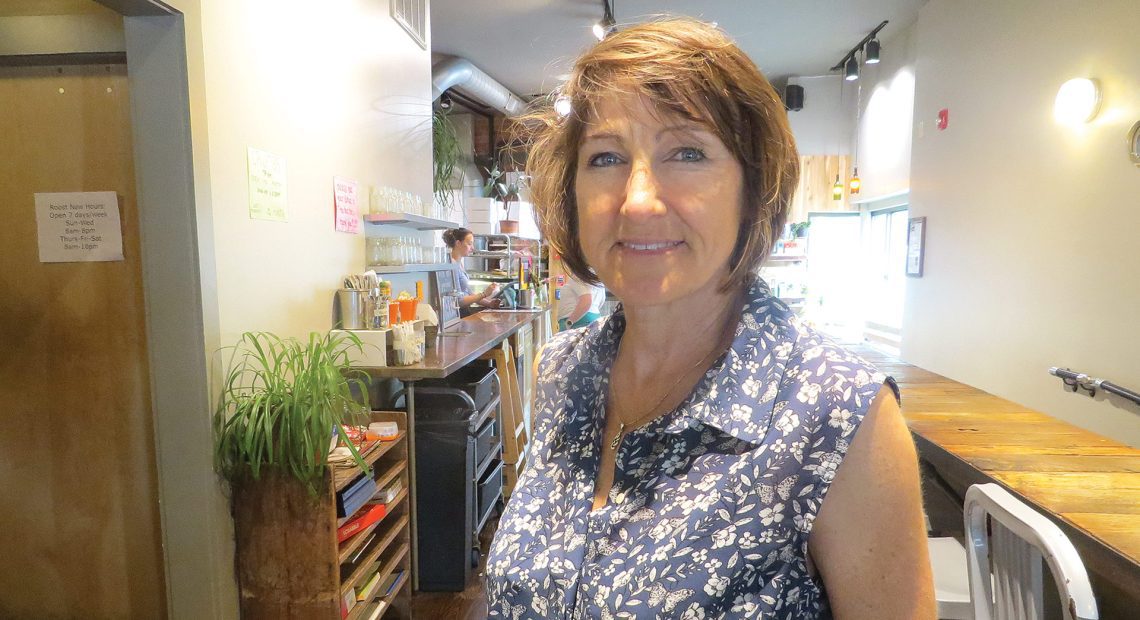
John Gannon

John Gannon

A few weeks ago, Starbucks was in all the employment-law headlines, but not for good reasons. Given the publicity, you may have heard about the case of former Starbucks employee Shannon Phillips, who worked in the Philadelphia area. Phillips was a white Starbucks employee who claimed she was fired because of her race. The jury agreed and ordered the coffee giant to pay her $25.6 million in damages.

What you may not have heard about was a more local case in which a Massachusetts employee was awarded more than $24 million by a jury who found she was discriminated against because of her mental health. Here are some details about those two cases, followed by some commentary on what these employers could have done to possibly avoid the massive judgments.


Phillips v. Starbucks Corp.

Shannon Phillips, who is a Caucasian female, began her employment with Starbucks in 2005. She started at the company as a district manager and was promoted in 2011 to regional director of Operations for ‘Area 71,’ which included all stores in Philadelphia and several suburbs near the city. On April 12, 2018, a Starbucks location in Philadelphia made national news when two African-American patrons who were having a business meeting there were arrested for trespassing. The event sparked protests throughout the Philadelphia area.

“Employers cold to the idea of reducing legal risk by paying severance ought to be mindful of cautionary tales about the penny-wise but pound-foolish.”

Starbucks later reached a settlement with the two men and issued a public statement that “Starbucks will continue to take actions that stem from this incident to repair and reaffirm our values and vision for the kind of company that we want to be.” Because she was the regional director of Operations for the Philadelphia area, Phillips was called upon by Starbucks leadership to support and implement their post-incident efforts. According to Starbucks, however, she displayed poor leadership and “failed to perform the essential functions of her role as regional director” after the April 2018 incident. As a result, she was fired.

Phillips sued Starbucks for race discrimination, saying her Caucasian race played a role in the decision to terminate her employment. In her complaint, Phillips said she “worked tirelessly” to help Starbucks repair its image after the event in Philadelphia, but that the chain’s attempts to repair community relations resulted in discrimination against white employees. The jury agreed and awarded her $25.6 million, which was mostly comprised of punitive damages (damages assessed in order to punish a defendant when the behavior is found to be especially harmful or malicious).


Menninger v. PPD Dev., LP

Dr. Lisa Menninger worked as the executive director of a global laboratory-services company. Her job included operational leadership, business development, research and development, and quality-assurance functions for optimal performance within the labs.

In December 2017, Menninger met with her supervisor to discuss her performance. During this meeting, her supervisor suggested that her role would become more visible, involving increased client visits, social interactions, and presentations. This change did not sit well with Menninger. The prospect of making her more visible, with increased client visits and social interactions, caused great distress resulting in “increased anxiety with somatic symptoms.”

About a month after meeting with her supervisor, Menninger disclosed (for the first time) that she suffered from generalized anxiety disorder that includes social anxiety disorder and panic attacks. She then submitted medical documentation noting that changes to her role would increase her anxiety and make it “substantially more difficult, if not impossible” to perform her job.

In response, the business did exactly what it was supposed to do. The company communicated with Menninger’s medical provider and asked the doctor to specifically address how and to what extent Menninger could perform each task. Her doctor responded, saying Menninger could perform most job duties with some accommodations. For example, for internal and external sales presentations, she could develop the slides and other materials, but required someone else to present to the audience. Similarly, for client meetings, she could be responsible for problem solving and idea generation, but she could not attend the meetings herself. The company ultimately determined this arrangement would not work. Menninger subsequently went out on an eight-month leave of absence, which culminated in termination of her employment.

She sued her former employer for disability discrimination, claiming (among other things) that the company broke the law when it refused to provide the reasonable accommodations she requested. The jury sided with Menninger and awarded her a whopping $24 million, consisting of approximately $1.5 million in lost wages, $5.5 million in front pay (an estimate of future lost wages had she remained employed by the company), $5 million for past emotional distress, $2 million for future emotional distress, and $10 million in punitive damages.


Bottom Line

Massive judgments like these can leave employers scratching their heads (or, more likely, pounding their fists). One way to potentially avoid these runaway jury verdicts is to use employment agreements that require employees (and employers) to go to private mediation and arbitration to resolve employment-related disputes, rather than going to trial.

Another option is an agreement between employee and employer that, if any dispute goes to court, the case will be heard by a judge, rather than a jury. These agreements are commonly referred to as jury-trial waivers. They are lawful, but businesses should use experienced labor and employment counsel to help put the agreements in place.

Another way to avoid costly litigation is to work out a mutually agreeable separation agreement with departing employees. Yes, this will involve paying severance to folks who may not be the best performers, but in exchange, you get a release of claims from the employee and an agreement not to sue the company. Employers cold to the idea of reducing legal risk by paying severance ought to be mindful of cautionary tales about the penny-wise but pound-foolish.

Finally, it goes without saying that, any time a business is facing a risky firing, outside counsel should be engaged to discuss the situation and the best way to move forward.


John Gannon is a partner with the Springfield-based law firm Skoler, Abbott & Presser, specializing in employment law and regularly counseling employers on compliance with state and federal laws, including family and medical leave laws, the Americans with Disabilities Act, the Fair Labor Standards Act, and the Occupational Health and Safety Act; (413) 737-4753; [email protected]


Law

Parental Pitfalls

By Julie Dick, Esq.


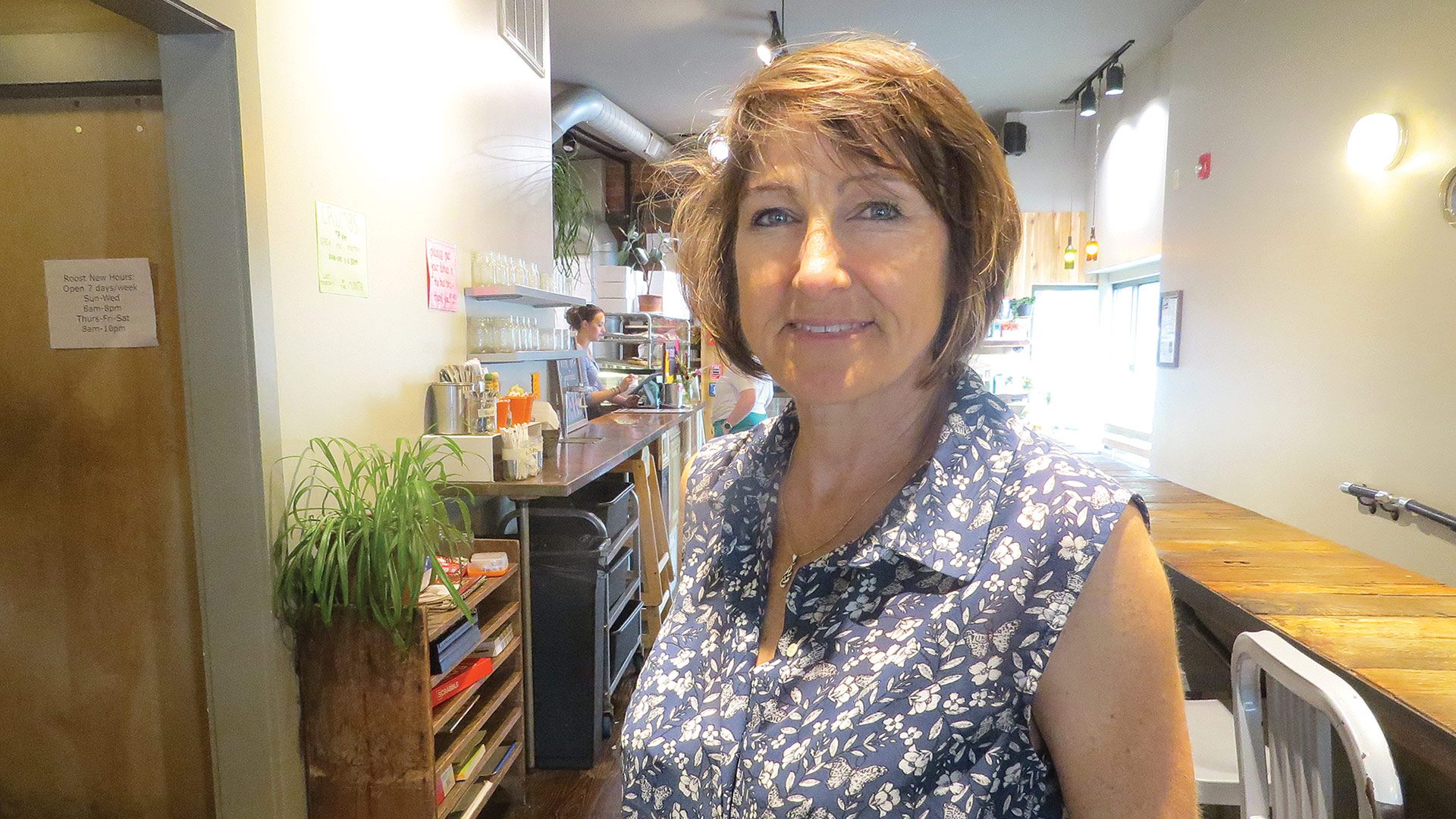
Julie Dick

Julie Dick

Laws that govern familial rights and responsibilities are not always intuitively related to the continual social evolution of what it means to be a family. Many do not consider the legal realities of their family structure until a moment of crisis, and a lack of planning can cause difficult legal situations down the line.

When laws governing parentage were written, they contemplated families in which there was a biological mother and a biological father, and marriage was heavily incentivized. Since then, family structures and paths to existence have diversified. The law and society have both recognized a significant growth of LGBTQ+ visibility and rights, assisted reproductive technology has become increasingly accessible, and more children are being born to unmarried parents.

During the fight for marriage equality in the U.S., the importance of marriage to family building and parentage was one of the central talking points of the movement, and it is no wonder why. Marriage is often a social, religious, and cultural event, but it is also a legal contract that confers many protections, benefits, and obligations unavailable to unmarried people. From the right to access a spouse’s health insurance to the availability of some forms of family leave to financially significant tax and estate-planning benefits — the legal and financial impacts of marriage are broad. Until recently, those benefits, and the benefits associated with parentage, were categorically unavailable to LGBTQ+ families.

In Massachusetts, the automatic rights and responsibilities accorded to individuals within a family are still largely dependent on whether the birth parent is married. If a married person gives birth to a child, the second party to that marriage is automatically presumed to be the second parent. That parentage comes with obligations, but also rights, including a presumption of shared legal and physical custody (i.e., the right to make decisions on behalf of the minor child and to have that child live with them).

“During the fight for marriage equality in the U.S., the importance of marriage to family building and parentage was one of the central talking points of the movement, and it is no wonder why.”

Massachusetts was the very first U.S. state to allow marriage equality. A 2004 case, Goodridge v. Department of Public Health, interpreted civil marriage to mean “the voluntary union of two persons as spouses, to the exclusion of all others,” recognizing that doing so would advance the state’s interests in “providing a stable setting for childrearing.”

The decision directs the reader of Massachusetts marriage laws to interpret terms like ‘husband’ and ‘wife’ in a gender-neutral way. In 2015, marriage equality became available nationwide with a landmark case, Obergefell v. Hodges, in which the Supreme Court’s majority opinion boldly stated that “no union is more profound than marriage,” recognizing that it is so essential, in part, because it “safeguards children and families.” By accessing marriage, LGBTQ+ families can now access those automatic presumptions of parentage available to married people.


Sticky Situations

What if a child is born to an unmarried parent? In Massachusetts, the law views this family very differently. When the birth parent is unmarried, they have automatic sole legal and physical custody of the child. A second parent can establish their legal parentage by signing an acknowledgment of parentage or by asking a court to determine they are a parent. It was not until a 2016 case, Partanen v. Gallagher, that parents who were not the birth parent and not biologically related to the child (often the case for LGBTQ+ parents) could establish parentage under this law.

However, establishing parentage here in Massachusetts through either of these avenues is not the same as safeguarding parentage across jurisdictions, or across time in a changing legal landscape. Laws governing marriage and parentage are not necessarily entitled to comity — mutual respect and enforcement — between states or countries. A marriage or birth certificate that is recognized as valid in Massachusetts may not be recognized as valid in another jurisdiction. Parentage is only legally meaningful so long as the jurisdiction considering it agrees to give it meaning.

Future disputes with a co-parent and international travel pose two common points of risk when it comes to parentage.

Imagine you are in a committed relationship but haven’t gotten married. You and your partner decide to have a child together, and with the help of assisted reproductive technology, your partner carries a child. You present that child to the world and your family as your own and live together as a family raising the child. Eventually, your relationship breaks down, and your former partner now claims you are not a parent of your child and should not be awarded custody or parenting time. That was the scenario in Partanen v. Gallagher, where the ensuing argument involved years of contested litigation.

Occasionally, birth parents (married or not) have tried to take advantage of another state’s less LGBTQ+-friendly laws. By filing for divorce or custody in a state where the laws are not as inclusive, a birth parent may seek to interrupt the other’s legal parentage or gain an upper hand in custody or parenting time determinations.

In one infamous case, a birth parent residing in Vermont was dissatisfied with the state’s orders recognizing her former partner’s parentage of their child and filed a new case in a Virginia court, which denied the lesbian second parent’s legal parentage altogether. The resulting multi-state legal proceedings lasted years and involved multiple appeals. Ultimately, the birth parent kidnapped the child to Nicaragua and successfully remained in hiding until the child was 18.

The risks the accompany international travel can be even more surprising. Picture this: you’re on vacation with your family, and your child — born to your spouse during your marriage using reproductive technology — falls ill. Will the hospital allow you in the room? Give you information? Let you make vital medical decisions? Let you take your child home? “It depends” is hardly a comforting answer.


Adoption as an Answer

For those wishing to decrease that uncertainty, adoption may be the answer. A 1993 case, Adoption of Tammy, confirmed that an existing legal parent and their co-parent can together adopt their own child to secure their parentage in Massachusetts and across jurisdictions.

Sometimes called a confirmatory adoption, marital adoption, or second-parent adoption, this was one of the first tools available for LGBTQ+ families to establish parentage of their children and remains the most secure. Unlike a marriage or a birth certificate, an adoption is entitled to comity across jurisdictions. In Massachusetts, it is a widely available legal proceeding which can stand alone or in addition to an acknowledgement of parentage or marriage to secure a non-birthing parent’s parentage.

In an internationally varied and ever-evolving legal landscape, consider utilizing the law to protect your family so you know what to expect when the unexpected happens.


Julie Dick is an attorney at Bulkley Richardson, where she leads the firm’s family-law practice.

Healthcare News

‘It’s the Right Thing to Do’

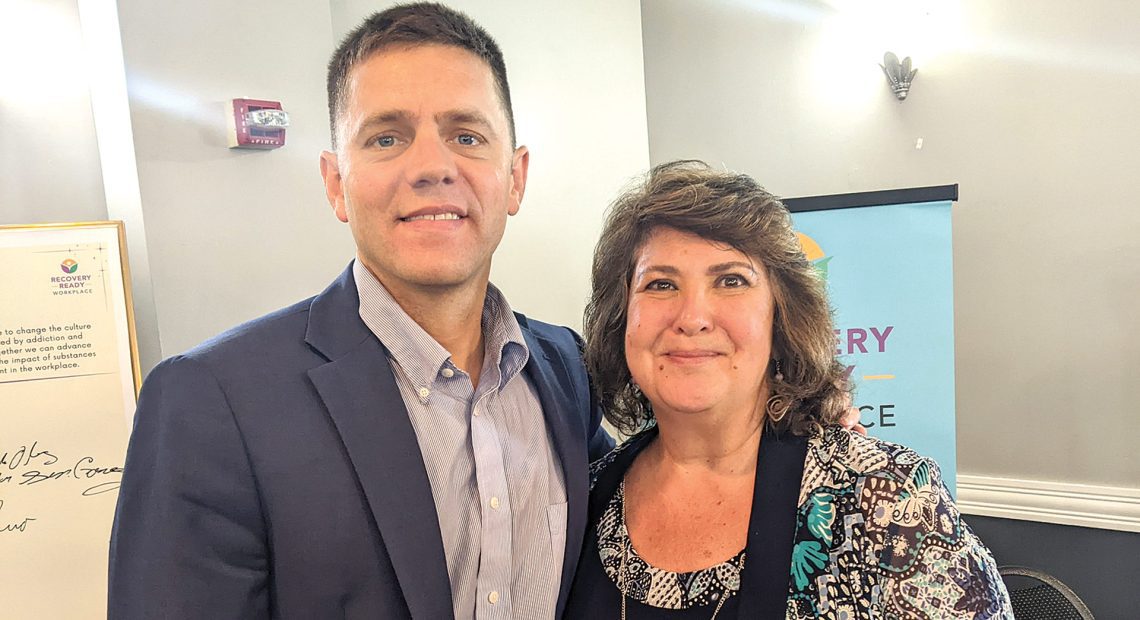
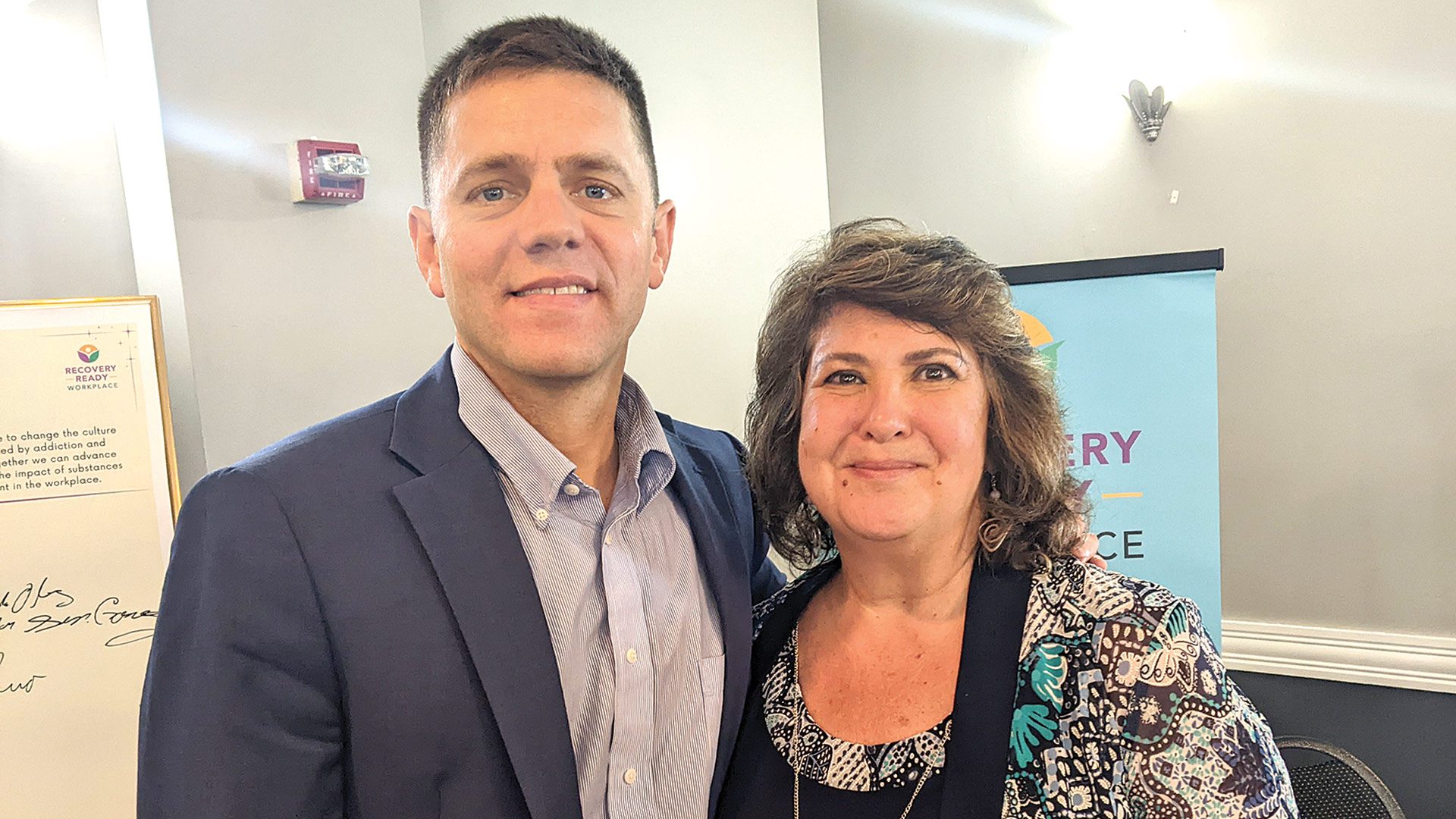
State Sen. John Velis and Ramona Rivera-Reno

State Sen. John Velis and Ramona Rivera-Reno say being a Recovery Ready Workplace is good for employees — and the bottom line.


State Sen. John Velis knows something about addiction and recovery, having experienced both in his life. And as chair of the state Legislature’s Joint Committee on Mental Health, Substance Use, and Recovery who also serves on a national mental-health task force, he’s keenly aware of the intertwined challenges of recovery and employment.

That’s why he firmly believes the Recovery Ready Workplace initiative offers businesses a roadmap to not only help employees with the biggest challenges of their lives, but to help their business succeed at the same time.

“If you don’t have a healthy workforce, if you don’t have a workforce that is there, in the here and now, to do their job, you’re going to see that in your productivity — more specifically, loss of productivity,” he said.

So helping employees struggling with mental-health issues, addiction, and other challenges is certainly a bottom-line issue, he went on. But, more importantly, it’s a human issue. “It’s important to do it for many reasons, but most importantly, it’s the right thing to do.”

Velis shared these thoughts at a recent employer-appreciation breakfast presented by MassHire Holyoke’s Pillars of the Community Workforce (PCW) initiative, during which several local businesses were honored for their pledge to become a Recovery Ready Workplace — a national program he believes is more crucial than ever.

“What I know with absolute certainty is that the pain that’s being felt out there right now, the number of people dying, the number of people struggling with their mental health, is unprecedented,” he said, adding that this issue “absolutely transcends age, socioeconomic status, race, ethnicity, everything. There is pain out there.”

A Recovery Ready Workplace supports its community by recognizing recovery from substance-use disorder as a strength, according to MassHire. Companies that take the pledge actively work to maintain and support the employment of people in recovery and their loved ones, and creates a healthy and safe environment where employers and employees can work together to eliminate barriers for those impacted by addiction, reduce stigma and judgment of people in recovery, and start to shift attitudes and perceptions around these issues.

“What’s our mission? To create a culture of support for employers and employees that have been impacted by substance use and addiction,” said Ramona Rivera-Reno, executive director of MassHire Holyoke’s Re-entry & Recovery program. “And when I say create a culture, I’m talking about breaking down the stigma that goes with substance-use disorder.”

“What I know with absolute certainty is that the pain that’s being felt out there right now, the number of people dying, the number of people struggling with their mental health, is unprecedented.”

Reducing or eliminating that stigma is a critical step, she emphasized.

“We’re all in recovery from something, whether it’s recovering from surgery, recovering from the pandemic, recovering economically. There’s a lot of pressure on all of us. And we need to have the coping skills and the communication skills to overcome that as a community together. And that’s what the Recovery Ready Workplace is all about — educating employers, helping them educate their staff, adding it as a wellness benefit to their benefits. The more people you educate, the more communication you get out there, the more we’ll break down that barrier.”

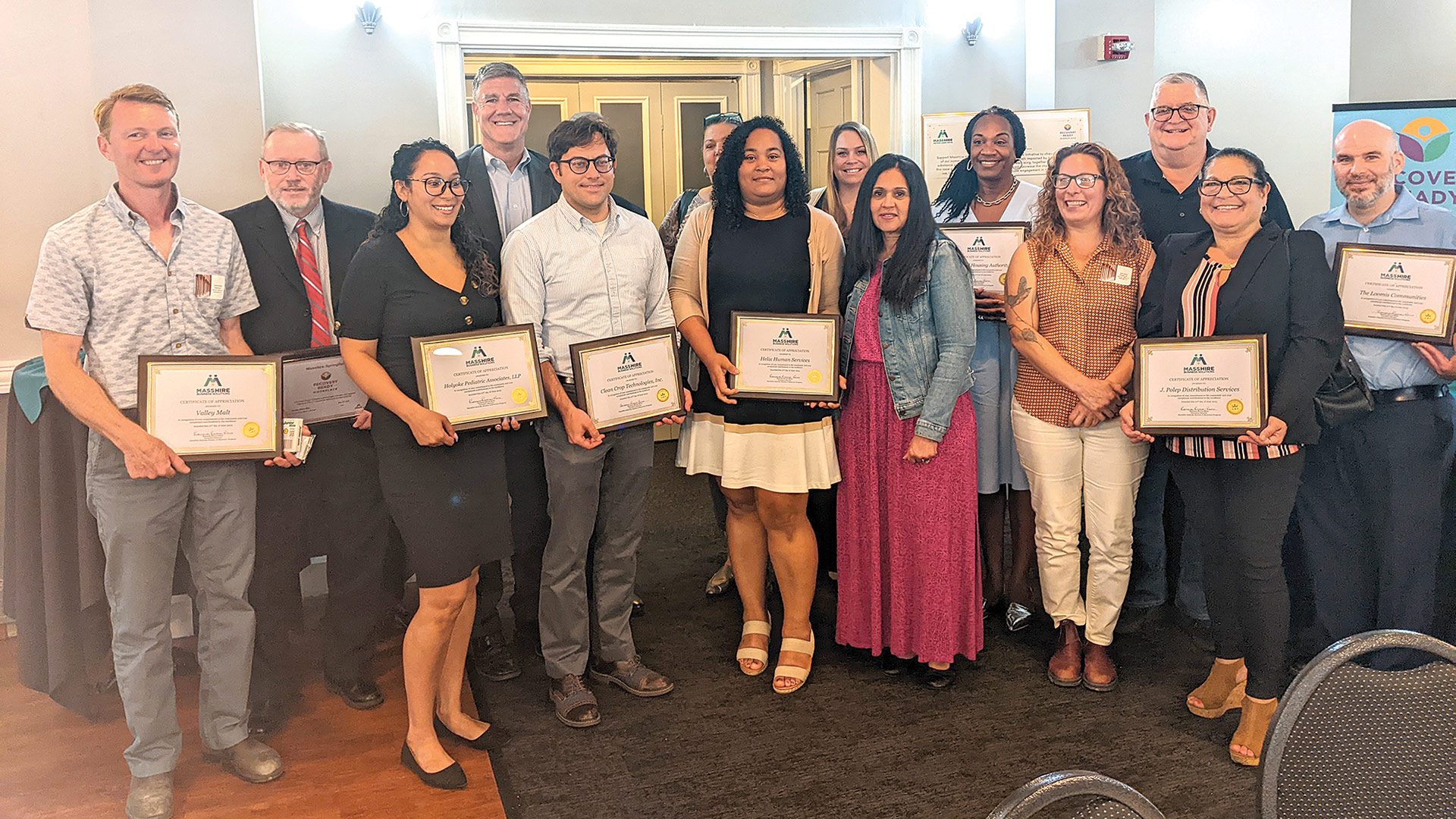
MassHire Holyoke recently recognized

MassHire Holyoke recently recognized about a dozen local businesses for taking the Recovery Ready Workplace pledge.

MassHire notes that being a Recovery Ready Workplace does not mean accepting or enabling intoxication, substance use, or any unsafe conditions in the workplace. What it does mean is that the business:

• Acknowledges that addiction is an issue for many people by openly addressing the topic of drug and alcohol misuse, communicating about these issues in a non-judgmental and honest way to reduce stigma, and encouraging employees to discuss substance-use concerns and recovery successes in a non-punitive setting;

• Educates employees and customers about the disease of addiction and treatment resources and options;

• Offers policies and accommodations that support employees while rethinking hiring standards around gaps in employment, addiction-related justice history, and other considerations;

• Prioritizes safety by preventing employee exposure to unsafe conditions that could cause injury or illness that contribute to the development or recurrence of substance-use disorders, ensuring the workplace is an emotionally and socially safe and healthy environment for staff, and improving access to recovery supports; and

• Improves access to recovery supports by lowering barriers to seeking and receiving care for addiction, and maintaining recovery.


Making a Difference

Holyoke Mayor Joshua Garcia said the city itself is taking a pledge to be a Recovery Ready Workplace. He recognized why some companies would be hesitant to sign on, but agreed with Velis that it’s the right thing to do.

“Obviously, as a company, you have to make sure you have your systems in place to help navigate potential liability and harm to your company because that’s the bottom line,” Garcia noted. “But these are the folks that are helping you build that. So, whatever little bit you can do to help build people up, you’re going to see a return from those individuals that really appreciate the level of interest you’ve taken on them, and the risk you’ve taken on them.”

Rivera-Reno said companies and organizations that take the pledge agree to acknowledge and openly address the employees’ experience with drug and alcohol misuse in the process of recovery.

“A lot of people suffer from different things, whether it’s substance-use disorder, alcoholism, mental-health issues, and they don’t ask for help because the stigma attached to it. It’s a sign of weakness for a lot of people.”

“You’re free to educate your employees about the disease of addiction and treatment options in recovery support, and offer support. And there’s so many ways you can offer support.”

It can be as simple as offering a dollop of schedule flexibility. She cited one client who used to go to lunchtime recovery meetings, but could no longer do that at a new job. “So we had someone talk to the employer, and the employer decided, ‘well, you can come in early, and you can have a longer lunch and just stay later.’

“That makes a big difference to someone,” she went on. “Something simple like a flex schedule made all the difference. And that person’s still working today, and he wouldn’t have had the courage, I think, to do this if we didn’t have a recovery coach talking with him along the way, and if the employer wasn’t aware of our services and aware of what a recovery-friendly place is.”

Rivera-Reno called stigma a more deadly killer than cigarettes, heroin, or whatever substance because it keeps people in the shadows and keeps them from asking for help. Companies that pledge to help break that stigma, she said, are changing lives.

“A lot of people suffer from different things, whether it’s substance-use disorder, alcoholism, mental-health issues, and they don’t ask for help because the stigma attached to it. It’s a sign of weakness for a lot of people. It’s a sign of, like, maybe you’re not ready to work here. So by getting us into the different employers’ offices, talking about recovery as a community, we really make a difference in their lives.”

Garcia emphasized that, with the cost of turnover and difficulty retaining talent these days, it makes business sense for employers to support their employees who are struggling with some of these issues, rather than letting them fall through the cracks.

“Sometimes it’s not even the individual that’s suffering from personal addiction; it’s a son or a daughter or a significant other that impacts them and their performance in the workplace,” the mayor said. “So we’re taking a much more proactive approach when dealing with our employees to help them navigate these problems so that we keep our employees and don’t lose them.”

Indeed, MassHire emphasizes the bottom-line benefits of cultivating a Recovery Ready Workplace, including increased retention and fewer absences, a healthier and safer work environment, greater productivity and loyalty among staff, lower healthcare costs, and an enhanced reputation as a supportive, yet accountable organization.

And with 22 million Americans identifying themselves as people in recovery, it’s not something businesses can afford to ignore.

“You already have countless employees who are struggling with something, whether it be a substance-use disorder or something else,” Velis told those attending the breakfast. “You have that without knowing it.”


Breaking the Cycle

Velis ended his address on a personal note, and an encouragement to practice self-care. He said he was late to the event because he was bringing his son to daycare.

“Probably two or three years ago, I would have said to my better half, ‘I gotta go. I gotta be at work. I’m speaking at this event.’ And I don’t do that now because being a dad is the most important thing in my life, but also because I firmly believe when I go to bed at night that self-care is the most important thing every human being does — whether it’s going for a run, doing yoga, meditating, going to a 12-step meeting, or hanging out with my son.”

And that’s what Recovery Ready Workplaces do, proponents say, noting that recovery isn’t just stopping substance use, but taking a journey of growth, improvement, and perseverance. And that’s exactly the kind of employee companies taking the pledge value.

“If you were to look out at your employees and say, ‘raise your hand if you’ve ever struggled with a mental-health issue or a substance-use issue,’ you wouldn’t do that, but trust me when I tell you, many people in that room are struggling with it right now,” Velis said. “And when you welcome that, when you talk about it, when you let it be known that it’s OK, you’re doing a really beautiful thing.”

That’s because the stigma still exists, he added. “The three hardest words for any human being to say are also the most courageous words: ‘I need help.’ Behavioral health today is about meeting people where they are.”

Healthcare News

Mental Health Shouldn’t Take a Break


Dr. Negar Beheshti

Dr. Negar Beheshti

How do students stay emotionally healthy during a long stretch of school vacation?

Dr. Negar Beheshti, a board-certified adult, child, and adolescent psychiatrist and chief medical officer for Holyoke-based MiraVista Behavioral Health Center and its sister hospital, TaraVista Behavioral Health Center in Devens, recommends a balance of structured fun and learning. She recommends as well that primary-care givers, be they parents or other guardians, do their due diligence to keep everyone safe and engaged in behavior that supports mental health.

With that in mind, BusinessWest asked Beheshti to talk about ways to make school breaks beneficial for students of all ages.


BusinessWest: What expectations around behavior are good to set during this time away from school?

Beheshti: This is a conversation geared to the child’s age. For example, children in elementary school may be doing a lot of summer-camp activities, and this is an opportunity to talk about appropriate behavior with other peers at the camp.

Should there be other informal activities for this age group more regulated by parents and guardians, it is good for primary caregivers to get to know them, advise their children to stay away from people they don’t know, and know that all activities are in a safe space, contained and chaperoned by an adult.
When you get to the tweens, they may not want the regular, structured routine of summer camp. However, it is still good to do some type of structured program, as it gives middle-schoolers the opportunity to continue social development and promotes new learning opportunities. Some school districts offer enriched learning programming at least part of the day that holds the potential to explore something new in a fun way.

The state Executive Office of Education has a web resource page (www.mass.gov/info-details/summer-learning) on summer programs for youth that are a mix of academic and the recreational.


BusinessWest: What about older teens? How can parents and guardians balance their desire for freedom with safety and wellness?

Beheshti: Young people old enough to hang out with their friends without an adult chaperone should have some type of device that allows their primary caregiver to reach them. There are all types of devices today, from smartphones to smartwatches, by which you can regulate whom your child can contact and track their whereabouts.

Again, you want to do your due diligence as a primary caregiver, get to know any parents or other guardians involved, know your young person is in a safe place, and, if they are going out, where they are headed and when they will return.

Parents and guardians should prepare as well for some age-appropriate talks on the expectations and pressures of friendships and relationships and that discourage experimentation with substance use. Drug-overdose deaths of teens have spiked in recent years; underage drinking remains a serious health problem in this country, and studies on the impact of the legalization of adult cannabis show an increase in use among teens.

High school brings a little more autonomy for teenagers and the need for more candid discussions on dating and substance use, including that the minimum legal age for buying, transporting, or drinking alcoholic beverages is 21.

“Parents and guardians should prepare as well for some age-appropriate talks on the expectations and pressures of friendships and relationships and that discourage experimentation with substance use.”

There is value for a teen who is old enough to look for a job. It gives the ability to have more autonomy and more cash to spend and save, and is a good use of their free time.

Parents and guardians should continue their due diligence in knowing who their child is hanging out with in high school, where they are going, and when they will return.

College students can be bit of a conundrum because they are adults. Maybe it is time to say they are coming back home as adults, and you will hold them to that standard in terms of their personal habits around the house.

They are old enough to get a job. This, again, allows them more bandwidth in what they might want to purchase for themselves, help with cost-of-living expenses when they are home, and helps structure their time.

Having structure is key in helping young folks during the summer not get distracted and into risky situations, as is knowing their friends. Have their friends (new and old) over the house and meet them during the summer. There is no harm in meeting your children’s friends of any age.


BusinessWest: How can parents and guardians best initiate a talk around accountability and acceptability during vacation?

Beheshti: The best approach is often from an angle of curiosity. This makes it conversational rather than who, what, when, and where. For example, adults often share about each other’s friends just out of an interest, and this tact will likely have more traction with teenagers and young adults versus grilling them.

There is also value in saying to your young person, “I remember my summers when I was a teen, and how my parents (your grandparents) were, and I understand today their concerns for me back then.” The more transparent and sharing (within reason) parents and guardians are, the better chance for more open discussion.


BusinessWest: How important is adhering to routines like bedtime during summer?

Beheshti: There can be some leeway. For example, if you have a 9- or 10-year-old, the average bedtime should be between 8 and 9 p.m. If you want to push it to 10 p.m. during the summer and have them sleep a bit later, you need — about two weeks before the start of school — to get that back closer to their school-year sleep pattern so they don’t wake up super tired and have a hard time adjusting the first week of school.

You also want to make sure they are eating healthy, balanced meals during the day with plenty of exercise.


BusinessWest: Is it important to spend more family time together during vacation?

Beheshti: There is value in trying to schedule at least one week, maybe two if you have the luxury, for some vacation — even if it is a staycation — with your kids, even when they are high-schoolers. They may roll their eyes, asking why the family is doing something, but being together as a family is something you may not get to do a lot during the school year.


BusinessWest: What mental-health issues come up during summer for school kids?

Beheshti: Historically speaking, and the pandemic years aside, the inpatient child and adolescent psychiatric bed census drops during the summer for several reasons. There is less demand on young people during the summer. This means, if they have been managing a diagnosis of depression or anxiety, for example, their symptoms tend to be less severe with less pressure.

However, one cohort of children that particularly benefits from structure and routine are those with developmental delays, including those with related neurobehavioral disorders such as autism spectrum disorder. We see the same amount of prevalence of children with a neurodevelopmental disorder needing hospitalization during summer because their preferred school routines have gone away.


BusinessWest: Why symptoms might indicate to a primary caregiver that a child is struggling emotionally?

Beheshti: If you see a noticeable change from what’s typical in their daily activities, meaning their sleeping, eating, or day-to-day mood, pay attention especially if it continues for more than two weeks. This is true even in someone who does not have a previous mental-health diagnosis. Consider making a call to your child’s pediatrician or primary-care provider, especially if they are not established with a psychiatrist.
Parents and guardians — again, coming from an angle of curiosity — could gently ask a child about a noticed change. If they are eating less, for example, you might ask if there is something wrong with their stomach, or is there something else going on in their life? A conversational approach, starting young, can make communication easier as a child ages.
 

BusinessWest: What support is important during the summer for a young person who may be questioning their sexual orientation or gender identity?

Beheshti: You hope that young people who are going through these transitions have had support during the school year. However, some kids may not get this, and there is the potential as well for peer abuse or bullying. A peer counselor would be a good source of support, along with finding a therapist who is experienced in delivering culturally competent care to individuals who identify as LGBTQIA+.

The Massachusetts Department of Mental Health has a web resource page, Young Adult Resource Guide LGBTQIA+ Resources, at www.mass.gov/info-details/dmh-young-adult-resource-guide-lgbtq-resources.


For more information on MiraVista’s inpatient behavioral-health treatment for adolescents, as well as adults, call (413) 701-2600 or visit www.miravistabhc.care

Autos

Power Play

charging stations

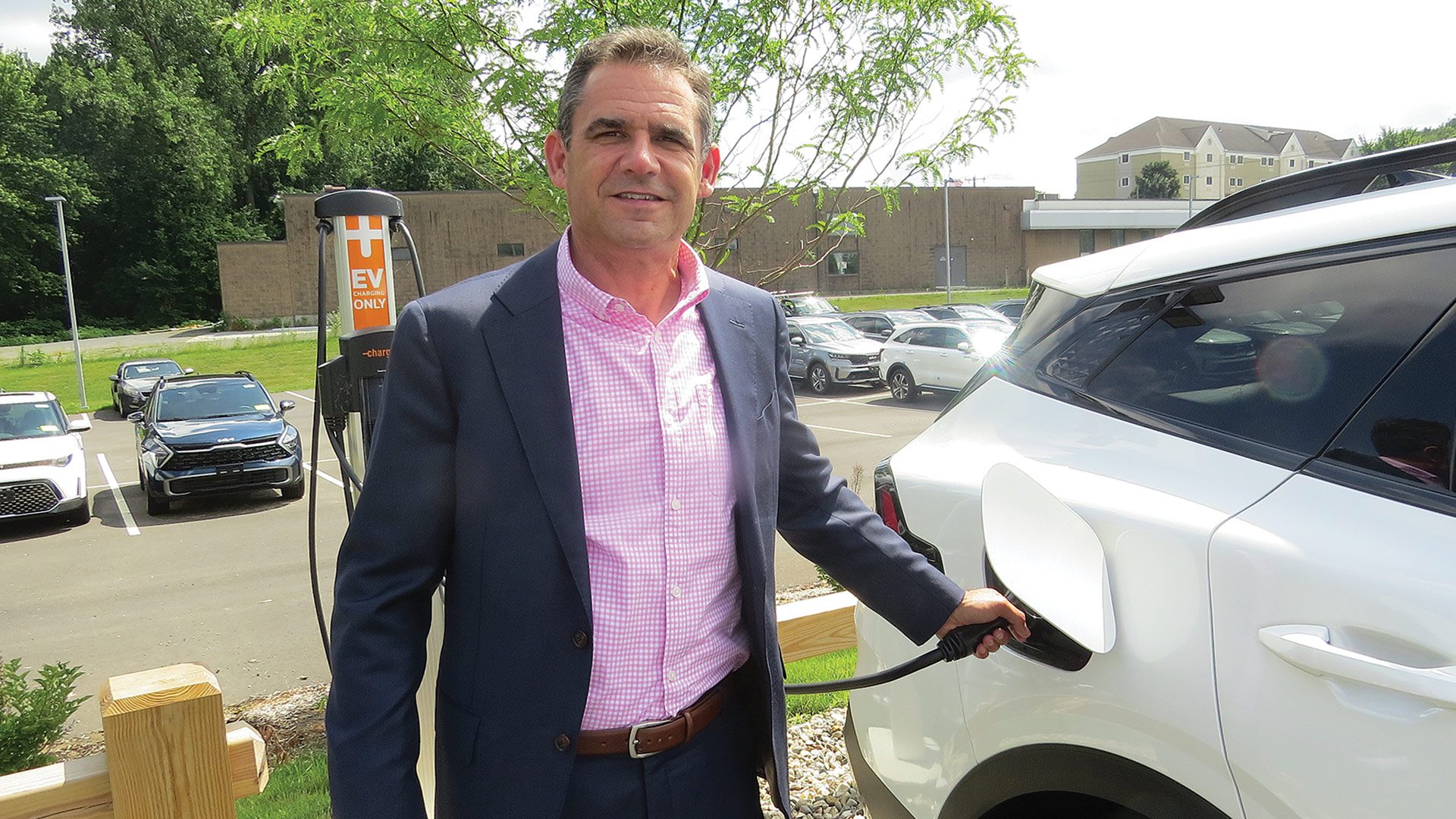
Gary Rome plans to more than double the charging stations at his Hyundai dealership from the current six.


Gary Rome understands the appeal of electric vehicles.

Start with the long-term fuel savings. At a time when gas still costs around $3.50 per gallon, he said an electric charge might cost around $1.25 for the same number of miles.

“It’s a good deal for someone who drives a lot,” said Rome, owner of Gary Rome Auto Group, which has a Hyundai dealership in Holyoke and a Kia dealership in Enfield, Conn. “As gas prices continue to be as huge as they are, the interest in electric vehicles is not going to wane.”

In addition, “the technology on the car is advanced. The performance is spectacular, and the response, the acceleration, is far superior on some of these electric vehicles as compared to ICE [internal combustion engine] vehicles.”

So, what — besides an initial sticker price higher than the average gas-powered vehicle — might make consumers hesitant to go electric? In many cases, it’s uncertainty about where they’ll power up.

“The infrastructure is still very immature; it needs to be developed,” Rome said. “There’s a lot of money out there from the federal government to support this, but it’s not happening at a rate we would like.”

The issue, for most electric-vehicle (EV) owners, isn’t charging at home; even level-1 chargers running overnight in the garage, at about four miles of range per hour, will give most drivers what they need to get around the next day, and Rome said local utilities are offering financial incentives to install level-2 chargers, which offer more than 30 miles of range per charge hour.

No, the big question, for many, is where to charge when away from home. And that landscape is improving, if not quite at the pace Rome and others would like.

“The infrastructure is still very immature; it needs to be developed. There’s a lot of money out there from the federal government to support this, but it’s not happening at a rate we would like.”

On the federal level, the bipartisan infrastructure bill passed last year invests $7.5 billion in electric-vehicle charging, $10 billion in clean transportation, and more than $7 billion in EV battery components, critical minerals, and materials.

Meanwhile, the Biden administration has committed to building out a national network of 500,000 EV chargers by 2030.  In support of this goal, the Department of Transportation announced the National Electric Vehicle Infrastructure program, a $5 billion initiative to create a coast-to-coast network of EV chargers focused on major highways that support the majority of long-distance trips.

The idea behind this national network is to give drivers confidence they can always find a place to charge, as well as jump-starting private investment in charging infrastructure and electric vehicles and supporting the administration’s goal of having at least 50% of vehicle sales to be electric by 2030.


Confidence Game

The confidence factor is important; a AAA survey last year revealed that 25% of Americans say they are likely to buy an electric vehicle for their next auto purchase, with Millennials leading the way at 30%. Of those, 77% cite savings on fuel costs as the top reason.

However, consumer hesitation surrounding range and accessibility to charging points continues to hold many people back. The top objections to buying electric in the AAA survey included the high initial purchase price (cited by 60%), but also concern there are not enough places to charge (60%), concern about running out of charge when driving (58%), worries about the vehicle being unsuitable for long-distance travel (55%), high cost of battery repair or replacement (55%), and inability to install a charging station where they live (31%).

Clearly, some version of worry about not being able to charge the vehicle is a top concern.

Even as the range of EVs improve, “the deeper issue with range anxiety is that it’s going to take more than just improving how far an electric vehicle can go to convince people to make the switch,” said Greg Brannon, AAA’s director of Automotive Engineering and Industry Relations.

And even at home, not everyone can charge. While most electric vehicles come with a 120-volt, level-1 AC charger that plugs into a standard household electrical outlet, people living in dense cities or multi-family housing often find that public charging stations are the only option. So building the charging infrastructure not only along highways, but within cities is key to boosting consumer interest in electric vehicles.

Locally, auto dealers are answering the call. JM Electrical, which has installed thousands of EV charging stations across New England, announced it will install two level-3 charging stations, spare capacity for an additional one in the near future, and three level-2 charging stations at Marcotte Ford in Holyoke. In total, the charging bank, expected to be completed this fall, will have the ability to power up to 10 cars.

Level-3 chargers can bring a battery to 80% charge in under a half-hour. Marcotte is one of the first Ford dealerships in Western Mass. to officially roll out these new EV chargers in efforts to continually scale EV volumes in the region.

Mike Filomeno, Marcotte’s general manager, said Ford is committed to an electric future and understands the need for charging access. “There is demand, but we need the infrastructure to support it. You can’t sell vehicles that don’t have that. And what makes people comfortable is knowing they can get their vehicles charged everywhere.”


Station by Station

On a national level, the Biden administration says investments are paying off, with EV sales tripling and the number of publicly available charging ports growing by at least 40% since the start of 2021. There are now more than 3 million EVs on the road and more than 130,000 public chargers across the country.

Further accelerating the buildout of a reliable charging network, companies including Tesla, General Motors, EVgo, Pilot, Hertz, and BP, among others, are announcing commitments to expand their networks by thousands of public charging ports in the next two years, using private funds to complement federal dollars and putting the nation’s EV charging goals even closer within reach.

Rome’s Holyoke dealership now boasts six charging stations, of both the level-2 and level-3 variety, and he wants to install about eight more. He noted that Hyundai is fully committed to the EV movement, breaking ground six months ago in Georgia on a $5.8 billion production facility for electric cars and batteries.

“They see this as a very important part of our sales,” he said, “and they’re putting their money where their mouth is.”

Women in Businesss

A Legacy of Caring, Getting Involved


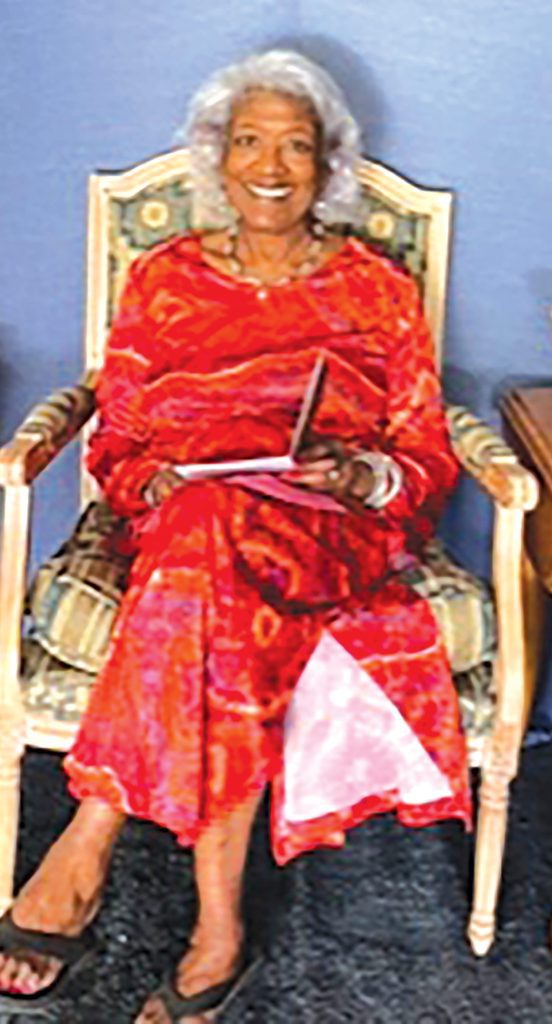
Dora D. Robinson

Dora D. Robinson

It’s been more than 30 years since the incident just outside the Martin Luther King Jr. Community Center in Springfield, but Nate Johnson says he won’t ever forget what happened that Halloween afternoon.

Or the woman who committed what he described not as an act of kindness, but rather as “heroism.”

A group of teenagers had gathered outside the MLK Center, he recalled, and a fight broke out among them — a “real fight.”

He was in the middle of it, he said, adding that, from seemingly out of nowhere, Dora D. Robinson, the director at the center, grabbed him and pulled him out of the fracas.

To this day, he doesn’t know why she picked him from among all the others. He’s just grateful she did, because that was simply the beginning of her influence on his life.

“She’s my superhero that came to rescue me,” he said, making a point to use the present tense, adding that Robinson, who passed away last month at age 71, essentially “adopted” him at that point and became a mother figure, mentor, inspiration, and someone who helped open doors and compel him to walk through them.

Opening doors and guiding people through them … that might be a concise yet effective way to at least start to sum up a remarkable life and career in public service that included a lengthy stint at the MLK Center, a tenure as president and CEO of the United Way of Pioneer Valley (UWPV), and many other leadership roles.

But her passion for serving the community, creating opportunities for others, and battling social injustice continued long after she formally retired, said those who knew and worked with her.

Indeed, Helen Caulton-Harris, commissioner of the Division of Health and Human Services in Springfield, who worked with Robinson on a number of initiatives and was her close friend, remembers that, just a few days before she fell ill, Robinson was working on a maternal health program in Indian Orchard and had called her asking if she would write a support letter so Robinson could secure funding for the initiative.

“Dora started her life in Elmira, New York, but Springfield was her heart and soul,” Caulton-Harris said. “She put everything she had into this community. Her leadership was critical. Even after she retired from her formal job, she still felt her passion to be a leader and to make sure she was creating opportunities and leaving a legacy of supporting nonprofits.”

Donna Haghighat, CEO of the Women’s Fund of Western Massachusetts, agreed. She said Robinson chaired one of the committees setting up the agency’s Young Women’s Initiative, one of many endeavors she was passionate about.

“She felt strongly about empowering young women of color,” Haghighat noted, adding that she eventually convinced Robinson to join her board. “What was compelling to her was that this initiative was mentoring young women of color, teaching them about philanthropy, which was very close to her heart. They learned about nonprofits that were doing work in the areas that they identified as barriers to their own prosperity in Springfield. So it was a wonderful way to learn that philanthropy can be a tool of social justice.”

Robinson learned that lesson early on in her career, and one of her many passions, said those we spoke with, was to impart that lesson on others.

For this issue and its focus on women in business, we reflect on the life and career of Dora D. Robinson, who certainly was an influential woman in business, with her business being the community she lived and worked in and her tireless efforts to bring about equity and opportunities for everyone.


Passion Play

Born in Elmira, Robinson made a lifetime commitment to social and racial justice starting with her participation in the Poor People’s March on Washington as a teenager in 1968.

She earned a bachelor’s degree from Cornell University, completed graduate studies at Smith College, and earned a master’s degree in social work from the University of Connecticut.

She put those degrees to use in a number of leadership roles with area nonprofits and on countless boards. She served as vice president of Education at the Urban League of Springfield and corporate director and vice president of Child and Family Services at the Center for Human Development.

“She understood her responsibility to mentor and nurture and create pathways for future leaders. She understood the need to give young Black individuals, as well as seasoned individuals, an opportunity for growth. She knew she held a unique responsibility to make sure there were others in our community who followed us.”

Starting in 1991, she served as the inaugural leader of the Martin Luther King Jr. Community Center and as a member of the MLK Community Presbyterian Church, and actively supported the Project Mustard Seed campaign to raise funds to build a community center to serve as a place for youth and family in the Mason Square neighborhood to thrive. Nearly two decades later, she had established MLK Jr. Family Services, a multi-service agency with a $3 million operating budget, 75 full- and part-time employees, and more than 100 volunteers with services delivered at three program sites located across Greater Springfield.

Robinson took the helm at the UWPV in 2009 as the first woman to serve as its CEO. Under her leadership, the agency launched several new strategies to diversify revenues contributing to education, homelessness initiatives, basic needs, and financial-security programs. She also led the founding of the UWPV Women’s Leadership Council (now renamed the Dora D. Robinson Women’s Leadership Council in her honor) to engage local women leaders in supporting financial literacy and health initiatives for women and girls.

She retired from the United Way in 2017 but continued to work on passion projects, including the Indian Orchard Citizen’s Council, the Black Behavioral Health Network, and many others.

Over the years, she served in a number of regional, state, and national leadership roles with groups including the Springfield Regional Chamber, the Springfield Library Foundation, the Federal Reserve Bank of Boston community advisory board, Springfield Technical Community College, and as a founding member of the Healing Racism Institute of Pioneer Valley.

Beyond all these lines on a résumé, Robinson is remembered for her boundless passion for the region and especially its underserved, her sense of humor, as well as her willingness to donate her time, money, and leadership to innumerable causes and organizations in this region and well beyond. She is remembered as a dynamic, forward-thinking administrator who led by example and was able to inspire others.

“As an administrator, Dora Robinson was strategic, and to me, that was one of her greatest strengths,” Caulton-Harris said. “She looked at the lanes of her administration, of her leadership, and she was very strategic about who she interacted with and how she interacted.”

Elaborating, she said Robinson understood the role she played as a Black woman in leadership roles and embraced all that came with it.

“She understood her responsibility to mentor and nurture and create pathways for future leaders. She understood the need to give young Black individuals, as well as seasoned individuals, an opportunity for growth. She knew she held a unique responsibility to make sure there were others in our community who followed us.

“Dora had a spirit that could not be harnessed. She was an explosive force of love everywhere she went; everyone she interacted with felt that generosity of spirit,” Caulton-Harris continued. “I think her legacy is one of warmth, almost like the warmth of the sun — her rays sort of permeated everything she interacted with.”

Johnson concurred, and said that, to him, Robinson was a more than leader in the boardroom. She was a leader on the streets of Springfield — in his case, quite literally.

“I’m thankful and grateful for her,” he said. “She treated me like I was her son. She stayed with me for the past 30 years, and I stayed with her. And she’s still with me.”

Caulton-Harris agreed, and then spoke for everyone who knew Robinson when she said, “frankly, I’m not sure how I move forward without her. I’ll miss her.”


Lasting Legacy

As he talked about Robinson, her legacy, and her influence on him, Nate Johnson said use of the past tense simply won’t cut it.

She remains a large and powerful force in his life and how he lives it, and always will be, he said, adding that the lessons she imparted, the example she set, and her directive to keep reaching higher and find new ways to make the most of his life, while also making a difference in the lives of others, will not only stay with him, but guide him for the rest of his life.

And there are countless people across the region who can, and do, say the same thing.

That’s the kind of impact reserved for superheroes.

Wealth Management

Who Bears the Brunt?


One common rationale against climate action is that the resulting fossil-fuel investment losses could affect the retirement or long-term savings of a vast number of people. However, research co-authored by an economist at the UMass Amherst Political Economy Research Institute (PERI) finds that the loss of fossil-fuel assets would have a minimal impact on the general populace.

In high-income countries, most losses would be borne by the most affluent individuals, for whom the loss makes up a small percentage of their total wealth. In contrast, the financial loss of lower-income individuals would be small in dollar terms and feasible for governments to compensate.

The paper, published in the journal Joule and co-authored by Gregor Semieniuk, research assistant professor at UMass Amherst; Lucas Chancel, associate professor of economics at Sciences Po in Paris; and four other co-authors, builds on Semieniuk’s earlier research, which estimated the total amount of assets that would be lost, or ‘stranded,’ if ambitious climate policies caused fossil-fuel production to quickly decline.

Semieniuk and Chancel find that, in the U.S., two-thirds of the financial losses from fossil-fuel assets would affect the top 10% of wealth holders, with half of that affecting the top 1%. Because the top 1% tend to have a diverse portfolio of investments, any losses from fossil-fuel assets would make up less than 1% of this group’s net wealth. When the researchers repeated this analysis for the U.K. and continental European countries, they found similar results.

In contrast, 3.5% of financial losses would affect the poorest half of Americans. Asset losses make up a larger proportion of wealth for this group. However, because their overall net wealth (assets minus liabilities) is significantly lower, researchers estimate that the entirety of these losses could be compensated for as little as $9 billion in Europe and $12 billion in the U.S.

“There’s this idea that it’s the general populace that should be opposed to climate policy that creates stranded assets because their pensions are at risk or their retirement savings or just their savings,” Semieniuk said. “It’s not untrue that some wealth is at risk, but in affluent countries, it’s not a reason for government inaction because it would be so cheap for governments to compensate that.”

Semieniuk and Chancel detail three different potential ways governments could raise this amount of money. For example, policymakers could impose a very modest carbon-emissions tax. In addition, they could renegotiate their current liabilities to energy companies and use the amount that they save. A modest tax on the wealthiest individuals could also raise enough money to compensate for the least affluent groups’ losses.

“Even though our results are simple, they were not present in research or public debates before,” Chancel said. “This work is one step forward in understanding the winners and losers from the point of view of the assets that might be at risk in this transition.”

The research was supported by the U.K. Natural Environment Research Council, the United Nations Development Programme, an EU Horizon grant, the Leverhulme Research Centre, and the Leverhulme Trust.

Law Special Coverage

Working in Concert

Managing Partner Seth Stratton with recently named Shareholder Andrea O’Connor.

Managing Partner Seth Stratton with recently named Shareholder Andrea O’Connor.


“Non-traditional.’

That’s not a term you hear often in reference to a law firm. That’s because … well, the vast majority of them would still be considered the opposite — traditional, operating pretty much the way law firms have operated for decades now.

But Seth Stratton uses the word quite liberally as he talks about the firm he serves as managing partner, Fitzgerald Law, P.C., which is based in East Longmeadow but also has an office in downtown Springfield.

He says it applies to the firm’s founder and still very active partner, Frank Fitzgerald — “he’s always marched to a different beat when it comes to the practice of law; he’s a businessperson first and lawyer second” — and also how the firm’s members go about team building. Most recently, it was at a Bruno Mars concert at MGM Springfield (Stratton formerly served as vice president and legal counsel of MGM Resorts’ Northeast Group, and still had the requisite connections to buy 40 seats to the show), preceded by some bowling in the casino’s alleys.

That term also applies, to one degree or another, to how the firm is expanding, adding lawyers, and even making them partners.

Indeed, Andrea O’Connor, a bankruptcy and insolvency specialist who joined the firm in 2020 (not long before Stratton left MGM and rejoined Fitzgerald), was recently made a shareholder, continuing a pattern of growth and what Stratton called “re-invention.”

“More people have gotten involved as shareholders in the firm,” he explained. “And we’ve also been bringing in mid-career lawyers who have considerable experience and a lot that they can bring to the firm. We’re bringing people in non-traditionally to grow our firm, and as we grow, we’ll talk out ownership opportunities in the firm.”

The addition of O’Connor, as well as Christina Turgeon, another bankruptcy specialist formerly in solo practice, and Daryl Johnson, who specializes in everything from commercial lending to zoning, further diversify a firm focused mostly on business advisory work, said Stratton, noting that it handles a wide array of legal issues, including commercial real-estate development, acquisition, and sale; zoning, permitting, and licensing; and business succession and estate planning.

Bankruptcy and restructuring are now part of that mix, and an important part, he said, because, while the economy remains strong and bankruptcies have generally been on the decline in recent years, businesses do fail, and such work is part of providing the full range of services that businesses might need.

“We’re trying to figure out a model that allows us to capitalize on talent but not be wed to a traditional law-firm model. We are a little different, and we think this is what many of our clients like about us.”

Meanwhile, there are few firms in this region that have such expertise, he went on, adding that this is a key component of the firm’s overall growth strategy.

As he talked about that strategy, Stratton said the broad plan is to continue to grow and diversify the firm — it has added several new lawyers over the past few years and now boasts 10 attorneys and five partners — and take its expertise to different markets.

The Fitzgerald firm has opened a satellite office in Worcester, he noted, enabling it to better serve clients and potential clients in that part of state, and O’Connor and other attorneys in the firm are serving a growing number of clients in Boston and other metropolitan areas, as clients take advantage of the firm’s deep portfolio of services — and at Springfield-area rates.

Overall, Stratton said the firm is still trying to determine the “sweet spot” when it comes to the desired size of the firm, and hinted strongly that it will essentially know what that size is when it gets there.

In the meantime, it will continue to look for opportunities to add some rock stars to the roster and continue to grow and diversify in a way that could, indeed, be called ‘non-traditional.’


Additions of Note

O’Connor told BusinessWest that she would consider her own career path non-traditional.

She started with the Springfield-based firm Hendel & Collins, which specializes in bankruptcy and related work, after graduating from law school. After six years there, she left to serve as a clerk for the bankruptcy court.

She then returned to the firm, which became Hendel, Collins & O’Connor, P.C. While her partners eventually started winding down their practices, she was looking to take hers to the next level. The question was … where?

She said she had a number of options, but eventually decided to join the Fitzgerald firm in August 2020, the height of the pandemic.

“I started my last firm when I was eight months pregnant, so I make bold choices sometimes,” she said with a laugh. “But when the opportunity comes, you have to seize it; it was a huge opportunity for me to come here and work with this team.”

Fitzgerald has been creating such opportunities for other mid-career lawyers, said Stratton, adding that the traditional path that lawyers took for years — one where they would join a firm as an associate; make partner after six, seven, or eight years; get a bigger office; and stay with that firm for the next several decades — is increasingly not the norm.

Especially at Fitzgerald, a firm that was founded in 1992.

“There is a sweet spot in terms of size, and we’re all trying to figure out what it is.”

“We’re trying to figure out a model that allows us to capitalize on talent but not be wed to a traditional law-firm model,” said Stratton, who was on the partnership track at a large regional law firm but ultimately rejected that path and left for Fitzgerald and ultimately returned to it after a six-year stint with MGM that eventually saw him become the face of the casino. “We are a little different, and we think this is what many of our clients like about us.”

And when he returned, as managing partner, he continued and accelerated that process of reinvention, adding that it involves expansion and diversification of the firm, while focusing on what it does well.

Elaborating, he said the firm moved on from the work it was doing in such areas as family law and personal injury, and focused all its talent and energies on serving businesses and their families in all the ways they need to be served, including areas such as bankruptcy and insolvency.

Work in that realm has been relatively slow in recent years, said O’Connor, adding that an expected surge — or wave, or tsunami — of personal and business bankruptcies, one that would accompany an end of COVID-related relief efforts, has yet to materialize, and now there are doubts that it will.

“We’ve had a really good economy for a very long time,” she told BusinessWest, adding that the high-water mark for bankruptcy work came at the height of the Great Recession, some 15 years ago, and has been fairly tepid ever since, to the point where she believes fewer people are entering this specific specialty.

But there is always work in this realm, she said, adding that most of hers involve businesses in distress. Recently, she was appointed a Chapter 7 panel trustee in Connecticut, administering bankruptcy cases, primarily in New Haven, but also in Bridgeport and Hartford.

This additional focus on bankruptcy and insolvency enables the firm to better navigate the cyclical nature of the economy, said Stratton, adding that it also helps separate it from many competitors.

“This allows us to be more diversified and recession-proof in our own business,” he explained. “When the economy is good, the bread and butter of our business — transactional work, real-estate development work, loans and financing — is busy. When the economy goes in the other direction, some of that work dries up, but then, bankruptcy and insolvency work picks up, so it allows us to diversify.”

The recent staff additions to the firm have enabled it to get both younger and more gender-diverse, said Stratton, adding that he anticipates this growth pattern to continue in the years to come.

“I expect that the approach we’ve taken over the past two years will continue over the next several years,” he said. “But there is a sweet spot in terms of size, and we’re all trying to figure out what it is. We want to have enough lawyers to service the business, without growing too big to where we take on additional overhead, which pushes rate structures higher and you feel less competitive with clients.

“We don’t know what that sweet spot is yet,” he went on, “but we will find it.”


Bottom Line

Getting back to the Bruno Mars concert, Stratton said he still has a few MGM employees on speed dial who were able to make it happen.

The concert, bowling, and dinner in the sports bar before the show was a decidedly different course for the firm’s annual summer outing, and one that provided another example of how Fitzgerald is different and — here comes that word again — non-traditional.

Thus far, that character trait is serving it well, and Stratton and his growing team are committed to staying on this course moving forward.

Where it will take them is a question to be answered later — when they find that aforementioned sweet spot. For now, it’s a path toward continued growth and diversity, in every sense of that word.


Healthcare News Special Coverage

Specialized Approach


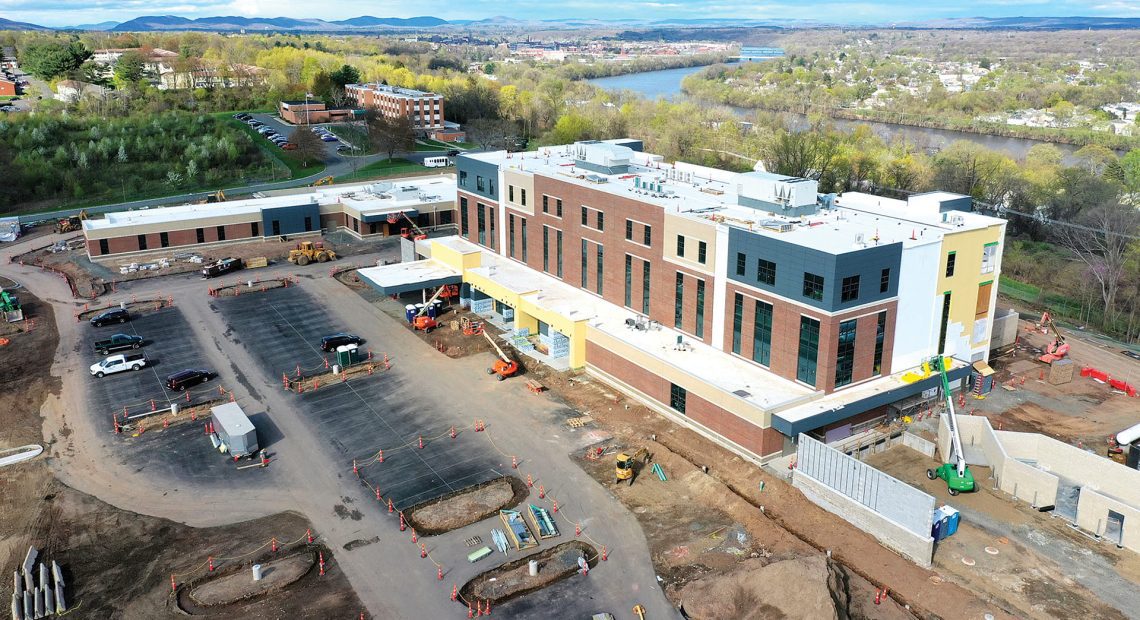
The new hospital

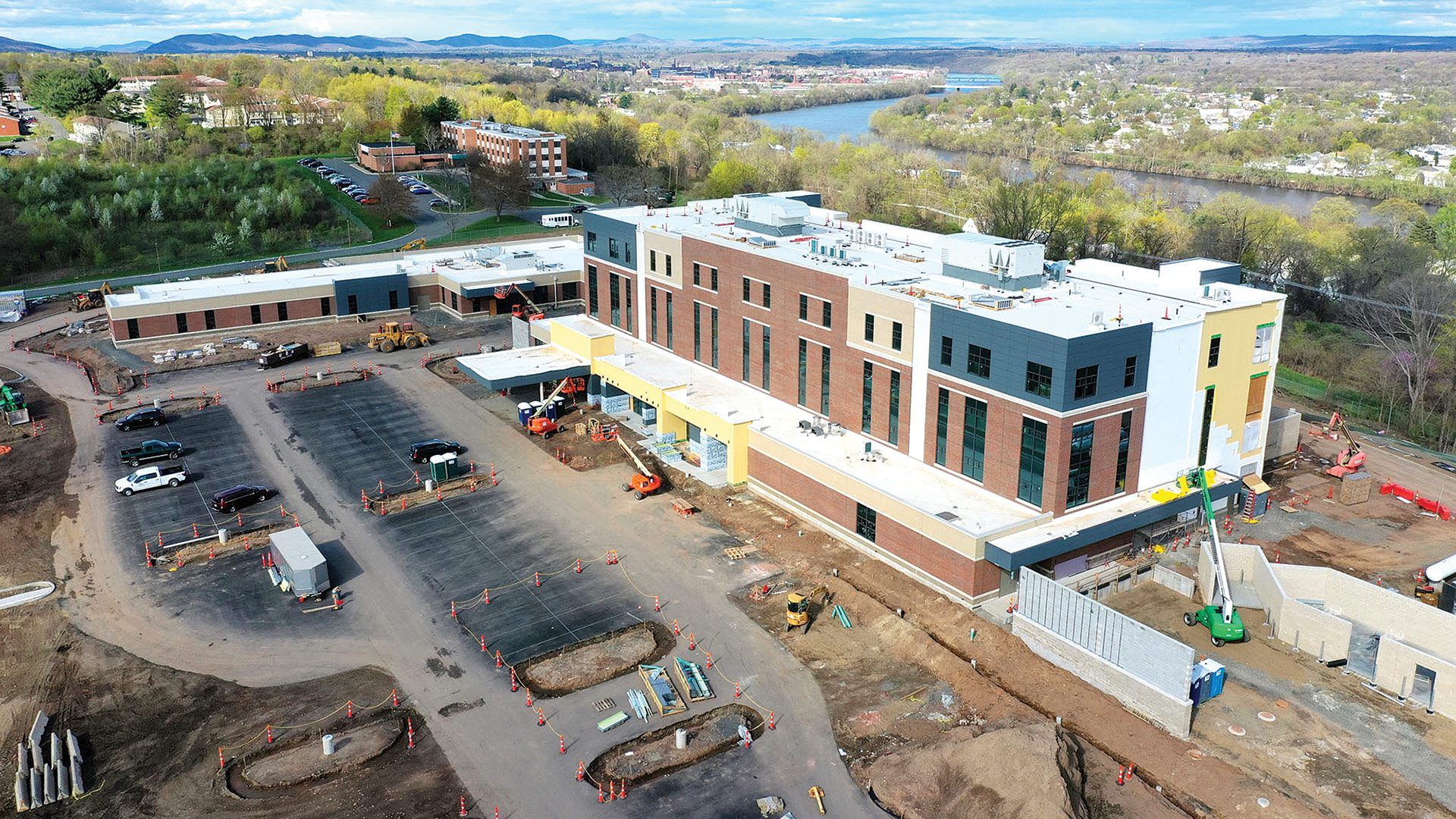
The new hospital, seen here in the late stages of construction, will open in August.


As Dr. Barry Sarvet surveys Valley Springs Behavioral Health Hospital a couple months before its opening, he’s excited about what he sees.

“We are extremely excited to be providing a brand new, state-of-the-art psychiatric hospital facility for our communities in the Pioneer Valley,” said Sarvet, chair of the Department of Psychiatry at Baystate Health. “Hospital care for behavioral-health patients requires a specialized environment of care to ensure safety, comfort, and privacy for patients and a setting for a full range of therapeutic services to support their recovery.”

The Holyoke-based hospital does just that, he noted. “Our new facility is spacious and will have an abundance of natural light. It includes ample spaces for psychotherapy, rooms for art and occupational therapy, a gymnasium for physical activity and recreation, and access to outdoor spaces for fresh air. Psychiatric patients deserve to be treated in an environment of care that supports their dignity, and we’re so pleased to be able to offer this.”

But he’s just as excited, if not moreso, about what the hospital, a joint venture between Baystate Health and Lifepoint Behavioral Health, means for access to behavioral healthcare in the region, which still faces a shortage of inpatient psychiatric services and increasing mental-health needs.

“We care deeply about people who need psychiatric services and are committed to the success of this new project,” he said, adding that the partnership with Lifepoint is smart considering that organization’s expertise in the development of new specialty hospitals and its commitment to quality care. “In developing this new hospital with our Lifepoint partners, we are continuing and enhancing our commitment to fulfilling the mental-health needs of people in our region.”

Dr. Barry Sarvet

Dr. Barry Sarvet

“Hospital care for behavioral-health patients requires a specialized environment of care to ensure safety, comfort, and privacy for patients and a setting for a full range of therapeutic services to support their recovery.”

Baystate actually announced a partnership on this project with Kindred Healthcare LLC during the summer of 2000, before Kindred was purchased by Lifepoint Health about a year and a half ago. Lifepoint boasts more than 100 specialty hospitals across the U.S. focused on four divisions: skilled nursing, rehabilitation, acute care, and behavioral health, said Roy Sasenaraine, CEO of Valley Springs.

“There’s a significant need in Western Mass. for this specialized hospital. The behavioral-health needs in the population are so great, and the differentiation between this service line and every other service line is so different, you need something like this; just like having a specialty hospital for children, you need a special team to come together to care for behavioral-health patients.”

The new facility, set to open in mid-August, will increase capacity for inpatient behavioral healthcare for adults, children, and adolescents in the area by 50%. Built with the unique needs of behavioral-health patients in mind, the $72 million hospital is designed so patients receive their care and treatment in an environment that supports their recovery, Sasenaraine said.

The 150-bed hospital at 45 Lower Westfield Road in Holyoke, including 30 beds dedicated to longer-term care through the Massachusetts Department of Mental Health, has been planned with patient safety in mind, he added.

“A benefit of new construction is that patient safety and privacy has been factored into every aspect of the building, from patient rooms to the gymnasium. We have fine-tuned every detail and thought of everything in terms of safety: toilets, window blinds, even door jambs. The new building allows us to make use of modern technology to elevate patient safety in a way retrofitting an existing unit could not.”


Access Points

A new service offered by Valley Springs Behavioral Health Hospital will be on-site evaluations following a provider referral, allowing some patients to be admitted without an Emergency Department visit at a different hospital.

Currently, around one-third of the behavioral-health patients evaluated in Baystate Health’s four emergency departments are transferred to facilities outside of Western Mass. due to a shortage of psychiatric beds in the region. With the opening of Valley Springs, more patients will have the opportunity to receive treatment close to home, Sasenaraine explained. The hospital’s location is intended to provide accessibility, being close to Routes 90 and 91, while also providing a facility focused solely on specialized care for mental health.

Roy Sasenaraine

Roy Sasenaraine

“The new building allows us to make use of modern technology to elevate patient safety in a way retrofitting an existing unit could not.”

He explained that patients will be admitted in three ways: people in crisis can be taken directly to the hospital by ambulance, other care providers will refer patients in need of behavioral-health treatment, and people can also walk in off the street.

“They might say, ‘I think I need help. I’m suicidal.’ That’s what my intake-assessment team is here for, to assess them for clinical issues, suicidal ideations, whatever it may be.”

Sasenaraine also noted that the new facility will provide employment opportunities with the opportunity to positively impact the lives of patients and families in the community. Employees currently working in Baystate facilities whose services will be transferred to Valley Springs Behavioral Health Hospital will have the opportunity to apply for positions there, in addition to opportunities for new employees to be a part of the joint venture.

“We’ll employ a lot of people, even some departments that didn’t exist before,” he said, such as a 24/7 intake department that will provide 18 full-time equivalent jobs. “For many people, this will be a once-in-a-lifetime opportunity to be a part of building a new organization from the ground up.”

Behavioral-health services from Baystate Wing Hospital and Baystate Noble Hospital, as well as pediatric behavioral-health services from Baystate Medical Center, will begin to transition to the Valley Springs site in August. Spaces in those facilities will then be converted to primary and specialty care or will be used to accommodate the increasing demand for inpatient medical services.

Baystate Health is working closely with the Department of Public Health (DPH) during this transition. The affected inpatient facilities are expected to be fully transitioned by the end of the year, with most completing the move in the fall, and partial hospitalization programs transitioning by January 2024.

As Baystate Health works with DPH to facilitate the transition, a series of formal notices will be made, public hearings will be held, and DPH will work with Baystate Health to assure patient-access needs are met. This process has already begun, about four months before the intended full transition for each affected unit, starting in late May for Baystate Wing, mid-June for Baystate Medical Center, and late June for Baystate Noble Hospital; it will continue in July for the partial-hospitalization program at Baystate Franklin Medical Center.

Valley Springs Behavioral Health Hospital will be affiliated with the psychiatric services operated directly by Baystate Health, including a 28-bed Adult Psychiatric Treatment Unit at Baystate Medical Center, which serves as a primary site of training for medical students and psychiatric residents within UMass Chan Medical School – Baystate educational programs. This unit has a unique role in the care of patients with co-occurring and complex medical issues, requiring the resources of a general hospital.

Baystate’s Department of Psychiatry will also continue to operate its array of ambulatory behavioral-health services, psychiatric consultation services, emergency psychiatric services, and programs supporting mental-health treatment in the primary-care setting.

In addition, Baystate Health will continue to operate its 22-bed Mental Health Unit at Baystate Franklin Medical Center, which provides inpatient behavioral healthcare for patients in Greenfield and the surrounding communities. According to Ronald Bryant, president of Baystate Regional Hospitals, the decision to keep this unit open was made based on geography and Baystate Franklin’s history of integration of behavioral-health services, such as the 24/7 presence of recovery coaches in the Emergency Department.

“Baystate Franklin has spent many years building strength in behavioral-health practices that really connects with a lot of the other types of care provided,” Bryant said. “We didn’t want to lose the continuity of that integration.”


Fulfilling a Mission

Before coming to Valley Springs, Sasenaraine served as vice president of Operations for the central region of Spire Orthopedic Partners, where he led new construction, patient-access initiatives, and acquisition and integration work for Spire’s nine locations in Connecticut.

Prior to that, he served as vice president of Operations for Hartford Healthcare System’s East Region behavioral-health network, where he oversaw 18 locations, including six school-based programs, two emergency departments, one inpatient psychiatric hospital, eight ambulatory locations, and one inpatient juvenile program. His leadership led to the implementation of a new care model for adolescent, pediatric, and adult patients in inpatient care, along with the implementation of a new electronic medical record across all sites of care.

“Roy’s breadth of operational experience and his deep understanding of the behavioral-health setting make him the right leader for this new, state-of-the art facility that we are excited to open in the coming months,” Dr. Andrew Artenstein, Baystate Health’s chief physician executive and chief academic officer, said when the appointment was announced in the spring.

For his part, Sasenaraine said he embraces the opportunity to oversee a new specialty hospital that will increase employment in the region and generate $1.6 million in taxes annually — but, most importantly, provide more access to behavioral healthcare at a time when it’s needed.

“I know that we have an exciting road ahead of us,” he said. “I look forward to serving patients in Western Massachusetts with safe, high-quality behavioral-healthcare services.”

Autos Special Coverage

Driving Forces

Mike Marcotte shows off one of the Bronco Sport models

Mike Marcotte shows off one of the Bronco Sport models on the Marcotte lot, one of the small SUVs that are seeing a surge in popularity.


Prior to the pandemic, Mike Marcotte recalls, there would be between 300 and 350 new cars on the lot at Marcotte Ford, the Holyoke mainstay started by his grandfather more than a half-century ago.

At the height of COVID, when there were supply-chain issues and a massive microchip shortage, there were maybe 30 or 40 cars on that same lot.

“Employees could park wherever they wanted at that time,” Marcotte, the company’s president, said with a laugh, noting that today, there are close to 200 cars on the lot on Main Street, partly out of necessity — there are still fewer cars available from the manufacturer — but also out of choice.

“You don’t need to have everything on the lot because you can factory-order vehicles,” he explained. “It’s nice to have all the options, but you have carrying costs, and you want the freshest product.”

This commitment to keeping smaller inventory levels has provided the business with another opportunity to expand what has become a complex of sorts on Main Street, one that includes everything from the dealership to a commercial truck center to a car wash. Indeed, Marcotte showed BusinessWest a row in the parking lot that is now the site of a construction project — one that will create a bank of charging stations to handle the growing volume of electric-car sales.

“You don’t need to have everything on the lot because you can factory-order vehicles.”

Rising electric and hybrid car sales and smaller inventories, by choice, are among the trends and ongoing developments in an auto-sales industry that is still in many ways adjusting to life post-COVID. It’s a time of challenge — higher interest rates, talk of recession, and some lingering availability issues when it comes to many makes and models, for example — but also opportunity, in the form of new and intriguing products (mostly those electric models), some improved incentives from the manufacturers, and some lingering, pent-up demand.

Other trends include a still-challenging used-car market — meaning challenging for dealers who struggle to find cars and challenging for consumers, who continue to face limited options and high prices — as well as steadily rising SUV sales and a growing willingness among consumers to order a vehicle rather than pick one off the lot.

Carla Cosenzi, president of the Tommy Car Auto Group, which includes Hyundai, Genesis, Nissan, Volkswagen, and Volvo dealerships, said she and her team, like most in this business, entered the year with conservative expectations, because of those challenges listed above, and two quarters into 2023, they are meeting them.

“It’s been such a volatile market, with inventory constraints, interest rates, and what’s happening with the economy, so we just made a conservative projection and figured we could always adjust if we needed to,” Cosenzi said. “We projected to increase sales over last year, which we always do, but not by a lot.”

Ben Sullivan, chief operating officer at Balise Motor Sales, concurred. He told BusinessWest that, after three years of decline, to one degree or another, and a 2022 that was essentially flat, 2023 was seen within the industry as a year when, despite higher interest rates and inflation, dealers would do some catching up.

Ben Sullivan, seen here with a Kia Sportage plug-in hybrid

Ben Sullivan, seen here with a Kia Sportage plug-in hybrid, said electric cars and plug-ins comprise a growing percentage of sales at the company’s many dealerships.

And they have, he said, although limited supplies have impacted the degree that they can do so, with some brands impacted more than others. He noted that, while there are still some supply-chain issues, the bigger challenge now is getting the cars to the lots.

“There’s still some fragility in the supply chain,” Sullivan said. “On top of chips and COVID lockdowns, which, for most part, have passed in the global supply chain, now what you’re dealing with are labor shortages at ports and shortages of rail cars — there’s a particular type of rail car that carries vehicles. And on top of that, at the end of this year, the domestic manufacturers will be renegotiating their AUW contracts.”

For this issue and its focus on auto sales, BusinessWest talked with several dealers about what’s happening with this market at the halfway point in the year, and what we can expect in quarters three and four — and beyond.


To a Higher Gear

Before addressing 2023, Sullivan first set the tone by recapping 2022, which was, by most measures, and especially the new-car-sales yardstick, a down, or flat, year. And the availability of cars, or the lack thereof, was the biggest factor.

“Every time we thought that someone was going to build enough cars to grow sales, they weren’t able to, or they weren’t able to ship them,” he explained, listing issues ranging from plant lockdowns due to COVID to a computer-chip shortage and backups at the ports. “So the industry was really under some pressure.”

“People like to feel and touch and experience what they’re going to be driving, so there’s definitely an opportunity to lose market when you don’t have the right inventory and your competitor does.”

The consensus within this sector was that things would rebound somewhat in 2023, but the bounce would be limited by everything from lingering shipping challenges to higher interest rates to inflation limiting consumers’ buying power.

And all that has come to pass, said those we spoke with, noting that one of the biggest issues still facing dealers is inventory. Indeed, while most all of them would carry fewer vehicles than they did before the pandemic, for those reasons mentioned above, they would prefer more than they have at present — at least with most models.

Cosenzi, like Sullivan, said inventory levels vary with the brand, with some manufacturers faring better at bringing cars to the lot than others.

“Hyundai has inventory, and inventory is becoming more available every month,” she said. “Meanwhile, Volkswagen’s inventory isn’t nearly as robust as Hyundai’s, and with Nissan, we’re slowly seeing it grow, but it’s not faring as well as Hyundai.

“Obviously, we’ve learned to be more disciplined through COVID and not having as much inventory, and I think that has trained the consumer to some respect,” she went on. “However, people like to feel and touch and experience what they’re going to be driving, so there’s definitely an opportunity to lose market when you don’t have the right inventory and your competitor does.”

Carla Cozensi

Carla Cozensi says inventory issues are among the many challenges facing dealers today.

Sullivan said inventories are generally improving across the spectrum of brands in the Balise stable, which now includes a second Subaru store (the other is in Rhode Island), with the quiet acquisition of the Steve Lewis dealership on Route 9 in Hadley early this spring. Overall, 60% of cars are now pre-sold, or factory-ordered, compared with 80% to 90% at the height of COVID.

Overall, he said, there is now more of a willingness on the part of consumers to factory-order vehicles and get exactly what they want — and wait several weeks for it — while rising inventory levels improve the odds of getting exactly what they want (or at least close) and driving it off the lot the same day.

Marcotte said levels of inventory are rising at his Ford store, but a good number of vehicles — maybe 33% of all sales, by his estimate — are still factory-ordered, with wait times of roughly six to 12 weeks, compared with four to six months at the height of COVID.

“It’s back to normal in many respects, but you’re still dealing with some supply issues; it may not be microchips, but other parts — one widget can hold up a whole vehicle,” he said, adding that it can still be challenging to secure adequate inventories of some product, especially, in his case, trucks and cargo vans.


Current Events

But while challenges persist, those we spoke with have seen several encouraging trends and developments.

At the top of that list is electric vehicles and hybrids, sales of which have been climbing steadily, if unspectacularly, over the past several years.

Within the Balise stable, Sullivan said, there are now 15 electric models, with more on the way, when a few years ago, there were just three.

“It’s back to normal in many respects, but you’re still dealing with some supply issues; it may not be microchips, but other parts — one widget can hold up a whole vehicle.”

“Soon, there are going to be 54 entries into just the electric-vehicle market,” he said. “And it’s going to be a very interesting landscape to watch as people decide, ‘can I go all the way in electric, and which one do I get, based on range and price and tax credits?’

“It is certainly a growing part of the business, but what’s interesting to watch as well is the number of people who go out with an electric and decide they’ll take one step away from that and go plug-in hybrid,” he went on. “We’re seeing a real demand push going on for plug-in hydrids; the hybrids have been around for a while, but the plug-in hybrid is really starting to come into its own. We’re seeing a huge increase in demand for those vehicles.”

Meanwhile, sales of SUVs, especially the smaller, crossover models, continue to dominate the market.

Some makers have all but stopped selling sedans — Ford has only the Mustang left in its portfolio, for example — amid growing popularity of SUVs, which appeal to consumers of all ages.

Cosenzi said sales of models such as the Hyundai Tuscon, Nissan Rogue, Volkswagen Tiguan, and Volvo XT60 continue to trend higher. There is still a market for sedans, she went on, noting that VW’s Jetta and Hyundai’s Elantra, both smaller models with comparatively smaller price tags, are still a strong seller. But that market is smaller and continuing to trend in that direction.

Marcotte concurred, pointing to soaring demand for the Ford Bronco and Bronco Sport, a smaller SUV that is capturing an audience.

“We’re getting a lot of new buyers because of the style of the Bronco Sport — we’ve had some Escape customers, people who have bought two or three Escapes, moving to the Bronco Sport,” he said, adding that another popular addition to the portfolio is the Maverick, a small truck that gets 40 miles to the gallon and lists for under $30,000.

As for the used-car market, 2023 has looked a whole lot like … well, 2022, said those we spoke with, much to the chagrin of consumers and dealers alike.

The problem, now and then, is inventory, or lack thereof, said Cosenzi, adding that supplies remain low, for many reasons. These include fewer new-car sales (compared to pre-pandemic levels) and, therefore, fewer trade-ins, as well as the fact that seemingly all constituencies, from consumers to car-rental companies, are hanging onto their cars longer.

That means there are fewer pre-owned cars on the lots, which equates to higher prices, a simple byproduct of the laws of supply and demand that is not likely to change any time soon, Sullivan said.

Cosenzi agreed, noting that dealers can’t get as many cars, and they have to work much harder to secure what they can.

“We’ve done a really good job sourcing them from our own customers, like marketing to people in our market that we’re interested in buying their car, and that’s how we’ve been able to maintain our levels,” she said. “But it’s been difficult. It’s been more work than it’s been in the past, that’s for sure.”


The Road Ahead

Summing up the mindset at Balise, Sullivan said the company is “bullish,” and in a growth mode.

And, increasingly, it is securing the fuel it needs for such growth — fuel in the form of inventory, demand for products (especially the new electric vehicles and SUVs now dominating the lots), and economic conditions that will prompt consumers to buy.

Time will tell what happens over the final two quarters of this year, but it seems likely that dealers will do more of that catching up that was projected for 2023.


Special Coverage Women in Businesss

No Place Like Home


Founder and CEO Sheryl Blancato.

Founder and CEO Sheryl Blancato.


It’s called Homebound to the Rescue.

The idea behind this initiative, one of many launched over the years by Second Chance Animal Services, is that many senior citizens can’t afford to provide basic medical care for their pets or don’t have transportation to bring them to a vet.

What Second Chance does is bring care to the pet owner’s doorstep by visiting low-income senior-housing areas to offer low-cost vaccinations, testing, and other care, so the animals stay healthy and, just as important, don’t have to be surrendered because they can’t be properly cared for.

Then there’s Project Keep Me, which provides temporary housing for the pets of domestic-violence survivors, enabling their owners to seek safe housing arrangements while ensuring the well-being of their animal companions, and later returning them to a more stable environment. Without such a program, people in crisis often have to choose between staying in a dangerous situation and losing their beloved pets.

“Our main focus is what we call surrender prevention. If they have a loving home, we want to keep them there, if at all possible.”

“Maybe your sister can temporarily house you, but she’s got dogs, and you have cats, and the dogs don’t like cats, so you have to find a place for your cats,” said Sheryl Blancato, founder and CEO of Second Chance. “So we’ll take the cats, up to 90 days. It’s a wonderful experience to be able to get those people out. We hope that shelters take the animals as well, but not all shelters do. They just need that transition time, and we need to get them out of that dangerous situation.”

“Keeping families and pets together” is a slogan found on many of Second Chance’s brochures, and for good reason: it’s at the heart of what Blancato and her team do.

Simply put, she founded the organization in 1999 primarily to find homes for homeless animals, but later began providing low-cost medical care and vaccinations, realizing that healthy animals are less likely to be surrendered. And many of the programs that have followed have been with the same goal in mind: not only to help animals find homes, but keep as many as possible from being surrendered at all.

“Our main focus is what we call surrender prevention. If they have a loving home, we want to keep them there, if at all possible,” Blancato said in describing why programs like Homebound are so important. “For those that are on Social Security, retired, on a fixed income, those pets are often their sole daily companion. They’re vital to the health of the senior as well. They provide companionship, they keep your blood pressure down, they stave off loneliness, and with dogs, they walk them, so they get outside and meet people.”

This focus on not only making sure animals have good homes, but also improving quality of life for their owners has seen Second Chance expand its reach dramatically over the past 24 years. From its beginning with $400 in cash and donated land, it now encompasses four hospitals (in North Brookfield, Springfield, Worcester, and Southbridge) and serves about 44,000 animals a year.

Second Chance’s Springfield location

Second Chance’s Springfield location is one of its four community veterinary hospitals.

“There are times I’m like, ‘wow, this is amazing,’” Blancato said. “I’ll sometimes go in a hospital to meet with a manager or something, and I just watch what goes on in the lobby, and I listen. And I think, if I had helped 44,000 animals in my whole career, that would have been great. But to have that be a yearly thing is wonderful.”

For this issue’s focus on women in business, we visited one of those hospitals to sit down with Blancato to talk about the broad work of this nonprofit, why it’s so important, and why more people — and donors — need to know about it.


Bringing Home Buster

At least some of the credit for her long career in animal welfare goes to an escape artist named Buster.

That’s the puppy Blancato — then a single mother of three — adopted during her 20s, following a tough stretch in which her husband left and she battled cancer. And Buster was “ridiculous” at getting out of the yard. So Blancato got to know East Brookfield’s animal-control officer, and they became friends — and he eventually offered her a job as an animal-control assistant. He retired not long after, and she took over his role.

“ I think, if I had helped 44,000 animals in my whole career, that would have been great. But to have that be a yearly thing is wonderful.”

“Once I became an animal-control officer, I picked up a lot of strays that were never claimed. And the struggle I had was getting them homes, getting them medical care, all that stuff,” she recalled. “I worked with no-kill shelters, which were many in Massachusetts, and I would have to hold on to the dog for a few weeks. And I thought, ‘we need a resource here in this community.’”

As it turned out, a neighbor had a plot of land he wasn’t using, and when Blancato approached him, saying she’d like to start a shelter, and asking if he would donate the land, he agreed. By that time, she had adopted another dog, Dusty, who had been abused.

Lindsay Doray says Second Chance not only rescues animals

Lindsay Doray says Second Chance not only rescues animals, many from other parts of the country, but also provides services that allow owners to keep their pets and not have to surrender them in the first place.

“He was the reason this became really important to me, because if I didn’t take him in, what would have happened to this dog? So that was the real kickoff for Second Chance.”

So, while raising three children — and, by that time, two stepchildren — she took that $400, raised whatever else she could, and built the adoption center that still sits on the property today.

“The original intention, when I founded the organization, was that it was for helping homeless pets, but we quickly realized that a lot of animals were being surrendered simply because the people did not have the means to afford veterinary care — something catastrophic happened in their life or to the pet.”

The shelter was offering spay/neuter services and vaccines in the early years, but Blancato realized she could do more to keep pets and families together through expanded veterinary care. The first hospital was built in neighboring North Brookfield in 2010 and expanded to full-service care in 2013, and the other three hospitals followed, giving Second Chance a broad footprint across Central and Western Mass.

“We had to strategically place hospitals because not everybody could get to North Brookfield,” she explained. “We do about 1,500 to 1,700 adoptions a year, but the rest is veterinary — spay/neuter, vaccine clinics, all of our other programs and services.”

Those services also include:

• The Helping Hands outreach, which assisted 76 rescue sites, shelters, and municipal facilities in 2022, providing low-cost spay/neuter and vet care, while accepting homeless pets from other facilities;

• Project Good Dog, which matches behaviorally needy dogs with inmates in pre-release programs at local correctional institutions, providing 24/7 care and training for the dogs while teaching handlers patience, compassion, and responsibility;

• A pet-food pantry that served more than 7,600 pets in 2022, distributing dog and cat food to 25 local human food pantries — again, helping financially struggling families keep their pets;

• Mobile adoption, education, and vet-care events; and much more.

The low-cost veterinary care provided at the hospitals makes a huge difference, longtime Development Manager Lindsay Doray said.

Rescue program brings mobile vet services

Second Chance’s Homebound to the Rescue program brings mobile vet services to seniors where they live.

“Prior to the services that we offer, people weren’t taking their pets to the vets yearly because they couldn’t afford to,” she noted. “Maybe they did the bare minimum and got the rabies vaccine, and that’s it. But when the animal became sick, either they would end up having to surrender the animal, or the animal would go without care.”

Blancato agreed that preventive care is critical.

“If you don’t get regular maintenance on your car, at some point, it breaks down, and then it’s very expensive. The same thing happens with animals,” she said. “A lot of people never go to the vet because of fear of the cost and everything involved. And once we get people in and they see that, ‘oh, this isn’t so bad,’ they understand that bringing them in yearly makes it a lot easier, and they can maintain the health of their pet for a lot less money.”

Second Chance’s services cost more than what clients can pay, so the nonprofit relies heavily on grants, donations, corporate sponsorships, and a few fundraising events each year to make up the difference and keep growing.

Even for adoptions, Doray said, “what we receive in adoption fees only covers about 50% of what we’ve put into the animal medically.”

At the same time, Second Chance is not short-changing its medical team, Blancato said.

“We have the highest quality of staff, and we pay at or above market standards because we want to attract veterinarians to us,” she said, noting that the U.S. is currently dealing with a shortage of between 7,000 and 10,000 veterinarians. Second Chance currently employs nine vets, but needs at least four more to keep up with demand.

“There’s a misnomer out there that, if you work for a nonprofit, we pay far less. And that hasn’t been true for many, many years,” she added. “We have to attract the same talent as any veterinary hospital; I’m competing for the same talent they are. I want the top talent here because I want the best of the care for the animals.”


Lending a Paw

Doray has worked with these animals — and families — long enough to understand the importance of what Second Chance does.

“I’ve had people say to me, ‘if people can’t afford an animal, they shouldn’t have one.’ And I say, ‘well, what about your 80-year-old grandmother who loses her husband, and she’s obviously not in the workforce anymore. You think she should have to give up her 15-year-old cat because now that she doesn’t have a spouse, there’s less money in the household?’ They say, ‘well, no, you can help those people.’

“Then I’m like, ‘OK, what about the woman who lost her husband at 45, and they’ve got three kids? Should they also have to give up the family dog because the husband’s gone and the mom now has to go back to work and she’s got three kids to support?’ ‘Well, no, you can help them.’

“‘So, what about a wheelchair-bound person whose dog or cat is their sole daily companion, and they’re not able to get anywhere? Should they have to give one up because they can’t physically work because of whatever injury or disability they have?’ And then they’re like, ‘oh, now I get it.’

“These are real-world situations that happen to people,” Doray continued. “Nobody expects to lose your spouse, but it happens, and you shouldn’t have to lose something else that you care about. Sometimes it’s a very temporary situation where you lose your job, and a year later, you’re back on your feet, and you’re able to pay the full veterinary cost.”

And many Second Chance clients do, indeed, pay full cost.

“Even for them, our rates are still very competitive,” Doray said. “But they also love our vets, and they support our mission, and they know that, by coming to us, they’re helping to subsidize the cost for somebody else, for the 80-year-old woman who just lost her husband and doesn’t want to lose her cat.”

Second Chance operates mobile vaccine clinics across the region.

Second Chance operates mobile vaccine clinics across the region.

Second Chance pushed through the pandemic like all nonprofits did, but those years set back the cause of animal homelessness nationwide by bringing adoption and spay/neuter programs to a temporary standstill.

“In 2019, we were so excited because euthanasia in this country had dropped to a point that I figured, within two years, we would be at zero. Then COVID hit, and it basically flatlined everything for two years,” Blancato said. “Now, we’ve got two to five years to get to zero, when we were so close.

“It’s heartbreaking for all of us in animal welfare, and I know it’s been devastating in the South, because they got used to not having to euthanize for space, and now they’ve had to go back to it. That’s why we want to get as many animals up here as we can and get them homes, and be able to take more.”

Blancato doesn’t envision working more than 10 more years, and said the organization has been structured — with a strong, dedicated team in place — to continue thriving long after that.

And it should — “because the need isn’t going to ever go away,” she said. “There’s always going to be a need to take care of animals, there are always going to be animals that find themselves homeless, there are always going to be people who need veterinary care. So this is very gratifying. But I didn’t do it alone.”

Special Coverage Wealth Management

Whether to Do So Depends on Several Factors

By Barbara Trombley, MBA, CPA

Should you pay off your mortgage early? This is a common question that financial planners get, and the answer is not always what you may be thinking.

According to the Federal Reserve Bank of St. Louis, historic mortgage rates peaked in 1981 at a 30-year fixed rate of 18.63%. Throughout the 1980s, the 30-year fixed rate steadily declined to a lofty 10%+ in 1990.

According to historical data provided by the U.S. Department of Housing and Urban Development, the average price of a house sold in 1980 was $76,400. Using these numbers and an online mortgage calculator, a $60,000 mortgage payment in 1980 would be $935 per month. This would have been an extraordinary burden for the average family. Paying off a mortgage as soon as financially possible would have been an excellent financial move at that time.

Fast-forward to our reality in the last few years. Those who were lucky enough to buy before the Federal Reserve started increasing interest rates after the pandemic were able to lock in historically low mortgage rates. It was not unheard of to get a 30-year, fixed-rate mortgage under 3%.

Barbara Trombley

Barbara Trombley

“You may need more money than you think in the future due to healthcare costs, inflation, family needs, etc., and if it is tied up as equity in your house, it may be difficult to access.”

Even if you didn’t purchase your house in the last few years, if your credit was good, you would have been able to refinance to get these terms. The same $60,000 mortgage in 1980, calculated at 3% interest, would result in a monthly payment of $253 versus $935 at 18.63% — a huge financial difference.

Low-rate mortgages should be considered good debt. Why is it called good debt, and what is bad debt? I would consider good debt to be a mortgage, car loan, and some student loans. These types of loans may increase your future net worth or help you achieve your goals. Most people do not have hundreds of thousands of dollars in the bank to purchase a house, so a mortgage is a great tool to achieve home ownership. Purchasing a car can be imperative to get to a job for many people. A small loan, when necessary, would be considered good debt.

The same argument would hold for student loans. Of course, we do not want students to be burdened by debt. But for many conscientious students, loans are the only way to achieve their academic dreams and set them up for a financially stable future.

Bad debt can derail your financial goals with high-interest rates. The main source of bad debt that comes to mind would be credit cards, especially when used for discretionary purchases. Credit cards have notoriously high interest rates, and many people are not good at managing the debt. If you are paying off your charges in full each month, then the interest rate does not come in to play. Other sources of bad debt would be many personal loans and payday loans. Payday loans can be extraordinarily damaging, with interest rates as high as 30%. These types of loans prey on economically disadvantaged people who need cash before their actual payday.


Assessing Your Needs

So, should you pay off your mortgage early? My personal point of view is that, if mortgage debt increases your net worth over time, and you are investing your funds elsewhere, it is good debt to have.

Paying off a mortgage early, for many people, would result in becoming ‘asset rich’ and ‘cash poor.’ I like to use the phrase ‘living in a piggy bank’ to describe having your money tied up in a primary home. You may need more money than you think in the future due to healthcare costs, inflation, family needs, etc., and if it is tied up as equity in your house, it may be difficult to access.

Also, many homeowners mistakenly think it is best to leave a debt-free house to their kids. In my experience, most ‘kids’ do not want their parents’ home or cannot afford the upkeep. Upon their parents’ death, they will sell the house quickly and pay off any mortgage on the property and keep the remaining proceeds.

If you have spent the last 30 years diligently paying your monthly mortgage and it is fully paid, that is something to be proud of. If you have purchased a property in the last 15 or 20 years, think carefully and weigh the pros and cons with a financial advisor before making a hasty decision.


Barbara Trombley is a financial planner with Wilbraham-based Trombley Associates Investment and Retirement Planning. Securities offered through LPL Financial. Member FINRA/SIPC. Advisory services offered through Trombley Associates, a registered investment advisor and separate entity from LPL Financial. This material was created for educational and informational purposes only and is not intended as ERISA, tax, legal, or investment advice. If you are seeking investment advice specific to your needs, such advice services must be obtained on your own, separate from this educational material.

Community Spotlight

Community Spotlight

Package Machinery

Plans are moving forward for a large warehouse facility on the former Package Machinery complex.

For more than 35 years now, the property at 330 Chestnut St. in East Longmeadow, known colloquially as the Package Machinery complex, has been the subject of question marks about what will come next there.

Indeed, while there have been sporadic uses of portions of the sprawling property, especially its massive warehouse facility, over the years, it has been mostly vacant. The once-mowed acreage adjacent to the administration and production facilities is completely overgrown with weeds and other forms of vegetation. And the large ‘X’s on the front of the property instruct fire crews not to enter because it has been deemed unsafe to do so.

So the questions persist — only, these days, months after a controversial plan to build a large warehouse facility there were first unveiled, and weeks after the plan was approved by the town’s Planning Board with a lengthy list of conditions, they are somewhat different in nature.

Now, the questions mostly concern what these conditions, including one requiring a right turn out of the property, will mean for certain areas of the community, including its downtown and famous (make that infamous) rotary, and other communities, including neighboring Enfield and Longmeadow. They also concern whether these conditions will be altered and new ones added, and even whether the project will hold up under potential litigation from residents.

“This is a generational opportunity and investment; East Longmeadow is an incredible community, and this gives it an asset that is a great attraction for young families.”

The matter will be the subject of a reopened public hearing on June 20, said Planning Board Chairman Jon Torcia, adding that, when it voted to approve the project in May, the board noted the concerns about traffic and noise, but ultimately concluded that this was a use allowed within that zone, and one that should be approved, with conditions.

Overall, 2023 is shaping up as a possible watershed year for this growing community of more than 16,000 residents.

Indeed, beyond the controversy over the future of 330 Chestnut St., there is also the matter of a proposed new high school for the town, one with a sticker price now north of $177 million, with the town’s share expected to be roughly $120 million.

The matter is due to come up for a vote on Election Day, Nov. 7, and to say this a huge vote for the community would an understatement.

The current high school opened its doors in 1960 and is the last of the high schools built in this region during that time that is still standing. Some see the high school as a potentially limiting factor in the town’s ability to compete with other surrounding communities for families, current students, and even businesses. Meanwhile, the building is very much energy-inefficient at a time when municipalities are moving to build schools and other facilities that move in the other direction.

“This is a generational opportunity and investment; East Longmeadow is an incredible community, and this gives it an asset that is a great attraction for young families,” said School Superintendent Gordon Smith, adding that, if voters approve the measure in November, ground would likely be broken in the summer of 2024, with the new building, to be built on athletic fields behind the current facility, to be ready for occupancy in the fall of 2026.

Bill Laplante

Bill Laplante says building lots are increasingly difficult to come by, and when they do become available, they go fast, and for high prices.

But despite its aging high school and its uncertain future, East Longmeadow remains a popular landing spot for both families and businesses, especially with a uniform tax rate.

“The town has become very desirable,” said Bill Laplante, owner of Laplante Construction, a residential builder with offices on Main Street. And he speaks from experience — he grew up in East Longmeadow, graduated from its high school, and raised a family there. “When I look at it from a business standpoint, just seeing that people are trying to find land or trying to find homes in town … it’s incredible.”

Elaborating, he said that, while there are more building lots in this town than in neighboring Longmeadow or many other communities, the inventory certainly isn’t what it was years ago. This means lots that become available in the few subdivisions being built go quickly, and the prices of existing homes move higher (more on all this later).

Beyond the warehouse and high school, there are some other big decisions that might be made in 2023, including what to do with another long-vacant property: the former home of Carlin Combustion Engineering on Maple Street. It is due to be acquired by the town, said Town Manager Mary McNally, adding that a request for proposals will likely be issued. Meanwhile, there are plans on the table for renovating one of the town’s gems, Heritage Park, plans that might move off the table — or not, depending on a number of factors, including the high-school project and its cost to the taxpayers.

For this, the latest installment of its Community Spotlight series, BusinessWest takes an in-depth look at East Longmeadow and the many important decisions that will likely be made this year.


Developing Stories

As noted earlier, the property at 330 Chestnut, across the street from the Lenox manufacturing facility, has been a declining eyesore, and a source of seemingly endless speculation, for many years.

It appeared that an answer had been found several years ago, when a development group, East Longmeadow Redevelopers LLC, put plans on the table for a mixed-use facility, or ‘village,’ as it was called by some, one that would include housing and commercial uses. Those plans were conceived just before the start of the pandemic, said McNally, adding that the project essentially died on the vine amid COVID-related issues such as spiraling costs and supply-chain woes, as well as disagreement between the developer and the Town Council over how much of the space would be devoted to commercial uses.

“When I look at it from a business standpoint, just seeing that people are trying to find land or trying to find homes in town … it’s incredible.”

In its place, East Longmeadow Developers LLC proposed the large warehouse facility — more than 500,000 square feet in size, with 100 docking bays — which has drawn considerable opposition from residents, especially those in an over-55 luxury condo development called the Fields at Chestnut, citing increased truck traffic and noise.

The project is allowed, from a zoning perspective, and the Planning Board approved the proposal, with approximately 20 conditions, earlier this spring, Torcia said. One of those conditions, mandating a right turn out of the property, away from the Fields of Chestnut, was not discussed at earlier hearings, he noted, adding that it would certainly be the focus of discussion at the public hearing slated for June 20.

The developers have estimated there will be roughly 400 vehicle trips per day at the site, he said, adding that he believes that most of these trucks will take a second right — rather than a left and head for the center of town — and proceed to highways through roads in Enfield and Longmeadow.

“I think this project will bring benefits in that it will rehabilitate a blighted property that has not been operational for quite some time,” he explained. “But we did hear from people who spoke at the meetings who were rightfully concerned about an increase in traffic, going from a property where there’s been no activity to one with considerable activity.”

Mary McNally

Mary McNally says there’s plenty of support for a new high school, but there are also cost concerns.

There has been no activity, or very little of it, at the Carlin Combustion site for the better part of a decade, said McNally, but that could soon change now that the town is acquiring the property from its current owner.

She noted that motorists navigating Maple Street at or above the posted speed limit might not even notice the property, with its overgrown weeds and rusting signs hinting at its former use. But it has not gone unnoticed by town officials or the authors of the master plan, who have identified it as a potential asset.

East Longmeadow at a Glance

Year Incorporated: 1894
Population: 16,430
Area: 13.0 square miles
County: Hampden
Residential Tax Rate: $19.20
Commercial Tax Rate: $19.20
Median Household Income: $62,680
Median Family Income: $70,571
Type of Government: Town Council, Town Manager
Largest Employers: Lenox; Cartamundi; CareOne at Redstone; East Longmeadow Skilled Nursing Center
* Latest information available

Indeed, there are many possible future uses for the property, said McNally, adding that some would like it devoted to open space — it abuts a rail trail and a rail depot converted into an ice-cream parlor — or as home to a new public-safety complex, while others, and she puts herself in this category, would like to see housing of a more affordable variety than most all of the homes currently being built in this community.

“I think housing is the best option, and the Commonwealth has a lot of money designated for housing needs, and East Longmeadow needs some affordable options,” she explained. “There are a lot of new homes going up for $600,000 and $700,000; a lot of people who live here would like to stay here and perhaps downsize from a $200,000, $300,000, or $400,000 home into something smaller.”


School of Thought

When asked what plan B might be if residents do not support the proposal to build a new high school this fall, Smith, said that, in essence, there isn’t one. Or at least one that makes sense, in his opinion.

The only option for the town would be to spend an estimated $120 million to renovate the school and bring it up to modern codes, he said, adding that this isn’t much of an option.

Elaborating, he said that, through two phases of a feasibility study and feedback from residents and other constituencies, the town has moved to the point where new construction has been deemed the best option.

“The public feedback was ‘you might as well go for new construction because of some of the challenges that have been identified,’” he said, noting, as one example, that if the town were to upgrade the HVAC system to bring it to code, doing so would decrease the room size because of the need to create new walls to fit the HVAC equipment that would go between those walls.

“The Commonwealth has a lot of money designated for housing needs, and East Longmeadow needs some affordable options.”

He said the town has been talking about a new high school for at least a decade. Over those 10 years, the price tag has only increased, and the current projections — and these could change with final design — is approximately $177 million, with $55 million to $57 million to be reimbursed by the state.

This will obviously be a large burden on the taxpayers, said McNally, adding that, for a small community like this one, “the numbers are frightening.”

The exact impact on the tax rate hasn’t been determined, she said, adding that some estimates put the hit at $1,000 annually for the average taxpayer. Overall, she said it is difficult to project how November’s vote will go.

“There’s a lot of support for the school; I think everyone acknowledges, or most people acknowledge, that it’s needed. But then there’s the cost barrier. But in the absence of a new school, I’m not sure we can compete as well with Wilbraham and Longmeadow, both of which have relatively new schools.”

Meanwhile, a project of this size and scope might impact or delay other capital projects, such as long-needed, long-talked-about improvements to Heritage Park.

Indeed, McNally produced a thick file folder detailing roughly $7 million worth of improvements that include a new recreation center, an indoor gym, walking trails, dredging the pond, athletic fields, and more.

“We need soccer fields and play areas,” she said, adding that soccer fields at the Lenox complex, used by the town for years, are being converted to solar farms, and other facilities will no longer be available for public use. “Unfortunately, the school vote has somewhat tapered my encouragement of the progress of some of these other projects because you can’t pay for everything at the same time.”

Despite some of these municipal issues and question marks moving forward, East Longmeadow remains a community in demand. That’s true on the commercial side — many area banks have located branches there over the past decade or so, for example, and Chase, which is renovating a property in the center of town, is the latest to join that list — and on the residential side as well.

Indeed, Laplante said building lots are increasingly difficult to come by, and when they do become available, they go fast, and for high prices.

“You do a search for available building lots in town, and you find that there really aren’t that many,” he said. “There are scattered lots that are in established neighborhoods, but you don’t see many available building lots in a neighborhood setting.”

Still, there some new homes being built, including one his company is handling in a new subdivision off Prospect Street called Bella Vista. Overall, Laplante has built three of the homes in the complex — another high-end development where the lots are absorbed quickly, which in many ways reflects what’s been happening in this community over the past several years.


Franklin County

Putting the Focus on Community

Thomas Meshako

Thomas Meshako says Greenfield Savings Bank plans to grow organically and with a strategic expansion of its footprint.

Thomas Meshako acknowledged it was a quite a change moving from the large, regional institutions where he worked the first 30 or so years of his career in financial services to Greenfield Savings Bank.

But it’s a change he wanted.

“I decided I wanted to get out of the buying and selling of banks and really wanted to become part of the community — something I always felt was missing when you’re working in a bank and dealing with mergers and acquisitions and always trying to make the next quarter’s earnings,” he said, noting that most of the banks he’s worked for have been absorbed by larger institutions. “I wanted to be at a bank where we invested in the future, for the long haul, and that cares about the community it serves.”

He’s found all that GSB, where he arrived in 2016 as chief financial officer and serves now as president and CEO, new titles he was awarded late last fall following the search for a successor to John Howland.

Since arriving, and especially since becoming president and CEO, Meshako has been out in the community, taking part in events ranging from the Hatfield Bonfire music festival fundraiser to Northampton’s Pride Parade to Tapestry Health’s recent auction. As he talked with BusinessWest, he was gearing up for the Green River Festival, the massive three-day music fest (Little Feat is among the headliners) set for June 23-25 in Greenfield; the bank is a major sponsor.

He’s been at so many events, especially on weekends, that he’s spending far less time at his cabin in Vermont than he expected to be, but he acknowledged that “this is where I need to be.” By that, he meant Greenfield and GSB, an institution that crashed through the $1 billion assets mark in 2020 and is now focused on the next milestones — $1.5 billion and $2 billion — and what it will take to get there.

“When I looked at Greenfield Savings, I decided that it’s where I wanted to be. It’s a little different, but it’s exciting to work for a bank that was growing.”

The bank was celebrating its 150th anniversary when it passed the $1 billion milestone; when asked when he thought GSB might get to $2 billion, he joked, “sooner than 150 years.”

Elaborating, and turning more serious, Meshako said the bank plans to grow organically, and he is looking at expanding its footprint, specifically in Hampshire County, where five of its 10 branches are located. He didn’t pinpoint specific communities for new branches, but did say they would be towns deemed ‘underbanked’ by recent feasibility studies.

Meanwhile, GSB will be rolling out some new products, including a new rewards program for debit-card users, and continually upgrading its technology, with a new online product for loans and deposits, for example, to stay current and provide customers with what they want and need.

“Most people are looking for more convenience to bank from home, and we’re trying to make sure we offer that,” he said, adding quickly that brink-and-mortar branches, which provide visibility and other forms of convenience, are still a big part of GSB’s growth strategy.

For this issue and its focus on Franklin County, BusinessWest talked at length with Meshako about his new role, his long-term outlook for GSB, and his thoughts on Greenfield, Franklin County, and how this gem of a region is making major strides when it comes to economic development — and as a destination.


Generating Interest

As he talked with BusinessWest, Meshako gestured out the windows of GSB’s main conference room toward the other side of Main Street and the properties on either side of the Greenfield Garden Cinemas, one of the signature redevelopment projects of the past decade in this community.

“Just a few years ago, most of those storefronts were vacant,” he said, noting that they are now occupied, with everything from a book shop to a pop-up store that are, collectively, contributing to a new sense of progress and vibrancy in this city of almost 18,000 residents.

The GSB senior management team

The GSB senior management team includes, from left, Lori Grover, Mark Grumoli, Thomas Meshako, Steve Hamlin, and Shandra Richardson.

And there is more coming, he said, noting the highly anticipated redevelopment of the former Wilson’s Department Store, a few blocks down Main Street from the bank, into a mix of retail (specifically the Green Fields Market) and housing, which he believes is sorely needed in this community.

“Availability of housing is very tight in Greenfield and all of Franklin and Hampshire counties,” he explained. “This is something we desperately need, and that’s one of the reasons why this project is so exciting.”

Getting involved in a community at this level was an element missing for most of Meshako’s career, one that, as noted earlier, was marked mostly by work at larger, regional banks that have since been absorbed by larger institutions.

Most recently, he served as chief financial officer of Merchants Bancshares in Burlington, Vt., a commercial bank with branches throughout Vermont and the Springfield market. Prior to that, he served in several positions, including principal financial officer, at Brookline Bancorp in Boston. There were also stints at Union Bankshares in Vermont and Chittenden Corp. and the institution that acquired it, People’s United Financial.

After nearly three years at Merchants Bancshares, Meshako was a looking for a new and different challenge, and found it at GSB.

“When I looked at Greenfield Savings, I decided that it’s where I wanted to be,” he told BusinessWest. “It’s a little different, but it’s exciting to work for a bank that was growing.”

And it has continued that growth pattern, he said, noting that the bank posted record earnings in 2021 and 2022. It won’t continue that streak this year amid spiraling interest rates that are negatively impacting both the residential and commercial loan portfolios and tightening margins, but it will be another solid year, he said.

And while achieving solid growth on the bottom line, the bank has also been able to increase its contributions within the community by 10% a year since he arrived — a pattern of improvement Meshako is committed to continuing.

Looking ahead, he said the bank has essentially ruled out additional expansion in Franklin County, where there are currently five branches, and instead will focus its sights on Hampshire County, where GSB currently has a physical presence in Northampton (two branches), Amherst (two branches), and Hadley (one location).

“We’re always the number-one lender in Franklin County, and we’re now the fourth-largest lender in Hampshire County,” he explained. “And we hope to continue to grow that market share as well. Within the Five College community, there is a need for housing, and being primarily a commercial real-estate lender, that’s a niche that I think we can fill; we’ve done very well there.”

GSB has conducted feasibility studies on which communities would make suitable landing spots, he went on, adding that he considers some communities underbanked because of some of the recent mergers and acquisitions which have left fewer banks in some markets and larger institutions in others.

In the case of community banks, and especially this one, the investment — and the commitment — in a new location involves much more than brick and mortar that goes into the actual branch building.

“We don’t just put a branch up … when we move into a community, we give to the local organizations, we hire local people, and we try to make sure that everything we do makes us part of that community,” he explained. “So it’s more expensive than just opening a branch or putting people in a location.”


By All Accounts

Getting back to that view out the conference-room windows, Meshako said Greenfield, and Franklin County as a whole, is seeing progress on many fronts, from tourism to Greenfield’s downtown, which has many new businesses and projects in various stages of development, from a new town library and fire station to the aforementioned Wilson’s redevelopment initiative.

“Greenfield is on its way up; it has a lot of character, and I hope it continues to grow and evolve,” he told BusinessWest, citing not only the new building projects and the new storefronts, but a greater livability — and relative affordability — that is attracting residents and entrepreneurs alike. “The people moving here want to be part of a community, and that’s what they find — community.”

And he believes more people are finding it these days, and will be finding it in the future, especially as technology, and changing attitudes in the workplace, enable more people to live where they want and work where they want at the same time.

“Because more people are now able to work remotely, we’ve definitely seen an increase in the number of people buying properties and moving to Greenfield,” he said, adding that, while this trend will certainly impact housing prices in the long run, it will also bring more support businesses, hospitality-related ventures, and general vibrancy to the region.

As Meshako talks about his bank, its plans for the future, and its involvement in the community, and also as he talks about Greenfield and the many positive developments there, it’s clear why he made that career change seven years ago.

As he said, he wanted to be at a bank that didn’t just have a mailing address on Main Street, but a stake in everything that that is happening on Main Street — and many other streets as well.

As Meshako said, it was a big change, but a change he wanted — and needed — to make.

And he has never looked back.

Construction

Pathway of Progress

An aerial view of part of the Massachusetts Central Rail Trail.

An aerial view of part of the Massachusetts Central Rail Trail.


A study initiated by the Norwottuck Network to assess the benefits of the completion of the Massachusetts Central Rail Trail (MRCT) system predicts that general health and wellness would improve and annual trail usage could quadruple, creating opportunities for overnight visitation, new jobs, increased local small businesses, and an overall economic benefit ranging from $87 to $182 million annually.

The nonprofit Norwottuck Network raised $75,000 to commission the study by Kittelson & Associates Inc. of Boston and Cambridge Econometrics of Northampton to evaluate the potential use and health and economic benefits of completing the 104-mile, multi-use bicycle and pedestrian trail system that runs east-west between Boston and Northampton along the historic Massachusetts Central Railroad corridor.

Findings outlined in “Envisioning a Statewide Connection: Mass Central Rail Trail Benefits Study,” released in mid-May, indicate that completion of the trail would result in increased usage of up to 4 million to 5 million people annually and reduced health costs from $4.1 to $5.8 million per year. On the economic side, a completed trail would create $87 to $182 million per year in new economic activity, including $55 to $114 million in new spending by trail users and up to 1,250 new jobs.

Leaders of the nine-member Norwottuck Network board, founded in 2000, will now ask the state Department of Transportation (DOT) to evaluate construction costs and create a timeline for completion.

Currently, 55 miles of the trail are officially open, with roughly 20 miles in the planning or construction stages. Challenging sections of the trail to be completed include areas where bridges are missing, trail segments that will need to be purchased from private owners, and needed repairs to a 1,000-foot tunnel near the Wachusett Reservoir.

A completed Mass Central trail would eliminate those barriers and open those sections, and also link the rail trail system to 18 additional existing and under-development rail trails, creating a 273-mile trail network within the state of Massachusetts.

“These long walking and biking trails produce a lot of benefits. The question was, is it worth spending public money? This report unequivocally says yes, it will be worth it.”

Craig Della Penna, president of the network board, said the DOT recently conducted a study to evaluate the feasibility of reassembling segments of the Mass Central Rail Trail into a unified trail system and released findings in 2021; no action was taken because the benefits had yet to be assessed.

“This report is the next step,” Della Penna said. “And we are not surprised by these findings. These long walking and biking trails produce a lot of benefits. The question was, is it worth spending public money? This report unequivocally says yes, it will be worth it.

“Consultants never overestimate benefits in an analysis,” he added, noting they are more apt to underestimate. “There are no negatives. Tourism is the third-largest industry in the state. A completed trail would allow people to bike right out of their neighborhood and explore the state in a way they’ve never been able to do before.”

Kittelson & Associates noted that the completed network would be within 10 miles of 64% of all Massachusetts residents and would offer a boost to 19 cities and towns defined by the consultants as gateway communities — those that face social and economic challenges but retain assets such as infrastructure or major institutions.

Among the gateway communities that would benefit are Barre, Billerica, Clinton, Easthampton, Hardwick, Hatfield, Lunenburg, Marlborough, New Braintree, Oakham, Palmer, Saugus, South Hadley, Southampton, Southwick, Ware, Warren, West Boylston, and West Brookfield.

The unequivocal positive impact on these gateway communities was the one surprise for Della Penna in the report. “This is a way to focus on making these communities better,” he said. “The state can’t help you improve your house, but it can help you improve your community. This is an infrastructure project that improves communities, helps to improve health outcomes, and will generate a significant positive economic benefit.”


Evolution of a Trail

Trains running along the Massachusetts Central Railroad traveled between Boston and Northampton, serving residents and industry through the early 1900s, until struggles with maintenance, negotiations over ownership, and damage from the hurricane of 1938 led to the railway’s eventual decline.

The MCRT began to form in 1980 when the MBTA and the Massachusetts Department of Environmental Management each purchased unused sections of the railroad corridor from the Boston & Maine Railroad.

The first section of the Mass Central Rail Trail was a segment called the Norwottuck Rail Trail. Completed in 1993, the Norwottuck Rail Trail segment between Northampton and Amherst was instantly popular.

“The state can’t help you improve your house, but it can help you improve your community. This is an infrastructure project that improves communities, helps to improve health outcomes, and will generate a significant positive economic benefit.”

In 1995, community leaders and volunteers in several Central Mass. communities formed Wachusett Greenways, a nonprofit with a goal to develop the Mass Central Rail Trail segment in the Wachusett region, including Sterling, West Boylston, Holden, Rutland, Oakham, and Barre. Their work inspired other communities to build their own sections of the MCRT corridor.

Kittelson & Associates said investments in multi-use trails throughout Massachusetts have provided meaningful economic and health benefits, and long-distance, continuous trails have greater impact. They attract through-cyclists and overnight visitors, which, in turn, results in increased spending on lodging and restaurants.

As part of its study, Kittelson & Associates surveyed current Mass Central Rail Trail users, receiving responses from more than 2,000 participants. These are among the findings:

• If the trail is completed, 26% of current users would use the MCRT for shopping, 16% to commute to work, 5% to commute to school, and 86% to access parks and other features;

• Ninety-three percent of respondents anticipate using the MCRT more frequently and traveling on the trail for longer distances; and

• Almost 50% would take a multi-day trip.

Other findings were based on economic and health results associated with use of the Erie Canalway Trail in New York and the Great Allegheny Passage in Maryland and Pennsylvania. These trails generate $253 million and $121 million per year, respectively, so the planners on the team of consultants estimate the MCRT could generate between $117 and $212 million annually.

“The MCRT shares many characteristics with these two trails, including similar tourism opportunities,” the report notes. “It would connect historic towns and improve access to outdoors destinations, such as rural areas outside of the Quabbin Reservoir area and in the Connecticut River Valley.”

The MCRT has an additional benefit in that it connects numerous rail trails in the Boston metropolitan area as well as Northampton and Amherst, which provide a second population anchor that will encourage travel along the completed route. One of the 18 trails that connects to the MCRT is the longest interstate rail trail in New England, the New Haven & Northampton Canal Greenway.


Broad Impact

Existing trail systems generate 1.3 million annual visits, with 15,000 overnight trips, giving Kittelson & Associates cause to estimate the completed MCRT would bring between 4.1 million and 5.5 million visitors, including 120,000 to 390,000 overnight visits.

Visitors to the existing MCRT currently spend about $19 million annually, and spending is expected to increase to between $74 million and $133 million annually for the completed MCRT.

The completed MCRT could also generate an increase of $87 million to $182 million from the economic activity associated with the existing sections of the MCRT, including up to roughly 1,500 new jobs, for total economic activity estimated at $117 million to $212 million.

Della Penna, a longtime advocate of rail-trail systems said of the study and next steps, “it’s big, and it’s ongoing.”

More than 10,000 volunteers across the state are involved in developing bicycle and pedestrian trails in the state. To read the report detailing the benefits of linking the undeveloped segments of the Mass Central Rail Trail into one unified multi-use trail across Massachusetts, and to learn more about the MCRT, visit masscentralrailtrail.org. To learn more about the Norwottuck Network, visit nnnetwork.net/about-us.

Accounting and Tax Planning

Calling for a Recount

By Kara Graves, CPA


On Feb. 23, 2023, the Department of Labor, the IRS, and the Pension Benefit Guarantee Corp., in conjunction with the Employee Benefits Security Administration, released requirement changes to Form 5500, Annual Return/Report of Large Employee Benefit Plans, and Form 5500-SF, Annual Return/Report of Small Employee Benefit Plans.

There are many changes to Form 5500 for 2023. One of the more critical changes relates to how the participant count is calculated at the beginning of a plan year. The count is used to determine whether a plan requires an audit by an independent accountant. Typically, a benefit-plan audit is required for all large plans with more than 100 participants at the beginning of the plan year.


Old Rule

Before Jan. 1, 2023, the participant count included both active employees eligible to participate and terminated, vested employees with balances still in the plan. Using this calculation method, plans needed to include all employees currently employed and eligible for the plan, regardless of whether they were participating in the plan.

“Effective Jan. 1, 2023, plan sponsors will only need to consider participants (active and terminated) with account balances when calculating the number of participants at the beginning of the plan year. This means those active employees eligible to participate who have never contributed to the plan and/or received employer contributions will not be counted.”

Kara Graves

Kara Graves

Under the old rule, an audit was required for a plan with 100 or more of both active employees eligible to participate and terminated, vested employees with account balances. Even if a plan had fewer than 100 participant accounts with balances, an audit could still be required due to the eligible and not-participating employees.


New Rule

Effective Jan. 1, 2023, plan sponsors will only need to consider participants (active and terminated) with account balances when calculating the number of participants at the beginning of the plan year. This means those active employees eligible to participate who have never contributed to the plan and/or received employer contributions will not be counted. As a result, some plans might be able to file as a small plan.


What’s Next?

Plan sponsors should be aware of these changes and review their plan counts closely with their third-party administrators under this new methodology for the 2023 plan year. Plans with fewer than 100 plan account balances as of Jan. 1, 2023 (for calendar-year-end plans) will not need an audit, even if they previously did under the old rules.

What does this mean for plans that are hovering around the 100 account-balance mark during 2023? If your plan has 100 or more participant account balances on Jan. 1, 2023 (calendar-year-end plans), an audit is still required for 2023, but there are some steps that can be taken to reduce plan participants for Jan. 1, 2024 (the next plan audit measurement date for calendar-year-end plans).

Plan sponsors should be reviewing terminated employees with participant account balances of $5,000 or less. The plan sponsor should review with their third-party administrator the existing plan provision that allows the plan to force out terminated participants with balances of $5,000 or less. This plan provision could be utilized to reduce the participants with balances, which could potentially remove the audit requirement in the future.


Kara Graves, CPA is a senior manager and the Employee Benefit Plan Audit Niche leader at the Holyoke-based accounting firm Meyers Brothers Kalicka, P.C.

Insurance

Sound Investment

By Hub International


Financial wellness is no longer just being a nice thing for employees or a way to help recruiting and retention — it’s an important tool for improving profits.

The demand from the workforce is clear. A recent survey indicated only 42% of employees feel compensation has kept up with higher living expenses, compared with 52% a year earlier. The same survey indicates that 19% of employees are looking for a new job primarily to improve their compensation.

With numbers like these, a strong financial-wellness program can have a significant impact on your bottom line.

Here are three ways financial wellness can improve the bottom line:

1. It drives down the cost of turnover. Losing employees is an expensive proposition. While estimates vary, it can cost more than $4,000 to replace an employee in terms of upfront ‘hard’ costs, while in terms of other costs, the price can be in multiples of salary. In addition, organizations lose the institutional knowledge of an experienced worker, which drives turnover costs higher through training and loss of productivity.

At the same time, 65% of workers have felt stressed regarding their finances due to the COVID pandemic, leading to increased turnover and lower productivity. Among employees who feel financial worries have hurt their productivity, two-thirds are struggling to meet their household expenses. One-quarter have saved less than $1,000 for retirement; more than half plan to postpone their retirement.

Given the high cost of employee turnover, it’s in employers’ best interest to improve employee financial well-being. Student-loan debt-management plans and financial coaching can lessen young employees’ stress of paying the bills, while improved education on retirement planning will lessen workers’ fears of the future.

2. Financial wellness lowers stress and boosts morale. Financial wellness does far more than lower turnover: almost half of financially stressed employees say money worries have had a negative impact on their mental health.

Given the connection between financial wellness and mental health, employers can consider offering financial coaching alongside mental-health resources. Employees are likely to respond to one-on-one financial coaching via phone or video chat because of the personal and confidential nature of their financial issues.

3. It boosts productivity. Even when financial issues don’t take a toll on employees’ mental health, the stress still reduces productivity. About 40% of workers say they’d be more productive if they didn’t have to worry about their personal finances while on the job, and employees spend around one-quarter of their time at work coping with financial issues.

Employers who promote financial-wellness programs (HUB’s FinPath is but one example) can reap tangible gains in employee focus and productivity. Mandated education on budgeting, debt management, and building emergency savings shouldn’t be considered an expense or loss of productive time, but an investment in worker well-being that will have a long-term impact on the bottom line.

Cover Story Franklin County

Northern Exposure

Brolin Winning, general manager of the Shelburne Springs

Brolin Winning, general manager of the Shelburne Springs luxury hotel, sees many signs of new life along the Mohawk Trail.

Brolin Winning and his wife used to run a barbecue stand on the Mohawk Trail, and he’d occasionally look up at the abandoned building next door, a mansion built in 1914 that later operated for decades as the Anchorage Nursing Home before closing in 2011.

“We’d look up the hill at this place — which had been abandoned for a decade — and just think, ‘man, that’s a sweet spot.’ But it was just melting into the ground.”

But then a friend came into some money and was looking for an investment project. “I said, ‘you should buy the nursing home,’” Winning recalled. So they did — and begin fixing it up.

That was early 2020, when COVID hit, but the ensuing shutdown of the hospitality economy gave the team — owner Hilltown Lodge LLC, Thomas Douglas Architects of Northampton, and Tristan Evans Construction of Greenfield — time to redesign the space, gut the building down to its studs, and restore it with seven spacious suites; a kitchen, bar, and upscale but cozy lounge areas; and outdoor relaxation and recreation space across 38 acres. Among the next plans is a big stage up the hill for weddings and other events.

“I couldn’t wait to come back, just to be in the woods again and on the river again. It’s just, like, the best place to live.”

But while Winning is gratified that the hotel, called Shelburne Springs, has had a successful first few months, he doesn’t view the property in a vacuum, but as part of a renaissance along the Mohawk Trail that includes renovations and reopenings at the Sweetheart Restaurant in Shelburne Falls, the Duck Pond antique shop in Shelburne, the Blue Vista Motor Lodge just over the Berkshire County line in Florida, and more.

“There’s a lot of stuff going on, whereas I feel like it was … I wouldn’t say run-down, but quiet for a while,” Winning said. “COVID obviously affected everybody in this area, but a lot of people were coming out here even more because we’re like in the country and away from the crowd, and there’s a lot of outdoorsy stuff.

Jeff Sauser (left) and Jeremy Goldsher

Jeff Sauser (left) and Jeremy Goldsher have expanded Greenspace CoWork to a second location on Main Street in Greenfield.

“I’ve lived all over the country; I’ve lived a long time in California, Boston, Chicago, and different cities,” he went on. “But I’ve always loved it here. I grew up in Amherst and Northampton, but I used to come up here to fish when I was a kid. That’s how I got into the Mohawk Trail. To me, there’s nowhere like it. I was in San Francisco for a long time, and I would come back here twice a year. And I couldn’t wait to come back, just to be in the woods again and on the river again. It’s just, like, the best place to live.”

He’s not the only one who feels that way about this county of 71,000 residents — fewer than half the total of Springfield — spread across 26 communities.

“It’s stunningly beautiful. That can’t be overlooked,” said Hannah Rechtschaffen, recently appointed coordinator of the Greenfield Business Assoc. (GBA). “And I think there is a wonderful, long history up here of people being very engaged in their communities. When you travel from town to town, you find a lot of residents and business owners who feel very passionate about that, about the town that they’re in.”

“I feel like if you wanted to kill as many birds as possible with one stone, a robust housing strategy would be the way to do it.”

Rechtschaffen cited draws like the county’s outdoor recreation experiences and attractions like Bridge of Flowers in Shelburne Falls and Poet’s Seat Tower in Greenfield, but said tourists find much more.

“People come for these beautiful experiences, and they’re also finding other cool stuff, from whitewater rafting to restaurants. So the challenge is to reach out to people up and down the Valley and let them know there are really lovely experiences close to them,” she said. “All these towns have something special to offer, but together, we can offer something really beautiful.”

For residents and business owners, she added, “because it’s a small county, it has a bit of history of people needing to go to neighboring communities for different things. When you have that history of people stepping to the community next door to find something, you have this nice connectivity, which has gotten more robust over time. You have an opportunity for towns in Franklin County to work together in a unique way.”

Hannah Rechtschaffen, Franklin County CDC Executive Director John Waite, and Lisa Davol

Some of the players invested in a more robust Franklin County are (from left) Greenfield Business Assoc. Coordinator Hannah Rechtschaffen, Franklin County CDC Executive Director John Waite, and Lisa Davol, marketing manager of the Franklin County Chamber of Commerce.

Jessye Deane, executive director of the Franklin County Chamber of Commerce and Regional Tourism Council, agreed.

“I think one of the major strengths of Franklin County is that we have a comprehensive set of supportive services around business development,” she said, citing robust connections between the chamber, local businesses, workforce-development and entrepreneurship-focused agencies, and legislators.

“Collaboration is really the only way forward for us. I think Franklin County has always used partnership and collaboration as a special sauce, and I think that served us well during the pandemic. And part of the chamber’s job is to continue to fuel those collaborations and help make those connections.”

Clearly, it takes a village — well, 26 of them — to create a culture in the northernmost county of Western Mass., one that faces challenges, but also has more to offer than many outsiders realize.


Challenge and Opportunity

Deane said many of Franklin County’s challenges are no different than those seen across Western Mass.

“Of course, housing is a challenge. And transportation is particularly troublesome in more rural communities because that’s a barrier to a lot of our entry-level employment. And childcare is huge; there is a lack of high-quality childcare in this area.”

“One of the things I appreciate about Franklin County is that we can keep our identity — we have the nature, the beauty, the rural luster of it — but there’s increasing opportunity.”

Hiring also continues to be a challenge across industries, she added — another issue being felt across the state.

“I think we have a unique twist on that because we are a rural community, so it’s a little more exacerbated on this side of the state. One of the challenges I’m particularly concerned about is the population-decline projections. So we’re working overtime in collaboration with our legislators to make sure the Commonwealth is more equitably funding projects and initiatives across the state and, as a chamber, making sure that we’re doing our best to shine a light on why Franklin County is such a great area to live and work, and hopefully attracting new families to the area.”

She said the Regional Tourism Council’s task is to attract more tourism to a county that already brings more than $79 million in tourism dollars every year to destinations ranging from Berkshire East in Charlemont to Northfield Mountain and Sugarloaf Mountain; from Yankee Candle and Tree House Brewing Co. — and its slate of summer concerts — in Deerfield to Hawks & Reed Performing Arts Center in Greenfield and Double Edge Theatre in Ashfield.

Ashley Evans

Ashley Evans says reopening the Farm Table in Bernardston was an opportunity she couldn’t pass up.

“Tourism is really about OPM: other people’s money. And we want to make sure that we are helping them spend that here. And there is so much to do,” said Deane, who calls Franklin “the fun county,” and wants more people to know about that.

“There are endless opportunities for fun in Franklin County. And in terms of our work in the Regional Tourism Council, we’ve made some significant strides. In the past year, we branded our tourism side. We worked with a local company to give Franklin County a really great visual presence, with the tagline ‘more to Franklin County,’ because one of the things that we found when we did that investigative work is that folks said there’s always more to do: ‘I didn’t expect there to be so much. We’ve got to come back.’”

The council is also in the process of launching a standalone tourism website, Deane added.

“We want to make it easy as possible for people to plan their trip, and we’re working with our hospitality vendors to do itinerary planning based on any given interest. So if you’re really into craft beverages, this is what you can do for a weekend. If you’re really into outdoor recreation, this is what we recommend you can do for a weekend.”

A member of the Greenfield Business Assoc. who is about to join the Franklin County Chamber of Commerce, and whose family owns Hawks & Reed, Jeremy Goldsher also co-owns Greenspace CoWork with Jeff Sauser, so he has a broad perspective on business life in Greenfield and its environs.

“We’ve seen already that Hawks & Reed started a bit of a new music and cultural renaissance in downtown, to the point that now you can’t walk around in any given weekend without seeing kids running up and down the streets of different local venues,” Goldsher noted.

As the owners of Greenspace CoWork, which now has two facilities on opposite sides of Main Street in downtown Greenfield, Goldsher and Sauser have cultivated key business connections through programs like the monthly Business Breakdown networking events.

“It’s developed quite a bit, from ‘I need some emotional support from my business peers’ to a really fun, informal gathering of a lot of our favorite business leaders, business owners, and a group of young, entrepreneurship-minded folks that we’ve never met,” Goldsher said. “We always get new folks at each meeting. We’re now in our 14th or 15th run of it, and I think the Business Breakdown has been a gateway for us to really get onto the map of Franklin County in a bigger way than our co-work business was permitting us.”

With programs like Business Breakdown and a six-month accelerator program, Goldsher is starting to see a “domino effect” of key connections. “We’re starting to see the Franklin County CDC, which has been a great partner of ours, become a lot more visible in their entrepreneurial work and various programs starting to revolve around specific topics, which is great.”


Planting Roots

Emerging from the pandemic, those connections are more crucial than ever, Sauser said.

“We’ve had our ups and downs with the economy. We got through COVID. I think we’ve been an important part of the downtown revitalization, especially with the move to remote work and more flexibility. That’s important to the economic-development story of Franklin County in general, along with getting broadband access out there and just making this a place people can do a job that’s based anywhere, so they can live where they want to live.”

After all, while tourism is critical to the economy, Sauser said, tourism can’t be all Franklin County offers; it has to be a place people want to live and work, and where they find it affordable and rich enough in amenities to do both.

As an urban planner who has done a lot of policy and analysis work in housing, he said housing is the biggest issue.

“I feel like if you wanted to kill as many birds as possible with one stone, a robust housing strategy would be the way to do it. People are moving here in part because they can’t find the housing they’re looking for; nationwide, there’s a huge shortage.”

So there are real opportunities for growth, he said, adding that municipalities need to be smart with not only strategies for housing development — the residential units coming online in the former Wilson’s Department Store building in downtown Greenfield is a “game changer” for the city, he said — but with property taxes as well. The other big draw for families is school systems, and Sauser said many communities still have room for improvement there.

“That can hold places back. There are other options out there, private schools and charter schools, but the core of the public school system isn’t as successful as it could be.”

For every challenge, though, there are business success stories, Deane said.

“One that comes to mind is Sweet Lucy’s Bakeshop in Bernardston,” she said. “Lucy moved back into the area from Seattle. She crowdfunded to start her business. She’s now expanding. And that’s in partnership with support from the chamber, from the great folks at CISA, from the CDC. She’s really taken this bake shop and made it famous across the county. And she’s now expanding to include a community center so that she can help teach cooking courses or baking classes.”

A stone’s throw from Lucy’s is the Farm Table, the iconic Bernardston eatery on the Kringle Candle property that closed in 2020 but is reopening this month under the management of serial restaurateur Ashley Evans, who grew up in Turners Falls and was intrigued by the possibility of reopening the Farm Table while on a visit from her home in the state of Florida.

“When I came to this property, how could I pass it up? It’s just absolutely breathtaking, everything about it,” Evans said, adding that the goal is to offer an elevated culinary experience, with many ingredients locally sourced, but at a less elevated price than before.

“We plan on having a similar menu, but redone and more adapted to the market in this community. Instead of a fine-dining establishment, we want to make it an everyday establishment. You can stop by and get something, and the bill’s not $300.”

Evans also plans to host events, from outdoor movies to Hawaiian nights; from outdoor clambakes to a haunted house in the event center.

“We have a lot of ideas to bring the community together,” she said, adding that, despite the workforce pains plaguing the hospitality industry, she was able to staff up quickly, which says something about the establishment’s reputation.

“That speaks to what this property is. It almost speaks for itself,” she noted. “I didn’t have to do a ton of marketing; we said we’re hiring, and people were anxious to work here, which is a beautiful thing.

“I’m so pumped. I’m excited,” Evans added. “I just walk in and feel grateful every day.”


Grit and Gratitude

So does Rechtschaffen, who spent almost two decades away from Western Mass. before returning in 2018 and immediately immersing herself in Franklin County life, chairing the Sustainable Greenfield Implementation Committee, which supports the use and implementation of the city’s master plan, and serving on the Downtown Greenfield Alliance and the Local Cultural Council.

She was director of Placemaking for W.D. Cowls in North Amherst before taking on her current leadership position with the GBA, where she’s focused on how businesses in this largely rural county can thrive in the post-pandemic years.

“We’re looking at how people are locating themselves, especially with remote work, with proximity to Boston. We are seeing people come into this area with a different sense of how they’d like their lives to be,” Rechtschaffen said. “We welcome people in who are looking to move out of city-centered life without sacrificing the feeling of community and connectedness and available amenities.”

Deane said the past few years have taught resilience to residents and businesses here, but also new ways forward.

“Economic development is really a long game. So we’re having these conversations now that hopefully will impact the next 15 or 20 years,” she explained. “And we’re doing that with a fresh understanding that, at any point, those plans can go completely rogue and be blown up by whatever comes next. So we’re being cautiously optimistic as we plan and prioritize on a regional level.”

To Sauser, the county’s value is evident in its people, its businesses, its quality of life, and the places that bring those people — and visitors — together.

“I feel like it’s a place to watch,” he said. “I’ve been told, when I moved here, that Greenfield is the kind of place that always feels like it’s about to turn the corner, but it never actually does. I’m getting a lot of signals now that it’s looking pretty good.”

Rechtschaffen agreed.

“One of the things I appreciate about Franklin County is that we can keep our identity — we have the nature, the beauty, the rural luster of it — but there’s increasing opportunity,” she said. “It’s becoming easier to say, ‘this is what Greenfield is all about, this is what Franklin County is all about, and you’re welcome to be here.”

Construction Special Coverage

Past Meets Future

Stephen Greenwald

Stephen Greenwald has built a strong reputation in a variety of construction niches over the past 47 years.


For Stephen Greenwald, growing his construction company was tied closely to how he saw his role in it.

“I started as a one-person company — just me, doing whatever I could do,” he said of the origin of Renaissance Builders in 1976. “The very small remodeling jobs … those were the only kinds of jobs I could get back then.”

A little over a decade later, he had nine employees, but he felt he was spending too much time building and renovating, and not enough time managing and planning.

“I still put on a tool belt and went to work most days, pounding nails,” he recalled. “And if you’re out there working, pounding nails every day in the field, the biggest issue is time commitment. You just don’t have enough time to run a company. You’re not answering the phone, doing estimates, meeting with clients, working on designs, and bidding other projects.”

As a result, “there’s a certain limit to your income,” he added. “So in the very late ’80s or very early ’90s, I came to the conclusion that, if I ever wanted this company to be more than a company where I worked in the field every day, we needed to grow in size and systems and management. So I made a conscious decision that we’re going to start looking at bigger jobs.”

“I came to the conclusion that, if I ever wanted this company to be more than a company where I worked in the field every day, we needed to grow in size and systems and management.”

Today, Renaissance, based in Gill, boasts 27 employees and a broad range of work, from residential to commercial to historical preservation, up and down the Pioneer Valley, from Springfield to Brattleboro.

By the early ’90s, “we were doing almost entirely residential work,” Greenwald recalled. “And two events happened that sort of pushed us in different directions.”

The first was an opportunity to build a water-treatment plant in Greenfield for groundwater pollution remediation, which exposed Renaissance to a new line of work. Then, in the late ’90s, Greenwald had an opportunity to tackle the interior fit-out of a food-processing facility in Turners Falls. “Now we have multiple clients in the food industry,” he said.

wrestling arena at Northfield Mount Hermon School

This award-winning wrestling arena at Northfield Mount Hermon School was designed by Jones Whitsett Architects and built by Renaissance Builders.

The bulk of the firm’s work is negotiated, though it also bids on public jobs. Since it started growing in earnest, Renaissance has dramatically broadened its scope, from restaurants and commercial kitchens — its area projects have included complete renovations for Blue Heron and Goten in Sunderland, and Hope & Olive in Greenfield — to retail establishments and service industries, including a new Greenfield Savings Bank branch in Turners Falls, which was built with energy-saving goals in mind (more on that aspect of the business later).

One intriguing renovation project was Ode Boutique in Northampton. A suspended ceiling hid the original plaster medallions on the ceiling of the downtown location, and the retail space was split in half by a wall. A new steel beam allowed the dividing wall to be removed, and the entire interior and storefront were redone in a fresh, rustic style.

Meanwhile, a three-building renovation project along Bank Row in the center of Greenfield included a complete interior and partial exterior renovation of the Allen and Pond buildings, with ground-floor and exterior renovations to the Siano building. The roof was raised to create a full third floor in the Pond building, and the basement was excavated to create usable retail space in the Allen Block. The project also included significant energy upgrades and facade renovations to historic specifications.

“During the pandemic, a lot of people were sort of investing in their homes, and they had some expensive projects to do.”

On the education front, Renaissance has done multiple public-school projects, and is starting work on Athol High School this summer. “That work ebbs and flows,” Greenwald said. “It’s driven by the purse strings of local governments and the state.”


Comforts of Home

Most of the company’s work is located in the Valley, but Renaissance has taken projects as far south as East Hartford. The balance between residential and commercial work tends to shift with the economy, but most residential projects have been high-end renovation work.

“There’s not a whole lot of new housing because new housing is particularly expensive these days, especially in Massachusetts,” Greenwald said. “And during the pandemic, a lot of people were sort of investing in their homes, and they had some expensive projects to do.”

Kitchens and bathrooms have been the biggest request, he added. “We have two crews that have done nothing but kitchens and baths for two years — just one right after the other.”

Renaissance Builders

Renaissance Builders has long had a strong presence in residential work, including this home in Northampton.

While design styles have understandably changed over the decades, one striking change in recent years has been why people are renovating.

“Fifteen years ago, it was, ‘I’m in this house until I can afford to move to the next house — a bigger house or a better spot.’ I’m not sure what’s driving it, but now, they’re much more focused on making big improvements even beyond what the value of their house is,” he explained. “So, clearly, they want to live there. They want to be comfortable, and they realize that, by putting $150,000 into their home, they probably couldn’t turn around and sell it tomorrow for that. But they want what they want.”

One factor, of course, may be that buying a new home is historically expensive right now, due mainly to supply-and-demand issues in the Western Mass. market, as well as still-high costs of building materials. Renaissance has navigated the inflation issue in its own business along with all other area builders.

“Some basic materials have come back down — the cost of plywood is an example. And the cost of two-by-fours has returned to where it was,” Greenwald noted. “But what hasn’t come back down is, for example, the cost of a window. I can’t speak for what a manufacturer is going to do, but my guess is that manufacturers are now getting this price, so they see no reason to not keep charging it. It’s similar to what happened the first time fuel surcharges showed up on our deliveries. Well, fuel went back down, but the fuel surcharges never went away.”

Supply-chain issues continue to nag at the industry as well, he said. “It’s gotten better, but it hasn’t gone away. There are still issues every week with items not showing up, or items showing up damaged. The supply chain is still a big issue.”

That said, “we’re very busy,” Greenwald said, noting that Renaissance has a strong reputation with clients, especially when it comes to what he called “some unique problem-solving skills, which have earned us the loyalty of customers.”

For example, “we had a client that said, ‘we have this 11-foot-diameter, 40-foot-tall cylinder which we have to put inside our building. It’s in our parking lot. And you have to come up with a plan to cut a hole in the roof, and you can only have the roof open for 12 hours.’ So that was kind of a neat challenge.

“With those jobs, the clients aren’t too interested in the cost; they’re interested that you meet their 12-hour deadline,” he went on. “We have a reputation among a lot of these manufacturers, that we’re excellent at solving these problems.”

Renaissance has a reputation for historical-renovation work as well, including elements of that Bank Row project in Greenfield, which earned the owner, Icarus, Wheaten & Finch, statewide preservation awards, and other projects, like a window restoration of Forbes Library in Northampton.

Historic-preservation work is a clear area of opportunity, Greenwald said. “It’s one of those areas where there’s not a lot of competition. And on municipally funded jobs, a lot of times, you have to be DCAM-certified in historical renovation. There are very few contractors in this part of the state that have that designation; we’re one of them.”


Green Thoughts

Renaissance is also well-known for green building projects. Contractors have to be these days, of course, but Greenwald got involved in energy-efficient building in the late ’80s, when such work was far from the norm.

“Western Mass. Electric, which morphed into Eversource, had a program called Energy Crafted Homes back in the early ’90s, and we built the first model for it,” he said. “For those days, it was airtight and super-insulated. It was very progressive. So, in the ’90s, we started doing that.

“The whole industry has progressed, of course,” he went on. “Building science has grown exponentially in the last 30 years, and has really made some huge leaps forward. But that’s still important to us. Even the additions we do, there’s a component that falls into green building. It’s kind of expected, almost — I mean, the building code is demanding.”

Early on in the green movement, the industry recognized the value of insulation and air sealing, he explained. “Building science has discovered over the years that, if you control the amount of air that leaks into your house, not only can you improve the health and comfort of the occupants, but you can also reliably predict how much it’s going to cost to heat the house or cool the house and design accordingly. So that’s a big element.”

Building materials comprise another element. “And there’s a lot of discussion, with all sorts of points of view, about what constitutes green building. You will get lots of varying opinions, like, should you use foam for insulation because it’s made with petroleum products? But it has a long lifespan, and, from a insulation point of view, it’s doing its job, and may be the most effective of all the insulations available, versus using Rockwool or cellulose, which are both made with some form of recycled products.”

Whatever the specific debate, it’s clear that the bar is always rising on what constitutes quality green design.

“I built my house in 1995, and it was state-of-the-art in 1995,” Greenwald said. “It’s an antique by today’s building standards, but it’s still a very efficient house.”

At the end of the day, what he appreciates most about his job is the problem-solving aspect, and how gratifying it is when a client’s plan matches reality, whether it’s historical preservation or the cutting edge of green design — or both.

“I love being able to help people achieve their goals, and coming up with unique, out-of-the-box solutions to problems,” he said. “That’s what keeps me interested in this.”

Accounting and Tax Planning Special Coverage

Firm Resolve

Julie Quink (left) and Deborah Penzias

Julie Quink (left) and Deborah Penzias, partners at Burkhart Pizzanelli.


Julie Quink says she’s often asked about the name of the company she now leads with her partner, Deborah Penzias.

And that’s understandable, given that neither one is named Burkhart or Pizzanelli.

Those were the names of the founders, Quink explained, adding that the firm’s name has become a respected brand over the past 37 years, so she and Penzias saw, and continue to see, value in maintaining it, just as many other accounting and law firms have kept the names of their founders over the door.

“It’s such a brand, one that people across the region know,” she told BusinessWest, adding that modern technology has added an intriguing and sometimes fun twist to the equation.

Indeed, when those from the firm call, what shows up on many of today’s phone systems and their caller-ID programs is ‘Burkhart Pizza.’

“There isn’t enough room for the full name — it cuts off the ‘nelli’ part,” said Quink with a laugh, adding that some surprised call recipients will respond with, “but I didn’t order a pizza.”

“We had decades worth of tax legislation in just a few years.”

While pepperoni with extra cheese isn’t on the menu, a full menu of accounting, auditing, and business-consulting services are, said Quink, noting that, in recent years, those consulting services have become an ever-more important part of what an accounting firm, and especially this one, can provide to its clients, whether it involves strategic planning, succession planning, or maybe just a survival strategy (more on that later).

Speaking of the past few years … they have been a long and very difficult time for all those in business, but especially those in accounting, said both partners, noting both a raft of changes to tax codes and a mountain of work that falls in the category of non-traditional — everything from help with PPP loans to assistance with applying for the Employee Tax Credit.

The phrase ‘never-ending tax season’ came into vogue to describe the past three years, and both partners put it, and similar phrases that say essentially the same thing, to use.

“We had decades worth of tax legislation in just a few years,” Penzias said. “The only constant is change; the need has been pretty heavy from the client side, and rightfully so.”

Quink agreed, noting that, starting early in the pandemic and then continuing for the next few years, those in the accounting realm, and this firm especially, have been “running on adrenaline,” as she put it.

“That’s what we’ve been doing these past few years to help clients get though, help clients with various crises and whatever needs they had during that timeframe,” she said. “Clients continue to have needs, but it seems like we’re coming off that adrenaline rush now. I’m tired, and other practitioners I talk to are tired, and our team is tired, and I think this is a result of the emotional and physical toll of what’s happened over the past few years.”

Elaborating, she mentioned challenges ranging from the additional work, constantly moving deadlines, and pressures facing clients to workforce issues and simply “finding people willing to do the work.”

Actually, the adrenaline rush wore off some time ago, she said, adding quickly that the additional work and responsibilities haven’t stopped coming.

“We’re tired,” said Quink, adding that this is one of the reasons the Burkhart Pizzanelli office will be closed on Fridays for the summer, continuing a tradition started several years ago.

Some will come to the office and take advantage of the quiet to get caught up, but many will take a three-day weekend every week from Memorial Day to Labor Day, a benefit that is much appreciated, especially after tax season and all the additional work of the past several years.

“Many of us take the time and recharge,” she said, adding quickly that, while the adrenaline rush has worn off, the firm is pushing ahead on many different fronts out of necessity — everything from strategic and succession planning to coping with a challenging workforce front.

The team at Burkhart Pizzanelli

The team at Burkhart Pizzanelli has been “running on adrenaline” over the past few unusual years, Julie Quink says.

For this issue and its focus on accounting and tax planning, BusinessWest talked at length with Quink and Penzias about everything from the past few years and what they’ve meant for the firm to what’s in the business plan for ‘Burkhart Pizza.’


A Bigger Piece of the Pie

Tracing the history of the firm, Quink said it was founded in 1986 by Richard Burkhart and Salvatore Pizzanelli. In 1987, Tom Pratt joined the firm, and for the next several years, the three operated the firm under various names before settling on Burkhart Pizzanelli, a name that has stuck for all the reasons noted above.

“They developed a nice practice in the area working with many different types of industries and types of clients,” she said, adding that firm has continued to grow and evolve over the years, building on that solid foundation laid by the partners.

“It’s a really exciting time for us; we’re growing by leaps and bounds,” said Penzias. “We would love to expand our team — providing quality services for our clientele and managing the client load is one of our biggest challenges. It’s a growth time; it’s an exciting period. The younger folks are learning rapidly, and there’s a really positive atmosphere here.”

Today, the firm serves clients of all sizes and sectors, including nonprofits, healthcare, manufacturing, retail, construction, distribution, real estate, and others.

Penzias joined the firm in 1998, and Quink came aboard in 2011. The two became principals in 2013, negotiating a buyout with their first partner in 2014 and the second one in 2015. Quink became managing principal in 2015, and the last partner was bought out in 2019.

“I’m tired, and other practitioners I talk to are tired, and our team is tired, and I think this is a result of the emotional and physical toll of what’s happened over the past few years.”

Along the way, the firm bought out the Palmer practice of Steve Chiacchia, giving it two locations, including one in the eastern part of the region, Quink said, adding that most of the retired partners are still active with the firm to one degree or another.

As noted earlier, Quink, Penzias, and other members of the leadership are working on a number of fronts simultaneously.

One is strategic planning, Quink said, adding that the firm’s broad goal is to remain independent and grow, mostly in an organic fashion, although she said will explore mergers and acquisitions, to acquire talent as much as anything else.

“There are certain ways to get people to join you team, and one of them is to acquire a firm that has good, talented staff and that’s attractive,” she explained, adding that this was part of the mindset with the Chiacchia firm, which also offered a base in the Quaboag area, one she said provides ample growth opportunities.

“There’s a lot of great businesses and opportunities for us in that market,” she noted. “That office and that practice has been growing nicely since we acquired it.”

Another priority moving forward is to maintain and build upon what the partners describe as a fairly unique corporate culture, one that probably wouldn’t fit smoothly with a larger, regional firm, she said, adding that this is one reason why the founders, and now Quink and Penzias, have entertained offers to be acquired, but ultimately rejected them.

“We want to preserve this for the team,” Quink said. “We want to keep the Burkhart legacy going as long as it makes sense to do so.”

When asked to describe that culture, she said the firm is structured in many ways like a family. To emphasize the closeness of the team and how well it works together, she went back in time to the early days of the pandemic, when working remotely became the norm, even at essential businesses like banks and, yes, accounting firms.

“We’ve had the ability to work remotely for 15 years because of the software we use and how it’s cloud-based, but during the pandemic, most of our people chose to work here, and I think that’s telling,” she said, adding that firm took the necessary precautions to make sure people were safe. “I think it’s a place where people feel comfortable and where they feel they’re not just a number.

“We’re very in tune with what’s going on with our team members, with their vision, what they want, where they want to go with their careers,” Quink went on. “We’re businesslike, but we’re very much a team, and we like to be with each other.”


Topping It All

The team has been together quite a bit over the past three years and three months, said Penzias, noting that the pandemic and its aftermath have produced not only longer tax seasons, or one never-ending season, but many additional types of work that clients want and need.

Increasingly, she noted, clients are looking to their accounting firm for assistance not only with taxes and auditing, but with strategic planning and navigating the many challenges facing businesses of all sizes today, from supply-chain issues to how to navigate the recession that many prognosticators say is coming.

Quink agreed, noting that the pandemic has been a long and trying time on many levels, professionally but also emotionally. Indeed, she said the firm saw several of its clients die from COVID, including one of the patients in the Soldiers’ Home in Holyoke.

Meanwhile, this trying period generated additional work on many different levels, she said, listing everything from individuals inheriting large sums of money due to deaths from COVID to small-business owners deciding that it was time to sell their venture or perhaps merge with another.

“Our industry is rigorous, as are many others. It’s difficult to find people who want to live this lifestyle, so to speak, and work really, really hard.”

“We had commercial clients that closed because of the world turning on its end; we helped them wind down a legacy business, a family business, or transition it to someone else because they didn’t have the capacity to handle it anymore,” she recalled. “We did see an uptick in merger-and-acquisition work over the past three years, with clients deciding, as a result of the strains being put upon them by the new world, that they were done, and either we helped them find a buyer, or they found their own buyer through a broker, and we helped them negotiate the specifics of the deal.”

Things have slowed somewhat, but the firm is still seeing some activity in that realm, Quink said, adding that, overall, many clients are still struggling to fully recover and get back to where they were pre-pandemic.

Another priority for the firm is succession planning, she told BusinessWest, adding that the firm is committed to ensuring that the next generation of leaders is in place.

“We’re developing our next succession team, so when Debbie and I retire, we have our team in place to continue moving the Burkhart legacy forward,” she said, adding that this is an important assignment for any company, and one she and her term consult with many of their clients on.

Another challenging assignment is finding and retaining talent, and this is another issue to which the firm is advising clients to take a proactive approach — while practicing what it preaches.

“We’re trying to be as creative as we possibly can to recruit,” she said, adding that, while people at this firm like to be in the office, the trend in the industry — and across the workforce, for that matter — is toward remote work and hybrid models.

As a result, the firm is willing to be flexible with work arrangements, with a mix of remote work and at least one day in the office.

“We’re seeing a lot more firms requiring people to go in one or two days a week,” she said. “So what worked for someone living in Western Mass. and working for a Boston-based firm might not fit now with these changes that we’re seeing, so that might benefit us. Overall, we’re all competing for the same talent.”

Quink cited statistics suggesting fewer people are getting into the accounting field, and there are discussions ongoing within the Massachusetts Society of CPAs about how to reverse that trend.

One obvious strategy, she said, is for people like her to get into high schools and even middle schools and talk about accounting and how this business is not just about filing tax returns. Still, it is a difficult business, and its long hours and difficult tax seasons are not easy sells.

“Our industry is rigorous, as are many others,” said Quink as she talked about the workforce challenges facing this firm and all players in this industry. “It’s difficult to find people who want to live this lifestyle, so to speak, and work really, really hard.”


The Crust of the Story

Looking ahead, Quink and Penzias said that, overall, the names on the company’s door are more important than their own.

Those names speak to a long track record of excellence when it comes to serving clients not just by adding up numbers, but by helping them cope with change and challenge and seize opportunities when they are appropriate.

The caller ID on the office phone may identify them as ‘Burkhart Pizza,’ but clients certainly know and appreciate who’s on the other end of the line.

Commercial Real Estate Special Coverage

The Great Outdoors


Nadim Kashouh

Nadim Kashouh has long offered outdoor seating at his downtown Springfield establishment.


The term ‘parklet’ isn’t exactly new.

Larger municipalities like San Francisco, Philadelphia, Phoenix, Chicago, and others have been using it, officially or unofficially, for at least a few years now to describe efforts to repurpose and reimagine parking spaces for recreation, dining, retail, and other uses.

It’s starting to be heard more in Springfield, and it will certainly become a part of the lexicon in the future thanks in large part to $2 million worth of grants being awarded to area establishments and properties to take outdoor dining in the city to at least the next level.

Indeed, there will be at least a few parklets created through these grants, including one at Granny’s Baking Table on Bridge Street.

Todd Crossett, co-owner of the bakery, said he’s been researching the concept and, working with a local architect, has come up with a plan to bring the popular eatery, which features pies, pastries, beignets, and sandwiches, out into a large parking space originally meant for a van — 8 feet by 20 feet — and a few feet of the adjoining sidewalk, and thus bring something new and different to the city.

“We’re going to do something a little funky and take over a parking space,” he explained. “I think it will be the first of its kind, and it will be great for the city because it will generate more revenue than a parking space, because the space is free.”

Elaborating, he said Granny’s, drawing inspiration from what has been created in Evanston, Ill. and other communities, will create a tented, three-season dining deck that will include three tables and chairs as well as an awning, which can all be easily removed for the winter.

“We’re going to do something a little funky and take over a parking space.”

Beyond the parklets, though, the outdoor dining grants, funded by ARPA money awarded to the city in the wake of COVID, are expected to change the landscape in many different ways, from reactivating properties, such as the small park across Main Street from Tower Square, to changing the look and feel of other properties, such as the TD Bank building next to that park. It doesn’t have a restaurant at present — a pizzeria closed down during COVID, and a replacement has yet to be secured — but Jack Dill, who purchased the property in 2021 with a few partners, believes it will happen soon, and the option to serve patrons outdoors will likely help in the process of securing one.

Granny’s Baking Table

Granny’s Baking Table plans a tented, three-season dining deck outside.

While the grants have become the subject of some controversy — a few city councilors have essentially accused Mayor Domenic Sarno of using the grant program as a way to reward supporters and perhaps create more of them during an intriguing and potentially challenging election year — most of the focus has been on what they might mean for individual businesses and sections of the city, especially downtown.

Tim Sheehan, the city’s chief Economic Development officer, said that, while there weren’t too many positives to come out of the COVID pandemic, especially when it comes to the hospitality industry, the emergence of outdoor dining — not just as a preference for patrons, but also as a catalyst for business growth and economic development — is certainly one of them.

“The restaurant businesses recognized that this is what patrons were looking for all through COVID,” he said, adding that, while the pandemic is officially over in most all respects, there remains a focus on public health and safety within this industry and thus a continued focus on providing outdoor dining opportunities.

Nadim Kashouh, owner of Nadim’s Downtown Mediterranean Grill on Main Street, agreed. He has long offered outdoor dining at his establishment, which abuts the office tower 1350 Main St. office tower and now extends to that property with outdoor seating through a lease arrangement, and said it has become an increasingly popular option for his patrons.

“The restaurant businesses recognized that this is what patrons were looking for all through COVID.”

“People feel more comfortable sitting in an open space in the open air,” he said, adding that, with his $100,000 grant from the program, he intends to add more seats, from the current 60 to 100, as well as industrial-strength umbrellas, fire tables, heaters, a tent, and a grill that will allow him to bring what he calls a “a different kind of dining experience to the area.”

“People can come up, select their meat, and we’ll cook it for them right there and then,” he explained, adding that he expects the initiative to bring more people to his eatery and the downtown in general.

For this issue and its focus on commercial real estate, BusinessWest talked with Sheehan and several restaurateurs and property owners about the outdoor dining grants and what they might mean for individual businesses, locations, and the proverbial big picture in the City of Homes.


Food for Thought

Crossett told BusinessWest that, as those at Granny’s were preparing their application for the outdoor dining grants, which they were encouraged by city officials to pursue, they did so with a specific mindset.

“We just didn’t want to give the city a reason to say no to us,” he explained, adding that this sentiment is reflected in everything from architect’s drawings and multiple bids on construction that accompanied the application to the very specific dollar amount requested.

Indeed, while most applicants rounded up, Granny’s requested $46,160. And that’s how much the city awarded the business.

Overall, 21 establishments applied for the grants, and 17 were awarded funds. Some of the awards matched or came close to what was requested, while others were a fraction of what was sought. And it was a diverse list of recipients, to be sure, with awardees ranging from the Student Prince Restaurant and the Fort to the John Boyle O’Reilly Club; from Two Guys Pizza on Page Boulevard to Uno Chicago Grill near the Basketball Hall of Fame.

park area outside 1441 Main St

Activating the park area outside 1441 Main St. could be a key element in bringing more dining options to the building.

Dollar amounts awarded ranged from $250,000 (City Line Café, the John Boyle O’Reilly Club, and White Lion Brewing) to $35,000 for the Springfield Business Improvement District to build on its improvements on Duryea Way.

There were scoring criteria, said Sheehan, listing everything from an initiative’s ability to encourage foot traffic and improve walkability in a neighborhood business district to whether an applicant had previously received ARPA money. And there were some broad goals behind the awards, but mostly an effort to promote outdoor dining and create more and better opportunities for the concept to spur growth and bring more diners to establishments.

The grant program, which was conceived just a few months ago and undertaken in aggressive fashion, recognizes that the landscape has certainly changed in this realm. In 2019, he explained, the city initiated a one-year pilot program for outdoor dining that did not garner much interest within the industry, with just a handful of applicants. In 2020, the City Council approved that pilot becoming permanent, he went on, adding that the broad objective was to activate commercial districts in specific neighborhoods.

But it wasn’t until the pandemic that the industry fully recognized the need to move to outdoor dining, he continued, adding that the grant program was initiated to help individual businesses and properties move into that realm, or move more aggressively, through initiatives ranging from parklets to White Lion’s reactivation of the Steiger’s park.

Speaking in broad terms, Sheehan said outdoor dining does more than provide an attractive alternative to the traditional experience.

“It heightens people’s engagement with the public realm that’s around them,” he explained. “And it begins to elicit the conversation of ‘how do we make the public realm better for everyone, not just diners, but also pedestrians? And how do we make the streets more accessible to all of the needs that we have relative to public rights of way?’ Because there’s growing competition for that space, whether it be bicyclists or pedestrians or outdoor diners.”

As he talked about his grant and what will happen with it, Crossett first went back in time, to the start of COVID, when many cities were gearing up for outdoor dining and providing assistance to establishments looking to enter that realm. He said he encouraged city leaders to do the same, but recalls that the response was somewhat lukewarm — ‘pusillanimous’ was the word he used.

Eventually, some money was made available, and Granny’s used it to put a few tables and chairs on the sidewalk, which was not a good fix, he said, because there simply isn’t much room on the sidewalk. The outdoor-dining grants come three years after most cities moved aggressively in this realm, he said, but they are at least a step in the right direction.

And while Crossett would prefer a cutout — similar to what the city has done on Worthington Street in front of Theodore’s and Jackalope because of the way they have slowed traffic down on those streets and enhanced outdoor dining opportunities — Granny’s will start with a parklet that he hopes to have ready for the Springfield Jazz & Roots Festival, slated for next month.


Designs on Growth

Meanwhile, other grants that were awarded will be used in different ways to introduce outdoor dining or enhance and expand already-existing outdoor facilities, Sheehan said.

At Nadim’s, for example, the grant will enable the restaurant to almost double the capacity of the outdoor dining that exists now, generating what Nadim believes will be more business overall, amid a growing preference for that dining option.

He acknowledged that outdoor dining has its limits — there’s essentially a five- to six-month window, from May to October — but it has become an important component of most restaurants’ business plans. And with more and better outdoor options, the city, and, especially its downtown, become more of a destination.

At 1441 Main St., the TD Bank building, Dill said he’s looking to essentially turn back the clock at that office tower, which once had a much larger retail and restaurant component (what he called a ‘mall’) on its first and second floors — the latter was actually connected to both the Steiger’s department store (now that aforementioned park) and Tower Square via airwalks — while also taking full advantage of the growing popularity of outdoor dining.

“People feel more comfortable sitting in an open space in the open air.”

He said the new ownership will be re-envisioning the former mall portion of the property and applied for a grant through the outdoor-dining initiative to lay the groundwork for such a facility at the property.

“We’re in early design now, but what we’re trying to do is position those underutilized parts of the building in ways that will more effectively address some non-traditional uses,” he said, adding that the plan is to find “the right operator” and then the right location within (and outside) the property for a dining operation.

“We have some flexibility,” he said, adding that there is space on more than one side of the building for an outdoor facility, including the area by the park. “We’ll want to work with the operator on what they want to accomplish from a design and operational standpoint.”

Dill said a restaurant would serve tenants in the property and neighboring office towers, obviously, but also be another key addition in a downtown that, by most accounts, needs more options for the people who come to the area for hockey games, concerts, gymnastics and dance competitions, and other gatherings.

“This is a logical place for part of that expansion to take place,” he said, adding that, while the number of office workers downtown has declined since the start of the pandemic, people are returning to offices, and he expects that trend to continue in the months and years to come.

Dill praised the entrepreneurs taking risks and opening new venues downtown, such as Jackalope and Osteria, two ventures on Worthington Street that are bringing more vitality, and people, to the area. And he said he hopes to add to the growing inventory of restaurants with an addition at 1441 Main St.

Such additions are part of the motivation behind the outdoor-dining grants, which, while small in size and scale in most respects, have the potential to have a big impact in terms of changing the landscape — figuratively and perhaps literally — and adding new words to the lexicon, like ‘parklet.’

Insurance Special Coverage

Beyond the Paycheck

Vinnie Daboul (right, with Bob Borawski)

Vinnie Daboul (right, with Bob Borawski) says employee leverage has made things “really, really different” when crafting a benefits package.

Allison Ebner called it “a little bit of a wavy ocean at the moment.”

She was referring to the shifting calculus within companies of what benefits to offer employees and how to structure them, but the description is equally apt for the workforce challenges that are making those discussions just a little more important these days.

“We have employees that were coming out of the pandemic last year looking to add benefits in the wellness space, with financial wellness, health and wellness, and then non-traditional things like tuition reimbursement and pet insurance, which have been in play for a number of years. Those were really amped up and on the table,” said Ebner, president of the Employers Assoc. of the NorthEast (EANE).

With employers starting to worry about a recession, however, “some of that has been pulled back a little bit,” she continued. “Certain core benefits — health care, dental, vision … the practical pillars of benefits — no one’s touching those, even though some employers are seeing double-digit increases in health. But a lot of employers are saying, ‘hey, wait a minute, we want to do X, Y, and Z, but maybe let’s hold off on that a little bit.’”

The problem, of course, is that — even at a time when employers worry about economic tides — workers still have leverage due to a staffing crunch that has enveloped most sectors. And in many cases, benefits are a huge part of job seekers’ decision-making process.

Vinnie Daboul, benefits consultant with Borawski Insurance in Northampton, told BusinessWest he recently spoke with someone who had just turned down a job offer.

“They’re with a company right now with unlimited PTO and 16 weeks of maternity paid at 100%. They have a job offer from another company with unlimited PTO, but six weeks of maternity. And they’re like, ‘nah, it’s a game changer. I can’t do it. I’m not taking that job.’ Today, things are really, really different.

“Some people really want pet insurance. Some people say, ‘I need help repaying my student loans.’ You’ve got to offer personalization of benefits to employees. That’s the most effective way to attract new staff.”

“Think about this,” he went on, gesturing at Bob Borawski, the agency’s president. “Five years ago, if Bob walked in here and said to all of us, ‘hey, I just want you in the office on Tuesday, Wednesday, and Thursday, and you can stay home on Monday and Friday,’ he’d be a hero. Today, post-COVID, you say to your employees, ‘hey, we want you in the office on Tuesday, Wednesday, and Thursday, and you can stay home Monday and Friday,’ they’re like, ‘no way — we have to do what?’ It has drastically changed.”

Ebner said employers can no longer neglect the overall employee experience and employee value proposition, or, as she put it, “what are you going to give employees in exchange for what they do?

“That has become much more personalized,” she noted. “Some people really want pet insurance. Some people say, ‘I need help repaying my student loans.’ You’ve got to offer personalization of benefits to employees. That’s the most effective way to attract new staff.”

Allison Ebner

Allison Ebner says employers can no longer neglect the employee value proposition.

That said, Ebner went on, employers must consider several factors: the state of their industry, what fiscal shape they’re in, and how aggressive they want to be competing for talent. Those are reasonable, bottom-line considerations. But they become more complicated at a time when employees increasingly understand their value — and want to be compensated for it, in ways that go beyond the paycheck.


Wants and Needs

Daboul said it’s not a one-size-fits-all equation when it comes to crafting a benefits package that works for a company’s bottom line but still satisfies — and, just as important, attracts — employees.

“A lot depends on the client size,” he said. “If we’re engaging with a 10-employee client, it’s quicker. I don’t want to say it’s more transactional for them, but if I have 10 employees, I just need to get something in place. I want medical, dental, vision, and a life policy. I don’t want to say it’s easy, but it’s a different engagement.

“A lot of our clients are larger clients,” he went on, and with those employers, it’s important to sit down and build a comprehensive benefits strategy — and not just talk about it once or twice a year, but regularly discuss changing situations.

“We look at the population and do risk analysis on that population, based on the changing demographics, aging, so many different things. And we take the financial condition of the company into consideration too. How are they doing? Times have been tough for some companies; they’re laying off. Is the benefit package OK? Is it secure? We look at funding.

“Employers are looking at every avenue to accomplish three key things: make sure their expenses stay down, make sure they create a benefit package that helps them recruit and retain, and make sure the benefits are incredibly competitive.”

“So, with anything to do with the benefit program,” he went on, “it’s not just the product, but, strategically, where do you want to be this year? Where do you want to be five years from now? Those are the conversations we try to have with our clients.”

That said, Daboul agreed with Ebner that clients’ strategies around “core benefits,” as he called them — medical, dental, group life, and disability — haven’t changed much, though fewer companies are pushing to add life and disability these days. As for health insurance, the big change for employers is rising costs, particularly in this region, where a few large insurers dominate, and the lack of competition drives prices up.

As a result, employers have to decide how much to pay into a health plan and how much their employees will pay, in addition to options like higher deductibles, health savings accounts, and self-insurance.

“There are things we wouldn’t have seen five, 10, 20 years ago,” he said. “I mean, they were in the market, but when I started at MassMutual as an underwriter in 1987, I would have been fired if I self-insured a client under 500 bucks. You just wouldn’t do that.”

At the end of the day, he explained, “employers are looking at every avenue to accomplish three key things: make sure their expenses stay down, make sure they create a benefit package that helps them recruit and retain, and make sure the benefits are incredibly competitive.”

It can be a tough balance, but creativity and flexibility can help. Remote and hybrid work options, as well as generous paid time off, can appeal to a sense of work-life balance. Meanwhile, Ebner said, many employers have turned to spending accounts targeted to specific benefits — say, $1,000 per year for wellness expenses such as gym memberships and fitness equipment, or $1,000 for learning and development, such as classes or training events that the organizaion pays for.

“Lifestyle accounts have gained in popularity because they allow employees to choose what they want to spend it on, and that delivers a personalization of benefits,” she noted. “Again, we’re seeing employers re-evaluate and continuously revamp based on the value proposition and the fiscal state of the organization, which is affected heavily by things going on in the market. If they’re taking a conservative approach to the recession conversation, they’re going to maximize the benefits they do have.”

Kim Adams, a Vermont-based senior account manager at OneDigital, a national insurance, financial services, and HR platform, wrote recently that personalization and malleability have become more important in the world of benefits.

“The American workforce is currently home to five distinct generations working shoulder-to-shoulder,” she noted, and a generous 401(k) match may not be as valuable to recent college graduates bogged down with student loans, while a Gen-X employee may choose to decline healthcare coverage because their spouse has a richer plan, resulting in the company spending much less on their benefits than for most other employees.

“To combat this uneven distribution of benefits resources (and perhaps unintentionally ageist outcomes), employers may find it helpful to reconceptualize benefits as a malleable pool of resources that individual employees may allocate according to their specific needs,” Adams continued, noting options ranging from pet insurance to paying to attend a conference. “This personalized approach to benefits can effectively foster more equitable outcomes, boost employee morale, and broadcast a positive corporate culture.”

Daboul also noted the shift toward non-traditional benefits like pet insurance, tuition reimbursement, and identity-theft protection, and added that traditional products like 401(k) accounts and long-term-care insurance may be on the rise due to projections about the life expectancy of younger generations.

“I was listening to a podcast the other day,” he said, “and they’re projecting that kids being born today will have a life expectancy of 105.”


Give and Take

Even pre-COVID, Daboul said, the benefits calculus was changing at many companies. Now, the conversation can’t be avoided.

“As an employer today, thinking about my benefit strategy, what’s going to be my platform? How am I going to deliver the benefits to everybody? Who do I include? Because now I have contractors, I have part-time employees, I have seasonal employees. It’s drastically different, and the demographic you’re now delivering it to is a very different demographic. It’s a younger demographic, and they’re not as connected or committed to the employer.”

Ebner said the impact of the Great Resignation has eased up a little — EANE members are saying it’s not a crisis to the degree it was last year, toward the end of the pandemic, when businesses were trying to fully ramp up — but that trend could be temporary.

“And it could continue to be a problem for us, particularly in the Northeast, where we’re seeing the demographic numbers drop on a consistent basis. We don’t have as many workers available; the younger workers are leaving for greener pastures west and south. Employers are feeling that the relief is a temporary situation. So they have to focus on workplace planning — they have to have a plan in place for where to find help.”

The key, Ebner said — at least on the benefits side — is flexibility, as well as communication.

“Know your organization, and, if in doubt, ask the employers what they’re looking for in benefits. Make sure you’re working with a benefits broker that you trust, that’s bringing ideas to you and asking your employees about benefits. Take a survey; maybe they’re looking for things that you don’t anticipate. It’s always good to ask and consider any ideas they want to contribute.”

After all, a happy employee is a retained employee. These days, that’s a valuable commodity well worth the investment in the right package of benefits.

Healthcare News

Introducing the Area’s 2023 Nursing Graduates

Hundreds of nursing students recently graduated from the area’s colleges. American International College, the American Women’s College at Bay Path University, Elms College, Holyoke Community College, Springfield Technical Community College, and UMass Amherst have announced the names of their 2023 nursing graduates. BusinessWest congratulates all of the graduates on their success.

AMERICAN INTERNATIONAL COLLEGE

Bachelor of Science in Nursing
Banyatie BahTraore
Kendal Bates
Rileigh Berneche
Abigail Carney
Erin Chase
Valery Cortes
Catherine Desrochers
Shannon Dion
Sean Dziuba
Brianna Fontaine
Briahna-Mary Hersom
Sophia Hess
Sara Howard
Yvonne James
Meghan Kalbaugh
Liza Lapko
Mildred Lefebvre
Ariana Martel


Phuong Mazza
Debi McEnaney
Morgan Miller
Jade Mitchell
Laura Moya Mejia
Maria Navarro
Sarah Newsome
Madison Paul
Alyx Pollard
Courtney Provencher
Julitza Rivera
Shannon Santos
Michael Shvetsov
Danielle Sica
Jennifer Tousignant
Genesis Vasquez
Luigi Zebrowski

Master of Science in Nursing
Amanda Allegra
Janessa Andrews
Cherise Antoine
Nicole Bagge
Kerilyn Barrios
Katherine Bean
Danielle Brouillette
Tamia Cheeks
Amanda Chen
Annmarie Goulas
Ashley Graveline
Bertram Henry
Christina Latorra
Joel Leconte
Emily Mendez
Christine Murphy
Judy Nham
Claribel Parra
Katherine Pawlowski
Muoi Petruff
Alycia Piedra
Kristen Robertson
Victoria Rondinelli

BAY PATH UNIVERSITY

Bachelor of Science in Nursing
Angela Abbatemarco
Bethanie Deleon
Thea Gallagher
Shenell Gayle
Winnie Lopez Sanchez
Jane Marozzi
Christina Mbabazi
Jaime Richter
Samantha Sardella
Karen Scott
Salifyanji Thomas


Doctor of Nursing Practice
Colleen Barker
Monique Brunelle
Sylvia Darko
Hyemi Kim
Jill Kordas
Elizabeth Nantaba
Jason Reyes
Jenna Tymkowiche

ELMS COLLEGE

Bachelor of Science in Nursing
Dianelise Acevedo
Courtney Adams
Rebecca Adjei-Nyame
Emma Agli
Priscilla Akuffo
Stephanie Alden
Gabriel Asare
Jonathan Bailey
Leah Barr
Marie Basil
Reyna Bautista
Yelena Bazukina
Chelsea Bergeron
Maggie Berrier
Jillian Russell Buendia
Anna Burgener
Nicholas Butera
Miranda Cadena
Sara Campbell
Alexandria Carmon
Madison Carra
Gabriela Chavez
Daisy Chege
Kristen Chianese
Emily Christie
Brian Cintron
Kelly Clare
Kathreen Collado
Danielle Collette
Dominic Colucci
Sarah Congden
Mikayla Costello
Rosemary Costello
Ashley Cronkhite
Cynthia Davis
Autumn DeBlois
Nicole DeFeo
Alyssa Dunham
Monica Esten

Adriana Ewig
Krystal Fitzgerald
Hayleigh Gagne
Emily Gay
Jennifer Girard
Ashley Girouard
Samantha Goncalves
Abigail Goodnow
Julia Grando
Tori Grano
Aleesha Grochoweski
Victoria Guay
Sara Guijarro-Sines
Lily Gyasi-Denteh
Maria Hernandez
Sydney Howard
David Ivanov
Taylor Johnson
Katie Jones
Miranda Kamukala
Alfiya Khuzhakhmetova
Caroline Kirk
Matthew Kisiel
Agata Kluk
Emily Krasinkiewicz
Connor LaFlamme
Rachel Lambert
Samantha Landry
Rheanna Lannon
Jayla Latham
Brittany LaVigne
Miranda Lebel
Michael Maggipinto Jr.
Taylor Malinowski
Flavia Marques
Jemma Marsh
Margaret Mathon

Kiana McDonald
Nicholas McElroy
Madison McGinnis
Kelsey Doray McMorrow
Mary Michaud
Lainey Mwangi
Sarah Nguyen
Ruth Njaaga
Caroline Njenga
Dekyong Nyandak
Solomon Tomeka
Parslow Oneka
Peter Otiende
Chynna Pacheco
Kayla Pasquel
Karlie Petlock
Meaghan Petty
Amber Piedra
Amy Pont
Danielle Poppel
Madison Quinn
Gabriela Rasuk
Michelle Redenz
Victoria Ricciardi
Deviyana Rivera
Kiara Rivera
Jocelyn Rodriguez
Mia Rotatori
Amanda Santerre
Shana Spratt
Daisia Stinson
Cassidy Sweeney
Alexander Szarkowski
Hanna Ton
Dawa Tsering
Josephine Yeboah
Yitian Zhang


Master of Science in Nursing
Jessica Abisla
Melinda Behrens
Lindsey Bowen
Tracina Brown
Kerrin Conceicao
Ann Covey
Erika Cisneros Cullen
Jessica Douglas
Michelle Ewing
Pamela Garrity
Rena Gilliam
Elaine Kalinowsky
Cassandra Keller
Kirsten Kennedy-Alvarado
Melissa Stewart Laws
Lia Long
Alexandra Marques
Caroline Mechan
Georgeann Natale
Pamela Neleber
Beth Osha
Courtney Peets

Deborah Pipan
Tara Schiller
Fawne St. Pierre
Ashley Stazzone
Nicholas Taylor
Brian Toia
Susan Williams

Certificate of Advanced Graduate Study in Nursing
Samantha Gilpatrick
Lori Gramolini
Carly Masse
Claudia Palframan

Graduate Certificate
Sandra Neubig
Fawne St. Pierre
Nicholas Taylor
Susan Williams

Doctor of Nursing Practice
Anne Albano
Louisa Asianmah
Jaime Caron
David Chastain-Stultz
Lacey Harding
Marina Hoag
Beata Kubacka
Yolanda Marrow
Laura Monette-Currie
Kathleen Pont
Lou Rios
Abigayle Sidur
Jennifer Stebbins
Melecio Tan Jr.
Jennifer Tarczali
Lynda Tenorio
Catherine Thresher
Ashley Williams

HOLYOKE COMMUNITY COLLEGE

Associate of Science in Nursing
Latisha Abraham
Ahmed Aljanabi
Matthew Aube
Paris Beaudette
Ash Berman
Jessica Boulanger
Kathryn Cardin
Enette Claxton-Toliver
Michelle Cosme Serrano
Jacquelyn Crosler
Chelsea Daniels
Leigh Montemagni
Rosemary Dennis
Makailah Desharnais
Elissa Dingman
Lillian Doherty
Amber Doucette

Monica Drew
Yana Dyurteyeva
Samuel Farinloye
Madeline Fenderson
Jose Flores
Noelle Fournier
Alison Hansen
Lindsay Hawley
Billie Jackson
Jessica Tynea Johnson
Kaye-Loni Johnson
Tanner Johnson
Victor Koskey
Jenafer Kularski
Valeriy Kuznetsov
Jennifer Lagoy
Laura Levin

Becky Lexial
Vadym Malenkyy
Shelley Mather
Sam Methe
Courtney Munns
Kerry Jo Nagle
Crystal Pares
Maurice Ramogi
Jennifer Rivera
Jamie Schmitt
Amarilys Sepulveda
Briana Silva
Ryan Skowron
Jocelyn Soto
Jackie Tran
Mildred Velez
Evans Wangari
Megan Williams

SPRINGFIELD TECHNICAL COMMUNITY COLLEGE

Associate of Science in Nursing
Julia Bihler
Natia Bledose
Lori Borrego
Chase Boudreau
Olga Caraballo
Sharon Velazquez
Rossana Chum
Hope Connaughton
Chloe Connery
Brittany Cortis
Sandi Croteau
Leah Daisy
Alesya Danyuk
Julie Demoracski
Rebecca Ellis
Mariah Flores
Di Fu
Janice Garcia
John Graham

Savannah Granger
Madelyne Grunden
Rachael Hawley Gutierrez
Jameson Kebba
Ashlyne Khayesi
Maria Lajara-Cris
Diana Lane
Jasmin Lantigua
Elizabeth Lombardi
Taylor Lukas
Dana Lund
Ashley Maldonado
Alyssa Mansfield
Paskel McDonald
Danasha McKenzie
SophiecLellan
Robin Molina
Kayla Monroe

Leah Muise
Kristin Nothe
Dorothy Atieno Omondi
Janet Perez-Rivera
Brenda Pomeroy
Jessica Provenzano
Matthew Przybyszewski
Adam Quinn
Zachary Rajpold
Kavya Rejikumar
Joleen Rettura
Tifanie Rivera
Alexander Rokosz
Christopher Singer
Pavel Slivka
Waniekie Stewart
Melissa Stokowski
Samantha Trace
Thea Yvon
Anna Zelasko

UMASS AMHERST

Bachelor of Science in Nursing
Rachel Aalto
Brendan Barrie
Patrick Bartosiewicz
Emma Becker
Makayla Belfiore
Laura Berry
Allison Brightman
Andrea Callahan
Allison Cebollero
Alana Connelly
Alexa Cruz
Alex Dai
Ria Deshpande
Tess Downes
Robin Dupre
Anna Duquette
Kevin Farwell
Katerina Filipova
Jillian Flynn
Marcus Friedel
Lauren Gusmini
Casey Heinrich
Jackson Hicks

Caroline Kennedy
Jennifer Kovarik
Andrew Lachtara
Joyce Li
Piper Lieto
Sarah Los
Jenelle Marius
Lauren McGrath
Alyssa Mello
Sophie Meltzer
Cailyn Merrill
Victor Mora
Tiffany Nguyen
Julie Obeng-Nyarkoh
Galen Oey-Langen
Luna Peary
Julie Pehlert
Jason Pham
Christina Phillips
Tessa Robertson
Jessica Rodrigues
Emily Schroeder
Grace Seaborn
Matthew Serdy
Brianna Shepherd
Aaron Sherck

Jessica Smith
Zuzanna Stepnowski
Olivia Teh
Holly Tremblay
Kylene True
Jefferson Wermuth
John Wilson
Samantha Yee
Joshua Zelikman

Accelerated BSN
Denise Anderson
Hannah Buckley
Devante Clarke
Danielle Culver
Karla Garcia
Todd Ruby

RN to BSN
Ronald Cruz
Robert Erardy
Michelle Gingras
Maryblessing Nnodim
Michele Ragston

Doctor of Nursing Practice
Olivia O’Brien Bass
Rebecca Brady
Mara Clawson
Christopher Diaz
Katherine Doherty
Alicia Ellis
Cori Fappiano
Alyssa Freeman
Stephanie Henry
Lorraine Howlett
Lucky Igbokwe
Sophia Khalifa
Kendra Lehman
Tara Moseni
Daniel Njuguna
Ronald Rollon
Emily Thomas
Mildrine Tulysse

Community Spotlight

Community Spotlight


Jennifer Nacht

Jennifer Nacht says Lenox’ tourist economy largely rebounded in 2022.


Heading into the high season for tourism in Lenox, Jennifer Nacht didn’t believe this community, home to Tanglewood and dozens of other popular cultural institutions, could do much better than it did last year when it came to filling up rooms at its large portfolio of hotels and inns.

Turns out, she was wrong.

Indeed, a seemingly insatiable appetite on the part of the public for some fun time off away from home, coupled with the relaxing of three-day minimums at many of those lodging facilities, has pushed the numbers even higher, said Nacht, executive director of the Lenox Chamber of Commerce, adding that, in many respects, Lenox started turning the clock back to 2019 last year.

“Last year was so busy,” she said, to the point where she wasn’t sure if 2023 could surpass it, but things are trending that way. “In talking with the inns, everyone is booked; they’re finding that people are waiting a little longer to book, but by Wednesday of the weekend ahead, the inns are getting completely booked up.”

Still, while the inns and hotels, many of the restaurants, and nearly all of the numerous outdoor attractions staged a full recovery in 2022, many of the theaters and galleries continue to make their way back, said Jaclyn Stevenson, director of Marketing and Communications for Shakespeare & Company, which operates on 33 acres in Lenox.

“In talking with the inns, everyone is booked; they’re finding that people are waiting a little longer to book, but by Wednesday of the weekend ahead, the inns are getting completely booked up.”

She told BusinessWest that most theaters struggled somewhat last year, with few if any sellouts, as the public was still wary about COVID-19, especially early in the summer.

“We didn’t have terminally light crowds, but the people just weren’t here — it was still a building year for theater,” said Stevenson, who also sits on the Lenox Cultural District Steering Committee. “Visitors were coming back to the Berkshires — outdoor recreation had a banner year — but a lot of the theaters and music venues still struggled; it didn’t feel like we were fully back to normal and where we wanted to be. It felt like we were at 75%.”

Early indications are that theaters will likely improve on last year’s numbers, she said, adding that ticket sales are climbing higher.

“We had a good year in 2022, but it was a rebuilding year,” she explained. “I’m feeling better about 2023 — our ticket-sale numbers are mirroring 2017, which was a good year for us.”

As summer commences, Lenox will look to build on the momentum it gained from last year, while also leaning on the lessons learned during the pandemic and the opportunities created by it, especially in the broad realm of outdoor dining, which was in many ways new to the community and came of age during that time.

Meanwhile, the chamber will continue to build on its multi-faceted efforts to market the community and bring people to it by spotlighting the myriad things to do and many ways one can fill a day — or several days — while visiting (much more on that later).

For this, the latest installment of its Community Spotlight series, BusinessWest takes an in-depth look at Lenox and how its economy, dominated by tourism, has made it most of the way back from the depths of the pandemic and is looking to set the bar still higher in the months and years to come.


Coming Attractions

Nacht knows all about being a business owner in Lenox. She was “one of the gang,” as she put it, the owner of the Scoop, an ice-cream and candy shop on Church Street, which she eventually sold to cryptocurrency tycoon Ryan Salame in 2021; he now owns several businesses in the community.

“I had skin in the game,” she noted, adding that, by then, she was already managing the chamber as well, putting the 40-year-old institution back on a path to better fiscal health and a more effective execution of its mission, which she described this way: “to be a full-service marketing firm for our members.”

And when she says full-service, she means it.

Shakespeare & Company

Shakespeare & Company has a robust slate of performances scheduled for 2023.

“If a member comes in and needs help with graphic design, we’ll do that, too,” she said, adding that, mostly, this work as a marketing firm involves promoting the community, its events, its cultural institutions, and a whole lot more. It does this in a number of ways, including a weekly email blast sent to a growing list of subscribers now numbering more than 1,700.

A quick look at the most recent missive, under the headline “All the Good Stuff to Know This Week from the Lenox Chamber of Commerce and Its Members,” reveals just how much is going on in this community as summer beckons.

There’s the start to the Lenox Farmer’s Market on Church Street, the Lenox Loves Music Sunday series in Lilac Park, the Lenox Wine Fete, which took place on June 3, the Summer Lenox Art Walk, set for June 10-11, a Community Conversation at the Lenox Library titled “The Impact of the Pandemic on Mental Health and How to Manage Moving Forward,” a performance of Dear Jack, Dear Louise at Shakespeare & Company, the Berkshire Mountain Distillers’ Summer Food Series, and performances of What the Constitution Means to Me, featuring two-time Tony Award-nominated actor Kate Baldwin, at the Berkshire Theatre Group’s Unicorn Theater in Stockbridge.

Then there are reminders about some of the region’s attractions, many opening for the summer, including the Mount, Edith Wharton’s home; the Wit Gallery; and ‘ghost tours’ of Ventfort Hall in Lenox, home to the Gilded Age Museum, as well as looks ahead to the Jackson Browne concert on Aug. 31 at Tanglewood (tickets went on sale June 1) and other events.

“We had a good year in 2022, but it was a rebuilding year. I’m feeling better about 2023 — our ticket-sale numbers are mirroring 2017, which was a good year for us.”

The list goes on and on. There’s even a reminder about wellness clinics offered by the Berkshire Humane Society.

The email blasts are part of just part of the chamber’s work to bring people to the region, said Nacht, adding that, while there are some service businesses and representatives of other sectors, the vast majority of the chamber’s 136 members are focused, on one level or another, on tourism and hospitality. They include hotels and inns, restaurants and taverns, theaters, art galleries, bookstores, summer camps, and more.

And while most of the chamber’s work on behalf of these members falls into the category of marketing, there are other initiatives as well, said Nacht, including work with town officials on business-related issues, such as a WiFi bylaw, quarterly meet-and-greets held in conjunction with the chambers in Lee and Stockbridge, and a recently staged job fair designed to help businesses navigate a still-difficult workforce environment.

Lenox at a glance

Year Incorporated: 1767
Population: 5,095
Area: 21.7 square miles
County: Berkshire
Residential Tax Rate: $9.16
Commercial Tax Rate: $13.03
Median Household Income: $85,581
Median Family Income: $111,413
Type of Government: Board of Selectmen, Open Town Meeting
Largest Employers: Canyon Ranch, Boston Symphony Orchestra, Kimball Farms
* Latest information available

“We had 20 tables of members who were looking for summer help, temporary help, permanent help,” she recalled. “And we had more than 100 people show up; it was really successful event — many of our members actually hired people from the job fair.”

Overall, though, most members are successfully “staffed up,” as she put it, thanks to returning college students and other applicants. And they will need to be as a summer that promises to be even better, from a business standpoint, is poised to begin.


Staging a Comeback

For the theaters and music venues, there is still some rebuilding to do from the pandemic, Stevenson told BusinessWest, adding that, while 2022 provided some steps in the right direction, there is certainly room for improvement in the upcoming season.

“Last year was tough,” she said, “and there was a lot of guesswork throughout the season: ‘who are we talking to?’ ‘Who’s here?’ Who wants to come?’”

Elaborating, she said COVID was still on the public’s mind, especially earlier in the summer, when the numbers of cases were still running high. Meanwhile, and as noted earlier in that rundown of all that is happening in Lenox and surrounding towns, there is a lot to do there, and individual venues and attractions are competing with one another for the time and interest of residents and visitors. And in 2002, “it felt like the crowds we were competing for were small and finite.”

There were other issues last summer, including weather — a windstorm cost Shakespeare & Company two performances, Stevenson said, adding quickly that the outlook for 2023 is positive, not just for theaters and other performance venues, but the region in general, as visitation continues to rebound from the COVID years.

Shakespeare & Company recently launched its new season with the two-person show Dear Jack, Dear Louise, she noted, adding that there is a full and intriguing slate of performances slated for this year. The first Shakespearian offering is a rendition of Henry VI Part 2, billed as The Contention. “Henry VI is said to be the inspiration for Game of Thrones, so we’ve been leaning on that a lot.”

Coming later in the summer are August Wilson’s Fences, featuring horror-movie icon (think Candyman) Tony Todd; Golda’s Balcony, a play about Golda Mier; a stage reading of Hamlet featuring Christopher Lloyd; and, in the outdoor theater, A Midsummer Night’s Dream, with a “late-’70s music spin,” she added.

Overall, there is a little something for everyone, a well-worn phrase that could also be applied to Lenox itself, said both Stevenson and Nacht, noting many new restaurants downtown and, overall, a calendar full of events and things to do.

In short, a community that took some huge strides toward making a full recovery from COVID is looking to take even more in the year to come.

Education

Courting an Opportunity

Zelda Harris

Zelda Harris sees WNE Law as a natural progression in her career and mission.

Zelda Harris says she was already aware that Western New England University (WNE) was looking for a dean for its law school — a search firm had reached out to her.

But when a former student and mentee, who is working as associate dean of Law Student Affairs at WNE School of Law and was on the search committee to find the next dean, reminded her that the job was open and that she should look into the position, she took even more interest.

And her interest was already piqued because she already knew quite a bit about WNE and its law school — and saw the dean’s position as a unique opportunity, one that would eventually prompt her to leave the Windy City and the Loyola University Chicago School of Law, where she has taken on a number of positions, including interim dean, a post she held for a year until July 2022, and her current role as director of the Dan K. Webb Center for Advocacy.

Specifically, it’s an opportunity to work for a school that has “a great mission” that aligns with her work, specifically in the broad and important realm of experiential learning.

“Most of my experience, as a litigator, a practitioner, and an educator, have been in that space, making sure that students are prepared for practice by ensuring that they have quality experiential courses within the law school,” she explained.

Elaborating, she said that, while at the University of Arizona’s James E. Rogers College of Law, she “ran a law firm within the law school,” one that was dedicated largely to domestic violence but that also took on a number of other issues ranging from child-welfare matters to immigration to criminal defense.

“Western New England has a laser focus on experiential learning opportunities that are carried out through the clinics that are internal to the law, but also the amount of community engagement.”

“That’s experience that employers don’t necessarily want to pay the students for on the job,” she explained. “So if you can get them trained up on how to litigate or understand the professional dynamics of practice … that is what a modern law school not only should strive to do, but is required to do under our accreditation standards.”

Some schools do it better than others, and Western New England has developed a strong reputation in that realm, especially through the creation in 2019 of the WNE School of Law Center for Social Justice, which, through pro bono initiatives, assists marginalized, underserved, BIPOC, low-income, women, LGBTQ+, and immigrant communities.

Harris said she intends to continue and build upon a strong track record of excellence when it comes to the center’s efforts to strengthen collaborative efforts between the law school and the local region to work toward a more just, equitable, and inclusive society.

Harris, who is slated to start at WNE later this summer, although she is onboarding now and meeting with the law school’s leadership team on a weekly basis, takes the helm at a time when enrollment at law schools nationwide is at a crossroads of sorts.

There was a period of decline roughly a decade ago, but then a bump that coincided with the pandemic and the wave of social unrest that swept the country, she said, noting that many “felt that going to law school was a way to address issues of systemic inequity that was brought to the forefront.”

By most accounts, that bump is over, she said, adding that there are question marks concerning where the numbers will go in the months and years to come.

Meanwhile, there is evidence of growing need among those in many different sectors for the skills that law-school education can provide, she said, adding that there are master’s degree programs at many law schools that meet that need and have become increasingly popular, and she would like to bring them to WNE (more on that later).

For this issue and its focus on education, BusinessWest talked at length with Harris about this opportunity she’s seized and how she intends to build on the already-solid foundation at WNE Law.


Case in Point

Harris, a graduate of Washington University School of Law in St. Louis who began her practice as an attorney at the Land of Lincoln Legal Assistance Foundation in Alton, Ill., brings more than 30 years in law-school education and administration to her new role at Western New England.

She started at the Northwestern University Law School in 1992, where she was a senior lecturer, staff attorney, and adjunct faculty member. Later, at the University of Arizona and its James E. Rogers School of Law, she served as a clinical professor of Law and director of the Domestic Violence Law Clinic, a multi-disciplinary clinical program. She also co-directed the Child and Family Law Clinic.

“The number of people who are interested in law school, nationwide, are down in comparison to those pandemic years. But if you compare them to 2019, they’re level, and we’re even a few points ahead when it comes to interest at Western New England.”

At Loyola University Chicago School of Law, she has held numerous positions, but is perhaps most noted for her work overseeing all aspects of the Center for Advocacy, including work in collaboration with others to develop programs and curriculum in the areas of trial and appellate advocacy and alternative dispute resolution, while also overseeing curriculum development in both the JD certificate and LLM programs in advocacy.

She served as associate dean of Academic Affairs from 2018 to 2021 and, as noted earlier, served for a year as interim dean, overseeing all aspects of operation for the law school, which at the time had more than 1,200 students (undergraduate and graduate); 150 full-time faculty, staff, and administrators; and a $54 million operating budget.

The position at WNE represents an opportunity to come home, in some respects, said Harris, noting that both she and her husband are from Massachusetts (Newton and Cambridge, respectively) and were married in Williamstown. Beyond that, it’s an opportunity to take her career, and her ongoing work in experiential learning, in an intriguing new direction.

“Western New England has a laser focus on experiential learning opportunities that are carried out through the clinics that are internal to the law, but also the amount of community engagement — sending the law students out into the legal community, mostly in Springfield, to practice under the supervision of other practicing attorneys — and there’s an academic component as well, so the students are receiving academic credits.

“But they’re also providing a key service to the community because, as in all communities, there’s high demand and unmet legal needs among people who are unable to afford legal representation in the private market,” she went on, adding that it will be her goal and mission to continue and build on these initiatives.

Returning to the subject of enrollment, Harris said things have certainly “settled” since the sharp declines witnessed a decade or so ago, a phenomenon that, coupled with the retirement of many Baby Boomer lawyers, created severe challenges for firms looking to hire, challenges that persist today on many levels.

There was that surge that accompanied the pandemic, she noted, but recent data shows numbers returning to where they were in those years before COVID arrived.

“The number of people who are interested in law school, nationwide, are down in comparison to those pandemic years,” she noted. “But if you compare them to 2019, they’re level, and we’re even a few points ahead when it comes to interest at Western New England.”

As for who is going to law school these days, she said most are coming right from an undergraduate institution, although some are finding their way there after a few — or, in some cases, more than a few — years of work in various fields.

That’s the case at Western New England, she said, which has a robust part-time program that is attractive to working professionals that tend to be somewhat older than the mean for incoming law-school students — the mid-20s.

Meanwhile, there is, as noted earlier, growing interest in the skillsets provided by a law-school education, she said, adding that such training, through those master’s degree programs, is contributing to the professional development of those in many fields, while also opening doors career-wise.

“Take, for example, someone in the healthcare insurance industry — a field that’s adjacent to the law, if you will, but that person wouldn’t need a full law degree,” Harris noted. “Another example would be a social worker, such as those involved in the criminal-justice system; they don’t need to be a lawyer, but they do need to have legal knowledge in order to move up the ladder in their career or just be better practitioners for their clients.

“Those types of master’s degrees are not currently part of the programs at Western New England, but it’s something that I would like to explore,” she went on. “We’ve had great success with them here at Loyola; in fact, we offer them in an online format to make them more accessible to the working professional.”


Bottom Line

Creating such programs will require planning and resources, Harris said, adding that this will be one of many priorities she will address upon arriving later this summer.

Overall, she intends to do a needs assessment for the region, determine how the region’s only law school might address those needs, and then create a new business plan moving forward.

Her broad intention is to build on an already impressive record of success and set the bar — that’s an industry term — even higher.

Healthcare News

‘I Need to Be a Nurse’

Meghan Kalbaugh

Meghan Kalbaugh plans to progress toward her master’s degree while working full-time as a nurse.


Meghan Kalbaugh’s mother was a nurse who worked in emergency rooms and on patient floors at local medical centers, including Baystate, Mercy, and Holyoke. Her example was a quiet one.

“Surprisingly, we never really talked about it growing up,” said Kalbaugh, who graduated from American International College (AIC) this spring with a bachelor of science in nursing degree. “It was always just my mom; she was a nurse, and she would come home, and I didn’t really have it in my mind to be a nurse.”

But in high school, Kalbaugh participated in a healthcare-careers program, thinking she wanted to be a veterinarian. She eventually realized that wasn’t for her, but she stayed in the program because her parents convinced her to follow through and finish it.

“So, my last year, I became a CNA because the final year of the program is doing a CNA course that’s completely paid for because it was dual enrollment with Holyoke Community College,” she recalled. “Throughout the course, I fell in love with taking care of people and forming a really special bond with my patients. I came home one day, and out of the blue, I was like, ‘I need to be a nurse. I love this, and I want to further my education.’”

Kalbaugh’s original goal when she enrolled at AIC was pediatrics, and she still loves that work, but a labor and delivery rotation changed her mind, and that has become her preferred setting down the road. “But I’m actually starting my nurse residency at Baystate on July 24, and I’ll be in the heart and vascular unit, because labor and delivery wasn’t hiring new graduates. I figured going to a different unit will still provide me with valuable skills and experience. So I’m really excited; I’ll get some heart and vascular experience and then hopefully, within a year, move over to labor and delivery.”

The past four years weren’t easy for Kalbaugh and her classmates, she said, due to the disruptions caused by the pandemic.

“What draws me in is how rewarding it is, knowing I’m helping people and making an impact in their life and changing lives every day; I absolutely love that.”

“It was really, really hard doing it all online from home, especially not seeing the professors in person and not having lectures in person, and just being alone. The coursework was challenging, and that was a time when we all really needed each other, and we couldn’t be with each other. So it was hard, honestly, managing like the isolation from everyone. I’m a very social person, and I just wanted to be around my peers so we could help each other and talk about concepts and be able to like connect with our professors.”

That said, “I’m happy we got through it as a class and were able to come back in person. I was so relieved. I remember the day that they told us we could come back, and I was so excited. I thought, no more of this awful being alone.”

After all, Kalbaugh is, as she noted, a people person, and she values the connections she can make as a nurse.

“What draws me in is how rewarding it is, knowing I’m helping people and making an impact in their life and changing lives every day; I absolutely love that.”

That’s not the only draw for nurses these days. As hospitals and organizations struggle to fully staff and retain their nursing teams, career opportunities abound.

“Everyone is hiring, and they’re offering great incentives, sign-on bonuses, and there are lots of new positions opening,” Kalbaugh said. “There’s a lot of room for growth in healthcare, too, whether that’s climbing up to manager or supervisor or advancing your practice, like becoming a nurse practitioner. There’s a lot of room for growth.”

That’s why she’ll be back at AIC in the fall to start pursuing her master’s degree: to open up new avenues for career growth.

With a degree beyond the BSN, she noted, “you get to be an advanced-practice provider … and, obviously, there’s a better paycheck, and you have more autonomy. So I’m definitely going to keep going because I can see myself doing that, and I believe I have the capability.”

The three-year master’s program is fully online, except for clinical experiences, she explained, an ideal model for people who are actively working full-time or have children and families and other responsibilities.

“I like how it’s broken into one class at a time to make it more easily manageable for people who are working full-time like me,” she said. “So I’ll be working full-time at Baystate and doing this. My unit manager is pretty awesome; I told her I was going to keep going, and she seems like she’ll be very flexible with my schedule and hours, which is good.

“It’s a great way to keep people moving up and progressing as they learn because so much help is needed,” she added. “I mean, you need nurses working, but you can actually continue your education as well. That’s a cool model. And after my first year at Baystate, they’ll give me some tuition reimbursement as well, which is amazing.”

In short, Kalbaugh is a woman with a plan.

“I’m very excited, and also very nervous because it’s going to be a lot. But challenge hasn’t stopped me before, so I’m excited.”


—Joseph Bednar

Healthcare News

‘I Love the Profession’

Ashley Girouard

Ashley Girouard is gaining experience through Baystate’s SNAP program for new nurses.


To Ashley Girouard, seeing patients isn’t just treating them and sending them on their way. There’s a connection to be made in each encounter.

“I love making connections with my patients,” she said of her current work in an orthopedic unit at Baystate Medical Center. “A lot of these patients come in for routine hip and knee surgeries, and they’re healthy. And I love being able to talk to them. We’ll talk about sports, we’ll talk about their lives, their family, and I think it’s great. I love making those connections by talking to them.”

At Elms College, where she recently earned her bachelor of science in nursing degree and will soon add the title of registered nurse, Girouard followed in the footsteps of her mother, who made nursing her profession as well.

“I’ve always looked up to her. I see what she does day in and day out,” she said. “I know that I love caring for everybody around me, so I just decided to go into this profession … and I love it.”

Girouard currently works in the Student Nurse Associate Program (SNAP) at Baystate. SNAP nurses function in a supportive role to a registered nurse and work collaboratively with the healthcare team in the management of patient care. This position allows the student to gain experience in providing care to a diverse patient population and to develop strong communication and organizational skills.

Meanwhile, they perform direct patient care, obtain and record vital signs, collect laboratory specimens, document intake and output, communicate with patients and staff, promote patient safety, and function as a team member within the health system. Girouard appreciates the experience she’s getting through the program, not only in the specifics of orthopedics, but how to relate to patients. And she intends to keep learning, in a variety of settings.

“I want to get some med-surg experience, and I’ve always been interested in intensive care. And then I definitely want to go back to school,” she said, looking to move on to a master’s program. “My goal is to be a nurse practitioner.”

When asked why she strives for an ICU role, she said the “go, go, go” of the setting appeals to her. “These patients are very critical, and I’d like to be able to help them in any way possible, and just get them even a little better than they were in the morning.”

Taking classes and gaining learning experiences through the COVID-19 years was difficult, she admitted. “I’m a very hands-on visual learner, and having to learn from home in my room on a desk was not ideal at all.

“But we had amazing professors at Elms,” she added. “And they helped so much, all the time. They would have hourly extra time when you could go on Zoom with them, and if you needed help, they were always willing to help. I think the professors really made a difference. After all, they had to adjust to this big change as well.”

Even a period of mask wearing in class was a reminder that the pandemic wasn’t quite over, so being able to attend classes without masks this past year — and, more recently, work clinical rotations without them — have been pleasant reminders that life has returned to normal.

For health systems, of course, it’s still a very challenging time because of nurse shortages, as all the recent graduates we spoke with told us. And that means greater career opportunities for those entering the field, who are able to write their own tickets — with the right degrees of course.

“Even if there weren’t so many jobs out there, I still would be interested in nursing. I love the profession,” Girouard said. “But I think a lot of people want to go into nursing because they know they can go into deeper specialties like ICU or PICU, things like that.”

The work certainly requires certain traits, she said. “Definitely caring, for sure. And patience. If you don’t have patience, I don’t think this would be a good career choice for you; a lot of patients can be very difficult. And you need to be careful, too. A lot of errors can happen, and we learn in nursing school how important it is to prevent errors. It’s so easy to make a mistake.”

So, as Girouard ponders what might be next for her, both in the work setting and eyeing the next steps in her education, she’s walking into a world of opportunities as an RN with a healthy sense of caution and care, but not anxiety.

“I’m just so excited,” she said. “The last four years were so difficult, especially with COVID and working in the hospital during COVID. And now I get to go to work and not wear a mask. And I’m going to be a nurse, and actually take care of patients and be a difference maker.”


—Joseph Bednar

Healthcare News

‘I Always Wanted to Help People’

Jane Marozzi

Even after many fulfilling years in nursing, Jane Marozzi’s dream was to earn a BSN, so she did.


When Jane Marozzi says she’s been looking forward to earning a bachelor of science in nursing degree for a long time, she means it.

Because in her case, the BSN isn’t just the culmination of four years of college, but a highlight of a career that has spanned almost four decades.

Still, like other, more traditional graduates of area programs, her interest in a nursing career started early.

“I have a picture of me with a stethoscope at Christmas time when I was little,” Marozzi recalled. “I felt a natural draw to the field.”

So, after high school, she enrolled in a three-year diploma program at St. Francis Hospital School of Nursing in Hartford, Conn. and started her nursing career at its affiliate hospital, now operated by Trinity Health Of New England, in 1985.

Thirty-eight years later, she is celebrating earning her BSN at Bay Path University.

“I always wanted to help people,” she said of her long career, spent exclusively at St. Francis, first on the cardiac floor and then in maternity.

“Throughout that time, I got married and had children,” she said, but throughout her career, “I always wanted to get my BSN. After my parents had passed in 2018, I said, ‘I’m going to do it.’ Bay Path gave me such great flexibility, to be able to do it online five days a week. It was a lot, but it was doable.”

While nothing could replace a lifetime of caring for patients, “the nursing program taught me so much about wellness, diversity, nursing research, and community health, which was huge because I did not get that in my diploma program. I became a better writer. My leadership skills grew.”

Marozzi graduated in December 2022, and on Jan. 1, BSN in hand, she was offered the nurse manager position in the maternity unit at St. Francis.

With a few months in that role under her belt, and just a few months short of her 60th birthday, she’s glad she made the effort to earn that degree.

“I said to my husband, ‘why am I doing this? I’m 59.’ And he said, ‘you wanted this. Keep going.’ So there were professional reasons, but a lot of personal ones too.”

“I felt like the BSN nurse was looked at a little differently. It became my personal goal to strive for this, and as I got close to the end, I saw I had an opportunity to become a nurse manager,” she said. “I said to my husband, ‘why am I doing this? I’m 59.’ And he said, ‘you wanted this. Keep going.’ So there were professional reasons, but a lot of personal ones too.”

In both the cardiac unit early in her career and the maternity unit later on, she had opportunities to learn and grow into leadership roles; her last position before becoming nurse manager was senior clinical advisor, which was a mix of bedside and office duties.

As for that bedside role, she said it has changed a great deal over the years.

“The amount of computer charting, I think, has removed the nurse from the bedside. When I was first a bedside nurse, we gave backrubs — there was so much care we did. Now that kind of care is either missing or is in a nursing assistant role. There’s so much documentation now.”

She is intrigued by a ‘virtual nurse’ technology being introduced by Trinity Health at St. Francis later this summer, through which patients can be observed via a TV screen by a remote nurse, who can respond to needs right away and summon the right personnel into the room.

“I still jump out there if the staff needs me, to keep up on my bedside skills. I don’t want to forget what it’s like to be at the bedside.”

“I find that fascinating,” Marozzi said, but responding to patients’ needs has always been the heart of the nursing life for her. “I still jump out there if the staff needs me, to keep up on my bedside skills. I don’t want to forget what it’s like to be at the bedside.”

And her hospital, like so many others, needs nurses at the bedside.

“We’re getting graduate nurses, and we have a great training program here,” she added. “We try to bring them in early in their careers — student nurses, interns … we get them in, get them some skills, and maybe they will be interested in becoming a nurse.”

With nurse shortages a national concern, Marozzi is intrigued by the fact that hospitals are even bringing in LPNs for roles that previously required an RN.

“They don’t have the amount of nursing candidates that they need; it’s quite a different world right now. They’re looking for nurses,” she said. “Hospitals, we were told 10 years ago, didn’t take anyone unless they had the BSN. My whole capstone project was on how LPNs and team nursing are coming back. You need a team to get it done. And the LPNs have been just fabulous, giving medications, doing treatments, taking the pressure off registered nurses.”

Clearly, career possibilities abound in nursing — no matter one’s age.

“It’s definitely a great time to be a nurse,” Marozzi said. “There are so many opportunities for growth, and hospitals need so many nurses.”


—Joseph Bednar

Home Improvement

Reflecting on a Legacy

From left, partners Steve Girard, Jennifer Gagnon, and Bob Girard.Photo by Market Mentors

From left, partners Steve Girard, Jennifer Gagnon, and Bob Girard.
Photo by Market Mentors


To build a company and steer it to three decades of growth, one needs to be future-focused. But Steve Girard has been thinking a lot about the past, too.

“When you get to my age, you start thinking about your legacy,” said Steve Girard, president of Girard Heating and Air Conditioning, which is celebrating its 30th anniversary in 2023. “I’m proud of the guys I’ve trained over the years who are doing great things in the industry — they can track their lineage back to me, and that means a lot. The other thing is, we’ve got customers who are grandparents, and we took care of their kids and then their grandchildren. I look at the generations of people we’ve helped, and in some instances, they almost feel like part of the family.”

Since opening his doors in Westfield in 1993, Girard said, the company has become the premier installer of ductless Mitsubishi Electric cooling and heating systems and has consistently provided service that exceeds customer expectations. It’s a legacy — there’s that word again — he says he’s continuing from previous generations.

Indeed, Girard began his career during his middle-school years when he worked for his grandfather, who owned a heating and cooling company. “I didn’t realize I was learning anything,” he said. “I thought I was just hanging out with my grandfather.” 

After enrolling at Westfield State University, Girard continued working during school breaks for the person who bought his grandfather’s shop. Realizing how much he knew about the industry, he took a summer job at Westside Air Conditioning. 

“It’s not like we came up with a recipe 30 years ago and just rode it out. We come up with a plan for three or four years, then we have to scrap it and come up with a new one.”

“I had a great summer and loved what I was doing,” he recalled. “I decided to continue working, and did not go back to college.” 

After being employed as an installation foreman for another company, Girard decided to start his own business. He brought his brother, Bob Girard, and his cousin, Jennifer Gagnon, into the business, and about a decade in, the three became partners in the company. 

“Having been a part of the business since its inception, I am so proud to see Girard thrive over the past 30 years,” Bob Girard said. “I’m excited to see what future successes lie ahead for our business.”

Steve Girard said one of the biggest changes he’s witnessed in the industry has been technology. “There’s just so much going on now with technology, connectivity, smart systems, and everything else. It can be daunting at times.”

He added that, over the past three decades, he’s had to adapt the business many times to meet consumer demands and trends, such as the recent interest in heat pumps (see related story on page 43).

“It’s not like we came up with a recipe 30 years ago and just rode it out,” he concluded. “We come up with a plan for three or four years, then we have to scrap it and come up with a new one.”


Education Special Coverage

A Calling to Serve

George Timmons

George Timmons

George Timmons recalled a conversation he had a with a friend — a college president and mentor — several years back. He had a simple question for him.

“I asked him, ‘doc, how to you know when you’re ready?” he recalled, meaning, in this case, ready to become a college president himself.

The answer wasn’t quite what he expected.

“He said, ‘George, you’ll know when you know you’re ready,’” he said. “And I used to say, ‘what do you mean?’”

Timmons said he would eventually come to understand what his friend meant — that there would come a time, after years of preparation, earning needed degrees, and working in different jobs that would provide learning experiences and the ability to hone leadership skills … when he would know that he was ready.

He said he reached that time a few years ago and soon began to at least consider jobs that carried that designation. But — and this is a big but — he stressed that he wasn’t chasing a title.

“When I looked at the student profile, I couldn’t help but be reminded of my roots, my humble beginnings, and where I came from; I’m a first-generation college graduate.”

“It was really about chasing the right opportunity that allowed me to demonstrate the skills and talents that I have that aligned with the needs of the organization and where I thought I could really add value,” he said. “For me, it’s really important that I’m at an institution where I can bring value and that I connect with, and be able to take it to a new level of excellence.”

And that’s what he saw when Holyoke Community College (HCC) began its search for someone to succeed Christina Royal last fall.

Specifically, it was the presidential profile, and especially its student profile, one that showcased a diverse population featuring a large percentage of first-generation college students, that caught his attention.

“When I looked at the student profile, I couldn’t help but be reminded of my roots, my humble beginnings, and where I came from; I’m a first-generation college graduate,” he told BusinessWest. “Also, with 48% students of color … that was very attractive to me, and would allow me to add value, particularly with an emphasis on equity and student success. I saw myself in that student profile.”

Fast-forward several months — we’ll go back and fill in all the details later — and Simmons is winding down his work at provost and senior vice president of Academic and Student Affairs at Columbia-Greene Community College in Hudson, N.Y., getting ready to start at HCC the middle of next month.

Upon arriving, he intends to embark on what he called a “soft launch of a listening tour,” one that will involve several constituencies, including students, faculty, staff, area elected officials, and members of the business community.

George Timmons says it’s important to hear from all constituencies

George Timmons says it’s important to hear from all constituencies — from students, faculty, and staff to local officials and business people — early in his tenure.

“I think it’s important to hear from the stakeholders who are present, as well as getting into the community, meeting members of the business community and key stakeholders, to hear what they have to say and understand their views on the college and where they see areas of opportunity. I think it’s important that I immerse myself in the community to understand and learn where there are challenges and opportunities, get to know people, and build relationships.”

Elaborating, Simmons said that, overall, he wants to build on all that Royal has been able to accomplish at HCC — everything from bold strides on diversity, equity, and inclusion to a food pantry and a student emergency fund — while putting his own stamp on the oldest community college in the state, one that recently celebrated its 75th anniversary.

For this issue and its focus on education, BusinessWest talked at length with Timmons about his new assignment, what brought him to the HCC campus, and what he hopes to achieve when he gets there.


Course of Action

Timmons told BusinessWest that, during one of his visits to the HCC campus for interviews, he was given a 90-minute driving tour of the city by perhaps the best-qualified person in the region to give one.

That would be Jeff Hayden, vice president of Business & Community Services at HCC and former director of Planning & Economic Development for the city.

“He’s a great tour guide,” Timmons said. “He’s a history guy, and I love history and people who like history — and there is a lot of it in Holyoke.”

The tour of the city pretty much confirmed what Timmons said he already knew — that this was a community, and a college, that he wanted to be part of, one that would provide that opportunity that he spoke of, and not merely a title.

His journey to the Paper City has been an intriguing one, and it began not far from here.

“She made me understand that, when you want to achieve a goal, it really doesn’t matter what others say or if other people will support you. Only one person gets to decide whether you will achieve that goal — and that’s you.”

Indeed, Timmons said he grew up in the Hartford area, and was essentially raised by his grandmother, who instilled in him a number of values, including the importance of education.
“She made me understand that, when you want to achieve a goal, it really doesn’t matter what others say or if other people will support you,” he recalled. “Only one person gets to decide whether you will achieve that goal — and that’s you.

“I made a commitment to myself at a very early age that no one was going to outwork me when it came to me achieving my goals,” he went on. “Those values shaped who I am today.”

Timmons has spent more than 25 years working in higher education in several different realms, from academic support services to online education; from working with adult learners to roles in both academic affairs and student affairs.

“I have a really broad breadth and depth in higher education that allows me to have a comprehensive view of a college,” he noted, adding that he believes his diverse résumé will serve him well as he takes the proverbial corner office at HCC, becoming just its fifth president in 75 years.

Timmons, who earned a bachelor’s degree in financial management at Norfolk State University in Virginia, a master’s degree in higher education at Old Dominion University in Virginia, and his Ph.D. in higher education administration at Bowling Green University in Ohio, started his career in academia in 1996 at Old Dominion as a site director at a satellite campus as part of a groundbreaking program called TELETECHNET. It provided the opportunity for students to earn bachelor’s and master’s degrees at remote locations through the use of satellites and televisions with two-way video connections, a precursor of sorts of the remote-learning programs that would dominate higher education during the pandemic.

Later, he served as assistant dean of Adult Learning at North Carolina Wesleyan College before being recruited to be the founding dean of Online Education and Learning Services at Excelsior College in New York.

He served in that role for several years before becoming provost for Online Education, Learning, and Academic Services, and also serving later as dean of the School of Liberal Arts.

During that time in his career, he was able to take part in a number of professional-development opportunities, including the Harvard MLE program, as well as the American Council of Education Fellowship Program and the Aspen Rising Presidential Fellowship, which is focused on preparing community-college presidents.

“I’ve really had the opportunity to learn and hone my skills,” he explained. “I think it’s important that you learn your craft — it’s a journey; you continue to work to get better and strive to be better. There’s always room for improvement, and so it’s really important that you stay current and abreast of the trends in higher education to be effective.”

After his lengthy tenue at Excelsior, he became vice president of Academic and Student Affairs at Columbia-Greene Community College, a role that carried many responsibilities, including student affairs, athletics, events planning, partnership development, and more.

It was at some point during his tenure at Columbia-Greene that he reached that point his friend and mentor alluded to: when he knew he was ready to become a college president. But as he mentioned earlier, it’s one thing to be ready, but finding the right opportunity is something else altogether.

“I’m very selective — I’m not chasing a title,” he told BusinessWest. “I say this humbly, but I could have been a president a few years ago if I was just chasing a title. It was really important for me to align myself with an institution that I could have longevity with, and I believe Holyoke Community College allows me the opportunity to plant roots in Western Mass. and work with the board of trustees, the faculty, students, staff, and administrators to carry out its mission.”


Grade Expectations

Which brings him back to that that profile of HCC and how it resonated with him, personally and professionally.

“I actually felt a call to serve — that’s when I knew. I felt I was ready based on what they were looking for and my background; I felt like that profile was calling me.”

And after several rounds of interviews, those conducting the search for a new president would ultimately decide to call him — literally.

And as he winds down at Columbia-Greene, he is looking ahead to July and using his time before the fall semester starts to learn more about the school, the city, the region, and the challenges and opportunities that lie ahead.

There are plenty of both, but especially opportunities, he told BusinessWest, adding that, in this time of skyrocketing costs in higher education and ever-greater emphasis on value, community colleges are an attractive alternative — as a place to start, and often as a place to finish.

“Community colleges are, to me, a great pathway to a better life,” he said. “And when you consider that almost half of all students who are in higher education are enrolled in a community college, I don’t think that’s by accident, because there’s fair criticism about the cost of higher education and how prohibitive it is for some members of community to go to college. The community-college mission of access is one that I cannot underscore enough.

“Community college is a great way to get a quality, affordable education to advance one’s social mobility, and with minimal debt,” he went on. “It gives people a great foundation that prepares them to transition to a four-year institution or to go into the workforce and earn a livable, sustainable wage. That’s why community colleges are near and dear to my heart; thay are an important pathway to the middle class.”

Getting back to that aforementioned listening tour, Timmons said listening is a huge part of what could be called his management style. Other parts include transparency, being collaborative, fostering excellence, and more.

“As a contemporary leader in higher education, you should have a broad and comprehensive leadership style grounded in transformational, collaborative, and servant leadership,” he explained. “And by that, I mean encouraging people, inspiring them, knowing how to listen, building community, leveraging mutual respect for one another … these are all vital aspects of the leadership needed to advance an institution’s success.”

Elaborating, he stressed the importance of knowing how to transform “in a way that is acceptable, but that also challenges the culture to stretch and grow.

“And to do that, you have to be able to listen, respect your colleagues, understand why things were done the way they were, and, without judgment, maybe ask the question, ‘how can we be better?’” he went on. “As people, we can always be better, and as institutions, we can always be better. So what does that look like?

“You also have to stay current with what’s happening in our space,” he continued. “You have to continually ask, ‘are we remaining competitive, and are we meeting the needs of our students and the community?’”

When asked how someone masters that art of listening, he said simply, and with a laugh, “the key is not to talk.”

Instead, “you listen by seeking input and asking questions and giving people a platform to at least share their opinions, their thoughts, and their expertise,” he went on. “One of things I want to do coming in is listen to key stakeholders and say, ‘historically, what have you liked most about the institution, where do you see areas of opportunity, and if you could make a change, what would it be?’ And then you start to look at themes, see what themes emerge, and use that to guide your next steps.”

There will be a number of next steps for Timmons, who at first didn’t really grasp that he would know when he was ready to be a college president.

Eventually he would understand what his mentor was saying, and he did know when was ready — not for a job or a title, but for a real opportunity to make a difference.

And that’s what he intends to do at HCC.

Healthcare News Special Coverage

Easing the Strain

Teresa Kuta Reske

Teresa Kuta Reske, in the nursing simulation lab at Elms College, said many nurses were influenced in their career choice by care they or a loved one received.

Teresa Kuta Reske loves nursing.

She said that on more than one occasion when speaking with BusinessWest recently for this special HCN section celebrating nurses, and especially recent nursing graduates beginning to enter the workforce.

As interim dean of the Elms College School of Nursing and director of the college’s Doctor of Nursing Practice program, she also loves seeing that passion develop in students.

“We prepare nurses with the skills and knowledge it requires to be in the nursing workforce, but when partnered up in the hospital setting, with students having clinical experience and being mentored by these organizations, they’re learning about what nurses contribute to patient care, watching nurses in action, and seeing systems come together,” Reske said, adding that there’s only so much students can learn in a simulation lab; they learn to form their own professional identity when training inside the healthcare system.

She noted that many students gravitate to the profession because of positive experiences with nurses, either for themselves or a loved one. In other cases  they were influenced by a parent’s career in the field. But that passion also quickly gets tempered by the realities of an increasingly challenging job.

“When we build a strong nursing workforce, it begins with education. And educators are tasked with teaching the new demands of the healthcare system,” Reske said, with factors ranging from population-health concerns to a more interdisciplinary focus in patient care. “Learning to become a nurse means understanding the realities of the nursing workforce today.”

Those realities come at a time when staffing shortages have increased stress on nurses. At a time when the annual Gallup Honesty and Ethics poll, released in January, ranks nursing as the most trusted profession for the 21st year in a row, nurses are feeling strain.

In fact, the American Hospital Assoc. (AHA) reports that about 100,000 registered nurses left the workforce during the past two years due to stress, burnout, and retirements, and another 610,388 intend to leave by 2027, according to a recent study by the National Council of State Boards of Nursing (NCSBN).

“The pandemic has stressed nurses to leave the workforce and has expedited an intent to leave in the near future, which will become a greater crisis and threaten patient populations if solutions are not enacted immediately,” said Maryann Alexander, NCSBN’s chief officer of Nursing Regulation. “There is an urgent opportunity today for healthcare systems, policymakers, regulators, and academic leaders to coalesce and enact solutions that will spur positive systemic evolution to address these challenges and maximize patient protection in care into the future.”

Among other recommendations to strengthen the healthcare workforce, AHA has urged federal lawmakers to invest in nursing schools, nurse faculty salaries, and hospital training time; enact federal protections for healthcare workers against violence and intimidation; support apprenticeship programs for nursing assistants; increase funding for the National Health Service Corps and the National Nurse Corps; and support expedition of visas for foreign-trained nurses.

For its part, Baystate Health said the Gallup poll is worth celebrating.

“The honor comes as nurses throughout the country, including here at Baystate Health, continue to deal with the effects of a nationwide nursing shortage and the emotional impact that the COVID pandemic has had on nurses,” said Joanne Miller, chief Nursing executive for Baystate Health and chief Nursing officer at Baystate Medical Center. “I am proud to say that, since the beginning of the pandemic, every nurse at Baystate Health has fulfilled our promise of advancing care and enhancing lives.”

Today’s nearly 4.4 million registered nurses in the U.S. constitute the nation’s largest healthcare profession, and the field offers a wide range of opportunities to those considering a career, including practicing as clinicians, administrators, researchers, educators, and policymakers.

In 2022, Baystate Health welcomed more than 900 nursing students into clinical placements from nursing programs at American International College, Bay Path University, Elms College, Holyoke Community College, Greenfield Community College, Springfield Technical Community College, UMass Amherst, and Westfield State University.

Linda Thompson, left, and Holyoke Community College President Christina Royal

Westfield State University President Linda Thompson, left, and Holyoke Community College President Christina Royal shake hands after signing a dual-enrollment nursing program agreement.

Newly graduated registered nurses (with less than 12 months of clinical nursing experience) can apply to its 10-month paid nurse residency program. During that time, they work directly with a unit preceptor and nurse educator for clinical instruction combined with classroom-style seminars and skills/simulation sessions. The collaborative learning approach is designed to provide the knowledge base and skillset needed to successfully transition into the role of a professional nurse.

Reske said professional experiences like these demonstrate the need for collaborative practice. “They’re not alone but working with other teams, providing patient care where everyone is thinking about how to improve the patient’s health and experience, looking at that patient’s values and experiences.

“We’re preparing students to understand the complex realities of healthcare today,” she went on. “Nurses can really make a unique difference by looking at patients through the nursing lens with a more holistic view.”


Satisfaction Suffers

While all this is meaningful work, many nurses feel there’s a long way to go to reach ideal job satisfaction. According to the annual “State of Nursing in Massachusetts” survey conducted by the Massachusetts Nurses Assoc. (MNA), bedside nurses feel undermined in their ability to provide quality care by understaffing and assigning unsafe numbers of patients, which fuels the flight of nurses away from the profession and leads to hospitals relying on expensive travel nurses to fill the void. Among the survey data:

• 85% of nurses say hospital care quality has deteriorated over the past two years;

• 53% say hospitals that rely on travel nurses have worse care;

• 71% of nurses say their biggest obstacle to delivering quality care is understaffing and/or having too many patients at one time; and

• 88% of nurses support legislation limiting the number of patients assigned to a nurse at one time.
That last statistic rises to 98% when only new nurses are surveyed, demonstrating that nurses are entering the field with eyes wide open to to the impact of staffing challenges.

Rather than causing the staffing crisis, said Katie Murphy, a practicing ICU nurse and president of the MNA, “the COVID-19 pandemic has simply laid bare a system already broken by hospital executives. The industry claims it cannot find nurses, but the data shows there are more nurses than ever. There is not a shortage of nurses, but rather a shortage of nurses willing to work in these unsafe conditions.”

“Nurses throughout the country, including here at Baystate Health, continue to deal with the effects of a nationwide nursing shortage and the emotional impact that the COVID pandemic has had on nurses.”

This year’s survey featured an all-time high number of nurses saying hospital care quality has gotten worse over the past two years. The survey has tracked this number since 2014, when it was 38%. In 2023, 85% of nurses saw care quality decline, up two points from last year, 30 points from 2021, and 46 points from 2019. This troubling trend tracks with survey results showing increased numbers of nurses who do not have enough time to give their patients the care and attention they need and who are forced to care for too many patients at one time. In 2023, 72% of nurses saw both of those issues as “major challenges,” up 11 and 13 points from 2021.

Newer nurses are disproportionately feeling the impact. Sixty-three percent of nurses with five or fewer years of experience say understaffing is their biggest obstacle to providing quality care, compared to 56% of all nurses. Of those nurses planning to leave the field within two years, 67% of newer nurses say they will find work outside of healthcare, compared to 31% of all nurses.

Colleges are doing what they can to draw new nurses into the pipeline. For example, Holyoke Community College (HCC) and Westfield State University (WSU) recently announced a new pathway for individuals to earn both an associate degree and bachelor’s degree in nursing simultaneously or in a streamlined manner by combining the curricula of both programs. The concurrent program is the first in the Commonwealth.

“The concurrent ADN-to-BSN pathway is an innovative approach to nursing education,” WSU Executive Director of Nursing Jessica Holden said. “It enables students to earn their ADN while simultaneously completing coursework that counts toward their BSN. This integration of education allows for a more efficient and streamlined approach to nursing education that is advantageous to some students.”

The concurrent nursing program will help address the nursing shortage by increasing the number of students who can get into a bachelor of nursing program and allow them to earn their degree faster.

According to a Massachusetts Health Policy Commission report, “registered-nurse vacancy rates in acute-care hospitals doubled from 6.4% in 2019 to 13.6% in 2022, with especially high vacancy rates in community hospitals. Employment in nursing and residential care facilities has not recovered since 2020 and remained below 2018 levels.”

HCC Director of Nursing Teresa Beaudry explained that “we had to meet with the Massachusetts Board of Registration in Nursing, who had to approve it, and they’re equally as excited as we are to create another pathway for nurses to advance in their education and a different way for those students who might not be able to get into a bachelor’s of nursing program.”


A Question of Balance

In fact, moving up in the profession is a significant draw to many aspiring nurses. Most area colleges and universities with nursing programs have master’s and doctoral programs structured in such a way that nurses can work full-time while earning advanced degrees that will open up more doors and set them on track to be nursing managers, educators, administrators, or work in other roles.

“Usually, nurses return for an advanced degree,” Reske said. “They begin to look at, ‘what can I contribute in practice? What attracts me? Is it working in an ambulatory-care setting or rehabilitation, or as a nurse leader or a nurse educator? Maybe I want to be a nurse practitioner.’ The opportunities for nurses are amazing.”

And the education they’re getting — both in the classroom and in the field — must prepare them for the new complexities of medical care today, she added.

“Nurses definitely have to deal with more complex issues — speak the language of finance, speak the language of marketing, speak the language of population health. All those require additional learning beyond the classroom. You’re connecting practice to knowledge and knowledge to practice, and learning how to apply that.”

In short, it’s a challenging time to be a nurse, and also a time of great opportunity. Whether their love of nursing outweighs the stresses is a question for every professional in the field — and those questions are not going away any time soon.

Special Coverage Tourism & Hospitality Travel and Tourism

Let’s Have a Ball

Summertime is a great time to get away, but in Western Mass., it’s also a great time to stick around and enjoy the many events on the calendar. Whether you’re craving fair food or craft beer, live music or arts and crafts, historical experiences or small-town pride, the region boasts plenty of ways to celebrate the summer months. Let’s start with Hooplandia — a major basketball tournament that’s been a long time coming, as you’ll find out starting on the next page, but one that promises to grow even bigger as it returns year after year. After that, we detail 20 more recreational and cultural events to fill in those summer days. Admittedly, they only scratch the surface, so we encourage you to get out and explore everything else that makes summer in Western Mass. a memorable time.

Tipping Off a Tradition

After Delays, Hooplandia Finally Gets a Chance to Shine >>Read More

Fun in the Sun

There’s Plenty to Do in Western Mass. This Summer >> Read More


Home Improvement Special Coverage

Sustainable Solutions

By Mark Morris

Brian Rudd

Brian Rudd compares a traditional vinyl panel with an insulated one.

In the past year, energy prices have taken a bigger chunk out of everyone’s budget. Increases at the gas pump get the most attention, but rising costs for heating and cooling homes have also taken their toll on bank accounts.

That’s why, as homeowners look to renovate and update their spaces, energy efficiency is often top of mind.

As local contractors told BusinessWest, when homeowners build or invest in new projects, long-term energy savings have become a key consideration. The good news is that many home-improvement products today use technologies that deliver that energy savings better than ever before.

Brian Rudd, owner of Vista Home Improvement in West Springfield, explained that, when people consider vinyl siding, it’s an opportunity to make their house look good and create an insulation barrier that saves energy.

“The foam insulation that is behind the siding is amazing in the way it encapsulates the home,” he said. “The siding panel that faces out looks great and is designed to reflect the sun and slow down the transfer of energy, which keeps the house cooler in the summer and warmer in the winter.”

Rudd believes it’s important to stay on top of advances in materials and sees siding as more than a house covering; in fact, he considers siding installed 20 or 30 years ago “old technology.” Indeed, one industry statistic suggests that a proper siding job can increase energy efficiency on an average home up to 15%.

“There are advances happening in materials all the time, and we believe in staying on top of the latest technologies,” he added.

Another project that adds to aesthetics and energy efficiency is replacement windows. The Environmental Protection Agency notes that new windows can save energy and increase comfort. Like new siding, windows can also add to a home’s resale value.

“There’s nothing worse than having an attic that overheats in the summer and loses heat in the winter. Proper ventilation allows for better air flow, which contributes to a longer life for the roof and helps to better control a family’s energy costs.”

While Rudd said updating windows is always a good choice, he pointed out that it’s easy to forget about doors. “Most people with older doors have air leaks because, over time, doors shift out of place due to foundations moving from hot and cold temperatures over many years.

New doors are designed using newer technology and provide better insulation, he noted. “Some doors have self-leveling frames so they can adjust with changes in the seasons.”

Roofing technology also continues to advance as shingles are engineered with more reflective components. As important as the installation and materials, Rudd said the most effective energy savings with a new roof starts inside.

Patrick Rondeau

Patrick Rondeau says the rise in utility costs has driven demand for solar installations.

“We make sure there is proper ventilation in the attic space,” he said. “There’s nothing worse than having an attic that overheats in the summer and loses heat in the winter. Proper ventilation allows for better air flow, which contributes to a longer life for the roof and helps to better control a family’s energy costs.”


Here Comes the Sun

Due to international events and domestic refining issues, energy prices spiked across the board in 2022. While gasoline was a dollar higher at this time last year, it had a ripple effect on electric utility prices later in the year. At the two largest utilities in Massachusetts, National Grid raised its winter rates by 60%, and Eversource increased its rate by 30% in January.

Such increases have kept Patrick Rondeau busy. As general manager and co-owner of Valley Solar in Easthampton, he said the significant rise in utility rates has increased homeowner demand for solar-energy installations.

The cost to generate a kilowatt hour by solar averages between 7 and 14 cents over the life of the system. By contrast, winter utility rates were as high as 45 to 50 cents per kilowatt hour, he explained. “In an ideal scenario, a solar installation can produce 100% of the energy a person needs for their home.”

In many cases, in fact, solar installations can produce more than a homeowner currently needs. Rondeau encourages customers to build a system that will consider their future needs.

“In an ideal scenario, a solar installation can produce 100% of the energy a person needs for their home.”

“If someone is planning to buy an electric car, for example, their energy use will increase,” he said. “When people only look at today’s usage, they often come back two years later to see if they can add panels.”

Even if they don’t buy an electric car, Rondeau pointed out that energy use tends to increase after a solar installation because customers stop worrying about energy consumption. “It becomes a quality-of-life and comfort issue. The preoccupation with the thermostat setting goes away. I see it all the time.”

In Massachusetts, another advantage to generating more energy is net metering. When a homeowner’s solar panels generate more energy than needed, the excess energy can be sold back to the grid. As an example of how it works, Rondeau said a solar installation might produce 10,000 kilowatt hours each year, and 7,000 of those kilowatt hours might be produced during the five months of the year with the most sunshine.

“The homeowner will net meter a certain percentage of what they produce, which generates a credit on their electric bill,” he explained. “Then, in the winter months, when there are shorter, darker days, they use that credit. It’s essentially a wash.”

He further explained net metering with a familiar New England analogy. “It’s like squirrels socking away food for the winter. Instead of acorns, people are storing up credits on their electric bill.”

Some homes have limited roof or yard space to accommodate solar panels, so their systems might not generate 100% of the home’s energy needs. But Rondeau said going solar is still a worthwhile investment.

Josh Smith

Josh Smith shows off an outdoor unit that powers a mini-split heat-pump system.

“Some people are concerned about only producing enough energy for half of their needs,” he noted. “If you could lock in even half of your energy consumption at 14 cents, why wouldn’t you do that?”


Pump It Up

People with solar units can save even more energy and money when they install a heat pump. Recent advances in electric-powered heat pumps are helping homeowners to save energy without sacrificing comfort. These units have the ability to heat and cool a home and work best as a supplement to whatever heating system is already in the home.

“For years, heat pumps were found primarily in the south and warmer regions,” said Josh Smith, service manager for Berkshire Heating & Air Conditioning in West Springfield. “In the last 10 years, the technology has improved their efficiency so much that they are now a good choice for places like New England.”

In the simplest terms, a heat pump works like a furnace in the winter to warm the home and like an air conditioner in the summer to cool the house two to three times more efficiently than a traditional furnace or air conditioner.

For homes with a natural-gas furnace and ductwork, the heat-pump unit resembles a traditional central air-conditioner compressor. For houses without ductwork, a differently designed heat-pump compressor connects to a series of units inside the house. These air-handling units are known as mini-splits and provide cooling and heating for each room. One heat-pump compressor can feed up to six mini-splits, each one managed by remote control.

“For example, if three people are in the house and they all have different comfort levels, they can keep each room at a different temperature,” Smith said. “People really like this because they can have true zone-control for their heating and cooling using one main source.”

The U.S. Department of Energy estimates that homeowners can save, on average, $1,000 per year by switching to a heat pump. Savings vary depending on the type of heating system in the home. For example, when a heat pump replaces an electric baseboard system, the savings can exceed $1,200.

By contrast, savings compared to a natural-gas furnace are a few hundred dollars. Making the switch from a natural-gas system is still encouraged because Massachusetts and other New England states have plans in place to significantly reduce the use of natural gas and other fossil fuels used for heating by the end of this decade.

“The states want more people to use electricity as their energy source,” Smith said, “and heat pumps are the most efficient form of electric heat.”

While heat pumps provide plenty of benefits as the main heating and cooling source, he went on, it’s smart to keep traditional heating systems in place as a supplement.

“I like having a backup source because we live in New England where every few years we get a long cold snap,” he said. “Heat pumps have a hard time keeping up when it’s really cold, so it’s good to have that backup source when you need it.”

Even as a supplemental source, today’s traditional heating systems are more efficient than units from 10 years ago.

“Everything in the heating and cooling universe is becoming more efficient,” Smith said. “Even new oil burners use less oil than in the past.”


What’s in Store?

The next big development in solar involves energy storage, an area Rondeau called an increasingly large part of his business. At the most basic level, storage means batteries to keep the excess energy generated from a solar installation.

New battery-storage units are available that can send energy back to the grid as well as store it for the homeowner. The state program Connected Solutions allows utilities to pull energy out of home-based batteries during the highest-demand times and then compensate the homeowner when there is less demand. It’s up to the individual how much energy they want to make available to the grid and how much they want to store.

“People who want to be off grid as much as possible can set up their storage so they can be self-sufficient to an extent without risking too much battery drain,” Rondeau said.

Because the cost of these sophisticated storage devices can be expensive, the state offers 0% loans from Mass Save.

The biggest benefit of energy storage is evident during power outages. With the batteries storing power, a home’s electric system can continue to work uninterrupted. Rondeau noted that stored energy can be more effective and less fussy than owning a backup generator.

“Generators need to be tested every month. When you need to use them, they are noisy, and you have to buy fuel for them,” he explained. “Also, there are no 0% loans available for generators.”

As technology allows home solar systems to perform more complex tasks, the user interface is becoming simpler.

“It’s like your smartphone,” he said. “What it’s doing in the background is complex, but what you are doing with your thumb is simple.”

Because new materials are coming to market all the time, it’s important for homeowners considering any of these projects to speak with a professional. The businesses we spoke with all offer free consultations to help people get a realistic idea of what will work for them.

“I suggest people do their research,” Rudd said, “and spend the extra time to make sure they are getting exactly what they want for their home.”

Tourism & Hospitality Travel and Tourism

Tipping Off a Tradition

John Doleva (left) and Gene Cassidy

John Doleva (left) and Gene Cassidy didn’t think, when Hooplandia was announced in early 2020, that it would take three more years to tip off, but they say it will be worth the wait.


It’s been a long road from Hooplandia’s conception to its tipoff on June 23.

Even longer than the road — that would be Interstate 90 — from Springfield to Spokane, Wash., the home of Hoopfest, a 3-on-3 basketball tournament established 33 years ago that now draws 7,000 teams per year.

When he first visited Spokane, Gene Cassidy saw an enormous highway sign calling that city ‘Hooptown USA.’ And he had two initial thoughts, the first being that, if anyone should call themselves Hooptown, it’s Springfield, not Spokane. The second thought was that this type of event could be huge in the birthplace of basketball.

At the sight of the Hooptown USA sign, “I was shaking my head, asking, ‘how in the world does this region, this city, get that moniker?’” recalled Cassidy, president and CEO of the Eastern States Exposition. “They’re on the right street, but that’s the wrong end of the country, right?”

So he brought that idea back to the right end of I-90. And by 2019, Cassidy and John Doleva, president and CEO of the Naismith Memorial Basketball Hall of Fame, were busy planning to unveil Hooplandia the following June.

And then the pandemic shut the whole world down. Tourism and events were shuttered and canceled.

Or, in the case of Hooplandia, postponed. It was clear right away there would be no such event in 2020, but as the pandemic persisted and subsequent surges continued to hit the nation and the region, the tournament was scrapped for 2021 as well. And while the situation improved somewhat that year, there were too many uncertainties and not enough time to put a tournament in place for 2022.

Which brings us to 2023, and the inaugural Hooplandia event finally set to descend on the region for three days on June 23-25. Most games will be played at the Big E fairgrounds, while championship matches in numerous divisions — which include children, first responders, active military, veterans, high school and college students at various skill levels, adult teams at various age ranges, even Special Olympics and wheelchair teams — will get the spotlight of being hosted at the Hall of Fame itself.

“With three weeks left to go before the event takes place, we’ve got about 350 teams registered,” Cassidy said last week, adding that he hopes to reach 500 by tip-off. “And the growth potential is really unlimited. In Spokane, they’ve been doing it for 33 years. They’ve got 7,000 teams. And we’re prepared at Eastern States to beat them.”

Doleva agrees. He knows it will take time to ramp up to that level — but believes it’s possible.

“We’re at the beginning stages of this. And I think we’re in a really good position to launch this. Having the number of teams that Gene’s talking about and getting some momentum here is very important. This first year and the second year are going to be very important to position this tournament as a premier tournament for the future.”

He compared the progression of the tournament to a concentric circle that expands farther out each year.

“Spokane draws from all 48 states consistently. They have international teams,” he said. But after the first year or two in Springfield and West Springfield, “with B-roll to show and as we recruit teams and share through social media, all those things will build as we go further and further out. So I think Gene is right. We’ll go beyond New England this year, and we’ll go beyond that to Philadelphia and down to the Washington, D.C. area. And if we’re able to accomplish that, then we really are in kind of a national march with this by years three to five.”

Besides signing Dunkin’ on as presenting sponsor, Hooplandia has attracted many other big-name sponsors and supporters, including Baystate Health, Ford Dealers of New England, local Boys and Girls Clubs, PeoplesBank, Westfield Bank, and Bulkley Richardson, to name just a few.

“We are thrilled to support the inaugural Hooplandia event,” said Mary Kay Wydra, president of the Greater Springfield Convention and Visitors Bureau, adding that its Western Massachusetts Sports Commission division is committed to supporting athletic events that bring visitors into the region and contribute to the economic vitality of Western Mass. “Hooplandia is a great collaboration between the Eastern States Exposition and the Naismith Basketball Hall of Fame — two important attractions that have joined together to provide even more opportunities for increased visitation to the region.”

All that is gratifying to Cassidy. “Getting the community to buy in is really important,” he said. “In the end, we’re going to have a signature event for Greater Springfield that’s going to generate business for a lot of people and a lot of regional businesses, not the least of which will be hotels and restaurants. But it’s also going to raise awareness about basketball.”

As well it should, he and Doleva agree — especially in the rightful Hooptown USA, the one thousands of miles east on I-90 from Spokane.

—Joseph Bednar

Tourism & Hospitality Travel and Tourism

Fun in the Sun

Beyond Hooplandia, the region offers a wide variety of cultural and recreational happenings for the whole family, from baseball to beer tastings; fireworks to festivals; jazz to jubilees. Here are 20 such upcoming events, and where to find out more about them. Enjoy!


Valley Blue Sox

MacKenzie Stadium, 500 Beech St., Holyoke

valleybluesox.pointstreaksites.com/view/valleybluesox

Admission: $5-$7; flex packs, $59-$99

Now through July 29: Western Mass. residents don’t have to trek to Boston to catch quality baseball. The Valley Blue Sox, two-time champions of the New England Collegiate Baseball League, play the home half of their 44-game schedule close to home at MacKenzie Stadium in Holyoke. Frequent promotional events like postgame fireworks and giveaways help make every game a fun, affordable event for the whole family.


Westfield Starfires

Bullens Field, 181 Notre Dame St., Westfield

www.westfieldstarfires.com

Admission: $10; flex packs, $99

Now through Aug. 6: Still can’t get enough baseball? Celebrating their fifth season of action, the Starfires, a member of the Futures Collegiate Baseball League, play a slightly longer schedule (56 games) than the Blue Sox. The team plays at Bullens Field in a city with a rich baseball history, and peppers its games with plenty of local flavor and fan experiences.


IRONMAN 70.3 Western Massachusetts Triathlon

Downtown Springfield

www.ironman.com/im703-western-massachusetts

Admission (for spectators): Free

June 11: Springfield will host the inaugural IRONMAN 70.3 Western Mass. triathlon, which consists of a 70.3-mile journey as athletes will take on a 1.2-mile swim, 56-mile bike ride, and 13.1-mile run. Athletes will start with a downriver swim in the Connecticut River. Once out of the water, athletes will transition to the bike at Riverfront Park in downtown Springfield for the 56-mile ride around the region’s biking areas. Once back in Riverfront Park, the race will conclude with a run using the riverwalks and downtown streets of Springfield.


Juneteenth Jubilee

Downtown Springfield

facebook.com/juneteenthspfldma2023

Admission: Free

June 16-18: Juneteenth is a federal holiday celebrating the emancipation of those who had been enslaved in the U.S. two years after the Emancipation Proclamation was issued. Juneteenth in Springfield will celebrate this holiday with three days of activities, including a flag raising at the Black Vietnam Veterans Memorial at Mason Square and an adult block party at Level 5 restaurant on June 16; a family fun day featuring music, kids’ activities, youth and business award presentationsl, complimentary food from Black-owned restaurants, and more on June 17; and a Father’s Day brunch at the Dunbar Center on June 18.


Worthy Craft Beer Showcase

201 Worthington St., Springfield

www.theworthybrewfest.com

Admission: $35-$50

June 17: Smith’s Billiards and Theodores’ Booze, Blues & BBQ, both in the city’s entertainment district, will host more than two dozen breweries at an event that also features live music from the General Gist and others, and plenty of food. The event will also feature a home-brew contest; Amherst Brewing will make the winner’s beer and serve it at next year’s Brew Fest. Designated drivers pay reduced admission of $10.


Green River Festival

One College Dr., Greenfield

www.greenriverfestival.com

Admission: Weekend, $169.99; Friday, $59.99; Saturday, $74.99; Sunday, $74.99

June 23-25: For one weekend every summer, Franklin County Fairgrounds hosts a high-energy celebration of music; local food, beer, and wine; handmade crafts; and games and activities for families and children — all topped off with hot-air-balloon launches and a Saturday-evening ‘balloon glow.’ The music is continuous on three stages, with more than 35 bands slated to perform.


Municipal Fireworks

Admission: Free

June and July: Western Mass. communities will host numerous fireworks events around the Fourth of July this year. Sites include Szot Park, Chicopee, June 24; Quarry Hill School, Monson, June 24; Look Memorial Park, Northampton, June 24; Westfield Middle School, June 25; Holyoke Community College, June 30; UMass Amherst McGuirk Stadium, July 1; Beacon Field, Greenfield, July 1; Smith Middle School, South Hadley, July 1; Six Flags New England, Agawam, July 1-3; and Riverfront Park, Springfield, July 4.


Berkshires Arts Festival

380 State Road, Great Barrington

www.americanartmarketing.com

Admission: $7-$15; ages 9 and under free

July 1-3: Ski Butternut plays host to the Berkshires Arts Festival, a regional tradition for more than two decades. Thousands of art lovers and collectors are expected to stop by to check out and purchase the creations of 155 jury-selected artists and designers from across the country, in both outdoor and air-conditioned indoor exhibition spaces. The family-friendly event also features demonstrations, food, and live music.


Monson Summerfest

Main Street, Monson

www.monsonsummerfestinc.com

Admission: Free

July 4: In 1979, a group of parishioners from the town’s Methodist church wanted to start an Independence Day celebration focused on family and community, The first Summerfest featured food, games, and fun activities. With the addition of a parade, along with booths, bands, rides, and activities, the event has evolved into an attraction drawing more than 10,000 people every year. This year’s parade steps off at 10 a.m. on Main Street, followed by activities, music, and a beer garden later in the day.


Southwick Pro Motocross National

The Wick 338, 46 Powder Mill Road, Southwick

www.thewick338.com

Admission: $30-$395

July 8: The Southwick National is back on the schedule at the Wick 338. This historic racetrack makes its return to the circuit on July 8 and will serve as the sixth round of the 2023 Lucas Oil Pro Motocross Championship, sanctioned by AMA Pro Racing. Gates open at 7 a.m., and ticket prices span a wide range of viewing opportunities, including preferred and VIP options.


Brimfield Outdoor Antiques Show

Route 20, Brimfield

www.brimfieldantiquefleamarket.com

Admission: Free

July 11-16, Sept. 5-10: After expanding steadily through the decades, the Brimfield Antique Show now encompasses six miles of Route 20 and has become a nationally known destination for people to value antiques, collectibles, and flea-market finds. Some 6,000 dealers and close to 1 million total visitors show up at the three annual, week-long events; the first was in May.


Glasgow Lands Scottish Festival

300 North Main St., Florence

www.glasgowlands.org

Admission: $5-$22; age 5 and under free

July 15: Held at Look Memorial Park, this 28nd annual festival celebrating all things Scottish features bagpipes, heavy athletics, Celtic dance, drumming, vendors, historical demonstrations, musical guests, children’s events, and much more. For the second straight year, guests can also attend a whiskey-tasting master class ($30) where they can sample and learn the differences and complexities of single-malt scotch whiskey, as well as learning the history of the spirit and how it is made.


Springfield Jazz and Roots Festival

Stearns Square, Springfield

www.springfieldjazzfest.com

Admission: Free

July 21-22: The annual Springfield Jazz & Roots Festival descends upon Stearns Square and surrounding streets this summer, offering a festive atmosphere featuring locally and internationally acclaimed musical artists. More than 10,000 people are expected to attend. The musical lineup will be announced soon on the website.


Springfield Dragon Boat Festival

121 West St., Springfield, MA

www.pvriverfront.org

Admission (for spectators): Free

July 29: The sixth annual Springfield Dragon Boat Festival returns to North Riverfront Park. Hosted by the Pioneer Valley Riverfront Club, this family-friendly festival features the exciting sport of dragon-boat racing and will include music, performances, food, vendors, kids’ activities, and more. The festival is an ideal event for businesses and organizations looking for a team-building opportunity, and provides financial support for the Riverfront Club.


Brew at the Zoo

The Zoo in Forest Park, Springfield

forestparkzoo.org/brew

Admission: $50-$75; designated drivers $25-$35

Aug. 5: Brew at The Zoo is a fundraiser at the Zoo in Forest Park, featuring unlimited craft-beer samples from local breweries, a home-brew competition, live music, food trucks, games, and, of course, animal interactions. The fundraiser supports the general operating costs of the more than 225 animals that call the zoo home, many of which have been deemed non-releasable by a wildlife rehabilitator for reasons relating to injury, illness, permanent disability, habituation to humans, and other factors.


Agricultural Fairs

Admission: Varies; check websites

August and September: As regional fairs go, the Big E (thebige.com), slated for Sept 15 to Oct. 1, is still the region’s main draw, and there’s something for everyone, whether it’s the copious fair food, livestock shows, Avenue of States houses, parades, local vendors and crafters, or live music. But the Big E isn’t the only agricultural fair on the block. The Middlefield Fair (middlefieldfair.org) kicks off the fair season on Aug. 11-13, followed by the Westfield Fair (thewestfieldfair.com) on Aug. 18-20, the Cummington Fair (cummingtonfair.com) on Aug. 24-27; the Three County Fair in Northampton (3countyfair.com) on Sept. 1-4, the Franklin County Fair in Greenfield (fcas.com) on Sept. 7-10, and the Belchertown Fair (belchertownfair.com) on Sept. 22-24, to name some of the larger gatherings.


Glendi

22 St. George Road, Springfield

www.stgeorgecath.org/glendi

Admission: Free

Sept. 8-10: Every year, St. George Cathedral offers thousands of visitors the best in traditional Greek foods, pastries, music, dancing, and old-fashioned Greek hospitality. In addition, the festival offers activities for children, tours of the historic St. George Cathedral and Byzantine Chapel, vendors from across the East Coast, icon workshops, movies in the Glendi Theatre, cooking demonstrations, and more.


Mattoon Street Arts Festival

Mattoon Street, Springfield

www.mattoonfestival.org

Admission: Free

Sept. 9-10: Now celebrating its 50th year, the Mattoon Street Arts Festival is the longest-running arts festival in the Pioneer Valley, featuring about 100 exhibitors, including artists that work in ceramics, fibers, glass, jewelry, painting and printmaking, photography, wood, metal, and mixed media. Food vendors and strolling musicians help to make the event a true late-summer destination.


FreshGrass Festival

1040 MASS MoCA Way, North Adams

www.freshgrass.com

Admission: three-day pass, $64-$184; age 6 and under free

Sept. 22-24: The Massachusetts Museum of Contemporary Art is known for its musical events, and the FreshGrass festival is among the highlights, showcasing dozens of bluegrass artists and bands on four stages over three days. This year, the lineup includes Dropkick Murphys Acoustic, Lukas Nelson + POTR, Sierra Ferrell, Rhiannon Giddens, the Devil Makes Three, and many more.


Old Deerfield Craft Fair

8 Memorial St., Deerfield

www.deerfield-craft.org

Admission: $7, age 12 and under free

Sep. 23-24: This award-winning show that closes out the summer tourism season has been recognized for its traditional crafts and fine-arts categories and offers a great variety of items, from furniture to pottery. And while in town, check out all of Historic Deerfield, featuring restored, 18th-century museum houses with period furnishings, demonstrations of Colonial-era trades, and a collection of Early American crafts, ceramics, furniture, textiles, and metalwork.


Community Spotlight

Community Spotlight

By Mark Morris

Molly Keegan

Molly Keegan co-founded the Hadley Business Council to address the needs of local companies.

Each spring, the town of Hadley attracts attention for its asparagus crops, as well as its crowded hotels and restaurants due to college graduations in surrounding towns.

This year’s asparagus crop is strong, and the Asparagus Festival is back and bigger than ever (more on that later). Graduations are all on schedule, too. Getting to all those events — well, that can be a challenge.

Route 9 — Russell Street in Hadley — is undergoing a reconstruction of two and a quarter miles of roadway, which involves replacing infrastructure below the road as well as upgrading and widening at the surface.

In most towns with just over 5,300 residents, a road project would present only a minor inconvenience. But Hadley’s geography places it in a unique situation because Route 9 serves as the main artery connecting it to Northampton, Amherst, and several other towns. Between the universities and businesses in the area, traffic through Hadley — a largely rural community both north and south of Russell Street — can easily top 100,000 vehicles a day.

To keep things moving, communication becomes essential. With college graduations scheduled for the latter part of May, followed immediately by Memorial Day, Carolyn Brennan, Hadley’s town administrator, said mid- to late May is among the most challenging times.

“Once we get through the next few weeks, that will be huge,” Brennan said, noting that traffic becomes more manageable once the colleges empty out for the summer.

The week of May 7 proved particularly disruptive, as town projects were scheduled on several side roads — the same side roads drivers were using to avoid the Route 9 construction.

“We felt like there are issues unique to Hadley; the widening of Route 9 is a perfect example.”

“We called it the perfect nightmare,” Brennan said, adding that police got involved to encourage residents to sign up for daily notices about where construction was taking place. “I’m so proud of the Hadley Police Department for taking a proactive approach to send out alerts every morning to residents so they know what streets will be impacted.”

While it’s helpful when the Massachusetts Department of Transportation (DOT) issues weekly updates on Route 9 construction, Molly Keegan, Hadley Select Board member and co-owner of Curran and Keegan Financial, felt businesses in town needed more.

As an active member of the Amherst Area Chamber of Commerce, Keegan felt Route 9 construction created several issues for Hadley businesses that did not affect chamber members in other towns. So she and Kishore Parmar, whose Pioneer Valley Hotel Group owns two hotels in Hadley, formed the Hadley Business Council.

“We felt like there are issues unique to Hadley; the widening of Route 9 is a perfect example,” Keegan said. “Not everyone on the Amherst Area Chamber is keenly affected by the construction in the way that Hadley businesses are.”

Kelly Tornow

Kelly Tornow says cannabis companies like HadLeaf need to use every means to get the word out, as advertising is strictly regulated.

After reaching out to the DOT and Baltazar Contractors, the Ludlow-based construction company doing the roadwork, Keegan and Parmar met with town department heads. The purpose of all these meetings was to make everyone aware of the business council and to encourage better communication in all directions.

“We are trying to find ways to leverage the business council so we are all talking, rather than having it be a complaint department,” Keegan said. “Anyone can complain; we’re looking to leverage these relationships.”

Now that the entity has been established, there are already conversations about how it may address future opportunities for Hadley businesses. Claudia Pazmany, executive director of the Amherst Area Chamber, has suggested the Hadley Business Council could look at designing a map that would promote agricultural tourism. Stops along the way would be ice cream at Flayvors of Cook Farm, petting a cow at Mapleline Farm, and more. Keegan noted that farmers in Hadley are looking for ideas like this to promote agri-tourism.


Green Days

Located on Route 9, HadLeaf Cannabis is one business accustomed to working through challenges. The group that started HadLeaf signed its community host agreement in February 2020, allowing it to start building the dispensary. Weeks later, COVID-19 shut everything down and caused huge delays. A planned opening for early 2021 was pushed back by delays until HadLeaf was finally able to open in October 2022.

“We had quite a few hiccups to get where we are, just to open,” said Matt McTeague, regional manager for HadLeaf. “Everyone we’ve dealt with from the town has been welcoming and helpful as we worked throughout the process.”

Kelly Tornow, general manager of HadLeaf, has worked in retail for most of her career. Since joining the operation in February 2022, she was part of the effort to get the dispensary up and running.

“We had quite a few hiccups to get where we are, just to open. Everyone we’ve dealt with from the town has been welcoming and helpful as we worked throughout the process.”

“This is the first time I’ve been involved with launching a retail operation from the ground up,” Tornow said. “The biggest challenge was learning all the laws and regulations that come with cannabis.”

To overcome situations like road construction, most retail businesses simply increase their advertising, but advertising cannabis is strictly regulated.

“We’re trying all the avenues that are open to us to get our name out there,” Tornow said, noting that membership in the Amherst Area Chamber of Commerce is one avenue that has been successful. “Because we’re members of the chamber, we have a presence at their golf tournaments and other community events.”

Because podcasts are allowed under the advertising regulations, an informational podcast wil launch soon at hadleafuniversity.com. “We will produce it in the store with different speakers and vendors,” Tornow explained. “The idea is to educate consumers about different aspects of cannabis.”

The HadLeaf name has been a positive marketing tool as well. McTeague said many people compliment him on the creativity of the name. “We wanted something that would be relevant to cannabis and identify with the town of Hadley. We tried a couple combinations, but HadLeaf really stuck.”

But the term ‘Hadley grass’ has nothing to do with cannabis; that’s another name for the crop that has made Hadley the asparagus capital of the world.

For decades, Hadley asparagus has had the reputation of being served in fine restaurants across the globe. According to mediterraneanliving.com, for many years Queen Elizabeth II served Hadley asparagus at her annual Spring Fest.

Asparagus Festival

More than 8,000 people came out to last year’s Asparagus Festival, set for June 3 this year.
Photo by Erin O’Neill

New England Public Media (NEPM) sponsors the annual Asparagus Festival, scheduled this year for Saturday, June 3 on the Hadley Town Common. While the event is in its ninth year, the festival was not held for two years during COVID-19. Before the pandemic, the event drew between 6,000 and 7,000 attendees. Last year, an estimated 8,000 people came out on a sunny Saturday to enjoy the return of the festival. Vanessa Cerillo, NEPM’s senior director of Marketing, Communication, and Events, expects the same kind of crowd this year.

“The Asparagus Festival is about celebrating the wonderful agricultural heritage of Hadley,” Cerillo said. “We’re excited to produce the event and partner with the town of Hadley for the year-long planning that goes into the event.”

More than 100 local food, crafts, cultural, and agricultural vendors will be represented at the festival’s Farmers and Makers Market. Local breweries will set up in the Beers and Spears tent, while food trucks will be on hand with traditional fare as well as fried asparagus and even asparagus ice cream.

For the first time this year, the Massachusetts Bicycle Coalition (MassBike) will take part in the festival, offering free bicycle valet service.

“Everyone who rides their bikes to the festival can leave it with a valet, where it will remain secure while they enjoy the festival,” Cerillo said. “The festival gets so packed with cars that we are encouraging people to ride their bikes to it, if they can.”

Festival attendance is free with a suggested $5 per person (or $20 per family) donation to support public media in Western Mass.


Worth the Wait

In addition to approving a new budget at the Hadley town meeting held in early May, the community unanimously approved expansion of ambulance service. Action EMS provides primary ambulance coverage for Hadley. A second ambulance run by the town will shortly be added due to the call volume, which is affected by those 100,000 drivers who use Route 9 every day.

“We certainly benefit from the entire commercial district along Route 9,” Keegan said. “Because of the high traffic volume, we need to provide services like we are a small city and not a rural hamlet.”

To staff the ambulance, the town will hire two additional firefighters trained as EMTs. Brennan said the ambulance is scheduled to be ready by July 1.

“There’s quite a lot involved when you put an ambulance into service,” she explained. “We spent all of last year outfitting the ambulance, training the staff, getting state approvals, and more.”

Hadley at a glance

Year Incorporated: 1661
Population: 5,325
Area: 24.6 square miles
County: Hampshire
Residential Tax Rate: $11.54
Commercial Tax Rate: $11.54
Median Household Income: $51,851
Median Family Income: $61,897
Type of Government: Open Town Meeting, Board of Selectmen
Largest Employers: Super Stop & Shop; Evaluation Systems Group Pearson; Elaine Center at Hadley; Home Depot; Lowe’s Home Improvement
* Latest information available

One long-term project Brennan discussed involves increased maintenance on the West Street levee along the Connecticut River that plays a vital role in flood control for the town.

“The levee is doing its job, but we are continuing to work with engineers to make sure it provides protection well into the future,” she said, adding that the ultimate goal is to achieve FEMA certification, which is a multi-year process.

More immediate town business involves compensation and succession planning. In order to make sure Hadley is paying its employees comparable wages, the town has hired a consulting firm to study compensation. The firm has also been charged with developing a succession plan.

“We have people in key departments who will be looking to retire soon,” Brennan said. “Like many small towns, we have several one-person departments, so we’re getting ready for the number of retirements that are likely to happen in the next few years.”

Another long-term project involves what Keegan called “a big conversation” about housing.

“We are taking a more focused look at our master plan, working with the Pioneer Valley Planning Commission and with UMass,” she said. “If we are going to expand our housing, we need to figure out where should it go and what should it look like.”

The old Russell School, located across the street from Town Hall, will undergo a feasibility study to figure out the best options for possible reuse. Like many Western Mass. towns with older buildings, the cost of rehabilitation to bring it in line with today’s public building codes can exceed millions of dollars.

“The Russell School is a beloved building with a good number of people who want to preserve it and others who don’t want to spend the money to keep it,” Brennan said, noting that the study will look at options for the town to keep the school, pursue a public/private partnership, or sell it outright to a private entity.

Meanwhile, Route 9 construction continues, with the work moving along on schedule — even if vehicle traffic slows, at times, to a crawl. The project is expected to be completed by 2026.

Despite the current headaches, the investment is necessary, Brennan said, with a wider road and new infrastructure transforming Route 9 in ways that will benefit the town for years to come.

Keegan agreed. “I keep telling people, it will be worth the wait.”

Restaurants

Smoke Show

Bill Fletcher

Bill Fletcher shows off a few dozen full racks of ribs that are still a few hours from being ready for prime time.
Staff Photo

Unlike many people in the restaurant industry, Bill Fletcher did not grow up in the business. And it was never really his dream to put his name over the door to an eatery.

Indeed, Fletcher ventured instead into the advertising industry, becoming co-owner of a firm, to be called Domani Studios, that eventually grew to 50 employees with offices in Brooklyn and Chicago.

“That was a great time … we did award-winning stuff, all digital-marketing stuff that was new to everyone at the time,” he recalled, noting that this was the start of this century. “All the major advertisers were still trying to figure out how to build a website, and Facebook was just coming into being.”

But while he was helping clients tell their stories, his — career-wise and otherwise — was starting to change, and in a big way.

“On the side, I just started really getting into barbecue,” he told BusinessWest, adding that this interest started small, on the weekends in the backyard, where he would cook for friends and neighbors. Eventually, though, it took him to competitions, mostly in the Northeast, where he would pit his ribs, chicken, pork, and brisket against friendly rivals from across the country.

“I was just obsessed with all that; I would do all this test cooking and travel around the Northeast competing,” he said, referring to the various competitions sanctioned by the Kansas City Barbecue Society. “They were all-weekend-long things, and they were a party.”

He fared well against those rivals, winning enough prize money — and accolades — to convince him to bid farewell to advertising, sell his share of the company, and use the proceeds to open Fletcher’s Brooklyn BBQ in its namesake borough of New York City.

Skipping ahead a few chapters in this intriguing story — we’ll go back and fill in the gaps later — he has opened Fletcher’s BBQ Shop & Steakhouse at the site of the former Rinaldi’s in Longmeadow. It was an almost-two-year journey from conceptualization of this enterprise to the first day of operation on April 30, and it was a difficult process, he told BusinessWest.

“We were selling out early of a lot of stuff, which is a unique and tricky thing with barbecue, because it takes forever to cook it, so whatever I had is all I had — you can’t make more.”

But just a few weeks in, he’s already seeing the fruits of his considerable labor.

The new restaurant drew large crowds opening weekend, which became a learning experience on many levels when it came to what people liked — and what he needs to cook more of moving forward.

“We’re still learning the cadence — what sells,” he explained. “We were selling out early of a lot of stuff, which is a unique and tricky thing with barbecue, because it takes forever to cook it, so whatever I had is all I had — you can’t make more.”

Bill Fletcher adds some wood

Bill Fletcher adds some wood to one of the barbecue pits at his new restaurant in Longmeadow, one of his many responsibilities as pitmaster.

Overall, Fletcher is off to a solid start, but, limited by staffing issues, as most all restaurants are, he is easing his way into the local restaurant, and not by choice.

Indeed, his original plan was to be open for lunch and dinner seven days a week. For now, it’s just dinner, Thursday through Monday — Mondays, because few of the area’s restaurants are open that day.

“That’s OK … it’s nice to start off slow,” he said. “We can make sure we’re doing everything right.”

For this issue and its annual Restaurant Guide, BusinessWest talked with Fletcher about the road to his new venture on Longmeadow Street and where he believes that road will take him.


Taking it Slow

As he talked with BusinessWest about his venture at one of the front tables in the bar area of the restaurant, Fletcher took a quick break to tend to the fires in the two barbecue pits in the kitchen.

As he opened the bottom door to one of them to add more wood (sugar maple and red oak), he said simply, “I’m the pitmaster — this is my job.”

“I realized that I was spending all my time thinking about barbecue and not being a good president and leader of my crew in advertising. So I spoke to my partner and said it was time for me to get out; I decided I wanted to make this my career.”

Actually, it’s just one of many, he said, as he showed off five dozen full racks of ribs that had been slow cooking for several hours and still had a few more to go before they were ready for prime time.

Fletcher said his days at the restaurant start at 5 a.m. and generally run late into the evening. During that time, he and his team are preparing and then cooking meat, getting appetizers and sides ready for the coming night, and, overall, preparing to welcome guests to what it is in many ways something new and different for the region.

This is the life Fletcher has chosen. Actually, as noted earlier, it chose him as his passion for barbecue moved from the backyard to those competitions across the Northeast to the restaurant he opened in Brooklyn.

It was while taking part in those competitions that Fletcher said he learned that barbecue wasn’t just a hobby, and it wasn’t just a business in waiting. It was, and is, as he put it, “community.”

“You go to these different competitions, and you see some new faces, but a lot of old faces,” he explained. “It’s probably anywhere between 30 and 100 teams competing, and you stay up all night. It takes forever to cook barbecue, so everyone is up all night, sleeping in shifts. It was hard work, but we had a lot of fun and collected a lot of memories.”

it took nearly two years of feasibility studies and buildout

Bill Fletcher says it took nearly two years of feasibility studies and buildout, but his new restaurant is now a reality.
Staff Photo

Making a long story somewhat shorter, Fletcher said he started spending more and more of his time at these competitions, to the detriment of his ad agency.

“I realized that I was spending all my time thinking about barbecue and not being a good president and leader of my crew in advertising,” he explained. “So I spoke to my partner and said it was time for me to get out; I decided I wanted to make this my career.”

He took the proceeds of his buyout and opened Fletcher’s Brooklyn BBQ in the Gowanus neighborhood of the borough in 2012.

Actually, he was part of a wave of barbecue to hit Brooklyn — three new restaurants opening at roughly the same time — a movement that put his restaurant in the food section of the New York Times within weeks of opening.

“We all opened up within a month of each other,” he recalled. “Pete Wells, the New York Times restaurant critic, wrote a piece about us, saying ‘big league barbecue hits New York City,’ and reviewed us all. That was exciting, to be in the New York Times restaurant review in your first month of being open. That was unexpected, and he had some kind things to say about us; that was fun.

“And we won all kinds of awards there — it was a really great run. I was there for a decade … so many great people and great food,” he went on, adding that one key to the restaurant’s success was its operating model, whereby it served as a hub (he called it the ‘hive’), supplying barbecue to other pop-up or market locations.

“We would cook everything in one central location and then send it out to a number of satellites,” he explained, adding that the model worked well, especially in that metropolitan area. “You’re not building five restaurants; you essentially have a commissary, and you’re just sending food out. It was a great model for us.”


Meaty Issues

Eventually, though, Fletcher closed the location. First, he decided he had enough of Gotham and moved upstate. He kept the restaurant going, managing from afar. He then “started dating,” as he put it, and upon “not finding anyone in Upstate New York to my liking,” expanded the search to 100 miles (far for a dating app), which included Longmeadow, where he found what — and who — he was looking for.

“I met my future wife through Tinder,” he explained, gesturing with his hand to indicate that she lived just a few minutes from where he was sitting. When the relationship reached a degree of seriousness, he started looking at where he could open a restaurant in the area.

And after some hard searching and then some “feasibility studies,” as he called them, he eventually settled on the location of the old Rinaldi’s.

“When I walked in here, this place was completely gutted,” he said, adding that a restaurant was planning to move into the site, but those aspirations were derailed by COVID. “I’m completely independent — I don’t have any backing, so I was really concerned about the dollars going into it and whether I could actually pull it off.”

Eventually, the numbers worked, even if the project went 25% over budget, by his estimate, and the restaurant opened more than two years after the first negotiations on a lease began.

Before the opening, Fletcher handled a few pop-up events, including the town’s annual Fall Festival, that provided a taste of what he was getting into — literally and figuratively — as well as some encouraging signs.

“The community was so supportive,” he recalled. “I was selling out in two hours, when it’s supposed to last six. Those events were really encouraging, and I was super excited to be part of all that.”

As noted earlier, Fletcher said he’s still learning what people like most — the ‘cadence,’ as he called it. There’s a note on the restaurant’s website that states hours and then a notation: “please come early, we sell out daily.”

“Trying to figure out what the demand is going to be is part of the trick,” he explained. “And that will take us a little bit of time to figure it all out.”

The menu includes the staples of barbecue — beef brisket, pork (pulled pork and hot links), spare ribs, and chicken, as well as platters with two or three different meats — but also steaks (New York strip, ribeye, and filet mignon) and other choices such as catfish and grits, barbecue ramen, Cajun pasta, pulled pork sandwich, and brisket cheesesteak. Bar snacks and starters include barbecue wings, barbecue nachos, barbecue fries (the menu describes them as a “cult favorite”), hot links with pimento cheese, and spicy shrimp hush puppies.

As for those steaks, Fletcher says they’re unlike anything he believes is offered in the region.

“We’re cold-smoking them 10 to 15 minutes,” he explained. “So they come out raw — they’re just taking in some of our smoke flavor. And then, we’re searing them to order. It is a really complex flavor; it’s really unique. It might not be everyone’s liking, it’s a little smoky, but I think it’s outstanding.

“We’re a little weird,” he went on. “It’s kind of a fancy place — marble tabletops and brass everything — but you can get some sticky ribs and nachos next to a filet mignon and a glass of champagne.”

Looking ahead, Fletcher said he will continue the process of easing his way toward that schedule he originally put on the drawing board.

That means eventually adding lunch, maybe another night or two of dinner, takeout, and catering. He said he will not take the Fletcher’s act to the Big E this year, but will explore making that part of the equation moving forward.

For now, he’s settling in while also keeping the fires stoked — he’s going through two cords of wood a month.

As he noted, barbecue isn’t just food, it’s community, and that’s what he’s bringing to Longmeadow — and the region.

Creative Economy

Collective Soul

By Mark Morris

Hannah Staiger

Hannah Staiger displays her jewelry at the Sawmill River Arts Gallery.

The artists at Sawmill River Arts Gallery in Montague have taken a creative approach — not just to their art, but to how they run their business.

Organized as an artist collective 12 years ago, Sawmill River Arts consists of 15 member artists who run the business and 22 guest artists who display their work on consignment. The distinction between the two is significant. While guest artists share 40% to 50% of their sales with the gallery, member artists make a deeper commitment and receive a larger return.

Each member artist contributes to the rent and agrees to staff the gallery at least three times a month. Members also agree to serve on committees such as finance, marketing, and others that contribute to running the business. In return for their investment in time and expertise, each member artist enjoys a permanent space in the gallery and receives 100% of the sales when someone buys their work.

“All the tasks that one business owner might do, we have 15 people able to do these things,” said Hannah Staiger, a member artist and owner of La Boa Brava jewelry studio. “The gallery is our space that we own and operate together. We all have keys to the front door.”

“We’ve been here for 12 years, and we’ve been successful and growing. Now we’re in a position where we are a full-fledged business, and we have to treat it as such.”

As part of the creative process, artists tend to work alone for long periods of time. Staiger said being a member artist is a welcome opportunity to occasionally get out of her home basement studio and experience life not covered in dust and dirt from making jewelry.

“I get to put on nice clothes and come here to talk with customers and my co-workers,” she said, adding that having member artists also serve as the staff gives the gallery a unique positioning. “When you walk through our door, you interact with the artists who made the work that’s in the gallery. Staffing this way allows us to collectively maintain the store and provide a vital resource for all the members, as well as the 22 other local artists who sell their work here.”

To keep things running, the cooperative holds monthly meetings, but for the daily concerns that come up, email is the main communication tool.

Lori Lynn Hoffer

Lori Lynn Hoffer specializes in oil paintings of landscapes and botanical scenes.

“It can be a challenge to get consensus from 15 people via email to make a change to the gallery or vote a new member into the group,” said Lori Lynn Hoffer, member artist and owner of Waterlily Design, specializing in oil paintings of landscapes and botanical scenes. “While email is time-consuming, we do it to make sure all 15 of us are on the same page.”

As a customer of Sawmill River Arts for many years, Hoffer applied for membership in the collective last year after seeing it go through a positive transformation and deciding that she wanted to be part of that effort.

“I was willing to do the work of staffing the gallery and taking part on the committees because it’s so worth it,” she said. “It’s extremely unusual to be able to get 100% of the selling price for your artwork. When you exhibit at a commercial gallery, they take half of your sales.”

On the day BusinessWest visited Sawmill River Arts, it was Roy Mansur’s day to staff the store. In between helping customers, he was removing storm windows to prepare the gallery for spring and summer traffic.

A nature photographer for three decades, Mansur — a member artist at Sawmill River Arts for the past 10 years — explained why he joined the collective after years of displaying his work in different galleries, stores, and fairs. “The chance to have a wall of my own where I can choose what I want to exhibit was the first big pull to joining the gallery for me.”


Focus on Growth

In early 2020, Staiger applied to become a member artist just before the pandemic lockdown closed thousands of businesses, including the gallery. She wanted to become active with a local gallery when it became apparent that the types of fairs and markets where she usually sold her jewelry weren’t going to open for quite a while.

“I contacted the collective and suggested they reach out to the public during the lockdown,” she said. “I offered to help with online and social-media outreach, which was something they needed.”

Roy Mansur

Roy Mansur was drawn to the collective by the opportunity to display his photographic works in whatever way he chooses.

According to Hoffer, having 15 member artists seems to be the right number to keep the gallery growing. Two new members were recently added after one passed away and another retired. A new-member search committee takes on the job of finding people to apply to be part of the group.

“There’s a whole process involving interviews, deciding who is a good fit based on their art, and what strengths they bring to operating the gallery,” Hoffer said, noting the online experience Staiger brought to the group when she joined. “Hannah is far savvier about social media and online marketing than most of us in the group. That’s one of the reasons we’ve been looking to bring in younger members.”

As an example of new types of art featured at the gallery, Staiger called attention to a rack of printed T-shirts.

“The patterns are from hand-carved wooden blocks that are printed on to the T-shirts,” she explained. “We haven’t had something like this before. This type of art speaks to a younger crowd, and we’re excited to have this artist join us.”

Thanks to a grant from the Massachusetts Cultural Council, the gallery will look to upgrade its logo and branding. Staiger described it as a bit of a facelift to reintroduce the gallery to the community.

“We’ve been here for 12 years, and we’ve been successful and growing,” she said. “Now we’re in a position where we are a full-fledged business, and we have to treat it as such.”

The group is working with the Homegrown Studio, a local marketing agency known for its work with local farms and small businesses. Homegrown will create a new logo and a new look for the gallery. “Our vision is to create a modern local art gallery,” Staiger said.

Hoffer added that part of the branding effort will involve reaching out to locals as well as out-of-towners to make it easier to find Sawmill River Arts.

“From the universities to the prep schools, it’s not unusual to see students and parents who are not from the area,” she said. “We have an extraordinary destination, and we love it when they visit.”

The art gallery is one of several businesses located in the Montague Bookmill complex. In addition to the art gallery and the bookstore, there are two restaurants — the Watershed (sit-down dining) and the Lady Killigrew Café (pub atmosphere) — as well as a music shop, Turn it Up! The entire complex faces the Sawmill River, which can be heard rushing by in the background.

“We have art, music, books, and the river,” Hoffer said. “With lots of outdoor seating, it’s a real draw for people who want to get out of the house and see other people who also care about all these things.”


Picture This

Staiger said the mill complex is an iconic New England location makes people feel like they’ve stumbled upon it.

“Many people who come here for the first time feel like they’ve discovered this oasis in the middle of Western Mass.,” she said.

If all goes to plan, many more people will be discovering Sawmill River Arts, and the entire mill complex, for themselves … and maybe bringing home a unique piece of local art, too.

Nonprofit Management

Things Are CLICing


Jennifer Connelly shows off the wall

Jennifer Connelly shows off the wall in the wall that is the symbolic start of work to create JA’s new Career, Leadership & Innovation Center.

It was officially called a groundbreaking, but Jennifer Connelly says it was more of a “wallbreaking.”

Indeed, Springfield Mayor Domenic Sarno, representatives of the many sponsors involved with the project, and other VIPs took turns swinging a large sledgehammer at a wall just off the entrance to the Tower Square offices of Junior Achievement (JA) of Western Massachusetts.

The hole they left behind is still there more than a month later, a poignant symbol of the work — at least the physical construction work — soon to commence on what is being called the Career, Leadership & Innovation Center, or CLIC, a facility that will focus on those first three words with a number of intriguing programs.

Indeed, the center will help students identify career options and make smart decisions regarding post-secondary education; expand their thinking and skill development, thus better preparing them to be future leaders, entrepreneurs, and innovators; and provide them with the skills and knowledge that will allow them to make informed and effective decisions with their financial resources.

“For the past 10 to 15 years, the board has talked about having a center where people could come and learn about careers.”

JA is creating the center in collaboration with MassHire Hampden County, the Western Massachusetts Economic Development Council, other agencies, and several area employers, said Connelly, and is designed to address a gap when it comes to educating young people about careers and the paths to them.

“We found that there’s a piece missing in the pipeline when it comes to inspiring young people to have careers here in the region,” said Connelly, adding that the center will enable students to learn about and then explore options in fields they may not have been thinking about. In that respect, it will help open doors for young people while also helping to put workers in the pipeline for businesses across every sector of the economy, from healthcare to manufacturing.

In a way, this is a groundbreaking (there’s that word again) new initiative for JA of Western Massachusetts, said Connelly, and in another way … it isn’t. Indeed, while the CLIC is new, it’s also a throwback of sorts to what JA was decades ago — a place where young people could come to learn about business, actually make and then sell products, and gain financial literacy.

An architect’s rendering of the new Career, Leadership & Innovation Center.

“This is what JA used to be — and that’s what I like best about the center; this will be a place that students can come to,” she said, adding that, while JA of Western Massachusetts has been going into area schools for decades now, it hasn’t had a site that young people can come to since the ’80s.

Work on the CLIC is set to commence in the coming weeks, and the facility is scheduled to open in mid-September. Over the first nine months or so of operations, more than 750 junior-high and high-school students (up to 25 at a time) are expected to visit the center, spend the better part of a day there, and gain new insight into careers, how to attain them, and much more.

The project has drawn a number of supporters, including the city of Springfield, Beveridge Family Foundation, Balise Auto Group, M&T Bank, Country Bank, PeoplesBank, TD Bank, and Savage Arms, who have helped meet the $400,000 cost of the project.

A capital campaign will be staged over the next several months to raise the balance of what’s needed for the initiative, Connelly said, adding that the agency is hoping to gain the support of more area businesses, and is scheduling site visits for those interested in learning more about its mission and how it will be carried out.


Learning While Doing

Connelly told BusinessWest that the CLIC was conceptualized in the fall of 2021 amid what she considered an obvious need for a facility that would not merely take JA back to its roots in many respects, but also help to better prepare young people for life, careers, and the many challenges involving both.

And the need has been there for some time, she went on.

“For the past 10 to 15 years, the board has talked about having a center where people could come and learn about careers,” she said, adding that the idea came off the drawing board and into reality with the help of those aforementioned sponsors and a desire for JA to play a pivotal role in helping to solve the workforce needs of employers while also putting young people on a path to not just jobs, but careers.

Springfield Mayor Domenic Sarno

Springfield Mayor Domenic Sarno takes a swing at the wall that will be coming down to make way for the new center.

As plans for the CLIC began to materialize, she said, a search commenced for a space. Many options were considered, but eventually those at JA concluded they had everything they needed — space-wise, at least — in its suite of offices on the mezzanine level at Tower Square.

The 3,045-square-foot facility will be reconfigured and furnished for the new center, she noted, adding that the CLIC will include a number of components, including:

• A learning lab that will provide student groups with what Connelly called a “starting point for their career exploration journey.” It will also be a space to promote JA’s financial-literacy curriculum;

• A collaboration hub, which will provide groups with a space for interactive work, problem solving, and critical and creative thinking. The space will include modular seating, whiteboards, breakout laptops and tablets, and a leadership library; and

• A manufacturing lab, a makerspace that will provide young adults with the tools and programs to explore and accelerate a career in the manufacturing industry. The CLIC steering committee is currently working with local manufacturers to determine the best resources for the space, Connelly said, adding that equipment may eventually include 3D printers, a flow forge, a Cricut suite, hand tools, soldering kits, and STEM kits.

Overall, the CLIC will provide experiential learning opportunities for middle- and high-school students, said Connelly, adding that, by engaging students in hands-on experiences and reflection, “they are better able to connect theories and knowledge learned in the classroom to real work situations.”

And such connections are needed at a time when many young people need exposure to careers and the paths to them, she noted, adding that, for middle-school students, visits to the CLIC may help them with the all-important decision of deciding which high school to attend.

As she talked about a visit to the CLIC, Connelly said it will be preceded by completion of JA Inspire Virtual, a career-exploration program designed to highlight careers and educational opportunities in the region. At the center, students will participate in a seminar led by guest speakers from local businesses, and then rotate through the modular-based learning experiences at the learning lab, collaboration zone, and manufacturing space — followed by a working lunch with financial-literacy activities.

The center will also be open after school for students interested in pursuing entrepreneurial interests by operating their own student company. And in the evening, the center will be available to community organizations and local employers as a hub for learning and collaboration.


Bottom Line

Turning back the clock maybe 50 years or so, Connelly noted that what is now JA of Western Massachusetts was an agency, but also a place where young people from schools across the area could come and, through its ‘company’ program, form a business, make a product, and sell it.

Through the CLIC, JA will be able to provide that kind of experience again, she said, adding that, while the center is a blast from the past in some respects, it is really all about the future — as in the future of thousands of area young people and the area businesses that will, hopefully, employ them.


— George O’Brien

Cover Story Creative Economy

Playing in Harmony


Springfield Symphony Orchestra President and CEO Paul Lambert

Springfield Symphony Orchestra President and CEO Paul Lambert

Paul Lambert left a long career with the Basketball Hall of Fame in early 2022 to become interim director of the Springfield Symphony Orchestra.

He said his family has often asked him why. Incredulously. Like … really, Paul, why?

To answer that question, he first notes that he loves music, but that’s only part of why he took over an institution that was still emerging from the pandemic and a long stretch without concerts at Symphony Hall — and embroiled in labor strife with Local 171 of the American Federation of Musicians, which, absent a new contract, had filed an unfair labor practice complaint with the National Labor Relations Board.

But Lambert, who shed the interim tag and was named president and CEO of the SSO earlier this year, saw the value in righting the ship, working toward labor peace, and re-establishing — or at least re-emphasizing — the organization’s importance to not only downtown Springfield, but Western Mass. in general.

With the announcement on May 4 of a new, two-year labor deal between the SSO and the union — which calls for a minimum of eight concerts per year at Symphony Hall, annual raises for the musicians, and possibly other community and educational concerts around the region as well — Lambert, the SSO board, and the musicians are all breathing easier as they plan the 2023-24 season.

“Everyone had been reading the negative stories in the press about the labor issues. People were aware of the global pandemic issues. People were aware of all the challenges facing the SSO. And we had to rebuild people’s confidence.”

“I was very aware of the talent on stage and a great appreciator, if that’s the correct word, of the Springfield Symphony Orchestra,” Lambert said of his career change last year. “But I also was aware of the fact that it was a very challenging time.”

In fact, even long-time supporters in the community, including corporate sponsors, were growing anxious, Lambert admitted.

“Everyone had been reading the negative stories in the press about the labor issues. People were aware of the global pandemic issues. People were aware of all the challenges facing the SSO. And we had to rebuild people’s confidence that not only would we perform, but perform on a first-class basis, and then come back with a full season, with real concerts and real energy with our musicians working with us.”

Beth Welty, the union’s president, called the past few years a “demoralizing” time in many ways, but said everyone is feeling grateful now.

Union President Beth Welty

Union President Beth Welty said the musicians are relieved to have a new contract but hope to increase the number of performances in coming seasons.

“There are a ton of people throughout the organization that want to work together,” she told BusinessWest. “The musicians want to work with Paul and the staff and the board, and we are working together. We’ve got to come together and put the past behind us and work for a much better future.”

Lambert agreed. “This has been a very challenging time for the SSO on a variety of fronts. Certainly, the labor issues that have been in place for some years, on top of the global pandemic, which shut everything down and badly affected all performing-arts organizations for some time, were very real. And to get ourselves into a new beginning, a fresh start for all concerned around this labor deal, was critically important.”


Developments of Note

That said, as in many negotiations, no one got exactly what they wanted. For one thing, Welty said the musicians have been clamoring for more performances.

“When I joined the orchestra 40 years ago, we probably did three times the number of concerts we do now. For years, they’ve been constantly cutting and cutting; it felt like no number was small enough for them. They wanted to keep cutting, and we felt like we had to take a stand on that.”

She said the musicians were looking for more than 10 shows, the SSO wanted to go as low as five at one point, and they settled on eight — six classical and two pops.

“We’re not happy about that, but we’re looking to build back up from eight, and now there are some new board members interested in growth,” Welty noted. “You can cut yourself out of existence; the less we play, the less people know we exist.”

“The idea now is to put ourselves in a safer place to see what we can do together, to see what revenue streams we can create, where we can create new opportunities to play.”

Welty did have appreciative thoughts for Lambert, saying it’s clear he understands where the musicians are coming from. And Lambert told BusinessWest that eight concerts is not a hard ceiling, but only the minimum.

“That was a critical point in the negotiations: let’s see what we can do,” he said. “Let’s see what the market will bear. Let’s see what funding is available and what opportunities present themselves. We have to be very creative and open-minded as we work together to see what’s available.”

Symphony Hall

Symphony Hall will host eight SSO performances in 2023-24: six classical and two pops concerts.

Revenue is the big sticking point, he added, noting that, if the SSO sold every ticket for every performance, it would still be running a deficit without increasing external support.

“The challenges that face the Springfield Symphony Orchestra are hardly unique to Springfield. The industry as a whole — traditional, classical symphonic orchestras — is challenged right now,” he explained. “Those audiences, demographically, are aging and fading, and the folks who go to those concerts on a regular basis, and donors and corporations who support those concerts, have been a shrinking pool around the country. There are a lot of orchestras that are really struggling right now to make ends meet.”

He noted that many cities with wealthier populations and deeper corporate pockets than Springfield don’t even have symphonies.

“The idea now is to put ourselves in a safer place to see what we can do together, to see what revenue streams we can create, where we can create new opportunities to play. The whole idea, of course, is to play, to create opportunities for people to hear the Springfield Symphony Orchestra in a variety of formats.”

To that end, the Musicians of the Springfield Symphony Orchestra (MOSSO), the organization formed by SSO musicians during the labor unrest to perform smaller concerts across the region, will transition into a newly named entity, the Springfield Chamber Players, and will continue to present chamber-music concerts, including the long-standing Longmeadow Chamber Series.

Performances like these, Lambert said, will help build a larger audience pool. “They allow new people to come in, who, perhaps, have not listened to the music on a regular basis, and will be exposed to the symphony orchestra and say, ‘wow, this is beautiful. I didn’t know they played this.’”

He and Welty noted that the new season of full-orchestra performance at Symphony Hall, and seasons to follow, will feature a healthy mix of what might be called ‘the classics’ and newer works by more recent composers.

Springfield Symphony Orchestra

The Springfield Symphony Orchestra, boasting 67 musicians, is the largest symphony in Massachusetts outside of Boston.
Photo by Chris Marion Photography

“People love the classics, but you have to bring in living composers and composers of color and women composers, and represent everyone at concerts,” Welty said. “We really started to do that this season. It was more diverse and inclusive. In terms of the repertoire we’re doing next year, it’ll be the same type of year; we’re really excited about that programming, which is going to be more diverse and interesting. We’re still going to do a good dose of the classics — we’re not abandoning them — but we are combining them with stuff that was written in our lifetime.”

Lambert was also excited about this broadening of choices. “We want to certainly maintain and nurture our core audience, the folks who have grown up with us for many years, the subscribers and the bedrock of our audience who love the classic repertoire of classical music. But at the same time, there’s all kinds of music.”

He feels like that’s an important element in bringing in younger, more diverse SSO fans, who will continue to support the organization in the coming decades.

“We happen to live in a very diverse community and region,” he said. “So I think it’s really important that we find ways to reach all those audiences, let them know that the Springfield Symphony Orchestra is for everybody, that it’s music for everyone. We really are excited about those opportunities for people to come in and hear this beautiful music and these wonderful musicians.”


Sharp Ideas

The other key element in expanding the audience, of course, is connecting with young people. To that end, Springfield Mayor Domenic Sarno announced that the city of Springfield will provide $280,000 over two years in financial support for SSO to create educational programming for youth.

“As the Springfield Symphony and its talented musicians turn a fresh page of music in our beloved Symphony Hall, I cannot stress enough how important Springfield’s talented youth are to the success of this new beginning,” the mayor said in announcing the grant. “Creating a younger, more diverse, and more inclusive classical-music ecosystem should be a top priority of the symphony organizationally. The success of these efforts will ultimately be reflected in the diversity of the music that is played, those represented on stage, and those in the audience.”

Lambert said outreach to youth had been a big success, but stopped happening over the past few years. “As I talked to folks out in the business community, so many people said to me, ‘the first time I ever heard a symphony orchestra, I was in fourth grade … I remember going to that concert, and it changed how I looked at the symphony.’ So I said to the board on more than a few occasions, ‘that’s just not discretionary, that’s mandatory; we have to start redoing that.’ It opens the door for so many people, for the first time in their life, to hear a symphony orchestra live on stage.”

“As I talked to folks out in the business community, so many people said to me, ‘the first time I ever heard a symphony orchestra, I was in fourth grade … I remember going to that concert, and it changed how I looked at the symphony.”

Welty wants to go beyond those experiences, hoping to not only bring kids to Symphony Hall, but for small groups of musicians to visit area schools.

“We used to go play for kids in the classrooms. We probably stopped doing that in the early 2000s, but we did hundreds of those concerts,” she recalled. “I loved it. We interacted directly with the kids; there were Q&A sessions. I want to get back to that as an educational resource.”

She also fondly recalls the days when the symphony toured New England. “I understand that a lot of financial repair has to happen, and we can’t afford to take the whole orchestra, but we can take a quartet out. We can take a quintet out.”

Such traveling shows, like the two series of performances MOSSO staged at the Westfield Atheneum over the past two years, are another way to grow the SSO’s fanbase, she added. “It’s not just great for the audience, but a great marketing tool for the SSO. We hope to keep expanding that.”

As for corporate sponsorship, Lambert said it was a tough year, scheduling live performances on the fly under the old contract’s terms while building up the staff, negotiating with the union, and keeping supporters on board.

“There was a lot of work being done trying to convince people to trust us and come on board. Some folks started to do that when MassMutual came back and was willing to support us; that was critically important. There are other folks we need to embrace that. We’ve had some really wonderful response from a core group of sponsors — I hope there’s a lot more.”

As for growing new audiences, Lambert is confident that those who attend a concert — whether a full symphony performance in Springfield or a chamber concert in Longmeadow, Westfield, or elsewhere — will be “blown away,” and not only want to attend more shows, but perhaps support the SSO as a sponsor or donor. “We need everybody to work together.”


In Tune with the Community

After a couple years of performing concerts under the old contract’s terms, Welty is relieved the musicians can focus on the positive impact of what they do.

“For this community to thrive, it really needs a vibrant art scene. It’s a real economic driver,” she said, noting the impact of downtown events on restaurants and other attractions — not to mention on the ability to grow a business.

“If you’re a CEO or business person looking to be based in the Springfield area, and you want to attract the best talent to come work for you, Springfield has to be an appealing place to live — and the arts are so important to that,” Welty added. “Local sports teams are important, but the arts are just as important. If you think you’re living in a cultural desert, you won’t get the best people to come work for you.”

The Springfield Symphony Orchestra, boasting 67 musicians, is the largest symphony in Massachusetts outside of Boston — which is impressive in itself, Lambert said.

“The fact that Springfield, Massachusetts has a symphony orchestra in 2023 is kind of a miracle at this point. There are much bigger places that don’t have this great gift,” he told BusinessWest. “I think it’s really important that we all get together and recognize how this adds to the quality of life here in Springfield, how it adds to the reasons that people might want to live and work here and come downtown.”

Which is why Welty is encouraged by what the new labor agreement promises, and what it may lead to in the future.

“On paper, there’s less guaranteed work, but there’s more energy on the board to create new concerts, new programming,” she said. “I think, in the end, we will start building back and offer more to the community.”