Home Sections Archive by category Supplements (Page 14)

Supplements

Sections Supplements
A False Sense of Security on Flood Insurance Can Be a Costly Mistake

Despite the attention brought to the subject by hurricanes Katrina and Rita two years ago, and some local episodes that fall and since, many individuals and businesses continue to ignore the real possibility of suffering severe property damage resulting from a flood.

There are several reasons why people have a false sense of security: many believe that since they live and work in an area well away from the coastline, the danger of having a flood is relatively low; others believe their homeowners or business property insurance policies will provide coverage in the event of a flood. Still others believe that in the event of a flood, the federal government will provide assistance for flood damage. All or most of this thinking is off the mark.

Floods affect thousands of Americans every year. According to the Federal Emergency Management Agency (FEMA), more than 27,000 policyholders filed flood insurance claims in 2006, with thousands more being uninsured for flood damage. To many of us in Western Mass., it seems that these devastating events always occur in some other part of the country, and that here in the Bay State we have little to worry about when it comes to flooding. Recent experience tells us a different story.

In 2006 the National Flood Insurance Program paid more than $39.5 million dollars in claims to insureds in our state. This was more than the combined total payments made in all of the states bordering the Mississippi River for that same year. While some experts consider 2006 to have been an unusual year for Massachusetts, the National Flood Insurance Program (NFIP) has paid Bay State policyholders more than $2 million dollars in both 2004 and 2005.

Massachusetts areas away from the coast are at risk of suffering from floods. In fact, it is typical for the NFIP to pay between 20% and 25% of their claims in low- to moderate-risk zones. The good news about being in such a zone is that you may be eligible for a preferred risk policy, which provides very inexpensive flood insurance protection.

Many people believe that their homeowners and business property insurance will respond in the event of a flood. However, these policies in their standard format (which most insurance carriers follow) specifically exclude flood as a covered cause of loss. It is interesting to note that it was this exclusion that provided the basis for many insurance carriers to deny coverage to many homeowners in New Orleans and the southern states following Hurricane Katrina.

Insurance policies provided by the NFIP afford a rather generous definition of ‘flood.’ In order for the policy to respond, the flood must affect at least two properties in the area, or two or more acres. The flood can result from of an overflow of inland or tidal waters, what most people typically think of as a flood.

In addition, the flood could be a result of water from any source that causes an “unusual or rapid accumulation or runoff of surface water.” This source of water could be heavy rainfall, a water tower, or a broken water main. Certainly, most everyone lives and works in an area where heavy rain or a broken water main could occur and cause a flood as the NFIP policy defines one. It is important to take these sources of water into consideration when assessing your need for a flood policy.

When you purchase a flood policy from the NFIP, you have several things to consider: the coverage limit on the building, the coverage limit for the contents of the building, the per-claim deductible, and the waiting period before overage goes into effect. A maximum of $250,000 of building coverage is available for residential protection. Commercial structures can be insured to a limit of $500,000 for the building and $500,000 for the contents.

The maximum insurance limit may not exceed the insurable value of the property. For limits in excess of the maximums offered by the NFIP, private flood insurance is readily available.

Another important element to note in the NFIP’s definition of a flood is some very important wording that is not within its definition. What is missing is the requirement for the president to declare a federal disaster.

For those individuals and business owners who don’t carry flood insurance as part of their disaster recovery plan, they need to be aware that in order to receive funds through the Federal Disaster Assistance program, there are a few serious issues to consider.

First of all, as was just outlined, in order for FEMA’s Disaster Assistance Program to become involved, the U.S. president must declare that area a federal disaster.

With this declaration, FEMA can distribute funds in the form of a loan that must be repaid. In the case of a business loss, FEMA may require the business owner to first seek a loan through the Small Business Administration before they request FEMA support. Under the NFIP flood insurance policy, there is no need for a federal disaster to be declared. There is no need to pay back any claim payments. The policy will respond if the definition of a flood is met.

It is important to seriously consider the large potential physical and financial loss that a flood can cause.

While many people believe there are several ways to obtain assistance in the event of a flood, without a doubt incorporating a NFIP insurance policy into your personal or business disaster recovery plan provides a critical point of relief, at a reasonable and affordable cost. An independent insurance agent can discuss your necessary limits, coverages, and deductible options with you.

There are other elements of the policy that should also be discussed, such as valuations on claim payments, contents coverage, and basement coverage. To answer some questions on your own, you can visitwww.floodsmart.gov.

Corey Murphy is a certified insurance counselor and vice president of First American Insurance Agency in Chicopee;[email protected]

Sections Supplements
Everything You Need to Know about Venture Capital (but Were Afraid to Ask)

As well-known as the term ‘venture capital’ is in the public vernacular, few understand the nature of this high-risk, high-impact form of capital.

To shed some light on this complex capital source, it’s helpful to understand venture capital, first in context of other forms of growth capital, then in terms of requirements of venture-capital funders. What follows is a primer on this important subject.

The Spectrum of Capital

There is a wide spectrum of funds available to small, fast-growing businesses to support their capital needs — from loans and lines of credit to equity (provided by individuals and/or professionally managed funds). Capital sources vary according to their source (government, banks, friends and family, third-party investors) and to the risk associated with the capital. Company stage often defines your source, while risk level impacts pricing. Investors (individuals and funds investing in your company) who take the highest risk (equity investors) expect the highest return; those taking less risk (banks) can afford to charge less for the lower risk.

Venture-capital investors provide capital to fast-growing companies in return for a minority ownership position; these investors take outsized risks (company failure and loss of investment) in return for hopes of outsized returns if the company succeeds. Professional investors manage venture capital by assessing risk, negotiating investment partnerships with entrepreneurs and business owners (exchanging capital for ownership positions and, typically, a seat on the board of directors), and working with company management to optimize success — profitable growth and, ultimately, selling the company — in order to realize returns commensurate with risk taken.

Profile of a Venture-capital Company

Venture investors look for businesses that have potential to grow to a relatively large size, revenue-wise, within a four- to seven-year period. Business characteristics that VCs look for include:

  • Strong gross margins: A business with relatively low gross margins (less than 35%) is a business competing on price or service, both of which are not strong differentiators. Businesses with stronger gross margins suggest an ability to compete on other criteria (product or service quality and/or uniqueness). Higher-gross-margin businesses indicate something special about the business and, more practically, provide the company with more internally generated cash when selling product, thereby enabling the company to self-fund rapid growth to a much greater degree than lower-margin businesses.
  • Scalable business model: Scalability can be viewed through two lenses: product/service model and financial scalability. A scalable product model might be described best as ‘make once, sell many times.’ A software product, or a branded consumer product, offers scalability in this sense. Custom precision machining — where each design is developed uniquely for a given customer — is a model that does not scale as well. Financial scalability relates in part to gross margin (does the business provide meaningful self-funding?) and in part to the ability to find capital sources at different levels of growth. Software, as noted, is a high-gross-margin business (99%) and often is easier to secure subsequent rounds of financing.
  • Barriers to entry/competitive position: Venture-capital investors seek businesses that are difficult for competitors to enter.
    Barriers to entry can be technology-based (intellectual property and/or patents) and/or market based; an established brand with good on-shelf presence is a barrier to competitors — admittedly, less defensible than a technology patent. Generally, a venture investor will seek to invest in companies whose products (if performance-oriented, like technology) have multi-fold performance or cost advantages over competitive products.
    One way to characterize this would be to say that the product would need to perform 10 times better than, or be available at one-tenth the cost of, its nearest competitor.
  • Experienced management: It is often said that the jockey matters more than the horse — i.e., good management trumps good product, though both are preferable. Experience in early-stage ventures is defined in a few ways:
    Domain experience: If you spent years in the food industry and are starting a food business, then your domain experience serves you in your current venture. If you are a biotech person starting a software business, then your domain is relatively useless to your new venture.

Early-stage experience: A senior manager at Microsoft starting a new software company may have tremendous domain experience but lack early-stage experience. Big company resources and experience are substantially different from capital-constrained small-company experience. Small-company professionals tend to do everything in the business (make copies and clean trash as well as develop and market the product). By contrast, a big-company executive might be accustomed to having staff, services, and capital resources that would obviate the need for that individual to do lower-level work that startup executives and small business owners do.

Venture experience: A venture capital-backed startup requires an understanding of the investor’s expectations and role. While venture investors don’t expect or want to run the business themselves, there is a level of involvement and partnership that this investor class expects from founders and senior management in companies in which they invest.

Ability (and willingness) to realize value: If you seek capital from professional money managers, you need to understand that you are signing up to realize and optimize value for investors (and you!) over a certain number of years. Value is maximized for all shareholders by sale or merger with a larger player (often competitor) or through a public offering. If you intend to keep your venture as a family or lifestyle business, then venture capital is not right for you.

Assessing Risk

Venture capitalists evaluate risk in two primary areas — business and stage. Business risk looks at management, market/competition, product, finance, and legal. Failure in a startup is almost always a result of problems in one or more of these areas.

So, venture capital investors research management (reference checks, strength/weakness analysis, completeness of team), market (size, growth of market, trends), product (comparative advantage vs. existing products and services), finance (strong gross margins, capital requirements, availability and likelihood of subsequent financing), and legal (patent protection, liability risk).

The ‘grades’ for each risk area result in a summary business risk level that the investor considers in assessing what return would fairly compensate the investor for the perceived risk.

The second area of risk relates to stage of development. Early-stage ventures carry a much higher probability of failure — borne out by national statistics on small-business failure — than later-stage ventures, meaning companies with established revenue, customers, and profits. Stage risk carries a risk premium that is coupled with business risk to arrive at a picture that the investor uses to figure out what level of ownership is required for a given capital investment.

Entrepreneurs often mistake a venture investor’s need for ownership as a reflection of greed, rather than a dispassionate assessment of the true risk. Early-venture investors typically lose all their capital on a third of their portfolio, break even on a third, and make all the fund’s money on the final third. So, either investors do a poor job picking winners, or their portfolio company heads fail to deliver on the promise they hoped to realize.

Final Thoughts

Venture capital is high-impact capital that can make a meaningful economic development impact in terms of job creation as well as value creation for all stakeholders. That said, the combination of investor expectations for growth and value realization coupled with the relative scarcity of capital (compared to demand) makes it a capital source not for everyone.

That said, if you’ve got the right stuff — management, product, market, etc. — and are game for the ride, venture capital can be an unmatched capital source in its appetite for risk and support for your company’s growth.

Michael Gurau is the managing general partner of Clear Venture Partners, a venture capital fund targeting New England;[email protected]

Sections Supplements
WNEC Communications Students Make Community and Career Inroads
Brenda Garton-Sjoberg and Talehia Traverso

Brenda Garton-Sjoberg, left, director of the Institute for Media and Nonprofit Communication at WNEC, and Talehia Traverso, a junior majoring in communications, in the college’s television studio.

Talehia Traverso, a junior from New Jersey majoring in communications at Western New England College, plans to spend much of this semester poring over video footage, perfecting her on-air delivery, and conducting interviews with Broadway star Mamie Duncan-Gibbs.

Duncan-Gibbs, who has starred in such productions as Jelly’s Last Jam with Savion Glover and Gregory Hines, in addition to television and nationally touring stage appearances, has enlisted Traverso’s help in publicizing another endeavor, Youth Theatre Interactions (YTI) in Yonkers, N.Y., for which she serves as executive and artistic director.

“It’s an amazing program that teaches creativity, leadership, and the idea that hard work pays off,” said Traverso, who began her work with YTI this summer and expects to complete her project by this spring.

She’ll be producing a promotional video for the organization as part of an independent study at WNEC, and the scope of the project isn’t lost on her. She quickly lists several specific hurdles she has to clear in order to complete the piece: “I’m still shooting,” she said, counting off the tasks with her fingers. “Framing can be difficult, and writing and editing the story line … I had to learn how to focus the cameras well — and getting good head shots, that’s a big one.”

Initially, Traverso showed an interest due to the program’s close proximity to her hometown; Duncan-Gibbs, interestingly enough, is a Springfield native.

But the connection she’s made with the actress runs deeper than that. The project is also part of a burgeoning program at the college that is growing quickly, and garnering national attention for its work with not-for-profit organizations and agencies, as well as the experience it affords students.

Passion to Product

Led by Brenda Garton-Sjoberg, communications professor and former news anchor for WWLP 22, the program is an option for communications students, and charges them with the creation of a five-minute spot that features and promotes a nonprofit business.

Students must write their own scripts, film their own footage, conduct interviews, edit, and produce their projects from start to finish, and Garton said the process usually spans an entire semester, if not longer.

“This is an extensive, months-long project,” she said. “Essentially, these students must live their project for weeks on end. But this allows them to graduate with a professional product to show employers — a product they are proud of, and frankly, so are we.”

Garton said serving the students’ professional needs through the project is as important as producing a quality marketing piece for nonprofit businesses, most of which are local. The dual focus ensures that the educational needs of the participants are met, she said, as well as the promotional needs of the agencies with which they work.

“It has to be a learning experience for the student as well as the nonprofit,” said Garton. “We match students with particular nonprofits, because there needs to be an interest and a passion on the part of the student. We know there is a need in the nonprofit arena, because we are inundated with calls.”

Tale of the Tape

The initiative began in 2003, with one student and a self-defense course for children, radKIDS, which has been held on the WNEC campus for several years.

Garton, at the time serving as the school’s director of College Relations and Community Outreach, became involved with the program as a volunteer and a mother, even becoming a certified radKIDS instructor.

Her news roots never far from the surface, however, Garton said she recognized a need for more publicity for the program. At the same time, a communications student, Michael DeFilipi of Agawam, was looking for an independent study project to round out his education in broadcasting.

A video was produced featuring Ed and Lois Smart, parents of Elizabeth Smart, who was abducted from (and subsequently returned to) her home in June, 2002. The Smarts were strong proponents of the radKIDS program, and not long after DeFilipi produced his video, Ed Smart appeared on Good Morning America to discuss kidnapping prevention.

In search of ancillary materials that would help explain what programs like radKIDS teach, producers at GMA reached out to WNEC and DeFilipi, airing portions of his project on air.

“After clips of Mike’s video appeared on national television, the program started to grow from there,” said Garton, listing several agencies that have since benefited from the students’ work, as well as several students who have seen their careers leap into high gear as a result.

Career and Community

Over the past five years, students have produced spots for organizations such as the Springfield Urban League, the Boy Scouts of America, GoFIT, the Williamstown Theatre Festival, and the Willie Ross School for the Deaf. Many agencies include the videos in marketing materials, fundraising packages, and on their Web sites, and conversely, the professional benefits for students have already been seen.

In addition to DeFilipi’s national exposure on Good Morning America, two WNEC graduates — Lacey Girard, who was also honored by the Associated Press for her work with the Willie Ross School for the Deaf, and Bill Rinaldi, who met with high-level management at Reebok for his video on GoFIT, a Springfield-based fitness program for women and children — landed jobs at WGGB abc40 as a direct result of their projects.

“We focus on each student’s strengths,” said Garton, “so even though they’re managing the entire project, their talents shine through.”

Traverso, who hopes to forge a career in broadcast journalism, plans to serve as on-air talent for the piece on YTI, though she added that beyond her professional aspirations, she too has seen the crossover from school project to community involvement.

“YTI is so culturally mixed, and its instructors are pros in their field,” she said. “I have a brother who’s 8, and he’s never been interested in theater or performance. But when I told him about this program, he just wanted to know more. I thought, ‘imagine what it’s like for the kids, especially inner-city kids, who are really passionate about it?’”

The Final Cut

In addition to realizations like that, a new entity has been created at WNEC. It’s called the Institute for Media and Non-profit Communication, and Garton, who now serves as its director, believes the new, formalized program will provide a better stage from which to grow.

“WNEC is becoming well-known for this,” she said, “and the opportunities for students as well as nonprofits are endless. The institute adds some extra oomph to the work our students are doing; it’s our hope that soon, having their names associated with the Institute for Media and Non-profit Communication will mean something in and of itself.”

Jaclyn Stevenson can be reached at[email protected]

Sections Supplements
STCC at 40: A Case of Institutional Advancement
Springfield Technical Community College

Springfield Technical Community College

Much has changed on the campus of Springfield Technical Community College since the school opened on the grounds of the Springfield Armory in 1967. But the school’s basic mission — preparing students for the workplace and thus improving the health and vitality of the region’s economy — hasn’t. As the school turns 40, it looks back on a proud track record of blending imagination and perseverance to meet that mission, but, as always, the focus is on the future.

Faye-Marie Bartlett remembers that first semester.

It was the fall of 1967, and the Springfield Technical Institute, to be known a year later as Springfield Technical Community College, was open for business — with open being the operative word.

The school had assumed several of the buildings that comprised the Springfield Armory, the closing of which had been announced in 1964, but decommissioning was still in progress when classes started that September. Bartlett, who would go on to teach Nursing and other health programs at STCC for 22 years, remembers that classrooms were created “wherever they could put them,” which meant, in most cases, large, open spaces once used for gun manufacturing.

“They put in new floors,” she recalled, “but there were no walls.”

School staff, faculty, and administrators pitched in to erect partitions, she continued, but they certainly didn’t reach the 20-foot ceilings. Baffles were hung in an attempt to contain noise, but there was a sizable gap between the top of the partitions and the bottom of the baffles. All this made for some colorful anecdotes that live on 40 years later.

“I was teaching Growth and Development,” Bartlett recalled. “The person next door was teaching Anatomy and Physiology. Across the hall, which wasn’t really a hall, just part of the room, someone was teaching Biology. You could hear it all; I like to say that you could get three classes for the price of one.”

In Growth and Development, said Bartlett, students learn about the birth and early development of humans. Her tales from 1967 provide some first-hand insight into how this unique institution was born and how it developed. Then, and throughout its 40-year history, Bartlett and others told BusinessWest, the school has used imagination and determination to overcome challenges and meet its mission.

Along the way, it has forged a reputation as one of the leaders among the state’s 15 community colleges in career programs. In recent years, the school has won national and even international acclaim for a technology park it created across the street from the main campus in former Armory buildings later used by General Electric and then Digital. The park, which has won national awards in the realm of economic development, is now home to more than a dozen businesses which together employ nearly 1,000 people.

While there are many individuals who played key roles in the creation, growth, and evolution of the college, much of the credit is given to two visionaries: Edmond Garvey and Andrew Scibelli.

It was Garvey, a former Naval officer who, as principal of the former Trade (now Putnam) High School, saw a need for a post-graduate program that would become STI, worked with local and state officials to relocate the program into the Armory, and led the college through its formative years.

And it was Scibelli, who started at the school as a Biology teacher, who would eventually take it to the next level in terms of programs, facilities, reputation, visibility, and community involvement. “He opened up those gates,” said Brian Corridan, who served the school as trustee for 10 years (seven as chairman) and has led the organization administering the technology park for the past 11, referring to the massive iron fencing, crafted from melted-down cannons that surround the campus.

Scibelli is credited not only with putting the college on the map, but also for fostering leadership and sense of entrepreneurship among those who worked beside him: four of his former vice presidents are now leading their own community colleges.

That entrepreneurial spirit remains today, said current President Ira Rubenzahl, who told BusinessWest that the school remains diligent in its work to determine and then meet the needs of its students, the region, and the local business community, which is its true mission.

Moving forward, the college — which has launched a major gifts campaign to mark its 40th anniversary and will celebrate the milestone with a gala for past and present trustees, faculty, and staff — is also taking part in national, multi-year initiative called Achieving the Dream. In simple terms, the program is focused on helping community college students meet their goals — whatever they may be, meaning specific courses, certificate programs, degrees, transfer, or job opportunities.

“We want more people to finish what they start,” said Rubenzahl, noting that, nationally, too many students leave community colleges without meeting their goals, and in doing so, risk losing out on employment opportunities and also add to the challenges facing business sectors struggling to find qualified workers.

“This isn’t a feel-good thing,” he said. “The foundations funding this believe that the American workforce is not going to be competitive if we don’t educate more individuals, because the jobs require education, and they see the community colleges as the place where that needs to happen.”

In this issue, BusinessWest looks back at STCC’s first 40 years, and ahead, to what might come next for the college that is making history at an already historic site.

Taking Their Best Shot

Scibelli has his own stories from the college’s early years.

He remembers teaching Microbiology in 1969 in the facility known then and now as Building 20. His classroom was carved out of space that was formerly a machine shop. There was plenty of room, but only 12 outlets for 33 microscopes. “So we shared — people worked in teams,” he recalled. “We just did whatever we had to do.”

Like Bartlett, Scibelli said the exercises in overcoming adversity provided some good lessons for those first students in imagination and perseverance. They also created a sense of family among faculty and staff, one strong enough to compel many individuals, including Scibelli, to stay with the school for the balance of their professional careers.

“There was a strong sense of unity that came from doing everything together,” he remembers. “There were many days when you would teach a class and then go help put up a wall someplace. We all felt we were building something special.”

Tracing the history of the college, its creation was prompted by a blend of need and circumstance, specifically the decommissioning of the Armory, the location of which was chosen by George Washington. It was the Armory, which employed more than 13,000 people during World War II, that gave the region not only jobs, but the foundation upon which much of the precision manufacturing base that gave the region its industrial identity was built.

Springfield Mayor Charles Ryan, who, remarkably, was also in the corner office when Secretary of Defense Robert McNamara announced that the Armory would close, told BusinessWest that he and others fought a spirited year-and-a-half-long fight to reverse that decision — and at one point thought they had the battle won.

“But then, they changed the ground rules on us,” he said, noting that even after city leaders effectively stated a solid case for continued need for the Armory, McNamara stuck to his guns, figuratively speaking, and by early 1966 city and state leaders conceded that the closing was inevitable.

It was then — or, by some accounts, years if not decades earlier — that people started thinking about creating a college at the site, especially the west side of Federal Street, with its long brick buildings and large courtyard, used for drilling and parades when the Armory was open.

Among those doing such thinking were Ryan and Garvey, who both saw a need to expand STI — which was launched in 1964 and was soon being flooded with more applications than it could handle — and considered the Armory a natural fit.

But that proposal didn’t appeal to everyone. Some thought the Armory buildings should be used for industry and to yield much-needed tax revenue — and the buildings on the east side of Federal Street would serve both purposes, first as home to General Electric facilities, then Milton Bradley operations, and later a manufacturing center for Digital Equipment Corp. Meanwhile, others believed there wasn’t need for another two-year college, what with Holyoke Community College only 10 miles away.

Those advocating for the college eventually prevailed, and, from Ryan’s perspective, largely because of the strong case Garvey built for what would become the state’s first (and still only) technical community college.

“Ed Garvey was a genius,” Ryan recalled. “He believed that if he could keep students for an extra year, he could guarantee that they’d get a job when they graduated. That’s how the post-graduate program that would become STI got started.”

It was initially funded mostly by the city, the mayor continued, but it became clear that the community didn’t have the resources needed to take STI where Garvey wanted it to go. Working with state Rep. Anthony Scibelli, Gov. John Volpe, and industrialist Joseph Deliso Sr., Garvey and Ryan made STI a state institution, one with an historic street address.

Both Bartlett and Scibelli credited Garvey with possessing the vision and leadership skills needed to guide the school through those early years and put it on a solid foundation.

“He was a true visionary, and he was my mentor,” said Scibelli, who served Garvey as faculty member and registrar.

Said Bartlett, “he (Garvey) was very visible and very much involved in what was happening. Some presidents rarely get out of their offices, but he was always out, talking with students and faculty, and listening to what they were saying.”

Down to a Science

Garvey retired in 1974, to be succeeded by Robert Geitz, an Engineering professor at the school who served until 1981. Leonard Collamore, a History professor at the college, served as interim during a prolonged search for a president that ended with Scibelli getting the nod.

And it is Scibelli who is credited with making STCC a more respected name within academia, and especially the community it serves, and, in the process, increasing enrollment.

“Some people called it the ‘high school on the hill,’ and I bristled whenever I heard that,” Scibelli recalled. “I was determined to make the school’s reputation worthy of what I knew was going on inside those gates.”

He was able to do so, said Corridan, thanks to a combination of his own leadership skills, a strong board of trustees, and administrative teams that believed in the school and its role within the community, and wanted to expand that role.

“We explored various relationships, not only with the community immediately around us as to how we could fill voids, but also with those in certain industries,” he explained. “We asked them to tell us what they needed, and we would devise programs around that.”

He cited programs involving IBM, Ford Motor Co., and other major corporations to train potential employees as examples of how the school progressed during what he called its “transformative years.” Locally, the college worked (and continues to work) with health care providers to meet their needs in terms of both a pipeline of workers for several fields and making sure those workers have the requisite skills needed to succeed.

“We made sure that the college was going in the direction it was intended to go,” Corridan explained, “but to continue to raise the bar constantly, both locally and nationally, to meet a mission and not just be a glorified technical high school.”

Ray Di Pasquale, who served the college in a variety of positions, the last being vice president of Enrollment Management and Student Affairs, is one of the four who worked with and for Scibelli to move on to become a school’s president — in his case, the Community College of Rhode Island. He credited Scibelli with giving administrators opportunities to excel, thus enabling them to grow professionally while also taking the college to a higher plane.

“He allowed all of us to do our jobs … he made us part of a team,” said Di Pasquale. “We all did our jobs well, whether it was getting enrollment up or getting the message out about the school. We did a lot of neat stuff, and we got very involved in the city, which is very important.”

Elaborating, Di Pasquale said Scibelli opened the school’s gates and doors to the community, making it a resource, while also involving elected officials and business leaders on advisory boards and with decision-making.

“Andy saw the wisdom of expanding our horizons and getting outsiders involved,” he continued. “That brought additional dollars to the school, and by opening those gates to others and welcoming new ideas, he made the college stronger.”

This is a management style Di Pasquale said he is trying to emulate at CCRI, where he is building partnerships with business leaders and becoming heavily involved with economic development initiatives.

Technically Speaking

During Scibelli’s tenure, imagination was needed not to shape classrooms out of factory space, but to often continue programs and initiatives — and cultivate new ones — at a time of frequent budget turmoil and inconsistent support from the Commonwealth.

There was one period of severe cutbacks and even budget remissions — when money is allocated and then actually pulled back — in the late ’80s, another in the early ’90s, and other, less severe episodes in the early ’80s and again this decade, said Scibelli, adding that the college responded by becoming, in his mind, entrepreneurial.

“We started thinking like a business,” he said, adding that the school’s administrators began looking at new and different ways to find money, or generate revenue, rather than merely reduce expenses.

One of these methods was a heightened focus on grant-writing, an initiative that would yield some high-profile awards from the National Science Foundation and other groups and, ultimately, less reliance on state funding for the college’s health and well-being.

Among those grants is one from Verizon, now beyond $16 million, for the so-called Next Step Program, a New England-wide initiative to train the company’s workers through a curriculum of telecommunications technology. STCC serves as the lead school in a network of community colleges for five New England states to offer the training. Another is an NSF grant, now totaling more than $10 million, for the National Center for Telecommunications Technology (NCTT), which, as the name suggests, is an advanced technological education center to develop and pilot telecommunications and related science and math courses in high schools, community colleges, and baccalaureate-degree colleges.

The entrepreneurial thinking took on an even more literal bent in the early ’90s, when, after Digital announced it would close its Springfield plant, the college let known its intention to purchase the property and create a business park. No community college had ever embarked on such an effort, and there were many in Springfield who didn’t want STCC to take that route.

“It had never been done before, and it hasn’t been done since, at least by a community college,” said Corridan, who leads the assistance corporation that operates the park. “It was a bold step, and there was a lot of risk involved. The college didn’t have to take that step; it was already doing well and filling its role in the community, but it wanted to take that role to a much higher level.”

The park, which would later include incubator space and entrepreneurial programming housed in a building to become known as the Andrew M. Scibelli Enterprise Center, opened in 1996. This was when the technology sector was witnessing
rapid and profound expansion, and soon the facility was filled with regional and national technology-based companies.

The bursting of the dot-com bubble earlier this decade and ongoing consolidation of many aspects of the tech sector have created some vacancies and a new set of challenges for park administrators, said Corridan, who told BusinessWest that the team is already exploring some imaginative options.

Keeping the technology park filled — and vibrant — is one of the priorities for the school and the assistance corporation moving forward, said Rubenzahl, adding that a long-term strategic plan calls for ongoing partnerships with community and business leaders to ensure that students are graduating with the skills necessary to succeed in an increasingly technology-based economy.

He cited an agreement signed just last month by the college, the local chapter of the National Tooling and Machining Assoc., and the Regional Employment Board of Hampden County as just one example. The memorandum of understanding includes new courses and a new certificate program, among other things, that are designed to draw more people into the field and increase the skill levels of those already in it.

“It’s an important initiative,” said Rubenzahl, adding that there are hundreds of vacancies in the precision machining sector that are going unfilled, resulting in millions of dollars in work that must be turned down by area shops. Work to close that gap is just one of the steps the college is taking to help bolster the local economy.

Involvement with Achieving the Dream, from a long-term perspective, is another.

A privately funded initiative launched in 2004 that involves several local and national foundations, Achieving the Dream is the centerpiece of the school’s current strategic plan, he explained, and it has important implications for the college and the community.

“We want to make sure that all of our students are successful in meeting their goals,” he said. “Their goal may not be to graduate; it may be to take some courses, or get a certificate, or to transfer. We know that, across the country, community colleges, because they’re open-admission, often see students struggle to be successful; this a long-term, in-depth program to improve community college success.”

Elaborating, he said that in this, the first year of STCC’s involvement, there will be close examination of data concerning course-completion rates, retention, graduation rates, and other indices, with close attention paid to how various sub-groups — defined by gender, income, and ethnicity, for example — fare when compared to the whole.

From there, the school will work to identify gaps and close them.

“The key is to take a look at the data we’ve gathered and say, ‘where is there room for improvement, and how do we attack this issue?’” he explained, adding that, broadly speaking, this is what the school has been doing since the doors opened in 1967.

A Class Act

Bartlett remembers when the Nursing program got off the ground in 1969. There were 45 students enrolled in that first class, and they couldn’t all fit in a classroom created in a building, more like a house, that once served as officers’ quarters at the Armory.

So program administrators improvised, and used space in another, nearby building, formerly the officers club. Bartlett remembers wheeling a blackboard back and forth between the two facilities countless times in those early days. Like other, often extraordinary steps taken to get the job done, she says the blackboard-rolling exploits helped build camaraderie and steel administrators and faculty members for the many challenges still to come.

“We made a game out of it,” she recalled. “Any obstacle we faced we just took it on and found a way to overcome; we knew that someday, things would be better. It’s the same today, and everyone can see that things have gotten better.

Much better.

George O’Brien can be reached at[email protected]

Sections Supplements
SCORE Volunteers Help Entrepreneurs Get Down to Business
Rick Forgay, Tom Toman, and Richard Lopatka

From left, SCORE volunteer counselors Rick Forgay, Tom Toman, and Richard Lopatka.

There are 45 volunteer counselors currently serving the Western Mass. chapter of SCORE, once (but no longer) officially known as the Service Corps of Retired Executives. Between them, these volunteers have seen just about every issue or problem that can confront a business owner, and by passing on their knowledge and experience they’re helping fledgling entrepreneurs and established business owners clear hurdles in the path to success.

Hendalee Wilson has seen more than a few friends and relatives push the panic button when the ‘check engine’ light comes on in their vehicle.

He told BusinessWest that the indicator, while helpful in that it alerts the motorist that something is wrong, can also bring on some serious anxiety, and unwarranted expense, because there are myriad reasons why the light comes on — many of them serious in nature, but some that are anything but.

He found this out through personal experience; he wound up paying more than $175 for a diagnostic test that revealed he needed to replace a $15 solenoid, or relay, something he probably could have done himself.

Sensing an entrepreneurial opportunity, Wilson, a recent graduate of Western New England College and now a senior technical programmer, analyst, and project leader in the school’s Office of Information Technology, has created something called the ‘CellAssist.’ In simple terms, this device communicates with a vehicle’s on-board computer, views the internal sensor readings, and displays the diagnosis through a simple interface on almost any standard cell phone.

The data extracted from the vehicle can then be transmitted over the Internet to a worldwide system that is viewable by mechanics, repair shops, towing companies, and car manufacturers that can provide assistance as necessary, he continued, adding that his product can let people know quickly, efficiently, and cheaply just what they’re up against — which is all anyone who sees that light go on wants to know.

“A cell phone is a piece of processing power that we all carry, and I thought to myself, ‘we can harness that processing power to create a wireless diagnostic tool,’” said Wilson, who has a patent pending on his invention, but acknowledged that his business venture is still very much in the conceptual stage. And for help in shaping that concept and deciding if and how to bring his product to market, he has leaned heavily on the local chapter (#228) of SCORE, an agency formerly known as the Service Corps of Retired Executives, which now goes largely by its acronym and the marketing line ‘Counselors to America’s Small Business.’

That’s because many of those providing such counsel are in fact not retired, said Tom Toman, former chief information officer with Stanhome, current president of the local chapter, and one of those advising Wilson on the many aspects of making his vision reality.

Like other volunteers we spoke with, he talked of how rewarding it is to be of assistance to people who have ideas and energy but often lack critical knowledge and experience. “It’s been an intriguing time with SCORE … it’s a great feeling when you can bring something to the table and help people through issues. These people often have a lot of the answers, but they don’t know how to bring it all together. That’s where we come in.”

There are hundreds of area business owners who have sought help from SCORE Chapter 228 and its 45 counselors. Assistance comes in a number of forms, said Rick Forgay, one of those not-yet-retired counselors who left a career in the newspaper business — his last stop was as circulation manager for the Republican — to start his own business, the Rick Forgay Leadership Institute. In fact, he was a client of the local SCORE chapter, and was so impressed with the organization and its volunteers that he became one himself.

He said SCORE volunteers provide everything from help with writing a business plan to the hard but necessary questions about whether the individual sitting across the table has what it takes to be an entrepreneur.

“One of our favorite questions is ‘is this a business or a hobby?’” he explained. “And I look for the passion level; do they have what it takes to weather the storm and stick to their guns when they’re under fire? We grill them very hard at the outset on things they may not have thought about, and sometimes we can save them considerable time, money, and pain.”

In this issue, BusinessWest takes an in-depth look at SCORE and how local counselors are helping would-be entrepreneurs and established business owners make smart decisions and avoid what can be very costly mistakes.

Checking Under the Hood

“They took it from something kind of laughable to something much more realistic.”

That’s how Wilson chose to describe how Toman and other counselors at SCORE helped transform his business plan for the CellAssist, which remains very much a work in progress.

“They brought up a lot of concerns; through their experience in business they had a lot of insight into points that potential investors would raise about the product,” he explained, adding that he first sought help roughly a year ago, or two years after he first starting conceiving his product. “They introduced me to a lot of people who have helped me understand the process of obtaining capital, which is the next critical step for me.”

The local SCORE chapter, headquartered in Springfield, has been imparting such knowledge and advice for 40 years now, and through a number of different vehicles, said Richard Lopatka, a retired United Technologies executive who has been a volunteer counselor since 1999.

He told BusinessWest that while business owners face common challenges, their ventures — and their routes to achieving success — are like snowflakes; none are identical. And because of this, the rich diversity of the SCORE volunteer base is an asset for clients, and the region as a whole.

“The journey we take with the client is very much focused on what their needs are,” said Lopatka. “We go on down the path that the client and his and her issues dictate that we take.”

In addition to direct counseling services, SCORE also hosts a number of workshops and courses, as well as an annual Women Business Owners Roundtable. Two of the workshops — ‘How to Write a Business Plan and Cash Flow’ and ‘How to Really Start Your Own Business’ — are staged monthly, while others are conducted once or a few times a year. The titles reveal the full depth and breadth of business subject matter the agency addresses. They include:

• ‘Planning Your Business Web Site’;
• ‘Building and Activating an Effective Marketing Plan’;
• ‘Increase Productivity, Growing Your Bottom Line’;
• ‘Tips on Commercializing Your Innovation’;
• ‘The ABCs of Strategic Planning’;
• ‘How to Gather and Implement Market Research’; and
• ‘How to Start and Operate a Non-profit.’

In fiscal year 2006, the 45 volunteers, including 13 women, contributed more than 5,000 hours of counseling. Overall, there were 1,500 “client services,” a 12% increase over FY ’05; 35 workshops, a 30% jump over the prior year; and a total of 412 clients attending those workshops, an 18% increase. And the projected numbers for FY ’07 show continued growth.

Meanwhile, there has been growth in facilities. The chapter continues to serve the area from Worcester to the New York border, but in recent years it has added offices in Greenfield, Agawam, and Pittsfield.

Counselors serving Western Mass. follow a formal five-step process, said Toman, adding that step one is “establishing rapport.” From there, volunteers move on to conducting a needs assessment; identifying business goals, challenges, and opportunities; preparing and implementing a plan; and finally, obtaining feedback and “setting a roadmap for mentoring.”

Overall, though, services are provided on a needs basis, with the broad goal of making entrepreneurs aware of the steps they need to take, and then helping them successfully take those steps.

“Rather than give them the whole bottle of pills to take, we’ll give them one or two pills at a time,” said Forgay. “We always encourage them to take a specific next step with their business, and then we encourage the accountability — coming back once that step’s been accomplished and going forward; it’s the accountability that they don’t get when they’re out there on their own.”

Referrals to the agency come from area banks — often after submittal of an incomplete or unrealistic business plan — and also area chambers and other economic development-related agencies, said Lopatka. Counselors are assigned usually at random, but sometimes on the basis of a specific knowledge base, such as marketing, creative design, and others.

Counselors work with clients for varying lengths of time, and often intermittently, with business owners returning when different issues or obstacles arise. In many cases, counselors become long-time mentors.

Bean Entrepreneurial

For Kristin Rigg and Samantha Sherman, help from SCORE was sought early and often with regard to a venture they’re now close to getting off the ground. It’s called Tekoa Mountain Coffee Roasters, so named because the two Westfield residents are frequent hikers on that summit, which straddles the Whip City, Russell, and Montgomery, and is known for its rattlesnakes.

“We haven’t seen any yet, but we’ve heard the stories and know someone who was bitten, so we’re real careful,” said Rigg, noting that the snakes, or the tales about them, are so legendary that she and Sherman have named one of their blends ‘Rattlesnake Roast.’ “It has a little more of a bite,” she said, without a hint of remorse in her voice.

Coming up with product names — ‘Tekoa Sunrise’ (“it’s a happy, morning coffee”) and ‘Mountain Zen’ are among the others — has been one of the few relatively easy assignments with getting this business going, said Rigg, an analytical chemist by trade who said most aspects of business were not only foreign to her, but ran counter to the way she was taught to think.

“The roasting and baking and figuring out numbers I was great with, but understanding business projections and just the entire paradigm of business is actually completely the opposite of science,” she explained. “In science, you take all the data and make a hypothesis; in business, you put out a projection and hope your data backs it up.”

SCORE has helped her learn a new way of thinking, she said, adding that this story started in 2004 when she and Sherman were working for a startup coffee shop in Hartford, one that was roasting its own blends. “We kept saying to ourselves, ‘if this were our shop we’d be doing things so much differently,’” she recalled, adding that before too long the two were talking more than hypotheticals, thanks to some chance developments.

Sherman took a job as catering manager with the food service handling Springfield Technical Community College and, upon handling some assignments in the Andrew M. Scibelli Enterprise Center on the school’s campus (where the SCORE office is located), started talking with some of the entrepreneurs doing business there. During one visit, she stopped into the SCORE facility and left with a brochure for one of its programs: ‘How to Really Start Your Own Business.’

The two attended that session and several others in the months to follow, including a program on business plan writing, and while doing so, began to solidify their own plans for a coffee-roasting venture. Over the past few years, they have assembled equipment, including several roasters, conducted market research and contrived specific blends, staged tastings (including one for SCORE counselors), and started to build a customer base. The next step is to find a location in Westfield, preferably close to the state college there, and launch their shop. SCORE has been providing help at every turn because Rigg, in particular, has been relentless in pursuit of it.

Indeed, when asked which counselors she had worked with, Rigg said, “all of them, I think.

“I just kept going back and asking more questions,” she said. “They’d answer them, I’d say, ‘OK, I need to think about these,’ and I’d make another appointment and ask more questions.

“They all have different backgrounds, so I can get help with just about anything,” she continued, referring to the counselors she’s worked with.

“Like health insurance … all I knew about it was going to the HR department and asking for it. I needed to know how to go about it as a business owner, and there was someone to help me.”

Getting the Idea

While Tekoa Mountain Roasters is not yet a success story, Lopatka, one of the many counselors to work with that client, is confident it will become one. Meanwhile, there are many successes already in the portfolio. He listed several instances where assistance from SCORE helped business owners avoid bankruptcy or shutting down their ventures.

But there would probably be many more such stories if business owners would seek SCORE’s help before a problem reached a critical level.

“Some people come to us too late, when they’ve already hit the wall,” Lopatka continued, noting instances when individuals seek help at times of severe financial hardship or other problems that threaten their existence. “I’ve heard many people say, ‘I wish I’d come here six months or a year ago.’”

To help prevent more of these episodes, those with the local SCORE chapter are working to make their agency and its services more visible to those in the business community or looking to enter it. Steps in this direction include a revamped Web site — www.scorewesternmass.org — that highlights the many programs and services offered, as well as new or expanded partnerships with area chambers and other business groups.

The obvious goals, said Toman, are to make more budding entrepreneurs and established business owners aware of SCORE and the many ways it can provide assistance, and to prompt such individuals to make contact before it’s too late.

Elaborating, he said ‘too late’ refers to both established businesses that are in trouble from which they can’t extricate themselves, and entrepreneurs who should have done a little more homework and sought out some practical advice before going out on their own.

“We don’t discourage anyone from going into business, but we’ll open their eyes,” he said. “We’ll ask the key questions; ‘you want to sell a T-shirt for $50, but do you have a market for that?’ Often, it’s the first time people really hear things like that. They have the idea, they have the excitement, and they have the drive, but they haven’t really thought about the financial aspects of making this a successful business.

“We’re an economic development agency,” he concluded. “We’re here to help businesses stay in business and, in the process, improve the economic health of Western Mass.”

Entrepreneurial Horsepower

As he talked about CellAssist, Wilson referenced journalistic exposés that have uncovered some exploitation of consumers on the part of some service providers handling the dreaded ‘check-engine’ light and whatever’s causing it to go on.

He said his product enables motorists to go to a garage or dealership “armed with some knowledge, something that will enable you to have an intelligent dialogue with the mechanic.”

In that respect, his invention is a lot like SCORE, which enables business owners and budding entrepreneurs to be similarly armed as they tackle the many, seemingly endless challenges to finding success in business.

And there is another similarity. They both go to work when the light comes on.

George O’Brien can be reached at[email protected]

Sections Supplements
Universal Mind Makes Inc. Magazine’s 500 Fastest Growing List
Todd Cieplinski

Todd Cieplinski, CEO of Universal Mind, a software consultancy firm based in Westfield, holds his award from Inc. magazine, which named his company one of the 500 fastest growing in the U.S.

Just five years in existence, the software company Universal Mind, based in Westfield, has recorded a staggering 871% growth rate over the past three years and expects to quadruple its staff by the close of 2008. The company is a testament to the versatility afforded by the Internet — while CEO Todd Cieplinski manages the firm from Western Mass., his employees are spread around the world — but it also proves that, at least in the case of the World Wide Web, change is good. Especially for UM.

“I was doing time in the universal mind, I was feeling fine. I was turning keys, I was setting people free — I was doing all right.”

The lyrics of The Doors’ tune Universal Mind may have meant one thing to Jim Morrison when he wrote them, but they’ve come to mean something very different for Todd Cieplinski, who borrowed the title of the song for his Web-based application design and consultancy firm.

He and his business partners are indeed feeling fine; they’ve just seen their five-year-old company named to Inc. magazine’s list of the 500 Fastest Growing Private Companies in America, coming in at 290 (and number 31 among ‘IT Service’ companies) with $3.5 million in revenue for 2006 — up from about $362,000 in 2003.

They’ve done so by turning keys — unlocking the potential of existing applications in a vastly improving virtual landscape.

The firm is also an example of the changing face of business as it relates to the World Wide Web. With communication virtually instantaneous regardless of where an employee’s desk is located, Universal Mind (UM) isn’t located in a high-rise in a primary market. Instead, it employs software technology experts from around the world, using downtown Westfield as its central location while UM’s president, Brett Cortese, and Tom Link, chief technology officer, work from their home base of Golden, Colo.

Cieplinski made the move to Westfield’s Westwood office building this year, in order to return to his roots — he’s a Springfield native, and said he came back for the quality of life and to raise his children “as he had been raised.”

Subsequently, the overhead’s low, but the productivity is high: in March 2007, Universal Mind had four employees; the ranks have since grown to 12 to keep up with demand, and by the end of the year, Cieplinski expects that number to double, and to double again by the end of 2008.

This Internet Fad

Cieplinski said the company originated from a passion for technology, and has been bolstered by a number of trends in the marketplace — among them, a saturation of Web-based technologies within large companies’ sales, marketing, and overall business plans, in both internal and customer-oriented systems.

He said his career path thus far has been guided by such changes in technology; steered by educators toward engineering at an early age after showing promise in related fields, Cieplinski attended Rensselaer Polytechnic Institute in Troy, N.Y., and identified a niche for himself in the college’s business program, which is coupled with RPI’s strong technology curriculum.

That led Cieplinski to enter the sales field after college, first in the veterinary supply industry in Maryland, and later for a database information outfit in Connecticut. By the mid-’90s, Cieplinski, like many others, had begun to realize that the Internet was evolving at break-neck speed, and identified it as a potential next step in his career.

“My boss at the time didn’t see it that way,” he said. “He was a bit of an old hat, and thought the Internet was a fad.”

Ignoring the caution, Cieplinski moved to Boston, joking that if he wanted to work in financial services, which he didn’t, or software, which he did, that was the place to be.

He eventually entered into a consultancy project with software company Allair in Cambridge, where he met Link and Cortese. Allair was bought out by Macromedia (it’s now owned by Adobe), but not before the dot-com bust of the late 1990s and early 2000s.

The trio found themselves looking for work with résumés that detailed skills still seen as niche today, and were, as Cieplinski puts it, “niches within niches within niches” at the time.

Still, their core knowledge of Macromedia programs, one of the largest Internet-based companies in the world, created an opportunity.

In 2002, a year that Cieplinski admits was not the best to launch a professional consultancy firm, Universal Mind was born, borrowing its name from a song penned in 1970.

Because of the strong relationships Cieplinski, Link, and Cortese had forged with Macromedia, work was relatively steady, but began to blossom especially in 2005, following Adobe’s acquisition of Macromedia in a stock swap valued at $3.4 billion.

Flash Forward

Now serving as an ‘Adobe Solution Partner,’ UM continues to work with a very specific suite of technologies to assist clients in creating, managing, updating, and troubleshooting a wide variety of Adobe/Macromedia Web applications. While there are other Adobe partner companies across the country, few specialize in the same type of work.

The most recognizable of these applications, perhaps, is Adobe Flash, which is used to create visual content for Web sites, games and movies, and content for mobile phones and other devices. Others include Flex, Acrobat Connect, ColdFusion, and JRun.

Typically, said Cieplinski, these are tools that the average Internet-user doesn’t see work, but uses frequently. A good example is a product order form; new applications are making the process of entering personal information and purchase specifications quicker and easier, doing more on the back end, and requiring fewer jumps through hoops for the consumer.

“We help large corporations with pre-existing applications, to help them manage them more efficiently,” he said. “Adobe produces these products, and we customize the software and tailor it to fit customer’s needs.”

It’s an important and ongoing task, especially in the current climate on the Internet, which is characterized by strong winds of change.

“Contrary to what some might think, the Internet is not mature,” said Cieplinski. “Instead, it’s in the midst of a rapid growth pattern. Most Web sites today will only be good as is for one or two years. Three, you’re really pushing it.”

The changing face of the virtual world is referred to in the industry as ‘Web 2.0,’ meaning the next generation of the phenomenon, in which applications increasingly behave more intuitively, and produce returns more quickly.

That, in turn, means there’s likely to be no shortage of work for the also rapidly expanding team at UM.

“The only limitation now is peoples’ imaginations,” said Cieplinski. “We are differentiating, enhancing, and streamlining both front- and back-end applications.”

Caps and Cops

To do so, Cieplinski explained, UM employs a staggering amount of diverse services, which are forever changing as well, and divided into five core competencies.

These are code/architecture review, an examination of an application’s design and implementation in regard to its intended purpose, and used for applications still in development; troubleshooting for applications currently in use; mentoring, which combines hands-on training, formal classroom teaching, and informal interaction with UM consultants; development, or design and coding of an application to meet a business objective, and performance review, a series of stress-testing applications to judge performance under real-world conditions.

In these capacities, UM has worked with such clients as AOL/Time Warner, Mapquest, Pfizer, eDiets.com, Brigham and Women’s Hospital, and Ben and Jerry’s, and the case studies are intriguing.

One client, New Era Cap, the largest sports-licensed headwear company in the world, needed a better way to conduct employee reviews. Its employee base, like UM’s, is widely dispersed, and collecting and analyzing data was both inefficient and time-consuming.

UM assisted New Era in the development of an ‘Employee Scorecard,’ which, by using Flex and ColdFusion technologies, reduced the employee-review process from hours to minutes.

Additionally, the firm’s work with the San Francisco Police Department was noted as part of its inclusion on Inc.’s 500 list. This is an ongoing project, Cieplinski explained. He and his team are creating an interface for squad cars that facilitates quicker decisions, by allowing dispatchers to identify not only the squad car nearest a crime scene, but also the car with the best -trained and equipped officers.

The Time to Hesitate is Through

He said it’s an exciting time to be doing what he does, especially given the fact that some of the applications the company is now working to enhance have yet to be used by the general public.

“Some of what we’re working on is coming, but most people haven’t thought about it yet,” he said, adding that this brisk pace is also boding well for further expansion plans at Universal Mind.

At this rate, Cieplinski said he expects to be mentioned as an ‘Inc. 500 Alumni’ as part of next year’s list, which also tracks past winners and their performance.

“We’re very excited about the growth opportunities in front of us,” he said. “We’re exploring opening new offices in the U.S. and in Europe and Asia, and we’re of course adding new employees. Since we work largely in a virtual workplace, there’s no limitation to our growth.”

Indeed, they’re doing all right.

Jaclyn Stevenson can be reached at[email protected]

Sections Supplements
Unique Consulting Strategy Gives Business Owners Some Working Knowledge
Harry Gilligan and Roy Smalley

Harry Gilligan, left, and Roy Smalley say their breakthrough executive boards have helped small business owners cope with a wide array of issues impacting the bottom line.

Harry Gilligan doesn’t like the word roundtable, and doesn’t want to see it used to describe a unique concept he’s created with business partner Ray Smalley called the “breakthrough executive board.” Comprised of eight business owners and managers recruited by the two consultants, the executive boards provide a forum for not merely sharing war stories and discussing common issues — but for providing the kind of support and accountability needed to take a company to the next level.

Bill Grinnell says it’s a little like group therapy for business owners.

That was his colorful description for something called the “Breakthrough Executive Board,” the creation of two area business consultants, Harry Gilligan and Ray Smalley, who decided to partner in a somewhat unique business venture two years ago. The executive board is a value-added product, one of many provided by Springfield-based Breakthrough Business Advisors, said Gilligan, and thoughtfully designed to give business owners who don’t have boards of directors a forum in which they discuss common problems and issues and simply bounce ideas off the wall.

During one of the monthly sessions, Grinnell, principal and co-founder of the Webber & Grinnell Insurance Agency in Northampton, sought out some advice on marketing, specifically ways to make his agency stand out among many businesses delivering mostly similar messages and products. “No one had any magic pills,” said Grinnell, “but there was a lot of good feedback — people gave me some things to think about.”

That’s just one of the primary goals of the executive boards, which have been in session for roughly two years now, said Smalley, who added quickly that food for thought is just part of the equation. Results are the real goal of this program, which puts up to eight owners or managers of small to mid-sized business owners in a room for four hours each month.

And they’re achieved because the panels act just as a board of directors would, with respect to follow-up and accountability, said Smalley, adding that they go far beyond the typical business roundtable.

“Everyone learns from one another,” he said, noting that subject matter ranges from compensation policies to valuing a specific business to succession planning. “We’ve structured this process so that members can think things through, and determine where they want to take their business and how to get there.”

Members for the boards are recruited, said Gilligan, from groups attending monthly half-day briefings on business-related topics sponsored by TD Banknorth and staged in the auditorium in its downtown Springfield headquarters. Those invited to join are told to bring with them a commitment to get to that proverbial next level, a willingness to listen to others and share ideas, and, perhaps most importantly, an open mind.

In this issue, BusinessWest looks at how these boards, and the environment they create, have helped Gilligan and Smalley grow their venture, while providing many different kinds of value to all those gathered around the table.

Meeting of the Minds

Andy Myers knows his software.

Well, he knows his broadcast industry software. He started and grew a venture called Myers Information Systems, now based in Northampton, that produces ProTrack, versions of which are used by used by television and radio stations for traffic, program scheduling, content management, and sales.

What Myers didn’t know, and what he asked those gathered at an executive board meeting several months ago, was what software package would help him more effectively manage his own business. He got some good feedback from those in attendance, commissioned Smalley to do hard research and make a recommendation, and today is the proud owner of a program that he says is helping his operation run more smoothly and cost-effectively.

There are many similar stories about how the executive board sessions, facilitated by Gilligan and Smalley and often followed up with direct consulting services from them, have been able to help business owners and managers move their ventures forward and avoid costly mistakes by providing a forum conducive to sharing common problems and crafting solutions.

How the boards came into existence is a story of imagination and forward thinking on the part of two consultants who took two completely paths to arrive at the same place.

Smalley took what would be considered a fairly conventional route to a second career as a business consultant. He worked as a general manager for several different technology-related businesses in the Toronto area, experienced a falling out at his last stop, took some time off, handled a few consulting assignments, and then decided he liked working for himself and would make consulting a full-time venture.

As for Gilligan, well, his was certainly the road less traveled.

After earning bachelor’s and master’s degrees in Communications, he went into sports broadcasting and later sales in the Midwest. He went on to work in college sports as an assistant athletic director, before coming to Springfield in 1985 to start a women’s professional basketball team.

His Springfield Fame — and the U.S. Basketball League of which it was a part — failed to capture the imagination of fans over its first two seasons and then folded. Gilligan decided to stay in the Pioneer Valley and, eventually, started day seminars and training programs on such subjects as communications, time management, and stress reduction. He eventually went into more formal business consulting work and crossed paths with Smalley, who had relocated to the Pioneer Valley, in early 2005.

The two identified a niche within the local market — specifically a need for consulting services to help small-business owners do what they do better — and eventually teamed up to create Breakthrough Business Advisers. That’s a name chosen to highlight what the two partners believe they can help business owners do — break through to the next level of success and profitability.

While this service/promise is certainly not unique among business consultants, whose ranks are growing as Baby Boomers reach retirement age, one of their methods for trying to deliver it — the executive board — would be worthy of that adjective.

Talking the Talk

A “safe haven” is how Gilligan chose to describe the boards. Elaborating, he said, they offer a comfortable place for business owners and executives to discuss problems and issues among peers.

Such a comfort zone generally doesn’t exist in the workplace itself, he said, noting that managers usually feel uncomfortable talking with people within their own organizations about their concerns, goals, and ambitions, and there are few networking or business groups that can offer the same combination of privacy, business know-how, and climate for problem-solving.

“Most business owners don’t have someone to report to,” said Gilligan, noting, again, that many ventures are too small to have a formal board of directors. “This structure provides that someone.”

A look at the current list of executive board members reveals a high level of diversity, said Smalley, noting that there is a mix of manufacturers, service companies, and even a technology venture — Myers’. Meanwhile, membership, while stable, also changes over the course of time as some business owners move on, usually after a year or more of participation, and others join.

This diversity and state of flux are just two of the benefits the boards bring to the table, he said, also listing camaraderie, the ability to share best practices, and that aforementioned level of accountability that is, or should be, part and parcel to an actual board of directors.

Grinnell, who spent more than a year on an executive board before yielding his seat, recalls discussions and problem-solving efforts on topics ranging from finances to handling problem employees; from marketing to long-range planning.

“There were a lot of discussions on financial reporting, which were eye-opening for many of the members,” he said. “There was also a lot of talk about personality fits, and employees giving owners and managers a hard time. We’d try to get to the root of why there were problems and then develop strategies to solve those problems.”

Sessions are broken down into several different components. Each one starts with a quick review of topics to be discussed that day, and move on to something called the ‘hot topic,’ chosen to help members benefit from a strategic review of their company.

Each meeting also features a ‘spotlight company,’ a member who gives a detailed presentation about an issue or opportunity facing their business. Afterward, members provide feedback and advice from their own experience. There is then a lengthy ‘sounding board,’ during which members have the opportunity to put issues on the table and get immediate feedback from others in attendance.

Myers has been a board member for nearly two years now. He says he’s part of what he called the “second wave” of participants, and noted that a third is gradually assuming more of the seats in the room. Like Grinnell, he said it’s helpful to hear from others who are in the same boat and realize that he is not alone in facing what are often stern challenges to continued growth.

“It’s been a very interesting process,” he said. “We act essentially as each other’s board members. We discuss what our goals are and, more importantly, how we’ve made progress toward meeting those goals from session to session.”

Indeed, while issues are discussed, the board meetings are goal-oriented, he continued, with issues brought up and debated in the context of how they impact efforts to meet or exceed stated goals.

In Closing …

Smalley told BusinessWest that, for many small business owners, the word consultant might as well have four letters in it.

That’s because they’ve had a bad experience with one or more, meaning, usually, that they didn’t get what they would consider full value for the money spent, and didn’t get a specific problem or issue resolved.

The executive board was created to provide an additional option, or that value-added that is often missing from the equation.

The sessions have certainly helped Smalley and Gilligan grow their business, but they have also helped members in a number of different ways by opening their minds to ideas and ways of doing business — and then, for lack of a better term, helping them to ‘get better.’

And that’s really what group therapy is all about.

George O’Brien can be reached at[email protected]

Sections Supplements
Six Keys to Success in the Fight to Retain Quality Workers

Companies around the globe are starting to experience labor shortages and are having a difficult time retaining quality workers. The competition for key talent is quickly becoming a battleground.

One answer lies in your organization’s ability to have a culture where people actually want to work — in other words, you need to become an employer of choice. Numerous studies have discovered that corporations that are viewed as a great place to work outshine their competitors in retaining talent, market share, behavioral success, and bottom line.

Employers of choice have corporate cultures where the working climate is supportive and genuinely appealing — often referred to as a ‘warm climate.’ Many corporate objectives state the desire to be an employer of choice and delegate the sole task to the human resources department.

Unfortunately, corporate officials overlook the basic issues needed in creating a supportive corporate culture. The result is a company with improved benefits, which on the surface makes sense; however, good benefits alone do not create an employer of choice.

Regrettably, many companies have cold climates versus warm ones. And while the Baby Boomers have tolerated cold climate organizations as ‘just the way it is,’ Generation X workers are putting their foot down: either the company’s climate changes, or the Gen-Xers change companies.

When given the choice, Gen-Xers want to be a part of companies with a warm, pleasant, and supportive climate and reject a cold, stressful, unpleasant one. They want to work for companies that display loyalty, pride, trust, respect, strong relationships, and open communication. When at work, they want to feel supported, included, challenged, rewarded, and encouraged to think up new and diverse ideas. They abhor such things as defensiveness, blame-game tactics, alienation, and managers being closed to ideas. If you want to keep Gen-X workers on your team, you need to create an inviting climate.

What exactly influences the company’s working cultural climate? Two things. First, the attitude from the top filters down into the organization, which includes the parent organization’s political situation and organizational systems, and second, effective communication and leadership skills of managers and team leaders. That is why you may have a company with a cold climate and a corresponding culture, but you see pockets within that company where people think it’s a great place to work. Everyone wants to work in a certain person’s department because that manager created a warm climate.

But having pockets of warmth within your company isn’t enough. Corporate officials must ensure a warm climate permeates every department and touches every employee in order to retain quality talent, improve productivity, and reap bottom-line success. Following are some suggestions to help you accomplish precisely that.

Key 1: Be Descriptive

When you communicate with others, describe situations without judging the rightness or wrongness of something. For example, when someone comes up with an idea that you don’t like or think won’t work, the cold and natural response is, “No. That’ll never work.” But such a response breeds defensiveness and resentment. To communicate warmly, a better response would be something like, “Let’s talk more about that idea. What do you think the impact of your suggestion would be on our sales department?”

Managers need to involve employees in decisions and demonstrate a safe environment, even with opinions contrary to their own. When you’re descriptive and specific, you’re encouraging a conversation about the idea and not shooting someone down. And if the idea really won’t work, your conversation will bring that to light in a natural and non-confrontational way.

Key 2: Engage Your People

Many companies say they solve problems as a team, but in reality the manager proposes a solution, and that’s it. No one challenges the manager, either because they know from past experience not to, or because the manager doesn’t ask for feedback in an open way. Rather, he or she states the solution and then asks, “Does anyone have a problem with that?” Of course, no one raises a hand. Employees are not actively encouraged to submit ideas, counter suggestions, or speak honestly. Gen-Xers want to give their input and opinions. And when you hear them out, you’ll likely have a better solution and will foster a warmer climate in your group.

Key 3: Collaborative Style

When managers communicate with a pre-conceived end result or action, they make people withdraw and create distrust. For example, a manager may gather the team together to brainstorm a new marketing approach. The manager enters the meeting with an idea for the new marketing message. Even though the team collaborates and comes up with a great idea, when the final marketing piece is revealed, the manager’s marketing message is the one featured. In this case employees will feel manipulated. When managers act spontaneously and collaboratively without hidden agendas and motivations, employees develop feelings of ownership, pride, and enthusiasm for corporate goals. So always put any pre-conceived ideas aside and let the group synergy work.

Key 4: Take Heart

Employees want managers who have empathy for their situation. Realize that many Gen-Xers are marrying and having kids a decade later than the Boomers typically did. So Gen-Xers are in the workforce in high-profile jobs, and they have the added responsibility of a baby at home or aging parents who need their help. Additionally, since most Gen-X families are two-income households, when a family emergency comes up, there’s no one at home to take care of it. The employee needs the time off. When managers convey a lack of concern or respond to time-off requests in an angry manner, they create resentment in their employees. Remember, Gen-Xers value productivity more so than hours spent on a job. Get assurance that their deadlines will be met (they will meet them), and then let them attend to whatever they have to do.

Key 5: Fairness Rules

Fairness is a fundamental building block in creating a supportive culture; it creates diverse thinking and ideas, and sends the message that each employee is as important and valuable as the next. Gen-Xers want to feel that they are valued and respected in the company. In order to make that happen, managers need to drop any ‘status and favoritism’ practices they may have. If your company is to keep up with the times and stay competitive, managers need the workers’ perspective on the marketplace and their opinions on corporate products and services. So value the ideas and opinions of employees. Seek differences in opinion, engage in open dialogue, and recognize and support everyone’s point of view.

Key 6: Be a Facilitator

Facilitation is more than just running a meeting. It’s about asking the right questions. One of the most powerful questions in the facilitative approach is the ‘what’ question, as it helps the conversation focus on discovery. ‘What’ questions help with identifying issues and probing for details. They also get the other person involved with the discussion. Unfortunately, many leaders use questions that begin with the word ‘why,’ which often prompts defensive behavior from others. ‘Why’ questions are often interpreted as criticism, whether intended or not. To avoid this, change your ‘why’ questions to ‘what’ questions. Instead of asking, “Why did you do that?” ask, “What are the reasons behind your actions?” or “What caused you to act that way?” Using a facilitative approach can help a team solve problems, make effective decisions, and improve work processes.

Reaping the Rewards

As you make these changes to improve your corporate climate, you’ll quickly notice a marked improvement in your workforce. Employees will be happier at work, more productive, and eager to advance the organization’s mission and goals. And remember, working in a warm climate isn’t just for Gen-Xers. All your employees will feel a greater sense of job satisfaction, regardless of their age or generation identification. In short, a warm climate may be just what your company needs to improve profits and long-term growth.

Deanne DeMarco, RCCI, is an author, speaker, and certified business coach. She is the author of the just-released ‘Speaking of Success’ and ‘Pocket Resource: Coaching Tips’;www.deannedemarco.com

Sections Supplements
How to Lead Your Staff Through Difficult Times

Challenges are a normal part of business — that’s a fact. And every company, whether it’s a start-up, a business in a high-growth phase, or even a long-standing, established organization, will face both small and large hurdles every year. But no matter what your company faces — a slow economy, industry shifts, a merger, or even the death of a key executive — if you move through the challenge in a specific way, you will find opportunity in the adversity and come out stronger.

Think of a challenge as any type of “difference” in the way you do business or in your company structure that has an impact on your organization. Unfortunately, when some sort of difference occurs, typically company leaders and their staff grind to a halt and refuse to move forward. Why? Because they fear making a wrong move and further worsening the problem. And while most company leaders do eventually see the challenge through, they waste time in the process and make the journey harder than it needs to be.

Before your next company challenge becomes apparent (or if you are in the midst of a challenge right now), take note of the following four guidelines. Heeding them during any crisis will shave precious moments off your reaction period and will enable your company to move forward in record speed.

1. Recognize and allow for the natural reaction of the staff.

Regardless of the challenge, you need to allow your staff to share their feelings. During this process, realize that everyone has different feelings and a unique process for dealing with the situation at hand. For example, some people may be sad at the sudden adversity, some might be angry, and some will feel more driven than ever before. All of these feelings are normal, and no one right way to feel exists.

As a leader, you need to listen to all these different feelings and acknowledge each person. Also, this is a time for “no pressure.” Therefore, embrace the fact that productivity will drop, at least for the immediate moment. Take the time to talk to people individually or in groups and create a space where people can be open. If you don’t create this space, people will feel unimportant and won’t want to move past this initial phase. Once you allow people to get their feelings out about the current challenge, they’ll start to move forward.

And don’t forget about yourself during this time. Even leaders need an outlet to vent and express their feelings. So make sure you have some sort of support system where you can air your concerns, such as family, friends, or peers. For a leader to be strong during these times, he or she needs to be emotionally fit.

2. Have open lines of communication.

Communication is the key to making a difficult process more effective. During a challenge, you’ll have a lot of important information you need to relay to people. Look at the culture of your company and determine what is the best medium to disperse news. For some companies, town-hall -style meetings work well; others do better with smaller group meetings. Depending on your company, written communication may be in order, too, such as relaying news via a company newsletter or intranet.

The communication from the leader needs to be positive, proactive, and motivating, and it needs to be authentic. Your staff will know when you’re merely giving lip service. Also, reiterate the company’s vision and mission and get everyone on board with the necessary course of action.

Whatever you do, do not deny what is happening, and do not downplay the severity of the situation. People will be more willing to go the extra mile and do “whatever it takes” when they know the leader is being honest and straightforward.

3. Allow yourself to receive support from your staff.

The hardest thing for most leaders to do is to receive support from their employees. Realize, though, that you’ll often see your staff at their best during a challenge. They’ll step up to the plate and take on more responsibility. So rather than think you need to do everything yourself and keep your feelings bottled up, delegate tasks and share your feelings with employees. As long as you’ve been honest with them, they’ll willingly and enthusiastically want to help in any way they can. In fact, the more you allow them to “step up to the plate,” the more empowered they’ll be, and the faster your company will move through the challenge.

4. Lead your organization beyond the challenge.

If you’ve allowed people to express their feelings, communicated authentically, and relied on your staff for support, then you have no choice but to move forward quickly. In fact, stagnating in the challenge is virtually impossible now, because everyone, from the mail room clerks to the most senior executives, will feel that they’re important and that they have the power to make some serious change.

So at this point you need to identify the opportunities that are apparent. If you’ve listened to your staff, chances are they will have pointed out new ideas you may never have thought of. Use the company’s vision to guide your intended new path or plan, and continue to share the next steps with your entire team. No matter how limited you may feel your options are at this point, stay positive and proactive. You will push through to better times.

A New Path to Success

Unfortunately, many companies neglect these four steps. But when people don’t get a chance to air their feelings and don’t feel a strong sense of communication, they shut down and become paralyzed by fear. When this happens, everyone is in denial of the problem, and water-cooler gossip takes center stage.

Your company never has to be stuck in that scenario again!

Yes, there’s a lot of vulnerability when it comes to leading during difficult times; but in that vulnerability there is also a lot of growth. Your company can come out the other side of the challenge stronger and smarter than ever before. So follow these four steps during any challenge, big or small. When you do, you’re guaranteed to forge a new direction for your company —one that leads to newfound avenues of success and prosperity for all.

Anne Houlihan is President of Satori Seal, where she tripled revenues in one year and increased profits 140% with her innovative budgeting and leadership techniques. In addition, she is founder of Golden Key Leadership, where she combines more than 25 years of hands-on corporate experience and coaching to help companies of all sizes;www.goldenkeyleadership.com.

Sections Supplements
That’s What Springfield Wire Waged Before Finally Conceding Defeat
Bill Bradford

Bill Bradford says Springfield Wire waged an unwinnable fight longer than most companies would have — and probably longer than it should have.

Bill Bradford says impossible is a strong word — at least when it’s placed in the phrase ‘impossible to compete,’ and used to describe reality for an operation that’s been an integral part of the 85-year-old family business he’s managed for the past decade.

“But it’s an absolutely accurate word,” said Bradford, who announced three months ago that he was shutting down Springfield Wire’s plant on Cottage Street in Springfield (probably by the end of 2008) and moving the manufacturing once done there to Mexico and China, where the company opened plants over the past few decades.

This was a difficult decision for Brandford, whose great-grandfather was one of a small group of entrepreneurs who started the company in 1921 and eventually became sole owner, but a decision made fractionally easier by the knowledge that he had fought an unwinnable fight longer than most in his position would — and longer than he should have, by his estimation.

“We would say to some customers, ‘no, we’re not going to make that part in Mexico,’” he told BusinessWest, adding that such requests (and sometimes they weren’t really requests) came with increasing frequency in recent years.

And they would say, ‘fine, we’ll find someone who will.’ And they did.

“This isn’t the most efficient manufacturing operation in the world,” he continued, referring to the 110,000-square-foot Springfield plant. “But even if it was the most efficient manufacturing operation in the world, that wouldn’t be enough.”

Such is the disparity in the cost of manufacturing products such as heating elements and assemblies in Springfield and making them in China, Mexico, or other “low-cost countries,” said Bradford, who did some quick math and concluded that his company can hire perhaps as many as six people in China for the same cost ($10,000 to $12,000) that the company and an employee in Springfield would split to cover health insurance for a family.

And that number would be closer to eight employees were it not for recent salary inflation in China prompted by industrialization that has made jobs plentiful and given workers more options.

This is not a recent phenomenon, but rather an old story, said Bradford, who recently talked with BusinessWest about how he came to his decision and what lies ahead for the company. And it’s a recurring story, as businesses in his sector and many others are shutting down plants in this country because of an inability compete.

Springfield Wire will continue to have a presence in Springfield and the Pioneer Valley — 20 to 25 employees handling duties ranging from sales to process engineering will continue to work here. But it isn’t the presence Bradford wants, and it pales in comparison to the company’s high-water mark for employment (about 500 people) in the early ’80s.

But it is reality, and in this issue BusinessWest recounts the Springfield Wire saga to illustrate the extreme challenges — sometimes, as in this case, insurmountable — that face manufacturers in the Northeast today.

Taking the Heat

As he led BusinessWest on a tour of the Springfield plant at the start of a day’s second shift, Bradford pointed to several areas with little or no activity that would have been bustling years ago.

The relative quiet spoke loudly to the trends in manufacturing today, and about how the decision Bradford reached a few months ago could — and probably should — have been made many years ago.

“Over the past six months, I came to the conclusion that failing to do this [shut down the plant and move the operations elsewhere] really was failing to do my job,” he said, “and that I would put the entire business in jeopardy if I continued to be adamant about fighting global competition from a cost position that couldn’t be won.

“We don’t have a viable competitor based in the United States anymore,” he continued, “and a publicly held company would have shut down operations here a long time ago.”

The competitive landscape was much different in 1921, when Edward Bradford and several other partners started the venture. Bill Bradford said documented history of the company’s early days is scarce, and he isn’t exactly sure when his great-grandfather assumed ownership, nor is he really sure just what the company produced back then.

He does know that it eventually became one of the leading manufacturers of heating elements and assemblies for the appliance, process heating, commercial refrigeration, food service, automotive, and air conditioning industries. Management of the venture passed to his grandfather, who died in 1957, thus commencing 28 years during which the company was owned by the Bradford family but not managed by it.

That all changed in 1985, when family members sitting on the Board of Directors, including Bradford’s father, concluded that it was time for someone with that last name to get involved with day-to-day operations. That someone turned out to the Bill Bradford, who was teaching history in Delaware at the time, and admitted to be a somewhat reluctant recruit. “I got sucked in.”

He said he spent his first few years, during which he took several different titles, getting up to speed on the company — and business in general. He earned an MBA, an experience he credited with enabling him to “think like a business person, not a teacher.”

He became president in 1997, by which time he and others with the company and on its board could start to see the handwriting on the wall for the Springfield plant. It would be a few more years before it would become clear and, perhaps more importantly, undeniable.

“We had to move our highest-volume product out of here,” he said, referring to a series of events that started in the mid-’90s. “We did it incrementally … we didn’t have to do it lock, stock, and barrel because the global pressures were not that great.”

And the company could fairly easily backfill the product lines that were moved to Mexico, he said, adding, however, that before too long those global pressures, fueled by customers looking to take cost of their products, would increase, and it would become much more difficult to backfill.

“The cycle just continued to accelerate,” he continued, meaning that more product lines were being moved out of Springfield and there were fewer replacements, which added up to less profitability and, eventually, the point at which the Springfield division was losing money for the business.

And the cycle continued to accelerate.

But despite the mounting evidence that the company may not be able to meet customer demands through ongoing production in Springfield, Bradford continued to fight the good fight.

“I really believed that if we would become lean in terms of the Toyota production system, we could become world-class and take on anyone with the right product line, a limited product line,” he said. “But then, I realized that all anyone in a low-cost country would have to do is become lean themselves.

“We would not have done this as the first in our industry,” he said of the decision to halt the fight. “Our competitors got to China long before we did, and we had new competitors coming out of China that we didn’t even know existed five years ago that are knocking on the doors of our customers.”

It was over the course of several trips to China over the past few years that Bradford came to realize that the fate of the Springfield plant was essentially sealed, and that he was asking his employees here to do the impossible. “It had become a fight they didn’t have a chance to win.”

Down to the Wire

While Bradford was willing to recount the events of the past several years and especially the past few months for BusinessWest, his focus is clearly on the present and the future. There are perhaps eight to 10 major projects ongoing at the moment, he said, adding that much is involved with moving operations to China or Mexico, training individuals in those countries, finalizing the operations that will remain in Springfield, and disposing of the Cottage Street plant.

When asked about what will likely happen to that facility and where the 20-25 employees who will continue to work in this area will be based, Bradford said there are several possible scenarios, but one he believes is likely.

“In a perfect world, we would sell this building and lease back space for our operations,” he said, adding quickly, “but we all know the world isn’t perfect.”

Certainly not. In a perfect world, operations like Springfield Wire would never find it impossible to compete.v

George O’Brien can be reached at[email protected]

Sections Supplements
Groups Collaborate to Put More Machinists in the Pipeline
Gary Masciadrelli and Mark DiLorenzo

Gary Masciadrelli, left, and Mark DiLorenzo, say the new initiatives involving Springfield Technical Community College will put more machinists in the pipeline.

Mark DiLorenzo calls it a “perfect storm.”

By that, he was referring to a number of factors that have converged to create, by his estimate, 400 openings at machine shops across the region that cannot be filled.

One of those factors is the aging of the current workforce and an historically high number of retirements, said DiLorenzo, president of Tell Tool Inc. in Westfield, a shop that is among those that can’t fill openings and has turned aside work, and thus revenue, as a result. Another is the large volume of work coming to shops like his, a phenomenon fueled by a spike in orders to airplane manufacturers like Boeing and Airbus, as well as instability in several corners of the world that has spawned a steady stream of defense work.

There are other issues, too. Large manufacturers, including Hamilton Standard and Pratt & Whitney, that once had comprehensive apprenticeship programs that created a steady of flow of machinists have halted those initiatives or scaled them back. Meanwhile, the machining business still suffers from a public relations problem, stemming from lingering perceptions of dark, noisy, sometimes dangerous shops and hard memories of plants shutting down, impacting people, families, and entire communities.

All that and more has whipped up the storm system currently settled over this sector, said DeLorenzo, and there is certainly no magic bullet that will quickly clear the skies. There are, however, many small steps that could add up to something big — steps like the memorandum of understanding recently inked by Springfield Technical Community College, the Regional Employment Board of Hampden County (REB), and the Western Mass. chapter of the National Tooling and Machining Assoc. (WMNTMA).

The partnership culminates months of discussions between the three parties about the dilemma facing machine shops and ways to mitigate it, and is manifested in several new initiatives involving the college and NTMA members. They include:

  • A new one-year certificate program in mechanical engineering technology called CNC Operations and Control, which will include a two-credit internship program to be conducted in conjunction with selected NTMA members;
  • A similar internship program to be incorporated into the college’s associate’s degree program in Mechanical Engineering Technology; and
  • The re-offering of a course first offered in January of this year called ‘Metrology and Geometric Dimensioning and Tolerancing’ (the science of measuring), which is designed for incumbent machinists and will likely be attended by 20 or more individuals.

These changes and additions, identified as industry-wide needs during a series of discussions between those at the college, REB, and WMNTMA, are designed to draw more people into the field and improve the skill sets of those already in it. These are the primary goals of a program called Regional Networks, or RENEW, said David Cruise, who is spearheading that effort.

He told BusinessWest that RENEW, funded largely by the John Adams Innovation Institute, is a multi-faceted effort to essentially increase capacity with regard to machinists — meaning everything from the number of them to the facilities used to train them.

The memorandum of understanding is just one cog in that effort, he said, but one with vast potential to generate momentum in what is now a global fight to produce more talented labor.

Lathe of the Land

When asked to calculate how much business is not coming to Western Mass. machine shops because of vacancies that can’t be filled, DiLorenzo and others gathered at a press conference to announce the partnership said there can be only intelligent guesses as to what that number would be.

At shops that handle high-end precision work, each machinist can account for anywhere from $100,000 to $300,000 in annual revenues, said shop owners, meaning that the current labor shortage is costing the region perhaps $80 million or more each year. At Tell Tool, the number is at least $1 million, which DiLorenzo would obviously like on his books instead of someone else’s.

He’s had to turn down business on several occasions — because of shortages across the board, meaning machinists, process engineers, programmers, quality assurance people, inspectors … “in every facet of the company” — and he’s getting frustrated by that pattern.

Which is why he’s enthusiastic about the partnership, which is another in a series of initiatives designed to spark interest in the precision manufacturing sector, which knows that its future health and well-being rests with its ability to get young people interested in the field — and then get them trained.

The new initiatives involving the college, WMNTMA, and REB are designed to help do just that, said Gary Masciadrelli, chair of the college’s Department of Mechanical Engineering Technology. He told BusinessWest that the new certificate program may help steer more recent high school graduates and also some of those not happy with their employment status and prospects to look at precision engineering. The internship program, meanwhile, will expose individuals to area companies and the job opportunities available at them.

“It is hard to get kids interested in this field for some reason; we have more jobs than we have people to fill them, which means that we have to somehow change perceptions about this sector,” he said, adding that one way to do that is to get more people exposed to it.

Once they get this exposure, the goal is to guide individuals through the process required to make them a qualified machinist. And Masciadrelli believes the internship program will play a key role in achieving that end.

“We’re hoping that after one semester, we’re going to be able to introduce some of these students to area companies, have them interview at these places, and then possibly be taken on as an intern,” he said. “These shops can fill in some of the areas that we can’t get to, and create different learning experiences.”

Overall, the academic program and internship component will serve as a form of apprenticeship, but one where the teaching process is shared by the college and a specific machine shop — a model that holds some intriguing possibilities. “We think this will be a great partnership.”

DiLorenzo agreed, telling BusinessWest that the new course offerings and internships could help offset the loss of apprenticeship programs that existed in years past, and create another conduit, as he called it, for skilled machinists, complementing area vocational high schools.

“We’re not going to close that gap of 400 people through a few new courses at STCC,” he explained. “But it is going to alleviate some of the strain, and it’s just one of many avenues that NTMA is working with REB on to fill the void.”

Those in attendance to announce the memorandum of understanding spoke with one voice about how the shortage of machinists is not a local, regional, or even a national problem.

“It’s international,” said William Ward, executive director of the REB, who referenced a recent published report indicating that shops in Europe are facing the same storm system as their American counterparts, meaning they are severely challenged to find adequate supplies of machinists.

“Whoever solves the problem will take control of the global economy in that field,” he said, laying in simple yet powerful terms exactly what’s at stake here.

He called the memorandum of understanding a “co-investment” among the three parties in what will be a comprehensive effort to find a solution locally. “This memorandum has some built-in accountability,” he said, “and because it does, we can build a better pipeline of machinists.”

The Die Is Cast

DiLorenzo told BusinessWest that, like any business owner in any sector, he simply hates to say ‘no’ to a customer trying to offer him business.

“That’s because if you do, they will go somewhere else and you’ll probably never get another chance.”

There are dozens of machine shop owners and managers in this region with an equal disdain for ‘no’ who are nonetheless forced to say it. But there is hope that through initiatives like the partnership between the college, REB, and WMNTMA, maybe someday soon they won’t have to.

George O’Brien can be reached at[email protected]

Sections Supplements
Sisters of St. Joseph Break Ground on Elderly Apartments
Jill Keough and Sr. Denise Granger

Jill Keough and Sr. Denise Granger say the 49-unit development will meet demonstrated needs within their congregation and in Greater Holyoke.

The Sisters of St. Joseph of Springfield are committed to taking care of their own — and others as well. That’s why they say a new elderly-housing complex in Holyoke makes sense.

The SSJ — whose sprawling, 52-acre campus off Lower Westfield Road already encompasses a 300-member congregation of women, a skilled nursing home, and a child-care center — broke ground last month on 49 units of low-income housing for the elderly, which is being converted from the former Mont Marie Conference Center, which had fallen into disuse.

The apartments, which will be available to women and men age 62 and older who earn less than 50% of the area’s median income, are scheduled to open in July 2008.

“Responding to the emerging needs of our community is always at the heart of who we are as Sisters of St. Joseph,” said Sr. Mary Quinn, the congregation’s president. “We’re responding to this need for affordable housing, and we look forward to welcoming new neighbors to Mont Marie.”

At the same time, however, discussions about senior housing at the site — which began four years ago — centered around the needs of the congregation’s senior sisters, said Sr. Denise Granger, a member of the leadership team overseeing the project.

“The retired sisters live upstairs, and their accommodations are not elder-friendly to say the least,” added Jill Keough, director of operations at the Sisters of St. Joseph. “We want to provide better housing for them, but also be consistent with our mission of working side-by-side with our neighbors and the marginalized in the community. This seemed to be a good fit, something that would be open to sisters but also people from the greater community.”

Closed for Meetings

The other trend that made the $8.9 million project feasible was the flagging nature of the community’s conference business. “It wasn’t cost-effective for the congregation to keep operating that center,” Keough said, with bookings dropping about 65% in recent years. Granger said many of the groups — traditionally non-profit and religious organizations — that had used the center on a regular basis had seen funds for their seminars and workshops dry up over the years.

Meanwhile, the need for affordable elderly housing has only increased, particularly at a time when the average age of the population is on the rise, and with the relatively high numbers of economically poor residents in Holyoke and Springfield.

“The need for affordable housing, and in particular affordable senior housing, is well-documented,” said Paul Stelzer, president of Appleton Corp. in Holyoke, which will manage the property. Appleton manages several such buildings in Holyoke and surrounding cities, all with extensive waiting lists.

“This development is a thoughtful and practical use of the congregation’s physical assets and demonstrates their passion for working with those in need in our communities,” Stelzer added.

The one-bedroom, 540-square-foot units have been designed specifically for the elderly, with features such as grab bars in the bathtubs, emergency pull cords, and countertops at manageable heights. Any apartment can be fitted with handicapped-accessible features whenever a resident needs them.

Keough said the congregation has worked closely with Mercy Housing, a national provider of affordable housing with 18,000 units nationwide, to get the necessary details right. The architect for the project, Studio One Inc. of Springfield, has worked on numerous HUD projects throughout the state, while Appleton Corp. of Holyoke was chosen to manage the property, partly because of its extensive experience with affordable elderly housing in Holyoke.

“There are lots of other amenities within the building, like an interior courtyard where residents can sit and enjoy the outdoors,” Keough said. “We’re hoping to have raised gardening beds, an exercise room, a community room, and a meditation room. One of the nice things is how much community space will be available; we’ll have a community kitchen and a large dining area as well.” The building will also feature a library with computers Internet access.

The project, which is being built by Western Builders of Granby, was funded in part by a $6.2 million capital advance from the federal Section 202 Supportive Housing for the Elderly program, an arm of the Department of Housing and Urban Development (HUD), which is also providing rental assistance for five years. The SSJ has also secured funding from local, state, and federal affordable-housing agencies, as well as the National Religious Retirement Office and the Holyoke Gas & Electric Co.

The Next Phase

The congregation isn’t taking applications for the 49 units yet, but are accepting letters of interest. And once the units are filled, the SSJ will set its sights on another phase of development on the property, this one encompassing 30 units for residents who need a higher level of service — not unlike assisted living, although the complex will not be officially categorized as such.

“Our overall goal is to create a continuum of care so that people can age in place, whether in their apartment or somewhere on the campus,” said Keough, who envisions the 30-unit center as a bridge between the 49 independent-living apartments and the skilled nursing facility, the Mont Marie Health Care Center.

“Our next piece will be smaller units, but more service-enriched for people who need daily living help,” with tasks such as bathing, grooming, and medication monitoring, she explained. “Some people may qualify for housekeeping or laundry service as well.”

It all comes back to meeting needs, said Granger, who said the community recognized the need for affordable senior housing in Holyoke and strongly supports the project.

“The congregation has historically worked to meet the needs of our neighbors,” she said, noting that the SSJ uses the term “dear neighbor” to refer not only to people in Greater Holyoke, but also those whom have been impacted by the sisters’ ministry in places as far away as Louisiana and Africa.

“Along with our own need to take care of the sisters, we’re looking beyond ourselves to see if we can help with other people’s needs,” Granger concluded. “It’s a dual motivation.”

And one that’s creating a larger extended family at Mont Marie than ever before.

Joseph Bednar can be reached at[email protected]

Sections Supplements
This Regional Landmark Focuses on Traditional Fine Dining
Stephen ‘Chip‘ Kloc

Stephen ‘Chip‘ Kloc, the third in his family to own and operate the Whately Inn, says consistency is the key to success at the restaurant and guest house.

In the ’60s, Stephen Kloc placed ‘Frog Legs Provencale’ on his paper menus at the Whately Inn, right next to ‘hot turkey sandwich.’

Today, the latter is nowhere to be found, but the frog legs remain, a particular favorite of traveling gourmets.

The inn, a combination restaurant, guest house, and banquet facility, is now owned by Kloc’s grandson, Stephen Kloc III, who followed in the footsteps of his father and grandfather in creating a unique dining experience in the hills of Franklin County.

It’s an experience that takes into account the bucolic charm of Whately (population about 1,600), but also considers fine dining a luxury that need not be relegated to large cities and affluent arts towns.

“We’re one of the only restaurants that continues to serve full-course meals for one price,” Kloc said. “That’s an appetizer or soup, salad, entree, potato, vegetable, dessert, and coffee or tea. We hold to that colonial, classic theme, and that’s our draw. We keep customers happy, and they know they can order their favorites.”

That’s because in 25 years, the Whately Inn’s menu has barely changed. While other establishments might chase trends, this venue’s claim to fame is a wide selection of time-tested fine-dining favorites.

The inn’s biggest seller is prime rib, but that’s not to say it has cornered the market merely in the meat-and-potatoes arena. Entrees range in price from about $17 to $30, and include roast crisp duckling, Lobster Savannah, and Alaskan king crab.

Steaks, veal, and seafood dominate the menu, and many dishes are prepared with a French-American flair — deep cuts of beef with rich sauces, for instance, and scallops topped with butter and cheese. Kloc said despite sometimes higher prices, local produce is used whenever possible to draw from the region’s agricultural heritage.

The More Things Change…

“Consistency is key for us, and it’s something we’ll continue to work toward,” said Kloc, who began his career in the restaurant business as a child, learning the ropes from his grandfather and father, and later honing his skills at various eateries in Massachusetts and Florida.

“We’ve definitely made small upgrades and changes here and there, but the more things change elsewhere, the more we stay the same.”

With changing dietary trends, for example, vegetarian dishes have been added to the menu, and specials are created daily. Kloc listed a Cajun pork tenderloin known as the Bourbon Street Sizzler and Potato-crusted Salmon Oscar among some of his recent favorites. Florentines and seafood fare well, he said; anything with lobster tends to keep the kitchen slammed for the majority of the evening.

The building in which the Whately Inn operates is another draw for tourists and locals alike. The white clapboard landmark with its wrap-around verandas has been a Franklin County staple since 1880, and is located on one of the area’s more historic thoroughfares, Chestnut Plain Road, which was once a main north-south route between Albany and Boston.

Despite its small-town address, the inn is minutes from I-91, attracting skiers (December and January are its busiest months), leaf-peepers, and summer travelers alike. It’s also not far from downtown Greenfield, the Yankee Candle flagship store, and the Mohawk Trail, all popular tourist attractions that bolster the area’s hospitality businesses.

In the past, the building has housed the Whately Post Office, a switchboard for AT&T telephone service, and a general store. When Kloc’s grandfather first bought the property in 1961, it had served as a tavern for several years, and he chose to push the landmark in a slightly different direction, transforming it into a burlesque house and nightclub. The club often welcomed nationally touring performers, who sometimes flew into Whately by helicopter.

Kloc said he remembers seeing the Ink Spots perform, and also recalls selling clean towels to performers for $1 each. It was an entrepreneurial venture that reflected those of his father and grandfather before him, in addition to foreshadowing his involvement in the family business later in life.

His father owned and operated the property until 1971, when he sold it to embark on new ventures, including the former Captain’s Table in Northampton. But the Whately Inn remained on Kloc’s mind, and the family bought the property for a second time in 1980, renovated the premises, and reopened as a white tablecloth restaurant with overnight accommodations.

Kloc remembers opening day — Aug. 8 — as a new beginning for the inn.

“We did very little advertising, and attracted diners mostly by word-of-mouth,” he said. “Our family has been in the area for a long time, and that helped us create a local following.”

That strong, steady pace has continued at the restaurant, said Kloc.

Out of the Frying Pan

There’s another date that Kloc can remember without a pause — Sept. 13, 1984 — the day a fire decimated the inn’s second floor and shut down the restaurant for eight months.

“It was my first time managing here alone … my father was away,” he recalls, the memory still causing a grimace. “The design in the kitchen wasn’t right, and a broiler overheated, causing the fire. Looking back, though, it was a blessing in disguise.”

The fire reduced the number of guest rooms from 13 to four, but also prompted upgrades to the inn’s infrastructure. Since then, Kloc said there have been few major changes to the property.

The building includes a second-floor banquet room that seats 80, popular for rehearsal dinners and small weddings. The central dining room can seat about 130 people, and the inn employs about 36 full- and part-time staff throughout the year.

Kloc said there are no plans to make any major changes to the property or its services, although he admitted maintaining the business model is often a challenge in and of itself.

“There’s often a greater expense associated with staying the same,” he said, “but to us, it’s well worth it. Our growth is slow but steady, and that’s a good thing. It’s going to remain our main goal.”

That said, traveling foodies need not worry. The turkey sandwich may not have stood the test of time, but the lemon butter brown sauce on the fried frog legs is as fresh as ever.

Jaclyn Stevenson can be reached at[email protected]

Sections Supplements
Historic Deerfield Readies Its Legacy for the Future
Phil Zea

Phil Zea, president of Historic Deerfield, says the museum is seeing an upswing in visitorship.

Even in the world of living museums, Historic Deerfield stands apart. It co-exists with working farms, a church with an active congregation, and the local post office, offering a glimpse of the past as well as a snapshot of what has evolved from it. A greater number of people are noting Historic Deerfield’s unique draw and stopping by for a visit, and the onus is now on the attraction to keep them coming — and coming back.

There are not many museums at which a stray duck will suddenly cross your path, quacking a ‘hello’ as it waddles past.

But at Historic Deerfield, which is known as a ‘gateless museum,’ it’s a relatively common occurrence.

The property, which spans 104 acres and encompasses 53 buildings, includes 12 historically furnished homes that serve as museum attractions, interspersed among private homes and businesses.

The mix of old and new creates an intriguing effect; the Channing Blake Meadow Walk offers brief history lessons along the path, as well as bucolic views of Franklin County’s farmland and a smattering of working farms (some of Historic Deerfield’s land has also been leased to area farmers), complete with ducks, sheep, and dairy cows.

The Deerfield Inn, which has 23 rooms, a tavern, a café, and a restaurant, is also owned by Historic Deerfield, and sits adjacent to its free-standing museum store. Not far from there is the Flynt Center of Early New England Life, a modern, 27,000-square-foot building that offers rotating art and history exhibits, as well as visible storage on its second floor — rows upon rows of glass cases filled with early American artifacts ranging from tea pots to powder horns.

There are other businesses intermixed, including the Deerfield Post Office, the First Church of Deerfield, and buildings owned and occupied by Deerfield Academy and the Berment School, both private day and boarding schools.
Philip Zea, Historic Deerfield’s president, said the contrast helps create a multi-faceted history lesson.

“It’s not just an institution, it’s a working community,” he said. “The townscape is really our largest artifact. The point is to offer a sense of what life was like in the Pioneer Valley, and to offer people a chance to look at Deerfield as sort of a case study.”

Up and Down Town

But this is a lesson that includes a very dark chapter — the infamous pre-dawn French and Indian raid on Deerfield on Feb. 29, 1704, an attack that would leave 56 colonists dead and the community, then the most-western outpost of the British territory, in ruins. The 109 survivors of the raid were taken captive and forced on a months-long, 300-mile trek to Quebec in the dead of winter; 22 of them died along the way.

Visitors to Historic Deerfield can certainly learn about the massacre, but the mile-long stretch of Old Main Street is more of a celebration of what took place after the raid. This is a world unto itself, straddling a line between preservation of the past and modern life.

It’s long been a popular destination for history buffs and fans of antiques and the decorative arts, as well as for families visiting the region or taking weekend and day trips.

Still, historical tourism has had some lean years in the last few decades — Zea estimates the dip began after the Bicentennial — and is only now seeing a spark of new interest. It’s up to attractions like Historic Deerfield to rekindle the flame, and to keep the momentum going.

“The world of history museums has been in down times until relatively lately,” said Zea, noting, however, that while foliage season is Historic Deerfield’s busiest period, this summer has been a good one. “From a business point of view, the numbers are good, and we’re ahead of our budget.”

Last year, the museum recorded a 4% improvement over the previous year’s revenue, and while there are still challenges to be met — among them the high gas prices that can keep travelers away — there seems to be a sort of general upswing in interest in attractions like Historic Deerfield.

“I think an appreciation of the past happens on a generational schedule,” Zea mused. “Children visit these places with their parents, and then they lose interest until they have children; then they say, ‘we have to go back!’”

The Fabric of a Community

To boost visitation and maintain that resurgence of interest, Zea said that planning frequent special events, exhibits, and programs is key.

“We focus more and more on special events because that’s what brings people back,” he said. “People who love the place still won’t come back solely to see their favorite house. There needs to be another draw to pull them in.”

Workshops and special programs often showcase the museum’s large collection of art and antiques, which originate from several locales and time periods in addition to the colonial period.

Zea said the collection is currently made up of about 26,000 pieces, placing it among the 12 largest such collections of American artifacts, and programming surrounding the collection includes seminars, exhibitions, and hands-on teaching activities, such as archeological digs, weaving lessons, and gardening tutorials in the Teaching Garden. Open-hearth cooking is another popular draw, particularly in the cooler months.

Currently, the Helen Geier-Flynt Textile Gallery is on display, named for one of Historic Deerfield’s founders (along with Geier’s husband, Henry Flynt) and detailing the embroidery and textile trends of early American life. A second major exhibition slated to open in May, titled ‘Into the Woods,’ will focus on furniture and the creation thereof.

“The exhibition will look at some really sensational furniture,” said Zea, adding that there will also be an educational component, designed to empower museum visitors to better appreciate the antiques they’re viewing. “It will teach people how to look at a piece, and how to better understand how it was made. It’s very didactic.”

Also geared toward creating a buzz at the museum is a series of slightly less academic recurring annual events, such as the Chocolate Festival held in February, and Supernatural Sundays, held in October.

“The key challenge, and goal, is to continue to enhance our visibility as a destination,” he said, “for both families and groups. We want to be seen as a place to stop on the way to a Vermont ski trip, but also as a gateway to tourism in Franklin County.”

We’ve Arrived

As part of that goal, there are improvement plans on the drawing board for Historic Deerfield, though none are of a large enough scale to disrupt the traditional, authentic feel of the old New England neighborhood.

“We’re working on creating a better sense of arrival,” Zea offered as an example, noting that the gateless museum model, coupled with the fact that it exists within a working community, can confuse new visitors. “There will be some improved signage, and upgrades to visitors services.”

Zea said a new visitors center is also being mulled, but the project is only in the early stages of development.

“We still need to raise a lot of money, though we are working with an architect,” he said.

The annual fundraising goal for the museum is about $480,000 in unrestricted gifts, and about the same for restricted contributions, though Zea admitted that unrestricted donations are more helpful in these tight economic times.

“Special projects that people feel a passion for are important, but keeping the light bill paid is also important. Utilities in general are a problem.”

If Historic Deerfield does experience a downturn later in the year, Zea said he’s likely to attribute it to gas prices, though he and his staff are also mindful to translate the museum’s close proximity to other attractions in Western Mass. and Vermont despite its far-away feel.

“We’re only 90 minutes from Boston,” he said, “and more people are developing an affection for us. We will continue to work to build those relationships, and to spread the word that this is a great place.”

It’s also quite ducky.

Jaclyn Stevenson can be reached at[email protected]
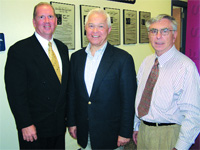
Sections Supplements
The Many Issues in Negotiating Commercial Real Estate Leases

Commercial leases are not simply contracts; they are often roadmaps to both a landlord’s and a tenant’s future business plan for a particular premises.

Thus, both parties should exercise due diligence and take ample time to contemplate, discuss, and include within the lease all such matters that could arise during tenancy. If one distills the complexities of commercial real estate leasing to the most basic notion, the most important thing to remember is that nearly everything is negotiable for both sides.

Unlike residential real estate leases that are strictly governed by statutes and case law, the world of commercial real estate leasing is generally left to the landlord and tenant to decide. As a result, the commercial lease agreement is the bible when it comes to the landlord’s and tenant’s respective rights and responsibilities for the lease term.

How much of a ‘template’ lease is negotiable by each respective party? That often depends upon the leverage of the market and of the property being leased. For example, if the market has a significant amount of space for lease, the tenant will likely have more ability to dictate lease terms. Conversely, in a market where one particular piece of property is unique, or where the market has high occupancy rates and thus a smaller inventory of available space, a prospective tenant may find itself with less bargaining power.

Here are some considerations relative to issues that tend to emerge during lease negotiations.

Use of the Property

Regardless of market conditions, it is essential that the landlord and tenant contemplate each aspect of the tenant’s business, what the tenant’s needs will be during the lease term, and how the tenant’s use will comply with the rights, requirements, and remedies of the landlord.

For instance, if the prospective tenant intends to operate a retail store or anticipates significant customer visits, the lease should contain a specific provision governing parking spaces reserved for the tenant’s customers’ use.

In addition, if a tenant is operating, for example, a coffeehouse and bookstore, then perhaps the landlord and tenant should re-evaluate leasing the adjoining space for use as a home theater/electronics demonstration business. Since the use of the leased premises is often restricted by the terms of the lease, the tenant should ensure that the intended use is specified and permitted.

Term

The term (length) of a commercial lease is determined by its starting date (commencement date) and its date of expiration. While a lease may have a specific commencement date, it is not uncommon for a tenant’s obligation to pay rent to be delayed for a month or two, which may be referred to as the “rent-commencement date.” The lease term may consist of an initial term with optional renewal terms of an equal or shorter duration than the initial term. To avoid any misunderstandings, is often helpful to set forth actual calendar dates, including day, month, and year.

Operating Expenses, Taxes, and Utilities

Each lease should specify the party responsible for the operating expenses, e.g. maintenance of the leased premises, taxes (or tax escalator), and utilities. These costs, both individually and collectively, can be significant, and should be discussed by the landlord and tenant at the beginning of negotiations to ensure that all parties are in agreement from a budgetary standpoint.

What are the landlord’s maintenance obligations? Are they restricted to structural issues? How about the HVAC system, snow removal, and landscaping? These are just some of the issues that should be specified in the lease, including a clear understanding of which party is responsible, and at what cost, if any, to the tenant.

Very often, a tenant will pay a proportionate share of common operating costs in a building with multiple tenants. In this case, the lease should include the proportionate share as a numerical percentage (e.g. tenant’s proportionate share shall be 43%) of the total leaseable space in the premises, to avoid ambiguity.

Building Systems

As an offshoot to operating expenses, the lease should also clarify the party responsible for providing and maintaining building systems. In New England, where both summer and winter represent extreme temperatures, a tenant should ensure that the HVAC system in the leased premises is sufficient to support its needs.

Also, if the tenant will have an ongoing obligation to maintain the system, he may consider having an inspection performed prior to the execution of the lease to evaluate efficacy.

Tenant Improvements

It is common for a tenant to perform some customization prior to opening the leased premises for business. This could be minor, like painting, or significant, such as installing a kitchen or other trade fixtures. The tenant should bear in mind that, during this period, he could conceivably be paying rent, even when the business is not open for business and there is no incoming revenue. With this in mind, the tenant should consider negotiating postponement of the rent commencement date during his renovation/improvement period.

Lease Rates

A major consideration for each party to be mindful of relative to rent is the consideration of the rent that will be paid over multiple “terms.”

For instance, if a lease is five years in duration with rent fixed at $1,000 per month, and the lease allows for two renewal periods of 10 years, the rent may be fixed for the entire 25-year period. Such a lease could ultimately end up being impractical to a landlord who may have the space leased for less than market rate. Accordingly, a lease should contemplate the potential need for a rent escalator after a certain period of time so that the landlord is assured that the rent obligations of the tenant remain consistent with the appreciating value of the leased premises.

Assignment/Subletting

While at the time the lease is negotiated, a tenant expects to occupy the leased premises for the full period of the lease, it is often the case that unforeseen events in the tenant’s business modify reality. For instance, a tenant may merge with or sell its business to another party, or it may have a need for less space in year five than it had in year one.

A tenant should realistically contemplate its business needs on a going-forward basis, and negotiate the lease terms accordingly. If there is a likelihood that the tenant’s space needs may be less at some point, the ability of the tenant to sublease a portion of the leased premises to another subtenant is ideal. Also, if a tenant merges with or sells its assets to a third party, the tenant will want the ability to assign its rights in the lease to that third party.

Parting Thoughts

This summation is certainly not exhaustive, but it serves to illustrate that commercial leases are not merely contracts, but truly roadmaps, which must be read and understood so that both parties can get where they want to go, and without getting lost.

Jeffrey Fialky is an associate with the regional law firm Bacon & Wilson, P.C., who specializes in business, corporate, municipal, and real estate law; (413) 781-0560;[email protected]

Sections Supplements
After Some Uncertain Years, the Village Commons Makes a Comeback
Jeffrey Labrecque

Jeffrey Labrecque says good relationships with tenants are helping move the Village Commons complex ahead.

Ten years ago, the Village Commons in South Hadley was having more than its share of problems. Tenants were unhappy, or else they were moving out; the stores inside weren’t what many had hoped for, and a feeling of unrest was settling over the architecturally striking shopping center owned by Mount Holyoke College. There’s been a quiet turnaround in recent years, however. Occupancy has improved to 100%, and management is involving tenants in a greater number of decisions. Now, some say ‘the Commons’ is starting to feel like the bustling retail and business center it was
always supposed to be.

Jeff Labrecque, COO for Center Redevelopment Corp. (CRC), the management firm that handles operations at the Village Commons in South Hadley, says he’d sooner hold a bottle-and-can drive than ask the shopping center’s owners for an influx of cash.

That sentiment was born, he said, from a time, not so long ago, when The Village Commons survived only when financed by its corporate parent and neighbor, Mount Holyoke College. And it has only been strengthened by a subsequent turnaround the Commons has orchestrated.

“At one time, we were draining funds from Mount Holyoke to survive,” said Labrecque, noting that when his current management team was formed, a goal was set to redefine the complex as one that could stand alone on its own two feet.

“The arrangement we made was that we would not borrow from Mount Holyoke,” said Labrecque. “That earned us the respect of the tenants, and now, 10 years later, we require no money from the college, and we never want to ask.”

Mount Holyoke College made a sizable investment in the Commons in the early 1980s to improve South Hadley’s town center and create a more welcoming atmosphere for both potential and current students, faculty, and their families, as well as general visitors.

The original vision of quaint, upscale shops and restaurants that would draw visitors from near and far has proven, however, to be largely unrealistic. But there is life in the Commons — spawned by a workable mix of office, retail, and residential tenants — and a great deal of optimism for the future.

BusinessWest looks this issue at how the picture continues to change, and for the better.

Making Change

Beyond ownership, Mount Holyoke has little involvement on a regular basis, said Labrecque. CRC handles day-to-day management of the complex, which hosts 56 businesses and 19 residential units and is led by President James Carey, who was appointed to his post in 1996. Labrecque was promoted to his current position at the same time, having previously served as director of operations at the Commons, and administrative assistant Trish Neiland rounds out the sparse team.

The Commons has navigated its share of bumpy roads since its inception, especially in the mid- to late ’90s. In addition to a lack of self-sufficiency, many storefronts were vacant, and, according to some tenants, that was due to a lack of a clear vision and a cohesive management plan.

Darby O’Brien, owner of Darby O’Brien Advertising, located in Building 9 of the Commons, was vocal about the center’s issues in 1997. At that time, O’Brien had been a tenant for six years, and told BusinessWest that the shops had “no buzz” and that the complex had “lost its soul.”

But he doesn’t feel that way now. O’Brien’s sentiments toward the Commons have become more positive, and he said it’s the development’s new management that has made a difference.

“I’ve been critical in the past, but things are moving well, and that’s because of the front office,” he said. “We’ve been here since this building went up, and when we first showed up, there was tenant unrest. But now, it feels like a neat little community. Jeff Labrecque is hands-on and non-stop; he understands small businesses, and really, it’s been calm ever since he stepped in.”

O’Brien said he gets the impression that through careful perseverance and hard work, many of the Commons’ issues are being resolved, or at least addressed.

“Several businesses are thriving here, expansions have happened … I noticed that the landscaping is really up to speed, and (CRC) seems to be employing local, independent companies. I think things have come together. I wondered back then how it would happen, but now I don’t even think about it anymore — this is a relaxed, fun, little neighborhood, and it feels good to be here. A lot has changed.”

Scrapping the Original Plan

LaBreque agreed that the climate at the Village Commons has in fact shifted, and while challenges remain, including the maintenance of architecturally unique buildings with unique problems, there are several positives to report.

For one, the complex is on more solid financial footing than it was 10 years ago — overall revenue at the retail stores ticked up by 3%, on average, over last year, while the restaurants averaged a 1% increase. Occupancy has also improved dramatically over the past decade. Between 1997 and 1998, CRC increased occupancy from 70% to 90%, and the Commons has been fully occupied since Sept. 11, 2002.

Currently, the ratio of office tenants to retail businesses is about one-to-one, and that’s one example of a change to what Labrecque refers to as “the original plan” for the property, which leaned more heavily on retail operations than office use.

“The original business plan that was put together was more retail and restaurants than office space,” he said, “but we’ve moved more toward office leases because those and residential rentals create stability and constant, consistent revenues.”

The original plan also included attracting upscale, trendy retailers proffering high rents. And while attracting quality tenants is still very much an objective, the focus on recognizable names and high-end merchandise has softened. Labrecque said the businesses that were expected simply never came, and many might not have even considered the Village Commons an adequate location.

“Tenants and Mount Holyoke were sold a bill of goods that didn’t play out,” he said. “For one, national tenants were promised, but the buildings here just weren’t built to attract them — they need space, on one level. There are 11 Victorian, all-wood, free-standing buildings here that are like houses — the largest space is about 3,000 to 4,000 square feet, and that’s why there’s no CVS here.”

Labrecque added that high vacancy rates became the root of other problems on the property in the late ’90s, some of which CRC is still working to correct.

“When the original plan didn’t come together, people were upset,” he said. “Tenants were unhappy, and the college was unhappy. Management wasn’t performing — they started treating it like a mall, affixing marketing fees on top of tenants’ rent.”

To begin a return to health, CRC did away with marketing fees and rents based on projected percentages of business when Carey took over as CEO, and instituted gross leases instead.

Lebrecque added that current lease rates are on par with similar markets. “ It is fair to say that the current rents are lower than the projections presented to the owner by the developer some 19 years ago,” he said.

New Day Dawning

That change, plus an overall shift to better incorporate tenants into the decision-making process at the Commons, has helped some businesses feel the same sense of inclusion that O’Brien cited as a benefit that once seemed lost.

Royanna Law, owner of Arts Unlimited, an art gallery offering framing services, retail sales, and corporate art consulting, relocated her operation to the Commons from Chicopee eight years ago, and characterized her decision as “wise.”

“The move to the Village Commons has proven to be a great place to have a business, and I really enjoy the people I work with, as well as my faithful clientele,” she said.

Law was one of the businesses that was able to expand recently within the complex, adding a gift gallery three years ago. Labrecque said hers is an example of how CRC is working with tenants to both retain them and strengthen the Commons as a whole.

“What we’re doing now is building from within,” he said. “We have a core group of tenants, and we are working to find out who needs what — expansions or changes, for instance — before going outside.”

As another example of renovations and expansion, Labrecque said the Commons will soon be seeing tenants leave for the first time in five years; 60 Minute Photo is closing its doors in response to increasingly sparse business for photo developers, and Saia Jewelers will also be leaving the complex soon.

But instead of viewing the changes as a dip in business, Labrecque sees an opportunity. The open space will allow for an office expansion project as well as a renovation of the Odyssey Bookshop, the Commons’ first tenant, and he expects the complex to be fully occupied again within a few months.

“We have an understanding of the types of businesses that do well here, and as such, we are also more discerning with leases,” said Labrecque of the decision to invest in existing tenants, rather than scramble for new ones. “We don’t fill empty spaces with the first offer we get to save face. That affects our overall stability, and just causes a lot of in and out.”

Moving forward, there are some concerns to address; the Commons is not located in a particularly high-traffic area, he said, so it must be marketed as a destination to thrive. Conversely, the shops’ parking lot is proving to be too small of late, and CRC and Mount Holyoke are also looking into a parking expansion to better accommodate shoppers, although that plan is only in the fledgling stages.

“Most of our tenants’ sales are good, but we’ve noticed they’ve maxed out,” said Labrecque. “We’re still looking at ways to pay for that investment; steel and concrete are so costly now — it will probably be some sort of platform, not a garage, and we’re asking our tenants for input on that.”

But Labrecque said infrastructure issues are his biggest challenge now, with repairs surpassing utility costs in his budget.

“The expenses keep growing. Our tenants provide us the revenue we need for upkeep, but we still spend every dollar we take in — we don’t have ‘plenty of money,’” he said. “We’re constantly correcting building issues, and it’s our largest budget buster. We’ve probably spent more than a half-million on builder blunders.”

Those issues include roof failures and water damage that began in earnest about eight years ago, with no signs of abating.

A Penny Saved Is a Penny Spent

In addition, the Commons faces retail challenges that continue to affect most small businesses and collections thereof, such as the pressure created by big-box stores and national chains that provide both convenient locations and, often, lower prices. It’s a reality, says Labrecque, that at this point in American business must be accepted.

“The nature of the business is delicate,” he explained. “The picture isn’t always great. It gets tiring at times, but it’s always challenging, and that’s what keeps us moving.”

Progress comes slowly, but there are no can drives in sight, and that’s Labrecque’s most oft-used benchmark.

“We don’t have a dime to save,” he said, “but we do have a dime to spend, and that means we spend that dime on improvement.”

Jaclyn Stevenson can be reached at[email protected]
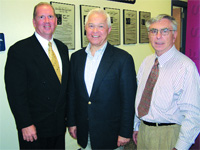
Sections Supplements
How to Make Your Business a Better Candidate for Financing

It is common for businesses to need conventional financing from time to time for continued growth and maybe even ultimate survival in the marketplace. What, if anything, can a small-business owner do to make his or her company a more attractive candidate to obtain that financing?

There are several areas that are traditionally given a fair amount of weight by a lender when considering your financing request. If you give ample attention to these areas, you can enhance, and in some cases assure, your success in obtaining the necessary financing commitment that you are looking for.

First is the ever-important balance sheet. Along with a supporting profit-and-loss statement, this document provides a prospective lender with an immediate and succinct overview of your company’s ongoing business operations and profitability, as well as a reasonable indication of where your company is headed in the near future. A balance sheet that is truly ‘balanced’ is in effect a snapshot, if you will, of your company’s business at a particular point in time. It provides an effective tool when searching for the right financing.

Second is a strategic business plan. All well-run companies, both large and small, employ a business plan that will look out over a period of five to 10 years. It generally includes plans for strategic growth and related financial projections as to both anticipated income and the financial needs of your company.

It is important for you to remember that, generally, you are asking a prospective lender to partner with your company for the long haul, and it only makes sense that such a partner would like the comfort level of knowing that you have had the foresight to require such a business plan and are demonstrating your intention to implement it. This is indicative of smart management, which is also an important criteria considered by a lender.

The third area of interest to a prospective lender is a combination of your company’s track record and what is happening in your particular industry. It is easy to understand that a company with a proven track record of consistent profitable business operations is an easier sell than a new business start-up.

This is particularly true if your company’s business is in a new or relatively untested industry. Providing financing to such an industry may be viewed as involving substantially greater risk to the lender. As a result, the lender may propose, among other things, aggressive financing terms that you may find hard to live with or unacceptable. The financing you are seeking may be declined unless you can demonstrate with a fair degree of certainty that the projected growth in this new industry can be realized, or that your company has the ability and is willing to provide strong collateral security for the requested financing.

The fourth and final area that can provide your company with a springboard advantage to obtaining your necessary financing is your proposed collateral security. While no lender will approve requested financing solely on the basis of the value of the underlying collateral to be pledged as security for such credit facilities, offering your prospective lender strong, easily valued, and easily accessed loan collateral is a critical component that cannot be overlooked.

Your collateral may consist of a security interest in the personal property assets of your company (i.e. furniture, fixtures, equipment, etc.), accounts receivable, real estate mortgages, or personally pledged collateral (i.e. certificates of deposit, brokerage accounts, etc.). The actual value of, straightforward access to, and ease of potential liquidation of this collateral are all considered in the financing approval process.

Consequently, when your company is seeking financing, either initially, as an expansion of existing credit, or as a refinance, it would behoove you to review and consider your company’s strengths and weaknesses in each of the above areas. Providing a solid and inclusive financing application package to your prospective lender that addresses each of these areas in a professional and businesslike manner can help assure success in your quest for the right financing for your business.

Gary G. Breton, Esq., is a member of Bacon & Wilson, P.C.’s Banking and Finance Department. His major emphasis of practice includes representation of financial lending institutions, as well as both individual and business borrowers. He also represents business clients in the startup, purchase and sale of businesses; (413) 781-0560;[email protected].

Sections Supplements
Is Application of the Bay State’s Anti-SLAPP Statute Too Broad?

In 2006, concerned citizens of the town of Falmouth filed suit in Suffolk Superior Court seeking review of a decision of the state Department of Environmental Protection. The suit named both the department and the town. The town responded with counterclaims against the plaintiff/citizens for malicious prosecution and abuse of process, essentially claiming that action was only brought as a tactic to delay the community’s plan to construct a sewer collection and treatment system.

What makes the case remarkable was the town’s aggressive choice to counterclaim against its residents for protesting proposed land development. The trial court recently dismissed the town’s counterclaim under the provisions of the anti-SLAPP statute and awarded the plaintiff/citizens $30,000 in fees expended in defense of the town’s counterclaims. This case demonstrates how the reach of the anti-SLAPP statute has evolved.

In 1994, Massachusetts enacted the so-called anti-Strategic Lawsuit Against Public Participation (anti-SLAPP) law. Since then, the statute has been widely used in many circumstances perhaps never envisioned by the original lawmakers

The Mass. Supreme Judicial Court (SJC) describes the original legislative purpose behind anti-SLAPP as a quick method to dispose of meritless suits brought by large private interests intended to deter or punish common citizens from petitioning the government in lawful exercise of their political or legal rights. Plaintiffs in SLAPP lawsuits commonly allege that the defendant defamed them, maliciously prosecuted claims, or otherwise unlawfully interfered with the plaintiff’s business interests.

When the first cases involving anti-SLAPP reached the trial court, many judges inferred the existence of a requirement that the matter involve a matter of ‘public concern.’ The SJC subsequently rejected that narrow interpretation of the statute, finding that the Legislature specifically considered and rejected such a limitation.

As a result, Massachusetts appears to be the only state instituting anti-SLAPP that failed to include public concern as an element of the petitioning activity. Thus, the Bay State’s anti-SLAPP statute has been invoked in such cases as a trademark dispute between corporations; a dispute between two psychiatrists, one of whom rendered an unfavorable expert opinion concerning the other’s medical practices; a lawsuit between a divorced couple over the veracity of the ex-wife’s claim of physical abuse; and breach-of-contract actions between commercial landlords and tenants. While important to the litigants, these cases are hardly the David v. Goliath scenarios involving political rights that the law was arguably initially aimed at.

When a defendant’s right to petition clashes with a plaintiff’s right to recover for injury allegedly caused by the defendant, the power and breadth of the anti-SLAPP statute becomes clear.

The statute identifies five types of actions that broadly define the right to petition, which the law is intended to protect. They include what most would agree is classic petitioning activity, such as: making statements at a legislative hearing, voicing one’s opinion regarding an issue under consideration in a governmental proceeding, making statements aimed at encouraging governmental review of an issue, and enlisting public participation to affect governmental review. The definition also contains a catch-all clause protecting “any other statement falling within constitutional protection of the right to petition government.”

The protection provided by the anti-SLAPP statute (G.L. c. 231, §59H) allows defendants in SLAPP suits to file a special motion to dismiss the case early in the proceedings. If the defendant can show that the plaintiff’s claims of harm are solely based on the certain petitioning activities described above, the burden shifts to the plaintiff to demonstrate the following:

• That the claimed petitioning activities are devoid of any reasonable factual support or any arguable basis in law; and
• That he or she has suffered harm.

If the plaintiff cannot meet this burden, the sanction is that the plaintiff’s case is dismissed, and costs and attorney’s fees incurred by the defendant in bringing the special motion to dismiss are awarded. Some argue that because of the broad language used in the statute, the Legislature has created a cure that is worse than the affliction.

Since 1994, more than 600 decisions involving the anti-SLAPP statute have been reported. Use of the anti-SLAPP statute is widespread because it is broadly phrased to apply to almost any enterprise or action where business activity, citizens’ interests, and government regulation or control do or could possibly intersect. The language of the statute provides the special motion-to-dismiss remedy to a defendant who claims her actions are based on the exercise of her “right to petition under the Constitution of the United States or of the Commonwealth.”

In January 2007, the SJC re-examined the anti-SLAPP statute in Cadle Company v. Schlichtmann. Schlichtmann was engaged in a lengthy legal battle with a debt collection agency, Cadle, over certain debts allegedly owed.

Interestingly, Schlichtmann was the attorney featured in the book A Civil Action and portrayed by John Travolta in the movie of the same name. Schlichtmann also represented clients who allegedly had been victimized by Cadle’s “fraudulent business practices.” He allegedly made numerous statements to the news media claiming Cadle was doing business illegally, using strong-arm tactics, hiding assets, and that the principal of Cadle was a fugitive from justice.

Schlichtmann also set up a Web site that described Cadle as “a collection arm of a fraudulent enterprise” whose “sole purpose and intent … is to defraud consumers and businesses.” The Web site provided links to news articles containing Schlichtmann’s statements, copies of demand letters, court pleadings and documents, and contact information for Schlichtmann’s law firm.

Based on the content of the Web site, Cadle filed suit against Schlichtmann alleging defamation, libel, tortuous interference with advantageous contractual business relations, and unfair and deceptive trade practices. It sought monetary damages and a permanent injunction against Schlichtmann for maintaining what it claimed were false accusations on his Web site. This lawsuit demonstrates the clash of rights that the anti-SLAPP statute is intended to address.

Certainly Schlichtmann had the right to petition the Commonwealth to take action against Cadle. Meanwhile, Cadle had the right to try and prevent or recover for damage from what it claimed were demonstrably false statements.
The SJC concluded that Schlichtmann had created the Web site “at least in part to generate more litigation to profit himself and his law firm.” Based on that finding, the court ruled that his special motion to dismiss was properly denied because the statements were published not as a member of the public who had been injured by the alleged practices, but as an attorney advertising his legal services.

It is this type of mixed-motive scenario that forces courts to make difficult decisions between one person’s right to petition and another’s right to prevent or obtain relief for damages caused by dissemination of false information. To further complicate these issues, the court’s decision is usually made shortly after a suit is filed and before a plaintiff is fully able to develop the factual basis of its claim through discovery.

The Massachusetts anti-SLAPP statute was passed despite then-Gov. William Weld’s veto, which described the statute’s effect as “a bludgeon where the scalpel will do.” It cannot be denied that anti-SLAPP has altered the legal landscape in Massachusetts. It is a potent weapon for those who are petitioning for change while seriously affecting the ability or willingness of people to bring suit for defamation or injury to business interests.

As a practical matter, the anti-SLAPP statute seems to give the upper hand to a defendant. If the plaintiff fails in her attempt to exercise her rights, she must pay the defendant’s attorney’s fees and costs. No such risk exists for the defendant if the special motion to dismiss is denied.

This reality, coupled with one’s ability via the Internet to widely disseminate information, creates challenging issues for lawyers, litigants, and the courts, for which there are no easy answers.

Robert S. Murphy Jr., a partner at Bacon & Wilson, P.C., is a civil litigator with extensive experience in representing both plaintiffs and defendants; (413) 781-0560;[email protected]

Sections Supplements
Hampden Bank Makes Some Public Pronouncements
Tom Burton

Tom Burton shares the spotlight with Hampden Bank, which saw its name in lights in Times Square.

Hampden Bank President Tom Burton and an entourage of officers and board members were in Times Square late last month for a ceremonial ringing of the closing bell on the NASDAQ, where the bank’s stock has been trading since last spring. Behind the pomp and circumstance, those same people have been hard at work crafting a business plan for what is certainly a new era in the history of the 155-year-old institution, but one marked by the same values and philosophies that have yielded steady growth in recent years.

Tom Burton started making phone calls back in late January. And he had to keep on making them well into the spring.

After all, it isn’t easy to earn the honor of ringing the ceremonial opening or closing bell on the NASDAQ Stock Market. There are hundreds of companies looking for that privilege and only so many days in a year, said Burton, president of Hampden Bank, who told BusinessWest that winning such a once-in-a-lifetime opportunity boils down to one thing: persistence.

His eventually paid off.

There he was on July 27, carrying out a short, simple, but very well-choreographed push of a button that ended what was, overall, another turbulent day in Times Square and on Wall Street. Actually, it was the end of the worst week the Dow had suffered in five years (a loss of 500 points over two days), and the NASDAQ Composite didn’t fare much better — a 1.4% slide that Friday, following a 2% drop the day before.

But there was much whooping and hollering as Burton and an entourage of 17 Hampden Bank officers and board members counted down the final seconds of the trading day inside NASDAQ’s elaborate studios — and it wasn’t because the bank’s stock price had managed to gain a nickel, to $10.25, by the closing bell.

Instead, those gathered were celebrating the 18-month-long process of getting to that July 27 pomp and circumstance and, more importantly, the promise of the future, or what Burton, in an wide-ranging interview with BusinessWest earlier in the month, called the start of a new era for the 155-year-old Springfield institution — one as a publicly traded bank.

Overall, though, while there is much anticipation about what will happen at the bank now known to investors as HBNK, very little has changed at Hampden since it completed its initial public offering six months ago, said Burton. It has roughly $50 million in new capital to work with thanks to that offering. It also has a new $3.4 million foundation with which it can make a real difference in the community. And it has stockholders to which it is now accountable.

But none of this really changes the bank’s operating philosophy, said Burton, nor does it substantially alter the bank’s basic game plan moving forward. Hampden had been enjoying steady, often double-digit growth over the past several years, he explained, and the conversion to a stock bank was simply seen as the most effective way to continue that pattern.

“The way we do business hasn’t changed,” he said, adding that the conversion simply offers opportunities to do more business, perhaps across more sectors, and probably in places the bank hasn’t done it before. “The business is still the same — it comes down to a focus on the customer.”

Like other banks that have made full or partial conversions to stock institutions in recent years, Hampden is now faced with the challenge of effectively leveraging the capital it has raised. While doing so, the bank will be “judicious and conservative,” said Burton, noting that options come in many flavors — including adding additional branches to the current roster of seven; being more aggressive in the commercial lending arena, which is facilitated by a larger lending limit; and possibly acquiring businesses in other financial services sectors, such as lending outfits and insurance agencies.

A business plan is being crafted that will eventually include some of those options, he said, adding that common sense will dictate how and when the bank carries out growth strategies.

In this issue, BusinessWest recounts an historic day in the life of Hampden Bank, but also takes a broad look at the months and years ahead.

Stock Answers

Hampden Bank board member Mary Ellen Scott, president of United Personnel in Springfield, was doing a little sight-seeing in Times Square about an hour before the bell-ringing ceremony when a television reporter put a microphone in front of her and started asking questions about the stock market and the miserable week that was mercifully coming to an end.

She thought her comments — broad statements about remaining upbeat and investing for the long term — were destined for some local broadcast. Instead, they became part of Katie Couric’s report that night on CBS. Such was the level of national angst concerning the markets, which, after enjoying a mostly prosperous 2007, were being taken down by a few bad earnings reports and the sad state of the housing market. (They did rebound somewhat the following Monday).

The troubles for the Dow and NASDAQ were certainly the topic of discussion in New York and practically everywhere else that Friday, but they couldn’t put a damper on the afternoon’s festivities, which climaxed a process that began nearly two years earlier.

Actually, Burton told BusinessWest, talk of making a conversion had been ongoing at the bank for several years. It had long been considered one of the options to continue what has been a strong pattern of growth — assets have more than tripled since Burton arrived in 1993 (from roughly $150 million to the more than $500 million today) — and, in early 2006, it was deemed to be the best option.

“Toward the end of 2005 we were talking about ways to get more capital to keep the momentum going,” he explained. “We either had to get more capital or we had to slow down, and we agreed that it would be very disappointing to slow down.”

The bank’s officers and board members considered several options, including full or partial conversion, and chose the former. The resulting IPO, one of the most successful bank offerings in recent years, was oversubscribed, eventually netting just over $50 million.

When considering how to invest that money, Burton said the bank will continue to operate in much the same way it has since its very humble beginnings as an institution created primarily to serve the working-class population of Springfield, especially those toiling for the Western Railroad.

The bank’s geographic reach and product lines (for most of its existence it handled only variable-rate mortgages and consumer loans) remained generally unchanged until fairly recently, when it expanded into other communities, added a line of commercial products and services, and fully embraced technology to allow customers to do banking when and where they wanted.

Throughout it’s history, said Burton, Hampden has taken its cue from its customers, and that won’t change now that its stock is traded on the NASDAQ.

“Any business, no matter how it’s owned, whether it’s private or public or whatever … if it’s not focused on its customers, it’s not going to be successful,” he said. “We’re always been driven by our customers, and we always will be.”

Trade Secrets

As he talked about leveraging the capital raised by the IPO, Burton used the words judiciously and conservatively early and often. He said the bank has already started to become more aggressive in the commercial-lending realm, which is an ultra-competitive sector, and one in which a higher lending limit — Hampden recently raised its in-house limit from $4 million to $10 million — is a real asset to any institution.

“That $10 million number represents probably 99% of the commercial activity in this market,” he said. “Now, we can do larger loans and better serve our customers, which is important because this is a very competitive commercial market that has a lot more players than it did years ago.”

As for additional branches, Burton acknowledged that many areas and specific communities are now heavily banked, if not overbanked — Belchertown, Ludlow, East Longmeadow, Longmeadow, Westfield, and others would fall in those categories — but there are still some opportunities to be had for new locations.

“Even within the city of Springfield I think there are places that might be underserved,” he said, adding that there are also some communities that, while they are heavily banked, may also yield opportunities for new locations. The bank currently has three offices in Springfield — the latest opened in Tower Square two years ago — and one each in Longmeadow, West Springfield, Agawam, and Wilbraham. Further expansion, said Burton, will be dictated simply by what makes sense for the bank.

“We do a lot of demographic studies on potential sites, and there are lot of things that come into play,” he said of the decision-making process when it comes to new branches. “We start by looking at the level of competition, but we also look at the populations in a given area; you don’t want just high-wealth or just low- to moderate- income. You need a good cross-section for a branch to work.”

Overall, Burton projects continued solid growth, in keeping with expectations for a bank of this size in a region that is seeing relatively little commercial and residential growth and is among the state’s most competitive banking markets.

“We’re not going to get to $1 billion in assets in five years; that’s not realistic given this market,” he said. “We just want to continue the momentum we’ve gained in recent years.”

The visit to Times Square, which took six months of phone calls with NASDAQ officials to schedule and coordinate, was just a small part of that momentum-continuing process, he explained, adding that he was persistent in his quest to gain closing-bell ceremonies as a way to officially mark the next chapter in the bank’s story while also generating even more enthusiasm within the bank.

“It’s something I considered very important, something I really wanted to do; it truly is a once-in-a-lifetime opportunity,” he said that Friday, adding that seeing the bank’s name in lights on the NASDAQ tower served to symbolically reinforce the motivation for taking the bank public — bringing the institution to a higher level within the community.

As for the bank’s stock, Burton says he monitors it, but is not obsessed with the minor fluctuations that have characterized activity since trading began. Taking some of Scott’s advice, he’s thinking long-term. “I don’t check it every 15 minutes; I don’t feel it necessary to do that. I know the quality is there, and I don’t have to worry about what it’s doing hour to hour.”

In Closing

There is no actual closing bell to ring at the NASDAQ. Like everything else about the 35-year-old market, this ceremony is technology-driven; the push of a button closes down trading electronically. Meanwhile, the final countdown, with its yelling and clapping, is broadcast live on the NASDAQ tower in the heart of Times Square, providing Burton, the others, and Hampden Bank more than 15 seconds of fame.

The proceedings are well-orchestrated, with the steps laid out in advance and considerable coaching about where to stand, where to look, and how loud to yell. After the ceremonies, the group moved to a well-marked spot across the street from the tower to get just the right angle for pictures.

There is no such script for what a community bank does after it goes public, however. Burton and others at Hampden Bank are still writing one. There will some new plot twists — and no one really knows the ending — but the overall story line will be the same for the foreseeable future.

“This is a new era for the bank,” said Burton, “but we’re going to continue doing things the way we’ve always done them — with the customer coming first.”

George O’Brien can be reached at[email protected]
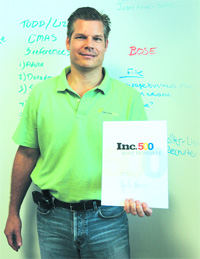
Sections Supplements
Attorneys Honor the Past, Consider the Future at Doherty Wallace Pillsbury & Murphy
Gary Shannon, Michele Rooke, Deborah Basile, and Rebecca Bouchard

Attorneys at DWP&M (left to right): Gary Shannon, Michele Rooke, Deborah Basile, and Rebecca Bouchard

Doherty Wallace Pillsbury & Murphy has cultivated a strong niche in the Commonwealth’s legal community over the past four decades, and has earned its place as one of the most respected firms in Western Mass. Currently, however, DWP&M is working toward growing its numbers, its presence, and its knowledge base in a diverse set of fields, in response to growing demand for specialty legal services and a client base that needs answers to their questions faster than ever before.

“Twenty years ago, I was much more of a generalist than I am today,” says Paul Doherty, a founding partner of the Springfield-based law firm Doherty Wallace Pillsbury & Murphy, P.C.

Doherty, who specializes in business law and works with a diverse set of clients, explained that the legal profession has shifted greatly since his career began. He said that acceptance of change on myriad levels has become doubly important to law firms, especially those like DWP&M, as it’s called, due to a general shift in the American culture toward speed and convenience.

“There have been huge changes in the peripheral things,” he explained. “Everything is faster. We used to receive a request from a client, and then have two days of breathing room. Clients are more sophisticated today, more knowledgeable, and more mobile, and we need to be that much more on our toes.”

That has led to another shift in the legal profession, a movement away from ‘general practice’ and toward an environment defined by a number of niche specialties, in response to those same cultural and technological changes.

In recent years, Doherty, Wallace has added new specialty areas to its suite of services, while at the same time remaining rooted in the traditions that enabled the firm to excel — a respect for this high-stress profession, for one, and a strong knowledge base in several key areas of law including litigation, corporate, real estate, and estate and probate practices.

Now celebrating its 40th year in business, Doherty Wallace is moving forward in some new, promising directions. The firm, which includes 23 attorneys, has already cultivated a strong presence in the region’s legal landscape, but continues to evolve with national trends and those within the region.

’Hamping it Up

One recent change, for example, has been the addition of a Northampton office to to better serve clients in Hampshire County. Gary Shannon, an attorney at DWP&M specializing in estate law and probate litigation, said the new location was added in November of last year, through the acquisition of Tom Growhoski’s law practice.

“We’ve long served Hampshire County,” said Shannon, “and through mutual clients we got together with Tom. We’ve seen business growing in particular in the Route 5 corridor, but when we first started seriously looking at Hampshire County as a growing area, we were surprised at how many clients we already had.”

Shannon, who joined DWP&M in 1973, said Growhoski will maintain a full-time presence in the office, and work toward cultivating the office and the firm’s Northampton presence is currently underway.

“We’re in the process of building that up now,” he said. “The goal is to better serve our clients, as well as add exposure of the firm.”

But physical expansion isn’t the only way the firm is evolving; new areas of practice are also being pursued, such as intellectual property law and education law, the former a rapidly expanding field and the latter not a new specialty, but one that is experiencing great demand of late.

Deborah Basile, an attorney and shareholder with DWP&M’s intellectual property practice area, said the firm has built a booming business in patent and intellectual property law.

“People, ideas, and concepts are all fertile in the Valley, so clearly, it’s an opportunity for us,” she said. “We always tend to look at the future in terms of emerging practice areas, in order to get ahead of the curve.”

Basile’s own areas of practice, intellectual property and patent law, illustrate that goal, which is not so simple as adding a line to a firm’s list of services and waiting for the phone to ring. Many areas of practice, including Basile’s, are complicated and require a deep understanding of current laws and standards in the marketplace.

Patent law, for instance, is the practice of counseling individuals and businesses on the protection afforded by patents, trademarks, and copyrights and on the protection of business trade secrets from misappropriation (see related story, page 30). DWP&M works with larger businesses in protecting and licensing technology, as well as with inventors at all levels, drafting and prosecuting utility and design patents on their behalf.

It’s also a discipline that differs from many in the field of law; in order to take the patent bar exam, a degree in the sciences is required, whereas the majority of attorneys have educational backgrounds in English or another liberal art, said Basile, who has a bachelor’s degree in biology.

Basile said she saw the area of law as one that could benefit Doherty Wallace, but also one in which she discovered a particular passion.

“I really love it,” she said. “I love to see an inventor spread his creation out on the table after months of tinkering in the basement, or to enter a large corporation that has something new to introduce to the marketplace.”

What’s more, Basile said patent law is a field that has no shortage of work, especially in the Pioneer Valley.

“The phones keep ringing,” she noted. “Of late, people are really interested in maintaining brands and creating new ones — it has been a good growth area.”

Similarly, Basile’s burgeoning work in intellectual property law and Internet law, which can include negotiating hosting agreements, licensing content on the Internet, and online privacy concerns, has also been brisk, and as one of few large firms handling the specialty in the area, she said she’s becoming well-acquainted with the many facets of this still-new, and fast-changing, specialty.

“I think intellectual property litigation is one area in which we’d like to see growth,” she said.

Another area that is growing is that of education law, which includes working with school officials in responding to parents who seek special education programs for their children, for example, as well as defending special education complaints before the Mass. Bureau of Special Education Appeals.

There’s also a school consultation aspect of the practice, which includes advising school administrators in student disciplinary matters, among other types of work. It’s not a new field, but one that is seeing a greater need in area municipalities, as school-related issues become more far-reaching and complex.

Rebecca Bouchard, an attorney who once served as a high school teacher, coach, and administrator, said one reason she sought out Doherty Wallace as a potential employer (she joined in 2006) was because it handled education law before many other firms did; attorney Claire Thompson has long served as the firm’s leader in this area. Bouchard added that while it’s not a specialty that is growing at the same pace as intellectual property and patent law, it’s a field in which few attorneys practice, thus creating a valuable niche for Doherty Wallace.

“The reason I came to the firm, one reason, anyway, was that it was well-established in the areas of education and employment law,” Bouchard said, referring to her two main specialties. “Claire Thompson had built that established education law practice, and adding another lawyer who brings a background, skills, and interest in this field has allowed us to serve more clients well.”

Bouchard added that education law is not as far removed from business law, one of Doherty Wallace’s core strengths, as some might suspect.

“A school is essentially a small business,” she said. “There are real estate concerns, employment concerns, and often disputes. It requires a strong understanding of federal and state laws, and those laws are in constant flux.

“In terms of performance, there is a lot of pressure in education law,” she added. “We are serving the needs of students, and doing so is harder all the time.”

Bouchard and Basile, among others, represent the changing face of DWP&M in many ways. In addition to representing growth specialties, they are both relatively new to the firm, joining some attorneys who have built their practices with the firm over three or four decades. They’re also part of the firm’s cadre of female attorneys — two are partners, four are associates, and one is of-counsel.

Bouchard said that’s one example of Doherty Wallace’s progressive approach to law, which honors tradition while not turning a blind eye to changing trends and needs among its client base.

“This is a well-rooted law firm that isn’t afraid of change,” she said, echoing Doherty’s sentiments about the new face of law practice and Doherty Wallace’s adherence to the shift.

Past, Present, and Future

Doherty said change can be invigorating, and while he’s seen it at his own firm and within his profession, the understanding that change is constant within the legal community has stabilized DWP&M as it moves ahead, faster all the time.

“One of the reasons I like what I do are those three or four phone calls I wasn’t expecting that day,” he said. “There are a lot of challenges, but there are also plenty of good things happening.”

Jaclyn Stevenson can be reached at[email protected]
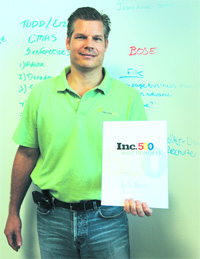
Sections Supplements
Complementary Medicine Gains Mainstream Acceptance
Bridget Griffin Thompson

Bridget Griffin Thompson said market demand is partly responsible for the inception and subsequent growth of Cooley Dickinson Hospital’s Center for Complementary Therapies.

Progress has been slow in coming, but the words are nonetheless proving prophetic.

Almost a decade ago, Marcia Angell, former editor-in-chief of the New England Journal of Medicine, wrote in that publication that, “since many alternative remedies have recently found their way into the medical mainstream, there cannot be two kinds of medicine, conventional and alternative. There is only medicine that has been adequately tested and medicine that has not, medicine that works and medicine that may or may not work.

“Once a treatment has been tested rigorously,” she continued, “it no longer matters whether it was considered alternative at the outset. If it is found to be reasonably safe and effective, it will be accepted.”

That acceptance has been slow in coming, to be sure, but once-fringe therapies such as acupuncture, meditation, and herbal treatments have gained a significant foothold in the American health system, to the point that many proponents reject the term ‘alternative medicine,’ instead preferring the more inclusive ‘complementary medicine.’ Even hospitals are starting to come around.

Consider Cooley Dickinson Hospital, one of the few in Massachusetts to offer a complimentary medicine program in-house. After launching its Center for Complementary Therapies in 2004 with therapeutic massage, prenatal and postpartum massage, and Reiki, the program recently added acupuncture, aromatherapy, healing touch, healing music, and self-hypnosis/guided imagery to its roster of services.

Bridget Griffin Thompson, coordinator of Complementary Therapies and Women’s Health at CDH, said the hospital is simply responding to the needs and desires of its constituency and embracing an admittedly slow-moving trend toward such services in the hospital setting. She cited Hartford Hospital and Memorial-Sloan Kettering Cancer Center in New York among those facilities that have institutionalized alternative-healing methods.

“It’s consumer-driven,” Thompson said. “Interest been growing for some time, and we’ve formalized it over the last couple of years. Since then, we’ve added a lot of different modalities and started integrating it into our inpatient population.”

Then there’s Dr. Deborah Hoadley, who operates the Heron Pond Health & Wellness practice in Longmeadow, taking an integrative, mind-body approach to programs in chronic disease, weight loss, general wellness, and her specialty, Lyme disease . She mentioned Lyme disease as an ideal milieu for modalities such as meditation and massage, when conventional doctors typically treat it with antibiotics only.

“Any patient who has ongoing symptoms can benefit from the mind-body approach,” Hoadley said. “That’s because stress hormones increase the production of free radicals, which are molecules that contribute to inflammation in the body. Therefore, any medical condition that has an inflammatory component will benefit from stress-reduction techniques.”

This month, BusinessWest examines some of the factors driving the growth of complementary medicine in traditional settings — and what barriers to further growth still exist.

Growing Influence

The National Center for Complementary and Alternative Medicine estimates that more than half of all U.S. adults have sought treatment in non-traditional modalities, with the majority using them in conjunction with traditional medicine — lending support to the term ‘complementary.’

Cooley Dickinson’s growing program, Thompson said, first grew out of childbirth education, with expectant parents desiring more control over their own health decisions and, as a result, seeking innovative models for childbirth care. Thompson soon discovered that patients across the health care spectrum were becoming more open to non-traditional care, but were unsure how to ask for it.

In the past, she explained, patients who had received complementary care or were simply interested in it were reluctant to share that information with their regular doctor. “Today, I’m finding that people want to be a partner with their practitioner. It’s important for consumers to talk to their doctors, to make sure everyone is on the same page.”

Too often, Dr. Harvey Lederman said, that page is being written by the wrong authors.

“We have a medical model in this country that’s increasingly driven by the pharmaceutical industry’s demand for profits, where most data is generated for the purpose of marketing instead of caring for patients,” said Lederman, who incorporates non-traditional herbal and nutritional treatments at Pioneer Valley Family Medicine in Northampton.

That pharmaceutical influence, he explained, poses a trap for doctors who want to stay abreast of the newest medical information but find that much of it is paid for by drug companies. He noted, for example, that 80% of medical research is now funded by such firms, when 30 years ago, 80% of it was paid for by academic medical institutions.

“Even the most prestigious journals present what they want me to read. So the more knowledgeable a physician is, the more influenced he is by the pharmaceutical industry.”

The good news, in Lederman’s opinion, is that consumers seem to be ahead of doctors when it comes to being open to treatment alternatives not promoted by major drug makers.

“Patients intuitively know what they want,” he said, noting that they’re increasingly using the computer to research alternatives to industry-backed pharmaceuticals.

“They see alternative treatments as an adjunct to conventional treatment, not something that will replace it.” That’s partly why vitamins and herbs are the fastest-growing segment of complementary health, he added, although modalities such as acupuncture and Reiki are gaining more acceptance as well.

“I tend to use certain nutrients and herbs in my practice, and I hook patients up with other treatments that might be helpful to them. You can’t be an expert on everything,” he said. “But the very fact that you’re receptive to alternative medicine, I think, makes you a draw for patients who don’t want their doctor to be closed-minded about all this.”

In the meantime, he hopes patients develop some skepticism about what they’re hearing from drug companies, and want to do their own research. “That’s certainly an appropriate reaction,” he said. “You can’t turn on the TV or read a magazine without being bombarded with new diseases that are only diseases because someone has a new drug to treat them.”

Looking for Alternatives

Where Lederman focuses on herbals and vitamins, Thompson said her program puts more emphasis on other modalities. She said people shouldn’t see alternative health as being in competition with traditional modes, but as another spoke in the wheel of healing.

“It has been huge,” she said. “People are just so thankful for what we’re doing here. Many people have been accessing complementary therapy outside the hospital, so they’re excited that we have it here.”

Thompson noted that some patients would rather not enter a hospital by choice, while others are more comfortable being treated there because they know the licensing and training guidelines will result in a high standard of care.

Hoadley admitted that many patients are surprised that massage and yoga can affect the body’s response to Lyme disease and other conditions, but said they’re increasingly open to the idea.

“A large number of people are turning to complementary therapies,” Hoadley said. “We’re seeing more patients seeking an integrative approach to their health.”

The mainstream medical community, it seems, is paying attention.

Joseph Bednar can be reached at[email protected]

Sections Supplements
As Recent Cases Show, Non-compliance Penalties Are Severe

As home improvement construction begins to slow, contractors may turn to public works projects or state-funded contracts in order to keep working. But contractors must maintain strict compliance with the Mass. Prevailing Wage Program because offenses are extremely costly and offenders are likely to be caught.

In fact, each incident of employee wage underpayment or submission of false certification or employee classification is a separate and distinct violation of the law. For example, if a state project took 50 weeks to complete, and the employer submitted false certifications for each week, that would constitute a minimum of 50 violations that the attorney general could prosecute.

The Mass. Prevailing Wage Program is run by the Mass. Division of Occupational Safety, which in turn issues prevailing wage schedules to cities, towns, counties, districts, authorities, and agencies of the Commonwealth for construction projects and several other types of public work. The Office of the Attorney General is empowered with the authority to enforce the prevailing wage program and compliance with its rules and regulations.

While the notion of working on state contracts is enticing because a contractor will surely be paid, the prevailing wage program can be a perilous journey if a contractor or employer does not comply with the state law. When awarded a public works project, a contractor must keep a record of each individual employed on the project, including their name, address, and occupational classification.

In addition, a contractor must keep records of the hours worked by, and the wages paid to, each employee. A contractor, subcontractor, or public body is required to preserve its payroll records for a period of three years from the date of completion of the public works contract. In addition, the contractor is required to make available to the attorney general or his representative, upon his request, a copy of that record, signed by the employer or his authorized agent under the threat of penalties of perjury.

In addition, the contractor must properly classify each employee under prevailing wage. Numerous cases and appeals have been filed regarding the classification of workers. For example, the classification of carpenter draws images of an individual working with wood, installing and constructing cabinets or framing walls. However, the classification can also include workers who install and bolt freestanding wardrobes and athletic lockers onto concrete bases and also those who bolt heavy-duty corridor lockers to wood bases.

Employers may classify certain individuals as laborers instead of carpenters because they are simply hauling debris, cleaning the site, or hauling material to the site. If an employee/laborer picks up a hammer or wrench and begins bolting free-standing wardrobes, the employee’s classification changes from laborer to carpenter. In so doing, the labor has also changed in accordance with the prevailing wage schedule, and the employer may have violated the prevailing wage program by paying that employee the laborer’s rate instead of the carpenter’s rate.

Rate fixing and shaving is a very tempting proposition for employers in light of growing costs and expenses associated with materials, and this is a way for contractors to increase profits on a prevailing wage job. For example, a contractor may classify all of its workers at a laborer’s rate of $28 per hour when the employees are actually performing carpentry work and should be paid at the prevailing wage rate of $35 per hour. During the course of the job, the $7 difference between the two rates will certainly add up and increase the employer’s profit margin. Since the attorney general keeps a watchful eye on the conduct of contractors working on state and municipal contracts, this activity will surely lead to an inquiry by the Office of the Attorney General.

Depending on the nature of the violation, a contractor may face a civil citation, criminal penalties, or a requirement that restitution be paid to the aggrieved parties. Typically, the prevailing-wage violation would first be analyzed in terms of a willful or non-willful violation. Massachusetts law provides that any employer, contractor, or subcontractor who willfully violates the prevailing wage program will be punished by a fine of not more than $25,000 and/or imprisonment for not more than one year for a first offense. A subsequent willful offense is subject to a fine of not more than $50,000 and/or imprisonment for not more than two years.

For a non-willful violation, the penalty includes a fine of not more than $10,000 and/or imprisonment for up to six months for the first offense and a fine of up to $25,000 and/or imprisonment of not more than one year. The penalty may also include a requirement that the employer pay restitution to employees for underpayment or misclassification, and the attorney general may issue enough citations to preclude the contractor from submitting bids for or otherwise doing public works projects again.

While state or municipal contract work may be lucrative and rewarding, the prevailing-wage law does not make exceptions for violators. It is advisable for contractors to seek the advice of counsel in the event that the attorney general commences an investigation or the contractor believes he may be in violation.

Kevin V. Maltby, Esq., is an associate with Bacon & Wilson, P.C. He is a former prosecutor for the Northwestern District Attorney’s Office with extensive jury trial and courtroom experience. His practice concentrates on litigation, employment, and family matters. He also handles personal injury and product liability; (413) 781-0560;kmbacon-wilson.com.

Sections Supplements
A Guide to Some of the Latest Trends in Personal Health Technology

There was a time when the only medical technology we used to keep ourselves healthy was a thermometer.

Those days are over, however, and personal technology in particular has taken on a new role in the wellness market. More than ever, new products are being introduced to the marketplace that tout a wide array of health benefits, from assisting with weight management to promoting better sleep, or preventing illness down the road.

In this issue, Business-West looks at some of the emerging trends in this sector, and some of its newest product offerings.

Calories In, Calories Out


Caltrac Calorie Meter

Losing weight and keeping it off is arguably the most pressing health issue facing Americans today, and new technology can be used effectively to help keep dieters on track.

Following on the heels of the pedometer, a largely successful and accessible gadget of late that records a wearer’s number of footsteps each day, calorie meters are receiving more attention as a similar device that provides even more relevant information for people watching their weight. Just about the size of a pedometer,

calorie meters like those made by Caltrac measure calorie burn. Every two minutes, the unit calculates how many calories have been expended throughout the day, even while resting, or during a specific activity such as running, walking, or even doing housework.

After entering weight, height, age, and gender, the wearer clips the calorie meter onto a belt or waistband. The Caltrac includes an LCD readout that displays calories burned, as well as navigating through special settings for cycling, stair climbing, elliptical trainers, and weight training.

What’s more, calorie counters are relatively inexpensive; the Caltrac retails for about $55, and other manufacturers make less expensive models;www.muscledynamics.net

Save the Weight


Nintendo Wii

Electronic devices like calorie meters help dieters monitor their progress at all times during the day, but sometimes, more sophisticated planning and recording is necessary.

Professionals pressed for time already benefit from organizational software including Microsoft Outlook programs and time-management software such as Base Camp, so perhaps it’s not surprising that weight management now has its own computer-based program as well.

Weight-By-Date Pro, developed by Quite Healthy Technologies of Apex, N.C., includes a weight-loss calendar to track progress; a food diary that automatically provides calorie, protein, and carbohydrate amounts, among other variables; a health and fitness journal that tracks body measurements; and a series of charts that illustrate progress on several levels.

The program can also be synchronized with a mobile phone or PDA for convenience. Both CD-ROM packages and Web-based downloads of Weight-By-Date start at $37.

Quite Healthy is also developing a second software program for tracking health statistics, this one tailored for diabetics. DiabeteSense will provide a computer-based program to help control blood glucose levels and weight, and potentially prevent long-term problems; www.quitehealthy.com

Gaming to Glory?


Hemetrics HydrAlert

Following that move toward round-the-clock fitness, formerly stationary types of recreation such as video games are also throwing their controllers into the ring.

We’ve all seen the lines that form around the holidays in front of electronics retailers and big-box stores once the latest and greatest gaming system has hit the shelves.

Few can doubt the popularity of video games, but they have come under scrutiny in recent years due to rising obesity rates among Americans, especially children, and the role television- and computer-based activities might play in that trend.

One of the industry’s largest contenders, however, Japanese manufacturer Nintendo, has been touting the health benefits of its latest invention, the Wii gaming console.

While the company makes no specific medical claims regarding the Wii, the benefits of video games that require physical activity, such as the popular arcade game Dance Dance Revolution (DDR), have already been noticed by health experts and the media, even spawning a new term: exergaming.

Indeed, Wired magazine recently reported that a 180-pound man can burn about 842 calories lifting weights for an hour and a half, and 900 calories playing DDR for one hour.

The Wii (found at most major retailers for about $200) uses specially designed controllers called ‘Wiimotes’ that players use to mimic the movements of various activities and sports, such as tennis, golf, boxing, or fishing, and also burn calories; 30 minutes of Wii Boxing, for instance, burns about 250 calories, the same amount as a half-hour of aerobics.

Building on the existing success of the console and to expand its reach into other markets, including older players and women, Nintendo has been focusing much of its marketing and sales efforts on this health-related angle.

Currently, the company is mulling the possibility of expanding the Wii’s equipment offerings to include biofeedback options, such as blood pressure and pulse rate monitors, and is adding new games that require even more movement;www.wii.com

Water, Water Everywhere

Personal monitoring goes well beyond the weight-loss realm, however. Devices like calorie and heart-rate meters are indeed helping many people battle the bulge, but another gadget now in development promises to keep an electronic eye on another important fitness variable.

The HydrAlert, created by MIT medical device start-up Hemetrics, monitors a body’s hydration level. It’s a hand-held product that measures the concentration of sodium ion in the blood, which is known to help detect dehydration as well as overhydration. Similar to a glucose meter, the HydrAlert requires that a small drop of blood be placed on a test strip and inserted into the device. The units are being marketed to health care professionals, nursing homes, and medical centers currently, and price at about $800;mitinnovations.com

Time Is on Your Side


Phillip Stein Teslar Watch

Further, many people are looking to make their fitness regimens just one part of a better quality of life overall, which includes restful sleep and a healthy immune system. One intriguing product, dubbed the ‘feel-good watch,’ is attempting to help people achieve that peace of mind.

High-end watchmaker Phillip Stein has entered the health care market with its acclaimed line of Teslar watches, retailing for between $500 and $2,000. Teslar timepieces come equipped with a special chip designed to block electromagnetic fields emanated by cell phones, computers, and other electronic devices. The technology has many fans, including Oprah Winfrey, who recently gave the watches her ‘One of Oprah’s Favorite Things’ seal of approval, and its developers claim that Teslar can lead to a stronger immune system, more restful sleep, and increased energy levels;www.phillipstein.com

To Sleep, Perchance to Dream

Another gadget that touts its benefits as a sleep aide is the Verilux TwiLight Ultra Blue Light Sleep Therapy System, which was conceived in part using NASA-developed research.

The light (about $80) uses ‘flicker elimination technology’ to provide an even, soft glow approximating moonlight. Blue light is thought to improve a person’s sleep patterns by re-setting Circadian rhythms when used by the bedside for 30 minutes;www.veriluxstore.com

Air Apparent

The TwiLight is also small and light enough to travel with, and more people travel globally today than ever before.

But a restful night’s sleep is always difficult with a sinus infection or a cold, and a greater number of people are also getting acquainted with one of air travel’s most formidable foes — illnesses caused by poor air quality in airplane cabins.

The FDA has certified a portable air filter called the Plane Clean, which mounts to the small air vent above your seat and removes about 99.5% of allergens, bacteria, and viruses.

The filter is more effective than oral immune-system boosters and less conspicuous than masks, and is also inexpensive — the units are available at Target and Amazon.com for about $20.

On the Home Front

It’s not just on walkabout that worries about preventing illness will crop up, though.

A suite of products is now targeting the cleanliness and health of the home, too — inventions like Halo Technologies’ Ultraviolet Vacuum, which retails for $399 and up.

Ultraviolet light can be used to clean domestically because it kills mold, dust mites, bacteria, and even viruses. As carpets generally cover more than 70% of floor space in U.S. homes and are rarely, if ever, disinfected, they contain the highest concentration of germs and allergens in the home.

With that in mind, and with asthma and allergy rates on the rise among American children in particular, Halo created the first ultraviolet vacuum on the market;www.halocompany.com

A Brave New World

With such a wide gamut of wellness-related products to choose from, consumers today are hard-pressed to find any reason not to incorporate technological tools into their own health regimens.

The days of the thermometer as the only medical gizmo in the home are far behind us, but more important could be what lies ahead, as people become more hooked into their health and wellness.

Jaclyn Stevenson can be reached at[email protected]

Sections Supplements
‘Hospital Hill’ Starts a New Life With a New Name
The coach house

The coach house on the Northampton State Hospital campus.

It’s a site with an intriguing and, in some ways, unfortunate past. But developers have reached a turning point at the former Northampton State Hospital, at which work can begin to create a new future for the sprawling campus — one centered on community and commercial growth.

Hospital Hill, the name given to development on the site of the former Northampton State Hospital on Route 66 in Northampton, can still send shivers up the spine.

It harkens back to a time when the sprawling campus served as a state-run, residential facility for the mentally ill, in its early years referred to as the lunatic asylum.

Hospital Hill’ also lends some intrigue to the original buildings that still stand on the site, resplendent in brick, but strangled by vines and overgrowth.

But now, the property’s developers want to do away with that reputation with a new name that illustrates a vision for the future, not a vestige of the past.

“It’s a new day on the site,” said Richard Henderson, executive vice president for Real Estate with Mass-Development, the state’s finance and development authority, charged with developing most of the state hospital project. “We respect its history, but we certainly don’t want people shuddering.”

The transfer of ownership of the campus and buildings from the state Division of Capital Asset Management to Hospital Hill Development, a partnership of Mass-Development and The Community Builders, was finalized in 2002. The 126-acre site is in now the midst of a multi-tiered redevelopment project that includes 207 residential units, many of them affordable, including 26 single-family homes and 33 units at the newly built Hilltop Apartments, which are fully leased. 476,000 square feet of commercial space is also being developed for retail, light manufacturing, and office use.

But while the development arm of the project bears the common, locally recognized moniker of Hospital Hill, Henderson said otherwise the term is being consciously phased out. “Hospital Hill is not formal. We’ve settled on ‘Village Hill,’ because we’re trying to create a real village feel that is very much a part of Northampton.”

Tear Down the Walls

Part of that rebirth on the site has included the removal of many of its existing buildings, including the largest and most famous landmark, the primary hospital building on the north campus known as ‘Old Main.’

“This is a complex site that was encumbered by a lot of old buildings that were not suitable for new uses,” said Henderson. “We have saved some of them, but most had to come down at great expense, and that certainly is a unique aspect to this project as opposed to many others.”

In fact, he said, demolition of the original buildings was the biggest challenge developers have had to overcome to date.

“The age made them challenging,” he said. “The oldest parts were in poor condition and had started to collapse, and there were asbestos issues in some areas.”

The original buildings that still stand on the site could also pose problems at a later date, he said, but at this time four are slated to remain, including a building that once housed employees, and the south campus portion of the hospital, which, with its wide hallways and small, cell-like rooms, won’t lend itself easily to modern use.

“Certainly, people are attached to the old buildings,” said Henderson. “Some folks in the community wanted to see Old Main stay, and anyone who walks on the campus now sees these beautiful old buildings and would like to believe they could be saved.

“What people need to understand, though, is that they’re extremely difficult to reuse, if at all. Any reuse will depend on market demands, and the ultimate cost of renovations.”

Empty Spaces

Henderson said now, in the wake of several costly demolition projects, it’s not so much what still stands on the site, but rather what isn’t there, that is most notable.

The removal of Old Main, for instance, opened up one of the largest areas on the campus to redevelopment.

“Development on the north campus is the next thing that will be happening,” said Henderson. “And on the south campus, structures have been taken down to construct a road and commercial space.”

He added that the entire site is at a key turning point, at which reuse of the property can begin. It’s an exciting time, he said, but not one without its challenges.

“It’s a complex plan, trying to create a true village where people both live and work,” he said. “Therefore, it’s unlike most developments that are usually residential or commercial. We’re trying to mix the two — some in newly built buildings, and some in old buildings. That said, the site has numerous infrastructure needs on the campus and on the roads surrounding it. But the work that must be done is finally becoming a reality.”

He said the development partners are currently waiting for subdivision approval on the north campus, which is expected later this summer. Once approved, construction will begin on a new road to serve the site’s residential parcels, both those currently completed and those still on the drawing board. Nearby Earle Street will also be rehabbed as part of the project.

As for the residential construction, Henderson said building will be focused first on market-rate housing, including apartments, single-family homes, and townhouses, and as the projects continue to move forward, a mix of market-rate and affordable housing will follow.

To develop a new look and feel on the site, Henderson noted that examples of several architectural styles seen throughout Northampton have been collected, and will be incorporated in varying degrees at Village Hill.

“There are four predominant styles — Colonial, Greek Revival, Victorian, and Craftsman,” he said. “Those styles will be updated for today, but we’re definitely cueing off of and learning from them, and we think incorporating the looks of the town in the project will further strengthen its ties to the community.”

Another Brick

In another effort to strengthen those bonds with the town, Henderson said MassDevelopment and The Community Builders are working closely with Northampton officials and residents to accommodate growth of existing businesses at Village Hill, and also to attract new businesses.

“There is appropriate space for light manufacturing uses on Earle Street,” he said, “and we’d also like to see a variety of commercial uses, including a small amount of retail.”

Teri Anderson, economic development coordinator for Northampton, expounded on the town’s hopes for commercial development at Village Hill, citing a number of industry clusters it will target, including medical devices and instrumentation, technology manufacturing, printing and publishing, and software development.

“Up to 5% of the square footage can be general professional office or retail space,” she said. “This is intended to encourage offices and retail uses that will support the residential and industrial development on the site, rather than compete with other commercial centers in Northampton.”

Further, Anderson said those sectors represent salary ranges and career path benchmarks that are appropriate for the region and its projected growth, and will create an anticipated 400 to 800 new jobs.

The commercial portion of the project is slated to begin this year and, like the residential side of the venture, will continue for several years.

“The anticipated final build-out is about 337,000 square feet of commercial and industrial space,” Anderson said. “The redevelopment of the former state hospital is the largest economic development project in the city at this time. It’s expected to generate almost $500,000 per year in tax revenues for the city annually.”

Henderson added that, despite the long construction schedule, the newly cleared open space and more concrete plans for specific projects have paved the way for a more quickly moving construction phase.

“We’re really poised for the next move,” he said. “We’re waiting for a few things to fall into place on the south campus, but otherwise, this is it — we’re ready to go, and we’re excited.”

The Show Must Go On

In the coming years, some of the challenges developers must face will center on infrastructure concerns, such as roadway construction — six are planned — and the installation of new utilities.

“Marketing is another challenge,” said Henderson, returning to some of the old perceptions of the site and the work underway to change them.

“We’re gearing up now for a marketing and branding strategy for the site that speaks to some of the more exciting aspects of the project. This is a great conceptual plan on a beautiful site — it has breathtaking views, it’s well-located, within walking distance of downtown — and it’s part of a great community.”

And years from now, perhaps, people will say that’s how Village Hill was born.

Jaclyn Stevenson can be reached at[email protected]

Sections Supplements
Developers Feel Endangered by Environmental-protection Laws
Thinking Outside the Box Turtle

Massachusetts environmental and endangered-species laws

It’s not surprising that a state as progressive as Massachusetts has environmental and endangered-species laws that rank among the most stringent in the nation. Contractors and developers say those restrictions, both on the state and local levels, add unnecessary costs and delays to projects, damaging the health of the construction industry. Environmental officials, however, argue that those concerns are overstated, and that the laws do much more good than harm.

John Rahkonen tells of a bridge project that was shut down for almost a year.

“We were going to repair a bike path bridge on the Connecticut River in Deerfield, and we had to get to the substructure of the bridge,” said Rahkonen, owner of Northern Construction Service in Palmer. The company wanted to get at the pilings while they were exposed during the dry summer months, a job he said would take two days.

But the permitting process required to work in the river took two months, by which time the water had risen 10 feet, making the job impossible — and leaving the bridge in a precariously deteriorated state — until the following year. The job will be completed this summer.

“That’s the death of common sense,” said Rahkonen, who’s not shy about his displeasure with what he describes as an illogical, business-hostile maze of environmental regulations that hamstrings construction in Massachusetts. And he’s far from alone.

“We’re constantly being made aware of new types of regulations, most recently the preservation act,” said Joseph Marois, president of Marois Construction in South Hadley, referring to the Mass. Endangered Species Act, which protects the habitats of more than 500 different animals and plants — many more than federal law protects.

“The really devastating thing,” said Marois, “is that a lot of development projects in the area have been stalled for endangered species, such as box turtles. I think it has come as an abrupt shock to a lot of people who have actually had to stop projects.”

In a state known for green thinking, it’s perhaps no surprise that developers must contend with stricter sets of regulations than in other regions of the country. But increasingly, builders say the rules are unnecessarily time-consuming at best, and at worst are used as a weapon by environmental activists to prevent development they don’t agree with.

“Massachusetts has a very strict environmental lobby,” said Ken Vincunas, general manager and partner at Development Associates in Agawam. “And when it comes to endangered species, you can’t disturb those plants and animals or their habitats. Such drastic regulations put us at a competitive disadvantage, and Western Mass. is even worse because a lot of the areas of protection are out this way.”

“If a local DPW wants to go and dig out a culvert and replace it, it takes an act of God to get it done because of these regulations,” said Rahkonen. “And all the extra costs get passed on to you. It’s just ridiculous.”

Fair or Fowl?

The state’s Endangered Species Act, last updated in 2006, has borne much of developers’ wrath, but it generally doesn’t put the brakes on development, argued Thomas French, assistant director of the Natural Heritage and Endangered Species Program, an arm of the Mass. Division of Fisheries and Wildlife.

However, the law does require a process of review, and sometimes permitting, that can take months and run into the thousands of dollars.

“Seldom is a project significantly altered,” said French. “Certainly, having an area mapped [with protected species] is a red flag that requires it to be reviewed, and there are quite a few projects that have to amend their original proposal in order to be allowed to move forward, but most of the time, that’s quite doable.”

Indeed, from July 2005 through June 2006, the NHESP reviewed 1,679 projects; 71% were deemed to have no endangered-species impact, 21% posed easily resolved issues, and 8% were more serious issues that required the issuance of permits. From July 2006 through May 2007 (the June figures have not yet been released), the agency reviewed 2,375 cases; 75% posed no problems, 20% had easily remedied impacts, and 4% required permits.

“We think that’s a reasonable outcome,” French said. “If you’re one of the 4%, you might not like it, but generally speaking, it doesn’t hurt the economy or slow down development.”

But at a time when competition is high for prime projects, said Marois, such regulations — and their costs and delays — pose headaches that builders simply don’t need.

“A lot of people have property they’re planning to develop, and they’re encountering brand-new regulations that heretofore haven’t been here, on top of the myriad other regulations that are increasingly difficult to comply with,” he said. “Add to that the fact that there doesn’t seem to be a lot of projects out there, so seven or eight companies are bidding at a time, and profits are minimal.”

“Certainly, getting sites without encumbrances — not just in terms of regulations, but getting buildable sites at all — has been harder, which means we’re going farther afield and doing redevelopments,” Vincunas added. “It’s not as easy as it used to be to get sites that aren’t hilly, rocky, or wetlands-protected.”

Green Ink

It’s not just endangered species that pose difficulties for developers, said Rahkonen, noting that something as small as requiring hay bales and silt fences — even where water isn’t a problem — can add thousands of dollars to a municipal project. “That’s money that could be spent in schools, or for more blacktop,” he said.

“Another thing is the Rivers Protection Act. If you have any viable stream, even a trickle, you’re restricted within 200 feet of it. They call it a river, even though it may be an inch wide. We boilerplate laws on top of laws.”

French also mentioned that act — but as an example of how priorities can change in a society. “It used to be that people built along a river’s edge to have a good view of the river, and their houses would get flooded periodically,” French said.

“These days, our social values dictate that we don’t do that anymore. In the same way, we try to be understanding of the needs of developers while still protecting the public resources of species and their habitats.”

Furthermore, he said, the Mass. Endangered Species Act even allows for some minimal destruction of habitat in some cases where the plan cannot be altered — for instance, a necessary and unmovable access road to a housing development.

In those cases, however, a developer is expected to perform some long-term mitigation. That might entail setting aside a portion of conservation land in perpetuity, or funding research that could benefit the species in question. The law even allows for that mitigation to be conducted offsite, which makes it much more lenient than wetlands regulations.

French said some developers scapegoat the state agency, when many of their troubles actually occur on the local level. Vincunas agreed that local restrictions are often problematic.

“Some towns have become a little more sophisticated in what they’re looking for, and they demand a lot more from developers than they used to in engineering, drainage, and flood runoff control,” Vincunas explained.

“It’s not that these regulations weren’t already out there, but towns didn’t have the staff and the know-how to enforce a lot of things. Now, depending on the town, you may have a very sophisticated staff that wants it all done by the book, and then some.”

Rahkonen suggested local restrictions wind up driving the price of house lots higher, making it more difficult for a young couple to get into a home.

“If you go to the local Conservation Commission and want to put up a garage, you have to hold your breath,” he said. “But there’s no arguing with the green side, because the green side is always right.”

Environment for Change

French said the state’s emphasis on protecting endangered species is analogous to efforts in every state to protect wetlands.

“As a society, we have decided that wetlands have value, and the same is true with rare species,” he said. “The idea is not to stifle development, but to develop in a logical and planned way, so we can have our development but keep our species, too. You don’t want to lose out on either.”

Still, at a time when project costs for materials and labor have been on the rise, said Vincunas, the state’s environmental gauntlet is a tough added burden to bear, as are tougher requirements for handicapped access, signage, and fire codes.

“We used to put in sprinklers,” he said. “Now, you need sprinklers, monitoring, pull stations, horns, strobes — three times as much fire protection as you needed 10 years ago.

“It’s the same building we would have built 10 years ago,” he added, “but the construction is more difficult now, and product costs are mounting, all of which makes a new building a lot more expensive than it used to be.”

It also doesn’t help, noted Marois, that help is harder to come by in construction today.

“People are losing interest in this profession,” he said. “The whole complexion of the industry seems to be changing. We have to change, too. We have to become more proficient, minimize overheads, certainly take advantage of all the new computer technology, and even outsource more work to specialty contractors.”

Still, there’s plenty of building left to be done, even if environmental regulations have made it a more complex, costly proposition. So, no, the construction industry’s not going to the dogs.

But the box turtles seem happy.

Joseph Bednar can be reached at[email protected]

Sections Supplements
Some Groundbreaking Developments for WNEC’s Law School
Anthony Caprio and Arthur Gaudio

WNEC President Anthony Caprio, left, and Arthur Gaudio, dean of the law school, say the addition and planned renovations will modernize the school and more thoroughly integrate it with the rest of the college.

Arthur Gaudio took his pen and started tapping on features showcased in an architectural rendering of the $5.5 million, 10,500-square-foot addition and accompanying renovations to the Western New England College School of Law, which he serves as dean.

He started with the front entrance, which is rather unremarkable as front entrances go, except for the direction it faces — toward the rest of the Wilbraham Road campus. Since the law school was incorporated onto that campus in 1978 after operating out of offices in downtown Springfield, Gaudio explained, it has faced Bradley Road, giving the school a touch of separation that was never really appropriate, and is far less so today.

Indeed, the new entrance and its configuration is a small but significant bullet point with regard to the expansion, the first since the 100,000-square-foot S. Prestley Blake Law Center opened its doors. It is a symbolic gesture, designed to show how the law school is collaborating with other departments within the college, said Gaudio, building synergies for the betterment of both institutions.

“These include the Law and Business Center for Advancing Entrepreneurship, a joint Juris Doctor/MBA degree, a Biomedical Engineering/JD degree, and other initiatives,” he said, adding that, moving forward, more programs at the college will link with the law school in some way. “From a figurative standpoint, our new front door shows greater integration with the college.”

All other features of the expansion and renovation are rooted in 21st-century legal education, or, more specifically, how it is different than the 20th- or 19th-century models. While the subject matter being taught is in many ways the same as it was years ago, the methods for teaching it are not. Modern classrooms must be equipped with the latest telecommunications technology, Gaudio explained, and the renovation efforts will enable the law school to accommodate both current innovations — and the next generation of them as well.

The law school project is the most ambitious capital project undertaken as part of Transformations: The Campaign for Western New England College, the largest fund-raising effort in the college’s history, said long-time WNEC President Anthony Caprio, noting that the campaign is more than $18 million toward its $20 million goal.

Thus, the start of construction at the Blake Center is just one of many ground-breaking developments at the college, he said.

Digging for Evidence

Tracing the history of the law school, Gaudio said it opened in 1919 as part of the Springfield division of Northeastern University. Classes were small, some with as few as three people, he explained, and they were held in several locations downtown, including the old YMCA.

Incorporated as the Western New England College School of Law in 1951, the institution remained downtown for the next 20 years. In the early ’70s, school leaders decided to bring the law school to the Wilbraham Road campus and launched a capital campaign for the facilities. The school operated out of a building on Tinkham Road in the years before the Blake center opened its doors.

Talk about expansion of that facility began seven years ago, said Caprio, and centered mostly on the library and the need to make it a larger, more efficient facility. In more recent years, he explained, it became clear that other components, especially classrooms, needed to be modernized.

As he talked about the expansion and renovations, Gaudio stressed repeatedly that the school itself isn’t getting bigger — meaning from the standpoint of enrollment.

He said the college placed caps on enrollment several years ago — although there has been a surge in applications over the past five years even as numbers have dipped at other institutions — in an effort to maintain high standards for the school, which recently earned top marks at its most recent accreditation.

In fact, it was re-accredited unconditionally, which is rare, said Gaudio, and no doubt a reflection of both programmatic changes that have been made in recent years and blueprints for a larger law center.

Elaborating, he said the project, which will essentially add a floor to the Blake building, is designed to better serve students, give faculty members better and more modern facilities in which to teach and mentor students, and give several facilities and programs an opportunity to grow and better serve those utilizing them.

At the top of this list is the law school library, which will be expanded to become what Gaudio called a “fully integrated information center” that would serve current students, faculty, and the community as a whole. More than 60% of the lawyers working in Hampden County are graduates of WNEC law, he said, and many make use of the school’s law library.

The planned renovations will expand the library’s footprint, said Gaudio, noting that all administrative offices, including admissions, will be relocated into the addition, providing several thousand more square feet for the library. But, in essence, the project will remove the library’s walls, from a physical standpoint, and make the Blake building as a whole a learning and research center.

“The edge of the library is no longer the edge of the library — it’s the edge of the building,” he said, adding that, through wireless technology, students will be able to access information digitally. “We’re expanding the places where you can receive library information and materials, thus allowing people the opportunity to advance their education.”

Beyond the expansion and streamlining of library facilities and operations, the law school project, designed by Tessier & Associates, with Fontaine Brothers serving as general contractor, will also focus on classrooms, said Gaudio, and specifically the school’s commitment to small, 50-student teaching sections and the new era of information technology in which learning takes place.

This means that some of the current classrooms will be refurbished and made smaller, while others will undergo similar modernization and made larger.

“When this building opened, professors used the standard whiteboard at the front of the room; they talked, and students took notes,” Gaudio explained. “We’re moving from notebook paper and pen to notebook computer and mouse, and we are accommodating all the technology that people use to teach now — from PowerPoint to online materials.

“We’re coming up to date,” he continued, “but we’re doing more than that — we’re looking down the road and anticipating what we’ll need to stay on the cutting edge in legal education.”

The renovated Law Center will also house the College’s Law and Business Center for Advancing Entrepreneurship, a joint effort of the college’s law school and School of Business that has been housed at the Scibelli Enterprise Center at Springfield Technical Community College since it opened in 2005.

The entrepreneurship center works with area small business owners by linking them with law and business students who act as unpaid consultants, providing assistance with everything from choosing a business entity to writing a business plan.

The larger facilities, located right on campus, will enable the center to serve more start-up and small businesses, said Caprio. “It will help furnish the best foundation to sustain their companies,” he said, “while developing them into thriving commercial enterprises, and contribute to a new era of economic and social prosperity for the region.”

Case Summation

As he looked closely at the architectural rendering, Gaudio noticed that someone had somehow placed his face on one of the ‘people’ who appear in the drawing.
Laughing off this development, sort of, he said he doesn’t mind being the face of the law school’s expansion and renovation.

The real face, however, is the new front door, which has the law school looking in a new direction — literally and figuratively.

George O’Brien can be reached at[email protected]

Sections Supplements
HCC Celebrates 60 Years — and a Tradition of Perseverance and Innovation
David Bartley

David Bartley, past president of HCC, poses with a caricature of himself, drawn as part of the college’s 60th anniversary celebration.

David Bartley, former president of Holyoke Community College, said the institution’s 60th anniversary, marked this year, has caused him to remember HCC’s past and look to its future, as well as the changes higher education has seen across the country.

“We used to run colleges with chalk and talk,” he said. “Today, there’s $100,000 worth of equipment in a classroom that has to be continuously updated, and that’s not ever going to change.”

It has indeed been a good month for reflection for both Bartley and HCC’s current president, William Messner, who took his post three years ago. The duo represents two-thirds of HCC’s history of leadership; its first president, George Frost, served from 1947 to 1975, then Bartley held that position until 2003.

“It’s a little daunting to be one of only three presidents,” said Messner, “but what I take away from this 60th anniversary is the overwhelming positivity surrounding the institution. Every individual I’ve talked to recently cites the college’s significant effect on their life, and so it is my job to take that legacy to the next level.”

From the Ground Up

Even with only three presidents in six decades, the college has indeed had a colorful run. It was founded in 1946 as Holyoke Graduate School, and in 1947 changed its name to Holyoke Junior College following state-level legislation that permitted municipal higher education programs to do so.

Frost was the college’s only full-time employee for six years, before Ellen Lynch was appointed his secretary. They shared an office in what was once the cloakroom of the old Holyoke High School building. Additional full-time employees — two full-time professors — were not hired for another five years, in 1958.

Frost called students personally with end-of-semester grades and announcements, and the school funded faculty salaries and operating expenses with tuition payments only — which were $6 per credit for Holyoke residents and $7 for non-residents.

In 1961, Holyoke Junior College moved from its temporary home in Holyoke High School to the former Elmwood Elementary School on South Street, where it remained for six years. In 1965, the institution joined the state community college system and changed its name to Holyoke Community College. Four years later, the college moved again to the Holyoke High School building, which by that time had been turned over to HCC following the construction of a new high school.

Less than four months later, however, disaster struck — the building went up in flames (the cause was thought to be a faulty ventilation fan in the attic), leaving nothing but a brick shell. Operations were returned quickly to the Elmwood Elementary School, and students missed only one day of classes. But a new threat soon surfaced.

With the newly opened Springfield Technical College (now STCC) only a few miles away, the Mass. Board of Regional Community Colleges backed a move to relocate HCC’s students to STC and forego building a new home for the former.

Remembering the fire and the precipice on which it placed HCC, Bartley quoted John F. Kennedy.

“Victory has 100 fathers, and defeat has none,” he said. “The fire in 1968 had a lot of people saying we only needed one college in this section of the Valley, and we did a lot of work to point out why we needed two. Now, there are two very successful community colleges in the area, and we believe we had our victory.”

Out of the Frying Pan…

Indeed, a group of Holyoke-based civic leaders, educators, and business owners formed the Friends of Holyoke Community College and lobbied to save HCC. Holyoke’s mayor at the time, William Taupier, and the president of the state senate, Sen. Maurice Donahue, a friend of Frost’s, were among those who supported the cause, and in 1969, a temporary building on the site of the fire had been erected.

Plans for a new campus were unveiled, and the current campus on Homestead Ave. was opened in 1974.

Frost retired soon after his so-called “final task” was completed, and Bartley took the helm, beginning his nearly three-decade-long career as HCC’s president. His first act at the post was to appoint his predecessor as founding director of the alumni association.

All of these stories, and countless others, were on Bartley’s mind this month, when the college celebrated formally with a number of community, civic, and business leaders from across the region.

“I was delighted that we were able to talk about the past, but the real key is the future,” said Bartley. “I think some of the challenges of yesterday are still there — the college has to keep abreast of developing curricula nationwide, and make sure courses are relevant to the industries of today.”

During his tenure, Bartley watched the advent of computer technology take a front-row seat in higher education. He said the adoption of modern modes of telecommunication went relatively smoothly at HCC, but it also marked a cultural shift on college campuses across the country that brought with it some new hurdles to clear.

“People understood it was necessary, or else the students would change and evolve faster than the curriculum,” he said. “We expanded the electronics offerings dramatically, while staying true to the basics.

“The college has always been current, but challenges revolve around funding new programs, and that’s not going to get any cheaper as time goes on,” he added. “Education is a slow and labor-intensive industry, and because its core product is the imparting of knowledge, it will always be that way.”

Messner agreed, noting that he, too, has seen some of those pervasive challenges shaping decisions at HCC, as well as a host of new concerns.

“Fifty percent of the work day is spent on resource development,” he said. “It’s no secret that competition for state dollars is becoming more acute, and we have to fill the gap some way.”

The college recently completed the Gift of Opportunity campaign to help close that gap, raising $5.2 million — $1.2 million beyond its goal. In addition, a number of programs are in place to capitalize on HCC’s existing strengths and address burgeoning challenges.

“We’ve been doing several things over the past few years to ensure that the quality of programming, and the education the institution has been known for, stays solidly in place,” said Messner. “We’ve needed to build the number of full-time faculty since that number eroded, primarily through attrition, between 2001 and 2003, when the state was suffering economically.”

He said that cutting back on faculty during tight financial times is a good short-term economic strategy, but has an adverse effect in the long term. Currently, the faculty has been boosted to represent the same numbers as in 2001, and as enrollment grows, further additions are planned.

“We’re filling about a dozen spots now,” he said, noting that lowering faculty-to-student ratios is just one part of a larger move to improve operations across the campus. “Another thing we’re doing a better job of is assessing how we are doing in general. We’re looking specifically at how new students are treated — we’ve been involved in a nationwide program called Foundations of Excellence, for instance, which provides support to institutions in assessing the freshman experience.”
Those initiatives are just two examples of an ongoing objective at HCC: to stay available to the community at large.

“The demographics in this area are changing dramatically,” said Messner. “Many individuals are coming to the region with a lack of education, or a lack of a tradition of education, both of which are intrinsic to a strong workforce. As the population has changed, we have needed to change our approach in terms of reaching out to these groups that are part of the community.”

Messner said a wide array of initiatives have been put into place to recruit students and enhance their college experience, ranging from an outreach program geared toward the Latino population to college programs for high school students, to introduce them to the campus and allow them to experience higher education early on.

“We’re also working with students who haven’t come through the high school pipeline and instead took the GED, and are looking for the next step,” he said. “We’re using the GED as a new pathway into HCC, and that’s an example of one strategy to make higher education more accessible.”

These initiatives, in turn, have two divergent goals: the provision of quality education for a diverse community, and the creation of a steady stream of both individuals and resources aimed at workforce development in the region.

One of the most notable developments in that regard was the $18 million Kittredge Workforce Development Center, which opened in 2006. The 55,000-square-foot, five-story building is home to the school’s Business Division and HCC’s Community Services Department, which offers many of the programs Messner spoke of, including GED preparation and testing and summer youth programs.

The center also hosts a number of economic-development and workforce-development-related agencies. These include HCC’s Center for Business and Professional Development, which offers a wide range of workforce-development services designed to assess employee skills, identify knowledge gaps, and conduct training to remediate deficiencies; WISER, home to the country’s leading database for international trade statistics, which relocated to HCC from UMass in 2005; and the Western Mass. office of the Mass. Export Center, will offers market research, export training, and international business development resources.

The center also features 4,000 square feet of conference/meeting spaces equipped with high-speed and wireless Internet, videoconferencing, and state-of-the-art lighting and projection. Messner said the center is an excellent example of new technology and modes of thinking taking HCC’s long-held strength in community, career, and resource development to a new, more relevant level.

“Workforce development has been a strength for 60 years,” he said, “and with the new business building, we can expand into a variety of programs that we didn’t have 20 years ago, and there will be even more opportunity for the students to move forward. Workforce development offerings have increased by 20%, and we’re just gearing up.”

Those programs, said Messner, are just one aspect of bringing a long-held mission at HCC forward into fast-changing times. Concurrently, both he and Bartley hope that some strengths at the college stay largely the same, serving as a foundation for further growth in the future.

Blaze of Glory

“I, for one, am appalled by lecture halls holding 500 people,” said Bartley. “No learning takes place, and that’s not what a community college does. It’s certainly not something I ever hope to see at HCC.”

Looking back on 60 years and looking ahead to the next 60, Bartley mused that today’s dynamic, computer-based presentations in the classroom and the cutting-edge technology of the Kittredge Center are developments that were necessary to bring HCC current in a fast-changing world.

But a little chalk-talk can still take an institution a long way — out of the fire, and into the fight.

Jaclyn Stevenson can be reached at[email protected]

Sections Supplements
Candlewood Suites Takes Aim at the Extended-stay Market
Ray Desai

Ray Desai was looking for an established, well-respected hotel brand to bring to his property on Riverdale Street in West Springfield — and found one in Candlewood Suites.

“Consider us home.”

That’s the marketing pitch used by the Candlewood Suites chain of hotels, and Ray Desai believes that phrase sums up perfectly what his latest entrepreneurial venture provides. Specifically, a home away from home for those who are going to be on the road — or out of their own home — for an extended period.

This constituency includes consultants, contract nurses, construction managers on out-of-town assignments, doctors recently hired by area hospitals, executives settling into new jobs before they settle into the area, and people remodeling their houses or condos. Each of these groups is represented on the current guest list at the 71-room Candlewood Suites facility that Desai constructed on the site of the former Roadway Inn he owned for several years on Riverdale Street in West Springfield.

An immigrant from Gujarat, India, Desai segued into the hospitality business following a stint working for the Conn. Department of Health as a chemist. He cut his teeth in the hotel business working beside his brother, who came to the U.S. about a decade before Desai did and eventually came to own a string of hotels in the Northeast.

Desai started with the Roadway Inn, originally an independent operation known as the Knoll Motel, and later acquired the Econo Lodge on Elm Street in West Springfield. He wanted a new, more modern venture for the Roadway property, however, and waited patiently for the right franchise opportunity, one that would give him a somewhat unique niche in the region’s highly competitive hospitality sector.

He found one in Candlewood Suites, which be believes is the leader in the so-called extended-stay category within the hotel sector, status achieved through a sharp focus on replicating ‘home’ in every way possible, from a pool and fully equipped gym to flat-screen televisions, kitchens with full sets of appliances, and a gazebo and barbecue grill outside.

“It’s home for people who can’t be at home,” said Desai, who invested $6.5 million in the venture, which he expects will not be his last in this region. He told BusinessWest that he is looking at several sites in Western Mass., and will likely add to his portfolio in the years ahead.

For now, though most of his concentration is focused on Candlewood, and gaining a large share of the expanding extended-stay market in the Pioneer Valley.

Staying Power

It is Wednesday, and the ‘cupboard’ is, well, almost bare — but not for long.

That’s the name of a small grocery store, for lack of a better term, located just off the front lobby that is a feature at all Candlewood Suites facilities. Stocked with items ranging from ice cream bars to microwavable dinners to bagels, the cupboard is a popular stop for those on extended stays who don’t want to travel to area restaurants, and also for those who choose the hotel for a weekend stay while visiting Six Flags or any of the region’s other tourist attractions.

There were many such guests that week, which explained why the cupboard needed to be restocked, said Susan Daley, the facility’s general manager, adding that the store is one of many amenities that has helped the hotel get off to a fast start since it opened last Christmas.

Winter is a relatively slow period in the local hotel industry, she explained, but a good time to open a new facility because it gives staff an opportunity to work out any kinks and fine-tune efforts in the broad realm of customer service. This is important, she said, because a hotel’s ability to approximate ‘home’ comes not only with amenities and a look — but also with a feel.

“And here, people do feel that they are at home,” she explained. “They feel comfortable, and because many are here for extended stays, they almost become family.

“You come to know everyone by their first names because you see them every day; you don’t get that experience at other hotels.”

These were the tangibles and intangibles that appealed to Desai as he was looking for a brand he could bring to the Roadway Inn site. This was a quest complicated by the fact that most major chains are well-represented in the area, and most of the familiar names in the industry already have sites on Riverdale Street.

One brand that hadn’t penetrated the market was Candlewood Suites, a member of the Intercontinental Hotels Group, which also includes Holiday Inn and Holiday Inn Express, Crowne Plaza Hotels and Resorts, Hotel Indigo, and Staybridge Suites. There are now more than 100 Candlewood Suites locations across the country, including three in Massachusetts (the others are in Braintree and Burlington), and two in Connecticut — in Meriden and a recently opened facility near Bradley International Airport.

Thorough research and market analysis provided Desai with the supporting evidence needed to convince the International Hotels Group that there was, indeed, room for another extended-stay facility in the Greater Springfield area — there are already several in the region. That research concluded that the Valley’s many colleges, hospitals, and other major employers would provide an adequate base for room occupancy. Meanwhile, the region’s strong tourism base and location off major highways would provide additional support.

The Roadway Inn was razed in late 2005, with construction of the Candlewood Suites, which would take roughly a year to complete, started soon thereafter.
Desai said the chain has strict standards with regard to room size and amenities — which he met — but he also built in several features that would not be considered standard equipment. These include the pool and Jacuzzi, located in the basement, which have become popular with both families and health-conscious professionals alike, said Daley.

Another non-standard feature is the gazebo, complete with a gas grill, which has become a popular option for cooking, eating, and relaxing during the summer months.

Sixteen of the 71 rooms are larger, two-room suites, popular with those staying several weeks or months, while the rest are comprised of one larger room. All rooms come complete with a full kitchen, the aforementioned flat-screen TV, DVD player, Internet access, and other features.

To date, business has been steady and improving, said Daley, with occupancy rates near 60% on weekdays and higher on weekends, especially since Six Flags opened. To build on that solid start, the management team, which also includes sales director Tina Lenke, is working to build relationships with area companies that make use of extended-stay facilities, while also building awareness of a brand that is well-known in other parts of the country, but not necessarily in the Pioneer Valley.

“Experienced travelers know that name, and some look for it wherever they go — they want to stay at a Candlewood,” said Daley. “Our job is to make acquaintances with those who don’t know the name.”

Checking Out

As she offered a tour of the facilities, Daley stopped at one of the suites. Among the items she pointed out was a laundry basket placed at the bottom of the closet.
Each room comes with one, and the laundry facilities in the basement are offered free of charge. It’s a small but rather unique service within the industry, Daley said, noting that at most hotels, guests are scrambling to find quarters.

“It’s just another way we try to make feel comfortable, like they’re at home,” she said. “This isn’t really home …. but it’s close.”

Sections Supplements
Noted Photojournalist Diana Mara Henry’s B&B Offers a Snapshot of Springfield
Diana Mara Henry

Diana Mara Henry stands at the entrance to her bed and breakfast in the Forest Park section of Springfield.

A bloodhound named Holly recently stole Diana Mara Henry’s heart.

The dog arrived at Henry’s bed and breakfast, Lathrop House in the Forest Park section of Springfield, on a clear summer day with her trainer and a British film crew, which was following Holly on her trek from West Virginia to Massachusetts, where she would make an attempt at becoming a K-9 with the State Police.

“It was our first celebrity canine,” said Henry, an acclaimed photojournalist by trade, whose photos are housed in both the Library of Congress and the Smithsonian.

As a photographer, Henry said her eye is trained to find beauty in unexpected places, just as she did in Holly’s droopy, forlorn face.

She also found it in a large home on Sumner Avenue with peeling paint, and within the beleaguered city in which it stands.

Henry said her daughter was readying to attend Miss Hall’s boarding school in Pittsfield, and she wanted to be close enough to see her on weekends and holidays. She was also drawn to Springfield’s vibrant Jewish community and the close proximity to Boston and New York, which would simplify business trips for her ongoing photography business.

“Springfield is a nicer, more cosmopolitan, open-minded city than any other in which I’ve lived, and I speak with some knowledge of other places,” said Henry.

Indeed, she has traveled to countless locales and has called California, Texas, and New York City home during different times in her life.

“When I first came to the area, I thought I might like to live here, and I asked where the bed and breakfasts were in Forest Park,” she added. “I was astounded to find out that there weren’t any. There are so many beautiful houses, and the idea that others might want to visit the area, as I did, spurred the renovations and the move to open a B&B.”

She said the business augments her photography practice, but more importantly allows her to thrive in Springfield, the city of her choosing.

New Beginnings

Henry easily recalls the date she moved into the Lathrop House: Sept. 10, 2001. She said she spent the bulk of that first year making gradual improvements, fixing an antiquated heating system, stripping windows, and refurbishing radiators, one task at a time.

In 2002, Henry moved on to the exterior of the landmark, replacing its roof and repainting in the original ‘painted lady’ shades of rose and cream. In the garden, new plantings were added and a seating area constructed where an above-ground pool once stood.

Work inside continued, including a full sanding and refinishing of the original hardwood floors, re-hanging of stained glass panels, and retiling of the fireplace, among many other tasks.

In December 2003, Henry welcomed her first guest to the newly established B&B, a father traveling from Virginia to Boston with his son, touring colleges. It was only when he was preparing to leave that he revealed he was actually U.S. Rep. Robert Goodlatte of Virginia, by quietly handing Henry his card. She has preserved it on page 1 of her now nearly filled guest book.

“I’m not one who’s prone to fainting,” she joked, “but when I realized who he was, I came close. What a great way to start.”

Since then, business has grown steadily at the Lathrop House. Henry said she’s seen about a 30% increase in bookings each year since she opened, and welcomes guests ranging from business travelers to visiting families to foreign tourists.

“I have a few antique dealers who stay during the Brimfield antique show,” she said, “and a few people who come for the Big E. I think many of our guests are indicative of aspects of Springfield’s economy — parents visiting college students, professors, people changing careers and looking for a fresh start. Some people rent the whole house for a group, attending reunions or graduations.”

Her guests are people (and sometimes pooches) looking for an alternative to more traditional hotel experiences.

“We have a more relaxed atmosphere,” Henry said. “People can come to breakfast in their PJs or stretch out on the couch with a movie and some popcorn … all things you wouldn’t do in a hotel. That’s especially nice for those people who travel a lot —hotels are hard on them. They can make life feel artificial.”

There are modern amenities available at Lathrop House, including wireless Internet access, fax and copy services, in-room refrigerators stocked with soft drinks and snacks, and cable television, but it’s the homespun touches that make it unique.

The Little Things …

Breakfast is served family-style at a rectangular table in the salon. Fresh fruit, yogurt, cereal, juice, tea, and coffee dominate the menu. Guests are welcome to invite friends, family, or business associates to the B&B to enjoy breakfast with them at no cost, and also to take advantage of the garden and backyard for small gatherings.

Two short-haired cats, Bobbie and Toesey, serve as concierges, leading guests to their rooms (if they are so inclined). Robes are given as gifts to visitors, and children and pets are welcome (the latter with a few restrictions). The B&B is also kosher.

Each of the rooms is decorated differently, featuring antiques and eclectic pieces, including a number of one-of-a-kind pieces of art from Henry’s collection.

Several of her own photographs — Bella Abzug on the wall, Andy Warhol on the bookcase — grace the common rooms and bedrooms, and French impressionistic originals hang along with flea market finds, gifts from friends and colleagues, and family heirlooms — including a portrait of Henry’s mother that hangs stoically over a twin bed.

“Many bed and breakfasts are taking the posh route, becoming more like boutique hotels,” she said. “This is truly a homestyle B&B with interesting art and Victorian surroundings, but not pretentious. Guests can feel free to order a pizza.”

The house itself also has an intriguing history. Built in 1899, its original owner was real estate developer F.W. Lathrop, who oversaw its construction. The design resembles Southern Colonial most closely, including a double veranda and four two-story-high columns that frame the home’s oak vestibule.

The vestibule opens into the house’s main room, revealing twin staircases that lead to the second and third floors.

Throughout the 20th century, the Lathrop House served as the first home of Temple Sinai, now located on Dickinson Street in Longmeadow, and later as the Lubbavitch Yeshiva Academy.

An art school operated from the house for a time as well, and that artistic feel was maintained when Patrick and Frances Griffin, its immediate past owners, bought the house and lent their own talents to the décor of the home.

Patrick painted murals on the ceiling of a front room called the morning room — big, bulbous clouds on a pale blue sky — and a water and forest scene in the downstairs washroom, and Frances stenciled the kitchen, hallway, and an upstairs billiard room. Those decorations remain today, often serving as conversation pieces among overnight guests.

As the establishment becomes more well-known, Henry said she’d like to increase ‘day use,’ welcoming corporate meetings or retreats and cultural events, such as poetry readings. She’ll continue to blend some modern touches into the house, setting her sights next on installing some flat-screen televisions, but said she will remain true to the home’s unique look, in part by cultivating the spreading garden and sitting area outside.

It’s a good blending of tradition with technology; Henry is able to market her B&B as a slice of history, while still taking advantage of the hospitality industry’s many Web-based tools for exposure. Her Web site,www.dianamarahenry.com/lathrop, includes a directory of things to do in Western Mass. sponsored by the Mass. Office of Travel and Tourism, and many restaurants and attractions have placed reciprocal links on their sites.

In addition, guests can now book directly through travel sitesexpedia.comandhotels.com.

“Relaxation is a part of the draw, but when they’re booking, people still want it done quickly,” Henry said of the developments.

The Big Picture

Guests like Holly, the big, lumbering bloodhound, who trotted quickly to Lathrop House’s front door and settled in easily once she’d checked into her room.

She, too, turned her visit to Springfield into a new life, passing the State Police exam and joining its ranks. There are others in Henry’s guestbook who have done the same, finding new careers and choosing to stay in the area.

Once, the B&B was a sprawling estate with an overgrown backyard. But today, it’s a home away from home.

And for Henry, it’s just home.

Jaclyn Stevenson can be reached at[email protected]

Sections Supplements
Long-delayed Union Station Project May Still Get on Track
Union Station

Union Station

When the state Executive Office of Transportation (EOT) recently awarded Springfield $350,000 to create a new development plan for Union Station, it revived the hopes of those who believe the project holds the promise of economic development, higher property values, and a more vibrant lifestyle in downtown Springfield.

One thing it does not promise is instant gratification.

“This is a very large, complex, and lengthy project — a project that will take years to be completed,” said David Panagore, Springfield’s economic development director. “That said, there are substantial state and federal resources already leveraged.”

Indeed, $37 million in federal dollars alone have been earmarked toward the project, $7 million of which has already been spent on efforts to slow the building’s deterioration, including asbestos removal and a new roof. But the project has been stalled ever since.

As envisioned several years ago, an intermodal transportation project at Union Station, integrating intra-city and inter-city bus lines, taxi service, and Amtrak rail service — in addition to possible retail and office components — would cost $115 million to complete. Supporters of the project see that as a worthy investment.

“This project is a key step in the city regaining its stride as the driver of the Western Mass. economy,” Lt. Gov. Timothy Murray said in announcing the latest state grant.

That EOT grant was awarded to the Pioneer Valley Transit Authority (PVTA), which will work with the city and the Springfield Redevelopment Authority to develop a new, economically viable plan for the long-delayed project.

“The job here in Washington is getting the funding, and we’ve gotten a significant amount,” said U.S. Rep. Richard Neal. But now comes the hard part. The rest of the funds have long been frozen by the Federal Transit Administration (FTA), which requires a certain degree of progress — and an economically feasible plan — before the funding becomes available in Springfield.

“I agree with holding the funding back,” Neal told BusinessWest. “You need progress, you need benchmarks, and you need some achievement. At the same time, you can’t overstate how difficult these projects are.”

With the vision of Union Station as a mixed-use boon for Springfield apparently still alive, city officials and planners hope the next several months provide answers — and some real progress on a project that some had considered dead in the water.

Train Not in Vain

On the contrary, said Neal, noting that transportation-oriented developments that mix transit with housing, restaurants, retail, and office space are on the rise nationwide. He cited a recent Wall Street Journal article detailing how cities across the U.S. — from Charlotte and Denver to Arlington, Va. and even Naugatuck, Conn. — have been banking on multimodal transit projects as economic drivers.

In fact, 100 such developments have already been completed across the country, with another 100 in the pipeline.

Research suggests benefits that go beyond mere transportation convenience. For example, the Journal article noted, economists from the University of North Texas found that, between 1997 and 2001, office properties near suburban Dallas Area Rapid Transit stations increased in value 53% more than comparable properties not served by rail, and values of residential properties rose 39% more.

That’s especially relevant in Springfield, which has been trying to attract more downtown commercial development and higher-value housing.

“These projects are very difficult, and the buildings we’re talking about here are old,” Neal said, referring to the two existing Union Station structures, totaling 213,000 square feet. “But there’s an emerging pattern across the country where these projects are beginning to catch on.”

He mentioned similar restorative projects he has observed in St. Louis and Albany — one a major metropolis, and one a city around Springfield’s size — as “impressive accomplishments” that might be duplicated here in Western Mass.

But the first step toward realizing that vision is a new plan. The PVTA will hire a consultant by the end of August, who will be charged with presenting a feasibility study and project plan to be submitted to state and federal agencies six months later.

“In the past, the prior administration had spent all the planning dollars that were made available by the EOT and the FTA, and this gives us a fresh start,” said Mary MacInnes, PVTA administrator. “If we didn’t have this funding, there would be no way for us to prepare a plan.”

The plan, she said, must propose a transportation component, detailing how PVTA buses, Peter Pan buses, taxis, and trains would serve the station. To that end, she said it’s important to involve potential stakeholders such as Peter Pan and Amtrak — which owns the actual track — early in the process. “We want to get these organizations in on the ground floor.”

Peter Picknelly, president of Peter Pan Bus Lines, said he wants to be involved in any discussion of the redevelopment of Union Station, which was built in 1926 but has been largely vacant for the past four decades.

“The reason we’ve been involved in these meetings is that the project cannot be viable without the inter-city bus,” Picknelly said. “We’re the major transportation component in this city. I don’t mean to be arrogant, but I don’t believe the project works without us.” He noted that 11,000 people enter the current downtown bus terminal every day, making it the most-trafficked building in Springfield.

Picknelly’s vision for Union Station goes beyond moving the bus terminal there, however. He told BusinessWest that he wants to work with the project’s development team to examine the possibility of making the Peter Pan company the site’s major tenant, moving its operations to Union Station and occupying up to 30,000 square feet of office space.

“If done correctly, this will be very good for downtown Springfield,” Picknelly said, noting that Peter Pan has participated in the Union Station revival efforts in Worcester and Hartford. “Those stations have been successful with trains, buses, and taxis combining. So we’re very supportive of this project. It could be the catalyst for real economic development downtown.”

Next Stop, Springfield

However, said Panagore, the first step is producing a study that grounds the eventual redevelopment in economic reality.

“Who are the projected users, and based on that, what would be the transit-related uses?” he asked. “Is there too much office space? Is it right-sized, or should it be smaller? We need to make a viable project that works for Springfield’s market realities.”

He said Springfield officials would like to avoid as much as possible the funding model of Worcester, in which the city underwrites a portion of the cost of its Union Station operations.

“At the end of the day,” Panagore said, “this needs to be sustainable, it has to be feasible, and it has to pay for itself.”

Whether or not the city can answer those questions could decide the fate of the federal money already earmarked, he said. “The federal government is looking for us to meet these benchmarks. Those funds are currently available, but we have to make sure they stay available.”

Neal said it’s a goal worth pursuing, not only because of the project’s projected economic benefits, but because of the significant emotional ties Union Station has for the city.

“This is where soldiers shipped off for World War II, Korea, and Vietnam, which highlights its significance in history,” he said. “But it also has considerable opportunity for the future.”

Still, with so much money on the line, said Panagore, city officials know that it’s crucial to get the details right, no matter how long the planning process might take.

“In everything we participate in, whether it’s the State Street Alliance or the work we’ve done with market-rate housing downtown, we’re making sure we do our work, our due diligence, up front,” he said. “What we want to create are sustainable, viable projects based on more than a wing and a prayer.

“We’ve been a big champion of this project,” he added. “Those funds were made available for Springfield, and they need to stay in Springfield.”

Neal agrees. “This has enormous potential,” he said. “And securing $37 million is no easy task in Washington.”

Neither, it seems, is bringing a complex, multi-modal transit project to fruition. But for those who believe Union Station could one day be a revitalizing force in downtown Springfield, it’s time — and eventually money, they hope — well-spent.

Joseph Bednar can be reached at[email protected]

Sections Supplements
Why 24/7 Won’t Get You Where You Want to Go

Not a day goes by when you ask someone how they’re doing, and they say, “busy!” We are overloaded and in serious danger of letting busyness get in the way of our success. When you are overscheduled, and can do nothing more than block and tackle through your day, you are not making time for what matters most in your career.

Successful people learn to make the leap from overscheduled professional to strategic leader. The leader’s job is not to do the work of the organization. It is to inspire others to accomplish the goals of the enterprise. The leader must articulate the vision and strategy and motivate others to accomplish clear goals. If you don’t make that your priority, you will never be as successful as you deserve to be.

Why Multi-tasking Fails

Many people believe they can multi-task their way to success. Sheryl, the senior vice president of a firm, won kudos from her team with her enormous capacity to take on projects and get things done. She was a consummate multi-tasker. Not only that, she was available to her team. She answered E-mail within minutes. Of course, that meant she worked into the wee hours of the night.

The feedback from her bosses was that she needed to become “more of a leader.” What they meant was that she needed to delegate activity and set a direction for the organization. They said she had the potential to run the firm someday if she could communicate this vision and drive results.

Even her team recognized that Sheryl needed to become more of a leader. They wished, for example, that she would make time for presentations and tout their great work to senior management. Sheryl said she was too busy to put together a presentation, and she felt it was practically impossible to carve out time.
She mistakenly believed it was impossible to change the way things were.

The Big Myth: You Cannot Multi-task Your Way to Success

Multi-tasking and busyness will only take you so far in your career. Yes, it’s great to be a hard worker, and everyone loves a boss who is responsive. But fill up your day with routine, mundane tasks, and you miss your real job.

Time and time again, when the company says that someone in its organization is high-potential but not ‘strategic,’ that’s a danger sign. It means that person is in danger of hitting a glass ceiling and getting stuck.

Fortunately, Sheryl took this to heart. She finally realized she couldn’t ‘do’ her way to success. She cleared her calendar and started delegating to her direct reports. She delayed some activities and actually deleted things she didn’t need to do. Then we worked on creating and articulating her vision and strategy. She also delivered presentations to senior management. It took time, but she was able to change her habits and therefore alter perceptions.

Case Study: Why Your Own Comfort Zone Will Kill You

Tom had a very different challenge. He always took time to speak to groups inside and outside his company. In fact, he was promoted to president of his division because he was good at standing up and speaking.

However, after his promotion, his focus remained on speaking, and he was failing to communicate with his own team. Eventually a mutiny began to unfold in Tom’s department. He was away so often that his employees would ask, “Tom who?” His absentee style meant he rarely scheduled meetings with his team, and even when he did, he was known to cancel because, you guessed it: he was “too busy.”

Danger Signs — You Are Not Spending Time Wisely

Tom was making a common mistake — doing what he enjoyed doing most, which meant not communicating with another very important audience. When he was promoted, he failed to develop new work habits that would help him be seen as a leader in his organization. This was compounded when he started blaming busyness. It was obvious he wasn’t making good use of his time.

Tom was never able to come to grips with this time-management challenge. He never set his priorities straight. One year later he was moved to an individual contributor role where he could continue his public speaking.

How to Avoid the Busy Trap and Do What’s Important

How do you know you’re spending time wisely, doing the things that will make you successful in the long term?

  • Get feedback on your communication strengths and weaknesses, as well as your time management. Ask a trusted advisor how you are doing.
  • If the feedback shows you need to improve, don’t blame others. Managing your time and communicating at the leadership level is up to you.
  • Be aware that if you have 500 E-mails in the inbox and 35 meetings on next week’s calendar, you are in danger of drowning in the day-to-day.
  • Block out strategic time. Think, write, and develop your own, strong viewpoint.
  • Write, present, and speak regularly. You will save time by communicating to your important audiences what needs to be done and encouraging them to do it.
  • Develop your skill at delivering your message in a clear, powerful way. Nothing is a bigger time-waster than having to go over the same messages again and again.

Case Study in Leadership Communication: Charlie

Charlie, the CEO of a troubled organization, was in a turnaround situation. He had to get the entire organization to see his vision and execute his strategy. Nothing would happen unless he convinced people to change. They had to be on board.

Charlie took a risky step. He decided to write a candid, forthcoming weekly E-mail to update everyone on the strategy and let them know whether the news was good or bad.

Every Friday afternoon, Charlie took the time to sit down and write. He put a lot of time and thought into this communication. Something amazing happened. People not only read the E-mail, they loved it. They forwarded it to other stakeholders who had a role in making change happen.

Good things started happening. The company turned around. People got behind the effort. Charlie credits those messages for his success in overcoming a very difficult situation.

Five Steps to Success

Managing your calendar and focusing more time on leadership and communication is a matter of thinking differently about your role in the organization. These five Rs can help you set priorities, manage your time, and effectively communicate with all of your important audiences.

Think of these 5 Rs as steps to success: recalibrate, rethink, retreat, reprioritize, and release.

Recalibrate

Recalibrate how you think about your role. Remember, your job is to lead. Instead of getting mired in the minutia of day-to-day business, take three hours, close your door, and brainstorm on strategy. When you start by taking small steps such as setting aside three hours of strategic thinking time on your calendar every week, you’ll find you want more. The only way to find time is to put it on your schedule.

Rethink

Rethink by analyzing and synthesizing information as you go. In all of your daily meetings and conversations, listen with a critical mind. For example, take time to encourage debate in a meeting so you refine your viewpoint. Ask questions. Challenge assumptions. This is a time-saver because when you more efficiently gather information, you can make decisions more quickly and move on to the next issue.

Retreat

Retreat regularly, in the office and on the road, in order to consider what’s important now. Your business is changing all the time, so you need to stay on top of it. These private retreats can happen any time of day. For example, if you want to prepare for a meeting, close your door, close your eyes, and think about the outcome you want. Jot down ideas. Even five or 10 minutes of preparation in a retreat can make a difference.

Reprioritize

We all get trapped in our own routines. We believe we have to attend certain meetings or oversee certain projects. We believe we are being productive. Yet if we are honest, there are high-priority activities that we are not doing. Be honest with yourself about how you are spending your time, and get your priorities aligned with your major goals.

Release

Release your ideas to the world. Don’t waste time thinking, reviewing, or revising once you have a direction. For example, I often speak to CEOs who know exactly where they want to take the organization, yet people in the company haven’t heard it. This may be one of the biggest time wasters. Set up meetings and presentations, formal and informal, and deliver your messages.

Suzanne Bates is president and CEO of Wellesley-based Bates Communications, and author of ‘Speak Like a CEO: Secrets for Commanding Attention and Getting Results.’ She is a former television news anchor who now works as an executive coach, speaker, and consultant;www.bates-communications.com

Sections Supplements
Employers’ Healthcare Reform Compliance Deadline Looms

Starting July 1, 2007, the Massachusetts Health Care Reform Law takes full effect, and all businesses will have to comply with it.

The law affects various-sized businesses in different ways and will have a significant impact upon the health care benefits employers must offer their employees. The goal of the legislation is to create an opportunity for access to health care coverage for a larger range of employees. While some elements of the Mass. Health Care Reform Law took effect in 2006, there are certain aspects of the law slated to take effect this summer.

The Mass. Health Care Reform Law is far reaching, and there are numerous requirements for employers of different sizes. For example, the law will require an employer with 11 or more full-time employees to ensure that least 25% of those full-time employees are covered by an employer-sponsored plan or some other qualified plan (such as a spouse’s), or pay at least 33% of employees’ premiums for health coverage. The law requires employers to offer a Section 125 plan that uses pre-tax dollars for health insurance premiums and also permits employees with dependents up to age 26, or for two years after the dependent loses IRS dependent status (whichever comes first), to access employer-sponsored plans, regardless of their “student status.” Finally, the law mandates that employer contributions to the health insurance premiums do not discriminate in favor of highly compensated employees.

The law imposes three new employer responsibilities. The first requires employers to permit employees to pay for health care coverage with pre-tax dollars. Known as a Section 125 plan, or cafeteria plan, this responsibility does not require employers to provide health care coverage to employees, but it does require employers to disclose their Section 125 plan with the Commonwealth Health Insurance Connector. The cafeteria plan requirement takes effect July 1, and applies to employers with more than 11 employees.

The second responsibility requires employers to distribute information statements with health care coverage information. Also known as a ‘coverage statement,’ this is similar to tax form 1099 because employers are required to distribute it when necessary, and employees are required to file the form with their income tax returns. The coverage statement requirement takes effect July 1, and it is suggested that employers prepare to distribute the forms in early January 2008 for tax year 2007.

Finally, employers are also responsible for distributing a health insurance responsibility disclosure form to employees who refuse their company’s health coverage. This third responsibility applies to employers with 10 or more employees, and employers will be required to keep the forms for three years.

The law also provides for an employer surcharge for state-funded health care costs. The ‘employer surcharge’ or ‘free rider surcharge’ requires employers with more then 10 employees to pay a portion of the costs incurred by employees who receive health care benefits from the Commonwealth’s Free Health Care Pool. The surcharge will be imposed if all employees seek free health care five times in one year or one employee seeks health care three times in one year.

The cost of the surcharge will vary between 10% or 100% depending upon the extent of free care. Additionally, it is worth noting that employers are also exempt up to $50,000 before the surcharge is imposed. They may be exempt from the surcharge if they participate in a partnership insurance plan, if they comply with Section 125, or if there is a collectively bargained contract that covers an employee who sought free coverage.

The Mass. Health Care Reform Law also creates greater opportunity for employees to gain access to health care benefits. Under a program called the Commonwealth Health Insurance Connector Authority, businesses with fewer than 50 employees will be able to purchase health insurance from the Authority for their employees. Employees will also be able to purchase affordable health care coverage through the Authority using pre-tax dollars.

In addition, employers will be able to take advantage of the expanded Insurance Partnership Program under the reform law. As in the past, the Insurance Partnership Program provides incentives to small businesses with less then fifty employees that pay at least 50% of the cost of employer-sponsored health care coverage. The Insurance Partnership provides subsidies to employers and employees depending on the type of plan the employer is sponsoring. Under the reform law, the eligibility requirement has been increased to 300% of the federal poverty level for a household of three.

The law also added several new restrictions, including double-dipping the subsidies from the employer and employee side. The measure essentially closed a loophole that in some cases permitted sole proprietors to receive subsidies as the employee and the employer.

Finally, it is worth noting that there are subtle differences in the language of the Mass. Health Care Reform Law. Do not confuse ‘providing’ and ‘non-providing’ with ‘contributing’ and ‘non-contributing’ when referring to an employer’s role in health care coverage. ‘Non-providing’ employers may be subject to a free rider surcharge whereas ‘non-contributing’ employers are not exempt from the fair share requirement.

The new health care law’s goal is to ensure that each and every resident in Massachusetts has health insurance. The burden of accounting for this goal falls on the shoulders of employers who are now required to keep track of whether their employees are covered by health insurance. Unfortunately, this social goal has fiscal consequences that may result in penalties and surcharges if the law is not properly followed.

Since the last provisions of the Mass. Health Care Law are about to become required on July 1, it is advisable that employers consult with an attorney regarding their obligations.

Kevin V. Maltby, Esq., is an associate with Bacon & Wilson, P.C. He is a former prosecutor for the Northwestern District Attorney’s Office with extensive jury trial and courtroom experience. His practice concentrates on litigation, employment, and family matters. He also handles personal injury and product liability; (413) 781-0560;[email protected].

Sections Supplements
Marx Entertainment Stays a Step Ahead of the Public’s Vibe
Mark Ashe

Mark Ashe, owner of Marx Entertainment, says his industry has changed considerably, but he’s made both small steps and big leaps to stay current.

When Mark Ashe started his career in the DJ entertainment and event services industry, he’d walk into a job with two milk crates full of albums to spin.

Today, his digital music library includes more than 500,000 songs, with plenty of room for more. He suspects the computer-based system will continue to expand, not unlike his repertoire of services overall, which has grown from a one-man operation that began in the early 1980s to an all-inclusive event-production business, Marx Entertainment, based in Enfield, Conn.

The company now provides DJ services, live entertainment, video production, party rentals such as tents, tables, and chairs, and a number of ‘fun extras,’ including virtual reality and carnival games. New products and services are being added continuously, due to the ever-changing requests of the public and, subsequently, the changing face of the traveling entertainment sector.

Ashe said his business — once called Mark’s Rolling Dance Revue and since updated to have a more contemporary feel and better reflect its diverse services — has grown as it has adapted to the gradual changes this industry has seen.

“The learning curve never ends,” he said. “There are constant changes and new ideas, and what I do is look at all of the ideas out there, and decide what I think can work.”

Put the Needle on the Record

Ashe, an East Longmeadow native, first got the bug for disc jockeying and event production in 1979, when he was working as a self-described “gopher” for the Springfield radio station WAQY. He said at the time, DJs were few and far between, and usually relegated to dance clubs and bars.

“I was driving around the area, doing promotions, and I just got the itch,” Ashe recalled. “At the time, DJs were hard to find; it wasn’t like it is now.”

With no real path to follow, Ashe began blazing his own trail, by studying the club DJs of the late 1970s and early 1980s across the Northeast, sometimes with a pad and pen in hand as others partied around him. He then entered the dance clubs in Western Mass. on his own, and in early 1981, he’d acquired enough equipment and expertise to begin bringing nightclub-inspired entertainment to outside events.

Most of those early gigs were birthdays, anniversary parties, or school dances. Weddings, he said, had yet to become a major player in the DJ entertainment sector. Soon, that trend began to take shape, and Ashe was poised to capitalize on the new market.

The volume of couples seeking DJ services for their wedding day began to increase in the early 1990s, and has risen steadily ever since. Demand for such services has since escalated in other arenas, including the corporate and family markets, which have opened new doors for Marx Entertainment.

“I always knew I didn’t want to be a one-man show forever,” said Ashe. “I wanted to stay involved and working, which I do, but I also wanted to be known as a company that could provide basic DJ services as well as big, dynamic productions.”

Ashe said a number of business moves in the past have helped shape Marx Entertainment into the company it is today, and that focus on growth continues.

“We’ve gradually changed along with the industry,” he said, “but we’ve also taken some big leaps along the way.”

On the Road Again

One of the first was the formation of the Commonwealth’s first DJ training school, which Ashe opened in Agawam and operated for four years in the early 1990s. The endeavor eventually proved to be too much of a draw on his core business, but Ashe noted that several of his students later came to work for him, boosting his staff as well as the breadth of services he could offer.

“It was a great way to identify and train talent,” he said, “and in the end it benefited Marx. We started to develop a reputation in Massachusetts, and from that our Connecticut business began to grow.”

To capitalize on his reputation in Western Mass. and a new set of clients in Connecticut, Ashe chose to move his business from Agawam to Enfield in 2004. He now serves clients in both states as well as New York, New Jersey, Florida, and beyond (services for ‘destination events’ are also part of the Marx business model).

He also continues to study the industry and its trends across the country and the globe, both on his own time and at national industry conferences, and constantly adds new offerings to the Marx repertoire.

These include theme decoration and event-planning services, a wide variety of specialty event production such as simulated drive-in movies, and full video production for all types of events. Ashe is now in the process of incorporating ‘green-screen’ technology into his business as well, to offer simulated movies and music videos featuring event guests.

Some of these event-production developments have been major hits for Marx, like interactive games such as Dance Revolution, virtual golf simulators, and a ‘micro-reality’ racetrack that puts party-goers in the driver’s seat — sort of.

Others have been middle of the road in terms of client interest, such as casino tables. But Ashe keeps the service listed in order to serve those customers who are interested, and to remain prepared for a sudden boom in casino party planning — a possibility that isn’t farfetched.

Some ideas, he admits, have flopped. He’ll be doing away with foam pits for kids or college students, for instance, because interest wasn’t as high as he’d hoped, and maintenance of the apparatus can be time-consuming.

But the process of building a multi-faceted event-production company from a solo disc jockey service is one that has been characterized by trial and error, as Ashe carves a niche in an industry he has also helped to define.

While still learning new tricks of the trade, Ashe has shared his own insights with fellow event producers and DJ services. He’s served as a contributing editor for well-known trade publications such as Mobile Beat and the DJ Times, and also serves as a speaker at industry events such as the two largest national DJ conferences in Atlantic City and Las Vegas.

That national presence might have offered some of the inspiration Ashe needed to make another of those big moves he spoke of often with BusinessWest.

Extreme Entertainment

He said that about five years ago, he noticed an emerging trend toward more family-centric events in particular — a desire to create larger, more memorable affairs with unique entertainment, including elaborate themes, live dancers, and sophisticated games.

The problem, which Ashe saw as an opportunity, was that Western New England had few, if any, such event-production companies handling get-togethers of that magnitude.

“There were no resources for high-end parties like that,” he said. “People were going to New York to find talent in that area.”

So, Ashe said he followed suit.

“New York City is teeming with out-of-work actors, dancers, or just people who were born to do one or both,” he said. “There are plenty of people looking for work down there, so I went to find the talent, and brought them here to come work for me.”

His staff of 28 is now comprised in part by professional emcees and ‘dance motivators,’ who perform at events but also work to keep guests active and engaged. Since this aspect of the company took shape, Ashe said his bar- and bat mitzvah business has skyrocketed. Now, so-called ‘extreme 16’ parties, popularized by reality shows such as MTV’s My Super Sweet Sixteen, are taking both 15th and 16th birthday parties (usually among teen-aged girls) to a new level, and further boosting Marx’s client list.

“We’re offering New York-style productions that aren’t over the top,” he said, noting that this still-new aspect of Marx Entertainment has also spurred some cross-over into the corporate market. “Apparently, the big kids want to play, too.”

Not content to rely on this emerging trend, though, Ashe has recently made another move, this time teaming with a partner, Andrew Jensen, to form a sister company to Marx called JenMark, which will focus on producing corporate conferences and trade shows.

His first foray into this market will promote his own industry. Ashe is preparing to roll out a vendor show at the Connecticut Expo Center on Oct. 7. The show will resemble a wedding expo, but will center on the super-sized events for kids and teens that Marx has already seen growing in popularity.

Ashe said he is sending invitations this month to potential vendors, ranging from caterers to novelty providers to fellow DJs, and hopes to secure 150 booths for an anticipated 2,000 visitors. He’s already working on hiring an MTV VJ for the event, and the Jewish Ledger has signed on as a media sponsor. Other sponsorships are in the works, too.

Fast Forward

The venture is a daunting one, but one that Ashe said has a market, and fills a need — or at least, a strong want.

“One thing I’ve noticed over the years is that entertainment always seems to survive,” he said. “Through depression or recession, people still find a way to throw great parties. I think it’s something that keeps us connected.”

And while Ashe’s record albums have taken on a new function, serving as art on his office walls instead of entertaining a crowd, they provide a link to the past and vivid reminders that, in this business, one can’t get ahead by standing still.

Jaclyn Stevenson can be reached at[email protected]
Sections Supplements
The Arbors Moves Well Beyond Old-school Thinking
The Arbors, Chicopee

The Arbors, Chicopee

The Arbors recently opened its fifth assisted-living facility in Greenfield, giving the company a wide-ranging presence across Western Mass. at a time when the need for assisted-living services is on the rise. But the Arbors’ most striking success story might be in Chicopee, where seniors sometimes get to hang out with the little kids next door.

Say you’ve got a prime slice of real estate on Memorial Drive in Chicopee, you’re building an assisted-living facility, and you’ve got several acres left over. What do you do?

In some cases, it depends on your kids.

A few years ago, siblings Carol Veratti and Ernie Gralia III faced that very question upon purchasing the land on which they would build their third Arbors assisted-living center, following facilities in Amherst and Taunton.

With 12 acres in reserve, the partners decided to provide a chance for Veratti’s son, Gary, and her son-in-law, Shad Hanrahan, to run a very different business on the property — but one equally focused on caring for others. And that’s how Arbors Kids was born.

“I went to school for early childhood education, and so did my brother-in-law, so we said, ‘let’s build a child-care center,’” said Hanrahan, now director of Arbors Kids.

Today, it stands along Route 33 as a testament to seizing opportunities — and providing unique interactive experiences for children and seniors alike. And it makes the Arbors one of the few companies providing on-site services to clients ranging in age from a few weeks old to 101.

Getting On with Life

That 101-year-old at the Arbors in Chicopee speaks to the fact that not all senior citizens need regular nursing care these days, said Noreen Geraghty, wellness coordinator.

Indeed, when Veratti and Gralia made their transition from construction into business management, it couldn’t have come at a more opportune time. In the years following that decision, the average age of Massachusetts residents would continue to rise; meanwhile, not only are senior citizens living longer, but they’re often active and relatively healthy. Those trends — which aren’t likely to reverse course in the coming years — increased the need for assisted-living services.

“We were actually contractors; my dad was a contractor, too,” Veratti said. “We had built housing for the elderly and several nursing homes. We became friendly with some of the owners of the nursing homes, and that led to our transition into assisted living.”

After successfully launching the Arbors at Amherst, Veratti and Gralia went about expanding their business, gradually opening sites in Taunton, Chicopee, and Westfield; the Arbors at Greenfield, which opened on June 1, brings the tally to five centers. Each site includes an Alzheimer’s unit called Reflections, which provides a higher level of care.

The basic assisted-living model at the Arbors offers residents 45 minutes of personal care per day, from bathing, dressing, and light housecleaning to help removing a hearing aid or an escort walking to the dining room.

“I know our staff goes in there more than 45 minutes a day, too — sometimes just to visit,” said Sondra Jones, marketing coordinator.

Medication reminders are an important factor as well, she said. “Sometimes families come to us because mom is forgetting to take her medications, and they’re busy going to work and taking care of their own kids. Here, they don’t have to worry about it.”

However, Jones said, there’s a fine line in assisted living defining what the nurses’ aides on staff can and cannot do for residents. For example, while the nursing staff can remind seniors to take their medications, they cannot crush pills, and residents must be able to swallow them on their own. An aide might help guide the hand of a resident putting in eyedrops, but cannot actually squeeze the dropper.

In many cases, the reminder is the important thing — and is often a key reason why the resident has been placed in assisted living, Geraghty said.

“We have plenty of situations where a daughter comes in and administers medications,” Jones said. “There’s no medicine cart here; residents keep medications in the privacy of their own apartments.”

Senior Circuit

As Geraghty explained, assisted living isn’t meant to be nursing care; that’s why nursing homes exist, for those who need help with daily living that goes beyond a few minutes a day. Meanwhile, the Arbors hosts monthly clinics for blood pressure, vision, hearing, and foot care.

“What’s nice is that this model keeps them independent,” she said. “The goal is for them to stay as independent as they can. And to that end, the building doesn’t have a medical-center feel to it. The apartments feel like home, and we don’t wear uniforms beyond khakis and white shirts.”

“We’re not walking around in scrubs like a nursing-home or hospital environment,” Jones agreed.

She said the Arbors keeps residents occupied with a steady menu of games, activities, and outings, but she noted that they organize many such efforts themselves. This active lifestyle, she suggested, is one reason why assisted living is becoming more popular among seniors who don’t need the round-the-clock care of a nursing home.

“People have told me, ‘my mom fell and broke her hip; she was in rehab, but now I want to get her out of there,’” Jones said. “Sometimes people in nursing homes are so overmedicated that they can’t talk. But here, it’s the socialization that keeps them going — the activities we have, and everyone getting out and doing things together. It’s like an older high school. They can even be gossipy and have certain cliques.”

That said, residents know they’re not teenagers anymore, and they look out for each other, Geraghty said. “At meal times, they’ll knock on each other’s doors,” she said. “They know who’s more forgetful and who missed lunch or who hasn’t eaten for awhile.”

If an aide feels like a resident needs the attention of a doctor, family will be notified, while an ambulance will be called immediately for emergency situations. “Of course, many of them do get sick,” Geraghty said. “We send them out to the hospital, they recuperate, and they come back.”

Many go far beyond merely recuperating. One resident swims three times a week at Elms College — one of many at the Arbors who seem a long time away from nursing-home life.

The Kids Next Door

If the need for assisted-living services is on the rise, Hanrahan learned quickly that education-focused child care is in demand as well; he has seen Arbors Kids gradually become one of the area’s larger centers, with plenty of parents waiting for an opening.

“We started with just a basic infant program, a preschool program, and a small summer camp,” he said, a model that has since grown to include 154 children at the Chicopee site, three off-site after-school programs, a before-school program, and a much larger summer camp — “and a lengthy waiting list.”

He said he and his brother-in-law aimed to build an educational program geared toward getting children ready for kindergarten, but also one built around fun, with a curriculum of creative arts, movement, and music in addition to the expected language skills, motor skills, and number and letter recognition. Those aspects of child care wouldn’t be out of place at any accredited facility. However, the intergenerational program is a different story.

“We’ll have classroom visits, with the residents next door doing projects with the older children on a weekly basis,” Hanrahan said. “The kids also have tea parties with the residents. And they’re working on a garden for the first time, and the residents are helping the children manage the garden.”

Meanwhile, the younger children interact with the seniors as well through seasonal activities such as Easter egg hunts, pumpkin picking days, and Halloween trick-or-treating in the Arbors corridors.

“Believe me, the older people enjoy those things more than the children do,” Hanrahan said, “especially the ones who don’t have grandchildren in the area.”

Since opening the child-care arm of the business, the Arbors has also taken over management of the Mason-Wright Retirement Community in Springfield, as well as the child-care center at that property, which had been a Springfield Day Nursery site.

Hanrahan said he would like to see expansion of the after-school programs the Arbors offers, but chuckled when asked whether another full-service child-care facility is on the horizon. Running one center — keeping up with accreditations; juggling curricula, programs, and food service; and maintaining low turnover on the staff — has been a successful venture, he said, but an all-consuming one.

Still, at the end of the day, it’s the one-on-one interaction he enjoys the most.

“I like greeting the parents every day,” Hanrahan said. “We’re a family business that takes pride in taking care of your family.”

No matter how young, or how old.

Joseph Bednar can be reached at[email protected]
Sections Supplements
The Zanger Company Has Made Polish Pottery a Household Name
Gloria Smith

Gloria Smith, owner of the Zanger Company

Characterized by delicate patterns and vibrant colors, Polish pottery is now a household name in the United States, thanks in large part to the vision and entrepreneurial drive of Gloria Smith, owner and president of the Zanger Company in Suffield. Smith, who originally sold cutlery, first saw the pottery at a massive product expo in Germany in 1989, and envisioned a market for it in the U.S. Her instincts were pretty good; Zanger sales have risen from $450,000 to $11 million in those 17 years, and the pottery now has a cult following among collectors.

Since the first order was placed, the artists at Ceramika Artystyczna in Poland have been on a first-name basis with Gloria Smith, owner of the Zanger Company, which imports and sells the pottery the factory creates.

When Smith first visited the company that creates hand-fired, hand-painted stoneware, Communist rule was a very recent memory, and there were no computers or fax machines to process the orders that filter into the factory from all over the world. It was a small operation powered by the deft artistry of its employees, largely women, who hunched over each piece to carefully decorate them with traditional patterns.

Smith was sold.

“When you decide to stick with something, it’s not always an easy road,” she said, “but it’s about staying with something you believe in. I saw a philosophy and a spirituality flowing into this pottery.”

A lot has changed since that first visit in the early 1990s. Ceramika Artystyczna has grown to employ 350 people and thrive as one of the most successful factories in Poland. Much of that success can be attributed to brisk American sales thanks to Smith, its largest distributor, and her company, Zanger, based in Suffield, Conn. in a large warehouse decorated with color photographs of women, still bent over their artwork.

“It has been a gift to build a business on these beautiful ceramics,” said Smith. “The factory grew and evolved with us, and I am very protective of it.”

Having a Bowl

Smith’s path to becoming an entrepreneur and hugely successful importer was one that unfolded in front of her, she said, providing the direction she needed to find a rewarding career that offers a unique, quality product. She began as an educator, teaching English as a Second Language for eight years before trying her hand at sales in the computer industry.

“I needed a change,” she said, and in 1987, she found it. Alfred Zanger, who owned a company that imported high-end cutlery from Europe, was looking to sell his business, and Smith became aware of the opportunity.

She said she didn’t have any retail experience at the time, and had never penned a business plan — the late 1980s were also a time when few women were choosing to make the career leap to business owner. But Smith was both ready and willing.

She chose to retain the company’s name, and for two years she carried stock similar to what Zanger offered. But she had the desire to find a product with some sort of deeper meaning or impact, and in 1989, Smith traveled to a large product expo to continue her quest.

“The magic of the story is this: picture a show the size of the Holyoke Mall times 10, and all the products that were there to choose from,” she said. “Just about everyone was represented; the aisles and rows of vendors was mind-boggling. I scoured the place to find something unique.”

The search took hours and countless passes through the many vendor booths. On the day Smith was scheduled to fly home, she still hadn’t found just the right thing, and decided to go back to the trade show for one more look.

It was at that point that a small display of painted ceramics caught her eye.

The stoneware was and is created in Poland, in a small town on the German and Czech borders called Boleslawiec, which harvests the clay used in its creation from the Bobr river. Each piece is hand-painted with delicate patterns that are devised in the factory and characterized by traditional Polish designs and colors, especially a deep blue that graces nearly every finished plate, bowl, and teapot.

“The region has long been a potter’s community,” Smith explained. “The clay from the river is taken out in huge chunks and processed, and it’s not porous, so it’s very durable and can be used regularly for cooking and baking.”

That’s one reason why Smith was drawn to the pottery. She suspected that its usability paired with its beauty would resonate with American consumers, and 20 years later, brisk sales are proving that her hunch was right on. Still, introducing Polish pottery to the U.S. (Smith was the first) has been a long process, and only now is Smith’s climb to greatness beginning to level.

What’s in a Name?

In 1989, Smith was unable to forge a relationship with Ceramika Artystyczna directly, as Poland was still under Communist rule, and outside business partners were strictly regulated. She instead began a partnership with a German company, Heise, to procure the pottery and bring it stateside. Smith later found out that the factory’s employees filled orders with no business name or address on them — they simply read ‘Gloria.’

After the Iron Curtain fell, Smith was able to visit the factory for the first time, and to begin working with it directly.

“The relationship has been no different than watching a child grow,” she said. “It’s an emotional thing for me, because they’ve become like my family, and we’ve grown both of our businesses through mutual respect, honesty, and loyalty.”

The Zanger Company’s success has been largely responsible for the phenomenal growth of the factory, which has significantly upgraded its internal processes and equipment.

A kiln that once required 24-hour stoking with coal, for instance, has been replaced with a series of sophisticated gas ovens. Those advances are paired with long-held traditions for superior artistry, and even today, with thousands of orders to be filled, only 14 hands touch each piece, and designers complete about six pieces a day.

“The quality is much different now,” said Smith. “It’s become the best factory in Poland, and the vision of the artists is a huge part of that. They’ve been given a chance to truly show their potential, and they do so.”

Indeed, Zanger has grown considerably since its first year selling Polish pottery. Sales totaled $450,000 then, and last year, that figure had risen to $11 million. Smith said the operation is largely a wholesale provider, regularly delivering a wide range of products — everything from decorative bowls to full sets of dinner plates, and smaller sundries like coffee cups and salt and pepper shakers — to retailers across the country. Zanger also sells Polish pottery via its Web site and from its warehouse in Suffield.

Still, she said it took about a decade for the product to be readily recognized in the U.S., where she is the largest distributor of Polish pottery in the nation and one of only two (the other wholesaler is located in Pennsylvania).

An opportunity to introduce the stoneware to a large, national audience came in 2003, when an executive from QVC, a cable home-shopping channel, spotted the pottery at a trade show and offered Smith the chance to appear in a one-hour spot.

Smith never got the chance to finish that appearance — all of her product sold out in 26 minutes — but a long-standing relationship with the channel was born. Her success also earned Smith a Q-Star Award from the channel for quality and innovation.

“Every show we did got bigger after the first,” she said. “Polish pottery has a strong presence, and QVC had a tremendous impact on the product and branding it.”

Life on a Platter

Smith’s ongoing success with her product has allowed her to give back in various ways, sometimes holding open houses at her Suffield facility and donating the profits to area charity and advocacy organizations, such as Community Health Resources of Connecticut, for which she’s a board member.

Smith also works closely with Bay Path College and its entrepreneurship program. “Women love to see other women succeed,” she said.

And in Poland, an artist may have just finished her latest piece for one of her most influential clients, carefully setting it aside for Gloria and reflecting on her own success.

Jaclyn Stevenson can be reached at[email protected]

Sections Supplements
Clerkships Give Students a Taste for How the Law Works
Kendra Berardi and Paul Rothschild

Law Clerk Kendra Berardi and Paul Rothschild, who directs the clerking program for the Springfield firm Bacon & Wilson.

“Flattering and terrifying at the same time, but mostly terrifying.” That’s how one clerk now working at an area law firm described what it’s like to be handed a case file and told to file a motion. This is the essence of clerking for a firm — a year-long experience, in most cases, which provides an invaluable line on a resume, but, more importantly, forms a bridge between the classroom and the courtroom.

Beth Lux had no idea just how “messy” life can get.

“It’s been really eye-opening and interesting to see how people treat each other and to see how business is actually conducted in the real world,” she told BusinessWest. “It’s amazing; you’ll be reading, and say to yourself, ‘wow … she said what?’ and ‘he did what?’ It’s really messy out there.”

Gaining an appreciation for this dark side of society has been just one of many learning experiences Lux has taken home — and will soon take to her profession — from her work as a law clerk at the Springfield firm Bacon & Wilson and involvement with litigation involving everything from business disputes to property borderline squabbles.

Beyond the large dose of reality, she’s also acquired a real taste of what it’s like to be a lawyer, something she said a textbook, as well-written as it may be, simply can’t provide.

“It’s definitely different than being in the classroom; I learned how to formulate a strategy and attack a problem,” she said, adding that she’s learned by doing, and also watching and listening. “I spent a lot of time sitting in attorneys’ offices listening to them talk to the clients on the phone. It gave me a chance to observe how to talk to clients, handle certain situations, and learn which questions to ask. It was … incredible.”

That’s a word you hear often from those who have clerked on their way to entering the legal profession, a step described by most as an effective bridge between the classroom and the courtroom, a much-needed conveyance from the theoretical world to the real one.

“It’s interesting and fun to see how the law is applied,” said Spencer Stone, who is three months into a clerkship at the Springfield-based firm Hendel & Collins, which specializes in bankruptcy work. “It’s great to go to court and see how the attorneys argue a case. In law school, you essentially sit there and stare at a textbook, reading the end result of a case; you never see how it actually gets to that point.”

Clerkships are essentially part-time jobs (full-time in many cases during the summer months) that bring practical benefits to both the employee and the employer.

The former, as already described, gets some real-world experience and an important — and valuable — line on a resume. And sometimes he or she gets a job with the firm they clerked with. As for the latter, they get some talented, energetic, and fairly low-cost ($13 to $20 per hour is the range locally) help that can make a dent in a workload and perhaps offer some insight into the latest developments in some aspects of the law. And sometimes, they get an associate out of the deal.

“One of my partners, George Roumeliotis, started as a clerk here,” said Joe Collins, one of the founding partners of Hendel & Collins, who said the firm has had a law student in its office on an almost constant basis since it opened 25 years ago.

“We talk to a lot of really good candidates, but they have no practical experience whatsoever,” he told BusinessWest, referring to interviews conducted prior to hiring clerks for a summer or school year. “The practice of law isn’t really knowing the law; it’s knowing how to make things work, knowing how to draft a pleading, and knowing how to persuade someone to do what your clients wants done. And that’s the part they learn here.”

Layla Taylor has been through two clerkships. The first was at Springfield-based Sullivan, Hayes & Quinn, and it eventually led to a job at the firm, which specializes in employment law. The second was a short stint at the Brattleboro-based Kramer Law Offices, a required step toward becoming licensed in Vermont.

She described both as valuable learning experiences that have given her a more in-depth understanding of the law and specific aspects of it.

“When you go into a clerkship situation, you learn very fast the difference between a theoretical understanding of the law and the practice of law,” she said. “This is your first experience in a legal setting; it enables you to get your foot in the door and test the waters.”

A Case of Extreme Enthusiasm

Kendra Berardi called it a “problem,” but then quickly retracted that comment, realizing instantly that this wasn’t the right word.

Through two years of law school at Western New England College, she has been expecting to encounter some subject matter, some area of the law that simply didn’t appeal to her so she could draw an imaginary line through it and thus narrow her focus to those things she does like.

But those expectations haven’t been met. “I haven’t met a part of the law that I can’t see myself doing someday.”

Which is most definitely not a problem, because Berardi wants to be a litigator, and such individuals need to be well-versed — and fairly proficient — in most all aspects of the law. “Litigators don’t have to pick what areas to get into,” she said, adding that this is one of many reasons she expects to thoroughly enjoy the next step — a clerkship with Bacon & Wilson — in the process of realizing a career ambition she first set down at age 8.

Berardi started her clerkship only two weeks before she spoke with BusinessWest, but already she was gauging the thoroughness of the experience, and using many of the same words Lux used weeks after her tour of duty ended.

“An attorney will ask you a question because they don’t know the answer, and they’ll send you off to do the research and report back — which is at all times flattering but also terrifying, because they’re going to rely on your research,” she said. “So you’d better do it right.

“Sometimes, you get a case file, and some of them are pretty big, and an attorney will say, ‘go write this motion,’ which is also flattering and terrifying, but mostly terrifying,” she continued. “But it’s great, because that’s the closest any of us will come to being a lawyer until we pass the bar and become a lawyer. And it’s far less scary to do it now, when there are so many people to make sure that if you have a question, it gets answered, and if you’re confused, they’ll make sure you’re not.”

This is the essence of clerking, a tradition-laden step in the process of becoming a licensed practitioner of the law. Clerkships come in many varieties — some are with judges, non-profit agencies, or district attorneys — and differ in their lengths, pay scales, and workload. All have the same basic mission, though: to provide practical experience for the student and, as Lux said, some insight that can’t be gained in the lecture hall.

Paul Rothschild, a partner with Bacon & Wilson and chair of its litigation department, has been leading the firm’s clerkship program, for lack of a better word, for more than 20 years. He told BusinessWest that the clerks are an integral part of the team at the firm, and that he enjoys the work with what he called “newly minted people.”

The firm generally has three or four clerks on duty in the cramped lower level of the State Street offices at any given time, and these individuals will work with most of the firm’s 38 lawyers during their tenure.

Traditionally, the firm has recruited heavily from Western New England College, but has had clerks from other institutions, including UConn, that are within commuting distance. As at most firms, the clerkships start with full-time work in the summer between the second and third year of law school, and continue on a part-time basis (10 or 12 hours is the norm) for the following school year.

Rothschild said the clerkship program is, among other things, a recruiting tool. The firm rarely hires individuals directly out of law school, he explained, but five lawyers now with the firm, three partners and two associates, first clerked there.

He said the key to making the experience worthwhile for the student and the firm is to give the clerk “meaningful work, not busy work.”

Case in Point

Collins agreed, and said that his firm, like most, is looking for certain abilities, tangibles, and intangibles when screening and interviewing candidates for clerkships. Above all else, the firm wants individuals who can write and, overall, communicate effectively.

That’s because much of their work involves pleadings, motions, and other documents. But Collins wants his clerks to get what he called a full experience, and not just “sit in a closet and write.”

“We want to give them a sense for how to practice law,” he explained, adding that there are many things that go into this equation. For example, he and other lawyers at the firm take clerks with them to Bankruptcy Court, and he took Stone to a recent program staged by the Boston Bar Assoc. after Stone helped prepare material for it.

“That doesn’t really benefit the firm directly,” he said of his decision to have the clerk attend the event. “But I feel it’s important when a law student comes on board to give him a feel for everything. We want them to sit in on client meetings and participate in forming a strategy.”

By doing so, he said, the firm can get a real feel for whether the clerk in question may be a good candidate for full employment later. “We really need know how individuals think and how they’d respond to certain circumstances, and that’s why we expose them to a lot of different activities.”

Taylor told BusinessWest she was exposed to a full range of employment law matters and legal processes — and in very short order — at Sullivan, Hayes & Quinn. The firm wasn’t advertising for a clerk when she sent in her resume in 2003, but it did have a need for someone who could help with some ongoing litigation.

After working on that initial project, the firm gave her a number of other assignments, and it was in the course of handling them that Taylor gained an appreciation for the specialty of employment law and a desire to make it a career.

“This is one of the benefits of clerking. Employment and labor law is very diverse; there’s litigation, collective bargaining, a lot of negotiating, and quite a bit of administrative law work,” she explained. “And there’s also a lot of counseling of employers to help them comply with the law.

“From very early on, I was able to get a broad range of assignments, and I was able to see projects through to completion, which is important,” she continued. “I didn’t come in here with the expectation of getting a job; I just wanted to get my foot in the door, get some legal experience, and find out if it was something I was interested in — or something I wouldn’t be interested in, because then I would look to other areas of the law.”

Stone started working at Hendel & Collins in March on a part-time basis, and is now in the office full-time for the summer. He said that he learned very quickly that there’s a big difference between writing within an academic setting and the legal community.

“I learned an entirely new way to write, and learned it fast,” he said, adding that he’s spent much of his time to date drafting motions, complaints, answers, and other court documents, while also analyzing specific cases. “You get a little bit of everything here, and I think it’s really going to help me be a better lawyer.”

Lux was on her way to a job interview with a Brattleboro law firm when she spoke with BusinessWest via cell phone. She said her clerkship will make her better-prepared for her first job — wherever it is — because of the wide range of work she has handled and the number of lawyers she has learned from.

“I learned a lot from observing the lawyers, everything from how they asked questions to how they took notes,” she explained. “And I can pick and choose the things that might work for me in my practice.”

Meanwhile, through her involvement with many different kinds of litigation, she has gained an appreciation for how to do research, or what she called “detective work,” to determine what is important in a legal matter and what isn’t, and get at the issues and evidence that will decide a case.

“Sometimes things will turn on a word,” she explained. “There’s this moment where you go, ‘aha, that’s what happened,” she said. “Sometimes a client will say, ‘this is what happened, this is what’s important,’ and it’s not — it’s something else.

“I learned how important it is to be part detective,” she said, “and find out what really went down.”

Final Remarks

“Scary and empowering.”

Those are two of the adjectives that Lux summoned to capsulize her experiences at Bacon & Wilson, adding, again, that these are not emotions one experiences while reading about cases in a textbook.

“Life is not a classroom,” she said, adding that, like others who have clerked, she believes the experience has helped prepare her for both the rigors of a legal career and a real world that is … well, messy.

George O’Brien can be reached at[email protected]

Sections Supplements
Premier Source Credit Union Continues to Reinvent Itself with New Services
Bonnie Raymond and Carmen Bastos

Bonnie Raymond, right, with marketing director Carmen Bastos, said customer service and new product development are topping her list.

It’s not the largest credit union in the region, but Premier Source has been parlaying its ‘hometown service’ model into successful returns since the 1940s.
Today, that model remains a large part of the institution’s business practices, and it’s leading to new opportunities.

Bonnie Raymond, CEO and manager of Premier Source Credit Union, said massive growth or major changes to how the institution does business are not currently on the drawing board. However, recruitment of new members is, as well as the introduction of innovative, convenience-based products and services geared toward businesses and individuals, particularly in the credit union’s new home base of East Longmeadow.

“The biggest goal for us is to continue to attract a steady stream of members and to develop great products,” said Raymond. “We don’t need to be the biggest, but we would like to take our piece of the pie.”

Branching Out

Premier Source began as Kelko, a select employee group (SEG) credit union, in 1941, serving the employees of the Kellogg Envelope Company (later Westvaco) in Springfield. Since then, the entity has grown through a series of expansions and mergers.

By 1972, Kelko served employees and retirees of all Westvaco facilities and their families. Following a move to a new facility on Cottage Street in Springfield in 1993, Kelko’s membership pool expanded again to include businesses within the Springfield Industrial Park, which numbered approximately 200.

A 2000 merger with Twin Meadows Federal Credit Union, formerly based in Longmeadow, further expanded that base of SEG members to about 3,500, and added two branches at Springfield College and Western New England College, which still operate today.

A year later, Kelko merged again with Spalding Employees Credit Union of Chicopee, resulting in another branch office (now located at Top Flite in Chicopee) and a total membership base of about 4,100.

Kelko retained its name until 2004, a year before the company applied for a charter change to become a community-based credit union, thus opening its doors to any and all residents and employees within its service area. The move was made to combat the declining membership that many SEG credit unions have faced since the 1990s due to plant closings, consolidation, and downsizing. The charter was approved in February 2006.

Today, Premier Source has about 4,700 members with six offices: its branch on Cottage Street and newly constructed main branch on North Main Street in East Longmeadow, and those located at Top Flite, WNEC, Springfield College, and Hasbro Games, a branch that was added just six months ago.

Dollars and Change

With its new identity as a community-based credit union, Premier Source has been continuing its tradition of growth and cohesion in the market it serves. Its new main office in East Longmeadow was just opened in May, and a formal open house to introduce the branch to the community is being planned.

“In the beginning, we delayed a big marketing push because we knew we were putting up the new building,” said Raymond. “But under the old charter, we used to get calls from the community all the time, and now that we can serve them, I think word-of-mouth is going to be big.”

To augment that organic spread of information, however, Raymond said Premier Source has also begun some print and radio advertising, promotions at benefits fairs within local companies, and reaching out to area businesses.

“It’s not a huge splash, but it’s a big splash for us,” said Raymond. “We’re pretty small, but we feel comfortable in our identity as a small, hometown institution, and at this point, we’re most focused on slow, steady growth and trying to remain a true alternative to banking.”

Premier Source is on terra firma in terms of its financials, said Raymond. It reports $13.4 million in capital-to-assets, and total assets are currently $32.4 million. With that base bolstering the institution’s development efforts, Raymond added that her goals for growth are about 3% to 5% over current membership. She hopes to achieve that through continued community involvement on both local and corporate levels, and by promoting a suite of unique services and products.

“We’re having some specials on things like home equity loans to educate people that we offer that product,” she said, “and we’re hoping to recruit both new corporate and individual members.”

Some of the credit union’s efforts, for example, have been centered in East Longmeadow’s growing industrial park, a source from which Raymond said she’d like to glean some new members.

“Many of them have existing relationships with other credit unions or banks, and we’re not looking to bowl anyone over,” she said, “but we would like to let those companies know that we’re another alternative.”

Raymond added that Premier Source’s small, local feel appeals to many employees in the area.

“I think they see that small size and convenience of location truly are benefits,” she said. “It takes the pressure off the employee, and we strive to offer products and services that do the same.”

Direct deposit and free checking are already offered at the credit union, as are a number of unique amenities designed to make banking, and other time-consuming errands, easier for members. While making a deposit or withdrawal, for instance, members may also purchase stamps, discount movie tickets, and gift certificates to restaurants or attractions such as Six Flags.

“We’ve done that for many years, and we only sell to members,” said Raymond, adding that a new set of products is now in development, to be gradually introduced over time.

“We’re looking into product development to spur income, which in turn will help us add to our marketing budget so we can do more things in that arena,” she said. “We’re looking at overdraft protection, tier checking, and online bill pay; we’re also looking to offer mortgages. We have a referral service with Members Mortgage now that is effective, but I think we’d like to bring it in-house.”

Selling Service

As new products are rolled out, Raymond said a strong focus on member service is being maintained. She said it’s long been a strength for the credit union, and even as new opportunities present themselves, relying on existing strengths will allow Premier Source to preserve its already strong foothold in the region.

“We are on the smaller end as far as credit unions go,” she said, “but our forte is small-town service. That’s the atmosphere we want to create, and the image we want to portray.

“We feel strongly that it’s our role to work with people through good and difficult times, and we’re not interested in outsourcing every decision.”

And as Premier Source continues to carve out its piece of the pie, Raymond said it will be an overriding goal to strengthen community ties and to rely on the traditions of service the credit union has honed since 1941.

“Our new ads say ‘a star is coming,’” she said. “True, we’ve been here for some time, but as a credit union that is newly open to the public, there are plenty of new introductions to be made.”

Jaclyn Stevenson can be reached at [email protected]

Sections Supplements
To Ensure Adequate Support, Consider the Special Needs Trust

If you’re the parent of a disabled child, you’re probably concerned with the uncertainty of your child’s financial future and the realization that you will not always be around to provide for him.

Understanding your disabled child’s future needs and eligibility for available resources will allow you to create a plan that will protect his financial security. A supplemental needs trust (often referred to as a special needs trust) has become the preferred method to address these issues and offer assurance that your child will be taken care of after you can no longer do so.

Protecting Your Disabled Child’s Eligibility for Government Benefits

Your disabled child may be eligible for certain federal or state benefits such as Supplemental Security Income (SSI) and Medicaid (MassHealth). However, his right to receive these benefits may be jeopardized if he receives funds through a personal injury settlement, inheritance, or insurance proceeds, since SSI and Medicaid are designed for low-income and low-asset individuals. Each program has independent eligibility criteria that set limits on income and financial resources that an individual must maintain to secure or retain the benefits.

In order to qualify for SSI or Medicaid, a disabled individual cannot own more than $2,000 in assets, excluding certain items such as a car and, in certain circumstances, a home. Fortunately, the government has established rules allowing any additional assets over the $2,000 limit to be held in a trust for a recipient of SSI and Medicaid as long as certain parameters are met.

A special-needs trust provides a vehicle to preserve your disabled child’s eligibility for federal and state benefits by keeping these assets out of his name and setting aside all assets for expenses other than your child’s basic support. A special needs trust may not provide for room and board, but can pay for out-of-pocket medical and dental expenses, annual checkups, eyeglasses, transportation and vehicle purchase, education, insurance, rehabilitation, home health aides, entertainment (i.e. vacations, movies, concerts, ballgames), and goods and services that add pleasure and quality of life.

Types of Special Needs Trusts

Generally, there are two types of special needs trusts for disabled people. A self-settled special needs trust is one that holds funds originally belonging to a disabled child or his or her spouse, and a third-party special needs trust is one funded by someone other than the disabled child or spouse.

Self-settled Special Needs Trust

In August 1993, Congress enacted the Omnibus Budget Reconciliation Act of 1993 (OBRA 93) to assure that only the individuals who truly need such financial assistance have access to it. OBRA 93 created two types of self-settled special needs trusts that may be used by individuals who either presently are, or expect in the future to become, eligible for SSI or Medicaid benefits.

The first type of self-settled special needs trust is an individual disability trust, commonly referred to as the d(4)(A) Trust. It is typically used to protect and hold the proceeds of a personal injury lawsuit or an inheritance to which the beneficiary is entitled, so that the beneficiary remains eligible for SSI or Medicaid benefits. To create this type of trust, the disabled child must be under the age of 65, and it may only be created by a parent, grandparent, legal guardian, or a court. The potential disadvantage to a (d)(4)(A) Trust is that those assets remaining in the trust upon the beneficiary’s death must first be spent to reimburse Medicaid for any health care costs paid on the beneficiary’s behalf. However, after Medicaid is reimbursed, any unused assets can go to other family members or friends.

The second type of self-settled special-needs trust is the pooled disability trust, commonly referred to as the (d)(4)(C) Trust. This trust is typically used in a situation where a disabled individual does not meet the criteria necessary to establish a (d)(4)(A) Trust. Unlike the (d)(4)(A) Trust that can only be created for a disabled child under age 65, the (d)(4)(C) Trust may be created for the benefit of a disabled child of any age. Further, this type of trust may be created by the disabled individual himself. It is managed by a non-profit association that pools the funds of multiple beneficiaries for investment purposes, while maintaining separate accounts for each beneficiary.

The (d)(4)(C) Trust also requires a Medicaid payback requirement. Upon the death of the disabled child, a portion of the assets remaining in the trust will be paid to the non-profit entity that managed the assets, and Medicaid will receive reimbursement based upon an accounting of the principal left in the trust attributable to the disabled child. If there is any remaining balance, it can be left to the disabled child’s heirs or any other party named by the child. The (d)(4)(C) Trust is often a better option then the (d)(4)(A) Trust when the assets are insufficient to make it practical from an economic standpoint to appoint a corporate trustee to manage the assets.

Third-party Special Needs Trust

A third-party special needs trust is established with funds that belong to someone other than the disabled child. For instance, a parent or grandparent may create and fund it with cash, life insurance, or other assets during their lifetime or upon death.

A third-party special needs trust can be created for a disabled child of any age, and the main advantage is that Medicaid will not be entitled to any form of reimbursement for services when the disabled individual dies. Therefore, any assets that remain in the trust may be designated to other family members or friends. A third-party special needs trust is a good idea for families where aunts, uncles, and grandparents want to leave money for a disabled child.

An Alternative Solution — Establishing a Caretaker for Your Disabled Child

In lieu of establishing a special-needs trust, an alternative is to leave a fixed sum of money to your disabled child’s caretaker, typically a sibling or other close relative, with the understanding that the money will be spent on your disabled child. However, this alternative is problematic for several different reasons.

First, the money left to the caretaker on your child’s behalf is subject to that person’s legal judgments and divorce settlements, and it can even be lost in bankruptcy. Second, the caretaker is not subject to any legal obligation to use the funds on behalf of your disabled child, and therefore can spend the money as desired. Third, the caretaker may be subject to negative tax implications, which subject him to a higher tax rate than if the money was held in a Special Needs Trust.

Finally, in the event that the caretaker dies before your disabled child, without leaving a will, or does not provide for your child under his own will, the money would be distributed to his heirs.

Special-needs trusts should be considered when you begin your estate planning, and it’s never too early to start planning for your disabled child’s financial future. Your plan should be prepared by a qualified attorney to ensure that your goal to provide lifelong care for your disabled child is accomplished.

Brett A. Kaufman is an estate planning and elder law associate with the law firm of Bacon & Wilson, P.C. His practice includes sophisticated estate-planning issues, guardianship, conservatorship, and planning for long-term care; (413) 781-0560;[email protected]