Home Sections Archive by category Supplements (Page 15)

Supplements

Sections Supplements
Premier Source Credit Union Continues to Reinvent Itself with New Services
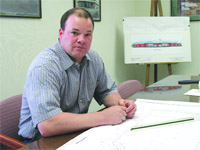
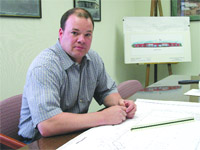
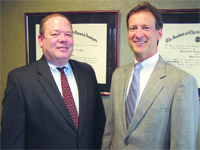
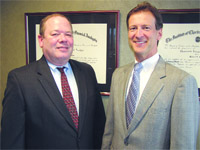
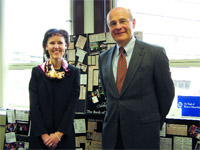
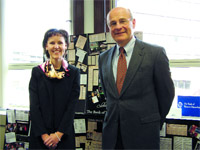
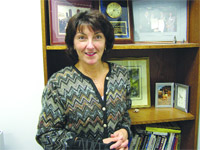
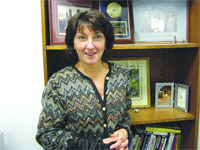
Bonnie Raymond and Carmen Bastos

Bonnie Raymond, right, with marketing director Carmen Bastos, said customer service and new product development are topping her list.

It’s not the largest credit union in the region, but Premier Source has been parlaying its ‘hometown service’ model into successful returns since the 1940s.
Today, that model remains a large part of the institution’s business practices, and it’s leading to new opportunities.

Bonnie Raymond, CEO and manager of Premier Source Credit Union, said massive growth or major changes to how the institution does business are not currently on the drawing board. However, recruitment of new members is, as well as the introduction of innovative, convenience-based products and services geared toward businesses and individuals, particularly in the credit union’s new home base of East Longmeadow.

“The biggest goal for us is to continue to attract a steady stream of members and to develop great products,” said Raymond. “We don’t need to be the biggest, but we would like to take our piece of the pie.”

Branching Out

Premier Source began as Kelko, a select employee group (SEG) credit union, in 1941, serving the employees of the Kellogg Envelope Company (later Westvaco) in Springfield. Since then, the entity has grown through a series of expansions and mergers.

By 1972, Kelko served employees and retirees of all Westvaco facilities and their families. Following a move to a new facility on Cottage Street in Springfield in 1993, Kelko’s membership pool expanded again to include businesses within the Springfield Industrial Park, which numbered approximately 200.

A 2000 merger with Twin Meadows Federal Credit Union, formerly based in Longmeadow, further expanded that base of SEG members to about 3,500, and added two branches at Springfield College and Western New England College, which still operate today.

A year later, Kelko merged again with Spalding Employees Credit Union of Chicopee, resulting in another branch office (now located at Top Flite in Chicopee) and a total membership base of about 4,100.

Kelko retained its name until 2004, a year before the company applied for a charter change to become a community-based credit union, thus opening its doors to any and all residents and employees within its service area. The move was made to combat the declining membership that many SEG credit unions have faced since the 1990s due to plant closings, consolidation, and downsizing. The charter was approved in February 2006.

Today, Premier Source has about 4,700 members with six offices: its branch on Cottage Street and newly constructed main branch on North Main Street in East Longmeadow, and those located at Top Flite, WNEC, Springfield College, and Hasbro Games, a branch that was added just six months ago.

Dollars and Change

With its new identity as a community-based credit union, Premier Source has been continuing its tradition of growth and cohesion in the market it serves. Its new main office in East Longmeadow was just opened in May, and a formal open house to introduce the branch to the community is being planned.

“In the beginning, we delayed a big marketing push because we knew we were putting up the new building,” said Raymond. “But under the old charter, we used to get calls from the community all the time, and now that we can serve them, I think word-of-mouth is going to be big.”

To augment that organic spread of information, however, Raymond said Premier Source has also begun some print and radio advertising, promotions at benefits fairs within local companies, and reaching out to area businesses.

“It’s not a huge splash, but it’s a big splash for us,” said Raymond. “We’re pretty small, but we feel comfortable in our identity as a small, hometown institution, and at this point, we’re most focused on slow, steady growth and trying to remain a true alternative to banking.”

Premier Source is on terra firma in terms of its financials, said Raymond. It reports $13.4 million in capital-to-assets, and total assets are currently $32.4 million. With that base bolstering the institution’s development efforts, Raymond added that her goals for growth are about 3% to 5% over current membership. She hopes to achieve that through continued community involvement on both local and corporate levels, and by promoting a suite of unique services and products.

“We’re having some specials on things like home equity loans to educate people that we offer that product,” she said, “and we’re hoping to recruit both new corporate and individual members.”

Some of the credit union’s efforts, for example, have been centered in East Longmeadow’s growing industrial park, a source from which Raymond said she’d like to glean some new members.

“Many of them have existing relationships with other credit unions or banks, and we’re not looking to bowl anyone over,” she said, “but we would like to let those companies know that we’re another alternative.”

Raymond added that Premier Source’s small, local feel appeals to many employees in the area.

“I think they see that small size and convenience of location truly are benefits,” she said. “It takes the pressure off the employee, and we strive to offer products and services that do the same.”

Direct deposit and free checking are already offered at the credit union, as are a number of unique amenities designed to make banking, and other time-consuming errands, easier for members. While making a deposit or withdrawal, for instance, members may also purchase stamps, discount movie tickets, and gift certificates to restaurants or attractions such as Six Flags.

“We’ve done that for many years, and we only sell to members,” said Raymond, adding that a new set of products is now in development, to be gradually introduced over time.

“We’re looking into product development to spur income, which in turn will help us add to our marketing budget so we can do more things in that arena,” she said. “We’re looking at overdraft protection, tier checking, and online bill pay; we’re also looking to offer mortgages. We have a referral service with Members Mortgage now that is effective, but I think we’d like to bring it in-house.”

Selling Service

As new products are rolled out, Raymond said a strong focus on member service is being maintained. She said it’s long been a strength for the credit union, and even as new opportunities present themselves, relying on existing strengths will allow Premier Source to preserve its already strong foothold in the region.

“We are on the smaller end as far as credit unions go,” she said, “but our forte is small-town service. That’s the atmosphere we want to create, and the image we want to portray.

“We feel strongly that it’s our role to work with people through good and difficult times, and we’re not interested in outsourcing every decision.”

And as Premier Source continues to carve out its piece of the pie, Raymond said it will be an overriding goal to strengthen community ties and to rely on the traditions of service the credit union has honed since 1941.

“Our new ads say ‘a star is coming,’” she said. “True, we’ve been here for some time, but as a credit union that is newly open to the public, there are plenty of new introductions to be made.”

Jaclyn Stevenson can be reached at [email protected]

Sections Supplements
To Ensure Adequate Support, Consider the Special Needs Trust

If you’re the parent of a disabled child, you’re probably concerned with the uncertainty of your child’s financial future and the realization that you will not always be around to provide for him.

Understanding your disabled child’s future needs and eligibility for available resources will allow you to create a plan that will protect his financial security. A supplemental needs trust (often referred to as a special needs trust) has become the preferred method to address these issues and offer assurance that your child will be taken care of after you can no longer do so.

Protecting Your Disabled Child’s Eligibility for Government Benefits

Your disabled child may be eligible for certain federal or state benefits such as Supplemental Security Income (SSI) and Medicaid (MassHealth). However, his right to receive these benefits may be jeopardized if he receives funds through a personal injury settlement, inheritance, or insurance proceeds, since SSI and Medicaid are designed for low-income and low-asset individuals. Each program has independent eligibility criteria that set limits on income and financial resources that an individual must maintain to secure or retain the benefits.

In order to qualify for SSI or Medicaid, a disabled individual cannot own more than $2,000 in assets, excluding certain items such as a car and, in certain circumstances, a home. Fortunately, the government has established rules allowing any additional assets over the $2,000 limit to be held in a trust for a recipient of SSI and Medicaid as long as certain parameters are met.

A special-needs trust provides a vehicle to preserve your disabled child’s eligibility for federal and state benefits by keeping these assets out of his name and setting aside all assets for expenses other than your child’s basic support. A special needs trust may not provide for room and board, but can pay for out-of-pocket medical and dental expenses, annual checkups, eyeglasses, transportation and vehicle purchase, education, insurance, rehabilitation, home health aides, entertainment (i.e. vacations, movies, concerts, ballgames), and goods and services that add pleasure and quality of life.

Types of Special Needs Trusts

Generally, there are two types of special needs trusts for disabled people. A self-settled special needs trust is one that holds funds originally belonging to a disabled child or his or her spouse, and a third-party special needs trust is one funded by someone other than the disabled child or spouse.

Self-settled Special Needs Trust

In August 1993, Congress enacted the Omnibus Budget Reconciliation Act of 1993 (OBRA 93) to assure that only the individuals who truly need such financial assistance have access to it. OBRA 93 created two types of self-settled special needs trusts that may be used by individuals who either presently are, or expect in the future to become, eligible for SSI or Medicaid benefits.

The first type of self-settled special needs trust is an individual disability trust, commonly referred to as the d(4)(A) Trust. It is typically used to protect and hold the proceeds of a personal injury lawsuit or an inheritance to which the beneficiary is entitled, so that the beneficiary remains eligible for SSI or Medicaid benefits. To create this type of trust, the disabled child must be under the age of 65, and it may only be created by a parent, grandparent, legal guardian, or a court. The potential disadvantage to a (d)(4)(A) Trust is that those assets remaining in the trust upon the beneficiary’s death must first be spent to reimburse Medicaid for any health care costs paid on the beneficiary’s behalf. However, after Medicaid is reimbursed, any unused assets can go to other family members or friends.

The second type of self-settled special-needs trust is the pooled disability trust, commonly referred to as the (d)(4)(C) Trust. This trust is typically used in a situation where a disabled individual does not meet the criteria necessary to establish a (d)(4)(A) Trust. Unlike the (d)(4)(A) Trust that can only be created for a disabled child under age 65, the (d)(4)(C) Trust may be created for the benefit of a disabled child of any age. Further, this type of trust may be created by the disabled individual himself. It is managed by a non-profit association that pools the funds of multiple beneficiaries for investment purposes, while maintaining separate accounts for each beneficiary.

The (d)(4)(C) Trust also requires a Medicaid payback requirement. Upon the death of the disabled child, a portion of the assets remaining in the trust will be paid to the non-profit entity that managed the assets, and Medicaid will receive reimbursement based upon an accounting of the principal left in the trust attributable to the disabled child. If there is any remaining balance, it can be left to the disabled child’s heirs or any other party named by the child. The (d)(4)(C) Trust is often a better option then the (d)(4)(A) Trust when the assets are insufficient to make it practical from an economic standpoint to appoint a corporate trustee to manage the assets.

Third-party Special Needs Trust

A third-party special needs trust is established with funds that belong to someone other than the disabled child. For instance, a parent or grandparent may create and fund it with cash, life insurance, or other assets during their lifetime or upon death.

A third-party special needs trust can be created for a disabled child of any age, and the main advantage is that Medicaid will not be entitled to any form of reimbursement for services when the disabled individual dies. Therefore, any assets that remain in the trust may be designated to other family members or friends. A third-party special needs trust is a good idea for families where aunts, uncles, and grandparents want to leave money for a disabled child.

An Alternative Solution — Establishing a Caretaker for Your Disabled Child

In lieu of establishing a special-needs trust, an alternative is to leave a fixed sum of money to your disabled child’s caretaker, typically a sibling or other close relative, with the understanding that the money will be spent on your disabled child. However, this alternative is problematic for several different reasons.

First, the money left to the caretaker on your child’s behalf is subject to that person’s legal judgments and divorce settlements, and it can even be lost in bankruptcy. Second, the caretaker is not subject to any legal obligation to use the funds on behalf of your disabled child, and therefore can spend the money as desired. Third, the caretaker may be subject to negative tax implications, which subject him to a higher tax rate than if the money was held in a Special Needs Trust.

Finally, in the event that the caretaker dies before your disabled child, without leaving a will, or does not provide for your child under his own will, the money would be distributed to his heirs.

Special-needs trusts should be considered when you begin your estate planning, and it’s never too early to start planning for your disabled child’s financial future. Your plan should be prepared by a qualified attorney to ensure that your goal to provide lifelong care for your disabled child is accomplished.

Brett A. Kaufman is an estate planning and elder law associate with the law firm of Bacon & Wilson, P.C. His practice includes sophisticated estate-planning issues, guardianship, conservatorship, and planning for long-term care; (413) 781-0560;[email protected]

Sections Supplements
East Longmeadow/Longmeadow Chamber Builds Momentum, Membership
Dawn Starks

Dawn Starks, president of the East Longmeadow/Longmeadow Chamber of Commerce, said increased visibility is a primary goal to boost membership.

Earlier this month, torrential rains across the region made driving conditions sticky and motorists increasingly nervous, as tornado warnings crackled from car radios.

Members of the East Longmeadow/ Longmeadow Chamber of Commerce were also biting their fingernails that day, having planned a large ‘open house’ at Spoleto’s Restaurant in East Longmeadow to recruit new businesses and beef up membership on the group’s various committees.

At the end of the night, however, those committees had been filled, and a standing-room only crowd applauded the efforts of the small, two-town chamber for surviving the storm.

Dawn Starks, president of the chamber and business manager for Acres Power Equipment in East Longmeadow, said the event was just one way the organization is calling greater attention to itself and the communities it serves, as part of a larger marketing and outreach campaign.

“We’re stepping up our efforts as far as our visibility goes,” said Starks, noting that the effort is aimed at highlighting the chamber’s work, but is also an attempt at boosting its numbers.

Raising the Ranks

Starks said that, like many membership organizations across the region and the country, the East Longmeadow/ Longmeadow Chamber of Commerce, part of the Affiliated Chambers of Commerce of Greater Springfield, has experienced a drop in its ranks in recent years. She said it began following the economic downturn spurred by 9/11, and has yet to reverse itself.

“Trends in the workplace, including attrition, have a big impact on business-oriented organizations,” she said. “Employers are using more of their employees’ time, and using it in different ways. In our case we saw an initial membership drop in 2001, and never quite got back to the numbers we’d had previously.”

There are other challenges for this group, such as the contrast between the two towns and their business communities; East Longmeadow has a fairly large industrial sector with many large employers, while Longmeadow’s profile is largely retail and dominated by much smaller employers. Roughly 150 Longmeadow and East Longmeadow businesses are now active members of the chamber, though in the past that number has been closer to 200.

However, Starks said she’s optimistic about building those membership numbers back up in the current business climate.

“Business is booming in East Longmeadow in particular,” she said. “Our goal is to recruit at least 25 new member businesses, and we think that’s very doable.”

To do so, Starks said the Chamber has begun by ramping up its media relations efforts, designating a public relations contact, Lavada Munoz, an advertising representative with the Republican, among its ranks.

“We’ve made a concerted effort to get news out on all of our events,” said Starks. “We realized that if no one knows what we’re doing, it doesn’t matter what we’re doing.”

One such event the chamber devised was the open house held during the May 16 rainstorm at Spoleto’s, in East Longmeadow Center Village. Starks said the event was styled after the Affiliated Chambers’ After Five series to a degree, but differed in that its primary focus was recruiting, not networking.

“We’re looking for new members, but we’re also trying to get our existing members more engaged, and to sign up for our various committees.”

Starks said she and her fellow board members — 17 of them — employed a grassroots approach to marketing the event and its goals, making personal visits to area businesses and calling attention to the importance of chamber involvement, not only on a regional level, but on a local level as well.

“Being part of the ACCGS is a huge benefit,” she said. “But we also think involvement on the town level is important in terms of pushing the entire region forward and making valuable connections.”

A New Attitude

The chamber’s clerk and chair of its membership committee, Edward Zemba, co-owner of Robert Charles Photography in East Longmeadow, said the chamber has recorded some successes in recent years that he hopes the group can build upon.

“Our communities are growing, and it is in large part due to organizations like the Chamber of Commerce,” he said. “Currently, we’re resetting the meter as to what the chamber can do for the businesses of our community, to keep fostering that growth.

“We want to increase the number of chamber members who are serving on committees,” he added, “and we intend to begin an effort of educating both existing and prospective members as to the true value of being a chamber member.”

Following its first-ever open house recruitment event, the group seems to be on its way to achieving those goals. Five new businesses signed on as members, and all of the open committee posts were filled; a waiting list for inclusion on the committees was also drafted.

However, Zemba went on to note that translating the mission of the chamber is key to attracting new membership, and that’s one area in which he sees a need for attention.

“Costs are always on the minds of business owners,” he said. “That’s why the chamber needs to do a better job of educating its membership on the benefits. I’m on the board, and even I don’t know half of the benefits. This is a challenge for many organizations, and we’re taking steps to correct it.”

In addition, the East Longmeadow/ Longmeadow Chamber is also ramping up its efforts in other areas, such as support of education, in part to further increase its visibility.

The group typically disseminates about $10,000 in scholarships a year, and also serves as a resource for students seeking internships and externships and job-shadowing opportunities. It also had a hand in developing East Longmeadow High School’s career center, and refurbishing the Longmeadow High School auditorium.

The organization is also becoming a lobbying force, advocating for several pieces of business-oriented legislation. It is a proponent for maintaining a single tax rate in East Longmeadow for residents and businesses, for example, and also a strong voice regarding the issue of traffic mitigation, a pressing concern particularly on Route 83 and surrounding East Longmeadow’s famous (or infamous) rotary, as the town’s population and business community continue to grow.

“In growing communities like East Longmeadow and Longmeadow, it is crucial that the growth be managed,” said Zemba. “The chamber is here to help balance this growth that is taking place.”

Building a Legacy

Starks added that the two communities are indeed growing more prosperous in their own right, which adds to the strength of the chamber, but also to its responsibility as an advocacy body.

“We have a diverse set of businesses — major corporations as well as mom-and-pop shops,” she said. “We advocate for fair zoning and regulations, but we work closely with the town on those issues. The residents have very valid concerns, but it is our job to ensure that the businesses are heard as well.”

Starks said the chamber also partnered actively with the town to advocate for the creation and support of Center Village, the town’s newest development, devised and managed by Falcone Retail Properties LLP. It includes a wide array of businesses, including Rocky’s Hardware, HealthTrax health club, a Starbucks, and Spoleto’s restaurant, owned by Claudio Guerra, who operates five other eateries in Northampton and a regional catering service.

“We really see Center Village as a legacy project for the town, and it’s beautiful,” said Starks. “I think it raises the bar for other businesses in town, or other businesses looking to come into East Longmeadow.”

That’s one reason, said Zemba, why Spoleto’s was chosen as the venue for the chamber’s open house event, which was also sponsored by a number of chamber businesses, including Acres Power Equipment, Business Partner, CMD Technology Group, Graziano Gardens, Marx Event and Entertainment Solutions, PIP Printing, Reminder Publications, Robert Charles Photography, and W.B. Mason.

“The event itself was very reflective of what our chamber is able to accomplish when it sets its mind to doing something,” he said. “In spite of severe weather warnings, we managed to put together one of the most successful events in years.

“The fact is, an event like this can’t take place without the involvement of many.”

And with rain boots and umbrellas in hand, the East Longmeadow/Longmeadow Chamber is setting its sights on sunnier skies.

Jaclyn Stevenson can be reached at[email protected]

Sections Supplements
Graziano Gardens Cultivates a Retail-centric Model to Meet Growing Demand
Chris, Mark, and David Graziano

From left, Chris, Mark, and David Graziano, in their garden center, say the retail arm of their operation is blooming.

Chris, David, and Mark Graziano, owners of Graziano Gardens in East Longmeadow, have the prerequisite drive and determination that all business owners need to succeed.

But they also have a knack for expansion, in terms of service, style, and sometimes that intangible something extra that makes one company stand apart from the rest.

“We want our place to have the ‘wow’ factor,” said David Graziano, vice president. “I think it already does now, but there’s always room for more.”

The Graziano brothers took their first steps toward the elusive ‘wow’ factor 10 years ago, adding a distinctive, red-roofed building to the front of their expansive garden center. With pointed towers, massive double doors, and green trim that combine to give the cream-colored façade a holiday feel, the Christmas Castle, as it’s known, was inspired by a ceramic miniature that is part of a Christmas village made by Department 56, a leading retailer and designer of giftware and seasonal décor.

Graziano said the Christmas shop, which carries Department 56 collectibles and a wide array of ornaments and gifts from well-known companies such as Byers Choice and Yankee Candle, helps to differentiate the company from other garden centers, and also helps what is normally a very seasonal business extend its reach into the winter months.

But behind those medieval doors, the business also includes a greenhouse and nursery, as well as a garden and gift shop that are all growing with demand and an increasingly diverse product list.

“We’ve done some expansions over the years, all geared toward improving quality and serving the true gardener,” he said.

The trio incorporated Graziano Gardens and opened their garden center on Elm Street in East Longmeadow in 1986, and since then have steadily grown the business to cater to both serious gardeners and casual practitioners.

Plants, shrubs, trees, and both annual and perennial flowers are grown and cultivated on site year-round, on the center’s primary five-acre location as well as on an additional 24 acres on Elm Street.

Peak times for business are in the spring and summer, but the fall months are also brisk, and the holiday season is becoming increasingly popular at Graziano Gardens thanks to its constantly expanding Christmas shop.

The business typically closes its doors for just two months out of the year, January and February, during which time spring and summer flowers, plants, and trees are readied for the coming season. It’s also during that time that the ever-changing suite of products, both alive and otherwise, is revisited.

“In the garden center, heating costs and other utilities are a challenge to keep up with, especially in recent years,” explained Graziano. “We try to offset those costs by offering products that stand out, or that people can’t find anywhere else.

“Another great thing about our greenhouses is that we grow and retail from the same area,” he continued, “and people love to browse and shop in the greenhouse atmosphere and environment.”

The Winner’s Circle

Just this month, Graziano Gardens completed the necessary training to become a ‘Proven Winners’ certified garden center.

Proven Winners is an international marketing cooperative comprised of several international propagators, which develops new hybrid and floral varieties that perform better for both the grower and consumer.

As a certified garden center, Graziano Gardens employees successfully complete a training program and test, which evaluates their gardening knowledge and ability to assist customers with questions about plant performance, characteristics, and care.

Chris Graziano, president and the center’s lead grower, said the Proven Winners certification and other proactive moves have helped keep gardening and landscaping relevant in customer’s minds, especially in a climate that has nearly everyone increasingly pressed for time.

“Things have changed a lot,” he said. “Gardening in general has changed — people don’t have the time to garden, but still like the atmosphere plants and flowers create. We offer everything from plant products for the serious grower to landscaping to gifts, and that has been a very good mix for us.”

It also allows the business to stay on top of a wide array of trends, from home décor to landscape construction, and everything in between. Graziano said container gardening — creating mini-gardens of flowers, plants, or herbs in decorative pots, generally — is one area where the center is able to draw from its various modes of expertise to offer a service for which there is growing demand.

“They’re easier to take care of, and we can even create one and deliver it right to someone’s patio,” he said, “and on top of that, flowers themselves are being cultivated to be more hardy, and to flower more.”

Down and Dirty

The retail focus has also helped to foster a pipeline of regular customers, added company treasurer Mark Graziano. They often visit the center’s gift shop for the first time and later realize the breadth of gardening accoutrements that are available, he said.

A 10-person staff that receives regular training in gardening and landscaping helps to answer questions, and the various gardening and landscaping options homeowners and business owners can take advantage of are explained.

“The coolest thing about our setup is it attracts a lot of walk-ins,” he said, noting that, while Graziano Gardens still strives to serve ‘serious gardeners,’ the business is also prepared to introduce newcomers to the various ways in which gardening and landscaping can add value to home or business. “People see this whimsical Christmas castle, and they wonder what’s inside. That attracts new customers, and that leads to landscaping consultations.”

Indeed, the company’s landscape design and installation component, which gave the Graziano brothers their start in 1982, is still a large part of the business.
Most of the company’s landscape construction jobs are residential, but it handles about a half-dozen commercial projects each year, for clients such as Big Y, Springfield College, and Rocky’s Hardware. Graziano Gardens also recently completed the landscape design and construction for East Longmeadow Center Village, the town’s newest development.

However, David said the retail aspects of the company now represent about 70% of its total book of business, and it’s in this area that he and his co-owners hope to continue to evolve.

“We are farmers-turned-businessmen,” he joked, explaining that landscaping was first introduced to the brothers during their high school and college years, and later, the three decided to pursue an entrepreneurial venture in the industry together. Chris attended the Stockbridge School of Agriculture at UMass-Amherst, and can generally be found among the flats and hanging baskets (nearly 3,500 of them) in the garden center’s 10,000-square-foot greenhouse.

Mark has cemented a role for himself within the center’s sales and outside operations, handling planning and consultation with clients concerning landscape installations, and discussing options for plantings and plant material choices with customers. After receiving a Business degree from Western New England College, David signed on to focus largely on administration of the business, including financial, staff, and customer services.

It’s Ornamental

“But we all wear different hats,” said David, “and we’re all still getting our hands dirty. There’s a real passion for what we do here, and we wouldn’t get dirt under our fingernails without absolutely loving it.

“But here,” he said, with a wave of his hand around the large garden center, “here is where we really want to be. Here is the future of our business.”

Jaclyn Stevenson can be reached at[email protected]

Sections Supplements
Tradition and Innovation Make Tony and Penny’s a Hidden Gem
Tony & Penny's Sign

The sign isn’t visible from the center of town, but most residents can point the way to Tony & Penny’s.

Tony and Penny’s restaurant and banquet hall is tucked away on a quiet side street in Ludlow, not far from Turnpike Exit 7, but in many ways miles removed from the bustle on Center Street.

Still, the locals know the way, and they often point visitors in the right direction.

That could be one reason why the venture is going strong after nearly 30 years in business. Its owner, Portuguese emigré Antonio Sebastiao, said the restaurant side of the business is steady, while requests for banquet and catering services are brisk, to say the least. Both off-site and on-site, Tony and Penny’s caters anniversaries, birthdays, funerals, corporate dinners and meetings, and other events, including weddings, which in the Portuguese tradition, said Sebastiao, can be very large affairs — sometimes with 200 to 500 guests.

“Right now, we can only handle about 20% of the calls we get,” Sebastiao said. “We try to bring quality food to the table, especially seafood, and make sure that our customers are getting their money’s worth — I think that’s part of the reason for our success.”

Sebastiao’s own story is one that illustrates the American Dream. He came to the U.S. at 21, taking a job in a factory earning just a few dollars a week.

“I couldn’t support my family on that,” he said, “and I’d always wanted to have a restaurant.”

He started mulling ideas for an eatery, using the Americanized versions of his name and that of his wife, Piedade.

History in the Making

Tony and Penny’s opened its doors on East Street in Ludlow in 1980, at the time a small pizza shop. Five years later, Sebastiao moved the business to its current location on Canterbury Street, formerly the town’s Italian Club, built in 1936.

He purchased the building in 1983 and spent two years remodeling, creating a small dining area with a hometown feel, a take-out window, and a larger banquet area for private functions, which can accommodate about 220 people.

Sebastiao also revamped the menu to offer finer dining and a number of Portuguese selections to honor his heritage and that of a large faction of Ludlow’s population. Today, the menu has been expanded to include American and Italian offerings as well, reflecting Sebastiao’s new home and the history of his restaurant.

The combination has proven successful. What began as a small mom-and-pop shop has grown to become one of the busiest banquet facilities in the region.
“Ludlow is not a town with a big, busy center,” he said. “We don’t have big retailers drawing people in from other places. What we do have are people — residents who are our fans and keep us going.”

Many of those residents are frequent visitors to Tony and Penny’s, either as banquet guests or Friday night diners. Recently, Sebastiao said the regulars have found themselves waiting for a table more frequently, and though they hate to wait, it’s a clear sign of the restaurant’s growing popularity.

“When I first opened, I thought this place was too big,” Sebastiao remembers. “Now, sometimes I think it needs to be five times bigger.”

Fine Kettle of Fish

Regulars often patronize Tony and Penny’s for the authentic Portuguese cuisine, including traditional dishes such as Mariscada (half a lobster, clams, scallops, and shrimp in a traditional Portuguese spicy red sauce, served in a iron pot) and Bacalhau (salted cod topped with roasted peppers and extra virgin olive oil).

However, those specialties have also attracted customers from across the Northeast, many looking not only for Portuguese dishes, but also for fresh, innovative seafood.

Sebastiao explained that seafood is a staple of the Portuguese palate, and therefore Tony and Penny’s regularly offers a wider array of fish and shellfish than most eateries.

He listed among them lobster (usually found in the front of the restaurant, giving children a thrill from their oversized tank), scallops, cherrystone and littleneck clams, cod, schrod, and mussels, often with a unique mix of spices and grains such as saffron, chorizo, and red pepper.

“Seafood is a very expensive part of our business,” said Sebastiao, “but we do a lot of catering because of it — we’ve been doing more in the eastern part of the state, especially in the Boston area, and within other Portuguese communities.”

Moving ahead, Sebastiao said he’s still considering an expansion or a second location, perhaps bringing Portuguese culture to another community.

There are no firm plans on the drawing board — Sebastiao nearly opened a second location in Wilbraham two years ago, but lacked the necessary management and the time — “it’s just too busy here,” he said.

He has three daughters, who have chosen careers outside of the restaurant business. Sebastiao said he still holds on to the wish that some day he can pass his restaurant on to one of them, but concedes that he understands their choices, too.

“They went to college and took jobs in their field of study, and that’s what you’re supposed to do,” he said. “I also think they recognize what a harsh job owning a restaurant can be. I can work 9 a.m. to midnight and still have things to do. You never know how business will be from one day to the next, and it’s hard to get started.

“When we first opened, it was hard to make ends meet,” he continued. “It’s different now … but the work has not changed.”

Down the Street, Take a Left

Still, Tony and Penny’s continues to attract new diners and a steady stream of catering clients.

“I have no complaints,” said Sebastiao. “Especially being in a small town, located on a side street.”

Indeed, plenty of people know the way to Antonio and Piedade’s place, and look forward to pointing toward Canterbury Street for many years to come.

Jaclyn Stevenson can be reached at[email protected]

Sections Supplements
Wardrobe Consultant Says ‘Business Appropriate’ Is the New Workplace Standard
Mary Lou Andre

Mary Lou Andre says professional dress is less about clothes and more about creating confidence and a “visual resume” through personal style.

“When in doubt, don’t wear it.”

Among the many pieces of advice offered by Mary Lou Andre, founder of dressingwell.com and author of Ready to Wear: An Expert’s Guide to Choosing and Using Your Wardrobe, it’s those words that she underscores the most.

“Clothes should flatter your figure, but also your personality,” said Andre. “And if clothes are stressing you out, something’s wrong.”

That could be because many professionals do, indeed, carry a measure of doubt about their clothing choices and those of their colleagues.

New styles — from stain-resistant Dockers to skinny pants — create new challenges, and relaxing dress codes across the country also foster confusion. Ask what, exactly, ‘business casual’ is, for instance, and you’re likely to get more than one answer.

“Today, dressing for work can definitely throw us,” said Andre, “especially with all of these new terms being thrown at us. The best course of action is to think not in terms of business formal or business casual, but simply business appropriate.”

Buckle Down and Button Up

Andre speaks nationally on the topic of professional dress and organization — and did so at Bay Path College’s recent Women’s Professional Development Conference. Her Needham, Mass.-based company serves as a resource for individuals as well as corporations, and she says that when dressing for work, both men and women at all levels must look past trends and lingo, and instead develop a strategy that works for them, while also satisfying the unique requirements and tones of their workplaces.

She added that, while dressing for work can seem like a small aspect of life when compared to the other tasks that create the busy schedules of professionals, it is nonetheless a topic that many companies have spent countless hours addressing, in the form of corporate dress codes.

“Especially in recent years, human resources departments have become the fashion police,” she said. “It’s not just jeans vs. khakis on a dress-down day they have to think about. Now, they’re evaluating how appropriate Capri pants, city shorts, and gauchos are. They’re looking at different styles of corduroys and deciding which ones are casual and which ones are not.”

Even footwear is getting a second look, said Andre, noting that in many offices, open-toed shoes are being outlawed for both hygienic and aesthetic reasons. “Some people just don’t like to look at feet,” she joked.

But on a more serious note, Andre said those increasingly complicated dress policies make it all the more important for employees at all levels to take charge of their own wardrobes and appearances.

“People need help defining the different types of business attire so they can adhere to their company’s policies,” she said, “but they also need help creating their own, personal dress codes, so they can dress for work in a way that makes them feel comfortable and confident.”

Skirting the Issue

In fact, Andre said dressing professionally is actually less about clothes and more about achieving a look that reflects personality as well as respect for one’s career, workplace, and goals for the future.

“It’s about achieving a style that is the look of a leader, and also makes you feel your personal best,” she said. “Think of the connections you can make at your personal best.”

Andre added that employees’ appearance in the workplace is a sort of visual résumé, which translates a number of subtle messages. Someone who is consistently pulled-together and polished, for instance, is generally seen as confident, trustworthy, organized, and credible, while those who are often disheveled can be perceived as lazy, unprofessional, or untrustworthy.

Those realities add some weight to the notion of dressing well on the job, especially among young professionals who see dress as less important.

“People who reject professional dress often think they are losing a bit of themselves or their personality, when really it’s not about the clothes so much as it is helping to create a respectful, appropriate environment in which everyone feels safe.

“It’s not just about you,” Andre cautioned. “It’s about the other people in the office and allowing them to feel comfortable. When you go to work, you have no idea what people’s hang-ups are.”

That said, Andre was quick to note that improving business dress does not necessarily translate to spending thousands of dollars or to tossing an existing wardrobe.

“Connect with what’s on the inside, and then just step it up a bit — we don’t all have to be beauty queens or fashionistas.

“And, it’s also about communication,” she added. “When someone is dressed in a way that doesn’t reflect their company, it is distracting, and they are less likely to be heard as well as seen in a positive way. I have a client who is a news anchor, who told me once, ‘I know I’m well-dressed when people call not to comment on my outfit, but on the stories I’ve reported.’”

Through her own research, Andre identified three ways in which people form impressions of others — through verbal (word choice), vocal (voice), and visual (appearance) channels. She said visual impressions are generally made first, and weigh most heavily on a person’s assessment of another person — about 55%.
“That’s not all about clothes, either,” said Andre. “That includes body language, such as someone’s posture, smile, and use of eye contact.”

Suits U

She added that even with terms like ‘business casual’ and ‘resort formal’ muddying the waters, there are a few rules of thumb professionals can follow to make dressing for work easier, and they start with rejecting the lingo altogether.

“Today, professional image is more important than ever,” she said. “When in doubt, forget trying to fit your wardrobe into classes, like business formal and business casual.”

From there, Andre suggests remaining mindful of professional goals when choosing clothes.

She begins with the old adage of ‘dressing not for the job you have, but the job you want,’ and expands on that idea.

“Dress for your day,” she began. “Ask yourself what you’re going to be doing that day — will you be in the office, or traveling? — and try to dress appropriately and comfortably.”

Andre said another reason why ‘business casual’ can lead to wardrobe misfires is because it discounts the effect and versatility of a standard workplace staple — the suit.

“Suits are still a very powerful garment,” she said, “and they are an excellent way to incorporate ‘capsule dressing’ into a wardrobe — a few pieces, which can be worn many different ways.”

When capsule dressing, Andre said pieces in neutral colors such as black, brown, navy blue, and gray are more versatile, and having a few foundation pieces rather than a wide array of outfits that cannot be diversified leaves more time and money to go the extra mile in terms of achieving that polished look. Sleeves and hemlines should be altered for the best fit, she said, and tops in many colors can be used to change the look of an outfit and to add flair.

“The details matter,” she said, listing a few touches that pull a professional look together.

“Get one good tote, and outerwear, like a trench, should not be an afterthought. Think of tops as accessories, and think of shoes as investments. People notice your shoes — always put your best foot forward, even when commuting.”

Trail Blazers

Finally, Andre suggests taking clothes for a test drive — “in the morning, 10 minutes before work, is not when you want to be trying something on for the first time” – and keeping closets organized at home.

“You should make your closet look like a store,” she said. “Group shirts, pants, dresses, and suits together, ironed. That will add some peace of mind to the process of dressing, and dressing well.”

Ensure that zippers, buttons, and snaps are all functional, said Andre, and in time, a professional style can appear effortless to others.

“The details matter,” she said. “That extra attention creates a look that fits in, while allowing you to stand out in a positive way. But if you’re wearing something that doesn’t make you feel secure, comfortable, and powerful, there’s a good chance that it’s the fit or the style.

“In that case, put it back.”

Jaclyn Stevenson can be reached at[email protected]

Sections Supplements
It Does When Being Nice Is More Important Than Performance

How many missed deadlines and mistakes revealed too late have sucked profits out of your company? Do dysfunctional behavior, infighting, and politics sap your organization’s vitality daily?

Sure, you’ve hired the best consultants and trainers to address the problems, but for some strange reason they seem to resurrect themselves only months later, their chronic nature mystifying. If this sounds like your organization, you may be experiencing the common, yet unspeakable, threat that secretly sacrifices performance and profits in thousands of companies worldwide.

This threat resides in your organization’s culture, and seduces managers to treat symptoms while avoiding the real problems, to confuse activity with results, and to burn cash faster than you can handle. It’s an unspeakable threat because it wouldn’t be polite to mention it. And in that fact it reveals itself — a culture of politeness.

Polite cultures do everything but tell the truth, unless it’s very comfortable to do so. But being polite is a good thing, isn’t it? After studying its effect in hundreds of companies, one thing becomes clear: Politeness eats truth. And lack of truth eats profits.

How do you know if this threatens your company? Easy. Is being ‘nice’ more important than performing? Rather than reveal the truth about a situation, do people often seek to be polite, thus avoiding possible discomfort, anger, retribution, and other unpleasantries? Do employees hide and deny uncomfortable issues, burying them within closed groups, hoping they will go away?

But if you’re not in denial, there is a way out. Performance accelerates tremendously when people move past deceptions and verbalize real concerns, which can finally be addressed and moved out of the way. Yes, initially telling the truth will upset people and cause discomfort, but good employees love it, and it drives accountability to new levels.

The collateral damage from keeping the truth at unspeakable levels can include the following.

Dead Weight

Dead weight in management prevents great people from assuming leadership, and keeps mediocre performers on staff. But politeness ensures policies are in place that actually prevent marginal performers from being let go. For example, a company may require five written warnings before someone can even be terminated. Or when a manager wants to fire someone and HR checks the employee’s file, they find that the manager gave the employee stellar reviews. When asked why, the manager often replies, “I didn’t want to hurt the employee’s feelings.”

Of course hurting feelings isn’t polite, but neither is avoiding accountability. So, look at your policies and work to create fair systems, which enable you to effectively deal with the dead weight that stalls performance. Then train your managers on how to use the new policies and be authentic with their staff. Once you start removing dead weight, employees will be happier. Great people want to work with great people, and to know that management notices what they contribute.

Phantom Leadership

Who are the real leaders your people follow? Many programs get stalled because the managers on the organizational chart aren’t the ones the employees are following. That’s right … people are following phantom leaders! The formal leadership declares an initiative, but the phantom leadership is who the people really listen to.

What if you cultivated the right talent by identifying the real champions in your company — those people who can really lead? These champions don’t have to be technically competent, but should be able to inspire others to follow them toward where the organization wants to go. Does your company know how to select those leaders, and do they invest the time and money to train them with the appropriate leadership skills? Companies who ignore phantom leadership get nowhere fast.

Doomed Projects

One study found that more than half of employees surveyed felt they were involved with a doomed project. Sounds like a Dilbert comic, but unfortunately it’s true. Of course, there are some projects that may appear doomed, but from a bigger picture they make sense. The problem is, with a culture of politeness you’ll never find out. Are you capable of uncovering the really doomed projects?

Dissatisfied Customers

I left a hotel once and informed the desk clerk that there was a problem with the kitchen staff regarding room service. She looked shocked, not about the poor service but that I would be so impolite as to mention it. As I left, I suggested that she may want to mention it to management. I knew she wouldn’t. It wouldn’t be polite.

Does politeness stop invaluable reconnaissance of customer satisfaction data in your company? Are your employees empowered to handle customer issues without fear of retaliation or appearing rude? Do you have a system in place for dealing with customer complaints?

Weak Management Teams

How much are your executives getting sucked into operations? If too much, you can be sure they have a weak management team under them. Is anyone brave enough to mention this or to hear it about themselves? Sure, getting into operations is acceptable in small companies, turn-arounds, acquisitions, and emergencies, but, unfortunately, executives get sucked into operations far too long. Still, at least everyone is polite in not mentioning it.

Great leaders find the weak links in their team and address the issue. Perhaps the employee is in the wrong job or the wrong company. Like the saying goes, you either change people, or you change people.

Get Started

Performance trumps politeness every time. This doesn’t mean that people have to be rude. But it does mean that respectful, authentic admission of the truth should not be sacrificed because of a culture of politeness.

Winning companies have a habit of getting used to doing things differently, even if the changes are discomforting. To drive profits higher, seek to speak the unspeakable. Strive to encourage authentic and honest communication in your staff. Unless, of course, it might be too impolite.

Don Schmincke is author of The Code of the Executive; www.sagaleadership.com. Darryl McCormick is senior vice president for Human Resources and Organization Development at Stamford Hospital in Stamford, Conn. He also provides services to other health care organizations to assist them in transforming their cultures; (203) 425-9705.

Sections Supplements
STCC’s Student Business Incubator — Where Ideas and Passion Come Together
Nancy Kotowitz

Incubator tenant Nancy Kotowitz has created a business out of helping people become better step-parents.

Since its formation in 2000, the Student Business Incubator in the Andrew M. Scibelli Enterprise Center in STCC’s Technology Park has helped many young, and not so young, entrepreneurs turn ideas and dreams into successful ventures. Technically a room with nine cubicles and a mailing address, the incubator is, in reality, a community of determined business owners trying to learn by doing.

Nancy Kotowitz says it’s hard enough raising one’s own children, let alone someone else’s.

She should know. She has two stepchildren in addition to the five children she had with her first husband and another with her second spouse. She told BusinessWest that, not long after her second marriage, she went on a mission to become, in her words, the “perfect step-parent,” and later went about creating a support group for those facing the same challenges she was.

Her many experiences in this realm led to her conclude that there was a huge need for support services within the large step-parent population, and she went about trying to meet it.

Her vehicle is called step-parenting.com, a Web-based business and one of the many intriguing ventures in various stages of development within the Student Business Incubator in the Andrew M. Scibelli Enterprise Center (SEC) in the Technology Park at Springfield Technical Community College.

Technically speaking, the incubator is a large room on the building’s ground floor that contains nine small cubicles (eight are currently occupied) in which each tenant entrepreneur may conduct some business duties. But in reality, said the facility’s coordinator, Karen Knight, the incubator is actually a community — one without any real walls.

The student entrepreneurs, who have ranged in age from 14 to around 70 since the incubator opened in 2000, share their experiences, frustrations, and hopes for the future. They also take valuable lessons in business and how to grow a venture from agencies within the SEC and individuals across the region who have been there and done that. And ultimately, they work to take their often-unique product or service to the marketplace.

“There is a lot of cross-fertilization of ideas here; it’s an extraordinary place,” said Knight. “People share resources, but they also share their dreams.”

The current mix of businesses is representative of the diversity that has defined the facility since it opened its doors. In addition to Kotowitz’s venture, there is Jx2 Productions, an event-management company that provides DJ, lighting, sound, staging, and other services; thingreen computing, a remotely hosted desktop services venture; Multicultural Multimedia, producers of promotional advertising video clips for local Latino and Hispanic-owned businesses; Kristoriya, a company that designs and distributes customized decorative gift baskets; Tip Off Sales Force, a provider of in-store merchandising and promotions for specialty product manufacturers; Beyond Brackets, creators and producers of an innovative shelf and bracket system; and the latest addition, Irie Designz, which designs and prints high-end T-shirts.

The entrepreneurs are as diverse as their ventures. Andrew Jensen, 20, a graduate of Agawam High School, started Jx2 with his twin brother when he was 14, and has grown it steadily since. Viktoriya Romanchenko, who has partnered with Kristen Thornton to operate Kristoriya, immigrated to the U.S. from Russia earlier this decade. Paul Wilson, 45, owner of Irie Designz, is a native of Jamaica who came to the U.S. in 1995 and spent several years in the Army, among other diversions, before getting into the screen-printing business.

Knight and Diane Sabato, director of STCC’s Entrepreneurial Institute at the SEC, told BusinessWest that there is a lengthy process for getting one’s name and business on one of the cubicles in the incubator.

There are interviews, tours of the facility, an eventual request for a business plan, and some more interviews, said Sabato, adding that, in addition to good answers, officials at the facility are looking for something else — passion, for both a concept and the rugged process of making it into a viable business venture.

And when asked how one recognizes passion, Sabato said it’s not very hard.

“They exude it,” she said of those who possess that quality, adding that this makes it fairly easy to spot those who don’t.

In this issue BusinessWest goes inside the incubator, or hatchery, as officials there call it, to see how it helps tenants get their ventures off the ground — while creating a self-supporting entrepreneurial community in the process.

Not an Eggs-act Science

The business card/bookmark that Kotowitz hands out for her business describes her Web site as “First aid for your stepfamily.” It includes some bullet points that hint at the challenges her clients and potential clients face, and some of the many things that can be accomplished by seeking help, such as:

  • ‘Get your step-child to like you before your marriage self-destructs’;
  • ‘Pacify your lover and your stepchild without losing your sanity’;
  • ‘How to outmaneuver the most devious ex’; and
  • ‘How to win and influence your stepchildren’s lives.’

“People from all over the world have come to this Web site; there is a huge need for this service,” said Kotowitz, adding quickly that she knows her business is viable because others are trying to emulate what she’s doing.

Learning about step-parenting came largely by doing — and listening to others who had experience in the subject and wisdom to impart, said Kotowitz, adding that this is basically the same approach she and others take as tenants of the incubator, where they are, as the name implies, students of business and entrepreneurship.

Kotowitz said that she and other tenants are obviously skilled in whatever it is they do or make. But this skill is never enough to make a business successful, she continued, adding that the incubator and its various programs have provided help with everything from marketing to reading the economic tea leaves.

In her case, advice from officials with the Small Business Development Center, SCORE, other agencies headquartered at the SEC, and staff with the Entrepreneurail Institute helped convince her to convert what she intended to be a nonprofit venture into a for-profit business — the operating model for which is still a work in progress.

And at present, step-parenting.com isn’t as profitable as she’d like, in part because she finds herself essentially giving away her products and services to those desperately in need of them. Finding a balance between providing help and turning a profit is one of the things she’s trying to master.

“Experiential learning” was the phrase Knight used to describe how the incubator, one of two at the SEC (the other is for established businesses), builds a bridge between the classroom and the real (business) world.

It does so by providing both physical space and a forum in which ideas can become successful business ventures, said Knight, adding that students learn from each other, administrators at the incubator (who are known as ‘facilitators,’ not teachers), experts in subjects ranging from marketing to sales, and business owners in the larger incubator within the SEC.

“These students have ideas, and they have enthusiasm,” said Sabato. “What’s missing is experience in business, and that’s what we try to provide; this is a learning environment designed to prepare people for what they’ll find when they leave here.”

This environment has enabled many to successfully cross the bridge Knight described. Blondell McNair is one of them.

She is the owner of Blondell’s Fashion Gallery and the Designer Fashion School of Technology, a multi-faceted business she operates out of a 1,000-square-foot studio in the Indian Orchard Mills. Before moving there nearly a year ago, she spent three years in the incubator, honing her design skills, but mostly learning about what it takes to stay in business.

“My time at the incubator helped me develop a lot of skills, like knowing how to market my business and utilize my time better,” she said, adding that when she talks of being a procrastinator, she uses the past tense.

Beyond time management, however, McNair said the incubator helped her broaden her focus — from her designs, for people of all ages, to the many nuances of running a business.

“That was the biggest help to me,” she told BusinessWest. “Before, I was doing my business, but not doing the things that would help my business grow. Today, I’m more keenly aware of what business is all about.

“I’ve been doing this now for four or five years, and there have been a lot of ups and downs,” she continued. “Having people to talk to during those down times was a huge help; without that encouragement, I might have given up.”

Overall, the incubator has played a key role in the establishment of more than a half-dozen businesses now operating across the Pioneer Valley, said Sabato. The products range from Blondell’s fashions to a brand of gourmet ice cream, she noted, adding that while most of the entrepreneurs who started the ventures remain sole proprietors, there is real hope that they will someday create jobs for the region.

Birth of a Notion

Knight, who assumed her role in 2006, told BusinessWest that one of the things she enjoys about the student incubator is its fluid nature. Indeed, while most tenants stay for more than a year, and some much longer, there is a steady dose of movement to the tenant mix.

This serves to enhance the ongoing learning experience by bringing a steady supply of enthusiasm, energy, and new voices to the discussions about how to succeed in business.

The latest arrival is Wilson, who started developing an interest in design while working at a small garment factory in Kingston after graduating from high school. There, he heeded the advice of his uncle who told him to “try to find out how everything works.” He did, learning how to make silk screens and actually print the designs on the garments.

It’s taken a while to bring his design skills and entrepreneurial drive together, but he has high hopes for Irie Designz. He already has contracts to produce T-shirts for some salons in this area and New York City, but he expects his contacts in the Caribbean to generate larger deals involving sports teams, musicians, carnivals, and other entities.

“I’ve always been a very technical guy; I’m fascinated with how things work,” he said. “But some of the intricacies of business are missing, and I hope my time in the incubator will help me become a better business person.”

Wilson, like Kotowitz and John Reynolds, co-owner of Beyond Brackets, is an example of an older, non-traditional student who has become a tenant. Others, like Jensen, have earned a coveted cubicle while still in high school.

While only 20, Jensen, considered one of the rising stars in the incubator, has already put a number of accomplishments on his resume. He was named a Small Business Administration Young Entrepre-neur of the Year for Massachusetts in 2006, for example. That was a busy year for Jensen; he was also named a Young Entrepreneurial Scholar as part of the YES program administered by STCC, and one of the Top 25 Young CEOs of the U.S., as identified by the Initiative for a Competitive Inner City. Meanwhile, he also won a Harold Grinspoon Charitable Foundation Entrepreneurial Spirit Award .

All this, and much more, for an enterprise he started with his brother, Erik (hence the name Jx2). The name hasn’t changed, but Andrew is the only Jensen still involved, and he has big plans for his venture, to which he has added a sister business called JenMark Events, which handles a broad range of corporate functions.
These include a recent conference for Texas Instruments’ T3 Educational Division and the New England Bar/Bat Mitzvah & Party Showcase, slated for Oct. 7 at the CT Expo Center. Jx2, meanwhile, provides a wide range of music services for proms, birthdays, and other events. In fact, Jensen didn’t just go to his high school prom at Chez Josef in 2006 — he managed the event.

Jensen’s inventory of equipment is rather extensive — from Madison 18” subwoofers to Gemini DJ mixers — and he hopes to complement it with practical lessons in business management at the incubator and the SEC as a whole.

“There’s a lot of knowledge and experience in this building; there’s so much going on and so many people you can learn from,” he said. “I love bouncing ideas off people and picking their brains.”

Getting a business off the ground isn’t easy, and neither is earning a cubicle in the Student Business Incubator.

There is one slot currently open, said Sabato, and competition for it has been keen, with the winner, from among two or three finalists, to be chosen within a few weeks.

Interested applicants, who need only be attending an area high school or college to be eligible, start with an interview and a tour. There is then a written introduction, in which students explain everything from their product to their market to their competition. Applicants are then asked to submit a business plan and references; the former can be preliminary in nature but should address short- and long-term goals, market research, start-up and operating costs, financing, break-even analysis, and much more. All this goes to a screening committee — comprised of members of the Entrepreneurial Institute, STCC faculty, business owners, and student incubator tenants — which conducts a thorough interview.

It’s designed to discern the requisite level of passion, said Knight, but also determine not only what the incubator can do for the applicant, but what the applicant can do for the incubator.

Indeed, this is a community, a team in some respects, she said, noting that when Jensen managed a large event recently, a number of other tenants were on hand to help and show support.

This camaraderie is appealing to Kotowitz, who said that enthusiasm is palpable inside the incubator, and it helps tenants stay upbeat and survive the downs that inevitably come with the ups.

“I’ve had a lot of people say, ‘why are you doing something so negative?’ or ‘why are you doing this?’” she said of her unusual venture. “Being here is like a breath of fresh air; everyone is up, they’re happy, they’re on your team. They say, ‘you can do this,’ and you need to hear that to keep going.”

It’s Not Kid Stuff

“How to outmaneuver the most devious ex.”

Sounds like a lesson plan born from experience. It also sounds like a skill that can be acquired only by doing — and listening to others who have gone before you.
As Kotowitz said, step-parenting isn’t easy. Neither is taking an idea and turning it into a successful venture. The incubator, or the hatchery, was created to make it a little easier. There, students can learn about crafting a business plan, developing some marketing materials, and even some basic accounting. They cannot, however, be taught passion.

They have to bring that with them.

George O’Brien can be reached at[email protected]

Sections Supplements
Why Starting at a Community College Can Be a Saving Grace
Nick Fusini

STCC student Nick Fusini, one of many people now taking what is known as the “community-college route” to a four-year degree.

Starting at a community college and then transferring to a four-year school has been a common strategy for decades at area schools. But there is evidence that more young people — often with encouragement from parents who will pay all or part of the bill — are taking the transfer route for financial and practical reasons. This trend is being facilitated by joint-admission agreements between the community colleges and both public and private four-year schools that could eventually boost enrollment at those institutions and keep more college graduates in the Pioneer Valley.

Nick Fusini’s career ambitions changed somewhat roughly a year after he enrolled at Springfield Technical Community College; his original plan was to get into civil engineering; however, he later focused his sights on the related field of construction management.

But his game plan for achieving his bachelor’s degree didn’t change.

From the start, his strategy was to start at a community college and then transfer to a four-year school, and the driving force behind that plan was simple: money — perhaps $50,000 by his estimates.

That’s how much the Dalton resident projects he’ll save by spending two years at STCC (annual tuition: roughly $5,000) and then transferring to the Wentworth Institute of Technology in Boston (current tuition: about $30,000), which recently sent him an acceptance letter. Just how much he’ll actually save remains to be seen because he’s not sure if he’ll be at Wentworth for two or three years — there is uncertainty about how many of his credits will be transferable — but he knows the total volume of student loans he’ll be repaying years down the road will be a fraction of what they would have been had he started and finished at the four-year college.

“I knew I could save a lot of money doing it this way,” said Fusini, who took a break from studying for finals to talk with BusinessWest. “I knew I’d be taking mostly the same courses to start here or at a four-year school, so it just made sense to take them here.”

Starting at a community college and then transferring to a four-year school — for reasons ranging from pure economics to general uncertainty over a course of study to both — is hardly a recent phenomenon. But it is happening with greater frequency these days, in large part because of the spiraling cost of a college education, and the fact that many (if not most) students simply don’t know what they want to study when they get to college.

And it makes a great deal of sense to spend $10,000 to try and find out, as opposed to $50,000 or, at the rate things are going, $100,000.

That’s what Mark Broadbent tells those looking at or enrolled within Holyoke Community College, which he serves as coordinator of Transfer Affairs. He told BusinessWest that he has definitely seen a surge in the number of students making both conscious and unconscious decisions to start their secondary education at HCC and finish it somewhere else. Sometimes, the students, both traditional and non-traditional, will make such a decision themselves, but, increasingly, the discussion is being started by parents who are paying all or some of the freight.

“We’re hearing about more parents saying, ‘we’ll pay for your education, but start here first and then figure out where you want to go, because I’m not wasting time and money while you go play around at a four-year school,’” said Broadbent, referring specifically to HCC but implying any community college.

And while young people and their parents are warming to the idea of starting at community colleges and then transferring, several recent initiatives make it easier for them to do so. These include articulation and joint-admission agreements between the community colleges and several area schools, both public and private, and, more recently, a Jack Kent Cooke Foundation grant designed to help elite schools create more economic diversity on their campuses by generating more transfers from community colleges.

Locally, Amherst College and Mount Holyoke College are participating in the program, which also includes Bucknell, Cornell, the University of Southern California, and other schools.

The joint-admission agreements vary somewhat in their language and grade point average requirements, but the tone is the same. Essentially, if someone attending a community college meets certain requirements, they will gain automatic acceptance to a four-year school upon graduation.

And there are some financial incentives for students to do so. Those who go from STCC, HCC, Greenfield Community College, or Berkshire Community College to AIC, for example, and have at least a 2.7 GPA will receive $6,000 in annual tuition assistance as long as they remain a full-time student.

Such incentives are enabling more students to transfer immediately after earning their associate’s degrees, said Pam White, director of Cooperative Education, Career Services, and Transfer Affairs at STCC.

“Before, people were still transferring, but some would put transfer on hold for a year or a semester,” she said, listing reasons ranging from finances to uncertainty over the need for the four-year degree. “But with these joint-admission program for both private schools and the Massachusetts state system, I think we’ll be seeing an increase, because it will be more affordable.”

This issue, BusinessWest examines this emerging trend in education and career development, and what it means for students, their parents, area schools, and even the region’s economy, which many say will stand to benefit if more people obtain four-year degrees — and earn them in the 413 area code.

Course of Action

STCC President Ira Rubenzahl told BusinessWest that many of today’s college students have a different mindset about their education, and how and where it will unfold, than previous generations.

Years ago, students would enter a college with the expectation that they would graduate from it two or four years later, he explained, adding that, generally speaking, today’s young people don’t have that same thought process.

“This generation moves around a lot; sometimes they’ll start at a four-year school, transfer here, and then transfer back or to another four-year school,” he said, adding that reasons for such movements vary from a change in major to dissatisfaction with an institution to that common theme of economics.

The phenomenon helps explain an increase, both locally and nationally, in the number of people taking what many call the “community college route,” he continued, but the root cause of the trend is the escalating cost of a college education and greater diligence in the search for ways to minimize it.

Broadbent concurred and said that, from his vantage point, students today are more savvy than previous generations about the cost of education, obtaining value for their (or their parents’) money, and, when possible, shortening the pace of their education to make it less expensive.

“You’re seeing fewer people start at a college and do their four years there because their father and their grandfather did — it’s not like that anymore,” he explained, adding that students will often go to several schools during their pursuit of a degree, and even to two or three at the same time to quicken the pace. “Students have become savvy at finding deals and finding what they want when they want it; if they can’t find it here, they’ll look at another school.”

Economics has been the primary driver of the trend toward more people — young, and sometimes not so young — starting (or starting over) at community colleges, said GCC President Robert Pura. He used his own experiences to explain the basic math.

“When my daughter was born 12 years ago, I sat down with my insurance guy to do some planning,” he said. “He told me I’d better figure on a college education costing about $50,000 a year. I thought he was just being a good salesman, but it turns out he was being conservative.

“My daughter is six years away from college,” he continued, “but some schools are already at or near that $50,000 figure.”

Such numbers will certainly limit access to elite schools, he said, noting that while many public schools, such as UMass and the nearby Mass. College of Liberal Arts, are less expensive, their costs are still challenging, if not prohibitive, for some families and individuals.

So it makes sense to perhaps take nearly half off those price tags by starting at a community college, he said, adding that the enrollment numbers at his school would indicate that people are heeding that advice.

“We’re seeing an increase in the number of students who are choosing to spend their first two years at a community college with the intention of transferring somewhere else,” he said, adding that there have always been, and still are, a large number of students who are arriving at community college campuses looking for some degree of clarity about their education, career options, and life in general. And it makes sense for those people to only be spending a few thousand dollars a year to sort things out.

Nicole Darden, a 2006 graduate of HCC now majoring in Psychology and minoring in Educational Studies at Mount Holyoke, did a lot of sorting out while taking a circuitous route to this point in her education.

She started at UMass-Amerst as a Nursing major several years ago and decided that wasn’t for her. “I was getting good grades, but didn’t think I was getting much out of college,” she explained, adding that she took six years off (four of them in the military) and started a family. She started at HCC in 2003, with the original intention of earning a certificate that would enable her to become an administrative assistant.

But she soon found her passions lay deeper, and told BusinessWest that her experiences offer evidence of why there are both financial and practical reasons for starting at a community college.

“Cost was a factor for me, and getting the first two years out of the way at a two-year college made perfect sense for me,” she explained. “But, furthermore, taking that route gives you a chance to hone your skills and decide on your major before you get into a track.

“Looking at some of my peers, people get a degree in something thinking that this is what they want to do,” she continued. “But often, they haven’t had time to really explore, and in the end, it’s not what they really wanted.”

Fusini used his time at STCC to clearly identify what he wanted. As part of his work toward an associate’s degree in Civil Engineering, he was introduced to the field of construction management, which, as the name implies, involves the management of construction projects, such as the building of the new federal courthouse two blocks down State Street from the STCC campus, an initiative that became part of Fusini’s studies.

“I got exposed to construction management and discovered I really liked it,” he said, adding that the discovery process was exponentially cheaper at STCC than it would have been at Wentworth and maybe half the total at UMass.

Degrees of Progress

White told BusinessWest that STCC’s transfer report for 2005 (the latest data available) is typical of recent years at the school.

The breakdown shows that the vast majority of students transferred to local schools, with 26% of the total enrolled in four-year colleges now going to Westfield State College, 17% to Western New England College, 12% to AIC, 7% to Bay Path, and 4% to Elms (figures for UMass were not available, but it has traditionally been the biggest receiver of STCC transfers, she said). But students also moved on to Rensselaer Polytechnic Institute (3% of them, in fact),

entworth, Chaminade University of Honolulu, the Rochester Institute of Technology, and Suffolk University, among others.

The joint-admission agreements with area schools and accompanying financial incentives in the form of merit-based scholarships will undoubtedly facilitate transfer to area schools, said White, adding that, overall, about one-third of the college’s students will transfer.

That number has fluctuated over the years but has hovered at or near that level. But she expects the lines on the bar charts to start pointing upward.

Matt Fox, associate director of Admissions and coordinator of Transfer Admission at Western New England College, said he has heard and read about a national trend toward more people starting at community colleges, but hasn’t seen it reflected in transfer applications coming into his office.

“Those numbers have been very steady,” he said, as have the number of annual transfers into the college — roughly 100, with an even mix of people coming from two- and four-year schools.

But he expects the joint-admission agreements with area community colleges, inked last year, to at least increase awareness of opportunities at WNEC — especially at GCC and BCC — and perhaps generate more applications down the road.

“The agreements have helped to increase awareness with local students,” he said. “We haven’t seen a surge in applications, but the programs are relatively new. We’ve made more of an effort to get out to the area schools, so we have more of a presence, at least a physical presence, than we have in the past.”

Beyond the awareness factor, the agreements should help facilitate what Fox called the “advisement process” with students. “We’re going to be able to get to them early on,” he explained. “For those who identify that they’re going to be at one of the community colleges and have aspirations to transfer at a later date, at least we can help them plot a course.

“Through joint admissions we identify programs that are more conducive to transfer than others,” he continued. “We can take a more proactive stance and really focus on the advisement piece; we want to help students maximize their transfer credits.”

Kim Hicks does a significant amount of advising in her role as coordinator of the Honors Program at HCC. She assists students with planning a course of study that will facilitate transfer, while also preparing individuals for the rigors of a four-year school — and well beyond.

Like Broadbent, Hicks said community college students must be diligent in not merely stockpiling credits, but amassing the right credits for their career ambitions.
Hicks said the majority of transferring graduates at HCC also move on to area public schools — Westfield State is the primary recipient for that institution, as well — but others are moving on to Cornell, Smith, Mount Holyoke, and other elite schools.

Recently, Amherst College was added to that list through its partnership with the Jack Kent Cooke Foundation. Launched just over a year ago, the $27 million initiative was created to markedly increase opportunities for high-achieving, low-income community college students to earn bachelor’s degrees from four-year schools.

The initiative was designed to spawn greater diversity on those campuses, said Hicks, with regard to both income level and age — many of the transfers from community colleges are in their mid- to late 20s, or older — and there is currently an HCC graduate at Amherst as a result, with two more planning to go there in the fall.

“Amherst has been working very closely with the Honors Program to become a real transfer destination,” she said. “They’ve been reaching out to community colleges; here, they’ve visited honors classes, been to department meetings, talked with students, and invited them to their campus for a transfer event. They’ve been open and receptive to HCC students.”

Overall, said Rubenzahl, the trend toward the community-college route will ultimately benefit both the two-year institutions and the four-year schools to which they feed students — statistics show that transfers do at least as well if not better than those who go directly from high school — as well as the region’s overall economy.

Indeed, today’s technology-driven economy, especially in the Bay State, often demands a four-year degree, he said, and the tran
fer trend, helped by the joint-admission agreements, will put them within reach for more people.

“It’s definitely a win-win scenario,” he said. “Society needs more people with bachelor’s degrees, and this transfer trend will produce them.”

Stern Test

As Fusini told BusinessWest, his shift in focus from civil engineering to construction management came through exposure to the latter and realization that this was what he wanted to do for a living.

The future path to that career remains to be charted, but the first few years have gone according to the script.

It’s one that a growing number of students will be following in the years to come as the cost of a college education continues to soar.

As those numbers escalate, the community-college route will make clear fiscal sense for many individuals and families. To take a line from the course directory, it’s Economics 101.

George O’Brien can be reached at[email protected]

Sections Supplements
Easthampton’s Arts Revolution Continues at the Old Town Hall

A new arts initiative is taking shape in downtown Easthampton, in the old Town Hall building. The venture is creating a new hub for activity and commerce, while also generating a renewed sense of community.

From police to pop culture, and from planning to post-modern art.

Essentially, that’s the path Easthampton’s former Town Hall is taking, as the municipal offices are slowly converted into a new space for art and performance-based businesses and groups.

The old Town Hall, which was vacated by the city’s municipal departments in 2003 when they were relocated to more modern trappings on Payson Avenue, is in the midst of a rebirth spurred largely by the wishes of the city’s residents.

Following the formation of a Future Use Committee to determine a new purpose for the building, a survey was disseminated to residents soliciting suggestions. Nearly 3,000 responses were received, and the overwhelming majority called for an arts, performance, or culture venue.

The city issued a request for proposals for development or use of the space, and accepted the proposal submitted by one of Easthampton’s more visible developers — William Bundy, one of the creators of Eastworks, a collective of small businesses, eateries, and artists’ studios located at the former Stanley Home Products plant on Pleasant Street.

“The old Town Hall had been vacant for a few years, and the city was looking to defray the costs of upkeep and use,” said Bundy. “I thought it would be a shame not to get involved.”

Bundy dubbed the project CitySpace, and created a non-profit organization with the same name to effectively partner with the city and serve as an umbrella for future activity at the site.

He said his primary goal is to create a vibrant center for arts and culture in Easthampton, while at the same time reducing the burden of maintaining the building for the city’s taxpayers. Now, at the close of its first year in existence, CitySpace is poised to grow further, and to add to the increasingly robust arts scene in this Hampshire County community.

Canvassing the Area

Bundy noted that the building, erected in 1868, lends itself to artistic and performance endeavors.

For one, its Italian-inspired architecture differs from most of the buildings in Easthampton’s central area, which typically reflect the industrial look of the city’s early manufacturing years. That alone makes the hall, which is listed on the National Register of Historic Places, stand out.

It’s also located in the middle of the city’s downtown, not far from its two arts-driven mill buildings, One Cottage Street and Eastworks, and adjacent to a number of businesses, including Big E’s grocery.

But beyond aesthetics and location, Bundy said CitySpace also has some of the key elements inside that arts and performance venues typically seek.

“The building has a large meeting space that can be used for performances,” he said, “and that can help define the building as an arts center.”

The former Town Hall was built with large town meetings in mind; that was the primary mode of governance in Easthampton before it became a city in the mid-’90s. Subsequently, the second floor encompasses 4,500 square feet, which is almost entirely open, usable space, and includes a stage. Bundy said he’s currently working with Clark and Green Architecture of Great Barrington to redesign the performance area, as well as other areas within the building.

Windows of Opportunity

Easthampton’s mayor, Michael Tautznik, said the city must also address safety issues, such as the installation of an up-to-code sprinkler system, before the second floor can be utilized, but agreed with Bundy that the area could prove to be a primary driver for CitySpace.

“The effort is early and young,” he said, “but it seems as though the use of the upper Town Hall is going to be integral to the future of the project.”

Tautznik explained that the city will maintain ownership of the building, and expects to continue to foot its operating costs for three years, while CitySpace hones its business model and works to attract new tenants. Businesses will pay $10 per square foot for space on the first floor of the building, with 30% of that going to the city and the rest to the non-profit group.

“We’ve provided a window of time to give the organization an opportunity to establish itself and clearly define its mission,” said Tautznik, “and after that point we expect it to take over the operating costs of the building.”

The mayor said the cost to the city for heating, electricity, and other general maintenance will total about $30,000 to $35,000 for those three years.

Other steps are being taken to further defray costs, such as an agreement with T-Mobile to install a hidden cellular antenna in one of the building’s existing towers. In addition, the city is now seeking grant funding to install an elevator to gain access to the second floor as well as the Town Hall’s basement, where city records are still stored.

Tautznik said the city’s efforts are aimed at a collaborative reuse of the building, which will in turn benefit the city economically.

“We didn’t want to sell the building, and had been looking for an adaptive use that would benefit the community,” he said. “By capitalizing on the already-vibrant arts scene in town, I think we can achieve that, and the city fully intends to make the building more accessible.”

Suitable for Framing

While much of that work is still in its early stages, the 3,600-square-foot first floor is already occupied, and a handful of future tenants are expected to move their operations to CitySpace this year.

Among those is the Flywheel Arts Collective, a non-profit arts and performance group that advocates for, and provides opportunities to, local musicians, poets, visual artists, and others.

“They’ve existed for about eight years, and just lost their space,” said Bundy, who expects the group to take up residence in the back portion of the first floor by this summer. That section of the building once housed the planning offices and, for a time, the Police Department.

“We felt good about them because they’re a membership organization that allows opportunities for professional advancement — things like apprenticeships.”

Flywheel and other groups — the Easthampton Cultural Council has expressed some interest — will join the building’s first tenant, Jean-Pierre Pasche, who owns Eastmont Custom Framing and the Elusie Gallery, and set up shop in the old Town Hall last October.

“Business has been very good,” said Pasche. “This is definitely a location in which I’d like to stay. It’s active, central, and the place looks great.

“I also think we serve our customers better,” he added. “The space fits my type of business, and people can see us work.”

Pasche said that as new organizations and businesses move in, the arts will remain a strong focus, and each tenant will complement one another.

“The arts sector really ties everything together,” he said. “We can have for-profit and non-profit businesses, and display or gallery space, which not only attracts new visitors, but serves the community, too.”

Strengthening those ties to the community has been one of Bundy’s primary goals for CitySpace, and as the project evolves, he said he too is seeing signs that the model, now closing in on its first year in existence, is beginning to work.

“We want the building to be defined as one that is used for the arts,” he said. “The time the city has given us is helping as we formulate and re-examine a thoughtful plan for the future, and that, in turn, will help us succeed.”

Work of Arts

The days of raucous town meetings are over in Easthampton, but the place where democracy played itself out has a new life as a home for artists who are simply making different forms of expression.

After years of searching for a viable re-use of Town Hall, Easthampton’s leaders have apparently found one in CitySpace, said Bundy, noting that the first year in operation has provided large doses of optimism for the future.

And there are many people willing to second that motion.

Jaclyn Stevenson can be reached at[email protected]

Sections Supplements

Breakfast (7:15)
Featuring a keynote address by Wes Moss, a certified financial planner, entrepreneur and former candidate on NBC’s The Apprentice.

Lunch (noon)
Hosted by the Better Business Bureau and featuring motivational speaker Dr. Steve Sobel, author of the Good Times Handbook.

A Microbrew Tasting (12-2 p.m.)
Participants can sample three craft beers distributed locally by Williams Distributing: The Redhook Brewery (Portsmouth, N.H.), Magic Hat Brewery (South Burlington, Vt.),
and Sierra Nevada (Chico, Calif.)

Seminars (10 a.m. to 2:45 p.m.)
Topics range from work/life balance to effective E-Commerce;
from workforce hiring to multi-channel marketing
(see the full schedule, page 19)

Taste of the Market (3-5 p.m.)
Local restaurants, sponsored by show exhibitors, will offer
free samples from their menus.

Sections Supplements

10-10:45 a.m.

Creating a Work-life Balance = Healthier Business
Led by Anne-Marie Szmyt, director of WorkLife Strategies at Baystate Health
Room 1

Golf and Learn: Leadership and Team Building on the Green
Led by Lynn Turner and Ravi Kulkarni of Clear Vision Alliance
Room 2

Effective E-commerce
Led by Justin Friend and Fred Bliss, Stevens Design Studio
Room 3

Think Like an Entrepreneur: Any Time, Any Place, Any One
Led by Dr. Jan Ruder, Dr. Sandi Coyne-Westerkamp, Professor Lauren Way, and Dr. James Wilson III, the Graduate School at Bay Path College
Room 4

11-11:45 a.m.

New Ways to Meet Your Workforce Hiring and Training Needs
Led by Kevin Lynn, manager of Business Services at FutureWorks Career Center, and Charles Bodhi, director of Employer Services at the Regional Employment Board of Hampden County
Room 1

The Secret Life of Your Information
Led by Elizabeth A. Rivet, Ph.D., director of Graduate Studies in Communications and Information Management and assistant professor of Information Technology at Bay Path College
Room 2

Taking the Lead: Manage with Style
Led by Carol Bevan-Bogart, Cambridge College
Room 3

Multichannel Marketing
Led by Tina Stevens, Stevens Design Studio
Room 4

2-2:45 p.m.

Effectively Reaching the Hispanic Market
Led by Hector Bauza, president, Bauza & Associates
Room 1

The Implications of Aging Parents: How to Help Your Employees
Led by Joanne Peterson, program development manager, Baystate Visiting Nurse Assoc. & Hospice
Room 2

Seven Steps to Improve Your Web Site’s Performance
Led by Dave Flaherty, president, Ashton Services
Room 3

Sections Supplements
General Contractors Say Uncertainty Is in the Forecast
William Crocker

William Crocker has seen a steady flow of small to medium-sized projects in the private sector, trends that feed into his company’s strengths.

For an industry that boasts sturdy materials and powerful machinery, construction can be a delicate business. Especially when the weather doesn’t cooperate.

“Last year was kind of an odd year,” said Thomas Zabel, president of the O’Leary Co. in Southampton, recalling the late onset of spring in 2006. “The weather kept things slow in the beginning, but then we got busy toward the end of the year.”

This year, however, right out of the gate, “we see a lot of opportunities with various types of projects across the board.”

Such a difference can be credited to more than just weather, of course. In fact, said Richard Aquadro, president of Aquadro & Cerruti in Northampton, the way the winds of supply and demand blow tends to be more important.

“I think the climate is getting better for contractors,” Aquadro said. “The last few years, it was a business owners’ market, and they were getting deals of a lifetime. Now, we’re getting to a point where we can pick and choose what we’re going to build.”

More than one of the contractors who spoke with BusinessWest this month brought up the term ‘cautious optimism,’ only to chuckle about it; they know it’s an overused buzzword in a region that tends to stay on an even keel even when other areas of the country alternate between frenetic building booms and periods of economic drought.

Still, some builders are indeed feeling optimistic for 2007, reporting a thaw in what has been for some a relatively cool couple of years — even if spring was a bit late showing up again.

Laying a Foundation

William Crocker, president of Crocker Building Co. in Springfield, said activity has been slow thus far in 2007, but he expects opportunities to present themselves throughout the year.

“We’re starting off slower than usual, but our estimating and bidding activity is probably higher than usual for this point in the year. So there are more prospects out there even though there’s less work on hand,” he said.

“We’re coming off four very busy years in a row,” he added, “so we do anticipate the next year to shape up pretty well, although there is a fair amount of uncertainty from business owners.”

McGraw-Hill Construction, an informational resource for the construction industry, projects a modest 1% decline in total activity nationwide this year, calling the overall forecast “a mix of pluses and minuses.”

However, that projection includes an estimated 5% decline in single-family housing construction. The commercial side is stronger, with activity in institutional buildings projected to increase by 7%, manufacturing by 14%, and public works by 5%, following a 10% surge in 2006.

In Massachusetts, meanwhile, “the builders who were busy last year are busy this year, and those in a strong niche market are going to be healthy,” said Mary Gately, director of market services for Associated General Contractors of Mass. Those strong markets include health care, higher education, and small retail.

“We’re finding from our membership that those in the college and university marketplace or in health care seem to be fairly busy; those seem to be the primary markets,” she explained.

Aquadro & Cerruti, for example, has taken on work recently at Amherst College and Smith College, and will begin a job next year at Mass. College of Liberal Arts in North Adams, reflecting a decade-long surge of work for companies in the Pioneer Valley that specialize in higher-education projects. “We’re seeing more opportunities,” Aquadro said. “The colleges are pretty active.”

Meanwhile, virtually every hospital in Western Mass. has recently launched or finished a major building project, including Holyoke Medical Center’s recent $11 million expansion, Cooley Dickinson Hospital’s just-opened $50 million patient building and surgery center, the $14 million ICU and ambulatory care unit being built at Mercy Medical Center, and Baystate Medical Center’s planned $259 million expansion.

At the same time, “I think there’s some capacity being reached in the manufacturing and warehouse market,” said Peter Wood, vice president of business development for Associated Builders of South Hadley. “I do see the medical and service sectors doing pretty well and expanding. So while I do think capacity has been reached in certain areas, other areas are opening up.”

Meanwhile, Crocker said conventional building throughout Western Mass. is generating more activity than the pre-engineered metal side of the business, but added that such trends can shift quickly.

Back to School

Aquadro said builders who compete for public school work could start to see some positive rumblings from that sector after a few years of stagnancy.

Massachusetts was no different from the rest of the country in seeing diminished school construction. According to McGraw-Hill, education-related projects totaled 273 million square feet nationally in 2001, but fell to 209 million, or 23% less, by 2004. In Massachusetts, the decline over the same period was closer to 50%.

“My guess is that will start to change this year,” Aquadro said. “There was a moratorium put on a lot of it years ago, and public school building has been pretty slim, but with the new governor, the projects that have been lined up for years could start to move forward.”

Aquadro & Cerruti picked up one of the higher-profile jobs in that sector, winning the bid to build the new Holyoke Catholic High School near Elms College in Chicopee.

Meanwhile, for companies that don’t rely on publicly funded work, the flow of jobs looks to be steady, Crocker suggested.

“We mainly operate in the private sector, and a large portion of our work is referrals, so we’re not necessarily chasing government work,” he said. “There are several contractors of our size in this area, and we compete with them for those jobs.”

It helps, he said, that Crocker tends to shun very large-scale projects, which have not presented the same opportunities in recent years as the smaller jobs the company prefers — those ranging from “$500 to $5 million, and anywhere in between,” as he put it.

Aquadro agreed that major projects are slow to emerge off the drawing board. “We’d like to take projects ideally from $10 million to $30 million, but there haven’t been a lot of these around, so we’ve bid for smaller projects,” he said. “But we’ve still found enough work, and we’re competitive. The climate has the all-around appearance of being better and providing more opportunities.”

Hammering It Home

Gately said many of her organization’s members are more hopeful this year than they were during a slow patch last summer.

“We were holding our breath last year,” she told BusinessWest. “The architects’ boards weren’t moving, and construction is about six months behind the architects. But by the fall and the beginning of this year, those projects were starting to filter down to the construction phase.”

“We see a good forecast this year,” Wood said. “We’re coming off a very strong period, and we have additional projects coming to the construction phase by the summer. I’m looking forward to continued success.”

Maintaining a diverse slate of projects is key, said Zabel, whose company recently broke ground on the St. John Pastoral Center in Ludlow and is also building a new hangar for AirFlyte at Barnes Airport in Westfield, among other jobs. He said the aerospace industry and machine shops are showing active growth in the region, among others. “There are many different things out there for us, quite a few opportunities.”

Time factors have contributed to the stress that many construction companies are feeling, Crocker said.

“Business owners want projects done sooner than they used to, while town planning requirements take longer and cause delays. But we anticipate doing about as much as we did last year,” he said, noting the Belchertown courthouse and a United Rentals facility in Ludlow among the recent projects. “All in all, we’re tentatively optimistic.”

Yes, there’s that word — optimistic — again, as ubiquitous in the spring as hopeful feelings at Fenway Park. But in construction as in baseball, the dog days of summer will be the true measure.

Joseph Bednar can be reached at[email protected]

Sections Supplements
After 32 Years, NESEA Has an Audience for Sustainable Energy Education
David Barclay

David Barclay, executive director of NESEA, in the organization’s Greenfield offices.

Staff at the Northeast Sustainable Energy Assoc. in Greenfield say their phones have been ringing more than ever, and that is bolstering their efforts to create a larger national presence for the organization, which has been educating business professionals and the public about renewable energy for three decades. The road ahead is still long and winding, but as NESEA’s executive director says, this group has the means — and the drive — to reach its destination.

David Barclay says that sometimes, the more things change, the more they stay the same.

As executive director of the Northeast Sustainable Energy Assoc., headquartered in Greenfield, he explained that NESEA began 32 years ago, in the midst of the oil embargo of the ’70s that created mass shortages across the country. At the time, U.S. cars got an average of 25 miles per gallon.

“That’s almost exactly what it is today,” he said, noting further that Ford Model Ts, in their heyday of the 1920s, also got about 25 miles to the gallon.

It’s an illustration of the steady pace of the use of fossil fuels in the country since the advent of the automobile, but also of the energy-saving practices of its residents, which generally tend to be more reactive than proactive.

“There is a tendency now, as then, to get concerned about energy when it is scarce, and not when it isn’t,” he said. “At the time of our inception, as the fuel shortage became less of an issue, many states did away with their energy offices.”

But Barclay has hope for the future. NESEA, a non-profit organization made up of about 2,000 members, is seeing its fastest-growing years on record, and is functioning in a world that, increasingly, sees the value and the importance of its mission: to bring clean electricity, green transportation, and healthy, efficient buildings into everyday use, in order to strengthen the economy and improve the environment.

“What is notably different now are rapidly rising prices and catastrophic climate change,” he said. “Those are realities that have captured people’s attention — in a largely positive way.”

‘The Energy Crisis Has Everyone’s Attention’

Now, NESEA is moving ahead with plans to capitalize on this new awareness, working to increase its membership, which is largely made up of business owners and their employees spanning a 10-state area from Washington, D.C. to Maine.

The organization also hopes to grow and expand its many professional networking and educational programs, and to become a greater presence across the nation in general — its work has been most successful in New England for many years, and Barclay said the time is right to expand west.

A dozen NESEA chapters are now scattered across the Northeast, and members pay annual dues to the organization. About two-thirds of the group’s funding is derived from its membership, either through fees, donations, or revenue from programs hosted by NESEA, the costs of which are often offset by regional and national sponsors. An annual fund drive is also held, and in general terms, the balance of NESEA’s $1.3 million annual operating budget is funded through state, federal, and foundation grants.

Key NESEA programs include building workshops and conferences for professionals, including the largest and longest-running energy conference in the Northeast each year, the Building Energy Conference.

There is also still a strong emphasis on energy-efficient transportation practices, and the organization has a robust education division, which creates programs for both children and adults, and also writes curriculum for school systems.

The Greenfield Energy Park, adjacent to NESEA’s offices, is a local educational offering, including resources and classes for all ages — from business owners to school children.

The group first planted its roots in Greenfield, moving to Brattleboro, Vt. for a time before its current location, on Miles Street in Greenfield, became available. NESEA acquired its headquarters in 1996, and since that time has served as an advocate for several types of sustainable energy, including solar, wind, and hydro-power.

Sandy Thomas, Project Manager for NESEA’s Building Energy Conference and director of the Greenfield Energy Park, said she too has seen vastly increased awareness of NESEA’s work, a development that is as telling as it is encouraging.

“There has been a sharp rise in interest, especially among business professionals,” she said. “The energy crisis has everyone’s attention, and there is a feeling that this is where the rubber meets the road.”

Thomas added that NESEA is in a unique position to help business professionals make choices in regard to sustainable energy.

“There aren’t very many organizations where designers, policy makers, engineers, architects, builders, and many others can join together,” she said. “We network people who need to know each other, and people are listening … they’re calling more than ever, and demanding to know the facts.”

When asked if the new interest NESEA is generating is bittersweet given the many years the group has been advocating the same message, Thomas said she understands the delay.

“Change comes hard to people,” she explained. “The greater number of people listening is icing on the cake for us. I think more people are taking their impact on the environment more personally, hearing these predictions of struggle ahead, and hoping to make the world a better place for their kids and grandkids.”

‘The Means to Get There’

There are other advances that are pushing NESEA’s mission ahead, said Barclay – including the gradual leveling of costs associated with ‘going green.’

“There is a myth that it costs more to be green, and I want to break that myth,” he said, noting that while some green building and energy still costs more than conventional tactics, the returns are better than they’ve ever been, and new techniques and technology are driving those prices down.

“It’s easier with new construction, because you’re not limited to what can be done within an existing design,” he said. “But architects and engineers in particular are consistently finding new ways to reduce consumption at no additional cost.”

Wind power, for instance, is now on par with the price of conventional forms of energy production, said Barclay. Solar still has a way to go to reach that point, but he expects that a decade from now, use thereof will have driven that price down, too.

“To expand the use of renewable energy, individuals, the private sector, and the government all have to work together,” he said. “By connecting businesses to one another and continuing our educational efforts, we have the means to get there.”

‘Planting Seeds Early’

Moving forward, NESEA is now in the midst of a number of initiatives aimed at reaching larger audiences across the country.

“NESEA has traditionally been a New England organization, and we are attempting to broaden that,” said Barclay. “That’s a major effort. We’re working with our chapters to expand their rolls, and we have a much larger public outreach effort underway, to connect with consumers or to connect them with the professionals involved with our organization who can help them succeed with renewable energy practices.”

NESEA’s educational programs are also in the process of expanding — the division’s director, Chris Mason, said he recently completed a curriculum development project with the Pennsylvania public school system, and would like to hold a conference for educators similar to the Building Energy Conference. To do that, he said at least one major sponsor would be necessary.

“It’s a mission to get this into classrooms across the country,” he said. “There is so much activity in the renewable energy industry that people don’t know about; working with children, we’re planting those seeds early.”

And in broader terms, NESEA is revamping its recruitment and membership programs to attract new members and better serve them. Kevin Maroney, trade show manager for the Building Energy Conference, has also been working with NESEA’s membership base, and said that he’s in the process of creating a comprehensive program to present to new or potential partners.

“It’s geared toward making our organization more attractive,” he said. “We asked ourselves the question: ‘as a membership organization, how can we best serve companies?’ And the answer is largely found through advocacy and public policy, all geared toward allowing smaller companies to get the same attention as large corporations.”

Maroney said NESEA is also working now to put together a discounts package, which would allow members to use their membership for savings within a number of partnering stores and organizations.

“Everything is geared toward sustainability,” he said. “And by sustainability, we mean using renewable resources, but also ensuring our members stay in business. Like any industry, there are best practices to learn from. If society is responsible, I think the direction in which we need to move is clear.”

‘We Have an Opportunity to Grow, to Thrive’

Maroney used the metaphor of the American auto industry to illustrate his point — it is imagery that seems prevalent within NESEA’s offices.

“We can learn a lot from that industry — from what worked, and what did not,” he said. “The big thing that has not gone well has been sustainability. I think that’s an issue that started very early on for car manufacturers, and many problems can be rectified if they’re addressed early.

“In my opinion,” Maroney said of the renewable energy sector, “our industry is in its infancy. We have an opportunity to grow, to thrive, and to see what’s working, and what isn’t … by doing that, we can make things happen.”

Jaclyn Stevenson can be reached at[email protected]

Sections Supplements
Federal Courthouse Project Throws Some Curves at Those Building It
Joe Cocco

Senior Project Manager Joe Cocco

Designed by Moshe Safdie, the new, $55 million federal courthouse building taking shape on State Street will be a stunning addition to the landscape in downtown Springfield. For Daniel O’Connell’s Sons, the Holyoke-based firm that is managing construction of the 265,000-square-foot facility, the project presents an intriguing set of challenges and a worthy addition to a portfolio that includes Boston’s Rowes Wharf, Monarch Place, and Springfield’s Memorial Bridge.

They call it the “tree fort.”

That’s the name given by workers at Daniel O’Connell’s Sons to a small, glass-walled room, or enclosure, that will sit at the end of a winding staircase within the new, $53 million federal courthouse taking shape on State Street in Springfield. One of many unique architectural twists to the 265,000 facility, the balcony (that’s its formal name) will sit about 45 feet in the air and offer stunning views of the surrounding area, including two century-old trees that have in many ways helped shape this latest addition to Springfield’s skyline — literally and figuratively.

Indeed, the trees, said to be among the oldest in the city, are almost cradled within the exterior of the building, which is shaped somewhat like a script ‘C.’ Maneuvering around the trees — there were three, but one was determined to be diseased and taken down — has been one of many challenges facing O’Connell and the subcontractors that have handled specific aspects of the work, said Joe Cocco, senior project manager.

Others include the curvature of the building, something most subcontractors do not have much experience with; sometimes-unique design specifications, including areas that must be blast-proof or “ballistic resistant” (and there are degrees of both); the federal government’s use of metric measurements; and building U.S. District Court Judge Michael Ponsor’s courtroom, and its many sightlines, to his specifications.

Overall, the courthouse assignment has been an intriguing addition to the O’Connell, or DOC, portfolio, said Cocco, noting that the project is large and quite visible, but not so big that it becomes difficult to manage.

“This is the perfect size project for O’Connell,” he explained. “It’s a big job, but it’s not one of those mammoth projects that’s impossible to control.”

As he gave BusinessWest a hardhat tour of the courthouse — due to be completed late this fall — Cocco talked about its many unique characteristics and how they make the building special … and somewhat difficult to take from blueprints to reality.

Round Numbers

When the tour reached Ponsor’s courtroom, one of three in the facility, Cocco referenced lines drawn on the floor to indicate where the judge’s bench will sit. He then pointed to the spot on one wall where the jury box will be located, and also to where the witness stand and other components of the room, now being fabricated for assembly later this year, will be placed. All this was done with considerable input from the judge.

“He’s been here on an almost weekly basis and has had input on many levels,” said Cocco. “We’ve done a number of mock-ups for him for sightline verification; he wants to be sure that, when he’s sitting at his bench, his line of sight to the jury and the witness box are right.”

There is similar attention to detail at every level of this project, which has been nearly a decade in the making, and will house the federal court and several other tenants, including U.S. Marshals, the U.S. Attorney’s office, and U.S. Rep. Richard Neal, who secured funding for the initiative.

The project actually consists of several components — the sweeping, glass-walled façade; the main courthouse building, which includes offices for several tenants, including Neal; and the so-called Chamber Building (connected to the main structure by glass walkways), which will house offices for the judges and other court personnel, and the U.S. Marshals.

Fashioned from Indiana limestone and pre-cast concrete (some 9,000 cubic yards of it), the courthouse complex is the latest landmark project for the 129-year-old O’Connell company, started by Daniel J. O’Connell the day after he was fired from his job as superintendent of streets in Holyoke for refusing to replace workers with the mayor’s hand-picked crew. The largest construction company in Western Mass., O’Connell has built several commercial and institutional buildings in the region and well beyond, and has also handled infrastructure work ranging from bridges and dams to a portion of the Big Dig.

The list of local projects includes Monarch Place, Tower Square, the Yankee Candle corporate headquarters in South Deerfield, Village Commons in South Hadley, the Massachusetts Venture Center in Hadley, and the 330 Whitney Ave. office park in Holyoke. Outside Western Mass., perhaps the company’s best-known work is Rowes Wharf, the 665,000-square-foot mixed-use development built largely on piles in Boston Harbor. O’Connell worked with Beacon Construction on the joint-venture project, which was honored with the prestigious Build America award by the Associated General Contractors of America.

The company won a second Build America award for its work in the early ’90s to reconstruct the Memorial Bridge — a structure the company helped build 70 years earlier. The lengthy project was made exceedingly challenging by a demanding schedule, logistical constraints, officials’ insistence that the bridge had to remain open, brutal winters, and even flood waters.

The courthouse project hasn’t been nearly as daunting, said Cocco, who played a lead role on the bridge work, but it has posed some challenges for O’Connell and the 20-odd subcontractors that have worked on the initiative. The trees — a Copper Beech and a Linden — have presented more than a few hurdles, for example. Perhaps the biggest was the need to redesign a portion of the basement and move some mechanical equipment to the roof because the trees’ root structures would have made the process of excavation for that section of basement cost-prohibitive.

But most of the challenges have come simply from meeting demanding specifications set down by Moshe Safdie, the Canadian-born architect perhaps best known for his award-winning work on Habitat ’67, the striking housing complex located on the St. Lawrence River in Montreal that was based on Safdie’s master’s thesis at McGill University and built as part of Expo ’67. The once-affordable housing — the architectural cachet has since made the units quite expensive — is a complex of modular, interlocking concrete forms.

Some of the Springfield courthouse’s unique design features were incorporated for security reasons, said Cocco, noting that the building has blast protection designed into it, for example, and the structural steel has been designed using progressive-collapse analysis, meaning that if one of the perimeter columns fails, those surrounding it would absorb the load. Also, the U.S. Marshals have some exacting requirements with regard to the ballistic-resistant qualities of their offices.
But many of the design challenges are aesthetic in nature, he told BusinessWest, using the words ‘clean’ and ‘flush’ to describe how the structure’s various parts come together.

“The real challenge with this building is the intricacy of the design,” he said. “The architect’s standard design details are very difficult; it requires a tremendous amount of effort on our part to coordinate all the parts and pieces so they fit together the way the architect intends.

“Some of these details are not what would be considered standard, and many of the subcontractors are not used to doing things this way,” he continued.

Typically, we build what the architect draws, but in this case, because the details are so difficult, it requires quite a bit more intervention on our part to make sure everything fits right.”

As examples, he cited the windows and skylights, which appear flush with the walls and ceilings around them, almost without interruption, in the form of frames or, in the case of the windows, the aluminum mullions.

“This architect likes everything flush,” he explained. “If you look at the roof surface, the glass and the skylights are flush with that roof surface. It’s the same with the windows; you don’t see the mullions — they’re hidden behind those structural elements, so you get a very clean look.”

“Even with the wood trim inside the building, everything is flush,” he continued. “Those details are challenging — in terms of the sequence of how pieces come together, but also for the tradespeople who have to make sure everything is aligned properly.”

The curvature of the building itself poses other challenges, especially for the tradespeople working on the job, said Cocco, noting that the radius of the front façade is 34,025 millimeters, or 112’8” — at DOC’s request, the architect is using both metric and English measurements.

“They’re used to pulling out a tape measure and putting it between two places … when it’s on a curve, they can’t do that,” he explained. “So our engineering staff has done more layout on this job than it would do ordinarily to maintain proper control of location of walls and other components to make sure it all comes together properly.”

Courting History

Thus far, everything has come together as Safdie and his company have intended, including the tree fort, said Cocco.

Much work remains, but most of the serious challenges have been met and overcome. And the trees — protected by a chain link fence — have survived the rigors of construction.

That was just one of the many priorities on a project that has been demanding on several levels — and has thrown DOC and its subcontractors a number of curves.

George O’Brien can be reached at[email protected]

Sections Supplements
Money Talks at St. Germain Investment Management
Paul Valickus and Michael Matty

Paul Valickus, left, and Michael Matty will be among those from St. Germain looking to do some business at the Market Show.

Most veteran Business Market Show exhibitors would say that they don’t actually conduct much business on the floor. Rather, they’re getting leads, collecting business cards, and, for the most part, laying the groundwork for conducting business later.

St. Germain Investment Management is also gathering leads, but it is also serving customers right there at the booth, said Mike Matty, the company’s chief investment officer. That’s because, while this company does have some specific products and services it offers, what it’s most “selling” is expertise, advice, and education. And sometimes, said Matty, this can be dispensed on the Market Show floor, during lulls in the action for other exhibitors or between answers to the endless questions from passersby who are desperate to know, ‘how’s the market doing today?’

“People will often come over to the booth and say, ‘I’ve been meaning to stop by your office and talk to you about something,’” said Matty. “Sometimes we’ll schedule a time when they can actually do that, but in many cases, we can take care of it right there.”

This has been the pattern for St. Germain, which has been a Springfield institution since 1924 and a presence at the Market Show for many years — a “conservative” presence, said Paul Valickus, president and portfolio manager, who noted that helping people manage investments is serious business.

“When it comes to money, people don’t want gimmicks,” he explained, adding that the St. Germain booth is rather straightforward, with no bells, whistles, or contests. It is designed purely as a vehicle for imparting information, and does so with a library of literature and a host of professionals who take shifts over the course of the day.

While doing so, they see long-time customers, as well as many prospective new ones, tell a few thousand people how the market’s doing that day, and actually resolve a variety of issues for booth visitors.

“It happens quite often … someone will come over the booth and say, ‘I have an account with you guys, and something happened to my wife’s aunt; we inherited a bunch of money, and we’re not quite sure what we should be doing with it,” Matty explained. “Or, they’ll say, ‘our kid’s going to college in two years, and we have this much saved up for college; what’s our best option?’

“Sometimes, you can answer those questions standing at the trade show booth in two minutes or 10 minutes,” he continued. “That person has been thinking about it ever since he heard he was going to inherit this money, so you can bring a resolution to his question very quickly oftentimes.”

Overall, whether it’s at the booth or the company’s offices in downtown Springfield, St. Germain acts as its clients’ “financial partner,” said Valickus, adding that this boils down to excelling at that basic tenet called education. And while this takes many forms, a common denominator is stressing a long-term approach to investing and the need to not get caught up in how the market is doing today.

Indeed, one of the company’s marketing slogans has been, “in the stock market, slow and steady wins the race.”

The trade show provides one of the year’s best opportunities to spread that message, while also introducing, or re-introducing, the company’s brokers to their target audience.

“We get face-to-face time with our existing clients, and with prospective clients as well,” said Valickus. “We do a lot of marketing and advertising in the area, but it really helps you put a face and a personality with a name by meeting one-on-one.”

Matty said that if he and other St. Germain representatives are diligent, they won’t have many lulls in their action at the Market Show booth. That’s because other individuals’ lulls will become their company’s opportunities to do more business.

“Some of the people we see at the show are individuals we haven’t seen since last year’s event,” he explained. “And as much as we encourage people to come over and see us, we understand that most of these people are business owners, and they’re very busy. So quite often, they can come over to our booth, spend 10 minutes with us, and they’re good till next year.”

Sections Supplements
On Its 20th Anniversary, This Institution Is Looking Forward, Not Back
 Tim Crimmins and Marilyn Gorman

Bank of Western Massachusetts President Tim Crimmins and Marilyn Gorman, the bank’s vice president of Marketing.

The Bank of Western Mass-achusetts recently turned 20.

April 1 was the official birthday, but this will be a year-long celebration, said Marilyn Gorman, the bank’s vice president of Marketing, whose office is now cluttered with anniversary trappings, including display boards covered with the headlines and news stories that relate the institution’s first two decades in business.

Those boards will be part of the bank’s display at the Market Show, said Gorman, but the 20th birthday will be just one of the many pieces of news the bank will be relaying to booth visitors. Others include its new ‘no ATM fees anywhere, anytime’ campaign, some of the bright yellow signs for which also decorate Gorman’s office — and will adorn the bank’s booth at the show.

“It’s very new to our marketplace, and we’re pretty excited about it,”she said, adding that she expects the policy to provide a boost to the bank’s retail division, which is one of many growth areas, along with its bread-and-butter commercial banking operation and a wealth-management component that has seen steadily rising volume since it was launched a decade ago.

Keeping its target audience abreast of developments in all of its businesses has been one of the many motivators for continued participation in the Market Show, said Gorman, noting that the the bank has been an exhibitor since the show was first held in the Springfield Marriott in 1990. And it makes the very most of its booth time and space, she said, adding that the display is used to relate new products and services, break news (such as the 20th anniversary), and provide some important visibility at a time of heightened competition within the banking industry — across the board, but especially in the commercial lending realm.

Of course, nearly every other bank that does business in the Greater Springfield area will also be at the show, she acknowledged, adding quickly that the obvious goal is to make sure that the traffic gets to the BWM display. Steps to ensure this include a large number of giveaways and prizes (one every hour), stacks of product literature, and a theme-based presentation: This year it’s the 20th anniversary.

Actually, the bank already stands out in many ways, said Gorman, noting that it was created by a host of local business owners and other Western Mass. investors to serve the specific financial needs of small to medium-sized businesses — and such ventures dominate the show floor.

“We have many customers right there at the show as exhibitors,” she said, “but there are many prospective new customers who will be there as well, and this is a great way to introduce ourselves to them.”

Among the pieces of literature that will be available at the bank’s booth will be a brochure chronicling the institution’s history and highlighting several milestones. These include:

  • 1987: the institution opens as an independent commercial bank at 29 State St.;
  • 1989: the first branch, in Holyoke, opens its doors;
  • 1994: the Amherst branch opens;
  • 1996: the Trust/Wealth Management department is established;
  • 1997: the bank ranks among Entrepreneur Magazine’s Top 100 banks in the U.S. for commercial lending;
  • 1996, and again in 1999 and 2002: the Office of Advocacy of the U.S. Small Business Administration names the bank the number-one small-business-friendly lender in Massachusetts;
  • 2003: the main office relocates to 1391 Main St., Springfield; and
  • 2006: the first branch in Connecticut opens its doors.

“We’ve come a long way in 20 short years,” said Gorman, adding quickly, however, that the trade show isn’t generally about celebrating the past. Instead, it’s all about the present and the future, and both retaining existing customers and attracting new ones. And Market participation has definitely helped in that broad mission, she said.

Indeed, while direct results are hard to quantify — the number of business cards in the bowl at the end of the day is often a good indicator — there is a return on investment that makes the show more than worth the price of admission.

“This is a business opportunity,” she said of the show and the way in which it allows the firm to reach out to customers — and be reached out to. “That’s why we keep coming back every year; if it wasn’t worth our while, we wouldn’t be doing it.”

While the 20th anniversary celebration will be perhaps the loudest message sent by the bank on May 2, what the bank will be trying to convey is that is that the best is still to come, said Gorman.

“We’re not resting on our laurels,” she said, citing the ‘no ATM fees’ campaign as one example of how the bank’s focus is on the next two decades in business. “We’re always looking ahead.”

Sections Supplements
Convenient, Durable, and Secure, Mobile Technology is at Hand

Here’s a question:

How many text messages could just one wireless carrier – say, Verizon Wireless – record in a three-month period?

The answer: 17.7 billion.

That was how many fast-flying fingers sent or replied to a text-based message from their Verizon cell phones during the company’s fourth quarter last year, and it’s just one example of the preponderance of mobile access and connectivity that is becoming commonplace among cell phone and laptop users across the country.

And according to Mike Murphy, public relations manager for Verizon Wireless’ New England region, that’s nearly everyone.

“Certainly, one trend that we are seeing is the rise in data usage of our subscribers,” he said. “Up to half of our subscriber base uses data – about 35 million customers – and that proves phones are not for voice anymore.”

Murphy said Verizon, like all major cellular and wireless carriers, continues to roll out new products that can take advantage of improving connectivity and ease in data transfer, including nine PDAs and about six different wireless access cards that plug into a laptop.

“If you look at people’s ability to move files around, it’s clear that the convenience and the efficiency are there,” said Murphy. “Now, upload speeds are anywhere from 600 to 1.4 kilobytes per second – that means a one MB picture, or a Powerpoint file, for instance, will download in about eight seconds and upload in 13. Speed relates to efficiency, and now more folks can take advantage of it.”

Murphy added that, from year to year, the growth is a result of continued expansion of broadband access and other connectivity options, such as EVDO – short for Evolution Data Only, or Evolution Data Optimized.

In short, EVDO provides fast wireless broadband Internet service directly to a laptop without the need for a ‘wireless hot spot,’ or permanent access within a home, business, or public venue.

“As we expand high-speed networks into more markets, we can offer more of these services … and it just keeps getting bigger and bigger,” he said.

It’s a world in which wireless connectivity affords the ability to access people, files, or information from virtually anywhere. What’s more, the processes are more convenient, the networks more secure, and the hardware more durable, in response to increasingly constant use.

From Cops to Coffee Shops

Jason Turcotte, owner and president of Turcotte Data and Design in Belchertown, specializes in network implementation, including on the mobile front.

Turcotte works extensively with the law enforcement community, and has an interesting perspective on the mobile technology boom. He’s actually been working with many of the popular applications for some time, and says that in some ways, police departments have been the pioneers with regard to several trends.

“They were the ones who started the whole trend of mobile laptops and wireless access,” he said, referencing the units present in most police cruisers. “They’ve been using that technology for years, and now it’s only getting more robust.”

Turcotte said many other businesses are beginning to see the benefits of such technology, once reserved for specific vocations. He said his own business is getting busier, and he’s adding a greater number of private clients each month.

“What I’m trying to get other businesses to understand is that they can have the same technology,” he said, noting that as the gap between computer and cellular technology narrows, having information at one’s fingertips anytime and anywhere is becoming less a luxury than it is a necessity.

“All major cellular carriers have wireless data cards available for laptops, and programs to access a computer file through a phone. As long as there is a cellular signal, we can be anywhere we need to be, with all the information we need.”

Turcotte went on to add that as technology improves, wireless access is becoming vital to businesses of all sizes, in order to keep pace with the competition.

“We’re hearing a lot about remote desktop capability and VPN (virtual private network) access to files on a company’s server,” he said. “It goes back to that same idea of being able to locate files from anywhere.

“There is an initial investment in hardware to take into account, but now more than ever that investment is going to save businesses, especially small businesses, money overall.”

Many companies have already acknowledged that reality, and have put new wireless and remote access systems into place as part of their own operations.
Steve Holt, director of sales and marketing at Uplinc in West Springfield, said wireless hot spots are popping up everywhere – once reserved for airports or hotels, now wireless users can network in other locales, such as doctor’s offices, and the service is being offered increasingly as an amenity in such places.

“Overall, there’s just a need for wireless connectivity developing,” he said. “The demand is hitting Western Mass. just like everywhere else, and as the need increases, we will probably see even more devices related to mobile computing.”

Holt said Uplinc techs are all traveling with wireless broadband cards now, to get access to information such as directions to their service calls, or even to submit time cards.

“It makes them more productive,” he said. “They’re out doing their jobs instead of checking back in the office each day to do so-called ‘busy work.’”

He added that tablets – small units with computer functions and connectivity options, as well as the added convenience of note-taking ability directly on the screen with a stylus – are also being used at Uplinc, and within many of the businesses the company serves.

“They’re already big in health care, but we’re seeing them elsewhere,” he said. “They fit in a coat pocket, and can eliminate the need for a larger computer or even a day planner. Everything happens in one spot.”

A Sense of Security

However, with new technology coming at businesses of all sizes fast and furious, security issues are moving to the forefront with equal speed, as owners and managers scramble to stay ahead of the learning curve.

Many tablets, for instance, now come equipped with thumbprint readers for added security. But in general terms, Holt said his company is seeing growing interest in mobile security devices and applications across the board.

“We have a product called the TZ190, made by SonicWall, a manufacturer that offers spam filter and firewall appliances,” he began, noting that Uplinc is a re-seller of the product. “It’s already being used by some Western Mass. businesses, and it’s a great fit for them because it offers a wireless connection as well as the added security.”

Holt explained that the TZ190, which retails for about $500, is the size of a paperback book and accommodates a wireless access card, normally plugged into a laptop for access to additional computers or the Internet.

In this case, the unit allows for a secure wireless environment across a larger area, such as at a construction site, or within a company’s branch office, if business class access is not already available.

“It sits on your desk, you plug a wireless card into it, and boom, you have wireless across a job site,” said Holt. “It offers broadband connectivity via a high-speed wireless network, such as Verizon, Cingular, or Sprint … and that opens up a world of opportunities.”

Rough and Tumble

The product is also an example of the increased number of offerings geared toward various businesses and lifestyles.

Murphy said that with convenience and security must also come added durability and ease of use, as wireless users are now taking their phones and laptops just about everywhere.

In March, for instance, he said a new line of handsets were introduced by Verizon, which included a number of changes and improvements to accommodate increased use.

“If you look at our product offerings five years ago, you’d be able to count about 12 handsets,” he said. “Now, we have 40 to 50 available at one time. Many have QWERTY keyboards, to make text messaging and E-mailing easier.”

Murphy said one new model in particular, the G’zOne, is getting a lot of attention from outdoor workers such as builders, as well as sports enthusiasts. It’s water, dust, shock, and wind resistant, with a full complement of wireless features.

“It can do anything and perform in tough conditions,” he said, “and it speaks to how many people are dependent on the data in, and accessible from, their handsets.

“Folks need to feel safe,” he concluded.

Indeed, with data – and billions of text messages – being exchanged and the number only growing, the question is not how will mobile technology become as widely used as the television or phone. Rather, the question is when – and the answer does not seem so far off.

Jaclyn Stevenson can be reached at[email protected]

Sections Supplements
OMG Expands Its Base While Spreading Its Unique Culture
Hugh McGovern and many members of the family at OMG.

Hugh McGovern (he’s way over on the left, behind the ‘189’ box) and many members of the family at OMG.

Tom Wagner says he certainly knows his way around the Itasca, Ill. Best Western.

By his count, he’s spent 25 to 30 nights at the hotel, just a few minutes away from Chicago’s O’Hare airport, while helping to orchestrate the assimilation of Illinois Tool Works (ITW) Buildex’s roofing business segment into OMG, the Agawam-based manufacturer of fasteners and building products that he serves as senior vice president.

And he’s certainly not the only one.

Indeed, many company officials, including President Hugh McGovern and Human Resources Director Sarah Corrigan, have logged significant air miles over the past six months to successfully complete the acquisition and subsequent creation of what is now known as OMG Midwest.

The $26 million acquisition provides OMG with added measures of diversity, expertise, and geographic reach, said McGovern, noting that the Illinois plant manufactures a number of products that will be new to the OMG catalog. These include such items as the AccuTrac automated insulation and seam attachment system, the polymer batten strip for membrane attachment, the eyehook seam plate, and reel-fast collated seam plates.

Those names mean little to those not in the commercial roofing business, but they’re well-known to anyone who is, said McGovern, adding that the acquisition makes OMG more of a one-stop shop for those in that multi-billion-dollar industry, and a more convenient stop as well.

“This acquisition will give us a Midwest presence, which will enable us to better serve customers in that region,” he explained. “When customers place orders, they expect to get those products tomorrow — they may even have a roof open and exposed to the elements. Now, we can serve those customers.”

When asked about the process of folding the Itasca, Ill. plant into the OMG operation, Wagner joked, “it’s like flipping a light switch,” meaning that it was anything but, and involved quite a bit more than replacing the ITW Buildex sign with the bright red OMG name and logo. There’s also the matter of imparting the OMG culture on the acquired facility.

And this is a company that does things … well, differently.

Take, for example, OMG Idol. That’s the name given to a talent contest, based on the wildly popular television show American Idol, that was just one of many events and programs the Agawam facility staged last year to build camaraderie and a sense of family at the seemingly ever-expanding plant. (For the record, the big winner of the singing contest was Alfredo Navarro, who works in the plant’s E-Coat Department, and won $300 for his efforts.

Other OMG culture-related initiatives include everything from traditional summer picnics to hot-dog-eating contests. Participants have applied some techniques learned from watching professional events on ESPN, from fork truck rodeos to races in Santa Claus suits on the OMG grounds — in August!

“A lot of companies will say they promote a family-like atmosphere,” said Corrigan. “We don’t just say it, we do it, and all those things we do, from the rodeos to the Frisbee-throwing competitions, have helped us attract and retain employees, and that has played a big role in our growth.”

In this issue, BusinessWest looks at OMG’s acquisition of the Illinois plant, and how it represents only the latest in a series of efforts to create growth opportunities for a company that has certainly built on its original foundation.

Fasten Your Seatbelts

“Tougher than nails.”

That’s a phrase you hear often these days, but usually in the context of middle linebackers and undersized shortstops. But it can also be applied to many OMG-distributed products — in a very literal sense.

Actually, the phrase Wagner used was “faster, easier, and stronger” than nails, and he applied it to several components of the company’s FastenMaster brand of products, launched in 2001. That line includes products like the LedgerLok ledger board fastener, which represents a significant improvement from the nail, he said.

“The typical way you attach a ledger board to a residence is to pre-drill and then crank in a lag bolt,” he explained. “It’s very labor-intensive for the contractor; this new product is saving that contractor time and money, and that’s just one example of how these products work. In an application where someone might have to put in six nails, they can now use two screws.”

Growth of the FastenMaster line, which now accounts for roughly 25% of OMG’s total sales (that number was slightly higher before the ITW acquisition) is just one of many developments that have shaped dramatic growth at OMG over the past several years, said McGovern, noting that acquisition of the Illinois facility was simply the latest of these steps.

Others include the ongoing introduction of lean manufacturing processes in both the Agawam and Itasca plants; investments in new equipment, including a $3 million coating facility; a sharp focus on safety that has led to the current run of nearly 600 days (1 million or so hours when one considers all the company’s facilities) without a work-stoppage accident; and the continued introduction of new products in both the roofing and FastenMaster lines, including something called the IQ Hidden Deck Fastener System.

Launched just a few weeks ago, the IQ system allows deck builders to quickly and easily install boards of various materials, thicknesses, and widths from above the deck, ensuring that no fasteners will be visible on the completed surface. The IQ system helps builders create finished decks that showcase the natural beauty of the wood, without interrupting the surface with visible fasteners, said Wagner, adding that continued new product development, in both business divisions, has been at the heart of the company’s growth in sales — from $60 million in 1999 to the projected $140 million for 2007.

“The key to our whole program is that we spend a lot of time talking to the end users of our products,” he explained. “I think that’s what sets us apart from other fastener suppliers.”

Taking the many recent developments and putting them together, McGovern spoke with authority when he said of OMG, “this is not just a screw company anymore.”

That is how things started, though, in 1981. That’s when the company, created by Art Jacobson and known then as Olympic Manufacturing (the International Olympic Committee forced a name change; it’s the only entity that can legally use that word, and it enforced its will a few years ago), distributed screws made for roof installation.

The company eventually started manufacturing such parts at a factory/warehouse built on the site of the old Bowles Airport in Agawam, and in both its roofing FastenMaster lines has moved well beyond manufacturing and distribution of what might be considered commodities (common screws).

“We’re trying to bring products to market that are innovative and driven by end-user needs,” said McGovern. “We’re constantly looking for ways to improve the application of our products.”

The original plant has been expanded several times over the past quarter-century, including a 128,000-square-foot addition completed in 2005, physical growth that effectively mirrors OMG’s drive to diversify the company.

But growth is visible well beyond Agawam.

Not the Usual Drill

McGovern said OMG has long understood the need for a Midwest presence, and has for some time considered the possible acquisition of ITW Buildex’s roofing division — a competitor across many product lines. The talk turned to action last year, when ITW made clear its intention to exit the commercial roofing business and put the company on the market.

OMG stepped forward to acquire the plant, thus providing a solid future for a workforce that wasn’t sure it had one, said Corrigan, adding that there were fears among workers that the plant might be closed. Instead, there is simply a new sign on the door and new culture being imparted — hence all those trips to Itasca.

“This was a great move for us, and it adds a lot to our business,” she explained. “But for the people in Illinois … because ITW was moving out of that area, it wasn’t investing a lot of time and energy in that business unit. Now, those people are pumped, because we’ve come in, and we’re not just continuing operations — we’re talking about growing that facility.”

The acquisition helps OMG on a number of levels, said McGovern, starting with market share (now roughly 65% of a roughly $200 million market, up from 45%), as well as new product lines, expertise, and that valued Midwest presence, which opens up new markets for the company.

The assimilation process is carried out on a number of levels, he explained, including integration of manufacturing processes, creation of a new, OMG-operated warehouse (the company has been using a third-party facility), a mountain of office functions, computer systems, even employee badges and building signage.
And then, there’s the cultural change.

“We did a lot of hand-holding that these employees simply weren’t used to,” said Corrigan. “ITW had a much more traditional corporate structure and operating philosophy. We have a distinct culture, and I’m not quite sure the people there know what to make of it yet, but they’re certainly having fun.”

When asked what’s next for OMG, now that the assimilation process is, by his estimate, more than 80% complete, Wagner laughed and said “a deep breath.”
But the company isn’t showing any signs of taking one. Instead, it is moving forward aggressively with its lean manufacturing efforts, which are already showing some very tangible results.

Roughly translated, lean means process improvements that lead to savings of time and money, said McGovern, adding that such efforts are being undertaken in all components of the business, not just the factory and warehouse floors. But that’s where most of the effort is being concentrated.

The company recently conducted a Kaizen event (the Japanese process of continued improvement) for its cellular manufacturing processes, he explained, and has another planned for late May in the packing and finishing departments.

“There will be 12 to 14 Kaizens over the course of the year, touching all sorts of different areas of the company,” he said. “And they’ll be just a part of a continuous improvement drive.”

And as the weather turns warmer, there will be more of those camaraderie-building activities that are creating a stronger essence of team, while maybe drawing some strange looks from other tenants of the Agawam Industrial Park.

“We’re not sure what some of our neighbors think,” said Corrigan, noting that some of the events are unusual, while others come at strange hours — the plants runs three shifts, and events accommodate all of them. “But we’re having fun.”

Many of the extra-curricular activities are scheduled to coincide with the most stressful sales periods of the year, and the corresponding mandatory overtime often required to meet demand generated by those sales, she said, adding that the various events give employees a chance to release some stress, and the company more and different ways to say ‘thank you.’

Humming Along

There is no word yet on whether an ‘OMG Midwest Idol’ event will be staged anytime soon. But one is likely.

That’s because this is a company that does things differently — and can cite many kinds of accomplishments of note.

George O’Brien can be reached at[email protected]

Sections Supplements
Deb Boronski

Deb Boronski said the Business Market Show received a needed boost of energy from its move last year to the MassMutual Center.

Business Market Event Has a (New) Date with Destiny

Organizers of the Business Market Show moved the event to the MassMutual Center last year, one of several steps taken to give the show a shot of adrenaline. The various strategies have succeeded in creating a new look and feel for Market, which should get another boost with an early May date and a number of new features.

Deb Boronski says the decision to move the date for this year’s Business Market Show from its traditional early April to May 2 was strictly a matter of dollars and cents — specifically, those recorded on the tax forms filled out by CPAs.

Area accounting firms have struggled the past several years to do clients’ taxes and the trade show at the same time, explained Boronski, vice president of the Affiliated Chambers of Commerce of Greater Springfield and long-time organizer of the annual trade show.

Many stopped trying, leaving some well-known names from the accounting sector as no-shows for the Market event.

“Something had to give,” said Boronski, joking that, since the Internal Revenue Service wasn’t going to change the filing deadline, the ACCGS would have to make some adjustments. And it did.

Actually, there are several good reasons for moving the date of the show back several weeks — from warmer weather that provides incentives for people to leave their offices for part of the day, to giving people more time to prepare their companies for the show. But the desire to accommodate CPAs was the initial motivation, and a quick glance at the exhibitor list shows it was a wise move.

“We have a lot of accounting firms coming,” Boronski said, “including some that haven’t been here for some time.”

These additions provide more evidence that the trade show remains relevant for the Western Mass. business community and that it has a real future, said Boronski, adding that, in recent years, there were questions about whether it did. Participation had been declining — and not just because of the conflict for accounting firms — and organizers needed to gauge whether that trend could be reversed.

“Last year’s show was the big test,” said Boronski, noting that the event had been moved to the MassMutual Center after more than a decade at the Big E, and many new features were added in an attempt to breathe some new life into the show. “And it passed that test with flying colors.”

In other words, the show stopped losing ground in terms of exhibitor participation, and the needle has started moving in the other direction. And judging by early response this year — only a few booths remained unsold at press time — the show is clearly headed in the right direction.

“Had we not done as well as we did last year, we would have been having a discussion about the future of the show,” she said. “Now, the future looks secure.”

Market Forces

“Back by popular demand.”

That’s a phrase Boronski used a number of times as she talked about what’s in store for the 2007 show. She borrowed it in reference to the venue, many of the breakout sessions staged during the day (although there are some new additions to that list), the so-called ‘Taste of the Market Show’ conducted late in the afternoon, and many other aspects of this event, now in its 19th year.

“We didn’t fix anything that wasn’t broken,” she said, starting with the location.

Indeed, while parking was an issue for some, the MassMutual Center gave the event a new look and new feel, said Boronski, adding that its facilities led to some improvements and refinements with regard to many aspects of the show.

They start with the general atmosphere, she said, adding that the room at the MassMutual Center offers a more intimate environment, in many ways more conducive to effective business-to-business networking than the cavernous Better Living Center at the Big E.

Also, the many smaller, well-appointed meeting rooms provided better accommodations — and acoustics — for the breakout sessions, most of which were well-attended, she said.

While many elements of the 2007 show are back — again, by popular demand — there are many new twists, which show organizers say are necessary to keep the event fresh.

They start with the breakfast speaker, Wes Moss, a certified financial planner, author, and entrepreneur who gained more than his 15 minutes of fame in the fall 2004 season of The Apprentice. He was the 12th person to hear those infamous, often parodied words ‘you’re fired,’ but his experiences with the show — and in business — should provide for an entertaining morning keynote address, said Boronski.

Other additions for this year include a microbrew tasting — participants can sample three craft beers distributed by Chicopee-based Williams Distributing — and a luncheon staged by the Better Business Bureau’s regional office, which will use the occasion to present its Torch Awards for marketplace ethics. The luncheon speaker will be Dr. Steve Sobel, a noted motivational speaker and humorist.

As for the seminars, Boronski said there is a good mix of return engagements from last year and several new offerings, registration for which can be done online at www.businessmarketshow.cm/seminars. The schedule looks this way:

10-10:45 a.m.

  • Creating a Work-life Balance = Healthier Business, led by Anne-Marie Szmyt, director of WorkLife Strategies at Baystate Health;
  • Golf and Learn: Leadership and Team Building on the Green, Lynn Turner and Ravi Kulkarni of Clear Vision Alliance;
  • Effective E-Commerce, Justin Friend and Fred Bliss, Stevens Design Studio; and
  • Think Like an Entrepreneur: Any Time, Any Place, Any One, Dr. Jan Ruder, Dr. Sandi Coyne-Westerkamp, Professor Lauren Way, and Dr. James Wilson III, the Graduate School at Bay Path College.

11-11:45 a.m.

  • New Ways to Meet Your Workforce Hiring and Training Needs, Kevin Lynn, manager of Business Services at FutureWorks Career Center, and Charles Bodhi, director of Employer Services at the Regional Employment Board of Hampden County;
  • The Secret Life of Your Information, Elizabeth A. Rivet, Ph.D., director of Graduate Studies in Communications and Information Management and assistant professor of Information Technology at Bay Path College;
  • Taking the Lead: Manage with Style, Carol Bevan-Bogart, Cambridge College; and
  • Multichannel Marketing, Tina Stevens, Stevens Design Studio.

2-2:45 p.m.

  • Effectively Reaching the Hispanic Market, Hector Bauza, president, Bauza & Associates;
  • The Implications of Aging Parents: How to Help Your Employees, Joanne Peterson, program development manager, Baystate Visiting Nurse Assoc. & Hospice; and
  • Seven Steps to Improve Your Web Site’s Performance, Dave Flaherty, president, Ashton Services.

While packing the schedule with interesting programs, show organizers have taken several steps to ensure an attractive quantity and quality of visitors to the show, thus fueling better opportunities for exhibitors. One such step involves parking; the vendors will be instructed to park under I-91, said Boronski, noting that the walk is only a few minutes, thus leaving more spaces in downtown lots for attendees.

Booth Presents

There will many smaller new twists and turns for the show, said Boronski, listing everything from an appearance by the Fred Astaire Dancers at lunch to a DiGrigoli Salons booth that will be cutting and shaping hair during the day.

Such additions are part of the process of making the show stronger for today — and for tomorrow, she said, adding, again, that the future of the Market show certainly looks bright.

Fast Facts

What:The Business Market Show 2007
When:Wednesday, May 2
Hours:Breakfast starts at 7:15 a.m., with the show floor opening at 9; the event runs until 5 p.m.
Highlights:Several breakout sessions, the Taste of the Market Show (3 to 5 p.m.), a lunch sponsored by the Better Business Bureau, a microbrew tasting.
For More Info:Call (413) 787-1555, or visitwww.myonlinechamber.com

Sections Supplements
A Look at Some of the Exhibitors for Market 2007

There will be roughly 200 businesses exhibiting at Market 2007, a cross-section that includes virtually all sectors and sizes of companies. BusinessWest offers a quick look at some of those who will be in attendance. These profiles examine why companies take part in the show, what they look to accomplish, and how they intend to maximize their time on the floor.

Moving Experience
Thinking Outside the Box Is a Tradition at Sitterly Movers

Stock and Trade
Money Talks at St. Germain Investment Management

Strength in Numbers
Meyers Brothers Kalicka is Figuring to Add Some Market Share

Something to Celebrate
On Its 20th Anniversary, This Institution Is Looking Forward, Not Back

A Running Theme
Uplinc Will Use Market Show to Stress the Subject of Business Continuity

Sections Supplements
Meet J. Sheldon Snodgrass — He Can Help with Your Delivery

J. Sheldon Snodgrass worked in sales and marketing for many years and was, by all accounts, quite good at it. He took that expertise, and some long-undeveloped entrepreneurial drive, and created the Steady Sales Group, a venture that helps clients of all types and sizes effectively market and sell what they do well. There are many aspects to this all-important business function, he says, but it all boils down to finding a good fit between what one is selling and what the potential client needs.

It was early fall 2001. J. Sheldon Snodgrass was an account executive for the local satellite office of a technology consulting company — and stressing about his quarterly numbers. Again.

So much so that, this time, a friend got in his face and prompted a reality check that would change the course of his career track in a seismic way.

“He asked me, ‘do you own this company?’” Snodgrass recalled. “I said, ‘no.’” He then asked if I was going to own the company soon, or if there was any chance that I would ever own it. And I kept saying ‘no.’

“Then he said, ‘Sheldon, why are you carrying so much anxiety when you have so little stake in the company?’” he continued, adding that his friend made it clear that if one is to get so worked up about sales numbers, they might as well do so for a company they own.

And that, to make a long story somewhat short, is how the Steady Sales Group was started. It’s a venture Snodgrass launched out of his Williamsburg home that focuses on how people and companies can improve their sales. Actually, there are several facets to this entrepreneurial gambit; Snodgrass is a sales coach, guerilla marketing expert, and sales consultant.

He has appeared at a number of seminars and networking events locally, telling people how to improve their bottom line, while making impressions that will hopefully boost his own.

His client list has been growing slowly but surely, and now includes everything from a financial services company to a sporting goods distributor to the local nonprofit Human Resources Unlimited. In most, but not all, cases, including that of HRU, which places clients with physical and mental disabilities in employment situations, the product or service being sold is somewhat non-traditional and often quite challenging, said Snodgrass.

“That’s a hard sell,” he said of HRU’s service, but added quickly that, to some, all sales are difficult. His work, in a nutshell, is to simplify the process and help people get a message across.

His own message? That selling isn’t an art and it isn’t a science. It’s a skill that, like all other skills, must be learned and continually honed. This thought process is reflected in a quote from Aristotle that Snodgrass includes in all of his own marketing materials: “We are what we repeatedly do. Excellence is not an act, but a habit.”

Beyond habits, there are nuances in sales, many of them small but all of them important, he said before offering a small sampling of what he imparts.

“When I teach phone-scripting, I say that some the first words out of your mouth should be, ‘if I’ve caught you at an opportune time, can we take a moment now or perhaps schedule a phone appointment to explore a fit between what I do and what you need,” he explained. “But most salespeople will ask, ‘have I caught you at a good time?’ What’s the inevitable answer to that? ‘No.’

“So now, you’re either forced to hang up or essentially ignore what you’ve just heard and proceed anyway,” he continued, “which isn’t a good way to start toward a successful conclusion.”

In a wide-ranging interview, Snodgrass talks about nuances, sales and how to improve them, and why he believes he’s found a unique, potentially lucrative business niche.

A Quick Hook

When asked about his own sales goals and whether he was meeting them, Snodgrass was direct, honest, and said, simply, “no.”

He then clarified and expanded upon that statement, noting that there can in fact be good reasons for being slightly behind (three months or so, in his case) on one’s projections. And he thinks he has one — specifically devotion of time and energy to other aspects of the business, including those that should eventually drive better sales numbers.

That’s how Snodgrass described his efforts to ramp up his Web site, www.steadysales.com, a time-consuming initiative that is starting to yield some real results. Those who visit that site will find a breakdown of his products and services, a quick rundown of his credentials, and some testimonials for obviously satisfied clients. And these success stories are arguably his best sales pitch, because they get right to the heart of the matter — the bottom line.

“I don’t want or need people saying, ‘Sheldon Snodgrass was a pleasure to work with,’” he explained. “I want them to say I got results.”

Helping clients identify their best method of approach is at the heart of the Steady Sales Group, a venture that has evolved since Snodgrass’s friend held up a mirror and compelled the entrepreneur-in-waiting to take a good look at himself.

The path to that moment was certainly a circuitous one, said Snodgrass, noting that before taking a succession of jobs in sales, sales training, or both, he spent three years in the Army Transportation Corps, worked for several non-profit groups, and did a stint at a resort in Mexico.

His introduction to the world of sales came after he answered a small want ad for a commission-only sales job at a Boston-area-based corporate travel company called Uniglobe.

“It was a job knocking on doors or, as they say, dialing for dollars, and I was so naïve about what it took,” he recalled. “The ad said, ‘love travel? … $100,000 commission potential … come to this seminar.’

“So I went and listened to this spiel to recruit people to sell for the agencies that are part of this regional franchise,” he continued. “And I raised my hand and said, ‘does this involve cold-calling?’ She just chuckled and said, ‘yes.’”

Despite that awkward start, he did well with the company, and was eventually promoted to sales trainer. After relocating to Western Mass., he took a job as marketing coordinator for Northeast Utilities’ Corporate Challenge Program, where he developed and spearheaded a sales and marketing strategy to provide leadership development and team-training programs to corporate clients, among other assignments. Later, he was a marketing and sales associate with REMI (Regional Economic Models Inc.) in Amherst, and then an account executive with Convansys, where, after two years of selling, he got his wake-up call.

Since launching the Steady Sales Group only two months after 9/11, Snodgrass has assembled a lengthy and somewhat eclectic client list. It includes Epstein Financial Services and Camfour, the Westfield-based distributor of sporting arms and other products, but also a molecular biologist who approached him recently about helping her sell one of her services — three-dimensional renderings of molecules.

The list also includes several non-profits, a neurosurgeon who wants to gain work as a consultant to health care providers, and several technology companies created by and staffed with individuals who may know how to design software but probably don’t know how to sell or market it.

Getting the Calls

Each case, and each assignment, is different, said Snodgrass, noting that for some clients he works to develop sales techniques and specific pitches for banks of telemarketers, while for others, including the many sole proprietors he’s helped, the mission is simply to get them on whatever radar screen they want to get on.

There are some common denominators with each project, he said, adding that these include identification of clearly defined markets, crafting a message and devising strategies to deliver it, and, in broad terms, finding ways to “flush the game,” as he called it, borrowing a hunting metaphor, and then, more importantly, plucking that game.

Helping clients do so is a fairly unique niche, said Snodgrass, adding that, while there are a number of ventures focused on helping clients market themselves effectively, there are few that specialize in sales. This adds up to what could be a lucrative market, because every company, regardless of what it makes or does, has to sell those products and services.

And there is another constant in the business world: no matter how good sales are, business owners want them to be better.

This simple fact has brought many people to Snodgrass’ door, his Web site, or the seminars he delivers. The messages differ, but there are some basic thoughts that he imparts.

First and foremost, he says sales are all about creating a good fit. If there isn’t one, he continued, there can’t be, or shouldn’t be, a sale.

“I have a very clear methodology for teaching sales, but it’s about finding a fit with someone and then finding good, concise, precise questions to ask in order to explore that fit,” he explained. “And when you ask for that fit, you ask for a close, and here’s a big mistake people make.

“When you close, you’re not always closing for the check, or the transaction,” he continued. “You’re agreeing to some next step in the process.”

Other, more specific forms of instruction include everything from tips on crafting an effective voice mail message to leave with prospective customers to steps to take when that person doesn’t call back — which is most of the time.

“It starts with the message; that’s marketing 101,” he explained. “It tells people why you’re different, what makes you special, and why people should give you money.

“But after you’ve left that perfect message, whose job is it call back?” he continued. “The client’s? No, it’s your job.”

Returning, again, to his own business and its sales volume, Snodgrass said many people are calling him back, or not waiting for him to call, because of the obvious importance of sales.

“It’s almost easier to write an ad campaign or come up with some clever marketing scheme than it is to think about how to have a sales conversation and follow up, follow up, follow up until it comes to some conclusion,” he said. “And that conclusion may be only an agreement to a phone appointment or permission to continue the conversation.”

Closing the Deal

When asked how he was enjoying life as an entrepreneur, Snodgrass said, in not so many words, that he wonders why he waited so long.

“I only experienced anxiety when I was trying to meet quotas for other people,” he explained, adding quickly that he is still driven to succeed, but doesn’t lose sleep at night worrying about numbers.

That’s because, generally speaking, he practices what he preaches — about identifying a specific audience, shaping a message to deliver to that constituency, and then delivering for those clients. In short, making a good fit. When anyone, or any business, can do that, he told BusinessWest, the numbers should take care of themselves.

But they can always be better, so Snodgrass should see his own sales numbers continue to climb.

George O’Brien can be reached at[email protected]

Sections Supplements
Medical Manufacturing Gains a Solid Foothold in the Valley
Brad Rosenkranz

Brad Rosenkranz of Marox Corp., one of the region’s leading medical device manufacturers.

Medical device manufacturing is a healthy and growing niche in the Western Mass. economy, with several companies providing precision machining for companies that design medical products. But some say the region has the potential to move beyond contract manufacturing into more design and development work. The challenge is drawing such companies to the Pioneer Valley — and retaining the engineering talent now looking for work elsewhere.

Spine and joint surgery have come a long way over the past decade or two. So has the technology necessary to turn raw plastic and metal into precision surgical components.

Take Marox Corp. in Holyoke, which performs precision machining for a number of companies that design and distribute implants and instruments for the spine, hips, and knees, from anterior cervical plates and titanium screws used in spinal fusion to devices that drill into the knee and hip during joint replacement surgery.

“The most recent emerging technology is motion preservation,” said Brad Rosenkranz, vice president of sales and marketing for the second-generation family business, referring to technology that allows smoother, low-friction movement between titanium and plastic implants and the natural bone of the spine and joints — technology that would be useless without the skilled, high-precision manufacturing process that Marox specializes in.

“Other companies do the design and ultimately market these products to hospitals and surgeons, but they come to us for the production,” said Rosenkranz. “The larger companies — Medtronic, Zimmer, Johnson & Johnson — do their own in-house machining and precision, but the vast majority outsource those things, and that’s where we come into play.

“We work closely with our customers to determine the next products to come down the pipeline, and we work with them at the earliest stages to get involved with emerging technology,” he continued. “That’s important because technology is always changing, and we want to be at the forefront of it.”

Marox is only one of several companies in the region performing such work. Consider Texcel in East Longmeadow, which also boasts a far-flung roster of clients who would rather focus on engineering new products without the burden of actually mass-producing them.

“The focus at Texcel is to be the strategic manufacturing partner for emerging medical device companies,” said Larry Derose, the company’s founder and CEO, adding that Texcel’s specific expertise is in implantable medical devices such as neural stimulators, drug-infusion devices, and orthopedic implants.

“Our mission is to fulfill the needs of these companies that are seeking a source to manufacture their complete device all the way through final packaging,” he added.

That, in a nutshell, is the most common model in the Pioneer Valley’s healthy and growing medical manufacturing sector, one that has seen many companies become contractors for regional, national, and international firms that design and engineer such equipment. “These are companies that don’t have that manufacturing capability,” Derose said, “and don’t want to have it.”

In this issue, BusinessWest examines this niche that is blossoming in Western Mass. — and why some people feel that the region could someday be known for creating medical devices as much as for manufacturing the creations of others.

Local Partnerships

Blackstone Medical is a rare local example of a firm that designs medical products and supplies a steady flow of machining work to area manufacturers. The Springfield company develops implants and instruments for spinal surgery, but partners with companies such as Marox and Accellent in Brimfield for the actual machining.

“We decided we would take a step up in the food chain and create a company that actually develops products and markets them to the end user, but outsources manufacturing needs to local machine shops and contract manufacturers that specialize in medical devices,” said Blackstone co-founder Bill Lyons.

When Lyons and his brothers launched Blackstone 11 years ago, spinal surgery was just beginning a remarkable wave of innovation that hasn’t abated, meaning companies that design such products, as well as those that manufacture them, are looking at bright futures. But for now, the Pioneer Valley is dominated by the latter group.

“There’s a fairly significant divide in Western Mass. today” between plentiful manufacturers and scarce engineers, said Lyons. “Hopefully, we might someday see a group of companies that develop, engineer, and design their own products, sell them using their own marketing capabilities, and either manufacture them in-house or contract them out to local machine shops.”

The regional disconnect between the ability to manufacture products and the ability to design and develop them partly explains why Blackstone is virtually alone in engineering products for market; it also explains why Blackstone’s design component is primarily based in New Jersey, which Lyons called a “hotbed” for orthopedic engineering.

Ellen Bemben, president of the Regional Technology Corp. based in Springfield, admits there’s a skills gap in Western Mass. when it comes to engineering medical products, but she added that the RTC has the situation on its radar, recognizing the potential of cultivating such an industry in the region.

“I’ve heard from our medical device manufacturers, and they’re very concerned about having experienced design engineers available to them,” said Bemben.

Even though we have students coming out of our universities as top-notch engineers, they’re not experienced, and a number of companies have had to import help.”

She noted that one company in the area currently has 15 employees but six job openings — that is, six high-paying engineering jobs — that it is unable to fill. “People say there aren’t any jobs here, but there are actually a lot of jobs. It’s a matter of getting the word out and coordinating the workforce.”

The problem is a classic chicken-and-egg scenario. Theoretically, a healthy supply of companies that design medical devices could draw young talent to the region and retain local engineering graduates; meanwhile, such companies would be persuaded to locate here if they recognized a skilled workforce — but each potential trend seems to be waiting on the other.

“There’s a growing supply out there,” said Bemben. “We’re well aware of the workforce requirements, and we’re also trying to develop a profile of exactly what kind of workforce a medical device manufacturing company needs.”

Choosing a Path

When people — including economic planners — talk about biotechnology, said Lyons, they often have no idea of the breadth of the industry, which includes life sciences, medical devices, pharmaceuticals, software development, and other niches. He maintains that medical device manufacturing is the facet with the most potential to become a hub based in Western Mass.

“There’s a myriad of industries that fall under the term ‘biotechnology,’” he said. “We have to pick one of those industries and go after it. We have to be specific and look at what the skill basis is regionally to support it.

“How can we support a pharmaceutical initiative if we don’t have that skill basis?” he continued. “But we do have a long, storied history of manufacturing things made of metal and plastic. Efforts to create a base for biotechnology in this area should be strictly focused on medical devices, which utilizes an existing skill base.”

Derose said such companies would already have the non-engineering resources they need, noting that Texcel provides key services beyond simple manufacturing.

“We produce not only the product, but the documentation the customer needs to support its application to the FDA for market approval,” he said.

In addition, “we get involved early on with a client to assist in what we call ‘design for manufacturability’; that means helping the client bridge the gap from the early concept to a design that can be manufactured in volume. That’s all based on our resources and understanding of the technologies needed to build some of these devices in higher volumes. Our goal is to be a manufacturing partner for companies that have no interest in manufacturing for themselves.”

Proponents of the industry say the sky’s the limit when it comes to new technology, too. “We’re building sophisticated devices like implantable neural stimulators for stroke recovery, hypertension, and gastric disorders,” Derose said of his 20-year-old company.

Still, if Western Mass. wants to grow this industry, time is of the essence, said Bemben, noting that Bristol Myers Squibb is building a facility in Fort Devens in Eastern Mass., and Advanced Micro Devices is building in Saratoga, N.Y., projects that could conceivably draw talent from Western Mass. “I’m not panicked,” she said. “It’s just a matter of getting things coordinated here.”

“The challenge for Western Mass. is to get one or two companies like Blackstone to develop a core of experienced medical devices professionals, and then spin off that with entrepreneurial startups,” said Lyons. “We have the manufacturing expertise; what we don’t have is the design and development expertise. We have graduates coming from UMass and other colleges, but we don’t have the companies in place to get them over the finish line.

“We need a champion,” he concluded, “someone willing to bet on this region and start to create those opportunities and make it easy for people to remain here.”
A company, in other words, with a little spine.

Joseph Bednar can be reached at[email protected]

Sections Supplements
Chris Willenborg

Chris Willenborg, administrator for Barnes Municipal Airport, said all of the developments at the airfield are aimed at long-term growth.

Barnes Municipal Airport Sees Blue Skies Ahead

There are a number of improvement projects on deck at Barnes Municipal Airport, ranging from building renovations and replacements to ongoing plans for increased traffic. The goal is to create a bustling aviation and business center in Westfield, and, as the airport’s administrator points out, activity is already more brisk than many people realize.

Chris Willenborg has to remember a lot of names and numbers as part of his job as airport administrator at Barnes Municipal Airport in Westfield.
There are aircraft models to memorize and wind gusts to track, dollar figures to record as part of ongoing capital improvement campaigns, and runway lengths and taxiway widths to remember when planning renovations.

Willenborg also has to recall, in the middle of budget planning, marketing initiatives, and infrastructure development, that there are two endangered species populating the airport — the vesper sparrow and the upland sandpiper.

“They like the sandy terrain that surrounds us,” he said, as two of the Air National Guard’s A-10 Thunderbolts prepared for landing on Runway 15-33, the shorter of the airport’s two at 5,000 feet.

While the vesper sparrow and the upland sandpiper are two lesser-known inhabitants of Barnes, the A-10 Warthogs are certainly recognizable in Westfield’s skies — they’ve been part of the landscape at the airport for nearly 30 years. However, Willenborg said that between wildlife and military jets lies a much bigger pocket of activity than most realize, and it’s in this area that he hopes to see the greatest improvement in both services and perception in the coming years.

“People often associate the airport with its military presence, but in actuality Barnes is home to about 700 employees,” he said, adding that the airport is a center for economic development in the purest sense of the word.

Air Apparent

Those employees work within a number of privately-owned businesses, both aviation-related and otherwise.

Four aircraft maintenance companies do business at Barnes: AirFlyte, General Dynamics Aviation Services, Aero Design, and Five Star Jet Center, which also offers charter flights, as do Air Fleet Management, the Aviation Management Group, and Charis Air.

Charis and the Five Star Flight Academy offer both flight instruction and programs directed by Holyoke Community College, Westfield State College, and J.P. Adams, a private firm that also provides aerial photography. In addition, the two tenants, along with ADUP, also offer aircraft for rent. Meanwhile, aerial advertising (banners) is offered by ADUP and Airborne Ads, Midwest ATC provides air traffic control services, and various hangar operators provide aircraft storage.

In terms of non-aviation businesses, limousine and taxi services are based on the Barnes property, and the Whip City Race Track is located on its grounds, as is the Pioneer Valley Military and Transportation Museum.

Barnes Airport itself employs eight people, six of whom are full time. It’s a lean operation, said Willenborg, especially in a workplace that encompasses 1,200 acres of land and can accommodate planes as large as a C-5 military craft or a commercial Boeing 47.

But the airport is currently seeing some activity aimed at growth, Willenborg explained, which is breathing new life into its facilities.

A new administration building is being constructed to replace an outdated facility, built in 1939. Willenborg said talk of replacing the building began more than 30 years ago, but when the project finally began to take shape in 2002, the process was kicked into high gear.

“We’re looking forward to being in the new building by May 1,” he said, noting that the $6.3 million project was financed largely by a state grant from the Mass. Aeronautics Commission, secured in 2005 with the help of state Sen. Michael Knapik.

Beyond replacing a building that has “outlived its useful life,” as Willenborg put it, the new administration building, along with other improvements, will help Barnes handle an increasing number of operations on the field — in layman’s terms, the number of takeoffs and landings at the airport.

“We see about 65,000 to 70,000 operations a year,” he said, “both military and civilian — but 86% are civilian. We had a 12% increase in traffic from 2005 to 2006, and we’re also seeing an increase in corporate traffic, which is industry-wide.”

However, when those planes land, Willenborg said their first view is currentlyof the old, worn-out administration building, which he feels affects overall confidence in the airport.

“When a corporate plane lands and its management steps off, we don’t want the first thing they see to be this ugly little building,” he said.

But soon, the view will improve. The new administration building, nearing completion, features glass and brick architecture similar to many newer buildings in Westfield, and is also double the size of the former offices, at 17,000 square feet.

The building will house airport management and a number of private businesses that will lease space, as well as lounge space and new showers and locker rooms for pilots. A new restaurant, to be announced, will also be added to replace the existing Flight Deck, which will be closed by its owners.

Development is also taking place in other areas of the airport, including a 20,000-square-foot hangar expansion taken on by AirFlyte, along with the construction of a new fueling station.

And on the military side of things, the two units housed at Barnes — the Air Guard’s 104th Tactical Fighter Group, and the MA Army National Guard Aviation Support Facility #2, a fleet of helicopters – will be undergoing some changes as part of the recent base realignment and closure initiative spearheaded by the U.S. government.

“There’s an aircraft transition going on — the 104th’s A-10s will be replaced by F-15s, and their missions are changing,” said Willenborg.

On the Fly

Even with these expansions now underway, however, Willenborg added that there is plenty of room for continued growth at Barnes. There are several developable lots on its acreage, and the airport also has an extensive master plan in place, which is guiding it through a long series of improvements and additions.

“It’s a pretty aggressive capital improvement plan,” he said, noting that improvements are separated into three categories: short-term, mid-term, and long-term, and represent a 20-year bracket of time, from 2002, when improvements began, to 2022, when the last projects are slated for completion.

The estimated cost for all of the projects, which range from security and safety measures to new hangar construction, environmental safeguarding, and general maintenance, is about $59 million, with 90% of that figure is expected to be covered by federal assistance, and the remainder through state (about $10 million) and local funding (about $2 million).

“A big part of that will be runway construction,” said Willenborg.

According to the master plan’s list of capital improvements, the airport’s two runways — 15-33 and 2-20, 5,000 and 9,000 feet in length, respectively — will be rehabbed, including a $34,000 re-marking project to begin soon. New taxiways will be constructed to augment the current taxiways — which just underwent a $4 million renovation — and aprons reconstructed. Hazard beacons will be replaced, new T-hangars constructed (the most common type of storage space for aircraft with wingspan up to about 40 feet), and fuel storage expanded, among other projects.

All of the initiatives are geared toward one goal, said Willenborg: to make Barnes as self-sufficient as possible. Currently, the city of Westfield contributes between $60,000 and $70,000 a year to the airport’s operation, down from $120,000 when he took his post in 1999.

“We’re chipping away at it,” Willenborg said of the cost to the city, adding that through capital improvements, new development, and some existing initiatives in place to generate revenue, he hopes to whittle that number down to zero within the next three to five years.

Revenue-producing ventures already in place at Barnes include a stretch of self-storage units for rent on the property, and billboards that stand on the outskirts of the field. Those billboards are owned by Barnes Airport and leased regularly to the tune of about $32,000 a year.

Willenborg said that, in the coming years, he’d like to see a few specific types of businesses recruited to Barnes, such as a firm specializing in avionics (aviation electronics). He said he’d also like to see a greater number of corporate jets housed on-site; costs at Barnes are less than at similar airports in New York, New Jersey, or Connecticut, for example, but the distance to major destinations is still minimal.

Willenborg is also focusing attention on the tourism market, promoting the airport as a hub adjacent to a number of destinations, including the Berkshires, Northampton, and the Basketball Hall of Fame, and as a stopping-point on the way to other popular tourist spots, such as Cape Cod and the Islands.

“People don’t realize the level of air activity that exists,” said Willenborg. “There are a lot of people flying, for business, tourism, or recreation, and we want to show that this airport is an excellent stop for them, whether they’re visiting Western Mass. or passing through.”

Touching Down

But even with those matters weighing heavily on his mind, Willenborg said environmental issues are still a concern. About $900,000 is allotted for environmental filings and compliance processes in the Barnes master plan, which take into account the safety of the wetlands on which the airport sits.

The filings were also necessary due in part to some of the planned construction, such as a safety area around runway 15-33.

“We’re looking to grow revenue, but also to remain environmentally conscious,” he said. “We are located on top of the aquafer, and we have endangered species living here in addition to the wetlands.”

Indeed, the key to survival and success at the airport, he said, is keeping all of the birds in the air — large and small.

Jaclyn Stevenson can be reached at[email protected]
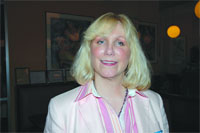
Sections Supplements
Habitat Post and Beam Offers Form and Function
Huckle, right, and Peter May

Huckle, right, and Peter May

Whether supplying the necessary materials for a home, a business, or an addition to either of the two, Habitat Post and Beam in South Deerfield has been adhering to strict standards for quality since 1972. Those standards have led to success in the niche post-and-beam market, culminating recently with a workload that is steady and growing.

On a two-lane roadway with industrial overtones, Mann Orchards wanted its new location in Methuen, Mass. to stand out from the rest of the big-box franchises and convenience stores. It did so by commissioning a massive post and beam facility from Habitat Post and Beam in South Deerfield, thus creating a warm, family feel in a sea of concrete.

And on Dog Island in Florida, the owners of a new, contemporary post-and-beam house watched safely from inside as their boathouse washed away in a hurricane; their home, thankfully, suffered little damage.

These are just two of the stories Huckle May, vice president of Habitat, likes to tell to illustrate the draw of post-and-beam homes (spaced columns and beams for structure), which Habitat has been pre-fabricating, designing, selling, and delivering to locales across the country since 1972.

“It’s a style of home that I think a lot of people like, but in the past, didn’t know a lot about,” said May. “But post-and-beam homes are only increasing in popularity, and I think the industry is going to keep expanding considerably.”

Habitat’s current book of business could be proof of that upswing in awareness of post-and-beam homes, additions, and commercial properties, all of which are part of the company’s suite of services. Over the past 10 years, Habitat has seen consistent growth, averaging about 10% over the previous year annually in revenue, and last year recording $5 million in sales.

“We are a manageable size and have a history of quality,” said May, noting that Habitat employs 15 people, five of whom work in the company’s shop manufacturing post-and-beam components, and the remainder in sales and administration, design, and engineering. “Some of our clients have been with us since the 1970s; it’s definitely a business that will last longer that the people now running it.

“But as things stand now, I think the best way to put it is we would welcome a steadying of business,” said May. “We’re a very streamlined operation, and very process-oriented. But we’re also constantly swamped, and that’s a unique challenge.”

The First Cut

Habitat was one of the early purveyors of so-called ‘kit homes’ — a term that sometimes carries a negative connotation, said May, but still best describes the types of pre-fabricated lumber and materials that create a Habitat Post and Beam structure.

May explained that his father, Peter, a former contractor, bought the business 15 years ago from Edgeco Inc., and remains its president today; five years after that, his son entered the business with the initial idea that it would be a temporary gig.

But with a decade under his belt, Huckle May said his job has since become permanent, and the brisk rate of business has also kept it interesting.

Habitat’s strong sales record, for instance, has necessitated an expansion to its Elm Street manufacturing facility, to be built on an adjacent piece of property.

“The expansion is extremely important, as it will allow us to improve quality and maintain a competitive advantage,” said May, who added that, while the post-and-beam industry is subject to the same economic cycles that affect other building sectors, Habitat has seen steady, constant improvement, and the reasons why are varied.

First, Habitat can design and provide materials for a myriad of projects, from various sizes of homes to additions to commercial and specialty projects, including the Yankee Candle flagship store’s main building in South Deerfield, Gledhill Nursery and Landscape Center in West Hartford, Conn., and the Church of the Messiah in Chester, N.J.

“It goes up and down,” said May. “We typically handle one major commercial project a year, and, depending on the market, homes and additions alternate in frequency. Currently, about a third of our jobs are additions; when the value of residential homes is stable, people tend to add on.”

Lean and Green

In more general terms, post-and-beam homes appeal to an environmentally conscious audience and fit well into the current trend toward ‘green building.’

“Post-and-beam homes are generally more green,” said May, adding that Habitat also procures its lumber from a family-managed forest in the Pacific Northwest, which provides Douglas fir through sustainable logging practices.

“They will last for generations, are very thermally efficient, and are built tighter — often better than conventional framing. Owners also tend to use less carpeting and wood finishes, to maintain that natural look.”

But beyond being environmentally sound, post-and-beam homes also satisfy a wide range of aesthetic tastes.

“Post-and-beam homes use space more efficiently, in general,” said May. “They have a good layout, usually with a common room with a high ceiling surrounded by cozy areas everywhere else. They lend themselves to one-level living.”

That’s a benefit that appeals to Baby Boomers, a group that is now leading the ‘aging in place’ home building and design phenomenon, and also younger homeowners, who may want to expand their property at a later date.

“It’s always cheaper to build up instead of out,” May said, “and building lots are increasingly scarce, especially in the Northeast.”

May noted that post-and-beam homes are actually a very small fraction of the entire construction market, similar to other niche offerings like log or timber-frame homes. But they are sturdy, quality structures that age well, and an increasingly savvy consumer base is turning its attention to them, in part with the help of the World Wide Web.

“Customers are more educated about their home-building options,” he said. “Once, we got 1,000 calls from people just looking for more information, before we were contacted by a real, potential client. But now, the Internet does a lot of that work for us, and people call us much more prepared.”

Still, May said the biggest draw of a post-and-beam home is one that has been a strength of the design since its early years as a building option — its characteristic cathedral ceilings and wide, open spaces carry a certain cache, and often translate into one’s dream home.

“We have a largely high-end clientele,” he said, “and we send most post-and-beam homes to areas that already have great views; places with lakes, rivers, and mountains. They fit very well into natural landscapes, but post-and-beam homes can also be designed to look very contemporary.”

Station Identification

To illustrate that point, Habitat added model rooms to its Elm Street location in spring 2004, constructing one that represents more traditional post-and-beam design, and another that is more modern, with soaring windows and curved track lighting.

Touring the space the company dubbed ‘Habitat Station,’ in part for the exterior’s resemblance to train platform, Peter May told BusinessWest that the rooms often help clients decide which design they prefer, or create a hybrid of the two.

“It’s funny; often, a husband and wife will come in, and one will go to one room and say, ‘this is exactly what I was thinking,’ while the other goes to the second room and says the same thing. They definitely help people visualize, but they also help people see where the compromises can be made.”

The showrooms also effectively translate the quality and versatility of post-and-beam homes, without overwhelming a client with the particulars of the design-and-build process, which is a detailed one.

“It has worked out really well for me because I love process and project design work,” said Huckle May, “ and I get to do a lot of that here. But it is a long, technologically-based process.”

Indeed, as a business that manufactures not one component of a building project, but rather the entire project itself, there are plenty of steps to be taken. May explained that a job usually begins with an initial idea or vision from a potential client, and continues to develop with the help of an independent architect or by matching needs, wants, and budget to one of Habitat’s in-house designs.

From there, three-dimensional drawings and floor plans are created by members of the Habitat design team, and a ‘virtual tour’ is created with the help of software programs. Once the engineering plans necessary to secure a building permit are completed, final plans and contracts are drafted.

Most components of a Habitat home are cut and prepared at the South Deerfield facility, including walls, floors, and roofs. Once a foundation is poured at the construction site, a delivery is made — everything from walls, roof, and floors to the necessary fasteners — via a tractor-trailer dispatched from Western Mass. to anywhere in the country.

The homeowner can then contract with a builder to complete the project, and can opt to work with some of the suppliers that partner with Habitat, such as Anderson windows, or to handle some or all of the details themselves.

May said that about 70% of Habitat’s clients hail from the Northeast, and the remainder are scattered across the country.

“The Berkshires are very strong, and we’re seeing more and more interest in the Pioneer Valley,” he said. “I think that’s because we can handle such a wide range of projects. People do all sorts of things; we’ve had people approach us to build an entire post-and-beam house and add it on to an existing house, or just for a 12 x 12 room.”

The Kit and Caboodle

Even as such a small part of the building sector, post-and-beam homes are beginning to make a name for themselves as a sought-after design scheme with limitless possibilities, said May, and that is creating a firm foundation for Habitat.

“Over the years, more people have realized that post-and-beam homes are one solution to designing a home that fits their various needs,” he said.

And whether that need is to stand out from the crowd or simply stand the test of time, somehow, the term ‘kit home’ seems to no longer apply.

Jaclyn Stevenson can be reached at[email protected]
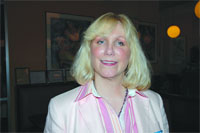
Sections Supplements
Westfield on Weekends Brings Some Energy to the City’s Streets
The eye-catching logo used by Westfield on Weekends helps to draw in new supporters and volunteers.

The eye-catching logo used by Westfield on Weekends helps to draw in new supporters and volunteers.

Creating traditions.

That’s what Bob Plasse, president of Westfield on Weekends, says is the group’s most important mission.

“We’re making connections between people, businesses, and neighborhoods,” he said. “The overriding goal is to market the city as a great place to live, work, and play, and we’re employing some new, innovative concepts to do so.”

Westfield on Weekends, or W.O.W. for short, is a non-profit organization dedicated to spearheading and promoting the arts, entertainment, and culture in its home city and creating a more cohesive community feel among its many neighborhoods.

To do so, W.O.W. hosts and promotes arts and culture-based events in Westfield, both independently and in conjunction with other organizations in need of assistance.

It’s an entirely volunteer-staffed non-profit organization, currently gleaning the bulk of its funding from miscellaneous grants and contributions. But despite small beginnings, some notable developments are sprouting in Westfield with the ‘W.O.W.’ name attached, adding further weight to the notion of the arts as an effective economic driver.

The W.O.W. board of directors is a diverse, lively bunch made up of area professionals, business owners, and leaders in arts, culture, and community planning. Each member says they got involved with W.O.W. at various times and for different reasons, but agree that the organization’s primary role is to improve the arts, culture, and entertainment profile of Westfield, which had been waning in recent years, by creating unique, branded events that involve all sectors of the community.

Plasse said he was planning a series of holiday events with the Western Hampden Historical Society when he crossed paths with Chris Dunphy, senior planning manager with the Pioneer Valley Planning Commission and now treasurer for W.O.W.’s board of directors, who was trying to initiate a performing arts series in town.

The duo joined forces, and soon after, additional members began to add themselves to the fold – many already active members of the community, including Lisa Blouin, a psychology professor at Mount Holyoke College, Jeff Bradford, a sales manager, Kathi Palmer, a school teacher, Kate Pighetti, a Noble Hospital employee, Carl Quist, executive director of Stanley Park, and Chris Lindquist, director of the Westfield Atheneum.

“The opportunity came at the perfect time,” said Lindquist. “There were a few things going on in town that came together, and everyone seems to bring a different set of interests to the table that click together, and work.”

The Buzz Patrol

The group formalized themselves in 2003 with the help of the Westfield Community Development Corp., serving as a committee within the CDC before incorporating and securing its own non-profit status last year.

“That relationship opened us up to funding sources we wouldn’t have found on our own,” said Plasse, noting that W.O.W. continues to collaborate with the CDC.
The boost W.O.W. got from the affiliation also led to greater interest and membership, and created a backbone – and a board of directors – to strike out as an independent entity.

Gary Midura, for instance, was already involved with event planning with the Westfield High School football team, and saw an opportunity to extend his volunteerism, and that of Westfield’s students, into the greater community.

Pamela White, owner of the With Heart and Hand vintage, gift, and home décor shop on Court Street, said she was “strongly urged” by Plasse to join, and Karen Eaton, an attorney, said she’d been living in Westfield for only two months when she began volunteering, now serving as the board’s assistant clerk.

“We were looking to create broad themes, which in turn could serve as vehicles for all kinds of groups to market their events,” said Plasse. “Out of that evolved the greater mission of marketing Westfield, and out of that grew our board.”

W.O.W. secured its non-profit status and incorporated last year, and has since embarked on an extensive branding campaign.

The board enlisted the help of TSM Design in Springfield to create a cohesive identity, including a logo. To separate the new entity from the Pioneer Valley’s logo, which also used the word ‘wow,’ the group designed on a graphic treatment of just the letter ‘W’, followed by some multi-colored rectangles.

“It’s exactly what we were hoping to convey,” said Dunphy. “A spirit of movement, of a jumping, lively place.”

Brand Westfield

That logo is now the icing on the cake that is W.O.W.’s Web site, www.westfieldonweekends.org, which includes a calendar of events, a description of the many events W.O.W. has either created or participated in collaboratively, a growing list of area businesses that support W.O.W., maps and driving directions around Westfield, and a listing of places to eat, stay, and shop.

Plasse said the site is attracting a steady stream of visitors and is beginning to spread the arts and culture news of the city across the region.

“We’re really seeing the Web site take off,” he said. “When we hear of people coming in from other cities and towns to check out our events, that’s the greatest reward. That’s when we feel as though we’ve arrived.”

Dunphy said it’s also proof that the work W.O.W. has done to market Westfield as a leisure destination among its residents as well as potential visitors is beginning to take hold.

“The idea is to provide a sort of one-stop shop for non-profits, businesses, and individuals to promote their events, or to receive some assistance in planning one,” he said. “Through that process, some ideas will grow, some will change, and some might be shelved. But we welcome anyone to come to the table with an idea that, in turn, we can help to develop.

“It’s all geared toward generating interest in Westfield,” he continued, “and promoting the community as another alternative for entertainment, dining, or the arts.”

But there are a number of ancillary benefits emerging from W.O.W.’s work that also have an impact on Westfield’s overall community and cultural development.
For one, the events held throughout the year are helping to create a more lively downtown, which Eaton said is beginning to have an effect on the area’s housing market.

“Property values are rising, people are fixing their houses up, and overall it’s becoming a vibrant downtown community,” she said. “We still need to work on bringing Elm Street back to life, but already these new developments are exciting and energizing, and they add intangibles to the area that we didn’t have before.”

Dinner, Dancing, and Dickens

As Westfield on Weekends continues to mature, it’s serving as an increasingly effective umbrella for businesses, non-profit groups, community organizations, and individuals interested in planning or participating in community-wide events throughout the year.

The organization was recently written into the newly-formed Westfield Business Improvement District’s plan for the city, and will serve as a contractor with the BID to plan and host events.

In addition, W.O.W has received a handful of grants, including one from the Mass. Turnpike Authority for $50,000, shared with the city, which funded programming, Web site development, and advertising, among other operations. Sponsorships, membership fees (at different levels, similar to a public television or radio station), and private donations also fund programs, and costs are further defrayed somewhat by ticket sales.

Since its inception, W.O.W has spearheaded a number of arts and culture-inspired events, including:

  • Dickens Days, a holiday celebration with a literary feel, and the first month-long event produced by Westfield on Weekends;
  • Colonial Harvest Day, which celebrates the colonial history of Westfield as well as the autumn harvest;
  • Arts on the Green, a visual and performing arts festival held on Labor Day, now entering its fourth year;
  • Westfield in Motion, a series of events that celebrate the city’s contributions to transportation;
  • Westfield CommUnityfest, held for the first time last year, which celebrated diversity and local heritage through art, music, and cuisine, and
  • Wintergreen Fest, a month-long celebration held in March to mark the end of winter and the beginning of spring.

There are several other events encapsulated within those larger themes, and others that are on the drawing board now, in order to offer at least one themed event per season.

A ‘Great American Picnic’ is now being planned to coincide with Independence Day, for instance, and W.O.W. will also collaborate with the Westfield Wheelmen to host the World Series of Vintage Baseball this July and August.

Already, about two-dozen organizations and businesses collaborate with Westfield on Weekends, as volunteers, sponsors, or event planners. Those groups include churches, historical societies, booster clubs, and a few large employers, such as Noble Hospital, Westfield State College, and the Westfield School Department.

Westfield restaurants and clubs regularly participate in W.O.W. events, often providing live entertainment or menu choices to coincide with an event’s theme. Eaton said those establishments get an advertising boost from the city-wide events, and in turn W.O.W. enlists the help of area businesses to sponsor the events.

“There are also opportunities for the smaller businesses in town, which I think is important,” she said. “There’s a greater sense of inclusion and value when a smaller business can sponsor one event or one part of an event in a low-cost way.”

And in addition to business involvement, Midura, who joined W.O.W. initially to expand his own volunteerism, said the group’s year-round event-planning initiatives have also opened new doors for community service in Westfield, allowing many groups and individuals to contribute on a number of levels, and creating a cross-generation appeal.

“There are so many events in a year that volunteers can give their time during certain months – a little or a lot,” he said. “Any bit of help people can offer, we can use them.”

Midura said that model has also allowed W.O.W. to recruit Westfield students to volunteer, yet another byproduct of the organization that is bolstering its membership and its overall presence in town.

“If kids grow up not forced to volunteer, but rather shown the opportunities that abound, they start to recognize the various community resources that are open to them more quickly,” he said.

White agreed, noting that she plans on entering the schools in the fall in hopes of adding a few more volunteers to the fold, perhaps as part of a W.O.W. off-shoot for kids.

“I know that personally, I’m not just in this for the betterment of Westfield’s businesses or for the adult programming,” said White. “There is also a pride issue that’s important. We’re generating excitement about our community, and that needs to extend to our kids, because they’re the ones who will be running this city very soon.”

The Business of Traditions

Moving ahead, Plasse said W.O.W. will continue to brainstorm new events and to welcome new, partnering organizations and individuals to the fold. He said using technology as a tool is a prime focus – the Web site is updated constantly to remain up-to-date, and the group recently made itself known on the ubiquitous social networking site, MySpace.

Adding to the coffers through grants and donation is another concern, as is eventually adding paid staff to W.O.W. to streamline its many operations.

“Staff, sponsorship, and support are what we need,” said Plasse. “We are all creative, energetic people, but we need new blood to keep things running smoothly.”

Still, that’s not to say that he’s not pleased with the work W.O.W. has done in its short four-year existence. Indeed, it’s the opinions the group has changed over that time of which Plasse is most proud.

“Changing perceptions is a difficult thing,” he said. “Initially, there were some nay-sayers who said we’d never get everyone – or anyone – working together, but now we have a number of businesses working with us, faith-based organizations the boys and girls club, the YMCA, city departments, city government … the city in general has been very supportive.

“And that’s the real success.”

Jaclyn Stevenson can be reached at[email protected]

Sections Supplements

John Galiher was trying to do the math in his head.

The question was simple — ‘just how much ice cream can be stored in what is essentially an 8.2-million-cubic-foot freezer on Campinelli Drive in Westfield?’ — but the answer came in several ways, and as only Galiher, who started Preferred Freezer Services Inc. nearly 20 years ago, could do it.

“It’s about 40 million pounds,” he said, noting that weight is how this industry usually processes such information, “which corresponds to 1,000 tractor trailer loads, probably 3 million cases, or about 20 million half gallons — plus or minus a few.”

Those containers, shipped to every major supermarket chain in the country, bear some of the best-known names in the ice cream business, including Ben & Jerry’s, Breyers, Sealtest, Good Humor, and Klondike, said Galiher, adding that the cold storage industry is primarily about such large numbers. The two he is most preoccupied with are the company’s number of facilities — currently 18 — and total sales (roughly $130 million), which have been rising steadily since he started Preferred in 1989. And the upward trend will certainly continue in 2007, with several more plants, comprising more than 30 million cubic feet of freezer space, due to come online.

But this business is also about geography, said Galiher, which is what brought his company to Westfield. The city has direct access to the Mass. Turnpike and is close to I-91, he explained, and it has something most communities in the Northeast don’t — large tracts of permitted land, including one big enough for the company’s 150,000-square-foot freezer, which maximizes that footprint by climbing to 60 feet in height.

“So it’s really like a 300,000-square-foot building,” said Galiher, noting that there may soon be another facility built adjacent to it, as the company looks to take full advantage of the city’s location and infrastructure.

As it does so, it writes another chapter in the company’s history, and provides more evidence of a changing business landscape in Westfield. The former manufacturing center, once home to companies that made everything from buggy whips to paper to bicycles, is transforming itself into a distribution hub, with several giant warehouses or distribution centers (DCs) now doing business there.

CNS Wholesale Grocers has a giant, 15-million-cubic-foot freezer facility just a few hundred yards from Preferred’s plant, while plans are on the drawing board for a huge Target DC, also to be located on the city’s north side.

In this issue, BusinessWest looks at Preferred’s explosive growth, the reasons for it, and how the company is part of that changing scene in the Whip City.

Frozen Assets

There’s another number Galiher likes to toss around: –24, as in degrees Fahrenheit, the constant temperature kept within the Westfield facility.

That’s lower than most freezer warehouses, he said, conditions that are tough for employees (who are clothed to withstand that cold) but ideal for premium and super-premium ice cream, which have a higher fat content than regular offerings, and need it well below zero to preserve flavor and freshness. Minus 24 is actually colder than what’s required, Galiher explained, but trucks cannot maintain such low temperatures, so the added chill provides a needed head start for the products.

“If the product can start colder than it should be, it has a better chance of showing up at the distributor and the store with the quality and the hardness that the manufacturer wants to see,” he explained. “That’s the secret of that building — how consistently cold it runs.”

Such attention to customer needs has helped Preferred rise among the ranks of the nation’s, and world’s, largest public refrigerated warehouse companies, said Galiher, a former refrigeration engineer who, after working for one of the world’s largest industrial refrigeration companies, based in Malden, Mass., segued into the business of designing and building cold-storage warehouses.

He eventually started building them for himself.

Mixing his own capital with support from several silent partners, he formed Preferred Freezer Services. He started small — or at least with how small is defined in this business — with 23 employees, roughly $3.5 million in sales, and 1.3 million cubic feet of freezer space in a facility in Perth Amboy, N.J. The company now employs close to 1,000 people, has roughly 100 million cubic feet in its portfolio, and expects to more than double that number by the end of 2008.

As Galiher said, there are a lot of numbers in this business.

He started compiling them — as well as a track record for exceptional customer service — in the company’s first plant. That success formula led to continued growth and plants in several states, including New Jersey, California, Florida, Pennsylvania, and Illinois, as well as Massachusetts, which now hosts three facilities.

Many of the plants are in close proximity to major ports, including Boston, New York, Chicago, Miami, and Los Angeles, said Galiher, noting that these strategic locations allow easy access to major highways, and thus decrease transit time considerably.

How Westfield came onto the company’s radar screen is a mix of need and geography, he explained. In 2003, Preferred opened a 5.3-million-cubic-foot freezer warehouse in Raynam, Mass. that was utilized for frozen foods and other commodities, with another plant in nearby Sharon, opened years earlier, converted into an ice cream warehouse. As additional customers were added, that plant, with roughly 4 million cubic feet of space, was quickly outgrown.

After looking at several options, the company focused its attention on Westfield, which seemed to have the requisite ingredients in place — starting with location, available real estate (specifically a 35-acre parcel in the Campinelli Business Park), and a solid workforce from which to draw people for the challenging work in the plant.

The community is a little more than an hour west of several customers’ manufacturing facilities, including a Breyers-Sealtest plant in Natick, and maybe 90 minutes south of Ben & Jerry’s headquarters in St. Alban’s, Vt., Galiher explained. Those compass points, combined with available, permitted land, comparatively low energy costs — freezer warehouses consume huge amounts of electricity — via a municipal utility, easy access to major highways, and the existence of a major customer, CNS, right next door, made Westfield a logical choice.

High commercial tax rates, which exceeded those found even in California, were a drawback, he continued, but a tax incentive financing (TIF) plan made the deal doable.

The Westfield plant opened its doors in the fall of 2006, making it part of that ongoing expansion of the Preferred portfolio. The company has 18 plants operating, another seven under construction, and another nine in development, meaning the land has been purchased and plans for construction are proceeding.

Several plants are slated to open over the next few months, including ones in Philadelphia, with 7.5 million cubic feet; Atlanta, 6.6 million; Jacksonville, Fla., 7 million; Chesapeake, Va., 7 million; and Houston, 6.4 million.

Plans for a second plant in Westfield have not yet moved to the drawing board, but the question marking its construction is when, not if.

“We have some additional land there for such a purpose,” he said. “We prefer to build multiple independent facilities in a market, rather than simply adding on.”

By the end of 2008, the company should be able to move from its current fifth-place spot in terms of the largest refrigerated warehouse companies in the country up to second.

Degrees of Progress

That’s the number that Galiher seems least concerned about at this point.

Actually, he told BusinessWest that if the company remains focused on all those other numbers — as well as the all-important factor of customer service, and keeping those building temperatures lower than they have to be — then the national ranking should take care of itself.

And those are the cold, hard facts.

George O’Brien can be reached at[email protected]

Sections Supplements
Learning Our Lessons from the Rich and Famously Departed

However unpleasant it may be to contemplate and prepare for our inevitable departure, we must. That’s because none of us want to leave a mess for our heirs after we are gone.

Nevertheless, despite many good intentions, we hear news about repetitive estate planning fiascos involving celebrities and common folk alike.

Anyone who has opened a newspaper or has watched television recently has observed the posthumous misfortunes of the likes of James Brown, Ted Williams, Jimi Hendrix, and, most recently, Anna Nicole Smith.

In 2001, Smith executed a will leaving all of her estate to her son, Daniel, to be held in trust with her friend, Howard K. Stern, as trustee. Tragically, Daniel died in 2006 at the age of 20. Just a few days prior to Daniel’s death, Smith gave birth to a daughter, Dannielynn. Shortly thereafter, Smith and Howard K. Stern had a commitment ceremony in the waters off Nassau, Bahamas.

Despite the significant changes to Smith’s circumstances, she did not revise her estate plan to leave any portion of her estate to Dannielynn or to her new domestic partner, Stern. Actually, Smith included provisions in her will preempting state laws that would have presumed that she wanted to include children born subsequent to the execution of the will. In addition, Smith did not revise her will to provide for a guardian of Dannielynn.

Similarly, James Brown did not appropriately update his estate plan prior to his death. His will names six children and calls for many of his personal possessions to be divided among them. However, 10 months after the execution of his will, Brown became a father again. He also remarried approximately one year later, and of course, the will made mention of neither the new spouse nor the new child.

Both Anna Nicole Smith and James Brown died with wills that were several years old and outdated. The probate court will now have to decide which guardian is in the best interest of Smith’s child, which may significantly differ from her intent.

A loved one dying without an updated will often results in an extended, expensive, and time-consuming trip to the appropriate state’s probate court. Although the Commonwealth of Massachusetts does have laws that provide guidelines for matters such as omitted spouses and children in a will, the testator may have intended a very different distribution of assets.

Do not make the same mistake. Review your estate planning documents periodically and upon any significant change in your life. Allow your estate plan to be flexible enough to anticipate things that may occur before you can change it. For example, in Massachusetts, if you anticipate the possibility of having another child, language can be inserted within your will allowing for the distribution of assets and a named guardian for any child born after your will’s execution.

If you anticipate problems, you may consider using a ‘no contest’ clause in your estate plan. In Massachusetts, such a clause disinherits anyone who challenges your estate. In order to make such a clause effective, you may consider leaving something to those at risk of being disinherited so that they have something to lose by challenging your stated wishes.

Jimi Hendrix’s case also illustrates the complexities of dying prior to executing a will. His untimely death at the age of 27 commenced a three-decade-long legal battle over the rights to his songs. According to a Hendrix biographer, due to the fact that Hendrix died without a formal estate plan, those who had been closest to him during his life, particularly relatives on his mother’s side, did not receive any financial benefit from his music.

There is no doubt that a minimal amount of estate planning would have avoided much of the controversy relative to his estate.

Communication about your affairs prior to your death is vital and can prevent disputes down the road when you can no longer arbitrate disputes and explain your reasoning. This is even more problematic when the events involved are highly unusual.

Consider the unpleasant dispute among Ted Williams’ children regarding his remains.

The family feud over Williams’ body commenced when his will showed that he wanted to be cremated, but the executor of his estate said that the former Boston Red Sox star later decided to be cryogenically frozen. The will read in part that he wanted his ashes “sprinkled at sea off the coast of Florida where the water is very deep.” However, the executor filed a petition asking the judge that Williams’ body remain in a cryonics lab in Arizona per Williams’ wishes. The only publicly known documentation that suggests Williams wanted to be cryogenically preserved is a piece of scrap paper stained with motor oil, executed while Williams was hospitalized.

The fact is, although Williams’ will states that he wished to be cremated, nobody really knows what he wanted. Williams did have a will, but, as is often the case, it was written more than fives years prior to his death. Many cryonics services were not even available then. The lesson learned is that it pays to review your will and funeral wishes on a regular basis.

Your estate plan should be reviewed at regular intervals and whenever there is a significant change in your personal or family situation, including the birth or death of a family member, marriage or divorce, and significant increase or decrease in your assets. Make sure that your plan does what you want and is taking advantage of recent law changes.

The celebrities cited above are not the only ones who experience long, expensive court battles over their estates; local probate courts are filled with cases of similar matters. Do not make the same mistake.

Todd C. Ratner is an estate planning, business, and real estate attorney with the law firm of Bacon & Wilson, P.C., who specializes in asset protection; (413) 781-0560;[email protected]

Sections Supplements
Why Are Peanut Allergies on the Rise?
Dr. Paul Gerstein

During a severe allergic reaction to peanuts, Dr. Paul Gerstein says, using an EpiPen can make all the difference in surviving the episode.

Call it too much of a good thing.

That’s the prevailing theory about why something most parents never heard of when they were in school — peanut allergy — is so common today, and also why schools, day care centers, and even airlines have had to take steps to accommodate children who might go into shock, or worse, at the slightest exposure to peanuts, that kid-appeasing treat that makes up one-half of the quintessential childhood sandwich.

What’s going on here?

It’s difficult to pin down the exact prevalence of any food allergy, because families tend to overreport them. But most studies suggest the adult incidence of peanut allergy is around 1.3%, while in children it might be around 5%, or even higher in families with a history of food allergies. And considering that only about 20% of child sufferers outgrow their peanut allergy, the adult statistics should rise over the next generation.

Nancy Anderson, pediatric dietitian at Baystate Medical Center, said scientists are still looking for definitive reasons for the dramatic increase in peanut allergy, but suggested that higher exposure has at least something to do with it.

“The current theory is that our intake of peanuts has increased significantly over the past 20 years in this country, especially since it’s a cheap protein,” she said — not to mention the fact that it’s a kid-friendly food that’s easy to prepare. That makes sense, she said, considering the fact that the number-one food allergy in Asia is rice, followed by soy. In the same way, studies show that Scandinavian people have a much higher-than-average tendency toward allergy to cod.

“It’s just a matter of dose,” she continued. “What’s happening is that people are eating more of it, and if you have a family history of allergies of any sort, you can become more sensitized. Or, if a mother has a family history and eats a ton of peanuts, the baby can become sensitized in utero from the mother’s diet, or from proteins that pass through the breast milk.”

Whatever the reasons, the number of children wearing allergy bracelets, carrying doses of injectable epinephrine, and being taught to read food labels is clearly on the rise. Those who aren’t diligent, or who don’t know they’re allergic, might end up as one of the 30,000 peanut-related emergency room visits per year in America — or, tragically, one of the 200 or so deaths.

This month, BusinessWest examines this startling trend, and what health professionals say should be done both to prevent the onset of peanut allergy and to treat it in the event of an attack.

Avoidance Is Key

Peanuts are not true nuts, but legumes. Still, doctors typically recommend those with peanut allergy to stay away from tree nuts — walnuts, cashews, pecans, etc. — as well.

Indeed, the main defense against any food allergy is avoidance. In general, food labels prominently state the presence of milk, soy, wheat, eggs, or nuts, but it’s not always an easy exercise, particularly when eating out.

“Many allergy-producing foods, such as peanuts, eggs, and milk, appear in foods one normally would not associate them with,” said Krisha McCoy of the National Institute of Allergy and Infectious Diseases. “Peanuts, for example, are often used as a protein source, and eggs are used in some salad dressings. People can avoid most of the things to which they are sensitive if they read food labels carefully and avoid restaurant-prepared foods that might have ingredients to which they are allergic.”

It’s serious business when 1/44,000th of a peanut kernel can prompt an allergic reaction in some sufferers, and when kids have wound up in emergency rooms after merely breathing in peanut dust or coming into skin contact with peanut butter.

“Patients with severe food allergies must be prepared to treat an inadvertent exposure,” said McCoy. “Even people who know a lot about what they are sensitive to occasionally make a mistake.”

To protect themselves, she said, people who have had anaphylactic reactions to a food should wear medical alert bracelets or necklaces stating that they have a food allergy and that they are subject to severe reactions.

“The thing we worry about most is anaphylaxis,” an allergic reaction that can involve several bodily systems at once, said Dr. Paul Gerstein, chief of Emergency Medicine at Holyoke Medical Center. “You can have a mild allergic reaction that can include itching and hives, but if it doesn’t go any further, that can usually be treated with an antihistamine like Benadryl.”

Anaphylaxis, on the other hand, takes two forms, both of which can occur simultaneously, he said. One is respiratory, and can manifest itself as swelling of the lips, tongue, and face, as well as tightening of the throat and even respiratory arrest. The other response is cardiac, and can result in dilation of the blood vessels, slowing of the heart, lowered blood pressure, and shock.

“The first reactions are often mild, but they can become more severe with each progressive exposure,” Gerstein said. And although an emergency room physician will treat a serious allergic reaction with a shot of epinephrine, there’s no guarantee that a patient will make it to the hospital in time. “You want to stop it in its tracks. If might take 20 minutes to a half-hour to reach the emergency room, and that’s long enough to die.”

That’s why people with a known allergy to peanuts or other anaphylaxis-related allergen are typically advised to carry an EpiPen, a measure of epinephrine loaded into a self-injecting hypodermic needle. Injected into the leg, the EpiPen typically brings about enough stability for the sufferer to make it safely to the hospital.

Are We Too Clean?

That’s small comfort for parents grappling with a problem they just don’t remember anyone dealing with 20 or 30 years ago. One theory about the increased prevalence, said Anderson, has to do with another generational change — the way some parents simply don’t let kids be kids.

“One theory is that our society has become bug-phobic and germ-phobic when it comes to kids,” she said. “We clean and clean and use antibacterial lotions, and kids don’t get exposed to a lot of dirt and germs like we used to.” It doesn’t help that the Internet and video games have supplanted much of the outdoor time during which children are normally exposed to a multitude of germs.

Anderson cited studies suggesting that children who grow up on farms, and spend plenty of time around dirt, animals, and animal waste, don’t have the same problem struggling with allergies as children in the super-sanitized suburbs.

“The thought is that, when you’re young, you need to turn on the path of your immune system that fights infections,” she said. However, if that doesn’t get switched on by a steady dose of germs to fight — if, in effect, it’s bored — the body then switches on the other side of the immune system, the autoimmune arm that can turn against the body through allergic reactions.

“If we let our kids get exposed to more germs earlier in life, the immune system will be so busy fighting infections that it won’t need to rev up the other arm,” she said. “That’s why not only allergies, but conditions like Crohn’s disease are going up in frequency as well. It’s just a theory, but it seems that allergies and autoimmune disorders are on the rise at the same time.”

Still, increased exposure to peanuts remains atop many researchers’ lists of theories. “Peanut butter has been a mainstay of kids’ lunches,” Anderson said. “They eat a lot of it, and at an early age, and their mothers are eating it. So babies are being exposed early on even if their mom isn’t allergic.”

One school of thought, ironically, suggests that children should be given small, sensitizing amounts of peanut butter early in life to build up a tolerance, in the same way that allergy shots work. But Anderson said allergists will typically not recommend this method.

“And in a family where someone already has an allergy, the family should never do that,” she added — not only because the incidence of peanut allergy is greater if siblings are allergic, but to avoid exposing an already-sensitive sibling to the allergen. “You don’t want little Johnny’s throat to close.”

McCoy noted that breast-feeding an infant for the first six to 12 months of life has been suggested as a way to avoid milk and soy allergies, and excluding all solid foods during that time can cut down on the incidence of other food allergies — particularly if the parents have allergies, increasing the probability in the child.

“There are some children who are so sensitive to a certain food, however, that if the food is eaten by the mother, sufficient quantities enter the breast milk to cause a food reaction in the child,” McCoy said. “Mothers must sometimes themselves avoid eating those foods to which the baby is allergic.”

She conceded that breast-feeding by itself has not been proven to prevent the development of allergies later in life, but delaying the introduction of certain foods into the child’s diet will delay the onset of allergies — and perhaps, researchers say, prolonging the allergy-free period gives a child a better chance at avoiding them completely later in childhood. Peanuts and peanut butter, some doctors say, should be avoided altogether until at least age 3.

Staying Vigilant

Still, it’s a minefield out there, and parents must educate their peanut-allergic children not to share food among friends at lunch and not eat anything without knowing what’s in it. Even cross-contamination is a problem, meaning that many chocolate bars — which are produced on equipment that also handles peanuts — are off-limits.

Try explaining that to a kid staring longingly at a vending machine, especially one who’s allergic to peanuts but has never had a life-threatening scare in the ER.

“Even if the reactions have been mild in the past, I would approach every case as a potentially severe peanut allergy and avoid all peanuts and tree nuts and carry an EpiPen,” Gerstein said. “It’s difficult to eliminate it 100% from a child’s environment when someone opening a can of nuts nearby could cause a reaction.”

It’s a lesson that too many children are learning the hard way every year.

Joseph Bednar can be reached at[email protected]
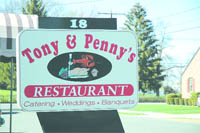
Sections Supplements
Chapdelaine & Sons Continues to Build on Its Tradition
David and Roger Chapdelaine Jr.

David, left, and Roger Chapdelaine Jr. say diversity is one of the keys to the longevity of their third-generation family business.

The look pretty much said it all.

When asked for his take on the annual Western Mass. Home Show, which recently concluded its annual run at the Big E, Roger Chapdelaine Jr., or RJ, as he’s called by friends and colleagues, smiled, gazed skyward, and shook his head slightly. This was more than enough body language to convey, as he would say later, that the show is work, and lots of it.

“It’s a long show,” he said, emphasizing long, and referring to the four days on the exhibit room floor, the extensive booth-preparation work — including the dismantling and re-assembly of some displays within the company’s showroom — and other prep work required to generate real results. “It requires a lot of time and effort.”

But in the end, it’s well worth it, he said, noting that it gives his third-generation family business, Joseph Chapdelaine & Sons Inc., with a second division called Kitchens by Chapdelaine, some important exposure — and much more. The show provides opportunities for this firm, which specializes in both new home construction and additions, as well as kitchens and baths, to renew some old acquaintances, make some new ones, add a few jobs for later in the year, and get a general sense for what’s happening with the economy and the consumers watching it.

Indeed, while there are many ways to gauge where specific business markets are heading, from quarterly statistics to trends emerging through the nature and frequency of recent phone calls to the company, the home show has proven to be a fairly accurate barometer of what area residents are thinking — and planning.

“The show gives us a pretty good sense of what’s happening in the market,” said David Chapdelaine, Roger’s brother and co-principal of this East Longmeadow-based venture that recently celebrated its 80th year in business. “Some people will bring plans for a new home, others will be looking to remodel; there’s a pretty good mix, and how that mix is weighted is a pretty good indicator of what the year is going to bring.”

But such knowledge is just the first part of the business equation, he continued. Being positioned to provide what consumers want and need — be it new kitchen cabinets, a lot on which to build, or a custom-built dream house — is the second, far more important part.

Handling both aspects of the assignment has been what this company has done since it was created by the partners’ grandfather in 1925, and took the name Joseph Chapdelaine Builders.

The elder Chapdelaine left his native Canada for Western Mass. and embarked on a career as a carpenter and then a home-builder. He was followed in that work by four sons, Gerard, Roland, Roger Sr., and Robert, requiring a modest name change (the & Sons). Succeeding generations have continued the tradition and expanded upon it. Roger Sr. is still active today, said David, noting that, at 72, he’s “down” to 40 hours a week.

“He’s our best employee,” he continued, adding that since he and Roger bought the company from their father, the last surviving second-generation member, in 2001, they have been committed to developing new business opportunities while remaining loyal to their grandfather’s vision and service-oriented method of doing business. It is this model that separates the company from operations that amount to an individual with a pick-up truck and a cell phone.

“It sounds a little corny,” said RJ, “but it all boils down to taking care of people, and that’s what we’ve done through all those years.”

Cabinet Appointments

Roger Chapdelaine said the kitchen has always been the center of the house, a gathering place where food preparation represents only a small part of a big role.
But it’s only been fairly recently that homeowners have started to give the kitchen the attention and appointments worthy of such of such an important role — in essence, adding form to the function.

And that form is being expressed in new and different ways.

“The kitchen is the gathering place for the family; it’s the center of the home,” he explained. “Kitchens are larger and much more efficient than ever, and people are outfitting them with high-end appliances, butlers’ pantries, televisions, breakfast bars, you name it. In general, people are making the components of their kitchen look like real furniture.”

Meanwhile, countertop materials are changing, and homeowners have more choices than could have imagined decades ago. “Granite is still the hottest, along with limestone and marble, but there are a number of new quartz products that are becoming increasingly popular,” he said.

Helping homeowners embrace the emerging trends in kitchen designs and materials is just one of many factors that have contributed to the continued growth and longevity of the Chapdelaine company.

This is how it’s been since Joseph Chapdelaine built his first home on Wilbraham Road in Springfield at the height of the Roaring ’20s. The company’s patriarch focused on custom homes, mostly built on what are called “scattered lots,” before later branching into subdivisions, said David, adding that his grandfather worked in several communities, including Springfield, Longmeadow, East Long-meadow, West Springfield, and others.

While building these homes and subdivisions, said Roger, Joe Chapdelaine noticed that their eventual owners were purchasing boxed kitchen cabinets instead of building the cabinets in place. He saw an opportunity to add another dimension to his business and, in collaboration with son Robert, created the Kitchens by Chapdelaine component.

“It gave him the opportunity to control the types of kitchens that were going into his homes,” Roger explained. “That’s how the kitchen and remodeling business got its start, and done it has done very well ever since.”

That operation is a somewhat separate entity, David explained, adding that there are distinct staffs but one set of books. But there has always been a crossover effect, with the kitchens and baths, or individual components for each, becoming part of the mostly high-end homes that the Chapdelaine company has built on individual lots or subdivisions in communities across the Pioneer Valley.

The volume of business recorded by each division fluctuates with the economy, said Roger, noting, however, that the kitchen component remains fairly steady from year to year, with perceptible upticks when the real estate market is slow or slower — as it is now.

During such times, some homeowners make a conscious decision to invest in their current home rather than look toward their next home.

“Those are the times when people will look to redo their kitchen, redo their bath, add onto to their home, or put in a new family area, and that’s what we’re seeing now,” he said, before doing some quick calculating with his brother to estimate that roughly 60% of the company’s revenues are derived from new home construction and 40% from remodeling, while a few years ago, those numbers were more like 70-30, and a few decades ago, 80-20.

Range of Options

The brothers Chapdelaine have been watching the company adjust to economic cycles and gradually increase its remodeling component for more than 30 years, and they both have lasting memories of toiling for their grandfather, father, and uncles at early ages.

David recalls cleaning rooms and mowing lawns at some of the spec houses the company built in various communities, and working assorted jobs around the office. Later, he went on to work for more than a dozen years at the Taylor Rental store located next door to the showroom on Shaker Road that was owned by one of his uncles.

RJ remembers helping to frame houses with one of the company’s subcontractors starting when he was 12.

“I was making $2 an hour and getting paid under the table,” he recalled, adding that the $80 he took home made him comfortable for that age. “I was the richest kid in town,” he joked. “There are labor laws now and issues with cash, but back then, I didn’t think anything of it.”

Today, the two brothers split the duties that come with managing both divisions of the company. These range from taking shifts at the Home Show — they were scheduled in for duty at Booth 411 just as other employees were — to taking customers through each of the steps involved in creating a custom home, from finding a site to design to construction.

An engineer by trade, David computerized the company in the 1980s, and currently does most of the estimating work on projects. Roger, meanwhile, focuses on design of everything from new homes to additions to kitchen remodeling.

There is ample business across the board, said the two partners, noting that while home sales have indeed slowed somewhat across the region (although the market is still stronger than that in Eastern Mass.), there is always a market for new construction.

The home-building component takes many different forms, including individual lots and subdivisions, said David, adding that some clients have their own blueprints while others will hire the company to craft designs. Overall volume fluctuates, but the company generally builds between 10 to 15 homes a year in communities ranging from Longmeadow (there are still a few lots there) to Belchertown, which is becoming an attractive option for both Western Mass. natives and Boston-area residents looking to get more house for their dollar than they would in most communities east of Worcester.

Meanwhile, the kitchen and bath business has seen that predictable surge that accompanies slower times for the real estate market. But there are other factors contributing to its steady growth.

Part of it is the ongoing evolution of the kitchen, said Roger, noting that these rooms are now bigger and better-appointed than ever. Designers at the company use computers to help clients piece together their dream kitchen, from the material for the counter top, to increasingly elaborate islands that add a third dimension, to scrollwork on cabinets.

But the kitchen and bath component of the business has also been helped somewhat by the home improvement channels now flooding cable television. Such programming serves to fuel the imagination by showing people new trends and products, said Roger, and it creates a better-informed pool of customers — people who are more knowledgeable about their options.

And while these programs, coupled with commercials from Home Depot and other big-box home-improvement chains, have encouraged some to become do-it-yourselfers, the Chapdelaine brothers inject some words of caution for those with such ambitions.

“We have a saying around here — you do what you do best, whatever it may be, and pay us to do what we do best.”

A Hard Finish

In general, what this company does best is provide customer service — be it with an explanation of the newest granite countertops, or taking the home from blueprint to reality.

The Pioneer Valley landscape has changed considerably since Joseph Chapdelaine starting building houses in Springfield — and there are far fewer places left on which to construct homes — but the company he started really hasn’t.

Through three generations it is still primarily in the business of building relationships, not structures and cabinets, and providing everything and the kitchen sink.

George O’Brien can be reached at[email protected]
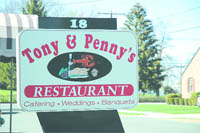
Sections Supplements
Attic Conversions Lead to New, Innovative Living Spaces
Cecil Jacobs

Cecil Jacobs stands in an attic now undergoing renovation.

Sarah Moore says it was quite a sight to see her mattress hoisted into her new master bedroom via a crane parked in her driveway.

But an even better sight was that of the bedroom itself, finished and decorated with her and her husband’s own furniture, and located where holiday decorations and old sporting goods once collected dust.

Moore’s new bedroom suite, complete with a full bathroom, is the product of an attic conversion, a popular and unique way to create new living space within a home by building up, not out.

The process is seen most often in older homes, like Moore’s in Northampton, and in locales where new building lots are scarce, like much of New England.
But beyond that, attic conversions are also a study in some of the most innovative building practices today, utilizing existing features within an attic to create a room unlike any others below it.

Moore refers to her own bedroom suite as a sanctuary. Created by the design, build, and remodeling firm Barron and Jacobs in Northampton, the room was specially planned to accommodate Moore’s bedroom set, which didn’t fit anywhere else in the house.

“It was a relatively painless process,” she said. “It’s a huge space, and we really love it.”

From Storage to Safe Haven

Moore said she was impressed by the many innovative ways Barron and Jacobs addressed the unique challenges of converting an attic into a master bedroom.

“They measured our furniture and designed the room to fit particular pieces,” she said. “Now the headboard of the bed and dresser, for example, fit like hand-in-glove.”

But there were other concerns besides space planning. Heating and plumbing pipes needed to be fed upstairs, and windows needed to be replaced to provide the proper insulation. But again, Moore said the room seemed to lend itself to new ideas.

“They used the existing chimney that was used to vent the furnace as a straight conduit for electricity and pipes,” she offered as an example, noting that the furnace was replaced and fitted with a side vent. “The original attic steps are steep and narrow, so they added a railing around them, and replaced two windows and a dormer with large windows — that’s where the mattress came in.”

Cecil Jacobs, president of Barron and Jacobs, said the project at Moore’s house was indicative of both the common challenges and benefits of creating new living space on a home’s top floor.

“If the attic space is adequate, it’s really an obvious choice,” he said.

Jacobs explained that attic conversions are usually performed in older homes that have a large amount of space on the top floor, but that space is often geometrically tricky, presenting an array of challenges.

As humidity rises, for instance, proper ventilation must be installed, as well as new insulation that necessitates expanding rafters and replacing windows.

“But the big payoff is the significant increase in a home’s usable space,” said Jacobs. “An attic conversion can easily increase a house’s square footage from 2,000 to 3,000 square feet, or from a three-bedroom home to a four-bedroom home. In New England, we simply don’t have the space to build out; the existing inventory of a house has much greater value today.”

Raise the Rafters

Mary Kraus, one of two principal architects with Kraus-Fitch Architects in Amherst, said her firm has also handled or consulted on attic conversion projects, and agreed that while the jobs have their share of hurdles to clear, the end result is often a well-designed, one-of-a-kind space that increases the overall value of a home, not to mention its comfort level for its owners.

“The main issue is headroom, or a lack of it,” she began. “Existing attics often have 2×8 rafters, and subsequently, it’s a challenge to get enough insulation in and keep enough headroom at the same time,” said Kraus. “Attics often have some very nice, cozy spaces within them, but with those interesting angles can come some structural issues.

“We need to take into account the stairs to the attic, if any, and whether they are legal for residential purposes,” she noted. “If there isn’t a staircase, the questions become, ‘how do we design one, and how will that affect the space below it?’”

Kraus said she typically asks a client what their main goals are for the space and what their budget might be, and from there, she can better judge if the plan is workable, and moreover how much construction might be necessary.

“We might need to put a full dormer in the suite upstairs, or we might need to raise the roof, or rebuild the entire structure,” she said. “It depends on the individual situation.”

In keeping with that individual approach, attic conversions are also an attractive renovation choice for many because of the unique design aspects, as well as the various uses to which the space can be suited.

Kraus explained that many houses include dormers in their attics, often for aesthetic purposes on the exterior of a home, and they can be added if they don’t exist. In terms of an attic-conversion project, those dormers serve a new purpose — increasing the overall usable space and natural light in an attic and making the space ideal for both work and relaxation.

“Over the years, a number of people have approached me with ideas for attic renovations,” said Kraus. “Some are looking to create loft-type spaces, meditation rooms, exercise rooms, or writing studios.”

Upstairs, Downstairs

Attics also often have well-preserved hardwood floors and trim that sometimes differ from the wood in the rest of the home; Jacobs explained that in New England’s earlier years, attics sometimes served as living quarters for staff, and subsequently, less expensive wood like fir was sometimes used. Such natural wood is now in greater demand and harder to find at an excellent quality.

“The wood structure of an attic is quite magnificent to look at,” Jacobs said. “We try to leave some of the natural wood exposed, because it defines the lines of the room.”

In the Moore bedroom, for instance, a simple wire brush was used to clean the original wood, but little else was changed.

It’s those defined lines and versatile materials that also set attic renovations apart from other expansion projects within a home, Jacobs said, explaining that when it comes to reusing space within a home, many owners opt to renovate or finish basement space. But Jacobs said he wouldn’t compare basement renovations to attic conversions in a home, calling them two very different projects that often have a different end use.

“What generally drives people down to the basement is economics,” he said. “A basement can become an area for the kids to use, and a finished basement does increase the value of a home.

“What drives people up is often space. Attics are more appealing because they’re not below ground, there are often existing stairs to the space, and, in most cases, the space is being turned into a new bedroom or master suite.”

In Their Corner of the World

  Such was the case in Moore’s home, which is now used an example of attic conversion on the Barron and Jacobs Web site. Architectural and construction concerns aside, however, Moore said the finished product is proof enough that her renovation choice was a good one.

“The room is closed off from the rest of the house, so it’s really quiet and peaceful,” she said. “It’s as though instead of closing the door to the rest of the house, we’re able to close off the rest of the world.”

Jaclyn Stevenson can be reached at[email protected]

Sections Supplements
Second-generation Members Become Part of Bacon & Wilson’s Growth Pattern
Mike and Todd Ratner, and Gary and Jeffrey Fialky

There are now two father-son teams at Bacon & Wilson: Mike and Todd Ratner, at left, and Gary and Jeffrey Fialky.

Jeff Fialky didn’t plan to work a few doors down from his father when he set out on a career in law a dozen years ago.

Neither did Todd Ratner when he started work in the marketing field, starting at Anheuser Busch, before later shifting gears and entering law school.

But through a blend of fate and geography — specifically a mutual desire to return to the Pioneer Valley — they are practicing law at the Springfield offices of Bacon & Wilson, where their fathers, Mike Ratner and Gary Fialky, have logged more 50 years between them.

Both members of the second generation applied for openings at the company — there have been several due to an aggressive expansion effort — and prevailed in a hiring process that, by all accounts, granted them no favors because of their last names.

The younger Fialky, who joined the firm last year, is now a member of the firm’s Commercial/Business, Municipal, and Real Estate Groups, handling a wide array of work, while the younger Ratner, who came on in 2003, is now a member of the firm’s Estate Planning & Elder, Real Estate and Business & Corporate departments, spending much of his time in the burgeoning specialty of estate planning.

Their fathers say they neither encouraged their sons to enter law, nor to seek employment at the firm where they’ve been partners for many years, but welcomed the developments as they unfolded.

“They’re both great additions to the firm,” said the elder Fialky, noting, especially in his son’s case, that the timing of the recent openings coincided nicely with the experience he had gained working for large telecommunications companies. “There was a good fit between our needs and his career intentions.”

Said the elder Ratner, “the firm has been in a real growth pattern; the volume of work has increased steadily, and so has the number of attorneys working here. It just so happens that talented people named Fialky and Ratner wanted to be a part of that growth.”

The two members of the second generation, who grew up together in Longmeadow, said essentially the same thing when asked about how they arrived at the same work address as their fathers. They said they chose Bacon & Wilson because the assignments they took made good career sense, and they like the quality of life available here.

Overall, the two new associates’ stories speak to the growth of the firm, but also offer some evidence of a trend that area economic development leaders would like to see more of — young people who leave this region to start their careers but later return for the quality of life in the Pioneer Valley and, while doing so, givie back to the community.

Jeff Fialky, who described his path to Bacon & Wilson — and his focus on corporate law — as a circuitous route, majored in English Literature at the University of New Hampshire but always knew that he would make law his eventual career.

He graduated from Western New England College in 1994 (he clerked at Bacon & Wilson while attending school), and, several months later, became an assistant in the Hampden County District Attorney’s office. After two years there, he shifted gears and started what would be a 10-year stretch with the cable television industry at several Boston-area firms. He worked first at AT&T Broadband, where he eventually became senior operations counsel, before moving on to AT&T Corp. and a position as senior attorney, focusing on regulatory matters and litigation.

In 2004, he went to work for Andover-based Adelphia Communications as senior operations counsel, thus handling most commercial legal matters for the cable television provider.

The work was rewarding on several levels, but the younger Fialky desired a shift into private practice, a stated goal that coincided with a posting in Mass Lawyers Weekly for a position at Bacon & Wilson, one to which he thought he could easily transfer the skills he had acquired in regulatory work and business transactions.

“When I decided to leave the telecommunications industry, I was looking for an opportunity to be in private practice, and started talking to a number of Boston firms,” he said. “But when talking to them and meeting with various personalities and looking at the quality of life that type of situation would afford, and comparing it to this firm and the quality of people and the quality of life here, it was essentially no contest.

“My return to the firm, and my return to the Pioneer Valley, has been much more than I expected,” he continued, adding that he eventually had two solid offers, one in Boston and the other with Bacon & Wilson, and chose the latter. “It’s met, actually, it’s exceeded, every expectation.”

Ratner’s arrival at Bacon & Wilson has some different story lines, but many similarities, especially the part about wanting to return the Springfield area.

He took a bachelor’s degree in Marketing and Entrepreneurial Studies at Babson College and went to work for Anheuser Busch, first as part of something called the Contemporary Marketing Team, which coordinated creative brand promotions of both new and existing projects. He then served as marketing supervisor, working in Chicago, and later as market manager (the company’s youngest) in Bloomington, Ind.

The work was intriguing and rewarding, but Ratner soon had concerns about many aspects of the ladder-climbing nature of the corporate world he was now part of.

“When I spoke with senior vice presidents and talked about their family life and children, they had mentioned that their 15-year-old sons and daughters had been in four or five different school systems,” he explained, adding that he had already moved four times in six years. “And I realized that, while I loved the company, this wasn’t the way in which I wanted to raise a family.”

After earning an MBA at Boston University, he enrolled at the Penn State Dickinson School of Law and eventually transferred to the University of Connecticut School of Law. While in law school, and after graduation, he clerked at Bacon & Wilson, and while in that role he gained an appreciation for the company and its team of lawyers.

He was weighing a possible return to corporate marketing work when a position became available at Bacon & Wilson, he said, adding that he believes his years of experience as a clerk there helped him in his quest to join as an associate.

Both of the new associates say their return to Bacon & Wilson affords opportunities to develop friendships and become involved in the community in ways that likely would not have been possible in either Boston or Hartford.

“My wife is a transplant; she came here from Newton,” said the younger Fialky, who recently joined the board of directors of the American Red Cross. “She’s already feels a sense of attachment to the community that is something which she didn’t experience to the same extent while growing up in Boston. And I feel that same sense of attachment.

“One of the things I really like about being in this area is that you have the ability to immediately effectuate change to the extent that you can become part of the community, join groups, and do things,” he continued. “That’s because organizations in this area are looking for people to raise their hands and get involved. That was really attractive to me.”

The younger Ratner concurred, noting that he and his wife are actively involved with Baystate Childrens Hospital, the American Cancer Society, and other institutions. “I’m just proud to continue the tradition of giving back that was started by those who came before me.”

Sections Supplements
The Local Commercial Real Estate Market is Defined by Stability

“How’s the market?”

That’s a question that area commercial real estate brokers are asked on an almost daily basis, sometimes several times a day. It’s a simple query, designed to gain insight into both the regional and national scenes — and often the answer comes in two parts, because sometimes, but not always, what’s happening on the larger stage doesn’t reflect what’s going on locally.

As for the Western Mass. market, my response is almost always, “good … stable … steady.” That’s because that’s what this market is like, with rare exceptions, and for reasons to be outlined here.

The ‘market’ is an amalgam of subsets that tend to function somewhat independently of one another. While they share very much in common, various factors impact some market segments differently than they do others. For example, the investment sales market is in lock step with interest rates, which in turn have little immediate effect on the office-leasing market.

When considered in the aggregate, the Western Mass. commercial market has a fairly solid history of stability. Over the past 15 years, since the disastrous market crash of the late ’80s and early ’90s (commercial real estate’s Ice Age), it has behaved somewhat like a missing link somewhere between a bear and a bull.

When the markets are hot in the New England region, conditions are pretty good here. And when the markets turn sluggish … it remains pretty good here. We enjoy an enviable insular equilibrium due to a combination of factors. These include our location, a comparatively attractive cost of living, the combined economic engines of MassMutual, Baystate Health, the region’s other major employers, and maybe the White Hut.

When dissected, the regional commercial real estate market component parts can be, and often are, in divergent conditions of health. The segments comprising the market include:

  • The sale of tenanted properties as investments, such as shopping centers; single- and multi-tenant office, warehouse and manufacturing buildings; and multi-family housing;
  • Office property leasing, which has subsets, including downtown and suburban areas, and their respective sub-markets of Class A, B, and C space;
  • The development markets, both public and private, such as the pending redevelopment of the former Basketball Hall of Fame and the new federal courthouse; and
  • The combination of retail leasing, warehouse and industrial leasing, and hotels and other hospitality properties, which play an important role as well.

This diversity within the realm of the commercial real estate market has a balancing effect on the sector as a whole, where the hot potato of risk is being continuously passed around.

While the real estate market is volatile like any commodity market, traditionally it is a lagging economic indicator. It’s like the last car in a multi-car fender bender. You can see the crash coming, but have no ability to avoid it. Therefore, while the commercial real estate sector may temporarily avoid the inevitable when the economy is in decline, the price it pays is often the heaviest.

The current overall stable and steady market is the result of the outstanding performance of some very hearty segments, others that are in economic cruise control, and lastly that portion on extended stay in the doldrums.

The investment sales market continues to be extremely robust. Due to the availability of investment opportunities with comparatively higher rates of return in the Western Mass. market, the area has experienced a surge of interest from investors outside of the market. The most notable examples are the sale/lease back of the Yankee Candle corporate headquarters in South Deerfield, the Potpourri Plaza office complex sale in Northampton, and the purchase of a large block of class B office properties in the Springfield central business district.

The most immediate factor that could calm this segment’s ferocity is a dwindling supply of investment property opportunities. For the time being, however, the push continues, and several pending transactions of significance will conclude in the next few months.

The vibrancy of the region’s hospitality sector is visible to everyone. Several new hotels have sprung up along I-91 recently. New hotels are planned for Northampton and Amherst. Judging by the always-packed parking lots at the Hilton Garden Inn and its neighbor, Uno Chicago Grill, business appears to be blistering.

Without question, the benchmark used most commonly to judge the overall condition of region’s commercial real estate market is the office component. Collectively the Class A office properties command the most attention because visually they dominate the landscape, symbolic of the region’s wealth and prosperity.

The office market is, and has been, controlled by two forces; one is the never-ending, musical-chair-like movement of office tenants from one building to another. While this has little beneficial impact upon market occupancy rates, it does create a nice ripple of new economic activity that beneficially impacts the building trades, the banking and legal communities, and a myriad of other enterprises, including, of course, real estate brokers.

The other compelling force is the absorption of vacant space by existing local companies expanding, new start-ups, and companies locating here for the first time. It’s the rare 100,000-square-foot lease that gets the media coverage, but it’s the small, 2,000-square-foot deals that are the foundation of the office market.

Overall, too much emphasis is placed on the office segment as a bellwether for the market in general. It just seems to get all the attention.

So, when asked, “how’s the market?” my answer will be, “solidly good, getting better, and always aspiring to be great.”

John Williamson is president of Williamson Commercial Properties; (413) 736-9400.

Sections Supplements
The Growing Impact of the Alternative Minimum Tax

The alternative minimum tax, or AMT, is a separate system of tax that was originally enacted to prevent high-income taxpayers from avoiding income tax liability by claiming numerous deductions.

The AMT was initially introduced in 1969, after the secretary of Treasury reported that 155 people with adjusted gross income in excess of $200,000 (the equivalent of more than $1,000,000 today) had paid no federal income tax. To prevent taxpayers from taking unfair advantage of tax benefits, such as special deductions and allowances for certain kinds of income, the AMT is a separately calculated tax system that treats selected tax preferences and adjustments less favorably than the regular income tax does. Because the AMT is not indexed for inflation, it is affecting a growing number of taxpayers. In 1990, approximately 132,000 individuals paid the AMT; in 2000, approximately 1.3 million taxpayers paid it, and it is projected that approximately 17 million people will pay it in the year 2010.

The stated goal of the AMT was to make sure that everyone with significant income paid some federal income tax. It was enacted out of concern that certain high-income taxpayers either were or were perceived to be exploiting the system by taking numerous deductions and thereby avoiding income taxes. Although the AMT actually has a lower top rate than the regular income tax, it defines the term ‘taxable income’ far more broadly then the regular income tax by denying certain deductions, reducing other deductions, and limiting other steps used to reduce tax liability. The AMT tax rate is 26% for the first $175,000 of income minus permitted exemptions, and 28% for income in excess of that amount. The exemption is $45,000 for married couples filing a joint return, or $33,750 for single filer or head of household. This structure is designed to prevent the tax from impacting low-income taxpayers.

All taxpayers potentially affected by the AMT must file a special form (IRS Form 6251), even if it ultimately turns out after the calculations are done that the tax is not owed. In 1997, only about 20% of the 4.4 million taxpayers who filed the form actually had to pay AMT. If the AMT calculations result in a higher tax, the taxpayer must pay that higher amount, technically by paying the ordinary income tax, plus the difference between the AMT and that ordinary tax. This distinction matters because taxpayers subject to the AMT may be entitled to a credit, which can reduce their tax liability in future years.

Taxpayers take four steps to determine the AMT:

  1. Calculate regular income tax;
  2. Determine whether the AMT may apply;
  3. Complete IRS Form 6251 to recalculate taxable income using the AMT rules, thereby determining the ‘tentative AMT’; and
  4. Compare the regular income tax before credits with the tentative AMT and pay whichever is greater.

Generally, tax items that cause AMT liability include claiming too many exemptions or deductions, either in number or total dollar value, or claiming some of the most common deductions that are permitted under the ordinary tax system but not allowed under the AMT. Among the most common adjustments or preferences permitted under the regular income tax but disallowed under the AMT are the standard deduction, as well as deductions for state and local taxes, interest on second mortgages, medical expenses, miscellaneous itemized deductions such as unreimbursed employee expenses, tax-preparation fees, and investment expenses. The AMT also disallows the favorable tax treatment the regular income tax rules afford to various credits, long-term capital gains, incentive stock options, tax-exempt interest, and tax shelters.

As the foregoing suggests, there is no easy rule of thumb for avoiding the AMT. If a taxpayer’s regular income tax return contains too many of the deductions, exemptions, and preferentially treated items allowed under the income tax rule but disallowed under the AMT, the AMT will be triggered, and, generally speaking, each of those items will be disallowed or treated less favorably.

While the AMT has changed over the years, it is currently controversial, in large part because of its increasing impact on taxpayers. It is very complex, costly to comply with, and can have extreme consequences in terms of tax liability. Although the exemption has periodically been raised, the fact that it is not indexed for inflation means that the number of taxpayers it impacts will continue to grow. The Treasury Department estimates that in 2004 3.3 million taxpayers will be affected by the AMT, and that if the AMT is not changed, the number will grow to 16.2 million in 2005 and to 46.4 million in 2014. There are currently multiple bills pending before Congress to repeal or amend the AMT.

Brenda Doherty is an associate with Doherty, Wallace, Pillsbury & Murphy, concentrating in the area of general business and taxation; (413) 733-3111.

Sections Supplements
Chicopee Electric Light Partners with HG&E to Offer Fiber Optic Internet Service
Jeffrey Cady

Jeffrey Cady, general manager of Chicopee Electric Light, said fiber-optic Internet access in Chicopee is expected to create a new revenue stream.

Through a unique collaboration, Chicopee Electric Light (CEL) and Holyoke Gas and Electric (HG&E) are now offering fiber optic Internet connections and network services to commercial and industrial customers in Chicopee.

Jeffrey Cady, general manager at CEL, explained that a 30-mile fiber-optic backbone was installed in 2001 in Chicopee, with the goal of linking the city’s municipal buildings, including the police and fire departments at the Public Safety Complex and the Health Department, for increased productivity and reliability.

“The purpose was to link our facilities together to improve efficiency, which we felt was important for the community overall,” said Cady. “At that time, we bought and installed additional fiber, with the idea that we could lease that extra cable to generate potential revenue.”

Fiber optic systems, where available, are often deemed superior to cable modem, T1, or DSL technology in that they provide a direct line connection from host servers to a customer’s site, with no sharing of data and no competition for bandwidth. The connection’s speed is often faster through fiber optic lines, and more cost effective than other fast, reliable connections such as T-3 lines.

Cady said the last of the city’s buildings and departments were linked through the new system last year (the last to go online was the town’s landfill), and CEL was able to turn its attention to the additional cabling and what could be done with it.

“We started talking about what to do with the surplus cabling and about putting a structure together at the end of last summer,” he said, “and our first customer went online in January.”

HG&E has served as an Internet service provider since 1997 through its telecommunications arm, HGE.net. It has constructed one of the most advanced self-healing fiber optic rings in the Commonwealth, extending from Holyoke into Chicopee and to downtown Springfield, at the Tower Square and Monarch Place office towers.

The network has a redundant design which guards against interruptions, and it has also passed several quality and confidentiality audits, meeting or exceeding the standards set forth by the FDIC and HIPAA, the Health Insurance Portability and Accountability Act.

Jim Lavelle, general manager of HG&E, said HGE.net’s fiber optic services are currently being used through a similar agreement in Westfield, and he’d like to see such services extend further into other area towns and cities in the coming years.

He added that the new partnership in Chicopee stems from existing alliances between the Holyoke utility company and Chicopee Electric Light, which creates a natural avenue for gradually adding new and developing services.

“It first came about primarily because of our longstanding utility relationship with Chicopee Electric,” he said, echoing Cady’s sentiment that the partnership made sense for both parties. “This was a logical extension of existing collaborative efforts, and an opportunity to take advantage of excess fiber.

“The drivers for such collaborations have always been to improve service and reduce price for customers,” added Lavelle, “and this new partnership falls right in line with those efforts.”

The initiative will not expend city dollars, but it is expected to generate between $150,000 and $300,000 in revenues for Chicopee.

Cady said that, essentially, Chicopee will be leveraging Holyoke’s existing expertise to benefit its own business customers through the agreement.

“It makes more sense,” he said. “Holyoke has very high reliability, and that will support the economic development aspect of fiber optic Internet networking services in Chicopee.”

Through the partnership, fiber optic customers with multiple locations in Chicopee will also be able to link to each other within the network area of Holyoke, Chicopee, and downtown Springfield, and outside of that network footprint, customers will have the option of linking to branch offices through other types of Internet connections (T1 or T1 copper lines) anywhere in the 413 area code.

In addition, a company may place servers at HGE.net’s central office location, to take advantage of its climate-controlled facility and back-up power generators, and can opt for dial-up services for remote employees as part of the total package.

Customers who choose to purchase a fiber optic Internet connection will be connected to the existing ring in Chicopee via a portion of cabling that has been leased to HG&E, which in turn will provide sales, marketing, customer service, and billing support directly to the customer through HGE.net.

Pricing starts at just under $200 a month, and services can include hosted E-mail service and disk storage space for hosting a company Web site.

Cady said CEL and HGE.net are now ramping up their marketing efforts to promote the service in Chicopee.

“We’re really trying to get as many customers as possible,” said Cady. “Another benefit of fiber optic is we can always expand the network, so there’s no cap on how many customers we can serve.”

Sections Supplements
Memorial Drive Remains Poised for New Development Opportunities
The Chicopee Marketplace

The Chicopee Marketplace, adjacent to a Wal-Mart that will soon be expanded, are two signs of new life on Memorial Drive.

Chicopee’s planners are learning some new verbiage as development continues on Memorial Drive, a.k.a Route 33, the city’s main retail corridor.

Terms like ‘linger zone,’ ‘redemising,’ and ‘alternative hospitality options’ are being tossed around more often as the thoroughfare evolves — proof of some new, innovative changes both in the works and on the horizon.

That said, change is not coming at an explosive pace along Memorial Drive: ‘gradual’ is a better description of the additions to its growing legion of businesses.

However, it’s an area that Mayor Mike Bissonnette said is currently garnering some real interest in Western Mass., and with that interest comes a new focus on further diversifying the roadway to include a greater mix of retail and restaurant establishments. The end goal, he said, is to make Memorial Drive a destination, and not a throughway.

“This is one of the hottest areas for commercial real estate in Western Mass. right now,” said Bissonette, who attributes that to a number of inherent traits that have existed in the area for some time, including the thousands of employees working out of Westover Air Reserve Base and the Chicopee Industrial Park, as well as Memorial Drive’s close proximity to the Mass Pike.

But there are new variables that are adding to the surge of activity on Route 33, including a $110 million construction project at Westover that will add new buildings and, subsequently, new jobs. The revival of some key parcels on Memorial Drive, such as the former Fairfield Mall site (now called Chicopee Marketplace) has also created new interest and confidence in the strip among developers.

“The Fairfield Mall project really seemed to spur what I call the second generation of Route 33,” said Bissonnette. “The first generation was the housing, commercial, and retail real estate boom we saw in the 1960s following the construction of Westover.

“I also think we have a quick permitting process,” he continued. “We can get things moving usually within two months, and overall, I think developers like working with us.”

Follow the Franchises

Today, the mix on Memorial Drive is primarily casual dining franchises like Applebee’s and the 99 Restaurant; fast-food chain locations such as Arby’s, Subway, Quiznos, KFC, and McDonald’s; discount retail stores including Marshall’s and Payless Shoes; a smattering of auto dealers and local businesses including the landmark Hu Ke Lau; and big boxes like Wal-Mart and Home Depot. Two hotels — a Days Inn and Hampton Inn — round out the mix.

Moving forward, Bissonnette said he’d like to see a greater mix of retail and restaurant choices, and a greater percentage of higher-end establishments, those he says carry “a little cache.”

Some success has already been observed in the higher-end stratum, including the addition of a Starbucks across from Chicopee Marketplace. In addition, the McDonald’s on the roadway was recently one of 30,000 franchises across the country to get a facelift and image redesign, now including wi-fi access, premium coffee, and that aforementioned ‘linger zone,’ complete with plasma televisions and sofas, designed to keep people in the restaurant longer.

Bissonnette said he’ll keep a close watch for any other opportunities to make Memorial Drive more diverse, especially within the retail and hospitality sectors. “We’re still getting a lot of inquiries from chains, which is fine, but there is a need, for instance, for an additional hotel,” he said.

Still, while new opportunities are being mulled constantly for Memorial Drive, Bissonnette said he doesn’t discount the importance current retailers, franchises, and other businesses have had on the street’s overall health.

“It’s important to point out the jobs these places create,” he said. “They aren’t the kinds of jobs that you can necessarily build a future on, but they fill a vacuum in this area’s economy, and also keep dollars in Chicopee.”

Bissonnette cited one example as proof of the need for such jobs in retail and the food and hospitality sectors. When one of Memorial Drive’s more popular spots, Applebee’s, opened in 2006, the mayor said 1,200 applications were received for employment.

“We tend to talk about ‘meds and eds’ a lot,” he added, “but 1,200 applications — 600 of them completed online — shows that people are looking for these jobs, and moreover that they’re very important.”

On the Drawing Board

Kate Brown, Chicopee’s city planner, agreed, noting that there is already some interest among developers that suggests a new hotel might not be far off for Route 33.

“There’s been some interest from various types of outfits,” she said. “We’re still in the early days of that, but I think people are recognizing that this is a great location for spill-over from the Springfield market, for Six Flags visitors, or for travelers going east or west to other destinations.”

Brown said that while she, too, worried at one time that Memorial Drive would become a sea of fast-food restaurants, bank branches, and discount retailers, that trend is slowly changing. Further, she said existing businesses on the roadway have created a base from which to grow that, before 1996, was non-existent.

“Today, it’s very competitive,” she said. “The boom started in 1996, with an auto parts store and a Taco Bell, and it mushroomed from there. For a while all I saw were auto parts stores and banks, and I started to bite my fingernails a little.

“We’d still like to be able to orchestrate things a little better,” she added, “but I’m seeing a move toward businesses that better fill the needs of the community.”
Brown also agreed that the redevelopment of the former Fairfield Mall parcel that created what is now the Chicopee Marketplace has been one of the driving forces for growth on Memorial Drive, and that trend continues.

“Wal-Mart will soon be expanding, and the Ocean State Job Lot property is redemising, which is a new word I’ve been introduced to of late.”

In short, this is a 50-cent term for restructuring; the site will soon be home to seven different stores of varying sizes, creating what Brown calls a ‘plaza environment’ with the possibility of outdoor dining space.

“Buildout of the Chicopee Marketplace has made other undeveloped properties along Route 33 more attractive,” said Brown, noting that in particular, activity directly surrounding the parcel, which is also near the on-ramp to the Mass Pike, has been brisk. “Everyone wants to be near the Pike, which actually creates an interesting problem — there’s limited land available in that particular area of Memorial Drive, and it will be interesting to see who wins that race.”

Adding to that area’s draw is a $750,000 renovation of the Days Inn at 450 Memorial Drive now underway, spearheaded by the property’s owner, Dinesh Patel, who also owns the Hampton Inn on the other side of the Turnpike off-ramp.

To capitalize further on those positive developments, Brown said she’d like to see the area augmented by stores that could elevate the city’s shifting retail identity.

“Chicopee has never really been on the front line in terms of retailer choice,” she said. “I think that has a lot to do with base income in the city, and I think that has shaped what Memorial Drive looks like.

“But with the existing mix of discounters on the drive, having upper-scale goods at lower prices would be a great addition; I also wouldn’t mind seeing a bookstore,” she said.

Outlet for Greatness?

Bissonnette offered another option for growth, proposing that the area could be suitable for outlet shopping.

The model has already seen success in Lee and in the eastern part of the state in Wrentham; however, Bissonnette concedes that making it work in Chicopee may be problematic. Most retailers require that their discounted stores be placed a certain geographical distance away from existing stores, and with the Holyoke and Eastfield malls bookending Chicopee, that’s a high hurdle to clear. But Bissonnette said with existing discount clothing stores such as Marshall’s, Fashion Bug, and Payless Shoes already in operation, as well as a strong mix of casual dining establishments, the infrastructure is there for further development of destination shopping, rather than the ‘passing-through’ variety that is now more common to Route 33.

And Brown said that, while large parcels of land are becoming more scarce on the strip, there are many smaller development opportunities remaining, as well as a few sites that city officials are keeping a close eye on.

One such parcel is about 60 acres owned by the Springfield Diocese, located across the street from the Arbors assisted living facility at 929 Memorial Drive. The plot of land has yet to go up for sale, but Brown said it’s being watched closely.

“That’s the last big piece of real estate left on Memorial Drive,” she said.

Whether it will be redemised for an alternative hospitality venue or a hip, new eatery outfitted with a linger zone remains to be seen. Those are, after all, just some of the trends on a street that is definitely in the fast lane of progress.

Jaclyn Stevenson can be reached at[email protected]