Pittsfield Focuses on the Future, Not the Past
Community Spotlight
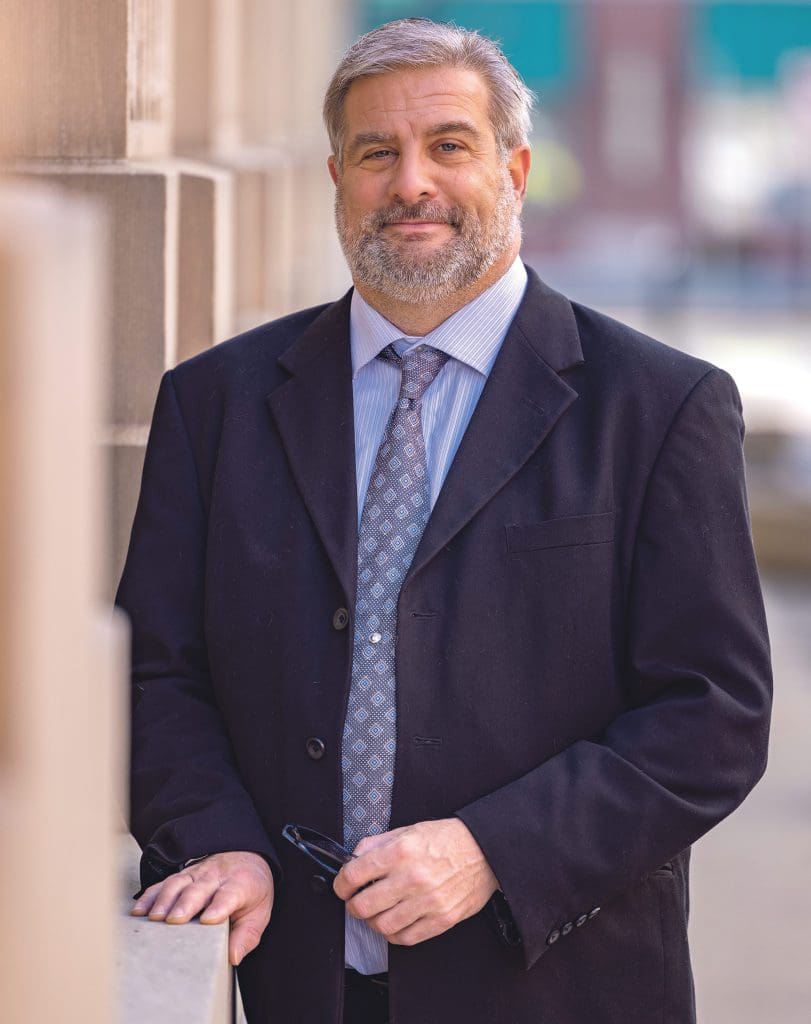
Mayor Peter Marchetti says several projects in various stages of development should help ease a critical housing shortage in Pittsfield.
Starting early in his career in financial services at Pittsfield Cooperative Bank, Peter Marchetti, like many of his colleagues, made it a point to get involved in the community.
He donated time and energy to everything from the United Way to youth bowling; from Pittsfield Community Television to the Pittsfield Parade Committee.
But starting in the late ’90s, he took that involvement to a higher plane, running, successfully, for a seat on the City Council. In 2011, he sought to take things to a still higher level, running for mayor, only to lose a very tight race. After a hiatus from elected office, he returned to the City Council, and in 2023 launched another bid for the corner office, this one successful.
When asked why, he indicated that there was still much work to be done as this city of roughly 44,000, the largest in the Berkshires, continues its transition from being, in essence, a company town — in this case General Electric — to a city with a far more diverse economy, and one that has moved on from GE in every way, including a reimagining of the huge, mostly undeveloped tract that was its massive transformer-manufacturing complex.
“I saw our city at a crossroads, where we have the opportunity to reinvent ourselves; there are many people who still look at us as the old GE manufacturing community. I think we have some opportunities to turn the corner, and I wanted to lead that turnaround,” said Marchetti, who retired from Pittsfield Co-op as senior vice president of Retail Banking Operations. Ten months into his first four-year term, he can cite progress on several fronts.
These include the William Stanley Business Park, created at the GE site, where work is set to commence on a 20,000-square-foot facility that will provide room to grow for many of the startups that now call the Berkshire Innovation Center home.
And also the city’s downtown, still evolving from the GE days, where new businesses have landed and much-needed housing initiatives are taking shape (more on these later).
Beyond Marchetti’s first year in office and his emerging agenda, there are plenty of other developing stories in Pittsfield, many of them taking place downtown, where several issues and trends are colliding, and where that ongoing process of evolution continues.
The expansive downtown area, while now home to several new business and with a falling vacancy rate, continues to experience fallout from the emergence of remote work and a broad decline in daily foot traffic, which is impacting many hospitality and service-oriented businesses.
“Downtown has shifted away from some of our larger companies that would have people here during the day and out for lunch, grabbing coffee, or going out to a bar after work. Now that they’re remote, we’re definitely in need of people downtown regularly. The addition of housing in our downtown will make that difference.”
This decline has been one of the driving forces in the return of First Fridays at Five and other events geared toward generating additional foot traffic, while also helping to inspire efforts to redevelop some downtown properties into housing, which is in short supply and thus a negative force in economic development and business growth.
Indeed, like other communities facing this challenge, Pittsfield is looking at ways to convert office and retail spaces into housing — opportunities that will help meet the need for housing while also bringing back some of the vibrancy lost to remote work.

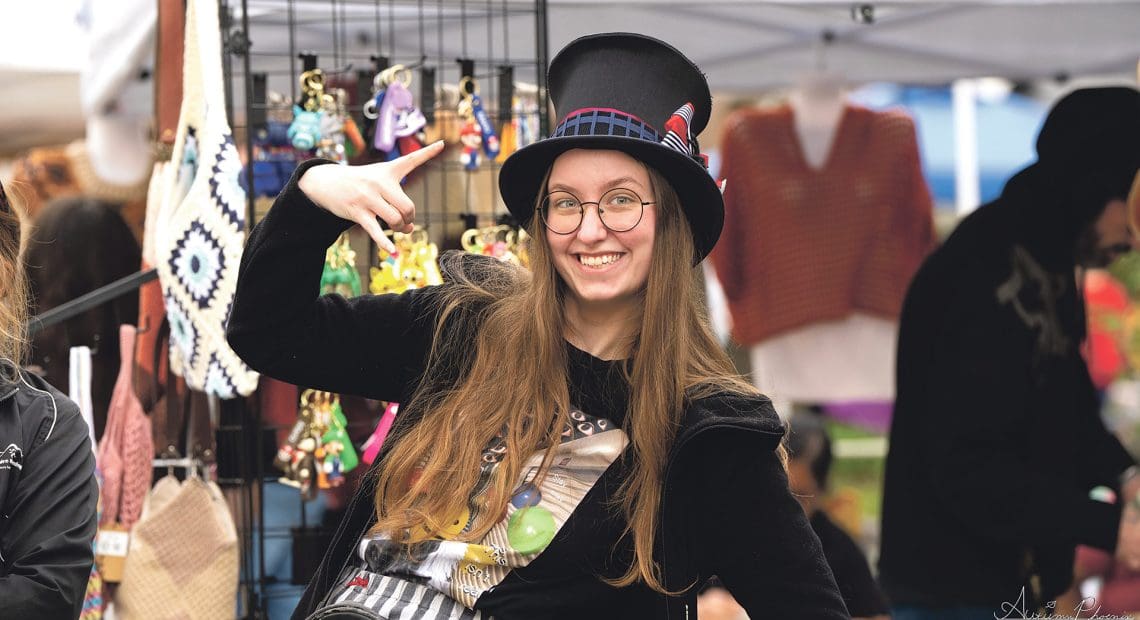
The return of First Fridays at Five has helped bring more foot traffic to downtown Pittsfield.
Photo by Autumn Phoenix Photography
“Downtown has shifted away from some of our larger companies that would have people here during the day and out for lunch, grabbing coffee, or going out to a bar after work. Now that they’re remote, we’re definitely in need of people downtown regularly,” said Rebecca Brien, managing director of Downtown Pittsfield Inc. (DPI). “The addition of housing in our downtown will make that difference.”
Jonathan Butler, president and CEO of 1Berkshire, the county-wide economic-development agency, agreed.
“I think it’s naive to think that everyone is going to go back to 9-to-5 at the office,” he said. “So what we’re doing throughout the Berkshires, with downtown Pittsfield being a centerpiece of this, is looking at the housing crisis, how we can get more housing built, and looking at some of this commercial space in our downtown.”
For the latest installment in its Community Spotlight series, BusinessWest turns its lens on Pittsfield, a city that continues to move on from its GE-dominated past and put the focus squarely on the present and future.
Progress Report
Marchetti grew up in Pittsfield, and, like everyone his age who did, he has fond memories of life in the city when GE was bustling and employing north of 10,000 people, most of whom would be spending their paychecks in a thriving downtown dominated by all kinds of retail, including several large department stores.
Like his immediate predecessors in the mayor’s office, Marchetti stresses a need not to look back, but to instead continue turning the pages on an ongoing evolution.
“People can’t find quality housing in the rental market that is desirable enough for them to stay here. Or, when you’re recruiting and looking to bring transplants to the region, they’re not able to buy a home at a price point that’s realistic, or find quality rental housing that meets their expectations. That’s a huge issue for us.”
He noted progress in many corners of the city, including the former GE site. Once a huge and imposing mass of concrete, the site is being made less intimidating and more ready for redevelopment, one parcel at a time.
Indeed, the parcel known as site 9, has been “completely rehabilitated,” said Marchetti, meaning there has been landscaping and other improvements designed to make it shovel-ready. Meanwhile, $500,000 in grant funding has been received to do the same for sites 7 and 8.
Plans are also moving forward for the construction of a new facility near the innovation center, one that will accelerate new-business development in the park, he noted.
“We have several businesses that have started in the innovation center, and they’re running out of space at that location. This is their opportunity to expand and allow space to be cleared up for additional incubator companies.”
Meanwhile, there has been progress on the housing front, the mayor said, noting that, like most Berkshires communities, Pittsfield is suffering from a shortage of housing, especially of the affordable variety, which is making it increasingly difficult for many to live — or stay — in the city, while also impacting businesses already facing challenges with building and maintaining a workforce.
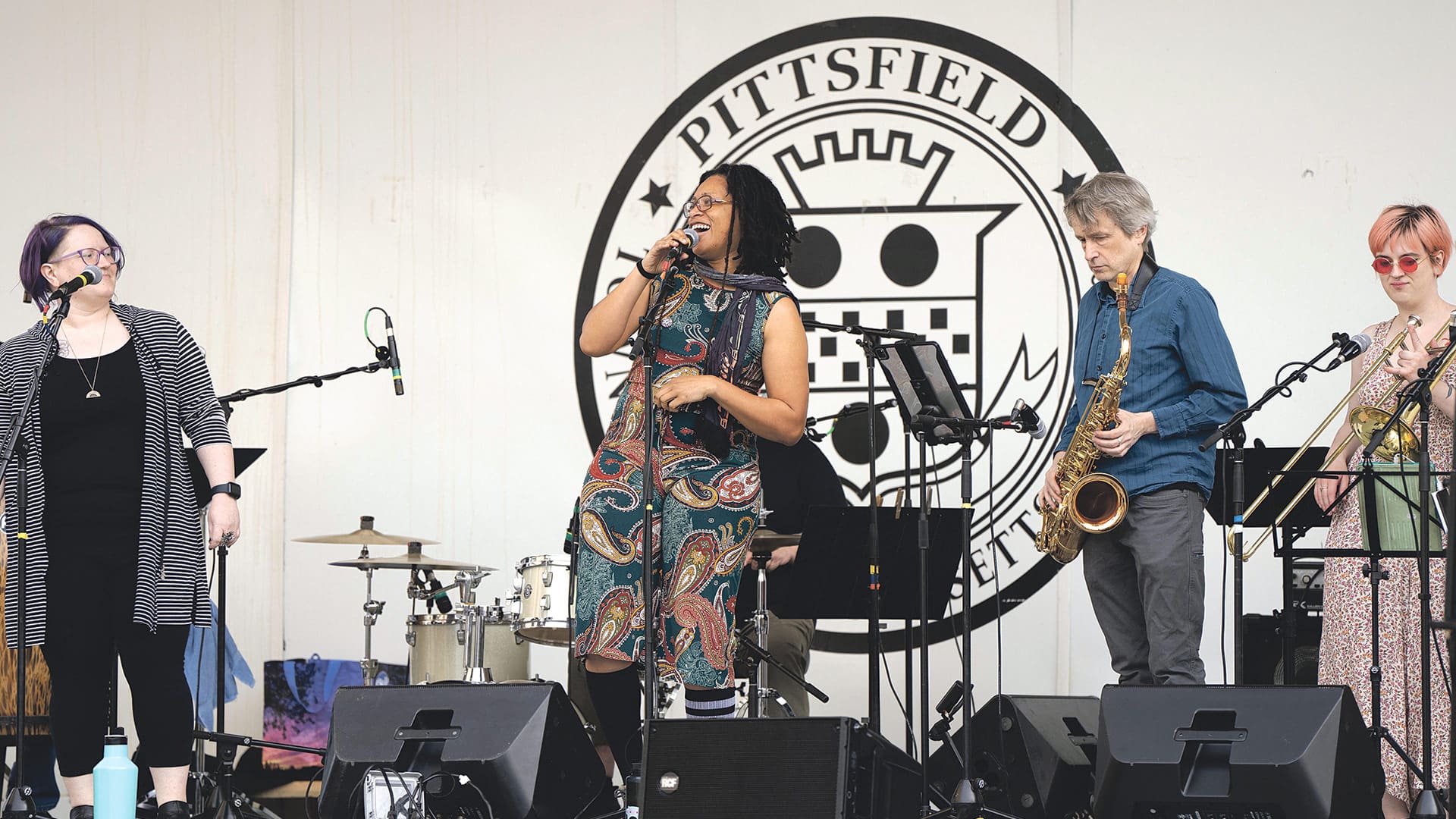
Rebecca Brien says the return of First Fridays at Five is just one of many initiatives undertaken by Downtown Pittsfield Inc. to bring foot traffic, and vibrancy, to the downtown area.
Photo by Autumn Phoenix Photography
Within the downtown, there are two projects in early-stage development. One involves conversion of the Wright Building on North Street and an adjacent shoe store, formerly home to a candlepin bowling alley and several offices and shops, into roughly 30 units of affordable housing. The other involves redevelopment of the White Terrace apartments, which will bring another 25 to 30 units online.
Meanwhile, two transitional housing projects are slated to be underway in the coming months, and plans are being forwarded for conversion of a former elementary school into housing, said Marchetti, who said projects currently in the pipeline will add another 100 units, but the city needs another 250 to 300 units, minimum, to meet the growing need.
“The hardest part of bringing new housing online is the millions of dollars it costs to redevelop these properties,” he said, adding that the price tag for the Wright Building project exceeds $17 million.
Butler concurred, but noted that housing is critical to Pittsfield’s ongoing efforts to reinvent itself and sustain the businesses that now call it home.
“Housing is the issue contributing to the workforce problems facing employers today,” he explained. “People can’t find quality housing in the rental market that is desirable enough for them to stay here. Or, when you’re recruiting and looking to bring transplants to the region, they’re not able to buy a home at a price point that’s realistic, or find quality rental housing that meets their expectations. That’s a huge issue for us.”
Downtown Developments
Additional housing is expected to bring more vibrancy and new opportunities to the downtown area, said Brien, noting that there are already several initiatives in various stages of development to bring more foot traffic to the area.
One has been the return of First Fridays at Five, which is an amalgam of the former Third Thursday and First Friday Artswalk events, aimed at bringing back what Brien called a “street-festival vibe.”
Pittsfield at a glance
Year Incorporated: 1761
Population: 43,927
Area: 42.5 square miles
County: Berkshire
Residential Tax Rate: $18.45
Commercial Tax Rate: $39.61
Median Household Income: $35,655
Median family Income: $46,228
Type of Government: Mayor, City Council
Largest Employers: Berkshire Health Systems; General Dynamics; Petricca Industries Inc.; SABIC Innovative Plastics; Berkshire Bank
* Latest information available
“We started small,” she said, referring to what was essentially a one-block initiative that started in May and featured everything from musical performers to a small-vendors market; from a beer garden hosted to Hot Plate Brewing to restaurants with on-street dining.
In September, the concept grew with something called Taste of Pittsfield, which featured additional music, dancing, art, food trucks, and activities stretched over another block, from Park Square to Columbus Avenue.
That larger footprint will be used next year, said Brien, adding that the goal moving forward is to continue to add new draws, such as a car show, to bring individuals and families into the downtown and let them experience all that is happening there.
And there is quite a bit in that category, she told BusinessWest, adding that downtown continues to change, evolve, and present a solid mix of anchors (the Colonial Theater and Barrington Stage Co.), long-time businesses such as Carr Hardware and Museum Outlets, and new or relatively new additions, such as Hot Plate; Thistle and Thorn, a gift shop; Witch Slapped, a “haven for all things metaphysical and mystical”; and the Plant Connector, which has a mission “to connect people to the joy of plants and foster a thriving green community.”
Meanwhile, the roster of restaurants continues to grow and evolve, she went on, listing a new steakhouse in Hotel on North; BB’s Hot Spot at the Lantern Bar, a Jamaican restaurant on North Street; and Marie’s North Street Eatery and Gallery, a contemporary deli located in the historic Shipton Building.
This mix is succeeding in making downtown more of a destination for locals and tourists alike, Brien said, adding that one challenge moving forward is to grow a steady pace of foot traffic that extends well beyond First Fridays and other event days.
Another challenge is sustainability, she went on, adding that DPI has created educational opportunities for business owners with the goal of helping them work on, though not necessarily in, their businesses to help ensure continued success.
“Stability is something we need to be focused on, with both existing businesses and the businesses that are coming in,” she explained. “We had a grant opportunity for some of our existing businesses this past summer that enabled them to work with a consultant on such things as marketing and workflow and accounting systems. And next year, we’ll be offering some co-op marketing dollars. We’re great at telling people downtown that we’re here, but we need to make that sure that word is getting out beyond us.
“And in January, we’ll be offering seminars on things like how to read a P&L sheet and how to use Facebook,” she went on, adding that DPI is committed to providing members with educational opportunities to help ensure that they thrive.
That’s just one of many examples of how leadership in this community, on many different levels, is indeed focused on the future and not on the past.