Home Posts tagged Pittsfield MA
Features Special Coverage

Hammer Down

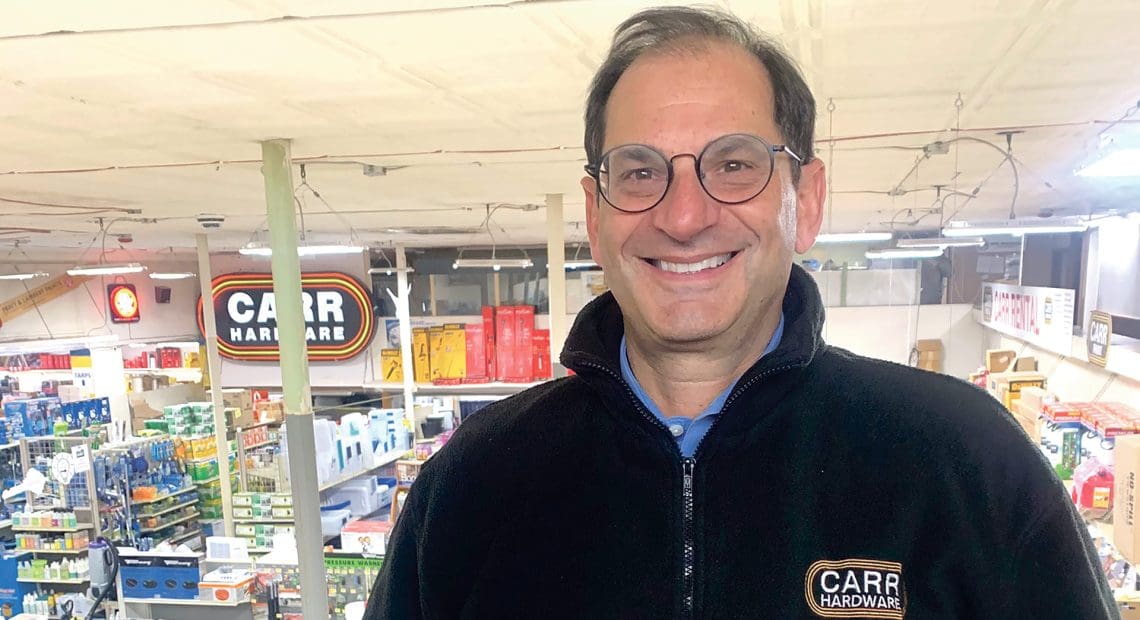
Bart Raser looks over the Carr Hardware location on North Street in Pittsfield.

Bart Raser looks over the Carr Hardware location on North Street in Pittsfield.

While he admits to practically growing up at the Carr Hardware store in Pittsfield, working beside his father, Marshall, during the summer and school vacations, Bart Raser says he had no real interest in living in the Berkshires or making the family business a career.

That all changed when, while he was working in Boston and studying for his MBA, his father became ill with cancer. Raser came home — meaning to the store on North Street — for what he thought might be several months.

“Instead, I kind of fell in love with it and never left,” he said. “It’s a good business. It’s been fun … and it’s still fun. It’s great when you can wake up and love what you do every day.”

Indeed, working beside his father, who was very active in the business until recently (and until he was in his mid-90s), Raser has helped write the latest chapters in an intriguing story that began almost a century ago when Sam Carr put his name over a hardware store that would soon become, and always has been, an institution as much as a place to buy paint, nails, and, more recently, a leaf blower.

An institution that has not only been part of the fabric of the community — in Pittsfield and now several other cities and towns where it has locations — but a force in those communities, with Raser and many of his employees getting involved on many different levels.

“If it wasn’t for our community, we wouldn’t be here, so we support a ton of organizations, we encourage our people to get involved, and we supply our people with the time, and the money if it’s needed, to get involved.”

“It’s a big part of our culture — we’re a community business,” he said. “If it wasn’t for our community, we wouldn’t be here, so we support a ton of organizations, we encourage our people to get involved, and we supply our people with the time, and the money if it’s needed, to get involved.”

As for the business itself, it has evolved and expanded its reach — moving into equipment rentals and a strong online component, and adding stores across Berkshire County and then beyond, with a location in Avon, Conn.

And there are certainly opportunities for more of this expansion, said Raser, especially as Baby Boomers move into retirement and look to sell some of the remaining small, independent stores still to be found in the region.

Bart Raser and his father, Marshall

Bart Raser and his father, Marshall, have grown Carr Hardware to a six-location chain (and counting) over the past 30 years.

“The challenge in our industry is there’s a lot of folks who own hardware stores who are late in their careers, and their kids have no interest in working the kind of hours that are required in retail today,” he explained. “And the business is not easy — it’s capital-intensive, the margins are tight, the competition is tough … you have to work hard.

“So there are plenty of opportunities today, and there are probably more coming,” he went on, adding that plenty of people are looking for such opportunities. “There are a lot of folks who want to buy these stores.”

With that, Raser — who now has his own children working summers and vacations doing everything from making deliveries to assembling grills — effectively summed up the state of this industry as well as the challenges and opportunities facing this nearly century-old business. For this issue, BusinessWest talked at length with him about all that and much more.


A Lightbulb Went Off

As he walked through the Pittsfield store with BusinessWest, Raser passed a row of snow throwers, an item that was in short supply and very hard to get at the height of the pandemic, but not so much the past few years.

“We have plenty of them … it hasn’t really snowed in two years,” he said with a voice that blended frustration with hard reality and an inability to do anything about it. “Let’s hope that changes this winter.”

Weather is just one of the myriad issues and challenges confronting those in the hardware business, a sector that, like many others in retail, has undergone tremendous change over the past few decades, in everything from the scope and nature of the competition — Sam Carr didn’t have Home Depot, Walmart, or Tractor Supply to contend with — to how business is done and what is sold or rented, from baby chicks in the spring to bounce houses.

“There’s all kinds of competition, and that competition has changed over the years,” he explained. “When I first came back, Sears was the big competitor, and that’s certainly evolved. Meanwhile, online is a huge competitor, Home Depot, Walmart, local chains — Rocky’s and Aubuchon — and the independents; there are several of them in the Berkshires.”

Like all Pittsfield-based businesses, this one had to cope with the downsizing of GE in the early ’90s and the huge impact it had, and still has, on the city’s central business district. And, like all retail businesses, this one faces the challenge of finding enough talent for its stores.

“The challenge in our industry is there’s a lot of folks who own hardware stores who are late in their careers, and their kids have no interest in working the kind of hours that are required in retail today.”

Before getting to all that, let’s go back to the beginning.

Calvin Coolidge was patrolling the White House when Sam Carr, a North Adams native who was working for someone else in the hardware sector, decided to go into business for himself. He started in a storefront just a few blocks down North Street, and eventually moved his venture into what had been a Sears Roebuck location, and before that a car dealership, at 547 North St., and the Carr name has been over the door ever since.

In 1962, Marshall Raser, who was already in the hardware business in Quincy with his brothers, met Sam Carr and decided to expand, if you will, into the Berkshires.

“My dad bought Carr Hardware, his brothers stayed in Quincy, and he ran Carr Hardware; together, they were all partners,” Raser noted, adding that the expansion into other Berkshire-area communities began in the ’80s with locations in Lee and Great Barrington. Eventually, what would become a chain had a presence in North Adams as well, before the venture moved into other area markets.

Including Avon in 2019, a Connecticut expansion that certainly wasn’t planned.

“I went in to buy their fixtures, and I walked out with the keys,” he said, referring to a store that was closing its doors, only to open again with a new name over the door. The search for fixtures was prompted by Carr’s purchase of an independent store in Longmeadow and the need to relocate it to make way for a Big Y expansion, a move that brought the chain to Enfield, Conn., a store that would close after seven years of operation.


Nailing It Down

As he talked about the company’s past expansion efforts — and also what might happen in the future — Raser referenced the attrition rate in this business, which has grown steadily higher over the years, even within his own family; indeed, in addition to the Enfield store, which suffered from a poor location, a store in Great Barrington operated by his cousins eventually failed, to be replaced by one opened by Bart and Marshall Raser.

employees take part in downtown Pittsfield’s annual spring cleanup

As part of Carr Hardware’s long tradition of being involved in the community, employees take part in downtown Pittsfield’s annual spring cleanup.

To survive and thrive these days, hardware ventures need several key ingredients, he said, starting with size. Indeed, chains have an enormous advantage over single, standalone stores when it comes to buying power and economies of scale, Raser said, adding that this is one reason why he is continually looking for expansion opportunities.

Meanwhile, a diverse portfolio of products and services is another must, he noted, adding that the company’s equipment- and event-rental business is a good example of such diversity.

“Rental is an important part of our business now,” he said. “If you had told my dad or Sam Carr that we would be renting bounce houses and cotton-candy machines, they’d think we were crazy, but it’s a great part of our business.”

The same can be said for small-engine repair and even the sale of chickens, which started in three of the stores several years ago and remains brisk.

Meanwhile, a large, effective online presence is also a must, and Carr has achieved that as well.

“It’s such a small part of our total volume, but it’s such a fast-growing piece; it grew by more than 100%,” he explained, adding that, while there’s a large volume of returns, consumers are becoming ever-more comfortable with buying hardware online.

Still, when it comes to most projects and products, consumers still need advice, which is why in-store service from qualified experts is another key to success, and Carr features that as well.

As for size, as he noted earlier, Raser said he’s continually looking for growth opportunities, but they have to make sense, and he isn’t looking to grow just for the sake of growth.

“I’ve walked away from far more than I’ve bought,” he said of stores that come on the market, adding that everything has to be right with an acquisition candidate, from the location to the condition of the store to the price, obviously.

“In many cases, people value their business for more than it’s really worth; with these small businesses, there are emotional connections, and they’re multi-generational,” he noted. “We have a lot of things we look at when considering an acquisition, and the biggest is culture, but the metrics have to make sense as well.

“We’re willing to go where there’s opportunity,” he went on, when asked where the company might go next. “But ideally, we would like to fill in the map; it would be great to have something between Great Barrington and Avon.”

Meanwhile, in the communities where it already has a presence, the company makes getting involved a huge part of its culture.

As Raser noted earlier, this is a top-down proposition. He has served, and continues to serve, on a number of different boards, and the company not only encourages employees at all levels to get involved, it gives them the wherewithal — the time off and whatever else they need — to do so.

“If they’re passionate about being a volunteer firefighter, or they want to coach a soccer team, or get involved in Little League, whatever their passion is, we really encourage them to do that,” he told BusinessWest. “And we’re happy to help them support the organization — that’s our starting point.”

It’s just one of many traditions, carried on for almost 100 years now, that promise to continue for decades to come.
 

Commercial Real Estate Special Coverage

Hour Town

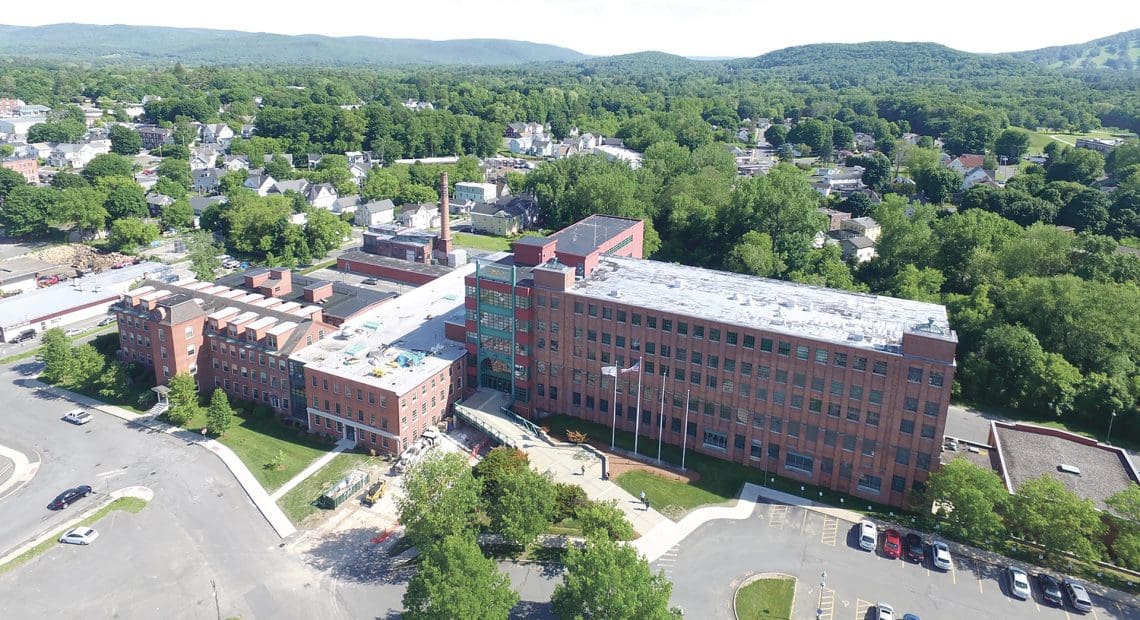
The Clock Tower complex in Pittsfield

The Clock Tower complex in Pittsfield

Sally Tiska Rice says she grew up in Pittsfield. As a child, and up through her high-school years until the plant started slowing down, she recalls going with her mother to visit aunts and other relatives working at the Sheaffer-Eaton paper mill in town. Later, as she entered the world of work herself, she became a hand-boarding artist working at Crane & Co. in Dalton (noted for making currency), painting stationery.

These chapters in her life help explain why she feels right at home as she continues writing the current chapter, as one of the so-called Clock Tower Artists, a diverse group of artists now renting lofts in part of the Sheafer-Eaton complex, renamed the Clock Tower Business Center because clocks were once made on that site.

“Immediately when I walked into the building, it reminded me of the place I worked at for my career,” said Tiska Rice, who specializes in portraits of homes, people, and pets. “The buildings were very similar — the big windows; the historic, brick New England mill … the whole structure just brought back a lot of memories.”

Beyond the memories, it offered her a north-facing window, what’s known as ‘north light’ — that’s important for artists because they don’t have to cope with the effects of the sun moving through the studio at different angles during the day — and the ability to be part of a community of artists.

“Immediately when I walked into the building, it reminded me of the place I worked at for my career.”

These artists, roughly 20 of them, are just some of the many tenants, large and small — including the Berkshire Eagle, which once owned the whole complex — that now have a South Church Street mailing address. Together, they help make the transformation of the Shaffer-Eaton complex a unique success story, one authored by North Adams-based Scarafoni Associates/CT Management Group, which acquired part of the complex in 2006 and the remainder in 2016. It has reshaped the property into a thriving mixed-use facility featuring residential units, a wide range of commercial tenants, those aforementioned artists, the Eagle and its massive printing presses, and more.

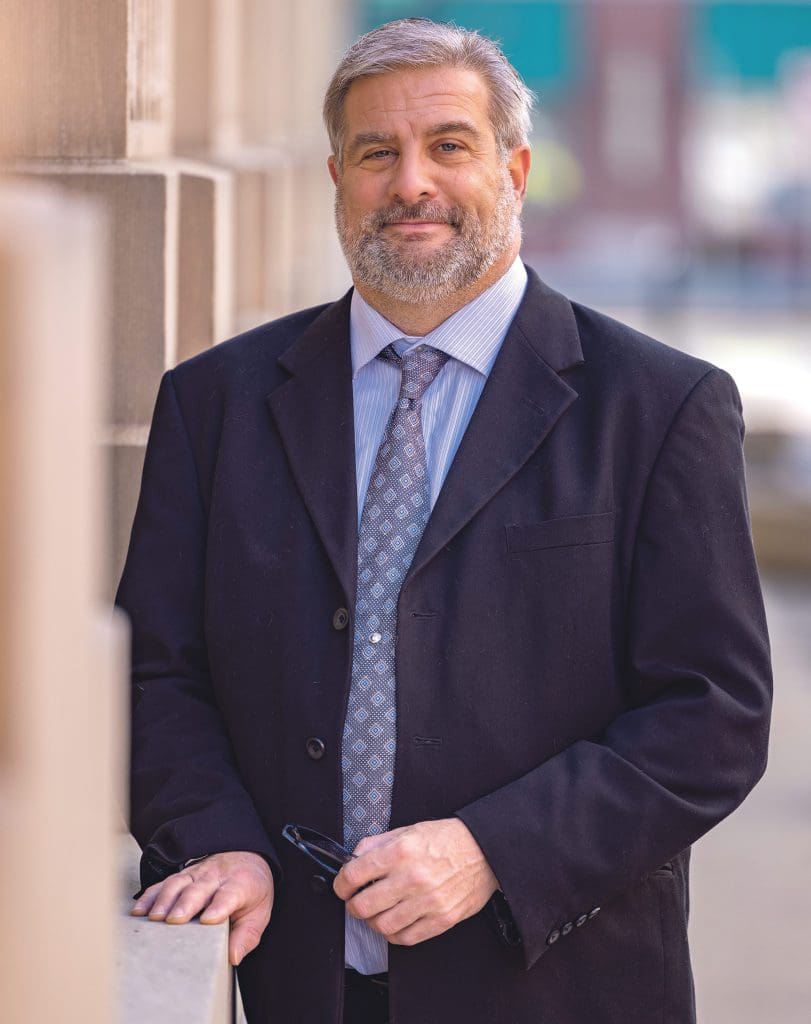
Dave Carver, a principal with CT Management Group/Scarafoni Associates

Dave Carver, a principal with CT Management Group/Scarafoni Associates

This is a story of imagination and especially perseverance, said Dave Carver, a partner with Scarafoni Associates/CT Management Group. He noted that the group has had to overcome the departure of major tenant Wayfair (much more on that later), the loss of Berkshire Medical Center offices, and the downsizing of the Eagle, while also enduring the pandemic and its impact on the office market and other stern challenges to lease out almost all the space in the complex.

“We got creative, we worked hard, we knocked on a lot of doors,” said Carver as he talked to BusinessWest in one of the conference rooms once used by Wayfair, now shared by several smaller tenants on one floor in a modified co-work arrangement that is just one of the successful components of this endeavor.

For this issue and its focus on commercial real estate, BusinessWest talked at length with Carver, Tiska Rice, and others about the transformation of the former Sheaffer-Eaton property into one of the more successful mill-conversion undertakings in this region, and how the evolution of this historic complex continues.


Success Stories

Tracing the history of the property, Carver said it dates back to the 1880s, when the Connecticut-based Terry Clock Co. was purchased by a group of investors from Pittsfield who brought the operation to that city and built a three-story building on Church Street.

Sally Tiska Rice, one of the Clock Tower Artists.

Sally Tiska Rice, one of the Clock Tower Artists.

The company’s tenure there was short-lived — it failed in the early 1890s — and the property was eventually sold to Arthur Eaton, who moved a paper mill there, later to be known as the Sheaffer-Eaton mill after a merger with Sheaffer Pen. In the late 1980s, the property was sold to the owners of the Berkshire Eagle, which were looking for a new home for the then-thriving daily paper.

The Eagle’s owners undertook a massive renovation of the main building on the property and leased out large sections of it, said Carver, noting that the recession of the mid-’90s hit the Eagle hard, and its operation, and the mill complex it called home, were sold to Media News Group, which eventually put portions of the property on the market.

“Because they had been struggling for so long, there was a lot to do. And we still have a lot to do; it never ends.”

This included roughly 100,000 square feet in some of the smaller buildings, including the original Terry Clock building, which were acquired by Scarafoni Associates/CT Management Group in 2006, and soon transformed into Clock Tower Condominiums.

In 2016, as Media News Group’s struggles escalated and it looked to jettison the remaining 200,000 square feet in the complex, Scarafoni/CT Management stepped in and acquired it, commencing a comprehensive initiative to modernize, retenant, and reimagine the property, which was maybe 50% occupied at the time, said Carver, adding that, over the past eight years, the property has certainly evolved and developed a unique look and feel.

The Clock Tower complex, where clocks and then paper were made, brings the past, present, and future together in an historic setting.

The Clock Tower complex, where clocks and then paper were made, brings the past, present, and future together in an historic setting.

“Because they had been struggling for so long, there was a lot to do,” he told BusinessWest. “And we still have a lot to do; it never ends.”

By that, he meant both upkeep buildings more than a century old, but also the many challenges confronting all those owning, managing, and leasing out office space today.

As an example of all of the above, he referenced what could be called the ‘Wayfair chapter’ of this story.

It started when the owners of the Boston-based home-furnishings company, who are from Pittsfield, commenced a search in 2019 for space in which to create a call center in the western part of the state.

That search focused on Pittsfield, said Carver, noting that several sites were considered before the company eventually zeroed in on the South Church Street property and 35,000 square feet in one of the buildings in the complex.

“We rolled up our sleeves and went to work — we immediately started knocking on doors and networking.”

Negotiations continued for roughly a year, he noted, adding that the company eventually came to terms that included a five-year lease, shorter than is common is such deals, but a needed concession given the size of the company’s investment and “City Hall encouraging us to make the deal.” A rapid buildout followed, the company started moving in that October, and it was ramping up to 200 jobs when the pandemic hit.

“And then, everything shut down, and that was for at least a year, and it could have been two,” Carver said, adding that, when the company finally decided to start bringing employees back, it struggled mightily to do so.

“A lot of employees had drifted away to other jobs, they were experimenting with a work-at-home model, and ultimately that went out, so they decided to close the facility,” he explained, adding that Wayfair opted out of its lease roughly a year ago, leaving a 35,000-square-foot hole at a challenging time for all commercial-property owners.


Art of the Deal

What happened next, Carter said, was that “we rolled up our sleeves and went to work — we immediately started knocking on doors and networking.”

And this hard work has paid off. Elder Services of Berkshire County, marking its 50th anniversary, moved into 19,000 square feet over the first two floors of the building previously occupied by Wayfair, while the third floor, with roughly 15,000 square feet, features smaller tenants with a shared common area; only a few spaces remain to be leased.

Wayfair’s departure has been one of the many challenges overcome by the Clock Tower complex’s owners and managers.

Wayfair’s departure has been one of the many challenges overcome by the Clock Tower complex’s owners and managers.

Tenants include Janney Montgomery Scott, a regional financial-services firm that desired a presence in Western Mass.; Teton Management, a real-estate management company; Keiter Builders, a general contractor based in Northampton that also sought a Berkshires location; Insights in Automation; Annie Schwartz Nutrition; and MassHire Berkshire Workforce. Together, they share what amounts to co-working space.

“We decided to leave the kitchen area Wayfair created and the open area,” Carver said. “So even though everyone has their own, independent space, it’s a modified co-working area.”

Its creation is one of the success stories at this historic property. The Clock Tower Artists, located on the third floor of the business center, comprise another.

The collective, or community, now includes more than 20 artists that work in various disciplines and often participate in open-studio events and community arts initiatives.

Tenants include Shanny Porras, a visual sound artist who translates music into abstract paintings; Caroline Kennedy, an abstract artist; Deborah Carter, a multi-media artist who creates upcycled, wearable art; Stefanie Webber, an action-based artist who specializes in dance, movement, and performance; Bruce Laird, a contemporary artist who creates pieces using acrylic, mixed media, and collage; and Linda Petrocine, who specializes in the ancient art of painting using hot wax on wooden panels.

Collectively, these artists bring vibrancy, energy, and people to the Clock Tower complex, said Carver, adding that there is room for more, and he expects the group to grow in the years to come.

Tiska Rice said she was among the first artists to visit and then sign on at the mill. She and others were impressed with everything from the parking to the open common area on the artists’ floor, which doubles as an art gallery; from the large windows, views, and north light to the elevator (Tiska Rice is disabled).

Tiska Rice was also impressed with what Carver and his team were doing with the mill, blending history with imaginative ideas, such as the artists’ floor. And she’s equally impressed with the community of artists that has emerged.

“It’s great to be with all these talented artists — it’s very encouraging,” she told BusinessWest. “Some people will refer to having the notorious artist’s block where you’ve finished your last project and you don’t know where to go from there. There’s so much encouragement here; everyone works with their own style, but it seems like everyone has a way to complement each other and bring out the best in each other.

“An artist’s world has also been described as a very lonely place,” she went on. “We’re a whole group of individuals that come together as a community.”

This community of artists is just one of many reasons why the Clock Tower complex has become a timeless mixed-use masterpiece, one that brings the past, present, and even the future together in stunning fashion.

Community Spotlight

Community Spotlight

Mayor Peter Marchetti says several projects in various stages of development should help ease a critical housing shortage in Pittsfield.

Mayor Peter Marchetti says several projects in various stages of development should help ease a critical housing shortage in Pittsfield.

Starting early in his career in financial services at Pittsfield Cooperative Bank, Peter Marchetti, like many of his colleagues, made it a point to get involved in the community.

He donated time and energy to everything from the United Way to youth bowling; from Pittsfield Community Television to the Pittsfield Parade Committee.

But starting in the late ’90s, he took that involvement to a higher plane, running, successfully, for a seat on the City Council. In 2011, he sought to take things to a still higher level, running for mayor, only to lose a very tight race. After a hiatus from elected office, he returned to the City Council, and in 2023 launched another bid for the corner office, this one successful.

When asked why, he indicated that there was still much work to be done as this city of roughly 44,000, the largest in the Berkshires, continues its transition from being, in essence, a company town — in this case General Electric — to a city with a far more diverse economy, and one that has moved on from GE in every way, including a reimagining of the huge, mostly undeveloped tract that was its massive transformer-manufacturing complex.

“I saw our city at a crossroads, where we have the opportunity to reinvent ourselves; there are many people who still look at us as the old GE manufacturing community. I think we have some opportunities to turn the corner, and I wanted to lead that turnaround,” said Marchetti, who retired from Pittsfield Co-op as senior vice president of Retail Banking Operations. Ten months into his first four-year term, he can cite progress on several fronts.

These include the William Stanley Business Park, created at the GE site, where work is set to commence on a 20,000-square-foot facility that will provide room to grow for many of the startups that now call the Berkshire Innovation Center home.

And also the city’s downtown, still evolving from the GE days, where new businesses have landed and much-needed housing initiatives are taking shape (more on these later).

Beyond Marchetti’s first year in office and his emerging agenda, there are plenty of other developing stories in Pittsfield, many of them taking place downtown, where several issues and trends are colliding, and where that ongoing process of evolution continues.

The expansive downtown area, while now home to several new business and with a falling vacancy rate, continues to experience fallout from the emergence of remote work and a broad decline in daily foot traffic, which is impacting many hospitality and service-oriented businesses.

“Downtown has shifted away from some of our larger companies that would have people here during the day and out for lunch, grabbing coffee, or going out to a bar after work. Now that they’re remote, we’re definitely in need of people downtown regularly. The addition of housing in our downtown will make that difference.”

This decline has been one of the driving forces in the return of First Fridays at Five and other events geared toward generating additional foot traffic, while also helping to inspire efforts to redevelop some downtown properties into housing, which is in short supply and thus a negative force in economic development and business growth.

Indeed, like other communities facing this challenge, Pittsfield is looking at ways to convert office and retail spaces into housing — opportunities that will help meet the need for housing while also bringing back some of the vibrancy lost to remote work.

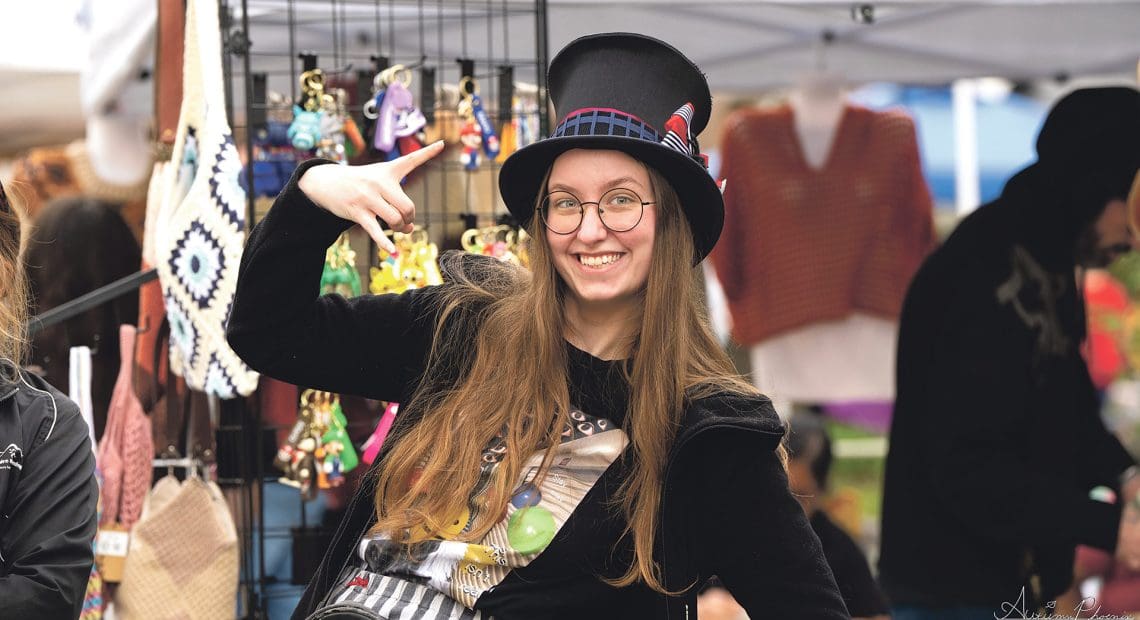
The return of First Fridays at Five

The return of First Fridays at Five has helped bring more foot traffic to downtown Pittsfield.
Photo by Autumn Phoenix Photography

“Downtown has shifted away from some of our larger companies that would have people here during the day and out for lunch, grabbing coffee, or going out to a bar after work. Now that they’re remote, we’re definitely in need of people downtown regularly,” said Rebecca Brien, managing director of Downtown Pittsfield Inc. (DPI). “The addition of housing in our downtown will make that difference.”

Jonathan Butler, president and CEO of 1Berkshire, the county-wide economic-development agency, agreed.

“I think it’s naive to think that everyone is going to go back to 9-to-5 at the office,” he said. “So what we’re doing throughout the Berkshires, with downtown Pittsfield being a centerpiece of this, is looking at the housing crisis, how we can get more housing built, and looking at some of this commercial space in our downtown.”

For the latest installment in its Community Spotlight series, BusinessWest turns its lens on Pittsfield, a city that continues to move on from its GE-dominated past and put the focus squarely on the present and future.


Progress Report

Marchetti grew up in Pittsfield, and, like everyone his age who did, he has fond memories of life in the city when GE was bustling and employing north of 10,000 people, most of whom would be spending their paychecks in a thriving downtown dominated by all kinds of retail, including several large department stores.

Like his immediate predecessors in the mayor’s office, Marchetti stresses a need not to look back, but to instead continue turning the pages on an ongoing evolution.

“People can’t find quality housing in the rental market that is desirable enough for them to stay here. Or, when you’re recruiting and looking to bring transplants to the region, they’re not able to buy a home at a price point that’s realistic, or find quality rental housing that meets their expectations. That’s a huge issue for us.”

He noted progress in many corners of the city, including the former GE site. Once a huge and imposing mass of concrete, the site is being made less intimidating and more ready for redevelopment, one parcel at a time.

Indeed, the parcel known as site 9, has been “completely rehabilitated,” said Marchetti, meaning there has been landscaping and other improvements designed to make it shovel-ready. Meanwhile, $500,000 in grant funding has been received to do the same for sites 7 and 8.

Plans are also moving forward for the construction of a new facility near the innovation center, one that will accelerate new-business development in the park, he noted.

“We have several businesses that have started in the innovation center, and they’re running out of space at that location. This is their opportunity to expand and allow space to be cleared up for additional incubator companies.”

Meanwhile, there has been progress on the housing front, the mayor said, noting that, like most Berkshires communities, Pittsfield is suffering from a shortage of housing, especially of the affordable variety, which is making it increasingly difficult for many to live — or stay — in the city, while also impacting businesses already facing challenges with building and maintaining a workforce.

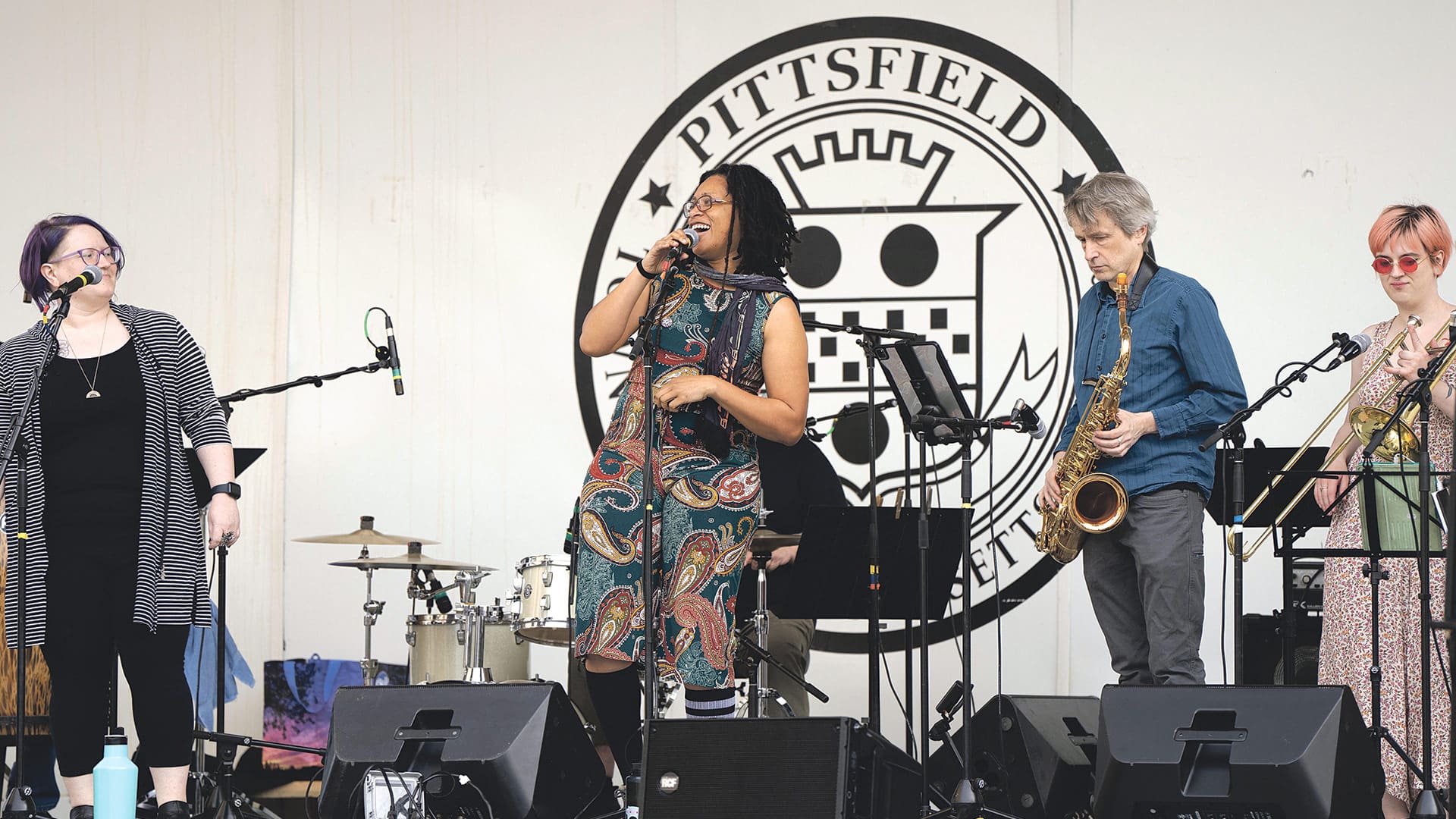
First Fridays at Five is just one of many initiatives undertaken by Downtown Pittsfield Inc.

Rebecca Brien says the return of First Fridays at Five is just one of many initiatives undertaken by Downtown Pittsfield Inc. to bring foot traffic, and vibrancy, to the downtown area.
Photo by Autumn Phoenix Photography

Within the downtown, there are two projects in early-stage development. One involves conversion of the Wright Building on North Street and an adjacent shoe store, formerly home to a candlepin bowling alley and several offices and shops, into roughly 30 units of affordable housing. The other involves redevelopment of the White Terrace apartments, which will bring another 25 to 30 units online.

Meanwhile, two transitional housing projects are slated to be underway in the coming months, and plans are being forwarded for conversion of a former elementary school into housing, said Marchetti, who said projects currently in the pipeline will add another 100 units, but the city needs another 250 to 300 units, minimum, to meet the growing need.

“The hardest part of bringing new housing online is the millions of dollars it costs to redevelop these properties,” he said, adding that the price tag for the Wright Building project exceeds $17 million.

Butler concurred, but noted that housing is critical to Pittsfield’s ongoing efforts to reinvent itself and sustain the businesses that now call it home.

“Housing is the issue contributing to the workforce problems facing employers today,” he explained. “People can’t find quality housing in the rental market that is desirable enough for them to stay here. Or, when you’re recruiting and looking to bring transplants to the region, they’re not able to buy a home at a price point that’s realistic, or find quality rental housing that meets their expectations. That’s a huge issue for us.”


Downtown Developments

Additional housing is expected to bring more vibrancy and new opportunities to the downtown area, said Brien, noting that there are already several initiatives in various stages of development to bring more foot traffic to the area.

One has been the return of First Fridays at Five, which is an amalgam of the former Third Thursday and First Friday Artswalk events, aimed at bringing back what Brien called a “street-festival vibe.”

Pittsfield at a glance

Year Incorporated: 1761
Population: 43,927
Area: 42.5 square miles
County: Berkshire
Residential Tax Rate: $18.45
Commercial Tax Rate: $39.61
Median Household Income: $35,655
Median family Income: $46,228
Type of Government: Mayor, City Council
Largest Employers: Berkshire Health Systems; General Dynamics; Petricca Industries Inc.; SABIC Innovative Plastics; Berkshire Bank
* Latest information available

“We started small,” she said, referring to what was essentially a one-block initiative that started in May and featured everything from musical performers to a small-vendors market; from a beer garden hosted to Hot Plate Brewing to restaurants with on-street dining.

In September, the concept grew with something called Taste of Pittsfield, which featured additional music, dancing, art, food trucks, and activities stretched over another block, from Park Square to Columbus Avenue.

That larger footprint will be used next year, said Brien, adding that the goal moving forward is to continue to add new draws, such as a car show, to bring individuals and families into the downtown and let them experience all that is happening there.

And there is quite a bit in that category, she told BusinessWest, adding that downtown continues to change, evolve, and present a solid mix of anchors (the Colonial Theater and Barrington Stage Co.), long-time businesses such as Carr Hardware and Museum Outlets, and new or relatively new additions, such as Hot Plate; Thistle and Thorn, a gift shop; Witch Slapped, a “haven for all things metaphysical and mystical”; and the Plant Connector, which has a mission “to connect people to the joy of plants and foster a thriving green community.”

Meanwhile, the roster of restaurants continues to grow and evolve, she went on, listing a new steakhouse in Hotel on North; BB’s Hot Spot at the Lantern Bar, a Jamaican restaurant on North Street; and Marie’s North Street Eatery and Gallery, a contemporary deli located in the historic Shipton Building.

This mix is succeeding in making downtown more of a destination for locals and tourists alike, Brien said, adding that one challenge moving forward is to grow a steady pace of foot traffic that extends well beyond First Fridays and other event days.

Another challenge is sustainability, she went on, adding that DPI has created educational opportunities for business owners with the goal of helping them work on, though not necessarily in, their businesses to help ensure continued success.

“Stability is something we need to be focused on, with both existing businesses and the businesses that are coming in,” she explained. “We had a grant opportunity for some of our existing businesses this past summer that enabled them to work with a consultant on such things as marketing and workflow and accounting systems. And next year, we’ll be offering some co-op marketing dollars. We’re great at telling people downtown that we’re here, but we need to make that sure that word is getting out beyond us.

“And in January, we’ll be offering seminars on things like how to read a P&L sheet and how to use Facebook,” she went on, adding that DPI is committed to providing members with educational opportunities to help ensure that they thrive.

That’s just one of many examples of how leadership in this community, on many different levels, is indeed focused on the future and not on the past.


Community Spotlight

Community Spotlight

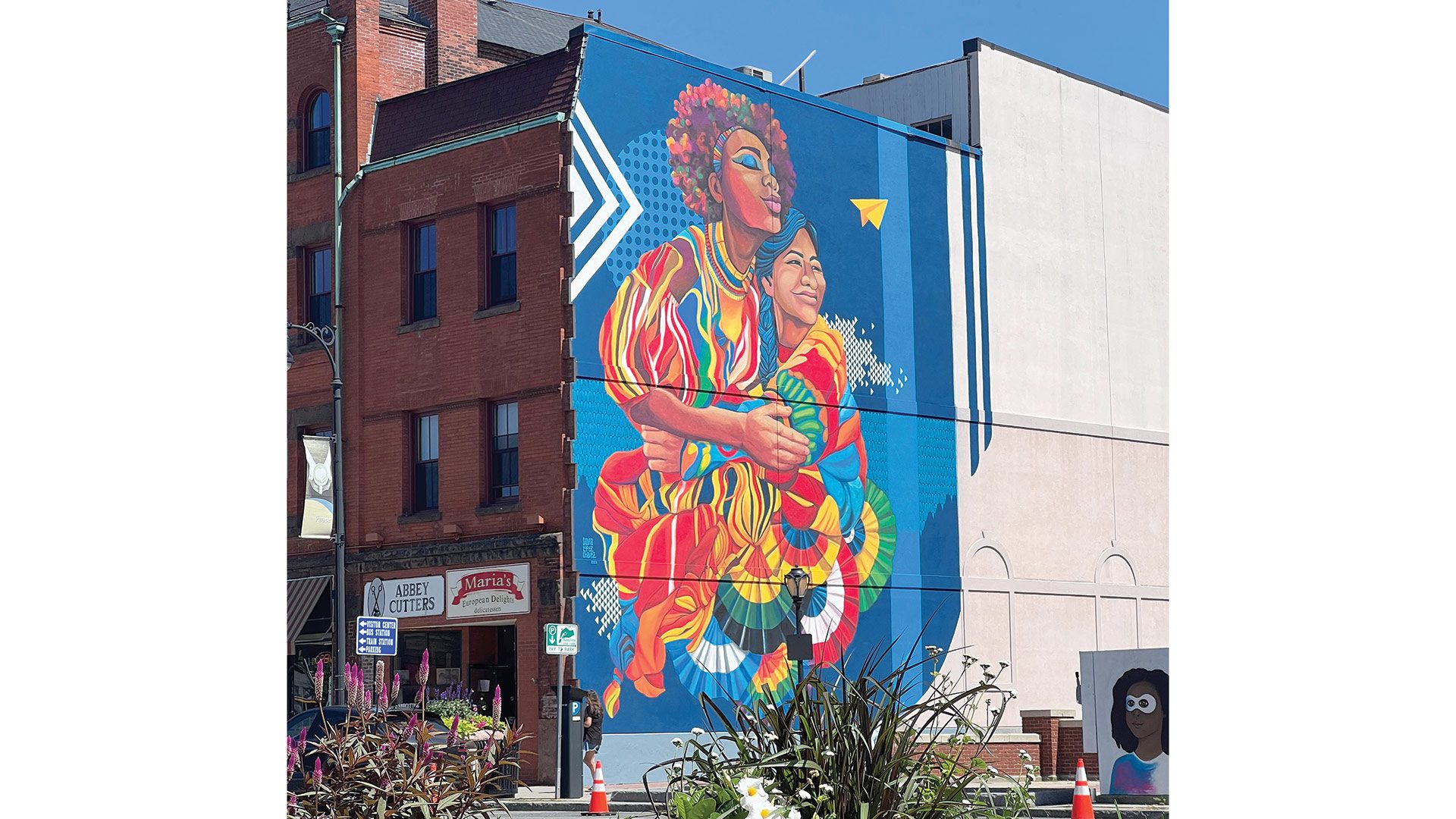
The Let It Shine! Public Art Partnership

The Let It Shine! Public Art Partnership, a collaborative effort involving several partners, has helped bring new murals, color, and more vibrancy to downtown Pittsfield.

Rebecca Brien grew up in Berkshire County and has lived in Pittsfield for more than 30 years now. She’s old enough to remember what it was like downtown on Thursday nights after employees at the sprawling General Electric transformer-manufacturing complex picked up their paychecks.

“All of the shops would stay open late,” she recalled. “And all of the employees would get their paychecks and come down to the banks directly to cash them and have dinner and do some shopping. It was definitely a bustling town.”

Brien, who now serves as managing director of Downtown Pittsfield Inc., or DPI — a membership organization consisting of property owners, businesses, residents, and nonprofit agencies — understands that it probably won’t ever be that like again on North Street, the city’s main thoroughfare, and adjacent streets.

But there is a renewed sense of vibrancy — coupled with some stern challenges — in the central business district, she said, noting there are several new and thriving businesses, many of them in the broad realms of arts, tourism, and hospitality, and new initiatives to improve the area and specific storefronts and encourage people of all ages to visit the district and stay for a while.

These include the Let it Shine! Public Art Partnership, a group of Pittsfield-based community members who have come together to organize public art and revitalization on North Street, including several new murals that have brought color to the area and changed the landscape, literally and figuratively, and the Pittsfield Glow Up! Business-improvement grant program, made possible by ARPA funding. The initiative provides grants of up to $10,000 to eligible businesses impacted by COVID to be used for physical improvements that will enhance foot traffic and create visual vibrancy in the district (more on both programs later).

“There’s definitely a concern when it comes to foot traffic, so DPI has been working very hard to make sure that there are activities going on.”

“I do see that our downtown is poised to reach a new potential,” Brien said. “We’re working with MassDevelopment and its Transformative Development Initiative, a program to accelerate economic growth in focused areas, which means we have access to funding and programs that are really making a difference in our downtown.”

Jonathan Butler, president and CEO of the Pittsfield-based economic-development agency 1Berkshire, agreed.

He said Pittsfield and especially its downtown, which has been reshaping and reimagining itself since GE departed nearly 40 years ago, remains a work in progress.

Today, its economy is far more diverse than it was decades ago, when manufacturing was the anchor, he said, adding quickly that manufacturing remains a force, with General Dynamics employing nearly 2,000 people in facilities that were once part of the GE complex.

But the creative economy has also become a huge force in the community, with attractions and institutions such as Berkshire Theatre Group, Barrington Stage Company, and the Colonial Theatre, and this diversity stretches to technology, healthcare, service businesses, and other types of entrepreneurial ventures.

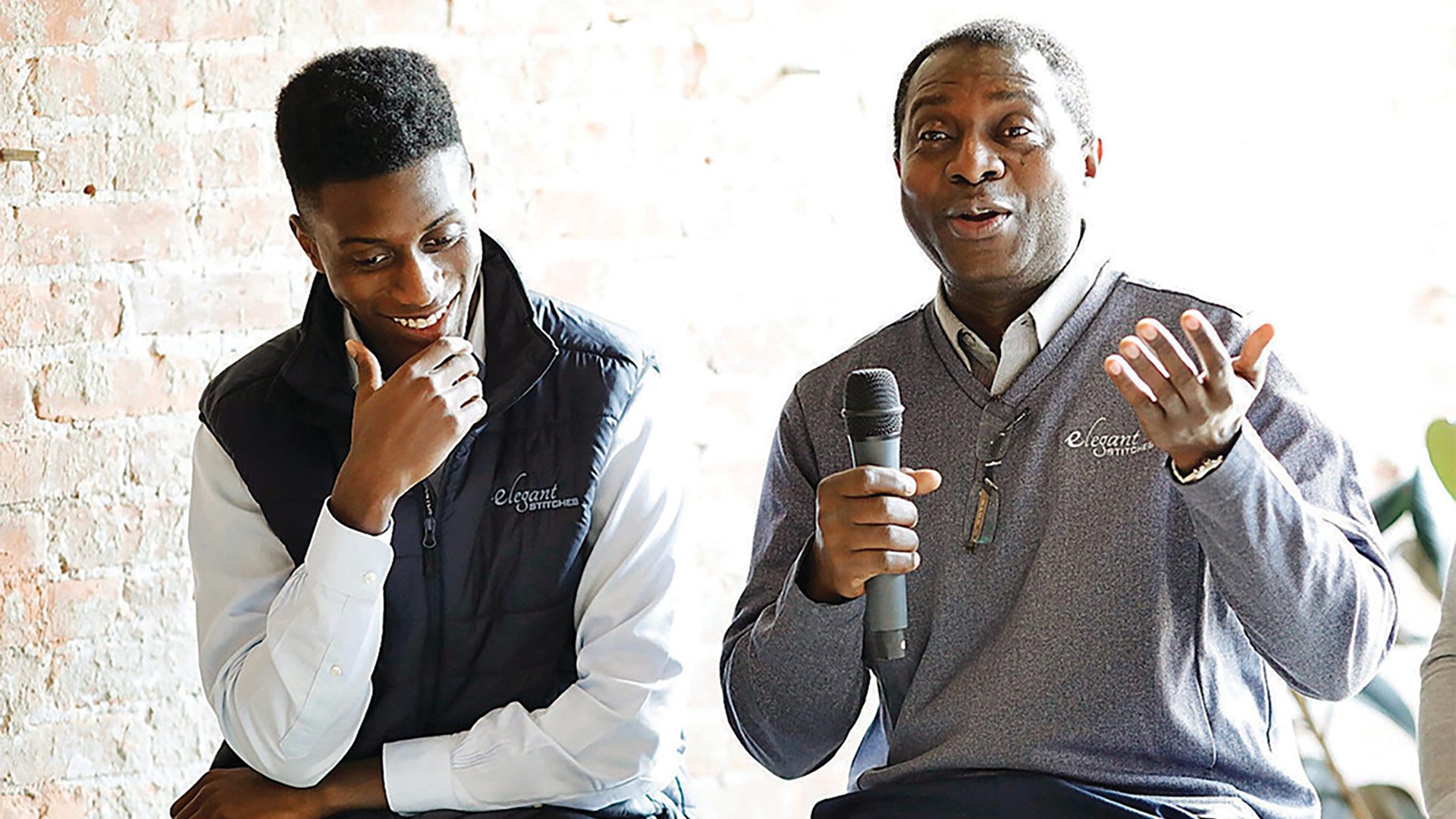
Al Enchill, seen here with his son, Auric

Al Enchill, seen here with his son, Auric, says he’s seen a considerable amount of change and progress in downtown Pittsfield since he first opened his busness.

That list includes Elegant Stitches, an embroidery and screen-printing shop run by Al Enchill and his son, Auric. It specializes in branded custom apparel — from T-shirts to tote bags to umbrellas — and counts a number of area banks and other businesses, colleges, government agencies (including the FBI), and even the U.S. Army in its client portfolio.

Al Enchill first opened his business on First Street in 1997, and has seen a good deal of change and progress downtown since then.

“Pittsfield is changing for the better, and it’s attracting more people,” he said. “I think this will help the businesses here.”

But as much as Pittsfield and its downtown are experiencing growth and progress, there are still considerable challenges, some of them COVID-related.

Indeed, the shift to remote work and hybrid arrangements has left fewer people working downtown, said Butler and Brien, noting that this has certainly impacted many of the hospitality-related businesses in that area. Meanwhile, that same trend has also impacted commercial real estate downtown, Butler added, noting that some businesses are now leasing less space, and others will certainly be tempted to do so.

At the same time, there is a housing crisis — the same one impacting communities across Western Mass., Butler noted, adding that there is potential to convert some of the vacant or underutilized space in the downtown area to housing, something that would address two problems at once and bring people, and vibrancy, to the city center.

For this, the latest installment of its Community Spotlight series, BusinessWest takes an in-depth look at Pittsfield and its downtown, and efforts not to recreate the past, but to create a vibrant, sustainable future.


Progress Report

Brien said DPI, established in 1983, acts much like a chamber of commerce would. The agency serves as a connector and liaison for businesses and property owners, residents, and city officials.

It is currently working on a number of initiatives to bring new businesses and vibrancy to the downtown area, she said. These include a collaborative effort between DPI and the Berkshire Black Economic Council on a VIBE grant that will provide funding for four new businesses to launch in the downtown, a program designed to help fill some of the empty storefronts in the district.

Meanwhile, DPI continues its work with the city and the Pittsfield Economic Revitalization Corp. to administer the Glow Up! grants. A first round of grants totaling $100,000 and involving 12 businesses was awarded in the spring, and applications for a second round of $100,000 opened earlier this month.

“Pittsfield is a commercial center, lots of people physically work in Pittsfield; they all left downtown Pittsfield during the pandemic to work at home, and now, three years later, some of them have returned, but many haven’t. So, like many other downtowns, there’s a large gap in commercial real-estate space, a lot of unfilled space.”

“The money can go toward anything from painting to new windows to new signage and additional lighting,” Brien said, adding that the program’s name explains what business owners are trying to do — glow up their operations.

Overall, there is progress downtown, but several challenges as well, especially when it comes to foot traffic — a concern for most all cities in the post-COVID area. Thus, DPI has intensified its efforts to create programming and undertake initiatives to not only bring people to the area, but extend their stay.

“There definitely have been more challenges, especially for our lunch business in the downtown, especially with the banks, insurance agencies, and organizations like that still working hybrid models,” Brien said. “There’s definitely a concern when it comes to foot traffic, so DPI has been working very hard to make sure that there are activities going on.”

These include an Artswalk on the first Friday of each month between May and December to bring visitors downtown, she noted, adding that the program has been expanded recently to include placing works by local artists in shops and restaurants, as well as music, dance, a marketplace, and activities for children in an effort to extend visitors’ stay in the central business district to include dinner and perhaps a show at one of the venues.

Along these same lines, the Let it Shine! community art project was launched. It includes eight new murals in the downtown and West Side districts.

“These are world-renowned artists — individuals from across the U.S., and local artists as well, who have installed pieces,” Brien said, adding that a digital tour guides individuals to these works and other murals installed in recent years.

“Any night of the week in our downtown, you can find activities, you can find music, shows at the local theaters — we have a great movie theater in our downtown, we have a new brewery that has programming every night of the week,” she went on. “We have great restaurants … there’s a lot to do, and we’re doing what we can to bring people out and take it all in.”

Enchill has witnessed all this out the front window of his business, and he is encouraged by what he now sees. He said that, while COVID took its toll, there are many people on the streets, some of whom will stop into his store to buy a sweatshirt because it’s colder outside than they thought it might be.

“Things are changing here — things are happening,” he said. “Downtown is making its way back.”


‘Fighting Its Way Back’

Butler concurred, and noted that there is a sense of momentum in Pittsfield, visible on many fronts.

These include population growth, something all Berkshires communities have been seeking, especially in the form of professionals fleeing larger municipal centers in the wake of COVID for more rural zip codes that offer quality of life and opportunities to work remotely.

Pittsfield fits that description, Butler said, adding quickly, though, that whatever surge there may have been has crested. Meanwhile, he wondered out loud how many of these new arrivals were simply living in the Berkshires and not working there — and, thus, not providing any relief for a workforce crunch that is still impacting businesses across most all sectors, but especially the tourism and hospitality industry.

“It’s absolutely a tough time workforce-wise; I don’t know if we’re off trend with the rest of Massachusetts or New England, but we’ve definitely felt pressure in the hiring market going all the way back to 2017 and 2018, pre-pandemic, and then it accelerated with the pandemic, and we’re still feeling that,” he said, using ‘we’ to mean the Berkshires in general but especially the region’s largest community, where roughly 40% of those employed in the county work.

“And it’s really every sector, from hospitality to healthcare, manufacturing, and tech; we just have a variety of sectors where they’re hiring everywhere, and it doesn’t appear that the workforce needed for our current employers is seeking employment at the volume needed in the Berkshires.”

The problem is especially acute in the tourism and hospitality sector, Butler said, where some businesses, including hotels and restaurants, have been forced to alter operations, and often hours or days of operation, because of an inability to find enough help.

As for the downtown, he said it is “fighting its way back,” a phrase he used not necessarily in reference to the loss of GE, although that’s part of it, but rather to COVID and its after-effects, with regard to both visitation and a changing workplace that has left at least Mondays, Tuesdays, and Wednesdays quieter than they were before the pandemic.

“Downtown Pittsfield was probably the heaviest pressure point in terms of pandemic-induced economic impact, and that was probably the case with most gateway cities and larger cities,” he said. “And in the case of downtown Pittsfield, I think it was a combination of things — Pittsfield is a commercial center, lots of people physically work in Pittsfield; they all left downtown Pittsfield during the pandemic to work at home, and now, three years later, some of them have returned, but many haven’t. So, like many other downtowns, there’s a large gap in commercial real-estate space, a lot of unfilled space.”

Elaborating, he said some businesses are carrying on in the same space as before the pandemic, but others have changed their footprint to accommodate a smaller on-site workforce, leaving space to be leased.

Space that might be used to help combat the ongoing housing crisis, he said.

“There’s an opportunity to convert a lot of this underutilized space that we found post-pandemic into housing,” Butler explained, adding there are a probably a dozen buildings in and around downtown Pittsfield that could be retrofitted for such use, and a $4.8 billion housing bond bill proposed late last month might help fund such transformations.


Seeing the Light

Brien has obviously seen a great deal of change in downtown Pittsfield from those days when GE dominated the economy and even the culture of the community.

And the pace of change continues, most recently in a positive way, with new businesses and new initiatives that make the city and its downtown a destination.

“I really feel that there’s a glimmer,” she told BusinessWest. “It’s not going to happen overnight, but every day, we do a little bit more to bring Pittsfield and our downtown back to life.”

A life that respects the past, but is more a reflection of the future.