Home Posts tagged Agawam
Features

The Ride Stuff

Peter Carmichael says Six Flags is more than an major employer

Peter Carmichael says Six Flags is more than an major employer — it’s a source of all-important first jobs as well as leadership opportunities for young people.

While the park’s gates are officially closed this time of year, this is actually considered busy season at Six Flags New England.

It’s just a different kind of busy, said Peter Carmichael, president of the amusement park in Agawam, adding that this is the season for getting the various rides and attractions ready for the official busy season, which starts in early April, around school-break time, and kicks into a higher gear on Memorial Day.

“Every year, we inspect and refresh the entire park,” he explained. “This is when we do all of our annual maintenance and checkups on all our rides and attractions to make sure they’re ready to go in the spring.”

And this offseason, during which the venue formerly known Riverside Park will mark 25 years as part of the Six Flags brand, things are even busier than what would be considered usual, with the park now in the final stages of work on its first new roller coaster in nearly a decade.

It’s called Quantum Accelerator, billed as ‘New England’s first straddle coaster,’ whereby, as that name suggests, riders sit on top of the seat, rather than inside, providing a different sensation and increased thrill, Carmichael said.

The ride, which features two launches and speeds up to 45 mph, will officially launch in late spring, he said, adding that, after his engineers, he expects to take one of the first rides on the new attraction.

In addition to the new coaster, the park is undertaking what Carmichael calls the largest investment in food services in the park’s history — a renovation of the Riverboat Café in the center of the park that will provide everything from additional capacity to new menu items.

“We have dozens, probably hundreds, of leadership opportunities, between teen leads and supervisors and coordinators that are asked to step up, lead our teams, and enhance the guest experience. It’s a great development opportunity for the individual.”

Overall, he said his work comes down to continuing traditions — not just rides, amusements, food, and adding new roller coasters, but also providing first jobs to hundreds of young people each year — the park employs roughly 3,000 seasonal workers each year — as well as leadership opportunities for younger people, experience in fields ranging from accounting to healthcare to culinary arts, and chances to advance within this industry, as he did, as we’ll see.

“What we’re really most proud of is that we tend to be, for many, their first real leadership opportunity,” he said. “We have dozens, probably hundreds, of leadership opportunities, between teen leads and supervisors and coordinators that are asked to step up, lead our teams, and enhance the guest experience. It’s a great development opportunity for the individual.”

For this issue, BusinessWest talked with Carmichael, a self-described “rides guy,” about the offseason, the 2025 season to come, the new coaster, and what it all means to one of the region’s hospitality-sector institutions.


Speed Thrills

Carmichael told BusinessWest that he’s always been fascinated by amusement parks and the theme-park world, and it has played a huge part in his life, starting when he met his future wife while they were both operating a roller coaster called the Jack Rabbit at his hometown’s amusement park in Pennsylvania.

When he was a student at Penn State working toward a degree in commercial tourism, he sent dozens of letters to amusement and theme parks seeking internships. The park that had just been rebranded Six Flags New England was among the few that called back. Carmichael came north, and his internship, as such opportunities very often do, became a career.
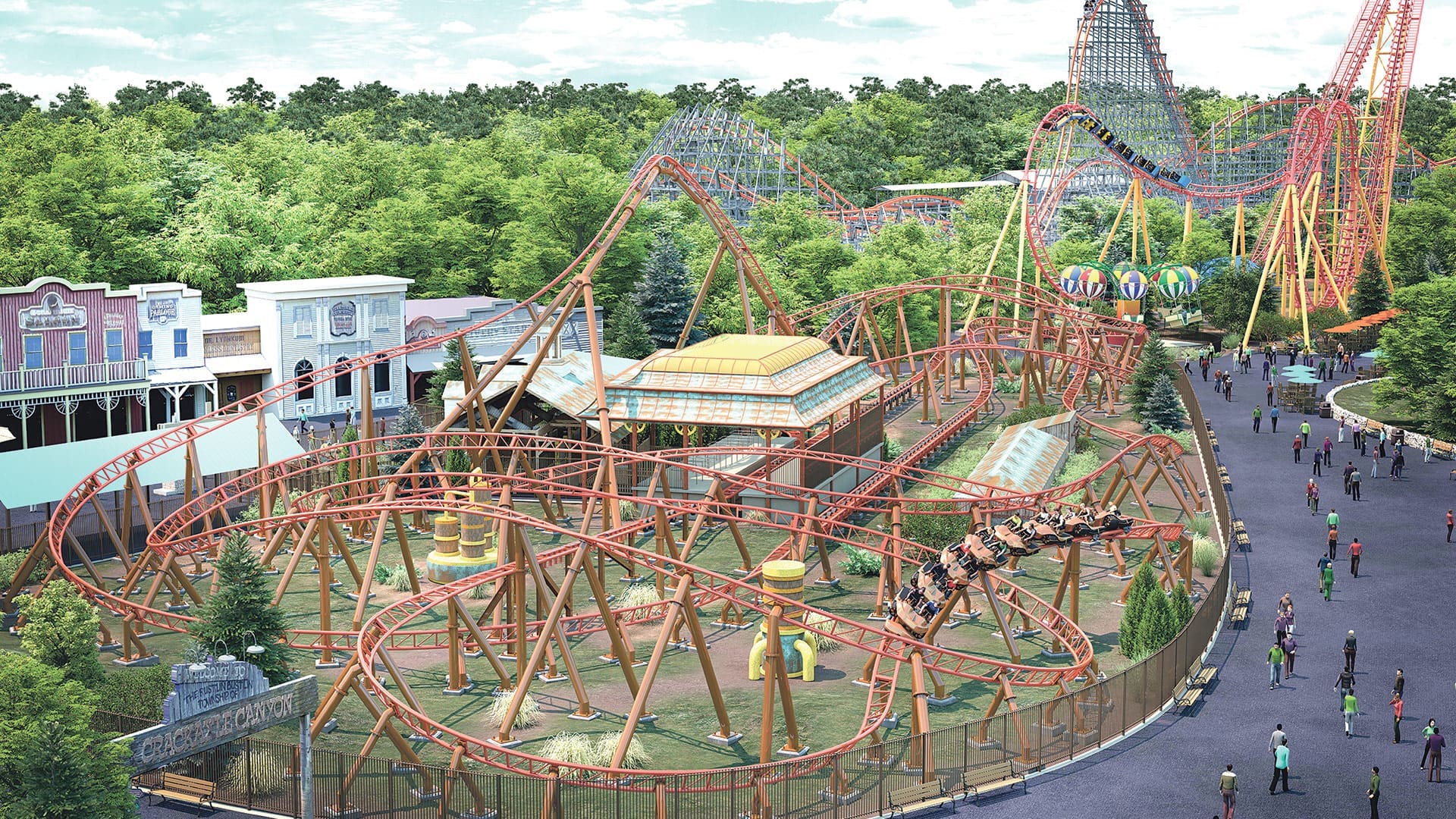
An architect’s rendering of the Quantum Accelerator

An architect’s rendering of the Quantum Accelerator, now in the final construction phases at Six Flags.

“I’d always known, my whole life, that I wanted to work in the theme-park industry,” he said, adding that he got his start as opening supervisor for the Superman: Ride of Steel roller coaster, opened in 2000, which he joked was the most difficult assignment he’s had in his career.

There have been several since he first arrived in Agawam, mostly on the operations side. He eventually earned the title director of Operations in 2008, and stayed in that job for several years before leaving to become park president of Six Flags St. Louis in 2016.

He stayed in that post for two years before getting an opportunity to “come home,” as he put it, and become president of Six Flags New England.

Since taking the helm, he has led the park through the challenging COVID period and its aftermath, and now the latest course of expansion, especially a new roller coaster, giving the park 12 in its portfolio, including the wooden Thunderbolt, opened in 1941 and now one of the oldest rides within the Six Flags family of parks.

Carmichael described it as much more than a blast from the past.

“We proudly reinvest in the Thunderbolt every year — it’s one of the best rides in the region and a point of pride for us,” he explained. “There’s a certain crew and a certain amount of hard work that goes into making sure that you have a good, smooth, fun, and enjoyable ride experience on a wooden coaster, and our team of carpenters treats that like their baby.”

“We proudly reinvest in the Thunderbolt every year — it’s one of the best rides in the region and a point of pride for us.”

As for the new Quantum Accelerator coaster, it is being constructed in an area of the park known as Crack Axle Canyon, on the site of the former Goliath coaster.

A significant investment — Carmichael was not at liberty to get into specifics — the new coaster gives the park its first entry into the emerging straddle-coaster bracket, its first new coaster since the Joker opened in the Gotham City section of the park in 2017, and its 12th coaster overall.

Others include the Wicked Cyclone, originally the wooden Cyclone, which was reconstructed and retracked with steel in 2015; Pandemonium, opened in 2005; Batman: the Dark Knight, unveiled in 2002; Flashback, Catwoman’s Whip, and Superman, all opened in 2000; and Riddler’s Revenge, formerly the Mind Eraser, which dates back to 1997.

Carmichael said the Quantum Accelerator, which has been in the planning stages for several years now, is a good complement to the other coasters and rides in the park, and is seen as a family attraction. And, just as with the premieres of other coasters on that list above, the introduction of the Quantum Accelerator is expected to pique the interest of roller-coaster enthusiasts, generate new visitation, and create some strong word-of-mouth enthusiasm.

“Roller coasters are really one of the cornerstones of our investment strategy,” he explained. “That’s because they can be anchor rides; they are the type of rides that are repeater rides, ones that our guests will be wowed by, they’ll be amused by, they’ll tell all their friends and family, ‘you’ve got to come ride this.’ And there was no better example of that than when we opened the Superman ride in 2000.”


Bottom Line

While the park supplies experiences and lasting memories for guests, it provides the same for its employees, said Carmichael, noting that most of them are young, many of them are in their first job, and many others are certainly in their first position of leadership. In each case, work at Six Flags is a learning experience, and one they’ll remember, he noted.

“Because I’ve been at the park so long, I can’t tell you how many times I’ve bumped into former supervisors, team leaders, and team members on the midway, and they always seem to have a similar narrative,” he told BusinessWest. “They say, ‘oh my gosh, that was the best time, we had so much fun back in those days.’ I’m really proud to continue the legacy of leadership development that we’ve been able to provide over the last quarter-century.”

That’s just one of the traditions that will continue in 2025 at a regional attraction that has always had the ride stuff.

 

Community Spotlight Special Coverage

Community Spotlight

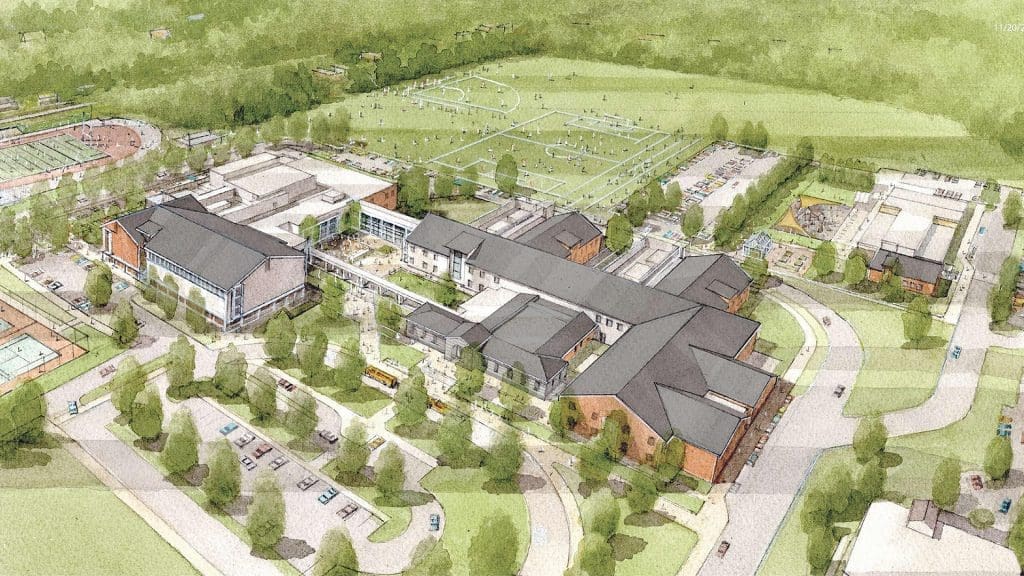
A architect’s rendering of the planned new Agawam High School.

A architect’s rendering of the planned new Agawam
High School.

Chris Johnson called it “an easy fix.”

He was referring to his decision early in 2024 to put things back the way they were in City Hall — quite literally — the last time he occupied the corner office, some 24 years earlier.

Indeed, the three-office mayor’s suite in City Hall had been reconfigured in the intervening years, with the smallest space, which had been Johnson’s office, made into a closet; the middle space, which had been a conference room, devoted to staff; and the largest space, which had been home to the two-person staff, converted to accommodate the mayor’s office and a conference-room table.

Not long after returning to office, Johnson reshuffled the deck, claiming that the old arrangement made far more sense.

Other business hasn’t been resolved quite so easily, but Johnson has achieved progress on several fronts — especially with the building of a new high school, a project that has been discussed for decades and was resolved in resounding fashion at a special election last June, with roughly 70% of residents approving a three-stage project with a price tag of $226 million.

Johnson, who served three two-year terms in the mid- to late ’90s, and, more recently, served several terms on the City Council, sought a return to the corner office in the fall of 2023, in large part to resolve the issue of a new high school. He considers the new building (and a small saved portion of the old building) to be the best option for this community of almost 29,000.

“For the voters, it came down to this: do you want to make a significant investment and renovate what we have, or spend a few extra dollars and build a new high school?” said Johnson, in reference to what will be, by far, the largest capital-improvement project in the history of Agawam. “The right decision, from an education standpoint, but also a business and financial standpoint, was to invest in a new building that has a useful life of 50-plus years instead of major renovations in what we have that would have a useful life of probably 20 to 30 years.”

“The right decision, from an education standpoint, but also a business and financial standpoint, was to invest in a new building that has a useful life of 50-plus years instead of major renovations in what we have that would have a useful life of probably 20 to 30 years.”

The high-school vote is easily the biggest storyline in this community, but there are others, including ongoing work to transform the old HUB Insurance building on Suffield Street into the city’s new police headquarters, an intriguing conversion project that should be wrapped up next spring. There’s also the ongoing saga of the former Games and Lanes property on Walnut Street Extension — a new use for that parcel remains elusive years after the eyesore was torn down — as well as the need for new housing of all kinds, but especially the affordable variety.

There are some new businesses, including a Starbucks just over the Morgan-Sullivan Bridge from West Springfield that opened roughly a year ago, and some emerging ventures, including an urgent-care facility in a building now under construction just behind Starbucks.

As for existing businesses, the landscape is dominated — figuratively but also literally — by Six Flags New England, the giant amusement park near the Connecticut border that is not only the city’s largest employer, but a good corporate citizen, the mayor said.

The park, now 25 years under the Six Flags brand, is adding a new roller coaster and undertaking other significant expansion and improvement efforts, said Park President Peter Carmichael (see related story on page XX).

For this latest installment of its Community Spotlight series, BusinessWest turns its focus on Agawam, where momentum is building — in every sense of that phrase.


Early Returns

The framed newspaper front pages on one wall of Johnson’s office speak to how much has changed over the past 24 years — journalistically, and in some other ways as well.

The large headlines trumpet three of his five election victories, starting in 1989. The masthead at the top of each declares that this is the Agawam/West Springfield edition of the Union News. The Springfield newspaper is now called the Republican, and there is no longer an Agawam/West Springfield edition. Meanwhile, the large headlines from the ’90s were all about Johnson because West Springfield didn’t have a mayor in those days.

But while many things have changed in a quarter-century, in Agawam, many of the issues are the same, and Johnson has been dealing with them consistently because he served on the City Council for 12 years in the interim.

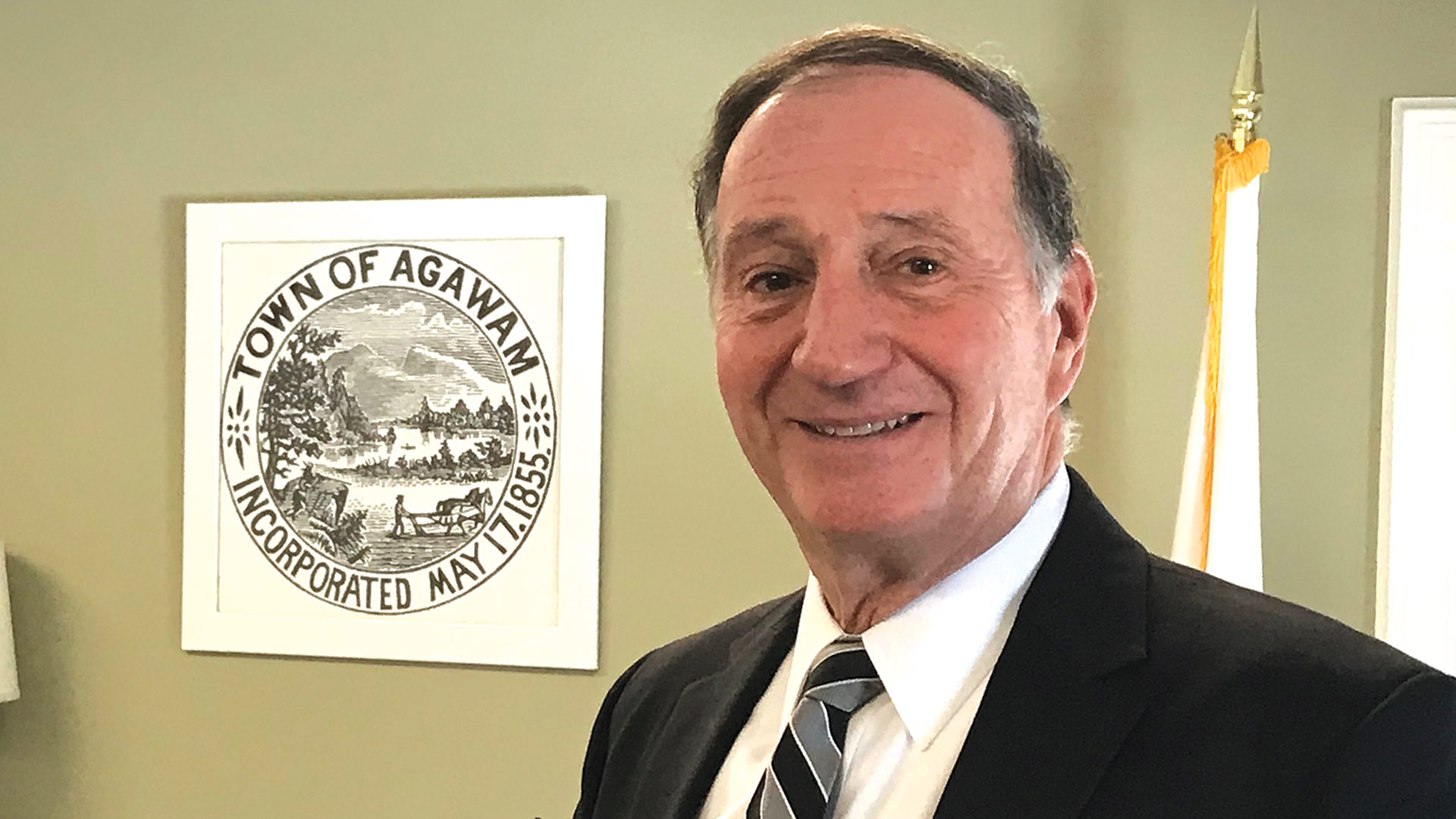
Mayor Chris Johnson

Mayor Chris Johnson says resolution of the high-school issue was one of the prime motivators for his return to the corner office.

At the top of that list is the high school, he said, noting that the original building, opened in 1995, has been renovated and expanded several times over the years, with the result being a sprawling, one-story complex that was in need of another facelift — or replacement.

Johnson has long been a strong advocate of the latter, and efforts to inform the public of the available options dominated his first several months back in the mayor’s office.

“I can’t even count how many presentations I made,” he said. “I pretty much said, ‘anytime, anywhere that anyone wants one, I’ll go’ — and I did a lot of them, while also putting together educational videos to put on the town’s website and social media. My goal was to make sure people had the information they needed to make an educated decision.”

“Whether it be aging roadways or storm-drainage issues, most of our infrastructure dates back 50, 60, 70-plus years.”

Dave Fontaine Jr., CEO of Springfield-based Fontaine Bros., the general contractor awarded the project, said it is unique in that it has three phases — new construction of a ‘community wing’ on fields adjacent to the current high school; an academic wing, which will involve demolition of much of the existing high school (some will be saved) and new construction; and additional demolition as well as conversion of some of the existing high school into an early-childhood center.

The building will also use geothermal wells for heating and cooling, said Fontaine, adding that the technology is becoming more common, but still fairly rare in school buildings. It will also have sloping metal roofs, which are more durable than flat roofs and will have a longer lifespan, he said, adding that they provide an intriguing architectural element.

Johnson said ground should be broken this spring, with work on phase 1 to be completed by the end of 2026, phase 2 by the fall of 2028, and phase 3 in 2029.

Fontaine will be building the new Agawam High School at the same time it constructs a new high school in East Longmeadow, a project roughly six months further along. That will be challenging in some ways, but the company traditionally has at least two large-scale school projects occurring simultaneously.

Meanwhile, another intriguing project, this one now well underway, is the conversion of the former HUB Insurance building (before that, it was the Oaks banquet facility) into the new police headquarters.

It’s unique, said Carl Mercieri, executive vice president with Marois Construction, the contractor handling the project, because most new public-safety facilities are built from the ground up.

Agawam at a glance

Year Incorporated: 1855
Population: 28,692
Area: 24.2 square miles
County: Hampden
Residential Tax Rate: $14.54
Commercial Tax Rate: $27.54
Median Household Income: $49,390
Family Household Income: $59,088
Type of government: Mayor; City Council
Largest Employers: OMG Inc., Agawam Public Schools, Six Flags New England
* Latest information available

Because the town was able to acquire the property at an attractive price, converting it for this use emerged as the most common-sense option, he went on, adding that transforming a large (36,000 square feet) office building into a public-safety facility has required complete interior gutting and creation of a wide range of new spaces, from offices to a dispatch room to six holding cells. Meanwhile, a large sallyport had to be added to the rear of the building.

“There are several different areas to create — a detective area, a sergeant’s area, a patrolman’s area, an armory, and the holding cells,” said Mercieri, adding that the completion date for the project, like the final price tag (around $9 million), is a moving target, but work is expected to be wrapped up by late spring.


Forward Progress

Between the new high-school project (the town’s share of that initiative is roughly $120 million) and the new public-safety complex, the town will have little to spend on other large-scale capital projects for some time, said Johnson, adding quickly that this can’t stop the community from planning.

And he summed up what’s next on the proverbial to-do list with a single word: ‘infrastructure.’

“Whether it be aging roadways or storm-drainage issues, most of our infrastructure dates back 50, 60, 70-plus years,” he explained. “But we need to come up with a plan, and then match a funding mechanism to a plan to be able to move forward so that we’re not faced with dealing with crisis situations.”

Coming up with these plans — while also building the new school — will be the next challenges for Johnson in what can be called a second tour of duty in the corner office.

Or corner offices, to be more precise.

He’s put things back the way they were before in that suite, but for other, much larger issues, there is no going back — just moving forward. In the larger scheme of things, that is the plan.

Community Spotlight

Community Spotlight

By Mark Morris

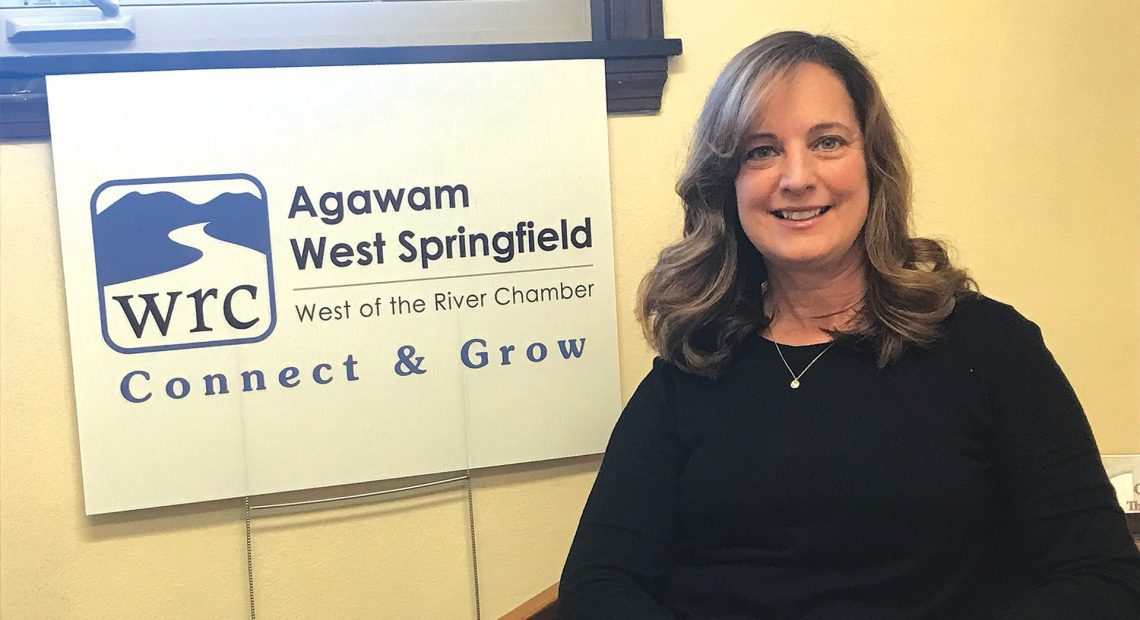
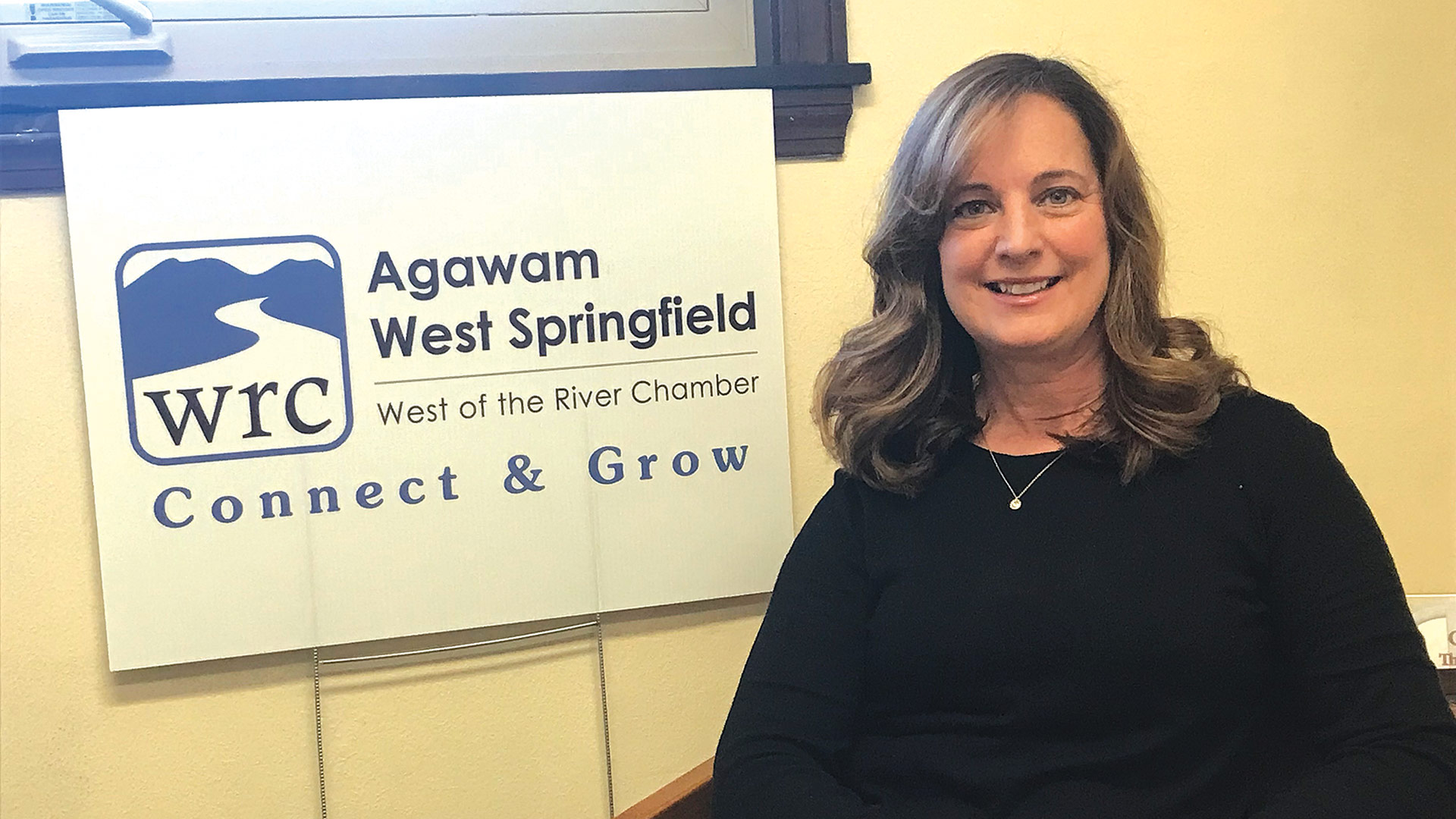
Robin Wozniak says the chamber’s grant program is part of a broader effort

Robin Wozniak says the chamber’s grant program is part of a broader effort to expand and diversify its support programs for businesses.

Like most area communities, Agawam continues to cope with the COVID-19 pandemic, while also making plans for the day when it is history.

That sentiment applies to the business community, the school system, infrastructure projects, and the local chamber.

“As we find our way back to a normal life, we are also trying to help people find new opportunities for success going forward,” said Robin Wozniak, executive director of the West of the River Chamber of Commerce (WRC), as she talked about the present and the matter of preparing for the future. “These are times when we are all learning and growing together.”

With that statement, she summed up the sentiments of many in this community of roughly 29,000, which, like most area cities and towns, has suffered greatly through the pandemic, but has also seen COVID yield some opportunities, which have come in many forms.

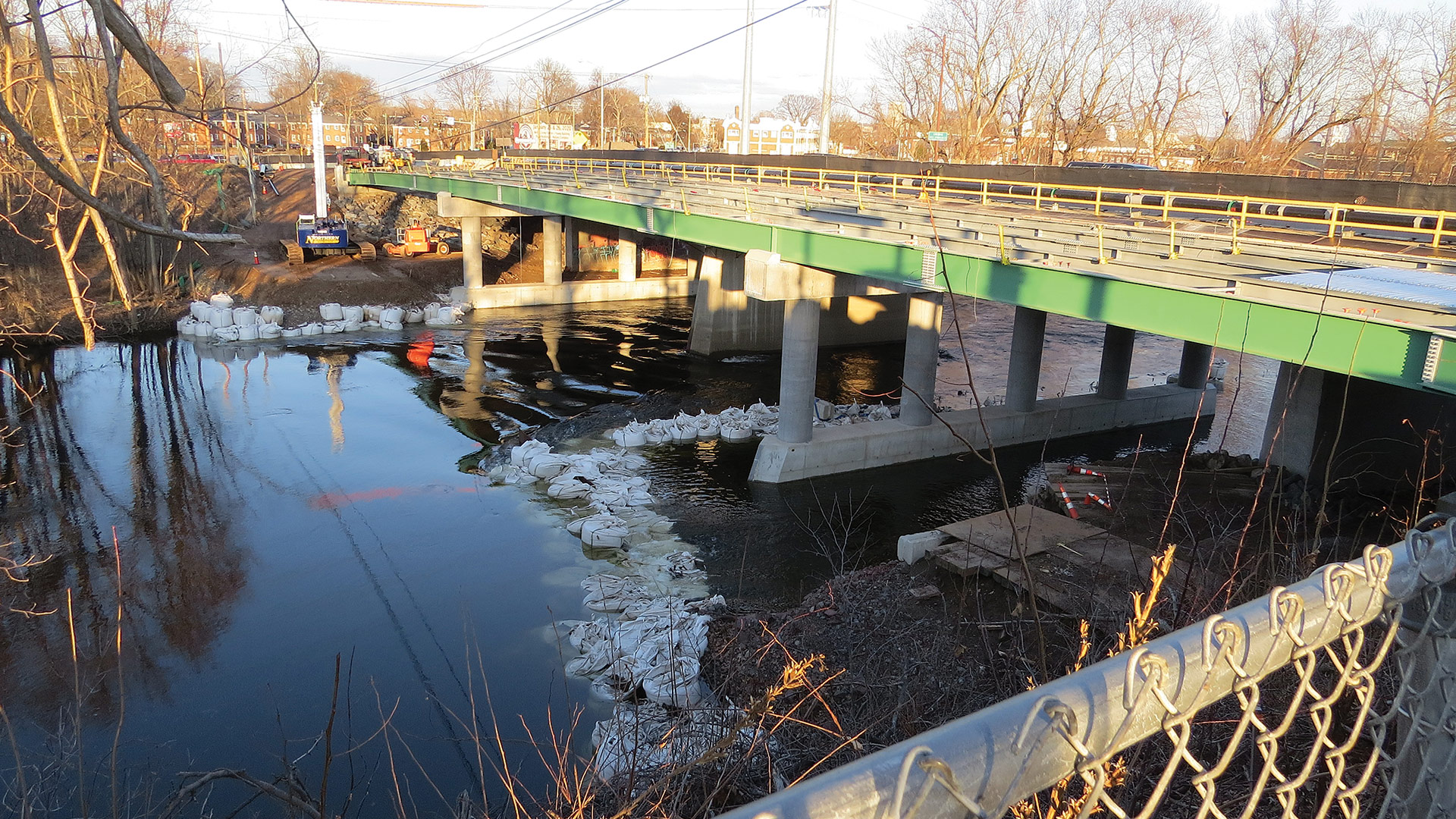
These include American Rescue Plan Act (ARPA) funds, which the city plans to use mostly on infrastructure projects (more on that later), some new businesses, and even an acceleration of the timetable for reconstructing the Morgan-Sullivan Bridge, which connects Agawam with West Springfield. The bridge work was to be completed later this year, but wrapped up more than six months ago, due in large part to a $1.5 million bonus from the state to incentivize the general contractor, Northern Builders, to get the work done sooner.

But gaining the roughly four weeks on what would have been shutdown time if the 2020 Big E had not been canceled certainly helped in those efforts.

The bridge project was undertaken to improve traffic flow in and out of the city and, ultimately, spawn new business opportunities in that section of the community, Mayor William Sapelli said. Time will tell what ultimately transpires, but already there are plans to develop a large vacant lot just over the bridge and a block from City Hall.

Colvest Group purchased the property several years ago, used it to park cars during the Big E, and leased it to the contractors as a staging area for the bridge-reconstruction work. Soon, it will advance plans to develop the property into three business parcels, including an office building and a Starbucks location.

“We could get a new roof and a good boiler and better windows, but the facility will still not be appropriate to meet our education needs for the 21st century.”

As for the chamber, it plans to step up its support of small businesses impacted by the pandemic through a grant program, Wozniak noted, adding that the WRC plans to begin awarding business grants starting in June and extend them through the end of the year.

“We’re planning to announce five $1,000 grants at our annual meeting in June and continue awarding grants into the summer and fall,” she said. “We’re excited to start the application process.”


Getting Down to Business

Before he became mayor in 2018, Sapelli was the long-time school superintendent in Agawam. And while his list of responsibilities is now much broader, the schools remain a primary focus.

And among the many issues to be addressed is the city’s high school.

A recent assessment of Agawam High School recommended $26 million in repairs to the building. Since 2002, the town has applied to the Massachuetts School Building Authority (MSBA) for consideration of a new high school. The MSBA looks at building conditions, as well as demographics and population trends, as part of its approval process.

While Sapelli has seen West Springfield, Chicopee, and Longmeadow all build new high schools, he’s encouraged because those projects actually help move Agawam up the list.

Mayor William Sapelli

Mayor William Sapelli says Agawam is putting federal money to good use on everything from infrastructure to small-business support.

“One reason we’ve been overlooked was all the investments we’ve made over the years to maintain the building,” he said. Rather than continue to spend on the current high school — built in 1955 — he favors new construction.

“We could get a new roof and a good boiler and better windows, but the facility will still not be appropriate to meet our education needs for the 21st century,” he went on. If approved, the new school would be built on the practice fields adjacent to the current building.

A few years back, a new high-school building was proposed for the former Tuckahoe Turf Farm located near Route 187 and South Westfield Street. Now owned by the city, the 300-acre parcel will be developed into a passive recreation park for Agawam. Construction will begin in the spring to provide roads, parking areas, and access to a pond that will accommodate fishing, kayaks, and canoes.

A solar-energy installation is part of the parcel and will occupy nearly 50 acres of the land near South Westfield Street.

“The city will receive income from the solar array, which will help mitigate the costs to develop and maintain the property,” said Marc Strange, director of Planning and Community Development for Agawam. “The solar panels will occupy one small area of the parcel, leaving more than 200 acres for recreation and trails.”

While developing this long-vacant site, city leaders will continue to take steps to make the community more attractive for new business development.

As part of these efforts, infrastructure work is planned at the intersection of Springfield Street, North Street, and Maple Street, an area known as O’Brien’s Corner. This project, scheduled to start in the spring, will involve paving, adding curbs, and upgrading the traffic signals in the area.

Agawam received just over $8 million in funding from the American Rescue Plan Act (ARPA), which Sapelli plans to use on several stormwater infrastructure projects in town. Culverts on North Street and North Westfield Street have been temporarily repaired, but the state has made it clear both areas need a permanent solution. In addition, heavy rains are causing flooding problems on Meadow Street and Leland Avenue.

“Some of the puddles are so bad, people sent us photos of their neighbors going out in kayaks,” Sapelli said, adding that the photos helped emphasize the need for fixing these storm drains. “We are using the ARPA funds for what they are intended. These are projects that need to be addressed where we did not have the funding to do so.”

Agawam at a Glance

Year Incorporated: 1636
Population: 28,692
Area: 24.2 square miles
County: Hampden
Residential Tax Rate: $16.11
Commercial Tax Rate: $30.58
Median Household Income: $49,390
Family Household Income: $59,088
Type of government: Mayor; City Council
Largest Employers: OMG Inc., Agawam Public Schools, Six Flags New England, Whalley Computer Associates
* Latest information available

Beyond infrastructure, the city is using funds from various COVID-relief efforts to help the business community. Indeed, it secured a $200,000 Coronavirus Aid, Relief and Economic Security (CARES) grant designed to help micro-enterprises — five or fewer employees — in Agawam.

“These grants are designed to help these small-business owners with some relief until they can open their doors again,” Strange explained. “The grants help businesses that didn’t have access to other funds to help them.”

Meanwhile, the community is looking to support its beleaguered restaurants with an ordinance that will allow outdoor dining on a permanent basis.

“In the early days of the pandemic, outdoor dining was a lifesaver,” Sapelli said. “Now, going into the third year, it’s so popular, we are proposing an ordinance to make it permanent in Agawam.”


Giving Back

As for the chamber, its grant program is part of a broader effort to expand and diversify its support programs for businesses. For the past two years, the chamber has put its focus on keeping members up to date on health regulations, helping them identify grants they might qualify for, and any other information to keep them going.

“The last couple years have been all uphill for many of our members,” Wozniak said. “The chamber board feels the need to start giving back to our small businesses.”

Staying connected through events has been a long-time business model for chambers of commerce. Wozniak said she has reintroduced networking events with a hybrid twist where people can attend in person or take part remotely.

“We welcome those who feel comfortable going in person, and for those not yet ready, we offer a remote option so they can log on and enjoy the whole event from the safety of their home, remote office, or wherever.”

Wozniak reported the hybrid meetings have been successful because they help bring people face-to-face.

As she mentioned earlier, these have been times when business owners have been “learning and growing together.”

These efforts will hopefully yield dividends for the day when ‘normal’ is not a goal, but a reality.

Community Spotlight Special Coverage

Community Spotlight

By Mark Morris

As the world looks to generate energy from different sources and reduce waste, a new facility just opened in Agawam that contributes to both efforts.

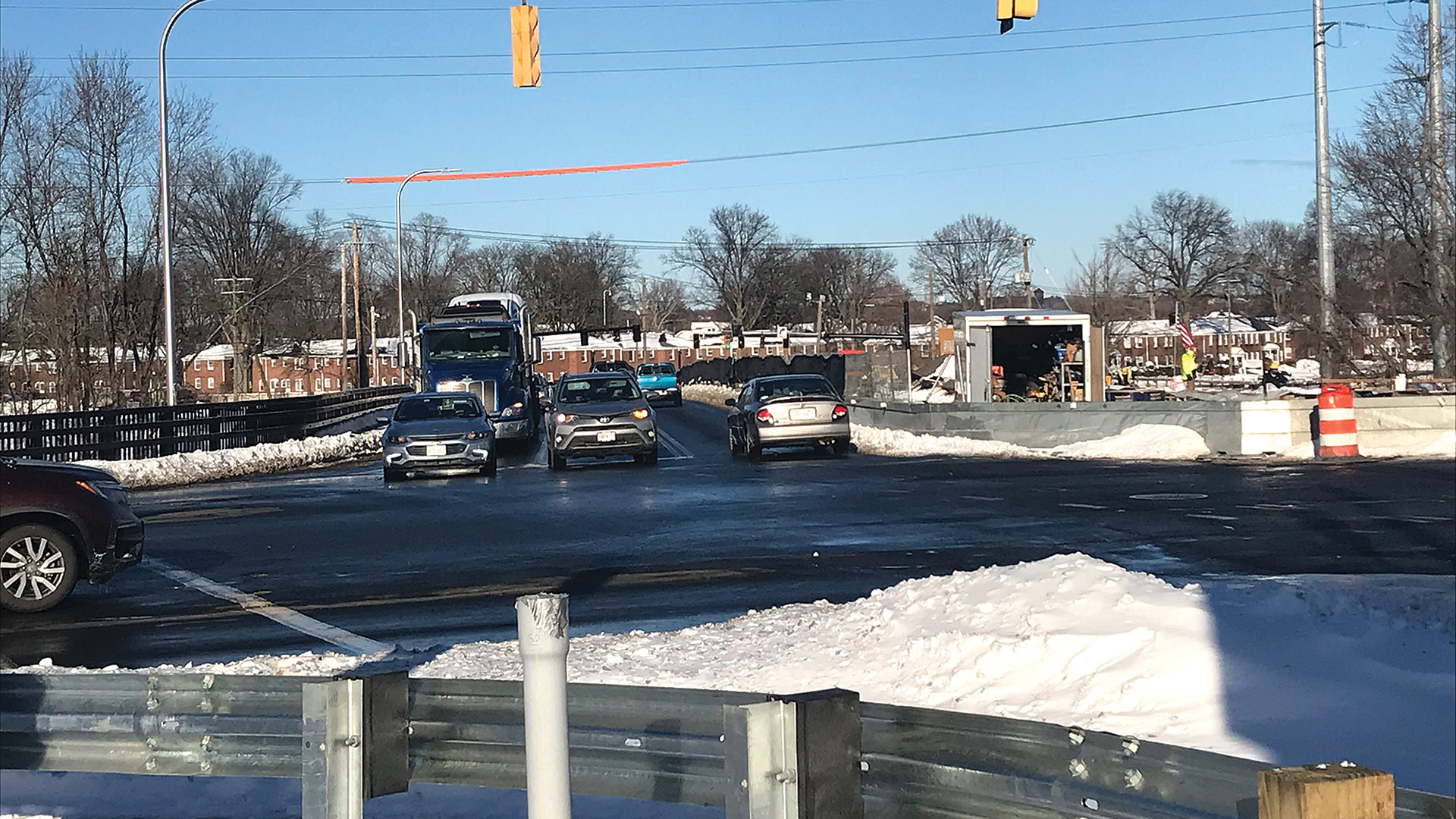
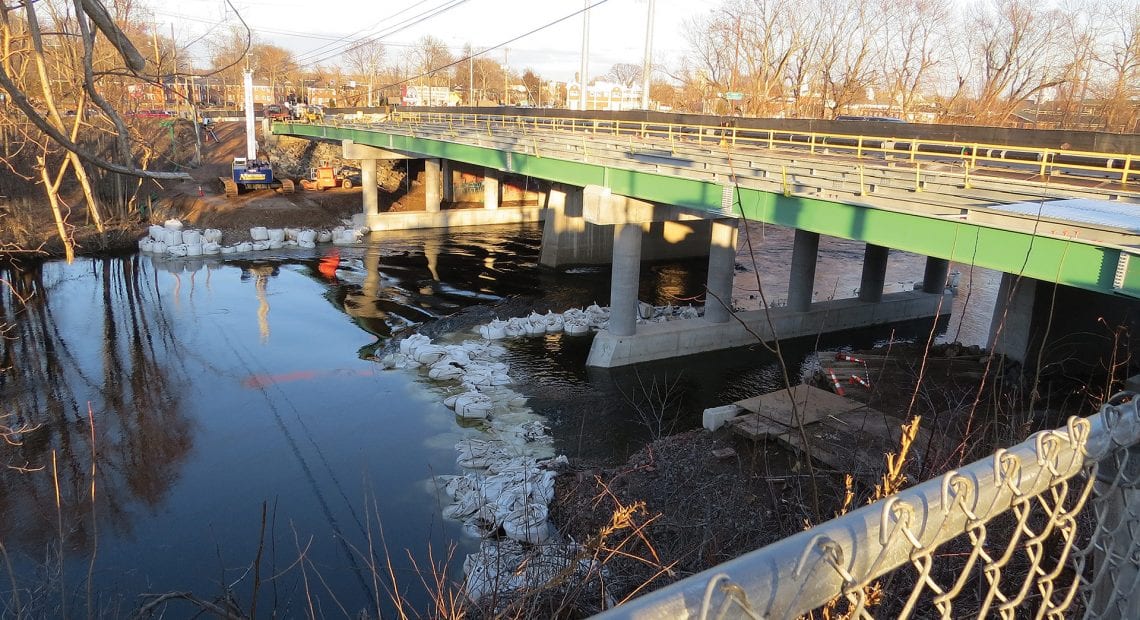
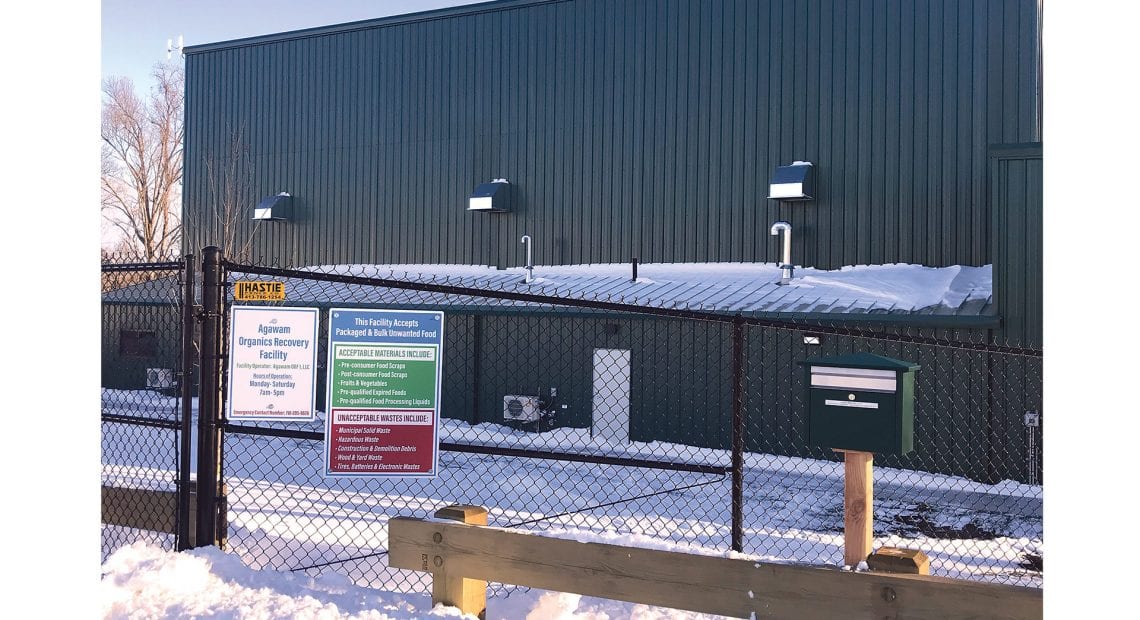
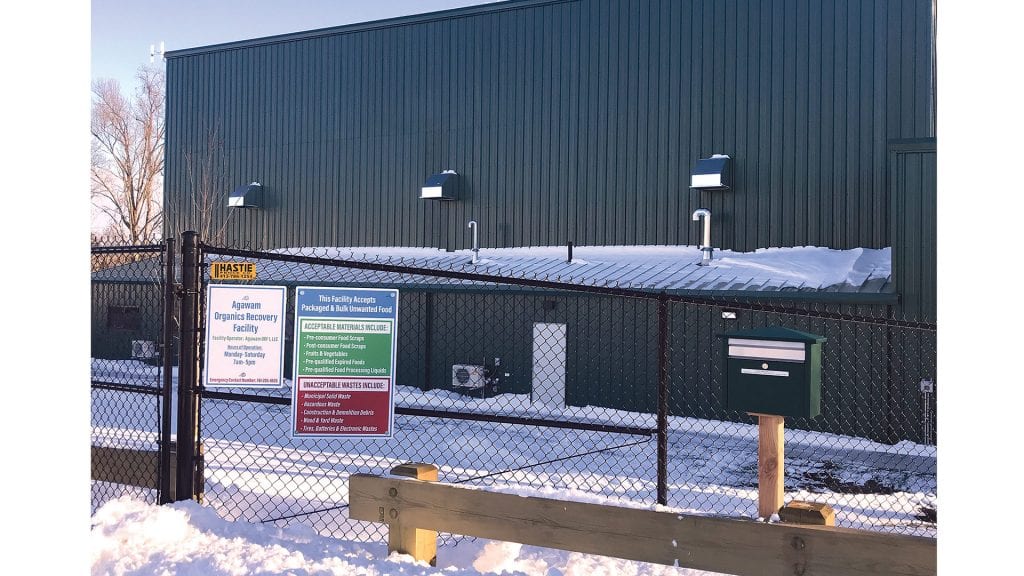
What looks like a plain green building on Main Street is actually a plant that converts food waste into natural gas and fertilizer. Vanguard Renewables, based in Wellesley, approached Agawam Mayor William Sapelli about locating an organics-recovery facility in Agawam. After addressing some initial concerns about truck traffic and potential odor from the plant, the town gave the go-ahead.

“Because Agawam is a designated green community, it’s important for us to bring in facilities like this,” Sapelli said, noting that this is only the second plant of its type in Massachusetts.

Here’s how it works. Let’s say the nearby Hood dairy plant has a pallet of yogurt that does not meet specifications or has expired. Hood can bring that pallet to the Agawam facility, where large extracting machines separate the packaging from the yogurt. The packaging gets bundled and brought to a recycling facility, while the yogurt is mixed with other food waste and water. This forms a slurry, which is then delivered by tanker truck to an anerobic digester, a large, dome-shaped structure. (The closest digesters to Agawam are located on farms in Deerfield and Hadley.)

The slurry is mixed with farm-animal waste in the digester, where two things happen. First, biogas rises from the mix and gets converted to renewable natural gas for heating and cooling. Then, the remains of the slurry, known as digestate, are used as low-carbon fertilizer for area farmers.

“In the past, all this waste was incinerated or dumped into a landfill, but now it’s being turned into energy and fertilizer,” Sapelli said, calling the process “amazing.” As the Agawam facility ramps up to full capacity, it will be able to process 250 tons of food waste per day, according to Vanguard.

Mayor William Sapelli

Mayor William Sapelli

“Because Agawam is a designated green community, it’s important for us to bring in facilities like this.”

That’s just one project that has Agawam officials excited as they move past a challenging 2020 for all municipalities. While the pandemic is still a daily reality, they say this town is focused on growth as a new year dawns.


Bridge to Tomorrow

For the past couple of years, the largest infrastructure project in Agawam has been the rebuilding of the Morgan-Sullivan Bridge connecting Agawam and West Springfield. The original completion date was scheduled for May 2022. After Sapelli met with Lt. Gov. Karyn Polito to incentivize the project contractor, Northern Construction, to work overtime and weekends to shorten the deadline, the date was moved to August 2021.

Once the pandemic hit and fewer people were out and about, bridge construction accelerated further. Favorable weather, as well as lighter traffic from both vehicles and pedestrians, allowed crews to get more done every day. Then, the Big E canceled its 2020 fair.

“By contract, the crews had to stop work during the Big E,” Sapelli said. “When the fair was canceled this fall, it gave them an extra 17 days to work on the bridge.” While noting that he is not putting pressure on the construction crews, he predicted the bridge may now be completed by June 2021.

The mayor is also pleased that many of the headaches and traffic jams that usually occur with a major construction project have not materialized. “It’s been a great project,” he said. “You don’t hear a mayor say that very often.”

Like every community, Agawam has had to deal with COVID-19. In fact, the mayor himself had a false alarm after testing positive on a quick test. After going into self-quarantine for several days and not experiencing any symptoms, he took a PCR test (referred to as the ‘gold standard’ of COVID testing), which revealed he had never been infected with coronavirus.

the Morgan-Sullivan Bridge project may now be done by June

With the pandemic reducing traffic and accelerating the pace of work last year, the Morgan-Sullivan Bridge project may now be done by June.

“I asked if I was asymptomatic or if I’d had it a week before, and the answer to both was, ‘no, it was a false positive,’” he said.

While state mandates have limited public access to Town Hall, Sapelli explained that, even if it were open to the public, the building’s layout just doesn’t work well with COVID-19 mandates.

“For example, the public area in the Collector of Taxes office measures about five feet by eight feet,” Sapelli said. “With social distancing, that means no more than one person can stand there; anyone else would have to wait in the hall, which is also cramped.”

Still, with an emphasis on safety first, Sapelli said Town Hall is open for business for anyone who calls ahead for an appointment.

In order to reduce COVID-19 risks and still encourage in-person education, Agawam’s public schools have adopted a hybrid model. Students whose last names begin with the letters A-K attend class on Monday and Tuesday, while those with L-Z last names attend Thursday and Friday. On the three days they are not scheduled in person, students attend class remotely.

The Department of Health and the superintendent of schools are employing the hybrid model as long as COVID-19 cases within the education community remain low compared to the community as a whole. As a former Agawam school superintendent, Sapelli supports this direction.

“The hybrid approach has been working for Agawam. First, we’re making sure everyone is safe so we can get our students in front of teachers,” he said, adding that parents who are uncomfortable with the hybrid model may choose remote learning full-time.

Bars and restaurants everywhere have greatly suffered during the pandemic from mandated closings, limited seating, and other restrictions. To support those businesses in Agawam, the City Council and the mayor have co-sponsored a resolution to waive the $1,500 liquor-license fee in 2021 for all bars, restaurants, and banquet halls.

“We recognize they’ve lost a lot of revenue and have not been able to host the types of events and gatherings they normally do,” Sapelli said. “Waiving the fee is one thing we can do during the pandemic to help local businesses in these tough times.”

Agawam at a Glance

Year Incorporated: 1636
Population: 28,718
Area: 24.2 square miles
County: Hampden
Residential Tax Rate: $16.83
Commercial Tax Rate: $31.61
Median Household Income: $49,390
Family Household Income: $59,088
Type of government: Mayor; City Council
Largest Employers: OMG Inc., Agawam Public Schools, Six Flags New England, Whalley Computer Associates
* Latest information available

The fee waiver is just one of the ways the City Council and the mayor are working together to help local businesses, he added. “We are business-friendly. When a new business wants to locate in Agawam, we try to expedite the permitting process by having a team meeting that includes everyone from our fire and police departments to the health inspectors and building inspectors. They all meet together with the business owner, so it becomes one-stop shopping.”


House Calls

That cooperative attitude makes life easier for Marc Strange, director of Planning and Community Development in Agawam, who told BusinessWest about several projects in the area of South Westfield Street in the Feeding Hills section of town. One of the most anticipated projects is the Villas at Pine Crossing, an over-55 community that will add 44 units of senior housing to the market.

“Our office frequently gets calls from residents who are looking to downsize, but they want to stay in Agawam,” Strange said. “The designs at the Villas are more friendly for an aging population, something that is desperately needed in Agawam and everywhere else.”

He said he’s grateful the developer chose Agawam for the Villas, and welcomes similar projects. “We’re hoping this will trigger future developments for 55-plus communities in Agawam.”

The land parcel that was once the Tuckahoe Turf Farm sits adjacent to the Villas at Pine Crossing. After years of considering new uses for the property, Agawam officials are now looking at a solar-energy installation for part of the site. “The revenue from the solar field will allow us to develop the rest of the property for recreational uses, such as walking trails and such,” Sapelli said.

Agawam also completed a project in 2020 to convert all its streetlights to LED fixtures, which emit brighter light but also help the city reap potential savings of $220,000 every year. “Agawam is looking to save about $100,000 per year in energy costs and nearly $120,000 per year in streetlight maintenance,” Strange said.

During construction of the Morgan-Sullivan Bridge, crews are using two desirable land parcels to stage and store equipment. Once the bridge is complete, those two parcels will be available for development as well.

“To be clear, as exciting as it is to market prime commercial sites, the new bridge will have an impact on the town that goes well beyond those two parcels,” Strange said.

All of which promises a brighter future for Agawam — literally and figuratively.

Community Spotlight

Community Spotlight

The Morgan-Sullivan Bridge project is ahead of schedule, and with a new acceleration agreement in place, it is due to be completed by late summer next year.

Mayor William Sapelli said he received the text late on a Friday afternoon earlier this month, and it was somewhat unexpected; he was anticipating word coming later.

But it was very, very welcome.

It came from state Lt. Gov. Karen Polito, and it said, in essence, that the state had approved what’s known as an acceleration agreement for the Morgan-Sullivan Bridge project. What that means is that money has been apportioned that will allow the general contractor, Palmer-based Northern Construction, to pay crews overtime to work on nights and weekends to accelerate (hence the name) the timeline for completing what amounts to a full replacement and widening of the 74-year-old bridge over the Westfield River.

As a result, the anticipated completion date, originally May 21, 2022, is now August 9, 2021.

And what this means is that the 2020 edition of the Big E will be the last that will have to contend with this all-important span, which links Agawam with West Springfield, being under construction.

That’s why that text was so welcome. Even though the two communities, the Big E, tens of thousands of people who visited it, and those who live, work, and do business near the bridge somehow made it through the 2019 exposition without major incident, doing so presented a serious challenge.

It’s not something they’d want to do again, but they’re quite grateful to only do it once more, to be sure.

“This is great news regarding the bridge,” said the mayor. “With this acceleration plan, we’re going to cut almost a year off the completion time.”

The bridge project has been the dominant topic of conversation in this city (remember, it has a mayor) that is still officially called the Town of Agawam since well before construction began. And Sapelli has been part of many of those conversations as he continues a daily ritual of eating breakfast — and often holding court — at different eateries in the community.

“We’ve expedited our permitting process to try to make it easier; we certainly don’t look the other way or cut corners, but there are things we can do to expedite the permitting process and make it less complicated for people to come to town.”

As was noted in this space last year, this rotation includes Partners, Giovanni’s, and a somewhat new addition, the Pride station on North Westfield Street in the center of Feeding Hills.

“There, it’s a bunch of old-timers — a great bunch of guys; I’m the youngest one there,” Sapelli, the retired school superintendent who just started his second two-year term as mayor, noted. “We used to meet at the McDonald’s, but with the renovation at Pride, they moved over there. That’s on Mondays; I’m there at 7 and then in City Hall by 7:30. We sometimes take up as many five tables, and there’s always a lot to talk about … beyond the bridge.”

Indeed, while that project has complicated things at and for the Big E and also caused some initiatives to hit the ‘pause’ button, including redevelopment of the Games & Lanes building on Walnut Street Extension and the site of a former motel on Suffield Street, there are still things happening.

Indeed, the shopping plaza on Springfield Street once dominated by a FoodMart that saw its roof collapse and has struggled with vacancies in recent years is now essentially full. The latest additions include Still Bar & Grill — now occupying space that was briefly home to a satellite location of the YMCA of Greater Springfield — and a small but intriguing market called Kielbasa and Dairy. It sells more than those items, but they are the headliners. Which explains why they’re on the sign.

Agawam at a glance

Year Incorporated: 1636
Population: 28,718
Area: 24.2 square miles
County: Hampden
Residential Tax Rate: $16.83
Commercial Tax Rate: $31.61
Median Household Income: $49,390
Family Household Income: $59,088
Type of government: Mayor; City Council
Largest Employers: OMG Inc., Agawam Public Schools, Six Flags New England, Whalley Computer Associates
* Latest information available

Meanwhile, a new tenant — TW Metals, a subsidiary of O’Neal Industries — has taken over roughly half the sprawling space once occupied by Simmons Mattress in the Agawam Regional Industrial Park, a Westmass property located on the site of the former Bowles Airport.

Also, another new business, Vanguard Renewables, an organic recycler, has broken ground on Main Street, said Sapelli, adding that a new over-55 housing development is being planned for a large parcel on South Westfield Street, and a number of vacancies in the myriad strip malls and small shopping centers that populate the city are being filled.

And perhaps the best news for the business community is that the business tax rate has come down slightly, a step that Sapelli believes speaks loudly about this community’s commitment to being business-friendly.

For this, the latest edition of its Community Spotlight series, BusinessWest talked with Sapelli about all these matters and what they mean moving forward for a community that is very much looking forward to life after this bridge project has been completed.

Food for Thought

Getting back to those gatherings over breakfast, Sapelli said the tone has been generally positive lately — and it hasn’t always been so, especially in the ramp-up, if you’ll pardon the expression, to the start of the bridge project.

The improved mood can be attributed in part to the bridge work already being ahead of schedule — thanks to a considerable amount of work on nights and weekends — and the fact that, while there have been inconveniences, they haven’t been as bad as many anticipated.

“What I’m hearing — and believe me, they wouldn’t be afraid to tell me otherwise — is how smoothly they think things are going,” said the mayor. “It’s not as congested as they thought it would be, and things are moving pretty well and they’re on schedule, which never happens with projects like this.”

That held true, generally speaking, for the 17 days of the Big E last September, he went on, adding that a great deal of collaboration and early planning efforts paid off handsomely.

“It wasn’t as bad as many people thought it would be, and I heard that not only from residents but police officers working details,” said Sapelli. “And we attribute this to the fact that we met — with ‘we’ meaning the police, the administration, West Springfield police, and the Big E — and came up with a plan of action.”

Elaborating, he said the Big E printed materials instructing motorists how to get to the fairgrounds without using Routes 75 (Suffield Street) and 159. And visitors — most of them, anyway — heeded that advice. The Big E also used park-ride facilities in Agawam that helped ease traffic on and around the bridge, despite record attendance at the fair.

And for the 2020 edition … well, things will go a little more smoothly because the three lanes to the south of the bridge (now under construction) will be open, as opposed to the two lanes on the north side currently being used.

But enough about the bridge. There are other things happening in the community, starting with that important vote on the commercial tax rate, said Sapelli.

Mayor William Sapelli

Mayor William Sapelli says Agawam is making progress on many economic-development fronts, from filling vacant storefronts to zoning reform to workforce-development initiatives in its schools.

The town’s split rate now looks like this: $16.83 residential and $31.61 commercial. Last year, the numbers were $16.65 and $31.92. Commercial rates don’t generally go down at the expense of the residential side, Sapelli acknowledged, and the decrease was only 31 cents.

But that’s an important 31 cents, perhaps on the tax bill and certainly from the standpoint of sending a message, said the mayor, adding that some historical perspective is in order.

“Years ago, when the split in the tax rates originally started, the rates were fairly close; now, the commercial rate is almost double,” he explained, adding that he and other city officials decided it was time to move them closer together.

“At my presentation to the City Council, I talked about how we, as public officials, talk about being business-friendly,” he recalled. “It’s one thing to say it; it’s another thing to do it.”

He believes the unanimous vote in the council is a solid example of ‘doing it,’ and he believes it might help bring more new businesses to consider Agawam moving forward.

In addition to that lower rate, the community boasts good schools, available land, plenty of parks and recreation (three golf courses, for example), and, as noted, ample opportunities for retail operations.

There have already been some intriguing additions, he said, noting that the Still and Kielbasa and Dairy are solid additions to the plaza on Springfield Street, and they’re helping bring more people to that section of Agawam.

Meanwhile, TW Metals helps fill a troubling vacancy in the industrial park, he noted. The company signed a 10-year lease for 65,000 square feet, half the nearly 130,000-square-foot building, now owned by Agawam 320 TGCI LLC, an affiliate of the Grossman Companies.

“I think we’re doing well because of our location and because we’re business-friendly,” said Sapelli. “We’ve expedited our permitting process to try to make it easier; we certainly don’t look the other way or cut corners, but there are things we can do to expedite the permitting process and make it less complicated for people to come to town.”

Bridging the Gap

As noted earlier, the bridge project has put some initiatives on hold in this community, including efforts to revitalize and modernize the Walnut Street Extension area, which includes the Games & Lanes parcel, and also redevelopment of the parcel off Suffield Street.

But in most other respects, things are moving forward, and the talk over breakfast at the Pride store, Partners, and Giovanni’s has been generally positive. And with that text from the lieutenant governor, there was certainly more good news to discuss around those tables.

In short, this community isn’t waiting until the ribbon is cut on the new bridge to create momentum, more jobs, and new opportunities.

George O’Brien can be reached at [email protected]

Community Spotlight

Community Spotlight

Mayor William Sapelli

Mayor William Sapelli says Agawam is making progress on many economic-development fronts, from filling vacant storefronts to zoning reform to workforce-development initiatives in its schools.

Mayor William Sapelli has developed a routine since he was sworn into office roughly 13 months ago.

Always early to the ‘office’ (he worked within the city’s school system for decades and wrapped up his career as superintendent), he arrives at City Hall at 7:30 a.m., giving him a solid hour of relative solitude to write some e-mails and clear some paperwork from his desk before other employees start to file in.

But his work day, if you will, actually starts at 7, when he stops in for breakfast at one of several eateries in town he frequents in something approaching a rotation.

“Mondays I’m usually at McDonald’s, mid-week it’s at Partners, and Fridays I’m at Giovanni’s,” he said, referring, with those latter references, to the restaurant on Springfield Street, known for its breakfast items and as a place where people come together, and the Italian pastry shop on Main Street that is also a gathering spot.

“There’s a crew of people that goes in there, and I think now they expect me because I’ve been doing it since I was first elected,” he said of Giovanni’s. “There are crews in each place, actually, especially McDonald’s; a number of seniors go in there. There’s 10 or 12 people, and we kibitz — it’s fun.

“I get beat up sometimes, but in a fun way — they give me good feedback; it goes back and forth. They bust me about taxes or roads or whatever,” he went on, adding that, with municipal elections coming up later this year, there is a new topic of discussion, although he hasn’t formally announced he will run again.

Overall, there is lots to talk about these days over eggs or French toast, especially the Morgan-Sullivan Bridge. Built in 1947, the span over the Westfield River links the city with West Springfield. It is a vital piece of infrastructure, major traffic artery, and entranceway to the Eastern States Exposition, and now it’s about five months into what will be a roughly three-year facelift and widening initiative that is projected to solve persistent bottlenecks in an important commercial area.

But this undoubtedly will be a long three years, the mayor acknowledged, adding that two lanes of the four-lane bridge are now closed, and it will be like this way probably until the calendar turns to 2022.

“There’s a crew of people that goes in there, and I think now they expect me because I’ve been doing it since I was first elected. There are crews in each place, actually, especially McDonald’s; a number of seniors go in there. There’s 10 or 12 people, and we kibitz — it’s fun.”

“It will be an inconvenience, but this work has to be done; it is what it is,” he said, putting Bill Belichick’s classic phrase to work while noting that the inconvenience extends beyond motorists and their daily commutes. Indeed, it will also impact businesses in the area just over the bridge, many of which are relative newcomers to Agawam (more on this later).

Beyond the bridge, other topics of conversation at breakfast include everything from storm drains — Agawam, like all other communities, is facing stiff mandates to update their systems — to streets and sidewalks, to schools and taxes.

The mayor recently took the conversation from the lunch counter to City Council chambers for his State of the City address, the first for this community since 2012. Recapping for BusinessWest, Sapelli said he told his constituents that there are challenges ahead, especially with the bridge, but also opportunities, especially within the broad realm of business and economic development.

Indeed, using two acronyms now probably quite familiar to those he’s sharing breakfast with — DIF (district improvement financing) and TIF (tax increment financing) — he said officials have been bringing new businesses to the city and allowing existing ones to stay and grow.

The DIF has been used to help bring new stores and more vibrancy to the Walnut Street retail area of the city, while the TIF, which is awarded to new or existing businesses willing to commit to adding additional jobs, has been used to enable Able Tool, formerly in the Agawam Industrial Park to build a new building on Silver Street and essentially double in size.

But economic development comes in many forms, he said, touting initiatives in the city’s schools aimed at both introducing students to careers and helping ease some of the region’s workforce challenges. These include the creation of an advanced-manufacturing program at Agawam High School and a heightened focus on making students aware of career options that might not involve a college education.

For this, the latest installment of its Community Spotlight series, BusinessWest caught up with the mayor after his breakfast ritual — and after answering all his e-mails — to get a progress report on one of the region’s smaller but more intriguing cities.

Attention Span

While the start of work on the Morgan-Sullivan Bridge has triggered a host of questions for those breakfast sessions over the past 13 months, it has actually removed one topic from conversation — at least temporarily.

Indeed, the former Games & Lanes property on Walnut Street Extension, long an eyesore and source of unending questions and speculation about potential future uses, before and after it was torn down, has become a staging area for the contractor hired for the bridge project, Palmer-based Northern Construction.

“It made perfect sense,” said Sapelli. “They needed a staging area — there are two of them, actually, with the back end of the Rocky’s [Hardware] parking lot being the other. And with the bridge being under construction and the limited traffic and the inconvenience, it would be very difficult for the owner the develop the property; as soon as the bridge is done, it will be much more marketable.”

But there are still plenty of other things to talk about, said the mayor, who was just settling into his new job when he last talked with BusinessWest. Not quite a year later, he feels more comfortable in the role and is already talking about the challenges of having to manage a city and run for office every other year (Agawam is one of the few cities in the region that have not moved to four-year terms for their mayors).

“Just two years ago, there were a lot of vacant storefronts. Now, slowly but surely, we’re filling those in. We still have a ways to go, but we’re making good progress.”

“I’m learning every day,” he said. “Being an educator, I know that’s a good thing. I never would profess that I have all the answers; I don’t. But every day, I’m learning something new about municipalities and how they operate; I’m learning every time something new comes up.”

Lately, he’s been learning quite a bit about bridge reconstruction and all the issues involved with it. The same goes for his counterpart in West Springfield, Will Reichelt. The two meet and converse often on the matter on the matter of the Morgan-Sullivan Bridge in an effort to stay ahead of it and attempt to minimize the potential disruption.

As an example, he pointed to the jersey barriers now up on the bridge. They went up just a few weeks ago, but the initial plan was to erect them months ago, when it wasn’t actually necessary to do so.

“The original plan was to put them up in October, but I’ve seen too many construction jobs where they block them with these barriers and then no progress took place for months,” he explained. “So we said, ‘when you’re ready to block it, make sure you’re ready to do the work immediately and don’t waste people’s time and energy blocking it when nothing’s going to happen.’ And they listened.”

While day-to-day traffic will obviously be impacted by the bridge work, attention naturally shifts to those 17 days in September and October that comprise the Big E’s annual run. The two mayors are already in conversations with leadership at the Big E on ways to mitigate the traffic problems, said Sapelli, adding that shuttle buses are one option, and, in the meantime, electronic signs will likely be put out on I-91 and perhaps other highways to encourage Big E visitors to take alternative routes.

Getting Down to Business

As noted earlier, the phrase ‘economic development’ takes many forms, and in Agawam that means everything from zoning reforms to work on roads, sidewalks, and storm drains; from to efforts to raze blighted properties and commence redevelopment to ongoing work to bring new businesses to the city.

And Sapelli said there’s been recorded progress in all these realms and many others.

More than $2 million has been spent on streets and sidewalks — on both preventive maintenance and replacement — and another $900,000 was recently transferred from free cash to continue those efforts this spring, he noted, adding that 11 blighted properties — 10 homes and one business — have been razed, and another three homes are prepped for demolition, with 10 under renovation and more in the queue for receivership.

“This is a very involved process, and it’s takes time to take these properties down,” said Sapelli, adding that these investments in time and energy are well worth it to the neighborhoods involved.

Agawam at a Glance

Year Incorporated: 1636
Population: 28,718
Area: 24.2 square miles
County: Hampden
Residential Tax Rate: $16.65
Commercial Tax Rate: $31.92
Median Household Income: $49,390
Median family Income: $59,088
Type of Government: Mayor, City Council
Largest Employers: OMG Inc., Agawam Public Schools, Six Flags New England
* Latest information available

As for new businesses, the mayor listed several, including Taplin Yard Pump & Power, now occupying the former Allen Lawnmower property, JJ’s Ice Cream, and several other small businesses.

He noted that considerable progress has been made with filling vacancies in the many strip malls and shopping plazas that populate the city.

“Just two years ago, there were a lot of vacant storefronts,” he told BusinessWest. “Now, slowly but surely, we’re filling those in. We still have a ways to go, but we’re making good progress.”

As examples, he cited what’s considered Agawam Center, a lengthy stretch of Main Street, where several vacancies have been filled, and also the old Food Mart Plaza on Springfield Street, which is now essentially full.

District improvement financing has been key to these efforts, he said, adding that, with this program, taxes generated in a specific area — like Walnut Street and Walnut Street Extension) — from new businesses and higher valuations of existing businesses are put into a designated fund and used to initiate further improvements in that zone.

Many of these new businesses will no doubt be challenged in some ways by the bridge project, which will dissuade some from traveling into that retail area, said Sapelli, before again stressing that he and his administration, working with West Springfield leaders, will endeavor to minimize the impact.

Meanwhile, another avenue of economic development is education and workforce development, said Sapelli, noting that the School Department has been focusing a great deal of energy on non-college-bound students and careers in manufacturing and other trades.

“Superintendent [Steve] Lemanski and his staff are addressing the needs of those who will go on to careers, instead of going on the college,” he said, adding that the School Department is working in conjunction with the West of the River Chamber of Commerce on initiatives to introduce students to career options.

“A recent career day involving high-school and junior-high-school students featured 26 speakers,” he noted, adding that they represented sectors ranging from manufacturing to retail to law enforcement. “They’re doing a wonderful job to promote awareness of what offerings are out there besides just college, and that’s very important today.”

Food for Thought

As this spotlight piece makes clear, there is certainly plenty for those Sapelli is sharing breakfast with to kibitz about these days.

Between taxes, bridges, roads, sidewalks, and new businesses, there is plenty of material to chew on (pun intended).

Overall, there is considerable progress being made — and that includes Morgan-Sullivan Bridge itself — to make the city an attractive landing spot for businesses and a better place to live and work.

George O’Brien can be reached at [email protected]