Home Posts tagged BusinessWest (Page 4)
Class of 2024

CEO, Sweetera & Co.: Age 37

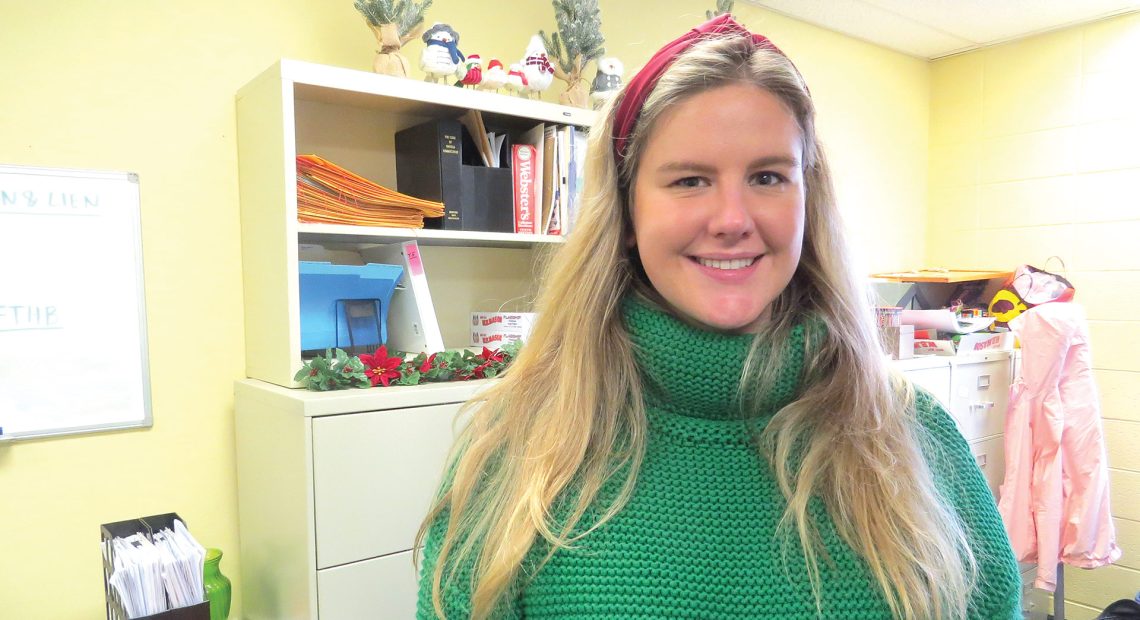
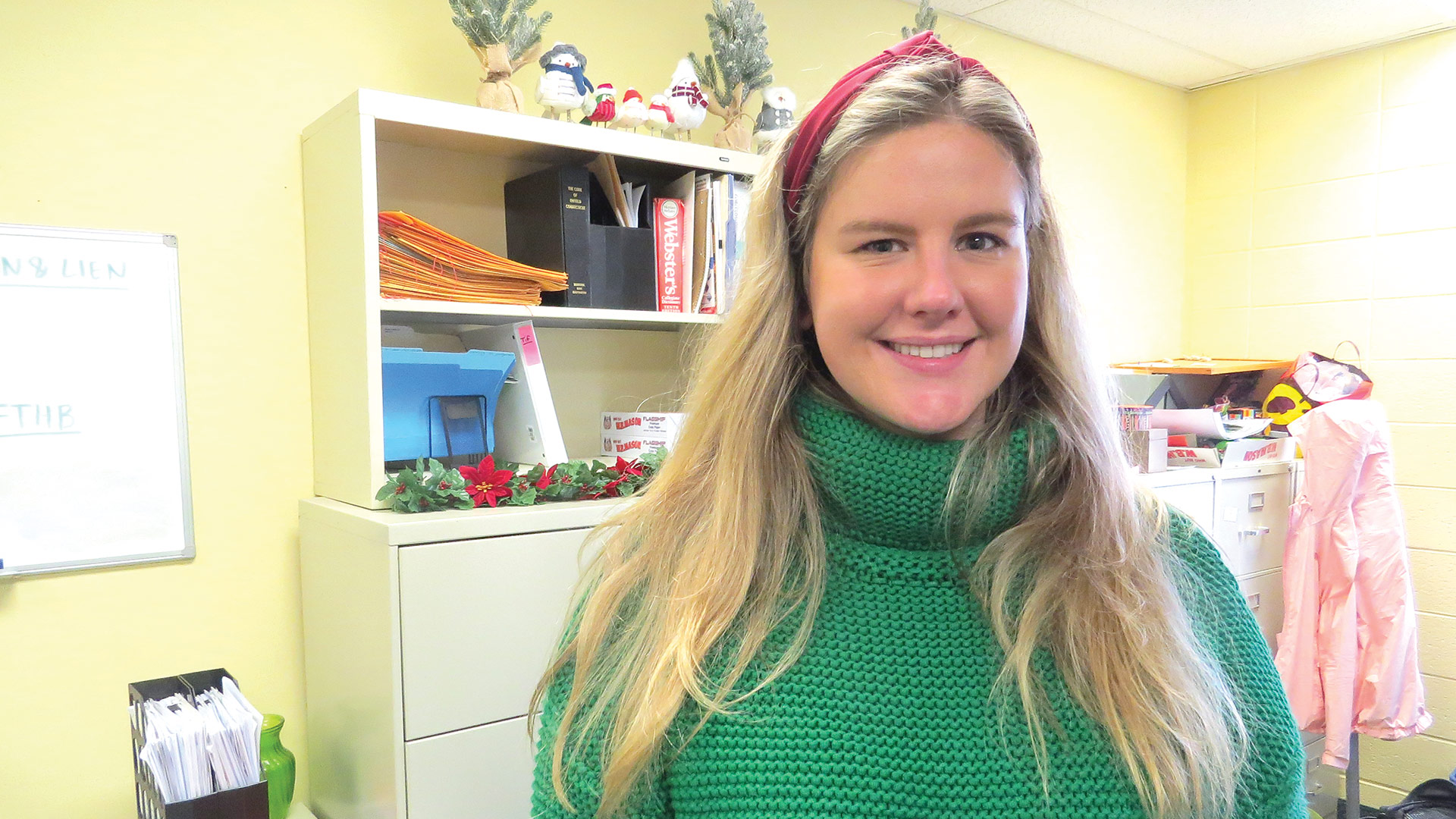
Natalie MercadoNatalie Mercado always knew she wanted to work in the food space. After high school, she enrolled in New England Culinary Institute and earned an associate’s degree in culinary arts and restaurant management, then slowly rose up the ladder, eventually becoming a sous chef.

“My goal was always to open my own restaurant,” she recalled. “I did catering jobs on the side, but I never took the initiative to open up a business.”

In the meantime, she went to work for MassMutual as an underwriter consultant, a job she still has. But in 2021, she started pursuing her dream again, getting entrepreneurial help from EforAll Holyoke.

“I applied with the intention of starting a restaurant. This was all during COVID, and I was advised to rethink my business plan because so many storefronts were closing down.”

So, Mercado pivoted and launched a food trailer called Sweetera & Co., specializing in “milkshakes and over-the-top desserts.” She posts on her website and social media to let people know where the truck will be each week, and she also started catering. The enterprise was an immediate success, and still is three years later.

“I really didn’t expect it to take off the way that it did. It was a great surprise, honestly, because I had endured so many setbacks with building the trailer,” she said. “It was during COVID, so supplies were back-ordered, and trying to find reliable contractors was hard. So it took longer than anticipated. I had to get comfortable getting uncomfortable.”

But Mercado isn’t done challenging herself, with plans to launch a second trailer in Florida by next year and a storefront by 2026.

“Everyone’s like, ‘you’ve come so far, and you should be proud of yourself.’ And I am proud of myself, but I’m also hard on myself,” she told BusinessWest. “I know where I want to be, and I know I’m not there yet. But I need to give myself more credit than I do.”

She still enjoys her work at MassMutual, approving life-insurance applications and helping clients secure their future. But she sees a bigger future for herself in Sweetera & Co.

“I love the creativity,” she said. “The best part of it is seeing the customers’ reactions when they get their bubble waffle sundae or their milkshake — their eyes get really big like, ‘oh, wow.’ The feeling I get is incomparable. It really makes all the hard work and all the setbacks worth it.”

—Joseph Bednar


Class of 2024

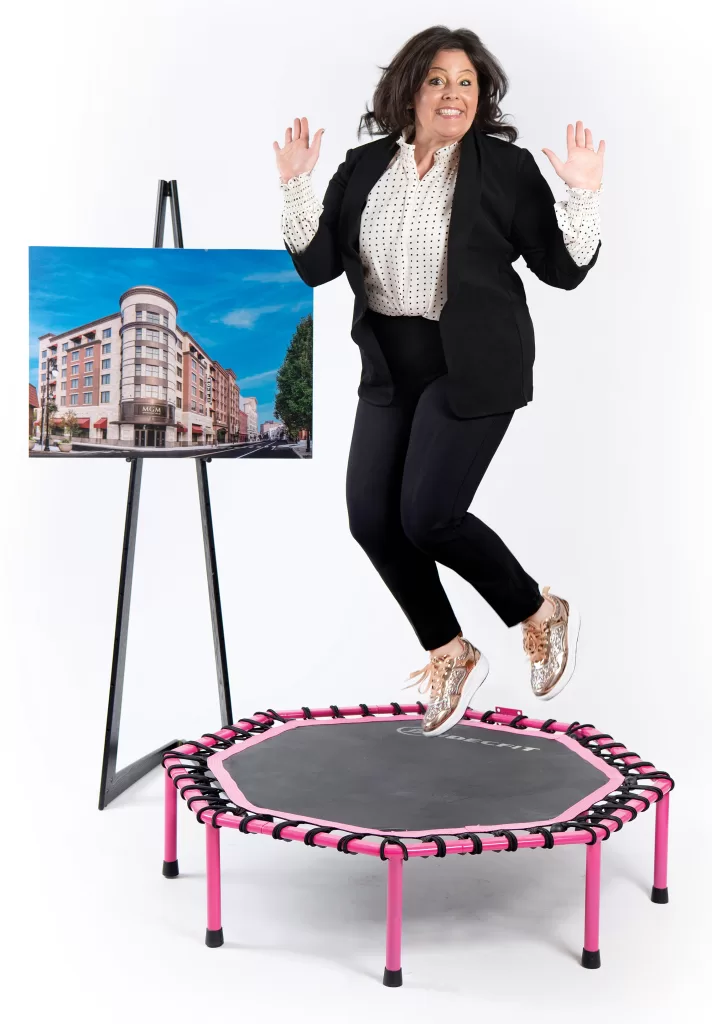
Director of Philanthropy and Community Engagement, MGM Springfield: Age 38

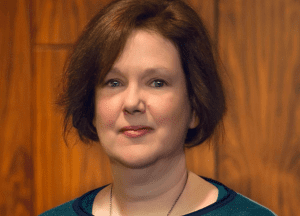
Jennifer McGrathJennifer McGrath is fond of saying there are … well, two sides to Jennifer McGrath.

The first is the professional side. For more than a dozen years, it played out at Six Flags New England, and for the past seven months, it’s been at another regional institution focused on fun — MGM Springfield.

The other side involves a commitment to health and wellness — her own, but especially helping others find it. This commitment involves everything from teaching Zumba and trampoline to her own fitness platform.

To say that she is passionate about both sides would be an understatement, and this passion certainly explains why she is a member of the Forty Under 40 class of 2024, and why — to quote Kristine Allard, vice president of Development & Communication at Square One, who nominated her — “Jennifer McGrath is a force in Western Mass.”

As we explain why, we’ll start with that professional side. At MGM, she handles everything from coordinating community events to supporting nonprofits, such as Square One and the Mayflower Marathon; from developing relationships with government officials and the business community to managing all philanthropic requests and coordinating charitable sponsorships.

“My biggest part of my role is impact,” she said. “How can we volunteer? How can we provide our monetary donations? How can we create impact for the city, its students, its residents, and the region as well?”

She took on similar responsibilities, and others, including the training of more than 30,000 employees, at Six Flags, and said of her career to date, “it’s all about fun, entertainment, and allowing people to escape and celebrate the fun times in life. It’s no secret my entire career’s been built around that.”

As for the other side, McGrath sums it up by saying she’s focused on “health for everybody and every body.”

She’s an instructor at Fitness First and an experienced Zumba and JumpSport instructor. “I’m all about body heath and body positivity,” she told BusinessWest. My mission is all about wellness, and that means mind, body, and spirit.

Elaborating, she said she battled eating disorders earlier in her life, and her struggles and eventual triumph led to a passion to helping others find health and wellness, especially through her fitness platform.

“Almost 300 people come together daily, and we promote body wellness,” she said. “We post body inclusion, we champion positivity, and we talk about ways we can remain healthy through mind, body, and spirit.”

—George O’Brien

Class of 2024

Executive Director, Craig’s Doors: Age 35

When he was chosen as a member of the 40 Under Forty class of 2024, Tim McCarthy was hesitant to talk about himself, firmly believing this is a team honor. “This is such a remarkable team,” he said. “It’s truly the best team in the country doing this work.”

That work is serving unhoused residents in Western Mass. at three sites. During McCarthy’s time as director, he has expanded programming to add new shelter locations, increase bed availability, and expand case-management support to residents of the region.

Currently a graduate student in mental health counseling and a member of the BEAHR Lab at UMass Boston, he has also worked to make Craig’s Doors (which was established in 2011 and named in memory of Craig Lorraine, a veteran and well-known street musician in Northampton and Amherst) a trauma-informed operation that practices what McCarthy calls “radical compassion.” It’s also the only homeless shelter in the country that provides free transportation to guests, thanks to a state-funded partnership with the PVTA.

“I just fell in love with this work and this population, and I had a vision for how it could intersect more deeply with concepts surrounding mental health,” he explained, adding that he also employs a number of former clients. “We’ve got a lot of folks with lived experience who existed in the margins. I’m a firm believer in providing opportunities for folks; a lot of people have overwhelming competence that might not be reflected in their résumé, so we try to build internally.”

McCarthy not only wants to raise people out of homelessness, he wants to close opportunity gaps he feels are far too prevalent today. “The outcomes we’re striving for are not built into the nature or ethos of this country right now. But we bring a level of competition to compassion. We’re out here trying to be the best at this work; we’re always trying to be better than we were the day before.”

Recognizing that homelessness is “the most glaring manifestation of wealth inequality,” he noted, Craig’s Doors has closed the compensation gap on its team, where everyone, no matter their role, starts at $20 per hour or more.

“That has allowed us to retain an incredible team and develop our roster. It also helps us to attract top talent within the space,” McCarthy said.

“We’re really practicing what we preach about humility and self-reflection,” he added. “We’re bringing a competitive work ethic promoted by capitalist ideals, but instead of applying it to individual wealth, we’re applying it to our principles.”

—Joseph Bednar


Class of 2024

Founder, Analytics Labs: Age 39

Tiffany Cutting MadruTiffany Cutting Madru says entrepreneurship runs in her family.

Her uncle was a veterinarian, her grandfather an architect, and her parents have long owned and operated C&D Electronics, and electronic component distribution and logistics company serving the defense, aerospace, and commercial markets. And she was working with her parents, in sales and development, when she conceived her own entrepreneurial venture.

As she tells the story, she and her family became part of then-Holyoke Mayor Alex Morse’s efforts to roll out the welcome mat for players in the cannabis industry, which started to take root following a 2017 referendum vote.

“When some of these companies came into the area to look at where they were going to have their cultivation spaces and production spaces, we were utilized to show people around Holyoke and talk about the city and what it had to offer,” she explained, adding that, in the course of offering these tours, she asked the question, “what other parts of the supply chain are missing?”

The most commonly offered answer was ‘testing labs,’ she went on, adding that she and her husband, Ted, stepped forward to meet that need with Analytics Labs, which currently analyzes cannabis samples from more than 80 operators across the Commonwealth to ensure they meet the state’s safety standards.

The company, launched in 2019, has grown to 40 employees and is expanding into Connecticut as that state develops its own cannabis industry.

For Madru, who earned a bachelor’s degree and then an MBA in entrepreneurial thinking & innovative practices at Bay Path University, this has been a long journey and a deep learning experience in an industry that is growing, evolving, and finding its level.

“Massachusetts is maturing, and we’re starting to see more guidance from the state on the testing side,” she explained. “We do see the struggle of our clients that are coming and going, and we’re hoping that some of the market will become more consistent. There were a lot of licenses that came online for cultivation and manufacturing, and there’s been a bit of fallout; we’ll see who maintains and who survives this.”

A winner of the James McGill ’35 Carpe Diem Award at Bay Path, Madru has remained active with the university. She emceed its Women’s Leadership Conference in 2019, and that same year, she and Ted co-chaired the Bay Path University Gala. She has also been a member of the school’s Business Leadership Council, providing guidance and mentorship to the university and its students.

—George O’Brien

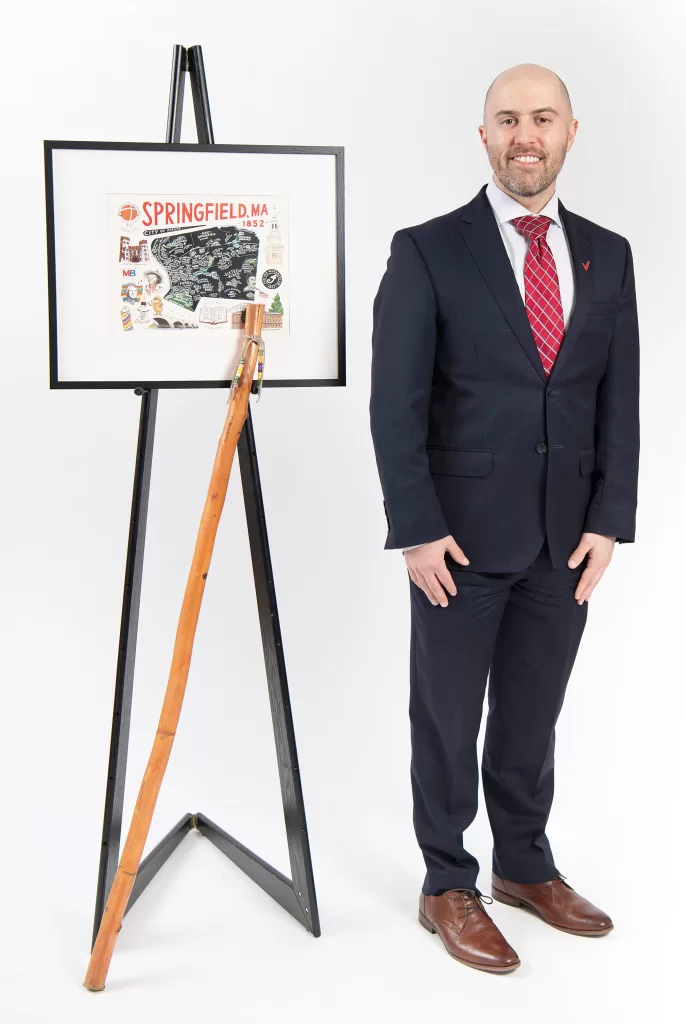
Class of 2024

Owner, Dewey’s Jazz Lounge and All American Bar, Grill & Patio: Age 28

Like most people, Kenny Lumpkin found the pandemic to be a time of reflection and figuring out what’s really important.

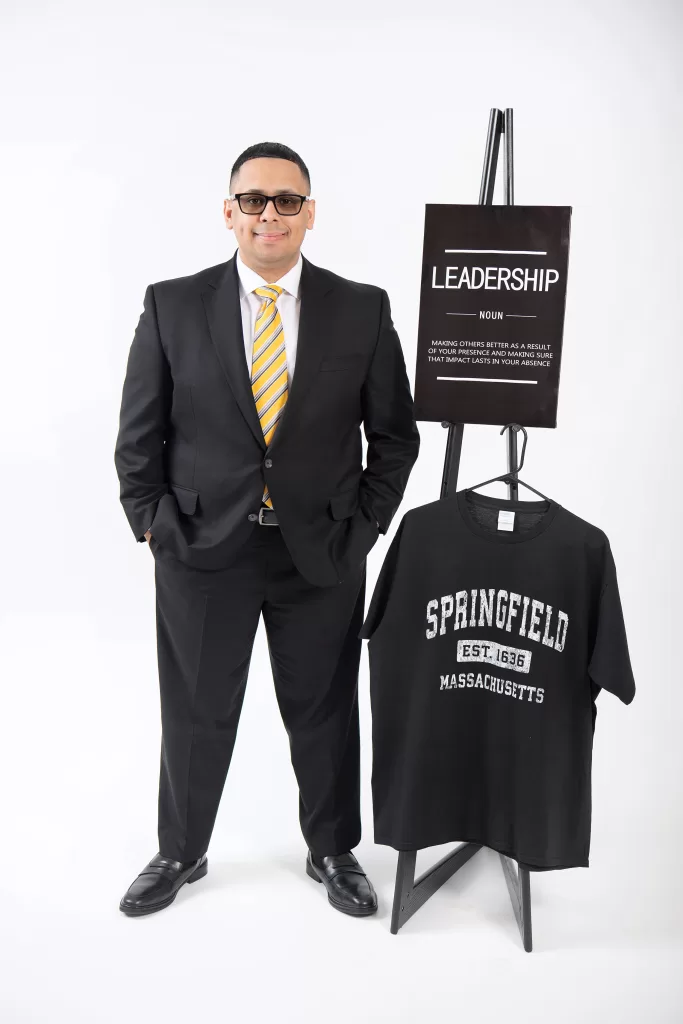
And while doing that, he concluded that being a consultant for Big Pharma just wasn’t working for him, and he needed something else. After some research — and soul searching — he determined this something else should be a return to his roots in Springfield accompanied by an entrepreneurial gambit, an effort to replicate the kind of jazz establishment he found, and came to love, while living in the Boston area — Wally’s Café Jazz Club.

And he did, with Dewey’s Jazz Lounge on Worthington Street, an establishment he opened in 2021, when there were still many COVID after-effects and other challenges to overcome.

Three years later, Dewey’s has become a downtown staple, attracting visitors from Springfield, across the 413, and beyond. And in 2023, Lumpkin doubled down on his dream, opening a second venue — All American Bar, Grill & Patio, a sports bar on Dwight Street. The two sites complement each other well and have attracted different audiences.

“My biggest worry about opening two restaurants a block from each other is that they would cannibalize each other,” he said. “But we haven’t seen that; we’ve been able to hit both sides of the market. We have an older, more mature crowd at Dewey’s that will come to see live music, and we get a younger crowd at All-American that will get down with a DJ.”

Lumpkin, who is also active in the community, with a turkey drive at Thanksgiving and a Christmas clothing and toy drive, said being an entrepreneur is essentially what he thought he would be, a roller-coaster ride replete with challenges and rewards.

“Every day is a learning experience, and every day is something new,” he told BusinessWest. “That’s what I love about it.”

His philosophy, about life and business and their myriad challenges, is best summed up with a tattoo he wears proudly, reading ‘Find the Sun.’

“It means to find the bright side of things,” he explained. “I try to remain optimistic and see what good is coming from all the hard work you put in. And it’s amazing when people pull you aside and say, ‘you’re an inspiration to this community,’ or offer a simple ‘thank you’ for bringing this concept to Springfield.”

He’s heard a lot of that since that COVID-inspired reflection of four years ago, which helps explain why he’s a member of the Forty Under 40.

—George O’Brien

Class of 2024

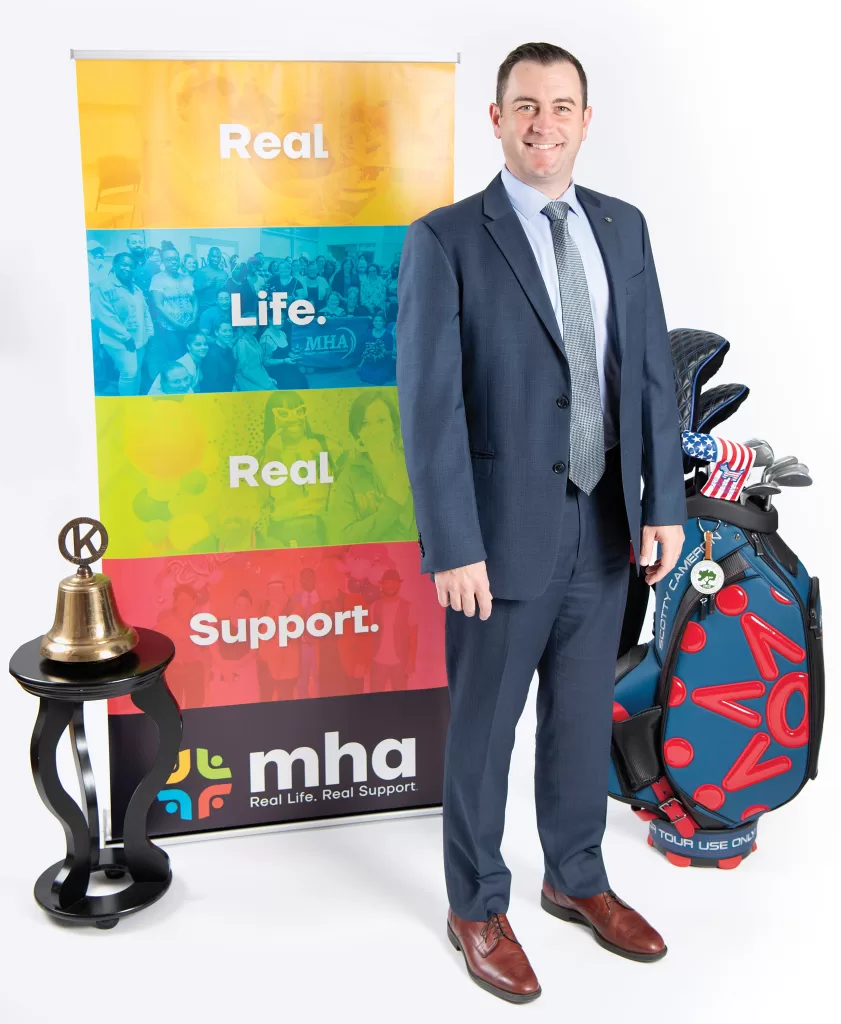
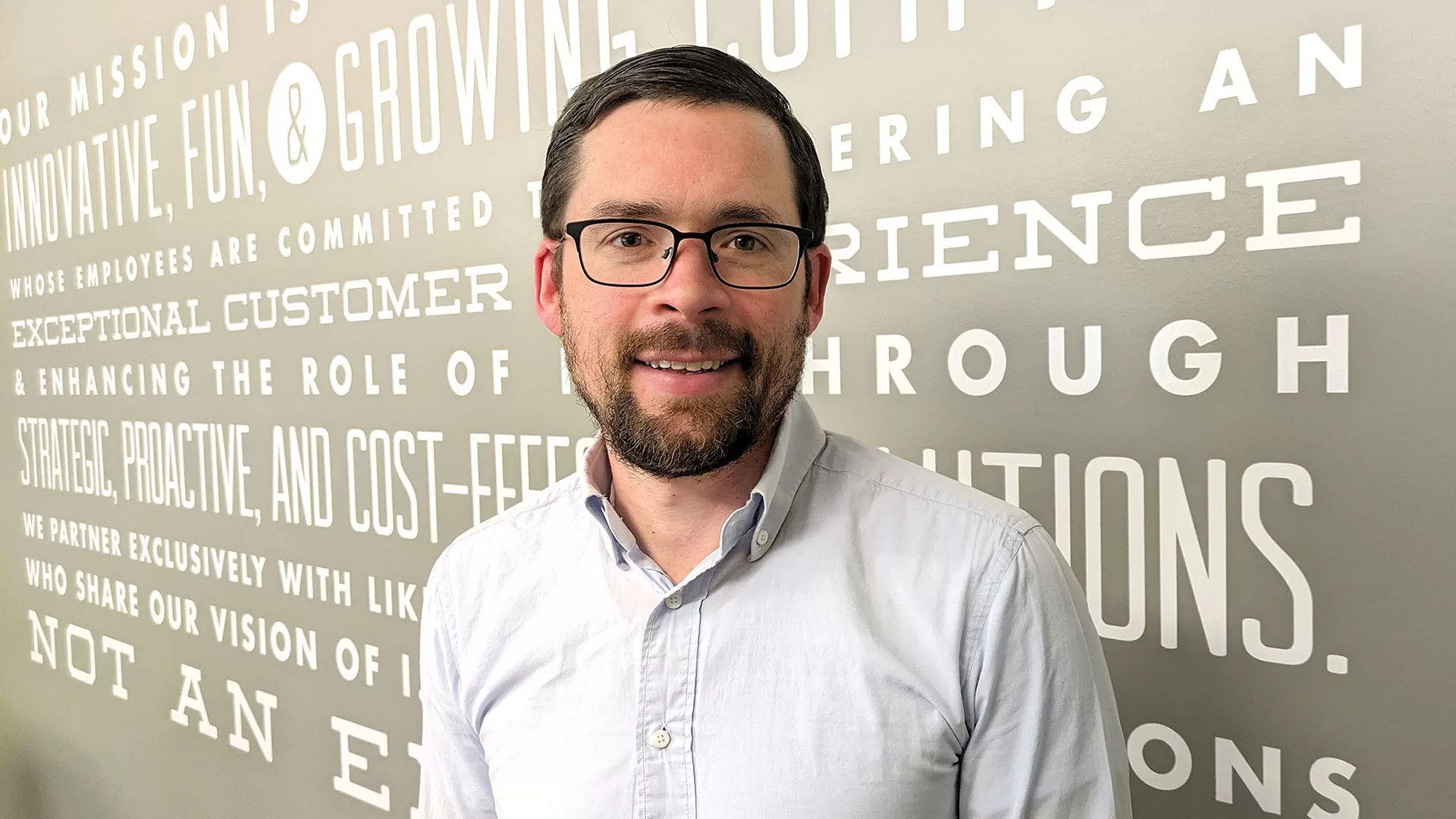
Senior Community Responsibility Consultant, MassMutual: Age 35

Joe LepperAs a freshman at Longmeadow High School, Joe Lepper was not feeling very good about how things were going in his life. There was some bullying and a distinct lack of direction.

And then … he found the school’s Key Club, a program of Kiwanis, a service organization with chapters around the world, designed for young people. And it changed his life. Dramatically.

“I found a community of people that just cared about others,” he explained. “It didn’t matter who you hung out with … if you were passionate and you cared about helping other people, you could be a great Key Club member; you could make a difference.”

The club certainly made a difference in his life, instilling a strong sense of community involvement and helping others that in many ways defines not only his life, but his current work as senior Community Responsibility consultant for MassMutual.

“Kiwanis is the reason I have the career that I have,” Lepper said, adding that, with the help of the Springfield Kiwanis Club, he was able to attend an international Key Club conference, at which he became riveted by a speech from the international president — and inspired to take that same title someday.

“I came home, and I changed my email signature from ‘club treasurer’ to ‘international president’ just to see what it would feel like, he said, adding that he later ran for New England district governor as a sophomore, got elected, then ran for international president as a junior — and, yes, got elected.

He missed 50 days of school his senior year because he was on the road giving speeches and running workshops, but said the learning experience was incredible.

Fast-forwarding, Lepper, a graduate of Western New England University, has kept Kiwanis in his life, joining the Springfield club when he was just 21 and eventually becoming its president. And the sense of community involvement instilled in him remains ever-present in his work at MassMutual, where he leads the community-responsibility strategy for the MassMutual Financial Advisors national sales force, work that includes oversight of community-impact, education, volunteer-engagement, and recognition programs.

In addition to that role, he has designed and led several programs, including the firm’s Community Service Awards recognition program and Community Responsibility Business Partner strategic consultative program.

An avid golfer, Lepper has a Scotty Cameron collection that he’s quite proud of. But he’s much more proud of his work at MassMutual, and of all that he has done with and for Kiwanis — and what Kiwanis has done for him.

—George O’Brien

Class of 2024

President, Lively Builders Inc.: Age 38

Joshua LivelyTired of working in the weatherization industry, Joshua Lively took the class and test to attain his construction supervisor’s license, but it got sent to the wrong state.

So … he waited.

In the meantime, “I was sick of my job, and my boss was sick of me,” he recalled. “One day, I got back from vacation and decided I’d had it, so I walked in and quit. When I got home, my construction supervisor’s license was in the mailbox, so that seemed like destiny.”

It was also a risk, with a 2-year-old daughter and his wife eight months pregnant with another child. But he immediately went to work framing and building with some friends in the Springfield area, learning from other carpenters and performing a range of different jobs, from installing above-ground pools to putting up walls for new house builds.

For the next two years, they got more and more calls — an experience Lively called “an eye-opening finishing school” and the final step to what came next: launching his own business, Lively Builders, in Montague.

“I started with a Dodge Dakota pickup truck and some cheap tools. Now I’ve got a 3,000-square-foot garage and multiple trailers and trucks. It’s grown tremendously over the past 12 years,” he told BusinessWest, adding that some of his work involves blighted properties and improvements to solve health and safety issues for homeowners. He’s also been named Franklin County’s favorite building and roofing contractor two years in a row in a Greenfield Recorder poll.

Lively volunteers his time to local government; he chairs the Montague Zoning Board, is a Montague Town Meeting member, and spent several years chairing the Montague Capital Improvements Committee.

“I like supporting the community in a nuts-and-bolts way — ‘oh, the DPW needs to repair this infrastructure.’ That’s unseen stuff that nobody wants to get into. Now I’m able to affect how the town is going to look in the future,” he explained. “I enjoy it, and I think it’s important to model this behavior for my kids and for other people in the community — to unite the rest of the silent majority who would otherwise keep quiet until someone steps up and does something.”

Lively also volunteers on the board of the Franklin County Youth Football League, even calling games in the announcer’s booth for the Franklin County Bulldogs. He also recently purchased a plane and sits on the Turners Falls Municipal Airport Commission — yet another sign that his career has, indeed, taken off.

—Joseph Bednar


Class of 2024

Principal Radio Frequency Engineer, Verizon: Age 38

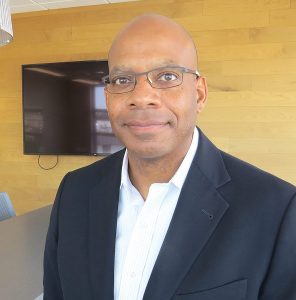
Juan Lattore IIIJuan “Jay” Latorre is not an elected official. Yet.

But he certainly knows his way around City Hall — or city halls, in the plural. And town halls as well.

Indeed, as principal radio frequency engineer for Verizon, Latorre spends a great deal of his time before elected and appointed officials across New England to locate cell towers and antenna installations. He’s worked on more than 300 such assignments during his career, often developing unique solutions for site-specific permitting, working in collaboration with municipal, state, and federal officials to secure what everyone wants and needs in this age — reliable cellular service.

Despite that need, placing these towers isn’t easy. Doing so takes understanding, patience, and, most importantly, a willingness to work collaboratively with officials and other constituencies, he said.

“And that’s great, because this work has exposed me to so many different and interesting professions, like the law, construction, real-estate development, environmental policy — all of those things give me a broader perspective on how to make a community grow.

“I’m a boots-on-the-ground kind of person; I enjoy getting to better understand the pulse of our community by meeting with people,” he went on, adding that he made it a goal to put himself in rooms full of people he doesn’t know, something that has helped him become a better person and better community leader.

While helping to ensure that calls get through, Latorre is also a leader in the community. He’s run for City Council in Springfield twice, only to come up just short. He expects there will be more such bids in the future.

Meanwhile, he currently serves as vice president of the Sixteen Acres Civic Assoc. and has been active with the Boy Scouts. An Eagle Scout himself, he’s a troop leader in Springfield for disadvantaged youths in the Latino community and has been a board member of the Western Massachusetts Council of Boy Scouts of America for many years, and is currently on its executive committee.

Latorre is also involved with the Engineering department at UMass Amherst, helping to recruit students of color to that field. He was a member of the young professionals subcommittee of Springfield City Council when it was active, and during that time, he created Restaurant Week, which has become a fixture in the city.

Add all that up, and it’s easy to see why his schedule is full — and why he doesn’t need GPS to find any city hall.

—George O’Brien

Class of 2024

Owner, Kurtz Consulting: Age 30

Mariah Kurtz understands the importance of municipal government, especially in a very small town — and especially at a time of great challenge.

Over the past five years, she found herself in both, first as assistant town planner, then town planner, in Erving, population 1,665.

“I really jumped into municipal government on the hard mode. I was still getting to know the town when COVID hit,” she recalled. “I had to pivot … I guess I learned flexibility.”

Her role in such a small community was expansive. “It turns out, in a rural town, it’s not just reading and approving permits all day; there just aren’t that many permits to approve. So you end up doing a lot of other things. Like, this culvert needs to be replaced. How does that work? Who do we work with? How do we pay for it? Or, we want to plan an event to get people to come to the park, so we work with the Recreation Department to do that.

“The work was really exciting to me, talking to residents and learning what their needs were and what their desires were for their small town to flourish,” she added. “That was magical.”

Growing up in a family construction business — Westfield-based Kurtz Inc. is a notable name in Western Mass. — taught her the complexities of building and development on a small scale, and majoring in sustainable community development at UMass Amherst gave her a broader, more holistic perspective. “Instead of, ‘where do we pour the concrete?’ it’s ‘why do we do that, and how do we take into account the landscape?’”

That perspective guided Kurtz in Erving, and even more so now, a few months after launching her own grant-writing and consulting business, based in Greenfield and serving small businesses, nonprofits, farmers, and, yes, small towns.

“This way, towns don’t have to employ a full-time grant writer or planner, with the salary and benefits that go with that,” she explained, adding, “I actually never wanted to work in municipal government. For a lot of my peers at UMass, that was the traditional track, being a town planner in a local municipality. But I didn’t see that for myself.”

She is gratified, however, at effecting positive change in the region.

“With some projects, you see progress right away. I’ve done some public art projects, and there it is — you see it. But other projects take 20 years to see the difference in the environment,” she explained. “I’m most excited about helping people make those projects happen — and make their dreams happen.”

—Joseph Bednar


Class of 2024

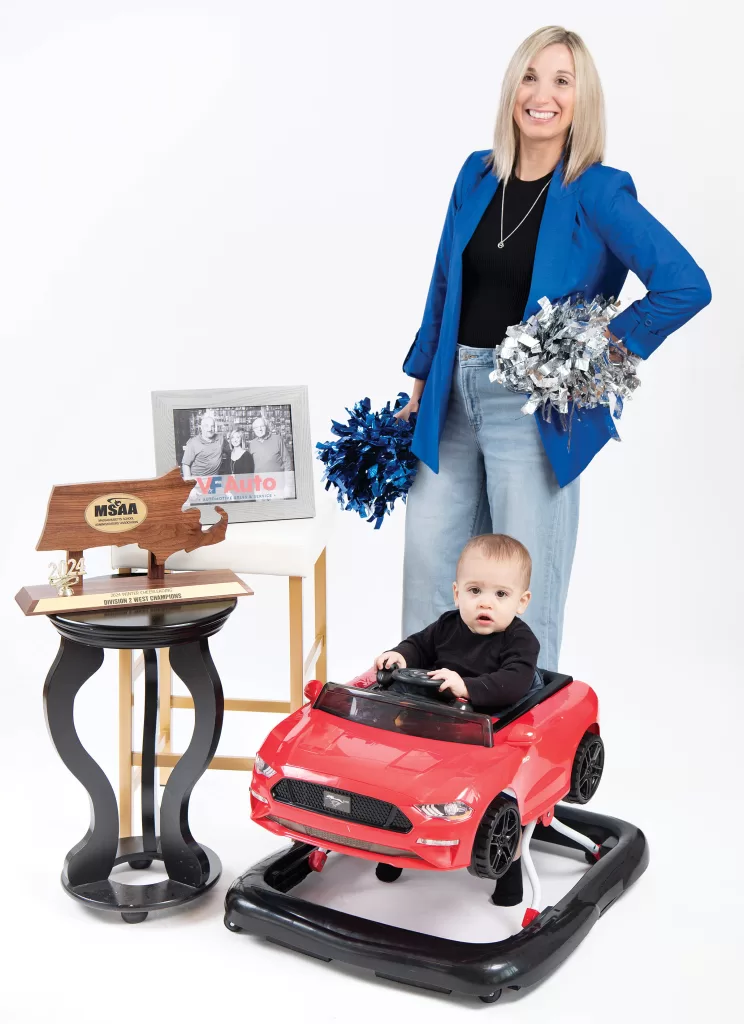
Vice President, V&F Auto Inc.: Age 34

Nicole KerriganGrowing up in a family auto-repair and maintenance business, Nicole Kerrigan was certainly interested in making it her career, but she wanted to keep her options open.

She first majored in management at Western New England University, then switched to accounting, “mainly because, if I got into the business and it wasn’t what I thought it would be, I had a plan. Also, I’m very close to my family. If the business created a conflict, I didn’t want to sacrifice my family relationships.”

It turns out she needn’t have worried.

“As a third-generation leader of V&F Auto, she has brilliantly carried forward her family’s legacy while injecting a fresh and innovative approach into the business,” wrote Michael Bennett, executive coach with the Automotive Training Institute (ATI), one of myriad people who nominated Kerrigan for 40 Under Forty. “Under her leadership, V&F Auto has maintained its exemplary reputation and is experiencing substantial growth and evolution.”

Kerrigan calls ATI a vitally important factor in her growth and education, and today, she takes on numerous roles at V&F, from leading day-to-day operations overseeing the company’s social media and marketing; from communicating with customers to interviewing and hiring — and much more, including, yes, some accounting.

“I love creating relationships, overcoming challenges, and creating solutions, so my team can do their job better,” she said. “My role is to create opportunities for my team and give them the resources they need to grow and lead — to have a livelihood they are happy with and have a place they are proud to work for.”

Her colleagues say she’s acing that test. “Nicole has taken the reins in a field dominated by her male counterparts and propelled the business at V&F Auto Inc. to new heights,” Sales Manager James Dowd said.

Kerrigan is active in the West Springfield community, volunteering for a number of nonprofit and municipal organizations and events, even winning a leadership and team-development award from the Parks & Recreation department. And she’s especially proud of her role as a cheerleading coach for West Springfield High School for the past 15 years, first for the JV squad, then at the varsity level.

“I love the sport in general — it gives me great joy,” she said. “And I like the competitive aspect of cheerleading — not necessarily the sideline cheering, but being able to create routines and compete and watch the kids thrive each year, watch their skills get better and better and help them grow.”

—Joseph Bednar


Class of 2024

Partner, Bulkley Richardson: Age 38

Stephen HolstromWhile most lawyers say they’re in the business of helping others, some people may not put litigators in the ‘helpful’ category — at least, not at first thought.

But in representing doctors, small businesses, and others in various court actions, Stephen Holstrom said his life is, indeed, dedicated to helping people.

“Western Mass. is a small-business community, and I’m a litigator for small-business owners,” he explained. “When a business owner is involved in litigation, that impacts their whole life. When people go to court, it’s routine for me, but it’s not for them; it’s a very harrowing, stressful experience.”

As a general-practice litigator, Holstrom has handled complex tort actions, insurance cases, and complex class actions, as well as matters in connection with schools, the cannabis industry, and commercial litigation, including disputes between shareholders and land-use issues. Meanwhile, he represents hospitals, physicians, and other medical providers in medical-malpractice cases and other issues related to health law.

“I like having a varied practice,” he told BusinessWest. “That’s one of the reasons I came to Bulkley. There are needs all over the community, and I want to serve as many parts of the community as possible. That’s why I do general practice.”

And he’s doing it at a time when specialization is much more common in law firms.

“I’m a unicorn; it is fairly unique,” he said. “But you can’t reach every corner if you’re specializing in something. That’s why I’m proud to be a general litigator.”

Recognized by both Best Lawyers in America and Super Lawyers, Holstrom has also brought energy to his interests outside the firm, chairing Wilbraham’s By-Law Study Committee and serving as vice president of the board of directors of the Gray House in Springfield, which helps North End residents meet immediate and transitional needs like food, clothing, and educational services.

“The Gray House is a phenomenal organization,” he said. “It really helps people out of poverty, gives them the supports they need, and helps them get a leg up. It has a generational impact. I get a lot of satisfaction out of that.”

As he does on the job. “I like the thrill of litigation,” he said. “It’s a constantly moving challenge. Frankly, the day is usually a blur; there’s so much going on, and new challenges always pop up during the course of the day. If you talk honestly to litigators, a lot of them complain that it’s never-ending, but I think that’s reinforcing. That’s what we’re here to do — to deal with emerging issues.”

—Joseph Bednar


Class of 2024

Chief Philanthropy & Communications Officer, Home City Development: Age 26

Joesiah GonzalezJoesiah Gonzalez was just 23 when he first ran — successfully — for the Springfield School Committee in 2021. He was the youngest member at the time, and he still is, presenting a challenge of sorts.

“I think that sometimes, there’s a prejudice, or hesitance, toward folks who are young in any organization or institution, and that’s something I’ve had to overcome,” said Gonzalez, who has certainly done that, taking a leadership position (he’s now the vice chair) and pushing for meaningful change on many fronts, including a policy on critical-incident drills that focuses on the safety of the city’s students.

This work on the school board is just one example of how Gonzalez has long been committed to community — and also to the nonprofits that serve it. He’s currently the chief Philanthropy and Communications officer for Home City Development, a nonprofit real-estate developer with a special focus on mixed-income housing in Western Mass., but also a provider of resident-engagement programs ranging from after-school teen initiatives to early-childhood literacy programs.

He started working with nonprofits when he was just 20, joining the New North Citizens Council (NNCC) and overseeing the after-school youth programs at Gerena School and effectively expanding them to serve more young people. He would eventually secure more than $1.5 million from the U.S. Department of Labor to establish a Youth Build program within the NNCC, and under his leadership, that program became a department, one that would grow to 30 employees and a $2 million budget.

In his current role, he handles fundraising and communications strategies for Home City, with a primary focus, on the philanthropy side, of raising funds to support resident-service programs that assist the more than 400 families housed in Home City’s multiple affordable-housing sites, work he finds very rewarding.

“Being at the table and also at the helm of certain initiatives, especially around resident engagement, allows me to drive impact in a way that’s meaningful, especially being from the city and living in the city,” Gonzalez said, adding that he gets involved at a truly grass-roots level. “There are a lot of folks doing a lot of social-impact programs, but if we don’t check the pulse on what’s happening in our community and our neighborhoods, there can sometimes be a disconnect between well-intended efforts and true impact.”

Because he has the pulse of his community, Gonzalez’s own well-intended efforts are certainly making an impact.

—George O’Brien

Class of 2024

Head of the Office of Health and Racial Equity, City of Springfield: Age 33

Chrismery GonzalezChismery Gonzalez says she’s always been interested in promoting equity, especially in regard to leveling the playing field for traditionally marginalized people.

And in her current role as head of the Office of Health and Racial Equity in Springfield, she’s doing just that. It’s a wide-ranging job she assumed in late 2020, one that continues to evolve and add new responsibilities, while recording progress on some fronts.

“What’s most important to realize about this work is that it’s not just one individual that’s leading this work and making strides,” she said, adding that her work has involved many different realms, from vaccination efforts during COVID to youth substance abuse to overdose prevention.

Gonzalez started working in Springfield’s Department of Health and Human Services as an intern in 2018, eventually becoming head of its Office of Problem Gambling and Prevention, before stepping into her current role around the time Springfield — and many other cities — declared racism a public-health crisis in the wake of the murder of George Floyd. The city was also coping with the pandemic, a time when many public-health and wellness inequities came into the spotlight and were in some ways magnified.

Since assuming that role, Gonzalez has a number of achievements to her credit, including:

• Creating a strategic plan to address systemic racism in the city, prioritizing departments, agencies, and organizations and including key strategies to achieve a healthier Springfield;

• Coordinating with local providers and community-based organizations to develop a cohesive network of health-equity and racial-justice programs and resources in the city;

• Conducting research on current and culturally appropriate, evidenced-based practices to advance health equity and racial justice; and

• Collaborating with the Office of Health Equity at the Massachusetts Department of Public Health and the chief Diversity, Equity & and Inclusion officer in Springfield to develop health-equity and racial-justice training initiatives for residents.

Gonzalez, who earned bachelor’s and master’s degrees at UMass Amherst and is working toward a doctorate in Public Health at SUNY Albany, said her current work is very rewarding, especially in the way she is able work collaboratively with others — in the 413 and across the state — to address deep-rooted problems and concerns.

Active in the community, she currently serves on the Duggan Academy advisory board, the Stop Access Coalition steering committee, the Massachusetts Public Health Assoc. board (chairing its racial equity and health committee), the Massachusetts Municipal DEI Coalition, the Gándara board of directors, and other groups.

—George O’Brien

Class of 2024

Vice President, Regional Manager, PeoplesBank: Age 35

Scott Gomes-GanhaoGrowing up, Scott Gomes-Ganhao wanted to be a pilot. But banking “kind of ran in the blood,” he said.

“My godmother was a banker for many, many years, so I had some kind of banking intuition. I worked part-time in banking all through college, so I fell into it and never left. Banking has that way of holding onto you.”

Not only has Gomes-Ganhao stuck with banking, he has excelled at PeoplesBank, consistently leading a top-ranked sales team and recently being promoted to his current position as vice president, regional manager.

That recognition “is a testament to Scott’s exceptional sales acumen,” said Lisa Wegiel, banking center assistant manager, in nominating him for the 40 Under Forty class of 2024. “His strategic approach and results-driven mindset have significantly contributed to the success of our banking operations.”

After an earlier promotion to assistant vice president, Gomes-Ganhao was selected to participate in the bank’s Leadership Challenge, demonstrating his leadership ability among his peers. He has also volunteered with an internal associate-engagement team, serving with other leaders on cross-functional strategic initiatives and being a mentor to junior associates, which has led to the advancement of several employees.

“It’s important for me to see people around me elevate with me,” he said. “I’ve been making sure the team is the main focus, that they also develop along the way. I enjoy the interactions with customers, helping them find solutions. But I also enjoy the development of the team and helping them reach their career goals.”

Gomes-Ganhao has excelled in other ways, taking leadership roles in and around his hometown of Ludlow, from serving as development chair of the Ludlow Boys & Girls Club (which honored him with its Darlene Rae Helping Hand Award in 2021) to serving as president of the high-profile Our Lady of Fatima Festa, a multi-million-dollar fair.

In fact, with almost 300 volunteer hours in the past year alone, Gomes-Ganhao has been recognized by PeoplesBank as Top Volunteer two years in a row — a remarkable achievement at an institution famously committed to employee volunteerism.

“I’m proud to be part of a bank that gives you so many opportunities,” he said. “One of the big factors when I moved to Peoples was making sure I was moving to an organization that embraced giving back. At PeoplesBank, we live and breathe that every day, not only financially, but by the hours that we contribute to the community.”

—Joseph Bednar


Class of 2024

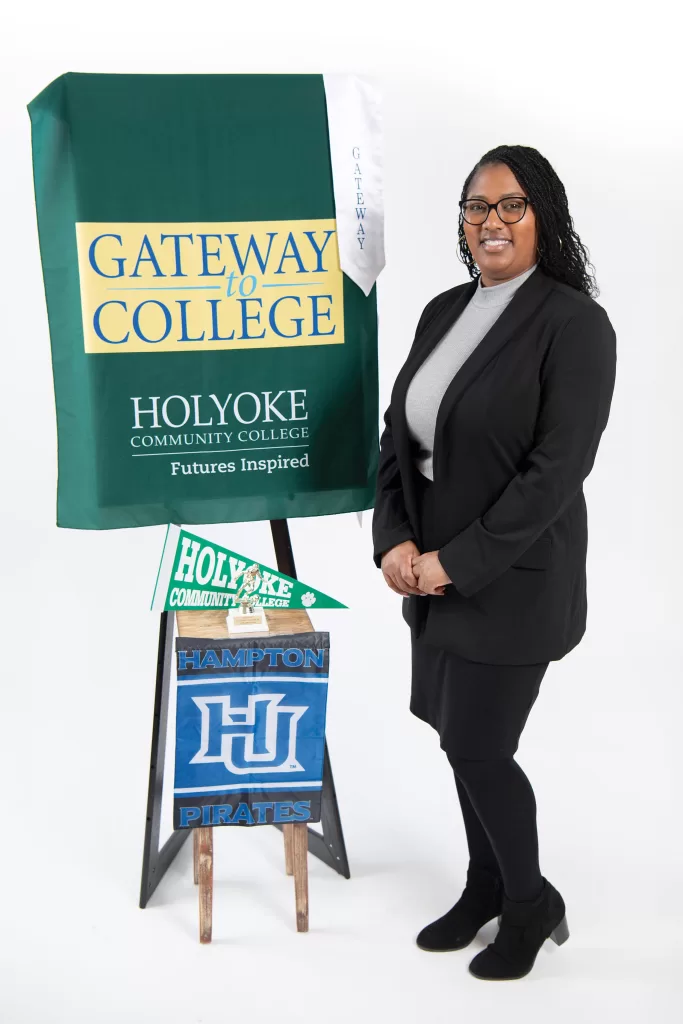
Academic Coordinator, Gateway to College at Holyoke Community College: Age 39

“Students trust Shannon. They lean in her doorway to say ‘good morning.’ They often disappear into her office, sometimes talking through some issues and sometimes just resting in a safe spot.

“Gateway students have left the traditional educational system for myriad issues, and each student needs to be seen and nurtured and valued individually. Shannon knows their triggers, their dreams, their classes, their vulnerabilities, their friends, and even their favorite snack.

“She is warm, welcoming, respectful, calm, and wise. You can feel her goodwill and compassion. She has created a culture where students feel seen and respected, where they can regain their confidence and hope and lean into their future.”

These observations, from Vivian Ostrowski, director of the Gateway to College program at Holyoke Community College (HCC), and offered in the form of a Forty Under 40 nomination, explain why Shannon Glenn is extremely good at her job — academic coordinator in the Gateway program.

In short, she has the needed qualities to help these students get where they want to go. And there’s something else: she can relate to everything they are going through.

“In high school, I was one of those students who people thought wouldn’t have graduated were it not for my mentor,” she said. “So I grew up and decided to be that for someone else.”

In her role at HCC, Glenn helps students who are at risk of dropping out, for any of many reasons, stay in school and then graduate, as evidenced by a success rate of nearly 80%. She said success comes, as Ostrowski also noted, from helping students regain both confidence and hope.

It’s an extremely rewarding job, she said.

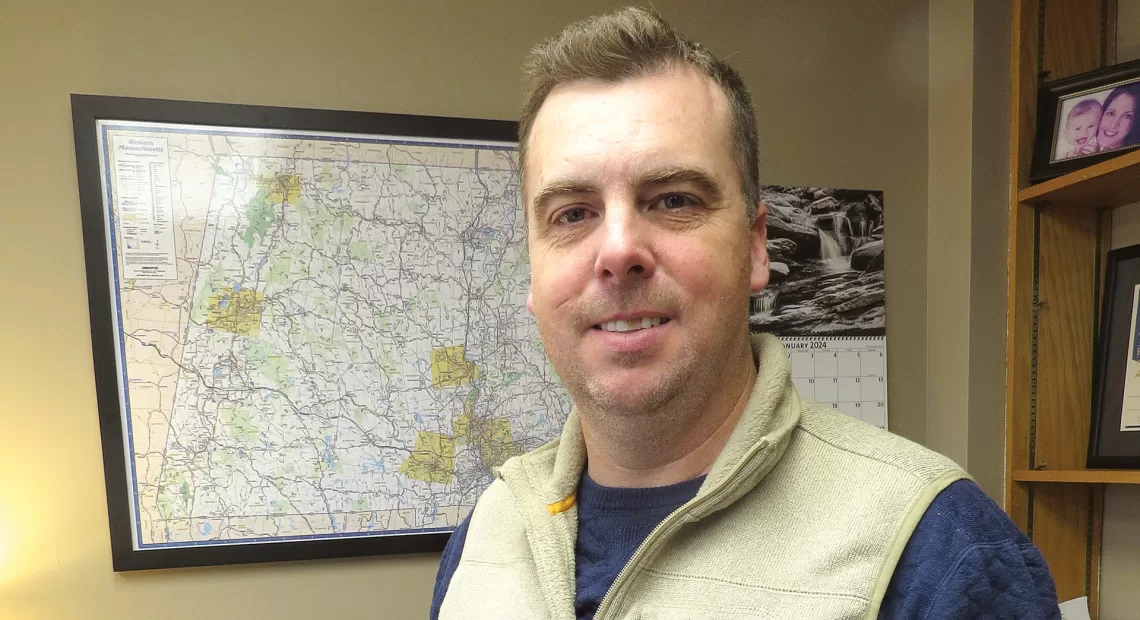
“This is my life’s work. Taking the students that most think are not going to graduate from high school and having them be extremely successful in high school as well as college … it feels like giving the underdog an opportunity to thrive.”

Glenn has certainly thrived in her role. She came to it after working as an elementary-school teacher; leaving education to raise her son, Kasen, now 10; working in real estate; and then searching for something in higher education that would be rewarding and meet a real need.

She’s found that something at HCC, where she is also a founding member of the Black Leadership Council, an advisor to HCC Black Student Alliance, and a member of the college’s Diversity, Equity, and Inclusion Council.


—George O’Brien

Class of 2024

Executive Director, the Parlor Room Collective: Age 39

During his 12 years playing guitar and banjo in a band called Parsonsfield, Chris Freeman recalled the outfit playing the third-ever show at the Parlor Room in Northampton and putting out a few records on Signature Sounds, the label associated with that venue.

After the band dissolved in the COVID years, Freeman took a job with the Parlor Room, booking shows and gradually moving into a leadership role there, before evolving the operation into a nonprofit model called the Parlor Room Collective.

“It always had a mission-based vibe to it, so the transition to nonprofit was pretty easy,” he said. “It’s a really special place, and I was so excited to continue its legacy.”

He also had a vision concerning another music club just a few hundred feet away — the Iron Horse Music Hall — after that venerable room was shuttered during the pandemic. “I knew it should come back, and the energy was clearly there. I started talking to different people, and there was definitely a lot of support.”

So the Parlor Room Collective purchased the Iron Horse and has raised close to $500,000 to renovate it, maintaining its intimate feel but improving facets that definitely needed improving, like its famously inadequate green room and restrooms, while expanding into adjoining space for a dedicated bar and community events. While more than $250,000 remains to be raised, the venue will reopen on May 15 with a robust lineup of concerts to follow.

“The community has been rallying around us from the start. They care about live music,” Freeman said. “We still have hundreds of thousands of dollars to raise, to pay off all the construction bills. But now we’re going to have shows on sale, people buying tickets, and the bands are coming back.”

It’s all part of an effort to re-establish Northampton as a small town that has long punched above its weight class, as Freeman put it, when one compares its population to the caliber of acts that have played here — and soon will again.

“This place has always been, in some ways, rough around the edges, but it pulls you in and makes you feel at home, and it’s been built up by the arts,” he said. “I live here, and part of the reason Northampton has become a great food scene and a great downtown culture is the arts. I’ve made it my life’s mission to make sure that never goes away, and we can bring back the glory days of such a legendary venue.”

—Joseph Bednar


Class of 2024

Founder and Host, She Did That! Podcast: Age 28

They call it the Dream Maker Award.

It’s presented by Girls Inc. of the Valley to individuals who make a commitment to working with young women in the community to help make their dreams become reality.

And it’s just one of many awards and accolades that Nikai Fondon has earned over the past few years. Others include everything from first place in a pitch contest for a podcast that she conceived called “She Did That!” which highlights young professional women of color locally and across the country, to a BEST Award from the National Assoc. of Multi-ethnicity in Communications.

Because of these and many other accomplishments, she’ll soon have another award — a Forty Under 40 plaque. It’s been earned partly for her current work at Berkshire Bank, but mostly for a host of accomplishments and initiatives within and for the community, including, but certainly not limited to:

• Serving Girls Inc. as a board member, clerk, and, now, vice chair;

• Starting the first-ever DEI committee for the Young Professional Society of Greater Springfield;

• Creating the region’s first virtual co-working space for young professional women of color during the pandemic;

• Facilitating leadership workshops through the Women’s Fund of Western Massachusetts, Maine Community Foundation, Bay Path University, UMass Amherst, and other entities starting at age 16;

• Teaching classes at Westfield State University and the YWCA of Greater Springfield;

• Speaking before more than a dozen youth groups across the region about entrepreneurship, leadership, and personal branding; and

• Facilitating the Springfield partnership between the Young Women’s Initiative and the Women’s Fund.

Until recently, Fondon, a graduate of UMass Amherst with a degree in business and marketing, was Financial Inclusion & Entrepreneurship community liaison at Berkshire Bank, where her work included building programs for financial literacy, workshops, and “opportunities to build trust in the community and provide educational opportunities within the community on financial matters.

“We want to make sure that the underbanked find a home at a bank in general, but, hopefully, our bank because of the work we do in the community,” she added, noting that Berkshire supports many nonprofit groups and initiatives across the region, and she has been involved with many of those efforts.

On the entrepreneurship side, she was also involved with a Berkshire Bank loan program called the Futures Fund, which has lower barriers to entry than typical loans and provides easier access to capital.

All this explains why Forty Under 40 isn’t the first award that she’s earned, and it almost certainly won’t be the last.

— George O’Brien

Class of 2024

General Manager, MassMutual Center: Age 32

Sean Dolan had June 20 circled weeks before the other 39 honorees in the Forty Under 40 class of 2024.

That’s because he won’t just be among those going to the stage to receive their plaques. Dolan will be, well, hosting this annual event. Sort of.

As general manager of the MassMutual Center in downtown Springfield, he leads the team that puts on all events at the facility, including, for the first time in 2024, the Forty Under 40 Gala.

He told BusinessWest he’ll be talking that night off from work, which is OK, because he works quite a few nights, weekends, and a few holidays as well.

That’s all part of a position that comes with a broad job description that comes down to making the venue as successful as possible in the many ways success is measured, especially the yardstick Dolan calls ‘economic impact,’ which equated to $56.6 million in fiscal year 2023, and also nearly 600 jobs and more than $4.5 million in state and local tax revenues.

“The main goal every day is developing and implementing the overall strategic plan for the MassMutual Center,” said Dolan, who partners with the Massachusetts Convention Center Authority and MGM Springfield to develop a vision for the venue. “Our number-one goal every day and with everything we do is how we can drive that economic impact for the city and Western Mass.”

Managing large event venues runs in the Dolan family; his brother manages an arena in Bridgeport, Conn. Sean majored in sports and entertainment management at the University of South Carolina and cut his teeth with Spectra Venue Management, including as assistant general manager and director of Operations at the Mullins Center at UMass Amherst.

He arrived at the MassMutual Center in 2018, and over the ensuring years, he has helped bring several world-class acts to the venue, from Tina Fey and Amy Poehler to Bruno Mars; from Disney on Ice to Red Sox Winter Weekend. Recently, he played a lead role in bringing a men’s NCAA Division 1 hockey regional to Springfield.

Dolan balances work with family — his wife Kristie and son Jack — and also involvement in the community; he’s on the board of the Greater Springfield Convention & Visitors Bureau and volunteers for the Springfield Boys & Girls Club, the Mayflower Marathon, Habitat for Humanity, and Friends of the Homeless.

There will be many events at the MassMutual Center in 2024, but for Dolan, the one on June 20 will be different. That’s when he’ll be among those taking center stage.

—George O’Brien


Class of 2024

Chief Operating Officer, YWCA of Western Massachusetts: Age 34

Dalila Cardona has seen a lot during her time at the YWCA.

She started there in 2018 as a child and family clinician, providing therapy to children who had either experienced or witnessed physical or sexual violence. The following year, as director of Parent and Youth Support Programs, she supervised a team of 20 employees and oversaw five community-based programs.

In late 2020, once she became a licensed clinical social worker, Cardona was promoted to clinical director. In that capacity, she worked closely with the former chief operating officer to ensure that every YWCA employee provides trauma-informed care to the Springfield-based nonprofit’s residential and community-based clients.

Her goal was to educate staff to help women and children — many of whom had experienced human trafficking, sexual assault, domestic violence, and stalking — “transform from a victim to a survivor,” as YWCA CEO Elizabeth Dineen put it.

Since being promoted to COO a year ago, Cardona has worked closely with Dineen and the chief financial officer to oversee an almost $9 million operating budget, which supports, as noted, some truly critical services for women in need. In recognition of that work, she was named Employee of the Year for 2023.

It’s a far cry from her original career goal of being a probation officer, though both are impactful roles, in different ways.

“Criminal justice piqued my interest, but I decided I wanted to make a different kind of an impact,” she said. “There are bad days sometimes — dealing with a sexual assault, and seeing that it’s a kid, 10 years old … those are hard cases, but they really push us to keep serving them. It’s exhausting sometimes, but I get as much support as I need from Liz and my staff. It’s a really special place to work.”

Active in the community, Cardona is a board member with the World Affairs Council of Western Massachusetts, a Springfield Puerto Rican Parade committee member, and a public speaker around Western Mass. on issues such as trauma-informed care, human trafficking, sexual assault, domestic violence, and trauma-focused, cognitive behavioral care for women and children.

They’re important conversations to have, she said.

“I think people don’t like talking about trauma. It hits the heartstrings. But more people have experienced trauma than haven’t; everyone’s been through something,” she said. “Getting those stories out about the kids and families we serve within the community is another way we can make change.”

—Joseph Bednar


Class of 2024

Marketing Manager, Performance Foodservice: Age 38

Kara BombardThe restaurant life is a tough one. Kara Bombard wants to make it a little easier.

“It’s a very hard industry,” said Bombard, marketing manager at the Springfield location of Performance Foodservice, a national company that supplies products, technology, and custom solutions to culinary businesses. “The life of a restaurateur is a busy one. If you’re not working on the line, you’re in the back doing paperwork or orders, making sure everything is running. Anything we can do to take anything off their plate is considered a wonderful thing for them.”

Among Bombard’s many roles, she executes a strategic partner program across more than 400 local and national food suppliers, and also manages biannual food shows that bring more than 1,800 attendees to the Greater Springfield area.

“We take over places like the MassMutual Center or the Better Living Center, with ceiling-to-floor food,” she explained. “You can come in and eat lunch as we showcase everything from the highest-end cuts of meat to oysters to chicken tenders and fries. You can sample anything.”

In addition, Bombard has developed a communication and content strategy to provide culinary inspiration on trends and new product ideas to local and regional restaurateurs, collaborating with a team of culinary specialists to develop new ideas for menus, providing tools to help restaurants improve their profitability and food costing, waste management, server training, and overall operations.

She also supports her company’s diversity, inclusion, and belonging business strategy by serving as chair of communications on the Women of PFG Associate Resource Group.

Meanwhile, Bombard has found another way to connect with the business community: as president of the Young Professional Society of Greater Springfield (YPS).

“That has been a wonderful experience,” she said. “It’s been great to put down my roots and expand my relationships and get to know a lot of people in different industries.”

As YPS marks 15 years, Bombard has been impressed with its evolution and the resilience of its members through challenges from the Great Recession to the pandemic, and gratified to see its collaborations and networking events grow.

“If you’re a professional starting out, it’s a great way to introduce yourself to so many people and so many industries represented within our group,” she added. “If I could go back to my 20s and talk to myself, I would tell myself to get involved in something like this much earlier in my career. It’s allowed me to make relationships with so many leaders in the area, and it’s been a blessing to build those relationships.”

—Joseph Bednar


Class of 2024

Executive Director, Amherst Survival Center: Age 39

The levels of food insecurity in this region rose dramatically during the pandemic, Lev BenEzra notes, and they continue to rise, for several reasons — from inflation, and the enormous toll it takes on families’ budgets, to the curtailment of many COVID-inspired relief initiatives.

BenEzra’s determined and imaginative efforts to tackle this critical issue certainly help to explain why she is not only a Forty Under 40 honoree, but why she tied for the highest score among the class of 2024.

In short, she has provided the leadership and vision needed to not only see the Amherst Survival Center through the upheaval of the pandemic, when it had to meet soaring needs and find new and different ways to do things, but chart a course for the next several years through strategic planning and anticipation of future challenges.

In doing so, she is continuing a two-decade-long track record of working for nonprofits, dating back to when she served as an academic coordinator for Girls Inc. of the Valley and then a curriculum specialist for the Hasbro Summer Learning Initiative in Springfield. Later, she spent more than a decade with Community Action Pioneer Valley in Greenfield, first as program manager of Youth Programs and then as director of Youth and Workforce Development, before coming to the Amherst Survival Center just months before the pandemic arrived, bringing challenge, but also opportunity, with it.

“There is something about a crisis that clarifies what it is that you’re supposed to be doing or what is truly important,” she said. “And I think that was very true, especially in the early days of leadership at the Survival Center; we provide a daily, essential service to people and, thus, did not have the option of closing or limiting access to our programs.”

During her tenure, BenEzra and her team have doubled the agency’s annual revenue; launched a successful grocery-delivery program; improved access for people from all cultures and backgrounds, while also increasing availability of food to meet different dietary needs and cultural styles of cooking; and spearheaded major HR improvements to better support the staff.

Active in the community, she is also a board member of the Community Health Center of Franklin County and has served Franklin County Pride, the Communities that Care Coalition, the Strategic Planning Initiative for Families & Youth, and the Regional Employment Board Youth Career Connections Council, among other nonprofits.

—George O’Brien

Class of 2024

State Representative, 8th Hampden District: Age 34

Shirley ArriagaShirley Arriaga says her life and career have gone pretty much according to plan. Or the plan, to be more precise.

It was one she started conceiving when she was young, one that had her moving into public service and helping to write laws that would positively impact people, something she long aspired to do, and is now doing as state representative for the 8th Hampden District — her hometown of Chicopee.

To get there, though, she knew she needed an education, and she needed to develop skills, especially leadership, and this put her on a path to the military, specifically the U.S. Air Force, serving as a loadmaster in the 337th Airlift Squadron at Westover. She would take part in deployments to Iraq and Afghanistan, eventually earning the rank of staff sergeant and becoming part of the Women in Aviation initiative.

Arriaga’s service helped her continue her education — an associate degree in liberal arts from Springfield Technical Community College; a bachelor’s degree in legal studies and a paralegal certificate from Elms College; a master of law degree from Western New England University; and an associate degree in aerospace, aeronautical, and astronomical engineering from the Community College of the Air Force.

After serving in the Air Force for a decade, she worked as veterans director for U.S. Rep. Richard Neal, assisting veterans with a wide range of issues, and it was this work that crystalized her desire to run for public office.

After an unsuccessful run for City Council, she set her sights much higher — filling the very large shoes of retiring, long-time state Rep. Joseph Wagner, in what everyone but her saw as a longshot bid.

“I personally knocked on 21,000 doors myself,” she said, often with her daughter, Winter, in tow. “I ended up getting some folks to volunteer, and they knocked on 5,000 more — so that’s 26,000 doors. It was a lot of hard work, sunup to sundown.”

That hard work was rewarded with victory in November 2022, followed by a year of hard learning.

“When they say it’s like drinking from a firehose, that’s exactly what it was like; there’s no manual, and you learn these things as you go,” she said, adding that she has settled in and is focused on priorities ranging from veterans to education; from small business to transportation. “It’s fast-paced, and you’re always learning, but it has been the experience of a lifetime.”

And the fulfillment of a plan she made a long time ago.

—George O’Brien

Daily News

SPRINGFIELDBusinessWest magazine, the biweekly business journal covering Western Massachusetts, will celebrate its 40th anniversary in the May 13 edition of the magazine.

For four decades, BusinessWest — first called the Western Massachusetts Business Journal when Publisher John Gormally debuted it in May 1984 — has profiled countless companies, organizations, and business leaders; detailed the trends, challenges, and evolutions that have shaped dozens of sectors; and done plenty of evolving of its own, including a shift from monthly to biweekly publication in 2004, a robust online platform at businesswest.com, and recognition programs including 40 Under Forty, Difference Makers, Healthcare Heroes, and Women of Impact.

The keepsake May 13 edition of BusinessWest will commemorate its role as the region’s business voice by detailing four decades of change, progress, and evolution within the area business community through dozens of interviews.

Filled with photos, happenings, accomplishments, milestones, and a timeline of the last 40 years of business in Western Mass., this issue will feature comprehensive stories that focus on 40 years of banking, commercial development, construction, financial services, healthcare, higher education, manufacturing, nonprofits, professional services, technology, and the way people work.

We invite the region’s business community to be a part of this commemorative issue by reserving space. Advertising opportunities are available now through April 26. For more information about this special anniversary edition and to reserve advertising space, email Kate Campiti, associate publisher, at [email protected], or call (413) 781-8600.

Business Talk Podcast Special Coverage

Episode 201: February 19, 2024

Joe talks to Bill Collins, owner of Center Square Grill restaurant

Bill Collins had worked at all levels of the restaurant business, amassing a wealth of experience, when he decided to open Center Square Grill 10 years ago. The decision proved to be a good one, as the East Longmeadow eatery, specializing in creative American cuisine, was an immediate success — but has still faced plenty of challenges along the way, especially during the pandemic. On the next episode of BusinessTalk, Bill talks withBusinessWest Editor Joe Bednar about what he’s learned over the decades, how to retain a large workforce at a time when many restaurants struggle with that, and what continues to drive his passion. It’smust listening, so tune in to BusinessTalk, a podcast presented byBusinessWest and sponsored by PeoplesBank.

Sponsored by:

Class of 2024 Cover Story

Introducing This Year’s Class

For 16 years now, BusinessWest has been recognizing and celebrating the work of individuals, groups, businesses, and institutions through its Difference Makers program, with one goal in mind: to show the many ways one can, in fact, make a difference within their community.

The stories of the class of 2024, like the 15 cohorts before it, are all different, but the common thread is the passion and commitment exhibited by each honoree to improve quality of life for those in this region and make it a better place to live, work, and conduct business.

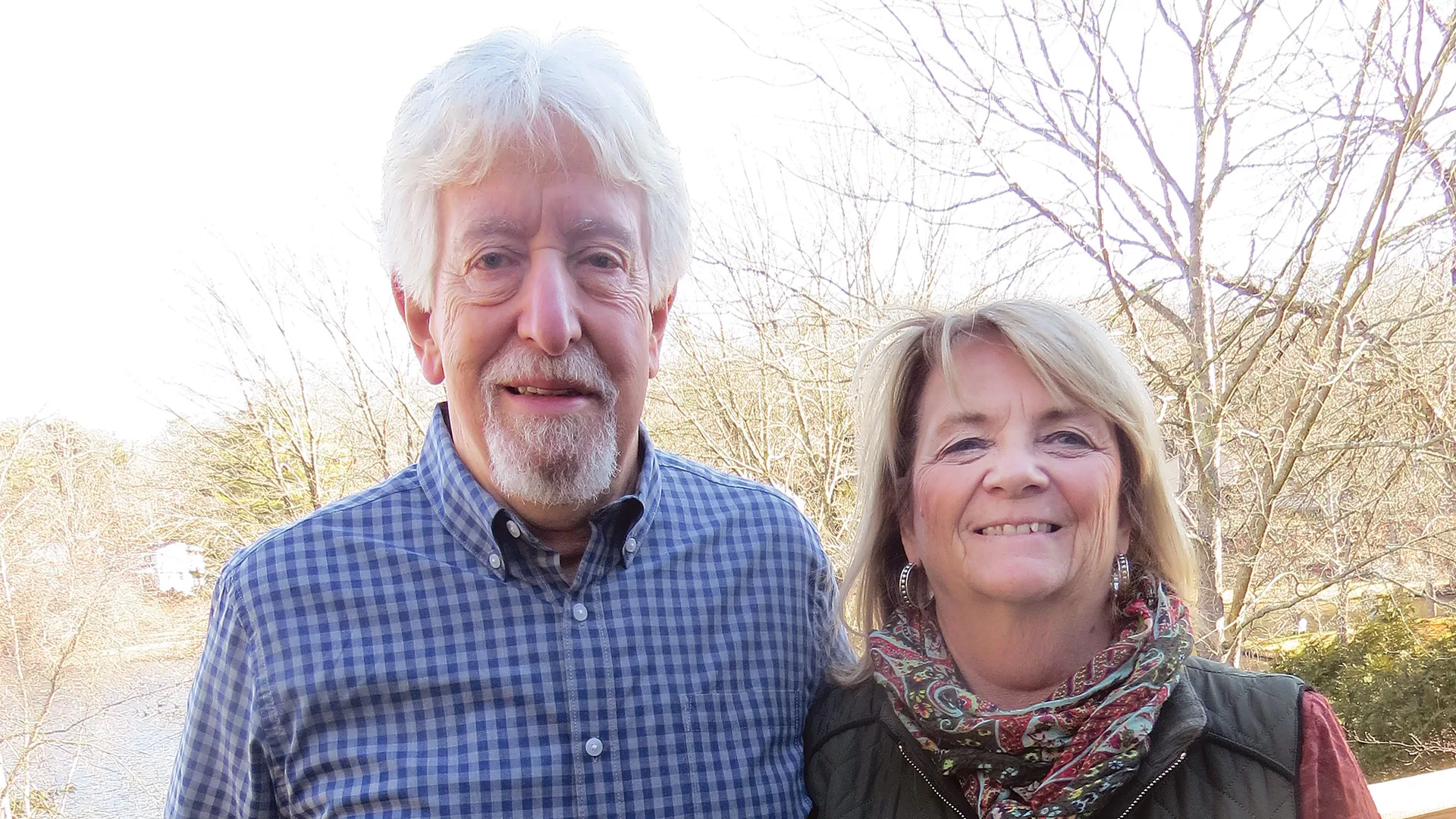
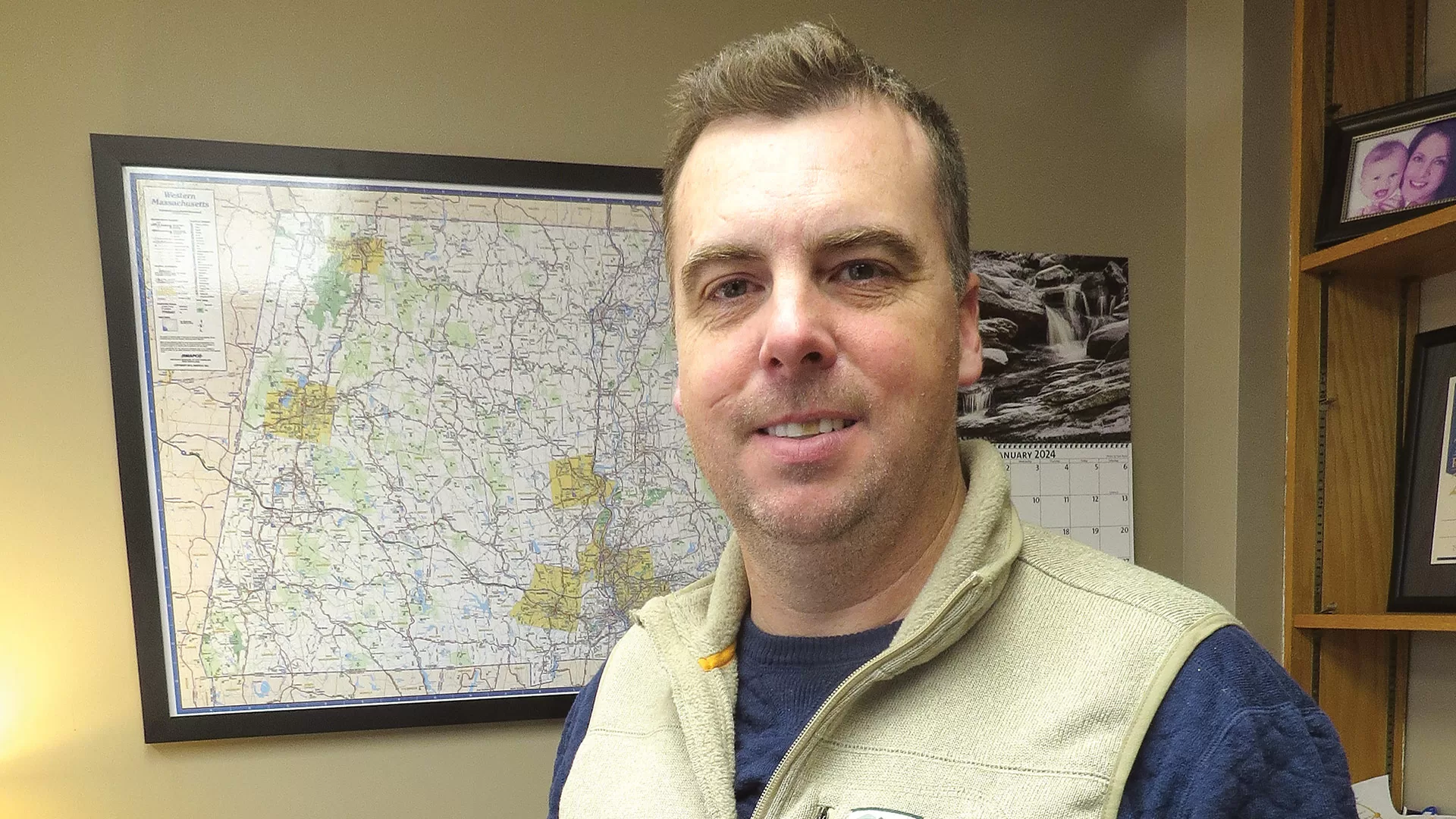
The stories are inspiring in many different ways, whether it’s Matt Bannister’s deep commitment to area nonprofits or Shannon Rudder’s lifelong pursuit of equity and access for all; whether it’s the work of Fred and Mary Kay Kadushin and the staff of Rock 102 to fight hunger or the ways Delcie Bean and Scott Keiter use their business success to impact others; whether it’s Linda Dunlavy’s hard work on tough regional issues or the significant impact of Springfield Symphony Orchestra and Springfield Chamber Players on the economic and cultural health of Western Mass.

We invite you to read these stories below. All of the 2024 Difference Makers have made an impact — real, tangible, often life-changing impact — in this region that we call home.

You can also help us celebrate the honorees in person on Thursday, April 10 at the Log Cabin in Holyoke. Tickets cost $95 each, with reserved tables of 10-12 available. For more event details and to reserve tickets, go HERE

Thank you to our sponsors — Burkhart, Pizzanelli, P.C., Keiter, Mercy Medical Center/Trinity Health, the Royal Law Firm, and TommyCar Auto Group — for making this program possible.

Please Join Us for the 2024 Difference Makers Celebration!

Wednesday, April 10 5:30 to 9:30 p.m.

Tickets are $95 and can be purchased HERE

Thank you to our partner sponsors: Burkhart Pizzanelli, P.C., Keiter, Mercy Medical Center/Trinity Health, the Royal Law Firm, TommyCar Auto Group, and our supporting sponsors: Springfield Thunderbirds and Westfield bank.

Partner Sponsors:

Supporting Sponsors:

Class of 2024

They’re Keeping Music Alive in New Ways for Future Generations

SSO

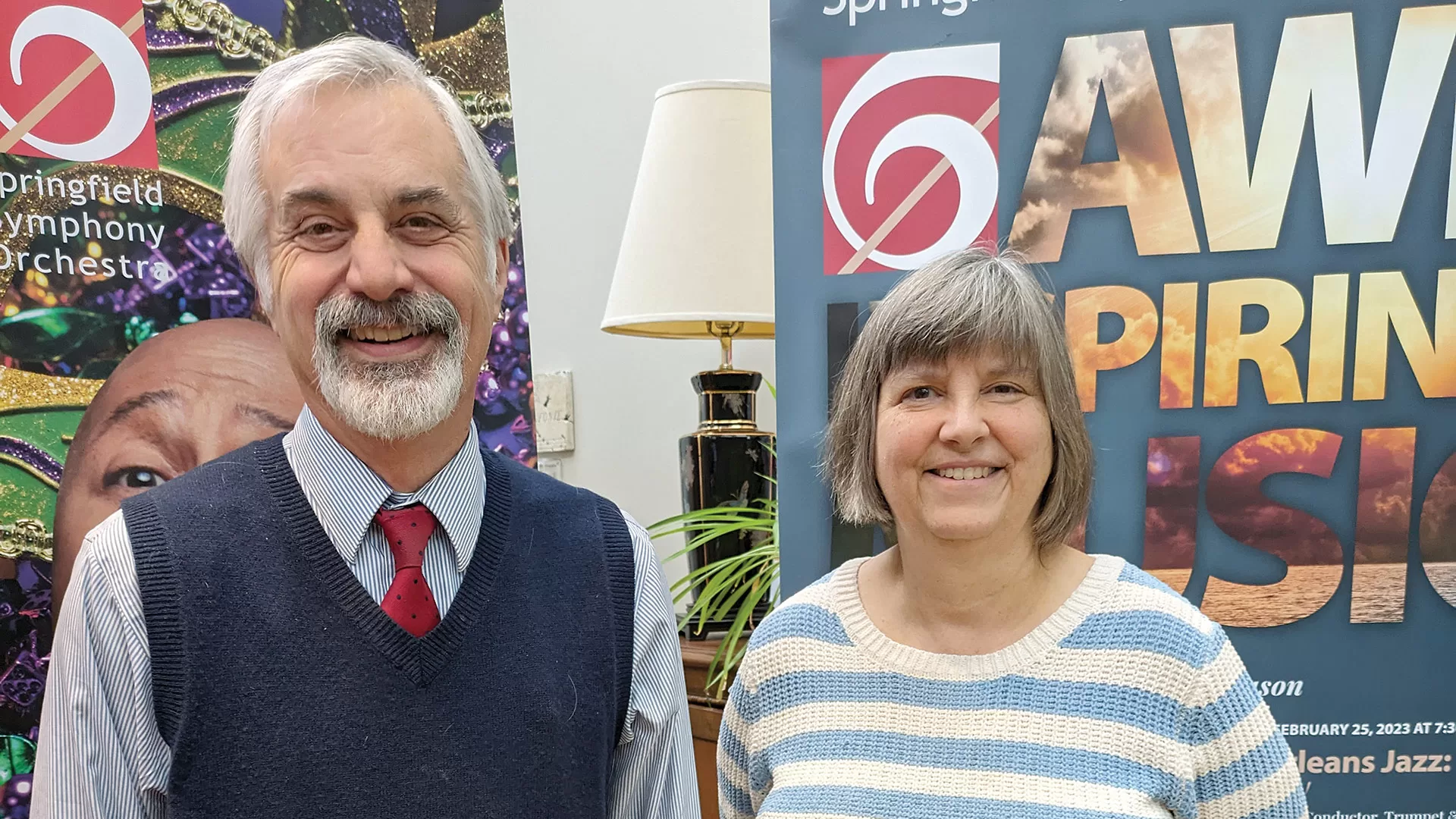
Springfield Symphony Orchestra President and CEO Paul Lambert and Springfield Chamber Players Chair Beth Welty.


Beth Welty said the musicians just wanted to play.

With the Springfield Symphony Orchestra’s leadership and musicians locked in a labor dispute in 2021 and 2022, the players were willing to perform under the old contract until a new one was settled, but the SSO wouldn’t agree.

“At this point, the pandemic had subsided enough that all the other orchestras in the Northeast had come back to work, audiences were showing up, and we decided we needed to do something,” Welty said. “We were very worried if there was no symphonic music in Springfield — out of sight, out of mind — people would forget about us. We had to keep this going.”

So the musicians started staging shows on their own — both at Symphony Hall and at smaller venues around the region — churches, the Westfield Atheneum, anywhere they could draw an audience.

“We were playing at all these little places, constantly expanding to new communities and venues, and bringing live chamber music to as many people as we possibly could in Western Mass.,” said Welty, an SSO violinist who headed up the effort known as MOSSO, or Musicians of the Springfield Symphony Orchestra.

“So many people, including members of my board, have told me, ‘the first time I ever heard a symphony orchestra was in school.”

Well, you might know the story after that — the SSO and the musicians’ union struck a two-year deal last spring to bring full symphony concerts back to downtown Springfield, which proved gratifying to SSO President and CEO Paul Lambert, who never considered the musicians his enemies as they worked out their labor differences.

“I grew up in the Actors’ Equity Association. I’m a union member. And I believe in organized labor, especially in the performing arts. You want to make sure that everyone is well taken care of,” he said. “At the same time, I’ve been a businessman for a long time, so I’m very well aware of the economic realities and challenges that the performing-arts business is going through, especially in these eccentric times we’re still living through.”

The relief on both sides, in fact, was palpable. But the return of concerts to Symphony Hall was only part of the story. The other part was the continued existence of MOSSO under a new name — Springfield Chamber Players — and its continuing mission to bring smaller chamber concerts to venues around the region, including schools.

“We’re interested in promoting the voices that don’t get heard as much but are great composers — music by Black composers, composers of color, women composers,” Welty said. “We’re mixing in composers people have some familiarity with, but also bringing them composers they haven’t heard of, even living composers.”

So as the music reverberates around the region once again, BusinessWest has chosen to honor both the Springfield Symphony Orchestra and Springfield Chamber Players as Difference Makers for 2024 — not because they settled a labor agreement last year, but because of how important the performing arts are to the region, and how important both entities are to filling that role, hopefully for generations to come.

The Springfield Chamber Players

The Springfield Chamber Players string quartet includes Miho Matsuno, Robert Lawrence, Martha McAdams, and Patricia Edens.
(Photo by Gregory Jones)

“When people come to the concerts, and I may open with remarks, I ask people, ‘just for a couple of hours, turn off your cell phones and let it go,’” Lambert said. “It’s like therapy — go listen to some beautiful music. For a few hours, just relax and drink it in. We just need that so badly right now.”

Welty agreed. “Music is a big part of life, and I want that for everyone. It doesn’t have to be classical — we did a combo jazz-classical concert,” she noted, before citing Duke Ellington’s famous line about how genre doesn’t matter, and that “there are simply two kinds of music, good music and the other kind.”

And good music — good live music — truly makes a difference in a community.


Generation Next

Lambert recalled being in the fourth grade and attending a symphony concert; in fact, it’s an especially vivid, formative memory. So he’s grateful for a two-year, $280,000 grant from the city last spring to help the SSO create educational programming for youth.

“We are deeply involved in finding creative solutions, ways to reach out. This is a giant opportunity to reach all kinds of members of our community who might like to learn more about music — classical music, symphonic music, all the various forms of music that we can touch,” he said.

Meanwhile, through a program called Beethoven’s Buddies, people can donate money toward free tickets for those who might not be able to afford one. “Whatever your situation is, we want you to come to these concerts to hear this music and have a wonderful time,” he explained. “We’re excited about that. It’s also another way that we can reach into our community to pull in people as donors and sponsors.”

“You come together, and the concert happens, and it’s magic. It’s that one-time experience of being together in a space where this beautiful thing happens. It’s special.”

A long-time program called the Springfield Symphony Youth Orchestra is going strong as well, Lambert said, and the SSO just hired an education director, Caitlin Meyer, who has been engaging with public schools and colleges on everything from internships to educational programming and performances.

“That’s a critical piece in the equation,” Lambert added. “So many people, including members of my board, have told me, ‘the first time I ever heard a symphony orchestra was in school.’”

Meanwhile, Springfield Chamber Players recently presented educational outreach concerts at the Berkshire School in Sheffield and the Community Music School of Springfield.

Meeting young people where they are is simply a matter of survival for performing-arts organizations, said Mark Auerbach, Marketing and Public Relations director for Springfield Chamber Players.

“A lot of people who go to symphonies and come to our concerts are on the older side. And it’s partly because the music programs in schools are not what they were 30 or 40 years ago,” he noted. “If we can get family concerts going, educational concerts going, and interest kids and young adults to come to concerts, hopefully they will stay and grow with us.”

Welty is glad the SSO is doing grant-funded youth outreach because the budget for Springfield Chamber Players is limited, so it needs to be a group effort.

“I’ve been with the symphony 40 years, and we used to have a really robust school presence. We’d send a trio or a quartet to play for kids, talk to them, and answer questions. And they later came to Symphony Hall to hear the whole orchestra,” she recalled. “I think they want to bring that back. We have to be developing the next generation of audience members.”

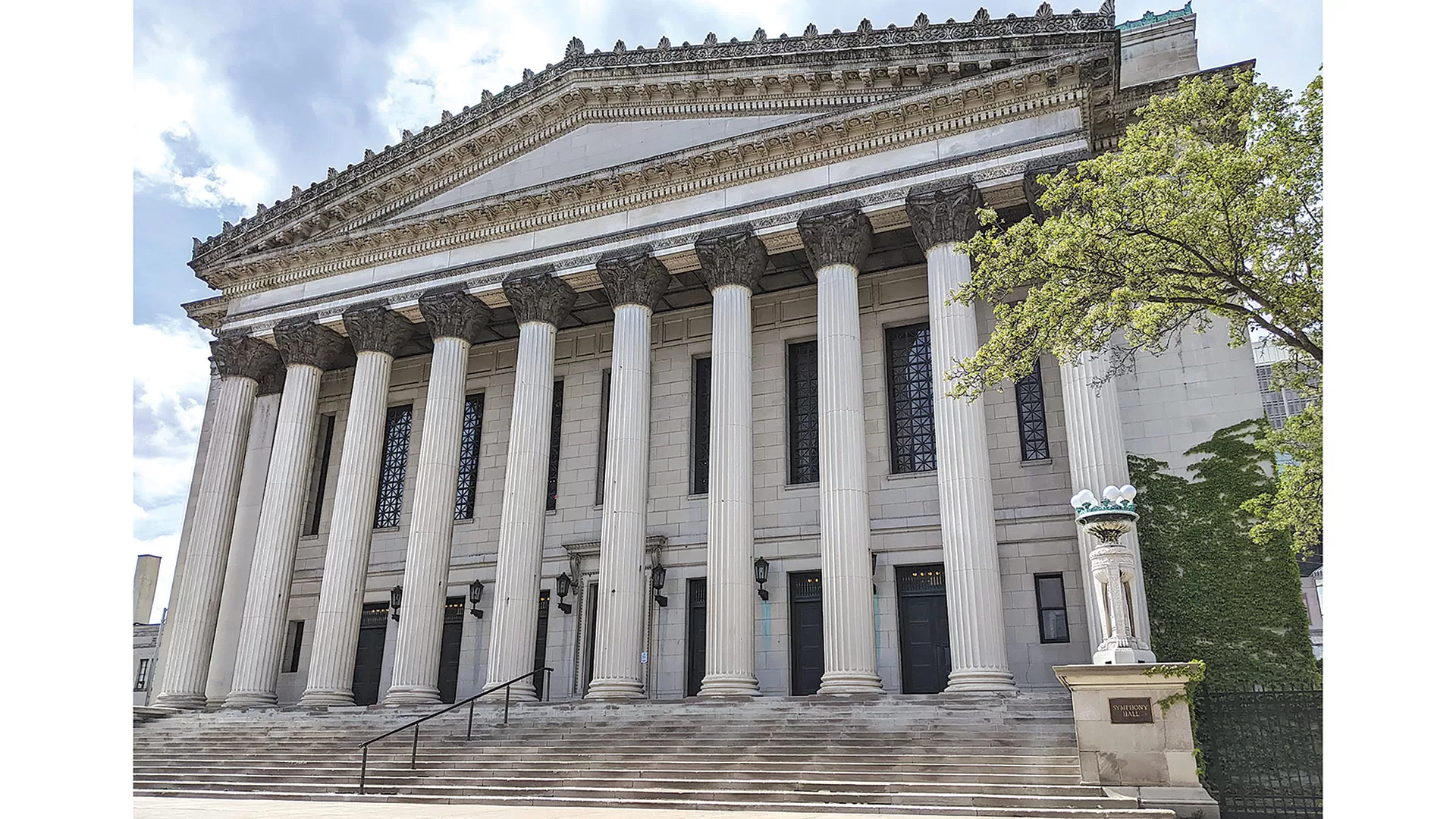
Symphony Hall

Leaders of both Springfield Symphony Orchestra and Springfield Chamber Players are gratified to be bringing music back to both Symphony Hall (pictured) and smaller venues around the region.

Part of the growth and outreach is simply broadening the definition of what an SSO concert is, Lambert told BusinessWest.

“A lot of folks think of a certain type of music from Western Europe, from the 18th and 19th century. And I love that music. I love Mozart. I love Brahms. I love Beethoven. I love Schubert. I’m thrilled to hear that music, personally,” he said. “But I’ve become increasingly aware of the streams of music traditions that exist all around the world in different cultures and different backgrounds that might appeal to all kinds of folks. So we are trying to pull those various streams together in our programming opportunities.”

To that end, the SSO has begun assembling some hybrid concerts that offer a mixture of traditions, like the classical-jazz fusion explored at the Martin Luther King Jr. celebration concert in January, and a Havana Nights show earlier this month that featured Latin jazz and Afro-Cuban rythms.

“The MLK concert had a marvelously diverse audience. We are thrilled when we see new people coming in,” Lambert said. “At our Juneteenth concert that we did last year, we had so many people telling us, ‘I’ve never been to one of your concerts before; I’ve never even been to Symphony Hall before.’ It’s thrilling to us to get those folks coming in to hear this beautiful music.

“Our pops concerts do really well, and we’re going to see what we can explore with those, with different genres of music,” he added. “At the same time, we’re never going to lose track of that beautiful, traditional repertoire that people, including me, love so much. That’s the core of who we are.”


A Resource of Note

Welty noted that Springfield Chamber Players has brought an eclectic spirit to its offerings as well, such as “Johnny Appleseed,” a composition by local composer Clifton Noble Jr. based on Janet Yolen’s book of the same name. That concert will take place outdoors in Longmeadow — the legendary character’s hometown — on May 12.

Whatever the venue, she is passionate about exposing more people to good music — whatever that means to Duke Ellington or anyone else — and to get them into music at younger ages.

“I wish every kid could take lessons on an instrument for a few years. You really learn so much. Problem-solving, analyzing, listening, observing. Music is very mathematical, too. Music education would boost everybody,” she said.

“I really think of arts organizations — music, a ballet company, whatever it is — as a resource for everyone,” she added. “You can’t just go to work every day and then go home and watch TV. That’s a boring life. You want something more. And kids that see live music get interested. They want to try it themselves.”

A thriving performance culture is also an economic driver, Auerbach noted.

“It’s essential that Springfield Symphony Orchestra survives because it’s the only live, nonprofit performing-arts organization in Springfield,” he said. “Without the arts, we’d have trouble attracting new residents and new businesses. And there’s a lot of economic spinoff — you go out, first you pay to eat, you pay to park, you may go out to drink afterwards. The musicians, if they are local, spend money here. If they’re not local, they have to stay in hotels and eat here.”

Lambert agrees, even though the demographics for this art form are challenging right now — not just in Springfield, but everywhere.

“For a couple of years during the pandemic, folks stayed at home, and they got used to not coming out at night so much. You got used to staying home and being cozy in your armchair and watching Netflix. Coming back from that was always going to be a substantial challenge.”

But the rewards are great, he added.

“I used to think about how people make wine — you grow the grapes, and you tend the vineyards, and you design the bottle, and you do all of this work. And then you get to dinner and someone opens the cork and you drink it, and it’s gone. But it’s a beautiful thing for that moment.

“I often think about our experience the same way,” he went on. “All the work and the rehearsals and the planning and the tickets and this and that. But you come together, and the concert happens, and it’s magic. It’s that one-time experience of being together in a space where this beautiful thing happens. It’s special.”

Class of 2024

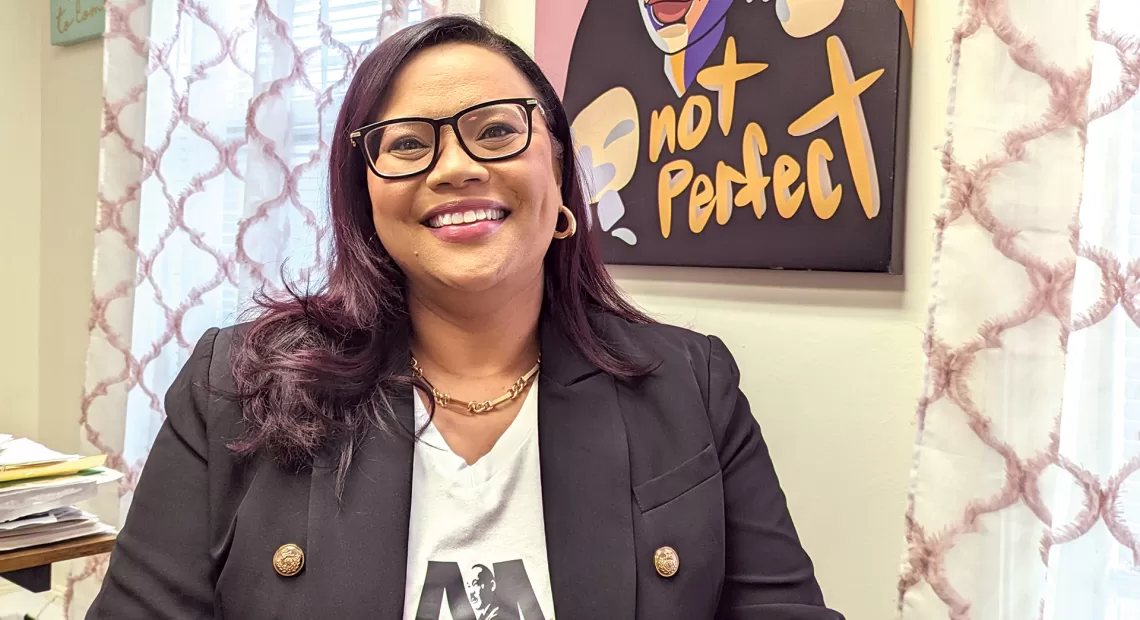
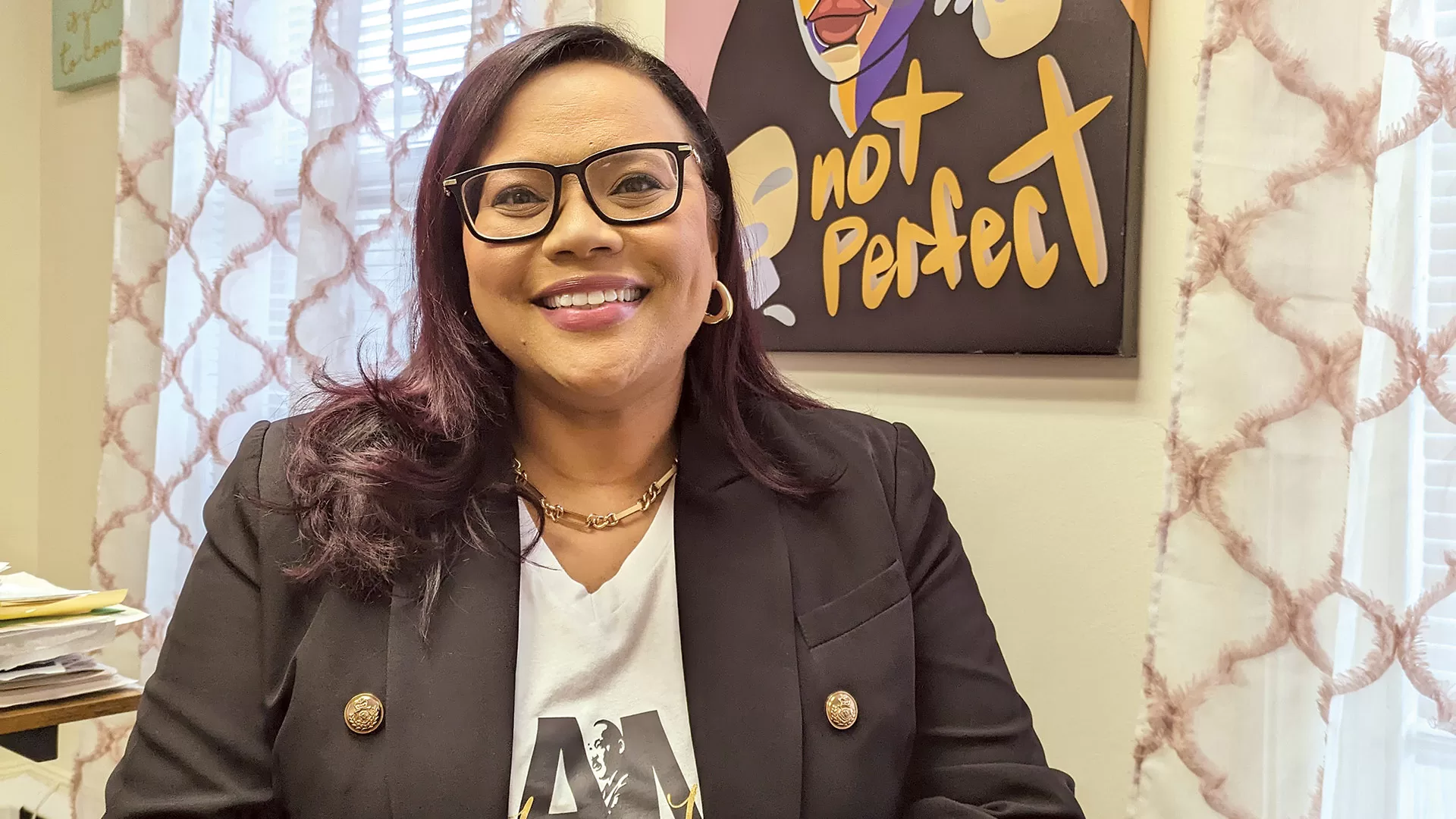
President and CEO, Martin Luther King Jr. Family Services

She Wants to Galvanize a Community to Effect Positive Change

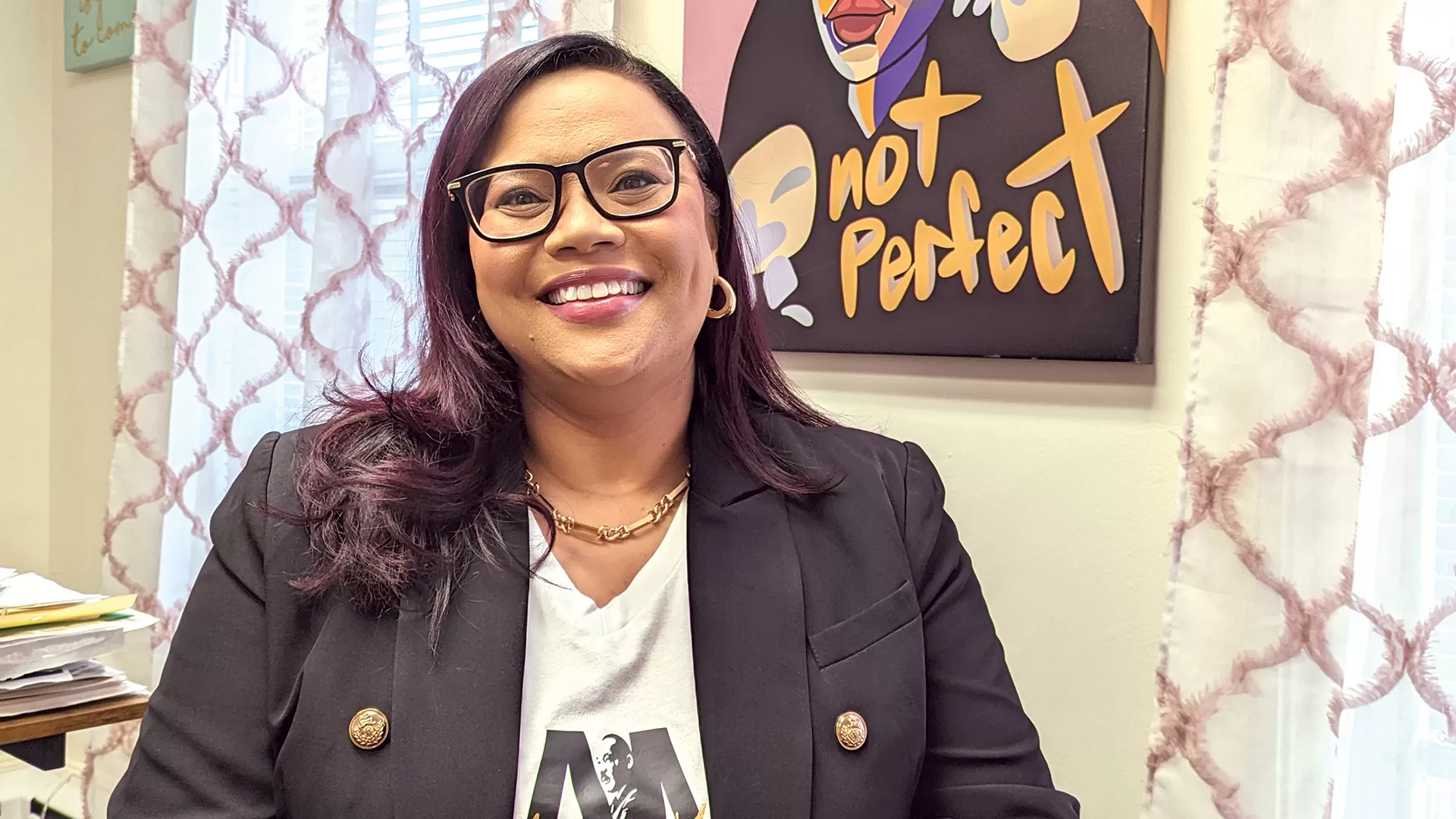
Shannon Rudder

For her 12th birthday, Shannon Rudder didn’t want a present from her mother; instead, she wanted to redecorate her bedroom.

So she did, and she remembers some of the things she hung on the walls, like the Indigenous Ten Commandments and a picture of Martin Luther King Jr. and Gandhi, along with the quotation, “live, think, and act. Be inspired by humanity evolving toward a world of peace and harmony.”

She remembers that message because she internalized it at a young age, and it has informed every stop along her career journey — and the difference she has been able to make at each one.

“It’s embedded in me,” Rudder said as she sat with BusinessWest in her office at Martin Luther King Jr. Family Services in Springfield. “I feel like I can be a part of creating humanity in my immediate area. I might not be able to change the whole world or the whole city that I’m in, but I’ve always felt compelled to make an impact in a positive way with compassion and love. And I’m responsible for my thoughts because those become actions. Very early on, that idea led me to be a person of integrity, of deep compassion, and of advocacy.”

Perhaps that’s why, after considering a corporate career in college, she eventually embarked on a series of roles at organizations with a social mission, from MotherWoman and Teach Western Mass to Providence Ministries and, now, MLK Family Services, where she stepped a year ago into the very big shoes of the late Ronn Johnson, who steered the ship there for more than a decade (and was also honored by BusinessWest as a Difference Maker in 2020).

Simply put, Rudder said, “I just think I have been called to contribute to important causes, and I go after that.”

Her first nonprofit job was in Buffalo, N.Y., where she grew up, for an organization called Women for Human Rights & Dignity. “It just like cracked me open, like, ‘oh, the skills that I have and the compassion that I have … they can be aligned, and I get paid to do awesome, impactful work?’

“I might not be able to change the whole world or the whole city that I’m in, but I’ve always felt compelled to make an impact in a positive way with compassion and love.”

“That was all about women’s empowerment,” she added. “We did alternatives-to-incarceration programs and domestic-violence support and non-traditional education and housing. I was really young, and I had a little baby, and I was doing this good work, but also learning how to run a business.”

Since then, Rudder has taken care to align with causes that are important to her, moving into work with fair housing and civil rights in the Buffalo region before moving to Western Mass., where her first pathway to organizational leadership was at MotherWoman, a nonprofit focused on maternal health and well-being, where she served as executive director.

Later, she was executive director for Providence Ministries Inc., a nonprofit advocating for and supporting marginalized populations across programs dedicated to food security, addiction recovery, housing, clothing, and workforce development. That role opened her eyes to many types of need and further honed her sharp sense of empathy.

“I remember my grandmother saying, ‘but for God’s grace, there go I’ — meaning, in a blink of an eye, your situation could change, and you could be on the other side of needing services like that,” she said. “We’re all part of the same journey.”

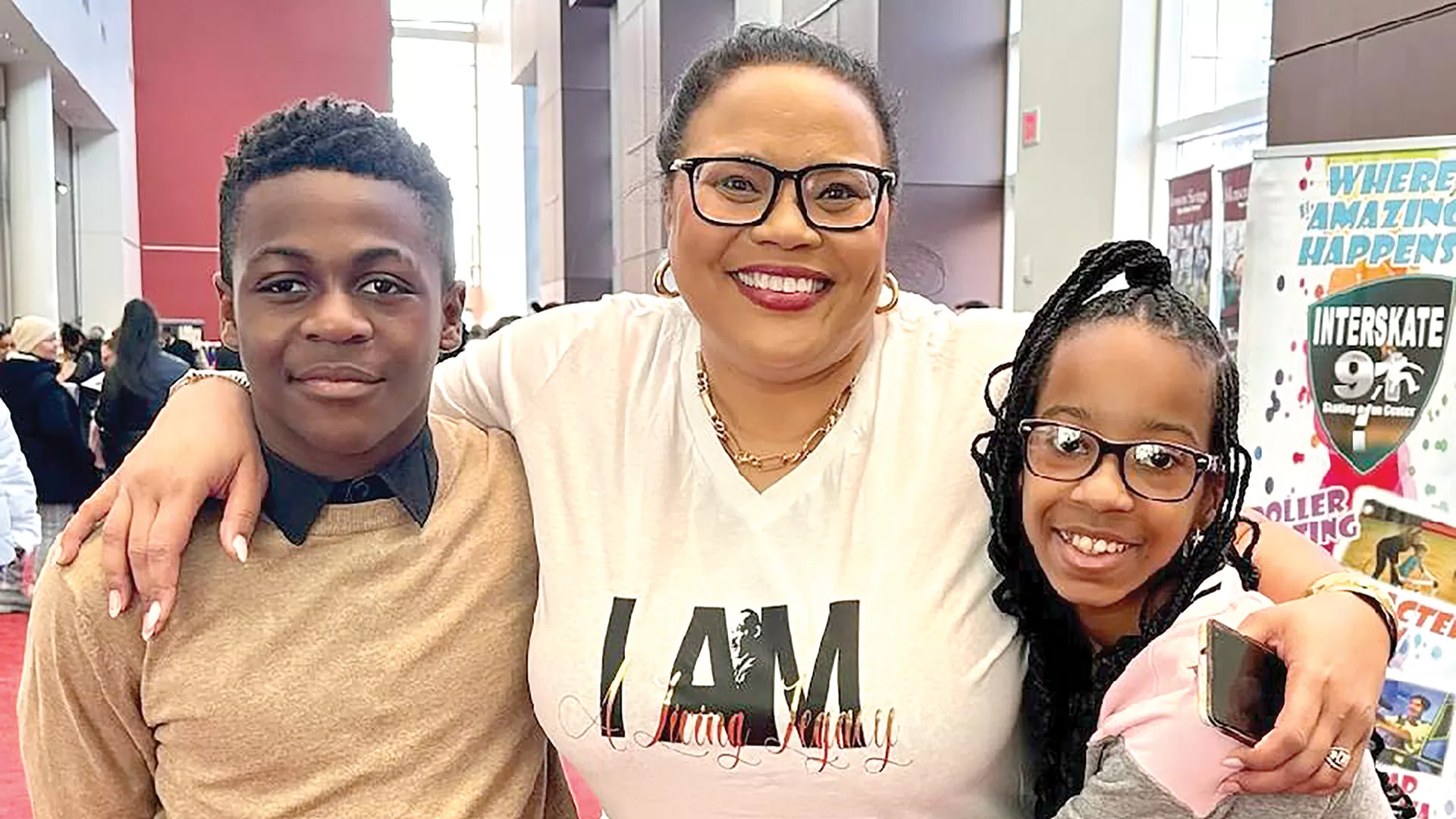
Shannon Rudder

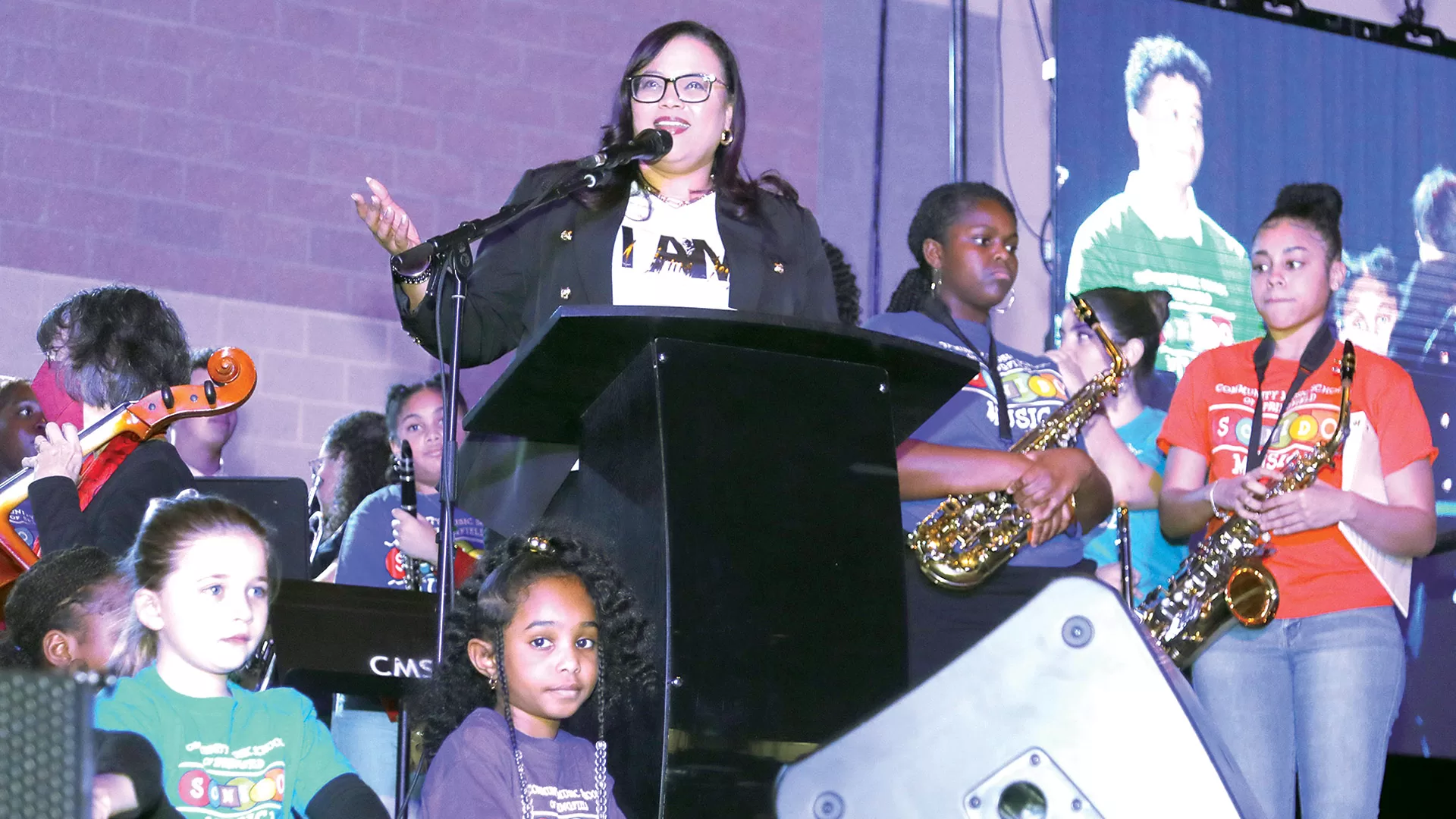
Shannon Rudder with the two youth emcees from last month’s MLK Day celebration.

She also served as deputy director of Teach Western Mass, a nonprofit startup working toward educational equity in partnership with more than 30 schools. Her duties included fiscal and operational oversight, knowledge-management systems, data and impact, communications, equity and belonging, human-resource management, overall team culture, and supervision of cross-functional teams.

“I’ve been really intentional about the causes that make a difference to me, approaching it from the perspective of, ‘OK, this agency’s mission is really clear, the heart and the compassion are here, and I get to make sure it lasts for a long time by building the infrastructure, the operations systems, the fundraising and return on investment, and all the important scaffolding that needs to be in place so that the business aspect of it can thrive.”

The clear thread woven through all these roles has been a focus on equity and making sure everyone has access to the resources they need to live healthy, meaningful lives, she explained. “I picked causes that are doing the important work of amplifying the voices of those that have often been silenced or marginalized.”

By using her own voice, compassion, and business acumen to do so, Rudder has become a true Difference Maker.


Lifetime Support

At MLK Family Services, she shares with Johnson, her late predecessor, an approach to the work from a public-health standpoint, considering how the social determinants of health affect all areas of life.

“Sure, we can triage and put Band-Aids on stuff — people are hungry now, so let’s make sure they have food — but let’s dig a little deeper: how do we actually get a grocery store in an area that is in need?” she said.

“I remember my grandmother saying, ‘but for God’s grace, there go I’ — meaning, in a blink of an eye, your situation could change, and you could be on the other side of needing services like that. We’re all part of the same journey.”

“I also want to make sure that MLKFS as a whole, operations and programs, is operating from a trauma-informed place,” she went on, citing a philosophy that takes into account the unique, often traumatic experiences of an individual’s life and how that informs what they need.

“How do we approach our programs and ensure that the people working with our kids are helping to break that, or making sure that those kids have resources like mental-health counseling? How do we make sure we’re helping to embolden and empower them, and then actually building the bridge to get them access to the things that they need?”

The current programs offered by MLK Family Services are many and diverse, and include:

• The Family Stabilization Program, funded through the Department of Child and Family, offers support to families to keep their children safely at home and in the community by advocating for the well-being and rights of all children and ensuring parenting support.

Shannon Rudder’s work at MLK Family Services lifts up children in many ways.

Shannon Rudder’s work at MLK Family Services lifts up children in many ways.

• The MLK Food Pantry provides emergency food services to community members in Hampden County. The program relies on donations from grocery vendors and is a member of the Food Bank of Western Massachusetts. The pantry operates at the MLK Community Center weekly and also hosts the Food Bank’s mobile market twice monthly.

• The Clemente Course in Humanities is a transformative educational experience for adults — an opportunity to further their education and careers, advocate for themselves and their families, and engage actively in the cultural and political lives of their communities.

• The Historically Black College and University (HBCU) Tour helps young people explore their academic journey by visiting multiple college campuses in a single trip. These tours equip participants with a solid understanding of the history, culture, and traditions that have shaped the schools’ collective legacy. In addition, students, parents, and counselors are engaged in a year-long series of workshops.

• The King’s Kids afterschool programs serve up to 130 children at two locations. Programming is aimed at helping students become academically successful by nurturing their character building, critical-thinking skills, and creativity. Students are offered homework help, STEAM enrichment, literacy support, cultural experiences, and recreational and holistic well-being.

• Youth between ages 13 and 22 are invited to participate in the weekly Night Spot program, which empowers them to be critical thinkers and community builders while preparing them for life in high school, college, and beyond. Night Spot offers advocacy services for a variety of needs, including handling life’s complications, navigating the court system, and ensuring safety in a safe, drug-free environment.

• Beat the Odds is a Springfield-based youth mental-health coalition led in partnership with the Public Health Institute of Western Massachusetts. Hosted at MLK Family Services, the program focuses on breaking the cycle of stigma and barriers to youth mental healthcare. In 2023, this program launched a public-awareness campaign called “I Am Not My Mood.”

“How do we make sure we’re helping to embolden and empower them, and then actually building the bridge to get them access to the things that they need?”

• King’s Kids Summer Camp is a full-day camp for children ages 5-12. Meanwhile, a new partnership with Springfield Empowerment Zone schools provides summer enrichment programs to Springfield middle- and high-school students in partnership with agencies across Massachusetts.

• DCR Summer Nights Program is a transformative, statewide initiative that enriches the lives of urban youth ages 13 to 21. MLK Family Services is one of the sites providing safe, inclusive, and fun activities (both recreational and educational) during evening hours. Participants enjoy gaming competitions and tournaments in a variety of sports, enriching arts activities, health and wellness workshops, career explorations through guest speakers, and off-site excursions.

“I can’t wait to jump in with the community and do a strategic plan where they begin to inform us what they need, so we’re not sitting here thinking, ‘oh, I think it would be cool if we created this experience,’” Rudder said. “Does the community need that? We know that the community is ever-shifting and changing. So to really meet the needs of the community, we need to hear from them, and I’m excited about doing that.”

The MLK King’s Kids dance troupe performed at MLK Day this year.

The MLK King’s Kids dance troupe performed at MLK Day this year.

It’s a way to go beyond Johnson’s ‘teach a man to fish’ credo and make sure people are fishing in the right ponds.

“If we say we’re going to listen to the community, then we have to go into the community and say, ‘OK, we heard you. How are we going to work at this together?’” Rudder said. “It’s our job to provide the resources and the tools, but I want them to be a part of that solution, whatever that looks like.”


Thinking Ahead

Rudder has plenty of goals for the center, from broading the trauma-informed piece to launching a full capital-needs assessment.

“I want to make sure our center is there for decades to come, so that means a lot of capital improvement. Our food pantry needs a new home; we’re just bursting at the seams.

“I also want to do economic-development training,” she added. “We do a really good job with HBCUs and also college readiness locally, and I want our kids to dream big — but college might not be for them. So how do we equip them to realize their dreams and potential? I want to do some vocational training, some entrepreneurial things, all STEAM-based approaches to things.”

One idea from Providence Ministries she’d like to being to MLK Family Services is ServSafe training. “We can get them certified in management and actually have hands-on teaching of kitchen skills and culinary skills. And then, how do they make money off of that? So, we’ll teach them business acumen and then link them to opportunities for jobs,” she explained. “I’m just excited to hear what our community’s needs are and finding a way — again, through the public-health lens — of making sure that we meet those needs.”

To accomplish all that, Rudder relies not only on the center’s staff, but also about 120 volunteers. And she finds it gratifying that she’s following King’s philosophy of not working solo, but galvanizing an entire community to accomplish positive change.

“One adage I grew up with is, ‘to whom much is given, much is required.’ And I’m really blessed; I’m really fortunate in my life,” Rudder told BusinessWest. “So that’s my responsibility — to leverage those things that I’ve been blessed with into doing good, into impact. This is fun, and it is fulfilling to me.”

Class of 2024

They’ve Made the Mayflower Marathon a Community Tradition

The Staff of Rock 102


Mike Baxendale, the on-air personality known to all simply as Bax, says it started as a radio promotion. But it quickly became a community event.

And now, it’s a huge community event, involving individuals, families, businesses, institutions, area schools and colleges, and more.

He was referring, of course, to the Mayflower Marathon, staged each year in the days just before Thanksgiving to benefit Open Pantry. For 30 years now, the event, organized by and staged by the staff at Rock 102, has collected food and monetary donations to help those in need.

It started with one Mayflower trailer — hence the name — and each year, with a few rare exceptions, such as the height of the Great Recession in 2009 and the height of COVID in 2020, it has grown bigger and collected more to combat food insecurity.

And in 2023, the marathon, in its relatively new home at MGM Springfield, shattered all previous records, collecting more than $234,000 in food and monetary donations and filling nearly six trucks.

That number, and the level of support needed to reach it, speak to both the growing amount of need in the region amid higher inflation and growing financial issues facing many in the 413 and the manner in which the staff at Rock 102 have collaborated with others in recent years to take the marathon to new levels, with a comedy night at MGM Springfield and a Mayflower Marathon Night on the Springfield Thunderbirds schedule.

“They’re incredible; they truly have such huge hearts to make sure our neighbors get fed. The Open Pantry would never be able to serve that many people without the Mayflower Marathon.”

“Ultimately, the goal is to raise more and more and more to help those in need,” said David Oldread, vice president and general manager of the Springfield Rocks Radio Group and Northampton Radio Group, which includes Rock 102. He noted that the marathon involves difference makers on many levels, including those who donate everything from the trucks to the portable toilets to the tents; those corporate supporters, many of which have been part of this since the beginning; and the volunteers who help collect the donations and load the trucks.

But it is the staff at Rock 102 that is being honored the Difference Makers award this year, and deservedly so. The station conceived the idea back in 1993, and it has been the driving force in continuing the program and orchestrating its strong growth pattern.

The Mayflower Marathon

The Mayflower Marathon, now staged at MGM Springfield, fills several trucks with donations of food for Open Pantry in Springfield.

And it’s a company-wide initiative, a true team effort, said Oldread, noting that it is “all hands on deck,” especially in the weeks and days leading up to the event, with each staff member making important contributions to the effort, with work starting months before the marathon begins.

Bax and Steve Nagle, morning show hosts, entertain the audience — and inspire it — for 52 hours during the marathon; Erin Buehler, promotions director at Rock 102, plans, organizes, sets up, and executes the event; Alex Byrne, program director, coordinates the entire broadcast; Joshua Smith, engineer, sets up the technical side of the broadcast and keeps the show on the air; Dan Williams and Pat Kelly, on-air hosts, produce the broadcast at the station in East Longmeadow; the sales staff members rally their clients to get donations and volunteer their time at the event … and on it goes.

Overall, the marathon has become a powerful collaboration between Rock 102 staff members and the community to come together for a great cause, said Buehler, adding that this collaboration grows stronger each year.

Nicole Lussier, executive director of Open Pantry, agreed. She’s been with the Springfield-based agency for nearly 30 years, and thus has been involved with the marathon since the beginning. She’s watched it grow and become an increasingly larger force in the agency’s ability to carry out its mission. And she noted that the staff at Rock 102 brings passion to its work of making the marathon happen each year.

“To be able to tell Nicole Lussier what we had just done — and she had been there every minute of the event — to be able to tell her that we had raised at least $217,000, with more on the way … to see her reaction, I can’t speak for anyone else, but I got choked up on the air.”

“They’re incredible; they truly have such huge hearts to make sure our neighbors get fed,” Lussier said. “The Open Pantry would never be able to serve that many people without the Mayflower Marathon; there’s no way we would be able to distribute that much food.”

Such sentiments help explain why the team at Rock 102 is being honored not for putting on the marathon, necessarily, but for rallying a region, a community, around a cause — and, in the process of doing so, becoming a true Difference Maker.


Making Waves

He called it the “chicken wing.”

This was the very effective submission hold developed by former pro wrestler Bob Backlund, who administered it to Bax during one of the marathons a few years ago.

“It’s very painful,” he said with a look that conveyed as much, adding that Backlund is one of many colorful guests who have made appearances during the marathon over the years, and his application of the chicken wing is one of the more intriguing ways that the airtime has been filled.

Others in the guest category include mayors, U.S. Rep. Richard Neal (a regular each year), comedians, New England Patriots wide receiver JuJu Smith-Schuster (who stopped by last year), and many others. As for memorable moments, there have been plenty of those as well, as the marathon has persevered through all kinds of weather, power outages, equipment glitches … you name it.

Rock 102 morning show hosts Bax (right) and Nagle talk with Springfield Thunderbirds President Nate Costa (a Difference Maker himself in 2023) at last year’s Mayflower Marathon.

Rock 102 morning show hosts Bax (right) and Nagle talk with Springfield Thunderbirds President Nate Costa (a Difference Maker himself in 2023) at last year’s Mayflower Marathon.

But what is remembered far more are other moments in time — the ones that reflect the generosity, caring, and spirit of collaboration that have come to define the marathon and explain why it was conceived all those years ago.

Moments like the announcement of how much was raised last November.

“At the end of the broadcast, we give an unofficial total, with this year [2023] far exceeding anyone’s expectations — I don’t think anyone expected anything close to this,” Bax recalled. “To be able to tell Nicole Lussier what we had just done — and she had been there every minute of the event — to be able to tell her that we had raised at least $217,000, with more on the way … to see her reaction, I can’t speak for anyone else, but I got choked up on the air, and so did Steve. When you realize where this is going and how many people it helps…”

He didn’t finish that sentence, but didn’t really have to. And this sentiment speaks to how and why the marathon was launched three decades ago.

The idea, said all those we spoke with, was to raise some money for Open Pantry, which today operates several different programs, including am emergency food pantry, holiday meals, the Loaves & Fishes Kitchen, a teen-parent program, and many others.

It’s unlikely that anyone at the time could have imagined that it would grow, evolve, and become, as Bax noted, a community event, said Byrne, adding that the marathon has continually broken through new barriers — be it with trucks filled or the total dollar amount raised — that were previously thought impossible.

And every employee at the station, roughly 25 at last count, is involved on some level in making it happen, said Oldread, noting there are many moving parts with this production.

“There’s an awful lot that goes into this,” he said, “from making sure you have power and internet access to getting trucks and RVs and security, and feeding volunteers, and signage and traffic plans. You have to start around Labor Day in order to get things where they need to be in the days before Thanksgiving.”

“We’ve developed our own little tradition with this game, and we want to continue it and expand it. It’s a testament to the work they’re doing at Rock 102 — they’re driving a huge amount of food to the Open Pantry, which lasts almost an entire year.”

The staff, and the marathon, has persevered through recessions, a pandemic, rough weather, and, most recently, the need to find a new home when the Basketball Hall of Fame informed those at the station in 2022 that it could no longer host the marathon in its parking lot.

In many ways, that search for a home crystalized just how much the community had embraced the marathon and wanted to help it live on, said Oldread, noting that, as the station’s on-air personalities went public with the need to find a new home, there was an outpouring of support and commitments to help take the program to a new, much higher level.


Food for Thought

Indeed, Beth Ward, director of Public Affairs for MGM Springfield, said the station received several offers to host the marathon, so many that there was almost a competition for the right to become its new home.

MGM Springfield prevailed, she said, and it has been a privilege to stage the marathon, an event that has become part of the philanthropic culture at the resort casino.

“When we got the call, it was like Christmas morning; we were so excited that we were chosen,” she recalled. “There are so many of us here at MGM that live in Western Mass. and are familiar with this event and have taken part in it and donated to it. Immediately, there were so many people who were thrilled and excited to be there and support it.”

She said MGM Springfield set a record when it comes to volunteer hours donated by employees, and a big reason is the Mayflower Marathon, with many of the casino’s workers on site early (as in 5 a.m. in some cases) to help collect donations and load them into trucks.

“Our employees want to be part of this; they want to help make it successful,” she said, effectively summing up the sentiments of many others we spoke with.

That includes Nate Costa, president of the Springfield Thunderbirds, a Difference Maker himself last year. He told BusinessWest that the team has long had a solid relationship with Rock 102, knowing that its listenership boasts many hockey fans. That relationship was taken to a new level when the event lost its home and then found one with another of the T-Birds’ partners, MGM Springfield.

The team soon dedicated the Wednesday night game before Thanksgiving to the cause, branding it Rock 102 Mayflower Marathon Night. That Wednesday is traditionally a time for family gatherings and “bar gatherings,” as Costa called them, but the pull of the marathon and Open Pantry has brought more than 5,000 fans to the arena the past two years for “one last push” for donations.

“We’ve developed our own little tradition with this game, and we want to continue it and expand it,” he said. “It’s a testament to the work they’re doing at Rock 102 — they’re driving a huge amount of food to the Open Pantry, which lasts almost an entire year.”

Costa, Ward, Lussier, and others credit the staff at Rock 102 — the on-air personalities especially, but everyone that gets involved (and that is everyone) — with bringing a region together behind a cause as few other events in this region have.

“Over the course of the past 30 years, it’s become a full-blown community event, where it almost has nothing to do with Rock 102 or any of us,” Bax said. “It has everything to do with different segments of the community getting involved in something special — collecting food.”

Well … it has something to do with the team at Rock 102. Indeed, they have made this happen, not just when it comes to logistics, but from the standpoint of shaping an event that not only serves a community, but creates a stronger community, Oldread said.

And that’s why the team can collectively share the title of Difference Maker.

Class of 2024

CEO, Keiter

He’s Building on a Tradition of Giving Back to the Community

Scott Keiter

Scott Keiter has made the construction company that bears his name one of the fastest-growing ventures in this sector regionally.

And to position his company to achieve that kind of growth, Keiter (pronounced ‘Kiter’) knew early on that he would have to focus most of his time and energy on business, making connections, developing talent, putting the right team in place, and fashioning a blueprint (yes, that’s an industry term) for success.

“As we built the business, the most precious resource was time,” he said. “Anyone who creates a business knows what it takes — it’s every waking hour, so there’s not much time left behind. And then you introduce a child or two, and there’s even less time.”

But he also knew that, once he had the foundation of his business down and was building on top of it, he would eventually shift some of that time and energy toward the community and start to get involved on a number of levels.

And he has followed that blueprint as well, devoting time and talent to everything from an advisory role at Smith Vocational and Agricultural High School’s carpentry program to becoming a trustee at Look Park, to involvement with the Greater Northampton Chamber of Commerce (GNCC) on many levels, including something called the ‘Keiter Card.’

“He said, ‘I’d like to do something, because we have, fortunately, gained business throughout this horrible period. So I’d like to do something to support the community.’”

This is an initiative to match the value of gift cards sold by the chamber and accepted in more than 100 businesses — one that has put thousands of dollars back into the Greater Northampton economy in late summer, during back-to-school sales and tax-free-weekend time.

In the beginning, it was called the ‘Double Your Money Northampton Gift Card Promotion,’ but eventually it took the name of the company and the philanthropist behind it, making this both an economic driver and an effective branding initiative.

The program, started in 2021 and expanded each year, allows consumers to purchase a $25 Northampton gift card and receive $50 in actual spending power, said Vince Jackson, executive director of the Greater Northampton Chamber, adding that it has provided a real boost for that region’s many small businesses and become somewhat of phenomenon in Paradise City.

The Keiter Card

The Keiter Card has been described as a ‘win-win-win,’ benefiting the Keiter company, the local economy, and small businesses that accept the cards.

Indeed, as he talked about the card, Jackson referenced everything from how quickly they sold out each of their first three years, to how mothers would bring in their children collectively (it’s one Keiter Card per customer) so they could spend part of their allowance on a card, and then talk about where they would go and what they would spend it on.

But while heaping praise on the card and its impact, Jackson saved some for the company and the person behind it, especially as he recalled the circumstances of how it came about.

Flashing back to late summer 2021, when the economy was really starting to open up again after the pandemic, Jackson recalled a conversation he had with Keiter.

“He said, ‘I’d like to do something, because we have, fortunately, gained business throughout this horrible period. So I’d like to do something to support the community,’” Jackson recalled. “So he came up with the idea of donating $10,000 to the chamber, and for everyone who bought a $25 gift card, he would match that amount, up to $10,000.”

For year two, Keiter doubled the amount to $20,000, and in year three, he increased it to $25,000, with the chamber donating another $5,000 to make it a $30,000 matching program. For year four … Keiter leaked to BusinessWest that he will again be donating $25,000 to build on the momentum that’s been generated.

Meanwhile, Keiter, working in tandem with his wife, Jill, continue to expand their involvement in the Greater Northampton area while at the same taking their business to the proverbial next level.

Success in both realms helps explain why Keiter will soon have his name on something else: a Difference Makers plaque.


What’s in a Name?

Returning to the subject of the Keiter Card, Jackson said it’s an example not only of Scott Keiter’s genrosity and commitment to the community and its small businesses, but also of how he’s developed into a successful business person, refining several talents, including, in this case, branding and marketing.

Indeed, to purchase a Keiter Card, one first has to say that name, said Jackson, adding that, when needed, those at the chamber will help the buyer along.

“Sometimes they need help with the pronounciation — some will say ‘Keeter,’” he explained, adding that, with each transaction and each card, the Keiter business gets some additional exposure.

Scott Keiter with, from left, Evan Latour, Zak Martinez, and Sean Houlihan

Scott Keiter with, from left, Evan Latour, Zak Martinez, and Sean Houlihan, Smith Vocational Agricultural High School graduates now working for the company.

And it has already been making a name for itself in the region as a growing company, now with 85 employees, focused on both residential and commercial construction. With the former, the company tackles new construction, but mostly renovations. And with the latter, it has developed a deep portolio of clients, including many higher-education institutions, including Smith College, Mount Holyoke College, Amherst College, Elms College, and Western New England University. It also counts many businesses and municipalities on its client list.

The business recently spun off Hatfield Construction, which focuses on earth work and site work, as a wholly owned subsidiary of Keiter, and last month, it announced that it had appointed Jim Young, a business consultant and former president of Paragus Strategic IT, as president of Keiter, leaving its founder more time to focus on the proverbial big picture instead of day-to-day operations.

“We’re excited to open a new chapter for the company and focus on growth and development and building on the successes that we’ve already had,” said Keiter, who will assume the title of CEO. “Jim will help me leverage my time so I can remain focused on looking forward, being in the role of a visionary, and guiding the direction of this organization.”

The business plan calls for continued, sustainable growth and further expansion into Hampden and Berkshire counties, he went on, adding that the company has established itself in those markets and wants to build on that presence.

As noted earlier, for the first several years he was in business, Keiter had a singular focus, to get that venture on solid footing and put an aggressive growth plan in place.

As the company’s name, reputation, and portfolio of clients and projects grew, he began to shift some of his time to the community, although the main focus has still been his business.


Concrete Examples

Keiter has chosen to get involved in realms where he can lend expertise, and also where he can make a difference.

That includes Smith Vocational, where he has served as an advisor to the carpentry department while also bringing a number of its students into the company through its co-op program, with several of them eventually being hired by the firm.

“We try to get them out to do everything that we do,” he explained. “We try our best to get them out on our projects, where they can work side-by-side with our staff. In fact, we’ve hired a number of them; they’re some of our best employees.”

Keiter’s involvement also extends to Look Park, which he described as a “treasure,” one of the city’s best assets.

But it’s with the Keiter Card that he is making a greater name for himself in the community, literally and figuratively.

And he said it came about through twin desires — to help small businesses in the community and build his brand.

“I had an epiphany one day,” he recalled. “We were comtemplating how to allocate some marketing money, and I wanted to find a way to create a win-win, or what Vince [Jackson] calls a ‘win-win-win.’

“What this card does is give Keiter some good exposure, but it’s also supporting our community, and it’s also supporting the local economy and retailers,” he said, adding that the idea was to build on the chamber’s existing gift-card program, which was “keeping the money local.”

Douglas Gilbert, vice president of Commercial Lending at Florence Bank, another of those who nominated Keiter for the Difference Makers award, put the initiative in perspective, noting that “Scott’s generous support of the Northampton gift-card program has been vital to the program’s success and provides purchasers with a significant financial incentive to support participating area merchants.”

Jackson agreed, adding that the program’s impact has grown each year.

“In 2023, the GNCC experienced year-over year growth of 10% in Northampton gift-card sales, 13% growth in gift-card units, and 22% growth in redemptions — all driven primarily by the excitement and impact of the Keiter Card promotion,” he said, noting that the cards have sold out in a matter of days each year. “That growth in redemptions in significant and signals immediate spending, giving an exceptional boost to small businesses during a traditionally slow sales period.”

Summing up Kieter’s involvement in the community, as well as his success in business, Jackson started by saying the chamber no longer refers to those who join its ranks as members. Instead, it calls them ‘investors.’

And some businesses have earned the designation ‘prestige investors,’ he went on, adding that these are the ones creating jobs, getting involved — in the chamber and in the community — and making an impact.

Keiter — both the company and its owner — have certainly earned that designation, said Jackson, adding that his involvement in the region prompted the chamber’s leadership to present him with a Community Service Award in 2023.

“They’re doing all the right things, practicing good citizenship and promoting economic development along the way,” he noted. “They’re sharing the wealth and rewards that they’ve been blessed to have, and that’s admirable.”


Playing His Card

Jackson told BusinessWest that Keiter cycled off the chamber’s board of directors recently, and that it’s a tradition to give departing board menbers a gift, usually something of the ‘gag’ variety.

In this case, those at the chamber wrapped up a Keiter Card and presented it to him, imploring him to spend it wisely and spread the wealth around.

While that card was a gift to him, the Keiter Card program has been a gift to the community —both its residents and its businesses. It is a gift that has become, as Jackson said, a true win-win-win.

Class of 2024

Co-founders, Feed the Kids

They Decided to Do Something … and Not Just Write a Check

Dr. Fred and Mary Kay Kadushin

It all started with a story on National Public Radio in 2017, one with some alarming statistics about how many children in this country go to bed hungry — some 6 million of them, according to estimates at that time.

Dr. Fred and Mary Kay Kadushin were in different places when the NPR story aired, but they both had their radios on. And they were both surprised and alarmed by what they heard — enough to want to try to do something about it.

“Both of us were just so blown away by what we heard,” said Mary Kay, a retired graphic artist. “When you think about childhood nutrition, and the lack thereof … you think of other countries, but it’s right here in the United States; it’s right under your nose.”

Fred, a semi-retired neuropsychologist who specializes in toxic disorders, agreed. “We decided we needed to do something, and that we needed to do more than just a write a check.”

They talked at length about possible courses of action and eventually settled on creating a new nonprofit venture that would be called Feed the Kids, a name that says it all. And they would eventually settle on a golf tournament (something they had some experience with from their years helping to fundraise for the Boy Scouts) and accompanying online auction as the way to carry out a simple yet vitally important mission — to help existing local programs that have undertaken initiatives to combat childhood food insecurity.

Specifically, they now support Square One, the Springfield-based early-education and family-support provider that offers breakfast, lunch, and snacks to its preschoolers; Pioneer Valley Power Packs, an all-volunteer program that provides school-aged children with non-perishable food each weekend in Easthampton and Northampton; the HPS (Holyoke Public Schools) Weekend Backpack program; and No Kid Hungry, a national organization that battles food insecurity.

“Both of us were just so blown away by what we heard. When you think about childhood nutrition, and the lack thereof … you think of other countries, but it’s right here in the United States; it’s right under your nose.”

Since the first players teed it up in 2018, the program has raised more than $350,000 to fight childhood food insecurity, and along the way it has garnered the support of several area businesses, including PeoplesBank, Westfield Bank, the accounting firm Meyers Brothers Kalicka, the law firm Shatz Schwartz and Fentin, Freedom Credit Union, Monson Savings Bank, Elm Electric, and many others.

We talked with the Kadushins about their work, but we also talked with those at the agencies they support. They describe a couple that is modest, caring, generous, and committed to doing what they can to help others in this region. In other words, Difference Makers.

Dr. Fred Kadushin gets to know some of the young students at Square One in Springfield

Dr. Fred Kadushin gets to know some of the young students at Square One in Springfield, one of the nonprofits supported by Feed the Kids.

“Fred and Mary Kay are selfless in their efforts,” said Mary Bianca, a board member with Pioneer Valley Power Packs, who nominated the Kadushins for the Difference Makers award. “They work tirelessly, and their help and dedication have, and continue to make, a huge difference in the lives of thousands of children in our community.”

Kris Allard, vice president of Development and Communication at Square One, who also nominated them, agreed.

“If there’s a poster recipient for the Difference Makers award, it would be Fred and Mary Kay,” she told BusinessWest. “They are the kindest, most generous family … and there’s a pureness to what they do. They’re just individuals doing this work; there’s no expectation for recognition. They’re just good people.”


Impact Statements

As she talked about the Kadushins, Allard started not with Feed the Kids and what it does for Square One, but with a different initiative at the agency — one that collects winter coats for children in need.

“They would donate beautiful coats to the program, and I would always get a note from them that said, ‘make sure they check the pockets,’” she said. “There was always a toy zipped into the pocket — a little Matchbox car or any other kind of small toy that would fit in there — and Fred would always say, ‘have the kids check the pockets; there’s a little something extra there.’”

Doing something extra has been the MO for the Kadushins, she went on, adding that, during COVID, when coat drop-offs were not possible, the couple still wanted to donate. Allard, who lives in Wilbraham, arranged to go to the Kadushins’ home on Lake Paradise in Monson and pick up some coats, and while there, Fred initiated a conversation about what else Square One did.

“If there’s a poster recipient for the Difference Makers award, it would be Fred and Mary Kay. They are the kindest, most generous family … and there’s a pureness to what they do. They’re just individuals doing this work; there’s no expectation for recognition. They’re just good people.”

Upon being told the agency provided breakfast and lunch for children, but that this was ‘deficit operation,’ because funds from the state didn’t fully cover the costs, Fred told her about the golf tournament that he and Mary Kay had started a few years earlier.

So began a partnership that embodies the mission of both agencies, and one that certainly helps explain why the Kadushins are being honored as Difference Makers.

For a more in-depth explanation, we need to go back to that report on NPR.

The Kadushins, as noted, came away determined to help, and not by writing a check. They did considerable research on how best to address the larger problem and started a golf tournament to support No Kid Hungry. Soon, though, they wanted to expand their reach and directly support local organizations with programs to feed children.

There are many of them because the need is great, said Mary Kay, adding that they eventually created partnerships with Square One, Pioneer Valley Power Packs (PVPP), and the HPS Weekend Backpack program, which provides 250 to 500 Holyoke children with a backpack of nutritious food to tide them over until they return to school on Monday.

But some of these programs, and especially No Kid Hungry, provide more than food, said Fred, adding that education is also critically important.

“They have programs that educate parents about making smart food choices because sometimes, kids are just getting the wrong foods,” he explained. “It’s not just that they’re not getting enough; they’re getting the wrong kinds.”

And the need is only growing within the region, said both the Kadushins and those operating the nonprofits they support.

The Feed the Kids golf tournament

The Feed the Kids golf tournament has drawn the support of dozens of local businesses and become a summer tradition in Western Mass.

Indeed, Bianca said Pioneer Valley Power Packs saw a 65% increase in need in 2023, a surge she attributes to inflation, rising rents, an overall softening of the economy that saw more people out of work, and an end to some COVID-related relief programs.

There is a waiting list for students to receive the power packs, which consist of two breakfasts, two lunches, and some snacks, she said, adding that, thanks to the donation from the Feed the Kids tournament and auction, the agency was able to take some young people off that waiting list.

“They’re our largest supporter,” she said. “If not for them, we wouldn’t have a program.”


Investment Plan

The golf tournament created to support PVPP and other organizations fighting childhood food insecurity, staged annually at Springfield Country Club, has become a labor of love for the Kadushins and a small army of volunteers that lend support and handle assignments from securing items for the auction to working at the course on tournament day.

Planning for next year’s tournament begins almost immediately after the current year’s edition ends, said Fred, adding that the goal is to keep overhead as low as possible (in this case, almost zero) to funnel as much of the money raised to nonprofits as possible.

The event has grown over the years, at least in terms of the auction and the number of supporting corporate sponsors. (As veteran golf-tournament organizers, they understand the importance of limiting the number of golfers on the course, thus helping to ensure that a good time is had and foursomes come back the next year.)

And its importance has grown as well, said the Kadushins, agreeing with Bianca that, regrettably, the need has only increased in the years since that NPR report.

They view their efforts as an investment in young people and an investment in the future of this region, and the country.

“The payoffs are so high,” Fred said. “Proper nutrition affects physical, cognitive, and emotional development. If you think about it, nutrition affects everything. If you improve concentration, you can improve school performance, and when kids eat properly, they’re more likely to graduate, and the downstream implications of that are huge in terms of improving lives and ensuring that people become productive members of society.

“You decrease things like obesity and improve immunity,” he went on. “So downstream, you’re improving kids’ health, so there will be less drag on the healthcare system.”

Mary Kay agreed. “Our passion is with kids because it’s hard to imagine a child going to bed hungry, and that’s generally through no fault of their own,” she said. “Our heart goes out to that.”

While they’re proud of what they do, the Kadushins, as might be expected given the testimonials above, say the real work being done to combat food insecurity among young people is at the nonprofits addressing the problem and by those on the front lines, many of them volunteers.

“These volunteers are amazing; they pack the food, they get it distributed, and they identify who needs the food,” Mary Kay said, adding that she, Fred, and other members of the golf-tournament team will be joining those in Holyoke to stuff backpacks later this month. “It’s pretty amazing, these people who actually do this work.”

Equally amazing is the devotion that Fred and Mary Kay bring to the efforts to help these agencies and volunteers carry out their missions.

Their work is done mostly behind the scenes, organizing the golf outing, signing up sponsors, and attending to the smallest of details. Their stated goal is to press on, grow their venture, hopefully add a title sponsor, and, ultimately, help local agencies help more people in need.

What else would you expect from a couple that puts small surprises in the pockets of winter coats earmarked for children in need? What else would you expect from a couple that didn’t just listen to a news story on childhood hunger, but committed themselves to doing something about those alarming statistics?

What else would you expect from two genuine Difference Makers?

Class of 2024

CEO, Paragus Strategic I.T.

His Big Goals Promise a Big Impact for Employees, the Region, and Beyond

Delcie Bean


Delcie Bean had been repairing computers as a side gig from schoolwork from his early teens, and he was a high-school junior when he started taking his enterprise seriously, with business cards and a company name: Vertical Horizons.

The name would change twice over the next two decades, first to Valley Computer Works, then to Paragus Strategic I.T. The technology would change quite a bit, too, as would his business model (more on that later).

What hasn’t changed is Bean’s initial goal: to know more than his clients.

“When I started, it was residential computer support. A lot of it was just helping senior citizens,” he recalled. “I was just helping people who were less sophisticated than I was set up a computer and learn how to use it.

“I didn’t actually know all that much. I just had to know more than the person I was helping,” he continued. “I didn’t have a car; I didn’t have a license. So people had to come pick me up, bring me to their home, and I’d help them fix their computer. I got paid $10 an hour and fed very, very well; it was a lot of grandmas, so I got a lot of cookies and cakes and got invited to a lot of dinners.”

The company grew steadily over the next few years, first in a storefront in Amherst, then in a converted house on Route 9 in Hadley. By 2008 — still only 21 — Bean had accomplished enough to be named to BusinessWest’s 40 Under Forty, one of the youngest-ever honorees. He also earned the publication’s Top Entrepreneur award for 2014 and its first-ever Alumni Achievement Award, given to high-performing 40 Under Forty alumni, in 2015 — both of those recognizing the impressive growth of what was now called Paragus Strategic I.T. and located in a larger building a half-mile east on Russell Street.

“How can we be the sherpas, the guides, for those small businesses and tell them what’s coming around the corner, what they should be thinking about, and what they should be preparing for?”

And now, Bean is a Difference Maker — not necessarily for the company’s still-upward trajectory when it comes to growth and expansion. No, it’s for the impact he’s had on IT workforce development in the region, and also for implementing an ESOP (employee stock ownership plan) model that may create dozens of employee-owner millionaires over time.

“We think we can be a $250 million company in 15 years,” he told BusinessWest. “But in order to do that, we’re going to need to grow a lot, and we’re going to need capital. A lot of businesses in our position bring in a private equity group and leverage their dollars, but that means you work for them, and they make a lot of the big decisions, and it isn’t the same company anymore. And we decidedly did not want to do that.”

He also had no interest in selling the company, feeling he has more to give. “So the third option was to do what we did the first time we wanted to grow, and double down on the ESOP. In this case, we’re becoming 100% employee-owned.”


Keys to Success

Looking back, one of the biggest decisions in Bean’s career took place after he and a partner (whom he eventually bought out) settled on the name Valley Computer Works and bought the house in Hadley.

By 2011, the client base was about 60% residential (with about 4,000 customers) and 40% commercial.

“We got it running like a well-oiled machine. There was a touchscreen kiosk when you dropped it off — you checked off what services you wanted to get. We had it running like a car wash: ‘do you want this package or this package?’ And the whole thing was really efficient, but we weren’t enjoying it. It wasn’t giving me a lot of excitement,” he recalled. “But I loved the commercial stuff. I loved helping companies and working with businesses.”

Besides its Hadley headquarters (pictured), Paragus has a location in Worcester

Besides its Hadley headquarters (pictured), Paragus has a location in Worcester and ambitions to expand its footprint steadily from there.

So, one day, he woke up and decided his future would be in commercial support — and he made the bold decision to shut down 60% of his revenue at the time and build on the 40%.

These days, Paragus exclusively provides IT support to small businesses in an ongoing contract model, he explained. “We are their outsourced IT department, and we become an extension of their company, managing and taking care of whatever they need.”

Bean describes Paragus’ traditional services in terms of three pillars. The first is the help desk. “Your employees have a problem — they can’t turn their computer on, they can’t get into their email, their phone’s not working — and we’re the help desk. We’re the people you call to get those issues taken care of.”

The second pillar is the proactive part of IT: the backups, monitoring, and security. “Obviously, that has evolved and changed so much in the past 10 years, but the core principle is that you need somebody looking after your network and being proactive and taking care of it.”

The third pillar is strategy, helping businesses figure out what technology they should be using, and how to use it more efficiently.

But about four years ago, a fourth pillar emerged at Paragus, which is AI and automation. “That’s all about using technology to make the business more efficient, more intelligent. How do we access more information to run a better business?”

As technology continues to evolve, especially on that fourth front, it’s critical that businesses have a strategic partner well-versed in IT and current trends, he added.

“AI and automation are changing everything. They’re going to have a huge disruption in the labor force in terms of who’s doing what jobs and how those jobs get done. And we’re going to be able to do things that, right now, we can’t do, either because we’re too busy doing the mundane, repetitive work, or because we just didn’t have the tools to be able to work on those things.

“So, how do we stay one or two steps ahead of our customer base,” Bean asked, “but in a way that we can figure out not only how this is impacting our industry, but how it’s impacting small business in general? Then, how can we be the sherpas, the guides, for those small businesses and tell them what’s coming around the corner, what they should be thinking about, and what they should be preparing for?”

Sensing a need for a stronger pipeline of talent into the IT field, in 2014, Bean created Tech Foundry, an educational nonprofit that provides in-depth training for promising individuals, particularly from marginalized or underrepresented backgrounds.

“We wanted to create a program that would take people who are having a hard time finding work, give them a career path, and then we can employ them,” he explained. “It helps us, it helps them, it helps everybody. It seemed very sustainable.”

“About 500 students have graduated from Tech Foundry. And many of them are earning significant salaries, way more than they ever could have imagined.”

Employer partners agreed, and a fundraising campaign brought in $400,000 to launch the program, which continues today — and recently expanded into Tech Hub, a facility in Holyoke where people can learn technology skills to help them advance in an increasingly digital job market.

“About 500 students have graduated from Tech Foundry. And many of them are earning significant salaries, way more than they ever could have imagined,” Bean said. “So it not only impacts that person, it impacts their entire family, because now you’ve just changed this person’s entire trajectory.”


Wealth of Information

In the early years of Vertical Horizon and Valley Computer Works, Bean said, it didn’t matter who owned the company because it wasn’t making any money.

“But there came a time when that changed, and the company was suddenly worth more. And that was the moment where it started to feel a little bit inequitable. We had the same culture; we were all working just as hard. Everybody was the first one in and last one out, and there was no hierarchy; we were all just doing what we could to make this company successful and serve our customers.

“But at the end of the day, as the company actually started to gain value, all that value was coming to me,” he said. “So, around 2013, I had this idea that I wanted to spread that value across the employees. We tried a couple of different models and finally settled on ESOP as the way we wanted to do that.”

The plan was to transfer 40% of the stock to the employees, a transaction that was finalized in June 2016.

“That was the first moment where I actually planned on running the business for many years into the future,” Bean said. “Up until that point, it was still kind of a side project; I was still a kid with no responsibilities. But when I made that decision to become an ESOP, I was like, ‘OK, this is actually a business, and I want this business to grow and thrive and succeed.’”

To do that, he needed to attract top talent who would want to stay, and that meant creating a desirable employee culture — with employee ownership as a key part of that. Which is why Paragus is now expanding its ESOP to become 100% employee-owned.

“I will no longer own any more stock than any of the other employees,” he told BusinessWest. “I’ll just be another employee owner. But we will have created the capital that we need to be able to execute on our acquisition strategy.”

That’s the heart of the plan: to continue to acquire companies in new geographic footprints, a strategy that Paragus piloted in Worcester with its acquisition of Comportz Technologies during the summer of 2021.

“The plan is to try to do an acquisition a year for the next five years or so and continue to learn and grow and figure out what works, what doesn’t work, and then continue to execute that strategy for as long as it provides value to the community, to the customers, and to the employees,” he explained. “Each year, we want to look for a new geographic market that we think has the right conditions for us to succeed and thrive.”

Meanwhile, Paragus continues to give back to the community, supporting many local businesses by donating goods and sponsoring nonprofit events and educational initiatives.

“We’re a company that believes companies can be a force for good in the community and in the world,” Bean said. “For us, the world is too big a target, but the community feels really approachable. We serve businesses in the community, and we’re dependent on the community.”

And now it’s serving those businesses as a 100% employee-owned firm, which promises to change a lot of lives.

“I’d encourage businesses that are looking to grow, looking to transition ownership, looking to make a change, to keep that option on the table without just defaulting to selling out to private equity,” he added. “Oftentimes, the impact of that is losing jobs, losing revenue, and dollars leave the area.”

The opposite is happening at Paragus, which continues to benefit clients, employees, aspiring IT talent, and the community in myriad ways.

That’s the story — with many chapters in his young life still unwritten — of a Difference Maker.

Class of 2024

Senior Vice President, Marketing and Corporate Responsibility, PeoplesBank

He Goes Well Beyond the Job of ‘Playing Santa Claus’

Matt Bannister

Matt Bannister likes to say that he has “one of the best jobs at the bank,” although some might consider it the worst.

His title is senior vice president of Marketing and Corporate Responsibility, a position that comes with many responsibilities, including a rather large role in determining and then implementing PeoplesBank’s philanthropic strategy, duties he described this way: “I get to play Santa Claus.”

Indeed, he’s part of the team that essentially determined how the bank apportioned $2.3 million in giving in 2022 and another $1.6 million in 2023, with donations averaging roughly $3,000 presented to more than 500 nonprofits and causes meeting some of the region’s most critical needs, such as food insecurity, housing, economic development, and literacy.


More on all this later, because this work is not why Bannister has been named a Difference Maker for 2024. OK, it’s a small part of the reason why.

The much bigger reason is the manner in which he has gone well beyond playing Santa Claus and well beyond helping decide to whom the bank will write checks — rather, he’s become closely involved with helping to meet some of those needs listed above.

Since joining the bank in 2015, he has served as a board member for agencies including Link to Libraries, EforAll Pioneer Valley, the Greater Northampton Chamber of Commerce, the Springfield 9/11 Memorial fundraising committee, the Public Health Institute of Western Massachusetts, Hilltown Community Health Center; the American Red Cross, and Revitalize Community Development Corp. (CDC), where he is current co-chair.

“You can say that he manages the pocketbook and he helps us disperse funds in the right ways, but when you see that expense report and you see that mileage — that’s not giving out money as much as it is participating and being part of the community.”

Involvement with the health-related agencies on that list continues a pattern to focus his time, energy, and talent on matters related to health and well-being (and he puts Revitalize CDC squarely in that category, as we’ll see).

Before coming to PeoplesBank, Bannister was executive vice president of Corporate Communications and Brand Content for the American Heart Assoc./American Stroke Assoc., and before that, he was vice president and group account director at Arnold Worldwide, working on integrated marketing campaigns with a focus on anti-tobacco efforts for clients including the Massachusetts Department of Public Health, the FDA, and the American Legacy Foundation.

PeoplesBank President Tom Senecal, who nominated Bannister as a Difference Maker, says he can quantify and qualify how much of an impact his colleague has made. For both, he turns to statistics the company keeps on just how many hours each employee devotes to volunteer work — with Bannister logging at least twice as many on bank-sponsored activities, in his estimate — and especially the expense reports Bannister turns in.

“I see the expense reports; they’re three pages long with his volunteer mileage — three pages per month,” he said, adding a verbal exclamation mark. “You can say that he manages the pocketbook and he helps us disperse funds in the right ways, but when you see that expense report and you see that mileage — that’s not giving out money as much as it is participating and being part of the community.

Matt Bannister, seen here at the PeoplesBank booth

Matt Bannister, seen here at the PeoplesBank booth at Junior Achievement’s Teen Reality Fair last year in Chicopee, has become actively involved in the community.

“He goes well above and beyond what we ask him to do to represent PeoplesBank,” Senecal went on, adding that this involvement, this commitment to backing up the checks the bank writes with his work on boards and mowing lawns for Revitalize CDC, explains why he’s been chosen as a Difference Maker for 2024.


By All Accounts

Bannister loves to tell the story about his participation in career day at his then-9-year-old daughter’s elementary school. It conveys a little about what he was doing at the time — this was when he was with Arnold Worldwide working on ad programs to help curb smoking among young people — and a lot about why he has been chosen as a Difference Maker.

“Kids at that age don’t really have a strong sense for what their father does for a living,” he said, recalling that his daughter introduced him by saying simply, ‘this is my dad … he saves lives for a living.’

“I thought that was really cool,” he told BusinessWest, adding that this description of what he did certainly helped inspire some of his next career steps. “I said, ‘I want more of that,’ and it helped me go from doing the anti-tobacco work at the agency to the American Heart Association.”

“Our philosophy is to give a little to a lot of groups, and not a lot to a few groups. That’s because almost every nonprofit is worthwhile and doing good work.”

Tracing his work history, Bannister said he worked for the ad agency Hill Holiday in Boston and later with Arnold Worldwide, working on accounts ranging from Volkswagen to Puma to Ocean Spray. In the late ‘90s, he was promoted and told he’d be working on the Department of Public Health account.

“I initially said, ‘that doesn’t sound like a promotion,’” he went on, adding that this was at the time when a 25-cent tax was put on every pack of cigarettes sold, with the money going toward smoking-cessation programs and preventing youth uptake.

“Every ad agency had a beer, a car, a fast-food chain … now, a brand-new category was created — a $100 million category because of all the revenue that was being created,” he went on. “And it was untilled, fertile soil.”

In his role, Matt Bannister is often the face of PeoplesBank

In his role, Matt Bannister is often the face of PeoplesBank, such as at this occasion marking the bank’s donation — $250,000 over five years — to the building of a new facility for the Food Bank of Western Massachusetts.

Overall, it was more rewarding work than selling cars or cranberry juice, he said, adding that he changed course, career-wise, and joined the American Heart Assoc., serving eventually as executive vice president of Communications at its national headquarters in Dallas.

“At the ad agency, you’re selling pizza, sneakers, and sugar water — you’re selling a product,” he explained. “In public health, you’re selling behavior change; you’re selling ‘eat right, don’t smoke, exercise more.’ It’s not something you buy, it’s behaviors, and it’s marketing that’s a lot more challenging and rewarding.”

Desiring a return to the Northeast — he was born in Dedham and attended UMass Amherst — Bannister accepted the role of senior vice president of Marketing and Corporate Responsibility at PeoplesBank, a position with a broad job description that includes corporate responsibility but now also includes marketing, media relations, and social-media management.

And when it comes to charitable giving, he said the bank’s goal is to “say yes as often as you can,” he noted.

“Our philosophy is to give a little to a lot of groups, and not a lot to a few groups,” he explained. “That’s because almost every nonprofit is worthwhile and doing good work.”

Elaborating, he said that, while he supports a wide array of nonprofits and causes, within the giving strategy is an emphasis on certain areas, such as economic development, literacy, food insecurity, and public health, which translates into larger donations to some groups, such as the Food Bank of Western Massachusetts, Girls Inc. of the Valley, and Revitalize CDC.


An Involved Process

These have, in fact, become Bannister’s personal points of emphasis as he chooses the organizations and causes to get personally involved with — and there are many invitations to weigh.

As noted earlier, this involvement is the primary reason why he is part of the Difference Makers class of 2024. He said it’s a part of his job, and also a way to see first-hand the work being done in some of the areas listed above, and be a part of that work.

“The more I can roll up my sleeves, the better I feel about who we’re giving to,” he told BusinessWest, adding that he is certainly selective about the groups and causes he gets involved with.

“In the beginning, it was because they asked me,” he said with a laugh. “Now, it’s more the groups that are working boards that have a vibrant cross-section of the community involved, and that I think we can benefit by being involved.”

Since joining PeoplesBank, Matt Bannister has donated his time

Since joining PeoplesBank, Matt Bannister has donated his time, energy, and talents to several nonprofits and causes, including Revitalize CDC.

That includes Revitalize CDC, which undertakes a number of projects that fall into broad category of public health, including critical repairs on homes of low-income families with children, the elderly, military veterans, and those with special needs, but also initiatives involving interventions for adults and children with asthma, nutrition programs, and making home improvements that allow seniors to remain in their homes.

He is active with all those intiatives, but has carved out his own niche.

“My favorite thing is mowing the lawn — no one thinks to do that. It’s the curb appeal,” he said with a laugh. “I’m not a skilled laborer, and mowing the lawn is hard to screw up.”

Turning serious, he said the organization’s work is critical to improving health and quality of life in the region.

“Their work involves prevention more than treating the symptoms, which is what a good public-health person cares about,” he said. “It’s not as glamorous, and it’s harder to quantify, but it’s much more important work.”

As he talked about what he does for a living and within the community, Bannister made sure to thank the bank for giving him the opportunity to be part of a winning team, and to thank his wife, Sharon, for … well, being understanding and tolerant of a schedule that has him on the road a lot, maybe three or four days a week and sometimes for several events on the same day during the busy season.

It’s a big part of the job, he said, adding quickly that the job, the travel, and the events involve two states and a much larger radius now that the bank has made a push into Connecticut, one that promises to involve more zip codes in the years to come.

What’s not necessarily part of the job — and this becomes clear in Bannister’s expense sheets and Senecal’s reaction to them — is his commitment to getting very involved with several of the organizations that the bank ultimately writes checks to.

He admits to gradually learning how to say ‘no’ to those who ask him to serve on boards, but often, the answer is still ‘yes.’


Bottom Line

If Matt Bannister had to introduce himself at a third-grade career day, he might start by saying what he often tells people about his role: “I work at a bank, but I’m not a banker. And I absolutely love my job at the bank.”

Others who really know, people like Senecal and Colleen Loveless, president and CEO of Revitalize CDC, might be tempted to borrow the line used by his daughter and say that he saves lives.

Or … they could keep it very simple, yet powerful — and introduce him as a Difference Maker.

That says it all.

Opinion

Editorial


Photo by Leah Martin

Fredrika Ballard, founder and owner of Fly Lugu Flight School, one of BusinessWest’s Women of Impact for 2023, was one of three people who died tragically in a plane crash in Leyden, at the Greenfield line, on Jan. 14.

The others killed were William Hampton, a flight instructor, and Chad Davidson, a student pilot.

Their deaths sent shock waves through the region, its business community, and all of us here at BusinessWest, who, in a short time, came to know Ballard as the epitome of the program created by those at the magazine to recognize women who are making a difference in this region.

Ballard, a flyer since her youth and a true entrepreneurial spirit, brought both of those qualities together in Fly Lugu, a name whose origins could be traced to something her father told her about how, when it came to the yoke of a plane, when you look up, you go up — LUGU.

Ballard brought that sentiment not just to flying, but to life in general. To move forward, she said, one had to look up, be positive, and move with confidence.

She did all of that, and she inspired others to do so as well, again, not just with flying, but with their lives and careers.

BusinessWest created its Women of Impact program, and chose that name, not simply to honor successful businesswomen, although several of them have been recognized. It was created to honor women who stand out, women who are true leaders, women who are mentors to others, women who inspire those around them to set a higher bar — in their work and in their lives — and then clear that bar. Women whom others consider powerful forces in their lives.

Ballard was all of these things and more, and this is why she epitomizes that phrase Woman of Impact. She was a success in business and a true entrepreneur, but she was also a teacher, a mentor, and an inspiration.

Opinion

Editorial

In the 40 years BusinessWest has been delivering key business news, trends, profiles, and much more to our readers, the economy has swung back and forth many times, from the downturns of the early ’90s and ’00s to the Great Recession of roughly 15 years ago to the recent, hyper-challenging pandemic years — and, of course, the brighter, more robust stretches in between those downturns.

In most cases over those years, business owners could read the signs and pinpoint what kind of economy they were dealing with — good or bad, promising or worrisome.

The current landscape, though, is mixed in an unusual way, with low unemployment and a soaring stock market on one hand and persistent inflation and too-high home prices on the other, just to name a few competing trends. As the Economic Outlook shows, there’s plenty of concern out there, but optimism, too, as we enter a year of global uncertainty, from what promises to be a wild presidential election in the U.S. to serious geopolitical conflicts overseas.

What is more certain is that BusinessWest will continue to reflect these times, these trends, and these stories from a local perspective — that is, through the eyes, minds, and stories of business owners and economic experts throughout the 413.

In our very next issue, we’ll reveal our 28th annual Top Entrepreneur — an intriguing, outside-the-box choice you’ll be excited to read about. One issue after that, we’ll unveil our 16th annual class of Difference Makers, the first of four very popular recognition programs throughout 2024, along with 40 Under Forty in April, Healthcare Heroes in September, and Women of Impact in October. Please note that BusinessWest accepts nominations for all four programs all year long.

We’re also introducing a few regular features to accompany our town-hopping Community Spotlight and the monthly Professional Development story, which focuses on how area colleges and universities are connecting with the business world to help people access better career opportunities.

The new, quarterly offerings in 2024 will include Where Are They Now? — a visit with a past winner of one of the four awards mentioned earlier, detailing how their life and career have evolved since — as well as Nonprofit Spotlight, a quick look at one of the region’s nonprofit organizations and the important work they do, and our Faces of… series, which will offer thoughtful perspectives from leaders in the worlds of construction (in February), education (May), finance (August), and healthcare (November). That’s, of course, on top of our regular coverage of dozens of sectors.

Oh, and did we mention 40 years? We’ll be celebrating that milestone in a big way in our May 13 issue, with a comprehensive look at how several key industries and sectors have evolved since BusinessWest (then known as the Western Mass. Business Journal) first appeared in 1984, and a celebration of the people who made it all happen.

So, as another uncertain year takes shape (and, really, aren’t they all?) we’re excited to bring it all to you — on the page, at our recognition events, and at businesswest.com. Happy New Year.

Opinion

Opinion

By Ben Brubeck


The Biden administration’s final rule, “Federal Acquisition Regulation: Use of Project Labor Agreements for Federal Construction Projects,” implements Executive Order 14063, which requires federal construction contracts of $35 million or more to be subject to controversial project labor agreements (PLAs).

The Biden administration’s burdensome, inflationary, and anti-competitive PLA mandate rule will needlessly raise costs on taxpayer-funded construction projects and steer contracts to unionized contractors and workers. Absent a successful legal challenge, this executive overreach will reward powerful special interests with government construction contracts at the expense of taxpayers and the principles of free enterprise and fair and open competition in government procurement.

When mandated by governments, PLAs increase construction costs to taxpayers by 12% to 20%, reduce opportunities for qualified contractors and their skilled craft professionals, and exacerbate the construction industry’s worker shortage of more than a half-million people in 2023.

Associated Builders and Contractors (ABC) will continue to fight on behalf of quality, experienced contractors harmed by this rule and the 88.3% of America’s construction industry who have made the choice not to belong to a union and want a fair opportunity to participate in federal construction projects, but cannot do so because of PLA schemes.

In addition, ABC condemns Biden administration policies independent of this rulemaking that push PLAs on competitive grant programs administered by federal agencies, affecting nearly $260 billion worth of federally assisted infrastructure projects procured by state and local governments, as well as schemes by the Biden administration to coerce private developers of hundreds of billions of dollars’ worth of clean energy and domestic microchip manufacturing projects to mandate PLAs. Biden’s PLA policies circumvent congressional intent as none of these policies were passed in funding legislation.

Some background: on Aug. 19, 2022, the Federal Acquisition Regulatory Council issued its proposed rule implementing Executive Order 14063. In October 2022, ABC submitted more than 40 pages of comments to the Federal Acquisition Regulatory Council, calling on the Biden administration to withdraw its controversial proposed rule.

ABC’s opposition was shared by more than 50 members of the U.S. Senate and U.S. House of Representatives, 19 Republican governors, and a diverse coalition of construction-industry, small-business, and taxpayer advocates urging the administration to withdraw its proposal and additional policies promoting PLA mandates on federal and federally assisted construction projects.

At least 8,000 stakeholders across the country — including 2,500 ABC member contractors — submitted comments opposed to this proposed rule during the 60-day comment period. In a September 2022 survey of ABC contractor members, 98% opposed this proposed rule, and 97% said a construction contract that required a PLA would be more expensive compared to a contract procured via fair and open competition.

ABC plans to challenge this Biden administration scheme in the courts on behalf of taxpayers and the majority of the construction industry. In the interim, ABC will continue to oppose its special-interest-favoring policy using all tools in our advocacy and legal toolbox while educating stakeholders about the negative impact of government-mandated PLAs on federal and federally assisted projects.


Ben Brubeck is vice president of Regulatory, Labor, and State Affairs at Associated Builders and Contractors.

Community Spotlight

Community Spotlight

Kristine Koistinen

Kristine Koistinen says Enfield’s long-awaited rail stop is creating a great deal of anticipation in the community, as well as growing interest from developers.


For decades now, a rail stop in Enfield, Conn. on the line from Springfield to Hartford, New Haven, and points south has been a dream.

Finally, the dream is becoming reality.

Indeed, the Connecticut Department of Transportation made it real several weeks ago when it attached hard dates to the $45 million project to build a train station in the section of Enfield called Thompsonville, in the shadow of apartment buildings created at the sprawling former Bigelow Carpet complex.

Those dates include the summer of 2024 for the final design to be completed, the winter of 2025 for the construction bid to be awarded, the spring of 2027 for accompanying rail and bridge work to be completed, and the fall of 2027 for completion of the station and platform.

While a formal ribbon cutting is almost four years away, there is already a great deal of anticipation and excitement in this community of just over 42,000 — as well as interest from the development community, said Town Manager Chris Bromson, adding that the train stop will be, in a word, “transformational.”

“When you look at any of the other transit-oriented districts in Connecticut, it’s been just a boon to economic development and housing,” he told BusinessWest. “If you look at Meriden and other cities in Connecticut that have gotten a train stop, you’ve seen dramatic growth, so we’re very excited, to say the least.”

Elaborating, he said momentum toward a rail station has prompted developers to take options on several properties near the riverfront in the area near the planned station, including an old Eversource power plant, and he expects such interest to only escalate in the months and years to come.

“If you build it, they will come,” he said. “And two years is going to go by in a heartbeat, and developers … they don’t want to miss the train. They want to get in on the ground floor now because those properties are going to be hot.”

Meanwhile, the rail station is just one of many intriguing developments in this community, said Kristine Koistinen, Community Development specialist and also acting Economic Development director. Others include likely redevelopment of the dying mall known as Enfield Square; redevelopment of the former Strand Theater into housing; revitalization of the historic Hazardville Institute into a mixed-use facility that will become, among other things, home to the North Central Connecticut Chamber of Commerce; the recent conversion of the former United Presbyterian Church into the new home for the Opera House Players; and the expected arrival next year of L.L.Bean in the Brookside Plaza.

“It’s back to the future. Today, young people … they really aren’t interested in cars the same way that previous generations were; they want to jump on the train. They want to live in places like Thompsonville and jump on the train and go to New York for the weekend or go to Boston.”

“It’s a very exciting time in Enfield; there’s a lot going on and a lot to get excited about,” she said, adding that there are new developments in many different parts of the community, including Thompsonville, Hazardville, the retail district, and others.

Those sentiments apply to one of the community’s largest institutions as well.

Indeed, Asnuntuck Community College, which marked its 50th anniversary this year, is now known as CT State Community College Asnuntuck. It is one of 12 community colleges, some with satellites, that came together in a merger (creating CT State Community College) that has been years in the making, with the goal of bringing a number of advantages and new opportunities to the colleges, but especially students, said Michelle Coach, Asnuntuck CEO.

“What’s amazing for the students is that they apply once, and they can register on any campus anywhere in the state,” she explained. “In the past, we used to share less than 1% of our students among the 12; we now share about 28% of our students.”

But while the merger is generating new opportunities, Asnuntuck and all the other CT State schools are coping with budget cuts, and more dramatic cuts to come in the future unless the governor and Legislature reverse course and increase their overall commitment to public higher education (more on that later).

As for Enfield Square, it has been in a state of deterioration for several years, with the loss of anchors such as Macy’s, JCPenney, and Sears. It was acquired by New York-based Namdar Realty Group in 2019 amid hopes that there would be investment in the facility and the securing of new tenants. However, it has continued to decline, and there is growing speculation that it may be sold to a developer who will raze all or most of what exists and create a mixed-use facility that may include everything from retail to housing.

planned new housing

An architect’s rendering of the planned new housing to take shape at the site of the former Strand Theater.

A few developers have expressed interest, said Bromson, who declined to name them, adding that Enfield Square may follow the same path as Springfield’s Eastfield Mall, which is currently being demolished in favor of new development following the relocation of several dozen mostly smaller tenants. In fact, Koistinen has talked with officials in Springfield about the Eastfield Mall project and the relocation of tenants there.

For the latest installment of its Community Spotlight series, BusinessWest focuses on Enfield, the arrival of rail service, and the many other forms of progress in this community.


Train of Thought

Bromson is on his second stint as town manager in Enfield — he held that post from 2019 to 2021, when he resigned, only to return just last month. Overall, he’s spent more than 33 years working for the town in various capacities, including town attorney, Public Safety director, and acting town manager.

For all that time and more, securing a rail stop in town has been a dream and a true priority for the community, for reasons made obvious by looking at similar communities that have a stop. In those cities and towns, development has followed, Bromson noted, adding that there has been significant reversal of the development strategies of the ’50s, ’60s, and ’70s that focused on the automobile and creating infrastructure to support its use.

“It’s back to the future,” he went on. “Today, young people … they really aren’t interested in cars the same way that previous generations were; they want to jump on the train. They want to live in places like Thompsonville and jump on the train and go to New York for the weekend or go to Boston.”

Elaborating, he said Enfield’s station will be more than a metro stop, bringing people to Hartford to work; it will also be a larger hub for Amtrak for more distant destinations. Coupled with the planned spur off the Windsor Locks stop that will bring people to Bradley International Airport, it’s easy to see why a rail station is generating such enthusiasm.

“You can come down to the Enfield station, park — there will be ample parking here — get on the train, take the spur to Bradley, and get on a plane, and never have to deal with the parking or the congestion there,” Bromson said.

the historic Hazardville Institute

Renovation of the historic Hazardville Institute is one of many developing stories in Enfield.

While the rail plans are generating excitement among residents and officials, they are also gaining the attention of the development community, with more interest certainly to come, said those we spoke with.

Bromson said the rail service will likely generate interest in development of more housing, such as the hugely successful Bigelow Commons, now home to more than 2,000 people.

And if more housing becomes reality — and renovation of the former Strand Theater is already set to move off the drawing board — there will be a need for more retail and service businesses, said Koistinen, adding that such need will likely help fill some of the many vacant storefronts and other properties in Thompsonville, but also other parts of the city.

Enfield at a Glance

Year Incorporated: 1683
Population: 42,141
Area: 34.2 square miles
County: Hartford
Residential Tax Rate: $30.56
Commercial Tax Rate: $30.56
Median Household Income: $67,402
Median Family Income: $77,554
Type of Government: Town Council, Town Manager
Largest Employers: Empower Retirement LLC, Town of Enfield, LEGO, Advance Auto Parts Distribution Center, Eppendorf Manufacturing
* Latest information available

“For decades, people have been talking about how we revitalize Thompsonville,” she said. “Having the train come is the first step in all of this; here are several vacant properties there, and having the train station so close — that walkability to the downtown — will provide a real boost.”

Overall, there is a sizable trickle-down effect from the rail service, said Bromson, adding that it will likely extend to places like Enfield Square. Indeed, the station will be an intermodal transit center that will send buses and shuttles to locations such as the shopping areas off I-91.

This includes Enfield Square, he noted, adding that the community is talking to developers about the future of the site, while also working with existing tenants to help promote them and prepare them for eventual transition. “I’m very optimistic that we’re going to have a good result there in the near future.”


Course of Action

There have been several good results from the merger of the state’s community colleges, a process that has been in motion for more than seven years now, Coach noted.

The new infrastructure brings benefits for the schools, including additional buying power and greater ability to collaborate and share ideas, concepts, and, yes, students.

Indeed, she said there are students who now attend classes at as many as five different schools, taking advantage of each school’s specialty, such as Asnuntuck’s manufacturing program.

Indeed, Asnuntuck now boasts 1,329 students who call the campus home, and another 886 who call another school home but attend at least one class in Enfield, boosting enrollment and bringing more energy and vitality to the campus.

“If the governor doesn’t give us more money, that’s going to hurt our students — that’s what we’re worried about right now.”

Overall, said the merger has brought about a harmonized processing system across the 12 campuses, while allowing each school to maintain its own identity and culture.

“I’ve always said to the employees, our culture is our people, and we have our people,” Coach said. “We can give our students what they need, and I don’t think we’ve changed. But at the same time, they can now register anywhere, we have some amazing processes, and we just hired a behavioral-health counselor for the first time. We’ve always wanted an in-house counselor, and we haven’t been able to do so. By becoming CT State, every campus is getting at least one counselor.”

The merged system is still only a few months old, she said, adding that it will continue to evolve, hone processes, and bring new opportunities and greater collaboration — something that was missing historically — between the individual campuses and their students.

And greater collaboration will be needed because there are many current budget challenges, and deeper cuts likely to come in the year ahead.

“We are underfunded right now,” she said, noting that the system recently cut $33.6 million for this fiscal year, with Asnuntuck slicing roughly $500,000, in large part because elected leaders would not raise the spending limit for the state.

Asnuntuck was able to avoid personnel cuts this fiscal year, but it may not be so fortunate in FY 2025, when an additional $41.3 million will have to be cut, unless already-intense lobbying efforts succeed in garnering more support from the state.

“If the governor doesn’t give us more money, that’s going to hurt our students — that’s what we’re worried about right now,” she told BusinessWest. “And, of course, these are the students that need the help.”

Features Special Coverage

A Year of Challenge and Progress

By Joseph Bednar and George O’Brien
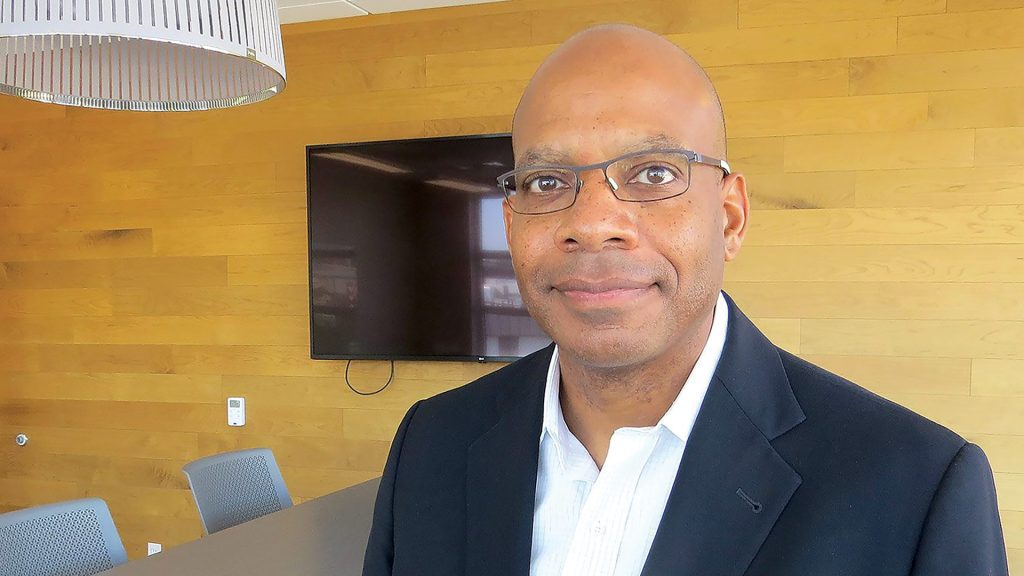
Way Finder CEO Keith Fairey

Way Finder CEO Keith Fairey says the housing crisis has been years in the making and results from several factors, including a lack of investment in new housing.

One one hand, every year removed from the pandemic of 2020 is a step toward normalcy, and, for the most part, business rolled on in 2023 — but the effects of that pivotal year still linger, through persistent challenges like inflation, workforce shortages, the deepening roots of remote work, and behavioral-health crises.

But other trends have emerged as well, from a harsher landscape for cannabis businesses to actual movement on east-west rail, to positive developments in downtown Springfield.

As 2024 dawns, undoubtedly bringing a new host of challenges and opportunities, BusinessWest presents its year in review: a look back at some of the stories and issues that shaped our lives, and will, in many cases, continue to do so.


The Housing Crisis Deepens

One of the more poignant stories of 2023 was a deepening housing crisis that is touching virtually every community in this region, the state, and many parts of the country.

“We got here over decades of underinvesting in housing production nationally, and not tuning that production to the needs and demographic changes of communities,” Keith Fairey, president and CEO of Springfield-based Way Finders, told BusinessWest in an interview this fall, adding that a resolution to this crisis won’t come quickly or easily, either.

“One of the things we have to do is make sure Massachusetts remains a competitive state for years to come. And one of the main indicators of whether you are competitive is ‘can people afford to live in this state?”

The major challenges involve not only creating more housing, because not much was built over the past few decades, but housing that fals into the ‘affordable’ category.

Indeed, state Rep. John Velis, a member of the Senate’s Housing Committee, said there are many side effects from the housing crisis, especially when it comes to the state’s ability to retain residents. “One of the things we have to do is make sure Massachusetts remains a competitive state for years to come. And one of the main indicators of whether you are competitive is ‘can people afford to live in this state?’”


Inflation and Interest Rates

The Fed was on a mission in 2023 — to tame inflation but without putting the country into recession, as it famously did in the ’80s. By and large, it was mission accomplished.

Indeed, the latest data on inflation showed a 3% increase over last year in November, a significant improvement on the numbers from late last year and early this year. Meanwhile, the country seems to have avoided a recession, with the economy expanding at a seasonally adjusted, annualized rate of 5.2% in the third quarter, after generating 2.2% annualized growth in the first quarter and 2.2% in the second quarter. In short, the economy actually accelerated, rather than slowing down, due to persistently strong consumer spending.

Efforts to stem inflation by raising interest rates were not without consequences, though, as the housing market cooled tremendously, if not historically. And commercial lending cooled as well, as many business owners took a wait-and-see approach with regard to where interest rates were headed.


New Challenges for Cannabis

Is the ‘green rush’ over for the cannabis industry in Massachusetts? If so, the Bay State is simply following the pattern of every other state that legalizes the drug.

According to that well-told story, the first dispensaries on the scene are bouyed by a favorable supply-and-demand equation — and long lines of customers. But as the market is flooded with competitors — not only locally, but from across state lines — not everyone survives, as a series of business closings this year demonstrates. In fact, according to the Cannabis Control Commission, 16 licenses in Massachusetts have been surrendered, not been renewed, or been revoked by the agency.

The heightened competition has caused retail prices to plummet for an industry already beset by profit-margin challenges. Unfavorable federal tax laws surrounding the growth, production, and sale of cannabis, coupled with local and state tax obligations and continued federal roadblocks to financing, transport, and other aspects of business have made it increasingly difficult to turn a profit. On the latter issue, federal decriminalization would ease the challenges somewhat, but progress there has been frustratingly slow.
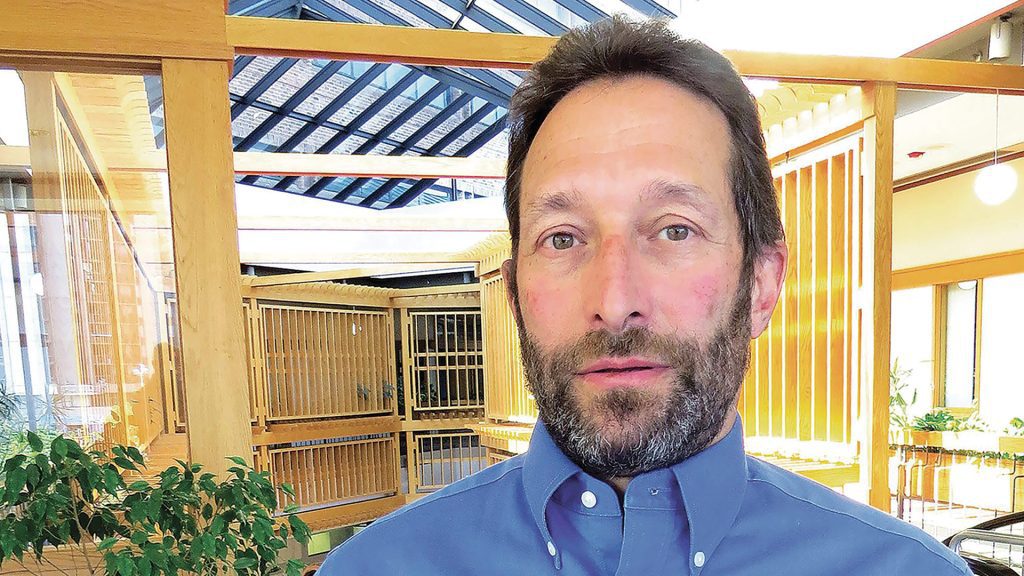
Steven Weiss, shareholder at Shatz, Schwartz and Fentin

Steven Weiss, shareholder at Shatz, Schwartz and Fentin, says he’s surprised lawmakers haven’t moved more quickly toward decriminalizing cannabis on the federal level.

Workforce Challenges Continue

While many businesses and institutions, including the region’s hospitals, reported some progress in 2023 when it comes to attracting and retaining talent, workforce issues persisted in many sectors, especially hospitality.

Indeed, across the region, many restaurants have been forced to reduce the number of days they are open, and some banquet facilities have been limiting capacity due to challenges with securing adequate levels of staff.

Those are some of the visible manifestations of a workforce crisis that started during the pandemic and has lingered for a variety of reasons, from the retirement of Baby Boomers to an apparent lack of willingness to accept lower-wage positions in service businesses.

The ongoing crisis has led to stiff battles for help in certain sectors, including manufacturing, the building trades, engineering, and healthcare, among others, resulting in higher wages, more benefits, and greater flexibility when it comes to where and when people work, which brings us to another of the big stories in 2023…


Remote Work, Hybrid Schedules Gain More Traction

While some larger employers succeeded in bringing everyone back to the office in 2023, most have decided not to even try. Indeed, there was more evidence in 2023 that remote work and hybrid schedules have become a permanent part of the workplace landscape.

In interviews with employers large and small, a persistent theme on this topic has been the need to be flexible when it comes to schedules, and especially where people work. Many businesses, from banks to architecture firms to financial-services companies, have found that employees can be effective and productive working remotely, with many favoring a hybrid schedule that brings people to the office a few days a week. Such flexibility makes employees happier, they said, making it easier to attract and retain talent.

This pattern is causing some anxiety in the commercial office market amid speculation that companies will be seeking smaller spaces moving forward, but the full impact of the shift to remote work and hybrid schedules may not be known for years.


Movement on East-west Rail

This story might continue to inch down the tracks, so to speak, for years before the engine really starts moving, but after many years of debate, planning, and crunching the numbers, actual progress is emerging in the effort to connect Pittsfield with Boston by rail, with stops in Springfield, Palmer, and Worcester, among others.

“We can also make progress in breaking cycles of intergenerational poverty by helping residents complete their higher-education credentials so they can attain good jobs and build a career path.”

The big news this past fall was a federal grant of $108 million to Massachusetts for rail infrastructure upgrades, and Gov. Maura Healey also signed off on $12.5 million in DOT funding in the state’s FY 2024 budget toward the effort.

The additional east-west service would complement passenger trains now running north-south through Springfield’s Union Station, offering access to points from Greenfield to New Haven.

“The facts are simple: improving and expanding passenger rail service will have a tremendous impact on regional economies throughout Massachusetts,” U.S. Rep. Richard Neal said. “That is why we will continue to invest in a project whose framework has the potential to serve as a model for expanding passenger rail service across the country.”


Free Community College

Almost 2 million Massachusetts residents are over age 25 without a college degree. MassReconnect aims to change that, by offering free tuition and fees — as well as an allowance for books and supplies — at any of Massachusetts’ community colleges for residents over age 25.

Gov. Maura Healey pitched it as a strategy to generate more young, skilled talent in the workplace at a time when businesses are struggling to recruit and retain employees (more on that later). “We can also make progress in breaking cycles of intergenerational poverty by helping residents complete their higher-education credentials so they can attain good jobs and build a career path,” she added.
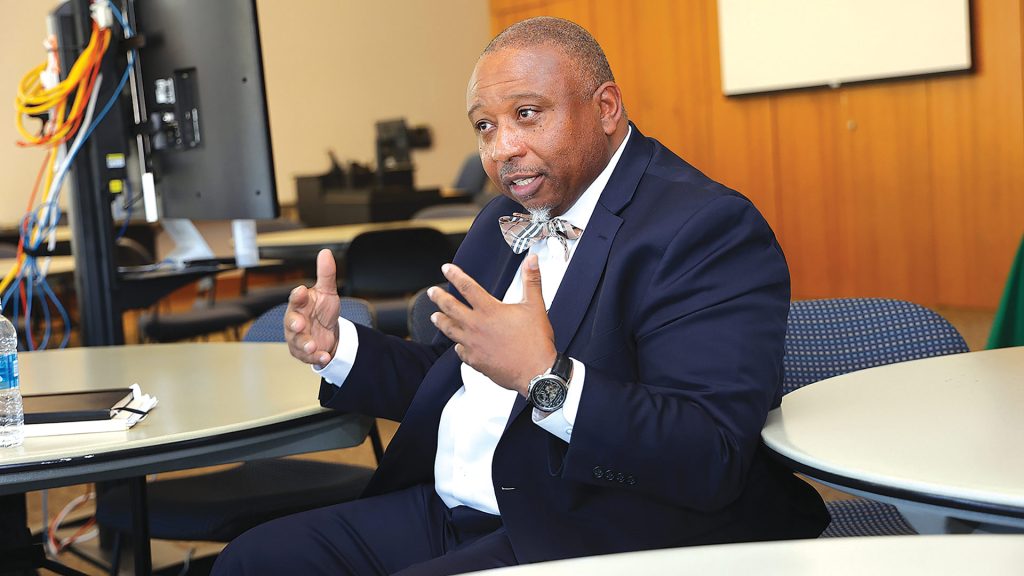
New HCC President George Timmons

New HCC President George Timmons says “community colleges are, to me, a great pathway to a better life.”

Holyoke Community College President George Timmons called the initiative “an exciting moment for HCC and all Massachusetts community colleges,” adding that “MassReconnect will enable our community colleges to do more of what we do best, which is serve students from all ages and all backgrounds and provide them with an exceptional education that leads to employment and, ultimately, a stronger economy and thriving region.”


New Higher-education Leadership

Speaking of Timmons, he was among the new presidents at the region’s colleges and universities, taking the the reins from Christina Royal, who had been at HCC since January 2017. Timmons was previously provost and senior vice president of Academic and Student Affairs at Columbia Greene Community College in Hudson, N.Y.

Meanwhile, Danielle Ren Holley, a noted legal educator and social-justice scholar, became the first Black woman in the 186-year history of Mount Holyoke College to serve as permanent president. Since 2014, Holley had served as dean and professor of Law at Howard University School of Law.

And at UMass Amherst, Chancellor Kumble Subbaswamy stepped down after 11 years leading the university, to be succeeded by Javier Reyes, who had been serving as interim chancellor at the University of Illinois Chicago.

“You’re not coming in to repair something, but to build on the shoulders of giants — and that is a very attractive opportunity,” Reyes said. “You’re not trying to catch up; you’re really trying to move and set the direction and be a forward leader. It comes with more pressure, but it’s more exciting.”


Thunderous Impact for the T-Birds

The Springfield Thunderbirds released the results of an economic-impact study conducted by the UMass Donahue Institute that shows the team’s operations have generated $126 million for the local economy since 2017.

The study included an analysis of team operations data, MassMutual Center concessions figures, a survey of more than 2,000 T-Birds patrons, and interviews with local business owners and other local stakeholders. Among its findings, the study shows that the T-Birds created $76 million in cumulative personal income throughout the region and contributed $10 million to state and local taxes.

The impact on downtown Springfield businesses is especially profound. Seventy-eight percent of T-Birds fans spend money on something other than hockey when they go to a game, including 68% who are patronizing a bar, restaurant, or MGM Springfield. The study also found that median spending by fans outside the arena is $40 per person on game nights and that every dollar of T-Birds’ revenue is estimated to yield $4.09 of additional economic activity in the Pioneer Valley. Meanwhile, since the team’s inaugural season, it has doubled the number of jobs created from 112 in 2017 to 236 in 2023.


Big Y Opens Downtown

In fact, despite the speed bump posed by the pandemic, downtown Springfield seems to have some momentum again. One of the more intriguing stories of 2023 was the opening during the summer of a scaled-down Big Y supermarket on the ground floor of Tower Square.
The new Big Y Express

The new Big Y Express represents an imaginative use of ARPA funds, addresses a food desert, and contributes to momentum in downtown Springfield.

The development was noteworthy for several reasons. First, it continued the reimagination of Tower Square, which now boasts the Greater Springfield YMCA, White Lion Brewing, two colleges, and other institutions. It also brings a supermarket to what had been a food desert. And it represents an imaginative, community-building use of ARPA funds.

The store opened its doors in June to considerable fanfare, and early results have been solid, with the store becoming a welcome addition to the downtown landscape. Combined with the Thunderbirds’ success, some of MGM Springfield’s strongest revenue months, and the ongoing residential development at the former Court Square Hotel, there’s a lot to be excited about.


New Home Sought for ‘Sick Courthouse’

Not all downtown news emerged from a positive place. Another developing story in 2023 was the ongoing work to secure a replacement for the Roderick Ireland Courthouse on State Street in Springfield, whose dilapidated conditions have been under scrutiny for years and have earned it the nickname the ‘sick courthouse,’ because many who have worked there have contracted various illnesses.

Gov. Maura Healey has called for investing $106 million over a five-year period to construct a new justice center in Springfield, and in November, the Healey administration issued an official request for proposals involving a least two developable acres on which to build a new courthouse. Proposals are due Jan. 31.

While redevelopment of the current site remains an option, Springfield officials are intrigued by the possibility of building not only a new courthouse, but also redeveloping the current site, which is right off I-91 in the heart of downtown.


Weather Challenges for Farmers

It’s called the Natural Disaster Recovery Program for Agriculture, and it exists because Mother Nature hit Massachusetts — in particular, its farmers — hard in 2023.

The state program provides financial assistance to farmers who suffered crop losses as a result of any of three natural disasters: the Feb. 3-5 deep freeze that impacted a large amount of peach and stone-fruit production, the May 17-18 frost that impacted a large amount of apple production and vineyards, and the July 9-16 rainfall and flooding that impacted a large amount of vegetable crops, field crops, and hay and forage crops.

But the government wasn’t alone in the effort to help farmers sustain this triple body blow. Area banks and other oranizations created funds, as did philanthropist Harold Grinspoon — a long-time and notable advocate for farmers through his foundation’s Local Farmer Awards — swiftly pledged $50,000 toward flood-relief efforts following the July rains, distributing checks to 50 farmers impacted by the floods.


Behavioral Health at the Forefront

In August, Baystate Health and Lifepoint Health celebrated the opening of Valley Springs Behavioral Health Hospital, a 122,000-square-foot, four-story facility in Holyoke featuring 150 private and semi-private rooms for inpatient behavioral healthcare for adults and adolescents.

It’s yet another development — the opening of MiraVista Behavioral Health Center in Holyoke in 2021 was another one — that aims to fill an access gap in behavioral health, at a time when the mental-health and addiction needs remain high. The pandemic caused a spike in both, the effects of which are still being felt today.

Dr. Mark Keroack, president and CEO of Baystate Health, said Valley Springs increases the inpatient behavioral-health capacity in the region by 50%. “Until now, about 30% of behavioral-health patients needing care would have to go outside the region. Valley Springs Behavioral Health Hospital will allow us to provide top-quality care for more patients right here in Western Massachusetts.”


Holyoke Celebrates Its 150th

One of the more fun stories of 2023 was Holyoke’s year-long 150th-anniversary celebration. BusinessWest printed a special edition in March to coincide with the St. Patrick’s Day parade, which included stories and photos that celebrated the past and present, while speculating on the future. The many interviews captured the unique essence and character of Holyoke, a close-knit community with a proud history and many traditions.

“There’s been a lot of change over the years, but what hasn’t changed is the spirit of the people,” Jim Sullivan, president of the O’Connell Companies and a Holyoke native, said. “There is a very proud heritage in Holyoke, and it still exists today.”

Said Gary Rome, another native of the Paper City and owner of Gary Rome Auto Group, “there’s a saying … as Holyokers, we can talk bad about Holyoke, but you can’t talk bad about Holyoke.”


Opinion

Editorial


Almost from the first puck drop back in the fall of 2017, we have been writing about the importance of the Springfield Thunderbirds — not just to the general psyche of the region (it’s good to have a pro sports team to root for) and to the vitality of Springfield’s downtown, but also to the local economy.

We’ve said many times that the team is a powerful force not just for filling bars and restaurants, and the casino on Main Street, but for job creation and supporting jobs elsewhere in the Pioneer Valley.

And now, we can quantify this broad impact.

Indeed, a recently released report details a study undertaken by the UMass Donahue Institute showing that the team’s operations have generated $126 million for the local economy since 2017.

The study included an analysis of team operations data, MassMutual Center concessions figures, a survey of more than 2,000 T-Birds patrons, and interviews with local business owners and other local stakeholders. Among its most critical findings, the study shows that the T-Birds created $76 million in cumulative personal income throughout the region and contributed $10 million to state and local taxes.

Meanwhile, the report shows that the team has doubled the number of jobs created from 112 in 2017 to 236 in 2023, and estimates that income per job created by the T-Birds is approximately $76,000, and that each job created by the Thunderbirds creates or supports 3.3 other jobs elsewhere in the Pioneer Valley.

Overall, the study concludes that the franchise, which has enjoyed success both off the ice and on it, including a run to the Calder Cup finals in 2022, is having a true ripple effect that extends beyond the walls of the MassMutual Center. Indeed, the study found that 78% of T-Birds fans spend money on something other than hockey when they go to a game, including nearly 70% who patronize a bar or restaurant or MGM Springfield. It also found that median spending by fans outside the arena is $40 per person on game nights and that every dollar of T-Birds revenue is estimated to yield $4.09 of additional economic activity in the Pioneer Valley.

We’re not sure, but it’s unlikely that even those business owners who came together to 2016 to save professional hockey in Springfield could have imagined this kind of impact. The numbers clearly show that they did more than bring a franchise here; they put together a team, led by President Nate Costa, that has put a quality product on the ice, marketed it in ways that are the envy of the American Hockey League, and turned that product into an economic engine.
Over the years, Costa and the team’s ownership group have won a number of awards from BusinessWest, everything from a Forty Under 40 plaque and a Difference Makers award for Costa to the Top Entrepreneur recognition for the team’s owners and managers.

Together, those awards speak volumes about what a success story this has been, not just for hockey fans, but for the entire region. But the Donahue Institute report speaks even louder. It puts numbers behind the words and quantifies what can only be called an unqualified success.

Business Talk Podcast Special Coverage

We are excited to announce that BusinessWest has launched a new podcast series, BusinessTalk. Each episode will feature in-depth interviews and discussions with local industry leaders, providing thoughtful perspectives on the Western Massachuetts economy and the many business ventures that keep it running during these challenging times.

Go HERE to view all episodes

Episode 184: October 23, 2023

Joe talks with Jody Hagemann, senior director of Sales Engineering for Comcast Business

Everyone has heard of cybersecurity, but not every business knows exactly what it takes to keep them protected. The most effective defenses not only incorporate the latest technology, but emphasize employee education, training, and plain old common sense to reduce the chances of human error — which is a factor in far too many breaches. On the next episode of BusinessTalk, Jody Hagemann, senior director of Sales Engineering for Comcast Business, talks with BusinessWest Editor Joe Bednar about the multi-pronged strategy Comcast relates to its clients, why more companies are taking data threats seriously — and why they should. It’s must listening, so tune in to BusinessTalk, a podcast presented by BusinessWest and sponsored by PeoplesBank.


Sponsored by:

Also Available On

Business Talk Podcast Special Coverage

We are excited to announce that BusinessWest has launched a new podcast series, BusinessTalk. Each episode will feature in-depth interviews and discussions with local industry leaders, providing thoughtful perspectives on the Western Massachuetts economy and the many business ventures that keep it running during these challenging times.

Go HERE to view all episodes

Episode 183: October 16, 2023

George O’Brien talks with Keith Fairey, president and CEO of Way Finders

The housing crisis gripping Western Massachusetts and most of the Bay State has deep roots and a broad impact, affecting everything from homelessness in area communities to the region’s ability to effectively compete with other states and regions for talent and jobs. On the next episode of BusinessTalk, Keith Fairey, president and CEO of Way Finders, talks with writer George O’Brien about how we got here, how the crisis has impacted area communities, and how the region recovers from decades of underinvestment in new housing in nearly all categories. It’s must listening, so tune in to BusinessTalk, a podcast presented by BusinessWest and sponsored by PeoplesBank.

Sponsored by:

Also Available On