Home Posts tagged Center for EcoTechnology
Cover Story Environment and Engineering

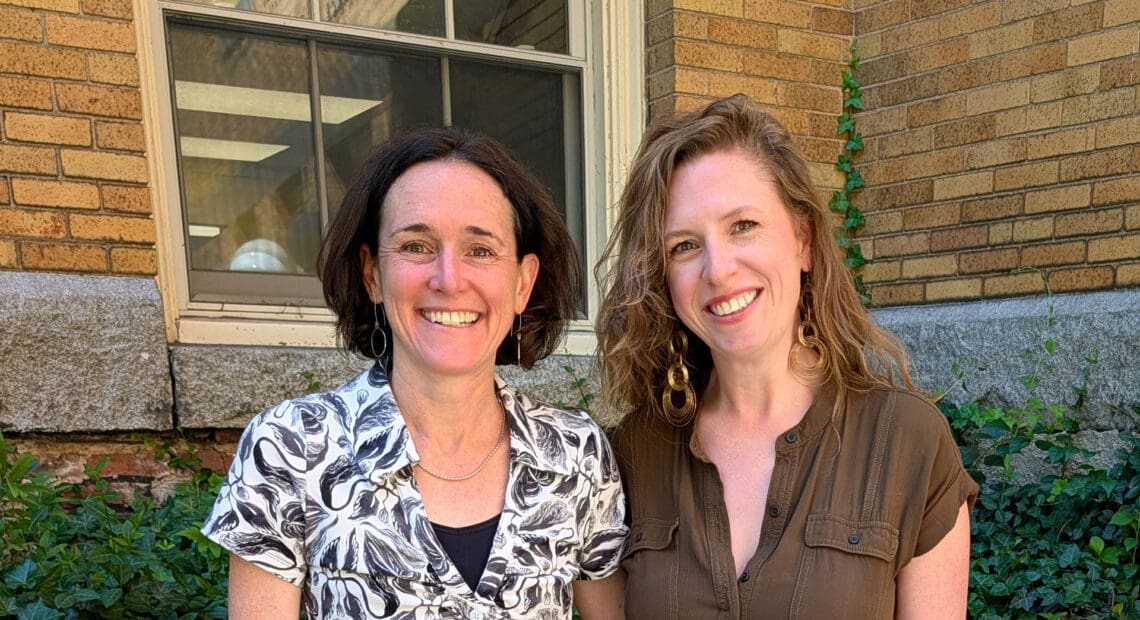
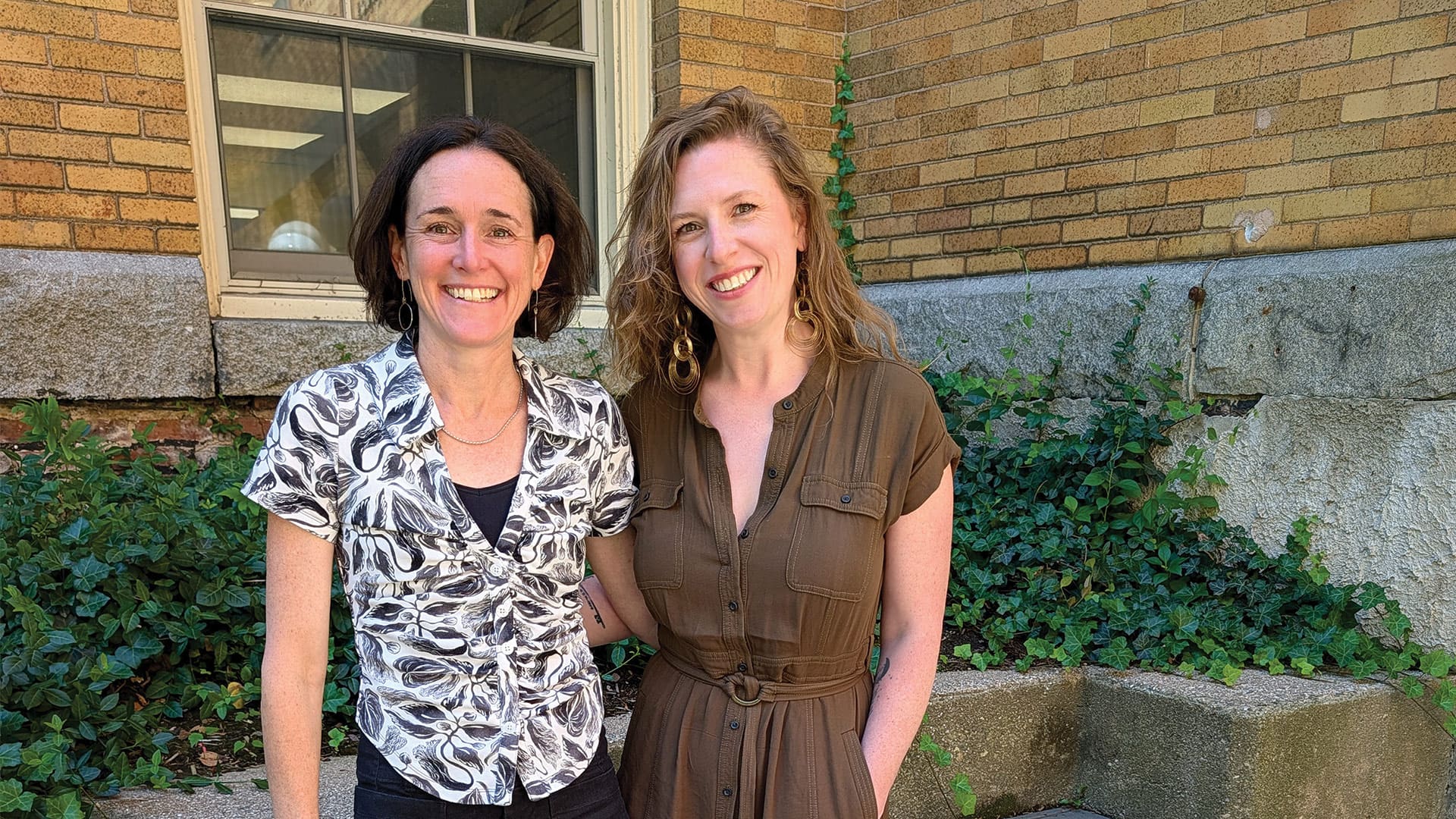
President and CEO Ashley Muspratt (left) and Director of Communications and Market Evolution Emily Gaylord

Renewed Energy

She calls it “radical ease.”

That’s the term CET President and CEO Ashley Muspratt used to describe how the nonprofit — originally called the Center for EcoTechnology, and celebrating its 50th anniversary this year — aims to make positive environmental impact easier for clients.
That starts with the initial assessment of a home or business.

“We send one of our waste reduction consultants or our energy consultants to the building to determine, ‘what’s the state of this building? What’s the state of their waste management practices?’ We need to understand their existing systems in order to help them prioritize the steps that they’re going to take, but also make sure, when it comes to behavior change, that we’re looking at ways to seamlessly integrate any new solutions into their existing practices because that’s the only way they’ll be sustained for the long term. That’s the radical ease piece,” said Muspratt, who has been at CET since 2017 and at the helm since 2020.

That assessment is typically followed by a discussion of budget, priorities (perhaps climate concern, staff comfort, or long-term energy savings), available state and federal incentives, and how to connect with contractors to achieve goals ranging from weatherization to composting.
“Coming back to this radical ease concept, we try to remove the friction, remove the barriers, and take the work out of climate action for people,” Muspratt said. “So we do all the research and the heavy lifting to get people to their goals.
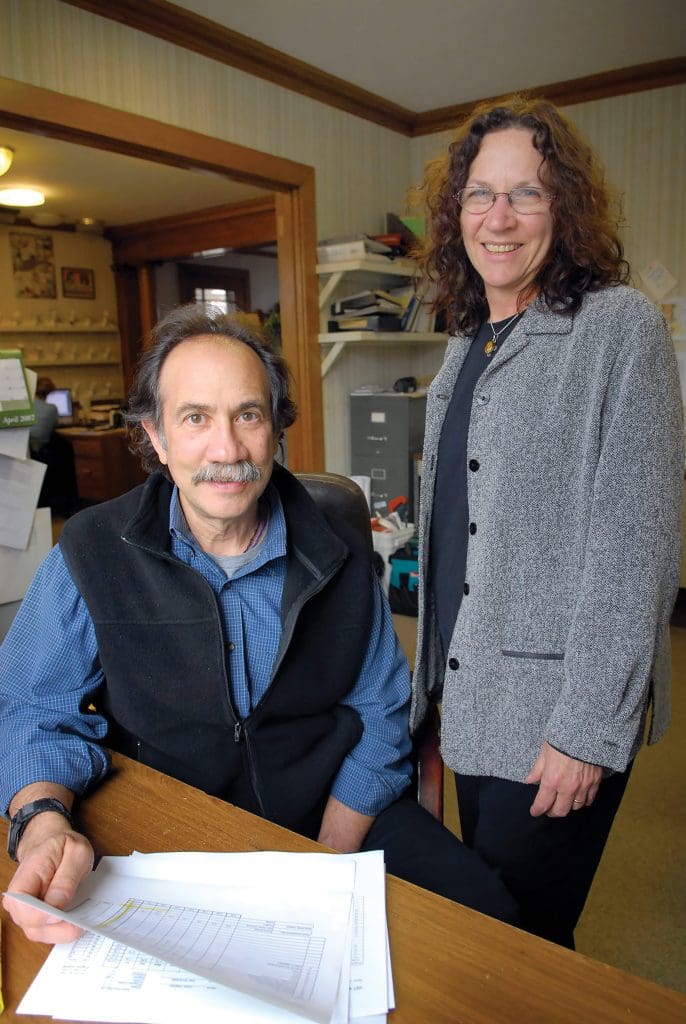
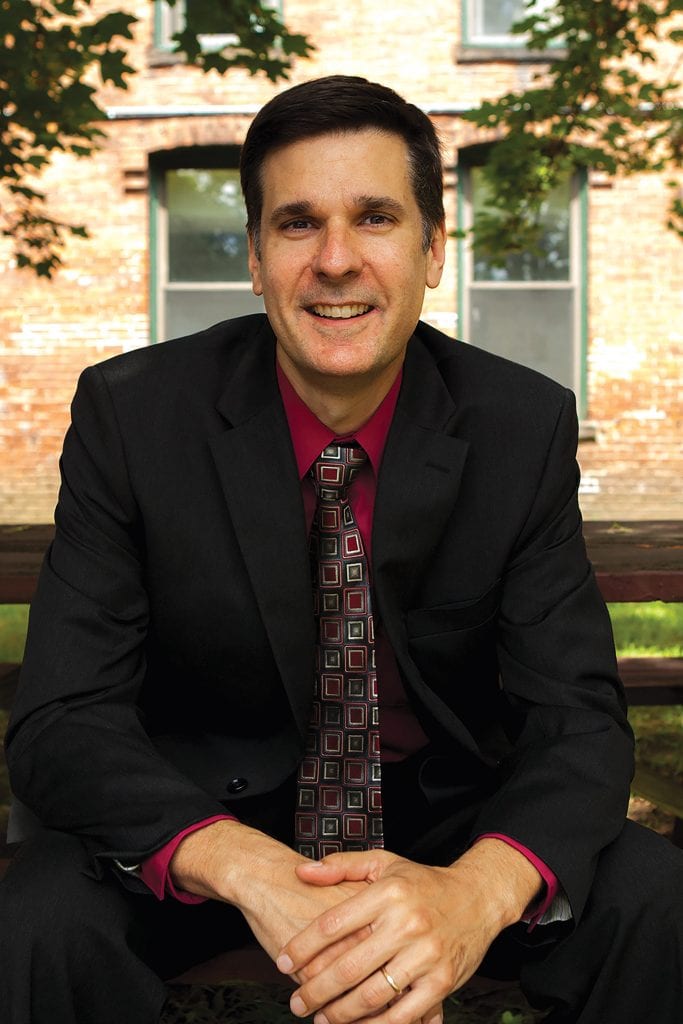
Alan Silverstein and Laura Dubester, former CET executive directors. The Alan Silverstein and Laura Dubester Award for Community Environmental Leadership was created in their honor.

Once we do the site assessment, it’s a very tailored service that we provide, based on what we find and what the customer is interested in. And we try to see them through all the way to implementation.”
That involves the administration of about 60 different programs for state agencies and utilities — quite the evolution from CET’s beginnings in 1976, when it focused mostly on energy audits, an innovative concept for the time.

“These climate solutions exist — we know what they are — but for most people, you have a life, you have a job, you have kids, you have to go to the baseball game, you have a dentist appointment,” added Emily Gaylord, director of Communications and Market Evolution. “So what CET offers is helping people and businesses find a way for climate solutions to make sense in their day-to-day life in a way that doesn’t feel like yet another thing to do.

“I always say with climate solutions, pick your co-benefit,” she added. “Like, weatherization reduces emissions, but it also makes you more comfortable and can save you money. If you reduce your food waste, not only are you reducing methane, but you might be feeding people who really need it. There are so many opportunities where we can take climate action from daunting to doable.”

Amid all the change and evolution at CET, Gaylord is impressed with what has stayed the same — namely, the mission. “The heartbeat of what we do — making it possible for people to participate in these programs, making it feel easy, like a no-brainer, and finding all of those co-benefits — has been consistent. From the beginning, we’ve been working with small businesses and low-income homeowners and farms and folks that are often left out of climate conversations.”

Innovative Start

In many ways, the 1970s was the birth of the modern environmental movement. The decade saw the first Earth Day, the creation of the Environmental Protection Agency, and legislation in the form of the Clean Air Act, the Clean Water Act, and the National Energy Act. It was also the decade of the oil crisis, when many Americans wondered if they would run out of gas.
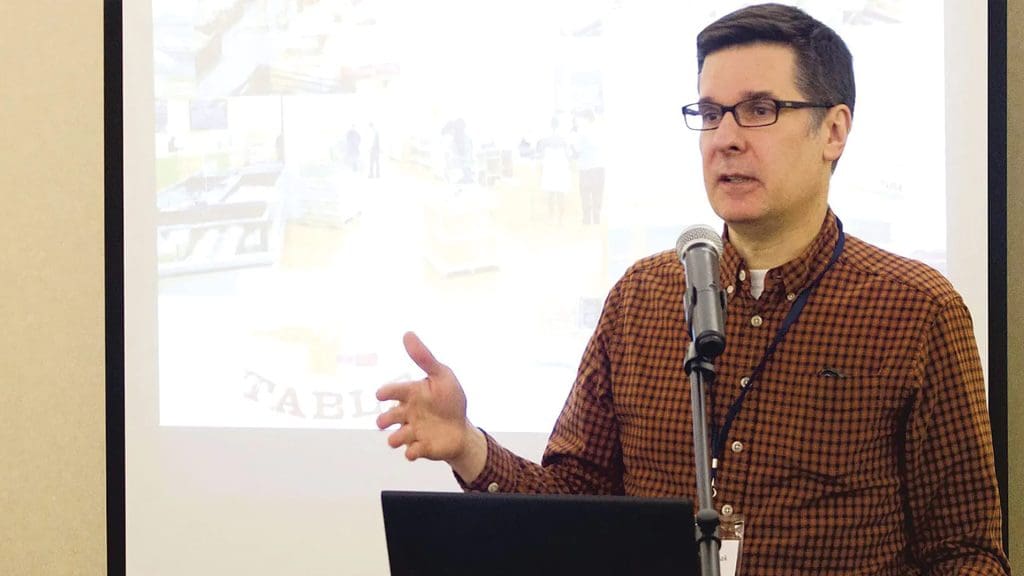
Former CET Executive Director John Majercak, seen here leading a staff meeting during his tenure.

CET’s founders had an idea: to examine technologies and practices that could improve energy efficiency for businesses and reduce their environmental impact, all while increasing profits and raising quality of life. At first, they focused on energy conservation, in particular partnering with utility companies on the relatively new concept of energy audits, whereby a consultant visits a home or business to talk about ways in which their building or operation could be revamped to save on energy costs.
Other early initiatives included the development of a passive solar greenhouse at Berkshire Botanical Garden and a program that taught solar energy, energy conservation theory, and carpentry to unemployed people, who then installed 31 solar space-heating systems in low-income households.

CET still conducts energy audits, helping homeowners and businesses understand the value of sustainable systems and educating them on the incentives available to make changes. But the organization, which now employs about 85 people, has become much more, expanding its mission into 18 states and a host of new opportunities, from composting and food waste reduction to a national train-the-trainer program and a partnership between utilities and customers called inclusive utility investments (more on those later).

“Our official mission is to innovate, implement, and scale the environmental solutions that communities need to thrive,” Muspratt told BusinessWest. “Our work as an organization is to mitigate CO2 emissions and other greenhouse gas emissions to prevent the worst, most catastrophic impacts of climate change, slow that down.
“The work that we do to weatherize buildings and transition them off of fossil fuels, these are all technology solutions that are also very good for a changing climate,” she added. “Another big component of our work is waste reduction, as waste, particularly food waste, is another major driver of greenhouse gas emissions, specifically methane.”

Gaylord said clients welcome the opportunity to achieve win-wins that benefit both the planet and their own business.

“No one understands the value of food more than somebody in food service who interacts with it every day. A contractor understands building materials more than anybody else. A facilities manager knows exactly how much they’re spending on their energy costs. So this idea that people are doing nothing, or they’re not doing enough, is not a helpful place for people to start,” she said. “It’s better to acknowledge how much is already happening and then build on that momentum and allow the customer to feel really proud of the work they’ve already been doing and the ways they’ve been participating in climate action without even realizing it — and then help foster these other ways to work on it.”
Muspratt agreed, again reiterating the ancillary benefits of CET’s work.

“These days, it’s become more normalized to talk about climate as one of the many reasons you might take action. But certainly, for businesses and households, economics is the number-one thing — that tends to be a big driver. And then, for certain programs, it’s the public health piece, particularly when we’re working with lower-income customers in really challenging housing situations where there might be moisture and mold issues that we’re helping to mitigate before weatherizing the building — issues that contribute to chronic respiratory disease and all kinds of compounding health challenges like asthma.”

With CET’s train-the-trainer program, the nonprofit is helping to accelerate the conservation learning curve for organizations across the country, particularly with food waste, in settings like restaurants, hotels, hospitals, and colleges.
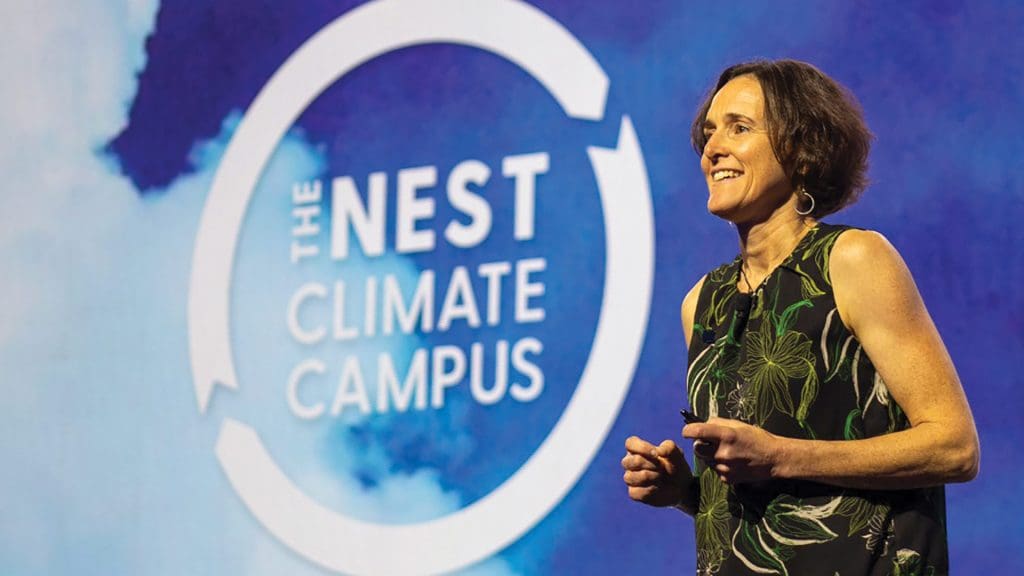
Ashley Muspratt delivers an address from the main stage at New York Climate Week.

“We deliver these trainings first remotely, and then we actually send our techs to their cities or towns to deliver technical assistance while they shadow us,” she explained. “And then we turn the tables, and they deliver the technical assistance while our techs shadow them and give them feedback and coaching. And then we set them free, and we’re already seeing some of them fly.”

As for those inclusive utility investments, that’s a mechanism CET promotes whereby utilities are making the investment in upgrades to people’s homes — weatherization, heat pumps, renewable energy, etc. — and recover that investment through a tariff tied to the building meter.
“That’s a really important distinction from on-bill financing, which is a loan, effectively, to the individual occupant of the house. You’re taking on personal debt, and before you do that, you need to go through a credit check, and you need to be in your home long enough to get a positive return on that investment,” Muspratt noted. “With inclusive utility investment, by tying the payback to the meter, you eliminate the consumer debt and the credit check, and there’s a guarantee to the occupants of the building that, as they start paying that tariff, their total energy costs are actually going down.”

CET has been working for several years to get this concept launched at scale in Massachusetts, including working with municipal utilities in Ipswich and Peabody. And now, the energy affordability bill being discussed in the Massachusetts Legislature will likely include an inclusive utility investment mandate.

“That would mean the rest of the utilities, the Eversources, the National Grids, would be required to offer this kind of financing mechanism to their customers,” Muspratt said. “So it could have a huge impact on the pace of deployment of climate solutions for the residential sector.”

Collaborative Effort

Muspratt explained that more than 95% of CET’s revenue comes from contracts to run its many programs, with philanthropy covering the rest.
“We have had the best partners and clients and customers,” Gaylord added. “There is just no way CET could have existed for 50 years — and will continue to exist — if we didn’t have such incredible partners throughout the state that equally believe in this work.”

Innovative ideas abound in these partnerships, she added, such as a Community Climate Fund that was seeded by Williams College, which tackles ‘barrier mitigation.’

“So if a customer is ready to go, but has a mold or moisture issue, we’re still able to pursue that project because of philanthropy,” Gaylord said. “There are times when philanthropy might make the like the difference in terms of it being something that’s solvable. So it’s a small percent of the budget, but it’s a really critical part of the budget in terms of what it can unlock for customers.”

And most people recognize the importance of this work and want to find ways to accomplish it, Muspratt said — even if the federal government has pulled away from such work.

“We had a huge increase in funding and attention on climate change under the Biden administration, and then that all kind of disappeared pretty quickly. So over the past year, we’ve had to do a lot of restructuring and pivoting because we had taken on a lot of federal funding that then disappeared,” she told BusinessWest. “So my hope is that, in the next 10 years, we start to get back to the place we were a few years ago in terms of focus and attention on climate change, taking it seriously.”

She cited a study by the Yale Program on Climate Change Communication showing that most Americans believe climate change is real and want to do something about it, Muspratt added. “The challenge is where to begin and how, and coming back to the role that CET is playing in that. I think there’s a disconnect right now between our government and what most Americans really want.”

Meanwhile, it’s important to help people see the value of individual decisions, Gaylord added.

“You may be wondering, ‘why would I start composting? Why would I get an energy audit? I have a million other things to do, and it’s not even going to make a dent.’ But even though it’s incremental, that whole body of action is making not just a dent, but a chasm — it’s really pushing forward CO2 reduction and methane reduction, while making the places we live and work healthier and more affordable and more pleasant to be in.

“I think that’s sometimes missed in the conversation right now — that, yes, it is going to take all of us, and that’s not necessarily convenient, but it’s really powerful.”

And that’s why it’s important to keep explaining — and demonstrating — radical ease.

“We’re just trying to just remove the barriers so people can take action,” Muspratt said. “There are a lot of competing interests these days, a lot of things that people are rightfully worried about. So, if we can help them, we’re here to help.”


Daily News

SPRINGFIELD — CET (formerly the Center for EcoTechnology) announced the launch of its Carbon Conscious Business accreditation, an initiative designed to recognize and celebrate businesses committed to reducing their carbon footprint through energy conservation, transitioning off fossil fuels, reducing waste, and other solutions. With commercial and residential buildings contributing 30% of U.S. greenhouse-gas emissions, decarbonizing this sector is essential to meeting CET’s climate goals.

CET notes that the latest report from the International Panel on Climate Change underscores the need for rapid, deep, and immediate greenhouse-gas emissions reductions across all sectors to limit global warming to 1.5°C. Every increment of warming exacerbates hazards such as human mortality, disease, mental-health challenges, flooding, biodiversity loss, and decreased food production. CET’s new accreditation aims to address these challenges by encouraging businesses to take actionable steps to decarbonize.

Decarbonizing offers numerous benefits: it mitigates climate change, potentially lowers operating costs and improves building comfort, and enhances reputation and brand value. Additionally, it ensures regulatory compliance, attracts purpose-driven employees, and improves public health and well-being by enhancing air and water quality.

To begin the journey toward being accredited as a Carbon Conscious Business, businesses will meet with CET energy and waste experts to identify existing and new decarbonization opportunities tailored to the business. CET will then develop a customized action plan that outlines relevant measures to reduce carbon emissions.

Throughout the implementation process, CET will support the business every step of the way, connecting it with necessary services. Once all measures have been completed, the business will be awarded a one-, two-, or three-star Carbon Conscious Business accreditation based on the extent of implementation. Regardless of the progress, CET will celebrate the participating company’s achievements with marketing opportunities, window decals, and table tents to showcase its commitment to sustainability.

CET facilitates no-cost assessments through partnerships with Mass Save, the Massachusetts Department of Environmental Protection, the Connecticut Department of Energy and Environmental Protection, and other entities.

The Carbon Conscious Business accreditation celebrates businesses’ efforts to combat climate change and embrace sustainability. “By fostering a community of carbon-conscious enterprises,” CET noted, “we can drive meaningful change and create a resilient, sustainable future for generations to come.”

CET is grateful to TD Bank for supporting this work. Learn more at cetonline.org/carbon-conscious-business-accreditation.

Daily News

NORTHAMPTON — The Center for EcoTechnology (CET), an environmental nonprofit dedicated to advancing just and resilient climate solutions, announced the appointment of Julia Riseman as its inaugural director of Philanthropic Investments. With her experience and commitment to climate-change mitigation, Riseman will help accelerate CET’s growth and impact during this decisive decade for decarbonization.

CET operates on the front lines of climate action, working in people’s homes and businesses every day to reduce waste, improve energy efficiency, and transition off fossil fuels.

Riseman brings a wealth of expertise in development strategy and relationship building, honed through her years of dedication to causes throughout the U.S. and Canada. Through consulting, she has helped organizations raise more than $350 million through her consulting firm, Riseman Consulting, and during her 14 years at the Harold Grinspoon Foundation, providing consulting services to grant-supported recipients.

Prior to becoming a consultant, she was the Development director at the Center School, an independent school in Amherst, and she co-founded two nonprofit organizations, Friends of Northampton Trails and Health in Harmony, an international environmental organization working with local communities to save rainforests in Brazil, Madagascar, and Indonesia. Her strategic vision and commitment to CET’s mission is expected to propel the organization into a new era of expansion and influence.

“We are thrilled to welcome Julia to CET,” said Ashley Muspratt, CET president and CEO. “Our organization is uniquely poised to weave together private-sector and philanthropic dollars to accelerate adoption of climate solutions. I’m eager to work with Julia to share our audacious vision for growth and innovation with new and existing donors.”

As director of Philanthropic Investments, Riseman will be instrumental in cultivating partnerships, securing funding opportunities, and fostering connections with stakeholders to fund targeted projects and further CET’s impact across a dozen states. Her leadership will play a pivotal role in advancing the organization’s strategic goals and expanding its reach across the country.

“I am honored to join the mission-driven team at CET,” Riseman said. “Together, we will harness the power of innovation and collaboration to drive meaningful progress. I look forward to inspiring many more people, including major donors and foundations, to support and amplify CET’s impact and create positive change.”

Daily News

FLORENCE — The Center for EcoTechnology will host a free webinar on “Small Business Weatherization Services, Energy Efficiency, and Incentives” on Thursday, June 17 from 1 to 2 p.m.

This webinar will discuss the benefits of weatherization for small businesses. Attendees will learn how to improve business performance, spend less on energy, increase comfort, and shrink one’s carbon footprint. Click here to register.

Home Improvement

Fueling Interest

By Mark Morris

EcoBuilding Bargains

EcoBuilding Bargains, celebrating 20 years this year, has been a trendsetter in repurposing reclaimed and surplus building materials.

John Majercak likes to say the Center for EcoTechnology (CET) has been successful for 45 years because it’s willing to try out approaches to saving energy that in time become a normal way of doing business.

“We helped invent the energy audit in the 1970s, and now it’s a routine thing that lots of people have done, and it’s having a huge impact,” said Majercak, president of CET.

In 2021, the organization marks several noteworthy milestones. In addition to CET’s 45th birthday, Majercak celebrates 30 years with the organization, serving as president since 2010. In his time there, he has seen a growing mainstream awareness of the connection between the community, the economy, and the environment.

“It used to be that environmentalism was thought of as a fringe thing or a nice thing to have,” Majercak said. ”But the work we do in saving energy and reducing waste helps people live better lives, as well as addressing the urgent issue of climate change.”

CET also runs EcoBuilding Bargains, the largest reclaimed and surplus building-materials store in New England. Launched in 2001, the reuse store celebrates its 20th anniversary this year. When it opened, the store was one of only a few of its kind that existed. Today, thousands of stores sell reclaimed building materials.

From the beginning, people liked the idea of saving money and helping the environment by giving a second life to used cabinets, lighting, plumbing fixtures, and hundreds of other items. Through the years, awareness increased as EcoBuilding Bargains was featured on several home-improvement TV shows, most notably This Old House.

Located in Springfield, EcoBuilding Bargains sells products in all 50 states and several other countries thanks to the internet. Once reusing materials became fashionable, Majercak said, interest in the store exploded.

“When reusing materials became stylish, it allowed people to bring their own character to a piece,” he noted. “On top of personal creativity, it’s an inexpensive purchase that helps the environment, so it’s a home run.”

Majercak pointed out that the current boom in home improvement — fueled by the pandemic and people being in their homes much more than would be considered normal — has created both a supply and a demand for items at EcoBuilding Bargains.

“It used to be that environmentalism was thought of as a fringe thing or a nice thing to have. But the work we do in saving energy and reducing waste helps people live better lives, as well as addressing the urgent issue of climate change.”

“All the home improvement that’s going on means more materials we can capture for donation and reuse,” he noted. “Then, when people renovate with these materials, they can save lots of money, help the planet, and make their homes look super-cool.”

Likewise, the pandemic hasn’t slowed business for the store. EcoBuilding Bargains is open for people who want to shop in-person and also offers virtual appointments so people can shop over the phone. With video calls, Majercak said, staff can show items, and customers can ask more specific questions about a piece.

Other parts of CET’s business have also adopted a combination of in-person and virtual interaction. Energy audits, for example, have a whole new feel that creates opportunities and challenges.

“We have people who are happy to get on a Zoom call and show us around their home or business for an energy audit,” Majercak said. “On the other hand, those who wanted an in-person visit are on a waiting list until after the pandemic is over.

“After the pandemic, I’m sure we’ll be doing plenty of things in person again, but we will continue to go virtual for those who prefer that approach,” he went on. “In that way, it opens more opportunity for mission impact.”


Cool Ideas

With a stated mission to “research, develop, demonstrate, and promote those technologies that have the least disruptive impact on the natural ecology of the earth,” one of CET’s goals involves reducing carbon emissions equal to removing 100,000 cars off the road for a year by 2022.

There are many ways people can reduce their carbon footprint, all of which use less energy without compromising comfort. Converting to LED lights and adding insulation are two easy ones.

John Majercak says a central focus for CET over the years has been pursuing technologies with the least disruptive impact on the environment.

John Majercak says a central focus for CET over the years has been pursuing technologies with the least disruptive impact on the environment.

“Weatherization is a good example because installing air-sealing insulation in the home increases the comfort dramatically and uses less energy — and, therefore, less carbon,” Majercak said. “We’ve been doing these programs for years, and they save lots of energy and carbon.”

He cited a recent effort in which CET has partnered with colleges in the Community Climate Fund, which provides support for local carbon-reduction projects. By investing in the fund, colleges support the community, as well as creating learning opportunities for students who conduct research and gather data. Projects range from recovering used building materials or helping a homeowner get a heat pump to providing loans to farmers so they can make energy improvements to their operations.

“The Community Climate Fund is a great way to extend the impact of our programs and get even more done,” he told BusinessWest.

Massachusetts recently unveiled a plan to achieve a 45% reduction in carbon emissions by 2030 and to be carbon-neutral by 2050. Majercak has reached out to utilities to encourage them to align their energy-efficiency programs with these climate goals. CET is currently working with a municipal utility company to test an energy-efficiency program that measures carbon reduction, as opposed to just energy savings. It’s one of the first programs of its kind in the country.

“Anytime you save energy, it reduces carbon, but the kind of energy you save and the kind of energy you use also affects carbon,” he said, noting that the car you drive and the lawnmower you use can also make a difference in changing your carbon footprint. “For the foreseeable future, we will be studying energy issues by looking through the lens of carbon reduction.”

CET is also working with utilities on promoting the use of air-source heat pumps for houses. While they have existed for years, Majercak said heat pumps were primarily used in warmer climates. With recent technology improvements, they can now withstand the sustained cold temperatures of a New England winter. Unlike traditional heating systems, heat pumps take heat from outside air (yes, even frigid cold air has heat in it) and move it into the home.

For cooling, the heat pump does the reverse and removes heat from the house to the outside. Instead of using oil, natural gas, or propane, heat pumps run on electricity. As long as renewable energy becomes a larger part of the grid, he said, electric power is the logical choice.

“This is good from a carbon perspective because, as the power grid gets greener and as more people use heat pumps and drive electric cars, the more carbon reduction we’ll get,” Majercak noted, adding that heat pumps are just catching on, and we will see a lot more of them in the coming years.

And they represent only the latest cutting-edge technology that CET has helped establish in its 45 years.

“I’m very proud of the people at CET because they’ve always been real innovators and have helped change the way things work,” he said. As one example in the realm of waste and recycling, CET helped to establish the Springfield Materials Recycling Facility (MRF), which serves 65 communities in Western Mass. Back when recycling was a new approach, CET worked with towns to help them prepare their recycling programs for the Springfield MRF.

In the 45 years since CET has been in operation, energy conservation has hit peaks and valleys in politics and policies on the national level. Majercak noted that the state and regional levels have been more consistent, and asserted that CET has never been, nor ever will be, a political organization.

“We’re a solutions organization; we work with everyone,” he noted. ”As long as we keep that focus, we will be successful.”

Elaborating, he said the key is to meet people where they are and help them either solve a problem or achieve a goal.

“If you’re a small business, your goal may be to save money and have your business perform better. Energy efficiency, as well as waste and recycling management, can help you reach that goal,” he said. “A homeowner might want to be more comfortable or lower their electric and fuel bills. We can do that for you, and it doesn’t matter what you think about climate change.”

“All the home improvement that’s going on means more materials we can capture for donation and reuse. Then, when people renovate with these materials, they can save lots of money, help the planet, and make their homes look super-cool.”

For all the energy-saving opportunities out there, Majercak understands that spreading the word about what CET does and how it can help is essential. “Even when people are aware and want to do something to save money or save the environment, we still do a lot of hand holding to get it done.”

Spreading the word through workshops and social media definitely helps to engage people. Majercak pointed to one effort in which EcoBuilding Bargains runs a “Reuse Rockstar” contest on social media that encourages people to post the creative ways they have used items from the store.

“It’s inspirational to see how people apply their creativity and elbow grease to make beautiful houses and rooms for a fraction of what they would normally cost,” he said.


Going for the Green

Because climate change is a global problem, it’s easy for people to feel overwhelmed and doubtful they can make a difference, said Majercak, who assures them that they do not have to solve climate change all by themselves, and shows them different ways they can have an impact.

“When someone switches out their lightbulbs, buys an electric vehicle, or installs used cabinets, these are not overwhelming actions,” he told BusinessWest. But when CET helps tens of thousands of people do these little things, they start to add up.

“Consider that people across the state, the country, and the world are doing similar things, and it’s easier to see how each effort contributes to making a real difference. We are firm believers in little things with big payback.”

In addition to turning new approaches into normal processes, Majercak looks forward to the growth potential for EcoBuilding Bargains as it sells more products to people through eBay and, soon, through its own e-commerce site.

When he considers CET’s 45-year history, he appreciates how far the organization has come, but he’s even more excited about the near future.

As much as we’ve done, I think we will really accelerate and see much more progress in the next 10 to 15 years,” he said. “It’s an exciting time to be doing the work we do.”