
Home Posts tagged Departments (Page 10)
Sections Supplements
Officials Want to Make it Easier to Do Business in Amherst

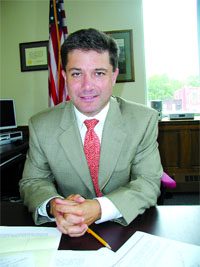
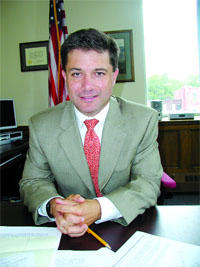
Amherst boasts one of the healthier economies in Western Mass., yet, ironically, it has a reputation as a difficult place to set up shop, one with an oppressive and confusing maze of bureaucracy to navigate. But Town Manager Laurence Shaffer and other Amherst officials have begun to address that reputation — and make some concrete changes in the way business gets done.

Emily Wadham and her husband, Adrian D’Errico, opened a new restaurant, Tabella, in Amherst in October.

They had been shooting for July.

“One of the complications was the lack of some protocol that was understandable to new business owners in town,” Wadham told BusinessWest. “It was a runaround trying to figure out what we needed and when we needed it.”

Specifically, the couple was surprised by the volume of paperwork and permits involved in opening a restaurant, and confused by the lack of a clearly communicated strategy for the order in which to tackle them. “It’s so arbitrary,” she said, “that you can really shoot yourself in the foot if you don’t get everything lined up the right way.”

Their experience is far from an isolated one in a community that in many ways is thriving economically, yet still has a reputation as a sometimes-difficult place in which to do business. Town Manager Laurence Shaffer thinks something should be done about that.

“Generally, there has been a sense in the community that inspections are not logical, not efficient, and maybe not effective,” he said.

“I don’t know if any of that is true, but a much smarter philosopher than me said that perception is reality, and when our community says that this is indeed their perception, we need to respect that, and we need to look for opportunities to change our reality in order to change that perception.”

In this issue, Shaffer and others discussed with BusinessWest what steps the town is taking to alter its business-unfriendly reputation when it comes to the permitting process — and why that’s important even for a community with as much life as Amherst.

Grinding to a Halt

John Coull, executive director of the Amherst Area Chamber of Commerce, did not hesitate when asked about the town’s red tape-laden image among current and prospective businesses.

“I do believe that’s the perception, and that perception is reality,” Coull said. “Therefore, I think businesses will be extremely interested in seeing an improved process and especially improved communication of that process, which is a good deal of the issue.”

The reasons, he continued, are uncomplicated, and have everything to do with the adage that ‘time is money.’

“When someone takes on a lease for an expensive piece of real estate and is ready to build out in preparation for opening, a day is a dollar,” Coull said. “If they’re forced to eat heavily into their operating budget just to endure the time these delays might make necessary, it sets them at a distinct disadvantage when they do open their doors.”

And that, in turn, creates often-unnecessary obstacles to do business in a town that in many ways has become an attractive place to set down roots.

“This is one of the most desirable places to live in Western Mass.,” Shaffer argued, noting the presence of three colleges — UMass, Amherst College, and Hampshire College — as well as an array of museums and cultural attractions.

In addition, “we have an intact downtown that’s bustling and thriving, and we have one of the best conservation programs in Western Mass., with thousands of acres under protection. The quality of life here is confirmed every day by the number of people who want to live here.”

Yet, Amherst has well-documented hindrances to new business. For one thing, the commercial tax rate in neighboring Hadley — $9.12 per $1,000 in assessed valuation — is much lower than Amherst’s rate of $15.68. Then there’s that perception of slow, confusing permitting — but Shaffer says relief is coming.

“We have a goal of trying to make the process more transparent, open, and streamlined,” he said, “so we’re looking at a variety of new approaches and philosophies to deal with inspections.”

Currently, he said, eight separate entities that conduct building inspections — covering building, plumbing, electrical, fire, and health codes, among others — do their work independently of all the others, with little communication between them.

“Each entity has its own very valid, very important regulations that require compliance,” Shaffer said. “We’re looking for a synchronized process that makes it more logical and streamlined so that each process relates to the others, rather than being independent.

“That isn’t to negate the very serious health and safety issues that the codes attempt to get at in each of these disciplines,” he added. “But there needs to be a recognition that each works with the others. We want a process that’s logical and transparent so that people involved in these things know where they stand in the process.”

Access Point

Part of the solution involves electronic infrastructure, said Shaffer — specifically, allowing all stakeholders in a project to access the information they need on their computers.

“We’ve acquired a new software system, similar to the software platforms used throughout the town, to create a single point of entry into the system, and a repository of information about individual building projects,” he said.

Allowing easier electronic access is part of an overall culture change aimed at dispelling the perception of closed-door dealings.

“We need to be more transparent to the public,” Shaffer said. “How does the public know what the status of a permit is? What kinds of outstanding items remain? The expectation on our part is that can be done electronically, so a lot of this comes down to the whole method of how we gather, compile, and share information.”

For their part, Wadham and D’Errico had no problem with any individual board — just the lack of communication between them.

“Of all the individual people we spoke with in the town offices, no one was unhelpful,” Wadham said. “But you had to do the hunting yourself to figure out how to make them work together. Everyone does their job, but there’s no simple protocol for new businesses to follow.”

She suggested establishing some kind of business welcoming committee to help guide newcomers through the process — or at the very least issue a checklist that explains the order in which each permit, meeting, and stack of paperwork should be tackled.

The town’s Select Board has been discussing various options with local developers and business owners, Shaffer said, creating a forum of sorts to air issues that have arisen during various inspection processes.

“The town collects a lot of information,” Shaffer said. “We need to allow each department to know the status of other inspections with some kind of local synchronization process.”

Coull said such an effort is long overdue.

“I have strong hopes for an improved system,” he said. “The communication among and between the departments is going to make a difference. And for the consumer, the business person, to know what their status is at any time, that too will make a difference.”

Bright Future

When Shaffer was appointed town manager in mid-2006 — hired away from Vernon, Conn., where he had served as town administrator since 1999 — he brought some 30 years of municipal management experience to the table.

With a degree in Public Administration in hand from the Rockefeller School at Albany State University in New York, Shaffer first tasted public service in a variety of capacities in Oneonta, N.Y., including city assessor and head of economic development.

After a decade in Oneonta, Shaffer spent another 10 years as assistant city manager in Keene, N.H., followed by three years in Durham, N.H. as town administrator, before moving on to Vernon. Amherst, however, projects a sort of vibrancy that both excites and challenges him like none of his past roles.

“We’re in the midst of developing a master plan for Amherst, and one of the areas of discussion is the whole aspect of economic development,” Shaffer said. “I’m hoping that, through this process, we bring some definition to this issue, and provide some directions for where the town government might go in terms of being a catalyst for economic development.”

That plan, however, is still being hammered together, Shaffer added, and for now he’s trying to strengthen the relationships the town already has with its major economic players, including the three colleges.

“We’ve begun to have conversations with them and begun to explore what’s possible in terms of collaborating on projects of mutual benefit,” he said.

In many ways, he explained, Amherst is in the uncommon position of being able to shape its own future, partly because many consider it such an attractive place to live. The question now remains: what model of growth best fits the town’s profile as a regional center of culture, education, and conservation?

“It all relates directly to economic development,” Shaffer said. “We have developers interested in putting in 55-and-older communities in town, folks who want to open up new restaurants — and I think the sky’s the limit for our downtown and its desirability as a destination point. I think the future is very bright for our community.”

And discarding a few layers of red tape, he suggested, can only make it brighter.

Opinion

There’s an interesting presidential search going on at Westfield State College.

A search panel has narrowed a long list of candidates down to five semifinalists — a rather unassuming list except that it includes the current mayor of that city, Richard Sullivan, who has served in that capacity for 14 years now.

His inclusion on the finalists list has sparked some debate in the region about whether Sullivan, or anyone who has ‘mayor’ at the top line of his or her resume, should be considered a candidate to lead a state college. Some would argue no, and one faculty member at the college who attended a meet-the-candidate (Sullivan) session recently suggested that he was “a fish out of water.”

We would disagree, and while we won’t go so far as to endorse Sullivan’s candidacy (we really don’t know enough about the other hopefuls to do so), we will suggest that his bid not be dismissed as merely an attempt by a connected politician to take a plum state job and, in the process, nearly double his current salary and pension. There is simply too much evidence to the contrary in this region to suggest that those from what would be considered outside the realm of academia are not qualified to run academic institutions.

Let’s start with the area’s two community colleges. Holyoke’s was ably led for nearly three decades by David Bartley, longtime state representative and former speaker of the House. He used those connections to help build the college from a physical standpoint — several new buildings were added during his tenure — and also build its reputation as an excellent institution from which to transfer to a four-year college.

At Springfield Technical Community College, Andrew Scibelli, who had some academic background, including stints as registrar and assistant to the president at the college, but was known mostly as a Springfield city councilor and before that a School Committee member, has succeded in putting that institution on the national and even international stage.

Much of the acclaim has come from the decade-old Technology Park, a quasi-public institution located in former Springfield Armory space later occupied by Digital. When DEC closed its doors, Scibelli worked with local and state leaders, many of whom were skeptical about the project, to secure the needed funding for a facility that has become a model for schools across this country and many others.

Still another example of a non-academic achieving success in the public school realm is former state Senate President William Bulger, who ascended to president of UMass. He was controversial, and his recent, successful fight to enlarge his pension by including a housing allowance could have expensive consequences for the Commonwealth. But during his tenure, Bulger brought much-needed funding to the university, as well as greater visibility and recognition as a vital economic engine for the state.

The moral to these stories? It’s simple. While an academic background can certainly help someone sitting in the president’s office, the record clearly shows that those from business and public service can take an institution forward.

Can a mayor handle such a job? Of course. Without oversimplifying things, a mayor handles budgets, departments, and people. It’s the same for a college president. (A school’s faculty can be a very difficult constituency to handle, but that task usually isn’t any easier for those from academia). A mayor also sets a tone for a community and creates, for lack of a better term, a strategic plan. That’s the same job description a college president would have. The mayor is the CEO of a city; likewise for a college president.

Westfield State College has some work to do. It plays a role in Westfield, but certainly not as big a role as it could. Many would suggest that it is a largely untapped resource. Meanwhile, it must work much harder to tell its story in this market and well beyond it.

Is Sullivan the best person do to all this? Perhaps. At the very least he should be given strong consideration. Failure to do so would be a mistake for the search panel and the college.

Opinion
Why the Control Board Should Stay in Control

During a recent appearance at American International College, Lt. Gov. Tim Murphy stated that it’s time for the Finance Control Board that has been managing Springfield for the past 30 months to go. I believe that once he and Gov. Deval Patrick fully understand Springfield’s situation, they’ll come around to my way of thinking — which is that the control board’s work is not finished.

During the FCB’s first two and a half years, I have watched as the city has made steady progress, due in large measure to the board’s undivided efforts. Created by unanimous vote of our legislators, the control board was a thoughtful response to a very complex situation. Rather than impose a single receiver, as was the case in Chelsea in the 1980s, the Legislature created a body that would be reflective of the democratic process. Elected officials — the mayor and the rotating position of City Council president — represent two of the board’s five votes.

Beyond the financial difficulties Springfield experienced prior to the election of Mayor Charles Ryan and the arrival of the FCB, the city was quite literally starving for legitimate attention. Corruption placed a stranglehold on the way Springfield conducted its business.

As a result, very little of the city’s business got done — and not very well.

Thanks to the FCB’s hiring of some effective managers, Springfield’s $41 million budget deficit has been eliminated, and the city now operates with a balanced budget. More than 20 contracts have been negotiated. (It wasn’t that long ago that our police, firefighters, and teachers were working without contracts.) Our resource-deprived departments are now gaining ground on the adoption of 21st-century technology. (It wasn’t long ago that records were kept on index cards and filed in cardboard boxes.)

According to the Finance Control Board, more work needs to be done, particularly in the area of technology: a computerized financial-management system still needs to be implemented. The city should have a centralized payroll system. There is more work to integrate data so that various departments can come to the same conclusions on matters such as permitting and licensing. Zoning reform is still a work in progress.

These critical initiatives — too long neglected — require an effective, non-politicized body in place so that they can move forward in an expeditious manner.

During the receiver’s four-year tenure in Chelsea, citizens were given enough time to lay the groundwork for a new form of government. The charter-review process resulted in the hiring of a city manager. According to my research, two successive city managers have kept Chelsea’s finances in good order for the past 20 years.

I’m not suggesting we need to adopt Chelsea’s solution. Chelsea is a city a fifth the size of Springfield with a land mass about the size of Springfield’s South End. I am advocating for time equivalent to that given Chelsea so that we can conduct a charter review.

Springfield is a complex, $450 million enterprise that gears up for a management change every two years. Can you imagine a private enterprise preparing for a transition in the corner office every 12 months? We need time to review the best practices of other cities our size, facing our urban challenges. Certainly there are ways to combine professional business management with political leadership.

If the Patrick administration is concerned about Springfield, and I have to believe that it is, it needs to keep the Finance Control Board in Springfield for at least two more years. If it’s a simply a matter of semantics, label the next two or three years of the FCB’s tenure transitional. Place the onus on the citizens of Springfield to get their collective act together to lay the groundwork for life after the control board.

In the meantime, allow the FCB to finish what it was created to do.-

Nancy Urbschat is owner of TSM Design in Springfield; (413) 731-7600.

Uncategorized

Kathleen Anderson is a fourth-generation Holyoker. And she’s proud of that heritage.

“My great-grandparents came here from Ireland,” said Anderson, who has headed the city’s Office of Planning and Development since last summer. “When I looked up their history, I found they received the 55th marriage license ever written in the city.

“I think a lot of people, even those who don’t live here anymore, have strong ties to this city,” she added. “People here are proud of their community.”

Indeed, Holyoke is a city with a rich manufacturing past, some intriguing prospects for the future, and a striking geographic diversity — all assets to build upon.

“You have a downtown with a city-type atmosphere, and you have rural parts of the community where you’ll find horses and other animals,” she said. “You have the Mount Tom reservation, which is an asset. We have dinosaur tracks along the Connecticut River, the Holyoke Dam and fish ladder, and the old mill buildings along the canals.”

In her dual role as head of economic development and director of the Holyoke Economic Development and Industrial Corp. (HEDIC), Anderson is on the front lines of packaging all of that in order to attract new business to the city and craft an overarching strategy to bring vibrancy to its business culture and its neighborhoods.

It’s a challenging role, but one that Anderson says she is prepared to tackle. After all, Holyoke is in her blood.

Stay a While

Anderson originally started working for the city in 1999 as an aide to then-Mayor Daniel Szostkiewicz, but it was anything but a secure job.

“I was hired in August, and he lost the election in November,” she recalled with a grin. “When Mayor (Michael) Sullivan took over in January, he called me up and said, ‘Kathy, I’ll give you plenty of notice to find another job.’ I had known from the start that I might be out of a job depending on what happened in the election, but that was fine; I just wanted the experience.”

However, as Sullivan settled into his role, Anderson said, he apparently liked what she was doing in hers, and kept her on board. And when Jeff Hayden stepped down from his position as Planning and Development director last year to head the Kittredge Business Center at Holyoke Community College, Sullivan asked Anderson to take over.

“My husband has always encouraged me, and he said, ‘go for it,’” she told BusinessWest. After all, she said, plenty of experience in different areas of development had built up her confidence.

“I was involved in a lot of committees before this role,” she said, including president of both the Greater Holyoke Rental Housing Assoc. and the Mass. Rental Housing Assoc.

Before that, Anderson had been a Realtor in the city and also served on the Churchill Neighborhood Partnership, which was commissioned by the mayor’s office to put together a plan to rejuvenate an area beset by abandoned buildings. The group eventually helped secure an $18 million grant to do just that.

Now, as director of the city’s Office of Planning and Development, she oversees both the Planning Department and the Economic Development Department. The two offices, which total seven staffers, were combined two years ago and moved into shared space on Suffolk Street last summer.

“It has worked out extremely well, having both departments under one roof, working together all the time on different projects, whether somebody is coming in to look at property we own, or talking with the Planning Department about zoning,” she said.

Anderson’s staff meets with several city departments on a regular basis, from Building to Law to Conservation, “and we’ve streamlined the permitting process. Nothing falls through the cracks.”

New Faces in Town

In her role as HEDIC director, Anderson is actively helping to recruit new business to Holyoke and move vacant and foreclosed property back onto the tax rolls.
“Streamlining these offices, I think, makes for a more business-friendly environment in which to do business,” she said. Meanwhile, “properties are very affordable in Holyoke, and there has been a great deal of interest in some of them.”

Anderson has several projects on her plate, such as a development near Holyoke High School that will soon house a CVS and medical offices, and the ongoing question of what will become of 18 industrially zoned acres on Whiting Farms Road, near the Holyoke Mall.

Also on the drawing board is the Holyoke Canalwalk, a project still in its design stage that will feature a two-mile pedestrian promenade along the city’s canals. Proponents say the initiative would not only promote the growth of the arts corridor now taking shape in the old mill buildings, but also enhance the profile of the downtown area, as well as nearby Heritage Park, Pulaski Park, and the dam.

“It’s a bit of a challenge, because we need easements signed by all the property owners, but it will really improve and enhance their property,” she said. But even before the project concludes its design phase, Anderson said she is impressed with what’s happening in the mills.

“There aren’t a lot of large manufacturers anymore, so a lot of these large buildings along the river and canals are made up of a lot of different kinds of businesses,” she said. “They include small manufacturers and small commercial ventures, as well as artists’ lofts. A lot of people see potential in the idea of artists downtown.”

Anderson pointed especially to the Open Square project, which owner John Aubin converted from a defunct paper mill into a thriving mixed-use complex that houses an eclectic mix of start-up businesses, artists’ studios, and niche manufacturers.

“There aren’t a lot of vacant manufacturing buildings left in the city, but there are some great ones along the river that have some potential,” she said. “John Aubin has done a great job with the concept of breaking up a building and making the best use of its space.”

Meanwhile, Anderson said the city has a number of properties in tax foreclosure that could be developed for reuse once a solid plan for them is in place. In speaking with BusinessWest, in fact, she kept coming back to the idea of an overall plan, not just random development.

“Holyoke has a lot of good qualities,” she said. “We were the first planned industrial city. We have the canals and the river. And there’s a lot of history here.

“I think the direction the mayor has been going in is extremely positive,” she added. “Yes, Holyoke does have its share of issues and problems, but we’re continually working to address those issues.”

The Next Phase

Helping to write the next chapter in Holyoke’s history is a challenge Anderson embraces.

“I enjoy this job. It’s a great learning experience, and gives me a whole different perspective on what I had been doing,” she said. “I had worked closely with Jeff Hayden on a number of projects, and I was well-aware of the things that he was doing.

“It’s just very exciting,” she concluded. “I love the direction this city’s going in.”

Joseph Bednar can be reached at[email protected]

Departments

The following business incorporations were recorded in Hampden and Hampshire counties and are the latest available. They are listed by community.

AMHERST

Firehaus Studio Inc., 34 Main St., Suite 11, Amherst 01002. Liza Cunningham, same. Design services for online publishing and marketing.

CHESTER

Bolduc Mechanical Services Inc., 20 Sylvester Hamilton Road, Chester 01011. Florence Bolduc, same. Automobile repair, installation and maintenance.

CHICOPEE

Christopher Keroack, M.D., P.C., 268 Szetela Dr., Chicopee 01013. Christopher Keroack, M.D., same. To provide medical services in the field of weight management.

James Lowe CPA Inc., 377 Montgomery St., Chicopee 01020. James W. Lowe Jr., same. Accounting services.

Kilgarden Communications Inc., 611 Memorial Dr., Chicopee 01013. John J. Sullivan, 270 Morgan St., South Hadley 01075. Retail store for sale of telephones, telephone services, etc.

HAMPDEN

Hampden Wilbraham Special Education Parent Advisory Council Inc., 85 Wilbraham Road, Hampden 01036. Maribel Kane, 7 Blacksmith Road, Wilbraham 01095. (Nonprofit) To work towards the understanding of support and education for all children with special needs.

Lisa Fallon, CPA, P.C., 45 Somers Road, Hampden 01036. Lisa M. Fallon, 501 Springfield St., Wilbraham 01095. Certified public accounting services in businesses and individuals.

HOLYOKE

New England Regional Health Care Cooperative Inc., 575 Beech St., c/o Holyoke Medical Center Inc., Holyoke 01040. Michael A. Zwirko, 58 Shady Side Dr., Longmeadow 01106. (Nonprofit) Centralized data processing, billing, food, laboratory, communications, record center and personnel services, etc.

The Order of the White Oak Inc., 101 St. Kolbe Dr., Holyoke 01040. Daibhaid O’Broder, 13 Van Tassel Dr., SE, Lindale, GA 30147. Jeffrey Lilly, 101 St. Kolbe Dr., Holyoke 01040, treasurer. (Nonprofit) To discuss with our peers the lessons of ancient and recent history, to study the Brehan laws of Ireland, etc.

HUNTINGTON

Bob’s Discount Network Inc., 19 Goss Hill Road, Huntington 01050. Robert Deshay, same. Internet sales and marketing.


INDIAN ORCHARD

Parker Liquors Inc., 42 Parker St., Indian Orchard 01151. Jose M. Goncalves, 185 Elizabeth Dr., Ludlow 01056. To own and operate one or more package stores or departments.

LONGMEADOW

Canine Health Events Inc., 167 Dwight Road, Suite 207, c/o Mancinone, Longmeadow 01106. Gayle L. Watkins, 40 Walmer Lane, Cold Spring, NY 10516. Paul L. Mancinone, CPA, Esq., 167 Dwight Road, Suite 207, Longmeadow 01106, resident agent. (Nonprofit) To run events to raise the public’s education and awareness of canine health concerns and disease prevention, etc.

NORTHAMPTON

Massachusetts Academy of Sciences Corp., 371 Prospect St., Northampton 01060. Margaret A. Riley, same. (Nonprofit) To promote the development of interest in scientific matters and science education in Massachusetts.

Route 9 Design and Build Inc., 104 North Elm St., Northampton 01033. John K. Landry, same. Residential and commercial property design.

SOUTH HADLEY

Help From Above Services Inc., 62 High St., c/o Wilmore Webley, Ph.D., South Hadley 01075. Samuel Asare, 62 Capitol View Ave., North Providence, RI 02908. Ellen Webley, 62 High St., South Hadley 01075, treasurer. (Nonprofit) To provide a variety of social, economic, cultural, and spiritual programs to improve people’s lives including persons with mental disabilities, etc.

SPRINGFIELD

Al Ledger Home Improvements Inc., 165 Saw Mill Road, Springfield 01118. Albert M. Ledger, same. Home improvements.

Chico’s North End Oil Service Inc., 2543 Main St., Springfield 01107. Cecilio V. Rivera, same. Fuel oil delivery, automotive transportation and repair.

Heeb Management Inc., 83-85 Magazine St., Springfield 01109. Christopher M. Evans, same. To deal in real estate and ancillary services

Reese Management Inc., 173-175 Spring St., Springfield 01105. Christopher M. Evans, same. To deal in real estate.

WEST SPRINGFIELD

Modern Construction Inc., 100 New Bridge St., West Springfield 01089. Vadimir Lapik, same. Construction, landscaping, real estate.

Departments

Branching Out

Representatives of the Springfield-based law firm Doherty, Wallace, Pillsbury and Murphy P.C. recently joined Mayor Mary Clare Higgins in a ribbon-cutting ceremony to celebrate the opening of the firm’s new Hampshire County office at 60 State St. in Northampton, the location of the former Growhoski & Callahan. Thomas M. Growhoski, Esq., a well established Northampton attorney, has joined the practice of Doherty, Wallace Pillsbury and Murphy, P.C. Pictured, from left, are attorneys Gary P. Shannon, Bernadette Harrigan, Paul S. Doherty, Mayor Higgins, and Attorney Thomas M. Growhoski.

A Breakthrough at CDH

Last month, workers broke through the existing wall on the ground floor level into the new $50 million Patient Building and Kittredge Surgery Center at Cooley Dickinson Hospital. Workers used a diamond-tipped saw to cut through an 18-inch-thick concrete wall. They divided the segments of wall into 16 sections that each weighed approximately 500 pounds each. Break-throughs on the first, third and fourth floors will occur during January.

View to a Prize

Awarding the raffle grand prize plasma TV at the Springfield Technical Community College holiday party are Ray Turrini, of the STCC campus police, as Santa, Raffle winner Kevin Sullivan, and Jason Ahlam of TheaterXtreme. The TV/DVD package was donated by TheaterXtreme of Springfield. The raffle generated $1850, which was donated by STCC to the Food Bank of Western Mass.

Easy Cell

Recycling no-longer-used cell phones throughout Berkshire County just got easier with the support of Berkshire County law enforcement. District Attorney David F. Capeless has launched a countywide partnership with Verizon Wireless for the company’s HopeLine program. HopeLine facilitates an environmentally friendly way to recycle phones from any carrier in any condition. Phones are refurbished or sold for parts, with proceeds going to non-profit domestic violence shelters and the families they serve. Working phones with service and voicemail are given to women in dangerous living situations while transitioning out of violent relationships. The Elizabeth Freeman Center, the Pittsfield-based domestic violence services agency, recently received a $1,000 grant from the Verizon Wireless HopeLine program as the direct result of the phone donation and recycling program. Pictured are, left to right, Capeless, Berkshire County Sheriff Carmen Massimiano, Elizabeth Freeman Center Director of Clinical Services Randall Fisher and Verizon Wireless Pittsfield store manager Jonathan Nadler. In addition to the District attorney’s offices in both Pittsfield and North Adams, the Berkshire County Sheriff’s Office and various Police Departments throughout Berkshire county have joined the effort and will also serve as drop-off sites. The Pittsfield Verizon Wireless Communications Store on Hubbard Avenue is another drop-off point for HopeLine phones and accepts phones year-round seven days a week.

Top of the City Party

Enjoying the Springfield Technical Community College Foundation’s recent annual Top of the City party are, from left, Michael J. Oleksak, regional president of Berkshire Bank, Brian P. Tuohey, president of the STCC Foundation and president of Collins Pipe & Supply Co., Nancy D. Mirkin, STCC Foundation Board member and vice president of Hampden Bank, and Fran Mirkin, an attorney with the Springfield firm Bacon & Wilson, P.C.

Holiday Happening

Springfield Technical Community College student leaders brought a holiday party to brighten the season for families at the Open Pantry Shelter. STCC student Fernando Sanchez was Santa for the visit, which included presents for the resident families and staff, a pizza lunch, and a tricycle to be kept at the shelter for future children to enjoy.

Departments


Pedro J. Caceres

Pedro J. Caceres has been appointed Global Vice President of Operations at LENOX® in East Longmeadow. He will be responsible for all manufacturing processes and support operations for the tool and band saw areas in support of LENOX’s global expansion.

•••••

Stevens Urethane has hired James P. Galica as Vice President of Market and Product Development.

•••••

Kristin S. Gravanis has been promoted to Assistant Vice President in the Mortgage Department at TD Banknorth Inc. in Springfield.

•••••

Frank Chiera Jr. will lead the Advertising, Marketing and Public Relations Department for Rocky’s Ace Hardware.

••••••

Suzanne L. Parker has been named Executive Director of Girls Incorporated in Holyoke.

•••••

Douglas Fish has been named Director of Financial Aid at American International College in Springfield.

•••••

Park Square Realty of Westfield has hired Duane Desilets as a Sales Associate in its Westfield office. His focus is in residential listings and sales.

•••••

Century 21 Pioneer Valley Associates announced the following:
• Greg Dibrindisi has joined the firm as a Salesperson;
• Erica Burns has joined the firm as a Salesperson;
• Naomi Gendron has joined the firm as a Salesperson, and
• Bruce Dearborn has joined the firm as a Salesperson.

•••••

Dr. Denise Spence has joined Amherst Medical Associates and the practice of Drs. William Smith and Joseph Coppola. Dr. Spence is board-certified in internal medicine and has special interests in women’s health care as well as preventative medicine and diabetes.

•••••

Go FIT announced the following:
• Doug Plavin has been named Program Director;
• Harriet Fingeroth will assume responsibilities for the Go FIT Mentor Training Program;
• Additional staff members have been added to support clinic offerings including: Patrick Tudryn, Mary Lovett, Amy Greenbaum, and Laura Hutchinson;
Speakers set to lecture at Go FIT include:
• Dr. David Cates, a licensed clinical psychologist and program manager for the Child and Adolescent Partial Hospital Program, Day School Program, and Central Intake Department in the Division of Behavioral Health at Baystate Medical Center;
• Erin Smith, a registered dietician and certified diabetes educator;
• Gail Stathis, a safety educator from Baystate Health System, and
• Kelly Tetrault-Stellato, a registered dietician who is also certified in first aid, weight management consulting, personal training, and yoga.

•••••

TD Banknorth Insurance Agency Inc. in Springfield announced that Rosa Dell’Aera-Smith has been promoted to Assistant Vice President.

•••••

Fidelity Bank has hired Brenda L. Young as Branch Services Manager for its Gardner office. She will be responsible for overseeing the daily operations of the facility.

•••••

James B. Ingram was recently awarded the International Society of Arboriculture 2006 Award of Merit. Ingram is the Vice President and Division Manager of the Northeast Division of Bartlett Tree Experts in Osterville.

•••••

At the 15th annual meeting of the Community Foundation of Western Massachusetts, the following announcements were made:
• Stephen A. Davis was appointed Chair of the Board of Trustees;
• Elizabeth D. Scheibel was appointed Vice Chair;
• Peter Daboul was named to the Board;
• Jean Deliso was named to the Board;
• James Morton was named to the Board;
• Peter Picknelly was named to the Board;
The following members were also nominated to serve an additional term: Bruce Brown, Carol Leary, Sonia Nieto, Mary Ellen Scott, and Linda Silva Thompson.

•••••


Michael M. Lefebvre

Michael M. Lefebvre has been promoted to Senior Vice President in the Commercial Lending Division at TD Banknorth Massachusetts in Springfield. He will continue to handle middle-market lending for business customers throughout Western Mass.

•••••

Peter Pan Bus Lines President Peter A. Picknelly recently dedicated a Springfield terrace to the memory of his late father, Peter L. Picknelly Sr., and his late mother, Mary F. Picknelly, at the corner of Park Drive and Normandy Road on the Springfield-Longmeadow border adjacent to Forest Park. The Picknelly family and Peter Pan developed the Springfield terrace as part of the city’s Adopt A Terrace program. The terrace has been landscaped by Ottani Landscaping and has an irrigation system, a park bench, and a memorial stone with Picknelly’s parents’ names inscribed.

•••••

Dowd Insurance Agency of Holyoke announced the following:


Lori Slezak

• Lori Slezek has been named Chief Financial Officer and Vice President of Administration, and


David W. Griffin

• David W. Griffin, CIC, Licensed Advisor and Partner, has been named Senior Vice President.

•••••

Meyers Brothers Kalicka of Holyoke and Greenfield announced the following:
• Jeremy M. Leblond, CPA, has met the requirements to obtain an MBA;
• Lisa M. Hazeltine has met the requirements to obtain an MSA, and
• Christel D. Harju has joined the firm as a Senior Associate in the Holyoke office.

•••••

Bacon & Wilson, P.C. of Springfield announced that the following attorneys were named “Super Lawyers” in the November issue of Boston Magazine:


Paul R. Salvage

• Paul R. Salvage, Co-chairman of the Insolvency Department;


Gary L. Fialky

• Gary L. Fialky, Chairman of the Corporate Department;


Michael B. Katz

• Michael B. Katz, Co-chairman of the Bankruptcy Department;


Paul H. Rothchild

• Paul H. Rothschild, Chairman of the Litigation Department’


Stephen N. Krevalin

• Stephen N. Krevalin, Managing Partner;


Hyman G. Darling

• Hyman G. Darling, Chairman of the Estate Planning and Elder Law Departments, who was also a speaker at the National Academy of Elder Law Attorneys’ Advanced Elder Law Institute in Salt Lake City, Utah, in November;


Francis R. Mirkin

• Francis R. Mirkin, whose areas of practice include commercial and residential real estate;


Bruce M. Fogel

• Bruce M. Fogel, a member of the estate planning and elder, real estate and zoning, and business and corporate departments, and


Gary F. Bevilacqua

• Gary F. Bevilacqua, whose primary area of practice is real estate.

•••••


Jacqueline Keegan McColgan

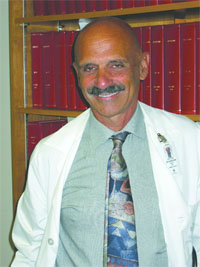
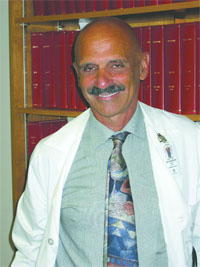
Nursing professor Jacqueline Keegan McColgan has been honored as the 2006-07 recipient of the Joseph J. Deliso Sr. Endowed Chair at Springfield Technical Community College. At STCC, the Deliso Endowed Chair award includes a $3,000 grant, with half to further the honoree’s professional pursuits and half in grant for the recipient’s academic department. McColgan is planning to use the department share of the award to update hospital equipment such as IV pumps and patient feeding pumps that are used in simulation experiences.

•••••

Diane M. Brzozowski, CPA, has been promoted to Audit Manager at Downey, Sweeney, Fitzgerald & Co., P.C., with offices in Springfield and Westfield.

Sections Supplements
Designating Someone to Handle Your Financial Matters

As you may have already heard or read, a Durable Power of Attorney (DPA) is a very important and beneficial document to have available, not only as you age, but at other times as well. It is a very powerful tool in the hands of the right appointee.

The usual and best form for a DPA is a broad and unlimited grant of authority by you (the principal) to your appointee (the attorney-in-fact), which authority is effective upon signing. The execution of a DPA fundamentally gives your attorney-in-fact the ability to be you as far as all of your assets and material possessions are concerned.

In the absence of a DPA, the only mechanism whereby somebody is authorized to act on your behalf is to go to the Probate Court and petition to have somebody appointed as either your Guardian or Conservator. In each of those instances, the appointee will have the power and authority to handle and manage all of your assets.

Whereas your attorney-in-fact is able to act without any supervision at all, the important and significant difference with a guardian or conservator is that the Probate Court will supervise their performance by virtue of the requirement of filing regular accountings. An accounting is the report to the court that lists assets received, their disposition, all income received, and each expense paid. While this supervision may seem desirable, it does include a degree of expense, formality, and time, which may not always be beneficial.

While the simplicity and directness, not to mention efficiency, of a DPA is more often than not appropriate, it does open up the opportunity for concerns relative to supervision. Think about it this way: Suppose you were to take all of your assets and convert them into widely circulated 10- and 20-dollar bills and place all of it in a strong box. Then, you hid that strong box in a place that only you and your potential appointee knew about. Finally, you assured your appointee that for one week he would be able to access that strong box without anybody in the world knowing or seeing. In that situation, are you willing to appoint this person as your attorney-in-fact?

If your answer is anything but an immediate and unqualified, “yes” with regard to that appointee, then you should not appoint that person and begin thinking about someone else. In most instances, people are completely comfortable with those they appoint and are able to derive the full measure of benefits available from an effective DPA.

You should also contemplate appointing a successor attorney-in-fact, since, if the document is worth having in the first place, it is worth having it be as durable as possible. Successors should be named who can serve in the event that the first, or even second, named individual is not available, and thereby allow for action on the principal’s behalf by somebody duly authorized.

Another consideration to bear in mind when appointing somebody to be attorney-in-fact is geography. Appointing somebody local rather than distant can offer both logical and logistical benefits.

Oftentimes people say that they cannot choose among the people they are considering, and therefore seek to appoint more than one person as co-appointees. While this is permitted in the context of a DPA, it is frequently discouraged for the reason that “rule by committee” often turns out to be no rule at all. This means that any disagreement between the appointees leads to inaction, or possibly controversy, and bitterness may ensue.

It is also important in the course of thinking about whom you might appoint that you contemplate who might best discharge the responsibilities of being an attorney-in-fact, rather than simply appointing the oldest or the closest geographically. In this way, you will have someone who will exercise rational and thoughtful judgment in the course of acting on your behalf.

The final aspect of this topic involves the issue of whether to utilize a durable power attorney that has a ‘springing’ power, or one that is effective immediately. A springing power is one where the attorney-in-fact’s authority to act comes into effect at such time as you are no longer able to function capably on your own behalf. This is to be distinguished from a DPA that is effective immediately upon signing.

As you contemplate whether your DPA should be effective immediately, consider the following: very often the point in time when you are no longer functioning capably is not a clear line in the sand. Disagreement and anxiety might arise between you and the attorney-in-fact who believes that it would be beneficial for you to have the help at a time when you might not agree.

Furthermore, if you are willing to appoint this person and trust him or her enough to take on this significant responsibility after you are no longer able to function on your own behalf, why then wouldn’t you want to take advantage of having them available while you are still competent to the extent that there are circumstances and/or opportunities when it might be beneficial or convenient to have that help?

There are likely to be times when you are traveling, or even if you are just feeling under the weather, when you can not get out to file a document, pay a bill, or renew a CD in a timely fashion. It can be very convenient to have your appointee available to take care of such things for you.

Despite the possible concern relative to the unsupervised authority of your attorney-in-fact, the durable power of attorney is indeed is one of the most desirable and beneficial documents to have within your estate planning arsenal.

Bruce M. Fogel is a lawyer with Bacon & Wilson Morse & Sacks in Northampton. He is a member of the firm’s estate planning, elder, real estate, and business departments. He has extensive experience in matters relating to income, gift, and estate taxes, and he focuses on the tax implications of all legal transactions; (413) 584-1287;[email protected]

Sections Supplements
Jobs Market Sees Little Pain, but Not Much Gain

Steady.

That’s the one and only word apparently needed to describe the local jobs scene. It represents the good news — “at least we’re not declining,” said Rexene Picard, executive director of the FutureWorks one-stop career center in Springfield, as well as the bad news, meaning that there is little if any growth to speak of. Steady is, in many respects, the only news.

The term applies, generally speaking, to the employment rate, which, for Hampden County, at 5.1%, is down one-tenth of a percentage point from this time last year. As for overall employment in the county over the past five years, the line on the bar chart is practically straight; the number was 204,800 in 2001, the start of the last recession, and it was 198,300 for mid- 2006, the latest data available. Conversely, the same line for the state looks more like an abbreviated ‘U,’ with 3.4 million people working at the start of ’01, 3.16 million at the low point in December of ’03, and 3.23 million by July of this year.

Steady also defines the broad picture in terms of job losses and gains. There have been a few hundred losses, most in manufacturing, over the past 12-15 months, and some gains, but mostly in the hospitality and distribution sectors, said Picard, meaning comparatively lower-wage jobs. This has been the trend for the past several years.

“In Western Mass., we don’t see the peaks and valleys that other regions of the country, and this state, do,” she said. “We tend to stay level, with no big drops.”

Steady, as defined in Webster’s Collegiate as ‘showing little variation or fluctuation,’ would also describe the state of the so-called skills gap in the region, a phrase used to depict scenarios when and where companies have the ability to grow but have difficulty finding individuals with the skill sets needed for the jobs in question.

This phenomenon is seen in precision manufacturing, and also in health care and especially nursing, said Bill Ward, director of the Hampden County Regional Employment Board (REB), noting quickly that grant-funded programs are underway to address the comparatively high job-vacancy rates in both sectors.

In the precision manufacturing arena, a $150,000 grant from the John Adams Innovation Institute is being used to fund a broad-ranging effort to improve the image of the that sector among both young people and their parents, and to put more individuals in a pipeline that will yield skilled workers who will provide long-term security for that industry. Similarly, a $250,000 grant is being utilized to address an ongoing nursing shortage in the region. Called CAN DO (Collaborating for the Advancement of Nursing: Developing Opportunities), the program will develop a structural framework for nurse advancement, from LPN through to a doctoral degree, and raise the bar for cultural proficiency within the profession.

Hampden County is one of 10 regions from across the country selected for the program from among nearly 200 applications, said Ward, adding that, if successful, CAN DO will put more individuals in nursing positions at the entry level and incentivise people to earn advanced degrees in nursing, enabling them to teach the subject at area colleges, thus allowing schools to accept more people into their programs.

The REB-orchestrated programs are among many short- and long-term efforts to help the region move beyond ‘steady,’ with regard to its employment picture and register real gains across several sectors.

For that to occur, many things will have to go right, said Joe Ascioti, owner of Agawam-based Reliable Temps, a company that handles staffing assignments across the board but is perhaps best known for its work in the manufacturing realm. He listed everything from the policies of the Deval Patrick administration, especially with regard to the cost of doing business in the Commonwealth, to efforts to improve local schools.

“We have a simple math test that we give to people when they come in the door,” he said of applicants for temp and temp-to-hire positions. “When I say simple, I mean basic multiplication, addition, and maybe some long division. And many people can’t pass it. We’re not going to lure jobs to this region if people can’t pass a math test.”

Work Study Job

Ascioti is also a frequent user of the word steady, and one can detect a general sense of frustration when he does.

Indeed, like others, he doesn’t mean it necessarily as a synonym for ‘good,’ although he acknowledges that things could be worse, and have been in years past.

Recently, he’s seen an ongoing trend among area companies, especially area manufacturers, to utilize staffing agencies as extensions of their own HR departments.

Elaborating, he said firms like his are used by businesses looking to outsource many of the steps in the hiring process, especially advertising for and the screening of candidates.

Individuals who pass muster (and the math test) are then subjected to a trial period lasting several weeks or months, after which, if they show enough ability and promise, they are added to the workforce. This ‘temp-to-hire’ process is certainly nothing new, said Ascioti, but what is relatively new, and disturbing, is the greater degree of difficulty for Reliable and other firms when it comes to filling orders.

They are almost always filled, he said, but sometimes it takes awhile, because the pool of qualified candidates is shrinking, and everyone is fishing from the same pond.

Creating a bigger pool is the broad goal for the region, he said, adding that there are several components to this assignment, including an improvement to the overall business climate in Massachusetts, and steps to reduce the number of individuals flunking Reliable’s math and reading tests.

“The climate in Massachusetts isn’t very good, and it could get worse,” said Ascioti, noting that several companies have left the region in recent years, and more will if other steps, such as mandated health insurance, are taken. “I think a lot of companies are waiting for one more straw, and that will be the one that prompts them to leave.

“If you’re a CEO looking to expand, you want to be in a state that has a favorable climate for business,” he continued. “Massachusetts is at the point where it needs to be careful.”

In many respects, Western Mass. has performed better than the state overall, from an employment perspective, over the past five years, said Ward, noting a slower rate of out-migration, actual growth in the labor force, and a less-pronounced decline in overall employment.

Statistics provided by the REB show there were 6,500 fewer jobs in Hampden County in 2005 than there were in 2001, the employment peak for this region and the state. The biggest gains came in health care (nearly 1,500 new jobs); education (almost 800), and the broad category called ‘other services,’ meaning those not in hospitality and retail, for example (2,100). The losses, meanwhile, came in manufacturing, a decline of 4,700; retail (1,470); finance (1,199), transportation and warehousing (1,019); ‘information’ (1,200); and government (723).

Projecting what will happen for these sectors in the months and years ahead is difficult, said Picard, who again summoned steady to describe what is likely.
In October, job postings were down roughly 16% from September and 16% from October of ’05 at FutureWorks, she said, noting many factors could be contributing to a general state of cautiousness when it comes to hiring.

These include the state of the housing market (better than in Eastern Mass., but still slower than a year ago), energy prices and their instability, and even uncertainty about the future of the war in Iraq — a concern to many companies that supply defense contractors.

“Some area firms are hiring,” she said, listing Smith & Wesson, which has added some new product lines, Performance Food Group, Big Y, and others. But overall, the region is seeing individuals move within the market, as companies compete for skilled workers, rather than real gains in employment.

As for the long term, Ward projects that real job growth can and probably will occur in health care and education, and perhaps precision manufacturing, including the development of a medical instruments cluster — there are a few companies now specializing in such manufacturing, and there is potential to expand that base, he said.

Much will depend on efforts to reduce the region’s vacancy rates, which are, in several fields, higher than the state’s.

The precision machining initiative, a two-year program, is already producing some results, some Ward, noting that enrollment is inching up at area technical high schools, and work continues to develop an interactive Web site that will inform young people and their parents about the many benefits of careers in machining.
Meanwhile, Ward is optimistic about CAN DO and its potential to eventually increase the number of nursing graduates at area schools.

“UMass had to turn away a large number of applicants because it just didn’t have the space for them, because they didn’t have enough faculty,” he said. “This program will streamline and facilitate the process of people working toward their master’s and doctorate degrees.”

Employing Logic

When asked for a prediction on the job market for 2007, Picard didn’t venture very far out on the limb.

She said some companies and sectors will likely register some small gains, but the factors she listed earlier — the housing market, energy prices, even uncertainty over the Patrick administration — will probably trigger only tepid growth.

In other words — or in another word — the region can expect more (you guessed) of that term steady.

George O’Brien can be reached at[email protected]

Features
AIC President Vince Maniaci Orchestrates a Stunning Turnaround
AIC President Vince Maniaci

AIC President Vince Maniaci

He barely had his boxes unpacked before AIC president Vince Maniaci realized he had a big problem on his hands – a waning sense of community and pride at the private college that was dwarfed only by a $5.3 million deficit. The 122-year-old institution is now back in the black and its leaders are focused on regaining what was lost – and creating what never was.

Vince Maniaci, president of American International College, has a number of signature phrases he’s coined that are directly related to AIC and the turnaround he’s trying to create.

He says all of the changes on campus are “mission-centric” and “market-smart,” meaning they don’t stray from the institution’s core educational values, and are made with attention to the state of the local economy and the region’s strengths and weaknesses.

He also says he’s trying to “put the international back in American International,” a pledge that is leading to some intriguing global developments at the school.
Finally, he says that AIC will “tolerate excellence, but its goal is perfection.” Of all his quotable quotes, that’s one of Maniaci’s personal favorites, and also probably the loftiest goal he, or any college president, could create for himself.

Indeed, AIC is only now gaining solid footing after standing on shaky ground for some time. Maniaci took the helm in August of last year, after serving as the vice president for institutional advancement at Bellarmine University in Louisville, Ky. He succeeded long-time president Harry Courniotes, who announced his retirement plans in October of 2004.

Maniaci remembers first discovering that the college was in dire straits his fifth day on the job, when a financial review of its books revealed a $5.3 million shortfall in the budget for 2005. The audit also showed the college had consistently come up short for several years, dating back to 1997.

“That made it abundantly clear that we were not financially sound, and it was shocking to me, but more shocking to the Board of Trustees,” he said. “We were in bad shape, and the vultures were starting to circle. We had to focus not on creating a healthy surplus, but just on breaking even.”

To do that, the college entered a deep freeze; $1 million was slashed from AIC’s operating budget — in some cases, the loss was fat, but some pet projects across all departments also had to be sacrificed. A total of 15 positions were eliminated, and the pension fund was frozen and later replaced with a defined contribution plan.

“It was painful,” Maniaci said, “But we did it about as well as we could, and it’s really what began the renaissance here.”

It also pushed Maniaci into the spotlight much sooner than he expected and for less auspicious reasons, but the images that attention created were not always of somber financial reports and layoff announcements.

As freshmen moved into the dorms during AIC’s orientation weekend, for instance, they had help from a man wearing a yellow sweatband that read ‘President.’ He introduced himself to parents as Vince, and made that same promise to “tolerate excellence.”

His unconventional approach persists on campus. He makes an effort to memorize every new student’s name, and they call him Vin, Vinny, and ‘Manach.’ His office is adorned with the standard certificates and diplomas of any college president, as well as one of C.M. Coolidge’s oil renderings of dogs playing poker.

“You have to have a sense of humor,” said Maniaci. “Especially when it comes to survival.”

School of Rock

That positivism adds to an already amplified sense of change at AIC since Maniaci arrived. At 47, he’s a young college president who succeeded one of the country’s oldest, who led AIC for 36 years, and who worked at the college for longer than Maniaci has been alive.

Maniaci has also instituted more changes in a year and a half than the campus saw in the decade prior to his arrival. Positions have been cut and rearranged, titles have been adjusted, programs have been both changed and added, and the doors of some campus buildings have closed while others have opened.

But in the midst of continued upheaval, one thing is certain – the college’s finances are improving, and that can be seen plainly in black and white.

Following that paralyzing financial review in 2005, the college was projected to see an additional shortfall of about $4 million this year. But as the year draws to a close, the books will show a $500,000 surplus on a cash basis. In addition, the school’s retention rates ticked up by 8%. Adding to the positive press was the recent announcement of a new master’s program in nonprofit management, and earlier in the year, the announcement of a new Web-based master’s in nursing.

In fact, new program announcements have become common occurrences at AIC, and Maniaci credits many of them with contributing to the speed at which the institution has returned to health.

“Yes, there were cuts,” he said, “yes, there were layoffs. But there has also been a lot of reallocation of resources, a brand new marketing plan has been put into place – we weren’t marketing globally before, now that’s very much a focus – and several new programs have been instituted, so far with very good success rates.”

“We won’t grow through austerity,” he said. “We will grow through recruitment and by creating an identity that both fits and benefits our students and the city we’re in.”

The first new development came just three months after Maniaci arrived, when dual admissions agreements were signed between AIC, Springfield Technical Community College, and Holyoke Community College in October 2005. The agreement, which allows students to transfer automatically to AIC after successful completion of coursework at one of the two-year schools and also provides $4,000 scholarships, created a new pipeline of students and marked the first such arrangement with a private, four-year college in the area. Since that initial agreement was signed, Greenfield Community College, Berkshire Community College, Capitol Community College in Connecticut, and Bermuda College have entered into similar agreements with the college.

A month later, the AIC’s ‘Community Engagement Initiative’ was unveiled, which awards $10,000, four-year, renewable scholarships to Springfield homeowners and their children. The program was initially opened to the 4,000 residents of the city’s Bay Area, including portions of State Street, Tapley Street, Roosevelt Avenue, and Mason Square. Now, it is being expanded to other areas.

The Web-based nursing degree, a master’s in Nursing Education, was announced in May of this year, augmenting the master’s in nursing program that itself is only two years old, but was added to enhance what is currently AIC’s largest major with 350 students. That announcement was followed in September with the unveiling of the Nursing Workforce Diversity Collaborative Project, designed to introduce health-related careers to disadvantaged high school students, with the help of a $1.1 million grant from the Department of Health and Human Services.

And the newest addition to the curriculum, the master’s in nonprofit management, was created, Maniaci said, to fill a need within the nonprofit and human services sector of Western Mass.

“There are thousands of people who are underserved in this area, and that creates a defined need and a demand for expertise,” he said, “and we are the ideal institution for this program.”

There are other changes that garnered fewer headlines; a set of satellite campuses have been created across the Commonwealth in high schools, community colleges, and other locales, offering a master’s in education in the Greater Boston area. The high hedges that once weaved through the campus quad were leveled, picnic tables were added outside of the dining hall, and an international student lounge has been created in Sokolowski Tower, a building that, previously, was the subject of a joke among many students at the small college who never knew what it was for.

News, Views, and Brews

New additions, academic and otherwise, are a long-term answer to the college’s ills, said Maniaci, and foster continued growth rather than reinforcing the status quo. He added that the creation of new initiatives is not as damaging to the bottom line during troubled times as many might suspect.

“The effect on the bottom line is not bad,” he said. “People forget that new initiatives, especially scholarship programs, bring in students who in turn bring with them a certain amount of state and federal money.

“And the fact of the matter is, our budget is balanced, and now we can begin reinvesting.”

Moving forward, activity is not slowing down at AIC. In an effort to increase its international reputation, Maniaci is working to create satellite campuses in global markets such as Cairo and Bermuda, where a joint admissions agreement already exists with Bermuda College. He said he’s looking primarily at secondary markets – not China or other locales in high demand for American ventures, but rather smaller, promising markets such as Ireland and The Netherlands.

Stateside, plans are being mulled for an MBA with a global focus and, more locally, for a degree program tailored for paraprofessionals in education, to address the need for qualified teachers in the Greater Springfield area.

And in terms of physical development, a new pub is being added to the campus that will serve coffee during the week and beer and wine on the weekends. It’s an interesting addition, as many schools across the country close their on-site bars to ‘go dry.’ What’s more, the pub – The Stinger – will occupy what was once the faculty dining room, an amenity that Maniaci permanently removed.

“I am not advocating underage drinking or excessive drinking at all,” he said, “but let’s be real: there is no such thing as a dry campus in this entire country. And I also have no enthusiasm for students driving downtown to drink. What this is about is establishing a sense of community on campus.”

That sense of community is one of the intangible qualities Maniaci is trying to foster in tandem with cold, hard business improvement. He said he sees it happening – he receives reports that classroom behavior has improved, registration numbers for the spring semester are healthy, and interest in the college newspaper The Yellow Jacket has been revived after a few stagnant years. The most recent edition features a cover photo of Maniaci, with a New York Post-like headline that simply reads ‘The Man.’

A Man with a Plan

Maniaci is quick to accept the compliment, and just as quick to accept that not every decision he’s made has been popular.

“Transition is hard, and it’s particularly hard in an institution of higher learning,” he said. “We are largely a group of open-minded thinkers, but there’s an irony there, because we also have a tendency to harken back to the past.

“A lot of change was necessary,” he added, “and even I had no idea how deep the cultural shift was going to go. But we have a noble mission, and to achieve our goals we need to stay centered on that mission, run this place like a business, and make difficult decisions.”

The challenges will persist, he said, among them a loss of a sense of urgency among AIC’s administration, now that the college is no longer floundering in a sea of red.

“We have escaped imminent doom,” said Maniaci. “My worry is we could lose our edge, and we absolutely can’t afford to lose our edge. Still, we are stable, and that in turn makes a good base for creating excellence.”

And from excellence, there is the possibility of perfection.

Jaclyn Stevenson can be reached at[email protected]

Sections Supplements
STCC’s Patient Simulators Open New Doors to Learning
Nursing student Tracy Stanlewicz

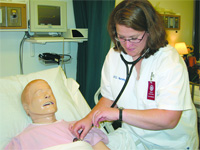
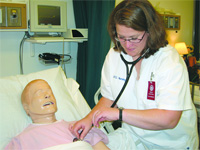
Nursing student Tracy Stanlewicz checks the vital signs of one of STCC’s 14 patient simulators.

When Springfield Technical Community College bought its first patient simulator several years ago, it was a fresh idea in medical education. Now many more colleges are getting on board. They increasingly realize what students and professors at STCC have known for years: that real-world experiences in medical training lead to real-world successes later on.

Michael Foss remembers the day, during his medical training, when lightning struck — a moment both terrifying and valuable.

“I was transporting a patient down an elevator, and lightning struck outside,” said Foss, now dean of the School of Health at Springfield Technical Community College. He recalled that the elevator suddenly stopped, the lights switched off, and the patient, who was hooked up to a respirator, stopped breathing.

“It scared the hell out of me,” he said. “In a matter of seconds, I was completely alone with the patient. All of a sudden, the lights came back on, the elevator jumped, and the patient started to breathe again.”

As Foss related this tale, he leaned forward with a sneaky grin. “We can do that kind of cool stuff here, any time we feel like it,” he said — thanks to a growing collection of state-of-the-art patient-simulation mannequins that can replicate virtually any situation a nurse or other medical professional might encounter in real life.

Say a couple of students are transporting a ‘sim’ patient, thinking they have done everything properly to stabilize him. “If they start to get complacent, thinking everything is cool, we can make everything not OK,” Foss said. “We can have that patient take a dive in the hallway or the elevator or anywhere else we feel like.”

These sim patients — which simulate movement, breathing, and a host of vital signs — are given the human touch by a professor, who monitors students’ interaction with the patient from another room using a camera. The professor not only serves as the patient’s voice, but uses a computer to direct responses and vital signs.

Patricia Hanrahan, director of Clinical Education at STCC’s School of Health, used the example of a blood draw to compare patient simulators to ‘task trainers’ like a realistic — but unmoving — arm.

“When they put the needle in the patient’s arm and the patient passes out, they not only have to figure out what to do with the patient, but what to do with the needle,” she said. “There are two sets of expectations that are simultaneous.”

But then, there’s a payoff. “A student came to me with a great big smile on her face and said, ‘I did it.’ The same thing happened to her in a clinical setting, and she knew exactly what to do. The people at the agency were so impressed that they hired her on the spot for an externship.”

In this issue, BusinessWest looks into the history of patient simulation at STCC — and why it is proving beneficial not just to students, but to real patients everywhere.

Starting Small

The college’s first attempt at patient simulation was in its sonography program, and was a computer-based simulator that looks and acts like a real ultrasound scanner. When a student moves a probe across the patient’s body on the table, the screen brings up actual ultrasound images on the screen.

“That’s how we got started in simulation,” Foss said. “Then we decided to go to full-size human patient simulators, so we made a large investment in an adult male and a pediatric male that could be plugged into the same piece of computer equipment. We opened our patient simulation center and used it for respiratory care, mostly.”

Meanwhile, other faculty members were intrigued by the possibilities of this pair of talking, breathing simulators. Soon after, a nursing graduate who was working for a simulation company approached the college about lending another full-size sim in exchange for the chance to conduct some research on campus.

As time went on, the roster of sims in the department continued to grow to its current total of 14, with a mix of different ages, genders, and ethnicities.

“For a long time, the airline industry has demanded that pilots go through cockpit training in simulators,” Foss said. “We thought, if it’s good enough for pilots to keep people alive, it would probably work for students going into the health care field.”

Each year brings further advances, so that the sims can be updated completely through software. The newer models are also mobile and not confined to a bed setting.

Mobility has opened the use of sim patients to many more departments than the original models did. For instance, the first patients couldn’t be moved into the chair for Dental Assisting students to work on, as is possible today.

“We put a portable patient in street clothes, put him in the chair, and one of the faculty acted like the doctor and gave him a shot of anesthesia,” Foss said. “As the patient was conversing with the dental assistant student, he started to have slurred speech and wasn’t very responsive. We were watching this on a camera and changing all the vital signs, just like what might happen in a real patient situation.”

Confidence and Competence

It’s important, he explained, for students to experience these bumps in the road during seemingly routine procedures now, when no one’s health or safety is actually at stake.

“We’re making sure that the context and environment students learn in is as close as possible to the environment they’re going to work in after graduation,” he told BusinessWest. It’s an effort that goes beyond the sims; the college has been renovating its health education facilities to make the rooms look more like real medical settings as well.

That realism today will build some essential skills that aren’t learned in a textbook, Hanrahan said.

“In clinical education, confidence and competence are very important,” she explained. “When students feel more confident about their skills, they tend to act more competently in the clinical area, and that gives them even more confidence to make clinical decisions.”

The hands-on training is not to be understated, Hanrahan said, recalling one student who aced a written exam, yet flunked the accompanying simulation test. Better to fail in class, of course, than with real patients.

“Before they go to their clinical training, they can walk through that environment here. Then, when a similar thing happens, they feel like they know what to do.” It helps that all simulations are taped so students may review their decision-making and responses with professors afterward.

“We’ve had task trainers for years — parts of the body,” Foss said. “So they can stick the needle into the plastic arm, but the arm does not react. Our patients will react. We can have them refuse — and that brings up an entirely different set of skills. Then, when they’re in a stressful situation with a patient down the road, they can draw on this and say, ‘I’ve done this before.’ It helps them to relax.”

He compared the experience, again, to flight simulators that train pilots — technology so advanced that it’s indistinguishable from performing actual maneuvers thousands of feet above the earth.

“We’re almost to that point, where we’re suspending the users’ disbelief,” Foss said, noting that the hospital-like settings of the rooms are crucial to the illusion.

When we put the simulator on a hospital bed near the normal things you’d find in a hospital, it becomes more real and meaningful to them. I feel strongly that we’ve often taken hands-on experiences in medical training out of context; with the patient simulators, we’re putting it back into context.”

Scary Moments

That context, of course, can be decidedly unnerving.

“I can assure you,” Foss said, measuring his words, “that we can make this one of the scariest moments of your career. We can throw things at you at a very high level that will make you sweat.”

That’s partly because few students ever get everything exactly right, he explained. “You may think you’ve given the right dose for this patient, but you didn’t because you forgot to check his weight. Or perhaps you left the room, and when you came back, you didn’t check his name appropriately. Or you didn’t do chest compressions properly. You thought you did, but the computer knows better.”

But the sims don’t only develop proficiency. They also help students understand that even their best efforts aren’t always enough. “We do, sadly, kill patients,” Foss said. “There are times when you do everything right, and the patient still dies.”

That’s a useful lesson, Hanrahan said. “Students are able to problem-solve not only what they did, but how they feel about it, how to make sense of it, how to communicate with family members. This is not about merely technical or psychomotor skills; it’s about taking care of patients. We give them an environment where they can reflect and faculty who help them reflect.”

Some pick up the concept sooner than others. Foss recalled a tour of visitors to the classrooms during which he voiced one of the patients as a man with Alzheimer’s disease. As the group discussed the patient simulators, Foss, as the sim, kept asking for his long-dead wife, and one of the visitors became intrigued.

“She interrupted the conversation and said, ‘Let’s listen to him. He sounds like he has Alzheimer’s.’ And she had it, dead-on,” Foss said. “You can’t do that with a task trainer.”

Then there was the time a student successfully helped his sim through a critical moment and had him stabilized. Another student took over at that point, and instead of taking it easy or asking for help on what to do next, he started talking to the patient, noting on his records that he smoked two packs a day, and that wasn’t good for him.

“He basically went through a very personal health education moment. We were not expecting that, and it blew us away,” Foss said. “Both students did an exceptional job, and because of that, they have the confidence and competence to handle such a situation.”

Expanding Upon an Idea

Meanwhile, STCC has achieved the competence with patient simulation to become a model for the other 14 community colleges in Massachusetts. Three years ago, hardly any of the other campuses had patient simulators, and now about half own at least one, with more coming on board all the time. And that’s important, Foss said, because although community colleges aren’t turning out doctors, they do supply the bulk of new nurses and other medical personnel across the state.

“If we can help introduce patient simulation to other schools, we’re actually improving the quality of health care across the entire Commonwealth, so that’s our goal,” he said, noting also that simulation also carries some intriguing workforce-development possibilities, such as hospitals sending employees to a local college campus to train on a new procedure.

“It has even been suggested to us as a pre-hire evaluation,” Foss said. “If you want to know for a fact that an employee can do a whole set of skills, you send them to a patient simulator and let them prove it.”

Hanrahan said such efforts would not be out of line with the patient-safety goals so prominent in the modern hospital setting. “All health care institutions are very focused on patient safety as a quality issue,” she said. “We can create and recreate situations that help people evaluate their ability to practice safely.”

They’re doing so by teaching students how to focus on the patient, Foss said. Instead of asking the professor what to do next, students are gradually trained to direct questions to the patient. And technology is continually improving to help suspend students’ disbelief, including baby sims who are “delivered” from adult-size sims; the babies come out with a blue tint and eventually turn pink — as long as the student makes the right decisions.

“It’s powerful to see students acquire mastery,” Hanrahan said. “These students are providing the employment pool in the local and not-so-local health care arena, and we want them to feel that they’ve mastered what they came here to accomplish.”

It’s a sudden rush of knowledge that can hit a student like — well, like a bolt out of the sky.

Joe Bednar can be reached at[email protected]

Departments


Douglas A. Bowen

Holyoke-based PeoplesBank announced two key promotions at the executive level: Douglas A. Bowen has been promoted to President and Chief Operating Officer from his current role as Executive Vice President and Chief Lending Officer.


Joseph D. LoBello

Current President and Chief Executive Officer Joseph D. LoBello is taking on the new role of Chairman and Chief Executive Officer. The announcement follows a Nov. 15 unanimous vote of the Board of Directors of PeoplesBank. “Doug Bowen and I have worked side by side to make this institution the premier community bank in Western Mass.,” said LoBello. “He is a results-driven, strategic, and creative leader with over 30 years of progressive banking experience. Doug also has a strong connection to our community and has dedicated countless hours of volunteer service toward enhancing the quality of life in our region.” In his former position of Chief Lending Officer, Bowen was directly responsible for the PeoplesBank commercial and consumer-lending portfolio of over $1 billion, with much of this growth attributable to the Commercial Lending Division that he started in the late 1980s. LoBello will continue to remain active in the overall management of PeoplesBank in his new role as Chairman and Chief Executive Officer. He joined Peoples Savings Bank in 1992 as President and Chief Executive Officer when the Bank had assets of approximately $400 million. Since that time, he has led the planning efforts and the management team that have grown the bank into a market leader with over $1.4 billion in assets today.

•••••


Heather G. Beattie

Attorney Heather G. Beattie has been appointed a Partner of Morrison Mahoney LLP in Springfield. Her practice is concentrated in the areas of general liability defense including medical malpractice, professional liability, and health law. Beattie has more than 32 years of combined experience in the health care and law fields.


•••••

William F. Steplar has been promoted to Investment Services Officer at Easthampton Savings Bank.

•••••

Ruth Moriarty has been appointed Activities Director at Sarawood Assisted Living in Holyoke.

•••••

The Greater Springfield Convention and Visitors Bureau has appointed Jennifer M. Marion as Convention Center Sales Manager for the MassMutual Center in Springfield.

•••••


Steven G. Budd

Steven G. Budd, Assistant Vice President for Institutional Advancement at Springfield Technical Community College, has been elected President of the National Council for Resource Development. Based in Washington, the council serves more than 1,550 members at two-year colleges throughout the United States. In addition, the council focuses on professional development for fundraising professionals and develops leaders in the field.

•••••

The Springfield-based law firm of Bacon & Wilson, P.C. recently announced its merge with Monsein & MacConnell in Amherst. Bacon & Wilson wanted to expand its reach across the river in Hampshire County, and Monsein and MacConnell’s well-established real estate and litigation practice is complimentary to Bacon & Wilson’s ideals and goals. The newest members of the Bacon & Wilson team are:


Stephen B. Monsein

• Stephen B. Monsein, a member of the domestic relations and litigation departments. His work is primarily concentrated on divorce cases, but he also handles personal injury cases and does a significant amount of OUI defense work each year. He is a Fellow with the Massachusetts Chapter of the American Academy and Matrimonial Lawyers and has been active in Pelham Town Government and UMass activities for many years.


Peter W. MacConnell

• Peter W. MacConnell, a member of the real estate department handling both residential and commercial transactions. He also spends a considerable amount of time on zoning and land-use issues, almost exclusively on the developer side. In addition, he also does estate planning and corporate legal work.


Stacey D.C. Brock

• In addition, Bacon & Wilson recently hired Stacey D.C. Brock. She will split her time between the Amherst and Springfield offices. Brock is a member of the litigation department with a strong background in education law and both criminal and civil litigation. She is a former staff attorney in the Special Education Division of the New York City Department of Education, where she focused primarily on IDEA and Section 504 compliance. She has also represented parents of children with special needs in their attempts to seek appropriate services from their school districts. Brock is an Amherst Town Meeting member and a member of the Board of Directors of Berkshire Art and Technology Charter School.

•••••


Thomas Manzi

Thomas Manzi, a financial advisor in Springfield, has been elected to his second term as President of the Exchange Club of Springfield.


•••••


Bank of America’s Global Wealth & Investment Management division has named Nina Charnley as Northeast Regional President for The Private Bank of Bank of America.

•••••

Terry Bartus has joined Century 21 Pioneer Valley Associates as a Sales Associate.

•••••

David E. Pelkey, Director of Manufacturing at Merriam-Webster Inc. in Springfield, has been inducted into the Publishing Executive Hall of Fame, an honor given to leading publishing executives in book, magazine, catalog, and advertising promotion.

••••


Meyers Brothers Kalicka, P.C. of Holyoke and Greenfield announced the following:
• Anthony J. Gabinetti, CPA, has joined the firm as a Senior Manager in the Holyoke office;
• Bridget M. Hale, CPA, has joined the firm as a Senior Associate in the Holyoke office;
• Abigail Kingman and Kaitlin E. Scahill have begun a 10-week internship in the Holyoke office;
• Maura J. Perry has joined the firm as a Bookkeeper in the Holyoke office, and
• Deborah A. Gates has joined the firm as a Receptionist in the Holyoke office.

•••••

TD Banknorth Massachusetts in Springfield announced the following:
• Kenneth F. Tobias has been promoted to Assistant Vice President in Merchant Services, and
• James W. Broderick Jr. has been promoted to Senior Vice President in the Commercial Real Estate Lending division.

•••••

The Bank of Western Massachusetts in Springfield announced the following:


Sandra J. Batura

• Sandra J. Batura has been appointed Assistant Vice President and Private Banker with responsibility for the development of new business via financial planning as well as providing personal banking and credit solutions for clients;


Erin L. Couture

• Erin L. Couture has been appointed Credit Officer and Portfolio Manager with responsibility for the coordination of, and analytical support for, all commercial loans and assisting commercial lenders in administering a portfolio of commercial loans and renewals as well as monitoring lines of credit;


Michele A. Lindenmuth

• Michele A. Lindenmuth has been appointed Assistant Vice President and Small Business Lender/Market Manager with responsibility for the overall day-to-day operations of the State Street, Springfield branch, and


Cathy A. Roberts

• Cathy A. Roberts has been promoted to Assistant Vice President and Mortgage Officer with continued responsibility for developing and maintaining new mortgage business.

•••••

The law firm of Graham and Albano, P.C. in Hadley has hired Patricia A. Szumowski as a Partner. The firm will be known as Albano and Szumowski, P.C. Szumowski’s practice will focus on litigation in federal and state courts.

•••••

Dave Boisselle has been promoted to Vice President of Operations for J. Polep Distribution Services in Chicopee.

•••••

Dr. Stephen A. Wolman, an endodontist, has joined the team at Valley Dental Eastfield at 1655 Boston Road in Springfield.

•••••

John Majercak, Director of the ReStore Home Improvement Center in Springfield, has been elected to the Board of Directors for the Building Materials Reuse Association.

•••••

Dr. Adnan Dahdul, Medical Director of HealthSouth Rehabilitation Hospital of Western Mass. in Ludlow, recently received HealthSouth Corporation’s ‘Outstanding Medical Leadership Award.’ Dahdul was chosen as the 2006 award recipient from among more than 100 HealthSouth medical directors throughout the country.

•••••

Countrywide Home Loans has promoted Kathleen Dancy to Branch Operations Manager. She will manage the West Springfield operations department.

•••••

Hay Creek Hospitality LLC has named Victor Cappadona as General Manager of the Orchards Hotel in Williamstown.

•••••

Dr. Joseph P. Coppola, Medical Director of Amherst Medical Associates, has completed and passed the examination for recertification in Internal Medicine.

David M. Orfalea has been promoted to District Manager for Modern Woodmen of America, which offers financial services and fraternal member benefits to individuals and families throughout the country.

•••••

The Ludlow Chapter of Business Networking International recently presented Tani Dugger, owner of Insight Photography, with a certificate of achievement for passing the highest number of referrals at its October meeting.

•••••

Weiner Law Firm, P.C. has elected Gary M. Weiner to a three-year term as attorney member of the Board of Governors of the Commercial Law League of America.

•••••

Raymond Glick of Glick’s Lawns of Huntington has joined the Professional Landcare Network, which provides ongoing educational and safety programs.

•••••

Cashman and Katz Integrated Communications of Glastonbury, Conn., has hired Preston Oliver as Assistant Art Director and Web Developer, and Kate Guerin as Public Relations Associate.

Sections Supplements
Inspired by the Birth of a Nation — and a Notion
Lauren Way

Lauren Way

Lauren Way remembers her early days as a young entrepreneur as a wild, intense learning experience.

She was in her early 20s and had just founded an international commodities trade company in the former Soviet Union, after majoring in Russian Civilization at Smith College. She said she expected the experience to be eye-opening and life-changing to a degree, but never expected to find herself embroiled in one of the most notable shifts of power and culture in history, as the Soviet Union dissolved and was replaced, by no means smoothly, by a Democratic, free-trade society.

Theese were times of flux and of famine, she said, recalling days watching tanks roll by while waiting in long lines, clutching ration tickets, for the only available food. Sometimes it was eggs, sometimes it was bread, but it was always scarce.

Today, Way is a professor and director of the entrepreneurial program and cooperative education initiatives at Bay Path College, and, though the road from Russia to Western Mass. was long and winding, she says those early experiences in a volatile setting played a large role in her decision to continue studying entrepreneurship and innovation, and, in turn, bring that knowledge with her to the world of academia.

Budding Abroad

This wasn’t a career path she’d planned, but one she has since embraced as an apt result of a diverse educational and professional background.

Way’s first entrepreneurial venture, as she sees it, was actually academic in nature; as a high school student in Chester, Vt., she researched private schools, applied for scholarships, and, after finishing most of the necessary leg work for admission and financing on her own, presented her parents with a proposal to attend Kimball Union Academy in New Hampshire.

“It was my first entrepreneurial approach to anything,” she said. “I was progressive about my own education, and that led to new opportunities, in addition to surprising my parents.”

Way did the same when researching colleges, and while at Smith, continued to follow her own unique path, selecting a major that few business owners have on their resume.

“I chose Russian Civilization because I love the language,” she explained, “and they say to major in what you love.”

The course of study led her to take her junior year (1990 to 1991) abroad through the American Collegiate Consortium International Exchange, during some of Eastern Europe’s most turbulent times. While honing her Russian language skills, Way also received a crash course in the ways of survival in a country undergoing a revolution. She quickly learned that nothing was free, and everything was hard to find, from luxury items to the most basic of necessities.

“That was definitely the most malnourished year of my life,” she said, adding, however, that her affinity for Russian culture only grew during her time in that country, and though she completed her study abroad and returned to the states to finish college, she soon went back to Russia to start a business with four Russian partners in 1992, importing everything from cooking pots to Portuguese wine.

It was an experience, she said, that offered a magnified view of the challenges associated with entrepreneurship and international business.

“We were really just testing the idea, pushing the buttons to see if we could make this work,” she said. “It was profitable, but the entire country was in flux. The value of rubles would change, drastically, literally overnight, and new laws were drafted from day to day and we had to interpret and reinterpret them.”

That shipment of Portuguese wine, for instance, weighed in at 20 metric tons and had the makings of being one of Way’s most promising imports, until while still in transit the import tax skyrocketed by 15%. Still, the venture proved to be an overall success, and a defining experience in Way’s life.

“At the time, I didn’t know if I had it in me, and conversely there were moments when I thought of myself as a failure because the business didn’t make me an amazing millionaire,” she said. “But I learned so much about entrepreneurship and about what I was capable of, and that’s an important idea to learn, and instill in others.”

From East to West

Way remained involved with the trade company for two years before selling her portion of the business to her partners and moving on to work with the international law firm White and Case as a paralegal in Moscow, continuing to interpret those complex laws in the new Russia. That four-year chapter in her career, as she calls it, also led to fluency in the Russian language and a solid understanding of the business climate in that country, as well the international scene.
However, like most entrepreneurs, Way was soon on the lookout for a new venture.

“I returned to the U.S. in hopes of finding something where the bottom line wasn’t money, but people,” she said, noting that she embarked on a series of meetings with other entrepreneurs in a sort of independent fact-finding mission, gleaning information on new opportunities, business practices that worked, and the individual strengths and histories of other successful business innovators. For a time, Way made ends meet with a succession of odd jobs, among them tending bar and serving as an interpreter at the 1996 Olympics in Atlanta.

Repeatedly, though, Way said she was attracted to academia, and the notion of developing her own entrepreneurial spirit and that of others on a formal level. She returned to Western Mass. — in part to take advantage of the vibrant college presence and also to enjoy the pace of life she experienced as an undergrad — and completed work toward a master’s in education at UMass Amherst. Soon after, in 1998, she took a post at Hampshire College as associate director of the Lemelson Assistive Technology Development Center.

“I wanted to be doing something that made me feel like I was making a meaningful difference,” she said, “and higher education is a field that I knew would allow for a wide-ranging approach to my career — one that would allow me to be a generalist, share my strengths, and also learn about several different things.”

Pioneers and Pathways

Way, who is now working toward a doctorate in Education focused on policy and leadership studies at UMass, remained at Hampshire College for eight years, managing an invention, innovation, and entrepreneurship program, developing curriculum, co-teaching a soft goods design course, and advising students on intellectual property and entrepreneurial business ventures. She joined Bay Path earlier this year, and describes her new position as a hybrid, one that couples theory-based teaching with practical program planning and the development of a broad, entrepreneurial focus at the college across all disciplines and departments.

“I think the college was looking for a specific type of person, one with a background in entrepreneurship as well as higher education,” she said. “The primary goal is to instill the entrepreneurial and innovative way of thinking, and programs leading to that on campus have grown so quickly that, in effect, we are academic entrepreneurs.”

Way added that while entrepreneurship is more often seen as an innate skill that, further, is only applied in the business world, she sees higher education as a perfect climate for fostering those entrepreneurial skills. She also sees the development of such programs at the collegiate level as necessary in a world that is increasingly homogenized, and in need of new, innovative solutions to issues both large and small.

“Teaching entrepreneurship is very multi-faceted,” she said. “If you just look at it from a business standpoint, you’re missing out. Practical knowledge can be augmented with theory, and I think it’s also false that creativity cannot be taught. I think it can be taught, or at least unleashed, in all types of students.”

Thus, it’s not just the creation of new businesses or products that Way hopes to see result from Bay Path’s entrepreneurial programming. Rather, it’s a more all-encompassing, entrepreneurial mindset, which can be applied to myriad situations — be they new business ventures, existing positions, or career paths.

“I’d like to see students take a more entrepreneurial approach to their careers and their lives in general, to latch on to that entrepreneurial way of thinking and to look at it as a process,” she said. “It’s increasingly necessary in order for people to propel themselves forward, and there is real value associated with the process.”

To that end, Way is in the midst of several initiatives at Bay Path designed to strengthen the entrepreneurial spirit on campus and, in turn, create a destination for women around the world in search of a cohesive, business-based education that will couple academic theory with tangible opportunities.

“My vision is that women will be able to come here with a business idea and graduate with that business up and running,” she said. “Making connections, marketing, accounting, public relations … these are all things that students can learn while in school, and in turn apply in real-life situations. Through this model, they can often do both at the same time. ”

Entrepreneurial programming is still a work in progress at Bay Path, but Way is a large part of its move forward. Already, students are working with local companies to solve actual business challenges, such as those associated with an expansion or change in product line, and are taking part in ‘live case studies’ involving those companies and the success of the new initiatives employed. Way will play a key role in writing grant proposals and helping the college secure additional funding for such initiatives as well, such as a three-year, $143,000 grant the Coleman Foundation awarded the college in 2005.

Students are also now taking part in a cooperative education program similar to an internship.

“It’s different from an internship in that it connects theory with practice in a way that internships often don’t,” said Way, and that’s where the bulk of her efforts lie in her new position — making connections between what is possible and how to apply that in a real-life setting.

The Next Line of Defense

That’s also a goal she plans to benefit from herself. Despite her varied history, Way said she has found a haven in higher education in which she intends to stay. Her goals for the future include advancing into higher-level administrative positions in education, perhaps even a college presidency in later years.

“I definitely see myself going deeper into the academic world,” she said. “I take a holistic approach to my job, and it’s exhilarating to see students doing the same, using a wide-ranging approach to entrepreneurship and to business, making meaningful contributions, and testing their own limits.”

And while it’s not likely that students at Bay Path will have to stand in long lines for bread or milk to test those limits, Way doesn’t see her experiences as very different from those that entrepreneurs, in all senses of the word, will face when meeting adversity head on.

“I learned so much about entrepreneurship while living in a country where it was often necessary to survive,” she said, “and that’s a good parallel for what I’m encouraging students to do here.

“They might not know if they have it in them, and to realize that they do, what is most important is the experience of doing.”

Jaclyn Stevenson can be reached at[email protected]

Sections Supplements
Steps to Take Even If You Think There Is No ‘Probate’ Estate

The passing of a parent, spouse, partner, or good friend is never easy to address or contemplate. In addition to the physical and emotional loss, the mere thought of navigating through the legal system is frequently overwhelming.

Generally speaking, if your loved one passes away and clearly has significant assets in his or her own name, i.e. stocks, bonds, or other securities; partnership business assets; bank accounts; real estate; or other assets, it is helpful to engage the counsel and assistance of an experienced estate administration attorney to provide guidance and help through the complex probate process.

Even if there is not a formal probate, certain steps should be taken. Some of them include:

  • Checking for abandoned property;
  • Filing the will with the appropriate court;
  • Changing title to jointly owned assets;
  • Contemplating whether estate tax returns are due.

One of the first things you should address is whether your loved one left a valid last will and testament. When this happens, he or she is said to have died “testate,” and where no will is found or properly executed (signed), then the decedent is said to have died “intestate.”

If you think that a will was properly signed by your loved one, but you can’t locate the original document, present whatever paperwork you have to your attorney and discuss the issues and options. Your loved one’s original will and other essential estate-planning documents may have been left with the offices of the attorney where the will was executed for safe-keeping, or the paperwork may be located in your loved one’s safe deposit box, which might not be easily accessed. Where appropriate, however, a photocopy can be probated.

 Whether or not a probate action is required will be determined, in part, by whether the person who passed (known as a “decedent”) held any assets that require a change in title from his or her own name alone. Generally speaking, all property is held in one of three ways:

Decedent’s name individually. This is when property is held in an individual’s name alone, so that some formal legal, (probate) action must occur to change the title. An example would be bank accounts in one person’s name or real estate held as a tenant in common. A tenancy in common indicates that each owner holds a separate share of the property, and that the interest can be sold by each separate owner, and/or it descends through probate for each separate owner.

A joint tenant designation or tenancy by the entirety. This usually means that survivorship is the only requirement to establishing one’s title. When a couple holds real estate or securities as joint tenants, the recording or submission of a certified death certificate is usually sufficient to establish the sole ownership of the surviving joint owner.

Designated Beneficiary. Ownership is clearly defined where there is a designated beneficiary under a contract. This would include named beneficiaries (other than one’s estate), trusts, a life insurance policy, annuity, or pension benefits.

Of the three title holding methods above, a probate action will only be required to be filed with the court where your loved one died owning assets in his or her name as described in example number one.

 If your loved one died with probate assets, the will and other paperwork must be filed and approved by the court and a fiduciary (responsible party) appointed to assist with moving the matter through the probate process. The fiduciary collects assets, pays bills, and ultimately distributes the net assets according to the decedent’s wishes under the will and/or as allowed under state law. A male fiduciary of an estate is referred to as an executor or administrator, depending on whether the decedent died testate or intestate, while a female fiduciary is an executrix or administratrix.

 Even if there are no probate assets, an original will and certified death certificate should be filed with the county probate court where the decedent lived. Here are some examples where filing with the Court is still prudent even though not required:

  • Where you believe that all of your loved one’s assets were jointly held;
  • Where there were designated beneficiaries for all assets (such as life insurance or annuities which name beneficiaries);
  • Where one died an impoverished resident of a nursing home, such that Medicaid is paying for the stay.

It is important to note that the general public is not required to file a decedent’s will with the court; nor are there statutory sanctions or penalties for not filing the paperwork.

 This filing is, however, recommended because you cannot know with certainty whether your loved one was named in a will of another, or whether there is that $8 million lottery ticket, as yet uncashed, sitting in your loved one’s old winter coat pocket. Further, probate records are regularly searched in conjunction with performing a title search for real estate, and it can be a significant time saver when the will and certified death certificate are on file with the proper court.

 Real estate conveyancers frequently have to address and resolve situations where a title search for a parcel of land reflects a ‘missing probate.’ In other words, a prior owner did not completely grant all of his interest in real estate when it was conveyed. Therefore, a portion of the interest remained in the property owner’s name at the time of his or her death. The original conveyance that triggered the problem, however, could have occurred decades before your loved one’s passing, but the oversight might have gone unnoticed. Without the will and death certificate on file, the search for the current record owner becomes harder and more expensive. If you file the will and death certificate with the court in a timely fashion, obstacles to clearing the record title will be reduced.

 In Massachusetts, if you file your loved one’s will and death certificate with the court together with a statement that there are no assets requiring probate, then there is no fee. On the other hand, if an original will is provided to the court without a certified copy of the decedent’s death certificate, then it is considered to be held for safe-keeping, and a $75 filing fee must be paid before the court will accept it. Generally the paperwork should be filed where your loved one last permanently lived.

 For non-probate assets, such as jointly held bank accounts or brokerage accounts, proper notification of your loved one’s passing, together with the correct tax-reporting form for the survivor(s), must be provided to the institution. In addition, under certain circumstances you might have to file federal and Massachusetts estate tax returns, even though there is no probate estate.

This is because the estate tax returns measure the transfer of all assets or interests that a decedent owned at the time of death, which includes assets held individually, jointly, in trust, life insurance proceeds, or in any other capacity, as well as certain gifts which may have been made during the decedent’s lifetime.

Even if an estate tax return is not required to be filed, you might still have to record an affidavit of no estate tax when your loved one died owning an interest in real estate, but where the total value of the decedent’s estate falls below the required filing threshold for a formal estate tax return.

The question of whether a probate action has to be filed for a deceased loved one is only the tip of the iceberg. Generally, even if you think that no other formal action is necessary, it is recommended that you contact an estate administration attorney to discuss the issues that may have to be addressed. In the process, the lawyer will also confirm that your loved one did not leave any abandoned property by design or neglect sitting in the state’s coffers. All loose ends will be tied up.

Lisa L. Halbert is an associate with the Springfield-based law firm of Bacon & Wilson. She is a member of the estate planning, elder, and real estate departments and is especially focused on matters relating to asset protection. She works out of the firm’s Northampton office; (413) 584-1287,[email protected].

Departments

WNEC Awarded Challenge Grant

SPRINGFIELD — Western New England College has been awarded an $800,000 Challenge Grant from the Kresge Foundation. The grant is for Transformations: The Campaign for Western New England College, which is currently underway. The $20 million fund-raising effort is the largest campaign ever undertaken by WNEC, with more than $15.3 million raised to date. In order to receive the funds from the Kresge Foundation, WNEC must reach $19.2 million by Jan. 1, 2008. One of the campaign’s key objectives is a 10,500-square-foot addition to and renovation of the S. Prestley Blake Law Center.

Fly By Night Completes Renovations

NORTHAMPTON — Fly By Night recently completed renovations of its expanded showroom on State Street which increased its square footage five times, according to Richard Zafft, one of the store’s owners. Fly By Night specializes in a mix of high-quality furniture, bedding and accessories. In addition, the store will expand its futon and natural cherry furniture departments. In other company news, Fly By Night has become an official Norwalk Home Fashion Center and has added a Kids Furniture Department.

MassMutual Recognized By Working Mother
Magazine; Receives Top Marks in Study

SPRINGFIELD — Working Mother magazine has named Massachusetts Mutual Life Insurance Company (MassMutual) a 2006 Working Mother 100 Best Company. Profiled in the October issue, MassMutual is celebrated for creating a work environment that is especially hospitable to all women, including working mothers. In making family friendly policies, including flextime, child care and telecommuting, the “100 Best” are creating corporate cultures that encourage the retention and promotion of its female employees. In other company news, MassMutual has scored well above the industry average in 10 categories in Boston Research Group’s DCP 2006 Retirement Advisor Satisfaction and Loyalty Study. The results are the most recent in a succession of advisor satisfaction studies in which MassMutual’s scores were significantly higher than the industry average, reflecting the company’s continued excellence in satisfying the needs of retirement plan advisors and other industry professionals. For the study, 586 retirement advisors identified the “top three” providers with whom they work, as well as their “primary” provider. Among respondents, 45 named MassMutual their primary provider. MassMutual scored significantly above the industry average in the following key categories: overall satisfaction, commitment to 401(k) market, experience in the 401(k) market, wholesaler – partners with you for success, wholesaler – providing referrals/leads, cost of enrollment services, participant Internet capabilities/services, sponsor Internet capabilities/services, participant education program, and participant statements.

Hospital Seeks To Raise $3.4M within a Year

NORTHAMPTON — Cooley Dickinson Hospital (CDH) recently celebrated its 120th anniversary with a special celebration that included a public fund-raising campaign kickoff. CDH President and CEO Craig N. Melin announced that the new patient building and the Kittredge Surgery Center are on schedule and on budget for an opening next April. Melin also announced that the hospital’s fund-raising campaign had reached a pivotal point and that in order to receive the $900,000 Kresge Foundation Challenge Grant, the hospital must raise an additional $3.4 million by next September. For more information on the fund-raising campaign, contact Christina Trinchero at (413) 582-2421 or via E-mail, Christina_trinchero @cooley-dickinson.org.

Berkshire Bank appoints NY Advisory Board

PITTSFIELD — Berkshire Hills Bancorp Inc. recently established an advisory board for its New York region, comprised of leaders from the Albany area’s business, communications and education sectors. Advisory board members will consult with the bank’s senior management and board of directors on matters related to its business activities in New York, advise the bank on emerging regional trends and issues, and help identify opportunities for participation in community organizations and projects. Berkshire Hills Bancorp is the holding company for Berkshire Bank.

Swipe & Sign Initiative Raises Funds for Districts

GREENFIELD — Checks totaling more than $11,000 were recently distributed to area school districts from Greenfield Savings Bank’s Civic Action account. Since the launch of the program in 2005, more than $26,000 has been raised for participating districts. More than 1,000 of the bank’s customers participate in the Swipe & Sign program. The account is free for customers who make purchases by “swiping and signing” their bank card at least four times per statement cycle. School districts participating in the initiative include Amherst-Pelham, Four Rivers Charter, Franklin County Technical, Frontier Regional & Union 38, Gill-Montague, Greenfield, Mahar Regional, Mohawk Trail Regional, Orange, Pioneer Valley Regional and Union 28.

Departments

Bank Opens Loan Office in West Springfield

FLORENCE — Florence Savings Bank (FSB) is increasing its commitment to small businesses with two new initiatives – a new loan office in West Springfield and an increased commitment of $100 million in loan funds. The new loan office, located at 117 Park Ave., will feature a team of commercial loan officers and will expand the bank’s reach into Hampden County. The new office will be staffed by James Montemayor who has more than 21 years in banking, and Michael Whitman with more than 12 years in banking. Both were recently named vice presidents of FSB.

MassMutual Recognized for Web Sites; Captures InformationWeek 500 Ranking

SPRINGFIELD — Massachusetts Mutual Life Insurance Company (MassMutual) has garnered the top spot in DALBAR’s latest WebMonitor rankings of the best Web sites in the life insurance and annuity industry. FieldNet ®, the Web site for financial professionals produced by MassMutual, received an “Excellent” designation for the ninth straight quarter and has earned first place for six of those quarters. WebMonitor tracks Web site improvements and innovations across the financial services industry and identifies the industry’s best sites. In other company news, MassMutual Retirement Services has been awarded the No. 1 ranking in this year’s InformationWeek 500 “Wireless Innovation” category for its e4 (SM) wireless enrollment technology. MassMutual pioneered the patent-pending e4 technology, short for Electronic Enhanced Enrollment Experience, to help American workers take an active role in planning for retirement by simplifying participation in company sponsored 401(k) plans.

Monson Savings Offers New Online Banking Service

MONSON — Monson Savings Bank recently introduced a new service, Enhanced Login Security, which adds another layer of protection against unauthorized access to online banking accounts. The service not only recognizes passwords but also the customer’s computer. Additionally, the bank is taking steps to educate its customers about identity fraud and Internet security by handing out a comprehensive Q+A package at its branches and by making the information available online at www.monsonsavings.com. The measures are in response to the Federal Financial Institutions Examination Council which requires financial institutions to conduct a risk assessment of its Internet banking service.

WNEC Enters Public Phase of $20M Campaign

SPRINGFIELD — Western New England College has embarked on the most ambitious fund-raising campaign in its history, a $20 million effort that will enable the college to advance its mission of helping students achieve their educational and career goals. Titled “Transformations: The Campaign for Western New England College,” it is the first time the college has undertaken a comprehensive campaign with multiple priorities. Since the launch of its leadership phase in July 2003, the campaign has raised more than $15 million from a select group of individuals, foundations, and corporations. The public phase of the campaign, which began Sept. 19, is expected to last through December 2007. Gifts to the campaign will support initiatives and programs in four areas: academic quality, $8.45 million; student enrichment, $4.05 million; financial aid endowment, $5 million, and The Fund for WNEC, $2.5 million. Persons interested in becoming involved in the campaign can contact the Advancement Division at (413) 782-1335 or toll-free at (800) 325-1122. Campaign-related news and information is available by visiting www.wnec.edu/campaign.

Greenfield Savings Names New CEO/President

GREENFIELD — Rebecca “Becky” Caplice, currently chief operating officer at Greenfield Savings Bank, will become president and CEO of the bank and its holding company, GSB, MHC, on Jan. 1. Caplice currently directs and supervises all bank operations and administrative departments as COO. Current president and CEO Joseph Poirier will stay with GSB as a member of its business development team. The bank’s governing body recently approved the leadership change at its quarterly trustee meeting. Caplice says she will build on the strong foundation that Poirier has contributed to during his 18 years at the bank. Her tenure with GSB began in 1991 as a senior vice president. In 1999, she was elected to GSB’s Board of Trustees and then promoted to executive vice president. In 2004, Caplice was promoted to COO. A resident of Shelburne, Caplice has been an active member of the Franklin County community since 1977. She is particularly interested in local economic development and Greenfield’s downtown revitalization.

Peter Pan’s Hall of Fame Bus Unveiled

SPRINGFIELD — Peter Pan Bus Lines recently unveiled its newly decorated Basketball Hall of Fame bus, complete with “HoopHall.Com” graphics and a basketball appearing on the front section of the bus. The bus is a regular Peter Pan line-run, 55-passenger motorcoach that travels the northeast corridor between Boston and Washington, D.C. The graphics promoting the Hall of Fame were the idea of Peter A. Picknelly, president of Peter Pan, who also serves on the Hall of Fame board, as a way to increase recognition of the Hall. The bus was wrapped in the new graphics by a Peter Pan affiliate, Coach Builders, which operates out of the Trolley Barn on Main Street.

Nursery Launches Parenting Services

SPRINGFIELD — Springfield Day Nursery has launched a parenting program to assist families in gaining self-sufficiency, acquiring better parenting skills, and becoming more involved in their child’s education, thanks in part to its new Under Five Initiative and funding from the Community Foundation of Western Massachusetts. Joni Beck Brewer, LICSW, will serve as the new vice president of parent services, and will be responsible for designing, developing, and implementing parent education and support services. In addition, Brewer will supervise Springfield College School of Social Work interns who will offer intensive case management, including child and family assessments and home visits to teach and model parenting skills. Brewer will also oversee the creation of a parent advisory council. For more information on services, call (413) 858-3108.

Spalding Takes Never Flat Success to Soccer Field

SPRINGFIELD — Spalding is now bringing its industry leading innovation – NEVER FLAT technology – to the soccer fields. The Spalding NEVER FLAT soccer ball line, centered around similar technologies found in its NEVER FLAT basketballs, are the first-ever soccer balls with proprietary pressure-retention technologies and are guaranteed to stay inflated 10 times longer than traditional soccer balls. All products within Spalding’s NEVER FLAT soccer line use patent pending, exclusive full-ball construction technologies, a first within the inflated sports category, to dramatically increase pressure retention. The soccer ball line will reach sporting goods store in early November and will feature three product levels – the NF-5000, the NF-3000, and the NF-1500.

Third Generation Taking Over Furniture Business

SPRINGFIELD — Hampden Furniture’s inventory is currently being liquidated and new owners are hoping to reopen the business as a Broyhill furniture gallery in a neighboring town by early 2007. Owner Eugene Z. Baker is retiring from the business and his children, Ira and Carol Baker, will take over daily operations when the new location is determined. Hampden Furniture occupies 45,000 square feet in downtown Springfield, but the future site is expected to only accommodate Broyhill’s new store format that is much smaller. The liquidation sale will continue until all inventory is sold, according to Eugene Baker.

UMass Amherst Wins $1 Million Grant to Support Doctoral Program in Nursing

AMHERST – The School of Nursing at UMass Amherst has been awarded a three-year, $1 million grant from the U.S. Department of Health and Human Services to support its new doctorate in nursing practice and the related Your Life Matters Program (LIFEMAP), a health-risk assessment, health and lifestyle management initiative. In May, the UMass Board of Trustees approved the doctorate in nursing practice (DNP), making UMass Amherst the first school in the state to offer the advanced degree. The DNP, a four-year post-baccalaureate degree, focuses on preparing advanced practice nurses for functioning at the highest level of nursing practice. The grant provides funding for implementation of the new doctoral program. The grant proposal was written by School of Nursing faculty in cooperation with the UMass Amherst School of Public Health and Health Sciences (SPHHS).

Zasco Productions Moves into New Quarters

CHICOPEE — Zasco Productions, a multi-media, event-production company, has moved into new quarters at 340 McKinstry Ave. In Chicopee. The 5,100-square-foot facility enables the company, this year celebrating its 20th anniversary, to bring office, production, and warehouse operations under one roof.

Sections Supplements
Baystate Honored for Treating Heart Attacks with Catheterization
Dr. Marc Schweiger

Dr. Marc Schweiger says Baystate not only excels in treating heart attacks, but also in getting patients quickly into the right hands.

When it comes to saving the lives of heart attack victims, time is everything. Now Baystate Medical Center has received national recognition for the way it saves those precious seconds.

The Premier Healthcare Alliance – an organization of 1,500 hospitals dedicated to improving health care quality, patient safety, and hospital efficiency – recently recognized Baystate with its 2006 Premier Award for Quality for the hospital’s care of heart attack patients.

The award reflects not only Baystate’s mortality rate for heart attack victims – one of the lowest in the nation – but also for the efficient process in place to get those patients the often life-saving treatment they need as quickly as possible.

“We report data on our care of heart attack patients, and that is compared with all the hospitals in the country,” said Dr. Evan Benjamin, Baystate’s vice president of Healthcare Quality. “Baystate received this award for achieving very high quality and very low mortality for patients with heart attacks.”

The hospital has done so with a state-of-the-art approach to battling heart attacks that requires more than just cardiologists to succeed.

A Premier Service

Dr. Marc J. Schweiger, Baystate’s interim chief of Cardiology, said the Premier award is based on the hospital’s collected mortality statistics for heart attack patients – but he added that there’s an intriguing process driving those dry numbers.

“Baystate can treat patients by bringing people to the catheterization lab. We’re the only place in Western Mass. that can do that,” said Schweiger, who heads the lab. “When someone has a heart attack where the artery supplying blood to the heart is totally blocked by a blood clot, the best course is to treat the clot and open up the artery.

“There are two ways to do that,” he continued. “One is with a clot-dissolving drug, and the other is to bring the person to the cath lab and open the artery by doing catheterization and angioplasty.” This is accomplished by inserting a balloon into the artery to expand it.

“Medical literature tells us that the best way to treat a patient who has a heart attack is to use a balloon to inflate the vessel which is causing the occlusion,” or blockage, he said.

And that speed is crucial, Schweiger said. “You have to do it relatively quickly. The efficiency part of (the award) has to do with how quickly it takes a patient to get to the catheterization laboratory.”

Schweiger was quick to add, however, that such success rests not only with the cardiology staff. “It involves systems of care,” he said, explaining that the Emergency Department must make a quick diagnosis and get the patient into the right hands without any red tape. Even hospital employees who answer phones for various departments are crucial in keeping the flow smooth.

“A great many things must happen to make this work,” Schweiger said. “It’s something we do 24 hours a day, and it involves not only the doctors in catheterization, but the techs and nurses in the lab, the ER doctors and nurses, and so on.”

The award “honors clinical excellence in both quality of care and operational efficiency,” said Stephanie Alexander, Premier’s senior vice president and general manager. “It differentiates winners as industry leaders that deliver outstanding patient care while reducing the cost of health care.”

Benjamin said Baystate’s efficiency can be counted among the best in the nation, but the hospital will continue to find ways to improve service delivery and maximize its resources to benefit patients.

“Basically, this award recognizes how well we take evidence-based measures – the industry standards that every hospital has to agree to – and apply them to our practice,” he said.

“Evidence-based information has made it possible for us to analyze how we treat patients over a period of time and make improvements. The result is that everyone wins, with better care for our patients, a more dynamic working environment for our staff, and reduced costs of service delivery.”

Safety First

The Premier award is only the latest in a string of citations for Baystate. Solucient, a company that provides comparative measurements in cost, quality, and market performance, named Baystate one of the nation’s top 100 cardiovascular hospitals. Meanwhile, Baystate was among just 3% of American hospitals named a Magnet Hospital in 2005 by the American Nurses Credentialing Center for the quality of its nursing care.

In addition, the hospital participates in several national efforts aimed at improving patient safety: the Hospital Quality Alliance, which publicly reports data on patient care quality; the 100,000 Lives campaign of the Institute for Healthcare Improvement, which seeks to prevent needless patient deaths; and Patients First, a quality and safety initiative launched by the Mass. Hospital Association.

As for the Premier award, “we’re very excited and pleased with the recognition,” Benjamin said. “It says a lot about the tremendous amount of work that goes into improving our quality overall, and especially with heart attack patients.”

Perhaps most significantly, continued recognition of such efforts may lead to broader change in the way heart attack victims are treated statewide, Schweiger said.

“There’s a move afoot across the state to consider, when transferring patients by ambulance when they’re having heart attacks, bypassing hospitals and bringing them to centers that have catheterization laboratories,” he said. “The outcome does seem to be better in cath labs – if you can bring the patients to the lab fast enough.”

Speed and skill certainly come together at Baystate Medical Center – particularly when seconds count the most.

Sections Supplements
Control Board Chief Says the Mission is Not Yet Accomplished
Phil Puccia

Phil Puccia says the control board needs at least another few years to institutionalize the changes it is making.

Phil Puccia says it’s one thing to make changes. To institutionalize change is something else altogether.

And this disparity explains why the Springfield Finance Control Board, which Puccia directs and which started its three-year assignment in August 2004, will need at least another two or three years to complete its work, by his estimate.

“That’s how long we’ll need to do our work thoroughly and completely,” he said in an interview with BusinessWest to discuss what the board has accomplished in 24 months at the helm of city governance — and what remains to be done.

With regard to the former, Puccia listed many forms of progress, starting with city finances. When the board started its work, the deficit was $41 million, nearly twice what was projected, he said. That number was cut in half the first year, and will be down to $2 million or $3 million when the final fiscal ’06 numbers are tallied and certified. By the end of fiscal ’07 (next June 30), the budget is expected to be balanced.

Meanwhile, the city has greatly improved its tax-collection efforts as part of a broad initiative to improve the revenue side of the equation, while also hammering away at the expense column through a number of initiatives, including changes to health insurance coverage for city employees.

Beyond finances, the control board will soon complete long and often painful contract negotiations with city unions that have yielded long-term pacts that provide economic stability and some emotional relief. Meanwhile, the city’s Economic Development Department has been overhauled and enlarged, and many other city departments have been consolidated.

As for the work still to do, Puccia there are many specific projects for which he believes control board oversight is necessary, including efforts to improve a beleaguered school system, install a new accounting system for city finances, implement an expedited permitting process for development proposals, and build a new Putnam High School. But the broad assignment remaining falls under the category of institutionalizing those important changes that have been made.

“We need to keep the hammer down on financial management,” he said, “and we need to make the changes we’ve made part of the culture of Springfield.

“We have a good story to tell — the question is, what will the ending be?” he continued, adding that several more years of control board influence will likely help script a better scenario for a city still very much on the mend.

Controlling Interests

When asked about what his first two years of essentially running Springfield have been like personally and professionally, Puccia flashed back to a conversation he had with a friend while he was mulling whether to take on the assignment.

“I was telling him what was involved and all the challenges the city was facing,” he recalled, implying that there were some questions about whether this would be a career choice he would later come to regret. “He told me, ‘you have to take this job.’

“And he was right. Looking back, I think not accepting this job is something I would regret,” he continued. “This has been the most interesting and challenging work I’ve ever done. I wouldn’t trade it for anything.”

That doesn’t mean any of it has been easy, he said, glancing skyward as he reflected on the hard choices and difficult steps taken, especially the often rancorous contract negotiations.

“This was not easy, it’s emotionally draining and very challenging,” he explained. “It’s tough stuff.”

Looking back over the past two years, Puccia said the control board’s work to date has come in several phases, or steps. The first was to quantify and qualify the scope of the problems, he said, noting that the city was in greater fiscal disarray than was anticipated. “We found that the deficit wasn’t $22 million, it was $40 million,” he said. “and we got a sense for how dysfunctional the communication system and the management structure were.”

What followed was roughly 18 months of what Puccia described as “fiscal triage” to stop the hemorrhaging of fiscal mismanagement and to begin to put in place new management structures and procedures.

Steps in this process included everything from consolidating city departments and reducing the number of direct reports to the mayor from 31 to 11 to making substantive changes to the health plan for municipal workers such as higher co-pays. “There was an effort to begin to institute some financial and management discipline,” he said, “because we had no choice; we were borrowing money to meet payroll and we couldn’t pay all our vendors on time.”

Several new cash-management steps, including aggressive collection of current and back taxes, and more-conservative budget-setting procedures helped quickly improve the bottom line, he said.

“When you start saying to the management team, ‘you better manage your budget, because we have no choice but to manage the budget and we’re going to hold you accountable,’ things will improve,” he explained. “When you start finding nickels, dimes, quarters, and sometimes dollars in a budget like that, you start saving money.”

Budgetary stability and other improvements could only have been accomplished with the cooperation of city officials, especially Mayor Charles Ryan, said Puccia.

“It’s like two guys were thrown into a lifeboat on a raging sea,” he said of his work, and relationship, with the mayor. “We found a way to row in the same direction.”

Part of the triage process was negotiating new labor contracts, he said, adding that the control board entered talks with the mindset that terms of those pacts would reflect fiscal realities in the city — an approach he deemed different than what had transpired in years prior.

He likened the negotiated contracts, and the process for obtaining them, to the settlement of a will. “In the end, no one is completely happy, but everyone agrees that the process was fair.”

Part of the reason those on the control board sought long-term (generally seven years) contracts with the unions, said Puccia was to gain a measure of fiscal stability, or predictability. But there is also the emotional side of the equation.

“A city can’t grow and recover if there’s constant labor turmoil,” he explained, adding that a tentative agreement on a teachers contract may soon bring an end to that long struggle, leaving only a few small unions with which to negotiate new pacts.

Puccia acknowledged that there may be some battle scars remaining from the often-contentious labor negotiations, but he ultimately expects teachers and other employees to focus on the future — and on making Springfield a stronger, more livable city — and not the past.

Change of Pace

With general labor peace soon to be achieved, and noted progress on the budget front, Puccia said the control board will be putting greater focus on several other priorities, including public safety, improving the school system, and economic development — and he believes all three go hand in hand. Meanwhile, it will also move forward with institutionalizing the many changes it has incorporated with regard to city management.

Elaborating, he said the city is primed for economic growth — there is pent-up demand for commercial real estate and many businesses are looking to expand — and developers are seeking assurances that the streets are safe and the public schools are good.

“We need to give people reasons to invest in Springfield,” Puccia explained, adding that he expects continued progress on reducing crime and improving the quality and image of the schools. “If you can’t say to the development community that you’re city is safe and that it’s not corrupt and that everyone gets a fair deal, you’ll never get development.

“We’re putting together a track record that says the city of Springfield can manage its budget, it can deliver on services, it can maintain its buildings, it can educate children, and it can catch crooks,” he continued. “With all that, you’ll have a reason to come to Springfield, or at least to give us a look, and we’re starting to see that.”

Solidifying such a track record will take time, perhaps several years, said Puccia, as will the work to make systemic changes in city management.

These include incorporation of an integrated financial-management system for the city and school department, he said, noting that the software is on order, but the process of incorporating it is probably a two-year assignment.

“That’s the average for a city of this size,” he said, noting that most well-run municipalities now use the Microsoft product. “It will allow us to integrate accounting, payroll, performance budgeting, tax collection, fees, and licenses all in one place.

“These are the kinds of things the board needs to stay on for and make sure they happen and are done right, he continued, adding that the same is true for the Putnam project, which has a projected $90 million price tag. “We need to stay on another two to three years if we’re going to successfully institutionalize change.”

Overall, Puccia said an extension of the control board’s oversight — something he says can be accomplished through legislation or a simple vote of the board — should be viewed as a positive for Springfield, not a negative.

“That’s how developers see it, and that’s how the bond rating agencies like Moody’s and Standard & Poor’s see it, too,” he explained. “They like the fact there’s a control board here helping to manage the place.

“And they ask questions like, ‘have you settled your labor contracts and can you afford to pay them?’ and ‘how do you manage your financials?’ and ‘how are you spending your free cash?’” he continued. “Those are very specific questions on how you’re running your government.”

And the current answers should enable the city to yield an upgrade for its bond rating in time for a $50 million bond issue in the next few months for capital projects, he said. “I think we’re going to do very well.”

Progress Report

As he wrapped up his talk with BusinessWest, Puccia pointed to the front page of that day’s newspaper to offer some perspective on Springfield and its plight. The lead story about was about New Orleans one year after Katrina slammed into the city.

“These people have a challenge,” he said. “We’ve got it tough, but not like they do; we’ve got some things still to do, but we can see many hopeful signs. This city is coming back.”

George O’Brien can be reached at[email protected]

Sections Supplements

A Declaration of Homestead, also sometimes referred to as a Declaration of ‘Homestead Protection’ or of ‘an Estate of Homestead,’ provides certain protection from creditors for real estate or a manufactured home that serves as an individual’s personal residence.

The law is contained in Mass. General Laws Chapter 188, sections 1-10. Protection is obtained by filing a Declaration of Homestead, with a description of the property, at the Registry of Deeds in the county where the property is located. As of Oct. 26, 2004, homeowners in Massachusetts can protect their property from unsecured creditors up to the amount of $500,000 of equity per residence. Homesteads existing before that date (the amount of protection was previously $300,000, and before that $100,000) automatically get the increased protection, provided the homestead has not been terminated either explicitly by the homeowner or by subsequent events effectively terminating it.

The protection is against attachment, levy, on execution, or sale to satisfy debts asserted after the filing of the homestead declaration, with some important exceptions:

  • Debts incurred or contracted prior to the acquisition of the homestead;
  • Mortgages used to purchase the residence;
  • Federal, state, and local taxes, assessments, claims, and liens;
  • An execution issued from a court of competent jurisdiction to enforce its judgment based on fraud, mistake, duress, undue influence, or lack of capacity;
  • An execution from the probate court to enforce a judgment that a spouse pay for the support of a spouse or minor child; and
  • In the case of a renter of land who owns a homestead in a building on the land, where those buildings are attached, levied upon or sold in connection with the ground rent of the lot on which they stand.

A homestead declaration protects the homeowner only from unsecured creditors. Thus, it does not offer protection from first- or second-mortgage lenders or other equity lenders who possess a security interest in the home. Similarly, liens imposed by the Mass. Department of Public Welfare in connection with the payment of Medicaid benefits are exempt from homestead protection.

Under current law and practice, as long as the recipient of those benefits, or the spouse of the recipient, is alive, the department will not try to attach the residence for reimbursement of Medicaid benefits. If the surviving spouse is also a recipient of Medicaid, the Commonwealth will file a claim for reimbursement from the estate for the entire amount of Medicaid benefits paid, once both spouses have died. There are special rules governing the effect and extent of homestead protection where the homeowner is in bankruptcy.

A homestead can only be declared on an individual’s ‘principal residence,’ so no homestead can be filed on a vacation home unless it is the principal residence of the filer. The law provides that only one spouse under the age of 62 can file a homestead on behalf of themselves and his or her family, but that the protection will extend to the spouse and to minor children (under age 18) for so long as the property remains the primary residence. There is an exception for elderly and disabled individuals, who are each entitled to protection of $500,000.

A homestead will be terminated:

  • Upon the sale or transfer of the real property or mobile home during the homestead holder’s lifetime;
  • If the holder dies, his or her surviving spouse remarries, and each child reaches the age of 18, or if a release of homestead is signed, sealed, acknowledged and recorded at the registry of deeds;
  • If the property ceases to be the individual’s principal residence; or
  • Upon the subsequent filing of a declaration of homestead by the holder.

Nicole’s Law

Homeowners should also be aware of a new law, which went into effect on March 31, requiring that every building or structure occupied in whole or in part for residential purposes that either contains fossil fuel burning equipment or a closed parking area within its structure (i.e., an attached garage) must be equipped by the owner with approved carbon monoxide alarms in conformance with the requirements of the Board of Fire Prevention Regulations.

This will cover most Massachusetts residences. The law is named Nicole’s Law in memory of seven year old Nicole Garofalo who died after a snowdrift blocked an exhaust vent from her family’s propane boiler, filling the house with an odorless, colorless, lethal gas.

Nicole’s Law is very similar to a smoke detector mandate enacted 20 years ago and requires installation in most residences of a battery operated or plug-in detector by March 31. Like the smoke detector requirement, Nicole’s Law will be enforced by local fire departments during home inspections prior to the sale or transfer of the property. A seller of a home will not be able to sell the property if it does not meet the new requirement.

There were nearly 3,000 carbon monoxide cases reported in Massachusetts in 2003. The cost of carbon monoxide detectors starts at about $30.

Brenda Doherty joined Doherty, Wallace, Pillsbury & Murphy in 2001, and practices in the areas of corporate, real estate, tax, estate planning, and education law. (413) 733-3111 Ext. 318;[email protected]

Sections Supplements
$13 Million Facelift Will Change the Look — and Character — of State
Courthouse

The $13 million improvement project for State Street is being touted as an effective way to leverage the $67 million federal courthouse now under construction.

Kevin Kennedy calls State Street in Springfield an ‘educational corridor’ — there are three high schools with that mailing address and two colleges, AIC and STCC, border it.

But it’s also a religious corridor, said Kennedy, senior aide to U.S. Rep. Richard Neal, noting that several churches and the headquarters for the Archdiocese of Greater Springfield are on or just off the road. And it’s a business corridor — MassMutual’s sprawling headquarters lie near its east end — as well as an historical corridor; Shays’ Rebellion was waged near the Springfield Armory, now home to the STCC campus, and the street is considered part of the famous Boston Post Road.

“It’s a very important road that thousands of people use every day; it winds its way through several neighborhoods in this city,” said Kennedy, noting that for these reasons and more — specifically, a $67 million federal courthouse now taking shape near the former Technical High School — State Street is getting a facelift.
It’s a $13 million set of upgrades, to be more specific, with work slated to begin early next year and end, hopefully, around the time the new courthouse opens its doors in late 2007.

Kennedy, who is coordinating many aspects of the project for Neal, who helped to secure $11 million in federal transportation funds for it (the state is providing the rest), told BusinessWest that the improvement initiative is one effective way to leverage the courthouse project, seize the momentum generated by it, and broaden its overall impact.

Elaborating, he said that while the work will make the road more attractive, safer, and easier to navigate — plans call for 600 new trees, 250 new street lights, 125,000 square yards of asphalt, 44,000 linear feet of curbing, sidewalks, crosswalks, and some reconfigured intersections — it will also spur economic development.

“It is everyone’s hope that this project will encourage people to invest in their own property,” he said, adding that there is a mix of privately and publicly owned property in need of re-investment. He listed the remaining portion of the former Tech High School (most of the structure was demolished to make way for the courthouse), the old fire station at Mason Square, and some shuttered businesses, such as the former Byron Funeral Home, as landmarks that may see new life from the improvement project.

David Panagore, the city’s economic development director, agreed.

He told BusinessWest that investments in such things as lighting, sidewalks, and intersections do, indeed, spur private investment. He’s seen it happen locally, in Turners Falls, and in Boston, where improvements made to Washington to Shawmut Streets generated increases in property values and investments to protect those assets.

“If you look at downtown Turners Falls, the investments in the streetscape have had a big impact,” he explained. “Projects like that raise the level of expectation in the public space.

“With State Street, the outcome is going to be tremendous in terms of changing the character and tenor of that area and bringing it out,” he continued. “Our goal is not to create a greater sense of place.”

BusinessWest looks this issue at how the ambitious project — a blend of engineering and economic development — will do just that.

Concrete Examples

As John Bechard worked his way through a PowerPoint program outlining specific aspects of the State Street project, he stopped at slides 18 and 19.

The former is a photograph of a stretch of the road near the west end of the STCC campus, while the latter is a computer-generated rendering of what that same block will look like after a median, complete with new trees, is added to State Street between Spring Street and Federal Street.

The median and its trees will make the road more aesthetically pleasing, said Bechard, managing director of Transportation Engineering for Watertown-based Vanasse Hangen Brustlin Inc. (VHB), the firm hired to design the State Street improvments. He noted that specific species of trees have yet to be chosen, but they will provide several months of color. But the median will also make the road safer and improve traffic flow, he continued, adding that it will prohibit motorists traveling west from making turns onto Byers Street, thus preventing tie-ups.

There are similar dual benefits to many of the other specific aspects of the so-called State Street Corridor Improvement Project. Bechard said other initiatives, including new entrance patterns for Wilbraham Road and steps aimed at improving the tangled intersection of State Street, Magazine Street, and St. James Avenue, will blend aesthetics with traffic and safety enhancements.

“Our basic goal is to improve travel for pedestrians, bicycles, and vehicles alike,” said Bechard. “We’ve received a lot of feedback from people, and while not everyone is happy with all the changes, we feel we have a plan that will make the road safer and provide better traffic flow.

Bechard told BusinessWest that the project has been in the planning stages for more than two years. The process of finalizing specific improvements and the designs for each has involved everything from pedestrian and traffic counts (roughly 17,000 to 25,000 cars per day) to a series of neighborhood meetings, at which project coordinators have sought to identify both “opportunities and constraints.”

While the city does not have a financial commitment for the project, said Bechard, it will have the responsibility of making sure the improvements are implemented as designed, and that public input is gathered and weighed before those designs are finalized. These tasks require a high level of organization and the cooperation of departments ranging from the DPW to the Historical Commission; parks to housing.

What has emerged to date is a multi-faceted plan, to be administered by the Mass. Highway Dept., that involves roughly four miles of road between East Columbus Avenue and Berkshire Avenue. This stretch passes through several neighborhoods, including McKnight, Six Corners, Old Hill, Upper Hill, and Pine Point.

Nine intersections will be modified, improved, and beautified, said Bechard, adding that traffic signals will be upgraded to improve synchronicity. Sidewalks will also be reconstructed, with many sections to feature brick inlays. Work will also include the removal of cobblestones and decaying trolley tracks that lie under many sections of the street.

The project will unfold in three phases,said Bechard; the first will be stretch from East Columbus Avenue to Federal Street, while the second will wind from there to Roosevelt Avenue, and the third, including the section by MassMutual, ending at Berkshire Avenue. There is no set timetable for the order in which the work will be undertaken.

Main elements to the plan include the median, the intersection at Magazine Street and St. James Avenue, and a new entrance for Wilbraham Road and enlarging the park at that intersection near Mason Square.

Motorists traveling east on State Street have simply veered right onto Wilbraham Road, he explained. When the intersection is redesigned, they will continue on State Street to Catherine Street and take a right-hand turn there. The adjacent park will be lengthened and widened, with additional trees planted.

Beyond the engineering elements to the plan, however, there is an economic development component to the project, said Kennedy. He told BusinessWest that the enhancements could and should prompt additional investments (MassMutual has already put $45 million into renovations at its building) and help move some stalled projects forward.

Panagore agreed, and said the state is currently studying the Tech High School site as the possible location of a data center, similar to the one the Commonwealth built in Chelsea (another fiscally challenged city) several years ago.

Meanwhile, the city is looking at undertaking work to make the old fire station more ready for development, he said. The long-shuttered landmark, challenged by a lack of parking, is in an advanced state of disrepair, Panagore said, adding that with some investment in the property the city could generate some interest in a request for proposals.

As for private investment, Panagore said city officials will seek to assemble financing vehicles to help property owners with façade work and other improvements. Officials will make use of federal Community Development Block Grant (CDBG) money, while also trying to create a loan, or mortgage, pool.

“We’ll look to focus the resources we do have on buildings that are outdated or vacant, and work with owners on bringing them back on line,” he said, adding that discussions are taking place on a loan pool. “We want to work with business owners to help them build on the momentum that will be created by the project.”

Exit Strategy

By doing so, city will indeed, be changing State Street’s look and character, said Panagore, noting that many neighborhoods will be touched by what he calls an ‘impact project.’

“We don’t consider this to be $13 million worth of macadam and work to tear up old cobblestones,” he explained. “This is $13 million worth of important investments in many sections of this city.

“We’re not just putting in pavement,” he continued. “We’re making a capital investment that will spur private investment.”

George O’Brien can be reached at[email protected]

Features
Stuart Reese Leads a Cultural Change at MassMutual

Stuart Reese, who was thrust into the role of president and CEO at MassMutual in the wake of the scandal that took down his predecessor, Robert O’Connell, recently completed his first year at the helm. This has been a time of transition, he said, noting that in some ways — especially with regard to individual businesses and their performance, as well as community involvement — it has been seamless. But with others, most notably the corporate culture he’s instilling and a strategic plan he’s shaping, it’s been anything but.

Stuart Reese remembers the phone call. It would be a hard one to forget.

It was from board member James Birle (now chairman) and it came on June 2, 2005, around lunch time. He was calling to say that, amid a series of allegations of improper conduct, Robert O’Connell was out as president and CEO of MassMutual, the largest company in Massachusetts and a Fortune 100 stalwart, and that Reese, then the company’s executive vice president and chief investment officer, was in.

Asked to recall his immediate reaction to that news, Reese struggled somewhat, saying that the ensuing minutes, hours, and days were in some ways a blur, with he and many others at the company “going 24/7,” as he put it.

“It was a difficult moment conceptually and logistically, because there were so many issues that had to be dealt with very, very quickly, and so few people who knew what was going on,” he remembered, adding that he had to address regulators, rating agencies, the press, the board, and employees, all of whom were looking for answers.

“We had to engage a lot of people to get many things done quickly, and these people weren’t exactly sitting around waiting for this to happen; they were doing other things,” he continued. “The mindset at the time was that we knew there were so many good people at the company running the businesses; we said ‘let’s engage them and let them know what’s going on and rely on them to run the business while we deal with these other issues.’”

Thus began what has been an intriguing transition process, said Reese, one that is in many ways still ongoing. In some respects, that transition has been seamless in nature, he said, especially with regard to individual businesses and their performance — year-end 2005 and first-quarter ’06 numbers show strong gains in many areas — but definitely not in some others.

That was certainly the case with corporate culture, said Reese, who sat down with BusinessWest recently to talk about his first year at the controls of the company and his focus moving forward.

“We had to make a very clear statement internally and externally that there was a change in culture and that things were going to be different in some ways,” he explained. “There were some things that had been done wrong, and they were not going to be done that way any more. In that regard, the transition was intentionally not seamless in some ways.”

Elaborating, Reese said that since last June, he, the board, and the leadership team he’s assembled have promoted a culture defined by transparency — a word he would use often — as well as meritocracy and open lines of communication, all traits he believes were missing during the O’Connell years.

But the cultural shift involves more than improved communications and open doors, said Reese, noting that the company intends to be more customer-driven in the development and refinement of products and services.

“We need to be more of an outside-in driven organization, and less of an inside-out driven organization,” he explained. “We need to have a higher percentage of our employees closer to the customer and responding to the customer, so what’s taking place within the company is driven more by the customer than by internal processes.”

BusinessWest looks this issue at Reese’s first year of work guiding the financial services giant, and about how he’s spreading a new culture among its nearly 6,000 employees.

Mutual Respect

Reese says his primary goals for his first 12 months at the helm were to have a strategic plan in place and a team assembled that is “second to none.”

He’s just about there. “There are some ‘i’s to do be dotted and ‘t’s to be crossed, and we’ll do that by the June board meeting,” he told BusinessWest. “But those primary goals of having the team in place, as well as the strategy and the vision, have been accomplished.

“We still have some work to do communicating our plan to the company, and we’ll do that — there are many methods for communication,” he continued. “What I’ve learned is that people need to hear these things many times, so we’ve got lots of repetition ahead of us and helping people understand exactly what it all means; we’re just beginning execution.”

Reese uses the third-person plural quite regularly as he discusses the company, its present, and future. He’s spent the past year assembling his leadership team — there are a few holdovers from the O’Connell era, some from within the company in new positions, and several newcomers to MassMutual — and is a strong proponent of teamwork.

“I want people who are team players,” he said. “This isn’t about me, it’s about the company and moving it forward.”

The concept of ‘team’ is a recurring theme for Reese, who first came to MassMutual in 1993 and has served in a number of roles since.

A graduate of Gettysburg College in his native Pennsylvania, Reese majored in biology and had designs on a career in veterinary medicine. Such thoughts subsided when he actually started working for a local vet.

“I realized rather quickly that this wasn’t what I wanted to do with the rest of my life,” he told BusinessWest, adding that he took a few business courses, found the subject matter intriguing, and eventually earned an MBA at the Amos Tuck School of Business Administration at Dartmouth College.

He mulled several job offers before taking one from Aetna in 1979. There, he served in several capacities, most involving investments. He eventually rose to the rank of vice president and managing director of Capital Markets, overseeing the management of all external funds.

A search firm hired to identify candidates for positions in asset-management at MassMutual contacted him, thus beginning a dialogue that brought him to Springfield in early 1993. Over the years, he held various leadership positions at several MassMutual subsidiaries, serving as chairman and CEO of Babson Capital Management LLC, chairman of Cornerstone Real Estate Advisors LLC, and as a member of the Board of Directors for Oppenheimer Acquisition Corp.

As executive vice president and chief administrative officer, he was responsible for the management of the company’s general account and served as a key advisor on overall business strategy.

He was handling those duties and others when MassMutual and its State Street headquarters became ground zero for a highly public and controversial change of command, one that played itself out on the front pages of the Boston Globe and Wall Street Journal at the top of the local news broadcasts.

Details of the firing emerged, and specific allegations against O’Connell — all of which he denied — ran the gamut from improper use of company planes and helicopters to nepotism; controversial real estate transactions to questionable handling of a ‘shadow’ account.

Reese was reluctant to revisit the events of June ’05 — and the weeks and months that preceded them — other than to praise the board for addressing the matter, not covering it up, and also the team of leaders that effectively moved the company forward from that fateful phone call.

“Instinct plays some role in that process, but I think instinct is somewhat overstated,” he explained. “Basically, I had to rely on the existing management team, trust them to do the right things, and just grind through it. And that’s what we did.”

Policy-maker

While the O’Connell firing is not exactly behind the company — several investigations are still ongoing and arbitration requested by O’Connell is still pending — MassMutual has, in most respects, put that ugly chapter in its 154-year-history, in the rear-view mirror, said Reese.

Indeed, in areas ranging from community involvement to the Q1 numbers posted by the company and its subsidiaries, life has been seemingly unchanged, he told BusinessWest.

And if there has been change on the business end, it has mostly been for the better.

First-quarters numbers show strong gains: total assets under management for the company and its subsidiaries rose to $418 billion, a $23 billion, or 6%, gain from the end of ’05. That projects to a 24% increase for the year, slightly better than the already solid 22% registered in ’05. Life company assets climbed to $116.5 billion in Q1, up 7% from the same quarter a year earlier, while net income soared to $143 million for the period that ended March 31, up 55% from the $92 million posted in that same period a year earlier.

As for individual subsidiaries, most had strong performances in ’05. Oppenheimer Funds Inc. was recently named the ‘best large overall fund family’ and ‘best large fixed-income fund family’ at the 2006 Lipper Fund Awards in New York, said Reese. In addition to those top honors, three Oppenheimer mutual funds — Oppenheimer AMT-Free Municipals, Oppenheimer California Municipal Fund, and Oppenheimer Rochester National Municipals, were recognized for their individual achievements within their respective Lipper classifications.

Other subsidiaries, including Babson Capital Management LLC, Baring Asset Management Limited, Cornerstone Real Estate Advisers LLC, MassMutual International Inc., which has operations in Chile, Hong Kong, Japan, Luxemburg, Macau, and Taiwan, also had solid gains in 2005, said Reese.

“We had a fabulous year.” And while individual businesses have put up good numbers, the company has expanded its physical presence. It opened a 66-acre office complex (the former Phoenix headquarters) in Enfield last fall, and recently completed a $45 million renovation to the State Street headquarters. That project included construction of an 80,000-square-foot document-management building and renovation of a major building wing, including a complete overhaul and expansion of its employee cafeteria.

Progress in these areas, as well as continued strong involvement in the community — to the tune of $5.9 million in total corporate donations in 2005, a $2 million increase over ’04 — constitute the seamless elements of the transition, as Reese described them.

But there have been other changes for which that adjective would not apply, said Reese, referring to a new management team he assembled, an emerging strategic plan, and that broad cultural change he mentioned and its focus on transparency.

Open to Discussion

When asked what that word meant to him, Reese said it comes down to making all matters of the company visible to all constituencies, including the board, rating agencies, and employees.

Change, in the form of greater visibility, was needed, he said, because in the O’Connell years, the management style could be described as exclusive, not inclusive, with managers aware only of their specific piece of the company.

Reese used the term ‘hub and spoke’ to describe it.

“There was a relatively small group, maybe two or three people, that knew everything about what was happening,” he explained. “You had Bob and one or two other people at the center of the hub and everyone else on the outside, knowing only their small piece of what was going on.

“To me, this ‘you can focus on your piece and don’t bother with the rest of it, I’ll take care of it’ style is not an effective management strategy,” he continued. “I want a management team that’s involved in managing the entirety of the corporation; I lead the team, but every member of that team should have a clear understanding of what’s going on with the company.”

Which brings him to the strategic planning activities that have been ongoing since last June, and undertaken with the help of a consulting firm. Reese offered few real specifics on the plan’s contents, other than to say that this is a mutual insurance company owned by its policyholders and it will remain that way; there are no plans to take it public. Also, he said MassMutual will refocus on its core business — protection, especially the life insurance business.

Reese said the company will look for opportunities to grow its international business — China and India are two logical areas for expansion — and will also be exploring new acquisition opportunities, looking, as always, for ventures that make sense for the company and fit into its evolving strategy.

Overall, Reese said that more important than the strategic plan’s specific contents is the fact that employers and board members must know and understand the basic goals and how to achieve them.

And this is another change from the O’Connell administration, he continued.

“To the extent that there was a strategy for the company before, it was probably only known to a few people,” he said, referring to the hub-and-spoke nature that existed. “We want to clearly communicate our strategy to everyone.”

When asked how he intends to spread his new culture and explain his strategic plans to 6,000 employees, Reese acknowledged that this is certainly a challenge.
The process involves many methods, he said, including a trickle-down theory that involves individual businesses and departments and successive layers of leadership. But Reese will also work to get the message out personally.

He has staged several ‘all-employee meetings’ and recently initiated a series of what amount to ‘lunches with the president,’ involving small groups of employees covering all rungs on the ladder. The first installment was considered a success.

“From my vantage point it was great … there’s no agenda; you just pick up a pizza and talk about the company,” he explained, noting that he has staged such sessions in prior jobs and with measurable results. “It’s a chance for them to talk to me and for me to hear from them about what’s on their minds.”

The Bottom Line

The small gatherings are just one component of a much larger culture of openness and communication, said Reese, noting that such a change in a large company doesn’t come quickly or easily.

And it comes through teamwork, he stressed repeatedly, as well as a management philosophy in which there is no real hub or a few spokes. Instead, there’s a system of mutual understanding — both literally and figuratively.

George O’Brien can be reached at[email protected]

Sections Supplements
Franklin Medical Center Expands its Horizons

Greenfield Savings Bank (GSB) recently pledged $500,000 to Franklin Medical

The population of Franklin County hovers around 72,000, but it’s growing.

Staff at Franklin Medical Center in Greenfield see that growth firsthand, introducing about 400 babies to the region each year. That statistic sends a very clear message: Franklin County is changing, and its time for FMC, its largest employer and only hospital, to grow up a little.

The facility is currently in the midst of a comprehensive five-year plan drafted by FMC to address issues caused by increased admittance, aging technology, and an increasingly health care-savvy public, which includes three major expansion projects currently underway and a number of safety and quality-improvement initiatives.

But according to Michael Skinner, FMC’s president, the physical changes are paired with the ongoing challenges all community hospitals face, as well as those currently affecting all Massachusetts hospitals in the wake of sweeping health care reform. It’s a balancing act, Skinner said, that is centered on providing the most quality care to the largest amount of people, while still remaining true to the community hospital model.

“What we hear again and again is that people like the fact that they can turn a corner and be greeted by one staff member after another making sure they’re getting the attention they need,” he said. “We don’t want to lose that feel. We want to get better, not necessarily bigger.”

But some growth is inevitable, and currently the hospital is seeing more construction activity than it has in years, simultaneously completing those three major renovation projects totaling $16.3 million and working toward a $5.5 million capital fundraising goal through a campaign dubbed Second Century.

“There are a lot of changes happening at once,” said Skinner, “But I think it’s pretty clear that we’re meeting the vast needs of the community and that’s the goal that we are most focused on achieving.”

Big Fish

Indeed, FMC has a formidable presence in Franklin County. It’s the county’s largest employer, with a workforce of nearly 900 people and a $35 million payroll. Skinner said numbers like these necessitate a very keen sense of responsibility to the community from an economic perspective, as does the hospital’s affiliation with Baystate Health.

“All community hospitals typically have peaks and valleys in terms of patient flow, but being part of the Baystate health care system allows us to access resources that other small community hospitals cannot,” he said. “That’s huge for us, because in many ways our systems, such as those for critical, clinical information, mirror those at the large acute care hospitals like Baystate, and that in turn benefits the well-being of the community.”

Skinner did note that not all challenges of the community-sized hospital are eradicated by such affiliations, however, among them staffing issues.

“We still must work very hard to recruit top-notch, experienced, board-certified physicians, because physicians have a lot of choices,” he said. “So small community hospitals have to pull out all the stops to convince prospects that yes, we provide great care, but there are also advantages to living and working in the community.”

The visible role FMC plays in Franklin County also helps to shape answers to a number of health care delivery-related quandaries that are unique to community hospitals.

“We meet frequently with a lot of other community hospitals, and we do share a lot of the same challenges,” he explained. “There is a sort of fraternity of folks who share strategies; all community hospitals face issues due to our smaller size, and there is an overall change everywhere in how health care is delivered that smaller hospitals must work harder to keep up with.”

Skinner added that those variables led specifically to the current renovations and projects on tap at FMC, and in turn fine-tuning of the Second Century campaign.
Now underway are major improvements to FMC’s emergency department, radiology department, inpatient medical/surgical unit, and the intensive care unit. The project’s $16 million price tag will be offset in part by Second Century funding, and represents the largest expansion effort the hospital has ever undertaken.

“In terms of the emergency and radiology departments, we were at capacity,” said Skinner. “We are adding emergency treatment rooms, expanding from 14 rooms to 20, all of which will be private and allow patients to be seen more quickly and efficiently.

“Without an expansion to the radiology department, we would be hard pressed to get any more patients through the door,” he added, noting that the renovations will also include the installation of a permanent MRI – the hospital currently uses a mobile unit a few days a week – and a brand new CT scanner.

But Skinner also told BusinessWest that in addition to capacity issues, some aspects of the renovations are in response to feedback from the community in terms of comfortable, efficient health care service.

“The renovations to the inpatient rooms are the third component,” he said. “We have quite a few four-bed patient rooms, and in the past, they have created the most dissatisfaction, among both patients, and staff. Now, the rooms will be semi-private – the improvement is another type of rationale that leads to caring for more patients more effectively. With more comfortable facilities, people are more apt to choose us.”

Second Sight

He added further that Second Century is expected to serve as a starting point for continued renovation and expansion in the coming years. While he said it’s not a goal of the hospital to change its community-based model, capital projects will take on a brisk pace over the next few years in order to address immediate needs and those that will be necessitated by aging Baby Boomers.

“We only want to be as large as we need to be,” he said. “But we need to project to the future and how many patients are coming in.”

Skinner added that upgrades in response to a changing health care landscape and the needs of Baby Boomers are a particular challenge for smaller hospitals, because many are still emerging from a school of thought that had them scaling down and reducing beds.

“At one time not long ago people still thought community hospitals would disappear, but the Boomers change that,” he said. “Now, we’re faced with planning delayed expansions because of the old model. We’re rapidly trying to catch up with Boomers. There is a wide range of issues to be addressed over time, and we can’t solve all of them with these three projects. We also can’t tear down our walls and build a brand new, $100 million hospital, so we hope the Second Century campaign will sort of whet peoples’ appetites for more projects and attract their support.”

The public portion of the campaign was launched this April after a ‘quiet phase’ that lasted about a year and centered on garnering contributions from FMC employees, medical staff, and its board of trustees.

“We did that to show to the community how the staff supports the hospital, and why others should as well,” Skinner explained, adding that soon after the public campaign was launched, several pace-setting contributions were made by Franklin County employers and organizations, including Greenfield Savings Bank, Channing Bete, the Rice Family Foundation, Greenfield Cooperative Bank, and MassOne Insurance.

“We’re close to the $4.5 million mark already, Skinner remarked, adding quickly, however, that the homestretch has become the most pressing – and community-oriented – phase of the campaign. “The large givers have made their pledges, but that doesn’t mean that we don’t have a long way to go. The public campaign has shifted to be primarily focused on individual community members, and we’re asking people to play some strong leadership roles in the campaign.”

To that end, Skinner himself has taken to shaking the proverbial trees, through a series of public awareness events. The events are not large or flashy in nature, he explained, but they are frequent, and often effective. To raise that last million or more, Skinner, along with Dr. Jacques Blanchet, FMC’s director of emergency medicine, have been visiting homes to conduct information sessions hosted by residents, and often attended by 20 to 40 friends and neighbors.

Growth Factors

“We’ve done about a dozen of them,” he said, noting that while the presentations center on the ongoing renovations and the Second Century campaign, a give-and-take of thoughts and ideas has become the definitive aspect of the home visits.

“We go in and present the hospital in its best light, but we also ask to hear opinions – the good, the bad, and the ugly,” he said. “A pretty intense dialogue usually occurs, but we are also learning what are we doing well.

“The vast majority of people seem to really love this hospital,” he concluded, “and it’s important for us to hear that and respond to it. We’ve chosen not to get bigger, just better at whatever size we choose to be.”

Jaclyn Stevenson can be reached at[email protected]

Uncategorized

Jeb Balise remembers many bird-hunting trips from his youth with his grandfather, Paul Balise.

The two would talk partridge, pheasant, or whatever the target was on the given day, but also about life and business — specifically, the car business.

“He told me to always be honest and treat people well,” Balise said of his grandfather, who started the business Jeb now serves as president in 1919. “He was a very smart man and a really good listener; he wasn’t a man of many words, but when he spoke, you listened; I learned a lot from him.”

Likewise with the second generation of the family to put his mark on Balise Motor Sales, his father James E. Balise. “Shrewd and patient — those are the words I’d use to describe him,” said Jeb Balise. “He had wonderful business sense as well as a great sense of timing and vision — he had one of the first Honda dealerships in the country – and hopefully he’s passed some of that on to me.”

The ability to learn from previous generations is one of many factors that has led Balise to its standing as one of the largest auto groups in the Northeast. And the three generations that built the company will be among the inductees in the Class of 2006 for the Western Mass. Entrepreneurship Hall of Fame, located at the Andrew M. Scibelli Enterprise Center in the Technology Park on the campus of Springfield Technical Community College.

Family businesses are well-represented in this year’s class. Also on this list is the Fontaine family and the three generations that have managed the Fontaine Bros.

construction company, and the Grenier family, which features two generations that have owned and managed a photography studio now known as Grynn & Barrett.
Meanwhile, another pair of inductees — Horace Smith and Daniel Wesson, founders of gunmaker Smith & Wesson — had some second-generation involvement in their famous venture (two of Wesson’s sons eventually became partners with him after Smith retired) and the remaning members of the class, Jesse Lanier and Barbara Moss Lanier, owners of seven Kentucky Fried Chicken (now known simply as KFC) franchises, are seeing the next generation of their family become involved in the business.

“This region has a tremendous heritage of entrepreneurship, said William Kwolek, director of Development for STCC and one of the organizers of the Oct. 5 banquet at which inductees will be honored. “Many of the ventures eventually became family businesses, with some of them spanning three or more generations.”

Kwolek told BusinessWest that proceeds from the induction banquet, as they have since the event was first staged in 2000, go to support entrepreneurship programs in Western Mass., including the YES (Young Entrepreneurial Scholars) program, which serves more than 1,000 young men and women in two dozen area high schools, as well as the Community Foundation of Western Mass. student business incubator.

Roughly $50,000 was raised last year, he noted, adding that organizers are looking to top that figure with a projected sell-out of the banquet.

Here’s a look at the Class of 2006.

Food for Thought

Jesse Lanier remembers his reaction when a colleague at Southern New England Telephone told him he was leaving a good job with solid pay and benefits to manage his own convenience store.

“I recall thinking, ‘why would he do a dumb thing like that?’” Lanier told BusinessWest. “At the time, it didn’t make any sense to me.”

But several months later, it made perfect sense, because Lanier did pretty much the same thing.

He left a job as manager of Purchasing at SNET to become a KFC franchisee. He formed Springfield Food Systems, a franchise chain, one that currently includes seven restaurants, which he operates with his wife Barbara.

“I knew I wasn’t going to be president of the company and I wasn’t really happy with my position,” he said, referring to SNET. “So I started looking at other options that would allow me to work for myself.”

One of those options was an auto dealership — he gained certification in GM’s Buick Division — but the economy was soft at the time (the early ’80s) and the auto industry was hurting. So at the advice of a friend already managing some KFCs, he gave the chain a hard look.

Over the past 23 years, Springfield Food Systems has grown to seven locations; five KFCs, a KFC/A&W All American Food Restaurant, and a KFC/Long John Silver’s multi-brand restaurant.

Jesse Lanier told BusinessWest that learning the business was hard — “I didn’t even know how to cook; I couldn’t fry an egg without burning it” — but learning how to manage a transient workforce has been the biggest challenge.

“If we get a year out of non-management people, that’s pretty good,” he explained. “Managers will often give us two or three years, but there is a lot of turnover, and that’s part of being in this industry.”

Jeb Balise started learning his business before he was in kindergarten.

He told BusinessWest, which recently named him the magazine’s ‘Top Entrepreneur’ for 2005, that he had his first job (opening and closing a garage doors) at the family’s Chevrolet dealership at age 5. Today, he presides over an auto group that includes 16 new-vehicle franchises, including Chevrolet, Dodge, Ford (3), Honda, Lexus, Mazda, Fuso, Nissan (2), Pontiac, Saturn (2), Scion, and Toyota; five Ready Credit used car dealerships; and three collision repair centers.

The process of building that empire began a few months after the end of World War I, when when Paul E. Balise, who grew up working his family’s farm in Hatfield, purchased some welding equipment and began fixing farm vehicles and automobiles. He called that venture the Square Deal Garage.

Paul Balise, eventually shifted to auto sales, and became an associate Chevrolet dealer in Hatfield. In 1929, he moved to Chicopee Falls and opened a Chevrolet dealership there. In the 1930s, during the height of the Great Depression, when many car dealers were failing, Paul Balise moved his business to a bigger location on Main Street in Springfield, and later to a location on East Columbus Avenue that would be its home for more than a half century.

James E. Balise, one of Paul’s 10 children, became president and dealer of Balise Motor Sales in 1958. In 1971, he took a chance on a relatively unknown Japanese automaker, and opened one of the first Honda dealerships in North America. In 1985, that dealership moved to Riverdale Street in West Springfield and would become the first of many new facilities to bear the Balise name.

Jeb Balise became president and dealer of Balise Motor Sales in 1986, and over the past 20 years has led an ongoing program of expansion.

Like many of Springfield’s notable entrepreneurs, Horace Smith started his career at the Springfield Armory. He served as an apprentice there upon completing his public school education, and eventually started his own gun-manufacturing business.

He also worked for several gun-component makers, including Allen, Brown, and Luther, manufacturer of rifle barrels. It was there that he met Daniel Baird Wesson, also a gunsmith, with whom he would partner to forge several breakthroughs in firearms production — and create one of the most recognizable brands in the history of American business.

Today, the Smith & Wesson name is on not only handguns, but myriad other safety products ranging from mace to handcuffs; police bicycles to flashlights. But the name is synonymous with handguns and handgun manufacturing, and today, after several years of struggle, the company headquartered on Roosevelt Avenue is staging a comeback, with several new contracts from domestic and foreign military units and law enforcement agencies

Thus continues a success story that began in 154 years ago, when Wesson, who, while toiling for Allen, Brown, and Luther, worked in his spare time to perfect a practical cartridge. He eventually persuaded Smith to go into business with him and produce the cartridge in Norwich, Conn. In 1854, the two patented a pistol that was not only a cartridge weapon, but had a new and distinct repeating action. While the concept was not entirely successful in pistols, it adopted well to rifles and it became the basic invention incorporated into the world-famous Winchester rifle.

After the partners sold their rifle patent rights to Volcanic Arms Company, Smith retired and Wesson accepted the position of superintendent of the company. Under Wesson, Volcanic Arms produced the self-primed metallic cartridge used throughout the Civil War. In 1857, the two men rejoined to produce the Smith & Wesson revolver, which became an enormous success. It was the only product of its kind, and was adopted by U.S. military authorities and several foreign governments. By 1860, Smith & Wesson was employing 600 people and had become one of the largest gun manufacturers in the world.

The company continued to introduce new products and innovations. In 1869, the two partners purchased a design by William C. Dodge that emptied shells from the gun. In 1887, Wesson patented a safety revolver that prevented unintentional firing, and by the turn of the century, the company was producing a line of hammerless revolvers. In 1899 the company introduced what is probably the famous revolver in the world, the .38 caliber Model 10, which has been in continuous production ever since, with more than 6 million units produced.

In 1948, R. Robert Grenier started bringing into focus an entrepreneurial venture that would eventually bring his family name into homes and schools across Western Massachusetts and Connecticut. His photo studio started small, in the first floor of the family home on Pine Street Holyoke. But it has grown to become one of the largest businesses of its kind in the Northeast.

Today, under the leadership of four of Grenier’s children, the company has several successful departments, including school pictures, high school senior portraits, sports photography, weddings, family portraits, and many others. The business has also expanded its geographic reach over the years, and has plans to open a studio in Connecticut.

Nicknamed ‘Grin,’ Robert Grenier first partnered with Lucien Ducharme in a business that centered mostly around portrait photography. The company grew steadily through the ’50s and ’60s, with wedding, family portrait, children, and high school senior photography. Ducharme retired in the mid ’60s, leaving the Grenier name to stand alone on tens of thousands of pictures.

By the mid ’70s, the name became Greniers. That’s when the first member of the second generation, Larry, joined his father in the business. He would be followed by brothers Marc (1976), Dan (1979), and Chris (1980). Together, members of the second generation have presided over explosive growth and a host of new business opportunities.

In 1982, after suffering a massive heart attack, Robert Grenier, passed the torch of company president to Larry, and in 1991, he sold the business to his four sons. Today, they each take leadership roles in the company. Dan Grenier founded and now manages the grades K-11 Daniel’s School Pictures department, and serves as vice president of Marketing and Product Development for The Greniers. Marc heads studio operations as Vice President and Director, while Chris directs the company’s high school senior accounts.

Today, the company counts more than 60 high schools and colleges and about 300 elementary and middle schools on its customer list, as well as other clients ranging from the Vermont State Police Department to the Holyoke and Hartford, Conn. fire departments. The profound growth of the business led the Grenier Brothers to build a new, 24,000-square-foot facility on Jarvis Avenue in Holyoke that now houses all operations. Creation of a similar facility in Connecticut, one that enable the company to better serve its many clients there, is in the planning stages.

In anticipation of further growth and territorial expansion, the Grenier brothers decided earlier this year to change the name of their company to Grynn & Barrett Studios.

David Fontaine told BusinessWest that while he’s honored to be part of the Class of 2006, he considers his grandfather to be the real entrepreneur in the family.
Eudore Fontaine didn’t want to be a farmer. He had loftier dreams, and left his native Canada in 1933, at the height of the Great Depression, to pursue them. He came to Chicopee to live in his aunt’s boarding house, and quickly found work as a carpenter. He was joined in that profession by his brother, George, and it wasn’t long before they decided they would like to work for themselves.

They issued 35 shares of common stock and formed a construction company — Fontaine Bros. Inc. — that has been part of the Western Massachusetts for the past 73 years. The family business, now in its third generation of leadership, started with residential construction, and evolved over the following decades, becoming one of the leading builders of school facilities in the Commonwealth.

Some of the most recognizable buildings in the region, including the new MassMutual Center in downtown Springfield, the Fine Arts Center on the University of Massachusetts Amherst campus, Scibelli Hall on the campus of Springfield Technical Community College, Holyoke High School, Dean Vocational Technical High School , and many others were built by Fontaine.

Given a strong foundation by Eudore and George Fontaine, succeeding generations of the family have built on the base, responding to changing societal needs in the process. Eudore’s son, Ray, who became president in 1950, would lead the company to post-war prosperity, shifting its focus from residential to commercial construction. In the late 1950s and 60s, when Baby Boomers were reaching school age in huge numbers, Fontaine built schools in communities across Western Mass. and well beyond. In the 60s and early 70s, when UMass-Amherst was undergoing explosive growth, Fontaine built many of the facilities that shape the campus today, including the Fine Arts Center, Tobin Hall and Herter Hall.

In 1982, another of Eudore’s sons, Lester, became president of the company, and guided it to continued growth, including a host of new school buildings and other public facilities, including Dean Tech, the Rebecca M. Johnson Magnet School in Springfield, and others. Lester’s son David became president of the company in 1995, and has president over several recent projects, including the $60 million MassMutual Center and the Bartley Center for Athletics and Recreation at Holyoke Community College, for which the company won a Construction Excellence Award in the category of new construction from the state.

For more information on this year’s dinner event, contact William Kwolek, Executive Director of the STCC Foundation; (413) 755-4477.

Uncategorized

The 2006 Boston Marathon was about to start when a portion of the Boston Police Department’s communication system for the event went kaput.

The BPD’s new provider of communications equipment and service, Valley Communications in Chicopee, was called to the scene to troubleshoot complicated issues with the intricate system, which plays one of the largest behind-the-scenes roles with the 110-year-old race.

James Tremble, the company’s president, acknowledged the gravity of the client and the job. But in terms of the complicated work completed to get the system going, he chose only to comment on the end result.

“It wasn’t working. We got it working,” he said, with a slight smile.

And in the grand scheme of things, that’s all a client really cares about, and it also accurately represents the culture at Valley Communications: do it right, do it well, and do it for as long as possible.

Indeed, the family-run company celebrated its 60th year in business just last year. In its early years, in functioned as a photographic and motion picture supply store, under the name Valley Cinema.

But its founders, Ed and Rita Tremble, soon saw the opportunities to be had in telecommunications and, later, in imaging, security, and audiovisual equipment. Those services, although vastly changed by the advent of new technology, have remained the backbone of Valley Communications, now the workplace of about 100 employees, including eight Trembles spanning three generations. Rita, who will celebrate her 90th birthday in July, is still an active member of the team.

Divisions of Labor

The company is comprised of three major departments, which often overlap.

The first is the audio-visual department, which Tremble said services clients from “anyone who needs a microphone and a speaker” to those with the most sophisticated needs. The second is the telephony division, which includes Internet protocol (IP) and voicemail systems, and the third is the cable and wiring division, which provides wiring services for the other two aspects of the business.

Valley Communications has a solid reputation within the private sector, but also has a strong, long-standing relationship with the public sector, as evidenced by that recent trouble-shoot for the BPD. Valley also works extensively with a number of schools through state contracts in New England, and has done so for many years.
Tremble said it’s largely the service component – in addition to product sales, Valley also services what it sells and offers training for clients for the life of the product – that drives the company forward. But after six decades in business, Valley’s ability to change and move forward with the times, especially in the fast-paced world of information technology, can’t go unmentioned.

“I don’t see our length of time in this field as a detriment,” said Tremble, “because technology drives the sales, and if you don’t have it, clients will quickly move on. Competition is also a driver. If we can’t do it, people will move on just as quickly to someone who does.”

To that end, Tremble said staying current is an ongoing focus at the company, however that necessity is bolstered by time-tested, family business practices.

“We work with manufacturers providing the equipment we need that largely mirror our own company,” he said. “And we’ve been in business for so long, I truly feel that we represent the best manufacturers. They have to be current with the times as much as we do in order for us to sell in this marketplace, but we don’t do business with companies that have short survival rates in any way.”

Further, he said Valley Communications isn’t accepting every new technological breakthrough that comes down the pike.

“When new technology arrives, it’s up to us to accept and embrace it,” he said. “But we’re not accepting everything. Only what is right for our customer base. And our ability to service what we sell is always key in terms of that choice.”

Choosing and capitalizing on the right product, however, can spur growth in both the public and private sectors. Pat Parente, Valley’s manager of Repairs and Special Projects, said one such product that has helped boost sales of late has been the interactive whiteboard, becoming an industry standard in boardrooms as well as classrooms across the country.

“These are a very useful example of advanced teaching and meeting tools, as well as of true teleconferencing,” said Parente, who explained that the boards act not only as projector screens for computer programs, but can also transmit data to other whiteboards or locales anywhere in the world, in real time. “They’ve been a hot item for about five years, but they’re becoming more and more mainstream.”

He said in addition to schools and colleges, which are installing the boards at a rapid pace, banks are also big customers, because they can better interact with various branches on a more regular basis, and other industries are following suit.

“Still, there are many businesses and schools that don’t have them yet, so we expect it will remain a strong sales item for years to come,” said Parente.

Keeping Pace

But he was quick to note, as was Tremble, that Valley Communications rarely leans on any one product or service to sustain business. Instead, it returns to that family-based model: cultivating strong relationships and maintaining those that already exist. That not only moves the business forward steadily, but also stabilizes the bottom line.

“We are holding our own,” said Tremble, noting that the company saw about a 3% increase in sales in 2005 over the previous year. “Budgets are tight, especially in the education sector. But three things drive a new sale: the formation of a new company, replacements due to age, or new technology. It’s most important that we are ready to address those three areas.”

And with that mentality, Valley Communications is still in the race, or at least on the sidelines, ensuring that everything is up and running.

Jaclyn Stevenson can be reached at[email protected]

Uncategorized

In many ways, the history of what is now The Williston Northampton School has been inexorably linked to Easthampton’s manufacturing sector — it was created by a fortunate button maker based in the mill town. Its early function was to provide educational opportunities for the common working man. Times, the fortunes of the mills, and the school’s demographic reach have all changed (it is now co-ed) but the basic mission hasn’t.

The story goes that Emily Graves Williston had a houseguest from Europe sometime in the early 1800s.

She noticed the buttons on his waistcoat were covered in bright fabric, and when evening fell, she crept into his room, snipped one of the buttons from the vest, and took it apart to see how it was made. She shared the discovery with her husband Sam Williston, an Easthampton-based button manufacturer whose business had begun to struggle.

The introduction of what became known as the Williston fabric button was the boon he needed to revive his finances — and part of his fortune went to found the Williston School, now known as Williston Northampton, in 1841.

The school’s current headmaster, Brian Wright, Ph.D. explained that Sam Williston wanted to provide educational opportunities to the ‘average working man,’ the types of men working in his then-bustling factory. In that way and many others, the history of the school is intertwined with Easthampton’s business community, he continued, adding and both have had many ups and downs.

Easthampton, for one, is seeing massive change demographically, only recently changing its distinction from a town to a city.

But more importantly, the school’s history mirrors the community-based model for education and collaboration that has become the hallmark of Williston Northampton, as well as the specific challenges that small, private schools face in today’s world.

Community Fabric

Wright said Williston controlled the school throughout his life, and consequently, its success rose and fell with his own finances. It flourished when Williston began producing those fabric-covered buttons, but it also suffered when the manufacturing heyday of Easthampton and of Western Mass. as a whole drew to a close.

“By the late 19th to early 20th century, the manufacturing sector in Easthampton started to decline, and he was no longer the force he had once been,” Wright said. “The school began to decline along with the town, and there was no institutional framework for fundraising because it was Williston’s school, and for a very long time he wanted to do things his way. This school has never been a wealthy one.”

In the 1950s, the Williston homestead was donated by the Williston family to the school, which, under the direction of then headmaster Phillip Stevens, soon became the new home to the school on Payson Ave.

“Stevens was charged with devoting much of the school’s resources to that moving of the school from the center of town to the Williston family property,” explained Wright. “When he started, the school was already somewhat behind the eight ball. After the move, it had virtually no endowment.”

Wright said Williston continued to struggle financially throughout the ’50s and ’60s, as did the nearby women’s school, the Northampton School for Girls. In 1971, Wright said Williston and Northampton followed a national trend among boarding schools and small colleges and merged to become one co-educational institution, still located on the Williston grounds.

“Like many schools, it was time for us to go co-ed,” he said, noting that while such mergers can solve some financial issues, they can create others. “It can spur setbacks in terms of the financial model. Northampton brought with it some debt, and we maintained a minimal endowment well into the 1980s.”

Indeed, even today the school remains largely tuition driven, while still offering substantial scholarship and financial aid packages to 40% of its 500-plus students. Those students are enrolled as boarders from 15 different countries and 26 states, and as day students from Massachusetts and Connecticut, in grades 7 through 12, with about a dozen post-baccalaureate students. He said the school has maintained its focus on providing a “triple-threat” education – academics, athletics, and the arts – to a wide range of students hailing from various socio-economic backgrounds and cultures, in keeping with Sam Williston’s original goal of providing education to the masses.

“We try to provide depth and strength in all areas of education,” Wright said, “and try to avoid giving students a narrow focus on any one discipline at an early age, which is actually a trend in many boarding schools today.”

While all types of students are still encouraged to apply to the school, Wright did note that admission policies are more stringent today than ever before at Williston Northampton, due in part to the school’s commitment to providing aid to a large percentage of students balanced against tuition costs. A boarding student now pays $37,000 in tuition, and the school’s day program, which includes about 135 local students, costs $26,500 (middle school enrollment is slightly lower). Both aid and admission are based largely on a student’s overall merit.

“Our job is to continue to offer top-notch programs, but to do that, we need to make every dollar dance,” he said.

Climbing Times

Wright, who took on the headmaster’s post six years ago, said his predecessor, Dennis Grubbs, managed the school’s finances very carefully, in an effort to stabilize and grow its endowment, and currently it’s Wright’s challenge to build on that base.

He’s spearheaded a $36 million fundraising campaign, focused largely on strengthening that endowment and procuring unrestricted gifts to boost financial aid packages and faculty salaries, as well as funding for some capital improvements on campus.

“When I arrived (in 1999), the school’s endowment stood at about $30 million, and it declined somewhat in 2000 and 2001. We are at about $38 to $39 million right now, and that’s still inadequate.”

Wright said similar, established boarding schools across the country such as Phillips Academy in Andover and Phillips Exeter in Exeter, N.H., often have endowments in excess of $300 million, and that’s a level Williston has never reached in its 165-year history.

“It’s a little daunting. We also don’t have a hugely wealthy alumni base, so fundraising becomes a dance in which we are constantly making far-reaching plans that will move us ahead steadily.”

One way the school is doing that is by drafting specific plans for improvement ahead of time, in order to provide to potential contributors a menu of choices when considering financial gifts. Williston Northampton recently completed a master plan, for instance, which details several goals for fundraising, construction, and programming in the coming years.

Wright cited a long-range plan to centralize the school on one side of Main Street to alleviate safety and traffic issues students now face when crossing the increasingly busy street to come and go from dormitories. “There’s no set date for that, we need a donor first. But that’s one major reason for the master plan – we all need a good, clear picture in our minds and real, concrete plans to get people excited enough to give money.”

The excitement seems to be growing; Williston just passed the half-way mark in terms of that $36 million goal, and has also secured a handful of grants for programming improvements, including a $50,000 matching grant from the E.E. Ford Foundation that has been used to augment the school’s writing center.

“The school has come a long way,” Wright told BusinessWest. “When we look at those schools that are our competition, we don’t compare in terms of endowment. But when we look at ourselves in terms of being part of the Western Mass. and the Easthampton community, it’s a different story. We’re one of the largest employers in town, and the community still has a very deep connection to the school. Some people still see us as ‘the wealthy school in a manufacturing town.’ We don’t see it that way, but we are careful to work closely with the city in ways that are appropriate.”

Educating the Public

Charles McCullagh, chief financial officer at Williston, said the school tries to remain as transparent and accessible to the town and the region as possible to continue to foster relationships. As a private school that does not pay property taxes, McCullagh said it’s doubly important to ensure residents, especially in a city growing and changing as quickly as Easthampton, that Williston Northampton takes its role in the community seriously.

“We try to be deliberate in making sure that the local community knows that we are working diligently with the town, not just within the town,” he said, noting that one of those deliberate actions to underscore what he calls the “town and gown” cooperation is an annual letter detailing various partnerships, contributions, and other financial data that impacts the area.

As of March 2005, for instance, the school employed 176 full-time and 50 part-time employees. That produced a payroll of $7,090,318, 74% of which went to Easthampton residents. Of the current student body, 33 hail from Easthampton, and were awarded a total of $522,300 in financial aid. The school also logged $577,000 in purchases of goods and services from businesses in Easthampton.

“Like most non-profit organizations, Williston Northampton has to be very mindful of multiple budget pressures,” added McCullagh. “Our health insurance increases, escalation in utility costs, and constrained income from the school’s endowment have made the last few years extremely challenging. Nevertheless, given the extensiveness of an operation such as this, there is bound to be some economic impact to Easthampton and the surrounding area.”

McCullagh listed a number of upcoming and ongoing programs taken on by the school to foster stronger relationships with the city, including a program that will donate 50 to 60 lap top computers, valued at $30,000, to the city every three years, beginning in 2007. The school also routinely donates or discounts the use of various athletic facilities and fields to the Easthampton Public School system, parks and recreation, and other departments. It also assists with the plowing and policing of roads that run through campus, and provides upkeep services for a portion of the Manhan Rail Trail.

“To remain community-minded without an incredibly wealthy donor base and not affect the quality of our programs is challenging, but also critical,” he said, noting that while partnerships between the city and the school often benefit the community, the school has been able to glean support – and, in some cases, shave expenses – through those collaborations.

McCullagh said one recent example was the renovation of Easthampton’s Whitebrook Middle School track, taken on by both the city and Williston Northampton at a cost of about $14,000. The renovation will provide a new track for the school, but also a practice space for Williston Northampton runners while the school’s Galbraith Field is renovated. In turn, Galbraith will be open to the public for a number of uses, from fundraisers to athletic events to use for the city’s annual fireworks display.

Buttoning Down

“That happens a lot,” he said. “There is a community reaction to financial realities, and subsequent constructive suggestions that are made to solve problems creatively, saving money, time, and energy.”

The school and the city in which it stands are no longer snipping buttons to make a dime, but the metaphor is not lost on many: bright ideas are often found in the most unlikely of places, large and small.

Jaclyn Stevenson can be reached at[email protected]

Uncategorized

With a number of recent expansion projects completed and more on the horizon, the national reach of Westover Air Reserve Base is extending rapidly. Rather than becoming more withdrawn from the community as the military steps up operations at the base, however, Westover is becoming even more integral to the Western Mass. Economy, bringing more visitors, more industrial activity, and most importantly, more jobs to the Valley.

It could be viewed as a town within a city.

Westover Air Reserve Base in Chicopee is the workplace of over 2,400 Air Force reservists and 600 civilian employees, including 50 active air force pilots. It’s home to the 439th Airlift Wing – capable of providing worldwide air movement of troops, supplies, equipment, and medical patients, and airdrop and combat off-load operations.

In terms of land area, Westover is the largest Air Force Reserve base in the country. In terms of staff, military and otherwise, it’s ranked third. In addition to its winding maze of internal roadways, building complexes, and airfields, Westover also features living quarters, food service facilities, and a full-scale bowling alley – it’s the only reserve base in the country with such an amenity.

It even has its own Galaxy – nickname to Westover’s fleet of 16 C-5 cargo aircraft.

But despite its breadth within the guarded gates, Westover is not an island within the Western Mass. landscape. As the base continues to grow, following a pattern that began shortly after 9/11 when the base’s importance to national security was realized more fully by the U.S. military, its relevance to the local economy has also become that much more prevalent. With a greater part to play in national security comes a greater influx of federal dollars, to fund increases in personnel, services, and facilities.

All of those initiatives lead to new jobs – both in the civilian and military sectors – and a trickle-down effect that benefits many businesses in Chicopee and across Western Mass., both directly and indirectly.

Major Patrick S. Ryan, deputy mission support commander at Westover, calls the phenomenon the “municipal-military bond.”

“The old paradigm that a military base must stand apart and separate from the community in which it functions is dead,” he explained. “Just like any other business, we need to consistently attract more and better employees, and being an active part of the Western Mass. community helps us do that.”

A Changing Skyline

Indeed, since 2001, some major additions and renovations have been undertaken at the base; some are being completed now, and others are slated to begin in the coming years.

One of the largest projects on the drawing board will be in response to the Army’s decision to constuct a three-building complex to house an Army regimental headquarters, bringing upwards of 1,000 new personnel. The details are still unclear in regard to the expansion, which is scheduled to begin in 2007, but Ryan noted that 1,000 is a cautious number in terms of additional staff and reservists.

“The Navy SeaBees will also be moving into a new facility here, and that will bring a 400-man battalion to the base,” he added, noting that change will come further on in the future, in 2008 or early 2009.

But other changes to the base are expected to begin this month, including the addition of a new base operations building, made possible by a recent surge of federal dollars following an emergency insertion by Sen. Edward Kennedy.

In addition, a new security forces building officially opened in January, after construction that began in 2003 was completed to construct a new home for the 140-member 439th Security Forces Squadron, allowing them to move out of the World War II-era building they once occupied. The base’s gym and dining hall are also both currently under construction.

Those projects are the latest in an ongoing surge of facility upgrades and additions in both staff and services at Westover that Ryan said began following 9/11, but has continued in part due to the base’s role in Operation Iraqi Freedom.

“We are the closest base to Europe in the nation, so that means we can transport more cargo using less fuel,” he explained. “That becomes increasingly important during times that movements are happening on a large scale. We are also a reserve base with a large faction of seasoned, experienced personnel, some of whom have been here for 10 to 20 years and have an incredible depth of understanding in their field. People come here to tap into that experience – to tap into us when structuring movements such as Iraqi Freedom, or relief efforts following Hurricane Katrina.”

In 2001, for instance, the 2nd Lt. Michael J. Casey Reserve Training Center was constructed, moving all Marine offices at Westover into one facility, and a Military Entry and Processing Station (MEPS) was also built in 2001, replacing the former, smaller facility once located in downtown Springfield. The facility at Westover now serves as a physical and career testing and processing center for new or potential recruits, and serves not only Western Mass., but Connecticut, Vermont, and parts of New Hampshire as well. There is only one other MEPS in the state, Ryan said, in Boston.

“The MEPS is definitely busy,” he said, noting that when recruits or potential recruits visit the base for testing and processing, they’re using all of the base’s lodging, meal, and recreation services, as well as patronizing area businesses outside of the base.

Like a Good Neighbor

That’s a trend he said will continue as the base grows and expands, but the importance of the base to the local economy, as it expands on a level of national importance, is much larger than a few reservists grabbing dinner at a local eatery.

“Overall, our growth in the past four or five years has been exponential. We’ve had good luck with receiving (federal) money for construction projects, and a lot of that was driven by 9/11,” said Ryan. “At any given time, we have thousands of people living or working here, and those people are using the resources available to them in the community.”

Conversely, the base is an increasingly valuable asset to the surrounding community, as well. For one, the base provides those 600 full-time civilian jobs, ranging from maintenance crews to engineers to civilian flying operations personnel.

But the base has also been instrumental in other career-oriented arenas. Through a strong partnership with the Federal Executive Administration of Western Mass., military and civilian employees at Westover lobbied to change the locality rate – the salary awarded to employees working in a number of federal jobs, such as in Social Security offices and with the Division of Fish, Game and Wildlife – to mirror that of Hartford, Conn. That meant many employees received a 10% boost in pay last year, mostly ‘general schedule,’ or salaried employees. This year, paperwork is flying to get ‘wage grade’ employees – those paid hourly – a similar increase.

David Kocot, chief engineer at Westover and a civilian employee himself, said that on a more regular basis, local firms and individuals benefit when new projects are undertaken at Westover, and are encouraged to enter the bidding process, often winning the jobs. But even if a firm based outside the area is chosen, Kocot said the area still receives a boost.

“Even when a national firm accepts a job, often local employees are hired,” he said.
On an ongoing basis, for instance, two firms – Phoenix Management, based in Austin, Texas, and Burns and Roe, based in New Jersey – oversee a number of regular base services in-house, such as property management, supply transportation, and air field management, and all of the firms’ employees at Westover were hired locally.

Kocot agreed with Ryan that the civilian/military cross-over has created a unique bond between the base and Western Mass., the city of Chicopee in particular.

“There is tremendous communication with the mayor’s office and the base, and historically, that has been the case,” he said.

Ryan added that the base also wastes no time in forging new bonds with new mayors, including current Mayor Mike Bissonnette.

“It starts with extending a hand as soon as a new mayor takes office, and the commander meets the mayor as soon as possible. The municipal/military bond is very strong – we want to participate in community efforts, and we’re happy to have them as well.”

That bond touches on a myriad of issues within the city of Chicopee. Cooperation is essential during major events such as the annual Westover Air Show, which brings more than 300,000 people to the base and the city each year.

But it’s also important during quieter times, when cooperation can augment not only military organization and safety, but that of the community as a whole.

The base recently collaborated, for instance, in a mock emergency drill in the center of Chicopee, which simulated a plane crash. That drill was staged in order to create a better understanding between military emergency procedures and those of the city’s police and fire departments.

The base also partners regularly with the Pioneer Valley Planning Commission and local planning boards in surrounding communities such as Chicopee, South Hadley, and Granby, to address various environmental and community planning issues that might be affected by operations at the base.

For the Birds

“We collaborate on noise studies, planning efforts, and conservation efforts,” said Kocot. “For instance, if a school is going to be built, we want the community to know if our flight patterns are going to create a noise issue. If there is a particular type of bird that is prevalent in a certain area, we want to work with the community to make sure the activity at the base isn’t disrupting its population, or that the birds aren’t disrupting our flights.”

And while keeping an eye on the local bird population is just one small aspect of Westover’s operations, it’s an important show of solidarity from the base, extended to the surrounding communities; one that underscores the fact that Westover does not stand alone, but rather alongside a wide series of community partners.

The only thing they keep for themselves is the bowling alley.

Jaclyn Stevenson can be reached at[email protected]

Departments

Paul A. Tierney

United Bank announced the following:
• Paul A. Tierney has been promoted to Senior Vice President, Commercial Banking. He specializes in commercial real estate lending;

Doug Bourbeau

• Doug Bourbeau has been promoted to Vice President, Commercial Banking. He is responsible for generating new commercial loans and specializes in equipment financing;

• Dena M. Hall has been promoted to Vice President, Marketing and Communication Relations. She has overall responsibility for the bank’s marketing and community relations efforts and manages the Investor Relations program for United Financial Bancorp, a publicly owned corporation and the holding company for United Bank, which is traded on the NASDAQ National Market under the symbol UBNK. She also serves as Vice President of the United Charitable Foundation.

Joanne Sheedy

• Joanne Sheedy has been promoted to Assistant Vice President, Credit Department. She manages the credit department and ensures the bank’s high standards for credit quality are met and maintained.

Steve Piubeni

• Steve Piubeni has been promoted to Assistant Vice President, Management Information Systems (MIS). He has overall responsibility for the Information Systems Department, designing and maintaining the bank’s computer networks and plays a key role in the implementation of the bank’s technology plan.

Kim Merritt

• Kim Merritt has been promoted to assistant vice president, Operations. She is responsible for managing the operations staff including loan and deposit operations and the bank’s call center.

Kim Merritt

A. Rima Dael has been named the Administrative Director for the Woronoco Savings Charitable Foundation, based in Westfield. She will be responsible for administering the grants program of the Foundation. The Foundation supports education and youth development, health and human services, cultural activities, humanities, and public and civic projects.

•••••

Lynn F. Boscher, owner of the Travel Bureau in Westfield for more than 30 years, was recently appointed Executive Director/Affiliate Coordinator for the Greater Westfield Chamber of Commerce. He is responsible for managing the Chamber, and supporting and enhancing the economic health of the Westfield business community. A resident of Westfield since 1967, Boscher is a former city councilor, and served as president of the Westfield Rotary Club, Boys and Girls Club of Greater Westfield, and St. Mary’s PTO. He has also played an active role with the Westfield Area Drug Council, Westfield Community Development Corporation, and City of Westfield’s Planning Board.

•••••

Michael P. D’Amour has been named Fresh Foods Director for Big Y Foods, Inc. in Springfield. The position was created to further the company’s emphasis on high quality fresh products. D’Amour will be responsible for sales and marketing for the produce, floral, deli, bakery, food service, seafood and meat departments. In addition to developing a long-term fresh food strategy for the company, he will be responsible for all aspects related to these departments including financials, training and development, merchandising and advertising.

•••••

Meyers Brothers Kalicka, P.C. of Holyoke and Greenfield announced the following:
• Kelly A. Druzisky has completed the requirements to obtain her Certified Public Accountants (CPA) license. She has also been promoted to Senior Associate;
• Deb Kaylor, CPA, has been promoted to Senior Manager;
• Yong No, CPA, has been promoted to Senior Manager;
• Kristi Reale, CPA, has been promoted to Manager;
• Catherine West, CPA, has been promoted to Manager;
• Jamie Naughton has been promoted to Senior Associate;
• Maureen M. Hogarty has joined the firm as an Associate;
• Emily S. Bassett has begun a 10-week internship at the firm, and
• Karen Cheng has begun a 10-week internship at the firm.

•••••

Sue Rheaume of Landmark Realtors in Hampden has earned the designation of Graduate Realtor Institute by the Massachusetts Association of Realtors.

•••••

Matthew B. Hedenberg has been named Informational Technology Manager for OFS in Sturbridge.

•••••

Benefits Consulting Group, LLC in Holyoke announced the following:
• Susan R. Retchin has completed the certification process through the American Society of Pension Professionals and Actuaries to earn her designation of Qualified 401(K) Administrator (QKA), and
• Steve C. Vernale has completed the certification process through the American Society of Pension Professionals and Actuaries to earn his designation of Qualified 401(K) Administrator (QKA).

•••••

James A. Russell, Chief Executive of American Exterminating Co. of Springfield, will receive the Barlett W. Eldridge Award from the New England Pest Management Association. Russell’s grandfather, Abraham Russell, started the company in 1913. His father, Mathew Russell, also operated the business and now his son, Robert Russell, is active in the daily operations.

Uncategorized
It’s called ‘medication reconciliation.’

That’s a process for ensuring that patients are getting only the medications intended for them, and that these medications do not react negatively with anything the patient is already taking. Northampton’s Cooley Dickinson Hospital is addressing the matter through a number of programs, including medication cards, carried by patients, which alert caregivers to the full list of medications an individual is taking.

This is one of many patient safety initiatives in which Cooley-Dickinson is no longer trying to merely match industry best practices, but in many instances, establishing best practices.

And leading such efforts is Donna Truesdell, MS, RNC, CDH’s director of Quality Improvement, who says she takes enormous pride and satisfaction in her work.

She told BusinessWest that medication reconciliation is just one of several quality initiatives ongoing at Cooley Dicksinson, all designed to improve patient safety, reduce medical errors, and enhance the overall quality of care being administered, Other efforts include everything from a program to reduce the incidence of falls among patients to an effort to speed up the time it takes to make a room ready for a patient to a new system that dramatically reduces the time it takes to secure clean IV pumps and other equipment.

Quality has been the informal, one-word job description for Truesdell for much of her 25-year career in health care. Originally a staff nurse in a hospital in Punxsutawney, Pa. (home of the groundhog), she relocated to Massachusetts in the mid ’80s, and eventually landed at Franklin Medical Center in Greenfield. There, she assumed titles that included director of Quality, Diagnostic, and Clinicial Support Services, and director of Performance Improvement and Clinical Support Services.

In those capacities, as in her current one at CDH, the focus was on process improvement, she explained, and giving staff members — from those who make the beds and clean patient rooms to physicians and nurses — opportunities to do what they do better, and in the process, improve safety and save lives.

This is work much different than hands-on delivery of care, she said, but, in many ways just as rewarding.

“Early in my career, I was frustrated with systems that didn’t help people; I was frustrated when I saw barriers,” she explained. “When I moved into management, I sought to remove barriers and make it easier for people to do their work and care for patients.

“A good day for me,” she continued, “is when I know my work has resulted in a front-line staff person doing their job better.”

Care Package

Truesdell vividly remembers the two years she spent as a school nurse, first at the Academy at Charlemont, and then at Mohawk Trail Regional Schools in Shelbourne Falls.

“When people think of the school nurse they picture Band-aides and skinned knees,” she said. “That’s not what it’s like in many places, including Charlemont.”

Indeed, the school nurse was often the primary care giver for low-income families with no access to health care — real or imagined, she said. “Mothers with no health insurance would bring in pre-school aged children for me to look at and give assessments. Often, I would send kids home with supplies like bandages, because there weren’t any at home.”

There was an educational component to the school nurse duties — working with teachers to help young students learn the basics of health care, she said, adding that she sometimes referred to this period as the “vacation” in her career because of the less hectic, enjoyable nature of the work.

But in many ways, it created an effective bridge to the next stage of her career, which has focused primarily on the two words quality and safety. And they go hand in hand, she said.

From the Mohawk Trail schools, Truesdell moved on to FMC, part of the Baystate Health system, where she served first as manager of the hospital’s Education Department, a post she held from 1988 to 1992. From there, she moved up the ladder to manager of Education and Medical Information Services, where she managed hospital-wide education, patient registration, medical records, and ultilization management departments.

In 1996, she became senior manager at FMC, and a year later was promoted to director of Performance Improvement and Clinical Support Services. And in 2000, she acquired another new title, director of Quality, Diagnostic and Clinical Support Services.

In that role, she coordinated the hospital’s quality-management program and chaired its Performance Improvement Committee, among many other duties. And it was in that capacity that she developed a passion for quality and the processes for achieving it, especially the coaching and mentoring of front-line managers to solve problems.

She said she came to CDH in part for quality-of-life reasons — she had a 2-year-old at the time and desired a position with more reasonable hours — but also because of the facility’s commitment to quality and continuous improvement.

“I had never heard of a community hospital where the CEO, the medical staff, and the leadership team had such an obvious vision for quality care and putting resources toward that,” she explained. “It was that vision that attracted me — and the desire here to become one of the best hospitals in the nation for its size.”

Today, Truesdell, who oversees a staff of nine, is spearheading CDH’s efforts as part of the Institute for Healthcare Improvement’s 1000,000 Lives campaign, which is working to enlist 1,600 hospitals across the country to adopt changes in care that have been proven to prevent deaths due to medication errors. She also heads up the hospital’s participation in the Mass. Hospital Association’s Patient First program and other initiatives aimed at improving the quality of care delivered.

This assignment is carried on in many ways, she explained, and in every department of the hospital, from maintenance to the operating room.

Getting Pumped Ext. 6867.

That’s the number nurses at CDH punch when they want a clean IV pump. That’s what the numbers spell — pump — said Truesdell, adding that the extension was chosen, like all other elements of this particular quality initiative, to save people time and trouble.

And the IV pump is just one of 21 different pieces of equipment brought together in one area of the hospital for faster distribution by something called the Centralized Equipment Management Team. Working with survey data — time studies, employee surveys, and focus groups, the team identified one key concern; an inability to access common patient-care equipment when needed.

“Nurses were spending too much time searching for equipment,” said Truesdell, noting that initiatives like the new extension for pumps have helped reduce that time from several hours — and several phone calls — to an average of seven minutes and one call.

CDH has logged a number of other quality improvements over the past year, including:

  • A drop in the percentage of unreconciled medications from 30% in May 2005 to 5.22% in November of that year in the units where the medication-reconciliation program had been rolled out. (It has now been implemented in all inpatient and outpatient settings);
  • Decreased bed-turnaround time from an average of more than 90 minutes to less than 45 minutes from the time the Environmental Service office is paged to the completion of the discharge patient room cleaning;
  • Decreased facility-acquired pressure ulcers (similar to bed sores) by 8%, to a rate of zero, between December ’04 and December ’05. The achievement was attributed to hiring a dedicated wound and skin care nurse and implementation of a multidisciplinary pressure ulcer prevention program, and
  • The hospital even received commendation from the Northampton Fire Department for the reduction of hallway clutter over the past year.

Assessing these and other quality success stories, Truesdell said solutions usually come through common sense analysis and breaking a process into its specific steps, a methodology that manufacturers have employed for many years now.

In the case of the bed turn-around-time-reduction efforts, she said the solution was fairly simple — outfitting Environmental Service staffers with pagers that would enable them to notified the moment a room was ready to be cleaned and prepped for the next patient.

“Before, people simply put notes on the door alerting staff that a room was ready to be cleaned,” she said. “Sometimes, it would be a while before anyone saw the note.”
To effectuate changes and improvements such as the IV pump program, medication reconciliation, patient room-preparation, and a fall-reduction effort called “Striving for Zero,” Truesdell said CDH uses team of individuals on the front-lines, as she called them. These are the people directly effected by a problem or issue, and they are the ones best able to help brainstorm an answer.

“In hospitals, we have to continually remember to get the front-line people involved,” she said. “In the past, a group of managers would sit down in a room and think they were going to solve the problem. My experience has been that they will either solve the wrong problem or come up with a solution that doesn’t address the real issue.”

In the Q

Empowering staff members and providing them with the tools they need to develop answers to quality issues is one of the many rewards Truesdell says she derives from her current assignment.

Another is the successful — and ongoing — removal of the kinds of barriers that frustrated her when she was a staff nurse in Pennsylvania.

Her dedication to quality and CDH’s ability to establish benchmarks rather than aspire to reach them, has enabled her to have a number of good days — with the promise of more to come.

George O’Brien can be reached at[email protected]

Uncategorized
The law firm Robinson Donovan, which has offices in Springfield and Northampton, has added three new associates over the past several months, bolstering its litigation, estate planning, and employment law departments in the process.

Civil litigation will be the primary focus for Dianne Brooks, a graduate of Harvard Law School who was an associate professor in the Department of Legal Studies at UMass Amherst for 15 years before starting her own practice in Northampton in 2004.

She joined Robinson Donovan in early January, seizing an opportunity to take her career in a different direction. “As much as I enjoyed having my own practice, I wanted to take my work to a higher level and take on more sophisticated litigation,” she told BusinessWest.

Her practice areas will incorporate civil litigation including business, employment, products liability, and intellectual property.

David Lawless will also be focusing on many of those specialties.

A 1998 graduate of the University of Connecticut at Storrs and 2005 graduate of the law school at UConn, he joined Robinson Donovan last fall. He told BusinessWest that he likes the Northeast, especially the Pioneer Valley, and joined Robinson Donovan for that reason and also the quality mentoring for which the firm is noted.

Lawless has worked in the New York County District Attorney’s Office and an investigative analyst in the Money Laundering and Tax Crimes unit. He will use that experience at Robinson Donovan in practice areas that include business litigation, employment law and litigation, and products liability.

Mentoring was also a motivating factor in Rebucca Mutch’s decision to join the firm last November.

“The level of mentoring here was a major selling point for me,” she told BusinessWest. “It drew me out of Boston and drew me out of litigation.”

A graduate of Mount Holyoke College and a 2004 graduate of Suffolk University Law School, Mutch practiced business litigation for a mid-sized firm in Boston before leaving to join Robinson Donovan. There, she will concentrate her practice in the areas of estate planning, probate litigation, and business law.

Features
The Greniers Studio Changes Its Name, Widens Its Focus
Dan, Chris, Larry, and Marc Grenier of Grynn & Barrett Studios

Dan, Chris, Larry, and Marc Grenier of Grynn & Barrett Studios

Second-generation members of the Greniers photography studio say the company is in a growth mode — expanding services, while also widening its geographic reach. To convey the growth of this family business, and facilitate it, the brothers Grenier are actually downplaying the family name somewhat, adopting Grynn & Barrett Studios as a new moniker. It’s a play on words they hope will resonate with a younger audience and show that while this is a company that knows how to have fun, it takes its business seriously.

One of the early entries was ‘S.O.B.’

That stands for Sons of Bob, as in R. Robert (Bob) Grenier, founder of the nearly 60-year-old photography business that still bears the family name — sort of — and his four sons, Larry, Dan, Chris, and Marc, who now run the company.

‘S.O.B.’ was one of several concepts floated as a new name for the Holyokebased business, which specializes in school and family portrait work, and sought a new name for several reasons, including territorial expansion and a need to consolidate many business divisions.

Ultimately, it was decided that, while S.O.B. was clever and well-liked internally, there would no doubt be problems making it work within a youth- and family- dominated customer base.

But the search for a name that conveyed fun and a contemporary focus continued and, ultimately, the company, with the assistance of the local marketing firm Darby O’Brien, came up with Grynn & Barrett Studios.

The words The Grenier Family, Photographers since 1948 accompany the new name in all marketing materials, letterhead, and business cards, said Larry Grenier, the company’s president and CEO, noting that the family name is well-known and respected in the community and the industry, and still holds great value.

But the company is pushing Grynn & Barrett, a play on words that the brothers believe conveys not only what the company does, but how it does it — with an accent on fun and outside-the-box thinking.

Meanwhile, they say the name change and the expansion with which it coincides, send a message to competitors that this family business is strong — and intends to get stronger.

“Within a part of the industry, our family name was getting trashed,” explained Larry Grenier. “People were saying that we’re a dysfunctional family, that we can’t keep the family together (a sister did leave to start her own venture), and that this business was not working well.

“We want to show those people that we’re not dysfunctional,” he continued, “and that we have plans and we’re moving them forward.”

Those plans include a physical expansion into Connecticut, where the company plans to open a second studio, probably in Rocky Hill, early next year. From there, the brothers want to continue their expansion effort into New York and perhaps beyond. With questions about how well the Greniers name would travel, the sons of Bob undertook a search for a new name.

BusinessWest looks this issue at how a family business intends to grow by actually downplaying the family name, and at how its broad expansion might ultimately develop.

Portrait of a Success Story

To announce the name change and new business strategy, the brothers Grenier took the company’s annual holiday pot luck lunch, staged Dec. 13, and turned it on its ear.

A light-hearted program began with announcements that the company had been sold (rumors to that effect have been circulating for years) and continued with the introduction of the new ownership tandem (both blind), and a display of their work. This was a set of poor, out-of-focus, badly aligned photographs that soon led staff members to realize that what they were seeing was all a gag.

But the new name and the company’s expansion efforts are serious business, said Dan Grenier, who heads studio operations for the company as vice president and director. He told BusinessWest that there were several motivations for changing an established name, especially the need to pull several different businesses, or divisions, under one brand.

Those divisions include one that he established, called Daniel’s School Pictures, which concentrates on portraits of students in grades K-11. There is another component that focuses exclusively on high school seniors (The Greniers), and still another, called Greniers ProSports, which concentrates on high school and youth sports.

These specialties have been developed over the course of the past 57 years, or since Bob Grenier, later nicknamed ‘Grin’ set up shop in the family home on Pine Street in Holyoke.

He started out with a partner, Lucien Ducharme, and the two names co-existed on the letterhead until the latter retired in the mid ’60s. The company grew steadily through the ’50s and ’60s, with wedding, family portrait, children, and high school senior photography.

In 1971, Grenier opened a second studio in the then-new downtown Springfield office/retail complex Baystate West. Soon thereafter, Larry Grenier became the first of the second generation to join the business. He was joined by Marc in 1976, Dan in 1979, and Chris in 1980.

The company saw a surge of growth in the ’80s, with the addition of the undergraduate student department, as it was called, and the sports department, which features products and services ranging from team photos to cards (similar to the ones for the pros) to championship plaques and refrigerator magnets.

Today, the company counts more than 60 high schools and colleges and about 300 elementary and middle schools on its customer list, as well as other clients ranging from the Vermont State Police Department to the Holyoke and Hartford, Conn. fire departments.

Bob Grenier eventually sold the business to his five children in 1991, and since, the company has continued to grow, while also consolidating. The Springfield studio (the company moved from Baystate West to a location on Mill Street in the late ’70s) was eventually closed, with all operations moving to Holyoke. This necessitated a larger facility, and, after a lengthy search of sites across the region, a location was found on Jarvis Avenue in Holyoke. A 24,000- square-foot, state-of-the-art studio was opened in July 2002.

Looking forward, the Grenier brothers believe they can build on their considerable success in Connecticut (roughly 50% of their business is generated in the Nutmeg State), which was amassed without an actual studio there.

Plans to construct an operation similar to the one on Jarvis Avenue are being finalized, said Larry Grenier, noting that such a facility should enable the company to secure a larger share of the Connecticut market and ultimately serve it more effectively.

The Big Picture

To take the company to the next level, and a broader territorial market, it was decided to create one name, or brand, said Dan Grenier, noting that this was an exercise approached with equal amounts of caution and determination.

“There is a lot of equity in the family name,” he explained. “But maybe not as much as we thought; it is well known in Western Mass. and Northern Connecticut, but beyond that, it doesn’t mean much to people.”

The search for a new name, he said, focused on finding something that would get people’s attention and make it clear that this was a fun company to work for and do business with.

Bob Grenier was brought in on the project early in the process, said his son Larry, noting that the company’s founder agreed that a new name would be needed to take the company into new and different markets.

‘S.O.B.’ was one of several contenders, although it was quickly confined to internal use, said Larry Grenier, and it will continue to be used in that capacity, with S.O.B. tshirts, sweat shirts, and other items for staff members.

Meanwhile, other suggestions for a new name included Churchill Studios, to connote the neighborhood in Holyoke in which the business grew up, and ‘The Brothers Grinn,’ another play on words.

‘Grynn & Barrett Studios’ emerged after several rounds of concepts and debate, said Darby O’Brien, because it conveys a sense of fun and contemporary thinking. This matches what goes on in the company’s studios, especially when it comes to high school senior portraits, where the nature of the final product is limited only by the student’s imagination.

Indeed, while decades ago, the photos were fairly static, with limited options, students today can blend their passions, modern technology, and even a little MTV to produce something truly original.

Larry Grenier

recalled one student who, wishing to pay homage to her father’s passion for the Red Sox, donned a uniform and was captured in a image in which a ball and bat seemed to be on fire.

“Our studio is built like a TV set,” he explained. “We can use a number of different backgrounds and elements to make this more than a photo — we want it be an event.”

Thus, the company wanted a name that would play with students and young parents, he continued. “And we think we’ve accomplished that.”

There was a good deal of discussion about the name change before the company moved forward, said Larry Grenier, noting that the proposed new brand was test-driven before some people in the photo industry.

“Most got a chuckle out of it; they thought it was fun, but also somewhat risky,” he told BusinessWest. “There is some risk involved, but at this point, we knew it was necessary to do something a little risky to move our business forward.

“We didn’t want something safe,” he continued. “We wanted to make a statement — to our staff, to our customers, and to our competition.”

Taking Their Best Shot

That statement is that the Grenier family is focused — figuratively and quite literally — on continuing the growth pattern that has defined the company since ‘Grin’ first told a family to say ‘cheese.’

The Grenier name will still be on each portrait taken, said Dan Grenier, adding that this long-standing tradition will not change. But the larger letters on the sign outside the Jarvis Avenue studio are reserved for the names Grynn and Barrett. They are there to make people laugh, but also take this family business seriously.

George O’Brien can be reached at[email protected]

Sections Supplements
How to Make Your Program Cost-effective and Motivational
Most small business owners will say how their employees comprise their most valuable asset. In fact, very few businesses can succeed and grow without employees. Small businesses employ the largest segment of our country’s workforce, yet many business owners fall short in one aspect of effectively managing this resource: compensation.

Employee payroll and related benefit costs comprise the highest segment of overhead for most small businesses, averaging 40% or more of revenue. The new fiscal year is upon us and overall cost-of-living increases of 2% or more means business owners need to look for increased revenue sources and opportunities for cost containment.

Here are some options to consider to more effectively compensate your employees, and to reward and motivate them while keeping these costs in check.

Compare and Contrast

You first need to compare your employee numbers, compensation, and benefit levels with those of your peers and the market. Your competitors may not be open to sharing their numbers with you but your company’s CPA firm may be a valuable resource. Also, surveys are published every year by various industry groups on both a national and regional level. These surveys can give you an indication of whether your employee costs and personnel levels are generally in line or above the norm, overall.

Next, list each employee by job description, full-time equivalent status (FTE) and compensation expressed in terms of total annual compensation and hourly wage.

Compare this with survey data to find out where each individual is within the compensation range. Highlight those individuals at or above the upper range. This is important because you need to periodically assess whether you are paying your employees fairly relative to the market, whether each employee’s duties are still appropriate, needed and commensurate with compensation, and whether you are over or understaffed.

Pay Raises

Across-the-board pay raises are generally not a good idea. They don’t motivate employees, they send mixed messages, and eventually lead to overpaid individuals and disproportionate compensation levels. Pay raises should be granted on an individual level and only after a performance review.

A pay raise may be given to bring compensation to a level within the market range of that position if performance is as expected and the individual has achieved a noticeable and expected improvement in professional development.

A pay raise is also appropriate if an individual assumes more responsibility than originally assigned and obviously if one is promoted to a new position. Cost-of-living increases are appropriate but may not necessarily have to be made on top of other aforementioned increases. For example, an employee is paid $13.50 per hour and the market range for that position is $13 to $17.

If a 50-cent raise is granted to bring that employee higher within the market range based on performance and development, this represents a 3.7% raise which exceeds the cost-of-living increase of 2.5% and therefore, no further adjustment is necessary.

Once an individual’s compensation reaches the upper market range, you need to weigh carefully any pay raise beyond that upper limit because, if the individual is now above the range in the following year, the cost becomes compounded. You can’t just cut pay and benefits. You need to inform the employee of the condition and plan over time to get this back into the market range.

Bonus or Entitlement?

Bonuses are an important part of an employee-compensation program when utilized appropriately. Unfortunately, they are often misapplied, overused, and lose their effectiveness. Prior to implementing a bonus program you need to make sure your base pay and benefits are relative to the market, as discussed above. If they aren’t, fix them. A bonus program is not a substitute for an inadequate base compensation package.

If a company gives an across-the-board bonus year after year, employees see this as a part of their recurring compensation and in some cases spend more or plan in anticipation of receiving it. The “Clark Griswold” syndrome comes to mind and pity the owner who doesn’t come through with that annual Christmas bonus. He may end up at the bottom of the planned family swimming pool. I’m not suggesting you immediately scrap small goodwill holiday gestures, but consider the following. A bonus program should be communicated as a not necessarily recurring but discretionary reward for past exceptional performance. It should be based on profitability and, ideally, targeted performance goals.

A bonus program should be aligned with company goals, such as increased sales, quicker inventory turnover, decreased sick time and overtime, more-efficient customer flow, decreased order processing and customer waiting time, reduced customer write offs and lower days of revenue in accounts receivable. These should be specific and directed to appropriate departments.

For instance, an accounts receivable clerk can’t impact sales volume or inventory turnover. A bonus pool should be budgeted, based on targeted levels of achievement and communicated to the employees so that they understand how it works and what they have to do.

Actual monthly and year-to-date results should be posted so employees can monitor progress. Manager and supervisor bonuses should be based on the results of their departments. This promotes individual and group effort. Part of the pool is awarded across the board for team effort and part is awarded to selective individuals based on relative work ethic, achievement, and attitude.

An individual that stepped up to the plate above expected levels is rewarded for that particular achievement. Employees must know that each year stands alone and there will be good years and better years — the better years count.

Occasionally missing a bonus period can be as motivating as receiving the bonus because it reminds employees that these are not entitlements and must be earned. Look closely at your bonus program and find out if it needs restructuring. It can save you wasted dollars, promote efficiency and productivity, and motivate employees.

Employee Benefits

Employee-benefit costs have soared in recent years and, in some cases, are more important than the hourly pay rate. Some companies hand out to each employee an annual benefits value sheet that shows the dollar value of every employer provided benefit. In doing so, employees are made aware of their total compensation package, which is important if they are comparing to employees of other companies, which they do.

Offering additional fringe benefits can actually be less costly when adding these in lieu of or in addition to a smaller pay increase. The following are employee benefits that, properly structured, can be less expensive in the long run than employee raises and yet may be worth the same amount dollar wise to employees than a pay raise because they are tax free:

  • Pre-tax flexible spending accounts
  • Short-term disability insurance
  • Group term life insurance
  • Increase in employer portion of health and dental insurance premiums
  • Increase in employer match on 401(k) s
  • Dependent care plan

These are less expensive than comparable pay raises for two reasons. First, they are not subject to payroll taxes and second, if the employer cost is in terms of actual dollars rather than a percent, their cost will not compound annually like a pay raise will. One employee administrator who was already earning at the upper compensation range for her position was given the choice of a lesser raise or long-term disability insurance coverage. She opted for the disability coverage.

Reduce Staff Through Attrition

Companies that find themselves overstaffed may find it difficult to identify certain individuals to terminate, especially if it results in retained employees picking up their less-than-full-time duties. This could create unwanted morale problems.

However, individuals retiring or otherwise voluntarily moving on often provide an opportunity to reorganize and reassign duties and job descriptions to save the costs of a full-time position. It may require a parttime replacement or it may require a small increase in pay for affected individuals but the savings could be substantial. Base your department managers’ bonuses on targeted staffing levels and watch what happens.

Control Overtime

As indicated above, lower overtime targets could be a basis for bonuses. Overtime is sometimes necessary, especially when someone is absent or in peak business periods. However, in most businesses, overtime is excessive.

Have your accountant or bookkeeper tabulate last year’s overtime hours and related cost as a starter. In monitoring overtime, don’t forget to also track the hours and costs of outsourcing to temp agencies.

A decrease in one may result in an increase in the other. Savings could be achieved by allowing employees to take up to a week of overtime earned in additional paid vacation, but check your state labor laws first.

Restructure Retirement Plans

The laws and regulations governing the design and coverage of employer retirement plans has changed significantly in recent years, yet many companies have the same plan structure in place. More-recent safe harbor rules and discrimination restrictions have enabled some employers to change their plan design so as to enable owners to maximize their annual contributions at a lesser cost overall.

This may be done without reducing the current benefit to non-owners. If your retirement plan has not changed, it may be worthwhile to have a benefit plan consultant review your current plan design and employee census to see if you could benefit from a new plan design.

Conclusion

Business owners should view their employee compensation and benefits as a program to promote the well-being and objectives of both the individual and the organization. Hopefully you will find one or more useful ideas in this article to make your compensation program more cost effective, rewarding and motivational.

James B. Calnan, CPA, is a partner with Meyers Brothers Kalicka, P.C., Holyoke, Certified Public Accountants and Business Consultants; (413) 536-8510.

Sections Supplements
Four Tips for Strategic Project Management
Many businesses today are losing money by having projects in crisis. In fact, many organizations set up Project Management Offices (PMOs) as a tool to improve project management. However, the evidence shows these fail more often than succeed. In fact, recent findings show that over 75% of organizations that set up a Project Management Office shut it down within three years because it didn’t demonstrate any added value.

To get to the root cause of the problem we’ve got to take a broader perspective and look at how organizations approach project management from a strategic level.
Here are four key strategies that will immediately make a difference for organizations.

1. Ensure All Projects Are Strategically Aligned
A major reason for project failure is that organizations do not ensure that all projects they implement align with their core strategies. In fact, according to recent findings, 80% of organizations have no formal business case for the development of their project management office and 73% of organizations identified “lack of executive sponsorship” as being the primary reason for failure of their project management office.

If organizations were to implement only those projects that were in alignment with their strategic goals, their success rate would increase dramatically because executive sponsorship would not be an issue. However, the recent findings show that the majority of projects on the go are not associated with corporate and/or departmental strategic plans.

What You Can Do To Align Projects With Corporate Strategy
First, review lessons learned from projects currently underway or completed over the past year to uncover possible success criteria and to determine project prioritization issues. For example, if many projects were unsuccessful because of a lack of resources then resources required to complete future projects should be considered a criterion for determining project viability.

Next, develop criteria against which all projects can be prioritized. Include impact on corporate strategy and customers. To do this, work with a sub-committee of senior management. List all projects along with their goal and strategic alignment. Then try to identify criteria necessary for determining the expected impact each project will have on the organization, its departments and its customers. Rank each project quantitatively and determine its level of priority.

Finally, align projects to corporate and departmental strategic plans, thereby demonstrating how each project’s successful execution will support the corporate and/or departmental strategic plan. Terminate projects that are of low priority or not somehow linked to corporate and/or departmental strategy. This will ensure they stop costing the organization money, resources, time and lost customers.

If organizations were to implement only those projects that were in alignment with their strategic goals, their success rate would increase dramatically because executive sponsorship would not be an issue.

2. Create a Culture That Supports a Project-Management Environment
The research identified a number of reasons why organizations set-up a project management office. These included; more successful implementation of projects (82%); predictable, reusable project management tools (74%) and organizational improvement (66%). It is interesting to note some of the more important reasons why organizations should set-up a project management office such as organizational improvement and building the project-management culture, were not the top reasons cited in the research.

If a project is strategically aligned and if project management is built into the corporate culture then everyone who works on a project will immediately know what their part is in making the project successful. Staff will not have to locate a project management office to tell them how to manage a project, what tools to use, what templates to use, and so on. Project management will be a competency embedded into everyone’s role. Much as quality management has evolved over the past 20 years to becoming a competency requirement for all jobs, project management is following the same route.

What You Can Do To Create A Project Management Culture
Undertake a change strategy specific to creating it. Business improvement architects calls this a Project Culture Initiative™ (PCI™). This requires the forming of a cross-functional steering committee to develop the approach and process for creating the corporate change. Values and principles need to be created to identify the unique project approach for the organization. Staff education is required to ensure they understand the benefits of the change to them, the organization and its customers.

3. Implement Strategic Project Management Best Practices
The research identified the strategic priorities of most Project Management Offices and determined that: 77% developed project management methodologies, 76% developed structures for their project management offices, 69% identified project roles and responsibilities, 60% developed tools and templates, and 54% implemented project management training programs. From these results, it became evident that project management olffices were task oriented, not strategic. They didn’t consider lessons learned to be of great importance in their overall mandate.

What You Can Do to Implement Strategic Project Management Best Practices
Knowledge retention is a major benefit to organizations because it contributes to continuous learning and avoidance of repeated mistakes. In order to retain project knowledge that can be passed on as “lessons learned” for future project teams, the project management office must hold a formal ‘project close-out meeting’ as soon as possible after a project is completed because, at this point, the knowledge about the management of the entire project is still fresh in everyone’s mind.

The purpose of the closing meeting is to review what happened in the project and what the team and the organization can learn from what happened. The project sponsor, project manager and project team should be in attendance as well as any outside resources and/or stakeholders who would like to contribute their ideas. The outcome of the project closeout meeting will be the creation of a formal document of “lessons learned” for archiving, to be carried to future projects, their managers and their teams.

4. Create a Strategic Project-measurement System
The research identified how project management offices measured their success. Their measurements included projects on time (76%), projects on budget (67%), achieved scope requirements (66%), customer requirements met (65%) and achieved all milestone deliverables (52%). The project-management offices chose traditional metrics to demonstrate success, not strategic ones.

How to Create a Strategic Project Measurement System
The establishment of project success measures will help to provide the senior management team with relevant information needed to make decisions affecting project completion. For example, the presentation of project success measures may convince management to re-prioritize projects or to re-allocate resources.
Project success measures will also provide the Project Management Office with the necessary information to continuously sell the impact they are having on organizational effectiveness. The strategic types of project success measurement criteria should include:

  • Ability of the project to be managed within specified quality criteria;
  • Ability to meet regulatory requirements;
  • Number of resources used versus the number of resources they thought they would use;
  • Ability of the project to meet its defined targets and deliverables;
  • Customer post-surveys indicate satisfaction with the product or service delivery from the project;
  • A successful and problem-free launch;
  • Business case is proven through the rate of return.

Concluding With a Cultural Change
The research shows that successful project-management systems require that organizations undertake a significant cultural change because project management systems have a profound effect on: reporting structures, performance systems, communication systems and resources. Employees need to be prepared for the changes and understand the benefits.

A quality-based approach to the management of projects gives corporations the ability to successfully execute projects time after time.

Michael Stanleigh is President of Business Improvement Architects, a consulting firm that guides organizations to align their business strategy with their culture, performance systems and projects to reduce waste and increase profitability. Hew is also author of the recent global report: From Crisis to Control: A New Era in Strategic
Project Management;[email protected]. (www.bia.ca)

Sections Supplements
New Regulations Will Change How many companies Do business.
Whether you export circuit boards or cranberries, your exports are under the uspices of U.S. export control laws. These regulations known as the Export Administration Regulations (EAR) or the International Traffic in Arms Regulations (ITAR) affect every product in every company in every industry.

Later this year, the new regulations will be effective. The Bureau of Census will issue new regulations (ETA Oct. 1) which will hold exporters, forwarders and carriers more accountable for complying with the export laws. According to Paul Devecchio, Devecchio & Associates, “significant changes to the regulations will impact companies currently doing business in China and will tighten controls and enhance enforcement of technology transfers to foreign nationals.

The Mass. Export Center, part of the Massachusetts Small Business Development Center Network, serves as the state’s one stop resource for export assistance. Part of that assistance is educating companies across the Commonwealth on a variety of issues including compliance and regulatory policies. The center’s Partners for Trade publication is forwarded to more than 13,000 individuals semi-annually and in 2004 the Center held over 30 training sessions. Many of those seminars involve logistics and compliance.

Export controls help protect our country and it is the obligation of every company and individual involved in international trade to adhere to them. The changes that have already been made and those that are forthcoming affect all exporters, freight forwarders and other parties involved in the process. Finally, when the new regulations become final later this year all exports will have to be filed automatically through the Automated Export System (AES). This change makes it a lot easier for U.S. Customs, the Bureau of Industry and Security (BIS), formerly the Bureau of Export Administration (BXA), and other federal agencies to track exports.

The Shipper’s Export Declaration (SED), as we know it, will cease to exist. Instead, the exporter will either submit directly to census through AES or ensure that comprehensive and accurate information is submitted to the freight forwarder by a Shipper’s Letter of Instruction for AES entry. For those products found on either the Commerce Control List (CCL), or the U.S. Munitions List, or for shipments of rough diamonds, companies are already obligated to file through AES. The CCL is controlled by the U.S. Department of Commerce and the Munitions List through the U.S. State Department.

Other changes in the regulations include much higher penalties for individuals or companies found in violation of the regulations. If your fine would have been $10,000 under the old regulations, it will be $100,000 with the new. According to Paula Murphy, director of the Center in Boston, “violations may include failure to file, filing late, and errors in AES entries.” The regulations also provide for greaterscrutiny of transactions and broadening of enforcement authority through BIS and the Department of Homeland Security. Prior to new regulations, things were done by hand, but now with the touch of a button any one of several agencies can check on your exports. AES gives the agencies a much greater chance of identifying violations. The agencies will be working more closely toensure that detections are dealt with swiftly and that agencies such as the Office of Export Enforcement will be able to penalize companies for a variety of violations including those dealing with AES. Certain areas of AES are going to be much easier to track, so exporters should be more careful when importing data that it is correct. Some areas include:

Classification

If the product is a controlled product, make sure it has the correct Export Commodity Control Number (ECCN) and Schedule B number. Whatever you do, do not allow the freight forwarder to decide what these should be. Do the research necessary and make the decision in-house. If you are having trouble determining this information, assistance is available through a variety of sources.

In one instance, a routed freight forwarder was using the wrong Schedule B using the wrong Schedule B number for a product and after he was provided with the correct one, he did not want to correct the previous documents for fear it would send out an error message and his company might receive a violation. In order for the exporter of the product to protect themselves, it was suggested that they write the forwarder a letter requesting the change. If something does happen they have done due diligence on their end.

Valuation

Overseas custom officials have always kept a close eye on the valuation of imports, but with everyone now reporting through AES, U.S. Customs will also be able to better track the data. Companies have always been advised that if this request to undervalue merchandise being shipped is received that the exporter should explain to their customer that U.S. laws forbid them to undervalue a shipment.

License Information

Authorities will be looking for inconsistencies in licensing for products. Make sure if your product is controlled either by ECCN or ITAR that the information is listed correctly.

U.S. Principal Party of Interest (USPPI)

The USPPI shall be reported as the address or street location (no post office box number) from which the goods actually begin the journey to the port of export.

For shipments with multiple origins, report the address from which the commodity with the greatest value begins its export journey.

Ultimate Consignee Information

The ultimate consignee is the party that the exporter knows to be the end user. This is an area that is going to received greater attention in the future. If you know the name of the end user, even if it is being shipped from a subsidiary or distributor, make sure you indicate it on your AES entry Also, make sure that you put the Destination Control Statement on all your commercial invoices. The statement reads as follows: e.g,

These commodities, technology, or software were exported from the United State in accordance with the Export Administration Regulations. Diversion contrary to U.S. law is prohibited.h

Record keeping Requirements

Current regulations indicate that the exporter needs to maintain copies of their SED, airway bill, or bill of lading, purchase order, commercial invoice, and any related licensing information for a period of five years. The new regulations, while doing away with the SED, now requires you to keep the ITN number for that same period of time. advised keeping everything as it relates to a particular shipment. If you gave the forwarder a Shipperfs Letter of Instruction, I would keep it to show anyone questioning an AES entry what was the actual information that was given.

While not required, it is recommended that companies develop an Export Management System (EMS). This process will assist companies in making sure that their exports and export decisions are consistent with the EAR. The more a company exports, the greater the need for the system. If a company has more than one division, it is highly recommended in order to make sure that everyone understands the importance of the regulations and that various departments are consistent in record-keeping and documentation.

Again, this fall the Mass. Export Center will be holding a variety of seminar related to compliance, regulations and AES. For information on upcoming Partner for Trade seminar, go to ww.mass.gov/exports/pft.htm.

P. Ann Pieroway is program director of the Western Mass.
Massachusetts Export Center;(413) 552-2316;[email protected]

Cover Story
MichaelGolden Wants to Build Brand Equity at Smith & Wesson
’Michael Golden says that when it comes to name recognition, the Smith & Wesson brand is as powerful as Coca Cola or Harley Davidson. But awareness doesn’t necessarily translate into sales, said the company’s new CEO, who wants to take this brand, what he called a ìtremendous assetî and manage it more effectively and profitably.

When asked what brought him to Springfield and the corner office of the historic, but recently troubled, Smith & Wesson company, Michael Golden answered quickly and succinctly.

"It’s the brand," he explained, pausing for a moment — as if to indicate that this might be all needed to say — before elaborating. "It’s one of the most famous brands in the country; it’s a powerful brand, one that I wanted to manage."

Golden, who arrived at Smith & Wesson in early December, knows all about famous brands. He’s helped develop and sell several of them during a 25-year career in business. He started at Proctor and Gamble as a unit sales manager, before moving on to Black & Decker, where he launched the Dewalt Accessory line, and, later Stanley Works and the Kohler Company, makers of kitchen and bathroom fixtures and accessories.

At each of those stops, he helped grow market share by leveraging, or managing, a highly recognizable brand name, and properly positioning it. And he wants to do the same at Smith & Wesson, a company that has battled back in some ways from years of declining sales in the wake of lawsuits against the gun industry and the company’s widely criticized settlement with the federal government, but has historically struggled to take full advantage of its famous name.

Golden, the subject of this month’s BusinessWest CEO Profile, is the publicly held company’s fourth president in the past six years, and the latest to take on the assignment of translating brand recognition into sales and profits. He is addressing that task with a broad strategic plan that includes everything from NASCAR sponsorship to heightened lobbying efforts in Washington and elsewhere designed to help Smith & Wesson capitalize on many post-9/11 global developments, as well as a broad emphasis on security and public safety.

The company’s name now sits on the hood of the # 30 car, driven on NASCAR’s Busch Series by Scott Riggs. It’s there to gain the attention of the sport’s huge fan base, which features demographics that mirror the target audience for the gun industry.

"We think this is going to be a great fit for us," Golden said. "This is an effective way to reach to reach out to a large, very brand-loyal audience."

As be builds visibility for the brand, Golden will also focus on sales, which have been improving — third-quarter numbers were up 12% over the same period a year ago — and will be driven by the company’s ability to penetrate new markets and build better, stronger relationships in existing markets.

Golden has already made several trips to Washington, where he has lobbied decision-makers to consider Smith & Wesson products when arming the 1.8 million servicemen and women across the globe. He has made similar pitches to law enforcement agencies across the country.

And while the Smith & Wesson name is well-known, he explained, it does have its limitations, noting that recent attempts to many sell items with the company’s name — from watches to police bicycles — have had only limited success.

Moving forward, the company will focus its attention on four key areas — safety, security, protection, and sport, he said. "And they provide us with plenty of room to grow."

Golden added that he approaches his latest brand-building assignment with equal doses of confidence and realism. The former is a byproduct of his past success with other top-tier brands, while the latter comes out of recognition that the gun industry is a highly competitive environment, where history and nostalgia only go so far.

Under the Gun

As he talked with BusinessWest about his goals for Smith & Wesson and how he hopes to achieve them, Golden said he wants to borrow from experiences earlier in his career.

At Black & Decker, for example, he was charged with "creating excitement," as he put it, for the company’s new brand of power tools and accessories, Dewalt. At Stanley, meanwhile, he said, he "learned how to manage a company."

And at Kohler, he said he gained experience in "protecting" a brand by taking cost out of the company and properly positioning the cabinet businesses he directed.

Golden actually had two stints at Kohler. The first came in 1996, when he served as vice president of sales, customer service, and distribution of its North American Plumbing Division. There, he grew sales from consistent, low-single-digit increases to double-digit jumps for two consecutive years. He also restructured the sales team, as well as customer service operations, moving from 14 independent sites to one centralized location.

That assignment followed a 15-year stint at Maryland-based Black & Decker, where he started as vice president of the so-called "Home Depot Division," and eventually rose to VP of the Canadian Power Tools Division and then VP of sales and marketing of the North American Accessory Division. During that last stop, he was responsible for sales, product development, and marketing programs for the Dewalt Accessory line, which included drill bits, saw blades, and related products.

In 1998, Golden went to work for Stanley Works, the hardware and tool maker in New Britain, Conn. There, he served as president of its Industrial and Construction Sales division. Specifically, he was responsible for a sales and organizational development of four business units, Stanley Hand Tools, Bostitch Fastening Products, Stanley Hardware, and Petro Mechanics Tools.

During his second stint at Kohler, he served as president of the cabinetry sector, where he was responsible for two separate businesses with combined revenues of $200 million.

Golden said he wasn’t necessarily looking for work — he was doing consulting work for a private equity firm — when he was approached by a recruiter about the Smith & Wesson position. "I wasn’t a shooter, and I admit to not knowing much about the gun industry," he said. "But I was intrigued by the brand, and I’ve learned a lot about leveraging brands."

Since joining the company, he has been actively engaged in learning about the gun business — he’s even fired a few of Smith & Wesson’s products at its shooting facility — and going about the task of more effectively leveraging the brand.

He’s also trying to take a company that has seen some recent turmoil — especially in the CEO’s chair and the Board of Directors— and provide a measure of stability.

Golden succeeds Roy Cuny, who left Smith & Wesson last fall to join Charlotte, N.C.-based stun-gun maker Stinger Systems (Cuny subsequently left that company late last March, citing a difference of opinion with the CEO). Cuny’s stint lasted less than two years, and came after the departure of Robert Scott, the former head of sales and marketing for Smith & Wesson, who assumed the corner office when the Arizona-based company Saf-T-Hammer, which he joined in 1999, completed a fire sale purchase of Smith & Wesson from British giant Thompkins PLC in 2001.

It was Scott who led the company through the public relations — and sales — fallout that accompanied the company’s March 2000 agreement with the federal government that effectively removed from Smith & Wesson from many of the law suits against the gun industry in exchange for several concessions.

Golden acknowledges the rocky recent past, but says his focus is clearly on the future and doing more with a brand he says has been "undermarketed."

"Historically, the company hasn’t done all that it can with its brand," he explained. "I want to change that."

Lock and Load

Discussing his new brand, Golden said that when it comes to name recognition, there are few peers.

Coca Cola, Harley Davidson, and Ford come to mind, he said, adding quickly that those companies, like Smith & Wesson, know that awareness doesn’t always translate into sales.

"Awareness and perception are two different things," he explained. "We don’t want people to simply know about our products, we want them to feel good about our products.

"People hear our name and they know we make guns Ö it doesn’t matter whether you like guns or not, you hear our name and you know what we do," he continued. "That’s something to build on; we have to take that awareness and drive sales."

The methods for achieving that broad goal will be outlined in a new three-year strategic plan that will be rolled out later this month. Golden touched on some of the highlights for BusinessWest.

The plan includes a number of broad and specific strategies for marketing, sales, new product development, and eliminating cost from operations, he said, noting that with many initiatives, the clock started running on Dec. 6, the day he took over.

On the sales side of the ledger, Golden said, the company will target several audiences, especially the three that offer the most growth potential — law enforcement, the federal government, and foreign governments. Smith & Wesson has lost market share in each area over the past several years, and will be aggressive in its efforts to get it back.

"We don’t do a lot of business with the federal government at the moment," he explained. "We want to get more, obviously, and as we lobby for contracts, we’re going to stress both the quality of our products and the fact that doing business us will keep jobs in this country."

Indeed, many government agencies and police departments have given contracts to foreign gunmakers, including Beretta, Glock, and Sig Arms, he said, adding that to get these former clients back, the company must stress more than the ’Made in the USA’ label. "We have to show them that we can compete with anyone," he said, "and I believe we can."

The broad sales strategy involves not only new and existing markets, said Golden, but also core products and new items that fall into those categories he outlined earlier — safety, security, protection, and sport. This list includes everything from handcuffs to safety goggles to hunting knives. It also includes includes development of less-lethal products such as mace and stun guns.

As for marketing, the company wants to reach out to the many different types of customers it has — the constituency groups include end-users, dealers, and distributors — with messages that speak about both specific products (several new pistols are selling well), and tradition.

The NASCAR Busch Series car sponsorship will play a lead role in that mission, he said, noting that the sport’s enormous fan base is young, largely conservative, and outdoor-sports oriented. Golden noted that it may be hard to eventually quantify the results of the car sponsorship — much depends on how well the team does and how much air time Riggs’ Chevrolet gets on TV — but he believes it will prove a sound investment.

"We’re excited about this," he said. "We’re going to get some good exposure that should drive additional sales for us."

Hire Caliber Sales

As he discussed Smith & Wesson and his plans for it, Golden used the word legacy to describe both the company’s workforce and the products it makes.

"Many of our employees are following their fathers and the grandfathers in working for Smith & Wesson, and when you walk through the plant and talk with people, they take pride when they tell you how long they’ve been here," said Golden, adding that, likewise, generations of the same family have put their trust in the company’s products.

His role as CEO is to build on that legacy through greater, more effective leveraging of the brand.

"The question for us is, ’how do we take this incredible asset and use it to grow our company?’" he said.

George O’Brien can be reached at[email protected]

Opinion
Welcome to the first bi-weekly issue of BusinessWest.

From now on, the region’s business journal of record will be arriving every other week, bringing with it more local business news, profiles, and commentary.

We’re excited about this change, and think the business community should be, as well.

Many in that community have asked why we’re taking this step. In answering, we might be tempted to borrow from Bill Clinton and say, "because we could." The more accurate answer, however, is because we need to.

Despite all the negative things we read and hear about Springfield and the region that surrounds it, the fact remains that the area is growing — to the point where a monthly business publication cannot effectively cover all the activity. For the past several years, we have watched this publication grow steadily, and as the page count climbed, we came to the conclusion that we needed to make a change.

And that’s why a bi-weekly BusinessWest is not only a business expansion endeavor — like so many others that we write about — but a positive development for the region as well.

February was a particularly tough month for Greater Springfield. (We use that collective phrase because when the City of Homes is having problems, the entire region suffers). There was the macabre story about federal agents finding four fetuses preserved in jars buried behind a Springfield Housing Authority complex, a bizarre twist to the corruption investigation that has been going on for nearly five years.

Then, there was the shooting death of mayoral aide Stephen Pegram, the fifth murder in Springfield already this year. And as the month closed, guilty verdicts came down for four individuals involved in a no-show job scheme at the Mass. Career Development Institute, including former Police Commission Chairman Gerald Phillips.

The news that the local business publication will be appearing twice monthly certainly doesn’t obscure the headlines that have made Springfield an embarrassment in the Bay State; one local political consultant recently told The Boston Globe that Springfield is like a John Grisham or Tom Clancy novel — "you never know what’s going to happen next." But it is a sign that positive things are happening here.

And as you look over this first bi-weekly issue, you’ll notice that all of the popular features in this magazine have been left unchanged. The publication is still dominated by news and insight about local companies — many of them small businesses of the variety that defines this region — and individuals who are shaping our region and its business community.

Our main cover piece, for example, is a profile of Philip Puccia, who has been handed the daunting task of directing the finance control board now managing the finances for Springfield. The business profiles range from a Chicopee-based company specializing in communications systems for companies and local public safety departments to an entrepreneur who has created an unique ’hotel and spa’ for dogs. You’ll see more of the same every two weeks.

We have made some changes. The biggest is to our cover, which has been redesigned to showcase more of the articles to be found inside the magazine and spotlight more of the people and companies making news.

Overall, the steps we have taken are designed to make BusinessWest even more informative and entertaining. We hope you enjoy the changes, and appreciate that our expansion is a clear sign that, while Springfield is going through a very challenging time, there are many positive developments happening.

And now, you can read about them twice as often.

Uncategorized

We ’re told that Charlie Ryan is mulling over whether he should run for another term as mayor of Springfield.

Maybe we can help him make up his mind.

In the year that Ryan has been mayor, Springfield has made much-needed progress in repairing the damage to both its fiscal well-being and its overall reputation — but the job is far from finished.

It would be a great sacrifice for someone in Ryan ’s position and age bracket to give the city another two years, but we sincerely hope he does, because his leadership has been a great asset for the city.

From a fiscal perspective, Springfield is very much in recovery. Although a budget deficit remains, and closing it will be a daunting challenge, the city is moving in the right direction. Ryan has done what he said he would do — he has the city living within its means and he is working overtime on collecting every dollar he can to rebuild the city ’s depleted coffers.

Ryan has been equally successful in his fight to restore Springfield ’s tattered image.

We have talked often in BusinessWest about how the inept management practices that defined the Albano administration have handicapped this proud city, but it bears repeating so people never forget.

The Albano administration essentially ran the city into the ground with fiscal policies that can only be described as irresponsible. Meanwhile, he effectively handed the city over to a bunch of crooks, and his poor decisions about personnel and leadership put the city in a different kind of hole that is in some ways even more serious than the fiscal dilemma he inherited.

Appointments to key positions in city hall often went to unqualified individuals, such as the former head of the city ’s law department, Peter J. Fenton, who often made legal rulings favoring friends and supporters of Albano. City Hall, under Albano and Fenton ’s auspices, became a modern‚day Tammany Hall. Ryan ’s appointment of Patrick Markey to head the city ’s law department has restored confidence in one of the most important departments in city hall.

With every lurid headline about the goings on at the Mass. Career Development Institute under the direction of Albano ’s best friend, Gerald Phillips, and with every disclosure of a contract that benefited Albano ’s buddies, one can see how much damage Albano ’s lack of leadership and faulty judgment have hurt the city. We ’re not sure where or when the federal corruption probe will end and how many former members of Albano ’s administration will wind up behind bars or paying heavy fines, but it seems certain that the list will grow. What we do know is that the city is paying a huge price for the poor decisions made years ago.

Indeed, while it is impossible to quantify how the two-headed monster of corruption and fiscal collapse have hurt Springfield in terms of economic development and job growth, it is quite fair to say that this confluence of negative news, this black cloud, if you will, has given many cause to lose confidence in this city.

Which brings us back to Ryan.

If you talk to people in the business community (which we do every day), many will tell you that what Ryan is doing — slowly but surely — is restoring that level of confidence in this tarnished city. His decisions, many of them difficult in nature, have been made with conviction and with the city ’s well-being in mind, not a few individuals who stand to prosper.

More importantly, people in the business community are comfortable with Ryan, and they feel optimistic that the worst is finally behind us and that better days are ahead for the capital of Western Mass.

Make no mistake, the work is far from done. The fiscal mess is worse than anyone, including Ryan, could have imagined, and the task of righting the ship will go on for years. But Ryan has succeeded in making people believe that there is light at the end of the tunnel.

It would be easy for Ryan to return to private life and enjoy retirement, a right he has certainly earned. But we urge him to strongly consider a second term, because his strong sense of honesty and conviction are the two most important qualities one can find in a mayor.

Uncategorized

‘Craig Melin, who orchestrated a stunning turnaround at Cooley Dickinson Hospital more than a decade ago, and is currently leading the facility through a period of expansion and innovation, has been chosen as BusinessWest’s ‘Top Entrepreneur for 2004.’

Craig Melin says that if a hospital does what’s right, and not necessarily what’s expected, it can often get better outcomes — meaning both a healthier community and a healthier bottom line.

Take bill collection, for example.

The aggressive policies of some hospitals have become fodder for the network news magazine shows, and the exposure has created a public relations problem for some institutions, said Melin, president and CEO of Cooley Dickinson Hospital (CDH) in Northampton. But beyond the bad press, the stern tactics don’t often yield the best results.

"We do not put liens on people’s houses and we do not charge interest — with some of the work-out plans people get into with other hospitals, the interest on how much they owe is higher than the monthly payment they’re making," he told BusinessWest. "We work out plans with people based on what they can afford, and, interestingly, our collection rates are much better than anyone else’s.

"I think that comes from relating to all our of our community as patients, or people in need who wish to be taken care of; they go out of their way to work with us because we’re going out of our way to work with them," he continued. "Did we know it would be this way when we started? No, but we knew that supporting access for people regardless of their ability to pay was the right value for us."

There are many other examples of how doing what’s right has worked out for CDH and the community it serves, said Melin, who was chosen BusinessWest’s ’Top Entrepreneur for 2004’ by the magazine’s editorial board. It’s an honor that Melin understands — sort of — but one that he accepts grudgingly.

"It’s not one person," he said at least 10 times, referring to an entrepreneurial mind-set that pervades the hospital. "Here, ideas come from everywhere."

Perhaps, but Melin has created an environment in which ideas are allowed to flourish, said BusinessWest Publisher John Gormally, who noted that while a hospital administrator may seem an unusual pick for ’top entrepreneur,’ it is certainly warranted in this case.

"He has led the hospital back to sound fiscal health at a very difficult time for all health care providers," said Gormally, referring to CDH’s stunning turnaround — from a facility on the brink of fiscal collapse in the early ’90s to one of the few hospitals in the Commonwealth to record surpluses the past several years. "And while what he’s done is important, it’s how he’s done it that is most impressive; he has people thinking outside the box, and in the process, Cooley Dickinson is creating models for hospitals across the country."

Indeed, a few days after Tom Brokaw, in one of his final broadcasts, presented a piece on aggressive bill-collecting policies, CDH conducted a conference call, including more than 100 hospitals nationwide, to present details on its less-forceful, more successful tactics.

"When the American Hospital Assoc. saw that there were lawsuits across the nation stemming from these aggressive tactics, it wanted to help hospitals figure out what to do in response," said Melin. "It identified seven places, including Cooley Dickinson, as examples of how to do things differently — and effectively."

CDH is doing many things differently these days, in areas from nurse recruitment to food services; its bloodmobile to a unique program designed to keep people with congestive heart problems out of the hospital. The ideas have, indeed, come from everywhere, but Melin has set a distinctive entrepreneurial tone.

BusinessWest looks this month at how and why that philosophy has flourished, and what it means for the hospital and the community it serves.

Healthy Outlook

When BusinessWest initiated its ’Top Entrepreneur’ award in 1996, it did so to recognize individuals who embody the many aspects of that term. Entrepreneurs are generally defined as risk-takers, and the picture that most often comes to mind is that of someone who takes an idea or a new product and creates from it a thriving enterprise.

But BusinessWest believes entrepreneurs come in many forms. In 1999, for example, the magazine gave its award to now former Springfield Technical Community College President Andrew Scibelli for his leadership in the creation of the school’s technology park and enterprise center — and also for his ability to inspire an entrepreneurial spirit that enabled STCC to gain regional and national acclaim for its work in education in economic development.

This year’s pick is in a similar vein.

During his 16-year tenure at the hospital, Melin has displayed leadership that has helped guide CDH through turbulent financial waters and put it in the national spotlight. CDH had six years of increasing losses before and just after Melin arrived — $1.4 million in 1988 and $1 million in just the first quarter of 1989 — before he structured a turnaround plan that included wage and salary freezes, a hiring freeze, construction freeze, and reduction in staff and other measures.

Melin also orchestrated an affiliation with Dartmouth Hitchcock Medical Center in 1993, a move that eventually led to formation of a multiple-hospital system known as the Dartmouth Hitchcock Alliance, an affiliation that has brought a number of benefits to the hospital.

In 1995, CDH was selected as a national Comeback Hospital of the Year by the American Hospital Association and Coopers & Lybrand, and in 2000, the facility was named one of the top 100 regional hospitals in the nation. And at a time when more than half of the state’s hospitals are recording annual operating losses, CDH has recorded surpluses during each of the past eight years.

Last summer, the hospital announced a $45 million expansion plan that will include new operating rooms, a new central sterile laboratory, more private patient rooms, and a parking garage.

Behind these accomplishments is a culture of innovation, said Melin, who told BusinessWest that departments, individual employees, and those handling the hospital’s marketing are encouraged to seek new, often non-traditional ways to achieve desired results and a healthier community.

There are many examples, including:

• An imaginative campaign to recruit new nurses and other health care professionals. The campaign goes well beyond traditional help-wanted ads, and invites prospective candidates to have dinner with hospital adminsitrators at a Northampton restaurant and talk about opportunities. ’We Need Med Surg Nurses — Let’s Talk about it Over Dinner,’ is the headline over one of the many print ads being used. The program also makes use of television to recruit nurses, partly in recognition of the fact that many nurses lead busy lives and don’t have time to ready the daily paper;

• Way Cooley Coffee. This is an ambitious program, in which CDH has teamed with Orange-based fair trade coffee roaster Deans Beans to create its own blend of coffee, which is served in patient rooms and in the coffee shop. Proceeds from the sale are used to support Hampshire Health Connect (HHC), a CDH-sponsored program that connects uninsured people in the community with health care and coverage. Through HHC, the hospital has seen a decrease in the amount of free care it administers, at a time when most facilities are experiencing increases.

• A Wood Chip Plant. CDH uses a wood-chip burning plant to heat and cool and its facilities. The plant not only saves the hospital about $1,000 a day (the difference between burning wood chips rather than oil or gas), it also helps the environment and enables the hospital to better connect with a more environmentally conscious region.

Care Package

In some way, each of the entrepreneurial ventures relates to a hospital-wide effort to move from what Melin calls "good care to really great care," and they often involve looking beyond what might be accepted, or expected, in the health care community — and they involve a measure of calculated risk.

As one example, Melin pointed to a program launched in 2002 that concerns individuals with congestive heart problems. In essence, the hospital is "spending money to lose money," as Melin put it.

A community case manager hired by the hospital at a cost of $100,000 follows up on patients that fit certain clinical criteria upon discharge from the hospital, he said. This group includes those with congestive heart failure, who require steady monitoring of their weight and other factors if they are to stay out of the hospital, its emergency room, or a nursing home.

"As we looked it, the program reduces the cost to Medicare by about $150,000 to $200,000 a year; we’re saving the system money by keeping people healthier," Melin said. "But it costs us money to do that.

"There are no economic incentives in this at all for us — we’re keeping people out of our own hospital," he continued. "We do it to provide better care for people; our view is that this is the right thing to do and that it will eventually pay back for us. It’s by a doing a series of things like this that we’re making Northampton a healthier community and that will benefit us in the long run."

Another somewhat non-traditional approach is the hospital’s ongoing efforts to "staff up," as Melin calls it, while most hospitals are doing the opposite due to growing budget pressures.

In both the nursing and nursing-support areas, CDH has invested several million dollars in new hiring that has yielded benefits such as improved overall care, improved morale, and sharp reductions in the use of expensive temporary, or agency personnel.

"Some of the best things we did was add tray-passers and transporters, so that our nurses could be nurses," he explained, adding that by adding more permanent staff, the hospital has eliminated most of its $1.5 million annual bill for temporary help, while gaining happier employees and thus facilitating recruitment efforts in the process. "While there was a risk to putting the money upfront, it was a risk well worth taking."

Still another example of entrepreneurial thinking is the hospital’s bloodmobile, which was put on the road last year. The investment was made in the wake of the ever-increasing price of blood and difficulties maintaining adequate supplies year-round, said Melin, noting that facility has addressed both concerns. And projections show that the vehicle will be paid for in less than a year.

The bloodmobile project was conceived by the staff at the hospital’s blood bank, said Melin, noting that this just one example of how the hospital gives departments and individuals the incentive and support to run with new ideas.

"We’ve definitely been giving people room to test ideas and initiate them," he explained. "A lot of times, the tendency is try to design something absolutely perfectly — and it takes a lot of do that. Instead, we want to test things out in increments, and if you get some good early returns you can keep improving and get to the best place faster that way.

"As long as we’re not putting anyone at risk, we’re finding it easier to test things early on and get them going, rather than leaving things in study for too long," he continued. "It’s much better to identify key components, understand what you’re going to measure, move ahead with it, and see what differences you’re making rather than to study something to death."

And by moving forward with many of its initiatives, CDH is increasingly becoming a model for other hospitals. The facility’s bill-collection policies are one example of this phenomenon, said Melin, who added that the bloodmobile initiative has drawn some inquiries, as has another program designed to ease a patient’s transition from the hospital to a nursing home.

In Good Condition

When asked how CDH has managed to record surpluses at a time when many hospitals are losing money, Melin says it comes down to a simple philosophy about patients and how to care for them.

"Central to the concept is the belief that patients in our community are patients of Cooley Dickinson Hospital and our medical staff, and not patients of the managed care companies," he explained, adding that rates paid by insurers to CDH are slightly higher than the cost of the care provided — an unusual situation in today’s health care environment — and that the payers can afford such a scenario because of the work the hospital does to keep people healthy, and, ironically, out of the hospital.

This broad approach to health care has won Cooley Dickinson some time in the national spotlight, and its president some praise and a few unique awards — including designation as a Top Entrepreneur.

George O’Brien can be reached at [email protected]

Opinion
When asked recently about the fiscal health of the Commonwealth’s cities and towns — or, in many cases, the lack thereof — Gov. Mitt Romney hinted strongly that many communities are in trouble simply because they spent too much money, especially on municipal employees.

Hearing those remarks, Springfield Mayor Charles Ryan replied, "the governor must be talking about someone else — I haven’t spent a dime since I got here."

The two sets of comments show exactly where the city’s at with its finances — a current mayor having to cope with the mistakes of his predecessor, and a governor talking in generalities about municipal workers making too much money and unions holding cities and towns hostage.

Soon, we hope both sides can come together and find some real solutions for Springfield and avoid receivership, a situation that would be regretful for the city, its business community, the state, Romney, and everyone else. In other words, it’s time to stop focusing on how Springfield got into this mess — the many indulgencies of the Albano administration — and to turn our attention on how it is going to get out.

At issue is the matter of a $14 million to $22 million shortfall projected in the budget for the fiscal year that will begin July 1. This is a big number, one that will not be made up through collecting overdue property taxes, tightening the proverbial belt, or putting consultants from MassMutual to work on ways to create more efficiencies in how the city operates. Making up that deficit will involve pain, lots of it, and quite possibly require receivership.

That step, which essentially strips city officials of their decision-making authority when it comes to the community’s finances, is now being talked about more as a probability, rather than a possibility, as it was during last fall’s election, during which Ryan was criticized for using the word and accused of trying to scare residents. Now, receivership is very real because the city is showing visible signs of not being able to meet some of its financial obligations, most notably the raises that have been owed to city workers for two years now.

That word receivership scares people, and it should, because it is never good when the people who have been elected to make fiscal decisions for a community lose that responsibility. In reality, though, few will actually notice any difference in day-to-day life if it does happen. Those most affected will be city employees who will have to live with a wage freeze for the foreseeable future — and thus may be tempted to explore other employment options — and individual departments that won’t have the money to take on new programs or continue some existing ones.

Instead, much of the damage that will be done by receiv-ership will be psychological. This city’s reputation has already been heavily scarred by the scandals of the Albano administration and recent convictions of several city officials, including the managers of a city-operated entrepreneurial fund. Add the stigma of receivership to the equation, and it will be even more difficult for economic development leaders to attract new businesses to the area.

This is why the state must step to the plate and work with the city to steer it out of the current whitewater. A $20 million bailout would be a nice gesture, but it is not likely to materialize. Doing so would be tantamount to rewarding fiscal irresponsibility, and Gov. Romney isn’t about to do that.

There are things the state can do, however. It can further adjust its aid formulas to assist cities like Springfield, Lowell, Lawrence, and others that have high percentages of lower-income individuals. The state could also provide oversight that assists the city with the process of moving forward, but without the trauma of actual receivership.

The bottom line here is that the city doesn’t need receivership, and the state doesn’t need to have its third-largest city humbled in this way. On the campaign trail in 2002, Romney talked about an economic development strategy grounded in making each of the Commonwealth’s regions more competitive. He was talking in terms of education, health care, workforce, and entrepreneurialism when he used that word, but fiscal health is also an important consideration, and Springfield will be far less competitive if it is burdened with the humiliation of receivership.

There are no easy solutions to Springfield’s fiscal woes, and it is clear to us that the city and state will have to work together fix the problem and, as we said, focus not on the past, but on the future.

Opinion
Richard Goyette was sworn into office as Chicopee mayor in January after surviving a close (350-vote) race with former mayor Joseph Chessey. He assumes the corner office at a time when Chicopee remains in an expansion mode, with a new high school nearing completion, a new city library set to open, and Wal-Mart planning to come to Memorial Drive. These are all projects set in motion during the administration of Richard Kos, who is credited with taking Chicopee, the region’s second-largest city, out of the doldrums and putting it on the road to sound fiscal health and economic vitality. Goyette, who served on the Board of Aldermen during the Kos years, says his predecessor built a solid foundation. Now, he wants to build a house on top of it. BusinessWest talked with the new mayor about his goals for the city, his strategies for reaching them, and his thoughts on everything from Wal-Mart to a planned women’s prison.

BusinessWest:Before we get into a deep discussion about business, economic development, and your vision for Chicopee, tell us why you wanted this job, and at this time in your life and career.

Goyette:"This is something I’ve always had an interest in. I told my wife this, and when Mayor Kos announced that he was not going to run, she and I sat down and had a long talk about it. I didn’t want to look back 20 years from now and say, ’would’ve, could’ve, should’ve.’ Being mayor is something I always wanted to do, and this was my opportunity."

BusinessWest:You’re following Kos, a man who is credited with having not only vision, but the ability to make that vision reality. Is he a hard act to follow?

Goyette:"He is. He did a wonderful job for the city. He built a wonderful foundation — not only with the city’s finances but with a number of projects across the city — and now I’m hoping to build a house on top of that foundation."

BusinessWest:What did you do in the private sector, and do you believe any of those experiences will help you handle the duties of being mayor?

Goyette:"I was sales manager at the Springfield Sheraton for a few years, and before that I was in the aerospace industry; I was in charge of manufacturing at a company called Fountain Plating in West Springfield. After Sept. 11, things in the aerospace industry took a real nosedive, so I took a career change. And I really think my job as a sales manager will help me here. When you’re in the hospitality industry, customer service is important — you have to deal with people on a one-to-one basis. It’s very similar when you’re mayor; I’m basically the salesman for the city.

BusinessWest:How else would you define your responsibilities in this position? Give us your job description.

Goyette:"The mayor is the chief executive officer, so obviously, you have to make a number of financial decisions. Beyond that, though, the mayor sets the agenda and tries to move forward with a vision for the city and what it should be. I’ve lived in Chicopee most of my life — I’m the fourth generation of my family living in the same house in Aldenville — and I have a vested interest in this city. I want businesses to locate here, I want to see investment in my community, and I’m the point person for that."

BusinessWest:Speaking of moving agendas forward, what are your priorities when it comes to economic development in Chicopee?

Goyette:"Like every community in the area, we want to attract companies that are going to bring good-paying jobs. We’ve had some good success stories in the past few years — Channel 22, Williams Distributing, MassMutual’s conference center, and some businesses in the Westover industrial parks. We want to build on that. We have an attractive location, and we have some places for companies to go. There are some lots left in the Westover parks, and we have the Chicopee River Technology Park, as well.

"In addition to attracting new, larger companies, we want to take in some smaller companies and give them the space to get to that next stage. There is room in Cabotville for this type of development. I know Springfield has been successful with very small businesses in the STCC incubator; we’re looking at trying to market Cabotville and some of our other old mills as the place to take the next step — when a company outgrows its space in a smaller facility, we want it to think about Chicopee."

BusinessWest:Wal-Mart is coming to town in the former Fairfield Mall complex. What does this mean for Chicopee and for Memorial Drive?

Goyette:"I think this is going to work out very well for this city. One of the biggest complaints that I hear from people is that they live in the second-largest city in the region, but they have to go to Holyoke or Springfield to do their shopping. There are no major stores here. Wal-Mart is just going to be the start. There is room at the site for six small boxes, and I think you’ll see a lot of interest on the part of major retailers — our first national chain, the Ninety Nine, is going into the spot in front of the old mall.

"This development is also going to bring more people into Chicopee; it’s going to be a huge boost for the businesses currently there. Because of its location just off the Turnpike, it’s very accessible, and people will be coming to Memorial Drive who haven’t come that way in the past. I think this will develop the same way Riverdale Road did — first you had Home Depot, and then Costco, and it took off. Now, you have Chili’s, an Outback, and a lot of other restaurants. We’re expecting similar things.

BusinessWest:Is that good or bad? Can Memorial Drive handle the kind of development that’s being talked about? Are there fears that you could have traffic problems similar to those seen on Riverdale Road?

Goyette:"I think it’s good. People want to spend their dollars in their own community. As far as the traffic goes, I think we have a better arrangement than Riverdale Road — there’s better access and better traffic flow. Once Wal-Mart is in place and those box stores fill up, things are really going to take off; it will be great for our tax base and great for our residents, and it will provide jobs.

BusinessWest:Chicopee is an industrial city that has many large employers. But is fast running out of developable land. What does this mean, and how can the city continue to attract jobs with this apparent handicap?

Goyette:"As our land gets filled up, we’re going to look at redevelopment of existing buildings and underutilized parcels. One site we’re looking at for the long term is the former Uniroyal complex and the adjacent Facemate property (see related story, page 22). There are some environmental concerns, but down the road, this will become space that we can utilize."

BusinessWest:Plans to build a women’s prison at the site of the former canine control center are now on hold due to the state’s budget problems. Most people don’t think of a prison as economic development, but you and your predecessor both believe this is an opportunity for Chicopee. Why?

Goyette:"It does represent economic development — it’s going to bring jobs, probably 100 or more, into the city. And that project brings a number of infrastructure improvements with it. There are plans for a major reconstruction of Center Street from the Springfield line to downtown. That project is on a separate track from the jail, but, realistically, it won’t happen until the jail does."

BusinessWest:Is there a new timetable for the jail?

Goyette:"Not that I’m aware of. The state is currently conducting a needs assessment of its correctional facilities, and doesn’t want to spend money on projects like this if it doesn’t have to. Obviously, we’re hoping this project gets back on track."

BusinessWest:Unlike many cities and town in this region, and especially Springfield, Chicopee is in good fiscal health. How did it get that way, and how will you keep the city on that course?

Goyette:"Four or five years ago, the mayor and the Board of Aldermen worked on a lot of things, and while many communities were just handing out things and creating new jobs — like Springfield adding 100 new police officers — we were tightening our belts and looking at the situation and saying, ’the good times aren’t going to last forever — we need to save for a rainy day and put some money away.’

"When I took office as an alderman, the stabilization fund had $5,000 in it. Now, it’s got $10.5 million. Obviously, we worked very hard to do that, and now that times are tougher, we may not be able to save a lot of money. We may have to continue to scale back, but at least we have that cushion."

BusinessWest:What else do you have on your to-do list?

Goyette:"One of the projects in front of us is redevelopment of the old (current) Chicopee High School. When we move into the new one this fall, we’re going to have a very large, vacant building on our hands. We’re looking at combining some city departments in there, or perhaps a senior center, or even moving the school administration offices in there. There’s a lot of consolidation that can take place, and a lot of options for us to look at.

"Ultimately, I think we’re looking at mixed uses for that building, and there are a lot of things we have to take a look at. That’s why the city is paying to have a facilities study done of all city buildings, including the schools, City Hall, any municipal building. Once we get that back, then we can determine what our options and priorities are, and decide where and how to spend money on these buildings. To this point, we’ve never had something like this; we’ve traditionally waited until something is broken and then found the money to fix it."

BusinessWest:You’re wrapping up those proverbial ’first 100 days in office.’ What has the experience been like? Is being mayor about what you expected when you decided to run for the seat?

Goyette:"It was a real advantage to me to be on the Board of Aldermen for six years, two years as president. I had a chance to work with a lot of the department heads and cope with the issues the city was confronted with; I was part of the process, and as a result I had a pretty good handle on things.

"That said, there’s a lot to do, and much of it is things that people don’t see or fully appreciate. People don’t see the nights, the weekends, and the events you’re expected to attend — the Boy Scouts, the banquets, the church services … there’s so much, and people expect to see the mayor there; it’s part of the job, and an important part.

BusinessWest:How long do you think you want to do this?

Goyette:"I just got here, so it’s really hard to say how long I might want to keep this job. I hope it’s a while. I very much enjoy the job, but it puts some constraints on how much time I can spend with my wife and family — I have two children and five stepchildren. We’ve tried to make this experience fun for the kids. During the campaign, they would come out and hold signs … it was a learning experience for them in how government works; it’s one thing to go in the classroom and talk about how people get elected, but it’s another thing to be part of the process."

BusinessWest:One more question: You’re one of the very few Republican mayors in this state. Is that going to help you or the city in any way?

Goyette:"The governor and I are on a first-name basis, but I’m not sure being a Republican is going to be a big help. But at the moment, it doesn’t hurt, either."

Features
As he goes about the task of righting the fiscal ship in Springfield, Mayor Charles Ryan will solicit the help of the city’s business community. Specifically, he wants to tap into the competitive nature of business leaders and their focus on customer service.

Charlie Ryan stressed that the city of Springfield is not Ford Motor Co. "We’re not making cars, or widgets, or anything else," he told BusinessWest. "We’re educating children, we’re providing public safety, and we’re offering basic services. That’s not the same as running a company; some of the rules that apply to business don’t apply to a municipality."

That said, Ryan, the city’s 76-year-old mayor who returned to City Hall in January 36 years after he left it following three terms as Springfield’s top executive, believes his administration can, indeed, borrow lessons from the corporate world.

At the very least, it can benefit from its expertise and competitive nature, said Ryan, who has embarked on an intriguing initiative to involve members of region’s business community in his multi-faceted effort to return the city to sound fiscal health and, in general, enable it to operate more efficiently.

"The business community consists of men and women who are, out of necessity, competitive," he said. "They wouldn’t survive if they weren’t successful in beating the competition. Whatever attributes make them competitive — persistence, tenacity, imagination, and others — are very rare indeed.

"To whatever extent these individuals turn their attention to our problems," he continued, "we’re going to benefit."

Specifics of the plan are still coming together, and ordinances for the program must be drafted and approved by the City Council. But what is known is that Ryan wants to tap the talents of area business leaders to address some of the city’s many ills — and he believes that free assistance is crucial to the city’s efforts to right its financial ship.

For starters, Ryan intends to make use of three individuals from MassMutual in what he calls a "loaned-executive program." These volunteers will be reviewing various city departments with an eye toward creating efficiencies.

Once the 90-day review process is completed, the next, still-evolving stage of the process will take place.

Russell Denver, president of the Affiliated Chambers of Commerce of Greater Springfield, told BusinessWest that Ryan approached the Chamber and the Springfield Business Development Council after last fall’s election and asked about the recruitment of business volunteers to work on projects within City Hall. Denver said that to date, he has enlisted more than 100 such individuals who are willing to offer some form of assistance in project-specific situations.

"This is a great opportunity for the city to take advantage of some free consulting," he said, noting that, while that word consulting is the one being tossed around by those involved with this initiative, he prefers to say that business leaders would be partnering with city department heads and other employees.

But will this work? Can the private sector and public sector come together and achieve progress? Some city councilors have questioned whether department heads will feel threatened by the intrusion of business leaders, while others have expressed concern about chain-of-command and collective-bargaining issues.

But both Ryan and Denver believe there will be collaboration, not intrusion, and that the business community’s help is needed to fix the city’s bottom line and enable departments to provide better service to residents.

"Fundamental things are not being done, or not done as well as they could be," said the mayor of day-to-day activities at City Hall. "And this is everywhere I look."

Executive Decisions

Ryan acknowledged that his plans to enlist the business community are unusual and rather extraordinary — but those are some of the same words he would use to describe the city’s current situation.

Springfield is getting plenty of ink these days, and most of it isn’t good. The headline on the cover of the winter issue of Commonwealth magazine, put out by the Mass. Institute for a New Commonwealth (MassInc.), screams, ’Springfield: Has It Hit Bottom?’

Without directly answering that question, Ryan said the city’s fiscal state is precarious to say the least. He told BusinessWest that the city can generate about $3 million in new tax revenues this year under the guidelines of Proposition 2 1/2, but he’s already looking at an additional $6 million in debt service and $6 million to $7 million in additional health insurance expenses. "We just continue to lose ground."

During last fall’s campaign, Ryan dared to utter the R-word — receivership — and was accused by rival Linda Melconian of trying to scare voters and greatly exaggerating the problem.

He insists that he was doing neither, and a month after taking office, he is using the same language.

"I don’t know if we can head this off," he said, referring to the prospect of receivership. "I’d like to say that we can, but I just don’t know — the news keeps getting worse."

Indeed, in the budget he outlined late last month, Gov. Mitt Romney calls for level funding of aid to cities and towns, this at a time when Ryan is begging for a real increase.

The mayor said some people understand and appreciate the bind Springfield finds itself in, but many don’t. "When we end a contract or don’t fund a certain position, there still seems to be a lack of understanding as to why those things are happening," he said. "The answer is simple; we can’t afford those things anymore."

Using a decidedly somber tone, Ryan described a collective bargaining session that occurred just prior to his meeting with BusinessWest. Most City Hall employees are overdue for raises, said the mayor, noting that the city simply doesn’t have the $4 million needed to pay for contracted pay hikes. "In a few months, we’re going to be starting a new fiscal year," he noted. "And unless a miracle happens, we’re not going to have the $3 million to $4 million to pay for the next round of increases. The IOUs keep piling up."

Ryan isn’t looking for miracles from the business community. He is, however, looking for some good advice, the kind of consulting that the city couldn’t afford if it had to pay for it.

Denver believes the business community can provide that brand of help, and wants to, because it understands that a healthy Springfield is vital to the prospects of further economic development in the Pioneer Valley.

"They know how important it is for Springfield to turn itself around," he said. "That’s why you’re seeing so many people come forward and volunteer their services."

In Good Company

Ryan told BusinessWest that he had several discussions last fall with MassMutual CEO Robert O’Connell about ways the financial services giant might assist the city. One byproduct of those discussions is the planned loaned-executive program, which could commence over the next several weeks.

Plans — subject to approval by the council — call for MassMutual’s involvement to be led by Theresa H. Forde, senior vice president of sales and marketing, and John F. Abbott, vice president of state government relations and policy holder relations. They will meet with department heads and other employees to review operations and identify areas where changes can be made and improvement realized.

Ryan, who stressed to the City Council that the project was not a witch hunt, said that the MassMutual executives will be working with him in what he called a "dynamic process that will identify better ways for us to carry out our business.

"It’s fundamental that people understand that this is not a study by the MassMutual people that will be presented to me at the end of 90 days," he explained. "They will work, day by day, in concert with me, as together we make this very necessary analysis and identify the strengths and weaknesses of our city operation."

The hope is that the department-by-department review will yield strategies that do not involve additional personnel or other expenditures.

"We want to focus on remedies that are practical and affordable," Ryan said. "I’m sure there will be some where they say, ’you could do a better job if you had 30 more police officers.’ Well, right now, that’s not an option — we don’t have the money to hire 30 more police officers.

"What we have to do is look at what our economic capacity is and, within those significant constraints, try and improve our effectiveness," he continued. "And I’m sure there will be a lot that we can do, even with our empty pocketbook."

Once individual remedies have been identified, the city could call on some of the companies the Chamber has enlisted to take on specific projects. For example, area banks could assist with cash-flow or debt-refinancing issues, said Denver, while property-management companies may be able to identify economies of scale or other means of reducing costs.

Law firms may offer pro-bono services in a number of areas, said Denver, including the collection of overdue property taxes or the taking of properties. Meanwhile, accounting firms, marketing agencies, staffing companies, and the area’s colleges have services they can offer.

Even retail outlets can be of assistance, he explained, noting that such businesses know a lot about inventory control and customer service.

Denver told BusinessWest that, in early discussions with the mayor on the subject of business volunteers, Ryan focused on the broad subject of productivity.

"In our local economy, the numbers are improving, but unemployment is not, because companies are increasing productivity — that’s why they’re calling this a jobless recovery," said Denver. "Companies are doing more with the same number of people, or fewer, and this is what intrigues the mayor."

While he acknowledged that there are vast differences in how a company and a municipality are managed, Denver said he thought area business leaders can make whatever adjustments are necessary and make some solid contributions to the kind of progress the mayor is seeking.

"You’ve already seen a number of companies lend practical assistance to the School Department and to individual schools," said Denver, listing MassMutual, American Saw & Mfg., and other businesses in the same category. "This is the same thing, but on a much larger scale.

"Besides," he continued, "a number of business people have served on boards or commissions in the communities they live in, and some have held elected office; they know how a municipality operates."

When asked to what extent he will utilize the business community, Ryan said, "in whatever legitimate and responsible ways I can."

He told BusinessWest that it is as important for business leaders to help as it is for the city to seek their assistance.

"They have a lot at stake," he said. "It is intolerable that the main city in Western Mass. continues to limp; we need a strong, vital central city."

View Toward Progress

Gesturing to the thick layer of crud on the outside of the windows of his second-floor office in City Wall, one that appeared to be years in the making, Ryan joked that he wouldn’t mind if the Chamber could get a window-cleaning company to do some "consulting" work.

If those business executives who do contribute some time and energy to the city’s management can help devise strategies to improve services and make progress in the quest for better fiscal health, then Ryan might enjoy the view out the windows in both a literal and figurative sense.

George O’Brien can be reached at [email protected]