Home Posts tagged Enfield CT
Community Spotlight

Community Spotlight

Aaron Marcavitch

Aaron Marcavitch says Enfield would benefit from a balance of different types of new housing.


In a region with plenty of dying, dead, or deteriorating shopping centers, Enfield Square stands out — just Target and a few smaller retailers occupying a largely empty structure where anchors such as Macy’s, JCPenney, and Sears once thrived.

But it’s also a property with an intriguing location, sitting between two very busy thoroughfares in Elm Street and Hazard Avenue, each dotted with retail, restaurants, and plenty of traffic.

And 2024 brought a ray of hope when the mall property — all but the Target — was purchased by Woodsonia Acquisitions, which has proposed a $250 million project that will feature retail and restaurant businesses, hundreds of residential units, and a small hotel.

Woodsonia also worked with the town on an application for a $20 million Connecticut Community Investment Funds program grant. After much back and forth with the state, an amended, $10 million version was recently resubmitted.

“It was narrowed down a little bit,” said Aaron Marcavitch, who has had a busy several months since coming on board as Enfield’s Economic & Community Development director last April. “It’s a $10 million request, basically for the demolition of the building and for the critical infrastructure elements of it — pipes in the ground and some of those types of things. We should hear by March whether or not that will happen. If it goes forward, that process will take six to nine months before you might see demolition.”

He said the town and developer share a vision for the property involving the mixed-use blend of housing, a hotel, and “some upscale strip elements” on the retail side, including an organic grocery store.

“It’s been said for 50 years now that Thompsonville is going to be revitalized, but I feel like some positive movement is happening. We’re actually putting those plans into action.”

“It’s likely that the developers are a little bit more housing-focused, so they’ll get that part done, and the rest will happen as they acquire potential retailers or restaurants or whatever,” Marcavitch went on. “If the project were to go sideways, there may be other ways for us to go with this. It is a really great location for retail.”

The housing element is especially intriguing at a time when most cities and towns in the region need more of it. At the same time, a 140-unit residential development is taking shape on North River Street, near the critically important train stop project taking shape in the Thompsonville neighborhood (more on all of that later).

“I think the balance that Enfield is looking for is in truly affordable housing — really low-income versus workforce housing,” Marcavitch said, citing a term often used in the social-services world: ALICE, which stands for asset-limited, income-constrained, employed. “It basically means that you’re well above the poverty line, but it’s still hard to make ends meet. And I think that’s the area of housing we’ve been hearing about, as well as some of the 55-plus and elderly types of housing.
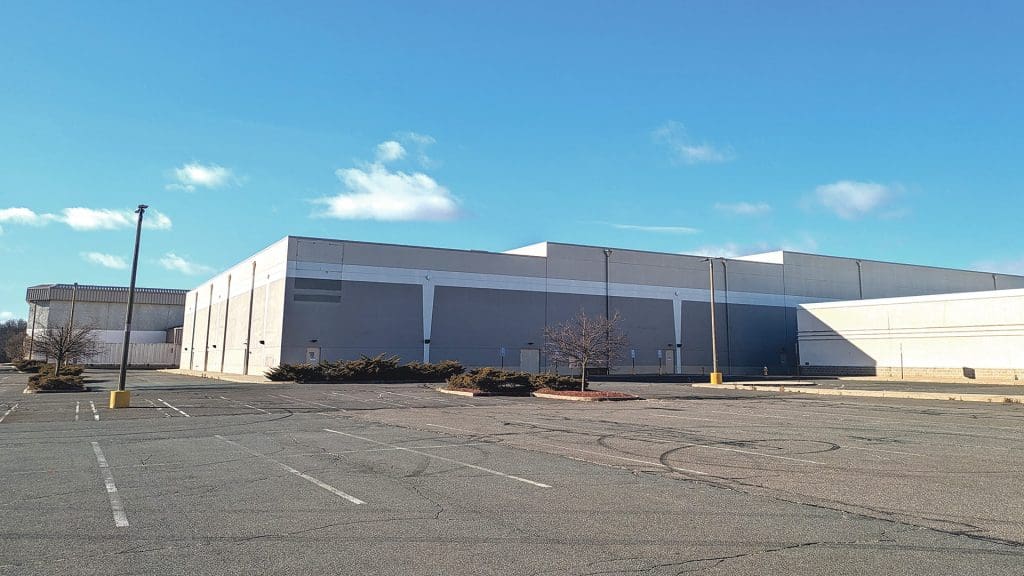
Enfield Square has been in decline for many years

Enfield Square has been in decline for many years, but a planned mixed-use development there has city officials excited.

“We’re a predominantly single-family type of community, but we’ve got some really interesting projects,” he went on. “I mean, the 140 apartments on the river are being built essentially as one-bedroom majority because they’re looking for the commuting professional with no kids. That’s their target audience. With demographics changing, we kind of have to stay on our toes for what the community is looking for.”


Train Not in Vain

The entire rail-centric project in Thompsonville has certainly made waves — with real ripple effects when it comes to development.

Late in 2023, the Connecticut Department of Transportation attached hard dates to the $45 million project to build the train station. Those dates included the summer of 2024 for the final design to be completed, the winter of 2025 for the construction bid to be awarded, the spring of 2027 for accompanying rail and bridge work to be completed, and the fall of 2027 for completion of the station and platform.

That plan is largely on track (no pun intended), though there’s plenty of bid and permit work to be completed this year, Marcavitch said, and shovels may be in the ground by September.

“If you can encourage somebody to come here, that’s great, but I don’t want you just getting on a train and disappearing every day. At the end of the day, I want you to go to a dog park, I want you to go hike a trail, whatever it is, and stay in Enfield as much as possible.”

Enfield’s station is expected to be more than a metro stop, bringing people to Hartford to work; it will also be a larger hub for Amtrak for more distant destinations, while a planned spur off the Windsor Locks stop will bring people to and from Bradley International Airport. The project has also, as noted earlier, gained the attention of the development community.

The 140-unit project on North River Street is being developed by HGRE Ventures, a partnership between Avon-based Honeycomb Real Estate Partners and GRAVA Properties of West Hartford. HGRE plans a $100 million, two-phase project that would eventually bring more than 300 units to the riverfront section of Thompsonville, near the much larger Bigelow Commons apartment complex.

Enfield at a Glance

Year Incorporated: 1683
Population: 42,141
Area: 34.2 square miles
County: Hartford
Residential Tax Rate: $32.23
Commercial Tax Rate: $32.23
Median Household Income: $67,402
Median Family Income: $77,554
Type of Government: Town Council, Town Manager
Largest Employers: Empower Retirement LLC, Town of Enfield, Advance Auto Parts Distribution Center, Eppendorf Manufacturing
* Latest information available

The HGRE property sits on the former Bigelow Carpet manufacturing plant, and the developers recently secured $4 million from the state brownfields program to remediate the property, Marcavitch said. “That actually used to be the power plant for Bigelow. At one point, they were burning garbage in there. There was oil being used, coal being used, so there’s a lot of stuff on the grounds that needs to be cleaned up.”

He noted that the project will include some publicly accessible waterfront walking space, and HGRE will also seek to acquire an additional parcel at Main and North River streets, currently owned by Eversource, for the project’s second phase.

“The intention from the developer is to be able to use that area where the Eversource property is to build a waterfront restaurant location,” he said. “You get off the train, you can get something to eat, you can go to your apartment, whatever it might be, and that trail then would continue to Main Street, at least. There’s also been a long-term vision to have some sort of a pier that goes out into the river. That’s part of my job — to see if we can find funding for that and find a way to do it.”

Meanwhile, the town has received $1 million in federal funding to be used for streetscaping, from the train station up Main Street. “That’s going to trees, sidewalks, lighting, parking, striping, and making the road a bit more narrow,” Marcavitch explained.

“We’ve also been having some conversations about parking issues,” he went on. “We’ve had conversations with a group that’s being formed, a nonprofit group that would function as a Main Street program. They’re still in development.”

Taken together, Thompsonville definitely has some buzz. “It’s been said for 50 years now that Thompsonville is going to be revitalized, but I feel like some positive movement is happening. We’re actually putting those plans into action.”


Further Down the Track

That action has brought a sense of momentum to town, Marcavitch said, even if not everyone is feeling it yet.

“I feel there is a sense in Enfield that people don’t believe it until they start to see it. And nobody is seeing that shovel in the ground. But there are some people who know it’s happening, and they want to get ahead of it — whether it’s small developers on Main Street wanting to do small projects or big developers doing 140 apartment units.”

That said, other areas of town have seen some progress, too — even in the industrial sector, still reeling from Lego’s departure.

“We’ve had some really good conversations with the logistics industry, and we’re hopeful to see some projects that might be coming out of that relatively soon,” Marcavitch said, adding that one property owner is working with Martin Brower, the primary trucking company for McDonald’s, on an expansion and redesign of the site’s truck-management space, while USA Hauling, which owns the former Lego building, is talking to some high-tech companies.

“I have heard sometimes that Enfield is difficult to work with from a development standpoint. I don’t think that’s true, but we hear that, so I’ve been trying to be much more accessible to be that point of contact for businesses,” he added. “I was on a phone call with a gentleman who’s looking to put a restaurant in: ‘OK, great, tell me what you need. Let me know whenever you run into a snag.’ We’re just trying to be more helpful and more open.”

It’s the same with the few existing mall tenants, he added. “They don’t know what’s going to happen. So we’ve had some good conversations with those tenants. There’s only so much the town can do, but if we can at least be a receptive ear, sometimes that’s helpful.”

Since taking his role last April, Marcavitch has tried to put the same energy into other types of properties, from open spaces to historical sites.

“If you can encourage somebody to come here, that’s great, but I don’t want you just getting on a train and disappearing every day. At the end of the day, I want you to go to a dog park, I want you to go hike a trail, whatever it is, and stay in Enfield as much as possible. So it’s a multi-pronged process to bring up our sites and attractions, bring up our parks, bring up our community amenities, and bring up our businesses, too.”
 

Community Spotlight

Community Spotlight

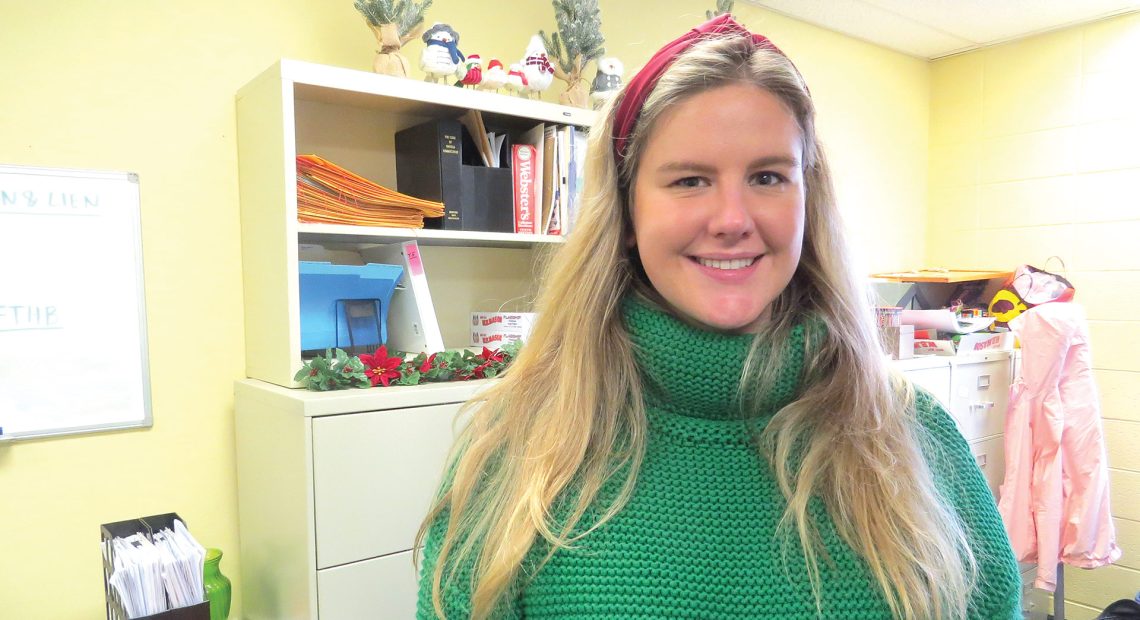
Kristine Koistinen

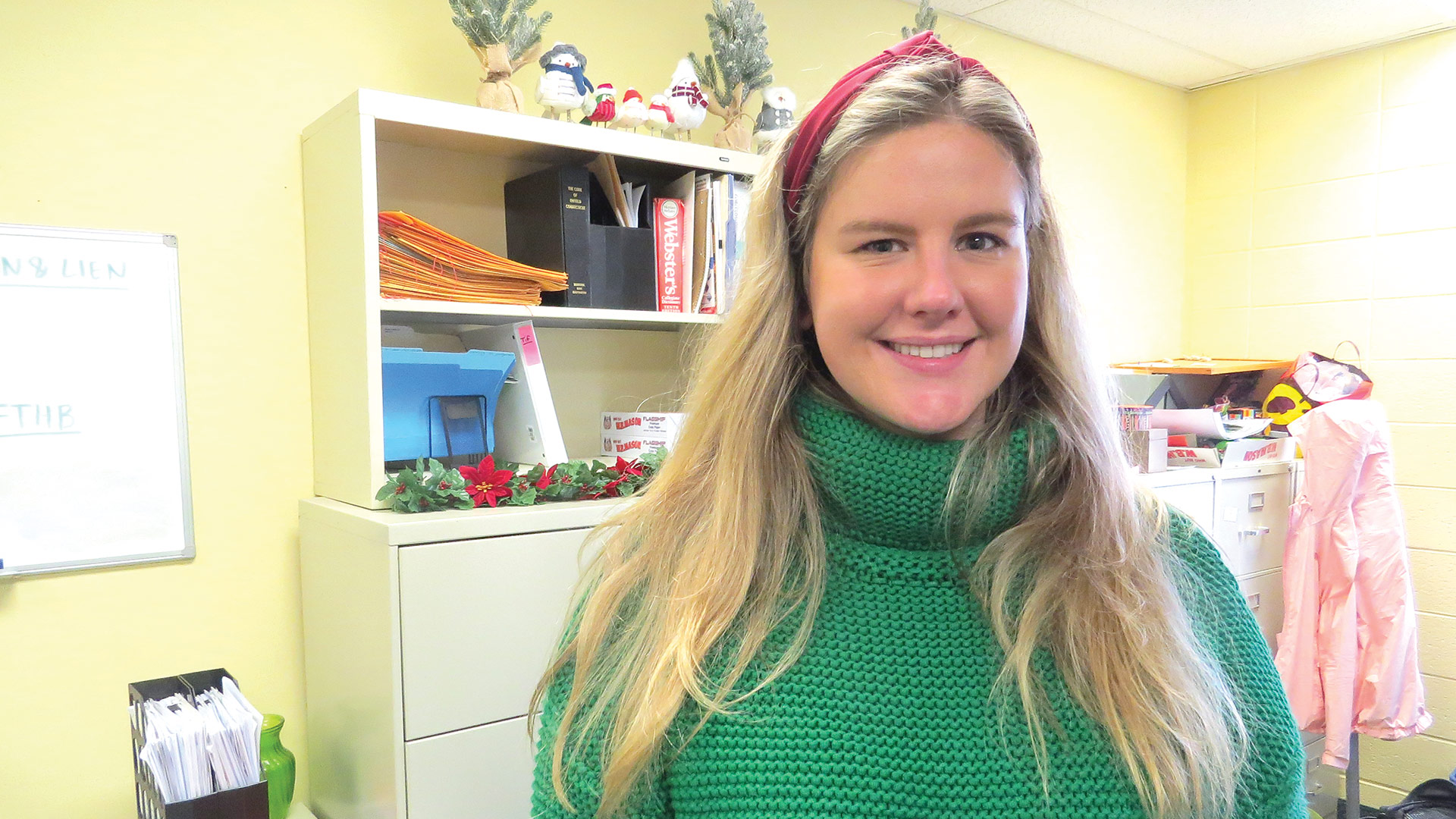
Kristine Koistinen says Enfield’s long-awaited rail stop is creating a great deal of anticipation in the community, as well as growing interest from developers.


For decades now, a rail stop in Enfield, Conn. on the line from Springfield to Hartford, New Haven, and points south has been a dream.

Finally, the dream is becoming reality.

Indeed, the Connecticut Department of Transportation made it real several weeks ago when it attached hard dates to the $45 million project to build a train station in the section of Enfield called Thompsonville, in the shadow of apartment buildings created at the sprawling former Bigelow Carpet complex.

Those dates include the summer of 2024 for the final design to be completed, the winter of 2025 for the construction bid to be awarded, the spring of 2027 for accompanying rail and bridge work to be completed, and the fall of 2027 for completion of the station and platform.

While a formal ribbon cutting is almost four years away, there is already a great deal of anticipation and excitement in this community of just over 42,000 — as well as interest from the development community, said Town Manager Chris Bromson, adding that the train stop will be, in a word, “transformational.”

“When you look at any of the other transit-oriented districts in Connecticut, it’s been just a boon to economic development and housing,” he told BusinessWest. “If you look at Meriden and other cities in Connecticut that have gotten a train stop, you’ve seen dramatic growth, so we’re very excited, to say the least.”

Elaborating, he said momentum toward a rail station has prompted developers to take options on several properties near the riverfront in the area near the planned station, including an old Eversource power plant, and he expects such interest to only escalate in the months and years to come.

“If you build it, they will come,” he said. “And two years is going to go by in a heartbeat, and developers … they don’t want to miss the train. They want to get in on the ground floor now because those properties are going to be hot.”

Meanwhile, the rail station is just one of many intriguing developments in this community, said Kristine Koistinen, Community Development specialist and also acting Economic Development director. Others include likely redevelopment of the dying mall known as Enfield Square; redevelopment of the former Strand Theater into housing; revitalization of the historic Hazardville Institute into a mixed-use facility that will become, among other things, home to the North Central Connecticut Chamber of Commerce; the recent conversion of the former United Presbyterian Church into the new home for the Opera House Players; and the expected arrival next year of L.L.Bean in the Brookside Plaza.

“It’s back to the future. Today, young people … they really aren’t interested in cars the same way that previous generations were; they want to jump on the train. They want to live in places like Thompsonville and jump on the train and go to New York for the weekend or go to Boston.”

“It’s a very exciting time in Enfield; there’s a lot going on and a lot to get excited about,” she said, adding that there are new developments in many different parts of the community, including Thompsonville, Hazardville, the retail district, and others.

Those sentiments apply to one of the community’s largest institutions as well.

Indeed, Asnuntuck Community College, which marked its 50th anniversary this year, is now known as CT State Community College Asnuntuck. It is one of 12 community colleges, some with satellites, that came together in a merger (creating CT State Community College) that has been years in the making, with the goal of bringing a number of advantages and new opportunities to the colleges, but especially students, said Michelle Coach, Asnuntuck CEO.

“What’s amazing for the students is that they apply once, and they can register on any campus anywhere in the state,” she explained. “In the past, we used to share less than 1% of our students among the 12; we now share about 28% of our students.”

But while the merger is generating new opportunities, Asnuntuck and all the other CT State schools are coping with budget cuts, and more dramatic cuts to come in the future unless the governor and Legislature reverse course and increase their overall commitment to public higher education (more on that later).

As for Enfield Square, it has been in a state of deterioration for several years, with the loss of anchors such as Macy’s, JCPenney, and Sears. It was acquired by New York-based Namdar Realty Group in 2019 amid hopes that there would be investment in the facility and the securing of new tenants. However, it has continued to decline, and there is growing speculation that it may be sold to a developer who will raze all or most of what exists and create a mixed-use facility that may include everything from retail to housing.

planned new housing

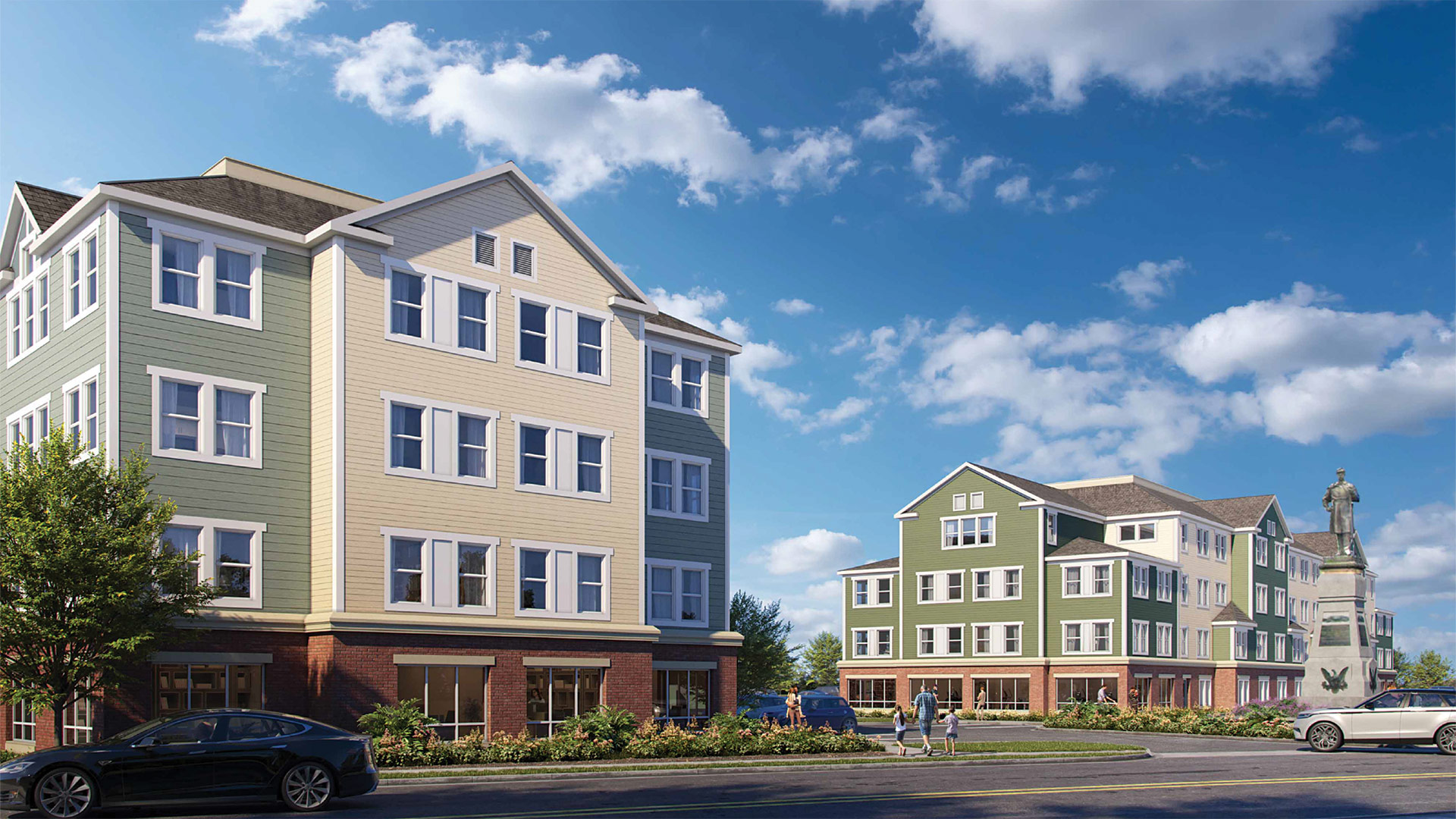
An architect’s rendering of the planned new housing to take shape at the site of the former Strand Theater.

A few developers have expressed interest, said Bromson, who declined to name them, adding that Enfield Square may follow the same path as Springfield’s Eastfield Mall, which is currently being demolished in favor of new development following the relocation of several dozen mostly smaller tenants. In fact, Koistinen has talked with officials in Springfield about the Eastfield Mall project and the relocation of tenants there.

For the latest installment of its Community Spotlight series, BusinessWest focuses on Enfield, the arrival of rail service, and the many other forms of progress in this community.


Train of Thought

Bromson is on his second stint as town manager in Enfield — he held that post from 2019 to 2021, when he resigned, only to return just last month. Overall, he’s spent more than 33 years working for the town in various capacities, including town attorney, Public Safety director, and acting town manager.

For all that time and more, securing a rail stop in town has been a dream and a true priority for the community, for reasons made obvious by looking at similar communities that have a stop. In those cities and towns, development has followed, Bromson noted, adding that there has been significant reversal of the development strategies of the ’50s, ’60s, and ’70s that focused on the automobile and creating infrastructure to support its use.

“It’s back to the future,” he went on. “Today, young people … they really aren’t interested in cars the same way that previous generations were; they want to jump on the train. They want to live in places like Thompsonville and jump on the train and go to New York for the weekend or go to Boston.”

Elaborating, he said Enfield’s station will be more than a metro stop, bringing people to Hartford to work; it will also be a larger hub for Amtrak for more distant destinations. Coupled with the planned spur off the Windsor Locks stop that will bring people to Bradley International Airport, it’s easy to see why a rail station is generating such enthusiasm.

“You can come down to the Enfield station, park — there will be ample parking here — get on the train, take the spur to Bradley, and get on a plane, and never have to deal with the parking or the congestion there,” Bromson said.

the historic Hazardville Institute

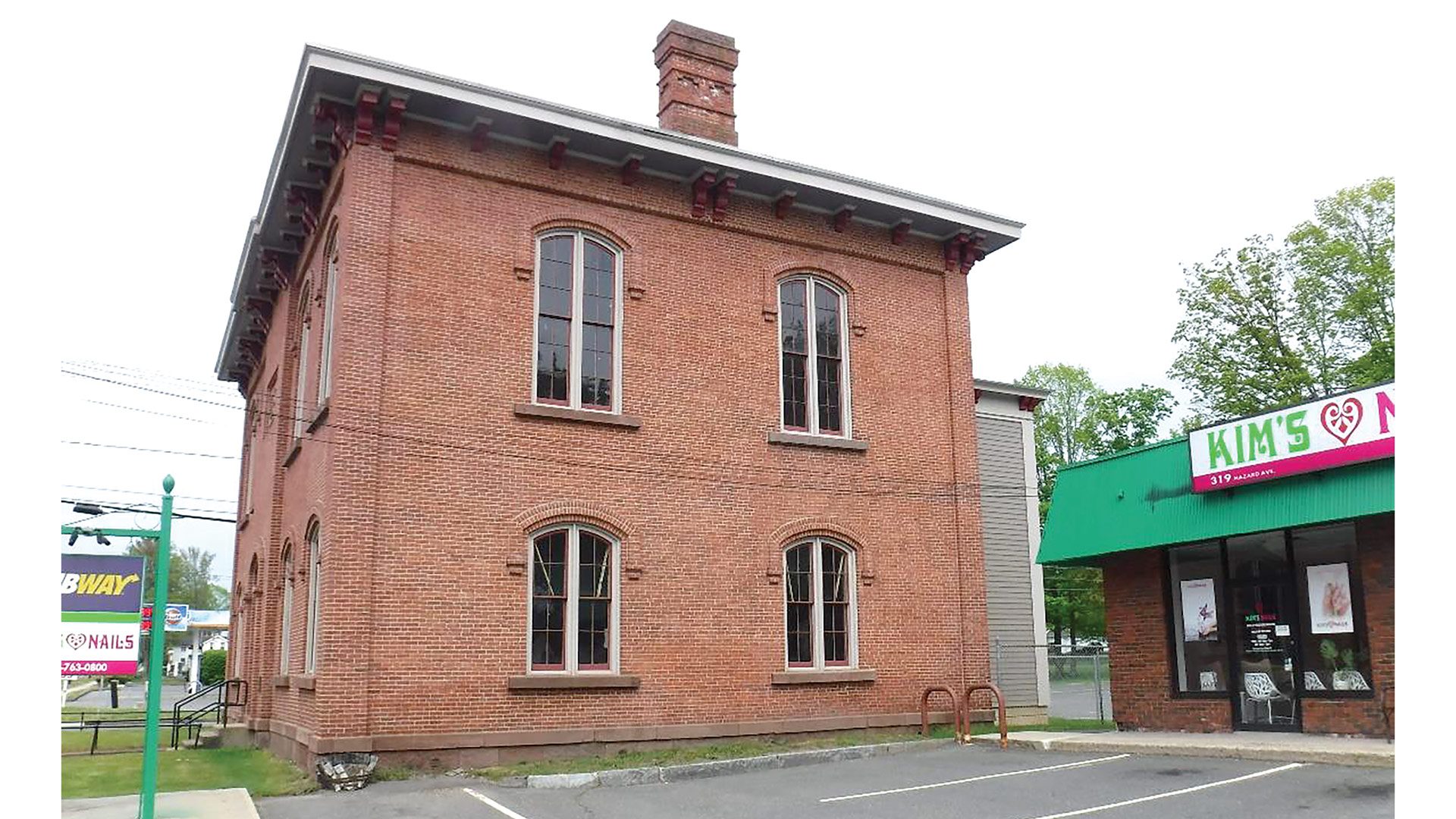
Renovation of the historic Hazardville Institute is one of many developing stories in Enfield.

While the rail plans are generating excitement among residents and officials, they are also gaining the attention of the development community, with more interest certainly to come, said those we spoke with.

Bromson said the rail service will likely generate interest in development of more housing, such as the hugely successful Bigelow Commons, now home to more than 2,000 people.

And if more housing becomes reality — and renovation of the former Strand Theater is already set to move off the drawing board — there will be a need for more retail and service businesses, said Koistinen, adding that such need will likely help fill some of the many vacant storefronts and other properties in Thompsonville, but also other parts of the city.

Enfield at a Glance

Year Incorporated: 1683
Population: 42,141
Area: 34.2 square miles
County: Hartford
Residential Tax Rate: $30.56
Commercial Tax Rate: $30.56
Median Household Income: $67,402
Median Family Income: $77,554
Type of Government: Town Council, Town Manager
Largest Employers: Empower Retirement LLC, Town of Enfield, LEGO, Advance Auto Parts Distribution Center, Eppendorf Manufacturing
* Latest information available

“For decades, people have been talking about how we revitalize Thompsonville,” she said. “Having the train come is the first step in all of this; here are several vacant properties there, and having the train station so close — that walkability to the downtown — will provide a real boost.”

Overall, there is a sizable trickle-down effect from the rail service, said Bromson, adding that it will likely extend to places like Enfield Square. Indeed, the station will be an intermodal transit center that will send buses and shuttles to locations such as the shopping areas off I-91.

This includes Enfield Square, he noted, adding that the community is talking to developers about the future of the site, while also working with existing tenants to help promote them and prepare them for eventual transition. “I’m very optimistic that we’re going to have a good result there in the near future.”


Course of Action

There have been several good results from the merger of the state’s community colleges, a process that has been in motion for more than seven years now, Coach noted.

The new infrastructure brings benefits for the schools, including additional buying power and greater ability to collaborate and share ideas, concepts, and, yes, students.

Indeed, she said there are students who now attend classes at as many as five different schools, taking advantage of each school’s specialty, such as Asnuntuck’s manufacturing program.

Indeed, Asnuntuck now boasts 1,329 students who call the campus home, and another 886 who call another school home but attend at least one class in Enfield, boosting enrollment and bringing more energy and vitality to the campus.

“If the governor doesn’t give us more money, that’s going to hurt our students — that’s what we’re worried about right now.”

Overall, said the merger has brought about a harmonized processing system across the 12 campuses, while allowing each school to maintain its own identity and culture.

“I’ve always said to the employees, our culture is our people, and we have our people,” Coach said. “We can give our students what they need, and I don’t think we’ve changed. But at the same time, they can now register anywhere, we have some amazing processes, and we just hired a behavioral-health counselor for the first time. We’ve always wanted an in-house counselor, and we haven’t been able to do so. By becoming CT State, every campus is getting at least one counselor.”

The merged system is still only a few months old, she said, adding that it will continue to evolve, hone processes, and bring new opportunities and greater collaboration — something that was missing historically — between the individual campuses and their students.

And greater collaboration will be needed because there are many current budget challenges, and deeper cuts likely to come in the year ahead.

“We are underfunded right now,” she said, noting that the system recently cut $33.6 million for this fiscal year, with Asnuntuck slicing roughly $500,000, in large part because elected leaders would not raise the spending limit for the state.

Asnuntuck was able to avoid personnel cuts this fiscal year, but it may not be so fortunate in FY 2025, when an additional $41.3 million will have to be cut, unless already-intense lobbying efforts succeed in garnering more support from the state.

“If the governor doesn’t give us more money, that’s going to hurt our students — that’s what we’re worried about right now,” she told BusinessWest. “And, of course, these are the students that need the help.”