Home Posts tagged Entrepreneurship (Page 9)
Opinion
Keeping the Best Minds Local

Massachusetts’ greatest natural resource is its stock of 535,000 college and graduate-school students. Human capital brings the ideas and entrepreneurship needed for regional success, yet too many of our students leave, including the entrepreneurs who created Facebook. Retaining talent requires us to fight the regulations that make entrepreneurship too rare and housing too expensive, but the state should also aim at winning students’ hearts while they are still in school.
Skills predict urban success. Across metropolitan areas, an extra 5 percentage points of the adult population with college degrees in 1970 has resulted in 8% more population growth and 4% more income growth. Yet the Federal Reserve Bank of Boston’s Alicia Sasser found that 29.5% of New England’s college graduates left the region within a year of graduation, the highest out-migration rate in the country. That exodus reflects our schools’ aim of educating the world, but the state not retaining the graduates.
Connecting students to our region requires a response to the good, bad, and ugly sides of college life. I see a remarkable number of college students with a profound passion for doing good, whether working in shelters or tutoring children. They have time and are looking for meaning in life, and leveraging that can both help the Commonwealth and bind college students to the state.
A statewide public service organization — a Bay State Service Corps — could provide meaningful altruistic activities for college students and connect them with local leaders and the larger community. For six years, I’ve helped oversee the Rappaport Institute’s summer fellows program, which pays and assists graduate students to serve the region.
I’ve watched the fellows’ work contribute to public agencies, build their skills, and create a bond with Greater Boston. Providing thousands of college students with ways to serve the state could produce an altruistic army today and a steady supply of future leaders.
The ugly part of college life is the misbehavior that can come from the emotional effervescence of youth. Not for nothing are 37.5% of America’s resolved murders committed by males between 17 and 24. College students aren’t usually killers, but they also have uncontrolled energy which leads them to annoy their neighbors with less-than-perfectly polite recreation.
Now, I’m no expert on fun, but I am sure that the state can do more to make nocturnal pursuits less harmful and more entertaining by focusing on transportation and concentration. Bringing people together in entertainment districts can make safety more enforceable and nightlife more enjoyable, since the real point is to meet people anyway.
But concentrating on enjoyment is only possible when transportation works well. The T’s night-owl service stopped years ago. A combined strategy of rethinking entertainment regulation and nighttime transportation, perhaps trying to use liquor-license fees to keep buses running later, could help make Massachusetts more fun and safe.
The high cost of housing is the bad part of college life. Dormitories can be more expensive than apartments, but undergraduates who choose to live in normal neighborhoods can create plenty of conflict with other residents. The natural solution is to build more dedicated college space, but that’s financially impossible for many educational institutions.
One vision is to explore private interest in building a student city somewhere in Greater Boston. Would a consortium of private developers and colleges be interested in erecting large amounts of dormitory space if they could also put in connected retail space and bypass local land-use controls? If a collection of builders were willing to deliver dormitories, then they would also have an incentive to make the experience pleasant. A collective student city would give students a sense of place and lead to more regional identity.
Massachusetts has survived over centuries largely because skilled people wanted to stay here. Our continued success depends upon students continuing to fall in love with the state. The state can help by strengthening students’ opportunities to serve and have fun, and by making it easier to creatively build student housing.

Edward L. Glaeser, a professor of Economics at Harvard, is director of the Rappaport Institute for Greater Boston.

Sections Supplements
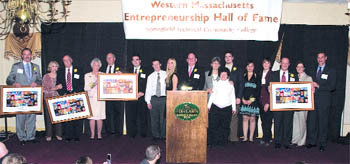
Entrepreneurship Hall of Fame Steers into Its Second Decade

Ira Rubenzahl says that, a decade after its creation, the Western Mass. Entrepreneurship Hall of Fame has earned a place within the region’s business community — and so has the banquet at which inductees are announced and celebrated.
There are now 57 inductees. Some of them are individuals (Theodor Geisel, Mary Lyon, Milton Bradley, and Primus Mason are in this category), a few teams of partners (Horace Smith and Daniel Wesson, Charles and George Merriam, and Silas Lambson and Abel Goodnow), as well as a couple of organizations (such as Baystate Health, for example). But most are families that started businesses and ran them for decades.
Those family names include Picknelly, O’Connell, Fontaine, Steiger, Sandri, Balise, Roberts, Falcone, Scherff, and many others. They are now etched into plaques that hang in the main lobby of the Scibelli Enterprise Center in the Technology Park at Springfield Technical Community College.
And there will be more names added to additional plaques, said Rubenzahl, president of STCC, who told BusinessWest that, a decade after its founding, the hall of fame will continue to honor and celebrate the region’s tradition of entrepreneurship.
“This has been an important event for this region,” he said of the annual dinner. “The college and the college foundation wanted to continue this, and we’re enthusiastic about the program moving forward.”
But there will be a few changes moving forward, said Rubenzahl, with most of them involving the annual induction dinner.
For starters, the event, traditionally staged in November, will be moved to the spring, with the one honoring the class of 2011 slated for April 14 at the Log Cabin Banquet & Meeting House. Meanwhile, inductees, which have been announced each May for the past decade, will now be introduced at the college’s annual Top of the City party, with the next one slated for Jan. 20. And moving forward, proceeds from the dinner will go toward scholarships for entrepreneurship students at STCC; in the past, they were used for youth-oriented entrepreneurship programs.
Another change will be the larger role being taken by BusinessWest, which has also been honoring the region’s rich history of entrepreneurship and will collaborate with STCC in matters involving the Hall of Fame and the annual dinner.
The magazine, which has, since 1996, presented its Top Entrepreneur Award (the Holyoke G&E was chosen for 2009), will honor its latest winner at the Top of City party. In addition, BusinessWest will play a prominent role in introducing the inductees for a given year and handling logistics of the annual banquet.
“This region has a strong heritage of entrepreneurship, and it continues today with a number of new and exciting ventures and the expansion and evolution of many family businesses,” said Kate Campiti, associate publisher and advertising manager of BusinessWest.
“We’re looking forward to collaborating with STCC to recognize people from the past and present who are continuing a tradition of innovation and excellence,” she added.
Also working with the college on matters involving the Hall will be UMass Amherst, said Rubenzahl, noting that the university recently entered into a collaborative effort with STCC on the management of the Enterprise Center and its Springfield Incubator. Marla Michel, director of Strategic Communications and Outreach for the university, is now a shared executive, working two days each week as director of the incubator.
Representatives from UMass will be among those chosen to serve on a committee that will select the inductees for 2010, said Bill Kwolek, director of Development at STCC, adding that the panel will also include representatives of the college and several area economic-development agencies.
Here are the inductees for the first decade of the Western Mass. Entrepre-neurship Hall of Fame.

Class of 2009
• Bacon Wilson, P.C.;
• The Cambi Family (Springfield Foodservice Corp.);
• Larry Derose (Texcel Inc.);
• The Desrosiers Family (Hadley Printing);
• John Gormally (BusinessWest, ABC40/FOX6); and
• The Peters Family (Universal Plastics)

Class of 2008
• Baystate Health;
• The Jacobson Family (OMG Inc.);
• The Samble Family (Belmont Laundry);
• The Scherff Family (Student Prince restaurant); and
• The Young Family (W.F. Young)

Class of 2007
• Theodor Seuss Geisel (Dr. Seuss);
• Charles and George Merriam (Merriam-Webster Inc.);
• The Bassett Family (Bassett Boat Co. Inc.);
• The Falcone Family (Rocky’s Hardware);
• The Gordenstein Family (Broadway Office Interiors); and
• The Roberts Family (F.L. Roberts)

Class of 2006
• The Balise Family (Balise Motor Sales);
• The Fontaine Family (Fontaine Bros. Inc.);
• The Grenier Family (Grynn & Barrett Studios);
• Horace Smith and Daniel Wesson (Smith & Wesson); and
• The Lanier Family (Springfield Food Systems)

Class of 2005
• Sister Mary Caritas and the Sisters of Providence;
• Joshua Brooks (Eastern States Exposition);
• William L. Putnam (WWLP TV-22);
• Mary Lyon (Mount Holyoke College);
• Fran and Teddi Laurin (Laurin Publishing); and
• Joseph Napolitan

Class of 2004
• Albert and Amelia Ferst (Camfour);
• Silas Lamson and Abel Goodnow (Lamson and Goodnow);
• Joseph V. Gosselin Jr. (Commonwealth Packaging Co.);
• Emanuel (Manny) Rovithis (Manny’s TV and Applicances); and
• William Skinner and Family (William Skinner and Sons)

Class of 2003
• Channing Bete Family (Channing Bete Co.);
• Samuel Bowles (the Republican);
• Milton Bradley (Milton Bradley Co.);
• The Hannoush Family (Hannoush Jewelers); and
• Daniel J. O’Connell Family (Daniel J. O’Connell Cos.)

Class of 2002
• The Carroll Family (Riverside Park);
• John E. Reed (Mestek Inc.);
• The Sandri Family (Sandri Cos.);
• Stephen Spinelli Jr. (American Oil Change Corp.); and
• Albert Steiger (Steiger’s)

Class of 2001
• The Davis Family (American Saw and Manufacturing Co.);
• Jane and Jack Fitzpatrick (Country Curtains);
• Primus Mason;
• Peter C. Picknelly and Peter L. Picknelly (Peter Pan Bus Lines);
• George W. Rice and Caleb Rice (MassMutual); and
• Amos Rugg (Rugg Manufacturing Co.)

Class of 2000
• Frank S. Beveridge (Stanley Home Products);
• Curtis Blake and S. Prestley Blake (Friendly Ice Cream);
• Zenas Crane (Crane Paper Co.);
• Paul D’Amour & Gerald D’Amour (Big Y Foods);
• Joseph J. Deliso Sr. (HBA Cast Products);
• Michael Kittredge (Yankee Candle);
• Albert G. Spalding (Spalding Sports Worldwide); and
• Rita M. Tremble (Valley Communications Systems)

Sections Supplements
Bay Path Students Learn by Doing

Lauren Way, Bay Path College’s director of Entrepreneurial Programs and Cooperative Education.

Lauren Way, Bay Path College’s director of Entrepreneurial Programs and Cooperative Education.

Lauren Way, director of Entrepreneurial Programs and Cooperative Education at Bay Path College, likes to say that the school’s programs in entrepreneurship do more than prepare students to start and manage their own business. In short, they promote entrepreneurial thinking, something that can help people in all fields, employers and employees alike. The school has even created its own term to describe the mindset it promotes: ‘entre-vation,’ which blends entrepreneurship and innovation.
Before a conversation began about the nature of entrepreneurial education, Lauren Way posed the hypothetical question, ‘what exactly is an entrepreneur?’
“Some would say it’s a person who takes the risk to start and run a business,” she continued. “Others would say that an entrepreneur is not a social or financial category at all, but rather it is a philosophy, a state of mind that focuses on seeking out opportunities, taking action, and finding ways to solve other people’s problems in a profitable way.”
Way is Bay Path College’s director of Entrepreneurial Programs and Cooperative Education, and she told BusinessWest that teaching college students the tools for starting one’s own business has a practical application that is more important than ever.
“About 50% of the current crop of undergraduates will own their own business one day,” she said, referring to the nationwide population of students. “They don’t realize it yet, but that is a statistic that is cited more and more often. And that’s all students, not just business students.”
Sure, she continued, there is also the statistic that says somewhere in the neighborhood of 90% of new businesses will fail in their first five years, but, she countered, “what that number doesn’t tell you is that the majority of those people go on to found another business.”
As part of Bay Path’s commitment to providing students with a career-focused education, the college has been fine-tuning its entrepreneurial academics on all levels, with offerings from graduate programs all the way to summer sessions for area high-school girls.
“At Bay Path, what we think is that employers want entrepreneurial thinking in need-finders and problem-solvers,” Way explained of the college’s mission. “That’s what our curriculum focuses on … not specifically that you’re going to start your own business, but asking what entrepreneurial thinking is all about.”
With that summer program gearing up, Way met with BusinessWest at her desk surrounded by the supplies for her upcoming week-long session. She explained how Bay Path is the leading entrepreneurial spirit on campus, and how the school hopes to be more widely known nationwide for its ongoing commitment to making entrepreneurial education not just a necessary discipline in higher education, but also a cultural mindset.

The Gifts That Keep on Giving
Way gives much credit for the beginnings of the entrepreneurial programs at Bay Path to the contributions of two charitable organizations.
She credits the Springfield-based Harold Grinspoon Foundation with “doing the impossible.”
“They were an early catalyst in getting 12 local colleges together for an Entrepreneurial Initiative [EI],” she explained, describing that organization’s mission. “Not an easy task to get such a number of schools all on board.”
Those colleges meet once every year for a conference at the MassMutual Center, and as testament to the growing popularity of entrepreneurship at the schools, the number that started out at 50 students this past year numbered close to 500.
In addition, Grinspoon’s EI endows an annual elevator-pitch contest between the colleges, with the winner taking home $2,000. Bay Path has had, in Way’s words, “unusual success” at the competition, taking top prize in five of the seven years, and placing in six.
The Coleman Foundation, based in Illinois, funds educational entrepreneurial programs across the country. Way said that its goal is to instill entrepreneurship on campuses, to make it interdisciplinary, and to embed it into a business department’s curriculum. Through a grant from that organization, she came to Bay Path.
But she said that much credit needs to go to the college’s president, Dr. Carol Leary, for her visionary approach to making Bay Path a fertile ground for all of these initiatives.
“One of the reasons I came here from Hampshire College,” Way said, “is that we are such an entrepreneurial college. In the four years that I’ve been here, we have started 10 new master’s programs. Talk about need-finding — we’re finding the needs of our students, and our region.”

Pitch Perfect
Way said that one of the biggest advantages to teaching entrepreneurship at Bay Path is the size of the college. “We’re small enough that we can focus on reaching all the students from all the different disciplines,” she explained.
In addition to the undergraduate program that is a focus of the business department, there is a certificate program that Way launched last spring for students in all majors. Psychology and Education draw a great deal of students to the program, she said. “Many of them want to start their own child-care centers,” she said, “or they want to invent their own game or learning tool.”
A capstone course for juniors and seniors is ‘Entre-vation’ (a word copyrighted by the college), which is described as a hands-on approach to entrepreneurship and innovation.
While business courses are typically taught by the Harvard Case Study method, Way explained that much of that dates to the 1980s. Entre-vation takes a different approach.
“During the summer, I choose five local entrepreneurs,” she continued, “and do a case study on them. We spend the first five weeks interviewing those businesspeople, learning what makes them tick, how they got started, what their background was.”
The students team up to offer innovative solutions to real-life cases entailing problems or challenges for these businesses. By the end of the course, the student teams present their findings to the business owners, often with surprisingly acute and helpful suggestions.
The next step up is a master’s program in Entrepreneurial Thinking and Innovative Practices, which is open to both men and women, and much of the course work can be completed online. There are students from across the U.S., and even one from Afghanistan, she said.
“We had a student at our last commencement, graduating with his master’s,” she said, “and he had never been to the campus before!” But, she added, there is a high level of interaction with professors in the online classes.
It is the MBA program that sets Bay Path apart from its contemporaries, Way said, describing the non-traditional student body for that degree.
“On the one end of the spectrum you’ve got the Millennial generation, then Gen-Xers, to Baby Boomers, even beyond, in their 60s,” she said. “I’d say that the average MBA student is in their mid-40s or 50s. I love those students … they know what they want to get out of their education, they have been in the world long enough to see links between the classroom and the world. They have hooks to hang the theories on. They have a wealth of material to bring to other students in the classroom.”
In addition, there is a Saturday Program, or the One-day Program, which Way describes as targeted to older women who never got their undergraduate degrees. “They don’t have to fit their schedules around classwork,” she explained.
But as she motioned around her office crowded with supplies for her upcoming one-week summer session, she spoke of the next generation of entrepreneurial education.
Going into its fourth year, the week-long training session is called “It’s My Business,” and is targeted at underserved area high-school girls. For a total of 40 hours in one week, the girls will have readings by high-school and college-aged entrepreneurs who hit the million-dollar mark, seminars with similarly-aged local business owners, and during this time the students will devise a plan for a startup company of their own.
The week ends with an elevator pitch before an assembly of faculty and peers. “Talk about stage fright,” Way laughed.
“Most of these girls say that there’s absolutely no way they can do that, but we have a great speech coach from Connecticut who helps them through it. And they all do it. It blows me away.”

Success Stories
Bay Path students have excelled in peer challenges, and Way is quick to point out how her students have exceeded her expectations more often than not. A sophomore Biology student won the campus elevator-pitch competition, sending her to the Grinspoon challenge with other local colleges, and Way said that “this was a student who was so shy that she couldn’t even make eye contact when I first met her.”
However, her idea for “popper stoppers,” a porous ear plug designed to help with fluctuating atmospheric pressure — no more ears popping on flights — won her campus renown as well as the top prize in the area challenge.
“The fact that our students win against all these other colleges,” Way said, “with older graduate students, and in some cases people who already have owned their own business, is incredible.”
But the successes from Bay Path alumni aren’t isolated to the collegiate arena. Way proudly told the story of Stacey Bilodeau, a woman yet to finish her bachelor’s degree, whose three-year-old company, Independent Solutions, saw $70,000 in revenues in its first year, with a spike to $500,000 dollars the second year, and 13 additional employees.
Bilodeau started full-time work at the age of 13, and quickly realized a vocational passion — working in home health care. “She started working for someone else,” Way said, “and saw the problems inherent in that industry. She realized she could do better than this.”
Providing home care for patients with traumatic brain injuries, Bilodeau is presently looking to hire new staff to help her meet great demand. And that’s where Bay Path’s education helps her keep the wheels on the ground, learning how to make the passion for her field grow in a measured and successful manner, while maintaining the high level of service and care that brought her to this role. Approaching the end of her third year, Bilodeau plans to double the size of her staff and expects to make $1 million.

Learn By Doing
Bay Path takes a philosophical approach to teaching entrepreneurial initiatives, but Way said that she doesn’t frown upon encouraging students to begin a business, even if there’s a better-than-average chance that it will fail.
Learning from mistakes is a growing theme in entrepreneurship, she explained, and added that people tend not to learn from their successes, but rather from their failures.
“Starting a business right away allows them at least to get in there,” she said of current students entering the business world, “and it makes them realize those pieces of their education that they do need to work on. Maybe they find they need more math skills, or customer service. Doing it helps you figure out what else you need to learn.
“It’s important for students to be exposed to failure to see how they react and to see what messages they will take away,” she continued, adding, “You can’t learn to dance by reading about it.”
Way sees Bay Path’s model of entrepreneurial training eventually having important ramifications not just in the workforce, but in society at large. Her hopes are for the college to become more widely known as the premier college for undergraduate and graduate students in entrepreneurial thinking.
“I would love the phrase ‘academic entrepreneurs’ to describe the way we do things here at Bay Path,” she said.
“We can all be more entrepreneurial,” she added. “We can take a more entrepreneurial approach with our jobs, with our relationships, in our communities and our churches. This method of thinking is really for everyone. It’s not just about starting a business. It’s about finding needs and meeting them — finding solutions for problems in a profitable way.”

Sections Supplements
NuCedar Mills Owner Hangs Out His Shingle — and His Clapboard

Tom Loper

Tom Loper is confident that a rebounding economy and the growing popularity of ‘green’ products will spawn strong growth at NuCedar Mills.

Tom Loper says he looks upon 2010 as what he calls a “restart” for his company, Chicopee-based NuCedar Mills.
Elaborating, he said the official start came in late 2006, when Loper, one of the founders of the Westfield-based company Kleer Lumber, a maker of PVC trimboard, decided to commence another venture that would go where Kleer Lumber didn’t or couldn’t — into the making of a product that reproduces vertical-grain cedar clapboard siding.
The product was several years and considerable pain and anguish in the making, but, when it was finally ready, it was everything that Loper hoped it would be — beautiful, durable, low-maintenance, and ‘green’ (more on that later). But more important was something it wasn’t — recession-proof.
“Our timing at the start wasn’t exactly good,” said Loper with a discernable trace of sarcasm. “I don’t think it could have been worse.”
But Loper has long known that his product is a good one, and he has since developed several new ones as well, including a shingle that is catching the attention of the marketplace. These developments have allowed his investors to remain patient and actually give him more room and capital with which to work. All this, coupled with the fact that the housing market, and especially the high-end market to which he caters, is coming around, has the energetic and entrepreneurial Loper quite optimistic about his restart.
NuCedar is a story that touches many bases: manufacturing, because Loper has done some pioneering to get his products to market in terms of innovation and waste-reduction efforts; entrepreneurship — there were some sizable risks with this startup; ‘green building,’ because of the environmentally friendly aspects to this product; and even marketing, for the ways Loper has been able to put his products in the spotlight — some through creativity and others through determination and simply having a good story to tell.
These include exposure through last summer’s Extreme Makeover: Home Edition project (his siding was chosen for the home built in Suffield) to upcoming appearances on the show This New House (produced by the same people who put on The Old House and debuting later this year) to face time on something called Renovation Nation, hosted by long-time This Old House host Steve Thomas, on the Planet Green channel. Those latter two shows highlighted both the manufacturing innovations and the green qualities of the products.
“We had the This New House people out to tour the plant, and they spent the entire day here; they watched us make clapboard from beginning to end,” said Loper. “We just got the call last week … we’re going to be on the premier show. The producers liked us so much, we’re going to be a big part of that show.
“And we received a lot of time on Renovation Nation, which is great PR for us — people know those names and faces like Steve Thomas, and they respect him,” he continued. “And whenever we’re on one of those shows, the hits to our Web site increase significantly. That’s how we know people are watching.”
Loper is hoping that all this publicity will help in his restarting efforts, which are already off to a promising start with the introduction of the shingles and an apparent willingness on the part of consumers to spend on their homes again.
“We’re about two years behind schedule,” he said, referring to the timetable outlined in an original business plan that has seen a number of revisions and updates. “But we’ve got a really good chance to do some catching up.”
For this issue and its focus on green business, BusinessWest takes a look at a company that might have gotten off to a slow start, through no fault of its own, but certainly seems to have the right products at the right time.

House Money
Tracing the history of NuCedar, Loper said it came about through the simple observation that, if Kleer Lumber could make a high-quality PVC trimboard, then logic dictated that a similar product approximating traditional cedar siding could also be produced.
But Loper knew it wasn’t that simple. First, a system would have to be devised for making a product that looked like real cedar, was durable, could hold paint, could withstand the elements, and, most importantly from a business perspective, could be produced in a cost-effective manner. A supplier of the PVC material would have to found, and financing would have to be obtained.
The good news, said Loper, is that all those hurdles were eventually cleared, and the company was up and running at more or less full speed by the middle of 2007. The bad news is that it wasn’t at that speed for long, as the economy took its serious nosedive, and the bottom completely fell out of the new-home construction and remodeling markets.
Telling the story more slowly, Lopor said there was a considerable amount of research and development that went into NuCedar’s main product, the vertical grain cedar, which meets a real need within the building community — something that looks like cedar, specifically old growth trees, but isn’t.
That’s because, as Loper put it, when it comes to the real thing, “you can’t get it.”
Part of the reason is the spotted owl, he said, noting that it is partial to cedar trees and its presence has limited the number of trees that can be cut. And in areas where trees can be cut, there are other problems. “There are two things going on, fires and floods, and you take trees down, it makes both worse.”
New growth trees can be cut, said Loper, but that cedar doesn’t have the same look, and it often develops moisture problems that limit paint’s ability to stay on the board. “I have that on my house,” he explained. “It’s beautiful cedar, the best that was available, but I have to paint it every four or five years.”
Coming up with a cellular PVC product that had cedar’s looks but also much more durability and sustainability, were just some of the hurdles for Loper to overcome.
Indeed, innovative and cost-effective methods were found for everything from cutting the board to applying the paint; from devising and producing an interlocking system that allows each clapboard to support the one below it, to recycling the dust created in the production process.
The paint itself was a work in progress for many months. Working with supplier Sherwin Williams, Loper was able to secure a product that has a two-part coating that chemically hardens to form an impenetrable barrier. It also helps reduce energy costs and is available in more than 1,400 custom colors, five ‘historical colors,’ and 17 popular selections, including Watch Hill white, Chatham sand, Sunapee stone, Mohegan tan, and Suffield blue (the color chosen for the Extreme Makeover home).
The downturn in the economy certainly slowed the company’s development, but it didn’t stop it in its tracks, nor did it derail efforts to build on the original product line.
“We’ve been lucky … during the downturn, we went to our investors and said, ‘our timing really stunk getting started in the first place, based upon the way the housing market has gone. We’ve seen a lot of manufacturers shuttering their doors,’” he said. “We told them, ‘we’d like to go in the opposite direction. You can close the doors if you want to, but we’d actually like to get a little more money out of you and build a couple of other lines.’ And they let us go ahead and do it.”
So in addition to the traditional, or ‘smooth,’ cedar, the company has subsequently produced a few other offerings, including a roughsawn model that is proving to be quite popular with homeowners, said Loper, adding that it was this development that eventually brought the company into an entirely new product line: shingles.
“People looked at the roughsawn clapboard and said, ‘if you can do this, why don’t you just go ahead and make shingles?” he said, adding that the products are similar in looks and manufacturing techniques. “We did, and now it seems like we can’t make them fast enough, with the market coming back, especially on the high end.
“For a long time, people with money were reluctant to spend it, because they didn’t feel secure enough to,” he continued. “Now, they’ve gained the confidence to make the investments in their homes that they want to make and have probably put off for a long time.”

Board Meetings
But there are other elements leading to NuCedar’s success beyond the economy and a unique way to replicate cedar.
Indeed, beyond the good looks and durability of the company’s products are a number of ‘green’ attributes, said Loper, noting that these qualities have made NuCedar products popular among architects who want to incorporate green into their design, and also with consumers, who like being environmentally friendly — and saving money.
NuCedar’s offerings are 100% recyclable, said Loper, adding that they can yield 5% to 9% savings on energy bills, depending on location and wall insulation, due in large part to a solar-reflective coating that reduces heat transfer from the sun’s rays, reduces the energy required to heat a home, and permits dark colors to be used in warm climates. The company calls it “cool-wall technology.”
“The Department of Energy did a study — those are their numbers, not ours,” he said, referring to the potential savings rates. “And in the south, those percentages equate to big money on air-conditioning costs; we’re talking about thousands of dollars in some instances.”
One key to those savings is the use of ceramic-based pigments in the paint applied to the siding as well as the shingles, said Loper, noting that it is the same material used in what’s known as ‘cool-roof technology,’ now mandated in many parts of the South and West. It’s also used by the U.S. military on ground vehicles and aircraft.
“If you take a aircraft that’s made out of composite materials that goes from being in 100-plus-degree heat in the desert to 20 below when they’re high in the atmosphere — and they do that every day — the composite material expands and contracts at a furious rate,” he explained. “Our product also expands and contracts, but with this coating on it, there is less of that. More importantly, it’s solar-reflective.”
Moving forward, Loper says the pieces are falling into place for what is shaping up to be a very solid restart for his company. He noted that the high-end housing market is rebounding, with consumers now confident enough to move forward with renovations and new building. This confidence, coupled with the products’ increasingly popular green qualities, would seem to indicate that, this time around, the timing couldn’t be better for the company.
“The Wall Street people have gotten their bonuses, and a lot of them are spending them on their homes,” he said, citing just one example of consumer activity that is giving the company a needed lift as it looks to grow market share.
“All of the sudden, people who let the paint go and let the shingles go, they don’t want to let them go anymore, and we’re getting those jobs,” he said. “And we’re getting work all along the East Coast; Florida is still hurting, but many other areas are coming back.”
And then, there’s all that exposure through the media, which is prompting Web-site hits that lead to phone calls and, eventually, jobs to bid on. And once he has a chance to show what his products can do, Loper believes he has a solid chance of getting the work.

Through the Roof
As he talked about the strong start for his shingle products, Loper said they are opening the door to other types of business and bigger contracts. “People will look at them and how well they work and say, ‘what else do you have?’ This leads to people looking at the trimboard, and then eventually to the clapboard.
“We’ve seen that happen I don’t know how many times,” he said, adding that the diversity of product offerings and the chance to handle one or several aspects of a home-renovation project have led to opportunities as the market picks up.
This is just another of many factors that together indicate that, while this company didn’t get off to a good start, it may get off to a great restart.

George O’Brien can be reached at [email protected]

Opinion
Region’s Colleges Are Economic Engines

Springfield Mayor Domenic Sarno calls it “playing to our strength.”
That was his way of conveying the manner in which area colleges, including all those that call his city home, are becoming more powerful forces in local economic-development efforts.
It’s not exactly a recent phenomenon — colleges have always played an important role in the region’s economic health and well-being, from their local purchases to their huge payrolls to seemingly constant new construction. But in recent years, and especially over the past 18 months or so, area schools have been front and center with initiatives that can, and probably will, have enormous benefits for area cities and towns.
Sarno was responding to news that American International College has been granted preferred-developer status for a project involving three key pieces of the Mason Square neighborhood — two sections of the massive former Indian Motocycle building and the long-vacant fire station next door. The college is looking at everything from a cyber café to a new home for its radio station in the fire station, and everything from housing options to incubator space in the Indian building.
The project is still very much in the due-diligence stage, and the college will move forward only if several funding sources can be tapped. But even if the vision for the properties doesn’t become reality, area colleges will clearly continue to be huge forces in economic-development efforts.
Start with the state university, which is playing a lead role in the efforts to bring a high-performance computing center to downtown Holyoke, a project that could change the face, and the fortunes, of the Paper City. UMass Amherst is also making its presence felt on Court Street in downtown Springfield. The university will be moving one of its departments into a building in that historic area — a project, conceived with generous amounts of encouragement and help from the city, that is expected to be the first of many that will increase the school’s visibility and impact there.
Meanwhile, Westfield State College is eyeing major investments in that city’s still-struggling downtown. WSC President Evan Dobelle helped change the landscape of some neighborhoods in Hartford when he was president of Trinity College through the creation of several public-private partnerships, and he is looking to do the same in the Whip City through a plan to put more student housing in the urban core, and thus boost existing businesses and attract new ones to the Elm Street corridor.
There are countless other examples:
• Springfield Technical Community College created a technology park in the former Digital Equipment Corp. complex across Federal Street from the campus, a gambit that has succeeded in bringing nearly 1,000 jobs to that complex of buildings. A few years later, the school opened a facility now known as the Scibelli Entreprise Center, that is both an incubator and home to agencies that help small businesses get off the ground and to the next level.
• Holyoke Community College is a partner in a project that will not only bring a learning center to a former fire station in the city’s downtown, one that will help give adults skills to succeed in the workforce, but also become another cornerstone in the revitalization of that city.
• Springfield College has, for many years, undertaken programs to improve quality of life in the neighborhoods surrounding the school, which are some of the poorest in the city, if not the state.
• Bay Path College has, for 15 years now, organized a women’s leadership conference that has imparted key lessons on life and business, and it has initiated a number of programs to help spur entrepreneurship.
• The Five Colleges in Hampshire Country have contributed in innumerable ways to the cultural and economic health of the Amherst and Northampton area.
The list goes on. Every school has stepped up, and the involvement is becoming deeper and more imaginative.
“Playing to our strength.” The mayor got it right. The area’s colleges represent perhaps its greatest strength, and cities and towns must collectively work to help find and nurture new ways to tap into that strength.

Uncategorized

Springfield Mayor Domenic Sarno calls it “playing to our strength.”

That was his way of conveying the manner in which area colleges, including all those that call his city home, are becoming more powerful forces in local economic-development efforts.

It’s not exactly a recent phenomenon — colleges have always played an important role in the region’s economic health and well-being, from their local purchases to their huge payrolls to seemingly constant new construction. But in recent years, and especially over the past 18 months or so, area schools have been front and center with initiatives that can, and probably will, have enormous benefits for area cities and towns.

Sarno was responding to news that American International College has been granted preferred-developer status for a project involving three key pieces of the Mason Square neighborhood — two sections of the massive former Indian Motocycle building and the long-vacant fire station next door. The college is looking at everything from a cyber café to a new home for its radio station in the fire station, and everything from housing options to incubator space in the Indian building.

The project is still very much in the due-diligence stage, and the college will move forward only if several funding sources can be tapped. But even if the vision for the properties doesn’t become reality, area colleges will clearly continue to be huge forces in economic-development efforts.

Start with the state university, which is playing a lead role in the efforts to bring a high-performance computing center to downtown Holyoke, a project that could change the face, and the fortunes, of the Paper City. UMass Amherst is also making its presence felt on Court Street in downtown Springfield. The university will be moving one of its departments into a building in that historic area — a project, conceived with generous amounts of encouragement and help from the city, that is expected to be the first of many that will increase the school’s visibility and impact there.

Meanwhile, Westfield State College is eyeing major investments in that city’s still-struggling downtown. WSC President Evan Dobelle helped change the landscape of some neighborhoods in Hartford when he was president of Trinity College through the creation of several public-private partnerships, and he is looking to do the same in the Whip City through a plan to put more student housing in the urban core, and thus boost existing businesses and attract new ones to the Elm Street corridor.

There are countless other examples:

• Springfield Technical Community College created a technology park in the former Digital Equipment Corp. complex across Federal Street from the campus, a gambit that has succeeded in bringing nearly 1,000 jobs to that complex of buildings. A few years later, the school opened a facility now known as the Scibelli Entreprise Center, that is both an incubator and home to agencies that help small businesses get off the ground and to the next level.

• Holyoke Community College is a partner in a project that will not only bring a learning center to a former fire station in the city’s downtown, one that will help give adults skills to succeed in the workforce, but also become another cornerstone in the revitalization of that city.

• Springfield College has, for many years, undertaken programs to improve quality of life in the neighborhoods surrounding the school, which are some of the poorest in the city, if not the state.

• Bay Path College has, for 15 years now, organized a women’s leadership conference that has imparted key lessons on life and business, and it has initiated a number of programs to help spur entrepreneurship.

• The Five Colleges in Hampshire Country have contributed in innumerable ways to the cultural and economic health of the Amherst and Northampton area.

The list goes on. Every school has stepped up, and the involvement is becoming deeper and more imaginative.

“Playing to our strength.” The mayor got it right. The area’s colleges represent perhaps its greatest strength, and cities and towns must collectively work to help find and nurture new ways to tap into that strength.

Briefcase Departments

Advanced Manufacturing Conference, Continuum Coming to the Region

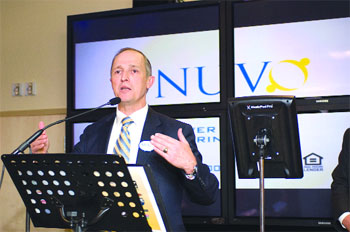
SPRINGFIELD — The first highly concentrated, cluster-centric, regional manufacturing conference of its kind will be held Sept. 23 at the MassMutual Center in Springfield. The event, called the Advanced Manufacturing and Innovation Competition & Conference (AMICCON), is being staged in response to growing recognition among area manufacturers and supply-chain members that there is an urgent need to find and meet one another. “AMICCON was formed to identify who’s here in manufacturing, expose them to OEMs [original equipment manufacturers] and procurement, and to make these introductions,” said co-founder Ellen Bemben. “The ultimate goal is to be the advanced manufacturing region in the U.S., where exotic manufacturing, such as micro, nano, and precision meet higher specifications and tighter tolerances, and short runs are the norm.” Industry sectors to be represented at the event will include plastics and advanced materials, precision machining, paper and packaging, electronics, ‘green’/clean technology, and medical devices. Business opportunities in defense and aerospace will also be highlighted at the event. OEMs and their supply chains are being invited personally to participate. “AMICCON is also a new consortium on innovation that also delivers manufacturers to innovators and new markets in order to cause new business,” said Gary Gasperack, vice president and general manager (retired) of the Spalding Division of Russell Corp. “We are very excited about introducing it to our region.” The Mass. Export Center has already produced two programs for AMICCON: an Export Experts Panel, and a seminar, “International Traffic in Arms Regulations for Defense and Aerospace Export.” Planning of the event has been ongoing since last fall among founding members that include Stan Kowolski, president of FloDesign Wind Turbine Corp.; Eric Hagopian, president of Hoppe Tool; Anne Paradis, president of MicroTek; Joe Peters, president of Universal Plastics; Ann Pieroway, president of the Mass. Export Center; and Jeff Sattler, president of NUVO Bank. More details on AMICCON and registration information will be announced in the coming weeks, said Bemben.

SPHS Announces Departure of President, CEO McCorkle

SPRINGFIELD — The Sisters of Providence Health System (SPHS) announced recently that Vincent McCorkle, president and CEO, will be leaving the organization to become president and CEO of Akron General Health System in Akron, Ohio, and will begin his new position on July 1. McCorkle has served as president and CEO for the SPHS since October 1997. Prior to being named to those positions, he served from 1996 to 1997 as executive vice resident of SPHS. He joined SPHS in September 1993 as president and CEO of the Acute and Ambulatory Care Network, the position he held until 1996. McCorkle has been an active community leader since moving to Springfield in 1993. He has served on the boards of numerous community agencies, such as the Economic Development Council, Business Friends of the Arts, the Springfield YMCA, United Way of the Pioneer Valley, the Springfield Urban League, and many others. In 2006, he was recognized with the Pynchon Award, the region’s most distinguished service award. “The decision to leave the Sisters of Providence Health System was incredibly difficult,” said McCorkle in a prepared statement. “It has been a privilege and an honor to have served the community through the healing ministry of the Sisters of Providence Health System. It has also been my privilege to serve with a team of the most talented and dedicated physicians, nurses, other professionals, and support staff that you will find anywhere in health care. Although my professional journey leads me to new challenges at Akron General, I am grateful for the time with SPHS and the Greater Springfield community. I will truly miss my SPHS colleagues and the many Western Mass. community and business leaders I have had the pleasure of working with.” Dr. David Chadbourne, chairman of the SPHS board of trustees, praised McCorkle for his work with the system and in the community. “Vince has provided the Sisters of Providence Health System with 17 years of dedicated and committed service and visionary leadership,” he said “He guided SPHS through some challenging financial times and led several innovative initiatives that have resulted in the expansion of SPHS’ programs and services. He has left an indelible mark on an organization that, thanks in large part to his hard work, is well-poised to continue the healing legacy of the Sisters of Providence well into the future.” The Board of Trustees has named Dr. William Bithoney, chief medical officer of the SPHS and chief operating officer of Mercy Medical Center, as the interim CEO. Bithoney will serve in this role until the conclusion of a national search for McCorkle’s permanent successor.

Poll Shows Casino Support, with Limitations

BOSTON — A recent survey conducted by Western New England College shows that most adults support casinos in the Bay State, but many don’t want one in their own community. The telephone poll of more than 500 adults conducted in mid-April, and partly during a floor debate on casinos on Beacon Hill, found that 58% support the approval of casinos for the state, while 35% are opposed. The poll also found that 53% in the state are opposed to a casino in their community, while 41% would support it.

UMass Entrepreneurship Initiative Stages Contest

AMHERST — The UMass Amherst Entrepreneurship Initiative (UMass EI) recently awarded seed capital to aspiring student entrepreneurs through its seventh Executive Summary Competition, which is sponsored by the National Collegiate Inventors and Innovators Alliance. The competition consisted of businesses ranging from ladies’ shoes to investment consulting in Haiti. A notable feature of this year’s competition was the very strong performance by students from Mount Holyoke College. This year’s top place was a tie between two teams. Filmix was awarded $750. The company enables independent filmmakers to post their work online, where customers may sample and download the films. The team consisted of Vladislav Yazhbin, a triple major at UMass (Mathematics, Computer Science, and individualized major in Human Computer Interaction) and Vennie Encheva, a triple major at Mount Holyoke College (Mathematics, Economics, and Politics). Also awarded $750 was Rocky Mountain Field Hockey, the company of UMass student Sarah Williams, a major in Landscape Architecture, a company dedicated to promoting advanced field-hockey training for high-school players in Colorado aspiring to play in college. Participating in the competition were three other teams. Foodcycle coordinates the collection and removal of food waste from commercial kitchens. The team consisted of two UMass students, Rose Weiss and Mauricio Abascal. The team received $500 from the judges and an additional $250 as the audience’s favorite. DisaporConex offered an investment platform through which Haitian immigrants can connect effectively to businesses and schools in Haiti. The company is led by UMass students Jean Arnaud and Adrien Tofighi. Three Mount Holyoke students — Alex Ivanova, Gergana Kostadinova, and Divisha Chumun — with a company called Vedette pitched their concept of an innovative ladies’ shoe with detachable high heels. Noting the prominence of Mount Holyoke students in the competition, EI co-organizer Dan Gordon, a professor of History, said, “these young ladies are each fluent in many academic disciplines and brought tremendous entrepreneurial spirit to the class. There were 75 applicants for the competition, and all the Mount Holyoke students made it to the finals.” The competition’s judges included nine distinguished bankers, investors, grant issuers, and entrepreneurs. The mission of the UMass EI is to help students turn ideas into businesses. The organization inspires students to explore the entrepreneurial career path, trains them in how to evaluate their ideas, and then connects them to the resources needed to take the first steps in starting their own business. Students participating in EI’s program have opportunities to earn academic credit, win prize money, and connect with experienced mentors.

Sections Supplements
John Ratzenberger Brings His Summer-camp Initiative to STCC

John Ratzenberger

John Ratzenberger

John Ratzenberger says that, when he speaks to groups of manufacturers, which he does often, he likes to hang around after the microphone is shut off and listen to what his audience members have to say.
And he’s generally alarmed by what he hears.
Such was the case at a recent gathering of machining company executives in Chicago, where Ratzenberger, best known to most as Cliff, the postal carrier he portrayed for more than a decade on Cheers, spoke about the perilous state of the sector, which he says is seriously threatened because young people don’t want to get into it anymore.
“I stayed and talked to some of the people there,” he told BusinessWest in a phone interview from his hotel room in the Windy City. “Every single one of them was worried — really worried. I was talking to one guy with an aircraft-manufacturing company who said most kids coming out of high school can’t even read a simple ruler. You ask them to find 3/4 of an inch, and most can’t do it.”
Beyond their lack of ruler-reading skills, most young people simply don’t have an appreciation for how to make things, or, equally important, how making things can be an attractive career, said Ratzenberger, who has made enlightening them a passionate endeavor for the last seven years or so.
His vehicle for getting the word out is an organization he founded called Nuts, Bolts & Thingamajigs, or NBT. That agency is now partnering with the Foundation of the Fabricators & Manufacturers Assoc. Intl. and the National Assoc. for Community College Entrepreneurship to develop a national program that builds on a summer-camp initiative blueprinted by NBT.
At 16 community colleges nationwide, including Springfield Technical Community College, students at week-long summer camps will be exposed to math, science, engineering, and entrepreneurship principles, while having an opportunity to see the technology being used in industry today.
“Those shop classes that high schools had years ago … they’re gone, a thing of the past,” said Ratzenberger. “These camps will do what those shop classes used to; they’ll expose young people to vocational and technical trades. Many young people today have no role models when it comes to fixing things themselves or taking pride in building something useful, and they dismiss the idea of considering a career in one of the manual arts such as manufacturing, electrical, plumbing, carpentry, or welding.”
Ratzenberger will be in the Springfield area for a few days in May to promote NBT and, more specifically, the summer-camp program. He has a few speaking engagements booked, including one before the local chapter of the National Tooling & Machining Assoc. on May 12 at the Springfield History Museum.

Trade Partners
The community colleges hosting manufacturing camps this summer are located in such places as Blue Bell, Pa., Marysville, Calif., Tupelo, Miss., Fergas Falls, Minn., and Appleton, Wis. That geographic coverage helps explain that the pending shortage of people who can build things with their hands is truly national, said Ratzenberger, noting also that time is of the essence.
“In four years, this is a problem that everyone will be talking about,” he told BusinessWest. “And in six years … well, by then it will be too late.”
This is the consensus opinion he’s gathered from those talks with manufacturers after his speeches about NBT and its mission. Ratzenberger said the problem has been building for some time now, and there are many reasons for it.
They range from negative portrayals of craftspeople in movies and television — “see a plumber on TV and he’s always portrayed as a simpleton, a loser,” said Ratzenberger — to parents and guidance counselors who are steering people away from the trades and toward a college education, whether they’re suited for one or not.
“So with all that happening, why would anyone want to explore those fields?” he asked before answering his own question. “It’s simple: they’re not.”
The summer camps are designed to do what the old shop classes did, and that’s at least enlighten young people about the trades and inform them about career opportunities, said Ratzenberger. “They’ll learn what it’s like to weld, bend metal, punch holes in metal, and more,” he said. “And we need to do that, because we’re simply running out of people who can do those things.”
And the prospects for filling the voids created by retiring machinists and craftspeople don’t look positive, and won’t until some perceptions about this sector change, he said.
Citing a recent poll conducted by NBT, Ratzenberger said that a majority of teens (52%) have little or no interest in a manufacturing career, and another 21% are ambivalent. When asked why, nearly two-thirds of respondents said they seek a professional career, while others cited issues such as compensation, career growth, and physical work, or a desire to avoid it.
“It’s absolutely critical for this mindset to change because, when America recovers from its economic downturn, there will be a dire need for skilled manpower in the trades,” he continued. “Numerous surveys conducted by the manufacturing organizations predict a labor shortage if we don’t inform the nation’s youth about the available opportunities and enlist them to fill the sophisticated, high-tech jobs available in areas such as robotics and laser technologies.”
The summer camp at STCC, to be called “Manufacturing Your Future,” is designed to do just that and, in the process, help in the process of putting more people in the pipeline, said Adrienne Smith, dean of the School of Engineering Technologies at the college. She said participants, 13- and 14-year-old technology students from area schools, will use technology to create a product from start to finish, providing them practical manufacturing experience in 3D design, computer numerical control programming, welding, and other applications.
Meanwhile, students will also visit area manufacturers to get an up-close look at manufacturing processes, new technology, and, perhaps most importantly, the people doing such work.
Overall, she said, the camps are designed to enlighten, inform, and ultimately change some of the attitudes that young people and their parents have about manufacturing.

Something to Build On
When asked if he could quantify or qualify how much progress NBT has made with fueling interest in the trades since it was formed, Ratzenberger paused and then said it would be difficult to do so.
The anecdotal evidence, such as that provided by the manufacturing executives he spoke to in Chicago, would seem to indicate that, however much progress has been achieved, there is still a lot of work to be done.
The planned summer camps won’t solve the problem, but they may help move an industry closer to a solution — and enable more young people to read a ruler.

George O’Brien can be reached at [email protected]

Uncategorized
John Ratzenberger Brings His Summer-camp Initiative to STCC

John Ratzenberger says that, when he speaks to groups of manufacturers, which he does often, he likes to hang around after the microphone is shut off and listen to what his audience members have to say.

And he’s generally alarmed by what he hears.

Such was the case at a recent gathering of machining company executives in Chicago, where Ratzenberger, best known to most as Cliff, the postal carrier he portrayed for more than a decade on Cheers, spoke about the perilous state of the sector, which he says is seriously threatened because young people don’t want to get into it anymore.

“I stayed and talked to some of the people there,” he told BusinessWest in a phone interview from his hotel room in the Windy City. “Every single one of them was worried — really worried. I was talking to one guy with an aircraft-manufacturing company who said most kids coming out of high school can’t even read a simple ruler. You ask them to find 3/4 of an inch, and most can’t do it.”

Beyond their lack of ruler-reading skills, most young people simply don’t have an appreciation for how to make things, or, equally important, how making things can be an attractive career, said Ratzenberger, who has made enlightening them a passionate endeavor for the last seven years or so.

His vehicle for getting the word out is an organization he founded called Nuts, Bolts & Thingamajigs, or NBT. That agency is now partnering with the Foundation of the Fabricators & Manufacturers Assoc. Intl. and the National Assoc. for Community College Entrepreneurship to develop a national program that builds on a summer-camp initiative blueprinted by NBT.

At 16 community colleges nationwide, including Springfield Technical Community College, students at week-long summer camps will be exposed to math, science, engineering, and entrepreneurship principles, while having an opportunity to see the technology being used in industry today.

“Those shop classes that high schools had years ago … they’re gone, a thing of the past,” said Ratzenberger. “These camps will do what those shop classes used to; they’ll expose young people to vocational and technical trades. Many young people today have no role models when it comes to fixing things themselves or taking pride in building something useful, and they dismiss the idea of considering a career in one of the manual arts such as manufacturing, electrical, plumbing, carpentry, or welding.”

Ratzenberger will be in the Springfield area for a few days in May to promote NBT and, more specifically, the summer-camp program. He has a few speaking engagements booked, including one before the local chapter of the National Tooling & Machining Assoc. on May 12 at the Springfield History Museum.

Trade Partners

The community colleges hosting manufacturing camps this summer are located in such places as Blue Bell, Pa., Marysville, Calif., Tupelo, Miss., Fergas Falls, Minn., and Appleton, Wis. That geographic coverage helps explain that the pending shortage of people who can build things with their hands is truly national, said Ratzenberger, noting also that time is of the essence.

“In four years, this is a problem that everyone will be talking about,” he told BusinessWest. “And in six years … well, by then it will be too late.”

This is the consensus opinion he’s gathered from those talks with manufacturers after his speeches about NBT and its mission. Ratzenberger said the problem has been building for some time now, and there are many reasons for it.

They range from negative portrayals of craftspeople in movies and television — “see a plumber on TV and he’s always portrayed as a simpleton, a loser,” said Ratzenberger — to parents and guidance counselors who are steering people away from the trades and toward a college education, whether they’re suited for one or not.

“So with all that happening, why would anyone want to explore those fields?” he asked before answering his own question. “It’s simple: they’re not.”

The summer camps are designed to do what the old shop classes did, and that’s at least enlighten young people about the trades and inform them about career opportunities, said Ratzenberger. “They’ll learn what it’s like to weld, bend metal, punch holes in metal, and more,” he said. “And we need to do that, because we’re simply running out of people who can do those things.”

And the prospects for filling the voids created by retiring machinists and craftspeople don’t look positive, and won’t until some perceptions about this sector change, he said.

Citing a recent poll conducted by NBT, Ratzenberger said that a majority of teens (52%) have little or no interest in a manufacturing career, and another 21% are ambivalent. When asked why, nearly two-thirds of respondents said they seek a professional career, while others cited issues such as compensation, career growth, and physical work, or a desire to avoid it.

“It’s absolutely critical for this mindset to change because, when America recovers from its economic downturn, there will be a dire need for skilled manpower in the trades,” he continued. “Numerous surveys conducted by the manufacturing organizations predict a labor shortage if we don’t inform the nation’s youth about the available opportunities and enlist them to fill the sophisticated, high-tech jobs available in areas such as robotics and laser technologies.”

The summer camp at STCC, to be called “Manufacturing Your Future,” is designed to do just that and, in the process, help in the process of putting more people in the pipeline, said Adrienne Smith, dean of the School of Engineering Technologies at the college. She said participants, 13- and 14-year-old technology students from area schools, will use technology to create a product from start to finish, providing them practical manufacturing experience in 3D design, computer numerical control programming, welding, and other applications.

Meanwhile, students will also visit area manufacturers to get an up-close look at manufacturing processes, new technology, and, perhaps most importantly, the people doing such work.

Overall, she said, the camps are designed to enlighten, inform, and ultimately change some of the attitudes that young people and their parents have about manufacturing.

Something to Build On

When asked if he could quantify or qualify how much progress NBT has made with fueling interest in the trades since it was formed, Ratzenberger paused and then said it would be difficult to do so.

The anecdotal evidence, such as that provided by the manufacturing executives he spoke to in Chicago, would seem to indicate that, however much progress has been achieved, there is still a lot of work to be done.

The planned summer camps won’t solve the problem, but they may help move an industry closer to a solution — and enable more young people to read a ruler.

George O’Brien can be reached at[email protected]

40 Under 40 The Class of 2010

Amanda Huston: 29

Vice President of Operations,
Junior Achievement of Western Mass.

Amanda Huston is a public face of Junior Achievement of Western Mass., often visible at civic events, raising the profile of the organization that educates young people about business.

“My background is in accounting, and I do their accounting work,” she said. “But I also run special events. We have one of the finest golf tournaments in the Valley, a bowlathon, and our signature event, the stock-market challenge.”

The latter event is the largest of its kind in North America, in which more than 500 high-school students compete in teams to see who can most successfully invest $500,000.

“I love the mission of educating students on entrepreneurship and financial literacy,” said Huston, who also operates her own tax business, Back Office. “I realize the necessity of understanding finances and taxes and how it all affects their life.”

And she knows she’s making a difference. As an adjunct professor of Accounting at Elms College, “I had a student come to me and say, ‘I remember you; three years ago you told me about Roth IRAs. I wanted you to know I opened one up.’ You can impact students in so many different ways.

“From Junior Achievement, I see how students need financial education,” she added, “and from the tax side, I see how adults need a better understanding of their own personal finance.”

Huston is also active in many community organizations, including various chambers of commerce, the Young Professional Society of Greater Springfield, and various boards at the Elms and Springfield’s Sci-Tech High School. And she makes time for sports, too — basketball, softball, spinning, and a recent addition, golf.

“I’ve hosted the golf tournament for a few years, and a lot of board members asked me to play,” she said. “I finally joined a tournament last year, and since then, my golf schedule has been booked. I’m getting better … at least somewhat competitive.”

Proving that even someone with a lot to teach doesn’t have to stop learning. —Joseph Bednar

<<Back

Agenda Departments

Social Media Plan

April 15: “The Small Business Experience/Creating a Social Media Plan” is the theme of a morning workshop hosted by the Mass. Small Business Development Center Network. The workshop will be presented by Derek Allard of Gravity Switch in Northampton and Shalini Bahl of IAM Business Consulting of Amherst, and is planned from 9 a.m. to noon at the Scibelli Enterprise Center, 1 Federal St., Springfield. Highlights of the day include developing a social-media plan based on one’s business purpose, social-media purpose, target audience, and resources. The cost is $40. For more information, call (413) 737-6712 or visit www.msbdc.org/wmass .  

WNEC Speaker Series

April 15: Katharine G. Baker, Ph.D., Principal of Family Therapy and Consulting Associates in Northampton, will present “Leading a Business in Anxious Times” at noon as part of Western New England College’s Law and Business Center for Advancing Entrepreneurship Speaker Series. Baker is an experienced business consultant who has worked with family enterprises and closely held firms, providing executive and leadership coaching, strategic planning, organizational learning services, and time-management seminars. She currently is an independent scholar and executive coach with a solo consultation practice that serves national and international clients. She will present an approach to understanding business leadership that is grounded in Bowen theory, a well-tested theory of human behavior. She will show how the patterns of behavior learned in the family can have a profound impact on every business’ success. Baker will illustrate the power and effectiveness of this way of understanding leadership. She will also discuss executive coaching as an application of her approach. For more information on the free lecture at the Law School Commons on Wilbraham Road in Springfield, call (413) 796-2030 or e-mail [email protected] . Lunch will be provided.

Twitter & Blogs

April 22: Derek Allard of Gravity Switch in Northampton will present a workshop titled “Twitter & Blogs” from 9 to 11 a.m. at the Scibelli Enterprise Center, 1 Federal St., Springfield. Allard will discuss the basics — what they are, why to use them, and how to get started. The cost is $40. For more information, call (413) 737-6712 or visit www.msbdc.org/wmass .

LinkedIn & Facebook

April 29: Derek Allard of Gravity Switch in Northampton will present a workshop titled “LinkedIn & Facebook” from 9 to 11 a.m. at the Scibelli Enterprise Center, 1 Federal St., Springfield. Allard will discuss the basics — what they are, why to use them, and how to get started. The cost is $40. For more information, call (413) 737-6712 or visit www.msbdc.org/wmass .

Women’s Professional Development Conference

April 30: Bay Path College will host its 15th annual Women’s Professional Development Conference at the MassMutual Center in downtown Springfield from 7:30 a.m. to 4:30 p.m.  For more information, call (413) 565-1000 or visit www.baypath.edu .

Deliver Perfect Pitch

May 12: Learn concrete and easy-to-master tools to help you in every sales situation, no matter what the environment or what you sell, during “Deliver the Perfect Pitch,” 9 to 11 a.m., at the Scibelli Enterprise Center, 1 Federal St., Springfield. Sheldon Snodgrass of www.steadysales.com in Williamsburg will be the presenter. The program is sponsored by the Mass. Small Business Development Center Network. Cost is $40. For more information, call (413) 737-6712 or visit www.msbdc.org/wmass .

Business Plan Basics

May 20: The Massachusetts Small Business Development Center Network will host “Business Plan Basics” from 9:30 a.m. to 12:30 p.m. at Amherst Town Hall, first-floor meeting room, 4 Boltwood Walk, Amherst. The workshop will focus on management fundamentals from start-up considerations through business-plan development. Topics will include financing, marketing, and business planning. The cost is $35. For more information, call (413) 737-6712 or visit www.msbdc.org/wmass .

Joomla! Workshop

May 26: Tamar Schanfeld of TnR Global Joomla! Services of Greenfield will present a daylong boot camp on creating an interactive Web site for small businesses. The workshop is planned from 9 a.m. to 4:30 p.m. at the Scibelli Enterprise Center, 1 Federal St., Springfield. Topics: learn to plan your site, enter and edit content and menus, and install extensions. Comfort with Microsoft Word and Internet browser required. The workshop does not include e-commerce or shopping cart features. Cost is $75. For more information, call (413) 737-6712 or visit www.msbdc.org/wmass .

Features
Taking Entrepreneurship to Another Dimension
Companies to Watch: Accu-Vista

Ed Wood says 3D scanning has caught on in Europe, but it is very much an unknown commodity in this country.

Ed Wood has an advantage that most entrepreneurs can only dream about. When he says he has no competition, he means it. There is none. Zero.

“At least on the East Coast, anyway,” he explained. “To the best of my knowledge, there’s no one else doing this.”

But he has quite a disadvantage as well. Indeed, very few people know what this is and how they might be able to take advantage of it.

The product is three-dimensional scanning technology. It’s been prevalent in Europe for many years now, but in this country it is a giant unknown, what Wood, a serial entrepreneur of sorts, calls a “solution looking for a problem — or, in this case, problems.”

He says 3D scanning can be used for everything from helping candidates for plastic surgery find the right look — be it a new nose, chin, or their previous look following a mastectomy — to creating likenesses of a newborn’s face, or his or her entire body.

And he’s confident enough that the general population will eventually grasp the concept that he’s made a substantial investment in new equipment and opened Accu-Vista 3D Scanning in a fourth-floor suite in the so-called Maplegate Building in downtown Springfield. Few customers have made it to that address thus far, but Wood is optimistic that his current awareness-building activities will eventually pay off.

“I think there’s a great deal of potential in this technology,” he said. “People just have to understand all that it can do.”

Wood brings a very diverse background to his current venture. He started out teaching art to high-school students in Wisconsin, and later coordinated all continuing education activities for a large medical center in that state. He later relocated to Beverly, Mass., and became a game designer for Parker Brothers (which was eventually acquired by Hasbro, requiring a move to Western Mass.), and led the group that successfully licensed the characters from the three most recent Star Wars movies.

“Unfortunately, they weren’t as popular as the ones from the other three movies,” said Wood, noting that, when East Longmeadow-based Hasbro decided to transfer many designers to the Beverly facility, he opted not to go, and instead start his own company.

He and two partners developed several concepts for game makers like Mattel and Hasbro, including the Yomega Yo Yo. This company eventually did work for Disney, and developed something called the Pal Mickey, an interactive plush toy that, through communication with hundreds of infrared transmitters in the Disney parks, could tell guests where they were and what they were going to experience next.

The partners in that venture eventually went in different directions, and Wood found himself looking for a new challenge. He eventually found one in 3D scanning, a technology — and potential business opportunity — that he researched for nearly two years before deciding it had enough potential to warrant his investment.

Explaining how the technology works, Wood took a picture of himself (his head, to be more specific) as he sat in a specially designed chair roughly three feet away from the scanning equipment.

A projector essentially projects black-and-white lines, hundreds of thousands of them, that capture the contours of one’s face and comprise what’s known as a ‘point cloud.’ The image is much like a plaster cast, he explained, adding that it sometimes intimidates people because it captures every wrinkle and flaw.

The technology has myriad uses, said Wood, most all of them still well outside anything that would be considered mainstream. The clothing industry, for example, has explored the use of 3D scanning to obtain images that could be used to create perfect-fitting items that account for every curve and bulge. And he expects this use to someday overcome current logistical challenges and become reality.

As for his own business, Wood says a scan can be used to create jewelry featuring three-dimensional images of a newborn’s face. Using high-tech printers, such images can be placed on metal, plastic, and porcelain-like materials. Scans can also be used to make complete dolls that look like a newborn, a product called ‘reborn baby.’ Explaining the concept, Wood said his scans of an infant would be sent to a so-called ‘newborn artist’ — their work is considered a budding cottage industry — who would create a life-like doll.

“Some people think this is a little creepy,” said Wood, “but others are giving it great reviews. I guess it’s up to the individual.”

But the more lucrative uses for 3D scanning invariably lie in health care, said Wood, noting that he is hoping to work with plastic surgeons to better serve clients. He noted that the scanning technology can, for example, help those individuals considering rhinoplasty to find a new shape that appeals to them. A scan can be altered with a few mouse clicks, he explained, giving clients a chance to see a potential new nose, chin, or pair of breasts from every angle.

For those facing a mastectomy, a pre-scan can help recreate a woman’s shape, he continued.

“Many women facing a double mastectomy want to look as much like they did before as possible, because they’ve found that the psychological healing is as important as the physical healing,” he explained. “What I can do is scan them and even have a physical model printed for them, and it will be right there for the plastic surgeon to see.”

Other uses include scans of burn victims to help create well-fitting protective masks that must be worn while new skin grows, said Wood, adding that those in high-risk professions, such as firefighters, police officers, and soliders, should be pre-scanned in case they are badly injured and require reconstructive surgery.

For now, Wood spends most of his time talking about the potential of the technology that he has chosen for his next entrepreneurial venture. He ultimately believes that this potential will be realized, but he is realistic and knows that awareness — and acceptance — won’t happen overnight.

When it does happen, he’ll be fully ready to capitalize on his huge competitive advantage. – George O’Brien

Features
A Sagging Economy, Other Forces Push Some into Business Ownership

Entrepreneurs of NecessityMaking the transition from employee to business owner is usually a scary proposition. What’s prompting more people to take such a plunge is the realization that the corporate world is no less scary and, in many ways, even less secure. But whether one chooses this route by choice or out of necessity, a challenging roller-coaster ride almost always awaits.

Trisha Thompson called it “working for the Mouse,” as opposed to ‘the man.’

That’s a phrase used by many of those who find themselves in the employ of the massive Disney Corp., which Thompson was, as executive editor of a Northampton-based monthly publication for parents called Wondertime.

That’s was.

Indeed, the corporation abruptly shut down the magazine roughly a year ago, despite what most all involved considered solid early success. “We made all our numbers,” said Thompson, referring to the start-up’s performance over its first several years. “We received some awards, we were on track with our circulation … we were a good magazine. We went from an original staff of seven to 32, but they decided to just shut it down.”

Fast-forwarding things a little, Thompson said this sudden, completely unexpected turn of events provided the rather violent push she and her husband, Fred Levine, then a freelance writer and editor, needed to start their own business venture, called Small Batch Books. Operated out of their home in Amherst, this vanity-press operation specializes in personal memoirs, family histories, and commemorative books.

It was launched last summer after some extensive job hunting and soul searching led the two to determine that this was the best, most practical route for them to take given their ages (Trisha was 49, Fred 52), their career aspirations, and the decidedly unsteady state of the print publishing industry.

“It doesn’t feel safe anywhere anymore — there’s no place to go that’s really all that secure,” said Thompson as she explained why she turned down a few other opportunities in publishing, including one in Iowa, and then stopped looking, even if that meant entering the often-scary world of entrepreneurship. “I thought to myself, I’m going to uproot my family to go to Des Moines, and then in a year they’re going to shut that down? No, thank you.”

And because no place is safe in most all sectors of the economy, many, like Thomson and Levine, have become what Dianne Fuller Doherty calls “entrepreneurs of necessity.”

Elaborating, Doherty, director of the Mass. Small Business Development Center Network’s western regional office, said that most who go into business for themselves do so out of choice or opportunity. But all economic downturns, and especially the so-called Great Recession, have seemingly removed choice from the equation for some who have found themselves downsized and with few, if any, attractive job opportunities.

“We’re seeing many people who are choosing this path out of necessity,” she said, “which isn’t always a good thing. Some people are cut out for this, and some people aren’t.”

Sometimes, such entrepreneurial leaps are brought on by other factors, such as a company’s relocation, discontinuation of programs, changes in administration at a company or institution, or others. For Dan Touhey, the ‘push,’ as those who have made this transition call it, came when his long-time employer, Spalding, which he most recently served as vice president of marketing, announced it would be moving out of Springfield.

The first announced destination was Atlanta, home to Russell Athletic, which bought Spalding several years ago, Touhey explained. But then, when Fruit of the Loom bought Russell, employees were told that if they wanted to stay in the organization they would have to relocate to Bowling Green, Ky.

And Touhey never gave that mailing address any serious consideration.

So after sifting through some offers from recruiters and rejecting them — none looked solid enough in these days of unrest and consolidation in corporate America — he decided to go out on his own last spring with DPT Consulting.

There are two aspects to this business. The first, concerning his primary client, the Berkshire Opportunity Fund, involves channeling small businesses looking for funding to that venture-capital outfit. The second is centered on offering Touhey’s vast experience in business and marketing to small businesses that can use it. These include a cycling-apparel company in Northampton and a start-up that manufactures a product called the ‘bunt-down bat.’

As in all cases when individuals mull the shift from being an employee to being self-employed, those who take this step out of necessity must still perform the needed due diligence, said Lyne Kendell, senior business advisor for the MSBDC, who has counseled many people weighing such a decision.

In short, such individuals must have a solid business concept and a plan of attack, she explained, but also the needed skill sets to be an entrepreneur (not everyone has them), and a passion for what they want to do.

“It can’t be something they just feel like they want to do or should do,” she explained. “And it shouldn’t be just a way to make money. It has to be something they’re passionate about. Without that, it won’t succeed.”

By the Book

This requisite passion was apparently missing the first time Thomson and Levine met with Kendell.

That was seven years ago, when they were pondering a different kind of venture, one involving custom publishing in the corporate realm, or what Thompson described as “extended advertorials” for products and services.

“Within about 10 minutes, she was giving us this weird eye, the stink-eye kind of thing,” Thompson recalled. “We were looking over our shoulders saying, ‘who’s she making this face at?’ It was us. She said, ‘do you really want to do this? I’m getting the feeling you don’t, but feel you could or should.’

“We said, ‘well, of course we do,’” Thompson continued. “But shortly thereafter, we found out she was right, but by then, we had already rented office space and spent money unnecessarily.”

Things were different when Levine and Thompson were again sitting across the MSBDC conference table from Kendell, this time explaining Small Batch Books. The two told Kendell (and BusinessWest) that they believed they had a somewhat unique concept — a soup-to-nuts vanity publishing operation — and something that they truly believed in.

This time around, the body language conveyed the necessary confidence and passion, said Kendell, who said she gave Levine and Thompson a homework assignment of sorts, one they ultimately scored well on.

“I gave them some tasks to do and things to think about, on both the personal side and the business side, and a few weeks later, they came back with those tasks completed and with the confidence that they could take the plunge,” she said. “On the personal side, they have to do what I call a personal retreat — do they have the personal wherewithal to do this? If they’re going to work together, what would the guidelines be for the home life and business life? On the business side, it’s more looking at skills, contacts, potential revenue streams, whether you really know the market, and whether you could, if necessary, live on a part-time job or savings for 12 to 18 months.”

Kendell has been assigning lots of homework these days, as she and others at the MSBDC handle a larger portfolio of cases than would be considered normal, mostly due to the recession.

Many of these cases involve businesses that are hurting, said Allen Kronick, senior business advisor for the MSBDC, noting that some wait too long to seek help. For these businesses he sometimes uses the term ‘dead on arrival’ to describe their condition, meaning that there is nothing he or anyone else can do for them. Many others can be helped, he said, adding that his own portfolio has many cases involving companies trying to find ways to hang on until the economy improves — and succeeding.

Meanwhile, many other cases involve startups, with a good percentage of them blueprinted by individuals who have been downsized and can’t find another job, or at least one to their liking, or who could perhaps find a job similar to what they had before, but are tired of what Kendell called the “rat race.”

Looking over his portfolio, Kronick said he has several clients that fit this description. They include everything from a former MSPCA employee — laid off when that agency shut down its Springfield facility — who is now making and selling cat scratch posts, to a laser engineer who knew his days were numbered with his now-former employer and started his own venture, to some other former executives at Spalding trying to figure what to do next.

Tuohey’s situation involves both the recession and general uncertainty about corporate America. He told BusinessWest that, in this economy, even though things have improved somewhat since last spring, opportunities in marketing, and especially senior marketing positions, are few and far between. But recruiters did call, he continued, and upon listening to what they were saying, he became increasingly convinced that there were few, if any, situations that provided the real security and peace of mind he was seeking.

“When I did find situations, they were less than ideal,” he explained. “They were too similar to what I had just left, and I knew how quickly things could change. I looked at a couple of situations, gave them serious consideration, and decided to decline.”

Eventually, he said he simply grew tired of waiting for the ideal situation to come about and for the economy to rebound, and started his own venture. The work with the Berkshire Opportunity Fund has been steady and has given him a solid foundation, he explained, adding that he’s slowly but surely building a portfolio of clients in sports-related businesses that can tap into his marketing and brand-building expertise.

VOmax, a Northampton-based cycling-apparel maker, is one such client. Tuohey said he recently helped the company secure licenses with the National Basketball Assoc., National Hockey League, and Major League Baseball, to make clothes with team logos and colors. Meanwhile, with the Bunt Down Bat venture, he is helping the owner build brand recognition and take manufacturing operations to a higher level.

Gifted and Talented

For Marge Slinski, the push into entrepreneurship didn’t come from the recession. Instead, it came first from a change of direction regarding the UMass program she had been involved with — one concerning youths at risk — and an informal policy at the school that acted as a career barrier.

Elaborating, Slinski said she had a position of authority with a national program, one that won several million dollars in grants to create and replicate initiatives involving youths at risk. She eventually lost that position when the school opted for a different course, and found out rather quickly that, to attain a position with similar responsibilities, challenges, and opportunities to grow, she would need a doctoral degree, which she didn’t have and didn’t want to put her life on hold to earn.

Instead, she went to the Smith College Career Center (she’s an alum) to get some counseling on what to do next. “I was essentially a person who lost a great job and had no way to replace it,” she explained, adding that those at Smith told her that she could take some of her strengths, specifically those in the arts, and what she called “collaboration building” and perhaps use them to start a business.

She took that advice and started Choices, LLC, a venture run out of her home that is focused on helping companies find appropriate gifts for their corporate clients.

Through collaborations with American artists such as Stephen Schlanser, Jennifer McCurdy, Geoffrey Smith, and others, she’s commissioned suitable, meaningful gifts for clients ranging from Fortune 100 companies to locally based banks. The recipients vary, from Mideast oil sheiks to Chinese businessmen to retiring employees, and the occasions vary as well, from celebrations of $1 billion sales (for those Fortune 100 companies, obviously) to employees’ 25th anniversaries.

“I had a new mission,” said Slinski. “Instead of youth at risk, I’m getting corporations to value American arts and crafts as key corporate gifts for their VIPs.”

Starting with a few leads given to her by her husband, who’s in business, Slinski has managed to steadily grow the company over the past few years, and is now looking to take on a partner and take it to the next level.

Meanwhile, Levine and Thompson, who worked in Western Mass. several years ago, then relocated for other job opportunities before returning nearly a decade ago, told BusinessWest that they’ve pretty much understood for some time that they would likely have to go into business for themselves, given the rocky state of the publishing industry in recent years.

“We knew when we moved back here that staying in publishing is not the best place to be, and that we’d probably have to come up with something on our own at some point,” said Levine. “We were lucky along the way in that we did find some staff jobs and we were able to cobble things together with freelance work. But after this last round, with Trisha getting let go, and with the economy taking a huge, huge bite out of print publishing in general, we knew we’d have to do something on our own that would be more stable.”

Over the past several months, they’ve been able to approach stability through several projects involving personal or family histories or other legacy initiatives, most all of them for customers outside the 413 area code; one current work in progress is for a client in Australia.

“There are many who won’t have fortunes to leave behind, but will have thoughts and memories and words,” said Thompson, noting, as one example, the remaining World War II veterans and Holocaust survivors, many of whom, as they approach or reach their ’90s, are thinking about putting their stories into something that can be preserved for future generations.

“They have a legacy to leave behind,” she said, adding that this phenomenon certainly provides some growth potential for their fledgling business.

Free Spirits

When asked about making the transition from employee to employer, or sole proprietor, those we spoke with said there is a definite learning curve that is part and parcel to such a career shift.

There are things to absorb, especially on the financial side of things, and there are some trade-offs. There is no steady paycheck anymore, said Thompson, stressing, as she did repeatedly, that there are no sure things in the corporate world either in this day and age. But there is freedom, more responsibility, and, in general, a pride in ownership that doesn’t come with working for someone.

“It’s very freeing, but’s also a little scary when you’re not working for the mouse,” said Thompson, who noted that, without the strong push that came with the closing of Wondertime, she and Levine may have not made the leap. “It’s freeing because you have as much autonomy and decision-making power as you do responsibility, and that’s unusual. There’s no one else to blame if something doesn’t go right.”

Said Levine, “on the days when it gets dicey for us and we start to get a little scared, we take a step back and look at the people we know from the long careers we’ve had who have stayed with a large publishing company and lost their jobs because the magazine got sold to some other huge conglomerate. It isn’t always better on the other side.

“But maybe the biggest difference for me is realizing how much energy you spent in a
taff job just dealing with personalities and the whole political machinery of it,” he continued. “Now, you can take all that energy and put it into building your business, and also on the creative side as well. Just think about all the time you lose sitting in meetings.”

Roughly a year after he made the transition, Tuohey has no regrets and isn’t looking back, only ahead. He, too, likes the freedom and greater sense of satisfaction that comes with business ownership.

“You definitely make your own breaks,” he said. “The thing about what I’m doing that’s so fulfilling for me is that I’ve earned every penny that I’ve made doing this, and I’ve become much more well-rounded of a professional. I think I’m more determined, and more confident in my abilities.

“Those are the absolute positives,” he continued, “plus I don’t have to jump on a plane every week and fly off and not see my kids.”

Slinski said her background has been in program development, not business management, so she has had to learn many of the basics, from balance sheets, which she’s still mastering, to pricing.

“The hardest thing to learn was to ask for the money I deserved; I would tend to underprice, but I’m getting better at it,” she said. “Overall, I was never a business person; I was great at creating things and developing things systematically, but the business side was all new to me, and I had to learn.”

All those who make the transition to business owner, whether by choice or out of necessity, should be prepared for what Tuohey called a “roller-coaster ride.”

“There are a lot of ups and downs and emotional swings,” he explained. “Most of all, people have to be prepared to work hard and have some determination and some perseverance; it’s not an easy ride by any means.”

The Bottom Line

Touhey says he still hears from recruiters.

“I get calls once in a while,” he said. “I tell them that I’ve stopped looking for a job, but if they want to talk to me, and there’s an ideal situation, I’ll certainly listen.

“But I’m going to be the one dictating the terms; I’m not just going to jump back in,” he continued. “I’ve found something I think I can grow, and in the meantime, I’ve proven to myself and my family that I’m capable of providing for us with this, and there’s a certain amount of accomplishment in that.”

In other words, a former entrepreneur of necessity is now one by choice — and he’s not alone.

George O’Brien can be reached at[email protected]

Features
The Holyoke G&E Makes Some Powerful Statements

Current EventsIt was a spirit of entrepreneurship that made Holyoke into one of New England’s most vibrant industrial centers more than a century ago. Today, that spirit lives on in a place where one might not expect to find it — at the city’s 107-year-old municipal utility. The Holyoke Gas & Electric Department has initiated a number of bold steps in recent years, from purchase of the Holyoke Water Power Co., to startup and rapid expansion of its fiber-optic network, to ongoing work to build its portfolio of renewable energy. The sum of these and other ambitious steps has made the municipal utility a primary driver of economic development in the city — and BusinessWest’s Top Entrepreneur for 2009.

Jim Lavelle says 2009 was “a good water year.”

By that, the manager of the Holyoke Gas & Electric Department meant that the water levels in the Connecticut River, helped by steady rains through much of the first half of the year, were high enough to yield a significant increase in the amount of electricity produced at HG&E’s hydro power facility, one of the few in the country operated by a municipal utility.

But they weren’t too high.

“There is a law of diminishing return,” Lavelle explained. “If the water’s too high, you reach a point where production stops increasing. This year, the levels were just right.”

A number of things have been going just right for the HG&E and its various departments in recent years. They range from the successful acquisition of the various assets of the Holyoke Water Power Co. from Northeast Utilities more than a decade ago, to the launching of a fiber-optic division that provides voice and Internet service to homes and businesses in Holyoke and now well beyond, to the acquisition of land on Mount Tom for the exploration of a windpower operation and other initiatives to grow the utility’s renewable-energy portfolio.

Add it all up, and it makes for a decidedly different kind of honoree for BusinessWest’s Top Entrepreneur Award, first presented in 1996 to recognize the region’s long history of entrepreneurship and those who are carrying on that tradition.

This is not an individual manager (although Lavelle’s strong leadership since he arrived in Holyoke 10 years ago has been a strong factor). Nor is it a private company. This is a utility, one with an entrepreneurial spirit, and one that has become a driving force in Holyoke’s economic-development activities.

Indeed, it was the G&E’s ability to provide a large, reliable supply of inexpensive and ‘green’ (hydro) power that convinced a group of partners from academia and corporate America — the list includes MIT, UMass, Boston University, and Cisco — to select Holyoke as the site for a high-performance computing center in what was undoubtedly the brightest moment in an otherwise down year business-wise.

Lavelle stated repeatedly that the utility’s recent string of success stories — and its selection as Entrepreneur of the Year — are the byproduct of strong leadership from managers and large doses of teamwork. That, and a very businesslike and environmentally conscious, or ‘green,’ approach to the utility’s 107-year-old mission: “to provide reliable electricity at a competitive cost to the ratepayers of Holyoke, while providing great customer service.”

In short, the utility is not merely providing reliable and comparatively inexpensive power, said Lavelle, but it is working continuously to lower its carbon footprint in the process.

Fran Hoey, chair of Holyoke’s Municipal Light Board, used the word ‘innovative’ repeatedly as he talked about the many initiatives Lavelle and his team have undertaken over the past decade or so, and that’s a quality he says is needed in what has become an ultra-competitive and very challenging industry — and if the HG&E is going to continue to be a driving force in economic development.

“Innovation has to be part of it, and a big part of it,” he explained. “The energy market operates within a changing market, probably more so now than at any time in the past, in terms of both the regulatory requirements and the financial drivers. We need to be able to successfully navigate these challenges, while at the same time exploit the opportunities that they present.

“To sustain our position as market leaders, we really need to develop and promote an innovation-oriented culture, and that’s what our team has done,” he continued. “In this business, the status quo won’t cut it.”

BusinessWest kicks off this year as it has the previous 13, with the naming of its Top Entrepreneur, and a detailed look at why this choice is worthy of such an honor.

Dam Straight

BusinessWest has gone outside the box in its selection of previous Entrepreneurs of the Year, such as with the choice of Springfield Technical Community College President Andrew Scibelli for his work to create the Technology Park and Enterprise Center in the former Digital Equipment Corp. complex across Federal Street from the main campus.

A similar pick was Craig Melin, president of Cooley Dickinson Hospital in Northampton, chosen for leadership in efforts with everything from improving efficiency and patient satisfaction to initiating green-energy measures such as a biomass plant.

Those examples show that entrepreneurship is not confined to successful private business operations, and the HG&E provides more evidence.

And this story is similar to those at STCC and CDH in many different ways. They start with leadership, but are punctuated by teamwork and an entrepreneurial spirit that flows from the top through the entire organization, and the HG&E is no exception.

Lavelle was working as an administrator at United Technologies in its Space and Sea Division when he decided to become a candidate for the manager’s position at the G&E in 2000. He eventually triumphed over a number of other contenders, including the city’s former mayor, Daniel Szostkiewicz.

Upon arriving, Lavelle quickly determined that he had a number of challenges on his to-do list, ranging from blueprinting a growth strategy for the then-fledgling fiber-optic operation to finding new revenue streams, to developing a plan for coping with the sea changes that were taking place in the energy business.

“There were a lot of questions to be answered,” he said. “First off, we were trying to figure out how to meet growing electric demand and whether we should pursue acquisition of the hydroelectric project from Northeast Utilities. There was also the matter of what we were going to do with the telecommunications system, which at that time was just a network attached to municipal buildings in Holyoke, and how we could maximize that asset. And then we had to figure out how to fix the steam department, which had been losing money for years.”

One of his first orders of business was to assemble and task a team of managers that now includes Brian Beauregard, superintendent of the Electric Division; Timothy Shannon, superintendent of the Gas Division; Robert Gaboury, Telecommunications Operations manager; Paul Ducheney, superintendent of Electric Production; Jim Jackowski, business liaison; and Brian Richards, comptroller.

Together, and with Lavelle’s lead, they’ve injected a decidedly entrepreneurial spirit into all five of the utility’s operations — gas, electric, steam, fiber-optic, and customer service — while using the utility’s mission as a guide.

Certainly the boldest, and in many ways most controversial, gambit was the purchase of the many assets of the Holyoke Water Power Co. from Northeast Utilities, which had been, through a rather unusual set of circumstances, a direct competitor to the HG&E.

“It was totally unique … there were two sets of wires that went down a lot of streets,” said Beauregard, noting that he could recall just one other city (Cleveland) which had two utilities vying for the same business. “And it wasn’t just concentrated in downtown Holyoke; there was a line that went down by the mall and into Westfield. Northeast Utilities had about 17 or 18 miles of distribution lines and a lot of customers.

“We were literally competing head to head,” he continued. “Somebody from Northeast Utilities would go in with a proposal, and then someone from the Holyoke Gas & Electric would come in with a proposal. Whoever had the best proposal would get to serve the customer, and both sides were very aggressive.”

Amped Up

So when NU eventually agreed to sell the various assets of the water power operation to HG&E for $17.55 million in 1999 — it rebuffed an earlier attempt five years earlier and kept its operating license — the transaction provided the municipal utility with not only a solid source of energy, and renewable energy, but it also resolved what Lavelle called “legacy issues” and helped the utility streamline its operations.

The acquisition also helped set a tone within the department, Lavelle continued, one marked by creative problem-solving, innovative thinking, and entrepreneurship. And this method of doing business was employed in several departments.

Indeed, with its fiber-optic business, the HG&E took a decidedly different route from most competing in that arena. Most focus on residential customers and, on the commercial side, what Gaboury calls “low-hanging fruit.”

Instead, the utility focused on larger, enterprise customers on the commercial side of the ledger, starting in Holyoke, but quickly expanding into downtown Springfield, where the HG&E has wired three buildings — Monarch Place, Tower Square, and the TD Bank tower.

Growth has been relatively slow but steady, and at a pace that the utility can handle, said Gaboury, adding that the telecommunications component has provided the HG&E with a solid business-growth opportunity, and the city with another hard asset in its drive to spur more economic development.

The same can be said of the utility’s efforts with regard to renewable energy, said Lavelle, noting that it is working to become a leader in that realm. Thanks to the ‘good water year’ in 2009, the HG&E was able to meet roughly 75% of its energy needs through hydro, while in a normal year that number would be closer to half or 60%.

Overall, the department is committed to expanding its portfolio of renewable energy, he said, and, in the process, providing the city with an important economic-development asset. Elaborating, he said it is the right, responsible thing to do, but it also makes good business sense.

“The impact on our carbon footprint is minimized by the hydro power we produce,” he explained. “The average electric distribution company’s carbon footprint is about 1,100 pounds of carbon dioxide per megawatt hour, and ours is about half that, and a in a very good water year, it will be about one-tenth.”

Add an attractive price to this large source of renewable energy, and Holyoke now has a real asset, he continued.

“In virtually any other territory, if you want to get green energy, you pay a premium for it,” he said. “Here, we sell it off the shelf, and for less than what others charge for standard power.”

Watt’s Ahead?

Lavelle said it’s no coincidence that the sum of the utility’s many expansion initiatives in recent years have made Holyoke a more-attractive site for locating or expanding a business; this was all part of the utility’s strategic plan.

The city still has one of the highest commercial tax rates in the region (currently $35.15), but that disadvantage is offset in many ways by the reliable, inexpensive power the G&E can provide to all its customers, and even lower rates for large users, as well as high-speed Internet service.

This combination of competitive advantages, and also the fact that a large percentage of the power produced is green (hydro), quickly made Holyoke the focus of attention for those exploring the prospects for building a high-performance computing center somewhere in southern New England.

While MIT and Harvard would no doubt like to have such a facility in their backyard in Cambridge, utility costs there are currently at least twice what they are in Holyoke, said Lavelle, and the power in Cambridge isn’t green.

“This combination of inexpensive power and renewable power is becoming very attractive to developers,” he explained. “There’s no doubt that this was a huge factor in the high-performance computing center coming to Holyoke, and there will be other businesses and government agencies that will want to follow suit.”

The challenge moving forward, said Lavelle, is to scale up the utility’s green-power initiatives to ensure that the competitive edge that the city now has with regard to economic development will be there for years and decades to come.

It is this need that motivated the utility to purchase 270 acres on Mount Tom for exploration of windpower alternatives that would enhance green power supplies and enable the city to attract more businesses and institutions with a mindset to ‘go green.’

“As part of our ongoing efforts to plan for our power needs and to develop plants to satisfy our power needs, we generally start by looking in our own backyard at what assets we have and how we can extract value from those assets,” Lavelle explained. “We’re doing it with hydro — we’re looking at how we can reduce our cost and reduce our carbon footprint — and we’re also looking at Mount Tom and its viability for windpower.

Studies of that site are ongoing, he continued, adding that there are many factors that will determine if and how the utility moves forward with such a facility, including the ability to lower costs and further reduce the carbon footprint. Ultimately, though, the utility will need a larger portfolio of competitively priced renewable energy if, as Lavelle and others expect, the high-performance computing center prompts increased interest in Holyoke.

The Mount Tom acquisition was yet another bold initiative in a decade of many for the HG&E, which, through Lavelle’s leadership, had adopted an entreprenurial mindset through all its various operations. And, as Hoey noted, such a strategic approach is necessary if the utility is to effectively compete in this altered, highly competitive landscape.

Looking at the HG&E’s body of work during his 12-year tenure, and especially during Lavelle’s stint as manager, Hoey said there has been what he called a “passion” driving the various programs and expansion efforts.

“Acquiring the assets of the Holyoke Water Power Co. was a pretty bold and controversial move, but as we look back at it, it’s been a great win for the city,” he said. “Building out the fiber-optic network required vision and a certain amount of initiative, and now we’re evaluating the expansion of our renewable portfolio through small-scale hydro and community-scale wind. These initiatives are really paying off — for the G&E, but especially for Holyoke and the region.”

Power Plays

As HG&E’s managers talked with BusinessWest late last month, one of them noted that the ninth anniversary of the utility’s acquisition of the dam and hydro facility (Dec. 14) had passed rather quietly, without much fanfare within the department.

Perhaps, but the impact of that bold initiative, and many of the G&E’s other moves in recent years, certainly won’t be overlooked any time soon.

The utility is making great strides in all its various divisions, taking many bold steps with regard to producing inexpensive, green power, and playing a key role in helping Holyoke return to the vibrancy that made it one of the state’s leading industrial centers.

As Hoye said, it was an entrepreneu
ial spirit that built Holyoke form an agrarian community into the home of dozens of paper and textile mills. And that spirit lives on today, at the city’s utility.

George O’Brien can be reached

at[email protected]

Departments

Identity-theft Seminars

Sept. 22, Oct. 13: Representatives of Royal & Klimczuk, LLC, of Northampton and Springfield, in conjunction with Whalley Computer Associates, will present several seminars on revisions to the identity-theft regulations that will impact businesses. The regulations will be effective March 1, 2010, according to the Office of Consumer Affairs and Business Regulation. The most dramatic change to the new regulations is its adoption of a ‘risk-based approach’ to information security. Both seminars will be held at Whalley headquarters, One Whalley Way, Southwick. For more information on registration, call (413) 586-2288 or e-mail at [email protected].

Exhibition Opening and Reception

Sept. 14-Oct. 2: The Augusta Savage Gallery at UMass Amherst will host an art exhibition titled “My Journey Through Line: Paintings and Drawings by Carolyn Mae Lassiter,” beginning with an opening reception Sept. 14 from 5 to 7 p.m. Lassiter, a self-taught Santa Fe artist, was inspired by the art she observed in the early 1970s while living in Mexico with a family of indigenous Nahuatl artists. Her current works include recurring themes of soulful and thoughtful female energy, as well as of dreams, spirituality, life in the country, family, and animals. The Augusta Savage Gallery is located at 101 New Africa House, 180 Infirmary Way. For more information, call (413) 545-5177. The event is free and open to the public.

Dinner Forum

Sept. 15: For individuals feeling trapped in a family business, a lecture planned by the UMass Family Business Center may be the answer. The lecture will be presented as part of a dinner forum from 5 to 8:30 p.m. at the Clarion Hotel & Conference Center in Northampton. For complete details, visit www.umass.edu/fambiz  or call (413) 545-1537.

Lecture on Debt as Venture Capital

Sept. 22: Darian Ibrahim, an assistant professor at the University of Wisconsin Law School, will launch the fall speaker series at the Western New England College Law and Business Center for Advancing Entrepreneurship on Wilbraham Road, Springfield, at noon. Ibrahim specializes in corporate and securities law and its application to entrepreneurial activity. He is interested in the legal and economic issues involved in financing rapid-growth start-up companies, which he examines in recent work on angel investors, venture debt, and the geography of entrepreneurship. Ibrahim teaches courses in business associations, securities regulation, law and entrepreneurship, and corporate governance. The lecture is free and open to the public; lunch will be provided. For more information, call (413) 796-2030 or e-mail [email protected]. For details on upcoming programs, visit www.law.wnec.edu/lawandbusiness.

Breakthrough Executive Board Luncheon

Sept. 24: Noah Berger, executive director of the Mass. Budget and Policy Center, will be the speaker at the quarterly business luncheon of the Breakthrough Executive Board. The meeting is planned from 11:45 a.m. to 1 p.m. at Red Rose Restaurant in downtown Springfield. Berger will address issues concerning the state budget, including an overview of the state fiscal crisis, the role of federal stimulus funding in Massachusetts, and state budget transparency. The fee for the luncheon is $20 per person, payable at the door. All members and sponsors can invite guests to attend the luncheon.

Charity Auction

Oct. 2: The fifth annual Charity Auction to benefit the Boys and Girls Club of Chicopee is planned at the club’s gymnasium at 580 Meadow St. Festivities get underway at 6 p.m. with both a silent and live auction. Admission is free. New this fall is an online auction feature at www.bgcchicopee.cmarket.com. The event will also showcase a mini Taste of Chicopee with local restaurants highlighting signature dishes. Items available for bid include gift certificates to area restaurants, sporting event tickets, jewelry, golfers’ packages, fitness club memberships, and much more. The Chicopee Savings Charitable Foundation is the auction’s presenting sponsor. Donations are still being accepted, and a variety of sponsorship levels are available. For more details, call (413) 206-4110.

Realtor Assoc. Trade Show

Oct. 14: The Realtor Assoc. of Pioneer Valley Inc. will host its 16th annual Education Fair & Trade Show from 7:30 a.m. to 5 p.m. at the Springfield Sheraton. The annual affair combines educational opportunities and a trade show for realtors and affiliates. Highlights include speakers on real estate education, a continental breakfast and luncheon, networking opportunities, and a wine and cheese party. For more information, contact Catherine V. Hannum at (413) 785-1328.

Oktoberfest

Oct. 14: An After 5 & Tabletop Expo is planned from 4 to 7 p.m. at the MassMutual Center in Springfield, sponsored by the Affiliated Chambers of Commerce of Greater Springfield. Exhibitors are still sought for the business-to-business event. The general price to exhibit is $175, $100 for Chamber members. Parking is $5 at the MassMutual Center Garage. General admission is $20 and $10 for Chamber members. For complete details, visit www.myonlinechamber.com.

YPS New Year’s Celebration

Dec. 31: The Young Professional Society of Greater Springfield has once again chosen downtown Springfield for its New Year’s Eve celebration. Only 300 tickets will be available for the affair at the Marriott Hotel in Tower Square. Businesses and individuals interested in sponsorship of the event should visit www.springfieldyps.com  for more details. For ticket information, call Jill Monson of YPS at (413) 219-9692.

Sections Supplements
AIC’s New Business Dean Wants to Make a World of Difference
Lea Johnso

Lea Johnson wants AIC business students to get an education with an international flavor.

Lea Johnson says she won’t ever forget the impact a 2006 trip to Africa made on her views about conducting business in a global environment.

At the time, she didn’t see much value in going on the excursion, which was a mandated part of her doctoral program. But a “flash point” of awakening occurred when a colleague remarked that it was sad so many children there didn’t have shoes.

The African professor they were talking to reacted with anger, Johnson said, and explained that going barefoot in their country was not necessarily a sign of poverty.

“If you could have seen the anger in her eyes. We sat in stunned silence,” she recalled. “We were administrators from all over the U.S., but we didn’t understand their culture or apartheid and the inequality that still exists until we were actually there.”

The experience caused her to vow that, if she was ever in charge of an international business graduate program, she would make sure students understood the importance of culture and history.

Johnson is in that position today as the newly ap-pointed dean of the School of Business Administration at American International College. In this issue, BusinessWest takes a close look at her vision for the future as she explains why teaching established business skills to students is no longer enough to guarantee success.

Flying High with Ideas

Johnson, who assumed her new role in early July, said one of her first priorities is to restructure the program. “We can no longer keep education in the silos,” she explained. “It was OK until about 15 years ago, but things have changed. We talk about a global economy, and we really have an obligation to make sure students understand cultures and economies outside our own. We need to become sensitive and know what is expected, what a country’s protocol is, and what is off-limits to discuss.”

That means providing more students with an international experience, which is in line with AIC’s mission. The business school’s undergraduate and graduate programs are based in Springfield, but in the past two years satellite operations were established in Ireland, Italy, Bangkok, and London. Johnson said they hope to open another location in the UK in about a year.

However, only a handful of students participate in the programs in Ireland and Italy. The Bangkok and London programs are more popular, and this fall, 50 MBA students will study at those remote sites, with 25 in Bangkok and 25 in London.

Recently, John-son accepted 40 new students into the MBA program in Springfield, hailing from Russia, Africa, China, and India, as well as the U.S.

“Think how rich it will make classroom discussions,” Johnson asked, adding that a foreign dentist and physician are part of the new Springfield student body. Still, she would like to see more U.S. students do a semester abroad and be matched with mentors in those countries.

That experience should be valuable, and Johnson plans to consider moving the Bangkok and/or London programs to a different continent. The idea to move their location came to her during a 30-hour return flight from a recent graduation ceremony in Bangkok. The AIC students there presented an impressive array of completed projects. But she believes future graduates might benefit more from studying in countries with emerging economies.

“I thought, ‘let’s rachet it up.’ There are different types of deans,” she said. “Some just keep the train running on time, and others try to take the organization to the next level. I’d like to think I am one of those deans.”

To that end, she plans on putting a team together to explore where it would make the most sense to relocate the program.

“The demand in education is for us to focus on the BRIC (Brazil, Russia, India, and China) economies, which are emerging,” she said. “Russia and Brazil are percolating on a back burner, and they are potential superpowers to watch,” Johnson said.

She also plans to review the school’s undergraduate programs this fall and will explore the possibility of having students study how major businesses set themselves up in foreign countries. “It would be fun to study how they deal with cultural problems, language barriers, currency, and economic structures,” she said. “If we are training students to become managers and potential leaders, they need to be aware of global issues.”

Johnson is not a new face at AIC. She was hired a year ago as associate dean of the School of Business. Her areas of expertise are integrated marketing communications, program development, and entrepreneurship. Her background includes positions with the federal government and stints as the director of advertising campaigns in the private sector.

She founded a national trade magazine for the public relations profession, and has worked in administration at Suffolk University School of Management and the Massachusetts Institute of Technology. Still, Johnson was very surprised when she was asked to head up AIC’s School of Business, because she had not applied for the position. “I was very excited, honored, and thrilled,” she said. “It is a terrific opportunity.”

AIC’s business school has added a new faculty member who will focus on green economics. The new position is only a beginning, however, as Johnson wants to market the college’s business programs around the globe.

“I am hoping to double the faculty,” she said. “I want to introduce and expand the areas of economics we teach and also build new courses in international study.”

Johnson has already added courses to the fall roster in nonprofit management, and says AIC’s new president, Vincent Maniaci, supports her ideas.

Another goal is to forge new, local partnerships. “I plan to convene an industrial advisory council in the late fall with senior business leaders who can give us good advice as we conduct our curriculum reviews,” she said. “They will be able to tell us about emerging needs in their industry.”

Making classes more accessible to working people, via blended programs which utilize online learning, is an idea Johnson hopes to bring to fruition. “We need to explore different models,” she said. “This is another area the Advisory Council could help us with, especially if their employees became students here. We need to look at what students really need along with what employers really want.”

Two-week internships abroad for MBA and nonprofit students are also on the burner. Many students work full-time, but would be able to use their vacation to take advantage of this opportunity, said Johnson, noting that adding more courses to the college’s menu could complement those experiences. “I would like to add business courses that relate to culture and the economic state of different countries,” she said.

In April, AIC’s business school was awarded a prestigious accreditation from the International Assembly for Collegiate Business Education. While all of the college’s programs are accredited through the New England Assoc. of Schools and Colleges, the new accreditation is specific to business education. Johnson said the process has taken years to complete and involved site visits, self-study, and follow-up reports.

“It’s a new accreditation for schools with a focus on teaching and student learning outcomes,” she said. “There are 1,500 business schools in the U.S., and less than one-third of them have earned this.”

Course of Action

In order to maintain its standing, AIC will have to focus on practices that promote excellence in business education through a benchmarking process, which allows school administrators to assess whether their goals are being realized.

Johnson said she’s excited about the challenge and enthusiastic about expanding the program so that graduates enter the market prepared to be successful anywhere in the world.

That’s just part of what she considers a truly global focus on business, education, and life in general.

Uncategorized

The concept of the angel investor group is taking hold across the country, with maybe 200 of these organizations now in existence. It’s still a fairly recent phenomenon in Western Mass., but a group called River Valley Investors (RVI) is rapidly making the term part of the local lexicon. Like other angel groups, RVI works to put entrepreneurs with ideas and early-stage companies in front of investors looking to put capital to work. By doing so, the group is contributing to economic-development efforts in the 413 area code.

“Boring, but profitable.”

That’s the phrase Paul Silva used on several occasions to describe the kinds of business ventures preferred by River Valley Investors, an angel investing group — this region’s first and now one of a few hundred across the country — that is somewhat quietly making a positive impact on this area and its economic-development activities.

“That’s a vastly overlooked sector,” joked Silva as he explained what ‘boring but profitable’ is, or, to be more precise, what it isn’t. Generally speaking, it’s not high-tech, or what he called “software and silicon,” a realm once preferred by many angel groups and venture capitalists.

Instead, it’s more-conservative types of businesses, ones that are usually mature, or at least “early stage,” said Silva, manager of RVI, a serial entrepreneur in his own right, and self-described “conductor of the orchestra” that now includes three dozen investors. The common denominator is generally lower risk, he continued. “We’re more Yankee than Bostonians.”

The terminology certainly applies to a venture called Pet Angel World Services, or PAWS, a company that provides veterinarians and clients with a complete range of pet death-care services that became part of the RVI portfolio earlier this year, said Silva, and also to Oxford Performance Materials, which provides everything from polymers for long-term human medical implant devices to critical components for the semiconductor manufacturing process to fuel cell components for the space shuttle. And it would apply to iiProperty, which provides Web-based real-estate property-management software for small and medium-sized landlords.

But it definitely wouldn’t capture the essence of dexrex, an Amherst-based startup venture that provides data-management services for instant messaging and mobile text-messaging services, said Silva, who, in explaining this addition to the portfolio, said simply, “there are exceptions to the rule.”

The financing provided to dexrex is an example of how RVI, founded in 2003, is contributing to economic-development efforts in the region, said Silva, noting that it is unlikely that the unique company, formed by partners and UMass graduates Derrick Lyman and Richard Tortora, would have come as far, and as quickly, as it has without the group’s support. And while there is a good chance the company may soon leave this market for Cambridge, RVI has played a lead role in keeping it in this area code — and creating several jobs in the process — for the past two years.

Overall, RVI, which makes investments averaging $250,000 to $500,000, but has made deals for more than $1 million, is closing what Silva and others have called a ‘capital gap’ in the region, and it has done so by providing economies of scale when it comes to linking entrepreneurs with badly needed funding. Through regular monthly meetings staged at the PeoplesBank Building in Holyoke, the group is exposing its members to a number of potential investment opportunities — most in that ‘boring, but profitable’ category. Meanwhile, it is also giving entrepreneurs a chance to tell their stories in an effective way and in a target-rich environment.

Thus far, the track record is solid, with two ventures recently selling and providing returns of 30% and 24%, respectively. That batting average won’t hold up, said Silva, noting that, traditionally, more angel investments lose money than make money, but the group envisions a winning record through sound, well-researched, and well-thought-out decisions.

Looking forward, Silva said RVI is looking to become more of a force in this region as it adds both investors and companies’ logos to the portfolio.

In this issue, BusinessWest takes an indepth look at the concept of the investor group, and how this one in particular is contributing to progress in the Pioneer Valley and well beyond.

Winging It

As he talked about RVI and its investors, Silva used the collective ‘we’ early and often.

When talking about the preponderance of advanced manufacturing companies in the portfolio, he said, “we like things.” Referring to one such company, Optical Alchemy, which creates high-performance, lightweight sensors for the unmanned aerial vehicle market and was added to the portfolio in 2005, he said, “we like widgets.” And when discussing iiProperty, added in 2007, he opined, “we like it because we understand the pain of real estate.”

But in reality, decisions are not really made as a group, but rather by individual investors within it, who are presented with opportunities at those regular monthly meetings and then decide themselves whether a venture is worthy of their time and capital.

RVI is essentially bringing a higher level of organization to the business of angel investing, said Silva, adding that its existence represents a nationwide trend toward the angel group model.

RVI’s nucleus is a core group of initial members, including business leaders such as John Davis, Bill Lyons, Glenn Hanson, Joe Cambi, Joseph Steig, Paul Gelinas, and others, who had been and still are involved in various aspects of economic development in the region, Silva said. “They’re entrepreneurs and successful businessmen and women themselves, and they know what it’s like to build things.

“They said, ‘we’ve been hearing about this angel-group thing,’ and wondered if they should try it in Springfield,” he continued. “At that time, there was just a smattering of angel groups in the country, maybe a few dozen, but they were growing in popularity because there was a clear need and the concept made a good deal of sense.”

This need had arisen from a change in focus among most venture-capital groups, Silva explained, noting that VCs that had traditionally funded early-stage companies have essentially moved on, or “upstream” to larger ventures, leaving that capital gap he mentioned.

“Young companies were dying on the vine,” he said, “and so professional angel groups were able to step into the breach. When the founders saw all the success that groups had in other parts of the country, they said, ‘why not Springfield?’”

There are now seven angel groups operating inside Route 128, another in Worcester, and the one in Springfield, said Silva, who came onboard in 2004 and brings a diverse background to his current role.

An entrepreneur, he’s started a number of ventures, including a company called All In Play, which produces video games for the blind. He’s also become a student of the angel-group movement, and an astute evaluator of the qualities necessary to qualify an entrepreneur for some of RVI’s precious time.

Explaining how the process works, Silva said a large part of his job description involves helping to find deals and screening candidates. There are hundreds of opportunities that come before him, and he chooses only a handful for each monthly meeting.

Entrepreneurs make a 10-minute presentation on their business, and they are then grilled by the angels. “We ask the hard questions,” said Silva, again using the first-person plural. From there, individual investors will decide amongst themselves whether an opportunity is worthy of some extensive due diligence, he continued, and if that research identifies what would be deemed a solid investment, angels are invited to take part.

The group, and the process it follows, is yielding dividends for the individual entrepreneurs and the region as a whole, said Paul Doherty, another of the founding angel investors and a principal with the Springfield-based law firm Doherty Wallace Pillsbury & Murphy. He told BusinessWest that 15 years ago, when he was chair of the board of the Springfield Chamber of Commerce, he recognized, as others did, there was indeed a ‘capital gap’ in the region, and he helped formulate ways to address it.

One was the creation of MassVentures, a venture-capital group headed by Tripp Peake that succeeded in helping to close that gap. “But venture capital groups are traditionally very conservative,” said Doherty, “and they don’t do many too deals.”

So attention was then focused on the local angel community, which, until the formation of RVI, was mostly individuals, almost all of them entrepreneurs themselves, who would find and act upon deals themselves. What RVI has done is to add a large, much-needed layer of organization and efficiency to the process, said Doherty, who has taken part in several of the deals that have expanded the group’s portfolio.

“It’s terrific for the entrepreneurs and for the angel investors themselves,” he said. “People can pick and choose which deals to take part in, and business owners get some valuable experience in presenting their case and making a pitch for capital.”

Getting Down to Business

As he talked about the portfolio and how companies get added to it, Silva said it features diversity, some local companies (he’d like there to be more), and is dominated by that ‘boring, but profitable’ quality, with only about 20% of the companies in the broad tech sector, a statistic that reflects the region.

“An angel group tends to reflect the industries of the region the group of angels comes from, because you invest in what you know,” he said, adding that most all of RVI’s members have a deep commitment to Western Mass. and want to help entrepreneurs here, even if it sometimes means settling for a lower return on their investment.

Selecting a few companies in the portfolio as representative of what the group and individual investors are looking for, he mentioned PAWS, now based in Wilbraham. This is a venture that has consolidated several pet death-care service providers, and it really caught the attention of group member Glenn Hanson, who now serves as CEO.

“It’s a solid company meeting a real need,” Silva explained. “There is great growth potential there.”

Optical Alchemy is another good example of a solid, relatively low-risk investment opportunity that appealed to many members and represents RVI’s “sweet spot,” he said.

“They make housings for very fancy cameras that go on unmanned aircraft like predator drones,” he explained. “They started this five years ago when this industry was just starting to gain some momentum, but they said, ‘this unmanned aerial thing is really going to take off.’ They developed products that are one-10th the weight and one-fifth the cost of what was on the market; it’s so dramatically cheaper and lighter that you can make a class of vehicles that you couldn’t before.”

Oxford Performance Materials, a company that was recently sold, yielding a 24% internal rate of return, is still another example of a low-risk venture. “It’s an advanced materials company — that’s not exactly ‘boring but profitable,’ but it’s more boring than many angel groups will look at.

“They basically found a fancy plastic that Dupont had no use for; they got the rights to it, and then they started making all these great applications for it,” said Silva. “That 24% return was a little less than we were looking for, but it was a lot better than what the stock market was doing at the time we sold it [last fall]; September changed our perspective on a lot of things.”

He told BusinessWest that dexrex is that exception to the rule, adding that it was essentially a startup that falls into the broad category of technology. It was started by Lyman and Tortola in 2005 while they were still students at UMass, and was created to meet what was then an unmet need — to help people (and eventually businesses) save and manage their IM and text messages.

The raw startup didn’t fit the general RVI description, but it did catch the attention of many investors.

Lyman told BusinessWest there was a good deal of serendipity involved with his company eventually becoming a key addition to RVI’s portfolio.

Indeed, he and Tortora were late getting their entry in for an executive-summary competition staged as part of the Entrepreneurship Initiative at UMass, and disqualified. But they showed up anyway, and made an impromptu pitch to Hanson, who happened to be one of the judges for the event. He was impressed enough to help get the partners on the schedule for one of the monthly meetings, and, to put it mildly, they made the most of that opportunity.

The company was first given some seed-stage money by Hanson and others to advance their concept, and it was later awarded some early-stage funding to take the business to the proverbial next level. Both infusions were in the form of equity funding, as nearly all RVI’s investments are, and they represent a sizeable stake in the company, maybe 30%, said Lyman, but the assistance has been invaluable in taking the company to where it is today.

As for the future, dexrex may be relocating to Cambridge, where it now has a second office, said Lyman, but it might stay in the Valley if the opportunity presents itself.

“We’re looking hard at Cambridge, primarily because of the proximity of financial firms and technology firms that we do business with, and also because of the proximity to a number of colleges that we could recruit from,” Lyman explained. “But nothing is set in stone; most of us really do like Western Mass. It’s a good working environment, and it has the five-minute commute instead of the two-hour commute. There are many advantages to doing business from here.”

While losing dexrex to Eastern Mass. would be a loss for the region, the bigger story is that RVI helped get the company off the ground, and it helped bring several jobs to the region, said Silva, adding that he hopes, and expects, that this script will be followed with many more companies in the future.

On-the-money Analysis

Summing up his involvement with RVI and his outlook on the need to infuse capital into the region’s business community, Doherty said, “my heart goes out to entrepreneurs; they make it work, but it’s definitely not easy.”

The region’s first angel-investing group is making it somewhat easier, he continued, by closing the capital gap and enabling business owners to state their cases in front of several potential investors at the same time.

Time will tell just how big a force the group can become when it comes to creating and retaining jobs, but its impact is already being felt, and in a number of ways.

Essentially, it is connecting entrepreneurs with angel investors, and the results have been heavenly, thanks in large part to that focus on ‘boring, but profitable.’

George O’Brien can be reached at[email protected]
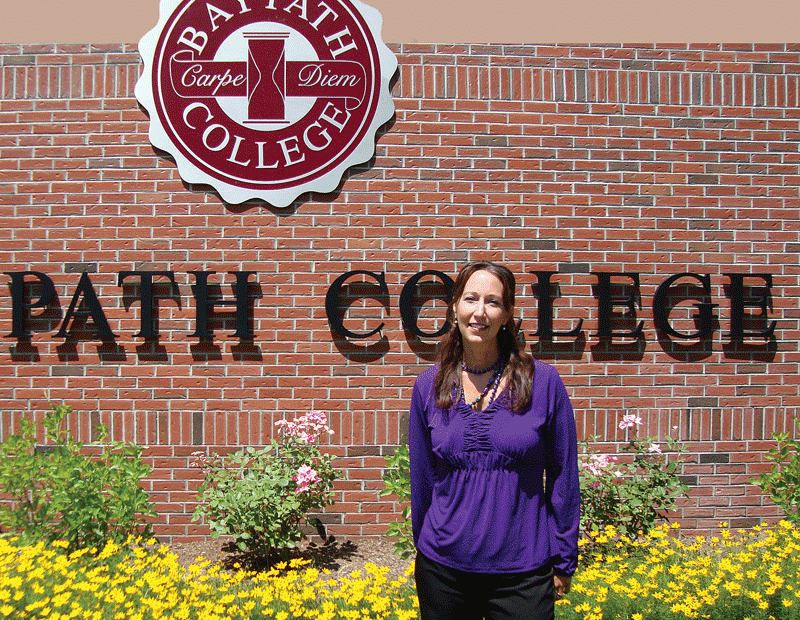
For more information on Rivervalley investors:www.rivervalleyinvestors.comAngel Catalyst:www.angelcatalyst.com

Departments

Estate Planning Workshops for Parents

May 27, June 3: Attorney David K. Webber of Shatz, Schwartz and Fentin, P.C., with offices in Springfield and Northampton, will present two free workshops titled “Estate Planning Workshops for Parents of Young Children” at the Sunderland Library Community Room, 20 School St. Workshops are planned from 5:30 to 7:30 p.m., and are open to the public. Pre-registered participants will be offered the opportunity to complete a will, health care proxy, and durable power of attorney at a reduced rate. For more information and to register, call (413) 737-1131.

Economic Illusions Lecture

May 28: Edward Guay, principal of Wintonbury Risk Management in Bloomfield, Conn., will present a lecture titled “Recovering from Economic Illusions and Global Credit Shocks” at noon at One Financial Plaza, Community Room, third floor, 1350 Main St., Springfield. The lecture, part of the Instant Issues Brown Bag Lunch Series, is sponsored by the World Affairs Council of Western Mass. Guay is a global macro strategist. He has a long history of accurately predicting major shifts in business, financial, and political conditions. Guay specializes in the identification of those forces for change that will shape future events, either gradually or in climactic fashion, causing consensus business, investment, political, or geopolitical strategies to go awry. The cost of the lecture is $8 (bring a lunch) or $15 (tuna, turkey, or vegetarian sandwich). Reservations must be made by calling (413) 733-0110.

Extreme Business Makeover

June 5: The Western New England College Law and Business Center for Advancing Entrepreneurship will host an “Extreme Business Makeover” from noon to 1:30 p.m. in the TD Banknorth conference center at 1441 Main St., Springfield. The event features experts in the fields of law, accounting, marketing, and finance, offering advice on a range of issues to a pre-selected business or nonprofit group. This year’s makeover recipient is JELUPA Productions Inc. The event is free and open to the public and will be of particular interest to entrepreneurs, small-business advisors, and anyone interested in nonprofit management.

New Energy Landscape Seminar

June 9: The Pioneer Valley Planning Commission and Western Mass. Electric will sponsor a seminar titled “The New Energy Landscape: An Overview for Economic Development Professionals” from 8 a.m. to noon at the Kittredge Center at Holyoke Community College. The seminar is free; however, registration is required by June 1. For more information, contact Lori Tanner at (413) 781-6045 or visit www.pvpc.org.

Wine & Microbrew Tasting

June 12: Members of the Greater Easthampton Chamber of Commerce will host a Wine & Microbrew Tasting from 6 to 8 p.m. at One Cottage St., Easthampton. Proceeds raised from the event will benefit the chamber’s community programs. Organizers expect more than 50 wines and microbrews to be available for tasting, as well as fine food and a raffle. Tickets are $25 per person or $30 at the door. To purchase tickets, call the chamber office at (413) 527-9414 or visit www.easthamptonchamber.org.

Leadership Development & Teambuilding

June 15: SkillPath Seminars will present a daylong conference titled “Leadership Development & Teambuilding” at the Holiday Inn, 711 Dwight St., Springfield. Workshops include: “Developing the Leader within You,” “30 Tips for Becoming an Inspired Leader,” “It All Starts with You … Discover Your Team Player Style,” and “Building a Team That’s a Reflection of You.” Also, “Leadership Mistakes You Don’t Have to Make,” “Light the Fire of Excellence in Your Team,” “Speak So Others Know How to Follow,” “Positive Feedback … the Fuel of High Performance,” “A Team Approach to Dealing with Unacceptable Behavior,” and “What Teams Really Need from Their Leaders.’ The conference is targeted for managers, supervisors, team leaders, and team members who would like to learn skills to motivate, inspire, lead, and succeed. Enrollment fee is $199 per person. or $189 each with four or more. For more information, call (800) 873-7545 or visit www.skillpath.com.

Opinion
JA: It’s Not Just About Building Birdhouses

Junior Achievement has changed over the years, but the mission is as vital today as it was in 1919.

A report from the Mass. Business Alliance for Education, released in October 2008, noted, “students in the 21st century must master skills that include: global awareness; financial, economic, business and entrepreneurial literacy; civic literacy … creativity and innovation; critical thinking and problem-solving; communication; and collaboration skills.” JA provides skills to our young people through the financial and volunteer support of local businesses.

Nearly one in every four children in Springfield Public Schools is involved in JA this year, but there are more children who need the JA experience, and you can help by investing in JA. It’s good business.

In 1919, JA’s founders wanted to teach children between the ages 8 and 12 about this country’s economic way of life and give them the skills to succeed in an economy that was changing from an agrarian base to a manufacturing base.

The students were organized into clubs that had adult leaders and operated like a business. With the adults overseeing the program, the students developed an enterprise, made articles for sale, and learned how to operate their own company. The clubs were supported financially by local businesses. In the mid-1920s, the Junior Achievement Training Institute was built on the grounds of the Eastern States Exposition, where Achievement Hall still stands today.

For nearly eight decades, JA remained an after-school program, where groups of high-school students, mentored by adult volunteers, formed a company, sold stock, made a product, and sold it with the goal of returning a profit to the shareholders. For more than 400,000 people in Western Mass., JA brings back fond memories of making birdhouses, aprons, wire hangers, hair products, or electrical gadgets.

Today, 90 years later, JA is part of a worldwide organization where more than 3 million volunteers serve 9.2 million students in 137 JA areas in the U.S. and in 97 other countries. Despite the tremendous growth, JA remains true to its mission “to prepare and inspire young people to succeed in a global economy.” However, while our mission is the same, our approach to providing economic and entrepreneurial education has changed.

Junior Achievement offers a wide variety of programs for students in grades K-12 that focus on business, citizenship, economics, entrepreneurship, ethics/character, financial literacy, and career exploration. The three pillars of JA’s foundation continue to be financial literacy, workforce readiness, and entrepreneurship.

Junior Achievement has continued to grow over the years because it delivers relevant programs and, like business, adapts to the needs of the community.

Today, JA programs are still delivered by local volunteers. The programs are found in schools, after-school programs, community youth organizations, and summer programs. JA’s programs can take place in one-day or in a series of weekly classroom visits. The program and the delivery method depend on the needs of the school or organization. The age-appropriate, interactive JA activities are correlated to the state frameworks in mathematics, language arts, reading, social studies, economics, and civics, as well as to the Mass. Comprehensive Assessment System.

Today, a Junior Achiever might be a first-grader who learned the difference between a need and a want; a fourth-grader who knows about human, natural, and capital resources; or a middle-grader who knows about budgeting, how to use credit wisely, and the importance of insurance. A Junior Achiever can also be a high-school student who has completed JA Success Skills and four hours of JA volunteer training and can be found teaching JA to students in grades K-3, learning first-hand the importance of teamwork, time management, communication skills, and service. –

Jennifer Connelly is president of Junior Achievement of Western Mass.; (413) 747-7670.

40 Under 40 Class of 2009

Brenda Wishart

Age 36: Director of Recruiting, Aspen Square Management

Brenda Wishart has played many roles over the past several years, with one clear streak running through all of them: entrepreneurship.

For example, at Bay Path College earlier this decade, she developed the college’s Entrepreneurial Program, not only mentoring students in how to start their own businesses, but also forging educational partnerships between the college and area companies.

“Rather than lecture them about entrepreneurship, we wanted to get them out visiting local entrepreneurs,” she said. Students were directed to examine actual challenges those companies faced and develop ‘living case studies’ to tackle them.

From there, Wishart directed the Entrepreneurship Institute for the Harold Grinspoon Charitable Foundation in 2005, leading a committee of faculty advisors from 13 area colleges with the goal of advancing entrepreneurship education and activity in the Pioneer Valley. The following year, she launched Wishart Associates, an executive-search and project-management-consulting business.

“An unintended consequence of my role at Bay Path is that it gave me the inspiration to jump off a cliff and go out on my own,” she said. “We spend an extraordinary amount of time at work — probably more than with our families. So I’ve always been passionate about helping people find the right match for them.”

Wishart returned to Bay Path in 2007 to launch a satellite campus in Eastern Mass. After studying possible locations and leading a comprehensive marketing campaign, she oversaw the opening of the Burlington campus that fall.

These days, she’s taking a break from working for herself, leaving the company she started to become director of recruiting for Aspen Square Management. But her work with Wishart Associates lives on.

“I’m in the process of phasing out of that and passing the baton along so a new director can run with it,” she said.

Meaning that, because of Wishart’s efforts, at least one more person found the right job.

—Joseph Bednar

Features
Springfield’s Hoop Hall Will Host BusinessWest’s 40 Under Forty Gala
The Basketball Hall of Fame will be the site of this year’s 40 Under Forty gala.

The Basketball Hall of Fame will be the site of this year’s 40 Under Forty gala.

Mark the date: June 18.

That’s when BusinessWest will celebrate its third class of 40 Under Forty winners at a gala to be staged at the Basketball Hall of Fame on Springfield’s revitalized riverfront.

Kate Campiti, associate publisher and advertising director for BusinessWest, said the magazine wanted to bring the event to the Hall of Fame in 2009 to showcase some of the exciting developments there and be a part of that revitalization process.

“We’re spotlighting some of the bright, young talent in this region at our festive celebration, which has become a not-to-be-missed event,” she explained. “But we also wanted to turn the spotlight on Springfield, its riverfront, and the Hall of Fame complex. We’re excited to be bringing our event to this great venue.”

The Hall’s Center Court will be the site for the gala, which will honor a diverse class of under-40 leaders, as chosen by a panel of five judges. The scores were tabulated early in March, and the winners were notified a few weeks ago. They will be presented to BusinessWest’s readers in the magazine’s April 27 issue.

To maintain a level of suspense, we’ll reveal only that this group of winners represents sectors ranging from manufacturing to technology; from law to financial services; from retail to construction. Overall, it is a very entrepreneurial group, with many business owners, as well as others who bring a spirit of entrepreneurship to their company or nonprofit agency.

While not all the details of the June 18 event have been hammered out, many things are known, starting with corporate sponsorship of the event. Several companies have agreed to take a lead role in presenting the gala, including Bay Path College, Comcast, Fathers & Sons, Hampden Bank, and Moriarty & Primack.

Tickets to the event, which will feature butlered hors d’oeuvres, lavish food stations, and entertainment, will be $50 each and may be obtained by calling (413) 781-8600, ext. 10, or via E-mail at[email protected].

Departments

Insurance Industry Symposium

March 31: A panel of financial experts will examine how the economic crisis is affecting the insurance industry during a symposium at the University of Hartford, beginning at 1:30 p.m. in Wilde Auditorium, Harry Jack Gray Center, 200 Bloomfield Ave., West Hartford, Conn. The symposium, titled “Financial Turmoil — Impact on the Insurance Industry,” will explore how the financial crisis is impacting the insurance industry’s investments, capital adequacy, and risk appetite. The registration fee is $40. For more information about the event, contact Ann Costello, director of the R.C. Knox Center for Insurance and Risk Management Studies, at [email protected].

‘Marketing Basics’

April 1: The Massachusetts Small Business Development Center Network will sponsor a workshop from 3 to 5 p.m. at the Greater Northampton Chamber of Commerce, 99 Pleasant St., on the basic disciplines of marketing, beginning with research — secondary, primary, qualitative, and quantitative. The core focus will be on developing and keeping a customer. Topics will include public relations, advertising, understanding marketing, and developing a marketing plan. The cost is $40. For more information, call (413) 737-6712.

Flights of Fantasy Concert

April 4: Star Trek’s Mr. Sulu, George Takei, will narrate a portion of the 8 p.m. Springfield Symphony Pops program titled “Flights of Fantasy” in Symphony Hall. The concert features the music of one of the most famous Hollywood composers, Academy Award winner John Williams, who wrote the Star Wars and Harry Potter themes. Concertgoers will also be treated to the Star Trek television show theme and two compositions from the Star Trek movies. The audience is invited to meet Takei and the musicians in the Mahogany Room for a reception and autograph session following the concert. For tickets and more informationabout the event, call (413) 733-2291 or visit www.springfieldsymphony.org.

Events for Kids

April 6-10, 11, 17, 21-24: What’s Cooking, Kids? will host several events throughout April for children, ranging from candy-making sessions and Easter egg decorating to a Food Network Camp and an American Idol for Kids evening. For complete details on all events, call (413) 224-1208 or visit www.whatscookingkids.com. What’s Cooking, Kids? is located at 41 Maple St., East Longmeadow.

Small-business Workshop

April 7: The Western New England College Law and Business Center for Advancing Entrepreneurship will offer a workshop titled “Understanding and Evaluating the Risks and the Liabilities of a Consulting Practice” from 12 to 1:30 p.m. at the Scibelli Enterprise Center, 1 Federal St., Springfield. Laurie Breitner, principal with Breitner & Associates, will present the free workshop, which is open to the public. Seating is limited. For more information, call (413) 796-2030 or visit www.law.wnec.edu/lawandbusiness.

YMCA Breakfast

April 8: Tim Wakefield, righthanded knuckleball pitcher for the Boston Red Sox, will be the keynote speaker for the 4th annual YMCA of Greater Springfield Campaign Breakfast at the Healthful Living Center at Western New England College in Springfield. Doors open at 7:30 a.m., and the program begins at 8. A minimum donation of $150 is requested. For more information about the program, contact Andrea M. Luppi, director of Development, YMCA of Greater Springfield, at (413) 739-6951.

Home Builders Course

April 15: The Home Builders Assoc. of Western Mass. will sponsor a six-session course beginning on April 15 to help individuals prepare for the Massachusetts Construction Supervisor’s Licensing Exam. Sessions will be conducted at the Home Builders Assoc. headquarters, 240 Cadwell Dr., Springfield, for six Wednesdays from 6 to 8:30 p.m. The license exam is authorized by the State Board of Building Regulations and Standards and administered by Thomson Prometric. Registration forms to enroll for the state exam will be distributed at the first session of the program. The course fee is $250 for a member of the Home Builders Assoc. of Western Mass. and $350 for non-members. Participants must bring the 7th Edition One & Two Family Dwelling Building Code book and the 7th Edition Basic Building Code book to each class and to the open-book examination. There is an additional charge to order the code books through the Home Builders Assoc. For more information or to register, contact Sandra Doucette at (413) 733-3126. Enrollment is limited.

Rock ‘n’ Roll and Management Styles

April 15: “Everything I Learned About Management, I Learned From Rock ‘n’ Roll” will be presented by James M. Wilson III, Ph.D., assistant professor of Business at Bay Path College, and Gregory Jones, director of Cannes Associates Production Management. Wilson and Jones have been conducting research for three years on the production of live concerts featuring Metallica, Green Day, Red Hot Chili Peppers, Bob Dylan, and Willie Nelson, among others, with a focus on how event management contributes to organizational theory. The free lecture at 7 p.m. will take place in Breck Suite in Wright Hall at Bay Path College in Longmeadow. The event is part of the Kaleidoscope lecture series. For more information, call (413) 565-1066 or visit www.baypath.edu.

Health Care Reform Law Discussion

April 16: Sandra Reynolds of Associated Industries of Mass. will lead an interactive discussion on the Massachusetts Health Care Reform Law from 9 to 11 a.m. at the Scibelli Enterprise Center, 1 Federal St., Springfield. Discussion will focus on the individual mandate — what it means and how it works, and the impact on employers of every size. The workshop is sponsored by the Mass. Small Business Development Center Network. The cost is $40. For more information, call (413) 737-6712.

Cryotherapy Lecture

April 22: Dr. Mohammad Mostafavi of the Urology Group of Western New England, P.C. will lead a lecture on the latest treatment options for prostate and kidney cancer using cryotherapy at 6 p.m. at 3640 Main St., Suite 103, Springfield. Cryotherapy provides a minimally invasive method of destroying cancer. While the lecture is free and open to the public, seating is limited. To pre-register, call (413) 748-9749. For more information on the Urology Group of Western New England, visit www.ugwne.com.

‘Your First Business Plan’

April 23: The Massachusetts Small Business Development Center Network, in conjunction with the Franklin County Chamber of Commerce, will offer a workshop titled “Your First Business Plan” from 9 to 11 a.m. at the chamber office, 395 Main St., Greenfield. The workshop will focus on management fundamentals from start-up considerations through business plan development. Topics will include financing, marketing, and business planning. The cost is $40. For more information, call (413) 737-6712.

World Affairs Council

April 27: Marco Werman, senior producer and anchor of The World, a daily news radio program produced by the BBC, Public Radio International, and WGBH-Boston, will discuss “Tintin and Movietone Made Me Do It” as part of a World Affairs Council of Western Mass. gathering at Western New England College. Werman’s talk is planned at 7 p.m. in Sleith Hall, 1215 Wilbraham Road, Springfield. The event is free and open to the public. Springfield public high-school teams who participated in the council’s fourth annual Academic WorldQuest competition in January will also be recognized at the event. For more information, call the World Affairs Council office at (413) 733-0110.

Iron Chef Competition

April 27: What’s Cooking, Kids? in East Longmeadow will host its first Iron Chef Competition from 7 to 10 p.m. featuring chefs Jonathan Reeser from The Federal and Byron White from PAZZO Ristorante. Each chef will present three courses using ‘secret’ ingredients, and guests will vote on the six courses, rating taste, presentation, and creativity. Several seating options are available. Tickets range from $50-$75. For more information, call (413) 224-1208 or visit www.whatscookingkids.com.

Women’s Professional Development Conference

April 30: Bay Path College in Longmeadow will host the 14th annual Women’s Professional Development Conference from 7:30 a.m. to 4:30 p.m. at the MassMutual Center in downtown Springfield. For more information, call (413) 565-1293 or visit www.baypath.edu.

Walk of Champions

May 3: Baystate Mary Lane Hospital will host its fourth annual Walk of Champions at Quabbin Reservoir to benefit its Baystate Regional Cancer Program. Registration starts at 8:30 a.m., and the program opens at 9:30. Walkers will step off at 10 from the Quabbin Reservoir tower parking area and will proceed along the Windsor Dam. Both two-mile and five-mile routes will be available. Refreshments will be provided along the routes, and the event will conclude with more food and entertainment at the Quabbin Reservoir tower. For more information, call Deb Gagnon at (413) 967-2458.

Departments

Getting Down to Business

Springfield Mayor Domenic Sarno recently announced that Royal & Munnings, LLC is the recipient of a city of Springfield contract providing certain services to minority- and women-owned businesses. The services to businesses under the contract includes technical and legal assistance in obtaining state and federal certification as a minority- or woman-owned business, in responding to procurement opportunities and in obtaining financing and bonding to support these businesses in their participation in construction and supply projects. From left: Maria Lopez-Santiago, chief procurement officer for the city of Springfield; Aimee Griffin Munnings, partner with the law firm of Royal & Munnings, LLC; Sarno; and Amy B. Royal, Partner with Royal & Munnings, LLC.


Parting Thoughts

Paul Digrigoli, founder and president of Digrigoli Salons, was the keynote speaker at the recent national conference for NACCE (the National Association for Community College Entrepreneurship) in Anaheim, Calif. Here, he makes his point to an audience of educators looking to develop or enhance programs for teaching entrepreneurship.


Model Operation

Balise Lexus recently hosted a launch reception to introduce the all-new 2010 RX at its dealership on Riverdale Street. The all-new RX is touted as the “reinvention of the vehicle that invented it all,” according to Mike Balise, left, vice president of Balise Motor Sales, seen here with Brant Baird, district sales manager for Lexus. The event drew several hundred visitiors, and was highlighted by an auction of the first few RXs delivered to the West Springfield showroom.


Forging Partnerships

Fagor-Automation Corp. in Chicago recently donated the installation of its new Innova 40i ‘True Vision’ digital readout system in the Machine Tool Technology Program at Roger L. Putnam Vocational Technical High School in Springfield. The new computer controls will assist Putnam students to blend their pre-existing Windows computer skills with most of the manual metal-working machines at the school. In preparation for a hands-on open house at Putnam this spring, precision-machining companies that are interested in viewing this new equipment, which will be debuted at EASTEC 2009 on May 19-21, should contact Fred Carrier at Putnam ([email protected]). Coordination of these donated services to Putnam was lead by Buck Upson, president of Pioneer Tool Supply Co. Inc. of West Springfield, the Putnam Program Advisory Board, and the Regional Employment Board of Hampden County. Installation of the controls was provided by Danny Steidi and Joel Kasnick from Fagor-Automation Corp.


Hometown Heroes

The American Red Cross Pioneer Valley Chapter recently honored several Western Mass. residents at its annual ‘Hometown Heroes’ breakfast. Above, Tony Filipe (left), president of the Home Builders Assoc. of Western Mass., with honoree Joseph Lesniak of Indian Orchard. At right, Sheila Doiron (left), director of Communications and Community Relations for Bay State Gas, with honoree Bobi Steingart of Longmeadow.

Features
Two Members of the Class of ’07 Have a Pressing Engagement
Cathy West and Bob Lowry

Cathy West and Bob Lowry, members of the Class of 2007, have scheduled their wedding for this October.

Catherine West remembers having “only about a five-second conversation” with Bob Lowry that night at the Log Cabin almost two years ago when BusinessWest honored those two and 38 other members of the first 40 Under Forty class.

“It was just too crowded … we barely said hello to each other,” West recalled as she recounted the sequence of events that led to Lowry asking for her hand in marriage last Christmas. (She said ‘yes.’)

Actually, the story began roughly a year earlier, when Lowry, a restaurateur and serial entrepreneur (he has several Mexican eateries), gave a quick talk to the 500 or so students taking West’s ‘Introduction to Accounting’ class at UMass Amherst as part of a program to promote entrepreneurship. That was also a very quick encounter, an introduction, really, with Lowry’s only real recollection being the thought that West, also a part-time tax manager with Meyers Brothers Kalicka, was “young, about my age, and cute … but probably married.”

In truth, West was thinking pretty much the same things about him, she later confided. “He handed out burrito coupons … he seemed like a really cool guy.” She noted, however, that neither had an opportunity — not that they were really trying — to find out anything more that evening at the Log Cabin.

But while that event didn’t exactly trigger this ‘small-world’ romance, the 40 Under Forty program nonetheless played a key role in sparking the union scheduled for this Oct. 11.

It seems that Lowry was scheduled to speak to another of West’s classes a few months after the gala. He told BusinessWest that he called her to discuss the matter, and, sensing what he interpreted as “over-friendliness and a desire to talk to me some more” on her part (something West quickly denied; “that was all in his head”), he searched for a way to keep her on the phone.

He found one in West’s 40 Under Forty profile story, parts of which — specifically her many travels to the African nation of Ghana — he managed to retain. “I cooked up some kind of question from her profile,” he said. “Then we started E-mailing each other.”

Then, Lowry managed to enlist her help to solve some accounting problems for one of his entrepreneurial charges — an encounter that clearly had several motivations.

“And we’ve been pretty much inseparable since then,” said West, fast-forwarding things significantly, but slowing down enough to say that the two first got together on Nov. 1, 2007 at the Esselon Café in Hadley — and hit it off. Obviously.

Actually, those 40 Under Forty profiles did more than provide Lowry with some talking points during that phone call, the two told BusinessWest. They helped pique interest in one another and create some shared ground.

“She had done some fascinating things,” said Lowry, referring to, among other things, West’s participation in efforts to build a business and learning center in the Ghanian city of Secondi. Meanwhile, West, who said she glanced at most of the 39 other profiles, was intrigued by Lowry’s — “his kind of stuck out” — and especially mention of his work in the community, which includes donations of time and energy to Big Brothers Big Sisters, Hampshire Health Connect, and other groups.

“When you read those 40 Under Forty profiles, you think about what the people do and how similar they are to you,” she explained. “And they can appreciate the same things that you do.

“One of the things I admire about Bob is that he really loves to help people,” she continued. “That’s how I feel, too, and it’s really nice not to have to explain yourself to someone — they just understand.”

As for the Christmas Day proposal, West said that, while the two had talked about the subject, she was nonetheless surprised he popped the question at that time. “I wasn’t really expecting it, but it was a wonderful surprise.”

— George O’Brien

Features
The Recession Poses Challenges to Commercial Lenders, but Also Opportunities
Allen Miles

Allen Miles says the recent troubles of many large lenders have opened the door to community banks to meet business-loan needs.

The banking industry isn’t exactly coming off a banner year, but the bad news nationally might be creating some opportunities locally.

“The big banks have given the community banks an opportunity to deal with some customers and companies in the area that we wouldn’t have had the chance to deal with in the past,” said Allen Miles, executive vice president and senior lender at Westfield Bank.

By that, he was referring to a general seizing-up of credit at many large institutions that are awash in toxic debt — a situation that has not been the case at regionally based banks in the Pioneer Valley.

“The large banks are having liquidity issues and are in the process of deleveraging themselves,” said Miles. “They’re pushing on borrowers, and that tends to push them out of the bank. We’ve become a good alternative to them — and we’re actually seeing an increase in loans as well as deposits.”

That’s no fortunate accident, but rather the result of planning ahead, said Alice Babcock, vice president at Westfield Bank.

“We continued to call on these companies over the past five years, so we’re a known entity to them,” she explained. “And even though we didn’t get a piece of their business at the time, that helped position us as the alternative choice for them today.”

Kenneth Boutin, senior vice president in charge of lending at PeoplesBank, has seen a similar phenomenon.

“Not only are the local banks healthy,” he said, “but when it comes to deals with good cash flow and strong secondary sources of repayment, this continues to be one of the most competitive areas in the whole country.

“All the local banks have money to lend,” Boutin continued. “The biggest question is, are the borrowers qualified? Again, having a good history of payments, adequate cash flow to service the loan they’re requesting, and a secondary source of repayment are the primary factors driving whether they get approved. If they have those elements and a good business plan, multiple banks will be chasing their business.”

That’s not hyperbole; Boutin cited one area company that recently interviewed five banks — all of which were interested — and took the best deal. “The money is out there,” he said.

At the same time, however, the recession is taking its toll on business owners’ willingness to invest in their companies and their ability to pursue commercial loans. It adds up to both challenge and opportunity for lenders, if some anxiety as well.

Closer Look

What has changed over the past year or so, said Boutin, is bank scrutiny of marginal borrowers — but responsible lenders should be looking carefully at the strength of a customer’s qualifications anyway, and Western Mass.-based banks have developed a reputation for prudence.

“They understand the marketplace and the type of borrowers we see in Western Mass.,” he said. “They underwrite based on experience and responsible lending, and that hasn’t changed here.”

That said, Boutin added, banks are looking more closely at certain projects deemed risky right now, such as retail properties, hotels, and housing.

“There’s plenty of available housing stock, so that would probably be a riskier situation now, and maybe you’re going to be more conservative,” he said. “And there have been a lot of hotels built up in the past seven to 10 years. If someone comes in with a hotel project, he might find that banks are being more cautious. It’s industry by industry, but that’s just prudent lending, which is what bankers here have always done.”

Timothy Crimmins, president of the Bank of Western Mass., said he noticed a slowdown in activity starting last fall, before ticking off a litany of issues all-too-common to bankers today.

“There has been an increase in troubled loans, and asset quality has declined a little bit from where it was last year,” he said. “I’m very concerned about the economy and the effect it’s having on customers.”

That includes retail woes — which directly impact the owners of strip malls and similar properties — order cancellations for manufacturers, and alarming jobless rates across the board, he said, adding that two especially hard-hit industries in the current downturn, housing and automotive, together impact a large swath of the overall economy.

“As far as we and other local banks are concerned, none of us have a liquidity crisis, and we have plenty to lend,” he noted. “But as things get worse and worse, we have to take a more conservative look at how we’ll extend credit.

“The economy has far-reaching ramifications for the financial sector, primarily initiated by the housing crisis, but it crosses all industries, from retail to aircraft to suppliers of the medical industry,” Crimmins added.

Part of the problem has been a tectonic shift in the economic factors underpinning existing loans, he explained. “Loans for shopping centers were based on strong, national tenants signing leases. But look what has happened to the retail sector.”

One example involves the franchising industry, in which defaults on loans guaranteed by the U.S. Small Business Administration increased by 52% from 2007 to 2008, according to a recent report in the Wall Street Journal, which also noted that the figures could give pause to banks with money to lend.

SBA-guaranteed loans are made through commercial banks and other lenders, and provide capital to small businesses that are often unable to qualify for conventional credit. The SBA insures a significant part of the loan to encourage both lending and small-business entrepreneurship, and the recently passed federal stimulus package raises that guarantee amount from 75% to 90%.

Wide-ranging Effects

No one expects that stimulus to work wonders on the economy overnight, and that causes concern in every bank, said Miles.

“It hits everyone now,” he noted. “The past recessions we’ve had, 1992 and 2003, were isolated to particular industries, but this one is far-reaching, hitting every sector.”

And the business world has seen it coming for some time, he added, noting that area manufacturers were pulling back on or delaying capital investments last summer and fall. He doesn’t see a quick end to the pain, either, due to the region’s tendency to lag behind national economic trends. “We won’t feel the full effects until later this year, and maybe well into 2010.”

Crimmins has talked about how, when his bank was in its relative infancy during the recession of the early 1990s, it never closed its lending window to customers. He doesn’t expect to do so this time either, but it might be a tougher slog.

“I don’t see taking action to get out of certain industries, because this recession crosses all industries,” he said. “But I think these circumstances are more severe than the ’90s. I think this will be longer-lasting than it was then.”

It helps, he said, that the Western Mass. economy traditionally hues to a more even keel than other regions, avoiding extreme highs and lows. But the recession has already cut severely into individuals’ and businesses’ purchasing power and confidence, which is understandable at a time when so much wealth has suddenly disappeared.

“It’s going to take time,” said Crimmins. “We didn’t get in this situation overnight, and we won’t get out of it overnight.”

Joseph Bednar can be reached at

[email protected]

Opinion

BusinessWest launched a new recognition program late last year. It’s called Difference Makers, and as we said in our initial announcement, while that name says it all in some ways, in other ways it really doesn’t.

That’s because the phrase ‘making a difference’ is somewhat overused and has lost some of its meaning and its punch. With this new program, BusinessWest wants to bring some attention and acclaim to those who really are making an impact in the community we call Western Mass., and are inspiring others to do the same.

When we unveil the first round of winners in early February, you’ll see what we mean.

But let’s back up a minute.

BusinessWest already had a few recognition programs with its name on them. One is the Top Entrepreneur award, given since 1996 to individuals who exemplify the proud tradition of entrepreneurship in this region, a tradition shaped by people like Milton Bradley, George Davis, Everett Barney, and Horace Smith and Daniel Wesson, and carried on by recent winners such as Jeb Balise, the Falcone family (founders and operators of Rocky’s Hardware), and the recipients for 2008, Arlene Kelly and Kim Sanborn, who have created two businesses that have changed the face of health care business operations.

We also created 40 Under Forty. Well, actually, we started our own version of what has become a national trend among business publications — to recognize up-and-coming talent in a given market.

Both programs have become huge successes, and play key roles in helping this publication relate the accomplishments of some very talented people. But something was missing.

Not all people are true entrepreneurs (although most in business are at least entrepreneurial), and, alas, certainly not everyone doing important things and making lasting contributions is under 40. So we created another program that can, and will in many cases, recognize those who don’t fall into one or either category.

These can be individuals who are making great strides in business and thus perhaps changing the fortunes of a company, a business sector, a community, or a region. They can be individuals who are making an impact in the community through donations of money, time, energy, and inspiration to nonprofits and those served by them. They can be leaders who are at the forefront of change and improvement in the quality of life for people who live, work, and play in this region.

The timing of this program is important. While we didn’t exactly plan it this way, Difference Makers becomes a counterbalance to the successive waves of negative news about the economy, the stock market, job losses, and the incredible toll all this is taking on individuals and communities. There are still good things happening in the region, and some of that news is being buried in the avalanche of negative press.

But BusinessWest is not a ‘good-news journal.’ That’s not our purpose, and it never will be. Instead, our mission is to simply hold up a mirror to the region and especially its business community and effectively reflect that image — good, bad, ugly, or promising.

Difference Makers is part of all this mirror-holding work that we do.

It was created to reflect the work of people (some of which goes largely unnoticed or underappreciated) that contributes to progress in this region and makes Western Mass. special.

The stories vary, of course, but they all start with unique people who, well, want to make a difference — and are doing so.

So who are the first Difference Makers? For that, you’ll have to wait two weeks. We need to build up some suspense.-

Departments

‘Race and Entrepreneurial Success’

Nov. 25: Dr. Robert W. Fairlie will discuss “Race and Entrepreneurial Success” at noon as Western New England College’s Law & Business Center for Advancing Entrepreneurship as part of its ongoing lecture series. The gathering is planned in the S. Prestley Blake Law Center on Wilbraham Road in Springfield. Fairlie’s main research interests include ethnic and racial patterns of business ownership and performance, entrepreneurship, access to technology and the ‘Digital Divide,’ immigration, and education. He holds a Ph.D. and M.A. in Economics from Northwestern University and a B.A. from Stanford University. The lecture is free and open to the public. For more information, call (413) 796-2030 or visit www.law.wnec.edu/ lawandbusiness.

Moonlight Magic in Shelburne Falls

Nov. 28: A family event titled “Moonlight Magic” takes over Shelburne Falls to start the holiday shopping season from 4:30 to 10 p.m. The event coincides with the annual “Holiday Lighting of the Village.” Highlights include sidewalk carolers, sidewalk sales, arts events, and craft demonstrations. There will also be vendor tables along the sidewalks with local nonprofit groups selling holiday wreaths, baked goods, and crafts, and the Shelburne Falls Trolley Museum will be open. Live music and roving performers will round out the evening’s festivities, as well as a visit from Santa who will set up shop in the Shelburne Senior Center. For more information, visit www.sftm.org.

‘Internet for the Other 5 Billion’

Dec. 2: Andrew McLaughlin, head of Global Public Policy and Government Affairs for Google Inc., and Ethan Zuckerman, researcher at Harvard’s Berkman Center for Internet and Society, will present a lecture titled “Internet for the Other 5 Billion” at 7:30 p.m. in Hooker Auditorium at Mount Holyoke College in South Hadley. For more information, call (413) 538-2209. The event is free and open to the public.

‘Nutcracker and Sweets’

Dec. 5: Wistariahurst Museum in Holyoke will host the Mass. Academy of Ballet and members of the Ballet Educational Training Association in its production of “Nutcracker and Sweets” at 6 p.m. Through narration and dance, the story of the Nutcracker will come alive in the historic setting of Wistariahurst on Cabot Street. The production will be staged as it may have taken place in Holyoke in the 1890s. A dessert reception of sweets will follow the performance. Tickets are $10; children 12 and younger will be admitted free. Space is limited, and early registration is advised. For more information, call (413) 322-5660 or visit www.wistariahurst.org.

Holiday Pops

Dec. 6 and 7: The Springfield Symphony Orchestra will take audiences back to a traditional Christmas season in New England at 8 p.m. on Dec. 6 and 3 p.m. on Dec. 7 in Symphony Hall. Guest conductor Matthew Savery will lead the orchestra and chorus, and Morton Shames, cantor emeritus of Temple Beth El, will bring greetings of Chanukah. Concert highlights also include a singalong. For ticket information, call (413) 733-2291 or visit www.springfieldsymphony.org.

The Creative Economy

Dec. 9: The Studio Arts Building at UMass Amherst will be the setting for an informative program on how the ‘creative economy’ plays an increasingly important role in Western Mass., in job creation, revenue growth, and quality of life. Speakers will be artists Josh Simpson and Scott Prior, who will speak about their work and their marketing efforts, beginning at 6 p.m. The cost is $25. For more information, call (413) 737-6712 or visit www.msbdc.org.

RTC Meeting

Dec. 11: The Regional Technology Corp. (RTC) will stage is 1st Annual “All Networks” Convergent Meeting at the Log Cabin Banquet & Meeting House starting at 7:30 a.m. The event with feature a keynote address and follow-up Q&A called “A Conversation with Scott Kirsner, The Innovative Economy.” Kirsner is the nationally known Boston Globe columnist who will discuss the challenges to be faced by the innovative economy in 2009. The half-day event will also feature a panel discussion with venture investors and entrepreneurs. The program is free to RTC members, and $75 for non-members. For more information, call (413) 755-1301; [email protected].

Departments

NUVOFest

On Nov. 13, NUVO Bank, the region’s newest financial institution, staged a day-long party — NUVOFest — to celebrate its arrival in Western Mass. A host of events were held in and around the bank’s headquarters in Tower Square, including a ‘money drop,’ below, featuring ‘NUVO dollars’ exchanged for prizes up to $1,000 for one lucky winner. There was a traditional ribbon-cutting featuring the bank’s principals, at right, Jeff Sadler (left) and Jim Gardner. Below right, Gardner addresses those gathered for a reception and champagne toast in the evening, while two of the ‘Silver Women’ strike a pose — in this case the NUVO logo.


Entrepreneurship Summit

On Nov. 12, Bay Path College held its annual Innovative Thinking & Entrepreneurship Summit. The event featured a number of speakers and breakout sessions. At left, Paul DiGrigoli, founder and president of DiGrigoli Salons, leads the breakout session called “Conquer Today’s Challenges.” At right, Susan Soloman, assistant professor of Business at Pay Path, addresses the audience.

Opinion

All presidential elections are drawn out, trying, divisive processes, but this one was even more so — on every score.

It seems like it’s taken forever to reach this point, and the ugliness factor involved in choosing our next president has set a standard that will be hard to match. But through it all, we seem to have reached something approaching consensus — an electoral count of 349 to 163, at press time, allows us to use that word — that Americans want not simply change but better leadership, and they believe Barack Obama can provide it.

Let’s hope he can.

Because this country has lost something over the past several years. For lack of a better term, we’ll call it swagger.

The United States had, until quite recently, been respected by most of the rest of the world. It led the way when it came to innovation and entrepreneurship and bringing about positive change. All that seems gone now. The respect is certainly gone, and so, to a large degree, is that sense of entrepreneurship.

We’re no longer watching to see if other countries can catch up to us — instead, we’re hoping to catch up to the new standards being set by other countries, especially China.

This is one of the matters to consider as this nation enters what is always a very intriguing period, a time when the rancorous election process is behind us and people start to focus on the future and what can and should happen. We have some thoughts along those lines as well.

Obviously, the economy is first and foremost on everyone’s minds, and the turmoil of the past few months is no doubt one of the key reasons why Obama was elected. Now, it’s his job to fix things — but it’s not only his job; the task belongs to everyone who helped create this mess and then tried to fix it with stopgap, knee-jerk responses designed primarily to keep the Dow from sliding, and they didn’t even do that.

No, the economy can’t be fixed through $600 stimulus checks, nor with bailouts of major, and quite irresponsible, financial institutions. It will take much more than that, and perhaps the best place to start is with infusions of capital and support in programs that will generate new, well-paying jobs.

In the ’30s, the government did this by building roads, bridges, and dams. Today, it could do it by fostering development of new energy sources and technology that will rid this country of its dependence on foreign oil and help preserve the planet for future generations.

While making such investments, our elected leaders (not Obama all by himself) must address the annoying habit this country has of privatizing gains and socializing losses. The government enabled financial institutions to make the foolhardy moves that led to the recent meltdown, and then it bailed out those companies, or most of them, anyway. This wasn’t the first time this happened, but we hope it’s the last.

Elected leaders can help make sure it is by somehow changing attitudes in boardrooms across the country. We need to lose the ‘quick, easy buck’ mentality — like putting people in homes even if they don’t qualify, knowing that we can make billions if we do and the government will bail us out if it all blows up — and earn money the old-fashioned way.

In other words, corporations have to stop looking at the next batch of quarterly results and how to make them look better. They need incentives to look at and plan for the long term.

All this is difficult, because voters are aren’t focused on the long term, either. They want the economy fixed, and they want it fixed now. They don’t want to dread opening their next 401(k) statement.

In many respects, that’s Obama’s job — to make everyone’s 401(k) healthier. But in reality, the task is much broader and more difficult.

He’s got to get that swagger back.-

Departments

Dinner Lecture

Oct. 14: Author Joel Barker will present “You Can and Should Shape Your Own Future, Because If You Don’t, Someone Else Surely Will” from 5 to 9 p.m. at the Log Cabin Banquet & Meeting House in Holyoke. The dinner forum is hosted by the UMass Amherst Family Business Center. Barker will explain how to create ‘extreme’ partnerships to transform your company and product; how your senior leaders can continuously explore trends, innovations, and paradigm shifts; and how to better anticipate and deal with the effects of change. In addition to Barker’s presentation, an educational talk on how to be a savvier user of expert advisors will be presented by the law firm of Bulkley, Richardson and Gelinas LLP. For more information, call Ira Bryck at (413) 545-1537, or E-mail [email protected].

WNEC Seminar

Oct. 15: Western New England College in Springfield will host “Planning for Retirement Benefits: A Morning with Natalie Choate” from 8:30 a.m. to noon in Rivers Memorial Hall. The seminar is aimed at legal, accounting, and financial services professionals, exploring developments and trends in retirement benefits, trusts, and estate planning. Choate is a Boston-based estate-planning lawyer and the author of Life and Death Planning for Retirement Benefits and The QPRT Manual. The program qualifies for three CLE and CPE credits and costs $75. For more information or to register, call (413) 796-2260 or (800) 325-1122, ext. 2260.

Managing Business in a Down Economy

Oct. 16: A workshop for business owners titled “Managing Your Business in a Down Economy” will be offered from 9 to 11 a.m. at the Andrew M. Scibelli Enterprise Center, 1 Federal St., Springfield. The workshop, presented by a panel of experts from various business segments, is sponsored by the Mass. Small Business Development Center Network. The cost is $40. For more information, call (413) 737-6712 or visit www.msbdc.org/wmass.

Entrepreneurship Conference

Oct. 17: “Entrepreneurship in a Global Economy” will be presented by the Law and Business Center for Advancing Entrepreneurship of Western New England College, Springfield, from 8:30 a.m. to 4:15 p.m. in the S. Prestley Blake Law Center, Room D. The cost is $50 per person. The discussion topics will include “Environmentalism & Entrepreneurship,” “Globalization & Entrepreneurship,” “Finance & Entrepreneurship,” and “Politics and Entrepreneurship.” Dean Cycon, owner of Dean’s Beans Organic Coffee, will be the luncheon keynote speaker. Cycon is a leader of the American fair trade coffee movement. For more information or to register, contact Aimee Griffin Munnings at (413) 796-2030 or via E-mail to [email protected].

Women’s Movement Discussion

Oct. 23: L. Kay Wilson, attorney, coach, and motivational speaker, will moderate a discussion titled “Women, Power & Influence: Do We Still Need a Women’s Movement?” at 2 p.m. in Mills Theatre, Carr Hall, Bay Path College, Longmeadow. The program is part of the Kaleidoscope series at Bay Path. Panel members will discuss the roots of the women’s movement, the perspective of young women today, and next steps for expanding the influence of women in our communities, companies, and government. Panelists are: Dr. Regina Barreca, professor of English at UConn, best-selling author, and nationally recognized feminist comedienne; Dr. Carol Leary, president, Bay Path College; Laurie Rosner, senior vice president, Rockville Bank of Connecticut; and Ann Young-Jaffe, program manager, Aetna’s consumer segment. The program is free to the public.

Meet the Authors

Oct. 23: The Women’s Partnership, a division of the Affiliated Chambers of Commerce of Greater Springfield Inc., will host its annual scholarship fund-raising event, Meet the Authors, from 5 to 7 p.m. on the Elms College campus in Chicopee. Tickets are $10. Authors will include Joseph J. Ellis, Corinne Demas, Suzanne Strempek-Shea, and Lesléa Newman. Jane Dyer, an illustrator of numerous books for children, will also be on hand to sign books. For more information, contact Diane Swanson at (413) 755-1313. All proceeds raised from the event will benefit the Women’s Partnership Scholarship Fund.

Super 60 Award Luncheon

Oct. 24: The Affiliated Chambers of Commerce of Greater Springfield Inc. will fete its winners of the annual Super 60 Award in the categories of revenue growth and total revenue beginning at 11:30 a.m. at Chez Josef in Agawam. William Rand Kenan Jr., professor and director of the Urban Investment Strategies Center at the University of North Carolina Chapel Hill, will deliver the keynote address. For more information, call (413) 755-1316 or visit www.myonlinechamber.com.

Creating Business Plans

Oct. 30: The Mass. Small Business Development Center Network will present “Your First Business Plan” from 9 to 11 a.m. at the Franklin County Chamber of Commerce, 395 Main St., Greenfield. The workshop will focus on management fundamentals from start-up considerations through business-plan development. Topics will include financing, marketing, and business planning. The cost to attend the workshop is $35. For more information on the event, call (413) 737-6712 or visit www.msbdc.org/wmass.

Building Entrepreneurs

Nov. 7: Titled “Empowering a New Generation of Entrepreneurs,” the fourth annual Grinspoon, Garvey & Young Entrepreneur Conference for college students in the Pioneer Valley will take place from 8 a.m. to 2 p.m. at the MassMutual Convention Center in Springfield. Coordinated by the Harold Grinspoon Charitable Foundation’s Entrepreneurship Initiative, the event will feature an entrepreneurship and resource exhibit and interactive breakout sessions on the following topics: “Chronicles of a New Entrepreneur: the Early Days,” “The Art of the Pitch,” “Start, Grow, Succeed … with the Help of the SBA,” “The Next Big Idea,” and “Invention to Venture: the Making of a Technology Company.” The conference fee is $150, and scholarships are available. To register or for more information, contact Brenda Wishart at (413) 454-3109, or by E-mail at [email protected].

City of Bright Nights Ball

Nov. 15: A Japanese garden setting — complete with tea house — will set the mood for the 2008 City of Bright Nights Ball in the Grand Ballroom at the Sheraton Springfield-Monarch Place. The black-tie event features a gourmet dinner with the flavors of Japan, dancing, and the chance to win and purchase a variety of gift items. Tickets are $500 per couple, and tables of 10 are available for $2,500. For more information, visit www.spiritofspringfield.org or call (413) 733-3800.

Departments

Breakfast of Champions

State legislators and early-education advocates joined with Mass. Department of Early Education Acting Commissioner Amy Kershaw in celebrating the state’s recent passage of ‘An Act Relative to Early Care and Education’ on Sept. 26 at the Springfield YMCA. Pictured with local preschoolers is leading early-education advocate Margaret Blood, founder and president of Strategies for Children Inc., a nonprofit organization based in Boston. Breakfast cereal boxes featuring legislators who supported the early-education law — Champions for Early Childhood — were distributed at the event. Other participants included representatives of Cherish Every Child, the Pioneer Valley Plan for Progress Pre-K and Early Education Strategy Team, and the Western Mass. early-childhood community. A representative of Gov. Deval Patrick’s office also attended. The new law formally establishes the universal pre-K program in the Commonwealth and supports strategies encouraging the early-education workforce to further their education. The act will also overhaul regulations of early-education programs and sites setting health, safety, and quality standards. Cherish Every Child is an initiative of the Irene E. and George A. Davis Foundation and is working to realize the goal for every child entering kindergarten to be ready for school, healthy, and fully prepared for learning success.


Capitol Ideas

Last month, 45 area business owners and managers, elected officials and economic-development leaders attended a three-day symposium in Washington, D.C. coordinated by the Affiliated Chambers of Commerce of Greater Springfield and hosted by U.S. Rep. Richard E. Neal. Attendees heard from several speakers, including U.S. Rep. Barney Frank; Speaker of the House Nancy Pelosi; Charles Rangel, chairman of the House Ways & Means Committee; and nationally known columnist and commentator Mark Shields.


A Big Check, on the House

Through the efforts of sales associates and employees of the Coldwell Banker Residential Brokerage offices in Belchertown, Chicopee, East Longmeadow, Longmeadow, and Westfield, Coldwell Banker Residential Brokerage Cares, the fundraising arm of Coldwell Banker Residential Brokerage, donated $25,000 to benefit Habitat for Humanity. The funds enabled the Greater Springfield Habitat for Humanity to complete the 171 Cabot St. project. Additionally, the brokerage offices have been supporting the Greater Springfield Habitat for Humanity through a variety of fundraising initiatives and volunteering. Last year, Coldwell Banker Residential Brokerage Cares donated nearly $67,000 to the organization.


Celebrating Entrepreneurship

Springfield Technical Community College staged its 9th annual Western Mass. Entrepreneurship Hall of Fame induction banquet on Oct. 2 at the Log Cabin, and announced the launch of the Web site www.eshiphall.org. The event celebrated entrepreneurship in many ways, from videos about the inductees to presentation of the Hall of Fame’s County Achievement Awards, to BusinessWest’s formal presentation of its Top Entrepreneur Award. Above, members of the Class of 2008 pose with the Entrepreneurship Hall of Fame awards: from left, Mark Tolosky, president and CEO of Baystate Health; Esther and Art Jacobson of OMG Inc.; the Samble family of Belmont Laundry; the Sherff family of the Student Prince Restaurant; and the Young family of W.F. Young Co. Below left, BusinessWest Editor George O’Brien, left, presents the BusinessWest Top Entrepreneur Award to John Maybury, president of Maybury Material Handling Company. Below right, County Achievement Award recipients, from left, are William Kristensen Sr. of Hi-Tech Mold and Tool (Berkshire County), Martha Borawski of Pioneer Valley Travel (Hampshire County), Dean Cycon of Dean’s Beans (Franklin County), and Steven Richter of Microtest Labs (Hampden County).

Departments

Construction Course

July 16: The Home Builders Assoc. of Western Mass. will sponsor a six-session course starting July 16 to help individuals prepare for the Mass. Construction Supervisor’s Licensing Exam. Sessions will be conducted at the Home Builders Assoc. headquarters, 240 Cadwell Dr., Springfield, for six Wednesdays from 6 to 8:30 p.m. Course instructors are Bob Ashburn and Michael Carter, tenured professors at Wentworth Institute of Technology. Registration forms to enroll for the state exam will be distributed at the first session of the program. The fee is $250 for a member of the Home Builders Assoc. of Western Mass. and $350 for a non-member. For more information or to register, call Sandra Doucette at (413) 733-3126. Enrollment is limited.

Business Resource & Services Fair

July 17: The Regional Employment Board of Hampden County will host a Hampden County Business Resource & Services Fair from 8:30 to 10:45 a.m. at the Banknorth Conference Center, 1st Floor, 1441 Main St., Springfield. One of the goals of the morning event is to inform businesses in Hampden County about state and regional services that are available to them to assist in addressing business needs and strategies. A business card is required for admission. Organizations scheduled to provide services include the state Office for Minority and Women Business Assistance, Commonwealth Corp., New England Trade Adjustment Assistance for Firms, Mass. Office of Business Development, MassDevelopment, Associated Industries of Mass., Small Business Administration, and the state Office of Business and Entrepreneurship. People planning to attend the event should E-mail Larry Martin at [email protected] by July 8. For more information, call (413) 755-1361.

Cambridge College Extravaganza

August 5: The Basketball Hall of Fame will be the setting for Cambridge College’s 2nd annual Enrollment Extravaganza, beginning at 6 p.m. An information session on undergraduate, master of Education, master of Management, and master of Education–Counseling Psychology programs is planned, featuring a student panel with faculty members. In addition, workshops are planned, as well as a keynote address by Michael Lundquist, a Cambridge College alum and CEO of the Polus Center for Social and Economic Development Inc. Lundquist will speak on “Giving Back in a Global Economy.” For details, visit www.cambridgecollege.edu/ Springfield, or call (800) 829-4723, ext. 6623.

Opinion

For years, a quiet debate has been waged about whether entrepreneurship can be taught, or coaxed, or whether the trait is simply something that people are born with.

While that discussion continues on some levels, colleges across the region and around the world are creating and expanding programs of study in entrepreneurship — and we’re very glad that they are.

That’s because Western Mass., and the world in general, need to be more entrepreneurial. By this, we mean that individuals, and entire companies, need to be more enterprising. And the proliferation of programs at area colleges — some of which involve people in high school and even middle school — bodes well for the future of this region.

When most people think of the words ‘entrepreneur’ and ‘entrepreneurship,’ they think of business owners and the act of starting new ventures. But that’s only part of it. That terminology also applies to people who think in an entrepreneurial manner, meaning they’re focused on new ideas, new ventures, and different, better ways of doing things.

By creating and expanding programs in entrepreneurship education, area schools are helping to foster economic development in the region by creating new businesses and strengthening existing ones.

Area programs come in different sizes and shapes, but they have the same basic goals — to promote entrepreneurship as a viable career option, and to provide individuals with the skills needed to succeed in business, or at least have a better chance of doing so.

Most programs in this region have developed over the past decade or so. Schools such as UMass, Springfield Technical Community College, Bay Path College, American International College, Western New England College, and Holyoke Community College have created degree programs or courses of study that encourage people to be entrepreneurial — and then show them how to do it.

Some programs compel or individuals or groups or individuals to create their own businesses, while others offer case studies involving local or national companies, and still others place students with area business owners for a semester or a year to watch, learn, and sometimes help plot a strategic course.

In each case, students are learning by doing, which will provide invaluable experience for the day when they are running their own business or trying to help an employer expand or diversify his or her venture.

It’s hard to quantify just what the various entrepreneurship programs mean in terms of the short- and long-term health of the region’s economy, but it’s fair to say that the proliferation of study programs should create jobs and also help existing companies compete effectively in an increasingly global economy.

As recent editions of BusinessWest have revealed, there are some very exciting entrepreneurial ventures taking shape across Western Mass. These involve everything from ethanol production to wind power, from developing a better wind turbine to devising new ways to remove costs from medical billing. These initiatives and others bode well for the region, and they exist because people with drive and imagination are taking risks and converting ideas into new businesses.

It’s no coincidence that we’re seeing so many exciting new ventures. This region has a deep tradition of entrepreneurial spirit stretching back to the early days of the Springfield Armory, and the current generation is simply carrying on that tradition.

But through the many programs in entrepreneurship education now in place in the Pioneer Valley, this region can expect even more enterprising people to step forward with new concepts and new businesses.

And as we said, this bodes well for the Greater Springfield area and its future economic health and well-being.

Sections Supplements
Entrepreneurship Hall of Fame Announces Inductees
Harry Samble

Harry Samble, founder of Belmont Laundry, making some deliveries.

When asked about his grandfather, Robert Samble Jr. started by pointing.

“That’s him,” he said, gesturing toward a framed photograph sitting on a shelf in his crowded office. Somewhat faded by time, the image is of a man sitting behind the wheel of a delivery truck bearing the name Belmont Laundry, circa 1915. “That’s Harry Samble … he started all this with grandma.

“That’s her there,” he continued, pointing to another picture, this one on a higher shelf. “She ran it for years with my father after grandpa died.

“And that’s my father there,” he went on, pointing to a picture of a man in uniform standing next to a P-47 Thunderbolt fighter plane. “That’s from his days in the Army Air Corps during World War II.”

When businesses stay in the same family for several generations, there are usually lots of old photographs on walls, atop credenzas, or in desk drawers, and so it is with the Western Mass. Entrepreneurship Hall of Fame’s Class of 2008. And as the saying goes, they speak a thousand words.

Barbara Meunier has a favorite picture of her father, Rupprecht Scherff, who ran the Fort restaurant in downtown Springfield for more than 40 years until his death in 1996. The picture in question shows him in one of the dining rooms, where one would usually find him, shaking up some cherries jubilee tableside.

“He was always working … always,” said Meunier, who now manages the Fort, known to some as the Student Prince, along with her brothers, Rudi and Peter Scherff. And there is now a third generation at work, she noted, adding that her son, Michael, is kitchen manager, and Rudi’s son (also named Rudi) recently took home his first paycheck for work in the deli.

There is a fourth generation now working at Belmont Laundry — Samble’s sons, Matt and Derek, have lead roles — and a fifth generation continues to market Absorbine liniment and other products at W.F. Young, which was started by Wilbur Fenton Young in 1892. The company, and the Young family, have several pictures of the founder, including one with his signature followed by the letters P, D, and F. Apparently, Wilbur’s father, Charles, didn’t think much of his son’s decision to start a company making liniment for horses and, later, humans. As a condition for granting a $500 loan to help finance an expansion of the venture, the elder Young stipulated that his son pronounce himself in all advertising as “Pa’s Darn Fool.”

Long-surviving family businesses, old photos, and the stories behind them may be the dominant theme for the Class of 2008, but there are other intriguing stories in this roster of inductees, the ninth to be enshrined.

Baystate Health is being inducted to recognize an entrepreneurial spirit that has manifested itself in many ways, said Tom Goodrow, vice president of Economic and Business Development at Springfield Technical Community College, which created the Hall of Fame. These include many new ventures in recent years, including the D’Amour Center for Cancer Care, one of many new developments on the north end of Main Street, and a $239 million expansion, dubbed the ‘Hospital of Tomorrow,’ due to be started this fall.

There are also the entrepreneurial exploits of Art Jacobson — who founded Olympic Manufacturing Group in Agawam, now called OMG Inc., and later founded Mr. Shower Door — and the individuals now at the helm at OMG.

The Class of 2008 was introduced at a reception staged May 22 at the Colony Club, and the new inductees will be honored at the annual Hall of Fame dinner on Oct. 2 at the Log Cabin Banquet and Meeting House.

Proceeds from that event will benefit the many entrepreneurship programs at STCC’s Andrew M. Scibelli Enterprise Center (SEC), said Goodrow. These include the YES (Young Entrepreneurial Scholars) program, which serves more than 1,000 young men and women in two dozen area high schools, as well as the Community Foundation of Western Mass. student business incubator in the SEC, which hosts up to nine fledgling businesses.

Here’s a look at the Class of 2008.

Belmont Laundry (the Samble Family)

Before moving on to that truck, Harry Samble picked up and dropped off laundry on his bicycle and, later, a horse and buggy.

In those days, his service was called ‘wet wash,’ said Robert Samble, noting that his grandparents would pick up laundry, wash it, and bring it back to the customer wet, to be dried on a line outside. This line of work has evolved considerably over the years, he continued, adding that Belmont now has a fleet of trucks and more than 50 employees, and handles more than 1,000 commercial accounts in a service area stretching from Newport, R.I. to Pittsfield.

How it arrived at this state is a story of perseverance, vision, and dedication to customer service, he explained. To emphasize this point, he stopped at a pair of recently cleaned uniform pants soon to be returned to a commercial client. Turning the waist back, he revealed a radio frequency identification (RFID) tag implanted within. Each item has one, said Samble, to ensure that every shirt, pair of pants, physician’s coat, or commercial floor mat goes where it’s supposed to go.

“The big outfits don’t do this, because it’s expensive and they don’t want to spend that kind of money on customer service,” he said, adding that Belmont has been taking such steps since Harry and Corrine Samble set up shop in 1907 in a barn on the location where the headquarters building still stands today.

Harry Samble died when his son, Robert, was only 14, pressing the second generation of the family into a large role within the business at an early age. For many years, Robert Samble and his mother ran the business, along with one of Harry Samble’s brothers, who was later bought out.

Robert Samble Jr. is a little sketchy on some of the history, because he never met his grandfather and his father died in 1967, when Robert was just 14. It was then that Robert’s mother, Dorothy, who had not been involved in the business at all while her husband was alive, essentially took over and kept the doors open.

“If it wasn’t for her, we wouldn’t be here today,” said Robert, adding that, in 1973, his mother was able to convince him to change careers (he had been a refractory mason) and join the family business.

Since then, he has orchestrated significant growth — the company has added locations in Agawam, West Springfield, Longmeadow, and a second store in Springfield — and diversification. He’s been joined in the business by sons Matthew, now project manager, and Derek, the dry-cleaning division manager, and stepdaughter April Caruso, who is supervisor of counter staff.

Commercial work, which now accounts for roughly 75% of Belmont’s business, remains strong, said Samble, but the retail side of the ledger has been soft in recent years, a trend he attributes to more-casual dress in the workplace, among other factors.

“People aren’t dressing up like they used to,” he explained, adding quickly that the company will persevere, whether that trend changes or not. It has endured for 101 years because it’s been able to add new wrinkles — or iron them out, as the case may be.

The Fort Restaurant

There are a few pictures of Rupprecht Scherff on the walls of the Fort, providing a continuing presence for the individual credited with making the restaurant a Springfield institution and popular stop for the business community.

But it is the work of two generations, and now a third, that has enabled the venue to persevere for 73 years, a very rare feat in the challenging restaurant business.

The Fort is known for many things, including its two names — ‘Student Prince,’ taken from a Sigmund Romberg operetta about student life in Heidelberg, and ‘the Fort,’ the name given the main dining room, in recognition of the fort John Pynchon built on the site in 1660 — and also an extensive collection of beer steins, its veal shank, scrod, and Roquefort salad dressing.

It all started back in 1935 with Paul Schroeder, a native of Germany and cigar maker by trade. After working at several area cigar factories, he took a job as the housemaster of the Springfield Turnverein, a German club that continued to serve its members libations during Prohibition. After repeal of the Eighteeth Amendment in 1933, Schroeder saw an opportunity to start his own business, and did so, partnering with Erna Sievers in the Student Prince restaurant on Fort Street.

Rupprecht Sherff would eventually take a job there in 1949. He came to the U.S. from Germany years earlier, at the behest of Robert Jarhling, owner of the Highland Hotel in Springfield, whom Scherff had impressed while he waited on Jarhling and his wife when they were visiting Bremen. Scherff worked at the Highland for many years and later fought in World War II before coming to the Student Prince. He started in the kitchen and was eventually asked to manage the restaurant. When Sievers died in 1961, she left the establishment to Scherff and another employee, Tante Grete, whom Scherff bought out in 1971 to assume sole ownership.

Barbara Meunier said she and her brothers practically grew up in the restaurant, eventually handling every job in it. Rudi started when he was 8, and was officially on the payroll at age 12. Barbara, meanwhile, started at 14. Neither thought they would make the Fort their career, but after trying other pursuits — Rudi practiced law in Springfield for several years — they gravitated back to Fort Street.

Today, they split the various responsibilities involved with day-to-day operations — Meunier handles most office duties; Peter, who has an MBA, handles most financial aspects of the business; and Rudi takes care of the kitchen and the menu — and continue many traditions started by their father, such as Octoberfest, Mayfest, a wild game festival, and elaborate decorations for the holidays.

They’ve also brought the third generation into the business, which, says Meunier, has the same work ethic as the man in all the pictures.

Baystate Health

Andrew Scibelli, president emeritus of STCC and chair of the steering committee for this year’s induction ceremonies, acknowledged that Baystate Health is a different kind of selection for the Hall of Fame.

Rather than acknowledging one individual or several members or generations of one family, the selection of Baystate constitutes recognition of an entrepreneurial philosophy that pervades the system and its more than 10,000 employees, said Scibelli.

“They’re not just running a hospital there,” he continued. “They’re being entrepreneurial in every aspect of that word; they’re looking for opportunities, they’re taking risks in some cases, and they’re taking steps that will benefit themselves and the community they serve.”

Elaborating, he said there have been many examples of this over the years, and especially the past decade or so. Endeavors include a number of ventures on Main Street, several blocks from Baystate Medical Center, with most of them involving former mill complexes that were either rehabbed or replaced with new construction.

These include the D’Amour Center for Cancer Care, the region’s only free-standing, multi-disciplinary cancer treatment facility, opened in 2002, and the Pioneer Valley Life Sciences Institute, a joint venture between Baystate Health and UMass Amherst that was created in 2004 to develop new approaches for the diagnosis and treatment of disease.

Other examples include the expansion of the health system to include Baystate Franklin Medical Center and Baystate Mary Lane Hospital, and the system’s involvement in the creation of the for-profit health maintenance organization Health New England, in which it still owns a majority interest.

The most recent, and soon to be most visible, example of Baystate’s entrepreneurial drive is a $239 million expansion project, the ‘Hospital of the Future,’ a nearly 600,000-square-foot complex that will replace some of the hospital’s older facilities with new, state-of-the-art patient-care areas that administrators say will directly address the needs of an aging population.

The expansion is perhaps the largest in the history of the system, which can trace its roots back to 1883 and the opening of Springfield Hospital. In 1974, what was then known as Springfield Hospital Medical Center merged with its neighbor, Wesson Women’s Hospital, to create the 672-bed Medical Center of Western Mass. In 1976, this entity merged with Wesson Memorial Hospital, located about two miles away. The merger established Baystate Medical Center, then the second-largest hospital in New England, with 1,036 beds.

In 1983, Baystate Medical Center was reorganized into three separate corporations: Baystate Health Systems, the parent corporation now renamed Baystate Health; Baystate Medical Center; and a for-profit corporation known as Baystate Diversified Health Services.

The Baystate Health family has grown significantly since its inception. In 1986, Baystate Franklin Medical Center in Greenfield joined Baystate Health; in 1991, Baystate Mary Lane Hospital in Ware joined the health system. In 1996, the Visiting Nurse Association & Hospice of Pioneer Valley, now renamed the Baystate Visiting Nurse Association & Hospice, also became a member of Baystate Health.

Through all the additions and name changes, the system has been consistently entrepreneurial in its approach to doing business and serving the community, said Baystate President and CEO Mark Tolosky.

“In the fast and ever-changing health care environment, we must be nimble and responsive to the needs of our patients and our communities, and assure them that we are stewards of all of our resources, and with that comes the need to be visionaries and risk takers,” he said. “One example of our entrepreneurial spirit at Baystate Health aligned with vision and risk relates to North Main Street in Springfield.

“Just over 10 years ago, the land sat silent, with vast, empty buildings — once home to robust manufacturers of hand tools and much more,” he continued. “The leadership of Baystate Health saw opportunity, and we invested $125 million to develop this Northern Edge Medical campus. Our lead role has led to significant private investment in the area. Now, we see a vibrant complex — with health care at its core — and with other businesses benefiting from the spin-off effects of this development.

“The vision we had became a reality and there’s more to come.”

W.F. Young

Wilbur Young was selling pianos in the early 1890s, and doing rather well at it, when he started looking for a different, more entrepreneurial career opportunity.

He found one through his love of horses — and some encouragement from his new bride, Mary Ida. The product that Wilbur developed, and that the couple made in a tub in their farmhouse kitchen, would come to be called Absorbine Veterinary Liniment. A blend of herbs and essential oils, the liniment would keep a horse from going lame while gently reducing swelling and stiffness.

More than 116 years later, the liniment remains the flagship brand marketed by W. F. Young Inc., a company credited with coining the phrase ‘athlete’s foot’ and, over the years, developing a wide array of health care products. Today, the company, which, after spending most of its existence in downtown Springfield, moved to East Longmeadow in 2000, is a global marketer of products for humans and animals.

The company, which started small, really began to grow when farmers discovered that Absorbine Liniment worked on humans, as well, said Tyler Young, its CEO, president, and fourth-generation manager. Using the original formula as a basis with some changes and
efinements, Wilbur created a liquid for human use, called it Absorbine Jr. Antiseptic Liniment, and brought it to the marketplace in 1903.

As demand increased, the original manufacturing operation in Meriden, Conn. proved insufficient, said Tyler Young, adding that his great-grandfather went to his great-great-grandfather and secured a loan — and its unusual condition. The company grew steadily over the years, adding some celebrity spokespeople — Hall of Fame pitcher Walter Johnson and Triple Crown champion Secretariat’s trainer, Lucien Lauren — while also adding ‘athlete’s foot’ to the lexicon in the 1930s.

The company typically introduces between five to 10 new products a year, said Tyler Young, adding that recent additions include DuraGuard® and Bug Block® insect repellents for horses, the innovative Stall Safe® brand disinfectant and sanitizer for stables and stalls, and Myoplast®, an amino-acid supplement which helps provide strength and stamina in horses while supporting lean muscles.

More than a decade ago, the company transitioned out of manufacturing and now bills itself as a virtual marketing company, Young continued. Production of the entire network of brands is outsourced throughout the U.S.; the operations department manages production from the company’s East Longmeadow headquarters. After 80-plus years in Springfield, the company moved to its new offices in the East Longmeadow Industrial Park in 2000.

Art Jacobson and OMG Inc.

He called it the “roofle.”

That’s the name Art Jacobson came up with for a new product he contrived back in 1981 to suit the needs of one of his clients.

At the time, Jacobson was a manufacturer’s representative for companies that made bolts, rivets, and screw-machine parts, among other things, and selling to companies like Hamilton Standard, Pratt & Whitney, and Electric Boat. He was calling on a client that made commercial roofing systems when a discussion ensued that would eventually lead to what Jacobson called a “fluke of a business,” and what has become one of the region’s most intriguing entrepreneurial success stories.

“I was selling him long screws to fasten his roofing down to concrete decks,” Jacobson recalled. “He said that if I came up with a different kind of fastener, like a long toggle bolt, he could use it to fasten roofing down to lightweight concrete decks where a screw wouldn’t work.”

One of the companies Jacobson represented made long bolts that he sold to a wooden-rail manufacturer. He borrowed some, took them to a hardware store in Springfield, and put toggle wings and large washers on them. He then took them back to his roofing-industry client, who pronounced them exactly what he was looking for.

Thus, the Olympic Manufacturing Group was born, only it would be several more years before it would be called that — and before it did any manufacturing.

After securing a patent for his roof toggle, or ‘roofle,’ Jacobson took out an ad in a national roofing trade publication which touted the product and its potential. And calls started coming in. Still at his sales job and with no inventory on hand, Jacobson started having the roofle made for him to fill those orders, and, in so doing, moving more quickly than most entrepreneurs would in taking a venture off the ground.

“I found myself getting into a business I really knew nothing about,” he explained. “Most entrepreneurs will investigate to the hilt or work on a product for six months or a year before deciding whether to take it to the market. Not me; I sort of fell into it.”

Fast-forwarding somewhat, Jacobson said he would have long bolts shipped to him, add the toggles and other features that converted them into roofles, and run back and forth to Bradley International Airport to ship them out. Eventually, he and his wife, Esther, rented out 250 square feet of space to operate the venture, and by late 1982, they had decided to go into business together.

Within a few more years, Olympic would become a manufacturer of roofing fasteners, and by 1985 it would be No. 1 in the industry.

Jacobson said the key to the company’s steady growth within the Agawam Industrial Park was hiring the right people, individuals such as Hugh McGovern, who would later become president of Olympic (later to be called OMG), after Jacobson sold it; Dan Murphy, who eventually would become president of a succession of larger owners of OMG; and Tom Wagner, OMG’s senior vice president.

“We succeeded because I surrounded myself with people better than me,” he explained. “They took the company to places I couldn’t.”

Jacobson described his sale of Olympic in 1994 as the “quintessential win-win,” and both parties would go on to write more success stories.

After “chasing the grandkids around for several years,” as he put it, Jacobson started Mr. Shower Door in 2005. He’s tripled sales since them, and now has three locations.

Meanwhile, OMG continues to grow, organically and through acquisition. The most recent example was the purchase and assimilation of Illinois Tool Works (ITW), Buildex’s roofing business segment, which is now known as OMG West.

Today, total sales are approaching $150 million. Not bad for a “fluke of a business.”

George O’Brien can be reached at[email protected]
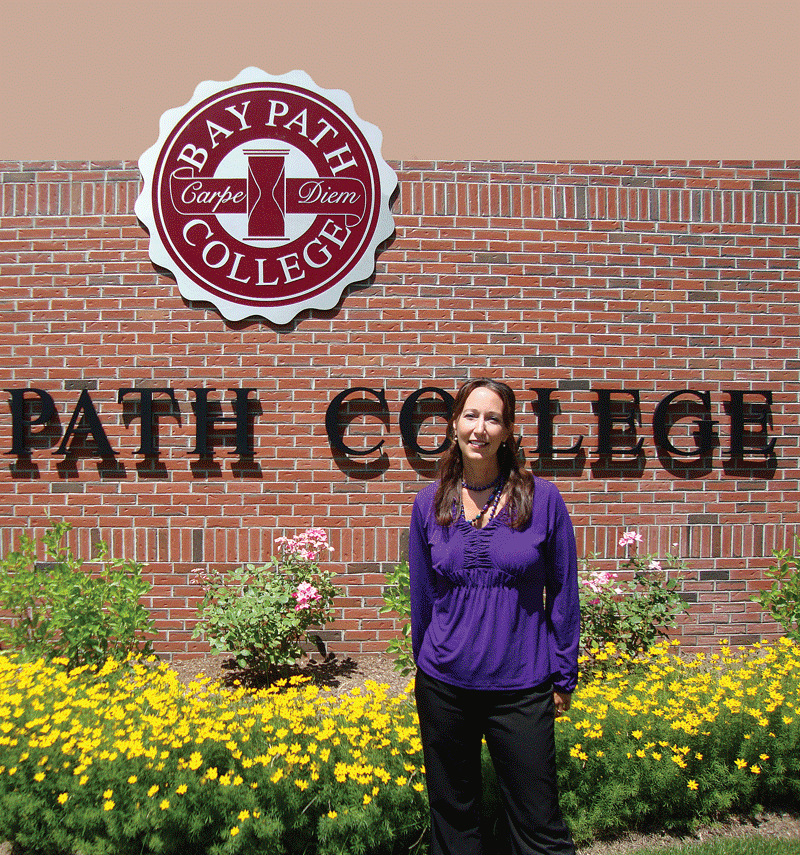
Sections Supplements
More Students in All Disciplines are Taking an Entrepreneurial View of the World
Bob Hyers

Bob Hyers says that formalizing the entrepreneurial programming at UMass has had a marked effect on the number of students involved.

More than ever before, entrepreneurial education is in the spotlight on college campuses, both regionally and nationally. There are many reasons for this, but the overall goal is to hone in on the strengths of students in all majors and tap their entrepreneurial drive, in hopes of giving them some career options, while perhaps creating some jobs in the process.

Lauren Way, director of Entrepreneurial Programming at Bay Path College, has a succinct way of summing up the importance of teaching entrepreneurship at the collegiate level.

“The next Steve Jobs is probably going to be a computer science major, not a business major,” she says. “But he’s still going to need the characteristics and skills necessary to form the next Apple Computer.”

That’s why Bay Path and several other colleges and universities across the region and the nation on the whole are ramping up their entrepreneurship programming — in hopes of conveying to all types of students the hard and soft skills necessary to launch new ventures, introduce new products and services, and diversify the economy while filling needs in the marketplace.

It wouldn’t be bad to have the next Steve Jobs, or Bill Gates, for that matter, as a member of the alumni.

Indeed, there are a number of trends colliding nationwide to create greater interest in entrepreneurship as a course of study, not just a way of thinking. Today’s students of traditional age, the Millennials, for instance, are a technology-driven, globally minded set who see no limits to what they can achieve.

Bob Hyers, professor of Engineering and director of the UMass Entrepreneurial Initiative at UMass Amherst, said this group is actually a major driver behind the evolution of entrepreneurial study on college campuses, shaping the discipline with every new idea.

“Being involved in this with the students on campus has changed how I work,” he said. “I do a lot of research, and I write my proposals differently now. I’ve gotten involved on an entrepreneurial level with two businesses, and I’m not that far ahead of the students in terms of what I’m doing and what I know. I think today’s students look at successful entrepreneurs and say, ‘there’s someone who’s not any smarter than me who’s really successful; I can do that.”

And Diane Sabato, director of the Entrepreneurial Institute at Springfield Technical Community College, said today’s students at all age points are changing the face of entrepreneurial study purely through their own drive and interests, introducing intriguing concepts and ideas that can literally change the world, in small ways and large.

“One thing that’s interesting to me is the amount of innovation and invention happening,” she said. “Students are adapting and creating product lines that lead to real entrepreneurial ventures, and that’s a great way to engage people from a lot of different disciplines. We’re drawing people from all areas, and it’s really having an impact on how we teach entrepreneurship.”

Everyone’s an Entrepreneur

Those ideas are coming from all corners, too. Way said the national model for entrepreneurship training is gradually becoming a comprehensive one that spreads across all majors and departments on campuses offering such course tracks.

“The model casts the net wide with programs that are open to everyone,” she said, noting that Bay Path offers an elevator-pitch contest, entrepreneurial summits, a lecture series, and other events that are open to all students. “So many fields play into entrepreneurship; the trend is to introduce it to non-business majors so they can take their skills to new levels and be innovative within their field.”

Hyers said there are two such all-encompassing programs on the UMass campus that support entrepreneurship: the Isenberg School of Management and the UMass Entrepreneurial Initiative, which grew out of a student organization called the Entre Club.

The club has been on campus for 10 years, but reorganized last year to serve as a complement to a for-credit course and a series of networking and business-planning activities.

“The big driver behind that was increasing the level of engagement with the students,” said Hyers. “To strengthen the value proposition of entrepreneurial activities on campus, we went from just a club to a class — offering credit helps the students justify their time. We also set some goals for the students to be more competitive in contests like the Technology Innovation Challenge, and to focus on the early stages of starting a business. It’s very applied, and the businesses are very diverse.”

Since the evolution of the Entre Club to a more formal entity at UMass, students have returned some impressive results. Two years ago, involved students produced seven active companies; this year, that number has risen to 47. These ventures are nothing to sneeze at, either. One, Condition Engineering, founded by doctoral student Alaina Hanton, introduced an engineering breakthrough that could help alert communities to catastrophes, while another, Brian Mullins Therapeutic Systems, is a vest that offers the equivalent of ‘mechanical hugs’ for children with autism, a technique that allows them to feel more secure and in control.

“Even though the businesses themselves are so different, the entrepreneurs are finding that they have more in common than not,” said Hyers. “Through the conversations they have, the people with the music magazine are seeing the similarities their company has to the Web startup. All of the students see their businesses as an opportunity to make a difference, and they’re focused on making the world better.”

Positive Signs

It can be a formidable task for colleges and universities to create this synthesis across a diverse set of academic departments. “We might need to create not just one umbrella of programs for all students, but multiple umbrellas,” said Way. “It’s about cultivating an entrepreneurial attitude, one that includes honesty, innovation, and an ability to ‘bend’ a company to accommodate the changing needs of the population.”

But she added that the demand to offer this kind of instruction exists, and is growing due to a number of variables in addition to the entrepreneurial-mindedness of today’s younger set.

Recent studies of entry-level salary ranges for students who studied entrepreneurship in college, for instance, don’t hurt the discipline’s reputation much.

“Looking at programs nationwide, the trend is a high average starting salary for entrepreneurship graduates, so that’s a big draw,” she said. “And one of the main reasons it’s becoming such a trend now is that our economy, as we know, is not looking good. The days of staying with one company for security are gone.”

However, other studies suggest that entrepreneurship — whether it’s inventing, starting a business, offering a service, or merely applying entrepreneurial skills within a larger company — is gaining acceptance for other reasons; among them, a failure to discriminate.

“There’s a lifespan of ages being represented,” Way began. “There are a lot of different things coming together, and people are coming at it from different sides. Some want new careers, some are looking for new ventures for economic reasons, others want to fill a need and serve humanity.”

In addition, entrepreneurs of all ethnicities and backgrounds are making their mark on the U.S. business landscape. According to a study performed at Babson College, Black Americans are 50% more likely than others to start a business. The Small Business Advancement National Center (SBANC) reports that Latinos are the fastest-growing entrepreneurial segment, and according to the Center for Women’s Research (CFWR), 40% of all privately held companies are owned or headed by women, and woman-owned businesses are more likely than all others to stay in business for five years or more.

There’s also no general ‘type’ of person who is more likely to succeed as an entrepreneur, said Way.

“There are some born entrepreneurs, and others need to be encouraged,” she said. “There are some students who are naturally inclined to ‘just do it,’ and others who want to approach it in a scholarly way.”

Courses of Action

There are several things happening on college campuses in the region to cater to this broad group of students, and to promote entrepreneurship in other areas, including high schools.

Sabato said there’s a movement afoot both nationally and on the STCC campus to create a culture of entrepreneurship that extends to all age groups — beginning with children. The Entrepreneurial Institute actually begins reaching out to futurepreneurs as kindergartners, and starts guiding students through the business-owning process as early as grade school.

“Developing a lifelong educational model for entrepreneurship is a trend we’re seeing nationally,” she said. “When the program started, we saw the need to raise awareness that entrepreneurship is a legitimate program of study, regardless of the vocational specialty someone is pursuing.”

Sabato explained that elementary-school students receive entrepreneurial training, such as financial and workplace literacy lessons, through a variety of means, depending on their grade level. Older students take trips to New York City’s wholesale district to learn about purchasing, for example, after they’ve already toured the STCC institute, its business incubator, and its Entrepreneurial Hall of Fame. For the younger students, there’s something called ‘Play-Doh Economics.’

“High school students start their own actual businesses and run them,” said Sabato, noting that, during the experience, the students are treated much like any business owner, drafting their own business plans and receiving invitations to networking events, for instance. “Essentially, we’re providing entrepreneurial education and experiential learning opportunities early on.”

Sabato added that STCC’s entrepreneurial programming for high-school students began more than a decade ago as the YES (Young Entrepreneurs Society) program, starting with four area high schools and expanding to work with more than 25 today. She agreed that entrepreneurship is receiving more attention of late than ever before, and having a program in place from which to build is prompting the entrepreneurial institute to keep a close eye on emerging trends, in order to capitalize on that strong base.

“I think that we’re fortunate to have a seasoned program. We’ve watched it evolve to include more students every year, and we’ve seen awareness increase at all ages,” said Sabato. “The openness to study entrepreneurship has increased as well. There’s always been a strong student demand, but we’re seeing students at all grade levels and in all kinds of circumstances. Some people have been laid off; others just know what they want to be when they grow up.”

The Power to Fail

Once they reach college, however, there are a few constants that students can expect in their academic preparation, though the entrepreneurial field is one that is ever-evolving.

The first is a strong emphasis on practical application. Way said Bay Path offers case studies of local companies, with the participation of its principals, for students studying entrepreneurship — whether as a major of study or as a complement to a different major.

“Generally, we have business owners, managers, and CEOs come to our students with a problem, so the students can help address their issues,” she explained. “They problem-solve and give a presentation, and in some cases, there’s hard advice to be given.”

That’s a prime example, Way noted, of having students ‘learn by doing’ on a very real level. There’s the chance, she said, that a business owner might not like the suggestions the students suggest, and ask them to tweak the model or dismiss it altogether.

It’s a Good Thing

But in one way, there’s some success in that.

“We encourage them to move forward with these projects, as well as their own micro-businesses, without knowing everything first, so they see what they don’t know,” said Way. “Things like product development, manufacturing, inventory, accounting — you can’t learn those things in a class in a month. Failure is a big trend in entrepreneurship, and to some it’s even a badge of honor in the field.”

Way went so far as to muse that, in the future, she may pursue setting her students up to fail to drive this reality home.

“Learning how to fail is one part of learning how to succeed,” she said. “I would like to find a way to do this now, in the controlled, college environment, to give them a chance to process their own reactions and learn how to bounce back.”

On that note, Way cited another well-known entrepreneur as a perfect example of one who’s mastered this skill.

“We all know Martha Stewart had failed once or twice, but no one knows how to make a comeback like her,” she said. “And Martha Stewart didn’t even go to business school.”

Jaclyn Stevenson can be reached at[email protected]
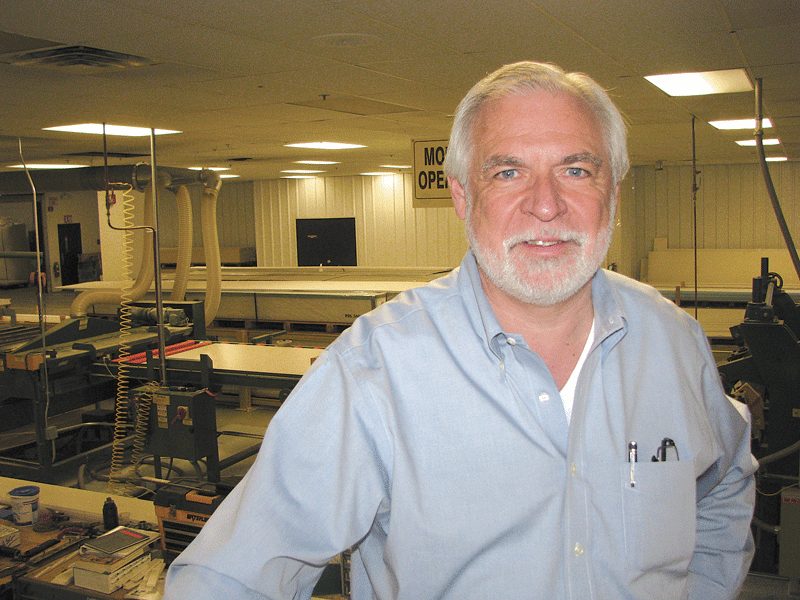
40 Under 40 Class of 2008
Age 38: Director of the Entrepreneurial Program at Bay Path College

Lauren Way calls it “academic entrepreneurship,” which is not to be confused with entrepreneurship education — and she does that, too.

Way, director of the Entrepreneurial Program, director of Cooperative Education, and assistant professor of Business at Bay Path College in Longmeadow, has a rather detailed definition of that first term. She says it involves, well, being entrepreneurial when it comes to education.

In other words, being innovative, thus bringing new ideas, imaginative learning tools, and better ways of doing things to the classroom (but not in the traditional sense) and the growing, evolving realm of entrepreneurship education. Elaborating, Way, the highest point-scorer within the Forty Under 40 class of ’08, told BusinessWest that, by focusing on what’s known as experiential education, or learning by doing, she’s working to break new ground in this field that she entered after undertaking a number of entrepreneurial ventures herself.

“If you tell me something, I’ll forget it,” she said, beginning a phrase often used to describe experiential learning. “If you show me, I might remember, but if you let me do it, it will be my skill forever.”

Way’s M.O. can be boiled down to a simple working philosophy — taking students out of their comfort zone — and she does it, in one program, by putting them into the shoes of the business owner. She calls it the ‘entrepreneur-for-a-semester’ exercise, and it involves pairing students in her classes with actual entrepreneurs in Western Mass. and Northern Conn., some of whom are facing growing pains and hard choices about where to take their companies, and how.

“They sit in the driver’s seat and make decisions, and it’s really frightening for students because it goes outside their comfort zone,” she said. “But I firmly believe that this is the only way people grow — to go outside that zone.”

As she talked about entrepreneurship education, Way said one of the elements involved in this course of study is convincing people that being an entrepreneur is not just a viable career option, but one that can, in her words, “set you free.”

She’s knows this because she’s done it — and as she said, getting people to do, and not just read about things in a book, is how they’ll learn, how they’ll grow, and how they’ll reach their full potential.

That’s the real definition of academic entrepreneurship.

George O’Brien

40 Under 40 Class of 2008
Age 36: Co-owner, Log Cabin Banquet and Meeting House

Michael Corduff was talking about banquets, events, and the need to be creative and cutting-edge in such work. Which brought him back to the goldfish.

It was the 2004 Entrepreneurship Hall of Fame dinner, and staff at the Log Cabin Banquet and Meeting House served sorbet in dishes atop glass bowls, each one containing a goldfish. The trick wasn’t so much in the presentation — although that was tricky — but in the preparation, specifically keeping and feeding the fish for three weeks before the event.

“They told us to get a few extra, because sometimes they don’t survive the trip from the bag to the jar,” Corduff recalled. “We stored them in our sous chef’s basement … we had to go around and feed 600 fish; that was really going above and beyond.”

Today, ownership at the Log Cabin, which later acquired the Delaney House restaurant in Holyoke, continues to go above and beyond, often with events to support area nonprofit agencies such as the United Way and the March of Dimes.

Corduff has played a pivotal role in these efforts since coming to the Log Cabin from the Springfield Marriott, which was his first career stop after emigrating from West Kerry in Ireland in 1989. He progressed from line cook to banquet chef at the Marriott, and was looking for a new challenge in the hospitality sector when he interviewed with Larry Perrault, then-restaurant manager at Twin Hills County Club. Perrault didn’t have a good match for him then, but advised him to check back in a few months, when he might have “something else.”

That something else turned out to be the Log Cabin, which Perreault had resurrected as a banquet facility with partner Peter Rosskothen. Corduff, named ‘chef of the year’ by the Mass. Restaurant Assoc. in 2001, would eventually become a partner, and today, he and Rosskothen remain as principals of this two-venue enterprise.

As he talked with BusinessWest, Corduff was preparing the Log Cabin for a night of boxing — an eight-bout card featuring New England area amateurs that reflected Holyoke’s tradition as a boxing hub. Like the goldfish, the boxing event was something different, something unique for this area.

You might say they were both events on a grand scale.

George O’Brien

40 Under 40 Class of 2008
Age 32: President, New City Scenic & Display

Amy Davis grew up in Oregon, but as a third-grader, she wrote a report about Vermont — and New England has never lost its appeal.

She wound up studying Theater and Sociology at Marlboro College in Vermont — “I knew little about the area, but it sounded nice, so I came out here.” Then, after returning to the West Coast for a string of prop-building, special-effects, and related work in television and cinema, she earned her master’s in Scenic Design at UMass Amherst.

She could have headed west again, but an opportunity arose that convinced her to remain in Massachusetts. “There was a scene shop in Greenfield, and I had worked for them on and off while in grad school,” she said. “They eventually had to close, but for personal reasons, not any lack of business. I had inherited a little money, so my partner, Andrew Stuart, and I bought their equipment and materials.”

The two had already developed ties with some of the former owner’s clients, and began to cultivate others after launching New City Scenic & Display in 2005 at the Eastworks complex in Easthampton. Today, they design and build sets and displays not only for film, TV, and theater, but also for museums, restaurants, places of worship, trade shows, and other venues large and small. For example, New City recently designed and built a new bar for the Eastworks-based Apollo Grill.

“In our shop, we build, paint, do metal fabrication, work with wood, sew — a little bit of everything,” said Davis, who is also the company’s master welder.

Life was a whirlwind two years ago; in the space of six months, Davis opened the business, defended her thesis, and had her first child, Ava. Since then, entrepreneurship has given her more flexibility to be with her baby than she could have working for others. Although the pace is still hectic, she said, it helps that she loves her work.

“I like the fact that I never stop learning,” she said. “With every project I work on, I learn something new, whether it’s about design or how materials go together. But I couldn’t do this without Andy and Ava. To have such a great working relationship with my partner, and have such a fantastic daughter, make even the stressful parts of my job worth it.”

Joseph Bednar

Opinion
The State Is Thinking Big on Energy

Thinking big is not something new to Massachusetts. It was a president from here who declared his goal in 1961 to put someone on the moon, and less than a decade later the country did. In the 1970s, the government wanted a communications network that would survive a nuclear attack, and in Cambridge the Internet was born. When the demand for computers spread to private business, Digital Equipment invented the minicomputer here in 1964. And today, the state is at the leading edge of the biotech revolution. The list of big ideas that have been realized here is long and dramatic.

Gov. Deval Patrick, who is often accused of being big-idea-happy, has touched the surface of an idea that could once again put us at the forefront of another technology revolution. The governor recently advanced a program that will provide incentives for the development and use of solar panels in this state and does so in a way that is economically feasible.

The idea is so good that it encouraged a local company, Evergreen Solar, to stay and manufacture its product in this state rather than take it to Germany, which was its original intention.

It’s funny how far a little government support can go to stimulate economic activity.

Now imagine what would happen if Massachusetts became a haven for any company that produced new energy-saving technology.

Susan Hockfield, the president of MIT, has taken a leadership role in addressing the energy issue and has met with political and industry leaders to look at what role research institutions can play in addressing these challenges.

MIT has the Center for Energy and Environmental Policy Research, which focuses exclusively on issues related to energy and environmental policy in order to support both government and industry in decision-making. MIT is also organizing the MIT Clean Energy Entrepreneurship Prize, which will give a $200,000 award for commercially viable energy ideas. MIT is a resource that no other state in America has and gives Massachusetts instant credibility on this subject.

But MIT cannot go it alone, and the opportunity before the state requires a full-court press from the governor’s office to create our equivalent of President Kennedy’s call to put a man on the moon.

If the governor’s office, with support from U.S. Sens. Edward Kennedy and John Kerry, spearheads a sweeping initiative that sets a two-decade goal of producing enough new energy-saving products and technologies from Massachusetts to free the country from its addiction to fossil fuel, the impact would be global. It would also energize the state’s economy, which ranks 49th in job creation.

Unlike the federal government, which is headed by a president from an oil-producing state, Massachusetts has no obvious conflicts of interest. Indeed, given the state’s climate, the need for creating economical solutions to the country’s energy problems is particularly acute.

To find the precedent for individual states creating de facto national policy, one need only to look at California, which has driven the automobile emission standards for the rest of the country. Massachusetts can do the same for other energy issues.

Though a combination of creative tax incentives, free utilization of surplus state land for energy-related manufacturing, streamlined approval processes, state grants, encouragement of university participation, commitments to purchase these new technologies for state use, incentives for Massachusetts residents to purchase home-grown technologies, rewards for products brought quickly to market, accelerated depreciation for venture investments, and incentives for technology companies to relocate to Massachusetts, the state could well become the nation’s center of energy technology. Massachusetts may also help change the world in the process.

Bruce A. Percelay is chairman of the Mount Vernon Co. This article first appeared in the Boston Globe.

Sections Supplements
Harold Grinspoon Makes Philanthropy His Business

Harold Grinspoon

Harold Grinspoon stands near a favorite painting in his West Springfield office.

Harold Grinspoon has worked virtually his whole life, first making money, and now, giving it away. When he’s not working on one of his many philanthropic endeavors, Grinspoon loves the outdoors and a good hike through the mountains. Wherever he may roam, however, charity is never far from his mind.

Harold Grinspoon is an avid hiker, who loves the peaks of Colorado as much as he does the hills of the Berkshires.

He made his fortune as a real estate entrepreneur, founding Aspen Square Management 45 years ago and watching the company bloom into a nationally recognized housing group managing more than 15,000 properties across the country.

hat success undoubtedly afforded him the time and resources to enjoy one of his favorite pastimes as frequently as he’d like. But ‘retirement’ does not do much to describe his post-career activities.

While Grinspoon can often be found taking day trips in Aspen, walking some of his favorite trails, and having long talks over lunch with trusted friends, more often he’s in his office in West Springfield, from which he continues to envision and manage initiatives for his new passion of philanthropy in many forms.

In 1993, Grinspoon established two foundations: the Harold Grinspoon Foundation, focused on enhancing and improving Jewish life and culture, and the Harold Grinspoon Charitable Foundation, which raises funds and awareness for a number of educational and entrepreneurial activities in the region, and most recently has turned its collective attentions to energy conservation.

Collectively, the organizations have operating budgets of about $17 million, and have funded countless projects ranging from assistance for Jewish overnight camps (viewed as one of the best ways to keep young people “in the fold,” as Grinspoon says) to regional health and wellness grants for research, activism, patient care, and more.

In addition, Grinspoon and his wife, Diane Troderman, also a philanthropist, are founding partners in the Partnership for Excellence in Jewish Education (PEJE) and serve together on the board of governors of Hillel: the Foundation for Jewish Campus Life, and are trustees of the Washington Institute, in addition to several other affiliations with charitable groups of all kinds.

In a wide-ranging interview, Grinspoon talked with BusinessWest about some of the reasons why he decided to put so much of his energies in charitable work, why philanthropy is important to the region and the world as a whole, and what issues he’ll be tackling next.

What life experiences led to your active involvement in philanthropy?

“In 1958, I bought my first two-family house on Springfield Street in Agawam. As I worked my way up in real estate, I developed a great sense of appreciation for the average blue-collar worker and feel a real responsibility to give back to society. America is a great country, and has been very good to me. It has given me the opportunity to make something of myself, and to succeed beyond my wildest dreams. I feel it is my duty to give back to both my country and to my people, who have helped make me who I am. I always knew, if I made it, I was going to give it away. I didn’t want to spend the entirety of my life making money. I also had cancer once, and that could have been it — I could have been gone. When I came out of it, I realized that in my younger years, I was very serious. Philanthropy has, in many respects, set me free.”

Some people with the means to enter into philanthropic work choose not to. Why did you?

“People with wealth have options, one of which is social responsibility to give back. I put a lot of energy into making my fortune. When you’re an entrepreneur, you pride yourself on what you do, and make, and on being a creative thinker. However, the end result is that you make money. It seems right to devote no less thought and energy in how to spend the money I give away.”

Do you have any mentors or role models in this vein? Is your family equally involved?

“My wife has partnered with me on many projects and has been extremely involved philanthropically. She helped me understand that I had all this wealth, and needed to set up a model to give it away. I essentially hired her to do that for me.”

What types of broad issues do you and your wife feel are important to fund and call attention to, and why?

“I have taken an active part in promoting education through a variety of our foundation’s programs, as well as fostering entrepreneurship among young people and encouraging energy conservation. I set up two foundations: the Harold Grinspoon Foundation, focused on enhancing the vitality of Jewish life locally, nationally, and in Israel; and the Harold Grinspoon Charitable Foundation, which focuses mostly on strengthening the local community through programs to encourage education, promote entrepreneurship, and increase home energy conservation — that is our newest initiative.”

What is the energy conservation initiative, and how does it fit into the Grinspoon Foundations’ charitable work?

“The program is called ‘ener-G-save.’ It helps people save money on their heating bills by encouraging them to make use of free audit services from their utility companies, and the rebates they are entitled to. The state will give up to $1,500 in grants to homeowners for energy upgrades, but this is a program few people are aware of. It’s unmarketed because there are no funds to market it. So, we have just launched a marketing campaign to educate homeowners about the resources easily available to them.

“Most people, for example, don’t know that if the free audit shows that insulating their attic is needed, they are entitled to a rebate of 50% of the cost, up to $1,500, from their utility company. If they let us know that they have insulated their attic and send us the paid receipt, we will send them an award of $50 for insulating their attic, conserving energy, and encouraging others to do so, too. “

Why did you get involved in this new line of work?

“I got involved in this because it is clear to me that we have to get proactive in doing something not only about global warming, but also about wasting energy. So we launched this easy-to-do, very cost-effective campaign that is a win-win for homeowners and the environment. We would really like to get more partners involved in this philanthropically. There are lots of ways to strengthen and expand a program like this if people in the business community wanted to take it up.”

Are there any other programs of the Grinspoon Foundations that you’re particularly proud of, or active in today?

“There are so many of them! We are very proud of our participation in the Dolly Parton Imagination Library program. This is a program to encourage literacy among inner-city kids. We have supported the program, which sends a book every month to preschool kids in Springfield, at the cost of about $30 per child per year. Some 3,000 kids in Springfield have participated in the program for the five years that we have been funding it in the Springfield area, and we’d love it if other funders would join us, since there are a lot more children who could use the books and learn to love reading.

“Actually, we liked the program so much that we have adapted it for the Jewish world, where it is used not to focus on literacy in the sense of reading, but more on cultural literacy. That program, The PJ Library, sends books and CDs every month to Jewish families with young children so they can learn about Jewish traditions and customs from an early age. We provide more than 16,000 books per month in more than 55 Jewish communities throughout the country.

“I’m also proud of our Pioneer Valley Excellence in Teaching Awards Program, which honors more than 150 outstanding teachers a year in our region. It’s very exciting. Teachers are so underappreciated, and so important, and we wanted to acknowledge the ones who are doing a great job. MassMutual and the [Irene E. and George A.] Davis Foundation are our main funding partners, with about a dozen others also involved.

“And, I also love our entrepreneurship program; now, there are 13 local colleges and universities involved and encouraging young people to become entrepreneurs. Awards are given to students that excel in the program.

“Two additional programs that have been very inspirational to me are a program offered in Cambodia, where 200 children are part of an educational opportunity that would otherwise not be available to them, and a project led by my wife Diane, which includes a $200,000 donation to an African community experiencing extreme poverty.

How has philanthropy affected your own life, both personally and professionally?

“My life has been enormously enriched by both helping and meeting fascinating people all over the world through my philanthropy. As we speak, there are 40 people on our team strategizing and planning our future, and by following our mission and vision, we will continue to grow and make a difference in our community and beyond.

“And every summer, I invite a network of friends to a summit in Aspen to hike, bike, and have fun while trying to inspire them to become philanthropic. The idea is that we go off and do some nice hiking, and we get to be free spirits out there, enjoying each other and the wilderness. Many ideas have been a direct result from these walks.”

Jaclyn C. Stevenson can be reached at[email protected]