Home Posts tagged Entrepreneurship (Page 8)
Features
The EDC Focuses on Promoting the Region and Its Assets
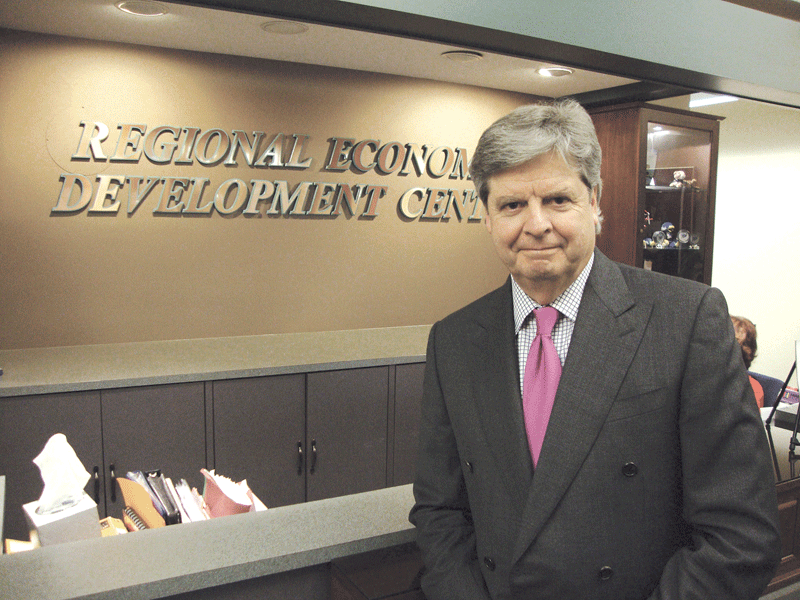
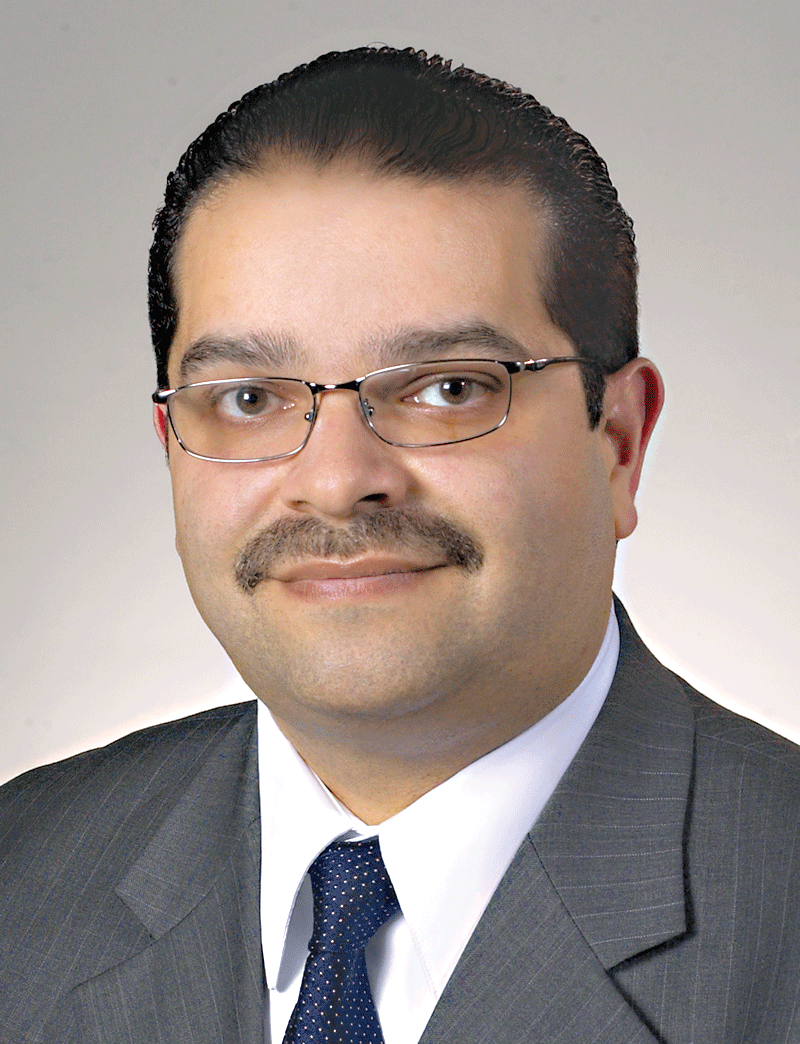
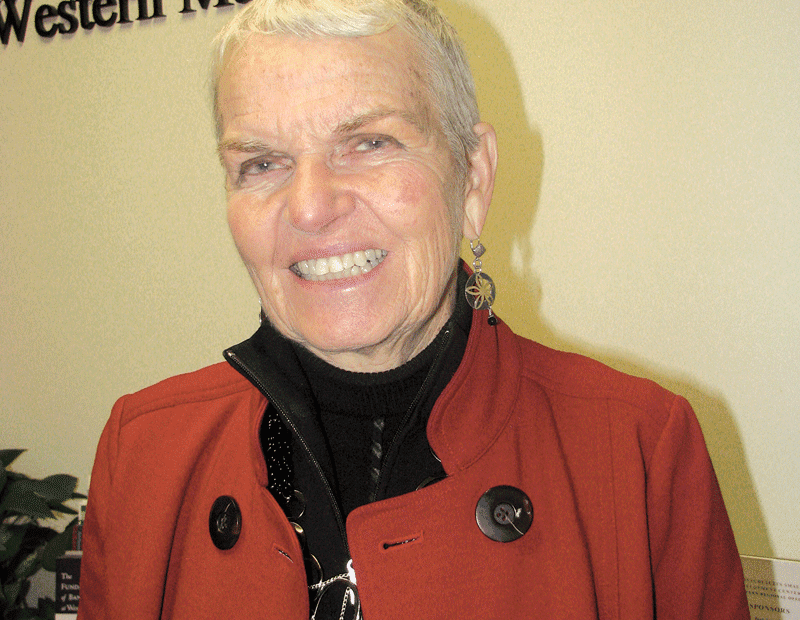
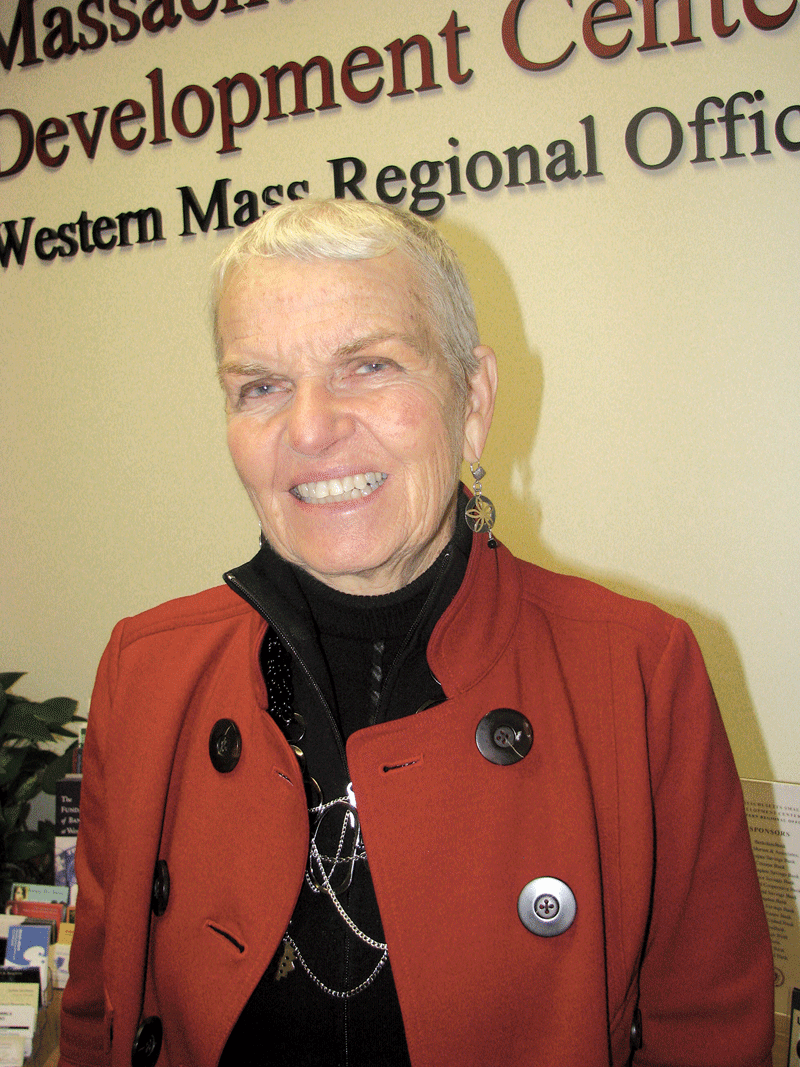
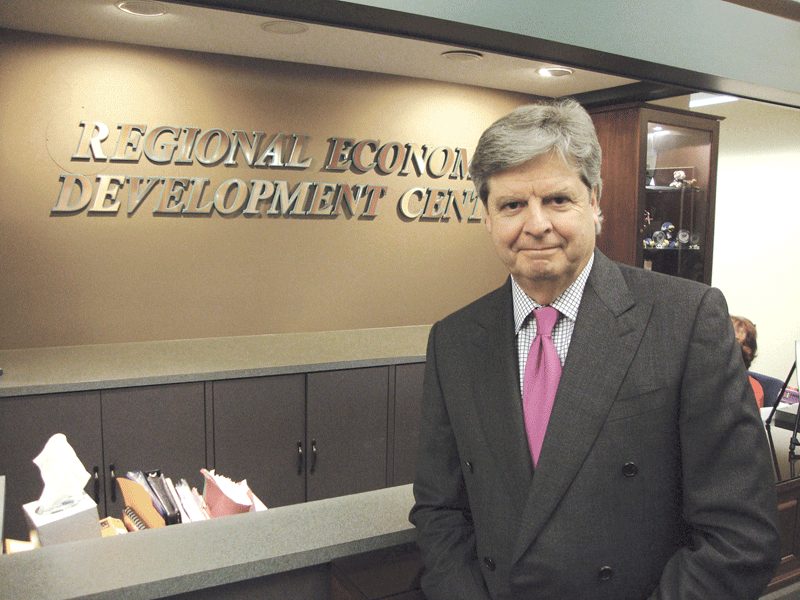
Allan Blair

Allan Blair says quality jobs, public and private investment, and an increase in visitors to Western Mass. are keys to stimulating the regional economy.

Editor’s Note: This is the second in a series of stories spotlighting the work being done by area chambers of commerce and other economic-development-related agencies. For this issue, we profile the Economic Development Council of Western Mass.

The full measure of his organization, Allan Blair will tell you, is pretty straightforward. “Three goals,” he began.
Blair is president and CEO of the Economic Development Council (EDC) of Western Mass., and he explained that those goals to stimulate the regional economy are quality jobs, public and private investment, and bringing in additional visitors. “Those three goals,” he continued, “as broad as they are, contribute to increasing economic development, and there are a number of different strategies for how we go about that, a variety of methods to stimulate economic vitality, and a host of affiliated partners to help make that happen.”
The EDC was created in 1996, when a group of business leaders at some of the larger companies in the region came together in support of a unified organization to make Western Mass. more competitive on a variety of fronts.
“We had a lot of well-intentioned organizations doing a lot of hard work,” Blair said, “but there was little coordination or collaboration between the groups. Therefore, the feeling was that the region wasn’t acting efficiently — we weren’t speaking with one voice on the most important issues of the region.”
The business leadership charter group of the EDC created this organization that initially included the mayors of six cities (now nine) and the presidents of the colleges and universities. The idea was to have in one place a public-private partnership with the common goal of economic development. “We hear about the conceptual importance of such entities all the time,” he added. “They made it real.”
In addition to that group of individuals, a host of business-sponsored organizations were included that are now known as affiliated partners. The names may have changed a bit over time, but those partners now are the Affiliated Chambers of Commerce of Greater Springfield, Westmass Area Development Corp., the Greater Springfield Convention and Visitors Bureau, the Westover Metropolitan Development Corp., and the business-improvement districts (BIDs) in Springfield, Westfield, Northampton, and quite possibly soon to be a fourth in Amherst.
There’s also a board of directors, comprised of elected representatives from the EDC’s membership. Peter Straley, president and CEO of Health New England, is the current chairman of the board. In his assessment of the EDC, there’s never been a more important role for such an organization in this region. “At a time when the economy has not been worse in our lifetimes,” he said, “that’s a real challenge — to stimulate job growth, with good jobs, in our local economy.”
And that means it’s time to get down to business, something the EDC has been doing for more than 15 years in Western Mass. Speaking to BusinessWest recently, both Blair and Straley spoke of the importance of their organization and how its goals are accomplished. “It’s important that there’s a regionally focused board looking down over all of this,” said Blair. “The most essential thing is that we’ve got the right people looking at the potential here.”

Center of Attention
Each year, the EDC assesses the different projects it believes will affect economic development in the region in the year or years ahead, Blair noted, “and then we organize our efforts around those targets.”
And, as they say, there’s strength in numbers.
It’s here that the EDC excels in its mission, and both men described the expertise that so many different affiliate partners can bring to the proverbial table. For example, the convention bureau is the primary player in attracting visitors, Blair said, and the Westmass and Westover entities are the ones responsible for maintaining an inventory of industrial- and business-park land to be available and appealing to both outside investors and companies within the region who are expanding. The chambers of commerce are best in the support and promotion of smaller businesses, and the BIDs are essential in making those local businesses aesthetically attractive and well-kept.
Straley said that such a comprehensive look, from the largest issues down to the smallest details of downtowns, is a key aspect to giving the region a competitive advantage in attracting outside investment. The EDC not only strives to make those details manifest, but to showcase them as well.
Site selectors are employed by companies seeking to relocate or branch out into new markets, and the EDC knows how they operate. “When someone from outside the area is looking to relocate a business, they’ll typically use consultants that will do the legwork for them,” he explained. “Those consultants will start by gathering information about a region, starting with the broadest end of a funnel, and narrowing it down, based on their clients’ requirements.”
The EDC’s Web site is the only dedicated source of information in the region specifically targeting those consultants. “It turns out that it is the primary point of contact for site selectors,” Straley continued. “If a manufacturing or distribution company says it needs a Northeast location, let’s say, obviously they’ve got a lot of places to choose from. What we’re doing is presenting a good face to the outside world for those consultants. They’ll be looking at the demographics of the area, what kind of businesses are in the area, is there a trained workforce in the area that we can tap into, what are the education levels of people in the region … all before they are even going to consider coming to look.
“In a sense, we’re acting as the matchmaker,” he went on. “Quite frankly, in this business, it’s difficult to land a final account. It’s like any sales business; with the economy the way it is, the length of time companies are taking to make final decisions about relocating and expanding is lengthening. More than ever, you need to be on top of that follow-through.”

Focal Point
While each city has its own economic-development team, the EDC works with all of them to get those businesses into “the funnel,” as Straley called it. “They’re all going to be competitive with one another to secure those companies, but it’s our job to get them into this region.”
Civic leaders, college presidents, and CEOs move in and out of the EDC’s purview owing to their own professional trajectories, but Blair said that, almost without exception, each new, incoming leader realizes the organization’s importance. Meeting quarterly with mayors is typically one of the few times they all convene, and it allows them the chance to think about their cities from a macroeconomic perspective.
“The region is entirely interdependent,” Blair explained. “The reality is that every community is dependent on a business’s employees and how they spend money. Yes, the notion of municipal growth is hugely important to every mayor, and how they can make some tactical moves to attract that investment. But it’s just as important for a company to know that they are locating in a region with good regional school systems that are supporting a strong workforce pipeline as it is for the company to know about the taxes and the regulatory environment in its own community.”
There are a few initiatives on the EDC’s radar for the year ahead. The Holyoke Green High Performance Computing Center is an important initiative for not only the Paper City, but the region as a whole. The Ludlow Mills initiative and the Three County Fairgrounds in Northampton are both targeted areas of interest, and Blair said the term ‘Knowledge Corridor,’ now nearly a dozen years old, will be further developed as a brand.
“We need to turn that term into more of a positive action,” he said, “by providing a single point of contact where an outside interest can access everything within those 14 institutions that they would need to know, and to help them focus their attention on bigger issues within the region so that they could collectively make a contribution.”
While the EDC’s agenda has no small number of directives, stimulating the regional economy clearly has some specific targets, including the promotion of entrepreneurship.
“One of the things we all need to be reminded of is that most of the growth the region has had is by companies that were started here,” Blair said. “We’re not a region that has a lot of big companies move here. When you look at our biggest corporate presences — Peter Pan, MassMutual, Smith & Wesson, Milton Bradley — they all started here, and they grew into something important.
“At some point in their history it started as an entrepreneur who took a risk, and who built a culture,” he continued.  “Have we lost that? Do we still have it? And if we still have it, is there something we can do to stimulate it so that we have more innovators, so that there are more people willing to take these risks for the rewards that will come?”
If there’s anything that his organization has managed to do, he went on, it has been the ability to open everybody’s horizons to all the issues that are affecting economic development.
“Before, we could be in our little silos and could miss an awful lot of opportunities coming our way,” Blair said. “Now, everybody’s aware of the landscape and understands their place within it. They have a more wide-angle view, and that’s really an important thing for us to have, for the business leadership to have, to have a wide-angle view of what’s going on and then to focus on the things that need to be done.”
Employment Sections
That’s the Goal of an Initiative Involving the State’s Community Colleges
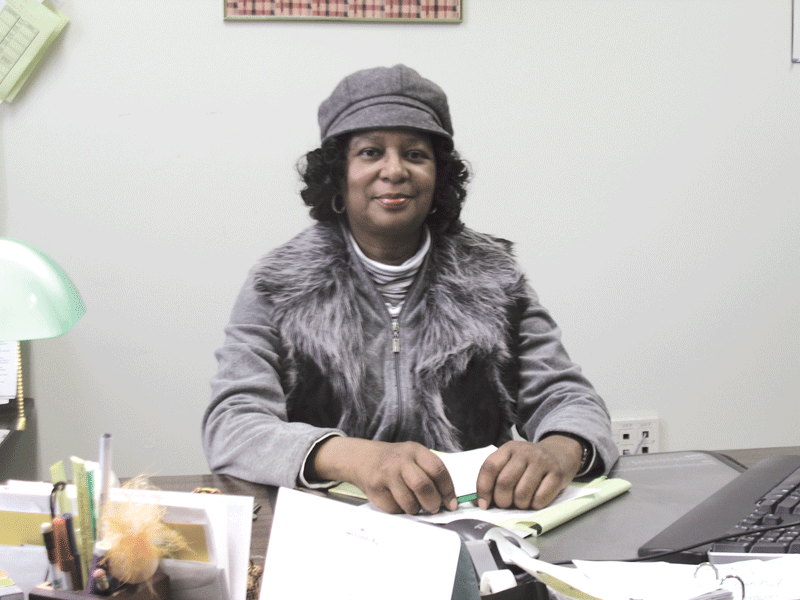
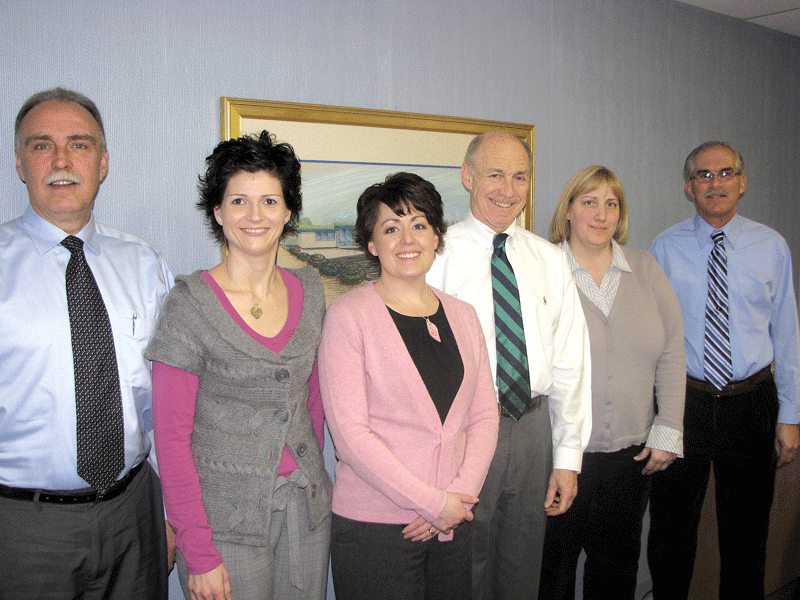
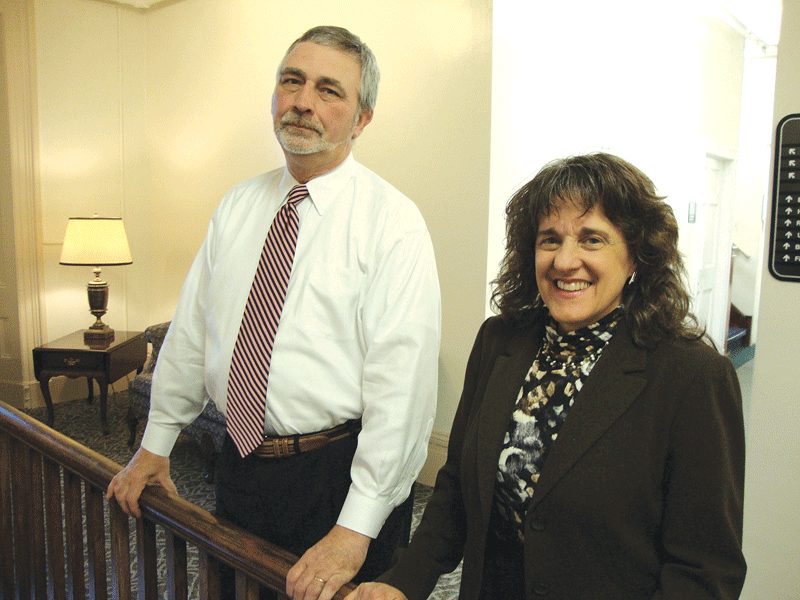
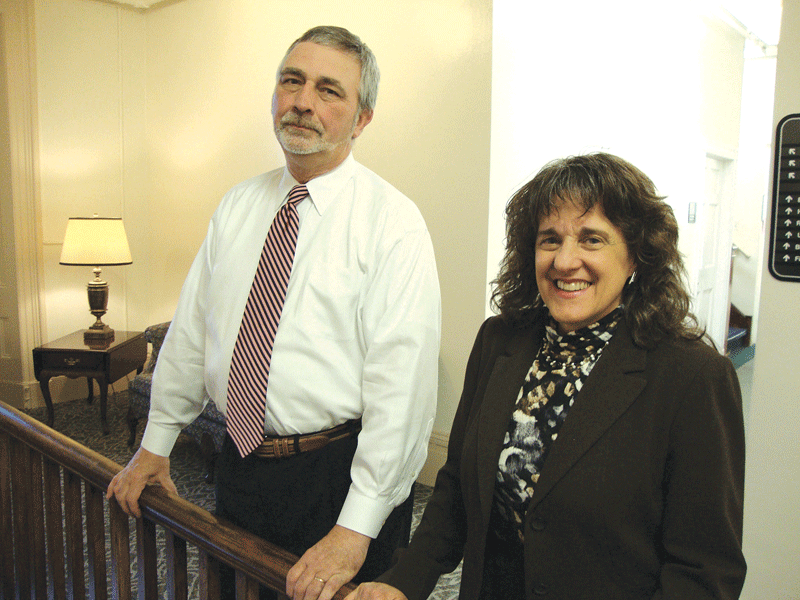
Stephen Keller and  Deborah Koch.

Stephen Keller and Deborah Koch.

Jeff Hayden says it all comes down to one word: transformation.
That was his way of describing, in a succinct yet meaningful way, an initiative to assist the unemployed and underemployed that has a long name and a broad set of goals.
It’s called the Massachusetts Community College and Workforce Development Transformation Agenda (MCCWDTA), and it’s part of nearly $500 million in grants for community colleges in all 50 states that will help workers around the country. U.S. Secretary of Labor Hilda Solis called this the first step in preparing a workforce for “high-wage, high-skills fields.”
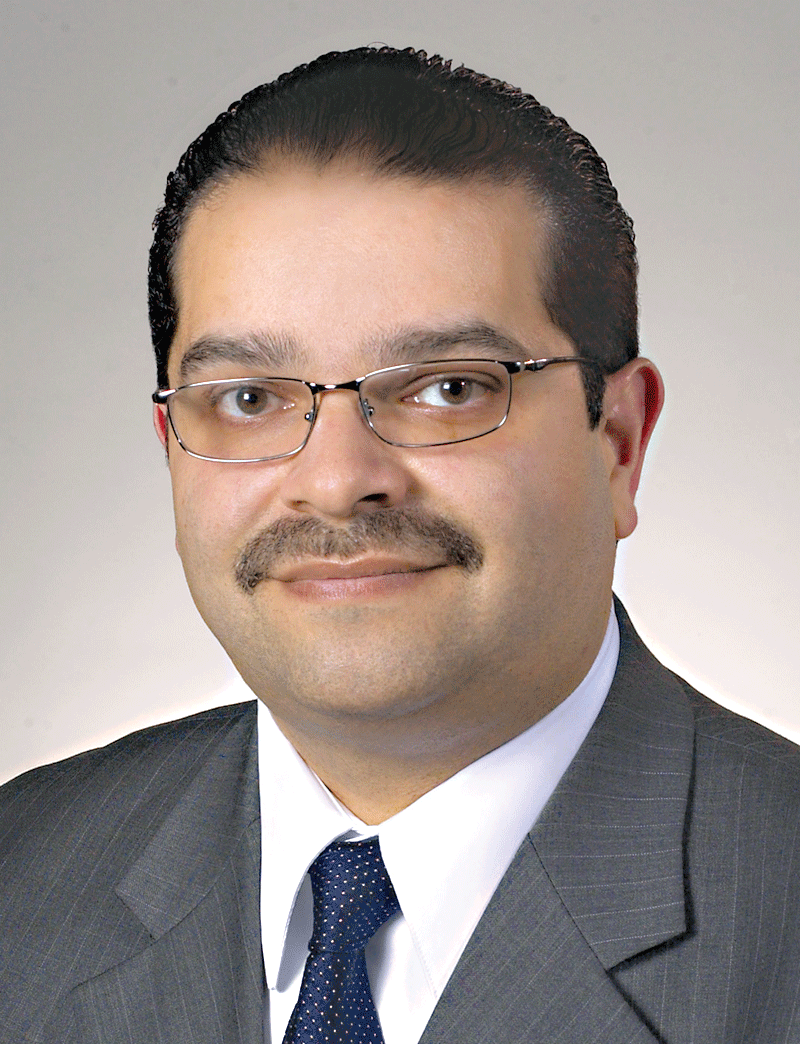
Hayden, vice president of Business and Community Services at Holyoke Community College, put it another way.
“The expectation sometimes in today’s world is that education is not meeting the needs of the workforce,” he explained, “because they’re not connected, or because there are bureaucratic systems in place that just don’t mesh with the business world. The grant will connect education to workforce in a way that transforms the systems that we have.”
Spearheaded by Quinsigamond Community College in Worcester, the MCCWDTA is a three-year, $20 million package that will involve all 15 Massachusetts community colleges, and is intended to target several industries, including health care, information technology, manufacturing, life sciences and biotechnology, clean energy, and financial services and entrepreneurship. In conjunction with the state’s workforce-development system — the local career centers — the broad goal is to find and pursue what the unemployed and underemployed need to re-enter the workforce.
As he talked about the initiative, Stephen Keller, executive vice president & chief academic officer at Springfield Technical Community College, gestured out his office window across the street to the STCC Technology Park, which houses FutureWorks Career Center. “Instead of FutureWorks working with employers and us working with employers, it’s getting everyone together at the table to talk about these issues.
“With the assistance of this grant,” he continued, “we can we create a unified approach where the one-stop centers are talking to the providers of training, who are in turn talking to the employers who are talking to the unemployed and underemployed. It’s a unified effort to create a system where someone comes in, they need a job, they’ve just been laid off, or a company is in the process of expecting layoffs, so they can contact one of the centers and we can work with the company to create some kind of training package.”
It’s a big effort, and there are many more fine points. Both men agreed that the goal is to transform not just the lives of future workers, but in many ways the entire academic process for workforce development. The MCCWDTA has been in effect since October, but there is still a lot of work to be done both at the colleges and for the Commonwealth’s administration of the grant.
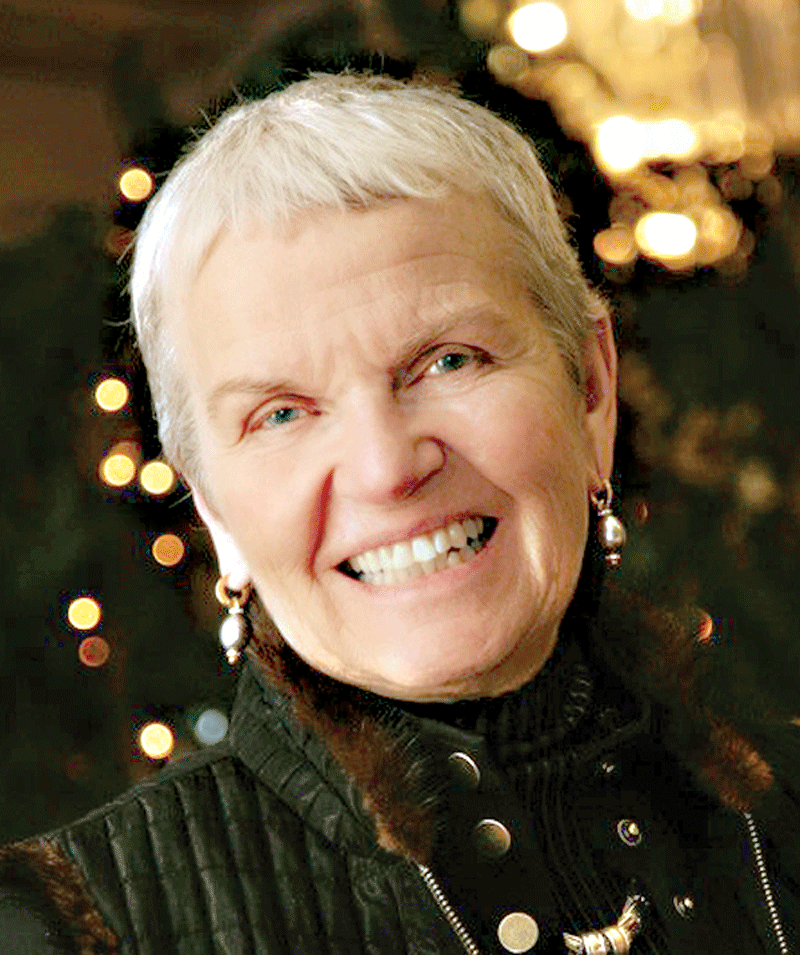
Deborah Koch is director of grants for STCC and one of the design team who framed this transformative measure. As a simple means to understand the sheer breadth of what is hoped for, she used that magic word once again. “This will help transform how the community colleges deliver education, so that they can meet the needs of these dislocated workers.”

Class Action
The final draft of the MCCWDTA proposal lays out the bad news and the good news.
“In the last decade, millions of jobs requiring only a high-school diploma or less have been permanently lost to automation and overseas completion,” the abstract states. “Analysts anticipate that two-thirds of new jobs emerging in the next decade will be middle-skills jobs demanding some post-secondary education … especially true in Massachusetts, which is expected to lead the nation in middle-skills job openings in the coming decades.”
The document goes on to state that the grant isn’t just throwing money at a problem. Rather, it is hoping to address a cause, “changing the way that community colleges in the Bay State interact with one each other, the workforce-development system, public agencies, leading industry groups, leaders of government, and private businesses to transform delivery of education and training programs for workers.”
Here’s how it works:
Initially, each college will address particular strengths within their own curriculum. Keller said that STCC is focused on IT, health care, and manufacturing, and at HCC, Hayden said that his school is looking to fund the development of programs in both health care and clean energy — solar and wind — and to augment their career-counseling component.
“So we will now be able to offer career counseling to the adult student, and that’s relatively new,” he said. “We have been doing some of it, but this will give us the capacity to actually do that type of assessment, with the goal of helping that individual find what they want to do, and to get motivated in increasing their potential success.”
Koch explained some key concepts that the MCCWDTA targets. The grant allows the colleges to explore possibilities, “which is the beauty of grant funding,” she said, “so that we can meet the needs of our clientele. Workers probably have never seen themselves as college-bound, but now can consider us as a very sensible and reasonable option.”
Stackable certification is something both colleges spoke of. Koch explained it as “moving up the academic ladder,” but while being employed.
“The idea of stackable certificates is that, rather than being focused on coming and getting a two-year degree as the only indicator of your ability to do a good job,” she said, “it may be that there are steps prior to the two-year degree that will enable you to have some form of employment. You can get a job, not a high-paying job, but a job in a system or industry where there is growth. While you’re working, you can take additional courses to get you to the next step, so you can eventually have your two-year degree, but in the meantime you’re working.”
Another transformative component for the academic process is what Hayden called “the institutionalization of credit for prior learning.”
He listed the UMass Amherst University Without Walls as a good example of how this concept works. As the phrase suggests, it involves academic credit for relevant work in the business sphere, Hayden explained, adding that it hasn’t happened yet throughout the community colleges.
“In the academic world, it’s difficult to put a system like that into place where it’s widely accepted,” he told BusinessWest. “Part of this grant is to help the community colleges have broadly accepted standards for workforce and workplace-related education. An individual works at an area business after they have achieved a certain level of skill in their academic program, and they receive credit.”

Working Model
There are some limitations to the grant funding, Keller and Koch admitted.
“Some of these people may have had jobs that didn’t require college-level work, and perhaps they didn’t have a high-school diploma,” Keller said. “We’ll have to solve that problem. A lot of these moneys from the government come with a timeline, and sometimes a worker might need to learn these skill sets within a year, or a matter of months. That’s a real problem because, if a student comes to us with a low reading level, it’s going to take time to get them over that.”
Hayden said that, for those who might wish to switch fields altogether — for instance, from manufacturing to health care — the process isn’t a quick and easy fix. But with the new models of academic delivery allowed by the grant funding, it is possible.
“We know that someone who wants to be a doctor or nurse, and who has kids at home and might be on public assistance, isn’t going to be able to jump into medical school tomorrow,” he said. “But how do we get them to the point where we create some stability, get them a job, and make them aware of the career steps, the academic pathways, which they need in order to get them to where they want to be?”
Ultimately, MCCWDTA funds will help the colleges blur the lines between the ivory tower and workforce readiness. Historically, Hayden said, there has been a notion that education and workforce training are two different things.
“What this grant is saying is that they’re not,” he continued. “They might have different steps, or different components, but education and training are part of the same thing. The grant is bringing together the ideas that we need skills training, workforce-development training, and we need academic pathways and careers. And we need them to be at community colleges in an accessible way for our students.
“One of the criticisms that community colleges always get is that we try to be all things to all people,” he added. “But the mission of the community college is to take an individual where they’re at and to meet their goals, but at the same time make them aware of the education and career pathways that exist.”
With the MCCWDTA funding to help that mission become more clear, the word ‘transformation’ that everyone uses sounds less like magic, and more like people getting back to work.

Features
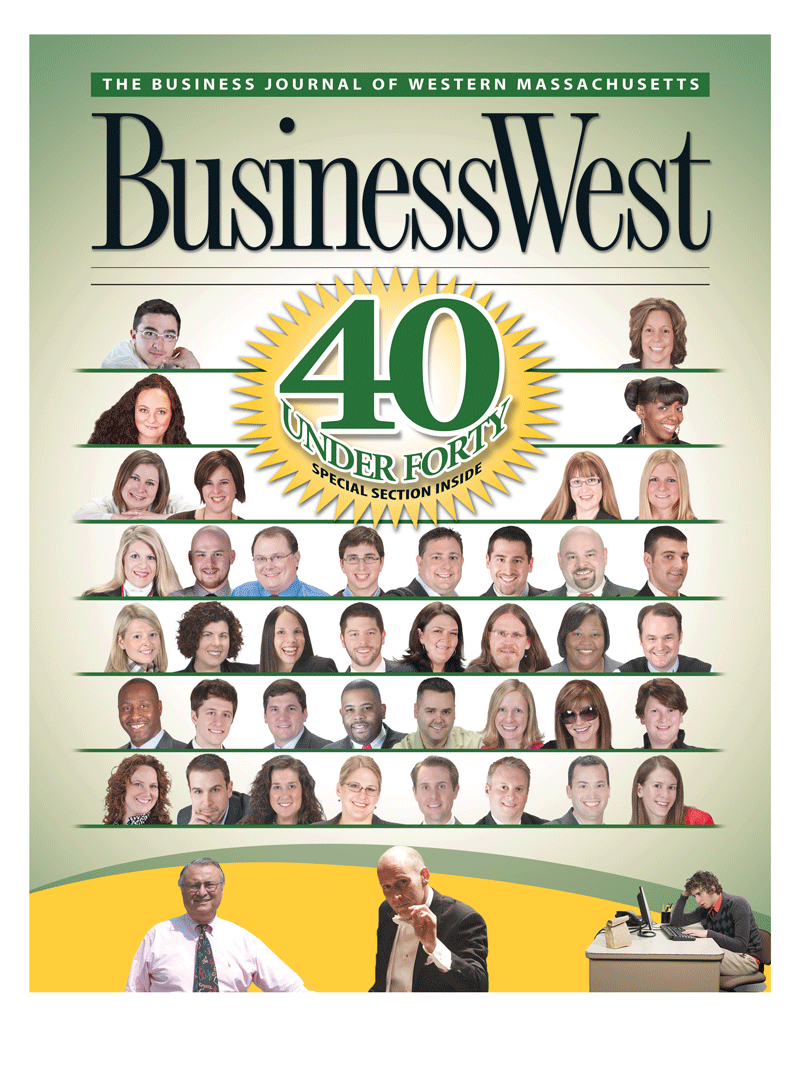
Nominations for the 40 Under Forty Class of 2012 Are Due Feb. 17

When BusinessWest launched its 40 Under Forty program in 2007, it did so with the expectation that the honor would soon become coveted and that the program would cast a bright light on the young talent in the four counties of Western Mass. To say that all this has happened would be a huge understatement. The program continues to grow in terms of both relevance and popularity, as evidenced by a new high-water mark for nominations in 2011 and record attendance at the June gala. And now, it’s time to nominate the class of 2012.

Eric Gouvin said being one of the judges for last year’s crop of 40 Under Forty nominees was a more difficult task than he thought it would be. But he said the experience was also enlightening — and encouraging, when he thinks about the future of the Western Mass. business community.
“It was hard,” said Gouvin, professor of Law and director of the Law and Business Center for Advancing Entrepreneurship at Western New England University. “There are a lot of talented people who participate, and to try to narrow that down to 40 was challenging. But I found it to be a real shot in the arm, for sure, to reassure me that we’re not running out of talented, smart people.”
Indeed, in its fifth incarnation, last winter’s nomination process brought forth a record number of applicants, demonstrating that, if anything, the program is only gaining steam.
“There’s so much enthusiasm,” said Pam Thornton, business development coordinator at United Personnel in Springfield, and current president of the Young Professional Society of Greater Springfield (YPS), which has consistently mined its membership for 40 Under Forty honorees on an annual basis.
“If you think about it, the program has created a kind of precedent already, which is amazing,” she continued. “People really look forward to the opportunity to get their name out there, to get an opportunity to get in front of people, and that’s just an awesome thing for our group, and for our age group.”
Now entering its sixth year with a call for nominations, BusinessWest’s 40 Under Forty has captured the respect of the region’s business community and continues to demonstrate that Western Mass. is home to a creative, motivated, and successful group of young business leaders, entrepreneurs, and innovators — people who are redefining what it means to build successful businesses and serve their communities with whatever spare time they have left over.
There are clear benefits in recognizing local professionals under age 40, said Kate Campiti, BusinessWest’s associate publisher. But initially, there were some concerns as to whether a strong-enough crop could emerge year after year. Clearly, that worry has long been put to rest.
“I’m amazed at the number of strong nominations we’re getting every year,” Campiti said. “It really speaks to the depth of the young talent here in the region.”

Click here for a nomination form!

Shine a Light
The 40 Under Forty program was launched in 2007 as a way to spotlight the accomplishments of younger professionals throughout Western Mass. — not only their on-the-job achievements, but their often-extensive volunteer work with organizations that benefit their communities.
Over the years, the program has highlighted individuals from an impressive range of businesses and industries, including education, law, finance, media, medicine, creative arts, nonprofits, government, retail, restaurants, green business, and many others. And last year presented a first — a 16-year-old high-school student (Stephen Freyman) was among the winners.
In addition, a healthy number of honorees each year hail from the ranks of entrepreneurs, developing their own business plans and building companies that in turn create jobs.
Judges score nominees on a combination of their accomplishments (be they in business, government, or the nonprofit realm), leadership qualities, and work within the community.
The effort has also helped boost the image of groups like YPS and Northampton Area Young Professionals, which share a common goal with 40 Under Forty — specifically, demonstrating the economic and cultural vibrancy of this region and generating enthusiasm among talented professionals to set down roots in Western Mass.
“I would absolutely say that it’s raised our profile, without a doubt,” Thornton said, noting that YPS typically brings a strong contingent to the annual June gala. “Everyone looks forward to it, and it’s such a great event.”
One theme that past winners have touched upon repeatedly is the networking benefits generated by being chosen to the 40 Under Forty.
“The experience of being an honoree brought together 40 great business people with collegial networking and partnerships that wouldn’t have been made otherwise,” said Beth Vettori, executive director of Rockridge Retirement Community in Northampton, one of the 2011 honorees.
“Between the friendships formed and the business opportunities, the 40 Under Forty really provided a bridge to some successful affiliations,” she added. “These people I’ve been able to network with — they’re very charismatic, very intelligent, and it’s just great to see that the youth in this area really have depth.”
Vettori said those connections have given her a viable resource — plenty of new colleagues with strong business acumen.
“You’re able to have conversations that give you greater insight into your own business,” she said. “The networking has allowed me a greater understanding of my own operation. It’s helpful to get different perspectives, different ideas; other people may work in different fields, but it’s still business, and it allows you to expand your own thinking.”
As with the past five installments of 40 Under Forty, this year’s winners — chosen by a panel of judges comprised of area business leaders and previous honorees — will be profiled in a spring issue of BusinessWest (always a must-read issue) and toasted at the annual gala reception, which drew a record crowd last June, providing further evidence of the 40 Under Forty’s momentum.

Healthy Crop
Gouvin said the growing popularity of the program is due in part to the sheer impressiveness of the honorees.
“Lots of these folks are professionally accomplished and very engaged in our community; they’re giving back, too,” he told BusinessWest. “That’s very encouraging. We want to make this city the best it can be, but we all have to contribute, not just in our jobs, but in our free time, too. I really do feel like they’re making it better.”
The nomination form can be found on page 20 of this issue. It will be reprinted in upcoming issues as well, and may also be printed from businesswest.com. The deadline for entries is Feb. 17.
Thornton sees the 40 Under Forty, and the role of YPS in it, as a collaborative effort.
“It’s people doing great work together, and I feel like the YPS organization helps to feed the program,” she said. “It’s a way for our people to celebrate what they’ve done, who they are, and how they’ve gotten where they are. And it’s something we should continue if we want to keep the momentum going.”


Past Honorees

Class of 2007
William Bither III — Atalasoft
Kimberlynn Cartelli — Fathers & Sons
Amy Caruso — MassMutual Financial Group
Denise Cogman — Springfield School Volunteers
Richard Corder — Cooley Dickinson Hospital
Katherine Pacella Costello — Egan, Flanagan & Cohen, P.C.
A. Rima Dael — Berkshire Bank Foundation of Pioneer Valley
Nino Del Padre — Del Padre Visual Productions
Antonio Dos Santos — Robinson Donovan, P.C.
Jake Giessman — Academy Hill School
Jillian Gould — Eastfield Mall
Michael Gove — Lyon & Fitzpatrick, LLP
Dena Hall — United Bank
James Harrington — Our Town Variety & Liquors
Christy Hedgpeth — Spalding Sports
Francis Hoey III — Tighe & Bond
Amy Jamrog — The Jamrog Group, Northwestern Mutual
Cinda Jones — Cowls Land & Lumber Co.
Paul Kozub — V-1 Vodka
Bob Lowry — Bueno y Sano
G.E. Patrick Leary — Moriarty & Primack, P.C.
Todd Lever — Noble Hospital
Audrey Manring — The Women’s Times
Daniel Morrill — Wolf & Company
Joseph Pacella — Egan, Flanagan & Cohen, P.C.
Arlene Rodriquez — Springfield Technical Community College
Craig Swimm — WMAS 94.7
Sarah Tanner — United Way of Pioneer Valley
Mark Tanner — Bacon Wilson, P.C.
Michelle Theroux — Child & Family Services of Pioneer Valley Inc.
Tad Tokarz — Western MA Sports Journal
Dan Touhey — Spalding Sports
Sarah Leete Tsitso — Fred Astaire Dance
Michael Vann — The Vann Group
Ryan Voiland — Red Fire Farm
Erica Walch — Speak Easy Accent Modification
Catherine West — Meyers Brothers Kalicka, P.C.
Michael Zaskey — Zasco Productions, LLC
Edward Zemba — Robert Charles Photography
Carin Zinter — The Princeton Review

Class of 2008
Michelle Abdow — Market Mentors
Matthew Andrews — Best Buddies of Western Mass.
Rob Anthony — WMAS
Shane Bajnoci — Cowls Land & Lumber Co.
Steve Bandarra — Atlas TC
Dr. Jonathan Bayuk — Hampden County Physician Associates
Delcie Bean IV — Valley Computer Works
Brendan Ciecko — Ten Minute Media
Todd Cieplinski — Universal Mind Inc.
William Collins — Spoleto Restaurant Group
Michael Corduff — Log Cabin Banquet and Meeting House
Amy Davis — New City Scenic & Display
Dave DelVecchio — Innovative Business Systems Inc.
Tyler Fairbank — EOS Ventures
Timothy Farrell — F.W. Farrell Insurance
Jeffrey Fialky — Bacon Wilson, P.C.
Dennis Francis — America’s Box Choice
Kelly Galanis — Westfield State College
Jennifer Glockner — Winstanley Associates
Andrea Hill-Cataldo — Johnson & Hill Staffing Services
Steven Huntley — Valley Opportunity Council
Alexander Jarrett — Pedal People Cooperative
Kevin Jourdain — City of Holyoke
Craig Kaylor — Hampden Bank / Hampden Bancorp Inc.
Stanley Kowalski III — FloDesign Inc.
Marco Liquori — NetLogix Inc.
Azell Murphy Cavaan — City of Springfield
Michael Presnal — The Federal Restaurant
Melissa Shea — Sullivan, Hayes & Quinn
Sheryl Shinn — Hampden Bank
Ja’Net Smith — Center for Human Development
Diana Sorrentini-Velez — Cooley, Shrair, P.C.
Meghan Sullivan — Sullivan, Hayes & Quinn
Michael Sweet — Doherty Wallace Pillsbury & Murphy
Heidi Thomson — Girls Inc.
Hector Toledo — Hampden Bank
William Trudeau Jr. — Insurance Center of New England
David Vermette — MassMutual Financial Services
Lauren Way — Bay Path College
Paul Yacovone — Brain Powered Concepts
Class of 2009
Marco Alvan — Team Link Brazilian Jiu Jitsu
Gina Barry — Bacon Wilson, P.C.
Maggie Bergin — The Art of Politics
Daniel Bessette — Get Set Marketing
Brandon Braxton — NewAlliance Bank
Dena Calvanese — Gray House
Edward Cassell — Park Square Realty
Karen Chadwell — Doherty, Wallace, Pillsbury and Murphy, P.C.
Kate Ciriello — MassMutual Financial Group
Kamari Collins — Springfield Technical Community College
Mychal Connolly Sr. — Stinky Cakes
Todd Demers — Family Wireless
Kate Glynn — A Child’s Garden and Impish
Andrew Jensen — Jx2 Productions, LLC
Kathy LeMay — Raising Change
Ned Leutz — Webber & Grinnell Insurance Agency
Scott MacKenzie — MacKenzie Vault Inc.
Tony Maroulis — Amherst Area Chamber of Commerce
Seth Mias — Seth Mias Catering
Marjory Moore — Chicopee Public Schools
Corey Murphy — First American Insurance Agency Inc.
Mark Hugo Nasjleti — Go Voice for Choice
Joshua Pendrick — Royal Touch Painting
Christopher Prouty — Studio99Creative
Adam Quenneville — Adam Quenneville Roofing
Michael Ravosa — Morgan Stanley
Kristi Reale — Meyers Brothers Kalicka, P.C.
Amy Royal — Royal & Klimczuk, LLC
Michelle Sade — United Personnel
Scott Sadowsky — Williams Distributing Corp.
Gregory Schmidt — Doherty, Wallace, Pillsbury & Murphy, P.C.
Gretchen Siegchrist — Media Shower Productions
Erik Skar — MassMutual Financial Services
Paul Stallman — Alias Solutions
Renee Stolar — J. Stolar Insurance Co.
Tara Tetreault — Jackson and Connor
Chris Thompson — Springfield Falcons Hockey Team
Karl Tur — Ink & Toner Solutions, LLC
Michael Weber — Minuteman Press
Brenda Wishart — Aspen Square Management

Class of 2010
Nancy Bazanchuk — Disability Resource Program, Center for Human Development
Raymond Berry — United Way of Pioneer Valley
David Beturne — Big Brothers Big Sisters of Hampden County
Maegan Brooks — The Law Office of Maegan Brooks
Karen Buell — PeoplesBank
Shanna Burke — Nonotuck Resource Associates
Damon Cartelli — Fathers & Sons
Brady Chianciola — PeoplesBank
Natasha Clark — Springfield School Volunteers
Julie Cowan — TD Bank
Karen Curran — Thomson Financial Management Inc.
Adam Epstein — Dielectrics Inc.
Mary Fallon — Garvey Communication Associates
Daniel Finn — Pioneer Valley Local First
Owen Freeman-Daniels — Foley-Connelly Financial Partners and Foley Insurance Group
Lorenzo Gaines — ACCESS Springfield Promise Program
Thomas Galanis — Westfield State College
Anthony Gleason II — Roger Sitterly & Son, Inc. and Gleason Landscaping
Allen Harris — Berkshire Money Management Inc.
Meghan Hibner — Westfield Bank
Amanda Huston — Junior Achievement of Western Mass. Inc.
Kimberly Klimczuk — Royal, LLP
James Krupienski — Meyers Brothers Kalicka, P.C.
David Kutcher — Confluent Forms, LLC
James Leahy — City of Holyoke and Alcon Laboratories
Kristin Leutz — Community Foundation of Western Mass.
Meghan Lynch — Six-Point Creative Works
Susan Mielnikowski — Cooley, Shrair, P.C.
Jill Monson — Adam Quenneville Roofing & Siding Inc. and Inspired Marketing & Promotions
Kevin Perrier — Five Star Building Corp.
Lindsay Porter — Big Y Foods
Brandon Reed — Fitness Together
Boris Revsin — CampusLIVE Inc.
Aaron Vega — Vega Yoga & Movement Arts
Ian Vukovich — Florence Savings Bank
Thomas Walsh — City of Springfield
Sean Wandrei — Meyers Brothers Kalicka, P.C.
Byron White — Pazzo Ristorante
Chester Wojcik — Design Construction Group
Peter Zurlino — Atlantico Designs and Springfield Public Schools

Class of 2011
Kelly Albrecht — left-click Corp.
Gianna Allentuck — Springfield Public Schools
Briony Angus — Tighe & Bond
Delania Barbee — ACCESS Springfield Promise Program
Monica Borgatti — Pioneer Valley Habitat for Humanity
Nancy Buffone — University of Massachusetts
Michelle Cayo — Country Bank
Nicole Contois — Springfield Housing Authority
Christin Deremian — Human Resources Unlimited/Pyramid Project
Peter Ellis — DIF Design
Scott Foster — Bulkley, Richardson and Gelinas, LLP
Stephen Freyman — Longmeadow High School
Benjamin Garvey — Insurance Center of New England
Mathew Geffin — Webber and Grinnell
Nick Gelfand — NRG Real Estate Inc.
Mark Germain — Gomes, DaCruz and Tracy, P.C.
Elizabeth Gosselin — Commonwealth Packaging
Kathryn Grandonico — Lincoln Real Estate
Jaimye Hebert — Monson Savings Bank
Sean Hemingway — Center for Human Development
Kelly Koch — Bulkley, Richardson and Gelinas, LLP
Jason Mark — Gravity Switch
Joan Maylor — Stop and Shop Supermarkets
Todd McGee — MassMutual Financial Group
Donald Mitchell — Western Mass. Development Collaborative
David Pakman — Vivid Edge Media Group/The David Pakman Show
Timothy Plante — City of Springfield/Springfield Public Schools
MauricePowe — The Law Offices of Brooks and Powe
Jeremy Procon — Interstate Towing Inc.
Kristen Pueschel — PeoplesBank
Meghan Rothschild — SurvivingSkin.org
Jennifer Schimmel — Greater Springfield Habitat for Humanity
Amy Scott — Wild Apple Design Group
Alexander Simon — LogicTrail, LLC
Lauren Tabin — PeoplesBank
Lisa Totz — ITT Power Solutions
Jeffrey Trant — Human Resources Unlimited
Timothy Van Epps — Sandri Companies
Michael Vedovelli — Mass. Office of Business Development
Beth Vettori — Rockridge Retirement Community

Joseph Bednar can be reached at [email protected]

Opinion
Jobs: The Next Global Conflict

“As of 2008, the war for good jobs has trumped all other leadership activities, because it’s been the cause and effect of everything else that countries have experienced. This will become even more real in the future as global competition intensifies. If countries fail at creating jobs, their societies will fall apart. Countries, and, more specifically, cities, will experience suffering, instability, chaos, and eventually revolution. This is the new world that leaders will confront.”
This is a passage from a recently released book called The Coming Jobs War, written by Jim Clifton, chairman of Gallup. In it, he contends that the next great global conflict won’t be about ideology or religion or territory; it will be all about jobs, or, rather, what he calls “good” jobs.
He defines these as jobs with a paycheck from an employer and steady work that averages 30 or more hours per week. He contends that there are about 1.2 billion of these good jobs in the world right now, and Gallup polls show that roughly 3 billion of the 5 billion adults in the world work or want to work and need a good job.
That’s a roughly 1.8 billion shortfall. The cities, regions, and countries that fare well in closing this gap will prosper. As for those who don’t … what did Clifton say again? “Instability, chaos, and eventually revolution.”
Those are strong words, but they are pretty hard to argue with. About the only fault we find with Clifton’s argument is his persistent use of the future tense with regard to this global jobs conflict. It isn’t coming — it’s already here, and elected officials, economic-development leaders, and this region’s business community should definitely take heed.
For evidence of the severity of the situation, they need only review the latest data from the Census Bureau about the increasing number of people falling into poverty. There are now 46.2 million poor Americans, or 15.1%, the highest rate in nearly two decades. Of those, 2.6 million fell into poverty last year.
Some did so because they didn’t have a job, but for many, the cause was lack of one of those good jobs, which this region and this country as a whole are simply not creating in the numbers that they have in the past. The reasons are many, from the lingering recession and advancing automation to the migration of manufacturing to other regions and other continents, but the bottom line is that this country is failing on what is now the most important battleground of all.
How do we create good jobs? If the answer to that question came easily, 1.8 billion wouldn’t be looking for them today. The answer is complex, and it involves many components, starting with a greater focus on math and science, similar to what happened more than a half-century ago, a spark that did a lot more than put a man on the moon in 1969; it also helped inspire most of the advances in computer and information technology over the past 40 years.
What is also needed is continued emphasis on entrepreneurship, which is needed to take new ideas and transform them into producers of not only jobs, but those good jobs. And our region must be able to compete for the entrepreneurs and the companies and jobs they will create. This means a large, qualified workforce, costs that are at least in line with other regions, and an environment where ‘pro-business’ is more than a catchphrase — it’s a way of life.
In his book, Clifton compares the jobs conflict to World War II. The latter, he writes, was fought for freedom and for leadership of the free world. “It was for all the marbles … and a loss would have changed everything.”
The jobs war is also for all the marbles, and a loss will change everything.
And, as we said, that war isn’t coming; it’s already here.

Agenda Departments

Museums10 Focuses on Photography
Ongoing: Museums10, a collaboration of 10 college-affiliated museums in the Pioneer Valley, features seven photography exhibitions this fall, related lectures and discussions, and a symposium on Trans-Asia photography, all presenting a world that is at once far away and close at hand. With works of art from Asia, Africa, Europe, and the Americas, the exhibitions and events collectively reveal a globalized world and distinct styles of photography. Mount Holyoke College Art Museum (www.mtholyoke.edu/artmuseum) will present “World Documents,” works by international photographers, through Dec. 18, while the Smith College Museum (www.scma.smith.edu/artmuseum) will showcase the El Muro photography series by Cuban artist Eduardo Hernández Santos. “Cuba Seen Through Photographic Collages and Lithographs” will be on display through Oct. 6 at the Hampshire College Liebling Center Mann Gallery (www.hampshire.edu), while “Bagels & Grits: Exploring Jewish Life in the Deep South” will be featured at the Yiddish Book Center (www.yiddishbookcenter.org) through Sept. 30. Rounding out the exhibitions are “The Instant of Combustion: Barbara Morgan Dance Photography” at the University Museum of Contemporary Art (www.umass.edu/fac/umca) through Oct. 16, and “A Memorial Display in Honor of Jerome ‘Jerry’ Liebling, Photographer, Filmmaker, Educator,” at the Mead Art Museum (www.amherst.edu/museums/mead) through Oct. 23. Historic Deerfield will also host the Hallmark Institute of Photography exhibition through December (www.historic-deerfield.org). For more information on lectures and related events, visit www.museums10.org.

Retirement Planning Roundtable
September 29: The Affiliated Chambers of Commerce of Greater Springfield will present a roundtable discussion titled “Focus: Your Corporate Retirement Plan” from 8:30 to 10 a.m. at the Springfield Sheraton. A continental breakfast will be served from 8 to 8:30 a.m. Department of Labor representative Mary Rosen, associate regional director of the Boston office, will discuss the key provisions of recent legislation affecting defined contribution plans. Participants will gain insights from research on more than 1,000 U.S. plan sponsors to determine how one plan stacks up against another. A presentation by Alliance Bernstein, facilitated by the New England Wealth Management Group of Morgan Stanley Smith Barney, is also planned. Pre-registration is required for the free event. To register, e-mail Lynn Johnson at [email protected].

Patents Webinar
Oct. 4: Donald Holland, Esq. will present a webinar titled “The Basics of Patents” beginning at 11 a.m. for approximately 40 minutes. He is the senior partner at Holland & Bonzagni, P.C., based in Longmeadow. Webinar attendees will have the opportunity to ask specific questions at the end of the presentation. For more information or to register, visit www.hblaw.org/webinars or call (413) 567-2076.

Western Mass. Business Expo
Oct. 18: Businesses from throughout Hampden, Hampshire, Franklin, and Berkshire counties will come together for the premier trade show in the region, the Western Mass. Business Expo, produced by BusinessWest, and staged at the MassMutual Center in Springfield. The show will feature breakfast and lunch programs arranged by the Affilaited Chambers of Commerce of Greater Springfield, nearly two dozen seminars on the business issues of the day, several presentations in the Show Floor Floor Theater on timely topics, and the sophisticated networking program known as Mine Your Business. The day will conclude with a networking social from 2 to 4 p.m. The cost for a 10-by-10 booth is $700 for members of all area chambers, and $750 for non-members; corner booths are $800 for all chamber members and $850 for non-members, and a 10-by-20 booth is $1,200 for all chamber members and $1,250 for non-members. For more information, log onto www.businesswest.com or www.wmbexpo.com, or call (413) 781-8600, ext. 100.

Trade Secrecy Protection Webinar
Oct. 20: Donald Holland, Esq. will present a webinar titled “Trade Secrecy Protection” beginning at 11 a.m. for approximately 40 minutes. He is the senior partner at Holland & Bonzagni, P.C., based in Longmeadow. Webinar attendees will have the opportunity to ask specific questions at the end of the presentation. For more information or to register, visit www.hblaw.org/webinars or call (413) 567-2076.

Cartoonist Lecture
Oct. 21: Cartoonist Leigh Rubin, renowned for the comic strip Rubes, will be the featured speaker as the Ovations special-events series continues this fall at Springfield Technical Community College. Rubes is syndicated in more than 400 newspapers and publications worldwide. His presentations, at 10:10 a.m. and 11:15 a.m. in Scibelli Hall Theater, will cover art, satire, and communication. For more information or to bring a group, contact Ovations coordinator Phil O’Donoghue at (413) 755-4233 or [email protected].

We’ve Got Your Back
Run/Walk
October 22: New England Neurosurgical Associates will sponsor its first We’ve Got Your Back 5K Run/Walk at Forest Park in Springfield, beginning at 9 a.m. The event, which will benefit the Spinal Research Foundation, will also include a spinal health fair beginning at 8 a.m. The certified 5K race begins at 9, followed by a one-mile run/walk. Winners of the race will receive cash prizes ranging from $50 to $300. All children who finish the one-mile run/walk will be given a commemorative medal. For more information, call (413) 781-2211.

Entrepreneurship Lecture
October 27: Sue Morelli, chief executive officer and president of ABP Corp., will be the guest speaker at Bay Path College’s Innovative Thinking & Entrepreneurship Lecture Series in Longmeadow. Since joining Au Bon Pain in 1988, Morelli has worked her way up the ranks of the Boston-based, fast-casual bakery and café to become president and CEO in 2006. Under her leadership, the company now has more than 300 store locations, with almost 200 in the U.S. and the remainder in Thailand, India, South Korea, and the Middle East. She is currently leading a redesign of store interiors, a major menu transformation, and the opening of more than 30 new cafés per year. The lecture begins at 8:15 a.m.; a networking continental breakfast starts at 7:30 a.m. For more information, visit www.baypath.edu.

Licensing Intellectual Property Webinar
November 1: Donald S. Holland, Esq. will present a webinar titled “Licensing Intellectual Property” beginning at 11 a.m. for approximately 40 minutes. He is the senior partner at Holland & Bonzagni, P.C., based in Longmeadow. Webinar attendees will have the opportunity to ask specific questions at the end of the presentation. For more information or to register, visit www.hblaw.org/webinars or call (413) 567-2076.

Serious Fun Event
Nov. 10: MassINC and CommonWealth magazine will host a seriously funny look back at the year in politics and media with pols, pundits, and the press. All proceeds will support MassINC’s CommonWealth Campaign for Civic Journalism as well as a scholarship program for those who are entering the field. The event is planned at the John F. Kennedy Presidential Library and Museum, with cocktails at 6 p.m. and dinner and the program starting at 7:30 p.m. For more information, visit www.
seriousfun2011.org or contact Lauren Louison at (617) 224-1613 or [email protected].

Author Lecture
November 11: Christina Asquith, author and journalist, will account her years in hiding in Iraq that resulted in her book, Sisters in War, as part of the Ovations special events series at Springfield Technical Community College. Her presentations are at 10:10 a.m. and 11:15 a.m. in Scibelli Hall Theater. For more information or to bring a group, contact Ovations coordinator Phil O’Donoghue at (413) 755-4233 or [email protected].

Agenda Departments

AIM Executive Forum
Sept. 16: Ralph de la Torre, chairman and CEO of Steward Health Care Systems, will be the guest speaker at the Associated Industries of Massachusetts Executive Forum at the Waltham Westin Hotel. He will discuss how his organization has grown into the largest integrated community health care organization in New England and its plans to reshape the health delivery landscape. Registration, which includes breakfast, is $55 per person, $90 for non-members, for the 7:45 to 9:15 a.m. program. To register, visit www.aimnet.org or call Julie Fazio at (617) 262-1180.

Classic Car Show
Sept. 18: The Chicopee Rotary Club will sponsor its 10th annual Classic Car Show in the Big Y parking lot on Memorial Drive in Chicopee. The event, staged from 9 a.m. to 3 p.m., recognizes over 30 different classes of cars with awards. The committee is soliciting for sponsorships as well as car registrations. Preregistration is $10, while registration that morning is $15. Trophies will be given in all categories, and all presenters will receive a dash plaque. Admission to the car show is free to the community and includes an airbag-deployment demonstration at noon. Refreshments will be available throughout the day. As a fund-raising event, the show raises money for the club’s many projects, including its Helping Hands Program, which provides holiday meals to economically disadvantaged families, and also supports the Polio Plus Project, which fights to eliminate polio throughout the world. Proceeds from this event will also directly benefit the Chicopee Elks Club’s annual Veteran’s Day Dinner. For more information or to obtain a registration, call Don Roy’s Auto Body at (413) 593-5010.

Trademarks Webinar
Sept. 20: Donald Holland, Esq. will present a webinar titled “Protect Your Trademarks” beginning at 11 a.m. for approximately 40 minutes. He is the senior partner at Holland & Bonzagni, P.C., based in Longmeadow. Webinar attendees will have the opportunity to ask specific questions at the end of the presentation. For more information or to register, visit www.hblaw.org/webinars or call (413) 567-2076.

STCC Ovations Series
Sept. 21: Mime Robert Rivest will lead off the Ovations special-events series at Springfield Technical Community College with performances scheduled at 10:10 a.m. and 11:15 a.m. in Scibelli Hall Theater. For more information or to bring a group, contact Ovations coordinator Phil O’Donoghue at (413) 755-4233 or [email protected].

Instant Issues Lunch Series
Sept. 21: The Hon. Patrick Binns, Canadian consul general to New England, will be the guest speaker at the Instant Issues Brown Bag Lunch Series, sponsored by the World Affairs Council of Western Mass. His noon lecture is titled “Beyond the Border: Canada-New England Relations.” Before coming to Boston in 2010, he served as Ambassador of Canada to Ireland. The event is planned at One Financial Plaza, community room, third floor, at 1350 Main St. (corner of Main and Court), Springfield. The cost is $5 for members, $15 with lunch; or $10 for nonmembers, $20 with lunch. For reservations prior to Sept. 19, call (413) 733-0110.

Filmmaker at STCC
Sept. 23: Lawrence Hott, documentary filmmaker, will talk about his upcoming work, The War of 1812, as part of the Ovations special events series at Springfield Technical Community College. His presentations are scheduled at 10:10 a.m. and 11:15 a.m. in Scibelli Hall Theater. In describing this war, Hott will also bring attendees into the world of the documentary film and its process. For more information or to bring a group, contact Ovations coordinator Phil O’Donoghue at (413) 755-4233 or [email protected].

Patents Webinar
Oct. 4: Donald Holland, Esq. will present a webinar titled “The Basics of Patents” beginning at 11 a.m. for approximately 40 minutes. He is the senior partner at Holland & Bonzagni, P.C., based in Longmeadow. Webinar attendees will have the opportunity to ask specific questions at the end of the presentation. For more information or to register, visit www.hblaw.org/webinars or call (413) 567-2076.

Western Mass. Business Expo
Oct. 18: Businesses from throughout Hampden, Hampshire, Franklin, and Berkshire counties will come together for the premier trade show in the region, the Western Mass. Business Expo, produced by BusinessWest, and staged at the MassMutual Center in Springfield. The show will feature breakfast and lunch programs arranged by the Affilaited Chambers of Commerce of Greater Springfield, nearly two dozen seminars on the business issues of the day, several presentations in the Show Floor Floor Theater on timely topics, and the sophisticated networking program known as Mine Your Business. The day will conclude with a networking social from 2 to 4 p.m. The cost for a 10-by-10 booth is $700 for members of all area chambers, and $750 for non-members; corner booths are $800 for all chamber members and $850 for non-members, and a 10-by-20 booth is $1,200 for all chamber members and $1,250 for non-members. For more information, log onto www.businesswest.com or www.WMBExpo.com, or call (413) 781-8600, ext. 100.

Trade Secrecy Protection Webinar
Oct. 20: Donald Holland, Esq. will present a webinar titled “Trade Secrecy Protection” beginning at 11 a.m. for approximately 40 minutes. He is the senior partner at Holland & Bonzagni, P.C., based in Longmeadow. Webinar attendees will have the opportunity to ask specific questions at the end of the presentation. For more information or to register, visit www.hblaw.org/webinars or call (413) 567-2076.

Cartoonist Lecture
Oct. 21: Cartoonist Leigh Rubin, renowned for the comic strip Rubes, will be the featured speaker as the Ovations special-events series continues this fall at Springfield Technical Community College. Rubes is syndicated in more than 400 newspapers and publications worldwide. His presentations, at 10:10 a.m. and 11:15 a.m. in Scibelli Hall Theater, will cover art, satire, and communication. For more information or to bring a group, contact Ovations coordinator Phil O’Donoghue at (413) 755-4233 or [email protected].

Entrepreneurship Lecture
October 27: Sue Morelli, chief executive officer and president of ABP Corp., will be the guest speaker at Bay Path College’s Innovative Thinking & Entrepreneurship Lecture Series in Longmeadow. Since joining Au Bon Pain in 1988, Morelli has worked her way up the ranks of the Boston-based, fast-casual bakery and café to become president and CEO in 2006. Under her leadership, the company now has more than 300 store locations, with almost 200 in the U.S. and the remainder in Thailand, India, South Korea, and the Middle East. She is currently leading a redesign of store interiors, a major menu transformation, and the opening of more than 30 new cafés per year. The lecture begins at 8:15 a.m.; a networking continental breakfast starts at 7:30 a.m. For more information, visit www.baypath.edu.

Serious Fun Event
Nov. 10: MassINC and CommonWealth magazine will host a seriously funny look back at the year in politics and media with pols, pundits, and the press. All proceeds will support MassINC’s CommonWealth Campaign for Civic Journalism as well as a scholarship program for those who are entering the field. The event is planned at the John F. Kennedy Presidential Library and Museum, with cocktails at 6 p.m. and dinner and the program starting at 7:30 p.m. For more information, visit www.seriousfun2011.org or contact Lauren Louison at (617) 224-1613 or [email protected].

Opinion
The Glass Is More Than Half Full

There have been a lot jokes lately about people seeing a plague of locusts coming down State Street in Springfield — or what they would do if they did see one.
Likewise, there’s been more attempted humor concerning the notion that adversity builds character. If it does, most in this region would say we’ve got more than enough character, thank you.
Indeed, it’s been quite a year, and it’s far from over. The winter was long and brutal. The recovery … that should be put in the form of a question, as in ‘what recovery?’ Gas prices soared back up over $4 a gallon, and although they’re down a little, they remain a challenge to progress. Meanwhile, debt crises here and abroad have sent the stock market reeling in recent weeks and raised the specter of the dreaded double dip.
Then came the natural disasters: first the tornado, from which full recovery will take years, then the minor earthquake (no damage, but it shook people up, literally and figuratively), and then the tropical storm, which didn’t hit with full fury, but try telling that to many people in Franklin County.
So as 2011 heads for the three-quarter pole, many people are looking for the locusts, figuring they have to be next. However, while being pessimistic and cynical in this climate — both economically and meteorologically —  there is room for a little optimism. In other words, yes, things could be much worse, and they are in many parts of this country and other nations as well. Why see the glass as at least half full? Consider these reasons:
• Adversity does, indeed, build character, and out of the trials and travails of 2011, some positive energy and new sources of resiliency have been found. The tornado turned many sections of Springfield, West Springfield, and other communities upside down, but now there is a chance to rebuild and perhaps create momentum from new initiatives. Meanwhile, the sum of the natural disasters and other forms of turmoil (and survival of all of that) could create more needed confidence in the region — an ‘if we can make though all this, we can make it through anything’ mentality.
• The jobs market, while not robust, or anything approaching that description, is at least holding steady, with signs of progress. The cutbacks at Baystate Health and Milton Bradley have been the only real setbacks, while companies such as Smith & Wesson, Big Y, and others have been adding workers, and many businesses are seemingly on the cusp of having enough confidence to move forward with new hiring.
• The region continues to foster entrepreneurship through incubation efforts and mentorship programs that will eventually pay huge dividends for the Greater Springfield area. As we’ve said many times before, while it’s great to lure corporations that will bring hundreds of jobs to an area, the more likely scenario for growth is through small-business development, and this region is making great strides in efforts to encourage entrepreneurial thinking and help companies survive those ultra-challenging first few years.
• The ‘eds and meds’ sectors remain strong and show promise to become even greater forces in the local economy. Baystate’s Hospital of the Future is on schedule to open soon, and most all area health care providers have survived the recent economic upheaval more or less intact. The pace of hiring has slowed, but it is still solid. On the higher-education side, schools like American International College have enjoyed strong growth (see story, page 10), while all the institutions in the region have contributed critical resources — especially their student populations — to help spur economic development in many forms, both in individual communities such as Westfield, Chicopee, and Holyoke, and across the region as a whole.
We haven’t even mentioned the high-performance computing center in Holyoke, the emerging ‘green’ business sectors, and the strong possibility that a casino will be built in Palmer or Holyoke over the next several years.
Add it all up, and there is indeed reason for optimism, not merely cause to look over the hill for locusts.

Features
For Holyoke, the High- performance Computing Center Is Only the Beginning

Holyoke Canals

Holyoke Canals

The high-performance computing center soon to take shape in downtown Holyoke is a large project creating a good deal of excitement. Two things it won’t create directly, however, are large numbers of jobs and tax revenue. So area planning officials are hard at work looking at ways to generate both indirectly. They call it leveraging an asset. The strategies being developed have many facets, and are summed up by one official as a “surround-sound approach to economic development.”

The high-performance computing center being developed in downtown Holyoke brings together a group of public and private partners in a groundbreaking initiative that will eventually provide unparalleled computing power for the state’s most prestigious universities.
Imagine its impact on … farming.
No, really.
“The high-performance computing center will generate a lot of heat,” said Kathleen Anderson, director of Holyoke’s Office of Planning and Development. “If we did urban agriculture, we could take the heat from the computing center and pump it into greenhouses or possibly older mill buildings and start growing things.”Such a project, she said, could generate more than 100 jobs.
“Then there’s distributors, processing plants up and down the Valley … how do you include them? An asset like that in Holyoke would need distribution, processing, transportation — how can we leverage that asset to help other businesses in the Valley?”

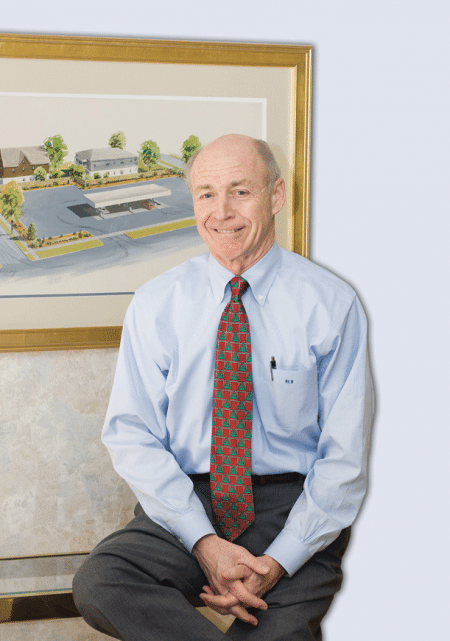
Tim Brennan

Tim Brennan says efforts to leverage the computing centers can be described as “the surround-sound approach to economic development.”

Tim Brennan, executive director of the Pioneer Valley Planning Commission, also cited agriculture as a way to create economic development from a facility that in itself won’t generate many jobs for the city.
“Can we capture the heat it gives off and create a very large-scale urban greenhouse where we could have vegetable production year-round?” he said. “That’s an asset to much of the region; many farmers are active in agricultural production but see the winter period as downtime, because the climate in New England is not conducive to growing in every season. And it could help create middle-income jobs with benefits for people in Holyoke.”
What has members of the Holyoke Innovation District Task Force — a broad partnership charged with leveraging the computing center and related downtown efforts into large-scale economic development — so excited isn’t the prospect of growing crops in a former mill. It’s that urban agriculture represents only one of many ways to make the city’s (and region’s) economy more robust.
Urban farming, said Brennan, “is an example people can get their heads around of how we can create leverage out of the computing center and get jobs and also off-site benefits that ripple positively to the regional economy. This region is disposed to being at the cutting edge, so can we use that quality to fuel more innovation, more technological entities here? And they don’t necessarily need to all be in Holyoke.”
“The strategy,” said Anderson, “is basically to determine what industries are most likely to take advantage of the assets in Holyoke and the Pioneer Valley and where they’re likely to locate. So we’re looking at economic opportunities within the Innovation District, the entire city of Holyoke, and the whole Pioneer Valley, and asking, what are the related investment pieces and strategies needed to achieve this economic potential?”

Thinking Big
The task force, Anderson explained, developed strategies with a threefold overall goal in mind: to increase and improve job opportunities for the residents of Holyoke and the Pioneer Valley, to attract an increased level of private investment into Holyoke, and to connect the green high-performance computing center and various regional assets into an integrated economic-development marketing and delivery system.
The eight broad strategies that sprung from this multi-pronged goal target different aspects of economic development, but tend to originate from strengths Holyoke already possesses. Clean-energy innovation and development is one example.
The idea is to maintain the city’s low-cost, renewable-energy-based competitive advantage by expanding the city’s portfolio of cost-effective renewable-energy generation capacity, and eventually transform Holyoke into a global leader in clean-energy research and applications. A longer-term objective is to convert that research into the widespread manufacturing of clean-energy products.
That goal makes sense in the context of Holyoke’s hydropower capacity, one of the significant factors in the computing center being located there.
“Holyoke Gas & Electric has the cheapest electrical rates in New England for industrial customers,” Anderson said. “They (center developers) saw the low-cost real estate and also wanted clean energy with hydro, and we were able to do that.”
Holyoke Mayor Elaine Pluta is certainly thinking big about Holyoke as a renewable-energy leader.
“Our overall goal is to become as close to 100% renewable energy as soon as possible,” she said. “That’s the message, and the word will get out, because we’re going to be promoting that to the economic developers and letting them know that, if they want to do green projects, this is the city to come to. The computing center is going to be a green project, and that’s going to be one of the first of many, we hope.”
Brennan has long been an advocate of moving toward renewable energy as the world’s primary source of power — and of thinking urgently about the issue.
“High energy costs, uncertainty of supplies, and threats from climate change are changing everything,” he said. “The transition from coal as the primary fuel source in this country took 30 to 50 years. I don’t think we have 30 to 50 years this time, so those parts of the country that don’t get out in front of this wave are going to fall behind it. We’ll also take that message about low energy costs and carry it as far as we can.”
Other strategies the task force has developed include:
• making the Innovation District a sort of laboratory for innovation and entrepreneurship, with assets in place to support startups;
• leveraging the region’s colleges and universities as a critical part of its talent base and reputation;
• creating more sites ready for development and redevelopment by identifying priority sites, selectively clearing and remediating abandoned properties, and providing incentives to encourage investment;
• coordinating among all regional economic-development players to streamline the processes for attracting and retaining businesses;
• creating and growing an information-technology industry cluster; and
• retaining and growing manufacturing opportunities in Holyoke by building from the city’s existing advantages, such as low-cost energy and real estate, available workforce, and transportation access.
In short, “the high-performance computing center is coming to Holyoke, so how do we leverage that opportunity?” Anderson said. “We know there’s going to be a minimal amount of jobs and no taxes — it’s a tax-exempt entity — so this task force was established to leverage this opportunity for economic-development opportunities.”
Pluta partly disputed those jobs-and-taxes claims, noting that “there will be a small amount of jobs, and we are going to be looking at a small amount of tax revenue from them. But, yes, we are mostly looking for the spinoff on that development, and it’s going to have an effect on all our economic development, especially in the immediate area.
“We already have the building across the way from [the computing center] being rehabbed for office space, and we’re looking for more of that,” she added. “We are making progress, and I’m assured that, within a short period of time, we’ll be targeting pieces of property where we anticipate seeing development and preparing those parcels for someone to come in and develop. We’re getting very close to being at that point in time.”

Scoring Opportunities
Brennan noted that the strategy part of the process is complete; “now we’re working with what’s been handed to us and trying not to fumble it, but taking it up the field to score.
“There are multiple tracks,” he noted. “What does Holyoke need to do, and what benefits can be derived locally, and what things does the region have to do, and what benefits can be derived from a regional perspective? Then there’s obviously heavy state interest in the whole property, as much as the state itself has an investment. This is sort of a surround-sound approach to economic development.”
Brennan stressed the need to prioritize. “We can’t do everything. We have to take these recommendations and assign some priorities to them, put them into time zones. What do we need to do in the short term that’s achievable? Mid-range and longer-range items need more time, but might have a more significant payoff.”
Pluta said she foresees a snowball effect once economic development related to the Innovation District begins in Holyoke, in no small part due to factors such as the city’s affordability and capacity for renewable energy.
“We want to create a climate for businesses to come, not only to Holyoke, but to the Pioneer Valley,” Anderson said. “A lot of people in Holyoke need jobs, so what kind of strategy could we use to create them? What things can we do to deal with that?”
Again, Brennan said, the idea is to determine what can be accomplished right away, and what needs to be cultivated over time.
“I think the Holyoke high-performance computing center is an attractive force, but the ability to be a magnet and pull firms from outside the region and outside Holyoke is one of the mid- or long-term targets,” he told BusinessWest. “I honestly see that, in the short term, small and mid-sized businesses are where the action is, and we have these within this region. We need to grow our own economic base in the Valley through entrepreneurship, and nurture the businesses we have and allow them to grow.”
In Brennan’s view – and he’s been observing the business culture in the Pioneer Valley for a long time – the raw materials are there.
“One of the things this work reinforces is that what matters most to all future economic development is not tax breaks, it’s not land – it’s about talent,” he said. “Talent matters most, and diversity is a close second. There are disguised opportunities here that the work of the task force has teased out.”
Anderson heartily agreed.
“I think right now, between the urban-renewal plan in our urban core and the whole Innovation District task-force strategies, there are a lot of eyes on Holyoke and how we can make a better business climate in the region,” she said. “To me, this work solidifies the things I know to be true, but we’re still trying to accomplish what’s been very difficult to accomplish.”
Still, she added, “I’m confident we have the strategy moving forward to benefit Holyoke and the region.”

Joseph Bednar can be reached at [email protected]

Health Care Sections
Using Photos and Music to Trigger Memories

Steve Berube

Steve Berube turned a painful, challenging time in his life into a business that helps people recover their memories.

Steve Berube’s life changed forever in 1995 when a horrific car accident left him with multiple injuries, a double concussion, and serious memory loss. Years later, while trying mightily to recapture memories of time spent with family years earlier, Berube mixed pictures and music from his own youth. And some of the memories came back. Now, he’s trying to change other people’s lives through a product he’s developed called ‘photographic journeys.’

As a teenager growing up in the music-rich mid-’70s, Steve Berube remembers becoming almost obsessed with the work of Bruce Springsteen.
“I remember being in high school in 1975 when Born to Run came out…” he said, not finishing that thought, but instead shaking his head a number of times to effectively get his point across about how deeply the music impacted him.
He couldn’t possibly have imagined then that, more than 20 years later, subsequent songs from the Boss would help trigger memories of moments he, his wife, Lisa, and their two older children shared together — recollections he thought were lost forever after a horrific car accident in 1995 led to a double concussion, several other injuries, and tormenting memory loss.
Recalling the years after that mishap and his lengthy and difficult recovery, Berube said he would grow increasingly depressed as his daughter and son would play in the room in front of him and he would have to ask them their names. Equally maddening was staring at the seemingly endless array of Disney memorabilia in the Berube home, collected during multiple trips to Orlando, and not being able to remember anything from those excursions.
But then, through a combination of fate, hope, and something approaching science, Berube put together a chronological sequence of pictures of his children when they were young, including several from those Disney trips, and set them, digitally, to Springsteen music — specifically “Candy’s Room” and “The River.”
And some of those presumably lost memories came back.
“I was able to find the path to Disney for a number of things,” he said. “I had recollections of things I couldn’t remember before.”
It would be several years later before Berube would determine that this effective blend of sequential pictures of specific subjects and music to which an individual has an emotional attachment might constitute a successful therapy for some individuals suffering from memory loss.
On that occasion, he created a video featuring a similar mix of music and pictures for a woman suffering from Alzheimer’s, and, more specifically, the occasion of her entering an assisted-living facility.
“Three weeks later, I saw the woman’s daughter at the supermarket,” Berube recalled. “She dropped her bags, ran over to me, gave me a hug, and started bawling; she said her mother had called her by name for the first time in three months.”
Fast-forwarding a little (many more details later), Berube is working diligently toward building a business venture out of what can truly be called his discovery, this blend of two already-recognized memory-loss therapies — music and pictures. It’s called Moving Pictures Inc., featuring a product called ‘photographic journeys,’ or what he terms “cognitive memory therapy for the 21st century.”
The marketing materials recently developed for the product, a clinically based digital video production, says it “walks through a lifetime in pictures and music.” In doing so, that brochure continues, the journey “aims to improve face and name recognition, enhance self-identity, and reduce stress for the entire family.”
The literature makes heavy use of phrases like ‘aims to’ and ‘strives to,’ and the word ‘can’ (rather than ‘will’), because, in reality, the method has been used with only a handful of individuals, but with a high degree of success, said Berube. He noted that ongoing clinical trials involve several dozen people and, he predicts, add several layers of statistical evidence that this process can be a solution for some of those suffering memory loss due to Alzheimer’s, dementia, and head injuries.
Indeed, while developing his product, Berube has studied the suspected link between music and memories extensively, and said his development supports the findings of Petr Janata, an associate professor of Psychology at the University of California Davis and its Center for Mind and Body. Recently, Janata has done extensive work on the relationship between music, emotion, and memory, studying what he calls “music-evoked autobiographical memories.”
“What seems to happen is that a piece of familiar music serves as a soundtrack for a mental movie that starts playing in your head,” he said in a press release detailing his work. “It calls back memories of a particular person or place, and you might all of a sudden see that person’s face in your mind’s eye; we can see the association between those two things — the music and the memories.”
For this issue, BusinessWest takes an indepth look at the concept Berube has developed, as well as the business he’s looking to build from it.

A Discovery of Note
Berube says that, 16 years after the auto accident, he still has issues with short- and long-term memory. Unfortunately, though, one thing he remembers clearly is that early-morning mishap that changed his life in so many ways.
Brought to the surface by hypnosis for one of the legal proceedings that ensued, he said the memories have stayed with him. He remembers that he was heading home from MassMutual, where he worked as a systems analyst, at about 1 in the morning. His normal shift had him working until 3 a.m., but with advances in technology, he and others in that role were able to do more of their work from home, and on this morning he was intent on doing so.
Having made the trek down State Street at that time of day countless times before, Berube said he knew the sequence of traffic lights by heart. As he approached the light at State and Main, it was red, but he knew it would be green by the time he reached the intersection. As he coasted through, however, the car coming south on Main went through a red light, he said, and hit him broadside, propelling his vehicle into the large office building at the corner.
The recovery from numerous injuries was long and difficult, he said, adding that, among other things, he suffered from what he called “unbearable headaches,” which set off deep depression. Later, there were seizures, and tinnitus, or ringing in the ears, has lingered for some time.
There were also the issues with memory and how his brain processed information, which made it impossible to go back to work as a systems analyst, said Berube, adding that, while the inability to resume his promising and fulfilling career was frustrating, moreso was coping — or failing to cope, as the case may be — with the many lost pieces of his personal life.
He was especially frustrated by the fact that he had to keep asking his children their names, even though one of them, his daughter, was essentially named after him; he is Stephen Michael, and she is Stephanie Michelle. “I ended up trying to tie it back that way, and it still didn’t work,” he said.
The memory loss and resulting depression ultimately led him to try various things to bring out recollections.
“I needed to find a way to start being able to look at my kids and know who they were,” he said. “I needed to bring back the memories; I knew we went to Disney — we were Disney freaks and still are to some extent. We had all these pictures and all this stuff, but I had no memories. All these things were a blank.”
And because the house was decorated largely with Disney — his son’s room was “all Lion King” and his daughter’s room was “one of the Disney princesses, I don’t remember which one” — he couldn’t escape the maddening inability to remember.
Eventually, Berube scanned a number of photographs of his children and created what he called “digital videos” of their lives. And when he blended these images with “Candy’s Room” (for his daughter) and “The River” (for his son), some of the memories started coming back.
“I remembered this party we had for our daughter when she was a year and half old. I remember her getting picked up by a Hawaiian dancer. I was able to find that, and when you find things like that, other memories come back.”
Berube told BusinessWest that merely looking at old pictures didn’t trigger such memories. Rather, it was the blending of sequential pictures and music that has meaning in one’s life. Using “Candy’s Room” as an example, he said the song isn’t really about a child’s room, but to him it is, and more than that, it’s a key to unlocking memories of time spent with his daughter.
“That song, and watching that video over and over and over again for hours a day, day after day, week after week, eventually brought things back,” he said, “and it allowed me to start moving forward and not be so depressed about not remembering their names.
“The music, to me, is the key, but it has to be their music,” he said. “It has to be that individual’s favorite music from when they were growing up.”

For the Record
As he talked about how he would eventually take his concept and build a business around it, Berube said that this, too, was a long, trying process. Actually, since the accident, there have a few other forays into entrepreneurship, none of them successful.
One of these was a company that centered around the use of video to help children learn sports activities, such as hitting a baseball or shooting free throws in basketball. It was a good concept, Berube insists, noting that he sunk considerable resources into the venture, but it never took off.
The road to Moving Pictures was paved with the help of a hobby of sorts that he developed — creating videos detailing the lives of the recently deceased. He had created several of these videos, shown continuously at funerals, when he was approached by that aforementioned woman whose mother had Alzheimer’s.
“They got me the pictures, and I sat down at the computer and scanned them in,” he recalled, “and it struck me that her pictures were organized exactly like mine were for my kids. What this woman did was ask her siblings to give her pictures of them and their mom; almost every picture had the mom in it, and each would have a kid and the mom — they were in sequence, with the kid and the mom, until the kid was an adult.
“That brought me right back to my computer in Agawam trying to remember my kids,” he continued. “And I kept the photos in that order. I forget the music I used, but it was great music.”
After that encounter in the supermarket, Berube starting thinking that there was much more to the two incidents than coincidence, and so he continued to do research into the broad subject of memory and, more specifically, the ways in which pictures and music — two therapies that had been tried individually, but not in concert — could help people recover moments from their past.
His research took him to Janata’s work, which seemed to bolster Berube’s contention that music, coupled with carefully arranged pictures, could restore some memories.
“He [Janata] wired people so he could tell which parts of the brain would light up when subjects heard certain things,” Berube explained. “He found that, when people hear songs that they like, a certain part of the brain lights up.”
Other researchers have found that what triggers the memories isn’t the music as much as the emotional attachment to the music, he continued. “As certain songs are played, I can feel myself changing with the song, because each one brings you to parts of your life that your brain is attached to. When you’re young, and you listen to the same song over and over again, like I did with Springsteen, you have emotions tied to that song; that’s what you’re storing. The emotional part is stored forever, so when that song comes up, the part that stores the emotion … lights up.
“We hope that, by lighting up a part of the brain that we know works, we can reteach people,” he continued, adding that, by seeing pictures and hearing music, Berube believes individuals can relearn peoples’ names and remember things from their past.
As he explained how the photographic journeys process works, Berube popped in a display video, the same one that’s on the company’s Web site, www.journeys2remember.com. A composite of random photographs, the video doesn’t represent an actual family, but shows how the process works. Starting with the subject male’s wife, it proceeds to show photographs of an extended family, including children and grandchildren.
Each individual is moved digitally to the center of the photograph, and their name appears on or near the image. There is accompanying information as well, such as ‘first daughter’ and ‘oldest grandchild.’ This chronological collage is then set to music that, in most cases, the individual would have listened to in his or her teens and 20s.
Moving Pictures was incorporated roughly a year ago, and over the course of that time Berube has been hard at work trying to get a business started with what he considers a sound idea, but limited capital. Along the way, five photographic journeys were essentially given away to selected clients, with four of them experiencing positive results — meaning a real difference in their ability to recognize people and recall events — and the fifth at such an advanced stage of Alzheimer’s that improvement should not have been expected, in Berube’s estimation.
After some false starts with the concept, some venture capital has been raised, and an office has been created in Feeding Hills. The plan moving forward is to aggressively market the concept through the Internet and pitches to individual assisted-living communities.
Clinical trials involving perhaps 150 individuals are currently underway, Berube noted, adding that he is confident that the trials will yield considerably more statistical support for the product and act as a strong selling tool.

All the Way Home
Time will tell if photographic journeys can make the leap from clinical concept to successful business product.
Berube knows that, like his road back from his accident and the subsequent physical and neurological ailments, this trek is a long and winding road.
But he firmly believes that the memories summoned by photos of his children and some old Springsteen songs are not the product of chance, but rather a clinical success story he hopes to rewrite for people around the world.
In short, he believes this product, this breakthrough, was — as his favorite musician might say — born to run.

George O’Brien can be reached at [email protected]

Opinion
What’s Behind the State’s ‘Big Shrink’

Massachusetts has lagged behind the rest of the country in job creation since the 2001 recession. While the rest of the country grew, we shrank.
Two interlocking factors explain a significant portion of our stagnation — Massachusetts is failing to create new businesses at the same rate it did in the ’90s, and the new businesses we manage to create are much smaller in size. The Pioneer Institute’s latest study, “The Big Shrink,” seeks to understand how the dynamics of firm size have changed.
Average establishment size dropped from 16 employees in 1990 to 9.7 employees by 2007. This decline has several causes. Large establishments in Massachusetts are disappearing, particularly branches of more than 100 people. Headquarters have actually grown in average firm size over the period studied. Unfortunately, we lost an astounding 5,000 of them from 1990 to 2007.
The most important changes have occurred at stand-alone, single-location firms that make up the vast majority of establishments in the state. The number of stand-alone businesses has increased by almost 150,000 establishments over the 17-year period. But most of that growth is from single-person or non-employer service companies, particular business services. That has resulted in a drop of average firm size at stand-alone companies from 8.38 employees to 5.48.
To be sure, small businesses are crucial to the economy, and we should support them.  There’s also a case to be made that high-value-added service businesses are a durable source of employment that is strongly resistant to outsourcing. But a job-creation dynamic that results in fewer, smaller businesses is incompatible with long-term economic growth.
What is precluding Massachusetts establishments from growing and, in the process, hiring more people? Given that firm shrinkage is pervasive across industries, the answer may lie in the general business environment, as opposed to our current economic-development focus on specific industry niches. Put simply, we need a broad-based effort to address those factors that make the costs of growing and hiring outweigh the benefits. These costs include taxes, unemployment-insurance charges, and the legal and regulatory environments, to name a few factors other studies have highlighted. Massachusetts regularly falls below average in studies that rank states based on their tax and regulatory environments.
Relative to the rest of the U.S., Massachusetts’ inability, long-term, to grow jobs suggests that our economic policies are not effective. To create jobs requires that Massachusetts dramatically increase its rate of business creation and reverse the firm-size trend. Reigniting the Bay State’s job engine will require a systematic approach that takes into account the real dynamics of employment in this state and makes the Commonwealth an attractive place to start and grow businesses.

John Friar is the Pioneer Institute’s senior fellow on Jobs and the Economy and executive professor of Entrepreneurship and Innovation at Northeastern University’s College of Business Administration.

Opinion
Launching a Quest for Leadership

When we think about leaders, the discussion tends to gravitate — as it does when the subject is entrepreneurs — toward whether such individuals are born or cultivated.
The answer, with regard to each, is both.
Leaders, like entrepreneurs, simply must possess certain inherent traits, without which they won’t succeed. But we believe that leadership, like entrepreneurship, can be encouraged, developed, and, in effect, produced.
Which is why we are very encouraged by the creation of an initiative known as Leadership Pioneer Valley (see story, page 6). Spawned by the Plan for Progress and, more specifically, Action Item 7 in a 2004 update of that document — “Recruit and train a new generation of leaders” — the program was launched with the broad goal of creating an abundance of something the region will certainly need in the years to come.
Based on models created locally and in other communities, Leadership Pioneer Valley (LPV) will attempt to take people with inherent leadership qualities and provide training and insight that will help shape them into effective leaders than can serve — and benefit — this region in the decades to come.
In the ‘About Us’ section concerning LPV on the Pioneer Valley Planning Commission’s Web site, it notes that the 10-month program that recruits enter “immerses participants in an inspiring and enlightening curriculum that examines critical issues that the region’s numerous and diverse areas. During the program, participants expand their leadership skills while gaining connections, greater commitment to community stewardship, and cultural competency.” Roughly translated, this means that LPV intends to give participants an education in the Valley, its assets, challenges, goals, and aspirations — and then provide them with some opportunities to do something meaningful with that education.
We’re obviously hopeful that LPV can succeed with that overall mission, because this region has a number of very large challenges facing it, and none of them can be overcome without leadership.
For example:
• The region as a whole and most all of its larger communities must still reinvent themselves from former manufacturing centers into … well, something else. Unfortunately, most cities in the Valley carry that descriptive phrase ‘former manufacturing hub’ and have nothing to replace it with;
• While developing new sources of jobs, the region and its individual communities have to create a workforce with the skills needed to take on those new jobs, and thus attract new employers to the 413 area code;
• Springfield, the capital of Western Mass., is emerging from the economic meltdown that made it the butt of jokes for the better part of a decade, but it is still far from being the vibrant urban center everyone wants it to become; and
• The minority populations (soon to become the majority) in cities like Springfield and Holyoke need to become much more engaged in their communities and part of the pattern of progress. They have strength in numbers, but they’re not fully utilizing this asset.
These are just some of the myriad issues and challenges confronting our region, and the truth is that none of them are recent phenomena. They have been issues for many years — decades, actually — because the solutions are elusive; they don’t come easy.
And they won’t come through chance, fate, or the law of averages. They will come only through effective leadership that understands the region and the people who call it home, and are committed to moving it forward.
That’s why LPV is a critical development for Western Mass., and why we hope it will succeed in its all-important assignment.

Features
He’s Kept His Focus on Job Creation and Retention

Allan Blair

Allan Blair President of the Economic Development Council of Western Mass.


Allan Blair says his passion for photography started taking form just before his first son, Colin, was born in 1978.
“My wife was getting close with him, and I said to myself, ‘you better figure out how to take pictures,’” Blair recalled, adding that he bought a camera and managed to gain a degree of competence just as he was also becoming a father.
Over the years, he’s taken his hobby to a different level — and many different places — as the walls in his office attest. There are some framed photos from a trip several years ago to the town of St. Andrews in Scotland (the famous golf course, the world’s oldest, appears in the background in one of them), where Colin studied for a year. There are also a few scenes from Amsterdam, which Blair visited as part of a contingent from Western Mass. on one of the first international flights out of Bradley Airport in 2008 — a short-lived program, as it would turn out. And there’s an intriguing shot of an indoor mall in Melbourne taken while Blair was visiting his younger son, Justin, while he was studying in that Australian city.
“My wife, Sheila, has a better eye than I do,” he explained, “so she’ll often identify subjects or approaches to subjects that I don’t see, and I execute the photograph; it’s good teamwork.”
While some friends and colleagues are aware of Blair’s proficiency with a camera, most are more attuned to his efforts with regard to another form of big-picture developing. Indeed, as president of the Economic Development Council (EDC) of Western Mass., Blair is the individual most closely associated with the region’s overall economic health and well-being, and efforts to improve it.
This is a job that comes fully loaded with rewards, challenges, and expectations (many of them inherently unreasonable, he said, but more commentary on that later). It is also what Blair calls a complex, multi-faceted extension of his first real job, as a vocational counselor with the state Division of Employment Security, now known as the Division of Employment & Training, and subsequent work administering the Springfield chamber’s jobs program.
The common denominator, he said, is putting people to work, an assignment he finds both tremendously important and quite fulfilling.
“The one common thread that always stuck with me was that the importance of a job to a person’s feeling of worth is almost inestimable,” he explained. “Every person, no matter how down and out and destitute they might have been, wanted to be self-reliant; they wanted to be able to take care of their family.
“It’s somewhat ironic, the circuitous route I’ve taken,” he went on. “Being on the job-creation side, trying to provide the jobs or attract the jobs for people like those I worked with all those years ago, seems like closure, coming full-circle. Instead of working with individuals, I’m working with companies and regions and municipalities to create jobs and retain jobs.”
This task of putting people into employment situations has evolved considerably over the past 40 years, said Blair, speaking to his tenure in the broad realm of economic-development-related work. “It’s a different mindset; it’s not so much real-estate-based any more as it is business-to-business growth,” he explained, noting that in the past, much more emphasis has been placed on selling the region and recruiting companies here. “It’s a transition that’s been taking place over the past 30 years or so, and it has accelerated in the 21st century, where technology has been adopted to products and processes.”
And it has become much more difficult, he continued, as the cost of doing business in this region becomes an increasingly negative factor, as the regional and national economy moves increasingly away from manufacturing, and, perhaps most important, as the gap widens between the skills necessary for today’s technology-centered jobs and the skills most area residents possess.
The size of this gap became readily, and disturbingly, apparent with the deep economic downturn that started more than three years ago, said Blair, and it now looms as the biggest challenge for the region moving forward.
“In all my career, I’ve never seen such a dislocation between the skill preparation of the worker and the skill requirements of the new jobs,” he said. “There are going to be some who can make the transition and retool, and there are going to be many who can’t.”
For this, the latest in the ongoing series called Profiles in Business, Blair talked at length about this gap and the challenges it presents, as well as the many ways in which economic-development work has changed over the years.

Definitive Answers
When asked for his working definition of the phrase economic development, Blair gave a slight smile and a nod that indicated he’s been asked that question quite often over his career, and had a well-thought-out answer.
“I’ve given my definition of economic development to different groups over the years, and the more experienced I get, the more that definition morphs a little bit,” he explained. “Economic development, as I see it, is creating increasing investment in our region — and, ultimately, a city or town — that generates increased tax revenue to the municipality and the state and creates jobs; that’s my simple definition.
“But if I were to expand it, I would say that it is really also community development,” he continued, “because in order to have an environment that is conductive to those investments being made, you need to have a municipality as a host that can provide adequate services to the company and municipalities where the workers live that provide good school systems, public safety, and neighborhoods to keep those employees in our market. I see it as two sides of the same coin; the growth in taxes for any city or town enables that community to improve and increase the level of service it provides to both companies and residents, and as a result we all benefit, if it all works.”
Blair has been honing this definition since not long after he graduated from UMass Amherst and took that job with the Division of Employment Security, one that made a lasting impression and, in many ways, set a tone for his life’s work.
“That job with DES probably had one of the biggest influences on my future career and my perspective,” he told BusinessWest. “I was responsible for dealing with unemployed teenagers and trying to help them determine some sort of vocational choice, and often it meant referring them to the [chamber’s] jobs center, where in those days they got a stipend to go to school and either earn a GED or learn a trade.
“Over the years, as I’ve experienced the downsizing of our manufacturing sector and the big job losses at the Van Norman plant, American Bosch, and the Armory, those good-paying jobs that were family-supporting jobs were lost,” he continued, “and I never forgot the lessons I learned in those first four years after I was out of college about the importance of work.”
From his work with the chamber’s jobs center, Blair went on to become the organization’s vice president of administration and finance, a post that involved considerable legislative work. He eventually became executive vice president, and left in 1984 to become president of Westover Metropolitan Development Corp., which manages several industrial parks on land that was once part of Westover Air Force Base.
In 1993, he added the title of president of Westmass Area Development Corp. after that entity, which developed a number of industrial parks first in Springfield and then other cities and towns, successfully emerged from Chapter 11 bankruptcy. And in 1996, Blair became the first president of the EDC, an umbrella agency that includes a number of economic-development groups, including Westover, Westmass, the Greater Springfield Convention and Visitors Bureau, and other organizations.
In the mid-’90s, while doing all this, Blair took on another challenge, or detour, as he called it — earning his juris doctor from Western New England College School of Law. The four-and-a-half-year odyssey of night school was a learning experience on a number of levels, he told BusinessWest, adding that his pursuit of a law degree posed some challenges and taxed his schedule, while also providing him with career flexibility and, ultimately, some acquired analytical skills for his chosen day job.
“Just as I finished, and I got notification that I’d passed the bar, was when the EDC was created,” he explained. “I had to make a choice between a law career and this career, and I chose this. But the experience in law school provided a unique framework for looking at things, and in the world I’m in, with a lot of real-estate work, there were immediate applications for what I was learning at night.
“I found it to be really exciting and interesting,” he continued. “That may sound crazy to people who went to law school right out of college and probably hated the experience, but as a mid-lifer doing it with all my life experiences to date, it was really interesting to see how it all fit together.”
He credits his family with helping him to manage what was an even more complicated process of balancing life and work, and providing needed inspiration. “I wasn’t around much in those days, but I used to make it home for dinner, even on law-school nights, just to look my kids in the eye and give my wife a kiss on the cheek and say, ‘I’m still around, and don’t forget it,’” he said. “There were many nights when my kids and I were studying in the same room together, and that was pretty neat; Colin graduated from high school the same year I got through the bar, so that was a major celebration.”
It was a capped off with a trip to Wimbledon, where the tennis-loving Blair family took in a few matches — and Allan took several hundred pictures.

Moving Experiences
There have been some celebrations in his professional life, as well.
Indeed, Blair listed off a number of accomplishments from his career, including the broad category of industrial-park development, or creation of those neighborhoods that sparked the kinds of investments he spoke of. Such parks have been created in Chicopee at Westover, and also Agawam, East Longmeadow, Westfield, and other communities, resulting in the creation or retention of thousands of jobs.
Individual success stories include the recruitment of Emery Air Freight to Westover in the mid-’80s early in his career (another short-lived triumph, as major players FedEx and UPS soon dominated the market); bringing Sundor Brands, later to be acquired by Procter & Gamble, to Airpark West; attracting C&S Grocers to the north side of Westfield, where it built a massive freezer warehouse, in the mid-’90s; and the improbable rescue of Westmass from bankruptcy.
“In 1991, when they filed, I got involved with a number of people in the effort to salvage their properties and holdings because of my belief in having these neighborhoods available for expansion,” Blair told BusinessWest. “This was the first not-for-profit bankruptcy in Massachusetts that was successful, and it took a lot of hard work and imagination to make it happen.”
In recent years, the major economic-development triumphs have been fewer, different in nature, and more difficult to quantify and qualify, said Blair, adding that the recession has taken a hard toll on development efforts in this region and many others. Meanwhile, much of the workload for groups like the EDC has evolved and diversified over the years, becoming less real-estate focused. This is a process that really began in the ’70s, he explained.
“The source of jobs today is very different from when I started with Westover in the early ’80s, or even when I was with the chamber in the ’70s, when we were relying upon a number of very large employers, particularly in manufacturing, but also in financial services,” he told BusinessWest. “And most of those companies grew here — they developed out of someone’s garage into these great things or they fell from the Armory as intellectual property that propagated around the region and grew. Almost none of them moved into Western Mass.; they grew in here.
“The job-creation strategy in those days was to attract another big manufacturer that wanted to be around this big nest of companies, but even then, the growth was incremental,” he continued. “The difference today is that, while we’re still going to try to attract that prospect that’s looking around the country or the Northeast — we still need to have that flag out and about in front of those decision makers — most of our growth is going to come from small businesses, and with them, growth is in fives, 10s, and 20s at a time.”
And to accomplish growth of this nature, the region needs to have a different infrastructure in place than the one that has existed in recent decades — one that nurtures entrepreneurship and innovation, he explained, adding that, ironically, the region grew into a manufacturing mecca more a century ago because of such an environment.
“Most all of the big companies we have today — and that list includes MassMutual, Smith & Wesson, Big Y, the hospitals, and the colleges — and the plethora of smaller companies all started when someone had a good idea and took a risk,” he continued. “Today, we’re spending a lot of our time working on making sure that we have a robust infrastructure that supports new-business formation, provides ample capital for growth, and has plenty of mentorship and interactive opportunities for people to nurture their good ideas, because that’s where our future is.
“We’ve turned a lot of attention to the process of understanding it, figuring out what can enhance it, and then trying to put these things in place with partners who have more interest or more resources to bear,” he went on. “The problems of small businesses are different, and we need an infrastructure that can address them.”

Getting the Picture
Accompanying these changes in overall philosophy with regard to economic development have been several factors — many of them beyond the control of leaders in this region — that have made the tasks of job creation and retention much more difficult, said Blair as he addressed the subject of expectations regarding the EDC, and how he believes many of them are not realistic.
The biggest of these factors is the recession, which is over from the textbook-definition standpoint only, he said, adding that the prolonged downturn has created stagnancy and quiet — in both a literal and figurative sense — unlike anything he’s witnessed in his lengthy career.
“The phone literally stopped ringing for almost three years,” he explained. “Those phone calls from brokers, site selectors, and real-estate people inquiring about opportunities to invest in the region just stopped. And with growth literally halting and corresponding layoffs and contractions happening, the ranks of the unemployed grew exponentially. And probably the most compelling comment on this period as we look back on it is going to be that the rebound that’s coming is going to be more of a jobless recovery than anyone anticipated.
“It’s not just that the number of jobs may be down,” he continued, “but that the new jobs created will be very different from the skill sets of the people who are unemployed.”
This sizable gap poses a dilemma for economic-development leaders, he went on, noting that it creates questions about whether the region should continue trying to attract knowledge-based jobs for which many residents are simply not qualified, as it has for several years now, or shift the focus to industries with lower-skilled jobs, such as distribution.
“And this has implications for everything,” he told BusinessWest, “implications for marketing, land use — if you decide to go after more distribution than manufacturing, for example, the amount of land used is greater, so you’re chewing up that resource faster — and other factors. I don’t have the answer, but this has created a need for us to re-examine some of our strategies and targets.”
Another factor is the cost of doing business in this region, he said, adding that, despite the efforts of state and local officials to mitigate the overall impact, those numbers are more of an issue than ever before.
“By virtue of where we are in the world, those costs are higher than in lots of other places,” Blair explained. “In the ’50s, ‘60s, and ‘70s, it wasn’t that far out of whack with the rest of the country, and it didn’t matter anyway because the products were being produced here and companies wanted to stay.
“Today, if we as a state are not nurturing businesses that are producing high-value products that can absorb the underlying costs of doing business, we’re going to lose the manufacturing that we currently have,” he continued. “And the only way for companies to create those products is to be constantly innovating, finding that new thing, putting that new tweak on an existing product, designing a machine that makes something 10% cheaper so they can continue to stay on top and be unique and competitive.”
All this brings Blair to perhaps his most critical observation — that effective economic development requires more partnerships than ever before, with players that can assume key roles in creating an environment that fosters entrepreneurship and innovation and then provides the support network needed to help businesses get to the proverbial next level.
“The economic-development effort is much more of a partnership today than it ever was,” he said. “It always had to be, but there was a lot more room for lone rangers to go out there and make a deal, drag a company back, and put it in a building. Today, it’s such a complex decision-making exercise as to where a company locates that there has to be a broader circle of partners. That includes the planners, the municipal economic-development people, and higher education and other workforce-talent-development people, because that’s the biggest issue companies face.
“The circle of those of us involved in economic development, the collaborators, is much bigger today than ever before,” he continued. “And it has to continue to be flexible because of the sheer complexity involved. We’ve done a good job of responding to this change, this evolution, and we have to continue doing so, because if we don’t, we’re going to lose.”
While coping with all this change and evolution, Blair said he also has to deal with the high expectations for the EDC, a situation magnified by the recession and the critical need for jobs, especially in urban centers trying to reinvent themselves.
“When things are this difficult, people look to organizations like ours for solutions,” he explained. “They expect, because we have the leadership of our region involved, that we’re going to figure out some solutions and somehow put the resources there to make things happen. But those solutions are not easy to recognize.
“I’m sure that people are disappointed that we haven’t been able to create more jobs and attract more jobs to this region,” he continued. “I can say definitively that it’s not for lack of effort and it’s not for lack of trying to find a new, smarter, better way of doing what we do; things have just changed, and it’s going to take a while for us to get back in the game. And if misery loves company, we’re certainly not the only ones facing this.”

A Developing Story
Now 62, Blair told BusinessWest that, while he’s not fixated on the subject, thoughts of retirement and what it might be like enter his head every so often.
“At some point, you turn the corner,” he said, “and realize that you won’t be here for the next cycle of whatever it is you’ve been working on for years and years — someone else will be doing that.”
There will be several options if he decides to stay active professionally when that day comes, he continued, referring to his vast experience in real estate and other economic-development matters, not to mention that law degree he earned 15 years ago.
For now, though, he is focused on that career-long devotion to putting people into jobs and leading the region’s response to change in how that assignment is carried out. “I love what I do, and I’m still totally committed to working with our region for our economic growth and benefit.”
As the economic-development landscape continues to evolve, and recruitment of companies to Western Mass. absorbs less of his time, there will likely be fewer opportunities to add to that collection of photos in his office.
But then again, his attention has always been on the really big picture.

George O’Brien can be reached at [email protected]

Departments Picture This

Send photos with a caption and contact information to:  ‘Picture This’ c/o BusinessWest Magazine, 1441 Main Street, Springfield, MA 01103 or to [email protected]

The Power of Choice

Women’s Leadership Conference 1
Bay Path College staged its 16th annual Women’s Leadership Conference on April 29 at the MassMutual Center. More than 1,000 attendees took in the day-long event, which took the theme ‘The Power of Choice,’ and featured keynoters Wes Moore, a youth advocate, Army veteran, business leader, and author of The Other Wes Moore; Alison Levine, team captain of the first American women’s Everest expedition; and Victoria Kennedy, attorney and advocate for health care reform and women’s issues.
Women’s Leadership ConferenceAt above left, Levine (center) talks with Bay Path President Carol Leary and her husband, Noel. Bottom left, the large crowd mingles in the concourse area.


Coming Together

Elms College and Springfield Technical Community CollegeElms College and Springfield Technical Community College recently announced a new partnership through which classes in an Elms bachelor’s degree completion program in social work will be held at STCC. The program will benefit STCC students and alumni, as well as area residents with associate’s degrees, who are interested in a career in social work. Seen at the announcement are, left to right: Richard Parkin, assistant vice president for Academic Affairs, STCC; Walter Breau, vice president for Academic Affairs, Elms College; Ira Rubenzahl, President, STCC; and Sr. Mary Reap, Ph.D., President, Elms College.


Celebrating Entrepreneurship

Harold Grinspoon1
Harold Grinspoon2
Harold Grinspoon3
Harold Grinspoon4The Harold Grinspoon Charitable Foundation Entrepreneurship Initiative Awards Ceremony and Banquet was staged April 27 at the Log Cabin Banquet & Meeting House in Holyoke. The event featured an Elevator Pitch Competition featuring representatives of all the area colleges and universities. From top left: Lindsay Weaver, winner of the Elevator Pitch Competition, shares her idea for a business called Polar-EYES (a soft contact lens that provides outdoor UV protection, the power of polarization, and can transition from dark to light as traditional sunglasses do); Harold Grinspoon (light jacket) and keynote speaker Johnny (Earle) Cupcakes (center, front) are joined by the spirit winners from area colleges; Nate Lare, a student entrepreneur whose company, RDS Enterprise, provides a self-contained, semi-permanent disaster-relief housing kit, was the runner-up in the Elevator Pitch Competition; Adena Lavin (right), a student entrepreneur from Mt. Holyoke College, is seen at her exhibit of kale snacks. Her business is called ‘Pow! Chow,’ and she’s assisted by Lauren Palulis. Their exhibit was was one of 35 at the awards ceremony.
Photos by Shana Sureck


Not Just Business as Usual

Not Just Business as Usual1
Not Just Business as Usual2
Not Just Business as Usual3Al Verrecchia, retired CEO and chairman of the board of Hasbro, was the keynote speaker for a program titled Not Just Business as Usual, presented by the Springfield Technical Community College Foundation on April 26. Event organizers also honored two area companies, Balise Motor Sales and Smith & Wesson, for their continued success and contributions to the local community. From top, STCC President Ira Rubenzahl (right) with Smith & Wesson CEO Michael Golden, and Rubenzahl with Balise President Jeb Balise. Emcee Frank Quigley (left), president of F.D. Quigley & Associates, a member of the STCC Foundation Board, and vice president of the STCC Alumni Advisory Board, with Michael Oleksak, executive vice president of Berkshire Bank and president of the STCC Foundation Board.


Royal LLP Open House

Royal LLPThe law firm Royal LLP staged an elaborate open house on April 14 at its new location at 270 Pleasant St. in Northampton. Here, Principal Amy Royal, left, with Anne Weiss, owner of Weiss Consulting.

Opinion
UMass Football: A Risk Worth Taking

We can easily understand why there is considerable skepticism about the decision at UMass Amherst to take its football program up a considerable notch to what’s known as the Football Bowl Subdivision (FBS).
Indeed, this move, which involves taking the school’s home games to Gillette Stadium in Foxborough, home to the NFL’s New England Patriots, comes complete with a big set of risks and question marks. Many are questioning the school’s contention that this move makes more economic sense than staying put in the Colonial Athletic Assoc., and they base this skepticism on questions ranging from ‘does anyone want to watch the Minutemen play Ball State?’ to ‘will students at the university board buses and kill a Saturday to take in football in Foxborough?’ to ‘just how many alumni living in the eastern part of the state will come out and support this team?’
These are all good questions, and many would answer them in a fashion that would fuel doubts about whether this move makes any sense at all.
But we think this is a risk — and there’s no other word for it — that is well worth taking at this time.
We won’t say the university has nothing to lose, because that’s simply not true; there’s plenty to lose, including money, time, and face. But there’s also plenty to gain, in terms of potential revenue, momentum, and much-needed respect and legitimacy — both in this state and well outside it.
What we like about this move is that it is consistent with others at the university to become more visible and also to become more of a force in this region and across the state. Of far more importance in these efforts is the work being done in the classrooms, the labs, and downtown Springfield, where the university is assuming a much greater presence. But football can be a part of it.
And in even simpler terms, we like the fact that university officials are reaching higher, and not settling for the status quo or moving backward. We could use a little more of that in this region. Despite all the questions about economics and geography (see story, page 6), we believe that this move sends a strong message that is consistent with other endeavors aimed at taking this school to a higher level.
As we said earlier, moving up a notch in football is nowhere near as important as the work UMass is doing off the gridiron. It’s certainly not as vital to this region’s or this state’s economic vitality as the efforts undertaken in conjunction with Baystate Health and other partners at the Pioneer Valley Life Sciences Institute. Or the work being done to promote entrepreneurship and mentor young business owners and thus providing them with better odds of succeeding, and succeeding in this area code. Or the initiatives being undertaken in conjunction with area precision machinists to develop new products, niches, and ways of doing business. Or the efforts to help stimulate a creative economy in Springfield’s central business district.
All of these are far more important and impactful than a move to the Mid-America Conference, games in a bigger stadium that may be only a quarter-full for many contests, the likelihood of a Thursday-night game on ESPN against Temple or the University of Buffalo, or, dare we dream, a trip to the Little Caesars Bowl some night in late December years down the road.
But football can be a part of taking this university to where everyone wants to see it go — a place of prominence, on par with the private institutions that have given this state its reputation as the place where the world comes to get an education.
We wish the Minutemen well in this endeavor. It could be a winning proposition in so many ways.

40 Under 40 The Class of 2011
Attorney, Bulkley, Richardson and Gelinas, LLP

Scott Foster

Scott Foster

Scott Foster says that, when it comes to work within the community, he’s not involved in many things, at least in his estimation.
“But when I do get involved … I get in deep,” he told BusinessWest. “I think you can only be successful if you’re really invested.”
This sentiment definitely applies to his work with the Forest Park Zoological Society, which he has chaired for five years running. In that role, Foster has helped the zoo achieve a level of stability and steady growth — in both revenue and population, including some pending arrivals that he couldn’t talk about just yet.
That ‘really invested’ description also fits his work with the Family Business Center at UMass Amherst, as well as the university’s Entrepreneurship Initiative, for which he has been a frequent lecturer. And it would sum up his efforts with regard to something called Valley Venture Mentors Inc., a nonprofit organization he co-founded in 2010, which connects talented Pioneer Valley entrepreneurs with mentors in the business community.
This is an important economic-development initiative, he said, designed to build relationships that may eventually keep more businesses — and jobs — from leaving Western Mass. for other regions.
“There are a lot of really neat, interesting people under 30 coming up with very interesting ideas and concepts for new businesses,” he explained. “And one of the issues we’re facing in the Valley is that young people come into the colleges and the graduate schools, they come up with ideas, they start to flush out a business concept, they get some advice from people in the area — and then they leave. And they leave because there’s no infrastructure for them; there’s no path for them to follow.”
When not doing all this work in the community, Foster is, of course, really invested in his day job as an attorney with Bulkley, Richardson and Gelinas, where he specializes in general corporate, business, and finance matters, including mergers and acquisitions and other commercial transactions.
He’s really invested in one more thing, his family — his wife, Stephanie, and son, James.
— George O’Brien

40 Under 40 Cover Story The Class of 2011
This Diverse Group Finds Ways to Stand Out and Give Back
April 25, 2011

April 25, 2011

The ‘club’ has now reached 200 members.
Indeed, with this announcement of the Class of 2011, there are now five groups of 40 Under Forty winners, each one distinct, but with several common denominators that run through all the classes.
The most important of these is a willingness to find the time, energy, and, yes, passion to not simply perform a job or manage a business or nonprofit — but also contribute to the community in some way, or several ways.
Like the groups before it, the Class of 2011 is diverse, with each story unique in some ways. Perhaps the most unique is that of a 16-year-old high-school student who became the youngest winner to date through his work in the community, which ranges from tutoring Somali refugees to work on the Web site for Link to Libraries; from involvement with a teen-philanthropy organization to membership in the aptly-named Don’t Just Sit There, a ‘good-works’ group that assists a number of causes.
Looking over this group of 40 individuals, it would be fair to say that none of them ‘just sit there,’ and most all of them could be considered truly inspirational. Here are some other examples:
• A lawyer who has also served for several years on the board of the Forest Park Zoological Society, but also recently helped initiate a new program to mentor fledgling entrepreneurs, thus improving their odds of survival and staying in Western Mass.;
• A melanoma survivor — and marketing manager for the Food Bank of Western Mass. — who founded SurvivingSkin.org and now actively promotes a message of sun safety while also helping to raise awareness and funds to fight the disease;
• A loan-review officer for a local bank who finds a number of ways to give back to the community, including work as a mentor to young women at the Mass. Career Development Institute;
• The regional director of the Mass. Office of Business Development, who helps area companies secure needed state assistance to grow and add jobs, while also helping young men learn life lessons (and a better jump-shot technique) as a high-school basketball coach; and
• A Web-site designer who has also created a recognition program that is inspiring Springfield-based businesses to become more earth-friendly in everything from how they make their products to how they build out their office space.
There are about three dozen more stories like these in this special section introducing the Class of 2011, which will be honored at BusinessWest’s annual 40 Under Forty Gala on June 23 at the Log Cabin Banquet and Meeting House.
We hope you’ll enjoy these stories and become inspired to find your own ways to stand out in the community and give back to it.

2011 40 Under Forty Winners:

Kelly Albrecht
Gianna Allentuck
Briony Angus
Delania Barbee
Monica Borgatti
Nancy Buffone
Michelle Cayo
Nicole Contois
Christin Deremian
Peter Ellis
Scott Foster
Stephen Freyman
Benjamin Garvey
Mathew Geffin
Nick Gelfand
Mark Germain
Elizabeth Gosselin
Kathryn Grandonico
Jaimye Hebert
Sean Hemingway
Kelly Koch
Jason Mark
Joan Maylor
Todd McGee
Donald Mitchell
David Pakman
Timothy Plante
Maurice  Powe
Jeremy Procon
Kristen Pueschel
Meghan Rothschild
Jennifer Schimmel
Amy Scott
Alexander Simon
Lauren Tabin
Lisa Totz
Jeffrey Trant
Timothy Van Epps
Michael Vedovelli
Beth Vettori

Photography for this special section by Denise Smith Photography


Meet Our Judges

This year’s nominations were scored by a panel of five judges, who accepted the daunting challenge of reviewing more than 110 nominations, and scoring individuals based on several factors, ranging from achievements in business to work within the community. BusinessWest would like to thank these outstanding members of the Western Mass. business community for volunteering their time to the fifth annual 40 Under Forty competition. They are:

Diane Fuller Doherty

Diane Fuller Doherty

• Diane Fuller Doherty, regional director of the Western Mass. Regional Office of the Massachusetts Small Business Development Center Network. Previously, she founded and served as president and CEO of Doherty-Tzoumas Marketing.  She is a founder of the Women’s Fund of Western Mass., and also serves on the boards of the Pioneer Valley Plan for Progress, Bay Path College, and the Community Foundation of Western Mass.

Eric Gouvin

Eric Gouvin

• Eric Gouvin, a professor of Law at the WNEC School of Law and director of WNEC’s Law and Business Center for Entrepreneurship. Previously, he practiced corporate, commercial, and banking law in Portland, Me. He founded the Small Business Clinic at WNEC School of Law, serves on the Board of Editors for the Kauffman Foundation’s eLaw web site, and is a member of the Board of Advisors for the Scibelli Enterprise Center and Harold Grinspoon Charitable Foundation’s Entrepreneurship Initiative.

Hector Toledo

Hector Toledo

• Hector Toledo, vice president and Retail Sales director for Hampden Bank, and member of BusinessWest’s 40 Under Forty class of 2008. He is currently chair of the Board of Trustees at Springfield Technical Community College (from which he graduated), and has long been active with the Juvenile Diabetes Foundation, Springfield’s libraries, his church, and a host of other nonprofit groups.

Jeffrey Hayden

Jeffrey Hayden

• Jeffrey Hayden, director of the Kittrredge Center for Business and Workforce Development at Holyoke Community College, which houses a number of workforce-development programs, the Mass Export Center, and WISER, the World Institute for Strategic Economic Research. Previously, he was director of the Holyoke Office of Planning and Development and the Holyoke Economic Development and Industrial Corp.

Michael Vann

Michael Vann

• Michael Vann, a principal with The Vann Group, a professional services firm that provides small-to mid-size businesses with solutions such as accounting and bookkeeping, human resources, recruiting and strategic advisory services. He handles day-to-day operations of the group’s strategic advisory services and merger/acquisition activities. He is actively involved in a number of charitable organizations, and is a member of the 40 Under Forty Class of 2007.

Agenda Departments

CPA Workshop
April 26: Timothy F. Murphy, partner at Skoler, Abbott & Presser, P.C., of Springfield, will present a workshop titled “Continuing Legal Education” to certified public accountants from 3 to 5:40 p.m. at the Kittredge Center at Holyoke Community College, Homestead Avenue, Holyoke. For more details, visit www.skoler-abbott.com.

Not Just Business As Usual
April 26: Al Verrecchia, retired CEO and chairman of the board of Hasbro Inc., will be the keynote speaker for a program titled Not Just Business As Usual, presented by the Springfield Technical Community College (STCC) Foundation. The foundation will capture the energy and excitement of the college’s past, present, and future at the unique affair that will be staged at the Log Cabin Banquet and Meeting House in Holyoke. In addition, two past Entrepreneurship Hall of Fame inductees, Balise Motor Sales and Smith & Wesson, will be honored for their continued success and contributions to the local community. A cocktail and networking reception is planned from 5:30 to 7 p.m., followed by a dinner program from 7 to 9 p.m. Tickets are $175 each or $1500 for a table of 10. Proceeds raised from the event will benefit STCC. For more information, visit www.notjustbusinessasusual.net.

Understanding Financial Reports
April 27: Robb Morton of Boisselle, Morton & Associates will lead a workshop from 9 a.m. to noon on how to read financial statements. Following the presentation at the Scibelli Enterprise Center, 1 Federal St., Springfield, a lunch is planned as well as a question-and-answer session. The program is sponsored by the Massachusetts Small Business Development Center Network (MSBDC). The cost is $40. For more information, call the MSBDC at (413) 737-6712, or visit www.msbdc.org/wmass.

Elevator Pitch Competition
April 27: Six community banks will sponsor an elevator pitch competition at the awards banquet for the Harold Grinspoon Charitable Foundation’s Entrepreneurship Initiative. Representatives from each bank will also serve as judges at the annual event, which features an overview of an idea for a new business. An elevator pitch can be delivered in the time span of an elevator ride. The event will feature a student representative from American International College, Bay Path College, Elms College, Greenfield Community College, Holyoke Community College, Smith College, Springfield College, Springfield Technical Community College, UMass Amherst, Western New England College, and Westfield State University. The judges will pick the top three students, who will receive cash awards. All students will receive a stipend for participating. Program highlights also include keynote speaker Johnny Earle, founder of Johnny Cupcakes, an Entrepreneurs & Awardees Exhibit featuring 35 student entrepreneurs from area colleges, and the Grinspoon, Garvey & Young Alumni Spirit Award. For more information, visit www.hgf.org.

Destination Dine
April 28: The Greater Springfield Convention and Visitors Bureau will host a moveable feast that begins at 4:30 p.m. at the Museum of Springfield History. Attendees will be treated to appetizers from Adolfo’s Ristorante, and will listen to music by the Eric Bascom Trio while they tour the museum. Participants will then board Peter Pan motor coaches at 6 p.m. for their next stop, Holyoke’s Wistariahurst Museum. In Holyoke, attendees will be entertained by members of The Enchanted Circle Theatre and the Ted Wirt Jazz Quintet while indulging in dinner stations provided by the Delaney House. Northampton’s historic Calvin Theatre is next on the agenda, with desserts from local restaurants capping the night, along with live music and a disc jockey. Buses will depart the Calvin, returning to Springfield at approximately 10:30 p.m. The cost is $65 per person, and non-refundable reservations can only be made online at www.valleyvisitor.com. The fee includes all food and transportation costs (including driver’s tip), two complimentary beer or wine tickets, entertainment, and a hospitality bag. There is limited seating and no tickets will be sold at the door. Participants must be 21 or older.

Cash Flow Workshop
May 4: Robb Morton of Boisselle, Morton & Associates will present a workshop on the basics of cash flow, how to improve cash flow, the timing of cash inflows and outflows, how cash flow is different from profit, and how to determine your company’s cash flow. The cost is $40. The 9-to-11 a.m. program will take place at the Scibelli Enterprise Center, 1 Federal St., Springfield, and is sponsored by the Mass. Small Business Development Center Network (MSBDC). For more information, call the MSBDC at (413) 737-6712, or visit www.msbdc.org/wmass.

Online Tools Seminar
May 11: From FourSquare to YouTube, Yelp, Groupon, Facebook, Google Places, Twitter, MagCloud, and Issuu, there is an array of low-cost, easy-to-use online tools that allow small business owners to attract new customers and enhance relationships with existing ones. Larri Cochran of Fresh Table, LLC will present a talk from 9 to 11 a.m. at the Scibelli Enterprise Center, 1 Federal St., Springfield, on who is using which tools so you can identify where your customers are online and which tools fit your business. The seminar goal is to create an integrated marketing strategy that maximizes returns for manageable efforts. The cost is $40. The program is sponsored by the Mass. Small Business Development Center Network (MSBDC). For more information, call the MSBDC at (413) 737-6712, or visit www.msbdc.org/wmass.

Using New Media
May 18: Gretchen Siegchrist of Media Shower Productions and Robert Malin of Malin Productions will lead a presentation from 9 to 11 a.m. that will teach participants how they can use the new media to grow their social media reach and influence. After an overview of different types of online videos for businesses, they will look at various platforms for sharing videos online including YouTube. The cost is $40 for the presentation at the Scibelli Enterprise Center, 1 Federal St., Springfield. The Mass. Small Business Development Center Network is sponsoring the event. For more information, call the MSBDC at (413) 737-6712, or visit www.msbdc.org/wmass.

40 Under Forty Gala
June 23: BusinessWest will present its Forty Under 40, Class of 2011, at a not-to-be-missed gala at the Log Cabin Banquet & Meeting House, beginning at 5 p.m. The 40 Under Forty program, initiated in 2007, has become an early summer tradition in the region. For more information on the event or to order tickets ($60 per person, with tables of 10 available) call (413) 781-8600, ext. 10; or visit www.businesswest.com.

Summer Business Summit
June 27-28: The Resort and Conference Center of Hyannis will be the setting for the Summer Business Summit, hosted by the Mass. Chamber of Business and Industry of Boston. Nominations are being accepted for the Mass. Chamber, Business of the Year, and Employer of Choice awards. The two-day conference will feature educational speakers, presentations by lawmakers, VIP receptions, and more. For more information, visit www.masscbi.com.

Jazz & Art Festival
July 8-10: A Mardi Gras theme will kick off the 5th annual Hampden Bank Hoop City Jazz & Art Festival on July 8, featuring Glenn David Andrews with The Soul Rebels, and hosted by Wendell Pierce, star of the HBO series, TREME. The celebration, planned at Springfield’s Court Square on the Esplanade, continues throughout the weekend with a line up of world-class entertainment. On July 9, performances are slated by Marcus Anderson, the UK Kings of Jazz Groove, Down to the Bone, 17-year-old jazz newcomer Vincent Ingala, and Gerald Albright. On July 10, performances begin with The Eric Bascom Quintet, followed by Samirah Evans and Her Handsome Devils. Kendrick Oliver and The New Life Orchestra will also perform, and Latin jazz performer Poncho Sanchez will close out the festival. Organizers will also be increasing the number of merchandise vendors, artisans and crafters as well as food vendors. For more information, visit www.hoopcityjazz.org.

Western Mass. Business Expo
Oct. 18: Businesses from throughout Hampden, Hampshire, Franklin, and Berkshire counties will come together for the premier trade show in the region, the Western Mass. Business Expo. Formerly known as the Market Show, the event, produced by BusinessWest, and staged at the MassMutual Center in Springfield, has been revamped and improved to provide exposure and business opportunities for area companies. The cost for a 10-by-10 booth is $700 for members of all area chambers, and $750 for non-members; corner booths are $800 for all chamber members and $850 for non-members, and a 10-by-20 booth is $1,200 for all chamber members and $1,250 for non-members. For more information, log onto www.businesswest.com, or call (413) 781-8600, ext. 100.

Agenda Departments

Mobile Marketing
April 12: Stevens 470 at 470 Southampton Road, Westfield, will host a coffee hour from 8:30 to 10 a.m. on mobile communication. During the coffee hour, the pros and cons of creating a mobile Web site will be featured, as well as discussion on the technology behind mobile Web sites and different ways to generate a mobile Web site. Stevens 470 Coffee Hours are informal discussions on current marketing-communications and Web-development topics. For more information on the event or to register, contact Tina Stevens at (413) 568-2660 or [email protected]. Seating is limited.

Performance Appraisals Workshop
April 12: Attorney Susan Fentin of Skoler, Abbott & Presser, P.C. of Springfield will present a workshop titled “Performance Appraisals: Rewards and (Yes) the Risks” at the Human Service Forum Nonprofit Risk Management Conference at the Clarion Hotel in Northampton. The daylong event includes breakfast and a keynote address, followed by workshops in which Fentin and participants will analyze the top risks facing human-services and nonprofit organizations. Other workshop topics include “For EDs/CEOs Only: Let’s Talk About Risk,” “Financial Risk Management,” and “Facilities/Property Management.” For more information on the program, visit www.skoler-abbott.com.

Mobile Technology Workshop
April 13: Chris Amato of Knectar Design and Jeff Hobbs of Advanced Internet will lead a workshop on the various critical aspects of the shift to a mobile technology landscape from 9 to 11 a.m. at the Scibelli Enterprise Center, 1 Federal St., Springfield. The workshop is sponsored by the Massachusetts Small Business Development Center Network (MSBDC). Amato and Hobbs will discuss how mobile and smart-phone technology has surpassed expectations to become the leading communications and application-technology platform for users in many market sectors. The cost is $40. For more information, contact the MSBDC at (413) 737-6712 or www.msbdc.org/wmass.

Public Health Lecture Series
April 13: Dr. Leonard Morse will be the keynote speaker as the Desmond Tutu Public Health Lecture Series continues at American International College, 1000
State St., Springfield. The 10 a.m. talk in Griswold Theatre will focus on education to address patterns of behavior that promote and preserve one’s health. The event is free and open to the public. A reception for Morse will follow in the west wing of the Sprague Cultural Arts Center. For more information, call (413) 205-3231.

Royal LLP Open House
April 14: Royal LLP will conduct an open house for the public from 5 to 8 p.m. to celebrate its new offices at 270 Pleasant St., Northampton. Cocktails and hors d’oeuvres will be provided by Side Street Café. For persons planning to attend, RSVP by April 4 at [email protected] or call (413) 586-2288.

Marketing Basics Workshop
April 20: A workshop led by Dianne Doherty of the Mass. Small Business Development Center Network (MSBDC) will focus on the basic disciplines of marketing, beginning with research — primary, secondary, qualitative, and quantitative. Topics will include advertising, public relations, and the importance of developing a marketing plan. Doherty’s presentation is planned from 3 to 5 p.m. at the TD Bank community room, 175 Main St., Northampton. For more information, contact the MSBDC at (413) 737-6712 or www.msbdc.org/wmass.

CPA Workshop
April 26: Timothy Murphy, partner at Skoler, Abbott & Presser, P.C., of Springfield, will present a workshop titled “Continuing Legal Education” to certified public accountants from 3 to 5:40 p.m. at the Kittredge Center at Holyoke Community College. For more details, visit www.skoler-abbott.com.

Not Just Business as Usual
April 26: Al Verrecchia, retired CEO and chairman of the board of Hasbro Inc., will be the keynote speaker for a program titled Not Just Business as Usual, presented by the Springfield Technical Community College (STCC) Foundation. The STCC Foundation will capture the energy and excitement of the college’s past, present, and future at the unique affair that will be staged at the Log Cabin Banquet and Meeting House in Holyoke. In addition, two past Entrepreneurship Hall of Fame inductees, Balise Motor Sales and Smith & Wesson, will be honored for their continued success and contributions to the local community. A cocktail and networking reception is planned from 5:30 to 7 p.m., followed by a dinner program from 7 to 9 p.m. Tickets are $175 each or $1,500 for a table of 10. Proceeds raised from the event will benefit STCC. For more information on the event, visit www.notjustbusinessasusual.net.

Understanding Financial Reports
April 27: Robb Morton of Boisselle, Morton & Associates will lead a workshop from 9 a.m. to noon on how to read financial statements. Following the presentation at the Scibelli Enterprise Center, 1 Federal St., Springfield, a lunch is planned as well as a question-and-answer session. The program is sponsored by the Mass. Small Business Development Center Network (MSBDC). The cost is $40. For more information, contact the MSBDC at (413) 737-6712 or www.msbdc.org/wmass.

Cash-flow Workshop
May 4: Robb Morton of Boisselle, Morton & Associates will present a workshop on the basics of cash flow, how to improve cash flow, the timing of cash inflows and outflows, how cash flow is different from profit, and how to determine your company’s cash flow. The cost is $40. The 9 to 11 a.m. program is planned at the Scibelli Enterprise Center, 1 Federal St., Springfield, and is sponsored by the Mass. Small Business Development Center Network (MSBDC). For more information, contact the MSBDC at (413) 737-6712 or www.msbdc.org/wmass.

ACS Gala
May 7: “The Legends of Hope” is the theme for the American Cancer Society’s 2011 Evening of Hope Gala at the Sheraton Springfield Monarch Place Hotel. This year’s gala will pay special tribute to members of the Sarat family of Agawam, who will receive the annual Omar T. Pace, M.D. Award, a prestigious honor awarded to community leaders who have made a significant difference in the lives of cancer patients and their families throughout Western Mass. The evening will include dinner, a silent auction, celebrity impersonators, and music by the Prime Time Players. For more information about tickets or sponsorship opportunities, contact Regina Pattison at [email protected], or call (802) 257-8908. Details about the Evening of Hope are also available at gala.acsevents.org/eveningofhopegala.
Online Tools Seminar
May 11: From FourSquare to YouTube, Yelp, Groupon, Facebook, Google Places, Twitter, MagCloud, and Issuu, there is an array of low-cost, easy-to-use online tools that allow small-business owners to attract new customers and enhance relationships with existing ones. Larri Cochran of Fresh Table, LLC will present a talk from 9 to 11 a.m. at the Scibelli Enterprise Center, 1 Federal St., Springfield, on who is using which tools so you can identify where your customers are online and which tools fit your business. The seminar goal is to create an integrated marketing strategy that maximizes returns for manageable efforts. The cost is $40. The program is sponsored by the Mass. Small Business Development Center Network (MSBDC). For more information, contact the MSBDC at (413) 737-6712 or www.msbdc.org/wmass.

AIM Annual Meeting
May 13: Gov. Deval Patrick will be the keynote speaker for the 2011 Annual Meeting of the Associated Industries of Mass. (AIM) at the Westin Hotel in Waltham. Highlights of the 10 a.m. to 2 p.m. event also include a panel discussion titled “Health Care Cost Control Solutions.” AIM’s 96th annual meeting will seek solutions to the health-cost crisis that is threatening employers, citizens, and municipalities across the state. For registration information, visit www.aimnet.org.

Springfield 375th Parade
May 14: The Spirit of Springfield is seeking community involvement for the city’s 375th birthday celebration, which will include a parade that represents all that Springfield has to offer, its roots, and its future. If you have a business or group that would like to get involved in the festivities, call (413) 733-3800 or e-mail [email protected].

EASTEC 2011
May 17-19: EASTEC, the East Coast’s largest annual manufacturing event, will once again be staged at the Eastern States Exposition in West Springfield. For exhibition and registration information, call (866) 635-4692 or visit www.easteconline.com.

Using New Media
May 18: Gretchen Siegchrist of Media Shower Productions and Robert Malin of Malin Productions will lead a presentation from 9 to 11 a.m. that will teach participants how they can use new media to grow their social-media reach and influence. After an overview of different types of online videos for businesses, they will look at various platforms for sharing videos online, including YouTube. The cost is $40 for the presentation at the Scibelli Enterprise Center, 1 Federal St., Springfield. The Mass. Small Business Development Center Network (MSBDC) is sponsoring the event. For more information, contact the MSBDC at (413) 737-6712 or www.msbdc.org/wmass.

Taste of the Valley
June 9-12: Restaurants and sponsors are needed for West Side’s Taste of the Valley, which is planned on the West Springfield Town Common. The Rotary Club and the Town of West Springfield are once again presenting the event, along with Chicopee Savings Bank, the title sponsor. The Taste event features local restaurants, as well as two stages for entertainment, rides, games, a petting zoo, a BMX exhibition, a 5K road race, and a “Saturday Cruise” showcase of antique, classic, and special-interest cars. For more information, visit www.westsidetaste.com.

40 Under Forty Gala
June 23: BusinessWest will present its 40 Under Forty Class of 2011 at a not-to-be-missed gala at the Log Cabin Banquet & Meeting House, beginning at 5 p.m. The 40 Under Forty program, initiated in 2007, has become an early-summer tradition in the region. This year’s winners will be announced in the next issue of BusinessWest. For more information on the event or to order tickets ($60 per person, with tables of 10 available), call (413) 781-8600, ext. 10, or visit www.businesswest.com.
Summer Business Summit
June 27-28: The Resort and Conference Center of Hyannis will be the setting for the Summer Business Summit, hosted by the Massachusetts Chamber of Business and Industry of Boston. Nominations are being accepted for the Massachusetts Chamber, Business of the Year, and Employer of Choice awards. The two-day conference will feature educational speakers, presentations by lawmakers, VIP receptions, and more. For more information, visit www.masscbi.com.

Western Mass.
Business Expo
Oct. 18: Businesses from throughout Hampden, Hampshire, Franklin, and Berkshire counties will come together for the premier trade show in the region, the Western Mass. Business Expo. Formerly known as the Market Show. The event, produced by BusinessWest and staged at the MassMutual Center in Springfield, has been revamped and improved to provide exposure and business opportunities for area companies. The cost for a 10-by-10 booth is $700 for members of all area chambers and $750 for non-members; corner booths are $750 for all chamber members and $800 for non-members; and a 10-by-20 booth is $1,200 for all chamber members and $1,250 for non-members. For more information, log onto www.businesswest.com or call (413) 781-8600, ext. 10.

Opinion
Mentors Program Is a Big Step Forward

It’s way too early to even make an attempt at quantifying or qualifying the potential impact from a new program known as Valley Venture Mentors (VVM), but only a few months into the proceedings, this seems to be one of the best ideas — and most encouraging signs for progress in the broad realm of economic development — that we’ve seen in some time.
As the name suggests, VVM is about mentoring, specifically of young entrepreneurs who have ventures that — as the program’s CEO, Paul Silva, so eloquently put it — are “not quite ready for prime time.” It is the goal of the VVM to make them ready, or at least more ready. And if it succeeds, organizers say, it will help more companies over that initial hump and also keep more startups from leaving this region for Worcester, Boston, or other communities where more support systems exist.
But let’s back up a minute. The VVM was created to fill a critical need in this region, what Silva and others describe as a bridge between the classroom and the so-called real world. It’s an important bridge, a support structure that is paramount to building a stronger base of young companies that can potentially mature into major employers.
Over the past several years, UMass Amherst and several area colleges, including Springfield Technical Community College, Bay Path, Western New England, Elms, and others, have made great strides in not only teaching entrepreneurship, but fostering it as well. Indeed, these programs have not simply encouraged students to consider entrepreneurship as a viable career option — a thought that needs to be reinforced — and presented the basics (Entrepreneurship 101, if you will), they have also helped trigger some startup operations.
But then … well, there’s nothing between these programs and that aforementioned real world, which can be cruel and is always ultra-challenging. Without a support system in place to help them confront this world, young entrepreneurs often fail to advance their concepts, or, if they have the means to do so, they take their ideas to Boston or some other region where there is a support system.
Neither scenario is appealing for Western Mass., but they have become the norm, not the exception.
To reverse these trends — something that certainly won’t happen overnight — Silva and others have put the VVM in place. Meetings between mentors and selected ‘teams’ began in February and will continue on the fourth Wednesday of each month. After first getting a broad overview from each team, smaller groups of mentors have begun to drill down and address specific issues ranging from financing to protection of intellectual property; from building a business model to making an effective elevator pitch.
It would be wonderful to think that the formation of VVM is going to bring quick and profound change to the business landscape in Western Mass. Those who created this initiative know better. They understand that nothing will happen quickly and change will be incremental. Companies employing hundreds of people will not suddenly sprout up in Hadley, Hampden, and Holyoke because of monthly mentoring sessions in a law firm’s conference room in downtown Springfield.
But if things go as organizers project, that bridge now in place between the classroom and the real world will enable more young entrepreneurs to successfully make that journey from the former to the latter. And with those crossings will come jobs, more vibrancy, and, perhaps most important, a mindset that ideas can be developed in this region.
That’s why this concept is so promising.

Agenda Departments

‘Web Advertising’ Workshop
March 30: Derek Allard of Gravity Switch will present a workshop titled “Web Advertising” from 9 to 11 a.m. at the Scibelli Enterprise Center, 1 Federal St., Springfield. The morning program is sponsored by the Mass. Small Business Development Center Network (MSBDC). Allard will discuss organic search-engine strategies, paid options to help attract visitors to your Web site, defining relevant keywords to target, the importance of Web-site content, building inbound links to your Web site, and paid advertising with Google AdWords and Facebook. The cost is $40. For more information, call the MSBDC at (413) 737-6712 or visit www.msbdc.org/wmass.

Financial Forum
March 31: Cambridge Credit Counseling Corp. and the Council of Churches of Greater Springfield will host the “Hope, Faith, and Healing Financial Forum” beginning at 6 p.m. at Cambridge’s office at 67 Hunt St., Agawam. Hors d’oeuvres and refreshments will be served. The educational summit will bring together financial experts, public officials, and clergy to discuss the financial challenges facing the region and opportunities to empower area residents. State legislators, lenders, and other community leaders will also be in attendance. For more information or to register, contact Thomas Fox, Cambridge’s community outreach director, at (413) 241-2362 or [email protected]. For more details on Cambridge Credit, visit
www.cambridgecredit.org.

Healthy Back Class
April 2, 9, 16, and 30: The YMCA of Greater Westfield Inc. on Court Street will sponsor a Healthy Back Class on Saturdays during April from 10 to 11 a.m. in the board room. Instructor Paul Warner, owner of Body Wise Physical Therapy, will teach the basics of back care that can make the difference between a healthy back and an aching one. The cost is $35 for YMCA members, $55 for non-members. For more information or to register, contact Charlene Call, member retention/wellness director, at (413) 568-8631, ext. 305.

USO Dinner Dance
April 2: U.S. Senator Scott Brown will be the keynote speaker for a 1940s-themed dinner dance titled “As Time Goes By” as the Pioneer Valley United Service Organization (USO) hosts its first formal event to mark its 70 years of service to local families of the Armed Forces. The event is planned from 6 p.m. to midnight at the Delaney House in Holyoke. Brown will speak at 8:30 p.m. The event for the local USO chapter, which operates out of the Westover Air Force Reserve Base in Chicopee, will also honor Checkwriters Payroll, Clear Channel/KIX 97.9, Big Y World Class Markets, and local heroes from each branch of the U.S. Armed Forces, in addition to the Pioneer Valley USO Volunteer of the Year. The evening will begin with a welcome reception, followed by the dinner and program with Brown and the awards presentation. The evening will end with dancing to 1940s swing, R & B, and music from the era of Motown performed by the O-Tones. For tickets or more information, call Al Tracy at the USO Office, (413) 557-3290, e-mail [email protected], or visit www.pioneervalleyuso.org.

Workshop on Web Sites
April 6: Derek Allard of Gravity Switch will present a workshop titled “Making the Most of Your Web Site” from 9 to 11 a.m. at the Scibelli Enterprise Center, 1 Federal St., Springfield. Allard will discuss defining goals for a Web site, elements of a good home page, writing content to pull people in, measuring success and failure, and common Web site mistakes to avoid. The cost is $40. The Mass. Small Business Development Center Network (MSBDC) is sponsoring the workshop. For more information, contact the MSBDC at (413) 737-6712 or www.msbdc.org/wmass.

Science Hoaxes Lecture
April 6: Richard Sanderson, curator of physical science for the Springfield Science Museum, will present a lecture titled “Believe It or Not: Science in the Age of Misinformation, Hoaxes, Bad Science, and Bad Astronomy” at 10:10 a.m. and again at 11:15 a.m. in Scibelli Hall at Springfield Technical Community College, Armory Square, Springfield. Sanderson’s appearance is presented by the Ovations Series, and the public is welcome to attend.

Chief Scott Roast
April 7: Dr. Bill Cosby will be among the dozen or so ‘inquisitors’ during Holyoke Police Chief Anthony Scott’s Retirement Roast at the MassMutual Center in downtown Springfield. The doors will open at 5:30 p.m., and the dinner begins at 6, with a cash bar. Tickets are $40 per person or $375 for a table of 10. The menu includes salad, chicken breast with sweet sausage apple stuffing, red bliss potatoes, vegetable, dessert, coffee, and tea. For tickets, call Sullivan, Hayes & Quinn at (413) 736-4538, or the Holyoke Police Department, chief’s office, at (413) 322-6901.

Chamber’s ‘Shining Stars’
April 8: The Castle of Knights on Memorial Drive in Chicopee will be the setting for the Chicopee Chamber of Commerce’s annual “Shining Stars” event, which includes recognition of the Business of the Year, Citizen of the Year, and Volunteer of the Year. For more information, call the chamber office at (413) 594-2101.

‘Performance Appraisals’ Workshop
April 12: Attorney Susan Fentin of Skoler, Abbott & Presser, P.C., of Springfield, will present a workshop titled “Performance Appraisals: Rewards and (Yes) the Risks” at the Human Service Forum Nonprofit Risk Management Conference at the Clarion Hotel in Northampton. The daylong event includes breakfast and a keynote address, followed by workshops in which Fentin and participants will analyze the top risks facing human-service and nonprofit organizations. Other workshop topics include “For EDs/CEOs Only: Let’s Talk About Risk,” “Financial Risk Management,” and “Facilities/Property Management.” For more information on the program, visit www.skoler-abbott.com.

Mobile Tech Workshop
April 13: Chris Amato of Knectar Design and Jeff Hobbs of Advanced Internet will lead a workshop on the various critical aspects of the shift to a mobile-technology landscape from 9 to 11 a.m. at the Scibelli Enterprise Center, 1 Federal St., Springfield. The workshop is sponsored by the Mass. Small Business Development Center Network (MSBDC). Amato and Hobbs will discuss how mobile and smart-phone technology has surpassed expectations to become the leading communications and application technology platform for users in many market sectors. The cost is $40. For more information, contact the MSBDC at (413) 737-6712 or www.msbdc.org/wmass.

Public Health Series
April 13: Dr. Leonard Morse will be the keynote speaker as the Desmond Tutu Public Health Lecture Series continues at American International College, 1000
State St., Springfield. The 10 a.m. talk in Griswold Theatre will focus on education to address patterns of behavior that promote and preserve one’s health. The event is free and open to the public. A reception for Morse will follow in the west wing of the Sprague Cultural Arts Center. For more information, call (413) 205-3231.

Royal LLP Open House
April 14: Royal LLP will conduct an open house for the public from 5 to 8 p.m. to celebrate its new offices at 270 Pleasant St., Northampton. Cocktails and hors d’oeuvres will be provided by Side Street Café. Anyone planning to attend should RSVP by April 4 to [email protected] or call (413) 586-2288.

Marketing Basics Workshop
April 20: A workshop led by Dianne Doherty of the Mass. Small Business Development Center Network (MSBDC) will focus on the basic disciplines of marketing, beginning with research — primary, secondary, qualitative, and quantitative. Topics will include advertising, public relations, and the importance of developing a marketing plan. Doherty’s presentation is planned from 3 to 5 p.m. at the TD Bank community room, 175 Main St., Northampton. For more information, contact the MSBDC at (413) 737-6712 or www.msbdc.org/wmass.

Not Just Business as Usual
April 26: Al Verrecchia, retired CEO and chairman of the board of Hasbro Inc., will be the keynote speaker for a program titled Not Just Business as Usual, presented by the Springfield Technical Community College (STCC) Foundation. The STCC Foundation will capture the energy and excitement of the college’s past, present, and future at the unique affair to will be staged at the Log Cabin Banquet and Meeting House in Holyoke. In addition, two past Entrepreneurship Hall of Fame inductees, Balise Motor Sales and Smith & Wesson, will be honored for their continued success and contributions to the local community. A cocktail and networking reception is planned from 5:30 to 7 p.m., followed by a dinner program from 7 to 9 p.m. Tickets are $175 each or $1,500 for a table of 10. Proceeds raised from the event will benefit STCC. For more information, visit www.notjustbusinessasusual.net.

CPA Workshop
April 26: Timothy Murphy, partner at Skoler, Abbott & Presser, P.C., of Springfield, will present a workshop titled “Continuing Legal Education” to certified public accountants from 3 to 5:40 p.m. at the Kittredge Center at Holyoke Community College, Homestead Avenue, Holyoke. For more details, visit www.skoler-abbott.com.

Understanding Financial Reports
April 27: Robb Morton of Boisselle, Morton & Associates will lead a workshop from 9 a.m. to noon on how to read financial statements. Following the presentation at the Scibelli Enterprise Center, 1 Federal St., Springfield, a lunch is planned as well as a question session. The program is sponsored by the Mass. Small Business Development Center Network (MSBDC). The cost is $40. For more information, contact the MSBDC at (413) 737-6712 or www.msbdc.org/wmass.

Cash-flow Workshop
May 4: Robb Morton of Boisselle, Morton & Associates will present a workshop on the basics of cash flow, how to improve cash flow, the timing of cash inflows and outflows, how cash flow is different from profit, and how to determine your company’s cash flow. The cost is $40. The 9 to 11 a.m. program is planned at the Scibelli Enterprise Center, 1 Federal St., Springfield, and is sponsored by the Mass. Small Business Development Center Network (MSBDC). For more information, contact the MSBDC at (413) 737-6712 or www.msbdc.org/wmass.

Online Tools Seminar
May 11: From FourSquare to YouTube, Yelp, Groupon, Facebook, Google Places, Twitter, MagCloud, and Issuu, there is an array of low-cost, easy-to-use online tools that allow small-business owners to attract new customers and enhance relationships with existing ones. Larri Cochran of Fresh Table, LLC will present a talk from 9 to 11 a.m. at the Scibelli Enterprise Center, 1 Federal St., Springfield, on who is using which tools so you can identify where your customers are online and which tools fit your business. The seminar goal is to create an integrated marketing strategy that maximizes returns for manageable efforts. The cost is $40. The program is sponsored by the Mass. Small Business Development Center Network (MSBDC). For more information, contact the MSBDC at (413) 737-6712 or www.msbdc.org/wmass.

Springfield 375th Parade
May 14: The Spirit of Springfield is seeking community involvement for the city’s 375th birthday celebration, which will include a parade that represents all that Springfield has to offer, its roots, and its future. If you have a business or group that would like to get involved in the festivities, call (413) 733-3800 or e-mail [email protected].

EASTEC 2011
May 17-19: EASTEC, the East Coast’s largest annual manufacturing event, will once again be staged at the Eastern States Exposition in West Springfield. For exhibition or registration information, call (866) 635-4692 or visit www.easteconline.com.

Using New Media
May 18: Gretchen Siegchrist of Media Shower Productions and Robert Malin of Malin Productions will lead a presentation from 9 to 11 a.m. that will teach participants how they can use the new media to grow their social-media reach and influence. After an overview of different types of online videos for businesses, they will look at various platforms for sharing videos online, including YouTube. The cost is $40 for the presentation at the Scibelli Enterprise Center, 1 Federal St., Springfield. The Mass. Small Business Development Center Network is sponsoring the event. For more information, contact the MSBDC at (413) 737-6712 or www.msbdc.org/wmass.

40 Under Forty Gala
June 23: BusinessWest will present its 40 Under Forty, Class of 2011, at a not-to-be-missed gala at the Log Cabin Banquet & Meeting House, beginning at 5 p.m. The 40 Under Forty program, initiated in 2007, has become an early-summer tradition in the region. For more information on the event or to order tickets ($60 per person, with tables of 10 available) call (413) 781-8600, ext. 10; or visit www.businesswest.com.

Summer Business Summit
June 27-28: The Resort and Conference Center of Hyannis will be the setting for the Summer Business Summit, hosted by the Mass. Chamber of Business and Industry of Boston. Nominations are being accepted for the Massachusetts Chamber, Business of the Year, and Employer of Choice awards. The two-day conference will feature educational speakers, presentations by lawmakers, VIP receptions, and more. For more information, visit www.masscbi.com.

Western Mass
Business Expo
Oct. 18: Businesses from throughout Hampden, Hampshire, Franklin, and Berkshire counties will come together for the premier trade show in the region, the Western Mass Business Expo. Formerly known as the Market Show, the event, produced by BusinessWest and staged at the MassMutual Center in Springfield, has been revamped and improved to provide exposure and business opportunities for area companies. The cost for a 10-by-10 booth is $700 for members of all area chambers and $750 for non-members; corner booths are $750 for all chamber members and $800 for non-members; and a 10-by-20 booth is $1,200 for all chamber members and $1,250 for non-members. For more information, log onto www.businesswest.com or call (413) 781-8600, ext. 10.

Sections Supplements
Event Will Honor Companies that Have Evolved and Persevered

njbauMike Oleksak was talking about all the changes that have taken place within this region and its business community over the past 10 years, and how they can make one pause and reflect, not only on what’s taken place, but what is likely to happen next.
And in a nutshell, this is the unofficial purpose, and theme, of an event called Not Just Business as Usual, slated for April 26 at the Log Cabin Banquet and Meeting House. It comes as Springfield Technical Community College’s annual fund-raiser in support of the school’s foundation and entrepreneurship programs — centered around the Western Mass. Entrepreneurship Hall of Fame — enters its second decade. And, thus, it is an appropriate occasion for looking back and ahead, while also honoring two companies that are in that hall of fame — Balise Motor Sales and Smith & Wesson — that embody the perseverance and willingness to change needed to survive and thrive today, said Oleksak, executive vice president of Commercial Banking at Berkshire Bank.
“These are companies that have not simply responded to changes in the marketplace and evolved to become more competitive in a more global economy,” said Oleksak, “but they’ve expanded, assuming large amounts of risk in the process, while adding jobs and a measure of momentum to our economy.”
Recognizing these accomplishments will be one of many highlights of the evening, said Oleksak, noting that keynote speaker Al Verrecchia, chairman of the board at Hasbro and former president and CEO of the company, will have some insightful thoughts on business, the seemingly constant state of change, and how to thrive in this environment.
But the spotlight will also be put on Balise and Smith & Wesson, two inspiring stories for the region, said Oleksak, not merely because of these companies’ success in their sectors, but also for their leadership when it comes to giving back to the community.
“There are a number of companies that have weathered storms and done well, altering their business model and adapting to change in the process,” he explained. “What we wanted to do with this event is take a hard look at two companies that have done that while also giving back.”
Elaborating, he said that Balise has built several new dealerships over the past several years in Western Mass. and also in Rhode Island, while donating money, time, and energy to a number of regional programs, especially those involving education. Meanwhile, Smith & Wesson, another contributor to education-related programs, especially those involving the manufacturing sector, has expanded and diversified its operations, while recently announcing plans for moving one of its divisions, its hunting-rifle operation, to its Roosevelt Avenue complex, adding 225 jobs in the process.
Tickets for Not Just Business as Usual are $175 each, with tables of 10 available for $1,500. More than 300 tickets and several sponsorships have already been sold, said Oleksak.
To see more information about the event, visit www.notjustbusinessasusual.net

Fast Facts

What: Not Just Business as Usual
When: April 26
Where: The Log Cabin Banquet & Meeting House
Honorees: Balise Motor Sales and Smith & Wesson
Keynote Speaker: Al Verrecchia, chairman of the board and former president and CEO, Hasbro Inc.
For More information: Visit
www.notjustbusinessasusual.net

Agenda Departments

‘Be the Authority’
March 16: Claudia Gere of Claudia Gere & Co. will present a lecture titled “Be the Authority & Attract More Customers” from 9 to 11 a.m. at the Scibelli Enterprise Center, 1 Federal St., Springfield. The lecture is hosted by the Mass. Small Business Development Center. Gere will explain how to create written content to demonstrate your expertise, establish yourself as an authority, and create trust. Templates, formulas, and how-tos will be provided. The fee is $40. For more information, call (413) 737-6712, e-mail [email protected], or visit www.msbdc.org/wmass.

The Price of Presenteeism
March 22: Presenteeism is the lost productivity that occurs when employees come to work but perform below expectations due to illness, low morale, or life-issue distractions. A 1999 study sponsored by the Employers Health Coalition calculated that lost productivity from presenteeism is 7.5 times greater that that from absenteeism. Learn how much presenteeism is costing your company and what you can do to improve employee productivity at a seminar, slated for 8 to 10:30 a.m., sponsored by the Associated Industries of Mass. (AIM) and the Economic Development Council of Western Mass. Panelists will include Patricia Guenette, vice president of Human Resources for Square One; Susan Moore, director of Sales and Marketing for the Loomis Communities; Bob Oldenburg, director of the Baystate Employee Assistance Program; Sandy Reynolds, executive vice president of the Employer’s Resource Group at AIM; and Dawn Creighton, regional membership director for AIM. Registration and a continental breakfast at 8 will be followed by the discussion. For more information or to register for this free event, call (413) 233-9850 e-mail [email protected].

‘High Performance Business Owner
March 23: Westfield Bank on Elm Street, Westfield, will host a lecture, “The High Performance Business Owner,” presented by Gerald Sherman of NorthStar Management Partners. The lecture, sponsored by the Mass. Small Business Development Center Network, is planned from 9 a.m. to noon. The fee is $25. For more information, call (413) 737-6712, e-mail [email protected], or visit www.msbdc.org/wmass.

Naturally 7 at STCC
March 23: Naturally 7 will bring its unique a capella style to Springfield Technical Community College for two free performances in the gymnasium, in Scibelli Hall, at 10 a.m. and 6 p.m. Their voices are not only the melody, but also the ‘instruments.’ The group refers to this style as ‘vocal play,’ which goes well beyond beatboxing to create flute, horns, drums, and more. Naturally 7’s music has been called faith-infused, although it encompasses secular as well as religious melodies, and includes soul music, rap, rock, R&B, jazz, and folk, as well as their own compositions. Free parking for the performances is available in off-campus lots. Parking passes are available on a first-come, first-served basis in the STCC Human Resources office in Garvey Hall, room 249. For more information or to bring a group, contact Myra Smith at (413) 755-4414.

Cloud Computing
March 24: Kostin, Ruffkess & Co., LLC will host a workshop titled “No More Fluff: The Reality of Cloud Computing” from 9 to 11 a.m. in Farmington, Conn. ADNET Technologies, LLC will lead the workshop on cloud computing and will discuss how cloud services can help a firm plan for growth. The workshop is designed for business leaders, IT executives, and IT professionals. A complimentary continental breakfast will be served. Pre-registration is required by March 22. For more information, visit www.goadnet.com.

Difference Makers Gala
March 24: BusinessWest will salute its Difference Makers Class of 2011 at a gala slated to begin at 5 p.m. at the Log Cabin Banquet & Meeting House in Holyoke. Initiated in 2009, the Difference Makers program recognizes individuals and groups making outstanding contributions to the Western Mass. community. You can read more about this event on page 14. For further information on the event or to order tickets ($50 per person, with tables of 10 available), call (413) 781-8600, ext. 10, or visit www.businesswest.com.

Independent Contractor Statute
March 25: Attorney Susan Fentin of Skoler, Abbott & Presser will discuss the amendment to the Mass. Independent Contractor statute in 2004, and how misclassification has caught the attention of the Department of Labor. Fentin will cover the amendment, how it applies to individuals in the workforce, and the steps an employer needs to ensure compliance. The fee is $10. For more information, call (413) 737-6712, e-mail [email protected], or visit www.msbdc.org/wmass.

‘Web Advertising’ Workshop
March 30: Derek Allard of Gravity Switch will present a workshop titled “Web Advertising” from 9 to 11 a.m. at the Scibelli Enterprise Center, 1 Federal St., Springfield. The morning program is sponsored by the Mass. Small Business Development Center Network. Allard will discuss organic search-engine strategies, paid options to help attract visitors to your Web site, defining relevant keywords to target, the importance of Web-site content, building inbound links to your Web site, and paid advertising with Google AdWords and Facebook. The cost is $40. For more information, call (413) 737-6712 or visit www.msbdc.org/wmass.

USO Dinner Dance
April 2: U.S. Sen. Scott Brown will be the keynote speaker for a 1940s-themed dinner dance titled “As Time Goes By” as the Pioneer Valley United Service Organization (USO) hosts its first formal event to mark its 70 years of service to local families of the Armed Forces. The event is planned from 6 p.m. to midnight at the Delaney House in Holyoke. Brown will speak at 8:30 p.m. The event for the local USO chapter, which operates out of the Westover Air Force Reserve Base in Chicopee, will also honor Checkwriters Payroll, Clear Channel/KIX 97.9, Big Y World Class Markets, and local heroes from each branch of the U.S. Armed Forces, in addition to the Pioneer Valley USO Volunteer of the Year. The evening will begin with a welcome reception, followed by the dinner and program with Brown and the awards presentation. The evening will end with dancing to 1940s swing, R&B, and music from the era of Motown performed by the O-Tones. For tickets or more information, call Al Tracy at the USO Office, (413) 557-3290, e-mail [email protected], or visit www.pioneervalleyuso.org.

Workshop on Mobile Technology
April 13: Chris Amato of Knectar Design and Jeff Hobbs of Advanced Internet will lead a workshop on the various critical aspects of the shift to a mobile-technology landscape from 9 to 11 a.m. at the Scibelli Enterprise Center, 1 Federal St., Springfield. The workshop is sponsored by the Mass. Small Business Development Center Network. Amato and Hobbs will discuss how mobile and smart-phone technology has surpassed expectations to become the leading communications and application technology platform for users in many market sectors. The cost is $40. For more information, call (413) 737-6712, or visit www.msbdc.org/wmass.

Marketing Basics Workshop
April 20: A workshop led by Dianne Doherty of the Massachusetts Small Business Development Center Network will focus on the basic disciplines of marketing, beginning with research – primary, secondary, qualitative and quantitative. Topics will include advertising, public relations, and the importance of developing a marketing plan. Doherty’s presentation is planned from 3 to 5 p.m. at the TD Bank community room, 175 Main St., Northampton. For more information, call (413) 737-6712, or visit www.msbdc.org/wmass.

‘Not Just Business as
Usual’
April 26: Al Verrecchia, retired CEO and chairman of the board of Hasbro Inc., will be the keynote speaker for a program titled “Not Just Business As Usual,” presented by the Springfield Technical Community College (STCC) Foundation. The STCC Foundation will capture the energy and excitement of the college’s past, present, and future at the unique affair that will be staged at the Log Cabin Banquet and Meeting House in Holyoke. In addition, two past Entrepreneurship Hall of Fame inductees, Balise Motor Sales and Smith & Wesson, will be honored for their continued success and contributions to the local community. A cocktail and networking reception is planned from 5:30 to 7 p.m., followed by a dinner program from 7 to 9 p.m. Tickets are $175 each or $1500 for a table of 10. Proceeds raised from the event will benefit STCC. For more information, visit www.notjustbusinessasusual.net.
Understanding Financial Reports
April 27: Robb Morton of Boisselle, Morton & Associates will lead a workshop from 9 a.m. to noon on how to read financial statements. Following the presentation at the Scibelli Enterprise Center, 1 Federal St., Springfield, a lunch is planned as well as a question session. The program is sponsored by the Massachusetts Small Business Development Center Network. The cost is $40. For more information, call (413) 737-6712 or visit www.msbdc.org/wmass.

Western Mass.
Business Expo
May 4: Businesses from throughout Hampden, Hampshire, Franklin, and Berkshire counties will come together for the premier trade show in the region, the Western Mass. Business Expo. Formerly known as the Market Show, the event, produced by BusinessWest, and staged at the MassMutual Center in Springfield, has been revamped and improved to provide exposure and business opportunities for area companies. The cost for a 10-by-10 booth is $700 for members of all area chambers and $750 for non-members; corner booths are $750 for all chamber members and $800 for non-members, and a 10-by-20 booth is $1,200 for all chamber members and $1,250 for non-members.
For more information, log onto www.wmbexpo.com or www.businesswest.com, or call (413) 781-8600, ext. 10.

Springfield 375th Parade
May 14: The Spirit of Springfield is seeking community involvement for the city’s 375th birthday celebration, which will include a parade that represents all that Springfield has to offer, its roots, and its future. If you have a business or group that would like to get involved in the festivities, call (413) 733-3800 or e-mail [email protected].

EASTEC 2011
May 17-19: EASTEC, the East Coast’s largest annual manufacturing event, will once again be staged at the Eastern States Exposition in West Springfield. For exhibition or registration details, call (866) 635-4692 or visit www.easteconline.com.

40 Under Forty Gala
June 23: BusinessWest will present its Forty Under 40 class of 2011 at a gala at the Log Cabin Banquet & Meeting House, beginning at 5 p.m. The 40 Under Forty program, initiated in 2007, has become an early-summer tradition in the region. This year’s winners will be announced in April. For more information on the event or to order tickets ($60 per person, with tables of 10 available), call (413) 781-8600, ext. 10, or visit www.businesswest.com.

Using New Media
May 18: Gretchen Siegchrist of Media Shower Productions and Robert Malin of Malin Productions will lead a presentation from 9 to 11 a.m. that will teach participants how they can use the new media to grow their social media reach and influence. After an overview of different types of online videos for businesses, they will look at various platforms for sharing videos online including YouTube. The cost is $40 for the presentation at the Scibelli Enterprise Center, 1 Federal St., Springfield. The Massachusetts Small Business Development Center Network is sponsoring the event. For more information, call (413) 737-6712, or visit www.msbdc.org/wmass.

Summer Business Summit
June 27-28: The Resort and Conference Center of Hyannis will be the setting for the Summer Business Summit, hosted by the Massachusetts Chamber of Business and Industry. Nominations are being accepted for the Massachusetts Chamber, Business of the Year, and Employer of Choice awards. The two-day conference will feature educational speakers, presentations by lawmakers, VIP receptions, and more. For more information, visit www.masscbi.com.

Agenda Departments

Business Plan Basics
March 3: The Mass. Small Business Development Center (MSBDC) Network will host a training session titled “Business Plan Basics” from 10 a.m. to noon at the Franklin County Chamber of Commerce, 395 Main St., Greenfield. Allen Kronick, MSBDC, will present the workshop that focuses on management fundamentals from start-up considerations through business-plan development. Topics include financing, marketing, and business planning. The fee is $35. For more information, call (413) 737-6712, e-mail [email protected], or visit www.msbdc.org/wmass.

Dance Your Way to Wellness
March 4: The Chicopee and Greater Holyoke chambers of commerce will stage a fun night out called “Dance Your Way to Wellness” at the Castle of Knights on Memorial Drive in Chicopee, beginning at 6 p.m. The event will feature open dancing — as well as a dance production featuring award-winning dancers and student chamber members — all to the music of After All. Tickets are $40 per person for dinner and the dance production, and $20 for the production and open dancing (after 8 p.m.). For more information or to purchase tickets, call (413) 594-2101.

Transformational Leadership Forum
March 4: Randy Dobbs, author and protégé of General Electric’s legendary CEO Jack Welch, will be the keynote speaker for a forum titled “Transformational Leadership: a Blueprint for Organizational and Individual Success,” at the Western New England College (WNEC) Law and Business Center for Advancing Entrepreneurship in Springfield. Hosted by WNEC and Springfield-based UnityFirst.com, the 9 a.m. to 1 p.m. event will offer insights on how individuals, organizations, and businesses can drive significant business improvement by adapting to change. Dobbs will share many tested concepts from his book, Transformational Leadership. Also, a panel of thought leaders will offer perspectives on diversity and inclusion in the workplace, marketplace, and community. Registration is required to attend the forum, which includes a copy of Dobbs’ book and lunch. To register, call (413) 221-7931 or e-mail [email protected].

National College Fair
March 6-7: The Eastern States Exposition in West Springfield is the setting for the Springfield National College Fair, slated from 1 to 4 p.m. on March 6 and from 9 a.m. to noon on March 7. Sponsored by the National Assoc. for College Admission Counseling, and hosted by the New England Assoc. for College Admission Counseling, the event is free and open to the public. The fair allows students and parents to meet one-on-one with admissions representatives from a wide range of national and international, public and private, two-year and four-year colleges and universities. Participants will learn about admission requirements, financial aid, course offerings, and campus environment, as well as other information pertinent to the college-selection process. Students can register at www.gotomyncf.com prior to attending the event to receive a printed, bar-coded confirmation to use on-site at the fair as an electronic ID.

Forum on Sales
March 9: The Scibelli Enterprise Center, 1 Federal St., Springfield, will be the setting for a program titled “Prospecting, Cold Calls, and Sales, Oh My!” from 9 to 11 a.m. The program, sponsored by the Mass. Small Business Development Center (MSBDC) Network, will be presented by Sheldon Snodgrass of SteadySales.com. Snodgrass will discuss ways to approach, qualify, and close prospects, as well as how to keep one’s ego and integrity intact. Additionally, Snodgrass will explain how to distinguish between a high- and low-probability prospect, how to get appointments with decision makers, and how to present who you are and what you do. A complete workbook is included. Fee is $40. For more information, call (413) 737-6712, e-mail [email protected], or visit www.msbdc.org/wmass.

The Vision Project
March 10: The Affiliated Chambers of Commerce of Greater Springfield will present “The Vision Project,” an event featuring Richard Freeland, Massachusetts commissioner of Higher Education, who will detail a new public higher-education agenda that has taken that name. The talk is slated for noon to 1:30 p.m. at the Springfield Sheraton. A box lunch will be provided. The master plan unites the work of the state’s community colleges, state universities, and the UMass system, while stressing accountability and aspirations for higher-education leadership. Freeland will detail why he believes Massachusetts needs “the best-educated citizenry and workforce in the nation,” and how the state can aspire to improve educational outcomes even in tough economic times. Tickets are $20 for ACCGS members and $30 for non-members. For more information or to order tickets, call (413) 755-1313 or visit www.myonlinechamber.com.

Be the Authority Lecture
March 16: Claudia Gere of Claudia Gere & Co. will present a lecture titled “Be the Authority and Attract More Customers” from 9 to 11 a.m. at the Scibelli Enterprise Center, 1 Federal St., Springfield. The lecture is hosted by the Mass. Small Business Development Center (MSBDC). Gere will explain how to create written content to demonstrate your expertise, establish yourself as an authority, and create trust. Templates, formulas, and how-tos will be provided. The fee is $40. For more information, call (413) 737-6712, e-mail [email protected], or visit www.msbdc.org/wmass.

U.S. Navy Band
Salutes City
March 18: The U.S. Navy Band will treat Springfield to an early birthday gift — a birthday concert — at 7 p.m. at Springfield Symphony Hall. The City of Springfield turns 375 years in May, and the band concert is just one of several events planned to mark the milestone. As the premier wind ensemble of the U.S. Navy, the band will perform a wide range of marches, patriotic selections, orchestral transcriptions, and modern wind ensemble repertoire. Tickets are free and can be obtained by sending a stamped, self-addressed envelope to the Spirit of Springfield/U.S. Navy Band, 101 State St., Suite 220, Springfield, MA 01103.

Difference Makers
March 24: BusinessWest will salute its Difference Makers Class of 2011 at a gala slated to begin at 5 p.m. at the Log Cabin Banquet & Meeting House in Holyoke. Initiated in 2009, the Difference Makers program recognizes individuals and groups making outstanding contributions to the Western Mass. community. The 2011 winners — Tim Brennan, Lucia Giuggio Carvalho, Don Kozera, Robert Perry, and Anthony Scott — were profiled in the magazine’s Feb. 14 issue. For more information on the event or to order tickets ($50 per person, with tables of 10 available), call (413) 781-8600, ext. 10; or visit www.businesswest.com.

Lecture on Independent Contractor Statute
March 25: Attorney Susan Fentin of Skoler, Abbott & Presser will discuss the amendment to the Mass. Independent Contractor statute in 2004, and how misclassification has caught the attention of the Department of Labor. Fentin will cover the amendment, how it applies to individuals in the workforce, and the steps an employer needs to ensure compliance. The fee is $10. For more information, call (413) 737-6712, e-mail [email protected], or visit www.msbdc.org/wmass.

Not Just Business as Usual
April 26: Al Verrecchia, retired CEO and chairman of the board of Hasbro Inc., will be the keynote speaker for a program titled “Not Just Business as Usual,” presented by the Springfield Technical Community College (STCC) Foundation. The STCC Foundation will capture the energy and excitement of the college’s past, present, and future at the unique affair that will be staged at the Log Cabin Banquet and Meeting House in Holyoke. In addition, two past Entrepreneurship Hall of Fame inductees, Balise Motor Sales and Smith & Wesson, will be honored for their continued success and contributions to the local community. A cocktail and networking reception is planned from 5:30 to 7 p.m., followed by a dinner program from 7 to 9 p.m. Tickets are $175 each or $1,500 for a table of 10. Proceeds raised from the event will benefit STCC. For more information on the event, visit www.notjustbusinessasusual.net.

Western Mass.
Business Expo
May 4: Businesses from throughout Hampden, Hampshire, Franklin, and Berkshire counties will come together for the premier trade show in the region, the Western Mass. Business Expo. Formerly known as the Market Show, the event, produced by BusinessWest, and staged at the MassMutual Center in Springfield, has been revamped and improved to provide exposure and business opportunities for area companies. The cost for a 10-by-10 booth is $700 for members of all area chambers and $750 for non-members; corner booths are $750 for all chamber members and $800 for non-members; and a 10-by-20 booth is $1,200 for all chamber members and $1,250 for non-members. For more information, log onto www.businesswest.com, or call (413) 781-8600, ext. 10.

Springfield 375th Parade
May 14: The Spirit of Springfield is seeking community involvement for the city’s 375th birthday celebration, which will include a parade that represents all that Springfield has to offer, its roots, and its future. If you have a business or group that would like to get involved in the festivities, call (413) 733-3800 or e-mail a message to [email protected].

EASTEC 2011
May 17-19: EASTEC, the East Coast’s largest annual manufacturing event, will once again be staged at the Eastern States Exposition in West Springfield. For exhibition or registration information, call (866) 635-4692 or visit www.easteconline.com.

40 Under Forty Gala
June 23: BusinessWest will present its 40 Under Forty class of 2011 at a not-to-be-missed gala at the Log Cabin Banquet & Meeting House, beginning at 5 p.m. The 40 Under Forty program, initiated in 2007, has become an early-summer tradition in the region. A team of five judges is currently scoring more than 100 nominations, and the winners will be announced in April. For more information on the event or to order tickets ($60 per person, with tables of 10 available), call (413) 781-8600, ext. 10; or visit www.businesswest.com.

Summer Business Summit
June 27-28: The Resort and Conference Center of Hyannis will be the setting for the Summer Business Summit, hosted by the Mass. Chamber of Business and Industry of Boston. Nominations are being accepted for the Massachusetts Chamber, Business of the Year, and Employer of Choice awards. The two-day conference will feature educational speakers, presentations by lawmakers, VIP receptions, and more. For more information, visit www.masscbi.com.

Features
The Nominations Are In, and the Judges Are Hard at Work

40 Under FortyHector Toledo was getting ready to leave on a long-awaited school-break-week vacation in Maine, where it’s quite cold in February, but there’s still plenty to do. He said he was looking forward to spending some time away from work and with his family, including his in-laws. And while the slate was pretty full, he said there would be some down time to relax.
Well, maybe there was some down time.
Toledo, vice president and Retail Sales director for Hampden Bank, and proud member of BusinessWest’s 40 Under Forty class of 2008, agreed to be a judge for this year’s program, and further agreed to devote some of his vacation time to the cause. He may have wound up donating more than he planned.
Indeed, Toledo left Hampden Bank headquarters in downtown Springfield with a three-inch-thick packet under his arm, representing the nominations of more than 100 people. Toledo and four other judges will wrap up the scoring of those individuals this week, and then the 40 Under Forty class of 2011 will be known.
The winners will be notified later this week, and the fifth class of 40 will be announced in BusinessWest’s April 25 edition, with the annual gala slated for June 23 at the Log Cabin Banquet & Meeting House.
Kate Campiti, associate publisher and advertising director at BusinessWest, said the heavy workload for this year’s judges speaks well of the 40 Under Forty program, and the region as a whole.
“When we started this initiative, we believed that becoming a member of this club — having a 40 Under Forty award on one’s desk and the ceremonial plaque on one’s wall or cubicle — would become an honor, something to strive for, and it has,” she explained. “Meanwhile, we believed the program would become a way for businesses, nonprofit agencies, and government organizations to showcase their young talent and, in essence, show it off. And that’s happened as well, as evidenced by the number of nominations we’ve received in year five.”
The nominations, which include everything from assorted professionals to entrepreneurs getting businesses off the ground or to the next level, to a high-school student already donating time a number of nonprofits, truly runs the gamut, said Campiti, adding that the judges “really have their work cut out for them this year.”
Those judges are a diverse group, as well, representing several fields within business and two classes of the 40 Under Forty program. They, too, will be recognized on June 23, and they will have earned their applause and BusinessWest’s tokens of thanks (still to be determined to build suspense). Our judges are:

Hector Toledo

Hector Toledo

• Hector Toledo, who, in addition to his work with the bank, has long been very active in the community. He is currently chair of the Board of Trustees at Springfield Technical Community College (from which he graduated), and has long been active with the Juvenile Diabetes Foundation, Springfield’s libraries, his church, and a host of other nonprofit groups;
• Dianne Fuller Doherty, regional director of the Western Mass. Regional Office of the Massachusetts Small Business Development Center Network (MSBDC) since 1992. Part of the Isenberg School of Management at UMass Amherst, the MSBDC offers free and confidential business-advisory services, training programs, and information and referral to small businesses in Western Mass. Previously, she founded and served as president and CEO of Doherty-Tzoumas Marketing, a full-service advertising and public-relations firm based in Springfield. Active in civic affairs in the Greater Springfield area, Doherty is a founder of the Women’s Fund of Western Mass., an
Dianne Fuller Doherty

Dianne Fuller Doherty

endowment to support women and girls. She also serves on the boards of the Pioneer Valley Plan for Progress, Bay Path College, the Community Foundation of Western Mass. and the Regional Technology Corp. She is also a board member of Digital Divide Data, a U.S.-based, nonprofit corporation that offers employment and educational opportunities to disadvantaged youth in Cambodia and Laos, by addressing the technology divide;

  • Eric Gouvin, a professor of Law at the Western New England College School of Law and director of the WNEC Law and Business Center for Entrepreneurship, which provides a number of services to ‘low-income’ business owners, including clinical support and several forms of community outreach. Prior to joining the faculty at WNEC, Gouvin practiced corporate, commercial, and banking law with a large firm in Portland, Maine. He worked on

Eric Gouvin

Eric Gouvin

matters for business clients ranging from Fortune 500 companies to small, closely held concerns. He has been very involved in entrepreneurship education, having founded the Small Business Clinic at the WNEC School of Law, serving on the Board of Editors for the Kauffman Foundation’s eLaw Web site, and being a member of the Board of Advisors for the Scibelli Enterprise Center and for the Harold Grinspoon Charitable Foundation’s Entrepreneurship Initiative. His areas of scholarly interest include corporate, banking, and entrepreneurship law, often with an international or comparative perspective;

• Jeffrey Hayden, director of the Kittrredge Center for Business and Workforce Development at Holyoke Community College, which houses a number of workforce-development programs, the Mass Export Center, and WISER, the World Institute for Strategic Economic Research. Previously, he was the long-time director of the Holyoke Office of Planning and Development and the Holyoke Economic Development and Industrial Corp. In those capacities, he worked on a wide range of economic-development-related programs, and also assisted dozens of small businesses with efforts to locate and expand within Holyoke; and

Jeffrey Hayden

Jeffrey Hayden


• Michael Vann, a principal with the Vann Group, a professional-services firm that provides small to mid-size businesses with solutions such as accounting and bookkeeping, human resources, recruiting, and strategic advisory services. He is responsible for the day-to-day operations of the group’s strategic-advisory services and merger/acquisition activities, where he serves as the trusted adviser to several of the group’s key clients. In addition to his duties with the Vann Group, he serves on the Board of the Alden Credit Union and is actively involved in a number of charitable organizations. He is a member of the 40 Under Forty Class of 2007.
Michael Vann

Michael Vann

For more information on the 40 Under Forty gala or to order tickets — $60 per person ($50 for members of the Young Professional Society of Greater Springfield and Northampton Area Young Professionals), with tables of 10 available — call (413) 781-8600, or visit www.businesswest.com.

Agenda Departments

‘Transformational Leadership’ Forum
March 4: Randy Dobbs, author and protégé of General Electric’s legendary CEO Jack Welch, will be the keynote speaker for a forum titled “Transformational Leadership: a Blueprint for Organizational and Individual Success,” at the Western New England College Law and Business Center for Advancing Entrepreneurship in Springfield. Hosted by the college and Springfield-based UnityFirst.com, the 9 a.m. to 1 p.m. event will offer insights on how individuals, organizations, and businesses can drive significant business improvement by adapting to change. Dobbs will share many tested concepts from his book on transformational leadership. Also, a panel of thought leaders will offer perspectives on diversity and inclusion in the workplace, marketplace, and community. Registration is required to attend the forum, which includes a copy of Dobbs’ book and lunch. To register, contact (413) 221-7931 or [email protected].

National College Fair
March 6-7: The Eastern States Exposition in West Springfield is the setting for the Springfield National College Fair, slated from 1 to 4 p.m. on March 6, and from 9 a.m. to noon on March 7. Sponsored by the National Assoc. for College Admission Counseling and hosted by the New England Assoc. for College Admission Counseling, the event is free and open to the public. The fair allows students and parents to meet one-on-one with admissions representatives from a wide range of national and international, public and private, two-year and four-year colleges and universities. Participants will learn about admission requirements, financial aid, course offerings, and campus environment, as well as other information pertinent to the college-selection process. Students can register at www.gotomyncf.com prior to attending the event to receive a printed, bar-coded confirmation to use on-site at the fair as an electronic ID.

U.S. Navy Band to Salute Springfield on Birthday
March 18: The U.S. Navy Band will treat Springfield to an early birthday gift — a birthday concert — at 7 p.m. at Springfield Symphony Hall. The city of Springfield turns 375 years old in May, and the band concert is just one of several events planned to mark the milestone. As the premier wind ensemble of the U.S. Navy, the band will perform a wide range of marches, patriotic selections, orchestral transcriptions, and modern wind-ensemble fare. Tickets are free and can be obtained by sending a stamped, self-addressed envelope to the Spirit of Springfield/U.S. Navy Band, 101 State St., Suite 220, Springfield, MA 01103.

Difference Makers Gala
March 24: BusinessWest will salute its Difference Makers Class of 2011 at a gala slated to begin at 5 p.m. at the Log Cabin Banquet & Meeting House in Holyoke. Initiated in 2009, the Difference Makers program recognizes individuals and groups making outstanding contributions to the Western Mass. community. The 2011 winners will be announced in the magazine’s Feb. 14 issue. For more information on the event or to order tickets ($50 per person, with tables of 10 available) call (413) 781-8600, ext. 10; or log on to www.businesswest.com.

Western Mass. Business Expo
May 4: Businesses from throughout Hampden, Hampshire, Franklin, and Berkshire counties will come together for the premier trade show in the region, the Western Mass. Business Expo. Formerly called the Market show, the event, produced by BusinessWest and held at the MassMutual Center in Springfield, has been revamped and improved to better provide exposure and business opportunities to area companies. See the article on page 16 for more information. The cost for a 10-by-10 booth is $700 for chamber members and $750 for non-members; corner booths are $750 and $800, respectively, and a 10-by-20 booth is $1,200 for chamber members and $1,250 for non-members. For more information, log onto www.businesswest.com or www.accgs.com, or call (413) 781-8600, ext. 10.

Springfield 375th Parade
May 14: The Spirit of Springfield is seeking community involvement for the city’s 375th birthday celebration, which will include a parade that represents all that Springfield has to offer, its roots, and its future. If you have a business or group that would like to get involved in the festivities, call (413) 733-3800 or e-mail a message to [email protected].

EASTEC 2011
May 17-19: EASTEC, the East Coast’s largest annual manufacturing event, will once again be staged at the Eastern States Exposition in West Springfield. For exhibition or registration information, call (866) 635-4692 or visit www.easteconline.com.

Fifth Annual BusinessWest
40 Under Forty Gala
June 23: BusinessWest will present its 40 Under Forty Class of 2011 at a not-to-be-missed gala at the Log Cabin Banquet & Meeting House, beginning at 5 p.m. The 40 Under Forty program, initiated in 2007, has become an early summer tradition in the region. Nominations are currently being accepted for this year’s class (see form, page 73), and a team of five judges will complete the scoring of those nominations in late February, with the winners being announced in April. For more information on the event or to order tickets ($60 per person, with tables of 10 available) call (413) 781-8600, ext. 10; or visit www.businesswest.com.

Summer Business Summit
June 27-28: The Massachusetts Chamber of Business & Industry will host its annual two-day business summit at the Resort and Conference Center at Hyannis with a host of educational speakers and presentations by lawmakers. In addition, panel discussions are planned on energy, health care, and taxes and finance. Meanwhile, recognition is planned for Business of the Year, Employer of Choice, and Friend of Business from the local legislature. For more information, call (617) 512-9667.

Sections Supplements
Job Outlook Brightens for Graduates … Who Have Planned Ahead

College Try

College Try

In decades past, getting a good job was often a matter of choosing a hot career field and getting into a well-regarded college program, and offers would follow. But in recent years, amid a crushing recession, new graduates have encountered a far more competitive job market. Prospects seem to be improving for the class of 2011, however — especially graduates who have paved their path with a steady diet of work experience while in college.

College used to be a time to prepare for the work world. These days, the lines between the two have been blurred, with work experience becoming a more prominent part of one’s education.
And those who graduate without that experience are finding themselves at risk to a greater degree than ever before.
“It’s become more competitive,” said Deborah Pace, director for Employer Relations at Western New England College, “and if an employer looks at a student with a business background who interned for a semester or two, and then one who didn’t, and they both interview well and present themselves well, more than likely they’re going to hire the student who did the internship.”
Internships are nothing new, but they’re an especially hot topic today, as a still-tight job market has allowed employers to be choosier with applicants, and they’re increasingly focusing on the volume and quality of work experience a college student has amassed before donning that cap and gown.
“Multiple internships are becoming very important now,” said Nicholas Wegman, executive director of the Chase Career Center at UMass Amherst. “It used to be that having an internship would get you an edge; now, it’s almost assumed that business students will have an internship, and the buzzword is multiple internships.
“There are lots of opportunities for experiential learning — doing a project for a small business or going out to a manufacturing site or a distribution center, or doing Web-based projects, interactive marketing, or social-media marketing,” he added. “These are things you can reference on your résumé and that give you something positive to say in an interview.”
Most observers of the employment landscape say things are looking up for the class of 2011, at least compared to the past two years. But progress in the marketplace has been gradual, and the recession has in some ways forged a new reality: yes, jobs might be available for new graduates, but the days of taking them for granted are, at least for now, a thing of the past.
First, the good news: even amid the persistent stagnancy of the job market, this year’s college graduates seem to have more options than last spring’s crop. According to the Job Outlook 2011 survey conducted by the National Assoc. of Colleges and Employers (NACE) last fall, companies anticipate hiring 13.5% more new college graduates from the class of 2011 than they hired from the class of 2010.
However, the improved expectations are not across the board; in fact, only 48% of responding employers expect to increase hiring at all. Meanwhile, 40% plan to maintain last year’s pace of hiring new graduates, and 12% anticipate reducing hiring among this age group. The odds of landing a job vary by region of the U.S., too; according to NACE, Pace pointed out, the Midwest promises to be more fertile ground than the Northeast when it comes to hiring graduates.

Pamela White

Pamela White says she has seen interest in internships rise over the past few years, among both students and employers.

“I think it’s going to be challenging,” said Pamela White, director of Cooperative Education, Career Services, and Transfer Affairs at Springfield Technical Community College. “For some fields, it seems to be a little better. Obviously, in health care there always seem to be more opportunities, but even in that field we’ve seen some challenges.”
For this issue, BusinessWest gazes upon the landscape being contemplated by the collegiate class of 2011, why there’s reason for optimism, but also why students who have not adequately trained for their future might be nervous about what awaits them this spring.

Looking Up
The Chase Career Center, as a department of the Eisenberg School of Management at UMass, serves about 3,400 undergraduate students in various business fields, from accounting and finance to management and marketing, so Wegman has the pulse of a variety of fields — and he likes what he hears.
“The indications I have are that the market is going to be a little better than it was last year, and certainly much better than it was the year before that,” he told BusinessWest. But there’s a caveat, one that can be frustrating for students anxious to line up jobs for the spring.
“I think the market is developing a little later,” he said, explaining that, in the past, recruiters would descend upon campus early each school year, in the fall, because competition for top students was high, and they wanted to get offers out as soon as possible. Now, companies are waiting until the spring, in many cases, because they don’t want to commit to new staff seven or eight months out, with their own balance sheets in flux due to an uncertain economy.
“When so many offers were made in the fall,” Wegman continued, “there was an expectation — even a little subtle pressure — for those students to commit. Their parents liked it, and the companies liked it. Now, they’re cycling back and making job offers more closely aligned to their market situation. They’re not as anxious to make offers in the fall.”
Pace — who regularly tracks information from NACE, and has also been involved in many job fairs, including last fall’s regional College 2 Career Expo — sees a mixed picture for graduates.
“We had about 50 employers [at the expo], and they were looking for students with all backgrounds — arts and sciences, business and engineering majors. And jobs are still available. But in the Knowledge Corridor, we’ve seen some decreases.”
She pointed to population growth in Massachusetts that has trailed behind other states, and anecdotal evidence, such as fewer companies participating in local chamber of commerce breakfasts, as signs that graduates may have to set their sights on other regions of the country where business is expanding more rapidly. But some fields remain strong in Massachusetts. She told of an accounting student who began doing projects for a local firm before graduation, and recently received an attractive job offer.
“They weren’t going to let him get away,” Pace said. “If you have an accounting or financial background, a good GPA, and excellent interviewing skills, they’re going to scoop you right up. Those graduates are still in high demand.”

Test Drive
But in that case and so many others, gaining real-world experience is key — moreso, perhaps, than ever before, White said, as employers seek to test-drive potential employees before making a commitment. Of course, internships also benefit companies in the short term.
“Many have some projects that need to be completed,” she noted, “but they don’t have funds in the budget to hire someone, so they’re seeking out college students to help fill that gap.
“I’ve seen a real increase in students seeking out internship opportunities,” she added. “More and more employers have been requesting interns than in the past. Given our population [at a two-year college], the majority of students are either working or need to work, and they’re receptive to the idea. I’ve had more and more students coming through who want to find internships, just to have that competitive edge, something on the résumé. They clearly understand the level of competition right now, and they’re doing what it takes to get experience.”
Pace agreed that internships have become more prominent over the past three years or so. “Definitely, employers would like to see internships on students’ résumés, and then be able to talk about that experience,” she told BusinessWest.
And for most students, she noted, getting that sort of experience shouldn’t be too difficult. “There are more than enough employers in the region for students to do internships.”
Given the opportunities available, Wegman says today’s business students are encouraged to start building a portfolio of these work-related experiences, transferable skills, and leadership roles starting freshman year — and they’re arriving on campus willing to do just that.
“We are finding that students are more invested, more interested” in their long-term outlook, he said, and parental encouragement to set career goals early and work hard to reach them seems to be a factor.
“They’re thinking about internships earlier, understanding some of the language of corporate America earlier, interacting with recruiters and companies earlier,” Wegman added. “They know they have to do that; it’s not such a big surprise to them anymore. And we’re trying to get our students involved with corporate recruiters and business representatives, and into internships, from their freshman and sophomore years.”

Attitude Adjustment
Considering the challenges they’re facing in a somewhat reordered economy, Pace was frank about the fact that many Millennials, the generation that includes the class of 2011, need an attitude adjustment before entering the work world, having grown up hearing stories of Silicon Valley employees kicking back at work in pajamas and slippers.
“Most industries aren’t like that,” she laughed. “Companies expect you to show up on time, fully clothed with a nice suit, with a service-minded attitude.”
What does that have to do with graduates’ employment outlook? Simply put, perceptions of this generation as entitled and transitory — earned or not — could be suppressing the number of entry-level jobs available to them.
“Some companies are hiring older people because they know they come to work on time and respect the workplace,” Pace said. “They know younger people take a job for a year and leave — they job-hop; they don’t want the onus of staying on a job for at least five years. That creates problems for employers, who need to spend money recruiting and then retrain and acclimate a new employee to the company.”
That presents opportunities for applicants who are able to project the right combination of maturity and experience, regardless of their age, and often community-college students fit that mold, STCC’s White said.
“We think our students are really qualified and able to compete for a lot of opportunities with people at four-year colleges,” she argued. “Employers know that these students are just as able to compete one-on-one with other students at four-year schools.”
For graduates with an adventurous streak, Pace said, the world of entrepreneurship holds promise, although their path carries more risk. Western Mass. has long boasted a strong tradition of business startups, and uncertainty in the employment market may be persuading some to create their own jobs.
“Here at Western New England College, that’s built into the curriculum — doing a business plan,” she said. “A lot of students say they want to get a business degree, then start their own business after they graduate, especially if the startup costs are low.”
But that general feeling of uncertainty in the job market may be lifting just a bit. Wegman has noticed a little more restlessness in his school’s graduate students after a few years in which workers not satisfied with their careers have often been unwilling to make a move and sacrifice their current job security.
“My sense now is that, after several years of being static, people are re-energized about making a change of company, or retool and move up, as opposed to the sense that, ‘this is a good job; I should stay focused on this.’”
And so the employment cycle continues — upward, by most accounts. But just in case, it wouldn’t hurt to pad that résumé a little more.

Joseph Bednar can be reached at [email protected]

Agenda Departments

Rick’s Place Benefit
Feb. 5: The third annual Heart to Heart fund-raiser for Rick’s Place is planned from 6:30 to 10 p.m. at the Ludlow Country Club. Established in memory of Rick Thorpe, who died in Tower Two of the World Trade Center on 9/11. Rick’s Place was created to provide a supportive, secure environment where families can remember their loved ones and avoid the sense of isolation that a loss can produce. For ticket information, call Shelly Bathe Lenn at (413) 348-3120 or visit www.ricksplacema.org.

Business Open House
Feb. 9: The Scibelli Enterprise Center at the STCC Technology Park in Springfield will host an open house titled “Growing Successful Small Businesses” from noon to 1 p.m. The event is offered to explain how the Enterprise Center is the regional hub for entrepreneurship for Western Mass. Small-business owners and service providers are encouraged to attend the open house. For more information, call (413) 755-6109 or visit
www.springfieldincubator.com.

Outlook 2011
Feb. 11: The Affiliated Chambers of Commerce of Greater Springfield (ACCGS) will host Outlook 2011 at Chez Josef in Agawam. The program begins at 11:45 a.m. and ends at 1:30 p.m. Outlook 2011 is ACCGS’s largest event of the year, where the annual legislative agenda is announced. The featured speaker will be Congressman Richard E. Neal, who will give the outlook on the federal level. As a senior member of the powerful Ways and Means Committee in the House, and a congressman long-recognized for his ability and willingness to reach across the aisle to work with his Republican colleagues, Neal will discuss the agenda for the 112th Congress, including his unique insights into areas such as health care, federal tax reform, job creation, and Social Security. ACCGS is also working with Gov. Deval Patrick’s office for him to be the keynote speaker on the state level. If for some reason the governor cannot attend, a high-ranking official from the state will be on hand to present the state outlook. Additionally, the chamber’s 2011 legislative agenda will once again be presented. This year, Mary Ellen Scott, president and owner of United Personnel, and a long-time member of the chamber’s legislative steering committee, will talk about how issues on the chamber’s agenda affect a typical business such as hers. Tickets to Outlook 2011 are $50 for chamber members and $70 for non-members. A table of 10 can be purchased for $475 for members and $700 for non-members. To make reservations or for more information, contact Diane Swanson at (413) 755-1313 or
[email protected]

National College Fair
March 6-7: The Eastern States Exposition in West Springfield is the setting for the Springfield National College Fair, slated from 1 to 4 p.m. on March 6 and from 9 a.m. to noon on March 7. Sponsored by the National Assoc. for College Admission Counseling, and hosted by the New England Assoc. for College Admission Counseling, the event is free and open to the public. The fair allows students and parents to meet one-on-one with admissions representatives from a wide range of national and international, public and private, two-year and four-year colleges and universities. Participants will learn about admission requirements, financial aid, course offerings, and campus environment, as well as other information pertinent to the college-selection process. Prior to attending the event, students can register at www.gotomyncf.com to receive a printed bar-coded confirmation to use on-site at the fair as an electronic ID.

Difference Makers Gala
March 24: BusinessWest will salute its Difference Makers Class of 2011 at a gala slated to begin at 5 p.m. at the Log Cabin Banquet & Meeting House in Holyoke. Initiated in 2009, the Difference Makers program recognizes individuals and groups making outstanding contributions to the Western Mass. community. The 2011 winners will be announced in the magazine’s Feb. 14 issue. For more information on the event or to order tickets ($50 per person, with tables of 10 available) call (413) 781-8600, ext. 10, or visit www.businesswest.com.

40 Under Forty Gala
June 23: BusinessWest will present its 40 Under Forty Class of 2011 at a not-to-be-missed gala at the Log Cabin Banquet & Meeting House, beginning at 5 p.m. The 40 Under Forty program, initiated in 2007, has become an early-summer tradition in the region. Nominations are currently being accepted for this year’s class (see form, page 71), and a team of five judges will complete the scoring of those nominations in late February, with the winners being announced in April. For more information on the event or to order tickets ($60 per person, with tables of 10 available), call (413) 781-8600, ext. 10, or visit www.businesswest.com.

Summer Buit
June 27-28: The Resort and Conference Center of Hyannis will be the setting for the Summer Business Summit, hosted by the Mass. Chamber of Business and Industry of Boston. Nominations are being accepted for the Massachusetts Chamber, Business of the Year, and Employer of Choice awards. The two-day conference will feature educational speakers, presentations by lawmakers, VIP receptions and more. For more information, visit www.masscbi.com.

Agenda Departments

Smart Growth Zoning
Jan. 24: Proposed locations for Chapter 40R Smart Growth districts will be presented to Ludlow residents at 6 p.m. at Ludlow Town Hall. Chapter 40R Smart Growth zoning districts encourage a higher concentration of housing and mixed-use developments in areas with existing infrastructure to create a range of housing options and spur community revitalization. Communities that adopt Smart Growth zoning districts are eligible to receive special state funds. The presentation will be facilitated by the town’s Smart Growth Zoning Advisory Committee and the Pioneer Valley Planning Commission.

Clio Awards
Jan. 26: The Ad Club of Western Mass. will showcase the 2010 television/cinema winners from the 2010 Clio Awards, one of the most recognized international advertising, design, and communication competitions, from 11:30 a.m. to 1:30 p.m. at Rivers Memorial, Western New England College, Springfield. Reservations must be made by Jan. 19 by calling (413) 736-2582. The cost is $25 for Ad Club members, $35 for non-members, and $15 for students. For more information, visit www.adclubwm.org.

Visionaries Forum
Jan. 28: The University of Hartford’s Construction Institute will host its second annual Visionaries Forum, part of the A/E/C Issues series, “A Visionary Approach to Design and Construction,” from 8:30 to 11:30 a.m. at the Crowne Plaza Cromwell in Cromwell, Conn. Program registration, continental breakfast, and networking will begin at 7:45 a.m. For more information or to register, visit www.construction.org.

Rick’s Place Benefit
Feb. 5: The third annual Heart to Heart fund-raiser for Rick’s Place is planned from 6:30 to 10 p.m. at the Ludlow Country Club. Established in memory of Rick Thorpe, who died in Tower Two of the World Trade Center on 9/11, Rick’s Place was created to provide a supportive, secure environment where families can remember their loved ones and avoid the sense of isolation that a loss can produce. For ticket information, call Shelly Bathe Lenn at (413) 348-3120 or visit www.ricksplacema.org.

Business Open House
Feb. 9: The Scibelli Enterprise Center at the STCC Technology Park in Springfield will host an open house titled “Growing Successful Small Businesses” from noon to 1 p.m. The event is offered to explain how the Enterprise Center is the regional hub for entrepreneurship for Western Mass. Small-business owners and service providers are encouraged to attend the open house. For more information, call (413) 755-6109 or visit
www.springfieldincubator.com.

National College Fair
March 6-7: The Eastern States Exposition in West Springfield is the setting for the Springfield National College Fair, slated from 1 to 4 p.m. on March 6 and from 9 a.m. to noon on March 7. Sponsored by the National Assoc. for College Admission Counseling and hosted by the New England Association for College Admission Counseling, the event is free and open to the public. The fair allows students and parents to meet one-on-one with admission representatives from a wide range of national and international, public and private, two-year and four-year colleges and universities. Participants will learn about admission requirements, financial aid, course offerings, and campus environment, as well as other information pertinent to the college-selection process. Students can register at www.gotomyncf.com prior to attending the event to receive a printed bar-coded confirmation to use on-site at the fair as an electronic ID.

Summer Business Summit
June 27-28: The Resort and Conference Center of Hyannis will be the setting for the Summer Business Summit, hosted by the Mass. Chamber of Business and Industry of Boston. Nominations are being accepted for the Massachusetts Chamber, Business of the Year, and Employer of Choice awards. The two-day conference will feature educational speakers, presentations by lawmakers, VIP receptions, and more. For more information, visit www.masscbi.com.

Opinion
America’s Revival Begins in Its Cities

During economic downturns, we begin to fear that we are entering a permanent period of decline. But we can avoid that depressing prospect if we recognize that a revival will not come from federal spending or another building boom. Reinvention requires a new wave of innovation and entrepreneurship, which can emerge from our dense metropolitan areas and their skilled residents. America must stop treating its cities as ugly stepchildren, and should instead cherish them as the engines that power our economy.
America’s 12 largest metropolitan areas collectively produced 37% of the country’s output in 2008, the last year with available data. Per-capita productivity was particularly high in large, skilled areas such as Boston, where output per person was 39% higher than the nation’s metropolitan average. Boston also seems to be moving past the current recession, with an unemployment rate well below the national average of 9.8%.
Since 1948, the national unemployment rate has exceeded 9% only one other time: the grave 1982 recession. During the 1980s, we looked at Japan and saw an economy that seemed to be surpassing our own. Today, we watch with unease as China surges.
Yet American decline is not inevitable. During the 25 years after 1982, our real gross domestic product increased by 3.3% per year, which was also the rate of growth during the quarter-century before 1982. Our post-1982 growth involved massive economic restructuring. Manufacturing employment fell by 39% from its peak of 19.4 million jobs in 1979. The 1979-2009 manufacturing decline was more than offset by the 126% employment jump in professional and business services and the 184% increase in education and health jobs.
Boston offers a model of how cities can foster such transformations. In the 1970s, Boston seemed headed for the trash-heap of history. Manufacturing jobs had vanished, and social chaos ensued. But Greater Boston experienced three great decades, as a former industrial hub became a capital of the information age.
To succeed in the future, the country needs to produce a stream of new ideas, like personal computers, Facebook, and steerable catheters. We must produce goods and services innovative enough to command the high prices needed to cover high labor costs.
Such breakthroughs rarely come from solitary geniuses. The movie The Social Network hints at the messy, interactive process that created Facebook, which now has over 500 million users and is valued at about $40 billion. Mark Zuckerberg benefited from being surrounded by smart peers, whose ideas about social networking helped his company get started.
The roots of Boston Scientific reveal a similarly collaborative process that started in the basement of a Belmont church. The brilliant inventor (and spiritualist) Itzhak Bentov created a steerable catheter, catering to the demands of Boston’s medical community. Boston connected Bentov with John Abele, who brought his business vision and later connected Abele with other partners, who helped him create a medical-innovation behemoth.
Cities have long enabled economic creativity. Detroit in 1900 looked a lot like Silicon Valley in the 1960s, with an entrepreneur on every street corner. In that urban hotbed, innovators like Ford, Buick, and the Fisher Brothers supplied and financed each other — and borrowed ideas freely. The urban edge in engendering innovation explains why globalization and technology have made cities more, not less, important. While all workers in the Boston area benefit from the region’s human capital, the flow of knowledge seems strongest in the dense clusters of Boston and Cambridge.
For decades, the American dream has meant white picket fences and endless suburbs. But the ideas created in dense metropolitan areas power American productivity. We should reduce the pro-home-ownership bias of housing policies, such as the home-mortgage-interest deduction, which subsidize suburban sprawl and penalize cities. We should rethink infrastructure policies that encourage Americans to move to lower-density environments. Most importantly, we should invest and innovate more in education, because human capital is the ultimate source of both urban and national strength.
As we grope toward a brighter future, we must embrace our cities, and invest in the skills that are central to their success.

Edward L. Glaeser, a professor of economics at Harvard, is the author of the forthcoming book The Triumph of the City.

Agenda Departments

Business Open Houses
Jan. 12, Feb. 9: The Scibelli Enterprise Center at the STCC Technology Park in Springfield will host two open houses titled “Growing Successful Small Businesses” from noon to 1 p.m. The events are offered to explain how the Enterprise Center is the regional hub for entrepreneurship for Western Mass. Small-business owners and service providers are encouraged to attend the open houses. For more information, call (413) 755-6109 or visit www.springfieldincubator.com.

National College Fair
March 6-7: The Eastern States Exposition in West Springfield is the setting for the Springfield National College Fair, slated from 1 to 4 p.m. on March 6 and from 9 a.m. to noon on March 7. Sponsored by the National Assoc. for College Admission Counseling, and hosted by the New England Assoc. for College Admission Counseling, the event is free and open to the public. The fair allows students and parents to meet one-on-one with admissions representatives from a wide range of national and international, public and private, two-year and four-year colleges and universities. Participants will learn about admission requirements, financial aid, course offerings, and campus environment, as well as other information pertinent to the college-selection process. Students can register at www.gotomyncf.com prior to attending the event to receive a printed, bar-coded confirmation to use on-site at the fair as an electronic ID.

Opinion
Continuing a Proud Tradition

In the fall of 1995, BusinessWest created a new recognition program. Called ‘Top Entrepreneur’ (‘Entrepreneur of the Year’ was and still is copyrighted), it was launched to pay homage to the strong tradition of entrepreneurship in Western Mass., recognize its vast importance in the development of this region, and honor those who are continuing that tradition today.
Past winners have included Jeb Balise, president of Balise Motor Sales; Andrew Scibelli, then-president of Springfield Technical Community College and catalyst for the Technology Park on that campus; the Falcone family, founders of the Rocky’s Hardware chain; and the Holyoke Gas & Electric Department, chosen last year for its entrepreneurial exploits in the realm of regional economic development.
This year, the honoree is Robert Bolduc, founder and CEO of Pride, the large chain of stores that has become a significant part of the local business landscape. Bolduc, who started his operation with one small, full-service gas station in Indian Orchard, later to become one of the first self-service facilities in the region, grew it in every way it can be grown — from geography to the products on the shelves — and could have been honored at any time over the past 15 years.
He was our pick this year not merely for his body of work, although that was certainly a big factor — but also for the way in which he pressed on and continued to expand during the past few years, when most business owners in this region were hunkering down and merely trying to survive.
Bolduc’s story, which is chronicled starting on page 24, is an inspiring and effective way for us to re-emphasize the importance of entrepreneurship to the growth and vitality of this region. As we’ve said on many occasions, while it’s possible that one or more very large employers could be attracted to this region, thus spurring employment opportunities, it is far more likely that real and substantial growth will come organically from small ventures growing into larger employers.
History has shown this to be the case, including such stories as those of Horace Smith and Daniel Wesson, who started small in Springfield before becoming one of the largest gunmakers in the world (and a company that, coincidentally, will soon be adding more than 200 new jobs); Milton Bradley, who reinvented toymaking; Michael Kittredge, who started Yankee Candle, and countless others.
These individuals all started with good ideas, but also had the skill, vision, persistence, courage, and, yes, healthy doses of luck to turn them into successful ventures that have contributed to the overall health and vibrancy of our region.
It is this tradition that we’re honoring with our Top Entrepreneur award, but we hope this recognition program does more.
Our other motivation in starting it was to inspire the colleges and business-development groups in the region to continue to find new ways to foster entrepreneurship. This means everything from educating elementary-school students that owning one’s own business is a very reachable, very worthwhile career option, to developing new facilities in which fledgling companies can get started and perhaps, if the individuals behind them have the wherewithal, get to the next level and beyond.
So as we honor Robert Bolduc for all that he and his team at Pride have accomplished, we also pay tribute to all those who carry on the tradition, and hope that these stories continue to fuel both the imagination and the spirit of entrepreneurship so vital to progress in the Pioneer Valley.

Cover Story Sections Top Entrepreneur
Fueling the Imagination: Pride Founder Bob Bolduc Stays Ahead of the Curve
Bob Bolduc, Top Entrepreneur for 2010

Bob Bolduc, Top Entrepreneur for 2010

Bob Bolduc said the concept came to him early last fall as he was pondering ways to say thank you to his ‘friends,’ a word he would use interchangeably with ‘customers’ early and often.

For years, Pride has offered free coffee on Christmas, New Year’s, and Veterans Day (Bolduc was in the Army and has a deep appreciation for all those who have served their country), but he thought it was time to take things up a notch — or several, as the case may be.

“Free coffee for the month of December,” he said slowly, as if to add emphasis and convey the enormity of this executive decision.

“A lot of people here looked at me funny, and some thought I was out of my mind,” he admitted while explaining the promotion that would involve the chain’s 24 stores, scattered across Western Mass. “That’s because we’re in the coffee business; it’s one of the things we do best, and it’s quite profitable.

“I can’t say how much it has cost us, but it’s expensive, very expensive,” he continued. “It’s worth it, though; it’s been fun, and it’s certainly created a buzz. This is a big cup we’re giving away — 16 ounces — not some dinky thing.”

With 10 days left in December, Bolduc could easily do the math concerning his coffee giveaway, and he was already declaring it a good business decision. And he should know, as he’s made quite a number of them in an entrepreneurial career that now spans nearly 40 years.

“There have certainly been some that haven’t worked out well,” he conceded with a hearty laugh, one of many that would punctuate his candid interview with BusinessWest. “But many have gone right for us over the years.”

Indeed, starting with his decision to get into the wholesale tire business in the early ’70s — and then out of it when the radial changed the landscape of that business by adding tens of thousands of miles to a tire’s lifespan — Bolduc has penned a number of success stories. And he’s made several of what he called ‘firsts,’ listing everything from the first fire-suppression system at a self-serve gas station to the first in-house Dunkin’ Donuts in this market; from cash acceptors at the fuel pumps to the first ethanol sold in Western Mass.

This body of work, as well as the indication that there’s plenty more to come, has earned Bolduc BusinessWest’s Top Entrepreneur Award for 2010.

“Bob Bolduc exemplifies what entrepreneurship — and this award — are all about,” said BusinessWest publisher John Gormally. “His career, most notably his work with Pride, has been characterized by risk-taking, having the vision to see the future of his industry, and getting there first in many cases, and simply being innovative; in many ways, he’s redefined the convenience store.

“We created this award to honor people who have those qualities — vision, innovation, and risk-taking,” he continued, “and he’s a very worthy recipient.”

Russell Denver, president of the Affiliated Chambers of Commerce of Greater Springfield, agreed, and praised Bolduc for his career accomplishments, as well as his recent aggressive steps in the face of the worst downturn in nearly 80 years.

“Here is a man who didn’t sit back during the last two or three years of difficult economic times,” he noted. “He charged forward and has dramatically redone most of his properties and built new properties. And he ended up increasing his employment levels in our communities.

store at the North End Bridge

Pride’s ‘free coffee for the month of December’ promotion, prominently displayed on the store at the North End Bridge, is one of many risks Bob Bolduc has taken during his career.

“What he has done to the troubled property that used to be Valley’s Steakhouse, and after that Razzles, has put a whole new face on Springfield as one enters from West Springfield,” Denver continued, referring to the latest Pride store just east of the North End Bridge. “Where there was a vacant building, an eyesore, is now a thriving business that employs about 70 people; it’s a stunning turnaround.”

And like most projects Bolduc has taken on since he first went into business for himself, the North End initiative involved a good deal of risk that he considers part and parcel to being a successful entrepreneur.

“If you don’t take risks … if you just play it safe, you’ll limit what you can do,” he said. “There are lots of risks and gambles in business; it’s not for the faint-hearted, and it never really stops.”

Pedal to the Mettle

BusinessWest sat down with Bolduc near the end of the work day (at least for most other people at Pride), a time he chose because the preceding hours were packed with more pressing matters.

The 90-minute conversation was interrupted, briefly, perhaps a dozen times by employees stopping by Bolduc’s office on the way out the door with questions, answers, updates, and agendas for the following day. When asked about what appeared to be micromanagement, Bolduc smiled and said, “show me a successful entrepreneur who is not involved in every aspect of his business.”

He then proceeded to say he’s better than he used to be when it comes to delegating responsibilities, but that he still considers even the smallest of details paramount to his operation and thus worthy of his time and attention.

“Every decision you make is important when you’re talking about your business,” he continued. “There are no small matters.”

This penchant for micromanagement is one of many aspects of Bolduc’s personality that come across loud and clear after only a few minutes of discussing business and society in general and watching him operate. Others include a real passion for what he does — this is a man who went on for five minutes about the quality of the breakfast sandwiches in his store and how proud he is of them — and both concern for and commitment to the city of Springfield (where he grew up), but also the broader subjects of education and parental involvement.

“Springfield has a serious education problem, there’s no question about that — 60% of kids drop out of high school, that’s a problem, and 60% of the fourth-graders can’t read to fourth-grade level,” he said. “That’s why we’re big supporters of early-childhood education and the early years, because it’s been proven that, if we don’t get kids started on the right track, and early, they will never make it.

“We need to get more people involved, and we need to convince some parents — I said some, not all — to get more involved in their children’s education, and make them do their homework, see that they get to bed on time and have a good breakfast, and inspire them to learn. On a bigger note, the whole country needs to do that; we need longer school days and longer school years, and we need to raise our standards — a lot — if we’re going to compete in the global economy.”

In many ways, the Pride chain and its various causes — from books to pajamas to toys — reflect Bolduc and his priorities, and it’s been that way since the beginning, or when he started down the path to entrepreneurship, which is the road he knew he would eventually take even as a mechanical engineering student at Notre Dame.

“I knew I wanted to be in business for myself some day,” he said. “I thought I had it in me, and my father and grandfather were both entrepreneurs.”

Born in Indian Orchard, Bolduc attended local public and parochial schools. After graduating from Notre Dame he went on to Purdue, where he earned an M.B.A. — and he’s put both degrees to good use. “I always enjoyed the engineering part as well as the business part.”

After graduate school, but before enlisting in the Army and eventually serving in Vietnam, he worked as a quality engineer at American Bosch. Upon returning from Southeast Asia in 1970, he briefly went to work at his father’s gas station in Indian Orchard before buying him out, thus becoming the third generation of the family to run that business.

In addition to running the station, he became a tire and auto-parts wholesaler, specifically a distributor for BF Goodrich and Continental, and became proficient enough at it to be chosen to address a national sales convention of Goodrich retailers at age 30.

As good as he was at tire wholesaling, Bolduc saw the handwriting on the wall with the introduction of the radial — and also foresaw changes that would cut out two layers of ‘middle’ people in this business — and thus sold off the venture. He then moved into an emerging field on the business landscape, one that he would ultimately help shape locally: the self-service gas station.

Priming the Pump

He started with one, again in Indian Orchard, in 1976, and continued to expand over the next 34 years, and counting.

In the process, he would not merely create a chain, but continually break ground when it came to the concept of marrying the self-service station with another emerging phenomenon, the convenience store.

Part of this matrimony was taking what was then a small store that sold bread, cigarettes, and dairy items (many people called them ‘milk stores’) and thinking outside that small box, he explained.

“We were the first chain in Western Mass. to put a Dunkin’ Donuts in our stores,” he went on, “and, later, we were the first to put a Subway in our stores — and then everybody copied both.

“We already had our own little deli shops, but when I saw the Subway concept, I said, ‘let’s give this a try,’” he continued. “And as for coffee and donuts, we were already making our own coffee, and buying a full line of products from the [former] Liberty Bakery. I sold cakes, donuts, everything; you could come in here and order a wedding cake from us, and people did.”

As he expanded the line of products and services inside the stores, Bolduc also expanded geographically, moving beyond his Springfield roots across the Pioneer Valley. “We expanded as we saw opportunities arise,” he explained, adding that many of his locations have been enlarged and renovated over the years to keep pace with his vision of what his stores should be offering.

“We’ve built and rebuilt our stores to keep up with the times and keep up with the changes we’ve made as a company,” he said. “I’ve rebuilt some stores four times as we’ve evolved from a full-service gas station to a gas-only self-service, to small stores, to large stores, and, now, to super-large stores that are able to pump fuel into as many as 20 vehicles at a time — cars and trucks.”

Bolduc said that, when many people think of the Pride name, they associate it with gasoline. He understands this — well, sort of, because this is how and why many trips to his locations begin or end. But he becomes somewhat animated as he stresses that his chain is about so much more than that.

Bob Bolduc, center, with his senior management team

Bob Bolduc, center, with his senior management team

And to get his point across, he proceeded down the roster of what is now in the Pride inventory, for lack of a better term. This would be 24 stores; a commissary that makes baked goods, those aforementioned breakfast sandwiches, and a host of other items for those stores; 10 Subways, making Pride the largest franchisee in the region; six Dunkin’ Donuts locations (those spaces are leased out to the corporation); two truck stops; one package store; two beer-and-wine stores; a trucking company; a construction company; and a commercial fueling station for local fleets.

Today, in addition to Dunkin’ Donuts and Subway locations, the larger Pride stores are, in essence, full markets complete, in some cases, with shopping carts, and, in all locations, prices he says can compete with supermarkets.

Indeed, beyond the sheer volume of locations is what’s in the stores, Bolduc told BusinessWest, that should compel people to think of this as more than just a chain of gas stations.

“We’re in the milk business,” he said, again with a large dose of pride in accomplishment. “We’re a dairy store; we sell milk $1 or $1.50 less per gallon than the supermarkets. And it’s so fresh, because we’re turning it over every day.

“In some of the stores, we changed the name to Pride Market,” he continued, going on, in great detail, as always, about what his locations now offer. “We now have major food areas with all kinds of coffee, hot and iced, and our own brand of sandwiches, subs, and bakery items — fresh-baked cookies and muffins every day.”

This emphasis on price and variety is just one way Bolduc says he’s trying to take the perceptions about convenience stores — especially the one about how people have to trade this convenience for higher prices — and turn them on their ear.

“People from several generations wouldn’t think to buy in a convenience store because the price was too high,” he said. “You buy here, and you can save money.”


What’s in Store?

When asked if he and others at Pride spend much time studying consumers as they go about designing, stocking, and staffing Pride stores, Bolduc shrugged his shoulders slightly as if to indicate ‘not really.’

He said much of the success that he or anyone else enjoys in retail comes from instinctively anticipating what his customers or ‘friends’ want — like free coffee for the month of December — and then providing it in an efficient and cost-effective manner.

This thought process has taken him from simply putting Subway franchises in his stores to adding full delis and his own baked goods, as he described.

It also led him to the cash acceptors, which, it would seem to some, but not Bolduc, would work against the larger overall mission to get people into his stores.

“This saves someone the trouble of coming into the store and standing in a line to pay someone for the gas,” he said. “If someone was going to come in, they would come in anyway; this is a great convenience for people, and it’s worked out very well.”

And it also represents one of the many risks Pride and especially Bolduc have embarked on over the years. He said his goal has always been to make these risks calculated, and to manage the many gambles he’s taken, while also working to continually move his operation forward and to new heights.

And he says this is always a difficult task, no matter how much practice one has at it.

“In this business, you have to be a high-risk taker, and you need to have a very strong stomach at times,” he explained. “You don’t get to build a chain of our size with the real estate we have without taking some gambles and putting serious money on the table.

“And then, of course, you have to make it work,” he continued. “And the same goes for other decisions you make; when you’re an independent operation like ours, there’s no fallback — if you make a mistake, there’s no one to catch you.”

As an example of this risk-taking, Bolduc sited the North End location in Springfield, the biggest in the chain. It’s known to many long-time, or very-long-time, residents as the Valley’s Steakhouse site, even though that restaurant has been closed for decades. Bolduc expressed hope that it will someday be known as the ‘Pride site.’

He said he acquired the property a decade or so ago, sensing there would be an opportunity, but going on with the intent of being patient until he knew the time was right.

“I wanted to be sure I could build and operate the kind of facility the site deserved,” he explained. “So I took my time developing it.”

Eventually, two years ago, just as the Great Recession was getting started, he decided to move ahead. Why then, when most business owners were hunkering down?

“I just decided that it was the right time,” he said. “How did I know … I can’t tell you that.”

Today, Bolduc, along with a young leadership team (comprised mostly of women), is mulling the next gambles and the next steps in the evolutionary process for the chain and the genre. And while Bolduc did indeed use the word ‘I’ quite a bit in his talk with BusinessWest, he stressed repeatedly that what he’s accomplished in 34 years has been a team effort.

“I’ve hired a lot of great people along the way,” he said. “I owe it all to them and couldn’t have accomplished all this without them.”

And, often in concert with that team, he continues to get involved in the Greater Springfield community and especially the City of Homes, with support for everything from Springfield School Volunteers to Square One to the Springfield Falcons.

He said that, like many who grew up in the city and have watched it struggle in recent years, he’s eager for a turnaround and doesn’t believe it’s far off. And, like many, he said part of the problem is a lack of self-confidence and a preoccupation with all things negative.

“Yes, we have problems; all cities do,” he said. “We need to work on those problems, especially those involving our schools, but all we hear, unfortunately, is the negative.”

The Bottom Line

Bolduc was non-committal when asked if he would be repeating his free-coffee promotion through December later this year.

As with many other aspects of his business, he knows, or probably knows, the answer to the question, but isn’t exactly eager to share it.

What he does know, and can share, but in a very vague way, is that he is going to continue to develop ‘firsts,’ and strive to remain at the forefront of the ongoing evolution of the convenience store/self-service gas station.

He’s not sure how many times he’ll have to tear down and rebuild or find new, often-innovative ways to assemble sites and create locations. But he’s quite sure he’s not done taking risks — “because that’s what being an entrepreneur is all about.”


George O’Brien can be reached at [email protected]

Opinion
A Key Step Toward Economic Diversity

There wasn’t much fanfare when the Economic Development Council of Western Mass. (EDC) created a new position this past summer, that of ‘manager of Cluster Development.’ But this addition to the staff could have some important implications for the future health and well-being of this region’s economy.
The new cluster czar, if you will, William Wright, who has held a number of business and economic-development-related positions at UMass Amherst and in Michigan, has been handed an important assignment: devising strategies for growing and strengthening clusters of like businesses in this region.
His presence in the EDC’s suite of offices in downtown Springfield is part of a growing movement, nationally and internationally, to take what is inherently an organic process — the development of business clusters — and essentially expedite the process. If he is successful, the region will be taking some big steps toward the diversification of its economy that has become necessary — but not exactly reality — since the area’s manufacturing base started to deteriorate.
Backing up a bit, Wright told BusinessWest (see story, page 6) that clusters are nothing new. They’ve been around for centuries, and this region has developed several, mostly small in size, including gun making, paper and textiles, and, to a lesser extent, plastics. What is relatively new is the notion that cluster development can be accelerated and facilitated, perhaps shaving years or even decades off the process.
This isn’t easy work, and it’s complicated further by the fact that many cities and economic regions are now doing it, but we believe it is an important step forward.
Why? Because, as we’ve said many times before, in this region, and Springfield in particular, there has not been sufficient movement in the process of reinvention. There has been movement in some areas, including distribution (many jobs have been added in that sector), precision manufacturing, technology, biosciences, and even clean energy — but certainly not enough to replace the thousands of manufacturing jobs lost over the past half-century, and not enough to sustain the region moving forward.
So many so-called Gateway cities — Lowell, Holyoke, Fall River, and Worcester are others — have been stuck in neutral for many years now. Clusters are game changers. Anyone who’s been to Cambridge (life sciences), Silicon Valley, or the Research Triangle knows that. The Pioneer Valley is certainly not likely to replicate any of those efforts, but it can grow some existing clusters into more powerful economic engines that will create vibrancy for the future.
There are many facets involved with cluster development, from fostering entrepreneurship to creating stronger partnerships between the business community and the region’s colleges and universities; from facilitating the flow of capital to making a region top-of-mind when it comes to deciding where to launch or grow a business. It all comes down to one word — connections.
Wright is just getting started with his work to make such connections and foster cluster development. This work is difficult, as we said, and no one really knows whether it will bear any fruit. But from all indications, this is an important step forward for the region, one that could lead to real progress in those ongoing efforts to diversify and reinvent.

Agenda Departments

Extreme Business Makeover
Dec. 8: Western New England College’s Law and Business Center for Advancing Entrepreneurship will host an Extreme Business Makeover session from noon to 1:30 p.m. in the NUVO Bank community room, 1500 Main St., Springfield. Olive Tree Books-N-Voices will be the featured business that will receive advice from Pamela Aronson, owner of Pam’s Paperbacks “Plus”; Lou Cadorette, CPA, MST; Antonio Dos Santos, Esq., Robinson Donovan, P.C.; Janine Fondon, president and CEO, Unity First Direct Inc.; and John F. White, SVP commercial lending, NUVO Bank & Trust Company. Olive Tree Books-N-Voices is a familyowned bookstore which focuses on African-American books and literature, multicultural books, book accessories, journals, Bibles, religious books, and many more Afro-centric items. The event is free and open to the public. Lunch will be served.

Value Management Seminar
Dec. 9: The Purchasing Management Assoc. of Western New England is sponsoring a breakfast seminar titled “Value Management: Key to a Profitable Company” from 8:15 to 10:15 a.m. at the Yankee Pedlar Inn in Holyoke. Breakfast will be served at 7:30. Joseph F. Otero, CVS of Pratt & Whitney, will discuss how to implement the value- management approach to the purchasing of goods and services. The business objective, according to Otero, is to avoid paying for features and functions that one’s company doesn’t need. The cost is $25 for members and $30 for non-members. The deadline to register is Dec. 6. For more information or to register, visit www.pmawne.com, e-mail [email protected], or call Donna Bitzer at (413) 594-4400.

Nutcracker & Sweets
Dec. 10-12: The Wistariahurst Museum in Holyoke welcomes back the Massachusetts Academy of Ballet and members of the Ballet Educational Training Assoc. for several magical performances with a Skinner twist on a holiday classic. Listed on the National Register of Historic Places, Wistariahurst is the former home of William Skinner, a prominent silk manufacturer. Advance registrations are recommended; seating is limited. Show times are Friday at 7 p.m., Saturday at 1:30 and 4 p.m., and Sunday at 2 p.m. Admission is $10 with children 12 and under admitted free. For more information, call (413) 322-5660. The Wistariahurst is located at 238 Cabot St.
‘Talking with Dolores’
Dec. 15: The Center for Human Development (CHD) will host a one-act play about aging, life, and death choices from 1:30 to 2:30 p.m. at the Majestic Theater, 131 Elm St., West Springfield. The performance celebrates the merger of Hawthorn Services and CHD and introduces a new elder-services division, Hawthorn Elder Care. A reception will follow the play. Tickets are $10 and $7 for seniors. The deadline to make reservations is Dec. 10. For more information, contact Janet Simeone at (413) 439-2106, or visit www.chd.org.

Victorian Crafts Workshop
Dec. 18: Celebrate the holidays by crafting ornaments and gifts from 1 to 3 p.m. in the decorative splendor of the Wistariahurst Museum in Holyoke. Participants of all ages will employ Victorian techniques to make fresh orange pomanders decorated with clove designs, embellished gift boxes, and paper lanterns to hang from ceilings or on trees. The cost is $5 per person. For more information, call (413) 322-5660. The Wistariahurst is located at 238 Cabot St.

Hometown Heroes
Seeks Nominations
March 17: The American Red Cross Pioneer Valley Chapter will present its annual Hometown Heroes breakfast at the MassMutual Center in Springfield. The event honors local individuals (or groups of individuals) who have shown courage, kindness, and unselfish character when a friend, family member, or stranger faced a life-threatening situation, or who have had an extraordinary impact on the community or his or her fellow man. Members of the community are invited to nominate a local hero for consideration. Honorees will be selected by a committee of individuals from our community, including former Hometown Heroes. The chapter welcomes the submission of nominations from throughout Hampden, Hampshire, and Franklin counties. Nomination forms and criteria are available on the chapter Web site at www.redcrosscwm.org. Nominations must be submitted online or postmarked no later than Dec. 30, 2010. Sponsorship opportunities are also available. Hometown Heroes is the chapter’s largest annual fund-raising event, helping to provide the resources necessary to serve its communities. For further information, contact Dawn Leaks at [email protected] or (413) 233-1006.

Departments Incorporations

The following business incorporations were recorded in Hampden, Hampshire, and Franklin counties and are the latest available. They are listed by community.

AGAWAM

DW Holdings Inc., 835 Suffield St., Agawam, MA 01001.Wladimyr Duarte, 3 Hale Road, Enfield, CT 06082. Restaurant ownership and operation.

Family Ford of Northampton Inc., 245 Springfield St., Agawam, MA 01001. John Sarat Jr., 3 Pineridge Road, Westfield, MA 01085. Auto dealership

AMHERST

Foundation for Holocaust, Genocide and Memory Studies Inc., 758 Pleasant St., Amherst, MA 01002. Joseph Bohan, 123 Blackberry Lane, Amherst, MA 01002. Charitable corporation, organized to aid, support and raise funds.

CHICOPEE

Chicopee Electronics Company, 277 Grattan St., Chicopee, MA 01020. Sandy Averill, same. Sales and installation of electrical equipment.

FDAS Corp., 536 East St., Chicopee, MA 01020. Anthony Scibelli, same. Automotive transportation and used car sales.

EASTHAMPTON

J. Newsome and Sons Construction Inc., 12 Ballard St., Easthampton, MA 01027. Jeffrey Newsome, same. General Contractor

FEEDING HILLS

Anderson Family Enterprise Inc., 154 Cambridge Street, Feeding Hills, MA 01030. Edwin Anderson, Jr. same. Convenience and liquor store.

HAMPDEN

It’s All About Me Inc., 2 Somers Road, Hampden, MA 01036. Diane Merrick, 2 Somers Road, Hampden, MA 01036. Retail sales.

HOLYOKE

G & J Management Inc., 5 Whittier Circle, Holyoke, MA 01040. Ronald Munroe, same. Mail, package, and parcel delivery.

Kennedy Foods Inc., 333 High St., Holyoke, MA 01040. Yasser Hussian, same. Fast-food restaurant.

LUDLOW

K Benefit Group Inc., 60 Clearwater Circle, Ludlow, MA 01056. Jeannie Kwatowski, same. Insurance broker.

MONSON

EMC Trucking Inc., 7 Woodridge Road, Monson, MA 01057. Edward Bernat, same. Trucking and package delivery services.

Kelley Building Group Inc., 129 Palmer Road, Monson, MA 01057. Kimberly Kelley, same. Construction.

PALMER

Clyvanor Corp., 16 2nd St., Palmer, MA 01069. Stephane Blanchette, 2125 951EME Rue St., Georges QC, FF G5Y8J1. Manufacturer of roof and floor trusses.

Easrshot Technologies Inc., 493 Newton St., South Hadley, MA 01075. Edward Wall, 80 Searle Road, South Hadley, MA 01075.

SPRINGFIELD

AutoService Inc., 867 Boston Road, Springfield, MA 01119. Moshe Ronen, 24 Churchill Dr., Longmeadow, MA 01106. Auto repair.

Business Solutions Inc., 32 Dickinson St., 1L, Springfield, MA, 01108. Darnel Ali, same. Voice-over-Internet protocol and connectivity.

Capital One Building Services Inc., 47 Grand St., Springfield, MA 01108. Gideon Innis, same.

Care for our Troops Inc., 733 Memorial Ave., Springfield, MA 01089. Michele Cabral, 314 Edgewood Road, West Springfield, MA 01089. To raise funds and advocate for United State service members. Non-profit organization designed to raise funds and advocate for United States service members.

Community & Employee Benefits Group Inc., One Monarch Place, Suite 2510, Springfield, MA 01144. Lance Letourneau, same.

Entrepreneurship Institute Inc., 1500 Main St., Springfield, MA 01115. Scott Foster, 1587 Longmeadow St., Longmeadow, MA 01106. Organization designed to work cooperatively and collaboratively with UMass Amherst to develop and implement a cutting-edge academic based experience.

Global Partners PC Inc., 125 Frank B. Murray St., Springfield, MA 01103. Ronald Eckman, 4 Squire Dr., Wilbraham, MA 01095.

Hampden County Employable Garments Inc., 41 Pomona St., Springfield, MA 01108. Gymmetta Brantley, 154 Orange St., Springfield, MA 01108. Charitable organization.

Jay’s Communications Inc., 56 West Alvord St., Springfield, MA 01108. Educate consumers and business on computer design and wireless technologies on how to save money and promote growth in the Commonwealth.

WEST SPRINGFIELD

Beech Hill Construction Inc., 88 Cedar Woods Glen, West Springfield, MA 01089. Construction services.

Common Ground Holding Inc., 25 Park Ave., West Springfield, MA 01089. Michael Sullivan, 174 Edgewater Road, Agawam, MA 01001. Real estate holdings.

Fuel First Elm Op Inc., 592 Birnie Ave., West Springfield, MA 01089. Ami Patel, same. Gasoline service station and convenience store.

KD Orthodontics, P.C., 232 Park St., West Springfield, MA 01089. Robert Matthews, 35 Bolles Road, Wilbraham, MA 01095. Orthodontic dentistry.

WESTFIELD

Jai Ganesh Corporation, 49 Sabrinabrook Lane, Westfield, MA 01085. Umangkumar Patel, same. Retail liquor store.

WILBRAHAM

Access to Angels Inc., 27 Brookmont Dr., Wilbraham, MA 01095. Carol Hunt, same. Consulting and communications services.

FloDesign Sonics Inc., 380 Main St., Wilbraham, MA 01095. Arthur Martin, same. Design and manufacture services and equipment sales for water purification.

WORTHINGTON

Cash is King Inc., 129 Old North Road, Worthington, MA 01098. Peter Ricci, same. Entertainment management.

Agenda Departments

“What’s in Your Dash?”
Nov. 9: Harold T. Epps, president and CEO of PRWT Services Inc., based in Philadelphia, will present “What’s In Your Dash?” at noon as part of the speaker series at the Western New England College Law and Business Center for Advancing Entrepreneurship in Springfield. Epps will discuss how quickly time and a career can go by and the importance of the choices people make as they balance their professional and personal lives. The lecture is free and open to the public. Lunch will be provided. For more information, call (413) 796-2030 or visit www.wnec.edu/lawandbusiness.

‘Secrets of Successful Businesses’
Nov. 9: The next program in the Innovative Thinking & Entrepreneurship Lecture Series features three speakers on “Secrets of Successful Businesses” from 7:30 to 9:30 a.m. in Blake Student Commons at Bay Path College, Longmeadow. Stanley Kowalski III, chairman of the board of FloDesign Inc.; Alaina Hanlon, Ph.D., president and CEO of Phenotype IT; and Anthony Newman, owner and founder of the Barkers Dozen, will be the presenters for the morning session. A continental breakfast will be served from 7:30 to 8:15 a.m. To register, call Briana Sitler at (413) 565-1066 or e-mail [email protected]. Seating is limited.

AIM Energy Summit
Nov. 16: Associated Industries of Massachusetts will host a Western Mass. Energy Summit from 8:30 to 11:30 a.m. at the Mass. Career Development Institute in Springfield. The program will feature a discussion on energy-related tax incentives and capital incentives. Also, networking with representatives from various energy programs and resources is encouraged. Speakers will include Bob Dvorchik, supervisor of commercial and industrial conservation programs, and Dick Oswald, manager, both of WMECO; Jeff Cady, general manager of Chicopee Electric; Paul Trangedi, president of ECS; Gene Giuliano of Columbia Gas of Massachusetts, and Beka Kasanovic of the US-DOE Save Energy Now Program. The event is free; however, registration is required. For more information, contact Dawn Creighton at [email protected].

Forensics Night
Nov. 16: Bay Path College in Longmeadow will host its annual Forensics Night from 5:30 to 8:30 p.m. The program is designed for young women in high school who are considering a forensics-related career path. The keynote speaker will be Northwestern District Attorney Elizabeth D. Scheibel, the first woman district attorney in the history of the Commonwealth. Also, participants and their families will have the opportunity to tour Carr Hall, which houses Bay Path’s new science facility. The program is free; however, space is limited. To register, call (800) 782-7284, ext. 1331, or (413) 565-1331. For more information, visit ww.baypath.edu.

Staying Healthy Program
Nov. 16: Holyoke Medical Center will present a program on helping area residents stay healthy at 6 p.m. in the Auxiliary Conference Center. The program is free as part of the hospital’s community education series Dessert with the Docs. Dr. Garry Bombardier will be the featured speaker, discussing physical exams, blood pressure, cholesterol, smoking, and diet. Refreshments will be served. Pre-registration is required, and seating is limited. For more information, call (413) 534-2789.

Advanced Manufacturing Competition & Conference
Nov. 16: The first highly concentrated, cluster-centric, regional manufacturing conference of its kind will be held at the MassMutual Center in Springfield. The event, called the Advanced Manufacturing and Innovation Competition & Conference (AMICCON), is being staged in response to growing recognition among area manufacturers and supply-chain members that there is an urgent need to find and meet one another. “AMICCON was formed to identify who’s here in manufacturing, expose them to OEMs (original equipment manufacturers) and procurement, and to make these introductions,” said co-founder Ellen Bemben. “The ultimate goal is to be the advanced manufacturing region in the U.S., where exotic manufacturing, such as micro, nano, and precision, meet higher specifications and tighter tolerances, and short runs are the norm.” Industry sectors to be represented at the event will include plastics and advanced materials, precision machining, paper and packaging, electronics, ‘green’/clean technology, and medical devices. Business opportunities in defense and aerospace will also be highlighted at the event. OEMs and their supply chains are being invited personally to participate. For more information, visit www.amiccon.com.

Features
This Entrepreneur Certainly Has Things Covered

Michael Linton

Michael Linton says entrepreneurship is in his blood, and he’s successfully carrying on his family’s legacy of business ownership.

It wasn’t really a question of if Michael Linton would start his own business, but when. Let’s just say it’s in his blood.
“My father has owned a business since before I was born,” the 28-year-old owner of Michael’s Party Rentals (MPR) told BusinessWest. “His father owned a separate business, and his mother owned a different business from that.  And my mother’s father owned a business.”
When he and his younger brother, Ryan, started the company called Party Tent Rental in 2000, they figured it would be a good seasonal and part-time job while going to college. For the sons of entrepreneurs, the idea for the business came with their sharp attention to detail: A neighbor rented what he thought would be a tent for his daughter’s backyard high-school graduation party. What showed up was a portable carport.
“We knew of other companies offering a tent of like size for similar rates,” Michael said. “So we took a photo of one of those tents, called up the manufacturer, and ordered one. We now had a legitimate tent instead of a carport. And that’s how it started. We used our father’s pickup truck, our parents’ garage, and we did it all ourselves; we never envisioned it becoming a full-fledged business.”
But just a few years later, Michael said that he came to the realization of how much the enterprise appealed to him.
“There was always something new,” he explained, “and it was different. When I started getting into renting the tables and chairs, the calls started coming in, and there was real growth. I knew it could be a long-term business.”
So in 2003, he bought out his brother, renamed the business, and hasn’t looked back since — because there hasn’t been any time for that.
From that one tent, MPR now has more than 60 in stock, along with the necessary tables and chairs, lights, dance floors … everything one needs to get the party started.
“We’re a one-stop shop for your events,” Linton said, “from backyard gatherings to weddings to commercial affairs.”
And while the term ‘no job is too big or small’ might be tossed around by others, Linton means it, and said that his experience has put that adage to the test. Smaller, one-man businesses out there are tough competition for his operation, he said, comparing them to his humble origins.
“When I started,” he said, “I had no overhead, and I was definitely the cheapest option around. But as I grew, I realized the importance of keeping a good crew, who needed health insurance, and who needed to make a living. I had to increase my rates.”
He proudly mentions his staff whenever talking about his business, and he gives them a great deal of credit for the company’s success. They work upwards of 80 hours a week during the peak season, and Linton said that they are there to help him with those ever-changing challenges to keep things interesting.
There was the time they had to set up in the Mullins Center in Amherst at 2 a.m. for the Glen Miller Orchestra, “because that was our timeline,” he said. And for a wedding of 450 at a soccer dome in Connecticut, he said there was a unique complication.
“When we got there with three box trucks filled with equipment,” he remembered, “we realized that everything had to be brought in through a 10-by-15- foot room, with either entryway door having to be closed, otherwise the dome would deflate.”
“It took much longer than we anticipated,” he admitted, “but it’s those challenges that make me enjoy coming to work every day.”
And they’re the reason for people to rely on him to make sure everything goes according to plan. Linton said that in an industry with so much competition for the bottom line, his experience and customer service set him apart.
“A lot of places don’t deliver seven days a week,” he said, “and we don’t charge extra for Sundays. For us, it’s a regular workday. Every prospective client has access to my cell-phone number, and when they call me, I answer. Even on a Saturday night, I’ll run out there and fix something if I have to.”
Linton said he feels very fortunate to be where he is today.
When making the first steps to take over from his brother, he said, “it was difficult at 20 to approach a commercial loan officer, having no credit and no experience. But I did get lucky. At a convention I met an investor who believed in me, and he loaned me the money to get started. My parents were also very helpful in lending me financial support, as they own the building I’m in. They paid my brother’s college education, and I got free rent for a year.
“When I first started, they helped out with more than just the checkbook,” he added. “My mother went out and helped me break down tents when I didn’t have anyone else.”
While the party-rental industry is inherently seasonal, ever-entrepreneurial Linton offered his means to address that challenge. It helps that wedding plans are made during the winter months, so deposits can be taken for the following season.
But he envisions branching out into linens, china, and what he called pipe and drape — for expos and convention set-ups, all to keep his crew employed through the year. “That crosses pretty closely to what we’re good at,” he said.
Ultimately, he never forgets the people who help keep him going forward, and he knows that his success isn’t just a party of one.

— Dan Chase

Features
She Helps in the ‘Upward Climb of Entrepreneurship’

Dianne Fuller Doherty

Dianne Fuller Doherty, director of the Mass. Small Business Development Center Network, Western Regional Office

Dianne Doherty remembers the urgent tone in the voice of Bai Qing Li, a client and friend who was looking for some help — and not the kind Doherty was used to offering.
Lee was looking for someone to teach a course in Marketing at Shandong University in Jinan, China. The individual who was slated to take that assignment had to back out of that commitment, and only a few weeks before the start of the spring semester. Lee wanted to know if Doherty could recommend someone with the skills and desire — and flexibility — to step in.
To make a long story short, Doherty wound up recommending herself.
“I was driving somewhere in Vermont with my husband [Paul], and I asked him, ‘what would you think of me taking that job?’” she recalled. “He reminded me that I’d never taught anything before, but then said, ‘if that’s what you want to do, go do it.’”
And she did.
Doherty quickly arranged a leave of absence from her job as director of the Mass. Small Business Development Center Network’s Western Regional Office, obtained a visa, and by early March she was in front of two different classes of 70 students each. She actually wound up teaching Finance 101 — another American woman took the Marketing classes — an assignment that became a learning experience on many levels.
“I learned about the country, the people, the economy — and a lot about myself,” she told BusinessWest, adding that, while she thoroughly enjoyed her stint in Jinan, by the time the semester was over, she was certainly ready to come home.
“I was very happy to be back, happy to be an American, and happy to be back in this job,” she said, adding that, among other things, her time in China provided her with great appreciation for everything she left behind when she got on the plane. Meanwhile, she added, her leave was “very renewing — it definitely recharged the batteries.”
Not that Doherty has ever lacked for energy. In addition to her more-than-full-time duties with the Small Business Development Center, she’s also involved with the Pioneer Valley Planning Commission’s Plan for Progress, sits on the task force for the high-performance computing center planned for Holyoke, and volunteers her time for Digital Divide Data, a social enterprise that provides jobs and training to youths in Laos and Cambodia, among other activities.
And she says she gets the energy for all that from her work and, more specifically, her clients. These are entrepreneurs, or would-be entrepreneurs, who come to the SBDC looking for assistance with everything from writing a business plan to securing financing, to pricing a product or service.
In her 18-year stint with the SBDC, Doherty and her staff have assisted budding entrepreneurs such as Stanley Kowalski, president of FloDesign and its subsidiary, which is working to bring a new wind-turbine design to the marketplace; Suki Kramer, who has developed her own line of cosmetics; Li, who immigrated to this country from China a decade ago and now has several business ventures, including China Access, which arranges visits for transfer students and others interested in that booming nation; and BusinessWest founder and ABC 40/Fox 6 owner John Gormally.
But there are hundreds of other stories, many of which haven’t generated headlines, but that, together, add up to thousands of jobs and some much-needed strength and flexibility for the local economy.
Through her work with several successful businesses, as well as her involvement with the computing center, the WestMass Area Development Corp., the Plan for Progress, and other economic-development-related agencies, Doherty is understandably bullish on Western Mass. She thinks others should share in this optimism, and believes, overall, that one of the things holding this region back is a self-confidence problem.
“There are a lot of exciting things going on in the Valley, and I really believe we need to change our attitudes about Springfield and believe in it again,” she said. “We need to change some attitudes about Springfield and this region, and put our inferiority complex behind us, because there is such great potential for this region, and it’s not just potential — it’s real.”

Occupational Therapy
Doherty told BusinessWest that she wasn’t quite sure what to think or do when a writer for the New York Times called her back in January and asked that she be a subject for an ongoing series called Preoccupations, which is essentially about people and twists and turns in their career paths. The slant for this particular piece was someone working well past what most would consider retirement age — and why.
For starters, Doherty wasn’t sure why she was being considered for this subject matter or how the Times knew about her. And she wasn’t exactly keen on talking about her age or the fact that she was working past 70. Eventually, though, she acquiesced, and in early February, her story, complete with the headline “When She’s Ready to Retire, She’ll Know,” appeared in the Times’ Jobs section.
“If I left now, I think I’d miss the structure and the intellectual challenge of the job and the people,” Doherty told the Times when asked why she was still working. “My feeling is that, as long as I am doing something of value, why not continue doing it?”
It is because of this mindset that Doherty, who told some people a few years ago that she might retire in a few years, doesn’t make any more comments or projections on that subject, other than to say that the Times headline sums it up nicely — and she’s definitely not ready yet.
Instead, she wants to add more chapters to a professional career that began shortly after earning an MBA from Western New England College, exactly two decades after graduating from Mount Holyoke with a degree in Philosophy. By then, her four daughters were all in their teens, and she had the time and the desire to go back to school.
“I wasn’t sure exactly what I wanted to do, so I decided on an MBA because it was a versatile degree,” she said. “That was interesting, going back 20 years later and taking classes with people half your age and with professors younger than you.”
She would eventually take a job handling business development for a marketing and public-relations firm in Hartford, and, after doing that for a few years, took a job centered on marketing and promoting downtown Springfield.
“MassMutual, SIS [Springfield Institution for Savings, now TD Bank], and Steigers put up a quarter of a million dollars to do a marketing campaign for the city,” she said. “This was after there had been a lot of bricks-and-mortar investment in downtown, but no one was coming. They wanted to change people’s attitudes about Springfield and downtown.
“What we discovered was that $250,000, while it sounded like a lot, was nothing for a media campaign, so we turned it into a PR campaign,” she continued, adding that she worked in conjunction with current Spirit of Springfield director Judy Matt, then working for the Convention and Visitors Bureau, and others to create programs including the Taste of Springfield, the Big Balloon Parade, and the holiday lighting initiative.
“All of those things brought people downtown,” said Doherty, adding that, 25 years later, the Spirit of Springfield continues many of those programs and has added others. “That was a fun job, and I never worked harder in my life.”
Eventually, though, the entrepreneurial spirit that Doherty fosters at the SBDC prompted her to start her own business. She partnered with Marsha Tzoumas (now Marsha Montori) to start a marketing and PR firm that would take their two names.
Between 1983 and 1992, the firm grew from its two principals to 12 total employees, and handled work for many prominent businesses, including Colebrook Realty Services, SIS, Fontaine Brothers, Daniel O’Connell’s Sons, and others. It was once named Agency of the Year by the Ad Club of Western Mass.

Getting into Gear
Doherty had just entered into some commitments for marketing projects when she saw the job posting for the directorship of SBDC’s western office, so while she was intrigued with the job and its description — she was very familiar with the SBDC, having served it as an advisory board member — she didn’t think she was in a position to pursue it.
“But a friend told me, ‘just apply — you don’t know the university’s search process,’” she said, adding that she did, and her friend was right; the search took several months, and when it was over, Doherty gained the nod.
She thought she would only be in that position for perhaps a few years, but instead it’s been almost two decades and counting, and for the reasons she outlined for the Times; the people and the intellectual challenges keep her coming back for more.
“It’s such a great job, because of the diversity and variety and the great staff I have,” she said, “and because of the great people I have to work with; it’s very rewarding to help people take their dreams and make them reality.”
When she came to the SBDC, Doherty brought with her a wall ornament from the marketing firm — a brass bicycle, almost life-size. She has it hanging in the agency’s front lobby, at an upward angle, and tells everyone who asks (and that’s most people) that this is to illustrate what she called the “upward climb of entrepreneurship.”
Helping people negotiate that climb is the unofficial mission statement for the SBDC, which is celebrating its 30th anniversary this year, said Doherty, noting that, while roughly half of her workload with the SBDC involves one-on-one consultation with clients, the rest involves economic development, a subject she’s passionate about.
This is evident from her 20 years of involvement with the Plan for Progress, a commitment of similar length to the Affiliated Chambers, work with the former Regional Technology Corp., and, most recently, the high-performance computing center, a project she believes has enormous potential to change the business landscape in Holyoke and the region as a whole.
“That’s one of the biggest things to ever come to this region, and I’m really excited about what can come from this,” she said. “It’s a tremendous opportunity for our area.”
Overall, Doherty says the region has an enormous amount of intellectual and entrepreneurial energy that has not been adequately tapped, a situation that she says must change.
“Here in the Pioneer Valley, which I think is aptly named, we have so many pioneers in terms of entrepreneurship and small business and good ideas around wind and energy and other things,” she told BusinessWest. “There’s such intellectual capacity in this valley, between the colleges and the businesses we have. We have an enormous amount of intellectual energy, but we have to harness it, package it, and market it, and these are things we haven’t done well.”
Doherty said she has no regrets about putting aside her work at the SBDC, as well as her economic-development exploits, for three months to take that aforementioned teaching assignment, one that gave her a detailed look at how China is growing, both outward and especially upward. Indeed, this was her fourth trip to that country and the first since 1998. She marveled at how the landscape had been altered in a dozen years.
“It was absolutely astonishing the changes that had taken place,” she explained. “As one friend said as we were driving from the airport at night into Shanghai, ‘this makes Manhattan look like a Third World country.’ The lighting is incredible in all the cities, but especially Shanghai. There were clusters of high-rises everywhere.”
As for the teaching assignment itself, Doherty said it was eye-opening, but also challenging. Her students had six years of English behind them, and were both hardworking and disciplined, but trained to essentially learn by memorization.
“It’s very hard to get them to be interactive,” she explained. “If you asked a question generally, there would just be dead silence. If you called on someone directly, they’d stand up very properly and try to answer as best they could. But they just weren’t used to speaking in English, and they weren’t used to dialogue or the Socratic method, which I was naive enough to try to explain to them during the first class.”
She said the Chinese people are very interested in the U.S. and Americans, and, upon learning what Doherty had for a day job, they wanted to know about entrepreneurship and owning a business.
“That’s just starting to happen there, so they were very interested in knowing about American business,” she said. “Meanwhile, the women there wanted to know about the women in America, because they’re going to be the first generation of women in the workplace, and they didn’t have colleagues and mentors and mothers and grandmothers who had been in the workplace.”
She came home with new respect for teaching, greater appreciation for the opportunities people in this country have, and recharged batteries with which to help clients make that upward climb of entrepreneurship.
“I blogged about the experience, and while doing so I talked about the external journey of China, but there’s also an internal journey that accompanies that, and it’s very important,” she said. “You get to see who you are in a foreign environment and who you are in this environment, and it’s an interesting process of introspection.”

Signs of the Times
Doherty told BusinessWest she was pleasantly surprised by the number of people, from this region and far outside it, who read the Times piece and commented to her about it in one way or another.
“I couldn’t believe the response … I had a woman call me, whom I’ve never met, who said, ‘I just want to thank you for that story; I’m going to start my third career now,’” Doherty recalled. “She said she was going back to get a master’s in Education and start teaching because she thought that was the most important thing she could do — something of great value to the community.”
Doherty believes she’s doing many things that are of value to this region, so she has no intention to stop or even slow down. Aside from the occasional break to teach in China, she’s going to keep working on ways to harness all that entrepreneurial energy in the Valley.

George O’Brien can be reached at [email protected]

Sections Supplements
Visiting Angels Franchise Stresses Delivery of Compassionate Care

Joe Arduino

Joe Arduino says he wants his employees to treat clients as they would treat their own family members.

In 1983, Joseph Arduino’s father was dying of congestive heart failure.
“He was a hospice patient, and we had an aide from a local hospice agency taking care of my father,” Arduino said. “I was taken back and amazed at the compassion of this home health aide, how she treated my father and our family like it was her own family.”
He didn’t realize then that he would someday make a career of helping other families find similar comfort and help during difficult times. But in 1999, Arduino — at the time a copier salesman who had an itch for entrepreneurship — was on a plane when he stumbled upon a magazine ad for a fledgling chain of home-care services called Visiting Angels. He didn’t even wait until he got home to call the number in the ad, and later that year, he was in charge of the company’s ninth franchise.
“Here it is, 11 years later, and we’ve seen substantial growth,” he told BusinessWest.
Indeed, his franchise, which now employs just under 90 staffers and caregivers, has served more than 1,100 clients in the past 11 years. “We provide services to adults in any age range. Many are 65 years and up, but we have many younger clients as well, adults with disabilities or in need of assistance during a period of recovery from illness or injury.”
Still, he noted that the elderly demographic — particularly those 85 and up — is growing quickly, and many Baby Boomers entering their retirement years have long been independent in spirit, and don’t want to give that up, especially if their daily needs don’t yet require assisted living or skilled nursing care. That’s where home care has a real opportunity to explode in growth.
“Mostly, it’s our clients’ desire to remain in their home environment, and our job is to help them accomplish that goal of independence with dignity and safety, and to try to improve their quality of life, through good caregiver matching and a good, positive relationship with the caregiver.”
The success of the Visiting Angels chain reflects that outlook. It had surpassed 100 franchises just three years after Arduino came on board, and now boasts nearly 400 locations across the U.S., Canada, and countries as far-flung as Brazil and South Korea.
“When we first started in this business, it was a risk because the company was so new,” he said, noting that he and his wife, Michelle, “bet the farm” on Visiting Angels, taking out a second mortgage and cashing in their retirement funds to get started. But it has turned out to be a winning bet; after launching their venture in Worthington and later moving it to Westfield, they opened a second branch in Springfield in late 2006.
“The day we opened [in Springfield], gas prices shot up to $4 a gallon, ‘recession’ was plastered all over the evening news, and our sales had fallen off,” said Arduino. “But since that time, we’ve experienced steady growth in the Springfield office, and this year, our sales are up 24%.
That success has come despite the fact that the economy continues to struggle and joblessness remains high. And that’s due partly to the fact that home care is simply a growing need that families increasingly can’t live without.
For this issue, BusinessWest takes a look at why Arduino is optimistic about the future of his business, and why he’s committed to showing clients the kind of compassion once shown to his own father.

Caring Touch
Although Visiting Angels typically serves clients with chronic health problems or experiencing an acute health crisis, it is not licensed to provide medical care. But such individuals often need help handling other daily tasks.
“We provide personal care such as bathing, assistance with dressing, hygiene and toileting, meal preparation, medication reminders, routing housekeeping, companionship, and transportation to appointments,” he said. “Our care recipients are able to choose their own caregiver, and we remain available for customer inquiries after hours, with a 15-minute response time.”
Michelle Arduino, who had previously been the postmaster of Worthington, is Joe’s business partner, responsible for finances, human resources, and compliance. “She’s very business-savvy,” he said. “She really understands the balance sheet, and she has a keen sense of forecasting financial trends within the company.”
The fact that those trends have been largely positive, despite the economic downturn, is something that Arduino credits partly to the strong relationships Visiting Angels has forged over the past decade with referral sources.
“I can’t thank them enough,” he said. “We work with local rehabilitation facilities and nursing agencies, and have provided supportive home-care services with their patients as they’re discharged home.” Arduino cited other factors in the franchise’s success, from the professionalism of his administrative staff to the reputation the company’s caregivers have developed for compassionate care.
“Our clients, their families, and our referral sources trust Visiting Angels,” he said. “They trust us to send compassionate, honest, and reliable caregivers into their homes. And we take this very seriously. I say to the people in charge of hiring at our company, ask yourself this question: ‘would you send this person to your own parents?’ If they can’t say yes to that, they don’t work for Visiting Angels.”
Determining that level of trust in each individual job applicant starts with the most basic work values. “We look at how they’re dressed. Did they show up on time? Do they return for the second interview on time? We use those things as a guide when making decisions,” Arduino said, noting that, if someone doesn’t treat a potential employer with respect, how can they be trusted to care for a vulnerable person in their home?
Even more important, perhaps, are the criminal and backgrounc checks the company runs, which go beyond the CORI requirements of the Mass. Department of Public Health. “We also provide a national criminal database searcg, a national identity check, a motor-vehiclem search, and a drug test,” he explained. “We’re trendsetters when it comes to employment screening. We really check people out. It’s very difficult to get a job with Visiting Angels as a caregiver.”
That’s because Arduino knows what drew him to this industry in the first place – the remarkable comfort he felt that his father was in good hands. So, he says, he’s built his business around cultivating that same sense of trust with clients.

Life Lessons
Around the time he opened his franchise, Arduino’s mother required home care due to the onset of Alzheimer’s disease, making two parents who used such services, and at different stages in their lives. The potential of this care model was more obvious to him than ever.
“I’m very positive about the future growth of the private-duty home-care industry,” he said, noting that some 79.6 million Baby Boomers have either retired or are preparing to enter the ranks of retirees. “The demand for supportive home-care services will increase dramatically over the next several decades, and consumers as well as health care providers will look to private duty to provide for this population.”
In addition, he told BusinessWest, “I envision further cutbacks in Medicare and Medicaid services and reimbursement rates, which will increase the pressure on health care facilities to just discharge patients at a faster rate. This will put pressure on families to provide care for their loved ones and also contract with private-duty home-care agencies such as Visiting Angels.”
And it all started with his father’s illness, and what he learned about compassionate care.
“At the time, I didn’t realize that this would happen, my decision to start a home-care agency. It’s just something that happens to you in your life,” he said. “Later on, I knew I wanted to start my own company, and I saw an opportunity with Visiting Angels.”
Clearly, betting the farm was a risk worth taking.

Features
The Springfield Public Forum at 75

Springfield Public Forum 2010

Springfield Public Forum 2010

Launched in 1935 as a pilot program designed to further the education of adults unable to attend college at the height of the Great Depression, the Springfield Public Forum is today one of the oldest lecture series in the country and perhaps the only one that remain free to the public. The list of speakers who have come to Springfield includes hundreds of luminaries, ranging from future presidential contenders Richard Nixon and Hubert Humphrey to Doonesbury creator Gary Trudeau. Through the years, the forum has remained true to its mission while also changing and evolving to remain relevant, reach audiences of all ages, and be a force in the cultural life of the region

Patricia Canavan says those round-number anniversaries, such as the 75th now being marked by the Springfield Public Forum, are much more than occasions for blowing out candles on a cake and marking the passage of time.
Indeed, these are occasions — historically better than other anniversary numbers, such as 74, 76, 49, or 51 — for efforts to draw attention to an organization and remind the public of its value to the community. “And, even more importantly, it’s a time for introspection, for looking at what’s being done and for ways to do it better,” said Canavan, executive director of the forum, noting that those involved with this Western Mass. institution are taking full advantage of this anniversary to do all that and more.
In other words, she said, the 75th will be an occasion to underscore one of the forum’s more effective marketing slogans: ‘Old, but New Every Year.’
Dave Martel, a partner with the Springfield-based law firm Doherty, Wallace, Pillsbury, and Murphy, and a board member for nearly half the forum’s existence, agreed. He told BusinessWest that this year’s forum series, to begin Sept. 21 with a talk from Supreme Court Justice Stephen Breyer, is both a celebration of the institution’s contributions to the community and testimony to how the forum continues to carry out its mission to educate and engage area residents.
He said the 75th anniversary season, while in many ways no different than other years, does, because it is a milestone, present a good opportunity for everything from enlisting additional support from the business community, which underwrites the lectures, to building up an endowment that will someday lessen the forum’s reliance on fund-raising.
“We want to use that endowment to fund one lecture each year, which will put less emphasis on having to find sponsors for each talk,” said Martel, adding that the attention garnered by the 75th anniversary celebration will provide a real boost for those efforts.
Canavan, now in her fourth year at the helm of the forum, said the organization, one of the oldest lecture series in the country and perhaps the only one that remains free to the public, continues to evolve. She used that term first in reference to the fact that the staff, which has grown to four part-time employees, is now paid. But she also utilized it to describe efforts with everything from choosing speakers that will appeal to today’s tech-savvy young people to taking learning opportunities well beyond the one hour of a speaker’s address.
These and other measures are part of a broad strategic planning initiative launched in 2007 and, in many ways, inspired by the diamond anniversary, said Canavan, noting that, overall, the plan’s goal is simply to extend the forum’s reach and enable it to touch more lives.
“We needed to define where we were going and look into the future and decide what we wanted to be,” she said of the strategic initiative. “We are committed to the fact that we are education organization, and while the lectures play a huge part in this, we decided that because we’re bringing such a wealth of resources, people, to a community, to just let them speak for one night and have that be it, is in many ways a waste.”
For this issue, BusinessWest, on the occasion of the forum’s 75th anniversary, takes a broad look at how the lecture series continues to evolve and find new and different ways to remain true to its original mission.

Learning Experience
As she talked about the 75th anniversary and anticipation of it, Canavan said that one more thing the milestone inspired was research into the forum’s creation, history, and legacy. Much of the work was carried out by an intern, and it was quite eye opening, she noted.
Among other things, it revealed that the forum began in 1935 as a three-year project sponsored by the American Association for Adult Education in New York City, which ran similar programs across the country. The first series featured 40 programs over eight weeks, and functioned as a short college course with guest lecturers on related topics, said Canavan, noting that, at the time (the height of the Great Depression), many adults simply did not have the wherewithal to pursue college degrees, and the forum served as a means for continuing their education.
The lectures, which drew nearly 50,000 people that first season, were intentionally historical in nature for the first few years, she continued, but changed at the request of the audience to address topical issues. By openly addressing contemporary problems, the forum series became a driving force in the cultural life in Springfield.
Over the years, luminaries from politics, literature, science, sports, the media and other fields have appeared at Symphony Hall. The list of speakers includes Henry Kissinger, Robert Moses, Maya Angelou, Issac Asimov, Zbigniew Brzeziniski, Alex Haley, Art Linkletter, Gary Trudeau, and Red Auerbach. In 1952, Senators Richard Nixon and Hubert Humphrey, who would square off against each other in the 1968 presidential election, both spoke at the forum.
Then, as now, the commitment has been to “great speakers, great discourse,” said Martel, and this is a tradition being continued with the 75th anniversary lineup, which presents testimony to the many ways in which the forum remains true to its mission, but also continues that evolutionary process and strives to reach larger and more diverse audiences.
The roster of speakers reflects how those who are assembling the lineup are striving for diversity in terms of subject matter, as well as a focus on current events and efforts to grow attendance by bringing more families and young people to Symphony Hall, he continued.
Breyer, just the second Supreme Court justice to take part in the forum (William O. Douglas was the other), appears as both a jurist — speaking on current issues, including the recent appointment of the court’s latest member, Elena Kagan — and as author of several books, including Active Liberty and Through the Eyes of a Judge.
Breyer’s visit will be followed by what Canavan calls one of the forum’s “family friendly” lectures, featuring Mars Rover lead scientist Steven Squyres, on Oct. 24. This will be a multi-media presentation that will include up-to-the-minute news and footage from the Mars Rovers Spirit and Opportunity, as well as information about NASA’s future plans. The lecture, which is the culminating event in a month-long series of programming involving science and technology (more on that later) will be preceded by a small student discussion group with Squyres and demonstrations by student robotics groups.
Squyres’ appearance typifies efforts in recent years on the part of forum administrators and board members to reach out to younger people, said Canavan, noting that recent lineups, crafted with the same goal in mind, have included marine archeologist Robert Ballard, whose team located the Titanic, Jean Michel Cousteau, son of the late explorer, oceanographer, and filmmaker Jacques Cousteau and president of the Ocean Futures Society, and others involved in the sciences.
Inclusion of speakers with messages that will appeal to younger audiences is a key part of that broad initiative, but it is only one component.
“One of our big goals for this season is to really resonate with people of my generation or younger,” said Canavan, 41, noting that one of the strategies for doing this is making full use of the rapidly advancing information technology and social media outlets embraced by younger generations. “We have updated and upgraded our Web site, we have a very active FaceBook page and an electronic newsletter.
“But that’s just one part of the equation,” she continued. “Another piece is resonating with movers and shakers within the younger crowd. “I’ve reached out to people who can say to their group or sphere of influence, ‘hey, look at this … this is something great, a real asset to our community.”

Talking the Talk
The rest of the lineup for this fall reflects efforts on the forum’s part to be topical while also engaging audiences, said Canavan.
On Oct. 28, Kavita Ramdas, senior advisor to and former president and CEO of the Global Fund for Women, will give a talk focusing on the challenges and opportunities presented by globalization, with a look at the role of social entrepreneurship on improving health, education, and economic security in developing countries.
Meanwhile, urban revitalization will the focus of a talk by Newark, N.J. Mayor Cory Booker, whose innovative strategies are producing solid results for that community. Booker will share his multi-faceted approach to economic development, community building, education and housing reform, and promotion of arts and culture. The season will conclude with a town-hall-style moderated conversation with new analysts and commentators Mark Shields and David Brooks, as they appear on PBS’s Newshour. They will provide insight into current events, including the mid-term elections, the economy, national, and international affairs.
In many ways, the 2010 season and its lineup of speakers reflects initiatives included in that strategic planning process, completed two years ago, that spurred several new initiatives.
Among them is something called the City Thinks Program, undertaken in conjunction with the Springfield Public Library and funded by a number of groups, especially the American International College Honors Program. City Thinks takes one of the forum lecture topics and develops three weeks of programming around it, offered in a number of venues.
This season, the Squyres lecture was chosen, said Canavan, adding that programming will include book-discussion groups, movie and documentary screenings, a student video contest (with a special prize donated by PeoplesBank), “Family Fun Day” at the Springfield Museums, and more.
“The goal is to give as many as possible the opportunity to learn more about this topic,” she explained, noting that this year’s topic is called “The Final Frontier: Space, Science, and Technology. “We want to provide as many avenues as possible for people to engage and learn more.”
Other component of the strategic initiative involves efforts to expand outreach to area schools, community centers, and other facilities to provide resources for additional learning, she continued. These endeavors include small-group discussions with forum speakers prior to their talks at Symphony Hall. One such talk two years ago, involving presidential historian Michael Beschloss involved 25 students in Springfield Public Schools.
“It was a terrific program … these students were prepped, they came with great questions,” said Canavan. “This was a great way for them to build upon what they were learning in the classroom.
“We’re finding that with these educational outreach activities and the partnerships we’re building with different educational and cultural organizations that we’re able to reach more people,” she continued. “And that’s something we’re really excited about.”

In Conclusion
Canavan told BusinessWest that some special marketing initiatives have been undertaken for this 75th season of lectures, including a new logo and related materials. There are some other things planned that would be considered extraordinary, and there may well be a cake included in the mix somewhere.
But forum administrators and board members want to do much more this year than simply celebrate a milestone, a diamond anniversary. They want to take full advantage of this opportunity to not only mark some history, but generate some awareness and momentum so that much more history can be written, and a tradition can not only continue, but expand and thrive.
If they can succeed with all that, then there will be really something to celebrate.

George O’Brien can be reached at [email protected]