Home Posts tagged Entrepreneurship (Page 10)
Sections Supplements
Bay Path Student Earns National Recognition for Her Pitching Prowess
Aubrey Malanowski

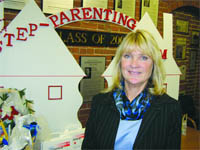
Bay Path College senior Aubrey Malanowski is currently ranked fifth in the nation among collegiate elevator pitch competitors.

According to many a poll, public speaking prompts more fear in people than death, heights, or spiders.

Aubrey Malanowski, a senior at Bay Path College in Longmeadow majoring in marketing, is well-acquainted with that assertion, though she can’t necessarily relate. Public speaking, she says, has always come easily to her, and she’s recently found how many windows of opportunity that skill can open.

Malanowski recently ranked among the top five students in the nation, both graduate and undergraduate, at the Collegiate Entrepreneurs’ Organization (CEO) National Elevator Pitch competition in Chicago.

It’s a high-level challenge that charges participants with delivering a 90-second pitch for a business concept. (The name refers to the typical amount of time one would have in an elevator with a potential, if not theoretical, investor).

No props, note cards, or written speeches can be used, so faith in one’s abilities and the idea they’re presenting are key to such contests. Malanowski said she first heard of the elevator pitch competition through her affiliation with Bay Path’s CEO chapter (she’s the founder and president) and through the business-oriented honor society Phi Beta Lambda (she’s its secretary), and felt she had the right combination of confidence and drive.

“I love public speaking, and I had an idea,” she said.

And that’s where it all started.

Health and Beauty

In fact, Malanowski’s original idea for a less-than-two-minute pitch was more than just a notion — it’s an existing business she founded as a student, and continues to pursue. A licensed esthetician, Malanowski devised a business plan for a company called Beginning Beauty, which, largely by organizing parties at homes and community organizations, targets ‘tween’ girls (roughly ages 8 through 12) and teaches appropriate, sanitary makeup application and care.

That venture has received positive feedback from many constituencies, including mothers who struggle with teaching their adolescent daughters how to look and act their age as they mature. But as she researched the art of the elevator pitch, Malanowski decided she needed another idea, one that was perhaps more hard-hitting and far-reaching, to truly dazzle an audience.

She drew again from her own experiences, this time focusing on her year behind a desk in a doctor’s office, and the copious paperwork she was constantly asking patients to complete.

“Standard paperwork can be really repetitive, especially for the elderly,” she explained. “The only way most doctors’ offices can record changes to insurance, medications, and other basic information is by having a patient fill the same forms out again and again, each time they come in.

“It’s a faulty system in my eyes,” she added. “I figured there must be a better way.”

Thus, Malanowski’s first pitch began to form. Starting with the problem of repetitive paperwork and the trend in many offices today toward going paperless, she presented the idea for the “MedLink,” a portable USB device that would contain a patient’s basic personal information (barring anything sensitive that could violate HIPAA regulations). The idea is that patients could then bring their MedLink with them to a physician’s office, where that information could be uploaded into a computer, saving both time and resources.

Rising to the Top

Malanowski first presented her pitch at Bay Path College at a competition for the college’s undergraduate and graduate students. After placing first in that contest, she won a place in the 2007 Harold Grinspoon Elevator Pitch Competition, a regional event that draws contestants from 13 of the area’s colleges and universities, and is judged by a panel of presidents and vice presidents from a number of the region’s financial institutions.

Malanowski said she had her work cut out for her that evening. Not only was she presenting a pitch along with several other undergraduate and graduate students, she was also staffing her own tabletop display at the event, featuring her business, Beginning Beauty.

“It was a little daunting to say the least,” she said, adding, however, that she was so busy, she had little time to be nervous. “I had practiced, and that night, I kept walking up to my mom as though she was a stranger, and pitching the idea to her.”

Her dry runs paid off.

Malanowski won the Grinspoon competition, earning her $1,000, and also won a spirit award in recognition of Beginning Beauty the same night, an award that came with an additional $500 prize.

“When I gave my pitch, I felt amazing about it,” she said, “but coming in first place was still pretty awesome. I had attended Holyoke Community College prior to coming to Bay Path, so when I walked to the podium I had not one, but two colleges cheering me on.”

Her Kind of Town

Soon though, it was time for the entire region to cheer on Malanowski at the national elevator pitch competition in Chicago. Her participation wasn’t guaranteed by her regional win; she had to apply online and survive two major cuts — the first narrowing the pool of applicants to 120, and the second cutting that number in half — before moving on to the competitive level.

But Malanowski was among the final 60 contestants, and began fundraising to finance her trip by sending letters asking for support to various individuals and organizations in the community.

Last November, Malanowski found herself in a Chicago hotel room, pacing and pitching to prepare for three rounds of grueling competition.

“There were 15 of us in each room, presenting to separate panels of judges,” she explained, “so I had no way of knowing how well everyone else was doing.”

Still, she made it through round one of the national competition, which eliminated 48 people. Then, in the semifinals, the pool was reduced to six contestants, and Malanowski advanced to the final round. This time, the pitches weren’t made to a small panel of judges, but to a full audience in a grand ballroom.

“There were in excess of 1,000 people in attendance,” she said, “and it wasn’t the same people who’d seen me doing great all day.”

Malanowski said she stumbled over a word in the very last sentence, but in the end, she placed fifth in the nation, after competing at the college, regional, and national level, and it’s not a finish she laments by any means.

“What are you going to do?” she said of her single flubbed line, with a slight shrug. “I view the entire process as a huge success.”

Loud and Proud

And Malanowski isn’t going to stop there. She said she’s been approached more than once by potential investors regarding the MedLink idea, and in addition to continuing to develop Beginning Beauty, she’s mulling plans for a second endeavor aimed at young girls — this one focused on the importance of public speaking.

“Change occurs by women voicing their opinions,” she said. “That’s something I feel very strongly about, and now that I’ve had some success on my own in that area, it’s become a direction in which I can see myself heading.”

There are other areas she’d like to explore, too, including the field of social entrepreneurship as a whole (ventures that are launched to address a social problem, such as educational gaps, economic distress, or gender biases) and green entrepreneurship — the practice of launching or assisting environmentally friendly initiatives.

“Public speaking has opened so many doors for me, and is so useful in general,” she said. “Who knows where I’ll go?”

Wherever she lands, though, it seems Malanowski won’t have any trouble telling people about it.

Jaclyn Stevenson can be reached at[email protected]

Departments

Internet Marketing 102 Workshop

Nov. 13: Level the playing field by learning best practices in advertising and how to better target your customers with keyword-triggered advertising on the big search engines. Additionally, participants will learn the Pay-Per-Click advertising that works on Google and Yahoo. The 1 to 4 p.m. workshop is planned at the Andrew M. Scibelli Enterprise Center, 1 Federal St., Springfield. The cost is $40. For more information, call (413) 737-6712 or visit www.msbdc.org/wmass.

WNEC Workshop

Nov. 13: Dr. Fran Harris, inspirational speaker and former professional basketball player, will present a workshop titled “Student Entrepreneurship” as part of a series sponsored by the Law and Business Center for Advancing Entrepreneurship at Western New England College in Springfield. For more information, visit www.law.wnec.edu/lawandbusiness.

Doing Business in China

Nov. 14: Western New England College will host an International Business Breakfast on “Doing Business in China” at 7:30 a.m. in Rivers Memorial Hall. The event is open to the public. During the breakfast, a panel of business leaders and educators will discuss their experiences and offer insight into cultural aspects of doing business in China. The nation represents one-fifth of the world’s population, an enormous market full of opportunities and pitfalls for American businesses. Tickets are available for $15 each by calling the college’s School of Business at (413) 782-1231.

Books to Blogs and Back

Nov. 15-18: Museums 10 will sponsor “Books to Blogs and Back” with special events planned Nov. 15-18. Highlights include: “The Research Library in the New Age of Information” keynote lecture by Robert Darnton, Nov. 15, 7 p.m., in Gamble Auditorium at Mount Holyoke College Art Museum, South Hadley. On Nov. 16, a Books to Blogs Expo is planned from 9 to 11 a.m. in the Miles-Smith Wing, Information Commons, at Mount Holyoke College. Interactive activities and exhibits relating to the history of book creation and publication are planned. Also on Nov. 16, Jason Epstein will lecture on “Farewell to Gutenberg” in Dwight 101 at Mount Holyoke College’s LITS; a panel discussion on “The Past and Future of the Book” starts at 1:30 p.m. in Gamble Auditorium at the Mount Holyoke College Art Museum; and an opening and reception titled “Children Should Be Seen: The Image of the Child in American Picture Book Art” begins at 7 p.m. at the Eric Carle Museum of Picture Book Art in Amherst. On Nov. 17, Historic Deerfield hosts “The Printer’s Apprentice” from 10 a.m. to 4 p.m. in the Wilson Printshop. The program is free with museum admission. Lastly, on Nov. 18, the Amherst Cinema Arts Center will present Jacob the Liar (Jakob der Luegner) at 2 p.m. The movie is based on the novel written by Jurek Becker. His widow, Christine Becker, will be at Amherst Cinema to talk about Jurek Becker’s life and written work. The cost is $7.50 for adults, $6.50 for seniors and students, and $5.50 for members. For more information on the weekend programs, visit www.museums10.org.

SCORE Workshop

Nov. 16: Dave Wentworth, a SCORE counselor and businessman, will present “What Is the Future of Your Non-Profit?” from 9 a.m. to noon at the Scibelli Enterprise Center, One Federal St., Springfield. Wentworth notes that much of the workshop content was developed by the national SCORE organization under a Kellogg Foundation grant. A fee of $25 covers the cost of materials. For additional attendees from the same organization, the fee is $5. For more information and to register, call (413) 785-0314.

Bright Nights at Forest Park

Nov. 21-Jan. 1: Bright Nights at Forest Park in Springfield opens Nov. 21 and runs Wednesdays through Sundays until Dec. 9. Bright Nights will then be open nightly from Dec. 12 through Jan. 1. Buses run nightly from 5 to 6 p.m., and cars from 6 to 9 p.m. Sunday through Thursday, and from 6 to 9 p.m. on Fridays, Saturdays, and holidays. For more information on admission, call (413) 733-3800 or visit www.brightnights.org.

Family Business Dinner

Dec. 11: The UMass Family Business Dinner Forum will host two topics: “The Starbucks Experience: Lessons in Leadership to Spark You and Your Business to Unimaginable Success,” and “Should We Grow Our Business By Acquisition?” Registration is required. For more information and to register, contact Ira Bryck at (413) 545-1537 or via E-mail at [email protected].

Departments

Museum Marks Fifth Anniversary

October-Jan. 27 & Nov. 15-March 9: The Eric Carle Museum of Picture Book Art in Amherst recently launched a full slate of fall programs in celebration of its fifth anniversary, including two special exhibitions. “Spiderwick: From Page to Screen,” opened Sept. 22 and runs through Jan. 27. The show explores the art of Tony DiTerlizzi and Holly Black’s The Spiderwick Chronicles, and follows the story’s translation to the big screen (coming Feb. 15, 2008). The second exhibition, “Children Should Be Seen: The Image of the Child in American Picture Book Art,” opens Nov. 15 and runs through March 9. The show features the work of 84 artists in a comprehensive survey of the best American picture book art of the last decade.

Money Smart Program

Oct. 30-Nov. 27: The Holyoke Credit Union will once again offer its free award-winning financial education program titled Money Smart, which covers a multitude of personal banking and finance subjects. The course will be conducted on Tuesdays from 6 to 8 p.m. for five consecutive weeks at the Holyoke Credit Union’s main branch at 490 Westfield Road, Holyoke. The program is free to the public, however, pre-registration is required. Registration may be made at any branch location or by calling (413) 532-7007.

Women Business Owners Conference

Oct. 31: The 14th Women Business Owners Conference, hosted by the Mass. Small Business Development Center Network, is planned from 8 a.m. to noon, followed by an optional lunch. The theme is “Succession Planning: Transition & Transformation.” Among the highlights of the morning will be a panel discussion on the legal and financial considerations that are paramount to sound succession planning. Registration is planned from 8 to 8:30 a.m. in Willits-Hallowell Center at Mount Holyoke College, South Hadley. For fees and more information, call (413) 737-6712 or visit www.msbdc.org/wmass.

CPA Tech Day

Nov. 2: Uplinc Inc. will host a CPA Technology Day at the Clarion Hotel and Conference Center in West Springfield, complete with breakfast, a vendor technology fair, lunch, and seminars on topics ranging from “Product and Document Management” to “Disaster Recovery.” Vendors participating in the daylong event include Xerox, Barracuda, AmeriVault, Hewlett Packard, and Cisco. The event concludes with a full open-bar social. Reservations are limited. For more information, call (413) 693-0700, ext. 221, or visit www.uplinc.com

Entrepreneurship Summit

Nov. 5: Bay Path College in Longmeadow will host its next Innovative Thinking & Entrepreneurship Summit at 4:15 p.m., featuring breakout sessions and a lecture by keynote speaker Nadine Thompson. Thompson is the co-founder of Warm Spirit, and co-author of Values Sell: Transforming Purpose Into Profit. Breakout session topics will include ‘Coach Me Into Greatness!,’ ‘Making the Leap,’ ‘Best Practices for New Business Launch,’ and ‘Creating a Guide for a Life You Love.’ The program is free; however, pre-registration is required. To register or for more information, visit www.baypath.edu. For questions, call Kellie Lavoie at (413) 565-1054 or E-mail her at [email protected]

Guerrilla Marketing

Nov. 7: Inspired by a guerrilla-marketing philosophy, this workshop will condense an MBA curriculum’s worth of marketing planning fundamentals to seven essential sentences. Participants will leave the workshop with an actionable document designed to focus on 30-, 60-, and 90-day marketing action items relating to the only four profit-boosting methods that exist for any business. The 9-to-11 a.m. session is planned at the Andrew M. Scibelli Enterprise Center, 1 Federal St., Springfield. The cost is $35. For more information, call (413) 737-6712 or visit www.msbdc.org/wmass

BayPath Lecture Series

Nov. 9: William A. Burke III, president of LENOX of East Longmeadow, will be the featured speaker for Bay Path College’s Innovative Thinking & Entrepreneurship Lecture Series in the Blake Student Commons on the Longmeadow campus. A continental breakfast will be served from 7:30 to 8:15 a.m., followed by Burke’s presentation on innovative thinking and entrepreneurship. LENOX employs more than 700 people and markets band saw blades, hand tools, and power-tool accessories in more than 70 countries. Seeking to capitalize on the brand equity of its linear-edge products and its efficiency on the factory floor, Burke initiated a strategy calling for aggressive growth. This growth was driven by new product development, imaginative marketing, and new sales strategies. Seating is limited, and registration is required. For more information, call Briana Sitler at (413) 565-1066 or E-mail her at [email protected]

Six Flags CEO To Address A.I.M.

Nov. 9: Marc Shapiro, president and CEO of Six Flags Inc., will outline his managing style for overseeing the world’s largest regional theme park company during the Associated Industries of Massachusetts Executive Forum meeting at the Westin Hotel, 70 Third Ave., Waltham. Registration begins at 7:45 a.m., followed by the program from 8 to 9:15 a.m. For registration information, call Julie Fazio at (617) 262-1180 or Chris Geehern at (617) 834-4414, or visit www.aimnet.org

Advertising Seminar

Nov. 9: Smart Moves Advertising will offer a free interactive advertising seminar from 9:30 a.m. to noon at the Clarion Hotel and Conference Center in West Springfield to all members of the Women’s Partnership and members of the Affiliated Chambers of Commerce of Greater Springfield. Speakers will be Janet Casey of Smart Moves Advertising, Joan Letendre of Letendre Advertising, and David Horgan of Horgan Associates. Attendance is limited. For more information, e-mail Janet Casey at [email protected]

Internet Marketing 102

Nov. 13: Level the playing field by learning best practices in advertising and how to better target your customers with keyword-triggered advertising on the big search engines. Additionally, participants will learn the pay-per-click advertising that works on Google and Yahoo. The 1 to 4 p.m. workshop is planned at the Andrew M. Scibelli Enterprise Center, 1 Federal St., Springfield. The cost is $40. For more information, call (413) 737-6712 or visit www.msbdc.org/wmass

WNEC Workshop

Nov. 13: Dr. Fran Harris, inspirational speaker and former professional basketball player, will present a workshop titled “Student Entrepreneurship” as part of a workshop series sponsored by the Law and Business Center for Advancing Entrepreneurship at Western New England College in Springfield. For more information, visit www.law.wnec.edu/lawandbusiness

SCORE Workshop

Nov. 16: Dave Wentworth, a SCORE counselor and businessman, will present ‘What Is the Future of Your Non-profit?’ from 9 a.m. to noon at the Scibelli Enterprise Center, One Federal St., Springfield. Wentworth notes that much of the workshop content was developed by the national SCORE organization under a Kellogg Foundation grant. A fee of $25 covers the cost of materials. For additional attendees from the same organization, the fee is $5. For more information and to register, call (413) 785-0314.

Bright Nights

Nov. 21-Jan. 1: Bright Nights at Forest Park in Springfield opens Nov. 21 and runs Wednesdays through Sundays until Dec. 9. Bright Nights will then be open nightly from Dec. 12 through Jan. 1. Buses run nightly from 5 to 6 p.m., and cars from 6 to 9 p.m. Sunday through Thursday, and from 6 to 9 p.m. on Fridays, Saturdays, and holidays. For more information on admission, call (413) 733-3800 or visit www.brightnights.org

Departments

MassMutual Financial Group has announced that Stephen Deschenes has been hired as Senior Vice President and Chief Marketing Officer for MassMutual’s Retirement Income Group. In his new role, Deschenes will assume overall responsibility for marketing, product development, and pricing of the broad array of retirement income products. In addition, he will be charged with the management of a special, dedicated team focused on development of next-generation income products, including MassMutual’s Retirement Management Account.

•••••

Melyssa A. Brown, a Senior Associate at Meyers Brothers Kalicka, P.C. of Holyoke, has obtained a master’s degree in Business Administration from the Isenberg School of Management at UMass Amherst.

•••••

Angela Gilligan has joined the Westfield office of Park Square Realty as a Sales Associate.

•••••

Coldwell Banker Residential Brokerage of New England has announced that Tim Wright has joined the Coldwell Banker Residential Brokerage office in Longmeadow as a Realtor.

•••••

Aimee Griffin Munnings, Director of the Western New England College Law and Business Center for Advancing Entrepreneurship in Springfield, has been named one of the state’s Up and Coming Lawyers by Massachusetts Lawyers Weekly.

•••••

R. Lorraine Moore of Carlson GMAC Realtors, has successfully completed the Realtor e-PRO course offered through the National Association of Realtors. Moore is an Agent in the Chicopee sales office.

•••••

Thomas P. Cohan has been appointed Director of Government Relations for New England/New York by Charter Communications.

•••••

Kimberly Allen has joined the Coldwell Banker Residential Brokerage office in Belchertown as a Realtor.

•••••

Dr. Janice Yanni has been honored with the Massachusetts Dental Society’s ‘Ten under 10’ recognition. Yanni, who was featured in the Journal of the Massachusetts Dental Society, is a graduate of Case Western Reserve University and the University of Pittsburgh.

•••••

Jason Gingerich, a Senior Investment Strategist at Prime Advisors in Windsor, Conn., has earned the Chartered Financial Analyst designation.

Departments

Honoring Entrepreneurship

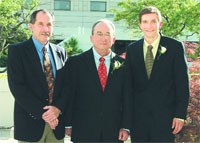
On Oct. 4, Springfield Technical Community College staged its 9th Annual Western Massachusetts Entrepreneurship Hall of Fame Banquet at the Log Cabin Banquet and Meeting House. Above, representatives of the Class of 2007 gather for a group photo. The Hall inducted Theodore Seuss Geisel (Dr. Seuss), members of the Bassett family (Bassett Boat), members of the Roberts Family (F.L. Roberts), members of the Falcone family (Rocky’s Hardware), George and Charles Merriam (Merriam-Webster), and members of the Gordenstein family (Broadway Office Interiors). BusinessWest uses the occasion to present its annual ‘Top Entrepreneur’ award. For 2006, that honor went to the Falcone family. At right, BusinessWest senior writer Jaclyn Stevenson (second from left) presents a plaque to (from left) Rocco, Claire, and Jayson Falcone.


A Grand Opening

Holyoke Mayor Michael Sullivan, center, joins Square One President and CEO Joan Kagan and Board Chair Ken Tobias, vice president of TD Banknorth, to celebrate the Holyoke Center’s grand opening on Oct. 4. Square One’s newest center, its first in Holyoke, will provide early education and care services to approximately 100 infant, toddler, and preschool-age children with an emphasis, through its Parenting Works program, on parent education, support, and training.

Sections Supplements
STCC at 40: A Case of Institutional Advancement
Springfield Technical Community College

Springfield Technical Community College

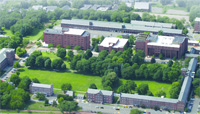
Much has changed on the campus of Springfield Technical Community College since the school opened on the grounds of the Springfield Armory in 1967. But the school’s basic mission — preparing students for the workplace and thus improving the health and vitality of the region’s economy — hasn’t. As the school turns 40, it looks back on a proud track record of blending imagination and perseverance to meet that mission, but, as always, the focus is on the future.

Faye-Marie Bartlett remembers that first semester.

It was the fall of 1967, and the Springfield Technical Institute, to be known a year later as Springfield Technical Community College, was open for business — with open being the operative word.

The school had assumed several of the buildings that comprised the Springfield Armory, the closing of which had been announced in 1964, but decommissioning was still in progress when classes started that September. Bartlett, who would go on to teach Nursing and other health programs at STCC for 22 years, remembers that classrooms were created “wherever they could put them,” which meant, in most cases, large, open spaces once used for gun manufacturing.

“They put in new floors,” she recalled, “but there were no walls.”

School staff, faculty, and administrators pitched in to erect partitions, she continued, but they certainly didn’t reach the 20-foot ceilings. Baffles were hung in an attempt to contain noise, but there was a sizable gap between the top of the partitions and the bottom of the baffles. All this made for some colorful anecdotes that live on 40 years later.

“I was teaching Growth and Development,” Bartlett recalled. “The person next door was teaching Anatomy and Physiology. Across the hall, which wasn’t really a hall, just part of the room, someone was teaching Biology. You could hear it all; I like to say that you could get three classes for the price of one.”

In Growth and Development, said Bartlett, students learn about the birth and early development of humans. Her tales from 1967 provide some first-hand insight into how this unique institution was born and how it developed. Then, and throughout its 40-year history, Bartlett and others told BusinessWest, the school has used imagination and determination to overcome challenges and meet its mission.

Along the way, it has forged a reputation as one of the leaders among the state’s 15 community colleges in career programs. In recent years, the school has won national and even international acclaim for a technology park it created across the street from the main campus in former Armory buildings later used by General Electric and then Digital. The park, which has won national awards in the realm of economic development, is now home to more than a dozen businesses which together employ nearly 1,000 people.

While there are many individuals who played key roles in the creation, growth, and evolution of the college, much of the credit is given to two visionaries: Edmond Garvey and Andrew Scibelli.

It was Garvey, a former Naval officer who, as principal of the former Trade (now Putnam) High School, saw a need for a post-graduate program that would become STI, worked with local and state officials to relocate the program into the Armory, and led the college through its formative years.

And it was Scibelli, who started at the school as a Biology teacher, who would eventually take it to the next level in terms of programs, facilities, reputation, visibility, and community involvement. “He opened up those gates,” said Brian Corridan, who served the school as trustee for 10 years (seven as chairman) and has led the organization administering the technology park for the past 11, referring to the massive iron fencing, crafted from melted-down cannons that surround the campus.

Scibelli is credited not only with putting the college on the map, but also for fostering leadership and sense of entrepreneurship among those who worked beside him: four of his former vice presidents are now leading their own community colleges.

That entrepreneurial spirit remains today, said current President Ira Rubenzahl, who told BusinessWest that the school remains diligent in its work to determine and then meet the needs of its students, the region, and the local business community, which is its true mission.

Moving forward, the college — which has launched a major gifts campaign to mark its 40th anniversary and will celebrate the milestone with a gala for past and present trustees, faculty, and staff — is also taking part in national, multi-year initiative called Achieving the Dream. In simple terms, the program is focused on helping community college students meet their goals — whatever they may be, meaning specific courses, certificate programs, degrees, transfer, or job opportunities.

“We want more people to finish what they start,” said Rubenzahl, noting that, nationally, too many students leave community colleges without meeting their goals, and in doing so, risk losing out on employment opportunities and also add to the challenges facing business sectors struggling to find qualified workers.

“This isn’t a feel-good thing,” he said. “The foundations funding this believe that the American workforce is not going to be competitive if we don’t educate more individuals, because the jobs require education, and they see the community colleges as the place where that needs to happen.”

In this issue, BusinessWest looks back at STCC’s first 40 years, and ahead, to what might come next for the college that is making history at an already historic site.

Taking Their Best Shot

Scibelli has his own stories from the college’s early years.

He remembers teaching Microbiology in 1969 in the facility known then and now as Building 20. His classroom was carved out of space that was formerly a machine shop. There was plenty of room, but only 12 outlets for 33 microscopes. “So we shared — people worked in teams,” he recalled. “We just did whatever we had to do.”

Like Bartlett, Scibelli said the exercises in overcoming adversity provided some good lessons for those first students in imagination and perseverance. They also created a sense of family among faculty and staff, one strong enough to compel many individuals, including Scibelli, to stay with the school for the balance of their professional careers.

“There was a strong sense of unity that came from doing everything together,” he remembers. “There were many days when you would teach a class and then go help put up a wall someplace. We all felt we were building something special.”

Tracing the history of the college, its creation was prompted by a blend of need and circumstance, specifically the decommissioning of the Armory, the location of which was chosen by George Washington. It was the Armory, which employed more than 13,000 people during World War II, that gave the region not only jobs, but the foundation upon which much of the precision manufacturing base that gave the region its industrial identity was built.

Springfield Mayor Charles Ryan, who, remarkably, was also in the corner office when Secretary of Defense Robert McNamara announced that the Armory would close, told BusinessWest that he and others fought a spirited year-and-a-half-long fight to reverse that decision — and at one point thought they had the battle won.

“But then, they changed the ground rules on us,” he said, noting that even after city leaders effectively stated a solid case for continued need for the Armory, McNamara stuck to his guns, figuratively speaking, and by early 1966 city and state leaders conceded that the closing was inevitable.

It was then — or, by some accounts, years if not decades earlier — that people started thinking about creating a college at the site, especially the west side of Federal Street, with its long brick buildings and large courtyard, used for drilling and parades when the Armory was open.

Among those doing such thinking were Ryan and Garvey, who both saw a need to expand STI — which was launched in 1964 and was soon being flooded with more applications than it could handle — and considered the Armory a natural fit.

But that proposal didn’t appeal to everyone. Some thought the Armory buildings should be used for industry and to yield much-needed tax revenue — and the buildings on the east side of Federal Street would serve both purposes, first as home to General Electric facilities, then Milton Bradley operations, and later a manufacturing center for Digital Equipment Corp. Meanwhile, others believed there wasn’t need for another two-year college, what with Holyoke Community College only 10 miles away.

Those advocating for the college eventually prevailed, and, from Ryan’s perspective, largely because of the strong case Garvey built for what would become the state’s first (and still only) technical community college.

“Ed Garvey was a genius,” Ryan recalled. “He believed that if he could keep students for an extra year, he could guarantee that they’d get a job when they graduated. That’s how the post-graduate program that would become STI got started.”

It was initially funded mostly by the city, the mayor continued, but it became clear that the community didn’t have the resources needed to take STI where Garvey wanted it to go. Working with state Rep. Anthony Scibelli, Gov. John Volpe, and industrialist Joseph Deliso Sr., Garvey and Ryan made STI a state institution, one with an historic street address.

Both Bartlett and Scibelli credited Garvey with possessing the vision and leadership skills needed to guide the school through those early years and put it on a solid foundation.

“He was a true visionary, and he was my mentor,” said Scibelli, who served Garvey as faculty member and registrar.

Said Bartlett, “he (Garvey) was very visible and very much involved in what was happening. Some presidents rarely get out of their offices, but he was always out, talking with students and faculty, and listening to what they were saying.”

Down to a Science

Garvey retired in 1974, to be succeeded by Robert Geitz, an Engineering professor at the school who served until 1981. Leonard Collamore, a History professor at the college, served as interim during a prolonged search for a president that ended with Scibelli getting the nod.

And it is Scibelli who is credited with making STCC a more respected name within academia, and especially the community it serves, and, in the process, increasing enrollment.

“Some people called it the ‘high school on the hill,’ and I bristled whenever I heard that,” Scibelli recalled. “I was determined to make the school’s reputation worthy of what I knew was going on inside those gates.”

He was able to do so, said Corridan, thanks to a combination of his own leadership skills, a strong board of trustees, and administrative teams that believed in the school and its role within the community, and wanted to expand that role.

“We explored various relationships, not only with the community immediately around us as to how we could fill voids, but also with those in certain industries,” he explained. “We asked them to tell us what they needed, and we would devise programs around that.”

He cited programs involving IBM, Ford Motor Co., and other major corporations to train potential employees as examples of how the school progressed during what he called its “transformative years.” Locally, the college worked (and continues to work) with health care providers to meet their needs in terms of both a pipeline of workers for several fields and making sure those workers have the requisite skills needed to succeed.

“We made sure that the college was going in the direction it was intended to go,” Corridan explained, “but to continue to raise the bar constantly, both locally and nationally, to meet a mission and not just be a glorified technical high school.”

Ray Di Pasquale, who served the college in a variety of positions, the last being vice president of Enrollment Management and Student Affairs, is one of the four who worked with and for Scibelli to move on to become a school’s president — in his case, the Community College of Rhode Island. He credited Scibelli with giving administrators opportunities to excel, thus enabling them to grow professionally while also taking the college to a higher plane.

“He allowed all of us to do our jobs … he made us part of a team,” said Di Pasquale. “We all did our jobs well, whether it was getting enrollment up or getting the message out about the school. We did a lot of neat stuff, and we got very involved in the city, which is very important.”

Elaborating, Di Pasquale said Scibelli opened the school’s gates and doors to the community, making it a resource, while also involving elected officials and business leaders on advisory boards and with decision-making.

“Andy saw the wisdom of expanding our horizons and getting outsiders involved,” he continued. “That brought additional dollars to the school, and by opening those gates to others and welcoming new ideas, he made the college stronger.”

This is a management style Di Pasquale said he is trying to emulate at CCRI, where he is building partnerships with business leaders and becoming heavily involved with economic development initiatives.

Technically Speaking

During Scibelli’s tenure, imagination was needed not to shape classrooms out of factory space, but to often continue programs and initiatives — and cultivate new ones — at a time of frequent budget turmoil and inconsistent support from the Commonwealth.

There was one period of severe cutbacks and even budget remissions — when money is allocated and then actually pulled back — in the late ’80s, another in the early ’90s, and other, less severe episodes in the early ’80s and again this decade, said Scibelli, adding that the college responded by becoming, in his mind, entrepreneurial.

“We started thinking like a business,” he said, adding that the school’s administrators began looking at new and different ways to find money, or generate revenue, rather than merely reduce expenses.

One of these methods was a heightened focus on grant-writing, an initiative that would yield some high-profile awards from the National Science Foundation and other groups and, ultimately, less reliance on state funding for the college’s health and well-being.

Among those grants is one from Verizon, now beyond $16 million, for the so-called Next Step Program, a New England-wide initiative to train the company’s workers through a curriculum of telecommunications technology. STCC serves as the lead school in a network of community colleges for five New England states to offer the training. Another is an NSF grant, now totaling more than $10 million, for the National Center for Telecommunications Technology (NCTT), which, as the name suggests, is an advanced technological education center to develop and pilot telecommunications and related science and math courses in high schools, community colleges, and baccalaureate-degree colleges.

The entrepreneurial thinking took on an even more literal bent in the early ’90s, when, after Digital announced it would close its Springfield plant, the college let known its intention to purchase the property and create a business park. No community college had ever embarked on such an effort, and there were many in Springfield who didn’t want STCC to take that route.

“It had never been done before, and it hasn’t been done since, at least by a community college,” said Corridan, who leads the assistance corporation that operates the park. “It was a bold step, and there was a lot of risk involved. The college didn’t have to take that step; it was already doing well and filling its role in the community, but it wanted to take that role to a much higher level.”

The park, which would later include incubator space and entrepreneurial programming housed in a building to become known as the Andrew M. Scibelli Enterprise Center, opened in 1996. This was when the technology sector was witnessing
rapid and profound expansion, and soon the facility was filled with regional and national technology-based companies.

The bursting of the dot-com bubble earlier this decade and ongoing consolidation of many aspects of the tech sector have created some vacancies and a new set of challenges for park administrators, said Corridan, who told BusinessWest that the team is already exploring some imaginative options.

Keeping the technology park filled — and vibrant — is one of the priorities for the school and the assistance corporation moving forward, said Rubenzahl, adding that a long-term strategic plan calls for ongoing partnerships with community and business leaders to ensure that students are graduating with the skills necessary to succeed in an increasingly technology-based economy.

He cited an agreement signed just last month by the college, the local chapter of the National Tooling and Machining Assoc., and the Regional Employment Board of Hampden County as just one example. The memorandum of understanding includes new courses and a new certificate program, among other things, that are designed to draw more people into the field and increase the skill levels of those already in it.

“It’s an important initiative,” said Rubenzahl, adding that there are hundreds of vacancies in the precision machining sector that are going unfilled, resulting in millions of dollars in work that must be turned down by area shops. Work to close that gap is just one of the steps the college is taking to help bolster the local economy.

Involvement with Achieving the Dream, from a long-term perspective, is another.

A privately funded initiative launched in 2004 that involves several local and national foundations, Achieving the Dream is the centerpiece of the school’s current strategic plan, he explained, and it has important implications for the college and the community.

“We want to make sure that all of our students are successful in meeting their goals,” he said. “Their goal may not be to graduate; it may be to take some courses, or get a certificate, or to transfer. We know that, across the country, community colleges, because they’re open-admission, often see students struggle to be successful; this a long-term, in-depth program to improve community college success.”

Elaborating, he said that in this, the first year of STCC’s involvement, there will be close examination of data concerning course-completion rates, retention, graduation rates, and other indices, with close attention paid to how various sub-groups — defined by gender, income, and ethnicity, for example — fare when compared to the whole.

From there, the school will work to identify gaps and close them.

“The key is to take a look at the data we’ve gathered and say, ‘where is there room for improvement, and how do we attack this issue?’” he explained, adding that, broadly speaking, this is what the school has been doing since the doors opened in 1967.

A Class Act

Bartlett remembers when the Nursing program got off the ground in 1969. There were 45 students enrolled in that first class, and they couldn’t all fit in a classroom created in a building, more like a house, that once served as officers’ quarters at the Armory.

So program administrators improvised, and used space in another, nearby building, formerly the officers club. Bartlett remembers wheeling a blackboard back and forth between the two facilities countless times in those early days. Like other, often extraordinary steps taken to get the job done, she says the blackboard-rolling exploits helped build camaraderie and steel administrators and faculty members for the many challenges still to come.

“We made a game out of it,” she recalled. “Any obstacle we faced we just took it on and found a way to overcome; we knew that someday, things would be better. It’s the same today, and everyone can see that things have gotten better.

Much better.

George O’Brien can be reached at[email protected]

Departments

The following business incorporations were recently recorded in Franklin, Hampden, and Hampshire counties and are the latest available. They are listed by community.

AMHERST

Metric Solutions Inc., 6 University Dr., Suite 206-260, Amherst 01002. Alan Tomasko, 16 Sunrise Ave., Deerfield 01342. Design, manufacture, and sale of test/measurement equipment.

Mosaic Development Inc., 6 University Dr., Suite 206-200, Amherst 01002. Michael Helmstadter, same. Software engineering.

Sugarloaf Specialty Foods Inc., 305 Middle Road, Amherst 01002. John Rae, same. Food.

BELCHERTOWN

Prism Associates Unlimited Inc., 11 Canal Dr., Belchertown 01007. Faith G. Utley, same. E Commerce.

Sam Hicks Inc., 80 Shaw St., Belchertown 01007. Laura J. Hicks, same. E Commerce retail.

Station Salon Inc., 107 Pondview Dr., Belchertown 01007. Deborah A. Lowe, same. Cosmetology, manicuring and aesthetics.

BERNARDSTON

Abazl Inc., 30 Deane Road, Bernardston 01337. Abaz Cecunjanin, same. Innkeeper.

EASTHAMPTON

Easthampton Community Access Television Inc., 200 Park St., Easthampton 01027. Glafyra Ennis-Yentsch, 11 Water St., Leeds 01053. (Nonprofit) To provide a means for any person or group in the community to use communications media, including cable TV, make available video equipment, etc.

EAST LONGMEADOW

Palmer-Greater Springfield Economic Development Coalition Inc., 46 Center Square, East Longmeadow 01028. Timothy J. Murphy, 303 Soule Road, Wilbraham 01095. (Nonprofit) To act as a leading advocate for existing and proposed major economic development projects within the Palmer and Greater Springfield area, etc.

FEEDING HILLS

DSR & AMR Inc., 186 Clover Hill Dr., Feeding Hills 01030. Dale Rhodes, same. (Foreign corp; NY) Brokerage services.

FLORENCE

Smooth Movers Inc., 221 Pine St., Suite 358, Florence 01062. Melinda Beth Shaw, same. Moving and storage services.

The Fix: Restoration Inc., 320 Riverside Dr., Florence 01062. Krisen Day, 53 Clark Ave., #16, Northampton 01060. Athletic training and movement therapy.

HOLYOKE

Charity House Inc., 740 High St., Holyoke 01040. Gary Rehbein, 16 Jonathan Judd Circle, Southampton 01073. (Nonprofit) To raise funds for charity through the donation of appliances and old cars for auction/or resale.

Transportation Options Inc., 256 Maple St., Holyoke 01040. John A. Flley, Jr., 1308 Northampton St., Holyoke 01040. School transportation services.

HUBBARDSTON

Rural Glen Cemetery Association Inc., 9 Evergreen Road, Hubbardston 01452. Merriellen Moroney, 633 Main St., Shrewsbury 01545. To hold, preserve and maintain burial grounds in Hubbardston in existence since 1875, purchased then by the Association for this purpose.


INDIAN ORCHARD

Bry Corp., 36 Parker St., Right Floor, Indian Orchard 01151. Bryan David St. Amand, same. Manufacturing and fabrication of metal products.

PLAINFIELD

Silk Rapture Inc., 4 South Central St., Plainfield 01070. Kelly Clady, same. Import, export, sales of textile and wearing apparel, clothing, etc.

SOUTH DEERFIELD

Jawk Inc., 29 Straits Road, South Deerfield 01373. John T. Wroblewski, same. Acquisition, development, and sale of real estate.

SOUTHWICK

Animal Shelter Renovation Inc., 110 North Longyard Road, Southwick 01077. Kenneth Frazer, same. (Nonprofit) To build, equip, and maintain a ‘no-kill’ animal shelter, rescue and rehabilitate abused and abandoned animals, etc.

SPRINGFIELD

427 Market Inc., 427 State St., Springfield 01105. Pharoah Smalls, same. Convenience market selling snacks and other items.

Afffordable Tree Care Inc., 15 Ruthven St., Springfield 01128. Angel L. Munoz, same. A general tree service.

Atlantic Productions Inc., 1389-1393 Liberty St., Springfield 01104. Samuel Garcia, 23 Healey St., Indian Orchard 01151. To conduct a restaurant and nightclub business, etc.

National Association for Community College Entrepreneurship Inc., 1 Federal St., Springfield 01105. Thomas A. Goodrow, 33 Cynthia Place, Feeding Hills 01030. (Nonprofit) To foster economic vitality for local communities through education programs of community colleges nation-wide, etc.

TURNER FALLS

2nd Street Baking Co. Inc., 69 Second St., Turners Falls 01376. Laura J.
Puchalski, 133 Federal St., Millers Falls 01349. Bakery/cafe retail and wholesale.

WESTFIELD

Autumn Land Solutions Inc., 60 Cardinal Lane, Westfield 01085. Richard A. Sypek, same. Real estate development and brokerage.

Richard’s Deli Restaurant Inc., 220 Prospect St., Westfield 01085. Brian T. Cleland, same. Restaurant.

WEST SPRINGFIELD

Maniba Corp., 2041 Riverdale St., West Springfield 01089. Pravinbhai C. Patel, same. Ownership and operation of motels.

R & B Solutions Inc., 55 North Boulevard, West Springfield 01089. Ronald J. Yergeau, same. To own and operate a Subway sandwich franchise.

PEAJ Inc., 583 Birnie Ave., West Springfield 01089. Paul M. B’Shara, same. Restaurant, catering establishment.

Departments

Seven Proposals Received for Union Station

SPRINGFIELD — The Pioneer Valley Transit Authority (PVTA) has received seven proposals for transportation and redevelopment planning for Union Station, according to Mary MacInnes, PVTA administrator. MacInnes said the proposals show that the Union Station project “is back on track.” The next step in the process is a due diligence review by the Selection Committee to ensure submitted responses contain the information required from the request for qualifications (RFQ). The committee will review the proposals, rank them, and select at least three finalists who then may be interviewed, according to MacInnes. The finalists will be ranked in order of qualification, and the committee will present the ranking to MacInnes. Members of the selection committee include industry and business professionals from Amtrak, Greyhound, the New England Black Chamber of Commerce, the Springfield Redevelopment Authority, the Pioneer Valley Planning Commission, and the PVTA. MacInnes expects the award to be made by the end of September. Firms submitting proposals were Lozano, Baskins & Associates, Watertown; HDR Architecture Inc., Boston; Finegold Alexander, Boston; SEA Consultants Inc., Cambridge; STV Inc., Boston; Nelson/ Nygard Consulting Associates, San Francisco, Calif.; and HR&A Advisors Inc., New York.

Near-term Home Sales Hold in Modest Range

WASHINGTON — The housing market will probably hold close to present levels in the months ahead, according to the latest forecast by the National Assoc. of Realtors. Existing-home sales are forecast at 6.04 million in 2007 and 6.38 million next year, below the 6.48 million recorded in 2006. New-home sales are expected to total 852,000 this year and 848,000 in 2008, down from 1.05 million in 2006. Housing starts, including multi-family units, are likely to total 1.43 million in 2007 and 1.40 million next year, below the 1.8 million units started in 2006. The 30-year fixed-rate mortgage is forecast to average 6.7% in the fourth quarter and then ease to the 6.5% range next year. The National Assoc. of Realtors represents more than 1.3 million members involved in all aspects of the residential and commercial real estate industries.

AIM’s Confidence Index Back Up in July

BOSTON — The Associated Industries of Massachusetts (AIM) Business Confidence Index rose 3.4 points in July to 57.6, more than recouping June’s decline, according to Raymond G. Torto, co-chair of AIM’s Board of Economic Advisors, and principal CBRE Torto Wheaton. Since April, the Index has followed an up-down-up pattern, with June’s loss virtually cancelling out May’s gain, and July’s rise returning to the higher level — above a year before (55.4), and close to the reading of July 2005 (57.8). However, the July survey was conducted before the new wave of uncertainties, particularly around the mortgage situation, that produced sharp drops in the equity markets, added Torto. Confidence levels were virtually identical in July among manufacturers (57.5, up 3.3) and non-manufacturers (57.8, up 3.6), with manufacturers more positive than others about conditions for their own firms and sales trends, but less so about recent hiring. A strong gain in confidence outside Greater Boston (+5.2) and a lesser rise within the metro area (+1.9) similarly left that split close to even (57.4-57.7). Larger firms were more optimistic than small and medium-sized employers.

Nominations Sought for ‘Super 60’

SPRINGFIELD — The Affiliated Chambers of Commerce of Greater Springfield Inc. is seeking nominations for its annual Super 60 awards program. The aim of the program is to celebrate the success of the fastest-growing privately owned businesses in the region which continue to make significant contributions to the strength of the regional economy. Nomination forms are available at the Chamber offices, 1441 Main St., Suite 136. Completed nomination forms must be received at the Chamber offices by Aug. 31. The Super 60 awards will be presented at the annual luncheon and recognition program on Oct. 26 at Chez Josef in Agawam. For more information on the nomination process, call the chamber at (413) 787-1555.

Eatery Closes Downtown Location

SPRINGFIELD — Gus & Paul’s restaurant recently closed its doors after 10 years at Tower Square, while the original Gus & Paul’s Delicatessen and Bakery on Sumner Avenue remains open. Lee L. Weissman, a co-owner of the downtown eatery, expressed his regret in having to close the restaurant in a letter to the city, and noted he hoped to sell the business. Weissman added he has begun a new career as a professional fundraiser and found it difficult to also oversee the restaurant operations. More than 20 employees lost their jobs in the closing; however, Weissman said with his family’s connections in the restaurant business, he is anticipating helping most or all of them find new jobs. Fred G. Christensen, senior property manager of Tower Square for CB Richard Ellis, said he is optimistic a new tenant can be found in the near future to take over the Gus & Paul’s site.

Study: More Employees Working Remotely Today Than Five Years Ago

MENLO PARK, Calif. — The proliferation of wireless technologies and feature-rich Internet applications is making it easier for information technology (IT) professionals to work outside of the office. A new study by Robert Half Technology shows that telecommuting is becoming more commonplace among IT professionals. Nearly half (44%) of chief information officers (CIOs) surveyed said their companies’ IT workforce is telecommuting at a rate that is the same or higher than five years ago; only 3% said IT staff work remotely less frequently today than five years ago. Improved retention and morale and increased productivity were cited as the greatest benefits among firms that allow telecommuting. While telecommuting can benefit employers and employees alike, it’s important that companies have the appropriate infrastructure in place to facilitate staff working remotely. For example, nearly a third of CIO’s (31%) surveyed felt that telecommuting employees generate too many security risks because they need to access elements such as corporate networks, systems, and intellectual property off-site. The national poll includes responses from more than 1,400 CIOs from a stratified random sample of U.S. companies with 100 or more employees.

Ivanhoe Restaurant Closes

WEST SPRINGFIELD — Steve and Ron Abdow, owners of the Ivanhoe, recently announced the closing of the landmark restaurant on Riverdale Street. According to the Abdows, a recent decision by their abutter to no longer lease parking spaces to the Ivanhoe was the catalyst in the decision to close. Since its inception, the Ivanhoe had 113 parking spaces at its disposal; however, 62 spaces would soon no longer be available as the abutter plans for future development of its site. The Ivanhoe was opened in 1967, and the theme was based on the time of Sir Ivanhoe and the Knights of the Round Table, with gothic arches and features reflective of that period.

Small Business Applications Sought for Law and Business Clinic

SPRINGFIELD — The Western New England College Law and Business Center for Advancing Entrepreneurship is now accepting applications from entrepreneurs seeking law or graduate business students to serve as consultants for their business during the fall semester. The opportunity for this free service is limited to those businesses that need consultation regarding a discrete topic. This service does not include litigation needs. For more information, contact Aimee Munnings at the Law and Business Center for Advancing Entrepreneurship at (413) 736-8462, or E-mail [email protected]

Survey: Companies Ineffective at Rewarding Good Performance

MENLO PARK, Calif. — Workers who feel their good work often goes unnoticed may have a case. More than one-third (35%) of professionals polled recently said businesses are ineffective at rewarding their employees’ strong performance. Meanwhile, 30% of managers surveyed agreed. Businesses need to make retention an ongoing priority, according to Diane Domeyer, executive director of Office Team. Rewarding employees for their accomplishments enhances productivity, reinforces positive behavior, and builds staff morale and loyalty, she added. Domeyer noted that firms that fail to reward great work risk losing employees to businesses that do invest in recognition programs. The surveys were developed by Office Team and reflect responses from 150 senior executives at the nation’s 1,000 largest companies, and 534 full- or part-time workers 18 years of age or older and employed in office environments.

Sections Supplements
Some Groundbreaking Developments for WNEC’s Law School
Anthony Caprio and Arthur Gaudio

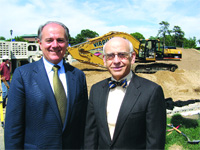
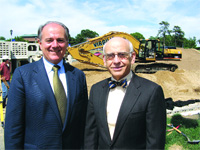
WNEC President Anthony Caprio, left, and Arthur Gaudio, dean of the law school, say the addition and planned renovations will modernize the school and more thoroughly integrate it with the rest of the college.

Arthur Gaudio took his pen and started tapping on features showcased in an architectural rendering of the $5.5 million, 10,500-square-foot addition and accompanying renovations to the Western New England College School of Law, which he serves as dean.

He started with the front entrance, which is rather unremarkable as front entrances go, except for the direction it faces — toward the rest of the Wilbraham Road campus. Since the law school was incorporated onto that campus in 1978 after operating out of offices in downtown Springfield, Gaudio explained, it has faced Bradley Road, giving the school a touch of separation that was never really appropriate, and is far less so today.

Indeed, the new entrance and its configuration is a small but significant bullet point with regard to the expansion, the first since the 100,000-square-foot S. Prestley Blake Law Center opened its doors. It is a symbolic gesture, designed to show how the law school is collaborating with other departments within the college, said Gaudio, building synergies for the betterment of both institutions.

“These include the Law and Business Center for Advancing Entrepreneurship, a joint Juris Doctor/MBA degree, a Biomedical Engineering/JD degree, and other initiatives,” he said, adding that, moving forward, more programs at the college will link with the law school in some way. “From a figurative standpoint, our new front door shows greater integration with the college.”

All other features of the expansion and renovation are rooted in 21st-century legal education, or, more specifically, how it is different than the 20th- or 19th-century models. While the subject matter being taught is in many ways the same as it was years ago, the methods for teaching it are not. Modern classrooms must be equipped with the latest telecommunications technology, Gaudio explained, and the renovation efforts will enable the law school to accommodate both current innovations — and the next generation of them as well.

The law school project is the most ambitious capital project undertaken as part of Transformations: The Campaign for Western New England College, the largest fund-raising effort in the college’s history, said long-time WNEC President Anthony Caprio, noting that the campaign is more than $18 million toward its $20 million goal.

Thus, the start of construction at the Blake Center is just one of many ground-breaking developments at the college, he said.

Digging for Evidence

Tracing the history of the law school, Gaudio said it opened in 1919 as part of the Springfield division of Northeastern University. Classes were small, some with as few as three people, he explained, and they were held in several locations downtown, including the old YMCA.

Incorporated as the Western New England College School of Law in 1951, the institution remained downtown for the next 20 years. In the early ’70s, school leaders decided to bring the law school to the Wilbraham Road campus and launched a capital campaign for the facilities. The school operated out of a building on Tinkham Road in the years before the Blake center opened its doors.

Talk about expansion of that facility began seven years ago, said Caprio, and centered mostly on the library and the need to make it a larger, more efficient facility. In more recent years, he explained, it became clear that other components, especially classrooms, needed to be modernized.

As he talked about the expansion and renovations, Gaudio stressed repeatedly that the school itself isn’t getting bigger — meaning from the standpoint of enrollment.

He said the college placed caps on enrollment several years ago — although there has been a surge in applications over the past five years even as numbers have dipped at other institutions — in an effort to maintain high standards for the school, which recently earned top marks at its most recent accreditation.

In fact, it was re-accredited unconditionally, which is rare, said Gaudio, and no doubt a reflection of both programmatic changes that have been made in recent years and blueprints for a larger law center.

Elaborating, he said the project, which will essentially add a floor to the Blake building, is designed to better serve students, give faculty members better and more modern facilities in which to teach and mentor students, and give several facilities and programs an opportunity to grow and better serve those utilizing them.

At the top of this list is the law school library, which will be expanded to become what Gaudio called a “fully integrated information center” that would serve current students, faculty, and the community as a whole. More than 60% of the lawyers working in Hampden County are graduates of WNEC law, he said, and many make use of the school’s law library.

The planned renovations will expand the library’s footprint, said Gaudio, noting that all administrative offices, including admissions, will be relocated into the addition, providing several thousand more square feet for the library. But, in essence, the project will remove the library’s walls, from a physical standpoint, and make the Blake building as a whole a learning and research center.

“The edge of the library is no longer the edge of the library — it’s the edge of the building,” he said, adding that, through wireless technology, students will be able to access information digitally. “We’re expanding the places where you can receive library information and materials, thus allowing people the opportunity to advance their education.”

Beyond the expansion and streamlining of library facilities and operations, the law school project, designed by Tessier & Associates, with Fontaine Brothers serving as general contractor, will also focus on classrooms, said Gaudio, and specifically the school’s commitment to small, 50-student teaching sections and the new era of information technology in which learning takes place.

This means that some of the current classrooms will be refurbished and made smaller, while others will undergo similar modernization and made larger.

“When this building opened, professors used the standard whiteboard at the front of the room; they talked, and students took notes,” Gaudio explained. “We’re moving from notebook paper and pen to notebook computer and mouse, and we are accommodating all the technology that people use to teach now — from PowerPoint to online materials.

“We’re coming up to date,” he continued, “but we’re doing more than that — we’re looking down the road and anticipating what we’ll need to stay on the cutting edge in legal education.”

The renovated Law Center will also house the College’s Law and Business Center for Advancing Entrepreneurship, a joint effort of the college’s law school and School of Business that has been housed at the Scibelli Enterprise Center at Springfield Technical Community College since it opened in 2005.

The entrepreneurship center works with area small business owners by linking them with law and business students who act as unpaid consultants, providing assistance with everything from choosing a business entity to writing a business plan.

The larger facilities, located right on campus, will enable the center to serve more start-up and small businesses, said Caprio. “It will help furnish the best foundation to sustain their companies,” he said, “while developing them into thriving commercial enterprises, and contribute to a new era of economic and social prosperity for the region.”

Case Summation

As he looked closely at the architectural rendering, Gaudio noticed that someone had somehow placed his face on one of the ‘people’ who appear in the drawing.
Laughing off this development, sort of, he said he doesn’t mind being the face of the law school’s expansion and renovation.

The real face, however, is the new front door, which has the law school looking in a new direction — literally and figuratively.

George O’Brien can be reached at[email protected]

Sections Supplements
The Zanger Company Has Made Polish Pottery a Household Name
Gloria Smith

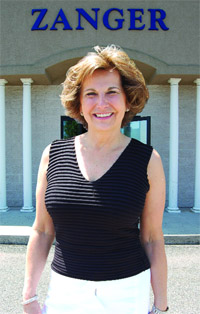
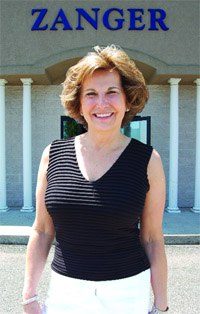
Gloria Smith, owner of the Zanger Company

Characterized by delicate patterns and vibrant colors, Polish pottery is now a household name in the United States, thanks in large part to the vision and entrepreneurial drive of Gloria Smith, owner and president of the Zanger Company in Suffield. Smith, who originally sold cutlery, first saw the pottery at a massive product expo in Germany in 1989, and envisioned a market for it in the U.S. Her instincts were pretty good; Zanger sales have risen from $450,000 to $11 million in those 17 years, and the pottery now has a cult following among collectors.

Since the first order was placed, the artists at Ceramika Artystyczna in Poland have been on a first-name basis with Gloria Smith, owner of the Zanger Company, which imports and sells the pottery the factory creates.

When Smith first visited the company that creates hand-fired, hand-painted stoneware, Communist rule was a very recent memory, and there were no computers or fax machines to process the orders that filter into the factory from all over the world. It was a small operation powered by the deft artistry of its employees, largely women, who hunched over each piece to carefully decorate them with traditional patterns.

Smith was sold.

“When you decide to stick with something, it’s not always an easy road,” she said, “but it’s about staying with something you believe in. I saw a philosophy and a spirituality flowing into this pottery.”

A lot has changed since that first visit in the early 1990s. Ceramika Artystyczna has grown to employ 350 people and thrive as one of the most successful factories in Poland. Much of that success can be attributed to brisk American sales thanks to Smith, its largest distributor, and her company, Zanger, based in Suffield, Conn. in a large warehouse decorated with color photographs of women, still bent over their artwork.

“It has been a gift to build a business on these beautiful ceramics,” said Smith. “The factory grew and evolved with us, and I am very protective of it.”

Having a Bowl

Smith’s path to becoming an entrepreneur and hugely successful importer was one that unfolded in front of her, she said, providing the direction she needed to find a rewarding career that offers a unique, quality product. She began as an educator, teaching English as a Second Language for eight years before trying her hand at sales in the computer industry.

“I needed a change,” she said, and in 1987, she found it. Alfred Zanger, who owned a company that imported high-end cutlery from Europe, was looking to sell his business, and Smith became aware of the opportunity.

She said she didn’t have any retail experience at the time, and had never penned a business plan — the late 1980s were also a time when few women were choosing to make the career leap to business owner. But Smith was both ready and willing.

She chose to retain the company’s name, and for two years she carried stock similar to what Zanger offered. But she had the desire to find a product with some sort of deeper meaning or impact, and in 1989, Smith traveled to a large product expo to continue her quest.

“The magic of the story is this: picture a show the size of the Holyoke Mall times 10, and all the products that were there to choose from,” she said. “Just about everyone was represented; the aisles and rows of vendors was mind-boggling. I scoured the place to find something unique.”

The search took hours and countless passes through the many vendor booths. On the day Smith was scheduled to fly home, she still hadn’t found just the right thing, and decided to go back to the trade show for one more look.

It was at that point that a small display of painted ceramics caught her eye.

The stoneware was and is created in Poland, in a small town on the German and Czech borders called Boleslawiec, which harvests the clay used in its creation from the Bobr river. Each piece is hand-painted with delicate patterns that are devised in the factory and characterized by traditional Polish designs and colors, especially a deep blue that graces nearly every finished plate, bowl, and teapot.

“The region has long been a potter’s community,” Smith explained. “The clay from the river is taken out in huge chunks and processed, and it’s not porous, so it’s very durable and can be used regularly for cooking and baking.”

That’s one reason why Smith was drawn to the pottery. She suspected that its usability paired with its beauty would resonate with American consumers, and 20 years later, brisk sales are proving that her hunch was right on. Still, introducing Polish pottery to the U.S. (Smith was the first) has been a long process, and only now is Smith’s climb to greatness beginning to level.

What’s in a Name?

In 1989, Smith was unable to forge a relationship with Ceramika Artystyczna directly, as Poland was still under Communist rule, and outside business partners were strictly regulated. She instead began a partnership with a German company, Heise, to procure the pottery and bring it stateside. Smith later found out that the factory’s employees filled orders with no business name or address on them — they simply read ‘Gloria.’

After the Iron Curtain fell, Smith was able to visit the factory for the first time, and to begin working with it directly.

“The relationship has been no different than watching a child grow,” she said. “It’s an emotional thing for me, because they’ve become like my family, and we’ve grown both of our businesses through mutual respect, honesty, and loyalty.”

The Zanger Company’s success has been largely responsible for the phenomenal growth of the factory, which has significantly upgraded its internal processes and equipment.

A kiln that once required 24-hour stoking with coal, for instance, has been replaced with a series of sophisticated gas ovens. Those advances are paired with long-held traditions for superior artistry, and even today, with thousands of orders to be filled, only 14 hands touch each piece, and designers complete about six pieces a day.

“The quality is much different now,” said Smith. “It’s become the best factory in Poland, and the vision of the artists is a huge part of that. They’ve been given a chance to truly show their potential, and they do so.”

Indeed, Zanger has grown considerably since its first year selling Polish pottery. Sales totaled $450,000 then, and last year, that figure had risen to $11 million. Smith said the operation is largely a wholesale provider, regularly delivering a wide range of products — everything from decorative bowls to full sets of dinner plates, and smaller sundries like coffee cups and salt and pepper shakers — to retailers across the country. Zanger also sells Polish pottery via its Web site and from its warehouse in Suffield.

Still, she said it took about a decade for the product to be readily recognized in the U.S., where she is the largest distributor of Polish pottery in the nation and one of only two (the other wholesaler is located in Pennsylvania).

An opportunity to introduce the stoneware to a large, national audience came in 2003, when an executive from QVC, a cable home-shopping channel, spotted the pottery at a trade show and offered Smith the chance to appear in a one-hour spot.

Smith never got the chance to finish that appearance — all of her product sold out in 26 minutes — but a long-standing relationship with the channel was born. Her success also earned Smith a Q-Star Award from the channel for quality and innovation.

“Every show we did got bigger after the first,” she said. “Polish pottery has a strong presence, and QVC had a tremendous impact on the product and branding it.”

Life on a Platter

Smith’s ongoing success with her product has allowed her to give back in various ways, sometimes holding open houses at her Suffield facility and donating the profits to area charity and advocacy organizations, such as Community Health Resources of Connecticut, for which she’s a board member.

Smith also works closely with Bay Path College and its entrepreneurship program. “Women love to see other women succeed,” she said.

And in Poland, an artist may have just finished her latest piece for one of her most influential clients, carefully setting it aside for Gloria and reflecting on her own success.

Jaclyn Stevenson can be reached at[email protected]

Features
Dr. Seuss, Merriam Brothers Among Entrepreneurship Hall Inductees
Seth Roberts, Steve Roberts and Frank Roberts

Members of the Roberts family, one of the inductees in the Class of ’07: from left, third-generation members Seth and Steve, and fourth-generation member Frank.

Tom Goodrow talked of “putting more entrepreneurs in the pipeline.”

That’s how he described the broad goal for the many entrepreneurship programs at Springfield Technical Community College, which he serves as vice president of Economic and Business Development.

Like nurses, radiologists, and precision machinists, entrepreneurs are in somewhat short supply — and also crucial to the future of the Pioneer Valley economy, Goodrow told BusinessWest, adding that, as with those professions, increasing the number of entrepreneurs is a challenge. The process starts, he continued, with introducing people to the notion that entrepreneurship is viable career pathway, and continues with efforts to caress ideas into successful ventures.

The Western Mass. Entrepreneurship Hall of Fame, located at the Andrew M. Scibelli Enterprise Center (SEC) in the Springfield Technical Community College Technology Park, has helped with this mission in several ways, said Goodrow. For starters, the annual inductees — including the recently announced Class of ’07 — provide ample doses of inspiration, he noted, adding that the banquet staged each fall to recognize those inductees raises more than $50,000 each year for a host of entrepreneuship programs.

These include the YES (Young Entrepreneurial Scholars) program, which serves more than 1,000 young men and women in two dozen area high schools, as well as the Community Foundation of Western Mass. student business incubator in the SEC. That facility hosts up to nine fledgling businesses, with current tenants ranging from a gift basket venture to a company that stages events.

Those businesses will be on display at the Oct. 4 induction ceremony for the Class of ’07, which has a literary pattern to it — sort of. Among the honorees are the late Theodor Seuss Geisel, a.k.a. Dr. Seuss, who reinvented the genre of children’s books, and George and Charles Merriam, brothers and Springfield print shop owners who would merge their name with that of the father of the American dictionary, Noah Webster, to create the publishing icon Merriam Webster.

The other inductees, all families that started successful ventures that are still thriving in the Pioneer Valley, are: the Falcone family, founders and owners of the Rocky’s Hardware chain; the Roberts family, founders and owners of the F.L. Roberts chain of gas stations, car washes, and quick lubes; the Bassett Family, which started Bassett Boat Company; and the Gordenstein family, which started Broadway Office Supply, now known as Broadway Office Interiors.

“The Class of ’07 includes some of the most famous names from Springfield’s business and cultural history,” said Goodrow, one of the lead organizers of the induction ceremonies. “These businesses and individuals reflect the region’s strong entrepreneurial heritage, a tradition that we’re working to continue through YES, the student business incubator, and other programs.”

Here’s a look at the Class of ’07.

Theodor Seuss Geisel
(Dr. Seuss)

He created some of the most unforgettable characters in children’s literature — the Lorax, Yertle the Turtle, Horton the Elephant, the Grinch, and of course, the Cat in the Hat.

But Theodor Seuss Geisel, or Dr. Seuss, as the world would come to know him, did much more that. He redefined a genre, children’s literature, by insisting that books need not merely educate: they could also entertain. And he also showed that the word entrepreneur needn’t be saved exclusively for captains of industry; it could also be applied to writers and artisans.

While Geisel, a Springfield native, made his mark with strange creatures from far-away places, he actually started with a different kind of monster; one of his first jobs was with the Standard Oil Company, for which he drew grotesque, enormous insects to help that company sell a pesticide called Flit. During World War II, Geisel drew editorial cartoons that attacked American isolationism and later made documentary films about Hitler and the Japanese war effort.

But he is of course best known for his children’s books, which started with And to Think That I Saw It on Mulberry Street. Seuss continued writing children’s books, such as the The 500 Hats of Bartholomew Cubbins, Horton Hatches the Egg, and others, before his breakthrough in 1957 called The Cat in the Hat. Using only 223 different words, he crafted a rhyming masterpiece still regarded by many critics as the best, and most important, children’s book ever written.

Geisel would go on to write more than 50 children’s books, published in 20 languages, selling more than 200 million copies. Many of them have been turned into television shows and, more recently, movies. Geisel, who died in 1991, lives on through the characters he created — many of them immortalized, along with the artist himself, in a statue garden in the Quadrangle that brings thousands of people to Springfield every year.

The Cat in the Hat, the character, turned 50 this year, a milestone that was celebrated in March in ceremonies at the Springfield City Library.

The Falcone Family

The name Rocky’s has been part of the Pioneer Valley lexicon for 81 years now.

It has become synonymous with good customer service and a friendly retail environment. But there are some other words for which that corporate name would be a synonym — perseverance, imagination, and entrepreneurship.

Indeed, while many small, family-owned hardware chains went out of business when the giant big-box retailers invaded the region in the early ’90s, Rocky’s is still here.

Better than that, it is growing — expanding its reach geographically with stores across Massachusetts and now beyond, and diversifying into commercial real estate with projects like the East Longmeadow Center Plaza, a mix of retail, office, hospitality, and municipal facilities.

It all started in 1926, when Rocco (Rocky) J. Falcone opened a small hardware store at the corner of Main and Union Streets in downtown Springfield. A few years later, he took a second entrepreneurial risk; knowing that people needed to use power tools but couldn’t afford them, he started a rental business that thrived for decades. He later opened a second hardware store in Springfield.

Rocky’s is a family business, and each generation has taken the company to a higher level. In 1966, Jim Falcone took over after his father passed away, and eventually took the Rocky’s name beyond Springfield and into many surrounding communities while forging a national affiliation with the ACE Co-op.

It was the third generation of the family, especially Rocco II, that created a survival plan for the company when Home Depot and Lowe’s arrived on the scene. Instead of surrendering, as other chains did, Rocky’s dug in, redecorating its stores, making them cleaner, brighter, and even more customer-friendly. The strategy was simple: concede some of the decorating, home improvement, and major appliance aspects of the business to the huge chains, and step up in the areas in which it could compete. And Rocky’s has thrived with that model.

In recent years, the company has added many stores — it is now up to more than two dozen — and it has diversified into commercial estate, a division led by Jayson Falcone, with the East Longmeadow complex and many other projects on the drawing board.

The Falcone family was recently recognized collectively by BusinessWest magazine as its ‘Top Entrepreneur for 2006.’

George and Charles Merriam

It’s one of the most repeated phrases in education, journalism, and politics.

“According to Webster…” it starts, and people have filled in the blank with hundreds, if not thousands, of different words.

The people now managing one of Springfield’s most famous, but also quiet, companies would prefer that speech-givers amend that phrase slightly and say, “According to Merriam-Webster.” That’s because there are many dictionaries that borrow the name Noah Webster, known as the creator of America’s first dictionary, A Compendius Dictionary of the English Language, but Merriam-Webster is the only one that has direct ties to that pioneer in lexicography.

Charles and George Merriam, who grew up in their father’s printing office in West Brookfield, Mass., opened a printing and bookselling shop in Springfield in 1831 called G. & C. Merriam Co. They inherited the Webster legacy when they purchased the unsold copies of the 1841 edition of An American Dictionary of the English Language, Corrected and Enlarged from Webster’s heirs after the great man’s death in 1843. At the same time, they secured the rights to create revised editions of that work.

The two, who are credited with popularizing, or democratizing, the dictionary, thus began a publishing tradition that has given the world some of the most famous dictionaries ever made, including the groundbreaking Webster’s Third New International Dictionary, Unabridged, or simply Webster’s Third, in 1961, and the popular Collegiate, now in its 11th edition, which was introduced in 1898.

Today, while researchers and editors continue the ongoing process of adding to the dictionary and refining definitions, they are also delivering the dictionary in ways Noah Webster may not have imagined — then again, he was a visionary. Today, people can check spellings, definitions, and usage via Web sites, CD-ROMs, portable hand-held devices, and even their cell phones.

While research and development continues on new ways to bring the dictionary to users, editors also continue to add new words. Among the latest additions to the Collegiate: ringtone, phishing, bird flu, cybersecurity, text messaging, and google.

The Gordenstein Family

It all started when six brothers decided to go into business together.

The year was 1910, the brothers were from the Gordenstein family, and the venture was called Broadway Office Supply. The company made deliveries on Indian Motorcycles, and supplied businesses with everything from paper to safes to slide rules.

The traditional business office and the technology used in it have changed considerably since World War I, and Broadway has changed right along with it. The company now handles office furniture and interior design work, which led to a name change to Broadway Office Interiors. The mix of services has also changed; in addition to selling office furniture and accessories, the company also assists businesses with making workspaces ergonomically correct, while also conducive to effective communication between people and departments.

Today, Broadway is led by Ron Gordenstein, the third-generation president of the company, who continues to expand and diversify the business, mixing extensive lines of office furniture with a growing office design component that uses state-of-the-art software to help businesses design their spaces and then see what they’ll look like before any furniture is moved.

Talking about the past, Gordenstein has said that the name Broadway was chosen in 1910 because at the time, Broadway was king, and the six brothers wanted to stress that their company had star power. And for a time, the company was actually located on Springfield’s Broadway.

Today, the street address, the company’s name, and its overall mission have changed. But the focus on the customer hasn’t, and that’s why this company is still going strong in this, its 90th year.

The Bassett Family

Today, Bassett Boat is one of the Northeast’s leading dealers of Sea Ray boats, and is also one of the largest women-led businesses in Massachusetts.
But to say it had humble beginnings would be an understatement.

It was in 1943, when World War II was at its height, that Louis Bassett Sr. started a business selling bait — shiners he netted in the Connecticut River. Bassett and his wife, Norma, would later diversify into small rowboats made for fishermen and, eventually, a broad range of customers including many state parks. How that business would become one of the region’s leading dealers of recreational boats is an inspiring story that involves two generations of the Bassett family.

It was Louis and Norma Bassett who grew the business, made it into one of the region’s first dealers of Sea Ray boats, and established dealerships in Springfield, Westbrook, Conn., and Warwick, R.I., as well as a large service center in Ludlow. It was their daughter, Diane Bassett Zable, who came back to Springfield from the family’s Connecticut location in 1992, after her father died, to take the helm of the Springfield dealership, located near the North End Bridge.

Bassett Zable has led the company to designation as a master Sea Ray dealership, with sales of more than 300 boats a year, or nearly $30 million in annual sales. She has also found what seems like a permanent home on the list of the largest women-run businesses in Massachusetts, as compiled by Center for Women’s Leadership at Babson College and the Commonwealth Institute.

Bassett Zable and her husband, Paul Zable, have charted an aggressive course for the company, and they’ve encountered some rough seas — including a few recessions and a luxury tax, repealed years ago, that put some dents in leisure boat sales.

They’ve survived all that, and guided the company to steady growth since.

The Roberts Family

They call him “Grandpa Frank.”

That’s how members of the third generation to run another family business in the Class of ’07 refer to F.L. Roberts, the man who started it all and whose initials now grace dozens of convenience stores, car washes, and Jiffy Lubes in Massachusetts and Connecticut.

F.L. Roberts & Company was started in 1920 as an automotive and tire store at the corner of Main and Adams streets in Springfield. Texaco motor oils and gasoline pumps were added soon after opening the first store, and by the mid-’30s, there were 15 more stations in Springfield and surrounding communities.

Along with geographic expansion came diversity, a process helped along by the next generation in the family, Frank Roberts’ son, Abbott. In the 1940s and ’50s, he expanded both the fuel and motor oil components of the business, and made F.L. Roberts part of the local business landscape.

By the 1970s, that name was being seen in more places, and over the doors of many types of businesses. By then, third-generation members Steve and Seth Roberts had opened new businesses that would complement gas stations and convenience stores. These included a chain of car washes, a chain of quick-lube facilities, two diners, and even a small hotel and a discount tobacco shop. In the late ’80s, the company’s principals embarked on several commercial real estate developments, including a complex in Springfield’s North End, and the Riverdale Shops in West Springfield.

Today, F.L. Roberts and Co. is still a family-owned business. It has expanded to more than 500 employees and more than 70 sites. The locations look much different than the one Grandpa Frank started with, 87 years ago, but the mission remains the same — to serve the motoring public. The fact that F.L. Roberts is now a household name speaks to how well they’ve accomplished that mission.

Today, there are several members of the fourth generation of the Roberts family now working for the company, which continues to extend its reach in Massachusetts and Connecticut.

More than 450 civic and business leaders are expected to attend the Oct. 4 banquet at the Log Cabin Banquet and Meeting House in Holyoke; for information or to order tickets, call (413) 755-4500.

Cover Story
Age 32. Director of Marketing, Fathers & Sons Inc.

She calls it the “convertible bra.”

Kim Cartelli Matthews started conceiving it while attending the Fashion Institute of Design & Merchandising in Los Angeles in the early ’90s. Simply put, it’s a bra with straps that can be adjusted to accommodate a variety of tank top neck designs. There was nothing exactly like it on the market when Cartelli Matthews — who once fashioned bra straps out of mint dental floss to resolve one wardrobe challenge she encountered — first proposed the concept before members of an entrepreneurship class. And there still isn’t, although she’s working on it.

But the drive to bring the bra to market has taken a back seat to Cartelli Matthews’ work with the family business, luxury car dealer Fathers & Sons Inc., for which she serves as marketing director, and also to her extensive community work, which includes service with groups ranging from the United Way to the American Heart Assoc.

Cartelli Matthews appears in many of the dealership’s radio ads, identified as “the daughter at Fathers & Sons.” Those are words she never thought she would utter when she was younger. “People kept asking me if was going to work for the family business,” she recalled. “I always said, ‘hell, no!’”

But when her father, Robert Cartelli, asked if she would help out with marketing and facilitate the company’s move into its new dealership on Memorial Avenue in West Springfield in 2002, the answer was ‘yes.’ And that was the same reply she gave her father a few years later when he made a counterproposal after one of the designers Cartelli Matthews was working with to bring the convertible bra to the marketplace offered her a job in New York.

‘Yes’ has also been the common response when she’s been asked to serve area non-profits. One of her current, and more exciting, assignments has been with the United Way to help it launch the “Young Leaders Society,” which is being created to identify the next generation of business and civic leaders in Western Mass.

Probably the only time Cartelli has said ‘no’ lately was when asked if she had given up on the convertible bra.

“I’m still trying,” she explained. “It was a great idea then, and it’s a great idea now. I just have to make it happen.”

Sections Supplements
STCC’s Student Business Incubator — Where Ideas and Passion Come Together
Nancy Kotowitz

Incubator tenant Nancy Kotowitz has created a business out of helping people become better step-parents.

Since its formation in 2000, the Student Business Incubator in the Andrew M. Scibelli Enterprise Center in STCC’s Technology Park has helped many young, and not so young, entrepreneurs turn ideas and dreams into successful ventures. Technically a room with nine cubicles and a mailing address, the incubator is, in reality, a community of determined business owners trying to learn by doing.

Nancy Kotowitz says it’s hard enough raising one’s own children, let alone someone else’s.

She should know. She has two stepchildren in addition to the five children she had with her first husband and another with her second spouse. She told BusinessWest that, not long after her second marriage, she went on a mission to become, in her words, the “perfect step-parent,” and later went about creating a support group for those facing the same challenges she was.

Her many experiences in this realm led to her conclude that there was a huge need for support services within the large step-parent population, and she went about trying to meet it.

Her vehicle is called step-parenting.com, a Web-based business and one of the many intriguing ventures in various stages of development within the Student Business Incubator in the Andrew M. Scibelli Enterprise Center (SEC) in the Technology Park at Springfield Technical Community College.

Technically speaking, the incubator is a large room on the building’s ground floor that contains nine small cubicles (eight are currently occupied) in which each tenant entrepreneur may conduct some business duties. But in reality, said the facility’s coordinator, Karen Knight, the incubator is actually a community — one without any real walls.

The student entrepreneurs, who have ranged in age from 14 to around 70 since the incubator opened in 2000, share their experiences, frustrations, and hopes for the future. They also take valuable lessons in business and how to grow a venture from agencies within the SEC and individuals across the region who have been there and done that. And ultimately, they work to take their often-unique product or service to the marketplace.

“There is a lot of cross-fertilization of ideas here; it’s an extraordinary place,” said Knight. “People share resources, but they also share their dreams.”

The current mix of businesses is representative of the diversity that has defined the facility since it opened its doors. In addition to Kotowitz’s venture, there is Jx2 Productions, an event-management company that provides DJ, lighting, sound, staging, and other services; thingreen computing, a remotely hosted desktop services venture; Multicultural Multimedia, producers of promotional advertising video clips for local Latino and Hispanic-owned businesses; Kristoriya, a company that designs and distributes customized decorative gift baskets; Tip Off Sales Force, a provider of in-store merchandising and promotions for specialty product manufacturers; Beyond Brackets, creators and producers of an innovative shelf and bracket system; and the latest addition, Irie Designz, which designs and prints high-end T-shirts.

The entrepreneurs are as diverse as their ventures. Andrew Jensen, 20, a graduate of Agawam High School, started Jx2 with his twin brother when he was 14, and has grown it steadily since. Viktoriya Romanchenko, who has partnered with Kristen Thornton to operate Kristoriya, immigrated to the U.S. from Russia earlier this decade. Paul Wilson, 45, owner of Irie Designz, is a native of Jamaica who came to the U.S. in 1995 and spent several years in the Army, among other diversions, before getting into the screen-printing business.

Knight and Diane Sabato, director of STCC’s Entrepreneurial Institute at the SEC, told BusinessWest that there is a lengthy process for getting one’s name and business on one of the cubicles in the incubator.

There are interviews, tours of the facility, an eventual request for a business plan, and some more interviews, said Sabato, adding that, in addition to good answers, officials at the facility are looking for something else — passion, for both a concept and the rugged process of making it into a viable business venture.

And when asked how one recognizes passion, Sabato said it’s not very hard.

“They exude it,” she said of those who possess that quality, adding that this makes it fairly easy to spot those who don’t.

In this issue BusinessWest goes inside the incubator, or hatchery, as officials there call it, to see how it helps tenants get their ventures off the ground — while creating a self-supporting entrepreneurial community in the process.

Not an Eggs-act Science

The business card/bookmark that Kotowitz hands out for her business describes her Web site as “First aid for your stepfamily.” It includes some bullet points that hint at the challenges her clients and potential clients face, and some of the many things that can be accomplished by seeking help, such as:

  • ‘Get your step-child to like you before your marriage self-destructs’;
  • ‘Pacify your lover and your stepchild without losing your sanity’;
  • ‘How to outmaneuver the most devious ex’; and
  • ‘How to win and influence your stepchildren’s lives.’

“People from all over the world have come to this Web site; there is a huge need for this service,” said Kotowitz, adding quickly that she knows her business is viable because others are trying to emulate what she’s doing.

Learning about step-parenting came largely by doing — and listening to others who had experience in the subject and wisdom to impart, said Kotowitz, adding that this is basically the same approach she and others take as tenants of the incubator, where they are, as the name implies, students of business and entrepreneurship.

Kotowitz said that she and other tenants are obviously skilled in whatever it is they do or make. But this skill is never enough to make a business successful, she continued, adding that the incubator and its various programs have provided help with everything from marketing to reading the economic tea leaves.

In her case, advice from officials with the Small Business Development Center, SCORE, other agencies headquartered at the SEC, and staff with the Entrepreneurail Institute helped convince her to convert what she intended to be a nonprofit venture into a for-profit business — the operating model for which is still a work in progress.

And at present, step-parenting.com isn’t as profitable as she’d like, in part because she finds herself essentially giving away her products and services to those desperately in need of them. Finding a balance between providing help and turning a profit is one of the things she’s trying to master.

“Experiential learning” was the phrase Knight used to describe how the incubator, one of two at the SEC (the other is for established businesses), builds a bridge between the classroom and the real (business) world.

It does so by providing both physical space and a forum in which ideas can become successful business ventures, said Knight, adding that students learn from each other, administrators at the incubator (who are known as ‘facilitators,’ not teachers), experts in subjects ranging from marketing to sales, and business owners in the larger incubator within the SEC.

“These students have ideas, and they have enthusiasm,” said Sabato. “What’s missing is experience in business, and that’s what we try to provide; this is a learning environment designed to prepare people for what they’ll find when they leave here.”

This environment has enabled many to successfully cross the bridge Knight described. Blondell McNair is one of them.

She is the owner of Blondell’s Fashion Gallery and the Designer Fashion School of Technology, a multi-faceted business she operates out of a 1,000-square-foot studio in the Indian Orchard Mills. Before moving there nearly a year ago, she spent three years in the incubator, honing her design skills, but mostly learning about what it takes to stay in business.

“My time at the incubator helped me develop a lot of skills, like knowing how to market my business and utilize my time better,” she said, adding that when she talks of being a procrastinator, she uses the past tense.

Beyond time management, however, McNair said the incubator helped her broaden her focus — from her designs, for people of all ages, to the many nuances of running a business.

“That was the biggest help to me,” she told BusinessWest. “Before, I was doing my business, but not doing the things that would help my business grow. Today, I’m more keenly aware of what business is all about.

“I’ve been doing this now for four or five years, and there have been a lot of ups and downs,” she continued. “Having people to talk to during those down times was a huge help; without that encouragement, I might have given up.”

Overall, the incubator has played a key role in the establishment of more than a half-dozen businesses now operating across the Pioneer Valley, said Sabato. The products range from Blondell’s fashions to a brand of gourmet ice cream, she noted, adding that while most of the entrepreneurs who started the ventures remain sole proprietors, there is real hope that they will someday create jobs for the region.

Birth of a Notion

Knight, who assumed her role in 2006, told BusinessWest that one of the things she enjoys about the student incubator is its fluid nature. Indeed, while most tenants stay for more than a year, and some much longer, there is a steady dose of movement to the tenant mix.

This serves to enhance the ongoing learning experience by bringing a steady supply of enthusiasm, energy, and new voices to the discussions about how to succeed in business.

The latest arrival is Wilson, who started developing an interest in design while working at a small garment factory in Kingston after graduating from high school. There, he heeded the advice of his uncle who told him to “try to find out how everything works.” He did, learning how to make silk screens and actually print the designs on the garments.

It’s taken a while to bring his design skills and entrepreneurial drive together, but he has high hopes for Irie Designz. He already has contracts to produce T-shirts for some salons in this area and New York City, but he expects his contacts in the Caribbean to generate larger deals involving sports teams, musicians, carnivals, and other entities.

“I’ve always been a very technical guy; I’m fascinated with how things work,” he said. “But some of the intricacies of business are missing, and I hope my time in the incubator will help me become a better business person.”

Wilson, like Kotowitz and John Reynolds, co-owner of Beyond Brackets, is an example of an older, non-traditional student who has become a tenant. Others, like Jensen, have earned a coveted cubicle while still in high school.

While only 20, Jensen, considered one of the rising stars in the incubator, has already put a number of accomplishments on his resume. He was named a Small Business Administration Young Entrepre-neur of the Year for Massachusetts in 2006, for example. That was a busy year for Jensen; he was also named a Young Entrepreneurial Scholar as part of the YES program administered by STCC, and one of the Top 25 Young CEOs of the U.S., as identified by the Initiative for a Competitive Inner City. Meanwhile, he also won a Harold Grinspoon Charitable Foundation Entrepreneurial Spirit Award .

All this, and much more, for an enterprise he started with his brother, Erik (hence the name Jx2). The name hasn’t changed, but Andrew is the only Jensen still involved, and he has big plans for his venture, to which he has added a sister business called JenMark Events, which handles a broad range of corporate functions.
These include a recent conference for Texas Instruments’ T3 Educational Division and the New England Bar/Bat Mitzvah & Party Showcase, slated for Oct. 7 at the CT Expo Center. Jx2, meanwhile, provides a wide range of music services for proms, birthdays, and other events. In fact, Jensen didn’t just go to his high school prom at Chez Josef in 2006 — he managed the event.

Jensen’s inventory of equipment is rather extensive — from Madison 18” subwoofers to Gemini DJ mixers — and he hopes to complement it with practical lessons in business management at the incubator and the SEC as a whole.

“There’s a lot of knowledge and experience in this building; there’s so much going on and so many people you can learn from,” he said. “I love bouncing ideas off people and picking their brains.”

Getting a business off the ground isn’t easy, and neither is earning a cubicle in the Student Business Incubator.

There is one slot currently open, said Sabato, and competition for it has been keen, with the winner, from among two or three finalists, to be chosen within a few weeks.

Interested applicants, who need only be attending an area high school or college to be eligible, start with an interview and a tour. There is then a written introduction, in which students explain everything from their product to their market to their competition. Applicants are then asked to submit a business plan and references; the former can be preliminary in nature but should address short- and long-term goals, market research, start-up and operating costs, financing, break-even analysis, and much more. All this goes to a screening committee — comprised of members of the Entrepreneurial Institute, STCC faculty, business owners, and student incubator tenants — which conducts a thorough interview.

It’s designed to discern the requisite level of passion, said Knight, but also determine not only what the incubator can do for the applicant, but what the applicant can do for the incubator.

Indeed, this is a community, a team in some respects, she said, noting that when Jensen managed a large event recently, a number of other tenants were on hand to help and show support.

This camaraderie is appealing to Kotowitz, who said that enthusiasm is palpable inside the incubator, and it helps tenants stay upbeat and survive the downs that inevitably come with the ups.

“I’ve had a lot of people say, ‘why are you doing something so negative?’ or ‘why are you doing this?’” she said of her unusual venture. “Being here is like a breath of fresh air; everyone is up, they’re happy, they’re on your team. They say, ‘you can do this,’ and you need to hear that to keep going.”

It’s Not Kid Stuff

“How to outmaneuver the most devious ex.”

Sounds like a lesson plan born from experience. It also sounds like a skill that can be acquired only by doing — and listening to others who have gone before you.
As Kotowitz said, step-parenting isn’t easy. Neither is taking an idea and turning it into a successful venture. The incubator, or the hatchery, was created to make it a little easier. There, students can learn about crafting a business plan, developing some marketing materials, and even some basic accounting. They cannot, however, be taught passion.

They have to bring that with them.

George O’Brien can be reached at[email protected]

Departments

Chamber After 5

May 9: The Affiliated Chambers of Commerce of Greater Springfield Inc. will host its “After 5” from 5 to 7 p.m. at Balise Toyota Scion, 1399 Riverdale St., West Springfield. The After 5 is an opportunity to meet business professionals in a casual setting. Participants are encouraged to bring business cards. Reservations can be made by signing up at www.myonlinechamber.com. Tickets are $10 for chamber members and $15 for non-members. For more information, call (413) 755-1313.

‘Not Just Business as Usual’

May 10: As part of ongoing celebrations marking its 40th anniversary, Springfield Technical Community College, in collaboration with Berkshire Bank, will host “Not Just Business as Usual,” a program highlighted by a presentation from business leader Larry Bossidy, at the Naismith Memorial Basketball Hall of Fame from 5:30 to 9 p.m. The program will include a networking cocktail hour followed by a dinner catered by Max’s Tavern. Highlights of STCC’s first 40 years will be followed by the address from Bossidy, who will bring a wide range of experience to his presentation. Named CEO of the Year in 1994 by Financial World, and Chief Executive of the Year in 1998 by CEO magazine, Bossidy is a retired chairman and CEO of Honeywell International Inc., former chairman of Allied Signal, and is on the board of directors of Merck & Co., as well as an incorporated member of the Business Council and Business Roundtable. He is also a best-selling author whose book, Execution: The Discipline of Getting Things Done, details how business leaders can turn strategy into results. Sponsorships for the evening will benefit the STCC Foundation. For more information, call (413) 755-4477.

‘In the Driver’s Seat’

May 10: Study after study recognizes that women-led businesses outpace state and national averages in growth rate, and are becoming key drivers of the state’s revenue and employment. This is not coincidental. There are very specific strategies and management styles adopted by women business owners and executives that promote exceptional business growth. At this workshop, organized by the Mass. Small Business Development Center Network, attendees can hear women business owners and leaders share their knowledge, experiences, and keys to success. The program, slated for 9 a.m. to noon (with an optional lunch), will be staged at the Country Club of Pittsfield, 639 South St. The speakers will include Allison Berglund, from the Mass. Office of Small Business and Entrepreneurship; and Kathy Selvia, president of New England Promotional Marketing. For more information, call (413) 737-6712.

Don’t Fogettaboutit!

May 17: You watch The Sopranos. You talk about the show. Sometimes you even find yourself humming the theme song. What you probably don’t do is think about what The Sopranos can teach you about improving your business. It’s time to start. Robinson Donovan’s speaking event series, That’s Your Business, will put the focus on how a concept that got turned down by every broadcast network ended up generating revenue in the hundreds of millions and helped turn HBO into a $1.5 billion cable TV juggernaut. Author, professor, business expert, and Sopranos expert Al Gini will explain how The Sopranos became a cultural phenomenon and discuss how taking risks, investing in quality, and generating buzz can pay off for you. And bring an appetite for Italian-American specialties, including Sopranos family favorites such as veal parm, baked ziti and, of course, capicola (gabagool). The event will be at the Log Cabin Banquet and Meeting house, starting at 5:30 p.m. For more information, call (413) 732-2301, ext. 403, or E-mail: [email protected] by May 10.

World’s Largest Pancake Breakfast

May 19: The 2007 World’s Largest Pancake Breakfast will return to Main Street, Springfield, from 8 to 11 a.m. in celebration of the city’s 371stbirthday. For the past two years, Springfield celebrated its birthday with the annual flapjack feast on the grounds of the Eastfield Mall. Tickets will be $3 for adults and $1 for children. For more information, visit www.spiritofspringfield.org or call the Spirit of Springfield office at (413) 733-3800.

eWomen Network

May 22: Ginny Wilmerding, business consultant and author of “Smart Women and Small Business: How to Make the Leap from Corporate Careers to the Right Small Enterprise,” will be the guest speaker at the eWomen Network accelerated networking dinner event from 6 to 9 p.m. at the Log Cabin in Holyoke. The evening’s theme is “Be Your Own Boss and Thrive.” Area women in all areas of business are encouraged to attend to exchange ideas, resources and make connections with other women in the region. The cost is $45 for guests, $35 for members. For more information, visit www.ewomennetwork.com or contact Shana Ferrigan Bourcier at (413) 566-8443.

Departments

Marketing Research Workshop

April 17: The Western New England College Law and Business Center for Advancing Entrepreneurship has rescheduled a free workshop on marketing research for noon at the Scibelli Enterprise Center, One Federal St., Springfield. Originally scheduled for Feb. 14, the session was postponed due to snow. Workshop discussion will include how to make better business decisions by learning how to plan a market study, collect data, and interpret the results. For more information about the workshop, call (413) 736-8462 or visit www.law.wnec.edu/lawandbusiness.

Creating Healthy Conversations

April 18: Guillermo Cuellar, Ed.D., MBA faculty member, and MBA students discuss why it is so difficult to create and sustain genuine, collaborative, healthy conversations, even among people who have similar goals, as part of the Kaleidoscope series at Bay Path College in Longmeadow. The lecture is planned for 7 p.m. in Blake Student Commons and is free. The audience and facilitators will discuss opportunities to create a culture of collaboration, beginning with how mental models or strategies for behavior determine the process of our conversations. For more information, call (413) 565-1293 or visit www.baypath.edu.

Selecting a Legal Entity

April 18: The Mass. Small Business Development Center Network will host a workshop, “Selecting the Right Legal Entity,” which will offer an overview of legal entities available when one is forming a new business. Discussion will focus on the benefits and drawbacks that must be considered when deciding to operate your business as a sole proprietorship, corporation, or limited liability company. The workshop will be conducted at the Florence Savings Bank Community Room, on Russell Street in Hadley, from 9 to 11 a.m. For more information, call (413) 737-6712.

Beacon Hill Summit

April 25: The Affiliated Chambers of Commerce of Greater Springfield Inc., the Chicopee Chamber of Commerce, and the Greater Holyoke Chamber of Commerce have planned a full day of learning and experiencing government firsthand at the State House for local business executives. Gov. Deval Patrick, Lt. Gov. Timothy Murray, Speaker of the House Salvatore DiMasi, and Senate President Robert Travaglini have all been invited to participate in the day’s events. A luncheon and reception with area legislators is also included in the package. The cost is $165 per person, and advance registration is required. For more information, contact Diane Swanson at [email protected].

Marketing to Multiple Generations

April 25: The Ad Club will present a half-day seminar titled “The Generational Imperative: Because It’s No Longer an Option” at the Log Cabin in Holyoke. Chuck Underwood, founder and president of the Cincinnati-based consulting firm the Generational Imperative, will be the guest speaker. Underwood has been studying America’s generations for 20 years and will share his knowledge of how to market to multiple generations that can benefit small and large corporations. He provides consulting, research, and seminars to some of America’s largest corporations and organizations, including Procter & Gamble, Time Warner, Sony, Disney, and Coca-Cola. Registration begins at 8 a.m. with a continental breakfast. The program starts at 8:30 and wraps up with a luncheon at noon. The cost is $85 for Ad Club members and $100 for nonmembers. For more information or to register for the event, visit www.adclubwm.org.

2007 Business Market Show

May 2: The Affiliated Chambers of Commerce of Greater Springfield Inc. (ACCGS) will host its 2007 Business Market Show from 7:15 a.m. to 5 p.m. at the MassMutual Center in downtown Springfield. The show will feature more than 225 booths offering products and services to help, enhance, and grow one’s business. Admission is free with a business card, and no registration is required. Special events include the ACCGS Breakfast Club meeting featuring guest speaker Wes Moss from The Apprentice, the Better Business Bureau luncheon, and 12 business seminars. In addition, a “Taste the Market” event is planned from 3 to 5 p.m. with local restaurants offering free samples from their menus, and a microbrew tasting rounds out the day’s highlights. For more information, visit www.businessmarketshow.com.

Go FIT Breakfast

May 3: Go FIT of Springfield will present Dr. Charles Steinberg, executive vice president of public affairs for the Boston Red Sox, as its keynote speaker at a 7:30 a.m. breakfast at Bay Path College in Longmeadow. Steinberg will focus his talk on how loyalty, creativity, and the love of the game are major themes that have driven him throughout his career. He will also explain how the organization engenders good will — and how that translates into good business — even through the smallest gestures. Go FIT will also present the Go FIT Champion Award to William A. Burke III, global president of Lenox/American Saw. Since the organization’s inception, Burke has been both a supporter and a resource who has made a tremendous impact for Go FIT. The breakfast is planned from 7:30 to 8:45 at the Blake Student Commons. Tickets can be ordered by calling Go FIT at (413) 796-9007. Pre-registration is required. Tickets are $25 per person. Go FIT is a non-profit organization that provides health and fitness opportunities to economically underprivileged and underserved youth and women in inner-city and rural settings.

The After 5

May 9: The Affiliated Chambers of Commerce of Greater Springfield, Inc. will host its “After 5” from 5 to 7 p.m. at Balise Toyota Scion, 1399 Riverdale St., West Springfield. The After 5 is an opportunity to meet business professionals in a casual setting. Participants are encouraged to bring business cards. Reservations can be made by signing up online at www.myonlinechamber.com. Tickets are $10 for Chamber members and $15 for non-members. For more information, call (413) 755-1313.

‘Not Just Business as Usual’

May 10: As part of ongoing celebrations marking its 40th anniversary, Springfield Technical Community College, in collaboration with Berkshire Bank, will host “Not Just Business as Usual,” a program highlighted by a presentation from business leader Larry Bossidy, at the Naismith Memorial Basketball Hall of Fame from 5:30 to 9 p.m. The program will include a networking cocktail hour followed by a dinner catered by Max’s Tavern. Highlights of STCC’s first 40 years will be followed by the address from Bossidy, who will bring a wide range of experience to his presentation. Named CEO of the Year in 1994 by Financial World, and Chief Executive of the Year in 1998 by CEO magazine, Bossidy is a retired chairman and CEO of Honeywell International Inc., former chairman of Allied Signal, and is on the board of directors of Merck & Co., as well as an incorporated member of the Business Council and Business Roundtable. He is also a best-selling author whose book, Execution: The Discipline of Getting Things Done, details how business leaders can turn strategy into results. Sponsorships for the evening will benefit the STCC Foundation. For more information, call (413) 755-4477.

‘In the Driver’s Seat’

May 10: Study after study recognizes that women-led businesses outpace state and national averages in growth rate, and are becoming key drivers of the state’s revenue and employment. This is not coincidental. There are very specific strategies and management styles adopted by women business owners and executives that promote exceptional business growth. At this workshop, organized by the Mass. Small Business Development Center Network, attendees can hear women business owners and leaders share their knowledge, experiences, and keys to success. The program, slated for 9 a.m. to noon (with an optional lunch), will be staged at the Country Club of Pittsfield, 639 South St. Speakers will include Allison Berglund of the Mass. Office of Small Business & Entrepreneurship, and Kathy Selvia, president of New England Promotional Marketing. For more information, call (413) 737-6712.

The Voice of Fenway Park

April 19: The Valley Press Club will host a luncheon featuring Carl Beane, the so-called “voice of the Red Sox,” in Western New England College’s River Memorial Hall at noon. Beane, an Agawam native, has been uttering those famous words “Ladies and gentleman, boys and girls, welcome to Fenway Park’ since 2003, when he became the club;s public address announcer. Tickets are $20 in advance, $25 at the door. For more information, call (413) 335-8551

Cover Story
Northwestern Mutual’s Kate Kane Sets an Aggressive Growth Policy
April 16, 2007 Cover

April 16, 2007 Cover

For years, the Northwestern Mutual Financial Network has marketed itself as the “Quiet Company.” It is still that, at least when compared to other giants in this industry, says Kate Kane, who nonetheless plans to make some noise as the new managing director of the company’s Springfield office. She has some ambitious plans for growing that facility and its market share — and possesses a background in talent recruitment and development she believes will help her achieve them.

Kathleen Kane was just looking for something to do between her graduation from Vassar and the projected start of her quest for a doctorate at the University of Chicago, the next step down a path toward a long-planned career teaching English.

That was the thought process as she took a job in 1986 in the Worcester County office of what is now known as the Northwestern Mutual Financial Network. But it only took a few months with the firm for her to adjust her thinking and her career plans and become, in her words, a ‘Northwestern lifer.’

“Ultimately, I decided I would rather be making money than spending more money to become a college professor, which I was no longer sure I wanted to do,” she explained, adding that both her parents were college professors, and early on, she had little doubt she would become an academic. There have been no regrets about not taking that road, she said, describing the academic scene, or the tenure track, as it’s called, as “almost a feudalistic system,” in which time served, and not necessarily performance, are the basis for advancement and reward.

That’s a far cry from the system she now administers as managing director of Northwestern Mutual’s Springfield office, which recently merged with the Hartford facility (more on that later). Here, performance is what matters, and driving agents to reach their top potential (teaching, in plain and simple terms) has been something Kane has been doing for most of her life with the company.

Indeed, after working as an office administrator in Worcester, she was lured to Northwestern’s Springfield office by the man she would eventually succeed, then-Managing Director Paul Steffan, to be his recruiter. The official title would become ‘director of recruitment and training,’ and, later, ‘field director.’

That role involved recruiting, developing, mentoring, coaching, and joint sales work with new agents. She served in it for three years, becoming quite proficient and rather comfortable.

But Steffan, recently promoted to regional vice president for the Midwest Region and now working in Northwestern’s home office in Milwaukee, always had a thing about people becoming too settled.

“He would always say, ‘now that you’re comfortable, let’s see if we can make you uncomfortable and move on to something else,’” Kane recalled. “He would say that someone was either green and growing or ripe and rotting, and he wanted people to keep growing.”

So, at Steffan’s urging, Kane became managing director of the company’s Worcester office, now part of the Boston facility, and quietly grew that branch. But deep down, she desired a return to Springfield, where she had built what she called a “connection,” and seized upon the opportunity to lead the office housed at 1351 Main St. last fall when Steffan moved on and up.

Looking forward — she said she doesn’t waste any time looking back — Kane has ambitious plans to grow the office, in terms of volume and agents. “There’s a lot of room in here,” she said glancing around the former bank headquarters facility now housing the Springfield office. “I can add 10 agents a year for a decade and still not fill the place.”

Securing top talent to fill available office space is obviously Kane’s biggest challenge, but one she approaches with abundant energy and years of experience in both recruiting and training. She approaches her assignment with the philosophy that she’s not looking for people who can merely sell, but individuals who are entrepreneurs in the purest sense of the word.

“And entrepreneurship is hard,” she said, adding that it takes a certain type of individual to succeed in this field. “It takes a special person to bang on doors and talk about things that people just don’t want to talk about.”

Policy Statement

There are a great many things that fall into that category, she continued, starting with life insurance, the product this company and others like it is most associated with, but also such things as long-term care insurance, retirement planning, and other products and realms that are now part of the broad package now offered by Northwestern.

And by Kane’s estimate, probably nine out of 10 individuals — across all income levels — can use help of some kind.

“It’s a common misperception that successful people have their finances all sewn up,” she said. “They don’t … I see it every day. I have many clients who are outwardly very successful. They have a nice house, lots of nice stuff in the house, a very nice income. But when you dig in and look at what they’ve got, where it is, and how it’s doing, nine times out of 10 there’s plenty of room for improvement.

“I have some clients making $500,000 or $700,000 a year and they haven’t paid attention to what they need to pay attention to,” she continued. “They’re living the life, but they’re not thinking about what life in the future is going to look like.”

Helping people realize they need some kind of help, and then effectively providing it, are, in very simplified terms, the keys to success in this industry, said Kane, who was quickly attracted to the business and the life, as she called it, and thus abandoned those plans to teach English Lit.

Instead, she merely went into a different kind of teaching.

Specifically, it was within a company-wide program called RACE — Record Activity, Coach to Expectations — for which she was a coordinator.

“The new reps would come in sit down and talk about how their day before went, what they got accomplished, and what they didn’t get accomplished,” she explained, adding that young agents would often leave her office with steam coming out of their ears. “I would then coach them, or yell at them, about what they did and didn’t accomplish.”

Her RACE work was part of what Kane described as one of the more unusual routes to a managing director’s position with Northwestern — most start and stay in sales — but one she believes has effectively prepared for that role. Elaborating, she said her work as a field director for the Springfield office gave her the direct work in sales that she would need to make the leap to the highly entrepreneurial managing director’s post.

“I knew that if I didn’t take that step and gain that experience, I would never move beyond being someone else’s employee, which I was with Paul, and move into an entrepreneurial role,” she explained, adding that, in effect, managing directors, like top agents, are independent contractors.

Steffan thought she was ready to take that step, and be uncomfortable again, in late 2001. That’s when she was assigned the Worcester County office, in Westboro, a facility that had been doing business since the late 1800s, but was, by most accounts, undeveloped territory.

She managed to achieve some growth there, but when the Springfield managing director’s position became available, she sought a return to that office. Part of the reason was the connection to the business community here — she had served on a number of non-profit groups, including Dress for Success, the Women’s Partnership, the Springfield Mentoring Project, and others — but there was also the entrepreneurial drive that Steffan had helped coax.

“He was good at thinking big for us,” she told BusinessWest, adding that the Springfield office was and is much bigger than Worcester’s and possessed, by her estimation, stronger and more attainable growth potential.

And in the six months she’s been at the helm, she’s been hard at work developing strategies to achieve it.

By the Numbers

Most all of them come back to that art and science known as recruiting, she said, adding that in this business, such activity is constant. “It never ends.”

The reason is because of the difficult nature of the work, she continued, adding that if it was easy everyone would want to do it because the rewards can be considerable.

“But it’s not easy … our type of entrepreneurship is particularly difficult because no one wants to talk about the issues we raise,” she said. “Individuals have to be willing, as I like to tell new reps, to acknowledge that they’ll be constantly dealing with other people’s baggage.

“And you have to learn how to be really good at helping when you can help and leading when you can lead, but also identify when ‘that’s their issue’ and leave it on that side of the table and not get crushed and emotionally battered by that,” she said, adding that sales don’t come easily or quickly, and sometimes they don’t come at all.

Identifying individuals with the personality and talent to handle all this is a challenge for all players in this industry, said Kane, noting that changing demographics, specifically the aging of the Baby Boom generation, is adding additional hurdles. Indeed, the average age of agents in this field is 54, she said, noting that the need to replace top talent prompts many companies to rely on essentially taking it from competitors.

Northwestern, which has a younger demographic (the average age of its agents is 42), is one of the few companies left that will devote the time, money, and energy needed to recruit and development young talent.

“We’ll take green kids and groom them,” said Kane, noting that the company has one of the most extensive, and successful, internship programs in the country.
“That’s our secret weapon,” she said, noting that locally, the program involves UMass-Amherst and Western New England College. By the time individuals graduate, they are licensed to sell and have started a book of business.

The company’s approach is obviously effective, she said, noting that, industry-wide, for every 100 individuals recruited, 11 will be retained five years later. For Northwestern, that number is 20, and 30 when its comes to a field of 100 interns.And as she goes about recruiting and developing her team, Kane says she will take a page or two from Steffan’s playbook, but also adopt some of her own insights into professional development.

“People are their own, unique individual selves, and if you don’t honor that, you’re going to drive them away,” she said. “So it can’t be about making them fit your vision of who they should be; it has to be about helping them discover who it is they want to be and then not letting them be comfortable.”

Both current and future agents should benefit from an office-consolidation initiative ongoing at Northwestern, said Kane, noting that people will often use the word satellite to describe the Springfield office, and also the district offices in Greenfield, which became part of the Albany facility, and the Northampton office, which also became part of West Hartford. But that is a bit of a misnomer.

“That’s the wrong word, because the managing director is an independent, solo practitioner,” she explained, adding that some in the Springfield area mistakenly believe her office lost something in the translation when it was joined with West Hartford. “I make my own decisions, and I can grow this office as big as I want to.”

Agents in all the company’s offices should have healthy markets in which to sell, Kane explained, because the need for such products and services will only continue to grow — even if existing and prospective clients don’t know they need them.

“Our industry is so secure in so many ways because of the fact that people’s need for advice, people’s need for a disembodied but yet still-involved third party to look at what they’re doing and help them make good decisions isn’t going away,” she said. “It’s always going to be there.”

Lessons Learned

Kane never made it to the University of Chicago, or the front of a college classroom.

But in her mind, she’s doing what she thought she’d be doing for a living — teaching. Just not in a feudalistic system.

“I teach every day, I explain things to people every day,” she told BusinessWest. “But I’m doing it in an environment where it is all based on merit, and on what you can accomplish — and here, there is no limit to what you can achieve for yourself.

Especially if you get that needed kick when you start to feel comfortable.

George O’Brien can be reached at[email protected]

Opinion

When BusinessWest embarked on its recent mission to identify the Forty Under 40 — a compilation of the brightest lights in the local business galaxy — there was excitement, but also a little trepidation.

In short, we were not exactly sure what we’d find or how our list would look when done. After all, there has been considerable talk of a so-called brain drain in this region, and we didn’t know the full extent of the phenomenon.

Suffice it to say that we needn’t have worried. The impressive quantity and quality of nominations yielded more than enough evidence that there is, indeed, a large pool of young talent in this region, including several entrepreneurs who are getting businesses off the ground or taking them to that proverbial next level.

Still, as we prepare to reveal our Forty Under 40 to the community (watch for the May 14th edition of BusinessWest) we acknowledge that the brain drain is real, not just in the Pioneer Valley, but elsewhere in the state. And we’re justifiably concerned about how a Forty Under 40 list might look 10, 20, or 30 years from now and whether it will have the same overall quality.

The movement of young people out of the state or region (there are two migrations occurring) is happening for different reasons. People from, or educated in, Boston and the communities surrounding it are leaving Massachusetts in growing numbers because they simply can’t afford to live here — or at least in the style to which they believe their profession should allow them to. This movement has helped neighboring states like Rhode Island and New Hampshire, but it has also brought cost-of-living prices that are approaching those that prevail around Boston.

The drain from Boston isn’t helping Western Mass. as much — although there has been some movement here for the quality and price of life — in part because the area doesn’t have the depth of cultural attractions or nightlife that exists in most major metropolitan areas. But mostly, this region simply does not have enough good jobs, especially those in the technology sectors, that are attractive to young people today.

Creating more of these job opportunities is a challenging assignment — and efforts are already underway on a number of fronts — but it is critical work, because this region cannot develop a true technology-based economy without a large, talented workforce. And such a workforce is difficult to create if large numbers of talented young people who grew up here or went to one of the Valley’s many colleges wind up leaving for perceived greener pastures.

In nearly every edition of BusinessWest there is a story, or mention, of an individual who grew up the Valley, left because of a perceived need to do so to find professional fulfillment, and then returned years later to enjoy the quality of life found here. What the Valley needs to do is change that equation slightly, and find ways to keep more people from being tempted to leave.

This can only happen through efforts to promote entrepreneurship — several programs are in place at area schools including UMass, Springfield Technical Community College, Western New England College, and Bay Path College, and they need continued support — and steps to improve public education in area cities to ensure that the businesses created in the future have the workforce needed to keep them here.

Meanwhile, area economic development leaders need to work in concert with the state and area colleges, especially UMass, to help strengthen programs designed to covert work in the laboratory into jobs throughout the Pioneer Valley.

Such steps are needed to ensure that some of today’s high school and junior high school students do not wind up on some other region’s Forty Under 40 list someday. Each time that happens, the Valley’s business galaxy loses some of starlight.

Departments

“Customer Loyalty Best Practices”

March 14: Do you know what your customers are saying about you? The Mass. Small Business Development Center Network will sponsor this workshop that features interesting feedback from area visitors presented by the Berkshire Visitors Bureau. In addition, a discussion of best practices for developing customer loyalty is planned. The class will be conducted from 9 to 11 a.m. at the Berkshire Chamber of Commerce, 75 North St., Suite 360, Pittsfield. The cost is $30. For more information, call (413) 737-6712.

eWomen Network

March 20: The next eWomen Network meeting is planned from 6 to 8:30 p.m. at the Log Cabin in Holyoke. Abundance Intelligence expert Kim George will be the guest speaker for the evening. Her lecture is titled Getting Out Of Your Own Way: How Scarcity Sabotages Business Growth. Tickets are $35 for members, $45 for guests. For more information, contact Shana Ferrigan Bourcier at (413) 566-8443.

Women’s Partnership Luncheon

March 21: The Women’s Partnership luncheon at the Best Western Sovereign Hotel and Conference Center in West Springfield will feature speakers Carla Oleska, Ph.D., executive director of Women’s Fund of Western Mass., and Aimee Griffin Munnings, executive director of the New England Black Chamber of Commerce and director of the Law and Business Center for Advancing Entrepreneurship at Western New England College. Oleska will discuss the power of women to galvanize their energies across all boundaries when it comes to creating a better and stronger community, and Munnings will speak on building capacity through collaboration. Preceding the speakers will be the Reaching Goals graduation recognizing the mentees from the Mass. Career Development Institute. Networking is planned from 11:30 a.m. to noon and the program will run from 12 to 1:15. Tickets are $20 for Chamber members and $25 for non-Chamber members. For more information, contact Diane Swanson at (413) 755-1313 or via E-mail at [email protected].

Blogging Basics Workshop

March 22: The Regional Technology Corporation’s (RTC) Technology Enterprise Council network will present Blogs, Podcasts and Webinars, Oh My! from 8:30 to 10 a.m. in the teleclassroom at Springfield Technical Community College’s Technology Park in Springfield. Mike Taber, founder and president of Moon River Software Inc., and Bill Bither, founder and president of Atalasoft Inc., are the presenters. A representative from Nicolai Law Group will also present possible legal issues involving podcasting, blogging, and digital marketing. The event is free to RTC members and $40 to nonmembers. Advanced registration is required. For more information, contact April Cloutier at [email protected].

“Guerrilla Marketing”

March 28: Inspired by a Guerrilla Marketing philosophy, this workshop by the Mass. Small Business Development Center Network will distill an MBA curriculum’s worth of marketing planning fundamentals to seven essential sentences. Also, learn the four key principles upon which all success rests. The session is planned from 8:30 to 10:30 a.m. at the Scibelli Enterprise Center, 1 Federal St., Springfield. The cost is $30. For more information, call (413) 737-6712.

“Ordinary People Make a Difference”

March 28: Elenore Long, Ph.D., will discuss a five-point model that describes how ordinary people develop public voices that allow them to make the world a better place as part of the Kaleidoscope series at Bay Path College in Longmeadow. Her lecture is planned at 7 p.m. in Blake Student Commons and is free. Based upon analysis of not-for-profit community organizations, the model contributes to rhetoric studies and community informatics, and aids the growing commitment across college campuses to support its students, educators, and community as moral agents in their own lives. For more information, call (413) 565-1293 or visit www.baypath.edu.

Academic Conference

March 30: The second annual Academic Conference titled Current Issues in Community Economic Development is planned from 8:30 a.m. to 5 p.m. at Western New England College in Springfield. The conference, hosted by the Law and Business Center for Advancing Entrepreneurship, will feature legal and business scholars, industry representatives, and policy makers exploring issues relating to entrepreneurship and community development. Panel topics will include ‘Set-Asides and Affirmative Action,’ ‘Public-Private Partnerships,’ ‘Urban Entrepreneurship,’ and ‘Fringe Bankers.’ Andrea Silbert, co-founder and former CEO of the Center for Women & Enterprise, will be the keynote speaker during the luncheon. For more information, call (413) 736-8462 or E-mail to [email protected].

Improving Your Web Site

April 4: This Mass. Small Business Development Center Network workshop will focus on designing or redesigning your web site to work better once you’ve got your customers there. The 9 a.m. to noon session is planned at the Scibelli Enterprise Center, 1 Federal St., Springfield. The cost is $35. For more information, call (413) 737-6712.

Creating Healthy Conversations

April 18: Guillermo Cuellar, Ed.D., MBA faculty member, and MBA students, discuss why it is so difficult to create and sustain genuine collaborative healthy conversations, even among people who have similar goals, as part of the Kaleidoscope series at Bay Path College in Longmeadow. The lecture is planned at 7 p.m. in Blake Student Commons and is free. The audience and facilitators will discuss opportunities to create a culture of collaboration, beginning with how mental models or strategies for behavior determine the process of our conversations. For more information, call (413) 565-1293 or visit www.baypath.edu.

Departments

WNEC Launches Institute for Media and Non-Profit Communication

SPRINGFIELD — Western New England College has unveiled a new initiative to assist local nonprofit agencies, the Institute for Media and Non-Profit Communication, which will be led by director Brenda Garton. The institute is an outgrowth of the work of the college’s Department of Communication. Since 2003, students have been producing promotional videos for nonprofit organizations through a specialized course. The initiative offers professional-quality video production to social service agencies at a minimal charge. While this service is critical for the agencies, the curriculum provides students with professional experience writing, producing, shooting, and editing a promotional video. The creation of the institute will allow WNEC to expand this service, assisting more nonprofits. To date, WNEC students have produced videos for 16 groups which have been used in presentations to members of the public, prospective donors and on various Web sites.

Paradise City Tops National Show Ranking

NORTHAMPTON — Paradise City Arts Festivals recently received recognition on both the national and regional fronts for its accomplishments. For the third year running, Paradise City has been voted among the top five art and craft fairs in America by the readers of AmericanStyle Magazine. For the second year in a row, Paradise City was ranked #2 nationwide. In other news, the Greater Springfield Convention and Visitors Bureau announced that Geoffrey and Linda Post, founding directors of Paradise City, are the recipients of its 2007 Spotlight Award. The award recognizes Paradise City’s significant impact on tourism and the economy, and the directors’ enormous promotional efforts over the past 13 years to draw visitors and bring recognition to the Pioneer Valley.

Big E Named ABA Top 100 Event

WEST SPRINGFIELD — The American Bus Association has once again recognized The Big E as one of its Top 100 Events for 2007. The selection committee, consisting of U.S. and Canadian travel professionals, evaluated hundreds of events and selected The Big E as one of the best events to experience via motorcoach this year. The Big E is featured with the other 99 events in the ABA’s annual publication as well as on its Web site, www.buses.org.

Bank Contributes $25,000 to Save Echodale Farm

EASTHAMPTON — Easthampton Savings Bank recently donated $25,000 to the Pascommuck Conservation Trust and The Trust For Public Land to save Echodale Farm. The 165-acre farm, located on Park Hill Road in Easthampton, is the largest working farm in the city. The Pascommuck Conservation Trust and The Trust For Public Land have been fundraising since last May to raise $300,000. Easthampton Savings Bank’s contribution at the leadership level is the largest community investment in Echodale Farm to date.

Spalding Introduces Electronic Sports Whistle

SPRINGFIELD — Spalding is now offering two electronic hand-operated sports whistles that feature a fast-action button to eliminate the need for human air and can be used in all climates and environments. Spalding is launching two variations, an orange whistle with a single tone and a grey whistle that offers three distinct tones to help players differentiate between coaches and/or officials during multi-field play. Wal-Mart and Academy will be the first retailers with the electronic whistles in distribution. Wal-Mart will carry both items in select stores, while Academy will carry the single tone.

YWCA, Springfield Day Nursery Open Joanna’s Room

SPRINGFIELD — The YWCA of Western Mass. recently opened the doors to Joanna’s Room, the area’s first on-site early education and care program inside a shelter for battered women and children. The YWCA worked in partnership with the Springfield Day Nursery, the Department of Early Education and Care, and the New England Farm Workers Council to bring the day care center to fruition. Joanna’s Room is named to honor the many efforts of her father, state Sen. Stephen Buoniconi, on behalf of the region’s children and families. Joanna is Buoniconi’s seven-year-old daughter. Through developmentally appropriate curriculum and lesson plans, Springfield Day Nursery’s program will work to counter the specific educational and emotional needs of 20 infants, toddlers, and preschoolers who have experienced or witnessed domestic violence. Additionally, Springfield Day Nursery will provide information, education and modeling of appropriate parenting skills, as well as the importance of oral hygiene and nutrition. Other mental health and medical services will be accessed through Springfield Day Nursery’s existing contracts and partnerships with community-based programs including the Behavioral Health Network and Baystate Health System. Joanna’s Room will operate from 8:30 a.m. to 3 p.m. on weekdays.

Restaurant Opens New Location After Fire

THREE RIVERS — Pinocchio’s Ristorante, formally La Cucina di Pinocchio’s in Amherst, recently opened at 2054 Bridge St. In July of 2005, a fire caused the closing of the original Pinocchio’s which forced the restaurant to close. With the owners of the former property unable to obtain the necessary permits to rebuild the site, the scouting for a new location began, according to owner Chris Brunelle. He said he chose the location in Three Rivers for its close proximity to Wilbraham, Ludlow, and Belchertown. Pinocchio’s specializes in fine Italian cuisine set in a warm Tuscan setting. The new location will also feature a Pinocchio’s on the Go which specializes in casual Italian fare for take out or delivery. Currently, there is a Pinocchio’s on the Go in Amherst and Ludlow.

MassMutual Makes Major Gift to WNEC

SPRINGFIELD — The MassMutual Financial Group has made a $300,000 gift to Western New England College Law and Business Center for Advancing Entrepreneurship, a gift that will have an impact on both the educational experience at the college and the local economy. A joint venture of the WNEC School of Law and School of Business, the center coordinates teams of faculty members, graduate students and undergraduates to provide legal and business expertise to as many as 30 budding entrepreneurs each year. The gift also furthers the goals of WNEC’s current $20 million comprehensive fundraising effort, “Transformations: The Campaign for Western New England College.”

NewAlliance Completes Westbank Acquisition

WEST SPRINGFIELD — NewAlliance Bancshares Inc. recently completed its acquisition of Westbank Corporation, providing its initial entry into Massachusetts. Shareholders of Westbank approved the acquisition and the banks received the required regulatory approvals in December. The cash-and-stock transaction was valued at approximately $116 million when announced. The acquisition supports NewAlliance’s growth strategy, providing it with additional assets of $827 million and deposits of $606 million as of Sept. 30, 2006. It also gives the bank a strong immediate presence in Western Massachusetts, mainly along the I-91 corridor, as well as in towns contiguous to NewAlliance branches in northeastern Connecticut. After the recent unveiling of the name on the old Westbank headquarters, the NewAlliance Foundation announced three grants of $5,000 each to HAP Inc., the Food Bank of Western Mass., and the Holyoke Health Center.

Construction Underway For Senior Living Community

LUDLOW — Ground was broken recently for Keystone Commons by Keystone Senior, LLC, a 90-unit, $15 million independent and assisted living community at 460 West St. The project will provide a needed full-service rental housing option for area seniors, help fuel the local economy, and bring permanent jobs to the area, according to Victor J. Field, partner in the Keystone Commons project. The state-of-the-art community, due for completion in early 2008, will include three distinctive neighborhoods: one for independent living residents, a second for assisted living residents, and a third for individuals who require memory care.

Bank Branch To Open in Wal-Mart

WARE — Country Bank for Savings is slated to open its second branch in Leicester in the coming weeks in a new Wal-Mart Supercenter. Country Bank will have four branches in Worcester County when the Supercenter branch opens on March 14, and 15 branches in total. The new 700-square-foot branch, at 1626 Main St., will be open seven days a week for the convenience of its customers. The new branch will feature four customer service representatives and a branch manager.

ITT Power Solutions Makes Donation

WEST SPRINGFIELD — ITT Power Solutions recently presented a check for $6,000 to the West Springfield High School Robotics Team. In making the check presentation, ITT Power Solutions President and General Manager James P. Faughnan noted that their business relies on local schools to develop students who are well-rounded, skilled in math and science, and who have had opportunities to compete and to lead. The company also offers an annual $500 engineering scholarship to promote engineering in the community.

Sections Supplements
WNEC President Caprio Writes the Book on Strategic Planning
Dr. Anthony Caprio

Dr. Anthony Caprio said careful planning has long been part of the WNEC business model.

When Anthony Caprio took the reins at Western New England College, he found a school that some would say had peaked in terms of programs, facilities, and national reputation. But he thought otherwise. And through a series of strategic planning initiatives, he has helped take the school and its acronym to new heights in terms of recognition and respect.

Anthony Caprio, president of Springfield’s Western New England College, said he remembers many times when, in academic, professional, or even social circles, mention of the college he has now led for a decade was greeted with quizzical looks.

“At conferences or other events across the country, I’ve heard ‘WNEC’ with a question mark after it plenty of times,” he said of the school’s once-only locally known acronym. “But today there is much less confusion about us. I don’t hear the question mark as much; I hear, ‘oh, yes, WNEC.’ It’s very refreshing.”

This surge in recognition and respect isn’t a coincidence, he said. Rather, it’s one result of a series of strategic planning initiatives that has involved WNEC administrators, faculty members, students, and alumni. The work, which constitutes what amounts to two five-year plans, with a third due to start in 2008, has manifested itself in everything from new facilities and programs to a stronger focus on development.

It all started with a white paper Caprio drafted soon after arriving on the Wilbraham Road campus. It detailed his many positive first impressions of the school, but focused much more on where the school could go, than where it was or had been.

“I wanted to capture what I thought I saw those first few months,” he said, noting that he saw an enthusiastic staff, a solid physical campus, and a strong curriculum. “One had the impression that we’d reached our height. The college was financially stable; we had happy alums and a good reputation. It struck me that an institution with such a solid base had so much potential.”

To realize that potential, he convinced the WNEC community to embrace the concept of strategic planning, and, working with several constituencies, went about setting some ambitious goals involving everything from enrollment to the endowment — and crafting methodologies for meeting them.

The result has been a distinct cultural change at the 88-year-old school, one grounded in the notion of continuous improvement.

“We essentially redefined our mission,” said Caprio. “We focused on the unique things of the school, like the integration of professional and liberal arts learning.”

The college includes four schools, three of which offer undergraduate degrees in the areas of arts and sciences, engineering, and business. Graduate degrees in engineering and business administration are also offered, and WNEC’s law school offers a juris doctor as well as an LL.M program in estate planning and elder law.

In order to create a better overall college experience, Caprio said he and his team continue to create opportunities for students to cross over from the school of their major into other areas, through co-curricular programs and integrated education initiatives. In addition, WNEC’s strategic planning process also includes physical growth and change, as well as improvements to many of its outreach efforts, including development.

It’s all geared, says Caprio, toward educating “the total human being.”

School of Thought

As part of that first strategic planning initiative, for instance, Caprio focused on the college’s fundraising efforts. While WNEC was and remains financially stable, he said, years of fiscal prudence are more the reason than robust development. Its endowment, for example, is modest at about $43 million.

“We’ve always operated in a fiscally prudent way, with hard work and careful budgeting,” he said, “but we hadn’t cultivated that stability.”

To spur growth, an annual giving program was instituted, drawing on the strength of the college’s alumni base, which at the time numbered about 28,000. Today, that number is about 37,000.

And on campus, operations at many of the college’s buildings, such as the campus health and wellness center, were re-examined, so the student body at large could better utilize them. Caprio said a team of exercise and athletics professionals from across the country volunteered their time to consult on the wellness center improvement project, making recommendations to improve the facility’s accessibility and the college’s overall athletic presence.

Physically, many expansion projects began, including construction of a new welcome center new dormitories, the Golden Bear multi-use stadium, and other projects. The college also purchased 23 acres of land from the Springfield Diocese on Plumtree Road which has yet to be developed, but brought the campus’ physical presence up to 215 acres.

There are plans on the drawing board for continued expansion, said Caprio, including moving the Western New England College Law and Business Center for Advancing Entrepreneurship, now located in STCC’s Technology Park, on campus in conjunction with construction of an addition to the law school.

The entrepreneurship center, created in 2005, provides graduate business and law students with an opportunity to provide practical consultation to entrepreneurs starting new ventures or taking businesses to the next level, and is an example of how the college is using outreach to help the community (in this case, the business community) while creating real-life learning experiences for students.

“There are a lot of plans in development,” said Caprio, “which we’ll move forward with in the same way as we have in the past. We moved forward with a five-year plan, and gradually checked everything off the list.”

WNEC is now in the midst of a second round of strategic initiatives, launched in 2003 and slated for completion in 2008. One goal within that plan — increasing enrollment to 2,500 — already has been met.

“In turn, faculty continues to grow, and physical improvements will be made in keeping with the needs of the growing enrollment,” said Caprio. “We suspect that in the next year, we’ll bring that number up again, and focus on a new enrollment goal.”

To make that growth possible, a comprehensive capital campaign, dubbed ‘Transformations,’ was launched the same year the plan was unveiled. The campaign went public in 2006, and will conclude this year; its objective is to raise $20 million for a wide array of improvements, including:

  • a boost to the financial aid endowment (a $5 million goal);
  • academic quality initiatives, including an additions to the S. Prestley Blake Law Center and the D’Amour Library, and new classrooms facilities;
  • student enrichment, including renovations to the St. Germain Campus Center; and
  • the Fund for Western New England College ($2.5 million), a flexible account for improvements in such areas as educational technology, faculty enhancement, and community outreach.

Degrees of Change

Meanwhile, work continues on the overall strategic plan, including projects to further integrate liberal and professional learning, by putting into place, for instance, a ‘learning beyond the classroom’ general education requirement for all students, which includes internship programs.

“It’s a program that is meant to create reflective experiences and opportunities to apply theory,” said Caprio, “and an ongoing goal is to break down the silos between the college’s schools.

“We started to do that in areas like law and business,” he continued, “where courses were developed as well as the center for advancing entrepreneurship.”

Initiatives to further involve alumni, improve campus technology, and increase the college’s national presence are also ongoing.

“We really went full steam with technology innovations,” Caprio added, noting that it’s another area where existing strengths are being augmented. WNEC was the developing campus for the Manhattan online learning system, for instance, now in use on many college campuses and in high schools across the region and the country.

Caprio said that as the second five-year strategic plan winds down, there are still some questions as to specific objectives and game plans to be included in the third. But he said the college’s direction remains clearly defined, as well as the areas where continued improvement will be directed.

“We’ll start again by looking at existing challenges and implementing goals,” he said, “such as providing more international education opportunities for our students in this increasingly global climate.”

WNEC will also introduce its first doctoral program this year, a highly specific degree in applied behavioral analysis, often used in work with the autistic.

“It’s a natural expansion of our already strong psychology program, and it is a highly focused program, but we’ll be one of only five in the country.

“We are looking very seriously at other curricular developments like the applied behavioral analysis degree,” he added. “We’re always looking at ways to be more innovative, and we have some very interesting ideas, some of which I expect will come to fruition soon.”

Asked, and Answered

Caprio said development programs aimed at increasing enrollment and broadening and enhancing students’ overall learning experience will bring long-term benefits for the college. There will be a larger group of alumni, for example, and, therefore, more potential contributors to the college’s mission.

“Many of our graduates will move on to do great things, and as our school becomes more well-known because of that, in turn our graduates’ diplomas will be of more value,” he said, adding that a positive side effect of that will be fewer people raising their eyebrows when WNEC is mentioned.

“I think, more and more often, people know exactly what kind of school this is.”

Jaclyn Stevenson can be reached at[email protected]

Departments

“Who’s Driving the Bus?”

Feb. 21: The Mass. Small Business Development Center Network will host this workshop geared toward anyone looking to bring an energetic attitude into the environment of a start-up or existing business. The class is planned from 11:30 a.m. to 1:30 p.m. at the Scibelli Enterprise Center, 1 Federal St., Springfield. Cost is $35. For more information, call (413) 737-6712.

Photographs in Courage

Feb. 27: Anja Niedringhaus, an Associated Press photographer and Nieman Fellow, Harvard University, will discuss her work in war torn places including Albania, Bosnia, Croatia, Kosovo, Israel, Kuwait, Turkey and Iraq, as part of the Kaleidoscope series at Bay Path College in Longmeadow. Her lecture is planned at 7 p.m. in Blake Student Commons and is free. In 2005, she was a recipient of the International Women’s Media Foundation’s Courage Award, honoring women journalists who have shown extraordinary strength of character and integrity while reporting under dangerous or difficult circumstances. For more information, call (413) 565-1293 or visit www.baypath.edu.

LEAD Program

March 2, 9, 16, 23, 30: Western New England College in Springfield and the Employers Association of the Northeast are accepting registrations for its Leadership Enhancement and Development (LEAD) certificate program. The intensive, five-day program is designed for businesspeople looking to move up within their organization. Topics include leadership, communication, managing change, preparing financial statements and budgets, human resource management and strategic planning. Classes are planned on five consecutive Fridays in March from 8:30 a.m. to 4:30 p.m. For more information, call WNEC at (413) 782-1473, or online at www.wnec.edu/gsce/ps.

Research Tools Seminar
March 7: The Mass. Small Business Development Center Network will host this free workshop that will introduce entrepreneurs and small business owners to the print and electronic resources available at their local library. Participants will learn to search selected databases and publications, create search strategies, and locate information to start or grow a business. The class is planned from 9:30 to 11:30 a.m. at the Springfield City Library, 220 State St., Springfield. For more information, call (413) 737-6712.

Toyota Way

March 8: The UMass Family Business Center (FBC) will present a dinner forum based on the 14 principles of Toyota known as the “Toyota Way” from 5 to 8:30 p.m. at Chez Josef in Agawam. Twelve FBC members will describe Toyota’s business practices of manufacturing high-quality products and services. Presenters include: Michael Francouer, Joining Technologies; Jeff Glaze, Decorated Products; Larry Grenier, The Greniers Family of Photographers; Cindy Johnson, Fran Johnson’s Golf and Racquet Headquarters; Scott MacKenzie, MacKenzie Vaults; Jason Mark, Gravity Switch; Curio Nataloni, Kitchens by Curio; Jim Sagalyn, Holyoke Machine; Michael Schaefer, October Company; Joanne Goding, Moss Nutrition; David Rothenberg, Bottaro Skolnick Interiors, and Bill Dempsey, HL Dempsey Co. For more information or reservations, visit www.umass.edu/fambiz, or call Ira Bryck, FBC’s Continuing & Professional Education, at (413) 545-1537.

“Customer Loyalty Best Practices”

March 14: Do you know what your customers are saying about you? The Mass. Small Business Development Center Network will sponsor this workshop that features interesting feedback from area visitors presented by the Berkshire Visitors Bureau. In addition, a discussion of best practices for developing customer loyalty is planned. The class will be conducted from 9 to 11 a.m. at the Berkshire Chamber of Commerce, 75 North St., Suite 360, Pittsfield. The cost is $30. For more information, call (413) 737-6712.

“Guerrilla Marketing”

March 28: Inspired by a Guerrilla Marketing philosophy, this workshop by the Mass. Small Business Development Center Network will distill an MBA curriculum’s worth of marketing planning fundamentals to seven essential sentences. Also, learn the four key principles upon which all success rests. The session is planned from 8:30 to 10:30 a.m. at the Scibelli Enterprise Center, 1 Federal St., Springfield. The cost is $30. For more information, call (413) 737-6712.

“Ordinary People Make a Difference”

March 28: Elenore Long, Ph.D., will discuss a five-point model that describes how ordinary people develop public voices that allow them to make the world a better place as part of the Kaleidoscope series at Bay Path College in Longmeadow. Her lecture is planned at 7 p.m. in Blake Student Commons and is free. Based upon analysis of not-for-profit community organizations, the model contributes to rhetoric studies and community informatics, and aids the growing commitment across college campuses to support its students, educators, and community as moral agents in their own lives. For more information, call (413) 565-1293 or visit www.baypath.edu.

Academic Conference

March 30: The second annual Academic Conference titled “Current Issues in Community Economic Development” is planned from 8:30 a.m. to 5 p.m. at Western New England College in Springfield. The conference, hosted by the Law and Business Center for Advancing Entrepreneurship, will feature legal and business scholars, industry representatives, and policy makers exploring issues relating to entrepreneurship and community development. Panel topics will include “Set-Asides and Affirmative Action,” “Public-Private Partnerships,” “Urban Entrepreneurship,” and “Fringe Bankers.” Andrea Silbert, co-founder and former CEO of the Center for Women & Enterprise, will be the keynote speaker during the luncheon. For more information, call (413) 736-8462 or e-mail to [email protected].

Improving Your Web Site

April 4: This Mass. Small Business Development Center Network workshop will focus on designing or redesigning your web site to work better once you’ve got your customers there. The 9 a.m. to noon session is planned at the Scibelli Enterprise Center, 1 Federal St., Springfield. The cost is $35. For more information, call (413) 737-6712.

Creating Healthy Conversations

April 18: Guillermo Cuellar, Ed.D., MBA faculty member, and MBA students, discuss why it is so difficult to create and sustain genuine collaborative healthy conversations, even among people who have similar goals, as part of the Kaleidoscope series at Bay Path College in Longmeadow. The lecture is planned at 7 p.m. in Blake Student Commons and is free. The audience and facilitators will discuss opportunities to create a culture of collaboration, beginning with how mental models or strategies for behavior determine the process of our conversations. For more information, call (413) 565-1293 or visit www.baypath.edu.

Departments

‘Who’s Driving the Bus?’

Feb. 21: The Mass. Small Business Development Center Network will host this workshop geared toward anyone looking to bring an energetic attitude into the environment of a start-up or an existing business. The class is planned from 11:30 a.m. to 1:30 p.m. at the Scibelli Enterprise Center, 1 Federal St., Springfield. The cost is $35. For more information, call (413) 737-6712.

LEAD Program

March 2, 9, 16, 23, 30: Western New England College in Springfield and the Employers Association of the Northeast are accepting registrations for its Leadership Enhancement and Development (LEAD) certificate program. The intensive, five-day program is designed for businesspeople looking to move up within their organization. Topics include leadership, communication, managing change, preparing financial statements and budgets, human resource management, and strategic planning. Classes are planned on five consecutive Fridays in March from 8:30 a.m. to 4:30 p.m. For more information, call WNEC at (413) 782-1473, or online at www.wnec.edu/gsce/ps.

Research Tools Seminar

March 7: The Mass. Small Business Development Center Network will host this free workshop that will introduce entrepreneurs and small business owners to the print and electronic resources available at their local library. Participants will learn to search selected databases and publications, create search strategies, and locate information to start or grow a business. The class is planned from 9:30 to 11:30 a.m. at the Springfield City Library, 220 State St., Springfield. For more information, call (413) 737-6712.

The Toyota Way

March 8: The UMass Family Business Center (FBC) will present a dinner forum based on the 14 principles of Toyota known as the “Toyota Way” from 5 to 8:30 p.m. at Chez Josef in Agawam. Twelve FBC members will describe Toyota’s business practices of manufacturing high-quality products and services. Presenters include: Michael Francouer, Joining Technologies; Jeff Glaze, Decorated Products; Larry Grenier, The Greniers Family of Photographers; Cindy Johnson, Fran Johnson’s Golf and Racquet Headquarters; Scott MacKenzie, MacKenzie Vaults; Jason Mark, Gravity Switch; Curio Nataloni, Kitchens by Curio; Jim Sagalyn, Holyoke Machine; Michael Schaefer, October Company; Joanne Goding, Moss Nutrition; David Rothenberg, Bottaro Skolnick Interiors, and Bill Dempsey, HL Dempsey Co. For more information or reservations, visit www.umass.edu/fambiz, or call Ira Bryck, FBC’s Continuing & Professional Education, at (413) 545-1537.

Customer Loyalty Best Practices

March 14: Do you know what your customers are saying about you? The Mass. Small Business Development Center Network will sponsor this workshop that features interesting feedback from area visitors presented by the Berkshire Visitors Bureau. In addition, a discussion of best practices for developing customer loyalty is planned. The class will be conducted from 9 to 11 a.m. at the Berkshire Chamber of Commerce, 75 North St., Suite 360, Pittsfield. The cost is $30. For more information, call (413) 737-6712.

Guerrilla Marketing

March 28: Inspired by a Guerrilla Marketing philosophy, this workshop led by the Mass. Small Business Development Center Network will distill an MBA curriculum’s worth of marketing planning fundamentals to seven essential sentences. Also, learn the four key principles upon which all success rests. The session is planned from 8:30 to 10:30 a.m. at the Scibelli Enterprise Center, 1 Federal St., Springfield. The cost is $30. For more information, call (413) 737-6712.

Academic Conference

March 30: The second annual Academic Conference titled ‘Current Issues in Community Economic Development’ is planned from 8:30 a.m. to 5 p.m. at Western New England College in Springfield. The conference, hosted by the Law and Business Center for Advancing Entrepreneurship, will feature legal and business scholars, industry representatives, and policy makers exploring issues relating to entrepreneurship and community development. Panel topics will include ‘Set-Asides and Affirmative Action,’ ‘Public-Private Partnerships,’ ‘Urban Entrepreneurship,’ and ‘Fringe Bankers.’ Andrea Silbert, co-founder and former CEO of the Center for Women & Enterprise, will be the keynote speaker during the luncheon. For more information, call (413) 736-8462 or E-mail to [email protected].

Sections Supplements
Carol Leary Directs Bay Path Toward a Second Act

In her first 12 years as president of Bay Path College, Carol Leary has choreographed a stunning metamorphosis — transforming the formerly sleepy Longmeadow institution not long ago considered a secretarial school into a leader in innovation, entrepreneurship, and professional development. Always looking forward, her next strategic plan, titled ‘Good to Great,’ borrows from author Jim Collins and speaks to her philosophy that the process of continuous improvement never ends.

Carol Leary, president of Bay Path College, remembers a time when her life’s ambition was to be a choreographer.

She had the background – years of dance training – and the requisite passion, as a great lover of culture and the arts.

But Leary ultimately chose to forgo dancing with the stars and instead focus on a different creative pursuit – essentially, creating opportunities to allow others to find their true callings. Fueled by her vast experience in higher education and a deep affinity for learning at all stages of life, Leary brought with her to Bay Path a leadership philosophy that leans heavily on the power of teams, along with a strong belief in ongoing professional development, particularly for women.

The result is a flourishing campus with several new programs aimed at the needs of the region served by the four-year, private women’s college – primarily Western Mass. and Northern Conn. – and a school that has raised its profile in national and international circles of late.

All this didn’t happen overnight, but many of Bay Path’s latest developments didn’t take years to develop, either. Just as in dance, a lot had to do with timing, said Leary, and with careful attention to each step of the process on the part of the entire Bay Path troupe.

The college recently completed its five-year ‘Vision 2006’ strategic plan, and has just embarked on ‘Vision 2011,’ which carries the theme ‘Good to Great,’ borrowed from the title of one of Leary’s favorite professional development books, written by Jim Collins.

The theme is an apt example of the mission of the college and its ongoing development goals, which Leary said are geared toward the improvement of not only its students on professional and personal levels, but also on the betterment of the region’s many businesses, and of professional women in general.

“What I take from the idea of ‘good to great’ is that when you think you’ve reached where you want to be, you have to realize that you still have to improve, because you can’t become complacent,” said Leary. “Things change, environments change, and you must be nimble and flexible enough to welcome opportunity to your doorstep.”

When she arrived in Longmeadow, this challenge translated into hiring the best people to develop new programs to meet market trends, always with a focus on innovation, and in many ways those practices remain at the forefront of Bay Path’s development plans.

“I truly believe that our success has been because of the people who have been hired and have committed their own visions to this college in the last 12 years,” she said. “When I arrived here, I recognized a sense of anticipation – when a new president enters an organization, be it corporate, private, not-for-profit, or educational, the members of that community try to figure out what is going to happen. They ask, ‘what will my role be with this new person at the helm?’

“But my philosophy has always been to make use of the best talents of the people you have, and let them use their imagination, their creativity, and their expertise to develop programs that they think will meet market demand,” she added. “So that’s basically been my style – use everyone’s potential, nurture it, and then implement whatever their ideas may be.”

However, to make best use of those ideas, Leary said not everything can be left to the process of free, organic thought; there must also be a clear plan for progress in place to organize all of those divergent thoughts into one course of action.

“I’m also a true believer that the people and the plan have to work together,” she explained. “You can hire the very best people, but if you do not have a road map or a vision of where you want to be, then I think you can become very scattered, and you can detour into areas that might not be where you should be.”

By the Book

That mode of thinking has kept several new initiatives running smoothly at Bay Path, including a number of new academic programs and majors, which have been introduced over the past decade in addition to a suite of successful professional development conferences.

The college changed from a two-year college offering associate’s degrees to a four-year baccalaureate college in 1988, but Leary said in many ways Bay Path was still operating as a two-year college when she arrived in 1994. At the time, it offered 14 associate’s degree programs and three baccalaureate degrees, and no graduate programs.

“I saw that as an opportunity,” she said. “I saw the expanse of where we could go.”

The course offerings have since shifted to include nine baccalaureate programs and five master’s programs. Bay Path also operates six days a week, having added its ‘Saturday school’ in 1999, and offers classes in two locations, at the main Longmeadow campus and its satellite location in Southbridge. Leary said extending the off-campus sites across the Commonwealth is a new goal, but at the start of her career at Bay Path, it was an idea that seemed lofty and far off.

“Back then, I wasn’t thinking about branch locations,” said Leary. “But because of the people who were hired over the next five years, a whole host of ideas were introduced to the college that included one-day-a-week programs and graduate programs. We also started looking at the talents of our current faculty, and we found that many of them had dreams that we could fulfill.”

These included an expanded science program that led to the creation of Forensic Science and Forensic Psychology programs at Bay Path that are now attracting students from across the country as that field grows in popularity, particularly among women.

“From a recruitment standpoint, there is a market there for forensic science and biology,” she said, “and at women’s colleges we saw that it was one of the four top majors that women went into, so we knew it was going to be a good market. We also had faculty with the expertise in all of the areas that surround forensic science, and we gave them the opportunity to hire faculty to fill the gaps. It was just the right time, the right voices, and the right people in place that brought those programs to the forefront for Bay Path.”

In addition to the forensic science programs, Bay Path has also created four master’s degree programs over the past seven years: a master’s in Communication and Information Management, introduced in 2000, a master’s in Occupational Therapy in 2002, an MBA in Entrepreneurial Thinking and Innovative Practice, and, most recently, a master’s in Philanthropy and Nonprofit Management, unveiled just this year.

The master’s in Communication and Information Management was largely spearheaded by William Sipple, Bay Path’s provost and vice president of Academic Affairs, who had taught in a similar program at Robert Morse College prior to relocating.

“That was an easy transition into the master’s program because he had done it,” Leary said, adding that the master’s in Occupational Therapy that followed was also added relatively easily. “That was a natural outgrowth. The accrediting body had said that by 2007, a master’s would be the minimum requirement in that field, and so creating that program was a gradual process.”

The MBA, however, introduced in 2005, was built from the ground up over a period of a few years, and was tailored to address the need for entrepreneurial ventures in the region, as well as those led by women.

“We realized that, in many ways, we as an institution were representative of the degree we were going to create, because every year we seem to have something new happening on this campus,” Leary said. “Therefore, we had some experts we could draw upon, and then in turn use to recruit new experts to Bay Path.

“We did not want to do a standard MBA program, because of the other 15 programs in a 45-minute radius,” she continued. “We knew we needed a niche program. This area is one of the top areas in the country for entrepreneurship, and it needs an infusion of new companies in the area, so that program was one that we had really thought about, and we waited until the right moment.”

A Woman’s World

The first MBA class will graduate from Bay Path this May, just as the first class in the new master’s in Philanthropy and Nonprofit Management will enter courses.
Leary calls this newest offering “the soul of Bay Path,” in part due to her own observances in the non-profit sector, where she often volunteers her time.

“I have seen firsthand that it’s such an important part of the psyche of an area to have a good, well-run non-profit sector. I listen very hard to what the struggles are, and I watch when a leader of a not-for-profit retires and how hard it is to find a successor.”

In addition to those challenges, Leary said there is currently a national trend of turnover in non-profit leadership as leaders at retirement age make way for new blood, and 70% of the people who work in the sector are women.

“Those two factors, for me, created the perfect mix,” she said. “It happened very quickly, but we had all the pieces to create a stand-alone master’s program.”
Those new programs also add weight to one of Leary’s most challenging decisions, which came very early in her presidency: the choice to maintain Bay Path’s identity as an all-women’s college, even while the current national trend is toward a co-ed charter, or toward closing completely.

“I think we realized 12 years ago that even though we knew it was not going to be a smooth run, we were going to remain a women’s college,” she said, “even though they were closing everywhere.”

Leary referenced several institutions in Massachusetts alone that have gone co-ed – among them Elms College, Regis College, Emmanuel College, and Lesley College – all in the last decade.

“But we believed in the professional development of women. That’s our mission, and we’ve made a strong commitment to figure out what programs women needed for the future. In every conversation we have we want to make sure that new programs, including the master’s programs that by law are open to men, include a few courses that look at a woman’s perspective, which can be taken by both men and women.”

Leary herself is not the product of a women’s college – she attended Boston University and graduated with a degree in Political Science, and later earned her master’s in Student Personnel and Counseling from SUNY Albany, and her Ph.D. in Educational Administration from American University. However, she said her experiences at Boston’s Simmons College, as director of Residence from 1978 to 1984 and as the college’s associate dean in 1984 and 1985, cemented her belief in the power of women’s education.

“Working at Simmons College really opened my eyes to the incredible potential and possibility women’s education had,” she said. “So when I came to Bay Path after having worked at Simmons for many years, I realized we could stay an all-women’s college and be successful.”

A Development Story

To prove that theory, Bay Path made its first major stride in women’s development early in Leary’s presidency, by instituting the Women’s Professional Development Conference (WPDC) in 1996.

The annual event attracts more than 800 attendees, most women, but Leary said men attend too, in part to hear from an impressive list of speakers that has featured Sen. Elizabeth Dole, Cokie Roberts, Jackie Joyner Kersee, and Madeleine Albright.

“I look back at that first women’s conference and reflect, and in many ways I think that was one of the defining moments of Bay Path as a women’s college,” said Leary. “We stayed true to our mission for professional education of women and by having this conference and by inviting the very best minds in America to Springfield, it helped define our image in the eyes of many people in the community.

“That image,” she explained further, “is of a college that is going to take risks, and is going to ask the very best to come to Springfield. And, we are going to encourage women to take advantage of professional development opportunities that we have brought to their doorsteps.”

The WPDC’s continuously impressive list of speakers, to which writer and poet Maya Angelou and Valerie Plame (the CIA agent outed by the press in 2003) will be added in April, 2007, has also added to the buzz about the annual event and its host college on both a regional and national level. Returning to the idea of timing, Leary said some of those speakers were the result of a simple invitation, but others have chosen to speak based on the conference’s theme that year – usually a one-word notion that ties the entire day of workshops and networking together.

Last year, that theme was humor, an idea that resonated with the day’s keynote, producer, writer, and director Nora Ephron, famous for directing such films as Sleepless in Seattle and writing When Harry Met Sally. And this year, the theme of ‘resilience’ played a major role in Angelou’s decision to lend her name and her voice to the program.

“She had eight speaking engagements before her that had been offered,” Leary said, “and the reason she chose us was she loved the theme. I think it’s easier for us to get speakers now because of our themes, and also because they can look at who we’ve had in the past.

“Our speakers are also women who really enjoy being surrounded by other women who are there to learn from them,” she added. “From that very first conference to the one we will present in 2007, I think we have set the standard very high.”

Other development programs have followed the WPDC, including a wide array of workshops, academic programs, and community partnerships centered on entrepreneuriship and innovation. These programs, which include courses in Innovation in Business, Entrepreneurship, and ‘Entrevation,’ a term coined to represent skills that pair the two concepts, began to emerge in 2001 and have since created a campus-wide initiative that has received some national attention.

There’s also the Innovator’s Roundtable, comprised of area CEOs and business owners who provide advice and expertise regarding the skills required when starting a business or even entering today’s job market; a cooperative education program, in which students are placed in area small businesses, where they will gain hands-on experience in what is required to be an entrepreneur; a summer program in entrepreneurship for high school girls that acts as a bridge between area youth entrepreneurship programs and the initiatives at Bay Path; and the Innovative Thinking and Entrepreneurial Summit, which began as a series of lectures and expanded, now held each year since 2003. The summit draws on entrepreneurial minds both nationally and regionally, and is just one of many entrepreneurship-related ventures funded by a $143,000, three-year Coleman Foundation grant received by the college in 2005.

In the past, entrepreneurs such as Yankee Candle CEO Craig Rydin and Robert Kraft, owner of the New England Patriots, have spoken, and this year Jeff Taylor of Monster.com fame visited to speak about his latest venture, the Baby Boomer-driven Web site Eons.

Tapping into Talent

All of these programs revisit that theme of lifelong learning that Leary enjoys and respects so much, and have contributed to a cohesive educational repertoire at Bay Path, aimed at preparing people – students, area residents, business owners, and especially women – for the job market of today and the challenges of the world at large.

“You need to have a mind that’s an open book, so that no matter what you’re doing, you can learn from it,” Lear
concluded. “If I have an idea, and I share my idea, others can add to that idea, so a small kernel can lead to great things.

“It’s all about the ability to speak up, to take a risk, and to step back from the comfort zone.”

Leary has taken that step, and countless others are following her lead. While she’s yet to take her talents to Broadway, Bay Path’s resident dancer has made some impressive moves – and promises to keep a close watch on her timing, her audience, and the stage she has set.

Jaclyn Stevenson can be reached at[email protected]

Sections Supplements
Inspired by the Birth of a Nation — and a Notion
Lauren Way

Lauren Way

Lauren Way remembers her early days as a young entrepreneur as a wild, intense learning experience.

She was in her early 20s and had just founded an international commodities trade company in the former Soviet Union, after majoring in Russian Civilization at Smith College. She said she expected the experience to be eye-opening and life-changing to a degree, but never expected to find herself embroiled in one of the most notable shifts of power and culture in history, as the Soviet Union dissolved and was replaced, by no means smoothly, by a Democratic, free-trade society.

Theese were times of flux and of famine, she said, recalling days watching tanks roll by while waiting in long lines, clutching ration tickets, for the only available food. Sometimes it was eggs, sometimes it was bread, but it was always scarce.

Today, Way is a professor and director of the entrepreneurial program and cooperative education initiatives at Bay Path College, and, though the road from Russia to Western Mass. was long and winding, she says those early experiences in a volatile setting played a large role in her decision to continue studying entrepreneurship and innovation, and, in turn, bring that knowledge with her to the world of academia.

Budding Abroad

This wasn’t a career path she’d planned, but one she has since embraced as an apt result of a diverse educational and professional background.

Way’s first entrepreneurial venture, as she sees it, was actually academic in nature; as a high school student in Chester, Vt., she researched private schools, applied for scholarships, and, after finishing most of the necessary leg work for admission and financing on her own, presented her parents with a proposal to attend Kimball Union Academy in New Hampshire.

“It was my first entrepreneurial approach to anything,” she said. “I was progressive about my own education, and that led to new opportunities, in addition to surprising my parents.”

Way did the same when researching colleges, and while at Smith, continued to follow her own unique path, selecting a major that few business owners have on their resume.

“I chose Russian Civilization because I love the language,” she explained, “and they say to major in what you love.”

The course of study led her to take her junior year (1990 to 1991) abroad through the American Collegiate Consortium International Exchange, during some of Eastern Europe’s most turbulent times. While honing her Russian language skills, Way also received a crash course in the ways of survival in a country undergoing a revolution. She quickly learned that nothing was free, and everything was hard to find, from luxury items to the most basic of necessities.

“That was definitely the most malnourished year of my life,” she said, adding, however, that her affinity for Russian culture only grew during her time in that country, and though she completed her study abroad and returned to the states to finish college, she soon went back to Russia to start a business with four Russian partners in 1992, importing everything from cooking pots to Portuguese wine.

It was an experience, she said, that offered a magnified view of the challenges associated with entrepreneurship and international business.

“We were really just testing the idea, pushing the buttons to see if we could make this work,” she said. “It was profitable, but the entire country was in flux. The value of rubles would change, drastically, literally overnight, and new laws were drafted from day to day and we had to interpret and reinterpret them.”

That shipment of Portuguese wine, for instance, weighed in at 20 metric tons and had the makings of being one of Way’s most promising imports, until while still in transit the import tax skyrocketed by 15%. Still, the venture proved to be an overall success, and a defining experience in Way’s life.

“At the time, I didn’t know if I had it in me, and conversely there were moments when I thought of myself as a failure because the business didn’t make me an amazing millionaire,” she said. “But I learned so much about entrepreneurship and about what I was capable of, and that’s an important idea to learn, and instill in others.”

From East to West

Way remained involved with the trade company for two years before selling her portion of the business to her partners and moving on to work with the international law firm White and Case as a paralegal in Moscow, continuing to interpret those complex laws in the new Russia. That four-year chapter in her career, as she calls it, also led to fluency in the Russian language and a solid understanding of the business climate in that country, as well the international scene.
However, like most entrepreneurs, Way was soon on the lookout for a new venture.

“I returned to the U.S. in hopes of finding something where the bottom line wasn’t money, but people,” she said, noting that she embarked on a series of meetings with other entrepreneurs in a sort of independent fact-finding mission, gleaning information on new opportunities, business practices that worked, and the individual strengths and histories of other successful business innovators. For a time, Way made ends meet with a succession of odd jobs, among them tending bar and serving as an interpreter at the 1996 Olympics in Atlanta.

Repeatedly, though, Way said she was attracted to academia, and the notion of developing her own entrepreneurial spirit and that of others on a formal level. She returned to Western Mass. — in part to take advantage of the vibrant college presence and also to enjoy the pace of life she experienced as an undergrad — and completed work toward a master’s in education at UMass Amherst. Soon after, in 1998, she took a post at Hampshire College as associate director of the Lemelson Assistive Technology Development Center.

“I wanted to be doing something that made me feel like I was making a meaningful difference,” she said, “and higher education is a field that I knew would allow for a wide-ranging approach to my career — one that would allow me to be a generalist, share my strengths, and also learn about several different things.”

Pioneers and Pathways

Way, who is now working toward a doctorate in Education focused on policy and leadership studies at UMass, remained at Hampshire College for eight years, managing an invention, innovation, and entrepreneurship program, developing curriculum, co-teaching a soft goods design course, and advising students on intellectual property and entrepreneurial business ventures. She joined Bay Path earlier this year, and describes her new position as a hybrid, one that couples theory-based teaching with practical program planning and the development of a broad, entrepreneurial focus at the college across all disciplines and departments.

“I think the college was looking for a specific type of person, one with a background in entrepreneurship as well as higher education,” she said. “The primary goal is to instill the entrepreneurial and innovative way of thinking, and programs leading to that on campus have grown so quickly that, in effect, we are academic entrepreneurs.”

Way added that while entrepreneurship is more often seen as an innate skill that, further, is only applied in the business world, she sees higher education as a perfect climate for fostering those entrepreneurial skills. She also sees the development of such programs at the collegiate level as necessary in a world that is increasingly homogenized, and in need of new, innovative solutions to issues both large and small.

“Teaching entrepreneurship is very multi-faceted,” she said. “If you just look at it from a business standpoint, you’re missing out. Practical knowledge can be augmented with theory, and I think it’s also false that creativity cannot be taught. I think it can be taught, or at least unleashed, in all types of students.”

Thus, it’s not just the creation of new businesses or products that Way hopes to see result from Bay Path’s entrepreneurial programming. Rather, it’s a more all-encompassing, entrepreneurial mindset, which can be applied to myriad situations — be they new business ventures, existing positions, or career paths.

“I’d like to see students take a more entrepreneurial approach to their careers and their lives in general, to latch on to that entrepreneurial way of thinking and to look at it as a process,” she said. “It’s increasingly necessary in order for people to propel themselves forward, and there is real value associated with the process.”

To that end, Way is in the midst of several initiatives at Bay Path designed to strengthen the entrepreneurial spirit on campus and, in turn, create a destination for women around the world in search of a cohesive, business-based education that will couple academic theory with tangible opportunities.

“My vision is that women will be able to come here with a business idea and graduate with that business up and running,” she said. “Making connections, marketing, accounting, public relations … these are all things that students can learn while in school, and in turn apply in real-life situations. Through this model, they can often do both at the same time. ”

Entrepreneurial programming is still a work in progress at Bay Path, but Way is a large part of its move forward. Already, students are working with local companies to solve actual business challenges, such as those associated with an expansion or change in product line, and are taking part in ‘live case studies’ involving those companies and the success of the new initiatives employed. Way will play a key role in writing grant proposals and helping the college secure additional funding for such initiatives as well, such as a three-year, $143,000 grant the Coleman Foundation awarded the college in 2005.

Students are also now taking part in a cooperative education program similar to an internship.

“It’s different from an internship in that it connects theory with practice in a way that internships often don’t,” said Way, and that’s where the bulk of her efforts lie in her new position — making connections between what is possible and how to apply that in a real-life setting.

The Next Line of Defense

That’s also a goal she plans to benefit from herself. Despite her varied history, Way said she has found a haven in higher education in which she intends to stay. Her goals for the future include advancing into higher-level administrative positions in education, perhaps even a college presidency in later years.

“I definitely see myself going deeper into the academic world,” she said. “I take a holistic approach to my job, and it’s exhilarating to see students doing the same, using a wide-ranging approach to entrepreneurship and to business, making meaningful contributions, and testing their own limits.”

And while it’s not likely that students at Bay Path will have to stand in long lines for bread or milk to test those limits, Way doesn’t see her experiences as very different from those that entrepreneurs, in all senses of the word, will face when meeting adversity head on.

“I learned so much about entrepreneurship while living in a country where it was often necessary to survive,” she said, “and that’s a good parallel for what I’m encouraging students to do here.

“They might not know if they have it in them, and to realize that they do, what is most important is the experience of doing.”

Jaclyn Stevenson can be reached at[email protected]
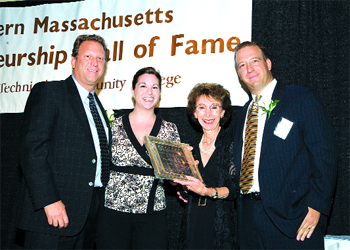
Departments

Advanced Internet Marketing

Nov. 1: Participants will learn how to ensure one’s Web site serves its target audience as well as best practices for Web site design and maintenance as part of a 9 a.m. to noon lecture by Ashton Services. Topics also planned: how to judge Web site performance, how to budget for development and operation, and how to interpret Web site statistics and how they can tell you where to focus your efforts. The workshop will be conducted at the Andrew M. Scibelli Enterprise Center, 1 Federal St., Springfield. The cost is $35. For more information, call (413) 737-6712.

Success Stories Speaker Series

Nov. 8: Dennis Donovan, an executive vice president in human resources at Home Depot, Inc., will be the featured speaker at the next Success Stories Speaker Series event, hosted by the Western New England College Law and Business Center for Advancing Entrepreneurship. Donovan, a 1979 graduate of the Western New England School of Law, has been instrumental in instituting the concept of ‘Change Management,’ the process of creating and implementing new initiatives to maintain a competitive advantage, throughout the business world. He joined Home Depot in 2001 and has overseen the creation of more than 20,000 new jobs a year. The free lecture at 5:30 p.m. is open to the public and will be conducted in the S. Prestley Blake Center at WNEC in Springfield.

Summit for Entrepreneurs

Nov. 13: Bay Path College in Longmeadow will host a free community Innovative Thinking and Entrepreneurship Summit beginning at 4:15 p.m. Breakout sessions will include ‘Lessons Learned,’ ‘Go Global!,’ ‘Social Entrepreneurship,’ and ‘Launch – There’s Help Every Step of the Way.’ In addition, keynote speaker Gloria Smith, president and owner of the Zanger Company, an importer of Polish pottery, will share her innovative sales techniques during dinner at 7:30. The program is free, however, pre-registration is required. To register, visit www.baypath.edu and select Entrepreneurship Summit, or call Lauren Way, director, Entrepreneurial Program, at (413) 565-1193.

Annual Tax Institute

Nov. 17: The 45th annual Western New England College Tax Institute is slated from 8:30 a.m. to 4:45 p.m. on the college’s main campus at 1215 Wilbraham Road, Springfield. The program will include sessions on new Medicaid rules, updates to federal and state tax laws, and the Section 199 producers deduction. The program is designed to qualify for eight CPE credits based on the Massachusetts Board of Public Accountancy Rules and Regulations. To register or for more information, call (413) 782-1473 or visit www.wnec.edu/tax.

Team Mass. Economic Impact Awards

Nov. 21: The Mass. Alliance for Economic Development will host its third annual Team Massachusetts Economic Impact Awards luncheon at noon at the Seaport Hotel in Boston. These awards honor emerging and established companies that have made a positive impact on the economy of Massachusetts since the beginning of 2005. Local companies being feted include General Dynamics Advanced Information Systems, Nuclea Biomarkers, and Unistress Corporation. For ticket information, contact Jess Millward at (781) 489-6262, ext. 15, or visit www.massecon.com.

Departments

Guerrilla Marketing

Oct. 18: For business owners who want to grow their business but feel stuck in a rut, this presentation will be helpful in understanding how guerrilla marketing can improve sales without spending money on advertising. The Steady Sales Group will present the 8:30 to 10:30 a.m. workshop at the Andrew M. Scibelli Enterprise Center, 1 Federal St., Springfield. The cost is $30. For more information, call (413) 737-6712.

‘Wild on Wine’

Oct. 19: Max’s Tavern on West Columbus Avenue in Springfield will be the setting for a unique wine event titled ‘Wild on Wine’ to benefit the Springfield Boys and Girls Club. The fund-raiser will feature a large selection of fine wines complemented by hors d’oeuvres and carving stations from 6 to 9 p.m. A live jazz ensemble will provide the entertainment. Tickets are $75 per person, and $20 of the ticket price is tax-deductible. For tickets and more information, contact AnnMarie Harding at Max’s Tavern, (413) 746-MAXX, ext. 381 or via e-mail at [email protected]. The fund-raiser is sponsored by UBS Financial Services Inc.

Legislative Breakfast

Oct. 20: The Agawam Chamber of Commerce will host a Legislative Breakfast from 7:15 to 9 a.m. at Chez Josef. Speakers expected to participate at the breakfast include State Sen. Stephen Buoniconti and candidates for the state representative seat.

New Traps for Business

Oct. 25: Businesses need to be more aware of the everyday risks and liabilities resulting from new and evolving regulations relating to employment relationships (temporary labor, privacy issues, computer use and fraud, copyright and trade secret abuses, and lending transactions). The Nicolai Law Group, PC will present the 9 to 11 a.m. workshop at the Andrew M. Scibelli Enterprise Center, 1 Federal St., Springfield. The cost is $30. For more information, call (413) 737-6712.

Panel Discussion

Oct. 26: “Un/Welcome Guests: Labor, Law and the Politics of Immigration” is the title of a panel discussion in the Gamble Auditorium at Mount Holyoke College in South Hadley, beginning at 7:30 p.m. Legal experts, journalists, and activists will discuss the controversial issues of immigration, migrant labor, homeland security, and the U.S. and Mexican border issues. For more information, visit www.mtholyoke. edu/go/wcl. The event is free and open to the public.

Super 60

Oct. 27: The Affiliated Chambers of Commerce of Greater Springfield will present its annual “Super 60” program at Chez Josef in Agawam. The event is a salute to the entrepreneurial spirit of the region’s privately owned businesses.

Advanced Internet Marketing

Nov. 1: Participants will learn how to ensure one’s Web site serves its target audience as well as best practices for Web site design and maintenance as part of a 9 a.m. to noon lecture by Ashton Services. Topics also planned: how to judge Web site performance, how to budget for development and operation, and how to interpret Web site statistics and how they can tell you where to focus your efforts. The workshop will be conducted at the Andrew M. Scibelli Enterprise Center, 1 Federal St., Springfield. The cost is $35. For more information, call (413) 737-6712.

“Innovative Thinking & Entrepreneurship”

Nov. 8: Jeffrey C. Taylor, founder and CEO of Eons Inc. and founder of Monster.com, will be the featured speaker from 7 to 9 a.m. in Blake Student Commons as part of Bay Path College’s ongoing Innovative Thinking and Entrepreneurship Lecture Series. Eons Inc. targets people 50 and over, and Taylor is now focused on helping individuals enjoy a better life. Taylor’s new mantra is “Let’s live to be 100 or die trying.” A continental breakfast will be served from 7 to 7:45 a.m. Seating is limited, and reservations may be made by calling Kary Lewis at (413) 565-1293 or via e-mail, [email protected].

Team MA Economic Impact Awards

Nov. 21: The Mass. Alliance for Economic Development will host its third annual Team Massachusetts Economic Impact Awards luncheon at noon at the Seaport Hotel in Boston. For sponsorship and ticket information, contact Jess Millward at (781) 489-6262, ext. 15, or visit www.massecon.com.

Opinion

While some in this region still cling to the hope that large corporations will magically appear on the Western Mass. horizon, bringing hundreds of those ‘good-paying jobs’ with them, everyone else seems to have accepted reality.

And that is that those days — if there ever really were any in this specific part of the world — are long gone. Today, by and large, economic development equates to small-business development. This is what everyone has been saying for the past several years, and that’s what all the candidates for governor of this state would say, if you could get them to stop talking about tax rollbacks.

Small-business development is difficult, and it often takes years, if not decades to see some real results. But that is where the future of this economy lies, and that’s why we’re encouraged by the depth of small-business programs in the region, and encourage continued support for them, especially at the state level, where funding is crucial to their survival.

In this issue, BusinessWest spotlights just a few of the programs that are lending real guidance and support to people as they start small business or take them to that proverbial next level. The Entrepreneurial Training Program administered by the Donahue Institute at UMass has succeeded in helping a number of individuals, many of them displaced workers, gain the skills they need to get a business off the ground. None of the businesses spawned over the years would be considered household names by any means, but the people running them are not just working again — they are entrepreneurs, some of them at a point where they can hire other people.

Another program, the Law and Business Center for Advancing Entrepreneurship is doing just as that name might suggest. Administered by Western New England College and located in the Scibelli Enterprise Center at STCC, the center matches entrepreneurs, usually those with fledgling start-ups, with students in the college’s Law and MBA programs, who advise them on issues ranging from marketing to employee handbooks.

This fall, the institute expanded its scope with a new speaker series highlighting business success stories, as well as a two-day program called the How-to Entrepreneurial Institute, with seminars on such subjects as starting a business, securing capital, and protecting intellectual property.

Many times in the past we’ve cited the work being done at the Scibelli Enterprise Center, which boasts two business incubators and a wide variety of programs and support systems to help those ventures get over the hump. The SEC has seen several success stories, including a cross-border phone book company that was recently acquired by Yellow Book.

Not all the stories are that glamorous, certainly, and not all of them will end as well. There are countless stories about area residents trying to take an idea — be it an energy bar, a sports drink, a record label, or a small restaurant — and make it work. Many are struggling to survive as sole proprietorships, but all of them have some degree of promise.

This is the essence of small-business development. It is sometimes painfully slow going, but it’s worth it. And the key is to promote the notion of entrepreneurship, to encourage individuals to think about business ownership as a viable career option, and then to provide the help needed to get them started — and growing.

The Donahue Institute’s Entrepreneur-ial Training Program has been offered four times in each of the past two years. Funding cuts will limit that number to one this year. That’s just one small example of why, overall, this state and region need a greater commitment to small-business development.

There is some momentum in this component of economic development, and it must be seized. Springfield is now ranked near the top nationally among cities its size in the development of new small businesses, and it needs to stay there.

We can always hope that a major corporation will announce it is bringing 1,000 new jobs to East Longmeadow, Westfield, or Hatfield, but as we said, that is not reality. Small-business development is reality.

Features
Center of Advancing Entrepreneurship Expands Its Horizons

Aimee Griffin Munnings calls it “walk-up traffic.”

These are individuals who arrive, usually unannounced, at the offices of the Law and Business Center for Advancing Entrepreneurship in the Springfield Enterprise Center at STCC with questions — lots of them.

The queries vary, with subject matter ranging from business plans to branding, said Griffin Munnings, director of the center, who told BusinessWest that she expected walk-ins when the facility opened just over a year ago, but not the volume she has seen. She takes this as a good sign, an indication of the growing number of Springfield area residents starting their own businesses or pondering that option, and she is responding proactively.

In short, she wants to help individuals by not only providing answers, but also by offering insight into the questions that should be asked. It’s part of a broad expansion effort for year two of the center, created by Western New England College to provide real-life experiences for graduate law and business students while fostering entrepreneurship in the Greater Springfield area. The center pairs individuals in those academic programs with budding entrepreneurs — some of them located in the SEC’s incubators but many others from surrounding neighborhoods and communities — for semester-long projects on subjects ranging from marketing to legal entities.

While doing so, the center has also become a resource for entrepreneurs, said Griffin Munnings, with monthly programs and both answers and referrals for those walk-ins. To better serve the community, the center is introducing some new programs to put more information out to more people.

Steps include formal office hours at the center by a recently hired member of the faculty at WNEC’s School and Law and School of Business, during which entrepreneurs can have their questions answered. Also, a two-day event called the ‘How-to Entrepreneurial Institute,’ a business seminar with a wide variety of programs designed to provide entrepreneurs with basic information and resources is slated for late October.

Still another new program is something called the “Success Stories Speaker Series,” which, as the name suggests, will feature successful entrepreneurs, starting with Mestek President and CEO John Reed, telling their stories and hopefully inspiring others.

The sum of the new initiatives will serve to create a larger, better resource for area entrepreneurs, said Griffin Munnings. “We asked ourselves how we could better serve the community,” she explained, “and the answer was simply to get more information out.”

Summing up the center’s first year of operation, Griffin Munnings categorized it as a success, especially with regard to the process of linking fledgling business owners with law and business students. Entrepreneurs with ventures ranging from a restaurant to a book store; a sports drink to a transportation service called Youth on the Move were chosen for participation after filling out a lengthy application detailing their businesses and specific requests for assistance. The principals with those companies were provided assistance with such issues as which legal entity to choose, marketing and branding, and even creation of an employee handbook.

“It was a very successful start,” she said of the spring semester, noting that a dozen business owners were matched with students. “Several different kinds of questions and problems were resolved.”

While continuing this matching program, the center has also taken strides toward becoming a total resource for entrepreneurs and would-be business owners, said Griffin Munnings. An entrepreneurship speaker series was launched last year, and it continued this fall with a Sept. 12 program featuring Nadine Thompson, president and CEO of the beauty and wellness products company Warm Spirit, who spoke on the subject “Doing Well by Doing Good.”

That series will be complemented by “Success Stories,” which will start with Reed, who founded Sterling Radiator Company and later went on to acquire 30 operating companies he consolidated into Reed National. Subsequent speakers include Dennis Donovan, executive vice president of Human Resources for Home Depot, Fletcher Wiley, director of the TJX Companies Inc., and John and Steven Davis, former chairman and CEO and president and COO, respectively, of Lenox/American Saw.

“I think people are inspired by the ones who came before them,” she said. “Sometimes it’s hard for business owners to plod along … you start wondering, ‘is this actually going to work?’ Seeing people who have hung in there and done great things should be encouraging.”

The How-to Entrepreneurship Institute is another venture designed to inform and inspire, said Griffin Munnings. Slated for Oct. 27 and 28, the event will feature several seminars hosted by area lawyers, accountants, business owners, and officials with business-assistance groups such as SCORE and the Mass. Small Business Development Center. Specific programs include, ‘How to Start a Business,’ ‘How to get Money,’ ‘How to Protect Your Ideas,’ and ‘How to Get the Help You Need.’

Fast Facts:

What:The How-to Entrepreneurial Institute
When:Oct. 28 and 29, 9:30 a.m. to 5 p.m.
Where:Western New England College, Rivers Memorial Building;
The Program:A variety of seminars designed for entrepreneurs and would-be business owners
Price:$60
For More Information:call (413) 736-8462; E-mail: [email protected]

The keynote speaker will be Dan Elias, a news anchor and reporter on TV-22 and president of Zunafish.com, an online media trading Web site.

Another new program at the Center for Advancing Entrepreneurship will be office hours with Robert Statchen, recently appointed as an assistant clinical professor of Law and professional educator in the School of Business. As a joint appointee to both schools, he will teach and advise law and M.B.A. students at the center’s small business clinic. He will also answer questions and offer guidance (four hours a month) to entrepreneurs on subjects that can be addressed in a few minutes or hours, not a full semester’s worth of work by a law or business student.

Departments

“Doing Well By Doing Good”

Sept. 12: The Western New England College Law and Business Center for Advancing Entrepreneurship will open its 2006-2007 Entrepreneurship Speaker Series at 5:30 p.m. in the S. Prestley Blake Law Center. Nadine Thompson, chief executive officer and president of the beauty and wellness products company Warm Spirit, will speak on “Doing Well By Doing Good.” Warm Spirit, founded in 1999, is dedicated to socially responsible entrepreneurship and empowering women. The company boasts more than 20,000 direct-sales consultants nationwide. The event is free and open to the public. For more information, call (413) 736-8462 or visit www.law.wnec.edu/lawandbusiness.

Course for Artists, Artisans

Sept. 13-Dec. 13: The Valley Community Development Corporation (Valley CDC), under contract with the City of Easthampton, will present a 13-week course titled Business Planning for Artists on Wednesdays from 6 to 9 p.m. in Plimpton Hall, Railroad Street, Easthampton. The course is designed for qualified artists and artisans who live in town or whose studios are located in Easthampton. Course topics will include small business management, copyright protection, contracts, market research, working with galleries, trade shows, selling to retail customers and financial management. The deadline to register is Aug. 25 in person at the Valley CDC, 116 Pleasant St., Easthampton. For more information and registration forms, call (413) 529-0420.

The Big E

Sept. 15-Oct.1: The 2006 edition of The Big E will present more than $1.7 million in free entertainment, a ticketed Brad Paisley concert, the Miss Latina U.S.™ Pageant, the return of Marriage on the Midway, and BiggiE’s Character Breakfast as well as the Mardi Gras Parade, rides, crafts, good food, animals and the best of the old and new that fairgoers have come to expect and enjoy. The Big E is located on Memorial Avenue in West Springfield. Advance discount tickets and 17-day value passes are available online at www.thebige.com and the Big E Box Office by calling (800) 334-2443, now through Sept. 9. Tickets are also sold at Big Y World Class Markets now through Sept. 13.

‘Team Creativity Disney Style’ Workshop

Sept. 26: The Center for Business and Professional Development at Holyoke Community College will sponsor an all-day workshop titled Team Creativity Disney Style from 8 a.m. to 4:30 p.m. at the Kittredge Center for Business and Workforce Development on the HCC campus. The Disney Institute will share with participants the motivational tools that can unleash the creative power of one’s entire organization. The cost is $349 per person which includes continental breakfast, lunch and materials. For more information, contact Maria at (413) 552-2122 or via e-mail at [email protected].

HCC Business Summit

Sept. 27: The Holyoke Community College Center for Business and Professional Development is sponsoring a free workshop for business owners and managers who are looking for more effective ways to train their employees. Titled “Training for the 21st Century,” the workshop is planned from 8:30 a.m. to 12:30 p.m. at HCC’s Kittredge Center for Business and Workforce Development. The workshop will introduce employers to a new training approach that uses real-life scenarios, follow-up sessions, ongoing contact with instructors, and actual homework for participants. The deadline to register is Sept. 13. For more information, call (413) 538-5817 or (413) 538-5815.

Western Mass. Entrepreneurship Hall of Fame

Oct. 5: The seventh annual induction ceremony for the Western Massachusetts Entrepreneurship Hall of Fall is planned Oct. 5 at the Log Cabin Banquet and Meeting House in Holyoke. The event is sponsored by Springfield Technical Community College. Inductees are include The Fontaine Family (Fontaine Bros. Inc.); Jesse and Barbara Lanier (Springfield Food Systems); Horace Smith and Daniel Baird Wesson (Smith & Wesson); The Balise Family (Balise Motor Sales), and The Grenier Family (Grynn & Barrett.)

Super 60

Oct. 27: The Affiliated Chambers of Commerce of Greater Springfield, Inc. will present its annual “Super 60” program at Chez Josef in Agawam. The event is a salute to the entrepreneurial spirit of the region’s privately owned businesses.

Sections Supplements
Initiative Looks to RENEW Faith in the Region’s Precision Manufacturing Sector
Dave Cruise and Jack Mitchell

Dave Cruise, left, and Jack Mitchell, say the precision machining sector has a good story to tell. The challenge ahead is to communicate it.

Faced with a shortage of qualified machinists that is hindering their growth and endangering their future, area precision machine shop owners are coming together in a unified effort to put more workers in the pipeline. Called RENEW (Regional NetWorks), the 18-month project that began late this spring is designed to build the capacity and profile of that sector, making it a workforce development and economic development initiative

Jack Mitchell finds it hard to comprehend why the precision manufacturing industry has an image problem, one that makes it a relatively hard sell to today’s career seekers.

Actually, he knows the reason. Simply put, people — meaning young students, their parents, many high school guidance counselors, and even some in the business and economic development community — can’t see what he sees.

As owner of Mitchell Machine in Springfield, a third-generation business that manufactures machines used to make everything from saw blades to semi conductors, he sees his 35 employees engaged in challenging, exciting work that is different from week to week if not day to day. The wages and benefits are good, the working conditions are as clean as some restaurants’, and the long-term future remains bright; the work being done at Mitchell’s Hancock Street facilities cannot be sent offshore because the standards for quality are too high, and that scenario won’t change anytime soon.

The story is the same in many of the precision shops in Western Mass., said Mitchell, noting quickly that the problem for this sector is making people know and understand these things and ultimately believe in this industry and its future.

And that’s one of the reasons why Mitchell and others in this sector pushed hard for a $150,00 grant from the John Adams Innovation Institute, which was awarded jointly this past spring to the Hampden County Regional Employment Board (REB) and the local chapter of the National Tooling and Machining Assoc. (NTMA).

The charge is quite specific: develop strategies to put more individuals in the machining pipeline, and the grant calls for the hiring of a sectoral manager to oversee a project called RENEW, an acronym for Regional NetWorks, which addresses that issue.

That job belongs to David Cruise, former human resources director for the Springfield public school system who has taken on other projects for the REB since his retirement from that post. He started his latest assignment by doing large amounts of looking and listening.

Indeed, he’s visited nearly 30 area shops of various sizes, as well as vocational schools and community colleges, to gain some perspective of the scope of the problem and ways to attack it. While compiling data, Cruise is also crafting strategies for creating additional capacity within the precision machining sector.

A Web site is being developed, and an informational DVD will be created and sent to area schools. Open houses at area companies and vocational schools will be scheduled, and a machine tool technology fair is being blueprinted. These tactics and more will be utilized to increase enrollment at area tech schools, improve graduation rates, and, ultimately bring more qualified machinists to the market.

A comprehensive, multi-pronged approach will be necessary, said Cruise, because statistics show both promise for the industry and general indifference toward it on the part of young people and their parents. This translates into a broad disconnect.

To eliminate it, RENEW, an 18-month initiative, will create what its name suggests — a network that will work to create a stronger workforce, a “sustainable pipeline,” as Cruise called it, for the short and long term.

Shop Talk

As he talked with BusinessWest about conditions within his sector, and especially at his shop, Mitchell stopped at a 100-foot-long machine being built to exacting specifications for a Holyoke company that produces disposable blood pressure cuffs.

“This is what we do here,” he said, sweeping his arm across the full breadth of the machine to show the various steps — and technology — involved with turning raw materials into a medical device. “We take a client’s concept, and its problems, and come up with solutions.”

The highly specialized work has kept the doors open at Mitchell for 85 years, he said, and there would seem to be little on the horizon that would prevent them from staying open or hinder the company’s growth potential — except what is now described as an acute shortage of qualified machinists in this market and others.

“It’s always been very difficult to find qualified people to do the work we want to do here,” he explained, adding that the company conducts considerable training designed to “turn machinists into machine builders,” and has benefited greatly from state Workforce Training grants received in recent years.

But merely finding people the company can train is becoming a stern challenge, said Mitchell, noting that he and others in the NTMA are looking for ways to build awareness and enthusiasm for the sector — and they know it’s a tall order.

That’s why the group enthusiastically pursued the John Adams grant, and why Mitchell and others pushed the REB to hire Cruise, a workforce development veteran, for the sectoral manager’s position.

“Good people are the lifeblood of this industry,” said Mitchell. “If we don’t have people in the pipeline, we can’t exist.”

To “develop a series of programs and systems that will enable educators, parents, and students to recognize the viability of high technology precision machining as a career-directed, financially rewarding profession.”

That’s what it says in a revised draft, dated July 26, of the scope of work for the Regional Networks’ education and awareness program. In other words, said Cruise, the task at hand is to build the profile and capacity of the precision industry in the Pioneer Valley.

The tactics to be employed for this assignment include various methods of delivering the message, including the Web site, DVD, and open houses. But the main vehicle for getting the job done will be partnerships — between employers and educators, elected officials, guidance counselors, and chamber of commerce directors. Through such partnerships, a story in need of telling can be effectively told.

Cruise cited recent survey results showing that, despite widespread doubts about the future of manufacturing in the Pioneer Valley and across the country, there is reason for optimism. Indeed, 43% of the local companies queried said they’re experiencing increasing sales, while 37% have increased their market share, 40% have national and international markets, and 69% plan to invest in expansion and new equipment.

At the same time, however, 80% of these companies expressed concern about an aging workforce and lack of a pipeline for new employees, while 69% reported recruitment problems for both skilled and unskilled labor, with a particular focus on skilled machinists and engineers, and 24% reported unfilled positions and growing employment needs.

On the surface, the responses to the second set of questions make little sense given the answers to the first, said Cruise, adding that this phenomenon would clearly indicate that he and the NTMA must do much more than throw a lot of numbers about the precision machining sector at seventh and graders and their parents and invite them to an open house.

This sentiment is verified by enrollment statistics for the machine tool technology programs at the region’s four vocational/technical high schools — Dean Technical, Pathfinder, Westfield Voc/Tech, and Chicopee Comprehensive (a fifth program at Putnam Vocational in Springfield is temporarily closed. The operating programs have total capacity of 230, but enrollment in 2006 was merely 162, while projected enrollment is 203 for this fall, better but still more than 10% under capacity. Meanwhile, those schools graduated only 28 students this spring, indicating a problematic dropout rate.

Developing strategies for putting more students in the classrooms and behind the machines — and keeping them in school — will be one of RENEW’s many goals.

Showing Their Metal

Cruise brings a diverse background in human resources, education, workforce development, and consulting to his current assignment. His most recent work came as a consultant to the REB for the Literacy Works of Hampden County initiative. Prior to that, he did some consulting work for the National Assoc. for Community College Entrepreneurship (NACCE) located at the Andrew M. Scibelli Enterprise Center at STCC.

He retired from the Springfield school system after 18 years and several different titles, including director of Human Resources, chief operations officer, director of Personnel, and director of Occupational Education. Prior to that, he served as director of the Mass. Career Development Institute for six years. Among his many responsibilities there, he directed program operations for career development and employment retraining, and also worked with employers to identify market demands and develop training programs to respond to them.

He will call on much of that experience as he goes about building the linkages considered vital to the overall success of RENEW. These linkages will take place at several points in the educational continuum and will involve students, parents, players in the industry, and administrators at area middle and high schools and community colleges.

The goal is to link students and parents with technology programs in area schools through various communication vehicles, and also to link precision machining companies and educational institutions along the Knowledge Corridor to develop what Cruise calls a “coordinated regional workforce development system” that responds to the changing technological demands of the industry by creating a sustainable pipeline of future workers in that sector.

Cruise said his work with RENEW will be similar in some ways to the REB’s literacy initiative. “There, we focused on creating awareness of the issue,” he said, “looking at existing programs and identifying strengths, weaknesses, gaps, and responses to the gaps.”

With regard to the precision machining sector, the obvious strength is the sectors itself, its depth, and its worldwide reputation. Weaknesses and gaps include limited awareness of the cluster and its seemingly bright future as well as an apparent shortage of programs to train individuals for work in the field.

Indeed, while the area schools are not running at full capacity, if they did, perhaps only another few dozen individuals would graduate each spring.

“That’s not going to be enough, certainly,” said Mitchell, “but 60 is a lot better than 28.”

Thus, Cruise has two immediate challenges — creating more slots at area schools and generating enthusiasm among young people to earn one of them.

Concerning the former, he had talks with Springfield school officials about restarting the program at Putnam — it closed a year ago, and state regulations stipulate that once a program shuts down it cannot reopen for two years. At the very least, Cruise and NTMA members want to make sure that a machine tool technical program is part of plans for a new Putnam, construction of which is slated to start in a few years.

As for drawing people to these programs, Cruise and Mitchell said the message must be sent early — to people in seventh or eighth grade or even earlier — and sent often. An effective Web site focused on the NTMA will be an integral part of this effort, they said, noting that the site now in the development stage will include information, a comprehensive section on career opportunities, and links to area companies and schools.

“We want the Web site to be a destination for parents, students, and educators,” said Cruise. “It’s going to be a big part of our work to make sure the story is told.”

Part and Parcel

Looking down the road about 15 months, Cruise told BusinessWest he’s not sure how many measurable signs of progress there will be when it comes to RENEW’s goals and basic mission. After all, it will take years, perhaps a decade or more before there will be a considerably larger flow of workers in the pipeline.

He expects that there will be some noticeable improvement in the enrollment numbers at area technical high schools, perhaps some progress in reopening the closed program at Putnam, and many new methods of communicating with individuals about the promise of the precision machining industry.

All these steps are keys to securing a long-term future for this sector — a process that begins by enabling more people to see what Jack Mitchell sees.

George O’Brien can be reached at[email protected]
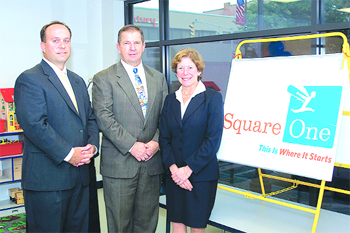
Departments

Stone Soul Festival

Sept. 1-3: Hampden Bank will continue its title sponsorship for the 18th annual Hampden Bank Stone Soul Festival at Blunt Park in Springfield. One of the largest multicultural events in the Northeast, the festival features fun and educational activities for all ages, as well as prize drawings, great food and live music. Festival hours are Sept. 1, 6 to 10 p.m., Sept. 2, 10 a.m. to 10 p.m., and Sept. 3, 10 a.m. to 6 p.m. Free admission.

The Big E

Sept. 15-Oct. 1: The 2006 edition of The Big E will present more than $1.7 million in free entertainment, a ticketed Brad Paisley concert, the Miss Latina U.S.™ Pageant, the return of Marriage on the Midway, and BiggiE’s Character Breakfast as well as the Mardi Gras Parade, rides, crafts, good food, animals, and the best of the old and new that fairgoers have come to expect and enjoy. The Big E is located on Memorial Avenue in West Springfield. Advance discount tickets and 17-day value passes are available online at www.thebige.com and the Big E Box Office by calling 1-800-334-2443, now through Sept. 9. Tickets are also sold at Big Y World Class Markets now through Sept. 13.

“Generations …”

Sept. 20: At its September professional development meeting, the Women’s Partnership will present “Generations…Working and Living Side by Side.” A representative from Big Y Foods Employee Services department will be presenting material about preparing employees to face the everyday life of managing and working with people of all generations. The meeting will be held at the Best Western Sovereign Hotel and Conference Center in West Springfield. Networking begins at 11:30 a.m., the program and lunch will be begin at noon and end at 1:15 p.m. Tickets are $20 in advance for chamber members, $25 for non-chamber members or payment at the door. To register and purchase a ticket to the meeting, book online at www.myonlinechamber.com or contact Diane Swanson at (413) 755-1313.

‘Team Creativity Disney Style’ Workshop

Sept. 26: The Center for Business and Professional Development at Holyoke Community College will sponsor an all-day workshop titled Team Creativity Disney Style from 8 a.m. to 4:30 p.m. at the Kittredge Center for Business and Workforce Development on the HCC campus. The Disney Institute will share with participants the motivational tools that can unleash the creative power of one’s entire organization. The cost is $349 per person which includes continental breakfast, lunch and materials. For more information, contact Maria at (413) 552-2122 or via E-mail at [email protected].

HCC Business Summit

Sept. 27: The Holyoke Community College Center for Business and Professional Development is sponsoring a free workshop for business owners and managers who are looking for more effective ways to train their employees. Titled Training for the 21st Century, the workshop is planned from 8:30 a.m. to 12:30 p.m. at HCC’s Kittredge Center for Business and Workforce Development. The workshop will introduce employers to a new training approach that uses real-life scenarios, follow-up sessions, ongoing contact with instructors, and actual homework for participants. The deadline to register is Sept. 13. For more information, call (413) 538-5817 or (413) 538-5815.

Western Mass. Entrepreneurship Hall of Fame

Oct. 5: The seventh annual induction ceremony for the Western Massachusetts Entrepreneurship Hall of Fall is planned Oct. 5 at the Log Cabin Banquet and Meeting House in Holyoke. The event is sponsored by Springfield Technical Community College. Event hosts include The Fontaine Family (Fontaine Bros. Inc.); Jesse and Barbara Lanier (Springfield Food Systems); Horace Smith and Daniel Baird Wesson (Smith & Wesson); The Balise Family (Balise Motor Sales), and The Grenier Family (Grynn & Barrett).

Super 60

Oct. 27: The Affiliated Chambers of Commerce of Greater Springfield, Inc. will present its annual ‘Super 60’ program at Chez Josef in Agawam. The event is a salute to the entrepreneurial spirit of the region’s privately owned businesses.

Uncategorized

Jeb Balise remembers many bird-hunting trips from his youth with his grandfather, Paul Balise.

The two would talk partridge, pheasant, or whatever the target was on the given day, but also about life and business — specifically, the car business.

“He told me to always be honest and treat people well,” Balise said of his grandfather, who started the business Jeb now serves as president in 1919. “He was a very smart man and a really good listener; he wasn’t a man of many words, but when he spoke, you listened; I learned a lot from him.”

Likewise with the second generation of the family to put his mark on Balise Motor Sales, his father James E. Balise. “Shrewd and patient — those are the words I’d use to describe him,” said Jeb Balise. “He had wonderful business sense as well as a great sense of timing and vision — he had one of the first Honda dealerships in the country – and hopefully he’s passed some of that on to me.”

The ability to learn from previous generations is one of many factors that has led Balise to its standing as one of the largest auto groups in the Northeast. And the three generations that built the company will be among the inductees in the Class of 2006 for the Western Mass. Entrepreneurship Hall of Fame, located at the Andrew M. Scibelli Enterprise Center in the Technology Park on the campus of Springfield Technical Community College.

Family businesses are well-represented in this year’s class. Also on this list is the Fontaine family and the three generations that have managed the Fontaine Bros.

construction company, and the Grenier family, which features two generations that have owned and managed a photography studio now known as Grynn & Barrett.
Meanwhile, another pair of inductees — Horace Smith and Daniel Wesson, founders of gunmaker Smith & Wesson — had some second-generation involvement in their famous venture (two of Wesson’s sons eventually became partners with him after Smith retired) and the remaning members of the class, Jesse Lanier and Barbara Moss Lanier, owners of seven Kentucky Fried Chicken (now known simply as KFC) franchises, are seeing the next generation of their family become involved in the business.

“This region has a tremendous heritage of entrepreneurship, said William Kwolek, director of Development for STCC and one of the organizers of the Oct. 5 banquet at which inductees will be honored. “Many of the ventures eventually became family businesses, with some of them spanning three or more generations.”

Kwolek told BusinessWest that proceeds from the induction banquet, as they have since the event was first staged in 2000, go to support entrepreneurship programs in Western Mass., including the YES (Young Entrepreneurial Scholars) program, which serves more than 1,000 young men and women in two dozen area high schools, as well as the Community Foundation of Western Mass. student business incubator.

Roughly $50,000 was raised last year, he noted, adding that organizers are looking to top that figure with a projected sell-out of the banquet.

Here’s a look at the Class of 2006.

Food for Thought

Jesse Lanier remembers his reaction when a colleague at Southern New England Telephone told him he was leaving a good job with solid pay and benefits to manage his own convenience store.

“I recall thinking, ‘why would he do a dumb thing like that?’” Lanier told BusinessWest. “At the time, it didn’t make any sense to me.”

But several months later, it made perfect sense, because Lanier did pretty much the same thing.

He left a job as manager of Purchasing at SNET to become a KFC franchisee. He formed Springfield Food Systems, a franchise chain, one that currently includes seven restaurants, which he operates with his wife Barbara.

“I knew I wasn’t going to be president of the company and I wasn’t really happy with my position,” he said, referring to SNET. “So I started looking at other options that would allow me to work for myself.”

One of those options was an auto dealership — he gained certification in GM’s Buick Division — but the economy was soft at the time (the early ’80s) and the auto industry was hurting. So at the advice of a friend already managing some KFCs, he gave the chain a hard look.

Over the past 23 years, Springfield Food Systems has grown to seven locations; five KFCs, a KFC/A&W All American Food Restaurant, and a KFC/Long John Silver’s multi-brand restaurant.

Jesse Lanier told BusinessWest that learning the business was hard — “I didn’t even know how to cook; I couldn’t fry an egg without burning it” — but learning how to manage a transient workforce has been the biggest challenge.

“If we get a year out of non-management people, that’s pretty good,” he explained. “Managers will often give us two or three years, but there is a lot of turnover, and that’s part of being in this industry.”

Jeb Balise started learning his business before he was in kindergarten.

He told BusinessWest, which recently named him the magazine’s ‘Top Entrepreneur’ for 2005, that he had his first job (opening and closing a garage doors) at the family’s Chevrolet dealership at age 5. Today, he presides over an auto group that includes 16 new-vehicle franchises, including Chevrolet, Dodge, Ford (3), Honda, Lexus, Mazda, Fuso, Nissan (2), Pontiac, Saturn (2), Scion, and Toyota; five Ready Credit used car dealerships; and three collision repair centers.

The process of building that empire began a few months after the end of World War I, when when Paul E. Balise, who grew up working his family’s farm in Hatfield, purchased some welding equipment and began fixing farm vehicles and automobiles. He called that venture the Square Deal Garage.

Paul Balise, eventually shifted to auto sales, and became an associate Chevrolet dealer in Hatfield. In 1929, he moved to Chicopee Falls and opened a Chevrolet dealership there. In the 1930s, during the height of the Great Depression, when many car dealers were failing, Paul Balise moved his business to a bigger location on Main Street in Springfield, and later to a location on East Columbus Avenue that would be its home for more than a half century.

James E. Balise, one of Paul’s 10 children, became president and dealer of Balise Motor Sales in 1958. In 1971, he took a chance on a relatively unknown Japanese automaker, and opened one of the first Honda dealerships in North America. In 1985, that dealership moved to Riverdale Street in West Springfield and would become the first of many new facilities to bear the Balise name.

Jeb Balise became president and dealer of Balise Motor Sales in 1986, and over the past 20 years has led an ongoing program of expansion.

Like many of Springfield’s notable entrepreneurs, Horace Smith started his career at the Springfield Armory. He served as an apprentice there upon completing his public school education, and eventually started his own gun-manufacturing business.

He also worked for several gun-component makers, including Allen, Brown, and Luther, manufacturer of rifle barrels. It was there that he met Daniel Baird Wesson, also a gunsmith, with whom he would partner to forge several breakthroughs in firearms production — and create one of the most recognizable brands in the history of American business.

Today, the Smith & Wesson name is on not only handguns, but myriad other safety products ranging from mace to handcuffs; police bicycles to flashlights. But the name is synonymous with handguns and handgun manufacturing, and today, after several years of struggle, the company headquartered on Roosevelt Avenue is staging a comeback, with several new contracts from domestic and foreign military units and law enforcement agencies

Thus continues a success story that began in 154 years ago, when Wesson, who, while toiling for Allen, Brown, and Luther, worked in his spare time to perfect a practical cartridge. He eventually persuaded Smith to go into business with him and produce the cartridge in Norwich, Conn. In 1854, the two patented a pistol that was not only a cartridge weapon, but had a new and distinct repeating action. While the concept was not entirely successful in pistols, it adopted well to rifles and it became the basic invention incorporated into the world-famous Winchester rifle.

After the partners sold their rifle patent rights to Volcanic Arms Company, Smith retired and Wesson accepted the position of superintendent of the company. Under Wesson, Volcanic Arms produced the self-primed metallic cartridge used throughout the Civil War. In 1857, the two men rejoined to produce the Smith & Wesson revolver, which became an enormous success. It was the only product of its kind, and was adopted by U.S. military authorities and several foreign governments. By 1860, Smith & Wesson was employing 600 people and had become one of the largest gun manufacturers in the world.

The company continued to introduce new products and innovations. In 1869, the two partners purchased a design by William C. Dodge that emptied shells from the gun. In 1887, Wesson patented a safety revolver that prevented unintentional firing, and by the turn of the century, the company was producing a line of hammerless revolvers. In 1899 the company introduced what is probably the famous revolver in the world, the .38 caliber Model 10, which has been in continuous production ever since, with more than 6 million units produced.

In 1948, R. Robert Grenier started bringing into focus an entrepreneurial venture that would eventually bring his family name into homes and schools across Western Massachusetts and Connecticut. His photo studio started small, in the first floor of the family home on Pine Street Holyoke. But it has grown to become one of the largest businesses of its kind in the Northeast.

Today, under the leadership of four of Grenier’s children, the company has several successful departments, including school pictures, high school senior portraits, sports photography, weddings, family portraits, and many others. The business has also expanded its geographic reach over the years, and has plans to open a studio in Connecticut.

Nicknamed ‘Grin,’ Robert Grenier first partnered with Lucien Ducharme in a business that centered mostly around portrait photography. The company grew steadily through the ’50s and ’60s, with wedding, family portrait, children, and high school senior photography. Ducharme retired in the mid ’60s, leaving the Grenier name to stand alone on tens of thousands of pictures.

By the mid ’70s, the name became Greniers. That’s when the first member of the second generation, Larry, joined his father in the business. He would be followed by brothers Marc (1976), Dan (1979), and Chris (1980). Together, members of the second generation have presided over explosive growth and a host of new business opportunities.

In 1982, after suffering a massive heart attack, Robert Grenier, passed the torch of company president to Larry, and in 1991, he sold the business to his four sons. Today, they each take leadership roles in the company. Dan Grenier founded and now manages the grades K-11 Daniel’s School Pictures department, and serves as vice president of Marketing and Product Development for The Greniers. Marc heads studio operations as Vice President and Director, while Chris directs the company’s high school senior accounts.

Today, the company counts more than 60 high schools and colleges and about 300 elementary and middle schools on its customer list, as well as other clients ranging from the Vermont State Police Department to the Holyoke and Hartford, Conn. fire departments. The profound growth of the business led the Grenier Brothers to build a new, 24,000-square-foot facility on Jarvis Avenue in Holyoke that now houses all operations. Creation of a similar facility in Connecticut, one that enable the company to better serve its many clients there, is in the planning stages.

In anticipation of further growth and territorial expansion, the Grenier brothers decided earlier this year to change the name of their company to Grynn & Barrett Studios.

David Fontaine told BusinessWest that while he’s honored to be part of the Class of 2006, he considers his grandfather to be the real entrepreneur in the family.
Eudore Fontaine didn’t want to be a farmer. He had loftier dreams, and left his native Canada in 1933, at the height of the Great Depression, to pursue them. He came to Chicopee to live in his aunt’s boarding house, and quickly found work as a carpenter. He was joined in that profession by his brother, George, and it wasn’t long before they decided they would like to work for themselves.

They issued 35 shares of common stock and formed a construction company — Fontaine Bros. Inc. — that has been part of the Western Massachusetts for the past 73 years. The family business, now in its third generation of leadership, started with residential construction, and evolved over the following decades, becoming one of the leading builders of school facilities in the Commonwealth.

Some of the most recognizable buildings in the region, including the new MassMutual Center in downtown Springfield, the Fine Arts Center on the University of Massachusetts Amherst campus, Scibelli Hall on the campus of Springfield Technical Community College, Holyoke High School, Dean Vocational Technical High School , and many others were built by Fontaine.

Given a strong foundation by Eudore and George Fontaine, succeeding generations of the family have built on the base, responding to changing societal needs in the process. Eudore’s son, Ray, who became president in 1950, would lead the company to post-war prosperity, shifting its focus from residential to commercial construction. In the late 1950s and 60s, when Baby Boomers were reaching school age in huge numbers, Fontaine built schools in communities across Western Mass. and well beyond. In the 60s and early 70s, when UMass-Amherst was undergoing explosive growth, Fontaine built many of the facilities that shape the campus today, including the Fine Arts Center, Tobin Hall and Herter Hall.

In 1982, another of Eudore’s sons, Lester, became president of the company, and guided it to continued growth, including a host of new school buildings and other public facilities, including Dean Tech, the Rebecca M. Johnson Magnet School in Springfield, and others. Lester’s son David became president of the company in 1995, and has president over several recent projects, including the $60 million MassMutual Center and the Bartley Center for Athletics and Recreation at Holyoke Community College, for which the company won a Construction Excellence Award in the category of new construction from the state.

For more information on this year’s dinner event, contact William Kwolek, Executive Director of the STCC Foundation; (413) 755-4477.

Departments

‘Building Business’ Workshop

April 25: The Western New England College Law and Business Center for Advancing Entrepreneurship will host guest speaker Laura Gordon at 5:30 p.m. in the S. Prestley Blake Law Center on the college’s main campus, 1215 Wilbraham Road, Springfield. Gordon will speak on Building Business from a Base of Strength. The free event is open to the public. Gordon is a licensed CPA in California and founder and owner of Gordon & Associates. Her mission is to provide professional business management and accounting services based on sound business practices and biblical principles. A UCLA graduate, Gordon also became a licensed minister in November 2002. She is enrolled at Kings Seminary, completing a Masters of Divinity. For more information on the program, call (413) 736-8462 or visit www.law.wnec.edu/lawandbusiness.

Auxiliary Fashion Show

April 30: Fashions from Talbots and Yale Genton will be featured at the Mercy Medical Center Auxiliary’s Spring Fashion Show at Wyckoff Country Club, 233 Easthampton Road, Holyoke, beginning at noon. Brenda Garton will host the event. Tickets are $25 and reservations may be made by calling (413) 748-9745. Proceeds raised from the fashion show will fund patient-oriented programs and enhancements at Mercy Medical Center.

ACS Gala

May 13: The American Cancer Society will honor Sr. Mary Caritas, S.P., former president of Mercy Medical Center, at its 2006 Omar T. Pace, M.D., Gala at the MassMutual Center in downtown Springfield. The black tie affair, beginning at 6 p.m., will feature a silent auction, formal dinner, and an evening of dancing to the tunes of the Floyd Patterson Band. For more information or to make a reservation, call (413) 734-6000, option 3.

‘State of the Region’ Conference

May 5: The Hartford Springfield Economic Partnership will stage its 5th Annual ‘State of the Region’ Conference at the MassMutual Corporate Center in Enfield., from 8 a.m. to 11:30 a.m. Sponsored by TD Banknorth, the event will address the question: Is Hartford-Springfield Positioned for Success? The keynote speaker will be Michael Gallis, a principal with Michael Gallis & Associates, considered the country’s leading expert in large-scale metropolitan regional development strategies. To register, call (860) 728-2280; or visit www.HartfordSpringfield.com.

Departments

Hispanic Marketing Seminar

April 5: Bauza & Associates, a full-service Hispanic integrated marketing agency, will present a Regional Hispanic Marketing Seminar at 2 p.m. during the 2006 Business Market Show at the MassMutual Center in Springfield. The seminar will include best practices for effectively communicating to Hispanics. Interested participants are asked to call Francisco J. Sole at (413) 536-1110 or e-mail him at [email protected].

How to Use/Find/Avoid a Lawyer

April 12: How to Use/Find/Avoid a Lawyer will be sponsored by Western New England College’s Law and Business Center for Advancing Entrepreneurship from 4 to 5 p.m. in the teleconference room at the Scibelli Enterprise Center, 1 Federal St., Springfield. The free workshop will teach participants how to communicate one’s issues to an attorney and how to take steps to avoid litigation as a small business person. The workshop is open to the public; however, seating is limited, and participants should arrive early for best seating. For more information, contact Aimee Griffin Munnings, director, at (413) 736-8462 or e-mail [email protected].


Workshop for Nonprofits

April 19: The ABCs of Nonprofits will be presented by Western New England College’s Law and Business Center for Advancing Entrepreneurship from 4 to 5 p.m. in the teleconference room at the Scibelli Enterprise Center, 1 Federal St., Springfield. A discussion will include the nonprofit entity, including the writing of bylaws and articles of incorporation, as well as a review of legal issues involved in the creation of nonprofits. The workshop is free and open to the public; however, seating is limited, and participants should arrive early for best seating. For more information, contact Aimee Griffin Munnings, director, at (413) 736-8462 or via e-mail at [email protected].

Green Roof Design Workshop

April 20: The Springfield Technical Community College Assistance Corpora-tion will host a workshop titled “Green Roof Design” from 1 to 5 p.m. at the Center for Business and Technology, One Armory Square, Springfield. Workshop topics will include vegetative and living roofs, rooftop gardens, drainage techniques, and structural considerations for green roofs. David Bixby of Bixby Architects of West Stockbridge and Chris Kilfoyle of Berkshire Photo Voltaic Services will present the workshop. The workshop is free and open to the public; however, reservations are required. For more information, contact Sandy T. at (413) 536-8048.

Region Goes ‘Dutch’

April-August: Massachusetts’ Pioneer Valley has launched a six-month, Valley-wide celebration of all things Dutch. From artistic expression to culinary delights, the Valley will be donning its Dutch shoes, planting tulips, and sharing its Dutch spirit with visitors now through August at more than 20 mostly arts-related attractions. For more information on the GoDutch! promotion, call (413) 787-1548 for a brochure or visit www.valleyvisitor.com and click on the GoDutch link.

Humor Incorporated

May 5: Bay Path College will present its 11th Annual Women’s Professional Development Conference at the MassMutual Center. The day-long event will show how humor can be an effective tool to help get a message across and improve workplace communication. Keynote speakers include: noted journalist, novelist, screenwriter, playwright, and director Nora Ephron, who directed the hit movies Sleepless in Seattle and You’ve Got Mail; philosopher/comedian Emily Levine; and Lynne Truss, author of Eats, Shoots & Leaves and Talk to the Hand. In addition to the keynote speakers and their focus on the effective use of humor, the conference will feature several breakout sessions. This year’s offerings are: The Change Before the Change: Laura Corio, MD will address the subject of perimenopause, an important and highly misunderstood biological phase of womanhood; Reading Between the Lines: Jo-Ellen Dimitrius, considered the nation’s leading jury consultant, and author of the book Reading People, will offer insight into how individuals can decode the hidden messages in appearance, tone of face, facial expression, and personal habits to predict behavior and attitude; The Art of Possibility: Transforming Professional and Personal Life: Therapist and painter Rosamund Stone Zander will lead a workshop based on the book The Art of Possibility, which she co-authored with her husband, Benjamin Zander, conductor of the Boston Philharmonic. Zander advocates that art can be a springboard for creating innovative ways to reach personal and professional fulfillment; and Unfinished Business: a Democrat and a Republican Take On the 10 Most Important Issues Women Face, featuring Julianne Malveaux, a Democrat and featured columnist, and Deborah Parry, a Republican and political commentator.To register online, visit www.baypath.edu. For more information, call (413) 565-1293 or (800) 782-7284, ext. 293.

Departments

Timothy S. Rice

Baystate Health Inc. in Springfield announced the following new Trustees:


• Timothy S. Rice, President, Rice Oil Co., Inc.;


Elaine A. Sarsynski


• Elaine A. Sarsynski, Senior Vice President and Chief Administrative Officer, MassMutual Financial Group;


Richard B. Steele


• Richard B. Steele Jr., Managing Member, Longmeadow Capital Partners LLC; and


Dr. Howard G. Trietsch


• Dr. Howard G. Trietsch, Managing Partner, Baystate OB/GYN Group Inc.


•••••

Rebecca Bouchard has been named an Associate at Doherty, Wallace, Pillsbury & Murphy P.C. in Springfield. She will concentrate her practice in education and employment law as well as other civil litigation matters.

•••••

Dr. Andrew M. Scibelli, President Emeritus of Springfield Technical Community College, has been named Chairman of the Steering Committee for the 2006 Western Mass. Entrepreneurship Hall of Fame.

•••••

Maryanne Rooney has joined Elms College in Chicopee as Vice President for Institutional Advancement.

•••••

David P. Fontaine


David P. Fontaine, President of Fontaine Bros. Inc., has been appointed to the Board of Trustees of Springfield Technical Community College. As a 1983 graduate of STCC’s Civil Engineering Technology program, Fontaine was honored in 2001 with the STCC Distinguished Alumni Award, which is given annually to recognize outstanding achievement by a graduate of the college.

•••••

Southbridge Savings Bank announced the following:

Thomas Dufresne


• Thomas Dufresne has been promoted to Vice President-Chief Technology Officer;


Todd Tallman


• Todd Tallman has been promoted to Vice President-Chief Financial Officer; and


Susan Gunnell


• Susan Gunnell has been promoted to Vice President-Director of Human Resources.


•••••

James M. Lavelle has been elected Corporator of PeoplesBancorp, MHC, the mutual holding company of PeoplesBank. Lavelle serves as General Manager at Holyoke Gas & Electric.

•••••

Karolina M. Sadowicz recently joined American International College in Springfield as Assistant Director of Public Relations.

•••••

Friendly Ice Cream Corp. in Wilbraham announced the following:
• James Sullivan has been named Vice President for Franchise and Real Estate Development for Friendly’s Restaurants Franchise Inc., a subsidiary of Friendly Ice Cream Corp., and

• Robert Sawyer has been named Vice President and General Counsel of Friendly’s Restaurants Franchise Inc.

•••••

David Chandler, an employee of Western Mass. Electric Company, was recently honored by Northeast Utilities with its NU Chairman’s Lifesaving Action Award, the company’s highest honor. Chandler was honored for his role in saving the life of Steven Peters, a 22-year-old Gill firefighter, on Oct. 9.

•••••

Coldwell Banker Residential Brokerage Central New England announced the following:

• Karen King has been recognized for her ranking of 41 among 3,500 Coldwell Banker sales associates in Massachusetts for her achievements in real estate in 2005. King works out of the Wilbraham office;
• The following employees were recently honored with the Coldwell Banker Residential Brokerage International Sterling Society Award: Barbara Adornato, William Blair, Suzi Buzzee, Diane Fisher, Pat Ireland, Suzy Lyons, Gerry Marafioti, Joan McKenna, Cathy Mushenko, Lisa Oleksak-Sullivan, Dianne Schmidt, Cate Shea, Marcia Snyder, Mary Wait, Colleen Westberg and Linda Wortman. The award recognizes those sales associates for their listing and selling excellence in 2005;

• Priscilla Harman and Ann Turnberg received the Coldwell Banker Residential Brokerage International President’s Elite Award. Harman and Turnberg received the award for placing within the top 4% of Coldwell Banker Residential Brokerage sales associates and representatives internationally;

• The following employees received the Coldwell Banker Residential Brokerage International President’s Circle Award: Bridget Donato, Carol Roy, Peg Ryan, Debbie Taylor, and Kathy Wallis-McCann. The award recognizes sales associates for their listing and selling excellence in 2005; and

• The following employees received the Coldwell Banker Residential Brokerage International Diamond Society Award: Tammi Adair, Ray Authier, Lisa Catrett, Shannon Donohue, Shawn Mitchell, Lisa McGrady, Marge Thibodeau, Roger Trombly, Barbara Vaughn, and April West. The award recognizes sales associates for their listing and selling excellence in 2005.

•••••

Rene “Pete” Ledoux has joined Westbank in West Springfield as a Senior Vice President in the newly formed Financial Services Division.

•••••

Joseph B. Collins


James Lee of Inspiria Salon & Day Spa in West Springfield has been promoted to Lead Massage Therapist.


•••••

The American College of Bankruptcy in Washington, D.C., announced that Joseph B. Collins, a shareholder of Hendel & Collins P.C., of Springfield, will be inducted as a Fellow of the College. Collins is one of 22 nominees from the United States and abroad being inducted in the 2006 Class of College Fellows. All are being honored and recognized for their professional excellence and contributions to the fields of bankruptcy and insolvency.

•••••

Susan Gay, Administrator at Skoler, Abbott & Presser, P.C., has been elected President of the Association of Legal Administrators (Nutmeg) Chapter for the Western Mass. and Northern and Southern Conn. regions.

•••••

Robin Olejarz has joined Kostin, Ruffkess, Themistos & Dane LLC as a Manager, specializing in business valuation and litigation support.

•••••

William H. Booth has been named Chief Executive of Country Curtains.

•••••

Dr. Robert L. Matthews has opened a new facility, The Kids’ Dentist, on Park Street in West Springfield.

•••••

Thomas R. Creed has joined Sovereign Bank as Senior Vice President and Regional Executive in the Connecticut and Western Mass. market.

•••••

Benjamin J. Garvey has been appointed Senior Account Executive in the Commercial Insurance Division for the Insurance Center of New England in West Springfield.

•••••

The Mass. Association of Realtors announced the following:
• Corinne Fitzgerald, a Partner with Key 100 Real Estate in Greenfield, will serve as Vice President of Business Development for her second term; and
• Susan Renfrew, Co-owner of Renfrew Real Estate in Greenfield, has been named Vice President of Professional Development for the Association.

•••••

Dr. Andrew L. Karanas has been appointed to the Department of Surgery at Noble Hospital, Westfield. He has joined the practice of Dr. L. Willis Roberts, also a surgeon at Noble Hospital.

•••••

Aimee Griffin Munnings, founder of the New England Black Chamber of Commerce, has been named the 2006 U.S. Small Business Administration Massachusetts Minority Small Business Champion award winner. Munnings went on to win the New England competition for the award as well.

Uncategorized

Executive coaching is hardly a recent phenomenon, but it is gaining growing acceptance within the business community as a way to help managers improve everything from time management to public speaking to delegation skills.

Professionals are forever searching for ways to maximize everything from their time to their profits, all the while struggling to remain true to their beliefs, their values, and the reasons they got into their career of choice in the first place.

The savvy ones realized long ago that a fan base telling them how great their last decision was isn’t going to get them very far. They don’t want scores of fans in the bleachers and a team of cheerleaders boosting their spirits at every turn.

A coach, however, is a different story.

Executive coaches, also known as personal coaches and business coaches, hail from a diverse set of backgrounds and employ a number of different tactics to help their clients. However, coaches all have one common goal: to help individuals achieve their personal bests in corporate arenas.

They also face a common set of challenges, especially a lack of familiarity with the concept of executive coaches among many business owners and managers, and little understanding of exactly what this new breed of professional does.

Lynn Turner, a coach and president of the Ironweed Business Alliance based in Palmer, recalled a client who rose from his desk when she entered his office, only to move to the side of the room, under the impression that Turner had been hired to organize his desk.

This lack of understanding is complicated by the many different approaches coaches take to their work. Most specialize in specific areas of performance development, among them entrepreneurship, media relations, time management, revenue growth, employer/employee relations, work/life balance, sales, leadership, and countless others.

Coaches are quick to note that their job is not to hand-hold or offer quick fixes, nor is the process disruptive to normal routines. In the interest of maximizing time with clients, much of the coaching process takes place over the phone. Guidance and feedback are given in real time, as problems or questions arise, and that is part of the appeal to major national corporations utilizing the coaching process.

But with the majority of U.S. businesses employing fewer than 50 people, translating the value of business coaching to new audiences is still a hurdle that coaches must clear before going any further with their work.

“Part of our job becomes educating the general public on what a coach is and how we differ from consultants and even therapists,” Turner said. “Consultants are hired to answer the ‘what’ — to answer questions and provide solutions. Often, a consultant will make a series of recommendations, and nothing is ever done.”

She said coaches attempt to eliminate that end point, at which many executives lose their way.

“Coaches work with clients to find various ways that lead to solutions,” she said. “We ensure that their business decisions, everything from hiring new staff to making a career change, fit within their core value system. We break down potential barriers and pull the answers out of the individual. That way, people are more apt to follow through, with the understanding that recommendations from corporate training exercises that are not applied translate into wasted dollars.”

Drafting the Play

The practice of using coaches to improve productivity, work ethic, or the bottom line is becoming increasingly accepted in the national marketplace. Ravi Kulkarni, a business coach and engineer, explained that it’s a phenomenon that has filtered down from some of the largest and most successful companies in the country.

“Large corporations have embraced coaching simply because it’s effective,” he said. “They’ve seen the statistics and the proof, and now others are following suit.”

That proof includes a study completed through the Harvard Business School, which reported that businesses with so-called ‘performance-enhanced cultures’ spurred substantial growth in revenue, employment, stock price, and net income when compared to those with no such enhancements. The study, conducted in 1992, reported, for instance, a 756% improvement in net income growth in performance-enhanced workplaces over those with no such interventions in place.

Some major corporations even have coaches on staff or long-term retainer; IBM, for instance, employs more than 60 executive coaches.

That alone lends credibility to the practice of coaching, which differs from other types of consultancy in that it takes a one-on-one approach to promoting change, whether coaches are hired independently by an individual or by a company to work with its employees.

It also helps to disprove the myth that coaches are used primarily to help poorly-performing managers or work with individuals who perceive themselves to be lagging behind on their career paths. On the contrary, says Kulkarni.

“I often coach people who have been enormously successful, and they have reached a plateau or are stretched so thin that they’re spinning their wheels,” he said. “When they reach a certain level in their careers, they recognize the need to try something new in order to move forward, and that’s where coaching often comes in.”
Kulkarni, an entrepreneur himself who built a manufacturing business in his native India 29 years ago and then moved to the U.S. to do the same, added that he often works with company founders and presidents who are three to 10 years into their business and looking to move to the next level in terms of size, reach, services, or financial goals.

He said he employs a four-step process to assist his clients, which begins with clarification — essentially, nailing down where a client is professionally, and where he or she wants to go. Second, Kulkarni moves on to simplification, which focuses on eliminating tasks that don’t effectively contribute to the overall mission of a company and the goals of the client. Third, that base becomes the jumping off point for maximization, which helps an individual identify his or her core talents and use them to achieve objectives and improve their overall work experience. And finally, clients are urged to move on to networking — sharing their talents with others and capitalizing on those of others.

“I work with people to help them discover what the real issues are within themselves and their businesses, to create benchmarks, and to help them think outside of the box,” Kulkarni said. “But essentially, we’re working toward what they really want, and that’s to make money and keep money.”
One of Kulkarni’s clients, Walt Shanaman, owner of Home Helpers and Direct Link, a home-based assisted living company based in Connecticut, spoke to the results he’s gleaned from his coaching experience.

“I have substantial business and management experience,” he said. “However, the one piece of the business puzzle I was missing was sales and marketing. Coaching guided me through the process with instructions and ideas, yet made me do the ‘heavy lifting’ rather than just giving me the answers.”

Shanaman added that in addition to addressing the issues he saw as slowing his company’s growth, he also made what he termed some “personal breakthroughs” through coaching.

“I feared cold calling, and public speaking made my voice crack,” he said. “Now, I look forward to public speaking. Cold calling is still not something that I look forward to, but I don’t need to fear it, and I am able to compartmentalize frequent rejection into the ‘they just don’t need my services now’ box. And I am able to move forward.”

Go Team

Turner, who works frequently with women in leadership positions and clients hoping to improve work/life balance, agreed that coaching reinforces positive behaviors, rather than dwelling on the negative. She added that coaching doesn’t only help people look inward to promote change, but also helps managers and business owners cultivate strengths within their employees, with the same emphasis on the positive aspects thereof.

“There is a misconception that managers should look at those employees who aren’t doing well first, but leaders need to focus on the people who are thriving, because they’re the producers,” Turner explained. “There’s a good deal of positive psychology involved; the process is generally focused on what is right, not wrong, and instead of dealing with the past, coaching tends to focus on the present and the future.”

Susan Bellows, president of Susan Bellows and Assoc., based in Hampden, said coaching also lends itself to that trickle-down effect because clients tend to be high-level executives or hold management positions.

“Those are the people who get it first,” she said. “The really smart executives have been using coaching for years.”

Bellows specializes in improving time management and work satisfaction, often working with clients with extreme constraints on their time or those who have identified unorganized work habits as a primary obstacle, including people with attention deficit disorder. She said that, regardless of their specific barriers, successful professionals are generally more ‘coachable,’ meaning they’re receptive to feedback, change, or new approaches to business development. Conversely, those who are more coachable are more likely to succeed.

“There are plenty of people who have some real performance or behavior issues that should be addressed, but if they’re not going to hear or accept what you have to say, it’s just not going to work,” she said. “There needs to be enough pain involved that they want to do something to change their current habits or the habits of their employees, and there needs to be a willingness to expend time and money to do so.”

Private Practice

Further, coaching is a personal experience that must be entered wholeheartedly by both the coach and the client. There are three terms that consistently come up in discussions about the business of executive coaching — accountability, rapport, and confidentiality — and it becomes the responsibility of a coach to ensure that a match can be made with a potential client through an initial consultation.

“Accountability between the coach and the client is a key factor that must be built in,” Bellows said. “Most people would rather complain about problems than act on them, and most don’t have strong personal accountability — they’re more likely to follow through with something if it will negatively affect someone else if they do not. A coach takes on that role, and a set of consequences and rewards for making changes is put into place.”

In many ways, that personal relationship is what defines coaching as a career and sets it apart from other types of consultancy, added Turner.

“People come to us for all types of leadership development,” she said, “and even if I’m hired for something specific, we touch on other things. Everyone wears many different hats, and coaches are accountable for each.

“Inevitably,” she added, “that leads to some personal things being discussed, and confidentiality, trust, and rapport become paramount. At times, people are telling me things their spouses don’t even know. For those reasons, coaches can’t brag about their successes with clients in the same way that people in other professions can.”

That’s just one hurdle coaches need to clear as self-employed practitioners. Because they can’t market their successes in the same ways other consultants can, coaches must be diligent in getting their name out in the appropriate circles while constantly educating the public on their profession.

Turner and Kulkarni, along with Nina Berman and Gail Sterner, founded the Western Mass. Business Alliance, which not only helps get the word out regarding coaching’s role in corporate development, but also assists the coaches in referring clients amongst themselves, depending on the clients’ needs.

Similarly, Bellows said she relies heavily on referrals from clients and networking opportunities to spread the business coaching message.

“At the beginning, I would go to the opening of an envelope,” she joked, noting that a natural momentum has begun to build as a greater number of people become aware of coaching and of the measurable benefits it can create.

The End Zone

“People learn through experience,” Bellows said, “and as more people realize that we’re not trying to give them the answers, just the tools and guidance necessary to find them on their own, the more they are seeing the value.”

And the proponents of business coaching say it indeed has helped to put them at the top of their game. At the very least, they’re no longer standing on the sidelines.

Jaclyn Stevenson can be reached at[email protected]
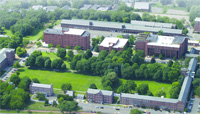
Uncategorized

In the past four years Massachusetts has lost more than 200,000 jobs. If the state wants to keep its share of technology-based industries, such as biotech, it has a lot to learn from places like North Carolina, which does a better job of incubating a skilled workforce.

Two proposed programs under the Workforce Solutions Act, which is part of the economic stimulus bill in the Massachusetts House, are a good beginning. But what they leave out is more instructive than what they include. The proposed $11 million Workforce Competitiveness Trust Fund would match employer investment in worker training and build partnerships of employers, the workforce development system, community organizations, and unions to support business needs for particular skills in short supply. The $3 million Education Rewards program would provide assistance to workers attending community colleges or state universities to obtain a certificate or degree that allows them to advance in their occupation. But even with these combined programs, Massachusetts has a lot of catching up to do.

The state’s two major competitors in biotechnology — North Carolina and California — have corporate headquarters and research facilities, just like here. All three states hope to use this strength to expand bio-manufacturing. But Mass-achusetts has not made the strategic investments that those states have in training bio-manufacturing workers.

For starters, too much of the state’s focus is on providing incentives for firms to locate here rather than investing in the workforce that will keep them here once they go into manufacturing. In 2003, Governor Mitt Romney launched the ‘Massachusetts, It’s All Here’ marketing campaign, whose first phase was to attract bio-manufacturing and medical device producers. Another Romney economic development initiative set aside $125 million in subsidies to attract bio-pharmaceutical and medical device companies that create manufacturing jobs. These initiatives are important, but ignore workforce development.

The missing link in the economic development agenda is a community college system that responds to the needs of the labor market. While community college systems in North Carolina and California are collaborating with employers and universities throughout their states to develop bio-manufacturing certificate and degree programs, Massachusetts has few degrees and only tried a pilot certificate program in 2001. The pilot, Building Essential Skills Training, created a short-term bio-manufacturing certificate for the state’s community colleges, which a couple of colleges, including Springfield Technical Community College, still offer. But last year only 13 associate degrees and seven certificates in biotechnology were awarded by Massachusetts community colleges. In contrast, 874 people were enrolled in 17 associate degree programs in biotechnology in North Carolina’s community colleges and 559 completed a one-semester technician certificate in 2005.

Furthermore, the Golden LEAF Foundation, North Carolina’s tobacco settlement fund, put up $60 million in 2002 to improve biotechnology programs at the community college and the university level. This human-capital approach to attracting biotechnology companies should have other payoffs as well. Even if workers do not get jobs in biotechnology, they are building skills that can be used in other high-tech industries.

North Carolina shows what a state can do when it links its community college system to its economic development agenda. CommCorp, primary workforce development agency in Massachusetts, tried to make such a link with initiatives like the Building Essential Skills Training program, but it cannot provide the funding that the state’s higher education system could.

The Workforce Solutions Act is needed, but if the Commonwealth hopes to convert its leadership in research and entrepreneurship into good manufacturing jobs, it has to be better integrated with higher education.

Joan Fitzgerald is director of the graduate program in Law, Policy & Society at Northeastern University.

Uncategorized

The annual spring trade show of the Affiliated Chambers of Commerce of Greater Springfield moves to the MassMutual Center for 2006. Organizers say the new venue provides facilities and amenities that will take the Market event to a higher level and bring greater value for exhibitors and visitors alike.

Deb Boronski says a new venue, the MassMutual Center, will no doubt generate some excitement and curiosity for the 2006 Business Market Show, set for April 5.

“People are always asking, ‘what’s new for this year?’” said Boronski, vice president of the Affiliated Chambers of Commerce of Greater Springfield and coordinator of the Market event for the past several years. “Well, now we’ve got a pretty good answer for them.”

But the gleaming new convention center will do more than draw some attention to the event and perhaps a bigger crowd, she said; it will also create a bigger and better show.

Elaborating, she said the facilities at the center, especially the smaller function rooms, will enable organizers to schedule a number of programs and seminars during the day — from the monthly luncheon of the Advertising Club of Western Mass. to the launch of the Affiliated Chambers’ new Division of Business Excellence.

The number and variety of scheduled programs has even prompted organizers to change the event’s name. “It’s no longer just a trade show,” said Boronski, “we’re calling it a conference and exhibition.”

And it is one that will likely live up to that often-used phrase ‘something for everyone,’ she said. In addition to the nearly 200 booths on the exhibition floor, the 2006 show will feature seminars on everything from identity theft to Internet marketing; the region’s burgeoning Hispanic market to making full use of those electronic gizmos.

“This is not just a trade show any more it’s a showcase,” said Boronski. “What we’re doing is giving businesses more reasons to send more of the people to the show.”

Getting Down to Business

As she talked with BusinessWest in the main exhibition hall at the MassMutual Center, Boronski said the $70 million facility, opened last fall, gives show organizers a large degree of flexibility simply not obtainable at the Eastern States Exposition, the show’s home for the past decade.

“The Big E was a great venue, it served us well for many years,” she said. “But we were limited in some of the things we could do there; it was essentially one big room, which made it more difficult to conduct break-out sessions and seminars. Here, we have the facilities to do a lot more of everything.”

And, in the progress, provide the change and value (to both exhibitors and visitors alike) that a show must provide to succeed, she explained.

“Each show is going to be different from the one before,” she said, noting a turnover rate among exhibitors of about 30%. “But we strive each year to bring new programs and events that will give people ample reason to leave their offices and plants and come to the show.”

This year, there will be a number of incentives for coming to downtown Springfield, starting with the annual breakfast and its keynoter, Steven Little, a senior consultant for Inc. Magazine, who will speak on business growth and what he calls the “future of opportunity.”

Meanwhile, the Advertising Club of Western Mass. will stage its monthly luncheon at the show, and is inviting exhibitors and visitors to join in the festivities. Reservations will be needed for the luncheon (tickets are $25 for ad club members and $30 for non-members; visit www.adclubwm.org), which will include the program Branding: Making Your Mark. It will feature regional case studies that will examine the elements of effective branding.

In the afternoon — 4 o’clock to be exact — the ACCGS will launch its new Division of Business Excellence. A successor to the membership-driven agency SPACE, the Springfield Area Council for Excellence, the DOBE as it’s called will provide a number of services aimed at helping area companies become more competitive in a global marketplace.

These will include informational programs as well as linking business owners with consultants who will provide assistance on a fee-for-service basis with implementation of business excellence strategies including Kaizen, lean manufacturing, Six Sigma, and others.

“We thought the Market show was the perfect forum for us to launch the business excellence division,” said Boronski. “There will be hundreds of business owners and managers there, giving us an opportunity to generate awareness of the division and how it can make the region more competitive.”

Market 2006 will also feature a number of free business seminars, to be staged in morning and afternoon sessions, in the MassMutual meeting rooms next to the exhibition hall. The scheduled programs include:

  • Managing Your Electronic Gizmos and Office Technology, a how-to and ‘how-to-get-the-most-out-of-your-devices’ hosted by Sean Hogan, president of Hogan Communications;
  • Grow Your Business — Hire Right, led by Ethan Bloomfield of HRD Press;
  • The Business Incubator at the Andrew M. Scibelli Enterprise Center, led by Thomas Goodrow, vice president of Economic and Business Development at Springfield Technical Communnity College;
  • Entrepreneurship: Make the Transition to Grow Your Business, led by John Rogers, dean of the School of Business at American International College;
  • Internet Marketing, presented by David Flaherty of Ashton Services;
  • Run Your Business So You Can Leave it in Style, a panel discussion coordinated by the Bank of Western Massachusetts;
  • Focus Your Marketing Vision, led by Tina Stevens, president of Stevens Design Studio;
  • Improve Team Collaboration and Have Fun, led by Robert Rasmussen, president of Robert Rasmussen and Associates, LLC;
  • Understanding New England’s Hispanic Market Potential, led by Hector Bauzá and Francisco Javier Solé, of Bauza & Associates in Holyoke;
  • Credit Reports, Nondisclosure Laws, and Identity Theft, led by Guy Swiatlowski of Cambridge Cradit Counseling;
  • The LifeBridge Free Insurance Program, led by the MassMutual Financial Group;
  • Treat Business Like a Business and Family Like Family, a panel discussion coordinated by the UMass Family Business Center; and
  • More on the Future of Opportunity, led by Steven Little, senior consultant for Inc. Magazine.

The attractive lineup of events should attract a larger number of visitors than previous shows, said Boronski, adding that she is hopeful that individuals working in downtown office towers will set aside at least some of their day for the show.

“They don’t have to get in their cars and drive anywhere,” she said, noting that some people working downtown were put off by the prospect of driving to the Big E. “There are 9,000 pre-paid parking spaces in downtown Springfield — if we can get just 10% of those people to come to the show, that’s an additional 1,000 visitors, and that would make the event so much better.”

Show Time

The 2006 Business Market Show will be the 17th edition of the event, said Boronski, adding that since year 2, the goal — and the challenge — for organizers has been to make the show different and better.

The MassMutual Center provides the setting and the amenities to make that assignment somewhat easier, she said, noting that additions for this year take the event well past the label trade show.

“We’ve gone to a new, much higher plane,” she explained. “We’re still a showcase of 200 area businesses, but now we’re so much more than that.”

Fast Facts

What:The 2006 Business Market Show Conference and Exhibition
When:April 5
Where:The MassMutual Center in downtown Springfield
Schedule:Breakfast is at 7:15; the business exhibition runs from 9 a.m. to 5 p.m.
Breakfast Keynote Speaker:Steven Little, senior consultant for Inc. Magazine
Parking:Ample parking is available in downtown Springfield lots. Exhibitors will receive a $5 voucher for parking in the Civic Center garage. Fees for attendees will not exceed $8.
For More Information:Call Deb Boronski at (413) 755-1309
Web site:www.businessmarketshow.com


Departments

Open House
Feb. 1: The Western New England College Law and Business Center for Advancing Entrepreneurship will host an open house from 5 to 7 p.m. in the Scibelli Enterprise Center, 1 Federal St., Springfield. The new center was established to provide graduate business and law students with an opportunity to offer practical consultation to entrepreneurs starting new and building existing small businesses in the community. From 4 to 5 p.m. in the Teleconference Room, a panel of intellectual property experts will discuss how entrepreneurs can legally protect creative output and innovations. Also, they will review patents, trademarks, and copyrights of small businesses. To register or for more information, E-mail Aimee Munnings, Director, at [email protected] prior to Jan. 25.

Contractual Liability Seminar
Feb. 6: Geoffrey Smith, senior vice president, TD Banknorth Insurance Group, will be the featured speaker at a free luncheon hosted by TD Banknorth Insurance Agency Inc., from 11:45 a.m. to 1 p.m. at 2077 Roosevelt Ave., Springfield. His presentation during the Lunch & Learn session is titled “Contractual Liability?” and will explore what to look for and what to look out for in the risk-transfer provisions found in everyday contracts. To sign up, E-mail your request to [email protected]. Seating is limited.

Western Mass. Economic Review
Feb. 8: The Regional Technology Corporation will sponsor a presentation on the economic profile of the region from 8:30 to 9:30 a.m. in the TD Banknorth Conference Center, 1441 Main St., Springfield. The profile is based on Western Massachusetts Electric Company’s annual report to its customers titled Western Massachusetts Economic Review. The free presentation will summarize key findings from the 2005 Review and provide a regional economic outlook for 2006. Seating is limited and advance registration is required. For more information, contact April Cloutier at (413) 755-1314 or [email protected].

‘Double Bottom Line’ Lecture
Feb. 9: Lisa Fairfax, an associate professor of Law at the University of Maryland Law School, will present “Achieving the Double Bottom Line: A Framework for Corporations Seeking To Deliver Profits and Public Services” at 5:30 p.m., hosted by the Western New England College Law and Business Center for Advancing Entrepreneurship. The lecture will take place in the S. Prestley Blake Law Center on WNEC’s main campus, 1215 Wilbraham Road, Springfield. The event is free and open to the public. For more information, call (413) 736-8462 or visit www.law.wnec.edu/lawandbusiness.

Outlook 2006
Feb. 10: Howard Fineman, chief political correspondent for Newsweek magazine, will deliver the keynote address for Outlook 2006, hosted by the Affiliated Chambers of Commerce of Greater Springfield. The annual legislative event will be conducted from 11:45 a.m. to 1:30 p.m. at Chez Josef in Agawam. In addition to Fineman’s presentation, Lt. Gov. Kerry Healey will discuss the state outlook, and Northampton Mayor Claire Higgins will present remarks for the region. Higgins is also serving as this year’s president of the Mass Municipal Assoc. Tickets are $40 for Chamber members, $60 for nonmembers. Tables of 10 can be reserved. Deadline for reservations is Feb. 3. For more information, contact Diane Swanson, Events Manager, at (413) 787-1555.

Business Entity & Basic Contracts
Feb. 22: The Mass. Small Business Development Center (MSBDC) Network will present Business Entity & Basic Contracts from 8:30 to 10:30 a.m. at the Scibelli Enterprise Center, 1 Federal St., Springfield. The workshop will look at ways a business can be run, the advantages and disadvantages of corporations, limited liability companies, partnerships and sole proprietorships. In addition, the workshop will look at income tax issues as well as the minimum needed to protect the business owner in writing when they enter into contracts with third parties. The cost of the workshop is $25. For more information or to register, contact Diane Randall at the MSBDC Network, (413) 737-6712.

Running A Successful Restaurant
March 14: The Mass. Small Business Development Center (MSBDC) Network will sponsor Food For Thought: Tips For Running A Successful Restaurant from 9 to 11:30 a.m. at the Berkshire Chamber of Commerce, 75 North St., Suite 360, Pittsfield. The program will discuss the key ingredients of successful restaurants and the pitfalls that can lead to failure, and will offer tips for improving a restaurant operation from the dining room to the kitchen. The cost is $25. For more information or to register, contact Diane Randall at the MSBDC Network, (413) 737-6712.

Features
It’s a little like that joke George Carlin told years ago, the one where he speculates about what John F. Kennedy Jr. would think or say when asking a cab driver to take him to J.F.K. Airport in New York.

When Andy Scibelli heads to the office now, he goes to a building with his name on it — the Andrew M. Scibelli Enterprise Center. Like other tenants, the former president of Springfield Technical Community College is trying to get a fledgling business off the ground.

In this case, it’s Scibelli & Associates, a consulting venture he started soon after retiring 18 months ago to help other colleges do as the team at STCC did — think entrepreneurially. By that, he meant creation of programs to help spur entrepreneurship, or E-ship, as he calls it, and, if possible, create incubator facilities to help new businesses get a solid start. To do that, colleges would themselves have to become entrepreneurs in the sense that they would have to take risks and think outside the box.

STCC did all that in the creation of its enterprise center, which includes two incubators — one for area high school and college students and the other for more-established businesses — and also houses the college’s Entrepreneurial Institute and a number of agencies that support small businesses. Scibelli led the team that acquired the funding and assembled the various components that comprise one of the most comprehensive programs of its kind in the country.

That’s why his name is on a sign over the front entrance, and also why he feels eminently qualified to help other colleges and universities undertake similar initiatives.

In an interview with BusinessWest, Scibelli said he has worked with a few public colleges in the Northeast that are exploring entrepreneurship programs, while also handling a few interim-president assignments — at Massachusetts Bay Community College and, more recently, Berkshire Community College.

He said Scibelli & Associates is still mostly a part-time pursuit, one that he looks to grow through word-of-mouth referrals, marketing, and networking. Those are some of the skills that, like other business owners in the SEC, he is still acquiring.

Actually, there have been several adjustments for Scibelli, who served as STCC’s president for 22 years.

“Before, when I wanted a PowerPoint presentation, I just called some people and a few days later, it was there,” he explained. “Now, when I order a PowerPoint, I’m ordering me to take care of it.”

Name of the Game

Learning PowerPoint has actually been one of the simpler challenges for Scibelli to wrestle with since retiring in the summer of 2004 — that and getting accustomed to the notion that his name is also his business address.

“That took a little getting used to … it’s cool seeing your name on the building,” he said. “A few times, I’ve been introduced to some people here who don’t know who I am; they hear the name and ask, ‘is this your building?’”

It’s not, but it came to be a part of Scibelli’s vision to make the portion of the old Springfield Armory located on the east side of Federal Street into a unique economic development initiative. It started with the creation of the STCC Technology Park in 1996, which currently houses more than a dozen technology related businesses that employ nearly 800 people, and continued with the conversion of one of the oldest Armory buildings into what was then known as the Springfield Enterprise Center.

The SEC was designed to promote entrepreneurship in a number of ways — through its incubators, which currently house a number of small businesses, support organizations based there, such as SCORE and the Mass. Small Business Development Center Network, and the Entrepreneurial Institute, which promotes programs for students at all levels.

When Scibelli retired, administrators at the college moved to rename the facility in his honor. He now occupies a suite on the ground floor, next door to former radio and television sales executive Fred Steinman, who last year bought the local franchise for the direct mail company Valpack.

In many ways, the SEC is not only Scibelli’s business home, it’s also a selling tool as he acts as consultant for colleges and universities mulling entrepreneurship. In other words, it’s a working model of an effective E-ship program, and it displays the many benefits that may come to a school — everything from closer ties to the business community, to a hands-on link to K-12 students, to strong media attention.
This is the message Scibelli has brought to several schools, including Broome Community College (BCC) in Binghamton, N.Y. An old industrial center, Binghamton is in many ways like Springfield in that it is looking for new economic development opportunities and has an inventory of older, mostly vacant mills that could be converted into incubators.

“They want to look at the full menu of opportunities when it comes to entrepreneurship,” said Scibelli. “They wanted to find out more about the subject, including incubators.”

BCC’s motivations are many, he continued, adding that the school wants to explore ways to expand its role in the community while also help in bringing new jobs to the region; there are currently 17 businesses in the Technology Park at STCC, and another nine in the SEC, said Scibelli.

“In Binghamton, as in most communities that are experiencing a downside, the Chamber and other business groups are saying, ‘who can come to the rescue?’” he explained. “For colleges to jump in and create businesses and jobs, that’s wonderful and everyone wants to cooperate.”

BCC is still in the early stages of creating an E-ship program, said Scibelli, noting that he is also working with Worcester State College in the preliminary steps toward a venture that may involve the school in new economic development initiatives there.

“That’s a city that’s re-inventing itself,” said Scibelli, referring to a shift within the state’s second-largest community from manufacturing to the biosciences and other technology-related fields. “And the city wants the colleges to play a role in that.”

To generate interest in E-ship programs and the opportunities they present for both two- and four-year colleges, Scibelli has staged a few seminars on the broad subject, including one early last year at Cornell University, and has another planned for next month in Florida. His goal is to get the schools’ presidents involved early on, because this is how to get the ball rolling.

“Without the commitment from the CEO, the president, a lot of this stuff never flies,” he explained. “It doesn’t matter what the level of commitment is from everyone else; if the CEO isn’t on board, it’s not going to happen.”

What he tells school presidents, and everyone else who’s interested, is that while entrepreneurship programs help the community, they can also bring a return on investment, or ROI, for the colleges themselves.

This can take a number of forms, he said, noting that some incubator ventures can actually become profit-making ventures. But in the meantime, schools can, and often do, increase enrollment, develop a broader donor base, add certificate and degree programs, and establish niche identification.

“If you fold it into the mission of the college, it has nothing to do with making a profit; it has to do with service,” he explained. “It’s another arm of an educational resource for the community — one that happens to grow new businesses.”

Culture Shock

As for his new business, Scibelli said he wants to achieve controlled growth. Elaborating, he told BusinessWest he wants it to be a successful venture, but not one that will become all-consuming.

He currently averages a few hours each day at the SEC, but generally works when and as long as he wants, and keeps his eyes (and schedule) open to other interim assignments or consulting projects. Meanwhile, he’s traded designer suits for designer sweatshirts and jeans, and is getting used to the notion of having no one to supervise but himself.

“I’ve had to learn how to do a lot of things,” he said, referring back to his adventures in PowerPoint. “Overall, I’ve really enjoyed the transition and being entrepreneurial.”
And he wants to show colleges and universities how to do the same.

George O’Brien can be reached at[email protected]