Home Posts tagged Features (Page 14)
Cover Story
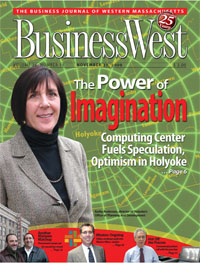
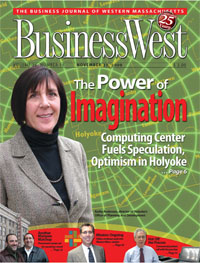
Computing Center Fuels Speculation, Optimism in Holyoke
Cover 11/23/09

Cover

The high-performance computing center planned for downtown Holyoke will apparently become reality in the next 12 to 18 months. While details of that venture — to involve UMass, MIT, and many other institutions — are starting to emerge, speculation has begun in earnest about what kinds of economic-development opportunities will follow such a project. Those involved in a task force to develop something to be called the “Innovation District” in the heart of the city say much depends on the research agenda that will emerge at the center. But all signs point to an enormous opportunity for this former paper and textiles hub, and the goal moving forward is to fully leverage this asset.

Jeff Hayden was recalling some of the Holyoke history he’s known since he was a child.

“When the dam was first built, there were no mills — this was an agrarian community with about 3,000 people,” said Hayden, vice president of Business and Community Services at Holyoke Community College and former director of economic development for the city, as he referenced the engineering project that enabled what was then a small town to take full advantage of a 57-foot drop in the Connecticut River. “Some 35 years later, there were 36 mills, probably close to 40,000 people living here, and an industrial complex that could rival anything in the country. That’s incredible growth in a very short time.”

He cited the chapter in Holyoke history written between 1850 and 1880 as he discussed the high-performance computing center that will now apparently become reality in the Paper City — and, perhaps more importantly, what could follow that facility in terms of economic-development potential.

Hayden is not predicting that history will repeat itself with such profound growth, but then again, he’s certainly not ruling it out.

Such is the power of imagination, and speculation, when it comes to the computing center, a concept that most people in this region, including many of those most-closely involved with it, are struggling to get both hands around. But optimism abounds, and there is widespread sentiment that the $50 million facility could change the landscape in this city that has been trying to reinvent itself since most of the mills closed decades ago.

What is known is that UMass, MIT, Boston University, CISCO, EMC, and several other partners will come together and build a facility somewhere along the canals in downtown Holyoke. This much was announced at a packed press conference in late October that featured Gov. Deval Patrick. What is also known is that the computing center will be a nonprofit venture that will not pay taxes to Holyoke and will create perhaps only a few dozen jobs to start, by most early estimates.

What isn’t known is what kind of economic development can follow such a facility. There are other so-called super-computing centers around the country, but most have been in existence only a short time, so there is no real body of evidence to show what can happen in Holyoke.

But there is widespread speculation that government agencies, private businesses, support services, and perhaps (or probably) all of the above will want to locate around the computing center, said Kathy Anderson, director of the Holyoke Office of Planning and Development. She, like others, said that much will depend on the research agenda that emerges at the center. But there are some common denominators.

“There is a pattern developing about the kinds of businesses that want to be located near these centers,” she said, noting that her office is conducting research on the subject. And there is ample reason to believe that many companies and institutions will want to be around this particular center, she continued, because of its uniqueness with regard to how it will be powered.

Indeed, inexpensive hydropower will be the primary source of energy to drive and cool the computers, said Anderson, adding quickly that this is an attractive drawing card at a time when many businesses and institutions want to portray themselves as environmentally conscious. “It’s clean, it’s green, and it’s comparatively cheap,” she noted.

Anderson will be one of the co-chairs of a task force charged with exploring development opportunities in what will be called the “Innovation District” in downtown Holyoke, where the center will be built, although the exact location isn’t known. She said the group will likely begin meeting next month, and while its specific charge hasn’t been put down on paper, it amounts to devising strategies to help enable Holyoke to leverage, and thus take full advantage of, an incredible opportunity.

Tim Brennan, director of the Pioneer Valley Planning Commission and the other co-chair of the task force, put things a different way.

“We’re essentially coming up with a re-use plan for a city,” he explained. “Holyoke was the first planned industrial city; now it could become the first re-planned industrial city.”

For this issue, BusinessWest talked with many who will be directly involved with this Innovation District about what the computing center could mean for Holyoke, and how the city can capitalize on this enormous asset.

Breaking New Ground

Brennan acknowledged that, like many who now have ‘high-performance computing center’ as part of their vocabulary, he’s still trying to grasp the concept.

There’s much that he doesn’t know about these facilities and the economic development that they could spur. What he does know is that nothing will happen overnight, and also that there is no clear model to follow, or anything approaching same.

“You can’t run to the library and get books on this,” he explained. “There just aren’t any. This is brand-new territory.”

Therefore, mapping out strategies will be challenging, but also rather exciting, he said, noting that a $50 million facility built by some of the top research institutions in the world is going to be dropped into the middle of an urban center, specifically a low-income community still struggling to gain a new identity after much of its paper and textiles mills closed down or moved south.

That makes this still-unnamed facility rather unique and potentially attractive, said Anderson, noting that most of the existing super-computing centers are located on or near college campuses (such as Ohio State University, the University of California at San Diego, and the University of Hawaii), or in rural areas such as Rio Rancho, N.M., Fitchburg, Wis., and Butte, Mont.

Research into existing centers reveals that most have affiliations with both universities and federal agencies or departments, she continued. The Advanced Biomedical Computing Center in Frederick, Md., for example, is affiliated with the National Cancer Institute and the National Institute of Health. The Maui High Performance Computing Center, meanwhile, has affiliations with the U.S. Air Force and the Department of Defense, and Research Triangle Park in Raleigh-Durham, N.C., has one with the Environmental Protection Agency.

Such affiliations are usually determined by the types of research being conducted at the centers, said Anderson, noting that it is far too early in the process to determine what the institutions involved in the Holyoke project will be focused on. The possibilities are seemingly endless, and include everything from work in climate change to new developments in so-called ‘cloud computing,’ or the delivery of hosted services over the Internet, or the ‘cloud.’

But the likely scenario, no matter the research agenda, is that government agencies will follow the computing center, and then private-sector firms doing business in (or trying to break into) the research areas that develop. There will also be support businesses to provide services to all those constituencies, as well as other businesses that want or need to locate near such a center.

“Our goal is to essentially create a campus,” Anderson explained. “We’ll see other businesses that are not even related to a high-performance computing center that would like to be around this.

“As the research agenda unfolds, we’ll see other researchers that will want to be around this,” she continued, “and we’ve already had calls from businesses that are not related to this kind of center but want to be near one.”

Hayden agreed, and used research and development of cloud computing as one example of what might emerge at Holyoke’s computing center, and how such work might attract businesses and jobs.

“One of the things they’ve talked about with this center is studying cloud computing itself and how it can be made more efficient, and green, and how it can best be utilized,” he explained. “That also incorporates things like security; if everything’s out there on the cloud, how do you keep it secure and how do you keep it proprietary?

“There are all kinds of complex computations that will be done in terms of how to do cloud computing in a way that’s effective for business,” he continued, adding that many private businesses could potentially be involved in this research, with the goal of bringing new products to the marketplace — products that could be produced in Holyoke.

Such scenarios echo Holyoke’s proud past, said Anderson, noting that, in many respects, history will indeed be repeating itself. It was abundant, inexpensive hydropower and an infrastructure to support large manufacturing operations that put Holyoke on the map 150 years ago, she noted, and it is these assets that are collectively bringing the computing center to the city — and fueling speculation about what will follow it.

Plenty of Dam Attributes

Indeed, while there are many unknowns when it comes to the computing center and the economic development it may generate, those who spoke with BusinessWest were in general agreement that Holyoke will certainly be well-positioned to capitalize on such opportunities.

“There are a lot of things happening in this city right now that are going to make it an attractive place for businesses to want to be,” said Anderson, adding that the computing center could be the catalyst that compels business owners, federal agencies, and college presidents to look in Holyoke’s direction.

Listing attributes and signs of progress, Anderson noted everything from the start of work on Holyoke’s Canal Walk to a large supply of former mill space that can be retrofitted to a number of uses; from an attractive location on or near several major highways to one of the lowest electric rates in the Northeast; from fast-track permitting to a strong fiber-optic backbone.

All of this and more is captured in a recently released video designed to promote the city as an attractive home for businesses, especially those of the green variety.

It features several players in business, industry, and economic development, including Anderson, Holyoke G&E General Manager James Lavelle, Universal Plastics President Joe Peters, and Brendan Ciecko, the 22-year-old entrepreneur who has made downtown Holyoke the home for his Web site design business Ten Minute Media.

“It’s a great strategic location for any business,” Ciecko says in the video. “Being within two hours of New York City and being an hour and a half from Boston is very advantageous for my business. I have the majority of my clients located in New York, so if I want to meet with Mick Jagger, for instance, I can be there in two hours.”

Summing up the content in the video and the many initiatives involving her office, Anderson said Holyoke has the wherewithal, and the creativity, needed to effectively leverage an asset like the computing center, making this city the proverbial right place at the right time for businesses in many sectors.

“A lot of things are coming together at the right time,” she told BusinessWest, noting everything from transportation facilities — a new intermodal transportation center downtown and the potential for commuter rail — to fast-track permitting that will expedite the process of bring a business to the city. “The pieces are coming into place for Holyoke to stand out in the market, and the state has recognized that.”

But perhaps the biggest asset is abundant, green energy, said Lavelle, noting that Holyoke’s hydropower is part of an attractive package, which also includes high-speed fiber-optic services, that is turning heads in the business community and elsewhere.

It obviously caught the attention of those at UMass, MIT, Boston University, and other colleges, who recognized the need for a high-performance computing center, but also the need to place it a community where the huge amounts of electricity needed for such a facility would be comparatively inexpensive — and green.

Lavelle noted that the electricity his utility would provide to a large commercial customer like the computing center (which is protected to need anywhere from six to 12 megawatts for its first phase) would currently cost about 8.4 cents per kilowatt. That’s roughly one-third lower than the rates currently charged by Western Mass Electric Co., he said, and about half what large businesses in Cambridge, home to MIT, are paying at present.

But it’s not just the rates that are attractive, he noted, adding that roughly two-thirds of the power supplied by HG&E is from renewable sources, mostly hydropower, and the utility is currently exploring ways to increase that percentage and also provide ample ‘green’ power for all those who might want to come to Holyoke.

“More than 80% of our power produces no carbon footprint, and that’s really attractive to entities looking to manage their growth and their carbon footprint at the same time,” said Lavelle. “And that’s not unique to high-tech and education; we’re seeing it across the board. Our challenge is going to be to scale and increase our renewable content with this growth so that we don’t dilute it.

“We’re trying to build our renewable portfolio so that our carbon footprint is continually declining,” he continued. “We’re looking at the possibility of wind generation on Mount Tom, we’re always looking at the hydro component to get more generation out of that plant, and we’ll look at other renewable sources.”

But the words ‘green’ and ‘renewable’ refer to more than just energy, said Anderson, referring to Holyoke’s vast inventory of old mill space and, in the larger scheme of things, its downtown as a whole.

Just as companies and institutions may want to reduce their carbon footprint, she explained, they may also desire to be part of an effort to revitalize and reuse some of the old mills, putting them back to work for economic development.

“I think a lot of entities would be intrigued by the possibility if reutilizing the existing resources we have here,” she explained, “taking old buildings built for manufacturing, looking at them in a different way and reusing them. That’s part of the whole green initiative, and it could be a real advantage for Holyoke.”

Powerful Arguments

Hayden, a Holyoke native, said the high-performance computing center is the hot topic of conversation seemingly everywhere in Holyoke, from HCC, which is already exploring creation of programs to train people who would work at the center, to the Stop & Shop, to the Dam Café on Northampton Street.

“There’s excitement and a level of energy I’ve never seen before,” he explained. “This has captured the imagination of an entire city.”

And it has drawn a number of references to Holyoke’s past and its meteoric rise as a manufacturing center, said Hayden, who, like Brennan and others, offered a cautionary note about the progress that could follow the computing center.

“Things won’t happen overnight,” he said. “It will take m
ny years for things to come into place.”

But as he recalled Holyoke’s profound growth after the dam and canal system were constructed, Hayden said, “30 years can go by in the blink of an eye.”

George O’Brien can be reached

at[email protected]

Sections Supplements
Monson Savings Bank Continues to Grow Market Share
Monson Savings Bank President Roland Desrochers

Monson Savings Bank President Roland Desrochers

Monson Savings Bank is a true community bank, dedicated to growing market share in and around the towns where it has a presence, and staying active in community life. But it’s also committed to innovations in technology and service delivery, all aimed at making customers’ lives a little easier.

The Monson Savings Bank boardroom now has a window — several large ones, actually — allowing people to look out on a downtown that has grown right alongside its namesake bank.

And even if the only recent physical expansion at MSB is the move of some executive offices and meeting space across the street from the bank’s longtime Main Street headquarters, President Roland Desrochers still sees plenty of room for this almost 130-year-old institution to grow.

“It made sense to utilize this space available in town, so close by,” Desrochers said of the move to free up square footgage in the main building. “Of course, it doesn’t have to be close by — communication isn’t a challenge these days, so to some degree, it doesn’t matter where we are. But we finally have a boardroom that’s not in the basement. I’m sure the board appreciates that.”

Indeed, with bank operations and offices bursting the bank’s headquarters at the seams, the relocation of some offices across the street was a no-brainer. In addition, when the U.S. Postal Service moved into a new building behind that house, Monson Savings Bank took over the former post office building nearby, giving it three locations in close proximity — and some needed elbow room.

Not that growth is a bad problem to have.

“This year, we’ve experienced 5% to 6% growth in our asset base and deposits, and we have generated most of our growth in the retail arena through the initiation of new products,” Desrochers said, including First-Rate Checking, which is a high-rate savings product tied to a checking account, offering 2% interest. “In this environment, where we’re seeing money markets paying less than one-half percent, that’s a pretty good return.”

Then there are Cash Back Checking, accounts that pay depositors back when they use their debit card; and NextGen banking, which targets specific age groups with different features, such as enhanced online and ATM access for college-age customers. “With each one of these products, we’re attracting a different client base,” Desrochers said.

That’s important for a bank that has adopted a strategy of building market share with just three locations — Monson, Hampden, and Wilbraham — in a region peppered with banks that have built branches with startling speed over the past decade. While all three locations have succeeded and grown — including the newest branch in Wilbraham, which has the added challenge of doing business on the fiercely competitive Route 20 corridor — the bank’s internal research says all have room to expand market share further, as long as MSB is nimble and responsive to what customers want.

Highs and Lows

Commercial accounts have seen similar growth, again through products aimed at making customers’ lives and finances easier, such as a small-business checking account that allows depositors to write 500 checks and make 500 deposits per month for free.

Then there’s the introduction last year of remote capture, a technology that allows business owners to make checking deposits without visiting the bank.

“That has become very popular because they don’t have to worry about making deposits here; they can just scan checks in their offices. So we’re able to sell commercial checking accounts to customers who are not necessarily located right near one of our branches.”

However, not all business is booming these days. The economy has taken its toll on commercial lending, which has been quieter than normal over the past year, Desrochers said.

“We get most of our commercial-loan business through referrals from customers or maybe board members, people like that,” he noted. “It’s quiet now, but I think you’ll find most banks will say they’re quiet, too. I do wonder how some businesses, especially trades, are being impacted by the economy, how many people will have issues through the coming winter.”

In addition, “delinquencies are up on the residential side, but it’s still much lower than the state average. People are definitely struggling to make payments, and a lot of people are waiting until the last day of the month, which is not something normal by any means. We’re hoping we can at least control the delinquencies and work with customers to whatever degree we can.” He noted that bank officials know that people are struggling, and the best way to handle problems paying bills is to keep the lines of communication open.

“Burying your head in the sand is not the best way to deal with the problem,” he said. “Banks are willing to sit down and work with people, but they need to take it upon themselves to be proactive with their financial institution.

“Banks don’t want to own real estate,” Desrochers continued. “Look what it costs to foreclose on real estate these days ‹ $5,000 to $7,000 for a single-family home. It doesn’t make a whole lot of sense to do that, so we obviously want to keep someone in their home.”

Even so, Monson has seen its marketing strategies pay off on the residential loan ledger; this year, it ranks fifth in home mortgage originations in Hampden County, up from 17th just five years ago. Desrochers credits not only competitive rates for that performance, but faster turnaround times and technology like online mortgage applications — again, to make the lives of customers a little easier.

BusinessWest asked whether Monson’s relatively small size compared to other regional banks allows it to be more nimble in introducing such services, but Desrochers said size is really no factor.

“In order to introduce new technology, things like online mortgages and mobile banking, no matter how big or small you are, you have to the spend time and effort necessary to test and implement those products,” he said. “You have to make the investment.”

He admitted, however, that it’s a challenge — but a rewarding one — to serve customers who are far savvier and more receptive to change than in the past.

“They wonder how they did without these things,” he said with a smile. “The whole gamut — online bill pay, remote capture — once customers have them, they wonder how they did without them.”

Meeting Needs

Monson Savings Bank, like many community banks in the region, is well-capitalized and largely free of the bad loans that capsized the financial system last year. But the institution continues to take a cautious path, setting aside an additional $700,000 in reserve this year to cover any potential losses should the issues facing banks get worse.

“Capital levels are strong right now, and the smart thing to do, seeing that, is to control growth,” Desrochers said. “Capital is so critical right now in this low-rate environment, and assuring a strong capital position is the most important issue until things turn around for the better.”

He has never been a proponent of rapid branching out, and the current financial landscape only reinforces that notion. “Now is not the time to get carried away, in our estimation. Preserving capital is critical in this type of market.”

Still, that caution doesn’t affect one of Monson’s key roles as a community bank — and that is supporting nonprofits that add to the quality of life in its communities.

“Most not-for-profit organizations and schools in our market area are very pleased with how we contribute to them,” Desrochers said, ticking off other beneficiaries of the bank’s community support, from librariers and arts groups to youth sports teams and senior centers.

“Those types of organizations have had cutbacks, and we try to help,” he said. “We try to contribute 10% of our bottom line back to the community, which for us runs in the area of $100,000 to $120,000 a year.”

That aid benefits not only small, locally based groups, but larger entities, such as the United Way, Girl Scouts, and the Red Cross, that in turn serve surrounding communities in specific ways, he said. “We give back to those organizations that meet wider needs. We don’t want to lose sight of that.”

It’s all about making a small difference in a community that can now be seen through the boardroom window.

Joseph Bednar can be reached

at[email protected]

Departments

Affiliated Chambers of Commerce of Greater Springfield
(413) 787-1555 www.myonlinechamber.com

Oct. 2: Hampden/Wilbraham Golf Classic, hosted by the Country Club of Wilbraham. Registration at 10 a.m., lunch at 11 a.m., shotgun start at 12:00 noon. Tickets: $110 for golf entry, $440 for a golf foursome. Sponsorships available.

Oct. 7:  ACCGS Breakfast, hosted by the Springfield Marriott, 7:15 to 9 a.m. Tickets: $20 for members, $30 for non-members.

Oct. 14: ACCGS After 5 Table Top Exhibit, hosted by the MassMutual Center in Springfield, 5 to 7 p.m. Tickets: $125 for members, $175 for non-members.

Oct. 15: West of the River Legislative Breakfast, hosted by Chez Josef in Agawam, 7:15 to 9 a.m. Guest speaker is Dolores Mitchell, executive director of the Group Insurance Commission. Tickets: $20 for members, $30 for non-members.

Oct. 23: Super 60, hosted by Chez Josef in Agawam, 11:30 a.m. to 1:30 p.m. Tickets: $45 for members, $65 for non-members.

Oct. 27: West of the River Chamber of Commerce Board Meeting, hosted by Captain Charles Leonard House, 7:30 to 9 a.m.

Oct. 28:  Executive Power Networking, hosted by TD Banknorth Conference Center,7:30 to 9 a.m. Tickets: $20 for members, $30 for non-members.

Young Professional Society of Greater Springfield
www.springfieldyps.com   

Oct. 4: Hike for Habitat, Mt. Tom, Holyoke, 10 a.m. Join the YPS team for the annual Hike for Habitat to benefit Greater Springfield Habitat for Humanity. The hike features two courses: a leisurely, 90-minute hike, or a more difficult, three-hour route to the summit. To register, hikers must raise a minimum of $25 per person, due on the day of the hike. To join the YPS team, contact Maureen Picknally at [email protected]  or Nicole Williamson at (413) 739-5503 or [email protected].

Oct. 15: Third Thursday, hosted by Hofbrauhaus restaurant in West Springfield.

Amherst Area Chamber of Commerce
www.amherstarea.com

Visit the chamber online to learn more about upcoming events.

Chicopee Chamber of Commerce
(413) 594-2101 www.chicopeechamber.org

Oct. 1: BusinessWest Speed Sales, hosted by the Bartley Center at Holyoke Community College, 4:30 to 7 p.m. Program Sponsors include the Log Cabin Banquet & Meeting House, Meyers Brothers Kalicka, P.C., Kittredge Center, HCC, Marcotte Ford, and First American Insurance Agency Inc. Cost: $350 for members, $450 for non-members.

Oct. 7: CheckPoint ’09, hosted by Castle of Knights, 1599 Memorial Dr., Chicopee, 12 noon to 2 p.m. Keynote speaker is  Robert A. DeLeo, speaker of the state House of Representatives. Sponsors include Our Dentist, Future Works, Westmass Area Development Corp., and Health New England. Tickets: $30 for members, $35 for non-members; tables of 8: $200 for members, $240 for non-members.

Oct. 27: 12th Annual Table Top Meeting, hosted by Castle of Knights, 1599 Memorial Dr., Chicopee, 4:30 to 7 p.m. Presented by South Hadley/Granby, Chicopee, Greater Holyoke, and Greater Westfield chambers of commerce. Exhibitor tables cost $90; reserve online at www.chicopeechamber.org or call (413) 594-2101. Admission; $5 for members, $10 non-members

Franklin County Chamber of Commerce (413) 773-5463
www.franklincc.org

Visit the chamber online to learn more about upcoming events.

Greater Easthampton Chamber Of Commerce (413) 527-9414
www.easthamptonchamber.org

Oct. 14: Networking by Night Business Card Exchange , hosted by Nini’s Ristorante, 124 Cottage St., Easthampton, 5 to 7 p.m. Sponsored by Greater Easthampton Jr. Miss Program. Event will include door prizes, hors d’ouevres, and a cash bar. Tickets: $5 for members, $15 for non-members.

Greater Holyoke Chamber of Commerce  (413) 534-3376
www.holycham.com

Oct. 1: BusinessWest Speed Sales Business Event, hosted by the Bartley Center at Holyoke Community College, 4:30 to 7 p.m. Sponsored by BusinessWest, First American Insurance Agency Inc., Holyoke Community College, Meyers Brothers Kalicka, P.C., Log Cabin and Delaney House, and Marcotte Ford.

Oct. 14: Fall Salute Breakfast, hosted by the Delaney House, Country Club Road, Holyoke, 7:45 a.m. Sponsored by Holyoke Medical Center. Tickets are $18. Tables reserved for parties of eight.

Oct. 21: Chamber After Hours, hosted by Holiday Inn, 245 Whiting Farms Road, Holyoke, 5 to 7 p.m. Sponsored by Yellowbook. Admission: $5 for members, $10 for non-members. 

Greater Northampton Chamber of Commerce (413) 584-1900
www.explorenorthampton.com  

Oct. 7: Arrive@5 Open House at the Chamber, 5 to 7 p.m. Sponsored by Crocker Communications Inc., Innovative Business Systems Inc., and Pioneer Training. Cost: $10 for members, $15 for guests.

Oct. 8: Northampton Area Young Professionals Party with a Purpose, hosted by dani. fine photography in the Eastworks building in Easthampton, 5 to 8 p.m. Cost: free for members, $5 for guests.

Oct. 16: Chamber Information Session, Greater Northampton Chamber of Commerce, 12 noon to 1 p.m. Considering membership? Come to an information session.

Northampton Area Young Professionals
www.thenayp.com

Oct. 8: October’s Party with a Purpose, hosted by dani. fine photography in the Eastworks building in Easthampton.

Quaboag Hills Chamber of Commerce (413) 283-2418
www.qvcc.biz

Visit the chamber online to learn more about upcoming events.

South Hadley/Granby Chamber of Commerce (413) 532-6451
www.shchamber.com

Oct. 20: Beyond Business, hosted and sponsored by Olde Hadleigh House & Patio, 5 to 7 p.m. No guest speaker. Cost: $5 members, $10 for general public, who are welcome. RSVP at (413) 532 6451 by Oct. 16.

Oct. 27: 12th Annual Table Top Meeting, hosted by Castle of Knights, 1599 Memorial Dr., Chicopee, 4:30 to 7 p.m. Presented by South Hadley/Granby, Chicopee, Greater Holyoke, and Greater Westfield chambers of commerce. Cost: $5. To reserve a table, call (413) 532-6451. 

Three Rivers Chamber of Commerce  (413) 283-6425
www.threeriverschamber.org

Visit the chamber online to learn more about upcoming events.

Greater Westfield Chamber of Commerce (413) 568-1618
www.westfieldbiz.org

Oct. 9: Greater Westfield Chamber of Commerce Annual Fall Breakfast, hosted by the 104th Fighter Wing, Dining Hall, 175 Falcon Dr., Westfield. Guest speaker will be  Rick Forgay, president of the Rich Forgay Leadership Institute. Sponsors include Noble Health Systems, Westfield Gas & Electric, NewAlliance Bank, FieldEddy Insurance, and the Carson Center for Human Services Inc. Cost:  $20 for members, $25 for non-members. For reservations, call (413) 568-1618, e-mail [email protected] , or register at www.westfieldbiz.org . The deadline for reservations is Oct. 5.

Oct. 21: Greater Westfield Chamber of Commerce WestNet After Hours Networking, hosted by East Mountain Country Club, 1458 East Mountain Road, Westfield, sponsored by Sovereign Bank. Cost: $10 for members, $15 for non-members. For reservations, call (413) 568-1618, e-mail [email protected] , or register at www.westfieldbiz.org .

Oct. 27: 12th Annual Table Top Meeting, hosted by Castle of Knights, 1599 Memorial Dr., Chicopee, 4:30 to 7 p.m. Presented by South Hadley/Granby, Chicopee, Greater Holyoke, and Greater Westfield chambers of commerce. Display tables cost $90 for members. For reservations, call (413) 568-1618, e-mail [email protected] , or register at www.westfieldbiz.org.

Cover Story
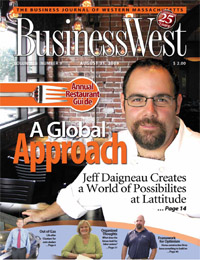
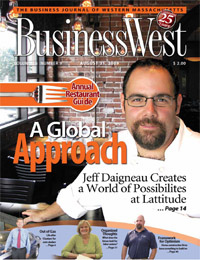
Jeff Daigneau Creates a World of Possibilities at Lattitude
Cover

Cover

Jeff Daigneau says he’s long desired to be a chef/owner, the coveted title that most all those who enter the restaurant business aspire to. After working at several area landmarks, including, most recently, Max’s Tavern, he decided that he didn’t just want to be in the kitchen — he wanted to be in his kitchen. The story of how he created Lattitude in West Springfield speaks to the myriad challenges — and sleepless nights — facing those who choose this road.

Jeff Daigneau calls it the “itch.”

And like many of those who start working in a restaurant, usually washing dishes, at a very young age, he got it — big time.

Elaborating, he told BusinessWest that many of those who get exposed to the challenging but intriguing restaurant business early on get drawn into it and make plans to make it a career. From washing dishes, they move on to peeling potatoes, chopping onions, and assorted other duties. Those not intimidated by the long hours, hard work, and industry lifestyle often go to college to learn how to cook — Daigneau turned down a full scholarship at Johnson & Wales in Providence to attend a two-year program at the Culinary Institute of America (CIA) in Hyde Park, N.Y., instead — and eventually go to work in someone’s kitchen.

However, if one truly gets the itch, said Daigneau, he or she eventually wants their own kitchen, and if they go down that road, they get everything that comes with those bragging rights, from those long hours to credit card balances with lots of zeros to often-sleepless nights spent wondering how to make ends meet.

Daigneau got all that and much more — including the enormous challenge of coping with the Big E, located directly across Memorial Avenue from his establishment (more on that later) — when he decided to open Lattitude more than 20 months ago. He has absolutely no regrets, though, and nothing even approaching a second thought about his high-risk entrepreneurial gambit.

“That’s because it’s … really a lot of fun,” he said, shaking his head for emphasis. “I get to have fun every single day.”

This fun comes in the form of creativity he can express in myriad ways as he plays out the role of chef/owner, or “true chef/owner,” as he puts it, explaining that some who put this title on their business card are chefs who own merely a small piece of the restaurant in question. Daigneau, former executive chef at Max’s Tavern in Springfield, owns Lattitude lock, stock, and salad forks, and he has those credit-card balances — once soaring above $150,000 but now down to $30,000 or so — to prove it.

In that role, Daigneau is, in essence, carrying out the mission that prompted him to choose the name Lattitude, while giving the word an extra ‘t’ for some flair and to be a little different. “Latitudinal lines go around the world,” he explained. “I try to give people a little flavor of the world.”

Elaborating, he says part of that aforementioned mission is to educate his patrons, and he does so by introducing menu items such as “true” San Francisco cioppino, a bouillabaisse-like dish, and keeping some prices on wine “stupidly reasonable” to give people a chance to sample various labels.

Overall, his strategy is succeeding. Revenues are running well ahead of projections for where he thought the restaurant would be at this juncture, and the sluggish economy has, in his opinion, been a non-factor, a testament to the fact that he’s obviously doing something right.

As for the Big E, well, it was a big part of a first year that Daigneau described as a real learning experience.

“That first fair … it nearly put us out of business,” he explained, noting that the doors had been open only a few months before the start of the exposition’s 2008 run, and he simply didn’t know what to expect in terms of the challenge of luring customers to that stretch of Memorial Avenue for those 17 days in late September.

This year, he says, he’ll be ready, with a game plan — he’ll pay for his customers’ parking, for example — as well as some aggressive marketing to remind people he’s open, and a refined attitude born from last year’s experiences.

Meanwhile, for the other 49 1/2 weeks of the year — and fair time as well — the Big E represents opportunity, said Daigneau, one that he intends to fully maximize.

“We do very well with a lot of the weekend shows,” he explained. “The Morgan Horse shows have been really good, but all of them have helped — the dog shows, a motorcycle show, even the gun and knife show; someone from Ohio came in for dinner and asked what kind of heat we pack around here.”

In this issue, BusinessWest looks at Daigneau’s early success recipe, and how his story is typical, albeit with some different wrinkles, of those involving individuals who get that itch.

Entrepreneurial Flavor

Daigneau says he probably wouldn’t have his own kitchen — or at least not the one he currently patrols — were it not for a 57-page business plan he wrote for the restaurant that would become Lattitude.

“It was a work in progress for about three years,” he said of the document he eventually handed to commercial lending officers at Berkshire Bank in early 2008. “It was rock solid, and full of true facts and figures.”

Solid enough, apparently, to convince those at Berkshire to write the bank’s largest restaurant loan to date — $400,000 — after a few other institutions wouldn’t even talk to him. That wasn’t enough for Daigneau to get the doors open, actually; he had to start using his credit cards. But it came close, and it exemplified just how different, and compelling, the concept for Lattitude was and is.

Daigneau probably first starting thinking about it when he was washing dishes at a small breakfast place located on the Congamond Lakes in Southwick. This is where the itch first developed. It progressed while Daigneau, an Agawam native, went to work at the Chez Josef banquet house, where he handled a number of duties over a stint that lasted through most of his high school years.

“You start out washing dishes — everyone does — and you realize that what you’re doing is kind of cool,” he said of how his passion for the business developed and evolved. “Soon, you’re peeling potatoes and peeling carrots, and you get an itch — and that’s exactly what it is, an itch.

“You initially look around and see what else is going on, and you see the guy at the grill and the woman doing the fries, and you say, ‘I’d like to be doing that,’” he continued. “And pretty soon, you end up there because someone doesn’t show up for work. Eventually, you’re working on the line. By my junior year in high school I had decided that this is what I wanted to do for the rest of my life.”

After attending CIA, Daigneau worked in a few restaurants, including Eastside Grill in Northampton and School Street Bistro in Westfield, before eventually landing at Max’s. He started as executive sous chef, was quickly promoted to executive chef, and, in 2007, was tabbed to lead the eatery’s catering division.

Daigneau said he enjoyed the work, but kept returning to the notion of running his own establishment, a thought that first entered his head maybe five years ago and never actually left.

“I wanted to be able to do what I wanted to do and how I wanted to do it,” he told BusinessWest. “It’s not that I didn’t believe in everyone else’s way of doing things; owners were always giving me a lot of freedom, but I wanted more. I wanted to be the chef/owner, I wanted that level. I’ve had that goal since I was a kid.”

He started scouting for suitable sites, and had trouble finding what he was looking for. He said that when he “stumbled” across space, actually three spaces, in a building on Memorial Avenue that comprised the old Caffeine’s restaurant and the former home to Kent Pecoy Construction, he knew he’d found a home.

“I don’t know why, I just knew,” he explained. “I talked to the landlord and signed a lease immediately. I didn’t have any money, I didn’t have a liquor license, I didn’t have anything; I just said, ‘I’ll figure it all out later.’”

And he did.

Salad Days

As he assessed his first 15 or so months in business, Daigneau said most things have gone according to that detailed plan he worked out for the lenders. But not everything, obviously.

The restaurant has become popular with most demographic groups and draws patrons from across a wide geographic radius, he explained. But it has become, somewhat to his surprise, extremely popular with women, a fact he attributes to well-lit parking areas and entrances and a feeling of safety not attainable in many settings.

And then, there’s the Big E.

Daigneau said he was caught somewhat off guard last year by the fair, which can be a drain on Memorial Avenue businesses, as he soon learned. Most restaurants in the vicinity of the fairgrounds simply shut down for those 17 days (with most using their real estate to park cars), he explained, adding quickly that he didn’t have that option last year and, despite his strong start, doesn’t have it this year, either.

He’ll be open, but with the understanding that Lattitude will become more of a bar than a restaurant those 17 days, and he’ll be pouring far more draught beer than specialty martinis. But he wants his regulars and potential first-timers to know he’ll be open for lunch and dinner.

And despite the solid nature of his business plan and no shortage of confidence in his abilities and business instincts, Daigneau says there was plenty of apprehension in the weeks and months after he opened the doors to Lattitude. “I didn’t sleep much those first eight months,” he said.

Overall, Daigneau says he believes he’s planned — and guessed — right when it came to his menu, basic approach (a heavy emphasis on local, fresh produce) and the general experience he provides.

As for the cuisine, he calls it ‘Global American’ in another reference to latitude, and says he likes to mix things up, with new offerings regularly on both the lunch and dinner menus, with the former becoming increasingly popular of late with the business crowd. It features everything from a ‘house made mac & cheese’ to a grilled scallop salad to ‘Asian spiced grilled king salmon.’

“I didn’t want to limit myself on anything,” said Daigneau, referring both to what’s on the menus and how offerings are prepared. “I change the menu almost every day — dishes come off, dishes go on. We change all kinds of things because we want to educate people, not intimidate them.”

Most all of the items on the menus are prepared or accented with locally grown produce, said Daigneau, adding that he’s at Cecci Farms in Feeding Hills every day. “A case of tomatoes is $25 there, while I can get one from the wholesaler for $10, but I want the local,” he explained. “To have a true farm restaurant is a lot of fun.”

There’s that word again. Daigneau used it repeatedly in the course of his talk with BusinessWest, and he used it with sincerity, while reiterating, repeatedly, that this business certainly isn’t all fun and games.

Check, Please

Daigneau said his father got married a few months ago. It was still another event for which he handled the cooking.

He took the occasion to look through some old photographs and noticed that in practically every one taken over the past decade, he was in a chef’s outfit. Recalling the event prompted him to recite something he’s probably said hundreds of times in his career: “this isn’t a life,” he said of what it’s like being at the upper levels of the restaurant business. “It’s a lifestyle.”

It comes to those who get the itch, he continued, adding that few ever regret scratching it, and he certainly doesn’t.

After all, how many people get to have fun every single day?

George O’Brien can be reached at[email protected]

Departments

Affiliated Chambers of Commerce of Greater Springfield
www.myonlinechamber.com

Sept. 2: ACCGS Breakfast, 7:15 to 9 a.m., hosted by the Log Cabin Banquet and Meeting House in Holyoke. The speaker will be Kevin Rhodes, conductor of the Springfield Symphony. The cost is $20 for members, $30 for non-members.

Sept. 7: ACCGS After 5, 5 to 7 p.m., hosted by Café Lebanon in Springfield. The cost is $10 for members, $20 for non-members.

Sept. 14: Ludlow Golf for Kids, hosted by Ludlow Country Club. Registration and lunch from noon to 1 p.m.; shotgun/four-person scramble at 1 p.m. The cost is $110 per person or $400 for a foursome. Sponsorships are available.

Sept. 22: West of the River Chamber of Commerce Board Meeting, 7:30 to 9 a.m., hosted by Captain Charles Leonard House in Agawam.

Amherst Area Chamber of Commerce
www.amherstarea.com

Sept. 3: UMass/Chamber Community Breakfast, 7:30 to 9 a.m., hosted by the UMass Student Union Ballroom. The cost is $8 for members.

Sept. 9: Chamber Breakfast, 7:30 to 9 a.m., hosted by Courtyard by Marriott, sponsored by Back In Motion, Auto Express, and Summerline Floors. The guest speaker will be Tony Marx. The cost is $12 members and $15 for guests.

Sept. 23: Chamber After Five, 5 to 7 p.m., hosted by the Emily Dickinson Museum, sponsored by Amherst Insurance Agency/The Nathan Agencies. The cost is $5 for members and $10 for guests.

Chicopee Chamber of Commerce
www.chicopeechamber.org

Sept. 16: Salute Breakfast, 7:15 to 9 a.m., hosted by the Log Cabin Banquet & Meeting House. The cost is $18 for members and $25 for non-members. Register online at www.chicopeechamber.org

Franklin County Chamber of Commerce
www.franklincc.org

Visit the chamber online to learn more about upcoming events.

Greater Easthampton Chamber of Commerce
www.easthamptonchamber.org

Sept. 9: Networking by Night Business Card Exchange, 5 to 7 p.m., hosted by Apollo Grill, 116 Pleasant St., Eastworks, Easthampton. Sponsored by Clarke school for the Deaf. Event features door prizes, hors d’ouevres, and a cash bar. Tickets cost $5 for members and $15 for non-members.

Sept. 18 and 19: Electronic Recycling Collection, hosted by Red Rock Shops, College Highway, Rte. 10, Southampton. Sponsored by Duseau Trucking LLC, Autumn Properties, and Greater Easthampton Chamber. Event allows people to responsibly dispose of their old computers, monitors, TVs, stereos, and small home and office appliances.

Greater Holyoke Chamber of Commerce
www.holycham.com

Sept. 16: Greater Holyoke Chamber of Commerce Annual Outing, 5 to 7:30 p.m., hosted by Holyoke Country Club, Country Club Road, Holyoke. Featuring a chance to win $1,000. Tickets cost $25. Call the chamber at (413) 534-3376 for tickets or to become a sponsor, or visit www.holycham.com for more information.

Greater Northampton Chamber of Commerce
www.explorenorthampton.com

Visit the chamber online to learn more about upcoming events.

Quaboag Hills Chamber of Commerce
www.qvcc.biz

Visit the chamber online to learn more about upcoming events.

South Hadley/Granby Chamber Of Commerce
www.shchamber.com

Sept. 22: Premier Beyond Business, 5 to 7 p.m., hosted by the Sycamores. The guest speaker will be Ken Williamson of the South Hadley Historical Society, who will speak on the Sycamores’ history and renovations. Sponsored by Premier members Berkshire Bank, Chicopee Savings Bank, Easthampton Savings Bank, Florence Savings Bank, Jubinville Insurance Group, PeoplesBank, and Private Financial Design. The cost is $10 at the door for chamber members. Reservations are necessary; RSVP at (413) 532-2480 by Sept. 18.

Three Rivers Chamber of Commerce
www.threeriverschamber.org

Visit the chamber online to learn more about upcoming events.

Greater Westfield Chamber of Commerce
www.westfieldbiz.org

Sept. 9: WestNet Opening Networking Evening, 5 to 7 p.m., hosted and sponsored by Nora’s Restaurant, 106 Point Grove Road, Southwick (across from Louie B’s), celebrating its grand opening under new ownership. Attendees are encouraged to bring business cards. Tickets cost $10 for members and $15 for non-members. For reservations, call (413) 568-1618, E-mail marcia@westfieldbiz. org, or sign up at www.westfieldbiz.org.

Sept. 19: 50th Anniversary Celebration of the Greater Westfield Chamber of Commerce, 5 p.m. to midnight, hosted by Tekoa Country Club, Route 20, 459 Russell Road, Westfield. Sponsored by Berkshire Bank. The theme for the evening is ’50s Diner. A Cruise Night will be set up in the parking lot. Bands include the Drifters and Corey and the Knightsmen. Tickets cost $35 through September 13, and $45 thereafter. For reservations, call (413) 568-1618, E-mail [email protected], or sign up at www.westfieldbiz.org.

Sept. 23: Mini Trade Show, 10:30 a.m. to 3 p.m., hosted by Westfield State College, Ely Campus Center, Main Lounge Area, 577 Western Ave., Westfield. The event aims to acquaint the college community, faculty, and students with local businesses and their goods. Call (413) 568-1618 with any questions, or E-mail [email protected].

Young Professional Society of Greater Springfield
www.springfieldyps.com

Sept. 11: United Way’s 16th annual Day of Caring. Each year, more than 1,400 volunteers from 45 companies participate in the Day of Caring, which pairs volunteers with agency service providers to accomplish a variety of projects.YPS will be paired up with Greater Springfield Habitat for Humanity and will be working on one of the homes currently under construction in Springfield.

Sept. 17: Third Thursday, 5 to 7 p.m., hosted by Café Lebanon in Springfield. Relax after work and socialize with other area young professionals.

Sections Supplements
Mercy’s New Intermediate Care Unit Sheds Some Light on the Subject

To officials at Mercy Medical Center who recently cut the ribbon on the hospital’s new intermediate care unit, the space is an ideal blend of state-of-the-art technology and natural healing.

The 22-bed IMCU features private rooms for each patient with direct access to large windows and plenty of natural light. Both, it turns out, are more than mere design choices.

“On one hand, it’s a unit designed to respect a patient’s privacy, and to have a place for family and friends to visit,” said Vincent McCorkle, president and CEO of the Sisters of Providence Health System, which oversees the Springfield-based hospital.

“But when it comes to privacy and things like the use of natural light,” he continued, “clinical studies have demonstrated that they help in the healing process and help patients do better. There’s less disorientation, and patients leave the hospital faster.”

Of course, privacy has become a major concern for hospitals in the era of the Health Insurance Portability and Accountability Act (HIPAA). But Stan Rogalski, vice president of System Support Services, also cited a string of industry studies demonstrating that a patient’s hospital environment — elements like natural light, noise reduction, even the colors used in room décor — can have a measurable impact on healing time and the quality of that healing.

Private rooms are a big part of that equation, and even insurance companies are coming around on the issue, he added, noting that payers that have historically been reluctant to cover private rooms now understand that, when patients recover faster, there are lower costs in the long run.

That’s partly why McCorkle sees the new IMCU as an investment, in more ways than one.

“We look at the demographics of our community and what the community can afford, and at the same time what the community needs in terms of exceptional health care,” he told BusinessWest. “This is part of a strategy to offer value — a combination of lower cost and excellent clinical quality — improving the overall experience of hospital care for the patient and the family when they come to the intermediate care unit.”

Comforts of Home

Family members and others who visit patients in the new unit will find more space inside patient rooms and in common areas than in the old IMCU. Additional amenities include flat-screen televisions and wi-fi service provided free of charge, as well as adjustable lighting, ceramic-tiled bathrooms, and glass-panel doors for noise reduction.

Such elements, particularly those related to privacy and noise reduction, aren’t new concepts, but they are receiving more attention in hospital design as new data becomes available and is touted by organizations like the California-based Center for Health Design Research (CHDR).

Take, for example, the benefits of private rooms in relation to noise levels. “Hospitals are extremely noisy, and noise levels in most hospitals far exceed recommended guidelines,” writes Dr. Anjali Joseph on the CHDR Web site. “The high ambient noise levels, as well as peak noise levels in hospitals, have serious impacts on patient and staff outcomes ranging from sleep loss and elevated blood pressure among patients to emotional exhaustion and burnout among staff.

“Poorly designed acoustical environments can pose a serious threat to patient confidentiality if private conversations between patients and staff or between staff members can be overheard by unintended listeners,” he adds. “At the same time, a poor acoustical environment impedes effective communication between patients and staff and between staff members by rendering speech and auditory signals less intelligible or detectable.”

Natural light has measurable benefits as well, Joseph notes. “Adequate and appropriate exposure to light is critical for health and well-being of patients as well as staff in health care settings. Natural light should be incorporated into lighting design in health care settings, not only because it is beneficial to patients and staff, but also because it is light delivered at no cost, and in a form that most people prefer.”

The opening of Mercy’s new IMCU — one floor below the hospital’s modern intensive care unit, which opened in 2007 — marks the completion of the first phase of an initiative to create more private rooms and improve the patient experience.

“These improvements are the direct result of input from our patients, many of whom have expressed a desire for more privacy as they recover from illness or injury,” McCorkle said, adding that, increasingly, hospitals need to consider both technological advances and structural design elements when trying to improve patient satisfaction and care.

Phase two of the project will involve the conversion of double rooms to private rooms on other patient care floors at Mercy, significantly increasing the number of single or private rooms available for both medical and surgical patients. One of the areas to see this renovation will be the old intermediate care unit, he said.

Elbow Room

As for the new IMCU rooms, he said patients and their families will be pleased with the space. Even elements unrelated to square footage — like a bank of outlets to hook up monitoring equipment attached to the wall of each room — will save space and reduce chaos.

“The rooms aren’t quite as large as in the ICU, where they have to be bringing in crash carts and teams of people,” McCorkle said. “But there are more rooms here than in the ICU, and they all have very spacious private bathrooms.”

All of which, he said, speaks to an overall goal of patient satisfaction.

“As we tell people these days, if you haven’t seen Mercy lately, you haven’t seen Mercy.”

Joseph Bednar can be reached at

[email protected]

Departments

Affiliated Chambers of Commerce of Greater Springfield
www.myonlinechamber.com

Sept. 2: ACCGS Breakfast, 7:15 to 9 a.m., hosted by the Log Cabin Banquet and Meeting House in Holyoke. The speaker will be Kevin Rhodes, conductor of the Springfield Symphony. The cost is $20 for members, $30 for non-members.

Sept. 7: ACCGS After 5, 5 to 7 p.m., hosted by Café Lebanon in Springfield. The cost is $10 for members, $20 for non-members.

Sept. 14: Ludlow Golf for Kids, hosted by Ludlow Country Club. Registration and lunch from noon to 1 p.m.; shotgun/four-person scramble at 1 p.m. The cost is $110 per person or $400 for a foursome. Sponsorships are available.

Sept. 22: West of the River Chamber of Commerce Board Meeting, 7:30 to 9 a.m., hosted by Captain Charles Leonard House in Agawam.

Young Professional Society of Greater Springfield
www.springfieldyps.com

Sept. 11: United Way’s 16th annual Day of Caring. Each year, more than 1,400 volunteers from 45 companies participate in the Day of Caring, which pairs volunteers with agency service providers to accomplish a variety of projects.YPS will be paired up with Greater Springfield Habitat for Humanity and will be working on one of the homes currently under construction in Springfield. 

Sept. 17: Third Thursday, 5 to 7 p.m., hosted by Café Lebanon in Springfield. Relax after work and socialize with other area young professionals. 

Amherst Area Chamber of Commerce
www.amherstarea.com

Sept. 3: UMass/Chamber Community Breakfast, 7:30 to 9 a.m., hosted by the UMass Student Union Ballroom. The cost is $8 for members.

Sept. 9: Chamber Breakfast, 7:30 to 9 a.m., hosted by Courtyard by Marriott, sponsored by Back In Motion, Auto Express, and Summerline Floors. The guest speaker will be Tony Marx. The cost is $12 members and $15 for guests.

Sept. 23: Chamber After Five, 5 to 7 p.m., hosted by the Emily Dickinson Museum, sponsored by Amherst Insurance Agency/The Nathan Agencies. The cost is $5 for members and $10 for guests.

Chicopee Chamber of Commerce
www.chicopeechamber.org

Sept. 16: Salute Breakfast, 7:15 to 9 a.m., hosted by the Log Cabin Banquet & Meeting House. The cost is $18 for members and $25 for non-members. Register online at www.chicopeechamber.org

Franklin County Chamber of Commerce
www.franklincc.org

Visit the chamber online to learn more about upcoming events.

Greater Easthampton Chamber of Commerce
www.easthamptonchamber.org

Sept. 9: Networking by Night Business Card Exchange, 5 to 7 p.m., hosted by Apollo Grill, 116 Pleasant St., Eastworks, Easthampton. Sponsored by Clarke school for the Deaf. Event features door prizes, hors d’ouevres, and a cash bar. Tickets cost $5 for members and $15 for non-members.

Sept. 18 and 19: Electronic Recycling Collection, hosted by Red Rock Shops, College Highway, Rte. 10, Southampton. Sponsored by Duseau Trucking LLC, Autumn Properties, and Greater Easthampton Chamber. Event allows people to responsibly dispose of their old computers, monitors, TVs, stereos, and small home and office appliances.

Greater Holyoke Chamber of Commerce
www.holycham.com

Aug. 26: Chamber Salute Breakfast, 7:30 to 9 a.m., hosted by Yankee Pedlar, 1866 Northampton St., Holyoke. Sponsored by Lyon & Fitzpatrick, LLP. Tickets cost $18. Call the chamber at (413) 534-3376 to sign up, or visit www.holycham.com for more information.

Sept. 16: Greater Holyoke Chamber of Commerce Annual Outing, 5 to 7:30 p.m., hosted by Holyoke Country Club, Country Club Road, Holyoke. Featuring a chance to win $1,000. Tickets cost $25. Call the chamber at (413) 534-3376 for tickets or to become a sponsor, or visit www.holycham.com  for more information.

Greater Northampton Chamber of Commerce
www.explorenorthampton.com

Visit the chamber online to learn more about upcoming events.

Quaboag Hills Chamber of Commerce
www.qvcc.biz

Visit the chamber online to learn more about upcoming events.

South Hadley/Granby Chamber Of Commerce
www.shchamber.com

Sept. 22: Premier Beyond Business, 5 to 7 p.m., hosted by the Sycamores. The guest speaker will be Ken Williamson of the South Hadley Historical Society, who will speak on the Sycamores’ history and renovations. Sponsored by Premier members Berkshire Bank, Chicopee Savings Bank, Easthampton Savings Bank, Florence Savings Bank, Jubinville Insurance Group, PeoplesBank, and Private Financial Design. The cost is $10 at the door for chamber members. Reservations are necessary; RSVP at (413) 532-2480 by Sept. 18.

Three Rivers Chamber of Commerce
www.threeriverschamber.org

Visit the chamber online to learn more about upcoming events.

Greater Westfield Chamber of Commerce
www.westfieldbiz.org

Sept. 9: WestNet Opening Networking Evening, 5 to 7 p.m., hosted and sponsored by Nora’s Restaurant, 106 Point Grove Road, Southwick (across from Louie B’s), celebrating its grand opening under new ownership. Attendees are encouraged to bring business cards. Tickets cost $10 for members and $15 for non-members. For reservations, call (413) 568-1618, E-mail marcia@westfieldbiz. org, or sign up at www.westfieldbiz.org.

Sept. 19: 50th Anniversary Celebration of the Greater Westfield Chamber of Commerce, 5 p.m. to midnight, hosted by Tekoa Country Club, Route 20, 459 Russell Road, Westfield. Sponsored by Berkshire Bank. The theme for the evening is ’50s Diner. A Cruise Night will be set up in the parking lot. Bands include the Drifters and Corey and the Knightsmen. Tickets cost $35 through September 13, and $45 thereafter. For reservations, call (413) 568-1618, E-mail [email protected], or sign up at www.westfieldbiz.org.

Sept. 23: Mini Trade Show, 10:30 a.m. to 3 p.m., hosted by Westfield State College, Ely Campus Center, Main Lounge Area, 577 Western Ave., Westfield. The event aims to acquaint the college community, faculty, and students with local businesses and their goods. Call (413) 568-1618 with any questions, or E-mail [email protected].

Departments

Above and Beyond

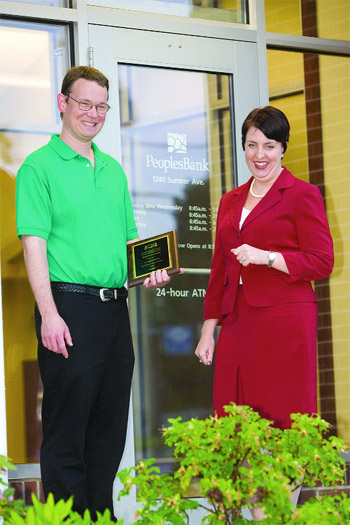
The PeoplesBank office at 1240 Sumner Ave. in Springfield was recently recognized by the East Forest Park Civic Assoc. for going above and beyond in improving its neighborhood. Shawn Sheehan (seen here), co-president of the civic association, said the PeoplesBank office was selected because of its design and continued efforts to improve the area. “A major property improvement occurred at 1240 Sumner Ave. when PeoplesBank ripped down a run-down Friendly’s restaurant and replaced it with a new, stylish building that blends well with the recently renovated surrounding buildings,” he said. Melissa Richter (right), branch manager, accepted the award at the Civic Association meeting last month.


New to the Downtown Menu

Izzo’s, an Italian eatery with a friendly, neighborhood atmosphere, opened for business earlier this month. Located on Worthington Street in downtown Springfield, the restaurant, owned and operated by Patsy Izzo, left, and Jimmy Fernandes, features a diverse menu of hearty Italian cuisine, entertainment, and an outdoor seating area.

Uncategorized

The concept of the angel investor group is taking hold across the country, with maybe 200 of these organizations now in existence. It’s still a fairly recent phenomenon in Western Mass., but a group called River Valley Investors (RVI) is rapidly making the term part of the local lexicon. Like other angel groups, RVI works to put entrepreneurs with ideas and early-stage companies in front of investors looking to put capital to work. By doing so, the group is contributing to economic-development efforts in the 413 area code.

“Boring, but profitable.”

That’s the phrase Paul Silva used on several occasions to describe the kinds of business ventures preferred by River Valley Investors, an angel investing group — this region’s first and now one of a few hundred across the country — that is somewhat quietly making a positive impact on this area and its economic-development activities.

“That’s a vastly overlooked sector,” joked Silva as he explained what ‘boring but profitable’ is, or, to be more precise, what it isn’t. Generally speaking, it’s not high-tech, or what he called “software and silicon,” a realm once preferred by many angel groups and venture capitalists.

Instead, it’s more-conservative types of businesses, ones that are usually mature, or at least “early stage,” said Silva, manager of RVI, a serial entrepreneur in his own right, and self-described “conductor of the orchestra” that now includes three dozen investors. The common denominator is generally lower risk, he continued. “We’re more Yankee than Bostonians.”

The terminology certainly applies to a venture called Pet Angel World Services, or PAWS, a company that provides veterinarians and clients with a complete range of pet death-care services that became part of the RVI portfolio earlier this year, said Silva, and also to Oxford Performance Materials, which provides everything from polymers for long-term human medical implant devices to critical components for the semiconductor manufacturing process to fuel cell components for the space shuttle. And it would apply to iiProperty, which provides Web-based real-estate property-management software for small and medium-sized landlords.

But it definitely wouldn’t capture the essence of dexrex, an Amherst-based startup venture that provides data-management services for instant messaging and mobile text-messaging services, said Silva, who, in explaining this addition to the portfolio, said simply, “there are exceptions to the rule.”

The financing provided to dexrex is an example of how RVI, founded in 2003, is contributing to economic-development efforts in the region, said Silva, noting that it is unlikely that the unique company, formed by partners and UMass graduates Derrick Lyman and Richard Tortora, would have come as far, and as quickly, as it has without the group’s support. And while there is a good chance the company may soon leave this market for Cambridge, RVI has played a lead role in keeping it in this area code — and creating several jobs in the process — for the past two years.

Overall, RVI, which makes investments averaging $250,000 to $500,000, but has made deals for more than $1 million, is closing what Silva and others have called a ‘capital gap’ in the region, and it has done so by providing economies of scale when it comes to linking entrepreneurs with badly needed funding. Through regular monthly meetings staged at the PeoplesBank Building in Holyoke, the group is exposing its members to a number of potential investment opportunities — most in that ‘boring, but profitable’ category. Meanwhile, it is also giving entrepreneurs a chance to tell their stories in an effective way and in a target-rich environment.

Thus far, the track record is solid, with two ventures recently selling and providing returns of 30% and 24%, respectively. That batting average won’t hold up, said Silva, noting that, traditionally, more angel investments lose money than make money, but the group envisions a winning record through sound, well-researched, and well-thought-out decisions.

Looking forward, Silva said RVI is looking to become more of a force in this region as it adds both investors and companies’ logos to the portfolio.

In this issue, BusinessWest takes an indepth look at the concept of the investor group, and how this one in particular is contributing to progress in the Pioneer Valley and well beyond.

Winging It

As he talked about RVI and its investors, Silva used the collective ‘we’ early and often.

When talking about the preponderance of advanced manufacturing companies in the portfolio, he said, “we like things.” Referring to one such company, Optical Alchemy, which creates high-performance, lightweight sensors for the unmanned aerial vehicle market and was added to the portfolio in 2005, he said, “we like widgets.” And when discussing iiProperty, added in 2007, he opined, “we like it because we understand the pain of real estate.”

But in reality, decisions are not really made as a group, but rather by individual investors within it, who are presented with opportunities at those regular monthly meetings and then decide themselves whether a venture is worthy of their time and capital.

RVI is essentially bringing a higher level of organization to the business of angel investing, said Silva, adding that its existence represents a nationwide trend toward the angel group model.

RVI’s nucleus is a core group of initial members, including business leaders such as John Davis, Bill Lyons, Glenn Hanson, Joe Cambi, Joseph Steig, Paul Gelinas, and others, who had been and still are involved in various aspects of economic development in the region, Silva said. “They’re entrepreneurs and successful businessmen and women themselves, and they know what it’s like to build things.

“They said, ‘we’ve been hearing about this angel-group thing,’ and wondered if they should try it in Springfield,” he continued. “At that time, there was just a smattering of angel groups in the country, maybe a few dozen, but they were growing in popularity because there was a clear need and the concept made a good deal of sense.”

This need had arisen from a change in focus among most venture-capital groups, Silva explained, noting that VCs that had traditionally funded early-stage companies have essentially moved on, or “upstream” to larger ventures, leaving that capital gap he mentioned.

“Young companies were dying on the vine,” he said, “and so professional angel groups were able to step into the breach. When the founders saw all the success that groups had in other parts of the country, they said, ‘why not Springfield?’”

There are now seven angel groups operating inside Route 128, another in Worcester, and the one in Springfield, said Silva, who came onboard in 2004 and brings a diverse background to his current role.

An entrepreneur, he’s started a number of ventures, including a company called All In Play, which produces video games for the blind. He’s also become a student of the angel-group movement, and an astute evaluator of the qualities necessary to qualify an entrepreneur for some of RVI’s precious time.

Explaining how the process works, Silva said a large part of his job description involves helping to find deals and screening candidates. There are hundreds of opportunities that come before him, and he chooses only a handful for each monthly meeting.

Entrepreneurs make a 10-minute presentation on their business, and they are then grilled by the angels. “We ask the hard questions,” said Silva, again using the first-person plural. From there, individual investors will decide amongst themselves whether an opportunity is worthy of some extensive due diligence, he continued, and if that research identifies what would be deemed a solid investment, angels are invited to take part.

The group, and the process it follows, is yielding dividends for the individual entrepreneurs and the region as a whole, said Paul Doherty, another of the founding angel investors and a principal with the Springfield-based law firm Doherty Wallace Pillsbury & Murphy. He told BusinessWest that 15 years ago, when he was chair of the board of the Springfield Chamber of Commerce, he recognized, as others did, there was indeed a ‘capital gap’ in the region, and he helped formulate ways to address it.

One was the creation of MassVentures, a venture-capital group headed by Tripp Peake that succeeded in helping to close that gap. “But venture capital groups are traditionally very conservative,” said Doherty, “and they don’t do many too deals.”

So attention was then focused on the local angel community, which, until the formation of RVI, was mostly individuals, almost all of them entrepreneurs themselves, who would find and act upon deals themselves. What RVI has done is to add a large, much-needed layer of organization and efficiency to the process, said Doherty, who has taken part in several of the deals that have expanded the group’s portfolio.

“It’s terrific for the entrepreneurs and for the angel investors themselves,” he said. “People can pick and choose which deals to take part in, and business owners get some valuable experience in presenting their case and making a pitch for capital.”

Getting Down to Business

As he talked about the portfolio and how companies get added to it, Silva said it features diversity, some local companies (he’d like there to be more), and is dominated by that ‘boring, but profitable’ quality, with only about 20% of the companies in the broad tech sector, a statistic that reflects the region.

“An angel group tends to reflect the industries of the region the group of angels comes from, because you invest in what you know,” he said, adding that most all of RVI’s members have a deep commitment to Western Mass. and want to help entrepreneurs here, even if it sometimes means settling for a lower return on their investment.

Selecting a few companies in the portfolio as representative of what the group and individual investors are looking for, he mentioned PAWS, now based in Wilbraham. This is a venture that has consolidated several pet death-care service providers, and it really caught the attention of group member Glenn Hanson, who now serves as CEO.

“It’s a solid company meeting a real need,” Silva explained. “There is great growth potential there.”

Optical Alchemy is another good example of a solid, relatively low-risk investment opportunity that appealed to many members and represents RVI’s “sweet spot,” he said.

“They make housings for very fancy cameras that go on unmanned aircraft like predator drones,” he explained. “They started this five years ago when this industry was just starting to gain some momentum, but they said, ‘this unmanned aerial thing is really going to take off.’ They developed products that are one-10th the weight and one-fifth the cost of what was on the market; it’s so dramatically cheaper and lighter that you can make a class of vehicles that you couldn’t before.”

Oxford Performance Materials, a company that was recently sold, yielding a 24% internal rate of return, is still another example of a low-risk venture. “It’s an advanced materials company — that’s not exactly ‘boring but profitable,’ but it’s more boring than many angel groups will look at.

“They basically found a fancy plastic that Dupont had no use for; they got the rights to it, and then they started making all these great applications for it,” said Silva. “That 24% return was a little less than we were looking for, but it was a lot better than what the stock market was doing at the time we sold it [last fall]; September changed our perspective on a lot of things.”

He told BusinessWest that dexrex is that exception to the rule, adding that it was essentially a startup that falls into the broad category of technology. It was started by Lyman and Tortola in 2005 while they were still students at UMass, and was created to meet what was then an unmet need — to help people (and eventually businesses) save and manage their IM and text messages.

The raw startup didn’t fit the general RVI description, but it did catch the attention of many investors.

Lyman told BusinessWest there was a good deal of serendipity involved with his company eventually becoming a key addition to RVI’s portfolio.

Indeed, he and Tortora were late getting their entry in for an executive-summary competition staged as part of the Entrepreneurship Initiative at UMass, and disqualified. But they showed up anyway, and made an impromptu pitch to Hanson, who happened to be one of the judges for the event. He was impressed enough to help get the partners on the schedule for one of the monthly meetings, and, to put it mildly, they made the most of that opportunity.

The company was first given some seed-stage money by Hanson and others to advance their concept, and it was later awarded some early-stage funding to take the business to the proverbial next level. Both infusions were in the form of equity funding, as nearly all RVI’s investments are, and they represent a sizeable stake in the company, maybe 30%, said Lyman, but the assistance has been invaluable in taking the company to where it is today.

As for the future, dexrex may be relocating to Cambridge, where it now has a second office, said Lyman, but it might stay in the Valley if the opportunity presents itself.

“We’re looking hard at Cambridge, primarily because of the proximity of financial firms and technology firms that we do business with, and also because of the proximity to a number of colleges that we could recruit from,” Lyman explained. “But nothing is set in stone; most of us really do like Western Mass. It’s a good working environment, and it has the five-minute commute instead of the two-hour commute. There are many advantages to doing business from here.”

While losing dexrex to Eastern Mass. would be a loss for the region, the bigger story is that RVI helped get the company off the ground, and it helped bring several jobs to the region, said Silva, adding that he hopes, and expects, that this script will be followed with many more companies in the future.

On-the-money Analysis

Summing up his involvement with RVI and his outlook on the need to infuse capital into the region’s business community, Doherty said, “my heart goes out to entrepreneurs; they make it work, but it’s definitely not easy.”

The region’s first angel-investing group is making it somewhat easier, he continued, by closing the capital gap and enabling business owners to state their cases in front of several potential investors at the same time.

Time will tell just how big a force the group can become when it comes to creating and retaining jobs, but its impact is already being felt, and in a number of ways.

Essentially, it is connecting entrepreneurs with angel investors, and the results have been heavenly, thanks in large part to that focus on ‘boring, but profitable.’

George O’Brien can be reached at[email protected]

For more information on Rivervalley investors:www.rivervalleyinvestors.comAngel Catalyst:www.angelcatalyst.com

Uncategorized

The Economic Development Council of Western Mass., working in conjunction with area young professionals’ societies and something called the Senior HR Roundtable, has developed a DVD called It’s Your Move to show young people with career options why they should make the Pioneer Valley one of those options. The DVD is part of a much broader focus on recruitment and retention designed to make the region more competitive now, and especially in the future, when competition for top talent will be only be heightened.

Chris Fedina has made a career out of recruiting talent to the Pioneer Valley.

He started with the local office of the executive search firm J. Morrissey & Co., before moving on to serve MassMutual as director of recruitment and staffing, a position he now holds with another of the region’s largest employers: Baystate Health. In that capacity, he’s responsible for essentially handling all recruiting other than that of physicians, and that means dozens of positions each month.

Over the years, he’s talked almost endlessly about the virtues of Western Mass. — from its cultural and sporting attractions to its affordability to its easy commutes — and he’s been helped in those efforts in recent years by some visual effects via the Internet. But he’s always desired more vehicles for showing people the Valley and not merely telling them about it.

And now, Fedina and those who have similar titles on their business cards and name badges have something with which to work.

It’s a fast-paced, four-minute DVD called It’s Your Move, which was created this spring and is now available to area companies looking to show possible recruits all that the region has to offer. It came about through a partnership between the Economic Development Council of Western Mass., two area young professionals’ organizations, and the Senior Human Resources Roundtable, which Fedina currently serves as chair.

“We’ve been talking for some time about the issue of young people, and how to attract and retain them,” said Fedina, who noted that members of his group, which includes HR professionals from many larger companies, including Big Y, Peter Pan, and area colleges, have expressed interest in a DVD or similar promotional vehicle for some time now.

Their new product features comments from perhaps a dozen members of the Young Professionals Society of Greater Springfield and the Northampton Area Young Professionals (including several members of BusinessWest’s 40 Under Forty Class of 2009). There was no script, insisted Fedina and others involved with the project, but those seen on film hit on points that area recruiters have been making for years.

Some of the lines to be heard include: “Your American dream is right here,” a reference to the region’s affordability; “I can be a big fish in a little pond”; “you can add more hours to the day,” a nod to the relatively easy commutes in this area; and “there’s a little bit of something for everybody.”

The commentary is interspersed with footage of the region borrowed from a host of sources, from area TV stations to the Greater Springfield Convention & Visitors Bureau, and the DVD features music from the local rock band Gone by Daylight.

It’s Your Move is part of a broader effort focused on work to attract, retain, and develop young talent, said Dan Prestegaard, chair of something called the Talent Development Subcommittee of the EDC, which he now chairs and that represents another component of that larger initiative.

The panel was created to underscore the EDC’s commitment — or recommitment — to the tasks of attracting and retaining young professionals, and to keep attention focused on what has been identified as a key economic-development strategy.

He believes much of the work will be focused on building awareness of the region and its amenities, and addressing some of the misperceptions concerning the Valley and the career opportunities it provides.

“Not everyone realizes the opportunities that are here,” said Prestegaard, a principal with Agawam-based Financial Partners Inc., a technology provider in the farm-credit industry. “We have a good story to tell; we just want to develop some strategies to make sure more people know it.”

In this issue, BusinessWest looks at how the EDC, in concert with such groups as the young professionals’ societies and the HR Rountable, are working to make the region more competitive now — and especially in that day, coming soon, when competition for top talent will escalate as companies scramble to replace retiring Baby Boomers and meet new, self-imposed standards for diversity.

Lights, Camera, Action

It’s Your Move, which was produced by two local companies, Horgan Associates and New York Sound and Motion Productions, made its debut several weeks ago at a well-attended event at the MassMutual Center. The DVD was played on a few big screens, and a host of officials, including EDC President Allan Blair, talked about how and why it was produced.

Essentially, it was created to help sell the region, said Fedina, who has considerable experience with that assignment and has found that if you can show the region to potential recruits — or get them to come here — as opposed to just telling them about it on the phone, the sales job becomes that much easier.

“People at many companies based here will say that, once you get people to make the trip here, they’ll typically fall in love with the area,” he explained. “We wanted something that would put our best foot forward: what are the benefits of coming here and staying here? And now, they can see and hear it — not from HR people, but from young people living and working here.

“We really wanted to make sure people understand all that Springfield has to offer,” he continued, referring to several different constituencies, including young people who may intern in this area but attend colleges in other regions. “We’re now losing some of that talent; how do we convince them to stay here? We needed a way to show them all that we have.”

A number of cities and regions, including Hartford, now have promotional DVDs, said Fedina, adding that they have become effective recruiting vehicles, especially when backed up with other initiatives, such as the HR Roundtable, which he described as a support network for HR professionals facing the increasingly challenging task of bringing talent to the region and keeping it here.

“We talk about what’s happening in the Springfield area in terms of staffing and agenda items, and about how we can partner together,” he explained. “For example, we all are looking to attract people here, but what about trailing spouses and family members? We’ve established a network that will share résumés of anyone in those situations, and includes most of the larger employers in the region.

“We do a lot of sharing of information and strategic initiatives on matters such as diversity,” he continued. “We talk about how we can support each other for the common good of Springfield; instead of being in competition with other for talent, which we all are, there’s the bigger picture of maintaining the vibrancy of this region.”

So the DVD is just part of a renewed focus on recruitment and retention, said Ann Burke, vice president of the EDC, who told BusinessWest that the council is ramping up in this realm because recruitment professionals saw, and continue to see, a need, and informally asked the EDC to help meet it.

“We saw that this was something we could do and should do,” she explained, adding that area companies have expressed a need for help and the EDC has long understood the importance of workforce development to the general health of the region.

It responded by realigning some of its subcommittees and creating the talent-development panel, said Burke, adding that the group hasn’t met formally, but will do so soon and commence work across a broad canvas.

A mission statement for the subcommittee is being developed, said Prestegaard, but its assignment will essentially break down into two main components: first, recruitment — devising strategies, like the DVD, to help attract young talent to the region — and retention, or shaping methods to will keep that talent in the 413 area code.

The DVD will be a key part of the former, but it will only be one of the ways in which the region’s story will be spread, he said, noting that a video alone probably won’t be enough to sell someone on the area. But it can be a vehicle for introducing people to the region and whetting their appetites for more information and perhaps a visit.

The video and its many selling points have to be backed up with other efforts that will prompt people to want to come here, and also make it easier to so, he continued, citing, as just one example, current work by the HR Roundtable and others to help find jobs for candidates’ spouses.

As for retention, strategies for this part of the assignment will also be developed, he said, noting that networking and leadership-development efforts are part of this equation, as well as work to make young professionals aware of the opportunities they have to make a difference in this market, as opposed to a larger metropolitan area.

Blair agreed.

“We want to ramp up our leadership-development efforts and really get people engaged,” he explained. “When they’re engaged, they develop a sense of pride and ownership, and if we can get more people to take ownership stakes, that will help with retention.”

All of these efforts will involve collaborations with the young professionals’ groups, the HR Roundtable, and other components of the EDC, Blair continued. “It’s going to take a team effort, but we’ve got a number of players who can contribute.”

Rolling the Credits

Summing up the importance of the DVD, Fedina put it this way: “as recruiters in this area, we speak the things that you can now see visually.

“When I tell someone it’s a beautiful area and it’s close to the beaches and the mountains, and that it’s easy to commute here, the surrounding towns are wonderful, we’ve got sports downtown, and arts and theater, they say, ‘oh, OK, that’s nice,’” he continued. “Now, I can say, ‘take four and a half minutes and look at this video.’”

That four-plus minutes could eventually lead to someone coming here and staying here for years, decades, or most of a lifetime, he continued, adding that the sum of the video and other component parts of this focus on recruitment and retention will bring many benefits to the region.

It’s not just a talent search, he continued, but talent development — and a big part of economic development in the region.

George O’Brien can be reached at[email protected]
Departments

MassMutual Honored with Green Enterprise IT Award

SPRINGFIELD — The MassMutual Financial Group was recently recognized as a 2009 Green Enterprise IT Award winner by the Uptime Institute. MassMutual won in the category of ‘Data Center Energy Efficiency Improvement: Joint IT and Facilities.’ The award notes MassMutual’s work in creating a green, energy-efficient, and cutting-edge data center through collaboration between the company’s IT and Facilities departments. Through the project, MassMutual has realized a savings of more than $3.1 million and roughly 8.1 million kilowatt hours of energy. The Uptime Institute’s Symposium 2009 drew applicants from more than 40 companies in 10 industrial categories to present their innovations in lean, clean, and green enterprise computing. For more information on all of the winners, visit www.uptimeinstitute.org.

Easthampton Savings Supports Library

EASTHAMPTON — Easthampton Savings Bank has made its first donation of $8,000 to Friends of the Westhampton Memorial Library. Friends of the Westhampton Memorial Library has raised sufficient funding to begin the Town Center Project, which will convert the Parsonage, a historic building in the center of Westhampton, into a library. The project is expected to be completed next year. The bank has pledged to donate a total of $25,000 to the Westhampton Town Center Library Project over three years.

Quality Printing Receives Award

PITTSFIELD — Quality Printing Co. Inc. has won a Silver Award in the 2009 National Calendar Awards for its 2009 A Closer Look at the Berkshires calendar, printed on a Komori six-color press. The award was given in the wall-calendar promotional division, with judging centered on the quality of artwork, photography, and graphics. The calendar is a 25th-anniversary edition and features a four-color process with silver metallic ink and an overall satin coat. Full-color images depicted for each month are from the company’s annual photography and art contest. The Calendar Marketing Assoc. of Wheaton, Ill., sponsors the awards contest each year.

Goodwill Moving to Page Boulevard

SPRINGFIELD — The Goodwill Industries facility on Dorset Street will soon become the future site of the Martin Luther King Charter School of Excellence as Goodwill moves its operations to 1125 Page Boulevard. For more than 40 years, Goodwill has used the Dorset Street site as a training and employment center for the disabled and disadvantaged and as a donation collection site.

Chamber of Commerce Fills Backpacks

SOUTH HADLEY and GRANBY — The Helping Hand Committee of the South Hadley & Granby Chamber of Commerce concluded its Spring Fill a Backpack Drive by recently delivering 20 cartons of school supplies to the Plains School in South Hadley and the West Street School in Granby. In the fall, youngsters will hopefully have enough school supplies so that teachers and parents should not have to be asked to provide them out of pocket, according to Mary Sudyka, chair of the Helping Hand Committee. The success of the drive was made possible by donors including Chicopee Savings Bank, Easthampton Savings Bank, Florence Savings Bank, Paul Boudreau, Gary Smith, Ira Brezinsky, The Egg & I, Bruce Pratt, Avery Dennison, Family Cuts, and Old Towne Garage. The South Hadley School administration staff, and Michael Quesnel and Debbie Buckley of the Granby School Committee also made donations to the cause.

SPHS Launches MercyPlus.Com

SPRINGFIELD — The Internet has become an important tool for consumers in recent years, as they research products and price before making a purchase. This new way of shopping, called ‘E-commerce,’ has experienced rapid growth in all sectors of the retail industry, including the purchase of health care-related items. To best position for this trend, the Sisters of Providence Health System (SPHS) has launched MercyPlus, a new online store that offers a wide range of health care and wellness products including specialized medical equipment and supplies, nutrition supplements, health-related books and videos, and fitness training devices. “When consumers shop for health care-related items, they want high-quality products from a trusted source,” said Mark Fulco, senior vice president of Strategy and Marketing for SPHS. “The products available through MercyPlus meet those needs, with the added benefit of shopping in the comfort and convenience of their own home. As an online hospital store, MercyPlus extends the SPHS continuum of care while furthering our ongoing relationships with patients and the community at large.” Visitors to the mercyplus.com Web site are able to browse through categories to find available products. These categories include ‘Aids for Daily Living,’ ‘Heart Health,’ ‘Mom and Baby,’ ‘Cancer Care,’ ‘Orthopedics and Therapy,’ and ‘Wellness.’ Visitors are also able to ‘Shop by Condition’ for books that provide information and products to ease the symptoms of specific medical conditions like allergies, diabetes, and sleep disorders. The Web store features special sections with products for employees, such as uniform scrubs, lab coats, protective eyewear, caps, and masks. MercyPlus shoppers may also take advantage of a loyalty program, with ‘reward’ points based on the individual’s retail purchases. These points accrue with each purchase and can be redeemed for merchandise discounts and special offers. SPHS employees are also encouraged to use their flexible spending accounts when shopping on the MercyPlus Web site.

Departments

ACCGS Annual Meeting

June 11: The Affiliated Chambers of Commerce of Greater Springfield Inc. (ACCGS) will hold its annual meeting at 11:30 a.m. at the Springfield Marriott, 1500 Main St. Sponsored by the Chamber Insurance Program and NewAlliance Bank, the luncheon will highlight the successes of the chamber over the past year and recognize officers and directors of the board. Additionally, Attorney Bill Rooney and Tony Goncalves will also be honored for receiving the 2009 ACCGS Richard J. Moriarty Citizen of the Year Award. Dress for Success will be honored as the Small Nonprofit Organization of the Year, and Junior Achievement will be honored as the Large Nonprofit Organization of the Year. Jeffrey Taylor, Founder of Monster.com, will give a keynote address, presenting “Motivating the Business Professional in a Declining Economy.” Reservations for the annual meeting cost $40 for members and $60 for non-members, and must be made in writing and in advance. Reservations may be made through Diane Swanson at [email protected], or online at www.myonlinechamber.com

Wine & Microbrew Tasting

June 12: Members of the Greater Easthampton Chamber of Commerce will host a Wine & Microbrew Tasting from 6 to 8 p.m. at One Cottage St., Easthampton. Proceeds raised from the event will benefit the chamber’s community programs. Organizers expect more than 50 wines and microbrews to be available for tasting, as well as fine food and a raffle. Tickets are $25 per person or $30 at the door. To purchase tickets, call the chamber office at (413) 527-9414 or visit www.easthamptonchamber.org.

Trails for Nails

June 13: After a long New England winter, celebrate the official start of the mountain-biking season by participating in the first-ever Trails for Nails, a 20-mile ride at Robinson State Park in Agawam. Whether you choose to register as a single rider or as a member of a team, this event will help raise much-needed funds for Greater Springfield Habitat for Humanity. The ride features two 10-mile loops, crossing a wide variety of terrain, accommodating all skill levels. To register, riders must visit www.bikereg.com and type in ‘Trails for Nails’ in the search box. The cost to register is $45 per person through June 10. If space is available, riders will also be able to register the day of the event from 6:30 to 8 a.m.; however, there will be an additional $10 fee. Only the first 100 registrations will be accepted, so sign up early to guarantee your spot. Registered riders will receive a 2009 Trails for Nails T-shirt, a ‘swag bag,’ a water bottle, and lunch. In conjunction with the Trails for Nails ride, raffle tickets are available for a 2009 Specialized Rockhopper mountain bike, donated by Family Bike of Feeding Hills. Raffle tickets are $5 each. To purchase a ticket, contact Nicole at Greater Springfield Habitat for Humanity, (413) 739-5503 or E-mail [email protected]. For more information about the Trails for Nails ride, contact Jason Tsitso at (413) 262-1257, or E-mail [email protected].

Leadership Development & Teambuilding

June 15: SkillPath Seminars will present a daylong conference titled “Leadership Development & Teambuilding” at the Holiday Inn, 711 Dwight St., Springfield. Workshops include: “Developing the Leader within You,” “30 Tips for Becoming an Inspired Leader,” “It All Starts with You … Discover Your Team Player Style,” and “Building a Team That’s a Reflection of You.” Also, “Leadership Mistakes You Don’t Have to Make,” “Light the Fire of Excellence in Your Team,” “Speak So Others Know How to Follow,” “Positive Feedback … the Fuel of High Performance,” “A Team Approach to Dealing with Unacceptable Behavior,” and “What Teams Really Need from Their Leaders.” The conference is targeted for managers, supervisors, team leaders, and team members who would like to learn skills to motivate, inspire, lead, and succeed. Enrollment fee is $199 per person or $189 each with four or more. For more information, call (800) 873-7545 or visit www.skillpath.com.

Sections Supplements
Springfield College Facility to Focus on Wellness, Research and Making a Difference on Quality-of-life Issues
Charles Redmond

Charles Redmond says Springfield College’s new Center for Wellness Education and Research will become a clearinghouse of information on the broad subject of wellness.

Charles Redmond says the mission statement for Springfield College’s new Center for Wellness Education and Research, due to open in September, is still very much a work in progress.

There’s nothing down on paper yet, said Redmond, dean of the college’s School of Health, Physical Education and Recreation, and certainly nothing approved by college administrators. But some wording is being rounded into shape.

“We want to create a center that, through a focus on research and education, will explore various elements of wellness and, in the process, improve quality of life for people across the lifespan,” he said. “If can make a difference in trying to keep people healthier, whether through public policy or a domino effect, we would then be contributing to the bigger picture.”

These are ambitious goals, but, in Redmond’s mind, realistic ones as the college advances plans for the center, which will, according to those plans, conduct groundbreaking research, become a national source for the latest wellness information, and design and present public wellness-education programs and conferences.

“There is so much information on wellness or health, fitness or nutrition available today,” he explained. “The public gets bombarded with information, some of which I would suspect is really good stuff, and some that I would suspect is not very good stuff. How does the public sort all of this out? We’d like to be a place where people can go to ask questions and to clarify things.

“And if we’re in a position to answer that or get that information,” he continued, “we’re making a major contribition to quality of life, because people wouldn’t have to rely on that infomercial or flyer they got in the mail. We want to be a clearinghouse for information that is grounded in science.”

Putting things another way, Redmond said the new center will take a number of things that the college has focused on since its inception in 1885 — such as focusing attention on the importance of fitness, research (including a current study on diets and their impact on muscle mass in men losing weight), and the concept of wellness (even when that word wasn’t being used) — and bring them to a higher, better-coordinated level.

“One of the reasons we’ll be successful in this center is that we now have things centralized in one location, enabling us to do more collaborative research,” he explained. “Before, we were scattered across campus. It’s not that we couldn’t collaborate before — it’s just much easier to do it now.”

In this issue, BusinessWest takes an indepth look at the new center, to be housed in the college’s new exercise science and wellness facilities, how it will develop, and how it will go about meeting that mission-in-formation of ‘making a difference.’

The Shape of Things to Come

When asked for how long faculty and administrators at Springfield College had been discussing and shaping plans for the new center, Redmond, who came to his current post just over a year ago, said they’d been ongoing since before he arrived and accelerated after he came to SC.

But in some ways, the college has long been a type of center for information and research on the broad subjects on health and wellness, he continued, citing the work of Russian-born Dr. Peter Karpovich, a longtime faculty member and director of health education at SC, founder of the American College of Sports Medicine in 1954, and widely considered the father of American exercise physiology.

“It might be a stretch as to whether he would accept the title ‘grandfather of wellness,’ because ‘wellness’ wasn’t a term back then, but that’s essentially what he was,” joked Redmond, noting that, in many respects, the new center pays homage to Karpovich’s work, continues it, and brings it to a higher plane.

In many ways, the center will call attention to the fact that, while the college’s main mission — “educating students in spirit, mind, and body, and service to others” — hasn’t changed over the past 124 years, the manner in which that mission is carried out, and the names given to aspects of this field, have.

Indeed, where once the school’s sole purpose was training YMCA directors and was later broadened to mostly training physical educators, it has evolved further, especially over the past few decades. “When I did physical education, it was learning sports skills — you learned how to play tennis, basketball, and so on,” Redmond explained. “We’ve reached the point where it is as important to teach people skills and activities as it is to get them interested in physical activity, or valuing physical activity.

“Over the years, we’ve evolved and developed new academic programs, such as exercise science, health sciences, sports psychology, and sports performance,” he continued. “These are all a spin-off of our history in physical education but focus now on things that are beyond the activities themselves.”

The new wellness education and research center is a part of that evolutionary process, he said, and the concept is not exactly new. There are already a few such programs in existence; the University of Rhode Island has one, as does Texas A&M, among others. What Springfield College wants to do, said Redmond, is join those other institutions, and perhaps work with them, in building a critical mass of information on wellness that runs across the spectrum, or “lifespan,” he said, meaning people of all ages.

“If we’re going to make a major impact, we would like to look at the prevention side of the equation,” he said. “Let’s do research to explore how we can make behavioral changes so that we don’t end up with people with these chronic diseases; let’s keep them healthy on the front end.”

And by this, he meant working with individuals, especially young people, to stress the importance of fitness and physical activity, and, eventually, to help control or minimize the incidence of obesity.

And as he talked about the scope of the work that could be undertaken in the facility, Redmond said the possibilities are seemingly limitless, and include the broad issues of obesity, nutrition, physical activity, and many others, all with a focus on quality of life and prevention of disease as much as treatment.

Returning to the concept of collaborative research, he said the work undertaken by the new center and the School of Health, Physical Education & Recreation may eventually involve a number of different schools and programs at the college, including psychology, sociology, the School of Health Sciences & Rehabilitation Studies, and the School of Arts, Sciences & Professional Studies, which includes anatomy, chemistry, physiology, and other fields.

“We’ve been doing a lot of these things all along,” he said, “but we’re going to take the various pieces and put them into a whole. We’re going to continue the research we’re doing, but now we’ll can grow the research; we’ll be a better position to do our own research locally, but maybe facilitate research in other areas, and maybe leave the campus and collaborate with other institutions or organizations.”

The center will be housed in the college’s new $22 million wellness center, field house, and athletic training/exercise science complex, and take full advantage of its specific facilities, said Redmond, who pointed them out as he gave BusinessWest a detailed tour.

These include a two-story, 47,840-square-foot wellness center that features cardio and weight-training equipment, a climbing wall, several multi-purpose teaching/activity spaces, fitness-testing facilities, and faculty offices; a 93,830-square-foot field house that includes a six-lane running track surrounding four multi-purpose courts, as well as strength and conditioning facilities; and an athletic training/exercise science complex that includes classrooms and state-of-the-art laboratories and research space for the study of all aspects of human performance.

The center is slated to formally open on Sept. 1, but work that would come under the scope of its mission is already being conducted, said Redmond, citing, as just one example, a study investigating the impact of carbohydrate weight-loss diets on muscle mass in men aged 50 to 70.

Begun last fall and led by Richard Wood, a assistant professor of Exercise Science at SC, the study puts men in that age category through a 12-week program of supervised dieting along with supervised resistance-training exercises for some of the participants.

“Research has confirmed that there is more than one way to reduce body weight and improve risk factors for cardiovascular disease and diabetes,” said Wood, who plans to study men in 12-week groups through the end of the this year. “Muscle mass is key to our metabolic health. However, it is not clear whether one diet is better than another in preserving muscle mass during weight loss. It is my hope that this research will yield information that that could benefit the greater population of persons with metabolic syndrome.”

Body of Work

Moving forward, Redmond said there are a number of ‘next steps’ for him and others at the college to address as they mold the new center shape.

There is staffing, the eventual naming of a director, and creating a job description for that individual — several models are being looked at — as well as exploration of funding for the research that will go on at the facility. There should be large volumes of federal money available for programs, considering the gravity of the issues at hand, said Redmond, but also considerable competition for it.

And then, there’s that mission statement. It’s still a work in progress, as he said, but it comes down to one central purpose — making a difference in the overall health and well-being of people across the region and around the world.

George O’Brien can be reached at[email protected]
Sections Supplements
Concussions and Other Brain Traumas Can Pose Serious Risks to Athletes
Dr. Ellen Deibert, center, pictured with two staffers of Berkshire Medical Center’s Comprehensive Brain Injury Program

Dr. Ellen Deibert, center, pictured with two staffers of Berkshire Medical Center’s Comprehensive Brain Injury Program

For many parents, says Dr. Ellen Deibert, youth sports can be a headache.

“We deal with a lot of kids out there who are active in sports. A lot of them play soccer year-round. I feel bad for their parents,” she said with a wry smile.

As a neurologist who runs the Comprehensive Brain Injury Program at Berkshire Medical Center, however, Deibert knows that the real headaches occur on the field, when players’ heads collide with the ground, equipment, or other players.

“Right now we’re taking care of a soccer kid with a fractured temple bone. You can get seriously hurt out there,” she said.

According to the Journal of Sports Medicine, the medical community generally places the total number of sports-related traumatic brain injuries at about 300,000 per year nationally. However, the Centers for Disease Control and Prevention (CDC) estimated this year that the actual number is likely between 1.6 million and 3.6 million, and most of these injuries are concussions.

That speaks to the difficulty in diagnosing concussions, said Deibert; in fact, even if an athlete is taken to the hospital, there’s no way to scan for a concussion with any consistency.

“With concussions, the scans are always normal, but the kids are not normal,” she explained. “We do know that in youth sports, recovery takes longer than in college or professional sports. Why, we don’t understand yet, but the data looks pretty solid, and from my experience, that seems to be true.

“I have a snowboarder who got hurt early in 2008 who’s still coming around from a concussion,” she added. “Sometimes, you can get somebody with a concussion better in seven days, and someone else takes months recovering. It really depends on the situation — the forces applied to the brain, and what the kid’s history is.”

Fortunately, “neurosurgeons as a group have really taken this seriously, both on the research side and the public-health side, in terms of campaigns to include helmets and head protection during athletic events,” said Dr. Kamal Kalia, a neurosurgeon with New England Neurosurgical Associates. “There are a lot of good papers out there regarding head injuries and athletes.”

Specifically, he referred to the work of Drs. Julian Bailes and Robert Cantu, who released a landmark study on the topic in 2001, determining that about 9% of all injuries related to sports and recreational activities are head injuries. Actually, Kalia explained, the preferred term in neurosurgical circles these days is MBTI, or mild traumatic brain injury, which spells out with more clarity what a concussion actually does.

A concussion, Kalia explained, is an immediate and temporary impairment in neural function, affecting vision, equilibrium, and other responses. But not every concussion is equal, and doctors grade them on a three-part scale.

Grade 1 concussions, the mildest type, involve no loss of consciousness, but some confusion or alteration in mental status that clears within 15 minutes, with no long-term effects. Typically, an athlete may safely return to play during the same event. Grade 2 also features no loss of consciousness, but the effects last longer, and the athlete should be pulled out for at least that day. Grade 3 involves loss of consciousness, and these athletes should be transported for further evaluation, Kalia said.

“These injuries can occur in football, soccer, skiing, equestrian sports, skateboarding, all sports,” Kalia said — and participants in many such activities don’t wear helmets. “Internationally, there are about 200 million soccer players. There is great risk for concussion related to that event.”

The challenge is teaching coaches to recognize when it’s time to sit an athlete, and Kalia says most seem to take that evaluation seriously. “I think there has been a big effort to make sure they are aware.”

Deep Impact

Some efforts specifically target coach and trainer education around head trauma, such as the ImPACT program that Deibert oversees in the Berkshires.

That acronym stands for Immediate Post-concussion Assessment and Cognitive Training, and it’s a tool to help coaches and trainers recognize when a player might have a brain injury, even when the outward signs aren’t obvious, and determine whether or not he or she may safely return to play.

The key is the establishment, before the sports season even begins, of a baseline cognitive level for each player. Athletes are tested in short-term memory, attention span, reaction time, and other tasks to demonstrate what cognitive abilities they have off the field. Deibert has brought ImPACT into area schools at the start of each season, administering the baseline test to athletes and training coaches in recognizing when to sit a player or seek further medical attention.

“One of the biggest concerns in coaching is being able to diagnose a concussion,” Deibert said, particularly in fast-moving, high-impact sports like football or ice hockey where violent collisions aren’t out of the ordinary.

“I get very worried about ice hockey; I know those kids are getting hit, but we didn’t see a lot of ice-hockey players in the clinic this year,” she told The Healthcare News. “Some kids have said the coach held up three fingers, and they went back out on the ice. But a repeat concussion during the symptomatic period can be very dangerous.”

Deibert is sympathetic to the challenges faced by coaches, who, after all, are not medical professionals. “Coaches have a lot to do; I get that,” she said. “They’re watching not just one kid, but a number of kids. But they need to take the time to evaluate kids. It’s not their job to diagnose how sick someone is, but whether they’re sick enough to be pulled out and seen by a professional. That way, the coach can’t get blamed for further injury.”

Referring to the baseline results from ImPACT testing is important, she said, because many young athletes seem to ‘shake off’ symptoms easily — or simply desperately want to get back to the action — when a closer comparison with the baseline behaviors would belie that enthusiasm. “We know some kids can take a bad hit and clear, but in many cases, they shouldn’t be put back in until they’re seen by a professional.”

Kalia cited the long-term damage incurred by many athletes who sustain repeated concussions. One condition common to boxers, characterized by Parkinson’s-like symptoms, even has an appropriate name: dementia pugilista.

Other athletes have also served as living — and sometimes not — warnings to others. Andre Waters, a former defensive back with the Philadelphia Eagles, took his own life at age 44 a few years ago; doctors attributed his depression to head trauma that caused his brain to resemble that of an 85-year-old man.

Former Patriots defensive lineman Ted Washington, whose brain shows dementia-like symptoms, has accused the team of having him run full-contact drills while in a concussed state. And many former football players, from quarterback Steve Young to running back Merril Hoge, have decided to leave the sport early after repeated concussions rather than risk further damage.

Deibert ticked off a wide range of sports and recreational activities that could be considered high-risk for head injuries, from obvious choices like football and hockey to lacrosse, skiing and snowboarding, motocross, snowmobiling, even cheerleading.

“Common sense says that any high-speed sport where kids are at risk of hitting another kid — or a pole, or the ski slope — that would be considered high risk for head trauma,” she explained.

Although not every risky activity merits a helmet — some might imagine the gear out of place on cheerleaders, for example — Deibert leans toward extra caution in most cases, supporting helmets in sports such as soccer and lacrosse.

“The thing about lacrosse is, girls do not wear helmets, and boys do,” she noted. “They tell me it has to do with the rules — girls are not supposed to carry their sticks as high — but that depends on how well-coached the team is and how well-refereed the game is. We get some serious lacrosse injuries in the clinic, as well as soccer.”

Soccer brings a wide range of injury possibilities, she said, with the head prone to collide with the goalpost, another player’s head, or the ground. “When the ground is frozen, even natural grass can turn into hard turf when the cold weather arrives,” she said. “Soccer has developed headbands that some kids are wearing, but they haven’t been mandated by the U.S. Soccer Federation yet. I do think these kids need good training, good coaching, and good refereeing.”

And that goes back the baseline tests and why they are so important, Deibert explained. “A lot of people think that, because their scans are OK, they’re OK,” she said. “We do scans not to look for concussions, but for things like fractures. Kids who have delayed functional outcomes, memory problems, things like that are picked up with ImPACT and other neuropsychological tests. That’s how you find out how sick a kid really is. People need to understand that they shouldn’t ignore their symptoms, but seek help.”

Sudden Death

In terms of sheer numbers of concussions, Kalia said, football leads the way among all sports, and the average number of deaths in the sport related to head injuries — roughly four per year — hasn’t changed in three decades. The danger used to be worse; not only has helmet design improved over the years, but starting in the 1970s, the NFL and NCAA instituted rules penalizing the use of the helmet in tackling, which has doubtless prevented many serious head and spinal injuries.

Sometimes, the story is not one of long-term, sustained damage, but of a life snuffed out instantly, as in the case of actress Natasha Richardson, who recently suffered a head injury and died while skiing — without a helmet. But Kalia was quick to note that just wearing any helmet isn’t enough.

“You have to choose the right helmet and make sure it fits properly,” Kalia said. “If you’re out on the slopes and 80% of your forehead is exposed, with your helmet resting like a beanie on your head, that’s not a properly fitting helmet.”

Kalia recalled when he was a child, and kids rode bicycles helmet-free and wriggled freely across the back seat of the family automobile without a carseat — and that was considered normal. He prefers the caution of today’s world.

“Maybe there’s some loss of freedom with all these things,” he said, “but then you see how devastating these injuries can be.”

After all, freedom means little when you’re battling a severe head injury — or when you’re no longer alive to fight it.

Joseph Bednar can be reached at
[email protected]

Departments

Estate Planning Workshops for Parents

May 27, June 3: Attorney David K. Webber of Shatz, Schwartz and Fentin, P.C., with offices in Springfield and Northampton, will present two free workshops titled “Estate Planning Workshops for Parents of Young Children” at the Sunderland Library Community Room, 20 School St. Workshops are planned from 5:30 to 7:30 p.m., and are open to the public. Pre-registered participants will be offered the opportunity to complete a will, health care proxy, and durable power of attorney at a reduced rate. For more information and to register, call (413) 737-1131.

Economic Illusions Lecture

May 28: Edward Guay, principal of Wintonbury Risk Management in Bloomfield, Conn., will present a lecture titled “Recovering from Economic Illusions and Global Credit Shocks” at noon at One Financial Plaza, Community Room, third floor, 1350 Main St., Springfield. The lecture, part of the Instant Issues Brown Bag Lunch Series, is sponsored by the World Affairs Council of Western Mass. Guay is a global macro strategist. He has a long history of accurately predicting major shifts in business, financial, and political conditions. Guay specializes in the identification of those forces for change that will shape future events, either gradually or in climactic fashion, causing consensus business, investment, political, or geopolitical strategies to go awry. The cost of the lecture is $8 (bring a lunch) or $15 (tuna, turkey, or vegetarian sandwich). Reservations must be made by calling (413) 733-0110.

Extreme Business Makeover

June 5: The Western New England College Law and Business Center for Advancing Entrepreneurship will host an “Extreme Business Makeover” from noon to 1:30 p.m. in the TD Banknorth conference center at 1441 Main St., Springfield. The event features experts in the fields of law, accounting, marketing, and finance, offering advice on a range of issues to a pre-selected business or nonprofit group. This year’s makeover recipient is JELUPA Productions Inc. The event is free and open to the public and will be of particular interest to entrepreneurs, small-business advisors, and anyone interested in nonprofit management.

New Energy Landscape Seminar

June 9: The Pioneer Valley Planning Commission and Western Mass. Electric will sponsor a seminar titled “The New Energy Landscape: An Overview for Economic Development Professionals” from 8 a.m. to noon at the Kittredge Center at Holyoke Community College. The seminar is free; however, registration is required by June 1. For more information, contact Lori Tanner at (413) 781-6045 or visit www.pvpc.org.

Wine & Microbrew Tasting

June 12: Members of the Greater Easthampton Chamber of Commerce will host a Wine & Microbrew Tasting from 6 to 8 p.m. at One Cottage St., Easthampton. Proceeds raised from the event will benefit the chamber’s community programs. Organizers expect more than 50 wines and microbrews to be available for tasting, as well as fine food and a raffle. Tickets are $25 per person or $30 at the door. To purchase tickets, call the chamber office at (413) 527-9414 or visit www.easthamptonchamber.org.

Leadership Development & Teambuilding

June 15: SkillPath Seminars will present a daylong conference titled “Leadership Development & Teambuilding” at the Holiday Inn, 711 Dwight St., Springfield. Workshops include: “Developing the Leader within You,” “30 Tips for Becoming an Inspired Leader,” “It All Starts with You … Discover Your Team Player Style,” and “Building a Team That’s a Reflection of You.” Also, “Leadership Mistakes You Don’t Have to Make,” “Light the Fire of Excellence in Your Team,” “Speak So Others Know How to Follow,” “Positive Feedback … the Fuel of High Performance,” “A Team Approach to Dealing with Unacceptable Behavior,” and “What Teams Really Need from Their Leaders.’ The conference is targeted for managers, supervisors, team leaders, and team members who would like to learn skills to motivate, inspire, lead, and succeed. Enrollment fee is $199 per person. or $189 each with four or more. For more information, call (800) 873-7545 or visit www.skillpath.com.

Departments

Liberty Mutual Receives Tax Incentive

SPRINGFIELD — Liberty Mutual Insurance Co. and its new customer-service center have been approved for tax incentives by the state Economic Assistance Coordinating Council. The new center, located in the Springfield Technical Community College Technology Park on Federal Street, has 124 employees. To qualify for the tax incentives, it must hire an additional 164 workers. The tax savings for the first year in fiscal year 2010 is expected to be $50,000, based on a 50% exemption on the new growth in the property’s value. Under a five-year approved plan, the exemption will decline by 10% each year, from 50% in fiscal year 2010 to a final-year exemption of 10% in fiscal 2014. Liberty Mutual is expected to invest $6 million in the project.

Pioneer Valley Tourism Guide Has New Format

SPRINGFIELD — The Greater Springfield Convention and Visitors Bureau (GSCVB) has published the 2009-2010 Guide to Massachusetts’ Pioneer Valley, which is now available free to potential visitors to the region, as well as local residents. The guide has been restyled as a more-portable, 5-inch by 8-inch, 98-page, four-color, glossy magazine. Guide highlights include information on the region’s top attractions, accommodations, and restaurants, all of which are GSCVB members. The guide also features useful maps of the downtown areas of Springfield, Amherst, and Northampton, and was designed by Design & Advertising Associates of Springfield and printed by Dynagraph in Canton. For more information on the tourism guide, call (413) 755-1351 or (800) 723-1548, or log onto www.valleyvisitor.com.

Business Confidence Rises Slightly in April

BOSTON — The Associated Industries of Mass. (AIM) Business Confidence Index added 1.9 points to 35.4 in April, its second consecutive monthly rise following February’s historic low of 33.3. Though two small gains barely constitute a trend, AIM officials have been seeing signs in its survey since February that the economic decline — now the longest of the post-World War II era — could bottom out soon, according to Raymond G. Torto, global chief economist at CB Richard Ellis Group Inc. Torto also serves as chair of AIM’s board of economic advisors. The index, which is based on a 100-point scale on which 50 is neutral, was down 14.7 points from April 2008, when it recorded its last ‘positive’ reading (50.1). The past five months have produced the five worst readings since the index was initiated in July 1991.

Foreclosures Remained at Record Levels in April

NEW YORK — RealtyTrac, an online marketplace for foreclosure properties, recently released its April 2009 U.S. Foreclosure Market Report, which shows foreclosure filings — default notices, auction-sale notices, and bank repossessions — were reported on 342,038 U.S. properties during the month, an increase of less than 1% from the previous month and an increase of 32% from April 2008. The report also shows that one in every 374 U.S. housing units received a foreclosure filing in April, the highest monthly foreclosure rate ever posted since RealtyTrac began issuing its report in January 2005. Total foreclosure activity in April ended up slightly above the previous month, once again hitting a record-high level, according to James J. Saccacio, chief executive officer of RealtyTrac. Saccacio added that much of this activity is at the initial stages of foreclosure — the default and auction stages — while bank repossessions, or REOs, were down on a monthly and annual basis to their lowest level since March 2008. Saccacio noted that this trend suggests that many lenders and servicers are beginning foreclosure proceedings on delinquent loans that had been delayed by legislative and industry moratoria.

Economy Stabilizing Despite Trade Deficit

WASHINGTON — U.S. Commerce Secretary Gary Locke recently reported that U.S. exports decreased by 2.4% to $123.6 billion since February 2009. Imports decreased 1.0% to $151.2 billion. Overall, the trade deficit grew 5.5% during the same time period. Locke noted that the numbers are better than many economists had predicted, and it is worth noting that the trade deficit is half of what it was in the first quarter of 2008. Locke added that, while the country has begun to see a few “promising shoots of green,” there is still much work to be done.

Unemployment Rises to 25-year High

NEW YORK — In the week ending May 9, the advance figure for seasonally adjusted initial unemployment claims was 637,000, an increase of 32,000 from the previous week’s revised figure of 605,000. The four-week moving average was 630,500, an increase of 6,000 from the previous week’s revised average of 624,500. The advance seasonally adjusted insured unemployment rate was 4.9% for the week ending May 2, an increase of 0.1 percentage point from the prior week’s unrevised rate of 4.8%. The fiscal year-to-date average for seasonally adjusted insured unemployment for all programs is 5.01 million. The advance number of actual initial claims under state programs, unadjusted, totaled 565,395 in the week ending May 9, an increase of 27,856 from the previous week. There were 325,480 initial claims in the comparable week in 2008. The advance unadjusted insured unemployment rate was 4.6% during the week ending May 2, a decrease of 0.1 percentage point from the prior week. The advance unadjusted number for persons claiming UI benefits in state programs totaled 6,166,785, a decrease of 95,837 from the preceding week. A year earlier, the rate was 2.1%, and the volume was 2,845,952. Extended benefits were available in Alaska, Arizona, Arkansas, California, Connecticut, the District of Columbia, Idaho, Illinois, Indiana, Kentucky, Maine, Massachusetts, Michigan, Minnesota, Montana, Nevada, New Jersey, North Carolina, Ohio, Oregon, Pennsylvania, Puerto Rico, Rhode Island, South Carolina, Vermont, Washington, and Wisconsin during the week ending April 25. The highest insured unemployment rates in the week ending April 25 were in Michigan (7.8%), Oregon (7.5%), Pennsylvania (6.5%), Wisconsin (6.4%), Nevada (6.3%), Idaho (6.1%), Puerto Rico (5.9%), Vermont (5.8%), Alaska (5.7%), and Rhode Island (5.7%). The largest increases in initial claims for the week ending May 2 were in Illinois (2,052), Kansas (2,025), Puerto Rico (1,781), Indiana (1,051), and Ohio (1,013), with the largest decreases in New York (13,386), Michigan (10,952), North Carolina (8,988), Massachusetts (3,705), and Connecticut (2,802).

Sections Supplements
O’Leary Group Respects the Past While Tackling New Trends
From left, Patricia Titcomb, executive assistant at Aero Fastener; James Avery; Kevin Donovan; and Michael Byrnes outside the new facility.

From left, Patricia Titcomb, executive assistant at Aero Fastener; James Avery; Kevin Donovan; and Michael Byrnes outside the new facility.

Horizon Solutions has offices across the Northeast, “from Bangor to Buffalo,” as Rob Barcome put it.

So the company decided that Holyoke would be ideal for a central location that will serve as a training mecca for the electrical/industrial distributor.

“It’s a place where we can train our customers, employees, and vendors on site, with some corporate personnel in another portion of the building,” said Barcome, the company’s purchasing and inventory control manager. The building, now being completed by the O’Leary Group, will house 50 employees and feature a demonstration lab and remote meeting capabilities, among other features.

“O’Leary was able to be accommodating to us, giving us suggestions as to what would look good and not look good, responding to our changing needs,” Barcome said. “Seeing something on paper come to fruition was easy.”

That’s the goal of every project O’Leary takes on, said Michael Byrnes, general manager of the Easthampton-based general contractor, which came under new ownership last year but continues to emphasize its reputation as a one-stop shop for design, construction, and maintenance.

“Design-build is simply a process where the builder is the designer, and you’re able to take it from paper to brick and mortar with any changes in between,” said Kevin Donovan, O’Leary’s director of sales. “It’s a streamlined process because all the different services are in-house.”

“That made it easy for us when we needed changes,” Barcome said. “It wasn’t a complicated process; we just got on the phone and made the changes that were necessary.”

The project didn’t happen overnight, Byrnes explained, noting that the company first contacted O’Leary in September 2007.

One holdup was obtaining the property, said Barcome. Once the Kelly Way site came on the market last July, Horizon Solutions bought it, and the project design began the following month. Construction started in January, and despite a series of weather-related obstacles stemming from an unpredictable winter, the building is set to open for business in June.

“Because we can design something and build it, we know what it costs; we know what the rough budget is going to be,” said Donovan. “We do a lot of feasibility up front, and we can make changes without taking the project back to the drawing board two or three months into the process.”

In this issue, BusinessWest takes a look at two recent O’Leary projects, why the company’s use of pre-engineered materials saves money and time, and why it’s important to stay ahead of construction trends — including an increasing focus on ‘green’ building — in order to stay competitive in a shifting marketplace.

Under One Roof

In 2008, ownership of the O’Leary Group changed hands, when the company was purchased by a team of three investors. “All of them have considerable construction background of 25-plus years,” Donovan said. “They basically wanted the company to do the same things it had been doing since 1955 under prior ownership.”

That means a heavy emphasis on design-build, which essentially brings the design and construction of a project under one roof, and is becoming a more popular model in the industry for several reasons, said Byrnes, from the cost-consciousness rising from the slow economy to a tendency for customers to demand projects completed faster than ever before.

“The nice part about the building process is, when customers like Rob come to us, we can tailor the project to meet their exact needs, and it allows flexibility for revisions during the process as a customer further defines their actual building needs,” he added. “The other thing it does is, it allows for cost control along the way, which is obviously critical in this business environment.”

Although O’Leary can tackle any type of building, said Donovan, 95% of its projects use pre-engineered metal frameworks manufactured under the Butler name, which provides not only strength but flexibility of design and efficiency during the construction process.

“Butler has been involved with pre-engineered building systems since post-World War II, and they’ve developed an attractive product line that’s one of the best in the pre-engineered building market,” said Byrnes, ticking off a series of benefits to property owners, from lengthy roof warrantees to state-of-the-art finishes and exterior wall treatments. “They maintain their durability over the years. We’ve got buildings still functioning well that were built in 1957.”

“The ease of construction means more flexibility than other buildings,” Donovan added. “A pre-engineered building doesn’t have to be a metal-sided building. It can have any finish you want on the outside, from clapboard to a log-cabin look.”

The fact that pre-engineered components arrive at the site already punched not only saves time, said Byrnes, but it ensures that every piece will have the necessary plumbness and squareness, which eliminates waste. “Because of that, you can move more quickly than with traditional welded buildings.”

To James Avery, however, none of that mattered as much as timing.

“The specifics of the building weren’t the key to the project; getting it built on time and on budget was,” said Avery, owner of Aero Fastener Co., an aerospace-industry distributor, which opened its new site in Westfield in mid-February — a date that was set in stone when the construction project began last summer.

“We could not be without an approved site; all our qualifications have to be in line for us to ship our parts,” he explained. “For us to miss the completion date by a week would cost Aero $300,000. So we needed a commitment to getting the building done on time. That was an essential ingredient in picking O’Leary. And we were successful; we were operational within five business days of moving in.”

Avery had worked with O’Leary’s previous ownership on a massive remodeling of another property, increasing its size from 10,000 to 25,000 square feet, and his recent experience was equally smooth. One of the key factors, he said, was the fact that the company’s final price hardly moved from the bid price, as it tends to do with many projects. “Other people lowball you at first,” he said.

Byrnes said that consistency in pricing speaks to the nature of pre-engineered structures; it’s easier to anticipate changes using the Butler system, which means fewer surprises for clients.

“Because of what they know about the business, it was an easy bid process,” said Avery. “They didn’t come back with any excuses.”

Going Green

Byrnes said the O’Leary Group also boasts an extensive service department to maintain buildings it has erected.

“We’ve been constructing buildings since 1957,” he said, “and as customers’ building needs evolve and change, we provide ongoing services and products they need to maintain the function and appearance of their building.”

And priorities in the industry are changing all the time, perhaps most notably in a growing emphasis on green building, which considers the overall environmental impact and energy efficiency of a structure.

The Horizon Solutions building boasts several green features, including extra insulation to reduce heating costs; a white, reflective roof that keeps the structure cool during the summer and holds air-conditioning costs down; and sensory lights in many areas that automatically switch off when a room isn’t occupied.

“Green seems to be the trend; a lot of people are asking for it, given fuel costs and operating costs,” Byrnes said, noting that all construction companies have to stay up to date on this trend. In fact, every green feature earns a company points with the Leadership in Energy and Environmental Design (LEED) Green Building Rating System. And LEED isn’t only concerned with construction processes; it also promotes healthy lifestyles, which is why bike racks, vending machines that carry healthy snacks, and building locations along bus routes all earn points as well.

But despite shifting trends, some priorities are timeless — and cost and speed are certainly among them.

“Our bank told us that we should budget 10% to 15% worth of overages, and we came in at 4%,” said Avery of his Aero Fasteners project. “That was important to them because they didn’t want the mortgage to increase very much. In the end, we paid for the overruns with self-funding.

“In today’s market, you can’t have surprises,” he added. “It’s important to know that the costs are going to be fixed.”

Because green is important in more ways than one.

Joseph Bednar can be reached at
[email protected]

Departments

Groundbreaking Event

City leaders joined AIC students, administrators, and trustees for the official groundbreaking for new athletic facilities on May 6. John T. Short, vice president for institutional advancement, said the new facilities will accommodate the needs of AIC’s intercollegiate teams, as well as enable the expansion of intramural programs, and allow for greater student and community usage of facilities. The new construction, to total $4.3 million, will include taking out grass and installing artificial turf, lights, new grandstands, and a new press box. The project, financed by Westfield Bank, will be constructed by Mountain View Landscapes and Lawncare Inc., of Chicopee. A large portion of the funding for the project is coming from the AIC students. Darren James, president of the AIC Student Government, said students have pledged $50,000 for the new facility. “The money we donate to the capital campaign will help to facilitate the realization of our long-awaited athletic turf field and track,” he said. Pictured, from left, are Lauren Silva and Darren James, AIC students; Vince Maniaci, AIC President; and Frank Colaccino, chairman of the AIC board of trustees.


Lamplighter Award

The Brattleboro Retreat was honored with the “Best in New England” Lamplighter Award at the spring conference of the New England Society for Healthcare Communications (NESHCO) held May 4-6 in Providence, R.I. The Lamplighter Award represents the top honor among Gold Award winners in more than 50 categories. It went to the Retreat for the organization’s six-minute DVD titled “Helping People Find the Strength.” The DVD, which also won gold in the category for audio/visual presentations, was produced by Sunnyside Films. It was filmed on the Brattleboro Retreat campus and features interviews with many Retreat staff. The Retreat also received NESHCO awards for the following marketing and communications pieces: Gold Award: Design/Printed Pieces (for the 2009 wall calendar); Gold Award: Special Events Communications (for communications pieces in support of the December 2008 fund-raising event featuring the Moscow Ballet performance of the Great Russian Nutcracker in Springfield); Silver Award: Design/Logo (for the institution’s new clock tower logo); Silver Award: Publications/Annual Report (for the “2007 Annual Report to Stakeholders and Friends”); and Award of Excellence: Overall Marketing Campaign (for the Retreat’s 2008 overall marketing campaign). From left, Jeff Whitcomb, president of Communicators Group Inc.; Dr. Robert E. Simpson, president and CEO of the Brattleboro Retreat; and Julia Sorensen, director of Marketing and Communications at the Brattleboro Retreat.


SBA Award

Florence Savings Bank President John Heaps addresses a large audience gathered at a recent press conference at Northampton’s Thorne’s Market, where the bank announced its receipt of a special achievement award from the Small Business Administration for having the highest percentage of SBA loans to women-owned businesses by banks statewide. “Women-owned businesses play a major role in the local economy, and we’re committed to helping them, as well as all local businesses, get the financial resources they need,” said Heaps. The press conference was staged in front of the clothing store Jackson & Connor, one of the women-owned businesses to which the bank has given financing.


Market Business Show

The Affiliated Chambers of Commerce of Greater Springfield staged its annual Market Business Show on May 13 at the MassMutual Center. Thousands of visitors took in more than 150 exhibits featuring companies and institutions across Western Mass. and across every business sector. Here, Ginny Knapp, left, president, and Teresa Utt, sales representative, with Andrew Associates in Enfield, mix and mingle at the event.

John Prenosil, left, principal with Springfield-based JMP Environmental Consulting, and Peter DeMallie, president and CEO of South Windsor, Conn.-based Design Professionals Inc., shared a booth and a conversation at the show.

Unveiling the new look of ERC5 — East of the River Chamber (Hampden, Wilbraham, Ludlow, East Longmeadow, and Longmeadow), are, from left: Jim White of GoGraphix and Whitestone Marketing, creator of the new graphics, branding, and booth design for ERC5; Bill Russo-Appel, director of Marketing and Public Relations at Wing Memorial Hospital and Medical Centers; Beth Pecia, with the Town Planner; Edward Zemba, principal with Robert Charles Photography in East Longmeadow; Amy Scott of the Town Planner; and Charlie Christiansen of East Longmeadow-based Peritus Security Partners.

Helene Curto, left, owner of Wilbraham-based Distinctive Tables, draws in attendees Janet Egelhofer and Maria Burke, both with the Springfield Symphony Orchestra, with one of her unique collections.

Scott Bottino, manufacturer’s representative (second from right), stands with team members representing West Springfield-based Northeast Security Solutions; from left, Joe Jarman, sales representative; George Condon Sr., chief operating officer; and David Condon, account representative.

From left, Edward Zemba, co-owner, and Susanna Zemba, customer relations manager, of Robert Charles Photography in East Longmeadow talk with Melissa Meites and Coty Boyer, both employees of DiGrigoli Salons in West Springfield.

Barry Sanborn, general manager of Proshred Security in Wilbraham, staffs the company’s booth.

Sections Supplements
A Time of Challenge, Opportunity for STCC’s Technology Park
Bob Greeley

Bob Greeley says Building 104 at the Technology Park is unique space that should catch the attention of the market.

After an unsuccessful bid to land the state’s backup data center and the departure of long-time tenant Springboard Technologies, managers of the Technology Park at Springfield Technical Community College have a 116,000-square-foot challenge on their hands. Re-tenanting the property known as Building 104 won’t happen quickly or easily given the current state of the economy, but those charged with that task see an opportunity to add new jobs and bring stronger fiscal health to the park for the long term.

When the Assistance Corporation that administers the Technology Park at Springfield Technical Community College commissioned a feasibility study on what’s known as Building 104 last fall, there were several possible scenarios in play for the structure built at the start of World War II.

Plan A, if it could be called that, would see the 116,000-square-foot facility become home to the state’s backup data center, an $80 million operation that would store and transfer information on everything from traffic tickets to tax collection and employ hundreds of people. But the tech park site was one of two being considered for the center, and the competition, the former Technical High School, or what’s left of it, on Elliott Street eventually got the nod from the state in January.

Knowing this was a possible eventuality, the Springfield-based architectural firm Dietz & Co., which handled the feasibility study, considered other options, including a consolidation of Building 104’s long-time occupant, Springboard Technology, into a portion of that structure and subdividing what remained for new tenants.

But when Springboard, which handled contract work maintaining and repairing computer components, and had been struggling for some time, eventually fell victim to the faltering economy earlier this year and informed the Assistance Corp. that it couldn’t remain in the park in any capacity, that essentially brought the board to Plan C. This amounts to starting with a clean slate in a building that comprises roughly one-third of the space in the ambitious, 13-year-old technology park created out of several manufacturing complexes in the old Springfield Armory.

The timing could obviously be better for starting anew, said Bob Greeley, president of R.J. Greeley Co., which will be tasked with leasing out the space, noting that the economy has made many companies cautious about moving or expanding. But the space in Building 104 is unique, he said, in that it can handle heavy loads and features redundant power and heavy-fiber connectivity.

This combination should make it attractive to data-center-like facilities and also some manufacturers, he said, noting that, while it may take some time to fill the space, the tech park may likely emerge fiscally stronger from Springboard’s departure. Indeed, while that company took one-third of the space in the park, it certainly wasn’t providing one-third of the revenue, said Greeley, adding that new tenants taking advantage of the building’s highest and best use — data storage and high-tech manufacturing — could yield substantially higher revenues for the long term.

Paul Stelzer, president of Holyoke-based Appleton Corp., which manages the complex, agreed. He said that, while Springboard was a solid, long-time tenant, it was essentially underutilizing much of the space it occupied.

“Looking forward, we see an opportunity for the technology park,” he said, adding quickly that seizing on that opportunity won’t be easy given the current economy.

In this issue, BusinessWest looks at what will certainly be an intriguing next chapter for the tech park, which was created with the help of the state Legislature to house technology-related businesses and startups, and thus bring new jobs to the region.

Park Place

While giving BusinessWest a tour of Building 104, Greeley stopped at what was a $5 million clean room built by Digital Equipment Corp. (DEC) when it occupied most of what is now the technology park in the 1980s.

The clean room, later converted for general assembly work by Springboard, is part of the facility’s long history, which dates back to the early ’40s, when the Springfield Armory used it for some manufacturing, but mostly warehousing operations. It has held that role for most of the past 70 or so years for the Armory, then Milton Bradley and General Electric, which both occupied the site for many years after the Armory closed in 1967, and later Digital, from which the Springboard operation was spawned.

But it won’t be a warehouse in the future, said Greeley, noting that it has much more to offer than high ceilings and several loading docks. Indeed, the building’s redundant power and what’s called ‘heavy fiber’ will make it ideal for technology-related ventures, especially data storage.

“There’s a lot of warehouse space on the market in this region,” said Greeley, “but there isn’t any other space like this.”

And it this uniqueness that provides a measure of optimism for park administrators as they go about the task of trying to re-tenant Building 104 in the middle of the worst recession in decades.

Tracing the history of Springboard and its influence on the evolution of the park, Greeley said the company, founded by long-time Digital plant manager Tony Dolphin, originally occupied much more space in the park, including part of what’s known as Building 111. In the late ’90s, park administrators consolidated Springboard’s operations into 104, thus opening up space to be used as a call center by RCN and, later, by current occupant Liberty Mutual, which arrived last summer.

Springboard has struggled for the past several years, said Stelzer, but the Assistance Corp. and park managers remained committed to helping it remain viable — and in the park, albeit in much smaller space.

Springboard’s difficulties and the increasingly pressing need to find a new, more-stable tenant for 104 prompted the Assistance Corp. to propose that space as a suitable home for the state’s data center, he continued. When that two-year-long battle was lost, and when Springboard made its departure official a few months ago, park administrators quickly launched an ambitious effort to market the space.

Until a few weeks ago, however, they didn’t have much to show prospective tenants, said Greeley, noting that Springboard was still in the process of moving out. With that work now completed, he continued, “we can expose the space to the marketplace.”

Getting more specific, he said the target audience will be operations that store, process, and transfer information. There are already a few smaller ventures of this ilk in the park, he said. As one example, he cited Crocker Communications, which occupies 5,000 square feet, in which it operates what would be considered a small co-location facility.

Such operations run 24/7/365 and require high levels of redundancy that doesn’t exist in most facilities, especially in Western Mass., said Greeley, adding that he’s already had some informal inquiries about the site, despite limited marketing to date.

Stelzer told BusinessWest that, while one large tenant is a possibility for the site, it is far more likely that the space will be subdivided into four and possibly more smaller spaces.

“There just aren’t that many 100,000-square-foot tenants out there,” he said, adding that the feasibility study indicates that the property can, and probably should, be divided into spaces ranging from 10,000 to 40,000 square feet.

There are some potential tenants currently doing business in the 413 area code, Stelzer continued, but the property will likely be filled with a mix of businesses from this area and other regions, meaning the potential for additional new jobs for the region.

The wild card in the equation, of course, is the economy, which is currently defined by question marks, said Greeley. “People don’t know what things are going to look like in a few months, let alone a year,” he said. “This recession is not like other recessions I’ve seen; no one can say with any degree of certainty what’s going to happen, and this has left many businesses unsure of what to do.”

New Lease on Life

One thing is for certain: filling the space in Building 104 is critical to the long-term success of the technology park, say those charged with re-tenanting the property.

Yet, the assignment isn’t simply to fill the space, but to find tenants that can make the most of its unique properties, and thus provide better, more-reliable revenue streams for the park.

Time will tell how successful Greeley and others will be in completing their mission, but they’re cautiously optimistic that they can make the most of what they ultimately view as a stern challenge and a unique opportunity.

George O’Brien can be reached at[email protected]

Sections Supplements
Restaurant Venture Will Light Up a Dark Spot in Tower Square
John DeVoie

John DeVoie, seen standing in the future home of the second Hot Table location, believes Tower Square is ideal for his venture.

John DeVoie knows the recent history of the restaurant site in the southeast corner of Tower Square — it’s been vacant for nearly a year and has seen several establishments come and go over the past decade — and he’s not fazed by it one bit.

That’s because he believes the failures, if some could even be called that, were due to circumstances or factors that had nothing to do with location. And, more to the point, he’s quite confident that he has a product, or model, that will succeed in that highly visible spot.

It’s called Hot Table, a name derived from a form of fast, casual dining DeVoie experienced in Italy (more on that later), and placed over an eatery that he and his brother, Chis, opened in the 16 Acres section of Springfield roughly two years ago. The establishment features signature panini sandwiches — from ‘three cheese chicken’ to ‘steak horseradish’ — and has successfully drawn business from nearby MassMutual, Western New England College and other schools in the area, and the surrounding residential community.

And when the brothers DeVoie, natives of Springfield, opened the doors to the eatery, they did so with the understanding that they were starting a business, not a single sandwich and coffee shop.

“The initial plans called for opening a second location within 18 to 24 months, and we’re right at two years, so we’re on schedule,” he said, adding quickly that they would likely have moved sooner, but last fall was not the time to be seeking capital to open a restaurant.

But long before last autumn, the location of that second restaurant started to come into focus. Officials with Tower Square and the DeVoie brothers started talking roughly a year ago, said John, noting that both had some clear objectives. The property’s owners wanted a stable tenant that could draw visitors to the corner of Main Street and Boland Way, said DeVoie, adding that he and his brother wanted a site with both vast potential and great visibility with which to expand and brand Hot Table.

It took some time to get the deal done, but now that work has commenced at the site, there is optimism that the new restaurant will breathe some life into the still-struggling retail component within Tower Square, and provide more momentum for the DeVoies’ business venture.

“The corner spot at Tower Square is the most visible location in downtown, and the importance of having a vibrant business at that location is imeasurable,” said Russell Denver, president of the Affiliated Chambers of Commerce of Greater Springfield. “Hot Table has proven at its Breckwood Boulevard site that it knows what it takes to attract professionals and students alike to their business to be profitable.”

Said DeVoie, “we’re happy to be lighting up that corner. This location is going to help us brand Hot Table. Everyone goes to Main and Bolland eventually, and when they do, they’re going to see our name, and so when we go to Westfield or West Springfield, or another community in the region, people will know us.”

As he talked about the factors that led to the recent press event announcing Hot Table’s pending arrival downtown, DeVoie flashed back to a visit to the 16 Acres restaurant last year by Fred Christensen, Tower Square’s senior property manager.

“He came to see the operation, and when he arrived, there was a long line of people going almost out the door,” DeVoie recalled. “He saw all the people with MassMutual badges and noted that they not only drove a mile to get there, but probably had to walk a mile first to get to their cars in the parking lot. That was enough for him.”

As for DeVoie and the Tower Square space, he was pretty much already sold, although there was considerable negotiating still to do. And the ensuing deal appears to give both parties what they want and need: for Tower Square, a drawing-card tenant that fills a highly visible void; and for Hot Table, an affordable location at one of the region’s busiest intersections.

That figures nicely into the growth plans for the business, which DeVoie conceptualized after spending 18 years in corporate sales for Alcoa and realizing that it was time for something else. “I was 40, and I knew that, in sales, they generally try to put you out to pasture when you’re 50,” he explained. “I had some time to go, but that 10 years comes up fast.”

DeVoie said he has long wanted to launch his own business, and when he started seriously considering options, he focused on one apparently common in Italy. There, small shops called Tavola Caldas serve hot, fresh food and desserts quickly to their patrons. The literal English translation of that phrase is ‘hot table,’ the name trademarked and then given to the venture by the DeVoies and their brother-in-law, Don Watroba, also a co-founder.

The three chose a somewhat tired strip mall across Wilbraham Road from Western New England College to start their venture, citing its proximity to MassMutual and several schools, and also what they considered an “underserved” area.

And they used that same word to describe downtown Springfield. Indeed, while there are several restaurants downtown, DeVoie said there isn’t anything quite like what Hot Table has to offer — a mix of gourmet coffee, unique panini sandwiches, and affordable prices.

“Our intent was to start our company in Springfield, grow our name regionally, and then see where that takes us,” he said, referring to the initial five-year plan and speculation about what might follow.

“We wanted the second store to be close to the first one, and we looked at the demographics of what we do, specializing in breakfast and lunch, and said, ‘OK, where’s the highest concentration of people working in one spot in Western Mass? It’s not Longmeadow, it’s not Northampton, it’s not Holyoke — it’s downtown Springfield, and that’s where we want to be.

“And in our efforts to build a regional brand, what better place to drop a store than right in the heart of the biggest city in Western Mass. and in the best piece of real estate in the city?” he asked as he continued. “That was evidenced by our press conference; we didn’t have a press conference when we opened in 16 Acres, and we wouldn’t have had one if we were opening in West Springfield.”

That press conference was attended by a number of civic and business leaders who expressed the hope that Hot Table would create a spark in the downtown and eventually help light up much more than one currently dark space.

And DeVoie believes his venture can provide one.

“Knowing the history of that site, I’d say there is an element of risk involved with it,” said DeVoie. “But we’re very confident in the product we sell and the service we provide — and we’re also confident in Springfield and in Tower Square.”

—George O’Brien

Departments

Insurance Industry Symposium

March 31: A panel of financial experts will examine how the economic crisis is affecting the insurance industry during a symposium at the University of Hartford, beginning at 1:30 p.m. in Wilde Auditorium, Harry Jack Gray Center, 200 Bloomfield Ave., West Hartford, Conn. The symposium, titled “Financial Turmoil — Impact on the Insurance Industry,” will explore how the financial crisis is impacting the insurance industry’s investments, capital adequacy, and risk appetite. The registration fee is $40. For more information about the event, contact Ann Costello, director of the R.C. Knox Center for Insurance and Risk Management Studies, at [email protected].

‘Marketing Basics’

April 1: The Massachusetts Small Business Development Center Network will sponsor a workshop from 3 to 5 p.m. at the Greater Northampton Chamber of Commerce, 99 Pleasant St., on the basic disciplines of marketing, beginning with research — secondary, primary, qualitative, and quantitative. The core focus will be on developing and keeping a customer. Topics will include public relations, advertising, understanding marketing, and developing a marketing plan. The cost is $40. For more information, call (413) 737-6712.

Flights of Fantasy Concert

April 4: Star Trek’s Mr. Sulu, George Takei, will narrate a portion of the 8 p.m. Springfield Symphony Pops program titled “Flights of Fantasy” in Symphony Hall. The concert features the music of one of the most famous Hollywood composers, Academy Award winner John Williams, who wrote the Star Wars and Harry Potter themes. Concertgoers will also be treated to the Star Trek television show theme and two compositions from the Star Trek movies. The audience is invited to meet Takei and the musicians in the Mahogany Room for a reception and autograph session following the concert. For tickets and more informationabout the event, call (413) 733-2291 or visit www.springfieldsymphony.org.

Events for Kids

April 6-10, 11, 17, 21-24: What’s Cooking, Kids? will host several events throughout April for children, ranging from candy-making sessions and Easter egg decorating to a Food Network Camp and an American Idol for Kids evening. For complete details on all events, call (413) 224-1208 or visit www.whatscookingkids.com. What’s Cooking, Kids? is located at 41 Maple St., East Longmeadow.

Small-business Workshop

April 7: The Western New England College Law and Business Center for Advancing Entrepreneurship will offer a workshop titled “Understanding and Evaluating the Risks and the Liabilities of a Consulting Practice” from 12 to 1:30 p.m. at the Scibelli Enterprise Center, 1 Federal St., Springfield. Laurie Breitner, principal with Breitner & Associates, will present the free workshop, which is open to the public. Seating is limited. For more information, call (413) 796-2030 or visit www.law.wnec.edu/lawandbusiness.

YMCA Breakfast

April 8: Tim Wakefield, righthanded knuckleball pitcher for the Boston Red Sox, will be the keynote speaker for the 4th annual YMCA of Greater Springfield Campaign Breakfast at the Healthful Living Center at Western New England College in Springfield. Doors open at 7:30 a.m., and the program begins at 8. A minimum donation of $150 is requested. For more information about the program, contact Andrea M. Luppi, director of Development, YMCA of Greater Springfield, at (413) 739-6951.

Home Builders Course

April 15: The Home Builders Assoc. of Western Mass. will sponsor a six-session course beginning on April 15 to help individuals prepare for the Massachusetts Construction Supervisor’s Licensing Exam. Sessions will be conducted at the Home Builders Assoc. headquarters, 240 Cadwell Dr., Springfield, for six Wednesdays from 6 to 8:30 p.m. The license exam is authorized by the State Board of Building Regulations and Standards and administered by Thomson Prometric. Registration forms to enroll for the state exam will be distributed at the first session of the program. The course fee is $250 for a member of the Home Builders Assoc. of Western Mass. and $350 for non-members. Participants must bring the 7th Edition One & Two Family Dwelling Building Code book and the 7th Edition Basic Building Code book to each class and to the open-book examination. There is an additional charge to order the code books through the Home Builders Assoc. For more information or to register, contact Sandra Doucette at (413) 733-3126. Enrollment is limited.

Rock ‘n’ Roll and Management Styles

April 15: “Everything I Learned About Management, I Learned From Rock ‘n’ Roll” will be presented by James M. Wilson III, Ph.D., assistant professor of Business at Bay Path College, and Gregory Jones, director of Cannes Associates Production Management. Wilson and Jones have been conducting research for three years on the production of live concerts featuring Metallica, Green Day, Red Hot Chili Peppers, Bob Dylan, and Willie Nelson, among others, with a focus on how event management contributes to organizational theory. The free lecture at 7 p.m. will take place in Breck Suite in Wright Hall at Bay Path College in Longmeadow. The event is part of the Kaleidoscope lecture series. For more information, call (413) 565-1066 or visit www.baypath.edu.

Health Care Reform Law Discussion

April 16: Sandra Reynolds of Associated Industries of Mass. will lead an interactive discussion on the Massachusetts Health Care Reform Law from 9 to 11 a.m. at the Scibelli Enterprise Center, 1 Federal St., Springfield. Discussion will focus on the individual mandate — what it means and how it works, and the impact on employers of every size. The workshop is sponsored by the Mass. Small Business Development Center Network. The cost is $40. For more information, call (413) 737-6712.

Cryotherapy Lecture

April 22: Dr. Mohammad Mostafavi of the Urology Group of Western New England, P.C. will lead a lecture on the latest treatment options for prostate and kidney cancer using cryotherapy at 6 p.m. at 3640 Main St., Suite 103, Springfield. Cryotherapy provides a minimally invasive method of destroying cancer. While the lecture is free and open to the public, seating is limited. To pre-register, call (413) 748-9749. For more information on the Urology Group of Western New England, visit www.ugwne.com.

‘Your First Business Plan’

April 23: The Massachusetts Small Business Development Center Network, in conjunction with the Franklin County Chamber of Commerce, will offer a workshop titled “Your First Business Plan” from 9 to 11 a.m. at the chamber office, 395 Main St., Greenfield. The workshop will focus on management fundamentals from start-up considerations through business plan development. Topics will include financing, marketing, and business planning. The cost is $40. For more information, call (413) 737-6712.

World Affairs Council

April 27: Marco Werman, senior producer and anchor of The World, a daily news radio program produced by the BBC, Public Radio International, and WGBH-Boston, will discuss “Tintin and Movietone Made Me Do It” as part of a World Affairs Council of Western Mass. gathering at Western New England College. Werman’s talk is planned at 7 p.m. in Sleith Hall, 1215 Wilbraham Road, Springfield. The event is free and open to the public. Springfield public high-school teams who participated in the council’s fourth annual Academic WorldQuest competition in January will also be recognized at the event. For more information, call the World Affairs Council office at (413) 733-0110.

Iron Chef Competition

April 27: What’s Cooking, Kids? in East Longmeadow will host its first Iron Chef Competition from 7 to 10 p.m. featuring chefs Jonathan Reeser from The Federal and Byron White from PAZZO Ristorante. Each chef will present three courses using ‘secret’ ingredients, and guests will vote on the six courses, rating taste, presentation, and creativity. Several seating options are available. Tickets range from $50-$75. For more information, call (413) 224-1208 or visit www.whatscookingkids.com.

Women’s Professional Development Conference

April 30: Bay Path College in Longmeadow will host the 14th annual Women’s Professional Development Conference from 7:30 a.m. to 4:30 p.m. at the MassMutual Center in downtown Springfield. For more information, call (413) 565-1293 or visit www.baypath.edu.

Walk of Champions

May 3: Baystate Mary Lane Hospital will host its fourth annual Walk of Champions at Quabbin Reservoir to benefit its Baystate Regional Cancer Program. Registration starts at 8:30 a.m., and the program opens at 9:30. Walkers will step off at 10 from the Quabbin Reservoir tower parking area and will proceed along the Windsor Dam. Both two-mile and five-mile routes will be available. Refreshments will be provided along the routes, and the event will conclude with more food and entertainment at the Quabbin Reservoir tower. For more information, call Deb Gagnon at (413) 967-2458.

Sections Supplements
On-the-go Convenience Defines Today’s Technology

You can hold it your hand or slip it in your pocket. You can take it wherever you go. And it doesn’t matter where you go, because wherever you go, it’s like you never left.

Today’s technology is all about convenience. It’s measured in ounces, not pounds, and is often no larger than a deck of cards. It’s designed to keep you connected and amused.

It lets you check E-mails from all corners of the globe or watch your home TV program from a hotel room in India. Miniature camcorders and cameras let you document your life in pictures. And multi-purpose smart phones do it all — take pictures, play music, and let you surf the Net.

BusinessWest has pulled together a list of some of the most-talked-about new gadgets of 2008. From a tiny photo printer that doesn’t use ink to a Bluetooth stereo that fits in your hand, here’s what’s creating the buzz.

Call It Like It Is

Smart phones in 2009 are stylish and multifunctional with a host of features that keep you connected. In many instances, virtual touch keyboards replace physical ones, and QWERTY keyboards enable faster typing.

As the first smart phone to run Google’s new Android operating system, T-Mobile G1 ($179) is a key addition to the mobile market. Android puts programs like Gmail, Blogger, and Google Maps at your fingertips. The software is better than what’s on most phones and will improve with new releases over time. A physical QWERTY keyboard that slides out from underneath the phone adds thickness, but makes the G1 ideal for text messaging.

If you’ve been contemplating getting an iPhone, now is the time. The new Apple iPhone 3G ($199 to $299) supports faster 3G data speeds and sports a price that’s finally within reach for most consumers. Lag time has always been an issue with smart phones when browsing the Internet, but according to Apple, Web pages load up to 2.8 times faster on the 3G. However, it comes at a cost: you’ll also pay about $10 extra per month for the 3G service.

For E-mail addicts, RIM Blackberry Curve ($179 to $599) is the smallest and lightest full-QWERTY Blackberry available to date. As compact as a cell phone, it has a wider body and a full keyboard for fast messaging. Cutting-edge multi-media capabilities separate the Curve from the earlier Blackberry Pearl and 8800 models. But keep in mind that, overall, this model is more about style than new features.

If the Blackberry and the iPhone are more money than you care to spend, then check out Peek ($99). Strictly an E-mail checker, Peek offers a sleek design with a full QWERTY keyboard for comfortable typing. Monthly service cost is only about $20 for unlimited access to your E-mail messages. Peek supports Yahoo, Gmail, Hotmail, and AOL, but doesn’t work for corporate E-mail yet.

Capture the Moment

Cameras today are so portable you can take them anywhere to document your life in pictures. But why stop there? Tiny camcorders now let you capture moments in video, and you can even print on the go.

The Flip Mino HD ($230) is a pocket-sized camcorder that shoots high-definition (HD) video for an image crisp enough to view on your HDTV. This portable video emphasizes one-button simplicity and comes with its own onboard editing software. It has four gigabytes of internal memory, enough for one hour of video, and a rechargeable battery that provides two hours of shooting. If you don’t need the HD, the standard Mino is a good bet at half the price, but doesn’t come with the editing software.

If you’re looking for something to match your style—or even your outfit — the Nikon CoolPix S60 ($349) is a tiny camera that comes in six different colors. It’s small and convenient enough to take on weekend trips or a long hike. In fact, there’s no reason to be caught without this 10 megapixel camera. Its key feature is an impressive 3.5-inch touch-screen LCD display and graphical user interface that puts shooting and playback controls at your fingertips.

If you miss the magic of Polaroid, you’ll enjoy this new toy. Polaroid’s PoGo Instant Mobile Printer ($150) is a sleek, black, 8-ounce photo printer that lets you print on the go. Its unique ZINK technology prints without ink. The ink is in the photo paper in the form of color dye crystals that react when heated. You can print directly from your cell phone or digital camera via Bluetooth or USB cord. Print quality is decent enough for casual prints.

But if you want a virtual way to share photos of your travels, the Eye Fi Explore ($130) is the answer. It’s a 2-gigabyte wireless SD card that pops into your digital camera. Snap away, and when you near a public wi-fi access point, the Eye Fi automatically delivers your photos to the photo-sharing Web site of your choice. Eye Fi intelligently handles your photos behind the scenes taking care of log-ins and passwords and even resizing photos if necessary. It also features a cool geotagging capability that records the exact location each photo was taken.

Now That’s Entertainment

If you are an audiophile or a TV addict on the road, these unique gadgets may appeal to you.

No larger than an eyeglass case, the Dahl Audio FoxL Bluetooth Speaker ($249) is a tiny sound system powered by an onboard rechargeable battery. It transmits sound wirelessly from your cell phone or MP3 player. You can take it with you while traveling or tether it to your cell phone and use it as a speaker phone while driving. (The Bluetooth version has a microphone hidden behind the front speaker grille.) Although not particularly loud, the FoxL’s two 1-inch speakers (dubbed ‘Twoofers’) produce impressive sound at reasonable volumes.

Glued to the TV has just taken on new meaning. Thanks to Slingbox SOLO ($179), you can now watch your home TV from anywhere in the world through your laptop or mobile phone. You can watch regular TV or any cable subscription or sports packages you may have. The SOLO connects to equipment such as your DVR, satellite system, or cable box to deliver TV signals to wherever you are. Now you can relax and enjoy your local news program from a hotel room in Bangladesh or from your office at work.

If you like the features of the Apple iPhone but don’t need the mobile phone capabilities, you can opt for an Apple iPod Touch ($229). This nifty gadget has everything the iPhone has except for the calling (and monthly service and data fees). You can use your iPod Touch to check and reply to E-mail, surf the Web, check the weather, download songs from iTunes and even create Microsoft Word documents. It also includes a unique feature not found on the iPhone: a Nike program that tracks how far you’ve jogged.

Notebook Computers

No gadget list is complete without some mention of laptop computers. They come in all shapes and sizes, but two ultra slim ones really stand out.

Weighing in at just over 4.5 pounds, the ultra-portable HP TouchSmart tx2z ($1,200) is light enough to take anywhere. It’s a true Tablet PC, meaning that you can fold the display flat for writing and drawing using the stylus pen included in the system. It’s a ‘multi-touch’ laptop, meaning you can use one or two fingers to navigate applications or surf the Internet.

The stylish, 3-pound Macbook Air ($1,799) is touted as the world’s thinnest notebook. To reduce the size and weight, Apple omitted certain features, so don’t expect it to replace your everyday laptop. It has a single USB port, and the latest version features a 120-gigabyte hard drive. If you can afford the luxury, it might be worth the fun.

And fun is a good thing to carry around.

Sections Supplements
What You Don’t Know May Hurt You

Most of us get the basics of financial management. While it may not be our favorite pastime, we generally know the gist of balancing our checkbook, paying credit-card bills, and identifying retirement funds. But for many, that’s the extent of our financial comprehension.

In fact, most Americans fail to make the grade when their financial knowledge is tested beyond the ABCs of financial literacy. According to a 2006 study commissioned by Northwestern Mutual, Americans have little grasp of important — and relevant — financial matters that can affect their financial futures. In response to the study’s questions, which test financial knowledge, the vast majority of the more than 1,000 study participants failed to get 60% correct — that’s an F in school terms.

The study found that Americans score well when they’re presented with a list of answers to questions that ask them to identify terms like asset allocation, diversified portfolio, and IRA. However, when asked questions that delve a little deeper, Americans don’t make the grade with issues such as:

  • Bonds vs. stocks. Most Americans erroneously say bonds provide better long-term protection against inflation and other adverse market conditions as opposed to stocks.
  • Group Insurance. Six in 10 wrongly believe they will be able to take their group life or disability policies with them should they leave their job.
  • Nursing-home costs. Most underestimate such expenses; while the average yearly cost is approximately $75,000, most estimate the cost to be less than $60,000. In addition, few protect themselves against these costs.
  • College savings programs. Fewer than half know 529 plans are savings vehicles for funding education.
  • Yet these results raise another important concern that must be addressed: our children’s knowledge of financial matters. Most parents know the importance of teaching their children how to manage money. In fact, two-thirds of teenagers look to their parents, not teachers or peers, to learn how to make money and manage it. Yet according to a 2004 study by Northwestern Mutual on kids and money, nearly half of the parents surveyed admitted that they did not believe they were good financial role models for their children. So how’s their financial future looking? Not good.

    Kids and Money

    The Jump$start Coalition for Personal Financial Literacy has conducted national research underscoring that the average high-school graduate also lacks basic personal finance skills and, therefore, struggles with everyday earning, spending, saving, and investing.

    The coalition’s most recent biennial survey, released in April 2006, shows that nationally, 12th grade students are in trouble.

    Though they also understood fundamentals like asset allocation, at large, they correctly answered only 52.4% of the questions — or the equivalent of an F — a sure sign that students’ lack of financial literacy remains an issue that affects all Americans.

    The fact is that, in today’s complex world, it’s not enough to know only the basics, and this holds true for both parents and kids. There is so much to understand about retirement, college saving, protecting our families with the right kind of insurance, and more that it’s up to each of us to stop this cycle.

    So, where does the answer lie? If we aren’t grasping financial knowledge beyond the basics, how will our children ever learn it?

    Investing in Education

    The answer lies in education — both at home as well as at school. For Americans who want to take a proactive approach to building financial knowledge and change the cycle, utilize the wide array of financial resources available to get you on track. Look at financial statements on a monthly basis to better understand and track investments.

    Reading reliable financial publications, such as the Wall Street Journal, Barron’s, and Investor’s Daily, can also grow one’s financial knowledge base. And don’t forget to include your kids in the conversation so you can learn together.

    The Web also offers a variety of resources: Northwestern Mutual offers a Learning Center at www.nmfn.com, which features articles on a range of topics, as well as a glossary of financial terms and calculators to help gauge financial well-being. Moreover, parents and teachers can access information on teaching young kids about earning, saving, investing, and owing at www.themint.org, www.jumpstart.org, and www.mymoney.gov.

    Your children’s school can also play a role, though it’s best if they are learning the foundation at home from you. However, encouraging school officials to consider classes and curriculum on the importance of being money-smart shouldn’t be overlooked. There are plenty of free resources available to teachers through organizations like the National Council on Economic Education and the Northwestern Mutual Foundation to help get them started.

    It also may be eye-opening to gauge your own financial knowledge by taking the Money Maladies Test at www.moneymaladiestest.com, a condensed, 14-question version of the 2006 study. See where you are strong, and also identify some areas you may want to address.

    While some may be born into money or great wealth, no one is born knowing how to save and invest. Building a financially secure future depends on learning the basic principles of earning, investing, and saving. As Benjamin Franklin once said: “an investment in knowledge always pays the best interest.”v

    John Joyce is a network representative with Northwestern Mutual Life Insurance Co., based in Milwaukee, Wis., its affiliates and subsidiaries, and is based in Springfield; (413) 748-8744;[email protected].

    Departments

    Chicopee Bancorp Opens South Hadley Branch

    CHICOPEE — The newest Chicopee Savings Bank opened its doors on Dec. 15 at 32 Willimansett St., South Hadley. The full-service branch offers two drive-through teller windows, a 24-hour drive-up ATM, and night depository service. This is the bank’s seventh branch location, and as part of expansion plans, Chicopee Bancorp Inc., the holding company for Chicopee Savings Bank, is preparing to open its eighth branch in Ware later this month. Visit www.chicopeesavings.com for more information.

    Atlantic Fasteners Receives Lockheed Martin Contracts

    WEST SPRINGFIELD — Lockheed Martin recently awarded Atlantic Fasteners two-year contracts totaling $940,000. The aerospace division of Atlantic Fasteners won the contract bids in December, the largest to date in the division’s history. The contracts’ combined value is nearly five times higher than the division’s previous two-year contract with Lockheed Martin, according to Marc Dionne, director of the aerospace division. An authorized Lockheed Martin supplier since 2000, Atlantic’s aerospace division has earned exceptional quality and delivery ratings in the high 90s and often 100% from Lockheed Martin, according to Dionne. Dionne added that recent steps to increase the aerospace division’s national visibility by investing in technology have paid off, pointing to the recent introduction of online pricing as one example. Atlantic Fasteners now uses a bar-code inventory-management system and offers online ordering, RFID, and electronic invoicing. Through December 2010, Atlantic Fasteners will supply hundreds of fastener varieties to Lockheed Martin’s business units across the country. Atlantic Fasteners is an employee-owned company that stocks thousands of varieties of military, aerospace, and commercial fasteners.

    Lenox Softworks Launches Microscope Software Program

    LENOX — Lenox Softworks (LSW) recently debuted a Mac-compatible version of LX-ProScope HR, a customized version of the LUXUS software used with handheld USB microscopes. Patrick Consolati, product manager, noted that these capabilities make the LX-ProScope HR applicable to several industries, but its uses in health care are particularly diverse. Consolati added that its use in health care fields includes dermatology to evaluate skin changes. The technology creates a digital record of any fluctuations in a skin spot’s color or size and evaluates the overall health of skin and hair. Using the enhanced software, LX-ProScope HR provides for images to be captured at various screen resolutions, using an array of interchangeable, fixed lenses that magnify up to 400 times. The Windows version of the software was released by LSW last year. In addition to the recent Mac launch, Consolati said a host of new features have also been added to enhance both versions. LUXUS LX-ProScope HR was conceived in 2003 through a collaboration between LSW and Bodelin Technologies, based in Lake Oswego, Ore. Visit www.luxussoftware.com for more information.

    Baystate Medical Earns Fifth Beacon Award

    SPRINGFIELD — Baystate Medical Center’s Daly 6-2 Surgical Intermediate Care Unit has joined the ranks of the top health care teams in the nation, becoming one of only two such units to win the American Assoc. of Critical Care Nurses’ Beacon Award. Baystate has won five Beacon Awards altogether. The hospital’s Adult Intensive Care Unit (ICU) earlier this year won a critical care Beacon Award for the fourth consecutive time. Intermediate care units meet an important need for care for patients who are too sick for a standard medical-surgical unit but do not require the level of care provided in an ICU, according to Deborah Morsi, vice president of Patient Care Services for Baystate, and chief nursing officer for Baystate Health. Morsi commended the Daly 6-2 nursing and patient care team for their dedication and commitment to providing the best care to patients. As recipient of a Beacon, Daly 6-2 met rigid criteria for excellence, adhering to high standards of quality in leadership, recruiting, and training nurses, and caring for patients and their families.

    Loomis Communities Supports Nonprofits

    Throughout 2008, employees and residents of the Loomis Communities worked collaboratively to raise more than $19,000 in support of other nonprofit organizations across the region. Outreach efforts included conducting blood drives for Cooley Dickinson Hospital, Mercy Medical Center, and the American Red Cross, and selling Valentine’s Day cookies to benefit the American Heart Assoc. In addition, residents and staff participated in the daffodil sale and Relay for Life for the American Cancer Society, and partnered with the Sodexo Foundation with the Power of Change campaign to benefit the Food Bank of Western Mass. Organizations also benefiting from the Loomis Communities’ efforts included the Alzheimer’s Assoc., Brightside for Families and Children, and the Holyoke Visiting Nurse Assoc. Loomis Communities is a nonprofit continuing care retirement community that provides lifestyle and health care options to enrich the lives of older adults. The communities include Applewood at Amherst, Loomis House in Holyoke, and Loomis Village in South Hadley.

    Rockridge Residents Raise Money for Food Bank

    NORTHAMPTON — Once a month, Rockridge Retirement Community residents give up dessert for a day and instead donate that money to the Food Bank of Western Mass. During the holiday season, Rockridge residents presented their first $150 check to the Food Bank. Rockridge spends approximately $50 per day on making homemade desserts for residents, according to Diana Hitchcock, director of dining services. No-Dessert Day at Rockridge has allowed the community to donate $50 per month to the Food Bank. Beth Vettori, executive director at Rockridge, added that what the residents agreed to do reflects on the overall mission of the community. She noted that No-Dessert Day is a “powerful example” of the way residents inspire on a daily basis to give of themselves to help others in need.

    Insurance Center Answers the Call

    WEST SPRINGFIELD — After the recent ice storm that affected several hilltown counties, hundreds of calls regarding damage claims flooded into the Heritage Insurance Agency — which was also hit hard with electrical and communication outages. Its sister agency, the Insurance Center of New England, came to the rescue by deploying resources to answer customers’ calls and concerns about the damages to their property. The Insurance Center was able to redirect calls to its West Springfield location from customers calling to report claims on their cell phones. The Insurance Center of New England is a division of ICNE Group, a regional insurance agency for commercial products, group employee benefits, and personal insurance lines based in West Springfield. ICNE Group also operates offices in Chicopee, Gardner, Athol, Danvers, Fitchburg, Lowell, and Winchendon.

    MBA Foundation Donates to WestMass ElderCare

    HOLYOKE — An early holiday present was delivered recently by the Mass. Bankers Assoc. Foundation to the offices of WestMass ElderCare Inc., for its ongoing charitable purposes. Celebrating its 12th anniversary, the foundation awarded $5,000 to WestMass ElderCare through the nomination of PeoplesBank. WestMass ElderCare programs include elder home care, congregate and home-delivered meals, personal care management, adult foster care, nursing home ombudsmen, money management, and supportive housing programs. More than 3,000 individuals are served through its programs and services, according to Priscilla Chalmers, executive director of WestMass ElderCare. Chalmers noted that the organization was “extremely humbled” by the acknowledgement. The MBA Foundation has contributed more than $1 million to community organizations since it was created in 1996.

    Features
    Surveillance System Brings Crime, Safety Concerns into Focus
    Chris Castellano

    Chris Castellano keeps on eye on Springfield from the monitoring room.

    They’ve been in place only a few months now, but the cameras positioned in downtown Springfield are already showing enormous promise as a vehicle for making the area safer and more attractive. The surveillance system currently boasts more than 15 cameras, and there will be 25 within a few weeks and 40 by the end of the next year. They’re capable of picking up license plates from a few hundred yards away, and they’re giving Springfield officials and police some much-needed eyes in the sky.

    Chris Castellano zoomed in on a stretch of Harrison Avenue near the Civic Center Parking Garage.

    There had been a rather high incidence of motor vehicle break-ins of the so-called ‘smash-and-grab’ variety in that area, and Castellano, operations manager of the Springfield Business Improvement District (BID), wanted to show BusinessWest exactly where all this was happening.

    He did so by manipulating a camera — installed atop the back of the TD Banknorth Building that sits on the corner of Main and Harrison — now sending images to a command post of sorts at the Springfield Guides offices within that office tower. This is one of about 15 cameras that have been installed in the downtown area, with another 10 to be put in place over the next few months, and a total of 40 by the end of 2009.

    With his Nintendo-like joystick, Castellano, staring at a bank of computer screens in the so-called ‘monitoring room,’ could zero in on that aforementioned area along Harrison Avenue, pan across to other sections of that busy quadrant, and even get in tight enough to read license-plate numbers and identify features on passersby, such as their style of dress and the color of their pants.

    And with all that capability, he and others involved in a broad surveillance program involving the downtown and other areas of Springfield hope — and expect — to be able to use the past tense much more often when it comes to describing crime and patterns of it in the City of Homes.

    This was the overall motivation behind a $175,000 state earmark for cameras and monitoring equipment, the first several of which were installed a few months ago, with new additions coming regularly since.

    Indeed, as he talked with BusinessWest, Castellano discovered that another camera had been activated since the last time he was in his chair — this one a few hundred yards down Harrison Avenue. Perched on a light pole, it provides great views of the corner of Chestnut and Mattoon streets, which has been identified as a trouble spot in some ways.

    “This is going to be interesting,” said Castellano as he maneuvered the camera and developed a feel for its range of motion, noting, as he did so, that the street corner in question and the surrounding area have seen larger-than-desired volumes of loitering and panhandling, much of it in front of a liquor store at the intersection. The new camera should help the Springfield Guides, a small group of individuals who patrol the 26-block area under the auspices of the BID and assist the police with keeping order, to reduce such activities and thus better protect visitors, workers, and residents in the downtown.

    “A lot of the complaints we get — and the reason we put this camera here and put cameras in the positions they’re in — involve loitering and people who make others feel unsafe,” he explained. “With this camera, we can zoom in, and if we see anybody, we send out one of our patrols and ask them to move along. If they refuse to move, we contact the police, and they tell them to move along.”

    This isn’t exactly what would be called serious crime, said Castellano, but it falls under the categories of quality of life and perception of safety, and the surveillance program should improve both.

    “And when we cut down on those types of things, people will see that downtown is not a bad place to live or work in,” he continued, adding that the surveillance program is as much an economic-development tool as it is a public-safety initiative.

    If the bad guys don’t yet know there are cameras on them — “it’s been all over the news, and if they read the press release we sent out, they’d know where the cameras are located,” said Castellano — they may well find out the hard way.

    “It’s amazing what we’ve been able to see and do in just a few weeks — we’ve caught some people doing things they wouldn’t do if they knew there was a camera on them,” he continued, adding that he believes the cameras have helped police identify some wrongdoers, and will undoubtedly contribute to taking many such individuals off the streets, while giving law-abiding individuals more peace of mind.

    For this issue, BusinessWest spent some time in the monitoring room to gain an understanding of the new surveillance system and how it should impact some of the big-picture issues in the region’s largest city.

    Zoom Service

    As he clicked through the menu of cameras currently installed, Castellano stopped at the one aimed down Worthington Street by what’s called Duryea Park.

    “This is a fun one,” he explained. “With this camera we can see all the club action — we can see all the petty things kids do when they’re drunk and heading in and out of all the clubs.”

    ‘Fun’ was a word Castellano used more than a few times, but this surveillance program is serious business with a hard purpose — making a large dent in the twin issues of crime and the perception of same, which have been identified as some of the keys to revitalization of the city.

    Such programs have been instituted in several other metropolitan areas, and even some much smaller communities — all as part of a broad program funded mostly by the U.S. Department of Homeland Security in the aftermath of the 9/11 attacks. While officials in the Boston suburb of Brookline recently made headlines for threatening to reject cameras amid concern from residents about a “surveillance society,” hundreds of cities and towns have embraced them.

    That list includes New York, which has cameras in several areas of the city, Chicago, Atlanta, and Wilmington, Del. Business-improvement districts have been involved with the surveillance efforts, Castellano explained, and Springfield BID officials checked out several other cities’ systems to gain insight into their capabilities — and performance.

    In downtown Atlanta, cameras were installed roughly a year ago, said BID Director Jeff Keck, adding that, according to one account, development officials in that city noted a significant drop in crime over the past six months — and the surveillance system has been given some of the credit.

    A comprehensive surveillance system has been talked about in Springfield for the better part of a decade, said Castellano, adding that, while cameras had been approved and money earmarked, the cameras were not actually funded by the Legislature until very recently. In fact, lawmakers had to override Gov. Patrick’s budget veto to bring the first cameras to the downtown in early October.

    There are now cameras spread across the 26-block section handled by the BID — an area that stretches from East Columbus Avenue to Edward Street, from Frank B. Murray Way to Bliss Street — and some locations outside that zone, including two in Mason Square.

    The surveillance system is still a work in progress, said Castellano, with some kinks being worked out, new cameras being added regularly, and software upgrades pending that will significantly improve overall performance. In addition, the BID is exploring opportunities with Springfield Technical Community College to create classes that would train individuals to use the technology.

    As an example of what this technology can — or soon will — do, Castellano paused to watch a pedestrian moving past the MassMutual Center. Soon, a software upgrade will enable individuals monitoring images sent from the cameras to essentially click on such an individual and follow their movements — all hands-free.

    There is a certain Big Brother-like nature to this kind of surveillance that concerns some, Castellano acknowledged, but polls show that a majority of Americans support such activity as a way to reduce crime and keep streets safer.

    Frame Work

    Running through the scope and capabilities of the system, Castellano said the cameras are perched on buildings and streetlights, and have been strategically placed (with significant input from city police) to help reduce the incidence of crime. Images are monitored from 4 p.m. to 4 a.m. each day.

    The cameras have a 360-degree range of motion, are equipped with night-vision technology, and can bring license plates into focus from several hundred feet away. The accompanying software, meanwhile, enables those monitoring the images to zoom in and out, play back any incidents, break them down frame by frame, and review them using slow-motion and freeze-frame technology.

    “We can see things much better than we could with the naked eye,” said Castellano, noting, for example, that a frame-by-frame review of some images from one camera revealed how an individual was able to determine which cars to break into.

    “He had a scout working ahead of him, checking out the cars,” he explained. “That’s how he could tell one car was unlocked. We used the tape to see that a guy was using a torch to break into cars; it turned out to be the same guy.”

    As he focused in on another pedestrian seen in a recording of events captured by a camera at 1648 Main St, near the federal building, Castellano showed how the system could detect such details as a red hooded sweatshirt, brown pants, and sneakers. Sometimes, this is all police need to further an investigation.

    Indeed, while most of the cameras have only been in place a few weeks or even a few days, Castellano said it’s certainly not too early to state conclusively that the surveillance system should help reduce the incidence of crime in Springfield.

    “The cameras are proving themselves extremely effective in showing us all that’s going on and helping to make the streets safer,” he explained. “We’re still working the kinks out; once we’re at 100%, this system is going to be able to catch everything. It’s amazing what it has caught already — and sometimes we don’t even realize what we’ve caught.”

    Castellano was careful not to reveal information that could hinder ongoing police investigations, he did say the cameras have helped achieve what he would term “progress” in some trouble spots.

    These include Stockbridge Street, and specifically the area behind the Community Music School — site of several motor-vehicle break-ins — and the area by Gridiron Street and the Hippodrome.

    Meanwhile, Castellano said he and others who monitor the images are finding their work intriguing — and ultimately quite rewarding.

    “It’s work, but I have some fun with it, and my guys have some fun with it, too,” he explained. “They get really pumped up trying to catch someone committing a crime, and they love working with police; it’s exciting to them. We’re the eyes and ears for the police.”

    Eyes in the Sky

    Returning to the images provided by the camera positioned on Worthington Street, Castellano said that, in addition to the antics of club-goers, those monitoring the images have witnessed a few minor fights, all of which were broken up by police or bouncers.

    Overall, he said the cameras have revealed something he pretty much knew already as a BID official and downtown resident — that Springfield has crime, but nothing more than most cities its size.

    The surveillance system will make this known, he said, and also let residents, workers, and visitors understand that the city is focused on public safety, quality-of-life concerns, and, in general, making downtown a place to be, not a place to avoid.

    In other words, big-picture issues.

    George O’Brien can be reached at[email protected]

    Departments

    Hampden Bank Opens Second Longmeadow Branch

    SPRINGFIELD — Hampden Bank will soon open its ninth full-service branch office at 916 Shaker Road, and officials are planning a grand-opening celebration in early 2009. The branch office is the bank’s second office in Longmeadow. The 2,400-square-foot facility will have a modern look and will offer customers several state-of-the-art conveniences, including drive-thru banking services, a drive-up ATM, and two teller stations with cash recyclers for speed, accuracy, and security. In addition, the facility will have an after-hours conference room available for local community organizations to use for meetings and events. For information, visit www.hampdenbank.com. Hampden Bank has office locations in Springfield, Agawam, Longmeadow, West Springfield, Wilbraham, Indian Orchard, and Tower Square in downtown Springfield.

    MassMutual Pledges Fuel-assistance Grants to Salvation Army

    SPRINGFIELD — Local families will be getting some much-needed help in paying their heating bills this winter since the Salvation Army of Greater Springfield and Enfield, Conn. will each be receiving a $15,000 fuel-assistance grant from MassMutual Financial Group of Springfield. MassMutual’s contribution will enable the Salvation Army to help nearly 400 area residents keep the heat on in their homes. The Good Neighbor Energy Fund provides energy assistance to residents in temporary crisis who are struggling to pay their energy bills and do not qualify for federal or state energy funds. Trish Robinson, senior vice president of strategic communications and community responsibility, and deputy head of government relations for MassMutual, noted during a press conference that MassMutual was pleased to assist the Salvation Army to help families who are in need. She added that, since some area residents have never had to ask for assistance before, MassMutual was honored that it could help with this cause.

    Silvana.Net Designs Web Site for Holyoke

    HOLYOKE — The City of Holyoke recently unveiled a comprehensive municipal Web site that makes it easy for residents, visitors, and businesses to access information about the city and its services. The new site was designed by Silvana.Net, a Northampton Web-design firm. Located at www.holyoke.org, the site has been completely revamped to keep pace with Holyoke’s expected growth, according to Mayor Michael Sullivan. The new site is part of a three-year commitment by Sullivan and the City Council to significantly upgrade the city’s information-technology infrastructure. Additionally, a customized content-management system allows city departments to easily update pages. Silvana.Net trained approximately 60 city employees on how to update information about their departments on the Web site. The site also features sections on every municipal department, along with information about tourism attractions for visitors. Among other useful features is one that allows snow days, changes in trash collection, and parking bans to be easily and quickly posted on the home page.

    Bank Gives Hospital $40,000

    WARE — A $40,000 gift from Country Bank for Savings has enabled Baystate Mary Lane Hospital to purchase a sterilizer for the Surgical Services Department, allowing staff to use the sterile processing area more efficiently. The Steris washer/disinfector has made the cleaning and processing of surgical instruments more cost-efficient by allowing staff to process larger amounts of instruments at one time, which in turn decreases one’s exposure to contaminants, according to Norma Berthiaume, manager of Surgical Services. Donations from Country Bank for Savings over the years have assisted the hospital in purchasing state-of-the-art mammography and X-ray technology and orthopedic equipment, as well as renovating the hospital’s Surgical Services Suite.

    Sovereign Consulting Opens Office in Open Square

    HOLYOKE — Sovereign Consulting Inc., a growing environmental consulting and remediation company, announced recently that it has relocated its Amherst office to space in Holyoke’s Open Square. Sovereign will lease 3,500 square feet of space at suite 307 in the redeveloped former mill complex. Sovereign, which was recently ranked by ZweigWhite as No. 35 among the top 200 fastest-growing environmental businesses, provides environmental assessment, investigation, design, and construction services throughout the Northeast.

    Cover Story
    Tim Sneed Charts a New, More Entrepreneurial Course at MCDI
    Cover 11/10/08

    Cover 11/10/08

    Earlier this decade, the Mass Career Development Institute and the acronym MCDI became almost synonymous with the mismanagement and corruption that plagued Springfield. Work to stabilize and refocus the institute began with now-former Director James Morton, and it continues with his successor, Tim Sneed, who is also developing a new strategic plan while also building awareness and transitioning the nonprofit workforce-training entity away from its partial subsidy from the city. ‘Transition’ is a word you hear often with regard to this agency, which Sneed is giving a more-entrepreneurial character as it strives to be an even-more-pivotal force in regionwide economic development efforts.

    Tim Sneed was winding up his tour of the many facilities at the Mass. Career Development Institute (MCDI) with a quick stop in the expanded metal shop area. He stopped at a trash barrel in the making, quickly recognizable as the same model seen on many streets in downtown Springfield.

    The unit features several iron rods twisted and welded into a somewhat artistic yet obviously functional shape as part of the training that individuals involved in this particular program gain as they look to enter or re-enter the workforce in one of many sectors that are struggling to find qualified help. As he looked over the nearly finished product, Sneed, MCDI’s executive director since early 2007, mused about an already-existing inventory and opportunities to make and sell more of the units, and said with a chuckle, “I’ve got 20 of these to sell; I want to be the trash barrel vendor of choice in this region.”

    He would use such phraseology early and often as he talked with BusinessWest, and offered the rubbish-receptacle-manufacturing work as one very small but nonetheless significant and symbolic example of what he wants to do at and with MCDI. His mission is to do some shaping of his own — in this case transforming the once-troubled agency that became symbolic of the corruption and mismanagement that plagued Springfield earlier this decade (more on that later) into a major player in the revitalization of the city — and improvement of the economic health and well-being of the region as a whole.

    He wants the nearly 40-year-old institute, now located in a former box-making plant on Wilbraham Avenue, to be a learning and training facility of choice, and he’s already taken some significant strides in that direction.

    Indeed, the former financial management executive at Solutia (formerly Monsanto) and MassMutual, working in concert with a revamped, committed board of directors, is positioning the institute, which provides training in areas ranging from computer programming to culinary arts to that aforementioned welding and machinery, to be an integral player in workforce-development efforts in the region.

    And this commitment comes at a time when workforce development has been identified as the most critical economic-development issue facing the region.

    In many ways, Sneed is continuing the work started by now-former MCDI Director James Morton, who, before moving on to become director of the YMCA of Greater Springfield, commenced the often-difficult work of stabilizing the agency after a scandal involving previous Director Gerry Phillips tarnished its name. But Sneed told BusinessWest that the image-restoration efforts are now mostly in the rear-view mirror.

    The task at hand has several components, he said, starting with awareness-building efforts and development of a new, comprehensive strategic plan that will evaluate specific programs and identify ways to strengthen and grow them. Meanwhile, the nonprofit agency is also transitioning itself away from its partial subsidy from the city in an agreement forged with the Finance Control Board.

    To successfully handle all of the above, MCDI must become, in a word, far more entrepreneurial, said Sneed, noting that this means everything from program development to trash-barrel production and sales.

    In this issue, BusinessWest talks at length with Sneed about his plans for MCDI and how he intends to make that vision reality.

    Work in Progress

    Sneed told BusinessWest that when he first came to Springfield and Monsanto, the expectation would be that the stay would be only a few years in duration, as it had been been with other stops while working for that company.

    But more than two decades later, he’s still working in the region and with several of its nonprofit groups, such as the Martin Luther King Center, where he served as chairman of the board for two terms, and the Community Music School, among others. Such involvement helped create what Sneed called a mid-life crisis of sorts regarding his own career.

    “I always said that if I had the opportunity to become the exec of a nonprofit agency, I’d try to take advantage of that,” he explained. “Lo and behold, a year and a half ago, this position opened up.

    “I didn’t know anything about MCDI at the time,” he continued. “Someone referred my name to (former) Mayor (Charles) Ryan; he called me in, we talked, and three weeks later I was hired. I see this as an opportunity to really contribute directly to the community.”

    Since arriving at MCDI, Sneed said he has focused his energies on improving visibility, especially within the business community, developing a strategic plan, recruiting a strong board of directors to provide better oversight, and instilling that more-entrepreneurial character he talked about. Add it all up, and it translates into work to make MCDI run more like a business itself than the quasi-public entity, or city department, that it has been.

    “There’s probably a notion that MCDI is some sort of social-service organization,” he said. “I am of the notion that I don’t want to be a social-service agency — I want to be a training facility. And that’s the direction we’re taking.”

    Such an attitude will be necessary as MCDI transitions itself away from its city subsidy, which is about 20% of a roughly $5 million annual budget also funded with help from state and federal allocations. Specifically, MCDI receives funding from the federal Department of Housing and Urban development, the federal Workforce Investment Act, the Employment Board of Hampden County, the Department of Labor and Workforce Development, and the Commonwealth Corp., among other sources.

    Separation from the city will occur over the next four years, said Sneed, adding that this period of transition will allow MCDI to cultivate other funding sources and become more-entrepreneurial in its operations. And when asked where and how, he said, “everywhere and with everything.”

    “The obvious challenge for us is to replace that revenue we receive from the city,” he explained, adding that there were plans to begin transitioning MCDI away from city assistance roughly a year ago, but they were pushed back, in part to provide more time to cultivate a strategic plan for moving forward and closing that funding gap.

    Such work boils down essentially to partnership-building, said Sneed, adding that this has been the blueprint for MCDI since its start back in 1970, but these efforts now take on an ever-more-critical nature.

    And they represent a form of ongoing evolution at the institute, which has seen a number of changes since it was founded as the Hampden District Regional Skills Center. Now, as then, the mission has been to work with various challenged constituencies — the homeless, those on transitional assistance (formerly known as welfare), the unemployed and under-employed, those once incarcerated, and youths at risk among other groups, and, “graduate them into the economy,” as Sneed put it.

    Over the years, technology and other changes in the workplace have presented new opportunities and challenges for the institute, which has, generally speaking, responded effectively to demands for both broader skill sets and qualified help in specific sectors of the economy. Since its inception, MCDI has transitioned more than 18,000 people into full-time employment, the majority of them women and minorities.

    But the institute was rocked by scandal earlier this decade, with Phillips eventually removed from his position amid allegations ranging from creation of no-show jobs to inappropriate use of funds to improper relationships with students — sometimes in exchange for those no-show jobs.

    Morton, a former attorney and long-time teacher in Springfield, succeeded in putting the institute back on solid ground, reaffirming its relevance within the region, and even gaining some positive headlines, said Sneed, adding that his role is to build on what’s been done and move MCDI forward through creation of more and better partnerships with area economic-development agencies.

    Training Grounds

    Sneed said MCDI has always been performance-based in its operations, but now, it will be even more so as it becomes more entrepreneurial in nature.

    “The incentive was never to get people in the door, but to get them jobs, and that’s more true today than ever before,” he said, adding that this operating philosophy (and funding provision) dovetails nicely with a new sense of urgency within the community regarding workforce development.

    Indeed, the Regional Employment Board, working in concert with a host of other agencies and institutions, has blueprinted something called Building a Better Workforce — Closing the Skills Gap on the Road to Economic Resurgence, and MCDI is already slated to play a role in one of its first initiatives.

    It’s a project within the health care sector to increase pathways for lower-skilled incumbent workers by providing certified nursing assistant (CNA) and acute-care training. The program will eventually involve both current health care workers and those outside that sector and, essentially, provide an entranceway and then a clearer path to better-paying jobs in that industry, which is struggling to fill vacancies in many areas.

    MCDI will join Springfield Technical Community College and Holyoke Community College in training efforts aimed at making participants ready to work in an acute-care setting.

    Meanwhile, the institute is also playing a part in efforts to help bring more skilled individuals into the manufacturing sector, and, specifically, the precision-machining quadrant, said Sneed, adding that work to secure more contracts of this type will be the real key to closing the funding gap that will result from the transition away from city support.

    And to get them, MCDI must improve its visibility, he explained, but also continuously prove to business owners, groups like the REB, and other partners and potential partners that it can produce results.

    “We have to show people that we can deliver — just like any business must,” he said, adding that, to continuously gain those desired results, the institute must make sure its programs are relevant, up-to-date, and provide graduates with those skills that employers are demanding.

    Thus, the institute uses advisory boards to review the needs of various business sectors and even specific businesses to help make sure the institute is graduating individuals who can meet those needs.

    These include the so-called “soft skills,” he continued, referring to everything from punctuality to communication to proper attire — something the institute helps to address through the Dress for Success venture, which provides graduating women with clothes and shoes for interviews or their first day on the job.

    “It’s always been our mission to have people be job-ready,” he explained. “And that’s why we have conversations with people, starting on day 1, about what it takes to be ready.”

    As for visibility, or marketing, this is something on which MCDI has traditionally not focused much of its time, energy, or budget (as a look at its Web site will reveal), but this philosophy, like many other day-to-day operations, will change with the institute’s more businesslike approach.

    “We have to market ourselves more aggressively, we know that,” said Sneed, who has gone so far as to hire a consultant to assist with such matters. “We have to get our message out; too many people still don’t know who we are, why we’re here, or how we can help them. ”

    And the message to be sent, he said, is that this is no longer a ‘troubled’ agency with a dark cloud hanging over it. “We’ve managed to put that behind us; we’re focused on the future and being a key part in workforce-development efforts here.”

    Moving forward, Sneed said his basic mission is simply to make the institute’s phone ring more often — make that much more often. Calls are traditionally from companies that need help, or a problem solver, he explained, adding that his level of success in making MCDI a thriving, independent entity will ultimately be measured by that volume of phone calls.

    “We want to be this region’s training facility of choice — it’s as simple as that,” he said, using, again, words that he summoned often.

    Trash Talking

    As Sneed gave BusinessWest a tour of the institute’s many programs — stopping in the computer lab, one of the English for Speakers of Other Languages (ESOL) labs, the commercial kitchen, and the Dress for Success shop, among others — he moved quickly and purposefully. He wanted to provide a detailed look at what the institute does and how it does it, but he also had work to do.

    MCDI is entering a new, intriguing, and very challenging phase of its existence, and Sneed is quite busy with the many aspects of partnership-building, strategic planning, and developing new and reliable sources of revenue. If it all sounds like the process of running a business, that’s because that is increasingly what this entity has become.

    And Sneed just might be able to sell a few trash barrels while he’s at it.

    George O’Brien can be reached at[email protected]

    Sections Supplements
    What You’re Missing If You’re Not Utilizing This Powerful Social-networking Tool

    Old-school networking consisted pretty much of a round of golf, lunch, dinner, cocktails, and charitable and community involvement. Today’s networking strategies also include a much greater variety of online opportunities through which you can reach out to a much broader potential business base.

    Blogging, microblogging, and social-networking site participation are some of the most powerful means to reach prospects and reinforce professional relationships today. They are the contemporary version of working the room.

    Arguably, the most significant social-networking tactic that you should employ is LinkedIn. There are many professional networking sites, but as far as business potential and clout, no other site comes close.

    LinkedIn.com is the grown-up version of the MySpace that your kids use to connect with their friends. LinkedIn’s unique advantage, however, is that your connections have access to you when they search for a professional resource with your skills.

    It is akin to the Kevin Bacon six-degrees-of-separation formula and penetrates three layers deep. This provides the opportunity for someone in need to contact the middle-person (your connection), and inquire about you before blindly calling you.

    The result is a warm introduction rather than a cold call to a stranger.

    Connecting to Other Professionals

    Building your network of connections takes dedication and commitment. You won’t gain much ground if you sit back and wait for peers, friends, and colleagues to find and connect to you. You must aggressively search for everyone you know professionally and send them an invitation to connect to you.

    You may also invite people who are not yet members, but oftentimes this nets a disappointing result, because these people have not yet recognized the value of LinkedIn, and they aren’t willing to build up a network that enhances yours.

    Remember that your network grows exponentially when you add a connection because you then have access to their connections (second tier) and people they are connected to as well (third tier), and vice-versa. It is entirely possible to build up a network of about 4 million people within 3 months by making smart connections with well-connected professionals.

    Raising Awareness by Asking and Answering Questions

    One very significant aspect of LinkedIn is its questions-and-answers component. Everyone has the opportunity to choose one or more industries to monitor on their home page, and new questions appear most every time you refresh that page. Usually these questions come from someone who needs advice or help with a problem. When you post a thoughtful and insightful answer, it’s like raising your hand and saying, “I’m here, and I’m available to help you,” but in a less boastful and intrusive way.

    It is a means to demonstrate your expertise, establish some clout, and raise awareness.

    Posting a question also has the potential to raise awareness of you within a particular industry. This is especially helpful if it is an industry that you are trying to penetrate. For example, posting an insightful and well-constructed question about employment law will raise awareness of you among employment-law attorneys on LinkedIn, and it will likely open a dialogue with several of them.

    It is possible that at least one of them will evolve into a connection, which may one day result in a professional opportunity.

    Finding a Job

    The jobs component is another powerful advantage for employees and employers alike. From the employee side, the advantage is obvious. You can search for jobs by specific criteria such as title, keywords, location, experience level, company, function, industry, and time posted. Then you can sort the results by various criteria. LinkedIn has incorporated Boolean logic into its search function, so it is possible to target your search very specifically to narrow your results.

    Monitoring Your Competition

    The obvious advantage of the jobs function for employers is in the potential to recruit qualified candidates to fulfill a particular need. But there are additional LinkedIn benefits to employers that are not immediately obvious.

    For example, LinkedIn makes it easy to monitor your competition from an employee standpoint. What is their employee structure? What is the rate of turnover? Are your competitors ramping up in a certain department? Are they laying off employees? By searching for a company and limiting the search results to current employees only, it is easy to see patterns. Monitoring your competition through LinkedIn may lend insight into their business models.

    Getting Value Out of Groups

    Groups are another powerful LinkedIn component. There are alumni groups, geography-specific groups, interest-based groups, industry-specific groups, and company groups. If you can’t find a group that suits your particular interest, it is easy to start one on your own and then invite others to join.

    LinkedIn groups provide a good way to expand the network of people that have access to you, with the added advantage of a shared interest or characteristic. Linking to your school’s alumni groups is a no-brainer, but also be sure to join any professional-networking groups for your area and groups of professionals in your particular industry.

    One of the most powerful aspects to groups is the discussion board. Here, members can post a question or any information that they want to share with the group, and others may post comments, much like a blog. For example, the LinkedIn Western Mass. group currently contains a job posting and an inquiry to find an industry-specific speaker, among other topics.

    Imagine the immense potential of filling a job opening for free rather than paying for a classified ad. This may eventually become reality as more and more people join LinkedIn, while newspaper circulation continues to drop.

    Remember that not every prospective employee reads job postings, but they may just monitor discussion boards and have their interest piqued. Groups are a great way to share resources and bounce ideas around. And, like ‘Questions and Answers,’ participation in discussions within groups raises awareness of you and increases your potential to establish and deepen relationships that may one day turn into business opportunities.

    A Recruiter’s Dream Database

    LinkedIn membership is exploding so rapidly that it is becoming a gold mine for recruiters. There are several levels of LinkedIn membership, with most members remaining content with the free level. Recruiters, however, have expanded potential to find candidates for job openings with paid memberships that include enhanced features, and recruiters who don’t use this powerful tool are being outgunned by those who are embracing this technology.

    Putting Your Best Foot Forward with a Strong Profile

    Currently, at least 50% of LinkedIn members have substandard profiles. Many people simply list their current employment and maybe their college, and add a link to their company’s Web site, then expect that to bring in business. It doesn’t work that way.

    Your LinkedIn profile should be a high-test, souped-up version of your most polished resume. The best LinkedIn bios convey a compelling reason for a person to hire you or do business with you.

    Your LinkedIn profile should convey your professional accomplishments and demonstrate what someone gets when they hire you. It should contain details about your professional accomplishments, community and civic involvement, educational background, interests, groups you belong to, and any honors and awards that you have received. It must be well-written and free of typos, as well as grammar and punctuation errors.

    Benefits of Referrals

    LinkedIn referrals are a public stamp of approval by someone you have worked with successfully. In fact, LinkedIn places so much significance on referrals that you need a minimum of three for LinkedIn to consider your bio ‘complete.’ Like references, referrals let potential employers and clients know the kind of employee or consultant you have been to others in similar situations.

    Strong, well-written referrals sing your praises in a way that often embarrasses you a bit when you first read them, but they lend a lot of insight into what someone can expect from you by means of work ethic, dedication, skills, and commitment.

    On the flip side, giving referrals has a dual benefit. You are helping your peer by detailing how instrumental they have been to you in a particular situation, but referrals are also a means of raising awareness of you among that person’s network, because everyone will see your referral on that person’s profile. This puts you in front of people who may be in a position to collaborate with or hire you one day. Giving a referral is another way of tactfully raising your hand in a crowded marketplace.

    This article covers the major components of utilizing LinkedIn as part of your networking strategy. However, there are many fine nuances that can further contribute to separating you from the pack and helping you build a profile that will make you attractive to employers and prospects.

    One thing is for sure — as more and more of your colleagues and peers build their own powerful LinkedIn networks, anyone who continues to ignore this contemporary networking giant does so at his or her own peril.

    Christine Pilch is a partner with Grow My Company and a social-networking strategist. She works with clients to enhance their LinkedIn profiles, and she collaborates with professional service firms to get results through innovative positioning strategies; (413) 537-2474;www.linkedin.com/in/christinepilch;growmyco.com; “Miracle growth for your company.”

    Sections Supplements
    List of Top Performers Showcases Region’s Vibrancy, Diversity

    The region’s economy may be softening, but there is still plenty to celebrate in terms of business growth and diversity, as the Super 60 Class of 2008 reveals. The ‘Revenue’ and ‘Revenue Growth’ lists represent a wide range of business sectors, and include enterprises ranging from a Ford dealership to the Springfield YMCA.

    Russell Denver acknowledged that the region’s economy — like the nation’s — has slowed somewhat in recent months, and that there is some uncertainty about the future, especially in the wake of the turmoil on Wall Street and within the financial services sector.

    But the president of the Affiliated Chambers of Commerce of Greater Springfield said there are many strong signs of continued vibrancy in Western Mass. As evidence, Denver, a lawyer by trade, offered up what he considers exhibit A: the collective companies on the ACCGS’s Super 60 list for 2008.

    The enterprises on the ‘Total Revenue’ and ‘Revenue Growth’ lists, which range from a software maker to a local college; a car dealership to the Springfield YMCA (the nation’s second-oldest Y), were feted at the annual Super 60 luncheon, staged Oct. 24 at Chez Josef. There was much to celebrate, said Denver, noting that this year’s list features wide diversity, as seen above, several repeat winners from last year and beyond, and a number of newcomers.

    All of these characteristics reflect the strength of the local economy, said Denver, who told BusinessWest that the ACCGS started this recognition program 18 years ago — it was called the ‘Fabulous 50’ in the beginning, but it’s been expanded since — to showcase the region’s strength, resiliency, and ability to continuously spawn new ventures.

    “The list for 2008 shows that a number of companies are doing well — they’re thriving,” said Denver. “This area is a successful place to do business. This Super 60 list doesn’t just reflect that; it helps attract other businesses to this area.”

    Some statistics help explain Denver’s bullishness on the local economy. The ‘total revenue’ winners, for example, combined to amass close to $1 billion in the past fiscal year, with average revenue for all participants exceeding $19 million and more than $32 million for the top 30. Meanwhile, in the ‘growth’ category, average growth exceeded 30% for all participants, and topped 51% for the top 30. More than four-fifths (84%) recorded growth in excess of 20%, while nearly half had growth in excess of 60%

    Seven of the ‘revenue’ winners also qualified for the ‘growth’ category, while seven of the ‘growth’ winners also qualified for both lists.

    A look at both categories reveals the diversity — in terms of business sector, size, and geography — that Denver spoke of, as well as good mixes of return companies and newcomers.

    The ‘revenue’ category was topped by Southwick-based Whalley Computer Associates Inc., a veteran of the Super 60 competition and frequent top-five performer. Placing second was Ware-based Berkshire Blanket Inc., while Springfield College, the top finisher in ‘revenue’ in 2007, came in third.

    The ‘revenue’ list also includes several companies in retail: Bassett Boat, Louis & Clark Drug, Rocky’s Hardware, and Marcotte Ford, for example, as well as technology: Rediker Software and Valley Communications; manufacturing: Univer-sal Plastics, University Products, and Astro Chemicals; service: Disability Management Services, Braman Chemical Enterprises, and even the New England Farmworkers Council; and health care: Jewish Geriatric Services and Pioneer Spine & Sports Physicians Inc.

    On the ‘Revenue Growth’ side of the ledger, Springfield-based Complete Payroll Solutions topped the charts, while another Springfield company, R & R Industries, a wholesaler of scrap metal and distributor of truck and automotive parts, finished second, and East Longmeadow-based Biolitec, a maker of medical lasers and fiber-optic medical laser delivery systems, placed third.

    Also appearing on the ‘growth’ category are companies with names indicating that this roster crosses a wide spectrum of business sectors: Dimauro Carpet & Tile, Haluch Water Contracting, Kleet Lumber, McHill Hose & Coupling, Parts Tool & Die, FieldEddy Insurance, Dietz & Co. Architects, and many others.

    In the pages that follow, BusinessWest provides snapshots of all 60 companies. The top three finishers in each category appear in that order, with the rest of the lists running alphabetically.

    Departments

    Instinctive Leadership Workshop

    Oct. 28: Ravi Kulkarni and Lynn Whitney of Clear Vision Alliance will present a workshop on “Instinctive Leadership” from 8:30 to 11 a.m. at the Baystate Reference Labs conference center, 361 Whitney Ave., Holyoke. The session will focus on understanding and adapting communication styles to connect effectively with others, as well delve into the correlation between good parenting skills and good leadership skills. Pre-registration is required. For more information, call (413) 283-7091 or E-mail [email protected]. Kulkarni and Whitney will also present a Nov. 11 workshop on inspiring and motivating others to take responsibility for their own actions, and a Dec. 9 workshop will explain how to empower others to develop the skills necessary to become future leaders.

    Creating Business Plans

    Oct. 30: The Mass. Small Business Development Center Network will present “Your First Business Plan” from 9 to 11 a.m. at the Franklin County Chamber of Commerce, 395 Main St., Greenfield. The workshop will focus on management fundamentals from start-up considerations through business-plan development. Topics will include financing, marketing, and business planning. The cost is $35. For more information, call (413) 737-6712 or visit www.msbdc.org/wmass.

    Estate Planning Talk

    Oct. 30: Hyman Darling, JD, of Bacon Wilson, P.C. will discuss “Personalizing Your Legacy” during a free talk in the dining room at Loomis House, 298 Jarvis Ave., Holyoke, beginning at 7 p.m. Darling will discuss ethical wills, provisions for a child or grandchild with special needs, charitable bequests, and gift annuities. For more information, contact Carol Constant, director of development for the Loomis Communities, at (413) 532-5325, ext. 184.

    Fusion Marketing

    Nov. 6: The Mass. Small Business Development Center Network will present a workshop that delivers the essential elements necessary to boost customer visits and sales through what is known as fusion marketing. This concept can also be described as ‘tie-ins,’ ‘joint ventures,’ ‘strategic alliances,’ and ‘cross-promotions.’ Participants will take away a simple system, action plan, and accountability mechanism that will help them cultivate multiple fusion-marketing partners. The program from 9 to 11 a.m. includes a 20-page workbook. The session is planned at the Andrew M. Scibelli Enterprise Center, 1 Federal St., Springfield. The cost is $40. For more information, call (413) 737-6712 or visit www.msbdc.org/wmass.

    MHA Workforce Summit

    Nov. 7: The Mass. Hospital Association will present “Hospitals as Employers of Choice: Maintaining a Competitive Edge by Being the Best of the Best” from 9 a.m. to 2:30 p.m. at the Conference Center at Waltham Woods in Waltham. The eighth annual workforce summit will highlight many of the best practices that are helping hospitals recruit and retain a strong workforce. Topics scheduled for discussion include: “Planning for the Future to Heal the Health Care Staffing Shortage,” “Creating an Engaged Workplace at all Levels,” “Mentoring as a Health Care Workforce Retention Tool,” and “Massachusetts’ Top-Rated Hospitals Share Retention Strategies.” For registration information, call (781) 262-6059 or visit www.mhalink.org.

    Using the Internet To Grow Business

    Nov. 12: Hidden Tech and the Mass. Small Business Development Center Network will host “Using the Internet to Grow Your Business” from 5:30 to 7:30 p.m. at the Andrew M. Scibelli Enterprise Center, 1 Federal St., Springfield. Meet the valley’s Web service resources — the people and companies that can help businesses start, improve, or expand their Web presence. The cost is $10. For more information, call (413) 737-6712 or visit www.msbdc.org.

    ‘Your First Business Plan’

    Nov. 13: The Amherst Area Chamber of Commerce will co-sponsor “Your First Business Plan” from 9:30 a.m. to 12:30 p.m. with the Mass. Small Business Development Center Network at the Amherst Town Hall, 4 Boltwood Walk. The workshop will focus on management fundamentals from start-up considerations through business-plan development. Topics will include financing, marketing, and business planning. The cost is $35. For more information, call (413) 737-6712 or visit www.msbdc.org.

    WMEF Annual Meeting

    Nov. 14: Western Mass. Enterprise Fund Inc. will host its annual meeting from 8:15 to 10:30 a.m. at the Log Cabin, 500 Easthampton St., Holyoke, with a focus on helping to create economic resilience. As part of the annual event, several awards will be presented, including “Micro Enterprise of the Year,” “Small Business of the Year,” and “Community Partner of the Year.” Local business product and service displays are also planned. For more information, contact Lee Reiner at (413) 420-0183, ext. 100. Attendees must RSVP via E-mail to [email protected] by Oct. 31.

    City of Bright Nights Ball

    Nov. 15: A Japanese Garden setting — complete with Tea House — will set the mood for the 2008 City of Bright Nights Ball in the Grand Ballroom at the Sheraton Springfield-Monarch Place. The event is the largest fund-raiser of the year for the Spirit of Springfield. The black-tie event features a gourmet dinner with the flavors of Japan, dancing, and the chance to win and purchase a variety of gift items. Tickets are $500 per couple, and tables of 10 are available for $2,500. For more information, visit www.spiritofspringfield.org or call (413) 733-3800.

    Understanding the Basics of Cash Flow

    Nov. 19: Representatives of Boiselle, Morton & Associates, LLP will present a workshop to help individuals understand the basics of cash flow, the timing of cash inflows and outflows, how to determine the company’s cash flow, how to improve cash flow, and how cash flow is different from profit. The program is an offering of the Mass. Small Business Development Center Network. The cost is $40. For more information, call (413) 737-6712 or visit www.msbdc.org.

    Clean-energy Conference

    Nov. 22: Robert Pollin, an economics professor at UMass Amherst, will discuss results of his recent study on the outlook for green jobs and working toward a low-carbon economy at the Clean Energy Connections Conference from 9 a.m. to 4:45 p.m. at the MassMutual Center in Springfield. Pollin will identify sectors where new jobs and growth might be expected. The keynote speaker will be Bracken Hendricks, a founder of the national nonprofit Apollo Alliance, and co-author of Apollo’s Fire: Igniting America’s Clean Energy Economy. Hendricks and Pollin collaborated on a national “Green Recovery” study produced by the Center for American Progress, which determined that a $100 billion national investment in energy efficiency and renewable energy would create at least 2 million jobs nationwide and more than 42,000 jobs in Massachusetts alone. Other featured speakers are State Sen. Benjamin Downing; State Rep. Daniel Bosley; Phil Giudice, a commissioner of the Mass. Department of Energy Resources; and Chris Kilfoyle, president of Berkshire Photovoltaics Corp. The conference is intended to be a forum for individuals and organizations accelerating the growth of the clean-energy economy in Massachusetts and those seeking clean-energy career information. Pre-registration is required. For more information, visit www.umass.edu/green or call (413) 545-2706.

    The Creative Economy

    December 9: The Studio Arts Building at UMass Amherst will be the setting for an informative program on how the ‘creative economy’ plays an increasingly important role in Western Mass. in job creation, revenue growth, and quality of life. Speakers will be artists Josh Simpson and Scott Prior, who will speak about their work and their marketing efforts, beginning at 6 p.m. The cost is $25. For more information, call (413) 737-6712 or visit www.msbdc.org.

    Departments

    Dinner Lecture

    Oct. 14: Author Joel Barker will present “You Can and Should Shape Your Own Future, Because If You Don’t, Someone Else Surely Will” from 5 to 9 p.m. at the Log Cabin Banquet & Meeting House in Holyoke. The dinner forum is hosted by the UMass Amherst Family Business Center. Barker will explain how to create ‘extreme’ partnerships to transform your company and product; how your senior leaders can continuously explore trends, innovations, and paradigm shifts; and how to better anticipate and deal with the effects of change. In addition to Barker’s presentation, an educational talk on how to be a savvier user of expert advisors will be presented by the law firm of Bulkley, Richardson and Gelinas LLP. For more information, call Ira Bryck at (413) 545-1537, or E-mail [email protected].

    WNEC Seminar

    Oct. 15: Western New England College in Springfield will host “Planning for Retirement Benefits: A Morning with Natalie Choate” from 8:30 a.m. to noon in Rivers Memorial Hall. The seminar is aimed at legal, accounting, and financial services professionals, exploring developments and trends in retirement benefits, trusts, and estate planning. Choate is a Boston-based estate-planning lawyer and the author of Life and Death Planning for Retirement Benefits and The QPRT Manual. The program qualifies for three CLE and CPE credits and costs $75. For more information or to register, call (413) 796-2260 or (800) 325-1122, ext. 2260.

    Managing Business in a Down Economy

    Oct. 16: A workshop for business owners titled “Managing Your Business in a Down Economy” will be offered from 9 to 11 a.m. at the Andrew M. Scibelli Enterprise Center, 1 Federal St., Springfield. The workshop, presented by a panel of experts from various business segments, is sponsored by the Mass. Small Business Development Center Network. The cost is $40. For more information, call (413) 737-6712 or visit www.msbdc.org/wmass.

    Entrepreneurship Conference

    Oct. 17: “Entrepreneurship in a Global Economy” will be presented by the Law and Business Center for Advancing Entrepreneurship of Western New England College, Springfield, from 8:30 a.m. to 4:15 p.m. in the S. Prestley Blake Law Center, Room D. The cost is $50 per person. The discussion topics will include “Environmentalism & Entrepreneurship,” “Globalization & Entrepreneurship,” “Finance & Entrepreneurship,” and “Politics and Entrepreneurship.” Dean Cycon, owner of Dean’s Beans Organic Coffee, will be the luncheon keynote speaker. Cycon is a leader of the American fair trade coffee movement. For more information or to register, contact Aimee Griffin Munnings at (413) 796-2030 or via E-mail to [email protected].

    Women’s Movement Discussion

    Oct. 23: L. Kay Wilson, attorney, coach, and motivational speaker, will moderate a discussion titled “Women, Power & Influence: Do We Still Need a Women’s Movement?” at 2 p.m. in Mills Theatre, Carr Hall, Bay Path College, Longmeadow. The program is part of the Kaleidoscope series at Bay Path. Panel members will discuss the roots of the women’s movement, the perspective of young women today, and next steps for expanding the influence of women in our communities, companies, and government. Panelists are: Dr. Regina Barreca, professor of English at UConn, best-selling author, and nationally recognized feminist comedienne; Dr. Carol Leary, president, Bay Path College; Laurie Rosner, senior vice president, Rockville Bank of Connecticut; and Ann Young-Jaffe, program manager, Aetna’s consumer segment. The program is free to the public.

    Meet the Authors

    Oct. 23: The Women’s Partnership, a division of the Affiliated Chambers of Commerce of Greater Springfield Inc., will host its annual scholarship fund-raising event, Meet the Authors, from 5 to 7 p.m. on the Elms College campus in Chicopee. Tickets are $10. Authors will include Joseph J. Ellis, Corinne Demas, Suzanne Strempek-Shea, and Lesléa Newman. Jane Dyer, an illustrator of numerous books for children, will also be on hand to sign books. For more information, contact Diane Swanson at (413) 755-1313. All proceeds raised from the event will benefit the Women’s Partnership Scholarship Fund.

    Super 60 Award Luncheon

    Oct. 24: The Affiliated Chambers of Commerce of Greater Springfield Inc. will fete its winners of the annual Super 60 Award in the categories of revenue growth and total revenue beginning at 11:30 a.m. at Chez Josef in Agawam. William Rand Kenan Jr., professor and director of the Urban Investment Strategies Center at the University of North Carolina Chapel Hill, will deliver the keynote address. For more information, call (413) 755-1316 or visit www.myonlinechamber.com.

    Creating Business Plans

    Oct. 30: The Mass. Small Business Development Center Network will present “Your First Business Plan” from 9 to 11 a.m. at the Franklin County Chamber of Commerce, 395 Main St., Greenfield. The workshop will focus on management fundamentals from start-up considerations through business-plan development. Topics will include financing, marketing, and business planning. The cost to attend the workshop is $35. For more information on the event, call (413) 737-6712 or visit www.msbdc.org/wmass.

    Building Entrepreneurs

    Nov. 7: Titled “Empowering a New Generation of Entrepreneurs,” the fourth annual Grinspoon, Garvey & Young Entrepreneur Conference for college students in the Pioneer Valley will take place from 8 a.m. to 2 p.m. at the MassMutual Convention Center in Springfield. Coordinated by the Harold Grinspoon Charitable Foundation’s Entrepreneurship Initiative, the event will feature an entrepreneurship and resource exhibit and interactive breakout sessions on the following topics: “Chronicles of a New Entrepreneur: the Early Days,” “The Art of the Pitch,” “Start, Grow, Succeed … with the Help of the SBA,” “The Next Big Idea,” and “Invention to Venture: the Making of a Technology Company.” The conference fee is $150, and scholarships are available. To register or for more information, contact Brenda Wishart at (413) 454-3109, or by E-mail at [email protected].

    City of Bright Nights Ball

    Nov. 15: A Japanese garden setting — complete with tea house — will set the mood for the 2008 City of Bright Nights Ball in the Grand Ballroom at the Sheraton Springfield-Monarch Place. The black-tie event features a gourmet dinner with the flavors of Japan, dancing, and the chance to win and purchase a variety of gift items. Tickets are $500 per couple, and tables of 10 are available for $2,500. For more information, visit www.spiritofspringfield.org or call (413) 733-3800.

    Sections Supplements
    Claudio Guerra Elevates Pub Fare at Paradise City Tavern
    Claudio Guerra, left, with Operations Manager Bill Collins,

    Claudio Guerra, left, with Operations Manager Bill Collins, says Northampton’s combination of sophistication and fun make it the ideal setting for upscale pub food and cask ale.

    They came first out of loyalty.

    “When we first opened for business, we had a couple come in from Amherst, who wanted to check it out,” said Claudio Guerra, referring to Paradise City Tavern, the prolific restaurateur’s latest venture, which opened in Northampton in July. The couple had been fans of the now-closed Del Raye Bar & Grille, a far more elegant restaurant that was closed to make way for this new, upscale pub.

    “As they looked at the menu, I said, ‘how do you like it?’” Guerra said. “They said, ‘we don’t.’ So I asked why. They said, ‘why would we cross the bridge for hamburgers and beer?’”

    But they stayed and ordered: a burger, a flatbread pizza, and a couple of draughts. “I walked over later and asked how everything was, and they said, ‘OK, this is worth crossing the bridge.’ That’s my favorite moment here.”

    That satisfaction derives, no doubt, from the challenge of convincing people that quality food is quality food, no matter the price or décor. Because a tavern this is — albeit one with a few twists.

    “We’re trying to provide the most delicious but affordable pub food we can produce,” Guerra explained. “A burger is not just a burger; we’re trying to do the best hamburger you can find. The french fries are cut every day from raw potatoes. And the flatbread pizzas are made with some whole wheat in them, not some generic garbage.”

    ‘Generic,’ in fact, is not a word that comes to mind when perusing the flatbread options. Sure, the ‘Gumba’ is loaded with traditional pepperoni, meatball, and sausage, but more adventurous palates might appreciate the ‘Frenchy,’ with duck confit, melted leeks, and goat cheese; or the ‘Ham & Gruyere,’ which features those two toppings along with green grape slices.

    Somehow, the ingredients fit together — just like the diverse destinations that make up Guerra’s ever-expanding chain.

    Finding a Home

    Born in Germany to Italian parents, he emigrated to New York City as a boy in 1963, and literally grew up around the restaurant business. His father first worked seven days a week between two jobs — as a head waiter for a top French restaurant, and as the night manager for a second, 24-hour French eatery. After 10 years, he had saved enough money to move to Long Island, where he opened his own restaurant, eventually expanding that endeavor to four establishments.

    The younger Guerra, meanwhile, spent his boyhood checking coats, busing tables, and washing dishes, and after high school, he decided to follow in his father’s footsteps. He underwent a two-year apprenticeship in Bavaria, Germany, then returned to America in the early 1980s to help his father open a restaurant in Hartford, Conn. called the Mill on the River.

    On his days off, he took road trips to find a place where he could launch an enterprise of his own. When he arrived in Northampton, he fell in love with it — even though the town was far from the bustling center of arts and culture it is today. He ate that first night at the Eastside Grill, which was packed, but didn’t have a lot of competition.

    Guerra started to see possibilities, realizing in short order that Northampton was populated by educated, progressive-minded people who appreciated quality and creativity in a restaurant. Pizzeria Paradiso was his first venture there, followed in the next several years by two additional downtown ventures, the more upscale Spoleto and Del Raye.

    Over the past several years, Guerra expanded his empire further, opening two more Northampton restaurants — Spoleto Express, a lunch-oriented Italian eatery; and Mama Iguana’s, serving Mexican fare — and a second Spoleto in East Longmeadow. But while the lower-priced establishments have been humming along fine, he noticed a trend at the Del Raye.

    “For years, it was a home run,” he told BusinessWest. “But, to be honest, after 9/11 we saw a gradual slowdown in business, which accelerated in the middle of last year. The Del Raye opened up 10 years ago, but it’s a completely different economic environment today. When people are starting to put $60 or $70 in their gas tank, they think twice before they spend $60 or $70 for dinner. So the writing was on the wall.”

    Paradise City Tavern is a different entity altogether, although the culinary staff from the Del Raye is largely intact. In addition, the restaurant features 12 microbeers on tap (Guerra said he could offer more, but wants the kegs drained quickly to keep the beer fresh), and is also among just 500 or so locations in the U.S. to serve up what’s known as cask ale, which is beer brewed right in the barrel from which it’s eventually tapped.

    “Cask beer is called ‘real ale’ in Europe,” said Bill Collins, operations manager of Guerra’s restaurant chain. “All the yeast is still there, so it’s naturally carbonated. It’s got a much different flavor than other beer, and it’s served at about 59 degrees, not ice-cold. It’s got a cult following … it’s the way beer was first drank.”

    Guerra agreed. “It’s closer to the pure taste of what the brewer intends,” he told BusinessWest. “I come from a philosophy that the less food is handled and futzed with, the happier I am with it. And this is as real as it gets. The customers here are really educated about beer, and they’re really thrilled about the casks.”

    Unlike other restaurants he’s operated, this one doesn’t cater to one niche, said Guerra. “We get an early family-dinner crowd because we’re family-friendly, and then there’s a normal dinner crowd, and then after they leave, we get the drinking crowd. In fact, we’re open from 4 to 2, and half our sales here are after 11. We’ll bring in bands and DJs, and it turns into a spontaneous party.”

    All in all, he’s happy with his latest venture, although he was nervous about turning the Del Raye — an elegant, white-tablecloth type of establishment — into a tavern. But it was a move he felt he had to make.

    “A lot of people hang onto a model they’re familiar and comfortable with,” Guerra said. “I think a lot of people, in my shoes with the Del Raye, would have tried to stick it out, and probably not successfully. The Del Raye was special to me; I met my wife there. But, while it was painful, I made the decision to get rid of it.

    “In business,” he continued, “you have to stay up on the times and be hyper-aware of the realities of your competition, the economy, and the mood of the customers. You have be flexible like Play-Doh and keep moving if you’re going to be successful.”

    Having a Ball

    Besides the music, Paradise City Tavern strives to throw other creative entertainment at guests. The day Guerra spoke with BusinessWest, the staff was getting ready to show the cult stoner-bowling flick The Big Lebowski on one of the five large-screen TVs, and giving away 50 games courtesy of Northampton Bowl.

    And next spring will see the addition of an outdoor deck, which will add about 100 seats. One reason Guerra didn’t build one right away is that he knew business would be strong when the restaurant first opened, and wants to extend the excitement into next year by creating a second buzz around the deck.

    Guerra’s philosophy has always been simple — “you have to treat your customers and your employees they way you’d like to be treated,” he said — but his strategy in such a crowded restaurant market is more complex. It comes down to knowing what a community needs, he said, and then providing it.

    “If you’re driving into town and you want a place that has good food, microbeers, a lot of sports on TV, now you’ve got a place,” he continued. “It’s filling a niche; it’s not rocket science. And today, the lower you can charge for quality food, the busier you’re going to be. It’s a function of the economy. People are nervous — as they should be.”

    All the more reason to escape from stress with a flatbread pizza and a drink — even if you have to cross a bridge to do it.

    Joseph Bednar can be reached at[email protected]

    Sections Supplements
    350 Grill Has Become a Choice Venue
    350 Grill

    The proprietors of 350 Grill see the restaurant as one of many cogs in the rebirth of downtown Springfield.

    The original plan was for something much different — a simple luncheon facility catering mostly to the business crowd. But those plans changed, considerably, and what has emerged with the 350 Grill is an intriguing addition to the downtown Springfield restaurant and entertainment scene, one that appeals to many different audiences.

    Sherri Via says that, although the original business plan for the 350 Grill wasn’t actually written in pencil, it might as well have been.

    That’s how much things changed since the initial concept was first put on the drawing board close to two years ago.

    Indeed, what was originally conceived as a venue to provide a significant upgrade to lunch offerings for the neighboring Mardi Gras gentlemen’s club has instead become one of the more intriguing and successful additions to the downtown Springfield restaurant and entertainment scene.

    Instead of the burgers-and-hot-dogs menu originally contemplated by Via — a long-time employee and, in many respects, business partner of Jim Santinello, who owns the Mardi Gras and other venues — 350 Grill features a wide array of steaks, a ‘Kansas City veal chop,’ and ‘lobster ravioli.’ It’s a mix, and a venue, that is drawing constituencies from downtown businesspeople to some of the bikers who invade the city on Thursday nights during the warmer months.

    “Things just kept … evolving,” said Via, who used that word early and often as she talked about this entrepreneurial venture in progress, which will soon celebrate its first year in business with high hopes and expectations for the future. “One thing just led to another and, well, here we are.”

    While all that evolution has created a successful addition to Springfield’s entertainment sector, it has led to some growing pains as well, said Via, who brings roughly 30 years of experience in the hospitality sector to her role as proprietor of the ‘Grill.’

    The kitchen, for example, is much too small and in other ways inadequate for the menu being featured. “It has only eight burners, and that’s clearly not enough,” Via said, noting that this situation led to some early problems and even a few apologies from management concerning service.

    But there are plans being readied to rectify that situation, she continued, adding that there are other remedial steps being taken or in discussion. First and foremost, the building to the other side of the restaurant, an eyesore for decades, will be razed this fall, providing space for additional parking, she said.

    Meanwhile, the Grill’s menu continues to change, providing a degree of freshness that Via demands, and new wrinkles continue to be added. In other words, the evolution is ongoing.

    The Pasta Is Prologue

    Via acknowledged that some people might naturally have had doubts about whether last December was the time, and downtown Springfield the place, to be launching a new restaurant.

    But she had no such doubts.

    Although 350 Grill was a work in progress right up until the day it opened — and even after the ribbon was cut — she believed in the concept, and also in Springfield and its downtown.

    “I think Springfield can and will come back, and I believe we’re a part of that process,” she said. “What the city needs is some positive thinking about what has happened, and what will happen down the road.

    “Overall, the more businesses — restaurants — you have downtown, the better it is for everyone,” she continued, clearly espousing the ‘grow the pie’ theory of the hospitality sector that embraces competition. “When that happens, you create vibrancy, and sooner or later, people will come to your establishment.”

    Via said her decision to press on and create the restaurant that patrons see today was based more on gut instinct than any real market research into whether such a venue was wanted or needed. And thus far, her instincts appear to be good.

    Flashing back to early 2007, Via said the 350 Grill — the original version of the eatery — was born of need, specifically a desire to vastly improve the quality and quantity of lunch offerings for Mardi Gras patrons. Needless to say — although she did say it in several ways — the plans changed.

    As renovations to what was a long-time dance club started to take shape, Via said she sensed an opportunity to go well beyond the original vision and create something far more upscale that would attract a larger and significantly more diverse clientele. Such an opportunity dovetailed nicely with her own career ambition to operate a fine-dining establishment.

    What eventually emerged is called a steakhouse by some — because there are several different cuts on the menu — but it is much more than that, said Via.

    There are a number of seafood options — from sea bass to swordfish to shrimp florentine — as well pasta dishes, chicken, lamb, and more. Meanwhile, the menu of appetizers, or tapas, is diverse and includes everything from artichoke francaise to veal meatballs.

    The lunch menu, which has proven to be popular among the business crowd, has some usual suspects — a signature burger, a Reuben, and a turkey melt, for example — but also a grilled swordfish sandwich and a ‘blue plate special.’

    Via’s sister, Doreen, presides over the cramped kitchen as executive chef, and she changes up the various menus every four months, said Sherri, to keep the overall product fresh.

    The need to continually alter and add to the menu is just one of many lessons Via says she learned over more than three decades in the hospitality business that she is now applying to 350 Grill. Others include everything from the need for a constant focus on value — in whatever ways it can be achieved — to keeping the bathrooms clean.

    “I’ve been a waitress, a bartender, a hostess, a manager … you name it, I’ve done it,” she said. “And I’m glad I’ve done all those things because I have insight into those jobs and every aspect of this business.

    “You learn a few things when you’ve been in this business as long as I have,” she continued. “The key is to successfully apply what you’ve learned.”

    Meanwhile, Via is tapping into her contacts within the business and cultural communities (she’s on the board of directors of CityStage and Symphony Hall and is heavily involved with the local chapter of the American Cancer Society) to tap into those constituencies and thus grow her customer base through what is always the best marketing tool in this business — word of mouth.

    And while the first year or so in operation has generally exceeded most expectations, Via knows that the restaurant business is more challenging than most not in it would think. Consumers are fickle, she explained, and economic conditions can change the scene in a heartbeat.

    That’s why she’s focused on applying those aforementioned lessons, listening to customers, and responding with continuous changes and improvements.

    A Job Well-done

    Indeed, as she talked with Business-West, Via was getting ready for the lunch crowd — and also a meeting with an architect to discuss options for expanding the grill’s kitchen.

    It’s not a question of whether that will happen, but how, she said, adding that, in many respects, the evolutionary process continues at this venue, which didn’t take the shape of those original plans.

    And no one’s complaining.

    George O’Brien can be reached at[email protected]

    Sections Supplements
    Nuvo Bank Gets Down to Business
    Nuvo Bank President Jeff Sattler, left, and Chairman and CEO Jim Gardner.

    Nuvo Bank President Jeff Sattler, left, and Chairman and CEO Jim Gardner.

    Perhaps a year behind the original timetable, Nuvo Bank, the region’s first new bank in more than 20 years, is set to open its doors. Principals Jeff Sattler and Jim Gardner acknowledge the skeptics who say this isn’t the place — ultra-competitive Western Mass. — or the time to be opening a new financial institution. But they believe they have a product and an operating mindset that will prove those skeptics wrong.

    Jeff Sattler says Nuvo Bank will have a commercial-lending limit of roughly $1.2 million per transaction.

    That will cover maybe 65% to 70% of the requests for this region, said Sattler, president of the region’s newest bank and a long-time commercial lender with TD Banknorth. “That represents the meat and potatoes of this market, and means we can handle the needs of nearly all the small businesses in this region.”

    Sattler and Jim Gardner, chairman and CEO of the bank set to open its doors in Tower Square next month and also a long-time bank administrator, know all about the needs of small-business owners — and also the challenges, headaches, frustrations, expectations, hopes, dreams … all of that.

    That’s because they’ve lived that life for the past few years and continue to live it today.

    It was early in 2006 when they first started laying the groundwork for the region’s first new bank in more than 20 years, and to say that there have been hurdles to overcome on the way to the traditional ribbon-cutting ceremony would be a huge understatement. The timetable for opening the facility has been pushed back several times as the partners worked to raise the requisite capital for the venture — a task made more challenging by factors ranging from a softening of the economy to competition from other financial institutions seeking the attention and dollars of investors.

    Meanwhile, there have been the typical issues with getting the physical space ready for prime time, as well as other matters, such as gaining some flexibility with parking regulations downtown (they’ve secured several metered spaces on Bridge Street), finalizing a business plan, and putting a marketing and advertising strategy into place.

    “We certainly have a great appreciation for what small-business owners go through because we’ve been through it all ourselves,” said Sattler, adding that he and Gardner intend to use those learning experiences to grow Nuvo’s portfolios of business. “In the end, I think that will only make us more responsive to our customers, and better able to serve them.”

    Almost all of the hurdles are now in the rear-view mirror, and the entrepreneurs who have been relegated to using the future tense — about what they hope and plan to do — for far longer than anticipated can now finally use the present tense and discuss what they are doing.

    Indeed, while the final touches are being applied to the once-cavernous space in the northeast corner of Tower Square, Sattler and Gardner are already doing business. They’ve written a few commercial loans to date, with many of the parties earning somewhat distinctive designations. One obviously became the first customer, said Sattler, while another was soon awarded at least temporary status as the institution’s largest customer.

    Such levity will soon be the stuff of nostalgia, quickly supplanted by the day-to-day rigors of operating a bank, said the partners, but what will continue is a mindset to make each customer feel in some way special.

    This is part of an operating model designed to change and enliven the banking experience, said Gardner, who also emphasized connections to the community.

    In this issue, BusinessWest looks at the highly anticipated opening of Nuvo Bank, and what the partners are expecting as they enter — finally — what is an ultra-competitive banking environment in Western Mass.

    Accounting Class

    As they gave BusinessWest a tour of their bank-in-progress several weeks before the scheduled opening, Sattler and Gardner pointed out some of the features they believe will make their institution different and refreshing.

    First, they stopped within what will be known as the ‘community room,’ which, as the name suggests, will be a facility (1,200 square feet) set aside for the community, meaning everything from nonprofit groups that need a meeting space to business organizations that want to conduct informational get-togethers.

    They then stopped at the conference room, which will have windows on all four sides, an architectural nuance designed to highlight openness and transparency, said Sattler. “We want our customers to see what we’re doing,” he said, as he moved on to show how everything — from the lobby to the corporate offices to spaces where the works of local artisans will be displayed — will soon take shape in this space where the ceiling has been lowered from 60 feet to 15.

    Bringing all this to reality has taken far longer than the two principals could have anticipated, but that is part and parcel — in most cases, anyway — to getting a new small business off the ground. And that’s what Nuvo is.

    Specifically, it is the region’s first de novo bank, the name given to start-up operations, be they commercial or community banks, that follow one of what are now many blueprints for getting such ventures off the ground. The concept has worked successfully in many other regions of the country, but hadn’t been tried in Western Mass., what most consider to be a saturated market for banking, until Gardner approached Sattler about testing the local waters.

    After a thorough vetting process, the partners became convinced that there was need for such a facility, and went about amassing a group of investors, or organizers. They then applied to the state Board of Bank Incorporation for the OK to move forward, and received that simple but important document in April 2007.

    Soon thereafter, they commenced the task of raising the capital needed to launch the venture. The projected floor was around $10 million, but the partners set a more ambitious goal of $15 million. Getting there was complicated by a number of factors, they said, listing everything from the softening of the economy to unfamiliarity with the de novo concept to that aforementioned competition for investor dollars.

    Eventually, the campaign topped $13 million this past spring, and the partners moved from fund-raising to the next stages of the operation — putting the facilities and team in place. Those steps are still in progress, but the finish line is clearly in sight, said Gardner, noting that the bank should open by mid-October, with formal grand-opening ceremonies set for Nov. 13.

    “The barriers to entry in this business are considerable, and that’s by design — if this was easy, you’d see new banks on every block,” he said while explaining why the timeline for opening has been stretched repeatedly. “There are thousands of decision points in the process, and none of them are I what I would consider easy decisions.”

    But in retrospect, Sattler said the delay in hitting the fund-raising number, while frustrating, may have a blessing in disguise in many respects. Elaborating, he said that opening a year ago, when real estate values were still significantly inflated, would have put Nuvo in a more difficult situation than what it will face when the doors do open in October.

    “I’d be more worried today if we’d opened a year ago,” he said, referring to the current conditions and question marks hovering over the financial-services sector and real-estate market. “Because I’d have a portfolio we’d have to retrace and backtrack on. We’re at the bottom of that cycle from an asset-value standview, and from the standpoint of caution — business owners are regrouping.

    “I don’t have a portfolio that is downgrading,” he continued. “I’ve got a portfolio that at this economic time is strong and credit-worthy and local. And that’s building a great foundation, so that when this market picks up, we’re going to be in a good position.”

    Summing things up, he said that a bank just getting started is in some respects better off than some larger, existing institutions with sagging portfolios and pressure from shareholders and elsewhere to somehow bring those numbers up.

    How to Generate Interest

    Like all other bank administrators in the region, Sattler and Gardner acknowledge that this is what amounts to a no-growth market when it comes to the financial-services sector.

    Thus, growth — or, in the case of Nuvo, simply getting started in the process of accumulating assets and deposits and building loan portfolios — comes down to taking business from others.

    And both business partners believe there will be ample opportunities for them to do so.

    Why? Because over the past few years there has been considerable change within the local market, said Sattler, noting that several banks — Hampden and Chicopee Savings, most notably — have gone public, while there have been some acquisitions, such as NewAlliance absorbing Westbank. And this change — and the promise of more to come, by most accounts — equates to opportunity, according to Nuvo’s principals.

    “Go back to when we started with this in June of ’06 … how many banks have changed or merged since then?” Sattler asked, before quickly answering that question with a simple, “quite a few.”

    “And change is opportunity for us,” he continued. “Customers have become pretty sophisticated over the past several years, especially since the ’80s when there were so many changes and mergers. Things are happening in this marketplace … there are policy changes in some of these institutions; things are not the same at some of these banks. Business owners know that, and we can capitalize on that.”

    Overall, the two partners said, to seize on those aforementioned opportunities, they plan to focus on value, in whatever ways it can be delivered.

    They listed several, from the community room — which they will likely name the ‘Resource Room,’ to accurately convey what it is — to CDAR (certificate of deposit account registry), which enables the bank to insure deposits up to $50 million, not the FDIC’s ceiling of $100,000, to the fact that when one sits down with Sattler to discuss a loan, they will be meeting with not merely with a lending officer, but the president of the company.

    “That’s a tremendous advantage, to have a principal with the company sitting there with you,” said Gardner, “because he’s the decision-maker, and in the current climate at most banks, the decision-makers are maybe hundreds of miles away, and they don’t really know the person who’s going to be most affected by that decision.”

    The concepts of value and a fresh, new approach to banking will be the main thrusts of the bank’s marketing initiative, said Michelle Abdow, president of Market Mentors, the firm that is developing the campaign for the institution.

    She said the primary goal, obviously, is to raise awareness about the latest addition to the market and the fact that it is open for business. Also, it will stress that Nuvo will feature a different look and feel when it comes to the banking experience, what she described thusly: “Starbucks meets Barnes & Noble meets a bank — that’s the ambiance Nuvo is going to have.”

    But beyond that, the marketing efforts aim to stress that the bank can help customers — from homeowners to small-business owners — accomplish their goals and dreams.

    A series of print, radio, and TV ads will feature a somewhat risqué variation on Nike’s ‘Just Do It,’ by depicting a diverse set of consumers explaining how they “did it” — meaning everything from putting an addition on their home to starting a new restaurant, and how the bank helped — while inviting viewers, listeners, and readers to “get ready to do it.”

    As he talked about Nuvo, the anticipated opening, and what he and Gardner might expect in the short and long term, Sattler acknowledged that questions and doubts about the venture are not restricted to timing or the competitive nature of the market.

    Indeed, the location — in downtown Springfield in a struggling Tower Square — has also raised some eyebrows. But here again, the partners feel good about their decision.

    They admit that Tower Square has certainly seen better days — it has lost several retailers over the past few years, including Hannoush Jewelers and Edwards Books earlier this year — and that the revitalization of downtown Springfield remains a work in progress. But the partners are optimistic about recovery for both entities, and intend to be part of that process.

    “There has been some progress downtown, and we’re certainly optimistic that the picture will continue to brighten,” said Sattler, noting, as one example, the prospects for re-tenanting the nearly vacant federal building across Bridge Street from the bank and the resulting benefits to businesses in the central business district. “It’s not going to happen overnight … these things take time, but things can and will improve, and we intend to be part of the solution.

    “The key is to bring people and activity to downtown,” he continued. “We will help just by being here, but we can also bring people downtown through the Resource Room and other ways we intend to connect to the community.”

    The Bottom Line

    Summing up the past 30 months or so, and especially the past year, Sattler and Gardner said they’ve overcome a great deal to get their doors finally open.

    Navigating that whitewater has been a tiring, frustrating experience, they told BusinessWest, but also an exhilarating one in many respects, a roller-coaster ride of emotional swings that has provided some confidence — and some kudos.

    “Some people have told us that, if we can get through all this, if we can survive all this adversity, then we can probably serve our customers effectively,” said Gardner. “That’s just what we were thinking, too.”

    And with that, they went back to work making sure their institution would be in all ways ready for opening day — and also for its first customer and its largest customer, whoever that might be by then.

    George O’Brien can be reached at[email protected]
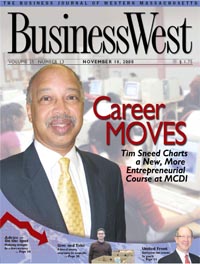
    Sections Supplements
    Manufacturers, Developers Answer the Call for Customizable Phones

    If you thought there was no place for Wack-a-Gopher or Word a Day calendars in today’s personal technology landscape, you’re wrong.

    The latest craze among new phones — which, today, are not phones at all so much as personal online and connectivity devices — is not the handsets themselves, but the additional, customizable applications a user can download at any time. For some people, this might mean adding a racecar game or a relaxing, virtual pond of koi fish for idle gazing. Or, it could just as easily mean installing complicated stock programs to follow specific trades, a remote desktop that connects to a home or office computer, or a mobile version of the White Pages.

    Regardless of the product, it’s a personalized climate in which we’re communicating, leading to new needs and wants among consumers. Here’s a look at some of the new offerings on the market.

    An App a Day

    Just this summer, the communications buzz centered almost entirely on Apple’s latest offering, the iPhone 3G. The new iPhone is said to be twice as fast as the first generation iPhone, allowing users to take advantage of faster access to the Internet and E-mail over their cellular network, as well as for voice and data connectivity worldwide.

    But as autumn settles in, iPhone chatter has shifted to focus more on the vast number of services and applications (or what Apple calls Apps) that can be used in conjunction with the device. MobileMe, for example, is a new service available to all iPhone users that ‘pushes’ E-mail, contacts, and calendars instantly to iPhone, removing the need to manually check E-mail and wait for downloads. There are also about 600 ‘Web apps’ available to iPhone users, such as connectivity to popular social networking sites like Facebook and Twitter, and 2,500 applications to date that can be purchased (some are free) and downloaded to the iPhone via through Apple’s online ‘App Store.’

    These include applications in a variety of categories, including games, business, news, sports, health, reference, and travel, and all are designed to help users customize their experience. There are more than 40 photography Apps alone, ranging from editing tools to uploaders to popular online photo hosts such as Phanfare and flickr, and a number of business-related Apps, including remote PowerPoint controllers, task managers, voice recorders, and automatic trackers for everything from headlines to real estate trends.

    New Apps are added constantly, and Apple tracks its most popular products. Currently, the most-often downloaded Apps among free and for-purchase products include Wikipanion, a free search tool for use with the online encyclopedia Wikipedia; Stanza, a reader for electronic books; Pandora Radio, a free, personalized music service; and Spend Lite, a budget manager. (Wack-a-Gopher and the virtual koi pond are also in the top ten Apps this month.)

    In addition, other companies, from technology firms to audio-visual manufacturers, are also capitalizing on the iPhone craze and introducing their own compatible hardware and software.

    MODE for iPhone, for example, was created by audio-component manufacturer SpeakerCraft, based in Riverside, Calif., to expand upon the iPhone’s already-extensive music-playing capabilities.

    MODE essentially transforms the iPhone into a remote control that can be used with home-theater and multi-room audio systems, as well as with every iPod within a household. The interface operates much like other iPhone applications, and displays song information, artist names, genres, and playlists on the interactive touch screen, making the process of accessing music simple and intuitive.

    BlackBerry Cordial

    These kinds of innovations — focused less on one-to-one conversations and more on the vast potential of hand-held communications devices of today — is an industry-wide trend, and not relegated to all things Apple. Another sweet spot in the industry is the BlackBerry, which is also revamping its image, capabilities, and relationships with those all-important third-party applications.

    The BlackBerry Curve 8830 from Verizon Wireless is one of the latest models, featuring applications that can work together and load concurrently. With the Curve 8830, users can E-mail a Web page to a contact, for example, while browsing the Web or listening to music. The BlackBerry also utilizes a 3G network, which augments such real-time features as ‘VZ Navigator,’ an audio and visual GPS system that provides turn-by-turn directions.

    ‘Built by BlackBerry’ is this company’s version of an online application store, carrying both free and for-purchase add-ons in categories such as lifestyle, finance, news and weather, and music and media. Users can play a game of virtual Uno, read the New York Times, make stock trades, or track expenses by installing these diverse programs, which are added and expanded on a regular basis.

    All of these innovations point toward devices that are increasingly versatile, as well as easy to use. As suggested by the iPhone 3G, keypads are beginning to give way to touch screens, and personal organizers, music players, phones, and portable Internet-connectivity devices are already morphing into one gadget rather than several.

    A Soft Spot for Hardware

    However, this is not to say that design and lifestyle don’t still play a part in which phone or accessories are purchased. High-end phones like the BlackBerry and iPhone are larger than some of the tiny devices of years past, and more complicated to replace or repair. That’s why many manufacturers are now striving to offer a multitude of options in terms of capabilities and space for added applications, while still taking into account the varied lifestyles of consumers.

    The Motorola Adventure V750 Push-to-Talk Phone, for example, is designed to cater to travelers and businesses with a far reach. It connects one or multiple team members at the same time with one push of a button, and is a more rugged phone that meets military standards for shock, dust, vibration, solar radiation, altitude, and high and low temperatures.

    It also supports a Verizon Wireless application called Field Force Manager, a business-to-business, multi-function tool that allows for the location and tracking of field workers, offers an electronic time-card option, creates an audit trail to validate job information for customers, and generates turn-by-turn driving directions.

    If sophisticated business tools aren’t necessary, though, there’s also mobile Guitar Hero and Pac-Man Fever. A little something for everyone is the trend, and everything is close at hand.

    Jaclyn Stevenson can be reached at[email protected]
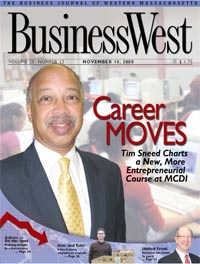
    Sections Supplements
    New Facility at UMass Should Prove to Be a Big Draw
    Ron Michaud

    Ron Michaud stands outside the new Studio Arts Building at UMass Amherst.

    UMass Amherst recently opened the doors to a new, $26 million Studio Arts Building. The facility brings together a number of two- and three-dimensional art programs that had been scattered across the vast campus — often in facilities that were cramped and not up to modern building codes — and creates, with the nearby Fine Arts Center, what one administrator calls an “integrated arts district” on campus. But the center will also benefit the region as a whole, say school administrators, by making the university’s arts programs more attractive, thus bolstering the Western Mass. creative community.

    Joel Martin has a number of descriptive nouns and adjectives he applies liberally to the new Studio Arts Building at UMass Amherst.

    Martin, dean of the College of Humanities & Fine Arts, calls it a “well,” a “source,” a “talent magnet,” and even a “talent factory.” He deployed those terms and others to explain how the $26 million facility, which opened this past month and brings a host of two- and three-dimensional arts programs that were spread across the campus together under one roof and tons of glass, will help bring more talented art students to the school — and thus bolster the region’s creative community.

    He believes this because he has data showing that many of the artists living and working in this area said in a recent survey that they probably wouldn’t be doing business in this market if they hadn’t been exposed to it while attending college here. And the new Studio Arts Building, which has heen roughly 30 years in the making, according to some long-time administrators in the College of Arts & Humanities, will be a very effective recruiting tool.

    “Everything in it is state-of-the-art,” said Martin, acknowledging while also embracing the play on words, as he referred to everything from the air handlers to table saws in the woodworking area in the 47,000-square-foot building. “It’s a wonderful learning facility — it’s makes great use of light, and there are some grand spaces; we really needed to have a state-of-the-art, safe, environmentally sound facility so that our artists’ energies could be best used. And now we have one.”

    Ron Michaud, associate dean of the College of Humanities & Fine Arts, and former chair of the arts program, has been advocating for something like the Studio Arts Building for years now. He said the university’s arts programs have functioned well over the past half-century, and have succeeded in helping a number of accomplished artists — painters Chuck Close and Shan Shan Sheng, among them — develop their talents and find their potential.

    But it can do much more of the same with the gleaming new facility, which, when coupled with the nearby Fine Arts Center, creates what Michaud called “an integrated arts district” on the campus.

    Like Martin, Michaud said the new arts center makes UMass a stronger player as it competes with such institutions as the R.I. School of Design, the Pratt Art Institute, and a host of public colleges and universities for top art students. And the hope — and expectation — is that some of this talent will remain in the Pioneer Valley.

    “A building like this can really become a magnet for talented people across this region and also well beyond,” said Michaud. “This will put this university on a higher level, and also help this region and its economy.”

    The Proper Framework The ‘art barn.’

    That’s the nickname, if one could call it that, attached to one of the now former homes for studio arts programs at the university. The barn, located in the northwest corner of the campus not far from the Mullins Center, hosted painting classes for decades, said Michaud, and is now a facility housing lawnmower-repair operations “or something like that.”

    Another former art program facility, one recently razed to make way for an integrated sciences building, was a post-World War II army barracks annexed by the college. It housed sculpture programs and some instructional space, Michaud noted, adding that, overall, programs have been spread across as many as 19 buildings, most of them cast aside by other departments that didn’t want or need them anywhere.

    Some of these facilities, like the art barn, were considered warm and cozy, and actually had some fans, he continued, but they were not designed to house creative arts programs, were inefficient, and were often several hundred yards away from buildings hosting other programs.

    Even the university’s Fine Arts Center, opened in the early ’70s and designed mostly for the performing arts, lacked what would be considered modern, efficient space for most of the studio arts programs offered by the school, said Michaud, noting that, in many respects, the sprawling complex has been “showing its age” with respect to considerations such as ventilation, waste disposal, ‘green’ design, an even instructional facilities.

    A succession of students and, more importantly, administrators within the vast College of Humanities & Fine Arts, recognized the problem and the need to do something about it, he continued, but it wouldn’t be until the start of this decade before mobilized efforts succeeding in generating some action.

    “In 1995, we conducted a comprehensive study of our inventory of facilities,” said Michaud, “and came away knowing that we needed a new studio-arts building to remain competitive nationally and internationally.

    “People came together behind a common vision, and eventually convinced the administration that we needed something like … this,” he continued as he began a tour of the new facility, one that encountered several classes in progress and artists at work.

    As he started down one wing of the V-shaped complex, it didn’t take Michaud long to make his point about bringing once-scattered programs together in one space. Indeed, the woodworking, welding, sculpture, and ceramics programs were all arranged in a row. “Before, these were spread across campus,” he explained, noting that most former settings simply weren’t designed to house kilns or welding equipment.

    On its ground floor, the center features a high-end digital and computer-graphics studio, a central location for photography, and facilities for instruction in such disciplines as lithography, etching, and silk-screening.

    “The instructional areas are much larger, in most cases, than what we had before, and they’re more efficient,” he explained, “giving students the facilities they need to learn.”

    Martin agreed, and noted that for decades, the College of Arts & Humanities had been adjusting — or trying to adjust — whatever space came its way to accommodate whatever program, be it woodworking or pottery, that needed room. Now, it has space custom-designed for each discipline.

    The center is also one of the ‘greenest’ on the UMass campus, said Michaud, noting that it makes use of sustainable building materials, operable windows for natural ventilation, and a variety of energy and water-conservation measures.

    Breaking the Mold

    As he stopped in the large, open common area that serves as the primary entrance point as well as a gathering space for students and faculty and venue for art shows and guest lectures, Michaud remarked at how quiet it was at that time (late afternoon).

    “You won’t see it like this very often,” he said, adding that he and others expect that space, complete with high windows and expansive views of the campus, to help generate a stronger sense of community among artists who had been working in the four corners of the sprawling campus.

    And that notion of ‘community’ is important, said both administrators, because those in the arts thrive in settings where they can share ideas and critique each other’s work.

    “We now have facilities where people can meet, have lunch, talk about what they’re working on, and compare work,” Martin explained. “And that’s really important as they develop individual arts, but also as they compare and blend different forms of art, and perhaps even create new forms of art.”

    But while creating a larger, stronger, and more-visible arts community on campus where all this can happen, the new Studio Arts Building is also expected to have a broad impact beyond the university’s borders, said Martin and Michaud.

    Noting that many communities across the Pioneer Valley are looking to the arts and the so-called creative economy to help fill old mill buildings left quiet by the exodus of paper and textiles makers and other manufacturers and breathe new life into downtowns that can longer prosper through retail, Martin said the new facility can help provide the key ingredient to all those aspirations — artisans.

    “The creative economy, no matter how you define it, ultimately rests on having creative people with talent generating fresh ideas, approaches, and designs, to help create art, but also to communicate, persuade, and market this art,” he explained.

    And this is where Martin summoned those descriptive terms to drive home his points concerning what the Studio Arts Building is — and will ultimately become — as the region and individual communities focus on the arts as an instrument of economic development.

    “We’re the talent magnet that attracts the greatest number of talented people in the Valley,” he explained. “And with this facility, we can now attract and retain the most talented student artists in the country and the most talented faculty and artists. We have a state-of-the-art facility that is a pump, a source, a well that will feed this Valley.”

    Citing a survey of College of Humanities & Fine Arts alumni, released just a few months ago, Martin that a large percentage (nearly half) of those queried said they likely would not be working in the Valley as writers, photographers, painters, and sculptors if they had not attended the university and thus become exposed to the region’s amenities and quality of life.

    “When you look at those numbers, it’s clear that if we can bring more top talent to this university, we can, potentially, keep more of it in this region,” he explained. “That’s why people pushed so hard for so many years to get a facility like this.”

    Brush with Success

    As he passed two students conversing in the undergraduate studio area on the second floor of the new facility, Michaud offered a question, and an opinion, with the words, “better than the art barn, isn’t it?”

    There was a moment’s hesitation while the students thought this over — a reflection of how some liked the old accommodations, despite their limitations — but eventually some nods of approval.

    There will be more of those as the building’s facilities, amenities, and displayed works of art — including a piece by Shan Shan Sheng due to be installed later this month — come to be known and fully understood.

    That’s to be expected with a building that is truly state-of-the-art, in every sense of that phrase.

    George O’Brien can be reached at[email protected]
    Departments

    New Workforce- development Plan Launched

    SPRINGFIELD — Highlighting a continued commitment by the Patrick Administration to help revitalize Springfield, Secretary of Labor and Workforce Development Suzanne M. Bump recently joined city officials to launch a new comprehensive Workforce Development Plan. Bump announced $1.275 million in new workforce-development funding, $750,000 of which directly targets the city of Springfield in support of its workforce plan. The funding includes a $475,000 Workforce Competitiveness Trust Fund grant to Baystate Medical Center to increase pathways for lower-skilled incumbent workers by providing certified-nursing-assistant and acute-care training to 10 incumbent workers and 45 external candidates. Additionally, $475,000 in Workforce Competitiveness Trust Fund grant money will be given to the Regional Employment Board of Hampden County to provide 185 participants with access to education and training in early-childhood education with a focus on helping women, minority, non-English-speaking, and economically disadvantaged candidates. In related news, Mayor Domenic J. Sarno will present a proposal to the Springfield Financial Control Board to consider expanding job opportunities to East Longmeadow’s Garden Industrial Park. The control board will make the final decision on the proposal.

    State Labor Market Report Reveals Springfield Lags State in Job Growth

    BOSTON — The state’s Executive Office of Labor and Workforce Development recently reported that preliminary estimates show lower unemployment rates over the month in 11 of 22 Massachusetts labor market areas. Strong seasonal hiring resulted in the largest unemployment-rate declines in the Barnstable, Pittsfield, Tisbury, and Nantucket labor market areas. Over-the-year gains were seen in the Framingham, Boston-Cambridge-Quincy, Brockton-Bridgewater-Easton, and Leominster-Fitchburg-Gardner areas, with the Framingham labor market area recording the largest annual rate of growth. Job levels were off in the remaining labor areas, with the Springfield labor market seeing the largest job declines over the year. Statewide, the preliminary unadjusted unemployment rate edged down to 5.2% in July from 5.3% in June. Mirroring state and larger national trends, this rate is up from 4.7% one year ago. All 22 labor market areas recorded higher unemployment rates in July 2008 than in July 2007.

    Gaming Report Addresses Economic Impacts, Employment

    BOSTON — Spectrum Gaming Group recently presented an independent and comprehensive analysis of the potential impact of expanded gaming in the state, following Gov. Deval Patrick’s proposal last September to authorize up to three destination resort casinos in Massachusetts. The study noted that each casino would create 3,000 construction jobs and 4,377 permanent jobs, and would add about $2 billion in goods and services to the state each year. Additionally, the study suggests that the casinos would hurt sales from the state lottery in the short term only. The study also noted that the effects of casinos on other businesses will be felt on merchants a relatively short distance from casinos, and would generate $596.7 million a year in total government revenues. Key facts from the study also suggest that the destination casinos could create serious demands on local police. The Mass. Executive Office of Housing and Economic Development is currently reviewing the gaming analysis.

    Holyoke To Benefit From Implementation Grant

    HOLYOKE — Mayor Michael J. Sullivan and City Historian Kate N. Thibodeau recently announced that the National Endowment for the Humanities has awarded a grant of $399,950 to the City of Holyoke and Wistariahurst Museum to develop a city-wide exhibit and heritage tourism plan called Creating Holyoke. Thibodeau noted that the grant also encompasses collaboration with Holyoke Heritage State Park, the Children’s Museum at Holyoke, the Holyoke History Room of the Holyoke Public Library, and Enchanted Circle Theater. Creating Holyoke’s total budget of $692,970 will allow Wistariahurst Museum and partner organizations to finalize collaboration with humanities scholars and advisers, finish design and fabrication of long-term museum exhibits in three locations, install walking/driving tour panels and way-finding signs, develop teacher guides and curriculum materials, develop a website portal, and implement community programs in the humanities. For more information, contact Thibodeau at (413) 322-5660, or e-mail [email protected].

    Initiative to Improve Connecticut River Underway

    WEST SPRINGFIELD — Five partner organizations in three states — Massachusetts, New Hampshire, and Vermont — recently kicked off a multi-year, $1.4 million project to improve the Connecticut River by addressing bacterial-pollution problems, storm water, combined sewer overflows, riverbank erosion, agricultural runoff, and pollution from growth and development. The project is funded by a $953,000 Targeted Watershed Initiative grant from the U.S. Environmental Protection Agency, matched by $458,000 in local funding commitments. The project is led by the Pioneer Valley Planning Commission, and major partner organizations include the Connecticut River Joint Commissions, Franklin Regional Council of Governments, UMass Water Resources Research Center, and U.S. Geological Survey, as well as 18 other cooperating partners.

    PPC Headquarters Moves

    SPRINGFIELD — The Paperboard Packaging Council recently relocated its national headquarters to the Sovereign Bank building at 1350 Main St. The trade group closed its former offices in Alexandria, Va., on Aug. 11. As part of the transition, PPC is integrating its management, marketing, communications, data, and industry-analysis operations. For more information, visit www.ppcnet.org.

    Venture-capital Investment Holds Steady at $7.4 Billion

    WASHINGTON, D.C. — Venture capitalists invested $7.4 billion in 990 deals in the second quarter of 2008, according to the MoneyTree Report from Pricewater-houseCoopers and the National Venture Capital Assoc., based on data provided by Thomson Reuters. Quarterly investment activity was essentially flat compared to the first quarter of 2008, when $7.5 billion was invested in 977 deals. Growth in the clean-technology and Internet-specific sectors contributed to the solid level of investing seen in the quarter. The software industry gained top billing as the number-one industry sector in terms of deals and dollars in the second quarter with $1.25 billion going into 219 deals. The number of deals is nearly double the next-highest sector, which was biotech, with 111 deals for the quarter. Industrial/energy companies captured the second-highest level of funding in the second quarter with $1.2 billion being invested in the industry, pushing biotechnology out of the top two for the first time since the second quarter of 2003. The life-sciences sector (biotechnology and medical devices combined) saw a 14% drop in venture-capital investing in the second quarter with $1.9 billion going into 209 deals, a 9% drop in deals from the first quarter of 2008. In related news, U.S.-based venture capitalists invested $583 million into 47 deals in China, nearly doubling investment from the first quarter, when $296 million went into 34 deals. Investments into India by U.S. venture capitalists also jumped, rising 27% to $473 million going into 40 deals, compared to the $373.3 million going into 40 deals in the first quarter.

    Newsrooms Change with Times

    NEW YORK — The American daily newspaper of 2008 has fewer pages than three years ago, the paper stock is thinner, and the stories are shorter, according to a study recently released by the Project for Excellence in Journalism. Titled “The Changing Newsroom: What Is Being Gained and What Is Being Lost in America’s Daily Newspapers,” the report stresses that there is less foreign and national news, and less space devoted to science, the arts, features, and a range of specialized subjects. Additionally, business coverage is either packaged in an increasingly thin stand-alone section or collapsed into another part of the paper. The study also noted that while the crossword puzzle has shrunk and the TV listings and stock tables may have disappeared, coverage of some local issues has strengthened, and investigative reporting remains highly valued. Despite an image of decline, more people today in more places read the content produced in the newsrooms of American daily newspapers than at any time in years. The study notes that, as revenues continue to tumble, editors expect the financial picture only to worsen, and they have little confidence that they know what their papers will look like in five years. The study captures an industry in the grip of two powerful, but contradictory, forces. On one hand, financial pressures sap its strength and threaten its survival. On the other, the rise of the Web boosts its competitiveness, opens up innovative new forms of journalism, builds new bridges to readers, and offers enormous potential for the future. Amid the concerns and cutbacks, the study found that editors still sense their product is improving, not worsening, with more than 56% of editors reporting their news product is better than it was three years earlier.

    Sections Supplements
    A Gift to Northampton 80 Years Ago Continues to Hone Its Presence
    The Pines Theater, one of Look Park’s many attractions, has become a popular site for outdoor concerts.

    The Pines Theater, one of Look Park’s many attractions, has become a popular site for outdoor concerts.

    There’s a portrait of Fannie Burr Look hanging in the Look Park Garden House that seems to cast a watchful eye on the sprawling property.

    Are the flower gardens pruned? Are there people enjoying the pedal boats in the pond? Did the steam train go by already, sounding its whistle? If portraits could talk, it’s likely that Fannie Burr Look’s would have plenty to say.

    In 1928, she became the impetus behind creating what is now one of the region’s largest and most diverse parks in the name of her late husband, Frank Newhall Look, a prominent businessman in the late 1800s and early 1900s, by gifting a 157-acre parcel of land to the city of Northampton (the park is in Florence).

    Even today, signs of her influence remain, and help to move plans at Look Park forward.

    Though city-owned, taxes are not used to finance any aspect of Look Park’s operation; it functions as a self-sustaining attraction governed by a six-person volunteer board of trustees. Ray Ellerbrook, Look Park’s executive director, said this was a stipulation that Fannie Burr Look set out for the park before its inception.

    “Mrs. Look wanted no connection with the city,” he explained. “Making the mayor of Northampton a member ex-officio on the board of trustees was as far as she would go, and that’s the way it still is today.”

    While that separation may have stemmed from a distrust of government on Look’s part, Ellerbrook said it has made for a self-contained business model at the park that has long allowed its staff to tap varied funding sources and make incremental improvements. Look provided the land, development funds, and a trust fund for ongoing maintenance, and today these funds are augmented by visitor fees, grants, and gifts.

    “Mrs. Look was a woman ahead of her time,” he said. “Before her involvement, this was only farmland that the city thought was too far away to be of any use publicly.”

    A New Destination

    Over the years, as both Northampton and Florence have grown, however, the public has found several uses for Look Park, including as a concert venue (the open-air Pines Theater is on the grounds), a banquet facility, and a place for celebrations, in addition to serving as a family-oriented park offering children’s programs, a small zoo, paddleboats, day-camp sites, walking trails, a splash park, and a well-known train that chugs its way through the park on a regular basis.

    Jillian Larkin, facilities manager at Look Park, said improvements are currently planned throughout the facility, in terms of both infrastructure and programming.

    “We’re in a nice spot right now because we already offer so much, but we have room to grow as well,” she said, listing a few of the park’s popular features: the Sanctuary at Willow Lake, which can accommodate 150 people for weddings or other functions; a Victorian gazebo, suitable for smaller weddings; and the Dow Pavilion, the largest gathering space at the park, able to hold 200 people. In addition to these facilities, Look Park also has a ballfield, multiple playgrounds, and a ‘Picnic Store’ that offers light lunches and novelties.

    Adding to this landscape of late is one of the most important developments already completed at the park, Larkin noted — the renovated Look Park Garden House, where Fannie Burr Look peers out over the grounds.

    Completed in 2002, the renovation project converted the park’s former pool house into banquet and event space. The building can accommodate functions for up to 170 people, including weddings, receptions, and business meetings, with that last category being one that Larkin is looking to expand in the coming months.

    “We have wi-fi, a built-in P.A. system, and I think this is a great place for corporate retreats,” she said. “Instead of having a coffee break, people can come here for a little bit of a nature break.”

    Pooling Resources

    Ellerbrook agreed that the Garden House has become a particular focus at the park of late.

    It’s not the first time that corner of the park has been the center of the action; the former pool house once sat adjacent to a large pool that earned some local fame during its heyday; in fact, many Northampton and Florence residents were sad to see it go.

    “The pool was a tremendous feature,” said Ellerbrook. “It was huge, and had multiple waterslides before safety concerns changed. When the trustees decided to close it, it was actually a controversial decision — people did not want to see that happen.

    “But it was old,” he added. “It was cracked and in need of repairs that would have cost $500,000. It was time for it to go.”

    The area the pool once occupied is now a small bumper-boat park and a playground, and the Garden House is gaining more recognition as a unique event space each year. Larkin said every weekend is generally booked, and she hopes to increase that pace to include mid-week functions.

    “We’re getting there,” she said. “As we host more events, we’re able to show our different strengths as both a park and a venue. That helps us call attention to the role we can play in events for the whole family.”

    Ellerbrook said that same goal is prompting renovations throughout the park, which are largely aimed at beautifying the space and making it more accessible to various groups of visitors.

    The large fountain at the entrance of the park, for one, is being refurbished as part of a focus on ‘curb appeal,’ and the Look Park train station, a popular fixture for several years, is also being renovated and updated.

    Outside of the park’s parameters, state and local projects now underway are also having an impact. A bike path is being extended to run through the park, and on Bridge Road where Look Park sits, a roundabout is being constructed that Ellerbrook hopes will ease traffic concerns.

    The Eyes Have It

    All the while, he said that family-oriented flavor Look Park has cultivated over the last 80 years is always in the forefront of his mind as improvements continue.

    If for no other reason, he pays close attention to that mission to honor the wishes of Fannie Burr Look, whose picture keeps a discerning watch over the parcel of land that has become a fixture in Hampshire County.

    Jaclyn Stevenson can be reached at[email protected]
    Sections Supplements
    Studio One Inc. Puts Architecture to Work for Springfield
    Studio One Inc. President Greg Zorzi (left) and Vice President Dan Zorzi.

    Studio One Inc. President Greg Zorzi (left) and Vice President Dan Zorzi.

    When Greg and Dean Zorzi were teenagers, their father, Peter Zorzi, founder of Studio One Architects and Planners in Springfield, brought them to see an historical home he’d just purchased to renovate.

    He explained the importance of the building, its interesting features, and what it would take to make it livable again. Then, he handed his sons sledgehammers and told them to get to work.

    Greg Zorzi said this was his and his brother’s informal indoctrination into the field of architecture, and similar scenes played out repeatedly as they matured along with their father’s business.

    “The process went on for quite a while,” he said, exchanging a hearty laugh with his brother. “If he was going to work on a project, then we were going to work on it, too.”

    Today, that trend of sharing the load continues for the Zorzi brothers, though with different trappings. The siblings serve as president and vice president, respectively, of Studio One Inc., the company their parents started in 1974 and for which their father still works on a part-time basis. It’s a unique situation, because architecture firms aren’t known typically for being family businesses. But its principals, who assumed their new positions two years ago as part of a succession plan that passed the management of the business from one generation to the next, say this has become a core tenet of their “culture” — a word they return to often.

    “As kids, we would listen to our father talk about the business at the dinner table every night,” said Greg. “I think it’s those times that made us realize how much of daily life depended on this business, and we never lost that.”

    Coming Home

    Dean Zorzi joined the firm officially in 1987, and today oversees the creation of construction drawings that are presented for bid and to contractors; he’s also a constant presence at job sites across the region.

    Greg joined the firm in 1994 after studying at the Boston Architectural Center (BAC) and interning with one of the city’s largest firms.

    “It was interesting to see and experience the culture of other companies,” he said, “but as enamored as I was with the work, the experience also taught me that I didn’t want to run a big office. I’m so glad I had that realization, because it contributed a lot to how our company has evolved.”

    Tucked into an historical brick building on Main Street in Springfield’s South End, Studio One has a number of other family-owned businesses as neighbors — Mom and Rico’s, La Fiorentina pastry shop, and the Red Rose Pizzeria, to name a few.

    “We’re definitely in keeping with the neighborhood,” said Greg, adding that, like many of those other mom-and-pop shops, Studio One has been a fixture in the South End for several years, taking up residence in the early 1980s when Peter Zorzi purchased and redeveloped several blocks.

    From these offices, Studio One has developed a diverse portfolio of work, including historical design and preservation projects and work for municipalities, educational institutions, churches, residential complexes, and senior-living centers, among others. The firm’s work can be seen across Western Mass. as well as in eastern parts of the Commonwealth, including the Cape and Islands, and in Connecticut.

    Many projects are recognizable landmarks; Studio One spearheaded renovation efforts at the Austin Dickinson homestead in Amherst, for instance, and the Wilbraham Meetinghouse.

    On the more-modern side of things, Studio One has also helped erect some “landmarks in training,” as the brothers call them, such as the Scantic Valley YMCA in Wilbraham, the Sullivan Public Safety Complex on Carew Street in Springfield, and the Edgewood Gardens suite-style dorms at American Inter-national College, also in Springfield.

    In addition, Studio One has a particular niche in senior housing; the firm recently designed the conversion of the former Mont Marie convent in Holyoke into a 60,000-square-foot, 50-unit senior-housing complex that is slated to open in the fall, for instance, and a second new development on the campus is also being devised, with Studio One at the helm.

    “The style is reflective of the original convent, so it’s a nice mix of three kinds of work we like to do — historical, senior housing, and religious buildings,” said Greg, adding that the project has led to new work in New Britain, Conn., where the Daughters of Mary are planning a similar addition. “It’s interesting how work evolves. Who would think working with the nuns would lead to a new business niche?”

    Dean Zorzi added that it’s not merely the interesting sectors Studio One works within that he enjoys, but the fact that its services have become so wide-reaching.

    “One thing I really like about what we do is the diversity of the practice,” he said. “We have nicely distributed levels of expertise in different things, and we’ve realized that we can do that without being the biggest firm and going after every job.”

    Moving forward, Dean added that Studio One is focused on securing new projects in similar sectors, but also on continued work as ambassadors of the South End, of Springfield in general, and of the profession of architecture.

    “We’ve been able to secure a number of smaller jobs in the South End that we feel are really important,” he said, “and that we might not be able to work on if our business model was different.”

    Going South

    Such local projects are ones that Peter Zorzi will often take on, because they fit his interests in historical preservation and community development. A recent example of this work is the centennial renovation of the Mount Carmel Society building.

    “This was something he took on as his project, and the firm was very supportive of it,” said Dean. “It was one more tie-in with the South End for us, and led to other things.”

    Indeed, the brothers followed suit in contributing to the health of the South End shortly after the Mount Carmel project, drafting their own master plan for the area.

    “No one asked us to do it; we just did it, and now people are referring to it as ‘the Zorzi Plan,’” said Greg, noting that the document discusses several opportunities within the South End for redevelopment. “We’re studying various cross streets and intersections, as well as the Emerson Wright Park and what we can do to make that a more central, usable location.”

    The park, the Zorzis explained, is secluded, and therefore poses certain security issues that detract residents from using it. Now working with the Springfield Planning and Economic Development department to draft proposals for the parcel of land, Studio One is finalizing plans to reconfigure the area and make it more visible. “The idea is to get more eyes on the park,” said Greg.

    But the firm is also working to get more eyes on the city, as well as its rising workforce. A graduate of Springfield Technical Community College and its associate’s degree program in Architecture, Greg hopes to help create a pipeline from high school to higher education in the field.

    “Our profession is still one that requires a lot of training and practice — a lot of hands-on work,” he said. “We talk about the pluses of our work all the time, but we also want to walk the talk and help introduce more young people to the job.”

    While the Zorzi brothers may not have plans to hand sledgehammers to their interns any time soon, their interest in exposing a greater number of students to architecture as a profession is a trait they say they both inherited from their parents when the family business was in its early years.

    “We’re very fortunate to have the work that we have,” said Greg. “We enjoy it, we appreciate it, and we work to hold onto it.”

    The same goes, he said, for their neighborhood and their city.

    Jaclyn Stevenson can be reached at[email protected]
    Features
    Wing Memorial Hospital Opens New, $26.5 Million Building

    The new intensive care unit at Wing Memorial Hospital in Palmer, one of the departments overhauled in a just-completed, $26.5 million expansion project, will soon be equipped with something called the VISICU system.

    That’s a network that uses computer monitors to make each patient’s vital signs — among them blood pressure, oxygen saturation, and heart rate — viewable in real time by critical-care specialists at UMass Medical Center in Worcester, Wing’s parent hospital. Those same doctors can also monitor other patient information, such as current medications and recent test results.

    Proponents of such ‘telemedicine’ technology note that even the slightest change in a patient’s condition can cause potentially serious effects, and the ability to alert doctors to such changes instantly — doctors who, in turn, can immediately notify on-site staff in the Wing ICU — ensures that patients get urgent care when necessary.

    Compared to the manner in which hospital care was delivered only 10 or 20 years ago, that’s a long way for vital information to travel quickly. But Wing has come a long way in many other aspects, too, as evidenced by this week’s opening of the new, 58,000-square-foot Country Bank Pavilion on its campus.

    The addition, named for the Ware-based bank that donated $750,000 to the $26.5 million project, replaces the former operating rooms, intensive care unit, ambulatory surgery unit, and inpatient unit. The original hospital building has been renamed the Paul C. Michalski Pavilion after a former CFO at Wing who was a key player in the hospital’s previous growth, said Wing’s president and CEO, Dr. Charles E. Cavagnaro III.

    Investing in Tomorrow

    The new operating rooms will help Wing more effectively deliver general and laparoscopic surgical services including surgeries of the colon and rectum, gynecology, neurosurgery, orthopedics, ophthalmology, podiatry, urology, and ear, nose, and throat, as well as thoracic surgery and cosmetic and reconstructive procedures.

    The new medical/surgical inpatient unit features 18 private rooms and 11 semi-private units, with all beds featuring an unobstructed view out the window and the private rooms including recliners for family members to stay overnight.

    The mix of private and double rooms “makes it much easier for the staff to put people where they need to be to get the best care possible,” said Edward Noonan, chairman of Wing’s board of directors, at last week’s ribbon-cutting ceremony attended by hundreds of hospital employees, dignitaries, and local residents. “Even though the total number of rooms hasn’t changed dramatically, it extends our ability to take people into the hospital. And with telemedicine capabilities, doctors can look in on patients directly from UMass.

    “These are state-of-the-art operating rooms that no one imagined we would have here in Palmer,” Noonan added. “It’s spacious, and it’s your home when you or a loved one needs help.”

    State Sen. Stephen Brewer said the expansion is one example of the type of health care investment needed to create jobs and keep Massachusetts on the cutting edge of the industry, another being the life sciences bill recently passed by the state Legislature to provide $1 billion over 10 years for what could potentially be an $8 billion sector.

    “That’s a good economic multiplier and job creator, but more important was the person I met recently in Boston — a handsome young man in a wheelchair with Lou Gehrig’s disease.” The man had battled the disease for two years and didn’t have long to live, Brewer said. “I hung my head all the way back to my office thinking about the loss of this beautiful, talented individual. What we do for life sciences, how your tax dollars are invested for life sciences, is about alleviating the pain and suffering of your fellow citizens, and obviously we take it very seriously.”

    Likewise, any public or private investment in health care of all kinds, including Wing’s expansion, continues to benefit society, Brewer said, noting that the average life expectancy in Massachusetts, which stood at 52 a century ago, has now surpassed 78. “I think increasing life expectancy and the quality of life for our citizens happens because of the work that happens here.”

    At the same time, many of the speakers assembled for the ribbon-cutting ceremony on a rainy Monday morning spoke not just to the hospital’s technological advancements, but to a tradition of compassionate care.

    State Rep. Todd Smola, who has four living grandparents, was one of those who touched on the human side of Wing, recalling various occasions when they were admitted to the hospital. “Nobody’s more grateful to the care here than the person standing here,” the Palmer resident said. “Whenever we came to the hospital to visit my grandfather or grandmother, the doctors and nurses took the time to ask how we were doing, not just the people they were caring for.”
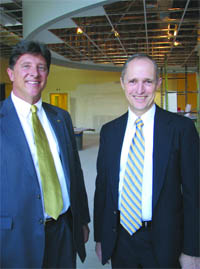
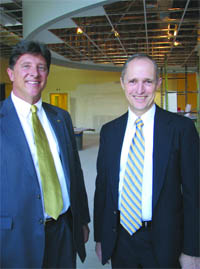
    State Rep. Anne Gobi noted that the hospital has made important strides in end-of-life care, including not only hospice care for the dying but bereavement counseling for families, among other services.

    Now and Then

    Wing’s expansion has cleared some space in the old, 111,400-square-foot building, and Wing administrators must still make decisions on the best use of that square footage. But at a time when Massachusetts residents are living longer, all the ceremony attendees said it’s important for Wing to remain in a growth mode.

    “At a time when community hospitals are struggling to stay open, Wing is building and growing,” said James Phaneuf, vice chairman of Wing’s board of directors, noting that the hospital employs 600 people and has benefited from its membership in the UMass Memorial Health Care system beginning in 1999. “We couldn’t have reached this point without the close support of UMass Memorial.”

    That system employs 13,000 people and treats some 3,000 to 4,000 patients per day, said John O’Brien, president and CEO of the health network. “In our system, some of the very best people we have work inside the walls of this hospital,” he said. “This has been a wonderful effort by this hospital to serve all who need help, and I am particularly thankful to this staff that does such an extraordinary job every day providing health care to everyone who comes through these doors.”

    Paul Scully, president of Country Bank, resorted to a little humor in recounting the bank’s decision to financially support the expansion project. “When I started to write a check for $750,000, my hand started to shake, but then a voice said this is the right thing to do,” he said, then turned to Cavagnaro. “Thanks, Charlie, for helping me to finish signing the check.”

    U.S. Rep. Richard Neal wasn’t able to attend the gathering, but his aide, Kevin Kennedy, promised additional federal funding for regional health care endeavors down the road.

    “The critical nature of health care in Massachusetts and all around the country is not something that I have to explain to any of you,” Kennedy said. “Looking at this magnificent structure, you deserve to be congratulated.”