Home Posts tagged Features (Page 13)
Sections Supplements
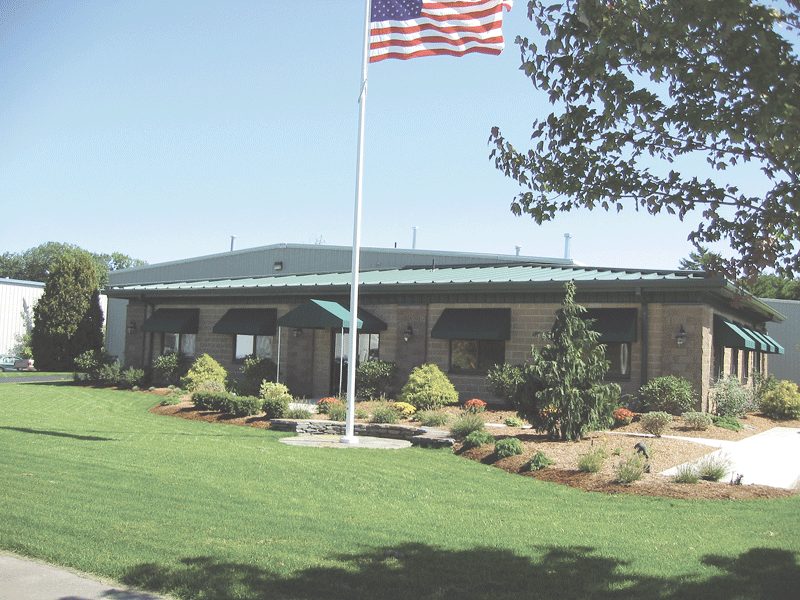
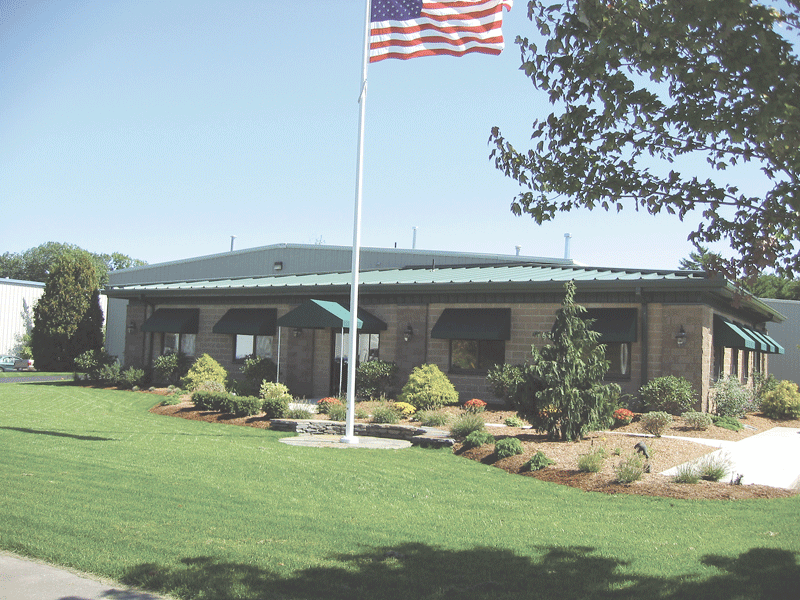
Pioneer Landscapes Strives to Be a One-stop Resource
Pioneer Landscapes

Brian Campedelli says Pioneer Landscapes tackles a wide variety of projects both residential and commercial.

    Brian Campedelli once wanted to clear the landscape of crime. Life had another plans.
    He originally aspired to become a state trooper, but then his brother suffered a serious car accident and wound up in a coma for six days, followed by weeks of rehabilitation. The experience gave Campedelli a new perspective.
    “My brother was into landscaping; we have a family background in it,” he said. “I asked him what he wanted to do with the rest of his life, and landscaping was it.” So Campedelli decided he would rather do something with his brother than become a trooper, and he enrolled in the landscape contracting program at Stockbridge School of Agriculture. Pioneer Landscapes was born soon after, in 1989.
    “We started out as a general maintenance company, and we built it into what we have today, with multiple divisions,” he said. In fact, in the early 1990s, still enrolled at Stockbridge, Campedelli kept his business afloat by working as a co-op student at Mountain View Landscapes in Chicopee, and heading off to his own jobs after work. Sometimes, he would work late into the evening, illuminated only by his truck headlights.
    Campedelli, who initially ran the operation from a 240-square-foot garage in Easthampton, hired his first employee in 1992 and moved Pioneer to its current 2,000-square-foot space on Industrial Way in 2000.
    From its origins tackling basic residential tasks such as seasonal cleaning, mowing, mulching, planting flower beds, and small construction, the company — now employing about 30 people — has a much more extensive menu.
    “We have construction crews for hardscapes, custom outdoor areas and kitchens, and commercial installation; an irrigation division doing installation and maintanance of irrigation systems; and a fertilization division for anything from the smallest residences to school athletic fields,” he explained, not to mention driveway paving, cabana and shed construction, and, of course, a wide range of residential and commercial lawn care. “If it’s outside, we do it.”

    Seeds of Success
    Campedelli was buoyed by his early success. “The first 10 years, business doubled every year in gross volume, then we leveled out a bit,” he said, adding that business was starting to accelerate again a few years ago when the Great Recession hit, and “contracting came to a screeching halt. Usually we’re going from one job to the next, but we had an eight-month period with nothing.
    “But this year, we’ve got a couple of nice jobs going,” he continued, citing the Center at Lenox shopping plaza and Butternut Farm, a residential complex in Amherst, as two examples. “We’re noticing there’s a lot of new jobs coming down the pike.”
    He noted that schools are active in the landscaping market again, which in past recessions has been a reliable harbinger of recovery.
    While most of the industry’s pain has been on the commercial side, Campedelli said, residential work hasn’t been as badly affected by the economy, particularly when it comes to higher-income customers. “Rich people are still rich, and those jobs didn’t slow down. We’re still doing some huge residential installs — anything from custom decks to fireplaces and firepits to pergolas and pavilions.”
    The past decade has seen an upswing in reinvesting in the home, he said. “We’re trying to make it so that, when you come home, you’re on vacation. That’s definitely a trend.”
    While outdoor kitchens and other projects to create indoor-outdoor spaces used to be popular mainly in warmer climates — “in the New England region, it used to be a faux pas to spend that kind of money on a three- or four-month season” — that’s no longer the case, and outdoor fireplaces and firepits, which range from simple to very elaborate, have stretched the warm season to seven months or more for many families.
    “You can start as early and quit as late as you can stand,” Campedelli said. “Firepits are really popular; they’re one of the more inexpensive ways to get out and enjoy your yard. We see a lot of built-in grills, too.”
    Taken together, these improvements — landscaping, hardscapes, outdoor kitchens and fire features — are meant to give people the feeling of coming home, walking outside, and not feeling like they’re at home, he told BusinessWest.
    “There aren’t many words to describe that feeling. No matter what happened at work, whatever kind of day you had, you and your family can go out to this nice area, and it makes you feel like you’re not even in New England,” he continued, noting that one customer told him he feels like he’s having dinner in Hawaii. Another recent client, a well-known business owner in Northampton, told him, “I’ve used my backyard more in the last three weeks than I have in three years.”
    That sort of talk gratifies Campedelli, who strives to create such experiences. At a recent trade show, he said he was situated near about 15 other landscapers, all of whom offered brick and block hardscapes, “but what I want to give you is a lifestyle.”

    Growth Pattern
    At the same time, he’s looking to raise the profile of his company, expanding into a 5,500-square-foot office and storage building on his current property, as well as planning educational events to teach people various aspects of DIY landscaping. He’s also planning fund-raisers for charitable organizations, and donates mulch for annual cleanup efforts in Easthampton.
    Campedelli is also committed to work-life balance for his staff. “Our mission is pretty unique,” he said. “I believe in the safety of our employees and family first. A day lost with your kids can never be found again. I’m in a good place right now, and I want them to have the same quality of life I have as I grow my business.”
    And whether commercial or residential, he said he wants to be a one-stop source for customers’ landscaping needs, continuing to grow the company by creating more loyal clients.
    “We want to be the vendor for all your needs, whether it’s fertilizer, sprinkler systems, parking-lot issues, gazebos and patios, and other enhancements of the property, because the first impression is curb appeal.”
    Campedelli told BusinessWest that 2011 began on the right note, with a January for the ages when it comes to snow — and people needing snow removal.
    “We were going out every two days,” he said with a laugh. “Now we’re back to normal paychecks, but we really appreciated that month.”
    With the spring thaw well underway, Campedelli will soon see if the rest of this year brings as much green promise.

    Joseph Bednar can be reached at [email protected]

Sections Supplements
Landscape Architects Say More People Are Investing in Their Yards

Bringing It All Back HomeIt’s a concept that gained traction almost a decade ago, in the wake of 9/11: the ‘staycation,’ the desire of homeowners to cut down on travel and instead invest in their homes. Well, area landscape architects are hearing that word again, but for different reasons, namely a lingering recession and high gas prices. In such times, they say, people are more likely to use their vacation savings on something more permanent. That’s good news for a landscaping industry starting to bloom after a couple of years in the rough.

Gas prices have been on the rise for months, with airline fares following suit. That has plenty of people on edge, from would-be vacationers who might stay home this year to the many tourism-reliant businesses in Western Mass.
But there’s a silver lining for one group — landscape architects, who are increasingly hearing that magic word ‘staycation,’ along with rumblings that homeowners might use their vacation funds this year to create a bit of an oasis at home.
“It’s not just the middle- to lower-income people; I think that applies to everyone,” said Bill St. Clair, president of St. Clair Landscaping and Nursery in Hampden. “Let’s face it, people are watching the dollars they spend, and they’re looking to get the most bang for their buck. And I see more people staying home this year, especially since they’re saying gas could hit $5 by midsummer.”
Stephen Roberts, president of Stephen A. Roberts Landscape Architecture & Construction in Springfield, is hearing the same chatter.
“Staycation is the catchphrase — stay at home and enjoy your house; have people over and entertain without the hassles of traveling. It’s huge,” he said. “We’re really focusing on that — creating a nice environment for people at home.”
The stay-at-home trend rivals what the industry saw in the years immediately following 9/11, St. Clair said, but it’s re-emerging for a different reason, namely lingering anxiety over the economy mingled with pain at the pump. These factors, he and others told BusinessWest, are persuading families to reprioritize their extra dollars, putting them toward something more permanent than a week at a resort or on a cruise.
“In the past two years, our industry has been hit as hard as some other industries,” Roberts said, specifically citing the struggles of general contractors and those involved in moving real estate.
“People aren’t purchasing new homes; they’re staying where they are and investing whatever money they have into their homes, for their personal enjoyment,” he continued. “I see that continuing to happen as long as the housing market isn’t doing much. And I see our industry benefiting from people renovating their homes and fixing them up.”

Green Days
When it comes to outdoor spaces, some types of improvements have become especially desirable.
“Outdoor firepits and outdoor, built-in cooking areas are really big,” Roberts said. “Water features are still pretty popular, but people are going more toward urns and sculptural fountains as opposed to fish ponds, just as a way to add quality and the ambience of water without the higher maintenance of a fish pond. Outdoor lights and accent lighting are also gaining momentum with people.”
St. Clair has seen some of the same trends. “We did a good amount of firepits last year,” he said. “In talking to our clients and prospective clients, their outlook was, ‘we’re going to spend more time at home.’ That was helpful to us. People were staying home, and they wanted to fix up their palaces, so to speak. We were doing lots of firepits and water features. We rode that for a good part of the year.”
Brian Campedelli, president of Pioneer Landscapes in Easthampton (see story, page 30), also reports an uptick in homeowners asking for both water and fire features, mingled with hardscapes and different plant materials; he’s also found interest in audio installation outdoors to create additional atmosphere for staycationers.
One growing request, Roberts said, has a back-end economic — and ecological — benefit.
“Rainwater harvesting is another trend that’s hitting our industry. Instead of sending water down the street, you keep it on your property and use it for your irrigation system and general outdoor watering,” he said, noting that other ‘green’ trends are on the rise in landscaping as well.
For instance, some clients, mainly those with larger properties, are converting some portions of their yard to meadows instead of covering every inch with sod or seed. “By making them naturalized areas,” Roberts said, “you reduce the maintenance of the turf; you cut it a couple times a year and add groupings of native shrubs. That reduces rain runoff, and you’re not using as much ferilizer or chemicals.”
The Landscape Management Network blog (lmnblog.com) places such efforts in a general category called ‘ecoscaping,’ which involves making use of green solutions to improve the look of the landscape without sacrificing the health of the environment.
“Some examples of green solutions,” the blog explains, “include rainwater harvesting; a self-contained water feature that recycles the same water; decorative hardscapes, such as more patios, paths, and decks that reduce the need for water and pesticides; retaining walls, which work to reduce runoff; as well as erosion from household chemicals leaking into the yard.”
Roberts said he embraces these trends. “Landscaping makes a huge difference, and it’s up to us to promote these ways of being kinder to our environment.”

Work and Play
While the business of residential landscaping seems to be moving in the right direction, progress on the commercial side has been more sluggish, said Steve Corrigan, president of Mountain View Landscapes and Lawncare in Chicopee, which performs about 90% of its work in the commercial sector.
“We were down last year; we had projects on the books for one to three years prior to that, and once they wrapped up, we didn’t have a lot of projects to fill the bucket,” he told BusinessWest. “If you talk to any of us in the commercial trades, we’re all in the same boat. It’s the same story; competition is so fierce and margins have gotten very low, and it takes more to fill that bucket the way you need to.
“Entering this year, though, I’m cautiously optimistic. We have a bigger backlog than we had in 2010, and I actually have a larger backlog for 2012 projects than 2011 projects,” he added, explaining that landscapers are among the last tradespeople in on a new-construction project, so it might be two years or more between the bid process and actually performing the work.
In the meantime, Corrigan said, “we do some minimal residential design-build work, and we’re seeing a little uptick in that from last year. I’m not worried; I’m optimistic that this year will be better than 2010. But I still think it’ll be even better in a year or two.”
Roberts is anticipating a growth year, too, and St. Clair said 2011 is off to a busy start just based on calls from customers whose landscapes were damaged by the harsh winter, or who have discovered drainage issues. “I think the spring forecast this year is a little bit different than last year due to the winter we had.”
Overall, he said, last year was slightly better than the year before, when the recession was at full force, and he’s encouraged by what he’s hearing this spring from residential customers, even though he knows the industry is not moving at full speed yet.
“People are being cautious with their money because of the economy,” he said. “But you can’t get bored when you’re constantly being challenged. We have work on the books, but it’s been too wet to start. Spring is here, but Mother Nature isn’t letting us out yet. If we can get the weather in our favor, we can get rolling.”

Joseph Bednar can be reached at [email protected]

Company Notebook Departments

Vann Group Launches Simply Booked
SPRINGFIELD — The Vann Group recently launched Simply Booked, an affordable, easy-to-use, outsourced bookkeeping service that combines the benefits of an online service with the expertise of a dedicated accountant. The firm has two locations, on Worcester Street in Springfield and at 10 Post Office Square in Boston. For more information, visit www.simply-booked.com.

Gravity Switch Develops iBracket for iPad
NORTHAMPTON — Gravity Switch, a Web, iPhone, and iPad development firm, has developed the first wall bracket for the iPad, the iBracket. The iBracket fills the need for a wall-mounting system for Apple’s iPad and doubles as a means for a cost-effective Internet-enabled kiosk. The firm has worked closely with LB Manufacturing in Chesterfield from the beginning to produce the iBracket, which comes in a variety of colors and finishes and offers various features. The iBracket is being built to order and takes approximately two weeks from order to delivery. Customers have already included Powerhouse Entertainment, the Bruce Museum in Greenwich, Conn., and the Asian Art Museum in San Francisco, Calif., which are showcasing the iBracket/iPad combination. For more information, visit www.gravityswitch.com.

Berkshire Hills Reports Solid Fourth Quarter
PITTSFIELD — Berkshire Hills Bancorp Inc. recently reported another solid quarter of earnings growth and strong asset-quality metrics, according to a statement by Michael Daly, president and CEO. Core earnings per share reached $0.28 in the fourth quarter of 2010, representing growth of 12% over third-quarter results. Asset-quality trends continued to improve, and the loan-loss provision covered net charge-offs. For the quarter, GAAP earnings per share were $0.26, which included approximately $0.4 million in non-core charges relating to bank acquisitions. Core and GAAP earnings for the fourth quarter were $3.9 million and $3.6 million, respectively. For the year in 2010, core earnings per share were $1.01, while GAAP earnings per share were $0.99. The board of directors maintained the cash dividend on Berkshire’s common stock, declaring a dividend of $0.16 per share to stockholders of record at the close of business on Feb. 10, 2011, payable on Feb. 24, 2011. The $0.64 full-year dividend in 2010 provided a 3.3% yield based on the average closing price of Berkshire’s common stock in 2010.
Colebrook Brokers Lease Renewal to HNE
SPRINGFIELD — Colebrook Realty Services Inc. recently brokered the long-term lease renewal of tenant Health New England Inc. (HNE) at One Monarch Place. HNE leased in excess of 51,000 square feet on three floors of the Class A office tower. Prior to the extension, HNE had been a tenant of One Monarch Place for 17 years. Colebrook principals B. John Dill and Mitch Bolotin represented HNE in the transaction. Headquartered in the city, HNE is a health maintenance organization serving select counties in Western Mass. Robert Kosior, vice president and chief financial officer of HNE, said the firm wanted to stay in its current space “because we are committed to supporting the downtown area.” He noted that Colebrook was instrumental in negotiating a cost-effective lease for HNE.

Lowell Named President
of Monson Savings
MONSON — Steven Lowell has been selected by the board of trustees of Monson Savings Bank to succeed as bank president Roland Desrochers, who announced his intentions to retire in mid-2011. Lowell has served as executive vice president and chief operating officer for Cape Cod Cooperative Bank for 10 years. He has been with Cape Cod Cooperative Bank for 15 years and has more than 30 years of banking experience. Lowell was chosen for the new post based on his “outstanding leadership, strategic planning, team building, and sales-management skills,” according to a statement by Desrochers. While at Cape Cod Cooperative Bank, Lowell oversaw planned deposit growth from $145 million to more than $400 million and helped to grow assets from $150 million to $580 million. The Monson Savings Bank trustees were also impressed by Lowell’s strong community commitment and long list of charitable and volunteer engagements, as community involvement is an important part of the bank’s core values. Lowell will join Monson Savings on Feb. 14 and will be elected president in March. At that time, Desrochers will become CEO and will oversee the transition and work full-time in an advisory capacity through June. During Desrochers’ tenure at Monson Savings, the bank opened branches in Hampden and Wilbraham, added a Loan Center, built a commercial-lending operation, added financial-advisory services, increased community giving, and grew from $80 million to $236 million in assets while at the same time improving its capital position and financial stability.
O’Connell Care at Home Opens Hadley Office
HADLEY — O’Connell Care at Home and Healthcare Staffing, based in Holyoke, has opened a satellite office at Hadley Crossing Plaza. The new office will provide the residents and business community of Hampshire County with better access to the company’s services, according to Fran O’Connell, president and founder. O’Connell noted that the company’s goal has always been to help ensure that elders can live in comfort and dignity in their home. O’Connell added that the team focuses on the complete needs of the individual, be they physical, mental, or spiritual. O’Connell’s offers skilled nursing and rehab services; personal-care, homemaker, and companion services; geriatric care management; and transportation. In addition, the company offers area health care providers with staffing services, including temporary, temp-to-hire, and direct hire. For more information, visit www.opns.com.

WMA Launches Tuition Affordability Initiative
WILBRAHAM — Wilbraham & Monson Academy (WMA) recently announced an ‘affordability initiative’ for the WMA Middle School, grades 6 through 8, to make private, independent education more accessible to families by saving students and their families up to $11,000 a year in tuition. Current annual tuition for the middle school at WMA is $25,000. Under the new initiative, the school’s new grade 6 tuition would be $14,000 annually, an $11,000 savings. Grade 7 tuition will be reduced to $15,000, a $10,000 savings, and grade 8 tuition will decrease to $16,000, a $9,000 savings. This initiative applies to all current and incoming students. WMA Middle School enrollment is limited to 75, broken down into classes with a maximum of 15 students — one grade 6 class, two in grade 7, and two in grade 8. WMA Head of School Rodney LaBrecque noted in a statement that, “given the importance of education in an increasingly competitive world and the economic pressures many families are facing today, the academy’s board of trustees felt it was timely to launch this initiative and make this scholarship universally available to middle-school students, making our unique education available to more families.” Starting with the 2011-12 academic year, the board will provide support to all middle-school families. For more information about WMA and the admission process, visit www.wma.us and click on the middle-school blog.

Tighe & Bond Survey: Water, Sewer Rates Rising
WESTFIELD — The results from Tighe & Bond’s recently published 2010 water and sewer rate surveys for communities in Massachusetts indicate that residential users pay approximately $470 and $638 annually for water and sewer, respectively. This represents increases of 10.3% and 9.2% above the averages reported in the 2009 surveys. For more than a decade, Tighe & Bond has gathered and reported data on water- and sewer-rate service in the state. Using rate information that survey participants provide, they calculate the annual average homeowner’s cost for water and sewer service based on the consumption of 90,000 gallons or 120 cubic feet of water. The survey, which includes typical annual homeowner water costs for each community in Massachusetts, also provides information regarding rate structures, billing cycles, and seasonal rates. The surveys offer municipalities and private suppliers a benchmarking tool for comparing their rates against other suppliers in the state. The survey results are available to the public online at rates.tighebond.com.

Stevens 470 Develops Brand for Milana Gourmet Collection
WESTFIELD — Rao’s Coffee Roasting Co. recruited Stevens 470 to conduct market research and develop the brand identity for a new food offering, the Milana Gourmet Collection. Rao’s touts its “exceptional coffees and teas” and wanted to create a food collection that met its same high-quality standards. The coffees, teas, syrups, preserves, chocolates, and additional food items were developed to provide a diversified selection to the retail gift market. Stevens 470 designed the retail packaging for more than 70 products and managed the printing of labels and packaging. Wholesale order materials and an e-commerce Web site were also developed for the launch of the new product line. For more information on the products, visit www.milanagourmet.com.

MassMutual, Money Coach Team Up to Motivate Younger Plan Participants
SPRINGFIELD — MassMutual’s Retirement Services Division has joined forces with Farnoosh Torabi, independent Generation Y money coach, to help connect with younger plan participants and inspire them to take a more active role in planning and saving for retirement. While the alliance is meant to benefit participants of all ages in retirement plans administered by MassMutual, the company hopes to motivate Gen Y in particular to understand the value of starting early to plan and save for retirement. Through online seminars, online video, social-media interactions, and live speaking events, Torabi hopes to get participants on a solid path toward retirement readiness. MassMutual created this program to address the findings of its own participant research as well as industry data. A recent industry analysis by Financial Engines, an independent investment adviser, indicates that 53% of retirement-plan participants under age 30 do not save enough to receive the full employer match. For more information, visit www.massmutual.com.

Perigee Launches
Supper Clubs
LEE — In the 1920s and ’30s, supper clubs were destinations that offered dinner, dancing, and entertainment into the wee hours of the night. Perigee Restaurant is honoring the dinner and dancing hotspots of the past with its own rendition this winter. Owner Dawn LaRochelle noted that the evenings will take their cues from the clubs and speakeasies of days gone by. The prix fixe menu will reflect Perigee’s Berkshire Cuisine theme, using locally sourced ingredients whenever possible. For more information, visit www.perigee-restaurant.com/dinner-dancing.html.

Sections Supplements
Willie Ross Continues to Set the Tone in Education for the Deaf

Willie Ross School for the Deaf Executive Director Louis Abbate

Willie Ross School for the Deaf Executive Director Louis Abbate says people from school districts around the world have visited the campus to find out how it has been able to establish and maintain a ‘school within a school’ partnership with the East Longmeadow school system.

The Willie Ross School for the Deaf in Longmeadow has always been ahead of its time.
“The school was founded in 1967 by a group of parents who were pioneers in the field of education,” said Executive Director Louis Abbate, adding that an epidemic of rubella in the early ’60s caused many children to be born deaf. “They were led by Willie’s parents, Barbara and Gene Ross, at a time when all deaf children went to residential schools. It was a very bold step, because a day program for deaf children was something that was unheard of. But these parents wanted their children home so they could be part of the family.”
Since that time, Willie Ross has continued to forge ahead in the field of education for the deaf with a number of innovative programs that have served as a model for other schools of its kind. They include an integrated approach to communication, frequent examination of its instructional approach, and the acknowledgement and understanding that students with hearing loss from different backgrounds and cultures have different needs best met by a multitude of options to ensure that they get the best education possible and become productive members of society.
For this edition, BusinessWest takes an indepth look at what Willie Ross has done to stay at the forefront and inspire other schools for the deaf and hard of hearing, not only in this country, but across the world.

First Steps
In the beginning, the school’s founders rented self-contained space within public-school classrooms.
“The parents of these deaf children wanted them in a hearing setting,” said Abbate. “This was a bold first step because no one in the history of special education thought it was a good idea or even possible. But they wanted to integrate their children.”
The founders faced many challenges, as they had to develop a curriculum and were on uncharted ground. But they were able to pool their resources and, in 1967, purchased the old Norway School in Longmeadow for $27,000. “The school had been built in 1917 and was quite dilapidated. But the lot included three acres and another building,” Abbate said.
These parents were active advocates for their children in the early ’70s, and their program had made such progress that local public schools began sending students with hearing deficiencies to Willie Ross. The state paid their tuition because the school was a nonprofit. In 1974, a shift came due to the adoption of Chapter 776, which shifted the responsibility of educating students with special needs from the state to the local community.
“There was a big push toward mainstreaming in 1974, which really began to give children with disabilities the right to a quality education,” Abbate explained. “And at that point, the school began to roll forward.”
However, since Willie Ross had always rented classroom space in public schools, it had enough experience to recognize that, “although it was our legacy to find opportunities for mainstreaming, it was not what some students needed. So we also offered a center-based model,” Abbate said. They also had rented classroom space for elementary students in East Longmeadow schools, for middle-school students in Longmeadow, and for high-school students in Longmeadow, and at the old William Dean Technical High School in Holyoke.
Abbate was hired in 1985, and he developed a partnership with officials in the East Longmeadow school system that he says was unique in the U.S. at that time.
“It took time, but it is amazing,” he said, noting that all students in public schools were moved to East Longmeadow, giving them the opportunity to make friendships that could continue throughout their schooling.
“It’s very interesting that, over the past 20 years, an entire generation has grown up with deaf students. They have developed wonderful friendships in an extremely welcoming and supportive environment,” Abbate said, adding that many students and East Longmeadow staff members have taken sign-language courses offered by Willie Ross.
The system developed by the partnership offers immersion and inclusion as a service for deaf and hard-of-hearing students when it is appropriate. East Longmeadow agreed that the students could be mainstreamed, with the caveat that Willie Ross would provide interpeters and staff to teach the classes. Willie Ross also does consultations for East Longmeadow students who have hearing loss.
In fact, the system of shared resources works so well that, although Willie Ross has students from 19 school districts, it has never had one from East Longmeadow.
“We were able to keep our corporate soverigenty even though we were in the public schools, as both systems worked cooperatively; everything was worked out legally to make it an optimal experience for all students,” Abbate explanined. “Because we can offer our students two campuses, we can provide them with a wide range of opportunities. It is all about changing our business plan to respond to the changing needs of students, which is what we have always tried to do.”
The system has been so successful that it has become a model that others strive to emulate.
“Within the last three years, we have had visitors from South Africa, China, India, Taiwan, and Trinidad who came to see how it is possible to link public-school opportunties with a private school. People can’t imagine how a program like ours can work,” Abbate said, adding that one obstacle is that private schools are concerned about their institutional identity, while the notion of having a school inside a school seems like an insurmountable challenge to many public schools.
“But I think this is the model of the future and is a very good use of physical resources,” Abbate said, adding that he recently met with officials from the Washington D.C. public school system as part of ongoing efforts at Willie Ross to help other schools across the nation establish satellite programs.
A trustee committee oversees the partnership. “They are committed to children, and the fact that this school was founded by parents gives us a different view,” Abbate said. “The fact that a group of parents were so committed to their children that they built a school for them is a legacy that needs to be rejuvenated and change as kids change. It’s part of the reason why we are one of the only schools in the country for the deaf which has a campus inside a public school. We look at ourselves as heirs of the legacy of our founders, as our philosophy is to educate one child at a time.”
Five years ago, the school revisted its mission and instituted an outreach and early-intervention team. Not only did they realize it was important to serve students as early as possible, children’s needs were changing due to advanced technology, which includes cochlear implants, surgically implanted electronic devices that can provide a sense of sound to people who are profoundly deaf or severely hard of hearing.
In addition, an increasing number of students came from homes where English isn’t the primary language. So administrators assembled a team of three leading educators of the deaf and worked with them to develop a new mission, which reflects the contemporary needs of their students.
“We came to the conclusion that one size doesn’t fit all, which meant more recognition of the value of different approaches,” Abbate said, adding that this is highly ununsual for a school that serves the deaf and hard of hearing. “We started out as an oral school, saw its limitations, introduced sign language in addition to voice, and continue to use both modalities,” he said.
Meeting operational costs is a challenge, however, even though the school’s teachers work at well below the public-school rate. “Our revenue is dependent on tuition from students, and the state has frozen the rate. This year it only went up 0.75%. Plus, we are not eligible for any stimulus money which poured into the state for public schools,” Abbate said.
But administrators continue to forge ahead with programs and modes of learning to best serve their students.
“We have been able to do a lot, but it is primarily due to the generosity of the community. They are very supportive of us, and we rely on their help more and more,” Abbate said. “We have three goals for our students — competitive employment, sheltered employment, or college. Most schools of our size only concentrate on one of these goals, so it is a lot for us to do. But having our East Longmeadow partnership is an enormous opportunity for our students.”

New Opportunities
The school recently completed a campus-enhancement project, which involved purchasing an overgrown acre of land adjacent to the property and developing it to enhance programs for students.
The new West Campus will be used for recreational, instructional, and athletic programs, as well as for school activities. It boasts an outdoor classroom, a walking/fitness track, a nature trail, an honor garden with plaques that celebrate deaf people who have made significant contributions to improve the lives of their peers, a basketball court, and playing fields.
The $500,000 project, funded by a capital campaign, also features a new multi-purpose room which will help the school provide more sophisticated services to students with cochlear implants and expand transition services for students graduating from high school.
Abbate said the school plans to have an after-school and summer program, and he’s happy that the board and staff members had the vision to look at the land “which was completely overgrown and littered with trash” and see its potential for their population of students, who range in age from 3 to 22. They went ahead with their vision when the land became available, and staff and students participated in decisions, such as choosing the deaf individuals who are commemorated on plaques in their Deaf Honor Garden.
“We are a nonprofit school, and it has always been a challenge to operate with limited resources, so I am grateful for the support and proud of what we will be able to offer students,” Abbate said. “The outdoor classroom puts us in the forefront of research-based education, and the property combines instructional and recreational opportunities that weren’t available before. It is a wonderful feeling to know that generations of students will be able to enjoy it.”

Sections Supplements
Elms College to Introduce M.B.A. with Three Concentrations

David Kimball and Kerry Calnan

David Kimball and Kerry Calnan say the new M.B.A. program at Elms College, slated to start in the fall, provides a solid growth opportunity for the school.


Kerry Calnan acknowledged there was already a crowded field when it came to M.B.A. programs being offered in this region — before Elms College decided to enter the mix with three offerings slated to make their debuts this fall.
To stand out in this field, programs have to be somewhat unique, provide intrinsic value to students, provide the skills needed in the modern workforce, and address the many changes that are taking place in the broad realm of graduate programs in business administration, said Calnan, director of the program, who believes that Elms has all that covered, convincingly.
“M.B.A students are younger, less likely to come from disciplines other than traditional business disciplines, and expect course-delivery methods that go beyond the traditional classroom model,” said Calnan, an accounting professor at the college. “Elms College’s M.B.A. will provide the flexibility and accelerated delivery expected by today’s students.”
Elaborating, Calnan said the new M.B.A. program will offer concentrations in accounting, health care leadership, and management, and will be delivered in an accelerated hybrid format, with 11-week terms that allow students to combine online and on-campus classes, or take the entire program online. The program also features a community-service component to engage students in solving business problems within their own community.
Looking at the sum of these parts, meaning the concentrations, community work, and other components, Walter Breau, vice president of Academic Affairs at Elms, said the 82-year-old college is “taking its foundational strengths and building on them.
“I’m always looking for strategic initiatives to move forward,” he continued. “We have very high-quality programs and a great reputation in the health care field, in nursing, autism, and other areas, and I see the business area as another center of high quality where we can leverage what we have into future programming.”
Noting that a high percentage of Elms students stay in this region upon graduation, Breau said the M.B.A. is considered another opportunity to “educate young people and keep them in the Pioneer Valley.”
Administrators are projecting, conservatively, that each concentration will attract at least 10 students for the fall semester, and they wouldn’t be surprised if that number is easily exceeded.
“The feedback we’ve been getting is tremendous,” said David Kimball, chair of the college’s Business and Law Division. “The Facebook inquiries have been off the charts, with alumni being very interested; some were in accounting, others want health care leadership … all three tracks are drawing interest.”
For this issue, BusinessWest takes an in-depth look at Elms’ new offerings, how school leaders believe they will advance the college’s mission, and why they believe these offerings will stand out in that increasingly crowded field.

Course of Action
Kimball told BusinessWest that M.B.A. programs have been talked about at the Elms for some time now. And often the discussions involved the school’s business and accounting students who were enjoying, and appreciating, their undergraduate experience at the Elms and asking if they could continue on there.
“As they would approach graduation, our students would ask about graduate programs they could do on campus,” he said, adding that these queries provided not only inspiration, but evidence of a solid core of potential students. “So there will be some retention of those students who want to stay and enjoy their experience here.”
For a number of reasons that he would articulate, Breau said school administrators and the board of directors decided that the time was simply right to forge ahead with a multi-faceted M.B.A. program.
Several factors played into this decision that the timing was right, said Breau, listing everything from the school’s strong track record in placing students in graduate programs, to changes in the accounting field (individuals are not being hired by most firms unless they have completed 150 credits of work, or a fifth year of education), to an expansion of the region’s health care sector and the subsequent need for more individuals with advanced degrees.
“Health care needs are only increasing here in Western Mass., and we have some tremendous health care facilities in this area,” he explained. “I see our program helping any of the health care enterprises in this region moving forward, because leadership is becoming an increasingly important component, and these institutions are looking for ways to not only keep their people but help them move up the ladder.”
As they moved forward with its M.B.A initiative, Elms administrators sought feedback from local business leaders in order to ensure that the offerings would provide the educational background and help develop the skills needed to succeed in today’s changing workplace, said Calnan.
“There’s an increasing need for advanced education in order to be more effective in the workplace, and our program fits the needs of the market,” she explained, adding that Elms administrators were influenced, and motivated, by acknowledged changes in graduate business administration degrees, as outlined in the popular book on that subject, Rethinking the M.B.A.
“Today’s M.B.A.s are very different from those in the past,” she noted. “We need to develop programs that will meet this new need, rather than continue on with the old philosophy of what an M.B.A. should look like.
“Today, you don’t see people from other disciplines, like engineering, getting into M.B.A. programs, at least as much as you once did,” she continued. “Now, it’s generally a business student, and they’re doing it when they’re much younger and with much less experience than they had in the past. So this program tries to blend both pieces, meaning the older, traditional approach and the new approach, along with a hybrid delivery.”
Calnan said one of the distinctions of the program, and a facet that will add value and thus drive enrollment, will be its faculty, most of whom are practitioners and experts from area businesses and nonprofits.
“We have a strong commitment to excellence, and we’ve worked very hard going after top executives in all fields to be a part of this program, and in two different ways,” she explained. “First, in an advisory capacity, and then as instructors, or partners with current instructors.
“For example, there’s a course in global political economy and its impact on social and ethical responsibility,” she continued, “and it will be taught primarily by a corporate mergers and acquisitions person from MassMutual, and it will be partnered with our own Theology department, where one of our professors will co-facilitate all of the discussions during the 11 weeks. So by partnering with corporate business and community members to be involved in delivering the program, as well as advising us as a college on curriculum and important trends going on in the world of business, those two pieces should help drive our enrollment in each of those tracks.”
To build awareness of the new programs and gauge interest, Elms administrators are using a broad range of marketing and communication strategies. These include the traditional — everything from billboards on I-91 to direct mail, to an open house and information session slated for Jan. 11 at the Alumni Library — to the new and non-traditional, including social media and especially Facebook.
“We’re getting a lot of very good response already — there are a number of current students who have expressed interest in staying on and getting an M.B.A. here,” said Kimball. “There’s been a good deal of excitement generated; we’re creating a buzz.”

School of Thought
Summing up what the new M.B.A. program means for the college, Calnan said that, in the simplest of terms, it is a tremendous growth opportunity and a chance to expand the mission.
“This will impact the school in a profound way,” she explained. “Graduate programs are a way for a college to sustain and grow — that’s where the growth potential lies.”
Time will tell if the school can indeed make its program stand out amid a strong field of competitors, but administrators believe they have offerings that will resonate within the marketplace and provide a degree of progress, literally and figuratively, for this Catholic institution.

George O’Brien can be reached at [email protected]

Briefcase Departments

Growth Projections Remain Sluggish
WASHINGTON — The National Assoc. for Business Economics (NABE) recently noted that survey panelists made only modest revisions to their forecasts for the November report compared with their October projections for economic growth, according to NABE President Richard Wobbekind, associate dean of the Leeds School of Business at the University of Colorado. Wobbekind noted that projections for real GDP growth remain sub-par through the first quarter of 2011, but accelerate gradually through the forecast period. For next year as a whole, GDP growth is expected to be moderate. Factors restraining growth going forward include ongoing balance-sheet restructuring by consumers and businesses, and a diminished contribution to GDP growth from inventory restocking and government stimulus. Confidence in the expansion’s durability is intact, but panelists remain concerned about high levels of federal debt, a continuing high level of unemployment, increased business regulation, and rising commodity prices. To a large extent, the latest NABE forecast reflects the view that the economy will struggle against financial headwinds; 40% of survey respondents — compared to 37% in October — characterize the expansion as “sub-par with severe wealth losses and onerous debt burdens inhibiting spending and lending.” In contrast, 28% of respondents feel that “the economy will overcome its headwinds, and behave more in line with a traditional business cycle expansion: real output will grow at a rate above potential, and households and businesses will boost discretionary spending.” The likelihood of either stagflation or the economy slipping back into recession is viewed as relatively low. Also, consumer spending is expected to remain modest throughout the forecast horizon due to weak job gains, persistently high unemployment, and negligible growth in household net worth. This year’s holiday retail sales are still expected to be weak, rising only 2.5% from those of last year. Roughly half of the panelists expect the personal saving rate to fall over the forecast period, while the other half of the panel is divided as to whether it will rise further or stay at roughly the same rate. Additionally, labor market conditions are expected to improve slowly. Monthly payroll gains are forecast to average less than 150,000 until the latter half of 2011, at which time gains will improve at a range of roughly 150,000-170,000. Joblessness will remain high, with the unemployment rate persisting at over 9.5% or higher through the first quarter of 2011 before easing — but only slightly — to 9.2% by year-end 2011. This will mark the weakest post-recession job recovery on record. Panelists estimate the current long-run or natural rate of unemployment at 5.8%, up by one-half-percentage point since 2007.

Colonial Theatre, Berkshire Theatre Festival Team Up
PITTSFIELD and STOCKBRIDGE — The boards of trustees for the Colonial Theatre in Pittsfield and Berkshire Theatre Festival (BTF) in Stockbridge recently announced a partnership that will combine resources to strengthen the cultural vitality in the Berkshires. The partnership will stage performances and festivals interchangeably at the two historic theaters and BTF’s Unicorn Theatre. The Colonial and BTF will retain their boards of trustees and create a new board to oversee all operations. Staff activities of both organizations will also be integrated to produce efficiencies and reduce costs.

Calendar Sales Support Schools
AMHERST — The 2011 edition of the educational calendar When I Grow Up I Want To Be is now available at several local venues, according to Carroll G. Lamb, executive director of the Institute of Black Invention & Technology Inc. The calendar features color photographs of preschool-age children expressing their desire to be like significant black achievers in science, technology, engineering, mathematics, and other fields. Biographies of these achievers are included in the calendar. Donations from businesses and individuals and calendar sales enable the gift of calendars to elementary school classrooms in Springfield, Amherst, and Hadley. Calendars are available at Olive Tree Books-N-Voices, 97 Hancock St., Springfield; Helen’s Hairum Salon in Tower Square, Springfield; A.J. Hastings, 45 South Pleasant St., Amherst; and Food for Thought, 100 North Pleasant St., Amherst. For more information, visit www.tibit.biz.

Bright Nights Featured
on MSN
SPRINGFIELD — Bright Nights at Forest Park is featured at msn.com in an article titled “Everything is Illuminated.” The holiday-lighting display is first on the list of 10 lighting displays in the U.S. and Canada. The article notes that Bright Nights “adds a little color to the wintry staging with Dinner with Dickens, Supper with Santa, carriage rides, and an engine tour from Hartford to Springfield.” Bright Nights runs nightly from Dec. 8 through Jan. 2, starting at 5 p.m. Bright Nights is sponsored by the Spirit of Springfield with the Springfield Department of Parks, Buildings and Recreation Management. For more information, call (413) 733-3800 or visit www.brightnights.org.

Agenda Departments

Extreme Business Makeover
Dec. 8: Western New England College’s Law and Business Center for Advancing Entrepreneurship will host an Extreme Business Makeover session from noon to 1:30 p.m. in the NUVO Bank community room, 1500 Main St., Springfield. Olive Tree Books-N-Voices will be the featured business that will receive advice from Pamela Aronson, owner of Pam’s Paperbacks “Plus”; Lou Cadorette, CPA, MST; Antonio Dos Santos, Esq., Robinson Donovan, P.C.; Janine Fondon, president and CEO, Unity First Direct Inc.; and John F. White, SVP commercial lending, NUVO Bank & Trust Company. Olive Tree Books-N-Voices is a familyowned bookstore which focuses on African-American books and literature, multicultural books, book accessories, journals, Bibles, religious books, and many more Afro-centric items. The event is free and open to the public. Lunch will be served.

Value Management Seminar
Dec. 9: The Purchasing Management Assoc. of Western New England is sponsoring a breakfast seminar titled “Value Management: Key to a Profitable Company” from 8:15 to 10:15 a.m. at the Yankee Pedlar Inn in Holyoke. Breakfast will be served at 7:30. Joseph F. Otero, CVS of Pratt & Whitney, will discuss how to implement the value- management approach to the purchasing of goods and services. The business objective, according to Otero, is to avoid paying for features and functions that one’s company doesn’t need. The cost is $25 for members and $30 for non-members. The deadline to register is Dec. 6. For more information or to register, visit www.pmawne.com, e-mail [email protected], or call Donna Bitzer at (413) 594-4400.

Nutcracker & Sweets
Dec. 10-12: The Wistariahurst Museum in Holyoke welcomes back the Massachusetts Academy of Ballet and members of the Ballet Educational Training Assoc. for several magical performances with a Skinner twist on a holiday classic. Listed on the National Register of Historic Places, Wistariahurst is the former home of William Skinner, a prominent silk manufacturer. Advance registrations are recommended; seating is limited. Show times are Friday at 7 p.m., Saturday at 1:30 and 4 p.m., and Sunday at 2 p.m. Admission is $10 with children 12 and under admitted free. For more information, call (413) 322-5660. The Wistariahurst is located at 238 Cabot St.
‘Talking with Dolores’
Dec. 15: The Center for Human Development (CHD) will host a one-act play about aging, life, and death choices from 1:30 to 2:30 p.m. at the Majestic Theater, 131 Elm St., West Springfield. The performance celebrates the merger of Hawthorn Services and CHD and introduces a new elder-services division, Hawthorn Elder Care. A reception will follow the play. Tickets are $10 and $7 for seniors. The deadline to make reservations is Dec. 10. For more information, contact Janet Simeone at (413) 439-2106, or visit www.chd.org.

Victorian Crafts Workshop
Dec. 18: Celebrate the holidays by crafting ornaments and gifts from 1 to 3 p.m. in the decorative splendor of the Wistariahurst Museum in Holyoke. Participants of all ages will employ Victorian techniques to make fresh orange pomanders decorated with clove designs, embellished gift boxes, and paper lanterns to hang from ceilings or on trees. The cost is $5 per person. For more information, call (413) 322-5660. The Wistariahurst is located at 238 Cabot St.

Hometown Heroes
Seeks Nominations
March 17: The American Red Cross Pioneer Valley Chapter will present its annual Hometown Heroes breakfast at the MassMutual Center in Springfield. The event honors local individuals (or groups of individuals) who have shown courage, kindness, and unselfish character when a friend, family member, or stranger faced a life-threatening situation, or who have had an extraordinary impact on the community or his or her fellow man. Members of the community are invited to nominate a local hero for consideration. Honorees will be selected by a committee of individuals from our community, including former Hometown Heroes. The chapter welcomes the submission of nominations from throughout Hampden, Hampshire, and Franklin counties. Nomination forms and criteria are available on the chapter Web site at www.redcrosscwm.org. Nominations must be submitted online or postmarked no later than Dec. 30, 2010. Sponsorship opportunities are also available. Hometown Heroes is the chapter’s largest annual fund-raising event, helping to provide the resources necessary to serve its communities. For further information, contact Dawn Leaks at [email protected] or (413) 233-1006.

Company Notebook Departments

United Personnel Among Top Women-led Businesses
SPRINGFIELD — Mary Ellen Scott, founder of United Personnel, has been recognized again by the Boston Business Journal and the Commonwealth Institute with a Top 100 Women-Led Business Award for 2010. United Personnel is in its 26th year of operation, offering regional companies staffing support with temporary, temp-to-hire, and direct-hire placements. Scott noted that the past two years have been “very challenging” for most small and large businesses. She added that these 100 women have demonstrated they can navigate “difficult waters” with the economy and still create jobs and maintain their commitments to family, philanthropy, and community activities that benefit all of society. Since 1997, the Commonwealth Institute has assisted more than 1,000 women in growing their businesses. The awards ceremony, planned for Dec. 8 at the Park Plaza Hotel in Boston, will celebrate and honor the region’s top women-led businesses. United Personnel has two offices, at 1331 Main St. in Springfield and 250 Northampton St. in Easthampton.

Royal & Klimzcuk Moves to New Location
NORTHAMPTON — The law firm Royal & Klimczuk is relocating its offices to 270 Pleasant St. in Northampton. The firm will be in its new facilities on Nov. 29. Amy Royal, a principal with the firm, said the company needed space to grow, and the new location provides it. The firm, which has seven lawyers working in two locations, represents businesses exclusively in all aspects of labor and employment law, including wage-and-hour matters, discrimination and harassment, disability and leave, labor relations, affirmative action, and many others. The firm’s phone number, (413) 586-2288, will not change.

MMWEC Wins National Communications Award
LUDLOW — The 2009 annual report of the Massachusetts Municipal Wholesale Electric Company (MMWEC) has earned an award for excellence in communications from the American Public Power Assoc. (APPA), the national organization of consumer-owned utilities. Each year the APPA recognizes “high-quality annual reports that exhibit excellence in writing, design, photography, organization, and creativity” while communicating a utility’s unique message. MMWEC is among 11 utilities nationwide receiving annual-report awards this year from APPA, which serves more than 2,000 public power utilities in the U.S. The theme of MMWEC’s 2009 Annual Report, “Old Fashioned … But Not,” highlights the organization’s commitment to traditional public-power values and its pursuit of innovative solutions to the challenges posed by greener energy policies, wholesale power-market reforms, and increased financial risks. MMWEC is a nonprofit, public corporation and political subdivision of the Commonwealth of Massachusetts that provides a variety of power-supply, financial, risk-management, and other services to the state’s consumer-owned, municipal utilities.

DiGrigoli Salon Honored on Veterans Day
WEST SPRINGFIELD — Professional stylists from the DiGrigoli Salon provided free haircuts to all veterans who attended a veterans’ outreach event in October at the War Memorial building in Holyoke. As a thank-you to the stylists and students, each received certificates of appreciation on Veterans’ Day at the DiGrigoli School of Cosmetology on Riverdale Street from Laurence White, a member of Vietnam Veterans of America, which co-sponsored the outreach event. Six times per year, DiGrigoli School of Cosmetology provides free haircuts to veterans, all under the supervision of licensed instructors. For more information, visit www.digrigoli.com.

Comcast Launches Local Wireless Data Service
SPRINGFIELD — Comcast recently launched its wireless data service in Western Mass., continuing its nationwide rollout of XFINITY Internet 2go. In its initial offering, Comcast’s XFINITY Internet 2go provides nationwide wireless Internet service via a wireless data card, and is being bundled with one or more services including XFINITY TV or XFINITY Voice products. By the end of the year, Comcast will also offer XFINITY Internet 2go as a fourth-generation (or 4G) wireless, high-speed data service via the Clearwire network in Western Mass. Comcast is selling wireless data services following its investment in Clearwire in November 2008. For more information, visit www.comcast.com/2go.

Colebrook Brokers HCPA Lease Expansion
SPRINGFIELD — Colebrook Realty Services Inc. recently brokered the lease expansion of tenant Hampden County Physician Associates, LLC (HCPA) at 354 Birnie Ave. HCPA extended occupancy from 4,400 square feet to more than 15,000 square feet for a term of five years. Colebrook principal Mitch Bolotin represented property owner Klondike Investment Group Inc. The building remains at full occupancy. HCPA, an independent, multi-specialty network of health care professionals, has housed its administrative headquarters at 354 Birnie Ave. since August 2000. The need for a larger space is related to management-team growth and anticipated expansion in directions HCPA believes “will better serve the community,” according to Al Ogoley, director of facilities for HCPA. Ogoley noted that the Birnie Avenue site is “ideally located” to service its 16 locations throughout Western Mass. and beyond. In addition to HCPA, the property’s other occupant is Baystate Medical Center Inc.

Big Y Continues Growth
SPRINGFIELD — Big Y Foods Inc. recently opened the first two of several supermarkets that were acquired from A&P on Nov. 1. The first two Connecticut locations to open are in West Hartford at 772 North Main St. and in Branford at 1060 Main St. All of the former A&P pharmacies have remained open throughout this transition period. The West Hartford and Mystic pharmacies have been converted to Big Y pharmacies, and A&P’s Naugatuck pharmacy has been relocated into the Big Y World Class Market in Naugatuck. Its Middletown pharmacy has been sold to Walgreens there.

Oregon Company Acquired by APT
SPRINGFIELD — Energy Conservation Training Company (ECONTC), a Portland, Ore., startup firm specializing in training contractors and unemployed workers to become home-energy analysts, has been acquired by Applied Proactive Technologies Inc. (APT). Jeff Catlin, ECONTC’s founder and president, will join APT as director of education services. Educating utility customers on how to make their homes more energy-efficient has been a focus of APT’s work from the start, according to Dave Leishman, president of APT. Leishman noted that homeowners are “very motivated” to save money on utility bills, and utility companies are looking for ways to get deeper energy savings through services like duct sealing, insulating, and improving the performance of heating and cooling equipment. Leishman added that acquiring ECONTC and expanding services in the area of whole home performance “was a logical next step.” Leishman predicts that demand for ECONTC’s training services will grow as more consumers and businesses seek to reduce their energy use and realize cost savings.

Springfield Police Select M&P Pistol
SPRINGFIELD — Smith & Wesson Corp. recently announced that the Springfield Police Department has chosen to equip all of its officers with primary-duty sidearms from the Military & Police (M&P) Pistol Series. The M&P40 will be issued to each officer to replace pistols that had previously been in service at the department. The Springfield Police Department has received 580 M&P40 pistols, and is currently in the process of transitioning officers over to the new firearms. The department said that the M&P pistol was well-suited to meet the needs of its diverse officer makeup, noting such features as the firearm’s interchangeable grip sizes and ambidextrous controls. During testing of the new sidearm, the M&P pistol was further recognized for its ease of maintenance, accuracy, and flexibility to adapt to a wide variety of applications in the field. Each pistol will be laser-engraved with ‘Springfield Police Department’ on the side along with a special control number across the top. In addition to the new sidearm, Springfield police are currently using M&P15 tactical rifles as the department’s issued patrol rifles. Throughout their history, Smith & Wesson and the Springfield Police Department have enjoyed a long-standing partnership, according to Leland Nichols, vice president of sales for Smith & Wesson.

MassMutual Adds Lyman Products to Roster
SPRINGFIELD — MassMutual’s Retirement Services Division has been selected by Lyman Products as the new provider for the company’s $6.3 million 401(k) plan. Lyman Products, based in Middletown, Conn., is a manufacturer of products for the shooting and reloading industry with more than 100 employees. Denis LeBlanc, controller at Lyman Products, noted that his firm sought a “financially stable” retirement plan provider that offered high-touch service and strong educational resources for employees. LeBlanc added that MassMutual’s “demonstrated strengths” in these areas were important in its selection as the new retirement plan provider. Smith Brothers Insurance of Glastonbury, Conn. assisted with the search process.

CHD Opens New OT Center
SPRINGFIELD — The Center for Human Development recently opened its new occupational therapy center, the Institute for Dynamic Living, at 342 Birnie Ave. The facility is fully licensed as both an occupational-therapy clinic and behavioral-health clinic, offering a wide range of services for children, adolescents, and adults. Services include individual and group therapy assessments, consultations, educational trainings, and workshops. Tina Champagne is the program director. She holds a doctorate in occupational therapy and is also a registered and licensed occupational therapist. Programs offered include sensory processing, neurofeedback and independent-living skills, free monthly informational sessions for parents, and professional workshops in areas such as clinical aromatherapy, sensory processing, and weighted-blanket training. For more information on the facility, visit www.chd.org/ot.

Fran Johnson’s Adds Golf Simulators
WEST SPRINGFIELD — Fran Johnson’s Golf & Racquet Headquarters has launched a new division of its business called Tee2Green2. It features 3-D, high-definition golf simulators that will enable people to play such classic courses as Pebble Beach, the Blue Monster at Doral, and Casa De Campo without getting on an airplane. The simulators offer a playing experience that includes perfect weather, no lost golf balls, and no slow play. Fran Johnson’s acquired two of the simulators, and is now booking tee times. Golfers of all ages and skill levels can enjoy the simulators, and can book times by calling (413) 734-4444. The average time for a foursome to play 18 holes is 3 to 3 1/2 hours.

Features
Mick Kittredge Isn’t Just Waxing Nostalgic

Mick-and-Mike-Kittredge

Mick Kittredge doesn’t want to copy the business model of his father, Mike, but instead wants to give customers a more boutique experience.

It isn’t often in life when you get a chance to do it all over again, either personally or professionally. But Michael Kittredge II is getting that opportunity, and he can thank his son for that.
Mike, as he’s called, founded, developed, and later sold Yankee Candle Co., in what is arguably the region’s most celebrated entrepreneurial success story. You probably have heard that it all started on an old Queen Anne stove in his parents’ house in South Hadley, on which he made a candle that became a present for his mother. What you might not know is that his son, Michael Kittredge III, “Mick,” also made his first candle on that very same stove a few decades later.
Today, the Queen Anne holds pride of place just inside the front door at the Kringle Candle Company’s retail store and headquarters in Bernardston. In many ways, it represents not only the elegantly shelved candles in the store beyond, but the connection between a father and son.
At Kringle, Mike is on hand to collaborate with Mick on marketing, making gift baskets, and keeping an eye on the retail side of things — he said that “retail was always something that I really loved, so I’ll walk around the store, put a little more of this here and there. When a company is just starting out, there are a lot of hats that everyone has to wear.”
The only difference this time is that Kringle is Mick’s idea, and he’s the one at the helm.
The all-white, scented candles began as an idea just over a year ago as part of a marketing class Mick was taking at Greenfield Community College, and today they are rapidly becoming another success in the Kittredge family. The path of the chandler was always one he had envisioned, Mick said, explaining, “I knew that I wanted to do something with candles, not quite sure how specifically. When I was younger, I had thought about running Yankee someday.”
But when Mike sold the company in 1998, both men agreed that the culture they knew had changed. “I decided against trying to work up the ladder over there. It was a little too corporatized to me, especially as I remember what it used to be like,” Mick said, referring to a close-knit and very family-oriented work and retail environment.
“Going into this company,” he continued, “with my father and me discussing different names, we wanted to be associated with Christmas, with the warm feeling you get from the holidays. That’s really what I’m looking to do here.”
What that translates to is a retail and marketing experience that, as company president, Mick says he works hard at to make fun for all involved, customers and employees alike. “That’s why people are going to come here,” he explained. “It’s the fundamental and underlying need of all people to want to have some fun in their lives.”
And, Mike added, “if it’s fun, you’re going to want to do it again.”
The basic design of the Kringle Candle is all-white and highly fragrant. Currently, the lineup features more than 40 different scents, from florals to foods; from spices to holiday favorites. The retail store is set up with rooms of both classically presented shelves and inspired vignettes — like a refrigerator stocked with fruit-scented candles in reusable culinary containers.
Shedding light on his own distinct approach to the business, Mick said, “we’re honest with our prices, we’re honest with our quality, and we’re striving to keep that honesty in the marketplace.” He uses both the highest-quality fragrance oils available and domestically produced 100% food-grade paraffin to create the distinctly white premium candles.
“There’s no line of candles out there that’s anything like it,” he added. “Unique shapes, styles, scents, and the whole concept of the white candle. It throws more light, it’s décor-neutral; it’s for someone who’s looking for some ambience and art in their life.”
Mick’s first foray into the retail market was a single point of sale at Jackson & Connor, in Northampton. But just a year ago, he and his father came across the ‘for sale’ sign outside their present headquarters while on a foliage drive.
“The original idea was that it would encompass 3,000 square feet of retail in the front, then distribution, warehousing, and production all here, all contained within this building,” Mick said.
“Today, less than a year later,” he continued, “we have a 15,000-square-foot distribution center, we own more than 200 acres in Bernardston, and we are already unable to continue within the confinements of this one building.” Success is coming fast for Kringle; Kathie Lee and Hoda proclaimed the candles one of their “favorite things” on NBC’s Today show.
As one would expect, all eyes are on Mick’s venture into what was, essentially, the family business, and Kringle has attracted international media attention. But he takes it in stride. “My father started what became the largest candle company in the world,” he explained. “Those are big shoes to fill, and it’s a lot of work, but a lot of fun trying.
“The product quality is top-notch,” he continued, “we have a great concept, and we have a good idea of what we want for the future. My dad knows what works and what doesn’t, and he’s giving me a great deal of knowledge, as any son would go to their father for advice. He’s the best teacher I could ever have. He’s done it before, and it just so happens that he was the best in the world at that.”
Mike added that it’s a different story this time — Mick’s, not his. Those big shoes he built over at Yankee might have turned into “giant fishing boots,” but, he added, “this is a different-style company — a boutique company. For people who know the difference between high quality and all the rest. Mick is here filling his own very cool boat shoes.”
The comparisons to Yankee will be inevitable, but Mick is adamant about keeping Kringle his own. “I don’t want it to get so large where I lose touch with every facet of the company,” he explained. “I come in still and make candles, I’m in the retail store talking to customers, I’m working online, doing marketing. I’ll take the growth as it comes, but always keeping it the way I remember it, the way it used to be.”
Because, like his father who famously created an empire by doing things his own way, Mick has his eyes on a business model that goes much further than a balance sheet. In many more ways than one, Mick is rekindling an old flame. n

— Dan Chase

Sections Supplements
Sturbridge Landmark Has Location and Charm — in Abundance

Publick House General Manager Michael Glick in the Tap Room.

Publick House General Manager Michael Glick in the Tap Room.

Back when things got started, in 1771, the Publick House was a stagecoach stop, a place to eat and sleep on the way to somewhere else. In recent times, though, this landmark has become a true destination, one known for its classic, charm, holiday decorations, traditional New England cuisine, and even a purported ghost sighting or two.

It’s called the Library.
This is one of the smaller dining rooms at the Publick House in Sturbridge. It was given that name because there are old books lining the walls — well, sort of.
Because this room is rather small and space was needed to comfortably sit people and serve them, the books, perhaps 100 or more of them, were sawed in half decades ago (no one really knows when), placed within shallow bookcases, and glued to the walls. Visitors who don’t know this have tried to pull books out, sometimes tearing the binding in the process.
“We’ve thought about getting some new volumes, but the ones with the binding coming off … they add a little old charm to the room,” said Michael Glick, general manager of this landmark, parts of which date back to 1771.
Charm can be found in many places here, and in many forms. This includes some of the other dining facilities, such as the Card Room — which dates back to when the Publick House was a stagecoach stop; women were not allowed in this room then, and had to gather outside in the ‘women’s sitting room,’ which still exists today, although men sit there, too — and the Pumpkin Room, so named because of the wood used within.
But it also includes traditions, such as the scarecrow-decorating contest recently staged, the ‘breakfast with Santa’ event upcoming, and the smiley-face cookies given to each child upon completion of their meal. There’s also the menu, dominated by old New England favorites, such as pot roast, chicken pot pie, and especially turkey and sweet rolls.
And then, there are the ghost stories. “No one here now has actually seen one,” said Glick, “but there are stories … people say we have ghosts here, and we’ve had a few mediums in here to look around.”
Take all this charm and put it at what would have to be called the crossroads of Southern New England — Sturbridge sits at the intersection of I-84, the Mass. Turnpike, and Route 20 — and it would certainly seem like a recipe for business success. And some of the numbers Glick has would certainly certainly confirm this.
He estimates that roughly 1,500 people will be served dinner this Thanksgiving, the busiest day of the year for the Publick House. Meanwhile, the facility will probably handle 135 weddings this calendar year, including 11 in December, a popular month for such ceremonies at this institution because of its elaborate holiday decorations. Meanwhile, the landmark’s bakery, which records more than $500,000 in business annually by itself, will turn out more than 300,000 of those sweet rolls each year, as well as 950 pies each Thanksgiving. As for turkey, they serve more than 60,000 pounds per annum.
Overall, more than 110,000 people will visit the Publick House complex annually, for lunch, dinner, banquets, weddings, assorted get-togethers, and, of course, Thanksgiving. Some will stay in one of 115 guest rooms, 23 at the historic inn, or 92 at a motor lodge across the 62-acre complex.
For this special look at the restaurant sector, BusinessWest visits the Publick House and details why it has become a destination for people from across New England and beyond.

At a Crossroads
As he discussed the Publick House, its history, and location, Glick used the word ‘converge’ early and often.
People do a lot of that in Sturbridge, he explained, noting that, because the community is approximately in the center of Southern New England, and easy to get to from Springfield, Hartford, Worcester, Boston, New York, and just about anywhere else, families, business groups, civic organizations, and even senior-living complexes will make this the place to meet.
The ease with which people can get to the Publick House — not to mention its track record for success — is borne out in the results of a recently conducted survey of patrons.
“We asked people how far they came, and for how long they’ve been coming here,” said Glick. “The survey revealed that, on average, they’ve been coming for more than 25 years, and traveling more than 50 miles.”
Those numbers would indicate that the Publick House is truly a destination, something it wasn’t when it was founded as an inn and tavern by Col. Ebenezer Crafts in 1771. Then, as now, at least in some respects, it was a place to stop on the way to somewhere else.
Indeed, located just off the old Boston Post Road (now Route 20), the Publick House was a popular stop for those traveling or bringing commerce across the state to its capital, or from New York to Boston, something that had to be done by land during the War of 1812 because of a British blockade in the Atlantic.
Now owned by the Harrington family, which also owns the Hawthorne Inn in Salem, the Publick House complex has been expanded numerous times over the years. As he led BusinessWest on a tour, Glick pointed out a maze of hallways and staircases designed to connect buildings and additions.
Today, there are two main dining areas — the Tap Room, which can seat just over 100, and Ebenezer’s Tavern, which can host about 80. There are several other smaller rooms used for a la carte dining, however, including the Library, the Pumpkin Room, the Card Room, the Pineapple Room (so-named because the wallpaper features that fruit), and the Conference Room, among others.
There are also some larger facilities, such as the Barn Room, called that because it was an actual barn decades ago. It is often used for receptions prior to weddings and other small functions. There’s also Crafts Hall, named after the founder, obviously, which can seat 50 and is ideal for corporate meetings, and Paige Hall, named after a long-time innkeeper, and the most recent addition to the complex, in 1981. It was built over an old deck, can seat more than 200 people, and has become popular for class reunions, team functions, and other gatherings.

Talking Turkey
As he took BusinessWest through each of the rooms at the Publick House, Glick said many are not in use every night (and the restaurant is open 365 days a year), but do come into play for various types of functions or when the complex is especially busy.
But each one is full on Thanksgiving, he noted quickly. “Every nook and cranny of the place is used; there are tables everywhere — but in a comfortable fashion.”
In the Library, for example, there’s a large table that can sit 12 people comfortably. There’s also a small, alcove-like space. “People can put the kids there, just like they might at home,” he said.
Meanwhile, the bakery, which is humming most days, is especially busy on Thanksgiving and, even more so, on the Wednesday before, Glick noted. “You’ll usually find me working in the bake shop on Thanksgiving Eve,” he said, adding that many additional hands are needed to take and ring up orders, and box the pies and other desserts made for that holiday. “We sell thousands of sweet rolls for Thanksgiving.”
As for the menu, Glick said, “every day is Thanksgiving.” By that, he meant that turkey is always a popular choice, and in fact, there are two options within the ‘classics’ section of the menu — a roasted turkey dinner and a ‘Publick House Thanksgiving dinner.’ The latter comes with deep-dish apple pie or Indian pudding with ice cream, and coffee or tea.
Other ‘classics’ include baked scrod, fish and chips, chicken pot pie, shepherd’s pie, and prime rib. There is a also a ‘specialty fare’ page of the menu that includes ‘Chicken Quinn’ (topped with lobster meat, asparagus, and hollandaise sauce), barbequed salmon, peppercorn-crusted swordfish, a half rack of lamb, and Jamaican pork chop topped with pineapple salsa.
“We’re old-world New England,” Glick said, when searching for words to describe the cuisine. “Things like pot roast, chicken pot pie, lobster pie … these are New England classics; we have menus going back to the ’50s, and those items are on them — and they’ll always be there.
“What we say in our advertising,” he continued, “is that our chefs have taken those old favorites and added modern, unique twists to that menu.”
Overall, the Publick House has held up well during the prolonged downturn, said Glick, noting quickly that, like all establishments of this kind, this landmark has been impacted by the wide decline in discretionary spending, but also has benefited in some ways.
In response the global belt-tightening, the Publick House has done some discounting, which is somewhat out of character, he explained, but the specials, such as a two-for-one deal covering lunch or dinner on Mondays, Tuesdays, and Wednesdays, have certainly helped increase volume on those traditionally slower days of the week.
“Business is definitely a little slower on Thursday because of that coupon,” he explained. “But now, it’s not unusual for us to have 80 people in for dinner on a Monday, whereas before the coupon, and before the recession started, we wouldn’t approach that volume.”
The wedding business, meanwhile, has been helped by the addition of a large tent — in place between May and November — that provides couples with a different, lower-priced option. The tent has played a key role in boosting overall wedding bookings from just over 100 on average to more than 130 for 2010, and 27 ‘tent’ weddings have already been booked for 2011.
The tent, the discounting, the continuation of age-old traditions, and the addition of some new ones have definitely helped bring more people to the old inn on Route 131, said Glick, from across town, but also across the region.

The Spirit Moves Them
Glick recently received a book in the mail, an autographed copy of New England Ghosts, by David J. Pitkin. In it, on page 209 under the subheading “A Publick Ghost,” Pitkin relays the story of a couple that had an apparent encounter with a ghost while staying at the inn during the holidays in 2000.
Actually, it was the young woman who saw it while her husband was out of the room for a moment. “All at once, I had an experience I’ll never forget,” she’s quoted as saying. “To the left of the room’s doorway, another person appeared. It was an older man in a top hat and wearing what looked like an old, black, Inverness-style caped coat. He didn’t move, and didn’t seem to look directly at me. He was there for a minute surrounded by a mist or fog. He was visible for just a few minutes, and then he was no longer there.”
Glick had yet to read that account before meeting with BusinessWest, but he was aware of the story mentioned, as well as a few others. He said one of the landmark’s bartenders insisted that, through a window, he saw the ghost of Mehetable Chandler, Ebenezer Crafts’ wife, sitting at a table in the Pineapple Room (there’s a picture of her on one of the walls, so the staff would know what she looked like). And there was another incident where several guests, in different parties, said they were awoken by the sounds of glass breaking and other indications of a large-scale incident in the Tap Room. No evidence of anything was ever found.
Whether there’s any substance to these reported sightings, or encounters, is a matter of conjecture. But ghosts aside, there are plenty of other sources of charm at the Publick House — not to mention turkey and sweet rolls.
Together, it all makes this 240-year-old landmark a great place to converge.

George O’Brien can be reached at [email protected]

Agenda Departments

“What’s in Your Dash?”
Nov. 9: Harold T. Epps, president and CEO of PRWT Services Inc., based in Philadelphia, will present “What’s In Your Dash?” at noon as part of the speaker series at the Western New England College Law and Business Center for Advancing Entrepreneurship in Springfield. Epps will discuss how quickly time and a career can go by and the importance of the choices people make as they balance their professional and personal lives. The lecture is free and open to the public. Lunch will be provided. For more information, call (413) 796-2030 or visit www.wnec.edu/lawandbusiness.

‘Secrets of Successful Businesses’
Nov. 9: The next program in the Innovative Thinking & Entrepreneurship Lecture Series features three speakers on “Secrets of Successful Businesses” from 7:30 to 9:30 a.m. in Blake Student Commons at Bay Path College, Longmeadow. Stanley Kowalski III, chairman of the board of FloDesign Inc.; Alaina Hanlon, Ph.D., president and CEO of Phenotype IT; and Anthony Newman, owner and founder of the Barkers Dozen, will be the presenters for the morning session. A continental breakfast will be served from 7:30 to 8:15 a.m. To register, call Briana Sitler at (413) 565-1066 or e-mail [email protected]. Seating is limited.

AIM Energy Summit
Nov. 16: Associated Industries of Massachusetts will host a Western Mass. Energy Summit from 8:30 to 11:30 a.m. at the Mass. Career Development Institute in Springfield. The program will feature a discussion on energy-related tax incentives and capital incentives. Also, networking with representatives from various energy programs and resources is encouraged. Speakers will include Bob Dvorchik, supervisor of commercial and industrial conservation programs, and Dick Oswald, manager, both of WMECO; Jeff Cady, general manager of Chicopee Electric; Paul Trangedi, president of ECS; Gene Giuliano of Columbia Gas of Massachusetts, and Beka Kasanovic of the US-DOE Save Energy Now Program. The event is free; however, registration is required. For more information, contact Dawn Creighton at [email protected].

Forensics Night
Nov. 16: Bay Path College in Longmeadow will host its annual Forensics Night from 5:30 to 8:30 p.m. The program is designed for young women in high school who are considering a forensics-related career path. The keynote speaker will be Northwestern District Attorney Elizabeth D. Scheibel, the first woman district attorney in the history of the Commonwealth. Also, participants and their families will have the opportunity to tour Carr Hall, which houses Bay Path’s new science facility. The program is free; however, space is limited. To register, call (800) 782-7284, ext. 1331, or (413) 565-1331. For more information, visit ww.baypath.edu.

Staying Healthy Program
Nov. 16: Holyoke Medical Center will present a program on helping area residents stay healthy at 6 p.m. in the Auxiliary Conference Center. The program is free as part of the hospital’s community education series Dessert with the Docs. Dr. Garry Bombardier will be the featured speaker, discussing physical exams, blood pressure, cholesterol, smoking, and diet. Refreshments will be served. Pre-registration is required, and seating is limited. For more information, call (413) 534-2789.

Advanced Manufacturing Competition & Conference
Nov. 16: The first highly concentrated, cluster-centric, regional manufacturing conference of its kind will be held at the MassMutual Center in Springfield. The event, called the Advanced Manufacturing and Innovation Competition & Conference (AMICCON), is being staged in response to growing recognition among area manufacturers and supply-chain members that there is an urgent need to find and meet one another. “AMICCON was formed to identify who’s here in manufacturing, expose them to OEMs (original equipment manufacturers) and procurement, and to make these introductions,” said co-founder Ellen Bemben. “The ultimate goal is to be the advanced manufacturing region in the U.S., where exotic manufacturing, such as micro, nano, and precision, meet higher specifications and tighter tolerances, and short runs are the norm.” Industry sectors to be represented at the event will include plastics and advanced materials, precision machining, paper and packaging, electronics, ‘green’/clean technology, and medical devices. Business opportunities in defense and aerospace will also be highlighted at the event. OEMs and their supply chains are being invited personally to participate. For more information, visit www.amiccon.com.

Sections Supplements
New Technology Keeps Users Connected 24/7

New Technology

New Technology Gadgets

It says something about today’s Internet users — that would be just about everyone — that the year’s biggest high-tech gadget story is an electronic tablet that’s not much good at producing media, but spectacular at helping people consume it. From the iPad and smartphones to GPS systems and cameras that upload to the Internet in a flash, today’s devices are all about keeping the world connected, every second of every day. Here are some of the products that led the way in 2010.

Take a bow, Apple. You created the story of the year in technology.
That story, of course, is the launch last spring of the iPad, a device that rode massive waves of hype and garnered, for the most part, positive reviews — with a few caveats. For our annual look at what’s new in the world of technology, that’s the best place to start.
Essentially a wi-fi platform for audio and visual media that’s bigger than a smartphone but weighs less than a notebook computer, the iPad ($499) sold to the tune of 3 million devices in the first 80 days alone, and could sell around 12 million by the end of the year.
New York Times technology writer David Pogue produced perhaps the most novel — and certainly one of the most-talked-about — reviews of the iPad by writing two separate essays, one for techies and one for everyday users.
He gives vent to concerns from the tech-savvy crowd that the device doesn’t offer anything that someone with a notebook computer and a smartphone doesn’t already have, and detailed its lack of multitasking, Flash video, USB ports, and a camera.
But he is more enthusiastic in his “review for everyone else,” praising the iPad’s fast processing speed and impressive presentation of applications (and there are tens of thousands available) ranging from the iBooks e-reader to maps and driving simulators. In short — and to use a line that has appeared in countless writeups of the product — the iPad isn’t good at producing content, but it’s revolutionary as a way to consume it.
“In its current incarnation, the Apple iPad could no more replace your main computing device than could a netbook,” according to tech blog mashable.com. “A decade from now, the iPad will be less useful than the first iPod is today, but it will forever be the face that truly launched tablet computing. For that, it deserves recognition.”
Of course, smartphones have allowed users to access media on the go for a long time — albeit on a smaller scale — and 2010 was the year that the Motorola Droid stole the most headlines. Actually released late in 2009, the Droid (which is distributed exclusively by Verizon Wireless) sold 250,000 units its first week and has emerged as a rival for the Apple iPhone (more on that later).
According to cnet.com, the Droid boasts a gorgeous display, a fast Web browser, the Google Maps navigation app, and high-quality messaging and contact management, as well as excellent call quality, long talk time, and improved speed over previous Android devices. The reviewer did downgrade the device for its clunky sliding keyboard, music and video capabilities that are only OK, and lack of support for Bluetooth voice dialing.
However, Motorola improved on the experience this year with the release of the Droid Incredible ($199), which, cnet.com reports, is faster than its predecessor, upgrades the camera and internal memory, and supports wi-fi, GPS, 3G, and, yes, Bluetooth.
But Apple remained the bestselling name in smartphones and captured strong reviews, with one significant drawback, for its iPhone 4 ($299). According to cnet.com, the newest iPhone offers enhanced performance, a lovely new display, an improved design, and plenty of additional features. However, reception (exclusively through AT&T) is spotty — a longtime iPhone problem.

Notebooks and More
Apple was also busy this year with its MacBook Pro notebook computer ($1,799), which gives users a much faster processor than earlier models, as well as a bigger battery, illuminated keyboard, seamless switching graphics technology, a versatile touchpad, and overall better design engineering, according to PC magazine.
However, the magazine had even better things to say about the Asus U45Jc-A1, which it hails as one of the best mainstream laptops to come down the highway, and a good value at $867. PC praised its high-quality design (both aesthetic and functional), outstanding battery life, graphics, and performance.
As for printing documents, mashable.com placed the HP OfficeJet 6500A Plus ($199) in the category of products that broke new ground in 2010 — a category that includes the iPad and Droid Incredible, so that’s strong praise.
“If your objectives are to reliably print, scan, and fax, you’ll be hard-pressed to find a comparable and viable competitor,” it reports. “The 6500A Plus comes with ePrint, a service that, among other things, allows you to send documents to a special e-mail address to be printed automatically — no drivers necessary.”
Speaking of transmitting documents, digital cameras continue to proliferate, as the rise of social media has individuals uploading images online like never before. Fortunately, the top-rated models for 2010 come in a variety of price points, with a wide range of features, making it easy to find a camera to match one’s photographic needs.
Among cameras, PC World gives high marks to the Canon PowerShot A3000 IS digital camera ($249), calling it a light, compact camera that’s highly automatic, yet takes very clear images. It docked the PowerShot a bit for a subpar shutter button and zoom controls, but overall recommended it for everyday use by amateurs who don’t want to fiddle with too many settings.
For a bit more money ($499), PC World also likes the Ricoh CX4 digital point-and-shoot, which is bigger than most compact cameras on the market, but still rests comfortably in the hand. It’s equipped with a big optical zoom lens, and its LCD screen is one of the best the reviewer has come across on a digital camera. “Unfortunately,” he adds, “it has limited manual exposure features, so you’ll have to let the camera decide the aperture and shutter settings on its own; despite this, it’s a camera that’s a lot of fun to use, and everyone who played with it during our tests loved it.”
A similar sense of fun highlights the latest offering from GPS leader Garmin, whose Nuvi 3790T, according to PC World, is not only “drop-dead gorgeous,” but provides the best overall navigational experience of any GPS unit on the market. The magazine praises its touchscreen, voice commands, traffic updates, safety alerts, and lane guidance, while nicking the device for its glossy screen and slightly slow performance at getting a GPS fix. It’s also premium-priced at $549.

Fun Stuff
When work is over and you’ve navigated home, why not kick back with some TV? Another product highly recommended by mashable.com, the 47-inch Vizio XVT473SV packs all the features most people require in an LCD TV, including full 1080-pixel quality and an especially precise picture achieved through accurate color saturation alongside deep blacks.
The TruLED feature allows the display’s LED backlight to dim and brighten independently, so the picture remains fully dynamic and realistic. But Vizio has also led the way in making its devices Internet-connected. The XVT473SV, for instance, features Netflix, Amazon Video on Demand, and more.
If reading sounds better than TV viewing, e-readers continue to make news, and Amazon still leads the way, according to toptenreviews.com, which ranks the Kindle 3 ($139) as the best such product available, boasting size, speed, and picture quality that set the standard, not to mention ease of use.
“Though the Kindle 3 does not offer a touchscreen, the screen provides a high contrast that truly makes users feel as though they are reading text from a sheet of paper as opposed to a handheld computer screen,” according to the review, which also praises the device for eliminating glare, enough memory to store 3,500 books, and a battery that lasts up to one month on a single charge, longer than any other e-reader.
And if you fall asleep while reading, have no fear; even alarm clocks are getting an overhaul. Well, the Sony Dash ($199) is actually a personal Internet viewer, but unlike the iPad or a smartphone, it needs to stay plugged into the wall. “But that doesn’t stop it from being what amounts to an alarm clock for today’s Internet-dominated world,” reports askmen.com, which ranks it among the year’s best new tech devices.
Sporting a 7-inch touchscreen and integrated wi-fi, the Dash packs a slew of useful features into a small package, the reviewer notes. “So if you’re sick of leaning over to grab your phone in bed for social networking updates or to check out the weather, the Dash can provide a ton of convenience and still replace your current, beaten-to-death alarm clock.”
Until it’s time to head back out into an increasingly connected work world.

Joseph Bednar can be reached
at [email protected]

Company Notebook Departments

WNEC, Big Y Create Wellness Center
SPRINGFIELD — Big Y Foods Inc. and Western New England College School of Pharmacy have partnered to create a faculty pharmacist-run, patient-centered Consultation and Wellness Center at 300 Cooley St. The facility is one of the largest pharmacy consultation and wellness centers in the region and the first to be located in a supermarket. Patients are able to make an appointment with a pharmacist who will work with the individual and their physician to optimize their care. A grand-opening ceremony was staged Sept. 10. Services offered include education and training programs, blood-glucose evaluations, individualized patient care plans, and medication review. The creators of the center note that the services are needed now more than ever given the aging population and the increasing strain on the state’s health care system. Kam Capoccia, clinical associate professor at the School of Pharmacy, will supervise the center. Capoccia notes that collaborative practice models in other states have already demonstrated the ability to improve the health of their patients and save the health care system millions of dollars. Capoccia added that among the goals of the center’s creators are to decrease visits to the emergency room and the number of hospital readmissions by collaborating with physicians on patient care. For more information on the center, call (413) 782-4606 or (413) 796-2000.

Comcast Donates Supplies to Springfield Students
SPRINGFIELD — Comcast recently donated more than 500 backpacks stuffed with classroom essentials to city students from the Martin Luther King Jr. Family Services Afterschool Program, in partnership with Cradles to Crayons, a nonprofit organization dedicated to giving children in need the basic essentials they need to be ready to learn. Comcast and Cradles to Crayons also presented the site with a playground bag filled with essentials including bats, balls, and Frisbees.

NewAlliance, First Niagara Create Top-25 U.S. Bank
BUFFALO, N.Y. — The boards of directors of First Niagara Financial Group Inc. and New Haven, Conn.-based NewAlliance Bancshares Inc. recently announced that the companies entered into a merger agreement, valued on a fixed exchange ratio of 1.10 shares of First Niagara stock for each NewAlliance share. The merger of NewAlliance into First Niagara will be a cash-and-stock transaction creating a top-25 U.S. bank, by assets. The combined bank will have more than $29 billion in assets, including more than $14 billion in loans, as well as $18 billion in deposits. NewAlliance’s 88 branches serve eight counties from Greenwich, Conn., to Springfield. Currently, First Niagara serves communities across Upstate New York, Western Penn. including Pittsburgh, and Eastern Penn. from the Philadelphia suburbs to Allentown. NewAlliance’s Church Street headquarters in New Haven, Conn., is slated to become First Niagara’s New England Regional Market Center.

Law Firm Receives Award
SPRINGFIELD — Skoler, Abbott & Presser, P.C., has been selected for the 2010 Best of Worcester Award in the local business category by the U.S. Commerce Assoc. (USCA). The firm has offices in Springfield, Worcester, and Meriden, Conn. The USCA Best of Local Business award program recognizes local businesses throughout the country. Each year, the USCA identifies companies it believes have achieved exceptional marketing success in their local community and business category. Various sources of information were gathered and analyzed to choose the winners in each category. Winners are determined based on both the information gathered internally by the USCA and data provided by third parties.

MMWEC Upgrades Energy Conservation Web Site
LUDLOW — The Massachusetts Municipal Wholesale Electric Co. (MMWEC) recently introduced a redesigned Web site for its Home Energy Loss Prevention Services (HELPS) program. HELPS provides energy education, home-energy audits, assistance with home-energy improvements, and ENERGY STAR appliance rebates to municipal utility customers. In addition, HELPS provides customers with a gauge of their home’s solar energy potential as a standard part of every audit, with turnkey services for solar-system installation available through the program. HELPS is the residential component of MMWEC’s energy-conservation and efficiency services, which also include programs for commercial, industrial, and institutional customer classes. The redesigned Web site is located at www.munihelps.org.

MassMutual: Plan Participants Stable
SPRINGFIELD — MassMutual’s Retirement Services Division has released data for the quarter ended June 30 indicating that participants in retirement plans administered by MassMutual showed no signs of panic despite the decline in the S&P 500 index, with 96% of participants either maintaining or increasing their savings rates. This behavior helps explain why, despite the stock market’s sharp decline for the second quarter with the S&P 500 index losing 11.4%, MassMutual’s average participant account balance declined by only 3.26%, beating the S&P 500 index by 8.14%, according to E. Heather Smiley, chief marketing officer for MassMutual’s Retirement Services Division. Smiley noted that the “substantially better” performance for participant accounts is primarily attributable to the benefits of continued ongoing deposits by participants and an increased percentage of assets allocated to stable value and bond investments. Male participants fared slightly better than females for the quarter (–2.7% compared to –5.5%) primarily as a result of the impact of higher average deferral rates. The percentage of participant assets in equity investments declined from 41.1% to 38.4% during the quarter, with stable value increasing from 26.3% to 28.4%, and investment in bonds increasing from 7.6% to 8.6%. The percentage in asset-allocation investments (target date and target risk) was relatively unchanged. MassMutual’s data covers approximately 1 million participants across more than 6,000 plans.

TD Charitable Foundation Boosts Museum Programs
SPRINGFIELD — The Springfield Museums recently received a $10,000 grant from TD Bank through the TD Charitable Foundation for its Weekend Family Fun series of educational programs. Family programs highlight holidays, special exhibitions, cultures from around the world, and topics including dinosaurs and Dr. Seuss. Each program includes a performance, hands-on demonstrations, science activities, and craft workshops. TD Bank, through its foundation, provides financial assistance for a variety of cultural and community events. Holly Smith-Bové, president of the Springfield Museums, noted that, without support from TD Bank, these popular programs would not be possible.

Bolduc’s Apparel Under New Ownership
AGAWAM — Bolduc’s Apparel, a sports and custom-apparel company, was purchased in August by the firm’s former vice president and general manager, Todd M. Adelson of Longmeadow. The firm specializes in custom business, corporate, and leisure apparel, as well as school-spirit wear and promotional products. Bolduc’s employs more than 20 full-time employees, many of whom have been with the company for 15 or more years. Adelson noted that he is looking forward to continuing the firm’s steady growth through daily attention to customer satisfaction and the quality of the locally produced custom products.

Firm Acquires ADNET Technologies Inc.
SPRINGFIELD — Kostin, Ruffkess and Co., LLC recently acquired ADNET Technologies Inc. of Farmington, Conn., according to Richard V. Kretz, managing member of the local firm. ADNET is an information-technology firm that specializes in developing and implementing IT solutions for its clients, with measurable returns on investment. With the addition of the new members from ADNET, Kretz noted that the firm can better serve clients with an expansive set of resources “unlike any other accounting, business-consulting, or information-technology company in the region.” Kostin, Ruffkess and Co. also has Connecticut offices in Farmington and New London.

Friendly’s Adds Another Express Restaurant
WILBRAHAM — Friendly’s Express, a unit of Friendly’s new fast-casual concept, will open in Methuen on Sept. 28. The newest Friendly’s Express, located at the Loop at 90 Pleasant Valley St., will offer a fast, fun way for people on-the-go to get the food they crave. The short service time will make Friendly’s Express perfect for quick office lunch breaks, and easy for moms running errands with their children. While guests will place orders at the counter, food will be delivered to each guest’s table. When guests are ready for ice cream, they can place a numbered tag on the edge of their table, and a food runner will bring them their desserts. The 2,338-square-foot restaurant seats 60 and includes additional seating on the patio for seasonal outdoor dining. The Friendly’s Express design incorporates the signature Friendly’s red elements throughout, along with bright tiles and custom pop-art of Friendly’s ice-cream creations. The restaurant features a limited menu of Friendly’s favorites, including SuperMelt sandwiches, Friendly’s Big Beef burgers, salads, Fribbles, kids’ meals, and, of course, ice cream desserts.

Departments

UMass Amherst Sees Largest First-year Class

AMHERST — An academically outstanding group of first-year students and the largest-ever class to enter the UMass Amherst has been welcomed to the campus, according to Chancellor Robert C. Holub. The Class of 2014, numbering approximately 4,500 students, was selected from a record 31,000 applicants. Maintaining its commitment to state residents, the university expects total enrollment of in-state students to increase slightly, totaling more than 16,000. Meanwhile, a larger number of out-of-state students, which has gone from 800 to 1,150, constitutes about one-fourth of the entering class. The academic profile of the incoming class is strong, about the same as last year with SAT scores of 1167 and a high school GPA of 3.61, added Holub. The demographic characteristics of the entering class are similar to last year. The percentage of African, Latino, Asian/Pacific Islander, and Native American students is 21%, and women make up slightly more than half of the class.

AIC Sees Growth Spurt

SPRINGFIELD — The first decade of the new millennium was a period of growth at American International College, and with the arrival of the Class of 2014, it looks like the growth spurt is continuing into the new decade, according to AIC President Vince M. Maniaci. He noted that, for the fifth consecutive year, overall undergraduate enrollment is at an all-time high for the institution. Since 2001, undergraduate enrollment has nearly doubled, and under Maniaci, the graduate enrollment figures have increased from fewer than 300 students to more than 1,600. Peter J. Miller, vice president of admission services, added that the Class of 2014 will come from 24 states and 10 countries including Canada, China, Afghanistan, England, Nigeria, Ghana, St. Lucia, Bermuda, Sweden, Japan, and Vietnam. Miller noted that nursing is the most popular major among the incoming freshmen.

Laboratory Receives Accreditation

WARE — Baystate Mary Lane Hospital, a member of Baystate Health, has been awarded reaccreditation by the Commission on Laboratory Accreditation of the College of American Pathologists (CAP), based on the results of a recent on-site inspection. The CAP Laboratory Accreditation Program is recognized by the federal government as being equal to or more stringent than the government’s own inspection program. The CAP is an advocate for high-quality and cost-effective medical care. The stringent inspection program is designed to ensure the highest standard of care for the laboratory’s patients, according to John Olinski, laboratory supervisor. Mary Lane’s lab currently processes more than 240,000 tests per year.

Balise Supports Glendi Festival Raffle

SPRINGFIELD — Balise Motor Sales contimued its strong support of the Glendi festival this year, sponsoring the grand prize of the event’s raffle, a vintage 1968 red Chevy Impala convertible. Proceeds from the raffle benefit scholarships and church programs of St. George Greek Orthodox Cathedral of Western Massachusetts. The Glendi Festival was staged September 10-12 on the church grounds on Main Street in Springfield.

Realtor Receives Green Designation

LONGMEADOW — Brenda Flower, a sales associate in the local Coldwell Banker Residential Brokerage office, has been awarded the National Assoc. of Realtors (NAR) Green Designation, the only green professional real-estate designation recognized by NAR. The designation provides Realtors with comprehensive knowledge about green homes and buildings and issues of sustainability in relation to real estate. As part of the course, Flower was trained in understanding what makes a property green, how to help clients evaluate the costs and benefits of green-building features and practices, and how to distinguish between industry rating and classification systems. Additionally, Flower received training on financial grants and incentives that are available to homeowners seeking an eco-friendly living environment.

Games2U Entertainment Franchise Enters Area

SPRINGFIELD — Games2U Entertainment, a state-of-the-art game theater and entertainment franchise, is bringing futuristic parties to homes, companies, and schools, according to Paul Jenney, who has launched a franchise in New England. Games2U features video games, laser tag, hamster balls, and more, delivered to the door of the party location. Jenney noted the franchise offers everyone the chance to have a “rock-star” party at an affordable price. Trained game coaches oversee the entire experience and manage each Games2U party throughout the event, allowing parents and event coordinators the chance to relax and enjoy the party, added Jenney. For more information, visit www.g2u.com.

$1M Grant to Enhance History Education

WESTFIELD — A $1 million grant from the U.S. Department of Education will help area school districts improve history teaching in grades 7 through 12 with innovative programs and new technology. The Center for Teacher Education and Research at Westfield State University collaborated with the Gateway Regional School District, the lead school district, to acquire the grant. The other participating public school districts are Chicopee, Hampshire Regional, Pittsfield, Westfield, and West Springfield. Also included in the grant program are the Amherst-based Veteran’s Education Project, the Westfield Athenaeum, and the History Department at Westfield State, along with the Historical Journal of Massachusetts, which is published by the university. The grant, titled “Memorializing Promise and Conflict: A Monumental History of American Democracy,” is part of the federal Teaching American History (TAH) program. The TAH grants program seeks to increase teacher content knowledge in American history, develop historical thinking skills, and develop strategies and skills in implementing content into the classroom. Funded projects for the teachers will include travel, book discussions, and work with the Historical Journal of Massachusetts.

MassMutual Earns Top Rating from Research Group

SPRINGFIELD — In Boston Research Group’s recently released 2010 DCP Retirement Advisor Satisfaction and Loyalty Study, MassMutual’s Retirement Services Division ranked first overall among all providers in eight key categories important to adviser satisfaction. Advisers rated MassMutual number one in “offers competitive advantages,” scoring 21 points higher than the industry average and seven points higher than the nearest competitor. Notably, compared to the norm, advisers who work with MassMutual have 42% more plans in force, have 54% more defined-contribution-plan assets under management, and have sold more than twice as many plans in the past two years, indicating that advisers who are heavily focused on the institutional retirement-plan market have identified MassMutual as a provider of choice. The nationwide survey of 649 retirement advisers was conducted from February to April 2010 and represents 20 defined-contribution retirement-plan providers. MassMutual was also ranked first by advisers among all providers surveyed for: wholesaler partners for success, participant education program, Internet capabilities for plan sponsors, Internet capabilities for participants, participant statement, seminar assistance, and product education for the adviser. Boston Research Group is a strategic market-research and consulting firm that specializes in the financial-services industry.

Departments

UMass Amherst Sees Largest First-year Class
AMHERST — An academically outstanding group of first-year students and the largest-ever class to enter the UMass Amherst has been welcomed to the campus, according to Chancellor Robert C. Holub. The Class of 2014, numbering approximately 4,500 students, was selected from a record 31,000 applicants. Maintaining its commitment to state residents, the university expects total enrollment of in-state students to increase slightly, totaling more than 16,000. Meanwhile, a larger number of out-of-state students, which has gone from 800 to 1,150, constitutes about one-fourth of the entering class. The academic profile of the incoming class is strong, about the same as last year with SAT scores of 1167 and a high school GPA of 3.61, added Holub. The demographic characteristics of the entering class are similar to last year. The percentage of African, Latino, Asian/Pacific Islander, and Native American students is 21%, and women make up slightly more than half of the class.

AIC Sees Growth Spurt
SPRINGFIELD — The first decade of the new millennium was a period of growth at American International College, and with the arrival of the Class of 2014, it looks like the growth spurt is continuing into the new decade, according to AIC President Vince M. Maniaci. He noted that, for the fifth consecutive year, overall undergraduate enrollment is at an all-time high for the institution. Since 2001, undergraduate enrollment has nearly doubled, and under Maniaci, the graduate enrollment figures have increased from fewer than 300 students to more than 1,600. Peter J. Miller, vice president of admission services, added that the Class of 2014 will come from 24 states and 10 countries including Canada, China, Afghanistan, England, Nigeria, Ghana, St. Lucia, Bermuda, Sweden, Japan, and Vietnam. Miller noted that nursing is the most popular major among the incoming freshmen.

Laboratory Receives Accreditation
WARE — Baystate Mary Lane Hospital, a member of Baystate Health, has been awarded reaccreditation by the Commission on Laboratory Accreditation of the College of American Pathologists (CAP), based on the results of a recent on-site inspection. The CAP Laboratory Accreditation Program is recognized by the federal government as being equal to or more stringent than the government’s own inspection program. The CAP is an advocate for high-quality and cost-effective medical care. The stringent inspection program is designed to ensure the highest standard of care for the laboratory’s patients, according to John Olinski, laboratory supervisor. Mary Lane’s lab currently processes more than 240,000 tests per year.

Balise Supports Glendi Festival Raffle
SPRINGFIELD — Balise Motor Sales contimued its strong support of the Glendi festival this year, sponsoring the grand prize of the event’s raffle, a vintage 1968 red Chevy Impala convertible. Proceeds from the raffle benefit scholarships and church programs of St. George Greek Orthodox Cathedral of Western Massachusetts. The Glendi Festival was staged September 10-12 on the church grounds on Main Street in Springfield.

Realtor Receives Green Designation
LONGMEADOW — Brenda Flower, a sales associate in the local Coldwell Banker Residential Brokerage office, has been awarded the National Assoc. of Realtors (NAR) Green Designation, the only green professional real-estate designation recognized by NAR. The designation provides Realtors with comprehensive knowledge about green homes and buildings and issues of sustainability in relation to real estate. As part of the course, Flower was trained in understanding what makes a property green, how to help clients evaluate the costs and benefits of green-building features and practices, and how to distinguish between industry rating and classification systems. Additionally, Flower received training on financial grants and incentives that are available to homeowners seeking an eco-friendly living environment.

Games2U Entertainment Franchise Enters Area
SPRINGFIELD — Games2U Entertainment, a state-of-the-art game theater and entertainment franchise, is bringing futuristic parties to homes, companies, and schools, according to Paul Jenney, who has launched a franchise in New England. Games2U features video games, laser tag, hamster balls, and more, delivered to the door of the party location. Jenney noted the franchise offers everyone the chance to have a “rock-star” party at an affordable price. Trained game coaches oversee the entire experience and manage each Games2U party throughout the event, allowing parents and event coordinators the chance to relax and enjoy the party, added Jenney. For more information, visit www.g2u.com.

$1M Grant to Enhance History Education
WESTFIELD — A $1 million grant from the U.S. Department of Education will help area school districts improve history teaching in grades 7 through 12 with innovative programs and new technology. The Center for Teacher Education and Research at Westfield State University collaborated with the Gateway Regional School District, the lead school district, to acquire the grant. The other participating public school districts are Chicopee, Hampshire Regional, Pittsfield, Westfield, and West Springfield. Also included in the grant program are the Amherst-based Veteran’s Education Project, the Westfield Athenaeum, and the History Department at Westfield State, along with the Historical Journal of Massachusetts, which is published by the university. The grant, titled “Memorializing Promise and Conflict: A Monumental History of American Democracy,” is part of the federal Teaching American History (TAH) program. The TAH grants program seeks to increase teacher content knowledge in American history, develop historical thinking skills, and develop strategies and skills in implementing content into the classroom. Funded projects for the teachers will include travel, book discussions, and work with the Historical Journal of Massachusetts.

MassMutual Earns Top Rating from Research Group
SPRINGFIELD — In Boston Research Group’s recently released 2010 DCP Retirement Advisor Satisfaction and Loyalty Study, MassMutual’s Retirement Services Division ranked first overall among all providers in eight key categories important to adviser satisfaction. Advisers rated MassMutual number one in “offers competitive advantages,” scoring 21 points higher than the industry average and seven points higher than the nearest competitor. Notably, compared to the norm, advisers who work with MassMutual have 42% more plans in force, have 54% more defined-contribution-plan assets under management, and have sold more than twice as many plans in the past two years, indicating that advisers who are heavily focused on the institutional retirement-plan market have identified MassMutual as a provider of choice. The nationwide survey of 649 retirement advisers was conducted from February to April 2010 and represents 20 defined-contribution retirement-plan providers. MassMutual was also ranked first by advisers among all providers surveyed for: wholesaler partners for success, participant education program, Internet capabilities for plan sponsors, Internet capabilities for participants, participant statement, seminar assistance, and product education for the adviser. Boston Research Group is a strategic market-research and consulting firm that specializes in the financial-services industry.

Briefcase Departments

$45.5 Million Broadband Investment Coming To Western Mass.

BOSTON — U.S. Sen. John Kerry, U.S. Commerce Secretary Gary Locke, U.S. Rep. John Olver, U.S. Rep. Richard Neal, and Gov. Deval Patrick were in Greenfield recently for an announcement ceremony to celebrate the $45.5 million federal investment to bring broadband to Western Mass. In recent weeks, Kerry had joined his colleagues in announcing that the Massachusetts Broadband Institute will receive $45.5 million for investment in broadband technologies for 123 underserved or unconnected towns in Western Mass. Currently, millions of Americans lack broadband service because it is either unaffordable or not accessible. In Massachusetts, an estimated 100 small towns — many of them in the western part of the state — are underserved; a few of these communities have no access at all. In communities throughout the region, broadband access connects families to each other, students to educational opportunities, first responders to citizens in times of crisis, job applicants to employers, patients to medical care, and small businesses to customers. The service area contains more than 1 million residents, more than 44,000 businesses, at least 2,100 community anchor institutions, and 3,429 square miles. MassBroadband 123 will create or retain almost 3,000 jobs, half from building and managing the network and half from economic development in these disadvantaged areas and the rest of the region. Under the terms of the federal grant, two-thirds of the broadband project must be completed by 2012, and the entire network built in 2013.

AIM’s Business Confidence Index Rises

BOSTON — The Associated Industries of Massachusetts (AIM) Business Confidence Index added 2.2 points in June to 53.7, continuing its movement into positive ground. The index topped 50 — neutral on its 100-point scale — in May for the first time in more than two years. Massachusetts employers report that current business conditions are now “mildly favorable,” and they are optimistic though “not exuberant” about continued improvement, according to Raymond G. Torto, global chief economist at CB Richard Ellis Group Inc. and chair of AIM’s board of economic advisors. Torto added that employers see Massachusetts’ business conditions keeping pace with or surpassing national conditions, in contrast to the experience in the recovery phase of recent past cycles. The AIM Index was up 4.8 points from its level of June 2008, and within a half-point of its readings from three and four years before. The highest reading in its 18-year-plus history was 68.5, attained on two occasions in 1997-98; its all-time low was 33.3 in February 2009.

Enshrinement 2010 Plans Underway

SPRINGFIELD — The Naismith Memorial Basketball Hall of Fame has announced a weeklong “Celebration of Basketball” festival leading up to Enshrinement 2010, scheduled Aug. 7-14. Organizers believe this year’s enshrinement will include the largest number of Hall of Famers ever assembled in Springfield. Highlights of the week include: a monument unveiling at Mason Square, where the first game of basketball was played; the inaugural Hoops & Heroes Tournament, a first-responders tournament with local and regional representation from police, fire, and other agencies benefiting Special Olympics Massachusetts; a Wheelchair Basketball Celebration at the Hall featuring the USA Gold Medal-winning Wheelchair Paralympics Team; a Children’s Day featuring basketball clinics with NBA and collegiate players; a 96-team AAU National Tournament presented by the Chris Paul Foundation, and many other public events surrounding the induction of the Class of 2010. For a complete list of all events or to purchase tickets, visit www.hoophall.com.

Arts & Soles Project Features Giant Sneakers

SPRINGFIELD — Community leaders and artists were on hand July 8 to welcome the arrival of 20 six-foot-high sneakers to be installed around the downtown area once they are decorated. The huge fiberglass footwear will serve as canvases for artists chosen through the Arts & Soles public art project to answer the question, “What Makes Springfield Great?” The event also celebrated the opening of the Main Street studio, a site vacant for years, which will provide a creative space for the participating artists, who hail from Springfield, UMass Amherst, and around the Pioneer Valley. Artists have until the first week of August to finish their sneakers, which will be installed at various locations around downtown. After three months, the sneakers will be auctioned off at a community event to bene

Sections Supplements
Online Banking Services Surge in Popularity

Karen Buell

Karen Buell says banks are being challenged to recognize what tech-savvy customers want, and then provide it.

When online banking was introduced about a decade ago, some people predicted the eventual death of physical branches, while others wondered if people would ever be comfortable transacting business on their home computer. Neither has proven to be true. In the past couple of years especially, Internet banking has taken off, and not just among the younger, tech-savvy crowd. Yet, bank administrators say it doesn’t threaten to close teller windows, as customers simply do more business than they used to through multiple channels. But online banking has created a new competitive challenge — one that area banks are excited to take on.

When it comes to banking, Karen Buell knows how the younger generation thinks. That’s because she’s one of them.
“I’m Generation Y, and I haven’t been to the bank in years — I work at one, but that doesn’t count, does it?” said Buell, Internet branch manager for PeoplesBank. So she regularly asks herself what features she’d like to see in an online banking platform.
“Really, my job is to make sure that anything we can do in our branches can be done online,” she told BusinessWest. “Anything that can be done in person, you should to be able to do at home, 24 hours a day. We know that convenience is the key.”
That convenience is becoming more of a priority for an increasingly tech-savvy consumer base at Peoples and other regional banks. And Buell — as well as others we spoke with — said it’s not just younger customers moving to the Internet to do much of their banking.
“If you asked me a year and a half ago, I’d have said it’s mostly the younger generation, but it’s across the board now,” said Kelly Ryan, vice president of Operations for Berkshire Bank. “I think it’s convenient; it’s 24/7 access, having the information right at your fingertips.”
Lynn Starr, vice president of Systems and Operations at Easthampton Savings Bank, is seeing the same trend — specifically, more banking customers of all ages switching to online banking.
“I also think people are becoming increasingly comfortable with online shopping, using the Internet to search for products, just more comfortable with the electronic world, so to speak,” she explained. “So we see a wide spectrum of customers, from 18 to 65 or 70, using our online platform. It just depends on how comfortable they are with technology and how much they’ve adopted it in other areas of their lives. We don’t see it happening only in the younger generation, but across all demographics.”
That means that online banking has become more than just an innovative offering used by a small number of customers; it’s now a competitive issue, a feature increasingly seen as necessary. And that has required a shift in what services banks offer and how they market themselves to an increasingly tech-savvy clientele.

Logging On
According to a survey sponsored by Fiserv and conducted by Harris Interactive, more than 80% of households with Internet access last year used it for online banking services: to access balances, check account history, transfer money between accounts, or pay bills at a bank Web site — and the number continues to grow rapidly. Among those surveyed, 41% of online banking users said they planned to pay more bills online at their financial institution’s Web site in the coming months.
The major reasons survey respondents said they prefer to pay bills online included speed (79%), ease of use (72%), cost savings on stamps (71%), and control over the timing of payments (71%). In addition, 49% of consumers who use online bill pay said they are less likely to switch banks due to their experience, up from 43% the previous year.
“We believe that consumers will continue to conduct more and more of their financial activities online,” said Geoff Knapp, vice president of Online Banking & Consumer Insights for Fiserv. “Online banking and bill payment is a free service, and a convenient and environmentally friendly way to bank. Consumers are actively becoming fans of the user-friendly, secure services financial institutions are implementing.”
Ryan called Berkshire Bank’s online channel “robust,” noting that, “on the personal side, you can pay bills, check account balances, transfer funds between checking and savings, and get images and copies of cleared checks. But our major project recently has been FinanceWorks, an online financial-management tool for personal Internet banking. We had no marketing on it at first, but close to 1,800 hits in the first 24 hours. The product just sold itself.”
FinanceWorks allows customers to manage all their accounts — even those from other banks — with a single login, create and monitor budgeting categories to show where money is being spent, monitor recurring transactions, and remind the customer when bills are due, among other features.
“My total goal is to look at the infrastructure we have internally, then look at the Internet banking platform and keep it robust,” Ryan said, echoing Buell’s priority of making sure customers have access to as many services online as those who visit the branch — and, in the case of features like the budgeting tool, even more. “We do it because we have to be competitive.”
Fedelina Madrid, vice president and senior marketing officer for Berkshire Bank, added that many banks have a similar structure to their basic online services — again, to stay competitive in an area customers have come to expect — but her institution also offers customers online access to all the bank’s financial services, including investment and wealth-management products.
“Customers expect online banking,” she said, “but when we add network services, we move more customers our way.”
FinanceWorks has also been a hit at PeoplesBank, where customers appreciate the way it aggregates all accounts in one place, so they can see balances and account histories, and are able to set budgets and track spending habits and savings goals, Buell said.
“So if you go to Dunkin Donuts, it’s automatically categorized as dining or coffee, and you can set up a budget for that expense. If you want to spend only $20 a month on coffee and no more, you can tell if you’re close to that goal or exceeding it. It’s a helpful tool for budgeting and tracking. If people see us as a resource to help them manage their money most effectively with the best options, hopefully they’ll choose us.”

Secure Transactions
At Easthampton Savings Bank, “online banking is certainly becoming a much more popular option,” Starr noted. “It’s becoming more widely accepted as people become more comfortable online. We’ve structured our program so that you can do online what you can do in the branch. You can even open up many types of deposit accounts, apply for consumer and mortgage loans, and receive e-statements.”
Those are popular, Starr continued, partly because they give customers instant access to recent activity every time they log in, so they’re not waiting for a mailed statement to discover potential problems, like fraudulent use of their account. Ryan added that eliminating mailed statements, an option many banks offer, also eliminates the risk of the information being stolen out of a mailbox, a factor in identity theft. It also cuts down on paper waste and was part of Berkshire Bank’s recent ‘going green’ push, Ryan said.
Still, when most people think of online banking, they think of convenience, Buell said. “Within our online banking channel, we offer bill payment, transfers, account history, check images, e-statements, things like that,” she noted. “We also offer Direct Connect to Quicken for personal accounts, which allows you to manage your money a little easier, because you don’t have to manually enter all the data.”
Buell was also proud of the next step in online banking — mobile banking, which can be conducted on a wireless device.
“It’s a scaled-down version of online banking, but it allows for one-time bill payment and transfers on the personal side,” she explained. “We’re finding that more and more people are doing things from their mobile device; they want to do things straight from their phone. So our mobile banking adoption has grown immensely; we launched an actual application for the iPhone earlier this year, and since then, our mobile banking option has advanced even further.
“It’s important that we provide all these options,” Buell continued. “We know the demand is there; we just have to bring products to market to meet the demand.”
She noted that it’s a challenge to be among the first to bring products to market, but at the same time, that’s how banks differentiate themselves from their competition — and the online world has certainly become ground zero for that sort of competition.
So, will online banking eventually mean the death of branches? Starr doesn’t think so.
“It’s just another channel,” she said. “When ATMs came out in the late ’70s and early ’80s, we heard that ATMs will be the death of branches, the death of the lobby. And when online banking appeared a decade ago, we heard the same thing, that branches would go away. But it’s just another channel by which customers can do business with us. Some use only the ATM, some use only branches, some use online banking, and some use all of them.”
Starr noted that, unlike the days before Internet banking and especially before ATMs, when people would do more business in each trip to the bank, customers tend make more transactions today and do a little business at a time. In that way, she said, branches will continue to thrive.
But that doesn’t make the virtual world any less intriguing, Buell said.
“It’s an exciting job,” Buell told BusinessWest, “especially in a world where technology is progressing so quickly. Every day brings new challenges and new success. It’s all about creating convenience for the customer. Sometimes I step back and say, ‘how would I want to do this?’”
Good question — especially coming from someone who never goes to the bank.

Joseph Bednar can be reached
at [email protected]

Company Notebook Departments

Travelers Recognizes Sumner & Toner Agency
LONGMEADOW — The Sumner & Toner Insurance Agency was recently recognized by Travelers as one of 20 agencies in the country to receive its prestigious Insurance Agency of the Year Award. Firms are chosen based on their goals for long-term profitable growth, dedication to high-quality customer service, and commitment to Travelers. “The Sumner & Toner Insurance Agency demonstrates the highest level of motivation and commitment,” said Greg Toczydlowski, president of personal insurance for Travelers, in a prepared statement. Toczydlowski added that Travelers “truly values” the partnership they’ve developed with the local firm. Established in 1933, Sumner & Toner Insurance Agency is an independent provider of comprehensive auto, home, professional liability, and life insurance. In 2008, partners Warren Sumner and Bill Toner created a dual father-and-son family business with sons Bud Sumner and Jack Toner. The next generation of Sumner & Toner, they say, serve as the company’s sales representatives and are helping to lead the company into the 21st century.

MMWEC Redesigns
Public Web Site
LUDLOW — The Mass. Municipal Wholesale Electric Co. (MMWEC) has redesigned its public Web site with the goal of bringing greater efficiency to its Web-site management and improving content to online visitors. The Web site, www.mmwec.org, provides a “fresh and sophisticated look” at MMWEC’s history, programs, and services as well as recent news, financial reports, and information about energy assets and renewable-energy initiatives, according to MMWEC CEO Ronald C. DeCurzio. The site also features improved navigation and a search function, making it simpler for visitors to find specific information that is enhanced with graphic detail. The new site is updated using a customized content-management system, giving authorized individuals the ability to update and publish Web pages as needed from any location with Internet access. In addition, the site is search-engine-optimized to direct more users to the site based on their search-engine queries. MMWEC is a nonprofit, public corporation and political subdivision of the Commonwealth of Massachusetts that provides a variety of power-supply, financial, risk-management, and other services to the state’s consumer-owned, municipal utilities.

STCC, Balise Create Partnership for Students
SPRINGFIELD — Balise Motor Sales recently donated $25,000 toward the purchase of a state-of-the-art Hunter vehicle-alignment lift for the Automotive Technology Department at Springfield Technical Community College (STCC). The lift will introduce students to real-world diagnostic equipment to better prepare them for their careers in automotive technology, according to Raymond Sbriscia, chairman of the Automotive Technology Department. Sbriscia noted that the lift will be an integral part of the education and training students receive. The college also has a relationship with the Hunter Engineering Co., the manufacturer of the lift and other automotive-repair equipment. Hunter uses the STCC facility as a training and demonstration center for repair companies throughout the region and neighboring states. In return, STCC receives the latest, highest-quality equipment in the industry. Michael Balise, vice president, noted that Balise Motor Sales is always in need of talented automotive technicians who have computer and electronics training in addition to the traditional mechanical training. During the first year at STCC, students work mostly in the lab, diagnosing and fixing problems. At the end of the first year, students receive a certificate of completion. Students can then either join the workforce or continue on to the second year of study and receive an associate’s degree in automotive technology. Only 22 students are accepted into a new class, so the competition is “fierce,” according to STCC officials.

“Hackman” Retires
after 48 Years
EAST LONGMEADOW — Lee “Hackman” Breton recently retired from LENOX after a 48-year career that started out on the manufacturing floor. In 1962, Breton was credited with manufacturing the first bi-metal reciprocating saw blade entirely by hand. His career took a dramatic change in 1981 when the LENOX sales team asked him if he thought he could cut a car in half with the new Hackmaster hacksaw blades to show off their superior strength and durability. He accepted and met this challenge, which turned out to be the first of hundreds of car cuts — earning him his nickname. From that day forward, being Hackman became his full-time job. Over the years, Breton traveled the world as Hackman, demonstrating the strength and durability of LENOX Tools by cutting more than 500 cars and other items, including an oil tank truck, cargo plane, boxcar, house, armored car, and even a bus at Super Bowl XXXIIII in 1999. Rich Mathews, vice president of marketing and new business for LENOX, noted that Breton exemplified the LENOX brand with his trademark car cuts, and was always willing and able to help out the company with anything and everything. “He will forever be considered a great employee as well as the best ambassador for the LENOX brand that we ever could ask for,” said Mathews. Breton’s last day at LENOX was May 28.
Café Lebanon Celebrates
10 Years in Business
SPRINGFIELD — Nadim Kashouh, owner of Café Lebanon, recently invited customers and friends to a complimentary 10-year celebration extravaganza at the 1390 Main St. restaurant to thank everyone for their patronage over the years. Kashouh serves Lebanese and Mediterranean cuisine in what he calls “an elegant, yet relaxed atmosphere.” Café Lebanon also offers catering for weddings; showers; anniversary, birthday, and graduation parties; bereavement gatherings; holiday events; business meetings; and corporate events. Kashouh maintains a second Café Lebanon restaurant in the center of East Longmeadow at 60 Shaker Road.

Departments

Travelers Recognizes Sumner & Toner Agency

LONGMEADOW — The Sumner & Toner Insurance Agency was recently recognized by Travelers as one of 20 agencies in the country to receive its prestigious Insurance Agency of the Year Award. Firms are chosen based on their goals for long-term profitable growth, dedication to high-quality customer service, and commitment to Travelers. “The Sumner & Toner Insurance Agency demonstrates the highest level of motivation and commitment,” said Greg Toczydlowski, president of personal insurance for Travelers, in a prepared statement. Toczydlowski added that Travelers “truly values” the partnership they’ve developed with the local firm. Established in 1933, Sumner & Toner Insurance Agency is an independent provider of comprehensive auto, home, professional liability, and life insurance. In 2008, partners Warren Sumner and Bill Toner created a dual father-and-son family business with sons Bud Sumner and Jack Toner. The next generation of Sumner & Toner, they say, serve as the company’s sales representatives and are helping to lead the company into the 21st century.

MMWEC Redesigns Public Web Site

LUDLOW — The Mass. Municipal Wholesale Electric Co. (MMWEC) has redesigned its public Web site with the goal of bringing greater efficiency to its Web-site management and improving content to online visitors. The Web site, www.mmwec.org, provides a “fresh and sophisticated look” at MMWEC’s history, programs, and services as well as recent news, financial reports, and information about energy assets and renewable-energy initiatives, according to MMWEC CEO Ronald C. DeCurzio. The site also features improved navigation and a search function, making it simpler for visitors to find specific information that is enhanced with graphic detail. The new site is updated using a customized content-management system, giving authorized individuals the ability to update and publish Web pages as needed from any location with Internet access. In addition, the site is search-engine-optimized to direct more users to the site based on their search-engine queries. MMWEC is a nonprofit, public corporation and political subdivision of the Commonwealth of Massachusetts that provides a variety of power-supply, financial, risk-management, and other services to the state’s consumer-owned, municipal utilities.

STCC, Balise Create Partnership for Students

SPRINGFIELD — Balise Motor Sales recently donated $25,000 toward the purchase of a state-of-the-art Hunter vehicle-alignment lift for the Automotive Technology Department at Springfield Technical Community College (STCC). The lift will introduce students to real-world diagnostic equipment to better prepare them for their careers in automotive technology, according to Raymond Sbriscia, chairman of the Automotive Technology Department. Sbriscia noted that the lift will be an integral part of the education and training students receive. The college also has a relationship with the Hunter Engineering Co., the manufacturer of the lift and other automotive-repair equipment. Hunter uses the STCC facility as a training and demonstration center for repair companies throughout the region and neighboring states. In return, STCC receives the latest, highest-quality equipment in the industry. Michael Balise, vice president, noted that Balise Motor Sales is always in need of talented automotive technicians who have computer and electronics training in addition to the traditional mechanical training. During the first year at STCC, students work mostly in the lab, diagnosing and fixing problems. At the end of the first year, students receive a certificate of completion. Students can then either join the workforce or continue on to the second year of study and receive an associate’s degree in automotive technology. Only 22 students are accepted into a new class, so the competition is “fierce,” according to STCC officials.

“Hackman” Retires after 48 Years

EAST LONGMEADOW — Lee “Hackman” Breton recently retired from LENOX after a 48-year career that started out on the manufacturing floor. In 1962, Breton was credited with manufacturing the first bi-metal reciprocating saw blade entirely by hand. His career took a dramatic change in 1981 when the LENOX sales team asked him if he thought he could cut a car in half with the new Hackmaster hacksaw blades to show off their superior strength and durability. He accepted and met this challenge, which turned out to be the first of hundreds of car cuts — earning him his nickname. From that day forward, being Hackman became his full-time job. Over the years, Breton traveled the world as Hackman, demonstrating the strength and durability of LENOX Tools by cutting more than 500 cars and other items, including an oil tank truck, cargo plane, boxcar, house, armored car, and even a bus at Super Bowl XXXIIII in 1999. Rich Mathews, vice president of marketing and new business for LENOX, noted that Breton exemplified the LENOX brand with his trademark car cuts, and was always willing and able to help out the company with anything and everything. “He will forever be considered a great employee as well as the best ambassador for the LENOX brand that we ever could ask for,” said Mathews. Breton’s last day at LENOX was May 28.

Café Lebanon Celebrates 10 Years in Business

SPRINGFIELD — Nadim Kashouh, owner of Café Lebanon, recently invited customers and friends to a complimentary 10-year celebration extravaganza at the 1390 Main St. restaurant to thank everyone for their patronage over the years. Kashouh serves Lebanese and Mediterranean cuisine in what he calls “an elegant, yet relaxed atmosphere.” Café Lebanon also offers catering for weddings; showers; anniversary, birthday, and graduation parties; bereavement gatherings; holiday events; business meetings; and corporate events. Kashouh maintains a second Café Lebanon restaurant in the center of East Longmeadow at 60 Shaker Road.

Departments

Cutting the Ribbon

Daniel R. Zivkovich, executive director of the Mass. Municipal Police Training Committee, addresses the audience at the ribbon-cutting ceremony for the Western Mass. Municipal Police Training Academy on the campus of Springfield Technical Community College. The newly renovated building, formerly known as the West Arsenal of Springfield Armory, is the oldest standing building in Springfield, dating from 1808. The western regional academy provides training for police recruits and veteran officers from 107 Western Mass. communities.


Martini Magic

Max’s Tavern in Springfield was the site of Martini Magic, an event to help raise funds for Ronald McDonald House. More than 200 people turned out on June 10 to sample designer martinis, all for a good cause. Over the past six years, Martini Magic has raised more than $75,000 for Ronald McDonald House. Clockwise, from below right: Joan Shultz, president-elect of the board of directors of Ronald McDonald House, and board member Rick Katsanos; from left, Tina Varnat, with Max’s Catering Group; Dee Cady-Derose, principal and CEO of Foley Connelly; Chris Connelly, principal and president of Foley Connelly; and Sarah Peix, compliance manager for Health New England; Todd Goodrich, left, vice president of Sales for Sullivan & Co., and Rob Schroeder, vice president of Logistics for International Paper.


Reading Between the Lines

BusinessWest Editor George O’Brien reads to fourth graders at the Warner School in Springfield as part of the Linked to Libraries program. Founded by Susan Jaye-Kaplan and Janet Crimmins, Linked to Libraries collects books and donates them to the libraries of area elementary schools, day-care centers, YMCAs, and other nonprofit agencies. In addition to filling library shelves, the program features read-aloud sessions that provide lessons in vocabulary, stress the importance of reading, and help make people in the business community (like O’Brien) aware of the challenges facing area schools. Each student who participated in the read-aloud was given a book to take home.


Announcing AMICCON

Ellen Bemben, one of the founders of an event called AMICCON — the Advanced Manufacturing and Innovation Competition & Conference — addresses attendees at a large press gathering on June 4 at Pioneer Packaging in Chicopee to announce the Sept. 23 conference. AMICCON will focus on six key manufacturing niches — plastics and advanced materials, precision machining, paper and packaging, electronics, ‘green’/clean technology, and medical devices — and has been designed to help area manufacturers make connections with one another and become aware of all that is produced in the Springfield-Hartford corridor. The conference will take place at the MassMutual Center. For more information or to register, visit www.amiccon.com.


Getting a Lift

Balise Motor Sales in West Springfield recently put an exclamation mark on its partnership with the Automotive Technology Department at Springfield Technical Community College with the donation of $25,000 for the purchase of a state-of-the-art Hunter vehicle alignment lift. The equipment introduces students to real-world diagnostic equipment to better prepare them for their careers in automotive technology, said Ray Sbriscia, chairman of the Automotive Technology Department. Seen here, from left, are Steven Mitus, executive vice president of Balise Motor Sales and treasurer of the STCC Foundation; Michael Balise, vice president of Balise Motor Sales; Sbriscia; and Michel Oleksak, executive vice president of Berkshire Bank and president of the STCC Foundation.

Sections Supplements
Squad 16 Consulting Provides Sales Staffs with the Ability to ACT!

Tom Najemy

Tom Najemy is a certified ACT! consultant and premier trainer.

Tom Najemy has a goal. It’s to help businesses and their salespeople get organized and become more productive.
Najemy owns Squad 16 Consulting with his wife Sarah, and he accomplishes this by customizing a contact-management software program called ACT! for his clients. He is one of 400 certified ACT! consultants in the U.S. and a premier trainer who conducts both public and private corporate training classes.
Najamy says many businesses don’t have a centralized database of information, a situation that can inhibit growth and productivity and result in duplication of efforts or missed opportunities. Without a central database, it can also be difficult to effectively deal with customers when someone is on vacation or leaves the company, as they often take their records with them.
“A customized ACT! program allows a business to have a centralized database which contains information about customers and prospects. It will track all of their interactions with clients, including phone calls, meetings, e-mails, quotes, and sales opportunities,” Najemy said, adding that the system can be set up with Web information tabs to provide users with direct links to social-networking sites such as Facebook and LinkedIn.
The end result is that, when a customer calls, everything the salesperson needs to know, including their contact information and all of the caller’s history with the company, can be accessed with a few clicks of a computer mouse.
Najemy says ACT! can be used by any industry and adapted for single users as well as by large workgroups, which include salespeople who need the ability to connect to their company’s database from a remote location. His clients range from manufacturers to security companies, moving firms, insurance agencies, construction businesses, entertainment agencies, publishers, and schools.
“The program is very diverse. What it does is put everyone in an organization on the same page. It puts everything at their fingertips, including social media, which helps salespeople make better connections with their prospects or clients,” Najemy said.
“The product can help a business and its employees become more productive and organized. If data is entered on a daily basis, everything a person has ever done is there for him or her to analyze,” he explained. This can prove invaluable, as the software preserves details in the client’s records, which include every e-mail, phone call, and sale made, as well as information about key contact people within organizations and the best time to set up a meeting with them.
Although company executives can choose to have access to all of their employees’ files with ACT!, the purpose of the program is not to monitor people’s actions, but promote growth through shared resources and information.
“This is not about micromanagement. It’s about being proactive and helping individual salespeople help themselves,” Najemy said. “This system can allow people to analyze their market. It allows users to document what occurs when they make a call or have a meeting, as well as schedule their next activity, whether it is a phone call, e-mail, or visit.”
Najemy has found that individuals within companies that don’t have a centralized database typically employ different methods of documenting their work. One may use Outlook, while another may use salesforce.com or Excel to track their interactions with customers and prospects. Still others have a list on their computer, information stored in a BlackBerry, or their own method of tracking appointments. This can lead to problems, including losing valuable information.
“Customer-relationship management is a growing field for both large and small companies, yet many offices don’t have a solution in place to increase their customer base and retention,” Najemy said.
He knows firsthand what a difference ACT! can make. He began using it 20 years ago when he owned an entertainment-booking firm. “My problem was how to book 30 bands at 3,000 potential locations. I needed to know who I had called, what I had said to them, and what the conversations were about,” he said. “The program allows you to see the last time you spoke with a customer, what you talked about, how many messages you have left, and more. It also allows all users in a company to know the history of the company’s interactions, from e-mails that go out and come in to proposals and quotes that have been given.”
He told BusinessWest that ACT! can also be used to conduct e-mail marketing, and can be integrated with Microsoft Office, which includes Outlook, Word, and Excel. “You can generate a letter and merge relevant information from ACT!”
Today, the program has undergone many changes and is in its 12th release.
Najemy not only kept up with the technology, he became so proficient in it that he decided to become an ACT! consultant and share his knowledge with others. The timing was serendipitous, as he also wanted to get out of the entertainment-booking business. Although he had done well booking up-and-coming bands, “the music business is a real tough nut to crack,” he said.
Najemy maintained his music-booking agency for about a year as he grew a base of ACT! customers. In 2000, he changed the name of his business from Squad 16 Entertainment and incorporated as Squad 16 Consulting.
Today, he says people call on him for two reasons. The first is that they have adopted ACT! but don’t know how to make the best use of it. The second is that they want to implement a program to track customer interactions.
The first step he takes after he is hired is to conduct a brainstorming session with company officials using a software program called Mind Manager. “We discuss what they want to track as well as the best way to do that using the ACT! program,” he said, explaining that the conceptual design includes many details, including the configuration of drop-down menus and their placement on the ACT! layout.
“When that is done, I build a prototype,” he said.
ACT! provides filters for viewing users’ activities, and since the program contains five levels of user security, company executives can decide how much or how little employees will be able to access. “There are plenty of security features, and records can be open to everyone or limited to certain users. People can also have private records,” Najemy said.
After the program is customized to a company’s specifications, Najemy imports data into it from a wide variety of sources. “It can come from employees’ records or include things such as an industry or conference list,” he said.
The next step is to conduct a full day of training so employees understand all of the nuances of the program. This can be done on or off site, remotely or in his office, which includes a room with computer banks dedicated to training. Najemy also provides technical support once the project is complete.
He has the ability to take a comprehensive view of things, as he lived in Beirut for 14 years, Greece for three years, Iran for a year, and has worked in international sales, as well as owning his own companies. Several months ago, Squad 16 moved from East Longmeadow to a larger office space in East Windsor, Conn.
Najemy’s experience has made him aware that business success comes from giving employees the ability to record and share information via a centralized system. “If becoming organized and developing long-lasting, profitable business relationships is essential to your success,” he said, “then ACT! is right for you.”

Sections Supplements
Mary’s Meadow Touts an Innovative Small-home Model of Nursing Care

Sr. Mary Caritas, Jackie Bolieau, and Sr. Joan Mullen

Sr. Mary Caritas, Jackie Bolieau, and Sr. Joan Mullen say Mary’s Meadow — with its spacious community areas, gardens, and central chapel — was designed to look and feel as little like a nursing home as possible.

Sr. Mary Caritas isn’t sure which feature of Mary’s Meadow its residents and patients like best, but there’s plenty to choose from.
“It’s a totally new model,” Caritas said. “We’re the first in Massachusetts — as a matter of fact, the first in New England — with a social model delivering skilled nursing care, as opposed to a medical model of rehabilitation.”
Specifically, the nursing home, carved into a former open meadow beside Providence Place in West Springfield, is built on a small-home concept, with four houses connected by a chapel, said Caritas, vice president of the Sisters of Providence Health System. Each of those houses features 10 rooms that, in turn, open onto a spacious common area and a kitchen.
“Here, patients have more say,” Caritas said. “They can get up when they feel like it, and have breakfast when they get up,” rather than having to adhere to a certain strict schedule. And because of the layout, “no one walks more than 25 feet from their room to get to an activity.”
In other words, it doesn’t feel like a nursing home. Gone is the nursing station central to a traditional skilled-nursing facility, replaced by medication and supply cabinets in each room; nurses visit each room to administer care.
Also jettisoned are long corridors, extensive off-limits areas, and a central bureaucracy calling the shots for all patients. Mary’s Meadow residents have full access to their house’s kitchen, outdoor garden, and other space, and individual house councils make decisions on menus, activities, and routines. Instead of strictly regimented staff, the ‘elder assistant’ who works in a house is a CNA who provides direct care, laundry, cooking, and housekeeping.
Since its opening last summer, Mary’s Meadow — now completely occupied — has brought plenty of excitement to the Sisters of Providence campus, Caritas said. But it started with a promise.

Coming Home
Mary’s Meadow was established partly to keep a promise to provide a home for sisters who were moved from Providence Place when it became an independent-living facility; they were temporarily housed on one floor of Providence Behavioral Health Hospital. The new facility’s name derives from the fact that all Sisters of Providence once took the name Mary.
And it’s appropriate that this facility, created to welcome the sisters home, is also helping patients return to their own homes. The small houses are designed for both long-term living and short-term rehabilitation, and the staff believes the homelike model is conducive to recovery.
“For our rehab patients, we’re finding that they’re rehabbing much quicker and returning home,” said Jackie Bolieau, admissions and marketing coordinator, a few minutes before patients gathered in the community area to perform exercises together. “Whether someone has a total hip or total knee replacement, or cardiac surgery, they can come here and rehab. What better place to do that than a homelike environment?”
“And their cognitive abilities are sustained much longer,” added Caritas, “because they tend to be with other people when they come out of their room. Instead of walking into a corridor, they immediately find other people; they find stimulation.”
Scientific evidence seems to back up that assertion, Caritas said, pointing to a study published in the Journal of the American Geriatrics Society suggesting that residents of small nursing homes are more satisfied with their care and report a better quality of life than residents of larger, traditional nursing homes.
The report cited higher quality-of-life measurements, such as meaningful activity and relationships; comfort and a sense of security; dignity, individuality, and privacy; and the enjoyment of food, according to one of the researchers, Rosalie Kane, a professor with the University of Minnesota’s School of Public Health in Minneapolis.
The study specifically examined the model featured at Mary’s Meadow: an interconnected community of four 10-resident homes. The survey suggested that such residents have a lower incidence of later decline in activities of daily living when compared with 40 randomly selected residents in each of two traditional nursing homes.
The researchers also found that quality of care in the small-house dwellings at least equaled that provided in the traditional nursing homes and that residents showed significantly higher satisfaction with the small-house nursing home as a place to live, and were as socially active as residents of traditional nursing-home residents.
Additionally, aides working in the small-house model “were much more confident that they could help their residents achieve better social and psychological outcomes, felt they knew the residents under their care better, and had much higher job satisfaction on a variety of measures and were more likely to remain in the job,” Kane told Reuters Health.
Writing in Long-Term Living magazine, Judith Rabig and Donald Rabig go so far as to suggest that the traditional model of care is an outdated relic.
“Traditional nursing-home staff have been organized in a 19th-century industrial model, with a steep bureaucracy, departmental structures, and disenfranchised direct-care workers receiving top-down communication,” they write. “Staff is viewed as interchangeable, and their satisfaction is secondary to efficiency and completed work quotas and schedules. Staff work is focused on satisfying residents’ physical and safety needs, with no time or institutional imperative directed at meeting their higher-level needs.
“A worker,” they continue, “is valued for the ability to meet work quotas and schedules. The result has been to create high levels of job dissatisfaction and high turnover, which in turn produce poor quality of care.”

Outside the Box
Yet, despite the evidence that the small-home concept works, they write, implementation of a different model is no easy task.
“It’s a very different environment for staff, who need to change their mindset to this new model,” Caritas said. “We find that, in hiring staff, it’s easier for people who have been in home care to adapt to what we’re doing, rather than people in a traditional nursing home.”
Sr. Joan Mullen, president of the development project, said the concept has been difficult for even regulators to grasp. “We had to get quite a few construction waivers” — 56 of them, to be accurate, she said. For instance, the corridors in a nursing home must be a certain width, but the rooms at Mary’s Meadow don’t open onto corridors at all, so Mary’s Meadow installed beams in the ceiling to mark where corridors would have gone.
Plenty of thought — and some very long meetings — have gone into the design and features of Mary’s Meadow, from computer access, electronic medical records, and a wireless call system to strategic uses of color. For example, the carpeting of each home is a different shade, and that color is reflected in the stained glass that borders each chapel door that leads to a different home, reducing the possibility of a resident losing his or he way.
Meanwhile, from the layout of the private bathrooms to the meals — eaten at a long dining table, as a family would, with opportunities for residents to help with preparation and cleanup — everything has been designed to make Mary’s Meadow look and feel nothing like a nursing home. And that’s the point.
“This is based on patient and staff empowerment,” Mullen said. And, as Caritas noted, the residents and short-term patients feel like they’re home — no matter what name they go by.

Joseph Bednar can be reached at
[email protected]
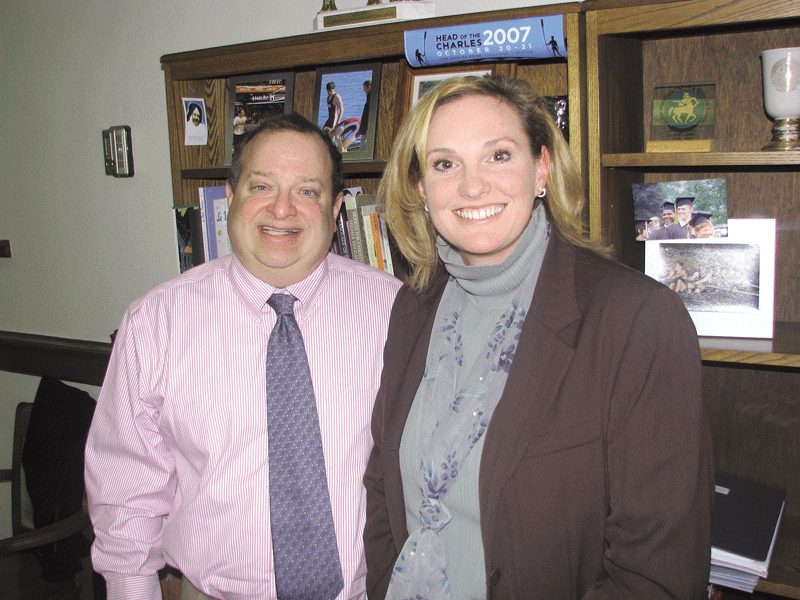
Features
New Attractions, Pent-up Demand for Fun Fuel Optimism in the Tourism Sector
Turn for the Better?

Mary Kay Wydra says deep budget cuts are forcing the Convention & Visitors Bureau to watch every dime when it comes to marketing.

By most indications, consumers are getting tired of having their vacations and day trips become victims of the recession. Many area attractions are reporting increases in visitorship as the large and important tourism sector heads into its busy season. This positive news is juxtaposed against severe budget cuts at the Greater Springfield Convention and Visitors Bureau, which means curtailed marketing at a time when the region could use all it can get. Overall, though, there is general optimism for the sector and the year ahead.

Mary Kay Wydra says that, for every $1 invested to promote tourism, there is a $40 return to the economy.

That’s why Wydra, president of the Greater Springfield Convention and Visitors Bureau (GSCVB), was stunned last year when was she learned the state was cutting the bureau’s budget by 75%. “There are 128,000 jobs in Massachusetts dependent on the tourism industry,” she told BusinessWest. “Tourism is about jobs that range from taxi-cab drivers to people at front desks. And jobs are part of the economic recovery.”

The massive cut reduced the GSCVB’s marketing budget from $468,000 to $132,000, which is the lowest number it has had to work with since 1992.

So the bureau has had to be creative and make every dollar count. And the stakes are high; the recession has taken its toll on many attractions, but there is a general feeling that conditions are improving and people are seemingly more willing to spend money on entertainment. Some early numbers from some of the larger tourist venues, such as Springfield Museums, Magic Wings Butterfly Conservatory, and Six Flags indicate that visitorship is rising over last year’s levels.

This would be a good year to have a substantial marketing budget, said Wydra, but that is not reality, so the bureau must spend what it does have in a scientific manner.

The GSCVB began its efforts by having marketing director Michele Goldberg conduct a survey of members, asking them to help prioritize their needs. Target markets have always included Southern Conn., Greater Boston, Hartford, and Upstate New York, so when members expressed a desire for more online marketing, Goldberg complied, although she cut out New York.

The bureau also created 25 partnerships with key players in the tourism industry, offering them the opportunity to be part of a cooperative funded largely by private dollars. “It allows an area attraction to take the lead role on our Web site, which cross-promotes other attractions,” Wydra explained. “We have facilitated it and funded it to the extent that we can, and been able to seed the program.”

This represents a very different tactic for the bureau, because, in the past, it leveraged state money to get private money. It also laid off employees and cut some forms of advertising entirely, such as purchasing a page in Yankee magazine.

Its other major marketing tool is the soon-to-be-released annual guidebook. In addition, the bureau is using Facebook, Twitter, and a blog that features prominently on their Web site.

“We have definitely taken a more proactive approach to public relations,” said Wydra. Measures include more press releases and talking to motorcoach opearators monthly, suggesting ideas such as a tour of the region’s country stores.

“We’ve had to be creative in our marketing strategies, but we are fully optimistic we will see an uptick this summer in tourism,” Wydra said. “The concept of staying close to home and enjoying local attractions was at its height in 2008 when gas was over $4 a gallon. People cut back on hotel stays, and last year the trend continued.

“But I think there is a pent-up demand for summer vacations, just because people have cut back for two years. Plus, national indicators show we are slowly growing out of the recession,” she continued, noting that hotel occupancy has increased since October and Greater Springfield has outpaced the state as a whole.

Wydra said ‘new’ is an important word in tourism, and the area offers that. The enshrinement at the Basketball Hall of Fame has moved to August with a full week of activities, Springfield Musueums has a new addition, and Barnes Municipal Airport will host an airshow this year.

Hands-on, experiential activities are another draw, and the region welcomed zip lines at Berkshire East and Zoar Outdoors last spring. “Berkshire East has already expanded and surpassed its goal,” Goldberg said.

Wydra said the bureau has done as much as possible to deal with the budget cuts. “We have a strong marketing program, but if we had received more funding, we would have been able to do more,” she explained. “Being very creative and very collaborative have been our key watchwords.”

View to the Future

While Wydra grapples with her budget challenges, those running area tourist attractions are being guardedly optimistic about 2010. Early numbers are positive, and if gas prices don’t go much higher, they predict that trend will continue, due largely to a combination of new or improved attractions and that aforementioned pent-up demand for holidays.

Holly Smith-Bove, president of Springfield Musuems, says overall attendance has continued to rise throughout the recession. She attributes this in part to the new Museum of Springfield History, which opened in October 2009 and has attracted new audiences to the Quadrangle complex.

The project, which entailed a $10 million renovation of the former Verizon office building on 21 Edwards St., began before the recession and and continued during the downturn. The lower level contains the Springfield History Library and Archives, while upper levels are home to a Rolls-Royce collection and the collection from the former Indian Motocycle Museum.

“There are many people who are followers of these brands,” said Smith-Bove, adding that the museums’ demographics have changed since the new facility was built. “Our adult audience is increasingly significant,” she said.

The museums have also seen an increase in demand for group tours. Marketing efforts include a recent membership drive via mailings that went out to 30,000 households. “We have backed that up with traditional advertising. We are also very involved with Twitter and Facebook,” Smith-Bove said.

So far, their efforts have been met with success. “We hope to continue the trajectory we are on. We have increased our attendance by 300% this year,” Bove-Smith said. “It’s been wonderful.”

Special summer attractions should draw crowds, she continued. “We have a really amazing exhibit in the Fine Arts Museum by New York Lego artist Nathan Sawaya, titled “The Art of the Brick.” It will take up most of the second floor and has generated a lot of excitement in other venues.”

Kathy Miller, general manager and special-events coordinator for Magic Wings Butterfly Conservatory in South Deerfield, is also optimistic about the busy months ahead, mostly because the first months of the year have been solid. “Between 2008 and 2009, we were at an even pace and were able to stay consistent,” she told BusinessWest. “But in 2010, our numbers have been up, which is wonderful.”

The conservatory has paid close attention to its marketing strategy, however. “We thought a lot about it and have kept a very close eye on it,” Miller said. “What we found is that, even though the economy took a downturn, people still need to do things for themselves that are nurturing, relaxing, and that don’t break the bank. And we fit that bill.”

On Mother’s Day, the facility reported a 60% increase in business over that same holiday last year. It held a special Mothers Day dinner promotion in the restaurant, and has done all it can to make it attractive and affordable.

“It has a warm atmosphere. We offer home cooking with huge portions and reasonable prices,” Miller said. “It has only been open four years, and we have seen a steady increase in customers every year. We attribute it to word-of-mouth referrals, along with TV and newspaper ads.”

This year marks Magic Wings’ 10th anniversary, and as public awareness grows that it is open throughout the entire year, many people have used the space for baby and bridal showers. “It’s one of the things that has helped us, in addition to our butterflies and animals,” Miller said.

Magic Wings and Lupa Zoo in Ludlow recently partnered to create a traveling show, in hopes that it will bring attention to both attractions, and the butterfly conservatory is part of a two-year-old Deerfield Attractions initiative. Those efforts include advertising via the Web site deerfieldattractions.com. “We want to let people know that we’re only a half-hour from Springfield and there is a lot to do here,” Miller said.

Waxing Optimistic

Yankee Candle in Deerfield saw a slowdown in traffic after the recession hit. “The end of 2008 was very tough, as was as the first half of 2009,” said CEO Harlan Kent. “But we were actually positive in the fourth quarter of last year for the first time in nine months. We felt good about that.

“Traffic is up,” he said. “But people are being very thoughtful in terms of spending and are sticking to a budget, although we have been able to entice them a little bit.”

Such enticements include new attractions in the flagship store. In addition to being “the Disneyland for candle lovers,” the company added a Pandora store, a Dylan’s candy store, and a Popcornopolis, Kent said.

“We call it retail-tainment, and have stores within our store. We have new ones planned and are in the process of opening up something different every three months.”

Other initiatives include hands-on activities, such as Wax Works, which opened a year ago and allows visitors to create candles and wax sculptures. “We add a new activity every few months,” Kent said. “Since people are staying closer to home, we hope to attract them with these kinds of exciting attractions.”

The company opened 39 new stores in 2009, keeping with its average during the past five years. “We expect to see some moderate growth as the economy improves, and are continuously investing,” Kent said.

On May 15, the company celebrated a complete makeover of its home store and continues to add activities, such as a three-day Longaberger Basket festival in June and a 5K run to benefit the American Heart Assoc. in August. There have also been adjustments to the menu at Chandler’s restaurant, which Kent said fared pretty well in 2009. “We are doing more advertising this year, getting back to more normal levels.”

Larry Litton, president of Six Flags New England and a board member of the GSCVB, said the recession didn’t significantly impact business at the park. Still, the management team took a very proactive approach.

“We have done very well. We ran some tremendous promotions that were sensitive to the fact that money was tight,” he said. In 2009, these promotions allowed adults to pay the same entry price as children. Those promotions are continuing this year, and the park is also offering its lowest season-ticket price since 2004.

Weather plays a significant role in its attendance, but in the end, Litton believes it boils down to the value offered. “We are the largest theme park in New England and have the number-one steel roller coaster in the world,” he said.

The facility’s water park boasts new attractions, including a Johnny Rockets restaurant, and management is bringing back popular events, such as the Glow in the Dark parade and a Starburst Concert Series, with acts that appeal to teens.

“We have made a lot of changes over the last four or five years to broaden our appeal and added a lot of show products for younger children,” Kent said. “If anyone hasn’t been here for four or five years, they would not believe the changes in the property. We started this year off very strongly and are expecting a huge year.”

Still, marketing dollars spent by the Convention and Visitors Bureau help area attractions significantly, and Wydra, Kent, and other board members have gone to Boston to discuss the tourism budget in recent weeks. “There is no better investment than tourism,” Kent said, “and we hope our message resonated with the Legislature.”

Features
AIC Becomes Preferred Developer for Mason Square Revitalization Effort
Landmark Decisions

An architect’s rendering of the potential re-use of the Mason Square fire house.

Springfield Mayor Domenic Sarno calls the architect’s rendering of the proposed redevelopment of the Mason Square fire station and adjoining structures “stunning.”

And he’s right.

Drafted by Centerbrook Architects in Centerbrook, Conn., the rendering depicts the fire station, vacant since the mid-’80s, as a center of activity and commerce. “It lights up the whole area,” Sarno said of the facility in the image, which will feature a cyber café; the American International College radio station, WAIC; and other campus facilities. “That fire station could become the iconic building that epitomizes continued redevelopment of the State Street corridor.”

Sarno, like other elected officials, knows it’s not wise to get carried away with slick renderings of redevelopment projects that may never materialize, but in this case, he’s apparently done exactly that. And he chalks it up to his excitement with what could happen in Mason Square now that AIC has been granted what’s known as preferred-developer status for a complex that includes the fire station and the adjacent former Indian Motocycle building.

The college now has 135 days to do some additional due diligence on the parcels in question and decide whether — and perhaps how — to proceed, said John Short, AIC’s vice president for Institutional Advancement, who acknowledged that it may be a while before anything remotely resembling what’s depicted in the rendering becomes reality. But he told BusinessWest that this scene could become reality if that assessment period ends with positive reports and the college is confident it can acquire the funding for the initiative.

“There’s a lot that we have to look at, and it could all come together,” he said. “We’re trying to continue what Congressman Neal has done [the federal courthouse project and extensive streetscape work along the corridor] and what the city has done in terms of revitalizing the area. I think this would be a huge step; this could be very exciting.”

The properties in question are known as Indian Motocycle A, Indian Motocycle B, and the Mason Square Fire Station, as designated in the request for proposals (RFP) issued late last fall. AIC’s was the only proposal submitted.

It calls for development of all three properties, meaning the undertaking of needed improvements to parcel A and bringing more housing units onto the market in the occupied portion of the former manufacturing complex; finding new uses for parcel B, which has some environmental issues; and brining new life to the long-dormant fire station.

MassHousing owns parcel A, while the city of Springfield controls B and the former fire station, said John Judge, chief economic development director for the city, adding that the two entities partnered in the RFP to present a larger, more-attractive development opportunity.

For AIC, the project represents an opportunity to expand and enhance its facilities, while also taking a lead role in revitalization efforts in Mason Square and the broader State Street corridor, said Short. Meanwhile, for the city, the project represents a chance to find a remedy for property that has been a source of continual frustration for nearly 30 years.

And if AIC does proceed as planned, it will represent only the latest example of how area colleges have become engines of economic development, as Sarno called them, in neighborhoods across the Valley.

“We’re playing to our strength, our colleges and universities,” said the mayor, noting that several schools, from UMass Amherst to Westfield State College to Springfield Technical Community College and others, have played pivotal roles in efforts to revitalize neighborhoods and create jobs.

Sarno said that, early in his first term (he was elected in 2007), he saw first-hand the impact Trinity College had on revitalization efforts in Hartford through public-private partnerships, and committed himself to duplicating such efforts in Springfield.

UMass Amherst’s plans to locate one of its departments in Court Square is an example of such redevelopment, he said, while AIC’s RFP submission could change the face of another neighborhood. And the real hope, expressed by all those involved, is that, if AIC’s proposal becomes reality, it spurs additional activity along the State Street corridor.

Plans are still quite preliminary, said Short, adding that they are likely to become more firm over the next few months.

Key elements of the proposal involve continuing the current mix of housing in parcel A (involving area residents and some overflow student housing) and bringing more units onto the market, especially market-rate units. In B, several options will be considered, said Judge, including more housing and perhaps incubator space that may complement existing startup space at STCC.

As for the fire station, plans for the cyber café are preliminary, said Short, citing the apparent need for such a facility — on the campus and in the community. The school’s radio station and other Communications Department programs could go on the second floor, while a host of options will be considered for the third, which features some dramatic views of of downtown Springfield and Mason Square.

Like parcel B, the fire station has some environmental issues, said Short, adding that, by the end of the due-diligence period, the school should know if they can be overcome.

Preliminary price tags are only guesstimates, Short continued, adding that the fire-station portion of the project alone could reach $4 million to $5 million.

The school will obviously need to tap into a number of funding sources to meet that cost and others associated with the project said Short, and finding those sources is part of the due-diligence process.

“What people have to remember is that we’re a college; we’re a nonprofit. We don’t have a lot of money, and we’re not a private real-estate developer,” he told BusinessWest. “One of the issues with parcel A has been companies coming in, taking large fees out on the front side of the deal, getting tax credits over a period of time, and then they stop taking care of the building; that’s happened several times over the past 25 years.

“We’re not in that position,” he continued, “so we have to do this in partnership with the city and with the state, and find sources of money that make it economically feasible for the college to do.”

In other words, no one can say with any certainty whether the architect’s rendering that has so intrigued the mayor will become reality, but it’s clear that it represents by far the best hope for the Mason Square area in some time.

Uncategorized
Transit Company Exec Is Driven to Succeed

Peter A. Picknelly and his wife, Melissa, have a long-standing, built-in Friday date-night routine — only there’s nothing routine about it.

Each week, it’s a different restaurant, all within roughly 45 minutes of their home in Springfield, and Peter’s in charge of picking the venue and, essentially, providing the surprises. They come in the form of usually smaller, lesser-known establishments that he finds via a combination of referrals and exhaustive research.

Through that mix, he has found such gems, as he calls them, as the Mill at 2T in Tariffville, Conn., the Trattoria Rustica in Pittsfield, and Cavey’s in Manchester, Conn., all of which have made his very-much-unofficial list of favorites. “We get a kick out of finding new ones, and try not to go to the same one twice in a year,” he said. “And we hardly ever miss a Friday — only if there’s kid issues.”

Picknelly, third-generation president of Peter Pan Bus Lines, the regional transit business started by his grandfather, Peter C. Picknelly, is quick to point out that, while he’s ventured far out of the Springfield area to find new places for date-night dinners, he’s still quite partial to established eateries in and around the City of Homes. “I’m at the Fort five days a week for lunch,” he said, acknowledging that he’s exaggerating slightly, but that on those days when he’s not at that downtown Springfield landmark, he’s at one of several other nearby restaurants.

And he’s almost always there with a manager from Peter Pan Bus Lines, either a direct report or one of another few dozen department administrators. These are working luncheons for the most part, and, for Picknelly, learning opportunities.

“I bring a list of things to discuss,” he told BusinessWest. “We talk about business and family. I never leave without some tidbit of information that helps me understand the business better.”

All this time in restaurants serves to help Picknelly better focus on the two most important aspects of his life — family and the family business (the community and service to it would place a close third) — and to do what he thinks he might do best: plan.

“I’m definitely a planner,” he said, adding that this goes for his family, Peter Pan, and a host of other business ventures with which he’s involved. “And with the family, it’s vacations that I love planning; I know where we’ll be vacationing a year from now.”

That would be Tuscany in Italy, the first European excursion for the family as a unit, meaning Peter, Melissa, and their four children — Lauren and Alyssa (13-year-old twins), Peter (that’s Peter D.), 10, and Olyvia, 7. Together, they’ve been to several spots on this side of the Atlantic, including the Bahamas, Mexico, and, most recently, Costa Rica.

‘Planning’ is a term that may also be applied to Picknelly’s affinity for high-end sports cars — very high-end. The burgundy Ferrari F4-30 (license plate: PETER) now in the Peter Pan parking lot will soon be replaced by the Italian automaker’s 2010 4-58 Italia model, this one blue, and, reportedly, the first one in New England.

Picknelly, who says he’ll get nearly what he paid for the F4-30 when he turns it in, has owned a variety of fast cars over the years, including a few Lotuses and Jaguars, choices far different from his father (the late Peter L. Picknelly), who was, as most in the region know, partial to Rolls-Royces.

“I can’t see me driving one of those,” said Picknelly, adding that he hasn’t emulated his father in several other ways — he believes he’s a much better delegater and family man, for example — but took a number of life and business lessons from him.

BusinessWest will elaborate on those and other points as it continues its Profiles in Business series with a look at someone who’s a driving force in local business and the community — literally and figuratively.

In the Clutch

As he talked about the many nuances of life in a family business, Picknelly noted that there are advantages and disadvantages, and they often go hand in hand.

He acknowledged that many people look at second-, third-, or fourth-generation managers of family businesses and conclude that things have been handed to them, and that they are perhaps not as worthy of praise for their exploits as someone who started from scratch and built his or her own company.

“And there’s something to that, certainly,” he noted. “I wouldn’t be where I am if it wasn’t for my father and grandfather; I know that I’ve been incredibly fortunate. If you were to go out right now and hire a president for Peter Pan, I’m not sure I’d make the cut.

“That said, I’m quite sure that you couldn’t find anyone who would work harder in this job than me,” he continued, adding that part of what drives him is that recognition of the fact that, to many, it’s simply his last name that is responsible for his title and success.

“It does push me a little harder,” he told BusinessWest. “It’s when people say I can’t do something that I try to prove them wrong.”

While Picknelly says he’s been helped by the Peter Picknellys who preceded him, he’s had to earn his stripes. And that meant starting at the bottom, which, in the bus business, means cleaning, or ‘dumping’ (that’s the technical term), the toilets in the back of the vehicles.

“Yeah, I did that — I’ve done just about every job in the company,” said Picknelly, noting that he started working in the garage on weekends and during the summer when he was just 13. He would later go on to take a number of different positions, from dispatcher to manager of the company’s then-much-smaller Boston operation when he was a student at Boston University. Years ago, he actually drove a bus on occasion when the company was short-handed and needed someone, but hasn’t done that for decades, and couldn’t now because his standard Class 2 license wouldn’t credential him to do so.

He kept moving up the ladder, and eventually assumed the title of president several years ago, when his father became chairman.

Over the past several years, he’s strived to continue growing Peter Pan, even in the face of mounting competition from new carriers, and even improved rail service to many cities the company serves.

“The business has changed considerably over the years … it is more competitive now than perhaps it ever was,” he said. “We just have to put ourselves in a position to succeed.”

As Picknelly mentioned, he took a number of life and business lessons from his father, and far more of the latter than the former. One of the keys from that realm was achieving diversity in one’s business portfolio, as a hedge against the vagaries of the economy and society in general, he said.

The younger Picknelly has accomplished this through both acquisition and new-business development. In the first category are purchases of companies including Camfour, a firearms distributor based in Westfield; Belt Technologies, an Agawam-based maker of metal belts and pulleys for several applications, including aerospace, medical equipment, and food processing; another firearms distributor in Austin, Texas; and a woodworking company based in Connecticut.

As for new business development, Picknelly, in conjunction with Greyhound, started a second transportation-based operation, called BoltBus. Designed as competition for so-called street-corner operators who offer low fares and few, if any, frills, BoltBus, which features more leg room and WiFi, among other amenities, has been an enormous success, said Picknelly. With runs to and from several large Northeast cities and New York, the carrier is boasting 80% capacity for all its runs, about one-third higher than the average for the industry.

Meanwhile, Picknelly has started a real-estate operation, called OPAL, an acronym that takes the first letters of his children’s names, in reverse order from when they were born.

Among other initiatives, OPAL is the main developer of the intermodal transportation facility taking shape in an old downtown fire station in Holyoke. It will feature a bus terminal, a two-story learning center to be operated in conjunction with Holyoke Community College, and a Head Start facility.

The value of such diversity was clearly on display during the recent economic downturn, said Picknelly. “Belt Technologies has been a victim of the economy,” he said, “but Camfour had its best year ever. Now, Belt is starting to pick up a little, and Camfour is slowing somewhat. My father always used to stress the importance of diversity, and I’ve learned that lesson well.”

But while Picknelly has emulated his father in many regards, from most business philosophies to work within the community, he’s written a much different script in what he considers the most important realm — family life.

“My father always used to say that if he had to do it all over again, he would have spent more time with his children,” said Picknelly, adding that his early years did not include trips to the Bahamas, and probably because of that, he devotes what he considers excessive amounts of time and energy to family.

“It’s very important to me; I love being a dad,” he said, adding that, unlike his father, he doesn’t micromanage every aspect of his businesses, and that leaves him time for other, more important things.

In High Gear

A quick look around Picknelly’s office and adjoining conference room provides ample evidence of the forces that shape his life.

There are photos of the generations that preceded him, models and pictures of buses from several different decades, a globe (presumably to help with planning the next family vacation), and several drawings crafted by his youngest child, Olyvia.

Together, they explain what drives him, professionally and personally, to succeed at whatever he’s doing.

Even picking the restaurant for date night.

George O’Brien can be reached at[email protected]

Features
Transit Company Exec Is Driven to Succeed

Peter Picknelly

Peter Picknelly, president, Peter Pan Bus Lines

Peter A. Picknelly and his wife, Melissa, have a long-standing, built-in Friday date-night routine — only there’s nothing routine about it.
Each week, it’s a different restaurant, all within roughly 45 minutes of their home in Springfield, and Peter’s in charge of picking the venue and, essentially, providing the surprises. They come in the form of usually smaller, lesser-known establishments that he finds via a combination of referrals and exhaustive research.
Through that mix, he has found such gems, as he calls them, as the Mill at 2T in Tariffville, Conn., the Trattoria Rustica in Pittsfield, and Cavey’s in Manchester, Conn., all of which have made his very-much-unofficial list of favorites. “We get a kick out of finding new ones, and try not to go to the same one twice in a year,” he said. “And we hardly ever miss a Friday — only if there’s kid issues.”
Picknelly, third-generation president of Peter Pan Bus Lines, the regional transit business started by his grandfather, Peter C. Picknelly, is quick to point out that, while he’s ventured far out of the Springfield area to find new places for date-night dinners, he’s still quite partial to established eateries in and around the City of Homes. “I’m at the Fort five days a week for lunch,” he said, acknowledging that he’s exaggerating slightly, but that on those days when he’s not at that downtown Springfield landmark, he’s at one of several other nearby restaurants.
And he’s almost always there with a manager from Peter Pan Bus Lines, either a direct report or one of another few dozen department administrators. These are working luncheons for the most part, and, for Picknelly, learning opportunities.
“I bring a list of things to discuss,” he told BusinessWest. “We talk about business and family. I never leave without some tidbit of information that helps me understand the business better.”
All this time in restaurants serves to help Picknelly better focus on the two most important aspects of his life — family and the family business (the community and service to it would place a close third) — and to do what he thinks he might do best: plan.
“I’m definitely a planner,” he said, adding that this goes for his family, Peter Pan, and a host of other business ventures with which he’s involved. “And with the family, it’s vacations that I love planning; I know where we’ll be vacationing a year from now.”
That would be Tuscany in Italy, the first European excursion for the family as a unit, meaning Peter, Melissa, and their four children — Lauren and Alyssa (13-year-old twins), Peter (that’s Peter D.), 10, and Olyvia, 7. Together, they’ve been to several spots on this side of the Atlantic, including the Bahamas, Mexico, and, most recently, Costa Rica.
‘Planning’ is a term that may also be applied to Picknelly’s affinity for high-end sports cars — very high-end. The burgundy Ferrari F4-30 (license plate: PETER) now in the Peter Pan parking lot will soon be replaced by the Italian automaker’s 2010 4-58 Italia model, this one blue, and, reportedly, the first one in New England.
Picknelly, who says he’ll get nearly what he paid for the F4-30 when he turns it in, has owned a variety of fast cars over the years, including a few Lotuses and Jaguars, choices far different from his father (the late Peter L. Picknelly), who was, as most in the region know, partial to Rolls-Royces.
“I can’t see me driving one of those,” said Picknelly, adding that he hasn’t emulated his father in several other ways — he believes he’s a much better delegater and family man, for example — but took a number of life and business lessons from him.
BusinessWest will elaborate on those and other points as it continues its Profiles in Business series with a look at someone who’s a driving force in local business and the community — literally and figuratively.

In the Clutch
As he talked about the many nuances of life in a family business, Picknelly noted that there are advantages and disadvantages, and they often go hand in hand.
He acknowledged that many people look at second-, third-, or fourth-generation managers of family businesses and conclude that things have been handed to them, and that they are perhaps not as worthy of praise for their exploits as someone who started from scratch and built his or her own company.
“And there’s something to that, certainly,” he noted. “I wouldn’t be where I am if it wasn’t for my father and grandfather; I know that I’ve been incredibly fortunate. If you were to go out right now and hire a president for Peter Pan, I’m not sure I’d make the cut.
“That said, I’m quite sure that you couldn’t find anyone who would work harder in this job than me,” he continued, adding that part of what drives him is that recognition of the fact that, to many, it’s simply his last name that is responsible for his title and success.
“It does push me a little harder,” he told BusinessWest. “It’s when people say I can’t do something that I try to prove them wrong.”
While Picknelly says he’s been helped by the Peter Picknellys who preceded him, he’s had to earn his stripes. And that meant starting at the bottom, which, in the bus business, means cleaning, or ‘dumping’ (that’s the technical term), the toilets in the back of the vehicles.
“Yeah, I did that — I’ve done just about every job in the company,” said Picknelly, noting that he started working in the garage on weekends and during the summer when he was just 13. He would later go on to take a number of different positions, from dispatcher to manager of the company’s then-much-smaller Boston operation when he was a student at Boston University. Years ago, he actually drove a bus on occasion when the company was short-handed and needed someone, but hasn’t done that for decades, and couldn’t now because his standard Class 2 license wouldn’t credential him to do so.
He kept moving up the ladder, and eventually assumed the title of president several years ago, when his father became chairman.
Over the past several years, he’s strived to continue growing Peter Pan, even in the face of mounting competition from new carriers, and even improved rail service to many cities the company serves.
“The business has changed considerably over the years … it is more competitive now than perhaps it ever was,” he said. “We just have to put ourselves in a position to succeed.”
As Picknelly mentioned, he took a number of life and business lessons from his father, and far more of the latter than the former. One of the keys from that realm was achieving diversity in one’s business portfolio, as a hedge against the vagaries of the economy and society in general, he said.
The younger Picknelly has accomplished this through both acquisition and new-business development. In the first category are purchases of companies including Camfour, a firearms distributor based in Westfield; Belt Technologies, an Agawam-based maker of metal belts and pulleys for several applications, including aerospace, medical equipment, and food processing; another firearms distributor in Austin, Texas; and a woodworking company based in Connecticut.
As for new business development, Picknelly, in conjunction with Greyhound, started a second transportation-based operation, called BoltBus. Designed as competition for so-called street-corner operators who offer low fares and few, if any, frills, BoltBus, which features more leg room and WiFi, among other amenities, has been an enormous success, said Picknelly. With runs to and from several large Northeast cities and New York, the carrier is boasting 80% capacity for all its runs, about one-third higher than the average for the industry.
Meanwhile, Picknelly has started a real-estate operation, called OPAL, an acronym that takes the first letters of his children’s names, in reverse order from when they were born.
Among other initiatives, OPAL is the main developer of the intermodal transportation facility taking shape in an old downtown fire station in Holyoke. It will feature a bus terminal, a two-story learning center to be operated in conjunction with Holyoke Community College, and a Head Start facility.
The value of such diversity was clearly on display during the recent economic downturn, said Picknelly. “Belt Technologies has been a victim of the economy,” he said, “but Camfour had its best year ever. Now, Belt is starting to pick up a little, and Camfour is slowing somewhat. My father always used to stress the importance of diversity, and I’ve learned that lesson well.”
But while Picknelly has emulated his father in many regards, from most business philosophies to work within the community, he’s written a much different script in what he considers the most important realm — family life.
“My father always used to say that if he had to do it all over again, he would have spent more time with his children,” said Picknelly, adding that his early years did not include trips to the Bahamas, and probably because of that, he devotes what he considers excessive amounts of time and energy to family.
“It’s very important to me; I love being a dad,” he said, adding that, unlike his father, he doesn’t micromanage every aspect of his businesses, and that leaves him time for other, more important things.

In High Gear
A quick look around Picknelly’s office and adjoining conference room provides ample evidence of the forces that shape his life.
There are photos of the generations that preceded him, models and pictures of buses from several different decades, a globe (presumably to help with planning the next family vacation), and several drawings crafted by his youngest child, Olyvia.
Together, they explain what drives him, professionally and personally, to succeed at whatever he’s doing.
Even picking the restaurant for date night.

George O’Brien can be reached at [email protected]

Agenda Departments

Deliver Perfect Pitch

May 12: Learn concrete and easy-to-master tools to help you in every sales situation no matter what the environment or what you sell during “Deliver the Perfect Pitch,” 9 to 11 a.m., at the Scibelli Enterprise Center, 1 Federal St., Springfield. Sheldon Snodgrass of www.steadysales.com in Williamsburg will be the presenter. The program is sponsored by the Mass. Small Business Development Center Network. Cost is $40. For more information, call (413) 737-6712 or visit www.msbdc.org/wmass.

AIM Annual Meeting

May 14: John Ratzenberger, best known for his role as Cliff in the television comedy Cheers, will deliver the luncheon address at the Associated Industries of Massachusetts’ 95th annual meeting at the Westin Hotel in Waltham. Ratzenberger is a passionate advocate for the future of American manufacturing and the need to teach young people to work with their hands. He will discuss the foundation he started to help young people learn the rewards of fixing things themselves, building something useful, and inventing products that create economic opportunity. AIM’s annual meeting is planned from 10 a.m. to 2 p.m. and will bring together some of the brightest business and academic minds in Massachusetts to answer the pressing economic questions of the day. For more information, visit www.aimnet.org.

Wine Tasting and Auction

May 14: The Chicopee Chamber of Commerce will host its annual beer/wine tasting and auction at the Castle of Knights on Memorial Avenue in Chicopee from 6 to 9 p.m. The event, a fund-raiser to support the chamber and its many initiatives, is being sponsored by Chicopee Savings Bank. The event will feature fine food, a large variety of wines and beers to sample, and myriad auction items to bid on. Back by popular demand is the Collectibles Road Show. Representatives from Antiques Roadshow will be on hand to appraise attendees’ valuables. Those with items such as old coins, jewelry, or collectibles are encouraged to bring them to the show. Tickets are $20 each. To reserve tickets, call (413) 594-2101, or visit www.chicopeechamber.org.

Pancake Breakfast

May 15: The Spirit of Springfield will once again serve up what is reputed to the world’s largest pancake breakfast from 8 to 11 a.m. on Main Street in downtown Springfield. The event, marking Springfield’s 374th birthday, is the 25th edition of the annual pancake breakfast. It will also feature entertainment and activities. Tickets are $3 for adults and $1 for children. For more information, call (413) 733-3800 or visit www.spiritofspringfield.com.

13th Annual Rays of Hope Survivors’ Day

May 15: Breast-cancer survivors and their friends are invited to attend the 13th annual Rays of Hope Breast Cancer Survivors’ Day, from 8:30 a.m. to 2 p.m. at the Sheraton Monarch Place Hotel, One Monarch Place, Springfield. Breast cancer activist Geralyn Lucas, author of Why I Wore Lipstick to My Mastectomy, will serve as keynote speaker at the annual event, sponsored by the Comprehensive Breast Center at Baystate Medical Center and Rays of Hope. Lucas will discuss what it was like being diagnosed with breast cancer at the age of 27 just after landing her dream job as an editorial producer with ABC television’s 20/20 news program. A graduate of Columbia University School of Journalism, she later became director of public affairs at Lifetime Television and left the network in 2008 to work on the screenplay for Why I Wore Lipstick.  The television movie premiered on Lifetime in October, starring Sarah Chalke of the hit TV show Scrubs. In addition to the keynote address, participants will be able to select from two workshops on a number of topics, including ‘The Fat Factor,’ ‘Yoga and Healing,’ ‘Breast Cancer Therapy and the Heart,’ ‘Oncoplastic Surgery,’ ‘Fashion Do’s and Don’ts,’ ‘A Good Night’s Sleep,’ ‘Hooping Harmony,’ and ‘Acupuncture and Oncology.’  There will also be a special Creative Coping Art Workshop offered only in Spanish. Rays of Hope founder Lucy Giuggio-Carvalho and Dr. James Stewart, chief of the Division of Hematology/Oncology at Baystate Medical Center, who co-authored the recently published The Everything Guide to Living with Breast Cancer, will be on hand to sign their book, which will also be available for purchase at the event. Throughout the day, participants can visit with several exhibitors who will sell a variety of breast-related products, as well as vendors selling arts and crafts. A continental breakfast and buffet luncheon will be served. Registration is required. The cost is $25 per person, with the remaining cost underwritten by Rays of Hope. For those unable to afford the fee, scholarships are available through Sandy Hubbard at the Rays of Hope Community Outreach Office at (413) 794-2828. Parking will be validated. For more information or to request a registration form, call (413) 794-9556 or visit www.baystatehealth.org/raysofhope.

Business Plan Basics

May 20: The Mass. Small Business Development Center Network will host “Business Plan Basics” from 9:30 a.m. to 12:30 p.m. at the Amherst Town Hall, first-floor meeting room, 4 Boltwood Walk, Amherst. The workshop will focus on management fundamentals from start-up considerations through business-plan development. Topics will include financing, marketing, and business planning. The cost is $35. For more information, call (413) 737-6712 or visit www.msbdc.org/wmass.  

Food for Thought

May 25: Learn how social-media marketing can help grow a business at the next Food for Thought luncheon, sponsored by BusinessWest and The Healthcare News. The event will be held at Samuel’s at the Basketball Hall of Fame from 11:30 a.m. to 1 p.m. John Garvey, president of Garvey Communications Associates, and Mary Fallon, the agency’s media director, will present a talk about “Online Impact and Social Media for Small Business.” The $20 cost includes lunch. RSVP by May 21 with Melissa Hallock at (413) 781-8600, ext. 10, or [email protected].

Joomla! Workshop

May 26: Tamar Schanfeld of TnR Global Joomla! Services of Greenfield will present a daylong boot camp on creating an interactive Web site for small businesses. The workshop is planned from 9 a.m. to 4:30 p.m. at the Scibelli Enterprise Center, 1 Federal St., Springfield. Attendees will learn to plan a site, enter and edit content and menus, and install extensions. Comfort with Microsoft Word and an Internet browser is required. The workshop does not include e-commerce or shopping-cart features. Cost is $75. For more information, call (413) 737-6712 or visit www.msbdc.org/wmass.  

Green Remediation Conference

June 15-17: The Environmental Institute at UMass Amherst, the U.S. EPA Office of Superfund Remediation and Technology Innovation, U.S. EPA New England, and the Mass. Department of Environmental Protection will host the International Conference on Green Remediation: Environment – Energy – Economics, in the UMass Campus Center. The conference will address the full range of environmental, energy, and economic aspects of green and sustainable remediation, taking into account the energy requirements of treatment systems, air emissions, water-use requirements and impacts on water resources, land and ecosystem use and impacts, energy use and renewables, material composition, reuse, and waste generation. The conference is expected to attract more than 400 attendees, including a wide variety of representation from state and federal agencies, academia, various industries and utilities, and the environmental, engineering, and consulting community. Booths cost $1,000, and tables are $600. For more information or to register online, visit: www.teiconferences.com/greenremediation  ,  or call (413) 545-2842.

Hot Topics in Philanthropy

June 18: “Convergence: How Five Trends Will Reshape the Social Sector” is the focus of the upcoming Hot Topics in Philanthropy Breakfast hosted by Bay Path College. Nonprofit professionals are invited to attend the free event, which will examine a recently published study by La Piana Consulting, a national firm dedicated to strengthening nonprofits and foundations. The breakfast will be held in the Blake Student Commons from 7:30 to 10 a.m. From generational and other demographic shifts to the rise and impact of social media, there are several trends driving the future of the nonprofit sector. La Piana Consulting examined these various developments as part of its research initiative NonprofitNext, funded by the James Irvine Foundation. Written by Alex Hildebrand, David La Piana, Melissa Lendes Campos, and Heather Gowdy, the report describes the growing importance of networking as a means for effecting change, as well as the role of volunteerism and civic engagement in society, among other movements, and their impact on the nonprofit industry. The first to bring La Piana Consulting’s report to the region, Bay Path will feature Gowdy as the keynote speaker. A panel discussion will follow her address. The breakfast is free, but registration is required. To register, visit www.baypath.edu  or call (800) 782-7284, ext. 1056. The event is co-sponsored by the Graduate School at Bay Path College’s master’s in Nonprofit Management and Philanthropy program and its graduate certificate program in Fundraising Management and Nonprofit Management.

40 Under Forty Gala

June 24: BusinessWest will celebrate its 40 Under Forty Class of 2010 at the Log Cabin Banquet & Meeting House with a gala to begin at 5 p.m. The event, which has become a spring tradition in Western Mass., will feature fine food, entertainment, and special presentations of the Class of 2010. Tickets for the event are $60. To order tickets or for more information, call (413) 781-8600, ext. 10, or e-mail [email protected] .

Agenda Departments

Architecture Exhibition

Through May 9: For the first time in the region, a landmark exhibition on sustainable, contemporary architecture and environmentally sensitive building practices will take place at the University Gallery, Fine Arts Center, UMass Amherst. The exhibition is designed to deepen the public’s understanding and use of ‘green’ design, while demonstrating that the key elements of sustainability can be accessible to all. Through models, photographs, and virtual tours, the exhibition unites diverse works from large-scale science buildings to private residences, low-income housing, and intimate gardens of natural inspiration. For more information, visit www.umass.edu/fac/universitygallery .

Deliver Perfect Pitch

May 12: Learn concrete and easy-to-master tools to help you in every sales situation no matter what the environment or what you sell during “Deliver the Perfect Pitch,” 9 to 11 a.m., at the Scibelli Enterprise Center, 1 Federal St., Springfield. Sheldon Snodgrass of www.steadysales.com in Williamsburg will be the presenter. The program is sponsored by the Mass. Small Business Development Center Network. Cost is $40. For more information, call (413) 737-6712 or visit www.msbdc.org/wmass .

AIM Annual Meeting

May 14: Actor John Ratzenberger, best known for his role as Cliff in the television comedy Cheers, will deliver the luncheon address at the Associated Industries of Massachusetts’ 95th annual meeting at the Westin Hotel in Waltham. Ratzenberger is a passionate advocate for the future of American manufacturing and the need to teach young people to work with their hands. He will discuss the foundation he started to help young people learn the rewards of fixing things themselves, building something useful, and inventing products that create economic opportunity. AIM’s annual meeting is planned from 10 a.m. to 2 p.m. For more information, visit www.aimnet.org .

Business Plan Basics

May 20: The Massachusetts Small Business Development Center Network will host “Business Plan Basics” from 9:30 to 12:30 p.m. at the Amherst Town Hall, 1st floor meeting room, 4 Boltwood Walk, Amherst. The workshop will focus on management fundamentals from start-up considerations through business plan development. Topics will include financing, marketing and business planning. The cost is $35. For more information, call (413) 737-6712 or visit www.msbdc.org/wmass .

Joomla! Workshop

May 26: Tamar Schanfeld of TnR Global Joomla! Services of Greenfield will present a daylong boot camp on creating an interactive Web site for small businesses. The workshop is planned from 9 a.m. to 4:30 p.m. at the Scibelli Enterprise Center, 1 Federal St., Springfield. Topics: learn to plan your site, enter and edit content and menus, and install extensions. Comfort with Microsoft Word and Internet browser required. The workshop does not include e-commerce or shopping cart features. Cost is $75. For more information, call (413) 737-6712 or visit www.msbdc.org/wmass .

Uncategorized
Recession-weary Landscapers Try to Get Back in the Green

After a decade of strong growth, landscape designers were hit hard by the economic downturn of the past two years, as homeowners and businesses alike have trimmed their outdoor budgets. But while large-scale projects have fallen off sharply and profit margins have withered across the board, people still value their immediate environment, and the industry may have reason for optimism as another spring blossoms to life.

Steve Corrigan refers to a “circle” — it’s actually more of a triangle — that represents his market.

In a typical year, his company, Mountain View Landscapes and Lawncare in Chicopee, operates within the Springfield-Worcester-Hartford triangle. But these days, those points extend out to Boston and New Haven, due to a steadily shrinking number of available projects.

“The circle is getting bigger,” he said. “We’re finding it’s very, very competitive out there, and margins are getting smaller and smaller as more of us are looking for projects.”

There is some cause for optimism, he conceded. Between 85% and 90% of his work is commercial, and he noted that many companies have put landscaping projects on hold during the recession and are expected to renew them as the economy improves. “But right now, it’s pretty tough out there.”

“On the commercial side, there’s not a lot going on,” echoed Stephen Roberts, president of Stephen A. Roberts Landscape Architecture & Construction in Springfield.

“A lot of projects are on hold, pending funding,” he told BusinessWest. “I know a lot of projects are on the board, but they need money to get going. We’re just waiting for a stronger economy for these jobs. Once it starts picking up, it’ll be crazy busy.”

Companies that tackle a high volume of residential work have been affected as well by the downturn, following years of strong growth, said Bill St. Clair, president of St. Clair Landscaping and Nursery in Hampden.

Starting right after 9/11, he explained, residential landscapers benefited as people began to steer money away from travel and into their homes, attempting to create an oasis-like environment in their own backyard.

“People stayed home more, and wanted to put in pools and redoing their landscaping,” St. Clair said. “They looked around and weren’t happy with the way it looked, so they wanted to replenish it. That’s when outdoor kitchens, fire pits, and outdoor living spaces really took off. Now, people are still doing those things, but the number of people doing them has really, really dwindled down.”

More accurately, he added, those individual features are still in vogue, but are now being considered on an a la carte basis.

“We still get calls from people who want to put in firepits, or want to build an outdoor grilling area, or a patio or a pergola.” he said. “But we’re not getting calls for those big, total-yard, complete landscaping jobs. That market has really been affected.”

In this issue, BusinessWest surveys the landscape of companies that specialize in enhancing the outdoors — and finds a sobering dose of reality, but some optimism, too.

Lawn Cares

Whether it’s parks and playground for municipalities, athletic fields for universities, or landscaping and hardscaping on behalf of private developers, commercial business has definitely slowed during the recession, Corrigan said.

“Last year, ironically, was a very successful year,” he added, but by the end of the year the slowing trend was becoming evident. His industry faces the same economic pressures general contractors do, but landscapers might be slower to recover, since that work is typically performed toward the end of a building project. “We’re feeling the lag now, and we may lag a little longer than other industries.”

As a member of the Mass. Nursery and Landscape Assoc., Corrigan said he’s heard of the same stresses on the home side, and that residential work has slowed by 30% to 50% in some regions. “People aren’t spending the same money on landscaping as they would in a good economy.”

That development has caused St. Clair to slightly alter his business model.

“Because of the economy, we’re doing more commercial maintenance this year than we’ve done in the past 15 years,” he said, largely due to a sharp falloff in the firm’s bread and butter, which is designing and building landscapes for high-end residential customers.

“With the recession, new housing has slowed way down,” he explained. “People are unable to move up; if someone is living in a $400,000 home and wants to move up to an $800,000 home, they’re not doing that; they’re finding they don’t have the equity in their homes they thought they did. It’s not their fault; it’s just how home values have changed.”

St. Clair said he saw that trend starting to emerge early on and shifted resources to maintenance. “In the past, we would do a large residential landscaping job, and we’d be asked, ‘who can I get to maintain this?’ and we’d give them names of guys to call. And that’s how we left it.

“But a couple of things happened,” he continued. “People weren’t taking care of it the way the customer and I wanted it done, and we were giving away work that we actually should be doing, and that goes along with what we already do. So we stopped giving those jobs away.”

That meant winning bids from large entities such as Bank of America and TD Bank to maintain their grounds, and the niche has grown from there. “We’re building our maintenance business up to help fill a revenue slot from the decline in big, residential jobs.”

“What’s helped us is that we’ve had all these really nice jobs we’ve done that people have asked us to do maintenance on,” St. Clair said, “and we’ve been able to recapture some of those clients, and we’re not farming out the work. That has helped.”

Corrigan also does commercial grounds maintenance, but has found that property owners are cutting back on even that service.

“Our goal is to get through this year and hope some projects happen in 2010 and 2011,” Corrigan said. “That’s going to be our goal.”

Planting Hope

Roberts is trying to keep an optimistic outlook, and early-season inquiries have backed up that viewpoint.

“In terms of residential work, it seems this spring, the phones are ringing a bit more than last spring,” he said. “It seems a few more people want their backyard projects and entertainment areas. We’re getting demand for a lot of outdoor cooking — kitchens and fire pits are big; everyone wants a fire pit or fireplace in their backyard now. People also want small water features, something to enhance their backyard.”

Even so, just like St. Clair reported, Roberts’ customers are being somewhat choosier about what to order.

“A lot of my larger residential clients, they’re not doing a lot of big add-ons, but they are doing some enhancement projects — replanting a section of the yard or redoing a patio. There’s not a lot of new construction with new landscaping, and with established properties, people tend to be doing smaller enhancement projects.”

Still, he said, “the home vacation is a continuing trend. It’s not the fear of travel anymore, but the expense. We do outdoor playscapes so children have a place to play, and kids love water features, too. When you bring kids to the beach, they’ll sit there and play for hours on end, and you don’t have to lift a finger. That’s what we’re trying to do with kids, but at home. Instead of a plastic turtle, you have a bunker.”

St. Clair said the recession has forced him to look hard at how his systems operate and look for efficiencies to save money. But it has also reinforced that customers still exist, but they’re pickier about quality.

“You’ve got to come up with very creative ideas,” he told BusinessWest. “People might get three prices from three very legitimate landscape contractors, and a lot of times, it comes down to who has that different, unique concept they can present to the client.

“There’s a large market, I believe, for people who do things the right way,” he continued. “People aren’t spending as much money, but people who are spending money are doing their homework, and they’re not always looking for the best price, but they’re looking for the best quality for their dollar.”

Roberts, while hopeful for a solid 2010, said early spring can be deceptive.

“Of course, things are exciting right now,” he said, “but the real test comes once the early excitement simmers down, and we see how many people actually invest in projects. But there seem to be a lot of good opportunities right now.”

“I’ve been in this business 33 years,” St. Clair said, “and I’m as psyched for this year as any year prior to this. My father always told me, when you get hit with adversity, you can handle it two ways. You can lie down and say, ‘oh, my God,’ or you can pick up the pieces and move forward with a positive attitude. You can’t wake up every day saying, ‘what’s going to go wrong today?’ You’ll take a sunny day and turn it into a typhoon.”

And sunny days are what get homeowners and business owners outside, and wondering how they can improve their environment … and, just maybe, get them to pick up the phone.

Joseph Bednar can be reached

at[email protected]

Agenda Departments

Social Media Plan

April 15: “The Small Business Experience/Creating a Social Media Plan” is the theme of a morning workshop hosted by the Mass. Small Business Development Center Network. The workshop will be presented by Derek Allard of Gravity Switch in Northampton and Shalini Bahl of IAM Business Consulting of Amherst, and is planned from 9 a.m. to noon at the Scibelli Enterprise Center, 1 Federal St., Springfield. Highlights of the day include developing a social-media plan based on one’s business purpose, social-media purpose, target audience, and resources. The cost is $40. For more information, call (413) 737-6712 or visit www.msbdc.org/wmass .  

WNEC Speaker Series

April 15: Katharine G. Baker, Ph.D., Principal of Family Therapy and Consulting Associates in Northampton, will present “Leading a Business in Anxious Times” at noon as part of Western New England College’s Law and Business Center for Advancing Entrepreneurship Speaker Series. Baker is an experienced business consultant who has worked with family enterprises and closely held firms, providing executive and leadership coaching, strategic planning, organizational learning services, and time-management seminars. She currently is an independent scholar and executive coach with a solo consultation practice that serves national and international clients. She will present an approach to understanding business leadership that is grounded in Bowen theory, a well-tested theory of human behavior. She will show how the patterns of behavior learned in the family can have a profound impact on every business’ success. Baker will illustrate the power and effectiveness of this way of understanding leadership. She will also discuss executive coaching as an application of her approach. For more information on the free lecture at the Law School Commons on Wilbraham Road in Springfield, call (413) 796-2030 or e-mail [email protected] . Lunch will be provided.

Twitter & Blogs

April 22: Derek Allard of Gravity Switch in Northampton will present a workshop titled “Twitter & Blogs” from 9 to 11 a.m. at the Scibelli Enterprise Center, 1 Federal St., Springfield. Allard will discuss the basics — what they are, why to use them, and how to get started. The cost is $40. For more information, call (413) 737-6712 or visit www.msbdc.org/wmass .

LinkedIn & Facebook

April 29: Derek Allard of Gravity Switch in Northampton will present a workshop titled “LinkedIn & Facebook” from 9 to 11 a.m. at the Scibelli Enterprise Center, 1 Federal St., Springfield. Allard will discuss the basics — what they are, why to use them, and how to get started. The cost is $40. For more information, call (413) 737-6712 or visit www.msbdc.org/wmass .

Women’s Professional Development Conference

April 30: Bay Path College will host its 15th annual Women’s Professional Development Conference at the MassMutual Center in downtown Springfield from 7:30 a.m. to 4:30 p.m.  For more information, call (413) 565-1000 or visit www.baypath.edu .

Deliver Perfect Pitch

May 12: Learn concrete and easy-to-master tools to help you in every sales situation, no matter what the environment or what you sell, during “Deliver the Perfect Pitch,” 9 to 11 a.m., at the Scibelli Enterprise Center, 1 Federal St., Springfield. Sheldon Snodgrass of www.steadysales.com in Williamsburg will be the presenter. The program is sponsored by the Mass. Small Business Development Center Network. Cost is $40. For more information, call (413) 737-6712 or visit www.msbdc.org/wmass .

Business Plan Basics

May 20: The Massachusetts Small Business Development Center Network will host “Business Plan Basics” from 9:30 a.m. to 12:30 p.m. at Amherst Town Hall, first-floor meeting room, 4 Boltwood Walk, Amherst. The workshop will focus on management fundamentals from start-up considerations through business-plan development. Topics will include financing, marketing, and business planning. The cost is $35. For more information, call (413) 737-6712 or visit www.msbdc.org/wmass .

Joomla! Workshop

May 26: Tamar Schanfeld of TnR Global Joomla! Services of Greenfield will present a daylong boot camp on creating an interactive Web site for small businesses. The workshop is planned from 9 a.m. to 4:30 p.m. at the Scibelli Enterprise Center, 1 Federal St., Springfield. Topics: learn to plan your site, enter and edit content and menus, and install extensions. Comfort with Microsoft Word and Internet browser required. The workshop does not include e-commerce or shopping cart features. Cost is $75. For more information, call (413) 737-6712 or visit www.msbdc.org/wmass .

Departments

Greening the Valley

Through May 9: For the first time in the region, a landmark exhibition on sustainable, contemporary architecture and environmentally sensitive building practices will take place at the University Gallery, Fine Arts Center, UMass Amherst. “Greening the Valley” is designed to deepen the public’s understanding and use of ‘green’ design, while demonstrating that the key elements of sustainability can be accessible to all. Through models, photographs, and virtual tours, the exhibition unites diverse works from large-scale science buildings to private residences, low-income housing, and intimate gardens of natural inspiration. For more information, visit www.umass.edu/fac/universitygallery.

Communication and Leadership Conference

April 7: Local professionals and students will have the chance to network with and learn from leaders in business and media during Western New England College’s Communication and Leadership Conference from 7:30 a.m. to 4 p.m. on the main campus in Springfield. The conference features a variety of workshops that will help participants improve their leadership skills and better promote their messages. The conference kicks off with the Affiliated Chambers of Commerce of Greater Springfield’s April Breakfast Club meeting, featuring the results of a WNEC Polling Institute market survey on the image of Springfield. Following the breakfast, participants will choose from a range of workshops designed to sharpen skills, explore new technologies, and network with fellow professionals. Conference fees (including breakfast and lunch) are $140 for business professionals, $120 for members of nonprofits, and $70 for students. To register or for more information, call (413) 782-1249 or visit www.wnec.edu/communications.

Marketing Basics

April 7: The Mass. Small Business Development Center Network will host a workshop titled “Marketing Basics” from 9 to 11 a.m. in the TD Bank community room, 175 Main St., Northampton. The workshop will focus on the basic disciplines of marketing, beginning with research — primary, secondary, qualitative, and quantitative. The core focus will be on developing and keeping a customer. The cost is $35. For more information, call (413) 737-6712 or visit www.msbdc.org/wmass.  

Shining Stars Awards Banquet

April 9: The Chicopee Chamber of Commerce will honor the recipients of the prestigious Shining Stars Awards at its annual event at the Castle of Knights on Memorial Drive. This is the premier event of the year for the Chicopee business community. For more information on reservations and sponsorships, call (413) 594-2101 or visit www.chicopeechamber.org.

Master of Management Program Day

April 10: Cambridge College-Springfield will host a Master of Management Program Day beginning at 9 a.m. at 570 Cottage St., Springfield. Participants are invited to attend a Master of Management class and learn about the blended-learning format in which classroom attendance one weekend per month is supplemented with online discussions. The event is free and open to the public. To register or for more information, call (800) 829-4723, ext. 6623, or e-mail [email protected].   

Social Media Plan

April 15: “The Small Business Experience/Creating a Social Media Plan” is the theme of a morning workshop hosted by the Mass. Small Business Development Center Network. The workshop will be presented by Derek Allard of Gravity Switch in Northampton and Shalini Bahl of iAM Business Consulting of Amherst, and is planned from 9 a.m. to noon at the Scibelli Enterprise Center, 1 Federal St., Springfield.  Highlights of the day include developing a social-media plan based on one’s business purpose, social-media purpose, target audience, and resources. The cost is $40. For more information, call (413) 737-6712 or visit www.msbdc.org/wmass.   

CloudCamp Western Mass.

April 20: CloudCamp Western Mass. will be conducted at the National Science Foundation-funded ICT Center at Springfield Technical Community College from 2:30 to 7:30 p.m. Cloud computing is a new generation of technology that uses a shared pool of remote, configurable computing resources. The event provides a chance to meet, discuss, share ideas, and advance knowledge and understanding of cloud computing. Developers, decision makers, end users, and vendors from New England are invited to participate in the event. Show organizers are CloudCamp co-founder Dave Nielsen, the ICT Center, and TNR Global. For more information, visit www.ictcenter.org or www.stcc.edu.   

Twitter & Blogs

April 22: Derek Allard of Gravity Switch in Northampton will present a workshop titled “Twitter & Blogs” from 9 to 11 a.m. at the Scibelli Enterprise Center, 1 Federal St., Springfield. Allard will discuss the basics — what they are, why to use them, and how to get started. The cost is $40. For more information, call (413) 737-6712 or visit www.msbdc.org/wmass.  

LinkedIn & Facebook

April 29: Derek Allard of Gravity Switch in Northampton will present a workshop titled “LinkedIn & Facebook” from 9 to 11 a.m. at the Scibelli Enterprise Center, 1 Federal St., Springfield. Allard will discuss the basics — what they are, why to use them, and how to get started. The cost is $40. For more information, call (413) 737-6712 or visit www.msbdc.org/wmass.

Women’s Leadership Conference

April 30: “Community Matters” is the theme of Bay Path College’s 15th annual Women’s Leadership Conference at the MassMutual Center in downtown Springfield from 8:30 a.m. to 4:30 p.m.  Guest speakers will include Soledad O’Brien, television broadcast correspondent and host of CNN’s In America series; Leigh Anne and Collins Tuohy, inspirational mother and daughter from the Oscar-nominated film and book The Blind Side; Somaly Mam, human-rights advocate and author of The Road of Lost Innocence; and Nicholas Kristof, Pulitzer Prize-winning columnist for the New York Times and co-author of the bestselling book Half the Sky. For more information, call (413) 565-1000 or visit www.baypath.edu.  Early-bird registration is by April 10; the cost is $250 for the general public or $225 for Bay Path alumni.

Evening of Hope Gala

May 8: The American Cancer Society’s 2010 Evening of Hope Gala will be staged at the Sheraton Springfield Monarch Place Hotel from 6 p.m. to midnight. The black-tie affair will include a formal dinner, dancing, and silent auction. For more information, contact Regina Pattison at (802) 257-8908 or e-mail [email protected].

Deliver Perfect Pitch

May 12: Learn concrete and easy-to-master tools to help you in every sales situation no matter what the environment or what you sell during “Deliver the Perfect Pitch,” 9 to 11 a.m., at the Scibelli Enterprise Center, 1 Federal St., Springfield. Sheldon Snodgrass of www.steadysales.com, Williamsburg, will be the presenter. The program is sponsored by the Mass. Small Business Development Center Network. Cost is $40. For more information, call (413) 737-6712 or visit www.msbdc.org/wmass.

Business Plan Basics

May 20: The Mass. Small Business Development Center Network will host “Business Plan Basics” from 9:30 a.m. to 12:30 p.m. at the Amherst Town Hall, first-floor meeting room, 4 Boltwood Walk, Amherst. The workshop will focus on management fundamentals, from start-up considerations through business-plan development. Topics will include financing, marketing, and business planning. The cost is $35. For more information, call (413) 737-6712 or visit www.msbdc.org/wmass.  

Joomla! Workshop

May 26: Tamar Schanfeld of TnR Global Joomla! Services of Greenfield will present a daylong boot camp on creating an interactive Web site for small business. The workshop is planned from 9 a.m. to 4:30 p.m. at the Scibelli Enterprise Center, 1 Federal St., Springfield. Topics include ‘learn to plan your site,’ ‘enter and edit content and menus,’ and ‘install extensions.’ Comfort with Microsoft Word and an Internet browser is required. The workshop does not include e-commerce or shopping-cart features. The cost is $75. For more information, call (413) 737-6712 or visit www.msbdc.org/wmass.

Features
Springfield College Makes Its Entry into the Competitive MBA Market
Getting Down to Business

Kathryn Carlson Heler says the timing is right for Springfield College to roll out its MBA program, and especially the concentration in nonprofit management.

As she talked about Springfield College’s new MBA (master’s in business administration) program to be launched in a few months, Kathryn Carlson Heler said that, in many ways, the school is going back to its roots.

By that, she meant a return to what was a strong focus on management of organizations such as YMCAs and other nonprofits — with curriculum grounded in business — that would match a concentration on athletics that would give the college its national and international reputation.

“When the college was founded 125 years ago, it was created to educate the YMCA secretary, who today we would call the executive director,” said Heler, professor of Business Administration at the college and director of the MBA program. “And when you look at the curriculum that these secretaries followed, it was business, and there were courses in bookkeeping, management, and reaching out to the community that you were to attract, or what we would call marketing.

“And of course, there was the athletic side,” she continued, “and the secretary could decide if he wanted to take the management track or the athletic track. But somewhere down the road, the management track fell away, and Springfield College became known for the athletic side. So we’re going to back to where we began.”

It is doing so with an MBA offering that comes with two concentrations, one in management and the other in nonprofit management, and the timing for bringing such products to the market couldn’t be better, Heler told BusinessWest.

Indeed, now more than ever before, nonprofit agencies must be run like businesses, and their managers must have the skill sets of a successful business owner, she said, adding that, in the business world, an MBA is becoming more of a necessity for managers looking to climb the ladder.

“The definition of a nonprofit today is that of a mission-based business, and those two words sum it up,” she explained. “They have to run like a business, they have to show a profit, and they are under many of the same rules and regulations that any small business is.

“Most nonprofits are selling a product,” she continued, “and they’re marketing a product. And for social entrepreneurs, they’re looking for new ways to raise money beyond the annual campaign.”

Meanwhile, with the economic picture still muddled, and many college graduates facing an uncertain job market, some individuals are choosing to stay in school and get a graduate degree rather than fight for jobs that are few and far between.

“This is a good time to be doing this,” said Heler. “Right now, there are roughly nine people for every job that comes available. People are being turned off by that, and they’re deciding to stay in school.”

Considering these and other factors, Heler, who came to SC from Indiana to get the new initiative off the ground, is generally optimistic about the prospects for the latest addition to the region’s roster of MBA programs. She told BusinessWest that there has been strong interest in the offering — from both those aforementioned college students looking to stay in school and those already working at area nonprofits and businesses who want to take their knowledge and skill sets to a higher level.

The nonprofit management concentration is fairly unique, said Heler, adding that the new, 30-credit program features an optional one-year track that will appeal to many, but also a two-year track that includes a corporate residency. Meanwhile, all courses are taught by full-time faculty members, rather than adjuncts, unlike many competing programs.

For this issue, BusinessWest looks at Springfield College’s entry into the MBA market, and why it does so with a large degree of confidence.

Course of Action

When asked about the factors that prompted SC administrators to become a player in the MBA realm and create a program specifically for nonprofit managers, Heler had some numbers ready to help make her case.

The first one was 5,200. That’s the latest unofficial count on the number of nonprofits in the Springfield-Hartford area that SC is marketing to. The next was 35,000 — the number of people who work in the nonprofit arena followed by 19%, or the share of the local economy that is comprised of nonprofits. And according to a nationwide study completed in 2006, there will be a need over the next decade for 600,000 new senior managers in the nonprofit realm as a result of new organizations coming online and the retirement of many current managers.

“So the market is there for such a program,” said Heler, adding quickly that, in addition to the quantity of nonprofit managers as a major consideration, the issue of quality is a matter as well.

In other words, the boards running nonprofit agencies want real business leaders at the helm of their organizations.

“In the past, educating nonprofit managers has been done through conferences and workshops,” she explained. “These managers have come up through the field. Now, there’s a real call for these people to be professionals. Nonprofit education now means making sure managers, supervisors, and executive directors have business knowledge, skills, and tools.”

All these factors indicated a strong need, and a niche that Springfield College, which has a proud reputation of training nonprofit leaders, could capitalize on.

It is meeting that need with those two MBA offerings, or concentrations. Both feature seven core courses, including ‘Economics of the Firm in Contemporary Society,’ ‘Research Methods and Statistics for Business and Nonprofits,’ and ‘Corporate Social Responsibility and Ethics,’ but feature different concentration courses.

The Management option includes ‘Managerial Accounting,’ ‘Project and Information Systems Management,’ and ‘Organizational Behavior and Leadership,’ while the Nonprofit Management model features ‘Leadership and Governance for Nonprofits,’ ‘Accounting for Nonprofits,’ and ‘Fund Development and Philanthropy.’

Both packages are drawing some attention, said Heler, adding that she expects 15-20 students for the first classes, to begin this summer. These will be diverse classes, she continued, noting that she’s signed up some currently with area businesses and nonprofits, some current undergraduates (including a few from SC) who want to pursue an MBA now instead of slugging it out in a tough market, and a even a few individuals who joined the Peace Corps, have returned from various assignments, are experiencing difficulty finding the right job, and have chosen instead to seek a graduate degree.

“We’re going to have people ages 22 to 50,” she explained. “That’s going to be a fascinating mix that will make learning a great experience.”

Erin Vermette will be one of those students on the younger end. The Belchertown resident, who is currently wrapping up a bachelor’s degree in Marketing online from the University of Phoenix, decided to pursue an MBA now instead of entering the job market — or trying to gain entry.

“The way the economy is right now, I’m not saying I couldn’t get a job, but it would certainly be more difficult,” she said. “I think it makes more sense to get the MBA now, and have an edge when I do compete for jobs. An MBA is becoming more of a prerequisite for many positions today.”

Vermette said she did some comparing and contrasting of area programs, and decided that SC’s provided the needed flexibility — she currently works in day care and wants to continue doing that while pursuing her degree — and an attractive course mix.

“I’ve been talking courses online for 2 1/2 years, and decided I wanted to go back to the campus,” she explained, adding that her ultimate goal is to work in the fine arts, perhaps in marketing for a gallery.

School of Thought

Heler told BusinessWest that it will take perhaps five years for a program like SC’s new MBA to become established and reach stated goals for enrollment.

She believes that the offering has the right mix of qualities — from course selection to scheduling flexibility to that specific concentration in nonprofit management — to meet or exceed that timetable.

If she’s right, then the new program will represent a degree of progress — literally and figuratively — for the college, the students, and area nonprofit agencies.

George O’Brien can be reached at

[email protected]

Features
Wing’s Center for Geriatric Psychiatry Fills a Critical Role
Acute Needs

Dr. Ricardo Mujica said Wing’s geriatric psychiatry unit has the advantage of being on a hospital campus, with the full resources of the institution available to meet whatever medical needs might arise.

It’s retirement time for the Baby Boomers.

Specifically, by 2030, more than 75 million Boomers will be age 65 or older, and the population considered elderly in the U.S. will be double what it is today — partly because this demographic is healthier and more active than past generations of senior citizens, and cutting-edge medical breakthroughs are helping them to live longer.

But as that population increases, so do the specific needs of the elderly, including behavioral-health services targeted for that age group.

That’s where Wing Memorial Hospital saw an opportunity. The Palmer-based hospital opened its Center for Geriatric Psychiatry (CGP) last September, offering 15 beds to care for older people with behavioral-health needs too acute to be managed in an outpatient setting.

“We take a comprehensive approach that includes a medical evaluation to determine whether a medical problem may be causing the psychological symptoms,” said Dr. Ricardo Mujica, a geriatric psychiatrist and director of the center. “The idea is to stabilize the acute problem and send them back to their previous environment.”

The center is designed to treat people age 55 and older, but the typical patient is at least 75, Mujica said, and most are female, since women tend to live longer. Their conditions range from mood disturbances and anxiety disorders to cognitive impairment and dementia, and they’re generally referred by long-term care facilities, primary-care physicians, family members, even the emergency room at Wing or another hospital.

“The reason we wanted a unit that focuses on the elderly population is that the demand for this treatment is growing, and as the Baby Boomer population gets older, we expect that to continue to be the case.”

Safe and Sound

To operate the center, Wing has partnered with New England Geriatrics, a Massachusetts-based organization specializing in mental-health services to residents and their families in long-term care facilities.

With its 15 beds, the center increases the number of acute-care beds at Wing from 59 to 74, an increase of 25%. To create space for the unit, Wing moved its medical/surgical unit into the hospital’s new Country Bank Pavilion in 2008.

That move was followed by eight months of work to renovate the vacated space. The $1.5 million, 11,000-square-foot project includes 11 private rooms, two semi-private rooms, an activity room, a dining room, and various other areas designed for treatment and rehabilitation purposes.

On a tour of the facility, Mujica showed off a series of security features designed to keep patients safe. For example, each entrance to the CGP is electronically monitored and access-controlled. All patients wear wrist bracelets that ensure they remain within the safety of the unit and alert staff of any patients’ attempts to wander. In addition, the center is equipped with 10 security cameras monitored by staff, who conduct safety rounds every 15 minutes.

In patient rooms, Wing also follows the safety standards set by the Mass. Departments of Public Health and Mental Health. These include secure ceiling tiles, drawerless shelving for clothes, tamper-resistant bathroom fixtures, electrical cords run with as little slack as possible, and blinds embedded between the windows — all measures to prevent patients from hurting themselves.

The medical team in the Center for Geriatric Psychiatry includes nurses, social workers who specialize in procuring follow-up care, therapists, a psychiatrist board-certified in geriatric psychiatry, and physicians who specialize in the geriatric population. But the center also has the advantage of being located within a full-service, acute-care hospital in case a patient’s medical needs change.

The unit is one of only two geri-psych programs in Western Mass. (the other is at Providence Behavioral Hospital in Holyoke), and is the only one to have on-site access to acute hospital-level medical treatment, Mujica said.

“We have our own medical team working on the floor, but all of the hospital is a medical backup,” Mujica said. “If there’s an acute problem, if we need to increase the level of medical care, we can provide other services.”

Mujica touted the unit’s dual emphasis on physical and psychological care as critical to its success in transitioning patients safely back into the community.

“Many people assume that people with mental illness don’t have other medical issues, but if you don’t look for medical reasons in mental illness, you can do a lot of harm to that individual,” he said.

The CGP also provides psychological education to family members and caregivers regarding each patient’s illness, including medication management.

“Even though, with certain conditions, we don’t have a cure — let’s say for dementia — medication can still improve the quality of a patient’s life and reduce the stress that is secondary to assorted psychiatric symptoms,” he said.

Mujica told BusinessWest that it’s difficult to express why he chose the niche of geriatric psychiatry when he selected a career path, but it was likely a variety of reasons.

“I have a good deal of respect for the elderly, and the challenges of treating frail individuals with multiple medical problems is interesting to me,” he said. “It’s also gratifying to give back to this ‘greatest generation’ that served this country and all of us.”

Still, he worries about the ability of the health care system in general to provide this type of care at a time when the need is growing, especially considering the current atmosphere of uncertainty surrounding Medicare and health reform in general. “I hope the elderly don’t get left out as they shift their focus to something else.”

Picking Up the Pieces

That concern applies to all mental-health services, said Maria Russo-Appel, Wing’s chief of Behavioral Health Services, who called the need for such resources “enormous.”

Wing’s program includes inpatient services through its 13-bed Parker North unit and outpatient mental-health and substance-abuse services through the Griswold Behavioral Health Center. Both are being strained right now, she said.

“There were two significant layoffs by the Department of Mental Health last year, and that left many patients stranded without an advocate,” she said. “The role of the DMH worker is to coordinate care for people who are disenfranchised.”

At the same time, she said, many group homes and other behavioral-health programs have been closing or changing hands (as in the case of Baystate Health’s substance-abuse programs being taken over by Behavioral Health Network). The reduction in program capacity statewide, and a general sense of uncertainty over the status of services, has programs like those at Wing feeling the pinch.

“We receive, at the Griswold Center, up to 75 calls a day for services. That far outstrips our resources,” Russo-Appel said. “We’re doing everything we can to meet the needs of the community.”

And those needs tend to grow when the economy sours, she added.

“We’re seeing more situational depression, situational anxiety syndromes, more addictions, including gambling,” she said. Meanwhile, more people are being hospitalized with behavioral-health issues, including many who can’t access outpatient services and are relying on emergency-room care instead. “The emergency rooms have become deluged with mental-health patients who can’t find resources.”

To meet these growing needs, Wing is adding two or three more psychiatrists within the next few months and is looking at programmatic changes, like new support groups targeted to specific disorders, but before it can make more wholesale changes to grow the behavioral-health program, it needs to make sure the programs it does offer are stabilized, she explained.

That’s partly why the Geriatric Psychiatry Center is so important, Mujica said. It takes pressure off the entire system and helps allows patients to access a continuum of care in the Wing system.

“The challenge with mental-health patients is that different facilities maintain their own histories, and patients tend to have a very fragmented history,” Russo-Appel said. “The advantage of Wing is that we’re able to maintain a continuity of behavioral-health care that many hospitals cannot.”

No matter how old a patient might be.

Departments

Comcast Offers Online Storage Solutions

SPRINGFIELD — Comcast Corp. recently launched Secure Backup & Share to help its high-speed Internet customers reduce their risk of losing important files that are saved on their computers. As physical belongings once stored in shoeboxes and manila file folders are now in the form of digital files spread across various computers and smart phones, there is a need for online backup that will protect one’s valuable files and ensure they will be available from just about anywhere at any time, according to Doug Guthrie, senior vice president of Comcast’s Western New England Region. Guthrie noted that Secure Backup & Share is embedded into the high-speed Internet service so customers can retrieve and share personal digital media from any Web-enabled or wireless device. Features of Secure Backup & Share include files being stored remotely, which can be restored in the event of human error, fire, or natural disaster; and convenient sharing, allowing customers to share their photos, videos, music, and documents with family and friends. Guthrie also noted that Comcast high-speed Internet customers automatically receive 2 GB of storage included with their subscription. Comcast packages also include a 50 GB storage plan and a 200 GB storage plan. For more information, visit www.comcast.net/backup.

PeoplesBank Branching Out to Seniors

HOLYOKE — PeoplesBank hopes to open two branches at local complexes for senior citizens in the coming months. Bank officials recently applied to the Federal Deposit Insurance Corp. and the state Division of Banks for permission to open branches at Reeds Landing, 807 Wilbraham Road, Springfield; and at Glenmeadow, 56 Burns Meadow Road, Longmeadow.

Baystate MRI Opens New Facility

SPRINGFIELD — The Baystate MRI and Imaging Center recently opened its doors at 80 Wason Ave. with 3 Tesla technology (3T), enabling physicians to see and interpret scans at a level of detail never seen before. The new location will house three open-bore MRI units, including a Siemens Open Bore 3 Tesla MRI device, which Dr. Richard Hicks, director of MRI for Baystate MRI and Imaging Center, says delivers an unprecedented level of detail in its images while also enabling patients to receive their scans in greater comfort. Hicks also serves as chief of Neuroradiology at Baystate Medical Center. Hicks added that, from neurology to orthopedic imaging, he expects to be able to detect and diagnose a range of health issues faster and more effectively. Magnetic-resonance imaging uses a magnetic field and radio waves to obtain images of the internal structure of a patient’s body. MRI is useful in helping physicians detect tumors, infection, vascular disease, and internal bleeding, among other problems. The digital images from an MRI can be easily relayed between doctors and other providers, helping to ensure every caregiver treating a patient has access to the most up-to-date and detailed assessment of that patient’s circumstances, according to Hicks. With a sizable opening, the open-bore devices can accommodate patients who might have struggled getting MRIs in the past, noted Hicks, adding that the new technology provides comfort for people who are claustrophobic, pediatric patients, and people of size. Baystate MRI and Imaging will also offer the newest PET/CT (positron-emission tomography/computed tomography) technology available at the site. PET/CT is used primarily in oncology and brain-imaging applications and is useful in identifying abnormalities, while also offering faster scans and an open design for patient comfort. Baystate MRI is a partnership between Baystate Radiology and Imaging Inc. and Shields Health Care Group, which provides MRI services across Central and Southern New England.

Paratemps Inc. Celebrates 20 Years

SPRINGFIELD — Marge Fauteux, president and founder of Paratemps, Inc., celebrated 20 years in business in February. The legal and corporate staffing service specializes in offering temporary, temp-to-hire, and direct-hire placement throughout Western Mass. and Northern Conn. Fauteux is a member of the Professional Legal Advisory Board at BayPath College, Longmeadow, and a member of Wilbraham BNI (Business Network International). She also serves as a director for BNI Western MA.

WNEC Students Excel in Tax Challenge

SPRINGFIELD — Western New England College (WNEC) School of Law students swept the top awards in a National American Bar Assoc. contest designed to give students an opportunity to research, write about, and present their analyses of “real life” tax-planning problems. Brendan Sponheimer of Orange, Conn., and James Murtha of Manchester, Conn., were awarded first place overall at the American Bar Assoc. Section of Taxation’s 2009 Law Student Tax Challenge in San Antonio. A second WNEC team, Neill O’Brien of East Longmeadow and Casey Nunez of Princeton, were honored for the best written submission. Professor of Law Frederick Royal served as coach of both teams, which competed in the competition’s juris doctor division. This is the second time in the competition’s nine-year history that WNEC School of Law students have been named overall champions. The tax challenge was developed to reflect everyday tax issues that might arise for practitioners. Forty-three teams from 34 law schools across the country competed in the J.D. division, tackling a complex tax planning problem that involved individual and business entity issues.

Bay State Gas Receives OK for Energy Plan

WESTBOROUGH — The Mass. Department of Public Utilities (DPU) recently approved a three-year energy-efficiency plan by Bay State Gas. The 2010-12 approved plan is a new initiative in response to the Mass. Green Communities Act (GCA), and follows months of rigorous discussion, participation, and negotiations with the Energy Efficiency Advisory Council (established by the GCA) and other interested stakeholders. The DPU order commences a new era of prudent energy management and consumption, addresses the challenges of climate change, and fosters growth in jobs and economic output within the state. Bay State’s plan includes participation in a comprehensive framework comprised of all utilities and energy-service providers in the state to deliver enhanced energy-efficiency services, and acquisition of all available energy-efficiency and demand-reduction resources that are cost-effective. Derek Buchler, manager of the company’s energy-efficiency department, noted that never before has there been such a coordinated effort among the state’s gas and electric distribution companies, all focused on achieving accelerated levels of energy savings in a three-year period. Buchler added that Bay State’s energy-efficiency programs will dramatically increase from a $7.9 million annual budget to more than $56 million over the next three years. The new programs will install energy improvements that will achieve savings for years to come, enabling Bay State customers to realize savings of more than 181 million therms of gas over the life of measures installed. This is the equivalent of heating approximately 178,797 homes for one year and equates to net benefits of more than $135 million, according to Buchler. Steve Bryant, president of Bay State Gas, added that the company is “extremely proud” to be part of this important and ground-breaking energy-efficiency initiative. Bryant noted that the new plan will provide customers with easy, affordable ways to control and reduce energy consumption.

Pittsfield Chosen for WMECO Solar-energy Site

SPRINGFIELD — Western Mass. Electric Company (WMECO) recently announced its plan to develop the first of several large-scale solar energy facilities. The selected site on Silver Lake Boulevard combines two parcels of land owned by WMECO and the Pittsfield Economic Development Authority (PEDA) at the William Stanley Business Park. The eight-acre site will accommodate up to 1.8 megawatts (MW) of solar capacity. WMECO officials joined local officials and PEDA representatives in announcing the agreement to combine these brownfield properties into one of the largest solar facilities in New England. The Commonwealth has a goal to install 250 megawatts of solar by 2017. Under the landmark Green Communities Act, each Massachusetts electric utility may own up to 50 MW of solar generation, subject to approval by the Department of Public Utilities (DPU). WMECO is currently authorized to install 6 MW of solar. The company’s solar program reflects a close collaboration with the attorney general’s office and other key Massachusetts and industry stakeholders. WMECO’s Silver Lake Boulevard project combines a six-acre parcel owned by the utility and a two-acre parcel in the William Stanley Business Park. A WMECO substation is situated between the two parcels, providing an efficient connection to the utility’s local distribution system. Large-scale solar-energy facilities are still relatively new to Massachusetts and New England. Approximately 10 MW of solar generation is currently on-line in the Commonwealth. Comprised of approximately 1,100 individual photovoltaic systems, the largest one is approximately 500 kilowatts (0.5 MW). WMECO’s first solar project can be as large as 1.8 MW, and the company expects it to cost considerably less than existing photovoltaic systems. The project will bring $10 to $12 million of construction to the region and is expected to contribute more than $200,000 of annual property-tax revenue to the city of Pittsfield. Pittsfield is one of the two Gateway Communities in WMECO’s service territory and is home to some 24,000 WMECO customers. Local permitting for the project is underway, and WMECO expects to begin construction in the second quarter of this year. The company continues to evaluate other sites for the remaining scope of its 6 MW solar program. WMECO’s solar program focuses on larger-scale facilities (1 MW or greater), emphasizing landfill, brownfield, and utility-owned properties as ideal locations. Such properties typically have few alternative uses and are compatible with the construction of solar-energy facilities. WMECO also seeks to develop the market for larger-scale solar facilities; the company’s program makes extensive use of competitive bidding and relies heavily on the expertise of the solar industry. WMECO has currently qualified 16 solar firms to bid on its projects. The company is also evaluating 25 sites owned by municipalities and private developers located in WMECO’s service territory. The company expects to draw upon these prospective sites as it develops additional projects during 2010. WMECO will complete the remainder of its 6 MW program by 2012. WMECO is part of the Northeast Utilities System.

Departments

Hampden Bancorp Declares Dividend

SPRINGFIELD — Hampden Bancorp Inc. recently announced a net loss for the three months ended Dec. 31 of $670,000 as compared to a net profit of $190,000 for the same period in 2008. The decrease in net income was primarily due to an increase in the provision for loan losses of $1.5 million for three months ended Dec. 31, compared to the three months ended Dec. 31, 2008. The increase in the provision for loan losses is due to increases in loan delinquencies, increases in non-accrual loans, increases in impaired loans, growth in the loan portfolio, and general economic conditions. The company’s total assets increased $7.2 million, or 1.3%, from $567.7 million on June 30, 2009 to $574.9 million on Dec. 31, 2009. Net loans, including loans held for sale, increased $21.7 million, or 5.6%, to $409.3 million on Dec. 31, 2009, and securities decreased 6.7% or $7.7 million, from $116.1 million to $108.4 million as of Dec. 31, 2009. Deposits increased $22.9 million, or 6.0%, to $404.4 million on Dec. 31, 2009 from $381.5 million on June 30, 2009. Thomas R. Burton, president and CEO, noted he was disappointed to be reporting a loss; however, he added that the bank’s strong capital position leaves it “well-postured” to weather the difficult economic storm and to capitalize on opportunities as they arise. In other news, the board of directors declared a quarterly cash dividend of $0.03 per common share, payable on Feb. 26, 2010, to shareholders of record at the close of business on Feb. 12.

Mercy Offers Latest GE MRI Technology

SPRINGFIELD — Mercy Medical Center now offers the Signa HDx 3.0T MR system, by GE Healthcare, delivering the most advanced detailed images of the human body with increased speed, better resolution, and unique applications. The 3.0T MR scanner is noted for delivering high field strength that provides higher-resolution imaging, according to Dr. Gregory E. Blackman of the Diagnostic Imaging Department. Blackman added that the scanner features allow for more-distinct margins in patients who present with breast tumors, provide more detailed and accurate images of the spine, and greatly facilitate liver and vascular exams. Dr. William Bithoney, chief medical officer for the Sisters of Providence Health System and chief operating officer of Mercy Medical Center, noted that the acquisition of the 3.0T MR scanner is another example of Mercy’s ongoing commitment to delivering outstanding health care through the use of state-of-the-art technology. The MR system provides MRI exams through a joint venture with Alliance Imaging Inc.

Tighe & Bond Receives Award

WESTFIELD — Tighe & Bond recently received an Engineering Excellence Award from the American Council of Engineering Companies of Connecticut (ACEC) for the Route 34 Roadway Improvement Project in New Haven, Conn. The award was presented Jan. 21 at ACEC’s annual awards banquet following a competition open to firms engaged in the practice of consulting engineering in Connecticut. Tighe & Bond developed roadway-improvement concept plans to support the traffic generated by the $467 million Smilow Cancer Hospital at Yale-New Haven, as well as to address existing operational and safety deficiencies along the Route 34 expressway and the frontage roads. The firm completed a comprehensive transportation engineering study required by the City of New Haven and the State Traffic Commission. Improvements to the adjacent roadway network were deemed necessary to mitigate the identified traffic issues. The centerpiece of Tighe & Bond’s design is a modern roundabout, unique in that it is located at the end of the Route 34 Expressway and provides access to a parking garage. Tighe & Bond also prepared the design for other roadway improvements, including highway ramp widening, geometric modifications along the Route 34 Expressway, widening North Frontage Road to provide additional turning lanes, and the design of a new, state-of-the-art traffic-control signal system involving 12 traffic signals operated and monitored by the City Traffic Management Center. Following the completion of the design and issuance of all permits, Tighe & Bond worked collaboratively with Yale-New Haven Hospital and Turner Construction Co. to administer the construction phase of the project. Construction of the $5 million project started in May 2008 and was substantially complete by October 2008, meeting an aggressive five-month construction schedule. Tighe & Bond shared the ACEC award with Yale-New Haven Hospital. In related news, the Route 34 Roadway Improvement Project also received a 2009 Achievement in Civil Engineering Award from the Connecticut Society of Civil Engineers.

GCB Opens Branch in Shelburne Falls

SHELBURNE FALLS — Greenfield Co-operative Bank (GCB) recently observed the grand opening of its newest office at 33 Bridge St. The new full-service office offers a full array of savings and checking services, safe-deposit boxes, residential mortgage loans and home-equity lines of credit, consumer loans, a coin-counting machine, a 24-hour ATM, and a night depository. Through its Web site at www.bestlocalbank.com, GCB also offers customers free 24-hour ‘E-Access,’ providing online banking and bill-paying services. The bank also offers free, 24-hour E-Z Access telephone banking. Additionally, through its GCB Financial Services division, the bank makes available a full line of non-deposit investments such as annuities and life-insurance products through its arrangement with MML Investor Services and Massachusetts Mutual Life Insurance Co. Registered representatives Michael Johnson, assistant vice president; and Sharon Connery, financial services professional, will be available to meet with customers by appointment at the Shelburne Falls office. The new office will also have a community room that the bank will make available at no charge on a reservation basis to nonprofit, civic, and educational groups in the community. GCB is a mutual, cooperative bank with five offices and more than $280 million in assets.

Students Pass Photovoltaics Program

SPRINGFIELD — All of the students who recently completed the Photovoltaic Practitioner Certificate Program at Springfield Technical Community College (STCC) passed the entry-level knowledge exam administered by the North American Board of Certified Energy Practitioners, according to Mary Breeding, assistant vice president at STCC. Breeding added that the program has also been awarded program accreditation by the Interstate Renewable Energy Council. Due to the popularity of this program, Mike Kocsmiersky of SolarWrights Inc. has begun teaching another course through the Center for Business and Technology this month. The Photovoltaic Practitioner Certificate Program is designed for architects, engineers, electricians, general contractors, and those interested in developing a career in photovoltaics. The course provides comprehensive coverage of stand-alone, utility-interactive, and dedicated-load applications for solar electricity. Curriculum development and acquisition of lab equipment is being supported by a $150,000 grant from the Massachusetts Clean Energy Center.

Baystate Rug Receives Award

CHICOPEE — Baystate Rug and Flooring was recently named Mohawk Floorscapes Northeast Flooring Store of the Year. Mohawk chose Baystate Rug based on sales, growth, marketing principles, and best practices. Baystate Rug is a family-owned business that has served both business and residential customers for more than 30 years.

Chicopee Company Updates Its Name

CHICOPEE — Time Plus Payroll Services has changed its name to Pioneer Payroll Services to better reflect the ever-growing list of services it provides to companies. The Time Plus name and brand is the payroll-software and corporate group that Pioneer Payroll Services uses to perform its various payroll and timekeeping services. Pioneer Payroll Services also provides workers’ compensation, an HR Support Center, Pay Card, and electronic timekeeping. The company is located at 21 Old Chicopee St., and early in 2010, it will update its Web site to www.pioneerpayroll.com. E-mail may be sent to [email protected].

Life Laboratories Achieves Accreditation

SPRINGFIELD — Life Laboratories has been awarded accreditation by the College of American Pathologists (CAP), based on a recent on-site inspection. The CAP Laboratory Accreditation Program is recognized by the federal government as being equal to or more stringent than the government’s own inspection program. During the CAP accreditation process, inspectors examine the laboratory’s records and quality control of procedures for the previous two years. Inspectors also examine the staff’s qualifications, lab equipment, facilities, safety program and record, as well as the overall management of the laboratory. The inspection program is designed to specifically ensure the highest standard of care for the laboratory patients.

Life Laboratories employs 230 people and conducted over 2.7 million test results in the past year. In addition to the main laboratory, located at Mercy Medical Center at 299 Carew St., there are 16 patient service centers located throughout Western Massachusetts and Connecticut. An outreach program also services more than 50 long-term care facilities. CAP is a medical society serving nearly 17,000 physician members and the laboratory community throughout the world.

Uncategorized
This Growing Venture Is a Permanent Fixture

Michelle Scibelli says she and her staff have a common refrain for new clients seeking directions to their shop on Albany Street in Springfield.

“We tell them that, if they think they’re driving down the wrong road, then they’re probably in the right place,” said Scibelli, referring to a stretch known as Gasoline Alley, largely because of the huge heating oil and gasoline tanks that populate the south side of the street. “We get a lot people who come in with funny looks on their faces, as if to say, ‘why are you located here?’”

Well, the location, in a decidedly industrial part of the city, alongside the storage tanks, a building-wrecking company, and a few junkyards, is part of the experience at Gasoline Alley the Salon, said Scibelli, who has worked at this site for more than a decade now, and assumed ownership of the venture upon the retirement of its founder, Eileen Sullivan, in 2004.

“It was and is a fun place,” she said of her decision to join Sullivan and keep the business on Gasoline Alley. “It’s unique and interesting, and it’s safe. I really enjoy supporting Springfield and trying to maintain and grow a business in what is, to some, an undesirable location.”

Scibelli said it would have been easy for her to move the operation to a shopping center in East Longmeadow or Agawam, especially last year, when she decided that a major facelift and expansion were in order. But she believes she has a stake in Springfield and wants to be a part of this city and part of the recovery she expects for the beleaguered community.

“I’m so proud to be here, and we like to bring a little beauty to this part of Springfield,” she said, adding quickly that there are practical reasons for being there. “It’s very convenient to the highway, from businesses downtown, and to most small towns outside Springfield; we get a lot of business from Northampton and Amherst.”

Tracing the history of the business — and her career — Scibelli, who trained at the Sassoon Academy in Toronto, said she came to Albany Street, and a salon known then as Eileen’s at Gasoline Alley, in 1999. That was roughly a decade after the entered the field professionally, and close to 20 years after first being introduced to the business: her mother had long operated a salon.

Scibelli said she was bored with her work at a salon in East Longmeadow and was looking for a new challenge when she decided to join Sullivan. And she admitted that, upon first glance, she thought the location (the salon was then in a different part of the building at 250 Albany St.) was strange and perhaps business-unfriendly.

“I drove down here from East Longmeadow thinking there’s no way I could possibly bring my clientele down here,” she recalled with a laugh. “But once I met Eileen and saw the space, I thought there was no way I couldn’t come here. I loved the uniqueness of the space itself, and I loved Eileen and the whole vibe of the salon.”

And five years later, upon Sullivan’s retirement, Scibelli accepted an even bigger challenge — taking ownership of the operation and that vibe. She’s managed to increase revenues very year since, even in an ultra-challenging 2009, when many clients cut back on their salon spending.

“People don’t cut it out entirely — they can’t — but they do spend less,” she said, adding that the company still managed double-digit growth (although not as much as most years) by continually adding new clients.

Now with a team of four other stylists, Sullivan serves a broad, diverse clientele that includes men, women, and children, doctors and other professionals at nearby Baystate Medical Center and Mercy Medical Center, and many Springfield municipal employees, especially teachers, to whom she has offered discounts and special rates over the years, especially during trying times of budget cuts and layoffs.

“A lot of Springfield teachers who were already long-time clients were cutting back because of family budgets and concerns,” she explained. “We then decided to offer them a discount so they would not have to give up something or have to sacrifice quality of service — and we’ve continued to do it.”

Last year, during the depths of the recession — and in spite of it — Scibelli decided to undertake a major expansion and renovation effort that had decidedly ‘green’ undertones.

Indeed, the new, 1,500-square-foot salon features recycled materials for its doors and windows (from neighboring businesses the Restore and Associated Building Wreckers) and low-VOC (volatile organic compounds) paint. Visitors to the salon find an environment decidedly different from that provided by most similar businesses. The loft-style space has an industrial look and feel, with hardwood floors and exposed metal. But there’s also an art gallery at the entrance — one that features the work of local artists — as well as a gourmet coffee bar.

Looking to the future, Scibelli said she doesn’t really have a formal five-year plan, accept to continue growing the business and being a visible, active part of the Springfield economy.

In other words, she plans on being a permanent fixture on Gasoline Alley — literally and figuratively.

—George O’Brien

Uncategorized
Preventing Check, Wire-transfer, and ACH-debit Fraud

Despite the predications of the demise of the paper check, check fraud is on the rise. Shockingly enough, the value of paper-check fraud this year alone is expected to exceed $50 billion.

With the growing popularity of electronic payments and banking, how is it that paper-check fraud continues to be such a huge problem? Two reasons — technology and the lack of, or weak, internal controls. Technologically adept counterfeiters, armed with check stock and a high-quality color printer, can create close-to-perfect documents that pass for the real thing. When you combine a tech-savvy criminal with weak internal controls, your exposure to fraud skyrockets.

You’re Not Responsible? Think Again

Don’t assume that your bank will accept liability for counterfeit checks written against your bank accounts. The Uniform Commercial Code (UCC) changed more than a decade ago to make the liability for check fraud allocable based upon the negligence of each party. Therefore, it is critical to take precautions and insert controls to protect your company’s assets.

Implementing payee-positive pay is the most effective way to prevent counterfeit- or altered-check fraud and protect your company from liability for these items. With payee-positive pay, your company sends your bank a file detailing all checks issued. The details include the check number, check date, check amount, and payee. When checks are presented to the bank for payment, the above attributes are compared to the file provided by your company. If any of the details do not match, the bank will contact the company to determine if the check is valid and should be paid. Even though implementing payee-positive pay may carry an additional service fee from your bank, the added protection is worthwhile.

In short, it pays to understand your bank’s responsibilities regarding check fraud. Contact your bank to obtain a clear understanding of their policies and services available with respect to prevention.

In addition to implementing payee-positive pay, it’s important to understand that the UCC put a significant amount of responsibility on business customer accounts regarding timely discovery of unauthorized transactions. Section 4-406 of the UCC subsection (c) states that the customer must exercise reasonable promptness in examining the statement provided by the bank for unauthorized transactions, and, if they are identified, they must promptly notify the bank.

If the bank can prove that you failed in this responsibility, you’re precluded from making a claim against the bank unless you can prove that the bank failed to exercise ordinary care in paying the item. In this instance, the loss may be allocated between the customer and the bank. To protect your company, be sure to maintain proper control over check stock, use check stock with proper security features, and perform timely reconciliations.

Check-stock security features are also important in deterring check fraud by making checks difficult to copy, alter, or counterfeit. Some of the more effective security measures include watermarks, copy-void pantograph, and chemical voids.

Watermarks make subtle designs on the front and back of the checks via the printing process that are visible only if held up to the light at a 45-degree angle. This protects against photocopying as a counterfeit measure, since watermarks cannot be copied accurately.

Copy-void pantographs are also protection against photocopying. When the check is photocopied, the pattern changes, and the word ‘VOID’ appears, making the copy non-negotiable.

Finally, chemical voids involve the check stock being treated with a chemical that reacts only when a chemical is used to wash the check (to wash out the payee, amount, etc). When the chemicals are applied, the word ‘VOID’ appears, again, making the check non-negotiable.

Wire-transfer Fraud

Wire-transfer fraud presents another risk to your company’s most liquid asset. Like check fraud, the most effective way to prevent wire-transfer fraud is with proper internal controls. Some of the key controls that all businesses should have in place are:

  • Written wire-transfer procedures, which include who is authorized to initiate the transfer, who is authorized to verify the transfer, and the types of transactions that are authorized (list of vendors, banks, etc.);

  • Required verifications for all wire-transfer orders placed with a person independent of the employee requesting the transfer; and
  • Prompt review and reconciliation by someone independent of those who request transfers.
  • It’s important to note that wire-transfer information should never be provided to anyone via a telephone request. The company should require the bank to receive actual verbal confirmation/verification of transfers requested. Faxed instructions and/or authorized signatures should not be adequate authorization for the bank to initiate a transfer. For additional security, a code word or password should be required by the bank to verify the identity of the employee authorized to verify transfer requests.

    ACH-debit Internal Controls

    Finally, the company should also implement controls regarding automatic clearing house (ACH) debits. The ACH network has been around for some time now but is gaining more widespread use. Rules and regulations governing the ACH network are established by the Federal Reserve.

    Using ACH debits allows a company to schedule payments to be automatically debited to its account. The benefit of this type of service is the convenience of not having to take time to write the check and mail the bill, and the assurance that the bill will always be paid on time.

    The risks related to this convenience are that you must give the vendor your bank-account information, you may be billed the wrong amount, and you give up some of your ability to manage cash flow.

    There have been instances of ACH-debit fraud where unauthorized ACH debits are charged against a company’s bank account. In these cases, the perpetrator gained access to the company’s bank account information. It could have been as simple as obtaining it from one of the company’s checks.

    Again, if your company is using this type of service to make payments, timely reconciliations are a critical control to ensure that only authorized and proper amounts are deducted from your checking account.

    Finally, there are bank services that you can implement to help your company manage these risks, such as ACH blocking, which is a service from the bank that blocks all ACH debits, or ACH filtering, which allows only ACH debits that match the company’s instructions.

    Technology certainly makes business processes more efficient, but without the installation of proper internal controls as part of a larger fraud-prevention program, organizations risk exposing themselves to a higher incidence of fraud. A fraud-prevention program is good for the protection of your business.

    Joseph Centofanti is a member of the firm and the director of the Fraud Services Group at Kostin, Ruffkess & Co., LLC, a certified public-accounting and business-advisory firm with offices in Springfield as well as Farmington and New London, Conn. Beyond traditional accounting, auditing, and tax consulting, the firm also specializes in fraud investigation, fraud prevention, forensic accounting, employee-benefit-plan audits, litigation support, business valuation, succession planning, business consulting, wealth management, estate planning, and information technology assurance;www.kostin.com.

    Features
    The Pieces Are Finally Falling into Place for Holyoke?s Victory Theatre
    Setting the Stage

    Donald Sanders is convinced that the Victory Theatre will not languish in faded glory, but will be relevant again.

    The Victory Theatre has long been a valued part of Holyoke’s past, hosting everything from celebrated singers to Oscar-winning films to high school graduations. Making it a real part of the city’s future has been a 30-year challenge met only with frustration. But a new group, the Mass. International Festival of the Arts, a Holyoke-based performing-arts organizer, has secured ownership and believes it has the friends — and the funds — to finally turn the lights back on.

    These days, with red plywood covering all window openings, it might not look like much. But at the Victory Theatre at the corner of Suffolk and Chestnut streets in Holyoke, the magic always came from what is within.

    “No expense was spared in materials,” said Donald Sanders. “Staircases are Vermont marble, paneling is rare Brazilian mahogany, windows were made by Tiffany. The exciting thing is that, as we’ve gone through the building, going through the layers accrued over the years, we’ve discovered the original silk wall covering, most likely made by the Skinner family. It is basically intact, stretched on frames over felt and cloth, just the way it was done at Versailles.”

    Sanders is the executive artistic director of the 16-year old Mass. International Festival of the Arts (MIFA), a Holyoke-based performing-arts organizer with a history of bringing world-class acts to the Pioneer Valley. Past features include Mikhail Baryshnikov, the National Ballet of Cuba, and players from Shakespeare’s Globe Theatre in London, among many others.

    Talking with BusinessWest recently, Sanders proudly described the chronology of the Victory Theatre, happy to add the latest chapter in a saga that has spanned close to a century. As of last December, MIFA is the newest owner of the former jewel in the crown of the region’s theaters.

    Other attempts have been made to revitalize the structure since the house lights dimmed for the last time in 1979, from homegrown initiatives to a venture funded by the Armand Hammer exhibition of paintings in the city’s Heritage State Park in 1987. None have succeeded in opening the doors.

    But Sanders said that important work was set in motion by each one of these steps along the way, and that the theater will not languish in faded glory and the forgotten memories of the city. With ownership now secure, and more than half of funding for a bill totaling $27 million underway, the Victory plans to open its doors to a theater-going public 92 years after the first opening night, on Dec. 30, 2012.

    BusinessWest talked recently with Sanders and MIFA’s managing director, Kathy McKean, both basking in the knowledge that, as the banner outside the building proclaims, “Victory is ours!”

    Curtain Call

    To say that Nathan and Samuel Goldstein built theaters is an understatement. The Goldstein Brothers Amusement Co. was the leading theater impresario of its day in the first decades of the 20th century.

    Based in both Springfield and Holyoke, the brothers are responsible for some of the area’s most-cherished venues: the Calvin in Northampton, the Colonial Theater in Pittsfield, and a string of long-gone palaces of performing arts in Springfield, Westfield, Ware, and elsewhere. The Holyoke Transcript Telegram of February 1926 valued their business at close to $3.5 million, a staggering sum for the time.

    When the business and civic leaders of Holyoke, among them the Parson and Skinner families, decided that Holyoke needed a world-class theater, it was the Goldstein brothers who got the call. What they built in the Victory Theatre was nothing short of their finest achievement. Preeminent theater architects Mowll & Rand from Boston designed the structure, and on opening night on Dec. 30, 1920, Eva Tanguay, a singer Sanders describes as the Madonna of her day, performed. In its heyday, everyone who was anyone took the stage at the Victory.

    Sanders said that the legacy of the Goldstein brothers’ building continues to impress. “The quality of the workmanship, down to the bricklaying … all the engineers comment on it,” he said. “It’s also one of the first uses of steel beams to create a fan-shaped auditorium. No obstructions whatsoever, and the beams support the dress circle, what people call the lower balcony. It’s an amazing building.”

    Designed at first to be, in Sanders’ words, a “Broadway-style” theater, the Victory was, over the years, slowly turned into a movie house, to reflect changing tastes in entertainment. But for Sanders, he knew the moment he first saw the inside that this was no ordinary hall.

    “It isn’t a provincial theater house,” he explained. “The volume of the space is magnificent. For those of us in live performance, you know it the moment you walk in. The focus is entirely on the stage. I was totally flabbergasted that it was in there. Going by there, from the outside, you don’t have the sense of what is in that footprint.”

    A 1942 fire damaged the interior of the Victory, which was redecorated to reflect the times. Sadly, very little photographic record exists of the interior prior to the redesign, and both Sanders and McKean said that a current appeal is for anyone with images in their family’s possessions to step forward.

    The Show Must Go On

    The Victory’s history went on to mirror its home city, and declining fortunes led ultimately to the theater’s closing its doors for the last time in 1979. Unlike the numerous other theaters in this once-elegant city, the Victory was spared the wrecking ball, and for many residents the allure of the building continues to be a powerful force that can’t quite be identified.

    Local writers have waxed nostalgic about the Victory, linking it to the city of their childhood memories, halcyon days involving many other ghosts of downtown Holyoke past. McKean said that every time she goes over to the structure, once the door opens, people stop and say, ‘I remember when.’

    “Every single time,” she said.

    Almost immediately upon its closing, local grassroots efforts went into action to keep the Victory from suffering the same inglorious fate of its contemporaries. The Victory Theatre Commission began raising money in 1980, and it received money from the Armand Hammer exhibition, which went into the important first steps of architectural evaluation.

    Those initial funds removed asbestos and shored up the failing roof, but the final price tag, $8 million, was just too much for the group. McKean said that it was important to put that bill into perspective.

    “It was at a time when downtown, and the idea of downtown, was not high on the priority list,” she explained. “There were so many other issues facing the city that a theater, and what to do with it, wasn’t going to get the attention, especially with such a price tag.”

    MIFA’s involvement with the theater is a story of chance occurrences that ultimately bring about the brightest lights in the Victory chronology. Sanders first became acquainted with the theater in the early 1990s, when a small performance was staged in the lobby.

    After hosting the Cuban ballet at the Academy of Music, he realized that a larger venue would be necessary to garner the type of talent MIFA vies for. The Northampton venue seats 800, while the Victory can seat 1,600. He contacted the ‘Save the Victory’ organization, but the word was that it had gone as far as it could.

    At that time, MIFA’s long-term strategic planning called for a permanent home in the Pioneer Valley. Sanders remembers thinking that the Victory, with its awe-inspiring possibilities, was too great to ignore. In 2003, the decision was made to make the landmark that home.

    MIFA partnered with Nessen Associates out of Boston and Architectural Heritage Foundation, two firms with a successful history of historic restoration. Nessen has completed theater renovation projects in Worcester, at the Hanover, and at the Boston Conservatory of Music. Meanwhile, AHF is a pioneer in urban redevelopment, responsible for the landmark Faneuil Hall and Quincy Market revitalization.

    After years of leasing the structure to MIFA, the Holyoke City Council finally agreed this past September to sell the structure to the organization for $1,500. On that day, Sanders wrote on the MIFA blog, “let the fun begin!”

    The fun, as in fund-raising, will be a daunting task, but not insurmountable. Nearly 60% of the $27 million price tag will come from Massachusetts Housing Investment Corp. funds, similar to multi-million-dollar theater projects in Pittsfield and Worcester.

    McKean noted that the project in Worcester is a bellwether for the Victory. “It’s interesting in that the Hanover Theater has become very successful, and business around it has increased. Not only is the theater doing well, but they’re seeing an increase in restaurants, and foot traffic, that they didn’t see.

    “The Massachusetts Housing Investment Corp. did a study, which told them that the number-one stimulant for downtown rejuvenation was theaters and performing-arts centers,” she continued. “This was not an organization naturally drawn to the arts, but it did put an emphasis on their importance.”

    At this stage, just under $11 million needs to be raised to ensure the opening night of Dec. 30, 2012. Sanders and McKean both agree that the Victory is finally in the forward motion of renewal. “We have everything in place, and we know what it’s going to cost,” Sanders said. Fund-raising, and ‘friend-raising,’ is the next stage. He expects that the former will come about like other projects have, with the usual mix of corporate and individual donors. Friend-raising, however, might be unique to the theater so ingrained into Holyoke’s civic identity.

    “If everyone who loves the theater made a contribution from $10 on up, and the community who really wants this becomes involved, it would be great,” he said. “Holyoke doesn’t have a lot of corporations, and the Skinners and Parsons are gone.”

    McKean said that the biggest challenge she faces isn’t fund-raising, but rather making sure that the city understands what the Victory will mean as a city resource. “We’re not going to drop something down into the city and then expect it to be a part of the community,” she explained. “People remember Saturday-afternoon movies, Holyoke High graduations. We want that too.”

    Sanders said that, when he heard about the Nessen brothers’ interest in Holyoke, he knew that the project was finally possible, and that it heralds a success not only for the theater, but also for the city itself. When the doors to the theater opened for the first time to the public in September 2008, Sanders said he expected 10 or 15 people to show up. “It was a rainy and cold morning. I didn’t know what to expect. There were people coming in steadily all day.

    “There’s been so much hope and disappointment in the past,” he continued, pausing to reflect upon the Victory’s future. “People want that theater back. They don’t necessarily know why, but it is a powerful entity. We finally have the expertise to make it happen. For me, personally, that is wonderful.”

    Features
    This Western Mass. Institution Makes a Fashion Statement
    Company to Watch: A.O. White

    Lewis White, owner of A.O. White, pictured with his wife, Kathy, says the most successful retail stores know when the time is right to reinvent themselves.

    Evolution. Lewis White used that word early and quite often as he discussed the business, A.O. White, started by his father more than 60 years ago and that he took over in the early ’90s. He also used it to describe the retail industry, fashion, attitudes about dress, and even that relatively new and ubiquitous industry term ‘business casual,’ which both women and particularly men struggled to get their hands around when it came into prominence in the mid-’90s.

    “We pretty much built a business on what’s called business casual,” he explained, “because guys coming out of tailored clothing and the business uniform didn’t know what to do. I gave seminars … I went to companies and talked to people about what was good, what wasn’t, what you could and couldn’t do. People were in Never Never Land, not knowing what was appropriate.”

    In each case, including business casual, the evolution continues, said White, as he explained in depth how the store his father started in downtown Springfield to sell men’s tailored clothing is now operating in the center of East Longmeadow and sells mostly women’s attire. In short, A.O. White has changed to adapt to all that evolution taking place in society and retail, he said.

    “Today, we sell everything from $2,500 sheepskin coats to Red Sox T-shirts,” he said, “and very often to the same customer.”

    Tracing the history of the company, White said his father, Albert Oscar White, opened the men’s clothing store that took his name and initials in the late 1940s. He moved several times, always within downtown Springfield, and eventually settled in what was then known as Baystate West (now Tower Square) not long after it opened in 1967. The elder White would go on to be the first general manager of that retail and office facility.

    In the early years, his store sold tailored items — suits, jackets, and trousers — made by some of the finest clothiers of the time, including many names that have disappeared from the fashion landscape. “It was a great store,” said White, “one of the finest in the country.”

    Albert Oscar White eventually diversified into women’s clothing (he took a vacant storefront in Baystate West above his men’s store for this second venture, A.O. White for Women), and it was this aspect of the business that his son essentially took over and refined, focusing on working women, which was a new trend in the retail sector.

    In 1983, the company continued its evolutionary process by opening a store in the Longmeadow Shops called A.O. White Sports, which, as the name suggests, sold casual, sporty clothing for both men and women. And when downtown Springfield started to become much less of a retail center (part of that business sector’s evolution in the wake of the Holyoke Mall and other facilities like it), A.O. White first closed its women’s store downtown (in 1991), and then its men’s store (in 1993).

    The Longmeadow store then became the sole location, and it continued to change with the times, focusing increasingly on women’s clothes and moving out of tailored men’s clothing entirely.

    When asked to describe the sum of what’s offered today, White thought for a moment and said, “a carefully selected and well-edited collection of casual and dressy clothes for men and women that basically covers every aspect of someone’s lifestyle.

    “I sell everything from upscale yoga pants and active sportswear for men and women to dressy separates and tops — we dressed a lot of people for New Year’s Eve,” he continued. “This is probably the only store I know of where you can get a Red Sox sweatshirt and a crystal-trimmed silk tanktop sold to the same person. The common denominator is quality.”

    Over the past few decades, White and his wife, Kathy, have helped men adjust to business casual — meaning, among other things, life mostly without ties — while also continuing to edit the selections that go on the shelves and racks.

    “We’re still evolving and still changing,” said White, noting that the move to the East Longmeadow Center Village was part of that process. The new location, which features large amounts of natural light, gives the store a new look and atmosphere.

    “I was ready to do something fresh and new,” said White. “I think that you have to reinvent yourself in retail every so often, even when times are good. If you look at the stores that have gone out of business, I think it’s because they didn’t do that.”

    When asked to recall the landscape when he first started with the family business — meaning the scene downtown and the large number of competitors that existed back then — White started talking nostalgically about a bustling central business district. And when he started naming those competitors — from the old Forbes & Wallace and Steigers to Joseph’s and Paramount Clothes — White paused for a moment and said, “I’m really dating myself.”

    Perhaps, but when recounting more than 60 years of life in the clothing business, one has to go through a lot of history — and evolution.

    — George O’Brien

    Features
    Today’s High-tech Gear Benefits a Generation on the Go

    Societal trends point to a generation of professionals who are increasingly doing business away from traditional offices, and the tools they use — not just for work, but leisure time, too — reflect the need to stay connected with colleagues, clients, and friends when on the road. From lightweight notebook computers to cameras that upload quickly to the Internet; from GPS navigators to smartphones and MP3 players, there’s something for everyone — and, in many cases, at more affordable prices than ever.

    Technology moves fast. Which is good, because today’s business professional is on the move, too.

    So it’s not surprising that a look at this year’s top-rated high-tech offerings is also a crash course in how to work — and play — while on the go. From laptop computers to GPS systems; flash drives to iPods and e-readers, Americans are increasingly bringing their work and leisure activities with them wherever they go — and those devices are constantly improving in terms of power, storage capabilities, and (importantly) price.

    Take, for example, the Toshiba Mini NB205, one of PC magazine’s most highly touted ‘netbook’ computers for 2009. At just $400, it weighs a little under three pounds — average by laptop standards, but still pretty lightweight — and boasts a roster of features including three USB ports, a webcam, fast 1.67GHz processor, 1GB of memory upgradable to 2GB, and battery life that ranks among the longest available.

    Yes, its 10-inch screen is smaller than the 12-inch screen of some pricier notebooks, but it compensates with a full-size keyboard, large mouse buttons, and spacious touchpad. The NB205 also meets established standards of energy conservation and recyclability, another plus in todaqy’s ‘green’ business world.

    For those with a slightly higher budget, but still in the affordable range, PC magazine gives high marks to the Acer Aspire 3935 ($900), which boasts a sleek, metallic cover, 1-inch-thick chassis, and 4.3-pound weight, all while supporting a 13.3-inch screen and good-sized, comfortable keyboard buttons. The system could be even thinner if not for one of its most desirable features, its built-in, dual-layer DVD burner. Its other features — the webcam, a 5-in-1 card reader, and a 250GB hard drive — are standard on ultraportables. With a 2GHz processor speed and decent batter life, the 3935 also meets standards of energy efficiency and recyclability.

    On the go means more than carrying around notebooks, however; it also means actually driving between destinations, and professionals are increasingly relying on global positioning systems (GPS) to get them where they want to go.

    According to cargpsreviews.net, the Garmin Nuvi 780 GPS navigator ($599) goes above and beyond what’s usually expected from a GPS, offering an easy-to-use interface, a Qwerty keyboard, and a wide array of features including spoken directions in real street names, integrated traffic receivers, an MP3 player and photo viewer, and an FM transmitter that will play voice prompts, MP3s, and audio books directly through the vehicle’s stereo system. In addition, its bright, 4.3-inch, widescreen display is readable even in harsh daylight from any angle, thanks to the integrated white backlight.

    For less money, PC World gives high marks to the TomTom XL 340 ($299), whose 4.3-inch screen is larger than that of its predecessor, the TomTom ONE 140, and also features the company’s new IQ Routes technology, which is based on real-life user data rather than the traditional maximum speed method. It considers all possible routes and then selects the one that takes the least time, with the technology often trying to avoid main roads. The unit also boasts advanced lane guidance, by which an icon in the corner of the map screen highlights which lane the vehicle should be in, depending on the destination.

    Point and Click

    What better device to take on any journey — business or pleasure — than a camera? Digital cameras are being used increasingly for both work and play, as the rise of blogging, social media, and other Internet 2.0 applications has individuals and businesses uploading images online like never before. Fortunately, the top-rated models for 2009 come in a variety of price points, with a wide range of features, making it easy to find a camera to match one’s photographic needs.

    PC World gives very high marks to the Nikon D3000 ($600), which is an evolution from its popular D40x, increasing its megapixel count from 6 to 10, and boasting a wider range of ISO settings, a larger LCD screen, an 11-point autofocus system, and a 3-frames-per-second burst mode. The redesigned menu makes it easy to maneuver through the menu options and to understand settings. The camera also features an array of scene modes and in-camera editing features, including scene recognition, Active D-Lighting, face detection, and a retouch menu.

    For those on a budget, PC World recommends the Canon PowerShot SX200 IS point-and-shoot camera ($350), with a 12X optical-zoom lens. The camera represents a growing trend among point-and-shoot digital cameras: high-zoom models that are just a bit bigger than typical compact cameras but still stowable in a bag, purse, or large pocket. The body is still big enough to accommodate a 3-inch LCD screen on the back, and the display is sufficiently bright for composing shots in sunlight.

    For many people, cameras are sheer leisure tools, and the same can be said for e-readers and MP3 players. In the former category, the Barnes & Noble Nook is making serious strides on the popular Amazon Kindle e-reader. The Nook ($259) competes with design and usability features such as e-book loaning, dual displays, and touchscreen navigation.

    According to SlashGear, while the Nook is comparable in size and display to the Kindle, it employs a 3.5-inch color-capacitive touchscreen instead of the Kindle’s Qwerty keyboard, allowing for faster navigation. The reading experience is similar to other e-readers on the market; text is crisp and sharp-edged, with two to three font styles and different sizes supported, and since there’s no backlighting it’s an easier read than attempting to do the same with an LCD screen.

    As far as MP3 players go, the iPod Touch, now on its third generation at 8GB ($199), 32GB ($299), or a whopping 64GB ($399), is still the product of choice, according to PC magazine. There’s no built-in video camera, as had been rumored, keeping the focus on music and portable gaming. With 480 x 320 resolution, the display is the best in the business, and Apple claims that the 32GB and 64GB versions are 50% faster than the previous generation.

    Also, the higher-capacity Touch models support games and apps with better graphics. The existing Genius feature in iTunes lets users develop a playlist around a single song and suggest music they might like based on what they already listen to. Genius can also create custom playlists and organize music into ‘mixes’ based on genre. Apple rates the battery life for the iPod Touch at 30 hours for audio playback and 6 hours for video.

    In Touch and Logged On

    For staying in touch with work, friends, and family, smartphones continue to impress, adding new features each year. The Apple iPhone 3GS ($299) improves upon the original third-generation model by adding common cell-phone features like multimedia messaging, video recording, and voice dialing, according to a review on cnet.com. It also runs faster, its promised battery life is longer, and the multimedia quality continues to shine, although call quality and signal reception remain uneven.

    Stuff magazine has some positive things to say about the BlackBerry Bold 9700 ($200), including praise for its compact design, user-friendly push E-mail service, tactile Qwerty keyboard, vivid display, and much-improved multimedia performance over previous models. The camera still has issues, the magazine notes — 3.2 megapixels is substandard by today’s smartphone standards — but it’s an improvement over the previous 2MP model and delivers average-quality photos for uploading to Facebook and Twitter directly from the camera interface.

    Speaking of staying in touch, internet access is crucial on the road, and the Verizon Wireless USB760 allows anyone to stay connected, whether on a weekend getaway or on a business trip. The device provides high-speed Internet access on a laptop computer; just plug in and get online. The modem ($99.99) comes with a built-in, high-performance internal antenna to ensure the ability to log on whenever and wherever needed.

    With business professionals zipping back and forth between homes, offices, and vehicles, flash drives have become an essential tool, carrying data and multi-media files in a small — sometimes very small — package. Take, for example, the Tuff-‘N’-Tiny family of portable USB drives ($30 to $40), toting 4GB or 8GB of data while measuring 1 inch long, a half-inch wide, and the thickness of a penny.

    Eventually, however, most people find themselves working at a desk in an actual office — and perhaps eating quickly while working. Are you one of countless people who have spilled coffee or soda on a computer keyboard, or been frustrated at the difficulty of cleaning food crumbs from the cracks? Check out the Unotron Washable Keyboard and Mouse ($45.99), which are completely submergible and washable, which not only allows users to eat and drink safely at their desks, but also contribute to a reduction in germs and bacteria, a real plus with flu still a threat in homes and offices. If a spill occurs — or the equipment just gets a little dirty — just run it under the faucet, and it’s clean without incurring any water damage.

    And considering how much time you’re spending there, get that car washed, too. You know how New England winters are.

    Joseph Bednar can be reached

    at[email protected]