Home Posts tagged Health Care (Page 13)
Features
Whom Do You Pay First When Cash Gets Tight ?

This region and its business community are facing some frightening times. Energy prices are at record highs, which not only affect what we pay at the pump, but push up prices on most goods, as transportation and other costs increase. Furthermore, consumers are unwilling or unable to spend as they have in the past due to these perceived price increases.

As a result, many businesses are experiencing cash-flow problems that they have not experienced for many years and are struggling with how to keep current. Here is some practical advice on how to maneuver through these challenging times.

When the inevitable cash crunch hits, are you prepared for it, and what will you do?

The first thing that needs to be dealt with in order to prevent a crisis is a complete review of your company’s budget to determine any areas where there may be some fat or other reasons to curtail expenses. This is a difficult decision because certain expenses that appear discretionary, such as promotional and advertising costs, may be quite essential to keeping a business going in order to get to a turnaround.

A more difficult decision involves personnel costs. These are usually the highest expenses in a business, exclusive of inventory. Cutting back on personnel sends a message to the community — and, more importantly, to your employees — that things are not going well. This could have a deleterious effect on your organization. Therefore, it is important at some point to communicate, with at least the key employees, as to what the situation is with your business and to elicit their help and support during difficult times.

Once you are satisfied that the budget is in proper form and reasonable, how do you ride out the storm?

In almost every business, a substantial amount of the expenses are compensation-related items such as health care and payroll taxes. Certainly the payroll and related costs must be paid in a timely manner in order to maintain the normal business operation. Taxes, including payroll taxes, sales taxes, and others, are not necessarily due on a weekly basis, and if these payments slip, the usual business operations can appear unaffected for a relatively indefinite period of time. For this reason, there is a great temptation on the part of many business owners to use these funds for temporary working capital.

This is probably one of the worst mistakes you can make. Not only do these overdue taxes result in exorbitant interest charges and penalties, but in the event of a disastrous result, such as liquidation of your business, they do not enjoy a priority over that of secured creditors, and if they remain unpaid, they become the personal obligation of the principals of the business.

In most cases they can never be discharged, even in individual bankruptcies. Therefore, it is not in your best interest to use these funds as working capital. You should assiduously make these payments so they do not come back to bite you. Do not give in to the temptation to delay on these items.

Other substantial costs are likely to be loan payments to secured creditors. Typically, secured creditors are banks, and they are secured by liens on substantially all the assets of your business. In virtually every case, they are also guaranteed by the principals, and it is entirely likely that they will have liens on your other assets that are outside of the company’s operations, such as homes and bank accounts. These secured creditors have a priority lien on the assets that secure their loans, and as a result have the right to seize and foreclose upon your assets if defaults occur. Obviously no business can survive without its major assets, so these debts need to be handled with great care if not paid.

Many times, secured loan terms can be re-negotiated and modified by agreements with the secured creditors in advance. Such renegotiated terms can be beneficial to both parties. Hopefully, terms can be arrived at that will allow you to reduce your monthly payments, while at the same time providing the secured party greater confidence that the newly negotiated payments can be made.

These negotiations can also be beneficial to lenders in that they can provide information about your business and its future, as well as instill greater confidence that the reduced payments can not only be met, but will give your business the relief that it needs in order to avoid further defaults.

Any further defaults are likely to lead to perhaps a liquidation, foreclosure on assets at fire-sale prices, and not only the loss of your business but substantial losses to the lender, as a result of a forced liquidation sale remedy. The secured creditors, if given the appropriate information, may be willing to work with you to help you through difficult times in the hopes that your business can prosper. This will potentially increase its recovery either by refinancing with other lenders or by maximizing results by an orderly liquidation if things do not pan out as planned.

This is certainly a much better approach and less stressful for all parties as opposed to allowing these loans to go into delinquency due to non-payment. Most secured creditors are willing to work with their borrowers through troubled times as long as they are fully aware of the circumstances and do not feel that they are being further endangered. Therefore, it is best to talk early and often with these lenders in order to receive their help, support, and patience.

Obviously these discussions should be held only after substantial preparation with your financial advisor and attorney, and all parties should be present at any meetings with lenders.

Potential Short-term Cash Relief

Generally this leaves a third group: unsecured trade creditors. These creditors, some of whom are likely your friends and associates, are really at the bottom of the food chain in the event of a foreclosure or other liquidation. They are usually suppliers of goods or services on open accounts, and their rights are generally subject to the secured creditor’s claims and the priority tax and wage claims. They have little or no leverage except to cease to deliver goods and/or take legal action.

This is the group that can most likely be worked with in order to obtain some limited relief. Since these creditors stand to lose the most by both their inability to collect the outstanding debt and the potential loss of what may be a good customer, it is likely that they will agree to a limited moratorium on payments as long as they are not prejudiced any further.

They should insist upon and be offered at least payment for any new goods or services delivered from this time on so that they do not lose any further ground. Most likely, a liquidation by secured creditors will leave them high and dry, so there are real incentives for them to provide some relief as long as they are being fairly treated. Hopefully, a relatively short time period for a moratorium on payments will provide the time to scale down costs, increase sales, and take whatever other steps are necessary in order to bring the cash flow back in line.

The best time to deal with these issues is early, before any crisis appears. In this way, companies are most likely to be able to negotiate terms that are helpful without creating a history of broken promises and a breakdown of relationships. The goal is to ultimately reach a commitment that leads to a turnaround of the business.

It is highly likely that a company that would otherwise be a candidate for a reorganization proceeding such as a Chapter 11 bankruptcy can avoid that if these issues are recognized early. The alternatives, although possible, are costly and stressful.

In summary, it is key to recognize the problem early, create a plausible solution, and discuss it openly with the various creditor groups. This planning will enhance the likely survival and future prosperity of any business that is properly planned and operated.

Paul R. Salvage, Esq. is senior partner and co-chair of Bacon Wilson’s Business Reorganization and Insolvency department. His law practice deals with sophisticated workout and bankruptcy matters, representing both creditors and individuals or companies facing financial difficulties. His additional specialties include creditor’s rights, business law, and real estate; (413) 781-0560;[email protected]

Departments

The following business incorporations were recorded in Hamden, Hampshire and Franklin counties and are the latest available. They are listed by community.

AGAWAM

Agawam Eye Associates Inc., 656 Springfield St., Agawam 01001. Richard Gallerani, 1 Meadow Wood Dr., Suffield, CT 06078. Richard Gallerani, 656 Springfield St., Agawam, registered agent. Optometry services, eye care, and eye wear service.

BRIMFIELD

Maunsn Inc., Main St., Brimfield 01010. Shakeel Ahmed, 8 Osceola Lane, Longmeadow 01016. To operate a convenience store and gas station.

CHICOPEE

ABN Enterprises Inc., 1177 Granby Road, Chicopee 01020. Joe T. Alam, 16 East Main St., Westborough 01581. To operate one or more motor vehicle service stations selling gasoline, convenience items, etc.

Hope Everlasting Inc., 159 Casey Dr., Chicopee 01020. Robert Zygarowski, same. (Nonprofit) To provide services for underprivileged adults, children, and battered women, animal assistance, find shelters for the homeless, etc.

New England Pellet of Western Mass. Inc., 50 George St., Chicopee 01013. Richard R. Carbonneau, same. Purchase and sale of wood pellets for residential heating.

EASTHAMPTON

Epic Electric Inc., 21 First Ave., Easthampton 01027. Joseph J. Delaney, same. Electrical services.

EAST LONGMEADOW

Peruvian Education Initiative Inc., 203 Canterbury Circle, East Longmeadow 01028. Romulo Cabeza, same. (Nonprofit) To provide for the specific educational needs of economically disadvantaged students in Peru.

Speedway Cars and Hobbies Inc., 89 Maple St., East Longmeadow 01028. Judith Dventhe, 111 Chestnut St., East Longmeadow 01028. Selling toy cars and boats, hobby toys.

GREENFIELD

Hamilton Home Health Inc., 489 Bernardston Road, Greenfield 01301. Ebony Hamilton Sterbinsky, same, president, treasurer, and secretary. Home health care.

HAMPDEN

Madhav Corp., 63 Somers Road, Hampden 01036. Magan Patel, same. Gas station with convenience store.

HOLYOKE

Marion Electric Inc., 394 Mountain Road, Holyoke 01040. Keith C. Marion, same. Any and all electrical work.

INDIAN ORCHARD

McLymont 2 Inc., 1236 Worcester St., Apartment 2l, Indian Orchard 01151. Alicia Elizabeth McLymont, same. Sales.

NORTHAMPTON

SYED Inc., 137 Damon Road, Unit #G, Northampton 02060. Atif Tasneem, same. Gasoline and convenience retail trading.


The Andanje Foundation Inc., 351 Pleasant St., Suite 180, Northampton 01060. Elly Dickson Tuti, same. (Nonprofit) To make distributions to need-based community establishments, public schools, places of worship in remote regions of developing countries in Africa, etc.

ORANGE

Nystrom’s Village Blacksmith Shop Inc., 125 South Main St., Orange 01364. William C. Mehr, Jr., same. (Nonprofit) To own and restore a historic blacksmith shop and forge in Orange, etc.

SPRINGFIELD

413 Production Inc., 141 Massachusetts Ave., Springfield 01109. Cleveland Wilson, same. (Nonprofit) Education in music production for youths engaged in the music industry.

Black Leadership Alliance Inc., 727 State St., second floor, Springfield 01109. Ronald A. Copes, 54 Blueberry Ridge, Westfield 01085. (Nonprofit) To build and strengthen the black community by addressing and positively impacting all quality of life issues, etc.

Charles in Charge Inc., 127 Lebanon St., Springfield 01109. Charles McNair, same. (Nonprofit) Interior decoration consultation for veterans and families.

Kiddo’s Transportation Inc., 3 Norfolk St., Springfield 01109. Rony Pena, same. School bus compamy.

RMO Real Estate Company Inc., 41 Tyler St., Springfield 01109. Rosita Otero, same. Real estate.

Tristate Mobile Inc., 364 Belmont Ave., Apartment 4, Springfield 01108. Jeremy Branco, same. (Nonprofit) To provide alternate consumer solutions for mobile solutions and free consultation and help choosing the right carrier and rate plans.

WESTFIELD

MJS Solutions Inc., 399 Falley Dr., Westfield 01085. Michael Simard, same. Marketing consultant to education providers.

Rory Farrell.com Inc., 37 Broad St., Westfield 01085. Rory M. Farrell, same. Internet Web design and related programing.

The Westfield Kiwanis Foundation Inc., 82 Broad St., Suite 2, Westfield 01085. Paul J. Hutchinson, 92 Glenwood Dr., Westfield 01085. (Nonprofit) To assist needy persons, particularly young people, in attaining vocational excellence, to aid handicapped persons, etc.

WESTHAMPTON

Yankee Home Improvement Inc., 109 Easthampton Road, Westhampton 01027. Gerard J. Ronan, same. To provide home improvements and construction.

WEST SPRINGFIELD

AAA Pioneer Valley Auto Glass Inc., 150 Capital Dr., West Springfield 01089. Chris Mensing, 12 Echo Hill Road, Wilbraham 01095. Auto and auto glass repair.

Kevin B. Terrell DDS, P.C., 367 Memorial Ave., West Springfield 01089. Kevin B. Terrell, DDS, same. To engage in the practice of dentistry.

Departments

Baystate Mary Lane Hospital Honored

WARE — Baystate Mary Lane Hospital, a 31-bed community hospital in Ware, and a member of Baystate Health, was named as a 2008 PRC Five-Star Hospital in a number of clinical areas for scoring in the top 10% nationally. BMLH is one of only 27 hospitals in the nation to receive four five-star awards. Professional Research Consultants Inc. (PRC) is a health care marketing research company headquartered in Omaha, Neb. PRC is the organization that Baystate Mary Lane Hospital uses to gauge patient-satisfaction levels. PRC’s Five-Star Excellence Award is a designation given annually to health care facilities that score in the top 10% of PRC’s national hospital perception database for the prior year. It is based on the percentage of patients who rate the hospital’s service in a particular area as “Excellent.” The Five Star Awards received by BMLH were:

  • Five Star Excellence Award Med/Surg — for scoring in the top 10% nationally for ‘excellent’ responses for inpatient medical/surgical overall quality of care;
  • Five Star Excellence Award Ob/Gyn — for scoring in the top 10% nationally for ‘excellent’ responses for inpatient ob/gyn services overall quality of care;
  • Five Star Excellence Award BMLH — for scoring in the top 10% nationally for ‘excellent’ responses for outpatient surgery services overall quality of care; and
  • Five Star Excellence Award BMLH — for scoring in the top 10% nationally for ‘excellent’ responses for inpatient services overall quality of care.

Whalley Wins $18 Million State Contract

SOUTHWICK— Whalley Computer Associates (WCA), one of the leading independent computer hardware and software resellers and system integrators in Massachusetts, was recently selected by the state to supply products under the ITC36 state contract. The state anticipates that $18 million of technology peripherals will be conducted through this contract. One of only two vendors selected, the contract allows WCA to provide IT supply and accessory products such as hard drives, memory, system boards, and more that will support the statewide contract for IT computer hardware and services for state organizations.

ESB Supports Food Bank, Recycles for a Cause

EASTHAMPTON — Easthampton Savings Bank recently contributed $5,000 to the Food Bank of Western Mass. The gift is part of ESB’s continuing $25,000 commitment to help the Food Bank feed people in need. “With the rising costs of food, we’re aware that more people are relying on the food pantries, soup kitchens, homeless shelters, elder programs, and child care centers that the Food Bank supplies,” said William Hogan, president and CEO of ESB. “We are gratified that our pledge can help the food bank reduce hunger here in Western Mass.” In other news, the ESB systems department donated several hundred dollars from its recent employee computer-recycling day to the Easthampton Council on Aging Enrichment Center for its technology needs. Bank employees donated a small fee to bring in their old computers, monitors, and printers to the bank for recycling.

Spalding Introduces Rookie Gear

SPRINGFIELD — Spalding is introducing Spalding Rookie Gear, a sporting-goods line of youth-sized basketballs, footballs, and soccer balls that weigh 25% less than standard youth products. Specifically engineered for the more than 40 million children ages 8 and under, Spalding Rookie Gear’s authentic, innovative product line is designed so kids can shoot, rebound, kick, and throw more easily and successfully, and with better form. “We want kids to enjoy, embrace, and achieve early success in sports,” said Bob Llewellyn, director of Consumer Marketing for Spalding. “Spalding Rookie Gear is all about keeping young athletes in the game because playing with a lighter ball builds confidence, enables sound fundamental skills, and keeps a child active. The end result is making sports more fun to play.” According to Llewellyn, youth products are traditionally made smaller in size but not appropriately weighted, which can lead to improper form, lack of success, and eventual frustration, which ultimately takes the fun out of play.

Berkshire Bank Featured in American Banker Article

PITTSFIELD — Berkshire Bank has been featured in the July 8 issue of American Banker, the financial-services newspaper focused exclusively on the banking and financial-services industry since 1835. The article discusses the bank’s 2007 introduction of its brand identity as “America’s Most Exciting Bank.”

The article reports on the bank’s success in winning over and engaging new customers and energizing its staff. Sean A. Gray, senior vice president of Retail Banking, stated that the theme of excitement “allows us an emotional connection to our customers.” He added, “I really do believe we have the ability to be exciting because of the autonomy we have in the workplace.” Michael P. Daly, president and CEO, added, “we always believed that if employees feel good about what they’re doing, it will be contagious.” The article reports on the bank’s strong deposit growth and higher earnings in the first quarter of 2008. It also reports on the bank’s largest market share in its traditional Berkshire County market, and on its expansion into contiguous markets in Springfield, Albany, N.Y., and Southern Vermont. It also noted the importance of safety and solidity in bank marketing.

Baystate Medical Center Is Again Named One of America’s Top Hospitals

SPRINGFIELD — Baystate Medical Center garnered national recognition as one of the country’s best hospitals for the second year in a row, as the annual hospital rankings compiled by U.S. News and World Report placed Baystate in the top 173 of more than 5,400 medical centers nationwide. Baystate’s medical and surgical endocrinology programs led the hospital to the distinction, placing alongside some of the top endocrinology programs in the U.S. “This honor serves as a tribute to the hard work, dedication, and teamwork of the doctors, nurses, and staff in our endocrinology and bariatric surgery departments — as well as our pathology and clinical laboratory colleagues — and to those who laid the foundation for this success in years past,” said Dr. J. Enrique Silva, chief of the Baystate Division of Endocrinology, Diabetes and Metabolism. “It’s very gratifying to receive this national recognition, especially in a specialty as important as endocrinology to the community we serve. In addition, it’s an added stimulus to continue our mission, to reach out to the community for preventive interventions, and to continue to develop groundbreaking research in this field of medicine.” Dr. Loring S. Flint, senior vice president, Medical Affairs, Baystate Health, said the rankings demonstrate Baystate is a clinically excellent hospital. “We’re proud to be part of such a select group of care providers,” he said. “It means even more that our programs in endocrinology and obesity surgery are being particularly honored, since their work is so integral to our mission of improving the health of the people in our communities.” The U.S. News & World Report rankings, which honor Baystate for the second consecutive year, weigh three elements equally: reputation, death rate, and a set of care-related factors such as nursing and patient services. In 12 specialties, including endocrinology, hospitals have to pass through several gates to be ranked and considered a ‘best’ hospital. Baystate Medical Center is the only medical center in Western Mass. to be recognized by U.S. News this year.

GCC Receives ‘Promise of Nursing’ Grant

GREENFIELD — Greenfield Community College announced that it has received $25,000 from the Foundation of National Student Nurses Association’s ‘Promise of Nursing’ program. The funds will be used to develop and implement a recruitment effort directed at licensed practical nurses who are eligible to enroll directly into the second-year nursing program and graduate with their associate’s degree in Nursing (ADN) at the end of that year. “The LPN-to-RN bridge is the shortest route to becoming a registered nurse and, with enhanced advising and counseling support during the program, the most efficient and successful route to full employment in the nursing profession,” said Terri Mariani, GCC’s Nursing program director. GCC will collaborate with area long-term-care facilities, including Amherst Extended Care in Amherst; Buckley Nursing Home and Charlene Manor in Greenfield; Farren Care Center in Turners Falls; Heritage Hall Extended Care Facility in Agawam; Linda Manor, Northampton Nursing Home, and the Veteran’s Administration Medical Center in Northampton; and SunBridge Care & Rehabilitation in Hadley, to identify LPNs in their employment and assist with the transition to nursing school. GCC will use a two-pronged approach to recruit and support the targeted LPNs: first, develop and disseminate a variety of recruitment materials, such as brochures, flyers, mailers, and recruitment fair props, for the GCC ADN program that will market the program and make the case for moving from LPN to RN credentials. Secondly, GCC will extend the enhanced first-year student-retention activities, such as counseling and tutoring support, to the newly recruited second-year students. The LPNs may have completed their schooling many years in the past and may require additional support for math and science coursework, or their level of comfort with being back in school may be low — or both circumstances may be true, requiring the full range of academic and counseling support services. All GCC nursing faculty and staff will work to identify and assist each entrant to the second-year program with both their transition to college and their ongoing scholastic work.

Sections Supplements
The Pros and Cons of Identity Scoring and Credit Monitoring

The Identity Theft Resource Center, a non-profit organization dedicated exclusively to the understanding and prevention of identity theft, defines it as “a crime in which an impostor obtains key pieces of personal identifying information, such as Social Security numbers and driver’s license numbers, and uses them for their own personal gain.

“It can start with a lost or stolen wallet, pilfered mail, a data breach, a computer virus, phishing, a scam, or paper documents thrown out by you or a business that result in ‘dumpster diving.’ The crime varies widely and can include check fraud, credit-card fraud, financial identity theft, criminal identity theft, governmental identity theft, and identity fraud.”

According to Javelin Strategy and Research, a firm dedicated to researching financial-service areas, nearly 8.4 million people were victims of identity theft in 2007, totaling $49.3 billion in fraudulent charges, with the average victim spending at least 25 hours trying to resolve the issue. Identity theft is one of the fastest-growing crimes in the nation — accounting for as much as 25% of all credit-card fraud loss each year. Though victims may not be liable for charges made on fraudulent accounts, it can be extraordinarily difficult to improve credit reports. The theft of your identity can leave you with a poor credit rating and a ruined reputation, which may take months or even years to correct.

To make the situation worse, thieves want more than just your money.

In 2007, the Federal Trade Commission reported that credit-card fraud accounted for 23% of the reported identity-theft cases. However, the non-financial types of fraud, including employment fraud, accounted for 14%, and government documents/benefits fraud accounted for 11%. Non-financial types of identity theft include utilities and phone fraud; medical, criminal, employment, and government benefits fraud; and synthetic identity theft, where the identity is fictional rather than stolen.

Criminals can readily obtain our personal data without having to break into our homes. The U.S. Department of Justice reports that, “in public places, for example, criminals may engage in ‘shoulder surfing’ — watching you from a nearby location as you punch in your telephone calling-card number or credit-card number — or listen in on your conversation if you give your credit-card number over the telephone to a hotel or rental-car company.” Applications for pre-approved credit cards in the mail, which are often discarded without shredding the enclosed materials, roll out the welcome mat to predators who may retrieve them and activate the cards for their use without your knowledge. The Internet has opened up a global village for criminals seeking to obtain identifying data, such as passwords or banking information, because many people respond to unsolicited, official-looking spam.

Once the predator has enough identifying information, they can take over that person’s identity by falsely completing applications for loans and credit cards, making bank-account withdrawals using the victim’s information, and engaging in other unscrupulous activities, inflicting substantial damage on the victim’s assets, credit, and reputation.

Is Free Credit-card Monitoring the Answer?

People are bombarded by offers of free credit-card monitoring that will reduce identity theft. Enterprises that are compromised by data break-ins generally offer free credit-report monitoring to potential victims. Are there limitations to the protection you receive from these free offers? Unfortunately, there truly is no ‘free lunch.’

A study conducted by Gartner, the world’s leading research company, revealed that “identity scoring and monitoring is more effective than credit-report monitoring to watch for potentially fraudulent activity.” According to the U.S. PIRG, the federation of state public-interest research groups, 79% of credit reports contain some type of error. With so many errors, credit monitoring is not a reliable solution for identity-theft prevention.

Notebook computers filled with confidential employee information are stolen on a daily basis, and data breaches and criminal access also occur at retailers, payment processors, and other types of companies all the time. Following a compromise, affected enterprises generally offer potential victims free credit-report monitoring from one of three major credit bureaus: Experian, Equifax, or TransUnion, This implies that credit-report monitoring will protect customers from criminal use of their identity records for subsequent crimes.

However, there are major deficiencies in relying on credit-card monitoring for battling identity theft. If you are an ID theft victim with a stolen Social Security number that was used in concert with other data that does not belong to you, such as a different address or date of birth, you will not be alerted. Potential victims are contacted only if their exact identity, including full name, date of birth, etc., was used to apply for a new mortgage, credit, or other loan.

Most important, any credit-monitoring report will arrive days after the criminal activity has transpired. One has to hope that the criminal hasn’t done too much damage in those few days. Credit-card monitoring also does not catch the non-financial use of your stolen identity, and can, in fact, damage your credit rating even further.

Identity Scoring Makes a Hit

If you are given one tiny piece of a giant puzzle, your odds of being able to determine the whole picture are slim. With identity scoring, however, you get an accurate and comprehensive picture of the person’s credit-related activity. Identity-score systems tap into a broad set of consumer data that judge a person’s authenticity. Identity-score components used by identity-scoring companies include government and public records, corporate data, credit records, and predicted behavior patterns based on empirical data.

Gartner Research defines identity scoring as “scoring the behavior of an identity’s or a criminal ring’s activities over time and across enterprises. Suspect patterns of behavior that show up across different organizations would not necessarily appear if the activity within only one organization was being monitored.”

Credit-report monitoring is not able to identify criminal activity or individual records linked by stolen data. Identity scoring takes into affect far more attributes that clearly define the individual and their behavior over a significant period of time.

The basic identity-score components a company uses in its ID scoring include name and address components; Internet monitoring of personal information found online on Web sites, newsgroups, and blogs; fraud information such as that found with stolen credit cards; behavioral-pattern analysis; synthetic-identity information, which is the information used to create a fake identity; and predictive analytics, which weighs behavioral data against earlier set patterns of behavior.

Gartner Research’s July 2006 report titled “Limit ID Fraud: Use Identity Scoring, Not Credit Monitoring” indicates that “identity scoring and monitoring was explicitly designed to look for identity-theft-related fraud.

Credit scores were designed to help lenders make good credit decisions. Direct-to-consumer credit reports and monitoring evolved several years ago when consumers wanted to know the content of their credit score. Consumer credit-report monitoring further developed as a way for consumers to directly monitor inquiries about their credit reports to determine if such inquiries were made for either legitimate or potentially criminal purposes.”

Recovery after an identity is stolen is very important and very complex. There are many calls to make and steps to take, and, unfortunately for the victims, identity theft is often much simpler, and quicker, than the recovery.

Low-cost Employee Benefit

In our recessionary times and with medical insurance being very expensive, not every business can afford to offer health care and disability insurance to their employees. More and more businesses are looking for lower-cost, yet high-value employee benefits that will give their workforce peace of mind. Identity protection is a value-added benefit that companies are offering to their employees as a low-cost addition to their benefit package.

If your company does not offer an identity-scoring and monitoring service for employees, daily vigilance is vital. If you are denied credit for no valid reason or receive new credit cards in the mail that you did not request, you may be an identity-theft victim. Call each of the credit-card-reporting agencies and have them place a fraud alert on your file. Call to dispute each fraudulent charge. The Federal Trade Commission offers an ID Theft Affidavit that should be filled out if companies don’t have their own dispute forms.

It is important to treat one’s financial and personal information with care and discretion and to be vigilant about checking statements and accounts. When you are proactive about protecting yourself, your chances of being the next identity-theft victim are reduced dramatically.

Jim Collins is president of HR Plus, a provider of background screening and pre-employment services, www.hrplus.com; and a division of Allied Barton Security Services, a provider of highly trained security personnel.

Departments

The following business incorporations were recorded in Hampden, Hampshire, and Franklin counties and are the latest available. They are listed by community.

AGAWAM

J & Y Trans Inc., 472 Meadow St., Agawam 01001. Yuliya Abramov, same. Transporting goods.

AMHERST

Integrated Primary Care Inc., 365 Shays St., Amherst 01002. F. Alexander Blount Jr., same. Product development.

BELCHERTOWN

QAR Inc., 4A Eagle Heights, Belchertown 01007. Joseph Bodzinski, same. Auto repair.

EASTHAMPTON

Spell Bound for the Spirit Within Inc., 312 Main St., Easthampton 01027. Philip Nartowicz, same. Retail sales of general merchandise.

EAST LONGMEADOW

LaEvita Inc., 515 Shaker Road, East Longmeadow 01028. Martin Sabado, same. To deal in certain medical devices.

FEEDING HILLS

Macaulay Business Development Inc., 5 Brookside Dr., Feeding Hills 01030. Timothy I. Macaulay, same. Salon and hair cutting business.

GILL

GGIC Inc., 23 French King Highway, Gill 01354. Goe Greige, same. To operate a service/gasoline station and convenience store.

HOLYOKE

Davinci Scooter Sales Corp., 920 Main St., Holyoke 01040. Michael P. Rigali, same. Sales and service of motorized scooters.

HUNTINGTON

Lansing Spatech Presents Inc., 10 Pond Brook Road, Huntington 01050. David Lansing, same. Retail sales of spas and accessories.

LONGMEADOW

Dancing For A Difference Inc., 50 Pendleton Lane, Longmeadow 01106. Sowjanya Kilaru, same. (Nonprofit) To provide support for hospitals and other care organizations directed to providing vision rehabilitation services to distressed or underprivileged children with vision disabilities, etc.

NORTHAMPTON

KHR Global Inc., 14 Wilson Ave., Northampton 01060. Patrick Curran, same. Nurse recruiter.

ORANGE

E-Z Access Storage Inc., 620 East Main St., Orange 01364. William H. Paul, same. Self-storage facility and warehouse.

PALMER

Non-Profit Credit Counseling & Debt Management Services Inc., 1024 Park St., Palmer 01069. Francis Lafayette, same. (Nonprofit) To provide financial and budgetary advice and judgments to individuals in connection with a budgetary plan, etc.

SHELBURNE FALLS

Sheltering Pine Institute Inc., 106 East Buckland Road, Shelburne Falls 01370. Katherine Schmidt Nickel, same. (Nonprofit) Provide educational programs regarding natural building, publish newsletters, etc.


SOUTH HADLEY

QB Inc., 1 Silverwood Terr., South Hadley 01075. Jeffrey A. Simpson, same. Consulting.

Select Marketing and Distribution Inc., 650 New Ludlow Road, South Hadley 01075. Jayme A. Parro, same. Mfg/distributing thru retail/wholesale channels.

SPRINGFIELD

AP Investments Inc., 730 Plumtree Road, Springfield 01118, Daniel A. Jones, 433 Coldspring Ave., West Springfield 01089. Real estate.

Clionsky Neuro Systems Inc., 155 Maple St., Ste. 203, Springfield 01105. Michael I. Clionsky, same. To own, develop and market companies and ideas in the health care industry.

Commonwealth Records Inc., 126 Amherst St., Springfield 01109. Cleveland Wilson, same. (Nonprofit) To provide community support to underprivileged children who wish to obtain a career in music record producing.

Ex Mobile Inc., 364 Belmont Ave., Apt. 4, Springfield 01108. Jeremy Branco, same. (Nonprofit) To provide consulting services about wireless service and alternatives to save money.

Learn To Skate Inc., 92 School St., Apt. 913, Springfield 01105. Jeffrey Libardi, same. (Nonprofit) Help and teach young children how to skate.

One Family Services Inc., 849 Belmont Ave., Springfield 01108. Jeffrey S. Hardy, Sr., same. (Nonprofit) To bring about a change for our youth by modeling positive change on our streets, community and city.

WLHZ La Hora Zero Ministerio Corp., 2147 Main St., Apt. 15, Springfield 01104. Julio Edwards, 454 Carew St., Springfiel 01104. (Nonprofit) Christian broadcasting, Christian ministerio.

THREE RIVERS

Coal Stoves & More Inc., 2146 Rear Main St., Three Rivers 01080. Mark M. Bogacz, 51 Ruggles St., Three Rivers 01080. Sale of stoves, grills, furnaces/boilers and fireplace inserts.

WARE

Ware Community Center Inc., 2 High Meadow Lane, Ware 01082. Luwanda Mae Cheney, same. (Nonprofit) To offer activities that serve the social, emotional, intellectual and creative needs of the community.

WILBRAHAM

Atlantic Woodcraft Inc., 45 Shirley St., Wilbraham 01095. Michael St. Germain, same. Custom woodcraft and millwork manufacturing.

FloDesign Wind Turbine Corp., 380 Main St., Wilbraham 01095. Stanley Kowalski, III, same. (Foreign corp; DE) Engineering, design, manufacturing, and sale of wind turbines.

Hampden County Irrigation Co. Inc., 2033 Boston Road, Wilbraham 01095. Jeffrey Merigian, 222 South Monson Road, Hampden 01036. Design, construction and installation of lawn irrigation systems, residential and commercial.

Rick’s Place Inc., 35 Post Office Park, Unit 3514, Wilbraham 01095. William J. Scatolini, 12 Bittersweet Lane, Wilbraham 01095. (Nonprofit) To provide a comprehensive support program for grieving children having suffered the loss of a family member, etc.

WEST SPRINGFIELD

Nealkanth Corp., 560 Riverdale Road, West Springfield 01089. Rajendra R. Patel, 17 Fox St., West Springfield 01089. Hotel/motel ownership and operation.

Quality Renovations Inc., 136 Riverdale St., West Springfield 01089. Craig McCarthy, same. Home improvement.

The Fond Memories Foundation Inc., 215 Kings Highway #A2, West Springfield 01089. Joe Khoury, same. (Nonprofit) Providing free professional portrait photography to children and adults facing life-threatening illnesses.

Health Care Sections
Keeping Health Care Reform on the Front Burner

No single reform would do as much to improve the wealth of our nation and the lives of Americans as a comprehensive overhaul of our health care system. But the best chance of swift and major reform may have died with the end of Hillary Clinton’s run for the White House.

Sen. Clinton kept health care on the front burner, promising action in her first term. Health care has already slipped as the top domestic concern, a position it held earlier in the campaign for the first time since the last Clinton campaign in 1992. The economy has passed it. But you can’t have a healthy economy without a functioning health care system.

Unfortunately, there are no easy fixes, no simple wands that can be waved to solve what ails our health care delivery system.

America should be the envy of the world when it comes to delivering health care, since we pay more per capita than any other nation, soon nearly 20% of our gross domestic product. In many areas of medicine, particularly in research, we are leading the world. But in others, we are not keeping pace.

We have the second-worst newborn-mortality rate in the industrialized world, and rank highest in preventable medical errors. Even worse, one in six Americans has no access to high-quality medical care. What we need from the next president is real leadership and a vision for changing what’s wrong with our health care system.

Sens. John McCain and Barack Obama have reform plans that take divergent paths, neither of which is as comprehensive as Clinton’s. Obama would require that children have health coverage, but not adults. The problem with that is, if there is no mandate for adults, the young and the healthy will opt out, leaving the older and sicker in the system. This would likely force premiums up.

Obama takes a page from the Massachusetts health-reform law and would require employers to offer ‘meaningful coverage’ or contribute to a new public plan for the uninsured and small businesses. He also says health insurance would be more affordable with lower co-pays and deductibles, and he would require insurers to offer coverage without exclusion for pre-existing conditions. He would also allow those without insurance through an employer to buy into plans now available to some federal employees.

McCain’s plan follows the Republican playbook, that the answer is to cut costs and inspire all Americans to buy insurance by means of tax incentives. His plan would end the tax deduction that employers get for their share of employees’ premiums, thus undercutting the employer base of most families’ insurance. Instead, he would give families a $5,000 tax credit toward any coverage they buy.

The McCain camp says the tax credit should encourage insurance companies to develop plans that come in at that price, no easy task in high-cost states such as Massachusetts. He would encourage competition by allowing insurance to be sold across state lines.

Both plans fall short, and neither truly promises universal access. McCain’s plan is particularly radical in that it would eliminate the ‘safety net’ that employees have come to value and would undoubtedly put more of the cost of health care directly on individuals and families. Furthermore, individual insurance sold on the open market is inevitably more inefficient for insurers and more expensive for consumers. It may make it harder for those with chronic conditions to get health insurance.

There are three areas the next president must focus on, and all three must be in balance: making sure every American has health insurance, improving the quality of care, and controlling costs. Viable solutions to our nation’s health care crisis will require a bold plan for action, not rhetoric. We can thank Clinton for driving that point home. Whether her health plan was right or wrong, she was tenacious and brave, and her plan was the most comprehensive and detailed. We should demand the same from McCain and Obama.

Departments

It Does Grow on Trees

Greenfield Savings Bank’s new ATM — an unusual drive-up kiosk that is meant to transform a ho-hum banking transaction into an ‘a-ha’ experience — made its debut recently. Dubbed the GSB Money Tree, the unique ATM is housed within a 25-foot-high, Keebler-elf-styled tree trunk whose gnarly roots encase the machine. The whimsical design — something akin to a Disney attraction — is dotted with playful critters and features a large, overhanging mushroom to shelter cars beneath it. Located in Greenfield right off I-91 in the Big Y shopping plaza, the tree trunk has been in the making for two years and officially opened on June 14.


Little Faces of Heart

The American Heart Association’s Little Faces of Heart traveling exhibit made its way to Balise Auto Group for the month of May. Balise Toyota-Scion placed on display in its showroom the 11 poster-sized color photographs of children in Western Mass. The posters tell the story of children who have overcome heart defects and those who are ‘Heart Healthy Heroes’ in their communities. Balise Vice President Mike Balise, pictured here, enthusiastically welcomed the campaign to the West Springfield dealership.


Rise and SHINE

The Ludlow Area Adult Learning Center, operated by Holyoke Community College, recently awarded certificates to students from Chicopee, Ludlow, Springfield, and Wilbraham to become bilingual health care counselors for senior citizens. Through the program, called Serving the Health Care Needs of Elders (SHINE), seniors in the region with native languages other than English are gaining access to information and becoming informed and engaged health care consumers. Shown here are six graduates, with their country of origin listed first followed by the city in which they reside: from left, Sengnaly Soumphalphakdy (Laos, Springfield); Zofia Orzol (Poland, Chicopee); Serpil Durdu (Turkey, Ludlow); Amy Chan (China, Wilbraham); Seungwon Kwon (South Korea, Wilbraham); and Sandra Pereira (Dominican Republic, Springfield). Not pictured is Aldina Lavaredes (Portugal, Springfield).

Sections Supplements
Develop a Strategy to Become a Category of One

We know from working with other service professionals (legal, health care, accounting, engineering, architectural, etc.) that many of business owners and managers are concerned about how to keep their regular business and bring in new business in this tough economy.

When just a year or two ago business was great, why is it that some firms and practices are still doing well while others are struggling?

The answer is simple. The strong firms have built a solid reputation. They don’t have to work at educating and convincing their clients and prospects about who they are, what they do, and why they should be trusted, because people already know what they’re going to get.

In other words, those firms have a brand that already exists. They have created a category of one and eliminated their competition in the minds of their clients and prospects.

By now you’ve probably heard that a brand is important and having one will somehow help you become more desirable. We’ve heard much confusion about branding, though, as evidenced by comments like these:

  • “We don’t need a brand. We don’t sell widgets.”
  • “How can we possibly create a brand that differentiates us when everybody is offering virtually the same services?”
  • “Doesn’t it cost a lot of money to create a brand?”
  • When all of the firms in your market are saying the same thing, that they have the best, most experienced professionals, and that they will tirelessly dedicate themselves to serve a client’s every need, how can you possibly sound any different than your competition? One of the quickest ways for a firm or practice to prosper is to define what it is and what it stands for, and then concentrate on being that all the time.

    Even though your service company delivers an intangible, if it can have a reputation, a personality, or strong values … that’s a brand. Your brand is how you are perceived in the market. When you communicate who you are and what you stand for, you have to live and breathe it every day. It has to be inherent and organic. You communicate who you are by demonstrating your brand in what you do, what you communicate, and how you say it. When all your branding actions and messages are congruent, the less work you have to do to prove your value when a prospect is ready to make a choice.

    Keep Selling or Build a Great Reputation

    Today, any concept can be branded. Political parties and religions have brands. So do celebrities, rock stars, and athletes. When you hear their names, you automatically know who they are and what they represent. Any idea, concept, person, place, or thing that can have an emotion attached to it can be branded.

    Here’s what a brand does. If you were considering Tiger Woods to be a spokesperson for your firm, would you find it necessary to interview him and check him out first? Or would you already know exactly what you’re getting?

    Now imagine considering a local motivational speaker to be your spokesperson. You would most likely find it necessary to check him out and get several references before making a decision.

    There’s a big difference in your confidence level when considering Tiger Woods and the unfamiliar, local person in the scenarios above. That’s the power of a brand. One’s reputation precedes him while the other requires a lot more selling and confidence-building to earn your trust.

    If your firm can be remembered in the minds of your constituency for something of specific or unique value, you can build a brand based on that value. If not, your potential clients will have to go through a trust-building process and comparative shopping exercise until they are comfortable choosing you. Without a strong brand, every new prospect who doesn’t know you will have to go through their own trust-building process first.

    When you have something distinctive and memorable, your reputation (brand) precedes you. You don’t have to sell as hard.

    Innovation and Marketing Create Growth

    One could say, you’re not in the ‘law, medical, accounting, etc.’ business; you’re in the ‘getting and keeping customers’ business. Obviously, without clients there is no business. Your objective is to make your firm sustainable by creating a repeating stream of clients who perpetuate your company. That’s the goal of marketing.

    Innovation is the process that creates the distinctive value that is added to your service to set you apart from your competition. The value you represent to your clients can be from a diverse list, but trust is near the top of it. The more value you add to your distinction, the more trust you can build in current and future clients.

    Your firm’s brand can be enhanced by the experience and expertise you’ve gained over time and through innovation. When you set up a different client expectation, you create a competitive advantage.

    You then bring it all home though marketing when you communicate your innovative ideas (uniqueness) to attract new clients. Innovation and marketing are what drive every business. When you stop one or both, your business begins to fail.

    Consistency Builds Reputations

    Your brand should be consistently communicated internally and externally in everything that represents your firm, in everything that can form an impression about the firm tangibly and intangibly. From employment policies and practices to office decorum, from dress code to company culture, your brand is at stake in every interaction and client touch point. Your logo, colors, stationery, Web site, brochures, advertising, and other marketing communications materials communicate your brand visually and verbally.

    When your brand is defined, focused, communicated, and enforced by congruent, consistent, and repeated acts, it becomes stronger. That creates the reputation that identifies your firm in the consciousness of the marketplace.

    Leveraging Brand Value

    Branding is all about leveraging, and the beauty of a strong brand is that its value continually builds upon itself. Increased brand value can be leveraged:

    • Through premium pricing;
    • In shareholder value;
    • In an enjoyable and productive workplace;
    • By attracting and creating loyalty in the best kind of clients;
    • Through public relations;
    • By appealing to quality vendors;
    • By attracting and creating loyalty in the highest-caliber personnel;
    • Through all marketing activities; and
    • Through competitor comparisons.
    • When this process is strategically planned and executed, your marketing function becomes increasingly easier to manage. In fact, everything becomes more predictable and easier when it is intrinsically woven into the culture of your brand.

      A brand does not come from top-down dictates. It has to be organic and permeate your firm like DNA. Your firm’s leaders have to understand and champion it, making sure that everyone lives it so it becomes part of your firm’s culture. A brand has to be authentic. It cannot be hung on a meaningless slogan lacking the substance of a client expectation. It cannot be faked. It has to be embraced by every individual within your firm at every level, or it loses its relevance.

      The essence of your inherent brand becomes the vision that your managing partner can use to lead your firm. It is the idea that the entire organization can get behind to ensure a unique and consistent experience for all stakeholders.

      Becoming a Category of One

      When a firm has a strong brand, it develops a life of its own internally and externally. As a result, the firm becomes a great place to work and a great place with which to do business. All service firms and practices have a brand, whether deliberately crafted or assumed through community impression. Doesn’t it make sense to craft yours intentionally and guide its development?

      Firms with strong brands do well regardless of the economy because they are focused solely on their constituencies’ wants and needs rather than on themselves. Their goal is to be the absolute best in what they do for their clients, period. They constantly look for ways to add more value to their clients’ experience. They’re passionately on a mission to be a category of one.

      A strong brand gives your firm a sense of direction and the tools to control your path so you and move forward with a greater sense of purpose. Once equipped, you’ll begin to see further horizons, and those firms that you once thought were competitors, the ones without the same equipment and knowledge as you, eventually become irrelevant.

      When a service firm or practice becomes a category of one in its market, it has no competition. Its professionals no longer have to persuade prospects to become clients because prospects are attracted to them. These firms usually find themselves in a position to choose the clients they want to work with.

      Become a category of one. Create a strong brand — and eliminate your competition.

      Christine Pilch and Dennis Kunkler are partners with Your Brand Partnership. They collaborate with clients and agencies to get results through innovative positioning strategies;yourbrandpartnership.com; (413) 537-2474; “Expect Results.”

      Features
      Wing Memorial Hospital Opens New, $26.5 Million Building

      The new intensive care unit at Wing Memorial Hospital in Palmer, one of the departments overhauled in a just-completed, $26.5 million expansion project, will soon be equipped with something called the VISICU system.

      That’s a network that uses computer monitors to make each patient’s vital signs — among them blood pressure, oxygen saturation, and heart rate — viewable in real time by critical-care specialists at UMass Medical Center in Worcester, Wing’s parent hospital. Those same doctors can also monitor other patient information, such as current medications and recent test results.

      Proponents of such ‘telemedicine’ technology note that even the slightest change in a patient’s condition can cause potentially serious effects, and the ability to alert doctors to such changes instantly — doctors who, in turn, can immediately notify on-site staff in the Wing ICU — ensures that patients get urgent care when necessary.

      Compared to the manner in which hospital care was delivered only 10 or 20 years ago, that’s a long way for vital information to travel quickly. But Wing has come a long way in many other aspects, too, as evidenced by this week’s opening of the new, 58,000-square-foot Country Bank Pavilion on its campus.

      The addition, named for the Ware-based bank that donated $750,000 to the $26.5 million project, replaces the former operating rooms, intensive care unit, ambulatory surgery unit, and inpatient unit. The original hospital building has been renamed the Paul C. Michalski Pavilion after a former CFO at Wing who was a key player in the hospital’s previous growth, said Wing’s president and CEO, Dr. Charles E. Cavagnaro III.

      Investing in Tomorrow

      The new operating rooms will help Wing more effectively deliver general and laparoscopic surgical services including surgeries of the colon and rectum, gynecology, neurosurgery, orthopedics, ophthalmology, podiatry, urology, and ear, nose, and throat, as well as thoracic surgery and cosmetic and reconstructive procedures.

      The new medical/surgical inpatient unit features 18 private rooms and 11 semi-private units, with all beds featuring an unobstructed view out the window and the private rooms including recliners for family members to stay overnight.

      The mix of private and double rooms “makes it much easier for the staff to put people where they need to be to get the best care possible,” said Edward Noonan, chairman of Wing’s board of directors, at last week’s ribbon-cutting ceremony attended by hundreds of hospital employees, dignitaries, and local residents. “Even though the total number of rooms hasn’t changed dramatically, it extends our ability to take people into the hospital. And with telemedicine capabilities, doctors can look in on patients directly from UMass.

      “These are state-of-the-art operating rooms that no one imagined we would have here in Palmer,” Noonan added. “It’s spacious, and it’s your home when you or a loved one needs help.”

      State Sen. Stephen Brewer said the expansion is one example of the type of health care investment needed to create jobs and keep Massachusetts on the cutting edge of the industry, another being the life sciences bill recently passed by the state Legislature to provide $1 billion over 10 years for what could potentially be an $8 billion sector.

      “That’s a good economic multiplier and job creator, but more important was the person I met recently in Boston — a handsome young man in a wheelchair with Lou Gehrig’s disease.” The man had battled the disease for two years and didn’t have long to live, Brewer said. “I hung my head all the way back to my office thinking about the loss of this beautiful, talented individual. What we do for life sciences, how your tax dollars are invested for life sciences, is about alleviating the pain and suffering of your fellow citizens, and obviously we take it very seriously.”

      Likewise, any public or private investment in health care of all kinds, including Wing’s expansion, continues to benefit society, Brewer said, noting that the average life expectancy in Massachusetts, which stood at 52 a century ago, has now surpassed 78. “I think increasing life expectancy and the quality of life for our citizens happens because of the work that happens here.”

      At the same time, many of the speakers assembled for the ribbon-cutting ceremony on a rainy Monday morning spoke not just to the hospital’s technological advancements, but to a tradition of compassionate care.

      State Rep. Todd Smola, who has four living grandparents, was one of those who touched on the human side of Wing, recalling various occasions when they were admitted to the hospital. “Nobody’s more grateful to the care here than the person standing here,” the Palmer resident said. “Whenever we came to the hospital to visit my grandfather or grandmother, the doctors and nurses took the time to ask how we were doing, not just the people they were caring for.”

      State Rep. Anne Gobi noted that the hospital has made important strides in end-of-life care, including not only hospice care for the dying but bereavement counseling for families, among other services.

      Now and Then

      Wing’s expansion has cleared some space in the old, 111,400-square-foot building, and Wing administrators must still make decisions on the best use of that square footage. But at a time when Massachusetts residents are living longer, all the ceremony attendees said it’s important for Wing to remain in a growth mode.

      “At a time when community hospitals are struggling to stay open, Wing is building and growing,” said James Phaneuf, vice chairman of Wing’s board of directors, noting that the hospital employs 600 people and has benefited from its membership in the UMass Memorial Health Care system beginning in 1999. “We couldn’t have reached this point without the close support of UMass Memorial.”

      That system employs 13,000 people and treats some 3,000 to 4,000 patients per day, said John O’Brien, president and CEO of the health network. “In our system, some of the very best people we have work inside the walls of this hospital,” he said. “This has been a wonderful effort by this hospital to serve all who need help, and I am particularly thankful to this staff that does such an extraordinary job every day providing health care to everyone who comes through these doors.”

      Paul Scully, president of Country Bank, resorted to a little humor in recounting the bank’s decision to financially support the expansion project. “When I started to write a check for $750,000, my hand started to shake, but then a voice said this is the right thing to do,” he said, then turned to Cavagnaro. “Thanks, Charlie, for helping me to finish signing the check.”

      U.S. Rep. Richard Neal wasn’t able to attend the gathering, but his aide, Kevin Kennedy, promised additional federal funding for regional health care endeavors down the road.

      “The critical nature of health care in Massachusetts and all around the country is not something that I have to explain to any of you,” Kennedy said. “Looking at this magnificent structure, you deserve to be congratulated.”

      Opinion
      The Battle to Curb Public Pensions

      It’s one step forward, two steps back in the battle to bring pensions and other public-employee retirement benefits under control in Massachusetts. Beginning in January, MBTA retirees under 65 will contribute 15% toward the cost of their health insurance. Most T employees can retire with generous benefits after 23 years. Until now, those benefits included free health care for life. Not a bad deal, especially when you can retire in your 40s.

      Phasing in a plan that would have provided incentives for recent and soon-to-be retirees to choose less expensive health insurance, as proposed by a panel charged with assessing state transportation finances, would have been fairer to those nearing the 23-year mark, saved more money, and avoided a potential spate of retirements at the T. Still, treating younger MBTA retirees the same as retired state employees is a step in the right direction.

      But while most state workers pay around 10% of their salaries toward retirement, T employees still pay just 4%. Unlike state employee contributions — which are set by law — MBTA pension contributions are subject to collective bargaining.

      At least the MBTA pension situation isn’t getting any worse. An amendment adopted during the state House of Representatives budget debate and included in the Senate’s recent budget proposal increases from $12,000 to $16,000 the amount upon which cost-of-living increases are calculated for teacher and other state retiree pensions. Earlier this month, busloads of retired teachers descended on the State House to lobby for pending legislation that would guarantee future escalation by linking the base amount to the consumer price index.

      The change would raise the average pension just $120 for the coming year. But compounded annually, the move could end up costing taxpayers more than $8 billion.

      Next year, taxpayers will pay almost $1.5 billion out of a likely $28 billion budget to retire the Commonwealth’s more than $13 billion unfunded pension liability. Hiking retirement benefits would extend the time at which state pension obligations will be fully funded from 2023 to 2026.

      State Treasurer Tim Cahill warns against extending the date, saying it could hurt the Commonwealth’s bond rating. The higher interest costs that would result are no small matter, given that $16 billion in new borrowing has either recently been approved or appears headed toward approval.

      Payments to retire the liability are set to increase each year, reaching more than $2.8 billion in 2023. That means three additional years would cost taxpayers more than $8 billion. Keeping to the current schedule would result in the annual sum rising even higher than $2.8 billion by 2023.

      Part of the problem with the Commonwealth’s pension system is that it’s just too easy to push the burden out to future generations. Three early-retirement programs earlier this decade saved money in the short term, but added nearly $2 billion to overall liability.

      Reining in pensions is not about shortchanging public employees. For years, the argument was that government workers got rich benefits to make up for lower pay. But according to the federal Bureau of Labor Statistics, public employees in Eastern Mass. now earn 15% more than their private-sector counterparts who perform comparable work, and that number is exclusive of more generous government benefit packages.

      The new health care reform law is just one of the priorities Massachusetts is struggling to fund. If not for the nearly $1.5 billion taxpayers will have to put toward retiring unfunded pension liability next year, the Commonwealth could pay costs related to the law; eliminate the need to pull $400 million from the rainy day fund, as the state Senate did to balance its budget proposal; and still have money left over. That’s why we have to resist the pressure to add to already-staggering liabilities.-

      Charles Chieppo is a senior fellow at the Pioneer Institute. This article first appeared in the Boston Globe.

      Sections Supplements
      Supporters Cheer as Legislation Moves to Senate

      The state House of Representatives voted 119-35 on May 22 to approve a bill to guarantee safe registered nurse staffing in all Massachusetts hospitals, dubbed the Patient Safety Act.

      The measure calls upon the Mass. Department of Public Health to set safe limits on nurses’ patient assignments, prohibits mandatory overtime, and includes initiatives to increase nursing faculty and nurse recruitment. If enacted into law, Massachusetts would be the only the second state in the nation to set safe staffing limits in hospitals.

      While some prominent nursing organizations, such as the Mass. Nursing Assoc. (MNA) support the bill, others, including the Mass. Hospital Assoc. (MHA), oppose it.

      “We are committed to working with all of the stakeholders — including the business community — to make reform a success,” said Lynn Nicholas, president and CEO of the MHA. “But we share the serious concerns of Massachusetts business leaders that mandated ratios would wreak havoc on health care costs, raise health insurance premiums, and could seriously threaten to derail our achievements on reform — with no improvement to patient care. As improved technology alters the manner in which we deliver health care, we cannot afford to be wed to an outdated delivery model based on ratios. We need the flexibility to deliver care for the 21st century.”

      Conversely, John McCormack, co-chair of the Coalition to Protect Massachusetts Patients, an alliance of more than 130 of the state’s leading health care and patient-advocacy groups, said the law would have a marked effect on improving patient care in the Commonwealth.

      “We applaud the House of Represent-atives for its overwhelming vote in support of the Patient Safety Act,” McCormack said. “When enacted, this law will improve the quality of care for all patients in our hospitals and save thousands of lives.”

      The proposed legislation will now move to the Senate for consideration. In May 2006, the Mass. House of Representatives passed a similar bill, the Patient Safety Act, but it was not taken up by the Senate. The current bill is co-sponsored by state Rep. Christine Canavan (D-Brockton) and state Sen. Marc Pacheco (D-Taunton).

      “The time has come to pass this law and to protect the patients of the Common-wealth,” said Canavan. “I am so pleased that my colleagues have recognized the merits of this bill. Let’s make this the year we finally reach the governor’s desk.”

      “The Mass. Nurses Association commends the House for their courageous vote to support the Patient Safety Act,” said Beth Piknick, president of the MNA. “This bill is about patient safety. We want to thank the Legislature for recognizing the need to improve patient safety for all our citizens, and we urge the Senate to vote to support the Patient Safety Act as well. Every day we wait for this bill to pass, patients are suffering and patients are needlessly dying due to lack of appropriate nursing care.”

      Among its key components, the bill:

      • directs the Mass. Department of Public Health to develop and implement staffing standards and enforceable limits on the number of hospital patients assigned to a registered nurse at any one time;
      • requires that staffing standards be developed within 12 months of the bill’s passage and be based on scientific research on nurse staffing levels, patient outcomes, expert testimony, and standards of practice for each specialty area;
      • calls for the safe staffing limits to be implemented in all teaching hospitals by 2009, with implementation in all community hospitals by 2011;
      • allows DPH to grant waivers to hospitals in financial distress;
      • provides flexibility in staffing and accounts for patients who require more care. Once established, the staffing levels will be adjusted up or down based on patients needs using a standardized, DPH-approved system for measuring patient needs;
      • aims to reduce errors caused by fatigue and overwork by prohibiting hospitals from forcing nurses into mandatory overtime, and also prevents hospital administrators from moving nurses into unfamiliar assignments without proper orientation;
      • prevents the reduction of support services, including services provided by licensed practical nurses, aides, and technicians;
      • establishes strong consumer protections for safe RN staffing, including a prominent posting of the daily RN staffing standards in each unit; and
      • establishes a number of nurse-recruitment initiatives—sought by the hospital industry and supported by the Coalition—to increase the supply of nurses by providing nursing scholarships and mentorship programs, as well as support for increases in nursing faculty to educate new nurses.
      • It also creates refresher programs to assist nurses who want to return to practice at the hospital bedside. A survey of Massachusetts nurses found that more than 65% of those not practicing in hospitals would be likely to return if a law providing safe limits was passed.   In California, where similar limits have been in place for three years, 80,000 nurses have returned to the bedside, according to the California Board of Nursing.

        To date, 130 of the state’s leading health care and patient advocacy groups have endorsed the Patient Safety Act and have joined forces to push for its passage in both the House and Senate. Recent voter surveys indicate that more than 80% of the public supports establishing safe staffing limits.

        Sections Supplements
        CDH Physician Co-authors Book Exposing the ‘Real Costs’ of End-of-life Care
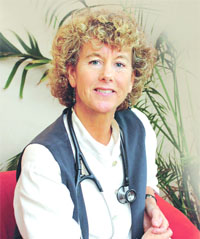
        Dr. Lindsay Rockwell

        Dr. Lindsay Rockwell

        Dr. Lindsay Rockwell, a medical oncologist and hematologist at Cooley Dickinson Hospital, says society’s concept of dying has been altered by life-saving technology, and not always for the better. In a book she co-authored, Rockwell argues that the medical system has “fallen off course” by refusing to embrace the natural course of life in the name of delaying death at all costs.

        She calls it the “the medicalization of dying.”

        That’s the phrase that Dr. Lindsay Rockwell, a medical oncologist and hematologist and member of the staff at Cooley Dickinson Hospital, along with co-author Dr. Kenneth Fisher, put out for discussion in their book In Defiance of Death: Exposing the Real Costs of End-of-Life Care.

        The terminology is used by the two physicians to summarize how they believe that the medical system has “fallen off course,” as Rockwell puts it, on the matters of death, and the technology that can delay it.

        “By taking a historical look at death and how we die, we notice that technology has removed us from the natural process of dying by, in some cases, prolonging life,” Rockwell told BusinessWest, adding that this is not a recent phenomenon, per se, but it has been heightened by advances in science and medical treatment.

        Summarizing the book’s basic thesis, Rockwell said she and Fisher, a nephrology consultant for the Borgess and Bronson Hospital in Kalamazoo, Mich., contend that, in too many cases, physicians tend to equate death with failure when, in some cases, it should not be considered that.

        “We have, as a medical culture, moved away from being able to differentiate when it is time to allow the body’s natural process of death to occur and when it is appropriate to intervene — and sometimes that line becomes blurred,” she explained. “So much of our training as a physician is in keeping people alive because, well, life is good.

        “Sometimes, the appropriateness of that gets lost or obscured in the context of thinking that death is a failure because life is better,” she continued. “So much of our society views death as something to be avoided, rather than as something that can be embraced as much as any other part of life.”

        Physicians get caught up in all this, especially the notion of death as failure, she said, and thus she believes they have a large role in somehow changing this perception when it is appropriate.

        “I really don’t think doctors are bad people … I don’t think they mean to do things to make money and prolong suffering,” she explained.  “But the I think the system has so much momentum that the physician gets lost, and the physician’s ideals and priorities get lost amid the momentum of that machine.”

        Rockwell said she hopes the book, published by Praeger Publishers and now available on Amazon.com, will generate a dialogue within the medical community, but also outside it, involving the public, business leaders, government, and religious leaders.

        In this issue, BusinessWest talks with Rockwell about what prompted her book, and what impact she hopes in can make with regard to matters involving life and death.

        By the Book

        Rockwell says she took a rather circuitous route to her work as an oncologist.

        Intrigued by science and medicine, she took a job during high school as a research assistant at Memorial Sloan-Kettering Cancer Center in New York. “I was on my way to medical school, as far as I was concerned,” she said. “I was interested in doing very benchy, molecular stuff, but then I spent a month in a lab and became quite disheartened; I spent that time injecting animals with DNA samples and killing them. So I said to myself, ‘no, I don’t think this is what I want.’”

        So instead of medicine, Rockwell went into the arts, specifically work in theater in choreography, and stayed in that realm for 15 years. But then her closest cousin died of leukemia.

        “That had a huge impact on me … we grew up together,” she explained. “And that brought me back to my original dream of doing cancer work, so I decided to try again.” She attended the University of New England in Maine and its College of Osteopathic Medicine. And it wasn’t long before she identified her intended specialty — oncology.

        While in residency, Rockwell wrote several papers on the issues surrounding death and dying, and one of them was published in the Journal of Clinical Oncology. It was this piece that she took to the Harvard Physician Writers Conference a few years ago, where she met Fisher and was ultimately put with him for a larger examination of the subject.

        “We went to the conference with the intention of writing essentially the same book, only we didn’t know it,” she explained. “We were in a small writers group together, and when Prager heard about my work and then heard about his work and ideas, they said, ‘you need him and he needs you.’”

        They collaborated on In Defiance of Death: Exposing the Real Costs of End-of-Life Care, a title that really hits at their basic premise — that America’s “defiance of death,” as the authors call it, is simply too costly.

        And there are many different costs associated with defying death and extending life, she contends, noting that there are financial costs that must be borne by everyone, and, in many cases, quality-of-life issues facing those who see their lives extended by science.

        “As our technology has become so amazing, we are now more seduced by the ability of that technology to prolong life,” said Rockwell, “when in fact the life that we’re prolonging is a life without quality or a human being behind it.

        “The question is … where and how do we differentiate between prolonging life and prolonging suffering?”

        When asked about who has the ultimate responsibility for determining when death should come — meaning the physician or the patient — Rockwell acknowledged that this is a hard question, and that, ultimately, both parties have, or should have, definitive roles. And the assignment for the physician, she continued, is to inform the patient, be honest, and explain that, sometimes, death isn’t a failure or something to be defied.

        “The root of the word doctor comes from ‘teacher,’” she explained. “The physician is a resource for the truth concerning the medical condition of a patient; he or she is obliged to say what the outcome will if this choice is made, as opposed to that choice, based on one’s best estimation.

        “People always ask me, ‘how long do I have to live?’” she continued. “And the first thing I say is, ‘it’s not my charge; it’s not up to me.’”

        Turning the Page

        The book will hopefully generate what Rockwell calls “improvement” in end-of-life care, because while the present situation poses problems for the health care community and society in general, the future prompts even greater concern, as science continues to advance and the huge Baby Boom generation ages.

        “I hope this book is a catalyst for an open dialogue between the medical community, legislative leaders, and spiritual leaders,” she said. “And the discussion has to be about how we take care of people at the end of life, from a physiological, medical, and biologic perspective, from an economic perspective, and from a spiritual perspective.

        “We’re on a wheel that has its own momentum,” she continued. “In order to stop that, we need to bring some awareness to the matter of what will happen if we stay on that wheel.”

        George O’Brien can be reached at[email protected]

        Sections Supplements
        Entrepreneurship Hall of Fame Announces Inductees
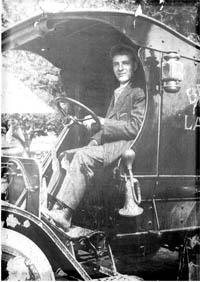
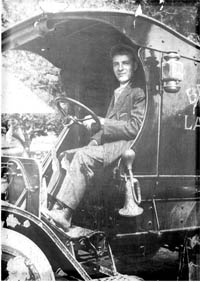
        Harry Samble

        Harry Samble, founder of Belmont Laundry, making some deliveries.

        When asked about his grandfather, Robert Samble Jr. started by pointing.

        “That’s him,” he said, gesturing toward a framed photograph sitting on a shelf in his crowded office. Somewhat faded by time, the image is of a man sitting behind the wheel of a delivery truck bearing the name Belmont Laundry, circa 1915. “That’s Harry Samble … he started all this with grandma.

        “That’s her there,” he continued, pointing to another picture, this one on a higher shelf. “She ran it for years with my father after grandpa died.

        “And that’s my father there,” he went on, pointing to a picture of a man in uniform standing next to a P-47 Thunderbolt fighter plane. “That’s from his days in the Army Air Corps during World War II.”

        When businesses stay in the same family for several generations, there are usually lots of old photographs on walls, atop credenzas, or in desk drawers, and so it is with the Western Mass. Entrepreneurship Hall of Fame’s Class of 2008. And as the saying goes, they speak a thousand words.

        Barbara Meunier has a favorite picture of her father, Rupprecht Scherff, who ran the Fort restaurant in downtown Springfield for more than 40 years until his death in 1996. The picture in question shows him in one of the dining rooms, where one would usually find him, shaking up some cherries jubilee tableside.

        “He was always working … always,” said Meunier, who now manages the Fort, known to some as the Student Prince, along with her brothers, Rudi and Peter Scherff. And there is now a third generation at work, she noted, adding that her son, Michael, is kitchen manager, and Rudi’s son (also named Rudi) recently took home his first paycheck for work in the deli.

        There is a fourth generation now working at Belmont Laundry — Samble’s sons, Matt and Derek, have lead roles — and a fifth generation continues to market Absorbine liniment and other products at W.F. Young, which was started by Wilbur Fenton Young in 1892. The company, and the Young family, have several pictures of the founder, including one with his signature followed by the letters P, D, and F. Apparently, Wilbur’s father, Charles, didn’t think much of his son’s decision to start a company making liniment for horses and, later, humans. As a condition for granting a $500 loan to help finance an expansion of the venture, the elder Young stipulated that his son pronounce himself in all advertising as “Pa’s Darn Fool.”

        Long-surviving family businesses, old photos, and the stories behind them may be the dominant theme for the Class of 2008, but there are other intriguing stories in this roster of inductees, the ninth to be enshrined.

        Baystate Health is being inducted to recognize an entrepreneurial spirit that has manifested itself in many ways, said Tom Goodrow, vice president of Economic and Business Development at Springfield Technical Community College, which created the Hall of Fame. These include many new ventures in recent years, including the D’Amour Center for Cancer Care, one of many new developments on the north end of Main Street, and a $239 million expansion, dubbed the ‘Hospital of Tomorrow,’ due to be started this fall.

        There are also the entrepreneurial exploits of Art Jacobson — who founded Olympic Manufacturing Group in Agawam, now called OMG Inc., and later founded Mr. Shower Door — and the individuals now at the helm at OMG.

        The Class of 2008 was introduced at a reception staged May 22 at the Colony Club, and the new inductees will be honored at the annual Hall of Fame dinner on Oct. 2 at the Log Cabin Banquet and Meeting House.

        Proceeds from that event will benefit the many entrepreneurship programs at STCC’s Andrew M. Scibelli Enterprise Center (SEC), said Goodrow. These include the YES (Young Entrepreneurial Scholars) program, which serves more than 1,000 young men and women in two dozen area high schools, as well as the Community Foundation of Western Mass. student business incubator in the SEC, which hosts up to nine fledgling businesses.

        Here’s a look at the Class of 2008.

        Belmont Laundry (the Samble Family)

        Before moving on to that truck, Harry Samble picked up and dropped off laundry on his bicycle and, later, a horse and buggy.

        In those days, his service was called ‘wet wash,’ said Robert Samble, noting that his grandparents would pick up laundry, wash it, and bring it back to the customer wet, to be dried on a line outside. This line of work has evolved considerably over the years, he continued, adding that Belmont now has a fleet of trucks and more than 50 employees, and handles more than 1,000 commercial accounts in a service area stretching from Newport, R.I. to Pittsfield.

        How it arrived at this state is a story of perseverance, vision, and dedication to customer service, he explained. To emphasize this point, he stopped at a pair of recently cleaned uniform pants soon to be returned to a commercial client. Turning the waist back, he revealed a radio frequency identification (RFID) tag implanted within. Each item has one, said Samble, to ensure that every shirt, pair of pants, physician’s coat, or commercial floor mat goes where it’s supposed to go.

        “The big outfits don’t do this, because it’s expensive and they don’t want to spend that kind of money on customer service,” he said, adding that Belmont has been taking such steps since Harry and Corrine Samble set up shop in 1907 in a barn on the location where the headquarters building still stands today.

        Harry Samble died when his son, Robert, was only 14, pressing the second generation of the family into a large role within the business at an early age. For many years, Robert Samble and his mother ran the business, along with one of Harry Samble’s brothers, who was later bought out.

        Robert Samble Jr. is a little sketchy on some of the history, because he never met his grandfather and his father died in 1967, when Robert was just 14. It was then that Robert’s mother, Dorothy, who had not been involved in the business at all while her husband was alive, essentially took over and kept the doors open.

        “If it wasn’t for her, we wouldn’t be here today,” said Robert, adding that, in 1973, his mother was able to convince him to change careers (he had been a refractory mason) and join the family business.

        Since then, he has orchestrated significant growth — the company has added locations in Agawam, West Springfield, Longmeadow, and a second store in Springfield — and diversification. He’s been joined in the business by sons Matthew, now project manager, and Derek, the dry-cleaning division manager, and stepdaughter April Caruso, who is supervisor of counter staff.

        Commercial work, which now accounts for roughly 75% of Belmont’s business, remains strong, said Samble, but the retail side of the ledger has been soft in recent years, a trend he attributes to more-casual dress in the workplace, among other factors.

        “People aren’t dressing up like they used to,” he explained, adding quickly that the company will persevere, whether that trend changes or not. It has endured for 101 years because it’s been able to add new wrinkles — or iron them out, as the case may be.

        The Fort Restaurant

        There are a few pictures of Rupprecht Scherff on the walls of the Fort, providing a continuing presence for the individual credited with making the restaurant a Springfield institution and popular stop for the business community.

        But it is the work of two generations, and now a third, that has enabled the venue to persevere for 73 years, a very rare feat in the challenging restaurant business.

        The Fort is known for many things, including its two names — ‘Student Prince,’ taken from a Sigmund Romberg operetta about student life in Heidelberg, and ‘the Fort,’ the name given the main dining room, in recognition of the fort John Pynchon built on the site in 1660 — and also an extensive collection of beer steins, its veal shank, scrod, and Roquefort salad dressing.

        It all started back in 1935 with Paul Schroeder, a native of Germany and cigar maker by trade. After working at several area cigar factories, he took a job as the housemaster of the Springfield Turnverein, a German club that continued to serve its members libations during Prohibition. After repeal of the Eighteeth Amendment in 1933, Schroeder saw an opportunity to start his own business, and did so, partnering with Erna Sievers in the Student Prince restaurant on Fort Street.

        Rupprecht Sherff would eventually take a job there in 1949. He came to the U.S. from Germany years earlier, at the behest of Robert Jarhling, owner of the Highland Hotel in Springfield, whom Scherff had impressed while he waited on Jarhling and his wife when they were visiting Bremen. Scherff worked at the Highland for many years and later fought in World War II before coming to the Student Prince. He started in the kitchen and was eventually asked to manage the restaurant. When Sievers died in 1961, she left the establishment to Scherff and another employee, Tante Grete, whom Scherff bought out in 1971 to assume sole ownership.

        Barbara Meunier said she and her brothers practically grew up in the restaurant, eventually handling every job in it. Rudi started when he was 8, and was officially on the payroll at age 12. Barbara, meanwhile, started at 14. Neither thought they would make the Fort their career, but after trying other pursuits — Rudi practiced law in Springfield for several years — they gravitated back to Fort Street.

        Today, they split the various responsibilities involved with day-to-day operations — Meunier handles most office duties; Peter, who has an MBA, handles most financial aspects of the business; and Rudi takes care of the kitchen and the menu — and continue many traditions started by their father, such as Octoberfest, Mayfest, a wild game festival, and elaborate decorations for the holidays.

        They’ve also brought the third generation into the business, which, says Meunier, has the same work ethic as the man in all the pictures.

        Baystate Health

        Andrew Scibelli, president emeritus of STCC and chair of the steering committee for this year’s induction ceremonies, acknowledged that Baystate Health is a different kind of selection for the Hall of Fame.

        Rather than acknowledging one individual or several members or generations of one family, the selection of Baystate constitutes recognition of an entrepreneurial philosophy that pervades the system and its more than 10,000 employees, said Scibelli.

        “They’re not just running a hospital there,” he continued. “They’re being entrepreneurial in every aspect of that word; they’re looking for opportunities, they’re taking risks in some cases, and they’re taking steps that will benefit themselves and the community they serve.”

        Elaborating, he said there have been many examples of this over the years, and especially the past decade or so. Endeavors include a number of ventures on Main Street, several blocks from Baystate Medical Center, with most of them involving former mill complexes that were either rehabbed or replaced with new construction.

        These include the D’Amour Center for Cancer Care, the region’s only free-standing, multi-disciplinary cancer treatment facility, opened in 2002, and the Pioneer Valley Life Sciences Institute, a joint venture between Baystate Health and UMass Amherst that was created in 2004 to develop new approaches for the diagnosis and treatment of disease.

        Other examples include the expansion of the health system to include Baystate Franklin Medical Center and Baystate Mary Lane Hospital, and the system’s involvement in the creation of the for-profit health maintenance organization Health New England, in which it still owns a majority interest.

        The most recent, and soon to be most visible, example of Baystate’s entrepreneurial drive is a $239 million expansion project, the ‘Hospital of the Future,’ a nearly 600,000-square-foot complex that will replace some of the hospital’s older facilities with new, state-of-the-art patient-care areas that administrators say will directly address the needs of an aging population.

        The expansion is perhaps the largest in the history of the system, which can trace its roots back to 1883 and the opening of Springfield Hospital. In 1974, what was then known as Springfield Hospital Medical Center merged with its neighbor, Wesson Women’s Hospital, to create the 672-bed Medical Center of Western Mass. In 1976, this entity merged with Wesson Memorial Hospital, located about two miles away. The merger established Baystate Medical Center, then the second-largest hospital in New England, with 1,036 beds.

        In 1983, Baystate Medical Center was reorganized into three separate corporations: Baystate Health Systems, the parent corporation now renamed Baystate Health; Baystate Medical Center; and a for-profit corporation known as Baystate Diversified Health Services.

        The Baystate Health family has grown significantly since its inception. In 1986, Baystate Franklin Medical Center in Greenfield joined Baystate Health; in 1991, Baystate Mary Lane Hospital in Ware joined the health system. In 1996, the Visiting Nurse Association & Hospice of Pioneer Valley, now renamed the Baystate Visiting Nurse Association & Hospice, also became a member of Baystate Health.

        Through all the additions and name changes, the system has been consistently entrepreneurial in its approach to doing business and serving the community, said Baystate President and CEO Mark Tolosky.

        “In the fast and ever-changing health care environment, we must be nimble and responsive to the needs of our patients and our communities, and assure them that we are stewards of all of our resources, and with that comes the need to be visionaries and risk takers,” he said. “One example of our entrepreneurial spirit at Baystate Health aligned with vision and risk relates to North Main Street in Springfield.

        “Just over 10 years ago, the land sat silent, with vast, empty buildings — once home to robust manufacturers of hand tools and much more,” he continued. “The leadership of Baystate Health saw opportunity, and we invested $125 million to develop this Northern Edge Medical campus. Our lead role has led to significant private investment in the area. Now, we see a vibrant complex — with health care at its core — and with other businesses benefiting from the spin-off effects of this development.

        “The vision we had became a reality and there’s more to come.”

        W.F. Young

        Wilbur Young was selling pianos in the early 1890s, and doing rather well at it, when he started looking for a different, more entrepreneurial career opportunity.

        He found one through his love of horses — and some encouragement from his new bride, Mary Ida. The product that Wilbur developed, and that the couple made in a tub in their farmhouse kitchen, would come to be called Absorbine Veterinary Liniment. A blend of herbs and essential oils, the liniment would keep a horse from going lame while gently reducing swelling and stiffness.

        More than 116 years later, the liniment remains the flagship brand marketed by W. F. Young Inc., a company credited with coining the phrase ‘athlete’s foot’ and, over the years, developing a wide array of health care products. Today, the company, which, after spending most of its existence in downtown Springfield, moved to East Longmeadow in 2000, is a global marketer of products for humans and animals.

        The company, which started small, really began to grow when farmers discovered that Absorbine Liniment worked on humans, as well, said Tyler Young, its CEO, president, and fourth-generation manager. Using the original formula as a basis with some changes and
        efinements, Wilbur created a liquid for human use, called it Absorbine Jr. Antiseptic Liniment, and brought it to the marketplace in 1903.

        As demand increased, the original manufacturing operation in Meriden, Conn. proved insufficient, said Tyler Young, adding that his great-grandfather went to his great-great-grandfather and secured a loan — and its unusual condition. The company grew steadily over the years, adding some celebrity spokespeople — Hall of Fame pitcher Walter Johnson and Triple Crown champion Secretariat’s trainer, Lucien Lauren — while also adding ‘athlete’s foot’ to the lexicon in the 1930s.

        The company typically introduces between five to 10 new products a year, said Tyler Young, adding that recent additions include DuraGuard® and Bug Block® insect repellents for horses, the innovative Stall Safe® brand disinfectant and sanitizer for stables and stalls, and Myoplast®, an amino-acid supplement which helps provide strength and stamina in horses while supporting lean muscles.

        More than a decade ago, the company transitioned out of manufacturing and now bills itself as a virtual marketing company, Young continued. Production of the entire network of brands is outsourced throughout the U.S.; the operations department manages production from the company’s East Longmeadow headquarters. After 80-plus years in Springfield, the company moved to its new offices in the East Longmeadow Industrial Park in 2000.

        Art Jacobson and OMG Inc.

        He called it the “roofle.”

        That’s the name Art Jacobson came up with for a new product he contrived back in 1981 to suit the needs of one of his clients.

        At the time, Jacobson was a manufacturer’s representative for companies that made bolts, rivets, and screw-machine parts, among other things, and selling to companies like Hamilton Standard, Pratt & Whitney, and Electric Boat. He was calling on a client that made commercial roofing systems when a discussion ensued that would eventually lead to what Jacobson called a “fluke of a business,” and what has become one of the region’s most intriguing entrepreneurial success stories.

        “I was selling him long screws to fasten his roofing down to concrete decks,” Jacobson recalled. “He said that if I came up with a different kind of fastener, like a long toggle bolt, he could use it to fasten roofing down to lightweight concrete decks where a screw wouldn’t work.”

        One of the companies Jacobson represented made long bolts that he sold to a wooden-rail manufacturer. He borrowed some, took them to a hardware store in Springfield, and put toggle wings and large washers on them. He then took them back to his roofing-industry client, who pronounced them exactly what he was looking for.

        Thus, the Olympic Manufacturing Group was born, only it would be several more years before it would be called that — and before it did any manufacturing.

        After securing a patent for his roof toggle, or ‘roofle,’ Jacobson took out an ad in a national roofing trade publication which touted the product and its potential. And calls started coming in. Still at his sales job and with no inventory on hand, Jacobson started having the roofle made for him to fill those orders, and, in so doing, moving more quickly than most entrepreneurs would in taking a venture off the ground.

        “I found myself getting into a business I really knew nothing about,” he explained. “Most entrepreneurs will investigate to the hilt or work on a product for six months or a year before deciding whether to take it to the market. Not me; I sort of fell into it.”

        Fast-forwarding somewhat, Jacobson said he would have long bolts shipped to him, add the toggles and other features that converted them into roofles, and run back and forth to Bradley International Airport to ship them out. Eventually, he and his wife, Esther, rented out 250 square feet of space to operate the venture, and by late 1982, they had decided to go into business together.

        Within a few more years, Olympic would become a manufacturer of roofing fasteners, and by 1985 it would be No. 1 in the industry.

        Jacobson said the key to the company’s steady growth within the Agawam Industrial Park was hiring the right people, individuals such as Hugh McGovern, who would later become president of Olympic (later to be called OMG), after Jacobson sold it; Dan Murphy, who eventually would become president of a succession of larger owners of OMG; and Tom Wagner, OMG’s senior vice president.

        “We succeeded because I surrounded myself with people better than me,” he explained. “They took the company to places I couldn’t.”

        Jacobson described his sale of Olympic in 1994 as the “quintessential win-win,” and both parties would go on to write more success stories.

        After “chasing the grandkids around for several years,” as he put it, Jacobson started Mr. Shower Door in 2005. He’s tripled sales since them, and now has three locations.

        Meanwhile, OMG continues to grow, organically and through acquisition. The most recent example was the purchase and assimilation of Illinois Tool Works (ITW), Buildex’s roofing business segment, which is now known as OMG West.

        Today, total sales are approaching $150 million. Not bad for a “fluke of a business.”

        George O’Brien can be reached at[email protected]

        Cover Story
        Serial Entrepreneurs Look to Shape the Future of Health Care Operations

        Arlene Kelly wouldn’t say how big the check was — just that it was big enough to allow her and business partner Kim Sanborn to retire to the beach.

        And they thought about that scenario, but just for a proverbial minute or two.

        “I sometimes wonder why we didn’t just head to the beach,” joked Kelly in an apparent editorial comment with regard to what she and Sanborn have put themselves through over the past 18 months or so, before quickly answering the question she posed. “We didn’t because we said to ourselves, ‘we’re still young, and we’re not done … we’re not through yet.’”
        Not done with taking bold entrepreneurial risks — the two have helped launch several ventures — and certainly not done trying to change the face of health care administration and reducing the frustration and skyrocketing costs associated with it, she told BusinessWest.

        That’s what the two partners did with Healthcare Resources Solutions Inc. (HRSI), a company they started in 1996 with the intention of managing billing and other revenue-management processes for its clients.

        This venture, which eventually grew to 120 employees, more than 600 regional clients, and more than $250 million a year in total billing that it handled, eventually caught the eye of software maker IDX Systems Inc., which cut that large check not long before it was absorbed by massive GE Healthcare. Thus, that’s the name on the door of the space in Wilbraham’s Post Office Park into which Sanborn and Kelly moved HRSI amid a serious growth spurt three years ago.

        And now, the two partners are back in the space they started in over a decade ago, just a few hundred feet away in another office building within Post Office Park. The name on their mailbox is now Convergent Solutions Inc. (CSI), a company that Kelly and Sanborn expect will go much further in their efforts to make a serious dent in a statistic they quote often: that 35 cents of every dollar spent on health care goes to administrative processes.

        Summing up CSI, Kelly said it was created to help physician practices large and small (down to individual physicians) take “subjectivity” out of medical billing and other administrative processes through a suite of products under the brand name Visum (Latin for ‘understand’).

        Elaborating, Sanborn said this subjectivity (a word both partners would use often) occurs essentially whenever there is human involvement with information and the processing of it.

        “Any place there’s a manual process, any place you’re relying on people, there’s an opportunity for failure,” she explained. “There are landmines everywhere … a person could forget a critical step or take the wrong step.”

        To clear the minefield, Sanborn, Kelly, and fellow CSI partners Craig Coffey and Edward Authier have, after more than a year of extensive research and development, created a system that uses artificial intelligence and business process management (BPM) software (which is new to health care but has been used in other sectors for years) to remove large doses of that subjectivity, thus reducing errors, enhancing revenues, and ultimately allowing physicians to focus on health care, not revenues and billing.

        “The key word in the company’s name is ‘Convergent’ — this is the convergence of people, process, and technology,” Kelly explained, adding that the CSI product, or service, as they prefer to call it, begins with the physician’s office. And essentially, it takes the emerging technology known as electronic medical record, or EMR, and makes it less error-prone, more accessible, and more affordable.

        “We knew going out of the gate that we were not going to find a single, simple software solution,” she explained. “We knew we were going to have to bring technology together, bring people into it, because no matter how much technology you have, you still need people to run the technology, and then the process — understanding the business is critical.”

        CSI, which opened its doors in January with a series of BPM and EMR practice-management products, is ready to launch an ambitious new offering that essentially interprets physician dictation and advances the process straight to the billing of a claim, thus eliminating several steps involving that aforementioned subjectivity. The company is hiring a wide array of professionals, and could have a staff of 150 or more within a few years.

        In this issue, BusinessWest explains how a year not spent in the sun led to what many expect to be a key breakthough in the health care industry.

        Form and Function

        As she went about the elaborate process of explaining just what CSI is and how it will ultimately go about changing how business is done in health care, Kelly started by talking about HRSI — and tonsils.

        “There are probably 20 or more ways that a tonsil can be coded,” she explained, adding that this statistic contributes to broad problems with projecting revenues within physician practices and myriad other headaches. “And if small businesses, which is what physician practices are, can’t predict revenues, how can they determine what their expenses should be?”

        This is just one of many challenges facing physicians and physician groups in the information age, and to help such businesses overcome them, Kelly and Sanborn created HRSI, a company to which physician practices outsource medical billing and other revenue-related procedures, thus enabling them to ultimately reduce errors as well as what are known as AR (accounts receivable) days — the time between when a bill is submitted and when it is paid.

        In a nutshell, what HRSI did was make a sophisticated (and expensive) software program made by IDX available to smaller physician groups that otherwise couldn’t afford it.

        As IDX continued to lose clients and revenue to outsource companies like HRSI, it started looking into how these outfits operated — only, in the case of HRSI, it did much more than look.

        “They scheduled a meeting, listened to us for about a half-hour, and then said, ‘we’d just like to buy you,’” said Kelly. “They just threw an offer on the table … it was unbelievable.

        “We weren’t expecting this at all,” she continued, adding that what ensued was a six-month-long review period during which IDX examined HRSI’s operations to see if they were in compliance with the myriad regulations governing this industry, and if it was, indeed, a good fit.

        “They came away thoroughly impressed,” said Sanborn, adding that, as the negotiations continued, it was announced that IDX was being acquired by GE, which knew about the HRSI deal, gave its blessing to it, and completed its transaction of IDX two months later.

        For the next year, Sanborn and Kelly watched as their small company was assimilated into a huge corporation, and pondered their own future.

        The status quo — meaning work for GE Healthcare in a management role — and the beach were always options, but as they observed GE’s absorption of their company, the partners also observed many other things, and envisioned some different career alternatives.

        For starters, they recognized that the model they had created with HRSI didn’t work nearly as well in an environment where volume increased exponentially.

        Meanwhile, they also observed that, despite improvements born from new technology, there was still far too much subjectivity — meaning too many manual processes remaining — in the realm of health care billing, and that there were certainly some business opportunities available to those who could find some ways to reduce or eliminate it.

        Recognizing this, and the fact that the operating environment within GE Healthcare wasn’t for them, Kelly and Sanborn also understood that they weren’t ready for the beach, and also had too much to offer the health care industry to walk away from it.

        “GE was a great place to work — they paid us very well to stay on,” said Kelly. “But it just wasn’t what we wanted to do; it was very difficult for us to stay in that environment, running a business one way as we did for all those years and then have a major corporation come in and change the philosophy.

        “What that big check did was put us in the financial position to walk away from that structure,” she continued. “We knew we weren’t done, but we also knew that we had a huge amount of experience and knowledge in this industry, and there are simply not many people out there who understand the business the way we do. And you hate to waste all that.”

        For the next year or so (the length of their non-compete agreement with GE Healthcare), the four partners — Coffey and Authier had worked with Kelly and Sanborn for years — traveled across the country and, ultimately, over the Big Pond, to create what they fully expect will be the next big thing in the outsourcing of medical billing and other revenue-management processes.

        Word Has It

        As they embarked on their search for technology that would help them achieve their stated goals, Sanborn and Kelly were guided by one overriding question — ‘what can we do to improve the situation in health care?’ — and to answer it, they made broad use of what could be called the ‘perfect-world’ approach to research and development.

        “That’s what we kept saying to each other,” said Kelly, adding that the intellectual discussion starts with what happens just after a physician provides a clinical service, “because that’s where the problems start.

        “In a perfect world, the doctor would provide that service and then document it through EMR or some electronic form,” she continued. “We don’t want the doctor to think about billing … we want the byproduct of his documentation to become the billing service, and the codes and the charges we need to process.”

        Elaborating, she said, in the current, far-less-perfect world, most physicians document their clinical service, essentially detailing what they did for the patient in question. This information is then reviewed by someone else at the office to ensure that everything was crossed off correctly, and then goes to an internal coder, a person trained to do coding, then on to someone in data entry, and finally out the door to the insurance company in the form of a claim.

        In other words, there is far too much room for error in this scenario, said Sanborn, adding that CSI was created to take much of that room out of the picture.

        “So we said, ‘OK, how do we get from clinical documentation to the claim going out the door without any manual intervention,” said Sanborn, noting that the search for the answer would take them from Boston to Belgium, amid a host of other places, and heavily involve the technical expertise possessed by Authier, CSI’s chief technology officer, and Coffey, the company’s chief operating officer.

        Condensing the details of that search, Kelly and Sanborn said it boiled down to bringing together business-process-management software with technology that involves natural-language processing, or, in this case, taking physicians’ dictations and converting them into codes for billing purposes.

        BPM, used in many financial-services sectors, essentially creates rules that can’t be broken, said Sanborn, adding these rules essentially make a system “bulletproof,” thus preventing expensive errors. Insurance companies have had such software for years, she said, adding that CSI wanted to put it in the hands of those at the other end of claims — the physicians.

        Those at CSI worked to essentially plug BPM into EMR in an effort to cut down on errors involving both under- and overpayment of claims that result from simple human error.

        “The same coder could read a note and code it one way today, and read the same note and code it a different way tomorrow — and that’s scary,” said Sanborn, “because that can make a difference of a few hundred dollars or more in how something is paid.”

        The problem with taking such human subjectivity (there’s that word again) out of the equation — and it was a big problem — is that EMR involves mostly physicians’ dictation, or what is known as ‘unstructured text.’ For CSI to even approach its ‘perfect world’ scenario, it would need a technology that could read unstructured text, or free-text data, and thus extract the information from it and code it for billing purposes.

        And for this tall order, those at CSI turned to a Belgian-based company called Language and Computing Inc., which specializes in natural-language processing, or, as Kelly put it, “teaching a computer how to understand free-text data — read it and interpret it.”

        “It’s like teaching a person … we’re talking about artificial intelligence,” she continued, adding that, while this concept may be hard for many to grasp, it is the linchpin to accomplishing what CSI set out to do. “Coding is the No. 1 flaw in this entire process, and it’s a problem that has to be solved.”

        CSI is doing so with a product that Language and Computing originally designed for the homeland-security industry. In a nutshell, that program was created to hear and interpret words in many different languages. The partners at CSI saw the technology in use and thought it could also be used to understand physician dictation.

        “You have all these documents that are created from recorded conversations,” Kelly said of the product’s use for homeland security. “This software is essentially interpreting what people are saying — that’s what it does — and now this company is moving into health care, and we’re partnering strategically with them.”

        Kelly and Sanborn told BusinessWest that they have brought the pieces to the puzzle together, have test-driven it, and know it works.

        Now, the work shifts from R&D (although that will always be ongoing) to sales and operations. They expect to launch their natural-language-processing product by midsummer and, in the meantime, are putting their EMR and practice-management systems into the hands of many physicians and physician groups that don’t use it because they don’t think they can afford it.

        “Right now, probably 90% of the physicians in this country still work in a paper environment, and if you ever went into a doctor’s office and really looked at that process, you wouldn’t believe how scary it is,” said Kelly. “That’s because it’s so manual and there’s so much room for error; things are misfiled, you can’t find charts … it is just a mess.”

        Cleaning up the mess is what Kelly and Sanborn first set out to do 12 years ago with HRSI, and now they’re taking it to a higher — make that much higher — level.

        Their Day in the Sun

        All joking aside, Kelly said she and Sanborn never really considered the beach as their next stop after HRSI.

        As she said, they consider themselves too young for retirement, too entrepreneurial to be happy working for someone else, and far too invested in driving down the cost of health care to sit on the sidelines when the system is still considerably flawed.

        But most of all, they have the experience and the know-how, and, as Kelly said, that would be a terrible thing to waste.

        Opinion
        Budgeting Should Be Based on Results

        Elections are exciting; budget debates are not. Millions are enthralled by the neck-and-neck Democratic primaries, but I don’t know anyone who spent the recent state budget week glued to Google News for the latest from Beacon Hill. If public participation in government is good, then it is surely bad that most of us happily ignore the Great and General Court as it makes some of the most important decisions in government, allocating billions to public safety, schools, and health care.

        Arguing over a few billion dollars of school spending is never going to be as thrilling as debating tales of 10-year-old sniper fire or an awkward, acrid adjective like ‘bitter,’ but perhaps more people would pay attention to the state budget if we knew what our tax dollars were doing. Since few of us understand the impact of an extra dollar on schools or safety or hospitals, public budget discussions turn into empty, dull displays of fidelity to abstract ideals. Supporting state aid to schools becomes a means of showing love for children. Supporting infrastructure signals foresight about the state’s economic future.

        I care about bridges and tunnels, public safety, and hospitals. As the father of three small children, I certainly care about schools. But I can care about these things without having any idea about whether the state should increase spending in any of these areas. Without a better idea of what an extra dollar on schools or hospitals or safety accomplishes, I can’t possibly know where our extra dollars should go.

        When a corporation invests in a division or product line, the firm will evaluate the impact new investment will have on profits. The government’s investment decisions are more important than those made by any firm, and the need for transparent and compelling public investment criteria is just as strong. Just because governments have more holistic objectives doesn’t mean that governments shouldn’t weigh costs and benefits. Yet the Commonwealth is a long way from having a budget process that clearly allocates spending to high-return activities.

        Here are five steps that could help:

        First, lawmakers should drop any presumption that this year’s budget allocations should look like last year’s budget allocations. A better rule of thumb would be that, unless a budget item shows success, spending should be cut by 10% each year. A norm of reducing budgetary allocations should help avoid spending sclerosis and provide plenty of incentive to document results.

        Second, the Commonwealth needs to frankly discuss how to weigh different goals. A faltering economy will probably keep revenues low over the next few years. Hard tradeoffs are inevitable, but few leaders have honestly debated how much value to place on a better-educated child versus a healthier adult.

        Third, budgetary proposals should reflect the current scientific knowledge about the impact of different forms of spending. Dozens of studies suggest that routine increases in school spending have little impact on children’s outcomes; there is more of a consensus supporting the benefits of pre-kindergarten programs. Budget boosters have an obligation to present peer-reviewed evidence supporting claims that their spending proposal will result in some desirable outcome.

        Fourth, state aid to localities should be tied to ongoing improvements in local government outcomes. School aid can be tied to improved student performance; police aid can be based on victimization surveys. Connecting aid to outcomes creates incentives for local governments to make measurable progress.

        Fifth, budgetary increases should always be designed to make future evaluation more transparent. New programs can be phased in across localities to make evaluation easier and structured so that before-and-after comparisons are more revealing. We desperately need knowledge about the impact of government spending, so any new spending category should help provide that data.

        State and local governments enrich our lives in countless ways, and state budgets are important. I’d like to see the public bring the same excitement to budget week as it does to a three-game Red Sox series against the Yankees. The budget process would get more interesting if the debate was filled with meaningful facts and if spending was based on results.-

        Edward L. Glaeser, a professor of Econom-ics at Harvard University, is director of the Rappaport Institute for Greater Boston.

        Sections Supplements
        Green Ideas Take Root at Local Hospitals

        As the benefits — both financial and ecological — of ‘green’ thinking sweep the business world, health care has taken a major role in the shift. Locally, hospitals are casting an earth-friendly eye toward how they power their facilities, what chemicals and supplies they use to sanitize rooms, how they dispose of waste, and any number of other daily jobs. Hospital administrators say the public, particularly in progressive Western Mass., expects large institutions of all kinds to be aware of the footprint they cast on their environment. They say such changes can be good for patients’ health — but also realize that going green can benefit the bottom line. Here’s a look at what area hospitals are doing in the ‘green’ realm.

        Mercy Medical Center: No Trash Left Behind

        Departments

        Care Center Annual Dinner

        April 29: The Care Center on Cabot Street in Holyoke will celebrate its students and staff at its annual dinner from 6 to 8 p.m. at the Log Cabin, also in Holyoke. The event features performances and presentations by Care Center students, including ballroom dancing. The Care Center provides services to pregnant and parenting teen mothers and their children. The celebration is being sponsored by Weiss Consulting, PeoplesBank, and the Northwestern Mutual Financial Network. Dinner and dancing are free, and guests will be invited to make a meaningful gift at the event. For more information, call (413) 532-2900, ext. 128. For details on the Care Center, visit www.carecenterholyoke.org.

        Marketing Program

        April 30: Anne West, founder and president of the Atlanta-based consulting firm Strategic Communication Counsel, will present “Remarketing Marketing … Creatively” at the Log Cabin Banquet and Meeting House in Holyoke. West offers a down-to-earth look at some common strategies and tactics that marketers overlook. The morning event is sponsored by the Ad Club of Western Mass. Registration begins at 7:30 a.m., with the seminar slated from 8 a.m. to noon. Registration includes a continental breakfast, seminar, and handouts. The cost is $75 for Ad Club members, $85 for non-members, and $50 for students. To register online, visit www.adclubwm.org.

        Financial, Estate-planning Workshops

        April 30, May 14, May 21: Applewood at Amherst, a part of the Loomis Communities, will host a free public series of financial and estate-planning talks, all beginning at 7:30 p.m. On April 30, Peter Ziomek, J.D., of Ziomek & Ziomek, will discuss wills, durable powers of attorney, health care proxies, and trusts. On May 14, Eva Thomson of Thomson Financial Management will share methods of maximizing one’s assets for a fulfilling retirement and beyond. The series concludes on May 21 with Hyman Darling, J.D., of Bacon and Wilson, P.C., reviewing ways to personalize one’s legacy through ethical wills, pet trusts, charitable bequests, gift annuities, or specific burial instructions. All talks will be conducted in the meeting room at Applewood at Amherst, One Spencer Dr., Amherst. Reservations are encouraged and may be made by calling Kelley Murphy at (413) 253-9833.

        Women’s Professional Development Conference

        May 1: Bay Path College in Longmeadow will host its 13th annual Women’s Professional Development Conference at the MassMutual Center in Springfield. Actress Jane Fonda will be the keynote speaker for the affair, which is planned from 7:30 a.m. to 4:30 p.m. For a complete list of workshops and speakers, visit www.baypath.edu. Tickets are $250 for the general public and $225 for Bay Path alumni, with an early-bird registration deadline of April 17. A vendor fair is also planned throughout the day.

        RTC Digital Marketing Series

        May 2: “Using Social Networks as Marketing Tools” will be offered by the Regional Technology Corp. (RTC) from 8:30 to 10:30 a.m. in the tele-classroom at the Springfield Technical Community College Technology Park in Springfield. This is the second seminar in RTC’s Digital Marketing Series, and will offer guidance on developing new relationships with clients, partners, and other key players in one’s industry. Presenters at the seminar will include Mark Firehammer, co-founder of Rumetagro Relationship Technologies, and Morriss Partee, the founder of EverythingCU.com. The class is free to RTC members and costs $50 for non-members. Advance registration is required. For more information or to register, contact Suzanne Parker at (413) 755-1301 or via E-mail at [email protected].

        Business Market Show

        May 7: The Affiliated Chambers of Commerce of Greater Springfield Inc. will host its 2008 Business Market Show from 7 a.m. to 5 p.m. at the MassMutual Center in Springfield. The show will feature more than 225 booths offering products and services to help, enhance, and grow one’s business. Attendance is free with a business card, and no registration is required. For a complete schedule of workshops throughout the day, as well as exhibitor listings and parking locations, visit www.businessmarketshow.com.

        Customer-service Seminar

        May 8: Marty Clarke, president of Martin Productions and author of Communication Land Mines: 18 Communication Catastrophes and How to Avoid Them, will present a seminar titled “Customer Service Land Mines and How to Avoid Them” from 8:30 to 11:30 a.m. at the Clarion Hotel in West Springfield. Clarke’s program will lay out a road map of how one can avoid common and damaging customer-service land mines, and begin to set a company apart in the most powerful way possible. Clarke will offer an encore seminar titled “Leadership Land Mines: 8 Managerial Catastrophes and How to Avoid Them” from 1 to 4 p.m. The presentations are presented by the Employers Assoc. of the NorthEast (EANE). The cost for either the morning or afternoon session is $179 for EANE members or $229 for non-members. The cost for the full day is $279 for both sessions for EANE members, and $329 for non-members. For registration information, visit www.eane.org.

        Wine Tasting and Auction

        May 9: The Chicopee Chamber of Commerce will host a wine tasting and silent auction at the Castle of Knights on Memorial Drive. Proceeds raised from the event will be used to fund chamber events. For more information on the event, visit www.chicopeechamber.org.

        ‘Defining the Goals’

        May 20: Agawam High School is hosting a “Defining the Goals” expo from 8 to 10 a.m. Companies are invited to share products or services, as well as employment needs for the future. The event will be an opportunity to showcase a company and enlighten students regarding its operations and the educational requirements necessary to secure employment in various industries. The event is being sponsored by Engineering Projects in Community Service, Life Science Career Development grants, and MassLive. The event will include a coffee reception, scheduled presentations, and a question-and-answer session. For more information or to RSVP, E-mail [email protected].

        Woman of the Year Banquet

        May 21: The Women’s Partnership of the Affiliated Chambers of Commerce of Greater Springfield will honor Kristina Drzal Houghton as its Woman of the Year at its annual banquet planned at Chez Josef in Agawam. The award represents the recognition of extraordinary achievement by a woman in the Greater Springfield community whose efforts exemplify the leadership, community involvement, and professional goals of the Women’s Partnership. A reception begins at 5 p.m., followed by dinner at 6:15. Tickets are $35 each, and the deadline to register is May 9. For more information, visit www.myonlinechamber.com.

        Torch Awards

        May 12: The Better Business Bureau of Central New England Inc. (BBB) will stage its anual Torch Awards & Breakfast at the Orchards Golf Club in South Hadley, starting at 7:30 a.m. At the event, the BBB will honor American Pest Solutions Inc. of Springfield with its prestigious “Torch Award. It will also extend its Honorable Mention distinction to another local company, Moving/Odd Job Unlimited of Chicopee. “The purpose of this award is to recognize businesses that operate with integrity, trust, and marketplace ethics in their approach to commerce,” said Ray Frias, president of the BBB. “The Better Business Bureau is aware that there are businesses that maintain good business ethics and work every day to assure the public of their commitment to fair and honest business practices, and this award was established to focus attention on those good companies.” Also, BBB Student Ethics Award winner Evan Coleman from Amherst Regional High School will be presented with a $500 scholarship. This prestigious award recognizes students who live up to and inspire others with their commitment to ethical living. Individual seats at the event cost $20. Those interested in registering for the event may do so by visiting www.central-westernma.bbb.org/torch  or calling (413) 594-2163, ext. 105

        Sections Supplements
        Green Environmental Consulting Works with Business Owners to Clear the Air
        Adam Lesko

        Adam Lesko, owner of Green Environmental Consulting, says indoor air quality is one of the most pressing issues associated with ‘green building.’

        In the biz, it’s called IAQ — indoor air quality, an often-misunderstood aspect of environmental health and compliance.

        According to Adam Lesko, owner of Green Environmental Consulting (GEC) in Florence, there are a number of things that can negatively impact the air we breathe, ranging from mold to asbestos to poorly functioning ventilators.

        Sometimes, these issues lead to less-than-healthy working conditions or so-called ‘sick buildings,’ and Lesko has made it his life’s work to serve as the doctor on call.

        “We specialize in indoor air quality,” he said, noting that the specialty includes remediation techniques, but also the creation of management systems for buildings, their environmental systems, and record-keeping mechanisms. “All of this relates back to the company name. It’s ‘green’ for a reason — air quality is one of the biggest concerns when it comes to environmental compliance.”

        But environmental services like those offered by GEC haven’t always been in high demand.

        “In the past, people have not looked at air quality as a place where long-term, positive changes could be made,” said Lesko. “Instead, most people have seen the regulations they must adhere to and the standards they’ve had to meet, and not been able to see past the upfront costs.”

        Air Apparent

        Today, though, environmental-compliance assistance is in increasing demand. This is due in part to a greater awareness and response to IAQ and other health- and environment-related concerns on both state and federal levels; the EPA, for example, has launched a comprehensive Indoor Environments Program, which includes guidelines for schools and school districts, homes, offices, and institutional buildings.

        Trends in the marketplace, including a greater focus on ‘green building’ and LEED-certified construction, are also helping to put IAQ in the spotlight. This, in turn, is making air quality more relevant to a number of other industries, including commercial real-estate markets, construction, health care, and even education.

        More than ever, said Lesko, property managers and owners are realizing a need to test for poor air quality and other environmental hazards, and to remediate any issues and avoid complaints from tenants, clients, or employees. Failure to do so can result in costly renovations and cleanup efforts, low productivity, and, in many cases, some bad publicity that can hurt a building’s reputation.

        “Anyone who operates any kind of large facility has to think about this,” he said, “and we have plenty of residential work, too. The trends really follow the media — if 20/20 runs a piece on the dangers of mold, we get a lot of calls from homeowners. If there’s a news story about the mountain of paperwork facilities are required to keep, and how it keeps growing, then we hear from colleges, hospitals, schools … you name it.”

        Breathing Life into the Industry

        In essence, GEC provides options to clients designed to create healthier indoor working conditions. Lesko said most often, this translates into remediating issues with asbestos and mold (“mold is big this time of year,” he said, “and asbestos is always big”), upgrading air-quality infrastructure and plans (including ventilation and filtration systems), and monitoring and testing areas in which employees work to ensure they meet health and safety compliance standards.

        “We do a lot of work with industrial hygiene and database solutions to manage environmental information,” he explained, noting that, until very recently, facilities charged with maintaining environmental information often did so with a pad and pencil, storing records in a conventional file cabinet.

        “New technology eliminates the need for a physical paper trail and data entry, and increases access to information, thus limiting the potential for a hazardous situation,” he continued. “The most commonly cited issue associated with environmental regulations is the need for thorough, accessible records.”

        Lesko had worked in this field for several years, the bulk of those with a national firm specializing in the field of environmental consulting, before striking out on his own in 2006.

        “I saw an opportunity to produce a quality product, and I liked the idea of owning a local company,” he said. “I felt I could do a better job — when people work with us, they’re going to be working with a senior-level employee every time.”

        His timing was good, too. Now working with a diverse set of clients in the midst of the biggest environmental boom in American history, Lesko leads a team of four, assessing needs, providing solutions, and usually offering some educational components, too.

        “There have been a number of studies, for instance, looking at how air quality affects employee productivity,” he said. “In turn, there’s a lot of research on how we can improve efficiency by improving the indoor environment. Healthy employees are happy employees, and we’re definitely seeing more people take that idea seriously.”

        Building Excitement

        As green trends continue to explode, he said opportunities for GEC are multiplying as well. Lesko has already carved a niche for himself working with a wide range of clients, addressing their clean-air needs. He’s worked with a number of educational institutions across Western Mass. and Northern Conn., including Tantasqua regional schools, Granby public schools, Belchertown public schools, and Smith College. He also works with a number of real-estate brokers and developers offering assessment services on various properties in preparation for a sale, as well as general contractors, offering compliance assurance and monitoring programs.

        “Developers are often surprised by the amount of remediation they’re required to perform on a property, and too often, that surprise comes after a property has been purchased,” said Lesko. “Our stance is that pre-investigation, so to speak, is a really smart way to do business because it offers more information on a property that can be used when negotiating prices or taking out a loan.

        “There is a real and true cost associated with environmental compliance that too few people acknowledge,” he added.

        There’s a residential arm of GEC too, through which Lesko and his team provide testing and inspection services to identify issues caused by lead paint, mold, asbestos, and other hazards.

        But in addition, Lesko said he’s gradually moving GEC further into the green-building sector — an area in which environmental compliance is becoming more intrinsic than ever.

        “We’re doing more already on the green-building side of things,” he said, “especially in the field of testing. I definitely hope this in an area in which we can grow, because there are opportunities to work with all types of buildings — both old and new.”

        GEC is working toward attaining its own LEED certification to better serve the building sector. Lesko said part of the decision to move in this direction was, as in the past, driven by media attention to green-construction practices, but it’s a trend he says will likely forge significant positive changes in the industry.

        “This is a good industry to join,” he explained. “Some might say that there’s been almost too much marketing of green building and green products, but a lot of good has already come out of that aggressive stance, and it’s always healthy for us to think about these things.”

        Lesko says that this trendy thought process notwithstanding, green building, with environmental compliance as one of its key tenets, is leading to the design of more efficient buildings.

        “It’s great because it’s driving people to think more proactively, to think about things more intelligently, and to design tighter buildings.”

        The going-green phenomenon is shedding some light on Lesko’s work, which revolves around finding invisible foes and bringing others out of the shadows. “Now, more people are seeing that changes to air quality can create benefits,” he said.

        And for him and his clients, that is indeed a breath of fresh air.

        Jaclyn Stevenson can be reached at[email protected]

        Departments

        Marketing Program

        April 30: Anne W. West, founder and president of the Atlanta-based consulting firm Strategic Communication Counsel, will present “Remarketing Marketing … Creatively” at the Log Cabin Banquet and Meeting House in Holyoke. West offers a down-to-earth look at some common strategies and tactics that marketers overlook. The morning event is sponsored by the Ad Club of Western Mass. Registration begins at 7:30 a.m., with the seminar slated from 8 a.m. to noon. Registration includes a continental breakfast, seminar, and handouts. Cost is $75 for Ad Club members, $85 for non-members, and $50 for students. To register online, visit www.adclubwm.org

        Financial and Estate- planning Workshops

        April 30, May 14, May 21: Applewood at Amherst, a part of the Loomis Communities, will host a free public series of financial and estate-planning talks, all beginning at 7:30 p.m. On April 30, Peter Ziomek, J.D., of Ziomek & Ziomek, will discuss wills, durable powers of attorney, health care proxies, and trusts. On May 14, Eva Thomson of Thomson Financial Management will share methods of maximizing one’s assets for a fulfilling retirement and beyond. The series concludes on May 21 with Hyman Darling, a partner with Bacon Wilson, P.C., reviewing ways to personalize one’s legacy through ethical wills, pet trusts, charitable bequests, gift annuities, or specific burial instructions. All talks will be conducted in the meeting room at Applewood at Amherst, One Spencer Dr., Amherst. Reservations are encouraged and may be made by calling Kelley Murphy at (413) 253-9833.

        Women’s Professional Development Conference

        May 1: Bay Path College in Longmeadow will host its 13th annual Women’s Professional Development Conference at the MassMutual Center in Springfield. Actress Jane Fonda will be the keynote speaker for the conference, which is planned from 7:30 a.m. to 4:30 p.m. For a complete list of workshops and speakers, visit www.baypath.edu. Tickets are $250 for the general public and $225 for Bay Path alumni, with an early-bird registration deadline of April 17. A vendor fair is also planned throughout the day.

        Business Market Show

        May 7: The Affiliated Chambers of Commerce of Greater Springfield Inc. will host its 2008 Business Market Show from 7 a.m. to 5 p.m. at the MassMutual Center in Springfield. The show will feature more than 225 booths offering products and services to help, enhance, and grow one’s business. Attendance is free with a business card, and no registration is required. For a complete schedule of workshops throughout the day, as well as exhibitor listings and parking locations, visit www.businessmarketshow.com

        Customer Service Seminar

        May 8: Marty Clarke, president of Martin Productions and author of Communication Land Mines: 18 Communication Catastrophes and How to Avoid Them, will present an informative seminar titled “Customer Service Land Mines and How to Avoid Them” from 8:30 to 11:30 a.m. at the Clarion Hotel in West Springfield. Clarke’s program will lay out a road map of how one can avoid common and damaging customer-service ‘land mines,’ and begin to set a company apart in the most powerful way possible. Clarke will offer an encore seminar titled “Leadership Land Mines: 8 Managerial Catastrophes and How to Avoid Them” from 1 to 4 p.m. The presentations are presented by the Employers Association of the NorthEast (EANE). The cost for either the morning or afternoon session is $179 for EANE members or $229 for non-members. The cost for the full day is $279 for both sessions for EANE members, and $329 for non-members. For registration information, visit www.eane.org

        Wine Tasting and Auction

        May 9: The Chicopee Chamber of Commerce will host a wine tasting and silent auction at the Castle of Knights on Memorial Drive. Proceeds raised from the event will be used to fund Chamber events. For more information about the event, visit www.chicopeechamber.org

        Departments

        Comcast Launches FOX 6 Springfield

        SPRINGFIELD — Comcast recently announced its launch of the region’s newest television station, FOX 6 Springfield, and the channel’s HD simulcast. The launches of FOX 6 Springfield and FOX 6 Springfield in HD, available on Channels 6 and 861, respectively, provide Comcast customers with some of the network’s most popular shows, from American Idol to 24 and House, along with matchups from NASCAR, Major League Baseball, and the National Football League. With more than 300 HD choices, Comcast plans to significantly expand the number of HD choices to 1,000 by the end of this year. FOX 6 Springfield and FOX 6 Springfield in HD are now available in Agawam, Amherst, Bernardston, Buckland, Chester, Conway, Deerfield, Erving, Gill, Granby, Granville, Greenfield, Hatfield, Holyoke, Huntington, Longmeadow, Monson, Montague, Northampton, Northfield, Palmer, Pelham, Shelburne, South Hadley, Southwick, Springfield, Sunderland, West Springfield, Ware, Westfield, Westhampton, Whately, and Williamsburg. Local Connecticut news, weather, and programming are still available on WTIC Fox 61 on Channel 292 for Comcast basic cable customers with a digital box. In addition to traditional television viewing, Comcast’s HD on Demand platform allows digital-cable customers with an HDTV and HD-capable cable box to choose from a variety of HD selections each month. Comcast’s New England regions serve 2.6 million customers in Massachusetts, New Hampshire, Vermont, Maine, Connecticut, and New York.

        Berkshire Service Experts to Give Away Programmable Thermostats

        WEST SPRINGFIELD — As the 28th annual Earth Day approaches (April 22), Service Experts Inc., and its full-service heating and air conditioning center in the Valley, Berkshire Service Experts, will help customers in the Springfield area recognize they truly can make a difference. Service Experts will install a free programmable thermostat in every U.S. and Canadian household that schedules a heating or cooling system tune-up during the month of April. Service Experts’ Earth Day program will create the same environmental effect as planting 330 trees for every single homeowner who makes one small household change. Thermostat manufacturers such as Lennox that are providing thermostats for the special Earth Day campaign estimate that up to 75% of North American homes do not have programmable thermostats. Most homes between 15 and 25 years old still use the original mercury-based models, which are toxic if not disposed of properly. Service Experts will remove the home’s old thermostat, and properly dispose of and recycle it at no charge.

        Work Opportunity Center Receives Grant

        AGAWAM — The Work Opportunity Center Inc. in Agawam has received a $2,500 grant from the NewAlliance Foundation, which will help purchase a passenger van for the agency. The private, nonprofit organization provides developmentally disabled individuals with vocational training and employment opportunities. Currently, the center serves 110 individuals in three work programs within the Greater Springfield area.

        MassMutual Launches Recruiting Web Site

        SPRINGFIELD — Building on several years of successful efforts to recruit and retain top financial services professionals, Massachusetts Mutual Life Insurance Co. (MassMutual) recently unveiled a Web site that introduces career changers, industry veterans, and college graduates to a career with the company through the eyes and words of its agents. The Web site, one of several initiatives the company has undertaken to grow its ranks of successful professionals, features a MassMutual agency manager, sales team manager, experienced agent, career changer, new agent, and intern who describe their careers and experiences in their own words. Visitors to www.massmutual.com/mycareer hear and see agents describe the company’s entrepreneurial business model, training and support services, and the meaningfulness of their work. The online introduction and other efforts by the company are succeeding, as the number of new agents and the company’s rate of retention have both risen significantly, according to Scott Rich, vice president, Net Field Force Growth. Rich added that, during the past two years, MassMutual has increased its net field force by 10%.

        Capuano Care Moves to New Corporate Location

        EAST LONGMEADOW — Capuano Care is moving into its new corporate headquarters on April 14. The larger office at 265 Benton Dr., Suite 201, will allow the firm to better serve its rapidly growing client base as well as its professional in-home health care staff, according to Fannie Y. Lin, president and CEO. Lin noted that the company has been growing so much in the last two years that it needed a larger and more efficient space to accommodate additional support staff. Capuano Care is a full-service, Medicare/Medicaid-certified, and private home health care business serving clients throughout Hampden and Hampshire counties. For more information, visit www.capuanocare.com

        Sections Supplements
        Texcel Sees Dramatic Growth in Medical Device Manufacturing
        Keith Checca

        Keith Checca stands in Texcel’s manufacturing facility in East Longmeadow, where complicated, implantable medical devices are created.

        In the 1990s, Texcel, a company that designs and constructs devices and components for some of the most highly regulated markets in the world, was working on some big things — literally. The company was a major player in the aerospace and defense industries, but gradually that started to change, and today Texcel works with international clients to devise some of the smallest, most intricate medical technologies ever seen. And this, the company has found, is where its heart lies.

        Larry Derose, president of Texcel, a medical device manufacturer in East Longmeadow, said there’s story behind every tiny component his company creates that speaks volumes regarding the importance of this work.

        “We’ve had clients come back to us with presentations that show how a device is working in its early stages,” he said. “We’ve seen stroke victims who’ve improved enough to use the telephone or change a diaper. When you’re working to develop theories that have that kind of promise, everyone feels connected to the process, and everyone sees how important their work is.”

        Derose founded Texcel in 1987, and said it was always his passion to work with this type of technology. However, only recently has the company come into its own with the development of complex, implantable medical devices — some of which many within health care and technology fields see as the future of modern medicine.

        “Our long-term goal was to use our expertise in the field of medical devices,” said Derose, noting that this expertise includes the use of precise, high-powered lasers, clean-room assembly, and product and process development. “It took a number of years to achieve that while we waited for the market to develop. But new information in this field is triggering a wave of new device design and development, and that’s creating a great number of opportunities for us.”

        Bionic Biology

        Texcel contracts with several different international companies to help them develop devices including pacemakers, endoscopic surgical instruments, spinal orthopaedic implants, total artificial hearts, and neurostimulators. More specifically, this line of work is dubbed ‘implantable device architecture and construction.’

        Some in the industry refer to Texcel as an ‘integrator,’ because it joins technology with the necessary raw materials, both figuratively and literally.

        Due in part to increased activity in the development of neurostimulating devices in particular, Texcel is now enjoying a major growth period in its history. Keith Checca, director of business development for the company, said several new employees with expertise in areas specific to the medical device market have joined the company over the past three years, nearly doubling its size.

        “The last two years have been really explosive,” said Checca. “We’ve realized what we’re good at, and we know how to focus it — that’s really the key for a contract company like us. Our clients are everything.”

        Checca said attention to this specific niche in the medical device market is important to working with these diverse clients, most of which are kept confidential by Texcel.

        “We’re big enough to offer everything that’s needed, and small enough to remain a dynamic firm that’s easy to work with,” he said. “Clients don’t want to hear ‘we can’t do that’ — they want you to be an infinite well. That’s where our focus on that niche comes back in.”

        Planes, Trains, and Biomanufacturing

        But it also helps to underscore the company’s long-held mission to use its capabilities for the greater good, despite many years of building to this point and working in other fields. Medical manufacturing was not as brisk in the past as it is today, Checca explained, and over the years, this has opened the door to contracts in other highly regulated fields such as aerospace and defense.

        “The medical device market was evolving, but aerospace and defense were already here,” he said, adding, however, that as global needs and trends began to shift, Texcel began taking on more medical device work, and today, that sector represents more than 95% of the company’s contracts.

        A handful of aerospace- and defense-related partners remain, but with an FDA- and ISO-registered environment in which to work and a medical technology boom underway around the world, Checca said the company has long been primed and ready to become a strong player in this sector.

        “Equipment-wise, we haven’t had to change much,” said Checca. “We are a laser-processing, controlled environment, and that’s technology that is being adopted by the medical community. This has been not so much a facility-changing event as it has been a culture-changing event.”

        New partnerships have also emerged, including one forged in June with Microtest Labs of Agawam. The strategic alliance will capitalize on a particularly healthy aspect of medical manufacturing — combination products, which pair devices with pharmaceutical or biologic components like those Microtest works with. The market is expected to reach approximately $9.5 billion in 2009.

        Checca added that the existing emphasis placed on quality of both work product and service has been another hallmark of Texcel’s foray into this arena.

        “Perfect is barely good enough,” he said, borrowing a phrase he said he heard at a recent internal meeting. “We’re lucky to have built a culture focused on that very early, and it’s something of which we are constantly aware.”

        Theories of Evolution

        Still, Checca added, with such growth spurts come some requisite internal changes, including some to workforce development and process management. With potential openings for professionals ranging from engineers to manufacturing technicians and assembly operators, Texcel has forged relationships with several area colleges, including Springfield Technical Community College, Western New England College, UConn, and the University of Hartford, to create a sort of educational pipeline to its doors.

        “It’s a little hard to find applicable experience in this area because there aren’t as many companies doing what we do,” he said. “But last year, the story would have been all about growth; we climbed that hill, and we’re still breathing heavy, but now we’re moving forward.”

        Checca said Texcel is likely to continue expanding in size, both physically and in terms of staff, which now totals about 65 people.

        “There will be further growth at a slower pace,” he said. “Now, we’re more focused on refining the mix. The life cycle of some of the products we manufacture is very long, often five or six years until they’re ready for use on humans, and until our client is ready to ask us for more than a few. To that end, we’re looking now to be even more efficient on the manufacturing side, and changing how we manufacture.”

        One way the company is striving to do this is through ‘cellular manufacturing,’ which spreads work on a single item out more evenly throughout the facility. Checca calls it a “tried and true manufacturing principle” that can be applied to many different industries, and can especially help improve efficiency among growing businesses.

        It’s also another system of checks and balances in this highly regulated environment, which also includes several clients (Checca estimates there are about four dozen) with varying development schedules.

        “These companies don’t follow the old vertical-integration model,” he said. “Because the process of developing a medical device is a long one, they need suppliers that can cover the needs of an entire product, and that will remain strong partners for the long term.”

        Part of Texcel’s business model is to actively seek out these types of companies, and educate the industry as a whole regarding its capabilities.

        “But they’re out there searching for us, as well,” Checca said. “If we’re doing our job right, we find them before they find us.”

        The Human Experience

        Derose said that active recruiting, so to speak, leads to a greater number of opportunities to help in the creation of new, innovative, and potentially life-saving devices.

        “It’s inspiring when a client approaches us with a product that hasn’t been recognized by the public or even the medical community yet,” he said. “Usually, when a client comes to us, they’re in the embryonic stage of development. We’re a high-tech manufacturer, but really, we act like a fulfillment agency.

        “We help them convert a dream into a reality.”

        Jaclyn Stevenson can be reached at[email protected]

        Features

        It’s Not Exactly Business as Usual in the Valley, but There’s No Panic, Either

        ‘Survival mode.’
        That’s a term being seen and heard with increasing frequency these days as the media covers the ongoing economic downturn and how individuals, families, businesses, and municipalities are responding to life within it.

        This phrase and others like it may accurately depict the current picture within some areas of the country, and even some parts of the Bay State, said Ken Albano — putting the accent on ‘may’ — but they’re a bit overblown for the Pioneer Valley, where, it seems, most companies seem intent on doing more than merely surviving.

        “A lot of people are saying, ‘knock on wood, I’m doing OK,’” said Albano, a business law specialist with the Springfield-based firm Bacon and Wilson, who spoke about life for his clients, as well as for his law firm. “They’re just not saying it very loud because they’d prefer to fly under the radar screen and not say they’re doing OK, in case something happens.”

        Others used different words and phrases to convey essentially the same thing — that the economic downturn (there still appears to be some debate over whether this is officially a recession) has business owners cautious and wary about what might happen. But no one is yet drawing up comparisons to 1991, the height of the last deep recession, when the phones simply stopped ringing at many companies.

        It’s not exactly business as usual in this region, by most accounts, and there are some definite signs that times are tough. Indeed, the demise of low-cost carrier Skybus earlier this month brought the downturn home to the Valley and, specifically, to Westover Metropolitan Airport in Chicopee, with an exclamation point. Meanwhile, there are real concerns about the residential real-estate market and its fate. There is talk of large-scale cutbacks across the Commonwealth as state and municipal officials grapple with budget deficits and declining tax revenues, and most all businesses have been touched in some way by high gas prices and sky-high diesel fuel prices.

        But many of those asked to give a quarter-pole analysis of 2008 and the state of the local economy were sounding mostly optimistic tones. Here are some observations:

        • Laura Stevens, president of the regional offices of Keller Williams Realty, said that, contrary to popular opinion, houses are moving — if they’re priced right, that is. “The problem we have is that a lot of people simply don’t want to believe that their house has lost 10% of its value since last year, and they’re stubborn,” she said, referring to the average drop in the Valley, by most estimates, that she believes represents a market correction that was overdue. Stevens remains optimistic that sellers will come to grips with reality and that, likewise, buyers will realize that there is no real advantage to waiting, two prerequisites for reducing a bloated inventory that is keeping prices lower. The question is, when?

        • Arlene Putnam, general manager of the Eastfield Mall in Springfield, said most retailers there enjoyed a fairly strong February — “why, no one is really sure.” Despite mostly gloom-and-doom headlines and sound bites locally and nationally, she expects this sector to hold its own amid a general decline in consumer confidence and capitalize on those economic-stimulus checks that people will be getting later this year.

        • Kenneth Boutin, senior vice president and senior credit officer at Holyoke-based PeoplesBank, wasn’t projecting a strong first quarter for commercial lending activity last fall, but to his surprise the numbers are solid, with business owners in many sectors making investments in new equipment and facilities. Some industry groups are doing better than others, he acknowledged — hospitality is struggling somewhat, for example — but most are exercising caution, not hunkering down.

        • Joe Ascioti, president of Reliable Temps in Agawam, said that, thus far, he’s seeing little evidence of companies cutting back or delaying planned hiring. He admits, though, that the picture is seriously clouded by the much-bigger story — ongoing struggles in many sectors to find enough good help. This is evidence, he said, that shortages in labor that many have projected for years down the road — when smaller generations are going to be asked, unrealistically, to fill the huge void left by retiring Baby Boomers — are already here.

        In this issue, BusinessWest takes an in-depth look at the economy as the second quarter of ’08 begins, and the issues that will determine what happens short- and long-term.

        House Money

        Stevens told BusinessWest that, in response to one reporter’s question a few months ago, she said that “if there was a recession, her company was choosing not to participate in it.”

        That was her way of saying that Keller Williams is having a solid start to ’08 and that, overall, the local housing market is not as depressed as many other areas of the country, nor is the picture as bad as most would believe.

        She used the word “stable,” and went so far as to say that a long, bleak winter may have as much to do with the current conditions as any downturn in the economy, and that the picture will improve when the weather does.

        “We’ve been ignoring the headlines and advising our clients to essentially do the same,” she said. “We tell them that if they put a reasonable price on their house, someone will buy it. I can sell anyone’s house in a day — you just have to price it right.”

        It appears that not enough people in the Valley are heeding such advice, because the local housing market has declined to the point where firms such as Bacon Wilson, which handle large volumes of real estate closings, are certainly feeling an impact on the bottom line.

        Albano said this is part of a broad trickle-down effect from a slow housing market that he and most others believe is perhaps the most important factor impacting the fate of the local economy short- and long-term. That’s because this trickle-down impacts businesses ranging from law firms to homebuilders to retailers, and it’s real, based on what he’s seen and heard anecdotally.

        “It all starts with the real estate market, and right now, it’s slow,” he said, adding that he can qualify matters more easily than he can quantify them. “There were times during the boom three or four years ago when a deal would come in the door and you’d have to order a title exam from the local title examiner. The feedback you’d get was, ‘maybe next week at the earliest.’ That’s not happening now; people are sitting around waiting for the phone to ring because people aren’t buying and selling homes.

        “I represent a few local developers who opted to get into the over-55-development concept,” he continued. “It still is a great concept … but for people to move into one of these complexes, they need to sell their house; there’s a big backlog of inventory at these over-55 developments because people have signed up to move in but they can’t until they close on their existing home.”

        While he insists he’s a “glass-half-full person,” and sees plenty of positive signs regarding the economy, Albano says the residential market is the key, and there are real questions about when it will rebound. “I’m glad I’m not a mortgage broker right now, and I’m glad I’m not a Realtor.”

        Stevens is a Realtor, and she expressed some cautious optimism that the market will improve, but included a number of caveats. Specifically, she said some attitudes will have to change if the big picture is to brighten considerably.

        Elaborating, she said that both buyers and sellers should think through their strategic outlook and not respond to headlines, perceptions, or their what neighbor might be thinking or doing. For sellers, she said, most expectations on price are not realistic, and this is contributing to high inventory: “if a house is priced right, it will sell; if it’s not, it won’t.” As for buyers, if they wait to pull the trigger due to reasonable expectations that prices will go still lower, they will only see any benefit offset by rising interest rates.

        When or how much they’ll rise is anyone’s guess, she continued, but logic dictates that they can’t go much, if any, lower. “Once the economy stabilizes, rates will rise, and buyers will be sorry.”

        Overall, Stevens said sellers are only hurting matters by rushing to sell now, amid fears that conditions will only worsen. Such actions will simply turn those fears into reality, she explained, because a glut of homes with ‘for sale’ signs keeps prices down, while giving buyers more reason to hesitate, which just deepens the cycle.

        “More people are trying to sell because they fear what’s coming — sellers are the ones panicking the market,” she said, noting that her firm currently has about 130 listings, when it normally would have roughly 90. “If they would just stay put, the inventory would go down, buyers wouldn’t have so much to choose from, and they’d bid against each other on houses.”

        Banking on It

        While the residential housing market bears watching, so too does the commercial-lending realm; when conditions worsen, some business owners will put off expansion plans or investments in new equipment and facilities until they feel more confident about the future.

        But thus far in ’08, there has been little such hesitancy, said Boutin, who admits to being more than little surprised by the numbers recorded by the PeoplesBank commercial-lending department thus far this year.

        “We’re ahead of the pace for the past few years,” he said, attributing this to, among other things, several strong sectors, including health care and education, as well as a manufacturing base that is considerably smaller than it was years ago, but still has many strong players that have flourished in niche markets.

        “This market doesn’t see as the highs or the lows that other areas, like Boston, do,” he said, referring to the Valley’s traditional performance during economic declines and upswings. “We’re ‘steady Eddie.’”

        Donna Bliznak, vice president of Commercial Loans at PeoplesBank, told BusinessWest that there isn’t much, if any, speculative borrowing at present, but companies are responding to what they need in terms of growth strategies. She cited one manufacturer that secured $1 million for new equipment and another that borrowed $2 million to invest in new technology. “There’s been a steady stream of business coming in the door.”

        Mary Meehan, another vice president of commercial loans at PeoplesBank, said the commercial real-estate market remains fairly steady, with many clients and potential clients looking for investment opportunities.

        Still, all three bankers noted that it’s early in ’08, and many business owners are still analyzing year-end accounting statements. The next few months will provide a good barometer of overall business confidence, said Bliznak, adding that some sectors are more vulnerable to worsening conditions than others.

        One sector that would certainly appear to be in harm’s way is retail, and some components of this industry, especially restaurants, hotels, and other hospitality-related businesses, are being impacted as consumers tighten their belts.

        Putnam acknowledged that seemingly non-stop gloom-and-doom coverage of the scene nationally tends to wear down consumers — “those headlines scare people” — but she is optimistic that the worse may be over, and some first-quarter numbers support her positive feelings.

        Indeed, while most retailers did not enjoy a good holiday season and that trend continued into ’08, there was, at least at Eastfield Mall, a noticeable bounce in February.

        “Many of our stores reported increases over last year’s numbers,” said Putnam, adding that some imaginative steps, such as a ‘summer in February’ program staged during school vacation week, succeeded in bringing people to the mall.

        “And if you can get them to the mall, they will spend money in the stores and eat lunch here,” she said, adding that confidence among consumers remains generally high locally, and it should remain that way unless the situation changes for the worse in dramatic fashion.

        And she doesn’t believe it will. A veteran of several economic cycles, Putnam said that, generally, when people start talking about definitely being in a recession (as many economists are with regard to the current conditions), the nation is already on its way out of recession.

        “I think we’ve hit that magic point, and there’s no place to go but up,” she said, expressing confidence that a presidential election, which generally helps boost an economy, coupled with those economic-stimulus checks, should brighten the picture for retailers within a few months, and certainly by back-to-school sales time.

        What the jobs picture will look like by then is anyone’s guess, said Ascioti, who admitted that he is having a hard time making complete sense of what’s going on now. In general, he said, businesses are not showing signs of cutting back or putting off hiring, and are proceeding as they would during better times.

        But there is a problem, he continued, noting that businesses in many sectors continue to struggle in their search for qualified help. Many are turning to companies like Reliable Temps for help, he continued, which helps explain a strong Q4 in ’07 and a good start to ’08 for the firm.

        “Companies are wanting us to find them good, quality people they can hire, and to me, that’s not indicative of a recession,” he said. “All of our seasonal people are starting to pick up, and our phones are ringing; we’re seeing a lot of people looking for work.”

        But it leads to questions for the long term. “People were projecting that, down the road, there would be real shortages of people for many different jobs because the Boomers would be retiring and there wouldn’t be enough members of the younger generations willing to go into those fields,” he said. “Well, it’s starting to happen now.”

        Summing things up, Albano said Bacon Wilson is responding to the current downtown as most responsible businesses would — with caution and what he called “smart spending.”

        This strategic approach applies to everything from additional hiring to marketing to charitable giving, such as sponsorship of benefit golf tournaments. “We’re going to be prudent and spend when and how it makes sense to do so.”

        That’s all most companies are doing for now, he said, displaying that ‘glass-half-full’ mentality. “I talk to a lot of people in business, and, for the most part, they are doing OK.”

        Knock on wood.

        Departments

        The following is a compilation of recent lawsuits involving area businesses and organizations. These are strictly allegations that have yet to be proven in a court of law. Readers are advised to contact the parties listed, or the court, for more information concerning the individual claims.

        CHICOPEE DISTRICT COURT

        Chicopee Mason Supplies Inc. v. Masonry Restorations of Boston Inc.
        Allegation: Non-payment of goods sold & delivered: $4,051.20
        Filed: 3-04-08

        Gilbert & Son Insulation v. VIP Home Associates, LLC
        Allegation: Balance due for insulation services rendered: $3,595.85
        Filed: 3-03-08

        Instar Services Group v. David Poulin & Sons Construction Inc.
        Allegation: Breach of contract and negligence: $20,650
        Filed: 3-12-08

        GREENFIELD DISTRICT COURT

        David Tower v. Rice Oil Co.
        Allegation: Personal injury due to slip and fall: $10,528.18
        Filed: 2-20-08

        HAMPDEN SUPERIOR COURT

        Lease Corporation of America v. Len’s Heating & Cooling Inc.
        Allegation: Breach of lease agreement: $66,554.03. Filed: 2-07-08

        Liberty Mutual Insurance Company v. Rio Minas Roofing
        Allegation: Non-payment of workers’ compensation policy: $87,054
        Filed: 2-12-08

        Mary Laporte v. Tammy Table d/b/a Yellow Jackets of Springfield, TNC, and Hideaway Bar & Grill
        Allegation: Failure to have workers’ compensation insurance: $144,244.86
        Filed: 1-23-08

        Richard T. Jordan III v. Gamestop a/k/a EB Games
        Allegation: Employment discrimination based on handicap and failure to reasonably accommodate: $50,000+
        Filed: 1-05-08

        William S. Carrol v. AOS Operating System
        Allegation: Breach of contract: $60,000
        Filed: 1-16-08

        HAMPSHIRE SUPERIOR COURT

        Alandev, LLC v. East Coat Construction Services
        Allegation: Breach of contract for construction services: $130,000
        Filed: 3-14-08

        Howard Gorniak v. Hardigg Industries
        Allegation: Wrongful termination: $61,000
        Filed: 3-13-08

        John & Brandy Sullivan v. Anthony’s Residential Contracting
        Allegation: Breach of contract and negligence: $32,044.95. Filed: 2-20-08

        HOLYOKE DISTRICT COURT

        Gerard Morrissette v. Greater Holyoke YMCA
        Allegation: Negligence in property maintenance causing injury: $7,652.62
        Filed: 3-06-08

        Sylvan Corporation v. Mid-Atlantic Postal Properties Inc.
        Allegation: Breach of contract: $6,619.82
        Filed: 3-04-08

        NORTHAMPTON DISTRICT COURT

        Anthony’s Dance Club v. Presstek Inc.
        Allegation: Lost business revenue due to negligence: $5,554
        Filed: 3-07-08

        Fleetcor Technologies Operating Company LLC v. Healy Transportation Inc.
        Allegation: Non-payment of goods sold and delivered: $6,144.71
        Filed: 3-10-08

        Liberty General Contracting Inc. v. Anderson Builders Inc.
        Allegation: Breach of contract and unpaid invoice: $35,823.80. Filed: 3-13-08

        Interim Capital LLC v. Papa George Pizza
        Allegation: Breach of contract and failure to pay promissory note: $4,537.93
        Filed: 3-13-08

        Steven Koledziej v. Scottish Inn
        Allegation: Personal injury due to negligence in property maintenance: $3,534
        Filed: 3-12-08

        PALMER DISTRICT COURT

        Bruce Gilbert v. Bertera Chevrolet Inc. and Todd T. Lamb
        Allegation: Negligence in motor vehicle operation causing injury: $12,261
        Filed: 3-11-08

        Pioneer Valley Renovators v. Penn Lyon Homes Corporation
        Allegation: Breach of contract for construction of modular home: $14,588.96
        Filed: 3-11-08

        SPRINGFIELD DISTRICT COURT

        Jacqueline Stratos v. TLC Health Care Services, Inc.
        Allegation: Failure to pay wages & commissions: $7,000
        Filed: 1-09-08

        Medeiros Real Estate Investments LLC v. Frame & Picture Shoppe
        Allegation: Breach of lease contract: $22,575
        Filed: 1-11-08

        Pramco Cv7, LLC v. Let’s Go Bakery Inc.
        Allegation: Default on commercial promissory note and guaranty agreement: $22,966.43
        Filed: 1-10-08

        WESTFIELD DISTRICT COURT

        Lawrence Pooler & Stacy MacQueen-Pooler v. Sears Roebuck & Co. & Liberty Transportation Inc.
        Allegation: Breach of contract: $12,600.72
        Filed: 3-04-08

        Sections Supplements
        Many Are Finding New, Rewarding Careers in Health Care

        One worked as an electrician, another as an advertising production specialist, and a third for the post office. They all had decent jobs with good companies, but something was missing from the equation in each case. So the individuals in question transitioned into careers in health care, and became part of a nationwide trend in the process.

        Ron St. Peter, a 14-year veteran of the U.S. Postal Service, had a steady career with good benefits. But something was missing.
        “It was a good job, but in some ways it wasn’t rewarding,” he told BusinessWest. “It didn’t fulfill my inner drive for knowledge, to learn, and to make a difference.”

        St. Peter’s mother-in-law is a nurse, and she “put a bug” in his ear to test the waters in health care, he said. So he took classes in Anatomy and Biology at Holyoke Community College, and then decided he was intrigued enough to begin training as a nurse.

        Today, St. Peter is continuing his education while working at Baystate Medical Center as a nursing assistant in the surgical stepdown unit, which is where patients go directly after surgery. He’d eventually like to work in the emergency room or intensive care unit — “I’d like that fast-paced, quick-decision environment where I can apply the knowledge I’ve gained and help people who really need it” — and knows he can likely write his own ticket to whatever nursing niche he wants.
        That’s because the nation is in the midst of a nursing shortage that’s expected to get worse, for several reasons: Americans are living longer, the average age of nurses is currently in the 40s, and colleges are grappling with a shortage of nurse educators to teach the next generation.

        So, yes, St. Peter and many others can indeed call their own shots, which is why nursing has become an attractive second career option for many. And it’s not just nursing.

        Depending on the region, medical facilities nationwide are struggling with shortages of physicians and specialists ranging from physical therapists to laboratory technicians — and people working within other business sectors are taking notice.

        Consider, for example, Elizabeth Bresnahan, a 1994 graduate of Western New England College, who parlayed a degree in Business Administration into a nine-year stint as an analyst with the national Dow Jones call center.

        “I did lots of reporting, spreadsheets, databases, focusing on agent productivity and making things more efficient, and training my co-workers in using applications,” she said — not exactly the seeds of a career in health care.

        But when the company began outsourcing many of its operations, Bresnahan saw the writing on the wall as an opportunity.

        “Having a family with two small boys, my perspective started to change,” she said. “The Monday-to-Friday grind wasn’t working, and I wanted something with a little more flexibility.” She also wanted something stable in which she could advance her career without constant fear of downsizing. “Western Mass. is tough. It’s hard to find a place where you can grow and move up professionally. I didn’t want to keep starting over every two or three years.”

        And as long as people get sick, she said, there will always be opportunities to help them get well. So she decided to enroll in the Respiratory Therapy program at Springfield Technical Community College, a track that tends to attract people with work experience who are looking for second careers, as opposed to recent high-school graduates.

        In this issue, BusinessWest talks with several local professionals who have made, or are making, a transition into health care as a second career. The challenges of going back to school, especially after starting a family, can be daunting, but they say the rewards of a stable career with plenty of personal fulfillment are worth the effort.

        Prescription for Change

        A desire for a more people-oriented career played into Marla Zlotnick’s decision to switch from a 10-year stint in advertising to a new career as a pharmacy technician.

        “I was a print producer — I coordinated print advertising and magazine advertising for ad agencies, and trafficking of the materials and print buying,” she said.

        But she had always been oriented to community service, she explained, and longed for something with more contact with the public. Through her exposure to hospitals in her advertising career, she had come to see health care workers as a dynamic, caring group of people. So she joined them, starting with Target, which offers on-the-job training to new pharmacy techs as they work toward certification.

        She now works for Baystate Health, helping pharmacists fill prescriptions and handling everything from insurance issues to inventory and ordering — and, of course, dealing with patients at the register. It’s an entry-level position, but one that affords her crucial exposure — not only to the field of pharmacy, but also to other medical professionals.

        “I’ve had an opportunity to work with doctors, nurses, and patients,” she said. “Now I can decide, moving forward, if I want to go to pharmacy school, or nursing school, or something else.”

        With members of the massive Baby Boom generation entering their senior years, openings for nurses, physical therapists, medical assistants, health-information technicians, and physician assistants in particular are expected to multiply over the next seven years, according to the Bureau of Labor Statistics. In addition, even health fields that don’t involve direct care of very ill patients, such as dieticians and counselors, are expected to grow faster than average through 2014.

        Although the trend toward health care as a second career has been gaining steam in recent years, the sector has long been viewed as a stable industry for people looking for a change. Ask Paul Podmore.

        It was 1994, and Podmore — an electrician with a decade of experience under his toolbelt, mainly wiring residential homes — was feeling the itch to return to school and start a second career. But what career?

        He got married early that summer, and just two weeks after the wedding, his wife wound up hospitalized at UMass Medical Center in Worcester for more than two months. “I spent pretty much every day there, helping the nurses take care of her,” he said. “One of the nurses on the night shift suggested that I think about going to nursing school, which I hadn’t even thought of.”

        Like St. Peter, Podmore had nurses in his family — two sisters and his mother-in-law, to be exact — and soon he decided he’d give that world a try, so he enrolled in a program at UMass Amherst, graduating in 1996.

        “I’ve been doing this ever since,” he said, spending a decade in the cardiac telemetry unit at Mercy Medical Center before moving to the cardiac catheter lab at Baystate Medical Center for 17 months, then recently returning to Mercy as a nurse in the fast-paced Emergency Department.

        Podmore said he enjoys interacting with people from all walks of life on the job, but admits his work often doesn’t make for cheerful dinner-table chat.

        “You have to be hardworking, and you have to be compassionate. It’s humbling at some points. You’re seeing people at the core of who they are,” he told BusinessWest.

        What makes the intensity worthwhile, he said, is being able to make a difference at that terrible moment in someone’s life.

        “You’re working there, helping the doctor, and you see a person in the middle of a heart attack, screaming or moaning and having chest pain,” he said. “Then the blockage is opened, and a few minutes later the patient is feeling better. To be part of a team that does that, to see people improve, is very rewarding.”

        Like nursing, respiratory therapy offers a range of work schedules and settings — from hospitals to nursing homes to home care — that can help families balance work and home life, Bresnahan said. But she, like the others, mainly touts the direct-care aspects of the job, and the way it promises to keep her on her toes.

        “Numbers don’t lie,” she said of her former job. “One thing leads to another leads to another. But here, it’s changing all the time, and you have to be flexible. You’re working with people, not with spreadsheets or databases. Just think of the impact you have on the patient — everyone needs to breathe, and as the respiratory therapist, you have a lot of control over that.”

        Counting the Cost

        That’s a theme that others who spoke with BusinessWest kept returning to — the satisfaction gained from helping people at a time of need. To many such career-switchers, it’s worth the inevitable financial hit that comes not only from the loss of a steady income but the cost of tuition.

        “It has been difficult, but my wife has been really understanding, and she has enabled us financially to take the loss in pay,” said St. Peter. “I’ve really enjoyed school, and I enjoy the health field now that I’m in it. The opportunities, the technology, and the ability to advance all intrigue me.”

        Bresnahan called her decision very stressful and difficult, “but my husband has been very supportive,” she said. “We planned ahead and tried to anticipate what would happen. I was accustomed to being employed full-time, and I have a part-time job now.

        “I also have to factor in school,” she continued. “I need time to study, but I also have a family, and the kids have homework. The first time around, going to WNEC, I only had to worry about myself, but now I have to worry about everyone around me. There’s a lot more riding on it this time, so I’m definitely taking it more seriously than before.”

        The other side of the coin, said Podmore, is that health care can often provide needed scheduling flexibility for families. In fact, he was able to remain home on weekdays with his twin boys for two years, working only weekends and allowing his wife to continue her career.

        “The other good thing is that this field is not dependent on the economy,” he said. “You might not get rich, but you can always find a job that provides a good, steady income.”

        “It’s definitely a transition, but it’s been great,” said Zlotnick. “You have to be prepared to start again, but I think being in this field is definitely worth it.”v

        Sections Supplements
        Farren Care Center Specializes in Turning Lives Around
        Jim Clifford

        Jim Clifford, administrator of the Farren Care Center, describes the unique facility as a “safety net” for a challenging constituency.

        It’s called ‘specialized long-term care.’

        That’s an industry term, and maybe the most expeditious way to categorize the services provided at the 122-bed Farren Care Center (FCC) in Turners Falls. But the phrase doesn’t begin to describe what goes on inside the walls of this former acute-care hospital built more than century ago — and often outside them, as well.

        To become a resident at what is often referred to as simply ‘the Farren,’ individuals must have been rejected for admission at no fewer than five traditional nursing homes. Most have been turned down by a multiple of that number, and Jim Clifford, administrator at FCC, recalls one man who was rejected by 75 such facilities before he eventually came to his new home on Montague City Road.

        The ‘nos’ from traditional care centers are prompted by dual diagnoses, or combinations of needs that Clifford describes as ‘me, me’ — meaning medical and mental, or psychological — and an inability to adequately meet them. Specific conditions vary with each individual, he explained, but the common denominator is that the sum of their problems places their care requirements into the realm of the extraordinary.

        And with the phasing out of mental-health facilities such as Northampton State Hospital and Belchertown State School nearly two decades ago, the Sisters of Providence Health System recognized a need to serve this challenged and challenging constituency, and responded by creating a truly unique care center at the site of the former Farren Memorial Hospital.

        There, dedicated, specially trained staff members work to provide a better quality of life for residents ages 30 to 90, but often, the caring doesn’t stop when a life is over.

        Indeed, there are many spaces in St. Anne’s Cemetery in Turners Falls that have been set aside for residents of the Farren. The facility, through various funding mechanisms and partnerships, ensures that individuals who have no family to speak of — and many at FCC fall into this category — are given proper funeral services and burial.

        For most residents — that’s the term staff members prefer over patients or clients — the Farren will indeed be their last address, because no other facility can fulfill their needs, and their condition will not improve to the extent that they can live in another setting.

        But some, perhaps 10% and a number that is trending upward by some accounts, will be discharged to a group home or perhaps even their own apartment because they have improved.

        ‘Michele’ is one such individual. She told BusinessWest that she has very much enjoyed her stay at Farren, which she described as much better than any of the many traditional nursing homes she’s been in, but is nonetheless looking forward to the day, probably weeks or a few months away, when it will end.

        “And I hope it will be permanent,” she said of her pending relocation to a group home in the Boston area, knowing that many who are discharged eventually return to FCC. “It’s going to be hard for me at first, but I’m going to be ready, and work hard so I don’t have to come back.”

        In this issue, BusinessWest goes inside a little-known, often misunderstood health care facility to examine not only the specialized variety of care provided there, but how it is provided.

        Starting Points

        As she talked about FCC and its mission, Anne Nusbaum, its director of Nursing, got right to the larger point.

        “We take these people who are so difficult, and we change their lives around,” she said rather emphatically. “We give them a quality of life they’ve either never had or haven’t had for many years.”

        Elaborating, Nusbaum said staff members at FCC give residents a fresh start — “we don’t care what these people have done before” — and then help them make the most of it, by providing some things that many residents hadn’t seen much, if at all, before arriving at the facility.

        These include such tangibles and intangibles as an extended family (in this case, the staff and other residents), some positive reinforcement, and activities, such as gardening, parlor games, or van trips into the community, that fill their time — and their lives.

        It’s been this way since Farren Memorial, opened in 1899 in a broad act of philanthropy on the part of construction company owner Bernard Farren, was transitioned into specialty long-term care nearly two decades ago.

        Tracing the history of the facility, Clifford said that a changing competitive landscape eventually doomed Farren as an acute-care hospital, and that by the mid-’80s, the SPHS had began exploring alternative roles for the four-story complex that would help the system fulfill its mission — specifically to meet the needs of generally underserved segments of the population.

        Eventually, the system focused on specialized long-term care, a need exacerbated by the mainstreaming of mentally disabled individuals by the closing of Northampton State Hospital and similar facilities across the state. An extensive licensing process ensued, said Clifford, and the Farren eventually opened its doors in 1990.

        It is the only facility of its kind in the state and one of the few in the Northeast, he continued, noting that referrals come from across the Commonwealth and New England, and sometimes well beyond. There is an extensive waiting list that ensures nearly 100% occupancy.

        Residents who meet that rather stern entry requirement — being rejected by at least five traditional nursing homes — have a variety of medical and psychological conditions that are bound by the adjective ‘extreme.’

        “These people aren’t criminally insane; they just have behaviors that make it hard to treat them elsewhere,” said Clifford, who used the term “safety net” to describe Farren and its purpose.

        These behaviors vary, and include schizophrenia, obsessive-compulsive disorders, aggressiveness, and other maladies that go well beyond dementia.

        From a care perspective, the facility was designed to provide each resident with a level of dignity, said Nusbaum, while treating combinations of conditions that are beyond the scope of most other long-term care facilities.

        Meanwhile, from a practical perspective, FCC helps dual-diagnosis individuals stay out of acute-care hospitals, where care would be much more expensive than it is at Farren — and draining on an already overburdened system.

        “One of the stated goals for this facility when they created it was to prevent or reduce hospitalizations,” Clifford said. “A lot of these people lived in community settings of one sort or another, and were constantly in and out of the hospital for exacerbation of their psychiatric behaviors.”

        Such problems would often prevent them from being returned to the community, he said, before and until their condition was stabilized, which is one of Farren’s primary reasons for being.

        Life-and-death decisions

        When asked how the Farren goes about providing that quality of life, that dignity in life and death that he and others continually referenced, Clifford said it comes down to compassion and a broad team approach to providing care.

        And while each case is different, there is what Clifford described as a “nuts-and-bolts” approach to creating care plans, or strategies, for individuals.

        It starts with an overall assessment that begins long before a resident actually arrives at FCC, he said, noting that extensive reviews, which include face-to-face evaluations, are carried out by the facility’s admissions director, the nurse manager for the unit the individual in question will live in, and other staff members.

        The assessment process continues after a resident arrives, he said, noting that a nurse manager, nurses, certified nurse assistants (CNAs), social workers, and others are all involved in putting together a care plan. The overall process — assessing an individual, identifying problems and issues, developing a care plan, implementing the plan, and continually re-evaluating the resident — is similar to that found in traditional long-term care facilities, “with the difference being the nature and scope of the interventions needed to stabilize these individuals,” he said.

        In such an environment, some residents thrive and improve to the point where they are ready to be discharged, said Nusbaum, who cited ‘Michele’ as one of several comparatively younger residents who have re-entered the community, or soon will if their progress continues as expected.

        While such discharges are still somewhat rare, they are the stated goal, especially for younger residents, she explained. “When someone comes here in their 30s or 40s, we don’t want them to spend the rest of their life at Farren.”

        ‘Michele’ will be returning to the Boston area and a group home there “soon” — that was her word — and gave credit to staff members who helped stabilize her condition and enable her to find new levels of independence.

        She had high praise for one of the foundations of care at Farren — its so-called milieu program, or package of activities staged between 7 a.m. and 7:30 p.m. every day. The concept of activities is common to all long-term care facilities, said Nusbaum, but owing to the severity and complexity of medical and psychological conditions prevalent among residents, staff members must be especially creative in this realm.

        “Customize” was the word she used to describe how programs are tailored for individual units or specific residents.

        As an example, she referenced a clambake, staged last year, that was crafted so that even residents with swallowing disorders — and there are many of them — could partake and enjoy the festivities. Other activities include gardening — Farren has extensive facilities, all at wheelchair height to enable all residents to take part — and also parlor games, excursions off site for ice cream or apple picking, for example, and an annual strawberry festival,

        And some activities don’t fall neatly into the traditional daily schedule, said Nusbaum, noting a recent meteor shower that occurred around 2 a.m. Some staff members not on duty at that time actually came in to work at that hour to help take residents outside so they could get a glimpse of the rare occurrence.

        Such efforts on behalf of the staff help provide a sense of involvement that has been missing from the lives of many residents, she continued, adding that it extends to the last days of one’s life — and even beyond.

        Some of the patients have outlived family members or are alienated from family, Nusbaum explained, adding that when these individuals approach the end, there is no one to be with them for their final days or hours, and when they die, there’s no one to make arrangements and bid farewell.

        Farren staff members fill in under both circumstances, continuing that sense of community.

        “No one dies alone here,” she said, adding that staff members often volunteer their own time to be with residents at the end. When residents pass on, FCC staff members stage memorial services on site, and those without family or for whom no arrangements have been made — more than 25 since the program started in 2002 — are buried in St. Anne’s, with their own grave marker.

        “It’s a very unique program,” Clifford said of the burial service, carried out with the help of a local church and funeral home. “We carry that sense of involvement beyond the grave.”

        Care Package

        Even for those who are never discharged from FCC, there is a better quality of life than what existed before they arrived, said Nusbaum.

        She told BusinessWest that she’ll often hear staff members at traditional nursing homes say of individuals who eventually wind up at Farren, “that person was really a challenge!”

        “Well, we love people like that here,” she continued, adding that such an attitude makes FCC special, and uniquely qualified to change such lives around.

        George O’Brien can be reached at[email protected]

        Sections Supplements
        A Primer on the Emerging Trend of Pet Estate Planning

        Some people consider their pets to be members of their family. Other people have made a career out of breeding, raising, and/or sheltering animals. When animal owners pass away, if they have not made provisions for the continuing care of their animals, the outcome can be disastrous.

        Often, the recipient of the animal does not want to, or is not prepared to, take on the responsibility of providing ongoing care. As a result, the animals are then euthanized, neglected, or abandoned. In order to provide for the ongoing welfare of their animal after their demise, the estate plan of the animal owner should specifically address the disposition and care of the animal.

        When an animal’s owner passes away, the animal will pass through the decedent’s estate as personal property, just as would a lamp, a couch, or a bedroom set. As such, the ongoing ownership of the animal should be addressed in the animal owner’s last will and testament. In addition to distributing the animal to a new owner or caretaker, most often, an animal owner will desire to establish a trust for the benefit of their pet.

        Although approximately half of the 50 states do recognize ‘pet trusts,’ unfortunately, at this time, Massachusetts is not one of them. While it is not possible to create an enforceable trust solely for the benefit of an animal, it is possible to establish an enforceable trust for the benefit of the animal’s caretaker.

        One of the most important decisions when planning for an animal is determining who will serve as the animal’s caretaker. It is also important to name at least one alternate caretaker, if not several, who would provide care if the originally named caretaker was unable to do so. The most commonly named caretakers are relatives, friends, the animal’s veterinarian or breeder, or an animal shelter or sanctuary.

        A number of animal sanctuaries have emerged that will provide care for an animal until its demise. These facilities vary greatly in terms of the environment they provide, the cost of placing an animal within the sanctuary, and the type of compensation accepted. Some sanctuaries may accept only cash donations, while others are willing beneficiaries of a charitable remainder trust. The animal owner should approach the intended caretaker to ensure that the caretaker is willing to accept this responsibility and on what terms, because nothing destroys a plan faster than when the intended caretaker refuses the responsibility.

        The next important decision is determining how the caretaker will be paid. The caretaker may receive funds to cover all verified expenses associated with caring for the animal. Normal and customary expenses would include housing, food, veterinary care, grooming, and burial and cremation fees. Another alternative is to provide a lump sum to the caregiver based on the care to be provided until the animal’s demise. Providing a lump sum may encourage the caretaker to skimp on the animal’s needs in order to allow the caretaker to retain the funds personally. In this regard, an independent party should be empowered to inspect the animal to ensure that it is being properly maintained. Inspections should take place in the animal’s home environment and should also be permitted to be made randomly.

        The animal owner should also address the final disposition of the animal and of any funds remaining when the animal has passed away. Here, the inclusion of strict guidelines concerning euthanasia should be considered. If the caretaker retains the funds remaining upon the animal’s passing, an unscrupulous caretaker may seek to euthanize the animal without cause simply to retain the funds.

        A comprehensive estate plan will also provide for the ongoing care of the animal should the owner lose the capacity to handle his own affairs, whether due to physical or mental illness. The health care proxy, which is a document naming someone to make health care decisions for the owner, and the durable power of attorney, which is a document naming someone to make financial decisions for the owner, should contain special provisions acknowledging the animal and providing for the animal’s ongoing care.

        Most often, a durable power of attorney will authorize the person named to handle a laundry list of financial transactions. When an animal owner is incapacitated, the animal must be placed with a custodian, and money must be spent to provide ongoing care. To avoid any controversy regarding the care and custody of the animal, the power of attorney should authorize the person named to take custody and control of the animal if need be. The document should further authorize the person named to arrange for someone to provide care for the animal, even to the extent that said care would require additional monetary compensation to the caretaker.

        The health care proxy should notify the person named and/or medical personnel that the incapacitated person is an animal owner and that the animal is dependent upon that owner for care. While medical personnel will certainly first attend to the owner’s care, if the owner remains incapacitated, the language of the health care proxy will remind the person named, and should alert medical personnel, of the need to ensure the ongoing care of the animal.

        When an estate plan takes into consideration the issues raised here, the owner has taken the steps necessary to ensure the ongoing care of their pet. The animal will then receive the best substitute care possible for that of their original owner. Without such a plan, the fate of the animal is at best uncertain, and at worst unspeakable.

        Gina M. Barry is a partner with the law firm of Bacon Wilson, P.C. She is a member of the National Assoc. of Elder Law Attorneys, the Estate Planning Council, and the Western Mass. Elder Care Professionals Assoc. She concentrates her practice in the areas of estate and asset protection planning, probate administration and litigation, guardianships, conservatorships, and residential real estate; (413) 781-0560;[email protected]

        Departments

        Celebrating Black History

        On Feb. 23, Springfield Technical Community College hosted a Black History Month lecture series that featured Dr. Touissant King Hill, above, a cousin of Dr. Martin Luther King Jr., who spoke on behalf of the King family; Dr. Julius Garvey.

        Above, youngest son of Marcus M. Garvey, considered the father of contemporary Black Nationalism, who spoke about his father’s legacy;

        And Roger Steffens, biographer of Bob Marley (seen on the screen behind him), who showed archival film footage of the late singer. The 4th annual Black History Month lecture series was sponsored by WTCC-FM, the STCC Diversity Council, and Roots and Branches, a subsidiary of Lindsay Entertainment Network.


        Sim-ply Generous

        MassMutual recently made a $150,000 donation to Springfield Technical Community College’s School of Health and Patient Simulation. Above, the donation will allow STCC to create a high-level surgical simulation suite through renovations, upgrades, and new equipment purchases. Trish Robinson, senior vice president and head of Government Relations at MassMutual, delivers a symbolic check to STCC President Ira Rubenzahl. Students, from left to right, are: Saraya Markham-Warren, Cherie Rodriguez, Tasheen Khan, Franklin Eboso, Edyth Mello, Kristen Beiermeister, Kalie Cadieux, Robin Desrusseaux, Derrick Donahue, Crystal Branton, Mandi Babcock, Betsy Wassmann, and Gary Myler.


        Taking Action

        More than 2,000 nurses from around the world attended the 39th Biennial Convention of Sigma Theta Tau International, Honor Society for Nurses, in Baltimore recently. The theme was Vision to Action: Global Health through Collaborations. Nurses from 33 countries presented 850 presentations describing research and projects designed to improve worldwide health care by advancing nursing science, practice, education, administration, and policy development. The local Beta Zeta at Large Chapter received the seventh Chapter Key Award, which honors chapters that excel in chapter-related activities, such as membership recruitment and retention, publicity and programming, and professional and leadership development. Pictured here from left to right are: front, Meghan Midghall, Joyce Thielan, Kathleen Scoble, and Sheila Rucki; back, Brian Bracci, Gail Bean, Micheline Asselin, Donna Zucker, Jean Walachy, Deb Dickson, and Karen Rousseau.

        Sections Supplements
        Teen Mini Medical School Introduces High-schoolers to Medical Careers
        Ben Rodriguez

        Ben Rodriguez says the Teen Mini Medical School is part of a grow-your-own-workforce strategy at Baystate Health.

        Henry Figueredo is the executive director of the Parent Information Center for Springfield Public Schools, and a former elementary school principal in the city.

        From his beginnings as a physical education teacher, he has spent a successful 32 years in the Springfield system. Yet he wonders whether his career path would have been different if he had attended something like the Teen Mini Medical School at Baystate Medical Center.

        “If these roots had been sown, if I’d had the opportunity to see the medical field, maybe that’s something I would have taken advantage of,” said Figueredo, who now sits on the board of the Baystate program, which introduces area high-school students to the workings of health care in a hospital setting.

        The five-day program is offered twice per year, in the fall and spring, and most of the 30 students chosen are from Springfield. Baystate works with the city’s school system, and those of surrounding communities, to choose each semester’s class, based on students’ expressed interest in a health care career.

        “This is for students who might be interested in a career in a health care field, but aren’t sure, or who might not be that familiar with Baystate,” said Ben Rodriguez, coordinator of the Baystate Springfield Educational Partnership (BSEP), noting that this year’s class is comprised largely of local students who were wait-listed last fall, reflecting the limited capacity of the program.

        It’s also intended to have a positive impact on Baystate years down the line.

        “This is part of a grow-your-own strategy,” Rodriguez said. “Baystate is working to expand a number of areas of the hospital, and this is one piece of the overall efforts that have been developed to address the issue of positions going unfilled. We know that this is a problem across the country.

        “We have a strong pool of students from this area, and we need to help introduce them to these careers and foster them through the process,” he explained, noting that the Teen Mini Medical School is one small part of BSEP, a series of programs aimed at elementary, middle-school, and high-school students.

        “That’s a lot of what BSEP does. We know that many of these students have gone on to other steps in BSEP, which is why we call it a pipeline model. In fact, a lot of kids come into our program through the Mini Medical School.”

        For the Younger Set

        Baystate has long offered a Mini Medical School for adults, a series of classes attended mainly by people with no medical career aspirations, but simply a desire to learn more about health care practices.

        The teen version is modeled after the adult classes in some ways, but is geared toward the experience and maturity of high-school sophomores, said Rodriguez.

        On the first night, the students are split up into small groups and taken on tours of different areas of Baystate, including the Wesson Women and Infants Unit, the Chestnut Surgery Center, and the Pathology Laboratory.

        “I love to see the kids see an actual brain or lung that has a cancer spot on it, things like that,” Figueredo said of the lab tour. “I never get bored touring with the kids.”

        In the days that follow, the students participate in a series of lectures and panel discussions on various areas of care, moderated by Baystate physicians. Last fall’s session featured programs on cardiology, neurology, pediatric diabetes, hospitalist care, and infectious diseases, among others. The agenda for the spring semester, scheduled for April, was still being formulated at press time.

        “We assume that some of these students will be interested in the health field and want to pursue one of the avenues we can provide,” which include job shadowing, mentoring, and internships, said Rodriguez.

        “This also provides one-on-one opportunities where they can speak directly to a neurosurgeon or a cardiologist. They can spend time in a hospital without coming for a broken leg or illness. It’s a more comfortable setting to learn about what goes on.”

        At the final session, the students’ families may attend to see them receive certificates of completion and participate in a panel discussion with human resources officials, talking about job opportunities, workforce needs, and what they look for in prospective employees.

        “Sometimes the parents end up asking more questions than the teens,” said Rodriguez. “It’s great to see that kind of support.”

        Jean Jackson, vice president of workforce planning for Baystate Health, said the experience can be an eye-opener for teenagers, even those who already have health care in mind as a potential career.

        “People think of doctors and nurses when they think of hospitals,” said Jackson. “Kids aren’t always familiar with other aspects of health care unless they have family that work in medical settings.”

        That’s why it’s good, she said, that the teens in the program get some information about what classes they should be taking well before their college years. “In many of these jobs, math and science are critical skills.”

        The Bottom Line

        And that’s the idea, said Rodriguez — not only to show teenagers what’s available to them, but help them understand what they need to do now to prepare for such a career.

        “This is our future workforce,” Jackson said of area high-schoolers. “How can we help them be successful in finding opportunities in health care?”

        Clearly, the Teen Mini Medical School is a good start.

        Joseph Bednar can be reached at

        [email protected]

        Sections Supplements
        Author of Definitive Medical Travel Guide Offers Insight for Med-trippers
        Josef Woodman

        Josef Woodman

        When Josef Woodman’s father decided to hop a flight to Mexico for a few months to have some restorative dentistry work done, his son was horrified — and took the trip with him out of fear for his dad’s well-being, as well as to satisfy his own curiosity.

        What he found was not an unsafe, unregulated medical environment rife with peril, but rather a professional health care environment offering a number of procedures that are common in the U.S., at a fraction of the cost. What’s more, many of the patients were American, in search of the same savings as Woodman’s intrepid father.

        Upon their return, the elder Woodman had a new smile, and his son had a new direction in which to take his career as a writer — covering the phenomenon of medical travel, also known as medical tourism and global health care.

        It’s a burgeoning field that is receiving increased attention of late, as more types of procedures become available, often at lower costs than can be found stateside, and as a greater number of accrediting, advisory, and regulatory entities enter the picture.

        Three years after first being exposed to medical travel, Woodman is now the author of a best-selling book titled Patients Beyond Borders: Everybody’s Guide to Affordable, World-class Medical Tourism, and an internationally-recognized proponent of the practice.

        He’s also a convert himself, having recently saved about $1,100 on a root canal by traveling to Costa Rica for the procedure. In this issue of BusinessWest, Woodman answers some of our most pressing questions about this health care phenomenon, and how it fits into the medical landscape at home and abroad.

        BW: You first learned about medical travel through your father’s experience. What went through your mind when he told you about his trip?

        JW: When he told me he was heading to Mexico for a medical procedure, I thought, “Oh, God, here we go again. Another wacky idea from dear old dad.” But he’d used the Web to do his research, and he said, “If you’re so concerned, why don’t you join me?” I did, but I was still expecting to see rusty instruments and untrained surgeons practicing in a decrepit building.

        BW: And is that what you found?

        JW: Not at all. My dad had isolated three clinics in the area of Puerto Vallarta that performed the procedure he needed, and had eliminated two of those rather quickly. At the third, a board-trained dentist performed work that, here in the States, would have cost about $24,000, for $11,000 including accommodations and traveling costs for a month. When I came back home and began to get my arms around what he’d done, I told my friends about it, and they were horrified and shocked. But by that time, as a publisher by trade, I was starting to see the beginnings of a book.

        BW: How new was medical tourism when you began your research for Patients Beyond Borders?

        JW: At first, my agent thought there was nothing to it when I pitched the idea for a book. This was only four years ago, and it was about six months after that when I first saw the term ‘medical tourism’ appear on the Web — it was being used by India to explain what they do in this field, and I think that’s where it started.

        But medical tourism itself is thousands of years old. People from all over the world have traveled distances for their medical care as long as it’s been an option, and most recently, the Hollywood crowd popularized trips to Europe and elsewhere, where they will often pay three times as much for a procedure than they would in the U.S.

        Contemporary medical travel is much more cost-effective, though; procedures generally range from 30% to 90% less than U.S. costs, and the industry is driven by quality. The JCI [Joint Commission International, a U.S.-based accrediting body that evaluates medical facilities overseas with a particular focus on state-of-the-art technology] has been accrediting hospitals overseas for about 10 years, and in 2002 there were less than 40 accredited hospitals. Now, there are more than 130.

        BW: How did you go about collecting information in such a fast-evolving industry?

        JW: When I first began looking into it, I thought I was writing a travel book. I began to travel to many of the countries that offer medical procedures for travelers, and visiting a number of facilities.

        Soon, though, I saw it was really a medical book; it was important to get things right. There are a lot of ways to ensure a successful trip of this kind, but there are also a lot of ways to slip up and get in trouble. For example, a lot of the promotion around this has a ‘fun in the sun’ connotation, so I don’t even like the term ‘medical tourism’ and try to downplay it. Surgeries, wound management, physical therapy … this is not the stuff of vacations.

        I learned quickly that as consumers, we must ask the right questions. I made some mistakes along the way — none of them fatal — and in addition, there are the mistakes of a thousand patients in this book, as well as answers to what they’ve done, what could have been better, and what they’d do differently.

        BW: What has the reception been to your book since it was published?

        JW: It has hit a nerve within the health care community, and it’s emerging around the world. The book has a Taiwan edition and a Singapore edition as well [each offer an in-depth overview of the countries’ international hospitals and clinics, selected health travel agents, nearby recovery and guest accommodations, and area travel information]. Both are in English, but Singapore alone receives 400,000 visitors a year as part of medical tourism, and most speak English — so this book is becoming a resource.

        BW: What types of procedures are being sought out by medical travelers, particularly those from the U.S.?

        JW: Here, we have excellent health care infrastructures, but we have priced ourselves out of the market. In terms of who are sometimes called the ‘working poor,’ the lower middle class, some people are one expensive procedure away from disaster. Choices have evolved, and they’re valid.

        That said, the more expensive the procedure, the more attractive because of the big cost savings. Orthopedics, for example, is huge — an estimated 7 million Americans suffer from chronic pain related to orthopedic maladies, and surgeries to correct these problems are largely elective in the U.S. So if a person is uninsured or underinsured, there are not a lot of doors open to them.

        Medical travel has opened huge doors, though, largely due to the fact that health care has improved globally to the point at which traveling for surgery is an option. Cardiac procedures are also huge, for example, ranging from the insertion of stents to angioplasties. Transplants are sensationalized somewhat in this sector. However, cosmetic surgery remains huge, and dentistry is huge among the aging Baby Boomers, who are essentially outliving their teeth.

        BW: Is it safe to say that people from all walks of life are looking into medical travel as an option?

        JW: There are some specific cautions to heed before you travel and prepare for a trip and for surgery — you need to find the right hospital, and to match the treatment to the hospital by making sure the hospital has done a number of those procedures.

        But medical travel is no longer seen as frivolous, and it’s not only for the upper-crust. It isn’t for everyone, but the JCI especially gives Americans a new measure of comfort. I’ve traveled for my own procedure — a $4,000 root canal that, in Costa Rica, cost about 25% less. There were many Americans in the waiting room when I was there, and upon returning home, I had my dentist check the work. Reluctantly, he said the dentist had done a good job.

        BW: Which countries are most prevalent in the global medical travel scene?

        JW: I would say if had to look at four major destinations, they’d be India, Thailand, Singapore, and Malaysia. Singapore is unquestionably the gold standard for medical travel, but it’s more pricey.

        India, Malaysia, and Thailand are also granddaddies of medical travel, and offer huge cost savings, but there is often a lot more to deal with as far as cultural opacity goes, meaning language and cultural barriers. As for dental and cosmetic surgery, Mexico, Costa Rica, and Panama are among the frontrunners.

        BW: Do residents of countries other than the U.S. travel for medical reasons more or less frequently?

        JW: The U.K. has a longer history with this than the U.S. — as a matter of fact, BUPA [the British United Provident Assoc., the UK’s leading provider of private health care insurance and health care services] has quietly begun sending people to India for care. Canada has a rising market: 300,000 Canadians traveled for health care last year, compared to about 200,000 U.S. citizens.

        In addition, 200,000 Indonesians routinely travel to Singapore each year because the former has no health care infrastructure, but does have a rising middle class. These people can use discretionary dollars in Singapore, which is a stone’s throw away, for their medical care.

        BW: So what’s next for medical travel?

        JW: It’s going to continue to grow. Insurance companies are now formulating strategies for sending people, and this is being watched very closely.

        If the drivers stay in place — an aging and affluent population, quality, lower costs abroad, and a lot of people coming back happy if not downright evangelistic, referrals will continue to mushroom. Right now, we’re seeing from 15% to 25% growth annually.

        The main point is that we have a choice that didn’t exist 20 years ago.

        Read more about medical travel and Woodman’s book atpatientsbeyondborders.com

        Sections Supplements
        Baystate, Mercy Look to Collaborate on Workforce-development Effort
        Jean Jackson

        Jean Jackson says the stability of the health care industry — after all, people will always need medical care — should be an attractive draw for people looking for a good career.

        As two of the largest hospitals in the Pioneer Valley — and virtual neighbors on the north side of Springfield — Baystate Medical Center and Mercy Medical Centers make no secret of their rivalry.

        And competition between the two entities is even more fierce at a time when medical facilities across the region — and the nation, for that matter — face employee shortages in a number of specialties.

        Respiratory, physical, and occupational therapists. Radiology, nuclear medicine, and ultrasound technicians. Pharmacists and vascular technologists. The list goes on and on, and reads like a who’s who of the backbone of a hospital.

        But that backbone is a little less sturdy these days, as administrators at the two hospitals can testify. All those positions, and many others, fall under the category of ‘allied health’ — a term used loosely to encompass most health care workers outside of doctors and nurses — and workers to fill them are in short supply.

        “These are critical operations for a health care facility,” said Jean Jackson, vice president of workforce planning at Baystate. “But shortages exist in these areas. It has become a very complex problem” — one that affects all providers in the region.

        “We compete with each other as health care organizations to recruit for the allied health positions, and we’re all struggling. There aren’t enough people for all of us,” she continued. “So together we need to find ways to leverage our resources and open these pipelines.”

        That echoes the thoughts of state Sen. Gale Candaras (D-1st Dist.) at a recent Hot Topics in Philanthropy Breakfast at Bay Path College. She told a roomful of nonprofit leaders that redundancy in services in a given region is a difficult hurdle when competing for public funds.

        “When legislators are confronted with three or four nonprofits who want to do the same thing, the natural response is, ‘get together, form a coalition, and speak to us with one voice,’” Candaras said.

        Baystate and Mercy are essentially taking that approach in a grant application that would fund a workforce-development partnership between the two Springfield-based institutions and rivals for talented workers.

        Specifically, they have applied for a $475,000 Workforce Competitiveness Trust Fund Planning Grant from the Commonwealth Corp., a quasi-public, workforce-development agency. The two hospitals would work with the Regional Employment Board of Hampden County on a two-year pilot program that would train 10 current hospital employees for higher-level positions, and another 45 people who want to begin careers in health care.

        “The idea is to begin with this initial partnership, then widen it to include other Pioneer Valley hospitals,” said Kelly Aiken, a program director with the REB. “We need to develop a more regionalized plan for matching supply with demand. We want to look at the health care workforce in general and maximize the resources we have.”

        Broad Scope

        John McGlew, director of employment and employee relations for the Sisters of Providence Health System, of which Mercy is a part, said the shortage of qualified health care workers is not a problem that’s unique to any one hospital.

        “It’s a regional problem,” he said, “and with the aging population, with the expanded life expectancies of people, we’re going to need more and more qualified health care workers. We need to find out how to prime the pump, how to get people into the pipeline who wouldn’t have been in the pipeline in the past.”

        The program would employ the region’s two one-stop career centers, FutureWorks and Career Point, to find people who are motivated to pursue a health care career, as well as local colleges, including Springfield Technical Community College and Holyoke Community College, that offer degree and certificate tracks in health fields. The grant funds would help pay for the education, opening doors financially for people who might otherwise feel they can’t afford to make a career change.

        “A lot of people think it would be great to go into health care, but they don’t know what that entails, or they think they have to know somebody — and they don’t know somebody,” Aiken said. “We need to make sure people have this exposure to the health care field.”

        Participants in the grant program would be expected to work at Baystate or Mercy after receiving the needed training, but McGlew said the partnership, if successful, will benefit several constituencies, not just the hospitals.

        He compared it to CAN DO, or Collaborating for the Advancement of Nurses: Developing Opportunities, another partnership between hospital employers, area schools, and the REB, launched last year to bring more nurses into the local pipeline while supporting the career advancement of current nurses.

        “By establishing these work relationships with our colleagues in the region to come up with regional solutions to long-term employment issues, ultimately it serves the communities by creating more opportunities for employment and a higher standard of living — all the while putting more people at the bedside,” he told BusinessWest.

        “I think this model is going to be the wave of the future, just as CAN DO is a multi-employer approach to the ongoing need for qualified nurses.”

        Healthy Start

        The REB program, assuming it’s even funded, isn’t a fix-all, of course. The partner hospitals continue their individual recruiting efforts to address a growing staffing problem in many specialties — often with decidedly outside-the-box programs.

        Take the Baystate Springfield Educational Partnership, for instance, a series of programs aimed at children and teenagers that form a sort of pipeline to get local youth interested in medical careers — at their hometown institutions, no less — long before they get to college.

        “We’re a large teaching organization, but there’s a lot of passion here because we’re all members of a community,” Jackson said. “It’s not like Boston where people work in the city and go home to the suburbs. My experience here is that people work and live in this community.”

        As for Mercy, “we’re a mission-driven organization, and our mission is to be a transforming, healing presence in the communities we serve,” McGlew said. “Our advertising has been centered around why our employees work for us and why they like working for a mission-driven organization. It sets us apart from other hospitals.”

        Which, in turn, makes coming together with a key rival even more impressive.

        “We’re learning to work in a collaborative way between employers, educational institutions, community organizations, and the one-stop career centers,” McGlew said. “At some level, we have common goals and shared interests, but establishing a relationship of trust around these goals is not something you would have seen five years ago, or even one year ago.”

        Aiken agreed. “What’s important about this program is that it’s being driven by employers,” she said. “They are saying, ‘we cannot solve this problem alone, but we need to work together to develop a pool of applicants, and make sure those coming through the pipeline have the training they need.’”

        Jackson said Baystate boasts solid retention of employees and low turnover, so the main challenge is just getting people interested in joining the organization. And that often entails convincing people with skills gaps that education is plentiful throughout the region, which is why this potential grant is so important.

        “These are lucrative jobs. That’s the upside,” she told BusinessWest, adding that they tend to be stable jobs, too. “Even in hard times, times of recession, people still need health care. So as an industry, we tend to be pretty resilient.”

        Of course, a little teamwork never hurt.

        Joseph Bednar can be reached at

        [email protected]

        Departments

        Business Confidence Index Drops Off Sharply

        BOSTON — The Business Confidence Index measured by the Associated Industries of Mass. (AIM) dropped 2.9 points in January to 50.6, its lowest reading since October 2003, as a sharp slowdown in economic activity brought the state to the edge of recession. “The Commerce Department’s figures for national growth and the reported loss of jobs nationally in January, as well as MassBenchmarks’ indices for the state economy, all point to the end of expansion,” said Raymond G. Torto, Ph.D., global chief economist at CB Richard Ellis Group Inc. and chair of AIM’s Board of Economic Advisors. “The AIM Index shows that while Massachusetts employers may not be resigned to a contraction, they certainly believe that the situation is precarious.” While the overall confidence level was still barely positive, above 50 on the 100-point scale, Massachusetts employers rated current business conditions negatively, and conditions in the state slightly worse than those prevailing nationally. “The Index had weakened in the second half of last year, but within a seven-point band [60.2-53.2] where it had been through 2005, 2006, and 2007,” Torto added. “January’s decline, the fifth in six months, dropped it more than two points below that range, and more than six points below its 17-year average.” Commenting on the January Business Confidence Index, Richard C. Lord, AIM’s president and CEO, said, “I’m not ready to call this a recession — and neither are our members — but the danger is there, and a drastic slowdown is certainly at hand. Business conditions in Massachusetts have been rated negatively for four of the past five months, and employers report essentially no job growth, and weakening sales.” The monthly Business Confidence Index, initiated by AIM’s Board of Economic Advisors in July 1991, is based on a survey of AIM member companies across Massachusetts, asking questions about current and prospective business conditions in the state and nation, as well as for respondents’ own operations. On the index’s 100-point scale, a reading above 50 indicates that the state’s employer community is predominantly optimistic, while a reading below 50 points to a negative assessment of business conditions. A number of component sub-indices are derived by analyzing responses to selected questions or those of particular groups of respondents.

        ACCGS Unveils 2008 Legislative Agenda

        SPRINGFIELD — The Affiliated Chambers of Commerce of Greater Springfield (ACCGS) Inc. recently unveiled its legislative agenda for 2008 as part of its annual Outlook program. The issues are all in keeping with the board of directors’ continuing efforts to ensure that the cost of doing business in Massachusetts is reasonable and to ensure that chamber member businesses are economically competitive in today’s marketplace. Legislative Steering Committee members note that with an ’09 state budget based on a growth rate of 3.8%, a need for key new investments is in order to grow the economy. Areas that should be looked at include infrastructure, local aid, higher education/job training, and health care. Members feel strongly that investments in these areas would encourage economic growth and enable employers to compete in today’s market. Additionally, members feel that unemployment insurance reforms still need to be made, as well as the passage of the Truth in Hiring legislation. On health care, the ACCGS supported Massachusetts’ new health care reform legislation and will continue to be at the forefront of influencing its implementation. The chamber also continues to support affordable health care products and plans that will shift the cost of cross-subsidization of the uninsured away from employers and employees. Also, the chamber will continue to oppose the Nurse-to-Patient Ratio Bill. Members feel the bill proposes rigid and unrealistic levels of hospital nurse staffing in order to appease only one segment of hospital care providers. On Springfield’s financial situation, the ACCGS will continue to monitor issues specific to the city, from the Control Board’s makeup to specific economic-development projects. The Legislative Steering Committee is comprised of 31 business professionals who are members of the ACCGS. The committee has four subcommittees that perform in-depth research on specific issues. The committees are Budget, Workplace Issues, Health Care, and Outreach.

        Samuel’s Sports Bar & Tavern Slates Second Outlet at Hoop Hall

        SPRINGFIELD — Samuel’s Sports Bar & Tavern will open a second Samuel’s this summer at the Naismith Memorial Basketball Hall of Fame. Citing record growth at the 1019 Main St. location over the past four years, owner and president Edward J. Grimaldi felt the opportunity and timing was right to expand Samuel’s Tavern into the redeveloping riverfront area. Grimaldi expects to use the 6,000-square-foot space that was formerly occupied by a McDonald’s.

        Patrick Administration Releases Defense Sector Report

        BOSTON — The Executive Office of Housing and Economic Development (EOHED) and MassDevelopment recently released an economic impact study of federal defense spending in Massachusetts. Conducted for MassDevelopment by the University of Massachusetts Donahue Institute, the report pegs the state’s defense economy at $14.7 billion. According to the report, 2,435 Massachusetts companies received federal contracts for defense-related goods and services in FY 2005. The contracts supported 32,240 direct jobs, while defense-related activity generated an additional 39,187 jobs statewide. The dollar value of the contracts plus salaries paid to in-state military personnel and retirees was $9.2 billion and generated an additional $5.5 billion in related economic activity, for a total of $14.7 billion in direct and indirect spending. The defense sector is a significant economic driver for Massachusetts, according to Secretary of Housing and Economic Development Daniel O’Connell, adding, the state must protect its position in this important arena, and nurture its growth. As a result, Gov. Deval Patrick has directed the Mass. Office of Business Development and MassDevelopment to work with the state’s Congressional delegation, institutions, and industry leaders to preserve and expand programming at military bases in the state, redevelop closed facilities, support cost-saving efficiencies at operating installations, and support businesses seeking defense contract work in Massachusetts. The MassDevelopment/Donahue Institute study, “The Massachusetts Defense Industry: Characteristics and Economic Impact,” tracked and analyzed the scale and value of defense and security contracts awarded to Massachusetts companies; identified key subsectors, products, and services; compiled employment and payroll data; and investigated research and development awards to in-state firms and institutions. The full study is available at www.massdevelopment.com/massachusettsdefenseindustry.pdf

        MassMutual Research: Myths Exist about Retirement Confidence

        SPRINGFIELD — New research recently released by MassMutual Financial Group reveals a surprising contrast in consumers’ confidence about retirement preparedness and their actual savings behavior that could help shape the next generation of retirement savings solutions. The research study, conducted by Massachusetts Mutual Life Insurance Company (MassMutual), included responses from more than 17,000 individuals participating in some 2,300 employer-sponsored retirement savings plans administered by MassMutual’s Retirement Services Division. In examining the relationship between savings confidence and actual savings behavior, the study found that individuals who save more and are more active in managing their retirement savings actually are less confident in their retirement security and the retirement decisions they make compared to individuals with lower savings rates. A key finding showed that those who are more active in managing their retirement savings (79%) are also more eager for help and information about investments and investing vs. those who are less active (47%). The study was conducted by participants visiting the MassMutual Retirement Services Division Web site in September and October 2007.

        Survey: Recruiting Remains Top Concern

        MENLO PARK, Calif. — Recruiting experienced professionals remains a concern for many companies, a nationwide survey shows. One in five (20%) chief financial officers (CFOs) polled recently said finding skilled staff will be their greatest challenge in the next 12 months, up three points from a similar poll in 2003. Meeting customer needs was the second-biggest concern, cited by 16% of respondents. With the national unemployment rate for college-educated professionals approximately half that of the general population, competition for skilled financial talent remains strong, according to Paul McDonald, executive director of Robert Half Management Resources, developer of the survey. To attract top performers, businesses are making recruiting a year-round priority, he added. McDonald cautions, however, against automatically filling an open position without first evaluating strategic personnel requirements. By conducting an in-depth workload analysis, hiring managers can determine if there is an ongoing need that requires a full-time employee or if the work could more efficiently be performed by an interim professional or outsourced to an accounting or consulting firm, said McDonald. The survey also revealed a decrease in the number of CFOs who saw government regulation as their biggest challenge. McDonald noted that since the initial requirements of the Sarbanes-Oxley Act have been met, corporate-governance policies are more established, and the focus is on repeatable processes that ensure internal control over financial reporting. The survey included responses from 1,400 CFOs from a stratified random sample of U.S. companies with 20 or more employees.

        Employees Say It’s OK to Share Political Views

        MENLO PARK, Calif. — Talking politics has long been considered taboo at the office, but a new survey shows most workers aren’t afraid to play pundit at work — 67% of respondents said engaging in political debate is acceptable, within reason; another 14% actually invite these conversations. Nearly four in 10 workers polled said discussing political campaigns and candidates is common practice. With the presidential election drawing near, it’s only natural for politics to be a topic of interest, according to Diane Domeyer, executive director of OfficeTeam, developers of the survey. However, employees should be careful to not allow discussions of the election to become a divisive issue, she added.

        Opinion

        There’s one overriding positive regarding the role conventions play in the health and well-being of a given city or region: volume.

        Tourism and hospitality are relatively robust sectors in Western Mass.; there are several attractions across the region with a national pull, including the Naismith Memorial Basketball Hall of Fame, Historic Deerfield, the college towns of Amherst and Northampton, and virtually the entirety of Berkshire County. However, the contributions of convention business to the area’s visibility are often overlooked, or not seen to be as newsworthy as a boost in foot traffic among leisure travelers.

        But the proof of the convention industry’s effect, or potential effect, on Western Mass. is in the numbers; convince one tourist to vacation in Western Mass., and they may bring along their family or a few friends. Convince one meeting planner, and they bring along hundreds, maybe thousands, and sometimes return several times.

        It’s in this vein that conventions can help restore and strengthen the region’s economy, particularly in Springfield, where the area’s largest convention facility, the MassMutual Center, is located. Put simply, conventions offer a much bigger bang for the buck in terms of tourism and hospitality activity.

        And while the Greater Springfield Convention and Visitors Bureau casts a wide net when wooing possible visitors to the City of Homes, welcoming virtually any type of conference (and there’s a conference for everything), there are also some key formulas it adheres to.

        For one, the GSCVB is working to identify events that will offer the greatest return of dollars to Western Mass. — through bookings as well as hotel stays, restaurant visits, and other entertainment options, such as athletic competitions. They also pay attention to some industry rubrics that measure overall success, based on the size and type of an event as well as the size of the venue and its hometown. These are doubly important because the Mass. Convention Center Authority (MCCA), arguably one of the most successful such bodies in the nation and owner of the MassMutual Center, pays close attention to the statistics, too.

        And the GSCVB is turning some of its efforts inward, in part through the Pioneer Valley Pride program that charges area residents with identifying potential convention guests through their own professional, civic, and community affiliations. This is an effort not only to increase local confidence in the MassMutual Center’s future, but also to better reflect the needs of the region. For example, health care-related events could indirectly address the ongoing nursing shortage, or life sciences conferences could have an impact on extending the Commonwealth’s so-called life sciences supercluster farther west.

        Another overlooked aspect of convention business, though, is the time it takes to get into the loop of national meeting planners and major organizations that routinely hold gatherings. The MassMutual Center reopened its doors as an expanded, renovated MCCA property two and a half years ago, and GSCVB president Mary Kay Wydra estimates that it takes at least three years to truly enter the rotation. That reality, compounded by the fact that the former Springfield Civic Center was effectively offline during construction and a change in ownership, means the center could have a few more quiet months before activity starts to ramp up.

        For those who may have seen the new convention center as a panacea for Springfield, or, conversely, those who’ve long been skeptical of the center’s ability to help turn things around for the better, these hallmarks of the industry are important to note and understand. As they say, Rome wasn’t built in a day, and it will take time for this city’s convention business to jell, as well.

        Perhaps the Field of Dreams adage, “if you build it, they will come,” should be modified, too, to read, “if you build it, they will come … eventually.”

        Just be patient. Wooing one person to the region for a weekend getaway is a success, but attracting thousands a few years out is worth the wait.

        Autos Sections
        With Recession on People’s Minds, Car Dealers Aren’t Just Spinning Their Wheels

        Gary Rome hears it — a steady drip-drip-drip of pessimistic economic forecasts for 2008, spurred by everything from fuel and health care costs to the subprime mortgage mess. He knows his customers hear it, too.
        “I think people are more cautious, because they’re hearing little tidbits of bad news all the time, which is worse than hearing one large message of bad news,” said Rome, general manager of the Hyundai dealership in Holyoke that bears his name.
        “People in general have short memories, so if you tell them bad news once, they forget about it,” he elaborated. “But when they hear it over and over again, it grinds on them.”
        Cliff Dexheimer, Rome’s general sales manager, agreed that potential car buyers are being affected by the daily onslaught of economic bad news.
        “Consumers tend to be very sensitive to negative news, regardless of whether they have money in the stock market or whether a half-point difference in the prime rate would actually affect them,” he said. “It’s just the temper of the times, and it creates caution.”
        That said, Hyundai, which is a make known for low cost, fuel economy, and extensive warranties, is exactly the type of car a dealer wants to be selling at such a time, said Rome.
        “We’ve just about shed that stigma from the ’80s and ’90s of Hyundai as a disposable car,” he said, citing favorable quality reports from trade magazines. “So when you can get good quality and twice the warranty, why would you spend $4,500 more for a Toyota or $11,000, $12,000, or $13,000 more for a Lexus? People want to shop with confidence. It’s not an emotional decision today; it’s a rational decision.”
        “I’d rather be selling Hyundais today than Lexuses,” Dexheimer agreed.
        But Kimberlynn Cartelli, director of Marketing for Fathers & Sons in West Springfield, which sells more upscale cars, has a different take.
        “Business is actually pretty good despite the bleak outlook from analysts,” she told BusinessWest. “We can attribute that to a variety of things, including some new products that are generating excitement. We really haven’t been affected by the downturn in the economy.”
        Of the cars Fathers & Sons sells, Volvo and Audi continue to be top performers, she noted, while Porsches are also doing well.
        “I don’t think the Porsche buyer is as affected by fluctuations in the economy. It’s been our experience that those people buy when they’re ready. They’re not as affected by downturns.” On the other end, Kias are holding steady as well, but “obviously that consumer is a little more conservative and sensitive to the fluctuations. All in all, we’re pretty strong.”
        As area dealers told BusinessWest, although cracks are appearing in consumer confidence, so far not too many people are putting off car purchases. But at a sensitive time, they continue to aggressively market themselves, knowing that moods can change quickly.

        Engine Trouble
        The mood has already shifted in some quarters. Experts predict that sales of domestic cars will drop below the 16 million mark this year for the first time since 1998, a situation exacerbated by a struggling housing industry, troubles in the credit market, and high fuel costs.
        “Things have changed drastically for the worse,” wrote George Magliano, director of automotive research for Global Insight, an economic analysis and forecasting company. “There will be nearly no [economic] growth next year. We haven’t seen the worst of the credit crisis or the housing market.”
        Joseph Topor III, general manager of Topor Dodge in Chicopee, agreed. “With the credit challenges and the cost of oil getting to $100 a barrel, it has affected people’s disposable income,” he said. “Everyone knows about the subprime housing issues and the credit issues; I don’t know how the general public looks at that, but they hear about it a lot on TV.
        “Personally, I think John Q. Public really looks at what’s in his own wallet and bank account, and what his Visa bill is every month, and adjusts spending accordingly,” he continued. “The ones who don’t know much about managing money are the ones now defaulting on credit cards and loans, and that, to me, is extremely frustrating. It’s something that has definitely affected us. I’m seeing a lot more checks coming back returned, and we’ve had to tighten up our credit policies.”
        Topor’s take on who is shopping for what type of car mirrors the subprime housing situation, in which people with poor credit and savings were persuaded to buy outside their means.
        “The people with the good credit scores, or who have equity in their vehicles, are the folks who are looking at less expensive models. They think, ‘financially, this is what I can afford,’” he said. “The people who come in and say, ‘this is what I want’ are the folks who don’t have a grasp of what it entails, in terms of paying the whole thing off.”
        Furthermore, he said, 25 years ago perhaps one in 50 customers were what he called “credit-challenged.” Today, the number is much higher, and that can make it difficult for manufacturer-backed dealerships to compete with smaller lots with less-stringent credit policies.
        “I know a guy who sells used cars, and next to him is a buy-here, pay-here lot that can make a decision typically within six hours. But the bank he deals with has a 24-hour turnaround, so he’s losing deals. People think it’s like a drive-thru at Burger King — just walk in and drive out with a car.”

        Indicator Lights
        Topor said it’s important in these times to stay on top of industry forecasts. For example, last year he heard rumblings about a flat new-car market for his lines, so the dealership focused strongly on the commercial and pre-owned business.
        He said providing good service is a must these days — although in an uncertain economy, he notices some customers only bringing their cars in for repair when they absolutely have to, choosing to drive around with issues they would fix immediately in better times.
        Cartelli suggested that the most successful car sellers today are dealer groups that can utilize economies of scale in their marketing and purchasing patterns. She compared it to having a balanced stock portfolio: if one franchise is down, another might be up, thereby mitigating some of the highs and lows of the business. “This is especially crucial,” she said, “in a deflating market when decreasing expenses is the only option for small, single-point dealers.”
        Another trend Cartelli has noticed is the prevalence of the Internet, which has resulted in savvier car buyers. Many customers research dealer invoices before arriving in the showroom, she explained, while price differences among dealers are smaller than ever. And if price is no longer a major determination of where people will shop, dealers need to come up with other ways to differentiate themselves.
        Fathers & Sons has embraced that trend, restructuring its Web site and employing a new Internet service provider, one more skilled at search engine optimization, bringing many more clicks to the site.
        “We had used the Internet in the past as a lot of dealers did — as a placeholder — and it wasn’t all that functional; it was more a way to keep up with everyone else and have a Web presence,” Cartelli said. “Since we switched to someone who’s more of a Google specialist, we’ve seen a huge increase in the number of visitors. We used to see 1,200 to 2,000 a month; now we’re seeing that every week because of the enhancements we’ve made.”
        That in turn has allowed Fathers & Sons to put more resources into online marketing as opposed to traditional media, which is effective since the dealership is reaching people who are already in the shopping process — and are easier to convert into sales — as opposed to trying to pull people in off the street.
        Automation has crept into other parts of the service business as well. Fathers & Sons sends automatic service reminders to customers, while Rome offers an easy-to-use online scheduling form. “Even the most disciplined customer doesn’t want to wait on hold to make an appointment,” he said. “This is another way to make it easier to do business with us.”
        “Certain parts of the business are changing,” Topor said. “But it all comes down to how you treat people in the showroom.”
        And, increasingly, how to get them there.

        Joseph Bednar can be reached at [email protected]

        Sections Supplements
        Estate Planning Considerations for the Baby Boomer/Sandwich Generation

        Sociologists and the media define the Baby Boom generation as those born in the United States between 1946 and 1964. Approximately 76 million people were born during this timeframe and grew up during one of the most prosperous and sustained economic-growth periods in this country’s history. This generation has enjoyed a considerably higher standard of living than any previous one.

         Of them, an estimated 16 million find themselves sandwiched between two generations, struggling to raise their children while caring for an aging loved one. These Americans are commonly referred to as the ‘sandwich generation,’ and they are especially stressed over the combination of caring for aging parents, raising their children, and planning for their own retirement.

         At roughly 28%, Baby Boomers represent a disproportionately large segment of the U.S. population. They require careful estate-planning considerations due to the wealth they have accumulated. Additional consideration must be given to the wealth they will or have inherited from their parents and the long-term care required by both themselves and their parents.

         Charles Sabatino, the assistant director of the American Bar Association’s Commission on Legal Problems of the Elderly, has noted that Baby Boomers display three generational characteristics.

        1. They tend to be better educated, more insistent on doing things their own way, less trusting of traditional authority, and demanding of more convenience and service;
        2. Their estates are more complicated, diverse, and geographically far-flung due to the growth in investment products and increased job mobility; and
        3. They will likely experience more career changes, more marriages, more non-traditional family affinities, and a more fluid mixing of educational, retirement, and work cycles.

         Therefore, it is imperative that Baby Boomers review their estate-planning documents frequently and at every life change and stage. This includes birth of grandchildren, marriage, and divorce of children and other circumstances like a child with a substance abuse habit or a pattern of irresponsible spending, etc.

         One of the most pressing concerns that face Baby Boomers, and especially the sandwich generation, is the financing of long-term care for themselves and their parents.

        Many Baby Boomers have witnessed someone close to them go through a nursing home care stay and its drain on their savings. Baby Boomers are increasingly taking steps to preserve their assets and prevent becoming a burden on their own children. The available options include private payment, Medicare, Medicaid, and long-term care insurance.

        • Private payment is generally the first line of defense for health care expenses. Most people only become acutely aware of how expensive health care services are when they start paying for them out of their own checkbook. In Massachusetts, the monthly cost of nursing home care is approximately $7,700. This expense alone can quickly evaporate a lifetime of savings and significantly limit the amount passed to designated heirs.
        • Medicare is the federal government-run health insurance program for those over age 65. It provides coverage for hospital and doctor expenses and covers health care and hospice service when ordered by a doctor. It pays for short-term skilled nursing, such as recovery after a hospital stay or surgery. However, Medicare does not cover all medical expenses or most long-term care.
        • Medicaid is a federal/state program designed to provide health care to the medically and financially needy. The key eligibility requirement is that you must have very limited financial resources and income. Medicaid benefits are not available until the countable assets of a married couple are less than $103,640, or less than $2,000 for singles.

         Medicaid planning or asset-preservation planning can be accomplished by properly transferring assets in accordance with complicated Medicaid laws, which include a specific look-back period on all assets and income.

         Upon the enactment of The Deficit Reduction Act of 2005, Medicaid increased the look-back period for asset transfers and financial information prior to the date of application for Medicaid benefits from three years to five years. This is the time period during which a person may not transfer assets and still be eligible for Medicaid.

         Under the new law, the penalty period for gifts made within the five-year look-back period will not apply until the date on which the applicant is otherwise ineligible for Medicaid benefits, which is often the time when the applicant enters a nursing home. An applicant who has transferred any asset for less than fair market value, i.e. a gift, will be disqualified from receiving Medicaid benefits for a period of months equal to the sum of the amount of the transfer divided by the average monthly cost of nursing home care, approximately $7,700.

         Unlike Medicare, which everyone over age 65 receives, Medicaid requires an application for benefits.

         Long-term care insurance is a better means to plan for a nursing home stay. This can provide the financial resources for skilled nursing care or the means to stay at home when illness leaves an individual debilitated. It will also pay a daily benefit toward the cost of long-term care. A person must be insurable in order to be eligible to purchase long-term care insurance. This is dependent upon the absence of certain medical conditions.

         Every Baby Boomer, regardless of his or her financial status, should have a customized estate plan. At the very least, their estate plan should include a will, durable power of attorney, and a health care proxy. Revocable trusts should also be explored to keep assets out of probate and to offer significant estate tax relief. In the event that a financial plan includes life insurance, one may also wish to explore an irrevocable life insurance trust, which helps protect life insurance assets from estate tax.

        When it comes to the topic of inheritances, many Baby Boomers say that money is not everything. On the contrary, many of them say their parents’ personal items are often as or more important to them than the oft-publicized trillions of dollars Boomers are anticipated to inherit.

        To address this, a memorandum may be executed in conjunction with your parents’ or your own will. This is a list of personal property, and it can provide for the property’s distribution among your family members or other individuals. Although this document does not create a legal or equitable obligation, as it is not offered for probate as part of your parents’ will, it does express their intent. Since desires regarding the transition of personal keepsakes are often not communicated to heirs, a memorandum can hopefully eliminate disputes between heirs regarding intent as to who should inherit these personal items.

        Those within the sandwich generation must also concern themselves with the disposition of their parents’ financial matters; however, discussing personal finances is taboo in many families. Perhaps another approach could be to ask your aging parents how they hope to live out the rest of their lives, their dreams and goals, and their worries and concerns prior to discussing more sensitive issues like money, estate planning, and their health and welfare.

        If you are unable to get through to your aging parents, you may suggest that they talk to their legal or financial advisor about their future. Planning to preserve your aging parents’ hard-earned accumulated assets for the sake of your children and future generations is not improper. Estate planning not only preserves wealth for succeeding generations, it also gives your aging parent satisfaction and peace of mind.

        It is also a good idea to work with your parents to prepare a record of essential financial, legal, and medical information. Specifically, you want to include information regarding bank accounts, investment holdings, insurance policy numbers, company names, estate planning documents, and professional financial advisors.

        Additional concerns of the sandwich generation include funding college savings, contributing to a son or daughter’s wedding or other life expenses, and paying for nursing home care for an elderly parent, all the while saving for retirement. You may wish to research a 529 Plan for your children or grandchildren. This is an education savings plan operated by a state or educational institution and designed to help families set aside funds for future college costs. As long as the plan satisfies a few basic requirements, you will enjoy special tax benefits.

        America’s population is aging, and the Baby Boomers and the sandwich generation have unique characteristics that will require specialized estate planning even if their estates seem straightforward. By planning ahead, they can protect their assets and assist their aging parents in accomplishing the same. Due to the ever-changing and intricate laws and requirements regarding estate planning, experienced estate attorneys are the best resource for determining how to effectively preserve your family’s resources.

        Todd C. Ratner is an estate planning, business, and real estate attorney with the Springfield law firm Bacon & Wilson, P.C.; (413) 781-0560;[email protected]

        Sections Supplements
        At GCC, Students Draw on Their Experiences
        Bob Pura

        Bob Pura, president of Greenfield Community College, says new programs at GCC are aimed at economic and social stability locally and globally.

        There’s construction underway at Greenfield Community College, and a temporary hallway connecting the campus’ north and south wings has been adorned with drawings, quotes, song lyrics, and signatures by its students.

        It speaks to the strong arts programming at the college, and perhaps also to the sensibilities of many of its students; a large blue peace sign stands out from the rest of the largely good-natured graffiti.

        Bob Pura, president of GCC, isn’t surprised by the composition of the makeshift exhibit.

        “Our arts programs are all very strong, and I’d say among the finest of all college arts programs,” he said. “I say that as objectively as I possibly can. It’s based on what I’ve seen at our portfolio days; four-year and arts colleges have come to the campus literally with checks in hand, ready to award scholarships to our students.”

        GCC offers a number of arts-related degree and certificate programs, including Fine Art, Graphic Design, Dance, Digital Media, and Theater. Some course tracks fall under the Commonwealth Transfer Compact, which allows students to transfer their credits to state colleges or UMass (50% of GCC students move on to a four-year institution), while other classes, such as painting and photography, are offered in conjunction with the Massachusetts College of Art.

        The strong arts component at GCC is also derived in part from the Franklin County region, which has a robust creative community. However, Pura, who has served as GCC’s president for seven years, said the community has other strengths, opportunities, and needs that the college is also well-positioned to address as the only community college serving the county.

        “We are the only point of access to higher education in Franklin County, and as such we feel a sense of responsibility to meet the needs of the community,” he said.

        To that end, GCC has long offered a wide range of courses in health care and health sciences. It serves as the primary training center for future EMTs living and working in Franklin County, and its nursing program has the highest pass rate among community colleges in the state. In addition, the college also offers a certificate program in massage therapy, and degree tracks in occupational therapy and the so-called ‘healing arts.’

        About 5,000 students, largely from Franklin County, attend GCC; about half of that number are enrolled in credit-bearing courses, while the remainder take part in non-credit, professional-development, and continuing-education courses ranging from accounting to software development to the politics of the Middle East.

        Pura said creating a pipeline from the community to GCC is an ongoing effort at the school, regardless of its status as the county’s only college.

        This April, a community-access scholarship fund designed to reach students, as he put it, “at risk of not continuing on to higher education,” will be rolled out, awarding scholarships to about 40 individuals. The fund was started by two anonymous donors, both living in Franklin County.

        “They saw a need, as we do, to underscore the importance of the associate’s degree to economic and social stability in our world today,” said Pura. “We truly believe that the associate’s degree is the new standard, and this fund is important in getting the word out. Too many people in our community have been told that they don’t have to continue their education beyond high school, or that they can’t.”

        But Pura believes the bond between GCC and the county it serves is only strengthening, and that bodes well for the campus, the community, and a number of new initiatives that are broadening the scope of educational options for people from all walks of life.

        Pura said each program is aimed at the broad goal of creating a social and economic impact on the community and the world through a strong, liberal arts-based education.

        “We’ve been working aggressively to create collaboration within the community that addresses workforce needs,” he said. “Our students learn in a hands-on manner, in order to be an asset to the workforce, but they’re also taught to see the big picture.”

        Power to the People

        Part of that picture is ecological responsibility, said Pura, and a number of initiatives on the GCC campus have ‘green’ components to them. These new green practices are being put into play in ways both small and large. In an effort to reduce the number of plastic water bottles used each day by students and faculty, for example, water fountains are being fitted with spouts designed to refill them, as often seen in health clubs, as part of the current construction projects — largely renovations and improvements to existing buildings, funded in part through GCC’s annual campaign, which last year raised more than $1 million.

        But on the other side of the spectrum, a more far-reaching endeavor is gaining steam: a new focus on sustainable energy, introduced last year, strives to prepare students for the jobs of the future.

        “Sustainable energy is getting a lot of attention, and we’ve already been identified as a model for the state,” said Pura. “We’re working with individuals and businesses to educate and train people in sustainable fields, such as solar power. As these fields emerge, employers will look to our graduates to perform the work they need.”

        Pura said GCC received a grant four years ago from Northeast Utilities to develop and teach a course called ‘Sustainable Energy: Theory and Practices.’ As the need for workforce education in this field grew, the college began seeking funds for an expanded sustainable-energy program, and last summer garnered a $372,000 grant from the Workforce Competitiveness Trust Fund for a Sustainable Practices in Construction (SPC) project, administered by the Commonwealth Corp.

        The grant paired GCC with local businesses to defray tuition and materials costs, allowing local employees to take renewable energy courses.

        In October of last year, the program expanded again, this time through a $50,000 grant from the Mass. Technology Collaborative that trains high-school educators through GCC courses that teach renewable-energy technology techniques and theories.

        In turn, the teachers who are taking courses at GCC can then create equivalent courses at their schools, which students will be able to take and receive credit from GCC.

        Pura said the college is also constructing a new teaching greenhouse that will assist in delivering the key concepts of sustainable energy, but will also serve as a showcase for sustainable practices.

        “This will be the greenest of all greenhouses,” he said. “We are developing a strong curriculum for teaching sustainable energy, but at the same time, we’ve made a commitment, like many colleges across the nation, to increase our energy efficiency, and to learn as much as we can to reduce our own footprint. We call them ‘role-model practices.’”

        Overall, said Pura, the sustainable energy program is indicative of an ‘act locally, think globally’ model that has long been in place at GCC.

        “It’s probably one of the best examples of how we’ve stayed engaged in the community in order to learn what’s needed, so our graduates are sought after,” said Pura, noting that in recent years, GCC has identified several economic clusters in Franklin County that are poised to welcome college-trained professionals. “We’ve filled gaps in health care, especially through the nursing program; we’ve worked with artists and writers to create networks of support, and we’ve created a very technology-focused business program.”

        Peace of the Puzzle

        Moving forward with that mission of community-minded, globally focused student and resource development, Pura said there’s another academic program blossoming at GCC: a degree-bearing suite of courses in Peace and Social Justice that was also unveiled last year.

        The program evaluates the concepts of peace and conflict through an interdisciplinary studies option, which includes courses in mediation and conflict-resolution and seminars addressing nonviolence and social action.

        Through this program, which awards an associate of arts degree, students are presented with eight tenets of a culture of peace: respect all life, reject violence, share with others, listen to understand, preserve the planet, rediscover solidarity, work for women’s equality, and participate in democracy.

        “It may not be a big program, but it’s one that elevates the definition of student success,” said Pura, explaining that often, a barrier to higher education is the inability on the part of the student to answer the question ‘what do I want to be when I grow up?’

        “At student orientations, I often ask how many students don’t know why they’re here,” he said. “After an uncomfortable silence, usually a few hands start going up, then a few more.”

        Peace and Action

        “I tell them they don’t have to have everything figured out,” he continued. “They’re here to learn how to learn, and through education, they can find their purpose and meaning. They’re here to find out what brings meaning to their lives.”

        That could be a career in art, or installing water-conserving spouts on public drinking fountains. It could be a job in health care, or a mission to promote peace around the globe.

        The writing on the walls at GCC suggests that anything is possible.

        Jaclyn Stevenson can be reached at[email protected]

        Sections Supplements

        Shopping for Valentine’s Day have you red in the face? Here are some innovative gift ideas on the market now:

        PajamaGram –Ranging in price from $20 to about $50, PajamaGrams are unique, comfy sets of sleepwear for men, women, children, families, couples, or even the family dog. PajamaGram is the sister company of the Vermont Teddy Bear Company, and delivers each gift to the recipient’s door in a keepsake package such as a hat box for women, a travel case for men, or a small doghouse with a plush puppy for children; pajamagram.com

        Love Tribute Album –For a more personal touch, Red Envelope offers a customizable photo album with pre-printed ‘tributettes’ such as ‘You are perfect for me because…’ that can be placed inside and used as prompts for personal memories. Each album can also be personalized with a small silver plaque for an extra charge, comes in red or ivory, and is printed on recycled paper; $68, redenvelope.com

        Couples Massage –Ocean’s Dream Massage and Bodywork in Chicopee offers side-by-side massages for 45, 60, or 90 minutes for two, for the duo that wants to relax together; $100 to $150, oceans-dream.com

        Wine Club membership –Table & Vine of West Springfield’s Connoisseurs Club is a unique gift for wine lovers, and the timing is perfect; deliveries of six bottles of selected wines arrive on a recipient’s doorstep around the 15th of the month. Generally, Table & Vine’s wine-selection team will choose three bottles of red and three bottles of white, which are delivered on a bimonthly basis for $99 per shipment; tableandvine.com

        Spread the Love –CharityChoice.com offers gift cards for various occasions including Valentine’s Day, and allows gift givers to choose from more than 100 nonprofit and charity organizations, to which a donation in any amount can be made in the recipient’s name. These range from environmental protection entities to disaster relief efforts, educational endeavors, and health care and disease awareness advocacy groups all over the world; charitygiftcertificates.org

        V-cast for V-day —The Samsung FlipShot in red from Verizon Wireless features a 180-degree rotating display that transforms into a 3.0 megapixel camera; the ‘TVout’ option, which allows photos and videos to be displayed on a television; and a V CAST mp3 music system. Most importantly, the FlipShot comes ready for Valentine’s Day gift giving with its striking candy-apple red finish; $150, verizonwireless.com

        Preserved Roses –Give a traditional gift some extra shelf life by opting for preserved roses over fresh blooms. Preserved roses are created by replacing water in their stems with glycerin, and they retain their soft texture for months – and can be kept and displayed for years. At everrose.com, 20 preserved red roses are about $70, and individual stems or flower heads can also be purchased.

        Nostalgia Candy –Less expected than a heart-shaped box of chocolates, nostalgia candy is one way to spark childhood memories. Blaircandy.com offers a wide selection of ‘vintage’ favorites and penny candy, including Big Hunk candy bars, Bit O Honey, and Sugar Daddies; $1 and up.

        Tickled Pink –For the shopper who has no budget constraints, Katie Cochran at the Springfield Diamond and Jewelry Exchange recommends an ideal-cut pink diamond in the setting of one’s choice. These stones are available at a number of price points, up to about $65,000.

        Rome, If You Want To – A similar ‘sky’s the limit’ gift could be a trip to Rome, Italy, to visit St. Valentine’s hometown and the Via Flaminia, a winding road on which the martyr is believed to have been buried. Several feasts and festivals honoring St. Valentine take place in Italy in both February and June; visit frommers.com for more information.

        Sections Supplements
        Enterprise and Early Education Intersect Through a Unique Pooling of Efforts
        Helen Shea, Chris Sikes, and Joni Beck Brewer

        Helen Shea, Chris Sikes, and Joni Beck Brewer say the collaborative training program for family child care providers addresses the needs of a robust economic cell in Western Mass.

        Chris Sikes, executive director of the Western Mass. Enterprise Fund (WMEF), says that when it comes to micro-enterprise, focusing on one sector at a time is the best way to provide assistance and measure success.

        “Power is found by going industry to industry,” he said, noting that restaurants, animal care enterprises, and health, wellness, and beauty ventures are among the clusters of activity the WMEF hopes to work with in the future.

        Today, though, the WMEF is focusing in particular on one rather small but significant facet of the region’s economic landscape: child care.

        “There is no micro-entrepreneurial sector in Western Mass. right now that is seeing more activity than child care,” said Sikes, noting that this reality, and the importance of early education to the region’s economic stability, are two reasons why the WMEF has entered into a new, multi-partner agreement to take the softest voices in the child care market and make them heard.

        “I’ve wanted to do this for a long time,” he said.

        The WMEF is a nonprofit entity that provides access to resources such as grants, training opportunities, scholarships, loans, tax credits, and gap financing in concert with area banks to new and small business ventures. In October of 2005, the group entered into a partnership with Square One, formerly Springfield Day Nursery, to assist family child care providers — those that offer child care out of their homes — acquire new business loans and acumen.

        That program has recently received a new infusion of funds thanks to a grant made by the Irene E. and George A. Davis Foundation, a private philanthropic body based in Springfield that typically awards grants to culturally and educationally relevant causes. As such, the program will be expanding to assist a larger number of family child-care providers across Western Mass. this year.

        Square One already offers a variety of services to family child care providers (FCCs) who are licensed by the Commonwealth, but according to Joni Beck Brewer, vice president of Family Services for the network of early education centers, the entrepreneurial nature of this new partnership is a welcome departure.

        “It’s a great partnership for us because we know human services and education, but the WMEF’s business expertise adds a lot,” she said. “It also goes hand in hand with the changes we’re seeing in the family child care world; there’s a strong move toward fostering more educational activities for the children, and to do that, providers need to see themselves as educators and business owners.”

        Sikes said the partnership stemmed from a meeting between his organization, Square One, and the Preschool Enrichment Team (PET), a nonprofit training organization based in Springfield that develops training courses and curricula for day care providers. He added that the WMEF had long hoped to develop and offer new resources for the FCC sector, because while it’s one of the more robust cells of business activity in Western Mass., it’s also one of the most overlooked.

        “We wanted to develop a business program, because these are not babysitters. These are professionals, who are often unaware of that fact themselves.”

        In Its Infancy…

        In order to provide assistance to the greatest amount of FCCs in the Greater Springfield area, Sikes said the WMEF needed to identify an existing network of providers, and did so through Square One.

        The pilot program, launched in 2005, included three components, the first of which was the training provided through PET, for which the WMEF paid for out-of-pocket, Sikes said.

        “These were basic business courses tailored for the issues that face the family day care provider,” he explained. “Marketing, bookkeeping, policies and procedures, and tax issues were all covered, but in a targeted way, in order to ensure these business owners got the support they need.”

        In addition, the WMEF provided one-time business loans to participants ranging from $500 to $2,000, depending on an FCC’s needs. The loans served to, as Sikes said, allow FCCs to “build to a place at which they can become more business-oriented.”

        “The goal wasn’t so much to make business loans as it was to get family care providers thinking of themselves as businesses,” he said, noting, however, that the loans were reported to the major credit bureaus, thus improving each recipient’s personal credit score as they paid the loans back. Throughout the course of the pilot program, Sikes said, only one payment came in late.

        “That’s a huge show of success, especially since some of these participants are high credit risks,” he said.

        The third aspect has become a pivotal piece of the project as it matures; however, Sikes said it was one that, at first, was unexpected.

        “The final, unforeseen benefit of that program was that the providers got a chance to network amongst themselves,” he concluded. “The importance of the peer networking component was evident right away. Family child care providers are often isolated, and never get the chance to compare notes with others. Through meeting each other regularly at training sessions, they were able to discuss common issues, and draw from each others’ strengths.”

        Granting Wishes

        Helen Shea, family child care coordinator at Square One, said the state requires that small business training be made available to FCCs, but due to a lack of funding, Square One’s role in providing this assistance has long been smaller than the early-childhood provider would have liked.

        “We were trying to get by on teaching policies and procedures,” she said. “State funding has truly been inadequate.”

        She added that a lack of support and funding is also a reality for FCCs, who receive approximately $25 per child in reimbursement for providing child care services.

        “That’s barely enough to make ends meet,” said Shea. “It’s very difficult for them — there’s no room for error.”

        Due in part to these pressures, Shea said interest in the pilot training and loan program was high enough to necessitate a lottery draw for participants, and that bodes well for the future of the initiative.

        What’s even better, however, is the $45,000 grant the WMEF has just received to prolong and expand the FCC assistance program. Awarded by the Davis Foundation, the grant will allow the partnership to serve providers in Holyoke as well as Greater Springfield, and to enter into a third collaboration with the Valley Opportunity Council (VOC) based in Holyoke to offer a greater number of training opportunities for eligible FCCs in Holyoke, Chicopee, Springfield, Westfield, Agawam, West Springfield, and South Hadley.

        The next generation of the program will offer training from PET, peer support from Square One, and a similar set of loans from the WMEF, as well as a new set of business and child care courses provided by the VOC. Sikes said the WMEF is also exploring the possibility of identifying, or even inventing, a health care insurance program to collectively serve FCCs that participate in the program.

        “The way these things go is the private money comes in first, and that’s when we get a chance to be innovative and prove that a program works,” he explained. “Then, the public money follows, and that’s about where we are now.”

        But it’s a position that includes a modicum of power, that this partnership is working to leverage.

        “This is something we’d like to see funded permanently,” said Sikes, “and we have some positive, loud voices helping us get there.”

        Jaclyn Stevenson can be reached at[email protected]

        Cover Story
        Area banks continue to branch out
        January 21, 2008 Cover

        January 21, 2008 Cover

        It wasn’t too long ago that financial analysts were predicting a serious decline in the number of bank branches nationwide. But electronic banking, while popular, has done little to deter banks from sprouting branches on seemingly every thoroughfare in Western Mass. It’s a national trend, and one that shows little signs of slowing — although some argue that it’s more difficult than ever for a new branch to become profitable.

        Drive down any well-traveled, retail-heavy road in the Pioneer Valley, and chances are you’ll have plenty of opportunities to grab some cash at an ATM. Picking up some groceries at Stop & Shop or a pair of pants at Wal-Mart? You can bank there, too.

        If ribbon cuttings are starting to feel, well, a little less newsworthy, you’re not imagining it. According to the Mass. Bankers Assoc. (MBA), the number of bank branches in the Bay State has increased 20% over the past 20 years, to more than 2,200 — and rising. The group says banks are the second-leading employer in Massachusetts, behind only health care.

        “Some may think, ‘there’s a lot of banks here,’” Bruce Spitzer, a spokesman for the MBA, told the Boston Globe recently. “That’s because there’s a demand.”

        Easthampton Savings Bank President William Hogan, whose institution has seven branches in eight communities, said that, from a physical standpoint, Western Mass. has seemingly become overbanked over the last three or four years. “And there are plans for additional branching that have been announced, including the new startup bank in Springfield, Nuvo. On the face of it, you’d have to come to the conclusion that the region has a sufficient number of banks.”

        However, he was quick to add, “from a banker’s perspective, there’s a necessity of having a certain number of bricks-and-mortar branches that your customers can find, through which they can do business with you.”

        There has definitely been a proliferation of bank branches, nationally and in this region, said David Glidden, regional president of TD Banknorth, which boasts some 30 branches in Western Mass. “And it does affect the competitive landscape and makes it more difficult to differentiate yourself. We all try to do it through extended hours of service, those types of things.”

        Some bank presidents have said they sometimes feel pressure to expand their footprint just to keep up with their competitors, but Glidden said there’s always a risk in expansion, because a new branch in such a densely packed field is not the slam-dunk moneymaker it was 20 years ago.

        “The real issue is, how do you find profitability? It’s increasingly elusive when you open up a branch, and these branches now opening do not achieve the level of deposits they used to,” he told BusinessWest. “You don’t just build a branch and expect that it’ll quickly turn profitable, when you look across the street and see five other branches.”

        That’s why it’s important, he continued, that banks have a strategy for branching out that extends beyond simply having a presence in a new location.

        “People don’t change banks easily, and market share shifts more slowly today,” he continued. “You have to offer products and rates on deposits and loans that are maybe more aggressive than other banks, to eat into already-established markets.”

        In other words, to think outside the box — while bumping into all the other new boxes. In this issue, BusinessWest examines the overbranching situation, what banks are looking for when they expand, and where the trend might go from here.

        National News

        It’s not just Massachusetts seeing this increased density. Chicago has witnessed a staggering 50% increase in branches over the past five years, while Manhattan has seen a 41% rise, Washington, D.C. a 20% jump, and Los Angeles a comparatively modest 10% climb. The Washington Post reported that one Chicago alderman became so alarmed by the proliferation that she drafted a law requiring that banks obtain permits to open within 600 feet of one another.

        In fact, virtually every major city in the U.S. reports at least some increase in the number of branches, contributing to a total rise of 13% nationally since 2002. It’s not a trend that pleases everyone.

        “There’s really nothing less fun or interesting that could populate your retail corridor than a bank branch,” wrote Matthew Yglesias, a popular D.C.-based blogger and Atlantic Monthly staff writer, who added that the underlying dynamics of the branch boom — and particularly reports that customers crave face-to-face contact — escape him, particularly given the expense involved in opening a branch.

        “What is the personal contact that people are looking for?” he wrote. “I go into a bank about once a month to deposit rent checks that my roommates write me. Were I not the designated writer of the check that goes to the landlord every month, or had I no roommates, I don’t think I would ever go. My intuition is that the real story here has something to do with the semi-mysterious fact that one almost never sees a bank-affiliated ATM without it being co-located with an actual branch of the bank.”

        This tendency toward more locations represents a significant shift in banking. During the 1990s, most larger players were shedding branches, encouraging more use of ATMs and telephone banking, and laying the groundwork for Internet banking, which many analysts felt would ring the death knell on many more branches.

        Wade Francis, president of Unicon Financial Services, a Long Beach, Calif.-based banking consultancy, recently told the Los Angeles Business Journal that theories were rife only 10 years ago that electronic banking would contribute to a serious decline in physical branches. “But people still want to go to their local branch, and if you want to be a successful retail banking operation, you’ve got to focus on the branch,” he said.

        Part of what has happened is banks recognizing the value of providing one-stop financial services for customers. While checking accounts generate significant fee revenues, banks are prodding their retail customers toward other services, from car and home loans to a range of investment services — all of which is easier to accomplish through a face-to-face relationship.

        Plugged In

        Still, said Hogan, banks are continuing to develop their electronic-banking services, “because the pace of growth in that arena is far exceeding that in the traditional bank building.”

        Hogan said virtually all banks are coming to recognize the increasing importance that customers, particularly younger ones, place on electronic banking. In fact, those with direct deposit of their paychecks and a full range of bill-paying options online might rarely need any services at a physical location beyond an ATM for cash withdrawals, a trend that gives institutions a way to reach customers who might not live or work near an actual branch.

        “A lot of what we’re doing is focusing on the alternative opportunities and means by which customers can contact and stay in touch with banks,” he explained. “That’s an area where we’ve seen tremendous growth over the past three years.”

        Alice Babcock, vice president of marketing for Westfield Bank, which has 11 branches in seven area communities, concurred. “We’ve found that our customers want both options, and you have to be in a position to offer both,” she said, adding that those in the 18-to-30 age group tend to be most comfortable conducting transactions and paying bills at their computer screens.

        Yet, Westfield Bank’s most innovative change recently has also been one of the lowest-tech shifts: Sunday hours at its newest branch on East Main Street in Westfield. James Hagan, the bank’s president, said the change was so successful that the branch wound up opening its doors an hour earlier in the day.

        “Young people have become accustomed to doing things in the electronic format, and you have to have that convenience available, but we still have to provide a certain level of service in the bricks-and-mortar branches,” said Babcock. “In both cases, we’re trying to determine what our customers expect in a community bank, and provide that for them.”

        Glidden said Banknorth has seen steadily increasing use of electronic banking, “which we’re very pleased about, because it’s been a conscious strategy.” But he pointed to users of Apple products, asking, “who’s more techie than that?” Yet, the computer giant now boasts 180 retail locations that generate $1 billion in revenue per year.

        “Although some people think members of Generation Y will never walk into a branch bank, we still find that the branches play a critical role,” he continued. “When the need arises to go into a branch, people will still gravitate toward a convenient, well-placed branch they feel comfortable with, not far from their residence or place of work.”

        Past Is Prologue

        Unlike a decade ago, hardly anyone today is pointing to the imminent demise of the traditional bank branch.

        “These electronic platforms — electronic bill paying, image presentation for checking accounts, all these things beginning to be seen in our market, are very important for the future,” Easthampton’s Hogan said. “But we need a certain amount of that physical presence out there.”

        “Convenience is still important to the retail customer,” Westfield’s Hagan added, “and the branch plays a huge part of that.”

        But with so little prime territory unmarked by some institution, Glidden reiterated, it’s critical that banks make the right moves, not just any move.

        “When you’re opening a branch, you have to ask, what’s my strategy?” he said. “Do you have integrated delivery channels and an effective sales process to make the branch as profitable as possible? A lot of banks have recently converted to mutual banks, to public charter, and have gone out and raised a lot of capital, and this is one way they’re looking to deploy that capital. But the challenge becomes taking what is, on day one, a non-earning asset and turning it into a profitable location for the company.”

        Again, Glidden said, a new storefront is “great for the ribbon cutting, but how are you going to make that a profitable asset, with the money it costs in bricks and mortar and human capital? That will ultimately be the great test. The banks that find a unique way to differentiate themselves and distribute their services in a profitable manner will be the survivors of this proliferation.”

        Those are words, many agree, you can take to the bank. If only you could decide which one.

        Joseph Bednar can be reached at[email protected]

        Opinion
        We Need to Invest in Education

        When Gov. Deval Patrick recently filed a $2 billion capital bond bill to finance infrastructure improvements at all 29 of Massachusetts’ public college and universities, he declared it to be an “emergency law,” meaning that it would go into effect immediately upon passage by the Legislature and his signing.

        Little did the governor or anyone else know how apropos that designation would be.

        A few days after the filing, Salem State College officials made the difficult decision to close that college’s library based on concerns raised over the structural soundness of the 35-year-old building.

        As serious as the situation is at Salem State, this capital bill is not just about some falling bricks and cracked mortar. The reality is that our public colleges and university system are being asked to educate the talent for the emerging industries of the new economy in laboratories and classrooms that are sometimes more than 40 years old.

        Investment in our public higher education system is long overdue. Massachusetts devotes only 2.8% of its capital expenditures to public higher education, while other states invest 12.5% on average.

        At the campus level this pattern of state disinvestment in its public higher education system has resulted in a backlog of more than $5.5 billion in unfunded capital projects and necessitated that campuses tap already-tight operating budgets and increase student charges to pay for deferred maintenance.

        At the state level, this pattern has resulted in Massachusetts falling woefully behind its chief economic competitors in supporting its public higher education system. In fiscal 2006, Connecticut invested more than four times what Massachusetts did on the capital needs of its public colleges and university system, North Carolina approximately seven times, and New York nearly eight times.

        With two-thirds of our high school graduates who attend college in Massachusetts going to a public institution — up from only 58% a decade ago — our economic future depends on having public colleges and a university with best-in-class labs, equipment, and technology.

        Patrick’s bond bill recognizes these competitive implications by emphasizing investments that contribute to the medium to long term competitiveness of our state economy.

        The bill would fund new science centers at four Massachusetts state colleges where existing science facilities are 30 to 50 years old. These buildings lack the labs to conduct some of today’s sophisticated experiments in chemistry and biology and the space to meet current equipment, fabrication, and technology needs in physics.

        These shortcomings undermine our ability to attract top faculty and retain students interested in science, technology, engineering, and math in Massachusetts. First-rate facilities will promote teaching and learning in these fields, help fill the talent pipeline needed to support regional industries, and meet the demands of our public schools for the finest science and math teachers.

        At the state’s 15 community colleges, the bond bill will fund construction of new allied health buildings on four campuses as well as the complete modernization and rehabilitation of science and general academic buildings on most of the remaining campuses. New allied health facilities will strengthen these colleges’ capacity to respond directly to changing workforce needs by enhancing the training of more nurses, medical technicians, and health care professionals — jobs that are in tremendous demand.

        The effects of state disinvestment in our public colleges and university are not as visible to the public as lack of investment in our transportation networks, but they are every bit as critical to our long-term competitiveness. As the Legislature considers the bond bill, the question is not whether we can afford to pay for these investments, but whether we can afford not to.

        Robert V. Antonucci is president of Fitchburg State College. Terrence A. Gomes is president of Roxbury Community College. This article first appeared in the Boston Globe.

        Sections Supplements
        Norman Rockwell Museum Introduces the Art of Illustration to a New World
        Norman Rockwell's Studio

        Norman Rockwell’s studio on the Norman Rockwell Museum grounds.

        The images are painstakingly rendered portraits of iconic moments: two teenagers at a soda fountain. A family gathered for a holiday meal. A soldier, returning from war.

        By documenting life, Norman Rockwell created a collection of work that remains vital today. And through the work at the Norman Rockwell Museum in Stockbridge, the legendary illustrator’s iconic images are reaching a greater number of people than ever before.

        The museum, founded in 1969, serves to showcase the illustrations of one of the nation’s most recognizable and prolific artists. It has plenty to draw from; the Norman Rockwell personal collection is just one part of a massive store of paintings, reproductions, and other artifacts, and includes 367 pieces alone.

        Through a comprehensive suite of programs, ranging from traveling exhibitions to several types of educational initiatives, the museum’s collections are living on in myriad ways, as Rockwell’s art enters a new, digital age.

        But in addition, there’s more going on at the Norman Rockwell Museum than exhibits of its namesake’s work, and that is creating an even greater presence for the hidden museum, being felt across the country.

        Laurie Norton Moffatt, director of the Norman Rockwell Museum, said the collection is one that is steeped in history on both general and artistic levels, and therefore it resonates within a large, diverse audience.

        “These are pieces of artwork that also documented historic events, values, and moments that are timeless,” she said. “It’s a wonderful collection to work with.”

        The museum’s challenge of late, according to Norton Moffatt, has been to use new technology to deliver Rockwell’s art to new audiences, as well as use his importance in the medium of art and illustration to move the entire discipline forward.

        “Rockwell painted for 70 years and came of age when magazine publishing was booming, and his talents and industry capability made for a great mix. It is our mission is to present this broad form of illustration,” she said. “There are a lot of exciting new programs happening here that are aimed at preserving the centuries, and keeping artists’ work relevant and tied to the times.”

        Have Art, Will Travel

        For instance, the traveling exhibits the museum develops and maintains have become a staple of the Rockwell Museum’s repertoire. The initiative includes exhibits of varying size, often designed to be accessible to small or medium-sized museums, and move around the country for an extended period of time.

        This year, there are more than 10 NRM exhibitions in circulation. Norton Moffatt said the demand for Rockwell artwork is high in the U.S., and the traveling exhibit model allows many people to see original pieces of his work in various venues, rather than copies — even those as famous as Rockwell’s many Saturday Evening Post covers.

        “This is how we reach new audiences,” she said. “Upwards of one million people see these exhibitions, and most are illustration shows.”

        There is a major Rockwell exhibit traveling now, called American Chronicles: The Art of Norman Rockwell, featuring 41 original oil paintings. Norton Moffatt said the exhibit will return to Stockbridge this autumn, but until then will allow thousands of viewers to see Rockwell’s work up close and in full color.

        “It’s a big undertaking; we have a lot of staff overseeing the movement of art across the country,” she said, adding that the impetus behind staging such an extensive collection for traveling exhibits stems from Rockwell’s sheer popularity as a contemporary American artist.

        “Rockwell is the favorite illustrator of this country, and in turn, he was influenced by other great American illustrators including Andrew Wyeth and Maxfield Parrish. He continues that tradition for new illustrators who are influenced by him, and as such, illustration art is important to us in general.”

        To that end, it’s not just Rockwell who appears in NRM exhibits, but a number of illustrators working in various media. Another traveling show, titled Picturing Health, features a collection of advertising marquees designed for use by the Pfizer corp., using some of the famous ‘doctor and patient’ Rockwell paintings. The show also includes the work of 15 additional artists, however, who use various media to portray issues that are relevant to contemporary health care. That exhibit is now traveling in the U.S., and will make a stop at the Atlanta Center for Disease Control.

        At the Stockbridge museum, that focus on illustration is also prominent. LitGraphic: The World of the Graphic Novel opened at the museum last month, and represents a move toward showcasing the new illustrators — graphic novelists — who create the more mature, developed version of comic books.

        “We’re so excited about this exhibition,” said Norton Moffatt. “To the best of our knowledge, this is the most indepth treatment of the art of the graphic novel in any museum.”

        The show includes the work of 20 artists and includes both new and recognizable works such as Maus: A Survivor’s Tale, a Holocaust memoir rendered with both words and pictures by Art Spiegelman.

        “This is a field that is growing by leaps and bounds, which requires the talents of both an artist and a storyteller. It is an art form with a long tradition, but that is experiencing a real renaissance right now, and appealing to people in their teens and twenties, who are very visual,” Norton Moffatt said. “It covers a wide variety of topics, from the funny to the fantastical — there are a lot of modes of expression, and we’re seeing tremendous interest in our exhibition in the blogosphere.”

        The New Media

        That virtual attention is both the cause and effect of the museum’s concerted effort recently to move the Rockwell collection and mission into the digital age.

        Norton Moffatt said the museum will unveil what is called ‘Project Norman’ in 2009, digitizing not just the collection but also Rockwell’s archives, which include sketches, art ephemera tear sheets, photos, personal and professional correspondence, audio recordings, and other effects from Rockwell’s studio, which is also part of the museum’s grounds.

        “All of our materials are being digitized, and that has received tremendous support,” she said of the museum’s fundraising efforts. “We have been very successful in gaining support, and that has been the result of continued dialogue with patrons. It’s also an important testament to Rockwell and how many people believe in his collections.”

        The museum has several new educational programs that are also rooted in visual and interactive learning. NRM already reaches more than 10,000 students a year through onsite programs, and is now using emerging technology to take its mission further.

        “We’re working to make online programs more interactive,” Norton Moffatt said. “This is a new area for many museums, but we feel we are extremely well-suited. As an illustrator, Rockwell’s work was intended for reproduction.”

        And in another vein, NRM is also launching the Rockwell Scholars initiative, which has been designed to better prepare high-level academics for technology’s effect on the art world. The program is expected to begin in 2009 along with Project Norman.

        “The Rockwell Scholars are people who are working in visual studies; graduate students, PhD candidates, curators, and others,” said Norton Moffatt. “These are the people who are shaping culture and doing scholarly work in the field of American illustration.”

        Life Imitating Art

        A number of these programs are funded through foundation grants small and large, such as those provided by the National Endowment for the Arts. The remainder of funding comes from memberships and admissions and program fees, as well as corporate sponsorships, which can be applied to exhibits in the Stockbridge museum, traveling shows, and programs for children, adults, and educators.

        “In an ideal world one always hopes for major sponsorships,” Norton Moffatt said. “We depend on philanthropy for a third of our budget, and we have a full national educational curriculum that sponsorship makes possible. We have some wonderful supporters, who believe in the importance of our mission.”

        That, she said, speaks to that vitality of Rockwell’s art that keeps it moving forward.

        “It’s an extremely vital collection, and one that keeps on living,” she said. “We work to keep it visible, to give it a longer life. It’s wonderful to have it live on.”

        Jaclyn Stevenson can be reached at[email protected]