Home Posts tagged Health Care (Page 14)
Opinion

As he talked with BusinessWest about regional economic development and the prospects for 2008, Allan Blair said the region was due — make that overdue — for a “big hit.”

By that, Blair, director of the Economic Development Council of Western Mass., meant the arrival or relocation to the Pioneer Valley of a major employer, creating several hundred new, hopefully well-paying, jobs. And he’s right, the Valley hasn’t seen such a ‘hit’ for a while now.

And while it’s possible we may see one in the year ahead — as Blair explained, there is still movement among corporations even in economic downturns, one of which is expected for 2008 — this is not the shape economic development is likely to take for the near future.

Even though Western Mass. still has comparatively ample amounts of developable land (the Chicopee River Business Park, for instance) and boasts a much lower cost of doing business than Boston and other areas of the state and the country, major manufacturers are simply not coming to the Northeast and the Pioneer Valley. In fact, this region is struggling just to hold onto what’s here.

Meanwhile, ‘big hits,’ what few there are, in biotech, are occurring in Worcester or Cambridge, which have established clusters of companies in that sector.

Which means that, unless something unexpected happens, growth is going to come organically, from new-business development and growth of companies that have already planted roots in the Valley.

For this to happen, economic development leaders have to put renewed emphasis on workforce development and close a wide skills gap that is preventing many area companies — from hospitals to machine shops; public school systems to paper makers — from filling existing vacancies.

This is not a breaking news story — employers up and down the Valley have been complaining for years about not being able to find enough qualified workers — but the problem is becoming acute, and it is in many ways stifling growth (meaning economic development) in the area.

Thus, we’re pleased to see that a comprehensive action plan will be prepared early next year to address workforce-development issues. This plan will be demand-driven, says Bill Ward, director of the Regional Employment Board of Hampden County, and must be, because the economy won’t grow and companies can’t reach their full potential if those who comprise the region’s workforce don’t possess the specific skills that employers need.

Baystate Health can’t fill hundreds of current vacancies — and it has a $239 million expansion project on the drawing board that will probably add hundreds if not thousands of new positions over the next decade. Meanwhile, other health care providers struggle to find nurses, technicians, and other personnel; school systems tax their resources and imaginations to find teachers; machine shops have to turn down millions of dollars worth of work because they don’t have enough qualified people; and area pre-schools are staffed largely by people without college degrees.

All this leads people like Russ Denver, president of the Affiliated Chambers of Commerce of Greater Springfield, to wonder out loud, “where are we going to find all these workers?”

The challenge for 2008 and beyond is to find ways to stop asking that question and instead develop a real, long-term strategy for answering it.

Such a strategy, or plan, might not fit the working definition of “big hit,” but it would provide a big boost to a region that knows only too well that workforce development is indeed economic development.

Features
Local Chamber Leader Creates a New Agency for the Commonwealth
Deb Boronski

Deb Boronski perceived need for a ‘state’ chamber in the Commonwealth, and created the Mass. Chamber of Business & Industry.

Deb Boronski says she started thinking about the concept a few years ago.

Through her involvement with the U.S. Chamber of Commerce Northeast Board of Regents, she met and talked often with those directing statewide chambers, something Massachusetts has never had, and that Boronski started to think it could possibly use.

Over time, any doubts about such need, at least in her mind, were erased. And thus, after several months of planning, Boronski, long-time senior vice president of the Affiliated Chambers of Commerce of Greater Springfield (ACCGS), has launched something called the Mass. Chamber of Business & Industry Inc.

That’s the MassCBI, for short, a mostly Web-based organization that will be run out of an office Boronski is now leasing in East Longmeadow. But it will, she says, represent businesses across the state and, in essence, provide a louder, stronger voice than chambers representing individual cities (like Chicopee’s and Holyoke’s) and regions (like the ACCGS, which has seven chambers representing nearly 2,000 members).

“Our primary focus will be on state issues, those that affect every business in the Commonwealth — we’re going to inform, educate, and then advocate on behalf of businesses so we can affect positive change,” said Boronski, who described her start-up venture as a logical next step for the state — and for her from a professional-development standpoint.

“I’ve been in this position for 10 years now,” she said of her work with the ACCGS. “I’m ready for a new and bigger challenge.”

Jeffrey Albright believes that a state chamber can succeed in Massachusetts, primarily because he’s seen such an organization work effectively in another Northeast industrial state. He’s member executive of the Pennsylvania Chamber of Business & Industry, an entity that has been in place since 1916, and currently represents members in all 67 of the state’s counties.

Albright told BusinessWest that while local and federal legislation certainly affects business owners, the most impactful proposals usually emerge on the state level. And the PA Chamber, as his agency is called, provides what he described as a “unified voice” on the ‘Hill.’

“The reason all organizations form is to take advantage of the collective power, strength, and unity of the group,” he said. “Numbers speak; this is clout, this is influence. When we go to the Hill we can tell legislators just how many people we have in each of those legislative districts that they represent — and we can tell them what these people are thinking about the issues they’re voting on.

“You might have some local chambers that have very close relationships with their legislators,” he continued, referring to his state. “But quite frankly, when you take that number to the Hill and try to get something passed, let’s see how well you do. Without the support of other legislators, you’re not going to get anything accomplished.”

Boronski, who will leave the ACCGS in early February, said she expects the MassCBI will provide a similar, unified voice. Explaining how such a statewide chamber operates, and how it works to complement smaller chambers, not compete with them, is part of a broad education process that she has already embarked on. This assignment will continue for some time, she told BusinessWest, and eventually take her from Williamstown to Nantucket.

“You eat an elephant one bite at a time,” she said of her plans to take the MassCBI to every corner of the state. “I’m going to take this one bite — one city or town or region — at a time.”

Chamber Music

As he talked about the PA Chamber, what it does, and how it works, Albright made frequent use of that word ‘clout.’

He said that this is what his group provides to roughly 24,000 members (those who pay dues) and customers (those who don’t but participate in chamber-sponsored programs and events). And this clout comes from a combination of that number and the word ‘chamber,’ which carries a good amount of weight, especially with elected officials.

With its size and clout, the PA Chamber is able to help level the playing field in a state where the Southwest (Pittsburgh area) and Southeast (Philadelphia and its suburbs) quadrants are well-represented, but most other areas feel neglected, he said.

“What we try to do as a state chamber is enlarge the pie, from an economic development standpoint, and see that everyone gets a slice,” he explained. “First and foremost, what we do is advocacy — we’re the voice of the business community.”

Enlarging the pie is one way to describe what Boronski wants to accomplish with the MassCBI, and she said her experience with the ACCGS provided some inspiration for her venture in the form of ample evidence that there is indeed strength in numbers.

She said that through affiliation with the ACCGS, smaller chambers have access to information, expertise, lobbyists, and programs. But even the affiliated chambers are limited in what they can do because of their size and specific geographic focus, so she wants to take that model to a much wider stage — the entire state.

“The ACCGS does a great job — but that’s just Greater Springfield,” she said. “The Worcester chamber does a good job in that city, and the Boston chamber does, too. But there needs to be a united voice; when the Massachusetts Chamber of Business & Industry goes to Boston, it speaks for the Berkshires, Boston, and everyone in between.”

The business plan for the statewide chamber is still a work in progress, said Boronski, and it is being shaped by trends and issues involving chambers across the country, and the need for what she described as a “support system” for these municipal and regional chambers.

The MassCBI will fill this role through a variety of products and services, said Boronski, whose preliminary marketing materials list several of them, including:

• Membership programs, including discount programs involving health, life, and dental insurance, as well as car rentals, shipping, and even Monster.com;

• Monthly updates through a MassCBI E-news service, offered free to members, that will provide monthly reviews of legislative and political news (the Web site — www.masscbi.com — goes live Jan. 2);

• Vote for Massachusetts.com, another online service that enables members to access the voting records of their state and national legislators, and also voice their opinions on issues;

• Employee training seminars on subjects including human resources, employment law, workplace safety, and health care;

• Regulatory compliance publications — reference guides covering employers’ rights and responsibilities under state and federal employment, safety and health, tax, and environmental laws;

• Events including a “congressional dinner,” an annual meeting, a legislative reception, and regular breakfast roundtables she calls “Eggs and Issues.”

While the times and places for these events have not been finalized, Boronski expects many of them to be staged in the Worcester area, middle ground for members at either end of the state.

Getting Down to Business

While finalizing the roster of services, Boronski says she must also go about the task of selling the MassCBI, and convincing business owners that there is real value in what she’s calling the “membership investment” — which ranges from $299 to $2,000 depending on the size of the company’s workforce.

For this, she’ll call on previous experience with chambers — she was also long-time president of the Chicopee chamber — and also in marketing (which she’s taught at the college level), development, and even as a business author.

In 1994, for example, she wrote You Don’t Need a Crystal Ball! Visualize Your Future Success Through Market-oriented Strategic Planning. This is a manual of sorts for those starting a business, trying to take one to the next level, or just trying to figure out what the next step might be. There are chapters on identifying one’s customers, doing market research, analyzing competition, performing self-analysis, assessing the business climate, and, finally, formulating a strategy.

Boronski has followed her own manual as she’s gone about creating the MassCBI, and will continue to do so as works to build a membership base, crystalize her mission, and develop a suite of products and services.

She told BusinessWest that she did some extensive research before she embarked on her venture, and it revealed a clear need for a state chamber, even at a time when chamber membership is declining in many regions of the country, and when the Commonwealth boasts a statewide business group — the Associated Industries of Mass. (AIM) — that already provides many of the services planned for the MassCBI.

“We have AIM, we have the Employers Assoc. of the Northeast, and other groups, but there is room for everyone, and not every one program or organization fits every need,” she said. “While AIM is a magnificent resource for the state of Massachusetts, it can’t possibly meet every need for every business.

“AIM is also not a chamber of commerce by name,” she continued. “It’s an association, and that is different; there are associations for everything. A chamber of commerce is a significantly different creature that has a more united voice.”

When asked how she intends to build membership, Boronski said she’s having a number of databases prepared, and has a number of target audiences she’s trying to reach. Current chamber members are a logical starting point, she explained, because they obviously have some level of support for the concept.

“If they see value in a local chamber, they’re likely to also see value in a state chamber,” she said, noting that she plans to speak before area chambers, Rotary clubs, and other business-related groups to outline her venture.

But a state chamber may provide a solid alternative for those who are not part of a local chamber because they don’t have the time to take part in programs and events because they’re too busy trying to grow their businesses.

“The state chamber is mostly Internet-based — it’s information, education, and advocacy, so members don’t have to be involved,” she said. “Many people are busy and don’t feel they have the time to commit once they make an investment in an organization. And if you’re going to be active in a local chamber and get value from your membership, you have to make an investment in time and network.”

But she reiterated that she wants the MassCBI to complement existing chambers, not compete with them.

“Every business should support their local chamber, first and foremost,” she said. “But they can also support a state chamber and even the national chamber — and they should, because each one plays a different but important role in advocating for the business community.”

Network News

Albright said he was one of several members of the Northeast Board of Regents who advised Boronski to meet what he considers an unmet need in the Bay State.

“It looked to me that (Massachusetts) had a lot of strength in its local chambers, but didn’t have an overall umbrella, or an organization that can pull them all together when needed,” he explained. “It sounds like they’re doing a lot of things individually very well, but collectively, the strength of the group [a state chamber] can do even bigger and broader things.”

Time will tell if he’s right with that assessment.

George O’Brien can be reached at[email protected]

Sections Supplements
IBS Charges Ahead with a Unique Management Model Focused on the Future
Innovative Business Systems

The team at Innovative Business Systems; president Dave DelVecchio is fourth from left in the front row.

‘Five Guys.’

That’s how the team at Innovative Business Systems (IBS), an information technology support and sales firm in Easthampton, refers to its owners.

It’s an inauspicious term, perhaps, that is nevertheless part of a democratic culture at IBS that began when a group of employees — Dave DelVecchio, Brian Scanlon, Scott Seifel, Ben Scoble, and Sean Benoit — bought the company from founder Bill Tremblay in August 2003.

It wasn’t a coup — DelVecchio, now the company’s president, said Tremblay’s reign was a benevolent dictatorship. And as the company moves forward, it carries with it Tremblay’s initial mission: to provide a high level of service, from both a technical and a human standpoint.

But DelVecchio added that the structure also allows the owners to bring their collective experience in information technology to the management side of the business.

“It allows us to continue Bill’s vision, with our own unique spin,” he said. “We’ve been a team since the day we signed the papers. The percentages of ownership vary, but only come into play two times a year, at annual meetings.”

It’s also a management style that’s becoming increasingly notable as IBS nears the close of one of its busiest years to date; DelVecchio estimates that the company will end the year with the highest annual gross revenue figure in its 20-year history.

Such growth is tempered by a few trends in the IT industry that can pose challenges — among them shrinking profit margins and a continuing need for appropriately trained staff, as technology changes — but it’s a good indicator, said DelVecchio, of the pace at which IBS is growing and how it’s achieving that growth: through an increased amount of “soup-to-nuts clients,” as he calls them.

“The number of companies who know where they want to go in terms of technology is higher than ever before,” he said. “They’re looking at technology upgrades as an essential task, and budgeting accordingly. Plus, 70% to 80% of those businesses want regular service.

“The writing on the wall is that IT firms can’t just sell products,” he continued, “and as technology continues to march forward with a focus on efficiency and the needs for the future, that beginning-to-end approach is typically smoother for us, and for the end user.”

Strength in Numbers

IBS began as a software-development outfit under Tremblay’s management in 1987, and maintains that aspect of the business. Tremblay, now dubbed ‘president emeritus,’ still serves as a consultant and field representative for the company from South Carolina, where he now lives and where one of IBS’s largest software clients, Carolina Eastern, an agricultural wholesaler, distributor, and retailer, is based.

The firm also handles PC sales, data analysis, networking, hardware and software support, repair, and maintenance services for businesses of all sizes.

DelVecchio said the majority of the small and medium-sized businesses IBS services are located in the 413 area code, while its growing presence in the financial-services sector covers about a three-hour radius, from Cape Cod to Connecticut. Additionally, its software-development arm has a national reach, with clients in New Mexico, Florida, Oklahoma, Illinois, Colorado, and several other states.

About 60% of those annual gross revenues are derived from work with banks and credit unions — both those with their own existing IT departments and those without. DelVecchio explained that, due to the increasing need for a high level of security and well-planned disaster-recovery methods in the banking industry, even those institutions with well-heeled technology departments are seeking outside vendors to offer certain services or to perform audits of existing systems.

“More than ever, banks and credit unions need to outsource because they need redundancies built in to support their environments,” he said.

The remaining 40% of IBS’s client list is made up largely of small-to-medium-sized, privately owned businesses, many of which are not large enough to have their own IT departments but view the need for constantly updated technology as a growing necessity. These companies, both for-profit and nonprofit entities, span a wide range of sectors, from health care to manufacturing.

“IT is the core of many day-to-day functions,” said DelVecchio, “and it’s becoming more cost-effective for even the smallest companies, when as recently as two or three years ago, it was not. These are, essentially, very powerful technologies being implemented behind the scenes that double as small business solutions, often available for companies with five employees or less.”

Data, Data Everywhere

DelVecchio said the biggest issue IBS is addressing of late is that of access to data: from various computers, company locations, or remotely, from virtually anywhere. This could translate into outfitting a financial institution’s loan officers with laptops and scanners, for instance, so they can bring the service directly to a client, or supplying home care nurses with tablet PCs, on which they can access and input up-to-date medical information on a patient.

Data access is also an important consideration in terms of disaster recovery. No longer is it safe to store data in a static office environment; rather, DelVecchio said the trend is toward multiple back-up systems that protect the integrity of information, but also allow for that data to be retrieved from any computer.

“Current technologies ensure access to information, and that a business will not be crippled by the inability to get at it,” he said, noting that this new attention being paid to data recovery resulted in part from lessons learned following 9/11. “There were some major financial institutions in the Twin Towers that never recovered. Some were located in the North Tower, and had their recovery systems located in the South Tower.

“People have heeded that warning.”

In general, said Delvecchio, business owners and managers across the board are recognizing the importance of technology to their daily operations.

“They are asking themselves the big question: can they support their clients, even without a bricks-and-mortar facility,” he said. “People are getting more forward-thinking, even in those sectors that have historically been less proactive about technology for various reasons, such as nonprofits. They understand that they are a business first and a nonprofit second, and technology allows them to focus on what they know, and do it well.”

In response, IBS has entered into a number of new vendor relationships in 2007 to continue addressing the myriad needs of its client base, signing on to sell and service such new industry standards as Citrix Solution Advisor, a secure remote-connectivity platform that can be integrated with virtually any existing IT environment.

The company also became a ‘Symantec SMB (again, small to medium-sized business) Specialization’ partner in October, gaining access to a wide range of benefits including priority and advanced technical support access on behalf of clients, and a Microsoft Gold Certified Partner in August, the technology giant’s highest designation, demonstrating expertise in the installation and support of Windows servers and related technologies.

The increased awareness has also widened the marketplace, and as such made the need for planned growth at IBS more pressing.

“We need to be our own best customer,” said DelVecchio. “We’re expanding our own infrastructure along with our clients, improving remote access, taking care of our internal technology, and making sure the ever-important human aspect is being taken care of.”

Expansions to staff are inevitable, he continued, and network engineers, particularly those with Microsoft certification, are in particular demand.

This growth pattern also calls, however, for a longer look at retention as well as recruitment.

“There is generally a very high burnout ratio connected to IT,” he said. “Technology recycles every five years, self-education is imperative, and clients’ needs are endless. Three years is a normal period of time for a staff member to be with a company — this affects that company, but also its clients, who are forever being transferred to new contacts to handle their issues.”

But DelVecchio said he and his fellow owners have experienced these pressures first-hand, and treat them as a real but curable problem. They’ve put several safety nets in place, including assigning secondary contacts to every job, and approaching benefits packages creatively and in concert with employees when possible.

The ownership team alone provides for a stable base, but half of IBS’ 20-person staff has been with the company for five years or longer. Over the past two years, there’s been no turnover at all.

DelVecchio said that’s probably the best example he can give when explaining the collaborative environment at IBS, and how it is pushing the business through one of the most dynamic times in technological history.

“We transitioned from one owner — a benevolent dictatorship — to an employee group through a careful succession plan,” he said. “With Bill’s vision intact, we’ve become a successful ongoing venture; the technology changes, but the concept stays the same.”

As such, IBS’s mission persists — multiplied by five.

Jaclyn Stevenson can be reached at[email protected]

Sections Supplements
The Jobs Outlook for the Year Ahead
L.S. Starrett Co

Potential applicants for jobs at the L.S. Starrett Co. learn about modern machining on a bus that had been converted into a mobile training center.

The L.S. Starrett Co. in Athol, a maker of precision tools, needed an influx of talented workers. Plenty of folks living in or near the town on the border of Franklin and Worcester counties needed a job — but lacked the necessary skills.

So they hopped a bus to a better future.

Michael Truckey, director of the Franklin Hampshire Career Center in Greenfield, said his agency worked with the Mass. Manufacturing Enterprise Program to set up a training center on wheels — a converted bus, actually — and boarded nine people at a time for two-week training cycles to bring them up to speed on necessary manufacturing skills. The result? After two months, Starrett was able to hire 27 new workers.

“It was about showing people what the opportunities are right there on ground level,” Truckey said. “A lot of machine shops have an aging workforce, so they’re trying to figure out creative ways to meet their employee needs.”

It’s a story being told over and over across the Pioneer Valley: good jobs are available, but job seekers remain plentiful, in part because they lack the skills necessary to take on the work. It explains why many fret over the region’s employment outlook at the same time that others report positive signs.

Consider Manpower Inc., for instance, which recently reported that Springfield-area businesses expect to hire at a bullish rate early in 2008, with 53% of the companies surveyed planning to hire more employees and only 7% looking to reduce payroll. But even those projections come with a caveat.

“It seems positive, but when you dig into the results, it does show that most of these intentions are slight,” said Cathy Paige, a local spokesperson for Manpower. “So I don’t want to put an overly optimistic spin on this, like companies are planning to hire hundreds of people at a time. Some of this is replacement of attrition, not necessarily additional hiring.”

Still, she said, the survey results show a more-positive outlook, particularly in the manufacturing sector, which, while not booming, is showing signs of life.

“Even if it’s one head, I’ll take it, because it’s not a decrease,” Paige told BusinessWest. “Those [in manufacturing] are the best kind of jobs for an economy, because they spin off other jobs, like taking orders, shipping, and receiving. Studies have shown that 100 manufacturing jobs lead to 25 to 40 support jobs, in most cases.”

Mixed Signals

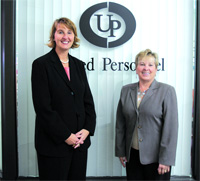
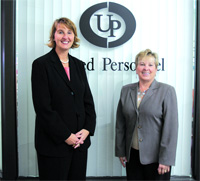
Still, on the ground in Springfield, reports remain mixed. “At the beginning of the year, we started off gangbusters, but it’s not ending the year that way,” said Mary Ellen Scott, president of United Personnel in Springfield, which works with employers to find administrative, warehouse/light industrial, and medical office support workers. “And I would say it’s like that across the board.”

Scott attributed that trend to some anxiety among employers about a possible recession looming. “What I’ve heard is people predicting that 2008 will not be a booming year, and I think the more we hear the ‘r-word,’ the more we talk ourselves into it,” she said. “And any time there’s talk about a business outlook that’s not positive, people get very nervous about what they’re spending, and hiring is one of those things they look at.”

Even strong pockets of hiring aren’t necessarily good news, Paige noted. “Most of the hiring activity has been in the service sector, which is typically not a great sign because service jobs don’t pay as much as, say, durable and non-durable goods.”

But obscured in these trends is the fact that many employers, particularly in manufacturing, want to hire new workers, but continue to grapple with a skills gap in the Pioneer Valley — one that the region’s career centers are trying to close through training and awareness programs.

“After the downsizing that happened in the 1980s and 1990s, when a lot of mass production moved elsewhere, you still have a hub of niche companies that survived — but you don’t just walk in without skills,” Truckey said. “Those companies don’t employ hundreds anymore; they might hire 15 or 50, so their margins are tighter. Their machines do more than they used to, and they need people with technical skills, a background in math, computers, or programming … it’s a specialty thing.”

Truckey said his agency still has “eight or nine pages” of job postings — heavily weighted toward hospitality, service, and health care, but including some solid manufacturing jobs as well — and is working with employers on training programs.

“We want to upgrade the skills of people presently employed, and we’re also looking at ways to train unemployed people for these types of jobs,” he said. “When you had larger machining companies, they used to bring trainers in and had their own apprentice programs. But that doesn’t happen as much now.”

Part of the problem is simply attracting job seekers to the manufacturing field, because many of them hold outdated perceptions of what such jobs are like.

“Machining is a clean industry now, and I don’t think the public knows how clean it is — and you can make some pretty good money working for these companies,” Truckey told BusinessWest. “At a recent legislative breakfast, we talked about trends over the past 25 years like green products and recycling. One owner of a machine company talked about how they used to use oils, and the toxicity of those products, and how it’s totally different today; his oils are of a non-toxic nature now. People don’t know that.”

Rexene Picard, executive director of FutureWorks Career Center in Springfield, said manufacturers are taking the problem seriously.

“Local employers are coming together and forming partnerships, saying, ‘we just can’t keep stealing people from each other; we’ve got to have a pipeline.’ So they’re partnering with trade and vocational schools, as well as offering training for their own incumbent workers to bring them up to the next level.”

Picard noted that 26,000 new jobs were created in Massachusetts over the past year, but at the same time a similar number of job vacancies persist.

“That’s a sign of a chronic skills gap,” she said, noting that FutureWorks plans multiple job fairs to raise awareness of the opportunities available in Western Mass., as well as launching some cross-border initiatives in Northern Conn.

“These jobs have been out there for awhile, and the job seekers are out there too, but they don’t have the necessary skills to close the gap. Still, I’d say there’s more good news than bad.”

Labor Daze

The skills gap isn’t just a regional problem. Gov. Deval Patrick’s administration has made it a focus of its economic development efforts, attempting to get people trained for the most in-demand professions. Of particular interest in Boston is health care, which continues to be the state’s top-employing industry, encompassing 450,000 workers, or 15% of the state’s workforce — a trend not expected to let up in the coming years.

“Closing the skills gap in Massachusetts is our top priority,” asserted Suzanne Bump, secretary of Labor and Workforce Development, in a statement last month. “It is important that we pursue sector training through programs such as the Workforce Competitiveness Trust Fund to bridge that gap. Additionally, we are working with the Board of Higher Education and regional workforce boards to increase post-secondary educational opportunities.”

“Long-term investments in training and education go a long way toward easing the skills gap,” agreed Nancy Snyder, president of the Commonwealth Corp., a statewide workforce-development agency. “A strong economy requires a competitive business community and well-paying jobs for residents; upgrading workers’ skills in coordination with our employers serves both.”

Picard said those goals can’t be met soon enough, with area employers reporting fewer hires at the moment than they did late in 2006, although health care, warehousing, education, government jobs, and — to some extent — manufacturing all show positive signs. FutureWorks has begun working with some larger employers, such as Big Y and the Sisters of Providence Health System, to assess their needs and help them meet their hiring and growth goals.

Meanwhile, by using grant money for education and training programs, “we’re trying to get people to consider skilled manufacturing as a career path,” she said. “But things don’t turn around quickly; they take a little bit of time.”
And sometimes a bus.

Joseph Bednar can be reached at[email protected]

Sections Supplements
Economic-development Leaders Focus on ‘Building Blocks’
Russell Denver

Russell Denver says the region needs a comprehensive strategy to close the skills gap that is leaving many positions unfilled at area companies.

Allan Blair calls it the “rush to the green.”

That was his way of describing a regional and national thrust toward environmentally friendly technologies, products, and practices that made its presence known in Western Mass. in 2007, in terms of some new businesses and jobs, and may be a harbinger of an economic development niche for Western Mass.

“It’s not a tsunami of growth that’s going to hit us, certainly,” said Blair, director of the Economic Development Council of Western Mass., in reference to this green wave. “But it’s a very encouraging segment that happens to have some national momentum around it, some state momentum, and some incentives that are being prepared on the state level to nurture it. And that’s exciting because it’s new, it’s fresh, and we have a chance to grab our share.”

These ‘green’ advances, such as the emergence of SunEthanol, an Amherst-based venture that is trying to revolutionize the production of ethanol through the use of something called the Q-microbe, were some of the highlights of a year that Blair described as mostly “vanilla” from an economic-development standpoint. There were no big “hits,” as he called them, in terms of new employers or relocations, but, conversely, there were no big losses, either.

“The economy is chugging along in medium gear,” he told BusinessWest, “and given some of the things happening nationally, that’s not such a bad thing.”

Absent those large hits, the region essentially worked on what Blair called “building blocks,” the ‘green’ movement being just one of them. Others include ongoing efforts to retain and possibly grow the region’s precision manufacturing base; maintaining and bolstering the strong health care and higher education sectors; and continued progress in efforts to revitalize Springfield.

There was also considerable movement on what would have to be called the transportation front, with a new direct flight from Bradley International Airport to Amsterdam, and the arrival of low-cost airline Skybus at Westover Municipal Airport. The carrier will soon have two arrivals and departures each day, with flights from and then to Columbus, Ohio and Greensboro, N.C.

Taken together, these building-block-bolstering efforts have provided some momentum for 2008, said Russell Denver, president of the Affiliated Chambers of Commerce of Greater Springfield. He told BusinessWest that while the national economic picture might be quite fuzzy, and there are several factors that could impact things locally in terms of job growth, new business development, and continued progress in Springfield, he is optimistic about this region and its prospects for the short and long term.

But cautiously so.

He said that perhaps the biggest of those building blocks to improved economic health and well-being is workforce development, and in Greater Springfield, there is much work to be done in this regard. Specifically, the region has to mount an offensive to close the gap between the skills required by area employers and those possessed by most job seekers and the unemployed, and thus fill an alarmingly high number of vacancies and assure prospective new employers that the region can meet their workforce requirements.

“The fact that we have so many jobs available is a good sign, but the fact that we don’t have enough qualified individuals to fill these jobs is a real negative; the high drop-out rates that we’ve seen recently in Springfield and Holyoke, especially, have come home to roost,” said Denver, who told BusinessWest that an action plan will be prepared early next year to map a strategy for improving the quality of the region’s workforce.

Bill Ward, executive director of the Regional Employment Board of Hampden County, which will draft the report at the request of outgoing Springfield Mayor Charles Ryan, said it will go well beyond drop-out rates and focus on factors — ranging from early childhood education to English as a Second Language; from getting more people into area nursing schools to keeping college graduates in this market — that will eventually yield a better-qualified pool of workers.

“There are some very challenging characteristics to the city of Springfield,” he said, “including a high drop-out rate, a low rate of college graduates within the workforce population, low MCAS scores … these are disturbing trends within the workforce and the population that need to be addressed.”

Beyond these workforce issues, Denver sees many positive developments, from the emergence of greater fiscal stability in Springfield to the availability of permitted land in the city’s Memorial Industrial Park; from continued healthy growth in new small businesses to new opportunities in tourism.

In this, our annual ‘Economic Outlook’ focus, BusinessWest looks at the prospects for 2008 and beyond, and the issues that will determine if, where, and how growth occurs.

How Green Grows the Valley?

Looking toward the year ahead, Blair acknowledged that the regional and national forecasts are punctuated by question marks and growing concern about a recession. Many of the issues that will determine what happens with the economy — from energy prices to the subprime lending crisis and credit crunch; from soaring construction costs to the strength of the dollar (or lack thereof) — are simply beyond this region’s control.

“So we need to focus on the things that we can control,” he said, “and to try and be ready when opportunities do arise.”

This theme of ‘being ready’ is a common thread with many of the region’s economic-development strategies, said Blair, including workforce quality-improvement efforts, readying parcels like the former York Street Jail and Chapman Valve site in Springfield for development, initiatives to put qualified machinists in the pipeline, and even casino gambling.

“Everyone wants to get in that game,” he said, referring to several area communities that have passed referendums supporting casinos or are readying sites for facilities, “and we don’t even know what the game is yet.”

And it is especially relevant with regard to the ‘green’ movement, said Ellen Bemben, director of the Regional Technology Council, which is developing a multi-faceted strategy for cultivating a green-related cluster in the Knowledge Corridor.

Scientists and entrepreneurs will need facilities in which to incubate and grow new ventures, she said, and they will need a workforce that can help take ideas from the lab to the workplace. “Some of those just getting started are being urged to relocate to Worcester and Cambridge,” she said, noting two of the burgeoning centers for biotech-related businesses, “and we’re going to have to work hard to keep those people here in the Valley.”

Bemben told BusinessWest that SunEthanol, which has garnered press across the country and is starting to amass needed capital, is easily the most visible of the green-related ventures taking root in the region. The company looks to use the Q-microbe, discovered in the soils off a hiking trail on the Quabbin Reservoir (hence the name) to create ethanol from a wide range of plant materials, rather than corn, thus speeding and facilitating production of the alternative fuel.

But there are many others flying under the radar screen. And they encompass several different components of what is becoming a broad sector, including photovoltaic (solar power) businesses and installations, fuel-cell makers, alternative-fuel providers, and even windpower operations. And there is apparently great interest in further development.

“We’re getting so many hits on the EDC’s Web site from companies offshore, in Europe, or on the West Coast that want to put something on the ground here, and a lot of it is photovoltaics,” she explained. “I’ve never seen so many inquiries, and there’s so many different ways to go in terms of the products necessary for these installations.”

Both Bemben and Blair tend to group sustainable energy and biotech developments under the same (green) roof with regard to cluster development and jobs, and Bemben believes there may be anywhere from 3,000 to 5,000 people employed in this sector across Massachsetts and into Northern Conn., with vast potential for more, especially in sustainable energy because of a quicker path from the lab to the production plant.

“If you look at biotech and the number of years it takes to come up with new products and delivery systems,” she said, “and compare it to fuel cells, photovoltaics, and biofuels, the latter has a better chance for a quick turnaround.”

Blair agreed, but stressed repeatedly that virtually every region of this state and many other areas around the country are trying to get into this game, and the competition will be steep, meaning that the region has to put its best foot forward and be aggressive — and ready.

Especially if Gov. Deval Patrick’s plan to pump $1 billion into the biosciences effort is passed by the Legislature — and most believe it will — and $100 million a year will be made available to players in that market for research and development.

“This region has to be positioned to get some of that windfall,” said Blair. “As an economic developer, you try to identify trends early, rather than when they’re over; this is one that we should be paying attention to, and we will be paying attention to.”

Getting to Work

The emerging ‘green’ cluster is one of many that will need skilled workers, at a time when many already-developed sectors, including health care, precision machining, and financial services, are struggling mightily to fill vacancies.

“I go on the Web sites of major employers once a week to see what they have for job openings,” said Denver, referring to the hospitals, colleges, and some major manufacturers in Springfield and across the Valley. “I’m hearing the same thing — there are jobs, just not enough qualified and educated people to fill those jobs.”

This trend applies to not only the private sector, but also the public sector, he continued, noting, for example, that area communities have hundreds of openings for teachers every summer, and most struggle to fill them.

“You start to ask the question, ‘where are we going to find all these workers?’ he said. “‘Why are the people we have here now not capable of filling these jobs?’”

Filling existing vacancies and closing the sizable skills gap is of paramount importance to the region and its future, said Ward, and for obvious reasons.

“There’s a very real connection between the ability to grow your labor force and your ability to grow your economy,” he explained. “If you don’t have labor force growth, you can’t get economic growth; so we have to grow some of our own, and we have to do a better job with the people we have here.”

The workforce plan will identify strategies for doing just that, he said, noting that this will be a collaborative effort involving area employers, economic development agencies, colleges, and other groups. “This will be demand-driven — we’ll be focusing on employer needs — and we’ll be seeking additional resources, public and private,” he said. “And the backbone of this plan must involve across-the-board, new, and better ways to address the adult literacy problem, the English-as-a-second-language problem, and the missing soft skills that employers are complaining about.”

When it comes to the precision machining sector, it’s hard skills, or the lack thereof, that is dogging those in that industry.

Larry Maier, owner of Peerless Precision in Westfield and president of the local chapter of the National Machine Tooling Assoc. (NMTA), didn’t raise his name, but implied that shop owners are feeling a little like Sisyphus pushing that rock. Finding enough qualified machinists is certainly an uphill battle.

A recent survey of area shops revealed vacancy numbers that project to somewhere between 400 and 500 job openings in the region, he said. Meanwhile, with a retirement rate of 3% to 4%, there are another 200 or so vacancies each year, and the six area vocational high schools are graduating perhaps 30 or 40 people a year that are qualified for only entry-level jobs.

All this math provides ample evidence of the challenge facing area shops, most of which are either farming out work it can’t handle due to a shortage of workers (Peerless is in this category) or simply turning it down.

“That’s 30 in and 200 out — so there’s a real disconnect,” said Maier. “We’re fighting two battles at the same time; first, we need people to replace retirees, and two, we need people so we can stop turning away work; it’s retention and growth simultaneously.”

There has been some progress made toward putting more bodies in the pipeline, he continued, noting programs involving Springfield Technical Community College, Asnuntuck Community College, and the Mass. Career Development Institute to enhance the training of those already in the field or actively looking to entering it, and the resumption of the Manufacturing Technology program at Putnam Vocational High School in Springfield next month. But the sector must be diligent in pursuit of new avenues for gaining machinists, even if there is a downturn in the economy, because it takes several years for qualified help to come out of the pipeline.

“Take the Putnam program, for example; it will be four years before an entry-level person graduates from it — that’s a long time,” said Maier. “To get a skilled machinist, one who could replace a retiree, that takes another five to 10 years.

“That’s why, when we started this initiative, we said, ‘whatever you do, it will take a minimum of five years to really get the spigot flowing,’” he continued. “So anytime you back off because of a downturn in the economy, it’s going to take you five years to refill the pipeline.”

Courting Growth

Workforce issues comprise one of many challenges still facing Springfield in particular, said Denver, who, like Blair, noted that the city, through the Finance Control Board, has managed to put itself back on more-solid financial footing, and probably has the worst of its public relations problems behind it.

In fact, it has started to pick up some positive press both locally — in the form of a coordinated marketing campaign built around the theme “Springfield’s Back” — and nationally, including a large spread in United Airways Magazine that was seen by an estimated 5 million people.

But while the city is seeing progress in some areas, said Denver, considerable work remains to reduce both crime and fear, improve on those aforementioned drop-out rates, and put some abandoned or underutilized parcels — several of them identified in the Urban Land Institute report on Springfield — back to productive use.

The York Street Jail is slated for demolition early next year, he said, and there is considerable interest in the site, including that of an unnamed developer who has forwarded a proposal to build an indoor basketball court complex that will attract youth tournaments and build on the riverfront’s basketball- and fitness-related development pattern.

The Chapman Valve plant in Indian Orchard is also slated to be razed soon, said Denver, providing several different development prospects, and a request for qualifications will be issued shortly for 31 Elm St. in Court Square, which could be converted into a hotel or market-rate housing.

The broad goal is to make Springfield a more attractive destination for tourists, professionals, and business owners, said Blair, noting that while many area communities are thriving despite Springfield’s recent problems, a healthier City of Homes benefits the region as a whole.

“Springfield is three times larger than any other community in the region — it’s the center for a lot of things that are important to us as a region and define our region,” he said. “So we need to pay attention to the city, and we have to do everything we can to help it recover.”

Airbus can help in this regard, he said, by making the city and its attractions more accessible. The carrier started flying
n and out of Westover in mid-July, and five months later, Blair is still closely monitoring the passenger counts on the inbound and outbound Columbus flights.

“There’s been a few dips, but overall, we’re still seeing about 100 people on the outbound flights and maybe 130 on the inbounds,” he said, noting that the numbers may change following a schedule shift from early evening to midday. Inbound flights now arrive in Chicopee at 11:30 a.m., and the outbound departs an hour later.

“Some people like the change, and other people don’t,” said Blair, noting that some business travelers preferred getting in to Columbus at night, giving them a full day in the city the next day, while others like getting into Ohio earlier in the day and perhaps catching a connecting flight to another destination.

Monitoring passenger volume is a big part of the effort to gauge the economic impact of Skybus, said Blair, noting that the service is providing a boost to several tourism- and hospitality-related businesses. It is hoped that the airline — and continued improvements to Springfield’s image and finances — will bolster the tourist sector and bring more business to the MassMutual Convention Center.

“The arena is doing great, but the convention business is still rather anemic,” he said of the two-year-old facility. “There’s a lot of competition for those conventions, and we’re in there slugging it out. It takes some time to become a player in the market, and we’ll get there because this area has a lot to offer.”

Overall, Blair said he believes Springfield, despite some lingering concerns about education and public safety, has turned some kind of corner.

“I have a feeling of empowerment in Springfield that I didn’t sense two years ago,” he said. “I feel optimistic, and I think we all need to be optimistic — realistic, but optimistic.”

Riding a Cycle

Returning to the subject of the national economy and its impact on the Pioneer Valley, Blair said that even in down times there is “movement,” meaning job growth in the form of new ventures and relocations.

“Looking back, I’d say that some of our better years have come during down cycles,” he said, citing some large-scale developments in the early ’90s, at the height of that recession, and others in the mid-’80s, during another downturn.

If history can repeat itself, maybe the region can enjoy a more exotic flavor when it comes to economic development. Perhaps pistachio — it’s green.

George O’Brien can be reached at[email protected]

Departments

Dr. Michael J. Spink has joined the practice of Facial Cosmetic & Maxillofacial Surgery, P.C., and the office of Dr. Richard J. Fraziero in East Longmeadow.

•••••

Karen Desjeans has been appointed Staff Assistant to Holyoke Community College President William Messner; she will serve alongside fellow Staff Assistant Colleen Cameron.

•••••

Ace Fire & Water Restoration Inc. in West Springfield has announced the following:
• Nicole M. Sorel has been appointed head of its newly formed Cleaning and Packout Department, and
• Linda M. St. Marie has been named Office Manager.

•••••

The American Tree Farm System, along with BASF Corp., has named Cinda Jones of Cowls Land and Lumber Co. in North Amherst as the winner of the BASF Outstanding Achievements in Sustainable Forestry Award for 2007.

•••••

Human Resources Unlimited Inc. announced the following:
• Patrick Leary, Partner of Moriarty & Primack, P.C., has been named to its Board of Directors;
• Joel Morse, Sales and Marketing Manager of Marcus Printing, has been named to its Board of Directors, and
• Charlene Smolkowicz, Commercial Credit Analyst of Bank of Western Massachusetts, has been named to its Board of Directors.

•••••

Community Involved in Sustaining Agriculture announced the following:
• Jessica Cook has joined the staff as a Program Coordinator. She will oversee CISA’s efforts to study and develop salad greens and meat-processing options that will help more local farmers to get their products to market, and
• Allison Neher has joined the staff as a Program Assistant.

•••••

Cooley Dickinson Hospital-affiliated surgeons Drs. Christopher Marvelli, Holly Michaelson, and Timothy O’Brien have created a new name for their general surgery practice — Hampshire Surgical Care at 76A Carlon Dr. Marvelli, Michaelson, and O’Brien are all board-certified general surgeons, and specialize in advanced minimally invasive and robotic surgery, including surgeries of the colon and gastrointestinal tract as well as breast surgery.

•••••

Leonard Pansa, Vice President of Human Resources for the Sisters of Providence Health System, has met the criteria to advance to Fellow status at the American College of Healthcare Executives and is board-certified in health care management. Pansa received Fellow status as a result of his continued achievement in meeting high standards of professional development, excellence, and leadership as a health care executive.

•••••

Joel Anderson has joined Viega, LLC, a Kansas-based plumbing and radiant heating supplier, as District Sales Manager for Western Mass. In his new role, Anderson will be the face of Viega to area commercial contractors, architects, engineers, and plumbers.

•••••


Clara M. Elliot

Clara M. Elliot has been named Dean of Human Resources at Holyoke Community College.

•••••

Greater Springfield Habitat for Humanity announced the following staff appointments:
• Jennifer Schimmel has been named Executive Director;
• Sean T. Mitchell has been named Director of Development, and
• Lise M. LeTellier has been named Volunteer Coordinator.

•••••

Ric Skinner has joined Tighe & Bond in Westfield as Director of Geographic Information Systems. He is a certified GIS professional with 20 years of experience.

•••••

Anna Brandenburg has been named Program Coordinator and Training Librarian for the Springfield City Library.

•••••

Adam Novitt has been named Director of Pelham Library. He also works at the Forbes Library in Northampton.

•••••

Hope Kelley, head professional at The Ranch Golf Club in Southwick, has been named the 2007 PGA Merchandiser of the Year at a Public Golf Course by the Connecticut Section of the PGA of America. The award recognizes excellence in business and merchandising at private, public, and resort golf facilities. Kelley is a 12-year member of the PGA and has overseen the golf operations at the Ranch since 2004.

•••••

Gary F. O’Grady has joined Berkshire Hills Bancorp, Inc. as Municipal Banking Officer. He has offices at 24 North St., Pittsfield, and 31 Court St., Westfield. O’Grady will oversee the Government Banking Department, which specializes in banking services for municipalities and other governmental entities and agencies.

•••••

Motivational speaker, educator, and humorist Dr. Steve Sobel has been asked to address 100 top student-athletes at the University of Notre Dame in South Bend, Ind., on Feb. 3. He will speak on “Leadership, Motivation, and Teambuilding.” Sobel’s practice is based in Longmeadow.

Features
Report Urges Action on Job Creation in the Commonwealth

Dana Ansel says Massachusetts simply can’t be expected to be one of the leading states when it comes to job creation — and for several reasons.

First, the Commonwealth has an older economy, and most of its square mileage has been developed, especially in the Eastern part of the state, thus limiting commercial and residential development. Meanwhile, businesses across many sectors, but especially manufacturing, are discovering how to do more with fewer or the same number of people — leading to strong gains in productivity, but not employment — and many other parts of this country and other nations are becoming more competitive in several of the fields that have generated job growth in the Bay State.

“So it would be unrealistic to think that Massachusetts would be at or near the top of the chart,” said Ansel, research director for the Mass. Institute for a New Commonwealth, or MassINC, who added a quick ‘but…’
“We can do better than 49th.”

That’s exactly where the state sits, behind only Michigan, which has been devastated by ongoing cutbacks within the auto industry, in terms of jobs gained since the peak of the last economic boom in early 2001.

The Bay State’s relatively poor showing in this statistical category is at the heart of a new MassINC report, undertaken in concert with the Center for Labor Market Studies at Northeastern University, titled “Mass. Jobs: Meeting the Challenges of a Shifting Economy.”

This shift is toward something those at MassINC are calling a “boutique economy,” one that, according to MassINC President Gregory Torres, “rewards well-educated and skilled workers in knowledge-based sectors, but offers fewer options for everyone else.”

Michael Meeropol, an Economics professor at Western New England College, calls it something else — the ‘winner-take-all economy.’

“Instead of a solid middle class, we have a sliver of a very wealthy group driving the economy,” he said. “There has been an unbelievable skewing of income distribution and wealth.”

Regardless of what it’s called, this shift has played a big part in the state’s sluggish job-growth performance, and MassINC officials are imploring civic and business leaders to recognize that the landscape has changed and make needed adjustments — and soon. That’s because, if the state stays on this track, revenues will be constrained, and out-migration will likely increase as residents seek opportunities elsewhere.

Ansel told BusinessWest that MassINC issued the 110-page ‘Mass. Jobs’ report with the goals of drawing attention to the Commonwealth’s job-creation problem, prompting dialogue and then action to generate some improvement in that realm, and also providing a mix of opportunities for all workers.

“There are two levels of jobs — there are quality jobs, and then there are just ‘jobs,’ and they’re both important, here and in any state,” she said. “We’ve done well, for the most part, on the quality side, but we still need plain old jobs; such jobs are a key piece of driving revenue for the state.”

The report suggests several steps, including everything from growing the number of so-called export-based jobs, which bring dollars into Massachusetts, to filling the estimated 90,000 existing job vacancies in the state, which cross several sectors, to improving the business climate in the Bay State.

In this issue, BusinessWest takes an indepth look at the report and what its findings mean for the long-term health of the Commonwealth.

Work in Progress

For the record, the top five states in the nation for job growth over the past six years, or since the peak before the last recession, are Nevada (a 27% gain), Arizona (17.9%), Wyoming (15.1%), Idaho (14%), and Florida (12.6%). Massachusetts (-3.7%), behind only Michigan (-6.3%), shouldn’t really be compared to most of those at the top, which are seeing huge growth in development and spikes in population, said Ansel.

But it can be compared to other New England states and 10 so-called ‘competitor states’ — these include New York, New Jersey, Virginia, North Carolina, California, Texas, Colorado, Minnesota, and Florida — and it doesn’t compare well.

Four New England states have added jobs over the past six years, while New Jersey has seen 2.3% growth, and New York has “just about broken even,” said Ansel, noting that the Bay State is one of only six states that have not recovered all those jobs lost during the last recession, when employment plunged more than 6%. In fact, Massachusetts remains 100,000 jobs below its peak employment level of 3.3 million in early 2001.

There are several reasons for this, said Ansel, noting that when the recession hit, Massachusetts had a large number of jobs in the technology sector, which was extremely hard-hit by that downturn and has yet to fully recover.

“At the peak of the boom in 2001, the Massachusetts economy was more dependent on high-tech jobs than most other states,” she said. “The recession wiped out high tech jobs here and everywhere; we had built a lot of our economic success on an industry that suffered some of the greatest losses.”

But there were other factors as well, including a nationwide decline in manufacturing jobs, as well as mounting competition for jobs in the knowledge industries. Indeed, the Bay State’s share of high-tech jobs nationwide has declined, from 4.2% in 2000 to 3.9% in 2005, showing clearly that other states are becoming more competitive. Also, the high cost of doing business in the Commonwealth — when compared with other states and other nations — no doubt has played a role in the low rate of job growth, she said.

Despite a net job loss, some sectors have added new positions, said Ansel, thus changing the composition of the state’s economy toward that ‘boutique’ characterization, manifested by a shift toward knowledge-based sectors, such as health care and biotech, that often require highly specialized employees who hold at least a bachelor’s degree.

While suffering losses in manufacturing and high-tech, Massachusetts doubled the national rate in adding biotech jobs (15% vs. 7%) between 2000 and 2005. In that period, Massachusetts added 10,000 new biotech jobs, bringing the sector to about 75,000 jobs in Massachusetts, or 2.4% of the state’s payroll jobs. By comparison, manufacturing, despite large job losses, still accounts for about 9% of Massachusetts jobs, including some biotech manufacturing positions.

And while Massachusetts trailed the nation in job creation, it was among the leaders in productivity, an important measure of economic health. The state’s level of labor productivity ranks seventh-highest, and since 2001, it has grown faster than the nation’s (11.5% versus 10.6%). In 2005, the productivity level of an employee in Massachusetts was $94,150 in real output per worker, compared with $83,920 nationally.

These statistics and others point to a shift toward a ‘boutique economy,’ said Ansel, noting that this term was contrived by the report’s authors to describe what’s happening within the Commonwealth’s borders.

“It captures a significant shift in the economy toward knowledge industries,” she explained. “While we do have an overall record of job loss, we are still creating jobs in some sectors; where we’re creating jobs and where we’re losing them is not the same place, and as a consequence, the economy is shifting.”

Laboring State

The MassINC report lays out four principles that could form an economic vision and agenda to be shared by the administration, Legislature, business community, and labor community, said Ansel, adding that the report recommends a long-term strategy that includes creation of export jobs, better workforce training to fill current vacancies, improvements to the business climate, and a regional approach to meet varying needs across the state.

The report’s four main recommendations are:

  • Setting a target goal for the number of new export-based jobs created. “Because export jobs — those linked to selling goods and services out-of-state — bring revenue into the state and generally offer higher pay to workers, they embody the characteristics of ‘good jobs’ in the economy, said the report’s authors. “Export-based jobs and not specific sectors should be the emphasis of a long-term strategy.”
  • Filling the existing vacancies. A Massachusetts job vacancy survey in late 2006 revealed more than 90,000 openings. The vacancies indicate a willingness of employers to hire more workers, said Ansel, but may also show the need to better educate and train a workforce that has the required skills to fill the slots.
  • Creating a more favorable business climate that streamlines permitting for business expansion across Massachusetts and addresses expenses, such as energy costs and unemployment benefits and policies. “Economic policy should encourage and assist Massachusetts companies looking to grow here,” said the report’s authors.
  • Taking a regional approach. “Because economic conditions and needs vary across the state, efforts to develop strategies must focus on regional strengths,” the report concluded. “The specific strengths will determine what growth opportunities are best suited for a region. State leaders should also develop an urban strategy for cities outside Greater Boston that are lagging the rest of the state in job creation.”

Ansel called the 90,000 job openings in the state “low-hanging fruit,” comparatively, because it is generally considered easier to fill positions that companies have open and desire to fill than to create new jobs.

But the fact that the jobs remain open at a time when unemployment is relatively high indicates a mismatch between the skills needed for those positions and what the available labor market possesses. Thus, closing that gap is a priority for the state, said Ansel.

“That number (90,000) is the highest since the state started doing the job-vacancy survey in 2002,” she said, adding that there were 75,000 openings reported in the previous survey, undertaken in 2006. “It’s significant, and it sends a mixed message in the sense that there is some appetite on the part of employers to hire people, which is good. But at the same time, if they’re not able to fill those positions, that’s a real problem; vacancies are increasing across the country, but the implications are greater here because of how slow our job creation has been.”

Many of the openings are in health care and related sectors, said Ansel, and perhaps half of them could be handled with a year of college education. The challenge ahead, she said, is to create the right programs and motivate people to enter them.

Ira Rubenzahl, president of Springfield Technical Community College, agreed. He said his school doing its part by focusing on health and technology programs, designed to assist area employers with vacancies they’re struggling to fill — and also on improving access to higher education.

“This report clearly indicates that education is the key to the new economy,” he said, adding that he considers the findings sobering, but not at all surprising. “Our economy has shifted, it is knowledge-based, and we have to properly prepare people if they’re going to succeed in that economy.”

Meerepol, while acknowledging that Massachusetts is struggling with job creation, said the problem exists nationwide, and it needs to be addressed. He said the trend toward greater productivity brings benefits to individual companies, but not to the country or individual states.

“Over time, even in good times, really efficient companies are shedding workers like crazy, and when things pick up, they learn to produce more with the same number of people,” he said, noting reports showing that nationwide, there are fewer job losses and fewer gains. “One of the reasons why job growth is so slow in Massachusetts is because of this surge in productivity, and that’s also why we’re seeing the loss of so many manufacturing jobs across the country.

“You want that growth in productivity, but you want it to benefit many people in terms of income; when that happens, you get the mass-market increases that lead to job growth,” he continued. “The reason why the economy experienced some significant job growth in the late 1990s was that, for the first time in 20 years, lower-income people were enjoying rather significant gains in income.”

Solutions to the job-growth problem won’t come easily, said Meeropol, especially if elected officials resist what he fully understands is political kryptonite — raising taxes and putting the proceeds to work creating jobs, a strategy that has worked during several periods in the nation’s history, including World War II, the late ’60s, and the Reagan years.

“There have been several times when we’ve seen a rise in total government revenue, a rise in taxes, and the percentage of total government spending rose, which is a rise in spending, and the economy boomed like crazy,” he said.

It’s an obvious thing, but no one is willing to go that route; it’s good economics, but terrible politics.”

Bust with No Boom

Compounding matters for the Bay State is the national economy, and the very real possibility of another recession, said Ansel, noting that the state simply won’t recover all the jobs it lost during the last downturn before entering another one.

This scenario puts even more emphasis on forging new and better job-creation strategies, she continued, because jobs are critical, and the competition for them is mounting.

And this is just a part of life in a boutique economy.

George O’Brien can be reached at[email protected]

Sections Supplements
Health New England Earns National Top-10 Ranking
Peter Straley

Peter Straley says Health New England’s high ranking in U.S. News & World Report reflects the health plan’s ongoing commitment to preventative care and outreach to members.

Health plans are increasingly stressing — and putting a dollar value on — preventative care. Springfield-based Health New England has been touting its programs in that vein for years.

The two trends came together recently in the pages of U.S. News and World Report, which ranked HNE ninth in its annual report on the top 250 health plans in the U.S.

Each year the magazine works with the National Committee for Quality Assurance (NCQA) to determine the rankings. Health plans are rated on a variety of measures, including access to care and service, overall member satisfaction, preventative care, and overall quality.

Peter Straley, president and CEO of Health New England, said this is the highest ranking his company has ever achieved. “This is an example of how a small plan like HNE can have a big impact, even on a national level,” he said.

The experts who assembled the rankings put a premium on preventative health, and the magazine focused its feature article accompanying the listings on programs that support general wellness, from discounted gym memberships and free cholesterol screenings to small perks for quitting smoking, losing weight, or reaching other health goals.

It was in this area that Health New England particularly shone on the U.S. News and World Report ranking, earning the maximum score of 5 in the category of prevention. Within the category, HNE’s programs promoting preventative health for children and adolescents scored the maximum 5 points, as did those for women’s reproductive health. The health plan’s programs for cancer prevention and the timely immunization of children and adolescents both scored 4 out of 5.

“We’re proud to have this independent affirmation of those very things that we believe set us apart,” Straley told Business-West. “And those are the things that touch our members most directly, the way the health plan reaches out and engages our members.”

Specifically, he mentioned the postcards HNE sends to members on their birthdays reminding them of key health screenings people of their age and gender should undergo. “In this busy world, we don’t assume that people remember those things; they have a lot of their plates. So we try to reach out.”

Similarly, “if you or your child has asthma, we’re going to reach out to you with a phone call or letter and suggest ways we can help you manage that condition so you can have the highest quality of life possible given that condition,” Straley added.

Meanwhile, the report also ranked HNE highly in the category of treatment, particularly its coverage of diabetes, heart disease, and behavioral health treatment, all of which scored the maximum 5 points. Straley noted that the health plan employs nurses whose only job is to reach out to members with chronic conditions to help them manage their condition, medications, and other treatment.

“We want to touch our members directly, reach out to them with something that surprises them and says we’re willing to invest in their health,” he said.

Health New England has served Western Mass. since 1985 and now boasts more than 100,000 members and about 5,000 employers in the network. HNE employs more than 200 people at its offices in Springfield and Pittsfield, and its service area covers Franklin, Berkshire, Hampden, Hampshire, and parts of Worcester counties.

The Health New England listing, detailing how the plan scored in every category and subcategory, can be accessed at www.usnews.com/listings/health-plans/ commercial/health_new_england.

New England-based health plans dominated the rankings, placing eight plans on the top 10, with Harvard Pilgrim Health Care topping the list.

Other locals in the top 10 included Tufts Associated HMO (#2), Harvard Pilgrim Health Care of New England (#3), Blue Cross Blue Shield of Mass. (#4), ConnectiCare (#5), HealthNet of Conn. (#6), and Anthem Blue Cross and Blue Shield of Conn. (#10).

Departments

State Gives Go-ahead for Massive Baystate Expansion

SPRINGFIELD — The state’s Public Health Council has given Baystate Health the green light to proceed on a $239.3 million expansion project. After hearing testimony from hospital administrators and civic and business leaders, the board voted unanimously to approve Baystate’s application for the project, which will add 48 beds to the 653-bed facility. Baystate President and CEO Mark Tolosky said he expects construction to begin in the summer of 2009, and that the facility will be open in 2012. Mercy Medical Center had initially opposed the expansion plans, but later dropped that opposition when state analysts clarified themselves and said the space will not be used for additional beds, but to supplant existing beds.

Center Untangling Wireless Communication Challenges

AMHERST — A new research center that will address far-reaching problems in wireless communication will be established at UMass Amherst, thanks to a $200,000 start-up grant from the UMass President’s Science and Technology Initiatives Fund and the President’s Creative Economy Fund. The Center of Excellence in Wireless Communications should lead to broad new capabilities in areas from emergency preparedness and homeland security to health care, education, and entertainment. Led by Dennis Goeckel, the new center will bring together more than 15 researchers from the fields of networking, communication systems, electromagnetics, and circuits to tackle the challenges that arise in an increasingly interconnected world. The UMass Amherst campus is providing an additional $40,000 in funding.

Study: Health Insurance Mandates Hurt Low-income Employees

WASHINGTON, D.C. — A new study presented as part of a Cornell University symposium finds that ‘Pay or Play’ laws, which require employers to provide health insurance to their employees or pay a fine, will reduce employment for the least-skilled members of the workforce. The study, sponsored by the Employment Policies Institute and authored by Cornell University economists Richard Burkhauser and Kosali Simon, uses federal Current Population Survey data to calculate that for every 100 newly insured employees resulting from a Pay or Play law, 10 low-wage employees will lose their jobs. For a copy of the study, titled “Who Gets What From Employer ‘Pay or Play’ Mandates,” visit epionline.org. The Employment Policies Institute is a noprofit research organization dedicated to studying public-policy issues surrounding entry-level employment.

AIM Applauds Introduction of Comprehensive Energy Bill

BOSTON — The Green Communities Act of 2007, previewed at a press conference recently by Speaker of the House Salvatore DiMasi, will, when enacted, place an improved focus on cost-saving energy-efficiency programs and renewable energy for both citizens and business owners throughout the Commonwealth, according to Richard Lord, president and CEO of Associated Industries of Mass. (AIM). AIM is a nonpartisan, nonprofit employer association of more than 7,000 state businesses and institutes. AIM applauds those representatives from business, energy, and environmental groups for coming together to develop an energy-reform package designed to control costs by enhancing existing energy efficiency programs in Massachusetts and encouraging the development of additional cost-effective sources of alternative energy. Last summer, AIM issued a statement that called for the reinvigorating of state energy programs, in light of the fact that Massachusetts consumers face some of the nation’s highest costs for electricity. Most recently, AIM conducted several briefings across the state outlining the results of a member survey detailing the impact of high costs of electricity on businesses. While nothing in the short term can lower the cost of electricity to the level in some other states, the Green Communities Act should serve to ensure a more efficient use of current resources as a first step to more stable rates for electricity in the future, according to Lord.

Family Businesses Face Future Risks

SPRINGFIELD — Family businesses are optimistic about growth but not immune to future challenges, according to a survey sponsored by MassMutual, the Family Firm Institute, and the Cox Family Enterprise Center at the Kennesaw State University Coles College of Business. Increasingly led by women and driven by strong ethical and family-oriented values, family businesses are most at risk for financial troubles centered on the lack of formal succession planning and preparation, and the personal financial issues of family business owners, according to the study.

2008 Woman of the Year Nominees Sought

SPRINGFIELD — The Women’s Partnership, a division of the Affiliated Chambers of Commerce of Greater Springfield Inc., is once again seeking nominees for its Woman of the Year Award. This is one of the highest regarded awards by citizens and is recognized as the top citation earned locally. Women in the Pioneer Valley are eligible for nomination and a Chamber affiliation is not required. The nominee should best exemplify ideals of outstanding leadership, accomplishments, and service to the community. Services can be rendered over a lifetime or for more recent achievements. Nomination forms can be requested by calling (413) 543-8000, via E-mail to [email protected], or at the Affiliated Chamber of Commerce of Greater Springfield office, 1441 Main St., Springfield. The deadline for nominations is Jan. 9.

Survey: Firms Pursuing Technology Upgrades

MENLO PARK, Calif. — When asked what initiatives were top of mind for their firms over the next two years, chief financial officers (CFOs) surveyed most often cited technology upgrades (53%) and business process improvement measures (50%). Companies are focused on shoring up their infrastructures to create greater efficiencies and control costs, according to Paul McDonald, executive director of Robert Half Management Resources. McDonald added that technology upgrades allow firms to boost critical network security, facilitate global collaboration and enable easier interaction with customers. The survey was developed by Robert Half Management Resources and includes responses from 1,400 CFOs from a stratified random sample of U.S. companies with 20 or more employees.

Departments

Panera Bread Opens in Chicopee

CHICOPEE — Panera Bread opened its 4,500-square-foot bakery/café on Memorial Drive on Nov. 23, featuring intimate seating areas, comfortable chairs, a fireplace, a community table, and free WiFi Internet access. Panera Bread offers a variety of artisan breads and other specialty breads, along with bagels, pastries, baked goods, and hot and cold espresso beverages. Chicopee’s site is open for breakfast, lunch, and dinner, offering hand-tossed salads, signature sandwiches, and hearty soups served in edible sourdough bread bowls. Panera Bread also operates bakery/cafés in West Springfield, Hadley, and East Longmeadow.

Big Y Celebrates Grand Opening

NORTHAMPTON — The D’Amour family celebrated the grand-opening celebration of its Big Y World Class Market on North King Street on Nov. 8 with a cake-cutting ceremony.

HCC Recognized By National Council

HOLYOKE — Region I of the National Council for Marketing & Public Relations recently announced that Holyoke Community College (HCC) has been chosen to receive five first-place (Gold) and two third-place (Bronze) Medallion Awards for its public-relations efforts. HCC was recognized for its success in feature and news story placement, writing, event and publication marketing, transportation advertising, and publication design. The National Council for Marketing & Public Relations represents marketing and PR professionals at 600 community and technical colleges in the United States, Canada, and Scotland.

Hatch Mott MacDonald Relocates

HOLYOKE — Hatch Mott MacDonald, a consulting engineering firm, has moved its offices to 150 Lower Westfield Road. The firm provides engineering services in the transportation, tunnels, water, wastewater, environmental, pipeline, and utility markets.

Researcher Awarded $737,000 NIH Grant

SPRINGFIELD — Alan Schneyer, a scientist at the Pioneer Valley Life Sciences Institute (PVLSI), has been awarded a research grant from the National Institute of Diabetes and Digestive and Kidney Diseases of the National Institutes of Health. The grant, titled “Physiologic Roles of Activin and Myostatin Antagonists,” provides Schneyer with $737,000 to conduct research into diabetes over the next three years. He recently joined PVLSI from Massachusetts General Hospital and Harvard Medical School. Schneyer noted that his research will focus on looking for hormones that “lead to more and better-functioning insulin-producing cells.” In particular, the grant will fund studies on a protein called Follistatin, which plays an important role in normal development and appears to cause proliferation of insulin-producing cells.

Bay Path Receives Foundation Grant

LONGMEADOW — Bay Path College is the recipient of a $30,000 grant from the Berkshire Bank Foundation – Pioneer Valley, which establishes an endowed scholarship fund to support adult women who are earning their college degree through Bay Path’s One-day-a-week Saturday program. Michael Oleksak, president of the Berkshire Bank Foundation – Pioneer Valley, noted that it chose Bay Path’s innovative program since education is one of its main priorities.

Square One Adds Go FIT Program to Curriculum

SPRINGFIELD — Square One, formerly Springfield Day Nursery, recently announced the incorporation of the Go FIT program into its curriculum. Square One operates day-care and after-school programs in several locations serving more than 1,000 children daily in Greater Springfield and Holyoke. The ultimate goal of the collaboration, which includes partners like Springfield College, Partners for a Healthier Community, and the Food Bank of Western Mass., is to improve the overall health and well-being of families and children in the local communities.

Berkshire Hills Assets Climb

PITTSFIELD — Berkshire Hills Bancorp, parent company of Berkshire Bank, recently reported 2007 third-quarter core income of $4.4 million. Core income increased by $0.01 per share before one-time items and Berkshire’s investment in new branches. Third-quarter core 2006 income was $4.7 million. Last year’s results included a $0.03 per-share one-time catch-up dividend received from the Federal Home Loan Bank of Boston. Berkshire’s investment in de novo branches increased expenses by $0.03 per share to $0.07 per share in this year’s third quarter, compared to $0.04 per share in 2006 (all per-share numbers are after-tax).

MassMutual Has Record Payout

SPRINGFIELD — MassMutual recently announced it has approved the payment of about $1.38 billion in dividends to eligible participating policyholders in 2008 — an 11.2% increase over the approved payout for 2007 and the largest ever for the company since it was founded in 1851. The total approved payout for 2008 reflects a dividend interest rate of 7.9% on most of its eligible participating policies, the company’s highest rate in five years. The previous record amount was the 2007 approved dividend payout of $1.25 billion.

City Contractor Achieves Firestone Award

SPRINGFIELD — Firestone Building Products Company recently named Morris Roofing & Sheet Metal Corp. a recipient of the 2007 Partner in Quality Award. The award recognizes the company for its commitment to installing quality roofing systems. The award recognizes contractors who installed a minimum of four warranteed Firestone roofs in each of the past five years, maintained at least 1 million square feet of Firestone roofs under warranty, and achieved an annual Quality Incidence Rating (QIR) of 2.0 or less. The Firestone QIR measures each contractor’s quality performance based on warranty repair incidences per million square feet under warranty.

Stuff a Stocking Receives Help From Baystate Rug

CHICOPEE — Stuff a Stocking’s campaign is underway, and Baystate Rug and Flooring has made a corporate donation to the local organization to kick off the holiday season. Stuff a Stocking tries to contribute at least two or three toys and food certificates to needy families in the city during the holidays. Stuff a Stocking organizers will host a breakfast buffet on Dec. 9 from 8 a.m. to noon at the Moose Family Center on Fuller Road to raise funds for its cause. For more information, contact Jorge Morgado at (413) 237-5316.

Business Weaving with Bread Bags

SPRINGFIELD — Valley Vogue Collections, a small business based in Indian Orchard Mills, has introduced a new series of bags that are woven from bread bags collected from Palmer’s Converse Middle School cafeteria. Dubbed the “Bread Bag,” the lunch bag is not only strong and durable, but can be rinsed and dried in time for the following day. Valley Vogue Collections plans to debut the lunch bag at a series of fairs and shows this holiday season.

All About You, LLC Debuts

WESTFIELD — Marge Pietras and Holly Proulx have opened All About You, LLC, a professional home-care company servicing clients and families in Hampden and Hampshire counties. The company specializes in case management, personal care, home management, and skilled nursing services. Both women are professional nurses who, combined, have more than 50 years of skilled nursing and administrative experience.

W.F. Young Purchases S.C. Firm

EAST LONGMEADOW — W. F. Young Inc. recently announced the acquisition of Equine America Inc., a South Carolina company that sells horse care products. Equine America product lines’ sales and marketing will be headquartered here. Tyler Young, president of W. F. Young, noted that the purchase of Equine America represents a significant step to broaden its product line and expand its market share within the equine health care industry. W. F. Young is best known for its Absorbine line of horse care products and the Absorbine Jr. line of consumer health care products.

Opinion
Transparency at Our Hospitals

Ten years ago, the idea of tying Medicare or Medicaid reimbursements to hospitals’ performance on specific clinical measures would have been unthinkable. Today, not doing it is unthinkable.

Having worked in the hospital and health care industries for decades and in many states, we have seen firsthand how others approach quality-improvement efforts. What business leaders, opinion makers, and patients in Massachusetts need to know is that — far and away — hospitals here are leading the nation when it comes to taking on quality improvement. The type of work underway to improve patient safety through increased transparency and public reporting is unlike anything going on around the country. And it is all voluntary.

Well before federal Medicare officials announced their recent plan to no longer pay for certain preventable hospital errors, including falls and pressure ulcers (or bedsores), Bay State hospitals were collecting data in these very areas. Recently, Massachusetts hospitals, using a consumer-friendly Web site, started reporting data on falls to the public and will unveil bedsore data later this year.

Also, while the Institute for Healthcare Improvement is urging hospitals nationwide to get trustees more involved in the quality and safety agenda, Massachusetts hospitals, through a grant from the Blue Cross Blue Shield Foundation, are developing a model trustee curriculum that is being piloted around the state.

This is not just a sampling of health care facilities; 100% of Massachusetts hospitals are reporting their numbers, sharing best practices with one another, and implementing new clinical protocols. We are finding that transparency and openness breed new conversations, a heightened focus on correcting problem areas, and, ultimately, improved care.

It is not just the federal government looking at ways that payments can move the needle on hospital quality. In August, the Medicaid program in Massachusetts also introduced plans to make the payment-quality connection. Unlike the federal government’s plan to withhold payment for hospital errors, the state, in partnership with Massachusetts hospitals, developed a ‘pay for performance’ initiative, which in effect gives hospitals an added bonus for a job well done in certain areas.

Under the plan, Massachusetts hospitals can earn bonuses totaling $20 million for more effectively managing such concerns as pediatric asthma, pneumonia, surgical infections, and racial and ethnic health disparities.

For years, hospitals — particularly those in urban areas — have been retooling their delivery systems to meet the changing needs of a diverse patient population. Interpreters and disease-prevention programs aimed at curbing illnesses more prevalent among certain minority populations have been the norm for hospitals in Massachusetts. Under the new Medicaid regulations, all hospitals will have an added incentive to look more closely at the issue and will be rewarded for a job well done.

Why have Massachusetts hospitals placed such an emphasis on being open with the public? The single most important reason is that we owe it to our patients. Having a loved one hospitalized can be a heart-wrenching and stressful time. Reducing the number of questions around health care quality can inform and ease the minds of our patients. Also, as transparency efforts become the standard in Massachusetts, the industry will take the lead in managing health care costs, a goal we can all support.

Virtually anywhere you look, you can find easily accessible performance information in many different industries. An airline’s on-time arrival performance or your local school’s standardized test results are two good examples. It is only common sense that information on how well your local hospital treats certain illnesses should be there for you to look at as well.

Lynn Nicholas is president and chief executive of the Mass. Hospital Assoc. Robert Norton is president and chief executive of North Shore Medical Center. This article first appeared in the Boston Globe.

Features
Elms College Launches Master’s Program in Nursing
Kathleen Scoble

Kathleen Scoble says future nurse managers need to learn both clinical and business skills to succeed.

It’s a vicious circle, one that Elms College hopes to straighten out.

The shortage of nurses across the U.S. and in Massachusetts has been a problem for much of the past decade, with a generation of older nurses retiring or preparing to retire at a faster clip than young nurses are entering the workforce — all at a time when people are living longer than ever before, often with chronic conditions that require ongoing medical care.

It’s also a trend that is expected to accelerate, with a recent study by the Mass. Assoc. of Colleges of Nursing anticipating a statewide 25,000-nurse shortage by 2020 — about three times the shortfall today. Meanwhile, the national shortage projection for 2020 is a staggering 340,000.

There’s an irony to the situation, however. Since the shortage has been on national media radar, colleges that offer nursing programs have, virtually across the board, reported a spike in interest from applicants looking to train for what has become one of the most secure careers available. However, many of those schools are turning applicants away at an alarming rate, or at best wait-listing them — because of a shortage of nursing faculty to teach them.

Elms College in Chicopee has taken a proactive approach, albeit one that will take a few years to bear fruit. It has instituted a new master’s degree program in nursing, which consists of two tracks: a master’s in Nursing Education, a 36-credit program that prepares graduates to educate the next generation of nurses in a variety of settings; and a master’s in Nursing and Health Services Management, a 42-credit program aimed at creating a stream of nurse managers.

Each track will enroll between 15 and 20 students at a time. In addition, two 12-credit certificate programs will also be offered in each of the specialty areas.

Kathleen Scoble, director of Nursing at the Elms, said modern nurses need to be equipped with both clinical and business skills, and to that end, the new programs will be taught by an interdisciplinary faculty from nursing, business, and education.

“Elms College has a strong history of responding to changes and needs in the community, the educational environment, and particularly the health care community,” Scoble said. “We acknowledge and share our health care community’s need to prepare nurses for leadership and management roles, and as nurse educators.”

Mary Tarbell, acting dean of Nursing at Springfield Technical Community College, said hospital patients are sicker, on average, than they used to be, noting that a gallbladder removal is now an outpatient procedure, when it used to require an overnight stay. Meanwhile, patients now listed as critically ill would not have survived a generation ago.

Such situations require specialized skills, which is why hospitals and other organizations fret that a shortage of nurse leaders and managers — and the expected further exodus of those nearing retirement age — has made it difficult to properly train and support less-experienced nurses.

Both nursing professors and nurse managers are among the nursing careers that require post-graduate degrees, and Elms administrators say the college is meeting a real need.

“We need significantly greater numbers of nursing faculty and also nursing leaders and managers,” Scoble said. “We’ve heard of high vacancy rates in management positions. This is an attempt to increase those numbers.”

The two tracks are complementary in many ways, she noted, because nursing education does not have to end with an associate’s or bachelor’s degree. In fact, she said, while studies have shown a relationship between the continuing education of a nursing workforce and improved patient care, many acute-care hospitals in Western Mass. have reported low levels of baccalaureate- and master’s-prepared nurses.

The shortage has played out in measurable ways locally, said Mary Brunton, director of Patient Care Services at Baystate Medical Center, who said her hospital has experienced growing waits in the Emergency Department due to more and sicker patients.

That’s one of the factors that led to Baystate’s planned $259 million expansion, which will require an influx of nurses — including those with advanced degrees — well beyond the average 100 or so Baystate has hired annually in recent years to keep pace with retirements and patient needs.

“We anticipate needing many more nurses after we open this building,” Brunton said, noting that the Elms master’s program will help students find quality career opportunities at Baystate down the road. “This is beneficial not just to these students, but to us.”

At the Elms, that means fewer applicants languishing on waiting lists and, eventually, more key jobs being filled at facilities throughout Western Mass.

“All programs in our area have had to deal with this shortage, with positions going unfilled,” said Cynthia Dakin, associate professor of Nursing at the Elms. “Whether big or small, everyone is feeling the same crunch.”

Joseph Bednar can be reached at[email protected]

Departments

The following business incorporations were recently recorded in Franklin, Hampden, and Hampshire counties and are the latest available. They are listed by community.

AMHERST

Jacobs and Swender Inc., 26 Sumner Mountain Road, Amherst 01002. Paul D. Jacobs, same. (Foreign corp; NY) Consulting and writing.

ASHFIELD

Common Good Finance Corp., 48 Buckland Road, Ashfield 01330. William Spademan, same. Forming a bank (but not being a bank and not acting as a bank).

BUCKLAND

Shelburne Falls Theatre Arts Inc., 142 Bray Road, Buckland 01338. Janice Kay Dompke, same. (Nonprofit) To provide the local community with creative arts performances, etc.

CHICOPEE

Allium Home Care Inc., 333 Front St., Suite 1, Chicopee 01013. Lorraine Marie Tunstall, same. Health care.

E Beals & Sons General Contracting Inc., 140 Joy St., Chicopee 01013. Jessica Lapa, same. Residential and commercial real property renovations.

QuickService Solutions Inc., 21 Duprat Ave., Chicopee 01020. Christine M. Cote. same. Refurbishing parts.

EASTHAMPTON

Riya Bansri Inc., 21 Kingsberry Way, Easthampton 01027. Chandresh Patel, same. To operate a package store/convenience store.

EAST LONGMEADOW

Letendre Painting & Decorating Consulting Inc., 444A North Main St., Suite 280, East Longmeadow 01028. Sandra Lee Beaudry-Letendre, same. Consulting businesses on house painting.

Six-Point Creative Works Inc., 88 Fernwood Dr., East Longmeadow 01028. David G. Wicks, same. Marketing and advertising service.

Sumner Avenue Inc., 167 Pease Road, East Longmeadow 01028. Pamela McCarthy, same. Real estate.

HOLYOKE

Mass Auto Sales Inc., 1616 Northampton St., Holyoke 01040. Jefffrey E. Richardson, same. Automobile purchase and sales.

LONGMEADOW

Green Earth Energy Corp., 208 Shaker Road, Longmeadow 01106. Christopher I. Seyocurka, same. Consulting for the design and installation of geothermal energy systems and other non-fossil fuel energy sources.

Starr Landscape Construction Inc., 844 Longmeadow St., Longmeadow 01106. John Burritt, same. Landscaping.


MONSON

Beth Deb’s Family Dining Inc., 10 Wales Road, Monson 01057. Stephen J. Wark, 210 Wales Road, Monson 01057. To purvey food and beverages of all types.

NORTHAMPTON

Family Financial Associates Inc., 355 Bridge St., Suite 5, Northampton 01060. Maureen L. Goddard, 98 South Mill River Road, Deerfield 01373. Wealth management and financial planning.

SOUTH HADLEY

Maramor Inc., 514 Amherst Road, South Hadley 01075. Russell Mariani, same. Marketing health and fitness products and services.

SPRINGFIELD

Crown Pizza and Fried Chicken Inc., 1208 Main St. Springfield 01103. Vincent Maldonado, 135 Spring St., Suite 3A, Springfield 01150. A wholesale and retail food sales vendor dealing in multiple restaurant locations.

Dafrauda Inc., 57 Florence St., Springfield 01105. Darnel J. Ali, same. (Nonprofit) Fraud awareness, detection, and prevention.

Rodriguez International Trade Co. Inc., 228 Tiffany St., Springfield 01108. Juan Ramon Rodriguez, Jr., same. Retail, wholesale apparel, footwear, electronics.

Wellness for Abundant Living Ministries Inc., 1410 Carew St., Springfield 01104. Annie B. Watson, 705 Rainbow Road, Windsor, CT 06095. Betty Johnson, 208 Massachusetts Ave., Springfield 01109, clerk. (Nonprofit) To provide healing, empowerment, and health in people through education toward total wellness, etc.

WESTFIELD

Radisson Heights Association Inc., 37 Radisson Lane, Westfield 01085. James Crean, same. (Nonprofit) To own and manage property known as “Open Spaces” within the Radisson Heights, a/k/a Plantation II Residential Subdivision in Westfield, etc.

WILBRAHAM

Chicopee News Distributor Inc., 655 Glendale Road, Wilbraham 01095. Leonard Surdyka, same. Newspaper distribution.

WEST SPRINGFIELD

Anvil Ornamental Inc., 94 Miami St., West Springfield 01089. Kenneth G. Rose, same. Metal fabrication and installation.

T.P.I. Group Consulting Services Inc., 28 Poplar Ave., West Springfield 01089. Billy D. Ballard, same. To provide technical and professional training and consulting services to general business entities, etc.

Sections Supplements
Take Steps Now to Ensure Lifelong Financial Security

For parents of a grown child with disabilities, the most pressing question is “what will happen to my child when I’m no longer here?” This concern grows more urgent as parents retire or experience a decline in health.

Today, more than 700,000 adults with disabilities live with caregivers over age 60. While this reflects the positive trend of longer life expectancies for the seriously disabled and the general population, it also presents a new challenge for older parents: the need to make plans to preserve their children’s lifelong financial security.

Fortunately, it’s not too late to get started. Partnering with a team of professionals who are knowledgeable about disability issues — including a trusted financial advisor who can look at the impact on your overall financial goals — will help you take the steps necessary to secure a bright future for your child.

Step 1:Create a ‘Life Plan.’ The first step is creating a ‘Letter of Intent’ or ‘Life Plan’ that will serve as a road map for everyone involved in your child’s future care. With the help of a social service representative who specializes in your child’s area of disability, you can write (or record or videotape) your preferences, including where your child will live, what types of enrichment programs they’ll attend (e.g., vocational or adult activity programs), what type of daily care they’ll require, and who will assume a guardianship role.

To help caregivers view your child as a unique individual, it also is important to provide as much detail as possible about the child’s life, including medical and therapeutic history, challenges and triumphs, hobbies and interests.

Step 2:Calculate the Cost. The next step is estimating the cost of your child’s future lifestyle. A financial advisor trained in disability issues can help you do this using a specially designed financial calculator. You can find one by visiting www.totalmerrill.com/specialneeds. Based on information you provide about your child’s anticipated income and expenses — including costs for housing and enrichment programs — and assumptions about inflation and investment returns, the calculator will estimate how much you’ll need to set aside to close any shortfall in monthly needs.

Step 3:Preserve Public Benefits. As you take the next few steps, it will be critical to consider how your actions may impact your child’s eligibility for means-tested public benefits such as Supplemental Security Income (SSI). SSI serves as the gateway to Medicaid and numerous other programs that form the bedrock of support for the seriously disabled. Your child’s uninterrupted eligibility depends on having limited income and no more than $2,000 in assets.

Step 4:Fund Your ‘Special-needs Goal.’ Most parents wish to supplement SSI income to provide their children with a higher quality of life. If you’ve already set aside funds in your child’s name, named your child as beneficiary of policies or accounts, made a bequest through your will, or encouraged relatives to do the same, you’ll need to make some changes — with the help of a financial advisor and attorney — to avoid jeopardizing your child’s eligibility for SSI.

If you plan to fund your child’s needs with retirement plan assets or proceeds from the sale of your home or business, a knowledgeable financial advisor can suggest ways to balance your child’s financial needs with your own. If saving for this goal is out of the question, a financial advisor can help you consider cost-effective alternatives like purchasing a ‘second-to-die’ life insurance policy payable after both parents die.

Step 5:Consider a Special Needs Trust (SNT). However you fund your goal, where you place the assets will be of paramount importance. Generally, the only way to supplement the lifestyle of an individual receiving means-tested public benefits is to place assets in an SNT.

A disability and elder law attorney can help you establish a trust in a manner that supports your overall estate-planning goals.

Step 6:Plan Ahead for Long-term Care Needs. Finally, you’ll need to ensure that your own health care expenses won’t deplete assets set aside for your special-needs child. A long-term care insurance policy is one possible solution. A disability and elder law attorney can help you consider other alternatives, such as placing assets earmarked for your child in a ‘Disability Annuity Trust’ held inside an SNT.

Following an organized plan of action and working in concert with the right professional resources can ensure your child’s future. Partnering with the right financial advisor is essential to this strategy, and can help you assess and attain your most important intergenerational financial goals.

Chris Sullivan is vice president of Special Needs Financial Services at Merrill Lynch.

Features
As Confusion Mounts, Cautious Optimism Surrounds Health Insurance Reform
Christine Phillips and Carole Parlengas

Christine Phillips (left) and Carole Parlengas of United Personnel say health insurance reform could have some rocky times ahead, but they view the changes as necessary and important.

‘One calendar month is the calendar month, commencing with the first calendar month following the first day of employment, unless the first day of employment is the first day of a calendar month, in which case the calendar month commences with the first day of employment.’

That’s how one sentence, regarding employee start dates and how they affect a company’s calculation of full-time equivalent (FTE) employees, reads on the Mass. Office of Labor and Workforce Development Web site.

Carole Parlengas, vice president and CFO, and Christine Phillips, executive vice president with United Personnel, a staffing agency based in Springfield, said it’s also a good example of the verbiage surrounding the Commonwealth’s health insurance reform legislation that has their heads spinning.

“If just one sentence is overwhelming, think of all the other things we haven’t even seen yet,” said Parlengas, to which Phillips added that, while in many respects United Personnel has stayed ahead of the game in terms of implementing new requirements, there’s still an anxiety level surrounding what needs to be done, and how.

“From the beginning, we’ve said that we will work with whatever the state gives us in order to stay legally compliant and in step with the legislation,” said Phillips, “but we’re still nervous, because we’re not always sure what the state is doing. And from what I’m hearing, we’re actually ahead of some other companies who’ve gotten lost in the quagmire and are waiting for more direction.”

United Personnel represents the business sector that could be experiencing the most problems with the Commonwealth’s implementation of health insurance reform, signed into law by former Gov. Mitt Romney in April 2006. It requires all Massachusetts residents to have health insurance — the deadline was this past July — and through mandates and new filing requirements, places this responsibility not only on individuals, but state agencies, health plans, and employers as well.

Devil in the Details

While the plan has received little public criticism of late on administrative or legislative levels, employers are beginning to feel the weight of the new paperwork required by the law.

Staffing agencies are particularly stymied, trying to understand how to efficiently file new forms when employees are temps, often starting a new position multiple times throughout the year. This makes it difficult to pinpoint how many FTEs an agency actually has, not to mention those employees are scattered throughout various businesses, not contained in one office.

“I don’t think the administration ever thought about transient employees,” said Parlengas, who, over the course of the last month, has attended several meetings with legislators, health insurance companies, and other staffing agencies across the state as they scramble to find their place in the puzzle. “They thought of seasonal and part-timers, but not the temps.”

This concern has moved closer to the forefront in recent weeks due to the arrival of the first round of new annual filings for employers that are part of the legislation.

Employers were notified the week of Sept. 24 that beginning on the first of October, they would receive their first Fair Share Contribution report (FSC), which can be completed online and details whether or not an employer with 11 or more FTE employees has made a ‘fair and reasonable contribution’ to their employees’ health insurance, and if not, to what extent a per-employee Fair Share Contribution (of up to $295 per employee annually) must be paid.

Employers have also received a second form, the Employer Health Insurance Responsibility Disclosure report (HIRD), which confirms whether or not an employee has been offered a Section 125 plan, a pre-tax payment system for health coverage and the minimum requirement for employers. Forms must be signed by each employee regardless of their decision to accept or decline the plan, and must be kept on file for three years.

Further, they must be filed with the state by Nov. 15, and that quick turn-around has many people reeling. Staffing agencies have arguably felt the pressure first, but Phillips said she wonders if similar worries will surface in other industries, such as health care, which employs a large number of per diem employees, and in restaurants, in which servers rarely work ‘normal’ hours.

“The data is the scariest thing; it’s going to be a few rocky years for some companies,” she said. “It’s the biggest piece of this right now — record-keeping, and producing the data the state needs.”

In some ways, the problems brought on by the new filing requirements start at a very basic level, Phillips noted. For one, the computer systems currently used at United Personnel have no way of ‘answering’ the questions posed by the state: questions such as ‘what is the percentage of the premium cost for individual coverage your business offered to contribute for all full-time employees?’

“We need certain tools in order to report the data correctly that we don’t have; our databases weren’t built to deal with such sophisticated queries,” she said, adding that for now, the process has become a very human one — and therefore very time- and resource-consuming. “It’s daunting that record-keeping has become so important … especially when we don’t even understand what constitutes a calendar month.

“I think that when this was being planned out, the administration was thinking in terms of standard jobs, and standard hours,” she continued. “When I think of people in restaurant and hospitality jobs, or the medical field, I think they must have some of the same challenges as we do. I don’t think the administration thought long on logistics.”

Painting with a Broad Brush

Still, some with a bird’s-eye view of the reform say that while some roadblocks are bound to crop up, the plan has moved ahead as smoothly as they could have hoped.

Mike Widmer, president of the Mass. Taxpayers Assoc. (MTA), spoke with BusinessWest a year before the health coverage deadline, and at that time cautioned employers against leaping to any conclusions when the legislation’s reporting components began to fall into place.

“The classic, Massachusetts response at the first sign of trouble is ‘man the torpedoes,’” he said in May 2006. “We have to keep working, to progress into new territory.”

Today, his sentiments have not changed much.

“Massachusetts gets very high marks for how well the implementation has gone, and I include the Connector in that,” said Widmer, referring to the Commonwealth Health Insurance Connector Authority, an independent public authority created to implement significant portions of the health care reform legislation, including assisting qualified Massachusetts adult residents with the purchase of affordable health care coverage.

“The administration in general deserves high marks for implementing health care reform. It could have been a problem with a Democratic governor taking over after a Republican governor, but they’ve been sensitive to this and have not tried to reinvent solutions to the issues.

“It took a broad and unusual coalition to pull this off, and a group of constituencies sought to achieve compromises that have held together,” Widmer continued. “We’ve enrolled 200,000 people to date, and moreover, the Connector Authority votes on tough issues, like affordability. Those votes have been largely unanimous, and that reflects the compromise and proves that the board is not going to the mat on every issue.”

Widmer said he, too, has some looming concerns despite his confidence in the system, including the possibility of losing key federal funds.

“We are negotiating with the federal government to maintain funding in 2008 that is critical,” he said. “Once the reform was in place, they approved it, and we didn’t lose the money, but now, we must re-evaluate, and that’s going to determine how much funding we’ll get.”

The Finer Points

Jeff Ciuffreda, vice president of Government Affairs with the Affiliated Chambers of Commerce of Greater Springfield, agreed that while much remains to be seen, the current climate in the region seems to be one of acceptance of the law, and of respect for its objective. But like Widmer, he also guards his optimism.

“The roll-out of the products is being seen as fairly good,” he said, “and overall, we haven’t heard a lot of negative feedback. I do hope, though, that there aren’t too many people adopting a ‘let’s-wait-and-see’ attitude.”

Ciuffreda said he fears some employers may be unclear on some of the details of the legislation, in particular the role of the Fair Share Contribution, and that this could create a backlash later in the year as tax time approaches.

“I hope this lack of feedback isn’t a sign that employers are not understanding some of the fine complexities of the law,” he said. “When they file their taxes, they could face the first phase of penalty, and we could hear more complaints.

“The biggest misconception is that the Fair Share Contribution of $295 is a good deal, but that’s just the first part,” he added. “It could get exceedingly worse for those employers.”

That’s because if employees at a given company (of 11 employees or more) accrue more than $50,000 in health care costs drawn from the free care pool the legislation is aimed at eliminating, the employer is responsible for at least a portion of the bill, and possibly the whole amount.

“If the legislation hasn’t gotten people’s attention, those penalties will,” said Ciuffreda. “They’re not meant to fine; they’re meant to make health care ultimately more accessible for everyone, and by the end of this year, we’ll have a clearer picture as far as how that is progressing.”

Agents for Change

Despite the challenges they’re currently facing, Phillips and Parlengas also agreed that with any new legislation, especially one with such broad implications, there are bound to be some stumbling blocks.

Overall, though, they’re optimistic that the Commonwealth’s health insurance reform will achieve its goal — to make health care universally accessible to Massachusetts residents.

“We’re patient, and we’re positive,” said Phillips. “We have a commitment to making sure we’re compliant and we take doing business in this state very seriously.”

“Something needed to be done,” added Parlengas. “Even though it’s confusing now, and the employer bears the brunt — it’s important.”

Jaclyn Stevenson can be reached at[email protected]

Sections Supplements
Providing Care for Aging Parents

When an aging parent needs assistance to live at home, many children opt to provide the care personally. Often, the parent will not agree to hire health care professionals to provide care due to their inability to appreciate the decline in their ability to live independently. Occasionally, the parent has concerns regarding privacy or safety, and the only caregiver they trust is their child.

Regardless of the circumstances, the ‘caretaker child’ arrangement conjures up a variety of legal issues.

A caretaker child arrangement begins when either the parent begins residing with the child in the child’s home or the child begins residing, or continues to reside, in the parent’s home while receiving care similar to that of a facility.

hen the child resides with the parent in a caregiver capacity, it is common for the parent’s home or other assets to be transferred to the child as compensation. When the parent begins residing with the child, normally the parent’s home is sold and the proceeds are used to build additional living space for the parent in the child’s home or given to the child in exchange for the services the child agrees to provide.

In either situation, it is best to establish a care agreement. This is a contract between the parent and the child and possibly the child’s spouse, in which the parent agrees to pay the child (in either a lump sum or on an ongoing basis) or to finance an improvement to the child’s home, and the child agrees to care for the parent until the parent either passes away or is no longer able to perform two of the activities of daily living. These include bathing, eating, dressing, transferring, and toileting.

When establishing a care agreement, value must be associated with the services provided. One approach involves valuing the services as a package like those at a board-and-care facility, and this is only feasible when the services rendered are substantially the same as those rendered by such a facility. In this situation, the average monthly cost of the facility may be used in the agreement as the monthly cost of the care provided by the child.

An alternative approach involves valuing each service individually. This approach should be used when a child is performing only some of the caretaking activities or when there are indications that a non-caretaker child may challenge the agreement. Tasks performed by the child may include, but are not limited to, grocery shopping, meal preparation, accounting services, driving the parent to medical appointments, housecleaning, laundry services, etc. When using the individual pricing method, the child must keep a record of the services performed and receive payment based on the actual amount of service reflected on the time sheet.

In addition to valuing the services provided, there are various other provisions of the care agreement that are equally important. The purpose of the agreement should be clearly stated and should set forth the exact services that the child will provide as well as the location at which they will be provided. The parent’s space, as well as any common areas, should be described in detail. Additionally, the agreement should set forth whether the parent or the child is responsible for paying monthly utility charges, such as gas, water, and electricity, as well as yearly expenses, such as property taxes and homeowner’s insurance.

It is imperative that the parent and child decide under what circumstances the child is willing to care for the elder. The agreement should specifically state the terms and conditions upon which the parent or the child is allowed to cancel the contract. In order to avoid the appearance of an illusory promise on the child’s behalf, the agreement should provide that cancellation shall only occur upon the occurrence of specified conditions, such as when it becomes unsafe to continue to provide care in the home.

The services that the child provides with respect to housekeeping, laundry, meals, and personal assistance should be as detailed as possible. The agreement should detail a schedule for cleaning the parent’s room and establish parameters regarding the parent’s transport to and from medical appointments by the child.

The agreement should also address any property maintenance duties the child will perform, including, but not limited to, ensuring repair of the premises or its mechanical components as needed, mowing the lawn, additional landscaping and snow removal.

In addition, a formula should be provided to determine how increased costs will be calculated whenever anticipated. For example, if the elder pays $50 per month to cover the cost of food, any increase should be tied to the annual consumer price index increase or calculated in some other definable manner so that its application is precise. Without such a provision, a disagreement may arise between the parent and the child, which could, in turn, disrupt the ongoing performance of the agreement.

Any comprehensive care agreement should also address the disposition of the parent’s property upon passing or admission to a nursing home. As the parent’s last will and testament will govern the distribution of any remaining assets, the care agreement should mandate the execution of estate-planning documents by the parent.

The impact of a care agreement with respect to the parent’s long-term care financing options is substantial.

At present, the most common options for financing long-term care include obtaining long term care insurance, privately paying for care, or obtaining Medicaid benefits. When applying for Medicaid benefits, the Division of Medical Assistance will ask whether the applicant has made any gifts during the applicable look-back period. If gifts are found, the Division of Medical Assistance will assess a penalty upon the applicant. This penalty prevents the applicant from obtaining benefits for a certain time period based on the amount of the gift. When assets are transferred to a child as payment for care provided, it may be possible to avoid this penalty as the money was transferred to pay for services provided and was not merely a gift.

Although there are many issues to address when establishing a care agreement, the benefit of such an agreement far outweighs the effort involved in establishing one.

Outlining the responsibilities of each party will prevent most disagreements during the pendency of the agreement. Ultimately, working through the issues raised in a care agreement will lay the framework for a successful arrangement between the parent and the caretaker child.

Gina M. Barry is an associate with the law firm of Bacon & Wilson, P.C. She concentrates her practice in the areas of estate and asset protection planning, probate administration and litigation, guardianships, conservatorships, and residential real estate. She is a member of the National Association of Elder Law Attorneys, the Estate Planning Council, and the Western Mass. Elder Care Professionals Assoc.; (413) 781-0560;[email protected]

Sections Supplements
The 2007 Super 60 Roster Conveys Strength and Diversity
Star Power

Star Power

A quick glance at this year’s Super 60 list reveals the diversity that defines the Western Mass. economy. There are manufacturers, technology companies, retailers, health care providers, and accounting firms. There’s also a
restaurant, a dictionary publisher, a pharmaceuticals maker, and even a private college. Together, these companies paint an encouraging picture of the local business community and its prospects for the future.

If there is one constant when it comes to the Super 60 — the annual roster of top-performing companies as compiled by the Affiliated Chambers of Commerce of Greater Springfield — it is change.

Each year since 1990, when the unique business-recognition program was launched, there have been new companies in both the ‘Revenue’ and ‘Revenue Growth’ categories. That change is refreshing, and it conveys both movement and diversity in the local economy, said Russell Denver, president of the ACCGS, who told BusinessWest that he enjoys seeing different business owners come to the podium at the annual Super 60 luncheon to accept their awards.
So he should really be looking forward to this year’s event, set for Oct. 26 at Chez Josef in Agawam. That’s because the field for 2007 is dominated by newcomers; 18 of the ‘Growth’ companies are new to that list, and 11 of the businesses on the ‘Revenue’ side are newcomers, said Teddy Woeppel, communications director for the ACCGS.

There are some other numbers of note when it comes to the Class of 2007, said Woeppel, noting that, combined, the 30 ‘Revenue’ companies earned $708 million in 2006, and average revenue for those businesses was $24 million. On the ‘Growth’ side of the ledger, the 30 companies posted average growth of 71% over the past three years, while more than half (57%) posted growth in excess of 50%.

Denver said both lists provide evidence of the strong diversity that is considered one of the strengths of the local economy. The ‘Growth’ list, for example, includes two banquet facilities under the corporate name Delaney Restaurant Inc., two accounting firms, several insurance agencies, a carpet and tile outlet, a law firm, a construction company, a pharmaceuticals maker, and and a medical device manufacturer, among others.

Meanwhile, on the ‘Revenue’ side, the list features a software maker, a private college, a maker of plastic containers, an architectural firm, a recreational boat dealer, a hardware chain, a drug store chain, and a dictionary publisher (Merriam Webster Inc.), among others.

While there were several newcomers in the top 10 for the ‘Revenue’ category, the top three finishers are familiar names when it comes to the Super 60. Springfield College topped the list, while Southwick-based Whalley Computer Associates, a technology-solutions provider, was the runner-up, and Springfield-based Rocky’s Hardware Inc., a chain now boasting 25 locations in Massachusetts, New Hampshire, and Rhode Island, finished third.

On the ‘Growth’ side, there were six newcomers in the top 10, and two in the top three. Leading the class is Kleer Lumber Inc., a Westfield-based producer of PVC trimboard, while Complete Payroll Solutions, a Springfield-based company that provides payroll, tax, benefits, and human resources services was runner-up. Kittridge Equipment Co., a commercial food service equipment dealer that has made several appearances on both Super 60 categories, finished third.

Other newcomers to the ‘Growth’ list, said Woeppel, are: Ace Metal Fabricators Inc., Allen & Burke Construction, Custom Carbide Corp., Delaney Restaurant Inc., Dimauro Carpet & Tile Inc., Egan, Flanagan and Cohen, P.C., Haluch Water Contracting, Innovative Physicians Services, LLC, Insurance Center of New England, M.J. Moran Inc., Moriarty & Primack, P.C., PC Enterprises Inc., R&R Industries Inc., Terrien Transportation Inc., Texcell Inc., and Tunstall Associates Inc.

Fast Facts:

What:The Annual Super 60 Luncheon
When:Oct. 26, starting at 11:30 a.m.
Where:Chez Josef in Agawam
Sponsors:Health New England, Hampden Bank, Sullivan Hayes & Quinn, Sovereign Bank New England, Westfield Bank, and WWLP 22News
Tickets:$45 for ACCGS members, $65 for non-members. Reservations must be made in writing and in advance. Reservation forms were mailed to Chamber members, and are available at the Chamber office, 1441 Main St., Springfield.

On the ‘Revenue’ side, the newcomers are: Atlantic Fasteners Inc., Biolitec, Chandler Architectural Products Inc., Governor America Corp., Kleer Lumber, Plastic Packaging Corp., Quabbin Wire & Cable Co. Inc., Specialty Bolt & Screw Inc., Springfield Spring Corp., and Suddekor, LLC.

Four companies — Kleer Lumber, Specialty Bolt & Screw, Kittredge Equipment Company, and Suddekor — qualified for both lists.

In the pages that follow, BusinessWest provides snapshots of all 60 companies that comprise the Class of ’07.

Opinion

It would be easy for area economic development leaders to say that Worcester has won the life sciences and biotechnology race — or at least the contest for the development that hasn’t taken place in Cambridge and Boston.

It is a fact that Worcester took an early lead over the Pioneer Valley in nurturing a biosciences sector and then building an infrastructure that would foster new development and jobs. And it has only increased that lead over the past decade.

There are many reasons why the gap is so big, starting with simple geography; Worcester is an hour from Cambridge (if the traffic isn’t heavy), and Springfield is two hours away. But there’s more to it than that. Worcester aggressively pursued opportunities in this sector — sometimes luring entrepreneurs who did their research in this region as it did so — and has been diligent in creating both a proper environment and a qualified workforce to support and expand a biosciences cluster.

Those in Western Mass. need telescopes to see Worcester, it is so far ahead, and can really only dream of matching that city’s success and sharing its prospects for the future.

But the race isn’t over.

This region can still get in it, and it must, because this is a race where there could be many winners. And the prizes are substantial, starting, but certainly not ending, with Gov. Deval Patrick’s $1 billion life sciences initiative, which promises state funding to businesses, colleges, health care institutions, and other entities that can turn research into badly needed, high-paying jobs.

To get in the biosciences game, the region simply has to be more aggressive, as Worcester was and still is, in both marketing its resources and developing that critical infrastructure needed to support biosciences companies. The region has the Pioneer Valley Life Sciences Institute, a cutting edge biomedical research center, but it does not have the workforce or available facilities with which companies can start or grow — at least to the extent that Worcester does.

Worcester Polytechnic Institute and the Worcester Business Development Corp. have partnered to build Gateway Park, an 11-acre mixed-use complex in the heart of that city’s downtown that will be devoted to research and incubating companies in the broad biosciences realm. This region can’t be expected to duplicate that effort — not soon, anyway — but it must do something to display a commitment to this sector and give businesses and entrepreneurs a reason to look in this direction.

For years, economic development leaders have been touting this area as a lower-cost alternative to Boston and the Route 128 beltway. While this is obviously true, the region must be able to do more than say it’s cheaper. Worcester has learned that lesson, and the Valley should take note.

The region has a number of assets to bring to the table in the quest for jobs in the biosciences. It has UMass Amherst and the research facilities there, and it has a number of top-shelf health care providers. It also has that quality of life it touts so heavily and those lower prices on housing, real estate, office space, and living in general.

It needs to put this package together, polish it, and then market it aggressively, because unlike the governor’s plans for casinos — a very democratic model where each area of the state benefits — the fruits of the biosciences race will go to those that have earned them.

As noted (repeatedly) by those who spoke with BusinessWest this issue about the prospects for biosciences development in this region, the huge circle that identifies the so-called life sciences super-cluster on maps of the Commonwealth covers Worcester, Cambridge, and everything in between. In Western Mass., there are but a few tiny specks to identify the handful of life sciences and biotechnology ventures here.

The region could someday be covered by that larger dot. It just has to get into the race, and remember that this is a marathon.-

Sections Supplements
Making a Case for Effectively Contesting a Will Isn’t Easy

“But it’s just not fair!”

Estate planning lawyers often hear this protest from a potential client who wishes to object to a loved one’s will on the grounds that they were either promised something, the will was supposed to have been rewritten, or the terms are not, in their estimation, fair.

Unfortunately, in most cases, the message in response is, “You are right, but the law in will contests is such that you don’t have a case.”

In will contests in most states, it is fairly clear that a will may be objected to only on certain grounds. The first is ‘undue influence.’ This is proven when (1) the person who wrote the will was susceptible to being unduly influenced, (2) the person who exerted undue influence had the opportunity to do so, and (3) the person exerting this undue influence had enough control over the will signer to cause the will to be drafted in accordance with provisions that were not intended.

Normally the opponent or contestant of the will has the obligation to prove that the will should be overturned, but in some cases, when the person who exerted the influence had a relationship with the will signer that was of a nature and relationship that could be construed to be a fiduciary or more than special relationship, the burden may shift to the proponent of the will to prove that they did not in fact exert undue influence.

An example could be somebody who was living with the decedent, such as a child, a caregiver, or a close neighbor who had control and the opportunity to speak with the decedent sufficiently enough to be able to coerce the person to change their will. It could also be a person who is acting as health care proxy and power of attorney, or someone upon whom the decedent relied sufficiently to either feel dependent or otherwise controlled.

A second opportunity to contest a will is one in which the testator/testatrix was not of ‘sound mind.’ In this situation, it would have to be proven that at the time the will was signed, the testator/testatrix was not able to make decisions with a total soundness of mind such that the will signed changed prior provisions, changed asset distribution proportions, or created an unnatural distribution of assets to people who shouldn’t be included.

The evidence required to establish this mental incapacity is normally determined by a physician who knew the testator/testatrix and can produce medical testimony to conclusively establish the capacity or incapacity of the decedent. This is usually very difficult, since it is highly unlikely that the will was signed on the same day that the physician saw the decedent. Nevertheless, this is the best evidence that may be brought to the court. All medical records, physicians, nurses, and other medical personnel who may have known or had any interaction with the decedent will certainly be required to testify as witnesses for either the opponent or the proponent of the will.

Another opportunity to contest a will is the allegation that fraud upon the decedent was exercised. Examples of this are that the person did not know they were signing a will, or that the document they were asked to sign was purported to be other papers or documents.

Fraud would also be exercised by telling the decedent something that was not true about a potential beneficiary, which in turn caused the decedent to reduce an inheritance left to that person or possibly to eliminate them.

Examples of this would be saying that a child was merely sticking around to gain their inheritance, or a potential beneficiary had intentions of giving money to their spouse, who the decedent may dislike, which may then cause the testator/testatrix to eliminate that person from their will.

A final challenge to a will could be based on the fact that it was not signed properly. In most states, witnesses must be present at the same time of the execution of the will and actually see the decedent sign their will or designate another person to sign it for them.

If the formalities of the signing do not comply with the law, the will may fail as a valid document. In these situations, it is necessary to investigate the will signing by deposing the witnesses and possibly the lawyer or delegated staff who attended to the will execution to conclusively establish whether all parties were in the room and paying attention to the signer when the document was executed.

In many states, a probate judge will hear a will contest as opposed to having a jury determine the validity of a will. In addition, it must be noted that the standard of proof with evidence may also vary in a will contest. In a typical civil suit, the test would normally be a fair preponderance of the evidence. In a criminal case, the determining test is beyond a reasonable doubt. In a will contest, the standard of proof is clear and convincing evidence.

Therefore, this will be a greater test than the civil standard, but less than a criminal standard. The scales of justice will have to be tilted more than just a fraction to nullify a will based on the clear and convincing evidence test.

Of course, there are always exceptions to the evidence rules, standard of proof and other factors which may vary from court to court or state to state. However, before attempting to challenge a will, it should be reviewed to determine whether it contains a so-called “no-contest clause,” which may also eliminate a person’s right to inherit merely by making a challenge against it. In some states, this has been determined to be non-enforceable, but it should be reviewed.

The bottom line is that just because a promise was made, or somebody else got more or less, it does not mean that your challenge to a will is going to be successful, even if the will is “not fair.”

Hyman Darling is the chairman of Bacon & Wilson, P.C.’s Estate Planning and Elder Law Department. His areas of expertise include all areas of estate planning, probate, and elder law; (413) 781-0560;[email protected].

Sections Supplements
STCC at 40: A Case of Institutional Advancement
Springfield Technical Community College

Springfield Technical Community College

Much has changed on the campus of Springfield Technical Community College since the school opened on the grounds of the Springfield Armory in 1967. But the school’s basic mission — preparing students for the workplace and thus improving the health and vitality of the region’s economy — hasn’t. As the school turns 40, it looks back on a proud track record of blending imagination and perseverance to meet that mission, but, as always, the focus is on the future.

Faye-Marie Bartlett remembers that first semester.

It was the fall of 1967, and the Springfield Technical Institute, to be known a year later as Springfield Technical Community College, was open for business — with open being the operative word.

The school had assumed several of the buildings that comprised the Springfield Armory, the closing of which had been announced in 1964, but decommissioning was still in progress when classes started that September. Bartlett, who would go on to teach Nursing and other health programs at STCC for 22 years, remembers that classrooms were created “wherever they could put them,” which meant, in most cases, large, open spaces once used for gun manufacturing.

“They put in new floors,” she recalled, “but there were no walls.”

School staff, faculty, and administrators pitched in to erect partitions, she continued, but they certainly didn’t reach the 20-foot ceilings. Baffles were hung in an attempt to contain noise, but there was a sizable gap between the top of the partitions and the bottom of the baffles. All this made for some colorful anecdotes that live on 40 years later.

“I was teaching Growth and Development,” Bartlett recalled. “The person next door was teaching Anatomy and Physiology. Across the hall, which wasn’t really a hall, just part of the room, someone was teaching Biology. You could hear it all; I like to say that you could get three classes for the price of one.”

In Growth and Development, said Bartlett, students learn about the birth and early development of humans. Her tales from 1967 provide some first-hand insight into how this unique institution was born and how it developed. Then, and throughout its 40-year history, Bartlett and others told BusinessWest, the school has used imagination and determination to overcome challenges and meet its mission.

Along the way, it has forged a reputation as one of the leaders among the state’s 15 community colleges in career programs. In recent years, the school has won national and even international acclaim for a technology park it created across the street from the main campus in former Armory buildings later used by General Electric and then Digital. The park, which has won national awards in the realm of economic development, is now home to more than a dozen businesses which together employ nearly 1,000 people.

While there are many individuals who played key roles in the creation, growth, and evolution of the college, much of the credit is given to two visionaries: Edmond Garvey and Andrew Scibelli.

It was Garvey, a former Naval officer who, as principal of the former Trade (now Putnam) High School, saw a need for a post-graduate program that would become STI, worked with local and state officials to relocate the program into the Armory, and led the college through its formative years.

And it was Scibelli, who started at the school as a Biology teacher, who would eventually take it to the next level in terms of programs, facilities, reputation, visibility, and community involvement. “He opened up those gates,” said Brian Corridan, who served the school as trustee for 10 years (seven as chairman) and has led the organization administering the technology park for the past 11, referring to the massive iron fencing, crafted from melted-down cannons that surround the campus.

Scibelli is credited not only with putting the college on the map, but also for fostering leadership and sense of entrepreneurship among those who worked beside him: four of his former vice presidents are now leading their own community colleges.

That entrepreneurial spirit remains today, said current President Ira Rubenzahl, who told BusinessWest that the school remains diligent in its work to determine and then meet the needs of its students, the region, and the local business community, which is its true mission.

Moving forward, the college — which has launched a major gifts campaign to mark its 40th anniversary and will celebrate the milestone with a gala for past and present trustees, faculty, and staff — is also taking part in national, multi-year initiative called Achieving the Dream. In simple terms, the program is focused on helping community college students meet their goals — whatever they may be, meaning specific courses, certificate programs, degrees, transfer, or job opportunities.

“We want more people to finish what they start,” said Rubenzahl, noting that, nationally, too many students leave community colleges without meeting their goals, and in doing so, risk losing out on employment opportunities and also add to the challenges facing business sectors struggling to find qualified workers.

“This isn’t a feel-good thing,” he said. “The foundations funding this believe that the American workforce is not going to be competitive if we don’t educate more individuals, because the jobs require education, and they see the community colleges as the place where that needs to happen.”

In this issue, BusinessWest looks back at STCC’s first 40 years, and ahead, to what might come next for the college that is making history at an already historic site.

Taking Their Best Shot

Scibelli has his own stories from the college’s early years.

He remembers teaching Microbiology in 1969 in the facility known then and now as Building 20. His classroom was carved out of space that was formerly a machine shop. There was plenty of room, but only 12 outlets for 33 microscopes. “So we shared — people worked in teams,” he recalled. “We just did whatever we had to do.”

Like Bartlett, Scibelli said the exercises in overcoming adversity provided some good lessons for those first students in imagination and perseverance. They also created a sense of family among faculty and staff, one strong enough to compel many individuals, including Scibelli, to stay with the school for the balance of their professional careers.

“There was a strong sense of unity that came from doing everything together,” he remembers. “There were many days when you would teach a class and then go help put up a wall someplace. We all felt we were building something special.”

Tracing the history of the college, its creation was prompted by a blend of need and circumstance, specifically the decommissioning of the Armory, the location of which was chosen by George Washington. It was the Armory, which employed more than 13,000 people during World War II, that gave the region not only jobs, but the foundation upon which much of the precision manufacturing base that gave the region its industrial identity was built.

Springfield Mayor Charles Ryan, who, remarkably, was also in the corner office when Secretary of Defense Robert McNamara announced that the Armory would close, told BusinessWest that he and others fought a spirited year-and-a-half-long fight to reverse that decision — and at one point thought they had the battle won.

“But then, they changed the ground rules on us,” he said, noting that even after city leaders effectively stated a solid case for continued need for the Armory, McNamara stuck to his guns, figuratively speaking, and by early 1966 city and state leaders conceded that the closing was inevitable.

It was then — or, by some accounts, years if not decades earlier — that people started thinking about creating a college at the site, especially the west side of Federal Street, with its long brick buildings and large courtyard, used for drilling and parades when the Armory was open.

Among those doing such thinking were Ryan and Garvey, who both saw a need to expand STI — which was launched in 1964 and was soon being flooded with more applications than it could handle — and considered the Armory a natural fit.

But that proposal didn’t appeal to everyone. Some thought the Armory buildings should be used for industry and to yield much-needed tax revenue — and the buildings on the east side of Federal Street would serve both purposes, first as home to General Electric facilities, then Milton Bradley operations, and later a manufacturing center for Digital Equipment Corp. Meanwhile, others believed there wasn’t need for another two-year college, what with Holyoke Community College only 10 miles away.

Those advocating for the college eventually prevailed, and, from Ryan’s perspective, largely because of the strong case Garvey built for what would become the state’s first (and still only) technical community college.

“Ed Garvey was a genius,” Ryan recalled. “He believed that if he could keep students for an extra year, he could guarantee that they’d get a job when they graduated. That’s how the post-graduate program that would become STI got started.”

It was initially funded mostly by the city, the mayor continued, but it became clear that the community didn’t have the resources needed to take STI where Garvey wanted it to go. Working with state Rep. Anthony Scibelli, Gov. John Volpe, and industrialist Joseph Deliso Sr., Garvey and Ryan made STI a state institution, one with an historic street address.

Both Bartlett and Scibelli credited Garvey with possessing the vision and leadership skills needed to guide the school through those early years and put it on a solid foundation.

“He was a true visionary, and he was my mentor,” said Scibelli, who served Garvey as faculty member and registrar.

Said Bartlett, “he (Garvey) was very visible and very much involved in what was happening. Some presidents rarely get out of their offices, but he was always out, talking with students and faculty, and listening to what they were saying.”

Down to a Science

Garvey retired in 1974, to be succeeded by Robert Geitz, an Engineering professor at the school who served until 1981. Leonard Collamore, a History professor at the college, served as interim during a prolonged search for a president that ended with Scibelli getting the nod.

And it is Scibelli who is credited with making STCC a more respected name within academia, and especially the community it serves, and, in the process, increasing enrollment.

“Some people called it the ‘high school on the hill,’ and I bristled whenever I heard that,” Scibelli recalled. “I was determined to make the school’s reputation worthy of what I knew was going on inside those gates.”

He was able to do so, said Corridan, thanks to a combination of his own leadership skills, a strong board of trustees, and administrative teams that believed in the school and its role within the community, and wanted to expand that role.

“We explored various relationships, not only with the community immediately around us as to how we could fill voids, but also with those in certain industries,” he explained. “We asked them to tell us what they needed, and we would devise programs around that.”

He cited programs involving IBM, Ford Motor Co., and other major corporations to train potential employees as examples of how the school progressed during what he called its “transformative years.” Locally, the college worked (and continues to work) with health care providers to meet their needs in terms of both a pipeline of workers for several fields and making sure those workers have the requisite skills needed to succeed.

“We made sure that the college was going in the direction it was intended to go,” Corridan explained, “but to continue to raise the bar constantly, both locally and nationally, to meet a mission and not just be a glorified technical high school.”

Ray Di Pasquale, who served the college in a variety of positions, the last being vice president of Enrollment Management and Student Affairs, is one of the four who worked with and for Scibelli to move on to become a school’s president — in his case, the Community College of Rhode Island. He credited Scibelli with giving administrators opportunities to excel, thus enabling them to grow professionally while also taking the college to a higher plane.

“He allowed all of us to do our jobs … he made us part of a team,” said Di Pasquale. “We all did our jobs well, whether it was getting enrollment up or getting the message out about the school. We did a lot of neat stuff, and we got very involved in the city, which is very important.”

Elaborating, Di Pasquale said Scibelli opened the school’s gates and doors to the community, making it a resource, while also involving elected officials and business leaders on advisory boards and with decision-making.

“Andy saw the wisdom of expanding our horizons and getting outsiders involved,” he continued. “That brought additional dollars to the school, and by opening those gates to others and welcoming new ideas, he made the college stronger.”

This is a management style Di Pasquale said he is trying to emulate at CCRI, where he is building partnerships with business leaders and becoming heavily involved with economic development initiatives.

Technically Speaking

During Scibelli’s tenure, imagination was needed not to shape classrooms out of factory space, but to often continue programs and initiatives — and cultivate new ones — at a time of frequent budget turmoil and inconsistent support from the Commonwealth.

There was one period of severe cutbacks and even budget remissions — when money is allocated and then actually pulled back — in the late ’80s, another in the early ’90s, and other, less severe episodes in the early ’80s and again this decade, said Scibelli, adding that the college responded by becoming, in his mind, entrepreneurial.

“We started thinking like a business,” he said, adding that the school’s administrators began looking at new and different ways to find money, or generate revenue, rather than merely reduce expenses.

One of these methods was a heightened focus on grant-writing, an initiative that would yield some high-profile awards from the National Science Foundation and other groups and, ultimately, less reliance on state funding for the college’s health and well-being.

Among those grants is one from Verizon, now beyond $16 million, for the so-called Next Step Program, a New England-wide initiative to train the company’s workers through a curriculum of telecommunications technology. STCC serves as the lead school in a network of community colleges for five New England states to offer the training. Another is an NSF grant, now totaling more than $10 million, for the National Center for Telecommunications Technology (NCTT), which, as the name suggests, is an advanced technological education center to develop and pilot telecommunications and related science and math courses in high schools, community colleges, and baccalaureate-degree colleges.

The entrepreneurial thinking took on an even more literal bent in the early ’90s, when, after Digital announced it would close its Springfield plant, the college let known its intention to purchase the property and create a business park. No community college had ever embarked on such an effort, and there were many in Springfield who didn’t want STCC to take that route.

“It had never been done before, and it hasn’t been done since, at least by a community college,” said Corridan, who leads the assistance corporation that operates the park. “It was a bold step, and there was a lot of risk involved. The college didn’t have to take that step; it was already doing well and filling its role in the community, but it wanted to take that role to a much higher level.”

The park, which would later include incubator space and entrepreneurial programming housed in a building to become known as the Andrew M. Scibelli Enterprise Center, opened in 1996. This was when the technology sector was witnessing
rapid and profound expansion, and soon the facility was filled with regional and national technology-based companies.

The bursting of the dot-com bubble earlier this decade and ongoing consolidation of many aspects of the tech sector have created some vacancies and a new set of challenges for park administrators, said Corridan, who told BusinessWest that the team is already exploring some imaginative options.

Keeping the technology park filled — and vibrant — is one of the priorities for the school and the assistance corporation moving forward, said Rubenzahl, adding that a long-term strategic plan calls for ongoing partnerships with community and business leaders to ensure that students are graduating with the skills necessary to succeed in an increasingly technology-based economy.

He cited an agreement signed just last month by the college, the local chapter of the National Tooling and Machining Assoc., and the Regional Employment Board of Hampden County as just one example. The memorandum of understanding includes new courses and a new certificate program, among other things, that are designed to draw more people into the field and increase the skill levels of those already in it.

“It’s an important initiative,” said Rubenzahl, adding that there are hundreds of vacancies in the precision machining sector that are going unfilled, resulting in millions of dollars in work that must be turned down by area shops. Work to close that gap is just one of the steps the college is taking to help bolster the local economy.

Involvement with Achieving the Dream, from a long-term perspective, is another.

A privately funded initiative launched in 2004 that involves several local and national foundations, Achieving the Dream is the centerpiece of the school’s current strategic plan, he explained, and it has important implications for the college and the community.

“We want to make sure that all of our students are successful in meeting their goals,” he said. “Their goal may not be to graduate; it may be to take some courses, or get a certificate, or to transfer. We know that, across the country, community colleges, because they’re open-admission, often see students struggle to be successful; this a long-term, in-depth program to improve community college success.”

Elaborating, he said that in this, the first year of STCC’s involvement, there will be close examination of data concerning course-completion rates, retention, graduation rates, and other indices, with close attention paid to how various sub-groups — defined by gender, income, and ethnicity, for example — fare when compared to the whole.

From there, the school will work to identify gaps and close them.

“The key is to take a look at the data we’ve gathered and say, ‘where is there room for improvement, and how do we attack this issue?’” he explained, adding that, broadly speaking, this is what the school has been doing since the doors opened in 1967.

A Class Act

Bartlett remembers when the Nursing program got off the ground in 1969. There were 45 students enrolled in that first class, and they couldn’t all fit in a classroom created in a building, more like a house, that once served as officers’ quarters at the Armory.

So program administrators improvised, and used space in another, nearby building, formerly the officers club. Bartlett remembers wheeling a blackboard back and forth between the two facilities countless times in those early days. Like other, often extraordinary steps taken to get the job done, she says the blackboard-rolling exploits helped build camaraderie and steel administrators and faculty members for the many challenges still to come.

“We made a game out of it,” she recalled. “Any obstacle we faced we just took it on and found a way to overcome; we knew that someday, things would be better. It’s the same today, and everyone can see that things have gotten better.

Much better.

George O’Brien can be reached at[email protected]

Sections Supplements
Sisters of St. Joseph Break Ground on Elderly Apartments
Jill Keough and Sr. Denise Granger

Jill Keough and Sr. Denise Granger say the 49-unit development will meet demonstrated needs within their congregation and in Greater Holyoke.

The Sisters of St. Joseph of Springfield are committed to taking care of their own — and others as well. That’s why they say a new elderly-housing complex in Holyoke makes sense.

The SSJ — whose sprawling, 52-acre campus off Lower Westfield Road already encompasses a 300-member congregation of women, a skilled nursing home, and a child-care center — broke ground last month on 49 units of low-income housing for the elderly, which is being converted from the former Mont Marie Conference Center, which had fallen into disuse.

The apartments, which will be available to women and men age 62 and older who earn less than 50% of the area’s median income, are scheduled to open in July 2008.

“Responding to the emerging needs of our community is always at the heart of who we are as Sisters of St. Joseph,” said Sr. Mary Quinn, the congregation’s president. “We’re responding to this need for affordable housing, and we look forward to welcoming new neighbors to Mont Marie.”

At the same time, however, discussions about senior housing at the site — which began four years ago — centered around the needs of the congregation’s senior sisters, said Sr. Denise Granger, a member of the leadership team overseeing the project.

“The retired sisters live upstairs, and their accommodations are not elder-friendly to say the least,” added Jill Keough, director of operations at the Sisters of St. Joseph. “We want to provide better housing for them, but also be consistent with our mission of working side-by-side with our neighbors and the marginalized in the community. This seemed to be a good fit, something that would be open to sisters but also people from the greater community.”

Closed for Meetings

The other trend that made the $8.9 million project feasible was the flagging nature of the community’s conference business. “It wasn’t cost-effective for the congregation to keep operating that center,” Keough said, with bookings dropping about 65% in recent years. Granger said many of the groups — traditionally non-profit and religious organizations — that had used the center on a regular basis had seen funds for their seminars and workshops dry up over the years.

Meanwhile, the need for affordable elderly housing has only increased, particularly at a time when the average age of the population is on the rise, and with the relatively high numbers of economically poor residents in Holyoke and Springfield.

“The need for affordable housing, and in particular affordable senior housing, is well-documented,” said Paul Stelzer, president of Appleton Corp. in Holyoke, which will manage the property. Appleton manages several such buildings in Holyoke and surrounding cities, all with extensive waiting lists.

“This development is a thoughtful and practical use of the congregation’s physical assets and demonstrates their passion for working with those in need in our communities,” Stelzer added.

The one-bedroom, 540-square-foot units have been designed specifically for the elderly, with features such as grab bars in the bathtubs, emergency pull cords, and countertops at manageable heights. Any apartment can be fitted with handicapped-accessible features whenever a resident needs them.

Keough said the congregation has worked closely with Mercy Housing, a national provider of affordable housing with 18,000 units nationwide, to get the necessary details right. The architect for the project, Studio One Inc. of Springfield, has worked on numerous HUD projects throughout the state, while Appleton Corp. of Holyoke was chosen to manage the property, partly because of its extensive experience with affordable elderly housing in Holyoke.

“There are lots of other amenities within the building, like an interior courtyard where residents can sit and enjoy the outdoors,” Keough said. “We’re hoping to have raised gardening beds, an exercise room, a community room, and a meditation room. One of the nice things is how much community space will be available; we’ll have a community kitchen and a large dining area as well.” The building will also feature a library with computers Internet access.

The project, which is being built by Western Builders of Granby, was funded in part by a $6.2 million capital advance from the federal Section 202 Supportive Housing for the Elderly program, an arm of the Department of Housing and Urban Development (HUD), which is also providing rental assistance for five years. The SSJ has also secured funding from local, state, and federal affordable-housing agencies, as well as the National Religious Retirement Office and the Holyoke Gas & Electric Co.

The Next Phase

The congregation isn’t taking applications for the 49 units yet, but are accepting letters of interest. And once the units are filled, the SSJ will set its sights on another phase of development on the property, this one encompassing 30 units for residents who need a higher level of service — not unlike assisted living, although the complex will not be officially categorized as such.

“Our overall goal is to create a continuum of care so that people can age in place, whether in their apartment or somewhere on the campus,” said Keough, who envisions the 30-unit center as a bridge between the 49 independent-living apartments and the skilled nursing facility, the Mont Marie Health Care Center.

“Our next piece will be smaller units, but more service-enriched for people who need daily living help,” with tasks such as bathing, grooming, and medication monitoring, she explained. “Some people may qualify for housekeeping or laundry service as well.”

It all comes back to meeting needs, said Granger, who said the community recognized the need for affordable senior housing in Holyoke and strongly supports the project.

“The congregation has historically worked to meet the needs of our neighbors,” she said, noting that the SSJ uses the term “dear neighbor” to refer not only to people in Greater Holyoke, but also those whom have been impacted by the sisters’ ministry in places as far away as Louisiana and Africa.

“Along with our own need to take care of the sisters, we’re looking beyond ourselves to see if we can help with other people’s needs,” Granger concluded. “It’s a dual motivation.”

And one that’s creating a larger extended family at Mont Marie than ever before.

Joseph Bednar can be reached at[email protected]

Departments

Firm Launches New Web Site

WEST SPRINGFIELD — LiftTruck Parts and Service Inc. has launched a Web site – lifttruckmass.com – which it hopes will provide customers with an effortless resource for all of their material handling needs. In addition to the general information that is accessible online, customers can also view the full line of products that are available through the company. LiftTruck Parts and Service is a full-service material-handling company with a wide range of specialties including new and pre-owned fleet sales, service, parts, short- and long-term rentals, financing, and on-site maintenance.

Hogan Communications Marks 20th Year

EASTHAMPTON — Hogan Communications, specializing in the installation, service and sales of voice, data and Internet services, recently marked its 20th year of operation, according to co-owners Sean and Andrew Hogan. Hogan Communications started as a two-man operation in Holyoke in 1987, and today boasts 21 employees in its 15,000-square-foot headquarters in Easthampton.

WNEC in Top Tier of U.S. News and World Report Ranking

SPRINGFIELD — Western New England College is once again ranked in the top tier in its category in U.S. News and World Report’s 2008 America’s Best Colleges ranking. WNEC is in the top tier of the “North” category among colleges and universities that provide a full range of undergraduate and master’s programs. This is the fourth year in a row that WNEC has been ranked in the top tier. The college’s overall score this year improved two points from last year.

Smith & Wesson Wins N.H. Contract

SPRINGFIELD — Smith & Wesson Corp. recently received an order for 500 M&P45 pistols from the New Hampshire Department of Safety. The pistols will be used by the New Hampshire State Police and Highway Patrol divisions and will replace the Sig Sauer P220ST .45-caliber pistols made by Sigarms Inc., of Exter, N.H. The New Hampshire agency noted the pistol’s enhanced ergonomics, ease of maintenance and magazine disconnect safety as primary factors for purchasing the firearms.

Consolidated Health Plans Expansion To Create 30 Jobs

SPRINGFIELD — Consolidated Health Plans, Inc., headquartered on Stafford Street, recently contracted with Nationwide Mutual Insurance Co. of Ohio to administer three of its insurance products. Consolidated officials expect to create approximately 30 jobs in the city with the new arrangement, and has already added 12 employees to handle the additional workload. Consolidated, a preferred provider organization and third party administrator, works to reduce health care costs for employer’s health insurance plans and colleges’ student health and accident plans. Consolidated employees will begin handling the claims and administrative aspects of three Nationwide insurance products.

Factory Unveils New Name

CHICOPEE — During a recent unveiling ceremony, signage at Top-Flite’s Meadow Street plant now announces factory as Callaway Golf Ball Operations. More than four years ago, Callaway Golf Co. purchased Top-Flite, the golf business of the former Spalding Sports Worldwide. Callaway officials noted that the Top-Flite brand will remain, as its new D2 ball is proving a success in the marketplace. Approximately 700 people are employed at the factory which makes about 20 million dozen Top-Flite and Callaway branded golf balls annually.

MassMutual Offers New Whole Life Product

SPRINGFIELD — Massachusetts Mutual Life Insurance Company (MassMutual) recently unveiled Whole Life Legacy 100(SM), a new whole life product that combines attractive traditional guarantees with new flexibility, such as the ability to increase or decrease coverage according to changing needs, and to customize the policy with riders. The product also addresses the needs of those consumers who want to provide a guaranteed legacy for family members, loved ones and favored organizations, and who desire the flexibility to alter their coverage as their circumstances and priorities change. For more information, visit www.massmutual.com/life.

Go FIT Receives Grant from Nisource/Bay State Gas

WESTBOROUGH — Go FIT Inc. of Greater Springfield is the recipient of a $5,000 grant from the NiSource Charitable Foundation. The foundation was established to provide funding to nonprofit organizations making a difference in the communities where NiSource companies operate or provide service. Bay State Gas Company, a NiSource company, serves 100,000 customers in its Western Mass. division anchored in Springfield. Go FIT programs provide a unique blend of services that promote health and general welfare by engaging economically underprivileged and underserved inner city youth and women in fitness activities. The grant funds helped Go FIT conduct a walking, running, and physical activity clinic at the Chicopee Boys and Girls Club during the summer.

Features
New Control Board Chair Chris Gabrieli Assesses the Work Remaining
Chris Gabrieli

Chris Gabrieli says Springfield should be helped by the attention being paid nationally to the plight of struggling urban centers.

Chris Gabrieli wouldn’t use the words ‘easy’ and ‘hard’ to describe the work already completed by the Finance Control Board in Springfield, and that which still remains to be done.

“It’s all hard … very hard,” said Gabrieli, who was recently appointed chairman of the board by Gov. Deval Patrick. “But it’s hard in different ways.”

Elaborating, he said the progress made to stabilize the city financially and gain new contractual agreements with most city unions was hard because the steps taken to achieve it were politically unpopular and impacted the lives of city workers and residents alike.

“It’s hard to drive change when there is real sacrifice involved; there are people who have paid a real price for those changes,” he said.

“It’s almost a zero-sum game. For the city to balance its budget means in large part it is spending less money on some things it was spending more money on before. And that ‘more money’ predominantly went to people.”

As for the work ahead, “turning the tide,” as he put it, from a social and economic development standpoint, is politically easier — “we’re all for it” — but hard because the problems come with no simple, controllable solutions.

“The next set of levers — deeply improving schools or trying to figure out an economic strategy that will lead to a healthy boom in high-paying jobs — those aren’t directly under the control of any government, especially local government,” he explained. “So that’s hard in a different way.”

But these are issues and challenges being faced by dozens of cities across the country that, like Springfield, thrived in an industrial economy but have struggled to make the adjustment to a knowledge-based economy, he said, adding that the collective attention being paid to such intertwining issues as crime, education, housing, and finding new sources of jobs could help Springfield achieve real progress in those areas and others.

“The 19th and 20th century economies built around factories were very decentralized; many, many cities boomed in that setting — there were mostly winners,” said Gabrieli, a successful businessman but unsuccessful gubernatorial candidate in 2006. “But the 21st-century economy tends to have winners and losers geographically.

Putting Springfield in the latter category, where it has lots of company in the form of many Northeast urban centers, Gabrieli said the next (and probably last) two years of control board duties will be focused on advancing efforts to put Springfield in the ‘winners’ category.

In this issue, BusinessWest talked with Gabrieli about his new role in Springfield and his current work to craft a business plan for the control board moving forward.

City Limits

Gabrieli said he has a personal attachment to Springfield and its plight — sort of.

He was born and raised in Buffalo, N.Y., a city of some half a million people and not one but two control boards, one county and one city.

Like Springfield, Buffalo thrived in the 19th and 20th centuries (or most of them) with jobs in steel, auto parts manufacturing, grain processing, and other sectors. “Now, they’re gone, or only tiny fractions of them remain,” he said, adding that he monitors progress, or a lack of it, in his hometown from afar. “The city is still struggling; these are hard problems it’s facing.”

The same can certainly be said of the City of Homes, he said, adding that many city residents and officials mistakenly believe that the problems they face are ‘Springfield-specific,’ as he put it.

“That’s a huge misunderstanding for people to think that way,” he said. “This is a national problem … there are dozens of cities struggling with the same issues.”

This fact should help in that ‘tide-turning’ process he described, because many think tanks are now focusing on the plight of large urban centers in the 21st century. “The Brookings Institute has been on this for a while, and there are a number of groups studying what’s happening in our cities.”

It was the opportunity to be part of what will certainly be a regional and national effort to revitalize struggling municipalities — and take a lead role in a community he came to know and understand during the ’06 campaign — that prompted Gabrieli to accept Patrick’s offer to chair the control board.

“It’s important for Springfield and important for the state,” he said of the board’s assignment and the obvious need to succeed. “Before I said ‘yes,’ though, I had to take a look at Springfield’s situation and the control board’s situation to make sure that I could be useful.”

Gabrieli brings to his assignment a resume replete with triumphs in business and considerable work with nonprofits and public policy, particularly in education and lengthening the school day. A co-founder of the health care software company GMIS, he later joined Bessemer Venture Partners, where he remains active as a senior partner focused on the biotech sector.

From 1996 to 2002, Gabrieli served as chairman of MassINC, a non-partisan, independent policy think tank, and he currently serves as chairman of Massachusetts 2020, which leads the state’s first-in-the-nation initiative to redesign and expand learning time in public schools.

Gabrieli admitted to being somewhat embarrassed that he couldn’t clearly recall his stance on the control board during the gubernatorial campaign — specifically whether it was still needed and for how long. But he is solid in his belief now that, while many, especially those within the business community, feel more secure with the control board in place, soon the city needs to take control of its own fortunes.

“I think it’s important when you have a control board like this that there be a very clear path to restoring self-government,” he said. “It is efficient to have a control board, and there are some important things you can get done with the advantage of both the autonomy and amount of power invested in it.

“But ultimately, messy though it can be,” he continued, “democracy and self-rule are the best things for local government.”

Issues and Answers

Before such self-rule can be restored, however, the Patrick administration has deemed more direction from the control board is necessary, and in areas that go well beyond restoring fiscal order.

“I think the board has played a powerful role in re-setting Springfield’s financial system, its budget drivers, and other things, to the point where the city can be reasonably healthy from a financial standpoint on its current basis,” said Gabrieli. “That was difficult, and it took an autonomous, outside force to get it done. But the harder problem is to fundamentally turn the tide; what can be started in conjunction with the state and other, private forces beyond city government in Springfield to move Springfield forward?

“Very little of what the control board did in its first three years was aimed at that, nor should it have been,” he continued. “They had to deal with a serious fiscal crisis, and that demanded all of the board’s attention.”

Elaborating on the work still remaining for the control board, Gabrieli said it comes down to what he called “four streams that run together into a negative cycle that reinforces itself”:

  • The economy and the as-yet-unsuccessful quest for new sources of jobs;
  • Public safety, meaning crime and the perception of same;
  • Education, and, more specifically, high dropout rates and low percentages of college graduates within the city;
  • Springfield’s “demographic challenge,” meaning the flight of the middle class to the suburbs and the resulting preponderance of lower-income families in many neighborhoods.

There is no clear ranking of these issues in terms of priority, he said, nor any need to do such an exercise, because they all need to be addressed simultaneously and with equal vigor.

To tackle the remaining challenges, the control board will be developing a business plan, he said, and hiring a new CEO to carry it out. That individual is Stephen Lisauskas, who succeeds Phillip Puccia after serving as his primary assistant for the past two years, and was considered a logical choice by the board.

Moving forward, Lisauskas, a soon-to-be-hired deputy director, and others will continue to focus on ways to restructure and institutionalize financial processes and policies, said Gabrieli, while also working on those societal and economic development-related issues that will ultimately determine the city’s ability to fully recover.

“If you were to go forward 20 years from now, the things that the control board has done and will continue to do to provide strong fiscal systems now won’t make much of a difference in 20 years either way,” he said. “They will help a lot to make sure that, over the next five to 10 years, Springfield isn’t fighting fires on the fundamental fiscal issues, but if you were to ask, will the city be any healthier and stronger in 20 years, the answer is probably not.

“I think long-term health rests on those other issues, like education and jobs,” he continued, “which are way beyond budgeting.”

While he has focused much of his civic energy on education, with Mass. 2020 and other initiatives, Gabrieli has also been involved in job creation through Bessemer, and understands that tapping into new sources of employment is critical to the city’s chances for achieving a real turnaround.

“The jobs that made Springfield great in the 19th and 20th centuries are vanishing; we’re still seeing significant job loss in manufacturing,” he explained. “We should do everything we can, obviously, to preserve what’s left, but manufacturing is not going to be the base for healthy growth in Springfield in the future.

“Cities need an economic driver,” he continued. “What will Springfield’s be? That’s a question that still hasn’t been answered, and we need to answer it.”

For some Bay State cities, answers have been found, but they center largely around geography, meaning they’re within commuting distance to Boston and other communities inside Route 128 that have thrived in the knowledge economy, he said. Lowell is perhaps the best and most noted success story, he told BusinessWest, but Worcester and other former manufacturing centers have also benefited.

“Those cities have an edge that Springfield just doesn’t have and won’t ever have,” he explained. “That’s going to make it that much harder to find an economic driver.”

On the Clock

When asked how much the control board can accomplish over the next two years, Gabrieli said there are a number of variables that could impact that equation — from the level of state assistance to work nationally on the myriad issues impacting urban centers.

One thing that is known is that progress won’t be achieved quickly or easily, in Springfield, Buffalo, or any of the other former industrial hubs now looking for the proverbial ‘next big thing.’

That’s because, as Gabrieli said, all of this work is hard.

George O’Brien can be reached at[email protected]

Sections Supplements
Complementary Medicine Gains Mainstream Acceptance
Bridget Griffin Thompson

Bridget Griffin Thompson said market demand is partly responsible for the inception and subsequent growth of Cooley Dickinson Hospital’s Center for Complementary Therapies.

Progress has been slow in coming, but the words are nonetheless proving prophetic.

Almost a decade ago, Marcia Angell, former editor-in-chief of the New England Journal of Medicine, wrote in that publication that, “since many alternative remedies have recently found their way into the medical mainstream, there cannot be two kinds of medicine, conventional and alternative. There is only medicine that has been adequately tested and medicine that has not, medicine that works and medicine that may or may not work.

“Once a treatment has been tested rigorously,” she continued, “it no longer matters whether it was considered alternative at the outset. If it is found to be reasonably safe and effective, it will be accepted.”

That acceptance has been slow in coming, to be sure, but once-fringe therapies such as acupuncture, meditation, and herbal treatments have gained a significant foothold in the American health system, to the point that many proponents reject the term ‘alternative medicine,’ instead preferring the more inclusive ‘complementary medicine.’ Even hospitals are starting to come around.

Consider Cooley Dickinson Hospital, one of the few in Massachusetts to offer a complimentary medicine program in-house. After launching its Center for Complementary Therapies in 2004 with therapeutic massage, prenatal and postpartum massage, and Reiki, the program recently added acupuncture, aromatherapy, healing touch, healing music, and self-hypnosis/guided imagery to its roster of services.

Bridget Griffin Thompson, coordinator of Complementary Therapies and Women’s Health at CDH, said the hospital is simply responding to the needs and desires of its constituency and embracing an admittedly slow-moving trend toward such services in the hospital setting. She cited Hartford Hospital and Memorial-Sloan Kettering Cancer Center in New York among those facilities that have institutionalized alternative-healing methods.

“It’s consumer-driven,” Thompson said. “Interest been growing for some time, and we’ve formalized it over the last couple of years. Since then, we’ve added a lot of different modalities and started integrating it into our inpatient population.”

Then there’s Dr. Deborah Hoadley, who operates the Heron Pond Health & Wellness practice in Longmeadow, taking an integrative, mind-body approach to programs in chronic disease, weight loss, general wellness, and her specialty, Lyme disease . She mentioned Lyme disease as an ideal milieu for modalities such as meditation and massage, when conventional doctors typically treat it with antibiotics only.

“Any patient who has ongoing symptoms can benefit from the mind-body approach,” Hoadley said. “That’s because stress hormones increase the production of free radicals, which are molecules that contribute to inflammation in the body. Therefore, any medical condition that has an inflammatory component will benefit from stress-reduction techniques.”

This month, BusinessWest examines some of the factors driving the growth of complementary medicine in traditional settings — and what barriers to further growth still exist.

Growing Influence

The National Center for Complementary and Alternative Medicine estimates that more than half of all U.S. adults have sought treatment in non-traditional modalities, with the majority using them in conjunction with traditional medicine — lending support to the term ‘complementary.’

Cooley Dickinson’s growing program, Thompson said, first grew out of childbirth education, with expectant parents desiring more control over their own health decisions and, as a result, seeking innovative models for childbirth care. Thompson soon discovered that patients across the health care spectrum were becoming more open to non-traditional care, but were unsure how to ask for it.

In the past, she explained, patients who had received complementary care or were simply interested in it were reluctant to share that information with their regular doctor. “Today, I’m finding that people want to be a partner with their practitioner. It’s important for consumers to talk to their doctors, to make sure everyone is on the same page.”

Too often, Dr. Harvey Lederman said, that page is being written by the wrong authors.

“We have a medical model in this country that’s increasingly driven by the pharmaceutical industry’s demand for profits, where most data is generated for the purpose of marketing instead of caring for patients,” said Lederman, who incorporates non-traditional herbal and nutritional treatments at Pioneer Valley Family Medicine in Northampton.

That pharmaceutical influence, he explained, poses a trap for doctors who want to stay abreast of the newest medical information but find that much of it is paid for by drug companies. He noted, for example, that 80% of medical research is now funded by such firms, when 30 years ago, 80% of it was paid for by academic medical institutions.

“Even the most prestigious journals present what they want me to read. So the more knowledgeable a physician is, the more influenced he is by the pharmaceutical industry.”

The good news, in Lederman’s opinion, is that consumers seem to be ahead of doctors when it comes to being open to treatment alternatives not promoted by major drug makers.

“Patients intuitively know what they want,” he said, noting that they’re increasingly using the computer to research alternatives to industry-backed pharmaceuticals.

“They see alternative treatments as an adjunct to conventional treatment, not something that will replace it.” That’s partly why vitamins and herbs are the fastest-growing segment of complementary health, he added, although modalities such as acupuncture and Reiki are gaining more acceptance as well.

“I tend to use certain nutrients and herbs in my practice, and I hook patients up with other treatments that might be helpful to them. You can’t be an expert on everything,” he said. “But the very fact that you’re receptive to alternative medicine, I think, makes you a draw for patients who don’t want their doctor to be closed-minded about all this.”

In the meantime, he hopes patients develop some skepticism about what they’re hearing from drug companies, and want to do their own research. “That’s certainly an appropriate reaction,” he said. “You can’t turn on the TV or read a magazine without being bombarded with new diseases that are only diseases because someone has a new drug to treat them.”

Looking for Alternatives

Where Lederman focuses on herbals and vitamins, Thompson said her program puts more emphasis on other modalities. She said people shouldn’t see alternative health as being in competition with traditional modes, but as another spoke in the wheel of healing.

“It has been huge,” she said. “People are just so thankful for what we’re doing here. Many people have been accessing complementary therapy outside the hospital, so they’re excited that we have it here.”

Thompson noted that some patients would rather not enter a hospital by choice, while others are more comfortable being treated there because they know the licensing and training guidelines will result in a high standard of care.

Hoadley admitted that many patients are surprised that massage and yoga can affect the body’s response to Lyme disease and other conditions, but said they’re increasingly open to the idea.

“A large number of people are turning to complementary therapies,” Hoadley said. “We’re seeing more patients seeking an integrative approach to their health.”

The mainstream medical community, it seems, is paying attention.

Joseph Bednar can be reached at[email protected]

Sections Supplements
A Guide to Some of the Latest Trends in Personal Health Technology

There was a time when the only medical technology we used to keep ourselves healthy was a thermometer.

Those days are over, however, and personal technology in particular has taken on a new role in the wellness market. More than ever, new products are being introduced to the marketplace that tout a wide array of health benefits, from assisting with weight management to promoting better sleep, or preventing illness down the road.

In this issue, Business-West looks at some of the emerging trends in this sector, and some of its newest product offerings.

Calories In, Calories Out


Caltrac Calorie Meter

Losing weight and keeping it off is arguably the most pressing health issue facing Americans today, and new technology can be used effectively to help keep dieters on track.

Following on the heels of the pedometer, a largely successful and accessible gadget of late that records a wearer’s number of footsteps each day, calorie meters are receiving more attention as a similar device that provides even more relevant information for people watching their weight. Just about the size of a pedometer,

calorie meters like those made by Caltrac measure calorie burn. Every two minutes, the unit calculates how many calories have been expended throughout the day, even while resting, or during a specific activity such as running, walking, or even doing housework.

After entering weight, height, age, and gender, the wearer clips the calorie meter onto a belt or waistband. The Caltrac includes an LCD readout that displays calories burned, as well as navigating through special settings for cycling, stair climbing, elliptical trainers, and weight training.

What’s more, calorie counters are relatively inexpensive; the Caltrac retails for about $55, and other manufacturers make less expensive models;www.muscledynamics.net

Save the Weight


Nintendo Wii

Electronic devices like calorie meters help dieters monitor their progress at all times during the day, but sometimes, more sophisticated planning and recording is necessary.

Professionals pressed for time already benefit from organizational software including Microsoft Outlook programs and time-management software such as Base Camp, so perhaps it’s not surprising that weight management now has its own computer-based program as well.

Weight-By-Date Pro, developed by Quite Healthy Technologies of Apex, N.C., includes a weight-loss calendar to track progress; a food diary that automatically provides calorie, protein, and carbohydrate amounts, among other variables; a health and fitness journal that tracks body measurements; and a series of charts that illustrate progress on several levels.

The program can also be synchronized with a mobile phone or PDA for convenience. Both CD-ROM packages and Web-based downloads of Weight-By-Date start at $37.

Quite Healthy is also developing a second software program for tracking health statistics, this one tailored for diabetics. DiabeteSense will provide a computer-based program to help control blood glucose levels and weight, and potentially prevent long-term problems; www.quitehealthy.com

Gaming to Glory?


Hemetrics HydrAlert

Following that move toward round-the-clock fitness, formerly stationary types of recreation such as video games are also throwing their controllers into the ring.

We’ve all seen the lines that form around the holidays in front of electronics retailers and big-box stores once the latest and greatest gaming system has hit the shelves.

Few can doubt the popularity of video games, but they have come under scrutiny in recent years due to rising obesity rates among Americans, especially children, and the role television- and computer-based activities might play in that trend.

One of the industry’s largest contenders, however, Japanese manufacturer Nintendo, has been touting the health benefits of its latest invention, the Wii gaming console.

While the company makes no specific medical claims regarding the Wii, the benefits of video games that require physical activity, such as the popular arcade game Dance Dance Revolution (DDR), have already been noticed by health experts and the media, even spawning a new term: exergaming.

Indeed, Wired magazine recently reported that a 180-pound man can burn about 842 calories lifting weights for an hour and a half, and 900 calories playing DDR for one hour.

The Wii (found at most major retailers for about $200) uses specially designed controllers called ‘Wiimotes’ that players use to mimic the movements of various activities and sports, such as tennis, golf, boxing, or fishing, and also burn calories; 30 minutes of Wii Boxing, for instance, burns about 250 calories, the same amount as a half-hour of aerobics.

Building on the existing success of the console and to expand its reach into other markets, including older players and women, Nintendo has been focusing much of its marketing and sales efforts on this health-related angle.

Currently, the company is mulling the possibility of expanding the Wii’s equipment offerings to include biofeedback options, such as blood pressure and pulse rate monitors, and is adding new games that require even more movement;www.wii.com

Water, Water Everywhere

Personal monitoring goes well beyond the weight-loss realm, however. Devices like calorie and heart-rate meters are indeed helping many people battle the bulge, but another gadget now in development promises to keep an electronic eye on another important fitness variable.

The HydrAlert, created by MIT medical device start-up Hemetrics, monitors a body’s hydration level. It’s a hand-held product that measures the concentration of sodium ion in the blood, which is known to help detect dehydration as well as overhydration. Similar to a glucose meter, the HydrAlert requires that a small drop of blood be placed on a test strip and inserted into the device. The units are being marketed to health care professionals, nursing homes, and medical centers currently, and price at about $800;mitinnovations.com

Time Is on Your Side


Phillip Stein Teslar Watch

Further, many people are looking to make their fitness regimens just one part of a better quality of life overall, which includes restful sleep and a healthy immune system. One intriguing product, dubbed the ‘feel-good watch,’ is attempting to help people achieve that peace of mind.

High-end watchmaker Phillip Stein has entered the health care market with its acclaimed line of Teslar watches, retailing for between $500 and $2,000. Teslar timepieces come equipped with a special chip designed to block electromagnetic fields emanated by cell phones, computers, and other electronic devices. The technology has many fans, including Oprah Winfrey, who recently gave the watches her ‘One of Oprah’s Favorite Things’ seal of approval, and its developers claim that Teslar can lead to a stronger immune system, more restful sleep, and increased energy levels;www.phillipstein.com

To Sleep, Perchance to Dream

Another gadget that touts its benefits as a sleep aide is the Verilux TwiLight Ultra Blue Light Sleep Therapy System, which was conceived in part using NASA-developed research.

The light (about $80) uses ‘flicker elimination technology’ to provide an even, soft glow approximating moonlight. Blue light is thought to improve a person’s sleep patterns by re-setting Circadian rhythms when used by the bedside for 30 minutes;www.veriluxstore.com

Air Apparent

The TwiLight is also small and light enough to travel with, and more people travel globally today than ever before.

But a restful night’s sleep is always difficult with a sinus infection or a cold, and a greater number of people are also getting acquainted with one of air travel’s most formidable foes — illnesses caused by poor air quality in airplane cabins.

The FDA has certified a portable air filter called the Plane Clean, which mounts to the small air vent above your seat and removes about 99.5% of allergens, bacteria, and viruses.

The filter is more effective than oral immune-system boosters and less conspicuous than masks, and is also inexpensive — the units are available at Target and Amazon.com for about $20.

On the Home Front

It’s not just on walkabout that worries about preventing illness will crop up, though.

A suite of products is now targeting the cleanliness and health of the home, too — inventions like Halo Technologies’ Ultraviolet Vacuum, which retails for $399 and up.

Ultraviolet light can be used to clean domestically because it kills mold, dust mites, bacteria, and even viruses. As carpets generally cover more than 70% of floor space in U.S. homes and are rarely, if ever, disinfected, they contain the highest concentration of germs and allergens in the home.

With that in mind, and with asthma and allergy rates on the rise among American children in particular, Halo created the first ultraviolet vacuum on the market;www.halocompany.com

A Brave New World

With such a wide gamut of wellness-related products to choose from, consumers today are hard-pressed to find any reason not to incorporate technological tools into their own health regimens.

The days of the thermometer as the only medical gizmo in the home are far behind us, but more important could be what lies ahead, as people become more hooked into their health and wellness.

Jaclyn Stevenson can be reached at[email protected]

Opinion
The Coming Crisis for Medicare

The trustees of the nation’s Medicare trust funds have released their 2007 annual report, and once again the news is grave. As the result of health care costs increasing at a much greater rate than wages, the hospital insurance trust fund is projected to be exhausted by 2019. Indeed, Medicare is in far worse shape than the Social Security trust funds, which are also ailing but are not projected to run dry until 2041.

The one glimmer of hope in this bleak picture is that a “Medicare funding warning” has been triggered for the first time by the numbers in the trustees’ report. This action will finally force Washington to address Medicare seriously, and fix a system that threatens to bring our economy to its knees not many years from now.

Medicare’s main source of money is supposed to be the dedicated revenues generated by premiums and payroll taxes. But because of the rapid growth of Medicare expenditures, program costs financed by general revenues are projected to exceed 45% in 2013.

Under the 2003 Medicare reform law, whenever a forecast says that the 45% threshold will be crossed within the next seven years, the trustees are to issue a determination of “excess general revenue Medicare funding.” That determination has now been made in two consecutive years, so a “Medicare funding warning” has now been declared.

The warning requires President Bush to propose legislation that responds to the alert by early February 2008. The law then requires Congress to consider the president’s proposals on an expedited basis.

No one can predict the outcome of this exercise. But it will at least focus lawmakers’ attention on an incontrovertible fact: Medicare is not just undercapitalized; it’s a severely flawed system. Revenues and spending are inherently mismatched.

Exacerbating the problem is the fact that over the past 40 years, medical costs have outstripped economic growth by 3% annually. Advances in medical technology and patient treatment have driven of this trend; while the benefits of these advances are obvious, the price tag is huge.

With this crisis looming, why have no serious efforts been made to treat the root of the Medicare problem? For one thing, there are few, if any, incentives to prudently control the cost of medical treatment. It is well-documented that retirees will undertake treatment as long as the value of that care is more than their co-payment. As for providers of medical care, such as doctors, nurses, and hospitals, any desire to restrain costs through cheaper treatment alternatives is often overridden by self-interest or the perception that more expensive treatments are in order.

Finally, politicians have virtually no short-term incentives to tackle the Medicare problem. The reason is clear: any change that leaves the elderly worse off than before will lead to swift condemnation and ballot-box reprisals by a large and vocal segment of the population. And pressure from much younger workers who fund Medicare is nearly non-existent.

However, more encouraging signs may come from individual states’ experiments with health care, particularly those of Massachusetts and California. If a state can build a comprehensive medical care solution, it can provide guidance and even encouragement for a national approach.

Given the magnitude of the problem, there is unlikely to be a silver bullet. To bring costs and benefits closer together, policies need to target the inequities caused by incentives that tend to increase costs at an alarming rate.

Even this may be insufficient. Increases in taxes, cuts in benefits, and possibly means-testing of beneficiaries may be needed. Implicit in such policy change is the realization that all stakeholders — not just the young — need to bear the burden of making Medicare sustainable. It may be tough medicine to swallow, but we can’t keep blindly passing Medicare’s costs on to future generations.-

Thomas J. Healey is a senior fellow at the Kennedy School of Government. This article first appeared in the Boston Globe.

Departments

The following business incorporations were recently recorded in Franklin, Hampden, and Hampshire counties and are the latest available. They are listed by community.

AGAWAM

ADYS Mortgage Inc., 67 Hunt St., Agawam 01001. Adam J. Dubilo, 7 East Circle, East Longmeadow 01028. Mortgage broker.

TW Home Improvement Inc., 24 Dwight St., Agawam 01001. Timothy S. Wyckoff, same. Home improvement.

AMHERST

Financial Development Agency Inc., 49 South Pleasant St., Amherst 01002. Matthew Blumenfeld, 335 Middle St., Amherst 01002. To serve not-for-profit organizations with cost-effective grant writing, capital campaign and marketing services.

La Piazza Ristorante Inc., 30 Boltwood Walk, Amherst 01002. Mauro Aniello, 12 Lady Slipper Lane, Hadley 01035. Restaurant.

CHICOPEE

American Team Cleaning Services Inc., 94 Woodbridge Road, Chicopee 01022. Maggie O. van Zandt, same. Commercial cleaning service.

Cote’s Family Restaurant Inc., 582 Chicopee St., Chicopee 01013. Michael Cote, 31 Rowley St., Agawam 01001. Full-service family restaurant.

EASTHAMPTON

Mantis Graphics Inc., 1 Adams St., Easthampton 01027. Bradley J. Robbins, same. Graphic art production.

Stop and Wash Inc., 13 Matthew Dr., Easthampton 01018. Timothy McLane, same. To operate a laundromat.

EAST LONGMEADOW

Olympic Inc., 611 North Main St., East Longmeadow 01028. Chong T. Lee, 34 Tanglewood Dr., Longmeadow 01106. To instruct Tae-Twon-Do martial art, promote sportsmanship, etc.

Pattenaude Enterprises Inc., 191 Chestnut St., East Longmeadow 01028. Scott Pattenaude, same. Rent inflatables — sell spices wholesale and retail.

GRANBY

Digisoft Inc., 56 Morgan St., Granby 01033. Wayne P. Masse, same. To develop, manufacture, and sell computer software, operating systems, etc.

GREENFIELD

Cunill America Inc., 21 Mohawk Plaza, Suite 4, Greenfield 01301. Xavier Cunill, same. (Foreign corp; DE) Wholesale distribution of silver goods.

HADLEY

Mass Frenzy Inc., 2 Frallo Dr., Hadley 01035. Ralph W. Loos, same. (Nonprofit) To foster girls national amateur basketball competition, etc.

Valley Technology Outreach Inc., 84 Russell St., Hadley 01035. Delchie Bean, same. (Nonprofit) To collect technology equipment from schools, businesses, etc., to be refurbished and donated or sold to nonprofit organizations.

HAMPDEN

Hampden House Catering Inc., 128 Wilbraham Road, Hampden 01036. Dana R. Gahres, 131 Stony Hill Road, Hampden 01036. Catering business.

HOLYOKE

Angel Rivera Inc., 360 High St., #2, Holyoke 01040. Saiid Rivera, same. Retail.

Baystate Technology Solutions Inc., 199 Hillside Ave., Holyoke 01040. William P. Glover, same. Computer solutions.

HOLLAND

JJL Biomed Services Inc., 58 East Otter Dr., Holland 01034. Jeffrey J. Lafleur, same. To test biomedical patient related equipment in nursing and other health care facilities.


NORTHAMPTON

3 J Massad Inc., 54 Easthampton Road, Northampton 01060. Linda W. Massad, 63 Florence Road, Easthampton 01027. Gas station.

Main Street Motion Media Inc., 52 Olive St., Northampton 01060. Kathleen Evelyn Kamping, same. (Nonprofit) To educate and expand our community’s relationship to each other and the world through film and media arts, etc.

PALMER

Mangoes Inc., 233 Wilbraham Road, Palmer 01065. Felipe El Karim, 37 Brookfield Road, Brimfield 01010. Restaurant.

SOUTH HADLEY

Marlin Inc., 89 Amherst Road, South Hadley 01075. David Marlin, same. Computer software sales.

SOUTHWICK

Canterbury Lane Homeowners Assocation Inc., 106 Coes Hill Road, Southwick 01077. David W. Berry, same. (Nonprofit) To hold title to and maintain common areas in the Centerbury Lane, Westfield subdivision, etc.

SPRINGFIELD

44 Record Company Inc., 137 Undine Circle, Springfield 01109. Alex A. Nieves, same. Music recordings and promoter.

Andrew S. Jusko, M.D., P.C., 299 Carew St., Springfield 01104. Andrew S. Jusko, 1134 Longmeadow St., Longmeadow 01106. The practice of ophthalmology.

Angel Touch Cleaning Services Inc., 1655 Main St., Springfield 01103. Iris Enid Garcia Morales, 19 Arthur Picard Cir., Indian Orchard 01151. Cleaning and construction.

Brican Inc., 155 State St., Springfield 01103. Brian Gibbons, 80 Champlain Ave., Springfield 01151. General contractor; commercial construction.

Children Living with Aids Network-Kenya Inc., 1341 Sumner Ave., Springfield 01118. George Kasiligwa Kahi, 76 Ambrose St., Springfield 01109. (Nonprofit) To assist in caring for the orphans of the HIV/AIDES pandemic and affected children, etc.

Community Empowerment Services Corp., 736 State St., Springfield 01109. Linda Wellington, 20 Matthew St. Springfield 01128. Job placement, vocational evaluation, skill training.

WEST SPRINGFIELD

Bancroft Chrysler Jeep Inc., 499 Riverdale St., West Springfield 01089. Aldo M. Bertera, 162 Forest Ridge Road, West Springfield 01089. The retail sale and service of new or used automobiles, trucks, etc.

Racers Edge Performance Inc., 196 Baldwin St., West Springfield 01089. Anthony Stack, 618 Allen St., Springfield 01108. Sales/repairs.

WESTFIELD

G&F Custom Built Homes Inc., 419 Springdale Road, Westfield 01085. Shaun C. Giberson, 76 Wolcott Ave., West Springfield 01089. Real estate development and management business.

Morse Hospitality Concepts Inc., 19 Lockhouse Road, Apt. 9-1, Westfield 01085. Joshua Morse, 492 Federal St., Montague 01351. Hospitality.

WILBRAHAM

Madden Insurance Agency Inc., 132 River Road, Wilbraham 01095. Karen L. Madden, same. An insurance producer.

Sections Supplements
Employers’ Healthcare Reform Compliance Deadline Looms

Starting July 1, 2007, the Massachusetts Health Care Reform Law takes full effect, and all businesses will have to comply with it.

The law affects various-sized businesses in different ways and will have a significant impact upon the health care benefits employers must offer their employees. The goal of the legislation is to create an opportunity for access to health care coverage for a larger range of employees. While some elements of the Mass. Health Care Reform Law took effect in 2006, there are certain aspects of the law slated to take effect this summer.

The Mass. Health Care Reform Law is far reaching, and there are numerous requirements for employers of different sizes. For example, the law will require an employer with 11 or more full-time employees to ensure that least 25% of those full-time employees are covered by an employer-sponsored plan or some other qualified plan (such as a spouse’s), or pay at least 33% of employees’ premiums for health coverage. The law requires employers to offer a Section 125 plan that uses pre-tax dollars for health insurance premiums and also permits employees with dependents up to age 26, or for two years after the dependent loses IRS dependent status (whichever comes first), to access employer-sponsored plans, regardless of their “student status.” Finally, the law mandates that employer contributions to the health insurance premiums do not discriminate in favor of highly compensated employees.

The law imposes three new employer responsibilities. The first requires employers to permit employees to pay for health care coverage with pre-tax dollars. Known as a Section 125 plan, or cafeteria plan, this responsibility does not require employers to provide health care coverage to employees, but it does require employers to disclose their Section 125 plan with the Commonwealth Health Insurance Connector. The cafeteria plan requirement takes effect July 1, and applies to employers with more than 11 employees.

The second responsibility requires employers to distribute information statements with health care coverage information. Also known as a ‘coverage statement,’ this is similar to tax form 1099 because employers are required to distribute it when necessary, and employees are required to file the form with their income tax returns. The coverage statement requirement takes effect July 1, and it is suggested that employers prepare to distribute the forms in early January 2008 for tax year 2007.

Finally, employers are also responsible for distributing a health insurance responsibility disclosure form to employees who refuse their company’s health coverage. This third responsibility applies to employers with 10 or more employees, and employers will be required to keep the forms for three years.

The law also provides for an employer surcharge for state-funded health care costs. The ‘employer surcharge’ or ‘free rider surcharge’ requires employers with more then 10 employees to pay a portion of the costs incurred by employees who receive health care benefits from the Commonwealth’s Free Health Care Pool. The surcharge will be imposed if all employees seek free health care five times in one year or one employee seeks health care three times in one year.

The cost of the surcharge will vary between 10% or 100% depending upon the extent of free care. Additionally, it is worth noting that employers are also exempt up to $50,000 before the surcharge is imposed. They may be exempt from the surcharge if they participate in a partnership insurance plan, if they comply with Section 125, or if there is a collectively bargained contract that covers an employee who sought free coverage.

The Mass. Health Care Reform Law also creates greater opportunity for employees to gain access to health care benefits. Under a program called the Commonwealth Health Insurance Connector Authority, businesses with fewer than 50 employees will be able to purchase health insurance from the Authority for their employees. Employees will also be able to purchase affordable health care coverage through the Authority using pre-tax dollars.

In addition, employers will be able to take advantage of the expanded Insurance Partnership Program under the reform law. As in the past, the Insurance Partnership Program provides incentives to small businesses with less then fifty employees that pay at least 50% of the cost of employer-sponsored health care coverage. The Insurance Partnership provides subsidies to employers and employees depending on the type of plan the employer is sponsoring. Under the reform law, the eligibility requirement has been increased to 300% of the federal poverty level for a household of three.

The law also added several new restrictions, including double-dipping the subsidies from the employer and employee side. The measure essentially closed a loophole that in some cases permitted sole proprietors to receive subsidies as the employee and the employer.

Finally, it is worth noting that there are subtle differences in the language of the Mass. Health Care Reform Law. Do not confuse ‘providing’ and ‘non-providing’ with ‘contributing’ and ‘non-contributing’ when referring to an employer’s role in health care coverage. ‘Non-providing’ employers may be subject to a free rider surcharge whereas ‘non-contributing’ employers are not exempt from the fair share requirement.

The new health care law’s goal is to ensure that each and every resident in Massachusetts has health insurance. The burden of accounting for this goal falls on the shoulders of employers who are now required to keep track of whether their employees are covered by health insurance. Unfortunately, this social goal has fiscal consequences that may result in penalties and surcharges if the law is not properly followed.

Since the last provisions of the Mass. Health Care Law are about to become required on July 1, it is advisable that employers consult with an attorney regarding their obligations.

Kevin V. Maltby, Esq., is an associate with Bacon & Wilson, P.C. He is a former prosecutor for the Northwestern District Attorney’s Office with extensive jury trial and courtroom experience. His practice concentrates on litigation, employment, and family matters. He also handles personal injury and product liability; (413) 781-0560;[email protected].

Sections Supplements
To Ensure Adequate Support, Consider the Special Needs Trust

If you’re the parent of a disabled child, you’re probably concerned with the uncertainty of your child’s financial future and the realization that you will not always be around to provide for him.

Understanding your disabled child’s future needs and eligibility for available resources will allow you to create a plan that will protect his financial security. A supplemental needs trust (often referred to as a special needs trust) has become the preferred method to address these issues and offer assurance that your child will be taken care of after you can no longer do so.

Protecting Your Disabled Child’s Eligibility for Government Benefits

Your disabled child may be eligible for certain federal or state benefits such as Supplemental Security Income (SSI) and Medicaid (MassHealth). However, his right to receive these benefits may be jeopardized if he receives funds through a personal injury settlement, inheritance, or insurance proceeds, since SSI and Medicaid are designed for low-income and low-asset individuals. Each program has independent eligibility criteria that set limits on income and financial resources that an individual must maintain to secure or retain the benefits.

In order to qualify for SSI or Medicaid, a disabled individual cannot own more than $2,000 in assets, excluding certain items such as a car and, in certain circumstances, a home. Fortunately, the government has established rules allowing any additional assets over the $2,000 limit to be held in a trust for a recipient of SSI and Medicaid as long as certain parameters are met.

A special-needs trust provides a vehicle to preserve your disabled child’s eligibility for federal and state benefits by keeping these assets out of his name and setting aside all assets for expenses other than your child’s basic support. A special needs trust may not provide for room and board, but can pay for out-of-pocket medical and dental expenses, annual checkups, eyeglasses, transportation and vehicle purchase, education, insurance, rehabilitation, home health aides, entertainment (i.e. vacations, movies, concerts, ballgames), and goods and services that add pleasure and quality of life.

Types of Special Needs Trusts

Generally, there are two types of special needs trusts for disabled people. A self-settled special needs trust is one that holds funds originally belonging to a disabled child or his or her spouse, and a third-party special needs trust is one funded by someone other than the disabled child or spouse.

Self-settled Special Needs Trust

In August 1993, Congress enacted the Omnibus Budget Reconciliation Act of 1993 (OBRA 93) to assure that only the individuals who truly need such financial assistance have access to it. OBRA 93 created two types of self-settled special needs trusts that may be used by individuals who either presently are, or expect in the future to become, eligible for SSI or Medicaid benefits.

The first type of self-settled special needs trust is an individual disability trust, commonly referred to as the d(4)(A) Trust. It is typically used to protect and hold the proceeds of a personal injury lawsuit or an inheritance to which the beneficiary is entitled, so that the beneficiary remains eligible for SSI or Medicaid benefits. To create this type of trust, the disabled child must be under the age of 65, and it may only be created by a parent, grandparent, legal guardian, or a court. The potential disadvantage to a (d)(4)(A) Trust is that those assets remaining in the trust upon the beneficiary’s death must first be spent to reimburse Medicaid for any health care costs paid on the beneficiary’s behalf. However, after Medicaid is reimbursed, any unused assets can go to other family members or friends.

The second type of self-settled special-needs trust is the pooled disability trust, commonly referred to as the (d)(4)(C) Trust. This trust is typically used in a situation where a disabled individual does not meet the criteria necessary to establish a (d)(4)(A) Trust. Unlike the (d)(4)(A) Trust that can only be created for a disabled child under age 65, the (d)(4)(C) Trust may be created for the benefit of a disabled child of any age. Further, this type of trust may be created by the disabled individual himself. It is managed by a non-profit association that pools the funds of multiple beneficiaries for investment purposes, while maintaining separate accounts for each beneficiary.

The (d)(4)(C) Trust also requires a Medicaid payback requirement. Upon the death of the disabled child, a portion of the assets remaining in the trust will be paid to the non-profit entity that managed the assets, and Medicaid will receive reimbursement based upon an accounting of the principal left in the trust attributable to the disabled child. If there is any remaining balance, it can be left to the disabled child’s heirs or any other party named by the child. The (d)(4)(C) Trust is often a better option then the (d)(4)(A) Trust when the assets are insufficient to make it practical from an economic standpoint to appoint a corporate trustee to manage the assets.

Third-party Special Needs Trust

A third-party special needs trust is established with funds that belong to someone other than the disabled child. For instance, a parent or grandparent may create and fund it with cash, life insurance, or other assets during their lifetime or upon death.

A third-party special needs trust can be created for a disabled child of any age, and the main advantage is that Medicaid will not be entitled to any form of reimbursement for services when the disabled individual dies. Therefore, any assets that remain in the trust may be designated to other family members or friends. A third-party special needs trust is a good idea for families where aunts, uncles, and grandparents want to leave money for a disabled child.

An Alternative Solution — Establishing a Caretaker for Your Disabled Child

In lieu of establishing a special-needs trust, an alternative is to leave a fixed sum of money to your disabled child’s caretaker, typically a sibling or other close relative, with the understanding that the money will be spent on your disabled child. However, this alternative is problematic for several different reasons.

First, the money left to the caretaker on your child’s behalf is subject to that person’s legal judgments and divorce settlements, and it can even be lost in bankruptcy. Second, the caretaker is not subject to any legal obligation to use the funds on behalf of your disabled child, and therefore can spend the money as desired. Third, the caretaker may be subject to negative tax implications, which subject him to a higher tax rate than if the money was held in a Special Needs Trust.

Finally, in the event that the caretaker dies before your disabled child, without leaving a will, or does not provide for your child under his own will, the money would be distributed to his heirs.

Special-needs trusts should be considered when you begin your estate planning, and it’s never too early to start planning for your disabled child’s financial future. Your plan should be prepared by a qualified attorney to ensure that your goal to provide lifelong care for your disabled child is accomplished.

Brett A. Kaufman is an estate planning and elder law associate with the law firm of Bacon & Wilson, P.C. His practice includes sophisticated estate-planning issues, guardianship, conservatorship, and planning for long-term care; (413) 781-0560;[email protected]

40 Under 40 Class of 2007
Age 39. Vice President of Marketing and Public Relations, Noble Hospital

Todd Lever has big things in mind … for his generation.

“I’ve had a number of mentors over the years, and I’d like to do the same for others who are trying to break into different careers,” Lever said of one of his goals: to start a regional networking group for members of Generation X. He even has a name in mind: Xecutives.

“With the aging of the Baby Boom generation, there will be a leadership transition between Baby Boomers and Gen-Xers, and an increased need for leadership and networking.”

It’s a typically ambitious plan for Lever, who seems to be happier the more thinly he spreads himself. His current job, overseeing a range of marketing efforts at Noble Hospital in Westfield, is only the latest in a series of public-relations roles in health care, including stints at Health New England, Baystate Health, and the Sisters of Providence Health System. In the meantime, he has cultivated relationships with several regional nonprofits in the human services sector. “I’ve never wanted to market widgets,” he said. “I’ve always wanted to have some close human connection to my daily business activities.”

It’s a mission Lever has taken beyond his own career through an entity called Western Mass. Strategies, his consulting practice that focuses on marketing, public relations, and government affairs within the local nonprofit sector. “I had been participating in a human services advocacy group, and I found a number of executive directors taking about a need for public relations and advocacy capacity within their organizations, because they couldn’t hire anyone on their own,” he said. “So I set up my own boutique consulting business, working for several organizations.”

Lever has been, in many ways, a public-service Renaissance man, from his Political Science studies at UMass and his election as a Southwick selectman at age 24, to his eight years of editorial writing about political and interpersonal issues for Southwoods magazine and his more recent role as a public affairs analyst on the Tony Gill Show on WAIC radio.

Still, his work keeps returning to the fields of health and human services. “I’ve been given fantastic opportunities to have some daily interaction with people and to try to make a difference in people’s lives,” he said.

All this, with nary a widget in sight.

40 Under 40 Class of 2007 Cover Story
Age 37. Vice President of Operations and Facilities Management, Cooley Dickinson Hospital

Richard Corder has spent the past few years leading two major construction projects: a $50 million expansion of Cooley Dickinson Hospital — and a tree fort he is building with his 10-year-old son, Harrison.

He is extremely proud of the fact that, with regard to the former (completed just a few weeks ago), he could consistently report that it was on time and on budget. And he’s equally proud that, when it comes to the latter (still ongoing), he can say neither. “There never was a schedule, and there never was a budget, which is good, because having either would take a lot of the fun out of it.”

Corder has managed to pack several different kinds of fun into his balance of life and work since he came to CDH as director of Guest Services in 2000, and has since been promoted twice. A native of Nottingham, England who immigrated to the U.S. in 1993 and spent many years in the hospitality sector before seguing into health care, Corder likes brewing his own beer, collecting and drinking fine wines, cooking, arranging flowers, and sailing, which is one of his few regrets about relocating to the Northampton area. “I can only do it maybe once or twice a year.”

Being farther away from the ocean than he would like is about the only thing Corder can complain about these days. He’s enjoying every aspect of being a husband and father of two, and has found a great measure of fulfillment in his work at CDH, especially the expansion project, which he called a career milestone.

Actually, he summoned a good number of adjectives to describe the massive addition, planning for which began soon after he arrived at the hospital. “When I look back on my career thus far, it’s probably been one of the most exciting, rewarding, challenging, frustrating, joy-filled, professional endeavors I’ve been involved with.

“To have been permitted this opportunity is something I’ll never forget,” he continued. “I’ve learned a lot personally, and we’ve learned a lot as an organization.”

As for the tree house … “my wife was walking around for a year saying, ‘I could have bought a new couch,’” he joked. No word yet on when it will be completed. As he said, there’s no timetable, and he likes it that way.

Sections Supplements
It Does When Being Nice Is More Important Than Performance

How many missed deadlines and mistakes revealed too late have sucked profits out of your company? Do dysfunctional behavior, infighting, and politics sap your organization’s vitality daily?

Sure, you’ve hired the best consultants and trainers to address the problems, but for some strange reason they seem to resurrect themselves only months later, their chronic nature mystifying. If this sounds like your organization, you may be experiencing the common, yet unspeakable, threat that secretly sacrifices performance and profits in thousands of companies worldwide.

This threat resides in your organization’s culture, and seduces managers to treat symptoms while avoiding the real problems, to confuse activity with results, and to burn cash faster than you can handle. It’s an unspeakable threat because it wouldn’t be polite to mention it. And in that fact it reveals itself — a culture of politeness.

Polite cultures do everything but tell the truth, unless it’s very comfortable to do so. But being polite is a good thing, isn’t it? After studying its effect in hundreds of companies, one thing becomes clear: Politeness eats truth. And lack of truth eats profits.

How do you know if this threatens your company? Easy. Is being ‘nice’ more important than performing? Rather than reveal the truth about a situation, do people often seek to be polite, thus avoiding possible discomfort, anger, retribution, and other unpleasantries? Do employees hide and deny uncomfortable issues, burying them within closed groups, hoping they will go away?

But if you’re not in denial, there is a way out. Performance accelerates tremendously when people move past deceptions and verbalize real concerns, which can finally be addressed and moved out of the way. Yes, initially telling the truth will upset people and cause discomfort, but good employees love it, and it drives accountability to new levels.

The collateral damage from keeping the truth at unspeakable levels can include the following.

Dead Weight

Dead weight in management prevents great people from assuming leadership, and keeps mediocre performers on staff. But politeness ensures policies are in place that actually prevent marginal performers from being let go. For example, a company may require five written warnings before someone can even be terminated. Or when a manager wants to fire someone and HR checks the employee’s file, they find that the manager gave the employee stellar reviews. When asked why, the manager often replies, “I didn’t want to hurt the employee’s feelings.”

Of course hurting feelings isn’t polite, but neither is avoiding accountability. So, look at your policies and work to create fair systems, which enable you to effectively deal with the dead weight that stalls performance. Then train your managers on how to use the new policies and be authentic with their staff. Once you start removing dead weight, employees will be happier. Great people want to work with great people, and to know that management notices what they contribute.

Phantom Leadership

Who are the real leaders your people follow? Many programs get stalled because the managers on the organizational chart aren’t the ones the employees are following. That’s right … people are following phantom leaders! The formal leadership declares an initiative, but the phantom leadership is who the people really listen to.

What if you cultivated the right talent by identifying the real champions in your company — those people who can really lead? These champions don’t have to be technically competent, but should be able to inspire others to follow them toward where the organization wants to go. Does your company know how to select those leaders, and do they invest the time and money to train them with the appropriate leadership skills? Companies who ignore phantom leadership get nowhere fast.

Doomed Projects

One study found that more than half of employees surveyed felt they were involved with a doomed project. Sounds like a Dilbert comic, but unfortunately it’s true. Of course, there are some projects that may appear doomed, but from a bigger picture they make sense. The problem is, with a culture of politeness you’ll never find out. Are you capable of uncovering the really doomed projects?

Dissatisfied Customers

I left a hotel once and informed the desk clerk that there was a problem with the kitchen staff regarding room service. She looked shocked, not about the poor service but that I would be so impolite as to mention it. As I left, I suggested that she may want to mention it to management. I knew she wouldn’t. It wouldn’t be polite.

Does politeness stop invaluable reconnaissance of customer satisfaction data in your company? Are your employees empowered to handle customer issues without fear of retaliation or appearing rude? Do you have a system in place for dealing with customer complaints?

Weak Management Teams

How much are your executives getting sucked into operations? If too much, you can be sure they have a weak management team under them. Is anyone brave enough to mention this or to hear it about themselves? Sure, getting into operations is acceptable in small companies, turn-arounds, acquisitions, and emergencies, but, unfortunately, executives get sucked into operations far too long. Still, at least everyone is polite in not mentioning it.

Great leaders find the weak links in their team and address the issue. Perhaps the employee is in the wrong job or the wrong company. Like the saying goes, you either change people, or you change people.

Get Started

Performance trumps politeness every time. This doesn’t mean that people have to be rude. But it does mean that respectful, authentic admission of the truth should not be sacrificed because of a culture of politeness.

Winning companies have a habit of getting used to doing things differently, even if the changes are discomforting. To drive profits higher, seek to speak the unspeakable. Strive to encourage authentic and honest communication in your staff. Unless, of course, it might be too impolite.

Don Schmincke is author of The Code of the Executive; www.sagaleadership.com. Darryl McCormick is senior vice president for Human Resources and Organization Development at Stamford Hospital in Stamford, Conn. He also provides services to other health care organizations to assist them in transforming their cultures; (203) 425-9705.

Departments

Patrick Proposes $1 Billion Biotech Program

BOSTON — Gov. Deval Patrick, in the most sweeping policy announcement of his new administration, has proposed that the state spend $1 billion on embryonic stem-cell research and biotechnology development. His 10-year initiative, which has won the endorsement of legislative leaders, would fund academic research and start-up companies, as well as create a stem cell bank at UMass-Amherst. “We want Massachusetts to provide the global platform for bringing your innovations from the drawing board to the market,” Patrick told attendees at an international biotech conference in Boston. “Researchers all over the world will be using stem cells that are truly made in Massachusetts.”

Business Confidence Index Down in April

BOSTON — The Associated Industries of Mass. (AIM) Business Confidence Index lost eight-tenths of a point in April to 53.9, confirming the sharp drop (-4.5) recorded in March. After five declines in six months, the Index is now at its lowest level since October 2003 — also the last time the sub-index for conditions within the state was in negative ground (below 50) for two consecutive months. The decline in the April Index indicates that the March result was neither an artifact of timing nor a statistical outlier, according to Raymond Torto, co-chair of AIM’s Board of Economic Advisors, and principal, CBRE Torto Wheaton. Employers from across the state expressed serious concerns about the direction of the Commonwealth’s business climate and did not foresee improvement in the general business climate of the state or the nation in the six months ahead, according to Torto. By type of employer, confidence was up slightly among manufacturers (+0.7 to 55.2, following a large drop in March) but down among other employers (-2.7 to 52.2) for a fifth consecutive month. Both groups were more confident than in February 2006. Large companies were more positive than medium or small employers on nearly all questions. The monthly Business Confidence Index is based on a survey of AIM member companies across the state, asking questions about current and prospective business conditions in the state and nation, as well as for their respective organizations.

Business Activity Nationwide at 56%

TEMPE, Ariz. — Business activity in the non-manufacturing sector went up at a faster rate in April, according to the nation’s purchasing and supply executives at the Institute for Supply Management. Business activity, new orders, and employment increased at a faster rate in April than in March. The Prices Index increased slightly in April to 63.5%. Thirteen non-manufacturing industries reported increased activity in April, including arts, entertainment, and recreation; accommodation and food services; transportation and warehousing; utilities; information; public administration; other services; retail trade; real estate, rental, and leasing; finance and insurance; construction; educational services; and health care and social assistance. The two industries reporting decreased activity from March to April were wholesale trade and professional, scientific, and technical services.

Jobless Claims on Decline

In the week ending April 28, the advance figure for seasonally adjusted initial jobless claims was 305,000, a decrease of 21,000 from the previous week’s revised figure of 326,000, according to the U.S. Dept. of Labor. The four-week moving average was 328,750, a decrease of 4,500 from the previous week’s revised average of 333,250. The advance seasonally adjusted insured unemployment rate was 1.9% for the week ending April 21, a decrease of 0.1 percentage point from the prior week’s unrevised rate of 2.0%. The highest insured unemployment rates in the week ending April 14 were in Alaska (4.6), Michigan (3.9), Pennsylvania (3.2), Wisconsin (3.1), New Jersey (3.0), Puerto Rico (3.0), Vermont (2.9), Rhode Island (2.8), California (2.6), Massachusetts (2.6), Minnesota (2.6), and Oregon (2.6). The largest increases in initial claims for the week ending April 21 were in Massachusetts (+5,564), Michigan (+3,451), Connecticut (+2,783), North Carolina (+2,675), and Louisiana (+1,448), while the largest decreases were in New York (-13,569), New Jersey (-3,225), Wisconsin (-3,153), Ohio (-2,359), and Indiana (-1,805).

Uninsured Individuals Now Have More Health Plan Choices

BOSTON — The Commonwealth Health Connector recently launched its Commonwealth Choice health insurance plans, offering individuals unprecedented choice and affordability. The health plans, designed to help uninsured individuals get the health coverage they need, are now available for purchase by calling (877) MA-ENROLL. Information is also available at www.mass.gov/connector. The new Commonwealth Choice program offers health insurance plans from six carriers: Blue Cross Blue Shield of Massachusetts, Fallon Community Health Plan, Harvard Pilgrim Health Care, Health New England, Neighborhood Health Plan, and Tufts Health Plan. Each of the carriers offers three levels of benefits: Gold, Silver, and Bronze, as well as Young Adult plans for individuals ages 19 to 26. Later this month, the Connector will unveil its advertising and marketing campaign. Postcards will soon be going out to almost 3 million Massachusetts taxpayers, informing them of the requirements of the new law and of new opportunities available through the Connector. A letter detailing requirements for employers will also be mailed to the state’s 193,000 businesses.

Survey: Internships Play Key Role in Hiring Decisions

MENLO PARK, Calif. — Most college graduates know that internships provide an advantage when pursuing their first post-college job. What they may not realize is just how beneficial this experience can be. Half of the chief financial officers (CFOs) polled recently said that, aside from functional knowledge, internships influence their hiring decision most when evaluating entry-level accounting and finance candidates. This response was cited more frequently than referrals (24%), college alma mater (8%), or grade point average (5%). One of the biggest challenges new graduates face is a lack of professional experience, according to Max Messmer, chairman of Accountemps. Students who complete internships appeal to prospective employers because they often require less training and can begin contributing immediately in their roles, said Messmer, adding that, in addition to the experience and knowledge gained by exposure to real-world business scenarios, internships showcase a student’s level of initiative and engagement in his or her chosen career. The survey was developed by Accountemps and includes responses from more than 1,400 CFOs from a stratified random sample of U.S. companies with more than 20 employees.

Cleanup Underway at Former Uniroyal Complex

CHICOPEE — A phased, $2 million cleanup at the former Uniroyal plant on Grove Street is now underway by Gannett Fleming Inc. of Princeton, N.J. Michelin North America Inc. hired the firm to oversee the cleanup of polychlorinated biphenyls (PCBs) from the soil, concrete, and sediment on the 17-acre site, as well as treat any groundwater contamination. The cleanup is scheduled for completion by December 2008. Following the completion of cleanup efforts, the city plans to take the property and raze several buildings, which will allow for redevelopment. Facemate Corp. purchased the property in 1981 from Uniroyal and filed for bankruptcy in 2003. The city is still owed close to $2 million in back taxes and has filed suit to recover the funds.

New Members Planned for Control Board

BOSTON — Three state appointees to the Springfield Finance Control Board will soon be replaced by Gov. Deval L. Patrick. Thomas F. Gloster III, Michael J. Jacobson, and board Chairman Alan L. LeBovidge, who is commissioner of the state Department of Revenue, will soon be replaced by Patrick appointees. The five-member board was created in 2004 by former Gov. W. Mitt Romney and the state Legislature to improve Springfield’s finances. Springfield Mayor Charles V. Ryan and City Council President Kateri B. Walsh also serve on the board because of their positions.

Survey: Employers Form Opinions of Job Interviewees within 10 Minutes

MENLO PARK, Calif. — Hiring managers often know whether they might hire someone soon after the opening handshake and small talk, a new survey suggests. Executives recently polled said it takes them just 10 minutes to form an opinion of job seekers, despite meeting with staff-level applicants for 55 minutes and management-level candidates for 86 minutes, on average. The interview begins the moment job seekers arrive, so applicants need to project enthusiasm and confidence from the start, according to Max Messmer, chairman and CEO of Robert Half International. The opening minutes of the conversation often set the tone for the rest of the discussion, making it wise to prepare especially well for the first few interview questions, added Messmer. Frequently asked questions include what you know about the firm, why you want to work for the firm, and why are you looking to leave your current position. The survey was developed by Robert Half Finance & Accounting, and includes responses from 150 senior executives with the nation’s 1,000 largest companies.

Departments

The following business incorporations were recently recorded in Franklin, Hampden, and Hampshire counties and are the latest available. They are listed by community.

CHESTER

Mobius Sciences Inc., 14 Main St., Chester 01011. Marc S. Newkirk, same. (Foreign corp.; DE) Destressing services and manufacture of distressed environments.

EAST LONGMEADOW

D & B Mechanical Inc., 631 North Main St., East Longmeadow 01028. Daniel B. Murray, 20 Colonial Road, Wilbraham 01095. Automobile repairs and sales.

FEEDING HILLS

F. J. Gaylor Photography Inc., 110 Forest Hill Road, Feeding Hills 01030. Fred Gaylor, same. Landscape photography.

Turnbull Electric Inc., 252 Northwest St., Feeding Hills 01030. Gary Turnbull, same. Electrical services and repairs.

FLORENCE

Drong-Ba Western Tibet Foundation Inc., 106 Sandy Hill Road, Florence 01062. Pema Tseyang Rangdol, same. (Nonprofit) Provide charitable and educational services in Western Tibet where needs arise, etc.

GRANBY

Western Mass Technology Associates Inc., 111 West St., Granby 01033. Eric J. Gagne, same. To provide information technology services and products.

HADLEY

The Workhorse Group Inc., 115 River Dr., Hadley 01035. R. Susan Woods, same. Building trades, real estate.

LEEDS

Sandy Flag Cars Inc., 182 Main St., Leeds 01053. Sandy Lee Ryan, same. Truck escort.

LUDLOW

MyBike Electric Inc., 393 East St., Ludlow 01056. Glen Jusczyk, same. To deal in electric bikes.

Putters Inc., 27 Amherst St., Ludlow 01056. William Kubinski, same. Restaurant and bar.

MILLERS FALLS

Sveikas Inc., 6 Bangs St., Millers Falls 01349. Jeffrey P. Warren-Pukis, same. Production and sale of fermented beverages.

MONSON

Monson Basketball Association Inc., 39 Crest Road, Monson 01057. Timothy Pascale, same. (Nonprofit) To foster interest in recreational and competitive basketball, etc.

NORTHAMPTON

Alter Ego Salon Inc., 58 Pleasant St., Northampton 01060. Lisa Fusco, 149 Elm St., Northampton 01060. To operate a hair salon and related activities.


Funtastic Venture Ltd., 33 Hawley St., Northampton 01060. Elizabeth J. Cole, same. Children’s recreation and education center.

K & H Transportation Center Inc., One Round House Plaza, Northampton 01060. Katherine E. Hogan, 486 Cold Spring Ave., West Springfield 01089. Transportation.

SKM Leasing Company Inc., 150 Main St., Ste. 310, Northampton 01060. Sharon K. Moynahan, 22 Conz St., Northampton 01060. Sale and leasing of real estate.

SPRINGFIELD

Baystate Vascular Services Inc., 759 Chestnut St., Springfield 01199. Loring Flint, M.D., 174 Twin Hills Dr., Longmeadow 01199. (Nonprofit) Aiding and advancing the education and training of medical students, physicians in graduate medical education, other health care professions, etc.

Bellas Reptile Rescue Inc., 112 Surrey Road, Springfield 01116. Michael M. Dakin, 70 Surrey Road, Springfield 01116. (Nonprofit) To rescue, rehabilitate and find new homes for abandoned, injured and abused reptiles, amphibians, invertebrates, etc.

Bemeg Inc., 1391 Main St., Ste. 600, Springfield 01103. Donald F. Cimini, 251 Mapleshade Ave., East Longmeadow 01028. To own and operate a package store.

Hampden Eye Physicians and Surgeons, P.C., 28 Yorktown Dr., Springfield 01108. Susan Batlan, same. Eye surgeon.

L & S Enclosures Inc., 906 Boston Road, Springfield 01118. Albert M. Leger, 165 Sawmill Road, Springfield 01118. Construction of sunroom enclosures.

WARE

Messer Power Systems Inc., 181 Monson Turnpike Road, Ware 01082. Charles K. Messer, same. Sales and service of power systems.

WEST SPRINGFIELD

Soupy For Loopy Foundation Inc., 156 Woodbrook Terrace, West Springfield 01089. Sandra J. Kosko, same. (Nonprofit) To raise funds for the research of a cure for neuroblastona, etc.

WESTFIELD

American Paper & Pallet Inc., 866 East Mountain Road, Westfield 01085. Karen M. Corliss, same. Paper and pallet sales/brokerage.

Billie’s Baked Potatoes Inc., 264 Union St., Westfield 01085. George R. Martin, 19 West View Lane, Feeding Hills 01001. Sale of baked potatoes.

WILBRAHAM

Major & Major Inc., 4 Bridle Path Road, Wilbraham 01095. Anna M. Major, same. Tanning salon.

The Jeffery Thomas Kace NBD Foundation Inc., Wilbraham 01095. Charles Kace, II, same. (Nonprofit) Fundraising and charitable distribution

Sections Supplements
General Contractors Say Uncertainty Is in the Forecast
William Crocker

William Crocker has seen a steady flow of small to medium-sized projects in the private sector, trends that feed into his company’s strengths.

For an industry that boasts sturdy materials and powerful machinery, construction can be a delicate business. Especially when the weather doesn’t cooperate.

“Last year was kind of an odd year,” said Thomas Zabel, president of the O’Leary Co. in Southampton, recalling the late onset of spring in 2006. “The weather kept things slow in the beginning, but then we got busy toward the end of the year.”

This year, however, right out of the gate, “we see a lot of opportunities with various types of projects across the board.”

Such a difference can be credited to more than just weather, of course. In fact, said Richard Aquadro, president of Aquadro & Cerruti in Northampton, the way the winds of supply and demand blow tends to be more important.

“I think the climate is getting better for contractors,” Aquadro said. “The last few years, it was a business owners’ market, and they were getting deals of a lifetime. Now, we’re getting to a point where we can pick and choose what we’re going to build.”

More than one of the contractors who spoke with BusinessWest this month brought up the term ‘cautious optimism,’ only to chuckle about it; they know it’s an overused buzzword in a region that tends to stay on an even keel even when other areas of the country alternate between frenetic building booms and periods of economic drought.

Still, some builders are indeed feeling optimistic for 2007, reporting a thaw in what has been for some a relatively cool couple of years — even if spring was a bit late showing up again.

Laying a Foundation

William Crocker, president of Crocker Building Co. in Springfield, said activity has been slow thus far in 2007, but he expects opportunities to present themselves throughout the year.

“We’re starting off slower than usual, but our estimating and bidding activity is probably higher than usual for this point in the year. So there are more prospects out there even though there’s less work on hand,” he said.

“We’re coming off four very busy years in a row,” he added, “so we do anticipate the next year to shape up pretty well, although there is a fair amount of uncertainty from business owners.”

McGraw-Hill Construction, an informational resource for the construction industry, projects a modest 1% decline in total activity nationwide this year, calling the overall forecast “a mix of pluses and minuses.”

However, that projection includes an estimated 5% decline in single-family housing construction. The commercial side is stronger, with activity in institutional buildings projected to increase by 7%, manufacturing by 14%, and public works by 5%, following a 10% surge in 2006.

In Massachusetts, meanwhile, “the builders who were busy last year are busy this year, and those in a strong niche market are going to be healthy,” said Mary Gately, director of market services for Associated General Contractors of Mass. Those strong markets include health care, higher education, and small retail.

“We’re finding from our membership that those in the college and university marketplace or in health care seem to be fairly busy; those seem to be the primary markets,” she explained.

Aquadro & Cerruti, for example, has taken on work recently at Amherst College and Smith College, and will begin a job next year at Mass. College of Liberal Arts in North Adams, reflecting a decade-long surge of work for companies in the Pioneer Valley that specialize in higher-education projects. “We’re seeing more opportunities,” Aquadro said. “The colleges are pretty active.”

Meanwhile, virtually every hospital in Western Mass. has recently launched or finished a major building project, including Holyoke Medical Center’s recent $11 million expansion, Cooley Dickinson Hospital’s just-opened $50 million patient building and surgery center, the $14 million ICU and ambulatory care unit being built at Mercy Medical Center, and Baystate Medical Center’s planned $259 million expansion.

At the same time, “I think there’s some capacity being reached in the manufacturing and warehouse market,” said Peter Wood, vice president of business development for Associated Builders of South Hadley. “I do see the medical and service sectors doing pretty well and expanding. So while I do think capacity has been reached in certain areas, other areas are opening up.”

Meanwhile, Crocker said conventional building throughout Western Mass. is generating more activity than the pre-engineered metal side of the business, but added that such trends can shift quickly.

Back to School

Aquadro said builders who compete for public school work could start to see some positive rumblings from that sector after a few years of stagnancy.

Massachusetts was no different from the rest of the country in seeing diminished school construction. According to McGraw-Hill, education-related projects totaled 273 million square feet nationally in 2001, but fell to 209 million, or 23% less, by 2004. In Massachusetts, the decline over the same period was closer to 50%.

“My guess is that will start to change this year,” Aquadro said. “There was a moratorium put on a lot of it years ago, and public school building has been pretty slim, but with the new governor, the projects that have been lined up for years could start to move forward.”

Aquadro & Cerruti picked up one of the higher-profile jobs in that sector, winning the bid to build the new Holyoke Catholic High School near Elms College in Chicopee.

Meanwhile, for companies that don’t rely on publicly funded work, the flow of jobs looks to be steady, Crocker suggested.

“We mainly operate in the private sector, and a large portion of our work is referrals, so we’re not necessarily chasing government work,” he said. “There are several contractors of our size in this area, and we compete with them for those jobs.”

It helps, he said, that Crocker tends to shun very large-scale projects, which have not presented the same opportunities in recent years as the smaller jobs the company prefers — those ranging from “$500 to $5 million, and anywhere in between,” as he put it.

Aquadro agreed that major projects are slow to emerge off the drawing board. “We’d like to take projects ideally from $10 million to $30 million, but there haven’t been a lot of these around, so we’ve bid for smaller projects,” he said. “But we’ve still found enough work, and we’re competitive. The climate has the all-around appearance of being better and providing more opportunities.”

Hammering It Home

Gately said many of her organization’s members are more hopeful this year than they were during a slow patch last summer.

“We were holding our breath last year,” she told BusinessWest. “The architects’ boards weren’t moving, and construction is about six months behind the architects. But by the fall and the beginning of this year, those projects were starting to filter down to the construction phase.”

“We see a good forecast this year,” Wood said. “We’re coming off a very strong period, and we have additional projects coming to the construction phase by the summer. I’m looking forward to continued success.”

Maintaining a diverse slate of projects is key, said Zabel, whose company recently broke ground on the St. John Pastoral Center in Ludlow and is also building a new hangar for AirFlyte at Barnes Airport in Westfield, among other jobs. He said the aerospace industry and machine shops are showing active growth in the region, among others. “There are many different things out there for us, quite a few opportunities.”

Time factors have contributed to the stress that many construction companies are feeling, Crocker said.

“Business owners want projects done sooner than they used to, while town planning requirements take longer and cause delays. But we anticipate doing about as much as we did last year,” he said, noting the Belchertown courthouse and a United Rentals facility in Ludlow among the recent projects. “All in all, we’re tentatively optimistic.”

Yes, there’s that word — optimistic — again, as ubiquitous in the spring as hopeful feelings at Fenway Park. But in construction as in baseball, the dog days of summer will be the true measure.

Joseph Bednar can be reached at[email protected]

Sections Supplements
Meet J. Sheldon Snodgrass — He Can Help with Your Delivery

J. Sheldon Snodgrass worked in sales and marketing for many years and was, by all accounts, quite good at it. He took that expertise, and some long-undeveloped entrepreneurial drive, and created the Steady Sales Group, a venture that helps clients of all types and sizes effectively market and sell what they do well. There are many aspects to this all-important business function, he says, but it all boils down to finding a good fit between what one is selling and what the potential client needs.

It was early fall 2001. J. Sheldon Snodgrass was an account executive for the local satellite office of a technology consulting company — and stressing about his quarterly numbers. Again.

So much so that, this time, a friend got in his face and prompted a reality check that would change the course of his career track in a seismic way.

“He asked me, ‘do you own this company?’” Snodgrass recalled. “I said, ‘no.’” He then asked if I was going to own the company soon, or if there was any chance that I would ever own it. And I kept saying ‘no.’

“Then he said, ‘Sheldon, why are you carrying so much anxiety when you have so little stake in the company?’” he continued, adding that his friend made it clear that if one is to get so worked up about sales numbers, they might as well do so for a company they own.

And that, to make a long story somewhat short, is how the Steady Sales Group was started. It’s a venture Snodgrass launched out of his Williamsburg home that focuses on how people and companies can improve their sales. Actually, there are several facets to this entrepreneurial gambit; Snodgrass is a sales coach, guerilla marketing expert, and sales consultant.

He has appeared at a number of seminars and networking events locally, telling people how to improve their bottom line, while making impressions that will hopefully boost his own.

His client list has been growing slowly but surely, and now includes everything from a financial services company to a sporting goods distributor to the local nonprofit Human Resources Unlimited. In most, but not all, cases, including that of HRU, which places clients with physical and mental disabilities in employment situations, the product or service being sold is somewhat non-traditional and often quite challenging, said Snodgrass.

“That’s a hard sell,” he said of HRU’s service, but added quickly that, to some, all sales are difficult. His work, in a nutshell, is to simplify the process and help people get a message across.

His own message? That selling isn’t an art and it isn’t a science. It’s a skill that, like all other skills, must be learned and continually honed. This thought process is reflected in a quote from Aristotle that Snodgrass includes in all of his own marketing materials: “We are what we repeatedly do. Excellence is not an act, but a habit.”

Beyond habits, there are nuances in sales, many of them small but all of them important, he said before offering a small sampling of what he imparts.

“When I teach phone-scripting, I say that some the first words out of your mouth should be, ‘if I’ve caught you at an opportune time, can we take a moment now or perhaps schedule a phone appointment to explore a fit between what I do and what you need,” he explained. “But most salespeople will ask, ‘have I caught you at a good time?’ What’s the inevitable answer to that? ‘No.’

“So now, you’re either forced to hang up or essentially ignore what you’ve just heard and proceed anyway,” he continued, “which isn’t a good way to start toward a successful conclusion.”

In a wide-ranging interview, Snodgrass talks about nuances, sales and how to improve them, and why he believes he’s found a unique, potentially lucrative business niche.

A Quick Hook

When asked about his own sales goals and whether he was meeting them, Snodgrass was direct, honest, and said, simply, “no.”

He then clarified and expanded upon that statement, noting that there can in fact be good reasons for being slightly behind (three months or so, in his case) on one’s projections. And he thinks he has one — specifically devotion of time and energy to other aspects of the business, including those that should eventually drive better sales numbers.

That’s how Snodgrass described his efforts to ramp up his Web site, www.steadysales.com, a time-consuming initiative that is starting to yield some real results. Those who visit that site will find a breakdown of his products and services, a quick rundown of his credentials, and some testimonials for obviously satisfied clients. And these success stories are arguably his best sales pitch, because they get right to the heart of the matter — the bottom line.

“I don’t want or need people saying, ‘Sheldon Snodgrass was a pleasure to work with,’” he explained. “I want them to say I got results.”

Helping clients identify their best method of approach is at the heart of the Steady Sales Group, a venture that has evolved since Snodgrass’s friend held up a mirror and compelled the entrepreneur-in-waiting to take a good look at himself.

The path to that moment was certainly a circuitous one, said Snodgrass, noting that before taking a succession of jobs in sales, sales training, or both, he spent three years in the Army Transportation Corps, worked for several non-profit groups, and did a stint at a resort in Mexico.

His introduction to the world of sales came after he answered a small want ad for a commission-only sales job at a Boston-area-based corporate travel company called Uniglobe.

“It was a job knocking on doors or, as they say, dialing for dollars, and I was so naïve about what it took,” he recalled. “The ad said, ‘love travel? … $100,000 commission potential … come to this seminar.’

“So I went and listened to this spiel to recruit people to sell for the agencies that are part of this regional franchise,” he continued. “And I raised my hand and said, ‘does this involve cold-calling?’ She just chuckled and said, ‘yes.’”

Despite that awkward start, he did well with the company, and was eventually promoted to sales trainer. After relocating to Western Mass., he took a job as marketing coordinator for Northeast Utilities’ Corporate Challenge Program, where he developed and spearheaded a sales and marketing strategy to provide leadership development and team-training programs to corporate clients, among other assignments. Later, he was a marketing and sales associate with REMI (Regional Economic Models Inc.) in Amherst, and then an account executive with Convansys, where, after two years of selling, he got his wake-up call.

Since launching the Steady Sales Group only two months after 9/11, Snodgrass has assembled a lengthy and somewhat eclectic client list. It includes Epstein Financial Services and Camfour, the Westfield-based distributor of sporting arms and other products, but also a molecular biologist who approached him recently about helping her sell one of her services — three-dimensional renderings of molecules.

The list also includes several non-profits, a neurosurgeon who wants to gain work as a consultant to health care providers, and several technology companies created by and staffed with individuals who may know how to design software but probably don’t know how to sell or market it.

Getting the Calls

Each case, and each assignment, is different, said Snodgrass, noting that for some clients he works to develop sales techniques and specific pitches for banks of telemarketers, while for others, including the many sole proprietors he’s helped, the mission is simply to get them on whatever radar screen they want to get on.

There are some common denominators with each project, he said, adding that these include identification of clearly defined markets, crafting a message and devising strategies to deliver it, and, in broad terms, finding ways to “flush the game,” as he called it, borrowing a hunting metaphor, and then, more importantly, plucking that game.

Helping clients do so is a fairly unique niche, said Snodgrass, adding that, while there are a number of ventures focused on helping clients market themselves effectively, there are few that specialize in sales. This adds up to what could be a lucrative market, because every company, regardless of what it makes or does, has to sell those products and services.

And there is another constant in the business world: no matter how good sales are, business owners want them to be better.

This simple fact has brought many people to Snodgrass’ door, his Web site, or the seminars he delivers. The messages differ, but there are some basic thoughts that he imparts.

First and foremost, he says sales are all about creating a good fit. If there isn’t one, he continued, there can’t be, or shouldn’t be, a sale.

“I have a very clear methodology for teaching sales, but it’s about finding a fit with someone and then finding good, concise, precise questions to ask in order to explore that fit,” he explained. “And when you ask for that fit, you ask for a close, and here’s a big mistake people make.

“When you close, you’re not always closing for the check, or the transaction,” he continued. “You’re agreeing to some next step in the process.”

Other, more specific forms of instruction include everything from tips on crafting an effective voice mail message to leave with prospective customers to steps to take when that person doesn’t call back — which is most of the time.

“It starts with the message; that’s marketing 101,” he explained. “It tells people why you’re different, what makes you special, and why people should give you money.

“But after you’ve left that perfect message, whose job is it call back?” he continued. “The client’s? No, it’s your job.”

Returning, again, to his own business and its sales volume, Snodgrass said many people are calling him back, or not waiting for him to call, because of the obvious importance of sales.

“It’s almost easier to write an ad campaign or come up with some clever marketing scheme than it is to think about how to have a sales conversation and follow up, follow up, follow up until it comes to some conclusion,” he said. “And that conclusion may be only an agreement to a phone appointment or permission to continue the conversation.”

Closing the Deal

When asked how he was enjoying life as an entrepreneur, Snodgrass said, in not so many words, that he wonders why he waited so long.

“I only experienced anxiety when I was trying to meet quotas for other people,” he explained, adding quickly that he is still driven to succeed, but doesn’t lose sleep at night worrying about numbers.

That’s because, generally speaking, he practices what he preaches — about identifying a specific audience, shaping a message to deliver to that constituency, and then delivering for those clients. In short, making a good fit. When anyone, or any business, can do that, he told BusinessWest, the numbers should take care of themselves.

But they can always be better, so Snodgrass should see his own sales numbers continue to climb.

George O’Brien can be reached at[email protected]

Departments

PVTA Ends Van Contract

SPRINGFIELD — In the wake of mounting complaints from users and the recent death of a passenger, an East Longmeadow man, the Pioneer Valley Transit Authority recently announced plans to cancel its contract with a California-based van contractor and have a replacement provider by the end of May. At an emergency meeting of the PVTA’s 24-member advisory board, Administrator Mary MacInnes announced that the three-year contract with MV Transportation would be ended. A spokesperson for the company said the decision was reached mutually. First Transit Inc., a Cincinnati-based chain now operating the PVTA’s bus fleet, will take over van service for elderly and disabled passengers by Memorial Day. Under the transition, First Transit will hire several smaller local companies to help run the van service, and will try to retain MV’s local drivers if possible.

Howdy Awards Finalists Chosen

SPRINGFIELD — The Greater Springfield Convention and Visitors Bureau has chosen 31 people from across the Pioneer Valley’s hospitality industry as finalists for the 12th annual Howdy Awards. The finalists will be feted at a reception April 19 at the Delaney House in Holyoke. Winners will be announced at a dinner May 15 at the Log Cabin Banquet & Meeting House in Holyoke. The program recognizes hospitality industry employees who provide exceptional service and raises the community’s awareness of the industry’s contributions to the regional economy.

Businesses Nationwide Cautiously Optimistic

TEMPE, Ariz. — Business activity in the non-manufacturing sector increased at a slower rate in March, according to the nation’s purchasing and supply executives at the Institute for Supply Management. Non-manufacturing business activity increased for the 48th consecutive month in March, but business activity, orders, and employment increased at a slower rate in March than in February. Members’ comments in March indicate a concern with fuel costs, the economy, and the impact on business conditions. The overall indication in March is continued economic growth in the non-manufacturing sector, but at a slower pace than in February. Industries reporting growth in March included utilities, educational services, retail trade, finance and insurance, transportation and warehousing, health care and social assistance, public administration, and construction.

City To Hire Capital Staff

SPRINGFIELD — The Springfield Finance Control Board has recommended hiring a capital project director and two capital project analysts to oversee a myriad of city projects including the demolition of the former York Street jail and a new, $120 million school to replace the Roger L. Putnam Vocational Technical High School. Capital projects that are also deemed a priority include demolition of the Chapman Valve factory in Indian Orchard and renovations to fire stations, the police station, and libraries. The new staff would be responsible for managing the financial aspects of the projects and ensuring contract compliance requirements are met. During a recent meeting of the Finance Control Board and Springfield city councilors, councilors were split on their feelings for the new positions. Control Board Executive Director Philip Puccia warned that mistakes in planning and managing capital projects can be costly to the city if they are not handled correctly. Puccia also noted that the financially strapped city is still on target for a balanced budget this year.

Survey: Longer Resumes Now More Acceptable

MENLO PARK, Calif. — The ‘keep your resume to one page’ rule may be on its way out, a new survey of executives suggests. While more than half (52%) of executives polled believe a single page is the ideal length for a staff-level resume, 44% said they prefer two pages. That compares to 25% polled a decade earlier who cited two pages as the optimal resume length; 73% of respondents preferred a single page at that time. Respondents also seemed more receptive to three-page resumes for executive roles, with nearly one-third (31%) citing this as the ideal length, compared to only 7% 10 years ago. Both national polls include responses from 150 senior executives with the nation’s 1,000 largest companies, and were developed by Accountemps. Many employers are willing to spend a little more time reviewing application materials so they can more easily determine who is most qualified and act quickly to secure interviews with these candidates, according to Max Messmer, chairman of Accountemps. Although employers may be willing to review longer resumes, job seekers shouldn’t go overboard, he added. Employers want to see that applicants can prioritize information and concisely convey the depth of their experience, said Messmer.

Departments

Twenty-three business professionals recently graduated from the Affiliated Chambers of Commerce of Greater Springfield’s Leadership Institute 2007. The program, sponsored by the MassMutual Financial Group, is presented in partnership with Western New England College to prepare participants to be effective leaders in service to the community and their workplaces. Participants are now encouraged to bring their expanded knowledge and skill base back to their place of employment, as well as to the non-profit sector through a variety of volunteer opportunities. The Leadership Institute Class of 2007 includes:

• Brent Bean, Westfield State College;
• Paul Beturne, Verizon;
• Carole Bolduc, the Bank of Western Massachusetts;
• Kellie J. Brown, Westfield Boys & Girls Club;
• Elizabeth Cardona, Springfield Public Schools;
• Janice Carmichael, Westfield State College;
• Elaine Charest, Shriners Hospital;
• Lori Ann Chaves, Holyoke/Chicopee/ Springfield Head Start;
• Danielle Cochran, United Bank;
• Edda Daniele-Johnson, Regional Employment Board;
• Nancy Fagan, Baystate Health;
• Jeffrey Fialky, Bacon & Wilson, PC;
• Christopher Gingras, Baystate Health;
• Meghan Hibner, Westfield Bank;
• Michelle Lindenmuth, the Bank of Western Massachusetts;
• Karen Martin, Greater Springfield Senior Services;
• Terry Powe, Springfield Public Schools;
• Todd Ratner, Bacon & Wilson, P.C.;
• Janet Ryan-Roman, Holyoke/ Chicopee/Springfield Head Start;
• David Stawasz, Western New England College;
• Angela Vatter, Hampden Bank;
• Cynthia Wage, J.M. O’Brien Company, and
• Tricia Walker, MassMutual Financial Group.

•••••

The Springfield Falcons recently announced that left wing Mitch Fritz has been named the team’s winner of the American Specialty/AHL Man of the Year award for his contributions to the Springfield community during the 2006-07 season. Fritz helped organize the Falcons Family program and hosted his second annual blood drive, which tripled the quantity of blood the Red Cross normally collects on a regular day. Fritz was also an active participant in the Falcons visits to local hospitals, local youth hockey practices, and sled hockey appearances. Fritz is now one of 27 finalists for the AHL’s 2006-07 Yanick Dupre Memorial Award, honoring the overall American Specialty/AHL Man of the Year.

•••••


John M. Lilly

John M. Lilly has been elected by the alumni of Springfield Technical Community College to the college’s Board of Trustees. He will serve a five-year term. Lilly recently retired from Westbank Corporation in West Springfield, where he held the positions of executive vice president, treasurer, and chief financial officer. He is active in community service, serving as the chairman of the St. Thomas Church finance committee, and as trustee and past president of the West Springfield Boys and Girls Club, director for the Sisters of Saint Joseph, and committee member for the NCAA Division II national basketball championship. He also volunteers for the American Cancer Society, United Way, and area youth sport organizations.

•••••

Matthew Kullberg has joined Century 21 Pioneer Valley Associates in Northampton. He will concentrate on the Amherst, Belchertown, and Granby areas.

•••••

Kevin McNamara has been named Senior Director for Organization and Management Development at Friendly Ice Cream Corp. in Wilbraham. He will be responsible for management assessment and development, performance measurement, career development, human resource planning and management succession, and human resource-related services for franchisees.

•••••


John Klimas

John Klimas has been named Vice President of Lending for the STCU Credit Union in Springfield.

•••••

Heatbath/Park Metallurgical in Springfield has appointed Bob Barach as its Regional Sales Manager, covering Michigan, Ohio, Western Pennsylvania, Western Virginia, Alabama, Mississippi, Georgia, and Florida.

•••••

Steven Richter, founder, president, and CEO of Microtest Laboratories Inc. of Agawam, was recently named to serve on the Robert H. Goddard Council on STEM Education, a 27-member council which will advise the Mass. Board of Higher Education on STEM (Science, Technology, Engineering, and Math) Pipeline Fund workforce development programs.

•••••

United Personnel Services has announced the following:
• Carole Parlengas has been promoted to Vice President and Chief Financial Officer;
• Helio M. Duarte has been named Administrative Coordinator, and
• Tammy H. Chimi has been named Staffing Consultant.

•••••

Park Square Realty in Westfield has announced that Jodi L. Nylund and Marie T. Budreau have joined the Feeding Hills office as Sales Associates.

•••••

Allison DeLong is the latest Newsletter Director of the Board of the International Association of Business Communicators, Connecticut chapter.

•••••

Carlson GMAC Real Estate has announced the following:
• Marianne Dubois and Doreen Cunningham have joined the Wilbraham office;
• Craig M. Spooner has joined the Westfield office, and
• Suzanne Bleakley, Leslie O. Rodriguez, and Yaroslav Burkovsky have joined the Chicopee office.

•••••

Beth Brogle and Marcia Petri of Carlson GMAC Real Estate’s Holyoke office have received the GMAC Home Services’ Premier Service Diamond Award.

•••••

Bryan Fortier, an Associate in the Health Care Services Division of Meyers Brothers Kalicka, P.C. in Holyoke, recently met with Vermont Sen. Patrick Leahy and Sen. Bernard Sanders in Washington, D.C., on the importance of Upward Bound, a federal program that helps students from low- to moderate-income families prepare for and succeed at becoming the first generation in their families to get a college education. Fortier, who benefited from Upward Bound while growing up in Montpelier, Vt., joined an effort to persuade lawmakers to leave the program unaltered.

•••••

Margaret “Maggie” Rauh, CPA, of Moriarty & Primack, Certified Public Accountants, of Springfield, recently appeared as one of six witnesses to describe the personal effect of the Alternative Minimum Tax (AMT) on her family. Prior to the hearing in Washington, D.C., Rauh and Managing Partner Jay Primack, CPA, met with Congressman Richard E. Neal on Capitol Hill to discuss the issues related to this tax. The primary focus of the public hearing before the House Ways and Means Subcommittee on Select Revenue, chaired by Neal, focuses on the growing impact of the AMT on middle-class taxpayers.

Sections Supplements
Convenient, Durable, and Secure, Mobile Technology is at Hand

Here’s a question:

How many text messages could just one wireless carrier – say, Verizon Wireless – record in a three-month period?

The answer: 17.7 billion.

That was how many fast-flying fingers sent or replied to a text-based message from their Verizon cell phones during the company’s fourth quarter last year, and it’s just one example of the preponderance of mobile access and connectivity that is becoming commonplace among cell phone and laptop users across the country.

And according to Mike Murphy, public relations manager for Verizon Wireless’ New England region, that’s nearly everyone.

“Certainly, one trend that we are seeing is the rise in data usage of our subscribers,” he said. “Up to half of our subscriber base uses data – about 35 million customers – and that proves phones are not for voice anymore.”

Murphy said Verizon, like all major cellular and wireless carriers, continues to roll out new products that can take advantage of improving connectivity and ease in data transfer, including nine PDAs and about six different wireless access cards that plug into a laptop.

“If you look at people’s ability to move files around, it’s clear that the convenience and the efficiency are there,” said Murphy. “Now, upload speeds are anywhere from 600 to 1.4 kilobytes per second – that means a one MB picture, or a Powerpoint file, for instance, will download in about eight seconds and upload in 13. Speed relates to efficiency, and now more folks can take advantage of it.”

Murphy added that, from year to year, the growth is a result of continued expansion of broadband access and other connectivity options, such as EVDO – short for Evolution Data Only, or Evolution Data Optimized.

In short, EVDO provides fast wireless broadband Internet service directly to a laptop without the need for a ‘wireless hot spot,’ or permanent access within a home, business, or public venue.

“As we expand high-speed networks into more markets, we can offer more of these services … and it just keeps getting bigger and bigger,” he said.

It’s a world in which wireless connectivity affords the ability to access people, files, or information from virtually anywhere. What’s more, the processes are more convenient, the networks more secure, and the hardware more durable, in response to increasingly constant use.

From Cops to Coffee Shops

Jason Turcotte, owner and president of Turcotte Data and Design in Belchertown, specializes in network implementation, including on the mobile front.

Turcotte works extensively with the law enforcement community, and has an interesting perspective on the mobile technology boom. He’s actually been working with many of the popular applications for some time, and says that in some ways, police departments have been the pioneers with regard to several trends.

“They were the ones who started the whole trend of mobile laptops and wireless access,” he said, referencing the units present in most police cruisers. “They’ve been using that technology for years, and now it’s only getting more robust.”

Turcotte said many other businesses are beginning to see the benefits of such technology, once reserved for specific vocations. He said his own business is getting busier, and he’s adding a greater number of private clients each month.

“What I’m trying to get other businesses to understand is that they can have the same technology,” he said, noting that as the gap between computer and cellular technology narrows, having information at one’s fingertips anytime and anywhere is becoming less a luxury than it is a necessity.

“All major cellular carriers have wireless data cards available for laptops, and programs to access a computer file through a phone. As long as there is a cellular signal, we can be anywhere we need to be, with all the information we need.”

Turcotte went on to add that as technology improves, wireless access is becoming vital to businesses of all sizes, in order to keep pace with the competition.

“We’re hearing a lot about remote desktop capability and VPN (virtual private network) access to files on a company’s server,” he said. “It goes back to that same idea of being able to locate files from anywhere.

“There is an initial investment in hardware to take into account, but now more than ever that investment is going to save businesses, especially small businesses, money overall.”

Many companies have already acknowledged that reality, and have put new wireless and remote access systems into place as part of their own operations.
Steve Holt, director of sales and marketing at Uplinc in West Springfield, said wireless hot spots are popping up everywhere – once reserved for airports or hotels, now wireless users can network in other locales, such as doctor’s offices, and the service is being offered increasingly as an amenity in such places.

“Overall, there’s just a need for wireless connectivity developing,” he said. “The demand is hitting Western Mass. just like everywhere else, and as the need increases, we will probably see even more devices related to mobile computing.”

Holt said Uplinc techs are all traveling with wireless broadband cards now, to get access to information such as directions to their service calls, or even to submit time cards.

“It makes them more productive,” he said. “They’re out doing their jobs instead of checking back in the office each day to do so-called ‘busy work.’”

He added that tablets – small units with computer functions and connectivity options, as well as the added convenience of note-taking ability directly on the screen with a stylus – are also being used at Uplinc, and within many of the businesses the company serves.

“They’re already big in health care, but we’re seeing them elsewhere,” he said. “They fit in a coat pocket, and can eliminate the need for a larger computer or even a day planner. Everything happens in one spot.”

A Sense of Security

However, with new technology coming at businesses of all sizes fast and furious, security issues are moving to the forefront with equal speed, as owners and managers scramble to stay ahead of the learning curve.

Many tablets, for instance, now come equipped with thumbprint readers for added security. But in general terms, Holt said his company is seeing growing interest in mobile security devices and applications across the board.

“We have a product called the TZ190, made by SonicWall, a manufacturer that offers spam filter and firewall appliances,” he began, noting that Uplinc is a re-seller of the product. “It’s already being used by some Western Mass. businesses, and it’s a great fit for them because it offers a wireless connection as well as the added security.”

Holt explained that the TZ190, which retails for about $500, is the size of a paperback book and accommodates a wireless access card, normally plugged into a laptop for access to additional computers or the Internet.

In this case, the unit allows for a secure wireless environment across a larger area, such as at a construction site, or within a company’s branch office, if business class access is not already available.

“It sits on your desk, you plug a wireless card into it, and boom, you have wireless across a job site,” said Holt. “It offers broadband connectivity via a high-speed wireless network, such as Verizon, Cingular, or Sprint … and that opens up a world of opportunities.”

Rough and Tumble

The product is also an example of the increased number of offerings geared toward various businesses and lifestyles.

Murphy said that with convenience and security must also come added durability and ease of use, as wireless users are now taking their phones and laptops just about everywhere.

In March, for instance, he said a new line of handsets were introduced by Verizon, which included a number of changes and improvements to accommodate increased use.

“If you look at our product offerings five years ago, you’d be able to count about 12 handsets,” he said. “Now, we have 40 to 50 available at one time. Many have QWERTY keyboards, to make text messaging and E-mailing easier.”

Murphy said one new model in particular, the G’zOne, is getting a lot of attention from outdoor workers such as builders, as well as sports enthusiasts. It’s water, dust, shock, and wind resistant, with a full complement of wireless features.

“It can do anything and perform in tough conditions,” he said, “and it speaks to how many people are dependent on the data in, and accessible from, their handsets.

“Folks need to feel safe,” he concluded.

Indeed, with data – and billions of text messages – being exchanged and the number only growing, the question is not how will mobile technology become as widely used as the television or phone. Rather, the question is when – and the answer does not seem so far off.

Jaclyn Stevenson can be reached at[email protected]

Opinion
Health Care Costs are Everyone’s Concern

Suddenly, everyone is concerned about the cost of health insurance. Massachusetts municipalities are raising taxes, cutting services, and even contemplating bankruptcy because of the cost of employees’ coverage. The Commonwealth’s financial reports must soon reflect a $13 billion item for retiree health benefits, hitherto left off the books. Non-profit agencies are realizing that the new health insurance mandate applies to their employees, too. The state’s Health Care Connector Board is struggling to devise an ‘affordable’ health plan, in the face of protests about cost from future customers.

To which those in the business community can only say: “Welcome aboard.”

Employer-sponsored health insurance covers almost three-quarters of the non-elderly population of Massachusetts, and the rapid rise in insurance costs — at a rate that outpaces general inflation by a 3-to-1 margin, averaging 8.6% annually — has long been a principal issue for business owners. The high cost of health insurance, currently averaging $4,147 per year for individual coverage and $11,504 for a family plan, threatens the survival of ‘legacy’ companies (think of the automobile and airline industries) and is a major deterrent to the creation of new industries and jobs, particularly lower-skilled and entry-level positions.

If Massachusetts is serious about leading the nation on health care reform, we must expend as much effort on decreasing cost as on increasing access. The state’s new health insurance law does not take on costs directly, but by extending insurance coverage to every citizen it lays important groundwork for further steps. The individual mandate and concomitant employer responsibilities should eliminate “free riders” from the system, those who can afford health insurance but choose to go without. Fairer funding of free care provided by hospitals will reduce cost shifting and improve transparency. The anomalous tax treatment of health insurance is partially addressed. And, as we are seeing, the new law is giving the cost issue more public visibility.

It is a real, serious issue, and it is an issue for everyone. Those 8.6% average increases, with spurts into double digits, play havoc with the budgets of cities, states, non-profits, and households, as well as the budgets of businesses. There are things we ought not do to control cost, such as rationing — but there are things we can do, ranging from developing a rational health care delivery system with properly aligned incentives, transparency, and electronic medical records to tiered networks which encourage consumers to seek medical care in the most cost-effective settings.

At the Associated Industries of Massachusetts, where virtually all of our members provide the benefit, health care costs have been the number-one concern over the past 15 years. We are convening a group of the state’s leading employers to focus on cost containment, and we look forward to working with health care providers, hospitals, doctors, nurses, pharmaceutical companies, medical device companies, insurers, public officials, and fellow employers toward finding solutions. Failure to get this issue resolved has serious consequences, not just for the recently passed law, but also for our economic future and the well-being of our Commonwealth.

Thomas Wroe Jr. is chairman of the Associated Industries of Massachusetts, and chief executive officer of Sensata Technologies Inc. in Attleboro.