
Home Posts tagged Law (Page 39)
Sections Supplements
Women Presidents? Organization Provides a Forum for Growth

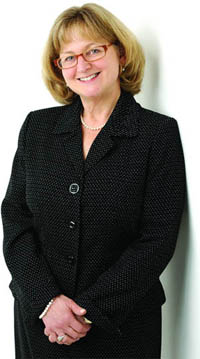
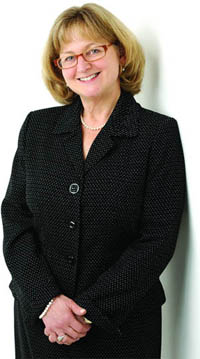
Sarah Morin

Sarah Morin says WPO has helped her work on her business, and not in her business.

Some members call it a support group, while others say it’s like having a board of directors. Some use both phrases interchangeably. They’re talking about the Springfield-area chapter of a group called the Women Presidents’ Organization, a three-year-old outfit that provides an effective forum for sharing ideas and helping businessiness — and individuals — grow.

Sarah Morin says she keeps pretty busy trekking between her two Buffalo Wild Wings Grill & Bar franchises — in Hadley and Windsor, Conn. But she has some ambitious plans that will tax her time, and her vehicle, much further.

Indeed, she wants to have several more operations going in Southern New England within a few years, and is aggressively searching for attractive sites for the sports- and family-oriented restaurants. Managing the two she has while also drawing an outline for explosive growth is challenging, and she says she often found herself looking for what she called, alternately, a support group or informal board of directors to bounce things off and gain valuable insight.

She’s found one in the local chapter of the Women Presidents’ Organization, or WPO, which, as the name suggests, brings women business owners together to share ideas, concerns, issues, hopes, dreams, and more. The local group, the Springfield-area chapter, was formed three years ago with the help of some women who were members of the Boston chapter and thought Western Mass. needed its own. The Springfield chapter reached its current number, 13, thanks to a recruiting drive that brought Morin and several others into the ranks, with the goal of getting to 20 and perhaps more.

The group meets once a month for 3 1/2 hours, said Morin, noting that this a serious time commitment for busy business owners, but one she is willing to make given what she takes home with her after each session and what the group is helping her focus on.

Specifically, this comes down to “working on your business, not in your business,” she said, adding that this is a problem common to many in growing companies. Most business owners spend most of their time putting out fires, meeting deadlines, and doing what’s necessary to keep a business going day to day, she continued, adding that she wants to spend much more time in what she called the next ‘quadrant’: doing planning, relationship-building, and staff development. “That’s where I want to live, and this group is helping me get there.”

Using a roundtable format, WPO puts aside time each meeting to dive into one member’s ‘issue,’ said Cathy Crosky, chapter chair and a principal with the Charter Oak Consulting Group in Williamsburg. That’s accomplished not by preaching or telling that individual what to do, she continued, but by sharing experiences and providing insight into matters ranging from succession issues to effective use of social media to finding alternative funding sources.

“We do something called a ‘peerspective,’” she said, referring to the process by the Edward Lowe Foundation. “It takes us through a structured process so that we can understand a situation deeply and help that person think it through in a different way and offer perspective.”

Lauren Wright, president of Ludlow-based CSW Inc., a provider of integrated services for packaging, was the beneficiary of one such ‘peerspective,’ this one involving what she called a desired culture shift, from production-focused to sales-and-service-focused.

“I was having some issues around that, so we brainstormed ways to get employees more involved and raise accountability,” she said. “They had some great suggestions, some of which I’ve already implemented. It has helped quite a bit; I love being able to get input from people with so much knowledge and experience.”

The women-only format, meanwhile, provides an environment featuring individuals with shared challenges and an understanding, and appreciation, of the many nuances (and headaches) of balancing life and work.

“This is a network of women who understand what it’s like every morning to go to your little laptop to see if there’s any money in the bank,” said Nancy Urbschat, owner of Springfield-based TSM Design and one of the first members of the Springfield chapter. “It’s important to have someone to talk to — someone who has that understanding — because owning a business is a lonely position.”

For this issue and its focus on women in business, BusinessWest takes an indepth look at WPO, its mission, and how it carries it out.

Meetings of the Minds

‘Reaching farther. Together.’

That’s the working slogan for WPO, and Crosky says those three words effectively convey what the organization is all about.

At a time when more women are becoming business owners, but also when many such women (especially those over 40) lack role models, WPO essentially provides a room full of them. But it goes much further; by bringing these women together, the group helps them meet career goals, set new ones, and, well, reach farther.

“Women being in leadership roles and owning their own businesses is still relatively new,” said Crosky. “A generation before us … most of us didn’t have mothers who do what we do. The group provides an opportunity to learn from one another and benefit from the wisdom of the other women in the group.

“People can learn best practices and hear about things that people have gone through that they haven’t gone through yet,” she continued. “In that way, it’s like a peer-advisory group or a board of directors. It’s a way to look at your business through many different lenses.”

And while some WPO members were admittedly skeptical about the need for — and value of — a women-only group, they have, though their experiences with the organization, come to the conclusion that there is a clear need for such an organization.

“For most of us, if not all of us, there was some initial apprehension about a group solely for women,” Urbschat said. “But this group provides the kind of opportunity that many men are afforded, to have that kind of peer group to bounce ideas of, to mentor, and to be supportive. This is an alternative for us, and even though many of us were reluctant at first, its value has been proven time and again.”

WPO, which was founded in 1997 and now has 83 chapters worldwide, is open to women who own their own companies or have a partnership stake, as in the case of a law firm or accounting firm. The companies involved must have at least $2 million in annual sales ($1 million for nonprofits), making them what Crosky called “second-stage” businesses, and not startups.

There is significant help available to new businesses, she said, noting such groups as the Mass. Small Business Center Network and other agencies, but not nearly as much for these second-stage outfits, and especially for those owned and managed by women.

“You have to lead differently when you’re a second-stage entrepreneur than you do when you’re a startup,” she explained. “And there’s just not a lot of support out there for the kinds of things business owners face when their businesses start to grow.”

There are 10 stated ‘primary objectives’ for the organization. Specifically, it strives to:

  • Increase the business and financial success of women presidents;

  • Develop innovative solutions to business challenges through discussions held in a confidential environment;
  • Provide continuing education in business and leadership;
  • Increase awareness of women’s issues and opportunities;
  • Provide a forum where women presidents can make strategic contacts and promote business development;
  • Increase the visibility of women presidents on the local, national, and international levels;
  • Provide business resources including monthly newsletters, a Web site, media referrals, an annual membership director, and an annual conference;
  • Advance the influence of women in the business community;
  • Re-energize and revitalize women presidents, leading to a more productive balance in work and life; and
  • Celebrate the success of women in business.
  • Not Winging It

    The current membership of the Springfield chapter conveys diversity (one of its oft-listed assets), with many professionals, including a lawyer, accountant, and business consultants, and many sectors represented, including manufacturing (Al’s Beverage), retail (Buffalo Wild Wings and Fran Johnson’s Golf & Tennis), and advertising and marketing.

    Morin, who noted that she is very much in the minority as a woman in the world of restaurant franchising, said her five-year plan is quite ambitious, calling for perhaps 15 franchises in Southern New England, with the third coming later this year. “A girl’s got to dream,” she told BusinessWest, noting that WPO is helping her do that, and will likely be a real force in making the dream come true.

    When asked how the group has helped her and others, Morin said it comes down to imparting wisdom and support, not through preachy lectures, but through queries aimed at helping an individual contrive their own solution.

    “The feedback, or ‘feed-forward,’ comes in the form of questions, so you don’t have that, ‘in my second year in business, I did this…’” she explained. “It’s less anecdotal. And when the probing comes in the form of a question, not only does the person with the problem or issue benefit, but we all do.

    “We turn it inward and think of how it’s applicable to our business,” she continued. “I find that incredibly helpful and unique to this group, as opposed to other professional organizations.”

    Urbschat said she joined WPO not long after long-time business partner Leslie Lawrence left TSM. It was a difficult time in her career, one when she was questioning what she wanted to do — and how to go about doing it.

    “I needed to think about whether I wanted to continue doing this or do something else,” she said. “I eventually concluded that I did want to keep doing this, but that I actually needed to figure out what would be an appropriate role for me in the business. My roles had to change.

    “I was inspired by the other members and their stories to think about growing the business,” she continued. “I had always been happy with it just being where it was, and it had been there for a a lot of years; we had been just sort of skidding along. Now, I actually have goals. I’ve been alive for 58 years, and this is the first time in a while I’ve actually had goals.”

    One element of WPO that Urbschat finds unique, as well as helpful, is the desire of members to hold others in the group accountable when it comes to issues they’re facing and steps they are taking.

    “If someone walks away with a solution and chooses to ignore it, there may well come a time when someone might say, ‘you know, what have you done about that thing you were concerned about?’” she explained. “That accountability is a really good thing for a small business because we don’t have boards of directors saying, ‘these are our expectations of you.’”

    Meghan Sullivan, a partner with the Springfield-based law firm Sullivan Hayes & Quinn, is another newcomer to the group. Crosky invited her to join after hearing her speak on her specialty, employment law.

    Sullivan said she’s learned a lot about business, and people, since joining, and especially about strategic planning and more-efficient use of time, energy, and resources “in ways that move the business forward and hopefully motivate people to follow you.

    “Other members have helped me become more cognizant of situations where you’re so caught up in the minutiae that you’re missing the mission of the organization,” she continued. “There’s really been some learning opportunities presented in ways that, while I was in some ways aware of the concepts, I hadn’t brought them to the forefront in my business.”

    Generous Share

    When asked for a qualitative perspective on the value provided by WPO, Urbschat found a rather uniue and insightful answer.

    “How many 3 1/2-hour meetings do you look forward to?” she asked, letting that question stand by itself, because it could.

    Others used different words and phrases, but expressed generally the same sentiment: this is time and energy well-spent, because, as Urbschat said, running a business is a lonely job.

    And with WPO, these women leaders never have to go it alone.

    George O’Brien can be reached at[email protected]
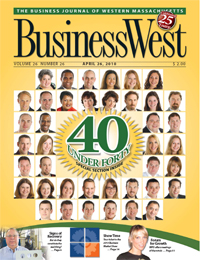
    40 Under 40 The Class of 2010
    This Diverse Group Is a Breed or Several Breeds Apart

    The Class of 2010

    You could call this a good dog-gone class of 40 Under Forty winners.

    Canines are dominant in this year’s photographs, with several breeds, including the basset hound, weimaraner, and rottweiler, among others, represented (apparently cats don’t sit still for this kind of thing). There’s even a cartoon dog that has become a company’s logo. But members of this class are much more than animal lovers — although that’s a good start.

    They’re also successful in business and contributors within the community, helping those with two legs as well as four. And, like the three that came before it, the class of 2010 is diverse, with a number of business groups and nonprofit agencies represented. There are entrepreneurs as well, with members starting businesses in the high-tech sector, marketing and public relations, and even motion pictures.

    This year’s class has several lawyers, accountants, and bankers, as in previous years, but it also has managers of nonprofits ranging from Springfield School Volunteers to the United Way to Big Brothers Big Sisters. And the contributions within the community are diverse as well, from work (if you call running work) to raise funds for the Jimmy Fund to efforts on behalf of Habitat to Humanity, to initiatives to rescue basset hounds.

    Overall, this is an inspiring class, perhaps best exemplified by the story of Nancy Bazanchuk (page A4), this year’s highest scorer. Born with a congenital condition that required the amputation of both legs above her knee, she is now program director of Disability Resources for the Center for Human Development. In that role, she has grown the department exponentially over the past 13 years, and today empowers people with physical disabilities through participation in a number of different sports.

    There are a number of stories like Bazanchuk’s over the next 30 or so pages. They involve people who were inspired, and are now inspiring others. People like Natasha Clark, who was reminded daily by her father about the importance of reading and learning. He didn’t live to see her become a respected journalist and, now, program manager for Springfield School Volunteers, but he’s always been a force in her life. Or people like Jill Monson, who says she learned from the death of her mother that one never knows how much time they have, so they have to make the most of each day. She does, and she named the business she started after her mother — sort of. It’s called Inspired Marketing & Promotions because her mother inspired her to start it.

    So here are the stories of the class of 2010, and, in many cases, their dogs as well. Read, and become inspired along with us. — George O’Brien

    2010
    40 Under Forty Winners:
    Nancy Bazanchuk David Beturne Raymond Berry Jr.
    Maegan Brooks Karen Buell Shanna Burke
    Damon Cartelli Daniel Finn Natasha Clark
    Julie Cowan Karen Curran Adam Epstein
    James
    Krupienski
    Susan Mielnikowski Owen Freeman-Daniels
    Lorenzo Gaines Thomas Galanis Anthony Gleason II
    Allen Harris Meghan Hibner Amanda Huston
    Kimberly Klimczuk Mary Fallon David Kutcher
    James Leahy Kristin Leutz Meghan Lynch
    Brady Chianciola Jill Monson Kevin Perrier
    Lindsay Porter Brandon Reed Boris Revsin
    Aaron Vega Ian Vukovich Thomas Walsh
    Sean Wandrei Byron White Chester Wojcik
    Peter Zurlino

    Meet Our Judges

    This year’s nominations were scored by a panel of five judges, who took on the daunting task of reviewing more than 100 nomination forms and choosing 40 winners from that impressive pool.

    BusinessWest would like to thank these outstanding members of the Western Mass. business community for volunteering their time to the fourth annual 40 Under Forty competition. They are:

    Denise Dukette, associate director of the Western Mass. Enterprise Fund, who serves as director of lending and head of operations for that organization, a nonprofit community-loan fund that works with banks and other lenders to enable financing for businesses that would otherwise not qualify.

    Ronn Johnson, president of R.D. Johnson Consulting in Springfield, which specializes in strategic planning and organizational development. Formerly, he served as director of Community Responsibility for MassMutual.

    Kathy LeMay, owner and founder of Raising Change, a Florence-based company focused on building bridges between philanthropists and nonprofits. The highest scorer among the 40 Under Forty Class of 2009, she recently completed a book titled The Generosity Plan.

    Jeff McCormick, a partner with the Springfield-based law firm Robinson Donovan, and one of the region’s preeminent trial lawyers. He specializes in business litigation, personal-injury law, federal litigation, professional-malpractice law, and legal ethics.

    Marla Michel, executive director of Strategic Communications and Outreach at UMass Amherst. In this recently created role, she will help lead efforts to build awareness and understanding of research and scholarly accomplishments among internal and external constituents and to expand the university’s role in local and regional innovation. Previously, she served as director of Research Liaison and Development.

    Court Dockets Departments

    The following is a compilation of recent lawsuits involving area businesses and organizations. These are strictly allegations that have yet to be proven in a court of law. Readers are advised to contact the parties listed, or the court, for more information concerning the individual claims.

    CHICOPEE DISTRICT COURT

    Scott Costa v. Chas Freihofer Bakery Company Inc. and Brian Shunaman
    Allegation: Complaint on a judgment: $16,266.62; Filed: 4/2/10

    FRANKLIN SUPERIOR COURT

    Todd Cousino v. Allan Cadran and Video Games Etc. Inc.
    Allegation: Breach of fiduciary duty, fraud, and conversion: $120,000
    Filed: 3/29/10

    HAMPDEN SUPERIOR COURT

    Howard P. Fairfield, LLC v. Springfield Mack, LLC
    Allegation: Non-payment of goods sold and delivered: $153,878.63
    Filed: 4/7/10

    T.K. Biggs Construction Co. v. Thermal Structures Inc., Agar Supply Company Inc., and the Dennis Group Inc.
    Allegation: Non-payment of services rendered: $436,203.24
    Filed: 3/24/10

    HAMPSHIRE SUPERIOR COURT

    United Steel Inc. v. William Berry & Son Inc. and Smith College
    Allegation: Non-payment on balance for structural steel-fabrication and erection services: $93,205.00
    Filed: 3/17/10

    HOLYOKE DISTRICT COURT

    Atlas Property Management Inc. v. Jose Ferreira Electrician
    Allegation: Breach of contract for electrician’s service: $20,000
    Filed: 3/26/10

    NORTHAMPTON DISTRICT COURT

    Custom Deco Inc. d/b/a Sabina v. Valley Marketing Inc.
    Allegation: Non-payment of goods sold and delivered: $10,874.51
    Filed: 3/31/10

    PALMER DISTRICT COURT

    Paul and Elaine Liquori v. General Motors, LLC and Bertera Chevrolet, Pontiac, Buick Inc.
    Allegation: Breach of warranty and breach of contract: $19,430
    Filed: 3/22/10

    Volvo Car Finance, N.A. v. Techni-Products Inc.
    Allegation: Non-payment of monies loaned: $6,211.58
    Filed: 3/22/10

    SPRINGFIELD DISTRICT COURT

    Capital One Bank v. Solstice Light Healing
    Allegation: Monies owed for credit advanced: $3,568.79
    Filed: 1/22/10

    Comcast Spotlight Inc. v. Orlando & Associates
    Allegation: Non-payment for advertising services rendered: $6,242.70
    Filed: 2/25/10

    Muth Associates v. Ryan Trading, LLC
    Allegation: Non-payment of goods sold and delivered: $9,136.80
    Filed: 2/17/10

    Western Mass Environmental, LLC v. Seville Dyeing Co. Inc.
    Allegation: Non-payment of services rendered: $9,543.99
    Filed: 2/17/10

    Wynit Inc. v. Berkshire Westwood Graphics Group
    Allegation: Non-payment of services rendered: $12,580.11
    Filed: 2/17/10

    WESTFIELD DISTRICT COURT

    City of Westfield Gas & Electric Light Department v. Union Street Realty Inc.
    Allegation: Non-payment of electrical service upgrade to 202 Union Street: $27,447.76
    Filed: 3/17/10

    Pioneer Valley Winnelson Company Inc. v. Monson Heating & Cooling Inc.
    Allegation: Non-payment of goods sold and delivered: $10,838.18
    Filed: 3/11/10

    40 Under 40 The Class of 2010

    Maegan Brooks: 30

    Attorney, the Law Office of Maegan Brooks

    Maegan Brooks’ family has lived in Holyoke for several generations, and she believes in the future of Greater Springfield. But negative perceptions, she said, hinders that potential.

    “That’s really our downfall,” said Brooks, who has backed up her confidence by opening a business-law firm in downtown Springfield. “I’m a Western Mass. native; I love Western Mass. The people who decide to stay here do so because they also love it and see the potential here. I want to see Springfield reestablish itself as a thriving city.”

    After graduating from Boston University, Brooks returned to her roots and worked for area nonprofits while earning a master’s degree in Organizational Development from Springfield College. She aspired to be an executive director for a nonprofit — but then got an epiphany that led to a law degree from Western New England College.

    “I started taking business-law courses, and I realized that the best way to help a community is to help with economic development,” she explained. “So my passion has been in developing small businesses and social enterprises.”

    Convinced that the valley is home to an especially creative, hardworking population, Brooks focuses her practice on helping individuals build businesses.

    “I meet with people who say, ‘I got laid off from my job, but I’ve had this idea for the past 20 years, and I want to move forward.’ I’m helping people who have thought about and dreamt about something for a long time begin to realize their dreams,” she said.

    “It’s great to be a part of that, to encourage people and tell them, ‘yes, you need legal help. You need to do this right so you won’t have issues later.’ And I feel the same way about the nonprofits I see.”

    With some creativity — and legal assistance — Brooks thinks those types of people can bring the local economy back. And that brings her plenty of satisfaction.

    “I see some attorneys who are miserable,” she said. “But I’m excited about the work I do.”—Joseph Bednar

    <<Back

    40 Under 40 The Class of 2010

    Shanna Burke: 25

    Program Director, Nonotuck Resource Associates

    Shanna Burke is all about making connections.

    “We match people in the community with people with disabilities to live together,” she said of her role with Nonotuck Resource Associates. “If you have an extra room and want to have someone live with you, we’d match you with someone with similar interests, and they’d be integrated into your life” — an improvement, she said, over the old group-home concept.

    “I originally wanted to be a lawyer, but I realized I wanted to help people who don’t necessarily have money,” she said. “I know some law firms do that, but I wanted to work on a more micro level, more person-to-person.”

    So she earned a master’s in Social Work at Springfield College, and after a few years working for Valley Psychiatric Service — helping people at or near the poverty line — she saw an opportunity open up at Nonotuck.

    “From the first interview, I knew it was a good match,” she said. “I felt the work they do is so important, and their values are so strong. That goes for the whole agency; we do this because we love people. Sometimes I hear people say, when things aren’t going well, ‘I hate my job.’ But I never feel that way.”

    Burke also volunteers for Animal Shelter Renovation, a Westfield-area shelter with a no-kill policy, another value in which she believes. And she’ll run in the Hartford Marathon this fall to benefit Sunshine Golden Retriever Rescue, which saved her dog, Fenway.

    But this animal lover (she and her husband, 2007 Forty Under 40 honoree Michael Gove, have two dogs, three cats, a hamster, and a rabbit, many of them rescues) endured a scare recently. Hours before this photo was taken, she was out on her morning hike with her dogs when one was attacked by a porcupine. He spent the day at an animal hospital, but made it to the shoot.

    “It was horrible,” she said, sounding relieved. “Lesson learned, hopefully.” —Joseph Bednar

    <<Back

    40 Under 40 The Class of 2010

    Kimberly Klimczuk: 32

    Attorney and Partner, Royal & Klimczuk, LLC

    Helping people is the motivation behind Kimberly Klimczuk’s professional and personal accomplishments.

    She co-owns, with attorney Amy Royal, a Northampton law firm that specializes in labor and employment law. And although Klimczuk represents businesses, such as Troy Industries, which manufactures small-arms components, “there are people behind all of these companies who are trying to follow employment laws and want to do the right thing,” she said. “We develop ongoing relationships with our clients, and there is more of a human connection than people might think.”

    As a child, Klimczuk loved the TV shows LA Law and Law & Order. She grew up in a blue-collar family, was the first in that family to graduate from a four-year college, and discovered she wanted to pursue labor and employment law after a stint with a law firm.

    Today, Klimczuk uses her expertise on the job and for a number of organizations that benefit people. She has been has been a judge for the Mass. Bar Assoc. mock-trial competition for high-school students, and volunteers for the Dial a Lawyer program.

    “I like to share the knowledge I have gained. It is of use to a lot of people,” she said. “Having legal knowledge opens a lot of doors, and I like to help people when I can.”

    She has volunteered for the Internal Revenue Service’s Volunteer Income Tax Assistance program since she was in law school, and is secretary of the board for the Gandara Center, a board member of the Hartford Penn Club, and a mentor for the Pioneer Valley Girl Scouts Lawyers of Tomorrow program.

    Klimczuk serves on the board of the Hampden County Bar Assoc., helps organize the annual luncheon it sponsors for Open Pantry’s Loaves and Fishes Kitchen, and recently joined the board of Aditus Inc., which provides employment and residential support to people with developmental disabilities.

    She is also proud to be part of a female-owned law firm. “Labor and employment law is something that affects everyone, and I really enjoy it.”—Kathleen Mitchell

    <<Back

    40 Under 40 The Class of 2010

    Thomas Walsh: 34

    Communications Director, City of Springfield

    Thomas Walsh cares deeply about the city of Springfield. He grew up in the historic district of Forest Park and still lives there. “Springfield is a great city. We certainly have our urban challenges, but there are a lot of positive things and positive people who live here,” he said.

    Walsh’s commitment to the city led him to leave his position as an attorney at a Hartford firm in 2007 and work as director of Constituent Services for Mayor Domenic Sarno, even though it meant taking a cut in pay. “I wanted to help citizens resolve problems in their neighborhoods,” he said. “I knew what it was like to call City Hall and become frustrated when I didn’t see a resolution to a problem. I want to help make Springfield a better place to live, work, and raise a family.”

    Resolving quality-of-life issues is so important to Walsh that he has worked endlessly after hours to ensure that people’s concerns are handled professionally, swiftly, and courteously, with every phone call returned within 24 hours, even if he doesn’t yet have an answer to a problem.

    Although he was promoted to communications director in 2008, he continues to answer calls from residents and has an enormous file of letters expressing people’s gratitude on issues they had tried to resolve for up to nine years.

    Walsh has served on the board of the Forest Park Civic Assoc. for five years and spent two years as a board member of the Sector H Community Police Team.

    Before working for Sarno, he was part of the Ward 6 Democratic Committee for about six years, and during his first year in law school at Massachusetts School of Law, he received the prestigious Hampden County Bar Assoc. Law School Scholarship.

    He also created and oversaw Springfield’s first flex squad, through which city departments collaborate to address issues.

    “I wear multiple hats because I care a lot about making Springfield a better place,” he said. “It’s very rewarding and fulfilling.”—Kathleen Mitchell

    <<Back

    Uncategorized
    A pictorial celebration of Difference Makers 2010

    A Celebration — by the Book

    Event Salutes Difference Makers, Focuses the Spotlight on Literacy

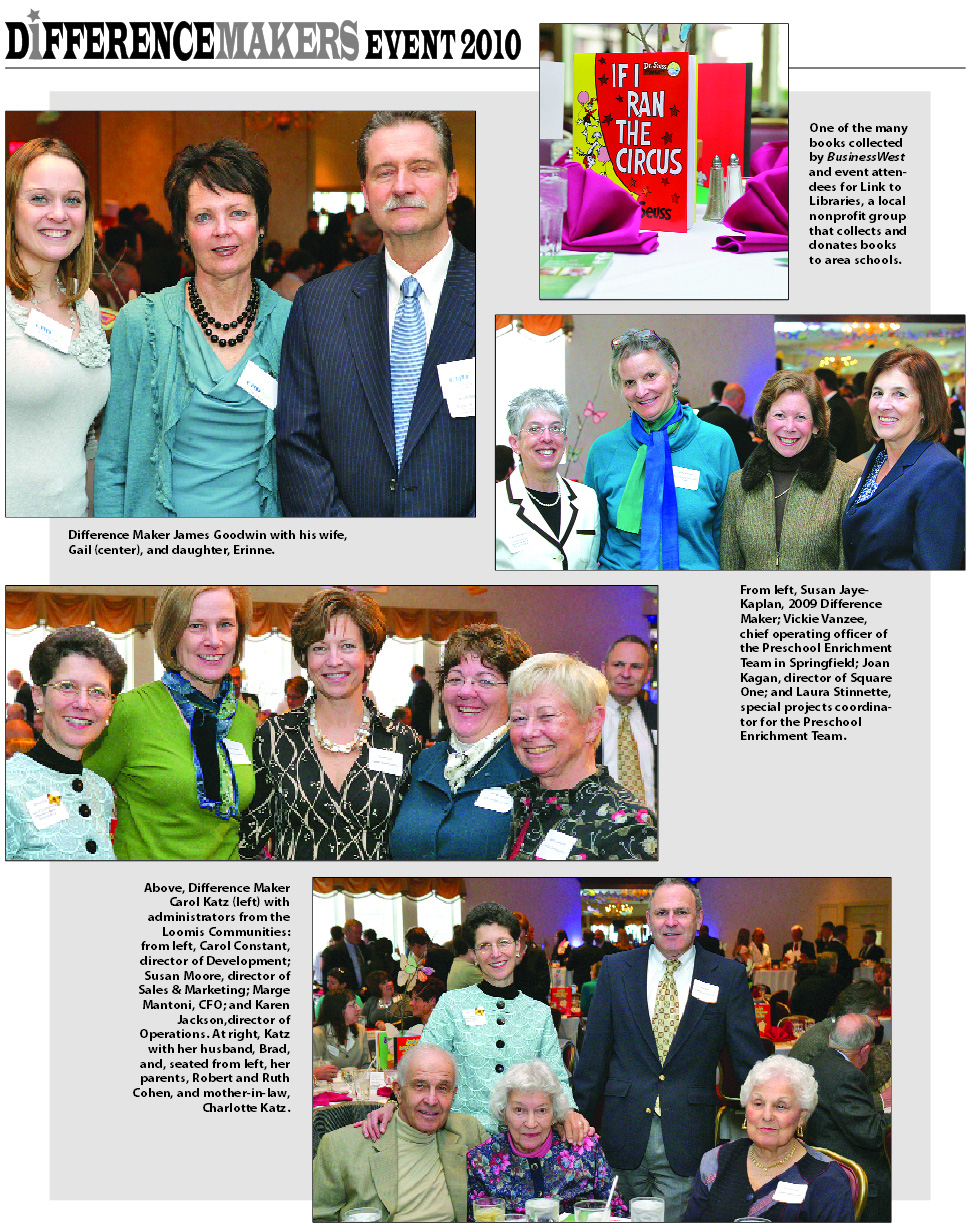
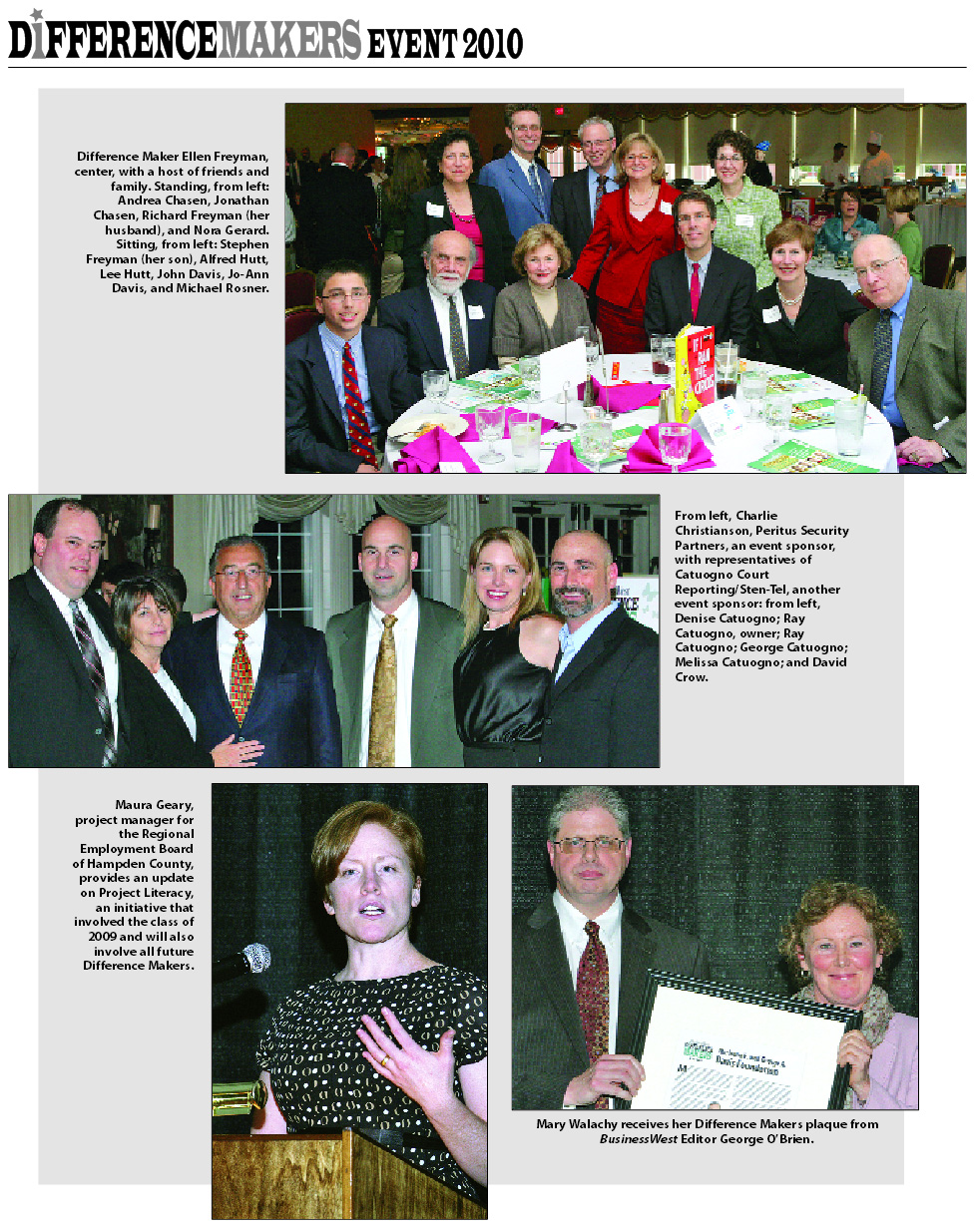
    More than 350 people turned out to celebrate BusinessWest’s Difference Makers for 2010 at a lavish ceremony at the Log Cabin Banquet & Meeting House on March 25. Attendees, who included a number of business and civic leaders as well as friends and family of the five winners, were treated to fine food, entertainment, introductions of the winners, and remarks from each recipient, as well as an update on an ongoing initiative called Project Literacy. A networking hour was followed by performances by students from the Gerena Community School in Springfield, and then the formal program. “It was a wonderful evening, one during which we met our two main goals,” said BusinessWest Associate Publisher and Advertising Director Kate Campiti. “We celebrated our Difference Makers for 2010, but we also generated excitement and momentum, not only for our program, but for the larger, all-important matter of giving back to the community and making a difference.”

    The 2010 Difference Makers: from left, James Goodwin, president and CEO of the Center for Human Development; Mary Walachy, executive director of the Irene E. & George A. Davis Foundation; Ellen Freyman, attorney and shareholder with the law firm Shatz, Schwartz and Fentin, P.C.; Carol Katz, CEO of the Loomis Communities; and Robert Holub, chancellor of UMass Amherst.


    Click here for a larger view

    Click here for a larger view

    Click here for a larger view

    Click here for a larger view

    10 Points Departments

    By DENNIS G. EGAN Jr., Esq.

    1. File annual reports. In Massachusetts, annual reports must be filed on or before the anniversary of formation and are required to attain good standing to secure financing, enter into purchase-and-sale transactions, and transact other business.

    2. Keep business insurance current and complete. Unemployment insurance, Social Security, and workers’ compensation are all required by law. Make sure your insurance is up to date and your business is adequately covered.
    3. Create a succession plan. Then memorialize it through a cross-purchase or redemption agreement. These may be funded through whole, term-life, and/or disability insurance.
    4. Update your estate plan. As businesses succeed and property and assets are bought and/or sold, the composition of your estate may change. Make sure that your estate plan keeps pace.

    5. File and pay taxes in a timely fashion. One thing is certain: not filing and paying taxes in a timely fashion will lead to penalties and interest that far exceed the underlying tax obligation.

    6. Make sure your business is qualified to do business in every state in which you conduct business. Non-compliance can lead to significant penalties and interest on top of the filing fees.
    7. Review your employment contracts. Recent case law has changed what constitutes an employee versus an independent contractor, and failure to properly categorize workers can lead to significant legal costs, administrative expense, and tax obligations.
    8. Review or create a comprehensive employee handbook. This notifies employees of your business’ policies and procedures. It helps to prevent confusion, protects your business from possible litigation, and creates a better work environment.
    9. Revisit your business health-insurance coverage. This will help you to balance the health needs of your employees with containing costs.

    10. Service your company’s debt. Are you receiving the most favorable terms available? You may be able to refinance your company’s debt, resulting in a lower interest rate and more-favorable repayment terms.

    Dennis G. Egan Jr. is an associate with the regional law firm Bacon Wilson, P.C, who specializes in business and corporate law; (413) 781-0560; degan@ baconwilson.com

    Agenda Departments

    Social Media Plan

    April 15: “The Small Business Experience/Creating a Social Media Plan” is the theme of a morning workshop hosted by the Mass. Small Business Development Center Network. The workshop will be presented by Derek Allard of Gravity Switch in Northampton and Shalini Bahl of IAM Business Consulting of Amherst, and is planned from 9 a.m. to noon at the Scibelli Enterprise Center, 1 Federal St., Springfield. Highlights of the day include developing a social-media plan based on one’s business purpose, social-media purpose, target audience, and resources. The cost is $40. For more information, call (413) 737-6712 or visit www.msbdc.org/wmass .  

    WNEC Speaker Series

    April 15: Katharine G. Baker, Ph.D., Principal of Family Therapy and Consulting Associates in Northampton, will present “Leading a Business in Anxious Times” at noon as part of Western New England College’s Law and Business Center for Advancing Entrepreneurship Speaker Series. Baker is an experienced business consultant who has worked with family enterprises and closely held firms, providing executive and leadership coaching, strategic planning, organizational learning services, and time-management seminars. She currently is an independent scholar and executive coach with a solo consultation practice that serves national and international clients. She will present an approach to understanding business leadership that is grounded in Bowen theory, a well-tested theory of human behavior. She will show how the patterns of behavior learned in the family can have a profound impact on every business’ success. Baker will illustrate the power and effectiveness of this way of understanding leadership. She will also discuss executive coaching as an application of her approach. For more information on the free lecture at the Law School Commons on Wilbraham Road in Springfield, call (413) 796-2030 or e-mail [email protected] . Lunch will be provided.

    Twitter & Blogs

    April 22: Derek Allard of Gravity Switch in Northampton will present a workshop titled “Twitter & Blogs” from 9 to 11 a.m. at the Scibelli Enterprise Center, 1 Federal St., Springfield. Allard will discuss the basics — what they are, why to use them, and how to get started. The cost is $40. For more information, call (413) 737-6712 or visit www.msbdc.org/wmass .

    LinkedIn & Facebook

    April 29: Derek Allard of Gravity Switch in Northampton will present a workshop titled “LinkedIn & Facebook” from 9 to 11 a.m. at the Scibelli Enterprise Center, 1 Federal St., Springfield. Allard will discuss the basics — what they are, why to use them, and how to get started. The cost is $40. For more information, call (413) 737-6712 or visit www.msbdc.org/wmass .

    Women’s Professional Development Conference

    April 30: Bay Path College will host its 15th annual Women’s Professional Development Conference at the MassMutual Center in downtown Springfield from 7:30 a.m. to 4:30 p.m.  For more information, call (413) 565-1000 or visit www.baypath.edu .

    Deliver Perfect Pitch

    May 12: Learn concrete and easy-to-master tools to help you in every sales situation, no matter what the environment or what you sell, during “Deliver the Perfect Pitch,” 9 to 11 a.m., at the Scibelli Enterprise Center, 1 Federal St., Springfield. Sheldon Snodgrass of www.steadysales.com in Williamsburg will be the presenter. The program is sponsored by the Mass. Small Business Development Center Network. Cost is $40. For more information, call (413) 737-6712 or visit www.msbdc.org/wmass .

    Business Plan Basics

    May 20: The Massachusetts Small Business Development Center Network will host “Business Plan Basics” from 9:30 a.m. to 12:30 p.m. at Amherst Town Hall, first-floor meeting room, 4 Boltwood Walk, Amherst. The workshop will focus on management fundamentals from start-up considerations through business-plan development. Topics will include financing, marketing, and business planning. The cost is $35. For more information, call (413) 737-6712 or visit www.msbdc.org/wmass .

    Joomla! Workshop

    May 26: Tamar Schanfeld of TnR Global Joomla! Services of Greenfield will present a daylong boot camp on creating an interactive Web site for small businesses. The workshop is planned from 9 a.m. to 4:30 p.m. at the Scibelli Enterprise Center, 1 Federal St., Springfield. Topics: learn to plan your site, enter and edit content and menus, and install extensions. Comfort with Microsoft Word and Internet browser required. The workshop does not include e-commerce or shopping cart features. Cost is $75. For more information, call (413) 737-6712 or visit www.msbdc.org/wmass .

    Court Dockets Departments

    The following is a compilation of recent lawsuits involving area businesses and organizations. These are strictly allegations that have yet to be proven in a court of law. Readers are advised to contact the parties listed, or the court, for more information concerning the individual claims.

    CHICOPEE DISTRICT COURT

    Lillian Beauchamp v. JB Properties, LLC
    Allegation: Negligence in property maintenance causing personal injury: $3,395.20
    Filed: 2/19/10

    Nilsa Guzman v. Springfield Area Transit
    Allegation: Negligence in operation of a bus: $25,000
    Filed: 2/26/10

    GREENFIELD DISTRICT COURT

    United Leasing Inc. v. Pioneer Drilling
    Allegation: Breach of Cross Corporate Guaranty: $4,402.10
    Filed: 3/5/10

    HAMPDEN SUPERIOR COURT

    AgTec Agricultural Trade & Export Company Inc. v. Decas Cranberry Products Inc.
    Allegation: Breach of contract: $890,171
    Filed: 3/8/10

    Wildco Petroleum Equipment Inc. v. HDC Five, LLC and Westfield Bank
    Allegation: Breach of contract: $81,092.93
    Filed: 3/9/10

    HAMPSHIRE SUPERIOR COURT

    Edward F. Kamont v. Ray Hart Kennel & Stables
    Allegation: Owner negligence causing injury when a draft horse escaped its enclosure and the plaintiff’s vehicle struck the horse causing personal injury: $256,945.56
    Filed: 2/17/10

    Joan E. Griswold v. Mestek Inc.
    Allegation: Wrongful termination: $90,000+
    Filed: 3/9/10

    HOLYOKE DISTRICT COURT

    Kane Brothers Landscape & Construction v. Weld Management Company Inc.
    Allegation: Breach of contract and non-payment of landscape and construction services provided: $3,310.13
    Filed: 2/11/10

    NORTHAMPTON DISTRICT COURT

    Cynthia Holley v. The Levi-Nielsen Company
    Allegation: Defendant breached expressed warranty by failing to provide proper drainage in home: $11,950
    Filed: 3/3/10

    Judith Raskevitz v. FedEx Ground Package Systems Inc.
    Allegation: Negligence in operation of motor vehicle: $17,498.45
    Filed: 2/22/10

    PALMER DISTRICT COURT

    Joel & Jill Crescentini v. B & F Paving & Construction Inc.
    Allegation: Breach of driveway installation contract: $7,220
    Filed: 2/24/10

    USA Hauling & Recycling Inc. v. Pinocchio’s
    Allegation: Breach of service contract: $10,171.88
    Filed: 2/24/10

    SPRINGFIELD DISTRICT COURT

    Bradco Supply Corp. v. Greg Construction
    Allegation: Non-payment of goods sold and delivered: $13,148.06
    Filed: 2/2/10

    J.M O’Brien & Co., P.C. v. Melikian Inc.
    Allegation: Non-payment of accounting services: $2,550
    Filed: 3/3/10

    One Communications v. Accessory Group of N.E. Inc.
    Allegation: Non-payment of services rendered: $4,037.52
    Filed: 2/1/10

    Departments Incorporations

    The following business incorporations were recorded in Hampden, Hampshire, and Franklin counties and are the latest available. They are listed by community.

    ADAMS

    Midtown Tax & Bookkeeping Co. Inc., 44 Spring St., Adams, MA 01220. Joann C. Gagne, One Berkshire Square, Adams, MA 01220. Tax preparation and accounting services.

    AMHERST

    Left-Click Corporation, 15 Cowles Lane, Amherst , MA 01002. Kelly S. Albrecht, same. Computer sales and service.

    CHICOPEE

    JSAA Inc., 161 Ward St., Chicopee, MA 01013. William J. Stetson, 10 Riverview Terrace, Chicopee, MA 01013. Restaurant.

    EAST LONGMEADOW

    Medical Access International Inc., 24 Crestview Road, East Longmeadow, MA 01028. Douglas A. Cowieson, same. Facilitate communication and insurance claim coverage

    EASTHAMPTON

    Mockingbird Farm Company, 15 Torrey St., Easthampton, MA 01027. Peter Stanley Solis, 11 Birch Hill Road, Agawam, MA 01001. Operating farm.

    FEEDING HILLS

    Mibase Inc., 26 Yale Avenue, Feeding Hills MA, 01003. Todd M. Crevier, same. Real Estate and Sales Development.

    HAMPDEN

    N&G Inc., 89 Woodland Dr., Hampden, MA 01036. Lewis G. Caputo Jr., same. Retail sales of food arrangements.

    LONGMEADOW

    Marblehead Appliance Service Inc., 45 Oxford Road, Longmeadow, MA 01106. Steven M. Seay. Appliance repair and service.

    LUDLOW

    K&L Fall Services Inc., 264 Moody St., Ludlow, MA 01056. Kevin J. Fall, 23 Main St., Wilbraham, MA 01095. Commercial and residential cleaning services.


    Korean War Veterans Association of Western Mass. Chapter 187 (2000) Inc., Alexander Natario, 8 Wedgwood Dr., Ludlow, MA 01056-1852. This corporation provides charitable, historical, patriotic and educational objectives to preserve and strengthen camaraderie among members.

    Ledeoux Investment & Retirement Solutions Inc., 84 Chapin Greene Dr., Ludlow, MA 01056. Rene G. Ledoux, same.

    M & A Fresh Produce Inc., 4 White St., Ludlow, MA 01056. Nil Atmaca, 591 Moore St., Ludlow, MA 01056. Produce sales.

    Mr. Home Inc., 74 Cislak Dr., Ludlow, MA 01056. William G. Sweeney, same. Home repair and handyman services.

    WEST SPRINGFIELD

    Kwik Trans Inc., 67 Bliss St., West Springfield, MA 01089. Valiantsin Zhmaidziak, same. Transportation services.

    SOUTH HADLEY

    Margala Tech Inc., 23 Pheasant Run, South Hadley, MA 01075. M. Zubair Kareem, same. Computer software related services and development.

    SPRINGFIELD

    Law Offices of Ronda G. Parish, P.C., 1350 Main St., Suite 1010 Springfield, MA 01103. Ronda Parish, P.C., same. Law office.

    SOUTH DEERFIELD

    LTS Tools Inc., 40 Conway St., South Deerfield, MA 01373. Francis J. Naida, 38 Pleasant St., South Deerfield, MA 01373. Retail tool sales.

    MBA Transportation Inc., 20 Industrial Dr., West, South Deerfield, MA 01373. Jill Goulet, same. Bulk transportation services.

    WESTFIELD

    Mercantile Engineers American Inc., 1277 Southampton Road, Westfield, MA 01085. George Mathew Changathara, same.

    Uncategorized
    The ?40? have been chosen.

    The judges have weighed the nominations, and the composition of BusinessWest’s 40 Under Forty Class of 2010 is now known — to us, anyway. And it will be revealed in the April 26 edition, which will feature pictures and profiles of a class that is diverse, very intriguing, and includes entrepreneurs, professionals, and nonprofit administrators.

    “This is a great class of rising stars,” said BusinessWest Editor George O’Brien, “one that reflects the great talent that we have here in Western Massachusetts.”

    The Class of 2010 will be honored at the annual 40 Under Forty gala, to take place June 24 at the Log Cabin Banquet & Meeting House in Holyoke. Details of that event will be forthcoming. What is known is that, as it has since its inception in 2007, the event will feature excellent networking opportunities, fine food, entertainment, and a chance to meet those rising stars.

    For more information, call (413) 781-8600 begin_of_the_skype_highlighting              (413) 781-8600      end_of_the_skype_highlighting, ext. 10, or e-mail Melissa Hallock at[email protected].

    This year’s roster of 40 Under Forty nominees — close to 100 of them — were scored by five judges. They are:

    • Denise Dukette, associate director of the Western Mass. Enterprise Fund, who serves as director of lending and head of operations for that organization, a nonprofit community-loan fund that works with banks and other lenders to enable financing for businesses that would otherwise not qualify;
    • Ronn Johnson, president of R.D. Johnson Consulting in Springfield, which specializes in strategic planning and organizational development. Formerly, he served as director of Community Responsibility for MassMutual;
    • Kathy LeMay, owner and founder of Raising Change, a Florence-based company focused on building bridges between philanthropists and nonprofits. The highest scorer among the 40 Under Forty Class of 2009, she recently completed a book titled The Generosity Plan.
    • Jeff McCormick, a partner with the Springfield-based law firm Robinson Donovan, and one of the region’s preeminent trial lawyers. He specializes in business litigation, personal-injury law, federal litigation, professional malpractice law, and legal ethics.
    • Marla Michel, executive director of Strategic Communications and Outreach at UMass Amherst. In this recently created role, she will help lead efforts to build awareness and understanding of research and scholarly accomplishments among internal and external constituents and to expand the university’s role in local and regional innovation. Previously, she served as director of Research Liaison and Development.
    • Departments

      The following is a compilation of recent lawsuits involving area businesses and organizations. These are strictly allegations that have yet to be proven in a court of law. Readers are advised to contact the parties listed, or the court, for more information concerning the individual claims.

      CHICOPEE DISTRICT COURT

      Valley Communications Systems Inc. v. Dartmouth Electrical Construction Co. Inc.
      Allegation: Non-payment of labor, materials, and training related to the installation of audio/video communications equipment: $111,644.76
      Filed: 2/16/10

      FRANKLIN SUPERIOR COURT

      Wells Fargo Bank, N.A. v. John Shaw Concrete
      Allegation: Breach of business-line credit agreement: $37,538.48
      Filed: 2/26/10

      GREENFIELD DISTRICT COURT

      Four Wheel Drive Service v. Bear Truss and Panel, LLC
      Allegation: Non-payment of storage bill: $14,385
      Filed: 2/12/10

      HAMPDEN SUPERIOR COURT

      James and Theresa Atwater v. Mark Kansis, M.D. and RiverBend Medical Group
      Allegation: Failure to timely diagnose condition: $25,000
      Filed: 3/9/10
      Mt. Tom Towers LLC v. Lamar Central Outdoor, LLC
      Allegation: Breach of contract: $300,000
      Filed: 3/9/10

      HAMPSHIRE SUPERIOR COURT

      Hwei-Ling Greenery v. Center for Human Development Inc.
      Allegation: Wrongful discharge, violation of constitutional rights, and infliction of emotional distress: $153,166.67
      Filed: 2/19/10

      Just Building Inc. v. CBA Realty Group II Corp. and Patterson Dental
      Allegation: Enforcement of mechanic’s lien against property: $36,125
      Filed 2/9/10

      HOLYOKE DISTRICT COURT

      Peerless Auto Sales v. Michael’s
      Allegation: Plaintiff left a vehicle at Michael’s for repairs, and the vehicle was stolen. Defendant refuses to pay for the market value of the vehicle: $6,000
      Filed: 2/25/10

      NORTHAMPTON DISTRICT COURT

      Arnold’s & Eddie’s Foods v. Butternuts
      Allegation: Non-payment of goods sold and delivered: $7,406.71
      Filed: 2/25/10

      PALMER DISTRICT COURT

      Noonan Energy Corp. v. The Griswold Corp.
      Allegation: Breach of contract: $2,415.27
      Filed: 3/5/10

      USA Hauling & Recycling Inc. v. Sentry Services Inc.
      Allegation: Non-payment of services rendered: $6,886.15
      Filed: 2/24/10

      SPRINGFIELD DISTRICT COURT

      BSC Realty Inc. v. 280 Bridge Street Inc.
      Allegation: Non-payment of rental agreement: $15,000
      Filed: 2/3/10

      Molta Florist Supply Inc. v. Carley’s Florist
      Allegation: Default on credit-card account for goods and services provided: $11,785.52
      Filed: 2/3/10

      TR’s Landscaping & Excavating v. Deaton Industries Inc.
      Allegation: Breach of contract for services: $16,000
      Filed: 2/5/10

      Uncategorized
      Knowing the Law Is Just Part of the Strategy for Staying Out of Trouble

      Most Massachusetts employers are now aware that, effective July 13, 2008, violations of the Massachusetts Wage Act carry mandatory treble damages. As an example, if an employer is found by a court to have failed to pay an employee for overtime or other wages owed, the employer will be ordered to pay the employee three times the amount owed, plus attorney’s fees and costs.

      Unfortunately, the Mass. Wage Act and the federal Fair Labor Standards Act and their accompanying regulations are highly technical laws that carry many pitfalls for the unwary. Even employers who are conscientious about treating their employees fairly can run afoul of requirements of which they are unaware, potentially exposing both their companies and themselves to severe penalties. The purpose of this article is to alert small-business owners to some common mistakes employers make when attempting to implement the Massachusetts and federal wage-and-hour laws.

      Salaried vs. Hourly Employees

      Many employers make the mistake of paying certain supervisory employees and office staff a fixed salary (but not overtime) when, in fact, the employees are deemed non-exempt from minimum wage and overtime requirements. Frequently, paying an employee a fixed salary is seen as a benefit to the employee because it ensures a guaranteed wage even when the employer’s business is slow. However, unless an employee falls within one of the Fair Labor Standard Act’s exemptions for executive, administrative, professional, outside sales, computer, or certain other employees, he or she must be paid at least the minimum wage for every hour worked and receive overtime compensation.

      These exemptions are not as straightforward as they appear. For example, while an employer may consider a working foreman to be a supervisor covered by the executive exemption, that employee will not qualify as exempt unless their primary duty is management and they have the authority to hire or fire other employees, or have particular weight given to their recommendations as to the hiring, firing, advancement, or promotion of other employees.

      Employers who choose to pay non-exempt employees a salary may do so as long as they keep accurate records of hours worked and compensate employees appropriately. For example, a non-exempt employee who is paid a weekly salary for a 35-hour week must be paid overtime when they work more than 40 hours per week. Overtime is calculated at 1 1/2 times the regular rate (which is calculated by dividing the employee’s weekly pay by 35 hours). The employee is entitled to receive the regular rate for the first 40 hours worked and 1 1/2 times the regular rate for each hour worked thereafter.

      Timekeeping

      It is important that employers maintain accurate records showing total time worked in a given workweek. While a time clock is not required, employers should take steps to make sure that these records are accurate, and if a time sheet is used, each employee should be required to sign each week’s time sheet.

      The accuracy of an employer’s records becomes crucially important when an employee alleges that he or she has been underpaid. If an employer cannot produce accurate records, the employee’s assertions may be presumed to be accurate if he or she can provide proof of hours worked. It then becomes the employer’s burden to provide evidence to rebut that presumption.

      Federal regulations require 12 records that employers must maintain for each employee covered by the Fair Labor Standards Act. For example, in addition to the hours worked each day and the total hours worked each week, an employer must maintain the total straight-time wages due for the week, the total paid for overtime hours, the regular hourly rate of pay for the employee in any week when overtime is earned, and the total additions to or deductions from an employee’s wages, including employee purchases or wage assignments. Additionally, employers must also retain various types of records for specified periods.

      Posters Are Important

      It is essential that employers prominently display posters setting forth their employees’ rights under both Massachusetts and federal wage-and-hour laws in a location where employees regularly congregate, such as a break room, in the human resources department, or next to a time clock. The appropriate posters are available from the U.S. Department of Labor and the Mass. Attorney General’s Office. When an employer fails to post informational notices regarding payment of wages, the statute of limitations on Fair Labor Standards Act and Mass. Wage Act claims can be tolled, exposing employers to damages for a period of time greater than the normal two years under federal law and three years under the Mass. Wage Act.

      Travel Time

      Ordinary commuting time between an employee’s home and the employer’s place of business is, of course, not compensable. However, when an employer requires an employee to report to their place of business at the beginning of the day prior to heading to a job site, or at the end of the day, the time spent at the employer’s location is compensable, as is travel time to and from the job site. Any traveling that an employee is required or directed to do during the workday is also compensable.

      Lunch

      Under Massachusetts law, an employee must be given a 30- minute break after six hours of work. This break is generally unpaid. During this period, an employee must be relieved of all work-related duties. An employer who requires employees to remain on premises or otherwise restricts their movements while on break must treat the time as hours worked.

      You May Be Personally Liable

      Under the Mass. Wage Act, “the president and treasurer of a corporation and any officers or agents having the management of such corporation shall be deemed to be the employers of the employees of the corporation.” Principals of a corporation may be personally liable to employees for violations of the Wage Act, and an ‘officer or agent’ of a corporation who fails to pay required overtime can be personally subject to civil and criminal penalties.

      As this partial list indicates, there are a host of issues that employers must be attentive to implementing state and federal wage-and-hour laws. While compliance can seem daunting, employers can usually identify and correct errors through a simple review of policies and practices. Most importantly, by establishing and implementing compliant policies, small-business owners can avoid the potentially crippling consequences of a wage-and-hour complaint.

      This article is intended as a general summary only and does not constitute legal advice.

      David S. Lawless is an associate with Springfield-based law firm Robinson Donovan; (413) 732-2301 begin_of_the_skype_highlighting              (413) 732-2301      end_of_the_skype_highlighting.

      Uncategorized
      How to Protect Your Nest Egg and Provide for Your Care

      Americans are largely independent folks who could not imagine a future where their independence is compromised because they require long-term care as a result of prolonged illness or disability. Long-term care refers to the wide range of medical, personal, and social services a person may receive as a result of a prolonged illness or disability. It can include help with activities of daily living, home health care, adult day care, nursing-home care, and care in a group-living facility.

      On average, you will have worked more than 30 years before you retire and will have accumulated a nest egg to support yourself during retirement and to hopefully pass on to your children and family as an inheritance. The thought of losing the independence you value or the funds you have worked so hard to put aside, as a result of needing long-term care, is a major concern. Sound financial and estate planning can address these issues.

      Part of the planning process can include the purchase of a long-term care insurance policy that can protect your nest egg and provide a means to pay for necessary long-term care expenses. This is the best way to protect yourself from spending your resources on nursing-home expenses and medical services. Long-term care insurance is designed to cover all or some of the services provided by long-term care and create options regarding where you will receive services and the type of services you will be able to access. After satisfaction of an elimination period, a number of days you must need the nursing-home or home-health care before the policy will pay benefits, the insurance will kick in.

      A long-term care policy typically pays a daily benefit ranging from $50 to $250, which can be paid for a specific number of days, months, or years. The maximum benefit period can range from a year to a lifetime depending upon the policy you purchase. Additionally, policies can include an inflation rider that will provide for coverage increases over time. Of course, a higher daily benefit or longer term of coverage will increase the premium paid for the insurance.

      Other factors such as age and life expectancy, gender, family situation, health status, income, and assets should be considered when determining whether or not to purchase long-term care insurance. Naturally, the longer you live, the more likely it is that you will need long-term care, and younger and/or healthier people will pay lower premiums. Women are more likely to need long-term care due to their longer life expectancies, and people with families or children are more likely to obtain in-home care from those family members. Of course, if family care is not available and you can’t care for yourself, insurance can pay for care outside of your home, which may be your only alternative.

      People with family history of chronic illness or poor health histories may be also at greater risk for needing long-term care. Perhaps most significantly, however; if you have accumulated assets during your lifetime, long-term care insurance can protect those assets from being spent on your long-term care. But if you have low income or minimal assets, long-term care insurance is not a wise investment.

      Another major consideration is whether or not your long-term care insurance will meet the Medicaid eligibility standards in effect at the time the insurance is purchased. Medicaid is the federally funded, state-administered health program that pays for your long-term care bills if you meet certain poverty levels. If you have assets in excess of the minimum allowances, you will be required to spend down those assets to qualify for Medicaid. You will also need to have income at or below the federal poverty level before Medicaid will pay for your long-term care. This can deplete your nest egg very quickly, as the average annual cost of nursing-home care is upward of $95,000 per year.

      Some states, Massachusetts included, have programs designed to minimize the financial impact of spending down assets to meet Medicaid eligibility standards. By purchasing a qualifying policy, you will receive partial protection against the normal Medicaid requirement to spend down your assets to become eligible.

      For Massachusetts residents, the policy must provide certain benefits in order to qualify for the Medicaid-eligibility and asset-recovery exemptions. Specifically, when you enter a nursing home, your policy must:

      • Cover nursing home care for at least 730 days;

      • Pay at least $125 per day for nursing-home care; and
      • Not require an elimination period (days that services must be provided before your policy will begin to pay) of more than 365 days, or, in lieu of a waiting period, a deductible of more than $54,750.
      • A visit to your state’s division of insurance will provide you with the current requirements necessary for a policy to be qualifying. It is of paramount importance to ensure that your policy meets the qualifying requirements necessary for your state to accept it.

        When purchasing a policy, it is important to work with a knowledgeable agent and reputable insurance company, as you want to ensure compliance with the requirements set forth by Massachusetts regulation and also remain confident that the insurance company will be solvent at the time you need to make a claim.

        While most folks do not think they need this insurance coverage at first glance, it should be noted that 58% of people making claims under long-term care policies are under the age of 65. Of those making claims, the majority of long-term care utilized, approximately 66%, is for care in one’s own home, compared to only 17% being provided in a nursing home.

        Interestingly, age-related ailments such as dementia and Alzheimer’s disease are not the major claim. In fact, the leading cause for needing long-term care is cancer. Given these facts, long-term care is likely necessary for most people, and finding a way to pay for it by means other than depleting your savings makes sense.

        Like all insurance policies, you pay for long-term care coverage hoping you will never need to use it. However, accepting the fact that it is likely you will need long-term care at some point in your life will make the payments more palatable. Giving yourself options for where you will receive your care is invaluable.

        Julie A. Dialessi-Lafley, Esq. is a partner with the law firm Bacon Wilson, P.C. She focuses her practice in business, real estate, estate planning and administration, elder law, and family law; (413) 781-0560 begin_of_the_skype_highlighting              (413) 781-0560      end_of_the_skype_highlighting;[email protected];

        facebook.com/baconwilson

        Departments

        Comcast Offers Online Storage Solutions

        SPRINGFIELD — Comcast Corp. recently launched Secure Backup & Share to help its high-speed Internet customers reduce their risk of losing important files that are saved on their computers. As physical belongings once stored in shoeboxes and manila file folders are now in the form of digital files spread across various computers and smart phones, there is a need for online backup that will protect one’s valuable files and ensure they will be available from just about anywhere at any time, according to Doug Guthrie, senior vice president of Comcast’s Western New England Region. Guthrie noted that Secure Backup & Share is embedded into the high-speed Internet service so customers can retrieve and share personal digital media from any Web-enabled or wireless device. Features of Secure Backup & Share include files being stored remotely, which can be restored in the event of human error, fire, or natural disaster; and convenient sharing, allowing customers to share their photos, videos, music, and documents with family and friends. Guthrie also noted that Comcast high-speed Internet customers automatically receive 2 GB of storage included with their subscription. Comcast packages also include a 50 GB storage plan and a 200 GB storage plan. For more information, visit www.comcast.net/backup.

        PeoplesBank Branching Out to Seniors

        HOLYOKE — PeoplesBank hopes to open two branches at local complexes for senior citizens in the coming months. Bank officials recently applied to the Federal Deposit Insurance Corp. and the state Division of Banks for permission to open branches at Reeds Landing, 807 Wilbraham Road, Springfield; and at Glenmeadow, 56 Burns Meadow Road, Longmeadow.

        Baystate MRI Opens New Facility

        SPRINGFIELD — The Baystate MRI and Imaging Center recently opened its doors at 80 Wason Ave. with 3 Tesla technology (3T), enabling physicians to see and interpret scans at a level of detail never seen before. The new location will house three open-bore MRI units, including a Siemens Open Bore 3 Tesla MRI device, which Dr. Richard Hicks, director of MRI for Baystate MRI and Imaging Center, says delivers an unprecedented level of detail in its images while also enabling patients to receive their scans in greater comfort. Hicks also serves as chief of Neuroradiology at Baystate Medical Center. Hicks added that, from neurology to orthopedic imaging, he expects to be able to detect and diagnose a range of health issues faster and more effectively. Magnetic-resonance imaging uses a magnetic field and radio waves to obtain images of the internal structure of a patient’s body. MRI is useful in helping physicians detect tumors, infection, vascular disease, and internal bleeding, among other problems. The digital images from an MRI can be easily relayed between doctors and other providers, helping to ensure every caregiver treating a patient has access to the most up-to-date and detailed assessment of that patient’s circumstances, according to Hicks. With a sizable opening, the open-bore devices can accommodate patients who might have struggled getting MRIs in the past, noted Hicks, adding that the new technology provides comfort for people who are claustrophobic, pediatric patients, and people of size. Baystate MRI and Imaging will also offer the newest PET/CT (positron-emission tomography/computed tomography) technology available at the site. PET/CT is used primarily in oncology and brain-imaging applications and is useful in identifying abnormalities, while also offering faster scans and an open design for patient comfort. Baystate MRI is a partnership between Baystate Radiology and Imaging Inc. and Shields Health Care Group, which provides MRI services across Central and Southern New England.

        Paratemps Inc. Celebrates 20 Years

        SPRINGFIELD — Marge Fauteux, president and founder of Paratemps, Inc., celebrated 20 years in business in February. The legal and corporate staffing service specializes in offering temporary, temp-to-hire, and direct-hire placement throughout Western Mass. and Northern Conn. Fauteux is a member of the Professional Legal Advisory Board at BayPath College, Longmeadow, and a member of Wilbraham BNI (Business Network International). She also serves as a director for BNI Western MA.

        WNEC Students Excel in Tax Challenge

        SPRINGFIELD — Western New England College (WNEC) School of Law students swept the top awards in a National American Bar Assoc. contest designed to give students an opportunity to research, write about, and present their analyses of “real life” tax-planning problems. Brendan Sponheimer of Orange, Conn., and James Murtha of Manchester, Conn., were awarded first place overall at the American Bar Assoc. Section of Taxation’s 2009 Law Student Tax Challenge in San Antonio. A second WNEC team, Neill O’Brien of East Longmeadow and Casey Nunez of Princeton, were honored for the best written submission. Professor of Law Frederick Royal served as coach of both teams, which competed in the competition’s juris doctor division. This is the second time in the competition’s nine-year history that WNEC School of Law students have been named overall champions. The tax challenge was developed to reflect everyday tax issues that might arise for practitioners. Forty-three teams from 34 law schools across the country competed in the J.D. division, tackling a complex tax planning problem that involved individual and business entity issues.

        Bay State Gas Receives OK for Energy Plan

        WESTBOROUGH — The Mass. Department of Public Utilities (DPU) recently approved a three-year energy-efficiency plan by Bay State Gas. The 2010-12 approved plan is a new initiative in response to the Mass. Green Communities Act (GCA), and follows months of rigorous discussion, participation, and negotiations with the Energy Efficiency Advisory Council (established by the GCA) and other interested stakeholders. The DPU order commences a new era of prudent energy management and consumption, addresses the challenges of climate change, and fosters growth in jobs and economic output within the state. Bay State’s plan includes participation in a comprehensive framework comprised of all utilities and energy-service providers in the state to deliver enhanced energy-efficiency services, and acquisition of all available energy-efficiency and demand-reduction resources that are cost-effective. Derek Buchler, manager of the company’s energy-efficiency department, noted that never before has there been such a coordinated effort among the state’s gas and electric distribution companies, all focused on achieving accelerated levels of energy savings in a three-year period. Buchler added that Bay State’s energy-efficiency programs will dramatically increase from a $7.9 million annual budget to more than $56 million over the next three years. The new programs will install energy improvements that will achieve savings for years to come, enabling Bay State customers to realize savings of more than 181 million therms of gas over the life of measures installed. This is the equivalent of heating approximately 178,797 homes for one year and equates to net benefits of more than $135 million, according to Buchler. Steve Bryant, president of Bay State Gas, added that the company is “extremely proud” to be part of this important and ground-breaking energy-efficiency initiative. Bryant noted that the new plan will provide customers with easy, affordable ways to control and reduce energy consumption.

        Pittsfield Chosen for WMECO Solar-energy Site

        SPRINGFIELD — Western Mass. Electric Company (WMECO) recently announced its plan to develop the first of several large-scale solar energy facilities. The selected site on Silver Lake Boulevard combines two parcels of land owned by WMECO and the Pittsfield Economic Development Authority (PEDA) at the William Stanley Business Park. The eight-acre site will accommodate up to 1.8 megawatts (MW) of solar capacity. WMECO officials joined local officials and PEDA representatives in announcing the agreement to combine these brownfield properties into one of the largest solar facilities in New England. The Commonwealth has a goal to install 250 megawatts of solar by 2017. Under the landmark Green Communities Act, each Massachusetts electric utility may own up to 50 MW of solar generation, subject to approval by the Department of Public Utilities (DPU). WMECO is currently authorized to install 6 MW of solar. The company’s solar program reflects a close collaboration with the attorney general’s office and other key Massachusetts and industry stakeholders. WMECO’s Silver Lake Boulevard project combines a six-acre parcel owned by the utility and a two-acre parcel in the William Stanley Business Park. A WMECO substation is situated between the two parcels, providing an efficient connection to the utility’s local distribution system. Large-scale solar-energy facilities are still relatively new to Massachusetts and New England. Approximately 10 MW of solar generation is currently on-line in the Commonwealth. Comprised of approximately 1,100 individual photovoltaic systems, the largest one is approximately 500 kilowatts (0.5 MW). WMECO’s first solar project can be as large as 1.8 MW, and the company expects it to cost considerably less than existing photovoltaic systems. The project will bring $10 to $12 million of construction to the region and is expected to contribute more than $200,000 of annual property-tax revenue to the city of Pittsfield. Pittsfield is one of the two Gateway Communities in WMECO’s service territory and is home to some 24,000 WMECO customers. Local permitting for the project is underway, and WMECO expects to begin construction in the second quarter of this year. The company continues to evaluate other sites for the remaining scope of its 6 MW solar program. WMECO’s solar program focuses on larger-scale facilities (1 MW or greater), emphasizing landfill, brownfield, and utility-owned properties as ideal locations. Such properties typically have few alternative uses and are compatible with the construction of solar-energy facilities. WMECO also seeks to develop the market for larger-scale solar facilities; the company’s program makes extensive use of competitive bidding and relies heavily on the expertise of the solar industry. WMECO has currently qualified 16 solar firms to bid on its projects. The company is also evaluating 25 sites owned by municipalities and private developers located in WMECO’s service territory. The company expects to draw upon these prospective sites as it develops additional projects during 2010. WMECO will complete the remainder of its 6 MW program by 2012. WMECO is part of the Northeast Utilities System.

        Features
        The Town of Seven Railways Rekindles the Past
        Doing Business in: PALMER

        Robin and Blake Lamothe, who own several businesses in Palmer, say the town has definite potential to thrive.

        Railways in Palmer are almost as old as the town itself. So ingrained is the town’s identity as the historic ‘town of seven railways’ that manhole covers along Main Street are cast with the relief of a locomotive.

        These days, Palmer appears in the news primarily as the hotly contested possible site for an outpost of the Mohegan Sun casino empire. But people in town are quick to say that, while it’s important to be prepared for such a development should casino gambling be legalized in the Commonwealth, until then the plans are just pie in the sky.

        “There’s a lot of talk about whether a casino would be positive or negative,” said Matt Streeter, town manager. “We need to have growth; that’s the bottom line. It’s an old mill town, and like many others there’s a depressed feel that has lingered.”

        The Quabog Chamber of Commerce represents Palmer and 14 other towns from Belchertown to East Brookfield. Chamber President Lenny Weake agreed that, like many other towns with a former manufacturing base, Palmer has seen that base erode considerably. But he is optimistic that the tide has been stemmed.

        Among many success stories, he referenced the former Tambrands factory in the Three Rivers section of town, what is now known as the Palmer Technology Center, as a good use of a defunct mill. And due to the town’s location at a Mass Pike exit, a high volume of traffic rolls through.

        “We have all the major intersections for this section of the Commonwealth,” he said. “The state highways, the pike — the access to get in and out of the area is phenomenal. That turnpike exit is very well-traveled. In July, I believe the number of transactions there was 275,000. That’s a tremendous amount of people. The key is to get those people to stop here.”

        Adding to the downtown’s Depot Village, named for the train station that supplied the town moniker, are a handful of new businesses within the last few months, Weake said. People in Palmer, he continued, are very community-minded, and proudly support local business. Along with the usual blend of mom-and-pop establishments and outposts of nationwide chains, there are businesses in town that are unique destinations.

        “Nancy Bryant’s gallery right along Main Street is like something out of a big city,” he said. “She has chosen Palmer as her home base, while she could be anywhere, really.”

        Photo Finish

        Bryant’s Giclée of New England Gallery, Studio and Frame Shop sits squarely at the enviable intersection of Main and Thorndike Streets in the heart of downtown.

        “This location is perfect,” she said, “because my customers come from all over to get here. If you tell someone to get off the highway and then drive another 30 minutes, well … as a business owner, it’s a lot easier to say, ‘turn right off the pike and drive straight for three minutes.’”

        Her gallery showcases the work of regional artists, and her giclée printing process, essentially a fine-art, high-resolution means of printing digital or digitalized images, has won her a wide fan base. “I work personally with the artists, they become part of the process, and that’s what makes us unique,” she said.

        At her location since 2003, Bryant has seen the town slowly but steadily gaining a foothold in rebuilding its economy. Like many in town, her thoughts are that Palmer can and should take advantage of its inherent strengths. “The whole atmosphere is bristling right now,” she said. “We can either go forward, or we can fall back. Palmer has been a depressed area for a long time.”

        One of those strengths lies in the steel tracks that put the city on the map in the 19th century. Although Streeter remains impartial on the conversation about casino possibilities as a boost for the town coffers, he expressed confidence in rail’s potential for his town.

        “Rail service is something more tangible,” he explained. “There are rails here already, the trains make stops here. There is a station that could easily be retrofitted to make it passenger-ready. Unfortunately, some prevailing plans don’t seem to include Palmer.”

        He refers to the proposal by the Pioneer Valley Planning Commission supporting the Vermonter rail service running north-south, currently stopping in Palmer to switch tracks, to be rerouted through Holyoke and Northampton, creating rail service along the ‘Knowledge Corridor.’ While the multi-million-dollar plans are still just that — plans — the future looks good for passenger rail in those two cities, and not so good for Palmer.

        “It’s part of the town’s identity,” said Streeter. “I’d say it was a slap in the face when they stopped passenger service, back in 1971 or ’72.”

        But there is hope for the legions that see Palmer as a natural for passenger railway inclusion. The Patrick administration has publicly supported Boston’s extensive commuter-rail network to extend past the current terminus in Worcester to head into Springfield. A stop in the town of seven railways is not out of the question.

        “Having a stop here would benefit us, but also all the surrounding communities that might not find it as easy to get to Springfield,” Streeter said.

        All Aboard

        While many in town ardently support the return of passenger rail service to Palmer, there are few more knowledgeable about that reality in Depot Village than the couple who own the depot itself.

        Since 1987, Robin and Blake Lamothe have owned the historic train station in town. After completely renovating the ghostly shell of a structure, a jewel designed by H.H. Richardson sited amidst landscaping by Frederick Law Olmsted, the beautifully restored building became home to their popular Steaming Tender Restaurant.

        In addition to the restaurant, the couple owns several businesses throughout Palmer, including active storefronts right along Main Street. The station is the couple’s first building, bought back when they were in their early 20s, but since then they have been active members of the town’s business community.

        “We believe in Palmer,” Robin said. “The potential is there.”

        As testament to that belief, among the many hats that Blake wears in Palmer — co-owner with Robin of several stores and host of a radio show, among others — he is chair of the town’s Redevelopment Authority. His knowledge of the history of trains in his town is matched by his thoughts on what he sees as opportunity for that past to become the future.

        “At one time, there wasn’t a railroad in the United States that didn’t want a presence here,” he said, counting off the names of a bygone era.

        These days, however, the reality is that Palmer faces stiff competition from the Vermont state lobby in its bid to reroute the Vermonter. What Blake has called the “Population Corridor,” referring not only to the bedroom communities near him but also to the vast student body in Amherst, has lost traction against the Knowledge Corridor.

        But that’s not the end of an era, Lamothe said. He’s been in talks with several other rail lines, with a variety of other options on how Palmer could be incorporated into their routes. Commuter rail from Boston is one option, as is New England Central’s line to connect Amherst and Southern Conn. to subsequent points beyond, and the Lake Shore Limited, an Amtrak route spanning Boston to Chicago. The rail lines exist, and outside of the Beacon Hill commuter extension, the trains already pass through town.

        The waiting game for passenger rail doesn’t slow down the Lamothes’ plans for other businesses in town, though. “We have purchased many vacant buildings and have tried to put some form of business in there,” Robin said. “We’re putting in a bed and breakfast at the top of the road, the Trainmaster’s Inn. There are a lot of people that come through, not just for the Brimfield Fair, but rail enthusiasts. A lot of them. And currently there’s inadequate accommodations in town.”

        Blake added that, ultimately, their goal is to restore Depot Village to what it once was — a thriving hub for the railway, but also for the surrounding community. “We have a great opportunity. The more businesses that we have, like antique stores and such, the more people we will have floating through,” he said.

        Currently the couple is in the beginning stages of restoring Olmsted Park in front of the train station. “People come to Palmer to see the trains,” Robin said. “For railroad buffs, this location is a big deal.”

        “I want to see things move forward,” Blake said, and by the looks of his and Robin’s business portfolio in Palmer, they are doing just that. Much like the trains that once brought wealth into town, the couple’s business endeavors are becoming another engine for town’s economy.

        Features
        Why Flexible Hours and Telecommuting Are on the Rise
        Beyond the 9-to-5

        Brenda Olesuk says the accounting industry has been smart about using flex time and telecommuting as a retention tool.

        In 2003, about 4.4 million Americans were telecommuting, to some extent, instead of showing up at the office. In 2010, that number is expected to surpass 100 million. At the same time, the trend toward allowing employees to work flexible or non-traditional hours has also risen sharply in recent years. Why the surges? As it turns out, even during a recession, companies still value their best talent and are increasingly willing to let them craft a workday around their personal and professional needs. Employers say they benefit because happy workers are productive workers.

        It’s no wonder accounting is such an attractive field for women, considering what a leader the industry has been in providing work-life benefits like flexible schedules and telecommuting.

        “It’s a retention tool,” said Brenda Olesuk, director of marketing for Meyers Brothers Kalicka, P.C. in Holyoke. “In fact, accounting firms, as a rule, have employed flex time, technology, and telecommuting as a both a recruiting tool and as a retention tool.”

        Part of the shift has to do with the rise of women in the accounting field; they make up more than 60% of all accountants nationwide.

        “That has changed the complexion of the industry over the past couple of decades,” Olesuk noted. “Women, of course, have families and often want to have the flexibility of being able to have a family and a career. These are highly educated, accomplished people, and the industry has been very smart about using technology and flex time to attract and retain talent, especially women.”

        But it’s not just accounting, and not only women who are reaping these benefits. Across the board, aided by advancements in communications technology, workers are increasingly being given the option of working at home, or coming into the office for only part of their workweek, otherwise staying connected by phone, e-mail, and Internet.

        The upward trend has been pronounced. In 2003, according to a report from the American Interactive Research Group, about 4.4 million Americans telecommuted from home. A year later, that number had almost doubled, and in 2010, it’s expected to surpass 100 million — almost a third of the country’s entire population, working or not.

        That’s a startling increase, but it doesn’t surprise Lorie Valle-Yanez, vice president and chief diversity officer at MassMutual. That’s because the Springfield-based financial-services firm has long been recognized as a leader in providing work-life benefits to its employees, even being named to Working Mother magazine’s 100-best-companies list 10 times.

        “I like to think we have a culture of flexibility here. If you walked through the halls and talked to people, you’d see it’s less of a formal program and more a part of the DNA of the company,” she explained. “We have a long history of supporting the work-life balance of employees, helping employees meet their obligations inside and outside of work.”

        It’s a trend that should continue as a perfect storm brews, with employers increasingly recognizing the benefits of keeping their top talent happy, and a generation of 20-somethings entering the work world expecting such treatment to a degree not seen before.

        But working from home and setting one’s own hours isn’t a right, say those who spoke with BusinessWest; it’s a privilege earned by the most valuable, productive workers. And used correctly, such flexibility is proving to be a classic win-win for companies and their employees.

        Doing Their Homework

        Employee retention is no small matter; depending on the industry and the position, the replacement cost of an entry-level staff position — including money spent on recruitment, hiring, training, and orienting a new employee — can top $10,000, and often much more. And that doesn’t include the lost time and energy that management must expend on such efforts.

        That’s why keeping top talent happy is critical, even during a recession.

        “Absolutely, it’s attractive for people who want to come work here,” Valle-Yanez said. “One of the selling points when you come to this company is its flexibility. It certainly demonstrates that this company cares about employees’ well-being, and it shows in increased productivity, improved morale, improved engagement, and improved loyalty across the board. People know they can come into this organization and be able to manage their work-life challenges.”

        Smaller companies are also starting to recognize the benefits of giving employees an alternative to the 9-to-5 cubicle shift.

        “Offering flex time and mixed telecommuting arrangements is something we’ve done for a number of years,” said Michelle van Schouwen, president of van Schouwen Associates, a Longmeadow-based advertising and marketing firm.

        “Back when we started, it was born of various necessities — so a valued employee moving to a different state could still do most of their work, or for a parent whose child care ended before our office hours did,” van Schouwen explained. “As we began to work with it, we realized it was a good fit with the type of staffing we had.”

        Specifically, she said, her firm typically hires people who have an independent streak and know how to manage themselves, rather than needing lots of hand-holding. “They tend to be the kind of people who would stay late and do the job at the office, people who know what they’re responsible for and want to get it done. They have that internal sense of professionalism that means they’re going to get their work done.”

        That’s an important factor, Valle-Yanez said, because not everyone has the discipline to stay focused on work when no one is looking.

        “I believe flexibility is not an entitlement; it’s an earned privilege,” she told BusinessWest. “It’s not one size fits all. Not everyone is able to work from home. If somebody is not performing, it’s probably less likely they’ll have the same flexibility as someone who performs very well.”

        The type of job someone has obviously makes a difference, too, she said, noting that a call-center representative would need to work largely on site during regular business hours. But those whose jobs allow them to work from home, on their own schedule, are likely to appreciate the privilege — and that’s good for productivity.

        “People who are good performers have earned the right and earned that flexibility. They value that flexibility a lot, and they’re very productive employees,” Valle-Yanez said. “If you think about it as an earned privilege, you don’t want that privilege to be taken away. So employees who have that privilege tend to be highly motivated.”

        Small World

        Olesuk noted that home offices and corporate offices are more connected by technology than ever before, and many tasks can be performed at night or on weekends, allowing employees who have children or other responsibilities to set their own schedule.

        “In our firm, we have all sorts of people, men and women alike, who are able to work from home or from their office equally well,” she said. “Technology is an enormous component allowing us to do our job from any location, and the flexibility of being able to manage our hours, whether it’s full-time or part-time, and still serve the client and meet the firm’s needs, is a very significant tool. If we were to go back to everyone doing 8 to 5 from this office, we’d have real retention issues.”

        Being an accounting and business-consulting firm, Meyers Brothers Kalicka (MBK) is able to observe this move toward flexibility outside its own walls, too.

        For example, James Calnan, partner and director of the firm’s Health Services Division, sees a definite increase in telecommuting in the medical field, especially for key staff hired for their specific skill set and judgment.

        One of his clients employs a director of finance who’s scheduled to work from home two days per week, with the company supplying the computer, cell phone, and other technology. Another client has field reps in multiple states, and staff meetings are conducted through a dial-in format. While it’s usually key personnel who have more ability to telecommute, Calnan said, most levels of administrative staff are utilizing flex scheduling — again, perhaps spurred by more women in the workforce having to juggle work and home responsibilities.

        Donna Roundy, MBK’s senior audit manager for its Not-for-Profit Division, says nonprofit organizations are increasingly allowing telecommunicating as a way to attract and retain skilled individuals in key roles. Outside of these key positions, she said, most clients typically want their staff on premises.

        Meanwhile, Kris Houghton, a partner and Director of the firm’s Tax Division, says the service sector most successfully utilizes technology for recruitment and retention, with fields such as accounting, law, engineering, medicine, human resources, and computers services best equipped to operate in that ‘virtual-office’ environment.

        Sales forces also benefit from technology and ability to telecommute, she added. While support-level staff may not always have telecommuting opportunities, Houghton said, there has definitely been an increase in flexible hours across the board.

        Telecommuting can also serve specific budgetary purposes, Houghton explained. For instance, instead of bringing a medical coder on board full-time, which a practice may not need, it can hire a coder part-time who does the practice’s work from home at night — a more efficient use of resources.

        Homeward Bound

        At MassMutual, Valle-Yanez said, while scheduling and workplace flexibility is built into the philosophy and culture, each decision on where and when someone works is typically made between that employee and his or her manager, taking into account both outside circumstances and the employee’s work habits and productivity. When the arrangement works, everyone is happy.

        “It’s a nice option,” she said. “You don’t have to face a snowstorm. You can do your work at home. In some cases, people are more productive at home; there are often less day-to-day interruptions, and they’re surprised how much they get done from their home office.”

        In terms of productivity and retention, van Schouwen had similar thoughts.

        “It’s all positive — again, when using the right people,” she said. “For example, among our employees, we have parents of younger children who likely stay with the job in part because it allows them a work-life balance. In addition, we’ve been able to keep people who have moved away with a spouse or made other life changes that would have made an ordinary commute inconvenient.

        “For a small company,” she concluded, “it’s a benefit that’s both affordable and valued, and that’s a precious thing.”

        Joseph Bednar can be reached

        at[email protected]

        Uncategorized
        The Difference Makers Class of 2010 Will Be Honored on March 25

        The stage is set — sort of.

        Details are falling into place for what should be a very special night, when BusinessWest honors its Difference Makers class of 2010. The date? March 25. The place? The Log Cabin Banquet & Meeting House in Holyoke. The time? Things start at 5 and will go till whenever people are done celebrating.

        The occasion? Recognizing the talents and many accomplishments of this year’s Difference Makers. They are:

        • The Irene E. and George A. Davis Foundation, to be represented by its executive director, Mary Walachy;
        • Ellen Freyman, shareholder with the Springfield-based law firm Shatz, Schwartz and Fentin, P.C.;
        • James Goodwin, president and CEO of the Center for Human Development;
        • Carol Katz, CEO of the Loomis Communities; and
        • UMass Amherst, represented by its chancellor, Robert Holub.
        • To read the stories of these Difference Makers, visit the BusinessWest Web site, www.businessswest.com.

          More than 400 people are expected to turn out for the event, which will feature a networking hour, introductions of the winners, a short speech from each one, some live entertainment, butlered hors d’oeuvres and food stations, and an update on Project Literacy, an endeavor launched by the first class of Difference Makers in 2009, and one that will be continued by the 2010 winners and all future classes.

          This effort, said Kate Campiti, BusinessWest’s associate publisher and advertising manager, was designed to focus attention on the broad issue of literacy and to direct energy and imagination to specific projects to address this critical issue. In 2009, the Difference Makers, working with staff at BusinessWest, collected hundreds of books for the Hasbro Summer Learning Initiative through the United Way of the Pioneer Valley.

          In addition, said Campiti, the group drafted a long-range strategic plan for maintaining the focus on this subject and fulfilling a new stated mission: “Creating a Culture of Literacy — One Book at a Time.”

          “It’s really going to be a fun, exciting evening,” Campiti said of the March 25 festivities. “There will be some great networking opportunities, and, of course, we have some wonderful stories to tell.”

          Thus, this is an event with a purpose, said Campiti, adding that the event has been crafted to not only introduce the winners, but to use their stories to inspire others and hopefully create more momentum for the region moving forward.

          This momentum is summed up in what will be an ongoing theme for the Difference Makers event, the so-called Butterfly Effect, said Campiti, referring to the concept that small events (such as the flapping of a butterfly’s wings) can have large, widespread consequences.

          Five area companies have signed on as sponsors for the Difference Makers event: Catugno Reporting/Sten-Tel, Comcast Business Class, Peritus Security Partners, the law firm Royal & Klimczuk, and Sarat Ford/Lincoln Mercury.

          Tickets for the event are $50 each, and tables of 10 are available. For more information or to order tickets, call Melissa Hallock, BusinessWest’s sales and marketing coordinator, at (413) 781-8600 begin_of_the_skype_highlighting              (413) 781-8600      end_of_the_skype_highlighting, ext. 10; or e-mail[email protected].

          Uncategorized
          Strategies for Navigating the Uniform Probate Code

          Imagine that your spouse or parent is in an accident or develops an illness that renders them incapacitated. Certainly, you would be dealing with worry and fear due to their situation, and you would most likely want to do all that you could to assist them. Unfortunately, when adults lose capacity to make their own decisions, if they do not have the proper documents in place, it is necessary to petition the court to have a guardian and/or conservator appointed. In order to have a guardian and/or conservator appointed, the court must first declare the incapacitated person to be incompetent.

          While guardianship and conservatorship laws have existed in the Commonwealth for many years, the laws changed dramatically with the enactment of the Uniform Probate Code (UPC) on July 1, 2009.

          Recently, the Probate Court has endured harsh criticism. Many felt that guardianships and conservatorships were obtained too easily, and that there were not enough due-process protections in place for the incapacitated person. With the enactment of the Uniform Probate Court, additional safeguards have been put in place to protect the incapacitated person and to ensure that their rights are protected throughout the process. While this is beneficial to the incapacitated person, it means additional time, expense, and consternation for the petitioning party.

          Prior to the UPC, a guardian could be appointed to handle personal and financial decisions for an incompetent person, or a conservator could be appointed to handle financial decisions. Under the new law, a guardian is empowered only to make personal decisions, such as those involving support, care, education, health, and welfare, and a conservator is empowered only to make financial decisions. As such, if a person is seeking to be appointed to handle both personal and financial matters, this person will have to request that the Probate Court appoint them as both guardian and conservator. Under the new law, this requires two separate petitions to the court.

          Some of the terminology that has been used for many years has also changed. While in the past all incompetent people were called ‘wards,’ the term ‘ward’ is now reserved solely for guardianships of minors. Under the new law, a person under guardianship is called an ‘incapacitated person,’ and a person under conservatorship is called a ‘protected person.’ Court personnel, attorneys, and the public will need some time to master the terminology now used in these matters.

          The UPC has also established priority as to whom should be appointed as guardian or conservator. The highest priority is given to the person named in the incapacitated person’s health-care proxy or durable power of attorney, unless good cause can be shown as to why they should not be appointed. The order of priority differs depending on whether a guardianship or a conservatorship is sought, but in either case, the court may pass over a person having priority and appoint a person having lower priority or no priority.

          A new provision also ensures that a person who is being investigated, or who has charges pending, for committing an assault and battery that resulted in a serious bodily injury to a minor or otherwise incapacitated person cannot be appointed as a guardian or conservator. The court will run a criminal-record check to determine a petitioner’s status and to ensure that they are not prohibited from serving.

          Prior to the UPC, completing the petition to appoint a guardian or conservator was fairly simple. The entire petition consisted of one double-sided page. Under the UPC, the petition has increased to seven pages, and the information requested therein is much more comprehensive. The court is seeking information that would allow the court to restrict the guardian or conservator to making only those decisions that are absolutely necessary, while allowing the incapacitated person to maintain as much independence as possible.

          At the time that a guardian or conservator is appointed, it is necessary to provide the court with a medical certificate completed based upon an examination of the alleged incapacitated person that occurred within 30 days of the hearing. In the past, the medical certificate consisted of one double-sided page, and the physician could complete it with information that the physician believed to be pertinent. Now, a medical certificate spans six pages, and the physician must answer specific questions detailing the incapacity.

          Under the new law, a medical certificate meeting the same requirements must also be filed when the petition is initially filed. It is generally impossible to have a guardianship or conservatorship allowed within 30 days of filing. As such, this new rule essentially guarantees that two examinations and two certificates will be needed, which translates into added expense and increased time pressures.

          Once a petition is filed, notice must be given to all interested parties, including the alleged incompetent person. This notice provides a date by which the person could object to the petition. Under the new law, the alleged incompetent person has a right to counsel, which would likely be exercised if they desire to object. Under the new law, it appears that the appointment of counsel can be requested by anyone, even if they are not involved in the case. If the alleged incompetent person is indigent, then their counsel will be paid for by the Commonwealth.

          The UPC has also restricted some decisions typically made by a guardian that were not restricted in the past. For example, the guardian must receive court approval prior to revoking a previously executed health-care proxy. In addition, the guardian must receive court approval prior to admitting the incapacitated person to a nursing home.

          This provision is extremely problematic, as it prevents incompetent individuals who have been hospitalized and who are in need of rehabilitation from being admitted to the rehabilitation facility without a prior court order. This requirement could easily delay the needed admission to the rehabilitation facility for as much as 30 days or longer.

          With respect to substituted-judgment determinations, in which the court places itself in the incapacitated person’s shoes in order to make the decision that the incapacitated person would make if competent, the new law requires the incapacitated person to attend the hearing thereon. The most common substituted-judgment determination is related to whether the incapacitated person should be treated with anti-psychotic medications. In the past, it was possible and fairly easy to waive the appearance of the incapacitated person. Now, the court must find that extraordinary circumstances exist requiring the incapacitated person’s absence from the hearing.

          In the past, it was the duty of a conservator or guardian of an estate to file an account with the Probate Court on a yearly basis. If the account was not filed, it would not be uncommon for this failure to go unnoticed. The new law mandates that, within 60 days following their appointment, a conservator must report all assets that may be coming under their control in addition to filing an account on an annual basis.

          With the use of new software, it is understood that the court will be proactive and will require conservators to file accounts in a timely manner. If an account is not filed, the court may order the account to be filed. In the event that the conservator does not file his account in a timely manner, or if the judge is not satisfied with the account, the conservator could be removed and a successor conservator appointed by the court.

          Given the increasing difficulty involved in appointing and maintaining a guardianship or conservatorship, it is increasingly important for competent adults to execute health-care proxies and durable powers of attorney. A health-care proxy is a document in which someone is designated to make health-care decisions in the event of incapacity. A durable power of attorney is a document in which someone is designated to make financial decisions in the event of incapacity. Executing these two documents allows a person to avoid the need for guardianship or conservatorship, as the documents cover the two areas in which the court would appoint a decision maker — personal and financial.

          Ultimately, the enactment of the UPC has vastly changed the legal landscape with respect to incapacity. The easiest way to avoid having to navigate this landscape is to plan ahead for incapacity. By executing a health-care proxy and durable power of attorney now, you can put a plan in place that can be carried out without court intervention. n

          Gina M. Barry is a partner with the law firm Bacon Wilson, P.C. She is a member of the National Assoc. of Elder Law Attor-neys, the Estate Planning Council, and the Western Mass. Elder Care Professionals Assoc. She concentrates her practice in the areas of estate and asset-protection planning, probate administration and litigation, guardianships, conservatorships, and residential real estate; (413) 781-0560 begin_of_the_skype_highlighting              (413) 781-0560      end_of_the_skype_highlighting;[email protected]

          Departments

          UMass Gets OK for Law School

          BRIDGEWATER — The Mass. Board of Higher Education voted unanimously on Feb. 2 to approve the application by UMass Dartmouth to award the Juris Doctor, the first professional degree in the study of law. The approval comes one week after discussion of the application at the Board’s Assessment and Accountability Committee meeting in Worcester, including public testimony from approximately 30 individuals, most of whom spoke in favor of the application, and after a positive recommendation from staff at the Department of Higher Education. Gov. Deval L. Patrick praised the board’s decision, noting in a release, “this is another historic moment in education for the Commonwealth. Yesterday’s unanimous vote to approve the law program at the University of Massachusetts is a victory for our students and their families. I’m thankful to the Board of Higher Education, the University of Massachusetts system, and the Southern New England School of Law for all of their thoughtful work and effort to make an affordable public opportunity to aspiring young people in the Commonwealth.” Following last week’s committee meeting, the Department completed its analysis of the university’s proposal and recommended approval of the application. Staff found that the proposed UMass Dartmouth Juris Doctor met review criteria, and that the university will be able to start and operate a law school that will achieve American Bar Assoc. accreditation in a reasonable time frame, presuming it will attain its enrollment goals and prudently utilize associated financial resources. The university’s proposal was made possible in part by an offer from the neighboring Southern New England School of Law to donate its buildings and assets to facilitate UMass Dartmouth being able to offer a Juris Doctor. The Southern New England School of Law will file for institutional closure with the Department of Higher Education within 90 days following the spring 2010 student graduation. UMass Dartmouth intends to invite current SNESL students, faculty, and staff to study and work at the new UMass Dartmouth law program. With this program approval, the university is authorized to enroll its first class in the fall 2010 semester. In spring 2013, upon graduating the first class of first-year students in the Juris Doctor program, the university will submit to the Board a status report addressing its success in reaching program goals and in the areas of enrollment, curriculum, faculty resources, program effectiveness, and accreditation status.

          Brightside Closing Some Programs

          WEST SPRINGFIELD — The residential and school programs of Brightside for Families and Children will cease operations by April 2. Since its founding in 1881, Brightside has repeatedly evolved to meet the changing needs of the community, and for the past few years, supported the residential treatment and school program at a census level that was significantly less than half of its capacity. Despite extensive efforts by the Brightside management team to increase referrals, there was no expectation that census levels could improve to viable levels. Additionally, company officials note that funding sources are not available to place children in residential programs like Brightside. More than 130 positions will be eliminated due to the closure of these programs, and affected employees can apply for any open position within the Sisters of Providence Health System for which they may qualify. Brightside’s Family Stabilization Team (FST) will continue to provide outpatient services as they work to integrate Providence Behavioral Health Hospital’s Child and Adolescent inpatient (CHAD) and Acute Residential Treatment (ART) programs with the FST program.

          Girls Inc. Joins National Investment Challenge

          HOLYOKE — Girls Incorporated of Holyoke is one of two Girls Inc. organizations to join the ING-Girls Inc. Investment Challenge, an innovative nationwide program launched last year that gives girls practical, hands-on investing experience while allowing them to keep their gains in the form of college scholarships. With the help and guidance of trained Girls Inc. staff and ING employee volunteers, teams of girls build and manage diversified, real-time portfolios as part of an integrative investment and economic-literacy curriculum. All portfolios are managed and tracked using a state-of-the-art online-trading platform that allows the ING-Girls Inc. Investment Challenge participants to track their performance, absolutely and relative to the other challenge teams. After three years, two-thirds of any gains in the portfolio will be paid by the ING Foundation to the girls in the form of Girls Inc. scholarships for post-secondary education; one-third of the gains will be given to the local Girls Inc. affiliate to support local programming. The original $50,000 principal will then be reassigned to the incoming team. Girls in the ninth grade in the Greater Holyoke area are welcome to participate in the program. For more information, contact Sarah Dunton, director of youth development programs at Girls Inc. of Holyoke, at (413) 539-4505.

          Slight Growth Seen in Services Sector

          TEMPE, Az. — Economic activity in the non-manufacturing sector grew in January, according to the nation’s purchasing and supply executives in the latest Non-Manufacturing ISM Report on Business. The NMI (Non-Manufacturing Index) registered 50.5% in January, 0.7 percentage point higher than the seasonally adjusted 49.8% registered in December, indicating growth in the non-manufacturing sector. The Non-Manufacturing Business Activity Index decreased 1 percentage point to 52.2%, reflecting growth for the second consecutive month. The New Orders Index increased 2.7 percentage points to 54.7%, and the Employment Index increased 1 percentage point to 44.6%. The Prices Index increased 1.6 percentage points to 61.2% in January, indicating an increase in prices paid from December. According to the NMI, four non-manufacturing industries reported growth in January. The four industries reporting growth are other services, utilities, information, and wholesale trade. The 11 industries reporting contraction in January — listed in order — are arts, entertainment, and recreation; mining; retail trade; transportation and warehousing; management of companies and support services; professional, scientific, and technical services; health care and social assistance; finance and insurance; educational services; public administration and accommodation; and food services. The report is based on data compiled from purchasing and supply executives nationwide.

          Documentary Explores Holyoke’s Roots

          HOLYOKE — Interviews with local leaders, business owners, entrepreneurs, artists, and young people bring the past and the present of the City of Holyoke to life in a new documentary, Creating Holyoke: Voices of a Community. The documentary will premiere on March 22 on WGBY, and copies are available at the Wistariahurst Museum Gift Shop for $17.95. Written by Priscilla Kane Hellweg and Rachel Kuhn of Enchanted Circle Theater and Kate Navarra Thibodeau, former city historian for Holyoke, the documentary tells the story of Holyoke’s rich history. The documentary was funded by the National Endowment for the Humanities, the Nan and Matilda Heydt Fund, and WGBY, and was produced by Navarra Thibodeau. For more information, visit www.creatingholyoke.org.

          UMass Endowment Ranks in Top Quartile of Investment Returns

          BOSTON — Despite a challenging environment, UMass turned in an endowment performance in fiscal year 2009 that ranked in the top quartile of American colleges and universities reporting performance for one-, three-, and five-year returns, according to the National Assoc. of College and University Business Officers (NACUBO). The data came from in-depth surveys of 842 U.S. institutions of higher learning, including public and private colleges and universities, their supporting foundations, and community colleges that participated in the 2009 NACUBO-Commonfund Study of Endowments. Based on change in market value, UMass placed seventh among universities with endowments of $100 to $500 million and 53rd overall, losing only 4.6% of its overall market value. The UMass endowment, which stood at $367 million at the close of FY09, turned in investment performance of -15% last year against an average of
          -18.7%, and returned three- and five-year returns of 3% and 4.7%, placing it in the top quartile for performance for those periods.

          Study: Struggles Remain For Those Seeking Emergency Food Aid

          HATFIELD — A landmark study recently released by the Food Bank of Western Mass. and Feeding America, the nation’s largest domestic hunger-relief organization, reports that more than 91,000 people, including 32,000 children, receive emergency food each year through the Food Bank and its network of food pantries, meal sites, and shelters. In Western Mass., this represents a 22% increase in the number of residents seeking emergency food assistance since 2006, the last time the study was conducted. Hunger in America 2010 is the first research study to capture the significant connection between the recent economic downturn and an increased need for emergency food assistance on a local and national level. In this region, more than 65,000 residents are experiencing food insecurity, not knowing where they will find their next meal, according to Andrew Morehouse, executive director of The Food Bank of Western Massachusetts. An estimated 15,000 people receive emergency food assistance each week from a food pantry, meal site, or shelter served by the Food Bank of Western Mass. Morehouse noted that the Food Bank is seeing more people struggling to make choices between food and other basic necessities like rent, utilities, or health care. “We know that nearly three-quarters of all those who seek emergency food assistance are living in poverty and simply cannot make ends meet, so they turn to their local food pantry or meal site for help,” he said in a release. Morehouse added that donors and volunteers have stepped up to help the Food Bank respond to the growing food crisis in Western Mass., including boosting distribution capacity of local partner agencies around the region. The report was based on independent research conducted on behalf of Feeding America by Mathematica Policy Research, a non-partisan social-policy research firm based in Princeton, N.J. A summary of the Western Mass. findings is available at www.foodbankwma.org. The full national report is available at www.feedingamerica.org/hungerstudy.

          Unemployment Filings Still Rising

          NEW YORK — In the week ending Jan. 30, the advance figure for seasonally adjusted initial claims was 480,000, an increase of 8,000 from the previous week’s revised figure of 472,000. The four-week moving average was 468,750, an increase of 11,750 from the previous week’s revised average of 457,000. The advance seasonally adjusted insured unemployment rate was 3.5% for the week ending Jan. 23, unchanged from the prior week’s unrevised rate of 3.5%. The advance number for seasonally adjusted insured unemployment during the week ending Jan. 23 was 4,602,000, an increase of 2,000 from the preceding week’s revised level of 4,600,000. The four-week moving average was 4,617,500, a decrease of 51,250 from the preceding week’s revised average of 4,668,750. The fiscal year-to-date average for seasonally adjusted insured unemployment for all programs is 5.362 million. The advance number of actual initial claims under state programs, unadjusted, totaled 530,405 in the week ending Jan. 30, an increase of 28,234 from the previous week. There were 682,176 initial claims in the comparable week in 2009. The advance unadjusted insured unemployment rate was 4.4% during the week ending Jan. 23, an increase of 0.1 percentage point from the prior week. The advance unadjusted number for persons claiming UI benefits in state programs totaled 5,665,141, an increase of 62,784 from the preceding week. A year earlier, the rate was 4.3% and the volume was 5,806,901. Extended benefits were available in Alabama, Alaska, Arizona, California, Colorado, Connecticut, Delaware, the District of Columbia, Georgia, Idaho, Illinois, Indiana, Kansas, Kentucky, Maine, Massachusetts, Michigan, Minnesota, Nevada, New Hampshire, New Jersey, New Mexico, New York, North Carolina, Ohio, Oregon, Pennsylvania, Puerto Rico, Rhode Island, South Carolina, Tennessee, Texas, Vermont, Virginia, Washington, West Virginia, and Wisconsin during the week ending Jan. 16. Initial claims for UI benefits by former Federal civilian employees totaled 1,451 in the week ending Jan. 23, a decrease of 499 from the prior week. There were 1,858 initial claims by newly discharged veterans, a decrease of 554 from the preceding week. There were 26,167 former Federal civilian employees claiming UI benefits for the week ending Jan. 16, a decrease of 59 from the previous week. Newly discharged veterans claiming benefits totaled 35,777, a decrease of 2,059 from the prior week. States reported 5,632,219 persons claiming EUC (Emergency Unemployment Compensation) benefits for the week ending Jan. 16, an increase of 281,442 from the prior week. There were 1,839,758 claimants in the comparable week in 2009. EUC weekly claims include first, second, third, and fourth tier activity. The highest insured unemployment rates in the week ending Jan. 16 were in Alaska (7.3%), Oregon (6.6), Pennsylvania (6.5), Idaho (6.4), Wisconsin (6.3), Montana (6.2), Michigan (6.0), Nevada (5.7), Connecticut (5.3), North Carolina (5.3), and Washington (5.3). The largest increases in initial claims for the week ending Jan. 23 were in Oregon (+4,336), Puerto Rico (+2,439), and Hawaii (+18), while the largest decreases were in California (-22,674), Michigan (-11,757), North Carolina (-9,546), Georgia (-7,588), and Missouri (-7,577).

          Departments

          The following is a compilation of recent lawsuits involving area businesses and organizations. These are strictly allegations that have yet to be proven in a court of law. Readers are advised to contact the parties listed, or the court, for more information concerning the individual claims.

          HAMPDEN SUPERIOR COURT

          Comcast Spotlight v. J & J Home Improvement
          Allegation: Non-payment of advertising services rendered: $36,605.70
          Filed: 12/11/09

          Hank J. Lane v. Big Y Foods Inc.
          Allegation: The plaintiff bit into a snowflake roll containing a razor, causing injury: $2,598
          Filed: 12/29/09

          Planned Furniture Promotions Inc. v. John M. Glover Agency
          Allegation: Negligent insurance services resulting in substantial pecuniary damages: $90,000
          Filed: 12/18/09

          TD BankNorth v. Ryan Mortgage Group Inc. and Timothy P. Ryan
          Allegation: Non-payment of two promissory notes: $315,025.85
          Filed: 12/28/09

          HAMPSHIRE SUPERIOR COURT

          Kenneth Malinowski v. National Industrial Portfolio, LLC and Westfield Development Associates and The Home Depot Inc.
          Allegation: Negligent maintenance of property, causing injury: $346,923.67
          Filed: 12/23/09

          HOLYOKE DISTRICT COURT

          Thomas M. Conway v. Russell’s Automotive and Small Engine Repair
          Allegation: Breach of contract to repair motor vehicle: $8,000
          Filed: 12/23/09

          NORTHAMPTON DISTRICT COURT

          Ford Motor Credit Co., LLC v. Eagle Window New England
          Allegation: Non-payment of money loaned on a retail installment sales agreement: $5,673.13
          Filed: 1/13/10

          Old Dominion Freight Line Inc. v. MJ Promotions, LLC
          Allegation: Breach of contract for non-payment of shipping services rendered: $12,291.67
          Filed: 1/14/10

          The H. Lawrence Foster Co. v. Diverse Concrete Services Inc. and Coolidge Northampton, LLC & PM Construction Inc.
          Allegation: Non-payment of materials and services and breach of contract: $10,155
          Filed: 12/28/09

          PALMER DISTRICT COURT

          Capital One Bank v. Ghedini Preferred Food Distributor
          Allegation: Non-payment of goods and services rendered on a credit-card account: $5,508.80
          Filed: 12/10/09

          NES Rentals v. Tetreault Masonry Inc.
          Allegation: Breach of contract for non-payment of rental equipment: $10,292.20
          Filed: 11/27/09

          SPRINGFIELD DISTRICT COURT

          Abide Inc. v. Superior Plumbing Inc.
          Allegation: Non-payment of asbestos-removal services: $5,306.61
          Filed: 12/11/09

          Comcast Spotlight Inc. v. Game Universe Inc.
          Allegation: Non-payment of advertising services rendered: $6,720.89
          Filed: 12/9/09

          Digi-Key Corp. v. Gibraltes Manufacturing Inc.
          Allegation: Non-payment of goods sold and delivered: $21,738.66
          Filed: 12/10/09

          John Deer Landscapes Inc. v. MC Growers
          Allegation: Non-payment of goods sold and delivered: $6,646.79
          Filed: 12/17/09

          Liberty Mutual Insurance Co. v. Arbor Construction Corp.
          Allegation: Non-payment of a workers’ compensation policy: $8,828.16
          Filed: 12/11/09

          Liberty Mutual Insurance Co. v. Nationwide Rock & Recycle Corp.
          Allegation: Non-payment of a workers’ compensation policy: $22,938.85
          Filed: 12/11/09

          USNE Inc. v. Pananas Grill & Bar Inc.
          Allegation: Non-payment of goods sold and delivered: $74,732.39
          Filed: 12/11/09

          WESTFIELD DISTRICT COURT

          Wheeler Oil Co. Inc. v. Timberland Trucking, LLC
          Allegation: Non-payment of diesel fuel sold: $9,986.98
          Filed: 12/14/09

          Departments

          Andrea C. Miller was recently named Manager of the Center for Human Development’s Services and Supported Housing program. The program provides services, treatment, and case management for families in Hampden and Hampshire counties who have experienced long-term homelessness or housing instability.

          •••••

          Todd B. Speed has been appointed Vice President and Director of Investment Strategy for Berkshire Bank. Speed, a chartered Financial Analyst, will help drive investment strategy including security selection, asset allocation, identification of pertinent investment themes, and implementation of risk-management practices as part of the bank’s asset-management and trust group. He will be based at the bank’s headquarters at 66 West St., Pittsfield.

          •••••

          Dr. Ziad Kutayli has joined the Department of Surgery at Baystate Medical Center, Springfield, where he will specialize in colorectal surgical services with Dr. Kelly Tyler. Kutayli is a member of the American College of Surgeons, the American Medical Assoc., and the American Society of Colon and Rectal Surgeons. He will see patients at Baystate Surgical Associates, 3300 Main St., Springfield.

          •••••

          Northwestern Mutual Life Insurance Co. announced the following:
          • Kathleen Mary Kane has been honored with the 2010 Eastern Region Managing Director Leader Award; and
          • Western New England College student Jenny May Catuogno has been honored with the 2010 Eastern Region College Leader Award. The honors recognize Kane and Catuogno, affiliated with the Zuzolo Financial Group based in Springfield, for an outstanding year of performance with Northwestern Mutual, serving the financial-security needs of clients and policy owners throughout the region.

          •••••

          A short video of West Springfield professional organizer Mary Martone is currently on the front page of MSN’s national Health & Fitness Web site, at healthyliving.msn.com. The site provides medical information and content from well-known sources for consumers looking for the latest news and advice on personal and family wellness. Martone has been a professional organizer for more than 15 years and also offers articles on her Web site, www.mmartone.com.

          •••••

          Attorney José A. Aguiar has joined the law firm of Doherty, Wallace, Pillsbury & Murphy P.C. in Springfield as a Litigation Associate. His practice area is commercial litigation, which includes all areas of civil litigation.

          •••••

          MassMutual’s Retirement Services Division has added Dan Caple to its sales team in the South/Central Division. Caple has joined MassMutual as Managing Director, and will be responsible for business development and sales support of MassMutual’s third-party and dedicated distribution channels in North Carolina, South Carolina, and Tennessee.

          •••••

          Dan Jordan has been promoted to Vice President of Purchasing at Friendly Ice Cream Corp. in Wilbraham. Jordan is responsible for purchasing and material-planning functions.

          •••••

          Sally Imhoff , a Certified Public Accountant, has joined the firm of Aaron Smith Certified Public Accountants and Business Consultants in East Longmeadow as a Senior Accountant.

          •••••

          Joanne M. Carney recently retired as Associate Director of the U.S. Veterans Affairs Medical Center in Leeds after close to 35 years of federal service. She served as a Clinician Dietitian and Chief of Dietetic Service as well as the facility’s Public Relations Manager during her years at the center.

          •••••

          Catherine D’Amato has been elected a Director of the Federal Reserve Bank of Boston. She is President and Chief Executive Officer of the Greater Boston Food Bank.

          •••••

          Dr. Katharine White, specializing in family-planning health-care services, has joined Baystate Wesson Women’s Group in Springfield. She is board-certified by the American Board of Obstetrics and Gynecology.

          •••••

          Dr. Azad A. Jabiev has joined the Department of Surgery at Baystate Medical Center in Springfield. He specializes in endocrine surgery. He is board-certified by the American Board of Surgery.

          Class of 2010 Difference Makers

          President and CEO of the Center for Human Development

          Jim-Goodwin-StandingJim Goodwin says that too many people, especially some in the business community, look upon human services work as a “drain.”
          As he uttered that word, he paused for a second, as if to convey that maybe it was too strong a term, but then forged ahead, convinced that it wasn’t.

          “They understand that it’s a service, and they see some value in it,” he explained. “But they look at it as an expense, and not as a benefit, not as an investment. They’ll say, ‘I’m glad someone’s doing it, but I wish we didn’t have to pay for it.’ They don’t realize that, in many ways, this is something that benefits their employees, and, therefore, it benefits them as business owners.”

          In many respects, Goodwin’s work as president and CEO of the Springfield-based Center for Human Development (CHD) boils down to changing those perceptions he described. And it is because of his success in convincing others that programs in areas ranging from disability resources to the mentoring of young people; from homelessness prevention to post-incarceration services, are, in fact, investments in the community, Goodwin — and, ostensibly, the 1,300-member team he manages — is a member of the Difference Makers Class of 2010.

          And Goodwin, who has been with CHD for 30 years, or almost from its beginnings in 1972, repeatedly stressed this element of teamwork as he talked about his organization’s work with children, adults, the elderly, the mentally retarded, the mentally ill, and the chemically addicted — or what he called “probably the most downtrodden people out there.”

          Together, members of this team carry out programs that fall into several categories, including:

          • Children & Families, which includes such initiatives as Big Brothers Big Sisters, CASA (court-appointed special advocates), an emergency adolescent shelter, foster care, and many others;

          • Community Resources and Services, including a disability-resource program, an HIV/AIDS law consortium, and occupational-therapy initiatives;

          • Homelessness Prevention, which encompasses a number of programs;

          • Mental Health and Addiction Services, which includes child and adolescent mental-health services, outpatient and behavioral-health services, therapy and counseling, and many other programs; and

          • Social Enterprises, which are entrepreneurial programs, such as A New Leaf flower shop and Riverbend Furniture, that offer real jobs to people with mental illness, developmental disabilities, or histories of trauma, abuse, or addiction that often keep them from working in traditional settings.

          Summing up all of this work within CHD, the largest nonprofit, multi-program human services agency in New England, in a few moments or a few sentences is quite difficult, so Goodwin talked generally about the sum of the dozens of specific programs within the organization.

          He said that, collectively, they help to make people with various physical and mental disabilities productive members of society, and not drains, as they are often perceived. “When you help people to the point where they’re employable, where they can work and get things done, and where they no longer look upon themselves as a burden, everyone’s a winner.”

          This is accomplished — again, in broad terms — by creating what Goodwin described as “hybrid services” a term he would use repeatedly as he talked with BusinessWest, because it is the cornerstone of CDH’s basic operating philosophy.

          And by hybrid, he means a combination of clinical and social services.

          “Today, a successful human-services agency has to be able to operate a continuum that deals with the social issues that people are confronted with, along with the medical issues,” he explained. “If you’re providing counseling, psychiatry, and nursing services to people who don’t have a roof over their heads and don’t have enough to eat, you’re not going to get anywhere.”

          Goodwin, who brings to his work master’s degrees in both psychology and business — a mix he says has proven quite effective — has a number of accomplishments attached to his name and title of CEO at CHD:

          • Fiscally, he’s maintained and improved the financial health of the organization over the past several years, leading the agency to 21% growth and a total surplus of $540,000;

          • He’s overseen the development of a sophisticated database that measures treatment and programmatic outcomes and that serves as a reporting tool to funding sources and stakeholders;

          • He’s developed an electronic quality-assurance system that allows programs and corporate administrative services to provide performance feedback to each other on a monthly basis;

          • He developed supported-housing models in the early 1980s that were duplicated nationally and led to major expansion and distinction for CHD; and

          • Overall, he’s developed an extensive system of creative client businesses that produce high-quality products, teach vocational skills, and provide jobs to hundreds of clients in a rehabilitative atmosphere.

          But he told BusinessWest that what he considers his greatest accomplishments are building CHD into one of the region’s largest, and best, employers — one with a 95% retention rate among management-position holders, a remarkable number in the human-services industry — and ongoing work to take that word ‘drain’ out of the lexicon when it comes to work his team does.

          And the workplace element is vitally important to the equation, he explained, returning, again, to that notion of teamwork.

          “You need a highly motivated workforce,” he explained. “You must create a situation where people are excited about the work, and where they understand how it fits in with improving the society that they live in and the city where they live.”

          As an example of the work CHD does, how it does it, and why this work is so challenging — and frustrating from a funding perspective — Goodwin pointed to an initiative called PACT, or the Program for Assertive Community Treatment. Unfortunately, this is a program for which the state recently cut funding.

          “That’s a program that basically serves people in Springfield and Holyoke who are severely mentally ill and have had tremendous difficulties,” he said. “They’ve been hospitalized many times, incarcerated, that sort of thing, and have been a real strain on the community.

          “This program was set up with a team of workers, including a psychiatrist, nursing staff, a vocational specialist, a housing specialist, peer specialists … and these people take the service into the community,” he continued. “They have kept these people functional and outside the institutions — the hospitals and the jails — at an incredible rate. To keep someone in this program for 365 days a year costs $15,000; without it, these people would have four or five major hospitalizations a year, at a cost of $600 to $800 a day. Anyone can do the math, and that’s how it works with all of our programs.”

          Recognizing the need to become visible within the community and to allow people to more easily answer the question ‘what does CHD do?’ the agency recently hired a marketing firm to create a new profile-raising brand. It includes the tag line, ‘CHD — good people, good work.’

          That’s another way of saying that that this organization — and its long-time CEO — are true Difference Makers.

          —George O’Brien

          Uncategorized
          Here Are 22 Effective Ways to Out-market the Competition

          Out-marketing competitors is easy if you do it right. It takes a combination of work and savvy, but the results can be positive. Frankly, the competition often makes it unusually easy. They talk about what they are going to do, but never get around to doing much. They’re successful at missing marketing opportunities.

          But not everyone. For example, a 44-store dry-cleaning chain responded to a request for submissions for family business of the year and another for community service. Detailed proposals were prepared and submitted, and the company took top honors in each one, which brought widespread recognition and additional opportunities.

          While the possibilities are limitless, here are 22 marketing ideas that can help you out-market the competition.

          1.Put your marketing under the microscope. Review everything. And that means all your various marketing activities, whether it’s advertising, letters, memos, eBulletins, newsletters, press releases, and so forth. Ask yourself, ‘is this about our company, or is it about our customers?’ The focus should be squarely on ‘them’ rather than ‘us.’ If it isn’t, change it!

          2.Get a grip on the customer. This means thinking like a customer. Seems obvious, doesn’t it? If you’re selling something, why wouldn’t you try to get inside the customer’s head? After looking at recent GM ads, you might wonder what they’re thinking. Chevy ads focus on interior space, mileage, and OnStar, while Buick highlights a smooth ride. Is all that on target? If the Cash for Clunkers program is any indication, it isn’t. Consumers want value for their dollar. By the way, GM isn’t alone.

          There’s just too much stuff that keeps us from seeing the world though the customer’s eyes.

          3.Watch out for no-appeal perks. Just giving things to customers, including most so-called value-added ‘stuff,’ can backfire. It may send the message that you don’t really understand what they want. If it doesn’t have value for the customer, don’t do it.

          4.Get the emotions going. Facts can be helpful, but they don’t translate into action. Reebok gets the message with its recent cable ads for its women’s EasyTone shoes with its compelling message, “Better legs and a better butt with every step.” The ad has both men and women talking, a sure sign that it hit an emotional target. Skechers’ Shape-ups for men aim at the same hot spot with the message, “get in shape without setting foot in a gym.”

          5.Be ubiquitous. “Daimler AG’s two-year effort to win over U.S. drivers with a thrifty, plastic-clad minicar is running out of steam,” notes BusinessWeek. After a hot start, ForTwo sales stalled. Was it the car or an inadequate marketing budget? The ForTwo smart car was a new concept and it needed to be seen and promoted in every metropolitan area. It’s an example of how underpowered marketing gets you nowhere.

          6.Power up your social-media skills. Look for sites that seem to fit your objectives and focus on one or two to start. Join the groups that are right for you on the sites and expand your connections. Then stay with it and make yourself part of the community by posting helpful information regularly.

          7.Seek out presentation opportunities. Organizations look for presenters who can offer timely information and who won’t serve up an infomercial. If you’re an interesting speaker capable of delivering an applause-worthy presentation, and there are opportunities, you have an edge. It’s a great way for prospects to get acquainted with you.

          8.Piggyback on hot news. A law firm specializing in divorces responded immediately to the Tiger Woods story with a local angle, just what the press was looking for. The story was picked up by more than 40 media outlets across the country. This is always a small window, but you need to act quickly.

          9.Develop a prospect database. An inadequate prospect database thwarts the marketing efforts of most companies. It’s impossible to communicate with prospective customers and actively cultivate them unless you have complete and accurate contact information.

          10.Communicate consistently in a variety of ways. No business can depend on one or even two ways to communicate with prospects and customers today. The goal is to bounce as many balls as possible: phone, e-mail, texting, print and electronic newsletters, blogs, and seminars. Not all at the same time, but in more than one way.

          11.Sponsor a community-relations program. Go beyond just giving money. Identify a community need and make it yours by integrating it into your marketing plan so that it becomes an extension of your brand. The goal is to align your company and its resources with your community-relations program.

          12.Stick with facts. Much of what passes for marketing is mere opinion shrouded in ‘puff and fluff.’ Third-party surveys and solid research can help build credibility by dispelling doubt.

          13.Give your Web site a redo. Old Web sites never die, they just stay that way. Ill-conceived, poorly designed, and company-focused, they need to be filled with excitement and customer appeal.

          14.Share your knowledge. Every business possesses expertise, but few share what they know with customers. Yet, it’s your knowledge that helps set you apart from the competition. Sharing what you know has the power to pull in customers.

          15.Build your brand. What does your brand stand for? How is it perceived by customers? What do they think about when they think about you? What value does your company bring to your customers? And how do you know? Guessing isn’t good enough. Give attention to what makes your company unique.

          16.Create a marketing calendar. Marketing plans are important, but the place to start is with a marketing calendar: what’s going to happen each month, week, and so forth. Use it as a road map to stay on track.

          17.Follow up on sales leads. Lead accountability is essential, since studies show that follow-up fails with 30% to 80% of leads from inquiries, requests for information, telephone calls, and so forth. They’re ignored, thrown away, dismissed as unimportant, or fall through the cracks.

          18.Avoid trite words and phrases. When everyone uses certain words, stay away from them. Watch out for these: ‘value’ (prove it), ‘we have great people’ (who says so?), ‘we care’ (words are not reality), ‘your business is important to us’ (is that why you give out 25-cent trinkets?), and ‘we provide solutions’ (what’s that mean?). Such words are high-level abstractions that don’t mean anything to customers. Be descriptive and tell stories. That’s what grabs customers.

          19.Market bylined articles. Well-written, thoughtful, and informative (not self-serving) articles that meet an editor’s requirements are in demand for both print and online venues. They are a great way to demonstrate your ability to communicate successfully.

          20.Avoid subterfuge. The e-mail message is clear: “ask for our free white paper on…” Then when you ‘click here’ to get it, up pops a form, which instantly devalues the white paper. In fact, it’s no longer free, since the ‘price’ is providing contact information. This sends the message to prospects that you’re not an up-front business. If it’s free, let the visitor get it now.

          21.Understand the male and female shopping styles. Anyone who goes to the supermarket knows men and women are different. Men go down an aisle with speed and determination. They grab what they want, almost without slowing down. Women, however, take their time, check over possible purchases, and carefully check the differences before making a decision. As we all know, they easily irritate each other.

          Researchers point out that, in prehistoric times women were the foragers, spending their days carefully looking for the best foods, while the men were making plans for which animal to kill and how to go about it. When ready, they went out, made the kill, and came home with the prey. Nothing has changed. Recognizing the differences is one key to successful marketing.

          22.Why does your company deserve more business? Ford takes this question seriously by challenging itself and coming up with far-reaching changes in its thinking and operations, including moving to smaller vehicles and a truly global platform. Your actions let customers know what you really are.

          If you’ve thought of other marketing activities to add to the list, that’s good. Continually expanding our marketing horizons is what it’s all about. It’s the best way to out-market the competition.

          John R. Graham is president of Graham Communications, a marketing-services and sales-consulting firm;[email protected].

          Class of 2010 Difference Makers

          Ellen Freyman
          Ellen FreymanShareholder with Shatz, Schwartz and Fentin, P.C.

          Ellen Freyman was talking about her family’s work mentoring and tutoring members of a Somali family now residing in Springfield through the help of Jewish Family Services. She spoke proudly of the time and effort that she, her husband, Richard, and sons Neal and Stephen were putting into this initiative, and said she firmly believed they were improving the quality of life for this family of five.

          But she also conveyed a strong sense of frustration and concern that speaks loudly about how she approaches her voluminous work within the community and explains why she’s a member of the Difference Makers Class of 2010.

          The Somalis, who were raised in a refugee camp in Kenya, speak in a patchwork of languages and dialects, and have serious trouble reading and writing in any language, including what amounts to their own, said Freyman. “This makes it even more difficult for people to try and teach English to these kids, because they don’t know what word to use to correlate to what they know,” Freyman explained. “If you say ‘tape recorder,’ they don’t know which word to pull out of what language to say ‘tape recorder’ in Somali, or Kenyan, or whatever.”

          Freyman first met with Springfield teachers and principals, and later with Superintendent Alan Ingram, to discuss the problems facing not only ‘her’ Somali family, but others, as well as young people speaking other languages who are seemingly thrust into classes in the city’s high schools where other students are reading Hamlet and Of Mice and Men. As a result, a task force has been created to assess the problem and recommend possible solutions.

          But that group’s work probably won’t happen soon enough to help of the oldest of the children in the family the Freymans are working with. He’s now 19 (at least that’s the best guess), and he will need literacy skills if he is to get a job.

          Unfortunately, the waiting lists for adult-literacy programs in the area are so long that some people don’t even bother trying to apply. So Freyman, in addition to her one hour a week of mentoring and involvement with that aforementioned task force, is working to find a solution to the literacy-class problem.

          “I’m trying to bring a coalition of people together to work on this, to bring some attention to the problem of adult literacy and to get more classes,” she said, acknowledging that there won’t be any easy answers to this one. “We have resources in the community; people just have to be creative. Things don’t always fit in a box — sometimes you have to figure out how to work outside the box.”

          Being creative and thinking outside the box is how Freyman, a principal with the Springfield-based law firm Shatz Schwartz and Fentin, P.C., goes about her work with a long list of organizations, ranging from the Dunbar Community Center to the Community Music School; from the Springfield Jewish Federation to the Springfield Technical Community College Foundation.

          Her bio on the law firm’s Web site lists more than a dozen nonprofits and initiatives to which Freyman has lent her name and time. But that’s just part of the story. The energy, imagination, and outside-the-box thinking that she takes to not only these assignments, but projects she’s initiated, are other big parts.

          For example, there’s her work to create a group called On Board Inc., which works with area boards to help them achieve not only diversity, but also cultural sensitivity.

          It all started in the early ’90s, or not long after Freyman began her work within the Greater Springfield community with such groups as Jewish Family Services, the Springfield Library & Museums, StageWest, and others.

          “I was able to get on a lot of nonprofit boards, but I came to realize that, with the chambers and business boards and economic councils, many of them weren’t open to women,” she explained. “And it wasn’t because they were keeping women out, it was because they didn’t know women who were qualified to be on these boards.”

          So she collaborated with a few other women to create a name bank of sorts with such qualified women, and then approached banks, hospitals, and other organizations to use that resource when filling seats.

          “We met with various board representatives and nominating committees, and said, ‘we know you want your board to be more diversified, but you just don’t know how to do it, and you don’t know who’s out there.’ We met with college presidents, hospital CEOs, and banks, and within a year we had great success; we had a lot of women on these boards.

          “And very soon after we started, it was our mission to get not just women on these boards, but all non-represented groups,” she continued. “I saw that it wasn’t just women that were absent, but also people of color; boards didn’t look like our community, and they needed to.”

          The work with On Board Inc. exemplifies the approach Freyman says she takes with her work in the community — to look beyond her own basic assignment (attending a meeting or two a month) and to look for ways to, well, make a real difference.

          Returning to her work with the Somalis, for example, she said she’s working together with others to create a soccer team that will compete against other clubs in the region; she’s agreed to be its manager. With an assist from Go FIT founder (and 2009 Difference Maker) Susan Jaye-Kaplan, with whom she runs most mornings, Freyman was able to secure 36 new pairs of cleats from Boston-based Good Sports Inc. She’s also received donations of soccer balls, but she’s looking for help with arranging contests and getting the Somalis to games and practices, either through rides or donations of bicycles.

          In other words, she’s looking for more people willing to think — and work — outside the box.

          That’s part of being a Difference Maker. —George O’Brien

          Uncategorized
          How To Tell Your Loved One That It?s Time to Hand Over the Keys

          Do you remember the day when you received your driver’s license? Most people experienced a rush of excitement and a sense of freedom that they could clearly recall many years later. Now imagine losing this mobility and freedom … or, even worse, being the one who has to inform an elderly driver that their driver’s license should be limited or even taken away.

          The thought of having this often-awkward and painful conversation tempts loved ones to procrastinate; however, adequately preparing for this conversation with an elderly driver who poses a danger to himself and others, and understanding the resources available to both you and your loved one, can facilitate what otherwise can be an extremely traumatic experience.

          First, it is important to recognize that everyone ages differently. As such, age alone should never be a dispositive factor in determining whether or not an elder has the requisite capability to drive. However, there is no denying that a person’s physical and cognitive abilities often deteriorate with age. As we age, there is a greater likelihood of becoming inflicted with chronic diseases such as arthritis, dementia, and hearing impairment. In addition, elderly people are more likely to be injured than younger people in similar automobile accidents.

          Because the Commonwealth of Massachusetts has no special licensing requirements for elderly drivers, family members should continually look for signs of diminished capacity. However, both Massachusetts and Connecticut require drivers to inform the Registry of Motor Vehicles and Department of Transportation if they have a medical condition that they believe may affect their ability to operate a motor vehicle.

          Physicians suggest that family members of elderly drivers should search for signs that a loved one has diminished capacity to drive. Specifically, family members should ascertain whether or not the driver gets lost, has an increasing number of accidents, becomes forgetful, or has problems understanding simple instructions.

          In the event that you believe an elderly driver should reduce or stop driving, it is important to plan prior to commencing a dialogue with this individual. Driving is often the last means of independence because it provides the elderly with the opportunity to visit friends, go shopping, or manage other tasks of daily life. Elderly drivers may get defensive and angry upon hearing that someone is attempting to take away this freedom. Thus, approaching this subject with realistic expectations is critical.

          It is important to introduce this subject at a quiet time of day when both you and the elderly driver are relaxed and no external commitments are pending. It is also preferable to include the elderly person in the decision-making process if possible instead of dictating a decision to them.

          You may wish to discuss this matter together with other family members, doctors, and other people that the elderly person respects. You might try having them write down both pros and cons, in the hope that they will realize that there are benefits to not driving. The initial conversation does not need to yield permanent decisions. Often it is preferable to put the discussion on temporary hold for a few days to have the opportunity to reflect on various options.

          Caregivers and family members should elicit the assistance of resources that can facilitate the determination of whether or not the elder should be driving. One is the Weldon Rehabilitation Hospital, at 233 Carew St. in Springfield, which has developed a coordinated program to assess an individual’s ability to drive safely.

          The Driving Assessment Program will take approximately 90 minutes to complete. It commences with a licensed and registered occupational therapist providing a clinical evaluation. If warranted, an on-road evaluation and on-road training with a licensed driving instructor may also occur.

          Upon the completion of the evaluation, the results and appropriate recommendations will be discussed with the driver and their physician. The program evaluates vision and perception, physical status, mobility, upper- and lower-extremity reaction time, traffic sign/situation identification and interpretation, cognition, and adaptive equipment. A family member may accompany the elder to the evaluation.

          To schedule an evaluation, contact the Outpatient Admitting Office, Weldon Rehabilitation Hospital, at (413) 748-6880 begin_of_the_skype_highlighting              (413) 748-6880      end_of_the_skype_highlighting.

          Other resources to consider are the Berkshire Medical Center Driver Evaluation Program in Pittsfield, (413) 447-2200; the Fairlawn Rehabilitation Program in Worcester, (508) 791-6351; the AARP’s 55 Alive/Mature Driving Course, (800) 424-3410; the AARP Driver Safety Program, (888) 227-7669; the Assoc. for Driver Rehabilitation, which offers referrals to professionals trained to help people with disabilities, including those associated with aging, (608) 884-8833; and the AAA Safe Driving for Mature Operations program, (800) 622-9211.

          If the elderly driver cannot operate a vehicle safely and refuses to stop driving, be prepared to take action. There are several options available:

          Stage an intervention. This involves family members, health care workers, and anyone respected by the elderly driver confronting him or her, firmly but compassionately, in an effort to offset the senior’s denial of the issue.

          Contact the local Department of Motor Vehicles and register a complaint. You may wish to do this anonymously.

          Disable the car. This may include hiding the keys, disconnecting the battery, or moving it to a location beyond the elderly person’s control.

          Many families are inquiring as to whether, in the face of advancing age, functional disability, and/or cognitive disability, a loved one’s driver’s license should be limited or simply taken away. Denying an elderly person a driver’s license can be an extremely traumatic event. Restricting or removing an elderly person’s driver’s license should be done with careful planning and by taking advantage of the community resources available.

          Todd C. Ratner is an estate-planning, business, and real-estate attorney with the Springfield-based law firm Bacon Wilson, P.C. He is a member of the National Academy of Elder Law Attorneys and recipient of Boston Magazine’s 2007 and 2008 Massachusetts Super Lawyers Rising Stars award; (413) 781-0560;[email protected];bwlaw.blogs.com

          Departments

          The following is a compilation of recent lawsuits involving area businesses and organizations. These are strictly allegations that have yet to be proven in a court of law. Readers are advised to contact the parties listed, or the court, for more information concerning the individual claims.

          FRANKLIN SUPERIOR COURT

          Irene Redmond, administrator for the estate of Chester Wozniak v. Poet’s Seat Nursing Home and Laura Woznakewicz
          Allegation: Negligence and wrongful death: $48,306
          Filed: 1/8/10

          GREENFIELD DISTRICT COURT

          Pella Products, LLC v. Quality Builders, LLC
          Allegation: Non-payment of goods sold and delivered: $15,586.31
          Filed: 12/23/09

          HAMPDEN SUPERIOR COURT

          Juan and Jennifer Montoya v. C.R. Onsrud Inc.
          Allegation: Product liability causing injury: $644,899.67
          Filed: 12/28/09

          Lindsey Pelletier v. Baystate Medical Center
          Allegation: Medical malpractice: $500,000
          Filed: 12/31/09

          Maria Miller, executrix of the estate of Josephine Miller v. Country Estates Nursing, LLC
          Allegation: Negligence in the care of a patient and negligent infliction of emotional distress: $1,000,000
          Filed: 12/13/09

          Verizon New England Inc. v. City of Chicopee
          Allegation: Non-payment of relocation work performed: $86,406.35
          Filed: 12/21/09

          HAMPSHIRE SUPERIOR COURT

          Hannah Coler, et al v. Unicare Life & Health Insurance Co.
          Allegation: Breach of contract and misrepresentation: $25,000+
          Filed: 1/12/10

          NORTHAMPTON DISTRICT COURT

          Colvest/Northampton, LLC v. Cotton Tree Service Inc.
          Allegation: Breach of contract for use of land provided for snow storage: $21,000
          Filed: 12/23/09

          F.W. Webb Co. v. Atlantic Ground Source, LLC
          Allegation: Non-payment of goods sold and delivered: $4,993.64
          Filed: 12/21/09

          PALMER DISTRICT COURT

          Thomas and Cheryl Brown v. Breakers Resort, LLC
          Allegation: Unfair and deceptive trade practices in the sale of a time-share unit: $5,478
          Filed: 12/11/09

          SPRINGFIELD DISTRICT COURT

          Comcast Spotlight Inc. v. Uncle Sam’s Pizza of Worcester Inc.
          Allegation: Non-payment of advertising services rendered: $6,789.87
          Filed: 12/17/09

          Comcast Spotlight Inc. v. Mike’s Gym III
          Allegation: Non-payment of advertising services rendered: $3,430.57
          Filed: 12/22/09

          F.S. Wellsford Company v. LDH Inc.
          Allegation: Non-payment of goods sold and delivered: $2,545.50
          Filed: 12/21/09

          High Priority Associates Inc. v. Heritage Coffee Shop
          Allegation: Non-payment of goods sold and delivered: $3,457.63
          Filed: 12/18/09

          John Deer Landscapes Inc. v. St. Claire Landscaping Co. Inc.
          Allegation: Non-payment of goods sold and delivered: $5,772.92
          Filed: 12/14/09

          Nawana Hollaway, mother of Gianna Holloway v. Children’s Corner Daycare Center
          Allegation: Negligent supervision of minor causing injury: $3,244.77
          Filed: 12/18/09

          WESTFIELD DISTRICT COURT

          Desiree Bragan and Barry Lupovich v. General Motors, LLC & Bertera Dodge Chrysler Jeep Inc.
          Allegation: Breach of Lemon Law and warranty: $18,727
          Filed: 12/23/09

          Ford Motor Credit Co., LLC v. Tekoa Golf Inc.
          Allegation: Default on retail installment sales agreement: $8,003.58
          Filed: 12/30/09

          Departments

          The following Business Certificates and Trade Names were issued or renewed during the month of January 2010.

          AGAWAM

          Campbell Management
          12 Southwick St.
          Geri Balicki

          Robyn’s Nest Daycare
          563 Shoemaker Lane
          Robyn Riccio

          Three Run Pictures
          204 Lancaster Dr.
          Christopher Rooney

          AMHERST

          Capital Market Team
          71 Country Corner Road
          James Linfield

          River Enterprises
          233 North Pleasant St.
          Christopher Korczak

          CHICOPEE

          Best Electronic Supply
          146 Farnsworth St.
          Deborah Leff

          Complete Removal
          68 State St.
          Dennis Ladue

          Dabros Plowing
          26 Holmes Dr.
          Slawomir Dabros

          Izzy’s Garage & Shop Inc.
          582 Chicopee St.
          Isaiah A. Salloom

          Maine Oky
          40 Haynes Circle
          Bruce Albiston

          Running Shoe Productions
          585 Sheridan St.
          Benjamin Ovackenbush

          EASTHAMPTON

          B & W Towing, Recovery & Auto Transport
          3 West St.
          Scott White

          Charter Communications
          186-A Northampton St.
          Richard Dykhouse

          EA Flood Photography
          63 Parsons St.
          Erica Flood

          Frenchie Drywall
          45 Ridgewood St.
          Francois Turgeon

          EAST LONGMEADOW

          Cirtec Medical Systems
          55 Deer Park Dr.
          Deborah Oarts

          Go Green Greeting Cards
          80 Braeburn Road
          Krystle Champagne

          GREENFIELD

          Adam & Eve
          18 Main St.
          Scott McGregor

          C & C Landscaping
          36 Revere Circle
          Scott E. Coy

          Hillside Woodworking
          1173 Bernardston Road
          Robert Callahan

          Imagine
          38 Bank Row
          Ann Skowron Anushka

          HOLYOKE

          Adam Electrical
          39 Elliot St.
          Adam Fredette

          Coppa Law Group
          132 Allyn St.
          Vittorio Coppa

          Days Inn-Lakshmi Inc.
          1515 Northampton St.
          Arvino Patel

          JR’s Mini Market
          673 High St.
          Ismael O. Santos

          Salsa Rengue Inc.
          392 High St.
          Jose Obou

          The Clover Pub
          102-104 High St.
          Michael Rigali

          LUDLOW

          Kitchen Works
          35 State St.
          Ronald Kretschmar

          Maple R. Traveler
          361 West St.
          Randy Robare

          Turnpike Acres Stove Shop
          185 Miller St.
          George Dupuis

          NORTHAMPTON

          More Than Skin Deep
          150 Main St.
          Diana Cerutti

          Wood Pellet Price
          6 Conz St.
          Seth Fischer

          PALMER

          NuNorth
          35 Stimson St.
          Daniel Soruton

          Vast Speaker Cabinets
          32 Burlingame Road
          Keith Holuk

          SOUTHWICK

          Christina Pahtmann
          Compassionate Home Care
          47 College Highway


          SPRINGFIELD

          Aquino Mini Mart
          178 Oakland St.
          William Aquino

          CCNE
          27 Carver St.
          Monica June Caldwell

          City Zone Supermarket, LLC
          770 Main St.
          Raney Shabaneh

          Concentra Medical Centers
          140 Carando Dr.
          E.J. Thompson

          Creating Comfort Outlet
          1655 Boston Road
          Jose E. Barina Jr.

          D.A.M. Vending
          203 Overland Ave.
          Douglas A. Malley

          Deniliva Inc.
          1376 Boston Road
          Steven Kowalski

          Eddie Communication
          847 Boston Road
          Edwin Quinones

          Exquisite Boutique
          109 Bristol St.
          Zoraya E. Gonzalez

          Fresh Cutz
          494 Central St.
          Carlos Cosme

          Garcia’s Landscape
          294 Quincy St.
          Juan J. Garcia

          Ho Mei Restaurant
          852 Main St.
          Mei Ru Wang

          Holyoke Nail II
          471 Boston Road
          Tho Huu Nguyen

          Inspired Marketing
          86 Russell St.
          Jill C. Monson

          J-n-D’s Fashion House
          118 Stevenson Ave.
          Diane Strickland

          James A. Belden Snow
          294 Harkness Ave.
          James A. Belden

          Jenny Beauty Salon
          618 Belmont Ave.
          Isaias Pena

          WESTFIELD

          Children Come First
          288 Honey Pot Road
          Marie D. Cheney

          Diamonds Cut
          246 Elm St.
          Pete Nales

          HeliMetric
          36 Blue Sky Dr.
          David W. Howard

          Low Key Auto
          174 Main St.
          Brandon Furches

          Mina’s Wine & Spirits
          53 Elm St.
          Mina Reshamwala

          Pyrofax Propane
          28 Arch Road
          Timothy Casey

          Redline Action Hobbies
          53 North Elm St.
          Libia Marco

          Starlite Auto Body
          215 East Main St.
          Timothy Chapman

          Timberline Tree Service
          760 Montgomery Road
          Edwin C. Rafus

          WEST SPRINGFIELD

          Dante Club Inc.
          1198 Memorial Ave.
          Mark A. Francocur

          David Camp Sales & Furniture Restoration
          23 Bonnie Brae Dr.
          David Camp

          Fred Astaire Dance Studio
          54 Wayside Ave.
          R.K.R. Dance Studio Inc.

          Friendly’s # 847
          1094 Riverdale St.
          Catherine J. Smith

          Maaco Auto Painting & Bodyworks
          78 Sylvan St.
          H & T Enterprises

          MHHP Acquisition Co., LLC
          85 Interstate Dr.
          Roman Szarek

          Murray Tax Services
          1252 Elm St.
          Kevin M. Murray

          Sibley Property Services
          101 Sibley Ave.
          John Alexander Crocker

          Supreme Brass and Aluminum Casting
          210 Windsor St.
          Domenico R. Rettura

          Western Mass. Chimney Services
          58 Sikes Ave.
          Robert Boido

          Departments

          Ten Points About : Home and office security

          By DAVID CONDON

          1. Landscaping and lighting. Ensure that all entrances and windows are well-lit. Using motion-activated lights is an excellent deterrent. Keep bushes and shrubs small so a burglar can’t hide behind them. Plant bushes that grow thorns, whenever possible, below windows.

          2. Locks. To resist breakins, buildings should have deadbolts on all outside doors. Areas with glass, such as doors or windows, should have locks designed to keep a burglar from breaking the glass and reaching in to gain access.
          3. Keys. If you are going to give copies of your keys to employees, neighbors, relatives, or others, install locks that have key control so individuals who receive keys will not be able to make copies without your knowledge and authorization.
          4. Doors. A lock is only as good as the door on which it is installed. Make sure that your doors are properly maintained.

          5. Burglar alarms. Alarm systems are very easy to use, and new technologies have reduced the frequency of most false alarms. An alarm system can notify the proper authority in case of breakins, fire, flooding, medical emergencies, or carbon-monoxide detection.

          6. Safes. Safes come in many different shapes, sizes, and types. When selecting a safe, you need to consider what you are planning to put in it. Things to consider are whether or not you need burglar protection, fire protection, or both, and where you are going to locate the safe inside your home. Fire safes by themselves will not protect media such as CDs, flash drives, and other electronic items, so additional protection is required.
          7. Access control. Locks will keep a door secure, but they will not tell you who unlocked it or when. Access control can give you information on which employee or family member is coming and going, and when.
          8. Cameras. Recorders are now digital and can store months of recorded footage. If something is stolen, use the video footage to find out who took it and when. Cameras come in many different sizes and styles.
          9. Fire extinguishers. Fire extinguishers should be close at hand in commercial buildings and homes. Seconds count when fighting a fire, and a fire extinguisher can be the difference between a small mishap and a devastating loss.

          10. Fire alarm. An often-overlooked area is having your fire-warning system tested. Commercial buildings are required by law to be tested at least annually. Smoke detectors should be of the photoelectric type to ensure early warning of most home fires. Check and replace your batteries once a year.

          David Condon is chief operating officer at Northeast Security Solutions Inc; (413) 733-7306; [email protected]

          Departments

          The following Business Certificates and Trade Names were issued or renewed during the month of December 2009.

          AGAWAM

          A-Wam Snow Plowing
          396 Main St.
          Walter A. Meissner III

          Advanced Fitness Equipment Repair
          45 Vassar Road
          William Deveno

          Unusual Treasures
          31 St. Jacques Ave.
          Patricia Lindsey

          AMHERST

          MobileActive.org
          62 Taylor St.
          Katrin Verclas

          Pizza House of Amherst
          17 Montague Road
          Francisco Perez

          Rainbow Beach Villa
          47 Redgate Lane
          Jonathan Klate

          The Royal Frog Ballet
          174 Amity St.
          Sophie Wood

          CHICOPEE

          Rock Star Video Productions
          365 East Main St.
          Jeffrey B. Masatt’s

          Shine Cleaning Services
          82 Chestnut St.
          Flavio Fernandes Marques

          Victoria Cleaning Services
          158 South St.
          Simone Vargas Gianei

          GREENFIELD

          Carsense Automotive
          409 Deerfield St.
          Raymond Perkins

          First Advantage Dental
          489 Bernardston Road
          Lynn Emannelli

          Franklin Media
          19 James St.
          Susan Wilson

          Hair Therapy
          40 School St.
          Jamie Young

          Hillside Woodworking
          1173 Bernardston Road
          Robert Callahan

          Moonlight Electric
          18 Power Court
          Stephen Walk

          HADLEY

          Clearance Outlet
          41 Russell St.
          Luis Garay

          Hadley Law Center
          216 Russell St.
          Jennifer Snyder

          HOLYOKE

          Davans
          245 Main St.
          David Rodriguez

          El Purguerito
          149 Chestnut St.
          Javier Rosa

          Holyoke Works
          100 Front St.
          Doris Ransford

          Shell Food Mart
          225 Whiting Farms Road
          Neil Tierney

          LONGMEADOW

          A New Leaf
          435 Porter Lake Dr.
          Kushner Zvi

          Artistic Embroidery
          47 Willow Brook
          Sara Sarno

          Harry Guitars
          162 Bliss Road
          Harold Neunder

          J. Jill Acquisition, LLC
          100 Birch Pond Road
          Peter Delahunt

          LUDLOW

          Homespun Gathering
          22 Lyon St.
          Anne H. Pietras

          NORTHAMPTON

          Auto Plus
          125 Carlon Dr.
          Uni-Select USA Inc.

          Acadia Herbals
          2 Conz St.
          Jennifer Goodheart


          Haven Body Arts, LLC
          108 Main St.
          Tiffany Matreone

          Inspirit Common
          219 Main St.
          Bucky Sparkle

          The Global Routes Foundation
          1 Short St.
          Global Routes Inc.

          Videos for Justice
          103 State St.
          Samantha Lyon

          PALMER

          Auntie’s Place
          254 Peterson St.
          Linda Siegel

          Mr. Wall
          3117 Main St.
          Jason Lebeau

          Sam’s Food Store
          1078 Park St.
          Queel Ahmed

          SOUTHWICK

          DMS Manufacturing
          10 Hudson Dr.
          John Wilander

          Laurie Lean’s Consignment Boutique
          208 College Highway
          Laurie Boettcher-Amsden

          SPRINGFIELD

          Michael’s Auto Body
          1207-09 Worcester St.
          Michael J. Partynski

          Mini Mart
          298 Hancock St.
          Rolando Rijo

          Mo’s Roofing & Construction
          1671 Wilbraham Road
          Modesto Nunez Jr.

          New Millennium Barber
          628 Carew St.
          Carlos Sanchez

          Office Team
          1 Monarch Place
          Evelyn Crane-Olivier

          Ortiz Used Tires
          83 Magazine St.
          Maria Ortiz

          Pin-Pun Market
          314 Bay St.
          Gladys C. Rodriguez

          Ronald R. DeSellier
          97 Goodwin St.
          Ronald R. DeSellier

          Thera-Pets
          23 Pennfield St.
          Carolyn Lewis

          Top Service Marketing
          65 Stuart St.
          Warner Joseph

          Tranquility Day Spa & Salon
          1655 Boston Road
          Charles Tran

          Vinh Chau Restaurant
          409 Dickinson St.
          Lee L. Le

          WESTFIELD

          Children Come First
          288 Honey Pot Road
          Marie D. Cheney

          HeliMetric
          36 Blue Sky Dr.
          David W. Howard

          Mina’s Wine & Spirits
          53 Elm St.
          Mina Reshamwala

          Starlite Auto Body
          215 East Main St.
          Timothy Chapman

          WEST SPRINGFIELD

          Healthtrax Fitness & Wellness
          155 Ashley Ave.
          Healthtrax Corporation Inc.

          K’s Creative Celebrations
          177 Quarry Road
          Kayla M. Goller

          Lincare Inc.
          181 Park Ave.
          Paul G. Gabos

          TJ Maxx
          239 Memorial Ave.
          The TJX Companies

          Departments

          Ten Points About : Extension of the COBRA Subsidy for Involuntarily Terminated Employees

          By KIMBERLY A. KLIMCZUK, Esq.

          1. The Consolidated Omnibus Budget Reconciliation Act of 1985 (COBRA) allows employees who lose their health insurance benefits to continue their coverage for up to 18 months under certain circumstances. Traditionally, employees who elected COBRA benefits were responsible for paying the cost of their COBRA health insurance premiums.

          2.The American Recovery and Reinvestment Act of 2009 (ARRA) amended portions of COBRA to provide a government subsidy for COBRA premiums to employees who left their jobs involuntarily between Sept. 1, 2008 and Dec. 31, 2009.
          3. Under the ARRA, the government subsidized 65% of the COBRA premiums for eligible employees for up to nine months. Employers were required to pay the subsidy up front as part of the employees’ premium payments and received reimbursement from the federal government through reduced federal payroll tax payments.
          4. The subsidy applies to periods of health coverage beginning on or after Feb. 17, 2009, and, under the ARRA, was to last for up to 9 months.

          5. On Dec. 19, 2009, President Obama signed the 2010 Defense Appropriations Act (DAA), which extends the eligibility period for the COBRA subsidy to include employees who involuntarily separate from employment on or before Feb. 28, 2010.

          6. The DAA also lengthens the COBRA subsidy period from nine months to 15 months.
          7. In addition, former employees who had already reached the end of their subsidy period prior to passage of the DAA may continue their reduced-premium COBRA coverage for the additional six months as long as they pay their 35% share of the COBRA premium by Feb. 17, 2010, or within 30 days of receiving notice from their plan administrator, whichever is later.
          8. If any such employees already paid 100% of their premium in December 2009, they are entitled to either a reimbursement of the 65% that is subsidized under the DAA’s extension provisions or a credit toward future premiums equal to 65% of the monthly premium.
          9. The DAA requires employers to modify their COBRA election notice to provide information about the extended COBRA subsidy to all individuals who experience a COBRA-qualifying event between Sept. 1, 2008 and Feb. 28, 2010.

          10. Information on new notice requirements, updated guidance, fact sheets, and frequently asked questions will be available on the DOL’s Web site, www.dol.gov/cobra.

          Kimberly A. Klimczuk, Esq. is a partner in the law firm Royal & Klimczuk, LLC. She specializes in management-side labor and employment law; (413) 586-2288; [email protected]

          Departments

          The following is a compilation of recent lawsuits involving area businesses and organizations. Note that these are strictly allegations that have yet to be proven in a court of law. Readers are advised to contact the parties listed, or the court, for more information concerning the individual claims.

          CHICOPEE DISTRICT COURT

          Keyla Sullivan v. HHK Properties, LLC
          Allegation: Ceiling collapse in bathroom causing personal injury: $3,792.32
          Filed: 12/2/09

          Martin Topor Oil Co. Inc. d/b/a Central Oil v. Timberland Trucking, LLC
          Allegation: Non-payment of oil sold and delivered: $4,870.10
          Filed: 11/23/09

          FRANKLIN SUPERIOR COURT

          ECI Rail Constructors, LLC v. Northern Construction Service, LLC and Hanover Insurance Co.
          Allegation: Breach of contract and failure to pay for flagging services rendered during the repair of a railroad bridge: $79,900.88
          Filed: 12/07/09

          GREENFIELD DISTRICT COURT

          Ford Motor Credit Co., LLC v. Pioneer Supply Co.
          Allegation: Default on a retail installment sales agreement: $7,779.88
          Filed: 11/27/09

          HAMPDEN SUPERIOR COURT

          American Express v. Paradise Limousine
          Allegation: Monies owed pursuant to a credit-card agreement: $27,317.74
          Filed: 11/18/09

          Bank of Western Massachusetts v. Shelburne Falls Wine Merchants, LLC
          Allegation: Non-payment of commercial notes and guaranties: $105,150.72
          Filed: 11/23/09

          Dimitry Primakov v. Aero-Bond Corp.
          Allegation: Failure to pay wages and wrongful termination: $25,000+
          Filed: 11/10/09

          Holyoke Mall Co., LP v. Nail Pro
          Allegation: Breach of lease agreement: $229,798.17
          Filed: 11/10/09
          Ikon Financial Services v. Grynn & Barrett Inc.
          Allegation: Breach of equipment lease agreement: $54,579.87
          Filed: 11/20/09

          Jonathan Kerr v. Menard, Murphy, & Walsh, LLC
          Allegation: Conversion and fraud regarding deposit in real estate transaction: $150,000
          Filed: 11/20/09

          HAMPSHIRE SUPERIOR COURT

          Beatrice Cokely v. Colonel Woodbridges Tavern Inc.
          Allegation: Negligence in property maintenance, causing personal injury: $63,000
          Filed: 12/07/09

          Joan M. Johnson v. CPL Cabot LLC & Revera Health Systems
          Allegation: Emotional distress and retaliation in the workplace: $56,000
          Filed: 12/16/09

          NORTHAMPTON DISTRICT COURT

          Ma Pacitti v. Eric Vaughn Roofing Co.
          Allegation: Breach of a roofing contract: $3,000
          Filed: 11/23/09

          Ted Ondrick Co., LLC v. CAP Development and TRAK Petroleum, LLC
          Allegation: Non-payment of labor and materials: $3,462.50
          Filed: 12/16/09

          PALMER DISTRICT COURT

          Aggregate Industries Northeast Region Inc. v. Bill Griggs Carpentry
          Allegation: Non-payment of goods sold and delivered: $4,189.58
          Filed: 11/16/09

          SPRINGFIELD DISTRICT COURT

          American Express v. Attexor Inc.
          Allegation: Non-payment of monies loaned pursuant to a credit-card agreement: $18,873.76
          Filed: 10/30/09

          Comcast Spotlight Inc. v. LA Newton School of Beauty Inc.
          Allegation: Non-payment of advertising services rendered: $11,146.97
          Filed: 11/09/09

          H&P Realty, LLC v. Audio Image
          Allegation: Non-payment of rent: $31,320.00
          Filed: 11/04/09

          Liberty Mutual Insurance Co. v. Fales Inc.
          Allegation: Non-payment of judgment: $43,995.89
          Filed: 11/04/09

          PDQ Billing Services v. Agawam Primary Care
          Allegation: Non-payment of billing services rendered: $4,474.66
          Filed: 11/04/09

          Unishippers v. Taxi Dog Bakery
          Allegation: Breach of contract and non-payment of shipping services: $8,397.92
          Filed: 11/02/09

          United Rentals Inc. v. Pinnacle Roofing Inc.
          Allegation: Non-payment of materials, equipment, and services: $4,760.28
          Filed: 11/05/09

          WESTFIELD DISTRICT COURT

          Wheeler Oil Co. Inc. v. Timberland Trucking, LLC
          Allegation: Non-payment of home diesel fuel sold: $9,986.98
          Filed: 12/14/09

          Features
          The Holyoke G&E Makes Some Powerful Statements

          Current EventsIt was a spirit of entrepreneurship that made Holyoke into one of New England’s most vibrant industrial centers more than a century ago. Today, that spirit lives on in a place where one might not expect to find it — at the city’s 107-year-old municipal utility. The Holyoke Gas & Electric Department has initiated a number of bold steps in recent years, from purchase of the Holyoke Water Power Co., to startup and rapid expansion of its fiber-optic network, to ongoing work to build its portfolio of renewable energy. The sum of these and other ambitious steps has made the municipal utility a primary driver of economic development in the city — and BusinessWest’s Top Entrepreneur for 2009.

          Jim Lavelle says 2009 was “a good water year.”

          By that, the manager of the Holyoke Gas & Electric Department meant that the water levels in the Connecticut River, helped by steady rains through much of the first half of the year, were high enough to yield a significant increase in the amount of electricity produced at HG&E’s hydro power facility, one of the few in the country operated by a municipal utility.

          But they weren’t too high.

          “There is a law of diminishing return,” Lavelle explained. “If the water’s too high, you reach a point where production stops increasing. This year, the levels were just right.”

          A number of things have been going just right for the HG&E and its various departments in recent years. They range from the successful acquisition of the various assets of the Holyoke Water Power Co. from Northeast Utilities more than a decade ago, to the launching of a fiber-optic division that provides voice and Internet service to homes and businesses in Holyoke and now well beyond, to the acquisition of land on Mount Tom for the exploration of a windpower operation and other initiatives to grow the utility’s renewable-energy portfolio.

          Add it all up, and it makes for a decidedly different kind of honoree for BusinessWest’s Top Entrepreneur Award, first presented in 1996 to recognize the region’s long history of entrepreneurship and those who are carrying on that tradition.

          This is not an individual manager (although Lavelle’s strong leadership since he arrived in Holyoke 10 years ago has been a strong factor). Nor is it a private company. This is a utility, one with an entrepreneurial spirit, and one that has become a driving force in Holyoke’s economic-development activities.

          Indeed, it was the G&E’s ability to provide a large, reliable supply of inexpensive and ‘green’ (hydro) power that convinced a group of partners from academia and corporate America — the list includes MIT, UMass, Boston University, and Cisco — to select Holyoke as the site for a high-performance computing center in what was undoubtedly the brightest moment in an otherwise down year business-wise.

          Lavelle stated repeatedly that the utility’s recent string of success stories — and its selection as Entrepreneur of the Year — are the byproduct of strong leadership from managers and large doses of teamwork. That, and a very businesslike and environmentally conscious, or ‘green,’ approach to the utility’s 107-year-old mission: “to provide reliable electricity at a competitive cost to the ratepayers of Holyoke, while providing great customer service.”

          In short, the utility is not merely providing reliable and comparatively inexpensive power, said Lavelle, but it is working continuously to lower its carbon footprint in the process.

          Fran Hoey, chair of Holyoke’s Municipal Light Board, used the word ‘innovative’ repeatedly as he talked about the many initiatives Lavelle and his team have undertaken over the past decade or so, and that’s a quality he says is needed in what has become an ultra-competitive and very challenging industry — and if the HG&E is going to continue to be a driving force in economic development.

          “Innovation has to be part of it, and a big part of it,” he explained. “The energy market operates within a changing market, probably more so now than at any time in the past, in terms of both the regulatory requirements and the financial drivers. We need to be able to successfully navigate these challenges, while at the same time exploit the opportunities that they present.

          “To sustain our position as market leaders, we really need to develop and promote an innovation-oriented culture, and that’s what our team has done,” he continued. “In this business, the status quo won’t cut it.”

          BusinessWest kicks off this year as it has the previous 13, with the naming of its Top Entrepreneur, and a detailed look at why this choice is worthy of such an honor.

          Dam Straight

          BusinessWest has gone outside the box in its selection of previous Entrepreneurs of the Year, such as with the choice of Springfield Technical Community College President Andrew Scibelli for his work to create the Technology Park and Enterprise Center in the former Digital Equipment Corp. complex across Federal Street from the main campus.

          A similar pick was Craig Melin, president of Cooley Dickinson Hospital in Northampton, chosen for leadership in efforts with everything from improving efficiency and patient satisfaction to initiating green-energy measures such as a biomass plant.

          Those examples show that entrepreneurship is not confined to successful private business operations, and the HG&E provides more evidence.

          And this story is similar to those at STCC and CDH in many different ways. They start with leadership, but are punctuated by teamwork and an entrepreneurial spirit that flows from the top through the entire organization, and the HG&E is no exception.

          Lavelle was working as an administrator at United Technologies in its Space and Sea Division when he decided to become a candidate for the manager’s position at the G&E in 2000. He eventually triumphed over a number of other contenders, including the city’s former mayor, Daniel Szostkiewicz.

          Upon arriving, Lavelle quickly determined that he had a number of challenges on his to-do list, ranging from blueprinting a growth strategy for the then-fledgling fiber-optic operation to finding new revenue streams, to developing a plan for coping with the sea changes that were taking place in the energy business.

          “There were a lot of questions to be answered,” he said. “First off, we were trying to figure out how to meet growing electric demand and whether we should pursue acquisition of the hydroelectric project from Northeast Utilities. There was also the matter of what we were going to do with the telecommunications system, which at that time was just a network attached to municipal buildings in Holyoke, and how we could maximize that asset. And then we had to figure out how to fix the steam department, which had been losing money for years.”

          One of his first orders of business was to assemble and task a team of managers that now includes Brian Beauregard, superintendent of the Electric Division; Timothy Shannon, superintendent of the Gas Division; Robert Gaboury, Telecommunications Operations manager; Paul Ducheney, superintendent of Electric Production; Jim Jackowski, business liaison; and Brian Richards, comptroller.

          Together, and with Lavelle’s lead, they’ve injected a decidedly entrepreneurial spirit into all five of the utility’s operations — gas, electric, steam, fiber-optic, and customer service — while using the utility’s mission as a guide.

          Certainly the boldest, and in many ways most controversial, gambit was the purchase of the many assets of the Holyoke Water Power Co. from Northeast Utilities, which had been, through a rather unusual set of circumstances, a direct competitor to the HG&E.

          “It was totally unique … there were two sets of wires that went down a lot of streets,” said Beauregard, noting that he could recall just one other city (Cleveland) which had two utilities vying for the same business. “And it wasn’t just concentrated in downtown Holyoke; there was a line that went down by the mall and into Westfield. Northeast Utilities had about 17 or 18 miles of distribution lines and a lot of customers.

          “We were literally competing head to head,” he continued. “Somebody from Northeast Utilities would go in with a proposal, and then someone from the Holyoke Gas & Electric would come in with a proposal. Whoever had the best proposal would get to serve the customer, and both sides were very aggressive.”

          Amped Up

          So when NU eventually agreed to sell the various assets of the water power operation to HG&E for $17.55 million in 1999 — it rebuffed an earlier attempt five years earlier and kept its operating license — the transaction provided the municipal utility with not only a solid source of energy, and renewable energy, but it also resolved what Lavelle called “legacy issues” and helped the utility streamline its operations.

          The acquisition also helped set a tone within the department, Lavelle continued, one marked by creative problem-solving, innovative thinking, and entrepreneurship. And this method of doing business was employed in several departments.

          Indeed, with its fiber-optic business, the HG&E took a decidedly different route from most competing in that arena. Most focus on residential customers and, on the commercial side, what Gaboury calls “low-hanging fruit.”

          Instead, the utility focused on larger, enterprise customers on the commercial side of the ledger, starting in Holyoke, but quickly expanding into downtown Springfield, where the HG&E has wired three buildings — Monarch Place, Tower Square, and the TD Bank tower.

          Growth has been relatively slow but steady, and at a pace that the utility can handle, said Gaboury, adding that the telecommunications component has provided the HG&E with a solid business-growth opportunity, and the city with another hard asset in its drive to spur more economic development.

          The same can be said of the utility’s efforts with regard to renewable energy, said Lavelle, noting that it is working to become a leader in that realm. Thanks to the ‘good water year’ in 2009, the HG&E was able to meet roughly 75% of its energy needs through hydro, while in a normal year that number would be closer to half or 60%.

          Overall, the department is committed to expanding its portfolio of renewable energy, he said, and, in the process, providing the city with an important economic-development asset. Elaborating, he said it is the right, responsible thing to do, but it also makes good business sense.

          “The impact on our carbon footprint is minimized by the hydro power we produce,” he explained. “The average electric distribution company’s carbon footprint is about 1,100 pounds of carbon dioxide per megawatt hour, and ours is about half that, and a in a very good water year, it will be about one-tenth.”

          Add an attractive price to this large source of renewable energy, and Holyoke now has a real asset, he continued.

          “In virtually any other territory, if you want to get green energy, you pay a premium for it,” he said. “Here, we sell it off the shelf, and for less than what others charge for standard power.”

          Watt’s Ahead?

          Lavelle said it’s no coincidence that the sum of the utility’s many expansion initiatives in recent years have made Holyoke a more-attractive site for locating or expanding a business; this was all part of the utility’s strategic plan.

          The city still has one of the highest commercial tax rates in the region (currently $35.15), but that disadvantage is offset in many ways by the reliable, inexpensive power the G&E can provide to all its customers, and even lower rates for large users, as well as high-speed Internet service.

          This combination of competitive advantages, and also the fact that a large percentage of the power produced is green (hydro), quickly made Holyoke the focus of attention for those exploring the prospects for building a high-performance computing center somewhere in southern New England.

          While MIT and Harvard would no doubt like to have such a facility in their backyard in Cambridge, utility costs there are currently at least twice what they are in Holyoke, said Lavelle, and the power in Cambridge isn’t green.

          “This combination of inexpensive power and renewable power is becoming very attractive to developers,” he explained. “There’s no doubt that this was a huge factor in the high-performance computing center coming to Holyoke, and there will be other businesses and government agencies that will want to follow suit.”

          The challenge moving forward, said Lavelle, is to scale up the utility’s green-power initiatives to ensure that the competitive edge that the city now has with regard to economic development will be there for years and decades to come.

          It is this need that motivated the utility to purchase 270 acres on Mount Tom for exploration of windpower alternatives that would enhance green power supplies and enable the city to attract more businesses and institutions with a mindset to ‘go green.’

          “As part of our ongoing efforts to plan for our power needs and to develop plants to satisfy our power needs, we generally start by looking in our own backyard at what assets we have and how we can extract value from those assets,” Lavelle explained. “We’re doing it with hydro — we’re looking at how we can reduce our cost and reduce our carbon footprint — and we’re also looking at Mount Tom and its viability for windpower.

          Studies of that site are ongoing, he continued, adding that there are many factors that will determine if and how the utility moves forward with such a facility, including the ability to lower costs and further reduce the carbon footprint. Ultimately, though, the utility will need a larger portfolio of competitively priced renewable energy if, as Lavelle and others expect, the high-performance computing center prompts increased interest in Holyoke.

          The Mount Tom acquisition was yet another bold initiative in a decade of many for the HG&E, which, through Lavelle’s leadership, had adopted an entreprenurial mindset through all its various operations. And, as Hoey noted, such a strategic approach is necessary if the utility is to effectively compete in this altered, highly competitive landscape.

          Looking at the HG&E’s body of work during his 12-year tenure, and especially during Lavelle’s stint as manager, Hoey said there has been what he called a “passion” driving the various programs and expansion efforts.

          “Acquiring the assets of the Holyoke Water Power Co. was a pretty bold and controversial move, but as we look back at it, it’s been a great win for the city,” he said. “Building out the fiber-optic network required vision and a certain amount of initiative, and now we’re evaluating the expansion of our renewable portfolio through small-scale hydro and community-scale wind. These initiatives are really paying off — for the G&E, but especially for Holyoke and the region.”

          Power Plays

          As HG&E’s managers talked with BusinessWest late last month, one of them noted that the ninth anniversary of the utility’s acquisition of the dam and hydro facility (Dec. 14) had passed rather quietly, without much fanfare within the department.

          Perhaps, but the impact of that bold initiative, and many of the G&E’s other moves in recent years, certainly won’t be overlooked any time soon.

          The utility is making great strides in all its various divisions, taking many bold steps with regard to producing inexpensive, green power, and playing a key role in helping Holyoke return to the vibrancy that made it one of the state’s leading industrial centers.

          As Hoye said, it was an entrepreneu
          ial spirit that built Holyoke form an agrarian community into the home of dozens of paper and textile mills. And that spirit lives on today, at the city’s utility.

          George O’Brien can be reached

          at[email protected]
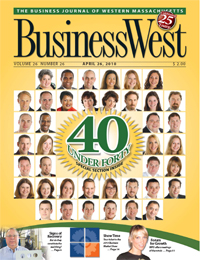
          Uncategorized
          High-speed Rail a Clean Win for Commuters

          Americans traveling this holiday season were no doubt frustrated by long lines at airports and congestion on the roadways, caused by years of neglect to our national infrastructure. President Obama has an ambitious plan to fix these problems, which includes the creation of a nationwide network of high-speed and intercity passenger rail routes.

          To advance this goal, the president made an $8 billion down payment through the American Recovery and Reinvestment Act and proposed another $1 billion for each of the next five years. Nearly 40 states have applied for this money.

          To assist states, the Department of Transportation is providing funding and technical expertise as they meet important environmental planning benchmarks created by federal law. These benchmarks must be met before large-scale high-speed rail programs get underway, and they apply to every region of the country. Our goal is to make sure states follow these rules and are not burdened later with unnecessary project delays that drive up costs and hinder the long-term success of projects.

          As a former secretary of transportation for Maryland, I know the issues faced by communities on the Northeast Rail Corridor. The Obama adminsitration is committed to the region, and the Northeast Corridor will certainly be part of our future high-speed rail network. Just last year, we opened up a new bridge over the Thames River in Connecticut, and there is a $100 million project underway to replace the Niantic Bridge through Recovery Act dollars. There are plenty of other opportunities to maintain and improve Amtrak’s current high-speed service on the Northeast Corridor.

          The benefits of high-speed rail also include improving the environment by reducing carbon emissions, lessening highway congestion, and providing a much-needed alternative to the frustrations of air travel.

          We are building long-term relationships with states and coalitions of states to build world-class high-speed rail service, something that already exists in Europe and Asia. The U.S. program will provide tens of millions of Americans with transportation options that have not previously been available.

          The program will also offer relief to communities around the country that rely on manufacturing and that have been hard-hit economically. In fact, nearly three dozen rail manufacturers and suppliers, both domestic and foreign, have committed to establish or expand their operations here in America if they are chosen by states to build their high-speed rail lines.

          This effort will take work from all sides: a continued commitment from the federal government to support these investments, real oversight to make sure these new lines are safe and reliable, and a sustainable funding stream from states to maintain these routes. Through these efforts, we will improve the quality of life in many communities across the country, including those along the Northeast Corridor.

          John D. Porcari is the U.S. deputy secretary of Transportation.

          Uncategorized
          Nominations Sought for the Class of 2010

          After three successful years of its 40 Under Forty recognition program, one might think BusinessWest is running out of stories to tell of young professionals making a difference in the Pioneer Valley.

          But that would be wrong. And we’re asking you, the readers, to prove us correct by nominating a new batch of fresh faces for the class of 2010.

          Since 2007, BusinessWest’s 40 Under Forty has captured the attention and respect of the region’s business community, bringing into focus what most already know: that Western Mass. is home to a creative, motivated, and successful group of young business leaders, entrepreneurs, and innovators — people who, even in tough economic times, are redefining what it means to grow successful businesses and serve their communities with whatever spare time they have left over.

          Michelle Sade, operations manager for United Personnel in Springfield, said she was honored to be part of last year’s 40 Under Forty class. As a founding member of the Young Professional Society of Greater Springfield — which placed several of its members in the class of 2009 — she has expressed a passion for cultivating young talent in the region, and said BusinessWest’s annual program bolsters that effort.

          “It definitely highlights the amount of talent throughout the Pioneer Valley,” Sade said. “The Young Professional Society has worked to allow those talented young professionals to come together and network, and what BusinessWest has done is to put the spotlight on some of the rising stars of that group.”

          That sort of sentiment is gratifying to hear, said Kate Campiti, associate publisher of the magazine, noting that the program was created to draw attention to not only the depth of young talent in the region, but also its diversity, both demographically and in the types of work they do.

          “We’re telling the story of young people doing some incredible things,” said Campiti, “but we’re also telling the stories of the ventures they’ve started, the established companies they work for, and the nonprofits they lead. Add it all up, and it paints a bright picture of the region and its future.”

          The 120 previous honorees have emerged from law, education, retail, health care, social services, finance, and many other fields — some forging completely new paths in computer technology, renewable energy, and ‘green’ business. In all cases, they have been successful in business and active in civic volunteerism, the latter being a critical consideration when judging applicants.

          As in the past three installments of Forty Under 40, the winners will be profiled in an upcoming issue of BusinessWest — always a must-read issue — and toasted at a gala reception in the spring.

          Without fail, the 40 Under Forty honorees say they’re impressed with the quality of the people they meet at this event, and consider it a springboard for long-term networking.

          “It was wonderful, and the exposure to such quality people was amazing,” said Renee Stolar, president of J. Stolar Insurance Co. in Palmer, another member of the class of 2009. “I’ve been able to keep in touch with many of them, so this opened the door to a whole realm of people I probably never would have met otherwise. I was very happy with the whole experience.”

          The nomination form can be found on page 22 of this issue. It will be reprinted in upcoming issues as well, and may also be printed from businesswest.com. The deadline for entry is Feb. 19.

          After the deadline passes, the nominations will be scored by an independent group of judges comprised of area business leaders and previous 40 Under Forty honorees. They will be tasked with carefully weighing the achievements and community commitment of those who are nominated by their peers over the next two months.

          “I don’t know how you can choose when so many people are doing such good things, and have such talents and passions and things they feel are important to the revitalization of the area,” Sade said. “Everyone has a different idea what that means; if you look at the 40 Under Forty, every one of them is trying to make a positive impact on their business, their community, a nonprofit — and in some ways that are quite remarkable.”

          She cited the example of Kathy LeMay, who received the highest scores in last year’s judging. LeMay’s Florence-based company, Raising Change, cultivates connections between philanthropists and nonprofit agencies, and she’s made a difference to the tune of hundreds of millions of dollars raised.

          “She’s amazing,” Sade said. “These are people doing some amazing things.” She added that the 40 Under Forty annually makes an example of young people who are not leaving the Valley, but are trying to make it a better place to live and work. “They’re just inspiring.”

          If you’ve been similarly inspired by a young professional making that kind of difference, don’t hesitate to fill out a nomination form. – Joseph Bednar

          Class of 2007

          Opinion
          Decision Looms for ‘Death Tax’

          I know you’re eager to return to those thrilling days of yesteryear — the Bush presidency — and there’s a pressing matter from that era on the national agenda: what to do about the estate tax. We have until New Year’s Day to settle this question, a small window on our values as a country. The background: on the charge that the ‘death tax’ was a punishing money grab from small businessmen and women — coming while they grieved a lost loved one, no less — opponents in 2001 succeeded in increasing the exemption; the tax currently kicks in on inheritances above $3.5 million rather than the old tax’s $1 million. The maximum tax rate, then 55%, was dropped to 45%.

          When the Times Square ball rings in 2010, the tax will vanish altogether. Your ticket to the great beyond is tax-free next year. But not if you survive into 2011: because of deficit concerns, opponents had to agree that the tax would return that year, with a rate and exemption at their 2001 levels. This fiscal sleight-of-hand, disdained by all sides, has produced a yuletide debate. Should we repeal next year’s repeal to contain federal red ink, and if so, what should the rate and exemption be? Or do we just kill the tax permanently, as opponents have always urged? President Obama proposes threading the needle by keeping the tax next year but making permanent its current lowered rate and higher exemption. Boston College law professor Ray D. Madoff counters that that would cost the Treasury more in the coming decade than doing nothing. She proposes shielding family businesses under $10 million from the tax but preserving it at some level otherwise.

          Both points are spot-on. The case against the death tax (opponents’ term) has always been daffy. Aug. 24, 2000 has passed into political lore as the day that Montana rancher Lynn Cornwell hopped atop a tractor to deliver a repeal plea to President Clinton at the White House. That same day, then-Republican House Speaker Dennis Hastert declared that the tax “is so steep that sometimes the deceased owner’s children must break up a farm or sell a business just to cover the tax.’’ But the tractor drive was a stunt. Far from being a victim of the tax man’s greed, Cornwell has benefited from taxpayer largesse. In the years after his ride, he pocketed $400,000 in federal farm subsidies and fed his herd on federal land at below-market rates, according to William H. Gates Sr. and Chuck Collins, two well-off men who wrote a book supporting retention of the tax.

          And Hastert’s point? You could fertilize Montana with what the speaker was shoveling. In 2001, the New York Times asked the American Farm Bureau Federation, a repeal advocate, for examples of families that had to give up their farms because they couldn’t afford the estate tax. The federation found exactly zero victims. Five years later, the Times reported that just 50,000 families will be subject to the tax in 2011. They’re in a tax bracket that means they’ll be able to pay the IRS without having to miss the mortgage payment, turn off the electricity, or eat cat food.

          Won’t killing the tax help during a recession? Tax cuts for average people who need to spend their money on necessities would indeed be smart in a downturn. But with the estate tax, we’re talking about the wealthiest Americans, people more likely to save their windfall, not spend it. As for arguments that the tax smothers job growth, President Clinton left the tax alone during the 1990s. Job growth sure was slumming it then, wasn’t it? Keeping taxes low and simple is sound policy. It is perfectly compatible with an estate tax.

          Many of the same politicians who oppose the tax bray out of the other side of their mouths about swelling deficits. Meanwhile, a writer for the Weekly Standard made the conservative case for the tax: success in America should come from hard work and talent, not from being one of the “undeserving winners of the sperm lottery.’’

          Rich Barlow is a freelance writer in Cambridge.

          Departments

          The following is a compilation of recent lawsuits involving area businesses and organizations. These are strictly allegations that have yet to be proven in a court of law. Readers are advised to contact the parties listed, or the court, for more information concerning the individual claims.

          CHICOPEE DISTRICT COURT

          Jan & Lydia Wanat v. Sturdy Home Improvement Inc. and Adam Lucey
          Allegation: Breach of contract for installation of windows on the plaintiffs’ home: $17,500+
          Filed: 10/29/09

          FRANKLIN SUPERIOR COURT

          Baron P. Spencer v. Heat Fab Inc.
          Allegation: Negligent maintenance of property, causing personal injury: $296,585.44
          Filed: 11/13/09

          HAMPDEN SUPERIOR COURT

          American Express Bank FSB v. Francis & Phil Beaulieu & Son Home Improvement Inc.
          Allegation: Breach of contract on credit card accounts: $49,417.60
          Filed: 10/13/09

          Bank of America v. the Hot Spot Corp.

          Allegation: Breach of contract and monies owed on credit card account: $33,679.27
          Filed: 9/01/09

          Christopher Eldridge v. Salty Dog Saloon Inc.
          Allegation: Negligence causing personal injury: $98,754.17
          Filed: 10/07/09

          Independent Expert Panel, LLC v. Patient EDU, LLC
          Allegation: Action for breach of a consulting agreement: $68,280
          Filed: 10/15/09

          Julius & Dimitra Kenney v. GFI Prospect Development, LLC
          Allegation: Enforcement of a judgment entered in district court: $62,142.70
          Filed: 10/16/09

          HAMPSHIRE SUPERIOR COURT

          James Chicoine v. Paradise City Tavern
          Allegation: Overcrowding of facility and negligent property maintenance, causing personal injury: $67,261.14
          Filed: 11/02/09

          NORTHAMPTON DISTRICT COURT

          Cappaccio Home Improvement v. 33 Washington Street Apts.
          Allegation: Non-payment of labor and materials for construction and repair work: $6,395
          Filed: 11/04/09

          SimplexGrinnell, LLC v. CAP Development Inc. and Trak Petroleum, LLC
          Allegation: Non-payment of goods and services rendered: $27,320
          Filed: 10/20/09

          SPRINGFIELD DISTRICT COURT

          East Coast Orthodontic Laboratory Inc. v. Bruce S. Fieldman, D.M.D., P.C.
          Allegation: Non-payment of orthodontic products sold and delivered: $14,180.22
          Filed: 10/26/09

          Liberty Mutual v. A&T Taxi & Livery, LLC
          Allegation: Unpaid balance on workers’ compensation insurance: $27,778.86
          Filed: 10/27/09

          Liberty Mutual v. Bog Cat Builders Inc.
          Allegation: Unpaid balance on workers’ compensation insurance: $7,618.24
          Filed 10/27/09

          Liberty Mutual v. D. Curring Trucking Inc.
          Allegation: Unpaid balance on workers’ compensation insurance: $6,041.28
          Filed: 10/27/09

          Liberty Mutual v. J.G. Plastering Inc
          Allegation: Unpaid balance on workers’ compensation insurance: $10,925.07
          Filed: 10/27/09

          Liberty Mutual v. J.B. Silva Co.
          Allegation: Unpaid balance on workers’ compensation insurance: $9,351.10
          Filed: 10/27/09

          Old Dominion Freight Line Inc. v. Omniglow, LLC
          Allegation: Non-payment of shipping charges: $4,422.12
          Filed: 10/29/09

          Plimpton & Hills Corp. v. Lessard Plumbing & Heating
          Allegation: Non-payment of goods sold and delivered: $19,986.53
          Filed: 10/27/09

          Departments

          Dean McKenzie, M.D., MHSA, has joined Providence Behavioral Health Hospital in Holyoke as Chief Medical Officer. In this role, McKenzie acts as a liaison between administration and members of the medical staff to support patient care services, while focusing on quality of care, patient satisfaction, risk management, and patient safety. A graduate of Hope College and the University of Michigan Medical School, McKenzie served his residency in the Department of Psychiatry at the University of Arizona. He is board-certified in psychiatry and neurology. He most recently served as Utilization Management Medical Director for Magellan of Arizona, a state-contracted, regional behavioral-health authority that provides a wide range of services, including crisis assistance, children’s services, and substance-abuse treatment.

          •••••

          Jennifer L. Snyder, Esq. has opened the Hadley Law Center at 216 Russell St., Hadley. Areas of practice include elder law, special needs, estate planning, and family law.

          •••••

          Christina J. Quinby has been promoted to Community Development Planner at the Pioneer Valley Planning Commission in Springfield. She joined the organization in 2008 as a Planning Assistant following an internship in the Community Development section. She holds a master’s degree in Social Work from Boston College.

          •••••

          Attorney L. Alexandra Hogan of Shatz, Schwartz and Fentin, P.C. in Springfield recently lectured on “Massachusetts Data Security Law, Compliance, and Confusion” with Marco Liquori, President of Net Logix Inc., of Westfield, at the 48th annual Tax Institute seminar at Western New England College in Springfield. Their presentation focused on the new law and compliance requirements state businesses must have in place to protect their clients’ and customers’ personal information.

          •••••

          Susan Leschine, co-founder of Qteros, has been named one of the Top 25 Women in Tech by media trendsetter AlwaysOn. Those named to the first-annual list were chosen for overall innovation, ability to identify new market opportunities, and creation of stakeholder value, among other criteria. In her lab at UMass Amherst, Leschine continues to work diligently on the Q microbe for ethanol production.

          •••••

          Dr. Keisha A. Jones has joined Baystate Urogynecology where she will assist Dr. Oz Harmanli, Chief of the Urogynecology and Pelvic Reconstructive Surgery division at Baystate Medical Center in Springfield. Jones completed a fellowship in female pelvic medicine and reconstructive surgery at Magee-Women’s Hospital in Pittsburgh. She earned her medical degree from Virginia Commonwealth University, completed her internship and residency at Yale New Haven Hospital in Connecticut, and earned a master’s degree in clinical research from the University of Pittsburgh. She will serve as Resident Rotation Coordinator in Urogynecology at Baystate.

          •••••

          Ben Scranton, Executive Vice President of the Realtor Assoc. of Pioneer Valley, was recently honored by the National Assoc. of Realtors with its certified executive designation, which recognizes exceptional efforts made by association executives. Scranton is one of more than 360 executives who have achieved this mark of excellence.

          •••••

          Marysue Mooney has been promoted to Classified Advertising Manager at The Republican in Springfield.

          •••••

          Dr. Tashanna K.N. Myers has joined the Baystate Regional Cancer Program’s Gynecologic Oncology Division at Baystate Medical Center in Springfield. Myers completed her fellowship in gynecologic oncology at the University of Oklahoma. She completed her doctor of medicine in obstetrics and her residency at Temple University School of Medicine in Philadelphia. She also holds a bachelor’s degree in English from Yale University.

          •••••

          Paul Papaluca of the Sydney Hirsch Team at RE/MAX Prestige in East Longmeadow, has earned the Certified Distressed Property Expert designation, having completed extensive training in foreclosure avoidance and short sales.

          •••••

          Vikki D. Lenhart has joined the Hart & Patterson financial planning team in Northampton. She holds Series 7 and Series 66 licenses and is licensed in life, accident, and health insurance.

          •••••

          Howard Stanton III recently joined Rockville Bank as Controller. He will be responsible for planning, organizing and directing the accounting and financial control activities of the bank, its holding company, and all subsidiaries.

          •••••

          Dr. Neal C. Hadro has joined the medical staff of the heart and vascular program at Baystate Medical Center in Springfield. He comes to Baystate from the Cleveland Clinic and Marymount Hospital in Garfield Heights, Ohio, where he served as faculty and as a staff vascular and endovascular surgeon. He earned his medical degree at Tufts University School of Medicine in Boston and completed his residency in general surgery, as well as a peripheral vascular surgery fellowship, at Walter Reed Army Medical Center in Washington. Hadro also completed an endovascular fellowship at New York Presbyterian Hospital. He is board certified in surgery with added qualifications in vascular surgery.

          •••••

          Corey M. Dennis has joined the law firm Skoler, Abbott & Presser in Springfield as an Associate representing management in labor and employment-law litigation.