Home Posts tagged Law (Page 38)
Agenda Departments

District Attorney Candidates Forum

Sept. 7: Western New England College School of Law will host a forum featuring the candidates for the office of Hampden County District Attorney at 6 p.m. in the Blake Law Center’s J. Gerard Pellegrini Moot Court Room. The event is free and open to the public. The candidates will face questions from a panel including a journalist, a local criminal attorney, and a professor from the School of Law. The forum is scheduled for approximately 90 minutes. WNEC is located at 1215 Wilbraham Road in Springfield.

CORI Board Training

Sept. 14: The Berkshire Area Health Education Center is collaborating with the Mass. Criminal Systems History Board to sponsor training on criminal offender record information (CORI) from 1 to 3 p.m. at Berkshire Hills Country Club in Pittsfield. The training is for staff of agencies who are certified to request CORI information for non-criminal-justice purposes. A $13 fee covers the cost of the venue and refreshments. To register or for more information, visit www.berkshireahec.org   or call (413) 447-2417.

EANE Healthcare Conference

Sept. 16: The Employers Assoc. of the NorthEast will conduct its annual Health Care Conference from 7:30 a.m. to noon at the Publick House in Sturbridge. A panel of experts, representing insurance carriers, brokers, health care providers, and legal professionals, will discuss the challenges of the changing health-care-reform landscape. Attendees will be encouraged to ask questions of the panel. For more information on the conference, contact Karen Cronenberger at (877) 662-6444 or [email protected] .

Mountain Park Memories

Sept. 17: The Holyoke Merry-Go-Round is inviting area residents to take a trip down memory lane with an event called Mountain Park Memories, slated for 6:30 p.m. at the Log Cabin Banquet & Meeting House. The event, a fund-raiser for the Merry-Go-Round, will capture the history and nostalgia of the amusement park located near the base of Mount Tom, which closed in the 1987 after operating for nearly a century. The program will include memorabilia, games, auctions, food stations, and music by Joe Canata & the Memories. Tickets are $45 per person. To order tickets, or for more information, call (413) 538-9838, or visit www.holyokemerrygoround.org .

Financial Pathways at Bay Path

Sept. 19: Intuition, creativity, and empathy are characteristics women can leverage to take control of and build their personal wealth. Bay Path College will continue its Financial Pathways series from 2 to 4 p.m. by examining these traits with A Purse of Your Own author Deborah Owens. Owens will highlight simple approaches to understanding investments and share the seven wealthy habits of successful women. The seminar is planned for the Blake Student Commons on the Longmeadow campus, 588 Longmeadow St. A question-and-answer session and book signing with Owens will follow the presentation. To build on the series’ philanthropic participation, attendees are asked to bring a gently used purse to the workshop as a donation to the college’s Professional Clothing Closet, which provides each undergraduate with one professional outfit as they begin their careers. Registration is required, and light refreshments will be served from 1:30 to 2 p.m. during event registration. Tickets are $10 each or $15 for two when signing up with a friend. To register or for more information, contact Mary Pajak at (413) 565-1115.

Sunday Brunch with Dr. Joy Browne

Sept. 19: Radio psychologist Dr. Joy Browne will be the guest speaker at a program, slated for noon to 3 p.m., sponsored by the UMass Amherst Family Business Center at the Log Cabin Banquet & Meeting House in Holyoke. Browne’s nationally syndicated daily radio show can be heard on the WOR Radio Network weekdays from noon to 3 p.m. A licensed clinical psychologist, Browne will answer questions about family, business, and family business. For more information on the program, contact Ira Bryck at (413) 545-1537, or visit www.umass.edu/fambiz .

Rick’s Place Open House

Sept. 21: Rick’s Place recently moved into a new facility at Kids Village, 35 Post Office Park, Suite 3514, Wilbraham, and an open house is planned from 3:30 to 5:30 p.m. to introduce its services to the public. Established in memory of Rick Thorpe, who died in Tower Two of the World Trade Center on 9/11, Rick’s Place provides a supportive and secure environment for grieving families. Scheduled two weeks before grand opening day, the open house will raise awareness of the work being done by staff and volunteers. For more information, visit www.ricksplacema.org .

Springfield Developers Conference

Oct. 27: The Naismith Memorial Basketball Hall of Fame in Springfield will be the setting for the 2010 Springfield Developers Conference, sponsored by the City of Springfield. The conference theme is “Innovate, Grow, Create … Make It Happen,” and will highlight opportunities to incorporate new technologies and innovative practices in the building, energy, and information-technology industries to improve one’s business. Exhibitor and sponsorship opportunities are still available. For more information, contact Samalid Hogan at (413) 787-6020.

Get on Board

Oct. 28: OnBoard, a Springfield-based nonprofit, hopes to connect local organizations with individuals looking to increase their involvement in the community, from 5 to 8 p.m. at the Naismith Memorial Basketball Hall of Fame. The event will take place at Center Court, where attendees will meet with as many as eight or more organizations. The meetings will be orchestrated using the ‘speed-dating’ format, with individuals spending a few minutes with an organization of their choice and, on the sound of the basketball buzzer, moving to the next. Representatives from each organization will discuss their history, mission, and goals, and what it is they are looking for in board members. Interested individuals will have the chance to explain what skills and interests they have to make a potential match. The event is free and open to the public. For more information, call Elizabeth Taras at (413) 687-3144 or Brittany Castonguay at (413) 737-1131, or visit www.diversityonboard.org .

Advanced Manufacturing Competition & Conference

Nov. 16: The first highly concentrated, cluster-centric, regional manufacturing conference of its kind will be held at the MassMutual Center in Springfield. The event, called the Advanced Manufacturing and Innovation Competition & Conference (AMICCON), is being staged in response to growing recognition among area manufacturers and supply chain members that there is an urgent need to find and meet one another. “AMICCON was formed to identify who’s here in manufacturing, expose them to OEMs (original equipment manufacturers) and procurement, and to make these introductions,” said co-founder Ellen Bemben. “The ultimate goal is to be the advanced manufacturing region in the U.S., where exotic manufacturing, such as micro, nano, and precision, meet higher specifications and tighter tolerances, and short runs are the norm.” Industry sectors to be represented at the event will include plastics and advanced materials, precision machining, paper and packaging, electronics, ‘green’/clean technology, and medical devices. Business opportunities in defense and aerospace will also be highlighted at the event. OEMs and their supply chains are being invited personally to participate. “AMICCON is a new consortium on innovation that also delivers manufacturers to innovators and new markets in order to cause new business,” said Gary Gasperack, vice president and general manager (retired) of the Spalding Division of Russell Corp. “We are very excited about introducing it to our region.” The Mass. Export Center has already produced two programs for AMICCON: an Export Experts Panel, and a seminar, “International Traffic in Arms Regulations for Defense and Aerospace Export.” For more information, visit www.amiccon.com .

Briefcase Departments

AIM’s Business Confidence Index Stumbles in July

BOSTON — The Associated Industries of Massachusetts Business Confidence Index dropped 5.2 points in July to 48.5, falling below 50 — neutral on its 100-point scale — after moving into positive territory in May and June. This is the index’s most significant monthly setback since it bottomed out in February 2009, according to Raymond Torto, global chief economist at CB Richard Ellis Group Inc. and chair of AIM’s board of economic advisors. Despite 14 gains in the previous 16 months, Massachusetts employers’ doubts about the strength and staying power of the economic recovery have been evident throughout, and those concerns are now coming to the fore, he added. Torto noted there are global as well as domestic issues in play; the fate on the euro, for example, will affect Massachusetts exports. The quarterly Massachusetts Consumer Confidence Index, released by Mass Insight, showed similar backsliding. Mostly due to concerns on jobs, the July Consumer Confidence Index fell 19 points to 61, its lowest level since last year. Torto added that weakening consumer confidence, nationally and here in Massachusetts, is a grave concern for employers because there can be no real economic recovery unless consumer spending picks up. AIM’s Business Confidence Index has been issued monthly since July 1991. Its historical high was 68.5, attained in 1997 and 1998; its low was 33.3 in February 2009. The Index was up 3.7 points from July 2009 and 4.1 over two years, but down 6.5 from July 2007. All of the sub-indices based on selected questions or respondent characteristics lost ground in July along with the main index, but there was marked variation in the magnitude of the declines. The Current Index of conditions prevailing at the time of the survey was off 2.2 points to 49.1, while the Future Index of expected conditions six months ahead plunged eight points to 48.1. The Massachusetts Index of business conditions prevailing within the Commonwealth fell 6.1 points to 41.7, but remained above the U.S. Index of national conditions, which lost 6.6 to 38.2. The Company Index, which measures survey respondents’ overall confidence in the situations of their own operations, was down 3.9 points in July to 55.0. The Employment Index held up well, edging off eight-tenths to 53.7, but the Sales Index dropped seven points to 54.4. Confidence was lower in July among manufacturers (down 4.3 to 52.5) and among other employers (down 6.2 to 44.2). Manufacturers were more likely to call current conditions for the companies ‘good’ (50% to 35%), were more positive about sales and employment, and foresaw less deterioration of conditions ahead. Respondents outside Greater Boston were slightly more confident (down1.6 to 49.5) than those within the metropolitan area (down 7.9 to 47.8). Employers of all sizes were less confident in July, with an especially steep decline among small companies. The monthly Business Confidence Index is based on a survey of AIM member companies across Massachusetts, asking questions about current and prospective business conditions in the state and nation, as well as for respondents’ own operations.

Former Mastex Site Chosen for Computing Center

HOLYOKE — After months of speculation, state officials revealed announced recently that the former Mastex Industries Inc. facility on Bigelow Street would become the site for a highly anticipated high-performance computing center. Gov. Deval Patrick, flanked by state and local officials, including Holyoke Mayor Elaine Pluta, U.S. rep. John Olver, and UMass President Jack Wilson, made the announcement, calling this “one of the most excitinjg developments in Western Massachusetts.” The project, which will entail an initial investment of $168 million, has a number of partners, including the state, UMass, MIT, Harvard, Boston University, Cisco Systems, and EMC Corp. Officials expect that the center will create only about 20 full-time positions, but that the computing capacity may eventually lure other companies and perhaps government agencies to the area.

Callaway Announces More Job Cuts at Chicopee Plant

CHICOPEE — Callaway Golf Corp. announced recently that it will substantially reduce its workforce in Chicopee over the next 12 to 18 months as it continues to expand golf ball and club manufacturing operations at its location in Mexico. The cuts are expected to leave the plant, which employed roughly 600 people as recently as the fall of 2008, with 150-200 workers. In a prepared statement, the company, Callaway cited a softness in the golf industry as one of the reasons for the move to Mexico.

Bay State Continues to Add Jobs

BOSTON — Massachusetts employers continued to add jobs for the sixth consecutive month in July, continuing a pace of growth that is well ahead of the nation’s. The state gained more than 13,000 jobs in July, while data revisions showed that employment growth in June, nearly 3,000 jobs, was far stronger than initially estimated, according to the Executive Office of Labor and Workforce Development. The state unemployment rate held steady at 9%.

Legislation Reduces Health Care Costs for Small Businesses

BOSTON — Governor Deval Patrick recently joined legislative leaders and small business owners to sign legislation that could save small employers up to 12% on insurance premiums, increase transparency among providers and insurers, and improve the quality of health care for residents across the state. The law also makes small businesses eligible for savings on health care premiums, and will allow them to be able to pool their resources and establish cooperatives for the purpose of purchasing health insurance. As part of his efforts to control skyrocketing health care costs, Patrick has instructed the Division of Insurance to review rates from carriers using the Division’s existing authority..

Sections Supplements
Knowledge of the Law Can Be Your Best Asset When Coping with These Issues

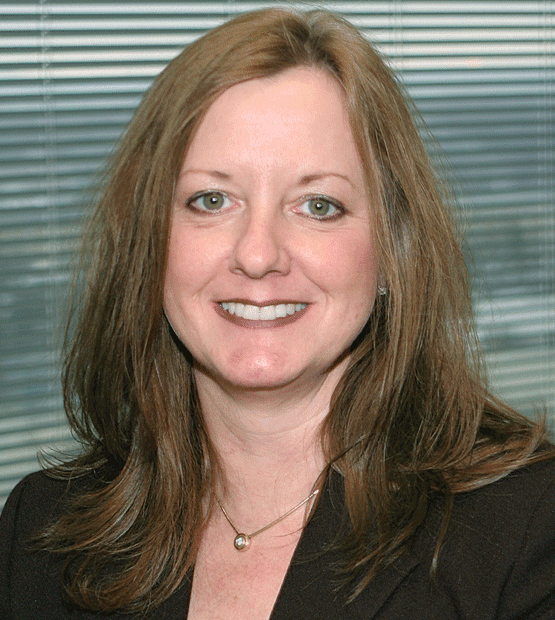
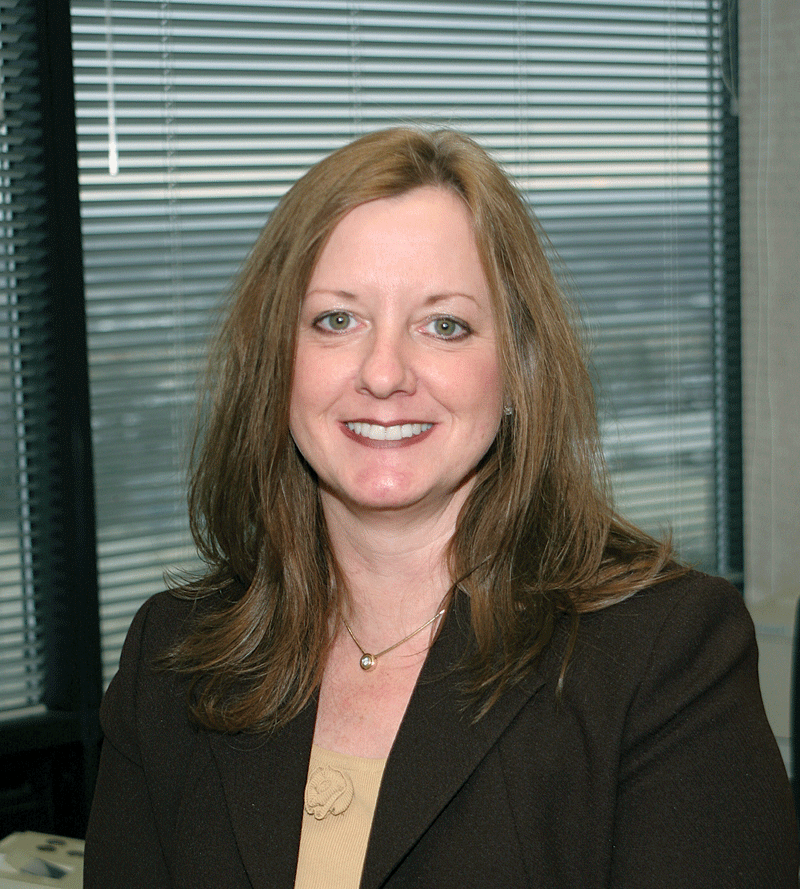
Gina Barry

Gina Barry

Certain ideas with respect to estate planning are widely accepted, yet unfortunately, inaccurate. This article will reveal and explain the most commonly stated estate planning myths.

Myth No. 1: ‘If I have a valid will, my estate does not have to go through probate.’
Many people believe that having a will means that their estate will not have to be probated when they pass away. A will is a document that, in part, gives instructions as to the distribution of the assets in the decedent’s probate estate. The assets in the probate estate are those assets that are held in the decedent’s name alone that do not have a designated beneficiary. Thus, whether or not probate is needed is not based upon whether or not the decedent had a will; rather, it is based upon how the assets are owned by the decedent.
If the decedent left probate assets, then in order for their will to ‘speak,’ a probate estate must be opened. If all the assets held in the decedent’s name are jointly owned with a right of survivorship or have named beneficiaries, then there is no need for probate.

Myth No. 2: ‘I can give away $10,000 to as many people as I want each year, but if I give more, then I have to pay gift tax.’
This myth emanates from the gift-tax system. In 2010, the rule with respect to gift tax is that you may give up to $13,000 to as many people as you want without having to file a gift-tax return. Note that the amount that can be gifted is stated incorrectly in the myth because most people remain unaware of the ongoing increases to the allowable gift amount.
Also under the current rules, even if a gift-tax return must be filed because more than $13,000 is given to one person, the giver of the gift will not pay any gift tax until he or she has gifted more than $1 million during their lifetime. Thus, if a person has $100,000 and gives all of it away in one year to one person, they will need to file a gift tax return, but they will not owe any gift tax because the gift does not exceed the lifetime threshold.

Myth No. 3: ‘I can give away assets when I enter a nursing home and still obtain Medicaid benefits.’
When faced with a nursing home bill of approximately $8,000 per month, many people wish to obtain Medicaid benefits to pay for this care. In order to obtain Medicaid benefits, an asset limit must be met; therefore, assets valued above this amount must be reduced to the asset limit before benefits will be granted. In their efforts to reduce the excess assets, many people believe that they can gift the excess assets due to the gift-tax exclusion explained in Myth No. 2. While a person can make a gift of up to $13,000 per person in 2010 without filing a gift tax return, the Medicaid program is not governed by the gift tax rules.
The Medicaid program imposes a penalty when any assets are given away within five years of the application for benefits, except in very specific circumstances. This penalty results in being unable to obtain Medicaid benefits for at least five years after such a gift is made. Thus, a gift of any amount will typically result in a penalty being imposed even if the gift does not have to be reported on a gift-tax return.

Myth No. 4 – ‘If I need nursing home care, Medicare will pay for my care.’
In part, this myth is perpetuated due to the fact that “Medicare” sounds very much like “Medicaid,” which does pay benefits for nursing home care for approved applicants. Medicare Part A will pay for medically necessary inpatient care in a skilled nursing facility, but only following a three-day hospital stay. Medicare will pay for up to 100 days of skilled nursing care or rehabilitation services. The actual length of benefits could be much shorter than 100 days if those services are no longer required.
When Medicare benefits are paid, Medicare pays 100% of the cost for the first 20 days, but only 80% of the cost of the next 80 days. Most Medicare recipients also have Medigap insurance, which will pay the balance not paid by Medicare. When Medicare benefits are exhausted, an alternative payment source is needed to pay for ongoing nursing home care.

Gina M. Barry is a partner with the law firm of Bacon Wilson, P.C., Attorneys at Law. She is a member of the National Assoc. of Elder Law Attorneys, the Estate Planning Council, and the Western Mass. Elder Care Professionals Association. She concentrates her practice in the areas of estate and asset-protection planning, probate administration and litigation, guardianships, conservatorships and residential real estate; (413) 781-0560; [email protected].

Briefcase Departments

State’s Economy Outpaces That of the Nation

BOSTON — The Bay State’s economy expanded twice as fast as the nation’s during the second quarter of the year, boosted by federal stimulus spending, demand for technology products, and the strongest job growth since the so-called miracle years of the 1980s,UMass reported recently. In its quarterly journal Benchmarks, UMass reported that the three-month period ending June 30 was the fourth consecutive quarter in which the state outpaced national economic growth. Analysts, however, warned that the state’s economy is likely to slow as stimulus programs fade and a weakened national recovery tempers economic growth here. “Government spending has played a much greater role in stimulating growth and encouraging consumer spending,” Robert Nakosteen, an Economics professor at the UMass Isenberg School of Management, told the Boston Globe. “Going forward, however, government stimulus is waning, and it is far from certain that private-sector spending will take up the slack.” The state’s economy grew at a 6.4% annual rate last quarter after expanding at a 4.1% rate in the first quarter and 6% at the end of last year, according to UMass. Nationally, economic growth was a sluggish 2.4% annual rate in the second quarter after expanding 3.7% in the first quarter and 5% in the fourth quarter of 2009, according to the U.S. Commerce Department.

Tech Park Releases Economic-impact Report

SPRINGFIELD — The economic impact of the Springfield Technology Park adjacent to Springfield Technical Community College is positive, according to recently released results of a report by the Center for Economic Development at UMass. The economic-impact report indicates that the nearly 900 jobs at the park create an additional 1,267 jobs in the regional economy due to the multiplier effect. Some $1.4 million is pumped into the local economy due to park management’s policy of favoring local contractors and service providers. In addition, the report indicates an estimated payroll of $37 million and estimated capital investments over the past three years of $4 million. Principal investigators and authors of the study are Zenia Kotval, Ph.D., and John Mullin, Ph.D., from UMass. The 15-acre park was founded in 1996 through an act of the Massachusetts Legislature and is the only technology-based business park connected to a community college in the U.S. The secure, gated site is a center of innovation with more than 70% tenant companies involved in the tech and engineering sectors.

AMICCON Organizers Move Event to Nov. 16

SPRINGFIELD — Organizers of the Advanced Manufacturing & Innovation Competition and Conference (AMICCON), www.amiccon.com, have moved the event from Sept. 23 to Nov. 16 in order to better respond to and convert the overwhelming response it has received from manufacturers, their supply chains, state organizations (from Massachusetts and Connecticut), and the business community as a whole. “We expected a good response to the AMICCON project, but the initial high caliber of participation set the bar very high,” said co-founder Ellen Bemben. “It is now clear that a few more weeks after the Labor Day holiday are necessary in order to satisfy the additional interest that those nationally acclaimed manufacturers are generating for a greater event.” Top companies in their industry sectors have confirmed their participation and support, including original equipment manufacturers (OEMs) such as Smith & Wesson, Callaway Golf, Savage Arms, FloDesign, and PolyOne, and precision manufacturers like B & E Precision Aircraft Components, D & S Manufacturing, United Plastics Group, and Boyd Technologies. With the momentum of media coverage, from Springfield to Chicago and beyond, preparations for the June 2011 national Advanced Manufacturing Innovation Competition are on schedule with co-chairs Paul Silva of Angel Catalyst in South Hadley and Michael Gurau of Clear Venture Partners in Freeport, Maine. Private investment firms are already offering their support for the unique competition with a $50,000 purse.

Construction Backlog Edges Higher

WASHINGTON, D.C. — Associated Builders and Contractors (ABC) recently reported that its latest Construction Backlog Indicator (CBI) increased to seven months in May, a 27% increase from January of this year. CBI is a forward-looking indicator that measures the amount of construction work under contract to be completed in the future.

Among the regional highlights: compared to a year ago, all regions but the South experienced a rise in backlog; the Northeast reports the lengthiest backlog at roughly 7.5 months, the highest level for this region in the history of the survey; and the Middle States report the shortest backlog at roughly 6.6 months. ABC is a national association with 77 chapters representing 25,000 merit-shop construction and construction-related firms with 2 million employees.

Former Finance Control Board Official Pays Penalty

SPRINGFIELD — The state Ethics Commission approved a disposition agreement in which former Springfield Finance Control Board Deputy Director Stephen Lisauskas admitted to violating G.L. c. 268A, the conflict-of-interest law. Pursuant to the agreement, Lisauskas paid a $3,000 civil penalty. The law prohibits a state employee from knowingly, or with reason to know, using or attempting to use his official position to secure for himself or others unwarranted privileges or exemptions that are of substantial value and which are not properly available to similarly situated individuals. Lisauskas did not file a written disclosure with his appointing authority to dispel the appearance of a conflict of interest. The agreement notes that, by using his position as SFCB deputy director, he steered the city of Springfield into investing with Merrill Lynch, when Lisauskas had a friendship with one of the vice president/brokers. Merrill Lynch was given approximately 60% of the city’s investment money to invest and subsequently invested approximately $13 million in risky, mortgage-backed securities which were not on a ‘legal list’ of investments. Those securities lost nearly all of their value. In January 2008, Merrill Lynch agreed to reimburse the city $13.7 million to cover its investment losses and legal fees.

Seminars Slated for Small-business Owners

WARE — The Quaboag Valley Community Development Corp. is offering seminars for small-business owners and entrepreneurs this fall who want to learn to promote their business. Seminars planned include ‘Growing Your Business Through Marketing and Advertising,’ Sept. 22 and 29, 6 to 8 p.m., in Charlton; and ‘Social-media Networking,’ Sept. 16, 5:30 to 7:30 p.m., in the Sturbridge area. For more information, call (413) 967-3001.

School Conversion Plan Dropped Due to Funding

WESTFIELD — The planned ‘academic village’ at the Westfield Normal School on Washington Street has been dropped due to lack of funding, according to Juan Cofield, president of Boston Realty Associates. Cofield noted that the original plan was to create housing for 90 Westfield State University students. Cofield’s firm would have leased the finished project to Westfield State. College officials will now work with the Mass. State College Building Authority (MSCBA) to determine if converting the school site can still be accomplished. MSCBA is responsible for all dormitories on state-college properties.

Union Station Project Back On Track

SPRINGFIELD — The Federal Transit Administration (FTA) recently lifted a freeze on funding for the Springfield Redevelopment Authority’s (SRA) $71 million Union Station project. The freeze was imposed in 2005 after an audit questioned spending by the Pioneer Valley Transit Authority (PVTA) for the intermodal transportation project. With SRA as the lead agency on the project, once all forms are now completed on the federal level, the project should get back on track. The Union Station project proposal includes space for the PVTA, commuter rail, intercity bus operations, Amtrak, and office space related to transit. In addition to federal funding, the project has state and private funding in place. In other news, an FTA study recently estimated at $77.7 billion the cost of bringing systems into a state of good repair. FTA’s National State of Good Repair Assessment Study, requested by the U.S. Department of Transportation, provides a comprehensive study of the nation’s rail and bus transit systems and notes that infrastructure development is needed to rebuild America.

Weston Solutions Expresses Interest in Belchertown Parcel

BELCHERTOWN — For the next several weeks, the town’s Economic Development Industrial Corp. will be working with MassDevelopment to determine if a Pennsylvania-based corporation has the experience and resources to develop the former Belchertown State School property. Weston Solutions Inc., which has a regional office in Connecticut, has expressed an interest in developing the site to build shops, offices, housing, and an assisted-living facility. A letter of interest has been signed with the town that allows the company to investigate financing, contamination, and construction issues facing Parcel B of the site.

Sections Supplements
Begin Planning Now to Take Full Advantage of This Opportunity

James Calnan

James Calnan

If yours is a small business or small tax-exempt organization and you pay at least half of the cost of single health insurance coverage for your employees in 2010, you may qualify for a new tax credit. In 2010 the tax credit can be as much as 35% (25% for tax-exempt organizations) of the premiums you pay on your employees’ behalf.

The tax credit is included in the Patient Protection and Affordable Care Act, which became law March 23, 2010 and is effective Jan. 1, 2010. The new law is intended to encourage small employers to offer health insurance coverage for low- and moderate-income workers by subsidizing premiums paid with a tax credit. Section 45R of the Internal Revenue Code was added to provide for this credit. IRS Notice 2010-44 was written to provide guidance in determining eligibility and to assist in calculating the tax credit.

Amount of the Tax Credit
The maximum amount of the credit is 35% (25% for tax-exempt employers) of a small-business employer’s premium costs in 2010. This rate increases to 50% (35% for tax-exempt) in 2014. To obtain the maximum credit, an employer must have no more than 10 full-time-equivalent employees (FTEs), and the average annual wages of its employees must be no more than $25,000.
For employers with more than 10 but less than 25 FTEs or with average annual wages of more than $25,000 but less than $50,000, the credit gradually phases out according to a formula.
For tax-exempt employers, there is an additional limitation. The maximum credit cannot exceed the sum of income and Medicare tax withheld from employees’ wages for the year and the employer share of Medicare tax on employees’ wages for the year.

Who is Eligible for the Tax Credit?
A qualifying employer must have fewer than the equivalent of 25 FTEs as defined in the act, the average annual wages of its employees must be less than $50,000 per FTE, and the employer must maintain a ‘qualifying arrangement’ under which the employer pays premiums for each employee enrolled in the health-insurance plan in an amount equal to a uniform percentage (not less than 50%) of the cost of coverage. For 2010, under transitional rules, paying 50% of the cost of single insurance coverage will satisfy this requirement.

Do Owners of the Business Count as Employees?
A sole proprietor, a partner in a partnership, a shareholder owning more than 2% of an S corporation, and any owner of more than 5% of any other corporation or business and their family members or members of their household are not considered employees for purposes of the credit. Their wages, hours worked, and premiums paid on their behalf are excluded from any calculations in determining the amount of the credit. This is significant because, in many cases, including owners would disqualify the related employer for the credit.

What is an FTE?
For purposes of this credit, an FTE is an employee that is paid for at least 2,080 hours of service, including vacations and other paid time off. So if an employee works part-time and is paid for 1,040 hours, the employee is considered a half or 0.5 FTE. The law allows three different methods for determining hours of service. To calculate the number of employee FTEs, divide the total hours of service by 2,080 and round down to the next-lowest whole number. Therefore, an employer with 25 or more employees may qualify for the credit if some of the employees work part-time.
Seasonal or temporary workers may be disregarded in determining FTEs and average annual wages unless each works for the employer more than 120 days during the taxable year; however, premiums paid on their behalf may be counted in determining the amount of the tax credit.

Determining the Average Annual Wages
To determine the average annual wages, divide the total wages (as defined for FICA purposes) paid by the employer during the year to the employees that were taken into account in determining FTEs by the FTEs for the same year, and round the result down to the nearest $1,000.

Qualified Insurance Premiums
For years prior to 2014, only premiums paid by the employer to health-insurance issuers, such as an insurance company or HMO licensed to engage in the business of insurance, are counted for purposes of the credit. Qualified health-insurance coverage plans include major medical, dental, long-term care, nursing-home care, home health care, community-based care, or any combination of the above. Also included are specific disease or illness plans, indemnity insurance plans, Medicare, and other supplemental plans.
Each type of plan must separately satisfy the qualifying arrangement requirement first before aggregating the premiums paid by the employer to calculate the allowable tax credit; i.e., at least 50% of premiums must be paid by the employer.
Finally, for taxable years beginning before 2014, the amount of the credit is limited to a percentage of the lesser of 1) the amount of non-elective contributions (premiums) paid by the eligible small employer on behalf of employees under the arrangement during the taxable year, and 2) the amount of non-elective contributions the employer would have paid under the arrangement if each such employee were enrolled in a plan that had a premium equal to the average premium for the small-group market in the state (or in an area of the state) in which the employer is offering health-insurance coverage. The secretary of Health and Human Services (HHS) determines whether separate average premiums will apply for areas within a state (‘sub-state areas’) and also determines the average premium for a state or sub-state area. Revenue Ruling 2010-13 sets forth the average premium for the small-group market in each state for the 2010 tax year. This table can be accessed through www.irs.gov.

Claiming the Credit
The credit is claimed on the small employer’s annual income-tax return. Information will be forthcoming from the IRS for tax-exempt employers on how to claim the credit. It is currently contemplated that the credit will be refundable for tax-exempt employers. Small-business employers whose credit exceeds their current-year income tax can carry the excess credit back one year (except for 2010) and forward 20 years.

Devil in the Details
As with most tax benefits, there are exceptions, conditions, and other complications that can limit the amount of the credit and tax savings:
• Members of a controlled group or an affiliated service group, as defined in the tax regulations, are treated as a single employer for purposes of the credit. Therefore, all employees and all related wages of the control group must be aggregated to determine eligibility.
• The amount of the employer’s deduction for health insurance premiums must be reduced by the amount of the credit claimed in that year.
• There are specific rules as to the effect that state tax credits and subsidies for health insurance may have on the amount of tax credit allowable to the employer.
Although the rules and calculations involved are somewhat complex, the tax credits can save a small employer tens of thousands of dollars in cash flow each year, so it behooves you to do the math.

Start Planning Now
You should engage your CPA or tax advisor now to ascertain whether you might likely qualify for this in 2010. The following steps must be followed to determine whether you are eligible for the tax credit under IRS Code Section 45R:
• Determine the employees who are taken into account for purposes of the credit.
• Determine the number of hours of service performed by those employees.
• Calculate the number of the employer’s FTEs.
• Determine the average annual wages paid per FTE.
• Determine the premiums paid by the employer that are taken into account for purposes of the credit. Specifically, the premiums must be paid by an employer under a qualifying arrangement and must be paid for health insurance that meets the requirements of Section 45R.
• Determine if there are any state tax credits or premium subsidies related to the employer’s health-insurance program.
Running a pro-forma calculation now not only gives you an indication of your eligibility, but also identifies an action plan to take over the remainder of the year to maximize the tax credit, such as timing of premium payments and changing the policy relative to employer-paid premiums.
The accompanying examples of small-employer tax credits published by the IRS (see box) shows the potential savings to small employers.

Conclusion
The small-business health care tax credit could represent the largest federal tax credit ever made available to small employers. Go to www.irs.gov and search for ‘small-business health care tax credit’ to learn more about this credit, including a fact sheet, a worksheet to determine eligibility, frequently asked questions, examples of applying the rules, Notice 2210-44, and Notice 2010-13. n

James B. Calnan, CPA, is a partner with Meyers Brothers Kalicka, P.C. in Holyoke, certified public accountants and business strategists; (413) 536-8510; www.mbkhealthcare.com

Small-Business Health Care Tax Credit Scenarios
Examples of Employers Receiving the Credit

Example 1: Auto-repair shop with 10 employees receives $24,500
credit for 2010.
Main Street Mechanic
n Employees: 10
n Wages: $250,000 total, or $25,000 per worker
n Employee health care costs: $70,000
n 2010 Tax Credit: $24,500 (35% credit)
n 2014 Tax Credit: $35,000 (50% credit)

Example 2: Restaurant with 40 part-time employees receives $28,000
credit for 2010.
Downtown Diner
n Employees: 40 half-time employees (the equivalent of 20 full-time workers)
n Wages: $500,000 total, or $25,000 per full-time equivalent worker
n Employee health care costs: $240,000
n 2010 Tax Credit: $28,000 (35% credit with phase-out)
n 2014 Tax Credit: $40,000 (50% credit with phase-out)

Example 3: Foster care nonprofit with nine employees receives $18,000
credit for 2010.
First Street Family Services
n Employees: 9
n Wages: $198,000 total, or $22,000 per worker
n Employee health care costs: $72,000
n 2010 Tax Credit: $18,000 (25% credit)
n 2014 Tax Credit: $25,200 (35% credit )

Court Dockets Departments

The following is a compilation of recent lawsuits involving area businesses and organizations. These are strictly allegations that have yet to be proven in a court of law. Readers are advised to contact the parties listed, or the court, for more information concerning the individual claims.

CHICOPEE DISTRICT COURT

Helena Borek v. Wholesale Kitchen Supply Co.
Allegation: Breach of contract and unfair and deceptive trade practices: $8,274
Filed: 5/11/10

FRANKLIN SUPERIOR COURT

Nike USA Inc. v. 1793 Corp.
Allegation: Non-payment of goods sold and delivered: $33,835.64
Filed: 6/18/10

Ricky Greenwald v. RTB Design
Allegation: Breach of contract and fraud arising in construction dispute between the homeowner and the designer/builder: $393,055.72
Filed: 6/1/10

GREENFIELD DISTRICT COURT

Weddingpages Inc. v. Sakura Bloom, LLC
Allegation: Non-payment of advertising services rendered: $5,324.40
Filed: 7/1/10

HAMPDEN SUPERIOR COURT

Adam P. Clermont, Esq. v. Robinson & Donovan, P.C., et al
Allegation: Legal malpractice and breach of fiduciary duty: $150,000
Filed: 6/1/10

Clinton Mitchell Jr. v. Associated Electro-Mechanics
Allegation: Employment discrimination: $25,000+
Filed: 5/25/10

Estate of Raymond F. Bolas v. The Hartford Casualty Insurance Co. and Elizabeth Warga, Margaret Bonney, and Stephen M. Brown
Allegation: Negligence, conversion, and breach of fiduciary duty: $350,000
Filed: 5/26/10

MicMac Mechanical Insulation, LLC v. Fontaine Brothers Inc. and Federal Insurance Co.
Allegation: Non-payment of labor and materials supplied on a public construction project: $15,355
Filed: 6/3/10

Noonan Energy Corp. v. Howard Fuel Service Inc.
Allegation: Fraud and negligent representation: $89,167.40
Filed: 5/11/10

Orchard Variety Inc. v. Good Deal Auto
Allegation: Checks fraudulently cashed on closed accounts: $87,146
Filed: 6/2/10

Roberta Kerry v. Friendly Corp.
Allegation: Employment discrimination and harassment: $25,000
Filed: 5/25/10

HAMPSHIRE SUPERIOR COURT

Caroline Wenck v. Warner Brothers, LLC, Allstate Asphalt Inc., and Gallagher Bassett Services Inc.
Allegation: Negligence in sidewalk construction project, causing injury: $21,005.39
Filed: 6/7/10

Carlos Casillas v. Steve Lewis Subaru Inc.
Allegation: Employment discrimination based on race, color, nationality: $25,000
Filed: 6/17/10

NORTHAMPTON DISTRICT COURT

AEC One Stop Group v. Dynamite Records
Allegation: Non-payment of goods sold and delivered: $17,881.60
Filed: 7/2/10

Bailey Nurseries Inc. v. Keyes Perennial Farm
Allegation: Non-payment of goods sold and delivered: $5,146.99
Filed: 6/30/10

SPRINGFIELD DISTRICT COURT

Bradco Supply Co. v. C.S. Alexander Inc.
Allegation: Non-payment of goods sold and delivered: $10,789.04
Filed: 6/11/10

Collins Enterprises Inc. v. Niley’s Fashion
Allegation: Breach of lease agreement: $8,400
Filed: 6/10/11

National Vinyl Products Inc. v. Griswold Glass & Aluminum Co.
Allegation: Non-payment of goods sold and delivered: $7,441.65
Filed: 6/14/10

Salemi Appliance Service Inc. v. Shedd Plumbing & Heating Inc.
Allegation: Non-payment on appliances: $3,783.15
Filed: 6/11/10

Thurston Foods Inc. v. J.T.’s Bakery & Café
Allegation: Non-payment of goods sold and delivered: $3,646.88
Filed: 6/10/10

WESTFIELD DISTRICT COURT

Capital One Bank NA v. Auto Specialties
Allegation: Non-payment of goods and services charged on a credit account: $6,861.81
Filed: 5/18/10

Sections Supplements
Controversy Brewing over Non-compete Agreements

Tim Murphy

Tim Murphy

Non-competition agreements are controversial. This issue has divided lawyers, judges, and academics for a long time. The controversy has spread to the business world, where non-competition agreements have been an accepted practice for years. Our state Legislature has weighed in on the controversy by proposing a bill that would change this accepted practice by significantly restricting the enforceability of non-competition agreements in Massachusetts.
Recently, an active and organized segment of the business community has come out supporting restrictions on the use of non-competition agreements. This support has given traction to the proposed legislation.

Why Non-competes Are Used
To protect themselves from competition by departing employees, Massachusetts employers frequently require employees to sign non-competition agreements. As the name suggests, these agreements restrict the ability of former employees to work for a competing business.
Judges do not particularly like these agreements because they tend to limit an employee’s ability to earn a living in his or her chosen field; however, judges will enforce non-competition agreements if they protect the legitimate interests of the employer, and they are otherwise reasonable in the duration and geographic scope. The courts will not enforce non-competition agreements if they are only designed to protect a company from ordinary competition.

Protecting the Business
Proponents of non-competition agreements cite the role they play in protecting trade secrets, confidential information, and goodwill. They argue that, if businesses cannot protect these business assets, they will be unable to compete against businesses that can, and if businesses cannot protect their trade secrets, confidential information, and goodwill, job loss and economic stagnation will follow.
Business groups like Associated Industries of Massachusetts are wary of any change in the enforceability and use of non-competition agreements. They argue that reform is unnecessary because our courts can and do strike the right balance between protecting employers’ interests and employee freedom of mobility. They further caution that it would be unwise to make it harder for businesses to compete in the current challenging economic climate.

Non-compete Agreement Opponents
On the other hand, there are those in the business world that think non-competition agreements stifle economic growth. The Alliance for Open Competition (opencompetition.wordpress.com), a self-described group of entrepreneurs, employees, investors, and executives dedicated to fostering innovation, sees non-competition agreements as a barrier to entrepreneurialism because they force potential entrepreneurs who are subject to non-competition agreements to risk legal and financial ruin in order to start or join competing ventures. California is held up as the model because that state prohibits most non-competition agreements, and the theory is that this prohibition resulted in a vibrant entrepreneurial economy, although California’s economy is certainly less than vibrant today.

House No. 4607
Legislative proponents of reform, among them Rep. Cheryl Coakley-Rivera of Springfield, appear to have gotten behind House No. 4607, which is a consolidated version of two other bills authored by Coakley-Rivera. House No. 4607 reflects a middle ground between those in the business community who want no change at all and those who seek to eliminate non-competition agreements altogether. But make no mistake; if enacted, House No. 4607 would force major changes in the use of non-competition agreements.
Among the changes that House No. 4607 would bring, if enacted, would be to prohibit the use of non-competition agreements with employees who earn less than $75,000 a year. In addition, House No. 4607 would limit the duration of non-competition agreements to six months. Any agreements for a longer term would be presumed to be unreasonable.
Employers that require the signing of non-competition agreements as a condition of employment would also have to notify prospective employees of this requirement before the employees quit their current jobs, and, for existing employees, employers would have to offer a financial inducement for them to sign: at least 10% of annual compensation.
Moreover, if an employer sues to enforce a non-competition agreement, House No. 4607 would require the payment of the former employee’s attorneys fees if the employer acts in bad faith or the court does not enforce a term of the agreement (unless it is presumptively reasonable as defined in the bill). If the former employee sues to have a non-competition agreement invalid and wins, the employer would also have to pay the former employee’s attorneys’ fees.
House No. 4607 would not affect non-competition agreements arising out of the sale of a business or business assets. It would also not limit an employers’ ability to use non-solicitation agreements to prevent former employees from poaching existing customers or employees.
As this article is being written, passage of House No. 4607 this summer appears to be a long shot. A recent effort to attach it as an amendment to another bill under consideration failed. Whether House No. 4607 passes or not, the controversy surrounding non-competition agreements is likely to continue.

Timothy F. Murphy is a partner at the law firm Skoler, Abbott & Presser, P.C., a boutique firm that practices only labor and employment law and represents only the interests of management. The firm’s practice areas include all aspects of labor and employment law, including traditional labor law, contract negotiations, union avoidance and arbitrations, employment litigation in state and federal courts and before administrative agencies, employment counseling, policy review, and training; (413) 737-4753; [email protected].

Departments People on the Move

People’s United Financial Inc. of Springfield recently named John P. (Jack) Barnes as President, CEO, and a member of the Board of Directors. Barnes was also named President, CEO, and a Director of the company’s subsidiary, People’s United Bank. Barnes has served as interim President and CEO since April.
•••••

Werner Maiwald of The Gaudreau Group, Inc. in Wilbraham has achieved membership in the prestigious Million Dollar Round Table, the premier association of financial-services professionals. Maiwald has also earned recognition from the American Assoc. for Long-Term Care Insurance for the work he has done on the national and state level in helping to meet his clients’ needs.

•••••

Jeffrey Trant of Human Resources Unlimited in Springfield was recently named a program surveyor in the Employment and Community Services Division at the Joint Commission on Accreditation of Rehabilitation Facilities (CARF). Trant was among 23 industry experts who were selected from a candidate pool of more than 2,000 professionals across North America to participate in comprehensive training. He will conduct surveys of organizations seeking CARF accreditation. Trant has served as manager of HRU’s Lighthouse Clubhouse on State Street in Springfield for two years.

•••••

Dee Dee Mares, Managing Partner of Songline Emu Farm in Gill, recently attended the American Emu Assoc. national convention in Iowa. During the annual meeting, Mares was elected Vice President of the Board of Directors. She also serves as President of the New England Emu Assoc.

•••••

Michael Reilly has been appointed Divisional Sales Manager for the South/Central Region for Springfield’s MassMutual Retirement Services Division. He is responsible for managing the Chicago field office and the territory encompassing Alabama, Florida, Georgia, Illinois, Indiana, Kentucky, Maryland, North Carolina, Puerto Rico, South Carolina, Tennessee, Virginia, Washington, D.C., and Eastern and Central Wisconsin.

•••••

lia sophia announced the following:
• Dorothy Hastings has received top honors among its Excellent Beginnings Program Achievers for sales accomplishments and professionalism; and
• Cathy Cardenuto has received top honors among its Excellent Beginnings Program Achievers for sales accomplishments and professionalism.

•••••

Jeff Ferreri has joined Peter Pan Bus Lines in Springfield as Regional Sales Manager of Charter Sales and Operations.

•••••

Florence Savings Bank announced that the following were elected to serve on the institution’s board of directors:
• Willard Plumley, proprietor of Plumley Consulting and a certified public accountant; and
• Carol Smith, Executive Vice President and Chief Operating Officer of Cooley Dickinson Hospital.

•••••

Anthony Elder, a Cambridge College graduate, recently published the book Your Intangible Assets; Five Simple Ways to Succeed. A successful businessman and life coach, Elder discusses how business professionals, entrepreneurs, and individuals can use their courage, determination, creativity, and other intangible assets to enhance their lives professionally and personally.

•••••

Molly H. O’Brien has been named Advertising Supervisor for equine health care products at W. F. Young Inc.

•••••

Borawski Insurance Agency in Northampton announced the following:
• Lynne Colesano has joined the company as Employee Benefits Director; and
• Mark Rosa has been appointed Marketing Director.

•••••

Barbara A. Baran, Business Development Officer at Holyoke Credit Union, received the 2010 Henry A. Fifield Award for Voluntary Service from the Greater Holyoke Chamber of Commerce at its 120th annual meeting. Baran co-chairs the chamber’s Ambassadors’ Club, a group of 20 business and professional people who support and advocate for the chamber.

•••••

Robert C. Holub, Chancellor of the University of Massachusetts in Amherst, has been elected to a one-year term as Secretary of the Economic Development Council of Western Massachusetts.

•••••

Walter Tomala Jr., of TNT General Contracting of Westfield, was recently sworn in as President of the Home Builders Assoc. of Massachusetts for 2010-2011.

•••••

Nick Graveline has joined the East Longmeadow office of RE/MAX Prestige.

•••••

Attorney Gary M. Weiner has been named President of the Board of Governors of the Commercial Law League of America. Weiner is Managing Shareholder at Weiner & Lange in Springfield.

•••••

Michael J. Roy has joined Easthampton Savings Bank as the Compliance Officer.

•••••

New board members of the Massachusetts Convention Center Authority include:
• Vanessa Otero, owner of a consulting firm in Chicopee;
• Michelle A. Shell, a Vice President at Strategic Advisers, a subsidiary of Fidelity Investments, and the new board chair;
• Ann Conlon Roosevelt, an environmental advocate and owner of a Cambridge real-estate firm;
• David R. Giblin, general manager of the Boston Marriott Copley Place;
• Paul J. Sacco, president and CEO of the Massachusetts Lodging Assoc; and
• Mark Erlich, executive secretary-treasurer of the New England Regional Council of Carpenters.

•••••

Mary Jenewin-Caplin has been appointed Area Agency on Aging Director for Greater Springfield Senior Services Inc. She will oversee the operation of Meals on Wheels and congregate nutrition programs, oversee the long-term care ombudsman program, and administer federal grants for community organizations that provide services to older adults.

•••••

Carol Swistak, Manager of the McDonald’s at 299 East Main St., Westfield, and Ismael Flores, Manager of McDonald’s at 2392 Main St., Springfield, were recently honored with Outstanding Restaurant Manager awards by McDonald’s USA. The awards recognize managers whose McDonald’s restaurants operate at an outstanding level and exemplify leadership following McDonald’s key initiatives. The top 10% of restaurant managers are bestowed with the honor.

•••••

Attorney Peter W. Shrair, a Managing Principal at the law firm of Cooley Shrair in Springfield, presented a seminar titled “Fraud in the Workplace: Assessment and Prevention” for the Financial Executives Institute, sponsored by the Paperboard Packaging Council in Springfield.

•••••

Andrew Crane recently received the Home Builders Assoc. of Massachusetts Legend of the Industry Award.

•••••

Stephen J. Caldeira has been named President and CEO of the International Franchise Assoc.

•••••

The Depositors Insurance Fund announced the following:
• John F. Heaps Jr., President of Florence Savings Bank, has been elected to the Board of Directors; and
• William J. Wagner, President of Chicopee Savings Bank, has been elected to the Board of Directors.
The Depositors Insurance Fund provides excess deposit insurance to 65 Massachusetts-chartered savings banks. At member banks, all deposit amounts above FDIC insurance limits are insured in full by the Depositors Insurance Fund.

•••••

Women recently named to the Leadership Institute for Political Impact include:
• Daryl Essensa and Shenandoah Sluter, both of Greenfield;
• Susan Mareneck of Leverett;
• Ingrid Brandenberg of Montague;
• Joanne Sunshower and Lori Tuominen, both of Shutesbury;
• Corinne Wingard of Agawam;
• Karen Jarvis Vance and Elizabeth Dineen, both of East Longmeadow;
• Maria Salgado, Yaraliz Soto, and Peggy Vezina, all of Holyoke;
• Wanda Banks, Kimberly Barbato, Natasha Clark, Ivette Cruz, Denise Hurst, Jennifer Kirby, Kathryn Kirby, and Haydee Lamberty Rodriguez, all of Springfield;
• Carla Doyle and Kristin Palini, both of West Springfield;
• Laura Mecham of Wilbraham;
• Virgenmina Perez of Amherst;
• Ashley Fay of Belchertown;
• Wendy Gannett of Easthampton;
• Gloria DiFulvo and Susanne Rondeau, both of Hadley;
• M. J. Adams-Pullan, Mollie Fox, and Anja Waechter-Bourbeau, all of Northampton;
• Jennifer Dexter of South Hadley; and
• Norma Adler of Hatfield.

•••••

Dr. Mark Novotny, vice president of medical affairs and chief medical officer at Cooley Dickinson Hospital, announced that several new physicians are affiliating with CDH. Novotny said the hospital seeks to grow a number of specialty services as part of a broader re-positioning. The physicians specialize in areas the hospital has targeted for growth. They include:
• Dr. Timothy Abbott, Anesthesiologist;
• Dr. Kelly Bishop-Bartolomei, General Surgeon;
• Dr. Jacob Chapman, Emergency Medicine;
• Dr. William Dean III, Neurologist;
• Dr. Julia Gates, Interventional Radiologist;
• Dr. Tae Kim, Emergency Medicine;
• Dr. Andrew King, Anesthesiologist;
• Dr. Erin Leahy, Adult Hospitalist;
• Dr. Sean Mullally, Hematologist/ Oncologist; and
• Dr. Sarah Workman, Adult-Pediatric Hospitalist.

Cover Story
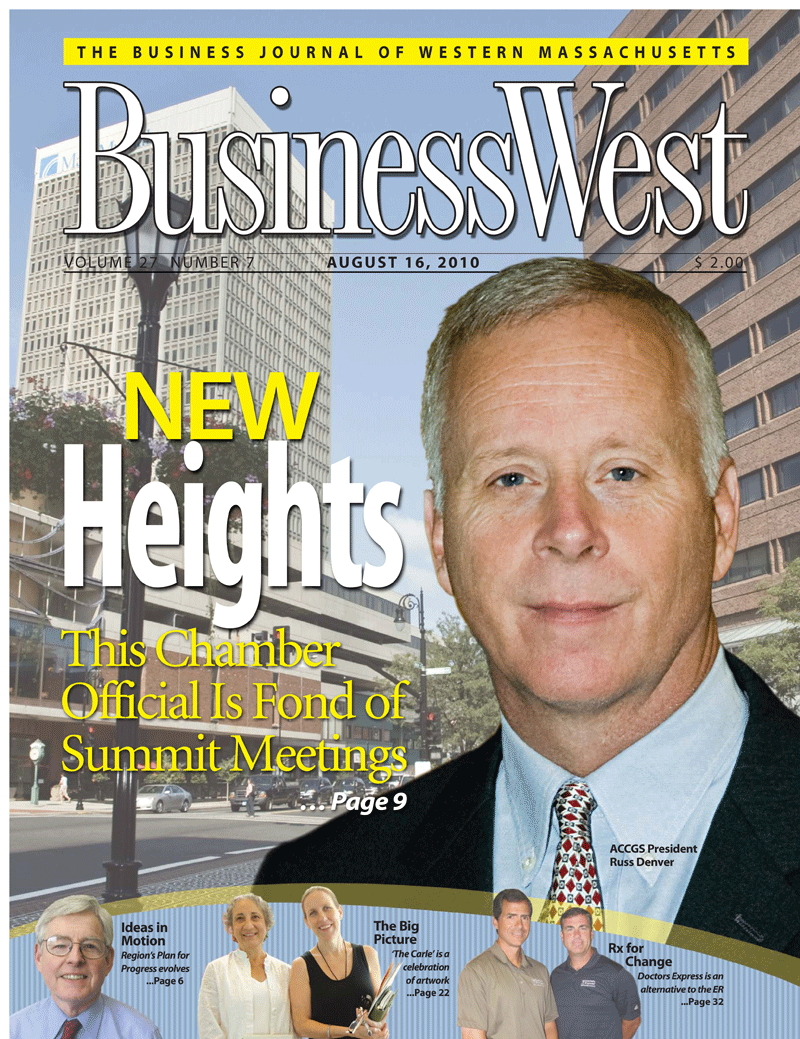
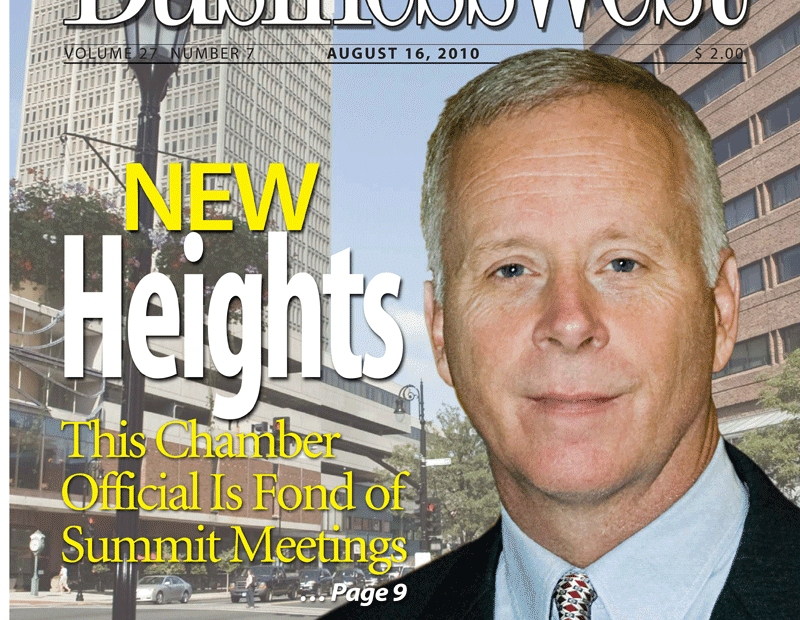
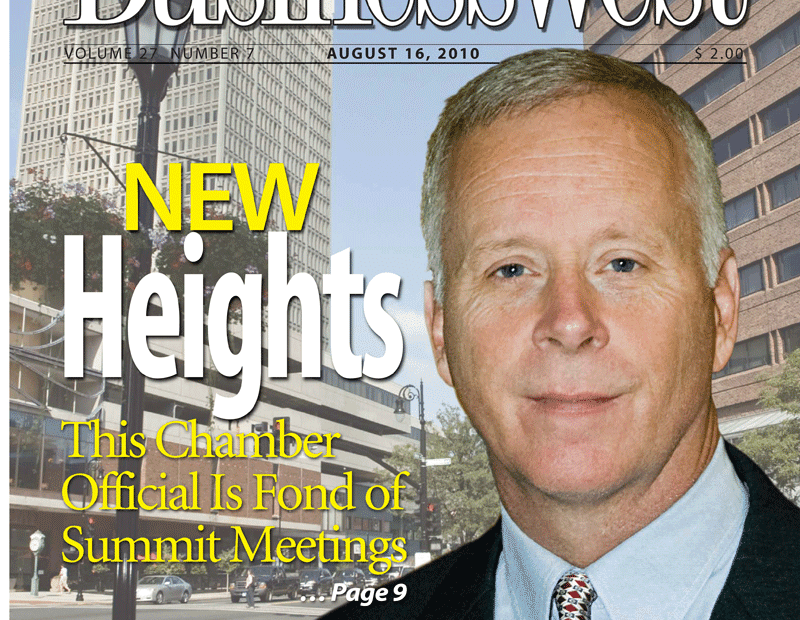
This Chamber Official Is Fond of Summit Meetings

Cover August 16, 2010

Cover August 16, 2010

Russ Denver has a number of vivid memories from his ascent last December to base camp at Mount Everest, some 17,500 or so feet above sea level.
One is of his first look at the glacier on which base camp sits, positioned between mountains on three sides. “You look out over the glacier and you see what looks like ocean waves, but they’re frozen at their peak height; it was very cool to be able to see that.”
An even more poignant sight came at the 15,000-foot level, when, after clearing a rise, Denver, president of the Affiliated Chambers of Commerce of Greater Springfield, and the other members of his party came across a collection of stone memorials to individuals who dared to climb to the top of the world’s highest peak — and died trying.
“There were maybe 100 of them, and they were all man-made,” he said, noting that this number alone was enough to give him pause. “Some were more sophisticated than others; they had interesting or funny inscriptions in the stones, like ‘he came, he saw, he didn’t conquer,’ or ‘it was always his dream to climb Everest, and he died trying to fulfill his dream.’
“It certainly made you aware of the dangers of what you were doing,” he continued, adding quickly that there are few, if any, fatalities among those whose goal is base camp, which is a little more than halfway to the summit, some 29,002 feet into the sky. But a good number don’t get that far, he went on, noting that he saw several people helicoptered out with extreme altitude sickness, broken bones from falls, and other maladies.
Denver made it to base camp — although he lost 21 pounds over the 18-day excursion (“it took me six months to gain it all back”) — giving him two major triumphs in what has become an intriguing new hobby, one that has given him more than stories to tell and photos to show (more on that later). The other came at Africa’s Mount Kilimanjaro, which he scaled in 2008.
And there are two more scheduled — Mount Elbris in Russia (18,800 feet) for early next year, and Mount Aconcagua in Argentina (21,000 feet) for late 2011. Doing two in one year — a feat made possible by the fact that it will be summer in South America in December — will be taxing on the body and the schedule, but Denver feels he can handle it.
He told BusinessWest that, as might be expected, there is a great sense of satisfaction that comes with reaching one’s goal on such peaks; one trains for months to get in proper shape, and there are many sacrifices that come with getting ready and hardships during the climbs, or what are technically known as ‘hikes.’
Things are a little different with his day job. For a chamber of commerce director, especially one based in a city with as many challenges as Springfield, the work is never really finished, and the triumphs are few and certainly not as definitive as reaching the summit of Kilimanjaro.
The victories are usually much smaller, and some of them don’t even get noticed by most business owners, he said, citing as one example success with tax classification in communities such as East Longmeadow, and keeping the commercial rates as low as possible.
“We have one business owner who’s been a member in East Longmeadow since 1963,” said Denver, who worked for the Springfield chamber for several years before joining a local law firm and then eventually returning to lead the ACCGS. “We’ve worked for years to keep a single tax rate in that town, and we’ve saved him $8,000 a year on his property. He said, ‘I never knew you guys did things like that.’ That’s because it’s behind-the-scenes work, like so much of what we do.”
As for Springfield’s future, Denver, whose 14-year tenure at the helm of ACCGS coincides with one of the most challenging periods in the city’s history, takes that optimistic, glass-half-full attitude that seems part of his job description. He said that things are looking up for the City of Homes in terms of recovery from its steep descent, but plenty of challenges remain, with everything from poverty and all that goes with it to convincing companies to look beyond current demographics and ultimately choose to locate or expand in Springfield.
For this, the latest installment of its Profiles in Business series, BusinessWest talked with Denver about everything from scaling one of the world’s tallest mountains to the role of the chamber of commerce in today’s business community. He had plenty to say about a host of topics.

Positive Steps
Denver said that while he’s always been interested in sports and staying fit — “I work out like crazy” — hiking some of the world’s tallest peaks was something he would never have considered even a few years ago.
Indeed, he came to this pastime in a rather roundabout fashion. It started, he told BusinessWest, with something called the HAM, or the Hike Across Maryland. He heard about it from a friend and former chamber colleague, and decided to take part in the 40-mile, one-day trek along the Appalachian Trail.
“The first year, I did it in 13 and a half hours, and I’ve gotten it down to 11:45,” he said. “That’s moving! We start at the Maryland-Pennsylvania border and finish up by crossing the Potomac River and then going on to Harper’s Ferry, West Virginia; it’s a fun event, and you meet a lot of interesting people along the way because you don’t walk with the same people all day.”
One of the people Denver encountered during the 2007 trek was a woman, a lawyer who had recently returned from scaling Kilimanjaro. “She said that if I could do the HAM, I could do Kilimanjaro, so the very next day, after getting back from the HAM, I started doing some research.”
Denver eventually talked a few local business people into making the hike with him, and the three made the trek in the summer of 2008. “I fell in love with it, and said, ‘OK, what’s my next adventure?’ I determined that I was in good enough shape to make the hike up to base camp at Mount Everest.”
That odyssey, completed early last December, like the Kilimanjaro hike before it, gave Denver what he called “new and different perspective” on life and an appreciation for what he and most Americans take for granted.
“One of the things that strikes you when you travel to unusual places like this is that poverty is a very subjective phrase,” he said. “You see people living with just a pipe sticking out of the ground — there’s no running water. When we were Tanzania, we saw people in thatched homes, and in Nepal, the higher up you went, people lived without electricity — the only heat was from a stove heated with yak dung.
“Another amazing thing is all the different ways people find to make a living,” he continued. “In Nepal, there were 15-year-old boys carrying 40 pounds of goods on their backs delivering things from village to village because there’s no infrastructure.”
Like his treks up mountains, Denver’s career path has also featured a number of interesting twists and turns.
He started out as the aide to the City Council in Springfield, a job he held from 1980 to 1984. In that role, he was responsible for handling committee meetings, requests from constituents, requests from councilors, writing press releases, and other matters. He described it as a good learning experience, one that gave him considerable insight into how local government works.
He took that experience to his next stop, as the first full-time administrative assistant to the Board of Selectmen (now known as town manager) in Longmeadow, a position he kept for the next five years. He then went to work for the Springfield Chamber of Commerce and then-Director Jim Shriver, and attended Western New College School of Law at night.
He took his juris doctor and worked for the Springfield-based firm Robinson Donovan Madden & Barry (now Robinson Donovan) for four years, before putting his name into consideration to succeed Shriver in 1996.
“I loved the law,” he told BusinessWest, “but the opportunity to run a large chamber, be involved in economic development, and have a dramatic impact on a region as an organization was something too big to pass up.”

Getting Down to Business
While he’s in a different profession, Denver says he’s putting his law degree to good use at the chamber.
“I use it almost every day here,” he said, “while interpreting legislation and working on local zoning and municipal ordinances, HR issues that require legal interpretation, and, as lead tenant [in the economic development offices at TD Bank], drafting and interpreting subleases. There’s a lot of use of my legal background.”
Many of these duties fall into that broad behind-the-scenes category that Denver described, which constitutes much of what happens at the chamber and also defines much of its relative worth to members. Putting things another way, Denver, when asked to delineate the value chambers (and especially this one) provide to members, said, “we’ve got your back.”
Elaborating, he summoned the chamber’s mission, “to create a positive business environment for businesses to start, grow, and prosper,” and said this is work he and others in the organization take very seriously — and that many in the business community may not know about, or appreciate, until they need it.
“There’s legislative work we do on specific matters of importance to the business community,” he said as he started listing chamber initiatives. “There are also the 15 to 20 businesses a week that I help out of jams, like people who need additional financing and don’t know where to turn, referrals for banks, people who want to open a restaurant and say, ‘how do I get started?’ and others who want to be hooked up with commercial real-estate people because they want to expand in Springfield.
“It’s these and many other things that seem mundane, but are very important to many individual businesses,” he continued. “I could help 20 to 30 people a week, and the staff people can help another 20 to 30, because they’re out there; people are so busy running their companies they don’t know what resources are out there.”
As for Springfield itself, Denver said demographic evolution, especially with regard to how many residents are at or below the poverty line, has changed the city’s fortunes, and, unless trends are reversed, they will likely hinder its progress moving forward.
“Over the past 10 or 12 years, Springfield has become much poorer, and many people don’t understand that this has a dramatic impact on economic development,” he explained, adding that the Urban Land Institute, in its comprehensive analysis of the city, strongly recommended steps to help reverse this pattern and improve the income demographic to attract more business. And the chamber is committed to following that advice.
“Companies will call that might be interested in the Springfield market because of its size,” Denver continued. “And then you share with them the income demographic for Springfield proper, and that does not put the city first on their list of places, so they may wind up in West Springfield or Wilbraham, so they can get the population size, but they draw a wealthier income demographic.”
Meanwhile, another problem is the educational demographics for the city, he said, adding that once — and not too long ago — the city could boast that a well-educated workforce. “That is not the case anymore.”
And education is just one of many ways that poverty directly and indirectly impacts economic-development efforts, he said, adding that, while there are no easy answers to the problem, Springfield has to do something to reduce its concentration of poverty.
From his office in the TD Bank building, Denver looks out on Main Street and, more specifically, Tower Square, which means he’s had a front-row seat from which to observe the changes that have come to downtown over the past 10 to 15 years.
Noting the sharp decline of the retail base in Tower Square — there are only a handful of stores left — and elsewhere, Denver said changing demographics have impacted that sector considerably, but he says other forces are involved, especially the Internet.
“I’m a lawyer, so I know that, in the old days, you had to file everything by paper — with the court system, with the government,” he explained. “Nowadays, everything is done electronically, so you don’t need to be close to a courthouse, because of all the electronic filing.
“If you were to go back 20 years and look at the number of law firms and accounting firms that were located in downtown Springfield, and compare it to today,” he continued, “there’s probably half the number, and that has a huge impact. With fewer professionals downtown, there’s less money downtown, and retailers look at that.
“If you were to take just 10 professional salaries out of downtown, that’s 10 fewer lunches being eaten every day, 10 fewer books being bought every day, it goes on and on and on,” he told BusinessWest. “I think the Internet has a lot to do with Springfield’s problems.”
Looking ahead, Denver said he expects that Springfield will eventually complete the process of converting to what he called an “eds and meds economy,” meaning one fueled mostly by its many colleges and health care facilities. Job growth in both areas will be significant, he said, adding that there will still be a solid base of manufacturing as well as a significant tourism sector.
However, if real growth is to occur, Springfield must take steps to present current and prospective employers with a better-qualified workforce. “We need to increase the graduation rates in Springfield,” he said, then repeated those words for emphasis. “That’s a must.”

Reaching the Top
While talking with BusinessWest, Denver, 53, allowed himself to contemplate retirement for a few moments.
He said he’d like to spend it in the Midwest, preferably working in some capacity for a minor-league baseball team. “I’ll do anything they ask,” he said. “I don’t care if it’s selling tickets, being a landscaper, whatever. I just want to be involved in sports at a lower level, where the players are still trying their absolute best so they can progress to the major leagues.”
With that, he acknowledged that retirement is still quite a ways off — “that will be well into my 60s; I love working.”
In other words, there are still a number of mountains to climb, in a literal sense, and a figurative one as well.

George O’Brien can be reached at [email protected]

Departments People on the Move

Attorney David Webber of Shatz, Schwartz and Fentin, P.C. of Springfield was one of eight local attorneys who recently volunteered their time to answer questions from veterans at the Holyoke Soldiers Home. Veterans from across Western Mass. turned out to ask personal legal questions. In addition, veterans received information on particular state laws and appropriate court procedures. Webber practices law in the areas of business transactions, estate and succession planning, taxation, and nonprofits.

•••••

Brian Smith has joined Cambridge College in Springfield as an Admissions Counselor. He is responsible for educating individuals, health care professionals, and businesses in Connecticut and Western Mass. about the Master of Management Program for working adults.

•••••

Jan Steven Martell has joined UMassFive College Federal Credit Union as a Financial Adviser in the Financial and Investment Services Department for the Northampton and Worcester branches.

•••••

Carla Oleska was recently chosen as a delegate to the Vision 2020 National Convention. Vision 2020 is a national project focused on advancing gender equality by energizing dialogue about women and leadership. The national search for delegates focused on finding women with a demonstrated commitment to helping women and girls.

•••••

Brendan Neal has accepted a position with Higher Colleges of Technology in Abu Dhabi, United Arab Emirates. He will serve as Senior Officer involved in institutional development, planning and managing institutional development, and advancement activities with local and international partners, stakeholders, and alumni.

•••••

Kathleen Krisak, an employee in the Nuclear Medicine Department at Holyoke Medical Center, was elected Secretary of the Society of Nuclear Medicine’s technology section at the society’s 57th annual meeting in Utah. A member of the society for more than 30 years, Krisak received fellowship status in 2008 and recently completed her second term as president of the New England Chapter of the Society of Nuclear Medicine.

•••••

Claudine Parent recently joined Prudential Connecticut Realty in Enfield, Conn. as a Sales Executive. Parent will focus on residential real estate and providing service in Connecticut and Massachusetts. She is licensed in both states.

•••••

Robin Ann Bienemann of Touchstone Advisors in Enfield, Conn. has been named the first entrepreneur in residence at the UConn School of Engineering. At Touchstone Advisors, Bienemann advises companies looking to increase their value through improved business processes and innovation. She is also Chairman and Founder of Crimson Rook, a Connecticut-based firm specializing in helping small and medium-size businesses increase value through improved processes.

•••••

James B. Heffernan has joined Bacon Wilson P.C. as an Associate Attorney in the Springfield and Amherst offices. He will handle a variety of corporate transactional matters, bank financing, and Chapter 11 work.

•••••

Chicopee Bancorp Inc., the holding company for Chicopee Savings Bank, announced the following:
• Guida R. Sajdak has been appointed Chief Financial Officer;
• Lisa Crowley has been promoted to Assistant Vice President of Accounting;
• Maria Lopez has been promoted to Assistant Vice President of Residential Lending;
• Cidalia Inacio has joined the organization as the Senior Vice President of Retail Banking;
• Alyse Ramalho has joined the organization as Senior Vice President of Retail Lending; and
• Henry Downey has joined the organization as Assistant Vice President of Commercial Lending.

Sections Supplements
How Manufacturers Can, with Careful Planning, Minimize Their Bills

Cheryl Fitzgerald

Cheryl Fitzgerald

As all manufacturing business owners know, today’s economic climate is one of the most difficult in U.S. history. Some analysts have likened the current recession to the Great Depression of the 1930s, wreaking havoc with corporate and industrial America in ways that were unimaginable a few short years ago.
State and local governments, reliant on the profitability of corporations and individuals to fund their operations, are struggling to keep their states functioning and provide expensive services to their populace as unemployment statistics rise. Given these challenges, governors nationwide are turning to their legislatures to update tax codes and raise revenue. In some instances, these efforts result in legislative proposals to broaden the tax base through different methodologies, including the imposition of tax on Internet businesses that provide goods and services, the creation of new nexus standards, and the enactment of required combined corporate income-tax reporting.
Since many of these initiatives can impact the manufacturing industry in particular, it is important to consider how you as a manufacturer and taxpayer can combat some of these initiatives and use them as planning opportunities.

Nexus
Nexus, a Latin word used in state taxation, means ‘connection.’ States are continually seeking to show that out-of-state companies have nexus in (connection with) their state, requiring tax filings. States have become increasingly aggressive as a result of recent government victories in so-called ‘economic nexus’ decisions, and taxpayers are struggling with the validity of each state’s authority to tax out-of-state businesses. Taxpayers should be concerned that any decision they make as to filing gross-receipts tax returns based on economic nexus principles can have historic and long-range effects.
When confronting the issue of nexus, you might consider the following:
• Don’t give up the fight. Despite the lack of success with regard to challenging state gross-receipts taxes, taxpayers should not necessarily concede the economic-nexus issue. If taxpayers do cease such challenges and allow the states to impose these taxes based on economic nexus, the states may become even more aggressive in their pursuit of manufacturers under those regimes. If you are not convinced that you should be filing taxes in specific states, seek out the advice of a qualified tax advisor before you file.
• Also consider the risks. Taxpayers who choose to take an aggressive stance by using a wait-and-see approach in filing their tax returns will face an increased risk of exposure that could affect their financial statements. This risk is due to the potential for retroactive application of economic-nexus standards and a possible reduction in the voluntary disclosure and amnesty program deals offered by the various states. Manufacturers should carefully consider whether the risks outweigh the rewards, and, if so, may want to take advantage of the voluntary disclosure and amnesty programs currently offered.
• Will Congress step in? Finally, although the discussion of state-tax nexus continues at the federal level, manufacturers should not have confidence that these issues will be resolved any time soon. Until Congress steps in and clarifies this area of state-tax law, taxpayers may continue to press for favorable federal legislation through their own in-house government-relations professionals, trade associations, or other industry groups.

Apportionment
Another way that states are trying to increase revenue is through revisiting their approach when it comes to apportionment, the method used to determine what share of a company’s profit they are entitled to. Many states that use a three-factor apportionment (sales, property, and payroll) are modifying their formulas or even eliminating some factors. Because of this and other differences in calculating taxable income from state to state, the potential exists to subject more than 100% of a manufacturer’s revenues to tax.
One strategy used to counter this scenario begins with knowing what states you are doing business in and their ‘throwback rules.’ The throwback rule dictates that, when tangible personal property is delivered or shipped to an out-of-state purchaser, it is considered an in-state sale if the selling taxpayer is not taxable in the state where the property is sold. If you have a facility in a state where there are no throwback rules and can modify your procedures to have sales considered sold by the non-throwback state instead of your home state, you could create a overall percentage of less than 100% for your sales factor, which would provide for a lower tax.

Credits
While nexus and apportionment-tax reforms seem to be leading the way this year, some states are continuing to offer generous tax credits and incentives to manufacturers choosing to locate, expend, or retain jobs in their jurisdictions. A number of states continue to show support for companies included in state-designated ‘enterprise zones.’ Generally, these enterprise zone credits incentivize employers to hire, retain employees, or expand in certain designated areas. Some states and localities encourage ‘going green’ by offering incentives. They provide for this through property and/or income-tax credits, exemptions, or abatements tied to green initiatives. However, many states require you to become certified for eligibility before you can claim these credits.
Don’t be caught by surprise and miss potential tax-saving opportunities. Find out about available credits before you make a relocation or expansion of your business. Area economic-development agencies can help you identify potential credits.

Sales/Use Taxes
As with corporate income taxes, states are reviewing how their sales-and-use tax structures can be amended to bring about increases in revenue. There are two prevalent factors causing this: an economy stalled by lack of consumer spending, and an increase in transactions such as Internet purchases. Some states are trying to overcome their shortfalls by considering increases to their rates (states like Massachusetts, California, and Minnesota have recently increased their rates).
Some states are also considering expanding their sales-and-use tax bases to incorporate service transactions (i.e., accounting, advertising, information services). Finally, states are seeking out businesses they believe have sales-and-use tax nexus and assessing for uncollected sales tax on taxable sales into their states. This poses a significant liability since states typically look back seven years, and a company’s ability to correspondingly bill and collect from their customers is difficult.

Personal Property Taxes
Allocations to local cities and towns have also suffered, and they have become aggressive in the area of assessing personal property taxes. Cities and towns will often request taxpayers’ depreciation reports, which will be a listing of their personal property. They will use original cost on these listings as a starting point in their assessment of personal property subject to tax.
Some cities and towns contend that any asset you own cannot be worth less than 50% of its original cost. One way to help lower these taxes is to review your fixed-asset listings and remove all items that are no longer in service, or that have been discarded.
In Massachusetts, corporations that are ‘classified manufacturers’ benefit from a lower tax rate on their manufacturing machinery as well as their inventory. This benefit does not apply to any corporation that has not filed for classification as a classified manufacturer. Cities and towns are cross-matching their records of businesses in their locality to the annual state listing of classified manufacturers. Businesses that never filed or are organized as an LLC, partnership, business trust, or sole proprietorship do not benefit from the lower tax rates regardless of their line of business.
If your business is a Massachusetts-based manufacturer, consider the tax benefits of qualifying and enrolling as a classified manufacturer. Your tax adviser can help you with this process.
If yours is a manufacturing corporation doing businesses out of state, you need to be aware of the potential nexus and apportionment issues, increased rates, as well as the expanded taxable services. However, there are credits and strategies that can help you minimize your multi-state tax burden. A qualified tax advisor can help you make the most of these opportunities.

Cheryl Fitzgerald is a senior tax manager with the certified public accounting firm Meyers Brothers Kalicka, P.C., based in Holyoke; (413) 536-8510.

Features
His Job Description? Holding Down the Fort

Rudi Scherff, co-owner of the Student Prince restaurant

Rudi Scherff, co-owner of the Student Prince restaurant

Rudi Scherff started washing dishes at the Student Prince restaurant, then co-owned by his father, Rupprecht, when he was 12 years old. This means that, among many other things, he has a half-century’s worth of perspective on downtown Springfield.
He’s seen quite a bit of change in and around the central business district over that time, with much of it, by his estimation, being not exactly good for business.
“Years ago, people had to come downtown to see their lawyer or their dentist,” he said, noting that, while doing so, they would often stop in for lunch. “Now, that’s pretty much disappeared. When I was a teenager, I’d walk to the bank with my dad, and maybe 60% of the men you saw were wearing a sportcoat and tie, even in July; now, collars are a rarity, never mind ties.”
There have been other changes beyond dress and an outmigration of professionals, he added. There are fewer stores and far fewer restaurants downtown, and where once many white-collar workers lived downtown, now, the vast majority of housing is of the subsidized variety.
Through all of this change and societal evolution, the Student Prince, or the Fort, as it’s called colloquially, has been a constant (this year marking its 75th anniversary), when so many other establishments fail to keep the doors open even a tenth that time. When asked to articulate on the landmark’s longevity, the soft-spoken but opinionated Scherff said it comes down to consistency but also flexibility and adjusting to those changing times.
Elaborating, he said that, where once most customers and potential customers were content to simply have a nice meal and perhaps some accompanying liquid refreshment, many people today want “an experience.”
“As a result, we’re a little more in the entertainment business and less in the basic sustenance business,” Scherff explained. “Some people just want to come out and have something to eat, but I think more people are looking for that experience, they’re looking a novelty, for more than just stomach filling.
“So we change our menus a lot more, we’ll do many more seasonal specials, we’ll do a lot of different desserts,” he continued. “We try to give people reasons to come in, be it with soft-shell crabs in July or native corn; we try to have some variation of products. Sometimes things succeed, and sometimes they don’t.”
For this, the latest installment of its Profiles in Business series, BusinessWest turns the spotlight on one of Springfield’s most noted restaurateurs, who may not be quite the institution his father was, but has been equally successful in holding down the Fort.

A Lot on His Plate
Scherff never expected to follow in Rupprecht’s considerable footprints, even though he practically grew up in the restaurant and held just about every job in the place.
The plan was to become a lawyer, and, by and large, things went according to script. Scherff earned his juris doctorate from Boston College and settled into private practice in Springfield in the early ’80s. He focused on criminal work and handled some real estate. “Some of it I enjoyed, but all that paperwork … I didn’t really care for that.”
He had been in practice about a decade, and doing reasonably well, when his father’s failing health forced him to eventually slow down. Rudi, who would work in the restaurant on occasion, especially during peak times of the year, found himself having to pitch in much more and attempt to juggle two vocations.
“I tried to do both for a year,” he said, “but decided that I wasn’t being fair to the law practice, the restaurant, or myself.” So he left the legal profession in the early ’90s, and, with his sister, Barbara, brother, Peter, and nephew, Michael, now the kitchen manager, he continues the Fort tradition, which began in 1935.
When asked for his job description, Scherff said there are many elements to it. “I keep my eyes open, see what’s happening, and see if the customers are enjoying themselves,” he said, offering first the long view of what occupies the 60 or so hours a week he spends at 8 Fort St. “I do the scheduling and the ordering, and supervise menu development — all the little things that don’t fit in the pigeonholes.”
Also on that list is listening to stories about his father, who passed away in 1996, and there is no shortage of them coming from the Fort’s legion of long-time and sometimes very long-time customers.
“Some of these stories are true, some of them are not true,” he said, “but far be it for me to ruin someone’s memories.”
Scherff has many of his own memories from five decades on Fort Street. He’s watched the restaurant, famous for its collection of beer steins, stained-glass windows, and Roquefort dressing, expand and evolve, while also gaining a place in both the local lexicon and the national trade media.
Indeed, when, in 2008, Gourmet magazine printed its list of “legendary restaurants,” establishments that had been in business since before the magazine started publishing in 1941, the Student Prince was on it.
“We didn’t know it was coming,” Scherff said of the listing in Gourmet. “They just said, ‘we’re doing an article … you may or may not be in it.’ They were kind enough to send us a copy of the magazine, and it came the same day as we were having our Hampden Street Octoberfest. It was a very exciting day for us.”
Scherff said the Student Prince has hosted its share of celebrities over the years. John Kennedy frequented the restaurant when he was a senator, and his brother, Ted, did as well. Wilt Chamberlain dined there, as have others from the world of basketball visiting the birthplace of the game. Roy Rogers stopped in a few times, John Ratzenberger paid a visit when he was in town several weeks ago (and ordered a bologna sandwich), and Scherff has fond memories of when John Denver came in for dinner.
“Some of the guys in the kitchen wanted autographs,” he recalled. “When I asked him if he would sign a few, he said, ‘no, I’m not going to do that here,’ and promptly went out to the kitchen, thanked everyone, and signed them back there. He was a real gentleman.”
But while having stars in the dining room is great for any restaurant in terms of creating lasting memories for staff and patrons alike, Scherff said one doesn’t build a business and keep it open for 75 years because a few singers, politicians, and hoop legends stop in on their way to somewhere else. “All that’s wonderful,” he said of the celebrities, “but the guy who comes in once a week and has bratwurst and a beer or two is much more important to me.”
Such customers have been the lifeblood of the Student Prince, and while Scherff says there are still enough of them to keep the business humming, times are changing in the area, and they are making life more challenging for the current generations managing the landmark.
For starters, there are those changing trends and demographics downtown, which combine to create fewer of the kinds of customers the Fort has always thrived on. Also, the Fort, like all establishments downtown, has to contend with the negative perceptions of the area and the lack of free parking. In the meantime, there is considerable competition, both in the suburbs (much more than in decades past) and along Springfield’s riverfront.
On the brighter side, Scherff says he seeing some signs of a comeback in downtown Springfield, although he keeps his optimism guarded. He notes with enthusiasm the retenanting of the old federal building and other efforts to bring more workers to the central business district. Meanwhile, he sees some signs of progress bringing more professionals into the area to live.
“Hopefully we’re starting to see downtown come back a little bit,” he told BusinessWest. There are some things happening that give you reason to think that things are going to get better.”

Check, Please
When asked what he does when he’s not keeping an eye on things at the Student Prince, Scherff says he works, often in frustration, in his garden, and that he’s trying — that’s trying — to take up woodworking.
“I bought a lot of equipment, and I still have all my fingers, so I guess that’s good,” he joked, before admitting that, between his family (and especially twin 16-year-olds) and the family business, there simply isn’t time for much else.
And while he’s thinking about somehow trying to pare some of those hours he spends at and on the restaurant, he knows he can’t pull back too much. “I’d go crazy if I wasn’t here a lot,” he said.
Which means that he’ll log many more years of reflections on downtown Springfield. Times may never be as they were when the sidewalks were crammed with people and all the men wore suits and ties, but Scherff can easily envision much better times for the downtown that’s been his real home for the past 50 years.

George O’Brien can be reached at [email protected]

Building Permits Departments

The following building permits were issued during the month of June 2010.

AGAWAM

McDonald’s
868 Suffield St.
$780,000 — Construction of a new McDonald’s restaurant next to the existing facility

Ralph DePalma
17 Begley St.
$100,000 — Construction of a building for a pre-school

AMHERST

Mercyhouse, Inc.
367 North Pleasant St.
$1,000 — Repair and upgrade emergency egress

Shumway Limited Partnership
196 North Pleasant St.
$20,000 — New roof

CHICOPEE

ALLM, LLC
694 Center ST.
$634,000 — Erect prefab addition to existing building

Dow Jones & Company
84 Second St.
$255,000 — Strip and re-roof

VOC
374 Montgomery St.
$227,000 — Modify existing billboard

EASTHAMPTON

City of Easthampton
43 Main St.
$1,000 — Install new soundproof materials to existing windows

City of Easthampton
Daley Field
$40,000 — Addition to existing building at Nonotuck Park

Dick Boyle Realty Trust
179 Northampton St.
$11,000 — Renovate interior space to create law offices

HADLEY

Thomas Meaux
300 Venture Way
$15,000 — Remodel existing library into video conference room

HOLYOKE

Brian Duke
24 Longfellow Road
10,000 — Install new windows & slider door

LUDLOW

American Tower Corporation
31 Ravenwood Dr.
$15,000 — Replace cell tower panels

NORTHAMPTON

CSO, Inc.
29 North Main St.
$3,000 — Install new exterior door

Nonotuck Mills, LLC
296 Nonotuck St.
$3,000 — Construct wall for additional space

Smith College
5 Chapin Dr.
$5,2000,000 — Renovations at Wright Hall

Suher Properties, LLC
58 Pleasant St.
$9,500 — Construct two offices in existing building

SOUTH HADLEY

Loomis Village
10-20 Bayon Dr.
$10,000 — New gazebo


Mt. Holyoke College
50 College St.
$951,000 — Renovations

SOUTHWICK

Town of Southwick
454 College Highway
$75,000 — Construction of the Great Brook Boardwalk

SPRINGFIELD

Baystate Medical Center
2 Medical Center Dr.
$240,000 — Install new partitions for urgent care unit

Community Music School of Springfield
18 Willow St.
$322,000 — Exterior repairs

Flores Development, LLC
7 Greenwich St.
$1,177,000 — Full remodel of building A

Flores Development, LLC
7 Greenwich St.
$511,000 — Full remodel of building D

Forest Park Zoological Society
55 Sumner Ave.
$3,000 — Construct a deck for showing zoo animals

Springfield Housing Authority
500 Hancock St.
$110,000 — Construction of new maintenance building

Springfield Housing Authority
31 Morgan St.
$112,000 — Construction of new maintenance building

Springfield Housing Authority
231 Pine St.
$176,000 — Construction of new maintenance building

Yellow Brick Properties
65-67 Holly St.
$85,000 — Re-roof

WESTFIELD

Hallamore Pipe Venture Corporation
69 Neck Road
$22,000 — Commercial repair

Home Depot
50 Campanelli Dr.
$445,000 — Construction of a new conveyor system

WEST SPRINGFIELD

Bill Bayton
811 Memorial Ave.
$20,000 — New roof

Eastern States Exposition
1305 Memorial Ave.
$10,000 — Expand offices

Fred Aaron
1478 Riverdale St.
$205,000 — Renovate 2,589 square feet into office space

Town of West Springfield
26 Central St.
$375,000 — Repairs to City Hall

Departments People on the Move

Bay Path College President Carol A. Leary, Ph.D., has been selected by the Massachusetts American Council on Education – National Network for Women Leaders as the woman leader in 2010 who has proven leadership in higher education and promotes the advancement of women in the field. She was honored by the organization with the 2010 Senior Leadership Award on June 9 in Milton.

•••••

Douglas Guthrie, Senior Vice President of Comcast’s Western New England Region, was recently inducted into the Connecticut Business Hall of Fame and recognized as Business Leader of the Year at an event at the Connecticut Laborer’s Council offices in Hartford, Conn. Guthrie oversees 2,000 employees and serves as the top executive responsible for operations, financial performance, and customer service for more than 800,000 customers in Connecticut, Western Mass., Vermont, and New York.

•••••

Stephanie Fisk, Business and Finance Officer for the Gateway Regional School District in Huntington, was elected as Vice President of the Massachusetts Assoc. of School Business Officials. Fisk has served three years on the organization’s board of directors and chaired several committees for the board. At Gateway, she handles all financial operations, food services, student transportation, grants management, and maintenance operations of the school district.

•••••

Tammy Richards of Pieciak & Co. has been recognized as an Outstanding Member by the National Assoc. of Certified Valuation Analysts, a global, professional association. She holds an accredited valuation analyst designation from the association as well as a certified mergers and acquisition professional designation from the Middle Market Investment Banking Assoc.

•••••

Patrick Leonardo, a long-time Paramedic Supervisor with American Medical Response, was recently honored with the American Ambulance Assoc. Stars of Life Award in Washington, D.C. The Stars of Life program is an annual event that recognizes and honors outstanding individuals in the emergency medical services industry throughout the nation. Leonardo has been employed in the field for more than 13 years.

•••••

Robert P. Molta’s Carlson/GMAC Real Estate announced the following:
• Robert E. Thomas has joined the agency’s Wilbraham office;
• Heather Thomas has joined the agency’s Wilbraham office; and
• Christine Magnacca-Moran has joined the agency’s Wilbraham office.

•••••

Springfield Technical Community College (STCC) announced the following:
• Ronald D. Grodsky was honored at recent commencement exercises with an honorary degree. Grodsky is President of Harry Grodsky and Co. of Springfield. He has served as president since 1995, and has worked full-time at the company since 1968. Grodsky was recognized for his service to the community and at STCC;
• Franklin D. Quigley Jr., a 1977 graduate of the Civil Engineering program at STCC and founder of FD Quigley & Associates, received the 2010 Distinguished Alumnus Award at commencement exercises. Quigley was recognized for his distinguished career in engineering as well as an exceptional record of service to the community; and
• Tamson M. Ely, recently retired Dean of Library Services at STCC, has been inducted into the Mass. Library Assoc. Hall of Fame. The honor is bestowed on practicing or retired librarians who have made a substantial, sustained contribution to advancing the cause of Massachusetts librarians or librarianship over a career of at least 10 years.

•••••

The Western New England College School of Law in Springfield announced the following:
• Professor René Reich-Graefe recently received the Catherine J. Jones Excellence in Teaching Award. Reich-Graefe serves as Associate Professor of Law; and
• Benjamin Rajotte was recently named Adjunct/Visiting Professor of the Year. Rajotte serves as Assistant Visiting Professor of Law.
Students nominate winners of the prestigious honors for outstanding contributions as educators and advisors.

•••••

Danielle Grosse has received top honors from lia sophia and its Excellent Beginnings Program Achievers for outstanding sales accomplishments and professionalism.

•••••

Jeré Dittrich has been named Director of Nursing at Providence Behavioral Health Hospital in Holyoke. He is responsible for overseeing the nursing staff at Providence, as well as developing and implementing high-quality patient-care services, and various administrative duties regarding policies, procedures, and programs.

•••••

The Springfield Housing Authority (SHA) announced the follwing:
• Michele Decoteau has been promoted to Accounting Manager. She is responsible for managing the daily operations of the Accounting Department and its staff. She also prepares and supervises the financial statements required for compliance with HUD and DHCD;
• Ivette Otero to Assistant District Manager. She is responsible for enforcing lease requirements and regulations, showing units to prospective residents, resolving resident complaints, and performing inspections.

•••••

Park Square Realty in Westfield announced the following:
• Kristine Cook has joined the Westfield office as a Sales Associate; and
• Peter Curtin has joined the Westfield office as a Sales Associate.

•••••

The Massachusetts Municipal Wholesale Electric Co. announced the following:
• Director Jonathan Fitch, Manager of the Princeton Municipal Light Department, was elected Chairman of the Board;
• Gary R. Babin, Director of the Mansfield Municipal Electric Department, was elected to a three-year term as a Director; and
• Jeffrey R. Cady, Manager of the Chicopee Municipal Light Department, was elected to a three-year term as a Director.

•••••

Vicki Evans was recently promoted to Vice President and Controller at W.F. Young Inc. of East Longmeadow.

•••••

Gregory B. Chiecko, Sales Director at the Eastern States Exposition, West Springfield, was recently elected President of the New England Assoc. of Amusement Parks and Attractions. He will lead an 18-member board of directors from across New England to fulfill the association’s mission of promoting safe operations, regional development, professional growth, and commercial success of the amusement industry in the region. He is also the Chairman of the Greater Springfield Convention & Visitors Bureau.

•••••

Ken Toong, Executive Director of Dining Services at the UMass Amherst, was recently named a leader in retail food service by Fare magazine. The award will be presented at the Foodservice at Retail Exchange Conference in Chicago. During the conference, Toong and the other award recipients will participate in a panel discussion titled “Gold Standard: Insights from the Best in Channel.”

•••••

Bart Bales has joined Tighe & Bond of Westfield as a Mechanical Engineer and Manager of its mechanical, electrical, and plumbing work.

•••••

Rick Stolarik, Produce Manager at the Big Y World Class Market in Tolland, Conn., has received an award from the United Fresh Foundation’s Center for Leadership Excellence. Stolarik was honored among 25 produce managers representing 20 supermarket chains, commissaries, and independent retail stores within the U.S. and Canada. Stolarik has been a produce manager for close to 30 years.

Sections Supplements
What Every Small Business Should Know about Immigration

Joseph Curran

Joseph Curran


Every small business should understand the basic rules about its responsibilities under the immigration laws, and also the growth opportunities available under immigration laws.
Employer responsibilities are the first concern of a small business. The 1986 Immigration Reform and Control Act (IRCA) requires every employer to verify that all employees have proper work authorization — every single employee. The centerpiece of this system is the I-9 form, which employers must complete within three days of the start of work for each employee. Typically, each new employee must present photo identification and proof of employment authorization, with original, unexpired documents. Employers are not required to keep copies of the documents on file. A properly completed I-9 is all that is required.
It is not your job to make an actual determination whether the documents are legitimate. You are not an authorized Department of Homeland Security investigator. If you check the papers and fill out the form, and it turns out that the worker is illegal, you face no liability. The standard for reviewing the documents is “…reasonably appears on its face to be genuine.” Do not request more or different documents than the minimum required. The employee, not the employer, chooses which documents to present.
The employment verification regulations (the so-called ‘I-9 rules’) cover only true employees, not independent contractors. As in the area of workers’ comp, whether an individual or entity is an independent contractor is determined on a case-by-case basis — there are no bright line rules. The term ‘independent contractor’ includes those who “carry on independent business, contract to do a piece of work according to their own means and methods, and are subject to control only as to results.” In most cases, a company would have no obligation to check the immigration documents its subcontractors’ employees.
Violations of the employment-verification rules through a contract situation must be ‘knowing.’ This includes constructive knowledge and failure to exercise reasonable care in learning about and implementing immigration rules.
Beware of employment discrimination. An employer cannot selectively hire, or refuse to hire, nationals from certain countries. That practice is called ‘national origin discrimination’ under both federal employment-discrimination law and immigration law. Various federal statutes intersect on this issue; 8 U.S.C. § 1981 and Title VII apply to non-citizens, and prohibit discrimination on the basis of national origin.
IRCA adds another layer by prohibiting discrimination on the basis of national origin and citizenship in hiring and firing employees. IRCA violations are known by the legal acronym UIREP (unfair immigration-related employment practices). Employers may require only the minimum identity and employment documents outlined in the I-9 handbook. Employers may not require any specific or additional documentation. The UIREP provisions were added to temper the effect of IRCA on aliens who have proper work authorization. Congress did not want employers to stop hiring foreigners or people with accents out of fear of accidentally hiring an illegal alien.
Civil penalties for failure to fill out and maintain I-9s correctly can range from $110 to $1,100 for each I-9. Civil penalties for employment of unauthorized aliens can range from $275 to $2,200 per alien for the first offense, $2,200 to $5,500 for the second offense, and up to $3,300 to $11,000 per alien for the third or higher offense. Criminal penalties may be imposed in cases involving pattern or practice violations.
The Immigration Service (USCIS) has also implemented E-Verify, a Web-based verification tool that employers can use to check the visa status of potential employees, using information from USCIS and the Social Security Administration databases. E-Verify began as a voluntary program, but now government employers and government contractors, as well as some private employers, are required to use the program as part of their I-9 verification system.
IRCA enforcement is not consistent. Unless there is a pattern of violations, or you are unlucky enough to be targeted for a politically motivated ‘raid,’ you are not likely to be audited, and the penalties for IRCA violations are relatively mild. In fact, current INS policy favors a warning letter before fines are assessed. The goal of this policy is to educate employers and encourage them to correct problems without litigation. There are simply too many employers hiring foreign nationals for USCIS to keep track of them.
But keep in mind that this is all about politics, and the prevailing sentiment is strongly anti-immigrant. Any comprehensive immigration legislation that passes Congress will almost certainly include provisions to increase enforcement of the IRCA/I-9 rules.
In addition to the ‘defensive’ immigration concerns with I-9 compliance, employers should also consider the potential benefits available under the immigration laws.
If you have identified a skilled international professional who can help your business grow, there are employment visas available that will allow this worker to lawfully join your company. Because of the recent economic downturn, the numerical restrictions on these visas have disappeared, and the visa petition process is relatively straightforward. Keep in mind that the employer is the visa petitioner, not the foreign national. It is a process based on promises by the organization, not by the worker. Clearly, the worker gains a benefit from the visa petition, but the procedure must be initiated by, and controlled by, the employer.
The most common employment visa is the H-1B visa, but there are employment opportunities under a variety of visa classifications, including L-1, E-1/2, J-1, O-1, and other visas.

Joseph Curran, a partner with Northampton-based Curran & Berger LLP, has been exclusively involved in the practice of immigration and nationality law since 1985. He provides legal advice to individuals, corporations, and universities, specializing in immigration issues impacting business and health care in the New England area. He currently serves on the AILA Healthcare Committee and the Mass. Bar Assoc. Immigration Law Section, chairing the MBA’s Immigration Essentials Program.

Sections Supplements
How to Have Your Business Ready Before a Labor Union Comes Knocking

Amy Royal

Amy Royal

Non-union businesses are currently facing an increased risk of union infiltration.
Due in large part to the sympathetic ear of the Obama administration and the stagnant economy, labor unions have gained momentum over the past year, becoming much more aggressive than they have been in several decades. Also, with the explosion of social-networking Web sites, labor unions have seized the opportunity to reach broader bases and larger audiences by using this free social medium to spread their message with relative ease. In light of the recent uptick in union organizing, businesses must begin taking proactive steps to guard against unionization.
The two best union-avoidance practices that businesses should put into place now before the union comes knocking at their door are what’s known as ‘managing by walking around,’ and implementing an open-door policy. Managing by walking around is literally what it sounds like: managers, including those in upper management, walk around the company, going to each of the employees’ work areas. This type of managing is a win-win situation. It makes employees feel that management is accessible and approachable. It also makes them less likely to turn to a third party for representation.
Unionization is successful is not solely because employees want better wages and better benefits; it is also because employees do not feel recognized. When management comes to the employees’ work areas, workers will undoubtedly feel a greater sense of value and importance. That simple pause to tell an employee that her hard work is appreciated can go a long way. Managing by walking around also provides an opportunity to discover potential problems and nip them in the bud before they snowball. Certain problems that go unnoticed or are left unattended could ultimately lead employees to seek out the help of a third party.
Benjamin Bristol

Benjamin Bristol

Open communication between employees and management is essential to reducing the risk of organizing activity. Non-union businesses should consider implementing an open-door policy that allows employees to have access to any manager in the company. Just as it sounds, an open-door policy literally means that every manager’s door is open to every employee. In order for such a policy to work, businesses must make sure that the doors to management are actually open. Certain steps can be incorporated into the policy that encourage employees to go to their supervisor first before contacting the company’s president; however, for the policy to have the intended effect, employees must feel that they can, if need be, go to anyone in management to voice their concerns.
Businesses should also consider implementing a formal grievance procedure that provides a process by which employees can express their concerns internally. Some companies have created formal grievance procedures that allow employees the right of appeal up through executive-level personnel. Other companies have gone so far as to model their practices after the typical union format, utilizing similar grievance procedures to that of a union. In either case, seeking union representation is less needed when businesses have created their own mechanisms for resolving problems internally. Indeed, the reason behind having these types of policies is simple: why would employees pay a union to do what the business already does for them?
Other policies businesses might consider implementing include non-solicitation and non-distribution policies. Such policies prohibit the solicitation of employees or the distribution of literature during work time and in work areas. Implementing a union-free-environment policy can also be a good way to communicate the reasons why the company believes a union is unnecessary in light of its current environment and culture.
As part of having an open dialogue with employees, businesses might actually consider using the ‘U’ word with their employees. Often times, management is reluctant to do so out of fear that saying it will somehow put the idea of unionization into the heads of their employees. Another reason management might be afraid to say the word or otherwise discuss unions is the fear of committing an unfair labor practice under the National Labor Relations Act. Educating management on what it can and cannot say about unions is key.
Management training in union avoidance will arm managers with the tools they need to know how to have lawful conversations with employees about unions as well as enable them to identify the early warning signs of unionization. Such training also teaches management how to react appropriately should union representatives show up at the company.
Once upper management is trained in union avoidance, supervisory training is crucial to guarding against a union since these individuals are the company’s first line of defense. Due to their close proximity to rank-and-file employees, supervisors must be trained in several key interpersonal and leadership skills, such as effective communication and listening, accessibility and approachability, and modeling appropriate behavior. Further, supervisors must be trained to handle conflicts that arise amongst employees. With these skills, supervisors will help to create a positive working environment, and employees will believe that they can resolve their issues with the person that they see every day.
There are no guarantees that a company can remain union-free. But with thoughtful and continual planning, businesses can make a preemptive strike against unionization instead of playing defense once the union is already knocking at the door.

Amy B. Royal, Esq. and Benjamin A. Bristol, Esq. specialize exclusively in management-side labor and employment law at Royal & Klimczuk, LLC, a women-owned, boutique, management-side labor and employment law firm; (413) 586-2288; [email protected]

Sections Supplements
A Chance for You to Advocate for Your Child

By DENNIS G. EGAN JR., Esq. and MELISSA R. GILLIS, Esq.

Dennis G. Egan

Dennis G. Egan

It is universally recognized that a child’s first five years of life are the most important in his or her overall development. As such, having your child assessed for special-education eligibility can be an intimidating and scary process.
If your child is going through the assessment process, someone — either you or your child’s teacher or day care provider — at some point questioned whether or not your child has a disability requiring special education. However, knowing the basics of the assessment process can alleviate a great deal of this fear and help equip you with the tools necessary to advocate on behalf of your child.
The federal special-education law is the Individual with Disabilities Education Act (IDEA), which dictates how municipalities and state governments must provide early intervention, special education, and related services to those children who qualify. IDEA mandates that each child receive a ‘free, appropriate public education.’ This means that state and local governments must provide such services as determined to properly meet a particular child’s needs.
The first step in the IDEA is the determination that your child should be assessed. The next step is the assessment process itself. This process involves your child and you meeting with a team of special-education professionals. IDEA provides that “the evaluation must gather relevant functional, developmental, and academic information about the child, including information provided by the parent.” As such, it is essential that you not only take part in the assessment, but also that you understand your role as a parent. Oftentimes, parents feel that they are not experts in the field and should simply leave the assessment process to the professionals. Nothing could be further from the truth.
After the evaluation process is complete, the evaluation team, including you, will determine eligibility. This point in the process is crucial in that, if the evaluation team determines that your child is not eligible for special services, the process stops and your child is placed in a traditional classroom. While a determination that your child is not eligible for special services may seem like the best possible outcome to some parents, the only better determination is that a child in need of services is eligible for those services, and ultimately receives them.
If the evaluation team determines that your child is eligible for special-education services, an Individualized Education Program (IEP) meeting is scheduled. IDEA mandates that the IEP meeting take place within 30 days of the eligibility determination. You play a very important role in the IEP process, because out of this meeting comes the IEP plan, which is a written plan outlining your child’s needs and goals as well as the strategies to be implemented to achieve these goals. Once again, your input is critical, because you are your child’s best advocate.
Once the IEP is written, it becomes the road map by which your child’s education is conducted. It is important to note that once written, the IEP is not set in stone. Instead, it is reviewed at least annually in order to ensure that your child’s educational needs are being met and his goals are capable of being attained. If it is determined that your child’s needs are not being met, modifications are made to the IEP. This provides an ongoing opportunity for you to assure that your child’s best interests are furthered.
Melissa R. Gillis

Melissa R. Gillis

It is important to note that one of the outcomes of the re-evaluation process may be that your child is no longer eligible for services under IDEA, but you must consider each step an additional opportunity to advocate on behalf of your child.
It should be noted that you hold your child’s educational rights until (1) your child reaches the age of majority; (2) parents’ rights are terminated; or (3) one parent is awarded educational decision-making rights under a divorce decree or separation agreement.
In the end, knowing your rights, as well as your child’s rights, as they apply to the special-education assessment and IEP process will alleviate a great deal of stress and confusion. As a result, your child’s needs and interests will be better served.
While the information outlined above is meant to serve as a broad overview of this very intimate and important topic, further information can be obtain by contacting an education-law attorney, special-education advocate, special-needs assessment professionals, and/or your city or town’s school department.

Dennis Egan Jr. is an associate with Bacon Wilson, P.C. concentrating his practice in business and corporate law; (413) 781-0560; [email protected]. Melissa Gillis is an associate with Bacon Wilson, P.C. in the family law and real estate departments; (413) 781-0560; [email protected]

Sections Supplements
Indian Orchard’s Titanic Museum Keeps the Memories Alive

Ed Kamuda has taken his youthful interest in the Titanic and turned it into a lifetime passion.

Ed Kamuda has taken his youthful interest in the Titanic and turned it into a lifetime passion.

It’s hard to imagine now, says Ed Kamuda, but there was a time when people just weren’t that interested in the Titanic.
“In 1912, there were some books, and there was a one-reel picture starring Dorothy Gibson, an actress who was one of the survivors,” Kamuda said of the year when the great ship sank, “but then interest dropped off. In the 1950s, with Walter Lord’s book, A Night to Remember, and then the film of the same name, there was some more interest, but that soon went away, too.”
But it was that movie, shown in the Grand movie theater in Indian Orchard, that set the young Kamuda on the course that would define his life.
As founder of the Titanic Historical Society, he is known worldwide as one of the leading authorities on the most legendary maritime disaster. From his small storefront on Main Street, across from the theater his family owned that started it all, he, his wife, and his sister maintain the Titanic Museum. While the museum is neither big nor flashy, Kamuda’s life’s work is regarded as one of the most important repositories for survivors’ narratives, and also has its share of treasures from the fabled vessel.
He said that, as a young man, he read the story “A Great Ship Goes Down,” published in a Reader’s Digest-style collection of stories, and when the 1958 movie came to his father’s theater, along with it was sent a ledger of production information for the film.
“In the back,” he said, opening the old book before him, “you see the names and addresses of the known survivors. The thought was that, if you were a theater manager, you might want to see if there was a local survivor to come to the opening night of the film for publicity. I contacted many of them, and they were all very surprised that anyone was interested in them.”
Kamuda began correspondence with many of those survivors, and when Walter Belford, chief night baker aboard the Titanic, passed away in 1963, he found out that his New York City landlord threw out most of the man’s possessions.
“When I heard this, I was very upset,” Kamuda said, “and at that moment I decided, ‘I’m going to form a museum to preserve all of those precious memories.’ That’s how all this came about.”

Taking a Bow
Walking around the small but densely packed space, Kamuda pointed out numerous treasures that relate not only to the Titanic, but also to the White Star line, owner of the ship, and her sister ships, Britannic and Olympic.
But what brings people from all over the world to the museum is the namesake collection: among many other things, a square of green wool rug from a first-class stateroom, taken before the ship left the Harland and Wolff yards in Belfast, Ireland; a small flag taken from a lifeboat; a rivet punching from the hull; original shipyard plans; John Jacob Astor’s wife’s lifejacket, given to the chief medical officer of the Carpathia, famous for rescuing the lifeboats; and the message which never made it to the ship’s bridge warning of ice.
“As survivors saw their lives coming to an end, they wanted someone to take care of their legacy,” said Kamuda as he explained much of the collection’s origins. “So they’d send it off to us. Or their children wanted a museum to take care of it.
“We don’t have any artifacts from the site on the ocean floor,” he emphasized, “because we feel that is hallowed ground, a gravesite, and should be left alone.”
It is the narratives the museum holds from those that were aboard on that night that carry a great deal of emotional resonance for Kamuda. He opened one of his Historical Society’s publications, The Titanic Commutator, to show a letter written to him by Frederick Fleet, the lookout in the crow’s nest on the starlit night that tragedy fell upon the Titanic.
In an old-fashioned hand, the letter informs his “Dear Friend” Kamuda that his correspondence will have to wait until he finds a new place to live, as his wife has just died and his brother-in-law and he “cannot agree.” It is postmarked just days before he took his own life.
Among Kamuda’s treasures are photos that Fleet had sent of his fellow seamen, along with two drawings that the sailor made: one of what the iceberg looked like on the horizon, and, alongside that, how it soon towered over the ship. It was Fleet who shouted the words, “ice ahead, sir.”
Among those who have benefited from Kamuda’s and his society’s expertise is James Cameron, director and producer of the 1997 epic film Titanic.
His production assistants were in frequent communication via e-mail with the museum, fact-finding myriad details to make the film as historically accurate as possible.
When it came time for filming in Mexico, Kamuda’s wife, Barbara, said it would be a fitting tribute for her husband to have a role in the film. It was Hollywood, after all, that had a hand in bringing the Titanic to Indian Orchard.
Both were offered bit parts, as well as society historian Don Lynch. The Kamudas’ Tinseltown time came in a scene out on deck with Kathy Bates and Leonardo DiCaprio. It was eight takes long due to the actress cracking jokes, he said, but the real shock came when he and his wife stepped on set for the first time.
“Cameron stopped production and called out to everyone there,” Kamuda said. “‘I want you to see these two people coming out here,’ motioning toward us. I looked at my wife and said, ‘what the hell is going on? Did we do something wrong?’
“He then said, ‘but for these two people, we wouldn’t be here today. They help to keep the memory alive.’ And then he said, ‘OK, let’s get to work!’”
Even Keel
Kamuda said that what keeps him going all these years is knowing that the stories from those people that were part of the Titanic will be preserved for all time.
“There will be people who walk in, look around, and ask, ‘that’s it?’” he said. “They don’t get that you can spend hours in here. You have to appreciate it. There’s so much to read. This isn’t a Disney-style museum.”
Some of the museum’s artifacts are lent out to a larger, more showy museum in Branson, Missouri — where one enters into a full-sized ship from the iceberg, and which has recreated the famous grand staircase — and Kamuda says that proceeds from that arrangement and loans to other museums are ultimately going to help in the creation of a larger facility here in Springfield.
As he tells how the society’s plans for the 100th anniversary of the Titanic disaster will involve not just a convention here in Springfield, but also the commemoration of a monument, currently in a fund-raising stage, planned for the city, it’s clear that his life’s work is a true calling.
“This is the mecca for Titanic history,” he said. “So many people have written books, or made films, and they all come to us for information.”
With the last survivor, Millvina Dean, now gone (she passed away last year), Kamuda said that his museum is one of the last things to remain for those whose fate was tied to the epic story of the Titanic.
“Luckily we have those interviews with them here,” he said. “Their story is history.”

Court Dockets Departments

The following is a compilation of recent lawsuits involving area businesses and organizations. These are strictly allegations that have yet to be proven in a court of law. Readers are advised to contact the parties listed, or the court, for more information concerning the individual claims.

FRANKLIN SUPERIOR COURT
New England Broach Company Inc. v. Clarke Industrial Sales
Allegation: Non-payment of goods sold and delivered: $55,679
Filed: 5/20/10

GREENFIELD DISTRICT COURT
Donald Graves, LLC v. Bennett Construction Company Inc.
Allegation: Non-payment of services rendered: $9,140.43
Filed: 5/11/10

HAMPDEN SUPERIOR COURT
James Concannon v. Gentle Movers
Allegation: Breach of contract for moving and storage services: $200,000
Filed: 5/24/10

Kathy Crowley v. Pride Fuels Inc.
Allegation: Employment discrimination: $25,000+
Filed: 5/14/10

Naismith, LLC v. GFI Investments III Springfield Inc., John Deliso, and Steven E. Goodman
Allegation: Breach of contract and failure to pay: $1,804,368
Filed: 5/20/10

Sovereign Bank v. Travel Escapes Inc.
Allegation: Default on promissory note: $13,628.87
Filed: 5/12/10

Western New England Renal Transplant Associates, P.C. v. GE Healthcare Strategic Sourcing Corp.
Allegation: Breach of contract for billing services: $4,000,000+
Filed: 5/17/10

HAMPSHIRE SUPERIOR COURT
Reikka Simula v. Almadan Inc.
Allegation: Employment discrimination based on age: $72,000
Filed: 6/3/10

HOLYOKE DISTRICT COURT
F.W. Webb Co. v. Welch Plumbing and Gary F. Welch
Allegation: Non-payment of goods sold and delivered: $7,967.17
Filed: 4/27/10

Graphic Enterprises Inc. v. Berkshire Westwood Graphics Group Inc.
Allegation: Non-payment on judgment: $16,334.50
Filed: 4/30/10

PALMER DISTRICT COURT
Barbara Loveling v. Joe Deans All Customs
Allegation: Breach of contract to restore Pontiac Firebird: $10,599.50
Filed: 5/25/10

SPRINGFIELD DISTRICT COURT
Comcast Spotlight Inc. v. Allied Career School
Allegation: Non-payment of advertising services rendered: $23,825.39
Filed: 5/11/10

Comcast Spotlight Inc. v. Goldcrafters Exchange
Allegation: Non-payment on advertising services rendered: $5,085.93
Filed: 5/14/10

Competitive Kitchen Designs Inc. v. Serge Construction
Allegation: Non-payment of goods sold and delivered: $5,747.98
Filed: 5/5/10

Fairway Wholesale Corp. v. Chartier’s General Carpentry
Allegation: Non-payment of goods sold and delivered: $2,654.43
Filed: 5/12/10

J.P. Noonan Transportation Inc. v. Quaboag Transfer Inc.
Allegation: Non-payment on judgment: $6,475.73
Filed: 5/12/10

WESTFIELD DISTRICT COURT
Absolute Fire Protection Inc. v. Sahil Hospitality Corp.
Allegation: Non-payment of services rendered: $8,101.45
Filed: 4/30/10

Departments People on the Move

Michael Seward has joined Prudential Sawicki Real Estate in Amherst. He has been a Real Estate Agent since 2003 and a Real Estate Broker since 2005.
•••••
Emily Bryant has been promoted to Director of Sales at the Hampton Inn Springfield-South in Enfield, Conn.
•••••
Margaret A. Wheeler has joined the Law Practice of Attorneys Joseph P. Curran and Dan H. Berger. Wheeler has been an Immigration Attorney since 1997.
•••••
Alice E. Pizzi has joined the management employment law firm of Sullivan, Hayes & Quinn in Springfield.
•••••
David G. Ahearn has joined Greenfield Cooperative Bank as Vice President for Commercial Loans.
•••••
Paul Nicolai has been named to the Executive Committee of the Western Mass. Economic Development Council Board of Directors. He is President of the Nicolai Law Group in Springfield.
•••••
The WFCR Foundation announced the following:
• Marc Berman has been named President of the Board;
• Paul Friedmann has joined the board as a Director;
• Michael Miller has joined the board as a Director;
• James V. Staros has joined the board as a Director;
• Eva Thompson has joined the board as a Director; and
• Sarah Tanner has joined the board as an Adviser.
•••••
The Landmark Companies announced the following:
• Christopher Woods has joined the Wilbraham office;
• Nancy Hunt has joined the Wilbraham office;
• Ela Gomes has joined the Ludlow office;
• Elizabeth DeGray has joined the Ludlow office; and
• Gina Gelineau has joined the Dot Lortie-Springfield office.
•••••
W. F. Young Inc. of East Longmeadow announced the following
• Molly H. O’Brien has been named Advertising Supervisor, Equine Health Care Products. She will be responsible for the creation, execution, and media placement for Absorbine horse-care products, as well as the Equine America brand. She will also collaborate with the company’s advertising agency and creative team to implement strategic branding and creative execution to promote the company’s equine products throughout the world; and
• Vicki Evans has been promoted to Vice President, Controller.
•••••
Michael J. Roy, Esq. has joined Easthampton Savings Bank as the Compliance Officer. He will be responsible for overseeing the bank’s compliance program. His responsibilities will include implementing, amending, or creating compliance policies and assisting with federal and state regulator compliance exams. Roy will also function as the in-house expert for all applicable federal and state banking laws and regulations.

•••••
Chicopee Savings Bank announced the following:
• Cidalia Inacio has joined the organization as the Senior Vice President of Retail Banking;
• Alyse Ramalho has joined the organization as the Senior Vice President of Retail Lending; and
• Henry Downey has joined the organization as an Assistant Vice President of Commercial Lending.
•••••
Susan Dixon, M.D. has been appointed to the medical staff at the Brattleboro Retreat in Brattleboro, Vt. Dixon is board-certified in child and adolescent psychiatry and will spend the majority of her clinical time working with adolescent inpatients.
•••••
Bertram W. Gardner IV, AIA, of Caolo & Bieniek Associates Inc. in Chicopee, recently was granted reciprocity as an Architect by the Commonwealth of Massachusetts. Gardner is also a licensed Architect in New Jersey.
•••••
The Home Builders Assoc. of Mass. announced the following:
• Walter Tomala Jr. will serve as President of the organization from now through 2011;
• John DeShazo will serve as President-Elect of the organization;
• Michael McDowell will serve as Senior Vice President of the organization;
• Christopher Lund will serve as Vice President of the organization;
• Dwight Thompson will serve as Treasurer of the organization; and
• Robin Ward will serve as Secretary of the organization.

Departments

The following is a compilation of recent lawsuits involving area businesses and organizations. These are strictly allegations that have yet to be proven in a court of law. Readers are advised to contact the parties listed, or the court, for more information concerning the individual claims.

FRANKLIN SUPERIOR COURT

New England Broach Company Inc. v. Clarke Industrial Sales
Allegation: Non-payment of goods sold and delivered: $55,679
Filed: 5/20/10

GREENFIELD DISTRICT COURT

Donald Graves, LLC v. Bennett Construction Company Inc.
Allegation: Non-payment of services rendered: $9,140.43
Filed: 5/11/10

HAMPDEN SUPERIOR COURT

James Concannon v. Gentle Movers
Allegation: Breach of contract for moving and storage services: $200,000
Filed: 5/24/10

Kathy Crowley v. Pride Fuels Inc.
Allegation: Employment discrimination: $25,000+
Filed: 5/14/10

Naismith, LLC v. GFI Investments III Springfield Inc., John Deliso, and Steven E. Goodman
Allegation: Breach of contract and failure to pay: $1,804,368
Filed: 5/20/10

Sovereign Bank v. Travel Escapes Inc.
Allegation: Default on promissory note: $13,628.87
Filed: 5/12/10

Western New England Renal Transplant Associates, P.C. v. GE Healthcare Strategic Sourcing Corp.
Allegation: Breach of contract for billing services: $4,000,000+
Filed: 5/17/10

HAMPSHIRE SUPERIOR COURT

Reikka Simula v. Almadan Inc.
Allegation: Employment discrimination based on age: $72,000
Filed: 6/3/10

HOLYOKE DISTRICT COURT

F.W. Webb Co. v. Welch Plumbing and Gary F. Welch
Allegation: Non-payment of goods sold and delivered: $7,967.17
Filed: 4/27/10

Graphic Enterprises Inc. v. Berkshire Westwood Graphics Group Inc.
Allegation: Non-payment on judgment: $16,334.50
Filed: 4/30/10

PALMER DISTRICT COURT

Barbara Loveling v. Joe Deans All Customs
Allegation: Breach of contract to restore Pontiac Firebird: $10,599.50
Filed: 5/25/10

SPRINGFIELD DISTRICT COURT

Comcast Spotlight Inc. v. Allied Career School
Allegation: Non-payment of advertising services rendered: $23,825.39
Filed: 5/11/10

Comcast Spotlight Inc. v. Goldcrafters Exchange
Allegation: Non-payment on advertising services rendered: $5,085.93
Filed: 5/14/10

Competitive Kitchen Designs Inc. v. Serge Construction
Allegation: Non-payment of goods sold and delivered: $5,747.98
Filed: 5/5/10

Fairway Wholesale Corp. v. Chartier’s General Carpentry
Allegation: Non-payment of goods sold and delivered: $2,654.43
Filed: 5/12/10

J.P. Noonan Transportation Inc. v. Quaboag Transfer Inc.
Allegation: Non-payment on judgment: $6,475.73
Filed: 5/12/10

WESTFIELD DISTRICT COURT

Absolute Fire Protection Inc. v. Sahil Hospitality Corp.
Allegation: Non-payment of services rendered: $8,101.45
Filed: 4/30/10

Departments

Michael Seward has joined Prudential Sawicki Real Estate in Amherst. He has been a Real Estate Agent since 2003 and a Real Estate Broker since 2005.

•••••

Emily Bryant has been promoted to Director of Sales at the Hampton Inn Springfield-South in Enfield, Conn.

•••••

Margaret A. Wheeler has joined the Law Practice of Attorneys Joseph P. Curran and Dan H. Berger. Wheeler has been an Immigration Attorney since 1997.

•••••

Alice E. Pizzi has joined the management employment law firm of Sullivan, Hayes & Quinn in Springfield.

•••••

David G. Ahearn has joined Greenfield Cooperative Bank as Vice President for Commercial Loans.

•••••

Paul Nicolai has been named to the Executive Committee of the Western Mass. Economic Development Council Board of Directors. He is President of the Nicolai Law Group in Springfield.

•••••

The WFCR Foundation announced the following:
• Marc Berman has been named President of the Board;
• Paul Friedmann has joined the board as a Director;
• Michael Miller has joined the board as a Director;
• James V. Staros has joined the board as a Director;
• Eva Thompson has joined the board as a Director; and
• Sarah Tanner has joined the board as an Adviser.

•••••

The Landmark Companies announced the following:
• Christopher Woods has joined the Wilbraham office;
• Nancy Hunt has joined the Wilbraham office;
• Ela Gomes has joined the Ludlow office;
• Elizabeth DeGray has joined the Ludlow office; and
• Gina Gelineau has joined the Dot Lortie-Springfield office.

•••••

W. F. Young Inc. of East Longmeadow announced the following
• Molly H. O’Brien has been named Advertising Supervisor, Equine Health Care Products. She will be responsible for the creation, execution, and media placement for Absorbine horse-care products, as well as the Equine America brand. She will also collaborate with the company’s advertising agency and creative team to implement strategic branding and creative execution to promote the company’s equine products throughout the world; and
• Vicki Evans has been promoted to Vice President, Controller.

•••••

Michael J. Roy, Esq. has joined Easthampton Savings Bank as the Compliance Officer. He will be responsible for overseeing the bank’s compliance program. His responsibilities will include implementing, amending, or creating compliance policies and assisting with federal and state regulator compliance exams. Roy will also function as the in-house expert for all applicable federal and state banking laws and regulations.

•••••

Chicopee Savings Bank announced the following:
• Cidalia Inacio has joined the organization as the Senior Vice President of Retail Banking;
• Alyse Ramalho has joined the organization as the Senior Vice President of Retail Lending; and
• Henry Downey has joined the organization as an Assistant Vice President of Commercial Lending.

•••••

Susan Dixon, M.D. has been appointed to the medical staff at the Brattleboro Retreat in Brattleboro, Vt. Dixon is board-certified in child and adolescent psychiatry and will spend the majority of her clinical time working with adolescent inpatients.

•••••

Bertram W. Gardner IV, AIA, of Caolo & Bieniek Associates Inc. in Chicopee, recently was granted reciprocity as an Architect by the Commonwealth of Massachusetts. Gardner is also a licensed Architect in New Jersey.

•••••

The Home Builders Assoc. of Mass. announced the following:
• Walter Tomala Jr. will serve as President of the organization from now through 2011;
• John DeShazo will serve as President-Elect of the organization;
• Michael McDowell will serve as Senior Vice President of the organization;
• Christopher Lund will serve as Vice President of the organization;
• Dwight Thompson will serve as Treasurer of the organization; and
• Robin Ward will serve as Secretary of the organization.

Sections Supplements
NTS Takes Its Problem-solving Approach into the Greater Springfield Market

Stan Bates, left, and Barry Kelly

Stan Bates, left, and Barry Kelly have plans to “conquer Springfield.”

New Technology Systems (NTS), the East Hartford-based technology-solutions company, has always had a portion of the Western Mass. market, but never really a strong presence. Things are changing, with the opening of a new office in Monarch Place and an aggressive effort to grow market share by being visible and selling the company’s partnership-focused approach to doing business.

Barry Kelly says he had a simple, three-word set of instructions for Stan Bates as he was joining East Hartford-based New Technology Systems (NTS).
“I told him to go conquer Springfield,” said Kelly, who founded the technology-solutions company with his brother in 1981 and, until very recently, focused the vast majority of his time and energy on the Greater Hartford area. Over the years, he picked up several clients on this side of the border, but he never really made Western Mass. a strong priority.
Until now.
Or, to be more precise, until Bates took on the role of business development manager for NTS and started talking up Western Mass. as a potential growth area.
“He was and is very bullish on Springfield,” said Kelly, adding that he’s giving Bates the room (a new office on the second floor of Monarch Place) and the resources to be aggressive in Greater Springfield and grow market share here.
And as he sets out to conquer Springfield, he says he’s selling the company’s full roster of products and services — hardware, software, and consulting — but what he’s actually offering to potential clients is partnerships. That’s the word he chose to describe how NTS goes about its work — with all customers, but especially the SMB (small to medium-sized business) clients, or those who don’t have an IT manager, let alone an IT department.
Describing his approach with clients and potential clients, Bates says he spends time and energy getting to understand someone’s business, and, from an IT perspective, identify their “pain points,” and reduce or eliminate them.
“I really try to think outside the box with technology and find ways to help people use technology more effectively, while also keeping their costs under control,” he explained. “We had one client who had a whole bunch of laptops that he couldn’t afford to upgrade with the recession — but he needed to do something. With the latest technology in hard drives, we were able to significantly increase the performance of his laptops, but at a fraction of the cost of upgrades. That’s what we mean by working in partnership with the client.”
Kelly and Bates say these partnerships are made stronger by the relationships NTS has forged with manufacturers, vendors, and service providers, including Microsoft, HP, IBM, Dell, Intel, Cisco Systems, and many others. Products handled include everything from copiers and printers to computer networks.
Over the past few months, NTS has hosted a number of events featuring some of these manufacturers and their latest products, and more will be scheduled. They’ve been successful, said Bates, because busy business owners often need an education in the latest products that can help them do what they do better and faster than before. What’s more, after pushing most major investments, including those in IT, to the back burner during the economic downturn, many business owners and managers are ready to spend again, or soon will be ready.
“We’re seeing things picking up somewhat … people seem to have more confidence in the economy now,” said Bates, adding that there is a lot of new technology for business owners to consider as they look at their needs and their budgets and try to determine what to do next. “Besides the new operating systems and new equipment that’s much faster and better, there’s new technology that we have to educate our clients on.”
For this issue and its focus on the technology sector, BusinessWest takes an in-depth look at NTS, and why Kelly and Bates believe the timing is right for its expansion into the Springfield market.

Technically Speaking
Tracing the history of NTS, Kelly said the company got its start in the Hartford area and, like most technology-solutions companies 30 years ago, had to work hard to establish itself and grow its client list.
The venture grew largely on the strength of handling all-sized accounts, but especially the large insurance companies that give that city its identity, or ‘enterprise businesses,’ as Kelly called them. NTS still has many in its portfolio, but its bread and butter has always been small to medium-sized businesses with 100 or fewer employees.
And it is this market that Bates has essentially been hired to penetrate in the Greater Springfield area, where NTS has always had a presence — it has handled work for several enterprise businesses over the years — but not a large share of the market.
Since arriving late last year, Bates, working closely with Kelly, has expended considerable time and energy making introductions to business owners and IT managers in Western Mass., and keeping NTS visible.
For example, he secured a major role for NTS in something called the MassISS, or Massachusetts Information Security Summit, a comprehensive program outlining the state’s new information-security regulations, staged on Jan. 27.
“We brought a lot to the table for that event, and it was a major success for us,” said Bates, noting that the company was able to not only introduce itself to the business managers and IT professionals who dominated the audience, but also gain some business, on both the new security law and other matters.
The company also staged an elaborate open house in early May to mark the opening of downtown Springfield office, as well as other events to put the NTS name out and educate its target audience about what’s new in technology. However, most all of the portfolio-building work is done the old-fashioned way, said Bates, through pavement-pounding and earning the kinds of word-of-mouth referrals that bring new business to the door.
From the beginning, the company has worked with that ‘partnership’ mentality, said Kelly, as he talked about how NTS works with clients find ways to get the most out of advancing technology to work better and smarter.
And most companies need a partner to handle those assignments properly, said Kelly, noting that most very small companies don’t have a designated IT person, and even in larger businesses, IT staffs are thin, to say the least.
“You’ll have some companies with 300 employees, and they’ll have one person in IT who’s not even full-time,” he explained. “It’s pretty hard to stay on top of technology under those circumstances.”
Bates agreed, noting that companies in that category, and there are many of them, need assistance with everything from coordinating break-fix work to determining when, how, and with what to upgrade technology.
“You go in looking for the pain, saying, ‘how can I help this customer?’” he said. “Then you work the problem and essentially try to make that pain go away.”
Elaborating, Bates and Kelly said company representatives work with a company’s managers and IT directors to first identify and quantify problems, and then generate solutions. The key to successful outcomes, they said, is asking the right questions, listening carefully to the answers, and creating solutions that serve the client, not the company selling products.
“We try to get the C-level, where we can help those managers lower the cost of technology, or to the IT directors themselves, who might need a little bit of a helping hand getting their network to the next level,” said Bates. “And we approach things with the mindset of forging a long-term relationship.”
Kelly concurred, and said that a client’s representatives will have one eye on managing and reducing costs, and the other on efficiency and optimizing the technology that’s on the market. NTS works on both sides of the equation.
“IT people are all about performance, while the C-level folks are focused on dollars and cents — if it’s going to save them money, on power or cooling, for example, they’re all about that,” said Kelly. “As for the IT people, if you’re solving problems that are keeping them up at night, that’s huge.”
While helping the tech people sleep better, NTS is focused on educating clients and prospective clients about new technology, how it works, and how it can help companies with everything from sales to marketing.
“Things like digital signage,” said Bates, referring to the LCD, LED, plasma displays, or projected images that are becoming more commonplace. “People are aware of the technology, but many don’t know how they can take advantage of it. I have five or six potential clients coming in to meet with us and some professionals on that subject who will be teaching them the pros and cons of digital signage.”
The company also staged informational events like one on May 13 at the Sheraton in Springfield, where attendees were briefed on Windows 7 and learned about HP business-notebook innovations and HP client virtualization, and it has more planned, said Bates, adding that these are true win-win-win scenarios. Clients and potential clients benefit from the education they’re receiving in new technology, while NTS and the manufacturers involved gain exposure and business.

Keys to Success
Time will tell how Bates fares with his assignment to “go conquer Springfield.” For now, both he and Kelly are confident that NTS has the products, services, track record, and excellent timing needed to accomplish that mission.
And as it goes about that work, the company will take the same approach that it does with clients and that process of eliminating pain: in short, NTS is in this for the long haul.
George O’Brien can be reached
at [email protected]

Sections Supplements
If You Think the IRS Is Becoming Too Lenient, Think Again

When preparing your tax information annually, does the likelihood of an audit cross your mind?The IRS feels that businesses and individuals may have become slightly lax in their record keeping due to a decreased presence of auditors. They believe this lack of compliance has led to a significant tax ‘gap,’ i.e., the difference between the tax the IRS estimates is due and the amount actually paid by taxpayers.
In response, the IRS has increased its number of audits. Many of these audits are under various ‘tax-audit initiatives,’ which are intended to provide data for the National Research Program (NRP) study of tax compliance.
One area of focus is cash-intensive businesses. A cash-intensive business is one that receives a significant amount of receipts in cash. This can be a business such as a restaurant, grocery, or convenience store that handles a high volume of small-dollar transactions. It can also be an industry that provides cash payments for services, such as construction or trucking, where independent contract workers are generally paid in cash.
The IRS has posted an Audit Techniques Guide (ATG) to provide guidance to its agents on how to examine income in a cash-intensive business. While the ATG is not an official pronouncement of the law or the IRS’ position (and cannot be used, cited, or relied upon as such), it does provide valuable information to practitioners and taxpayers on how the IRS audits cash-intensive businesses, including specific types of cash businesses.
The ATG notes that the income-tax gap is thought to be in the hundreds of billion of dollars. In part, this may be because there is an increasing underreporting of income by those taxpayers with the ability to determine their own reported income, such as businesses that receive most of their income in cash. Cash transactions are anonymous, leaving no trail to connect the purchaser to the seller, which may lead some individuals to believe that cash receipts can be unreported and escape detection.
The ATG observes that there are three main ways to misappropriate cash from a business:
• it can be skimmed from receipts before it is recorded;
• it can be stolen after it has been recorded; and
• a fraudulent disbursement can be created.
The ATG states that the most significant indicator that income has been underreported is a consistent pattern of losses or low profit percentages that seem insufficient to sustain the business or its owners. Other indicators of unreported income include:
• a lifestyle or cost of living that can’t be supported by the income reported;
• a business that continues to operate despite losses year after year, with no apparent solution to correct the situation;
• application of the cash-transaction examination method shows a deficit of funds;
• bank balances, debit-card balances, and liquid investments increase annually despite reporting of low net profits or losses;
• accumulated assets increase even though the reported net profits are low or there’s a loss;
• debt balances decrease, remain relatively low, or don’t increase, but low profits or losses are reported;
• a significant difference exists between the taxpayer’s gross profit margin and that of his industry; and
• unusually low annual sales for the business type.
The ATG stresses that examination techniques must be tailored to provide for the best analysis of a specific taxpayer’s possible income stream. There are several techniques that can be used successfully when working with cash-intensive businesses.
First, a financial status analysis, including both business and personal financial activities, should be done, the ATG advises. This is a required minimum-income probe. If it shows an imbalance in the cash flows indicative of underreported income, an examiner is told to request clarification or explanation from the taxpayer before beginning the use of an indirect method.
Indirect methods, such as source and application of funds or bank-deposit and cash-expenditures analysis, can be used to confirm the amount of any understatement.
The ATG says that the most critical aspects to successfully examining a cash-intensive businesses is the gathering of information about how the taxpayer conducts business, documenting cash inflows and outflows, and conducting a detailed interview with the owner of the business relating to business and non-business cash receipts and cash expenditures.
In addition to their focus on cash-intensive businesses, auditors are focusing on several other items, which in recent years were frequently not considered in audits. These include:
• Adequate substantiation of meals and entertainment expenses, including a record of who the expense was with, their business relationship, business conducted immediately before or during the meal or event, and supporting documentation.
• Establishing the business purpose of ordinary expenses, including airplane travel, vehicle expenses, membership dues, and external office expenses. The substantiation requires more than bank statements, credit-card statements, and canceled checks. For example, the IRS has long required that written records be maintained to document the business use of vehicles. They are now routinely requesting these auto logs, gas and repair receipts, and calculations of reimbursements.
• Employment tax compliance. This will mark the first such study conducted by the IRS since 1984. The IRS is expected to focus on the following five employment tax issues:
• worker classification (employee vs. independent contractor);
• fringe benefits;
• officer’s compensation;
• reimbursed expenses; and
• non-filers.
The initiative is intended to help reduce the size of the tax gap.
In many instances, the IRS is quick to assess accuracy-related penalties in addition to penalties for late payment of tax when items of income are erroneously omitted and unsustainable deductions claimed.
So gather up your receipts and other documentation, keep good notes, and resurrect that auto log. If you need assistance in clarifying the substantiation requirements for any expense or the proper use of an auto log, be sure to speak to your accountant or tax adviser. The little bit of pain you endure now in keeping good substantiation will save you the pain of writing a significant check to the IRS in the future.

Sean Wandrei is a tax manager with Meyers Brothers Kalicka, P.C. His technical concentrations are in multi-state taxation as well as real-estate entities; (413) 536-8510.

Sections Supplements
It’s Real, and Its Impact Can Be Severe; How to Avoid the Epidemic

Gina Barry

Gina Barry

‘I’m so stressed out!’ ‘I just can’t take it anymore!’
Certainly, almost all of us have made one, or both, of these proclamations in response to any number of events that have occurred in our lives. Take a moment now to think of how you felt during those moments, and you will get a glimpse into the daily lives of our nation’s family caregivers.
Approximately 44 million Americans (21% of the adult population) provide unpaid care to someone in need. While most people think that nursing homes provide the majority of long-term care, the U.S. Department of Health and Human Services estimates that informal caregivers actually provide 80% of the long-term care in the U.S. As our population continues to age, demands for care will steadily increase, and caregiver stress, unless recognized and remedied, will become even more pervasive.
A caregiver is anyone who helps another person in need with daily tasks, such as bathing, cooking, eating, taking medications, dressing, using the bathroom, shopping, housecleaning, and the like. Typically, the person receiving care has a medical condition that makes them unable to perform these tasks for themselves, or at least without some assistance. According to the U.S. Department of Health and Human Services, 61% of our nation’s caregivers are women. Our nation’s caregivers are mostly middle-aged, with 13% of caregivers being 65 years old or older.
Caregiver stress is real, and its impact can be severe. A spousal caregiver over the age of 65, who is experiencing ongoing mental or emotional stress as a result of providing care, has a greatly increased risk of dying over those people in the same age group who are not caring for a spouse. Providing care is physically and emotionally demanding, especially when the care recipient requires 24-hour care. Very often, the caregiving spouse neglects his or her own health issues, which are usually compounded by stress, because he or she is too busy addressing the care needs of the spouse. When an adult child is the caregiver, the caregiver generally experiences additional stress, as they have other responsibilities outside of caregiving, such as providing care for young children, running their own household, managing their professional life, and maintaining a busy social life.
Many caregivers provide care without realizing the impact of caregiver stress. Obvious physical signs of stress include, but certainly are not limited to, fatigue; high blood pressure; irregular heartbeat or palpitations; chest pain; back, shoulder, or neck pain; frequent headaches; digestive problems; and hair loss. Caregivers experiencing sustained stress may also exhibit a weakened immune system, which means they will be more susceptible to colds, flu, and other infections. As the majority of these signs are not open and obvious, it is important for a caregiver to be self-aware. It is also important that the caregiver be asked whether they are experiencing any of these signs.
Emotional signs of stress are usually not easily observed. These signs include a gamut of feelings, including but not limited to anxiety, depression, irritability, frustration, lack of control, and isolation. A stressed caregiver may also report or exhibit mood swings, memory problems, and/or general unhappiness with their position as a caregiver, including resentment toward the care recipient and family members who do not contribute in any meaningful way.
Additional signs of caregiver stress may be observed. The caregiver may be missing meals or eating an unhealthy diet for a period of time, such that their weight either increases or decreases dramatically. An overwhelmed caregiver will often miss or delay their appointments, whether medical or social, as they often give up their ‘me’ time. They will stop engaging in their usual activities and often lose connections with friends and family. Further, they may stifle feelings of anger and frustration, which then surface as angry outbursts directed at family, friends, co-workers, or even strangers. Overall, they may seem sad, depressed, or hopeless, and show a loss of energy.
Most often, caregivers have difficulty asking for help. Either they do not recognize the stress they are under, or they are so stressed that they feel hopeless as to help being available. Caregivers will also often express feelings of extreme guilt associated with asking someone else to provide care in their stead, even if only for a short period of time. In this regard, it is very important for the family and friends of caregivers to encourage regular respite for the caregiver and to ensure that the caregiver takes these regular breaks from caregiving. Respite can be provided in home or at a facility and may take the form of day care or involve a short stay at the facility.
In addition to regular respite, there are many ways that caregivers can reduce their stress. First and foremost, it is important for caregivers to learn about programs that are available to assist with caregiving and how to qualify for such assistance. There are a variety of programs available, including meal delivery, home health care, day care, transportation, and the like. When assistance is available through these programs, clearly it is important to accept the help offered. When a family member or friend offers to help, the caregiver should offer a list of ways to help, while allowing the friend or family member to choose what they would be most comfortable doing.
A caregiver should objectively look at the care they are providing and determine whether it may be done more efficiently. For example, it would likely be preferable to purchase a new washing machine and dryer than to continue to use a public laundromat. It may be worthwhile to obtain an emergency-response system that would allow the person being cared for to summon help if needed. Likewise, an intercom system or even a Web camera can allow for remote monitoring of the person requiring care. Finally, for dementia patients who wander, a mobility monitor may be employed that will sound an alert if the person being cared for wanders outside of a previously set range. In addition, the caregiver should prioritize tasks, use lists, and establish a daily routine with realistic goals. A caregiver should also be careful not to take on additional projects, such as hosting a holiday meal or agreeing to help with a remodeling project.
Actively taking care of their own emotional health is a must for caregivers. Some caregivers find individual counseling to be helpful for dealing with the variety of emotions that caregiving evokes. Many different support groups also exist, some of which are specific to the illness being suffered by the person in need of care.
Support groups are great for developing friendships with other caregivers and also for caregivers to learn improved ways to provide care or to cope with the difficulties they experience when providing care. It is also vital for a caregiver to remain in touch with family and friends — or for family and friends of the caregiver to make sure that they stay in touch.
Moreover, a caregiver should be sure to include some fun in their weekly schedule. Taking in a movie, going for a walk, or meeting a friend for coffee and conversation can be delightful distractions from caregiving stresses. Although some may not consider this fun, a caregiver should be sure to get regular exercise. Exercise provides stress relief and has a positive effect on mood. In addition, the caregiver should plan healthy meals and adhere to a sleep schedule that ensures they will receive adequate, ongoing rest.
When a caregiver is cognizant of the signs of caregiver stress and actively works to combat this stress, he or she will be much better able to provide care and for a much longer period of time. Whenever possible, the caregiver should not be alone in this endeavor. Family and friends should also be sure to support the caregiver and to be on the lookout for any signs of stress.
With the continued graying of our nation and the anticipated increase in caregiving by family members, if we do not adhere to these practices, our nation’s next disabling epidemic will likely be caregiver stress.

Gina M. Barry is a partner with the law firm Bacon Wilson, P.C. She is a member of the National Assoc. of Elder Law Attorneys, the Estate Planning Council, and the Western Mass. Elder Care Professionals Assoc. She concentrates her practice in the areas of estate and asset-protection planning, probate administration and litigation, guardianships, conservatorships, and
residential real estate; (413) 781-0560; [email protected]

Departments

The following is a compilation of recent lawsuits involving area businesses and organizations. These are strictly allegations that have yet to be proven in a court of law. Readers are advised to contact the parties listed, or the court, for more information concerning the individual claims.

CHICOPEE DISTRICT COURT
Baystate Environmental Consultants Inc. v. Creative Design Custom Homes
Allegation: Non-payment of services rendered and breach of contract: $10,063.45
Filed: 3/10/10

FRANKLIN SUPERIOR COURT
Charles F. Emmins v. The Princeton Review Inc.
Allegation: Defendant has failed to pay plaintiff his earned annual bonus: $143,830.25
Filed: 4/22/10

Rocky Mountain Transportation Services Inc. v. Pacific Northeast Wood Co.
Allegation: Non-payment on judgment: $87,488.41
Filed: 4/11/10

GREENFIELD DISTRICT COURT
Ford Motor Credit Co. v. Pioneer Supply Corp.
Allegation: Non-payment on retail installment agreement: $6,728.33
Filed: 4/16/10

HAMPDEN SUPERIOR COURT
ATC Associates v. New England Land & Lumber Corp.
Allegation: Non-payment of services rendered: $46,928.64
Filed: 4/16/10

James & Deborah Blaney v. Pioneer Valley Rider Training
Allegation: Negligence in operation of motorcycle training program, causing personal injury: $84,132.33
Filed: 4/8/10

Point Staffing Services v. Klein Industries Inc.
Allegaton: Non-payment of goods and staffing services: $48,957.60
Filed: 4/20/10
Shalisa Keyes v. Springfield Water & Sewer Commission
Allegation: Failure to maintain sewer line, causing property damage to home: $8,900
Filed: 4/30/10

Theodora Wilderspin v. Behavioral Health Network Inc.
Allegation: Employment discrimination: $31,896.30
Filed: 4/27/10

HAMPSHIRE SUPERIOR COURT
American Express Bank FSB v. Motion Automotive Specialty
Allegation: Non-payment of monies loaned: $25,684.64
Filed: 4/30/10

D.F. Plumbing and Mechanical Inc. v. Ryan & Company Builders Inc.
Allegation: Non-payment of services, labor, materials, and fixtures: $22,706.29
Filed: 4/28/10

R.A. Novia and Associates, LLC. v. M.J. Moron Inc. and Western Surety Co.
Allegation: Failure to pay amounts due on a contract for services and materials provided for the Ford Hall Science Building at Smith College: $40,000
Filed: 4/22/10

NORTHAMPTON DISTRICT COURT
Dana Carpenter v. National Grid
Allegation: Recovering costs of improvement made to correct defendant’s problem with aerial trespass and insufficient voltage: $15,000
Filed: 4/22/10

SPRINGFIELD DISTRICT COURT
Bank of America v. Gaw’s Auto Body Inc.
Allegation: Non-payment on line of credit: $28,135.80
Filed: 4/1/10

Daniel J. Laughlin v. Home City Housing Inc.
Allegation: Breach of management agreement: $10,000
Filed: 4/20/10

Howden Buffalo Inc. v. LDH Inc.
Allegation: Non-payment of goods sold and delivered: $20,680.57
Filed: 4/15/10

Impronta Italgranita USA Inc. v. Creations Factory Inc.
Allegation: Non-payment of goods sold and delivered: $3,438.09
Filed: 4/20/10

John S. Lane Inc. v. Roger Trucking Inc.
Allegation: Non-payment of materials purchased on credit account: $3,038.93
Filed: 3/29/10

Norman L. Youtsey v. Avibank Mfg. Inc.
Allegation: Failure to pay commission: $20,000
Filed: 4/5/10

WESTFIELD DISTRICT COURT
T.J. Bark Mulch Inc. v. Ryan Landscaping and Lawn Care
Allegation: Non-payment for merchandise received: $6,055
Filed: 4/20/10

William Sitler v. The Ranch Golf Club and Sunnyside Ranch Estates, LLC
Allegation: Negligence in construction and maintenance of golf course and Pond View Lane, causing road collapse and personal injury: $24,794.98
Filed: 4/15/10

Departments

The following is a compilation of recent lawsuits involving area businesses and organizations. These are strictly allegations that have yet to be proven in a court of law. Readers are advised to contact the parties listed, or the court, for more information concerning the individual claims.

CHICOPEE DISTRICT COURT
Baystate Environmental Consultants Inc. v. Creative Design Custom Homes
Allegation: Non-payment of services rendered and breach of contract: $10,063.45
Filed: 3/10/10

FRANKLIN SUPERIOR COURT
Charles F. Emmins v. The Princeton Review Inc.
Allegation: Defendant has failed to pay plaintiff his earned annual bonus: $143,830.25
Filed: 4/22/10

Rocky Mountain Transportation Services Inc. v. Pacific Northeast Wood Co.
Allegation: Non-payment on judgment: $87,488.41
Filed: 4/11/10

GREENFIELD DISTRICT COURT
Ford Motor Credit Co. v. Pioneer Supply Corp.
Allegation: Non-payment on retail installment agreement: $6,728.33
Filed: 4/16/10

HAMPDEN SUPERIOR COURT
ATC Associates v. New England Land & Lumber Corp.
Allegation: Non-payment of services rendered: $46,928.64
Filed: 4/16/10

James & Deborah Blaney v. Pioneer Valley Rider Training
Allegation: Negligence in operation of motorcycle training program, causing personal injury: $84,132.33
Filed: 4/8/10

Point Staffing Services v. Klein Industries Inc.
Allegaton: Non-payment of goods and staffing services: $48,957.60
Filed: 4/20/10
Shalisa Keyes v. Springfield Water & Sewer Commission
Allegation: Failure to maintain sewer line, causing property damage to home: $8,900
Filed: 4/30/10

Theodora Wilderspin v. Behavioral Health Network Inc.
Allegation: Employment discrimination: $31,896.30
Filed: 4/27/10

HAMPSHIRE SUPERIOR COURT
American Express Bank FSB v. Motion Automotive Specialty
Allegation: Non-payment of monies loaned: $25,684.64
Filed: 4/30/10

D.F. Plumbing and Mechanical Inc. v. Ryan & Company Builders Inc.
Allegation: Non-payment of services, labor, materials, and fixtures: $22,706.29
Filed: 4/28/10

R.A. Novia and Associates, LLC. v. M.J. Moron Inc. and Western Surety Co.
Allegation: Failure to pay amounts due on a contract for services and materials provided for the Ford Hall Science Building at Smith College: $40,000
Filed: 4/22/10

NORTHAMPTON DISTRICT COURT
Dana Carpenter v. National Grid
Allegation: Recovering costs of improvement made to correct defendant’s problem with aerial trespass and insufficient voltage: $15,000
Filed: 4/22/10

SPRINGFIELD DISTRICT COURT
Bank of America v. Gaw’s Auto Body Inc.
Allegation: Non-payment on line of credit: $28,135.80
Filed: 4/1/10

Daniel J. Laughlin v. Home City Housing Inc.
Allegation: Breach of management agreement: $10,000
Filed: 4/20/10

Howden Buffalo Inc. v. LDH Inc.
Allegation: Non-payment of goods sold and delivered: $20,680.57
Filed: 4/15/10

Impronta Italgranita USA Inc. v. Creations Factory Inc.
Allegation: Non-payment of goods sold and delivered: $3,438.09
Filed: 4/20/10

John S. Lane Inc. v. Roger Trucking Inc.
Allegation: Non-payment of materials purchased on credit account: $3,038.93
Filed: 3/29/10

Norman L. Youtsey v. Avibank Mfg. Inc.
Allegation: Failure to pay commission: $20,000
Filed: 4/5/10

WESTFIELD DISTRICT COURT
T.J. Bark Mulch Inc. v. Ryan Landscaping and Lawn Care
Allegation: Non-payment for merchandise received: $6,055
Filed: 4/20/10

William Sitler v. The Ranch Golf Club and Sunnyside Ranch Estates, LLC
Allegation: Negligence in construction and maintenance of golf course and Pond View Lane, causing road collapse and personal injury: $24,794.98
Filed: 4/15/10

Uncategorized
You Don?t Need a Crystal Ball to Figure Out What They?re Thinking

Construction companies need the support of their bonding company to sustain the growth of their business. As a result of the current economic realities of the construction industry, bonding companies are spending more time scrutinizing the viability of their clients’ financial future and operations before issuing a bond.

Here are the 10 topics you need to be prepared to address the next time you sit down with your surety agent.

1. Banking covenants. Bonding companies want to know that you are satisfying the covenants as outlined in your loan or line of credit documents. If you’re not meeting the covenants, you need to talk to your banker about rewriting the covenants or developing a strategy for meeting them. Bonding companies get concerned when they see that construction companies are not meeting their banking covenants.

In fact, this could result in an immediate end to a line of credit or an immediate call for repayment of a loan. Needless to say, without access to financing, some construction companies couldn’t afford to complete their work in progress. In the end, bonding companies want to see a positive working relationship with your lending institution.

2. Accounts receivable. Your accounts-receivable aging report will be examined throughout the year. What are bonding companies looking for? They want to make sure that you’re being paid for your work, and you have business systems, policies, and procedures in place to track and encourage timely payments. Before starting work for a customer, perform enough due diligence that would lead you and your bonding company to believe you’ll get paid for your work.

3. Accounts payable. Pay your bills in a timely fashion. Bonding companies assume that, if you’re not paying your bills in a timely fashion, you either don’t have the resources to do so, or you have weak internal business systems. Either way, that’s bad news.

4. Backlog. In construction, it’s all about the backlog. Really, whether you are an accounting firm, law office, or a construction company, a backlog of work secures the future of your business. The longer the backlog, the more confidence bonding companies will have in your business, and the more likely they are to insure the completion of your work. Keep in mind that bonding companies will look at more than the total number of jobs backlogged; they’ll look for the number of profitable jobs.

5. Strategic business plan. We all get distracted by today’s challenges, but taking the time to write a strategic business plan is good for the future of your business. And that’s just what bonding companies are concerned about — the future of your business. What are your short-term, mid-range and long-term goals, and what is your strategy for achieving them? Write them down. A good strategic business plan includes timelines and benchmarks to measure progress. If your bonding company comes in for a visit and asks to see your strategic business plan, be ready to share a thoroughly prepared document.

6. Profitable and cost-controlled work. Your bonding company wants to know that your jobs are profitable and that costs can be controlled as shifts in the market demand. So be prepared to show how you plan to profit from your work and control costs. In addition, if market conditions change, you need to have a plan in place to adjust. Take a proactive approach to challenges by implementing smart solutions on a timely basis.

7. Equipment. Equipment represents a major investment for most construction companies. The patterns of acquisition and disposition of equipment tell the bonding company a story. Be ready to discuss the reasons why you are either acquiring or disposing of equipment. If you’re stuck supporting debt for idle equipment, there may be creative ideas you could explore to turn idle equipment into a revenue source. Discuss strategies like this with your surety agent.

8. Loans from owners. As an owner of any business, when times are tough, you may have to loan your company money to help it through a temporarily challenging time. Don’t be surprised if loans you make to your company get subordinated to other obligations of the company and require approval from your surety before you get paid back. As an aside, be sure to consult with your accountant and attorney before loaning money to your company; there may be tax benefits or implications that deserve additional discussion.

9. Indemnity. Personal and spousal indemnity is becoming commonplace, especially if your surety agent considers a particular job to be a stretch for your company. Your bonding company sees more risk associated when you do work outside of your areas of expertise. With additional risk comes additional indemnity. If this sounds like you, be prepared to discuss why your company can meet its obligations even outside its areas of expertise.

10. Unexpected taxes. If your construction company (structured as a C-corporation) has adopted the completed contract basis of accounting for tax purposes, you may not be in a position to defer taxes to next year without a sizeable backlog. As backlogs at some construction companies aren’t so large, this could mean that those deferred taxes are payable now. Unanticipated, this could place significant strain on cash flow. Even if your deferred tax is at the individual level, as is the case with a flow-through entity, be prepared to discuss this issue with your surety agent.

Surety agents can be supportive in helping you grow your construction business. That being said, in higher-risk environments, they’ll need additional and more detailed information about you and your business.

Take a proactive approach in developing a positive working relationship with your surety agent. Get together throughout the year. Share your success stories and your challenges. Tell your surety agent what your company is doing to improve business processes and procedures, and what strategies you’ve put into place to control costs and become more profitable. When you and your surety agent are on the same page, that’s good for business. n

Joseph Spagnoletti, CPA, CCIFP is partner in charge of the Construction Services Group at Kostin, Ruffkess & Co., LLC, a certified public-accounting and business-advisory firm with offices in Springfield as well as Farmington and New London, Conn. Beyond traditional accounting, auditing, and tax consulting, the firm also specializes in employee benefit-plan audits, litigation support, business valuation, succession-planning business consulting, forensic accounting, wealth management, estate planning, fraud prevention, and information technology assurance;www.kostin.com.

Departments People on the Move

Jeffrey Trapani

Jeffrey Trapani

Attorney Jeffrey Trapani, an associate with the Springfield-based firm Robinson Donovan, has been appointed to the Legislative Steering Committee of the Affiliated Chambers of Commerce of Greater Springfield. Trapani, who has been part of the Litigation Department at Robinson Donovan since 2007, specializes in business, employment, and insurance law, and professional-liability litigation. As a member of the ACCGS Legislative Steering Committee, he will help research new and pending legislation and other legal issues that might affect chamber members.

•••••
Sarah Tanner

Sarah Tanner

The United Way of Pioneer Valley (UWPV) announced that Sarah Tanner has rejoined the organization as Senior Vice President for Resource Development. Tanner leads and oversees strategies for UWPV’s workforce giving programs, including more than 400 private- and public-sector fund-raising campaigns. She is also responsible for United Way leadership programs and developing special giving initiatives in the 23 communities the UWPV serves. She previously worked in the United Way system for nearly 12 years before leaving for a stint as vice president of Community Development for Noble Hospital in Westfield.

•••••
Bart Bales, P.E. has joined Tighe & Bond Inc. as the firm’s new mechanical engineer and MEP manager. With a focus on high-performance, renewable-energy, and energy-efficient systems for buildings and facilities, Bales has more than 25 years of experience serving municipalities, public institutions, utility companies, and businesses. In addition to heating, ventilation, and air-conditioning projects, his portfolio includes energy studies and services, sustainable design and advising, energy efficiency and resource conservation, as well as commissioning. Bales is an active member of the Northeast Sustainable Energy Assoc. and has served on the NESEA board of directors and conference planning committees. He is also a member of the Green Roundtable, the Assoc. of Energy Engineers, and the American Society of Heating, Refrigeration and Air Conditioning Engineers.
•••••
The Massachusetts Municipal Wholesale Electric Co. (MMWEC) announced the following:
• MWEC Director Jonathan Fitch, manager of the Princeton Municipal Light Department, was elected by the board of directors to the chairman’s post;
• Gary Babin, director of the Mansfield Municipal Electric Department, was elected by the MMWEC membership to a three-year term as director; and
• Jeffrey Cady, manager of the Chicopee Municipal Lighting Plant, was elected by the MWEC membership to a three-year term as director.
•••••
Sean Hemingway has been named director of the Center for Human Development’s juvenile justice programs based at the Westfield Youth Service Center. Hemingway was promoted to program director of the CHD Assessment Program and CHD Juvenile Justice Supports after serving as interim director of those two programs since December, while also serving as program director of CHD’s Adolescent Re-entry Services for the state Department of Youth Services Western Region.
•••••
James Hanifan, AIA, Vice President of Caolo & Bieniek Associates Inc. in Chicopee, was a recent keynote speaker for the University of Massachusetts Seminar Series “Designing for Sustainability in the Built Environment.” Hanifan is the project architect for the new UMass Amherst police headquarters, which will be the first LEED-certified project on the campus.

Departments

Attorney Jeffrey Trapani, an associate with the Springfield-based firm Robinson Donovan, has been appointed to the Legislative Steering Committee of the Affiliated Chambers of Commerce of Greater Springfield. Trapani, who has been part of the Litigation Department at Robinson Donovan since 2007, specializes in business, employment, and insurance law, and professional-liability litigation. As a member of the ACCGS Legislative Steering Committee, he will help research new and pending legislation and other legal issues that might affect chamber members.

•••••

The United Way of Pioneer Valley (UWPV) announced that Sarah Tanner has rejoined the organization as Senior Vice President for Resource Development. Tanner leads and oversees strategies for UWPV’s workforce giving programs, including more than 400 private- and public-sector fund-raising campaigns. She is also responsible for United Way leadership programs and developing special giving initiatives in the 23 communities the UWPV serves. She previously worked in the United Way system for nearly 12 years before leaving for a stint as vice president of Community Development for Noble Hospital in Westfield.
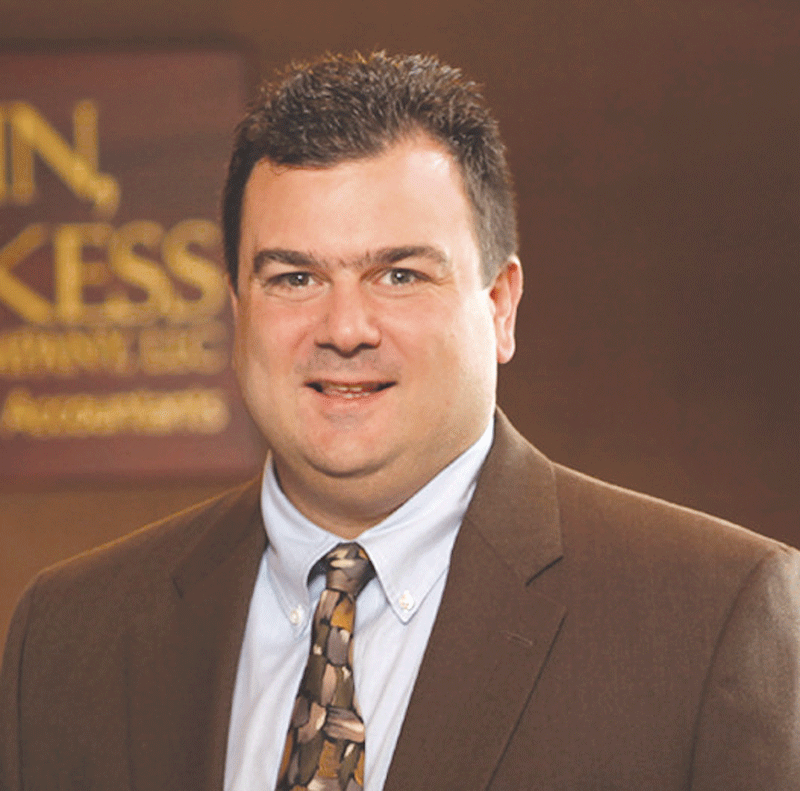
•••••

Bart Bales, P.E. has joined Tighe & Bond Inc. as the firm’s new mechanical engineer and MEP manager. With a focus on high-performance, renewable-energy, and energy-efficient systems for buildings and facilities, Bales has more than 25 years of experience serving municipalities, public institutions, utility companies, and businesses. In addition to heating, ventilation, and air-conditioning projects, his portfolio includes energy studies and services, sustainable design and advising, energy efficiency and resource conservation, as well as commissioning. Bales is an active member of the Northeast Sustainable Energy Assoc. and has served on the NESEA board of directors and conference planning committees. He is also a member of the Green Roundtable, the Assoc. of Energy Engineers, and the American Society of Heating, Refrigeration and Air Conditioning Engineers.

•••••

The Massachusetts Municipal Wholesale Electric Co. (MMWEC) announced the following:
• MWEC Director Jonathan Fitch, manager of the Princeton Municipal Light Department, was elected by the board of directors to the chairman’s post;
• Gary Babin, director of the Mansfield Municipal Electric Department, was elected by the MMWEC membership to a three-year term as director; and
• Jeffrey Cady, manager of the Chicopee Municipal Lighting Plant, was elected by the MWEC membership to a three-year term as director.

•••••

Sean Hemingway has been named director of the Center for Human Development’s juvenile justice programs based at the Westfield Youth Service Center. Hemingway was promoted to program director of the CHD Assessment Program and CHD Juvenile Justice Supports after serving as interim director of those two programs since December, while also serving as program director of CHD’s Adolescent Re-entry Services for the state Department of Youth Services Western Region.

•••••

James Hanifan, AIA, Vice President of Caolo & Bieniek Associates Inc. in Chicopee, was a recent keynote speaker for the University of Massachusetts Seminar Series “Designing for Sustainability in the Built Environment.” Hanifan is the project architect for the new UMass Amherst police headquarters, which will be the first LEED-certified project on the campus.

Sections Supplements
You Don’t Need a Crystal Ball to Figure Out What They’re Thinking

Joseph Spagnoletti

Joseph Spagnoletti

Construction companies need the support of their bonding company to sustain the growth of their business. As a result of the current economic realities of the construction industry, bonding companies are spending more time scrutinizing the viability of their clients’ financial future and operations before issuing a bond.
Here are the 10 topics you need to be prepared to address the next time you sit down with your surety agent.

1. Banking covenants. Bonding companies want to know that you are satisfying the covenants as outlined in your loan or line of credit documents. If you’re not meeting the covenants, you need to talk to your banker about rewriting the covenants or developing a strategy for meeting them. Bonding companies get concerned when they see that construction companies are not meeting their banking covenants.
In fact, this could result in an immediate end to a line of credit or an immediate call for repayment of a loan. Needless to say, without access to financing, some construction companies couldn’t afford to complete their work in progress. In the end, bonding companies want to see a positive working relationship with your lending institution.

2. Accounts receivable. Your accounts-receivable aging report will be examined throughout the year. What are bonding companies looking for? They want to make sure that you’re being paid for your work, and you have business systems, policies, and procedures in place to track and encourage timely payments. Before starting work for a customer, perform enough due diligence that would lead you and your bonding company to believe you’ll get paid for your work.

3. Accounts payable. Pay your bills in a timely fashion. Bonding companies assume that, if you’re not paying your bills in a timely fashion, you either don’t have the resources to do so, or you have weak internal business systems. Either way, that’s bad news.

4. Backlog. In construction, it’s all about the backlog. Really, whether you are an accounting firm, law office, or a construction company, a backlog of work secures the future of your business. The longer the backlog, the more confidence bonding companies will have in your business, and the more likely they are to insure the completion of your work. Keep in mind that bonding companies will look at more than the total number of jobs backlogged; they’ll look for the number of profitable jobs.

5. Strategic business plan. We all get distracted by today’s challenges, but taking the time to write a strategic business plan is good for the future of your business. And that’s just what bonding companies are concerned about — the future of your business. What are your short-term, mid-range and long-term goals, and what is your strategy for achieving them? Write them down. A good strategic business plan includes timelines and benchmarks to measure progress. If your bonding company comes in for a visit and asks to see your strategic business plan, be ready to share a thoroughly prepared document.

6. Profitable and cost-controlled work. Your bonding company wants to know that your jobs are profitable and that costs can be controlled as shifts in the market demand. So be prepared to show how you plan to profit from your work and control costs. In addition, if market conditions change, you need to have a plan in place to adjust. Take a proactive approach to challenges by implementing smart solutions on a timely basis.

7. Equipment. Equipment represents a major investment for most construction companies. The patterns of acquisition and disposition of equipment tell the bonding company a story. Be ready to discuss the reasons why you are either acquiring or disposing of equipment. If you’re stuck supporting debt for idle equipment, there may be creative ideas you could explore to turn idle equipment into a revenue source. Discuss strategies like this with your surety agent.

8. Loans from owners. As an owner of any business, when times are tough, you may have to loan your company money to help it through a temporarily challenging time. Don’t be surprised if loans you make to your company get subordinated to other obligations of the company and require approval from your surety before you get paid back. As an aside, be sure to consult with your accountant and attorney before loaning money to your company; there may be tax benefits or implications that deserve additional discussion.

9. Indemnity. Personal and spousal indemnity is becoming commonplace, especially if your surety agent considers a particular job to be a stretch for your company. Your bonding company sees more risk associated when you do work outside of your areas of expertise. With additional risk comes additional indemnity. If this sounds like you, be prepared to discuss why your company can meet its obligations even outside its areas of expertise.

10. Unexpected taxes. If your construction company (structured as a C-corporation) has adopted the completed contract basis of accounting for tax purposes, you may not be in a position to defer taxes to next year without a sizeable backlog. As backlogs at some construction companies aren’t so large, this could mean that those deferred taxes are payable now. Unanticipated, this could place significant strain on cash flow. Even if your deferred tax is at the individual level, as is the case with a flow-through entity, be prepared to discuss this issue with your surety agent.

Surety agents can be supportive in helping you grow your construction business. That being said, in higher-risk environments, they’ll need additional and more detailed information about you and your business.
Take a proactive approach in developing a positive working relationship with your surety agent. Get together throughout the year. Share your success stories and your challenges. Tell your surety agent what your company is doing to improve business processes and procedures, and what strategies you’ve put into place to control costs and become more profitable. When you and your surety agent are on the same page, that’s good for business.

Joseph Spagnoletti, CPA, CCIFP is partner in charge of the Construction Services Group at Kostin, Ruffkess & Co., LLC, a certified public-accounting and business-advisory firm with offices in Springfield as well as Farmington and New London, Conn. Beyond traditional accounting, auditing, and tax consulting, the firm also specializes in employee benefit-plan audits, litigation support, business valuation, succession-planning business consulting, forensic accounting, wealth management, estate planning, fraud prevention, and information technology assurance; www.kostin.com.

Features
Glenn Edwards Believes the Time Is Right for His Springfield Properties
Main Street Building Block

Glenn Edwards is taking a glass-full-half outlook on prospects for commercial real estate in downtown Springfield, and especially his block.

It took Glenn Edwards a few years to put the entire block of buildings on Main Street in Springfield between Harrison Place and Court Street into his portfolio. He’s enjoyed mixed results since then, with the recession leaving ‘for lease’ signs in many windows along that stretch. And while the local market remains quite sluggish, he believes the time is right for him to fill some of those vacancies.

Glenn Edwards has his office in New York City, but he keeps close tabs on what’s happening in Springfield — and he should. After all, he owns all the buildings along the east side of Main Street between Harrison Avenue and Falcon Drive.

And for the most part, Edwards, who acquired those parcels between 2005 and 2007, likes what he’s hearing and reading about the City of Homes and especially its central business district. He’s actually pleased that the nearly vacant federal building will soon be almost full with Springfield School Department offices and other tenants (some downtown property owners were miffed that their buildings were not even given an opportunity to vie for that business).

Meanwhile, he’s encouraged by progress in Court Square, especially UMass Amherst’s decision to take one of the buildings there for one of its programs. He’s buoyed by some anecdotal evidence that the worst appears to be over for both the economy in general and the real estate market in particular, and, while he wasn’t thrilled to lose the Dennis Group as a major tenant in Harrison Place, he’s even finding something positive about that company’s relocation to the Fuller Block and the filling of that structure.

He believes all or most of the recent news bodes well for his efforts to lease up his properties, which include — in addition to Harrison Place, which has three vacant floors — what’s known as the Johnson’s Bookstore Building, Marketplace, the so-called Northwestern Mutual Building, and also 1341 and 1319-1331 Main St.

New life for the federal building and Fuller Block will add vitality to the downtown and leave two fewer options for companies that are looking to downsize, rightsize, find a better deal, or take an expansion plan off the back burner its been on since the recession hit high gear, said Edwards, noting that he believes there are many businesses in all these categories.

“As the economy improves, we fully expect Springfield to be part of the renaissance,” he told BusinessWest. “We expect to ride the next wave of real-estate activity.”

And within Edwards’ block of buildings, which together comprise around 45,000 square feet of available space in various shapes and sizes, there is “something for just about everyone,” said John Williamson, president of Williamson Commercial Properties, which is now handling leasing activities for the properties.

“We’ve have full floors in Harrison Place, including the first and second, which is some of the most visible space in downtown Springfield,” he said. “And we have a lot of other spaces with which we can be very creative.”

For this issue, BusinessWest talks at length with Edwards and Williamson about why they think they have the right places at the right time.

New Lease on Life?

Williamson joked that his new assignment with Edwards, for whom he handled the Harrison Place transaction in 2007, is essentially to “lease his way out of a job,” meaning to fill the properties in question.

As he goes about that task, he’ll face a good number of challenges, especially competition for tenants. Indeed, while some properties, like the Fuller Block and the federal building, are now effectively off the market, there are countless others in or near downtown with ‘for lease’ signs in their windows.

And, in many respects, this is still very much a tenants’ market, a phrase used repeatedly by brokers to imply that businesses that are ready and able to make moves can play those landlords with space to lease against one another and get some attractive deals.

But the biggest challenge may be that there are still not enough business owners and nonprofit managers ready to make those moves. In recent months, area brokers have used words like ‘quiet,’ ‘frozen,’ and ‘dead’ to describe the state of the local commercial real-estate market, and some have said that conditions now are even worse than during the prolonged recession of 20 years ago, when brokers could at least stay busy working for banks trying to rid themselves of properties on their OREO (other real estate owned) files.

However, the usually optimistic Edwards is seeing the picture a different way — with the glass half full, or at least approaching that level.

He said that activity has picked up in many of the markets in which he owns properties (that list includes municipalities ranging from Lynnbrook, N.Y. to Park City, Kan. to Clifton, Colo.), and that he fully expects that Springfield, home to perhaps the centerpiece of his portfolio, will eventually follow suit.

“It’s not going to be a tenants’ market forever,” he said, noting that, as bad as this downturn has been, it will be followed, like others before it, by a period when the laws of supply of demand will eventually begin to work in favor of property owners.

And he believes his block is well-positioned for the day when the pendulum starts to swing.

Granted, he has only what would be considered Class B space, or perhaps B+ in the case of Harrison Place, available to lease, but he notes that most Class A space in both the suburbs and downtown Springfield is occupied, and what isn’t — the vast majority of it is in 1350 Main St. or One Financial Plaza — is mostly being reserved for larger tenants.

So he believes this leaves opportunities for those properties across Main Street with the odd numbers, starting with Harrison Place.

Edwards acquired that landmark from the Picknelly family in late 2007, putting the entire block in his portfolio. The building was nearly full at that time, but the scene changed dramatically when Tom Dennis — who acquired the property in the late ’90s, built out the first two floors for his engineering firm, and later sold the property to the Picknellys — desired to once again own his space.

He departed for the rehabbed Fuller block in the summer of 2009, leaving one of those aforementioned ‘for lease’ signs in the front window at Harrison Place, through which countless pedestrians and motorists look every day.

That visibility, coupled with accessibility and pliable space, has attracted several tire-kickers, said Williamson, including a large law firm. He expects more tours in the weeks and months ahead as businesses look to take advantage of what is still, by and large, a tenants’ market.

The ultimate goal is to lease the first and second floors, both around 8,000 square feet, to one tenant. The best plan B is to find two full-floor tenants, he said, adding that there is flexibility for a number of other scenarios, but the preference is for larger tenants.

The same goes for the slightly smaller ninth floor, he said, adding that, overall, there is some 25,000 square feet, just over 33% of the total space, available in the building.

Moving south down what could now be called the Edwards Block, there are roughly 5,000 square feet available, or just under one-fifth of the total, in the Johnson’s Bookstore building, where Edwards and Williamson want to find more retail and office tenants to join FedEx Kinko’s, which moved in on the first floor last year.

There are nearly 6,000 square feet available (one-quarter of the inventory) at 1365 Main St., also called the Marketplace Building; all of the space, 5,298 square feet, in 1341 Main St., most recently occupied by Westfield Bank, which means it’s been vacant for some time; and just over 3,068 square feet in 1310-1331 Main, also known as the Peerless Building.

Overall, Williamson said his broad strategy for leasing up those buildings is “innovative,” and by that he means everything from imaginative lease deals that will serve both Edwards and his tenants to efforts to attract some of the many nonprofit groups operating in the Greater Springfield area, especially for the Westfield Bank building, which he believes is perfectly suited for one or, more likely, several such tenants.

“That property lends itself well to that kind of use,” he said, “and there are literally hundreds of these 501 C3s operating in this area.”

Space Exploration

When asked why he’s so bullish on the prospects for Springfield when others seem far less ebullient, Edwards says his attitude stems from seeing clear progress in several of the other markets in which he owns real estate.

“We’ve signed a number of leases over the past few months — there’s a lot of activity taking place,” he said. “We’re going to see that here, too. Tenants will be rightsizing and going from class C space to class B. Space will start to be absorbed again.”

Time will tell if — and when — he’s right about the Springfield market, but at the moment, Edwards likes what he sees. And he believes he’s well-positioned for when the turnaround begins.

George O’Brien can be reached at

[email protected]

Company Notebook Departments

Here’s the Scoop: Rondeau’s Marks 70 Years

PALMER — Alvin Rondeau’s Dairy Bar, a Quaboag region institution, is this month celebrating its 70th birthday. It was on May 18, 1940 that Alvin “Mike” Rondeau opened his ice-cream shop, which has endured and now has fourth and fifth-generation members of the family carrying on the tradition. Indeed, Dick Rondeau, Alvin’s grandson, now works alongside his son, Dick, and grandson, Michael. The establishment, located on Route 32, specializes in hot dogs, hamburgers, fresh seafood, and, of course, ice cream. As in past years, Rondeau’s will mark its birthday celebration with a special. From May 18 to May 20, ice-cream cones, hot dogs, fries, and soda will all be 70 cents each.

Hampden Bank Turns 158, Is Named Sponsor of Jazz & Art Festival

SPRINGFIELD — Hampden Bank recently celebrated its 158th anniversary, an occasion the institution’s president, Tom Burton, marked by looking forward, not back. “Reaching this milestone on my watch is indeed a privilege. I couldn’t be more proud of our people, who we are, and what we’ve accomplished on behalf of those we serve,” he said. “As we move toward the end of the first decade of the 21st century, we will not rest on our laurels; we will continue to vigorously support our communities, and we will work tirelessly to brighten the days of our customers.” In other news, the bank announced that it is the named sponsor of the fourth annual Hoop City Jazz & Art Festival, partnering with presenting sponsor MassMutual and a host of other businesses and organizations. The event, to be staged July 9-11, is being moved to downtown Springfield at Court Square and the City Hall Esplanade.

Tiger Press Adds New Color Production System

NORTHAMPTON — Tiger Press announced that it has installed a new Ricoh C900 color production system at its manufacturing facility in Northampton. The system can produce more than 5,000 color impressions per hour on a variety of coated and uncoated stocks. Digital files are handled using the newest Fiery controller with built-in color calibration and imposition. “This new digital press enables us to offer color reproduction of short-run orders for a fraction of what our competitors are charging,” said Reza Shafii, president of Tiger Press. The C900 has a unique square-saddle-stitch capability that allows a spine for larger books, a special feature for customers in need of high-quality, short-run booklets with limited budget, he continued. In addition, Tiger Press has developed an advanced proofing technique for projects that will be produced on uncoated stock. Printing on recycled, uncoated paper is becoming more popular as companies strive to become more eco-friendly.

Curran & Berger Adds Location in Springfield

SPRINGFIELD — Curran & Berger, LLP, the Northampton-based immigration-law firm, has opened a satellite office at 1145 Main St. in Springfield. The new location will provide a convenient meeting space for legal staff to meet with its clients, said partners Joseph Curran and Dan Berger.

Friendly’s Restaurants Introduce New Salads

WILBRAHAM — In response to a desire among many adult Americans to eat healthier, Friendly’s has introduced a new selection of freshly made salads. Beginning in late March, more than 500 Friendly’s restaurants began offering seven new salads, including Southwest Chipotle Chicken Salad, Bleu Moon Sirloin Salad, and Apple Harvest Chicken Salad. In addition, Friendly’s has partnered with Healthy Dining, an organization that recommends dietician-approved menu items at restaurants. As part of the partnership, healthydiningfinder.com will highlight several the healthier options that are available at Friendly’s restaurants. These choices will be highlighted in Friendly’s menus. For more information on the new offerings, visit www.friendlys.com.

Mercy Medical’s EEG Lab Achieves Accreditation

SPRINGFIELD —- The Electroencephalographic (EEG) Lab at Mercy Medical Center has been awarded accreditation by the EEG Laboratory Accreditation Board of the American Board of Registration of Electroencephalographic and Evoked Potential Technologists (ABRET), making it one of only two EEG labs in Massachusetts to achieve that distinction. The ABRET lab-accreditation process involves evaluation of technical standards, the quality of the laboratory’s output, and lab-management issues. According to ABRET, successful accreditation indicates that the EEG lab has met strict standards and is recognized for providing quality diagnostics. “The ABRET accreditation is another example of Mercy Medical Center’s success in providing outstanding patient care throughout our facility, and delivered daily by highly trained professionals using quality diagnostic tools,” said Sharon Adams, RN, vice president of Patient Care Services at Mercy Medical Center. “This independent, objective verification of quality management and policies also allows physicians and patients to choose the EEG Lab at Mercy with the confidence of knowing that they will receive quality diagnostics.” The EEG Lab at Mercy Medical Center provides testing for 540 patients each year, and the ABRET lab accreditation is effective through 2015. EEGs are used diagnostically for many neurological problems, including stroke, seizures, migraine headaches, tumors, headaches, and dizziness. With this accreditation, Mercy joins Children’s Hospital of Boston as one of only two facilities in Massachusetts with EEG labs that meet ABRET standards.

Mont Marie Scores Highest in Region in Survey

HOLYOKE — Family members rated the care that their loved ones receive at the Mont Marie Health Care Center as the best in Western Mass., according to a survey just released by the State Department of Public Health. The Mont Marie Health Care Center, a not-for-profit skilled-nursing facility owned and operated by the Sisters of St. Joseph of Springfield, was among 430 nursing homes surveyed by the state last fall. The center scored 4.79 in overall satisfaction, well above both the statewide average of 4.22 and the Western Mass average of 4.20 (on a scale of 1-5). When asked if they would recommend the Mont Marie Health Care Center to a friend or family member, 98% of the respondents said ‘yes.’ Commenting on the high score, center Administrator Sr. Elizabeth Sullivan said, “the numbers indicate the trust level and credibility that family members have in our staff, who respond to the needs of residents on a daily basis with compassion, respect, and diligence.” The survey collected detailed information about nursing-home staff, physical environment, activities, personal-care services, food and meals, and residents’ personal rights. It also asked respondents to rate overall satisfaction and ability to meet residents’ needs. Surveys were mailed to approximately 34,600 family members of nursing home residents across the state.

Sections Supplements
Recently Enacted Legislation Has Provisions That Impact the Bottom Line

Kristina Drzal Houghton

Kristina Drzal Houghton

For owners of small businesses and their workers, the recently enacted health-reform legislation has some key provisions to pay attention to. The major ones include tax credits, excise taxes, and penalties.
But whether a business will be affected by them depends on a variety of factors, such as the number of employees the business has. This article explains how the health care legislation impacts a small business in each of these areas.

Tax credits to certain small employers that provide insurance. The new law provides small employers with a tax credit (i.e., a dollar-for-dollar reduction in tax) for non-elective contributions to purchase health insurance for their employees. The credit can offset an employer’s regular tax or its alternative minimum tax (AMT) liability.

Small-business employers eligible for the credit. To qualify, a business must offer health insurance to its employees as part of its compensation and contribute at least half the total premium cost. The business must have no more than 25 full-time-equivalent employees (FTEs), and the employees must have annual full-time equivalent wages that average no more than $50,000. However, the full amount of the credit is available only to an employer with 10 or fewer FTEs and whose employees have average annual full-time equivalent wages from the employer of less than $25,000.

Years the credit is available. The credit is initially available for any tax year beginning in 2010, 2011, 2012, or 2013. Qualifying health insurance for claiming the credit for this first phase of the credit is health-insurance coverage purchased from an insurance company licensed under state law. For tax years beginning after 2013, the credit is available only to an eligible small employer that purchases health-insurance coverage for its employees through a state exchange, and is only available for two years. The maximum two-year coverage period does not take into account any tax years beginning in years before 2014. Thus, an eligible small employer could potentially qualify for this credit for six tax years, four years under the first phase and two years under the second phase.

Calculating the amount of the credit. For tax years beginning in 2010, 2011, 2012, or 2013, the credit is generally 35% (50% for tax years beginning after 2013) of the employer’s non-elective contributions toward the employees’ health-insurance premiums. The credit phases out as firm size and average wages increase.

Special rules. The employer is entitled to an ordinary and necessary business-expense deduction equal to the amount of the employer contribution minus the dollar amount of the credit. For example, if an eligible small employer pays 100% of the cost of its employees’ health insurance coverage and the amount of the tax credit is 50% of that cost (i.e., in tax years beginning after 2013), the employer can claim a deduction for the other 50% of the premium cost.

Self-employed individuals, including partners and sole proprietors, 2% shareholders of an S corporation, and 5% owners of the employer are not treated as employees for purposes of this credit. There is also a special rule to prevent sole proprietorships from receiving the credit for the owner and their family members. Thus, no credit is available for any contribution to the purchase of health insurance for these individuals, and the individual is not taken into account in determining the number of full-time equivalent employees or average full-time equivalent wages.

Most small businesses are exempted from penalties for not offering coverage to their employees. Although the new law imposes penalties on certain businesses for not providing coverage to their employees (so-called ‘pay or play’), most small businesses won’t have to worry about this provision because employers with fewer than 50 employees aren’t subject to the pay-or-play penalty. For businesses with at least 50 employees, the possible penalties vary depending on whether or not the employer offers health insurance to its employees. If it does not offer coverage and it has at least one full-time employee who receives a premium tax credit, the business will be assessed a fee of $2,000 per full-time employee, excluding the first 30 employees from the assessment.
So, for example, an employer with 51 employees who doesn’t offer health insurance to his employees will be subject to a penalty of $42,000 ($2,000 multiplied by 21). Employers with at least 50 employees that offer coverage but have at least one full-time employee receiving a premium tax credit will pay $3,000 for each employee receiving a premium credit (capped at the amount of the penalty that the employer would have been assessed for a failure to provide coverage, or $2,000 multiplied by the number of its full-time employees in excess of 30). These provisions take effect Jan. 1, 2014.

The ‘Cadillac tax’ on high-cost health plans. The new law places an excise tax on high-cost, employer-sponsored health coverage (often referred to as ‘Cadillac health plans’). This is a 40% excise tax on insurance companies, based on premiums that exceed certain amounts. The tax is not on employers themselves unless they are self-funded (this typically occurs at larger firms). However, it is expected that employers and workers will ultimately bear this tax in the form of higher premiums passed on by insurers.
Here are the specifics. The new tax, which applies for tax years beginning after Dec. 31, 2017, places a 40% non-deductible excise tax on insurance companies and plan administrators for any health coverage plan to the extent that the annual premium exceeds $10,200 for single coverage and $27,500 for family coverage. An additional threshold amount of $1,650 for single coverage and $3,450 for family coverage will apply for retired individuals age 55 and older and for plans that cover employees engaged in high-risk professions.
The tax will apply to self-insured plans and plans sold in the group market, but not to plans sold in the individual market (except for coverage eligible for the deduction for self-employed individuals). Standalone dental and vision plans will be disregarded in applying the tax. The dollar-amount thresholds will be automatically increased if the inflation rate for group medical premiums between 2010 and 2018 is higher than projected. Employers with age and gender demographics that result in higher premiums could value the coverage provided to employees using the rates that would apply using a national risk pool.
The excise tax will be levied at the insurer level. Employers will be required to aggregate the coverage subject to the limit and issue information returns for insurers indicating the amount subject to the excise tax.

Kristina Drzal Houghton, CPA, MST, is partner-in-charge of Taxation at Meyers Brothers Kalicka, P.C. in Holyoke; (413) 536-8510.

Court Dockets Departments

The following is a compilation of recent lawsuits involving area businesses and organizations. These are strictly allegations that have yet to be proven in a court of law. Readers are advised to contact the parties listed, or the court, for more information concerning the individual claims.

HAMPDEN SUPERIOR COURT

3640 Main Street, LLP v. Eastfield Glass Inc. and Saloomey Construction Inc.
Allegation: Negligent installment of commercial window system and failure to honor warranties: $500,000
Filed: 4/11/10

Hammer & Steel Inc. v. Quaboag Transfer Inc.
Allegation: Contractual dispute regarding storage and handling: $25,000+
Filed: 3/31/10

HAMPSHIRE SUPERIOR COURT

Robert P. Sullivan v. University of Massachusetts, Allison Berger, and Jo-Anne Thomas Vanin
Allegation: Violation of civil rights and First Amendment: $25,000+
Filed: 4/7/10

Silvia & Ronald Ash v. Instar Services Management, LLC
Allegation: Negligence and conversion of personal property and extreme emotional distress: $100,000
Filed: 3/25/10

NORTHAMPTON DISTRICT COURT

Inpro Corp. v. Creative Construction & Remodeling, LLC
Allegation: Non-payment of goods sold and delivered: $3,758.16
Filed: 3/12/2010

PALMER DISTRICT COURT

Cargill Animal Nutrition Inc. v. Arooth Brothers
Allegation: Non-payment of goods sold and delivered: $18,082.93
Filed: 3/22/10

Citibank, N.A. v. LDH Inc.
Allegation: Failure to pay for monies loaned: $18,098.98
Filed: 3/16/10

Majestic Masonry v. Aecon Inc.
Allegation: Breach of contract by failing to pay for contracted work: $5,600
Filed: 3/17/10

SPRINGFIELD DISTRICT COURT

Atwood Fire & Security v. 380 Union St. Properties, LLC
Allegation: Non-payment of services rendered: $6,605.29
Filed: 4/4/10

Comcast Spotlight Inc. v. Priore Design Inc.
Allegation: Non-payment for advertising services rendered: $10,603.51
Filed: 2/22/10

Elite Towing & Auto Repair v. Berkshire Bank
Allegation: Enforcement of mechanics lien: $8,991
Filed: 3/3/10

Marie Norgaisse v. Real Estate Renovations, LLC
Allegations: Failure to provide reasonable performance and breach of contract: $50,000
Filed: 2/22/10

USA Hauling & Recycling Inc. v. Pinocchio’s On the Go
Allegation: Non-payment for waste-removal systems: $7,406.77
Filed: 2/24/10

WESTFIELD DISTRICT COURT

Kelley Fradet Lumber Inc. v. Precision Panels Inc.
Allegation: Non-payment of goods sold and delivered: $20,624.64
Filed: 3/24/10

Pioneer Valley Winnelson Co. Inc. v. Welch Plumbing & Heating
Allegation: Non-payment of goods sold and delivered: $14,354.86
Filed: 3/11/10

Uncategorized
Recently Enacted Legislation Has Provisions That Impact the Bottom Line

For owners of small businesses and their workers, the recently enacted health-reform legislation has some key provisions to pay attention to. The major ones include tax credits, excise taxes, and penalties.

But whether a business will be affected by them depends on a variety of factors, such as the number of employees the business has. This article explains how the health care legislation impacts a small business in each of these areas.

Tax credits to certain small employers that provide insurance. The new law provides small employers with a tax credit (i.e., a dollar-for-dollar reduction in tax) for non-elective contributions to purchase health insurance for their employees. The credit can offset an employer’s regular tax or its alternative minimum tax (AMT) liability.

Small-business employers eligible for the credit. To qualify, a business must offer health insurance to its employees as part of its compensation and contribute at least half the total premium cost. The business must have no more than 25 full-time-equivalent employees (FTEs), and the employees must have annual full-time equivalent wages that average no more than $50,000. However, the full amount of the credit is available only to an employer with 10 or fewer FTEs and whose employees have average annual full-time equivalent wages from the employer of less than $25,000.

Years the credit is available. The credit is initially available for any tax year beginning in 2010, 2011, 2012, or 2013. Qualifying health insurance for claiming the credit for this first phase of the credit is health-insurance coverage purchased from an insurance company licensed under state law. For tax years beginning after 2013, the credit is available only to an eligible small employer that purchases health-insurance coverage for its employees through a state exchange, and is only available for two years. The maximum two-year coverage period does not take into account any tax years beginning in years before 2014. Thus, an eligible small employer could potentially qualify for this credit for six tax years, four years under the first phase and two years under the second phase.

Calculating the amount of the credit. For tax years beginning in 2010, 2011, 2012, or 2013, the credit is generally 35% (50% for tax years beginning after 2013) of the employer’s non-elective contributions toward the employees’ health-insurance premiums. The credit phases out as firm size and average wages increase.

Special rules. The employer is entitled to an ordinary and necessary business-expense deduction equal to the amount of the employer contribution minus the dollar amount of the credit. For example, if an eligible small employer pays 100% of the cost of its employees’ health insurance coverage and the amount of the tax credit is 50% of that cost (i.e., in tax years beginning after 2013), the employer can claim a deduction for the other 50% of the premium cost.

Self-employed individuals, including partners and sole proprietors, 2% shareholders of an S corporation, and 5% owners of the employer are not treated as employees for purposes of this credit. There is also a special rule to prevent sole proprietorships from receiving the credit for the owner and their family members. Thus, no credit is available for any contribution to the purchase of health insurance for these individuals, and the individual is not taken into account in determining the number of full-time equivalent employees or average full-time equivalent wages.

Most small businesses are exempted from penalties for not offering coverage to their employees. Although the new law imposes penalties on certain businesses for not providing coverage to their employees (so-called ‘pay or play’), most small businesses won’t have to worry about this provision because employers with fewer than 50 employees aren’t subject to the pay-or-play penalty. For businesses with at least 50 employees, the possible penalties vary depending on whether or not the employer offers health insurance to its employees. If it does not offer coverage and it has at least one full-time employee who receives a premium tax credit, the business will be assessed a fee of $2,000 per full-time employee, excluding the first 30 employees from the assessment.

So, for example, an employer with 51 employees who doesn’t offer health insurance to his employees will be subject to a penalty of $42,000 ($2,000 multiplied by 21). Employers with at least 50 employees that offer coverage but have at least one full-time employee receiving a premium tax credit will pay $3,000 for each employee receiving a premium credit (capped at the amount of the penalty that the employer would have been assessed for a failure to provide coverage, or $2,000 multiplied by the number of its full-time employees in excess of 30). These provisions take effect Jan. 1, 2014.

The ‘Cadillac tax’ on high-cost health plans. The new law places an excise tax on high-cost, employer-sponsored health coverage (often referred to as ‘Cadillac health plans’). This is a 40% excise tax on insurance companies, based on premiums that exceed certain amounts. The tax is not on employers themselves unless they are self-funded (this typically occurs at larger firms). However, it is expected that employers and workers will ultimately bear this tax in the form of higher premiums passed on by insurers.

Here are the specifics. The new tax, which applies for tax years beginning after Dec. 31, 2017, places a 40% non-deductible excise tax on insurance companies and plan administrators for any health coverage plan to the extent that the annual premium exceeds $10,200 for single coverage and $27,500 for family coverage. An additional threshold amount of $1,650 for single coverage and $3,450 for family coverage will apply for retired individuals age 55 and older and for plans that cover employees engaged in high-risk professions.

The tax will apply to self-insured plans and plans sold in the group market, but not to plans sold in the individual market (except for coverage eligible for the deduction for self-employed individuals). Standalone dental and vision plans will be disregarded in applying the tax. The dollar-amount thresholds will be automatically increased if the inflation rate for group medical premiums between 2010 and 2018 is higher than projected. Employers with age and gender demographics that result in higher premiums could value the coverage provided to employees using the rates that would apply using a national risk pool.

The excise tax will be levied at the insurer level. Employers will be required to aggregate the coverage subject to the limit and issue information returns for insurers indicating the amount subject to the excise tax.

Kristina Drzal Houghton, CPA, MST, is partner-in-charge of Taxation at Meyers Brothers Kalicka, P.C. in Holyoke; (413) 536-8510 begin_of_the_skype_highlighting              (413) 536-8510      end_of_the_skype_highlighting.

Departments People on the Move

United Bank announced that Jennifer Boyle has been promoted to the position of Business Intelligence Officer, responsible for providing database systems management, analysis, and administration in support of the bank’s information-reporting needs. Boyle joined United in 2005 as electronic report writer with previous experience as a systems analyst with Senior Care Management Services in Pittsfield, a provider of nationwide long-term care management services. Through its Wealth Management Group and its partnership with NFP Securities Inc., United is able to offer access to a range of investment and insurance products and services, as well as financial, estate, and retirement strategies and products.


•••••

Curran & Berger, LLP, a Northampton-based immigration law firm, announced that associate Margaret A. Wheeler has joined attorneys Joseph P. Curran and Dan H. Berger in the growing practice. Wheeler has been an immigration attorney since 1997, and has practices in variety of venues. She has been an in-house counsel for several academic institutions and for Microsoft Corp. She has been an active member of the American Immigrations Lawyers Assoc. since 1998. Prior to joining Curran & Berger, she was assistant university counsel and immigration attorney for the University of North Carolina, office of the president, in the Division of Legal Affairs. She is a member of the Massachusetts and District of Columbia bar associations.

•••••

The Polish National Credit Union announced the following:
• Jeri Kreinest has joined the PNCU Lending Department as a Mortgage Originator. She brings eight years of mortgage experience to her new position. Most recently, she was a senior loan officer with Bank of America/Countrywide. She will work out of the credit union’s branch locations in Westfield and Southampton; and
• Dawn Barba has joined the Lending Department as a Mortgage Originator. She has worked in the mortgage industry for 12 years, with the last five as an underwriter of conventional, FHA, VA, and rural-housing mortgages. She will work out of PNCU’s new Mortgage Center on Main Street in Chicopee.

•••••

Alice E. Pizzi has joined the management-employment law firm Sullivan, Hayes & Quinn. Pizzi, a cum-laude graduate of UMass earned her law degree from Western New England College School of Law, where she received academic awards in labor law and in evidence. Before joining Sullivan, Hayes & Quinn, she was a compliance officer with the MCAD. Admitted to the bar of Massachusetts and presently pending admission to the bar of New York State, Pizzi will focus on defense of discrimination, harassment, and labor cases, working out of the firm’s Springfield and New York City offices.

•••••

Christina Barrett has joined Berkshire Community College as Director of Marketing & Public Relations.

•••••

Ashley Sulock has joined the Berkshire Chamber of Commerce as director of Marketing & Communications.

•••••

Glandina Morris has joined Cambridge College in Springfield as an Admissions Counselor. Prior to joining the school, she served as the acting Director of Communications for Boundless Playgrounds, a national nonprofit organization based in Connecticut. In her new position, she will develop new strategies for education and outreach for the undergraduate and master’s Management programs.

•••••

Susan A. Mielnikowski, an associate with the Springfield-based law firm Cooley Shrair, has been invited to present the continuing-legal-education seminar “Trust Basics for the General Practitioner.” The Mass. Bar Assoc., Western New England College, School of Law, and the Berkshire, Franklin, Hampden, and Hampshire county bar associations are co-sponsoring the seminar, which will be presented for practitioners who work with trusts in their applications.

•••••

Susan Jaye-Kaplan, co-founder of Link to Libraries and founder of Go FIT, is featured as a contributor in the newly released book, 365 Ideas for Recruiting, Retaining, Motivating, and Rewarding Your Volunteers: A Complete Guide for Nonprofit Organizations, by Sunny Fader. Published by Atlantic Publishing, the book is aimed at helping nonprofit volunteer recruiters and managers hone their skills. It includes the experiences of large, successful nonprofits such as March of Dimes and the American Cancer Society, as well as smaller regional and local organizations.

•••••

Kathleen M. Plate was recently hired to begin a development effort at Human Resources Unlimited, a regional human-services agency whose mission is to maximize opportunities for growth and independence of disabled and disadvantaged people. In her new position as Director of Development, Plante will generate the program and operating funds necessary to serve HRU’s constituents by creating a sustainable fund-raising strategy. Prior to joining HRU, Plante was director for advancement at Holyoke Catholic High School and director of sales for the Affiliated Chambers of Commerce of Greater Springfield.

Sections Supplements
Department of Labor Is Viewing Most Internships as Employment Arrangements

Amy Royal

Amy Royal

With the summer months approaching and the economy still in a slump, many area businesses are likely to be flooded with the résumés of high-school and college students seeking internships. Before taking action on any of these résumés, it is important for businesses first to be aware that many internships must be paid.
The idea of a paid internship may seem like an oxymoron since the word ‘intern’ usually connotes an unpaid arrangement. Indeed, internships are generally thought of as unpaid, mutually beneficial arrangements: the intern gains valuable work experience that will undoubtedly be included on her résumé, and the business gains free labor for the summer, labor that will undoubtedly answer the telephone, file, copy, and perform other miscellaneous tasks. But for the purposes of wage-and-hour laws, our traditional notion of what an internship should be is irrelevant.
The Fair Labor Standards Act (FLSA), which is the federal law requiring the payment of minimum wages and overtime compensation, generally prohibits unpaid internships, especially in the private, for-profit sector. Unpaid internships in the public sector and at nonprofit, charitable organizations, where the interns volunteer without the expectation of compensation, are usually permissible. Yet, at for-profit companies, the FLSA by and large requires that interns be paid at least the minimum wage as well as any overtime compensation for hours worked above 40 in a given week. In other words, under the FLSA, interns will oftentimes be treated as employees and must be compensated for all hours worked.
Just in time for the summer months, the U.S. Department of Labor’s Wage and Hour Division, which is the federal agency with enforcement authority over wage-and-hour laws, appears to be cracking down on unpaid internships. In fact, just last month, the DOL published a fact sheet on its Web site, titled “Internship Programs Under the Fair Labor Standards Act,” which makes it clear that the DOL will view most internships as an employment arrangement requiring compensation.
Although the fact sheet reiterates the FLSA’s implied mandate that internships be paid, it sets forth a six-part test for determining the circumstances under which an internship can be unpaid. As the fact sheet is quick to point out, these circumstances are very narrow, and the determination of whether an internship meets this narrow exception depends upon all of the facts and circumstances of each internship program, including the following six factors:
• The internship, even though it includes actual operation of the facilities of the employer, is similar to training, which would be given in an educational environment;
• The internship experience is for the benefit of the intern;
• The intern does not displace regular employees, but works under close supervision of existing staff;
• The employer that provides the training derives no immediate advantage from the activities of the intern, and on occasion its operations may actually be impeded;
• The intern is not necessarily entitled to a job at the conclusion of the internship; and
• The employer and the intern understand that the intern is not entitled to wages for the time spent in the internship.
If each of the above factors is met, then an employment arrangement does not exist under the FLSA, and, as a result, the FLSA’s minimum wage and overtime provisions do not apply. Under the DOL fact sheet, an intern will be considered an employee if she is engaged in any business operations or is performing any productive work for the business, such as filing, copying, answering telephones, or other clerical work or assisting customers. Additionally, if an intern is placed with a business for a trial period with the expectation that she will be hired on a permanent basis at some later date, that intern will also be considered an employee, entitled to minimum-wage and overtime compensation.
The fact that an intern may be receiving some benefit in the form of a new skill, work experience, or better work habits in the course of their internship is irrelevant and will not exclude them from the FLSA’s minimum-wage and overtime requirements. In fact, meeting each of the six exclusion factors will be very difficult, and the DOL, given its ramped-up enforcement efforts, is likely to be highly skeptical of businesses that do not pay their interns, scrutinizing them very closely.
Educational internship programs are generally exempt from the FLSA’s minimum-wage and overtime requirements. Indeed, the more the internship is structured around an educational program, the more likely it will be considered an unpaid arrangement. Usually, this occurs when a college or university oversees the internship program and provides credit for participation in the internship. Even then, the intern cannot be performing any services that would benefit the business. If the intern does, the internship arrangement will come within the FLSA’s protections.
Before taking on any interns this summer, businesses should carefully examine the nature of the work the intern will be doing. Bear in mind that any tasks that benefit the business, such as filing or copying, entitle an intern to compensation of at least minimum wage and overtime pay, when applicable. Businesses that erroneously label an individual an intern violate the minimum-wage and overtime laws, and can face severe penalties.

Amy B. Royal, Esq. specializes exclusively in management-side labor and employment law at Royal & Klimczuk, LLC, a women-owned, boutique, management-side labor and employment law firm; (413) 586-2288.

Uncategorized
Department of Labor Is Viewing Most Internships as Employment Arrangements

With the summer months approaching and the economy still in a slump, many area businesses are likely to be flooded with the résumés of high-school and college students seeking internships. Before taking action on any of these résumés, it is important for businesses first to be aware that many internships must be paid.

The idea of a paid internship may seem like an oxymoron since the word ‘intern’ usually connotes an unpaid arrangement. Indeed, internships are generally thought of as unpaid, mutually beneficial arrangements: the intern gains valuable work experience that will undoubtedly be included on her résumé, and the business gains free labor for the summer, labor that will undoubtedly answer the telephone, file, copy, and perform other miscellaneous tasks. But for the purposes of wage-and-hour laws, our traditional notion of what an internship should be is irrelevant.

The Fair Labor Standards Act (FLSA), which is the federal law requiring the payment of minimum wages and overtime compensation, generally prohibits unpaid internships, especially in the private, for-profit sector. Unpaid internships in the public sector and at nonprofit, charitable organizations, where the interns volunteer without the expectation of compensation, are usually permissible. Yet, at for-profit companies, the FLSA by and large requires that interns be paid at least the minimum wage as well as any overtime compensation for hours worked above 40 in a given week. In other words, under the FLSA, interns will oftentimes be treated as employees and must be compensated for all hours worked.

Just in time for the summer months, the U.S. Department of Labor’s Wage and Hour Division, which is the federal agency with enforcement authority over wage-and-hour laws, appears to be cracking down on unpaid internships. In fact, just last month, the DOL published a fact sheet on its Web site, titled “Internship Programs Under the Fair Labor Standards Act,” which makes it clear that the DOL will view most internships as an employment arrangement requiring compensation.

Although the fact sheet reiterates the FLSA’s implied mandate that internships be paid, it sets forth a six-part test for determining the circumstances under which an internship can be unpaid. As the fact sheet is quick to point out, these circumstances are very narrow, and the determination of whether an internship meets this narrow exception depends upon all of the facts and circumstances of each internship program, including the following six factors:

• The internship, even though it includes actual operation of the facilities of the employer, is similar to training, which would be given in an educational environment;

• The internship experience is for the benefit of the intern;

• The intern does not displace regular employees, but works under close supervision of existing staff;

• The employer that provides the training derives no immediate advantage from the activities of the intern, and on occasion its operations may actually be impeded;

• The intern is not necessarily entitled to a job at the conclusion of the internship; and

• The employer and the intern understand that the intern is not entitled to wages for the time spent in the internship.

If each of the above factors is met, then an employment arrangement does not exist under the FLSA, and, as a result, the FLSA’s minimum wage and overtime provisions do not apply. Under the DOL fact sheet, an intern will be considered an employee if she is engaged in any business operations or is performing any productive work for the business, such as filing, copying, answering telephones, or other clerical work or assisting customers. Additionally, if an intern is placed with a business for a trial period with the expectation that she will be hired on a permanent basis at some later date, that intern will also be considered an employee, entitled to minimum-wage and overtime compensation.

The fact that an intern may be receiving some benefit in the form of a new skill, work experience, or better work habits in the course of their internship is irrelevant and will not exclude them from the FLSA’s minimum-wage and overtime requirements. In fact, meeting each of the six exclusion factors will be very difficult, and the DOL, given its ramped-up enforcement efforts, is likely to be highly skeptical of businesses that do not pay their interns, scrutinizing them very closely.

Educational internship programs are generally exempt from the FLSA’s minimum-wage and overtime requirements. Indeed, the more the internship is structured around an educational program, the more likely it will be considered an unpaid arrangement. Usually, this occurs when a college or university oversees the internship program and provides credit for participation in the internship. Even then, the intern cannot be performing any services that would benefit the business. If the intern does, the internship arrangement will come within the FLSA’s protections.

Before taking on any interns this summer, businesses should carefully examine the nature of the work the intern will be doing. Bear in mind that any tasks that benefit the business, such as filing or copying, entitle an intern to compensation of at least minimum wage and overtime pay, when applicable. Businesses that erroneously label an individual an intern violate the minimum-wage and overtime laws, and can face severe penalties.

Amy B. Royal, Esq. specializes exclusively in management-side labor and employment law at Royal & Klimczuk, LLC, a women-owned, boutique, management-side labor and employment law firm; (413) 586-2288 begin_of_the_skype_highlighting              (413) 586-2288      end_of_the_skype_highlighting.