

Home Posts tagged Manufacturing (Page 23)
Features
New Program Takes Business- Retention Efforts to the Next Level

Ann Burke

Ann Burke describes HomeField Advantage as a proactive, team-based approach to business retention.

Ann Burke called it “a new way of looking at business retention.”

She then paused for a second and declared that she didn’t really like that word retention, or at least she didn’t think it worked properly in this context.

“It sounds too static, like we’re just preserving the status quo — and it’s much more than that,” she said, referring to a new program created by the Economic Development Council of Western Mass. (EDC) called HomeField Advantage. Describing it, Burke, vice president of the EDC, said it’s all about effective portfolio management — meaning the region’s portfolio of businesses.

HomeField, based on a model used in Louisville, Ky. and other cities, was created to help retain those businesses, Burke explained, noting that keeping existing companies in the 413 area code is an important part of the EDC’s broad mission. But it will also assist individual business owners with efforts to change, grow, and become more competitive.

How? By essentially enabling area economic development leaders and supporting agencies to become much more proactive in their approach to business-retention efforts.

“In the old days, you’d wait for business owners to come to you and say, ‘I’m getting ready to move out of town,’ or ‘my lease is up, and someone from North Carolina is recruiting me,’ or ‘I have to move because I can’t find a workforce,’” she explained. “What we’re hoping to do is be more proactive and develop relationships with these companies so we can help them for the long term.”

HomeField is a team approach, she said, meaning that affiliates of the EDC, including the Regional Technology Council, Affiliated Chambers of Commerce, and the Greater Springfield Convention & Visitors Bureau, other agencies, such as the Regional Employment Board, and legislative leaders are brought together to solve problems and create opportunities.

The field of focus is broad, she continued, and includes everything from workforce training to lean manufacturing processes; site and location analysis to internship opportunities with area colleges and universities.

Some of these issues are among those that a Homefield team is currently addressing with one of its first ‘clients,’ East Longmeadow-based Lenox America Saw.

The manufacturer of saw blades and hand tools has no intention of leaving the region, said its president, Bill Burke, but to remain in this area it must take action — and it will need some help as it does so.

Some of the costs of doing business are simply beyond the company’s control, he said, listing the skyrocketing price of steel as one example. But there are other expenses, everything from energy to workforce training to property taxes, that can be controlled (or reduced) through proactive steps.

“The companies that find themselves in trouble are the ones that are not proactive,” he told BusinessWest. “They wake up one morning and realize they have major issues that they can’t overcome overnight. I’m trying to stay ahead of the game and make sure that doesn’t happen to us.”

Ann Burke said HomeField, which had what she called a ‘soft startup’ six months ago, is being used to assist not only individual companies of all sizes, but also entire business clusters, including the region’s precision machining sector. For that group, officials helped secure a $150,000 grant to hire a cluster manager to help identify concerns — in this case, the overriding issue is securing an adequate supply of machinists for the future — and shape strategies for addressing them.

Overall, HomeField was created to bring a stronger sense of organization to business-retention and competitiveness issues, said Burke, “We’re not doing anything that we didn’t do before,” she explained. “We’re just taking a more comprehensive, team-oriented approach to the process.

“We want to make sure that nothing falls through the cracks,” she continued, using a phrase she would employ early and often as she described HomeField and its many potential benefits for the region.

The Game Plan

The marketing materials being developed for HomeField Advantage are still a work in progress, with some final design elements and fonts to be determined.

But the emerging image is that of interlocked paper clips, and Burke believes it will effectively convey just what this venture is designed to do: make connections.

Specifically, these are connections to resources, she said, which come in a number of shapes and sizes, from individuals to local, state, and federal agencies. A team comprised of several such resources then takes a three-pronged approach to specific cases: assessment of needs and challenges; professional advice on those issues; and linkage to strategic business information that may help in the development of strategic initiatives.

Here’s how it works: It starts with some initial contact, said Burke, noting that sometimes, businesses find HomeField, and other times, it’s the reverse. And there are several points of entry, including referrals from EDC affiliates, a link on the EDC Web site (www.westernmass edc.com), and a phone number — (413) 781-1591, ext. 19. The goal is to make things easier for business owners who may or may not know where and with whom to start with regard to their basic issues or problems.

Once contact is made and the concerns, goals, and challenges to meeting them are outlined, a team is assembled to take on that specific case and develop “customized solutions.”

To facilitate that process, the EDC has acquired a state-of-the-art business-Ann Burke called it “a new way of looking at business retention.”

She then paused for a second and declared that she didn’t really like that word retention, or at least she didn’t think it worked properly in this context.

“It sounds too static, like we’re just preserving the status quo — and it’s much more than that,” she said, referring to a new program created by the Economic Development Council of Western Mass. (EDC) called HomeField Advantage. Describing it, Burke, vice president of the EDC, said it’s all about effective portfolio management — meaning the region’s portfolio of businesses.

HomeField, based on a model used in Louisville, Ky. and other cities, was created to help retain those businesses, Burke explained, noting that keeping existing companies in the 413 area code is an important part of the EDC’s broad mission. But it will also assist individual business owners with efforts to change, grow, and become more competitive.

How? By essentially enabling area economic development leaders and supporting agencies to become much more proactive in their approach to business-retention efforts.

“In the old days, you’d wait for business owners to come to you and say, ‘I’m getting ready to move out of town,’ or ‘my lease is up, and someone from North Carolina is recruiting me,’ or ‘I have to move because I can’t find a workforce,’” she explained. “What we’re hoping to do is be more proactive and develop relationships with these companies so we can help them for the long term.”

HomeField is a team approach, she said, meaning that affiliates of the EDC, including the Regional Technology Council, Affiliated Chambers of Commerce, and the Greater Springfield Convention & Visitors Bureau, other agencies, such as the Regional Employment Board, and legislative leaders are brought together to solve problems and create opportunities.

The field of focus is broad, she continued, and includes everything from workforce training to lean manufacturing processes; site and location analysis to internship opportunities with area colleges and universities.

Some of these issues are among those that a Homefield team is currently addressing with one of its first ‘clients,’ East Longmeadow-based Lenox America Saw. The manufacturer of saw blades and hand tools has no intention of leaving the region, said its president, Bill Burke, but to remain in this area it must take action — and it will need some help as it does so.

Some of the costs of doing business are simply beyond the company’s control, he said, listing the skyrocketing price of steel as one example. But there are other expenses, everything from energy to workforce training to property taxes, that can be controlled (or reduced) through proactive steps.

“The companies that find themselves in trouble are the ones that are not proactive,” he told BusinessWest. “They wake up one morning and realize they have major issues that they can’t overcome overnight. I’m trying to stay ahead of the game and make sure that doesn’t happen to us.”

Ann Burke said HomeField, which had what she called a ‘soft startup’ six months ago, is being used to assist not only individual companies of all sizes, but also entire business clusters, including the region’s precision machining sector. For that group, officials helped secure a $150,000 grant to hire a cluster manager to help identify concerns — in this case, the overriding issue is securing an adequate supply of machinists for the future — and shape strategies for addressing them.

Overall, HomeField was created to bring a stronger sense of organization to business-retention and competitiveness issues, said Burke, “We’re not doing anything that we didn’t do before,” she explained. “We’re just taking a more comprehensive, team-oriented approach to the process.

“We want to make sure that nothing falls through the cracks,” she continued, using a phrase she would employ early and often as she described HomeField and its many potential benefits for the region.

The Game Plan

The marketing materials being developed for HomeField Advantage are still a work in progress, with some final design elements and fonts to be determined.

But the emerging image is that of interlocked paper clips, and Burke believes it will effectively convey just what this venture is designed to do: make connections.

Specifically, these are connections to resources, she said, which come in a number of shapes and sizes, from individuals to local, state, and federal agencies. A team comprised of several such resources then takes a three-pronged approach to specific cases: assessment of needs and challenges; professional advice on those issues; and linkage to strategic business information that may help in the development of strategic initiatives.

Here’s how it works: It starts with some initial contact, said Burke, noting that sometimes, businesses find HomeField, and other times, it’s the reverse. And there are several points of entry, including referrals from EDC affiliates, a link on the EDC Web site (www.westernmass edc.com), and a phone number — (413) 781-1591, ext. 19. The goal is to make things easier for business owners who may or may not know where and with whom to start with regard to their basic issues or problems.

Once contact is made and the concerns, goals, and challenges to meeting them are outlined, a team is assembled to take on that specific case and develop “customized solutions.”

To facilitate that process, the EDC has acquired a state-of-the-art business-retention software program called the Synchronist Business Information System, which, according to its makers, provides economic development professionals with a “360-degree view of their economic development portfolio.”

The program, which Burke described as one tool to be used by HomeField Advantage teams, enables users to organize, analyze, and report company information. By doing so, they can more easily identify companies with the best growth potential, predict businesses at risk, and create a valuable proprietary database.

Building that database has been one of the primary initiatives of the HomeField program, she said, adding that Synchronist is now being used in dozens of cities and regions and has helped script several success stories.

“It’s being used all over the country to help regions better understand the businesses they have,” she explained, “and to be able to analyze them and work with them to develop solutions.”

Burke said HomeField has already assisted several companies with specific concerns and questions, and expects the volume to increase once more business owners become aware of the program’s existence.

Lenox American Saw represents the best ongoing example of how the program works and why it was created, she said, adding that work to assist the company with a wide range of issues was initiated in the early spring. That list includes workforce training, the possible creation of an Economic Target Area, or ETA, a designation needed to qualify for tax-increment financing, or a TIF, and discussions with officials at Northeast Utilities about strategies to make the company more energy efficient.

The securing of state workforce training grants is at the top of the list, said Bill Burke.

“We’ve hired more people in the past six months than we did in the previous 10 years — we’re running the factory 24 hours a day, seven days a week,” he explained. “In doing so we noticed a significant strain on our existing employees and our need to focus on training and providing additional tools like Six Sigma training to ensure that the quality is second to none.”

Other priorities for the company include reducing energy costs — they have risen nearly 40% over the past year — as well as securing ETA status — East Longmeadow currently does not have that designation, and help from town officials and legislative leaders is needed to get it.

“For us, it’s about what’s happening to our business in terms of costs we can’t control like soaring utility costs and raw material costs — things that are just killing us from a competitiveness standpoint,” he said. “So we have to look for other areas to offset that.

“We’re doing well and we’re growing … my objective is to sustain that, and to be able to compete globally we need to have the best cost,” he continued, adding that, overall, he sees real potential in HomeField as an effective way to address business retention issues in the region. “We’re trying to do a lot as a region to recruit new companies, but it’s the businesses that are already here that are often neglected until they have to make a decision that they can no longer stay.”

The HomeField program may improve American Saw’s efforts to meet its goals, said Ann Burke, by better organizing assistance efforts and effectively fast-tracking them. Elaborating, she said that any company facing similar issues would eventually have to meet with such groups as the REB and the Affiliated Chambers. What HomeField does is put them all in the same room at the same time.

“We had one large meeting at the start,” she said, referring to Lenox American Saw. “Their team, which included HR people, the plant manager, and others, met our team, and we were able to make some assignments on specific issues. Our team meets on a regular basis and we communicate as a group back to their team to make sure nothing falls through the cracks.

“This is a way for us to provide assistance to a particular company, and it could be one issue or myriad issues,” she continued. “They have a central point of contact and access to a team of professionals.”

And while many of the HomeField initiatives will be on behalf of individual companies, work will also be focused on industry clusters, she said, returning to the region’s precision machining sector and proactive steps to help it.

Using Synchronist, and working in conjunction with the Regional Competitiveness Council, the EDC interviewed about 50 companies large and small to identify common issues, challenges, and opportunities. The information gleaned was eventually included in a summary given to Gov. Romney on the state of precision manufacturing in the Pioneer Valley, and also incorporated into the application that eventually landed the $150,000 grant from the Mass. Technology Council to hire the cluster manager.

That’s an effective example of how HomeField works, she said, noting that the broad mission
s to make full use of information and effective communication to drive measures that will yield both short- and long-term results.

And hopefully there will be many similar examples in the years ahead.

Box Score

Returning to the more common usage of the phrase ‘portfolio management,’ Burke said that individuals and institutions obviously want to see their investments grow, not remain static, and that’s why they need to be managed.

The same holds true of the region’s portfolio of businesses, she said, adding that simple retention is the baseline goal. Retention and growth are desired, she told BusinessWest, and HomeField provides an effective vehicle for meeting those broad goals.

“This portfolio needs to be managed,” she explained. “And this gives us the tools we need to do that more effectively.”

George O’Brien can be reached at[email protected]
Sections Supplements
Balancing Risk with Caution has Carried Forish Construction through 60 Years
Eric Forish

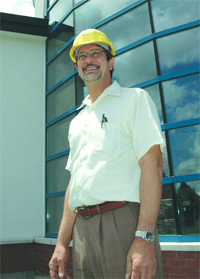
Eric Forish at the site of the Amelia Park Children’s Museum in Westfield

Forish Construction in Westfield has blended perseverance, diversity, and some calculated risk-taking to script a 60-year success story. As it moves forward from that milestone, it will continue to seek new business opportunities — real estate development may be the next frontier — while expanding its geographic reach.

Eric Forish and his father, Leonard, are risk takers.

Both decorate their offices at Forish Construction in Westfield with mementos from their unusual hobbies – extreme skiing and aviation, respectively – in addition to photos of completed projects and plaques given in recognition of community service.

In some ways, those pastimes are reflective of the passion and drive it takes to run a successful business. But in other ways, they are a departure from the solid presence Forish Construction maintains in this, its 60th year in business.

The younger Forish, who spoke recently with BusinessWest, said even with daredevil streaks running in the family, consistency and longevity are two mainstays at Forish Construction. His father, 86, is proof, Forish added: he still reports to work every day, rain, sleet, or snow.

“Our personal lives have elements of risk and managing risk,” he said, “but running a construction business is all about minimizing that risk, in terms of project management, safety, and finances, and maintaining a reputation for reliability.”

Building Moguls

Forish Construction emerged in Western Mass. in 1946, after Leonard Forish returned from WWII a decorated Marine. He began building homes, and continued to do so until the early 1960s when he spearheaded a shift to the commercial market.

Eric Forish explained that the transition was successful due in part to his father’s attention to diversifying techniques as well as customers.

“Dad always had the latest and greatest tools for his time,” he explained, “and for a long time, servicing the paper industry was a mainstay for the company. But as paper companies like Strathmore and Southworth began to close, the diversity of our skills and clients helped us move onto other things without feeling a major hit.”

Forish has been involved with the company since the age of 16, when, at his mother’s request, he began working summers with his father.

“My mom suggested – insisted – that I go to work for my dad during the summer,” he said, noting that his mother’s foresight paid off; after two summers in the trenches, Forish decided to pursue construction as a career.

Today, Forish Construction specializes in a mix of commercial and industrial construction projects, both public and private. Its offices are located in the same place they have been since the ’60s, on Mainline Drive in Westfield, but over time, the company has extended its reach within about a 60-mile radius.

“Western Mass. is a highly competitive marketplace,” said Forish. “We had to look at creating a larger geographic base. Our main presence is still Western Mass. and Connecticut’s capitol district, but we’re always focused on maintaining a variety.”

An Uphill Battle

He explained further that to achieve that diversity, the company must also maintain high levels of customer service and employee retention, and constantly reinvest in new equipment and technology to remain current and competitive.

“There’s always going to be room for growth in this industry,” he said, “but companies only survive if they meet the challenges that constantly arise.”

One of those challenges is the rapid pace at which the very tools of the construction trade are changing.

“The ruler and tape aren’t necessary anymore,” said Forish. “Now we’re investing in GPS systems, digital measurement tools, and lasers. It allows us to transfer information from the office to the job site more readily, and allows us to work from virtually anywhere.”

But new equipment is expensive, Forish countered, adding that the easiest mistake any construction company can make is to overspend. To flourish, outfits such as Forish Construction must “run lean and mean,” he said.

“Regarding growth, we are conservative Yankees at heart,” he said, returning to the idea of avoiding unnecessary risk. “We like to minimize risk and manage our projects successfully, and we have a series of checks and balances in place to ensure that we’re staying within the costs of the projects.

“Purchases are made based on long-term plans and needs,” he added. Those capital items include heavy equipment – bulldozers, payloaders, backhoes, and trucks. The other items include the software and hardware that are upgraded on a continual basis.”

That’s the balance, Forish said, that is essential to controlled growth in a competitive marketplace, adding that both consistency and acceptance of new ideas and technology are crucial to surviving in the industry.

“One of my dad’s favorite sayings is ‘watch the pennies, and the dollars will follow,’” he said. “Reinvestment in new technology is really key, but proceeding with caution is just as important.”

Plowing Through

That’s not exactly the case when Forish is climbing an icy ledge atop France’s Mont Blanc, strapped to five other people, each wearing clunky ski boots in search of a new, exciting trail. It’s the careful management of his business, though, that he said has allowed him to leave the comforts of Westfield behind, just for a few days, in exchange for a zoom down some of the world’s most treacherous peaks.

More importantly, however, with six job superintendents on the payroll, the company also needs to maintain at least that many projects simultaneously at all times, and also stay busy enough to keep every employee (there are about 40) working. A conservative approach has also helped in that endeavor, as has filling slow months with whatever work is necessary to keep the company’s momentum strong. Sometimes, that means taking on ancillary jobs, such as snowplowing – a service that remains part of the Forish repertoire.

With a quick glance out the window though, Forish said that, thankfully, all of the company’s vehicles are not in the parking lot, but out on construction sites.

Those projects are proof of a diverse mix of clients; right around the corner from Forish’s offices, the company is completing work on the new Amelia Park Children’s Museum (formerly the Westfield Children’s Museum), while across the region in Wales and Holland, construction of two senior centers is underway, and in Ludlow, work has begun on a facility owned by Pods, a storage company that blends the capacity of self-storage with the mobility of a moving service, providing ground-level storage containers to customers and then offering a transportation service of the ‘pods’ to anywhere in the U.S.

“Our typical jobs vary from $1 million to $5 million, but we are glad to do smaller or larger projects if it makes sense,” he said. “We’ve also done buildings for several car dealerships,” he said, adding that healthcare and light manufacturing are also current strong spots.

The company’s next direction, said Forish, will likely be real estate development in the industrial and warehousing sectors, within the next four years.

Snow Doubt …

Other than that, Forish said he’s focused on maintaining a strong presence in existing areas of expertise within Western Mass. and Connecticut, and with 60th anniversary celebrations still underway, he also has another date rattling in his mind.

“If I can get to the same age as my dad and still be working here,” he joked, “I’ll be around for our 100th anniversary. Imagine that.”

That’s contingent, of course, upon Forish’s prowess on the slopes as well as behind the desk.

Jaclyn Stevenson can be reached at[email protected]

Departments

The following business incorporations were recorded in Hampden and Hampshire counties and are the latest available. They are listed by community.
     

AMHERST

Kiln Works Inc.,
460 West
St., Suite 1, Amherst 01002.
James A. Jemison, 33
Kellogg Ave., Apt. 69,
Amherst 01002. (Nonprofit)
To promote the arts,
especially ceramic arts
through educational space
and a co-operative
atmosphere to learn and
pursue creative ideas.

BELCHERTOWN

The Belvedere Restaurant
and Cafe Inc.,
9 North Main
St., Belchertown 01007.
Dennis A. Graham, 4 Jon
Dr., Belchertown 01007. To
operate a restaurant and cafe.

CHICOPEE

Chicopee Festofall Inc.,
89
Bell St., Chicopee 01013.
Robert Liswell, same.
(Nonprofit) To promote the
civic well-being for all
citizens and business in the
greater Chicopee area.

Kung Fu Academy Inc.,
551
East St., Chicopee 01020.
Mark A. Ostrander, 360
Osborne Ter., Springfield
01104. Operation of a martial
arts school.

Polish Legion of American
Veteran USA Western MA
Post 193 Inc.,
6 Roosevelt Ave., Chicopee 01013.
Edward J. Kaplita, 615 West
Main St., Plainfield 01070.
(Nonprofit) To preserve the
true spirit of fraternity and
patriotism arising from the
sacrifices in the wars and
conflicts of the USA, etc.

Steve Beshara Inc.,
42 Robin Ridge Road, Chicopee 01022.
Steve Beshara, same. Copy
shop, printing and related
activities.

Westfield Auto and Truck
Center Inc.,
31 Cecile Dr., Chicopee 01020. Nicolas K.
Korny, same. Repair,
servicing, maintenance and
inspection of autos and trucks.

EASTHAMPTON

Bacis Properties Inc.,
67
Division St., Easthampton
01027. Thomas M. Bacis,
same. Home construction and
land development.

Summit Ridge Builders
Inc.,
110 Union St., Easthampton 01027.
Matthew B. Gawle, 36 Holly
Circle, Easthampton 01027.
Construction of homes and
land development.

EAST LONGMEADOW

Holistic Retreat Inc.,
280 North Main St., Suite 7, East
Longmeadow 01028. Alice
Shabunin, 168 Mountainview
Road, East Longmeadow
01028. Holistic health care.

NLB Appraisal Services Inc.,
2 Athens St., East Longmeadow 01028.
Christopher Bertelli, same.
Real estate appraisals.

GOSHEN

Goshen General Store Inc.,
31 Main St., Goshen 01032.Judi Christine Morin, same.
Retail sales of groceries and
general merchandise.

HADLEY

South Middle Street Inc.,
31 Campus Plaza Road, Hadley
01035. Douglas A. Kohl, 59
Summer St., Northampton
01060. Real estate
development.

South Middle Street Inc.,
31 Campus Plaza Road, Hadley
01035. Douglas A. Kohl, 59
Summer St., Northampton
01060. Real estate development.

HAMPDEN

GTech Manufacturing Inc.,
95D Commercial Dr., Hampden
01036. Gary L. Lombardo,
same. General machine shop.


HOLYOKE

Fragrance Source
International Inc.,
88 Winter St., Holyoke 01040.
David L. Peskin, 25 Warwick St.,
Longmeadow 01106. To
manufacture, market and sell
perfumed plastic beads, etc.

Maki of Japan Holyoke Inc.,
50 Holyoke St., Ste. #CS1,
Holyoke 01040. Bi Qiu Wu,
507 Bryant Place, Riverdale,
NJ 07675. Bi Qiu Wu, 50
Holyoke St., Ste. #CS1, Holyoke,
registered agent. To own and
operate a restaurant business.

LUDLOW

CS Landscaping Design and
Construction Inc.,
14 Salli Circle, Ludlow 01056. Lee H.
Corbert, same. Landscaping
and design.

NORTHAMPTON

Turnkey Imaging Consultants Inc.,
161 Crescent St., Northampton
01060. William Orr,
Consulting to and equipping
the photo imaging trade.

PALMER

Doyle’s At Forest Lake Inc.,
702 River St., Palmer 01069.
William J. Doyle, 23
Fieldstone Dr., Palmer 01069.
Operation of restaurant/bar.

Doyle’s Realty Holdings Inc.,
702 River St., Palmer 01069.
William J. Doyle, 23
Fieldstone Dr., Palmer 01069.
To deal in real estate.

Sweet Dreams Anesthesia
Corp., 119 Boston Road,
Palmer 01069. Tammy
Rackliffe, same. To provide
nurse aesthesis services to
various hospitals.

PELHAM

Gary Hyman Consulting Inc.,
49A Gulf Road, Pelham
01002. Gary Hyman,
same.Consulting.

SOUTH HADLEY

Stadium Renovation
Initiative Inc.,
153 Newton St., South Hadley 01075. Mark
Dubois, 4 Scott Hollow Dr.,
South Hadley 01085. (Nonprofit)
To renovate, construct, operate
various public recreational
facilities and public works
within South Hadley, etc.

C.S.O.R.K. Inc.,
27-81 Crooked
Ledge Road, Southampton
01073. Constanza S. Ontaneda,
same. Importing of finished
goods for sale in the US.

SPRINGFIELD

Debra’s Beauty Solutions Inc.,
64 Boston Road, Springfield 01109. Debra L.
Watson, same. Retail sale of
beauty supplies.

Greenleaf Pest Management Inc.,
177 Shawmut St., Springfield 01108. Enoi
Chonmany, same. Pest
management and control.

Manjlee Inc.,
1624 Main St., Springfield 01103. Young Kil
Lee, 10 Chestnut St., Apt.
#3408, Springfield 01103. To
operate a jewelry sale and
repair shop(s), etc.

Wak Services Inc.,
125 Liberty St., Suite 406, Springfield 01103. Kiyoko Ogoke, 116
Hunters Green Circle,
Agawam 01001. Management
of health care practices and offices.

WESTFIELD

Marvon Construction &
Development Inc.,
396 Prospect St. Ext., Westfield
01085. Lori Ann Kurtz, same.
Construction and real estate
development.

Cover Story
Taking Stock of the EDC After a Decade in Business
June 26, 2006 Cover

June 26, 2006 Cover

The Economic Development Council of Western Mass. recently marked 10 years of work to promote the cities and towns of the Pioneer Valley as one economic entity. Its president and CEO, Alan Blair, says the council has achieved its primary mission — making the region more competitive — but much work remains to bring jobs and economic growth to Western Mass.

As he stood at a podium in a meeting room at Chicopee’s Parwick Center a decade ago to announce the formation of the Economic Development Council of Western Mass. (EDC), Alan Blair was asked by BusinessWest how and when he would know if the new venture was a success.

“If we become more competitive as a region,” was the quick response, with much to follow about how he believed the EDC, a new and fairly radical concept in planning and economic development, would enable the counties of Western Mass. to better compete for everything from jobs to the attention of lawmakers in Boston and Washington.

Ten years later, Blair, the EDC’s first and only president and CEO, says he can state with confidence that this basic mission has indeed been accomplished — although he stressed that the work is just getting started.

“We’re definitely in the game now,” he explained, using that phrase to imply that the region is now a larger player in the high-stakes and truly global competition for jobs and economic growth — it even had a site or two reportedly in the mix for the $1.1 billion Bristol-Meyers Squibb manufacturing facility that will be built on the former Fort Devens site. “That doesn’t mean we’re going to win every game, certainly — just that we’re in a lot more than we were before.”

But is the region winning enough?

That is a question Blair knows many people are asking — and also answering with a ‘no.’ And he would be the first one to say that the region could be doing better in its efforts to attract more companies and jobs, and hopefully will in the years to come.

It is handicapped in that assignment by everything from geography to well-financed competition, said Blair, adding quickly that luring large employers to the 413 area code has never been the region’s strong suit — most of the larger companies that call the Valley home grew up here — and it is merely one aspect of that broadly defined term economic development.

Others include job-retention, advocacy, government relations, growth of the tourism sector, and new-business development, and in these realms Blair believes the EDC has enjoyed varying measures of success.

“There are 33,200 more people working in the Pioneer Valley today than there were in 1995; our economy is growing, if it wasn’t, we couldn’t absorb those jobs,” said Blair, noting that while some might question where those people are working — many new jobs have come in the tourism and distribution sectors — that simple statistic shows that the region is growing while others in the Commonwealth are not.

There are other ways to quantify and qualify the relative success of the EDC, said Blair, citing everything from the MassMutual Center, which he says might not have gotten off the ground without the council’s work to rally area legislators around that cause, to the fact that other regions in Massachusetts and other cities, including Hartford, are incorporating the EDC model in one form or another.

Overall, he said the EDC has succeeded in taking an area with nine cities (six when it was first created) and dozens of small towns, which were all slugging it out on their own and competing against one another in the process — ‘Balkanized’ was the word Blair used to describe the Valley’s state — and making it one economic region.

Actually, it has gone further, he said, adding that in 2000, the EDC partnered with officials in Connecticut to create what has become known as the Knowledge Corridor.

A region that stretches from south of Hartford to Northampton, the corridor boasts roughly 1.7 million people, 27 colleges and universities, and perhaps 30,000 college graduates a year. These are numbers that can be sold to site selectors and company owners, said Blair, adding that many people are shocked when they hear them.

Turning that initial shock into growth on both sides (but preferably this side) of the border will be a priority for the EDC as it enters its second decade of work, said Blair, who recently talked with BusinessWest about the council’s first 10 years and what the future will likely hold.

History Lesson

As he traced the history of the EDC and outlined the factors that motivated its creation, Blair flashed back to a conference he attended in 1995 as president of Westmass Area Development Corp. and Westover Metropolitan Development Corp., with the goal of finding prospects for those agencies’ industrial parks.

He doesn’t remember where that show was, but he clearly recalls a conversation he had with another attendee.

“He asked me who I was representing and what I was selling,” said Blair. “I said, ‘Chicopee, Ludlow, Westfield, and other communities where we had parks, and he laughed. He said, ‘where are those places?’

“That helped make it clear to me and other people just how absurd it was for us to sell a single municipality to site selectors and brokers who were looking at broad regions and needed a ton of information in order to make decisions about where to locate,” he continued. “That became a foundation for our regional approach to selling this area.”

The vehicle for doing that selling would be an economic development council, funded by several sources, including contributions, totaling $150,000, from area businesses. The council would have a president and a large board of directors that would reflect the regional nature of the agency by including all the region’s mayors and college presidents.

The council’s operating model would be unique in that it would act as what Blair called a “management company” for its six affiliate economic and business development organizations: Westover, Westmass, the Affiliated Chambers of Commerce of Greater Springfield, the Greater Springfield Convention & Visitors Bureau, the Springfield Business Development Corp., and the Regional Technology Corp., which joined over time.

The cooperation of those affiliates, and the EDC’s unique relationship with them, have been pivotal factors in the overall success of the council, said Blair, adding that the EDC’s architects didn’t want to create a ‘super agency;’ instead they wanted to coordinate the work being done by those organizations.

“This could have been a disaster if the affiliates felt that this was a parent-subordinate relationship, one where we somehow forced them to conduct themselves in a way they weren’t comfortable with,” he said. “That was never the intent, but we knew it was a delicate relationship; every affiliate has found the way to interact as part of the whole, while still maintaining the identity they need to maintain to properly serve their members.”

Working together, the EDC and its affiliates have managed to promote the region as one entity and make it more competitive in the process, said Blair, who, when asked for examples of how the council has accomplished this, started with the Coolidge Bridge.

The structure, which links Northampton with Hadley was badly in need of repair and widening, he said, noting that congestion on the bridge had created legendary traffic tie-ups that in some ways threatened growth of those communities and UMass.

“We were selling the research capability of the university,” he explained,” but people were saying that they couldn’t get there.”

What the EDC did was effectively convert the bridge from an Amherst-Hadley-Northampton issue, which it had been for decades, into a regional priority. Through letters to state transportation officials, talks with area legislators, and efforts to get the region’s mayors to get on board, the EDC helped move the project forward by “taking some of the politics out of the equation.”

“When we got the mayors to support it, that said to state representatives and senators that their backs were covered,” Blair explained. “That hadn’t happened before; someone from Springfield could now advocate for this project in Northampton without fear of having their legs cut out from by the mayor of Springfield.”
The same M.O. has helped with other regional projects, said Blair, listing the MassMutual Center, legislative action to lower the airport user tax (a measure that significantly benefited Westover Municipal and Barnes Airport in Westfield), and an I-91 broadband project now in the works.

The regional approach has also been applied to the task of bringing companies and jobs to Western Mass. and now the larger Knowledge Corridor, he said, adding that before the creation of the EDC, individual cities and towns would compete against each other, often with calamitous results.

The most notable case was the Coke Cola bottling plant that eventually wound up in Northampton in 1995. For several months, Coke played those two communities against one another in a game that resulted in no clear winners.

The EDC now takes large measures of that gamesmanship out of the equation by creating a central entry portal for companies looking to enter the region or expand within it, said Blair. The specific wants and needs of those companies are weighed, and possible sites are forwarded.

The streamlined process has helped bring many companies to the region, said Blair, citing German-based Suddekor LLC as one of the better success stories. The company, a paper-maker, was looking to locate a plant somewhere in the Northeast, and was steered to Western Mass. and eventually the Agawam Regional Industrial Park by the EDC.

The company has steadily grown, and recently opened a second plant in the region in an East Longmeadow industrial park developed by WestMass.

“They’re an example of a company that could have gone anywhere,” said Blair, “but they came here in part because of our regional approach and our ability to put ourselves in the game.

“That’s how we got started with the EDC and why we started — to become more competitive,” he said. “And as soon as we did, we not only got attention statewide, but we got attention from other places, like Northern Connecticut; people were saying, “maybe they’re on to something there, maybe this is the way to go.”

The Jobs at Hand

Despite Blair’s many positive measures of the EDC’s performance in its first decade in business — not to mention the attempts to duplicate the model elsewhere — the council has its critics and skeptics.

Indeed, there are those who have questioned everything from the size (85 members) and makeup (too many old guard members and not enough women or small business owners) of the Board of Directors, to the area’s new marketing image and slogan.

‘Arrive Curious, Leave Inspired’ emerged from a lengthy and somewhat controversial EDC-led process that included the hiring of a Tennessee firm that specializes in destination branding, a move that didn’t sit well with some members of the local creative community.

Meanwhile, some have suggested that the EDC is too Springfield-centric, at the expense of Hampshire and Franklin counties, and still others maintain that it hasn’t done enough to help the struggling city out of its fiscal morass.

But the most consistent criticism of the EDC is that it hasn’t brought large numbers of jobs to the region, despite ongoing efforts to market it as an attractive, lower-cost option to Boston, and hasn’t created much in the way of economic development.

The Chicopee River Business Park, which straddles Chicopee and Springfield, has become the poster child for perceived EDC underachievement. It’s been on the market for nearly a decade, but has just one tenant — laser manufacturer Convergent Prima — although a second deal is said to be nearing completion.

Blair acknowledges the criticism, but bristles at the notion that there hasn’t been any economic development over the past several years. He says it just hasn’t come in the form that most equate with that phrase — companies building new plants and hiring hundreds of people.

There has been some of that, Blair noted, citing Suddekor, the giant Target distribution center that will soon take shape in Westfield, and other companies that have built or expanded in the WestMass and Westover industrial parks over the past 10 years.

But economic development has come in many other ways, some of them less visible, at least from the standpoint of the EDC’s involvement. These include everything from heavy lobbying for the MassMutual Center and the Coolidge bridge widening to creation of the Business Improvement District in Springfield and emerging BIDs in Westfield and other area cities.

And it also includes job-retention, a less-glamorous, often overlooked aspect of economic development, he said.

Citing the decision of Performance Food Group to relocate from Taylor Street in Springfield to the new Memorial II industrial park to be created on land adjacent to Smith & Wesson, Blair said that initiative will bring about 250 new jobs to the region, a number he believes isn’t drawing the proper amount of respect.

“If we were bringing in 250 jobs from outside the region, there would be headlines for three days about how great that was,” he said. “Why don’t we have three days of headlines when we create 250 jobs by keeping a company here?”

New-business development has also been a priority and another relatively successful realm for the EDC, said Blair, adding that through the work of affiliates like the ACCGS and facilities like the Technology Park at STCC, the region is a much more “friendly” place for entrepreneurs.

Tourism has also seen steady growth, he said, noting that several new hotels have been built in the region and occupancy rates remain higher than the state average despite that higher volume.

Moving forward, the EDC will look to improve its track record in efforts to bring more large employers to the region, he said, adding quickly that success will likely not come quickly or easily because the level of competition and the comparatively low level of financial support from the state.

“We didn’t expect to suddenly turn on the spigot just because we printed some brochures and went to a few trade shows and conferences,” he explained. “We knew this would be a long-term effort that would require a lot more resources than we could generate on our own.

“We look to the ‘Research Triangle’ in North Carolina as the model that everyone refers to; they say, ‘look at what they did in the middle of nowhere with a couple of colleges and the state university,’” he continued. “When we investigated that, we found that the brand Research Triangle has been around for more 30 years and that the state has put half-a-million dollars into that brand every year since the beginning. No one had even heard of the triangle until six or seven years after they started.”

It will take more time and resources for the Knowledge Corridor to become a recognized brand, he said, adding quickly that it is already becoming part of the lexicon for brokers, developers, and site selectors.

“We have a cross-border brand that’s only five or six years old,” he told BusinessWest. “We should be looking at a 15-year timeline to see if we can be successful in changing the perception of Western New England by using this brand.”

The Bottom Line

While Blair feels confident that the EDC has met that threshold for success he laid out a decade ago, he’s far from content with what the council has accomplished.
“You never want to leave the impression that you’re ever satisfied with results,” he said. “If you ever feel that way, you might as well get out; there are many things we can be doing better.”

But overall, Blair believes the EDC has had a productive first decade in businesses, and, like the region itself, has built a foundation on which to grow.

George O’Brien can be reached at[email protected]
Sections Supplements
Franklin County’s Manufacturing Scene Remains Healthy and Diverse
Kathie Williams

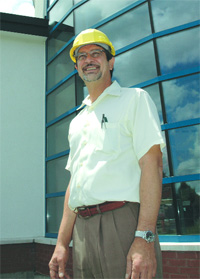
Kathie Williams makes delectable treats at her family’s business,

Betsy Peck knows a little about heritage, running a business with her husband, Stephen, that has been in their family for 150 years.

“Our original product was a wood hay rake,” said Betsy, CFO of Rugg Manufacturing in Greenfield. She noted with pride that Rugg still makes similar rakes, along with a wide variety of other tools, such as snow shovels with patented ‘back-saver’ handles – a concept that has been imitated by other shovel makers, but which actually originated at Rugg.

“We’re always looking for new ideas – good, solid ideas, not something flash-in-the-pan that will fade away,” she said. “Something that will help people do a job.”
As a company with a long heritage and largely unchanged product line, Rugg represents just one small piece of a healthy manufacturing scene in Franklin County – one that doesn’t always get the attention it deserves.

Yes, attrition has harried this rural section of Massachusetts as it has everywhere else; there are certainly fewer manufacturers in business today in Greenfield, Deerfield, and surrounding towns than there were a decade ago. But the companies that remain are not only wildly diverse – producing everything from snow shovels and fishing rods to paper and candy – but they have found ways to overcome the challenges facing domestic manufacturers in the 21st century, and even continue to grow despite those obstacles.

“Survival forces you to make certain decisions, and a lot of people don’t survive,” said Kurt Zanner, president and COO of Lamson Goodnow, a Shelburne Falls-based maker of cutlery and kitchen implements. “Too many companies have tried to do things the same old way. They were afraid to take risks, so they didn’t survive.”

This issue, BusinessWest takes a look at a few Franklin County manufacturers that have stood the test of time – in several cases, more than a century – and have continued to be successful through foresight, creativity, and a willingness to change when necessary.

Cutting Edge

Lamson Goodnow has been making knives for the past 170 years, and for most of that time, the company’s main clientele was restaurants, hotels, and other food service providers. But corporate consolidation has eroded that customer base, and Zanner has long known that change was necessary.

“We’re basically a toolmaker, and we’ve always made tools for food services – and that’s still a big part of our business,” he said. “But about 20 years ago, we got more into making kitchen tools for consumers – knives, spatulas, any kind of kitchen instrument you would use to cook with – and now that’s the biggest part of our business.”

Until Zanner joined the company seven years ago, Lamson Goodnow manufactured all its cutlery and kitchen tools under the Lamson Sharp brand. But he has overseen an aggressive expansion in the product lines unprecedented in the company’s long history.

Specifically, Lamson Goodnow has added four other lines to its portfolio during the past six years: it acquired the Tree Spirit line of wood products and the Grind portfolio of stainless steel items, mostly pepper mills. Meanwhile, it created two other lines from within: the HotSpot collection of silicon tools and the TimberGrass line of bamboo items. Significantly, the company no longer manufactures all its products, but instead imports roughly two-thirds of them for distribution.

“When I came here, this was an old company doing a nice mix of business with one brand,” Zanner told BusinessWest. “Since then, we’ve greatly expanded our product assortment, and our customer base has grown as well.”

That’s just smart business, he said, in a manufacturing landscape that has become more challenging, even for long-established companies.

“It has become harder to expand as a U.S. manufacturer in a highly competitive category of business,” Zanner said. “Retailers – our customers – have become fewer and fewer because they’re consolidating, and more products are being imported, so it’s tougher to compete purely as a manufacturer.”

In addition, Zanner said, cutlery is a very specific product line that doesn’t lend itself to much gross-margin improvement; because of competition, Lamson Goodnow couldn’t raise prices. “So we had to find other ways to make money,” he said, which led not only to the development of new lines, but to the launch of two retail locations: a factory outlet store in Shelburne Falls four years ago and a comprehensive kitchen store in downtown Northampton, which just opened in May.

“As the oldest knife maker in the United States – and one of the only ones – we’re a dinosaur in many ways,” he added. “But we’ve figured out that the way to survive is to expand into other products, so we can gain additional customers and sell additional products to the customers we already have. In doing so, we’ve even expanded our labor force: we have fewer in manufacturing, but more overall.”

Sweet Success

Manufacturing of a different sort has created success in Deerfield for Kathie Williams and her parents, Barbara and Gordie Woodward. But they, too, have seen the value in adding a retail component.

The family became the third owners of Richardson’s Candy Kitchen 22 years ago, and since that time, they have seen some very positive shifts in the business landscape along Routes 5 and 10, where the company is located.

“When my parents first bought this business, summertime business was non-existent,” Williams said. “Since Yankee Candle took off, though, our summers are pretty vibrant.”

In fact, the tourist boom in the area – which encompasses businesses as varied as Magic Wings butterfly conservatory, Dr. Spooky’s Animal Museum, and the traditional collection of antique dealers – has pushed Richardson’s to change the way it does business. For example, the candy maker has bolstered its status as a tourist destination by creating space for visitors to watch candy being made. Launching ice cream sales this summer will further strengthen the on-site retail business.

“We get plenty of families in the summer – we’ll see them later in the day after they’ve visited other places,” Williams said. “We’ve seen pretty steady growth over the years, and when we added on two years ago, it gave us more space for customers to move around. People will even call us to ask if candy is being made.”

For some manufacturers, changing with the times means completely reassessing their traditional business model. For example, Erving Paper Mills has thrived in Erving for just over 100 years, making a name for itself with a wide variety of paper products, such as the printed napkins that have long been one of the company’s calling cards.

Paper production has always been a cyclical business, but as the past decade has ushered in both dramatic spikes in the cost of raw materials and tougher environmental regulations – not to mention stiffer competition against cheaper foreign goods – the company has been forced to become a leaner operation, now focusing almost exclusively on producing large paper rolls that are shipped to other manufacturers to create specific products.

According to president and CEO Morris Housen, the move will allow the company to invest aggressively in its paper mill – rebuilding aging infrastructure, upgrading equipment, and enhancing its recycling capabilities – in order to be better positioned for the next generation.

“In downsizing, we’ve been able to focus on the manufacturing of rolls of paper,” said general manager Thomas Newton, who conceded that even long-established companies must stay flexible if they want to survive. “And that’s getting more and more difficult all the time.”

Raking It In

Meanwhile, Rugg Manufacturing – which produces wood and metal products ranging from vegetable crates to roofing brackets – has also learned to adapt to foreign competition, importing many of its materials from overseas, including bamboo rakes and hardwood rake and shovel handles.

In addition, many of the small operations that purchased Rugg’s goods have been bought out and consolidated, so the company has had to adapt to dealing with larger chains, such as True Value, as well as redouble its efforts to market its products to local independent dealers.

“It’s challenging to deal with bigger customers,” Peck said, but she conceded that market changes force all manufacturers to adapt in some way. “So many businesses have moved out of the area or closed altogether. But we love what we do and want to stick it out here.”

“We’ve had to become more creative,” Zanner, of Lamson Goodnow, agreed. “Retailers want to deal with fewer and fewer vendors, so we’ve tried to become a one-stop shop and sell more products as we’ve looked for new customers.” As a result, the company is three times the size it was seven years ago.

“In American manufacturing, I really believe that the last guy standing in any product category will survive,” he added. “We’re pretty close to being the last guy standing.”

As one of many manufacturers still standing in Franklin County, it’s just one more example of modern creativity molded into a heritage of success.

Uncategorized

Ellen Bemben says the talk is getting louder.

She was referring specifically to discussions taking place about the Greater Springfield region and its potential as a home for companies in the biotech and medical instruments fields, among others. There has been talk for some time, she acknowledged, but there is growing evidence that the talk will soon turn to action — and jobs.

“There are conversations that are going on that are more promising than ever before,” Bemben, the recently elected president of the Regional Technology Council (RTC) told BusinessWest. “But, in some ways, this area hasn’t really been discovered yet.”

Helping businesses in Boston, Cambridge, Worcester, and elsewhere navigate their way to the Pioneer Valley and the larger Knowledge Corridor — the region between Springfield and Hartford — is the informal job description for Bemben, who started her new assignment on May 3.

She brings with her more than two decades of work in the plastics industry — work that has taken her from New England to the Middle East — and confidence that the Springfield area can become the alternative, or “complement” (the word she prefers) to Boston and other higher priced areas.

“People are starting to look in this direction,” she said, referring to high-tech, medical device, and other technology-related ventures in the Boston market that may be looking for lower-cost alternatives. “I’m not talking about a long stare, but they are looking; we need to get them to look harder.”

BusinessWest looks this issue at how Bemben and the RTC intend to do just that.

Field Work

Bemben isn’t exactly new to the RTC and its broad mission.

She has been a member of the council’s board of directors for several years, and was actually one of the founders of its predecessor group, the Regional Technology Alliance (RTA). She was also the original chairperson of that agency’s Materials and Manufacturing Technology Network, or MMTN, one of three current networks, or clusters, that comprise the RTC.

Behind all those groups and acronyms is a movement, or desire to build a technology-related sector in Western Mass., said Bemben, who left a position as project leader and new-business development director for Enfield-based Specialized Technologies, formerly Springborn Laboratories, to steer the RTC.

She told BusinessWest she made that career move because she has seen a new energy within the RTC and its networks and what she considers tangible progress in the three main components to the task of building that technology base she spoke of — attraction, retention, and development of ventures in that sector.

“We’re trying to be as realistic as possible about the prospects of bringing more jobs to this region,” she said. “Do we think it can happen? We wouldn’t be wasting our time if we didn’t.”

Bemben is the third president of the RTC, following Humera Fasihudden, who was at the helm of the RTA when it changed its name and then became an affiliate of the Economic Development Council (EDC) in 2003, and her successor, Mamud Awan, who stepped down last summer. Bemben said she wants to build on the progress achieved by previous leaders and, overall, create more awareness and relevancy for the council.

“We’re a resource, but we’re also a partner with many different organizations and institutions in this area,” she said, listing everything from hospitals to community colleges to other economic development agencies. “Through those relationships, we can can build on a strong foundation for business attraction and growth in the region.”

Bemben brings a broad range of experience to the helm of the RTC. Prior to her stint with Specialized Technology Resources, she worked under contract for the government of Israel in successfully promoting its plastics industry to such companies as Gillette, GE Plastics, Elizabeth Arden, Johnson & Johnson, and Smith & Wesson. She has also worked for the General Polymers Division of Ashland Chemical, Nypro, and Everready Battery.

Bemben described the RTC as the technology arm of the EDC, and also as a “matchmaker,” linking companies with resources and tools to achieve growth. In that capacity, its role is to essentially maintain and grow the broad tech sector, which is comprised of businesses across several fields, including information technology/communications, clean energy, precision manufacturing, life sciences, health care, bioengineering, and medical device development and manufacturing.
The RTC, a non-profit organization that grew out of a grant originally awarded to UMass-Amherst, acts an umbrella organization with three neworks: MMTN, the BioEconomic Technology Alliance (BETA), and the Technology Enterprise Council (TEC).

The council is a membership-driven organization (the current number is just under 300) tasked with not only delivering new technology-driven businesses to the region, but also to help existing companies respond to changing conditions and a more global economy and remain competitive.

“In this environment, if companies don’t change, they’re going to go under,” she said. “We want to not only help companies stay afloat, but help them grow and get to the next level.”

As for attracting new companies — and jobs — to the region, Bemben said that assignment is multi-faceted, and it basically starts with building awareness of the region, its assets, and business success stories.

The Valley has always had a lower cost of doing business, especially when compared with Boston, Cambridge, or even Worcester, she said, but cost alone will not be enough. To lure businesses here, the region and its economic development leaders will have to provide evidence of a quality workforce, a strong higher-education infrastructure with a strong research component (in this case, UMass Amherst), and some examples of tech-related companies that are succeeding here.

The region has several, said Bemben, including Agawam-based MicroTest Laboratories, a pharmaceuticals manufacturer, Blackstone Medical, a Springfield-based company that has become a leader in development of spinal surgery implants and instruments, Marox Corp., the Holyoke-based manufacturer of medical devices, and many others.

“If they look, companies in Boston and elsewhere can see that we’re doing many of the things we’re doing,” she explained. “By building awareness of all that’s happening here, we can get people to look and talk about this region — and then do more than just talk about it.”

Under the Microscope

Turning talk into jobs and economic development is Bemben’s basic assignment at the RTC.

Like her predecessors in that role, she spoke about the region’s enormous potential as a home to technology related businesses in specific fields ranging from polymer science to pharmaceuticals manufacturing.

Turning that potential into reality is a work already in process, she explained. And that’s why the talk is getting louder.

George O’Brien can be reached at[email protected]
Uncategorized

Many employers seek to protect their business interests by entering into non-compete agreements with key employees such as executives, scientists, and salespeople. Non-compete agreements impose post-employment restrictions on such employees, typically prohibiting them from competing with the employer or soliciting the employer’s customers or employees.

Non-compete agreements also usually prohibit employees from using or disclosing the employer’s trade secrets or confidential business information, although employers sometimes place such confidentiality restrictions in a separate agreement. Massachusetts courts will generally enforce a non-compete agreement if the employer can satisfy the court that it was properly entered into, that it is necessary to protect the employer’s legitimate business interests, and that the restrictions on the former employee are reasonable in scope and duration.

In many instances, an employer who suspects that a former employee is violating a non-compete agreement will write, or ask counsel to write, a ‘cease and desist’ letter to the former employee and, occasionally, to the former employee’s new employer as well. These letters usually provide notice that the former employer may choose to take legal action if the perceived transgressions are not satisfactorily explained or remedied. Less frequently, the employer will go straight to court and seek an injunction that prohibits the former employee from engaging in conduct that allegedly violates the parties’ agreement.

Non-compete litigation is not for the faint of heart. It is intense and fast-paced. The parties usually find themselves before a judge quickly, armed with the best evidence that they can develop in a short amount of time. As with any other type of litigation, the outcome is never certain. Consider the case of Brooks Automation Inc. v. Blue Shift Technologies Inc., and Peter van der Meulen, recently decided in the Business Litigation Section of the Suffolk County Superior Court.

As part of a separation agreement, Peter van der Meulen agreed not to compete for a period of one year with his former employer, Brooks Automation. He had also signed an agreement not to disclose Brooks Automation’s confidential business information. Subsequent to van der Meulen’s departure, Brooks Automation became concerned because it could not close a deal to sell its semiconductor wafer manufacturing technology to a prospective customer, a large manufacturer of computer chip manufacturing equipment. Brooks Automation then learned that the potential customer was negotiating with Blue Shift Technologies, an entity recently formed by van der Meulen.

Despite a provision in the separation agreement requiring it to make ‘good-faith attempts’ to resolve any dispute, Brooks Automation struck quickly, filing a lawsuit alleging that van der Meulen had violated the terms of his confidentiality and non-compete agreements. Brooks Automation also alleged that van der Meulen and his new company had wrongfully interfered with Brooks Automation’s prospective contract with the equipment manufacturer. Blue Shift and van der Meulen denied these allegations and asked the court to hold an expedited trial.

Blue Shift argued successfully to the court that time was of the essence because, as a start-up company, its ability to close any deals with prospective customers and attract investors would be dramatically affected by the claims pending against it. In other words, Blue Shift argued, if the case were litigated on the usual timetable, Brooks Automation could effectively accomplish its purpose of neutralizing Blue Shift as a competitor, whether or not it ultimately succeeded in its lawsuit.

Blue Shift quickly went on the offensive by filing a counterclaim against Brooks Automation. In its counterclaim, Blue Shift alleged that Brooks Automation had wrongfully interfered with Blue Shift’s contractual relationship with the same equipment manufacturer by filing the lawsuit and then informing the equipment manufacturer about it before Blue Shift itself had even received notice.

The jury found that van der Meulen had not violated the terms of his non-compete restrictions and that he and his new company had not wrongfully interfered with Brooks Automation’s relationship with the equipment manufacturer. The case did not, however, end there. The jury went on to find on the counterclaim that Brooks Automation was liable to the start-up Blue Shift for interfering with its developing contractual relationship with the equipment manufacturer. The jury awarded Blue Shift, the original defendant in the case, more than $200,000.

Following the jury verdict, the court found that Brooks Automation had acted with reckless disregard as to whether there was any reasonable factual support for its lawsuit and further found that its actions were motivated by the desire to interfere with Blue Shift’s developing contractual relationship with the equipment manufacturer.

Applying the Commonwealth’s Consumer Protection Law, Chapter 93A, the court tripled the damages against Brooks Automation and found it responsible for Blue Shift’s attorneys’ fees. In doing so, the court recognized that Brooks Automation had harmed Blue Shift by causing it to expend time, effort, and financial resources in defense of a frivolous lawsuit at the critical start-up phase of Blue Shift’s existence. The court also made clear that the judgment amount, totaling more than $600,000 was intended to send a message to any corporation that contemplated using a frivolous lawsuit to injure a vulnerable competitor that “it will pay dearly for its misuse of the judicial process.”

All companies want to protect their business interests and, in particular, relationships with their customers. Non-compete agreements are a useful tool by which to do so, but, as the Brooks Automation case demonstrates, a company should only resort to litigation to enforce those agreements where reasonable factual and legal support for a case exists.

Otherwise, use of the legal system may result in a loss greater than the company would face competing in the marketplace.

Daniel, J. Blake, Esq., is counsel to Bulkley, Richardson and Gelinas, LLP, and a member of the firm’s Litigation/Alternative Dispute Resolution (ADR) Department and Employment Law Practice Group;[email protected].

Uncategorized

For years we’ve heard the talk.

Actually, it’s more like a theory, and it goes something like this: technology and biosciences companies located in the Boston-Cambridge area and other locations will eventually become frustrated with the high costs of doing business in these communities and look longingly toward Western Mass. as a new home.

It hasn’t happened yet.

In fact, most all of the technology-related and life sciences ventures we have in the Pioneer Valley started here and have stayed here mostly because the principals involved have ties to this region. But that doesn’t mean our area’s economic development leaders should stop trying to lure outside businesses to this area code.

In fact, they should be redoubling their efforts, because, as we’ve said on many occasions, this region needs an economic spark — and the technology sector offers perhaps the most promise. The region’s manufacturing base continues to shrink, with ever more production going off-shore, and tourism/hospitality jobs, while growing in number, do not offer significant promise in terms of economic development.

Rather, this region’s best hopes appear to be health care, which has long been one of the pillars of Valley’s economy, and development of emerging sectors such as life sciences, medical device manufacturing, information technology, and others.

To do this, the region must do more than promote itself as a cheap alternative to communities inside Route 128.

And that’s why we’re encouraged that the Regional Technology Council (RTC) has new leadership, in the person of recently named president Ellen Bemben, and apparently some new energy.

The RTC, originally known as the Regional Technology Alliance, was started with good intentions. It grew out of a grant originally awarded to UMass Amherst aimed at fostering growth of the technology base in and around the Pioneer Valley. But it has struggled in many ways to carry out that mission. A sagging economy earlier this decade, the precipitous fall of the IT sector and the dotcoms, and frequent changes in leadership at the RTA and then the RTC have all played roles in the relatively slow pace of growth of tech-based businesses.

Bemben’s initial goals are to create awareness of resources, assets, and success stories in the Pioneer Valley, and use it to prompt companies located elsewhere to recognize this region’s potential as a home for ventures in several different technology-related fields. Right now, it would be fair to say that Western Mass. is barely on the radar screen.

Meanwhile, the RTC must continue its work to foster relationships between area colleges, the university, precision manufacturers, and health care providers to generate new opportunities for research and economic development.

In recent years, the RTC has made some headway through establishment of networks — the Technology Enterprise Council, the BioEconomic Technology Alliance, and the Materials and Manufacturing Technology Network — to monitor and, hopefully, improve the overall health of these specific business clusters.

By continuing and expanding efforts to retain existing businesses and jobs in these sectors, and also fostering ventures by taking research from the lab to area communities, the region can build a critical mass of technology-related companies.

And by doing so, it can make the task of attracting new businesses to the Valley that much easier.

All the evidence points to health care, the biosciences, medical device manufacturing, and other so-called ‘white coat’ businesses forming the base of the state’s economy in the future. Some would say that day is already here; the Mass. Biotechnology Council has grown from 100 members in 1995 to more than 500 today.
The Pioneer Valley is not yet a big player in this arena. To become one it must do more than focus on the cost of doing business, and instead concentrate on showing people that it can, indeed, happen here.-

Departments

The following business incorporations were recorded in Hampden and Hampshire counties and are the latest available. They are listed by community.

AGAWAM

308 Suffield Street Inc., 308
Suffield St., Agawam 01001.
Amandeep Singh, 35
Fletcher Circle, Chicopee
01013. A convenience store
and gas station.

CHICOPEE

International Automobiles
Inc., 341 Chicopee St.,
Chicopee 01013. Antonio M.
Fonseca, 203 Hampden St.,
Chicopee 01013. Purchase
and sale of used automobiles.

Omega Manhood Uplift
Foundation Inc., 49
Stephens St., Chicopee
01022. Carlton Pickron, 18
Greenwich Road, Amherst
01002. (Nonprofit)
Charitable funding to help
focus on organized
community based activities.

Pine Ridge Development
Inc., 209 Prospect St.,
Chicopee 01013. Gregory J.
Gilligan, 101 Osborne Ter.,
Springfield 01104.
Construction service.

EASTHAMPTON

Eagle Vision Vehicles Inc.,
37 Carillon Circle,
Easthampton 01027. Thomas
Parsons, same. Sales and
marketing.

EAST LONGMEADOW

Sports Bar Marketing
Exchange Inc., 31 Schuyler
Dr., East Longmeadow
01028. Andrew Jaffee, same.
Marketing and promotion
support sports bar
operations.

FEEDING HILLS

Joel Page Landscaping Inc.,
123 Line St., Feeding Hills
01040. Joel Page, same.
Landscaping.

FLORENCE

Fields Graphic Design Inc.,
92 1/2 Maple St., Florence
01062. Nancy E. Fields, 410-
B Kennedy Road, Leeds
01053. Graphic design.

HOLYOKE

Bonds of Vision Inc., 5
Yoerg Circle, Holyoke 01040.
Jose A. Hernandez same.
(Nonprofit) A ministry to
help people in need, feed the
hungry, supply a home to
those needing one, etc.

Duckcharm Holdings Inc.,
350 Southampton Road,
Holyoke 01040. Ruth H.
Pinon, same. Real estate.

LUDLOW

DDP Pizza Inc., 31
Chadbourne Circle, Ludlow
01056. Douglas M. Delisle,
26 Chadbourne Circle,
Ludlow 01056. Pizza shop.

Engineering & Land
Solutions Inc., 165 Dowd
Ct., Ludlow 01056. Christina
Pietras, same. Civil, architectural,
environmental engineering.

MONSON

Quality Tool Company Inc.,
113 Bethany Road, Monson
01057. Paula M. Wehr, 234
Bumstead Road, Monson
01057. Manufacturing of
machine parts.

MONTGOMERY

Steve Brzoska & Sons
Plumbing and Heating Inc.,
71 Pitcher St., Montgomery
01085. Steven Brzoska, same.
Plumbing and heating service.

NORTHAMPTON

K.D. Industries Inc., 326
Glendale Road, Northampton
01060. Denise M. Shea, same.
General driving of trucks for
transporting, towing, etc.

SOUTH HADLEY

ELB Design Inc., 13 Pheasant
Run, South Hadley 01075.
Edmond L. Brousseau, same.
Architecture, construction
management and construction
planning.


SOUTHWICK

New Origins Inc., 13
Industrial Road, Southwick
01077. Jerome Malcovsky Sr.,
109 Sacket Road, Westfield
01085. Automobile service and
repair.

SOUTHAMPTON

Aquarius Realty Inc., 14
David St., Southampton
01073. Beverly Bishop, 18
Hathaway Road, Westhampton
01027. Real estate purchase,
sales, rentals, etc.

SPRINGFIELD

Compliance and Benefit
Administrators Inc., 123
Interstate Dr., West Springfield
01089. Lisa Robin Crouser,
1000 Tinhkam Road,
Wilbraham 01095. Compliance
and benefit administration.

Crivelli Family Chiropractic
Inc., 1506 Allen St., Suite B,
Springfield 01118. Francesco
N. Crivelli, D.C., 895 South
Branch Pkwy., Springfield
01118. Health and wellness
education and chiropractic
care.

Gerardo Express Inc., 626
Carew St., Springfield 01104.
Milagros Rodriguez, 47
Parkside St., Springfield 01104.
Interstate transportation.

Gulmohur 546 Sumner
Corp., 135 State St.,
Springfield 01103. Charanjit
Singh, 6 Woodstock Ct.,
Oyster Bay, NY 11771.
Timothy J. Howes, 135 State
St., Springfield 01103,
registered agent. To own and
manage real estate.

Humanitarian Charity to
Haitians H.C.H. Corp., 235
Eastern Ave., Springfield
01109. Frants-Ed. Laporte, 26
Edgemont St., Springfield
01109, (Nonprofit) To help
poor people to ameliorate their
life here in the US and in
Haiti, etc.

Springfield Fancy Nail Corp.,
1835 Wilbraham Road,
Springfield 01128. Hoseon S.
Kye, same. Nail salon.

Sullivan Factory Outlet Inc.,
180 Avocado St., Springfield
01104. Richard Spafford, 48
Holy Family Road, Apt. 417
West Holyoke 01040. Retail
and wholesale paper, gifts, etc.,
at outlets and on the internet.

Victory Transportation Inc.,
62 Clarendon St., Springfield
01109. Nancy Cortes, same.
Transportation.

Vital (Vision Intervention
Technology Academics and
Learning) Center Inc., 44
Prospect St., Springfield 01107.
Dr. Leonard Naylor, same.
(Nonprofit) To provide a safe
and educationally constructive
environment to low-income
families and youth at risk in
the Springfield area, etc.

WESTFIELD

Cooper Excavating and
Trucking Inc., 4 Woodland
Ave., Westfield 01085. Bruce
Cooper, II, same. General
excavating and trucking
services.

WEST HATFIELD

Paciorek Electric Inc., 45
Linseed Road, West Hatfield
01088. Timothy M. Paciorek,
same. Electrical contracting.

WILBRAHAM

QA Medical Inc., 2823 Boston
Road, Wilbraham 01095.
James D. Driscoll, 53 Ridge
Road, East Longmeadow
01028. Medical instruments,
devices, and products.

WEST SPRINGFIELD

Chris’s Tree Service and
Landscaping Inc., 67 Oakland
St., West Springfield 01089.
Michael Christodlous, same.
Landscaping and tree
maintenance and removal
services, etc.

O’Donnell Paving &
Landscaping Inc., 1612
Riverdale St., West Springfield
01089. John T. O’Donnell,
same. Paving and landscaping.

Uncategorized

What’s in Store?
Additional Retail Proposed for Holyoke’s Ingleside Section

Jeff Hayden says there is an unofficial policy in Holyoke not to locate retail centers on the west side of I-91 in the Ingleside area of the city.

The four-lane boundary line, spelled out on city zoning maps, essentially divides two zones — one called IG (Industrial-General) and the other IP (Industrial Park). The former, defining much of the property east of the highway, is quite broad, allowing nearly every type of commercial venture, including the Holyoke Mall. The latter, however, limits development to industrial ventures, offices, or, with a special permit, a hotel, said Hayden, director of the Holyoke Office of Economic and Industrial Development, who cited traffic concerns and a desire to maintain the residential nature of that area as the reasons why.

Thus, a zone change will be needed if the Holyoke-based O’Connell Development Group is to move forward with preliminary plans to transform the site of the former Atlas Copco air compressor manufacturing facility into a specialty retail center. Specifically, the company is exploring creation of a facility similar to Holyoke Crossing, home of Barnes & Noble, Circuit City, and several other stores, only a few blocks away on the other side of the interstate.

O’Connell developed the Holyoke Crossing project, and Andy Crystal, the company’s vice president, believes a similar retail center will likely represent the best re-use of the 29-acre Atlas Copco property.

“We think that would be the best alternative for that site,” he said, adding quickly that what a zone change will provide is options for redevelopment — and O’Connell intends to explore all of them.

That’s good, because additional retail in that corridor may be a tough sell.

There is already considerable traffic moving on and off I-91 and other roads in that area, with the Holyoke Mall and Holyoke Crossing being common destinations. Adding more retail to the mix would exacerbate that situation, some argue.

But Crystal told BusinessWest that a retail center could actually generate less traffic than a manufacturing operation — and certainly less truck traffic. Meanwhile, a venture similar to Holyoke Crossing would generate roughly $650,000 in annual tax revenues, about four times the amount yielded from Atlas Copco, and a retail center would generate more than 100 full- and part-time jobs.

“And these would be ‘new’ jobs to the region,” said Francesca Maltese, development manager for O’Connell, noting that manufacturing positions generated at the site would likely be relocated to that address from other area communities.

There are many, similar arguments that will be made in what could become a compelling debate in Holyoke. BusinessWest looks this issue at what’s at stake for the Atlas Copco property — and the Ingleside section as a whole.

Space Exploration

As he talked with BusinessWest about the parcel at 161 Lower Westfield Road, Crystal gestured toward the large, nearly empty parking lot of the plant, and then well beyond it, to the corners of Ingleside.

“We understand this area, and we have a big stake in it,” he said, with the we being O’Connell, which, in addition to Holyoke Crossing, has also developed the Crossroads Business Park off Bobala Road. “As a local company, we recognized the importance of what happens on this corner, and that’s why we wanted to be the ones to redevelop this site.”

Such desire eventually led O’Connell to form 161 Lower Westfield Road, LLC, the venture that acquired the property last summer for $4 million, and is now actively engaged in finding a new use for it.

Once agricultural land, the property, adjacent to Tannery Brook, had been home to Atlas Copco since the mid ’60s. The company, which expanded its operations several times over the years, relocated its manufacturing operations to South Carolina in 2004, and moved administrative and sales employees to Westfield last year.
It is the site’s location, only a few hundred yards from interchanges off I-91 and only a few blocks from the mall and Holyoke Crossing, that intrigued O’Connell, said Maltese. She told BusinessWest that a specialty retail center – also known within the retail community as a lifestyle center – on the site could make the Ingleside area a larger, even more vibrant shopping destination.

Elaborating, she said there are many national chains of retail stores and restaurants that would be attracted to such a location. And a mix could be generated, she believes, that would not compete with the mall or Holyoke Crossing, but instead complement and benefit them.

“A specialty retail center would give people from a wide area more reasons to come to Holyoke,” she explained, noting that the mall attracts shoppers from several New England states and New York. “And that would benefit the city and the region as well.”

Both the merits and potential problems to be generated by such a retail hub will be debated over the next several weeks, said Hayden, who told BusinessWest that there are many issues to be weighed. These include traffic, job creation, tax revenue, and, overall, crafting a re-use plan that works for both Ingleside and the community as a whole.

He acknowledged that traffic concerns will be at the center of debate (which will ensue at a public hearing later this month), but they should be just part of the discussion.

He said city officials have been working diligently in recent years to diversity the city’s job base, and the future of the Atlas Copco property will play a role in such efforts. Holyoke has been hurt by the closing or relocation of several large manufacturers in recent years, including Atlas Copco, Ampad, Kodak Polychrome, and others, he explained, adding that while many new jobs in manufacturing have been created, more diversity is desired.

“Our economy is much different now than it was 20 years ago,” he said. “Back then, people would say of Holyoke, ‘if it loses any of those manufacturers, it’s in big trouble. That’s not the case anymore because we have been able to diversity our jobs base.

“We have a strong base in health care, in retail, in other types of commercial services, and even in government,” he continued. “We have to continue moving in the direction of greater diversity.”

Maltese said O’Connell has looked at a number of options for the Atlas Copco property and concluded that specialty retail makes the most sense for that site — and the community itself.

She told BusinessWest that large manufacturing operations such as the Atlas Copco plant are not being drawn to the Pioneer Valley; instead, they are leaving it. Holyoke’s manufacturing base remains strong, she said, but it is now dominated by smaller shops, many of them now located in the paper and textile mills that gave the city its heritage.

The Atlas Copco site — specifically, the roughly 15 acres that can be developed — could, theoretically, be subdivided into smaller parcels for manufacturing or office use, she said. However, there is already a sizable inventory of existing facilities and land designated for such uses.
This includes the Crossroads business park, which currently houses a 22,000-square-foot office building for American Honda Financial Corp. and another parcel currently under contract.

“We can accommodate these smaller manufacturers at Crossroads and other locations,” she said. “We could, and we should, put this site (Atlas Copco) to a different use.”

The End Zone

Like Crystal, Hayden said the requested zone change, if approved, will provide O’Connell, and Holyoke, with greater flexibility as it creates a re-use plan for the Atlas Copco site.

Whether retail emerges as that best option remains to be seen, he said, but such a venture would help the city further diversify its economy while also gaining additional tax revenue and jobs.

“This property is an asset for the city,” he continued. “And any redevelopment plan should focus on making the best use of that asset.”

George O’Brien can be reached at[email protected]

Departments

The following business incorporations were recorded in Hampden and Hampshire counties and are the latest available. They are listed by community.

CHICOPEE

INDIAN ORCHARD

Altoros Systems Inc., 195
Meadow St., 2nd floor,
Chicopee 01013. Renat
Khasanshyn, same. Software
engineering services, IT
consulting, systems
integration.

Global Logistics
Management Services Inc.,
460 Main Street Office 1,
Indian Orchard 01151.
James E. Menard, 153
Chestnut St., East Longmeadow 01028.
A freight company, trucking,
air and ocean service. etc.

Alykat Inc., 766 Memorial
Dr., Chicopee 01020. Brenda
A. Guiel, 161 Wilson Ave.,
Chicopee 01013. Jewelry
store.

J & J Architectural Inc., 34-
40 Front St., Annex 4, Indian
Orchard 01151. David A.
Carter, 52 Maple St.,
Belchertown 01007.
Manufacturing and fabrication.

Lilybugs Inc., 10 Woodcrest
Circle, Chicopee 01020.
Crystal C. Kane, same.
Manufacture and sale of
baby products.

Marty’s RE 528 Main St.,
Inc., 528 Main St., Indian
Orchard 01151. Martin
Dietter, same. Real estate.

EASTHAMPTON

LUDLOW
Mt. Tom Plastics Inc., 142
Pleasant St., Easthampton
01027. Richard Prucnal, 104
Perry St., Easthampton
01027. Manufacturing and
printing of plastic bags.

Brazilian Cultural
Community Center Inc., 124
Holycross Cir., Ludlow 01056.
Marco Aurelio Alvan, same.
(Nonprofit) To provide after
school programs for single mothers
and working parents
and a safe haven for recreational
youth athletic programs, etc.

RJL The Curtain Shop
Inc., 36 Ashley Circle,
Easthampton 01027. Jill C.
LaFleur, same. To operate a
retail curtain shop.

NORTHAMPTON

McAire Co. Inc., 76 Crescent
St., Suite 1, Northampton
01060. Richard M. Mc

EAST LONGMEADOW SOUTH HADLEY
Next Systems Inc., 22 Deer
Park Dr., East Longmeadow
01106. Steven R. Torres, 500
Park Dr., Springfield 01106.
Distribution and resale of
scales and load cells.

Ishah ‘El Theatre Arts
Collaborative Inc., 29
Woodbridge St., South
Hadley 01075. Elliott
Merritt Burke Jr., same.
(Nonprofit) To encourage,
support and promote
Christian art, craft and artists in
theatre arts, create new works
of theater fostering
a multicultural perspective, etc.

FLORENCE  
Crossroads Accessories
Inc., 221 Pine St., Suite 145,
Florence 01062. Dmitri
Robbins, 16 Myrtle St.,
Northampton 01060.
Wholesale and retail sale
and distribution of jewelry
and accessories.
Joshua Generation
Fellowship, 186 East St.,
South Hadley 01075. Edward
J. Lemelin, same. (Nonprofit)
To establish a church
congregation to promote the
work of God and the ministry
of his word, etc.

HOLYOKE

SPRINGFIELD

House Bidders Inc., 76
Eastern Promanade St.,
Holyoke 01040. James
Fernandes, same. Consulting
services to homeowners
engaged in home renovation
and improvements.
Peak Performance
Chiropractic Inc., 1 Stafford
St., Springfield 01104.
Michael M. Levesque, D.C,
same, president, treasurer
and secretary. Chiropractic/
physical rehab.
The Turn Group Inc., 824
South Bridge St., Holyoke
01040. Gary Silva, 29
Pleasantview St., Ludlow
01056. To effect the
association of American citizens
and others of Germanic ancestry,
to operate club facilities, etc.
ZMP Inc., 473 State St.,
Springfield 01109. Martin P.
Zebrowski, 122 Main St.,
South Hadley 01075. Bar and
restaurant.

HUBBARDSTON

WESTFIELD

Wide Angle Marketing
Inc., 27D Old Colony Road,
Hubbardston 01452. Kraig
Kaijala, same. Design and
maintenance of trade show
exhibits and store fixtures.

Proudly Landscaping Inc.,
37 Janelle Dr., Westfield
01085. David S. Prouty, same.
General landscaping, yard
restoration and gutter
cleaning.

HUNTINGTON

Gateway Family Center
Inc., The, 9 Russell Road,
Huntington 01050. Kimberly
Jazlies Savery, 11 Harry
Pease Road, Middlefield
01243. (Nonprofit) To
enhance and strengthen
family life in the community,
promote education, etc.

Residential Tree Service
Inc., 41 Mill St., Westfield
01085. James M. Greene,
same. Tree cutting, trimming,
removal.


Uncategorized

Executive coaching is hardly a recent phenomenon, but it is gaining growing acceptance within the business community as a way to help managers improve everything from time management to public speaking to delegation skills.

Professionals are forever searching for ways to maximize everything from their time to their profits, all the while struggling to remain true to their beliefs, their values, and the reasons they got into their career of choice in the first place.

The savvy ones realized long ago that a fan base telling them how great their last decision was isn’t going to get them very far. They don’t want scores of fans in the bleachers and a team of cheerleaders boosting their spirits at every turn.

A coach, however, is a different story.

Executive coaches, also known as personal coaches and business coaches, hail from a diverse set of backgrounds and employ a number of different tactics to help their clients. However, coaches all have one common goal: to help individuals achieve their personal bests in corporate arenas.

They also face a common set of challenges, especially a lack of familiarity with the concept of executive coaches among many business owners and managers, and little understanding of exactly what this new breed of professional does.

Lynn Turner, a coach and president of the Ironweed Business Alliance based in Palmer, recalled a client who rose from his desk when she entered his office, only to move to the side of the room, under the impression that Turner had been hired to organize his desk.

This lack of understanding is complicated by the many different approaches coaches take to their work. Most specialize in specific areas of performance development, among them entrepreneurship, media relations, time management, revenue growth, employer/employee relations, work/life balance, sales, leadership, and countless others.

Coaches are quick to note that their job is not to hand-hold or offer quick fixes, nor is the process disruptive to normal routines. In the interest of maximizing time with clients, much of the coaching process takes place over the phone. Guidance and feedback are given in real time, as problems or questions arise, and that is part of the appeal to major national corporations utilizing the coaching process.

But with the majority of U.S. businesses employing fewer than 50 people, translating the value of business coaching to new audiences is still a hurdle that coaches must clear before going any further with their work.

“Part of our job becomes educating the general public on what a coach is and how we differ from consultants and even therapists,” Turner said. “Consultants are hired to answer the ‘what’ — to answer questions and provide solutions. Often, a consultant will make a series of recommendations, and nothing is ever done.”

She said coaches attempt to eliminate that end point, at which many executives lose their way.

“Coaches work with clients to find various ways that lead to solutions,” she said. “We ensure that their business decisions, everything from hiring new staff to making a career change, fit within their core value system. We break down potential barriers and pull the answers out of the individual. That way, people are more apt to follow through, with the understanding that recommendations from corporate training exercises that are not applied translate into wasted dollars.”

Drafting the Play

The practice of using coaches to improve productivity, work ethic, or the bottom line is becoming increasingly accepted in the national marketplace. Ravi Kulkarni, a business coach and engineer, explained that it’s a phenomenon that has filtered down from some of the largest and most successful companies in the country.

“Large corporations have embraced coaching simply because it’s effective,” he said. “They’ve seen the statistics and the proof, and now others are following suit.”

That proof includes a study completed through the Harvard Business School, which reported that businesses with so-called ‘performance-enhanced cultures’ spurred substantial growth in revenue, employment, stock price, and net income when compared to those with no such enhancements. The study, conducted in 1992, reported, for instance, a 756% improvement in net income growth in performance-enhanced workplaces over those with no such interventions in place.

Some major corporations even have coaches on staff or long-term retainer; IBM, for instance, employs more than 60 executive coaches.

That alone lends credibility to the practice of coaching, which differs from other types of consultancy in that it takes a one-on-one approach to promoting change, whether coaches are hired independently by an individual or by a company to work with its employees.

It also helps to disprove the myth that coaches are used primarily to help poorly-performing managers or work with individuals who perceive themselves to be lagging behind on their career paths. On the contrary, says Kulkarni.

“I often coach people who have been enormously successful, and they have reached a plateau or are stretched so thin that they’re spinning their wheels,” he said. “When they reach a certain level in their careers, they recognize the need to try something new in order to move forward, and that’s where coaching often comes in.”
Kulkarni, an entrepreneur himself who built a manufacturing business in his native India 29 years ago and then moved to the U.S. to do the same, added that he often works with company founders and presidents who are three to 10 years into their business and looking to move to the next level in terms of size, reach, services, or financial goals.

He said he employs a four-step process to assist his clients, which begins with clarification — essentially, nailing down where a client is professionally, and where he or she wants to go. Second, Kulkarni moves on to simplification, which focuses on eliminating tasks that don’t effectively contribute to the overall mission of a company and the goals of the client. Third, that base becomes the jumping off point for maximization, which helps an individual identify his or her core talents and use them to achieve objectives and improve their overall work experience. And finally, clients are urged to move on to networking — sharing their talents with others and capitalizing on those of others.

“I work with people to help them discover what the real issues are within themselves and their businesses, to create benchmarks, and to help them think outside of the box,” Kulkarni said. “But essentially, we’re working toward what they really want, and that’s to make money and keep money.”
One of Kulkarni’s clients, Walt Shanaman, owner of Home Helpers and Direct Link, a home-based assisted living company based in Connecticut, spoke to the results he’s gleaned from his coaching experience.

“I have substantial business and management experience,” he said. “However, the one piece of the business puzzle I was missing was sales and marketing. Coaching guided me through the process with instructions and ideas, yet made me do the ‘heavy lifting’ rather than just giving me the answers.”

Shanaman added that in addition to addressing the issues he saw as slowing his company’s growth, he also made what he termed some “personal breakthroughs” through coaching.

“I feared cold calling, and public speaking made my voice crack,” he said. “Now, I look forward to public speaking. Cold calling is still not something that I look forward to, but I don’t need to fear it, and I am able to compartmentalize frequent rejection into the ‘they just don’t need my services now’ box. And I am able to move forward.”

Go Team

Turner, who works frequently with women in leadership positions and clients hoping to improve work/life balance, agreed that coaching reinforces positive behaviors, rather than dwelling on the negative. She added that coaching doesn’t only help people look inward to promote change, but also helps managers and business owners cultivate strengths within their employees, with the same emphasis on the positive aspects thereof.

“There is a misconception that managers should look at those employees who aren’t doing well first, but leaders need to focus on the people who are thriving, because they’re the producers,” Turner explained. “There’s a good deal of positive psychology involved; the process is generally focused on what is right, not wrong, and instead of dealing with the past, coaching tends to focus on the present and the future.”

Susan Bellows, president of Susan Bellows and Assoc., based in Hampden, said coaching also lends itself to that trickle-down effect because clients tend to be high-level executives or hold management positions.

“Those are the people who get it first,” she said. “The really smart executives have been using coaching for years.”

Bellows specializes in improving time management and work satisfaction, often working with clients with extreme constraints on their time or those who have identified unorganized work habits as a primary obstacle, including people with attention deficit disorder. She said that, regardless of their specific barriers, successful professionals are generally more ‘coachable,’ meaning they’re receptive to feedback, change, or new approaches to business development. Conversely, those who are more coachable are more likely to succeed.

“There are plenty of people who have some real performance or behavior issues that should be addressed, but if they’re not going to hear or accept what you have to say, it’s just not going to work,” she said. “There needs to be enough pain involved that they want to do something to change their current habits or the habits of their employees, and there needs to be a willingness to expend time and money to do so.”

Private Practice

Further, coaching is a personal experience that must be entered wholeheartedly by both the coach and the client. There are three terms that consistently come up in discussions about the business of executive coaching — accountability, rapport, and confidentiality — and it becomes the responsibility of a coach to ensure that a match can be made with a potential client through an initial consultation.

“Accountability between the coach and the client is a key factor that must be built in,” Bellows said. “Most people would rather complain about problems than act on them, and most don’t have strong personal accountability — they’re more likely to follow through with something if it will negatively affect someone else if they do not. A coach takes on that role, and a set of consequences and rewards for making changes is put into place.”

In many ways, that personal relationship is what defines coaching as a career and sets it apart from other types of consultancy, added Turner.

“People come to us for all types of leadership development,” she said, “and even if I’m hired for something specific, we touch on other things. Everyone wears many different hats, and coaches are accountable for each.

“Inevitably,” she added, “that leads to some personal things being discussed, and confidentiality, trust, and rapport become paramount. At times, people are telling me things their spouses don’t even know. For those reasons, coaches can’t brag about their successes with clients in the same way that people in other professions can.”

That’s just one hurdle coaches need to clear as self-employed practitioners. Because they can’t market their successes in the same ways other consultants can, coaches must be diligent in getting their name out in the appropriate circles while constantly educating the public on their profession.

Turner and Kulkarni, along with Nina Berman and Gail Sterner, founded the Western Mass. Business Alliance, which not only helps get the word out regarding coaching’s role in corporate development, but also assists the coaches in referring clients amongst themselves, depending on the clients’ needs.

Similarly, Bellows said she relies heavily on referrals from clients and networking opportunities to spread the business coaching message.

“At the beginning, I would go to the opening of an envelope,” she joked, noting that a natural momentum has begun to build as a greater number of people become aware of coaching and of the measurable benefits it can create.

The End Zone

“People learn through experience,” Bellows said, “and as more people realize that we’re not trying to give them the answers, just the tools and guidance necessary to find them on their own, the more they are seeing the value.”

And the proponents of business coaching say it indeed has helped to put them at the top of their game. At the very least, they’re no longer standing on the sidelines.

Jaclyn Stevenson can be reached at[email protected]

Uncategorized

Industry Leaders Work to Put More Machinists in the Pipeline

An ongoing, well-documented shortage of qualified machinists is stunting the growth of many area shops and leaving business owners in that sector greatly concerned about the future. To address the problem, industry leaders are coming together to forge a multi-faceted strategy to improve the image of precision manufacturing and create better awareness of the job opportunities now available.

Al Nickerson calls it the ‘sweet spot.’ That’s a phrase he applied to the workforce at Berkshire Industries in Westfield and, specifically, its demographic profile.
The average age of those comprising the 160-person corps of machinists is approximately 47, said Nickerson, the company’s vice president of Finance, which means the workers are experienced, many with more than 20 years in the business, but still several years from retirement.

That’s the good news, he told BusinessWest, noting quickly that it is the size of the staff that concerns him — it would be considerably larger if Berkshire’s management team could find more qualified help — and the fact that he is focused on the future, when the workforce will be well out of the sweet spot.
And he’s hardly alone.

Indeed, shop owners across the region and the country are facing a shortage of machinists that can only be described as critical. At a time when the aerospace industry is booming, with Boeing and Airbus taking record numbers of orders for new planes and replacement parts, area shops like Berkshire that serve that sector are turning down work because they don’t have the capacity to fill the orders.

“I’ve turned down several jobs,” said Mark Dilorenzo, president of Tell Tool, another Westfield-based maker of parts for the aerospace industry. “It’s because we don’t have the bodies. We have to do something, anything, to get more people into the pipeline.”

To increase the flow, area manufacturers are working collaboratively in an effort aimed at improving the image of machining and, ultimately, providing a steady workforce for years to come.

They know this will be a tall order, in large part because public perception holds that manufacturing, especially in the Northeast, is in sharp decline and that in time — and not much of it — most of the work being done in the Pioneer Valley will move offshore. And manufacturers themselves have done little to dispel this notion.

“I remember one shop owner addressing a group of people and saying he was in a dying industry,” said Larry Maier, president of Westfield-based Peerless Precision, another supplier to the aerospace industry. “How are you going to attract young people to the business when you say things like that?”

To wage an effective fight, the Western Mass. Chapter of the National Tooling and Machining Assoc. (NTMA) is partnering with the Hampden County Regional Employment Board (REB) and area legislators in an organized, multi-faceted effort to not merely state the problem but do something about it.

The NTMA and REB have jointly applied for a $150,000, two-year grant from the John Adams Innovation Institute, a division of the Mass. Technology Collaborative. Called Regional Networks, or RENEW, the project outlined in the grant request calls for the hiring of a sectoral market manager to coordinate capacity-building efforts within the high technology precision machining industry in Western Mass.

These efforts will include everything from public relations-oriented steps des-igned to generate positive attitudes about the sector to lobbying state and federal officials for funds needed to expand high school and college programs that will train the next generation of machinists.

Word on the grant request should be received soon, said REB executive director William Ward, who told BusinessWest that he is encouraged by the level of organization displayed by local NTMA leaders and their commitment to finding long-term solutions to their labor problems.

“There is a solid core of leadership addressing these issues, and that is something new and different,” he said. “They see the threats to their industry down the road, and they’re responding in a proactive way.”

BusinessWest looks this issue at the scope of the labor challenges facing the precision manufacturing sector, and how companies intend to work together to fill the pipeline.

Not the Usual Drill

They call it “lights-out manufacturing.”

That’s an industry term used to describe production that is, to one degree or another, automated, or hands-off. It’s often done at night or on weekends, when a plant is otherwise shut down — hence the name.

Dilorenzo says his firm has turned to lights-out manufacturing for a few hours each weekend, mostly out of necessity. Price is one of the motivations, he told BusinessWest, noting that, with foreign competition mounting, his 40-year-old company must be thorough and imaginative in its approach to minimizing the cost of production.

But there is another, more ominous reason for letting machines do the work, he said — there simply aren’t enough qualified machinists to work those shifts.
Lights-out manufacturing has become part of the landscape in precision manufacturing — most area firms have implemented it to at least some degree — but machines will never be able to do it alone, said Dilorenzo. Acknowledgement of this fact has led a group of area manufacturers to come together in what is considered an unprecedented display of unity and determination to craft a game plan.

The urgency is real because the problem is certainly real, said Nickerson, who referred BusinessWest to a report conducted in 2005 to lay the groundwork for something called the President’s High Growth Job Training Initiative in the Aerospace Industry. The document lists a number of workforce challenges, ranging from an aging workforce to the failure of the nation’s K-12 education system to properly equip students with the math, science, and technological skills needed to advance the U.S. aerospace industry.

“The industry is confronted with a graying workforce in science, engineering, and manufacturing, with an estimated 26% of industry employees available for retirement within the next five years,” the report states, noting that the average production worker is 53 years of age and the average engineer is 54.

Those numbers keep trending up, said Maier, in part because employees are working longer — some don’t want to retire, and others can’t afford to — and because there are fewer people entering the field at a young age, meaning right out of high school or college.

This is not a recent phenomenon, but certainly a trend moving in the wrong direction for the precision manufacturing sector, he said, noting that there are other challenges beyond the aging of the workforce. These include the outmigration of individuals from Massachusetts, ongoing image problems and concerns about the future of manufacturing in the Northeast, and state budget cutbacks that have limited the growth potential of area vocational high schools while also forcing the closure three years ago of the Western Mass. Precision Institute.

Meanwhile, press coverage of plant closings and layoffs creates the perception that manufacturing is declining and that this is a field to be avoided, said Maier, when, in reality, most of those displaced workers find other opportunities in the sector quickly.

These factors have collided to create a situation that must be addressed by a coalition of industry leaders, legislators, and educators, said Maier, who was one of several area machine shop owners in attendance at the NTMA’s March meeting, staged at the Enterprise Center at Springfield Technical Community College. The agenda included an overview of a new Mechanical Engineering Technology CNC Machining certificate program the college will roll out in the fall (more on that later) as well as a general discussion of the state of the industry and its workforce challenges.

There have been many similar meetings in recent months, staged at area colleges, vocational high schools, and machine shops, said Maier, adding that they serve to provide a forum in which concerns can be addressed, solutions proposed, and assistance solicited in what will ultimately be a very broad initiative to attract more people into the industry.

At the March NTMA meeting, attendees focused on several common concerns, including the need to expose more people to the precision manufacturing sector and its job opportunities, while also working to dispel notions about the industry, its past, and its future.

Some proposed steps to address the situation include more job fairs at both area schools and machine shops; a television commercial that could correct misperceptions about modern precision manufacturing, its pay scales, and prospects for the future; and vehicles for changing the opinions held on manufacturing by parents, teachers, and guidance counselors.

“We have to educate the educators,” said Maier, who told BusinessWest that he has heard several anecdotal stories about guidance counselors steering young people away from manufacturing for reasons that he and others in this sector consider invalid.

The Die Is Cast

Educating the educators will likely be one of many duties that would be assigned to the sectoral market manager, said Ward. He told BusinessWest that this individual will have the broad assignment of facilitating industry efforts to tell its story.

And this is one of the keys to increasing capacity, he said, because it’s a story that needs to be told — to young students (starting in middle school if not before), and also to parents, educators, and legislators.

All those constituencies need to be told (or reminded) that the precision manufacturing sector is still an important economic engine in the Bay State, especially Western Mass., with its high concentration of shops. And they need to be told that today’s manufacturing scene is much different than the one that existed 100 or even 20 years ago.

It is cleaner, safer, and highly computerized, said Nickerson, adding that conditions in most precision shops are worlds removed from the picture of the dirty, noisy manufacturing plants of years ago. And the work is more specialized and imaginative.

Indeed, as he talked with BusinessWest, Nickerson took a quick trip to his car and returned with a part for Boeing’s C-17 Globemaster transport plane. The part, one of six manifolds that, when assembled, control the plane’s flaps, ailerons, and rudders, was created from a solid block of forged aluminum and has more than 5,000 characteristics.

It is typical of the high-end, “top-of-the-food-chain” work being done at Berkshire and other shops, said Nickerson, adding that it’s not work that can be sent overseas, and thus brings a strong sense of stability to the sector — if the right people can be found to produce it.

To recruit more individuals into the sector, said Maier, the NTMA, working in conjunction with the REB and area educators, will work to create awareness about the good jobs at good wages available across the sector — and other benefits that come with jobs in this industry.

Elaborating, he said qualified machinists can earn $15 or more an hour only a few years after graduating from high school, with a chance to earn much more with overtime. That’s a scale that many recent college graduates can’t match, Maier continued, adding that most machinists do not face the stress and long hours that many of those in business now encounter.

Despite what seems to be a great volume of evidence in support of careers in precision manufacturing, those in the industry know it will be difficult to change long-held attitudes about the manufacturing sector.

One study conducted recently in Pennsylvania, for example, revealed that 90% of the 335 students surveyed said they would not want to work in a manufacturing setting. More alarmingly, 79% of the students surveyed who had actually toured a plant said they would not want to work in that plant.

Meanwhile, when students were asked how they would feel if they went back to their 10th high school reunion and were employed in manufacturing, 121 said they would feel unsuccessful, and 93 said they would feel embarrassed.

Overcoming such attitudes will be a stern challenge, said Maier, who noted that one key will be getting people exposed to the environment, its wage scales, and the ability to leave work and not take it home at night.

STCC’s new certificate program may help in that regard, said Gary Masciadrelli, chairman of the school’s Mechanical Engineering Technology Department. He told BusinessWest that the program is geared toward individuals looking for a career change and is designed to provide skills needed to land some entry-level positions at area shops.

While doing so, however, it will hopefully expose more people to the machining industry and perhaps inspire them to pursue STCC’s two-year degree program in Mechanical Engineering Technology or other avenues to more specialized work in the industry.

“Overall, this sector needs to be more visible to the public,” said Masciadrelli, adding that if the region can provide exposure — through job fairs, television commercials, informational CDs, Web sites, and other vehicles — it will attract more individuals to the industry.

The second part of the equation, of course, is having the infrastructure to train those people, and this is where additional support from state and federal officials is needed.

Plane Speaking

Looking forward, Nickerson says there is reason for optimism.

There are programs in place in other parts of the country — Pittsburgh’s Manufacturing 2000 program, for example, is training upwards of 250 entry-level machinists and welders annually — that provide glimmers of hope for all regions confronted by the shortage of qualified help.

By working together, area shop owners and educators believe they can change the current equation in the precision machining sector and create a large, stable workforce.

And that will keep the staff at Berkshire Industries in the sweet spot.

George O’Brien can be reached at[email protected]

Uncategorized

Those who know their Pioneer Valley history understand that this region has a great industrial heritage, especially in the field of precision manufacturing.

It all started at the Springfield Armory, where countless innovations in mass production took place. Many of those who worked at the Armory would later go on to start their own businesses, specializing in everything from children’s games (Milton Bradley) to parts-making for a host of industries.

The manufacturing base in the region has steadily declined over the past 100 years, and many would now say that this sector is dead or dying, especially with more and more work going overseas to China and other low-cost countries.

But those still working in the precision machining realm think otherwise.

There is a cluster of shops in the Springfield-West Springfield-Westfield corridor, and many are thriving thanks to a surge in business for the aeronautics industry, on both the commercial and military sides of the ledger. However, many of these shops must actually turn down work because they don’t have enough qualified machinists to handle orders. The shortage of machinists is hardly a recent phenomenon, but it is reaching a critical stage, at which area shops are worried about today – and really concerned about tomorrow.

That’s why they have come together in a collaborative effort that holds some promise for producing some long-term solutions to ongoing problems. Their mission is to improve the image of the precision machining industry by educating young people, their parents, teachers, and guidance counselors that this is not the manufacturing scene that existed years ago.

We wish them well in their work, because this region simply cannot afford to let this important cog in its economic engine be lost forever. A quick look around would reveal that the region has simply not succeeded in attracting new jobs from outside the Valley, and those that have been created or imported are mostly lower-paying positions in retail, service, tourism, and warehousing.

So while looking for the proverbial ‘next big thing,’ the region’s legislative and economic development leaders would do well to try and preserve an old big thing.
They face some long odds as they do so, however. Perceptions of the machining industry are not good. Many Baby Boomers have vivid memories of large-scale layoffs in the manufacturing sector in the ’80s and ’90s. Some were victims themselves, while others watched parents, siblings, friends, and co-workers caught in the downsizing efforts. These individuals would not be quick to recommend the field as a career pursuit.

Meanwhile, in an increasingly status-conscious world, jobs on machine shop floors don’t provide much of that commodity. Perhaps they should.

As machine shop owners told BusinessWest, many of the jobs in today’s shops offer attractive wages, clean working conditions, and something many toiling in today’s modern office environment would love – the chance to leave work behind at the end of the day.

Members of the Western Mass. Chapter of the National Tooling and Machining Assoc. are partnering with the Hampden County Regional Employment Board, using grant funding in an effort to launch an orchestrated effort to increase capacity in the region’s precision machining sector. In other words, they want to put more machinists in the pipeline.

To succeed, they must do two things. First, they must inspire more people to seek careers in this industry. This will require targeting many audiences, including high-school and middle-school students, as well as those older individuals looking for new and better career options.

Next, they must create an infrastructure in which these aspiring machinists can be trained. At present, if more people wanted to get in this field, the area’s colleges and vocational high schools do not have the facilities to train them. Changing this equation will require infusions of state and federal dollars and a commitment from area machine shops to get the job done.

Let’s hope the pieces fall into place – figuratively and also literally – because, as we said, this region needs to keep what remains of its industrial heritage and perhaps inspire more of what put the Valley on the map.

Uncategorized

While other states have been adding jobs, Massachusetts has experienced a significant net loss of jobs, triggering an exodus of educated young people to other regions. Yet Massachusetts remains a leader in the life sciences, and if business, academic, and political leaders continue to provide inspiration and vision, the state can maintain leadership in this growing economic sector far into the 21st century.

The state’s success is based on assets that are clustered together to make Massachusetts special, including world-class universities and academic medical centers, innovative biomedical companies, astute venture capital firms, and an educated workforce.

But these assets are not necessarily unique, and competitors are convinced that they can replicate these assets.

The competition may be making inroads in that quest. For example, the Mass. Technology Collaborative recently reported that a number of competitor states have achieved a growing competency in attracting life sciences, often with aggressive state government support.

This fact is especially worth noting: Government investment in the life sciences is increasingly viewed as essential to a state’s future economic development.
Spurred by a number of economic report cards published in 2002, including the Massachusetts Biotech 2010 report, the political leadership picked up the gauntlet and ushered in a new era of government-industry-academic collaboration and cooperation concerning the Massachusetts innovation economy.

The first achievement of this new spirit was passage in 2003 of a groundbreaking economic stimulus initiative. Now, building on the success of Economic Stimulus I, the Legislature has proposed Economic Stimulus II.

This bill is before a conference committee, and there needs to be a rapid resolution of differences and quick passage of the final version, so that the state can maintain its competitive edge in the life sciences.

The most desirable outcome would be a melding of the best features from the House and Senate proposals.

The House provides an additional $10 million in funding for the Emerging Technology Fund, one of the shining successes of Stimulus I. A program that offers emerging tech companies a variety of financing vehicles, the fund, our most effective tool in competing with other states, has pledged all its initial capital to projects and is need of replenishment.

Stimulus I recognized that academic/industry collaboration is the key to future economic success. Stimulus II would recapitalize two other worthy initiatives created in the original bill: The John Adams Innovation Institute, which provides matching funds to leverage government and industry dollars for cutting-edge research and development, and the Mass. Technology Transfer Center, which promotes the crucial steps of taking academic research into the marketplace.

Senate language features new and visionary initiatives.

A newly created life sciences center would be an independent authority coordinating the multitude of activities and investments state government has approved or proposed to promote life sciences.

Based on successful models in North Carolina and Washington state, the center would focus state resources in a targeted way to propel further the sector that many consider the engine of our future economic growth.

The Senate has also proposed creating a bio-manufacturing network under the aegis of the University of Massachusetts, centered at UMass-Lowell and UMass- Dartmouth.

The state’s life sciences leadership stems from the excellence of institutions and the entrepreneurial spirit of individuals. But this leadership position is neither absolute nor guaranteed, facts thankfully recognized by state government leaders.

Passage of the stimulus legislation will allow Massachusetts to maintain its advantageous position in what has become a fierce global competition for life sciences supremacy.-

Una S. Ryan is chairman of the Massachusetts Biotechnology Council. Jack M. Wilson is president of University of Massachusetts.

Uncategorized

In the past four years Massachusetts has lost more than 200,000 jobs. If the state wants to keep its share of technology-based industries, such as biotech, it has a lot to learn from places like North Carolina, which does a better job of incubating a skilled workforce.

Two proposed programs under the Workforce Solutions Act, which is part of the economic stimulus bill in the Massachusetts House, are a good beginning. But what they leave out is more instructive than what they include. The proposed $11 million Workforce Competitiveness Trust Fund would match employer investment in worker training and build partnerships of employers, the workforce development system, community organizations, and unions to support business needs for particular skills in short supply. The $3 million Education Rewards program would provide assistance to workers attending community colleges or state universities to obtain a certificate or degree that allows them to advance in their occupation. But even with these combined programs, Massachusetts has a lot of catching up to do.

The state’s two major competitors in biotechnology — North Carolina and California — have corporate headquarters and research facilities, just like here. All three states hope to use this strength to expand bio-manufacturing. But Mass-achusetts has not made the strategic investments that those states have in training bio-manufacturing workers.

For starters, too much of the state’s focus is on providing incentives for firms to locate here rather than investing in the workforce that will keep them here once they go into manufacturing. In 2003, Governor Mitt Romney launched the ‘Massachusetts, It’s All Here’ marketing campaign, whose first phase was to attract bio-manufacturing and medical device producers. Another Romney economic development initiative set aside $125 million in subsidies to attract bio-pharmaceutical and medical device companies that create manufacturing jobs. These initiatives are important, but ignore workforce development.

The missing link in the economic development agenda is a community college system that responds to the needs of the labor market. While community college systems in North Carolina and California are collaborating with employers and universities throughout their states to develop bio-manufacturing certificate and degree programs, Massachusetts has few degrees and only tried a pilot certificate program in 2001. The pilot, Building Essential Skills Training, created a short-term bio-manufacturing certificate for the state’s community colleges, which a couple of colleges, including Springfield Technical Community College, still offer. But last year only 13 associate degrees and seven certificates in biotechnology were awarded by Massachusetts community colleges. In contrast, 874 people were enrolled in 17 associate degree programs in biotechnology in North Carolina’s community colleges and 559 completed a one-semester technician certificate in 2005.

Furthermore, the Golden LEAF Foundation, North Carolina’s tobacco settlement fund, put up $60 million in 2002 to improve biotechnology programs at the community college and the university level. This human-capital approach to attracting biotechnology companies should have other payoffs as well. Even if workers do not get jobs in biotechnology, they are building skills that can be used in other high-tech industries.

North Carolina shows what a state can do when it links its community college system to its economic development agenda. CommCorp, primary workforce development agency in Massachusetts, tried to make such a link with initiatives like the Building Essential Skills Training program, but it cannot provide the funding that the state’s higher education system could.

The Workforce Solutions Act is needed, but if the Commonwealth hopes to convert its leadership in research and entrepreneurship into good manufacturing jobs, it has to be better integrated with higher education.

Joan Fitzgerald is director of the graduate program in Law, Policy & Society at Northeastern University.

Uncategorized

Paul McDermott remembers the first time he saw the site of the former Belchertown State School.

That was late last fall, several months after Ernest Bleinberger, senior vice president and COO for Maryland-based Hunter Interests first invited him to take a look. Hunter is the firm hired by the Belchertown Economic Development and Industrial Corp. (BEDIC) to conduct a feasibility study of plans to convert the site into a resort hotel and wellness complex and generate some interest for the project in the development community.

Bleinberger had worked with McDermott, now president of a Chicago-based venture called Bridgeland Development LLC, on a few mixed use development projects, and thought the BSS campus and the potential to transform it into something unique would intrigue him.

He was right.
“It took some prodding, but I finally got there,” said McDermott, who had been working on several large-scale development projects and thus struggled to find some time in his schedule. “And when I did, I fell in love with the site and the community, and decided that this was something I really wanted to go after.”

By that, he meant the unique concept that has been proposed for a portion of the 400-acre site — a destination resort spa with related, wellness-oriented businesses and attractions. The planned mix would include several of the elements from other projects McDermott has worked on, including hotels, wellness centers, sports facilities, equestrian centers, restaurants, and others, but not all in the same package.

“I’ve never done a project quite like this one, and that’s what intrigues me,” said McDermott, whose firm was chosen earlier this month to be the master developer for the BSS project, known colloquially as the Cold Springs Resort Hotel and Spa Complex. Bridgeland will spend the next three months taking the conceptual plans for the concept and shaping them into a working model based on market realities.

A memorandum of understanding could be inked by the end of the month, said McDermott, adding that, while the project’s final price tag will be determined by the components included in it, the cost will likely be between $70 million and $100 million (with 80% or more being private money), making it one of the largest development efforts the region has seen in recent years.

BusinessWest looks this issue at the next steps in the process of making it reality.

Mind over Matter

As he talked with BusinessWest via cell phone, McDermott was being guided by his car’s onboard navigation system to a massive, 1,200-acre development in Rock Hill, S.C., just south of Charlotte.

There, Bridgeland and its parent company, Cincinnati-based Pollution Risk Services Inc. (PRS), are finalizing plans for the Greens at Rock Hill Project — one of the largest development projects currently underway in the country — at the long-shuttered Celanese Fibers Company complex. Plans call for roughly 300 acres to be devoted to warehouse and light manufacturing, another 300 acres of retail, a satellite medical campus with a 100,000-square-foot wellness center, and more than 1,000 residential units.

Rock Hill is one of many environmentally challenged sites that PRS has placed in its portfolio over the years. The company specializes in remediation of such sites — more than 3,000 of them since the company was formed 21 years ago — and, in recent years, has added a development component to its roster of services.

The desire to expand the development aspect of the business led PRS President Mark Mather to partner with McDermott and create Bridgeland in early February. The company is already engaged in managing four urban mixed-use development projects, including Rock Hill, and is consulting on an equestrian center project in San Antonio, a 50-acre retail and hotel development project in Bridgeview, Ill., and a 100-acre mixed-use project in Costa Rica that will include more than 100 residential units, retail, commercial, and an equestrian center.

Bridgeland is the latest stop in McDermott’s 28-year career in the management of complex projects that cross several realms, including commercial, industrial, hospitality, residential, sports, entertainment, and others.

While serving as a project executive for International Facilities Group, LLC (IFG) and, prior to that, as senior vice president at Mesirow Stein Real Estate and manager of project management services for Hanscom Inc., McDermott worked on several large-scale projects. They include ‘The Glen,’ a $1 billion redevelopment of the closed Glenview Naval Air Station in Illinois; another base-closure redevelopment at the Orlando Naval Training Center; a $70 million project to build a new stadium for the Chicago Fire professional soccer team; and the $150 million Orlando Performing Arts & Education Center.

McDermott told BusinessWest that he will borrow from those experiences and many others as he works to bring the BSS concept from the drawing board to reality.

The Cold Springs Resort Hotel and Spa Complex is the vision that has emerged for the state school property, which has been the subject of considerable speculation since the state-run residential facility for the mentally retarded closed its doors in 1992. Several possible uses have been forwarded in the years since — from a jail to a retail center, to a national music center — but none have materialized.

The spa concept was eventually brought to the table by town resident Elizabeth Tarras, who once worked in marketing for Springfield’s Business Improvement District. She began researching the subject and concluded there was a market for a moderately priced resort spa in the center of the state, and that such a venture could be complemented with other health- and wellness-related businesses and activities to create a viable destination.

Hunter Interests, which has undertaken feasibility studies, market studies, financing plans, marketing strategies, and other initiatives for a wide range of development projects, including the one in Rock Hill, was hired in early 2005 to conduct such pre-development work for the BSS site.

This included the coordination of a request for proposals (RFP) for the site, which eventually drew responses from 23 “interested parties,” including Bridgeland.

McDermott said the Belchertown site is not considered to be environmentally challenged — although there are some issues, such as asbestos removal — but it does fit the profile of the type of mixed-use project that he and PRS specialize in.

The next three months or so will be devoted to putting a mix together and creating a working plan for the site. Elements to the Cold Spring project could everything from senior housing to a micro-brewery; a medical office building to cross-country skiing.

“We have 90 days to pull together a development team, which means we’ll select a hotel developer and operator, a wellness center operating company, restaurateurs, and a planning team with architects, engineers, and master planners,” he explained. “We’re looking at developing a museum, some sports facilities, an equestrian center, some retail … we’re going to come up with the package we think will work.

“We want to confirm that this is economically viable,” he continued, “or, to put it another way, confirm what it will take to make it economically viable in terms of amendments to the original plan.”

The assembled team will also assess which of the buildings on the campus can be renovated for new use and which will be razed, said McDermott, noting that while the overall site is historic, individual buildings on it are not.

“There are well over 20 existing buildings on the site in various states of disrepair, and one of our next tasks is to do an assessment,” he explained. “Essentially, we’ll have to do a cost/benefit analysis on each building regarding the cost to remediate, renovate, and their specific usability.

“Overall, there are a lot of questions we need to answer — for example, do we want a boutique hotel or a main-brand hotel; a 50,000-square-foot wellness center or a 100,000-square-foot wellness center,” he said. “Hopefully, we can answer them over the next 90 days.”

Building Suspense

If all goes well, permitting and site plan work and remediation of buildings within the complex could be completed over the next 18 months, said McDermott, adding that the hotel could be open within 2 1/2 years.

For now, though, the focus is on shaping the broad vision for the property into a workable plan.

“This is an awesome site with enormous potential,” he said. “I think we can do something special here.”

George O’Brien can be reached at[email protected]

Uncategorized

The annual spring trade show of the Affiliated Chambers of Commerce of Greater Springfield moves to the MassMutual Center for 2006. Organizers say the new venue provides facilities and amenities that will take the Market event to a higher level and bring greater value for exhibitors and visitors alike.

Deb Boronski says a new venue, the MassMutual Center, will no doubt generate some excitement and curiosity for the 2006 Business Market Show, set for April 5.

“People are always asking, ‘what’s new for this year?’” said Boronski, vice president of the Affiliated Chambers of Commerce of Greater Springfield and coordinator of the Market event for the past several years. “Well, now we’ve got a pretty good answer for them.”

But the gleaming new convention center will do more than draw some attention to the event and perhaps a bigger crowd, she said; it will also create a bigger and better show.

Elaborating, she said the facilities at the center, especially the smaller function rooms, will enable organizers to schedule a number of programs and seminars during the day — from the monthly luncheon of the Advertising Club of Western Mass. to the launch of the Affiliated Chambers’ new Division of Business Excellence.

The number and variety of scheduled programs has even prompted organizers to change the event’s name. “It’s no longer just a trade show,” said Boronski, “we’re calling it a conference and exhibition.”

And it is one that will likely live up to that often-used phrase ‘something for everyone,’ she said. In addition to the nearly 200 booths on the exhibition floor, the 2006 show will feature seminars on everything from identity theft to Internet marketing; the region’s burgeoning Hispanic market to making full use of those electronic gizmos.

“This is not just a trade show any more it’s a showcase,” said Boronski. “What we’re doing is giving businesses more reasons to send more of the people to the show.”

Getting Down to Business

As she talked with BusinessWest in the main exhibition hall at the MassMutual Center, Boronski said the $70 million facility, opened last fall, gives show organizers a large degree of flexibility simply not obtainable at the Eastern States Exposition, the show’s home for the past decade.

“The Big E was a great venue, it served us well for many years,” she said. “But we were limited in some of the things we could do there; it was essentially one big room, which made it more difficult to conduct break-out sessions and seminars. Here, we have the facilities to do a lot more of everything.”

And, in the progress, provide the change and value (to both exhibitors and visitors alike) that a show must provide to succeed, she explained.

“Each show is going to be different from the one before,” she said, noting a turnover rate among exhibitors of about 30%. “But we strive each year to bring new programs and events that will give people ample reason to leave their offices and plants and come to the show.”

This year, there will be a number of incentives for coming to downtown Springfield, starting with the annual breakfast and its keynoter, Steven Little, a senior consultant for Inc. Magazine, who will speak on business growth and what he calls the “future of opportunity.”

Meanwhile, the Advertising Club of Western Mass. will stage its monthly luncheon at the show, and is inviting exhibitors and visitors to join in the festivities. Reservations will be needed for the luncheon (tickets are $25 for ad club members and $30 for non-members; visit www.adclubwm.org), which will include the program Branding: Making Your Mark. It will feature regional case studies that will examine the elements of effective branding.

In the afternoon — 4 o’clock to be exact — the ACCGS will launch its new Division of Business Excellence. A successor to the membership-driven agency SPACE, the Springfield Area Council for Excellence, the DOBE as it’s called will provide a number of services aimed at helping area companies become more competitive in a global marketplace.

These will include informational programs as well as linking business owners with consultants who will provide assistance on a fee-for-service basis with implementation of business excellence strategies including Kaizen, lean manufacturing, Six Sigma, and others.

“We thought the Market show was the perfect forum for us to launch the business excellence division,” said Boronski. “There will be hundreds of business owners and managers there, giving us an opportunity to generate awareness of the division and how it can make the region more competitive.”

Market 2006 will also feature a number of free business seminars, to be staged in morning and afternoon sessions, in the MassMutual meeting rooms next to the exhibition hall. The scheduled programs include:

  • Managing Your Electronic Gizmos and Office Technology, a how-to and ‘how-to-get-the-most-out-of-your-devices’ hosted by Sean Hogan, president of Hogan Communications;
  • Grow Your Business — Hire Right, led by Ethan Bloomfield of HRD Press;
  • The Business Incubator at the Andrew M. Scibelli Enterprise Center, led by Thomas Goodrow, vice president of Economic and Business Development at Springfield Technical Communnity College;
  • Entrepreneurship: Make the Transition to Grow Your Business, led by John Rogers, dean of the School of Business at American International College;
  • Internet Marketing, presented by David Flaherty of Ashton Services;
  • Run Your Business So You Can Leave it in Style, a panel discussion coordinated by the Bank of Western Massachusetts;
  • Focus Your Marketing Vision, led by Tina Stevens, president of Stevens Design Studio;
  • Improve Team Collaboration and Have Fun, led by Robert Rasmussen, president of Robert Rasmussen and Associates, LLC;
  • Understanding New England’s Hispanic Market Potential, led by Hector Bauzá and Francisco Javier Solé, of Bauza & Associates in Holyoke;
  • Credit Reports, Nondisclosure Laws, and Identity Theft, led by Guy Swiatlowski of Cambridge Cradit Counseling;
  • The LifeBridge Free Insurance Program, led by the MassMutual Financial Group;
  • Treat Business Like a Business and Family Like Family, a panel discussion coordinated by the UMass Family Business Center; and
  • More on the Future of Opportunity, led by Steven Little, senior consultant for Inc. Magazine.

The attractive lineup of events should attract a larger number of visitors than previous shows, said Boronski, adding that she is hopeful that individuals working in downtown office towers will set aside at least some of their day for the show.

“They don’t have to get in their cars and drive anywhere,” she said, noting that some people working downtown were put off by the prospect of driving to the Big E. “There are 9,000 pre-paid parking spaces in downtown Springfield — if we can get just 10% of those people to come to the show, that’s an additional 1,000 visitors, and that would make the event so much better.”

Show Time

The 2006 Business Market Show will be the 17th edition of the event, said Boronski, adding that since year 2, the goal — and the challenge — for organizers has been to make the show different and better.

The MassMutual Center provides the setting and the amenities to make that assignment somewhat easier, she said, noting that additions for this year take the event well past the label trade show.

“We’ve gone to a new, much higher plane,” she explained. “We’re still a showcase of 200 area businesses, but now we’re so much more than that.”

Fast Facts

What:The 2006 Business Market Show Conference and Exhibition
When:April 5
Where:The MassMutual Center in downtown Springfield
Schedule:Breakfast is at 7:15; the business exhibition runs from 9 a.m. to 5 p.m.
Breakfast Keynote Speaker:Steven Little, senior consultant for Inc. Magazine
Parking:Ample parking is available in downtown Springfield lots. Exhibitors will receive a $5 voucher for parking in the Civic Center garage. Fees for attendees will not exceed $8.
For More Information:Call Deb Boronski at (413) 755-1309
Web site:www.businessmarketshow.com


Uncategorized

The attic of the Connecticut Valley Historical Museum holds a curious collection of artifacts from Springfield’s history.

There are two lanterns that sat atop the Memorial Bridge the day it opened in 1922. There are a few of the earliest calculators ever made, used by workers at MassMutual more than a century ago. One drawer contains some of the early monkey wrenches produced by the Bemis & Call Company in the city’s North End. And, at last count, there were more than 1,300 handguns — most of them made by Smith & Wesson, but also a few from some of the 400 other arms makers who operated in Springfield over the years.

And then, there’s the first (circa 1893) and last signs put over the door of the landmark Johnson’s Book Store. Both feature images of a shallop, the sailing vessel (Dutch in origin) that took William Pynchon and his party down the Connecticut River to Springfield in 1636.

Those items and thousands more are in the attic — or the basement — because there is simply not enough room to display them on a permanent or even a rotating basis, said Joseph Carvalho III, president and executive director of The Springfield Museums. This is a situation he plans to rectify with the creation of a new museum that could be open as early as the spring of 2008.

The ‘Museum of Springfield History.’ That’s the working title of a facility that will occupy the Verizon building located across the street from the Quadrangle and adjacent to an auxiliary parking lot used by The Springfield Museums. It is being purchased (the closing is slated for June) with $1 million bequeathed to the museums by Allen Swift in order to provide a home for his 1928 Rolls Royce Phantom I S273, manufactured in Springfield, which was also donated to the museums.

The new facility will display many of the products once — and in some cases still — manufactured in Springfield, from ice skates to automobiles, said Carvalho, but it will not be an industrial museum per se. Rather, it will celebrate and chronicle innovation, he explained, and Springfield’s history is replete with it.

It can be seen in the many industrial breakthroughs that occurred in Springfield, starting with the Springfield Armory more than 225 years ago, he said, but also in arts (Dr. Seuss), sports (basketball was invented in the city) and even in marketing, with such examples as the famous Breck Girls created by local artist Charles Sheldon.

“Springfield has had an incredible number of firsts,” said Guy McClain, director of the Connecticut Valley Historical Museum. “A great many things were invented here or produced here and it wasn’t by coincidence — it’s because Springfield had all the ingredients needed to get ideas off the ground.”

Carvalho agreed, and cited as just one example, the Duryea brothers, Charles and Frank, who manufactured the first gasoline-powered automobiles in Springfield starting in 1893

“The Duryeas weren’t from Springfield,” he explained, “but they came to Springfield, because they realized this was the place to find the technology, the techniques, the workers, and the materials they needed. And that pattern was repeated countless times.

“This is a story that needs to be told,” he continued, “and soon, we’ll able to tell it.”

Plane Speaking

Carvalho pointed to the GeeBee racing airplane, built at an airfield that once existed on the site of the Springfield Plaza, that is now suspended from the ceiling in a small room off one of the galleries in the Springfield Science Museum used for lectures and presentations.

“That’s the only place we could put it,” he told BusinessWest, adding that many visitors to the museum don’t even notice it’s there. “Most people discover it almost by accident; we’d like to put it out where everyone can see it, and also put it in the proper historical context, but we just don’t have the room.”

This lack of space is not exactly a recent phenomenon, he continued, adding that museum administrators have carried out a search for additional room for several years now.

The quest has prompted them to consider properties ranging from the old Basketball Hall of Fame to what remains of the former Technical High School; the York Street Jail to the city’s school administration building on State Street. But those options were either not workable or not affordable.

However, a series of circumstances came together late last year that gave the Springfield Museums a solution to its problem — and right across the street.

Swift, who was 102 when he died last October, was a legend of sorts among Rolls Royce collectors for owning his Phantom I longer than anyone in the world had ever owned an individual Rolls. He decided several years ago that he would donate the car to a museum; the question was which museum.

He was aware of The Springfield Museums because of its many programs on the history of transportation, said Carvalho, adding that in 2002 Swift started talking with museum administrators about the car, and agreed to donate it to the facility — if a building could be found to house it.

Several options were considered, including new construction, said Carvalho, but when the 30,000-square-foot Verizon office building at 85 Chestnut St. came on the market last summer, museum administrators knew their search was over.

“It was the logical location … the building is in good shape and it’s right behind the historical museum,” he said, adding that the two-story facility is being acquired for just under $900,000.

It will provide museum administrators with roughly twice the space currently available in the historical museum, as well as the flexibility needed for larger displays.

With the acquisition of the property all but finalized, several committees are moving on to the next series of steps and challenges in the process of creating the new museum, said Carvalho. These include raising the nearly $2 million needed to renovate the building and create displays, and determining what will be showcased in the new facility and how.

Meanwhile, museum administrators are seeking the support of the business community in the endeavor, said McClain, noting that financial help is needed, as well as contributions of artifacts that will help in the telling of Springfield’s story.

Business Cycles

To illustrate the types of items that would be put on display in the new museum, Carvalho and McClain ushered BusinessWest to the second floor of the Connecticut Valley Historical Museum. There, in a hallway off the stairs, an early Indian Motocycle, manufactured a few miles down State Street, and a Knox automobile, made in Springfield and restored by Friendly’s co-founder and avid car collector S. Presley Blake, are on display.

In one of the galleries sits another Indian, this one used by the Army during World War II. On shelves along one wall are several of the early games created by Milton Bradley, and, in a glass case, are some of the first ice skates manufactured by Everett Barney.

These items will join Swift’s Rolls Royce, the GeeBee, an old horse-drawn fire pumper truck (circa 1872), currently sitting in the historical museum’s basement, and many of those aforementioned items stored in the attic.

But it won’t be merely a collection of items invented, manufactured, or put to use in Springfield, said McClain. Rather, the new museum will chronicle how a pattern of innovation, beginning with the Armory, made Springfield what he called the Silicon Valley of late 19th and early 20th centuries.

Elaborating, he said the craftsmen and engineers that came to work at the Armory eventually gave the region a critical mass of both skill and innovation that led to many industrial breakthroughs and business success stories.

McClain cited Milton Bradley as just one example.

“He came to work at the Armory, he was a draftsman,” he explained. “He later had an idea to develop a board game. Why did he start his company here? Because he was here and the workforce he needed was here.

“That’s a story that was repeated time and time again,” he continued, adding that the machine shops and skilled workforce spawned by the Armory provided the perfect environment for development and manufacturing of cars, motorcycles, airplanes, adjustable wrenches, guns, and countless other products.

“It is absolutely no coincidence that all these innovations came out of Springfield,” he said. “It’s because of that critical mass that existed; if the Duryea brothers needed a particular part for their car and needed a machine that could produce it, they could go down the street and find someone who could do that kind of work. That wouldn’t have happened in other places in America at that time.”

The challenge for museum administrators is to create a facility that effectively tells that story, said Carvalho, adding that work is already underway to assemble pieces and design displays that convey what he described as a “mindset of innovation” that existed in Springfield.

“It goes beyond industry,” he explained. “Theodore Geisel took the language to places no one had taken it before. He wasn’t just a writer, he was an innovator. We want to tell that story — Springfield’s story.”

Driving Force

Projecting a few years down the road, Carvalho said the new museum will help educate people from across the Valley and across the country about the many contributions Springfield has made to the nation’s culture and industrial evolution.

But while informing visitors, he believes it will inspire them as well.

“I don’t want people, young people especially, to think that success always happens somewhere else,” he explained. “We want to show them that it happened here, and that it can happen here again.”

In that respect, he continued, the museum will go beyond showcasing innovation, and perhaps generating more of it.

George O’Brien can be reached at[email protected]

Uncategorized

Springfield-based Spalding has been making a name for itself in recent years for essentially re-engineering the common basketball. It started with a product that placed the inflating pump inside the ball itself, and continued with the introduction last fall of something called the Never Flat™, a ball that is guaranteed not to deflate. The product has met with solid early reviews, and sales for the company have been anything but flat.

When Bob Llewellyn talks about concerns over inflation, he’s not referring to the economy and the threat of price increases that Alan Greenspan spent a career working to minimize.

No, he’s talking about filling a ball with air or, to be more specific, the challenge of keeping one filled.

Over time, air will eventually leak out, he explained, adding that this has been a long-time problem for many consumers; people often put their pump and inflating needle in a special place — and then forget where that is.

They may never need to remember, thanks to a new product rolled out (literally) by Springfield-based Spalding last fall. It’s called the NEVER FLAT basketball, a name that is also a slight exaggeration.

The ball stays inflated 10 times longer than a traditional basketball, said Llewellyn, Spalding’s director of Consumer Marketing and Business Analysis, noting that this amounts o perhaps 15 months or so, longer than the lifespan of many balls.

So, in that respect, the ball often never does go flat, he said, adding that the product has become a real hit with retailers and consumers alike. Meanwhile, the new science involved, which includes proprietary pressure-retention technologies and, in essence, changes the air inside the ball, has been nominated for several sports-innovation-related honors.

Indeed, for Spalding, the ball represents another step forward in the use of new technology to improve product quality and enhance sales, said Llewellyn. Five years ago, the company introduced a product called Infusion, which features technology that builds an inflating pump into the ball.

It was introduced with basketballs, but was eventually incorporated into new models in football, volleyball, and soccer lines, he explained, adding that Never Flat, which goes one step further — virtually eliminating the need for a pump — will likely be used in other Spalding products as well.

For now, though, the focus is on the basketball realm, where the Never Flat gives Spalding a real opportunity to expand market share by giving consumers even more options, said Christy Hedgpeth, a former college and pro player who now serves as Spalding’s senior manager of basketball marketing.

Gesturing to a display in the company’s main conference room featuring dozens of different styles and colors of basketball, she said Spalding has greatly increased its number of skews in recent years, a strategy that has succeeded it giving it roughly half of all basketball sales.

The Never Flat will complement the existing portfolio, not render other models, such as Infusion, obsolete, she explained.

“We want to establish is the notion that no matter what price point they may be looking at, people can rely on Spalding,” she explained. “Hopefully, we’ll have something to meet the needs of everyone looking for a basketball; that’s how we’ll gain market share.”

BusinessWest looks this issue at how this new product is helping Spalding in its broader mission to become a stronger, more versatile sporting goods company.

Pressure Points

Lebron James, Shaquille O’Neal, Kobe Bryant, and other NBA players were the real standouts of the NBA All-Star game and related festivities staged last month in Houston.

But there was another, far less heralded, individual putting up some impressive numbers.

Like 26.5. That’s the number of continuous hours that Joseph Odhiambo dribbled a basketball during a special promotion during all-star week, a performance good enough to break a Guinness world record. He eclipsed another one two days later when he spun a ball on his finger for a continuous four hours and 15 minutes, shattering the old mark by 16 minutes.

He accomplished both feats with a Never Flat ball, said Hedgpeth, noting that one was also in use when students from Duke and the University of North Carolina squared off in record-breaking 58-hour basketball game staged in mid-January. The final score was 3,688-3,444, with Duke prevailing. Also tallied, sort of, was the number of times the ball bounced. Using an average-bounces-per-minute multiplier, the final number was projected at 125,000.

These exhibitions and others — Never Flats were used in recent attempts to break the Guinness records for most free throws and three-point shots made in one minute — are part of a broad campaign to introduce the ball to consumers, said Hedgpeth. All-star weekend was the perfect launch platform, she explained, noting that the various events and exhibits — and Spalding had a presence at all of them — were attended by more than 120,000 people.

They took in Odhiambo’s efforts at a facility called the ‘Spalding Record Setting Court,’ and also were exposed to banners, video promotions, and a host of other marketing strategies. “The ball was everywhere people looked,” she said.

To top things off, the company gave a Never Flat ball to an entire section of fans at the Toyota Center during the All-star game— an estimated 200-250 people.

What these individuals took home looked just like a normal basketball — on the surface. Inside, of course, things are much different, and this is what allows the ball to take its name.

Left on a shelf or a ball rack, the average basketball will eventually lose air, Llewellyn explained, noting that the recommended pressure for a ball is 7 to 9 pounds per square inch, and that over the course of a year that number will fall to 3 or 4 psi. Looking at it another way, he said a basketball will fall out of game-ball specifications in three months.

These numbers provide the primary motivation for the Never Flat, which was developed over the course of only a few months through a partnership between Spalding and Primo Innovations, an invention laboratory started by two materials scientists, Dan Sandusky and Michael O’Neill, after they left DuPont. The product attacks air loss through several changes in basic basketball design.

First, the scientists addressed air loss through solid membranes by reducing the porosity of the ball’s internal bladder through the incorporation of new materials that reduce the size and number of holes in the bladder. Next, Primo’s team addressed air leakage from the standard ball’s rubber valve by incorporating a removable plug. The hole in a valve is tiny, said Llewellyn, but air can still get through. Meanwhile, the plug keeps dirt from getting into the valve, further reducing the loss of air.

But the biggest change is to the air inside the ball itself.

Primo developed a proprietary gaseous concoction called NitroFlate. It is comprised of a mix of large and small gas molecules that effectively block the exits used by air molecules as they try to escape through the pores in the ball’s inner membrane.

The combination of these ingredients has produced a ball that lives up to its name, said Llewellyn, adding that the Never Flat exemplifies Spalding’s ongoing work to take the hassles out of playing a sport, but preserving its core aspects.

“The company has adopted the slogan ‘True to the Game’ to describe the products it brings on the shelves,” he explained, “and Never Flat builds on that reputation.”

The new technology has gained the attention of Popular Science, which made it a semi-finalist in its ‘Sports Edge Product of the Year’ competition, and by the Sporting Goods Manufacturing Assoc. (SGMA) which made it one of five finalists for ‘New Sports Product of the Year.’ It is competing against, among other things, a treadmill, an elliptical machine, and a sports bra that comes complete with a heart monitor.

Round Numbers

What the Never Flat technology allows consumers and (soon) college and high school equipment managers to do is forget about the needle and pump. And if that sounds like a big step forward in sports technology — it is, said Llewellyn.

And this was reflected in the reaction by retailers when they were first shown the ball and told about its performance capabilities last fall.

“They all wanted to know when they could get the ball, how many, and if they could have exclusivity,” he said, adding that the product made its retail debut at a Dick’s sporting goods store in Danvers, Mass.

That launch time, around Thanksgiving, is a period when stores are loading up for the holidays and floor and display space is at a premium. “But for this ball, they made space on the shelves,” he explained.

And the balls moved off the shelves as well. Spalding saw its market share in the basketball market jump from just over 40% to nearly 55% in the month between Thanksgiving and Christmas, said Llewellyn, noting that the share dropped back to the mid-40s in the subsequent months, which are generally slow when it comes to sporting goods sales.

Things pick up in the early spring, however, as the weather gets warmer and March Madness and, later, the NBA playoffs commence, said Hedgpeth, adding that Spalding will utilize the marketing slogan ‘enhanced performance under pressure’ to convey how the ball and the individuals using it can perform.

The company is gearing up for the spring with a series of promotional strategies, including print ads, in-arena marketing, as Hedgpeth called it, and a recently debuted television commercial featuring Boston Celtics star Paul Pierce.

Produced in conjunction with Lenox-based Winstanley Associates, the commercial was crafted in a way that seeks to take the target audience (12- to 24-year-old males) inside the basketball. Describing the effects used in creating the ad, Winstanley’s Creative Director Ralph Frisina said they had a dual mission.

“They needed to be so descriptive as to be scientific,” he explained, “yet cool enough to elicit a ‘wow, did you see that?’ reaction.”

Whether total sales volume will eventually wow Spalding executives remains to be seen, but if the Infusion’s performance is any indication — the company projected first-year sales of 250,000 and then sold nearly 1 million — the Never Flat will do well.

“We’re very confident that consumers will embrace this ball because it solves what is, for many, a real problem,” said Llewellyn, who declined to release specific sales goals or projections. “We know this product is a winner.”

A New Spin

As part of its broad promotional strategy for the Never Flat, Spalding supplied retailers with displays that let the consumer know exactly how long the ball they were considering would go before losing perfect pressure and game-ball status.

It reads ‘374 days, 04 hours, and 21 minutes,’ and was calculated to account for several days or even weeks on the store shelf before purchase.

Early indications are that most of the balls won’t be in the store that long. The product, and the technology, seem to be scoring points where it counts the most — the court of public opinion.

George O’Brien can be reached at[email protected]

Departments

The following business incorporations were recorded in Hampden and Hampshire counties, and are the latest available. They are listed by community.

AMHERST

Consumer Exports Group Inc.,
495 Old Farm Road, Amherst 01002.
Michael Aronson, same. International and domestic sales.

P.H.E. Inc.,
55 University Dr., Amherst 01002.
Patrick Daly, 369 South Gulf Road, Belchertown 01007.
To operate a restaurant.

RJVM NR Inc.,
24 North East St., Apt. 6,
Amherst 01002. Nicholas Renzette, same.
Food service business.

Take5 Inc.,
61 Main St., Amherst 01002.
Huai Chin Chu, 94 Rambling Road, Amherst 01002.
Restaurant.

CHICOPEE

Bento Management Inc.,
1981 Memorial Dr., Suite 172,
Chicopee 01020. Arthur Paulino,
24 Westerly Circle, Ludlow 01056.
To deal in real estate.

New England Retirement Communities Inc.,
c/o Atlantic Capital Investors, 7 Coburn St.,
Chicopee 01013. Benjamin A. Surner Jr.,
55 Baker St., Amherst 01002.
Real estate development.

EASTHAMPTON

Salon O Inc.,
163A Northampton St., Suite RT 10,
Easthampton 01027.
A hairstyling salon including sale of hair care products.

FLORENCE

Hospitalist Management Solutions,
P.C., 860 Florence Road, Florence 01062.
Bipinchandra Mistry, M.D.,
90 Whittier St., Florence 01062.
To practice the profession of medicine.

HADLEY

Valley Vintage Cars Inc.,
81 River Dr., Hadley 01035.
Michael DiCola, 11 Crestview Dr., Hadley 01035.
Restoration of vehicles.

Valley ComputerWorks Inc.,
84 Russell St., Hadley 01035.
Delcie D. Bean, IV, same, president and treasurer;
Peter A. Gelinas, same, secretary.
Computer sales, consultation, service and repair.

HAMPDEN

All Propery Services Inc.,
42 North Monson Road, Hampden 01036.
Chris Lomascolo, same.
To clean and restore commercial, industrial and/or residential properties.

HATFIELD

Willflo Corp.,
122 Bridge St., Hatfield 01038.
Charles J. Florio, 3 Straits Road, Hatfield 01038.
To deal in real estate.

HAYDENVILLE

Natural Siding Associates Inc.,
206 Main St., Haydenville 01039.
Jennica L. Huff, 1 King Ave., Florence 01062.
To install fiber cement siding, exterior construction, etc.

HOLYOKE

E.C.M. Electronics Inc.,
6 Appleton St., Holyoke 01040.
Raymond M. Welch, 649 South Summer St.,
Holyoke 01040.
Repairing and upgrading industrial equipment.

LONGMEADOW

Ace Fire & Water Restoration Inc.,
95 Meadow Road, Longmeadow 01106.
Gary W. Brunelle, 125 Crest Lane, Granville 01034.
Fire and water restoration.

LUDLOW

Kara Evans-Scott Memorial Fund Inc.,
714 Fuller St., Ludlow 01056. Sandra Evans, same.
(Nonprofit) To establish an endowment fund to provide educational scholarships and the development of literacy programs.

Ultimate Motor Cars Inc.,
7 Spring St., Ludlow 01056. Bruno Fernandes,
190 Lakeview Ave., Ludlow 01056.
Sales and service of new and used motor and recreational vehicles, motorcycles, boats, etc.

MIDDLEFIELD

Happy Wednesday Inc.,
86 Chester Road, Middlefield 01243.
Joan L. Winberg, 2 Pickens St., Lakeville, 02347.
(Nonprofit) To build homes for deserving mothers through Habitat for Humanity’s women build program, etc.

MONTGOMERY

Pearl Property Management Services Inc.,
292 Main Road, Montgomery 01085.
David R. Champiney, same.
Real property management and services.

NORTHAMPTON

Friends of Northampton Trails and Greenways Inc.,
341 Prospect St., Northampton 01060.
Nicholas Jon Horton, same. (Nonprofit)
To promote the proper use, development and care of the ongoing trail and greenway development, etc.

Northampton Cal Ripken Basebell Inc.,
351 Pleasant St., Suite B-PMB 189,
Northampton 01060. Robert K. Ostberg,
48 Greenleaf Dr., Florence 01060. (Nonprofit)
To provide all children interested in baseball a safe place to dream and succeed, etc.

Peri Hall & Associates Inc.,
16 Armory St., Suite 8, Northampton 01060.
Peri H. Hall, same.
A strategic consulting firm specializing in content rich media design and web development, etc.

PALMER

Accurate Auto Glass Inc.,
320 Wilbraham St., Palmer 01069.
Robert Corliss, 178 Bourne St., Three Rivers 01080.
Auto glass replacement and repair.

Akcess BioMetrics Corp.,
21 Wilbraham St., Palmer 01069.
Katrina Champagne, same.
(Foreign corp; NV) Manufacturing security equipment.

RUSSELL

Massachusetts Association of Professional Foresters Inc.,
260 Upper Moss Hill Road, Russell 01070.
Robert E.W. Collins, 109 Carson Ave., Dalton 01226. (Nonprofit)
To improve the conditions and grade of products of agricultural personnel.

SOUTHAMPTON

Law Offices of Michael Sacco, P.C.,
The, 116 Brickyard Road, Southampton 01073.
Michael Sacco, same.
The professional practice of law.

SOUTHWICK

Sunrise Mortgage Co. Inc.,
9 Bonnieview Road, Southwick 01077.
Georgios Karathanasoulos, same.
To operate a mortgage company, etc.

SPRINGFIELD

Ascher Zimmerman Funeral Home Inc.,
44 Summer Ave., Springfield 02208.
Robert P. Zimmerman, 97 Fillmore St.,
Chicopee 01020.
To operate a funeral home and related services.

J & M Partners Inc.,
1123 Main St., Springfield 01103.
Marc W. Sparks, One Pearl Brook Road,
Southwick 01077.
To own and operate bars, taverns, restaurants, etc.

Jagat Guru Inc.,
114 Lakeside St., Springfield 01109.
Jihan Ali, same. (Nonprofit)
To collect, analyze, and distribute information on third-world countries, etc.

Tavern Restaurant Springfield Inc.,
25 Mill St., Springfield 01108. John Bonavita,
26 Autumn Ridge Road, East Longmeadow 01028.
To own and operate a restaurant.

The Raging Red Rooster Co.,
64 Bronson Terrace, Springfield 01108.
Mark Alan Russett, same.
Production and sale of food items.

Ushirika Sacco Cooperative Inc.,
45 Copley Terrace, Springfield 01107.
John Wachira, same.
To engage in cooperative trade.

WESTFIELD

Galreal Inc.,
18 Whispering Wind Road,
Westfield 01085. Gail Ann Butler, same.
Real estate sales, brokerage and leasing.

Magic Printing Inc.,
14 Lisa Lane, Westfield 01085.
Richard B. Wechter, same.
Vinyl printing.

WILBRAHAM

Pioneer Valley Funding Inc.,
3 Foxhill Dr., Wilbraham 01095.
Anabela Basile, same.
Commercial lending for real estate.

Uncategorized
There is considerable excitement in Springfield about the industrial park planned for an 86-acre parcel next to Smith & Wesson — and with good reason. It has been quite some time since a large tract of land was primed for development in the City of Homes, and there are great expectations about job creation, tax revenue generation, and a much-needed dose of good news.

But as city leaders and Mass-Development, the quasi-public agency hired to act as project manager for the initiative move forward, they must do so with both caution and patience. Memorial II could become a key component in the city’s broad economic development strategy, but only if that precious land is put toward uses that will bring significant long-term benefits, not short-term gains.

Springfield needs both jobs and tax dollars, but what it really needs are new jobs — not positions merely shuttled from one side of the city to the other or even from another Pioneer Valley community — and those proverbial good jobs at good wages; many of the jobs created in Springfield in recent have been in the tourism and service sectors, which are generally not high-paying.

And this is where the patience and caution come in.

MassDevelopment and Springfield’s leaders could probably fill Memorial II very quickly — the shortage of developable land in this region, especially parcels with easy access to major highways is nearing the critical stage. But, as we said, this is not a job to be done swiftly; it’s one to be done properly.

And it may take some time to do that, because attracting new jobs to a region is much more difficult than moving existing ones across town.

For evidence of this, one needs only look at the Chicopee River Industrial Park, a facility that straddles the Chicopee-Springfield line and is currently being earmarked for companies from outside the Pioneer Valley, and preferably those in technology-related sectors. At present, there is but one tenant, Convergent Prima, which has been alone in the park for nearly three years.

There are many possible reasons why the Chicopee River park has been slow to fill up — everything from the decline of the tech sector in recent years to the highly publicized fiscal and social problems facing Springfield. Whatever the reason, the Economic Development Council of West-ern Mass. is sticking to its guns and preserving those parcels for what can truly be described as new jobs.

Long term, this seems to be a sound strategy.

Doing the same with Memorial II will not be easy. Already there is talk that the site could become the next home of Performance Food Group (PFG), the giant food distribution company currently located on Taylor Street. Moving PFG a few miles down Route 291 would solve that company’s needs for larger quarters, but would it bring long-term benefits for Springfield and the region?

Probably not, especially since these are not those ‘good jobs’ that everyone wants Memorial II to generate. However, if Springfield faces losing PFG, its jobs, and tax revenue (taxes are paid on all those trucks that run in and out of the plant) if the company cannot expand elsewhere in the city, then one could make a case for allowing the company to move there.

Let’s hope it doesn’t come to that, because there are other, better uses for that property.

These include light industrial operations, research and development facilities, and companies in emerging technologies such as the biosciences and medical device manufacturing.

Waiting for such opportunities will be difficult; there is enormous competition regionally and nationally for such jobs, and Springfield is at somewhat of a disadvantage due to its current fiscal and public relations problems. And it is these very same problems that will put enormous pressure on City Hall and MassDevelopment to fill Memorial II and fill it quickly.

We believe that this would be a mistake, because the tract is essentially Springfield’s last large piece of zoned, developable real estate. It is an enormous asset and it should used prudently, and not for any perceived quick fixes.

Uncategorized

Pedro Caceres says today’s businesses are — or should be — in a constant state of transformation.

“There is no time to rest,” said Caceres, vice president of Operations for East Longmeadow-based Hasbro Games. “That’s because the competition doesn’t just come from the company across town, but from companies around the world.”

This state of heightened competition, and the need for companies to respond to it, provided ample motivation for Caceres to step forward and assume a lead role with what is being called the Division of Business Excellence within the Affiliated Chambers of Commerce of Greater Springfield.

The DOBE, as it’s also called, is a mostly volunteer-led agency and the successor group to a membership-based organization known as the Springfield Area Council for Excellence. SPACE, as it was called, operated for more than a dozen years before ceasing operations last spring in favor of the new model for a business excellence division.

The ensuing months have been spent putting together a product and an operating strategy, said DOBE Executive Director and ACCGS Vice President Deb Boronski, who told BusinessWest that the group will roll out its ambitious plans at the chamber’s annual spring trade show on April 5 at the MassMutual Center.

Offering a preview, Boronski, Caceres, DOBE’s chairman, and other members of the group’s advisory board, said the new business excellence division will endeavor to fill the large void left by the demise of SPACE and, in so doing, help companies effectively compete in an increasingly global marketplace.

“There is a definite need for an organization that will promote business excellence and provide resources for area companies,” said Jeff Glaze, president of Westfield-based Decorated Products, who will lead the DOBE’s Business Process Improvement Team. “That’s why we came together … to address that need.”

John Maybury, president of East Longmeadow-based Maybury Material Handling and leader of DOBE’s Business Transformation team, agreed. He told BusinessWest that SPACE was created to help area businesses — and the region as a whole — remain competitive. It carried out that assignment through roundtables, assistance with implementation of specific excellence programs such as Kaizen, Six Sigma, and others, and creation of the Business Excellence Award, which provided a platform from which to promote excellence and show how area companies were achieving it.

The DOBE wants to do all that, said Maybury, but in a different format, one designed to reach a much broader audience.

Indeed, while SPACE tended mostly to its members — which numbered over 100 at its height — the DOBE will provide services and referrals for every company in the region, he said.

“We need to figure out how the Pioneer Valley and the Northeast as a region can stay competitive as we face wage issues, insurance issues, energy issues, and pressure from competition around the world,” he said. “We can do that by collaborating and working together to solve common problems.”

BusinessWest looks this issue at how the DOBE will carry out that challenging assignment.

Business Plan

Caceres told BusinessWest that after he attended an early meeting staged to outline what the new business excellence division would do and how it would do it, he came away impressed with the chamber’s intentions and desire to continue the work carried out by SPACE.

But he thought the DOBE lacked needed structure, and he set out to provide some. He was joined by Maybury and Glaze, also long-term SPACE members, and, working with Boronski, they have spent the past several months setting a tone and an agenda for the division.

The first step was creation of an advisory board, which includes several area business leaders. That group then went about generating a portfolio of events and activities that would enable the DOBE to meet its primary goal — becoming an effective resource for business owners who recognize the need for continuous improvement and need help to achieve it.

The DOBE will provide that help on a number of levels, said Maybury. First, it will conduct informational programs on specific issues and products in the broad realm of continuous improvement. It will also work to create an environment in which companies can share knowledge and experience in ways that make the region as a whole more competitive. The excellence division will also link business owners with consultants who will provide assistance on a fee-for-service basis.

Prospective consultants were being interviewed by the advisory board earlier this month, said Boronski, noting that a list of “excellence associates,” as they will be called, will soon be finalized. These individuals will provide direct support for implementation of a number of business excellence strategies, including lean manufacturing, Kaizen, the Japanese continuous improvement model, Six Sigma, various customer-satisfaction-improvement efforts, and others.

Lastly, the group will work to reintroduce and reinvigorate the Pioneer Valley Business Excellence Award, which was last awarded in 2004. Maybury, whose company won in the manufacturing category in 2002, described the process of applying for the award as a valuable learning experience.

“It helped make us a better company because we learned a lot about ourselves,” he said, referring to the review process carried out by a team of judges. “It was an awesome experience for everyone involved. We want more companies to benefit as we did.”

Entries for the award had dwindled in recent years, perhaps because of the time-consuming nature of the process, said Boronski, adding that organizers will seek to simplify it in an effort to prompt greater participation.

Re-establishing the PVBEA will be one of the duties assigned to the DOBE’s Business Transformation unit. That branch will have a number of sub-teams, including ones focused on small businesses, research, development, and innovation, and strategic sales and marketing. The Business Improvement Unit, meanwhile, will have teams focusing on lean enterprise, quality systems, “people development,” and top management.

The broad mission for all the teams is to promote the sharing of resources, said Glaze, noting that this is a key ingredient in efforts to enable the region to remain competitive.

“Sharing experiences and collective knowledge is important — that’s how all of us can get better at what we do, whether we’re in manufacturing or the service industry,” he explained. “The whole, in this case our combined knowledge, is truly greater than the sum of the parts.”

A long-time SPACE member, Glaze said that group was instrumental in helping his company, which produces nameplates, decals, and other promotional products, to incorporate continuous improvement programs and thus more effectively compete with competitors in China and elsewhere. But he said the membership fees charged by the group often served as a barrier, especially for small companies.

“What we’re doing is removing that barrier,’ he said, “and, in the process, creating opportunities to make programs available to all chamber members.”

Getting in Gear

Reflecting on the work performed by SPACE, Caceres said it was invaluable in helping companies operate in that state of continuous transformation he described.

“SPACE may be gone, but the need is still there and it’s real,” he said, explaining his commitment to the DOBE. “Comp-anies are in permanent need to re-examine how to improve, and it’s our mission to help them do it.”

For information on the Division of Business Excellence, contact Boronski at (413) 755-1309, or[email protected]

George O’Brien can be reached at[email protected]

Features
Some of Trish Hannon’s earliest memories are of times spent in a hospital.

An orthopedic birth defect provided her with an and early — and thorough — introduction to the health care community, one that ultimately left her with the ability to walk and a desire to help others in the same way that teams of doctors and nurses had helped her.

“I was hospitalized on and off as a child, and those experiences were in many ways good experiences, as odd as that sounds,” said Hannon, senior vice president for Healthcare Operations for Baystate Health and COO of Baystate Medical Center. “It was an opportunity for me to see how people who were in health care, particularly nurses, were able to impact people’s lives.

“I felt personally as if my life had been changed by the experience,” she continued. “Early in my life I had a very hard time walking, but by age 10, I was able to walk without any issues. And I knew I was going to be able to dream a lot bigger because I would be able to walk — and it was all because of the great nurses and doctors who took care of me.”

And because of those early experiences and a similar desire to change lives, the first dream was to become a nurse.

“I knew at age 5 that this was what I wanted to do,” she said. “I grew up watching Dr. Kildare and reading Cherry Ames (the mystery-solving nurse in the series authored by Helen Wells); I would go to the library and read everything I could on nursing, and set out to be one as quickly as I possibly could.”

That route was through the Nursing program at Marymount College in Virginia. From there, she started her professional career in pediatric nursing, eventually gravitating toward the operating room and the emergency room.

After relocating from the Washington, D.C. area to San Diego, Calif., and, later, to Springfield and the Baystate system, her career transitioned into roles that were increasingly administrative in nature — titles varied from director of Surgery and Emergency Services to vice president of Clinical Affairs.

But the desire to change lives has remained the common denominator.

“I’ve moved from touching one life at a time from a clinical perspective,” she explained, “to hopefully influencing many thousands of lives with a great team of people through the work that we do; that’s very powerful as it relates to my original dream.”

Today, in her current capacities with Baystate Health, which she joined in 1994, her job description and specific duties are broad in nature; she’s involved in everything from revenue-cycle performance to pension plan redesign to development of a state-of-the-art clinical information system for the system’s three hospitals, Baystate, Franklin Medical Center, and Mary Lane Hospital. But the mission is actually rather simple — the day-to-day delivery of quality health care services.

Walking the Walk

Hannon has a large office in what is known as the Springfield Building at the Baystate complex — but she told BusinessWest she’s rarely in it.

Indeed, as she talked about her current responsibilities within the system, Hannon said her job is largely about listening, and she does it pretty much anywhere but at her desk.

“I manage by walking around,” she explained, noting that she conducts daily “rounds,” during which she talks with patients, nurses, doctors, pharmacists, receptionists — anyone who has something to say about the care administered at Baystate and how to make it better.

Walking and listening are the two main operating philosophies for Hannon in her role as COO of BMC and senior vice president for Healthcare Operations at Baystate Health. This is the latest step in a 32-year career in health care that has seen her transition from hands-on care of single patients in the pediatric ward to direct and indirect responsibility for hundreds of patients and the 4,500 or so employees at BMC.

Hannon came to Baystate after nearly 20 years of work with various health care facilities in San Diego. She spent four years as the director of Specialty Services at Sharp Health Care in Chula Vista, and prior to that worked as senior consultant and president of the Physicians Business Network in San Diego. She also served as director of the Mericos Eye Institute at Scripps Health Inc. in La Jolla, and as director of Surgery and Emergency Services at Villa View Community Hospital in San Diego.

At Baystate, she started in 1994 as service line director of Surgery and Anesthesia, before moving on to director of Clinical Affairs, vice president of Clinical Services, and, in 2000, to COO of BMC. She was named senior vice president of Healthcare Operations for the system in 2005.

Breaking down her present responsibilities, she said they come in three main areas, or sets of activities, that she addresses in partnership with Chief Medical Officer Loring Flint and in conjunction with teams of individuals;

  • Providing physicians, nurses, and other staff with the proper environment, resources, tools, and support systems, as she called them, to provide quality care;
  • Developing new leaders in both clinical and administrative capabilities throughout the system — in other words, putting the right people in positions at every level of service; and
  • Putting the necessary processes in place to measure results and continuously look for ways to improve the work being done.

Lessons in Listening

Elaborating, she stressed that the first of these assignments is perhaps the most critical, and the one that most consistently tests and refines her ability to listen.

“I listen carefully to what the staff is telling us, what the managers are telling us, what the physicians and patients are telling us,” she explained, adding that much of the feedback is garnered while doing rounds of patient wings. “I stop in the emergency department, the oncology unit, the pharmacy, the Comprehensive Breast Center, everywhere.”

Rounds come in two varieties, informal and formal, she noted, adding that during the latter, known as “safety rounds,” the questions are of a more serious nature.

“We interview staff, nurses, pharmacists, and other health care professionals about what concerns them, and the things they are most worried about with respect to the resources they have and the responsibilities they have,” she said. “We ask what them what they need, and if they can identify opportunities to improve; it’s a process we use to create the proper environment people need to do what they do.”

As for leadership development, Hannon said this is another critical component of her work, and another that involves solid teamwork. She told BusinessWest that she is directly involved in the hiring of operating vice presidents and takes part in interviews at the director level. But, system-wide, she is responsible for setting standards and a tone in defining leadership capabilities for managers, directors, and supervisors. She also teaches a class for front-line supervisors that helps provide the skills they need to be effective leaders.

“We constantly look at the development needs of each of the leaders, and make sure that we’re appointing people with the right competencies,” she explained. “We work to make sure that those leaders are developing relationships with the staff that are open and communicative, and that they listen.”

Skills are an important factor in hiring decisions, she continued, but in a word, she’s looking more at personality, or fit with the organization. Elaborating, she said the system’s leaders must possess a “style that is fundamentally about connecting with other human beings and feeling privileged to be serving other human beings.”

Finding such individuals is an inexact science, she acknowledged, but a critical process in making sure the Baystate system is able to carry out its overall mission — today and tomorrow.

“What’s most important to us is a philosophy that we hire for a fit with our organization’s culture and operating principles, and we train for skill development,” she continued. “In my view, it’s a mistake for people to hire on the basis of technical skill, without regard or with less regard to the individual’s ability to effectively lead in an environment that’s about trust and respect and communication and collaboration.”
Many of those elements go into the third component of Hannon’s job description, the quality-measurement responsibilities, or continuous improvement efforts.

“This is a relentless pursuit of perfection,” she told BusinessWest. “And while noting is ever really perfect, the work is in that relentless pursuit.”

Borrowing lessons from the manufacturing sector, the airline industry, and other business groups, health care is becoming increasingly focused on the processes involved with quality and continuous improvement, said Hannon. She noted that the key is to embed this mindset into the culture of the system and make it “part of what you do every day.”

“It is about creating opportunities to learn from things that didn’t go so well,” she explained, “and the opportunity to replicate things that go very well; we focus very much on how to be a better organization all the time.”

Positive Prognosis

Looking at the sum of her many responsibilities, Hannon told BusinessWest that she finds her work both consistently challenging and deeply rewarding.

And it is also honors her original motivation for entering the health care field: impacting lives.

“The work is always exciting because it’s about people,” she said, “and the greatest part of my job is being able to talk with both the staff and patients about the work that we do and the opportunity to actually improve someone’s life because they’ve touched Baystate and Baystate has touched them.

“I have the benefit of both learning continually and working with colleagues who have the same passion for the relentless pursuit of perfection in the way we deliver care,” she continued. “It’s fun to get up in the morning and know that on any given day we have the opportunity to really impact someone’s life in a very meaningful way; that’s very worthwhie.”

In other words, it’s another of her bigger dreams come true.

George O’Brien can be reached at[email protected]

Departments

The following business incorporations were recorded in Hampden and Hampshire counties, and are the latest available. They are listed by community.

CHICOPEE

Beautiful Escape Massage Therapy and Tanning Inc.,
690 Grattan St., Chicopee 01020.
Anne M. Marin, 59 Carew Terrace,
Springfield 01101. Massage, therapy and tanning salon.

Glen A. Ladd Accounting & Tax Service Inc.,
169 Grove St., Chicopee 01020.
Glen A. Ladd, 9 Horseshoe Lane,
Wilbraham 01095. Accounting and tax service.

Ideal Kitchens Home Improvement Inc.,
838 Grattan St., Chicopee 01020.
Steve L. Wenninger, 31 Eastwood Circle,
Ludlow 01056. To engage in the installation, r
e-facing, construction of cabinetry and countertops, etc.

Leclerc Brothers Inc.,
45 Worthington St., Chicopee 01020.
Paul L. Leclerc, same.
Construction — home improvement.

EAST LONGMEADOW

MJR & Sons Inc.,
3 Town View Circle, East Longmeadow 01028.
Michael Raschilla, same.
To assist non-profit organizations with fundraising.

FLORENCE

Arete Computer Consulting Inc.,
37 Drewson Dr., Florence 01062.
George Burton Scheurer, same.
Computer sales and service.

GRC Contracting Inc.,
24 Bayberry Lane, Florence 01062.
Gary R. Campbell, same.
Construction business.

Shai Inc.,
94-96 Maple St., Florence 01062.
Rekha H. Patel, 22 Chestnut St.,
Easthampton 01027.
To carry on a general “convenience store”.

Sireci Psychometric Services Inc.,
43 Whittier St., Florence 01062.
Stephen G., Sireci, same.
Psychometric and statistical consultation.

GRANBY

Jimmo Contracting Inc.,
37 Crescent St., Granby 01033.
Brian K. Jimmo, same.
Construction — home improvement.

GRANVILLE

Noble & Cooley Center for Historic Preservation Corp.,
42 Water St., Granville 01034. Matthew Jones, 156 Granville Road,
Granville 01034. (Nonprofit)
To preserve the history of manufacturing, rural crafts, and agricultural pursuits in the Granville area, etc.

HOLYOKE

Gilburg Leadership Institute Inc.,
110 Lincoln St., Holyoke.
Alan Gilburg, same.
Leadership training.

Mapmcg Enterprises Inc.,
489 Whitney Ave., Holyoke 01040.
Mark A. Preston, 96 Washington Ave.,
Northampton 01060. Residential cleaning services.

Mark Shar Consulting Inc.,
44 Parker St., Floor 2, Holyoke 01040.
Mark J. Shar, same.
Customized tutoring, advice for computers/software.

Martinelli, Martini & Gallagher Realtors Inc.,
1763 Northampton St., Holyoke 01040.
Francesco Martini, 42 Willow Creek Ave.,
Suffield, CT 06078. Paul R. Gallagher,
36 Charon Terr., South Hadley 01075.
To operate a real estate sales business.

Ortiz Group Inc.,
274 Rock Valley Road, Holyoke 01040.
Raymong L. Ortiz, same.
To operate a restaurant business.

PB Partners Inc.,
314 High St., Holyoke 02040.
Joseph D. Lobello, same.
To deal in stocks, bonds and other securities on its own behalf and not as a broker.

School Services Diagnostic Center Inc.,
1913 Northampton St., Holyoke 01040.
John A. Foley Jr., 1308 Northampton St.,
Holyoke 01040. To provide consulting and treatment
services for all aspects of special education, learning and development.

DP Polymers Inc.,
127 Green Hill Road, Longmeadow 01106.
Paul N. Dikan, same.
The purchase, sale, and processing of plastics.

New England Centers for Academic Success Inc.,
44 South Brook Road, East Longmeadow 01028.
John F. Schuster, same.
Supplemental educational services.

Ottani Landscape Design Inc.,
200 West Road, Longmeadow 01106.
Daphne Ottani, same. Landscape design.

Sondrini Corp.,
103 Williamsburg Dr., Longmeadow 01106.
Todd J. Sondrini, same.
Financial services.

MONSON

Monson Financial Services Corp.,
146 Main St., Monson 01057.
Roland G. Desrochers, same.
A bank holding company.

Monson Interim Subsidiary Bank,
146 Main St., Monson 01057.
Roland G. Desrochers, same.
To transact the business of a savings bank.

NORTHHAMPTON

Pioneer Valley Internal Medicine,
P.C., 45 Washington Ave., Northampton 01060.
Susan J. Mosler, same.
Practice of medicine.

SOUTH. HADLEY

A & H Real Estate Co. Inc.,
27 Lyman Terrace, So. Hadley 01075.
Kyle D. Steinbock, same.
Real estate sales.

Bergen Construction Inc.,
187 East St., Suite 2, South Hadley 01075.
Taffzal Miah, same.
Construction.

Neumann Industrial Inc.,
3 Ashfield Ave., South Hadley 01075.
Gus E. Neumann, same.
Welding.

RP Trading Corp.,
187 East St., Suite 1, So. Hadley.
Rajinder Pal Singh, same.
Wholesale.

Walton Excavating Inc.,
10 Plainville Circle, South Hadley 01075.
Wayne E. Walton, same.
Excavation and construction.

SOUTHAMPTON

NorCor Autowash Inc.,
22 Pequot Road, Southampton 01073.
Richard Lemelin, same.
To operate a car wash.

SPRINGFIELD

Bacon Strip Film Corp.,
35 Kimberly Ave., Springfield 01108.
Christopher James Bailey, same.
Independent/big screen films.

City Opticians,
P.C., 1624 Main St., Springfield 01103.
Kenneth M. Duda, 701 Center St., Ludlow 01056.
The practice of optometry.

Dan Wyman Books Inc.,
47 Dartmouth St., Springfield 01109.
Daniel D. Wyman, same.
Sale, purchase, appraisal of new and used books.

Danny Boy Realty Corp.,
807 Cottage St., Springfield 01104.
Francis Santaniello, 19 Eleanor Road, Springfield 01108.
Realty estate investment.

Line-X of Western Massachusetts Inc.,
480 St. James Ave., Springfield 01109.
Adam D. Shramek, same.
Installlng bed liners in pick up trucks.

O’Hare & Gentile Associates Inc.,
346 Springfield St., Agawam 01001.
Nancy J. G. O’Hare, same.
Handyman and cleaning household services.

Ron’s Oil Burner Service Inc.,
254 Slater Ave., Springfield 01119.
Ronald J. McClements, same.
Oil burner sales and service.

Secret Identities Inc.,
40 Wide Oak Road, Springfield 01128.
James Joseph Martin, II, 49 Kenwood Park, Springfield 01108.
Comic book shop.

WESTFIELD

Creative Machining & Molding Corp.,
54 Mainline Dr., Westfield 01086. Christopher C.
Araujo, 230 Pleasant St., Dalton 01226.
To provide metal machining and injection molding manufacturing services.

Kitchens Direct Inc.,
67 Cardinal Lane, Westfield 01085.
Richard A. Metivier, same.
To market, install and remodel kitchen cabinetry, etc.

WEST SPRINGFIELD

Kelly Bouchard, D.M.D.,
P.C., 103 Van Deene Ave., West Springfield 01089.
Kelly Bouchard, 19 Reservoir St., Holden 01520.
To engage in the practice of dentistry.

True Precision Industries Inc.,
17 Allston Ave., West Springfield 01089.
Richard J. Champigny, 219 Pitcher St., Montgomery 01105.
To manufacture parts for aerospace, optical, medical industries.

Uncategorized
An historic neighborhood named for three streets that intersect to create a busy commercial district has seen highlights and lowlights over the past 50 years, but one organization is poised to shed new light on the X, through collaborative, arts-centered initiatives.

Springfield residents: try giving someone from out of town directions to Forest Park without using the term ‘the X.’

It’s not easy.
The historic landmark, which typically refers to the intersection of Sumner Ave., Dickinson, and Belmont streets and the surrounding area, has long been a center of commercial activity in Springfield and something of a source of pride for locals. We know why it has its distinctive name. We know to look both ways – twice – when driving through.

But there is a group of people who want the X to mean much more.

The X Main Street Corp., named as such due to its involvement in the federal ‘Main Street’ program for commercial district improvement and consisting of residents, business owners, and civic leaders, want the X to live up to its hip name, and are working to create a new hot spot in Western Mass.

The X, specifically, is a commercial district within the Forest Park neighborhood of Springfield, which some call a city within a city, due to its rich history, diverse ethnic and economic make-up, and its distinction as home to 25,000 of Springfield’s residents. But in the past, it has been known more for its flavor than its demographics.

Lyn Nolan, executive director of the X Main Street Corp., remembers a time when the area was bustling with shoppers, and the shops and restaurants were as unique as they were prosperous.

“Blake’s department store was a hub of activity,” she said, harkening back to her first year as a Springfield resident in 1980. “And there were specialty clothing stores, fantastic restaurants, a movie house where the Walgreens is now … it was definitely a ‘Northampton kind of place.’”

Even today, she continued, the X includes some of the city’s brightest gems – distinctive restaurants, unique clothiers, and a smattering of successful niche businesses.

It’s also home to a number of popular seasonal events, including the Farmer’s Market at the X, now entering its ninth year, and the annual Boar’s Head Festival, a medieval fair of sorts held at Trinity United Methodist Church. And year-round, several community organizations based at the X and within Forest Park work toward a number of goals, all aimed at bettering the neighborhood.

In addition to the non-profit X Main Street Corp., the Forest Park Partnership and Forest Park Civic Association are also active, as are neighborhood councils such as the La Broad and Avalon councils, centered on quality of life and crime-reduction issues, and the for-profit Concerned Citizens for Springfield, which focuses much of its time in the Forest Park neighborhood.

Still, the spark that once defined a crossroads has dimmed somewhat, now lacking many of those one-of-a-kind storefronts and the neighborly feel that Nolan remembers.

“There was some flight in terms of residents,” she said, “and malls happened. That had a huge impact on the commercial success of many small businesses that once thrived here.”

The X Main Street Corp. has been focused on re-lighting the fire at the X for the past decade. But one overriding theme has emerged within all of the X Main Street Corp.’s initiatives for 2006, which its members hope will help fan the flames: the creation and promotion of a cohesive arts and entertainment-based culture at the X – one that starts internally with X Main Street’s own efforts, and extends to other groups, residents, and, most importantly, other businesses.

They’ve Made a FoPa

The overall mission of the corporation, Nolan said, is to spearhead ongoing development projects within the X commercial district, and to promote those improvements in partnership with other community organizations and businesses in the Forest Park area.

“There is a lot of overlap between the different groups,” she said. “Some people work with all of them. We work with each other, not against.”

The renewed focus on arts and culture is one she also hopes will resonate within those other organizations, as one answer to many issues ranging from decreasing home ownership to lagging interest in commercial real estate.

Although Nolan said the commercial landscape at the X has seen some improvement in the past few years, and is showing signs of a continued climb, the business make-up has changed somewhat since its heyday.

“Economic development in the X commercial district is stable,” Nolan said. “We’re at a 92% capacity in the area. But, for example, we have four dollar stores. We definitely need some diversification.”

Essentially, the X Main Street Corp. hopes to cultivate a climate at the X that will ripple throughout its parent neighborhood of Forest Park. There’s business sense to it, Nolan said – the arts have been proven in other communities, including neighboring Northampton and Amherst, to serve as effective economic drivers – but there are also some intriguing marketing opportunities to be had.

Brian Hale, vice president of the X Main Street Corp. Board of Directors and Chair of the Bing Arts Center Committee (more on that later), said working toward a stronger arts and entertainment scene at the X could start with creating a buzz – a move that, among other things, is more economical than most.

“The X is the hub of Forest Park,” he said. “Or, as we’d like to start calling it, FoPa.”
Borrowed from similar nicknames such as New York’s Soho (‘south of Houston street’) neighborhood, or, more regionally, Noho, the abbreviation often given to Northampton, ‘FoPa’ is a small, simple way to start branding the neighborhood as well as its cultural attributes.

And the play on words isn’t an accident.

“A booming arts community in Springfield? Some might call the suggestion a faux pas,” Hale joked. “If there’s one thing we’ve learned as Springfield residents, it’s that you have to have a sense of humor.”

It’s important to note, though, that the X Main Street Corp. doesn’t just brainstorm catchy nicknames for the neighborhood. Rather, the organization is actively involved with a number of real estate improvement ventures, serves as an advocacy group for zoning, legislative, and public safety policies, and is one of the X’s primary grant-writing entities, forever in search of funds to keep various projects and business ventures going. The corporation is partially funded by a Housing and Urban Development (HUD) grant, but gleans much of its funding from local, state, and national grants and loans.

The organization also works with the city to enforce some code regulations at the X, which is designated an overlay district (a zoning change X Main Street kick-started), and as such, requires businesses to meet or exceed certain aesthetic requirements.
Signage must meet a certain quality threshold, for instance – backlit plastic signs are prohibited as are unframed, aluminum placards.

That aspect of the corporation’s duties can both help and hinder its relationship with X merchants, Nolan said. It allows for greater contact with businesses, but can also turn X Main Street into the “sign police.”

“We don’t want all the businesses to look the same,” she said, “but we want to achieve a certain level of quality, a certain look. The main goal of X Main Street is to increase arts and culture in the X commercial district, and the look of the businesses is one part of that. It’s what will make the most sense in terms of diversifying the area and bringing in more great businesses as well as visitors.”

Bought-A-Bing

As another part of that focus, the corporation soon hopes to make its new headquarters the historic Bing Theatre, which it purchased in 2003. The property, now known as the Bing Arts Center, has been vacant for years but is seeing some new activity: the X Main Street Corporation and the Bing Arts Center Committee, a group of concerned citizens and business owners committed to arts, culture, and entertainment endeavors in Springfield, are in the process of renovating the building to create a combination art gallery, community center, and, eventually, a movie theater and performance venue.

Hale said re-opening the cinema itself represents the last step in a long process, but he hopes to see the other components of the arts center fall into place within the next two years.

“The Bing represents exactly what we want to see more of at the X, in Forest Park, and across the city, and that is investing in the arts and culture as a primary economic driver,” he said, adding that he sees arts, culture, and entertainment investments as the logical choice in a city that is still struggling in most other sectors and is in dire need of some good news.

“Frankly, I think it’s the city’s only choice. Historically, Springfield has been a manufacturing center, but that’s long gone,” he told BusinessWest. “We need to face that, and work to get people into this city to spend their money, plain and simple. How do we do that? By having some cool things going on.”

The Bing actually sits on the periphery of the X, but Nolan agreed with Hale that it represents the heart and soul of the organization’s work.

“Creating an arts center at the Bing is a perfect example of how the arts can serve as a way to engage the entire community,” she said. “We want to see things going on constantly in that building, creating a buzz and at the same time opening up the arts to a whole new audience.”

Hale added that it’s important to sell that point, especially to X merchants, many of whom are struggling to make their ventures work.

“The arts might be one of the only economic drivers in which we can say you can put a little in, and gain a lot,” he said. “At the Bing Arts Center we’ll be able to hold art shows and performances, after school programs, fundraisers, sell artwork … the possibilities are endless. Merchants can do much of the same on many levels, and we want to work with them to increase their own profits for the overall good of the area.”

Blue Moon Coffee Roasters, Hale offered as an example, has already seen some success with just such an initiative. Located across the street from the Bing, the coffee, bean, and gift shop expanded its retail component recently to include an art glass gallery, and in December, owner Dan Higgins reported that sales of the artwork represented 30% of his total receipts.

“We need to reach a certain critical mass before people are going to notice this,” said Hale, “but we can start by marketing ourselves as an arts-oriented neighborhood, and a big part of the neighborhood is the businesses at the X.”

Turnip Turn-out

But it’s not just the Bing that’s getting attention from X Main Street, and the other organizations at the X and in Forest Park. The annual Farmers’ Market at the X, a Forest Park staple for nearly a decade, will be expanding its scope in 2006, welcoming artisans to the ranks of fresh produce, meat, whole foods, plant, and flower businesses, in order to add a new dimension to the event as well as a venue for artists and craftspeople.

“We want to work closely with artisans to give them a unique venue to show their work, but we’re also trying to move with the times,” Nolan explained, adding that the event is also moving from its spot near the Goodwill Shoppes to the Trinity church parking lot, visible from Sumner Ave. “Farmers’ markets in general are starting to suffer in New England – in the past, they were held specifically for farmers.”

But with a changing landscape must come a change in the event, she said.

“Adding arts and crafts to the market will add to the overall arts and culture thrust in the X commercial district, and give the market a shot in the arm.”

It’s also another way to capitalize on an already well-known event at the X for the benefit of local businesses.

Belle Rita Novak, manager of the Farmers’ Market at the X and a member of the Forest Park Civic Association and the X Main Street Corp. Board of Directors, said she has already seen the positive effect the market can have on surrounding merchants.

“Many patrons shop at the X while they are in the area for the market,” she said. “Throughout the country, farmers’ markets in urban areas are economic engines for the businesses nearby.”

Novak added that increased cooperation with X business owners would likely create a positive ripple effect in the district.

“I think that we have a strong X Main Street board now, but we need more input from the business and property owners at the X,” she said. “After all, if the X improves, it benefits everyone, including residents in the neighborhood.

“The X looks much better than it did 10 years ago,” she continued, “but if it doesn’t continue to improve I fear that it could backslide very easily. We are in this together, merchants, property owners, and residents. If we want a nice, clean business district then we all have to do our part.”

New Direction Home

Hale agreed with Novak that continued partnerships are the keys to spurring further arts-related initiatives, as well as projects aimed at the overall health of the commercial district.

“In order to revitalize any commercial district, there needs to be a certain camaraderie,” he said. “We can’t just start walking into stores and asking for money. We need to sell them on the arts and culture premise, and show them how it can benefit their businesses … and in turn, their businesses will benefit the entire area.”

And the members of the X Main Street Corp. will be keeping an ear close to the ground, listening for the sound of success – someone asking for directions to FoPa.
It’s easy to find – just start at the X.

Jaclyn Stevenson can be reached at[email protected]

Sections Supplements
Edward Murphy, president of First American Insurance Agency in Chicopee, has a neat stack of poker chips sitting on the corner of his desk, ready for a friendly poker game.

But while Murphy might like to blow off some steam with a game of blackjack or Texas Hold ’Em every once in a while, in the ever-changing insurance industry, he never gambles with his own company. Instead, he has plotted a course for First American that, as the company celebrates its 20th anniversary, has allowed for steady growth, some national reach, stability in a difficult industry, and the creation of some community-focused business goals for the coming years.

And while the company remains ready for the current challenges within the industry – auto insurance reform and the trickle-down effects of Hurricane Katrina, which include price adjustments and an overall tightening of the types of policies that can be written, for instance – its specialty is anticipating the challenges ahead.

The company’s very reason for being, Murphy explained, is the need for services that didn’t exist in the mid-1980s.

“In 1986 when we first started, there were a lot of services that weren’t being offered in Western Mass.,” he said. “There was a need for new programs and new ideas, and it boiled down to providing the services that people needed most – insurance for life, as we know it.”

And that practice has become First American’s trump card. The company now enjoys a strong local presence as well as some reach into markets in other parts of the country, thanks to the niches created by addressing issues some other companies might have missed, and a growing strength within the small business community and industries such as manufacturing.

But despite that national success, Murphy said the company’s roots are in Western Mass., and that’s where they’ll stay.

“All companies, small or big, have to a part of their community,” he said. “And we’re not going anywhere.”

Movin’ On Up

First American’s first location was at the ‘X’ in Springfield, but as it grew, Murphy and his staff made a few moves to accommodate an expanding client base. The company moved from Springfield to West Springfield in 1990, and in 1994 moved again to Chicopee, where it has remained, having recently relocated to a new location on Front Street.

“We just kept growing beyond the space we had,” said Jim Lagodich, marketing director for First American. “We were continuously looking for buildings in which we could expand, that would remain customer-friendly and service-oriented.”

Lagodich added that First American has been a company that has worked to provide products that other agencies don’t offer in order to stand apart from the competition.

The company has been a front-runner, for example, in the areas of workers’ compensation and self-insurance, with programs such as COMPro, a workers’ compensation administrative service for stand-alone self-insureds, self-insurance groups, and large employers. Other specialties include bundled programs, which offer a number of insurance products within one package, claims administration, a service typically outsourced by agencies of First American’s size, and payroll deductible products for employers and the self-insured.

Dave Matosky, operations director at First American, said each of those products are good examples of initiatives that have led to increased flexibility when dealing with a diverse set of clients, and consequently growth within some specific areas, including small business.

“They allow us to react to market changes more quickly, “ he said, “and to serve clients more effectively. When working with larger employers, we can suggest programs and services they may not have known existed, or would be a good fit for them. And when working with smaller businesses or individuals, we can offer their core insurance needs in one package.”

That has made First American an attractive choice for many businesses, but also for municipalities, niche businesses, and, particularly, new start-ups.

“We get a lot of calls from people who are still just thinking about starting a business,” Matosky said. “Most have no idea what’s involved with things like workers’ compensation or group insurance at first, and they need a tailored approach and most importantly answers to those tough questions.

“The very fact that we don’t offer ‘the product off the shelf’ is what attracts those types of entrepreneurs to us,” he added, “and what helps us to retain them as clients and grow with them over the course of time.”

Soaring to New Heights

In fact, a greater push within First American to market itself through community outreach and educational programs has stemmed from that strength within the small business market. It began with seminars for managers and supervisors in a number of industries, addressing topics such as accident investigation, and the key points anyone in a supervisory capacity needs to know.

“We spend a lot of resources on education, for others and within the company,” Lagodich said. “That has allowed us to reach new audiences and has also expanded our boundaries – we’re not intimidated by new moves forward.”

One of the first educational seminars, that accident-investigation course, was open to new business owners and supervisors, and was held in Natick, Mass. But First American has also extended its reach into other locales, including New York, New Hampshire, and even Chicago, working with a large manufacturer.

“Educational outreach programs also contribute to retention of our employee base,” said Lagodich. “It fosters more contact with clients, helps build relationships, and keeps the job fresh, so overall, our employees are happier.”

But on the occasion of the company’s 20th anniversary, not all of the programs First American is rolling out are aimed solely at business growth. Currently, one of the most often-discussed initiatives within the agency’s offices is the S.O.A.R. program, a partnership with Chicopee’s Selser Memorial School that rewards students for good behavior.

The program – an acronym for staying Safe, Offering a helping hand, Aiming to achieve, and Respecting yourself, others, and your school – is a response to issues surrounding behavior, conduct and delinquency. The school originally solicited businesses in the community to sponsor the project in hopes of creating a turn-around within the young student body before the children reach high school age. But Corey Murphy, vice president at First American, said the company took the offer to partner with the school very seriously, and pledged support beyond financial assistance.

“Like most businesses, we’re constantly asked to help, but we really bought into this program,” he said. “It has become our one big, public program and has really helped to strengthen the ties between us and the community of Chicopee.

“As a business in this community, it is our responsibility to help the community, and we decided early on that our focus was going to be on the city’s kids,” Murphy continued.

And while programs like S.O.A.R. are sponsored by businesses across the region, First American has actually made community service one of its primary business goals for 2006, a move that Murphy said underscores the importance of such initiatives to the overall well-being of the region as well as to the business health of the company.

“We hope to begin more community programs like this within the year,” he said, noting that one such partnership might be with the Chicopee Boys and Girls Club. “It’s something we’ve decided to focus on in an effort to strengthen our role as a good corporate citizen.”

High Rollers

In addition to those community-oriented projects, Matosky added that additional goals for 2006 will be to continue to expand the company’s ability to find solutions to emerging issues within the insurance sector — the game is constantly changing, he said, bringing a new meaning to the word ‘proactive’ for all insurance agents – and to continue to foster steady growth.

“We’re going to continue to focus our resources on education, and there are the inevitable technology upgrades to think about,” he said. “Like a lot of offices we’re moving forward with going paperless, in part because of the changes in the industry. Things are moving at such a rapid pace that books are becoming obsolete. Now, it’s necessary that our resources be accessed quickly in order to stay current and do research for our clients – only online resources and databases make that possible.”

So as the stakes grow, First American plans to hold strong. And that’s a bet Edward Murphy is willing to take.

Jaclyn Stevenson can be reached at[email protected]

Departments

Lenox Recertified With OSHA ‘Star’

EAST LONGMEADOW — Lenox’s American Saw & Manufacturing Co. has been recertified for an additional five-year membership in the prestigious ‘Star’ Voluntary Protection Program (VPP) of the U.S. Labor Department’s Occupational Safety and Health Administration (OSHA). The plant, which employs 646 workers, manufactures saw blades and hand tools, including band saws, hack saws, tubing cutters, and utility knives. With its “Star” recertification, it continues as part of an elite corps of about 1,370 workplaces nationwide that have earned VPP recognition. The latest recertification came after an OSHA team’s thorough on-site review of the plant’s safety and health programs, interviews with employees, and a tour of the work site. The plant was first certified as a ‘Star’ site in June 1997 and re-certified in September 2000. The latest review of the plant’s safety and health management programs found that Lenox remains consistent with the high quality of VPP programs, according to Marthe Kent, OSHA’s New England regional administrator. In addition, the plant’s illness and injury rates remain well below the industry average for saw blade manufacturing, added Kent.

Firm Adds Three Clients at Year’s End

HOLYOKE — Bauzá & Associates closed out the year by landing three major accounts – Manny’s TV & Appliances, Williams Distributing, and Economy Insurance, Inc. Hector Bauzá, founder and CEO, said the firm had a “stellar year in 2005” by adding three clients who understand the importance of marketing to Hispanics as a prudent business objective. The firm’s main focus for these companies will be to develop strategic marketing platforms and media campaigns aimed at the Hispanic market, according to Bauzá.

TD Banknorth Massachusetts Ranked #2 in Small Business Lending

WORCESTER — TD Banknorth Massachusetts, a division of TD Banknorth, N.A., recently announced that the U.S. Small Business Administration (SBA) has ranked it the state’s second-largest lender in terms of dollar volume of SBA-backed loans, and fifth in terms of the number of loans made. For the year ending Sept. 30, TD Banknorth Massachusetts made 131 7 (a) SBA loans for more than $19 million, marking the fourth year in which the bank has ranked among the state’s top- 10 small business lenders. SBA loans, which are guaranteed by the SBA, help banks lend to small businesses that might not otherwise qualify for a loan. TD Banknorth, which is an SBA Preferred Lender, works in partnership with small business clients and supports them with loan decisions that are made locally.

Yankee Candle Exec Assumes New Duties

DEERFIELD — Harlan M. Kent, President of Yankee Candle Co., recently added the title of chief operating officer to his role. The COO position did not exist prior to Kent’s promotion. With his new duties, Kent will also oversee the company’s manufacturing and finance areas. He joined Yankee Candle in 2001 as senior vice president for the wholesale division, and was promoted to president in 2004.

Maryland Company Purchases Computer Services Firm

SPRINGFIELD — TEKsystems of Hanover, Md., recently purchased CSA-Tobin, a computer services company, for an undisclosed price. CSA-Tobin was created in 2004 by a merger of Tobin Systems, based in Springfield, and Computer Staffing Associates, based in Connecticut. Approximately 200 technical professionals are employed at the company, which specializes in creating custom programming and offering contract programmers for companies. The Farmington, Conn.-based firm has offices in Springfield, Stamford, Conn., and Tampa, Fla. TEKsystems offers temporary staffing for the computer industry, as well as provides project services to information technology companies.

Big Y Education Express Program Extended

SPRINGFIELD — Due to an overwhelming response from almost 2,000 participating schools, Big Y Foods has extended the fourth round of its Education Express Program to June 28. Education Express is a program in which Big Y shoppers purchase money saving products featured with the Big Y Express Savings Club electronic discount card to earn merchandise points for the school of their choice. Schools redeem these points for free equipment and supplies including computers, software, textbooks and sports equipment. Since the program started in 1994, Big Y has awarded more than $7.5 million in free teaching materials and classroom equipment to more than 1,900 schools in its market area. In this fourth round alone, schools have accumulated more than $2 million in Education Express points.

Bay Path to Offer Criminal Justice Major on Saturdays

LONGMEADOW — Bay Path College will expand the degree offerings available in its accelerated One-Day-A-Week Saturday College for women by adding a Bachelor of Science in Criminal Justice to its curriculum in January. The B.S. degree for One-Day students, with specializations in either fraud investigation or counseling, will prepare them for a career in the criminal justice field. For more information, call (413) 565-1273, (800) 782-7284, ext. 273, or visit www.baypath.edu.

Departments

The following business incorporations were recorded in Hampden and Hampshire counties, and are the latest available. They are listed by community.

 AMHERST
Esperanza International Inc.,
203 Rolling Ridge Road,
Amherst 01002. David S.
Poritz, same. (Nonprofit) To
carry out projects on
environmentally impacted
zones to aid indigent
inhabitants, etc.

BELCHERTOWN
Accurate Automotive Service
Inc., 644 Federal St.,
Belchertown 01007. Steven A.
Miss, same. Gasoline sales and automotive service.

Belchertown Family Center Inc.
, 720 Franklin St.,
Belchertown 01007. Kara L.
Drake, 10 Howe St.,
Belchertown 01007. (Nonprofit)
To provide the community with early childhood enrichment through learning
activities, support and teaching good parenting skills, etc.

CHICOPEE
Chicopee Center Chiropractic
Inc., 18 West St., Chicopee
01013, Steven Edward
Przezdziecki, 199 Ventura St.,
Ludlow 01056. To provide
chiropractic services, etc.
SAS Cable Inc., 195 Meadow
St., Chicopee 01013. Alex Sedyakin, same. Installation of cable.

FEEDING HILLS
Panda Garden Chinese
Restaurant Inc., 1340
Springfield St., #5, Feeding
Hills 01030. Qiu Ping Wang, same. Restaurant.

HOLYOKE
Yash & Aashi Inc., 615
Homestead Ave., Holyoke
01040. Sanjay Patel, same.
Sale of telecommunications services and equipment, rental of video/DVD equipment, etc.

LUDLOW
Autocraft Interiors Co. Inc.,
200 State St., Gate 3, Ludlow
01056. Anthony M. Zalucki,
395 Miller St., Ludlow 01056. Manufacturing.

NORTHAMPTON
Irokomaple Orthopedic
Surgeons Foundation USA
Inc., 351 Pleasant St., No. 7,
Northampton 01060. Bernard
Retti, MD, same. (Nonprofit)
To increase the access of Nigerian citizens to orthopedic services through the efforts of volunteer surgeons, etc.

SOUTH HADLEY
New England Playwrights
Project Inc., 44 Spring St.,
South Hadley 01075. Hillary
Rathburn, 27A Hooker Ave.,
Northampton 01060. (Nonprofit)
To produce readings of new
plays and musicals; workshop
and stage new plays; provide educational wing for young playwrights, composers, etc.

SPRINGFIELD
Allied Testing Laboratories
Inc., 115 St. George St.,
Springfield 01104. Richard
Bellucci, 236 Westerly Circle,
Ludlow 01056. Construction testing and engineering services.

Cotanak Inc.,
1383 Liberty St.,
Springfield 01104. Neset
Karaaslan, 57 Cedar St., Ludlow
01036. Restaurant business.

Rukmini S. Kenia, M.D., P.C.,
65 Springfield 01085. Rukmini
S. Kenia, same. To render
professional medical services.

WESTFIELD
H.F.P., Fire Protection
Services Inc., 32 Char Dr.,
Westfield 01085. John F. Viola,
same. To design, install, service
life safety fire protection systems including the Fire Warning and Security Systems installation, etc.

H.F.P., Fire Sprinkler Inc.,
32 Char Dr., Westfield 01085.
John F. Viola, same. To deal in
life safety fire protection
systems including the Fire
Warning and Security Ststems installation, etc.

K’s Restaurant Inc.,
318 East Main St., Westfield 01085. Rui
Zhi Wang, same. Restaurant.
Uganda Rural Fund USA
Inc., 6 Union St., Westfield
01085. Michael C. Lillpopp,
same. (Nonprofit) To provide charitable assistance to impoverished adults and
children in the rural districts of Uganda, etc.

WEST SPRINGFIELD
Victor D. Govoni, P.C., 131
Elm St., West Springfield
01089. Victor D. Govoni, same.
To engage in the practice of law.

Uncategorized
Holyoke Mayor Michael Sullivan has the right idea.

When it comes to economic development, he keeps an open mind — a very open mind. And he isn’t what you would call discriminating. While other area officials talk of wooing high-tech companies and white-collar salaries, Sullivan keeps his focus simple: jobs.

As he told BusinessWest in a recent interview, Sullivan considers service and entry-level jobs to be the backbone of every community’s economy, and he hasn’t been shy about going after jobs like that or keeping them within his community. In fact, he has been quite aggressive in that assignment — “fighting back,” as he put it, against other cities and regions of the country.

This aggressive nature has helped trigger what amounts to an economic revival in Holyoke. The industrial city that had struggled in recent years has seen a slew of recent developments across a wide spectrum of business sectors. The projects range from the creation of the Holyoke Health Center in the city’s downtown to a building boom in the Ingleside section, capped by the construction of a new hotel that is set to open its doors only a few hundred yards from the Holyoke Mall.

And while the present tense is intriguing enough, the future looks inviting with continued progress in talks for a $120 million development that would blend minor league baseball — a Double-A franchise currently located in Erie, Pa. — with other components including retail, offices, and a mix of housing.

The surge in development and the promise of more results from a number of factors. First and foremost, the city has an inventory of developable land that most communities would envy. It also has a location, just off I-91 and 391 and near the Turnpike, which make it attractive to retail, distribution, hospitality, and manufacturing-related businesses. And the city also boasts hundreds of thousands of square feet of old mill space, some of it going at very low rates, that provide a perfect environment in which small businesses can get a start and emerging businesses can attain the space to grow.

But perhaps the most important ingredient in this recipe has been a decidedly pro-business attitude, a ‘get-it-done — somehow’ approach that has brought many new employers to the Paper City and given most existing ventures an opportunity to stay.
Contrast this with some other area communities – and one can definitely put Springfield in this category – where obstacles are put in the way of progress, not cleared from the path. If bureaucracy and politics have been the watchwords in Springfield, cooperation has been the mantra in Holyoke.

As we’ve talked with business owners who have moved to Holyoke or were in the process of doing so, we’ve heard what seems like one voice talking about surprisingly strong levels of support and the willingness to go the extra mile and beyond.

We hear such talk elsewhere, certainly, but in Holyoke, the voices seem strongest.
And what they talk about most is teamwork.

It often starts in the mayor’s office, they say, and but it also involves the City Council, other boards and commissions, the Holyoke Office of Economic and Industrial Development, and, usually, the municipally owned utility.

Indeed, the Holyoke Gas & Electric has, through a series of initiatives, from a fiber optic network available throughout the city to a variety of low-cost energy alternatives, from steam to hydroelectric power, become an effective tool in ongoing economic development efforts.

The results can be seen everywhere — from new businesses like the Homewood Suites hotel to mill-restoration projects like the dramatic Open Square project, which has succeeded in giving a wide array of businesses a downtown Holyoke mailing address. The Holyoke Health Center, an ambitious venture that has brought hundreds of jobs to a one-stagnant section of downtown, is another prime example.

The new developments have succeeded in broadening the city’s tax base, giving the city the kind of fiscal stability that is only a vague memory in Springfield.

Holyoke still has a ways to go, to be sure. But the city appears well on its way to full recovery, if not renaissance. Whether the baseball project and its related components will become a reality remains to be seen, but Holyoke seems destined for a bright future because its leaders have already stepped up to the plate.

Features
It’s a little like that joke George Carlin told years ago, the one where he speculates about what John F. Kennedy Jr. would think or say when asking a cab driver to take him to J.F.K. Airport in New York.

When Andy Scibelli heads to the office now, he goes to a building with his name on it — the Andrew M. Scibelli Enterprise Center. Like other tenants, the former president of Springfield Technical Community College is trying to get a fledgling business off the ground.

In this case, it’s Scibelli & Associates, a consulting venture he started soon after retiring 18 months ago to help other colleges do as the team at STCC did — think entrepreneurially. By that, he meant creation of programs to help spur entrepreneurship, or E-ship, as he calls it, and, if possible, create incubator facilities to help new businesses get a solid start. To do that, colleges would themselves have to become entrepreneurs in the sense that they would have to take risks and think outside the box.

STCC did all that in the creation of its enterprise center, which includes two incubators — one for area high school and college students and the other for more-established businesses — and also houses the college’s Entrepreneurial Institute and a number of agencies that support small businesses. Scibelli led the team that acquired the funding and assembled the various components that comprise one of the most comprehensive programs of its kind in the country.

That’s why his name is on a sign over the front entrance, and also why he feels eminently qualified to help other colleges and universities undertake similar initiatives.

In an interview with BusinessWest, Scibelli said he has worked with a few public colleges in the Northeast that are exploring entrepreneurship programs, while also handling a few interim-president assignments — at Massachusetts Bay Community College and, more recently, Berkshire Community College.

He said Scibelli & Associates is still mostly a part-time pursuit, one that he looks to grow through word-of-mouth referrals, marketing, and networking. Those are some of the skills that, like other business owners in the SEC, he is still acquiring.

Actually, there have been several adjustments for Scibelli, who served as STCC’s president for 22 years.

“Before, when I wanted a PowerPoint presentation, I just called some people and a few days later, it was there,” he explained. “Now, when I order a PowerPoint, I’m ordering me to take care of it.”

Name of the Game

Learning PowerPoint has actually been one of the simpler challenges for Scibelli to wrestle with since retiring in the summer of 2004 — that and getting accustomed to the notion that his name is also his business address.

“That took a little getting used to … it’s cool seeing your name on the building,” he said. “A few times, I’ve been introduced to some people here who don’t know who I am; they hear the name and ask, ‘is this your building?’”

It’s not, but it came to be a part of Scibelli’s vision to make the portion of the old Springfield Armory located on the east side of Federal Street into a unique economic development initiative. It started with the creation of the STCC Technology Park in 1996, which currently houses more than a dozen technology related businesses that employ nearly 800 people, and continued with the conversion of one of the oldest Armory buildings into what was then known as the Springfield Enterprise Center.

The SEC was designed to promote entrepreneurship in a number of ways — through its incubators, which currently house a number of small businesses, support organizations based there, such as SCORE and the Mass. Small Business Development Center Network, and the Entrepreneurial Institute, which promotes programs for students at all levels.

When Scibelli retired, administrators at the college moved to rename the facility in his honor. He now occupies a suite on the ground floor, next door to former radio and television sales executive Fred Steinman, who last year bought the local franchise for the direct mail company Valpack.

In many ways, the SEC is not only Scibelli’s business home, it’s also a selling tool as he acts as consultant for colleges and universities mulling entrepreneurship. In other words, it’s a working model of an effective E-ship program, and it displays the many benefits that may come to a school — everything from closer ties to the business community, to a hands-on link to K-12 students, to strong media attention.
This is the message Scibelli has brought to several schools, including Broome Community College (BCC) in Binghamton, N.Y. An old industrial center, Binghamton is in many ways like Springfield in that it is looking for new economic development opportunities and has an inventory of older, mostly vacant mills that could be converted into incubators.

“They want to look at the full menu of opportunities when it comes to entrepreneurship,” said Scibelli. “They wanted to find out more about the subject, including incubators.”

BCC’s motivations are many, he continued, adding that the school wants to explore ways to expand its role in the community while also help in bringing new jobs to the region; there are currently 17 businesses in the Technology Park at STCC, and another nine in the SEC, said Scibelli.

“In Binghamton, as in most communities that are experiencing a downside, the Chamber and other business groups are saying, ‘who can come to the rescue?’” he explained. “For colleges to jump in and create businesses and jobs, that’s wonderful and everyone wants to cooperate.”

BCC is still in the early stages of creating an E-ship program, said Scibelli, noting that he is also working with Worcester State College in the preliminary steps toward a venture that may involve the school in new economic development initiatives there.

“That’s a city that’s re-inventing itself,” said Scibelli, referring to a shift within the state’s second-largest community from manufacturing to the biosciences and other technology-related fields. “And the city wants the colleges to play a role in that.”

To generate interest in E-ship programs and the opportunities they present for both two- and four-year colleges, Scibelli has staged a few seminars on the broad subject, including one early last year at Cornell University, and has another planned for next month in Florida. His goal is to get the schools’ presidents involved early on, because this is how to get the ball rolling.

“Without the commitment from the CEO, the president, a lot of this stuff never flies,” he explained. “It doesn’t matter what the level of commitment is from everyone else; if the CEO isn’t on board, it’s not going to happen.”

What he tells school presidents, and everyone else who’s interested, is that while entrepreneurship programs help the community, they can also bring a return on investment, or ROI, for the colleges themselves.

This can take a number of forms, he said, noting that some incubator ventures can actually become profit-making ventures. But in the meantime, schools can, and often do, increase enrollment, develop a broader donor base, add certificate and degree programs, and establish niche identification.

“If you fold it into the mission of the college, it has nothing to do with making a profit; it has to do with service,” he explained. “It’s another arm of an educational resource for the community — one that happens to grow new businesses.”

Culture Shock

As for his new business, Scibelli said he wants to achieve controlled growth. Elaborating, he told BusinessWest he wants it to be a successful venture, but not one that will become all-consuming.

He currently averages a few hours each day at the SEC, but generally works when and as long as he wants, and keeps his eyes (and schedule) open to other interim assignments or consulting projects. Meanwhile, he’s traded designer suits for designer sweatshirts and jeans, and is getting used to the notion of having no one to supervise but himself.

“I’ve had to learn how to do a lot of things,” he said, referring back to his adventures in PowerPoint. “Overall, I’ve really enjoyed the transition and being entrepreneurial.”
And he wants to show colleges and universities how to do the same.

George O’Brien can be reached at[email protected]

Sections Supplements
A New Tax Consideration for ‘Producers’
Does your business ‘produce’ anything? Beginning in 2005, any business that is considered to be a ‘producer’ by the Internal Revenue Service is entitled to a new deduction called the “Domestic Production Deduction.” The dollar amount of the deduction will equal 3% of your income in 2005, and this percentage will steadily increase in future years to a maximum of 9% by the year 2010. But more on that later.

First things first. In order to qualify for the deduction, you must determine if your business is a ‘producer.’ As with any tax law provision passed by Congress, there is a long-winded definition that goes like this: A producer is a taxpayer who derives revenues from the “lease, exchange, rental, license, sale or other disposition of tangible property that was manufactured, produced, grown, or extracted (‘MPGE’) in whole or significant part within the United States.”

‘MPGE’ is further defined to mean “activities relating to manufacturing, producing, growing, extracting, installing, developing, improving, creating, processing, manipulating, refining, and combining.”

There you have it. If you can make a reasonable argument that your business activity falls within the above definition, you should qualify for the deduction. In many cases, the determination will be obvious, but in some cases not so obvious.

For example, most manufacturing and agricultural activities clearly qualify (note that the activity has to be in the U.S.). Most service businesses will not qualify. But there are myriad business activities that may be questionable. For example, what about a dentist filling cavities? There will be many situations where tax accountants and their clients will have some interesting discussions, to say the least.

In addition to the above general definition, the tax law also carves out certain business activities that will specifically qualify, as follows:

  • Real estate construction
  • Architectural and engineering services for real estate construction
  • Film production
  • Production of natural gas, electricity, or potable water
  • Production of computer software (but not software accessed via the Internet)

Calculating the Deduction

Once you determine that you qualify for the producer deduction, the next step is to figure the amount of the deduction. For 2005 and 2006, the deduction will equal 3% of your income from the production activity (or your taxable income if less). From 2007 to 2009 the percentage will be 6% of income, and in 2010 it will top out at 9%.

For example, in 2005 for every $10,000 of income, you’ll get a deduction of $300. This will in turn create a tax savings based on your marginal tax rate (e.g. marginal tax rate of 33% would yield a tax savings of $100 for every $10,000 of income).

If all of your business activities qualify for the production deduction, the above computation is relatively quick and painless for your accountant. He or she will simply multiply your taxable income by the percentage, and that’s the deduction. There is also a relatively simple one page tax form (Form 8903) that the Internal Revenue Service has provided for claiming the deduction.

On the other hand, there might be significant complications if you are a partial qualifier, that is, some of your business activities qualify and some do not. In those situations, your total business income will have to be broken out between the qualifying production activities and the non-qualifying non-production activities. That will require revenue and cost allocations that might be extremely complicated, depending on the particular situation. It could be an accounting nightmare that is more costly than the deduction is worth.

Here are some other points to consider:

  • The producer deduction applies to tax years beginning on or after Jan. 1, 2005. In general, this means it will first apply to taxpayers with calendar years ending on Dec. 31, 2005.
  • Any type of taxpayer can qualify, including sole proprietors, partnerships, limited liability companies, corporations and trusts.
  • The deduction cannot exceed 50% of W-2 wages paid by the business, which means that if the owner runs the business alone with no employees, there would be no producer deduction.
  • The producer deduction will not be allowed on Massachusetts tax returns.

Conclusion

The new Domestic Production Deduction represents tax savings for certain businesses, therefore this is a tax provision that you and your accountant should know about.

Rodney McCorkill, CPA Director of Tax Services for Springfield-based Moriarty & Primack, P.C; (413) 739-1800.

Departments

Bulkley, Richardson and Gelinas, LLP in Springfield announced the following:

Daniel J. Blake

• Daniel J. Blake has been named Counsel. He is a member of the Litigation/ Alternative Dispute Resolution (ADR) Department and
Employment Law Practice Group;


Gastón de los Reyes

• Gastón de los Reyes has been named an Associate. He is a member of the Litigation/ADR Department;


Jennifer K. Cannon

• Jennifer K. Cannon has been named an Associate. She is a member of the Litigation/ADR Department;


Daniel A. Leonardo

• Daniel A. Leonardo has been named an Associate. He is anew Associate in the Boston office and a member of the Litigation/ADR Department, and


Seth M. Wilson

• Seth M. Wilson has been named an
Associate. He is a member of the Intellectual Property Group.


•••••

Meyers Brothers Kalicka of Holyoke and Greenfield announced the following:

• Brenda D. Olesuk has joined the firm as the Firm Administrator in the Holyoke office, and
• Daniel J. Eger has joined the firm as an Associate in the Holyoke office.

•••••

Western New England College Professor of Management Dr. William P. Ferris has been appointed Associate Editor of the Journal of Management Education. Ferris is an expert in team-building, leadership, and management education. It is his second stint as associate editor, having previously served from 1999-2002. In addition to this appointment, Ferris was recently named the Editorial Board Member of the Year for the Academy of Management and Learning, the educational journal of the National Academy of Management.

Edward J. Terault, President of Reil
Cleaning Services in Greenfield, recently attended the SSA/Interclean Conference and Trade Show in Las Vegas, which showcased new processes and cost-cutting methods in the commercial cleaning industry.

•••••

Tereza Perez-Morale recently joined the Pioneer Valley Planning Commission in West Springfield as a Secretary.

•••••

Junior Achievement of Western Mass., based in Springfield, announced that the following individuals have been elected to the Board of Directors:

• Sara McFadden, Assurance Manager for ricewaterhouseCoopers LLP;

• Lynn Starr, Vice President, Systems & Operations for Easthampton Savings Bank;

• Ravi Kulkarni, Business and
Professional Coach, and

• Russ Davies, Director, Manufacturing Logistics & SAP Operations for Hasbro Games.

•••••

PeoplesBank in Holyoke announced the following:

• Mary J. Meehan has been named Vice President for Commercial Loans;

• Joyce A. O’Connor has been named Assistant Vice President and Manager of the new Westfield office, opening in early 2006;

• Heidi Nowak Leonard has been named Mortgage Consultant for the new Westfield office;

• Halena Ramos has been named a
Mortgage Consultant for the Chicopee, Ludlow, Monson, Palmer, and Springfield areas, and
• Brady D. Chianciola has been named Branch Officer for the Chicopee office.

•••••

Hampden Bank announced the following:

• Donna J. Kennedy has been hired as a Customer Service Representative and Sales Manager in the Agawam office, and • Sheryl Shinn has been named Vice
President of Information Technology.

•••••

Two MassMutual Financial Group executives were recently elected to posts in industry associations:

• Matthew M. Abraham, National
Managing Director of Public Markets for MassMutual’s retirement services division, has been elected President of the 2005- 2006 Industry Committee of the National Assoc. of Government Defined Contribution Administrators. He will also serve on the association’s seven-member executive board, and

• E. Thomas Johnson Jr., Senior Vice President of Enterprise Marketing for Massachusetts Mutual Life Insurance Co., has been elected to the Board of Directors of the Profit Sharing/401(k) Council of America. He will serve a three-year term.

Sections Supplements
Camera Manufacturers Say It’s Time to Throw the Kodachrome Away
Charles De Luca

Charles De Luca, product manager for Nikon USA, demonstrates the ‘Face Focus’ feature on a new digital model

When Paul Simon immortalized Kodak’s Kodachrome slide film in his 1973 hit of the same name, it’s unlikely that he realized the tune would eventually serve as a swan song for an entire medium.

Indeed, the days of film photography are nearly over, and Paul Simon fans of tomorrow will soon be Googling ‘Kodachrome’ to find out what the heck that song is about.

Like all personal electronics, new camera offerings for 2006 are trending toward smaller, sleeker styles with more capability and finer picture quality, at increasingly affordable prices, but film doesn’t even enter the picture, as this review of new camera techology reveals.

Compact, or point-and-shoot, digital cameras have eclipsed film camera sales, and sales of digital single lens reflex (SLR) cameras, those with interchangeable lenses, are expected to reach their highest rates yet this year.

Kodak itself might serve as the best illustration of the shift. Once synonymous with film, the company’s future was grim, until it caught the digital wave and secured the top sales spot in the U.S. earlier this year, topping 2004 numbers by 41%. Other companies, including digital giants like Sony and photographic staples such as Canon, Fuji, and Nikon are seeing similar success.

That’s because in terms of both cost and ease of use, digital cameras have reached the point at which they’re accessible to just about everyone. Unlike the first few digital cameras to hit the market more than a decade ago, they’re simple to operate and designed to take a beating. They come equipped with autoflash, autofocus, and red-eye reduction, use memory cards that include up to 1 GB of storage space, and nearly all include both optical and digital zoom.

They also start as low as $99, rising in price depending largely on zoom capability and the number of effective megapixels – most newly released digital cameras are capable of shooting at 5.0 megapixels or more.

Extra features also play a role in price, although many are becoming the norm as photo technology progresses. Many new digital cameras, for instance, come equipped with more than a dozen different shooting modes (portrait, landscape, and close-up or macro modes are some of the more recognizable settings; newer offerings include backlighting, panoramic assist, and dawn/dusk modes).

‘Capture modes’ are also advancing – in addition to simply snapping one photo at a time, most new digital cameras include options such as multi-shot – taking several photos with one press of a button – movie modes, which allow for digital video, and color options, which allow the photographer to take a picture in full-color, black and white, or even with sepia tones.

And photo-editing options are being seen more frequently on new camera models, and allowing for immediate red-eye correction, cropping, image sharpening, or voice memos, among other tools, before a photo is downloaded to a computer or printer. “Give Us Those Nice, Bright Colors”

A Glossary of Digital Terminology

Combined Zoom
Refers to the total zoom capability of a camera, when the optical and digital zoom are combined. Optical zoom means that mechanisms within the camera are actually moving to zoom in on the subject; digital zoom is a digital enhancement of the optical zoom.

LCD
Liquid crystal display; refers to the screen on the back of most digital cameras. The larger the screen, the easier it is to see the image and navigate through menu options.

Matrix Metering
The camera measures optimum exposure automatically, by comparing 256 areas of the frame.

Megapixel
One megapixel equals one million pixels, the tiny dots that create a digital photo. The more megapixels a camera is capable of using to shoot and save a photo, the better an image’s quality will be when printed, and the larger a print can be made. On a camera or in its literature, megapixels are typically denoted in numerical form, such as ‘3.1’ or ‘5.0.’ A camera with 4.0 megapixels will yield prints up to about 8×10. Most new cameras on the market have at least 5.0 megapixels.

MB/GB
Megabytes and Gigabytes – refer to the amount of memory available on a digital camera’s internal memory or on a memory card. A memory card with 1GB of storage space will hold hundreds of photos at a time.

Noise-reduction Mode
Reduces the ‘busy factor’ in photos taken with a long exposure – makes for a clearer photo, especially at night.

Panorama Assist
Allows you to take several side-by-side photos, then combine them later using photo editing software.

Nikon, for example, recently unveiled five new models in its Coolpix collection that offer many of the new features that are quickly becoming standard among digital cameras.

One feature common to all five models is Face Priority AF, which automatically focuses on a subject’s face to ensure clear, crisp portraits.

But the new models also add to three different series of cameras – the ‘L’, ‘S,’ and ‘P’ series, which are geared toward different types of photographers and tailor new features toward those audiences.

The P series appeals to consumers looking for the latest in advanced technology, and as such, includes one of the newest offerings among digital cameras – Wi-Fi, which allows for the wireless transfer of photos and digital video from the camera to a nearby computer or printer, and is available on the new P1 and P2 models ($549 and $399*).

“These are the first cameras to offer wireless technology,” said Charles De Luca, product manager for Nikon. “It’s a great feature if you’re, say, shooting photos at a party – the photos can be printed and ready for you without ever having to leave the fun.”

The technology also allows for the creation of slide shows, complete with music, and wireless printing with the use of the PD –10 wireless printer adapter (which De Luca said is about the size of a lemon), and a printer enabled with PictBridge, the industry standard for printing photos without the use of a computer.

Several camera, camcorder, printer, and mobile phone manufacturers are now creating PictBridge-compatible products, including Nikon, Canon, Pentax, Fuji, Kodak, Olympus, Hewlett-Packard, Panasonic, and Sony.

“The wireless capabilities open up a whole new set of options for people,” De Luca said. “With the ability to automatically create a live slide show or transfer photos to the computer, people can get their prints faster as well as send them right away to others – imagine getting a slide show of an event you can’t attend, while the event is still going on.”

Increasingly, digital cameras are being tailored to enhance those moments when they are most commonly used – during family functions, vacations, and at special events in general, and that includes the incorporation of new technology such as wireless transfer, digital video, and other features. But manufacturers have not lost sight of the style factor – many shoppers rate the look of a piece of equipment right up there with capability and durability.

Nikon’s Coolpix L series, for example, caters to the novice photographer, and the new L1, ($329) with 6.2 megapixels, features a large, 2.5-inch LCD screen set in a small, pocket-sized body.

The S series tends to appeal specifically to those in the market for stylish, designoriented electronics, and the new S3 ($379), dubbed ‘beautiful in black’ by Nikon, adds to that line, previously made up of only silver cameras.

New cameras in the Canon Digital Elph series, one of the most well-known product lines among all digital cameras, also lean heavily on design as a major selling-point.

All of the Elph models in the PowerShot line measure just a few inches, are slim in width, and come in a variety of finishes. The new PowerShot SD30 ($399) includes 5.0 megapixels and a 10x zoom, but also comes in four different colors with names like ‘Rockstar Red,’ ‘Tuxedo Black,’ and ‘Glamour Gold.’

Similarly, Fuji’s new additions to its digital line include the FinePix Z1, a product designed specifically with aesthetics in mind. Retailing for about $400, the Z1 includes a U-shaped cover that conforms to a palm, a sliding body that protects the camera’s lens while enhancing its look, and comes in both silver and black.

It also measures about 3.5 inches x 2.2 inches, following the trend toward smaller, more lightweight design that all digital camera companies are following.

Camera Ready?

B.J. Adams, a product and market analyst for Pentax, explained that it’s not typically the technical explanations of digital cameras that most shoppers find attractive, but rather the features that augment those capabilities, including compact, easy-to-use design.

That has been one goal for Pentax’s Optio line, which includes a number of cameras designed to appeal to various lifestyles. Most new digital cameras only weigh between five and seven ounces – the Optio WPi ($349) weighs in at only 4.2 ounces, and that has become one of the camera’s main selling points.

“It’s all about taking a lot and putting it in a very small package,” Adams said, noting however that while bells and whistles and snazzy design are important to many consumers at the point of sale, most will come to appreciate the capability a camera has that allow them to simply take better photos, and more of them.

The WPi is waterproof – able to take photos in five feet of water for up to 30 minutes. Perhaps more important, though, is the 6.0 megapixel camera’s versatility in many situations – during a romp with a slobbery dog, a child’s bathtime, or hike through misty mountains.

Adams dubbed it “life-proof.” “It tracks people very well,” he said, noting that not only is the camera durable, but it can also take a clear action photo and a well-framed portrait shot using a nine-point autofocus system that includes ‘sport’ and ‘pet’ modes.

The WPi was also designed to include an optical and digital zoom, like most digital cameras, but with a unique twist – while most optical zooms require a lens that extends from the camera body and can pose an added risk for damage if given a good whack, the optical zoom on the Optio WPi is actually encased within the camera. “All of the optics are inside the camera,” Adams explained, “and actually turn a corner within the camera in order to allow that design.”

Pentax is also currently featuring two other cameras as part of an overall marketing push for their ‘lifestyle’ cameras – the Optio S60, an inexpensive beginner’s model, and the istDL, a digital SLR.

“The S60 retails for $199, and is a great starter camera for anyone who is not familiar with digital photography or even with photography in general,” Adams said. “It has a help-mode incorporated into the camera that gives step-by-step directions, and the menu has a zoom, which is especially helpful for people with poor eyesight.

“There’s also room to grow and learn with this camera,” he continued. “As people learn, they can try new things, and included software allows them to share their photos online with friends and family.”

Additionally, the istDL ($799, which includes a standard lens) is marketed toward more sophisticated photographers, but includes some of the same features that many consumers are looking for – lightweight design, diverse capabilities, and durable manufacturing.

“The istDL is a great traveler’s companion,” Adams said. “It takes great photos and is compatible with a whole pool of Pentax lenses, so photographers can get creative. But it’s also one of the smallest, most lightweight SLRs out there, and that’s what people are looking for.”

…Forget About Rewind

And for those people still frightened by the prospect of a camera that doesn’t require loading those small, cylindrical canisters into the back, Adams said today’s camera manufacturers are more sensitive than some might expect.

“This is our business,” he said. “We understand completely how many changes have occurred in the photography arena, and our products are very consumer-centric. There is a bridge from film to digital, and all are welcome to cross.”

* – Manufacturer’s suggested retail price. Jaclyn Stevenson can be reached at[email protected]

Sections Supplements
Chris Geehern says that even minor surges in fuel and electricity costs are cause for concern among the region’s manufacturers.

So when the talk about the upcoming winter includes speculation about 30% or 40% increases in electricity costs and the possibility – if not the likelihood – of rolling blackouts, then those in this sector have good reason to be alarmed.

“Manufacturers are large consumers of electricity,” said Geehern, vice president of the Associated Industries of Mass.

(A.I.M.) “So as we head into what could be a long, cold winter, there is a lot of concern in that sector.”

How that concern will manifest itself remains to be seen, said Geehern, adding that much depends on just how severe the winter is and what transpires with other related issues, especially the broad subject of health care reform and proposed legislation with mandates requiring employers to assume more of the cost of that care.

The confluence of these issues will determine if and to what extent the region can build on some modest growth in manufacturing employment recorded over the past year, said Geehern.

Between October 2004 and October ’05, the number of manufacturing jobs in the Greater Springfield area climbed from 39,600 to 40,200, he explained, adding that the ’05 figure probably does not reflect layoffs at Springfield’s Danaher Tool plant, Holyoke’s Ampad facility, or other recent closings.

Geehern speculated that much of the 1.5% growth recorded since October of ’04 came in the durable goods realm, specifically aerospace-related products and medical device manufacturing. This compares to relatively flat numbers the previous few years, and declines for much of the past decade.

“That 1.5% increase may not sound like much, but it’s a pretty good number, especially when you look at the rest of the state,” said Geehern, noting that, over the same period, manufacturing employment in the Commonwealth fell from 313,400 to 312,500, a .2% drop.

Given the projected increases in electricity and fuel prices and other factors that may increase the cost of doing business, the region is unlikely to see 1.5% job growth between now and next October, Geehern said, adding that while smaller increases are likely, overall job loss is a distinct possibility.

The worst-case scenario, he said, is that plant owners, especially those with facilities in other regions of the country or overseas will be prompted by those increasing costs to move operations out of the Pioneer Valley.

Bruce Stebbins, director of the regional office of the National Assoc. of Manufacturers (NAM), agreed that energy prices will likely be the most critical challenge for manufacturers in the year ahead. The reason is that the soaring costs touch producers in many ways – from heating and lighting plants to production processes (most of which involve petroleum- based products of some kind) to shipping expenses.

“And although there’s a little more flexibility on pricing than there has been, it’s very difficult for most manufacturers to pass on those additional costs to consumers,” he said.

Nancy Creed, a spokesperson for Springfield-based Western Mass. Electric Co., said new, much higher rates for electricity will go into effect Jan. 1. Increases, which result largely from soaring natural gas prices in the wake of Hurricane Katrina, will vary with the size of the customer, she told BusinessWest. Large users, many of them manufacturers, will see increases of about 50% over current rates, while smaller businesses will see costs rise about 28%. The rates are higher for the larger users because there are fewer of them and their demands are greater, she explained.

To date, there have been few calls to the utility concerning the increases and how to cope with them, said Creed, who expects that to change with the arrival of the first bills reflecting the new rates. WMECO is being proactive, she added, noting that letters have been sent to customers explaining the increases and outlining conservation programs.

“Conservation is really their best tool,” said Creed, referring to area business owners.“We can’t control the marketplace, butwe can help people control their consumption.”

While doing battle with soaring energy costs, many manufacturers are facing another challenge, said Stebbins – finding enough help.

Indeed, even at a time when some plants are closing or scaling back, many producers are struggling to find qualified workers, he explained, noting the problem is national, not regional in scope.

It is outlined in a study commissioned by NAM that identified what the agency is calling a “workforce skills gap.” More than 800 manufacturers were surveyed nationwide, said Stebbins, and roughly 75% of them said they have or had plans to hire, but can’t find the help.

Theories abound, he said, but the probable causes for the shortage include the retirement of many long-time manufacturing sector workers and a subsequent shortage of replacements, as well as a general shift in opinion about the sector following substantial job losses in the ‘80s and ‘90s.

To inform young people about the opportunities that exist – and eventually change some attitudes in the process – NAM launched a program called “Dream It, Do It.” The initiative educates young audiences about jobs in the field and the educational requirements needed to perform them.

“Locally, there is recognition of the fact that there are not enough qualified people out there,” said Stebbins, noting that there is interest among area manufacturers in‘Dream It, Do It’ and other programsdesigned to put more people in thepipeline.

Uncategorized
Volatile. That’s the word David Gadaire kept coming back to as he talked about the regional employment scene.

He has a front-row seat as director of Holyoke-based CareerPoint, one of the region’s two one-stop career centers that recently marked 10 years in business. In 2005, CareerPoint set new highs for people it placed in jobs, said Gadaire, adding quickly that this good news is balanced by the fact that the agency also set a new high-water mark for requests for assistance from those looking for work.

What that tells him is that there is quite a bit of instability in the local market, or “churning,” as he put it.

This is really nothing new, and it’s all part of what he refers to as the “free agent” nature of today’s jobs scene. There is less permanence, on the part of both employers and employees, he said, adding that he tells clients the agency places that, in all likelihood, they’re not going to a job they’ll retire to.

Meanwhile, many of the jobs that the region is losing are being replaced by service- oriented positions that are not as highpaying as some of the manufacturing jobs that have been lost.

“There’s not a lot of permanence in the job market,” he explained. “We’re busy in all areas – helping companies fill spots and also assisting people with finding employment.”

Bill Ward, director of the Regional Employment Board of Hampden County, said the job market in the region has mirrored most other elements within the economy; in other words, there was slow, steady growth, which represents a slight improvement over the previous few years.

“The job market is certainly not robust,” he explained. “But it’s holding it’s on own – we’re slowly starting to move forward.”

Mary Ellen Scott, president of United Personnel in Springfield, used similar adjectives to describe her company’s year– and the outlook.

“Our business was ahead of last year by about 5%; that’s not huge, but it is growth,” she said. “It’s always good when staffing companies see growth of any kind, because it means there is movement in the market.”

That movement, from what she has observed, has been in several areas, but especially light manufacturing.

On the supply side of the labor market, the region’s unemployment rate is around 5%, near the state figure. The number is higher in the urban areas, topped by Springfield’s rate of about 7.2%. On the demand side, there has been some hiring, but mostly in small denominations, he explained.

The ongoing challenge for the region, said Ward, is to properly match people to positions that come onto the market; in many cases, it’s a mismatch, which explains the higher employment rate at a time when many employers are struggling to find good help.

This is especially true in machining, where many tool and die shops are looking to add staff, but often cannot because properly skilled individuals are in demand – and not in adequate supply.

“Right now, those precision machining companies are pirating from one another,” said Ward. “That’s because there are few of those people out there, and you can’t grow them overnight.”

Looking back on 2005, Ward said the region lost several hundred jobs to plant closings and consolidation initiatives, including just over 300 to the closing of the Danaher Tool plant in Springfield’s North End. Other losses came at Holyoke’s Ampad plant, which has been downsizing for the past few years, and with the closing of a few manufacturing facilities in the Quaboag area. The closing of Ludlow Textiles Co. has been announced, but the plant still remains open, and no timetable has been established, he said.

Those losses have been mostly absorbed, he said, noting that Danaher employees were able to tap into federal re-training programs. Many Danaher employees were hired by other area manufacturers looking for qualified machinists, said Ward, while others, with fewer specialty skills have been retrained for other types of manufacturing or have opted to leave that sector due to its volatility.

Meanwhile, the region did gain some jobs, said Ward, with the health care and higher education sectors leading the way, and some gains in specialty manufacturing. Overall, the growth has been modest, but across the board, and more is expected for the year ahead.

“I think we’re though the worst of it,” said Ward, referring to the times when the losses were outnumbering the gains.

“Slowly but surely, the job market is moving forward.”

Departments

Spalding Launches NEVERFLAT™ Basketball

SPRINGFIELD — Spalding recently introduced NEVERFLAT™, the first-ever ball with proprietary pressure-retention technologies guaranteed to hold air up to 10 times longer than traditional basketballs. The NEVERFLAT™ basketball, designed by Primo Innovations, is the only ball guaranteed to stay fully inflated for at least one year – with no additional air needed during that period. The basketball, with a suggested retail price of $39.99, hits store shelves in mid-November.

Hampden Bank Opens at Tower Square

SPRINGFIELD — Hampden Bank’s new Tower Square branch office is the seventh in the bank’s branch network and provides a full array of convenient banking and financial services to individuals and companies headquartered at both the Tower Square and Monarch Place office complexes. The 1,000-square-foot facility contains a 24-hour ATM and Night Drop services area, teller and CSR stations, and private banking area. Also, there is space for financial services consultation through the bank’s Hampden Financial division affiliated with The Novak Charter Oak Group and MassMutual. The branch also features plasma screens, interactive kiosks and merchandising walls that inform customers of the latest products and services the bank offers.

Isenberg School MBA Program Receives Top- 10 Rankings

AMHERST — For the second consecutive year, the Isenberg School of Management’s MBA program has received two top-10 national rankings in the Princeton Review’s annual Best Business Schools publication, which ranks MBA programs in 11 strategic categories. In the 2006 edition – the Best 237 Business Schools – the Isenberg School’s full-time residential MBA program repeated last year’s ranking of fourth in the nation in the category “Best Professors.” At the same time, it improved its national ranking in the category “Best Overall Academic Experience,” from tenth to sixth.

3rd Quarter Net Loss for United Financial Bancorp

WEST SPRINGFIELD — United Financial Bancorp Inc., the holding company for United Bank, recently reported a net loss of $173,000 for the quarter ended Sept. 30. The results reflect a one-time after-tax expense of $2.2 million, which was incurred to establish and fund the new United Charitable Foundation. Excluding this charge for the charitable foundation, net income would have been $2.0 million for the three-month period, compared to $1.7 million for the same three-month period in 2004. Since the company’s initial public offering of common stock concluded during this quarter, earnings per share data is not being presented because it is not considered meaningful. For the nine months ended Sept. 30, 2005, net income amounted to $2.8 million compared to $4.3 million for the nine months ended Sept. 30, 2004. The company’s initial public offering concluded on July 11, and raised $74.8 million in the offering, selling 7.5 million shares of common stock at $10 per share.

Paradise City Voted Favorite Arts Festival East of the Rockies

NORTHAMPTON — Paradise City Arts Festivals makes the 2005 list of America’s 10 favorite shows for the second year in a row, with a ranking of #2 nationwide, according to AmericanStyle Magazine. The publication’s December issue reveals their readers’ favorite shows of high-caliber fiber art and craft from across the country. Approximately 300 shows nationwide fit the description for high quality, collectible fine art and craft shows. Paradise City, the only organization of the top five with shows in the Northeast, was the clear first-place winner among gated indoor events. Also, Paradise City’s hometown, Northampton, was ranked #9 nationwide as a small city arts destination. Paradise City, founded in 1995, also was ranked #1 for the best arts festival east of the Rockies.

Belt Technologies Acquires Mississippi Company

AGAWAM — Belt Technologies recently acquired Clark Manufacturing, a belt manufacturer based in central Mississippi. The acquisition will complement Belt Technologies current offerings of steel belts to the robotics, semiconductor, packaging, medical and pharmaceutical industries. Manufacturing from the Mississippi plant will be moved to the Agawam facility where new product lines will be absorbed within the current manufacturing capacity, according to company officials. No terms of the sale were provided at press time.

Opinion
Last issue, BusinessWest offered a strong endorsement to Springfield Mayor Charles Ryan’s bid for a second term. Given the many stern challenges the city faces, Ryan’s strong leadership skills will be needed if the city is to make a full rebound from its current fiscal and public relations woes.

But Springfield is merely part of a region that continues to see strong growth in many areas, including health care, higher education, retail, distribution, and other sectors. Indeed, while Springfield has in many ways been stagnant, other cities, such as Holyoke, Northampton, Easthampton, Westfield, and Chicopee, and smaller communities like Belchertown, East Longmeadow, South Hadley, and others, have enjoyed strong commercial and residential growth.

The common denominators in each of those communities are vision and strong leadership. And with municipal elections only a few days away, we encourage area residents and business leaders to exercise sound judgment in the voting booth and support those individuals who will move their communities — and this region as a whole — forward.

People like Westfield’s Rick Sullivan. The city’s five-term mayor is running unopposed this November, but he deserves some recognition for his decade-long dedication to his community. Sullivan has guided the city through a period of change and challenge, and enabled it to take more and better advantage of its many resources, from ample developable land to its airport. Sullivan should be mayor for as long as he wants the job.

Likewise for another leader named Sullivan — Mike. Since becoming mayor of Holyoke in 1999, he has helped orchestrate a notable turnaround in that historic city. This is still a work in progress, but Holyoke has seen an exciting mix of new development and rehabilitation of many of its old mills. A proposal for a minor league baseball team has the potential to bring even greater diversity to an economic base already supported by manufacturing, health care, and retail.

Sullivan, a former business owner, has sought to make city government operate more like a business — meaning a higher level of accountability and, for lack of a better term, customer service. His efforts have brought positive results, and we look for more of them.

Broader diversity is a common goal across the Valley, and Easthampton is another community to make great strides in that area. Mike Tautznik, the city’s first and only mayor, has brought vision and determination to the community’s ongoing efforts to create new business opportunities, particularly in arts-related areas, and deserves the full support of residents.

Perhaps the most intriguing race this fall is in Chicopee, where incumbent Richard Goyette is seeking a second term. Goyette has been challenged by many factors in his first two years in office — from an uncooperative Board of Aldermen to a protracted (and controversial) school superintendent search, to a political campaign this fall that has focused more on personalities and mud slinging than on the issues.

Chicopee is facing a number of business and development concerns — from the redevelopment of the former American Bosch property to downtown revitalization efforts; ongoing growth along Memorial Drive to a reshaping of the Cabotville Industrial park, now under new ownership.

Tackling these issues, as well as others involving education, public safety, and fiscal management, requires real leadership.

The city won’t find any in Mike Bissonnnette, who has a made a career out of running for public office but not winning it. We admire his persistence, but not his resume.

Goyette has some work to do building the kinds of partnerships needed to move any agenda forward, but we believe that he is the best the answer for Chicopee. He is not the lesser of two evils, as some have suggested, but the community’s best hope for real leadership.

Like the mayors of Holyoke, Westfield, Easthampton, and other area cities, Goyette has the requisite vision to take his city forward. Voters should give him at least two more years to carry on that assignment.

John Gormally, BusinessWest Publisher

Sections Supplements
Chamber Salutes Top-performing Companies
Super 60

Super 60

The Affiliated Chambers of Commerce of Greater Springfield’s Super 60 companies reveal the strong diversity of the region’s economy, and the breadth and depth of the small companies that form its backbone. From a manufacturer of cremation urns to a maker of high-powered hand dryers; from a day care center to a private college, the companies on the list have a common denominator — success.

Higher education and health care. Those are two of the economic sectors displaying strength and resilience in the Pioneer Valley, and areas producing many of the area’s new jobs.

So it’s not surprising that both realms are well represented on the Affiliated Chambers of Commerce (ACCGS) Super 60 list for 2005. Indeed, three of the top performers on the ‘Total Revenue’ chart are private colleges based in Springfield — Western New England College, American International College, and Springfield College. Meanwhile, both the Revenue and ‘Revenue Growth’ lists are dotted with health care and health care-related businesses — from physician groups to a chain of drug stores.

But there are many other business sectors represented on the lists as well, from retail to manufacturing, transportation to hospitality.

“Diversity — that’s the strength of our local economy; we’re not dependent on any one area,” said ACCGS President Russell F. Denver. “The Super 60 list has always reflected that diversity; it’s an accurate barometer of the health of our business community.

BusinessWest looks this issue at those barometric readings, and what the Super 60 list reveals. Scanning the names, Denver said the compilation, which includes a mix of familiar names and new faces, reveals that many companies of all sizes are doing well, and that bodes well for the Pioneer Valley.

Blanket Coverage

The diversity that Denver spoke of can be clearly seen in the Super 60’s Revenue category.

At the top of the chart is a veteran of the program, Pride Convenience Inc., which operates gas stations and convenience stores, and is advancing plans to build more (see related story, page 19). But there are also the three colleges on the list, some retailers — including two auto dealerships, a recreational vehicle seller, and Manny’s TV and Appliance — and an engineering firm specializing in the design of food-processing plants (the Dennis Group).

And then, there’s Berkshire Blanket, the Ware-based manufacturer of fleece blankets that has seen strong, steady growth over the past several years.

The health care sector is also well represented in the Revenue category, with a mix of ventures, including Disability Management Services Inc., Louis & Clark Drug, Hampden County Physicians Inc., and the Mental Health Association.

“Diversity — that’s the strength of our local economy; we’re not dependent on any one area. The Super 60 list has always reflected that diversity; it’s an accurate barometer of the health of our business community.”

To qualify for the Revenue list, companies needed to compile at least $1 million in sales in 2004. The average for the 30 companies that made the list, however, was more than $30 million. Combined the Revenue winners logged more than $1.1 billion in total sales.

The top five Revenue companies were:Pride, Peter Pan Bus Lines, Springfield College, Western New England College, and Northeast Treaters. Berkshire Blanket was one of nine newcomers to the list. The others were Astro Chemicals, Environmental Compliance Services (previously listed on Revenue Growth lists), Heatbath Corp., M.J. Moran Corp., Manny’s, Mental Health Associates, Sound Seal, and Springfield College.

While diversity is prevalent on the Revenue list, the word defines the Revenue Growth chart, as a look at the top-five performers reveals.

First-place finisher Brookdale Associates is a machine tool distributor. The runner-up, meanwhile, a Westfield-based venture called Little Rill Corp., specializes in the packaging of ice-melt and other products for national manufacturers. Third on the list is a staffing agency (United Personnel Services), followed by Dimauro Carpet and Tile, and an insurance agency (Field Eddy & Bulkley).

Further down the list one finds a day care center, a farmers’ supply company, a truss-making venture (see related story, page 22), a company making a new, more powerful line of hand dryers, Springfield Spring , and MacKenzie Vault Inc., the East Longmeadow-based maker of cremation urns.

There are also several health care-related businesses on the Growth list. They include Baystate Ob/Gyn Group , Micro Test Laboratories, a pharmaceuticals manufacturer, Consolidated Health Plans, and Pediatric Services of Greater Springfield.

Nearly half the companies on the ‘Growth’ list are newcomers. They are ACT Vehicle Equipment Inc., Allston Supply Co., Amherst Farmers Supply Inc., Dimauro Carpet & Tile, Excel Dryer, Field Eddy & Bulkley, James J. Dowd and Sons Insurance Agency Inc., Little Rill, Mackenzie Vault, Norman B. Keady Const. Co., Pediatric Services, Springfield Spring, Truss Engineering Corp., and Wright Architectural Millwork.

To make the Growth chart, companies needed to log at least 20.6% growth over the past three years. The average for the group, however, was 49%, and three-quarters of the firms on the list recorded at least 30% over that time.

The Super 60 companies will be honored at a luncheon at Chez Josef on Oct. 28. For more information, or to order tickets, call (413) 755-1313, or visitwww.myonlinechamber.com.

Sections Supplements
Cape Wind Could Provide Momentum for Clean Energy Source
There is as much wind power potential (900,000 megawatts) off our coasts as the current capacity of all power plants in the United States combined, according to a new report entitled, “A Framework for Offshore Wind Energy Development in the United States” (Framework), sponsored by the U.S. Department of Energy, Massachusetts Technology Collaborative, and General Electric.

The Framework finds the greatest wind power potential offshore the highly-populated urban coastal areas of the northeast and it recognizes the roles of Cape Wind and the Long Island offshore wind project in creating the momentum to develop offshore wind power in the United States.

Some points from the report:

• “…the United States is getting started with two serious project proposals located off the coasts of Massachusetts and New York. Sustaining and building on this momentum will require leadership and the collective action of all interested parties…”
• “Most of the total potential offshore wind resources exist relatively close to major urban load centers, where high energy costs prevail and where opportunities for wind development on land are limited. This is especially true in the densely populated Northeast, where nearly one-fifth of that national populations lives on less than 2% of the total land area…”
• “Offshore wind energy is also an attractive option for the Northeast because slightly more than half the country’s offshore wind potential is located off the New England and Mid-Atlantic coasts, where water depths generally deepen gradually with distance from shore. This attribute allows for the initial development of offshore wind in relatively shallow waters followed by a transition to deeper waters further for shore as the technology is advanced.”

Jim Gordon, the President of Cape Wind, was pleased to see the Framework’s recognition of the role that offshore wind can play in addressing key national priorities, “The Framework recognizes that offshore wind can meet a significant share of the energy requirements of the Northeast while helping to diversify our energy sources, protect public health and the environment, create jobs, help stabilize energy prices and make us more energy independent,” he said. “Cape Wind will help to catalyze America’s use of offshore wind to become a major supply of energy for the Northeast.”

The Framework study notes the beneficial role offshore wind can play in supplying needed electricity to New England:

“In January, 2004, New England came dangerously close to experiencing a blackout during a severe cold spell as a result of limited natural gas supplies being diverted away from electricity generating plants to meet demands for home heating. Those in charge of managing New England’s electric grid are uncertain how the region will continue to meet peak demand for electricity beyond the year 2006. Offshore wind is the Northeast’s only local renewable energy source with the potential to address the anticipated unmet demand.”

A prior Department of Energy White Paper titled, Natural Gas in the New England Region: Implications for Offshore Wind Generation and Fuel Diversity, noted that, “During the January 14-16, 2004 period of natural gas shortage, the Cape Wind project, if it had been fully constructed and was online, would have made a significant contribution to the power supply and reliability of the regional grid.”

The Framework study also cites the need for offshore wind in the Northeast for energy diversification and energy price stability:

“Conventional energy prices are expected to climb. Energy supply and price volatility are significant risks as well, if recent experience with oil, gas, and coal is any indication. The Northeast is particularly vulnerable because the region has virtually no indigenous supply of natural gas and oil, which are responsible for a large fraction of the region’s base electric load and the majority of its peaking capability. As the Northeast seeks indigenous alternatives to oil and natural gas, offshore wind is the most or a large fraction of the region’s base electric load and the majority of its peaking capability. As the Northeast seeks indigenous alternatives to oil and natural gas, offshore wind is the most promising option.

“Besides its demonstrated cost competitiveness on-shore, wind is an attractive energy option because it is a clean, indigenous, and non-depletable resource, with long-term environmental and public health benefits,” the report continues. “Once a wind plant is built, the cost of energy is known and not affected by fuel market price volatility. This, along with its economic benefits in terms of employment through manufacturing, construction and operational support, makes wind an attractive technology with which to diversify the nation’s power portfolio and help relieve the pressure on natural gas prices.”

What’s more, the Framework study highlights how offshore wind energy development can improve ocean health:

“Earth’s oceans and atmosphere are both in peril. As recent studies document, our oceans face a greater array of problems than ever before in history. In particular, unprecedented concentrations of carbon dioxide, nitrogen oxide, and other emissions resulting from the combustion of fossil fuels threaten to alter the composition of the atmosphere and undermine the integrity of both aquatic and terrestrial ecosystems. An aggressive push for renewable energy production will start us down a path to reducing these environmental and public health threats.”

The Framework study comes on the heels of the passage of the Energy Bill that has important impacts on the development of offshore wind in the United States. In passing the Energy Bill, the Congress and the President conferred to the Minerals Management Service of the Department of Interior the authority to lease submerged federal lands for commercial offshore wind development. The Congress and the President also included in the Energy Bill a policy objective for the Department of the Interior to approve 10,000 megawatts of renewable energy projects on public lands over the next ten years.

“A Framework for Offshore Wind Energy Development in the United States” is available on the Internet at:http://www.mtpc.org/renewableenergy/press/pr_9_30_05_wind.htm

Cape Wind’s proposal to build America’s first offshore wind farm on Horseshoe Shoal would provide three-quarters of the electricity used on Cape Cod and the Islands from clean, renewable energy – reducing this region’s need to import oil, coal and gas. Cape Wind will create new jobs, lower electric costs, contribute to a healthier environment, increase energy independence and establish Massachusetts as a leader in offshore wind power.

Mark Rodgers is the Communications Director for the Cape Wind Project, the first offshore wind park to be built in the United States. It will be built on Horseshoe Shoal, five miles off the Cape Cod shore in Massachusetts. Cape Wind has offices in Yarmouthport and Boston.