
Home Posts tagged Manufacturing (Page 22)
Sections Supplements
‘Hospital Hill’ Starts a New Life With a New Name

The coach house

The coach house on the Northampton State Hospital campus.

It’s a site with an intriguing and, in some ways, unfortunate past. But developers have reached a turning point at the former Northampton State Hospital, at which work can begin to create a new future for the sprawling campus — one centered on community and commercial growth.

Hospital Hill, the name given to development on the site of the former Northampton State Hospital on Route 66 in Northampton, can still send shivers up the spine.

It harkens back to a time when the sprawling campus served as a state-run, residential facility for the mentally ill, in its early years referred to as the lunatic asylum.

Hospital Hill’ also lends some intrigue to the original buildings that still stand on the site, resplendent in brick, but strangled by vines and overgrowth.

But now, the property’s developers want to do away with that reputation with a new name that illustrates a vision for the future, not a vestige of the past.

“It’s a new day on the site,” said Richard Henderson, executive vice president for Real Estate with Mass-Development, the state’s finance and development authority, charged with developing most of the state hospital project. “We respect its history, but we certainly don’t want people shuddering.”

The transfer of ownership of the campus and buildings from the state Division of Capital Asset Management to Hospital Hill Development, a partnership of Mass-Development and The Community Builders, was finalized in 2002. The 126-acre site is in now the midst of a multi-tiered redevelopment project that includes 207 residential units, many of them affordable, including 26 single-family homes and 33 units at the newly built Hilltop Apartments, which are fully leased. 476,000 square feet of commercial space is also being developed for retail, light manufacturing, and office use.

But while the development arm of the project bears the common, locally recognized moniker of Hospital Hill, Henderson said otherwise the term is being consciously phased out. “Hospital Hill is not formal. We’ve settled on ‘Village Hill,’ because we’re trying to create a real village feel that is very much a part of Northampton.”

Tear Down the Walls

Part of that rebirth on the site has included the removal of many of its existing buildings, including the largest and most famous landmark, the primary hospital building on the north campus known as ‘Old Main.’

“This is a complex site that was encumbered by a lot of old buildings that were not suitable for new uses,” said Henderson. “We have saved some of them, but most had to come down at great expense, and that certainly is a unique aspect to this project as opposed to many others.”

In fact, he said, demolition of the original buildings was the biggest challenge developers have had to overcome to date.

“The age made them challenging,” he said. “The oldest parts were in poor condition and had started to collapse, and there were asbestos issues in some areas.”

The original buildings that still stand on the site could also pose problems at a later date, he said, but at this time four are slated to remain, including a building that once housed employees, and the south campus portion of the hospital, which, with its wide hallways and small, cell-like rooms, won’t lend itself easily to modern use.

“Certainly, people are attached to the old buildings,” said Henderson. “Some folks in the community wanted to see Old Main stay, and anyone who walks on the campus now sees these beautiful old buildings and would like to believe they could be saved.

“What people need to understand, though, is that they’re extremely difficult to reuse, if at all. Any reuse will depend on market demands, and the ultimate cost of renovations.”

Empty Spaces

Henderson said now, in the wake of several costly demolition projects, it’s not so much what still stands on the site, but rather what isn’t there, that is most notable.

The removal of Old Main, for instance, opened up one of the largest areas on the campus to redevelopment.

“Development on the north campus is the next thing that will be happening,” said Henderson. “And on the south campus, structures have been taken down to construct a road and commercial space.”

He added that the entire site is at a key turning point, at which reuse of the property can begin. It’s an exciting time, he said, but not one without its challenges.

“It’s a complex plan, trying to create a true village where people both live and work,” he said. “Therefore, it’s unlike most developments that are usually residential or commercial. We’re trying to mix the two — some in newly built buildings, and some in old buildings. That said, the site has numerous infrastructure needs on the campus and on the roads surrounding it. But the work that must be done is finally becoming a reality.”

He said the development partners are currently waiting for subdivision approval on the north campus, which is expected later this summer. Once approved, construction will begin on a new road to serve the site’s residential parcels, both those currently completed and those still on the drawing board. Nearby Earle Street will also be rehabbed as part of the project.

As for the residential construction, Henderson said building will be focused first on market-rate housing, including apartments, single-family homes, and townhouses, and as the projects continue to move forward, a mix of market-rate and affordable housing will follow.

To develop a new look and feel on the site, Henderson noted that examples of several architectural styles seen throughout Northampton have been collected, and will be incorporated in varying degrees at Village Hill.

“There are four predominant styles — Colonial, Greek Revival, Victorian, and Craftsman,” he said. “Those styles will be updated for today, but we’re definitely cueing off of and learning from them, and we think incorporating the looks of the town in the project will further strengthen its ties to the community.”

Another Brick

In another effort to strengthen those bonds with the town, Henderson said MassDevelopment and The Community Builders are working closely with Northampton officials and residents to accommodate growth of existing businesses at Village Hill, and also to attract new businesses.

“There is appropriate space for light manufacturing uses on Earle Street,” he said, “and we’d also like to see a variety of commercial uses, including a small amount of retail.”

Teri Anderson, economic development coordinator for Northampton, expounded on the town’s hopes for commercial development at Village Hill, citing a number of industry clusters it will target, including medical devices and instrumentation, technology manufacturing, printing and publishing, and software development.

“Up to 5% of the square footage can be general professional office or retail space,” she said. “This is intended to encourage offices and retail uses that will support the residential and industrial development on the site, rather than compete with other commercial centers in Northampton.”

Further, Anderson said those sectors represent salary ranges and career path benchmarks that are appropriate for the region and its projected growth, and will create an anticipated 400 to 800 new jobs.

The commercial portion of the project is slated to begin this year and, like the residential side of the venture, will continue for several years.

“The anticipated final build-out is about 337,000 square feet of commercial and industrial space,” Anderson said. “The redevelopment of the former state hospital is the largest economic development project in the city at this time. It’s expected to generate almost $500,000 per year in tax revenues for the city annually.”

Henderson added that, despite the long construction schedule, the newly cleared open space and more concrete plans for specific projects have paved the way for a more quickly moving construction phase.

“We’re really poised for the next move,” he said. “We’re waiting for a few things to fall into place on the south campus, but otherwise, this is it — we’re ready to go, and we’re excited.”

The Show Must Go On

In the coming years, some of the challenges developers must face will center on infrastructure concerns, such as roadway construction — six are planned — and the installation of new utilities.

“Marketing is another challenge,” said Henderson, returning to some of the old perceptions of the site and the work underway to change them.

“We’re gearing up now for a marketing and branding strategy for the site that speaks to some of the more exciting aspects of the project. This is a great conceptual plan on a beautiful site — it has breathtaking views, it’s well-located, within walking distance of downtown — and it’s part of a great community.”

And years from now, perhaps, people will say that’s how Village Hill was born.

Jaclyn Stevenson can be reached at[email protected]

Departments

MassMutual Purchases Winmark Equipment Finance

SPRINGFIELD — Massachusetts Mutual Life Insurance Company (MassMutual) recently announced its purchase of Winmark Equipment Finance (Winmark), which had become one of the nation’s leading equipment-lending-finance companies since its founding in 2004. Winmark will now operate under the name MassMutual Asset Finance and will become a member of the MassMutual Financial Group of companies. MassMutual was one of the founding partners of Winmark along with Boston-based CrossHarbor Capital Partners, with each providing 50% of the original equity. MassMutual purchased all the shares of Winmark that it did not already own as part of the transaction. Terms were not disclosed. The firm is headquartered in Foxborough.

Decorated Products Receives Business Excellence Award

WESTFIELD — Decorated Products was recently named one of the winners of the Affiliated Chambers of Commerce of Greater Springfield’s Pioneer Valley Business Excellence Award. The award is based on the belief that quality management is the key to this country’s prosperity and long-term strength. Jeffrey Glaze, president of Decorated Products, said the company was able to reach the high expectations of the award because of his employees’ outstanding commitment to quality and excellence. The “Torch of Excellence” Award will be given to Glaze and his staff at the annual meeting and awards ceremony of the Chamber on June 21. Decorated Products specializes in the manufacturing of name plates, decals, roll labels, and signage.

Baystate Health Receives National Award

SPRINGFIELD — Baystate Health recently received a 2007 Environmental Leadership Award from Hospitals for a Healthy Environment (H2E), a not-for-profit organization affiliated with the American Hospital Association. Baystate received the national award for developing programs that set industry wide benchmarks for environmental stewardship. Baystate, which has received awards from H2E for six years in a row, was also inducted into H2E’s Environmental Leadership Circle in recognition of its sustained commitment to environmental excellence.

Williams House to Become Brewery

WILLIAMSBURG — Brewmasters Tavern recently conducted a groundbreaking ceremony for a new brewery at the former Williams House on Main Street. Anthony Rizo, one of the owners of the Brewmasters Tavern, has hired The O’Leary Company to design and construct the 3,975-square-foot, two-story addition. The addition is expected to have a historic New England barn design and will house the brewing equipment.

Spalding Provides Curriculum To 1.1 Million Students

SPRINGFIELD — Spalding is spreading the word on the scientific principles of its popular NEVER FLAT basketball in classrooms across the country. “The Science of Basketball” curriculum, which provides more than 11,000 science teachers across the country with handouts and posters, began this spring and will be used as part of sports science curriculum for years to come. Spalding officials expect the materials to reach more than 1.1 million students. The plans and curriculum handouts include ‘Meet a Basketball Scientist,’ ‘The Way the Ball Bounces,’ ‘The Energy of the Game,’ and ‘The Science of the Shot.’ Spalding’s program is in partnership with Weekly Reader Corporation Custom Publishing.

AIM Mutual Insurance Companies Assigned A Rating

BURLINGTON — A.M. Best Company, the nationally recognized insurance rating organization, recently upgraded the financial strength rating for the AIM Mutual Insurance Companies to A (Excellent) from A- (Excellent). At the same time, A.M. Best revised the Companies’ outlook to stable from positive. The A (Excellent) rating was assigned to the AIM Mutual Insurance Companies and its members, which consist of Associated Industries of Mass. Mutual Insurance Company and its wholly owned subsidiary, Associated Employers Insurance Company. Similarly, Mass. Employers Insurance Company, an AIM Mutual subsidiary formed earlier this year, received a financial strength rating of A (Excellent) with a stable outlook. All companies are based in Burlington. In its report A.M. Best cited the companies’ excellent capitalization, strong operating performance and conservative reserving practices, as well as the inherent benefits derived from the group’s sponsor, Associated Industries of Mass., Inc.

Sections Supplements
The Evolving Art of the Job Interview
Rob Phillips and Kathy McCormack-Batterson

Rob Phillips and Kathy McCormack-Batterson of MassMutual’s Talent Management department said they’ve learned new techniques to interview candidates and glean the best possible answers.

Job interviews are often stressful for the interviewee. But as trends show, there is a new onus being placed on the employer as well, as new techniques are emerging in the workplace — all geared toward hiring the best person for the job, for the long haul.

The drill-down.

It’s a daunting term, which means getting to the meat of the matter, or to delve beneath the surface to glean deep, thoughtful answers to questions.

And when related to the process of interviewing for a job, an aspect of working life that is stressful for most, ‘the drill-down’ sounds downright nerve-wracking.
But it’s a term that Rob Phillips, vice president of Talent Management at MassMutual Financial Services in Springfield, learned about five years ago as part of an intensive interview-skills course meant not to sharpen his skills as the interviewee, but rather the interviewer.

“It’s proof of a paradigm shift in the hiring process,” he said. “For a long time, people have been conditioned to walk into an interview and give a 30-second commercial about themselves, but that’s just not relevant anymore. We needed to learn how to get more relevant answers from potential employees.”

Behavioral interviewing, as it’s called, has been practiced at MassMutual for some time, and Phillips said the style differs greatly from the older, competence-based model of years past.

“We used to ask people about their strengths and weaknesses,” he said. “Now, we ask for specific examples of how they’ve dealt with dysfunction in the workplace, or what they’ve done to turn a team around.”

Phillips said that, in many cases, interviewers follow a more formal rubric through the behavioral process, working from a pre-developed set of questions, or following a specific model to glean answers from candidates regarding problem-solving, team-building, innovative thinking, and other intangibles.

It took some getting used to, but Phillips said he went from being an “O.K. interviewer” to screening candidates with a high level of confidence. He added that the system makes sense when one of the primary goals is hiring not just qualified employees, but those who will gel with a company’s overall mission and culture, and thrive in the long term.

“We’re looking to find out how well people play in the sandbox with others, but we’re also looking to meet our own business needs,” he said. “There’s always a certain amount of risk involved when hiring someone, and history of past performance isn’t always the best indicator of how one will perform in the future.”

Theory vs. Reality

To get beyond the theory and rhetoric that candidates often offer in an interview (which many hopefuls still perceive as relevant and necessary to the process), a greater number of human resources and talent-management professionals are using behavioral interviewing skills to drill-down, or flush out, the best of the best for a given position or business.

According to Kathy McCormack-Batterson, assistant vice president of Talent Management, MassMutual uses the acronym ‘STAR’ as one tool to get more real-world examples of how an interviewee might handle issues in the workplace.

The letters stand for four areas candidates are asked to define and expound upon in regard to an instance of problem-solving or effective management, or even a time at which a lesson was learned.

“We ask them to define the situation, the techniques they employed, the action plan that was put into place, and the results,” she explained. “Those types of questions allow for a much deeper assessment. ”

McCormack-Batterson said that’s because the line of questioning demands specifics, which better enable an interviewer to discern how much real-world experience a candidate has had in various areas.

“We can evaluate how much practical experience a person has, not just how well they can talk about abstract concepts at a high level,” she said. “That, in turn, allows us to make better calls. We’re not trying to make people uncomfortable, and it can be intimidating, particularly for people at the junior level who haven’t experienced much of the drill-down yet in their careers.

“But this is a tough labor market,” she added, “and more in-depth interviews are a way we can raise our overall level of talent and develop new ways to get people thinking strategically.”

Testing 1, 2, 3

Similarly, Sarah Corrigan, director of Human Resources at OMG in Agawam, said that manufacturing company also uses a number of tools to hone in on the best candidates for various jobs. OMG recently instituted timed online tests, administered in-house, which measure and assess intangible qualities such as judgment and analytical capability. Corrigan said the tests are given before person-to-person interviews are scheduled, and help to target those candidates with the skill sets that meet a position’s specific criteria.

“Tools of the trade are regularly introduced in HR just like in any other industry,” she said. “We can’t refute that they’re helpful — they help us make better decisions, because we’re armed with more information.”

On the executive level, tests are also given — more in-depth, written questionnaires that are aimed, again, at getting a better read on soft skills.

“That test gives a sort of personality profile,” said Corrigan, “which is important to many of jobs within a company, especially those in the fields of finance and management.”

Overall, Corrigan said she sees the use of assessment tools growing in human resources and hiring offices.

“I’ve seen much more reliance on testing and assessment,” she said, “and candidates shouldn’t be surprised by them when they’re going in for an interview. They’re not the kind of thing you can study for, but you can be prepared for the possibility that it will be part of the interview process.”

Still, she added that the human factor is far from being eliminated from the equation. At OMG, interviewers are hand-picked by the HR department based on their own skills, and the task is now being seen as equally important as day-to-day management of the company in terms of running a lean, efficient shop.

“We have a team approach for the initial interview, at which a group of people make a first assessment of a candidate,” she said. “Then, at the time of a second interview, interviewers are chosen based on their background. These are people who are thorough, and who are a good read of personality traits.

“It’s all aimed at doing the absolute best we can to make sure it’s the right fit.”

Talking Points

As the use of behavioral interviews grows, colleges are answering the call to better prepare their students for the new techniques.

Barbara Foster, a career counselor and career development professor at Holyoke Community College, agreed that new styles of interviewing can be worrisome at first, but also agreed that the practice generally produces better returns than the old ‘tell me about yourself’ approach.

“Behavioral interviews include the hardest questions,” said Foster. “They’re open-ended, and usually relate to a problem or situation and how one has, or would, solve it. But really, interviewers are looking for a few key things. They’re looking for common sense, and to identify transferable skills, such as time management and leadership.

“It makes sense,” she added. “At the point of an interview, employers have already seen your resume. They’ve identified that you have the hard skills, and are judging you as a person — if you will be productive, communicate well, and fit in.”

Foster noted, however, that even in this changing corporate climate, many of the basics still apply to the interview process for people at all stages of their career.

“I always stress preparation,” she said. “There is so much information available to us today that there’s really no excuse not to learn everything you possibly can about a company before going on an interview.

“Plus, many employers are moving in many new directions in terms of interviewing and hiring,” Foster continued. “In the past few years, for instance, I’ve heard of more group interviews, where people are placed in one room together, asked questions, and observed to see how they interact. It’s key to know what’s going to happen when you walk in the door.”

Screening Names

Conversely, with this new emphasis on a candidate’s behavior as it relates to the workplace, those on a job search must also be mindful that employers, too, are using online channels to better prepare themselves for interviews.

“People should be thinking about their online presence,” Foster said. “First impressions are now being made before a person even shows up to an interview.”

Foster said the Internet is becoming a proactive tool to identifying the best candidates. Job seekers should first use defensive tactics to ensure their online presence is professional and appropriate (by performing a Google search of their own name, for example, or granting private access only to Web pages on social sites like MySpace).

But in addition, a greater number of people are positioning themselves online deliberately, using directory and networking services such as LinkedIn or ZoomInfo to create a short bio that potential employers can readily find.

“It’s a whole new world,” said Foster. “You need to make sure you know what’s out there, but you also need to be there.”

In other words, know the drill.

Jaclyn Stevenson can be reached at[email protected]

40 Under 40 Class of 2007
Age 39. President, Cowls Lumber Co.

Today, Cinda Jones heads up the oldest family business in Western Mass. — but she didn’t exactly begin at the top.

“I started in the family business at age 10, cutting plastic yellow triangles for foresters to use as boundary markers,” said the ninth-generation president of Cowls Lumber Co. in North Amherst. Not surprisingly, that wasn’t enough experience for Jones, who went on to hold natural resource non-profit management positions in Maine and Washington, D.C. for a decade after college, before returning home to take the reins at Cowls. “The family insisted I get useful before coming back,” she said.

Now, as president, Jones oversees natural resource management on the company’s timberland in 31 towns in Hampshire and Franklin counties. She also manages the company’s real estate division, as well as its sawmill and planing mill that manufacture up to 3 million board feet of pine, oak, and hemlock annually.

In addition, this often blunt-spoken libertarian — well-known these days for her efforts to protect private timberland from federal government regulation — is helping other business owners by trying to make Amherst a more, well, useful resource for businesses. As the current president of the board of directors of the Amherst Area Chamber of Commerce, she’s working to help local companies be more competitive with Internet and big-box competition, and to jump-start a “buy local” campaign. 

“It’s really not a hard sell,” she said, “because local folks are really dedicated to protecting our local flavor. They know if big boxes put their downtowns out of business, they won’t like the look or feel of what’s left.”

Her favorite cause, however, is promoting the availability of “workforce-attainable housing” in the Pioneer Valley, noting that “it’s unbelievable to me that people who protect and teach our families can’t afford to live here.”

Jones herself won’t be chased away, not even by the lightning strike and fire that burned Cowls’ old sawmill in 2002. She and her brother and business partner, Evan, have since built a new mill, turning what she calls “my most awful experience since returning home” into a positive. Features in the new mill include interpretive panels about sustainable forestry and lumber manufacturing, and an observation deck from which visitors can watch logs turn into lumber.

As for Jones, she’s come a long way from turning sheets of plastic into triangles.

Joseph Bednar

Sections Supplements
General Contractors Say Uncertainty Is in the Forecast
William Crocker

William Crocker has seen a steady flow of small to medium-sized projects in the private sector, trends that feed into his company’s strengths.

For an industry that boasts sturdy materials and powerful machinery, construction can be a delicate business. Especially when the weather doesn’t cooperate.

“Last year was kind of an odd year,” said Thomas Zabel, president of the O’Leary Co. in Southampton, recalling the late onset of spring in 2006. “The weather kept things slow in the beginning, but then we got busy toward the end of the year.”

This year, however, right out of the gate, “we see a lot of opportunities with various types of projects across the board.”

Such a difference can be credited to more than just weather, of course. In fact, said Richard Aquadro, president of Aquadro & Cerruti in Northampton, the way the winds of supply and demand blow tends to be more important.

“I think the climate is getting better for contractors,” Aquadro said. “The last few years, it was a business owners’ market, and they were getting deals of a lifetime. Now, we’re getting to a point where we can pick and choose what we’re going to build.”

More than one of the contractors who spoke with BusinessWest this month brought up the term ‘cautious optimism,’ only to chuckle about it; they know it’s an overused buzzword in a region that tends to stay on an even keel even when other areas of the country alternate between frenetic building booms and periods of economic drought.

Still, some builders are indeed feeling optimistic for 2007, reporting a thaw in what has been for some a relatively cool couple of years — even if spring was a bit late showing up again.

Laying a Foundation

William Crocker, president of Crocker Building Co. in Springfield, said activity has been slow thus far in 2007, but he expects opportunities to present themselves throughout the year.

“We’re starting off slower than usual, but our estimating and bidding activity is probably higher than usual for this point in the year. So there are more prospects out there even though there’s less work on hand,” he said.

“We’re coming off four very busy years in a row,” he added, “so we do anticipate the next year to shape up pretty well, although there is a fair amount of uncertainty from business owners.”

McGraw-Hill Construction, an informational resource for the construction industry, projects a modest 1% decline in total activity nationwide this year, calling the overall forecast “a mix of pluses and minuses.”

However, that projection includes an estimated 5% decline in single-family housing construction. The commercial side is stronger, with activity in institutional buildings projected to increase by 7%, manufacturing by 14%, and public works by 5%, following a 10% surge in 2006.

In Massachusetts, meanwhile, “the builders who were busy last year are busy this year, and those in a strong niche market are going to be healthy,” said Mary Gately, director of market services for Associated General Contractors of Mass. Those strong markets include health care, higher education, and small retail.

“We’re finding from our membership that those in the college and university marketplace or in health care seem to be fairly busy; those seem to be the primary markets,” she explained.

Aquadro & Cerruti, for example, has taken on work recently at Amherst College and Smith College, and will begin a job next year at Mass. College of Liberal Arts in North Adams, reflecting a decade-long surge of work for companies in the Pioneer Valley that specialize in higher-education projects. “We’re seeing more opportunities,” Aquadro said. “The colleges are pretty active.”

Meanwhile, virtually every hospital in Western Mass. has recently launched or finished a major building project, including Holyoke Medical Center’s recent $11 million expansion, Cooley Dickinson Hospital’s just-opened $50 million patient building and surgery center, the $14 million ICU and ambulatory care unit being built at Mercy Medical Center, and Baystate Medical Center’s planned $259 million expansion.

At the same time, “I think there’s some capacity being reached in the manufacturing and warehouse market,” said Peter Wood, vice president of business development for Associated Builders of South Hadley. “I do see the medical and service sectors doing pretty well and expanding. So while I do think capacity has been reached in certain areas, other areas are opening up.”

Meanwhile, Crocker said conventional building throughout Western Mass. is generating more activity than the pre-engineered metal side of the business, but added that such trends can shift quickly.

Back to School

Aquadro said builders who compete for public school work could start to see some positive rumblings from that sector after a few years of stagnancy.

Massachusetts was no different from the rest of the country in seeing diminished school construction. According to McGraw-Hill, education-related projects totaled 273 million square feet nationally in 2001, but fell to 209 million, or 23% less, by 2004. In Massachusetts, the decline over the same period was closer to 50%.

“My guess is that will start to change this year,” Aquadro said. “There was a moratorium put on a lot of it years ago, and public school building has been pretty slim, but with the new governor, the projects that have been lined up for years could start to move forward.”

Aquadro & Cerruti picked up one of the higher-profile jobs in that sector, winning the bid to build the new Holyoke Catholic High School near Elms College in Chicopee.

Meanwhile, for companies that don’t rely on publicly funded work, the flow of jobs looks to be steady, Crocker suggested.

“We mainly operate in the private sector, and a large portion of our work is referrals, so we’re not necessarily chasing government work,” he said. “There are several contractors of our size in this area, and we compete with them for those jobs.”

It helps, he said, that Crocker tends to shun very large-scale projects, which have not presented the same opportunities in recent years as the smaller jobs the company prefers — those ranging from “$500 to $5 million, and anywhere in between,” as he put it.

Aquadro agreed that major projects are slow to emerge off the drawing board. “We’d like to take projects ideally from $10 million to $30 million, but there haven’t been a lot of these around, so we’ve bid for smaller projects,” he said. “But we’ve still found enough work, and we’re competitive. The climate has the all-around appearance of being better and providing more opportunities.”

Hammering It Home

Gately said many of her organization’s members are more hopeful this year than they were during a slow patch last summer.

“We were holding our breath last year,” she told BusinessWest. “The architects’ boards weren’t moving, and construction is about six months behind the architects. But by the fall and the beginning of this year, those projects were starting to filter down to the construction phase.”

“We see a good forecast this year,” Wood said. “We’re coming off a very strong period, and we have additional projects coming to the construction phase by the summer. I’m looking forward to continued success.”

Maintaining a diverse slate of projects is key, said Zabel, whose company recently broke ground on the St. John Pastoral Center in Ludlow and is also building a new hangar for AirFlyte at Barnes Airport in Westfield, among other jobs. He said the aerospace industry and machine shops are showing active growth in the region, among others. “There are many different things out there for us, quite a few opportunities.”

Time factors have contributed to the stress that many construction companies are feeling, Crocker said.

“Business owners want projects done sooner than they used to, while town planning requirements take longer and cause delays. But we anticipate doing about as much as we did last year,” he said, noting the Belchertown courthouse and a United Rentals facility in Ludlow among the recent projects. “All in all, we’re tentatively optimistic.”

Yes, there’s that word — optimistic — again, as ubiquitous in the spring as hopeful feelings at Fenway Park. But in construction as in baseball, the dog days of summer will be the true measure.

Joseph Bednar can be reached at[email protected]

Sections Supplements
Easthampton’s Arts Revolution Continues at the Old Town Hall

A new arts initiative is taking shape in downtown Easthampton, in the old Town Hall building. The venture is creating a new hub for activity and commerce, while also generating a renewed sense of community.

From police to pop culture, and from planning to post-modern art.

Essentially, that’s the path Easthampton’s former Town Hall is taking, as the municipal offices are slowly converted into a new space for art and performance-based businesses and groups.

The old Town Hall, which was vacated by the city’s municipal departments in 2003 when they were relocated to more modern trappings on Payson Avenue, is in the midst of a rebirth spurred largely by the wishes of the city’s residents.

Following the formation of a Future Use Committee to determine a new purpose for the building, a survey was disseminated to residents soliciting suggestions. Nearly 3,000 responses were received, and the overwhelming majority called for an arts, performance, or culture venue.

The city issued a request for proposals for development or use of the space, and accepted the proposal submitted by one of Easthampton’s more visible developers — William Bundy, one of the creators of Eastworks, a collective of small businesses, eateries, and artists’ studios located at the former Stanley Home Products plant on Pleasant Street.

“The old Town Hall had been vacant for a few years, and the city was looking to defray the costs of upkeep and use,” said Bundy. “I thought it would be a shame not to get involved.”

Bundy dubbed the project CitySpace, and created a non-profit organization with the same name to effectively partner with the city and serve as an umbrella for future activity at the site.

He said his primary goal is to create a vibrant center for arts and culture in Easthampton, while at the same time reducing the burden of maintaining the building for the city’s taxpayers. Now, at the close of its first year in existence, CitySpace is poised to grow further, and to add to the increasingly robust arts scene in this Hampshire County community.

Canvassing the Area

Bundy noted that the building, erected in 1868, lends itself to artistic and performance endeavors.

For one, its Italian-inspired architecture differs from most of the buildings in Easthampton’s central area, which typically reflect the industrial look of the city’s early manufacturing years. That alone makes the hall, which is listed on the National Register of Historic Places, stand out.

It’s also located in the middle of the city’s downtown, not far from its two arts-driven mill buildings, One Cottage Street and Eastworks, and adjacent to a number of businesses, including Big E’s grocery.

But beyond aesthetics and location, Bundy said CitySpace also has some of the key elements inside that arts and performance venues typically seek.

“The building has a large meeting space that can be used for performances,” he said, “and that can help define the building as an arts center.”

The former Town Hall was built with large town meetings in mind; that was the primary mode of governance in Easthampton before it became a city in the mid-’90s. Subsequently, the second floor encompasses 4,500 square feet, which is almost entirely open, usable space, and includes a stage. Bundy said he’s currently working with Clark and Green Architecture of Great Barrington to redesign the performance area, as well as other areas within the building.

Windows of Opportunity

Easthampton’s mayor, Michael Tautznik, said the city must also address safety issues, such as the installation of an up-to-code sprinkler system, before the second floor can be utilized, but agreed with Bundy that the area could prove to be a primary driver for CitySpace.

“The effort is early and young,” he said, “but it seems as though the use of the upper Town Hall is going to be integral to the future of the project.”

Tautznik explained that the city will maintain ownership of the building, and expects to continue to foot its operating costs for three years, while CitySpace hones its business model and works to attract new tenants. Businesses will pay $10 per square foot for space on the first floor of the building, with 30% of that going to the city and the rest to the non-profit group.

“We’ve provided a window of time to give the organization an opportunity to establish itself and clearly define its mission,” said Tautznik, “and after that point we expect it to take over the operating costs of the building.”

The mayor said the cost to the city for heating, electricity, and other general maintenance will total about $30,000 to $35,000 for those three years.

Other steps are being taken to further defray costs, such as an agreement with T-Mobile to install a hidden cellular antenna in one of the building’s existing towers. In addition, the city is now seeking grant funding to install an elevator to gain access to the second floor as well as the Town Hall’s basement, where city records are still stored.

Tautznik said the city’s efforts are aimed at a collaborative reuse of the building, which will in turn benefit the city economically.

“We didn’t want to sell the building, and had been looking for an adaptive use that would benefit the community,” he said. “By capitalizing on the already-vibrant arts scene in town, I think we can achieve that, and the city fully intends to make the building more accessible.”

Suitable for Framing

While much of that work is still in its early stages, the 3,600-square-foot first floor is already occupied, and a handful of future tenants are expected to move their operations to CitySpace this year.

Among those is the Flywheel Arts Collective, a non-profit arts and performance group that advocates for, and provides opportunities to, local musicians, poets, visual artists, and others.

“They’ve existed for about eight years, and just lost their space,” said Bundy, who expects the group to take up residence in the back portion of the first floor by this summer. That section of the building once housed the planning offices and, for a time, the Police Department.

“We felt good about them because they’re a membership organization that allows opportunities for professional advancement — things like apprenticeships.”

Flywheel and other groups — the Easthampton Cultural Council has expressed some interest — will join the building’s first tenant, Jean-Pierre Pasche, who owns Eastmont Custom Framing and the Elusie Gallery, and set up shop in the old Town Hall last October.

“Business has been very good,” said Pasche. “This is definitely a location in which I’d like to stay. It’s active, central, and the place looks great.

“I also think we serve our customers better,” he added. “The space fits my type of business, and people can see us work.”

Pasche said that as new organizations and businesses move in, the arts will remain a strong focus, and each tenant will complement one another.

“The arts sector really ties everything together,” he said. “We can have for-profit and non-profit businesses, and display or gallery space, which not only attracts new visitors, but serves the community, too.”

Strengthening those ties to the community has been one of Bundy’s primary goals for CitySpace, and as the project evolves, he said he too is seeing signs that the model, now closing in on its first year in existence, is beginning to work.

“We want the building to be defined as one that is used for the arts,” he said. “The time the city has given us is helping as we formulate and re-examine a thoughtful plan for the future, and that, in turn, will help us succeed.”

Work of Arts

The days of raucous town meetings are over in Easthampton, but the place where democracy played itself out has a new life as a home for artists who are simply making different forms of expression.

After years of searching for a viable re-use of Town Hall, Easthampton’s leaders have apparently found one in CitySpace, said Bundy, noting that the first year in operation has provided large doses of optimism for the future.

And there are many people willing to second that motion.

Jaclyn Stevenson can be reached at[email protected]
Departments

The following building permits were issued during the month of April 2007.

AGAWAM

Luigi Chiarelli
371 Westfield St.
$120,000 – Self-storage building

Ernest Denby KSD Limited Partnership
59 General Creighton Abrams Dr.
$5,000,000 – Addition to match existing building

AMHERST

Hampshire College
Enfield House 49 & 50
$151,000 – Abatement remediation of existing dorms

Mauro Aniello
59 Boltwood Walk B
$13,000 – Alter space to hairdressing salon

CHICOPEE

TJK LLC
896 Sheridan St.
$1,100,000 – Construction of office and manufacturing facility

Family Ford
60 Fuller Road
$32,000 – Re-roof showroom

EASTHAMPTON

City of Easthampton
50 Payson Avenue
$256,000 – Re-roof

Williston Northampton School
40-50 Park St.
$150,000 – Dining hall window replacement

EAST LONGMEADOW

Grace & Glory Church
93 Meadowbrook Road
$6,200 – Kitchen renovations

GREENFIELD

Argotec, Inc.
49 Greenfield St.
$196,500 – Remodel old offices and build new offices.

Greenfield Hotel, Inc.
17 Colrain Road
$932,500 – Construction of new restaurant


HADLEY

Paul Zahradnik
245 Russell St.
$5,200 – Interior renovations

HOLYOKE

Holyoke Farms LLC
Tokeneke Road
$61,500 – Expansion of police substation

LONGMEADOW

Biskit LLC
66 Dwight Road
$600,000 – Construction of new professional building

LUDLOW

Lokman & Harun-Oscars Yanbul
973 East St.
$25,000 – Interior alterations

NORTHAMPTON

Smith College
66 Green St.
$6,600 – Interior renovations

SPRINGFIELD

Andrew Cohen
Northgate Plaza Main St.
$95,000 – New scratch coat EIFS on existing brick and new column wraps

MacDuffie School
1 Ames Hill Dr. TIFFT House
$25,000 – Fire restoration

WEST SPRINGFIELD

SML Wagner Realty LLC
1720 Riverdale St.
$5,500,000 – Construction of new auto dealership

WESTFIELD

Scott Labonte
431 E. Main St.
$391,500 – Renovations to Friendly’s Restaurant

Sections Supplements
OMG Expands Its Base While Spreading Its Unique Culture
Hugh McGovern and many members of the family at OMG.

Hugh McGovern (he’s way over on the left, behind the ‘189’ box) and many members of the family at OMG.

Tom Wagner says he certainly knows his way around the Itasca, Ill. Best Western.

By his count, he’s spent 25 to 30 nights at the hotel, just a few minutes away from Chicago’s O’Hare airport, while helping to orchestrate the assimilation of Illinois Tool Works (ITW) Buildex’s roofing business segment into OMG, the Agawam-based manufacturer of fasteners and building products that he serves as senior vice president.

And he’s certainly not the only one.

Indeed, many company officials, including President Hugh McGovern and Human Resources Director Sarah Corrigan, have logged significant air miles over the past six months to successfully complete the acquisition and subsequent creation of what is now known as OMG Midwest.

The $26 million acquisition provides OMG with added measures of diversity, expertise, and geographic reach, said McGovern, noting that the Illinois plant manufactures a number of products that will be new to the OMG catalog. These include such items as the AccuTrac automated insulation and seam attachment system, the polymer batten strip for membrane attachment, the eyehook seam plate, and reel-fast collated seam plates.

Those names mean little to those not in the commercial roofing business, but they’re well-known to anyone who is, said McGovern, adding that the acquisition makes OMG more of a one-stop shop for those in that multi-billion-dollar industry, and a more convenient stop as well.

“This acquisition will give us a Midwest presence, which will enable us to better serve customers in that region,” he explained. “When customers place orders, they expect to get those products tomorrow — they may even have a roof open and exposed to the elements. Now, we can serve those customers.”

When asked about the process of folding the Itasca, Ill. plant into the OMG operation, Wagner joked, “it’s like flipping a light switch,” meaning that it was anything but, and involved quite a bit more than replacing the ITW Buildex sign with the bright red OMG name and logo. There’s also the matter of imparting the OMG culture on the acquired facility.

And this is a company that does things … well, differently.

Take, for example, OMG Idol. That’s the name given to a talent contest, based on the wildly popular television show American Idol, that was just one of many events and programs the Agawam facility staged last year to build camaraderie and a sense of family at the seemingly ever-expanding plant. (For the record, the big winner of the singing contest was Alfredo Navarro, who works in the plant’s E-Coat Department, and won $300 for his efforts.

Other OMG culture-related initiatives include everything from traditional summer picnics to hot-dog-eating contests. Participants have applied some techniques learned from watching professional events on ESPN, from fork truck rodeos to races in Santa Claus suits on the OMG grounds — in August!

“A lot of companies will say they promote a family-like atmosphere,” said Corrigan. “We don’t just say it, we do it, and all those things we do, from the rodeos to the Frisbee-throwing competitions, have helped us attract and retain employees, and that has played a big role in our growth.”

In this issue, BusinessWest looks at OMG’s acquisition of the Illinois plant, and how it represents only the latest in a series of efforts to create growth opportunities for a company that has certainly built on its original foundation.

Fasten Your Seatbelts

“Tougher than nails.”

That’s a phrase you hear often these days, but usually in the context of middle linebackers and undersized shortstops. But it can also be applied to many OMG-distributed products — in a very literal sense.

Actually, the phrase Wagner used was “faster, easier, and stronger” than nails, and he applied it to several components of the company’s FastenMaster brand of products, launched in 2001. That line includes products like the LedgerLok ledger board fastener, which represents a significant improvement from the nail, he said.

“The typical way you attach a ledger board to a residence is to pre-drill and then crank in a lag bolt,” he explained. “It’s very labor-intensive for the contractor; this new product is saving that contractor time and money, and that’s just one example of how these products work. In an application where someone might have to put in six nails, they can now use two screws.”

Growth of the FastenMaster line, which now accounts for roughly 25% of OMG’s total sales (that number was slightly higher before the ITW acquisition) is just one of many developments that have shaped dramatic growth at OMG over the past several years, said McGovern, noting that acquisition of the Illinois facility was simply the latest of these steps.

Others include the ongoing introduction of lean manufacturing processes in both the Agawam and Itasca plants; investments in new equipment, including a $3 million coating facility; a sharp focus on safety that has led to the current run of nearly 600 days (1 million or so hours when one considers all the company’s facilities) without a work-stoppage accident; and the continued introduction of new products in both the roofing and FastenMaster lines, including something called the IQ Hidden Deck Fastener System.

Launched just a few weeks ago, the IQ system allows deck builders to quickly and easily install boards of various materials, thicknesses, and widths from above the deck, ensuring that no fasteners will be visible on the completed surface. The IQ system helps builders create finished decks that showcase the natural beauty of the wood, without interrupting the surface with visible fasteners, said Wagner, adding that continued new product development, in both business divisions, has been at the heart of the company’s growth in sales — from $60 million in 1999 to the projected $140 million for 2007.

“The key to our whole program is that we spend a lot of time talking to the end users of our products,” he explained. “I think that’s what sets us apart from other fastener suppliers.”

Taking the many recent developments and putting them together, McGovern spoke with authority when he said of OMG, “this is not just a screw company anymore.”

That is how things started, though, in 1981. That’s when the company, created by Art Jacobson and known then as Olympic Manufacturing (the International Olympic Committee forced a name change; it’s the only entity that can legally use that word, and it enforced its will a few years ago), distributed screws made for roof installation.

The company eventually started manufacturing such parts at a factory/warehouse built on the site of the old Bowles Airport in Agawam, and in both its roofing FastenMaster lines has moved well beyond manufacturing and distribution of what might be considered commodities (common screws).

“We’re trying to bring products to market that are innovative and driven by end-user needs,” said McGovern. “We’re constantly looking for ways to improve the application of our products.”

The original plant has been expanded several times over the past quarter-century, including a 128,000-square-foot addition completed in 2005, physical growth that effectively mirrors OMG’s drive to diversify the company.

But growth is visible well beyond Agawam.

Not the Usual Drill

McGovern said OMG has long understood the need for a Midwest presence, and has for some time considered the possible acquisition of ITW Buildex’s roofing division — a competitor across many product lines. The talk turned to action last year, when ITW made clear its intention to exit the commercial roofing business and put the company on the market.

OMG stepped forward to acquire the plant, thus providing a solid future for a workforce that wasn’t sure it had one, said Corrigan, adding that there were fears among workers that the plant might be closed. Instead, there is simply a new sign on the door and new culture being imparted — hence all those trips to Itasca.

“This was a great move for us, and it adds a lot to our business,” she explained. “But for the people in Illinois … because ITW was moving out of that area, it wasn’t investing a lot of time and energy in that business unit. Now, those people are pumped, because we’ve come in, and we’re not just continuing operations — we’re talking about growing that facility.”

The acquisition helps OMG on a number of levels, said McGovern, starting with market share (now roughly 65% of a roughly $200 million market, up from 45%), as well as new product lines, expertise, and that valued Midwest presence, which opens up new markets for the company.

The assimilation process is carried out on a number of levels, he explained, including integration of manufacturing processes, creation of a new, OMG-operated warehouse (the company has been using a third-party facility), a mountain of office functions, computer systems, even employee badges and building signage.
And then, there’s the cultural change.

“We did a lot of hand-holding that these employees simply weren’t used to,” said Corrigan. “ITW had a much more traditional corporate structure and operating philosophy. We have a distinct culture, and I’m not quite sure the people there know what to make of it yet, but they’re certainly having fun.”

When asked what’s next for OMG, now that the assimilation process is, by his estimate, more than 80% complete, Wagner laughed and said “a deep breath.”
But the company isn’t showing any signs of taking one. Instead, it is moving forward aggressively with its lean manufacturing efforts, which are already showing some very tangible results.

Roughly translated, lean means process improvements that lead to savings of time and money, said McGovern, adding that such efforts are being undertaken in all components of the business, not just the factory and warehouse floors. But that’s where most of the effort is being concentrated.

The company recently conducted a Kaizen event (the Japanese process of continued improvement) for its cellular manufacturing processes, he explained, and has another planned for late May in the packing and finishing departments.

“There will be 12 to 14 Kaizens over the course of the year, touching all sorts of different areas of the company,” he said. “And they’ll be just a part of a continuous improvement drive.”

And as the weather turns warmer, there will be more of those camaraderie-building activities that are creating a stronger essence of team, while maybe drawing some strange looks from other tenants of the Agawam Industrial Park.

“We’re not sure what some of our neighbors think,” said Corrigan, noting that some of the events are unusual, while others come at strange hours — the plants runs three shifts, and events accommodate all of them. “But we’re having fun.”

Many of the extra-curricular activities are scheduled to coincide with the most stressful sales periods of the year, and the corresponding mandatory overtime often required to meet demand generated by those sales, she said, adding that the various events give employees a chance to release some stress, and the company more and different ways to say ‘thank you.’

Humming Along

There is no word yet on whether an ‘OMG Midwest Idol’ event will be staged anytime soon. But one is likely.

That’s because this is a company that does things differently — and can cite many kinds of accomplishments of note.

George O’Brien can be reached at[email protected]
Sections Supplements
Medical Manufacturing Gains a Solid Foothold in the Valley
Brad Rosenkranz

Brad Rosenkranz of Marox Corp., one of the region’s leading medical device manufacturers.

Medical device manufacturing is a healthy and growing niche in the Western Mass. economy, with several companies providing precision machining for companies that design medical products. But some say the region has the potential to move beyond contract manufacturing into more design and development work. The challenge is drawing such companies to the Pioneer Valley — and retaining the engineering talent now looking for work elsewhere.

Spine and joint surgery have come a long way over the past decade or two. So has the technology necessary to turn raw plastic and metal into precision surgical components.

Take Marox Corp. in Holyoke, which performs precision machining for a number of companies that design and distribute implants and instruments for the spine, hips, and knees, from anterior cervical plates and titanium screws used in spinal fusion to devices that drill into the knee and hip during joint replacement surgery.

“The most recent emerging technology is motion preservation,” said Brad Rosenkranz, vice president of sales and marketing for the second-generation family business, referring to technology that allows smoother, low-friction movement between titanium and plastic implants and the natural bone of the spine and joints — technology that would be useless without the skilled, high-precision manufacturing process that Marox specializes in.

“Other companies do the design and ultimately market these products to hospitals and surgeons, but they come to us for the production,” said Rosenkranz. “The larger companies — Medtronic, Zimmer, Johnson & Johnson — do their own in-house machining and precision, but the vast majority outsource those things, and that’s where we come into play.

“We work closely with our customers to determine the next products to come down the pipeline, and we work with them at the earliest stages to get involved with emerging technology,” he continued. “That’s important because technology is always changing, and we want to be at the forefront of it.”

Marox is only one of several companies in the region performing such work. Consider Texcel in East Longmeadow, which also boasts a far-flung roster of clients who would rather focus on engineering new products without the burden of actually mass-producing them.

“The focus at Texcel is to be the strategic manufacturing partner for emerging medical device companies,” said Larry Derose, the company’s founder and CEO, adding that Texcel’s specific expertise is in implantable medical devices such as neural stimulators, drug-infusion devices, and orthopedic implants.

“Our mission is to fulfill the needs of these companies that are seeking a source to manufacture their complete device all the way through final packaging,” he added.

That, in a nutshell, is the most common model in the Pioneer Valley’s healthy and growing medical manufacturing sector, one that has seen many companies become contractors for regional, national, and international firms that design and engineer such equipment. “These are companies that don’t have that manufacturing capability,” Derose said, “and don’t want to have it.”

In this issue, BusinessWest examines this niche that is blossoming in Western Mass. — and why some people feel that the region could someday be known for creating medical devices as much as for manufacturing the creations of others.

Local Partnerships

Blackstone Medical is a rare local example of a firm that designs medical products and supplies a steady flow of machining work to area manufacturers. The Springfield company develops implants and instruments for spinal surgery, but partners with companies such as Marox and Accellent in Brimfield for the actual machining.

“We decided we would take a step up in the food chain and create a company that actually develops products and markets them to the end user, but outsources manufacturing needs to local machine shops and contract manufacturers that specialize in medical devices,” said Blackstone co-founder Bill Lyons.

When Lyons and his brothers launched Blackstone 11 years ago, spinal surgery was just beginning a remarkable wave of innovation that hasn’t abated, meaning companies that design such products, as well as those that manufacture them, are looking at bright futures. But for now, the Pioneer Valley is dominated by the latter group.

“There’s a fairly significant divide in Western Mass. today” between plentiful manufacturers and scarce engineers, said Lyons. “Hopefully, we might someday see a group of companies that develop, engineer, and design their own products, sell them using their own marketing capabilities, and either manufacture them in-house or contract them out to local machine shops.”

The regional disconnect between the ability to manufacture products and the ability to design and develop them partly explains why Blackstone is virtually alone in engineering products for market; it also explains why Blackstone’s design component is primarily based in New Jersey, which Lyons called a “hotbed” for orthopedic engineering.

Ellen Bemben, president of the Regional Technology Corp. based in Springfield, admits there’s a skills gap in Western Mass. when it comes to engineering medical products, but she added that the RTC has the situation on its radar, recognizing the potential of cultivating such an industry in the region.

“I’ve heard from our medical device manufacturers, and they’re very concerned about having experienced design engineers available to them,” said Bemben.

Even though we have students coming out of our universities as top-notch engineers, they’re not experienced, and a number of companies have had to import help.”

She noted that one company in the area currently has 15 employees but six job openings — that is, six high-paying engineering jobs — that it is unable to fill. “People say there aren’t any jobs here, but there are actually a lot of jobs. It’s a matter of getting the word out and coordinating the workforce.”

The problem is a classic chicken-and-egg scenario. Theoretically, a healthy supply of companies that design medical devices could draw young talent to the region and retain local engineering graduates; meanwhile, such companies would be persuaded to locate here if they recognized a skilled workforce — but each potential trend seems to be waiting on the other.

“There’s a growing supply out there,” said Bemben. “We’re well aware of the workforce requirements, and we’re also trying to develop a profile of exactly what kind of workforce a medical device manufacturing company needs.”

Choosing a Path

When people — including economic planners — talk about biotechnology, said Lyons, they often have no idea of the breadth of the industry, which includes life sciences, medical devices, pharmaceuticals, software development, and other niches. He maintains that medical device manufacturing is the facet with the most potential to become a hub based in Western Mass.

“There’s a myriad of industries that fall under the term ‘biotechnology,’” he said. “We have to pick one of those industries and go after it. We have to be specific and look at what the skill basis is regionally to support it.

“How can we support a pharmaceutical initiative if we don’t have that skill basis?” he continued. “But we do have a long, storied history of manufacturing things made of metal and plastic. Efforts to create a base for biotechnology in this area should be strictly focused on medical devices, which utilizes an existing skill base.”

Derose said such companies would already have the non-engineering resources they need, noting that Texcel provides key services beyond simple manufacturing.

“We produce not only the product, but the documentation the customer needs to support its application to the FDA for market approval,” he said.

In addition, “we get involved early on with a client to assist in what we call ‘design for manufacturability’; that means helping the client bridge the gap from the early concept to a design that can be manufactured in volume. That’s all based on our resources and understanding of the technologies needed to build some of these devices in higher volumes. Our goal is to be a manufacturing partner for companies that have no interest in manufacturing for themselves.”

Proponents of the industry say the sky’s the limit when it comes to new technology, too. “We’re building sophisticated devices like implantable neural stimulators for stroke recovery, hypertension, and gastric disorders,” Derose said of his 20-year-old company.

Still, if Western Mass. wants to grow this industry, time is of the essence, said Bemben, noting that Bristol Myers Squibb is building a facility in Fort Devens in Eastern Mass., and Advanced Micro Devices is building in Saratoga, N.Y., projects that could conceivably draw talent from Western Mass. “I’m not panicked,” she said. “It’s just a matter of getting things coordinated here.”

“The challenge for Western Mass. is to get one or two companies like Blackstone to develop a core of experienced medical devices professionals, and then spin off that with entrepreneurial startups,” said Lyons. “We have the manufacturing expertise; what we don’t have is the design and development expertise. We have graduates coming from UMass and other colleges, but we don’t have the companies in place to get them over the finish line.

“We need a champion,” he concluded, “someone willing to bet on this region and start to create those opportunities and make it easy for people to remain here.”
A company, in other words, with a little spine.

Joseph Bednar can be reached at[email protected]

Departments

PVTA Ends Van Contract

SPRINGFIELD — In the wake of mounting complaints from users and the recent death of a passenger, an East Longmeadow man, the Pioneer Valley Transit Authority recently announced plans to cancel its contract with a California-based van contractor and have a replacement provider by the end of May. At an emergency meeting of the PVTA’s 24-member advisory board, Administrator Mary MacInnes announced that the three-year contract with MV Transportation would be ended. A spokesperson for the company said the decision was reached mutually. First Transit Inc., a Cincinnati-based chain now operating the PVTA’s bus fleet, will take over van service for elderly and disabled passengers by Memorial Day. Under the transition, First Transit will hire several smaller local companies to help run the van service, and will try to retain MV’s local drivers if possible.

Howdy Awards Finalists Chosen

SPRINGFIELD — The Greater Springfield Convention and Visitors Bureau has chosen 31 people from across the Pioneer Valley’s hospitality industry as finalists for the 12th annual Howdy Awards. The finalists will be feted at a reception April 19 at the Delaney House in Holyoke. Winners will be announced at a dinner May 15 at the Log Cabin Banquet & Meeting House in Holyoke. The program recognizes hospitality industry employees who provide exceptional service and raises the community’s awareness of the industry’s contributions to the regional economy.

Businesses Nationwide Cautiously Optimistic

TEMPE, Ariz. — Business activity in the non-manufacturing sector increased at a slower rate in March, according to the nation’s purchasing and supply executives at the Institute for Supply Management. Non-manufacturing business activity increased for the 48th consecutive month in March, but business activity, orders, and employment increased at a slower rate in March than in February. Members’ comments in March indicate a concern with fuel costs, the economy, and the impact on business conditions. The overall indication in March is continued economic growth in the non-manufacturing sector, but at a slower pace than in February. Industries reporting growth in March included utilities, educational services, retail trade, finance and insurance, transportation and warehousing, health care and social assistance, public administration, and construction.

City To Hire Capital Staff

SPRINGFIELD — The Springfield Finance Control Board has recommended hiring a capital project director and two capital project analysts to oversee a myriad of city projects including the demolition of the former York Street jail and a new, $120 million school to replace the Roger L. Putnam Vocational Technical High School. Capital projects that are also deemed a priority include demolition of the Chapman Valve factory in Indian Orchard and renovations to fire stations, the police station, and libraries. The new staff would be responsible for managing the financial aspects of the projects and ensuring contract compliance requirements are met. During a recent meeting of the Finance Control Board and Springfield city councilors, councilors were split on their feelings for the new positions. Control Board Executive Director Philip Puccia warned that mistakes in planning and managing capital projects can be costly to the city if they are not handled correctly. Puccia also noted that the financially strapped city is still on target for a balanced budget this year.

Survey: Longer Resumes Now More Acceptable

MENLO PARK, Calif. — The ‘keep your resume to one page’ rule may be on its way out, a new survey of executives suggests. While more than half (52%) of executives polled believe a single page is the ideal length for a staff-level resume, 44% said they prefer two pages. That compares to 25% polled a decade earlier who cited two pages as the optimal resume length; 73% of respondents preferred a single page at that time. Respondents also seemed more receptive to three-page resumes for executive roles, with nearly one-third (31%) citing this as the ideal length, compared to only 7% 10 years ago. Both national polls include responses from 150 senior executives with the nation’s 1,000 largest companies, and were developed by Accountemps. Many employers are willing to spend a little more time reviewing application materials so they can more easily determine who is most qualified and act quickly to secure interviews with these candidates, according to Max Messmer, chairman of Accountemps. Although employers may be willing to review longer resumes, job seekers shouldn’t go overboard, he added. Employers want to see that applicants can prioritize information and concisely convey the depth of their experience, said Messmer.

Departments

The following business incorporations were recently recorded in Franklin, Hampden, and Hampshire counties and are the latest available. They are listed by community.

AGAWAM

JL Construction Corp., 18B Mansion Woods Dr., Agawam 01001. Jason J. Larochelle, same. To provide development, excavation, construction and road work services.

Marasi Transportation Corp., 11 Horsham St., Agawam 01030. Steven Marasi, same. Motor transportation of all commodities.

R & A Schoolcraft Inc., 79 Corey St., Agawam 01001. Richard A. Schoolcraft, same. To operate a convenience/package store.

AMHERST

Personalized Pharmaceutical Systems Inc., 356 Middle St., Amherst 01002. Todd A. Hoover, MD, 822 Montomery Ave., #306, Narbeth, PA 19072. Paul Herscu, 356 Middle St., Amherst 01002, treasurer. Consulting.

CHICOPEE

Design Professionals Inc., 554 Grattan St., Chicopee 01020. Peter R. Demallie, 425 Sullivan Ave., So. Windsor, CT 06074. Robert J. Lefebre, Esq., 554 Grattan Ave., Chicopee 01020, registered agent. Civil engineering, urban planning, surveying.

Waris Inc., 241 Chicopee St., Chicopee 01013. Mian Zahoor, same. Fast food.

EAST LONGMEADOW

M. Scott Investment Services Inc., 51 Prospect St., East Longmeadow 01028. Michael Scott Poggi, 112 Nottingham Dr., East Longmeadow 01028. Consulting.

FEEDING HILLS

FMLB Inc., 801 Springfield St., Feeding Hills 01030. Frank Bruno, Jr., 953 Westfield St., Feeding Hills 01030. Restaurant/bar.

FLORENCE

Content Here Inc., 17 Fairfield Ave., Florence 01062. Seth G. Gottlieb, same. Strategic technology consulting and advising.

GREENFIELD

Addam Inc., 409 Chapman St., Greenfield 01301. Maytte Dusseau, same. (Nonprofit) To serve as a network of admissions marketing and business development professionals in child and adolescent residential services, etc.

HADLEY

Lawn Jockey Inc., 49 River Dr., Hadley 01035. Tory J. Chlanda, same. Landscaping design, construction and maintenance.

HOLYOKE

372 Source of New York City Inc., 372 High St., Holyoke 01040. Hoi Soon Kim, same, president and registered agent. To operate a retail apparel and accessory company.

JKZ Inc., 409 Homestead Ave., Holyoke 01040. John D. Zantouliadis, same. Restaurant.

INDIAN ORCHARD

DeVallis Realty Trust Inc., 797 Berkshire Ave., Indian Orchard 01151. Ruth Rodrigues, same. To acquire, develop and deal in real property, etc.


LONGMEADOW

NRG Real Estate Services Inc., 13 Williams St., Suite 211, Longmeadow 01106. Nikita R. Gelfand, 50 Bellevue Ave., Longmeadow 01106. IT technical consulting.

LUDLOW

Ever After Inc., 541 Winsor St., Ludlow 01056. Angelina F. Fragoso, 101 Pine St., Belchertown 01007. Event planning, sale and rental of bridal attire, etc.

MONTGOMERY

Alex Electrical Inc., 115 Carrington Road, Montgomery 01050. Aleksandr I. Dudukal, same. General electrical service.

SOUTH HADLEY

Millenium Investments Inc., 29 Upper River Road, South Hadley 01075. Daniel Muldoon, same. Real estate investments.

VP-Line Inc., 4 Eagle Dr., South Hadley 01075. Vladislay Pehlka, same. Logistics.

SOUTHWICK

Chasamy Inc., 236 Vining Hill Road, Southwick 01077. Amy V. Sfakios, same. Restaurant business.

SPRINGFIELD

Joy of Our Bodies Spa Inc., 20 Arnold St., Springfield 01119. Joy Danita Allen, 63 Edgewood St., Springfield 01109. To provide hair, nail and spa services.

Logic Realty Group Inc., 111 Wollaston St., Springfield 01119. Wilfredo Lopez, Jr., same. Real estate ventures and investment.

TURNERS FALLS

New England Koi and Pond Supply Inc., 81 Oakman St., Turners Falls 01376. Richard L. Walsh, same. Sale of Koi and related products.

WEST SPRINGFIELD

Inter-Technologies Inc., 451 Dewey St., West Springfield 01089. Yury Pshenichnyy, same. Computer store, retail, printing service.

Michael J. Gousy, O.D. Inc., 7 Westfield St., West Springfield 01089. Dr. Michael J. Gousy, same. Optometry.

SSR Construction Inc., 84 Maple Terrace, West Springfield 01089. Peter Slivka, same. Construction and remodeling.

WESTFIELD

Geoffrion Inc., 380 Union St., Suite 312, Westfield 01085. Jeffrey P. Gavioli, 17 South Maple St., Westfield 01085. Disaster restoration and carpet cleaning.

WILBRAHAM

Sundance Leather International Inc., 10 Willoughby Lane, Wilbraham 01069. Patricia W. Degon, same. Manufacturing.

Sections Supplements

John Galiher was trying to do the math in his head.

The question was simple — ‘just how much ice cream can be stored in what is essentially an 8.2-million-cubic-foot freezer on Campinelli Drive in Westfield?’ — but the answer came in several ways, and as only Galiher, who started Preferred Freezer Services Inc. nearly 20 years ago, could do it.

“It’s about 40 million pounds,” he said, noting that weight is how this industry usually processes such information, “which corresponds to 1,000 tractor trailer loads, probably 3 million cases, or about 20 million half gallons — plus or minus a few.”

Those containers, shipped to every major supermarket chain in the country, bear some of the best-known names in the ice cream business, including Ben & Jerry’s, Breyers, Sealtest, Good Humor, and Klondike, said Galiher, adding that the cold storage industry is primarily about such large numbers. The two he is most preoccupied with are the company’s number of facilities — currently 18 — and total sales (roughly $130 million), which have been rising steadily since he started Preferred in 1989. And the upward trend will certainly continue in 2007, with several more plants, comprising more than 30 million cubic feet of freezer space, due to come online.

But this business is also about geography, said Galiher, which is what brought his company to Westfield. The city has direct access to the Mass. Turnpike and is close to I-91, he explained, and it has something most communities in the Northeast don’t — large tracts of permitted land, including one big enough for the company’s 150,000-square-foot freezer, which maximizes that footprint by climbing to 60 feet in height.

“So it’s really like a 300,000-square-foot building,” said Galiher, noting that there may soon be another facility built adjacent to it, as the company looks to take full advantage of the city’s location and infrastructure.

As it does so, it writes another chapter in the company’s history, and provides more evidence of a changing business landscape in Westfield. The former manufacturing center, once home to companies that made everything from buggy whips to paper to bicycles, is transforming itself into a distribution hub, with several giant warehouses or distribution centers (DCs) now doing business there.

CNS Wholesale Grocers has a giant, 15-million-cubic-foot freezer facility just a few hundred yards from Preferred’s plant, while plans are on the drawing board for a huge Target DC, also to be located on the city’s north side.

In this issue, BusinessWest looks at Preferred’s explosive growth, the reasons for it, and how the company is part of that changing scene in the Whip City.

Frozen Assets

There’s another number Galiher likes to toss around: –24, as in degrees Fahrenheit, the constant temperature kept within the Westfield facility.

That’s lower than most freezer warehouses, he said, conditions that are tough for employees (who are clothed to withstand that cold) but ideal for premium and super-premium ice cream, which have a higher fat content than regular offerings, and need it well below zero to preserve flavor and freshness. Minus 24 is actually colder than what’s required, Galiher explained, but trucks cannot maintain such low temperatures, so the added chill provides a needed head start for the products.

“If the product can start colder than it should be, it has a better chance of showing up at the distributor and the store with the quality and the hardness that the manufacturer wants to see,” he explained. “That’s the secret of that building — how consistently cold it runs.”

Such attention to customer needs has helped Preferred rise among the ranks of the nation’s, and world’s, largest public refrigerated warehouse companies, said Galiher, a former refrigeration engineer who, after working for one of the world’s largest industrial refrigeration companies, based in Malden, Mass., segued into the business of designing and building cold-storage warehouses.

He eventually started building them for himself.

Mixing his own capital with support from several silent partners, he formed Preferred Freezer Services. He started small — or at least with how small is defined in this business — with 23 employees, roughly $3.5 million in sales, and 1.3 million cubic feet of freezer space in a facility in Perth Amboy, N.J. The company now employs close to 1,000 people, has roughly 100 million cubic feet in its portfolio, and expects to more than double that number by the end of 2008.

As Galiher said, there are a lot of numbers in this business.

He started compiling them — as well as a track record for exceptional customer service — in the company’s first plant. That success formula led to continued growth and plants in several states, including New Jersey, California, Florida, Pennsylvania, and Illinois, as well as Massachusetts, which now hosts three facilities.

Many of the plants are in close proximity to major ports, including Boston, New York, Chicago, Miami, and Los Angeles, said Galiher, noting that these strategic locations allow easy access to major highways, and thus decrease transit time considerably.

How Westfield came onto the company’s radar screen is a mix of need and geography, he explained. In 2003, Preferred opened a 5.3-million-cubic-foot freezer warehouse in Raynam, Mass. that was utilized for frozen foods and other commodities, with another plant in nearby Sharon, opened years earlier, converted into an ice cream warehouse. As additional customers were added, that plant, with roughly 4 million cubic feet of space, was quickly outgrown.

After looking at several options, the company focused its attention on Westfield, which seemed to have the requisite ingredients in place — starting with location, available real estate (specifically a 35-acre parcel in the Campinelli Business Park), and a solid workforce from which to draw people for the challenging work in the plant.

The community is a little more than an hour west of several customers’ manufacturing facilities, including a Breyers-Sealtest plant in Natick, and maybe 90 minutes south of Ben & Jerry’s headquarters in St. Alban’s, Vt., Galiher explained. Those compass points, combined with available, permitted land, comparatively low energy costs — freezer warehouses consume huge amounts of electricity — via a municipal utility, easy access to major highways, and the existence of a major customer, CNS, right next door, made Westfield a logical choice.

High commercial tax rates, which exceeded those found even in California, were a drawback, he continued, but a tax incentive financing (TIF) plan made the deal doable.

The Westfield plant opened its doors in the fall of 2006, making it part of that ongoing expansion of the Preferred portfolio. The company has 18 plants operating, another seven under construction, and another nine in development, meaning the land has been purchased and plans for construction are proceeding.

Several plants are slated to open over the next few months, including ones in Philadelphia, with 7.5 million cubic feet; Atlanta, 6.6 million; Jacksonville, Fla., 7 million; Chesapeake, Va., 7 million; and Houston, 6.4 million.

Plans for a second plant in Westfield have not yet moved to the drawing board, but the question marking its construction is when, not if.

“We have some additional land there for such a purpose,” he said. “We prefer to build multiple independent facilities in a market, rather than simply adding on.”

By the end of 2008, the company should be able to move from its current fifth-place spot in terms of the largest refrigerated warehouse companies in the country up to second.

Degrees of Progress

That’s the number that Galiher seems least concerned about at this point.

Actually, he told BusinessWest that if the company remains focused on all those other numbers — as well as the all-important factor of customer service, and keeping those building temperatures lower than they have to be — then the national ranking should take care of itself.

And those are the cold, hard facts.

George O’Brien can be reached at[email protected]

Sections Supplements
Habitat Post and Beam Offers Form and Function
Huckle, right, and Peter May

Huckle, right, and Peter May

Whether supplying the necessary materials for a home, a business, or an addition to either of the two, Habitat Post and Beam in South Deerfield has been adhering to strict standards for quality since 1972. Those standards have led to success in the niche post-and-beam market, culminating recently with a workload that is steady and growing.

On a two-lane roadway with industrial overtones, Mann Orchards wanted its new location in Methuen, Mass. to stand out from the rest of the big-box franchises and convenience stores. It did so by commissioning a massive post and beam facility from Habitat Post and Beam in South Deerfield, thus creating a warm, family feel in a sea of concrete.

And on Dog Island in Florida, the owners of a new, contemporary post-and-beam house watched safely from inside as their boathouse washed away in a hurricane; their home, thankfully, suffered little damage.

These are just two of the stories Huckle May, vice president of Habitat, likes to tell to illustrate the draw of post-and-beam homes (spaced columns and beams for structure), which Habitat has been pre-fabricating, designing, selling, and delivering to locales across the country since 1972.

“It’s a style of home that I think a lot of people like, but in the past, didn’t know a lot about,” said May. “But post-and-beam homes are only increasing in popularity, and I think the industry is going to keep expanding considerably.”

Habitat’s current book of business could be proof of that upswing in awareness of post-and-beam homes, additions, and commercial properties, all of which are part of the company’s suite of services. Over the past 10 years, Habitat has seen consistent growth, averaging about 10% over the previous year annually in revenue, and last year recording $5 million in sales.

“We are a manageable size and have a history of quality,” said May, noting that Habitat employs 15 people, five of whom work in the company’s shop manufacturing post-and-beam components, and the remainder in sales and administration, design, and engineering. “Some of our clients have been with us since the 1970s; it’s definitely a business that will last longer that the people now running it.

“But as things stand now, I think the best way to put it is we would welcome a steadying of business,” said May. “We’re a very streamlined operation, and very process-oriented. But we’re also constantly swamped, and that’s a unique challenge.”

The First Cut

Habitat was one of the early purveyors of so-called ‘kit homes’ — a term that sometimes carries a negative connotation, said May, but still best describes the types of pre-fabricated lumber and materials that create a Habitat Post and Beam structure.

May explained that his father, Peter, a former contractor, bought the business 15 years ago from Edgeco Inc., and remains its president today; five years after that, his son entered the business with the initial idea that it would be a temporary gig.

But with a decade under his belt, Huckle May said his job has since become permanent, and the brisk rate of business has also kept it interesting.

Habitat’s strong sales record, for instance, has necessitated an expansion to its Elm Street manufacturing facility, to be built on an adjacent piece of property.

“The expansion is extremely important, as it will allow us to improve quality and maintain a competitive advantage,” said May, who added that, while the post-and-beam industry is subject to the same economic cycles that affect other building sectors, Habitat has seen steady, constant improvement, and the reasons why are varied.

First, Habitat can design and provide materials for a myriad of projects, from various sizes of homes to additions to commercial and specialty projects, including the Yankee Candle flagship store’s main building in South Deerfield, Gledhill Nursery and Landscape Center in West Hartford, Conn., and the Church of the Messiah in Chester, N.J.

“It goes up and down,” said May. “We typically handle one major commercial project a year, and, depending on the market, homes and additions alternate in frequency. Currently, about a third of our jobs are additions; when the value of residential homes is stable, people tend to add on.”

Lean and Green

In more general terms, post-and-beam homes appeal to an environmentally conscious audience and fit well into the current trend toward ‘green building.’

“Post-and-beam homes are generally more green,” said May, adding that Habitat also procures its lumber from a family-managed forest in the Pacific Northwest, which provides Douglas fir through sustainable logging practices.

“They will last for generations, are very thermally efficient, and are built tighter — often better than conventional framing. Owners also tend to use less carpeting and wood finishes, to maintain that natural look.”

But beyond being environmentally sound, post-and-beam homes also satisfy a wide range of aesthetic tastes.

“Post-and-beam homes use space more efficiently, in general,” said May. “They have a good layout, usually with a common room with a high ceiling surrounded by cozy areas everywhere else. They lend themselves to one-level living.”

That’s a benefit that appeals to Baby Boomers, a group that is now leading the ‘aging in place’ home building and design phenomenon, and also younger homeowners, who may want to expand their property at a later date.

“It’s always cheaper to build up instead of out,” May said, “and building lots are increasingly scarce, especially in the Northeast.”

May noted that post-and-beam homes are actually a very small fraction of the entire construction market, similar to other niche offerings like log or timber-frame homes. But they are sturdy, quality structures that age well, and an increasingly savvy consumer base is turning its attention to them, in part with the help of the World Wide Web.

“Customers are more educated about their home-building options,” he said. “Once, we got 1,000 calls from people just looking for more information, before we were contacted by a real, potential client. But now, the Internet does a lot of that work for us, and people call us much more prepared.”

Still, May said the biggest draw of a post-and-beam home is one that has been a strength of the design since its early years as a building option — its characteristic cathedral ceilings and wide, open spaces carry a certain cache, and often translate into one’s dream home.

“We have a largely high-end clientele,” he said, “and we send most post-and-beam homes to areas that already have great views; places with lakes, rivers, and mountains. They fit very well into natural landscapes, but post-and-beam homes can also be designed to look very contemporary.”

Station Identification

To illustrate that point, Habitat added model rooms to its Elm Street location in spring 2004, constructing one that represents more traditional post-and-beam design, and another that is more modern, with soaring windows and curved track lighting.

Touring the space the company dubbed ‘Habitat Station,’ in part for the exterior’s resemblance to train platform, Peter May told BusinessWest that the rooms often help clients decide which design they prefer, or create a hybrid of the two.

“It’s funny; often, a husband and wife will come in, and one will go to one room and say, ‘this is exactly what I was thinking,’ while the other goes to the second room and says the same thing. They definitely help people visualize, but they also help people see where the compromises can be made.”

The showrooms also effectively translate the quality and versatility of post-and-beam homes, without overwhelming a client with the particulars of the design-and-build process, which is a detailed one.

“It has worked out really well for me because I love process and project design work,” said Huckle May, “ and I get to do a lot of that here. But it is a long, technologically-based process.”

Indeed, as a business that manufactures not one component of a building project, but rather the entire project itself, there are plenty of steps to be taken. May explained that a job usually begins with an initial idea or vision from a potential client, and continues to develop with the help of an independent architect or by matching needs, wants, and budget to one of Habitat’s in-house designs.

From there, three-dimensional drawings and floor plans are created by members of the Habitat design team, and a ‘virtual tour’ is created with the help of software programs. Once the engineering plans necessary to secure a building permit are completed, final plans and contracts are drafted.

Most components of a Habitat home are cut and prepared at the South Deerfield facility, including walls, floors, and roofs. Once a foundation is poured at the construction site, a delivery is made — everything from walls, roof, and floors to the necessary fasteners — via a tractor-trailer dispatched from Western Mass. to anywhere in the country.

The homeowner can then contract with a builder to complete the project, and can opt to work with some of the suppliers that partner with Habitat, such as Anderson windows, or to handle some or all of the details themselves.

May said that about 70% of Habitat’s clients hail from the Northeast, and the remainder are scattered across the country.

“The Berkshires are very strong, and we’re seeing more and more interest in the Pioneer Valley,” he said. “I think that’s because we can handle such a wide range of projects. People do all sorts of things; we’ve had people approach us to build an entire post-and-beam house and add it on to an existing house, or just for a 12 x 12 room.”

The Kit and Caboodle

Even as such a small part of the building sector, post-and-beam homes are beginning to make a name for themselves as a sought-after design scheme with limitless possibilities, said May, and that is creating a firm foundation for Habitat.

“Over the years, more people have realized that post-and-beam homes are one solution to designing a home that fits their various needs,” he said.

And whether that need is to stand out from the crowd or simply stand the test of time, somehow, the term ‘kit home’ seems to no longer apply.

Jaclyn Stevenson can be reached at[email protected]
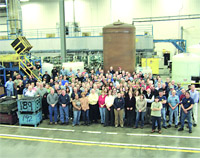
Sections Supplements
The Local Commercial Real Estate Market is Defined by Stability

“How’s the market?”

That’s a question that area commercial real estate brokers are asked on an almost daily basis, sometimes several times a day. It’s a simple query, designed to gain insight into both the regional and national scenes — and often the answer comes in two parts, because sometimes, but not always, what’s happening on the larger stage doesn’t reflect what’s going on locally.

As for the Western Mass. market, my response is almost always, “good … stable … steady.” That’s because that’s what this market is like, with rare exceptions, and for reasons to be outlined here.

The ‘market’ is an amalgam of subsets that tend to function somewhat independently of one another. While they share very much in common, various factors impact some market segments differently than they do others. For example, the investment sales market is in lock step with interest rates, which in turn have little immediate effect on the office-leasing market.

When considered in the aggregate, the Western Mass. commercial market has a fairly solid history of stability. Over the past 15 years, since the disastrous market crash of the late ’80s and early ’90s (commercial real estate’s Ice Age), it has behaved somewhat like a missing link somewhere between a bear and a bull.

When the markets are hot in the New England region, conditions are pretty good here. And when the markets turn sluggish … it remains pretty good here. We enjoy an enviable insular equilibrium due to a combination of factors. These include our location, a comparatively attractive cost of living, the combined economic engines of MassMutual, Baystate Health, the region’s other major employers, and maybe the White Hut.

When dissected, the regional commercial real estate market component parts can be, and often are, in divergent conditions of health. The segments comprising the market include:

  • The sale of tenanted properties as investments, such as shopping centers; single- and multi-tenant office, warehouse and manufacturing buildings; and multi-family housing;
  • Office property leasing, which has subsets, including downtown and suburban areas, and their respective sub-markets of Class A, B, and C space;
  • The development markets, both public and private, such as the pending redevelopment of the former Basketball Hall of Fame and the new federal courthouse; and
  • The combination of retail leasing, warehouse and industrial leasing, and hotels and other hospitality properties, which play an important role as well.

This diversity within the realm of the commercial real estate market has a balancing effect on the sector as a whole, where the hot potato of risk is being continuously passed around.

While the real estate market is volatile like any commodity market, traditionally it is a lagging economic indicator. It’s like the last car in a multi-car fender bender. You can see the crash coming, but have no ability to avoid it. Therefore, while the commercial real estate sector may temporarily avoid the inevitable when the economy is in decline, the price it pays is often the heaviest.

The current overall stable and steady market is the result of the outstanding performance of some very hearty segments, others that are in economic cruise control, and lastly that portion on extended stay in the doldrums.

The investment sales market continues to be extremely robust. Due to the availability of investment opportunities with comparatively higher rates of return in the Western Mass. market, the area has experienced a surge of interest from investors outside of the market. The most notable examples are the sale/lease back of the Yankee Candle corporate headquarters in South Deerfield, the Potpourri Plaza office complex sale in Northampton, and the purchase of a large block of class B office properties in the Springfield central business district.

The most immediate factor that could calm this segment’s ferocity is a dwindling supply of investment property opportunities. For the time being, however, the push continues, and several pending transactions of significance will conclude in the next few months.

The vibrancy of the region’s hospitality sector is visible to everyone. Several new hotels have sprung up along I-91 recently. New hotels are planned for Northampton and Amherst. Judging by the always-packed parking lots at the Hilton Garden Inn and its neighbor, Uno Chicago Grill, business appears to be blistering.

Without question, the benchmark used most commonly to judge the overall condition of region’s commercial real estate market is the office component. Collectively the Class A office properties command the most attention because visually they dominate the landscape, symbolic of the region’s wealth and prosperity.

The office market is, and has been, controlled by two forces; one is the never-ending, musical-chair-like movement of office tenants from one building to another. While this has little beneficial impact upon market occupancy rates, it does create a nice ripple of new economic activity that beneficially impacts the building trades, the banking and legal communities, and a myriad of other enterprises, including, of course, real estate brokers.

The other compelling force is the absorption of vacant space by existing local companies expanding, new start-ups, and companies locating here for the first time. It’s the rare 100,000-square-foot lease that gets the media coverage, but it’s the small, 2,000-square-foot deals that are the foundation of the office market.

Overall, too much emphasis is placed on the office segment as a bellwether for the market in general. It just seems to get all the attention.

So, when asked, “how’s the market?” my answer will be, “solidly good, getting better, and always aspiring to be great.”

John Williamson is president of Williamson Commercial Properties; (413) 736-9400.

Departments

The following business incorporations were recently recorded in Franklin, Hampden, Hampshire counties and are the latest available. They are listed by community.

AMHERST

Goodwin & Goodwin Inc., 460 West St., Suite A, Amherst 01002. Brien James Goodwin, 231 Elm St., Apt. 1R, Northampton 01060. Manufacturing, sales, and distribution of baked goods to retail and wholesale customers.

The Nyansa Project Ltd., 22 Emily Lane, Amherst 01002. Rev. Robert Andoh, Sekondi Assemblies of God Church, Takorandi, GHA. Dennis Hanno Dean, 22 Emily Lane, Amherst 01002, treasurer. (Nonprofit) To stimulate economic development in Ghana and surrounding nations, with a specific focus on the Takoranda and Sekondi metropolitcan area, etc.

BELCHERTOWN

Apremont Applications Inc., 515 Michael Sears Road, Belchertown 01007. Joyce Christine Poulin, same. Waterproofing, damp-proofing, building restoration.

EAST LONGMEADOW

Spagnuolo Subs Inc., 85 Holland Dr., East Longmeadow 01028. Judith A. Spagnuolo, same. Submarine sandwich shop.

HADLEY

Russell St Realty Corp., 8 River Dr., Hadley 01035. John P. Regish, 22 West St., Hadley 01035. Real estate development and leasing.

INDIAN ORCHARD

Paesano’s Pizzeria Inc., 306 Pasco Road, Indian Orchard 01151. Arduino Siniscalchi, 108 Sawmill Road, Springfield 01118. Pizza shop.

LONGMEADOW

Longmeadow Youth Basketball Association, Inc., 136 Grassy Gutter Road, Longmeadow 01106. Steven Dudeck, same. (Nonprofit) To provide an organized and structured basketball program that fosters the players’ appreciation for the game in a competitive team environment, etc.

New England Payroll Inc., 178 Nevins Ave., Longmeadow 01106. Scott Feinstein, same. Payroll processor.

LUDLOW

Parmar Brothers Inc., 321 Center St., Ludlow 01056. Sharpool S. Parmar, 239 Russell St., Hadley 01035. Hotel.

MILLERS FALLS

Rich Young Property Management Inc., 84 Federal St., Millers Falls 01349. Richard A. Young, same. Management of real property.

NORTHAMPTON

Hampshire Flooring & Tile Co. Inc., 141 Damon Road, Northampton 01060. John K. Asselin, 56 West Pelham Road, Shutesbury 01072. Retail flooring sales.

ORANGE

Sharon’s White Cloud Inc., 627 East River St., Orange 01364. Sharon L. Prue, same. To provide food and restaurant services, etc.

PALMER

GTB Cases Corp., 1240 Park St., P.O. Box 660, Palmer 01069. George T. Benoit, same. Sales and distribution of specialty cases.

RUSSELL

Utility Assistance Corp., 178 Dickinson Hill Road, Russell 01070. Frederick J. Wojick, Jr., same. Contracting services.

SHUTESBURY

iqSense Inc., 37 Carver Road, Shutesbury 01072. Thomas D. Williams, same. Professional consulting services related to electronics.


SOUTH HADLEY

Perry’s Prime Investments Inc., 39 Abbey St., South Hadley 01075. Michael Perry, same. (Foreign corp; NY) Promissory note investment.

South Hadley Community Tennis Association Inc., 93 Woodbridge St., South Hadley 01075. Ira Brezinsky, same. (Nonprofit) To establish and operate a Community Tennis Association, etc.

SOUTHAMPTON

Pignatare Construction Inc., 36 Montgomery Road, Southampton 01073. Marc C. Pignatare, same. Construction.

SOUTHWICK

Hampden West Holding Corp., 10 Coyote Glen, Southwick 01077. Edward J. Grimaldo, same. Purchase and lease of real estate.

Sportsmen’s National Land Trust-Massachusetts Chapter Inc., 239 Vining Hill Road, Southwick 01077. Ron Michonski, same. (Nonprofit) To acquire and manage open space and wildlife habitat areas, promote a conservation ethic, etc.

SPRINGFIELD

A-Z Credit Building Inc., 91 Mill Park, Suite 5, Springfield 01108. Hasapali Mohamed, same. Consumer credit building services.

JLC Services Inc., 196 Eddy St., Springfield 01105. Jeffrey L. Crapser, same. Cleaning business.

New Life Calvary Baptist Church, 981 Wilbraham Road, Springfield 01109. Rev. Jessee W. Williams, Sr., 84 Hazen Ave., Springfield 01109. (Nonprofit) To maintain public worship in accordance with the laws, traditions and customs of the New Life Calvary Baptist Church, etc.

New-Ct&Mass Construction Corp., 190 Commonwealth Ave., Springfield 01108. Guillermo R. Negron, same. General contractor, home improvement, painting, etc.

Peoples Group Company Inc., 57 Florence St., Springfield. Darnel Hunter, same. (Nonprofit) Entrepreneurial public awareness.

Slaughter Enterprises Inc., 31 Rutledge Ave., Springfield 01105. Dominique Eileen Slaughter, same. Customer services.

Xiuli Li Corp., 249 Belmont Ave., Springfield 01180. Xiuli Li, same. Personal service such as health bodyworks.

TURNERS FALLS

Alpha Stone Concrete Inc., 78 11th St., Turners Falls 01376. Daniel W. Gobillot, 19 Central St., Turners Falls 01376. Design and construction of concrete counter tops.

WESTFIELD

WFD Securities Inc., 141 Elm St., Westfield 01085. James C. Hagan, same. To deal in securities in its own behalf not as a broker but as a whole owned subsidiary of Westfield Financial, Inc.,

WILBRAHAM

Hurley’s Livery Inc., 37 High Pine Circle, Wilbraham 01095. Sheila M. Hurley, same. Transportation service.

Memorial School Parent Teacher Organization Inc., 310 Main St., Wilbraham 01095. Darlene Maconi, 16 Wagon Dr., Wilbraham 01095. (Nonprofit) To encourage cooperation among parents, school staff and community to enhance children’s education, etc.

Opinion

It wasn’t exactly breaking news, but it was eye-opening.

A recently released report, written by the Mass. Institute for a New Commonwealth (MassINC) in conjunction with the Brookings Institution’s Metropolitan Policy Program, reveals that that knowledge-based jobs in the Commonwealth are clustered in Greater Boston, and that 11 so-called Gateway cities, including Springfield and Holyoke, and Pittsfield in Western Mass., are, by and large, not sharing in the wealth of the technology sector.

We knew that already.

What we didn’t know — or hadn’t seen spelled out in detail until this report — are the many costs associated with this phenomenon. In short, say the report’s authors, unless this pattern is reversed or mitigated, the gateway cities will fall into a deeper fiscal funk, urban sprawl will accelerate, and the pressures placed on Greater Boston, especially the costs of living and doing business, will continue to escalate, forcing people and businesses to leave the state.

In other words, and to paraphrase the report’s conclusion, spreading the wealth isn’t merely the democratic thing to do, it’s the right thing to do, and for many reasons.

The report calls on elected and appointed leaders to take steps to address this problem. They range from enhancing infrastructure and transportation to improving public education to create a better workforce in a state that is losing population. We suggest the Patrick administration and the state Legislature heed the suggestions in the report, titled Reconnecting Massachusetts Gateway Cities: Lessons Learned and an Agenda for Renewal — because these problems will not fix themselves.

The most important word in the report’s title is reconnecting. At the moment, those gateway cities — Brockton, Fall River, Fitchburg, Haverhill, Lawrence, Lowell, New Bedford, and Worcester are the others — are far less connected than they once were. They are more isolated and, in many ways, more vulnerable.

Why? Because the manufacturing bases that allowed them all to once thrive — precision machining in Springfield, paper in Holyoke, textiles in Lowell and Lawrence, shoes in Brockton, fishing in New Bedford — are all in various states of decline and with little or no hope of regaining past glory.

Each of those cities is searching for something to replace what’s been lost, but most have found only frustration. Some have benefited from simple geography — being close to Greater Boston has yielded some opportunities, especially in housing; Lowell’s old mills, for example, have been converted into high-end condos that constitute affordable housing to those priced out of the Boston market. But geography does not help Springfield, Holyoke, or Pittsfield.

What will help are steps to enable them to compete for knowledge-based jobs by compelling existing businesses and those in the formative stages to look beyond the Route 128 beltway. At the moment, most businesses don’t because they don’t see enough reason to; Boston has made the adjustment from an industrial to a knowledge-based economy, and other cities, especially those in the 413 area code, are still working on it and have much left to do.

Demographics plays a key role in these struggles; cities like Springfield have 30% or more of their populations living below the poverty line. Many of these individuals lack the skills needed to hold jobs in a knowledge-based economy. Meanwhile, as the name ‘gateway’ implies, these cities are home to many immigrants who lack the language skills to make it in today’s economy.

To make the gateway cities more competitive, there must be a local and statewide focus on everything from transportation to improving public education to better utilizing assets, especially state and community colleges, to spark economic development.

The solutions to the problems of the gateway cities won’t come easily, and the report’s authors say as much. But if steps aren’t taken to accelerate their transition to a knowledge-based economy, there will be some long-term consequences for the Commonwealth.

Let the process of reconnecting these cities commence.

Departments

“Who’s Driving the Bus?”

Feb. 21: The Mass. Small Business Development Center Network will host this workshop geared toward anyone looking to bring an energetic attitude into the environment of a start-up or existing business. The class is planned from 11:30 a.m. to 1:30 p.m. at the Scibelli Enterprise Center, 1 Federal St., Springfield. Cost is $35. For more information, call (413) 737-6712.

Photographs in Courage

Feb. 27: Anja Niedringhaus, an Associated Press photographer and Nieman Fellow, Harvard University, will discuss her work in war torn places including Albania, Bosnia, Croatia, Kosovo, Israel, Kuwait, Turkey and Iraq, as part of the Kaleidoscope series at Bay Path College in Longmeadow. Her lecture is planned at 7 p.m. in Blake Student Commons and is free. In 2005, she was a recipient of the International Women’s Media Foundation’s Courage Award, honoring women journalists who have shown extraordinary strength of character and integrity while reporting under dangerous or difficult circumstances. For more information, call (413) 565-1293 or visit www.baypath.edu.

LEAD Program

March 2, 9, 16, 23, 30: Western New England College in Springfield and the Employers Association of the Northeast are accepting registrations for its Leadership Enhancement and Development (LEAD) certificate program. The intensive, five-day program is designed for businesspeople looking to move up within their organization. Topics include leadership, communication, managing change, preparing financial statements and budgets, human resource management and strategic planning. Classes are planned on five consecutive Fridays in March from 8:30 a.m. to 4:30 p.m. For more information, call WNEC at (413) 782-1473, or online at www.wnec.edu/gsce/ps.

Research Tools Seminar
March 7: The Mass. Small Business Development Center Network will host this free workshop that will introduce entrepreneurs and small business owners to the print and electronic resources available at their local library. Participants will learn to search selected databases and publications, create search strategies, and locate information to start or grow a business. The class is planned from 9:30 to 11:30 a.m. at the Springfield City Library, 220 State St., Springfield. For more information, call (413) 737-6712.

Toyota Way

March 8: The UMass Family Business Center (FBC) will present a dinner forum based on the 14 principles of Toyota known as the “Toyota Way” from 5 to 8:30 p.m. at Chez Josef in Agawam. Twelve FBC members will describe Toyota’s business practices of manufacturing high-quality products and services. Presenters include: Michael Francouer, Joining Technologies; Jeff Glaze, Decorated Products; Larry Grenier, The Greniers Family of Photographers; Cindy Johnson, Fran Johnson’s Golf and Racquet Headquarters; Scott MacKenzie, MacKenzie Vaults; Jason Mark, Gravity Switch; Curio Nataloni, Kitchens by Curio; Jim Sagalyn, Holyoke Machine; Michael Schaefer, October Company; Joanne Goding, Moss Nutrition; David Rothenberg, Bottaro Skolnick Interiors, and Bill Dempsey, HL Dempsey Co. For more information or reservations, visit www.umass.edu/fambiz, or call Ira Bryck, FBC’s Continuing & Professional Education, at (413) 545-1537.

“Customer Loyalty Best Practices”

March 14: Do you know what your customers are saying about you? The Mass. Small Business Development Center Network will sponsor this workshop that features interesting feedback from area visitors presented by the Berkshire Visitors Bureau. In addition, a discussion of best practices for developing customer loyalty is planned. The class will be conducted from 9 to 11 a.m. at the Berkshire Chamber of Commerce, 75 North St., Suite 360, Pittsfield. The cost is $30. For more information, call (413) 737-6712.

“Guerrilla Marketing”

March 28: Inspired by a Guerrilla Marketing philosophy, this workshop by the Mass. Small Business Development Center Network will distill an MBA curriculum’s worth of marketing planning fundamentals to seven essential sentences. Also, learn the four key principles upon which all success rests. The session is planned from 8:30 to 10:30 a.m. at the Scibelli Enterprise Center, 1 Federal St., Springfield. The cost is $30. For more information, call (413) 737-6712.

“Ordinary People Make a Difference”

March 28: Elenore Long, Ph.D., will discuss a five-point model that describes how ordinary people develop public voices that allow them to make the world a better place as part of the Kaleidoscope series at Bay Path College in Longmeadow. Her lecture is planned at 7 p.m. in Blake Student Commons and is free. Based upon analysis of not-for-profit community organizations, the model contributes to rhetoric studies and community informatics, and aids the growing commitment across college campuses to support its students, educators, and community as moral agents in their own lives. For more information, call (413) 565-1293 or visit www.baypath.edu.

Academic Conference

March 30: The second annual Academic Conference titled “Current Issues in Community Economic Development” is planned from 8:30 a.m. to 5 p.m. at Western New England College in Springfield. The conference, hosted by the Law and Business Center for Advancing Entrepreneurship, will feature legal and business scholars, industry representatives, and policy makers exploring issues relating to entrepreneurship and community development. Panel topics will include “Set-Asides and Affirmative Action,” “Public-Private Partnerships,” “Urban Entrepreneurship,” and “Fringe Bankers.” Andrea Silbert, co-founder and former CEO of the Center for Women & Enterprise, will be the keynote speaker during the luncheon. For more information, call (413) 736-8462 or e-mail to [email protected].

Improving Your Web Site

April 4: This Mass. Small Business Development Center Network workshop will focus on designing or redesigning your web site to work better once you’ve got your customers there. The 9 a.m. to noon session is planned at the Scibelli Enterprise Center, 1 Federal St., Springfield. The cost is $35. For more information, call (413) 737-6712.

Creating Healthy Conversations

April 18: Guillermo Cuellar, Ed.D., MBA faculty member, and MBA students, discuss why it is so difficult to create and sustain genuine collaborative healthy conversations, even among people who have similar goals, as part of the Kaleidoscope series at Bay Path College in Longmeadow. The lecture is planned at 7 p.m. in Blake Student Commons and is free. The audience and facilitators will discuss opportunities to create a culture of collaboration, beginning with how mental models or strategies for behavior determine the process of our conversations. For more information, call (413) 565-1293 or visit www.baypath.edu.

Departments

Commission to Study Gambling Avenues

BOSTON — In the coming weeks, a casino study commission will be created by Gov. Deval Patrick to study the feasibility of casinos in the state and whether that initiative would help boost the economy. The commission is expected to study the pros and cons of gambling and its social and economic effects over the course of six months. The commission has been charged with framing the issue for Patrick rather than making concrete recommendations. Commission membership will include individuals from across the state, as well as someone who understands Western Massachusetts’ interests. The state Legislature would need to approve any proposal that would legalize casinos.

AIM’s Confidence Index Declines in January

BOSTON — The Associated Industries of Massachusetts (AIM) Business Confidence Index lost 2.6 points in January to 56.6, reflecting state employers’ weakening in sales and concerns about business conditions within the state. Despite closing 2006 with its best quarter since 2004, the index has now returned to the lackluster, moderately positive range where it spent most of 2005-2006, according to Raymond Torto, co-chair of AIM’s Board of Economic Advisors and principal, CBRE Torto Wheaton. Torto added that January’s reading was, however, 1.9 points above its level from last January. By type of employer, confidence was off sharply in January among manufacturers, and fractionally among other employers. Manufacturing sector respondents were largely responsible for the considerably lower ratings for current conditions, state business climate, and sales. On a regional basis, confidence levels held up better in Greater Boston than in the rest of the state, according to Torto. Large employers were more positive than smaller ones on most questions, with small employers on balance negative about conditions in the state. The monthly index is based on a survey of AIM member companies across the state, asking questions about current and prospective business conditions in the state and nation, as well as for their respective organizations.

National Jobless Rate Inches Up

WASHINGTON — Employers across the country slowed hiring in January, pushing the unemployment rate to a four-month high of 4.6%. In contracts, the Labor Department’s employment report suggests that the jobs market remains solid. The country saw an increase of 111,000 positions created in January, compared with 206,000 in December. Analysts predict that the economy’s growth as a whole will remain moderate which, in turn, means the unemployment rate may slowly climb during the year. Job eliminations in January were seen in automotive companies, factories, furniture makers and homebuilders, all attributed to the housing slump and the ailing auto industry. Job gains included hospitals and nursing homes, restaurants and bars, engineering and architectural firms and bookkeeping companies.

Kittredge Property Goes on the Market

SPRINGFIELD — The East Columbus Avenue building of Kittredge Equipment Co. is on the market for $1.75 million since its lease has expired and the company is seeking a more modern warehouse for its bustling business. The one-acre site includes a two-story building at the corner of East Columbus and Liberty streets, a one-story showroom, and a four-story office building at East Columbus Avenue and Emery Street. William H. Low Jr. of Samuel D. Plotkin and Associates is handling the property for George and Sid Kittredge, the former owners of the kitchen supply company.

Sotirion Given 9-Year Prison Term

SPRINGFIELD — Arthur Sotirion, 58, the former assistant director of the Springfield Housing Authority, was recently given a prison term of nine years and one month for his role in the decade-long corruption scheme of the agency. Following his 109 months in federal prison, Sotirion will also be subjected to three years of supervised release and will pay a $150,000 fine. Both Sotirion and Raymond B. Asselin, Sotirion’s boss at the authority for 30 years, pleaded guilty last summer and were facing up to 14 years in prison. Both men resigned under pressure in 2003 and pleaded guilty to conspiracy, tax evasion, and racketeering charges as part of a 12-defendant plea deal last summer.

MTF Forecast: Slowdown in Tax Revenues

BOSTON — The growth in state tax revenues will slow markedly in 2007 and 2008 — to less than half the rate of 2006, according to a recent forecast by the Mass. Taxpayers Foundation. The MTF estimates that fiscal 2007 tax revenues will total $19.27 billion, an increase of 4.2% over 2006 and $135 million higher than the forecast released by the Romney administration in October. In fiscal 2006, tax revenues increased by 8.2%. According to the foundation’s forecast, the growth in tax revenues will slow further — to 3.0% in fiscal 2008. Tax revenues will rise to $19.85 billion, an increase of only $580 million over 2007.

Departments

‘Who’s Driving the Bus?’

Feb. 21: The Mass. Small Business Development Center Network will host this workshop geared toward anyone looking to bring an energetic attitude into the environment of a start-up or an existing business. The class is planned from 11:30 a.m. to 1:30 p.m. at the Scibelli Enterprise Center, 1 Federal St., Springfield. The cost is $35. For more information, call (413) 737-6712.

LEAD Program

March 2, 9, 16, 23, 30: Western New England College in Springfield and the Employers Association of the Northeast are accepting registrations for its Leadership Enhancement and Development (LEAD) certificate program. The intensive, five-day program is designed for businesspeople looking to move up within their organization. Topics include leadership, communication, managing change, preparing financial statements and budgets, human resource management, and strategic planning. Classes are planned on five consecutive Fridays in March from 8:30 a.m. to 4:30 p.m. For more information, call WNEC at (413) 782-1473, or online at www.wnec.edu/gsce/ps.

Research Tools Seminar

March 7: The Mass. Small Business Development Center Network will host this free workshop that will introduce entrepreneurs and small business owners to the print and electronic resources available at their local library. Participants will learn to search selected databases and publications, create search strategies, and locate information to start or grow a business. The class is planned from 9:30 to 11:30 a.m. at the Springfield City Library, 220 State St., Springfield. For more information, call (413) 737-6712.

The Toyota Way

March 8: The UMass Family Business Center (FBC) will present a dinner forum based on the 14 principles of Toyota known as the “Toyota Way” from 5 to 8:30 p.m. at Chez Josef in Agawam. Twelve FBC members will describe Toyota’s business practices of manufacturing high-quality products and services. Presenters include: Michael Francouer, Joining Technologies; Jeff Glaze, Decorated Products; Larry Grenier, The Greniers Family of Photographers; Cindy Johnson, Fran Johnson’s Golf and Racquet Headquarters; Scott MacKenzie, MacKenzie Vaults; Jason Mark, Gravity Switch; Curio Nataloni, Kitchens by Curio; Jim Sagalyn, Holyoke Machine; Michael Schaefer, October Company; Joanne Goding, Moss Nutrition; David Rothenberg, Bottaro Skolnick Interiors, and Bill Dempsey, HL Dempsey Co. For more information or reservations, visit www.umass.edu/fambiz, or call Ira Bryck, FBC’s Continuing & Professional Education, at (413) 545-1537.

Customer Loyalty Best Practices

March 14: Do you know what your customers are saying about you? The Mass. Small Business Development Center Network will sponsor this workshop that features interesting feedback from area visitors presented by the Berkshire Visitors Bureau. In addition, a discussion of best practices for developing customer loyalty is planned. The class will be conducted from 9 to 11 a.m. at the Berkshire Chamber of Commerce, 75 North St., Suite 360, Pittsfield. The cost is $30. For more information, call (413) 737-6712.

Guerrilla Marketing

March 28: Inspired by a Guerrilla Marketing philosophy, this workshop led by the Mass. Small Business Development Center Network will distill an MBA curriculum’s worth of marketing planning fundamentals to seven essential sentences. Also, learn the four key principles upon which all success rests. The session is planned from 8:30 to 10:30 a.m. at the Scibelli Enterprise Center, 1 Federal St., Springfield. The cost is $30. For more information, call (413) 737-6712.

Academic Conference

March 30: The second annual Academic Conference titled ‘Current Issues in Community Economic Development’ is planned from 8:30 a.m. to 5 p.m. at Western New England College in Springfield. The conference, hosted by the Law and Business Center for Advancing Entrepreneurship, will feature legal and business scholars, industry representatives, and policy makers exploring issues relating to entrepreneurship and community development. Panel topics will include ‘Set-Asides and Affirmative Action,’ ‘Public-Private Partnerships,’ ‘Urban Entrepreneurship,’ and ‘Fringe Bankers.’ Andrea Silbert, co-founder and former CEO of the Center for Women & Enterprise, will be the keynote speaker during the luncheon. For more information, call (413) 736-8462 or E-mail to [email protected].

Uncategorized

Kathleen Anderson is a fourth-generation Holyoker. And she’s proud of that heritage.

“My great-grandparents came here from Ireland,” said Anderson, who has headed the city’s Office of Planning and Development since last summer. “When I looked up their history, I found they received the 55th marriage license ever written in the city.

“I think a lot of people, even those who don’t live here anymore, have strong ties to this city,” she added. “People here are proud of their community.”

Indeed, Holyoke is a city with a rich manufacturing past, some intriguing prospects for the future, and a striking geographic diversity — all assets to build upon.

“You have a downtown with a city-type atmosphere, and you have rural parts of the community where you’ll find horses and other animals,” she said. “You have the Mount Tom reservation, which is an asset. We have dinosaur tracks along the Connecticut River, the Holyoke Dam and fish ladder, and the old mill buildings along the canals.”

In her dual role as head of economic development and director of the Holyoke Economic Development and Industrial Corp. (HEDIC), Anderson is on the front lines of packaging all of that in order to attract new business to the city and craft an overarching strategy to bring vibrancy to its business culture and its neighborhoods.

It’s a challenging role, but one that Anderson says she is prepared to tackle. After all, Holyoke is in her blood.

Stay a While

Anderson originally started working for the city in 1999 as an aide to then-Mayor Daniel Szostkiewicz, but it was anything but a secure job.

“I was hired in August, and he lost the election in November,” she recalled with a grin. “When Mayor (Michael) Sullivan took over in January, he called me up and said, ‘Kathy, I’ll give you plenty of notice to find another job.’ I had known from the start that I might be out of a job depending on what happened in the election, but that was fine; I just wanted the experience.”

However, as Sullivan settled into his role, Anderson said, he apparently liked what she was doing in hers, and kept her on board. And when Jeff Hayden stepped down from his position as Planning and Development director last year to head the Kittredge Business Center at Holyoke Community College, Sullivan asked Anderson to take over.

“My husband has always encouraged me, and he said, ‘go for it,’” she told BusinessWest. After all, she said, plenty of experience in different areas of development had built up her confidence.

“I was involved in a lot of committees before this role,” she said, including president of both the Greater Holyoke Rental Housing Assoc. and the Mass. Rental Housing Assoc.

Before that, Anderson had been a Realtor in the city and also served on the Churchill Neighborhood Partnership, which was commissioned by the mayor’s office to put together a plan to rejuvenate an area beset by abandoned buildings. The group eventually helped secure an $18 million grant to do just that.

Now, as director of the city’s Office of Planning and Development, she oversees both the Planning Department and the Economic Development Department. The two offices, which total seven staffers, were combined two years ago and moved into shared space on Suffolk Street last summer.

“It has worked out extremely well, having both departments under one roof, working together all the time on different projects, whether somebody is coming in to look at property we own, or talking with the Planning Department about zoning,” she said.

Anderson’s staff meets with several city departments on a regular basis, from Building to Law to Conservation, “and we’ve streamlined the permitting process. Nothing falls through the cracks.”

New Faces in Town

In her role as HEDIC director, Anderson is actively helping to recruit new business to Holyoke and move vacant and foreclosed property back onto the tax rolls.
“Streamlining these offices, I think, makes for a more business-friendly environment in which to do business,” she said. Meanwhile, “properties are very affordable in Holyoke, and there has been a great deal of interest in some of them.”

Anderson has several projects on her plate, such as a development near Holyoke High School that will soon house a CVS and medical offices, and the ongoing question of what will become of 18 industrially zoned acres on Whiting Farms Road, near the Holyoke Mall.

Also on the drawing board is the Holyoke Canalwalk, a project still in its design stage that will feature a two-mile pedestrian promenade along the city’s canals. Proponents say the initiative would not only promote the growth of the arts corridor now taking shape in the old mill buildings, but also enhance the profile of the downtown area, as well as nearby Heritage Park, Pulaski Park, and the dam.

“It’s a bit of a challenge, because we need easements signed by all the property owners, but it will really improve and enhance their property,” she said. But even before the project concludes its design phase, Anderson said she is impressed with what’s happening in the mills.

“There aren’t a lot of large manufacturers anymore, so a lot of these large buildings along the river and canals are made up of a lot of different kinds of businesses,” she said. “They include small manufacturers and small commercial ventures, as well as artists’ lofts. A lot of people see potential in the idea of artists downtown.”

Anderson pointed especially to the Open Square project, which owner John Aubin converted from a defunct paper mill into a thriving mixed-use complex that houses an eclectic mix of start-up businesses, artists’ studios, and niche manufacturers.

“There aren’t a lot of vacant manufacturing buildings left in the city, but there are some great ones along the river that have some potential,” she said. “John Aubin has done a great job with the concept of breaking up a building and making the best use of its space.”

Meanwhile, Anderson said the city has a number of properties in tax foreclosure that could be developed for reuse once a solid plan for them is in place. In speaking with BusinessWest, in fact, she kept coming back to the idea of an overall plan, not just random development.

“Holyoke has a lot of good qualities,” she said. “We were the first planned industrial city. We have the canals and the river. And there’s a lot of history here.

“I think the direction the mayor has been going in is extremely positive,” she added. “Yes, Holyoke does have its share of issues and problems, but we’re continually working to address those issues.”

The Next Phase

Helping to write the next chapter in Holyoke’s history is a challenge Anderson embraces.

“I enjoy this job. It’s a great learning experience, and gives me a whole different perspective on what I had been doing,” she said. “I had worked closely with Jeff Hayden on a number of projects, and I was well-aware of the things that he was doing.

“It’s just very exciting,” she concluded. “I love the direction this city’s going in.”

Joseph Bednar can be reached at[email protected]
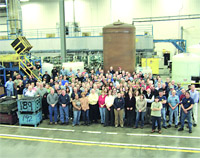
Opinion

The juxtaposition of the comments wasn’t the best.

Gov. Deval Patrick was addressing the Mass. Municipal Assoc. and discussing the state’s fiscal health and ways to improve it, when he offered that he would keep an open mind on legalized slot machines and casinos, and that they may eventually help the state keep its budget in the black, or at least out of the red — a stern challenge given projections for a billion-dollar shortfall to result from slowing tax revenues.

We’ve never preferred to view casino gambling as a budget-balancing option. Instead, we’ve looked at it as a form of economic development, one that has the potential to raise the profile of a city or region, bringing new jobs and the potential for tourism dollars and hospitality-related businesses. And we’ve long taken the view that casinos either make sense or they don’t, and that their practicality for the Commonwealth shouldn’t be a function of the state’s fiscal well-being.

But the reality of the situation is that casinos and slot machines at race tracks have always been viewed as a vehicle for revenue for the state’s cities and towns, many of which, especially older urban areas like Springfield and Holyoke, are struggling and looking to the state for some form of help. The phrase Patrick used when referring to legalized gambling was “money left on the table,” and by that, he was referring to the tens, if not hundreds, of millions of dollars that stream out of the Bay State each year and into Connecticut, New York, and other states that permit casino gambling.

His point is well taken, and we hope that Patrick and the Legislature give casino gambling another hard, thoughtful look.

Why? Because while it’s easy to say that there are better ways to raise revenue and create jobs, it’s harder to back up those statements. Tax hikes are always possible, but they are never popular, and few on Beacon Hill have the stomach for them. Nor do they have a fondness for cuts to existing programs.

Meanwhile, no one really knows from where the next load of jobs will come. As economists told BusinessWest recently, there are real doubts here and elsewhere about whether bioscience, biotechnology manufacturing, alternative energy ventures, or other sectors will ever become large or steady sources of employment, and traditional manufacturing jobs continue to decline as companies leave for states with a lower cost of doing business.

These realities may be enough to prompt Patrick, who opposed legalizing slot machines during last year’s campaign, to at least initiate some new dialogue on the subject.

While casinos are not the answer for every community or region — we are skeptical about placing them in large urban centers like Springfield, for example — there are scenarios in which they could work. Locally, the Quaboag area is a good example. This is a region that has lost a number of manufacturing jobs in recent years and is obviously struggling to replace them, with tourism and service-sector positions being the best hopes at the moment.

Meanwhile, although progress has been made in a broad effort to give the region an identity and to lure tourists from Boston and other areas, many people still consider Quaboag to be at least one turnpike exit too far. A casino at or near the Palmer interchange would certainly change that equation, and quickly.

Franklin County, Mount Tom in Holyoke, and perhaps some areas of Berkshire County are other places where a casino could, if it was done right, complement existing attractions and businesses and bring progress in the form of jobs and commerce to the area.

There are social costs that go along with casinos — gambling impacts all groups, but especially poorer constituencies, and many become addicted. These costs, many of which are already being felt with casinos only an hour or two away in other states, must be weighed, along with the potential benefits.

Patrick says he’s willing to keep an open mind. We hope the state’s Legislature can do the same.

Departments

Peter Pan and Affiliates Launch Initiative

SPRINGFIELD — After months of planning and development, Peter Pan Bus Lines Inc. and its affiliates Bonanza and Arrow Bus Lines (collectively referred to as “Peter Pan”) have installed global positioning system (GPS) devices that will help the company reduce the greenhouse gas emissions from its motorcoach fleet. Peter Pan is the first inter-city bus carrier to install GPS devices in all of its 288 buses in its fleet serving the northeast corridor that stretches from Boston through Washington, D.C. Peter Pan has developed customized GPS hardware and software giving managers real-time data on the operation of each vehicle in service, allowing them to inform drivers when excessive idling is occurring with a vehicle. The cutting-edge technology will have the impact of limiting the amount of idling time and reducing greenhouse gas emissions substantially. Additionally, reduced idling time will reduce Peter Pan’s fuel consumption. The company also announced it is in the process of installing engine filters that will prevent releases of oil that could impact storm water, and to collect additional greenhouse gases produced during the operation of its motorcoaches, as part of a settlement with the United States Environmental Protection Agency. In a related move, Peter Pan has established an environmental compliance and safety team to ensure that the company is in compliance or exceeding all federal, state and local environmental law and regulations.

OMG Acquires Roofing Business

AGAWAM — OMG Inc. recently announced the acquisition of ITW Buildex’s roofing business segment, based in Illinois. OMG, a manufacturer of fasteners and building products for the commercial and residential construction industry, sought out the business since it develops and manufactures fastening systems for the commercial roofing industry, according to Hugh McGovern, President, OMG. McGovern added that the acquisition demonstrates OMG’s significant commitment to the commercial roofing sector. In addition, OMG will now be able to add a suite of new products to its catalog, including AccuTrac® Automated Insulation and Seam Attachment System, Polymer Batten Strip™ for membrane attachment, Eyehook Seam Plate, and Reel-Fast™ Collated Seam Plates. OMG’s new Chicago factory, previously maintained by ITW Buildex, will employ approximately 30 people and includes a full customer service center. No manufacturing layoffs are anticipated during the acquisition process. OMG is a division of Handy & Harman, which is a wholly owned subsidiary of WHX Corporation.

Berkshire Bank Opens Seventh New York Branch

PITTSFIELD — Berkshire Hills Bancorp Inc. recently announced the opening of a full-service branch at The Crossing in Halfmoon, N.Y. This is the bank’s sixth branch in the Albany Capital Region and its seventh in New York. The bank now operates a network of 28 full-service branches and 38 ATMs throughout Northeastern New York and Western Mass. Berkshire Hills Bancorp is the holding company for Berkshire Bank.

CDH Employees Exceed $500,000 Goal

NORTHAMPTON — Whether donating a small amount through payroll deductions or making a one-time gift, Cooley Dickinson Hospital employees have pledged $523,475 to Caring for the Future, the hospital’s $10.8 million campaign to fund the new Patient Building and Kittredge Surgery Center. To date, Cooley employees have exceeded the $500,000 employee campaign goal that was established in April 2005 when the hospital broke ground on the current $50 million expansion project. The fundraising effort at Cooley Dickinson will continue beyond the building opening date as the organization must raise $10.8 million by Sept. 30 to receive a $900,000 Kresge Challenge Grant. To date, $7.985 million has been raised toward this goal. On April 16, the Patient Building and Kittredge Surgery Center will open. The 116,000-square-foot facility will house eight surgery suites, a wing of 32 single-occupancy, private patient rooms, an eight-bed joint replacement center, and expanded laboratory and central sterile supply areas.

Bresnahan Insurance Relocates

HOLYOKE — Bresnahan Insurance Agency recently relocated its offices to 100 Whiting Farms Road. All phone and fax numbers and E-mail addresses have remained the same.

Smith & Wesson Completes Purchase

SPRINGFIELD — Smith & Wesson Holding Corp. recently announced its acquisition of Thompson/Center Arms Inc., based in Rochester, N.H. Thompson/Center is a manufacturer, marketer, and designer of premium hunting firearms. The deal includes the company’s plant in New Hampshire which produces all of its products. Products include black powder firearms, black powder accessories, and interchangeable firearm systems, as well as precision rimfire rifles. Smith & Wesson Holding Company is the parent company of gunmaker Smith & Wesson Corp., based in Springfield.

Fourth-quarter Sales Up At Yankee Candle

DEERFIELD — Yankee Candle officials have estimated that fourth-quarter sales were up 16% to 17% and earnings per share increased more than 25%. Officials also noted that retail sales in the quarter were $177 million and $178 million, up between 22% and 23%. Comparable sales in the 373 stores that have been open more than a year were up about 11%. In other company news, a special shareholders meeting is planned Jan. 23 to vote on its proposed merger with an affiliate of Madison Dearborn Partners LLC, a private equity firm. Yankee Candle has said the proposed transaction, which would take the company private, could close in February if approved by shareholders. The deal includes Madison Dearborn Partners affiliate to acquire all of Yankee Candle’s outstanding shares for approximately $1.4 billion in cash.

Opinion

As Gov. Deval Patrick settles into his new job, he finds a rather tall pile in his ‘in’ box.

There are many issues to contend with, starting with the budget — a large deficit is projected — and continuing with energy, healthcare costs, and higher education.

While coping with all this, he must also leave time and energy to address the Massachusetts workforce and its steadily deteriorating state. The reason is obvious: without a qualified workforce, Massa-chusetts simply will not be able to compete in an increasingly global economy. Closer to home, the surge in economic development we’ve all been waiting for will not materialize unless or until we can improve the quality and quantity of workers in the Pioneer Valley.

Before getting into how to address the problem, let’s first state it. The alarming statistics are spelled out in a recent report titled Mass Economy: The Labor Supply and Our Economic Future, compiled by MassINC and the Northeastern University Center for Labor Market Studies. It shows that, from 2003 to 2005, the Commonwealth’s labor force shrank by 1.7%, while the U.S. workforce increased by 3.1%. Part of the reason for this is out-migration — people, especially younger constituencies, are leaving the state, in part because of fewer good job opportunities — but increasingly, the reason people aren’t working is because they’re simply not qualified to handle the work.

This phenomenon is born out in statistics that show that, statewide, there are 171,000 people unemployed, while 74,000 jobs go unfilled. There will always be a skills gap, and therefore what are known as job vacancies, meaning positions that could be filled but are not because skilled help cannot be found. But this glaring disconnect could have serious consequences for the Commonwealth if it isn’t closed.

To narrow the gap, Patrick and his administration must make a real commitment to workforce development, as other states that Massachusetts competes against have made. By ‘real’ commitment we mean funding programs on a permanent line-item basis; historically, studies and pilot programs, such as those ongoing in this region concerning precision machining and nursing, have been supported, but later, when it comes to funding the initiatives identified by those studies, the money has come inconsistently and through a mountain of red tape involving no less than 12 state agencies.

Funding must be more consistent, and the process for disseminating it must be simplified.

Overall, Patrick and his administration must use every resource available to address the workforce issue, starting with early childhood education and continuing with adult basic education initiatives, English as a Second Language programs, and other efforts to enable individuals to be workforce ready.

The state needs to bring together the various parties that are tasked with addressing this problem — employers, career centers, municipal and economic development leaders, educational institutions, and especially the state’s community colleges — and give them the resources needed to get the job done.

What the state doesn’t need is another study. While the extent of the problem can be debated, the basic facts cannot be; the state is losing workers at a time when it needs more of them, and with a greater set of skills than ever before.

There is much at stake for the Commonwealth, and especially for the Pioneer Valley. Without consistent attention to workforce development, the region’s strongest sectors, such as health care, will not be able to grow at the rate they have been. Meanwhile, if more skilled individuals are not put into the pipeline, the region will continue to lose jobs in the manufacturing sector, even among its many highly successful precision machining plants, and sectors like biotech and biotech manufacturing will struggle to get off the ground.

The governor has many priority items to address in the year ahead. They are all important, but the state’s workforce — and efforts to rebuild it — must go at the top of the pile. Without a solid workforce, the state will lose its competitive edge.

Sections Supplements
For General Contractors, It’s a Tale of Two Sectors — Public and Private
Chicopee Comprehensive High School

The new Chicopee Comprehensive High School is one of the few school projects currently underway in the Greater Springfield area.

“Sluggish with a capital S.”

That’s the phraseology Dave Fontaine summoned when asked to offer his view of the current construction market. His choice is understandable given the fact that his firm, Springfield-based Fontaine Bros., specializes in public sector work — and there is very little of that currently in the pipeline.

Spending on new public schools was frozen by the state three years ago, he explained, and it looks like it will remain frozen for at least another six months or more. “But it’s not just schools,” he continued. “It’s all kinds of municipal buildings — police and fire stations, senior housing, just about everything, and I’m not really sure why.

“In short,” he continued, referring to his firm, “we’re just in the wrong place at the wrong time.”

But others would say they’re in the right place at the right time. People like Peter Wood.

He’s the vice president of Sales and Marketing for South Hadley-based Associated Builders, and he already has more work on the books for next spring than he expected to have, and he’s still getting calls from people who would like to see if they can get added to the list.

“There’s quite a bit of interest out there,” he said, noting that factors ranging from the comparatively low price of gas to uncharacteristically warm December weather have companies and institutions, at least those in the private sector, thinking about building. “A lot of people are still in a ‘geez, I should build a building’ mode.”

The wide discrepancy in these takes on the construction market helps explain the current, and somewhat complicated, state of the building sector. Many general contractors would tend to side with Fontaine and see the glass as half-empty — at best. The market has been down for some time, and several firms between Worcester and Boston did not survive the slide. But for others, meaning those in a position to capitalize on private-sector work fueled by still relatively cheap money and strong competition for jobs that is yielding some attractive bids, times are good, and the glass is more than half-full.

“You were either extremely busy last year, or you were very slow,” said Fontaine. “It was hard to be in the middle.”

But that’s about where The O’Leary Company in South Hadley found itself. Tom Zabel, its president, offered cautious optimism for 2007 after a year that was “decent,” but not spectacular by his estimation.

“We had what I would consider a good year, not a great year,” he said, adding that for ’07, he is projecting more of the same. Like Wood, he said the bulk of the work currently available is in the private sector, and there should be a healthy amount available in the year ahead if business owners remain confident enough in the state of the economy to move forward with expansions and new building. “Overall, I think there will be enough work to go around.”

This issue, BusinessWest looks at the state of the construction sector, its prospects for the future, both short and long term, and what current conditions mean for area firms.

Interest-building

For Fontaine Bros., the depressed public sector market means expanding that firm’s reach — in terms of both geography and the nature of the projects on which it will bid.

The company is finishing a school-building project in Lawrence for one of those aforementioned firms that recently went under, for example, and has chased work in Waltham, the Berkshires, and New York state, areas generally beyond the radius within which it prefers to operate. Meanwhile, to keep its many project managers busy, Fontaine has taken on work it might not have considered years ago — like the installation of a synthetic athletic field at Westfield State College.

“There’s a lot more to it than simply rolling out the carpet,” Fontaine said of the WSC job. “We’re chasing things that we wouldn’t normally be going after, because that’s what’s out there; we have a lot of field supervisors looking for a place to go.”

That’s because the company spent most of 2006 finishing up a number of projects it started in 2005, but not putting many new ones in the pipeline for 2007. There are still some projects to finish in the year ahead, including the new women’s correctional facility in Chicopee; the new Chicopee Comprehensive High School, one of the few school-building projects ongoing in the Pioneer Valley; and a new prison in Greenfield. But Fontaine says he’s working hard to fill in the slate with new work.

And he says the bidding activity on some recent, and comparatively small, projects would indicate that he’s not alone.

“There were 12 bids for a small Town Hall renovation project in Stockbridge,” he explained, “and a lot of companies bidding on some physical plant work at UMass. That’s indicative of what we’re seeing.”

But the view is not the same for all general contractors.

Wood said there is still considerable interest in building among many businesses and private institutions, enough for him to project that ’07 might even be an improvement on a year that would be described as solid.

Indeed, Associated, which specializes in design-build work, has a number of projects in progress, including an addition to Senior Aerospace in Enfield, an expansion at High Tech Mold & Tool in Pittsfield, the first building in an new office complex in East Longmeadow, a new ‘freezer building’ for J. Polep Distribution Services in Chicopee, the retrofitting of space in the Agawam Industrial Park into a 50,000-square-foot facility for Diana’s Bakery in Agawam, and a 15,000-square-foot headquarters facility and light assembly plant for DieCast Connections in Chicopee.

For ’07, the queue is nearly full for the spring, prompting an optimistic outlook. “Based on the inquiries we’ve received, it looks like another solid year for us,” Wood said.

But he acknowledges that such optimism does not pervade the industry, because of a general slowdown — one that comes after years of general prosperity for the sector fueled by modest economic expansion and attractive interest rates — especially in public-sector building.

“Industry-wide, things aren’t exactly rosy,” he said, “but there is still a lot of interest in building, and we see it across the board — manufacturing, health care, distribution, almost every sector.”

Zabel, who acquired The O’Leary Company about 20 months ago, agreed.

“There’s plenty of activity out there; money is still relatively cheap, and people are looking at projects,” he said. “Things are in the planning stages in many sectors — commercial, industrial, financial services, office space … people are still building.”

There is, however, greater competition for the work that comes on the market, he said, noting that, when times get tougher in other sectors, like public projects, or in other geographic areas, like the Eastern part of the state, contractors will cast a wider net in search of work.

The O’Leary Company is currently working on several projects, said Zabel, listing everything from interior fit-out work for Innovative Mold in Chicopee to an addition for Able Machine in Agawam; from parking lot work for Bridgeport Bindery in Agawam to an expansion at Australis Aquaculture in Turner Falls, which needs space for additional tanks to farm more of its popular barramundi species of table fish.

Gauging the year ahead, Zabel says O’Leary, which also specializes in design-build work, has several projects on the books, ranging from airplane hangars to recycling facilities. It’s shaping up as another decent year, with its overall quality to be determined by overall confidence in the economy.

Looking forward, Fontaine said his company, like most that live primarily off public-sector projects, will have more scrambling to do for another year and perhaps longer.

He anticipates that it will be at least that long before the spigot is turned back on for school building initiatives and individual projects to move through the design stage and into actual construction.

“It could be 18 months before the public-sector market puts people to work,” he said, adding that the pace and extent of recovery depends largely on Gov. Deval Patrick and the degree to which he loosens the budget reins. “There’s nothing that brings an economy back quite like spending money.”

Finishing Work

Speaking from experience, Fontaine said the current downturn for the construction industry is part of another cycle, the type that firms like his must ride out while waiting for conditions to improve.

“This isn’t the first one of these we’ve seen, and it certainly won’t be the last,” he said. “What we’re going though is part of the cyclical nature of the business; you just have to be ready. You hope to get your people through the slower times and be poised and ready to work when it’s your turn.”

The area’s general contractors hope their turn comes soon.

George O’Brien can be reached at[email protected]
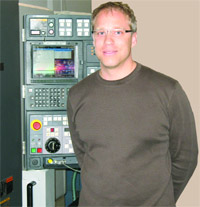
Sections Supplements
Seeking to Break Out of Ongoing Stagnation

The Pioneer Valley in Western Mass. has gone through the kinds of cycles that are typical of evolving economies in both the state and nation. But what has been occurring over the past 20 years presents a curious mismatch between appearance and hard data.

By appearance, the region would seem to be in a difficult position; companies, especially ones that once offered high-wage manufacturing jobs, have been closing their doors, victims of the forces of globalization and creative destruction. Poverty rates are high and increasing. And the region continues to see a net out-migration of residents. But at the same time, data nonetheless shows that jobs and income are still growing, albeit slowly. The region has not experienced the rapid economic growth seen elsewhere during the mid- to late-1990s, but neither has it suffered the sharp drop-off seen in other regions in recent years.

In short, the region continues to economically hold its own, especially in the past few years and especially in its level of employment. But progress is slow — indeed, some have described the Pioneer Valley’s economic condition as one of ongoing stagnation. More than anything else, this study of the last 20 years of economic and demographic development in the Pioneer Valley reveals an economic landscape that is missing a dynamic growth sector that can provide a growing number of high-paying jobs — and a sense of economic identity for the region.

During the 19th century, the Pioneer Valley was America’s first Silicon Valley, where innovation led to a thriving manufacturing sector. The use of interchangeable parts in manufacturing, which saw its origins in the production of armaments for the military at the Springfield Armory, revolutionized production processes. As a consequence of this advance, a thriving machine tooling and precision metal working sector developed in the region.

But throughout the 20th century, both major and small employers have gone out of business, a process that continues as manufacturing plants close. The manufacturing economy void has been partly filled by the ‘Ed-Med’ sector — ‘Ed’ stands for education or more generally ‘knowledge creation’ and ‘Med’ stands for the medical, or, more broadly health care. Ed-Med is by far the most important current employer in the Pioneer Valley. But this positive development cannot mask a significant area of alarm: the incidence of poverty in the region, which exceeds that of the state (and, in the case of Hampden County, that of the nation).

While the region has not experienced the same dire fate as other American cities that have lost their economic base, the Pioneer Valley has suffered from comparison with the eastern part of Massachusetts, especially the metropolitan Boston area. This has been especially true when looking at the secular pattern of real (price adjusted) per capita income. While per capita income has been growing in the region, its rate of growth has fallen significantly behind that of the state as a whole, and especially that of metropolitan Boston.

Employment – the “Ed-Med” Influence

From the business cycle peak in the late 1980s and early 1990s to the peak in the most recent business cycle, employment in the Pioneer Valley grew by 2.5%, from 319,739 in 1989 to 328,000 in 2004. National employment growth was a considerably more robust 14.8% during the same period, and statewide growth was 3.8%. The Boston metropolitan/northeastern part of the state experienced employment growth of 4.7% over the same period. The Pioneer Valley has, however, seen somewhat stronger employment growth recently. From the trough in employment in 1995 until 2004, employment grew by a bit more than 7%, from about 306,000 to about 328,000.

In the Boston/Northeastern part of the state, employment peaked in 2002 and then began to decline. The Pioneer Valley, however, did not see a drop in employment through 2004. Nor did it experience a drop in employment during the recent recession, unlike Eastern Massachusetts, where the sharp loss of jobs followed a period of relatively robust job growth. The knowledge creation segment of the economy is broad, and the Pioneer Valley encompasses many of its activities, including information (media production and distribution, telecommunications), professional and technical services provision, management services, and educational services. Combined, such knowledge creation sectors accounted for nearly 60,000 employees, or 21% of all Pioneer Valley employment in 2004.

One of the more prominent employers in this sector is the flagship Amherst campus of the University of Massachusetts system, which is the largest piece of a regional higher education cluster. Surrounding UMass are four well-known small liberal arts colleges: Amherst College, Hampshire College, Mount Holyoke College, and Smith College. These five institutions form the Five College System, which allows students in any of the colleges to enroll in classes in all of them. The five colleges employ a total of nearly 9,000 people, not counting a large number of student employees on all the campuses, especially that of the University of Massachusetts. But while this concentration of employment is important to the Pioneer Valley economy and identity, it has not been a growth area, or even a particularly dependable sector. In particular, UMass has suffered from severe budget cuts in recent years, and only now is beginning to replace some of the jobs that were lost.

After education, the next most important employment sector is health care, which accounts for 16% of regional employment, nearly 44,000 people. This sector consists not only of health care, as traditionally defined, but also “social and community services,” such as homeless shelters and community kitchens. Despite its steep decline, traditional manufacturing remains an important employer, accounting for 11% of the region’s total employment in 2004, or more than 32,000 people.

Considerable economic development efforts, as well as investment dollars from the state, have resulted in the Pioneer Valley Life Sciences Institute, a collaboration between Baystate Medical Center and UMass. While its primary stated goals are clinical, the collaboration is designed to create the environment from which to launch commercially successful development and manufacture of biomedical and other health-related products. This type of activity is broadly defined as ‘advanced technology manufacturing.’ While this activity now accounts for only 1% of Pioneer Valley employment, its potential is important.

Population Trends Reflect the Economy

Recent population patterns in the Pioneer Valley closely mirror the path of the economy. Population growth in the region over the past 20 years has been very slow, growing from 646,000 in 1980 to 680,000 in 2000, for an increase of just 5.2%. Over the same period, population grew in Massachusetts by more than twice as much (10.7%) and in the United States by nearly 23%.

Perhaps the most troubling pattern in population change in the region is its continuing net out-migration. Since 1990, the region has lost a net of nearly 35,000 people to out- migration. This number is the result of considerable ‘churning’ – in other words, it is the outcome of the interaction between flows of in-migration and out-migration. During this period, more than 130,000 people moved into the region while more than 165,000 people moved out. There was been a sharp increase in the volume of net out-migration in the last year for which data is available, 2004.

Much of the migration into and out of the Pioneer Valley involves short-distance moves. Many of these gross flows cancel out, leaving small net (though slightly negative) changes due to migration. By far the largest in- and out-flows have been to and from the border state of Connecticut.

There are also significant flows probably associated with retirement from the labor force. The largest net out-flow of migrants from the Pioneer Valley — nearly 13,000 net out-migrants over the period — was to Florida. This represents one-third of all net out-migrants from the Pioneer Valley since 1990.

Most other destinations/origins of Pioneer Valley migrants are close by, either in New England or New York state (with which the Pioneer Valley had a positive net migration flow). California and Arizona also received relatively large net flows of migrants.

Within the state, the Pioneer Valley has a net negative migration balance with most other regions. The Berkshire and Central regions are the only of the state’s regions with which the Pioneer Valley has a positive net migration. Two regions in the state, metropolitan Boston and the Cape and Islands, have the largest magnitude of negative net migration balance with the Pioneer Valley. Much of the migration to the Cape and Islands may, again, be associated with labor force retirement.

It is encouraging that for all this net out-migration, a good deal of in-migration to the region is also occurring. Typically, when a region is truly stagnating, migration is uniformly in the ‘out’ direction, with very little in-migration. The Pioneer Valley has certainly not experienced that pattern. And a significant portion of the negative net migration may well be due less to economic forces than to retirement.

Nonetheless, the reality remains that net migration has been consistently negative for over a decade. Migration tends to be highly selective of the very members of a population upon which the future is based: Younger, better-educated, and with better income/occupational prospects.

There has been considerable migration within the Pioneer Valley, the net result of which has been a drain on the population of Hampden County, where the cities of Springfield and Holyoke are located. Since 1990, Hampden County has gained more than 29,000 migrants from within the Pioneer Valley, nearly 30,000 of them from Hampshire County. Over the same period, Hampden County lost over 34,000 residents to Hampshire and Franklin Counties. The net effect of this in- and out-migration has been a drain on the population of Hampden County. Nearly 5,000 net migrants have left Hampden County for Hampshire and Franklin Counties, most of them to Hampshire County.

Income and Poverty

The pattern of per-capita income in the region, especially relative to the state, is instructive of the pattern of the regional economy over time. The region’s per capita income has been consistently lower than that of the state as a whole, though that fact is at least partly compensated by a lower cost of living, especially in housing. Still troubling, however, is the pattern of change over time. In 1970, per capita income in the Pioneer Valley was nearly 90% that of the state and more than 80% that of metropolitan Boston. Since then, the region’s per capita income has deteriorated. In 2003, Pioneer Valley per capita income was 75% of the state’s and 66% t of metropolitan Boston’s.

The relative deterioration of regional incomes is a secular, rather than a cyclical, phenomenon. Over the course of the business cycle, whether increasing or decreasing, the changes the region experiences in per-capita income are always more muted than the change experienced in the state. The Pioneer Valley does not rise as high or fall as far as the state. The economic dynamism of the eastern part of the state has never translated well to the Pioneer Valley.

This region did not fully share in either of the two most recent sustained state economic expansions of the 1980s and the 1990s. The other side of the picture is that the Pioneer Valley also did not suffer as badly as Eastern Mass. when recession replaced expansion. Because it is a hotbed of technology, Massachusetts experiences economic cycles that are at times excessive. The bad news is that the Pioneer Valley has long since lost its high technology sectors; the offsetting news is that its economic cycles have been less extreme.

The incidence of poverty provides another measure of the region’s income circumstances. In 2004, the U.S. Bureau of the Census defined the poverty threshold for a family of four as a total household income of $19,157. The poverty rate in the Pioneer Valley has consistently been higher than that for the state. This is especially so in Hampden County, where the poverty rate also exceeds that of the nation. Of the three counties in the region, only Hampshire County has a poverty rate that is less than that of the state.

Perhaps an even more telling measure of regional poverty is the share of students eligible for the free and reduced school lunch program. A study recently completed by the UMass contained the following analysis of this data:

“The federal poverty level is too low to properly assess the number or proportion of children from low-income families. Federal school lunch subsidies cover children from families with incomes up to 165% of the poverty level…

“The percentage of public school students eligible to receive reduced-price or free school lunches in the Pioneer Valley is alarming,” the report continues. “In the 2003-04 and 2004-05 school years, 40% of public school students in the region resided in households with incomes no higher than 165% of the poverty level. No region in the state has a higher percentage of low-income students. Public school systems in cities such as Boston or Worcester have comparable percentages of low-income students, but the regional concentration of low-income students in the Pioneer Valley is approximately one-third higher than any other region in the state. The Pioneer Valley’s low-income students are concentrated in the region’s cities, Springfield, Holyoke, and Chicopee; however, many of the region’s rural school districts are also home to high concentrations of low income students.”

The Cost of Housing

The Pioneer Valley has less expensive housing than the eastern part of the state, a cost advantage that many in the region hope will help promote increased economic growth. A Boston Globe report late last year explained:

“Housing prices in Western Mass. have risen much faster this year than in the Boston area, fueled by Bostonians moving farther from the city in search of lower prices, according to a report released yesterday…

“Between January and November, the median price of a single-family home rose 13.3% from a year earlier in Hampden County, where Springfield is located; 10.9% in Hampshire; and 10.3% in Franklin. Depending on traffic and the time of day, these counties are around a 90-minute commute each way from Boston, though they’re much closer to employers along Interstate 495 or in the Worcester and Framingham metropolitan areas.

“The condo market in Western Mass., while smaller than Boston’s, is sizzling. The number of condo sales surged nearly 28% this year in Hampden, Hampshire, and Franklin. The median condo price rose 28.9% in Franklin County in 2005; 18.9% in Hampden; and 18.2% in Hampshire, according to Warren Group. Condo prices were up 1.8% in Suffolk, and 8.5% statewide. Despite the price increases, the gaps between east and west remain huge. For example, the median price of a Hampden County condo was $124,900 this year, up from $105,000 last year. The median condo price in Suffolk County was $340,000, up from $333,850 last year.”

This may mark the beginning of a significant development for the region. Though it is too early to determine if this trend of housing price-driven movement to the region will continue and grow, especially with home prices flat or falling across the state. But this is at least an indication that the Pioneer Valley has some natural advantages — and these may again be grounds for hope.

Conclusion

In 1999 Benchmarks published a profile of the Pioneer Valley economy. In the conclusion of that study was the following assessment:

“There is a considerable effort under way to revive and remake the economy of the Pioneer Valley … at the moment, those forces have resulted in a flat or slightly growing regional economy. The difficult task of spawning genuine economic development lies ahead.”

< >Seven years later there seems little reason to modify this statement. The Pioneer Valley, despite its illustrious economic history and reputation for offering a high quality of life, remains stagnant and without direction.

Robert Nakosteen is on the faculty of the Isenberg School of Management at the UMass Amherst and is executive editor of Benchmarks, the university’s quarterly report on the state economy. This story originally appeared in Benchmarks.

Sections Supplements
Dinn Bros. Marks 50 Years of Awards — and Rewards
The brothers Dinn: Bill, Paul, and Michael.

The brothers Dinn: Bill, Paul, and Michael.

Dinn Bros. Trophies was founded in 1956, and 50 years later it continues to evolve and change with the times. Change is constant in a business that may seem simple, but features immense competition and never-ending deadlines, and requires investments in new technology and strong relationship-building capabilities. By meeting all these challenges, Dinn Bros. has etched its name in Pioneer Valley business lore.

Bill Dinn remembers how it all started.

It was the summer of 1956, and one of Springfield’s amateur baseball leagues was in trouble and looking for help. The company it had hired to create trophies for that season’s top finishers failed to deliver, and at the 11th hour the league turned to Dinn’s brother Paul, an engraver, to fill the order. Bill stepped in to help, and a company was born.

A half-century later, many things have changed. The technology used to create plaques, trophies, and recognition items has improved exponentially; where once the company created three pieces a day using a hand engraver, it now completes three a minute with state-of-the-art computer systems and laser engravers. Meanwhile, orders are now taken via the Internet and a Web site that is enabling the company to expand its reach across the country and into Canada.

But many things haven’t changed.

Most orders still come in at the 11th hour, if not later, and the company’s specific promise to its many types of clients remains the same: “We won’t embarrass you,” said Bill Dinn, who is now retired but remains a visible force at the company, after years of serving as its head salesman.

“We had a particularly good showing in a pickle,” Dinn said of the company’s first order, adding that while that idea of avoiding embarrassment may seem strange, it has always been the crux of good business at a firm that manufactures and sells awards of all types.

“Imagine you’re at a banquet, everyone is there, you’re giving a speech, and you have to give an award to an important person … and the plaque isn’t there,” he explained. “That’s a big deal.”

He went on to note that, in many cases, the award — the actual hardware used to recognize the accomplishments of another — is the last thing people think of when planning a ceremony of any size.

“We’re always working against time,” he said, adding that it’s not uncommon for a large order due for a weekend event to come in on Thursday evening.

But tapping his forefinger definitively on the table before him, Dinn said no job is too big or too small. “It doesn’t matter if it’s one trophy for $6.95 or an order for 900 plaques that will cost thousands … it will be there.”

The Gold Standard

That guarantee is echoed by Dinn Bros. current senior management, Dinn’s three sons — Bill Jr., Paul, and Michael — who say that as a niche business, the company meets with a number of unique challenges, as well as many that all companies, especially those with both retail and manufacturing components, face.

Dinn Bros. offers plaques, trophies, medals, ribbons, pins, and other awards for various sporting organizations and events, as well as a wide array of corporate awards and other tokens of appreciation, such as desk sets and engraveable bowls and trays. All products are assembled and engraved on site at the company’s West Springfield headquarters, and sold via the Internet and through three showrooms in West Springfield, New Haven, Conn., and Stoneham, Mass.

Sports awards have remained the largest single product line offered by Dinn Bros., representing about 70% of sales, though corporate business is growing, in part due to a concerted effort on the part of the company.

And with the sports market comes a number of challenges that few not in this business could appreciate, according to Paul Dinn, president.

“Retention of contracts is a big challenge,” he said. “It’s not like we’re a paper company dealing with a business. In that case, if we were doing a good job and our prices were competitive, the company we were serving would probably stick with us.”

But sports programs and teams, especially those for children, often have a new person handling awards ceremonies each year, said Dinn, and tournaments, road races, and other charity events are hard to track; many are not established enough to have a Web site, or even a formal mailing address, let alone a contact person.

“There are a lot of volunteers and a lot of turnover,” he explained. “The Internet helps us with research, and every business has to build relationships. But we have to build them over and over again.”

In addition to the matter of maintaining repeat business under those conditions, educating the public about its products is another challenge, said Bill Dinn Jr., who oversees production at the company.

“Showing people just how to use the products is a bigger concern than many might think,” he said. “That’s because it’s not an everyday type of thing, ordering and giving an award. You don’t think about it until you have to do it. It’s up to us to educate the consumer on everything from appropriate wording to how to work awards into tight budgets.”

Its also a business with both peaks and valleys in terms of volume, and those busy periods don’t fall during what might be considered traditional peak periods. The holidays, for instance, are deadly quiet, while the spring months usually necessitate adding seasonal employees to the firm’s core of 100 employees.

Certificate of Participation

But to address those challenges, Dinn Bros. has moved ahead aggressively with a wide set of recent initiatives, all aimed at streamlining the manufacturing process, expanding the company’s reach both nationally and internationally, and upgrading technology in order to stay competitive against similar outfits, Internet-based companies, and sporting goods stores that create trophy subsidiaries.

Many of those changes have been instituted or highlighted this year, as the company celebrates its 50th year in business. Its Web site was redesigned, new catalogs were created to boost corporate business, and several new laser engravers were purchased and installed to expedite and streamline the assembly and personalization processes.

“We’re adapting to the modern age in order to drive business,” said Michael Dinn, vice president of sales and marketing. “Electronically, we’re better than ever, and that helps streamline the process and allows us to prep as much as we can for orders that have yet to come in.”

He noted that the company’s Web site, which pulls in roughly a third of all business and is still growing, once lagged behind the firm’s phone center, which employs customer service representatives to take orders from across the country. But over the past year in particular, Web-based sales have eclipsed phone transactions and have pulled in business from new areas, including the mid-Atlantic states, Alaska, and, most recently, Canada, where the company is making its first earnest foray into the international market.

“Our site allows for convenience in ordering, but it also assures people that we’re not a fly by night operation, or a little rinky-dink trophy shop,” said Dinn, who added that Internet sales have also been augmented by offering live assistance online for customers, a service that was put in place two years ago. Customers can send instant messages to a Dinn Bros. representative during specified times to ask questions, and are also notified when a product order is received and shipped, along with a tracking number. “That way, we’re never out of reach.”

Web sales have also helped in promoting corporate-recognition products, as has a new catalog devoted solely to those lines, in response to a growing business-to-business market.

“Many people think this is a business that stays the same year after year, but the industry does change,” said Paul Dinn, “and one change of late has been our role in the increase of corporate recognition programs. People are holding more organized events and seeing recognition as an important tool for morale and retention.”

Many of the services offered through some new technological upgrades are geared toward that burgeoning market, allowing for the etching or four-color printing of company logos and for products that best serve the corporate sector, such as desk sets and retirement gifts.

An Amazing Race

But Dinn added that while Internet sales allow for quicker processing and a smaller margin of error on all orders — all copy to be engraved can now be downloaded directly to a central computer system — awards of all types still intrinsically have ‘last-minute’ components at the assembly level.

Engraving recipients’ names is the most obvious, but figureheads for trophies — everything from the traditional runner, golfer, or bowler to a gold-plated foot, used as a gag during staged productions of the Monty Python-inspired Broadway play Spamalot — are attached to the base as orders are received, and customers sometimes have special requests for logo engraving or printing that differ from order to order.

“No matter how efficiently we take the order, we must still identify the deadline and work backwards,” he said. “To that end, we’ve invested in the equipment we need to keep us on the cutting edge, and the technology makes our work much easier than it ever has been before. Every year, we keep investing in better technology — our equipment parallels the personal computer market, in that it becomes obsolete easily.”

Those investments include state-of-the-art computer systems and laser engravers, such as the six Xenetech machines that now do the work that a large, bulky hand engraver did years ago.

Still, even with all of the changes at Dinn Bros., some things remain the same as they did 50 years ago. That heavy hand engraver sits in the main production area, right next to one of the new laser stations, serving as a reminder of how much the times have changed.

That amateur baseball league that reached out to Paul Dinn 50 years ago is no more, but it’s likely that some of the Dinn trophies awarded to players still exist, somewhere.

Like the company that produced them, they’ve managed to stand the test of time.

Jaclyn Stevenson can be reached at[email protected]
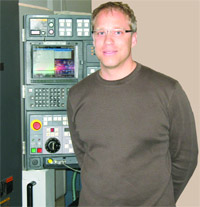
Departments

Former MassMutual Chief Wins Appeal over Firing

SPRINGFIELD — Robert O’Connell, former MassMutual Financial Group chief executive, was unjustly fired last year, according to the ruling of an arbitration panel hearing his claim, and now O’Connell stands to win about $50 million in termination benefits. MassMutual ousted O’Connell last year, accusing him of abusing his authority by improperly manipulating stock accounts and interfering with internal investigations, among other wrongdoing. However, the Sept. 22 ruling by the American Arbitration Assoc., which was kept sealed until Oct. 20, finds that O’Connell has essentially prevailed on most of his claim. “The company did a total character assassination of Mr. O’Connell in order to deprive him of his contractual rights, terminate him, and advance and promote his detractors,” O’Connell’s attorney, Dean Richlin, told The Boston Globe. “This decision is a total vindication of Mr. O’Connell and a total rebuke of the board of directors at MassMutual and its advisers.” The company has filed suit against O’Connell in Suffolk Superior Court, seeking to have the award set aside. In a statement to employees, MassMutual Chairman James Birle and Chief Executive Stuart Reese asserted that “we believed then, as we believe now, that the totality of [O’Connell’s] behavior was, at a minimum, improper, unprofessional, and lacking in the ethical leadership that is required” at MassMutual.

Harvey Industries to Expand in Chicopee River Business Park

CHICOPEE — Harvey Industries Inc. recently announced plans to expand its manufacturing operations by constructing a new facility in the Chicopee River Business Park, according to the Westmass Area Development Corp. (Westmass). The vinyl window and door manufacturer currently leases space on Cottage Street in Springfield, but has grown considerably, creating the need for a new larger facility, according to Tom Russell, senior vice president of manufacturing for the company. The new facility will be on a site of approximately 30 acres, which is in both Chicopee and Springfield. The new building will be approximately 255,000 square feet, an increase of more than 100,000 square feet. More than 230 people are employed at Harvey’s current manufacturing site, and the expansion is expected to add a significant number of quality jobs. A groundbreaking is expected in 2007.

Regional Bureaus Receive Tourism Grants

BOSTON — Several Western Mass. visitor bureaus recently received grants from the Department of Business & Technology (DBT)/Massachusetts Office of Travel and Tourism (MOTT) to help generate tourism spending in Massachusetts. Tourism is recognized as the state’s third largest industry, generating more than $808 million in state and local taxes and nearly $12.5 billion in travel-related expenditures. The Greater Springfield Convention and Visitors Bureau received $460,995 in state funds to market the region as a premier destination, while the Mohawk Trail Association received $181,811 in grant funds. Additionally, the Berkshire Visitors Bureau received $507,567 in state funds for marketing purposes.

Most Workers Consider Age Irrelevant at the Office

MENLO PARK, Calif. — They say age is a state of mind, and a new survey suggests this may be particularly true in the office; 84% percent of workers polled said they would be comfortable reporting to a manager who is younger than they are, and 89% said they wouldn’t mind supervising employees older than themselves. For the first time in history, four generations of employees are in the workforce, from the Silent Generation and baby boomers to Generations X and Y, according to Diane Domeyer, executive director of OfficeTeam. She added that companies recognize the benefits of having diverse, well-rounded teams, and employees may be just as likely to report to a younger supervisor as an older one. In either case, the boss’s management abilities are more of a factor in employee job satisfaction than his or her age. Domeyer said that employees today are recognized more for performance than tenure with a company. The survey was developed by OfficeTeam and includes responses from 567 individuals 18 years of age or older and employed in office environments.

Report Shows Cities Guardedly Optimistic about Fiscal Health

WASHINGTON, D.C. — Like the millions of Americans they represent, U.S. cities were able to pay their bills this year but are concerned about how rising costs will affect their long-term financial stability. In fact, despite a more optimistic view of fiscal conditions, cities have yet to recover fully from the effects of the 2001 recession once changes in city revenues are adjusted for inflationary factors, according to a report recently released by the National League of Cities (NLC). More than two in three city finance directors who responded to the City Fiscal Conditions Survey in 2006 said their cities were better able to meet financial needs during 2006 than in the previous year, yet many city officials cite numerous negative factors that are affecting the solvency of their budgets. An overwhelming majority (92%) of city finance directors cited prices, inflation, and cost of living as factors affecting their city budgets. The survey is a national mail survey of finance officers in U.S. cities. Surveys were mailed to a sample of 1,059 cities, including all cities with populations greater than 50,000 and a randomly generated sample of cities with populations between 10,000 and 50,000. The 2006 survey data is drawn from 385 responding city finance officers and allows NLC to generalize about all cities with populations of 10,000 or more. Copies of the report are available at www.nlc.org. The NLC is the nation’s oldest and largest organization devoted to strengthening and promoting cities as centers of opportunity, leadership, and governance.

Performance Food Group Purchases Site

SPRINGFIELD — Performance Food Group Co. has purchased 32 acres in the Memorial Industrial Park II on Roosevelt Avenue to expand its Taylor Street operation. The international food and kitchen supplies distributor paid $1.62 million for the property, which will include a 211,000-square-foot facility. The property is adjacent to Smith & Wesson. Company officials expect to go from 300 full-time employees in 2007 to 532 by 2013.

Bradley Adds Amsterdam Flights

WINDSOR LOCKS, Conn. — Bradley International Airport (BDL), in conjunction with Northwest Airlines, recently announced it will begin offering scheduled daily nonstop international service for the first time in July. While Northwest Airlines has increased frequency of flights at other airports, BDL is the only new service to be announced by Northwest. Nonstop service to and from Schiphol Airport in the Netherlands is scheduled to begin July 1. The new daily flight is scheduled to depart BDL at 5:45 p.m. and arrive at Schiphol at 6:45 a.m. The return flight leaves Schiphol at 1:30 p.m. and arrives at BDL at 3:30 p.m. With this new service, travelers will have the ability to connect to 81 cities in Europe, the Middle East, Africa, and India.

Deerfield Properties Sold To N.Y. Firm

DEERFIELD — O’Connell Development Group of Holyoke recently announced the sale of two properties at Yankee Candle for $33.6 million. Both properties on Yankee Candle Way had been leased to the Yankee Candle Co. Deerfield Yankee Candle Acquisition LLC, a company formed by Gumowitz Real Estate in New York City, was the purchaser of the warehouse and three-story office building. O’Connell and its real estate company, Candist LLC, sold the warehouse for $19.6 million, while O’Connell and Candoff LLC sold the office building for $14 million. Both transactions closed on Sept. 27.

Pike Board Considers Ending Tolls West of Route 128

BOSTON — The Mass. Turnpike Authority board recently announced plans to end tolls west of Route 128 effective June 30, a sweeping policy shift that would provide considerable financial relief to thousands of commuters. Under the proposed plan, taxpayers would assume the burden of running and maintaining the Massachusetts Turnpike from Weston to Springfield, and approximately 200 toll collectors would be laid off. At press time, political opponents of Lt. Gov. Kerry Healey decried the timing of the board’s vote, saying it was designed to give Healey a boost among a key bloc of voters. To abolish the western tolls and transfer that portion of the turnpike to MassHighway, the state will have to repay the authority’s remaining $199 million debt on the highway.

Economy Keeps Growing Despite Cooling Trend in Housing

WASHINGTON — The Federal Reserve’s latest survey of business conditions around the country found the economy expanding, with growth described as “moderate or mixed.” However, the report also found there was a distinct slowdown in housing, with the majority of the Fed’s 12 regions reporting lower asking prices for homes, a softening in sales, and rising inventories of unsold homes. In addition, the Fed noted that financial institutions were finding that mortgage lending activity had tapered off. That decline in lending was being offset slightly by an increase in lending for commercial projects in several districts, according to the Fed. The economy grew by 2.6% in the second quarter, less than half the pace of the first three months of the year, as it was battered by soaring gasoline prices, rising interest rates and the cooling housing market. The Fed also noted that manufacturing activity was holding up well, with eight of the 12 districts reporting an increase in factory output.

Sections Supplements
Creative Action in the Face of Change

Unless you’ve had the uncommon experience of selecting a career in a field that remains stable and unchallenged for decades (and, if so, I hope you’ll be sure to E-mail me to identify this splendid choice), your company or organization will likely be faced with one or more daunting market forces that require you to effect change or atrophy.

And of course, the challenge is made all the greater because all too often you are left asking with some concern, ‘But how do I make this change? What’s the path? How do we get through this?’

Let’s look at some examples:

  • You are president of a company that provides a specific contract manufacturing service. However, the biggest customers you’ve enjoyed for decades are in trouble — because the products they sell are becoming obsolete.
  • You are a marketing manager with a community bank, watching with trepidation as larger players dominate the market with rates so aggressive you are loath to match them. You see that your bank is losing key customers, and you are pretty sure that these important customers are responding to the great deals offered down the street.
  • Your small software engineering company has developed a great new Web technology, and you’ve done your best to protect the intellectual property involved. You are on the brink of making your first significant sales when your biggest prospect confides that they’ve just been shown a somewhat similar product – perhaps not as good as yours but a heck of a lot cheaper – developed by one of the world’s best-known software companies.
  • You head up a non-profit organization, with several other local organizations vying to offer the same services that you do. You want what’s best for the community – and you also feel strongly that your agency is best equipped to provide the services in question. Your funding is always dependent on the good will and whims of others, so over time you need to establish your superiority in an appropriate manner … or shrink your agency.

None of these professionals is alone in facing rough and ongoing challenges and threats. Major record labels have LimeWare and Apple crowding in on them. Century-old American manufacturers know that greatly increased outsourcing will save them a lot of money but will also bring social and public relations costs. U.S. car companies have to decide whether to continue to bet on big gas guzzlers or try to convince Americans that small and hybrid are beautiful.

Clearly, there’s no resting on your laurels in business today. Nor are there easy and apparent answers for the roadblocks you’ll face. That said, the ability to gather, analyze, and use business intelligence even before crisis hits can make the difference between thriving, just hanging on, or fading into history. Here are a few specific tips:

  • Don’t let trends and innovation sneak up on you. This means that you must intensify your commitment to following the news within and outside your trade, keep a very close eye on your competitors, and use your imagination as well. If you can envision an innovation happening, chances are, someone will eventually bring it to life. Should that person be you?
  • Know your business strategy, but don’t carve it in stone. Include alternate scenarios in which you face such potential threats as a reduced demand for your product, shrinkage in the market to which you most often sell, or ferocious price competition. Devise realistic potential solutions for these not-yet-realized threats.
  • Use the power of communication to your advantage. Is your product more expensive or harder to find than competitive offerings? Perhaps potential customers need to know why it’s worth the money or the wait. Are competitors hawking a way of doing business that doesn’t benefit your customer? Make it clear that you have considered all the angles, and are providing the smartest solution on the market. Public relations, buzz marketing, focused guerilla marketing, and other innovative outreach can be uncommonly effective in keeping you ahead of the pack in tough situations.
  • Make big changes when you need to. Whether by acquiring or merging with another company that is headed in the right direction or repurposing your firm’s technologies and skill set to be more in tune with new and different market demands, you can stay afloat as your competitors struggle in rapidly changing market scenarios.
  • Get the help you need. Major moves and company-changing decisions are best made with the assistance of experts with an outside perspective. Whether you need to conduct your own market research, develop a new perspective with a strategic business and marketing analysis, decide between two or more alternate plans for action; or find effective ways to communicate to your sales and distribution channels; customers, investors or others — don’t go it alone. Independent strategic marketing firms’ top people spend enough time in clients’ executive suites and boardrooms to have the skills, tools, and learned ability to help you move forward with confidence.

Michelle van Schouwen is president of van Schouwen Associates, LLC, which provides strategic marketing, advertising, public relations, interactive development, and consulting services to a range of clients nationally;(413) 567-8700;www.vsamarketing.com.

Uncategorized

John Maybury is used to getting passed over at Thanksgiving dinner when the topic of discussion turns to work.

“There’s someone who’s a nurse, someone who’s a teacher … and then there’s me,” said the owner and founder of Maybury Material Handling in East Longmeadow. “When they get to me, the question usually becomes, ‘so how are the kids?’”

It’s not that Maybury’s business, now celebrating its 30th year, is that difficult to explain; it’s just hard to describe in 30 words or less. The company specializes in the sale and installation of power equipment such as forklifts, and heavy-duty storage systems including shelving, vertical carousel systems, platforms, steel stairways, and mezzanines, and manufactures several of those product lines.

Maybury also works with several large firms in Massachusetts and Connecticut, including Friendly’s Ice Cream, Big Y, Hasbro, OMG (formerly Olympic Manufacturing Group), and Suddekor, not only selling storage and heavy equipment for manufacturing and distribution facilities, but also servicing them, renting additional units when needed, and providing training for those clients’ employees.

“The way I usually put it is, there’s a tomato, and then there’s ketchup. People don’t often think of how the tomato made it all the way to ketchup, and why there’s always ketchup on the grocery store shelves when you need it,” Maybury explained. “But from a tomato on the vine to the store shelves, there’s a lot going on, and part of that is what we do.”

A Steely Resolve

Indeed, few give much thought to the towering steel shelves in a warehouse or the forklift that moves products from point A to point B. But that’s the business Maybury has been immersed in since 1976, and when he tells the story, the industry suddenly seems much more intriguing.

Business is brisk at Maybury Material Handling, where Maybury, who started the business out of his home while still a student at Western New England College, said the company is expecting to see about a 25% increase in revenue this fiscal year. The company was also recently included on the Affiliated Chambers’ Super 60 list, for revenue reported in 2005.

Also in 2005, Maybury said a sister company, Atlantic Handling Systems, was launched in New Jersey to help capitalize on the manufacturing pace in that market while, at the same time, offering new product lines without stepping on the toes of Maybury’s current wholesalers.

“It’s referred to a lot as Baby Maybury,” he said, “though that’s not really what it is. Starting Atlantic was a move forward in covering that market, and starting up something new instead of expanding made sense so we could offer different lines and work with new, different suppliers.”

On a guided tour of his company’s headquarters on Denslow Road in East Longmeadow, Maybury pointed out several examples of his wide product line — from different-sized fork trucks to massive platforms — as well as business operating systems; the company is considered progressive and a leader in the implementation of quality programs to reduce errors and improve customer service.

In the building’s suite of offices, Maybury explained further that his company not only sells, installs, and services those storage and material-handling products, but also assists clients with the design and configuration of their manufacturing and storage facilities, adding an extra wrinkle to the Maybury business model.

“A portion of our business is aimed at taking the waste out of the manufacturing process, making space more efficient, and storing things more dynamically,” he said, standing over the shoulder of an employee who was working on a plant design scheme for Table Top pies. “It’s not a matter of us finding a piece of equipment we sell and trying to find a need for it within a customer’s operations. It’s looking at all of the equipment we have — and having a lot to choose from helps — and finding the best solution for that customer. Being able to assist from soup to nuts makes us that much more competitive.

“There’s really no one else like us,” he continued. “There is some isolated competition, but we can go into a client’s space with five, six, or seven totally different solutions to a problem. And among our 74 employees, we are approaching 1,000 years of combined experience. We’re a complete resource.”

To Protect and Store

This quality has enabled Maybury Material Handling to effectively corner the regional market in its specialized industry; while there are some companies that sell or service similar equipment, Maybury said, none include the breadth of products or accompanying services.

He’s gone so far as alphabetizing the list of major offerings in his company literature, and that list starts with aerial platforms and continues to catalog baskets, batteries, benches, and bins; hand trucks and hoists; modular offices and monorails (yes, monorails), sweepers, scrubbers, traffic doors, wheels, and workstations.

“Our business is about 50% power equipment and 50% storage racks, mezzanines, conveyors, and platforms,” he explained, pausing at just such a platform. “We manufacture and sell these, and they’re a great product. They add space to an existing warehouse, but can also be relocated and reconfigured.”

To the right of the platform is a steel cage, at first glance unremarkable; but Maybury is quick to point out that these products are becoming increasingly valuable in the biomedical and pharmaceutical industries, which require the strict segregation of chemicals or organically based materials.

Translating the importance of steel enclosures, stairways, and other structures can be daunting, but Maybury has created more than a production facility at the 42,000-square-foot Denslow Road location, which the company has occupied for just a year and a half. The building also includes a showroom and an adjacent conference room that allows Maybury employees to explain the various pieces of equipment and how each might serve the needs of a given client. And beyond that, the facility is equipped with many of the systems Maybury sells, including high-speed doors and vertical carousel filing systems (just the push of a button can locate a file from any year and any month in just a matter of seconds).

Many Moving Parts

That conference room, for instance, is equipped with a retractable wall, which allows for one of Maybury’s favorite tricks: after explaining a few specific pieces of equipment at a computerized white board, he can push a remote control and ask clients to pivot in their seats and look behind them, where an employee has positioned the same equipment behind the wall for viewing.

These high-tech, customer-oriented bells and whistles help in illustrating what the company does and how its services can benefit businesses of varying size, and Maybury said he suspects the healthy leap in business is due in part to the fast pace at which current customers are purchasing new equipment and new clients are discovering the firm.

But as the manufacturing and distribution landscape has shifted in the region and across the country, Maybury said his company has as well, and that is a major contributor to the company’s strong performance of late.

“We understand the Western Mass./Connecticut dynamic, and the manufacturing-to-distribution ratio and how that has changed,” he noted. “Distribution in the area has increased, as well as storage.

“There’s also a greater emphasis within many companies on manufacturing and distribution processes, such as ISO 9000, lean manufacturing, and a greater focus on OSHA requirements,” Maybury added. “That has brought with it different set-up procedures and more emphasis on creating clean working environments, so we’ve adapted to those needs.”

All the Fixin’s

In the coming years, said Maybury, that attention to detail both within his own facility and the industry at large will be a primary driver as he steers the company toward consistent, controlled growth. By adhering to a specific set of procedures and philosophies, he expects the business will continue to flourish.

As for explaining those philosophies over turkey and stuffing … that’s a separate challenge that Maybury will tackle again soon, this time perhaps with the help of some high-tech visual aids.

Jaclyn Stevenson can be reached at[email protected]

Departments

The following listings were omitted in error from the 2006-2007 BusinessWest Resource Guide:

Banquet Facilities
Melha Shriners
133 Longhill St., Springfield, MA 01108
(413) 736-3647
A fraternal organization supporting the Shriners Hospital for Children, which provides free care to children. The facility is available for social and business gatherings.

Early Education & Child Care Centers (Day Care):
YMCA of Greater Springfield
275 Chestnut Street
Springfield MA 01104
739-6951 ext 180
www.springfieldy.org
Capacity: 1,145
Infant (4 weeks) to age 13
Hours: 6:00 am-6:00 pm
Administrator: Kathleen Treglia
Services: Year- round educational programs at 19 convenient locations In Springfield, Chicopee, Wilbraham, Monson & Palmer. Scholarships available

Employment Agencies
Point Staffing
425 Union St., West Springfield, MA 01089
(413) 747-2516; Fax: (413) 747-2914
Web site: www.pointstaffing.com
Locations: 1
Owner: Mike Dumanie
Primary Specialties: Clerical and light industrial fields.

Multi-media and Video Production Firms
ATC Audio
89 Myron St., West Springfield, MA 01089
(413) 781-2327
Web site: www.atcaudio.com
Services: Audio, video, and lighting sales, rentals, and installation; system design, speaker repair, production assistance, and environmental noise analysis. Authorized reseller for audio, video, and lighting. Specializing in foreground and background music systems, small and large format sound reinforcement systems, whole house and home theatre audio-video systems, paging systems, and recording and production studios.
Employees: 7
President/CEO: Tony Caliento

Wassmann Audio Video
92 State Road, Whatley, MA 01093
(800) 286-9744; Fax: (413) 665-3732
Employees: 18
Web site: www.wassmannav.com
Services: Design and install audio, video, and multi-media computer projection systems and equipment for higher education facilities and businesses of all sizes.
President/CEO: Kirk Wassmann

Voice/Data Providers
Normandeau Communications Inc.
30 North Maple St., Florence, MA 01062
(413) 584-3131; Fax: (413) 586-1992
Web site: www.normandeaucommunications.com
Contact: Kim Durand
Service area: Massachusetts, Southern Vermont, and New Hampshire
Services: Sales, service, and installation of business telephone and voice mail systems. Installation of voice, data, and fiber-optic cabling for telephone service and connected voice and data equipment.

Restaurants
The Sierra Grille
41 A Strong Ave. Northampton, MA 01060
(413) 584-1150
Type of fare: Multi-ethnic foods; vegetarian and vegan choices, pick-and-choose sauces

The following listings contained incorrect information:

Advertising Agencies
Advertus Media was incorrectly listed as Advertus and Associates.

Banquet Facilities
The correct Web site address for The Delaney House in Holyoke is www.delaneyhouse.com.
The correct Web site address for Days Inn, Chicopee is www.trumpetsnightclub.com

Business and Manufacturing Resources
The correct information for the Biomedical Research Institute is: The Pioneer Vally Life Sciences Institute, 3601 Main St., Springfield, MA 01199
(413) 794-0653; Fax: (413) 794-0857
Contact: Dr. Paul Friedman
Web site: www.pvlsi.org

Credit Unions
STCU was incorrectly listed as the Springfield Teachers Credit Union.

Employment Agencies
The correct Web site address for Paratemps, Inc. is www.paratemps.net

Engineering Firms
The correct address for Vanasse Hangen Brustlin Inc. is One Federal St., Building 103-3N, Springfield, MA, 01105

Hotels and Meeting Facilities
The correct Web site address for Days Inn, Chicopee is www.daysinn.com/chicopeema
Park Inn in Chicopee should be omitted from this list.

Insurance Agencies
There was a misspelling in the listing for Crimmins Graveline Insurance; The information for top local officer should read: Tom Gravelin.

Internet Service Providers:
Crocker Communications, Inc.
Contact: Customer Care Division [email protected], 1-800-413-LINE, website: www.crocker.com
Services: Internet Access in Western MA (Dial up, DSL,T-1’s), Colocation, Web Hosting, Networking, Backup Server Protection
Prices vary by service/speed.

Voice/Data Providers:
Crocker Communications Inc.
Contact: Customer Care Division [email protected]
1-800-413-LINE, website: www.crocker.com
Services: VoIP (Voice over Internet Protocol), Telephone Answering Services
Prices vary

Sections Supplements
Shelburne Falls Trolley Museum is on a Roll with Business, Tourism Efforts
Sam Bartlett and David Goff

Sam Bartlett and David Goff of the Shelburne Falls Trolley Museum in car number 10, the town’s newest– and oldest – mode of motorized transportation.

From the center of town, the faint ‘ding-ding’ of the Shelburne Falls trolley can be heard in the distance.

It’s a sound that was once commonplace in town, but it’s new to most who live there today, and it signals more than movement on the centuries-old tracks; it announces the return of a burgeoning hub of activity.

The small yellow trolley car is just one sign of activity at the old rail yard on Depot Street, however. Once the start- and end-point of the Shelburne Falls and Colrain Street Railway, the plot of land that overlooks Shelburne Falls has been home to the Shelburne Falls Trolley Museum Inc. (SFTM) since 1991. Since then, a committee of volunteer directors has created the Shelburne Falls Trolley Museum, procured the town’s original trolley car, number 10, and restored it to operation for a short stretch of the line, an attraction that began welcoming visitors in 1999.

The group also facilitated the purchase of the property at a cost of $162,000 in 2004, after uears of renting from the Blassberg Corp. Subsequently, SFTM started rehabbing the three-building complex, converting it into office space for an eclectic mix of tenants, a more expansive tourist attraction, and perhaps even the source of a new means of transportation in Shelburne Falls — at least for a few blocks.

Clang, Clang, Clang Went the Trolley

Sam Bartlett, president and general manager of SFTM, said work is currently underway to convert much of the railyard’s existing buildings into retail and community-use space in this, its seventh season as a tourist destination. Some local businesses already use portions of the buildings for overflow storage, such as a rare and used book dealer, a model airplane store, and a carpenter, but tenants are also already beginning to line up to rent areas of the building for more active use.

“We’d like to use the space to generate new interest in art-related businesses and to generate revenue,” said Bartlett. “It’s what we need to do to survive; trolley ticket sales won’t be enough.”

Space within all three buildings is currently available. Artists are of particular interest, he said, due to the close proximity of the Salmon Falls Artisans Showroom, just a few feet from the rail yard, and the booming arts sector in Shelburne Falls and surrounding towns. The first tenant slated to move in upon completion of the renovations, is a children’s art museum, which will hold exhibits as well as classes for local youths.

Bartlett added that the SFTM is actively seeking potential tenants that will be compatible with the organization’s mission — to preserve a piece of Shelburne Falls’ history and attract new business to the town.

“There has been a resurgence of rail lines across the country,” he said, “and therefore a renewed interest in vintage and heritage trains and trolleys. Tenants who are also interested in that history, or who will be an added draw for people interested in riding or learning more about the rail history of this area, would be the best fit for this space.”

Part of that plan is also to increase the visibility of the museum itself, currently located in the building that once served as the front office and warehouse. As tenants begin to move in, Bartlett said the museum will move into the former freight house, which will allow more space for exhibits and free up about 1,100 square feet for rent. The space is heated and ADA accessible, Bartlett said.

Ding, Ding, Ding Went the Bell

Outside, some expansion plans are brewing as well. David Goff, one of SFTM’s directors, said the group is currently petitioning local and state governments and conducting an engineering feasibility study to extend the abbreviated length of track toward Shelburne Falls’ downtown, coming to a stop near what is now the town’s biggest attraction, the Bridge of Flowers, which once carried the trolley across the Deerfield River to connect passengers and freight with the booming mills of the West County area.

The trolley car itself was built in 1896, and traversed the rail line between Shelburne Falls and Colrain, carrying passengers as well as freight, until 1927.
At that time, the trolley would travel from the rail yard that is now home to the trolley museum to the center of town, where they would then cross the Bridge of Flowers and travel down what is now Route 112.

“This was a pretty isolated route,” Goff said, “but it still illustrates how important rail and trolley travel were at one time in the U.S. This line connected the mills, transported mail and freight such as cotton, coal, and apple cider vinegar, and served as a primary mode of transportation for several years.

“This rail yard was a beehive of activity at one time,” he added. “It was part of the trolley boom that continued for years and was huge in this area and in Springfield, where Wason Manufacturing was one of the country’s most prominent trolley car manufacturers.”

But as railroads declined, Goff continued, the trolley line gradually lost business until its final large contract expired, stopping car number 10 in its tracks until the SFTM reintroduced it to the town in 1999, after six years of painstaking restoration. In the interim, the car had been privately owned and, at one point, used as a chicken coop.

Now, said Goff, the broad goal for the SFTM is to return the trolley to a vestige of its former glory. While the route still won’t be a long one, if approved, he suspects that an extension could have a significant impact on the town’s economic viability, particularly in terms of tourism dollars.

“Our current railroad has already been a positive attraction and a draw to the region,” he said. “In our seven short years of reactivation, the trolley museum railway has already carried thousands of paying passengers. The economic impact of an attraction like that is immense when you consider the multiplier effect of one person coming to Shelburne Falls to ride the trolley.”

It won’t be a huge extension, Goff noted, but it would double the length of the trolley route and bring a new means of transportation to downtown Shelburne Falls. This, in turn, will connect a number of popular shops, attractions, and eateries to the equally popular Salmon Falls Artisans space and the now growing rail yard, though it still represents a distance that is walkable by most.

“It may not be much,” he said, “but the project will extend the ride for passengers and bring us important visibility in the downtown area of Shelburne Falls.”

Even without that visibility afforded by a downtown route, Goff said several visitors come to see and ride the trolley already. Many are rail enthusiasts from around the globe, but many others are tourists and day-trippers, made aware of the museum and the trolley through literature at the Shelburne Falls Visitors Center.

For $2.50, those visitors can ride the trolley and learn about its history, as well as visit the museum and gift shop (that’s free for those who pass on the trolley ride). For an extra $15, visitors can become ‘instant motormen,’ operating the trolley with assistance from an SFTM volunteer. That experience includes powering up the car, guiding it down a length of track, putting on the brakes, and ringing the car’s signature bell – several times – and guiding it back to the rail yard.

The End of the Line

While members of the SFTM board of directors aren’t kidding themselves into thinking they’re creating the next San Francisco, they do see the value in a small stretch of rail in Shelburne Falls.

“There is a great trend of reuse in Western Mass. now, creating new, creative ventures out of buildings and structures that have passed their heyday,” Goff said. “This area rode the trolley boom for years, and there’s a little life left in these tracks.”

As if to agree, Bartlett, at the helm of trolley car number 10, stamped his foot vigorously on the floor switch that rings the car’s bell as it rolled into the Depot Street station.

Jaclyn Stevenson can be reached at[email protected]</a

Departments

ACCGS Announces ‘Super 60’ Winners

SPRINGFIELD — Business is alive and well in the region as this year’s Affiliated Chambers of Commerce of Greater Springfield Inc. (ACCGS) Super 60 revenue winners combined for almost $1.2 billion in the past fiscal year with average revenue for the top 30 exceeding $31 million and 50% exceeding $20 million. Now in its 17th year, the ACCGS award honors the fastest growing, privately held companies in the region for their significant contributions to strength of the regional economy. Companies eligible for the award must be independent, privately owned businesses, be based in either Hampden or Hampshire counties or be a member of the ACCGS, be in business for at least three full years and produce revenues of at least $1 million in the last fiscal year. Seventeen companies are new to the revenue category this year. Four companies on the revenue list also qualify for the growth category, with two companies in the top 10 qualifying for both lists. In addition, four companies new to the category this year are also new to the top-10 revenue winners list. In the growth category, the average growth among the winners was more than 57% with companies needing to have had at least 23% growth in order to be included in the category. Twenty-six of the companies reported growth in excess of 30%, with 18 companies exceeding 40% growth. Winners will be honored at the Super 60 Luncheon and Recognition Program on Oct. 27 from 11:30 a.m. to 1:30 p.m. at Chez Josef in Agawam. Steven Rothschild, CEO and chairman of bulbs.com, an online specialized lighting distributor, will deliver the keynote address, sharing insights on how to achieve rapid rates of growth in business.

Survey: Single Resume Typo Can Ruin Job Prospects

MENLO PARK, Calif. — The adage “It’s not what you say, but how you say it” holds particular weight when it comes to resumes, a recent survey shows. More than eight in 10 executives polled (84%) said it takes just one or two typographical errors in a resume to remove a candidate from consideration for a job opening; 47% said a single typo can be the deciding factor. The survey was developed by OfficeTeam and includes responses from 150 senior executives at the nation’s 1,000 largest companies. Resumes often are a job seeker’s first contact with prospective employers, according to Diane Domeyer, executive director of OfficeTeam. Domeyer stressed that candidates who submit application materials with typographical or grammatical errors may be seen as lacking professionalism and attention to detail, and thus spoil their chances for an interview or further consideration.

Former State Hospital Project Receives Funding

NORTHAMPTON — Gov. W. Mitt Romney recently signed a bill to provide $7 million in state aid to finish the demolition of the former Northampton State Hospital. The funds were part of a larger bill to assist infrastructure improvements for large private development projects. The House and the Senate passed the bill Aug. 31. Billed as The Village at Hospital Hill, the redevelopment plans include a mix of residential and commercial uses at the site. When completed, the development project will feature 476,000 square feet of office, retail and light industrial space, as well as 207 units of housing, according to the Mass. Development Finance Agency.

Director Named for Embattled PVTA

SPRINGFIELD — Worcester Transit Authority Director Mary L. MacInnes was recently chosen as the new administrator for the Pioneer Valley Transit Authority (PVTA) by its advisory board members. Pittsfield Transit Authority Director Charles M. MacNeil was the other finalist who also received strong support from the advisory board, however, it was Springfield Mayor Charles V. Ryan who cast the deciding vote. Both candidates had indicated their experience in the transit industry would be a benefit to leading the PVTA out of its current crisis of an ongoing federal probe. In other news, board members announced it will terminate its contract with auditing firm KPMG since the firm refused to complete its audit until the PVTA expands its own investigation into possible mishandling of the agency’s finances.

1,000 Jobs Lost Across State in August

BOSTON — The state’s total jobs capped at 3.207 million in August as the unemployment rate climbed to 4.9%, according to the state Department of Workforce Development. Due to a statistical revision to July’s estimated jobs total, Massachusetts lost 1,000 jobs in August. The agency noted the loss of 1,000 jobs was in part due to a new estimate of the state’s jobs gain in July, based on a survey of state employers. The state revised its original estimate of 4,000 jobs gained in July to 4,600. Jobs in education and health care had the greatest gains during the summer, while the financial and manufacturing sectors lost some ground. Overall, the state has added 21,600 jobs since January, and had 29,000 more jobs in August compared with August of 2005.

Unemployment Rate Up Across Valley

The unemployment rate for the Pioneer Valley reached 5.2% in August, according to the state Division of Unemployment Assistance. Job postings in August at FutureWorks, a one-stop career center in Springfield, were down by 31% to 508 listings, while the number of job seekers was up 24%, to 2,390. Of the jobs posted in August, the biggest proportion was in the retail sector, followed by administrative support. Sectors losing jobs included financial activities, information, and government, while the construction and manufacturing sectors remained flat over the year. FutureWorks representatives noted that area residents who are employed don’t appear to be seeking out new job opportunities. Approximately 95% of the job seekers who use the services at FutureWorks are currently unemployed

Departments

Modest Job Market Expected for Springfield

SPRINGFIELD — Area employers expect to hire at a conservative pace during the fourth quarter of 2006, according to the Manpower Employment Outlook Survey. From October to December, 20% of the companies interviewed plan to hire more employees, while 17% expect to reduce their payrolls, according to Manpower spokesperson Cathy Paige. Another 30% expect to maintain their current staff levels and 33% are not certain of their hiring plans. “Springfield area employers have softer hiring intentions than in the third quarter when 32% of the companies interviewed intended to add staff, and 21% planned to reduce headcount,” said Paige. “Employers have significantly more modest hiring intentions than they did a year ago when 43% of companies surveyed thought employment increases were likely and 17% intended to cut back.” For the coming quarter, job prospects appear best in Services. Employers in non-durable goods manufacturing and transportation/public utilities plan to reduce staffing levels, while those in durable goods manufacturing and wholesale/retail trade voice mixed hiring intentions. Employers in Public Administration are unsure of their staffing plans. Hiring in construction, finance/insurance/real estate and education is expected to remain unchanged.

Business Confidence Index Up in August

BOSTON — The Associated Industries of Massachusetts (A.I.M.) Business Confidence Index rose 1.7 points in August to 57.1, continuing its long-term fluctuation within a narrow, slightly positive range. The Index was down nine-tenths of a point compared to August 2005, and off 4.4 points from August 2004, but up over three and four years. Massachusetts employers reported stronger sales and hiring in August than in recent surveys, but did not foresee significant changes in conditions or results over the six months ahead, according to Raymond G. Torto, Co-Chair of A.I.M.’s Board of Economic Advisors and a Principal with CBRE Torto Wheaton. Confidence fell slightly in August among manufacturers and rose strongly among other employers. Confidence levels remained closely balanced statewide with Greater Boston moving above the rest of the state. Larger employers were markedly more positive than smaller ones on most survey questions, including those about sales and employment. The monthly index is based on a survey of A.I.M. member companies across the state, asking questions about current and prospective business conditions in the state and nation, as well as for their respective organizations. Readings above 50 on the 100-point scale indicate that the state’s employer community is generally optimistic, while a reading below 50 reflects a negative assessment of business conditions.

Asselins, Sotorian Plead Guilty to Variety of Charges

SPRINGFIELD — Several guilty pleas have been entered recently in a scandal at the Springfield Housing Authority. Raymond B. Asselin, former executive director of the authority and one of 13 defendants in a federal corruption case, recently pleaded guilty to racketeering, conspiracy, and tax evasion in U.S. District Court in Springfield. Other charges were dismissed in exchange for the pleas. He faces 11 to 14 years in prison and agreed to sign over his assets to the government to avert a forfeiture process. Meanwhile, his son, former state Rep. Christopher Asselin, pleaded guity to conspiracy to commit theft against the government and mail fraud, and will serve between 18 and 24 months in prison. Raymond Asselin’s assets include a BMW, a speed boat, $244,000 in cash, a $3.1 million home in Chatham and the equivalent of half the market value of his Mayfair Avenue residence. Asselin admitted to fleecing the housing authority for millions of dollars to decorate his homes and those of his children. Richard Asselin’s wife, Janet, also pleaded guilty to conspiracy to commit theft and tax evasion, and another son, James W. Asselin, also entered a guilty plea to conspiracy to commit federal bribery, conspiracy to commit theft against the government and mail fraud. Janet Asselin faces 10 to 16 months in prison under her plea agreement while James Asselin could receive 12 to 18 months in prison. Another former top official at the authority, Arthur Sortorian, agreed to forfeit his two homes and serve up to 14 years in prison for helping to embezzle more than $2.5 million from the authority.

Former Facemate Owner To Repay Retirement Fund

CHICOPEE — Walter F. Mrozinski, former chairman of the defunct Facemate Corp. on West Main Street, agreed to repay more than $13,000 into the company’s retirement fund. The judgment was recently settled in a suit filed in U.S. District Court in Springfield by the U.S. Department of Labor which charged him with failing to put money withheld from employee paychecks in 2002 and 2003 into the firm’s retirement fund. The retirement plan covers 39 participants, most of them former employees, according to the U.S. Department of Labor. Facemate made specialty textiles used in shirt collars until it shut down in November of 2003.

Survey: Lack of Company Knowledge Biggest Interview Mistake

MENLO PARK, Calif. — They say job-hunting success is all about who you know. But how much you know about prospective employers plays a crucial role too, a new survey confirms. Nearly half (47%) of executives recently polled said that having little or no knowledge of the company is the most common mistake job seekers make during interviews. The national survey, developed by Accountemps, includes responses from 150 senior executives with the nation’s 1,000 largest companies. Candidates should learn as much as they can about a company before meeting a prospective employer, according to Max Messmer, chairman of Accountemps. He added that the most successful applicants will have a beyond-the-basics understanding of the firm, including its history, chief competitors and business objectives. Armed with this knowledge, job hopefuls should be able to describe how their skills and experience can help the business reach its goals.

Departments

WNEC Receives $1M Alumnus Donation

SPRINGFIELD — Western New England College (WNEC) recently received one of the largest gifts from a living individual in its history – a $1 million donation from Kevin S. Delbridge, class of 1977. To honor Delbridge’s contribution to the continued growth of the campus and enrichment of its students, WNEC will rename its Welcome Center the Kevin S. Delbridge Welcome Center during ceremonies on Sept. 19. Built in 2002, the Welcome Center serves as the main gateway to the campus and houses the Admissions Office and the Department of Graduate Studies and Continuing Education. Delbridge is a Senior Managing Director of HarbourVest Partners, LLC, a global private equity investment firm based in Boston. He also serves as Vice Chairman of WNEC’s Board of Trustees. He and his wife Sandra reside in the Boston area.

WNEC In Top Tier of Rankings

SPRINGFIELD — In its 2007 “America’s Best Colleges” rankings published by U.S. News and World Report, WNEC once again has been listed in the top tier of its “North” category among colleges and universities that provide a full range of undergraduate and master’s programs. The report ranks schools based on 15 areas related to academic excellence. This is the third year in a row that WNEC has been ranked in the top tier. The college, which moved up to 51st from its 62nd ranking last year, received high marks for faculty resources, small class sizes, and the amount spent per student on instruction, student services, and related educational expenses.

Company Receives Business Award

SPRINGFIELD — The Massachusetts Latino Chamber of Commerce recently presented the Mardam Signs Company of Springfield with an outstanding new business award. The award is presented to a business owner who has been in business for less than two years and has made a significant contribution to the uplifting of the Latino community. Marcos Rosario and his family are owners of the firm which is located at 437 White St.

Credit Union Closes Courthouse Site

SPRINGFIELD — The Springfield Mass. Municipal Employees Credit Union recently closed its branch office at the Hampden County Hall of Justice. For the convenience of patrons in lieu of the closing, the credit union’s office at 1030 Wilbraham Road will now be open on Saturdays from 8:30 a.m. to noon. Credit union hours have also been adjusted that include closing at 4 p.m. on Thursdays and at 6 p.m. on Fridays.

Mestek Inc. Shares Go Private

WESTFIELD — During the recent annual shareholders meeting of Mestek Inc., shareholders approved a measure to take the company private, a move that John E. Reed, chairman of Mestek, said has a litany of benefits. Reed cited the ability of private companies to move faster and with greater flexibility when making decisions as reasons to take the company private. Reed currently holds a 57% stake in the firm. Smaller shareholders were bought out at a pre-set price as part of the deal. Mestek makes heating, ventilation and air conditioning equipment, as well as metal-forming products, and employs approximately 350 people in its administrative headquarters and in manufacturing operations.

Local Court Reporting Firm Acquired

SPRINGFIELD — Boston-based O’Brien and Levine Court Reporting recently announced that is had acquired Liberty Legal Resources in Springfield, thus broadening its coverage throughout New England. The Springfield facility will take the name O’Brien & Levine. Former owner Jennifer Powis will continue to cover assignments along with other court reporters that are part of O’Brien & Levine’s nationwide network.

Departments

The following Business Certificates and Trade Names were issued or renewed during the month of September 2006.

Agawam

E & M General Cleaning Service
55 Royal Lane
Edward G. Filkoski

Gerry’s Painting
38 Pheasant Hill Road
Gerald Auby

Jay’s Barber/Styling
Dba Shear Illusions
497 Springfield St.
John Contrino

Karrah Creations
43 Beekman Dr.
Karen Rahilly

R & K Marketing
350 Meadow St., 28
Kim Parent, Richard Parent

Rock Daddy Cycles
830 Springfield St.
Rocco Basile Jr.

Sara’s Beauty Salon
28 Southwick St.
Sara Torres

X-Fusion Products
702 Barry St.
Nicholas D. Tassone

Amherst

Business Alliance Services
1278 Bay Road
Legrand Hines Jr.

Cherewatti Farm
575 Northeast St.
Ilona Cherrewatti

John B. Erskine Podiatry, PC
Dba Pioneer Valley Podiatry
20 Gatehouse Road
John Erskine

Leonard Farm
150 Sunderland Road
Scott A. Leonard , Marilyn Leonard

MHP-Massachusetts Housing
Partnership Fund Board
462 Main St.
MHP-Massachusetts Housing
Partnership Fund Board

Nails with Kocut
233 North Pleasant St.
Elaine Lanoue

East Longmeadow

4C property Services
91 Pease Road
Carl H. Otto III, Mary E. Otto

A-M Styles
2 North Main St.
Emanuela Hernandez

Bach Towing Inc.
174 Shaker Road
James Lawrence

Banner Residential Remodeling Co.
4 Elmcrest St.
Ralph Butler

Colson & Colson General
Contractors Inc.
714 Parker St.
Colson & Colson General
Contractors, Inc.

Curves
632 North Main St.
Susan Kozlik

Dan Chrisis
84 Oak Brook Dr.
Dan Chrisis

Douglas White Electrical
Services
245 C Shaker Road
Mario A. Cardinale

Facial Cosmetic & Maxillo
Facial Surgery, P.C.
382 North Main St., Suite 202
Dr. Richard J. Fraziero

House & Grounds Care
426 Porter Road
Gregory M. Thompson

Landmark Partners Inc.
60 North Main St.
Thomas Avezzie

Latulippe Construction
151 North Main St.
Yvon Latulippe

Newbury Associates
264 North Main St., Suite 9
Dorothy A. Patrakis, Michael P. S. Patrakis

Realistic Physiques
P.O. Box 623
Heather M. Sanford

Texcel LLC
55 Deer Park Dr.
Deborah Parys

Wingate at East Longmeadow
32 Chestnut St.
SRC East Longmeadow, Inc.
c/o Scott Schuster

Yummy Dough Inc.
53 North Main St.
Mike Change

Easthampton

Circle of Angels
13H Northampton St.
Kathy S. Grey

CWC/Hedgepeth Group
20 Kingsberry Way
Royster C. Hedgepeth

DEJ Custom Plastics
8B Orchard St.
Douglas E. Dionne

Hampshire Colon Hydrotherapy
25C Holyoke St.
Linda Whitford

Thomas E. Kelley, EA
184 Northampton St., Suite J
Thomas E. Kelley

Pioneer Valley Roofing
30 Garfield Ave.
Vincent Tortoriello

Pop Designer
26 Spring St.
Lynzi Williams

Roots Without End
13H Northampton St.
Kathy S. Grey

Sea-Scape Designs
116 Pleasant St., Suite 450
Brian Michael Hale

Valley Elder Care Management, LLC
359 Main St., Suite 27B
Patricia A. Knightly

Hadley

Designers
127 East St.
Chester E. Abel Jr.

Robert M. Burke
4 Bay Road, Building B
Robert M. Burke

Sibley Mechanical
3 Birch Meadow Dr.
John T. Sibley

Silverleaf Tyre Inc.
dba Hadley Tire
44 Russell St.
Stephan W. Gochinski

Workhorse Painting & Construction
115 River Dr.
Rebbecca Susan Woods

Holyoke

ABC Mini Storage
621 South Canal St.
Robert J. Celi

Andy Ramos Electric
52 Beacon Ave.
Andy Ramos

Atlas Automotive
8 Lynwood Ave.
Anthony Santiago

Carlex Inc.
D/B/A Auto Express
933 Main St.
James E. Balise Jr.

Dairy Mark
160-162 Lyman St.
Amir M. Paracha

Dairy Market
1552 Dwight St.
Amir M. Paracha

Dairy Market
96 Maple St.
Sagheer Nawaqz

Dillon & Edward F. Day
Funeral Home
124 Chestnut St.
Donald Shewchuk

Dollar Plus Home Décor
116 High St.
Muhammad Sabi

Fashion Nails
293 High St.
Tai Di Do

Forever 21 Retail
50 Holyoke St., Suite C333
Do Won Chang, President

Freshly Dipped
345 High St.
Shawn Marsh

M & H Construction
635 Homestead Ave.
Mark Haradon

Ngoc Minh Thi Le
D/B/A Subway
50 Holyoke St.
Ngoc Minh Thi Le

Shoeland Plus
166 High St.
Anthony Vazquez


The Barber Pole
117 High St.
William J. Kowal

LONGMEADOW

Golden Dragon Star, LLC
D/B/A Longmeadow Package Store
400 Longmeadow St.

Joanna H. Rosenthal
D/B/A London Theatre Tour
111 Woodsley Road

LUDLOW

AJ Electric
109 Lavoie Ave.
Nidal Abeid

Bay State Duct Manufacturing
26 Kirkland Ave.
Michael Gaudreau

Gillespie Car Care
407 West St.
Brian Gillespie

Port USA Entertainment
81 East St.
Maria F. Mendes

Scott’s Sprinkler Service
58 Duke St.
Scott Fortin

United Wireless
65 East St.
Jamie Kalagher

Westside Pizza
103 West St.
Vedat Kan

NORTHAMPTON

Lee Tower Real Estate
37 Averebrook Dr., Florence
Robert T. Doyle

New Outlook Construction Inc.
44 Massasoit Street
Peter G. Post

SOUTH HADLEY

AFC Improvements
23A High St.
Jason Patruno

Bloo Solutions
92 Lyman St.
Jeremiah Beaudry

Daniel Stebbins Bed & Breakfast
25 Woodbridge St.
Jean Foley

IB Cleaning & Sandblasting
315 Hadley St.
Irena Binczyk

Legowski Landscaping
49 Westbrook Road
Renata Legowski

Lewinski Lawn Care
197 Mosier St.
Craig Lewinski

Wendy Urban
470 Newton St.
Wendy Urban

Whitman Properties
29 Cariden St.
Anthony Whitman

SOUTHWICK

Berry Construction
73 Will Palmer Road
David W. Berry

Bonnie View Antiques & Collectibles
6 Bonnie View Road
Edward J. Deveno

Curves
320 College Highway
R. Craig Samuelson

Good Morning Building & Repair
6 Two States Ave.
Glen Gresham

LP Document Services
71 Berkshire Ave.
James E. Phelps, Laurie Phelps

Skilled Home Services
12 Secluded Ridge
Rick L. Bengston

SPRINGFIELD

A Basket to Remember
2058 Wilbraham Road
Julie Fiore

AD a Pt Publishing
456 Canon Circle
Andrea D. Piits

Auto Discounters
109 A Mill St.
Yehuda Schecter

Baez Property Services
558 Newbury St.
Jesus Baez

Boston Realty
489 Worthingon St.
Ritesh Patel

Builders Home Remodelers
185 Mill St.
Vincent Guiel

Charter Oak Insurance &
Financial Services
1500 Main St.
Peter S. Novak

Colon’s Touch of Elegance
154 1/2 Main St.
Lisandra Colon

Crosse Custom Graphics
34-40 Front St.
Corey R. La Crosse

Daddsyboy Music
164 St. James Ave.
John P. Morgan Jr.

Dave’s Express
41 Lancaster St.
David Lamarche

Direct-Tech
105 Jefferson Ave.
Bertrand Favier & Frantz Edouard Laporte

Excellent Cuts
538 Page Blvd
Willie A. Evans

Faith Unlimited Institute Inc.
39 Oakland St.
Edith Kaye

Ferrari Auto Sales
79 Carver St.
Francis K. Njorge

Finishmasters
102 Burn Ave.
Manuel Silva

GMCA Inc
D/B/A Finnegan’s Tavern
751-755 Liberty St.
Christopher Arillotta

Handy Man
71 Thompson St.
Jose A. Lopez

Jolie & Associates
130 Glenmore St.
Jacobs Olotu, Leah Kimani

WEST SPRINGFIELD

Allied Pest Control
380 Union St.
Walter Misialek

Attailus Delivery
1241 Elm St.
Collin Abebrese

Caring Solutions, LLC
632 Westfield St.
Patricia Lee Baskin

El Bohio Store & Deli
204 Balwin St.
Miguel A. Martinez

Intelistaff Healthcare Inc.
39 Van Deene Ave.
Tanya Clark

Kay Bee Marketing Resources
104 Brookline Ave.
Karen F. Blinderman

Kuhnel’s Auto Repair
2309 Westfield St.
Barry L. Kuhnel

Lampro Racing
2017 Riverdale St.
John J. Lampro Sr.

Mayimbe’s Auto Repair
55 Exposition terrace
Luis H. Martinez

Phiber Com
83 York St.
John W. Bryant

Red Light Lounge
125 Capital Dr.
Capital Liquors Incorporated

S.A. Processing
148 Chilson Road
Steve Fiske Ansara

Star Pizza
707 Main St.
Kenan Turkmen

WESTFIELD

A & M Small Engine Repair
77 Mill St., Suite 118

Brian Millette
5 Pequot Point Road

Millrite Design Inc.
579 Southampton Road

Onsite Computer Repair
of Westfield
66 Janis Road

Pete’s Renovations & Restorations
43 Washingon St., Apt. 4

Departments

The following business incorporations were recorded in Hampden and Hampshire counties and are the latest available. They are listed by community.

AGAWAM

Amtheeben Inc., 36 Yarmouth Dr.,
Agawam 01001. Dinesh Patel, same.
Retail/ convenience store.

Azon Liquors Inc.,
384 Walnut St. Ext., Agawam 01001.
Michael William Beaudry Sr., 87 Country Road,
Agawam 01001. Liquor store operations and sales.

BELCHERTOWN

Ryan & Company Builders Inc.,
163 Munsell St., Belchertown 01007.
Floyd J. Ryan, III, same.
Contracting business.

The Cambodian Assistance and
Cultural Preservation Project Inc.,
228 Stebbins St., Belchertown 01007.
Paul H. Normando, same. (Nonprofit)
To provide food and clothing and the subsidizing
of children’s educational and medical expenses
for poor Cambodian families, following traditional
Cambodian Buddhist cultural practices, etc.

CHICOPEE

Luke Consulting Inc.,
36 Dowds Lane, Chicopee 01020.
John M. Luke, same.
Consulting services in program evaluation,
school evaluation, research support, etc.

Nucedar Mills Inc.,
1000 Sheridan St., Chicopee 01022.
Thomas Loper, same.
(Foreign corp; DE)
Manufacturing lumber products.

EASTHAMPTON

New City Scenic & Display Inc.,
116 Pleasant St., Suite 410,
Easthampton 01027. Amy Davis, same.
Design, engineering and construction of
displays and theatrical scenery.

EAST LONGMEADOW

Destination Delivery Solutions Inc.,
143 Shaker Road, Bldg. E, East Longmeadow.
Amylia Joy Fedor, 17 Barbara Jean St.,
Grafton, president, treasurer and secretary.
Mail consolidation/sorting/
forwarding/brokering.

Jenny’s Nail Salon Inc.,
424 North Main St., East Longmeadow 01028.
Yu Sun Sim, 35 Webber St., Springfield 01108.
To provide nail services.

N.J.C. Enterprises Inc.,
70 John St., East Longmeadow 01028.
Nicholus J. Chiusano, same.
Plumbing, heating and air conditioning.

FEEDING HILLS

Russo Real Estate Associates Inc.,
142 Tobacco Farm Road, Feeding Hills 01030.
Fernando Russo, same. Real estate brokerage.

GOSHEN

Cahoondie Inc.,
31 Main St., Goshen 01032.
Judi Christine Morin, same.
Real estate management and rental.

HADLEY

HelpingHomes.org Inc.,
206 Russell St., Hadley 01035.
Steven Marcil, same.
(Nonprofit) The preservation, restoration
and rehabilitation of existing housing stock for
the benefit of eligible low-income legal residents
of Mass., etc.

HOLYOKE

Liquid Sun Inc.,
22 Myrtle Ave., Holyoke 01040.
Thomas Spencer, same.
Retail and wholesale sales of
gardening products.


New England Chapter of Metals
Service Center Institute Inc.,
68 Jackson St., Holyoke 01040. Dave Shaw,
195 Feldspar Ridge, Glastonbury, CT 06033;
William Sullivan Jr.,
14 Eastwood Dr., Southampton 01073,
treasurer and clerk. (Nonprofit) To promote the
distribution of metal products, collect and disseminate
useful statistics and information, etc.

Passport Holyoke Inc.,
444 Dwight St., c/o Children’s Museum at Holyoke,
Holyoke 01040. Carol Constant,
100 Morgan St., South Hadley.
(Nonprofit) To collaborate to provide educational,
historic, cultural and recreational public programming
in Holyoke, etc.

LUDLOW

Quadraflo Inc.,
8 Stoney Brook St., Ludlow.
Fernando Ubidia, same.
To manufacture parts for soft drink fountains.

NORHTHAMPTON

JNK Enterprises Inc.,
73 Barrett St., #5147,
Northampton 01060.
Jin Hee Lee, same. Retail-restaurant.

SOUTHAMPTON

Brewmasters Tavern Ltd.,
2 Geryk Ct., Southampton 01073.
Efthimios Rizos,12 Geryk Ct.,
Southampton 01073. Restaurant.

SPRINGFIELD

BKA Inc.,
110 Treetop Ave.,
Springfield 01118. Kristin A. Wampler, same.
Distributor of protective packaging.

Greater Springfield Business Foundation Inc.,
1441 Main St., Suite 136,
Springfield 01103. Russell F. Denver,
2 Lester St., East Longmeadow 01028.
(Nonprofit) To enhance the overall business,
cultural, environmental, and civic environment in
Western Massachusetts.

KSK Machine & Gear Inc.,
785 Page Blvd., Springfield 01104.
Susan Kasa, 11 Nicole Circle,
Southampton 01073. Machine shop.

Our Sister’s Corp.,
6 Wesson St., Springfield 01108.
Michael Borecki, same.
(Nonprofit) To have a golf tournament to raise
money for the Jimmy Fund and Dana Farber Institute.

WESTFIELD

New Westfield Financial Inc.,
141 Elm St., Westfield 01085.
Donald A. Williams, same.
To deal in securities and operate as a holding company.

WILBRAHAM

GML Construction Inc.,
20 Cottage Road, Wilbraham 01095.
Victor R. O’Brien Jr., same.
General contracting, excavation, trucking, paving.

WEST SPRINGFIELD

Gagne Brothers Inc.,
638 Rogers Ave., West Springfield 01089.
Brett R. Gagne, same. Home improvement.

Glenwood Thoroughbreds Inc.,
318 Woodmont St., West Springfield 01089.
Edward D. Croken, same. Horse breeding and racing.

M. Jags Inc.,
120 Interstate Dr., West Springfield 01089.
Martin T. Jagodowski, Pine Hill Road,
South Hadley 01075. Sales and repairs of commercial
and residential septic pumps and lawn equipment.

Sections Supplements
IOM Surfaces as an Artistic Center for Commerce in Western Mass.
Charles Brush

Charles Brush, owner of the Indian Orchard Mills, said art-related businesses will help bolster the region as well as his property.

Photographer Lesley Arak, co-owner of FNS Studios located in the Indian Orchard Mills, recently entered her studio to find her camera – the hub of her business – missing.

A thief had entered the building and stolen the equipment, but he didn’t get far – the mills’ owner, Charles Brush, was hot on his tail, chasing the suspect through the village on foot.

After a few hours of weaving through side streets and local watering holes, the thief was apprehended, and is still in jail, according to Brush, who said he took the crime personally.

“We run a tight ship here,” he said. “We protect our own. The doors lock at 4:30 every day, and we have great security. Sometimes things happen, that’s true everywhere. But we don’t wait for problems to happen, and we don’t let them slide when they do.”

The incident did create one positive: it called attention to the mills and its diverse set of tenants, many of them artists recruited to the eight-acre, 300,000-square-foot complex by Brush himself. IOM is just one of several mills in the area that are now experiencing a rebirth as they are converted for new uses, many of them art-related.

But Brush, who bought the mills in 1999, said the property has long had a strong arts-related business presence. Instead of searching for a new purpose for the complex, he said he’s concentrating on strengthening what has already proven to work – the cultivation of the arts, but with attention to the property’s long industrial legacy.

“There were several artists already here when I bought the mills,” said Brush, who purchased IOM from Muriel Dane, and said she was the first to cultivate the mills as a thriving space for artists in addition to light industrial tenants. “I continue to meet with the artists twice a month. They are a very large part of what goes on here.”

Mill Culture

Indeed, when Brush first signed on as the mills’ owner, it held 68 tenants. Today, that number has risen to 126, 43 of whom are artists working in a variety of media – painting, sculpture, and photography among them.

True, the buildings’ make-up has changed since then. The mills were once home to a number of large manufacturing tenants that occupied as much as 70,000 square feet, but today, most of those larger companies have moved on, making way for a larger number of smaller businesses, both artistic in nature and otherwise. There are several machine shops on site, for instance, and soon a solar paneling company will set up shop.

“Everyone works together,” said Brush, noting that the mix of businesses allows for some intriguing economic practices, including creative recycling; instead of Dumpster picking, many artists now have standing relationships with other businesses, using what would otherwise be waste in their work.

Brush added that despite the still-high number of more traditional businesses at IOM, the property’s artists are also serving as the catalyst for economic growth in the area.

“We’re becoming a well-known arts center,” he said. “I think we were way ahead of the curve recognizing the arts and art-related business as economic drivers.”
Brush noted that in a large space like IOM with such a diverse list of tenants, that economic force can be seen and studied firsthand.

“It’s like a mini-chamber of commerce,” he mused. “It has to do with compatability – most tenants are local tenants who work in all sorts of fields, and here they have the opportunity to work together, pooling and sharing resources and ideas.

“We’ve been lucky,” Brush continued. “We’ve been able to attract visual artists to the space, but also arts-related companies.”

Brush said a number of tenants still conduct light manufacturing, but several also represent creative fields, such as graphic design and Web development firms, and those tenants augment the artistic presence at the mills.

Canvassing the Area

One such company is Danashe Inc., a canvas transfer company owned by Dennis Discawicz, which creates convincing reproductions of a variety of artwork for sale to clients across the country. Danashe represents a new era at the mills, once dominated by manufacturing tenants. Discawicz leases 5,000 square feet of space in IOM’s Building 2, and has already forged relationships with the building’s artists, creating reproductions of their original works and providing stretched canvas at a lower cost than retail outlets.

Brush said he hopes to attract more tenants like Danashe, in order to strengthen the mills’ creative identity as well as its economic profile.

“Danashe came into an existing space two years ago that was exactly what they needed,” said Brush, “and we wanted them here; they’re exactly the kind of company we’d like to see more of.”

In fact, Brush said he’s been aggressive in recruiting artists and related businesses to the mills, using the mills’ expansive environment and his own plans to further augment the art scene in Springfield and Western Mass. as a whole as key selling points.

The artists also hold two major shows a year for the public, open studio events anchored by exhibit space in the mills’ Dane Gallery, named for the prior owner. Those and the newly installed Village Art Walk, a series of 42 original paintings all created by IOM artists, specifically for the project, are helping to market the mills as a thriving arts center.

Deanna Chrislip, co-owner of The Design Workshop, a graphic design firm located in the mills that specializes in custom-made storefront signs, said IOM artists have also been actively involved with the creation of Gallery 137, a new art space at 137 Main Street, Indian Orchard, in what used to be Stella’s Diner, a popular local spot. Chrislip said she expects the gallery to call further attention to the businesses in the mills.

“We plan on concentrating on contemporary art,” she said, “and to showcase some well-known artists from across the country. It’s a very unique space that is more visible than we are now, and that’s really going to help the area’s artists be seen.”

Brush has been a supporter of the gallery project, he said, as it further underscores the artistic strengths of the mills and of the surrounding area.

One vestige of the past that Brush hopes to maintain, however, is that of the mills as workspace, not a series of storefronts. While he works to elevate the mills’ presence in Western Mass., Brush said one thing he’s not doing is trying to create a new retail center in the area.

“We’re not a retail environment. We never will be, and we don’t want to be,” he explained. “This is an old knitting mill that is growing into a thriving industrial complex, and we intend to run it, as tight as we can, as an industrial complex with the arts as a driving force.”

Chrislip noted that the space does indeed lend itself to the work artists do, with large, easily convertible space and plenty of natural light.

“My favorite thing about working here is the light these huge, 5 x 9 mill windows allow,” she said. “There’s also a lot more space here than we would have in a Main Street storefront, and we have the network of all of the other businesses in the buildings to work with. We’re friends, and we routinely trade work back and forth.”

In the future, Brush said he hopes to double the number of artists and art-related business at the mills, and to continue to partner with the mills’ tenants to capitalize on a growing arts movement in Western Mass.

To that end, Brush said he expects many new tenants to share a common trait that has already been seen at the mills – that of small businesses making the leap into their first formal, commercial space.

“Another thing that’s great about this property is the incubator aspect,” he said. “For a lot of people, this is their first move out of the basement – and you would think that would make for high attrition rates, but they are actually very low.”

That’s due in part, he said, to the existing climate at the mills, which caters to new and growing businesses in creative fields.

“We do what we have to do to fill space and keep tenants, and in the case of artists and other unique businesses, that means keeping the lines of communication open so we can all see what we can do to help each other,” said Brush, adding that the impetus for doing so is not fueled merely by goodwill.

“Art is a billion-dollar industry in Western Mass.,” he said. “In this area alone, more people are aware of what we’re doing every day. In addition, crime is down, and we’re doing a better job of tying the mills into Main Street. Art is what will bring this area back to life.”

Photo Finish

In the meantime, Brush said he intends to work to attract more diverse, creative businesses to the mills and to create a working environment in which his existing tenants can grow.

“We look out for each other here,” he said. “The property is meant to be a place where honest, hard working people can come to do their thing, and we facilitate that.”

And burglars, beware: when Brush says he works to protect his tenants, he’s being quite literal.

Jaclyn Stevenson can be reached at[email protected]

Sections Supplements
Initiative Looks to RENEW Faith in the Region’s Precision Manufacturing Sector
Dave Cruise and Jack Mitchell

Dave Cruise, left, and Jack Mitchell, say the precision machining sector has a good story to tell. The challenge ahead is to communicate it.

Faced with a shortage of qualified machinists that is hindering their growth and endangering their future, area precision machine shop owners are coming together in a unified effort to put more workers in the pipeline. Called RENEW (Regional NetWorks), the 18-month project that began late this spring is designed to build the capacity and profile of that sector, making it a workforce development and economic development initiative

Jack Mitchell finds it hard to comprehend why the precision manufacturing industry has an image problem, one that makes it a relatively hard sell to today’s career seekers.

Actually, he knows the reason. Simply put, people — meaning young students, their parents, many high school guidance counselors, and even some in the business and economic development community — can’t see what he sees.

As owner of Mitchell Machine in Springfield, a third-generation business that manufactures machines used to make everything from saw blades to semi conductors, he sees his 35 employees engaged in challenging, exciting work that is different from week to week if not day to day. The wages and benefits are good, the working conditions are as clean as some restaurants’, and the long-term future remains bright; the work being done at Mitchell’s Hancock Street facilities cannot be sent offshore because the standards for quality are too high, and that scenario won’t change anytime soon.

The story is the same in many of the precision shops in Western Mass., said Mitchell, noting quickly that the problem for this sector is making people know and understand these things and ultimately believe in this industry and its future.

And that’s one of the reasons why Mitchell and others in this sector pushed hard for a $150,00 grant from the John Adams Innovation Institute, which was awarded jointly this past spring to the Hampden County Regional Employment Board (REB) and the local chapter of the National Tooling and Machining Assoc. (NTMA).

The charge is quite specific: develop strategies to put more individuals in the machining pipeline, and the grant calls for the hiring of a sectoral manager to oversee a project called RENEW, an acronym for Regional NetWorks, which addresses that issue.

That job belongs to David Cruise, former human resources director for the Springfield public school system who has taken on other projects for the REB since his retirement from that post. He started his latest assignment by doing large amounts of looking and listening.

Indeed, he’s visited nearly 30 area shops of various sizes, as well as vocational schools and community colleges, to gain some perspective of the scope of the problem and ways to attack it. While compiling data, Cruise is also crafting strategies for creating additional capacity within the precision machining sector.

A Web site is being developed, and an informational DVD will be created and sent to area schools. Open houses at area companies and vocational schools will be scheduled, and a machine tool technology fair is being blueprinted. These tactics and more will be utilized to increase enrollment at area tech schools, improve graduation rates, and, ultimately bring more qualified machinists to the market.

A comprehensive, multi-pronged approach will be necessary, said Cruise, because statistics show both promise for the industry and general indifference toward it on the part of young people and their parents. This translates into a broad disconnect.

To eliminate it, RENEW, an 18-month initiative, will create what its name suggests — a network that will work to create a stronger workforce, a “sustainable pipeline,” as Cruise called it, for the short and long term.

Shop Talk

As he talked with BusinessWest about conditions within his sector, and especially at his shop, Mitchell stopped at a 100-foot-long machine being built to exacting specifications for a Holyoke company that produces disposable blood pressure cuffs.

“This is what we do here,” he said, sweeping his arm across the full breadth of the machine to show the various steps — and technology — involved with turning raw materials into a medical device. “We take a client’s concept, and its problems, and come up with solutions.”

The highly specialized work has kept the doors open at Mitchell for 85 years, he said, and there would seem to be little on the horizon that would prevent them from staying open or hinder the company’s growth potential — except what is now described as an acute shortage of qualified machinists in this market and others.

“It’s always been very difficult to find qualified people to do the work we want to do here,” he explained, adding that the company conducts considerable training designed to “turn machinists into machine builders,” and has benefited greatly from state Workforce Training grants received in recent years.

But merely finding people the company can train is becoming a stern challenge, said Mitchell, noting that he and others in the NTMA are looking for ways to build awareness and enthusiasm for the sector — and they know it’s a tall order.

That’s why the group enthusiastically pursued the John Adams grant, and why Mitchell and others pushed the REB to hire Cruise, a workforce development veteran, for the sectoral manager’s position.

“Good people are the lifeblood of this industry,” said Mitchell. “If we don’t have people in the pipeline, we can’t exist.”

To “develop a series of programs and systems that will enable educators, parents, and students to recognize the viability of high technology precision machining as a career-directed, financially rewarding profession.”

That’s what it says in a revised draft, dated July 26, of the scope of work for the Regional Networks’ education and awareness program. In other words, said Cruise, the task at hand is to build the profile and capacity of the precision industry in the Pioneer Valley.

The tactics to be employed for this assignment include various methods of delivering the message, including the Web site, DVD, and open houses. But the main vehicle for getting the job done will be partnerships — between employers and educators, elected officials, guidance counselors, and chamber of commerce directors. Through such partnerships, a story in need of telling can be effectively told.

Cruise cited recent survey results showing that, despite widespread doubts about the future of manufacturing in the Pioneer Valley and across the country, there is reason for optimism. Indeed, 43% of the local companies queried said they’re experiencing increasing sales, while 37% have increased their market share, 40% have national and international markets, and 69% plan to invest in expansion and new equipment.

At the same time, however, 80% of these companies expressed concern about an aging workforce and lack of a pipeline for new employees, while 69% reported recruitment problems for both skilled and unskilled labor, with a particular focus on skilled machinists and engineers, and 24% reported unfilled positions and growing employment needs.

On the surface, the responses to the second set of questions make little sense given the answers to the first, said Cruise, adding that this phenomenon would clearly indicate that he and the NTMA must do much more than throw a lot of numbers about the precision machining sector at seventh and graders and their parents and invite them to an open house.

This sentiment is verified by enrollment statistics for the machine tool technology programs at the region’s four vocational/technical high schools — Dean Technical, Pathfinder, Westfield Voc/Tech, and Chicopee Comprehensive (a fifth program at Putnam Vocational in Springfield is temporarily closed. The operating programs have total capacity of 230, but enrollment in 2006 was merely 162, while projected enrollment is 203 for this fall, better but still more than 10% under capacity. Meanwhile, those schools graduated only 28 students this spring, indicating a problematic dropout rate.

Developing strategies for putting more students in the classrooms and behind the machines — and keeping them in school — will be one of RENEW’s many goals.

Showing Their Metal

Cruise brings a diverse background in human resources, education, workforce development, and consulting to his current assignment. His most recent work came as a consultant to the REB for the Literacy Works of Hampden County initiative. Prior to that, he did some consulting work for the National Assoc. for Community College Entrepreneurship (NACCE) located at the Andrew M. Scibelli Enterprise Center at STCC.

He retired from the Springfield school system after 18 years and several different titles, including director of Human Resources, chief operations officer, director of Personnel, and director of Occupational Education. Prior to that, he served as director of the Mass. Career Development Institute for six years. Among his many responsibilities there, he directed program operations for career development and employment retraining, and also worked with employers to identify market demands and develop training programs to respond to them.

He will call on much of that experience as he goes about building the linkages considered vital to the overall success of RENEW. These linkages will take place at several points in the educational continuum and will involve students, parents, players in the industry, and administrators at area middle and high schools and community colleges.

The goal is to link students and parents with technology programs in area schools through various communication vehicles, and also to link precision machining companies and educational institutions along the Knowledge Corridor to develop what Cruise calls a “coordinated regional workforce development system” that responds to the changing technological demands of the industry by creating a sustainable pipeline of future workers in that sector.

Cruise said his work with RENEW will be similar in some ways to the REB’s literacy initiative. “There, we focused on creating awareness of the issue,” he said, “looking at existing programs and identifying strengths, weaknesses, gaps, and responses to the gaps.”

With regard to the precision machining sector, the obvious strength is the sectors itself, its depth, and its worldwide reputation. Weaknesses and gaps include limited awareness of the cluster and its seemingly bright future as well as an apparent shortage of programs to train individuals for work in the field.

Indeed, while the area schools are not running at full capacity, if they did, perhaps only another few dozen individuals would graduate each spring.

“That’s not going to be enough, certainly,” said Mitchell, “but 60 is a lot better than 28.”

Thus, Cruise has two immediate challenges — creating more slots at area schools and generating enthusiasm among young people to earn one of them.

Concerning the former, he had talks with Springfield school officials about restarting the program at Putnam — it closed a year ago, and state regulations stipulate that once a program shuts down it cannot reopen for two years. At the very least, Cruise and NTMA members want to make sure that a machine tool technical program is part of plans for a new Putnam, construction of which is slated to start in a few years.

As for drawing people to these programs, Cruise and Mitchell said the message must be sent early — to people in seventh or eighth grade or even earlier — and sent often. An effective Web site focused on the NTMA will be an integral part of this effort, they said, noting that the site now in the development stage will include information, a comprehensive section on career opportunities, and links to area companies and schools.

“We want the Web site to be a destination for parents, students, and educators,” said Cruise. “It’s going to be a big part of our work to make sure the story is told.”

Part and Parcel

Looking down the road about 15 months, Cruise told BusinessWest he’s not sure how many measurable signs of progress there will be when it comes to RENEW’s goals and basic mission. After all, it will take years, perhaps a decade or more before there will be a considerably larger flow of workers in the pipeline.

He expects that there will be some noticeable improvement in the enrollment numbers at area technical high schools, perhaps some progress in reopening the closed program at Putnam, and many new methods of communicating with individuals about the promise of the precision machining industry.

All these steps are keys to securing a long-term future for this sector — a process that begins by enabling more people to see what Jack Mitchell sees.

George O’Brien can be reached at[email protected]

Opinion

At first blush, the numbers don’t seem too impressive, at least when compared to the $1.1 billion Bristol Meyers Squibb manufacturing facility recently announced for the Fort Devens site, and the hundreds of jobs it will generate.

This is a $4.9 million grant to study therapies for treating Type 1 diabetes, and the gain of possibly six to 10 jobs over the next few years for the company that won the federal contract, Worcester-based Biomedical Research Models Inc. But the news that broke early this month could have far greater implications for the company — and for the region and its still-fledgling biomedical research and manufacturing sector.

Taking the long-term and decidedly optimistic view, area business and economic development leaders believe the diabetes research grant could provide a significant boost to the Pioneer Valley Life Sciences Institute in Springfield, where Biomedical Research Models is a tenant, and to broad efforts to grow this sector in Western Mass.

And we concur.

In the case of both the company and the region, it’s a chance (another chance) to show what they can do, and that’s all both parties can ask for in what has become a highly competitive contest for research dollars and jobs that involves many regions of the U.S. and, increasingly, foreign countries, especially China.

For years now, the Pioneer Valley, which got off to a slow start in the biomed race at the expense of Worcester, Cambridge, and other Massachusetts communities, has been struggling to merely get noticed with regard to that sector, despite its oft-cited cost-of-doing-business advantages and ample land on which to develop. The Biomedical Research Models contract offers a chance to get that vital task accomplished.

Meanwhile, the Pioneer Valley Life Sciences Institute, a joint venture involving Baystate Health and UMass Amherst, has been working over its first three years to spark growth of biomed jobs in the area, and has needed a highly visible opportunity to showcase its facilities and partnership-building capabilities. This contract should help with that mission as well.

Biomedical Research Models President Dennis Guberski, a native of Chicopee, is calling the federal grant a victory for small businesses trying to make it in an increasingly crowded field. His company has developed special lines of rodents used to study several types of diseases, including diabetes. The National Institutes of Diabetes, Digestive and Kidney Diseases, which has stepped up the fight against diabetes amid growing incidences of that disorder nationwide, has awarded Guberski’s company a contract to perform testing on several new compounds that could treat Type 1 diabetes.

The bid for the contract was submitted in association with the life sciences institute, and would not have been awarded without that alliance, said Guberski, noting both physical amenities at the center in the form of research facilities and the strong partnership between the university and the region’s largest health care provider.

Securing the federal grant should help officials at the institute in their ongoing awareness campaign to explain that the facility is not simply a mailing address for biomed companies, but a facilitating venture that blends science, health care, and economic development.

Taking the broad view, the federal contract could provide success stories on a number of levels. First, and most importantly, it could help advance the fight against a disease that is growing at alarming rates in this country. Second, it could help what must now be described as a regional company enhance its reputation within the life sciences research community. And it could, with time, give some real credibility to the Pioneer Valley’s efforts to promote itself as a center for biomedical research and manufacturing.

Thus, this is a small, but very important victory for the region and the life sciences institute, and something this area can definitely build upon as its seeks to add jobs and economic diversity.

Sections Supplements
Hatfield Mill Finds a New Life As the Region’s Newest Banquet Facility and B&B
Tony Martino and Ted Jarrett

Tony Martino and Ted Jarrett at the Old Mill, the building they’ve recently converted into a banquet house and B&B.

It’s easy to find — only minutes off I-91 and now painted a bright yellow — but still tucked away and somewhat hidden.

The Old Mill on the Falls, an imposing building that towers over the Mill River in Hatfield, has a long, colorful history as an industrial center in Western Mass., dating back to the mid-1600s. Today, however, it has a new, intriguing life in the hospitality sector.

Once a mill for grain serving early settlers and later home to a bustling gun manufacturer, the mill had been vacant for several years, awaiting a new purpose. And after years of waiting and watching, Tony Martino, an executive chef and restaurant owner, and Ted Jarrett, a veteran of the hospitality sector, have created one.

Martino, the mill’s new owner, and Jarrett, who will manage the property, have established a unique banquet facility and bed and breakfast following months of renovations that were completed earlier this month.

Purchasing and refurbishing the Old Mill has been a dream come true, said Martino. He and Jarrett are already seasoned Springfield-based business owners – Martino owns the Fantastico Café downtown, while Jarrett, until recently, owned and operated the Maple Heights Bed and Breakfast, and continues to operate the Berkshire Folkstone Bed and Breakfast Reservation Service in Springfield.

They said they had long envisioned a distinctive space with a New England flair that could serve as a home for Martino’s eclectic cuisine, as well as a new destination for travelers visiting Western Mass. Martino and Jarrett had their eyes on the Old Mill for some time, but said that, until recently, the property was priced out of their reach.

Legend of the Falls

The Old Mill has a rich history that certainly adds to its appeal. Built in 1881, the three-story building was constructed on land that served as one of the first settlements in the Connecticut River Valley. Thomas Meekins, a miller, was granted the land on the Mill River in 1661, in order to use the river’s natural water power to grind grain for the local community.

In the mid-1800s, miller Harvey Moore purchased the site, and following the Civil War it became a center of activity as the manufacturing sector grew in the area. The Crescent Pistol Company was established on the north side of the falls, and it later became the Shattuck Gun Shop; that business operated at the site for 35 years.

The original mill, however, was destroyed by fire, and what is now known as the Old Mill on the Falls was constructed in its place. From 1881 to 1932, the building housed several businesses, including the Shattuck Gun Shop, a lathe-manufacturing business, and a manufacturing facility for automotive spark plugs. In 1932, it was purchased for use as a gristmill, then sold again in 1965 to serve as home for an antiques dealership. Finally, from 1980 to 2000, the Old Mill served as the headquarters for Advocate Newspapers, now located in the Eastworks building in Easthampton.

Despite its proud industrial history, though, the building that overlooks a man-made waterfall remained vacant for five years after The Advocate moved. Martino and Jarrett, interested in the property since it first went on the market, kept a close watch over the mill and its sale price as it gradually declined, until 2005 when, for just under $600,000, Martino bought the building. Jarrett signed on as the property’s manager soon after.

“When we bought it, the inside was just wide open space,” said Martino. “It needed a lot of work … a lot more than a paint job.”

Milling About

Martino said he and Jarrett put about eight months of work into the building, and opened for business officially just this month. The Old Mill now serves as a full-service bed and breakfast, with nine rooms – each unique, furnished with antiques from various locales and periods, and each with a private bath.

With the hope of attracting a diverse set of guests, rooms at the Old Mill are also priced reasonably. With what is expected to be the inn’s busiest season, the foliage months, just around the corner, rooms rates are between $100 and $125. There is a handicapped-accessible room on the first floor, and an ‘animal friendly’ room as well. Another plus, though, are the rooms with waterfront views. And at the Old Mill, that’s all of them.

Martino and Jarrett will also host weddings, rehearsal dinners, receptions, showers, private parties, and corporate functions for 20 to 60 people, and it’s in this arena that they hope to truly stand out, filling a niche as a distinctive venue that caters to more-intimate crowds.

“We’re hoping to specialize in banquets and showcase many different types of cuisine,” said Martino, a native of Italy who was trained at the Italian Culinary Institute. “Italian cooking will definitely be featured, but we’re well-versed in other things.”

A preliminary menu already created for Old Mill guests suggests an Italian flair, but with plenty of deviation; banquet selections include, for instance, bruscetta, Risotto a la Milanese, and chicken Parmesan topped with Martino’s homemade tomato sauce. But crabmeat stuffed mushrooms also appear, as well as roasted red potatoes, carrots with an amaretto glaze, and clams Casino.

In addition to a varied menu, Jarrett added that the Old Mill’s ambience is expected to be an equally strong draw for potential guests and banquet service clients.

“We’re nestled in a quiet area,” he said, “and we have room to fully accommodate many different types of events, but without feeling too cavernous. I think the bed and breakfast is also going to be a great fit for college parents visiting their children in the area, younger people, or weekend travelers.”

Falling into Place

The finishing touches were put on the B&B’s rooms only days before the Old Mill opened. Jarrett and Marino are hoping for a brisk opening season, one that introduces the property to a wider audience, and adds a new chapter to its compelling story.

Jaclyn Stevenson can be reached at[email protected]